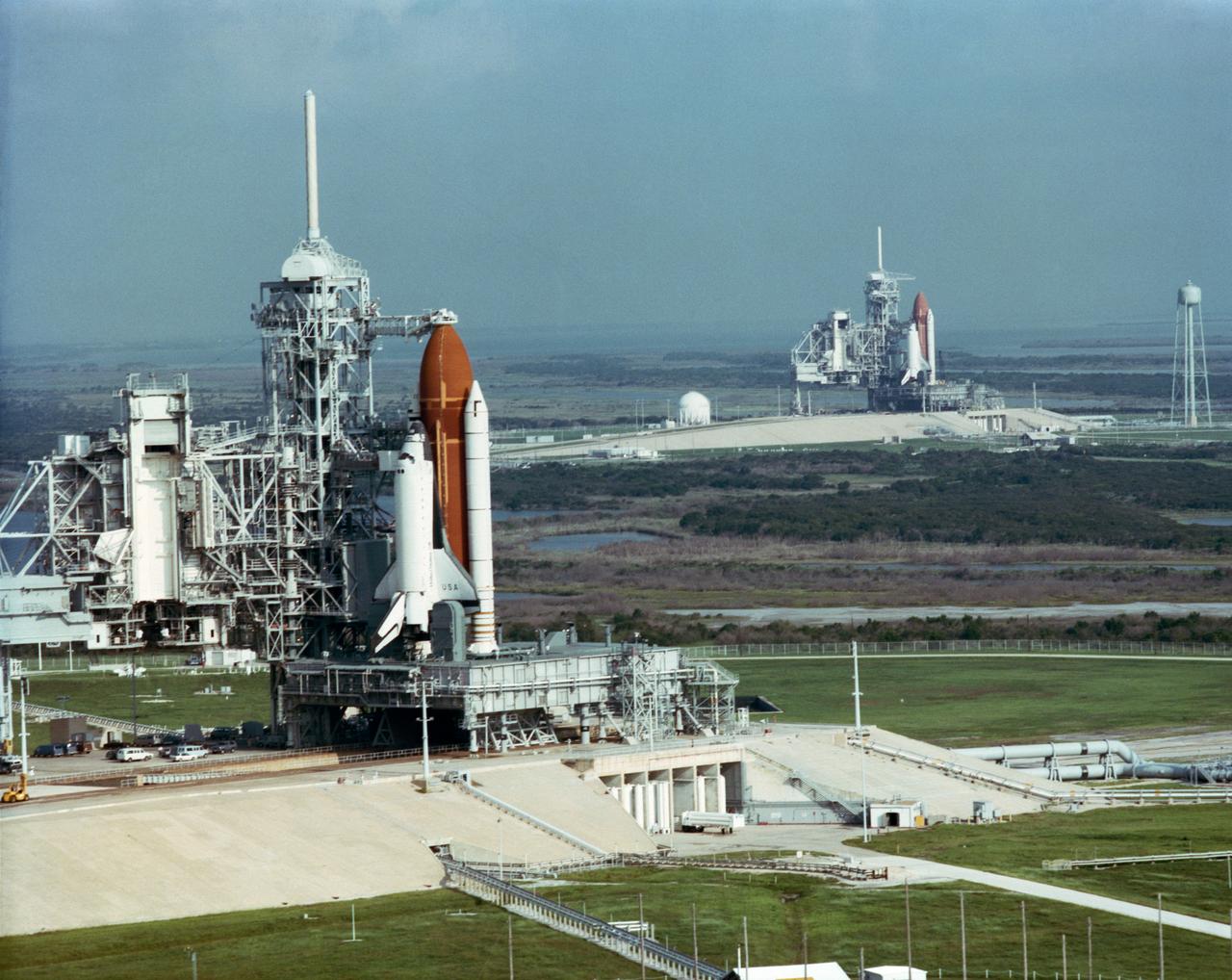
S90-48650 (5 Sept 1990) --- This rare view shows two space shuttles on adjacent pads at Launch Complex 39 with the Rotating Service Structures (RSR) retracted. Space Shuttle Columbia (foreground) is on Pad A where it awaits further processing for a September 6 early morning launch on STS-35. Discovery, its sister spacecraft, is set to begin preparations for an October liftoff on STS-41 when the Ulysses spacecraft is scheudled to be taxied into space. PLEASE NOTE: Following the taking of this photograph, STS-35 was postponed and STS-41's Discovery was successfully launched on Oct. 6.
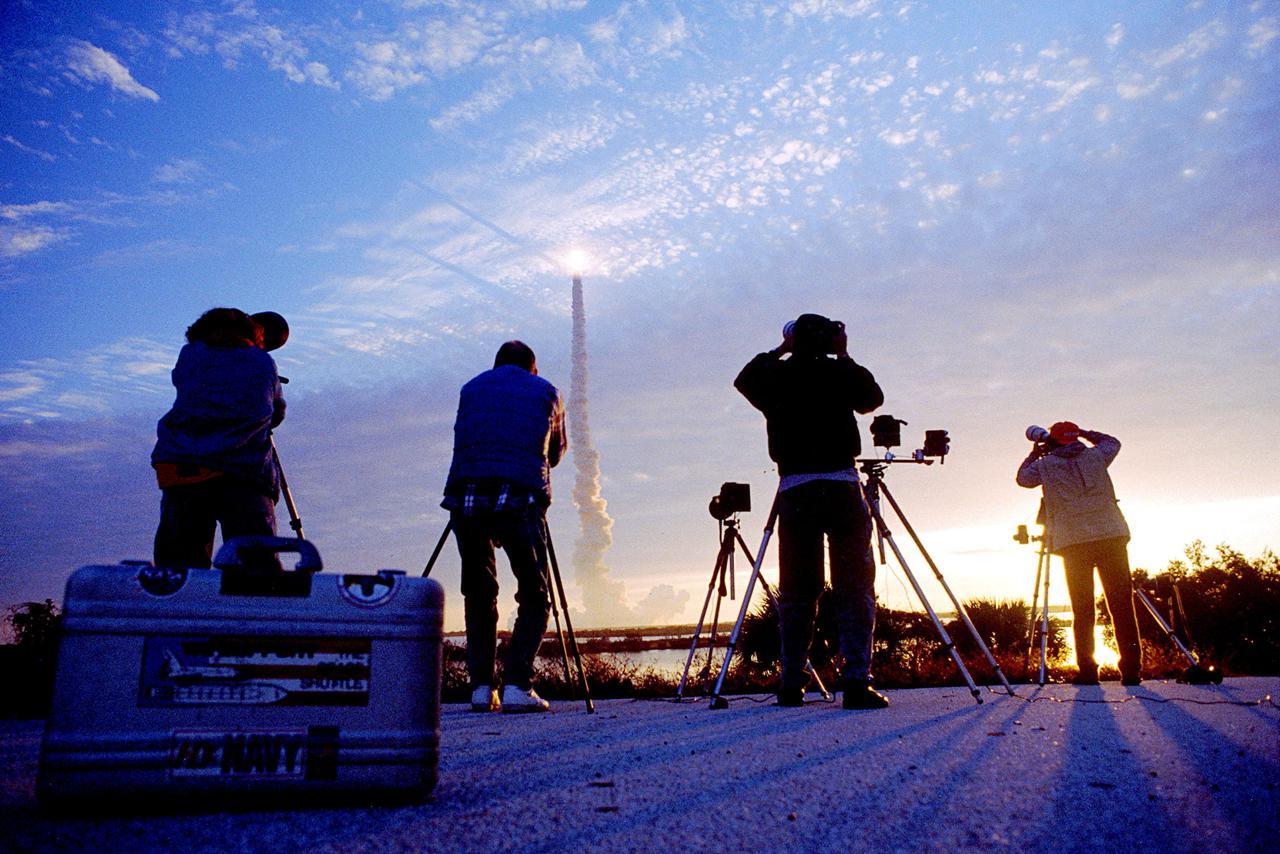
KENNEDY SPACE CENTER, FLA. -- The morning launch of the Shuttle Columbia creates an unforgettable palette of colors, framed by the dark profiles of press photographers standing west of Launch Pad 39B. Columbia's dramatic liftoff on Space Shuttle mission STS-32 occurred at 7:35 a.m. EST, Jan. 9
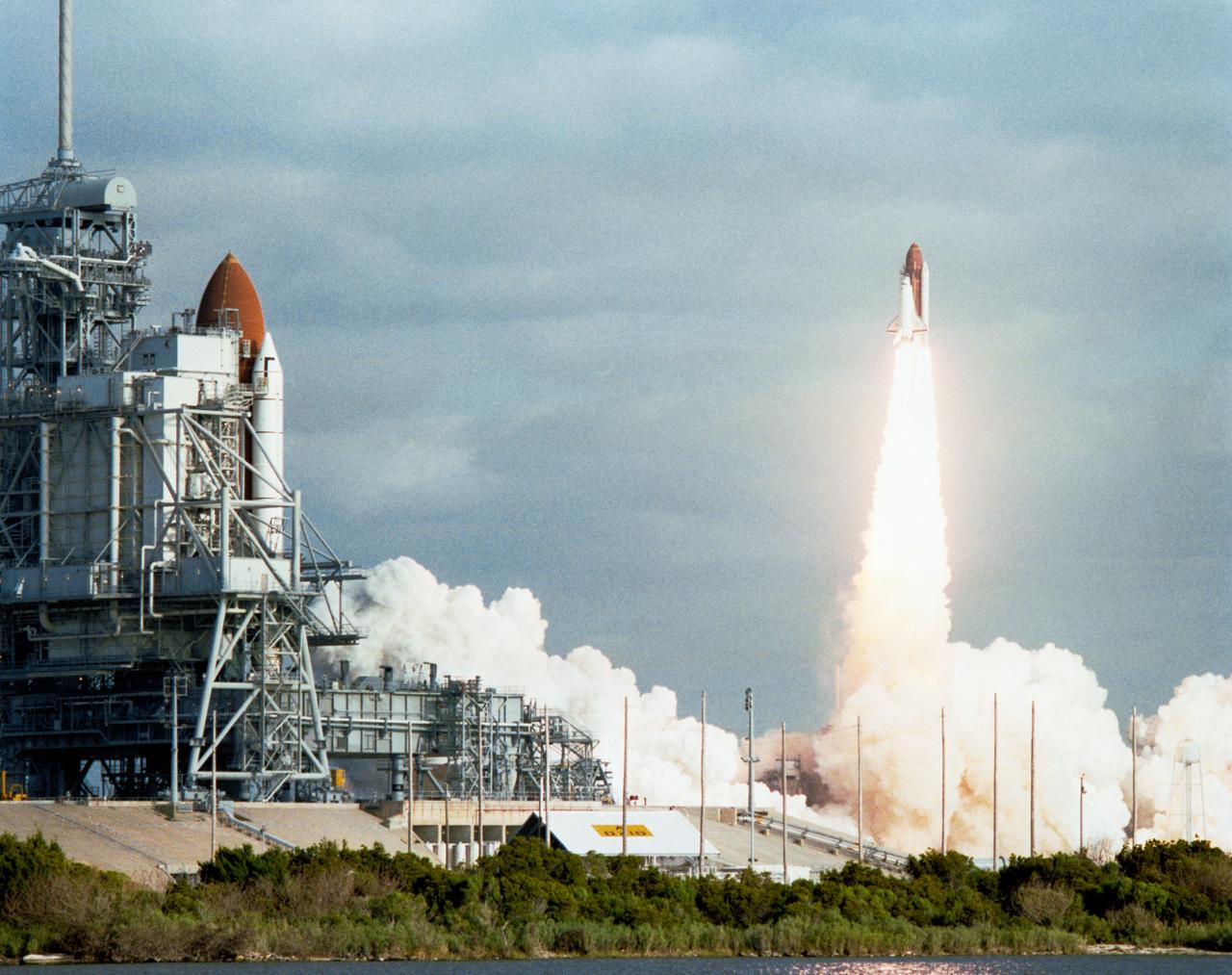
STS-31 Discovery, Orbiter Vehicle (OV) 103, lifts off from Kennedy Space Center (KSC) Launch Complex (LC) 39 Pad B. In the foreground STS-35 Columbia, OV-102, is visible on launch pad 39A. This event marked the first time since January 1986 that there was an orbiter on each pad. LC 39 pads are separated by 1.6 miles. View provided by KSC with alternate number KSC-90PC-610.
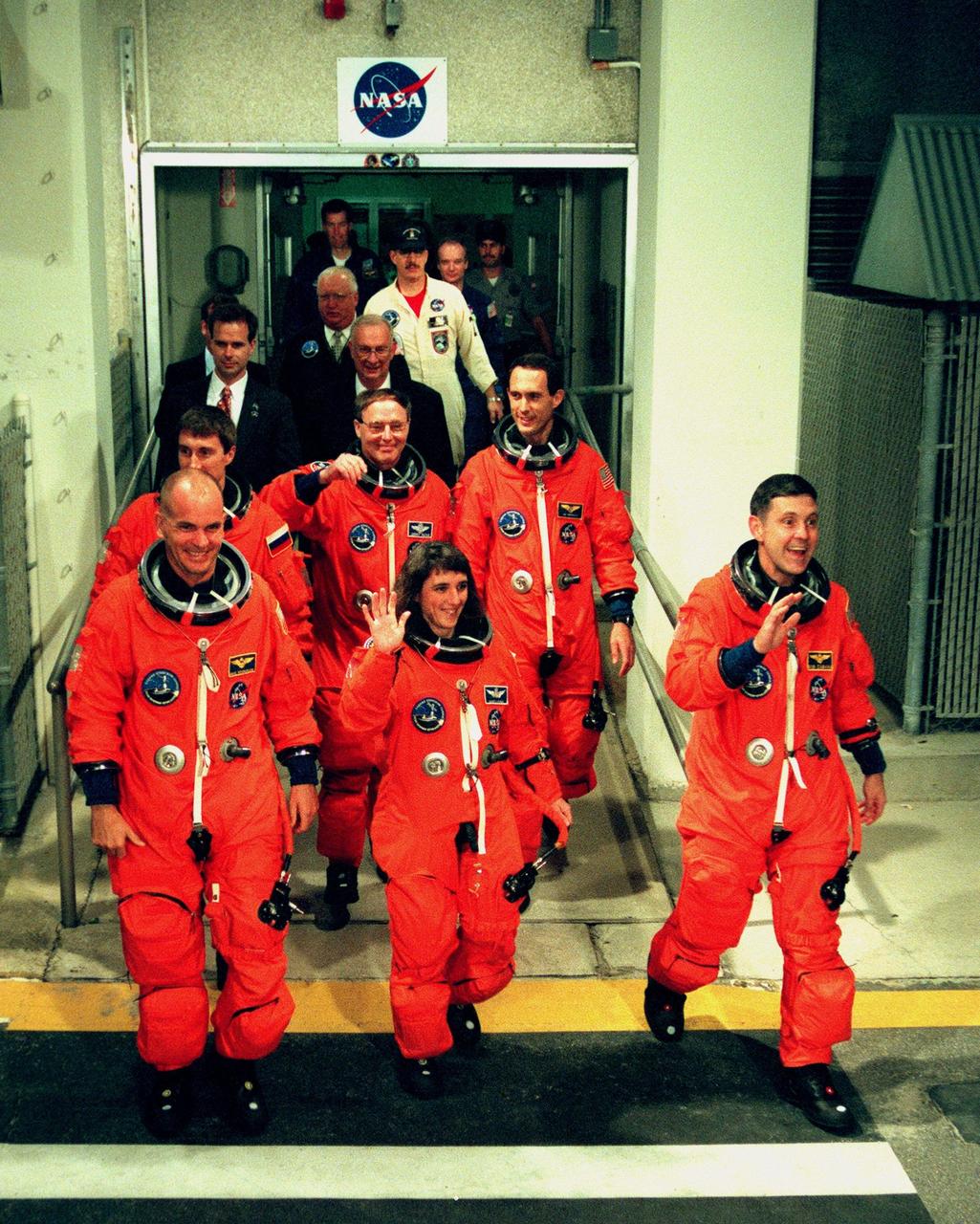
Wearing their orange launch and entry suits, STS-88 crew members leave the Operations and Checkout Building en route to Launch Pad 39A, where the Space Shuttle Endeavour is poised for liftoff of the first U.S. launch dedicated to the assembly of the International Space Station. In front row, from left, are Pilot Frederick W. "Rick" Sturckow, Mission Specialist Nancy J. Currie and Commander Robert D. Cabana. In back row, from left, are Mission Specialists Sergei Konstantinovich Krikalev, a Russian cosmonaut; Jerry L. Ross and James H. Newman. Liftoff is targeted for 3:35 a.m. EST on Dec. 4

STS-88 crew members depart the Operations and Checkout Building to board the astronaut van (at right) for the short journey to Launch Pad 39A where the Space Shuttle Endeavour is poised for liftoff of the first U.S. launch dedicated to the assembly of the International Space Station. In front row, from left, are Pilot Frederick W. "Rick" Sturckow, Mission Specialist Nancy J. Currie and Commander Robert D. Cabana. In back row, from left, are Mission Specialists Sergei Konstantinovich Krikalev, a Russian cosmonaut; Jerry L. Ross and James H. Newman. Liftoff is targeted for 3:35 a.m. EST on Dec. 4
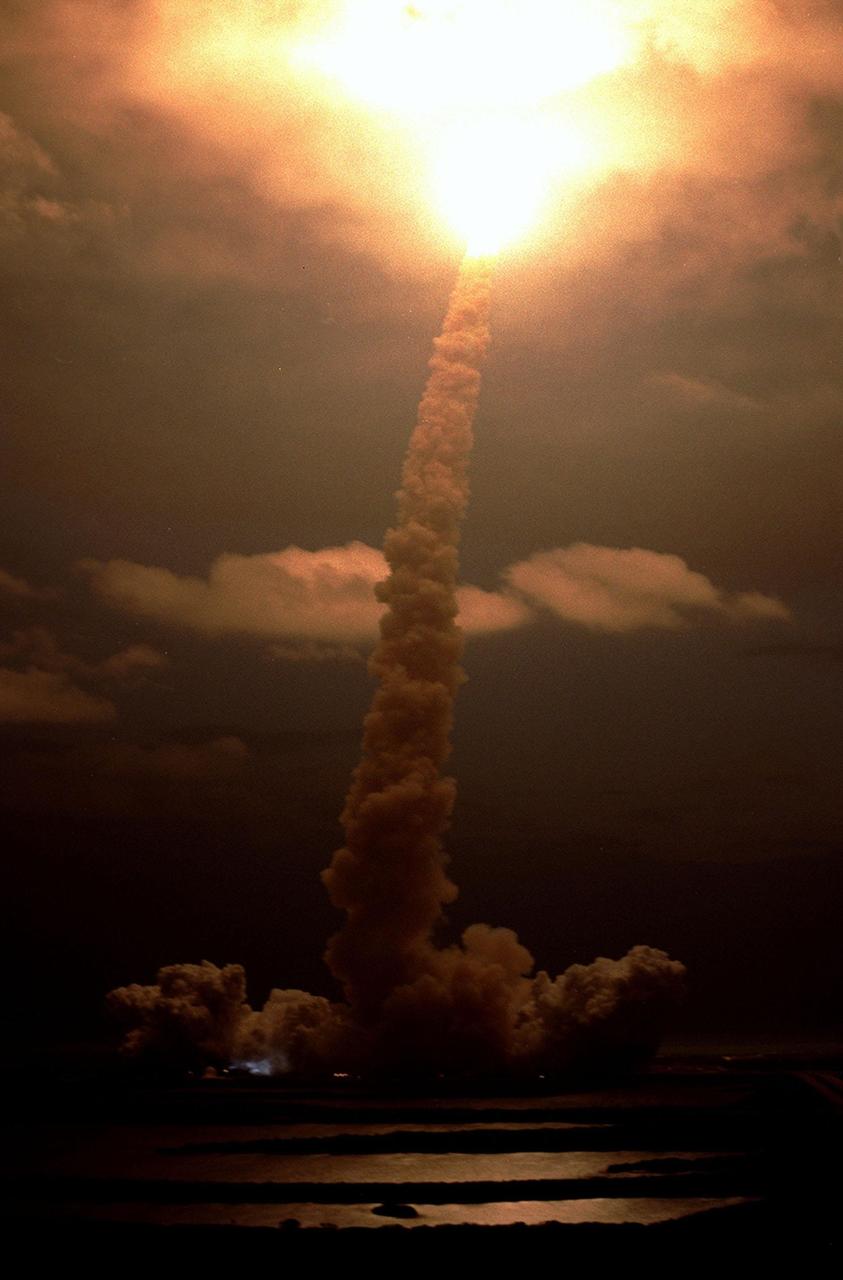
KENNEDY SPACE CENTER, Fla. - The smoke plume identifies the direction of Space Shuttle Columbia as it climbs into the clouds, illuminated by the Shuttle's exhaust, after launch on mission STS-109. Liftoff occurred at 6:22:02:08 a.m. EST (11:22:02:08 GMT). This was the 27th flight of the vehicle and 108th in the history of the Shuttle program. The goal of mission STS-109 is the maintenance and upgrade of the Hubble Space Telescope, to be carried out in five spacewalks. The crew comprises Commander Scott D. Altman, Pilot Duane G. Carey, Payload Commander John M. Grunsfeld, and Mission Specialists Nancy Jane Currie, Richard M. Linnehan, James H. Newman and Michael J. Massimino. After the 11-day mission, Columbia is expected to return to KSC March 12 about 4:35 a.m. EST (09:35 GMT).
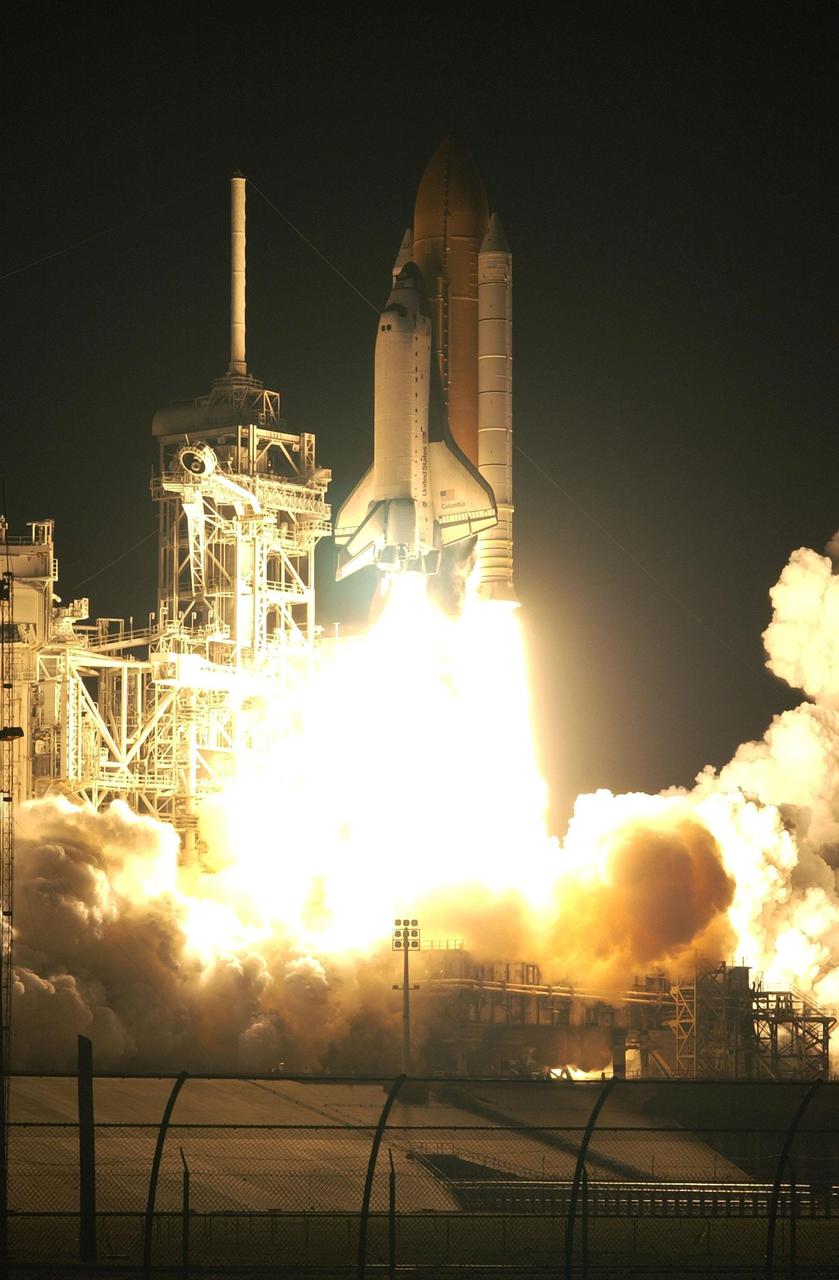
KENNEDY SPACE CENTER, Fla. - Flames and smoke stream from behind Space Shuttle Columbia as it leaps off the launch pad on its 27th flight into space on mission STS-109. Liftoff occurred at 6:22:02:08 a.m. EST (11:22:02:08 GMT). The goal of the mission is the maintenance and upgrade of the Hubble Space Telescope, to be carried out in five spacewalks. The crew of STS-109 comprises Commander Scott D. Altman, Pilot Duane G. Carey, Payload Commander John M. Grunsfeld, and Mission Specialists Nancy Jane Currie, Richard M. Linnehan, James H. Newman and Michael J. Massimino. After an 11-day mission, Columbia is expected to return to Kennedy March 12 about 4:35 a.m. EST (09:35 GMT).
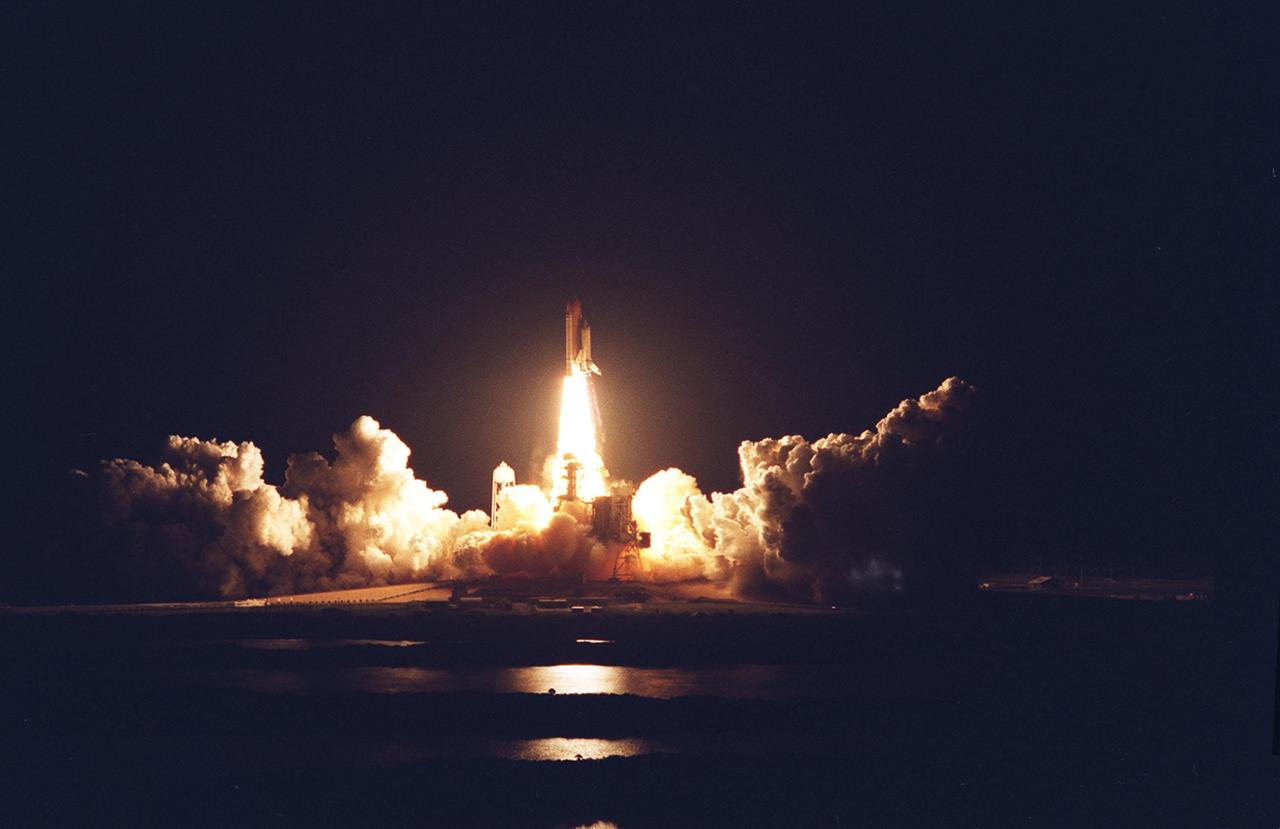
KENNEDY SPACE CENTER, Fla. - Billows of smoke and steam flow over the launch pad as Space Shuttle Columbia leaps into space on mission STS-109. Liftoff occurred at 6:22:02:08 a.m. EST (11:22:02:08 GMT). This was the 27th flight of the vehicle and 108th in the history of the Shuttle program. The goal of mission STS-109 is the maintenance and upgrade of the Hubble Space Telescope, to be carried out in five spacewalks. The crew comprises Commander Scott D. Altman, Pilot Duane G. Carey, Payload Commander John M. Grunsfeld, and Mission Specialists Nancy Jane Currie, Richard M. Linnehan, James H. Newman and Michael J. Massimino. After the 11-day mission, Columbia is expected to return to KSC March 12 about 4:35 a.m. EST (09:35 GMT).
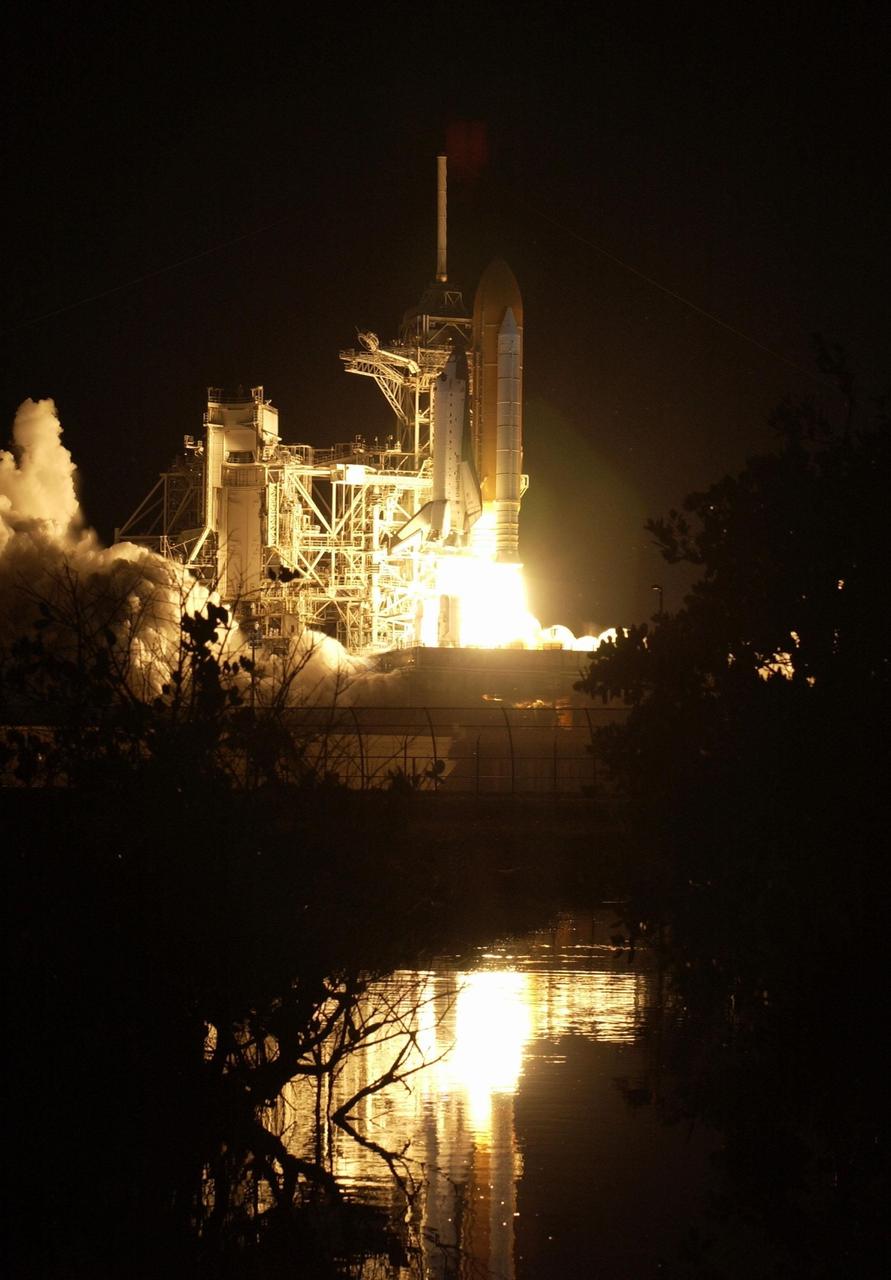
KENNEDY SPACE CENTER, Fla. - Space Shuttle Columbia spews flames and smoke as it leaps off the launch pad on its 27th flight into space on mission STS-109. Liftoff occurred at 6:22:02:08 a.m. EST (11:22:02:08 GMT). The goal of the mission is the maintenance and upgrade of the Hubble Space Telescope, to be carried out in five spacewalks. The crew of STS-109 comprises Commander Scott D. Altman, Pilot Duane G. Carey, Payload Commander John M. Grunsfeld, and Mission Specialists Nancy Jane Currie, Richard M. Linnehan, James H. Newman and Michael J. Massimino. After an 11-day mission, Columbia is expected to return to Kennedy March 12 about 4:35 a.m. EST (09:35 GMT).
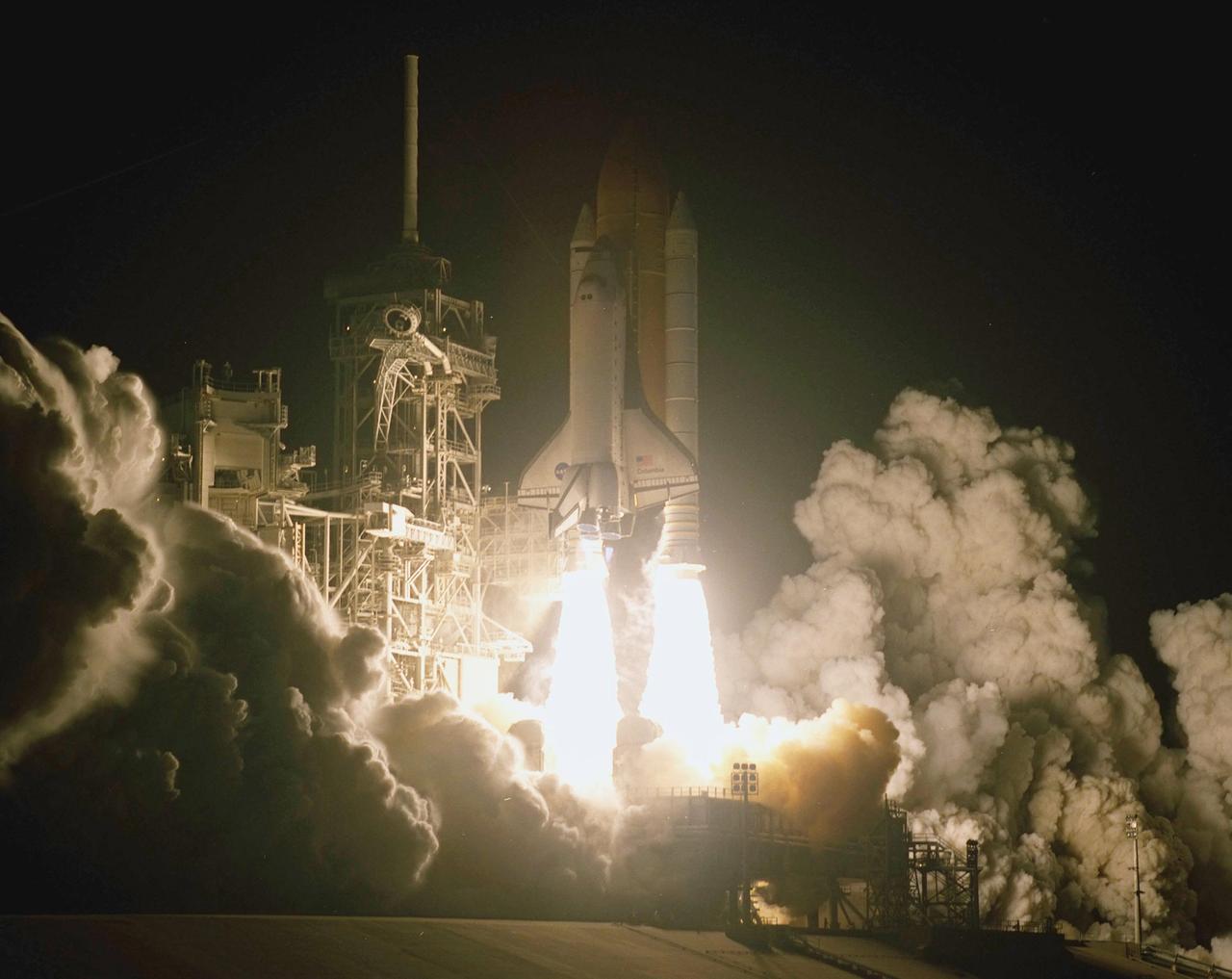
KENNEDY SPACE CENTER, Fla. - Billows of smoke and steam flow over the launch pad as Space Shuttle Columbia leaps into space on mission STS-109. Liftoff occurred at 6:22:02:08 a.m. EST (11:22:02:08 GMT). This was the 27th flight of the vehicle and 108th in the history of the Shuttle program. The goal of mission STS-109 is the maintenance and upgrade of the Hubble Space Telescope, to be carried out in five spacewalks. The crew comprises Commander Scott D. Altman, Pilot Duane G. Carey, Payload Commander John M. Grunsfeld, and Mission Specialists Nancy Jane Currie, Richard M. Linnehan, James H. Newman and Michael J. Massimino. After the 11-day mission, Columbia is expected to return to KSC March 12 about 4:35 a.m. EST (09:35 GMT).
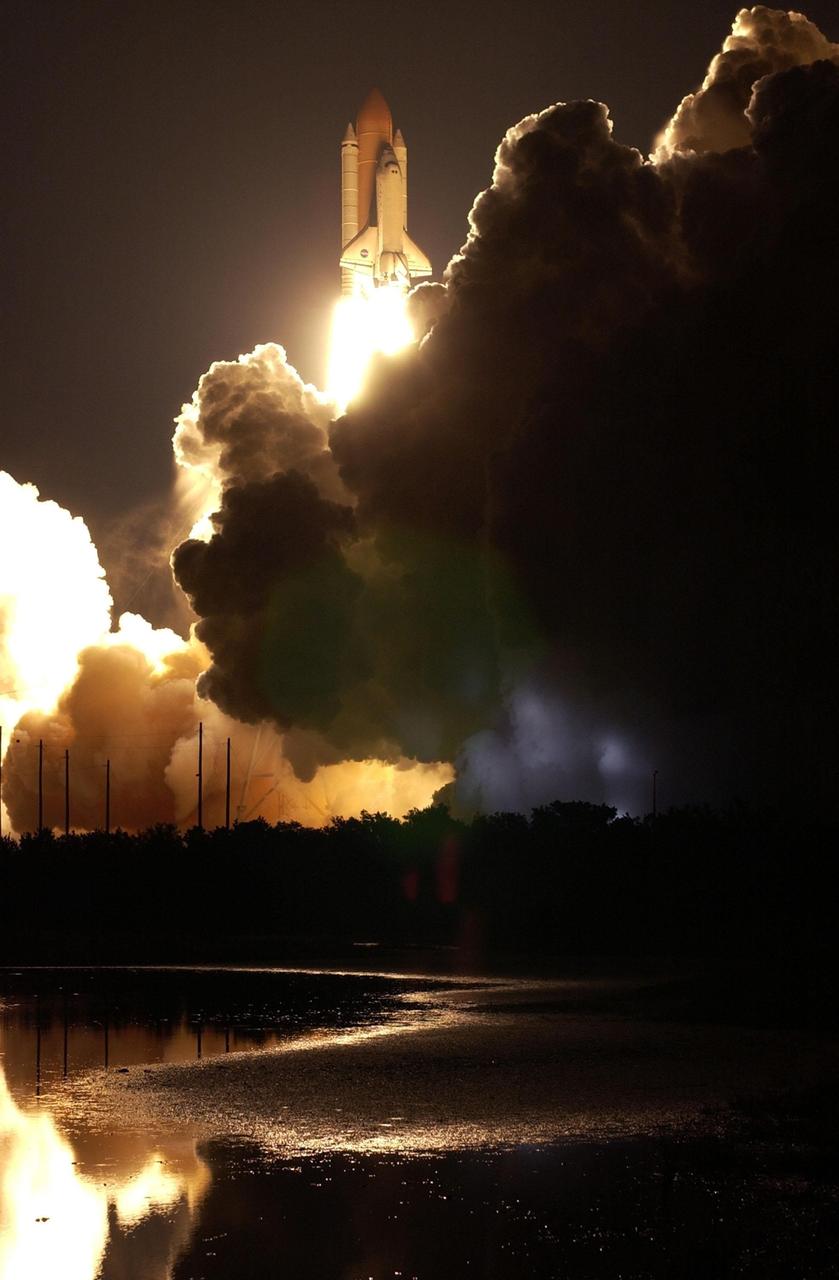
KENNEDY SPACE CENTER, Fla. - Billowing clouds of smoke are backlit by the flames streaming from behind Space Shuttle Columbia as it leaps off the launch pad on its 27th flight into space on mission STS-109. Liftoff occurred at 6:22:02:08 a.m. EST (11:22:02:08 GMT). The goal of the mission is the maintenance and upgrade of the Hubble Space Telescope, to be carried out in five spacewalks. The crew of STS-109 comprises Commander Scott D. Altman, Pilot Duane G. Carey, Payload Commander John M. Grunsfeld, and Mission Specialists Nancy Jane Currie, Richard M. Linnehan, James H. Newman and Michael J. Massimino. After an 11-day mission, Columbia is expected to return to Kennedy March 12 about 4:35 a.m. EST (09:35 GMT)
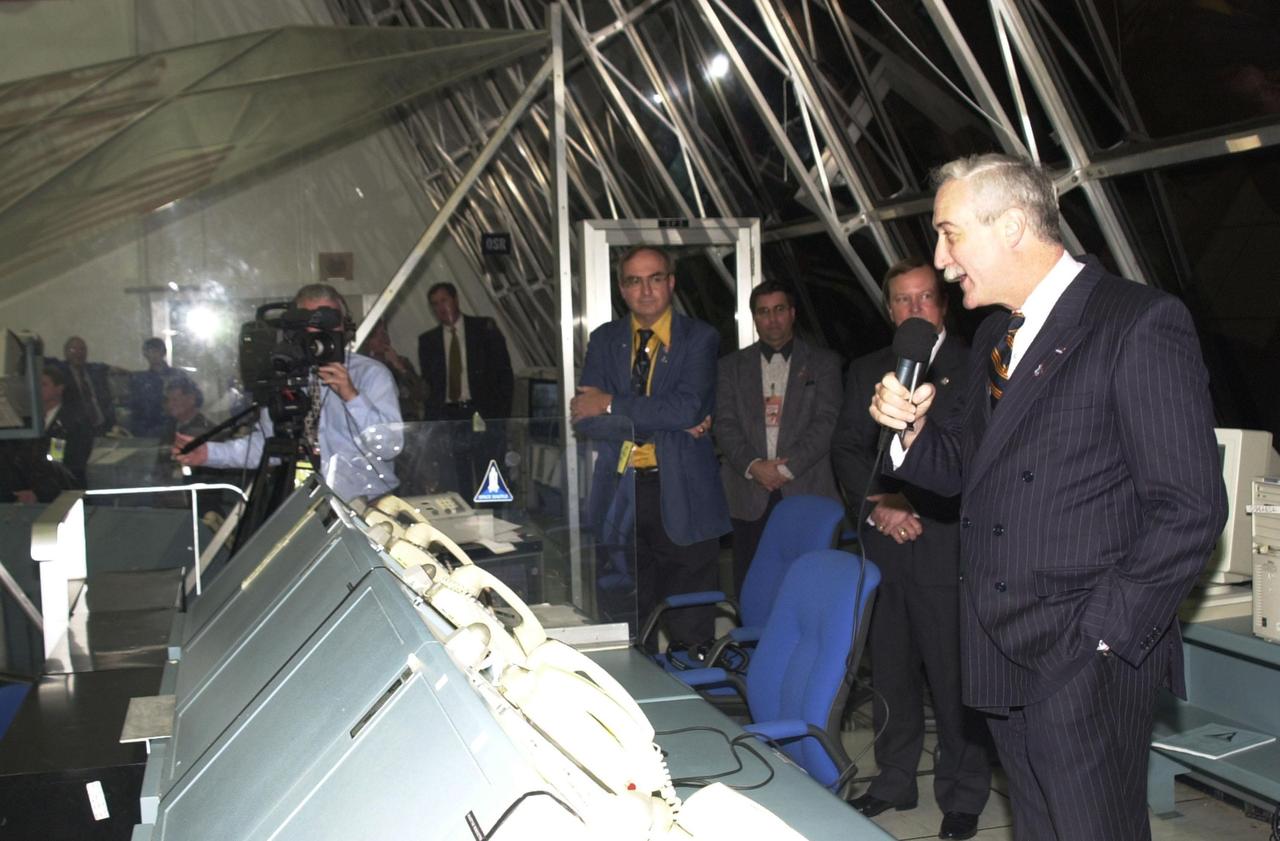
KENNEDY SPACE CENTER, Fla. - In the firing room, NASA Administrator Sean O'Keefe (right) congratulates the launch team after the successful on-time launch of Space Shuttle Columbia. Standing next to O'Keefe is Launch Director Mike Leinbach. Liftoff occurred at 6:22:02:08 a.m. EST (11:22:02:08 GMT). Columbia is on its 27th flight and the 108th flight of the Shuttle Program. The goal of the mission is the maintenance and upgrade of the Hubble Space Telescope, to be carried out in five spacewalks. The crew of STS-109 comprises Commander Scott D. Altman, Pilot Duane G. Carey, Payload Commander John M. Grunsfeld, and Mission Specialists Nancy Jane Currie, Richard M. Linnehan, James H. Newman and Michael J. Massimino. After an 11-day mission, Columbia is expected to return to Kennedy March 12 about 4:35 a.m. EST (09:35 GMT)
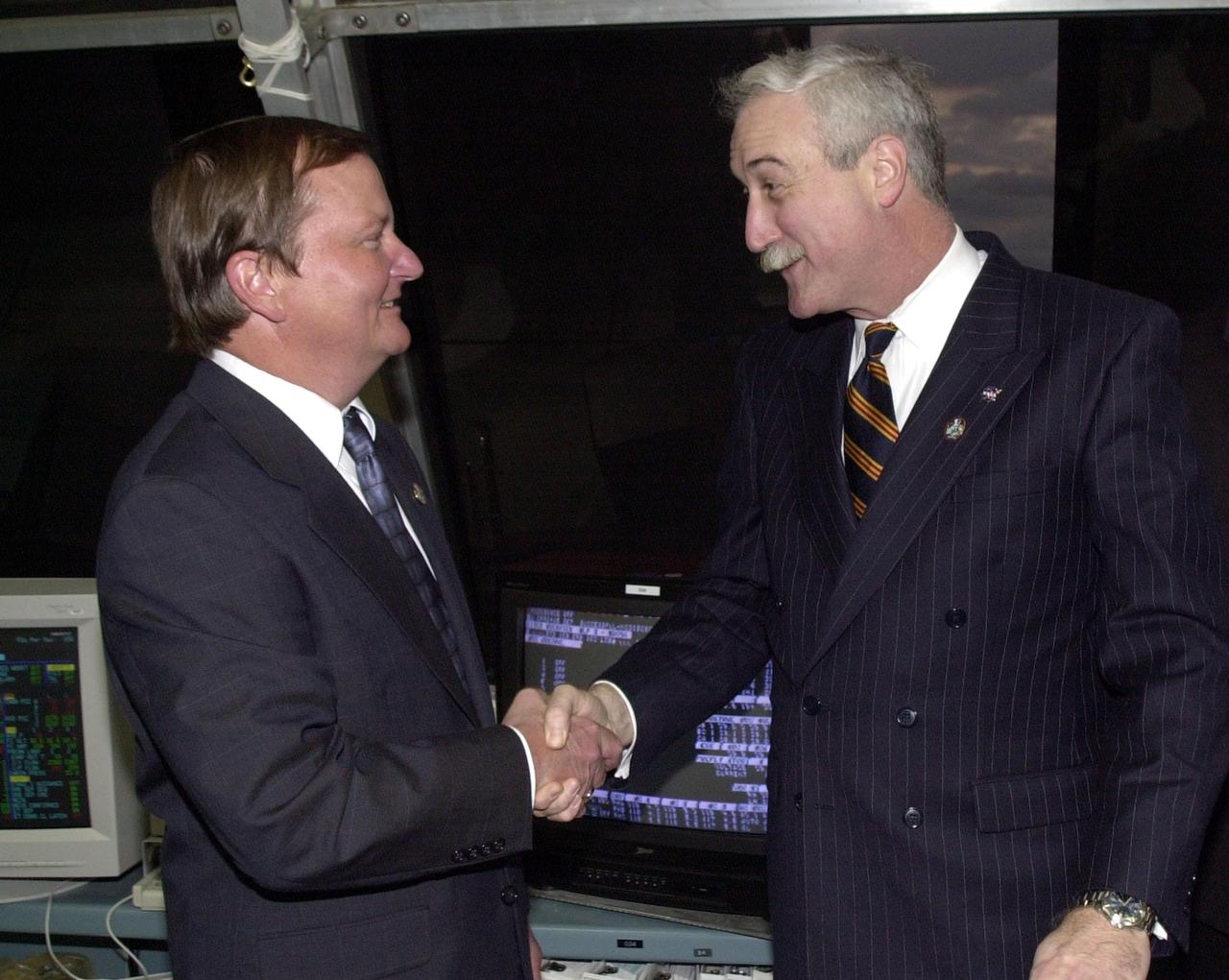
KENNEDY SPACE CENTER, Fla. - In the firing room, NASA Administrator Sean O'Keefe (right) congratulates Launch Director Mike Leinbach for the successful on-time launch of Space Shuttle Columbia. Liftoff occurred at 6:22:02:08 a.m. EST (11:22:02:08 GMT). Columbia is on its 27th flight and the 108th flight of the Shuttle Program. The goal of the mission is the maintenance and upgrade of the Hubble Space Telescope, to be carried out in five spacewalks. The crew of STS-109 comprises Commander Scott D. Altman, Pilot Duane G. Carey, Payload Commander John M. Grunsfeld, and Mission Specialists Nancy Jane Currie, Richard M. Linnehan, James H. Newman and Michael J. Massimino. After an 11-day mission, Columbia is expected to return to Kennedy March 12 about 4:35 a.m. EST (09:35 GMT)
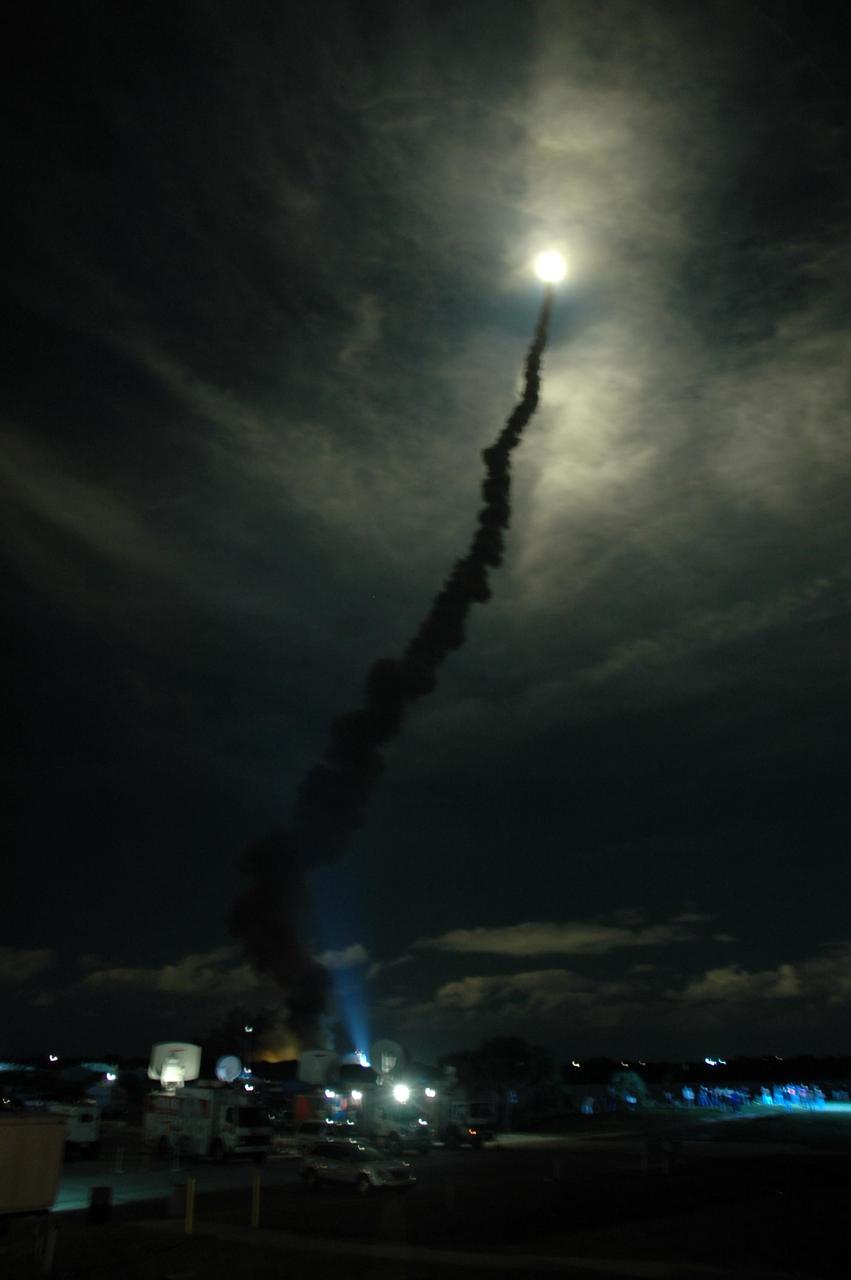
KENNEDY SPACE CENTER, FLA. -- Flooding the night sky with light, Space Shuttle Discovery streaks through the clouds after liftoff from Launch Pad 39B on mission STS-116. The launch occurred at 8:47:35 p.m. EST. This was the second launch attempt for mission STS-116. The first launch attempt on Dec. 7 was postponed due a low cloud ceiling over Kennedy Space Center. This is Discovery's 33rd mission and the first night launch since 2002. The 20th shuttle mission to the International Space Station, STS-116 carries another truss segment, P5. It will serve as a spacer, mated to the P4 truss that was attached in September. After installing the P5, the crew will reconfigure and redistribute the power generated by two pairs of U.S. solar arrays. Landing is expected Dec. 21 at KSC. Photo credit: NASA/Amanda Diller
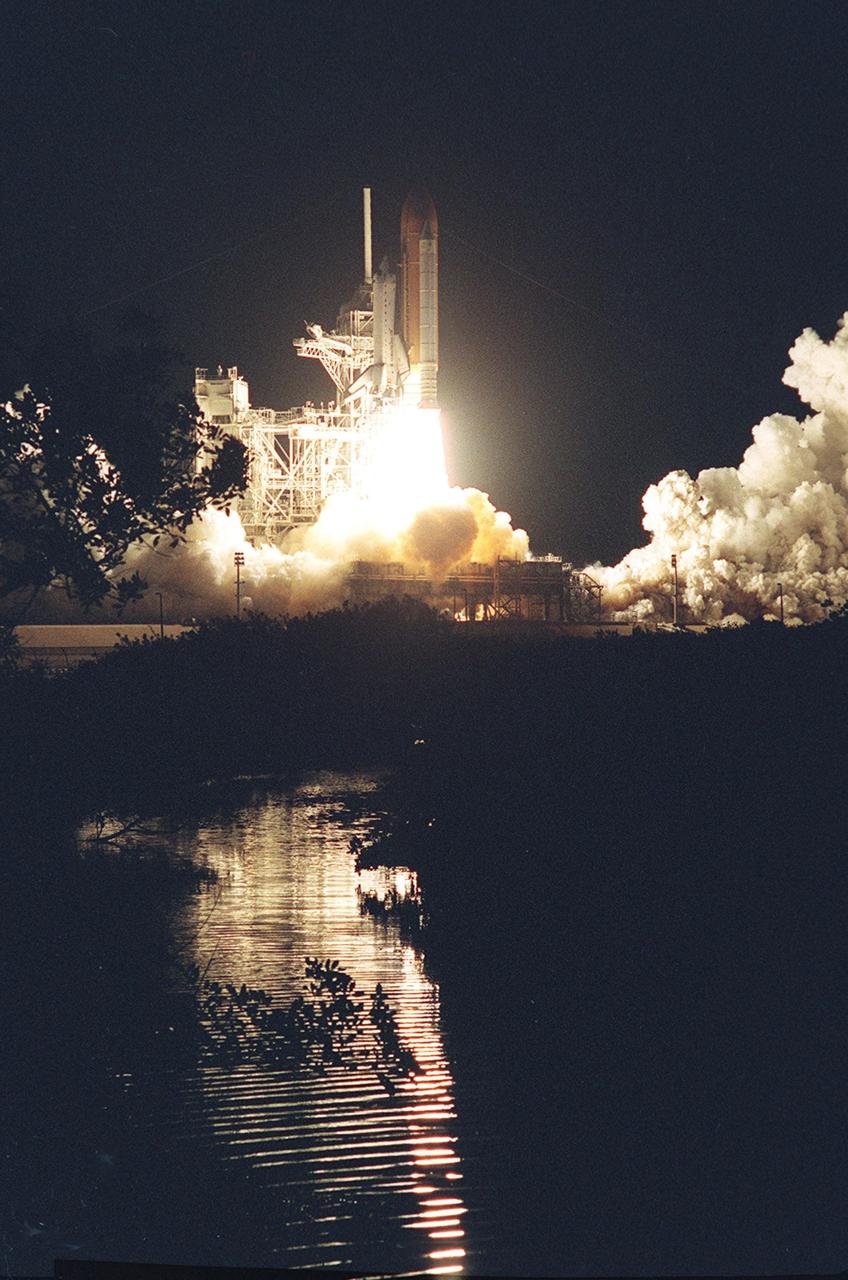
KENNEDY SPACE CENTER, Fla. - As Space Shuttle Columbia hurtles into the pre-dawn sky on mission STS-109, its brilliant exhaust spreads across the launch pad and nearby water. Liftoff of Columbia occurred at 6:22:02:08 a.m. EST (11:22:02:08 GMT). This was the 27th flight of the vehicle and 108th in the history of the Shuttle program. The goal of the mission is the maintenance and upgrade of the Hubble Space Telescope, to be carried out in five spacewalks. The crew comprises Commander Scott D. Altman, Pilot Duane G. Carey, Payload Commander John M. Grunsfeld, and Mission Specialists Nancy Jane Currie, Richard M. Linnehan, James H. Newman and Michael J. Massimino. After the 11-day mission, Columbia is expected to return to KSC March 12 about 4:35 a.m. EST (09:35 GMT)
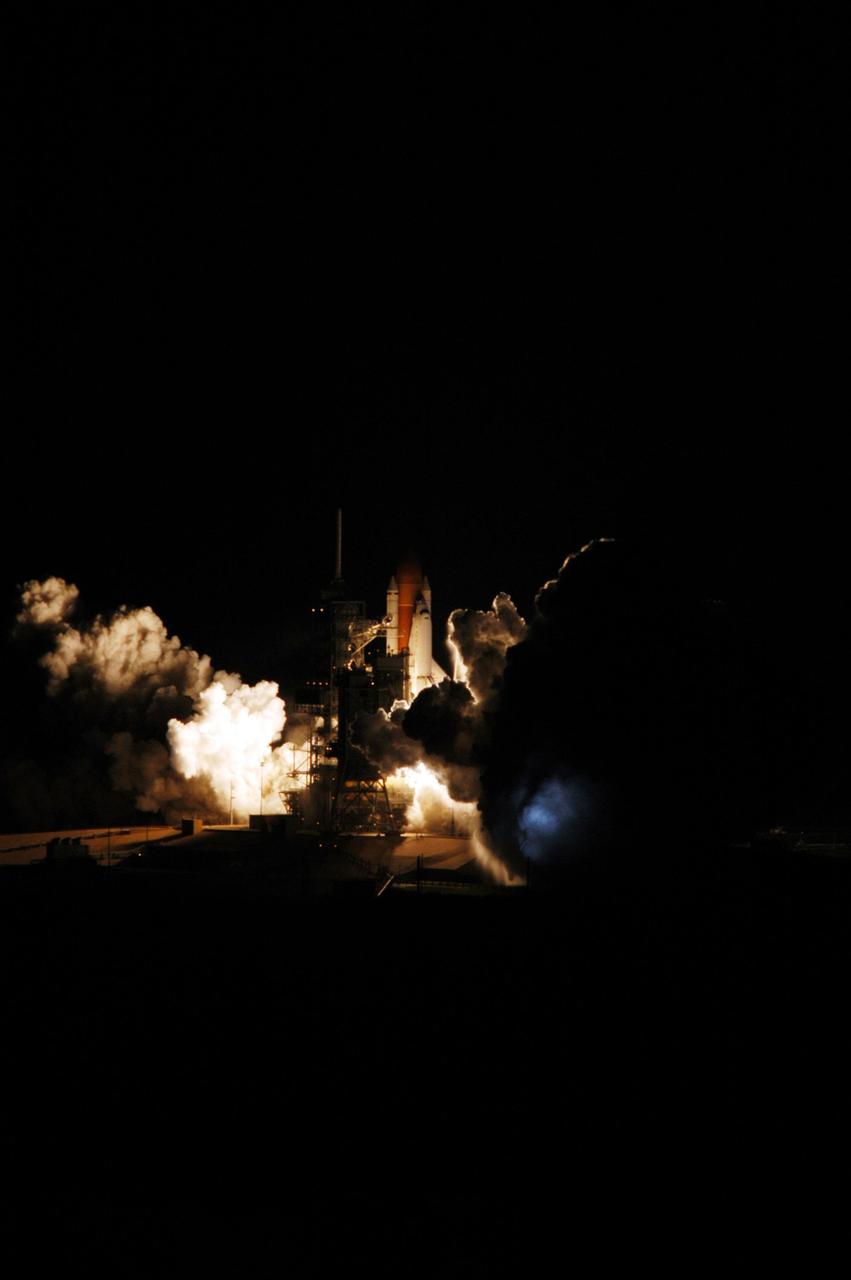
KENNEDY SPACE CENTER, FLA. -- At liftoff from Launch Pad 39B, Space Shuttle Discovery spreads a blaze of light as it leaps into the night sky. The launch occurred at 8:47:35 p.m. EST. This was the second launch attempt for mission STS-116. The first launch attempt on Dec. 7 was postponed due a low cloud ceiling over Kennedy Space Center. This is Discovery's 33rd mission and the first night launch since 2002. The 20th shuttle mission to the International Space Station, STS-116 carries another truss segment, P5. It will serve as a spacer, mated to the P4 truss that was attached in September. After installing the P5, the crew will reconfigure and redistribute the power generated by two pairs of U.S. solar arrays. Landing is expected Dec. 21 at KSC. Photo credit: NASA/George Shelton
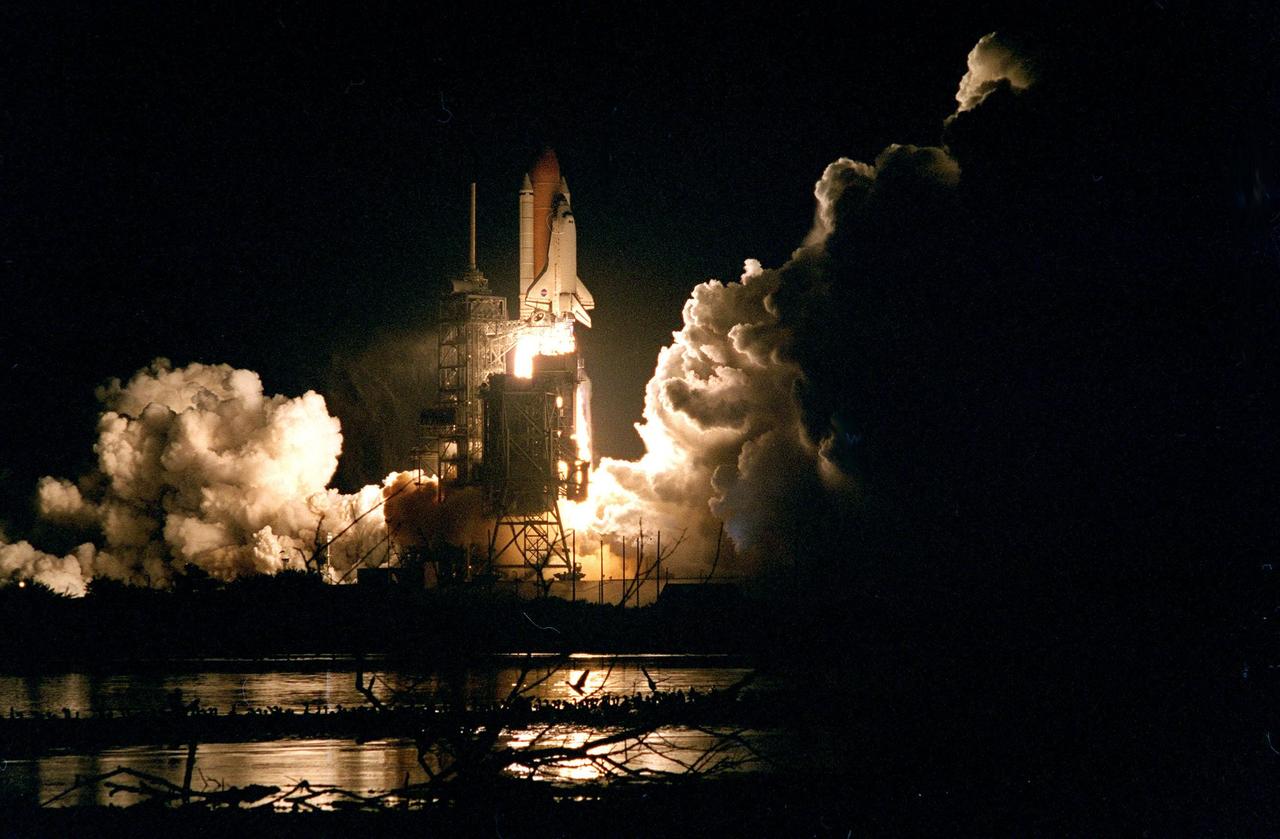
KENNEDY SPACE CENTER, Fla. -- The Space Shuttle Endeavour illuminates the night sky as it embarks on the first U.S. mission dedicated to the assembly of the International Space Station. Liftoff on Dec. 4 from Launch Pad 39A was at 3:35:34 a.m. EST. During the nearly 12-day mission, the six-member crew will mate in space the first two elements of the International Space Station the already-orbiting Zarya control module with the Unity connecting module carried by Endeavour. Crew members are Commander Robert D. Cabana, Pilot Frederick W. "Rick" Sturckow, and Mission Specialists Nancy J. Currie, Jerry L. Ross, James H. Newman and Sergei Konstantinovich Krikalev, a Russian cosmonaut. This was the second launch attempt for STS-88. The first one on Dec. 3 was scrubbed when launch controllers, following an assessment of a suspect hydraulic system, were unable to resume the countdown clock in time to launch within the remaining launch window
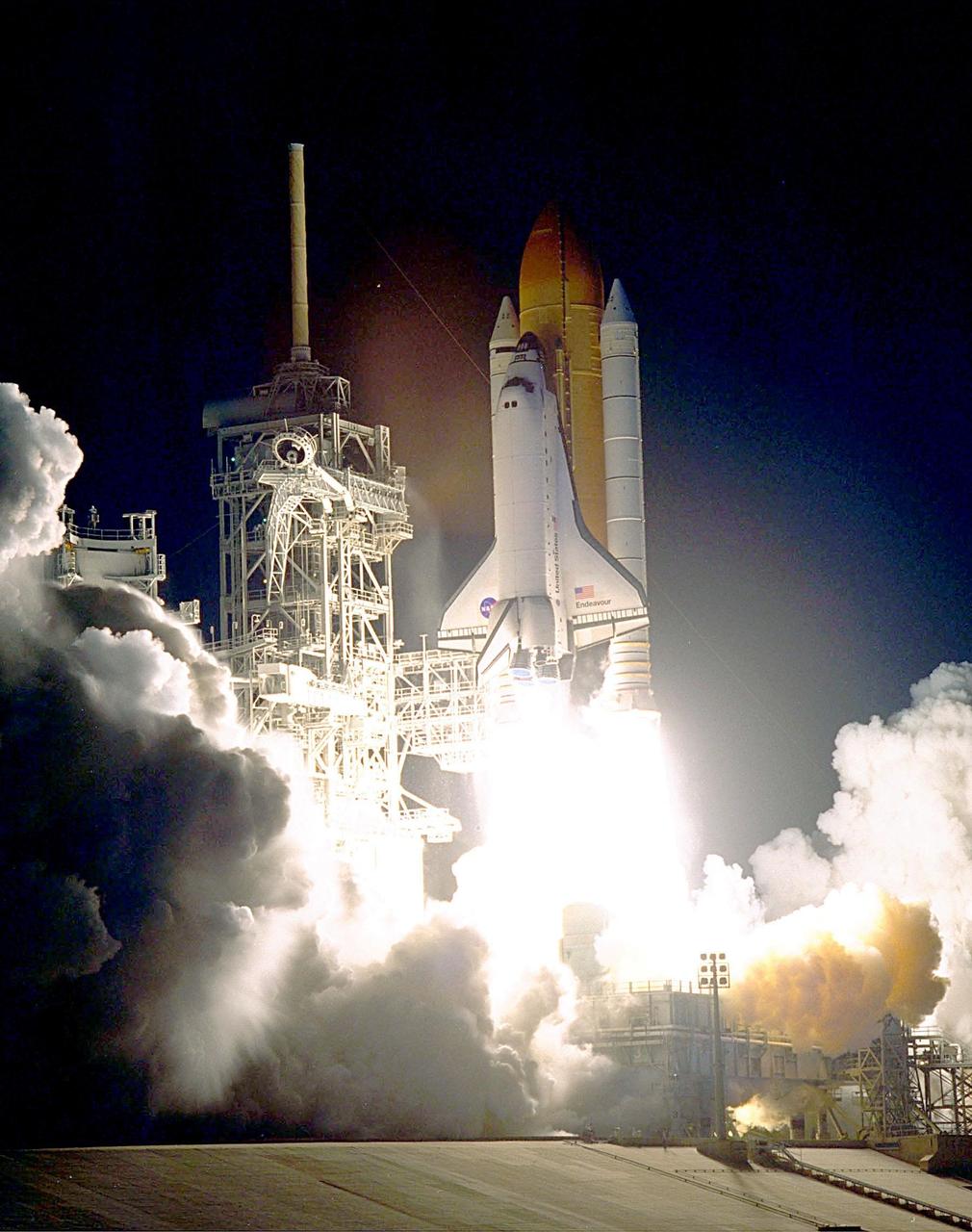
KENNEDY SPACE CENTER, Fla. -- The Space Shuttle Endeavour lights up the night sky as it embarks on the first U.S. mission dedicated to the assembly of the International Space Station. Liftoff on Dec. 4 from Launch Pad 39A was at 3:35:34 a.m. EST. During the nearly 12-day mission, the six-member crew will mate in space the first two elements of the International Space Station the already-orbiting Zarya control module with the Unity connecting module carried by Endeavour. Crew members are Commander Robert D. Cabana, Pilot Frederick W. "Rick" Sturckow, and Mission Specialists Nancy J. Currie, Jerry L. Ross, James H. Newman and Sergei Konstantinovich Krikalev, a Russian cosmonaut. This was the second launch attempt for STS-88. The first one on Dec. 3 was scrubbed when launch controllers, following an assessment of a suspect hydraulic system, were unable to resume the countdown clock in time to launch within the remaining launch window.The Space Shuttle Endeavour lights up the night sky as it embarks on the first U.S. mission dedicated to the assembly of the International Space Station. Liftoff on Dec. 4 from Launch Pad 39A was at 3:35:34 a.m. EST. During the nearly 12-day mission, the six-member crew will mate in space the first two elements of the International Space Station the already-orbiting Zarya control module with the Unity connecting module carried by Endeavour. Crew members are Commander Robert D. Cabana, Pilot Frederick W. "Rick" Sturckow, and Mission Specialists Nancy J. Currie, Jerry L. Ross, James H. Newman and Sergei Konstantinovich Krikalev, a Russian cosmonaut. This was the second launch attempt for STS-88. The first one on Dec. 3 was scrubbed when launch controllers, following an assessment of a suspect hydraulic system, were unable to resume the countdown clock in time to launch within the remaining launch window
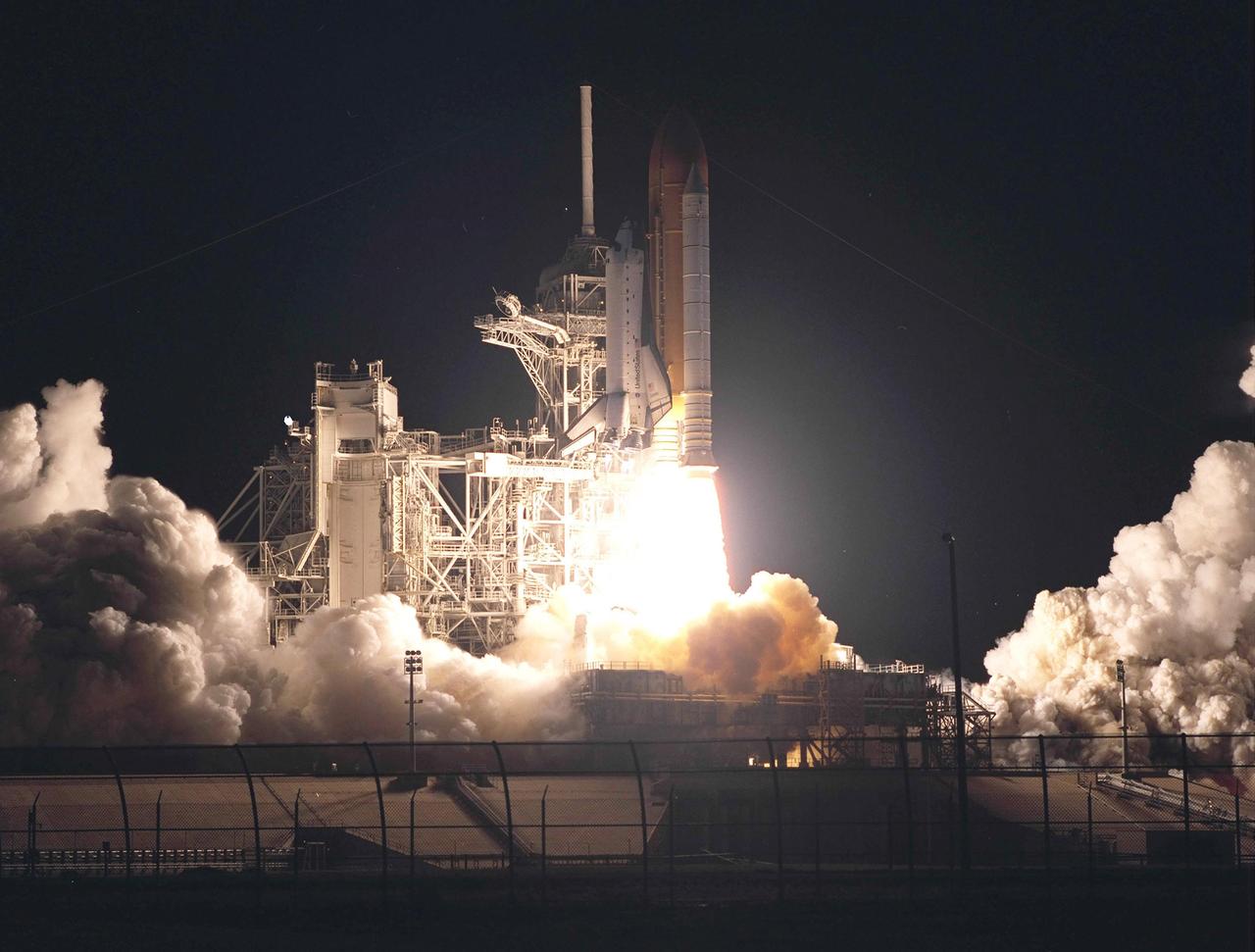
KENNEDY SPACE CENTER, Fla. - Space Shuttle Columbia's fiery exhaust illuminates Launch Pad 39A as the vehicle climbs toward its destination in space on mission STS-109. Bathed in the white light are the Rotating Service Structure (left) and Fixed Service Structure with its 80-foot lightning mast on top. Liftoff occurred at 6:22:02:08 a.m. EST (11:22:02:08 GMT). This was the 27th flight of the vehicle and 108th in the history of the Shuttle program. The goal of the mission is the maintenance and upgrade of the Hubble Space Telescope, to be carried out in five spacewalks. The crew comprises Commander Scott D. Altman, Pilot Duane G. Carey, Payload Commander John M. Grunsfeld, and Mission Specialists Nancy Jane Currie, Richard M. Linnehan, James H. Newman and Michael J. Massimino. After the 11-day mission, Columbia is expected to return to KSC March 12 about 4:35 a.m. EST (09:35 GMT).
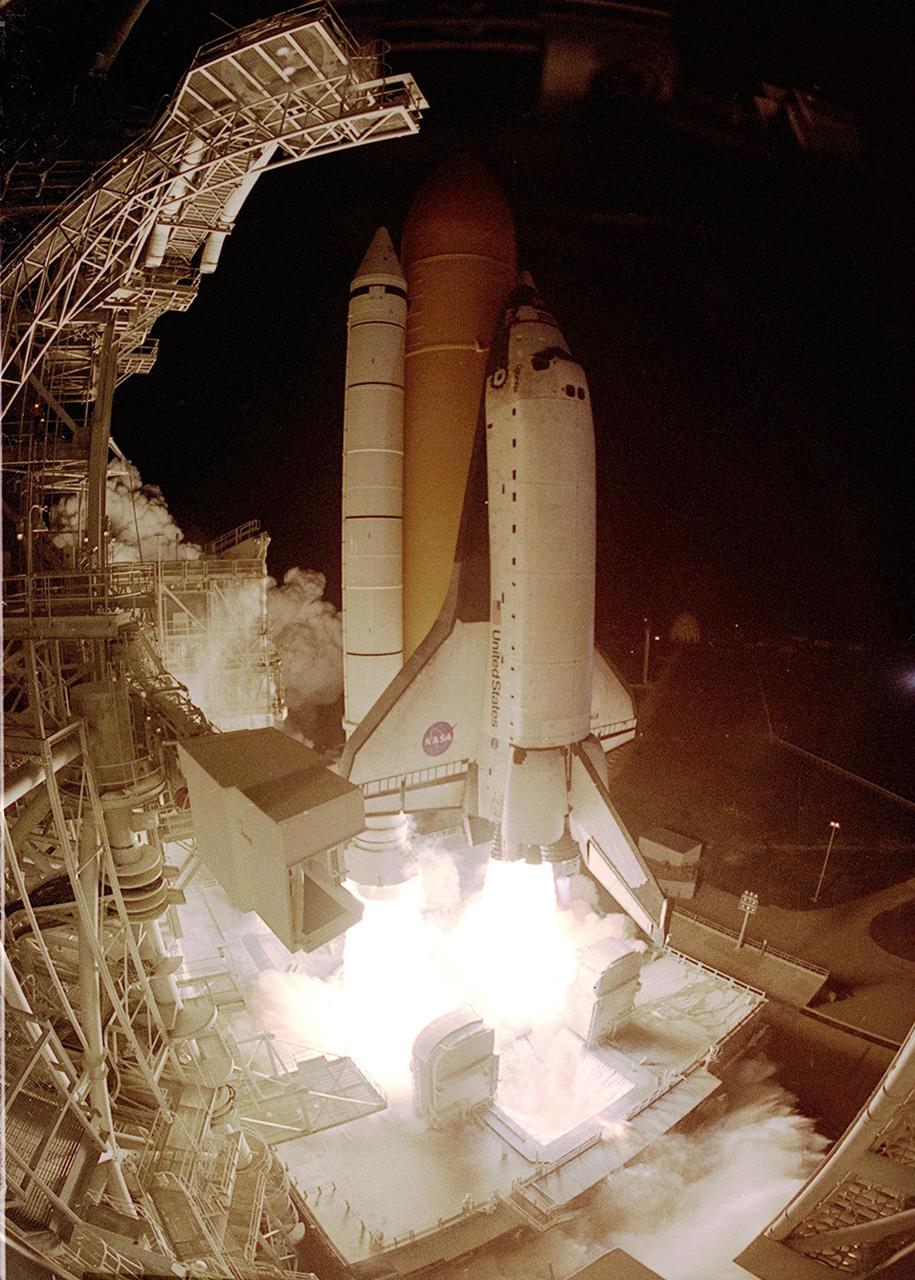
KENNEDY SPACE CENTER, Fla. - A fish-eye lens gives a different perspective to the launch of Space Shuttle Columbia on mission STS-109. Torrents of water spread over the Mobile Launcher Platform from 12-foot rainbirds and into the flame trench as part of the sound suppression system. Acoustical levels reach their peak when the Space Shuttle is about 300 feet above the MLP. At left of the Shuttle is the Fixed Service Structure with the Orbiter Access Arm and White Room, seen in the foreground. Liftoff of Columbia occurred at 6:22:02:08 a.m. EST (11:22:02:08 GMT). This was the 27th flight of the vehicle and 108th in the history of the Shuttle program. The goal of the mission is the maintenance and upgrade of the Hubble Space Telescope, to be carried out in five spacewalks. The crew comprises Commander Scott D. Altman, Pilot Duane G. Carey, Payload Commander John M. Grunsfeld, and Mission Specialists Nancy Jane Currie, Richard M. Linnehan, James H. Newman and Michael J. Massimino. After the 11-day mission, Columbia is expected to return to KSC March 12 about 4:35 a.m. EST (09:35 GMT)
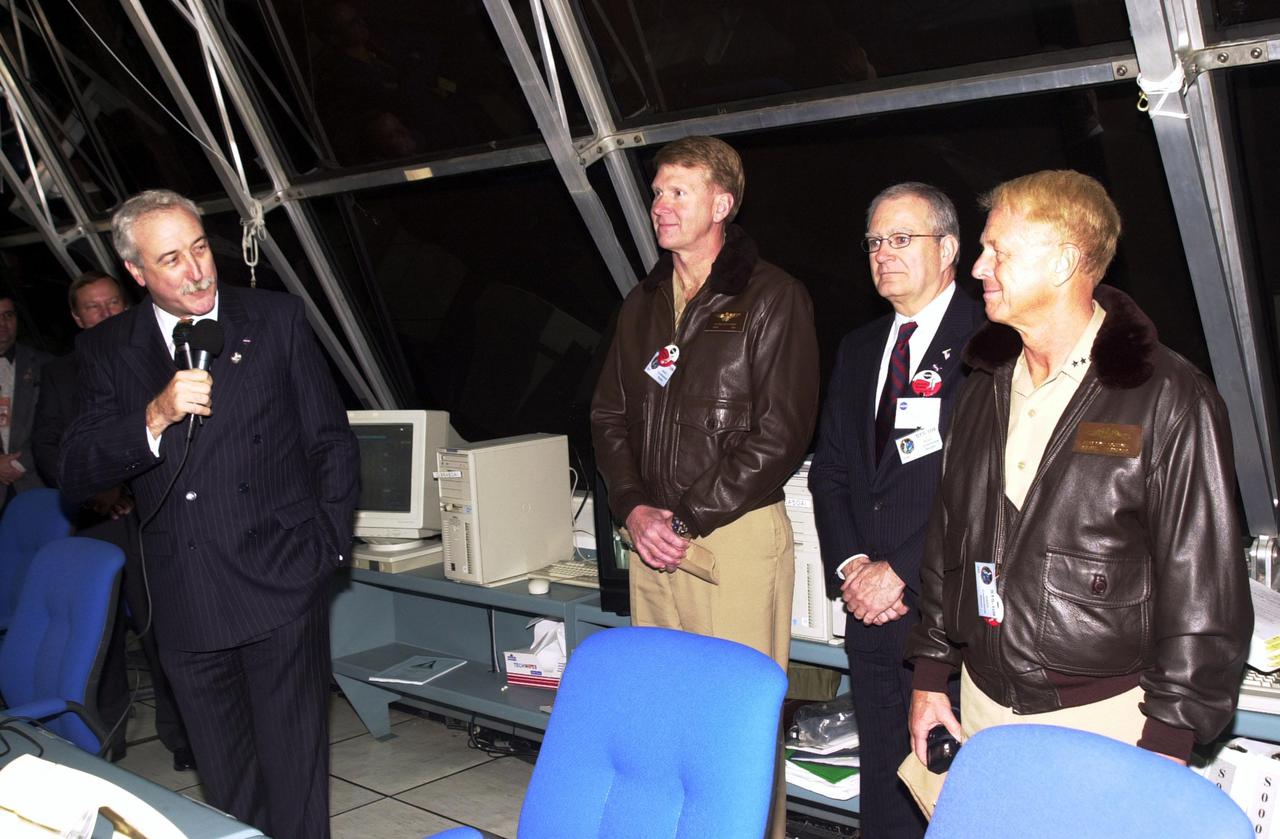
KENNEDY SPACE CENTER, Fla. - In the firing room, NASA Administrator Sean O'Keefe (left) introduces guests who attended the launch of Space Shuttle Columbia. Starting in the center, left to right, are Rear Admiral John D. Stufflebeem, U.S. Navy; Lieutenant General Joseph M. Cosumano Jr., US. Army; and Admiral Frank L. Bowman, U.S. Navy. Liftoff occurred at 6:22:02:08 a.m. EST (11:22:02:08 GMT). Columbia is on its 27th flight and the 108th flight of the Shuttle Program. The goal of the mission is the maintenance and upgrade of the Hubble Space Telescope, to be carried out in five spacewalks. The crew of STS-109 comprises Commander Scott D. Altman, Pilot Duane G. Carey, Payload Commander John M. Grunsfeld, and Mission Specialists Nancy Jane Currie, Richard M. Linnehan, James H. Newman and Michael J. Massimino. After an 11-day mission, Columbia is expected to return to Kennedy March 12 about 4:35 a.m. EST (09:35 GMT)
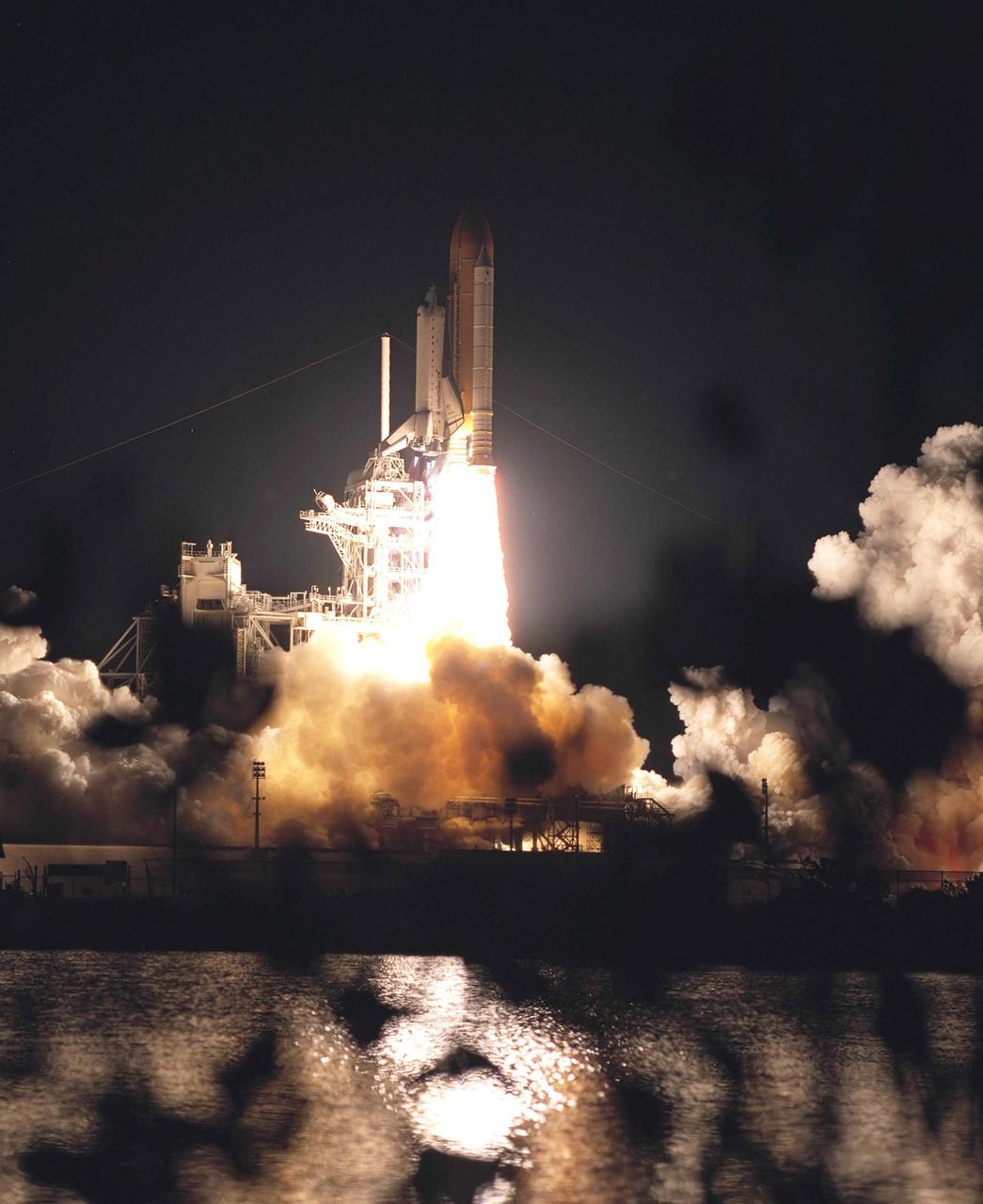
KENNEDY SPACE CENTER, Fla. - Space Shuttle Columbia roars past the lighting mast on launch pad 39A as its fiery exhaust emblazons the pre-dawn sky and nearby water. Both the Rotating Service Structure (left) and Fixed Service Structure are clearly defined in the brilliant light. Liftoff of Columbia on mission STS-109 occurred at 6:22:02:08 a.m. EST (11:22:02:08 GMT). This was the 27th flight of the vehicle and 108th in the history of the Shuttle program. The goal of the mission is the maintenance and upgrade of the Hubble Space Telescope, to be carried out in five spacewalks. The crew comprises Commander Scott D. Altman, Pilot Duane G. Carey, Payload Commander John M. Grunsfeld, and Mission Specialists Nancy Jane Currie, Richard M. Linnehan, James H. Newman and Michael J. Massimino. After the 11-day mission, Columbia is expected to return to KSC March 12 about 4:35 a.m. EST (09:35 GMT).
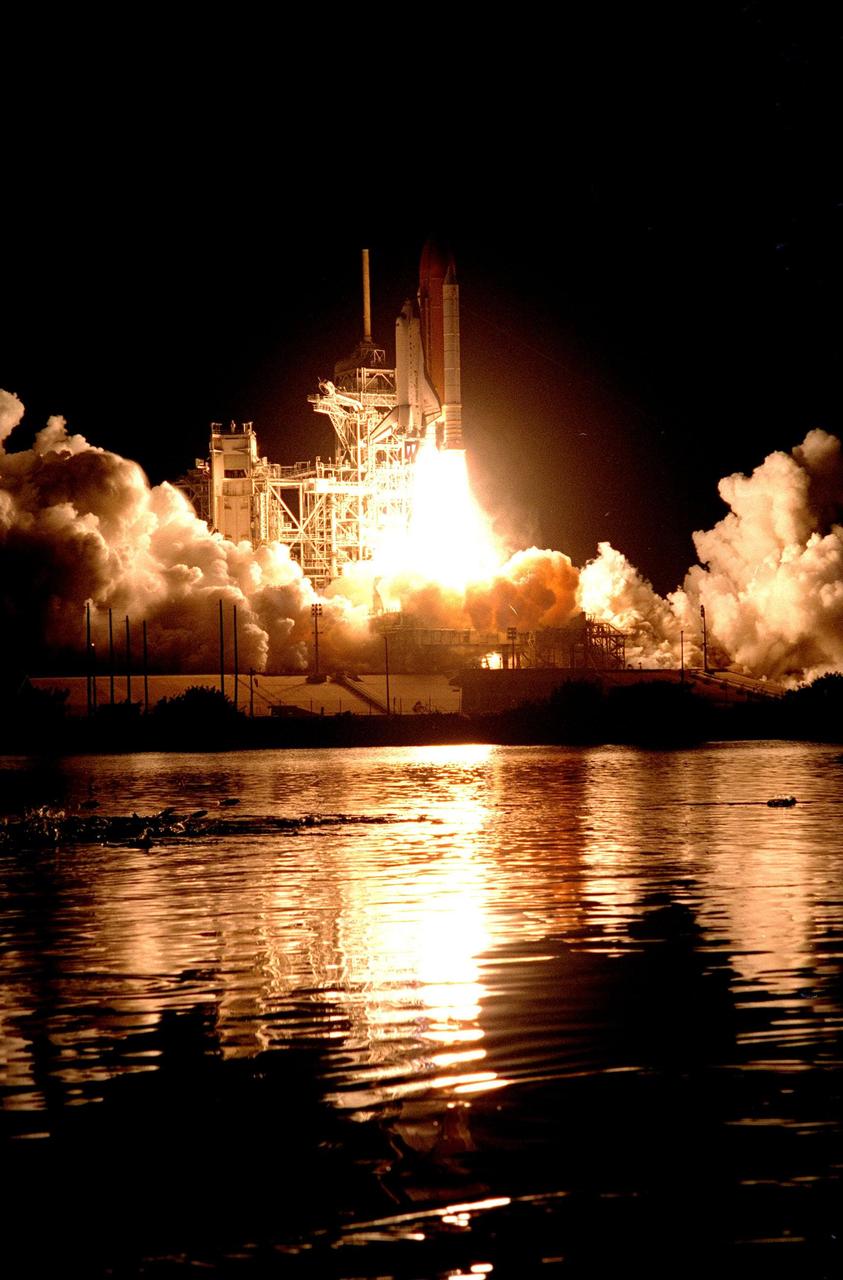
KENNEDY SPACE CENTER, Fla. -- As the Space Shuttle Endeavour lifts off from Launch Pad 39A on Mission STS-88, several fish believed to be mullet (at center left) "launch" themselves out of the water from one of the waterways around the pad. Liftoff of the first U.S. mission dedicated to the assembly of the International Space Station was at 3:35:34 a.m. EST on Dec. 4. During the nearly 12-day mission, the six-member crew will mate in space the first two elements of the International Space Station the already-orbiting Zarya control module with the Unity connecting module carried by Endeavour. Crew members are Commander Robert D. Cabana, Pilot Frederick W. "Rick" Sturckow, and Mission Specialists Nancy J. Currie, Jerry L. Ross, James H. Newman and Sergei Konstantinovich Krikalev, a Russian cosmonaut. This was the second launch attempt for STS-88. The first one on Dec. 3 was scrubbed when launch controllers, following an assessment of a suspect hydraulic system, were unable to resume the countdown clock in time to launch within the remaining launch window
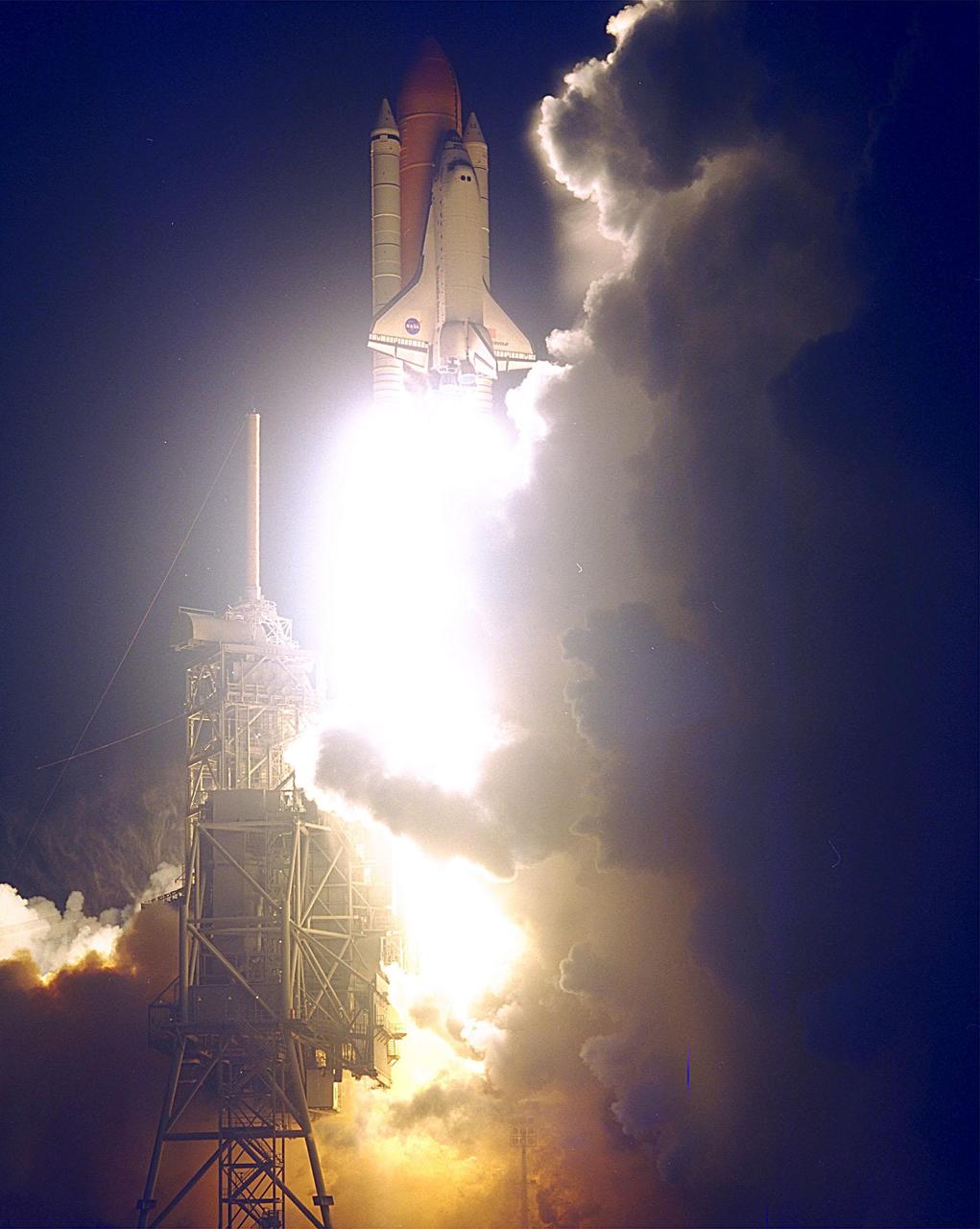
KENNEDY SPACE CENTER, Fla. -- The Space Shuttle Endeavour lights up the night sky as it embarks on the first U.S. mission, STS-88, dedicated to the assembly of the International Space Station. Liftoff on Dec. 4 from Launch Pad 39A was at 3:35:34 a.m. EST. During the nearly 12-day mission, the six-member crew will mate in space the first two elements of the International Space Station the already-orbiting Zarya control module with the Unity connecting module carried by Endeavour. Crew members are Commander Robert D. Cabana, Pilot Frederick W. "Rick" Sturckow, and Mission Specialists Nancy J. Currie, Jerry L. Ross, James H. Newman and Sergei Konstantinovich Krikalev, a Russian cosmonaut. This was the second launch attempt for STS-88. The first one on Dec. 3 was scrubbed when launch controllers, following an assessment of a suspect hydraulic system, were unable to resume the countdown clock in time to launch within the remaining launch window
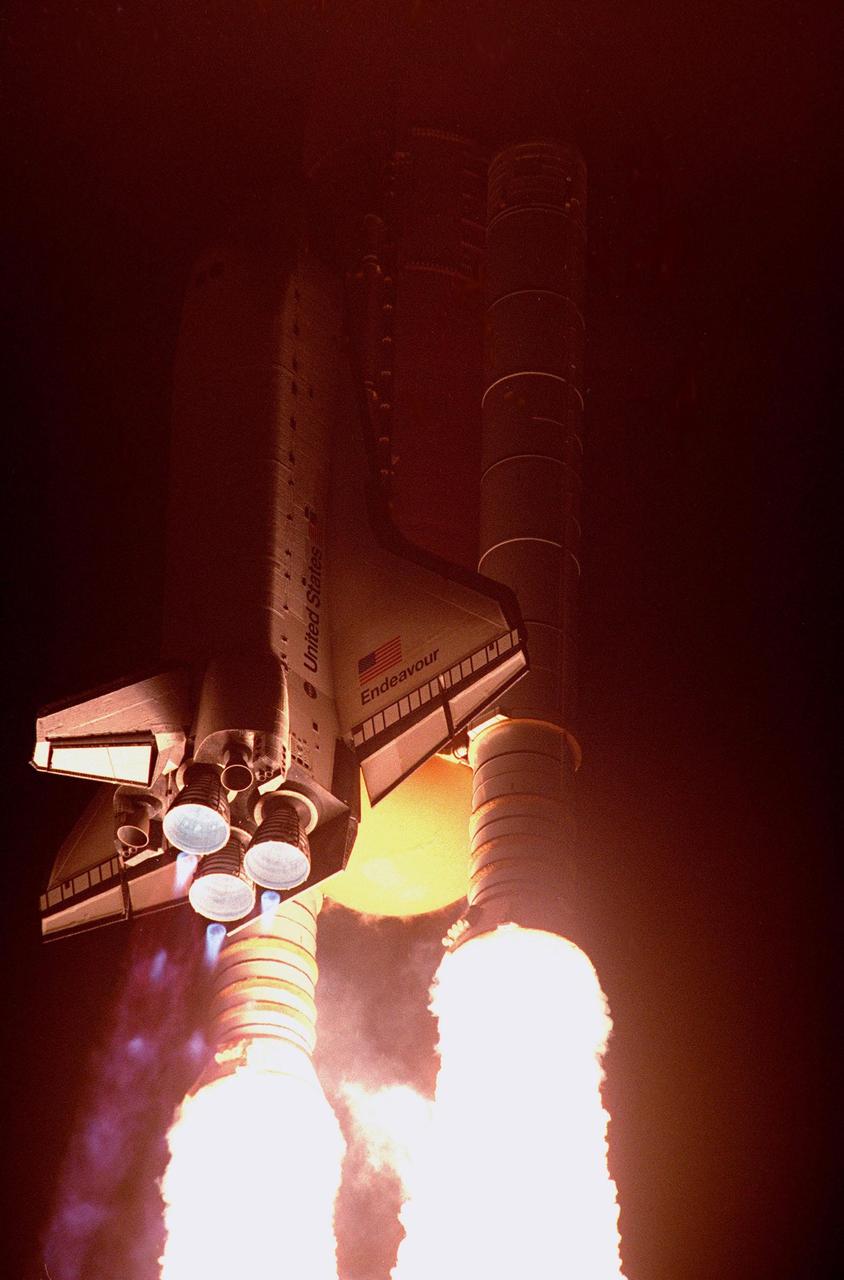
KENNEDY SPACE CENTER, Fla. -- The Space Shuttle Endeavour blazes through the night sky as it begins the first U.S. mission, STS-88, dedicated to the assembly of the International Space Station. Liftoff on Dec. 4 from Launch Pad 39A was at 3:35:34 a.m. EST. During the nearly 12-day mission, the six-member crew will mate in space the first two elements of the International Space Station the already-orbiting Zarya control module with the Unity connecting module carried by Endeavour. Crew members are Commander Robert D. Cabana, Pilot Frederick W. "Rick" Sturckow, and Mission Specialists Nancy J. Currie, Jerry L. Ross, James H. Newman and Sergei Konstantinovich Krikalev, a Russian cosmonaut. This was the second launch attempt for STS-88. The first one on Dec. 3 was scrubbed when launch controllers, following an assessment of a suspect hydraulic system, were unable to resume the countdown clock in time to launch within the remaining launch window
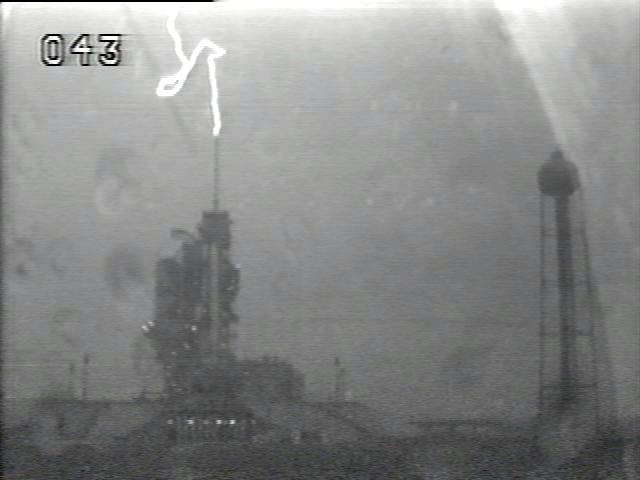
CAPE CANAVERAL, Fla. – A lightning strike on Launch Pad 39A at NASA's Kennedy Space Center in Florida is captured by an Operational Television camera. Eleven lightning strikes occurred within .35 miles of the pad during a thunderstorm July 10 as space shuttle Endeavour was prepared for launch. Mission managers decided to delay Endeavour's planned liftoff July 11 as a precaution to allow engineers and safety personnel time to analyze data and retest systems on the orbiter and solid rockets boosters. The next launch attempt for the STS-127 mission is planned for Sunday, July 12, at 7:13 p.m. EDT. The Operational Television cameras can be used to triangulate the location of lightning strikes. Other detection systems include the Cloud-To-Ground Lightning Surveillance System, Strikenet/National Lightning Detection Network, Lightning Induced Voltage Instrumentation System and the Catenary Wire Lightning Instrumentation System. Endeavour will deliver the Japanese Experiment Module's Exposed Facility, or JEM-EF, and the Experiment Logistics Module-Exposed Section, or ELM-ES, in the final of three flights dedicated to the assembly of the Japan Aerospace Exploration Agency's Kibo laboratory complex on the International Space Station. STS-127 is the 29th flight for the assembly of the space station. Photo credit: NASA/Analex
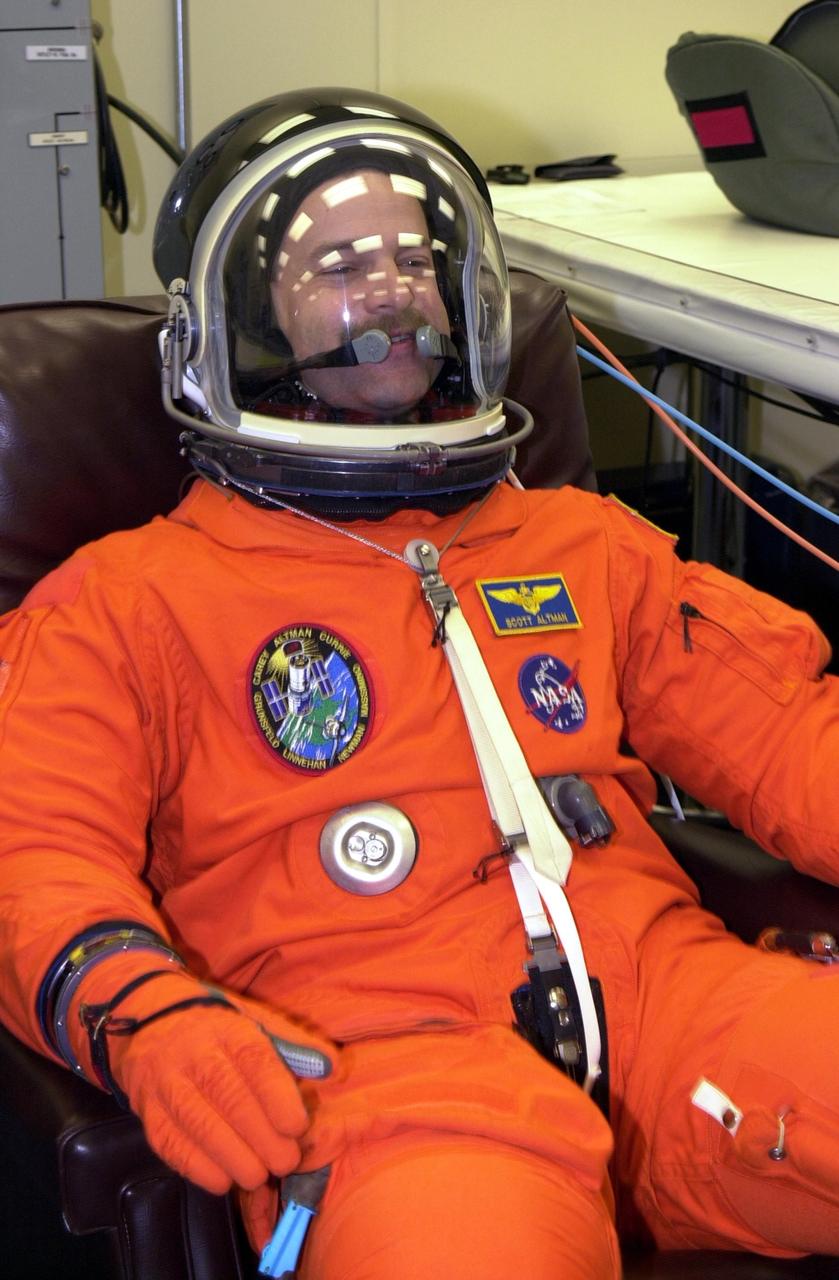
KENNEDY SPACE CENTER, Fla. - During suitup, STS-109 Commander Scott D. Altman gives a thumbs up for launch. Liftoff of Space Shuttle Columbia is scheduled for 6:22 a.m. EST March 1. On mission STS-109, the crew will capture the Hubble Space Telescope using the Shuttle's robotic arm and secure it on a workstand in Columbia's payload bay. Four mission specialists will perform five scheduled spacewalks to complete system upgrades to the telescope. More durable solar arrays, a large gyroscopic assembly to help point the telescope properly, a new telescope power control unit, and a cooling system to restore the use of a key infrared camera and spectrometer unit, which has been dormant since 1999, will all be installed. In addition, the telescope's view of the Universe will be improved with the addition of the Advanced Camera for Surveys (ACS), which replaces the Faint Object Camera, the last of Hubble's original instruments. Mission STS-109 is the 27th flight of the orbiter Columbia and the 108th flight overall in NASA's Space Shuttle program. After the 11-day mission, Columbia is scheduled to land about 4:35 a.m. EST March 12

KENNEDY SPACE CENTER, Fla. - During suitup, STS-109 Mission Specialist Richard M. Linnehan shows he is ready for launch. Liftoff of Space Shuttle Columbia is scheduled for 6:22 a.m. EST March 1. On mission STS-109, the crew will capture the Hubble Space Telescope using the Shuttle's robotic arm and secure it on a workstand in Columbia's payload bay. Four mission specialists will perform five scheduled spacewalks to complete system upgrades to the telescope. More durable solar arrays, a large gyroscopic assembly to help point the telescope properly, a new telescope power control unit, and a cooling system to restore the use of a key infrared camera and spectrometer unit, which has been dormant since 1999, will all be installed. In addition, the telescope's view of the Universe will be improved with the addition of the Advanced Camera for Surveys (ACS), which replaces the Faint Object Camera, the last of Hubble's original instruments. Mission STS-109 is the 27th flight of the orbiter Columbia and the 108th flight overall in NASA's Space Shuttle program. After the 11-day mission, Columbia is scheduled to land about 4:35 a.m. EST March 12
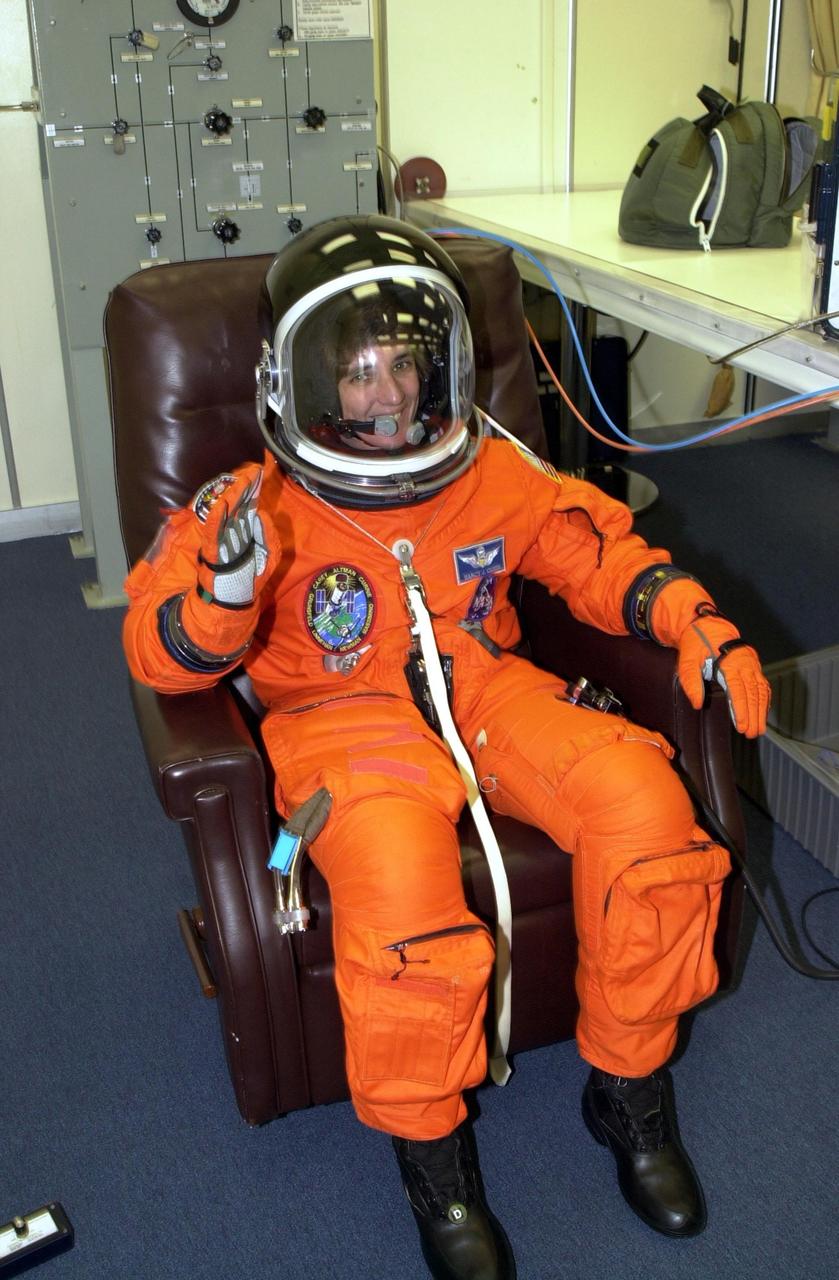
KENNEDY SPACE CENTER, Fla. - STS-109 Mission Specialist Nancy Jane Currie is ready for launch after suiting up. Liftoff is scheduled for 6:22 a.m. EST March 1. On mission STS-109, the crew will capture the Hubble Space Telescope using the Shuttle's robotic arm and secure it on a workstand in Columbia's payload bay. Currie will be the primary arm operator. Four mission specialists will perform five scheduled spacewalks to complete system upgrades to the telescope. More durable solar arrays, a large gyroscopic assembly to help point the telescope properly, a new telescope power control unit, and a cooling system to restore the use of a key infrared camera and spectrometer unit, which has been dormant since 1999, will all be installed. In addition, the telescope's view of the Universe will be improved with the addition of the Advanced Camera for Surveys (ACS), which replaces the Faint Object Camera, the last of Hubble's original instruments. Mission STS-109 is the 27th flight of the orbiter Columbia and the 108th flight overall in NASA's Space Shuttle program. After the 11-day mission, Columbia is scheduled to land about 4:35 a.m. EST March 12
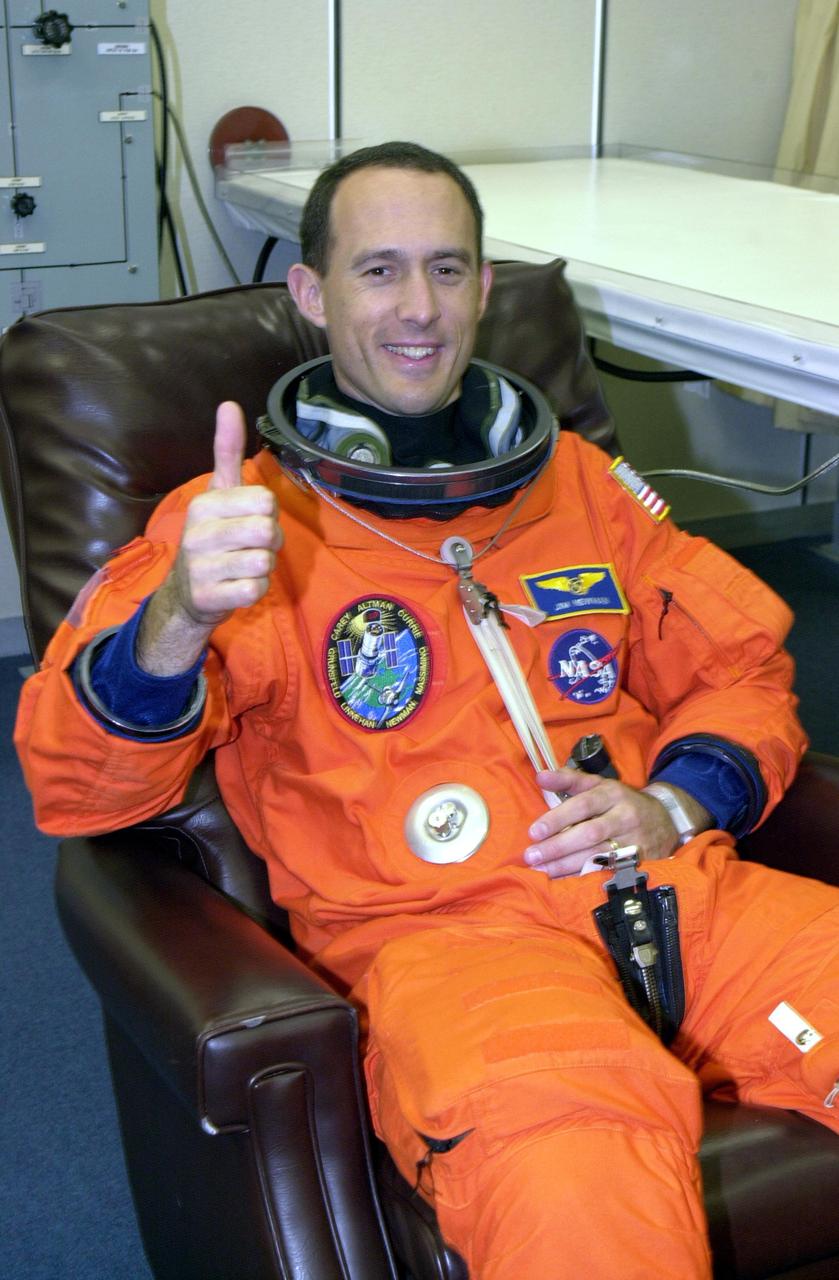
KENNEDY SPACE CENTER, Fla. - During suitup, STS-109 Mission Specialist James H. Newman gives a thumbs up for launch. Liftoff of Space Shuttle Columbia is scheduled for 6:22 a.m. EST March 1. On mission STS-109, the crew will capture the Hubble Space Telescope using the Shuttle's robotic arm and secure it on a workstand in Columbia's payload bay. Four mission specialists will perform five scheduled spacewalks to complete system upgrades to the telescope. More durable solar arrays, a large gyroscopic assembly to help point the telescope properly, a new telescope power control unit, and a cooling system to restore the use of a key infrared camera and spectrometer unit, which has been dormant since 1999, will all be installed. In addition, the telescope's view of the Universe will be improved with the addition of the Advanced Camera for Surveys (ACS), which replaces the Faint Object Camera, the last of Hubble's original instruments. Mission STS-109 is the 27th flight of the orbiter Columbia and the 108th flight overall in NASA's Space Shuttle program. After the 11-day mission, Columbia is scheduled to land about 4:35 a.m. EST March 12
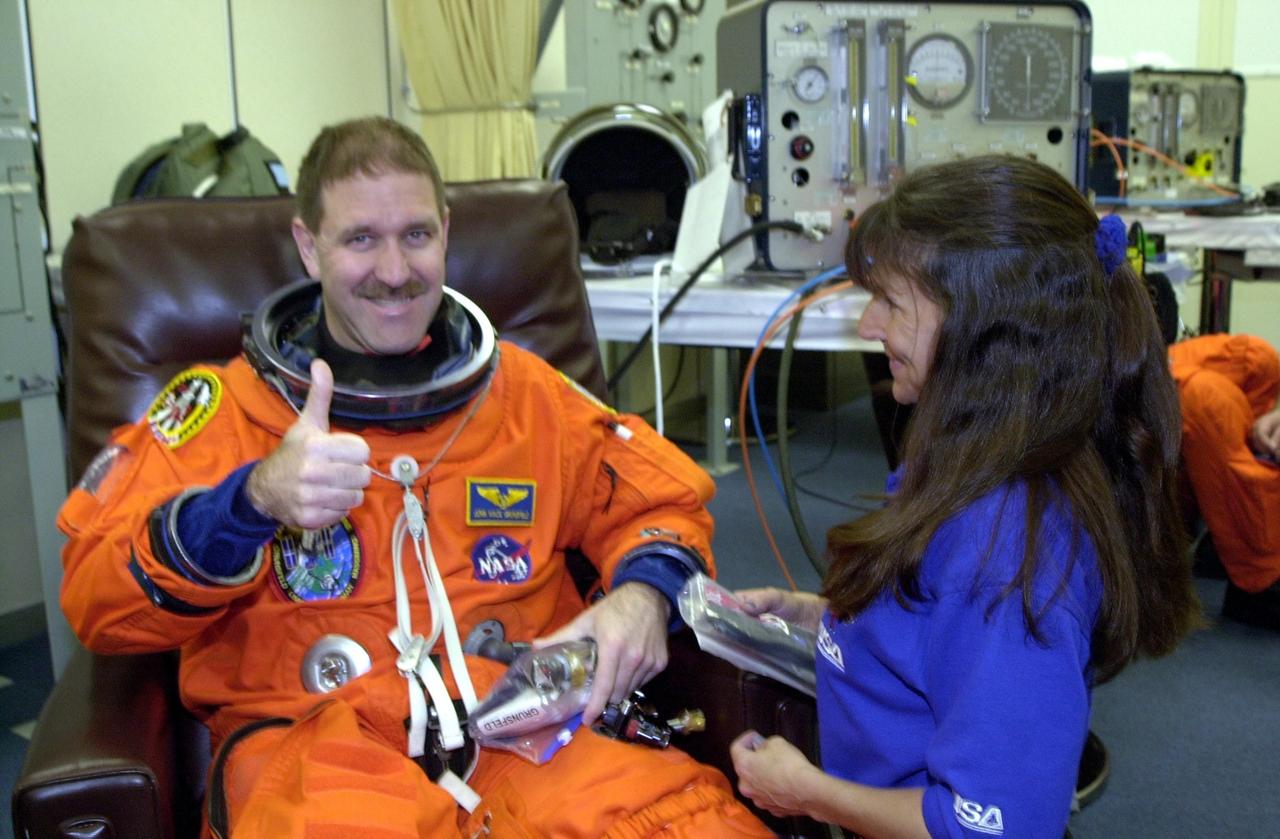
KENNEDY SPACE CENTER, Fla. - During suitup, STS-109 Payload Commander John M. Grunsfeld shows his readiness for launch. Liftoff of Space Shuttle Columbia is scheduled for 6:22 a.m. EST March 1. On mission STS-109, the crew will capture the Hubble Space Telescope using the Shuttle's robotic arm and secure it on a workstand in Columbia's payload bay. Four mission specialists will perform five scheduled spacewalks to complete system upgrades to the telescope. More durable solar arrays, a large gyroscopic assembly to help point the telescope properly, a new telescope power control unit, and a cooling system to restore the use of a key infrared camera and spectrometer unit, which has been dormant since 1999, will all be installed. In addition, the telescope's view of the Universe will be improved with the addition of the Advanced Camera for Surveys (ACS), which replaces the Faint Object Camera, the last of Hubble's original instruments. Mission STS-109 is the 27th flight of the orbiter Columbia and the 108th flight overall in NASA's Space Shuttle program. After the 11-day mission, Columbia is scheduled to land about 4:35 a.m. EST March 12
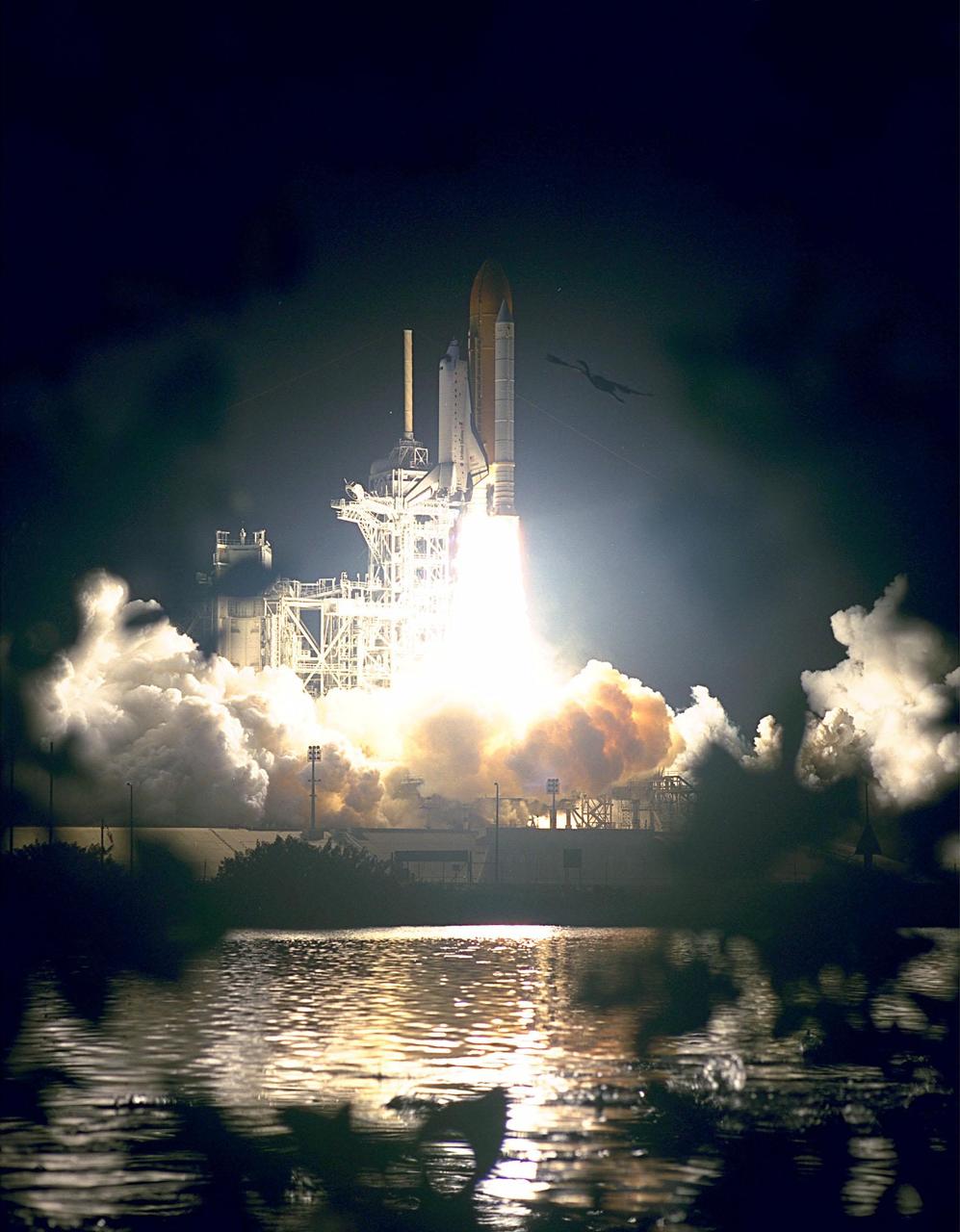
KENNEDY SPACE CENTER, Fla. -- A bird (at upper right) soars near the Space Shuttle Endeavour as the vehicle lifts off from Launch Pad 39A on the first U.S. mission dedicated to the assembly of the International Space Station. Liftoff on Dec. 4 was at 3:35:34 a.m. EST. During the nearly 12-day mission, the six-member crew will mate in space the first two elements of the International Space Station the already-orbiting Zarya control module with the Unity connecting module carried by Endeavour. Crew members are Commander Robert D. Cabana, Pilot Frederick W. "Rick" Sturckow, and Mission Specialists Nancy J. Currie, Jerry L. Ross, James H. Newman and Sergei Konstantinovich Krikalev, a Russian cosmonaut. This was the second launch attempt for STS-88. The first one on Dec. 3 was scrubbed when launch controllers, following an assessment of a suspect hydraulic system, were unable to resume the countdown clock in time to launch within the remaining launch window
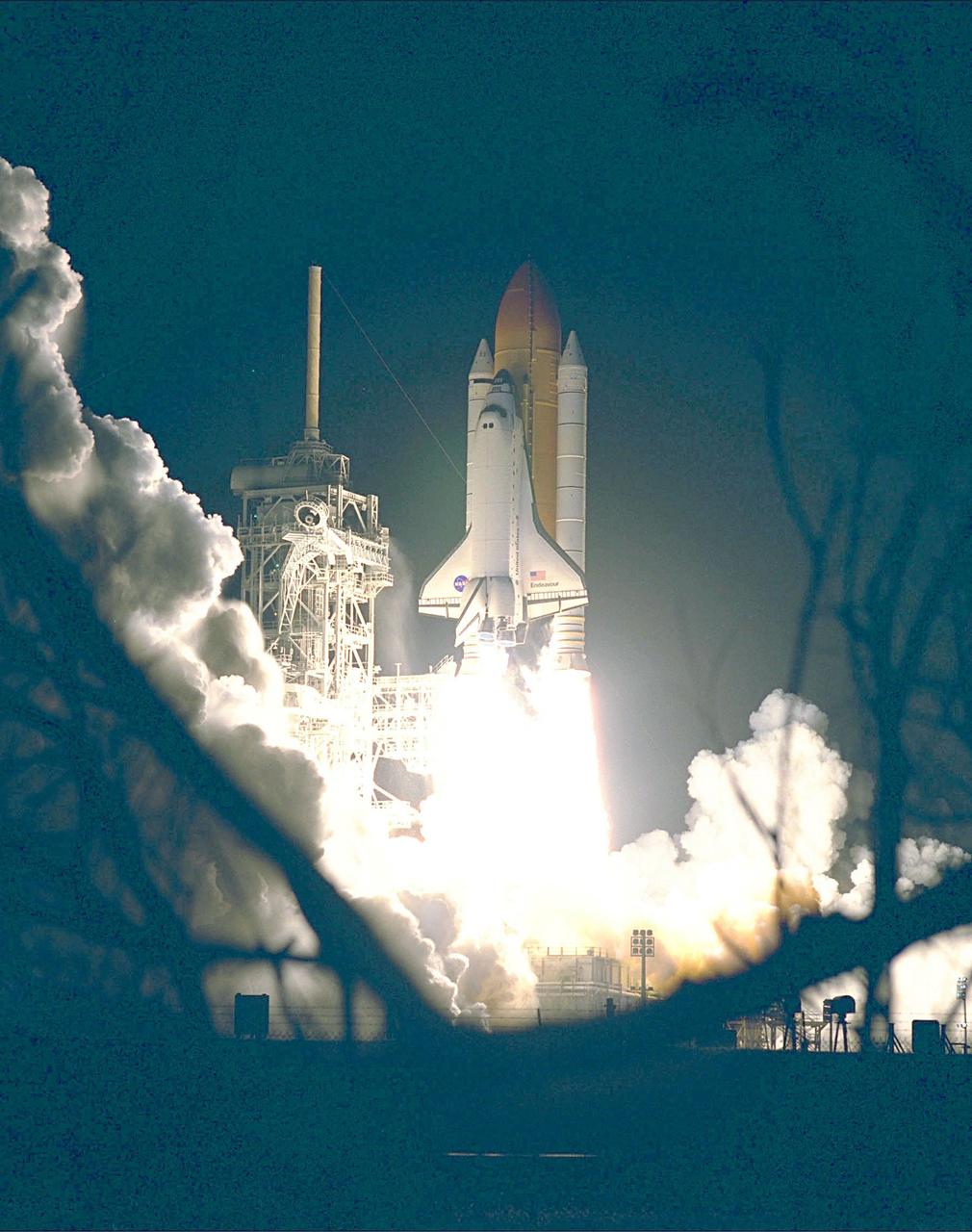
KENNEDY SPACE CENTER, Fla. -- The Space Shuttle Endeavour lights up the night sky as it embarks on the first U.S. mission dedicated to the assembly of the International Space Station. Liftoff on Dec. 4 from Launch Pad 39A was at 3:35:34 a.m. EST. During the nearly 12-day mission, the six-member crew will mate in space the first two elements of the International Space Station the already-orbiting Zarya control module with the Unity connecting module carried by Endeavour. Crew members are Commander Robert D. Cabana, Pilot Frederick W. "Rick" Sturckow, and Mission Specialists Nancy J. Currie, Jerry L. Ross, James H. Newman and Sergei Konstantinovich Krikalev, a Russian cosmonaut. This was the second launch attempt for STS-88. The first one on Dec. 3 was scrubbed when launch controllers, following an assessment of a suspect hydraulic system, were unable to resume the countdown clock in time to launch within the remaining launch window
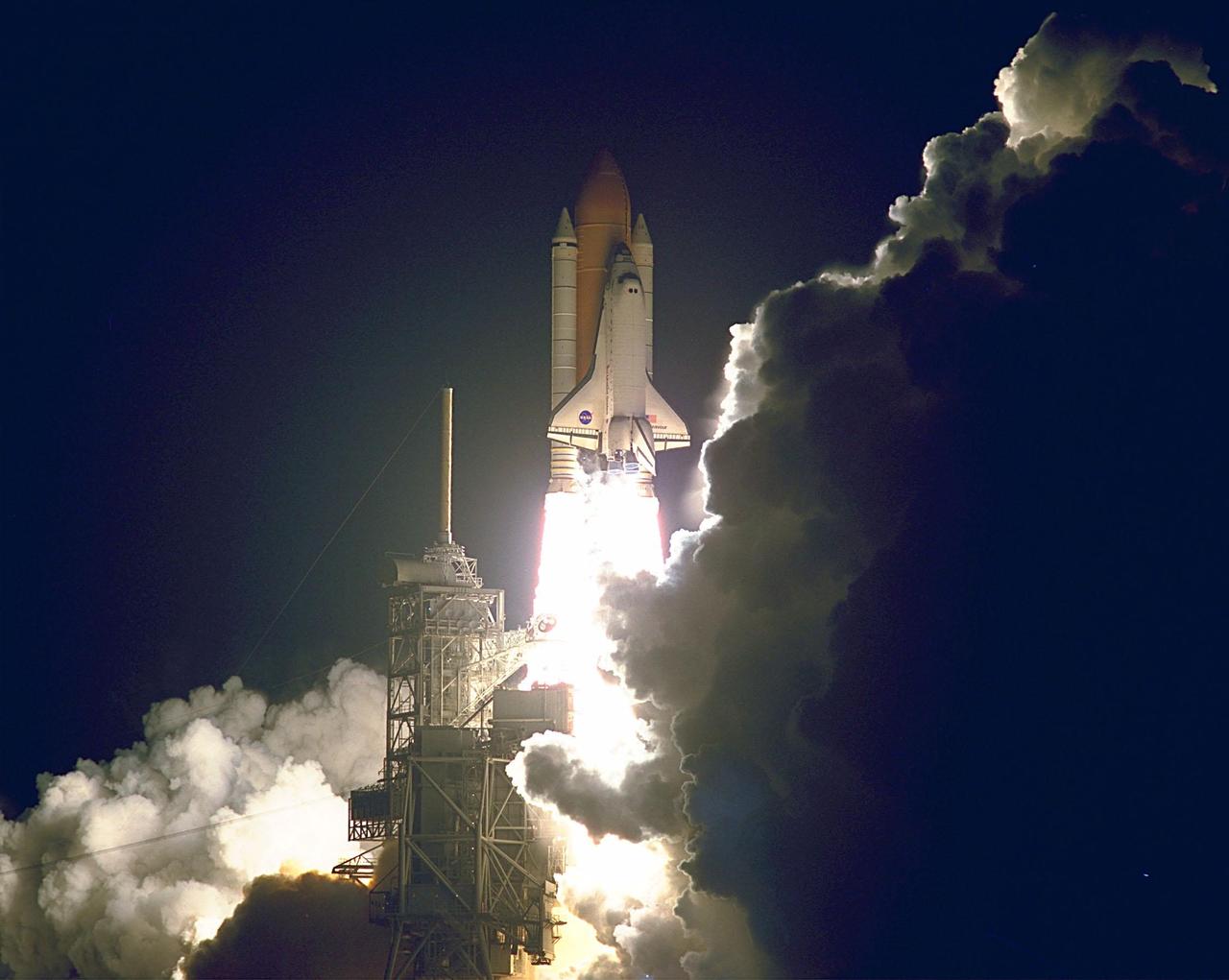
KENNEDY SPACE CENTER, Fla. -- The Space Shuttle Endeavour lights up the night sky as it embarks on the first U.S. mission dedicated to the assembly of the International Space Station. Liftoff on Dec. 4 from Launch Pad 39A was at 3:35:34 a.m. EST. During the nearly 12-day mission, the six-member crew will mate in space the first two elements of the International Space Station the already-orbiting Zarya control module with the Unity connecting module carried by Endeavour. Crew members are Commander Robert D. Cabana, Pilot Frederick W. "Rick" Sturckow, and Mission Specialists Nancy J. Currie, Jerry L. Ross, James H. Newman and Sergei Konstantinovich Krikalev, a Russian cosmonaut. This was the second launch attempt for STS-88. The first one on Dec. 3 was scrubbed when launch controllers, following an assessment of a suspect hydraulic system, were unable to resume the countdown clock in time to launch within the remaining launch window
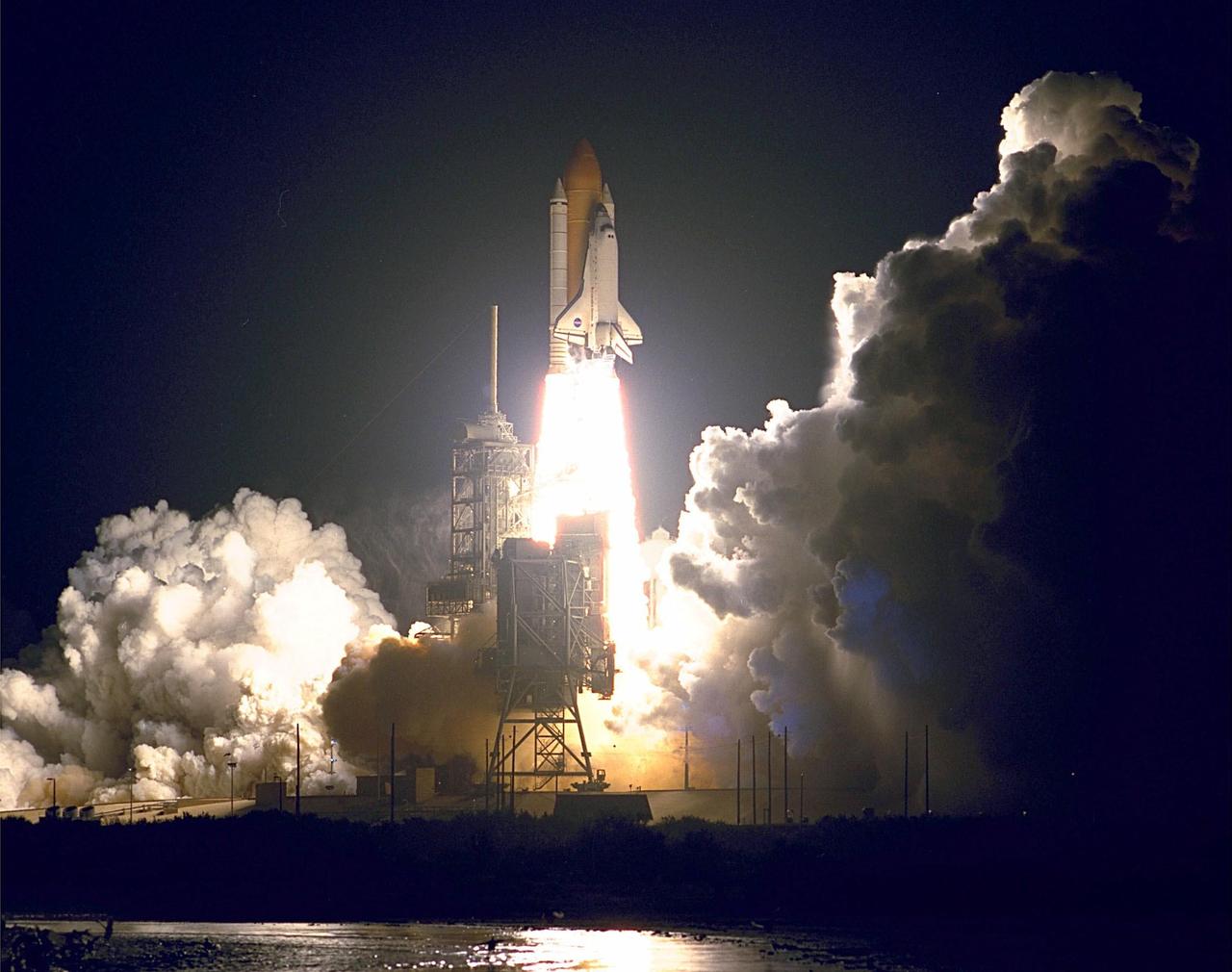
KENNEDY SPACE CENTER, Fla. -- The Space Shuttle Endeavour lights up the night sky as it embarks on the first U.S. mission dedicated to the assembly of the International Space Station. Liftoff on Dec. 4 from Launch Pad 39A was at 3:35:34 a.m. EST. During the nearly 12-day mission, the six-member crew will mate in space the first two elements of the International Space Station the already-orbiting Zarya control module with the Unity connecting module carried by Endeavour. Crew members are Commander Robert D. Cabana, Pilot Frederick W. "Rick" Sturckow, and Mission Specialists Nancy J. Currie, Jerry L. Ross, James H. Newman and Sergei Konstantinovich Krikalev, a Russian cosmonaut. This was the second launch attempt for STS-88. The first one on Dec. 3 was scrubbed when launch controllers, following an assessment of a suspect hydraulic system, were unable to resume the countdown clock in time to launch within the remaining launch window