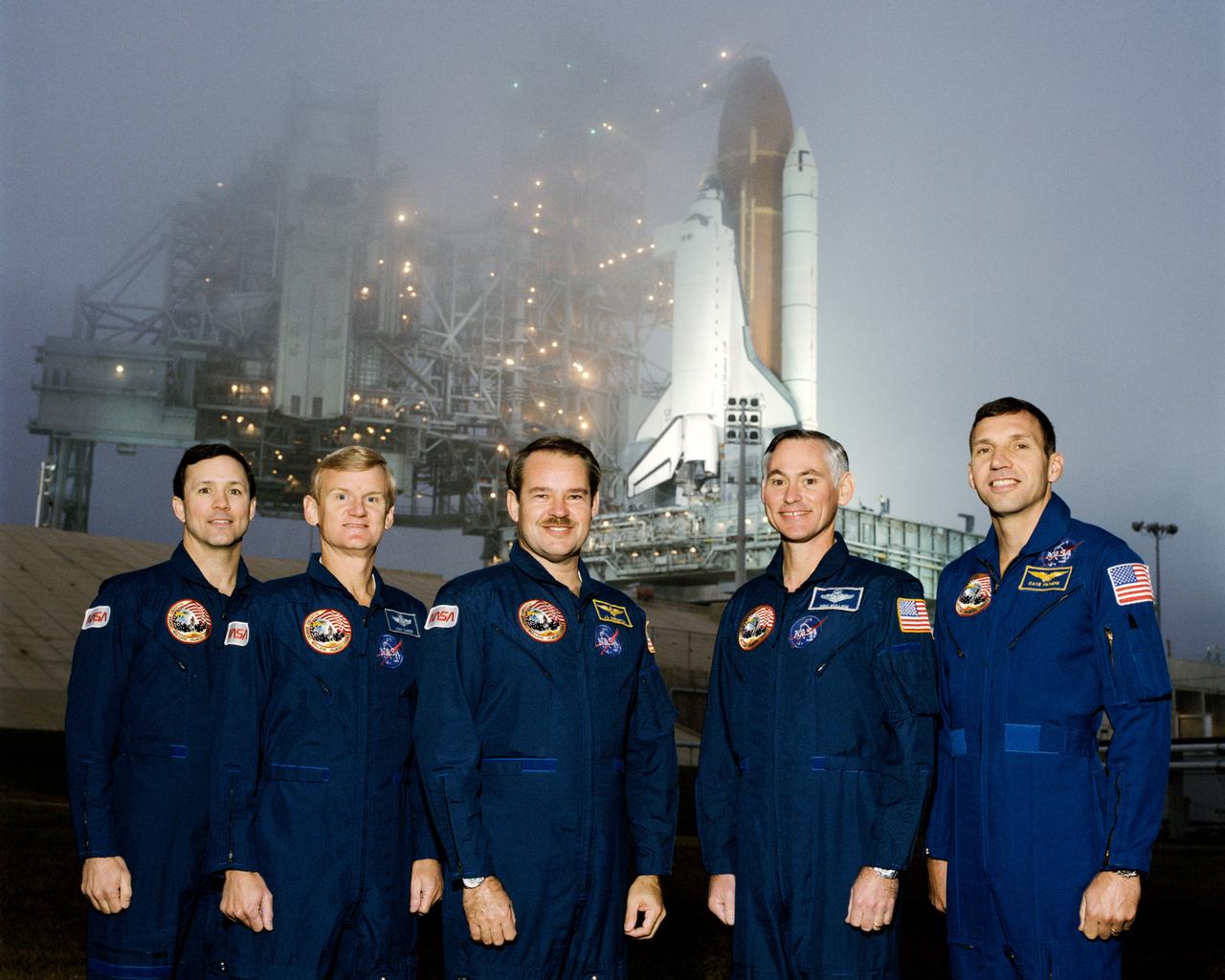
STS036-S-002 (21 Nov. 1989) --- The five astronauts in training for STS-36 pose near the Space Shuttle Discovery on Launch Pad 39B. Astronaut John O. Creighton (center) is mission commander. Others pictured are (left to right) astronauts Pierre J. Thuot, John H. Casper, Richard M. (Mike) Mullane and David C. Hilmers. Casper is pilot and the other three are mission specialists for the DOD-devoted mission.
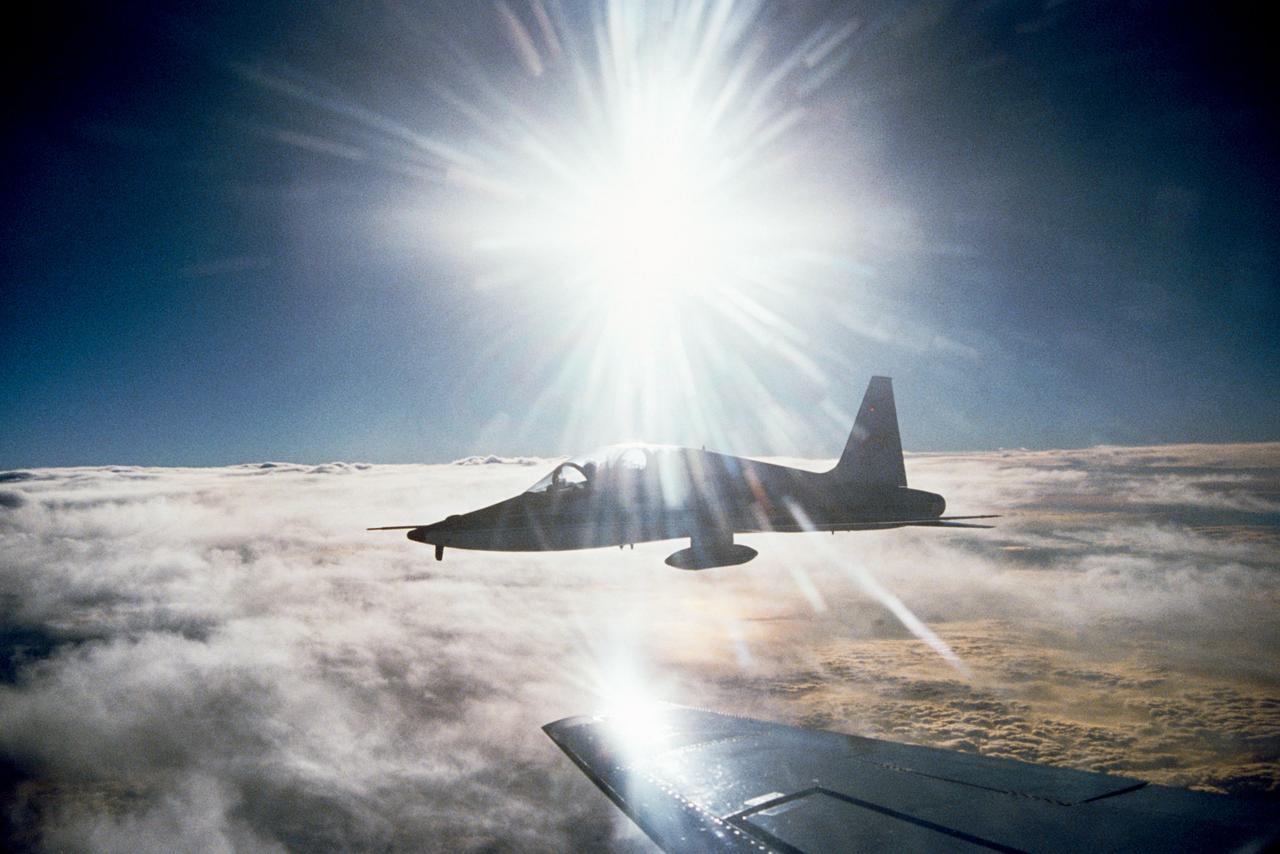
An airborne view of a T-38 taken from the Atlantis (STS-36) while landing at Edwards Air Force Base, California 03/04/90 by Mission Specialist Richard M. "Mike" Mullane.

STS-36 Earth observation shows sun beaming off ocean waters with heavy cloud cover.
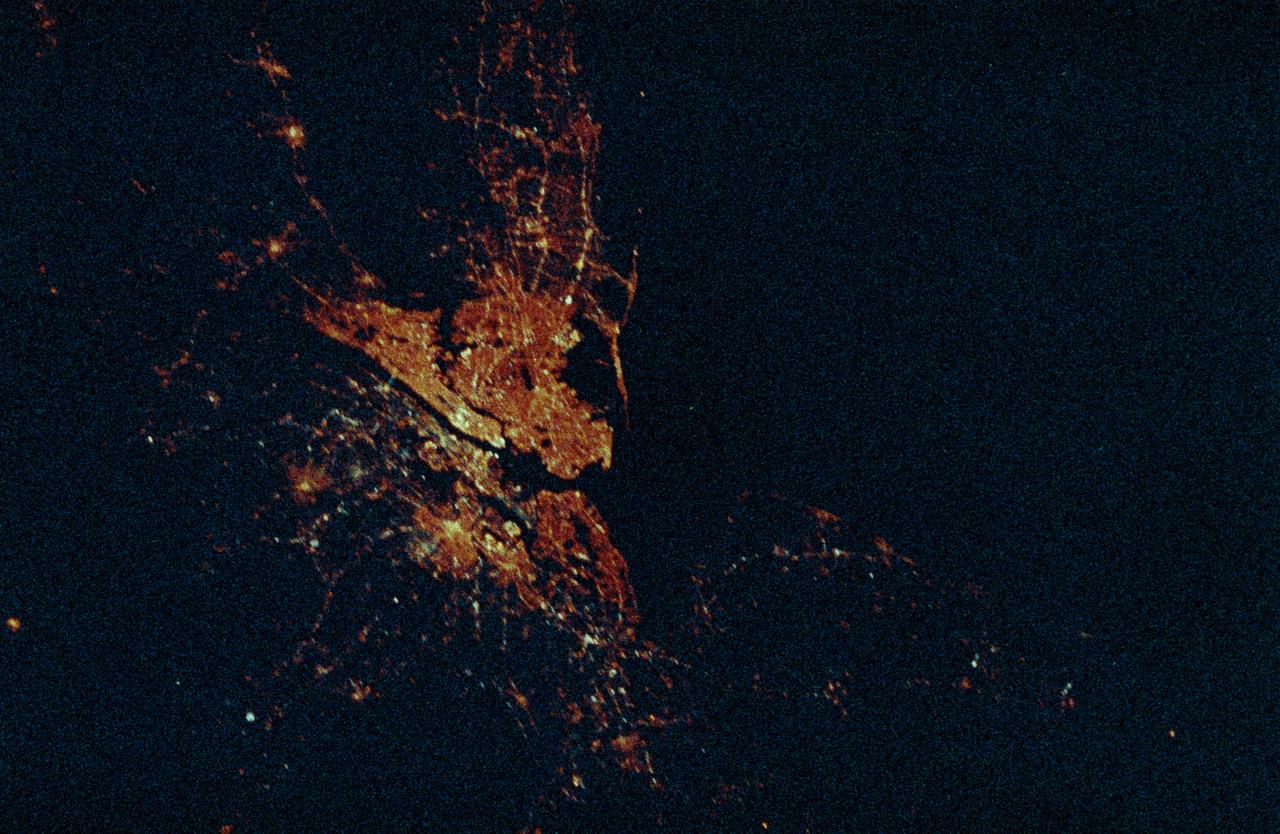
STS-36 Earth observation shows New York City, New York at night lit up along the Eastern seaboard of the United States and the Atlantic Ocean. The city lights designate the densely populated central city and the major highways surrounding it.
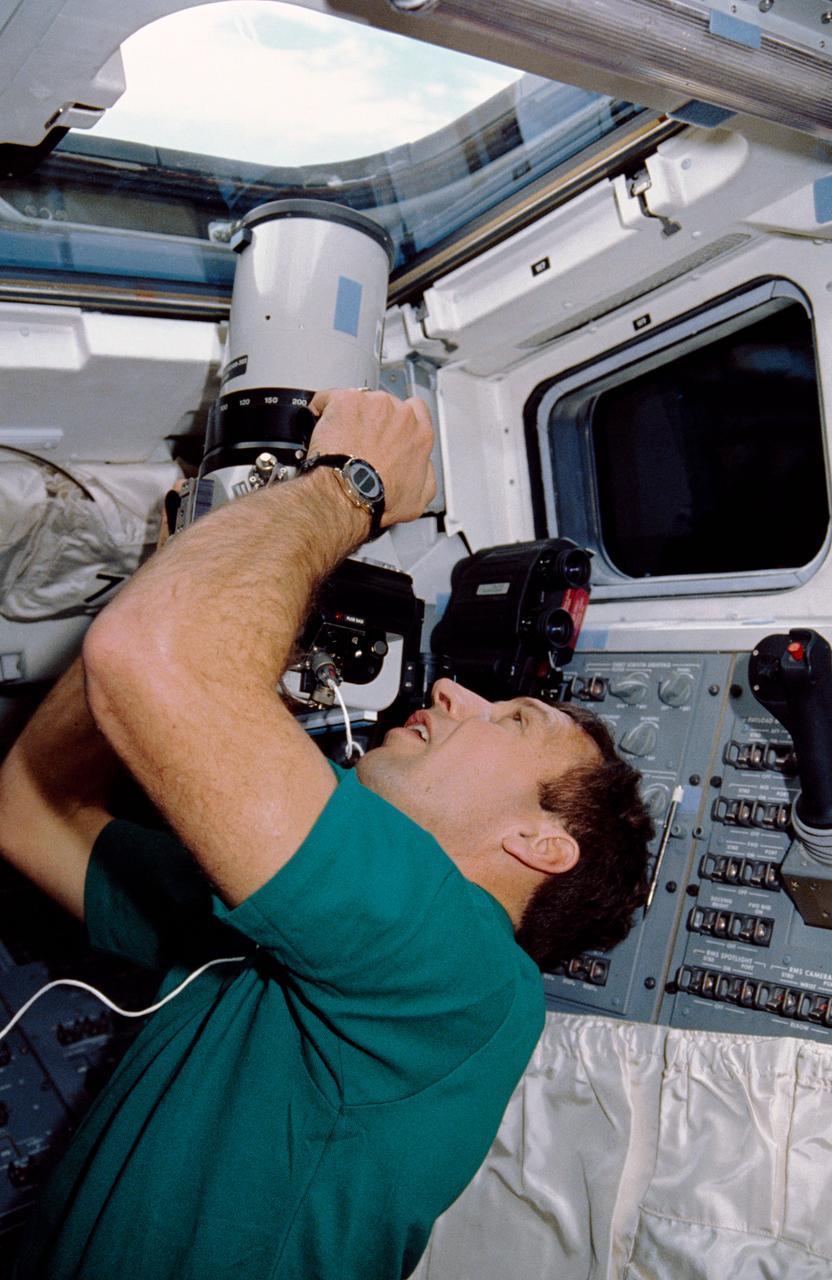
STS-36 Mission Specialist (MS) David C. Hilmers points the large-format AEROLINHOF camera out overhead window W7 on the aft flight deck of Atlantis, Orbiter Vehicle (OV) 104. Hilmers records Earth imagery using the camera. Hilmers and four other astronauts spent four days, 10 hours and 19 minutes aboard OV-104 for the Department of Defense (DOD) devoted mission.

STS036-01-014 (28 Feb-3 Mar 1990) --- Astronaut John O. Creighton, STS-36 mission commander, aims a 70mm Hasselblad camera through Atlantis' aft windows. The Hasselblad is primarily used for out the window shots, mostly those that feature subjects on Earth. Creighton and four other astronauts spent four and a half days in space for the DOD-devoted mission.
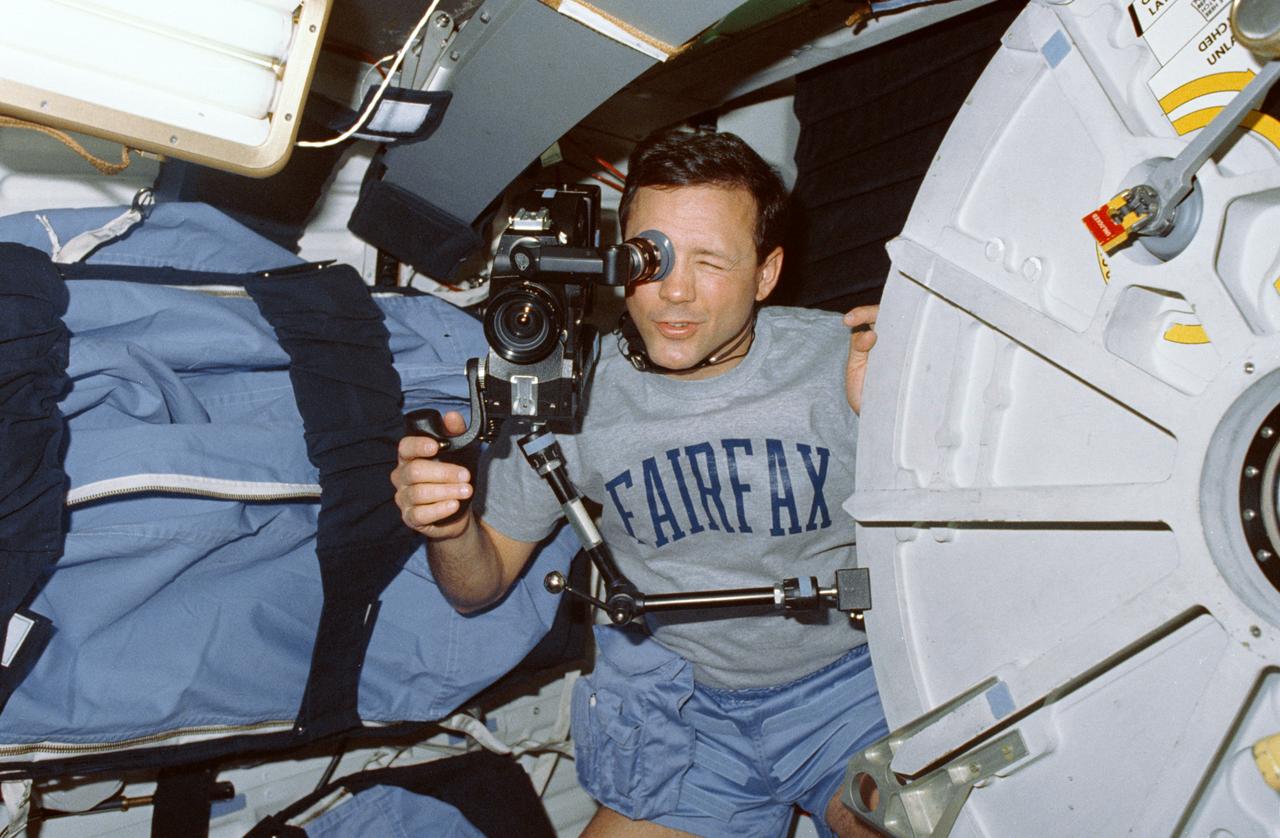
STS-36 Mission Specialist (MS) Pierre J. Thuot operates 16mm ARRIFLEX motion picture camera mounted on the open airlock hatch via a bracket. Thuot uses the camera to record activity of his fellow STS-36 crewmembers on the middeck of Atlantis, Orbiter Vehicle (OV) 104. Positioned between the airlock hatch and the starboard wall-mounted sleep restraints, Thuot, wearing a FAIRFAX t-shirt, squints into the cameras eye piece. Thuot and four other astronauts spent four days, 10 hours and 19 minutes aboard OV-104 for the Department of Defense (DOD) devoted mission.

STS036-21-032 (3 March 1990) --- The five astronaut crewmembers for STS-36 pose for an inflight group portrait on the forward flight deck of Atlantis, Orbiter Vehicle (OV) 104. They are (left to right) Commander John O. Creighton, Mission Specialist (MS) David C. Hilmers, MS Richard M. Mullane, MS Pierre J. Thuot, and Pilot John H. Casper. Creighton is positioned in the commanders seat and Casper in the pilot?s seat. Overhead control panels appear above the astronauts. The astronauts spent four days, 10 hours and 19 minutes aboard OV-104 for the Department of Defense (DOD) dedicated mission.
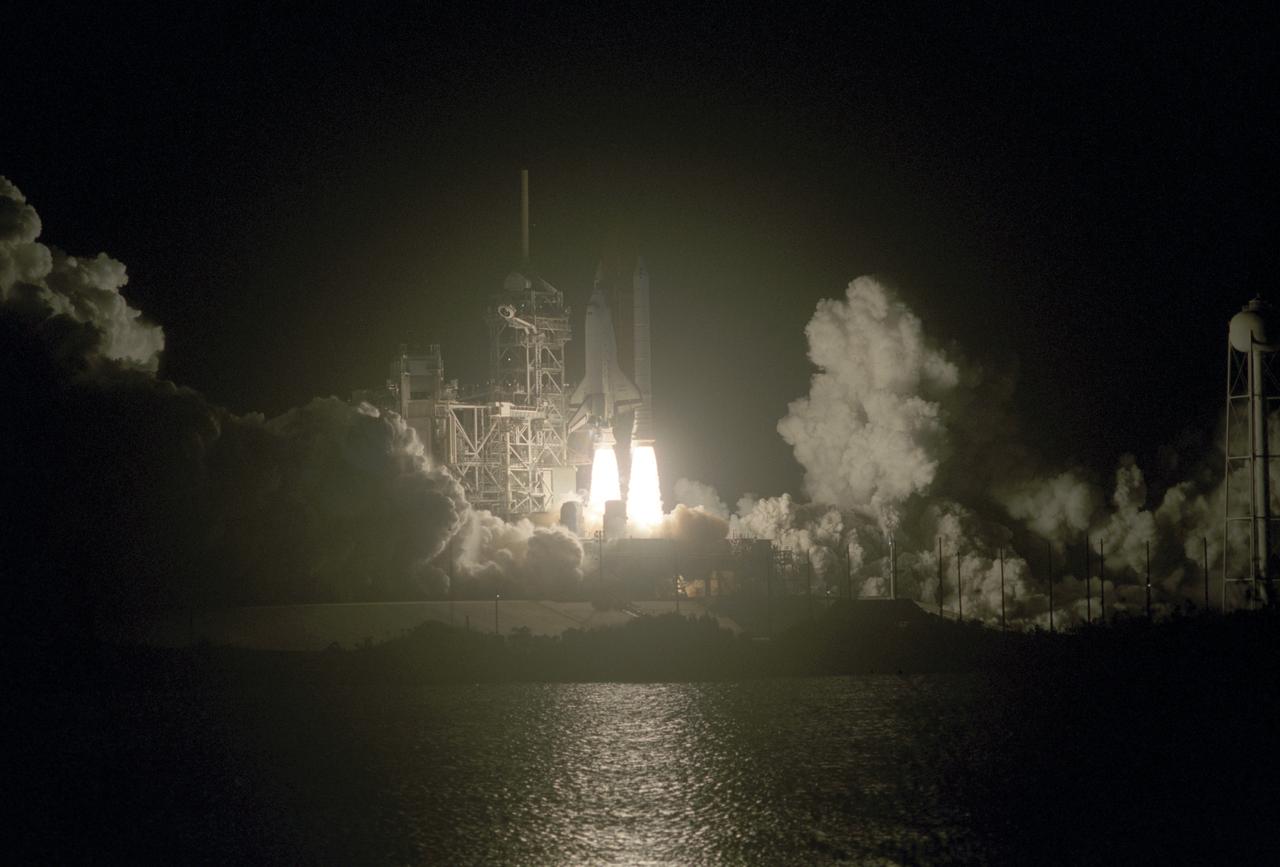
The STS-36 mission launch aboard the Space Shuttle Orbiter Atlantis on February 28, 1990 at 2:50:22am (EST). The crew featured five astronauts who served in the 6th Department of Defense (DOD) mission: John H. Creighton, commander; John H. Caster, pilot; and mission specialists Pierre J. Thuot, Richard M. (Mike) Mullane, and David. C. Hilmers.
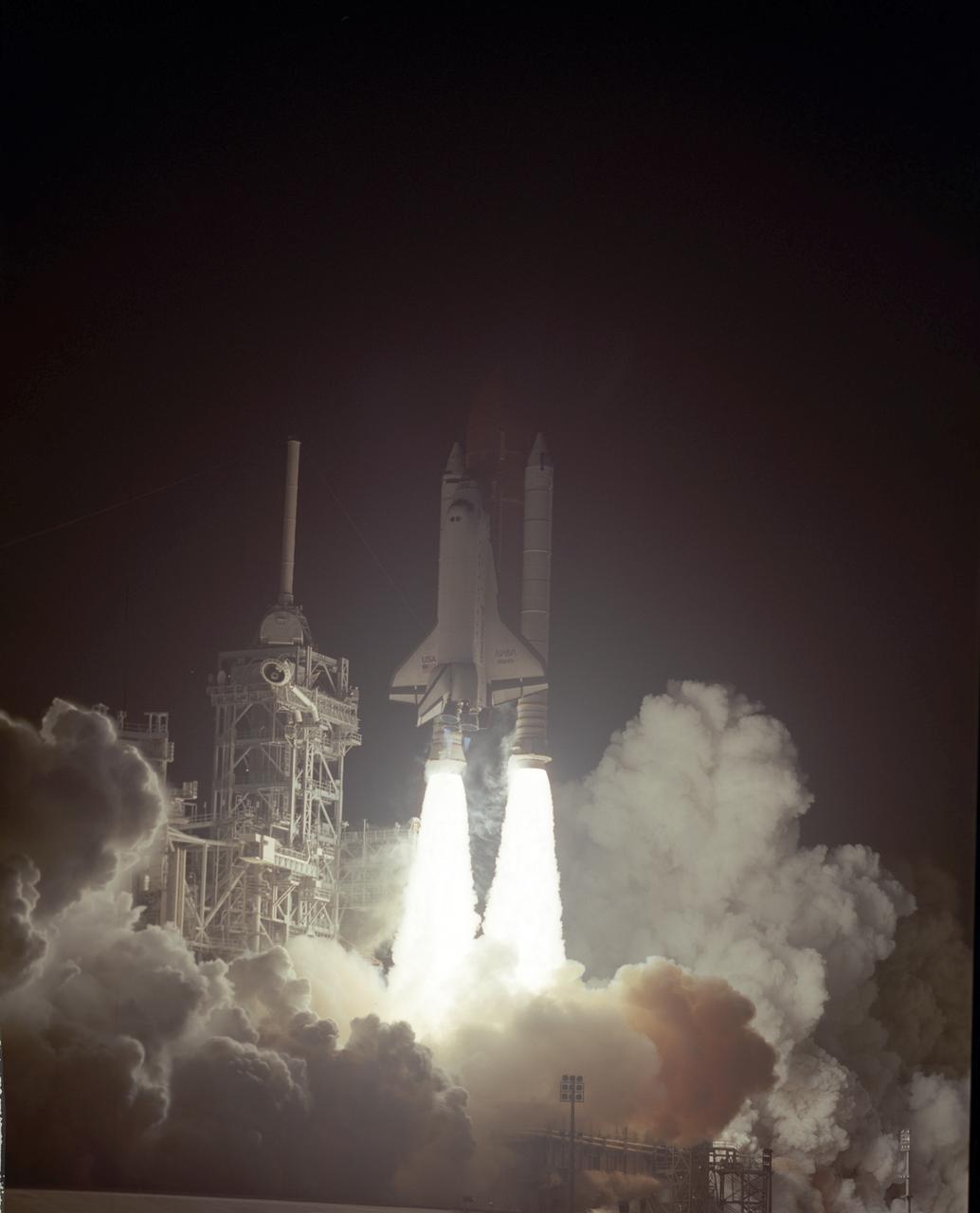
The STS-36 mission launch aboard the Space Shuttle Orbiter Atlantis on February 28, 1990 at 2:50:22am (EST). The crew featured five astronauts who served in the 6th Department of Defense (DOD) mission: John H. Creighton, commander; John H. Caster, pilot; and mission specialists Pierre J. Thuot, Richard M. (Mike) Mullane, and David. C. Hilmers.

STS036-S-008 (3 March 1990) --- The crewmembers for STS-36 egress the Shuttle Atlantis following touchdown at Edwards Air Force Base in California. NASA officials stand nearby awaiting to greet (from bottom to top of the steps) Astronauts John O. Creighton, John H. Casper, Pierre J. Thuot, David C. Hilmers and Richard M. (Mike) Mullane. At right are Dr. William B. Lenoir (left) acting associate administrator for space flight; and Donald R. Puddy, director of flight crew operations.
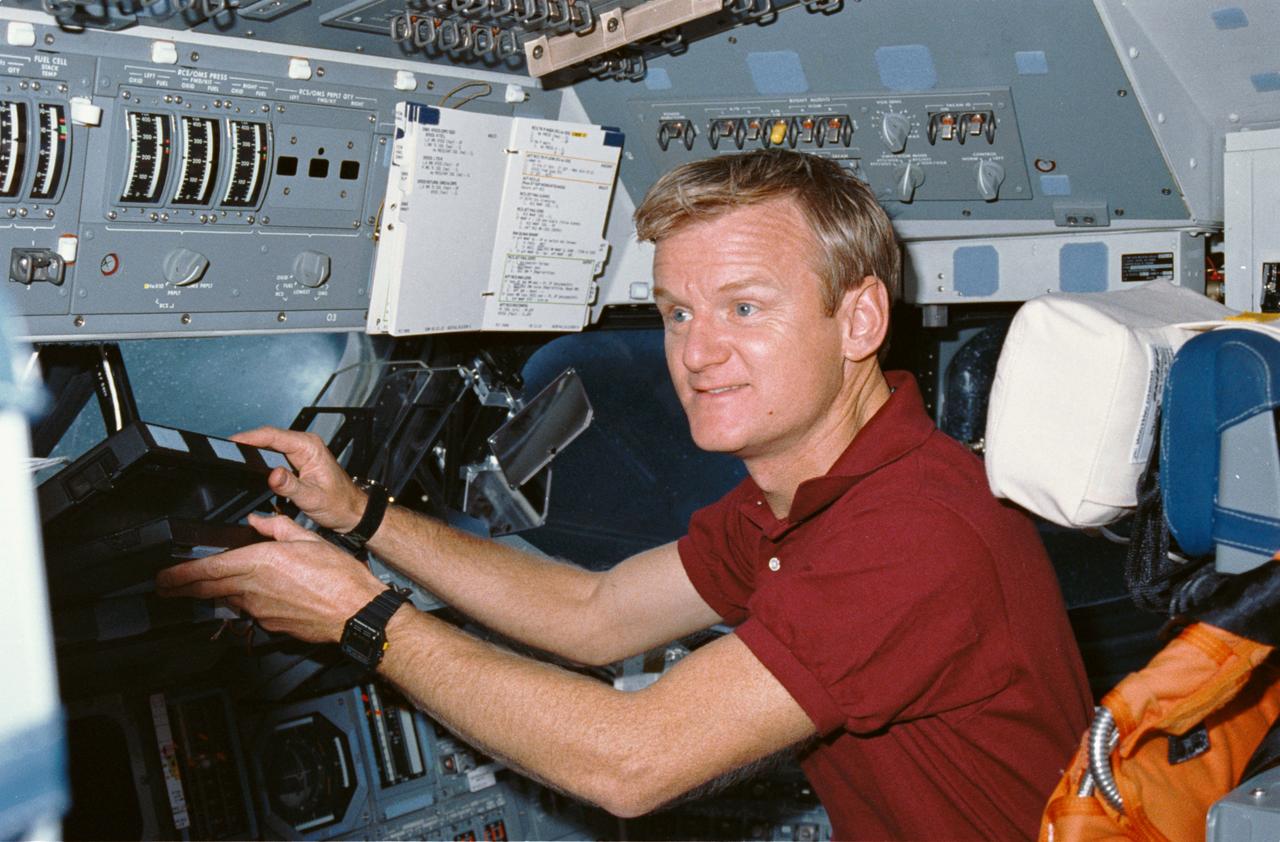
STS036-03-027 (3 March 1990) --- STS-36 Pilot John H. Casper reaches for the shuttle portable onboard computer (SPOC), a laptop computer, while at the pilots station on the forward flight deck of Atlantis, Orbiter Vehicle (OV) 104. Casper, seated in the pilot’s seat, lifts the SPOC from the forward window ledge. Appearing around him are forward crew compartment windows, the head up display (HUD), the flight mirror assembly, and a checklist attached to control panel O3. Casper and four other astronauts spent four days, 10 hours and 19 minutes aboard the spacecraft for a Department of Defense (DOD) devoted mission.
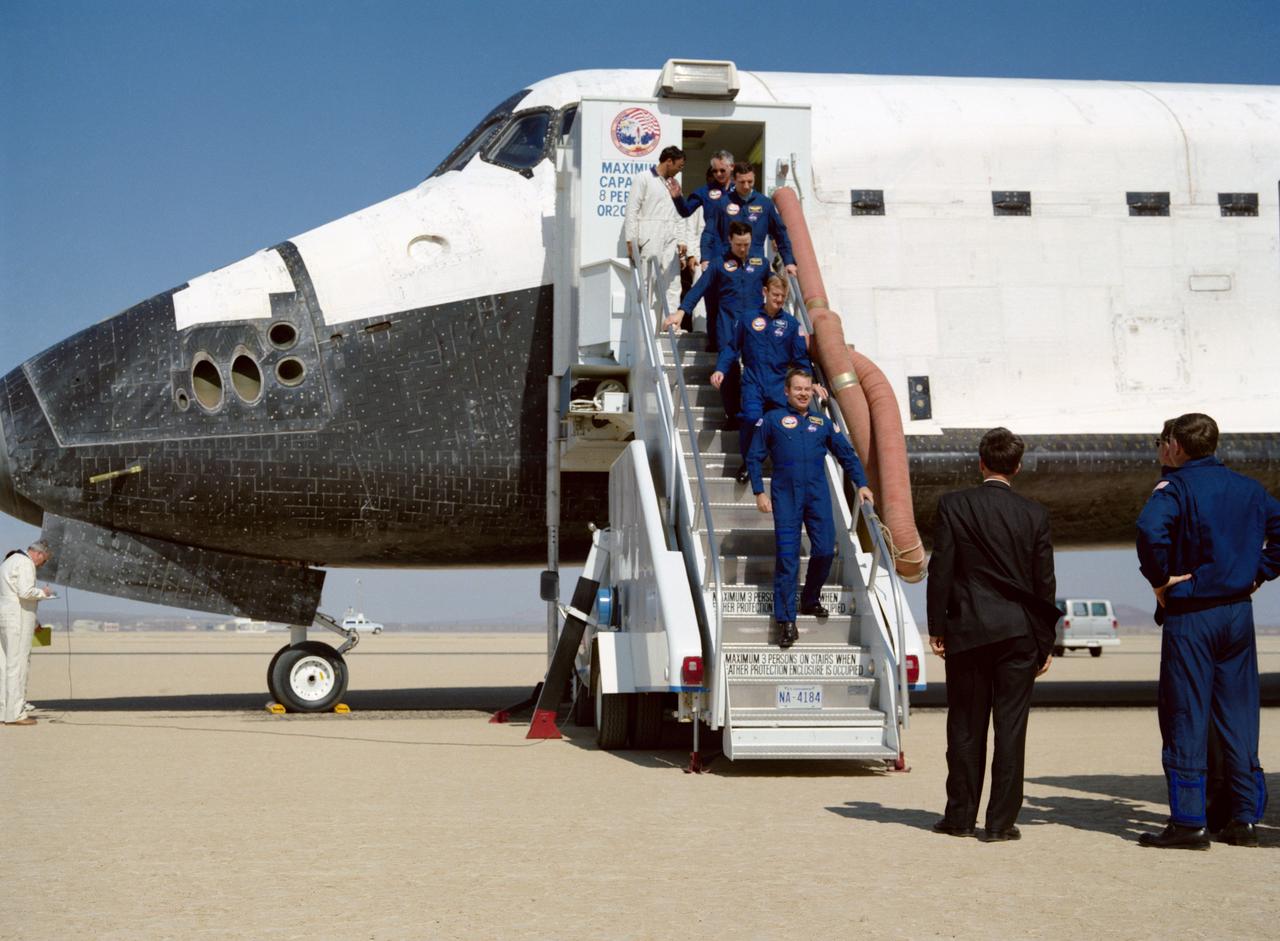
STS-36 crewmembers egress Atlantis, Orbiter Vehicle (OV) 104, via mobile stairway following touchdown on Runway 23 drylake bed at Edwards Air Force Base (EAFB), California. Commander John O. Creighton, leading crewmembers down the stairway, is followed by Pilot John H. Casper, Mission Specialist (MS) Pierre J. Thuot, MS David C. Hilmers, and MS Richard M. Mullane. On the runway, Acting NASA Associate Administrator for Space Flight Dr. William B. Lenoir, JSC Flight Crew Operations Directorate Director Donald R. Puddy, and JSC Astronaut Office Acting Chief Michael L. Coats wait to greet crewmembers.

STS-36 Commander John O. Creighton, smiling and wearing a headset, listens to music as the tape recorder freefloats in front of him. During this lighter moment of the mission, Creighton is positioned at the commanders station on the forward flight deck of Atlantis, Orbiter Vehicle (OV) 104. Forward flight deck windows W1 and W2 appear on his left. Creighton and four other astronauts spent four days, 10 hours and 19 minutes aboard the spacecraft for the Department of Defense (DOD) devoted mission.
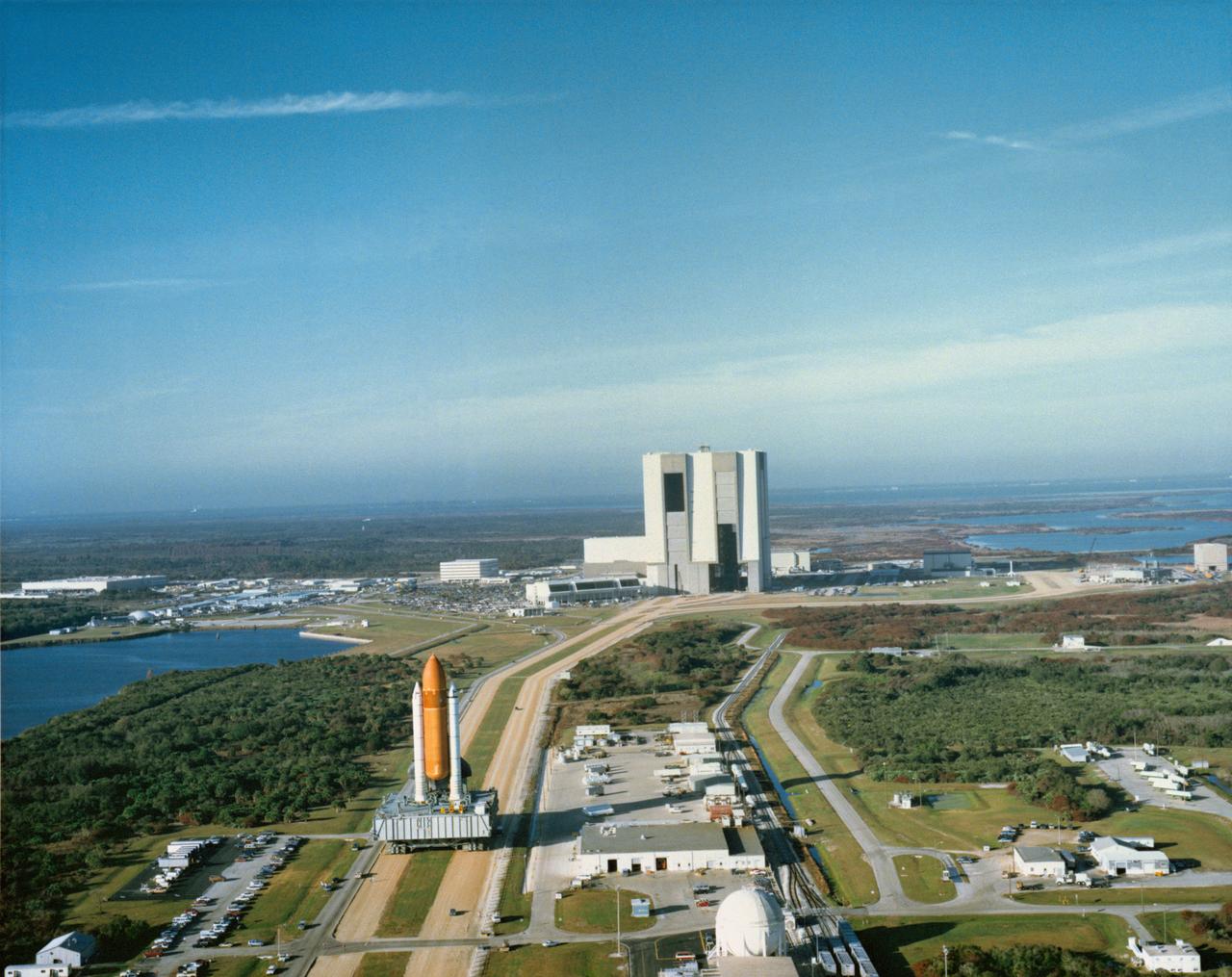
Atlantis, Orbiter Vehicle (OV) 104, is blocked by its large orange external tank (ET) as it leaves Vehicle Assembly Building (VAB) during its rollout to Kennedy Space Center (KSC) Launch Complex (LC) Pad 39A. The crawler transporter heads along the specially designed roadway with OV-104, the ET, and two solid rocket boosters mounted on top of a mobile launcher platform. KSC facilities including the VAB and Launch Control Center (LCC) are visible in the background. OV-104 heads to LC Pad 39A after the shortest stay in the VAB since return-to-flight. OV-104 is being prepared for launch on STS-36, a Department of Defense (DOD) dedicated mission. View provided by KSC with alternate KSC number KSC-90PC-134.
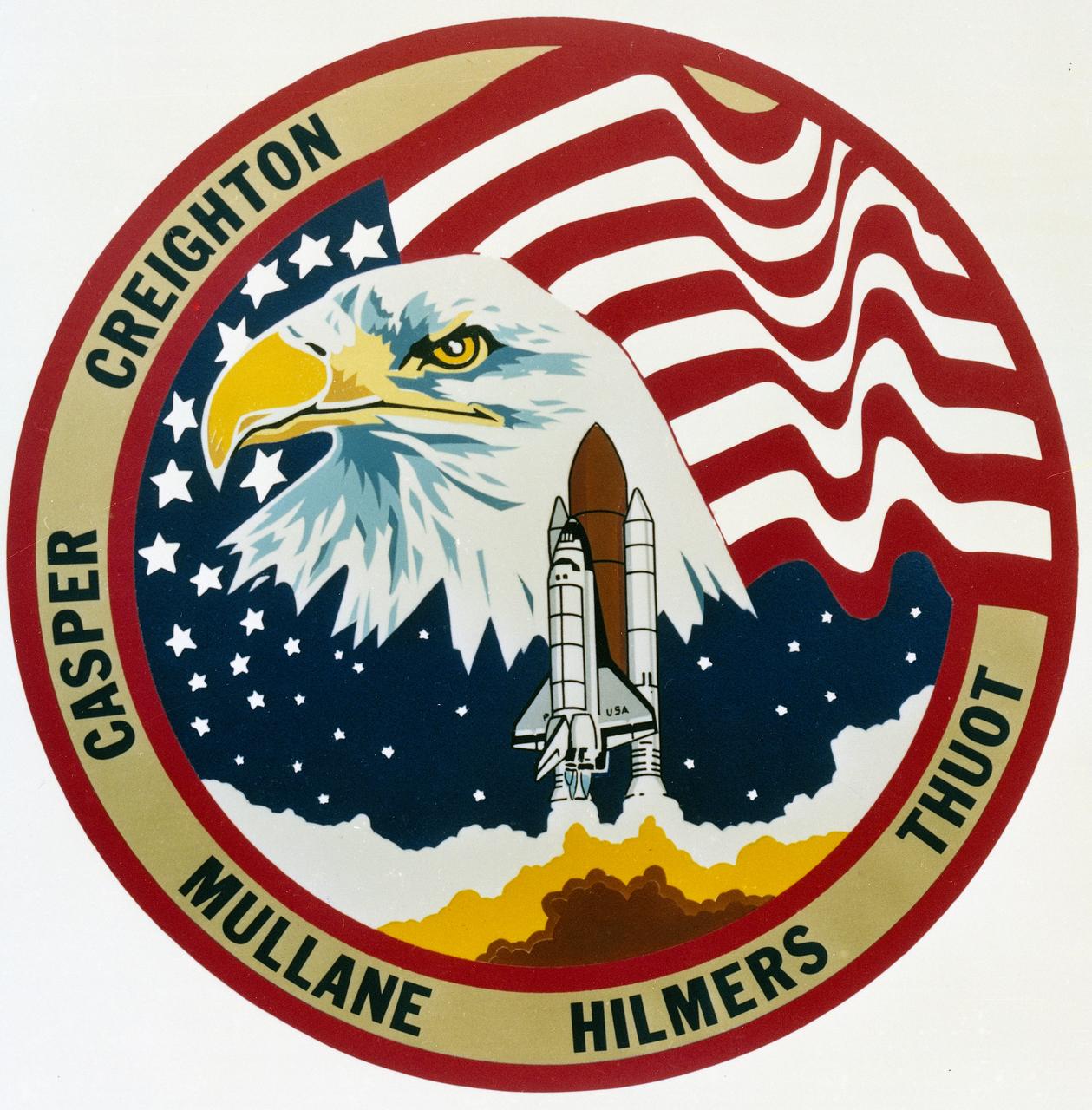
The dominant theme of the STS-36, designed by the five astronaut crewmembers, is, in their words ...the essential role that space plays in preserving the blessings of freedom and liberty for America. The crew used the eagle to symbolize our country's commitment to strength and vigilance; its domain is not bound by the limits of Earth but reaches out to the star. The Shuttle, they express majestically beginning its journey into orbit demonstrates how man and machine work together for the security of our nation. A crew spokesman went on to say the flag represents the patriotism and love for America possessed by each member of the five-man crew and signifies the honor accorded them through participation in national defense.

The STS-36 crew portrait features 5 astronauts who served in the 6th Department of Defense (DOD) mission. Posed near the Space Shuttle Orbiter Discovery are (left to right) Pierre J. Thuot, mission specialist 3; John H. Caster, pilot; John H. Creighton, commander; Richard M. (Mike) Mullane, mission specialist 1; and David. C. Hilmers, mission specialist 2. The crew launched aboard Atlantis on February 28, 1990 at 2:50:22am (EST).
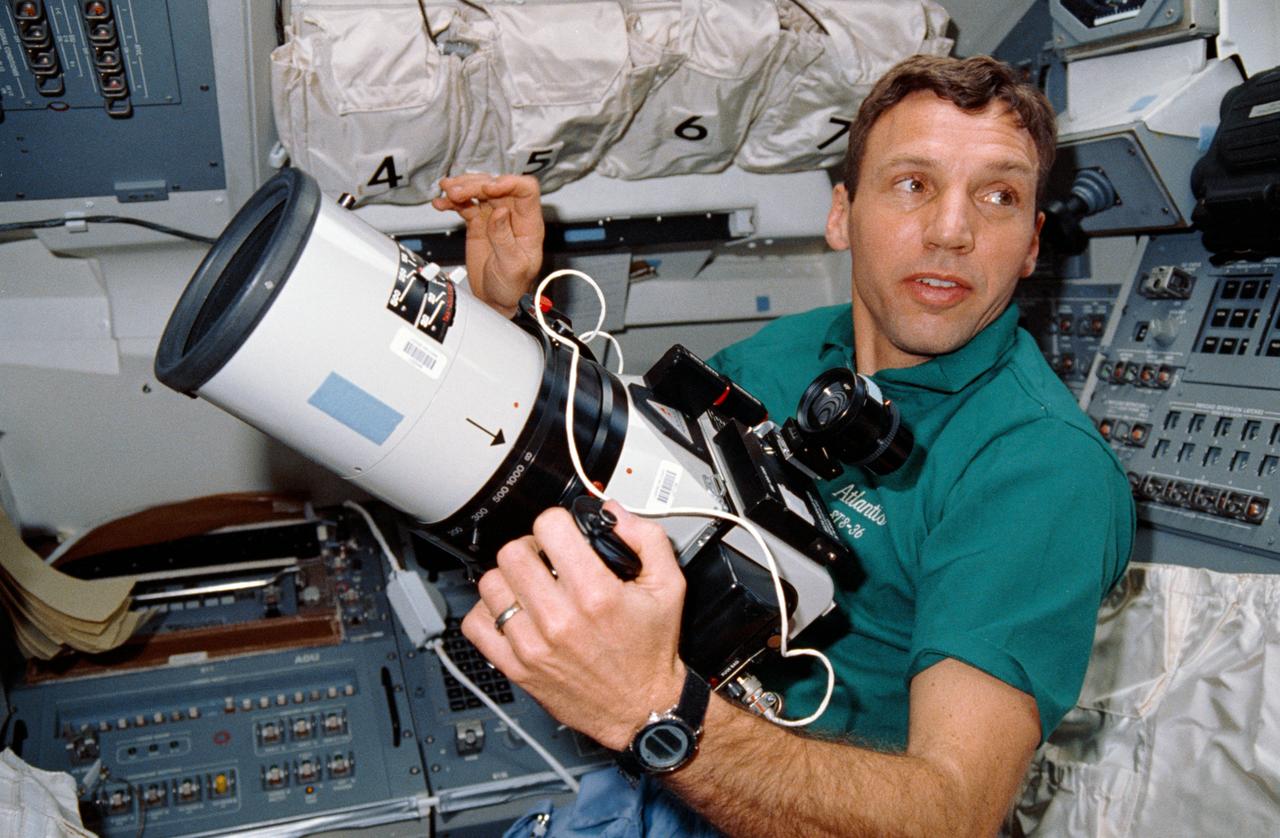
STS036-03-014 (28 Feb-3 March 1990) --- Astronaut David C. Hilmers, on the aft flight deck of the Earth-orbiting Atlantis, prepares to use the large-format Aero Linhof camera used for recording of Earth imagery. Hilmers and four other NASA astronauts spent four days, 10 hours and 19 minutes aboard the spacecraft for the DOD-devoted mission.
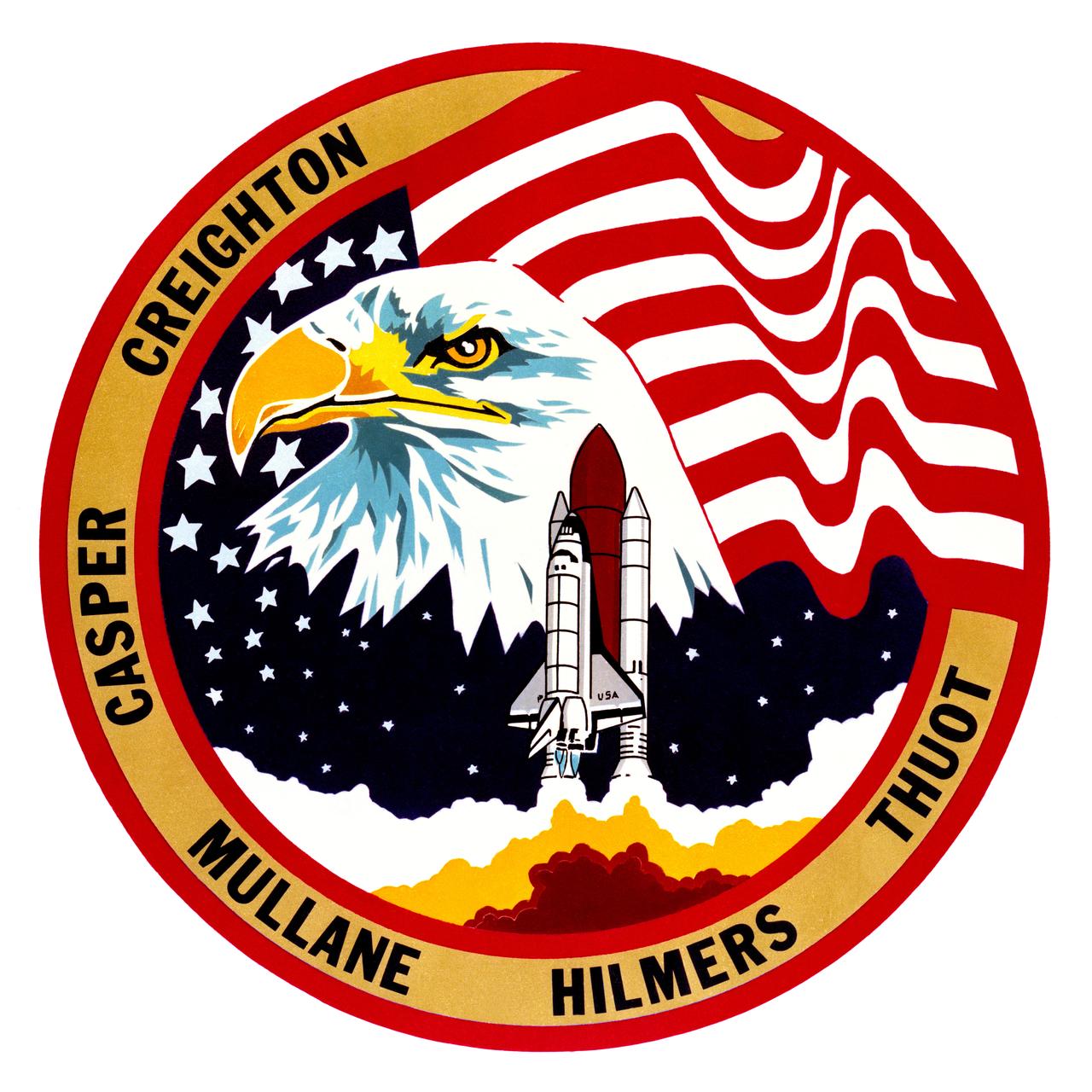
S89-20157 (November 1989) --- The dominant theme of the STS-36 patch, designed by the five astronaut crew members, is, in their words "...the essential role that space plays in preserving the blessings of freedom and liberty for America." The crew used the eagle to symbolize "our country's commitment to strength and vigilance; its domain is not bound by the limits of Earth but reaches out to the stars." "The Shuttle," they express, "majestically beginning its journey into orbit, demonstrates how man and machine work together for the security of our nation." A crew spokesman went on to say the flag represents the patriotism and love for America possessed by each member of the five-man crew and signifies the honor accorded them through participation in national defense. The NASA insignia design for space shuttle flights is reserved for use by the astronauts and for other official use as the NASA Administrator may authorize. Public availability has been approved only in the forms of illustrations by the various news media. When and if there is any change in this policy, which is not anticipated, the change will be publicly announced. Photo credit: NASA

STS036-S-018 (3 March 1990) --- The Space Shuttle Atlantis touches down at Edwards Air Force Base in California to complete the STS-36 mission. Onboard were Astronauts John O. Creighton, John H. Casper, David C. Hilmers, Richard M. (Mike) Mullane and Pierre J. Thuot.
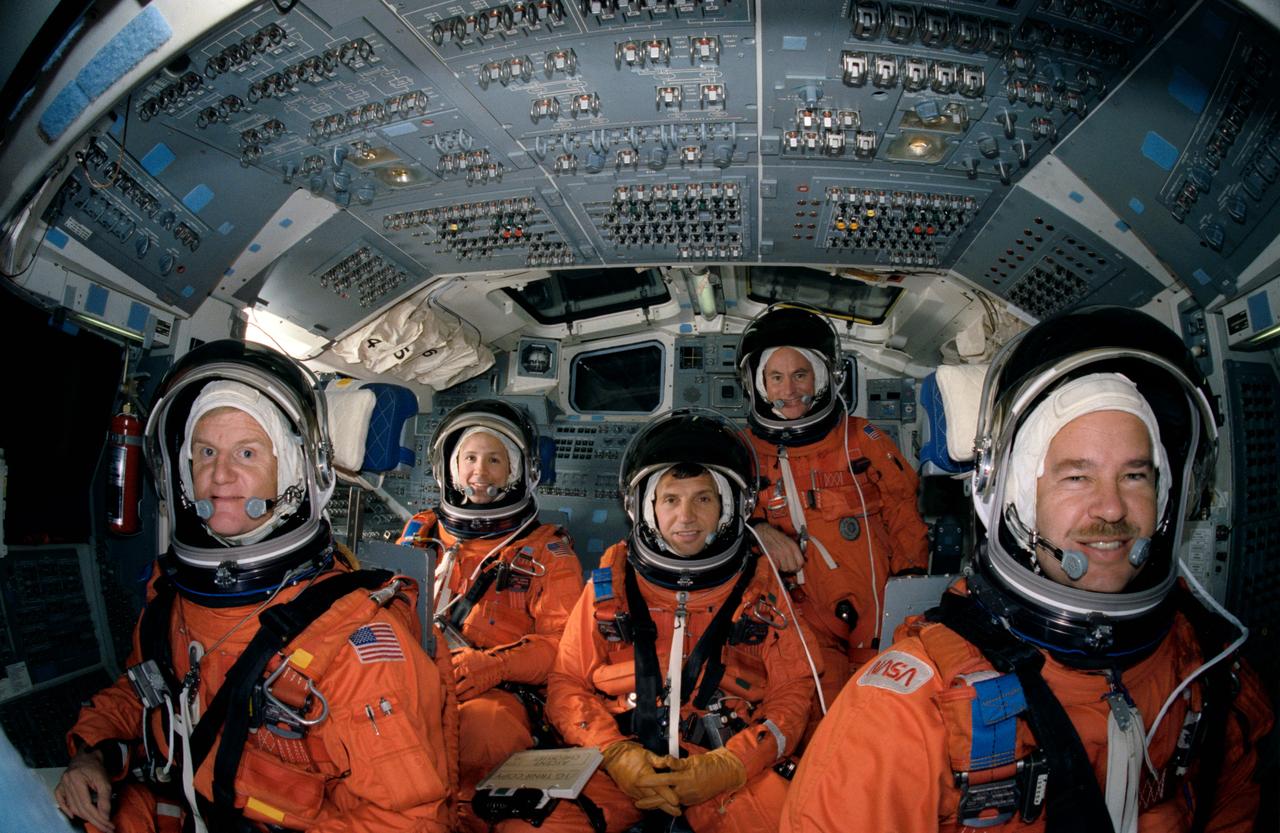
S89-51626 (18 Dec 1989) --- The astronaut crewmembers of the STS-36 mission occupy the flight deck of the crew compartment trainer in the Johnson Space Center's Space Shuttle mockup and integration laboratory. They are, left to right, Astronauts John H. Casper, pilot; Pierre J. Thuot, David C. Hilmers and Richard M. (Mike) Mullane, mission specialists; and John O. Creighton, mission commander. Mullane will be stationed on the mid deck for launch, while Thuot will man that position during entry. The photograph was made by William H. Bowers, crew photo instructor.
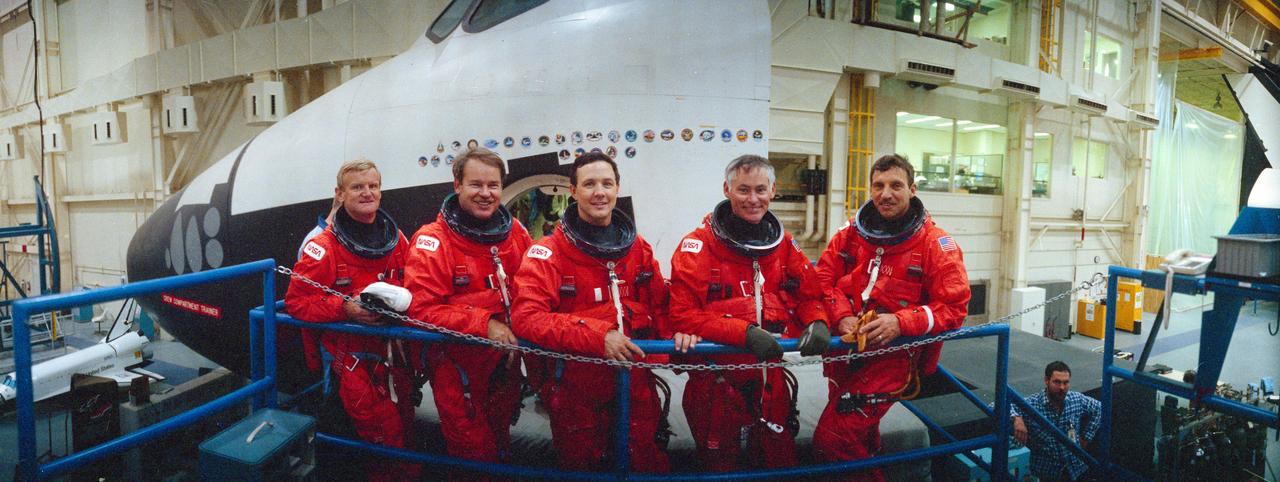
S89-47966 (23 Oct. 1989) --- STS-36 crew members, wearing launch and entry suits, take a break from their emergency egress training to pose for an informal crew portrait in front of the Crew Compartment Trainer (CCT) at the Johnson Space Center. Left to right are Pilot John H. Casper, Commander John O. Creighton, Mission Specialists Pierre J. Thuot, Richard M. Mullane and David C. Hilmers. The crew members were practicing egress procedures necessary in the event of an emergency aboard the space shuttle. The CCT is located in JSC's Space Vehicle Mock-up Facility. Photo credit: NASA
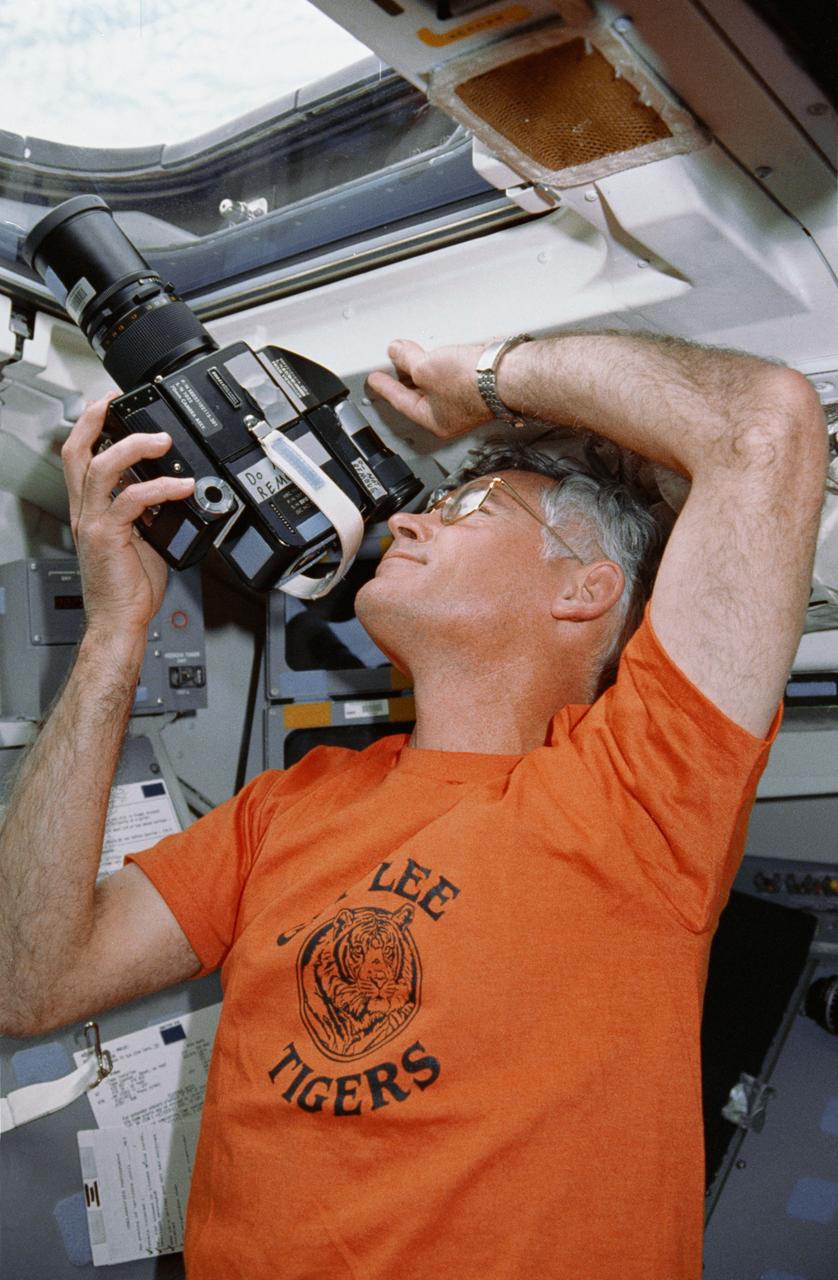
STS036-03-013 (28 Feb–3 March 1990) --- Astronaut Richard M. (Mike) Mullane, on the aft flight deck of the Earth-orbiting Atlantis, uses the 70mm Hasselblad camera to record Earth imagery. Mullane and four other NASA astronauts spent four days, 10 hours and 19 minutes aboard the spacecraft for the DOD-devoted mission.
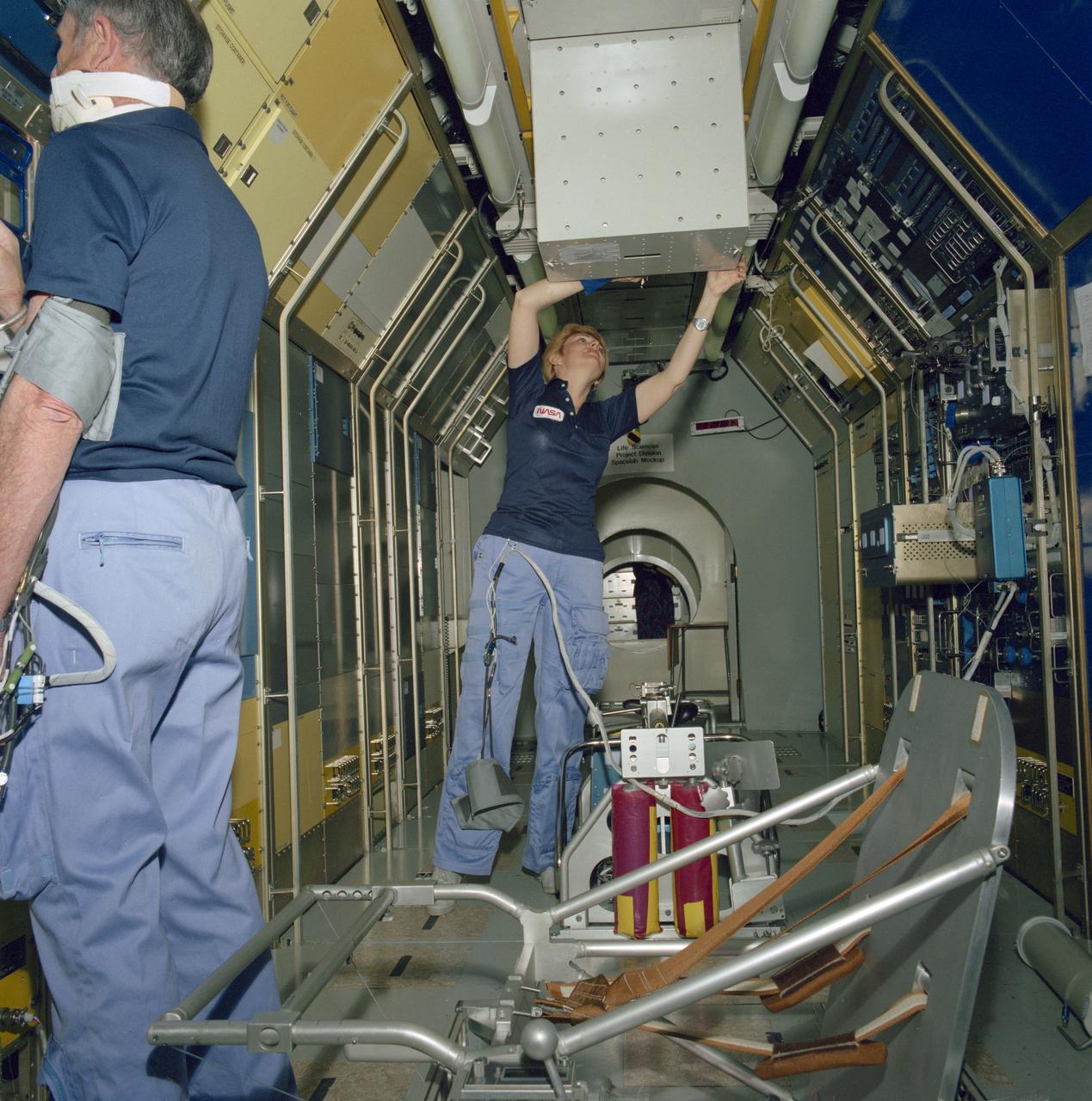
STS-40 Payload Specialist Millie Hughes-Fulford along with backup payload specialist Robert Ward Phillips familiarize themselves with Spacelab Life Sciences 1 (SLS-1) equipment. The two scientists are in JSC's Life Sciences Project Division (LSPD) SLS mockup located in the Bioengineering and Test Support Facility Bldg 36. Hughes-Fulford, in the center aisle, pulls equipment from an overhead stowage locker while Phillips, in the foreground, experiments with the baroreflex neck pressure chamber at Rack 11. The baroreflex collar will be used in conjuction with Experiment No. 022, Influence of Weightlessness Upon Human Autonomic Cardiovascular Control. Behind Phillips in the center aisle are body mass measurement device (BMMD) (foreground) and the stowed bicycle ergometer.
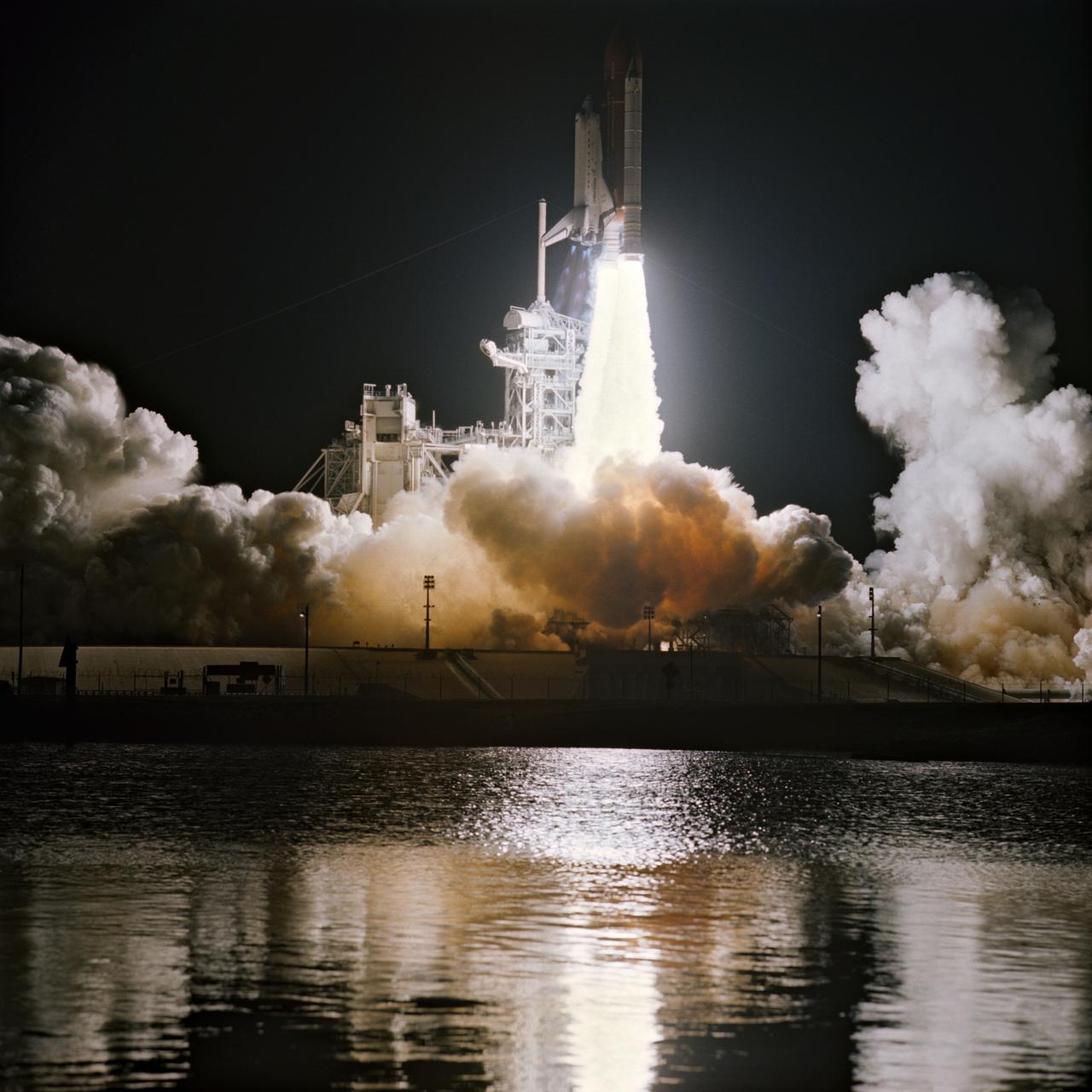
STS036-S-006 (28 Feb 1990) --- The Space Shuttle Atlantis sets off a spectacular light display with the launching of STS-36. Liftoff from KSC's Pad 39A occurred at 2:50 a.m. (EST), February 28, 1990. The launch, actually the 34th STS liftoff, begins another in a series of Department of Defense flights. Onboard the spacecraft are Astronauts John O. Creighton, commander; John H. Casper, pilot; and Richard M. (Mike) Mullane, David C. Hilmers and Pierre J. Thuot, all mission specialists.
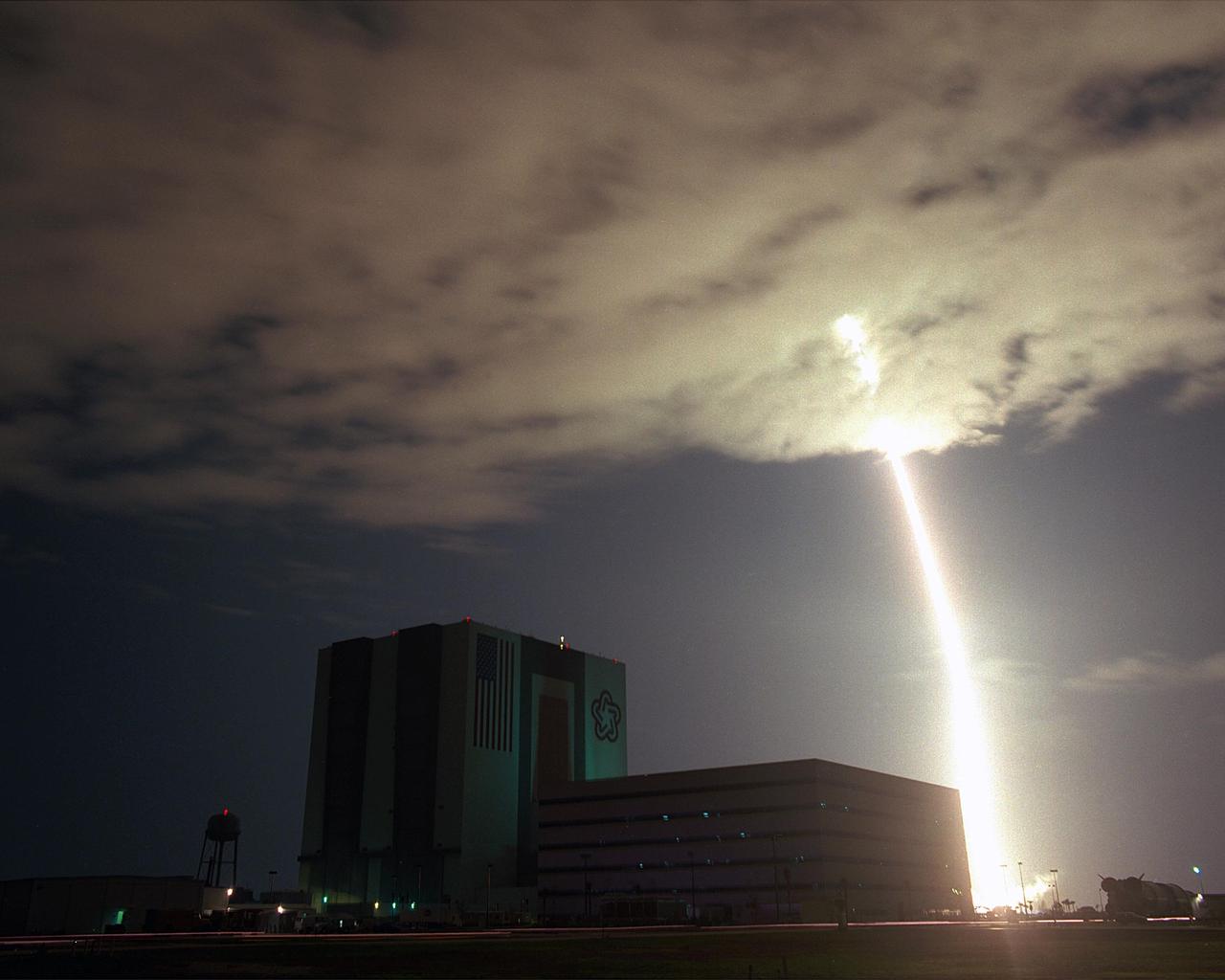
KENNEDY SPACE CENTER, FLA. -- STS-36: Atlantis
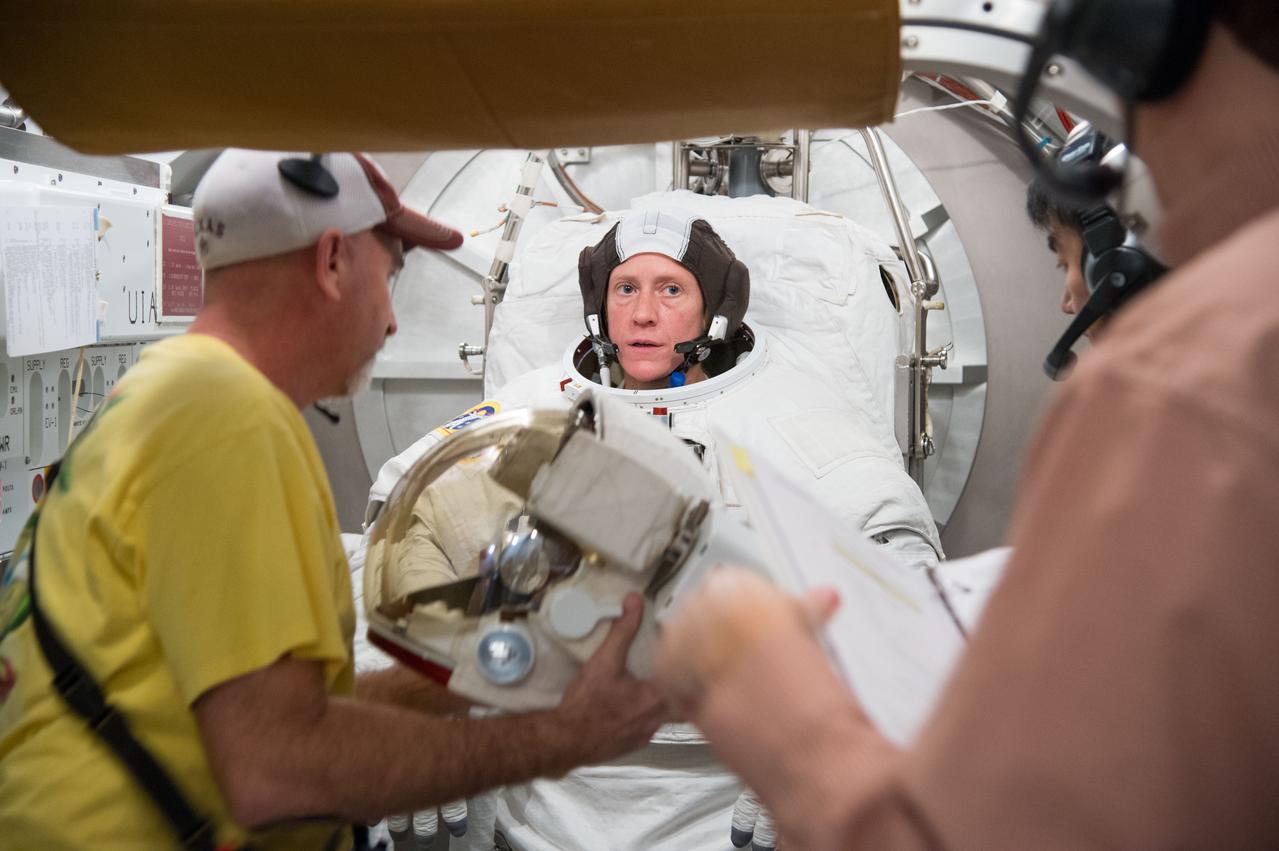
Date: 01-10-13 Location: Bldg 7, SSATA Subject: Expedition 36 astronaut Karen Nyberg during SSATA Chamber - EMU Training & Certification - DRY RUN - STB-ST-989 Photographer: James Blair
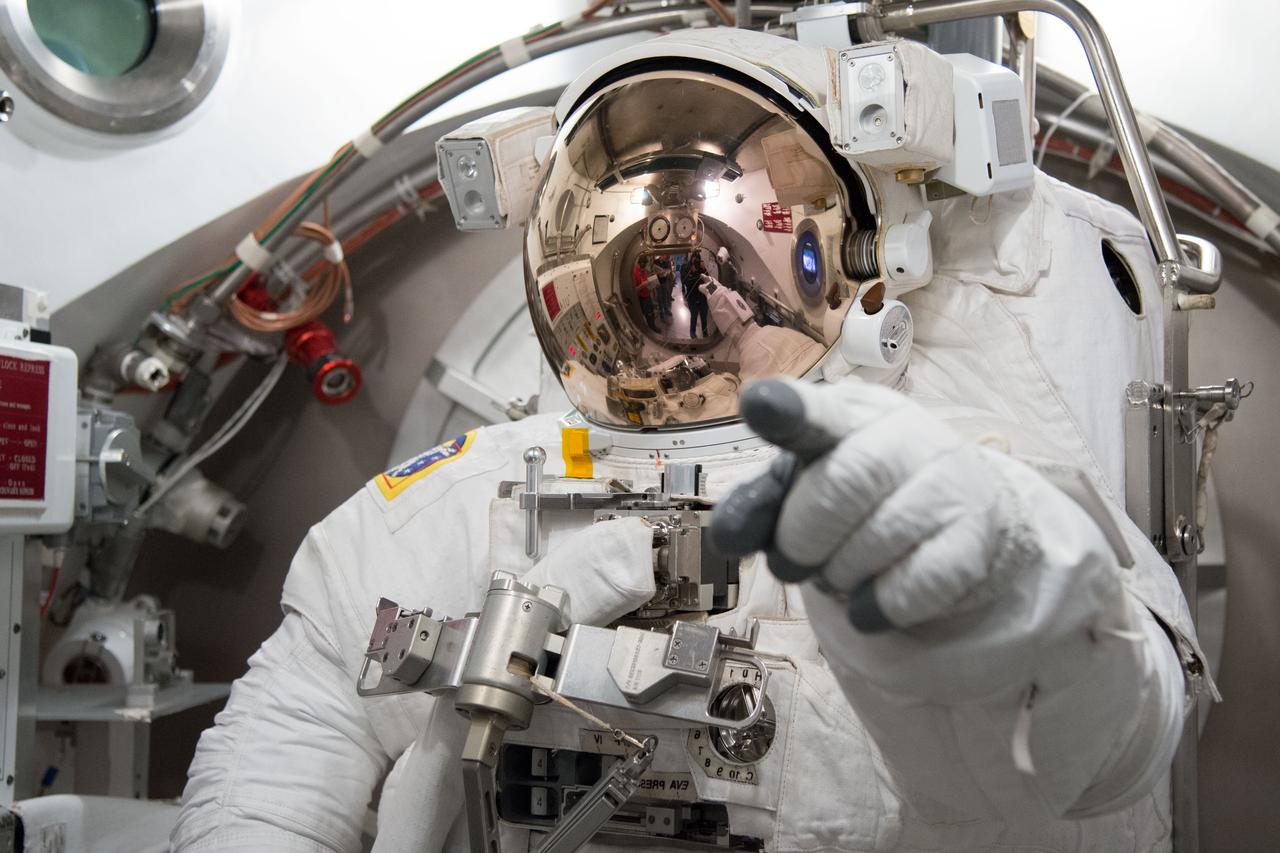
DATE: 3-4-13 LOCATION: Bldg. 7, SSATA Chamber SUBJECT: STB-ST-990 - Crew Training, SSATA ISS Increment 36 EMU Dry Run (Crewmember Luca Parmitano). PHOTOGRAPHER: Lauren Harnett
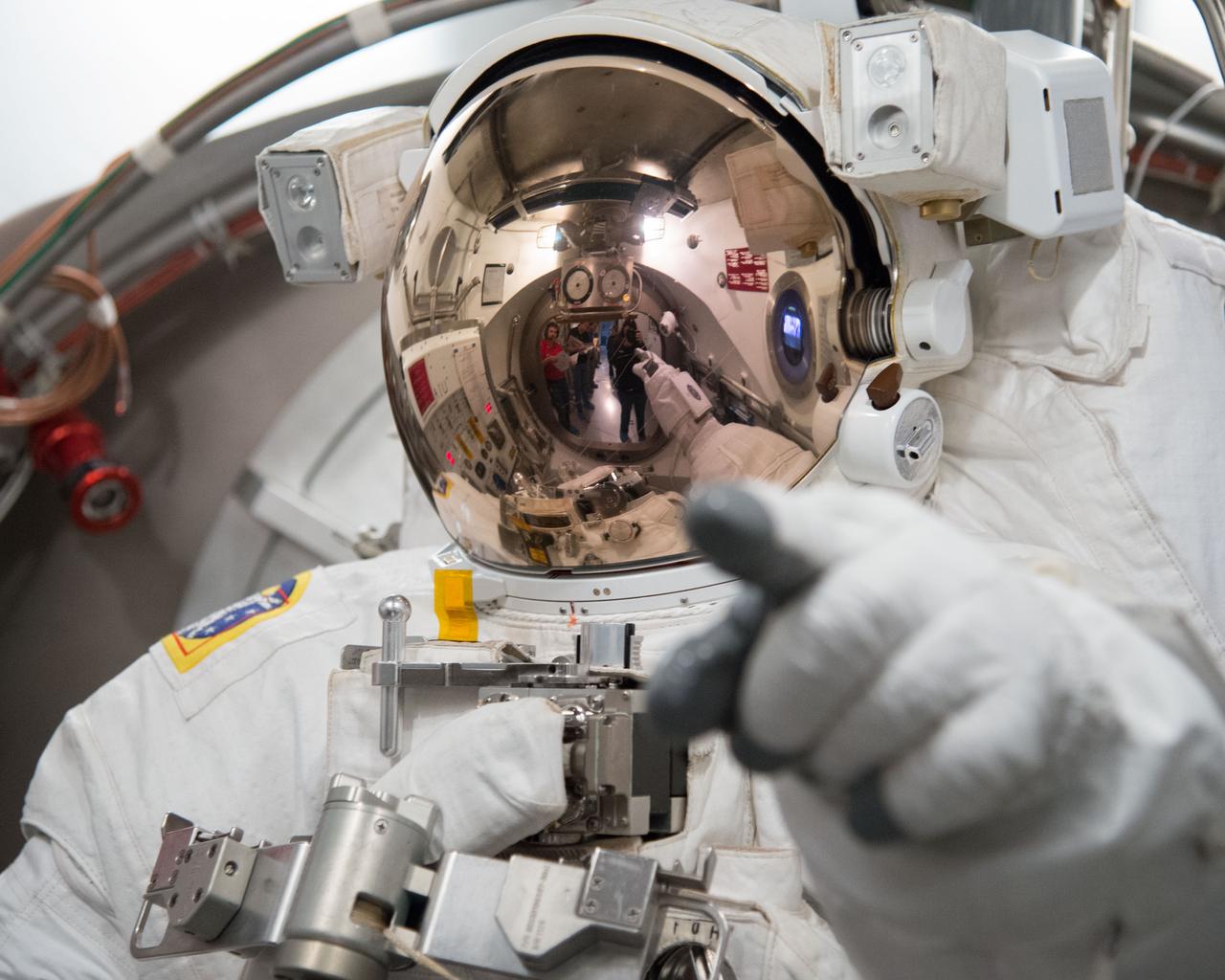
DATE: 3-4-13 LOCATION: Bldg. 7, SSATA Chamber SUBJECT: STB-ST-990 - Crew Training, SSATA ISS Increment 36 EMU Dry Run (Crewmember Luca Parmitano). PHOTOGRAPHER: Lauren Harnett
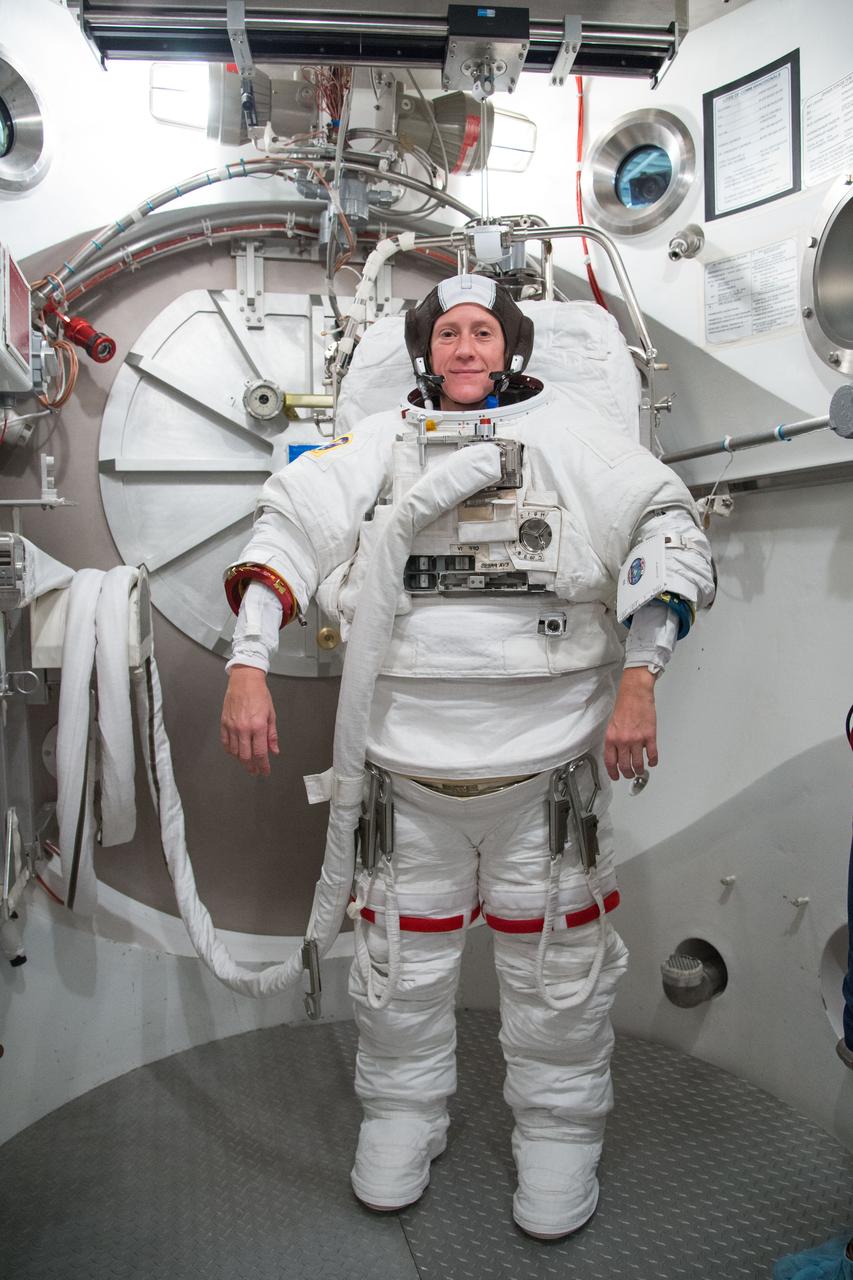
Date: 01-10-13 Location: Bldg 7, SSATA Subject: Expedition 36 astronaut Karen Nyberg during SSATA Chamber - EMU Training & Certification - DRY RUN - STB-ST-989 Photographer: James Blair
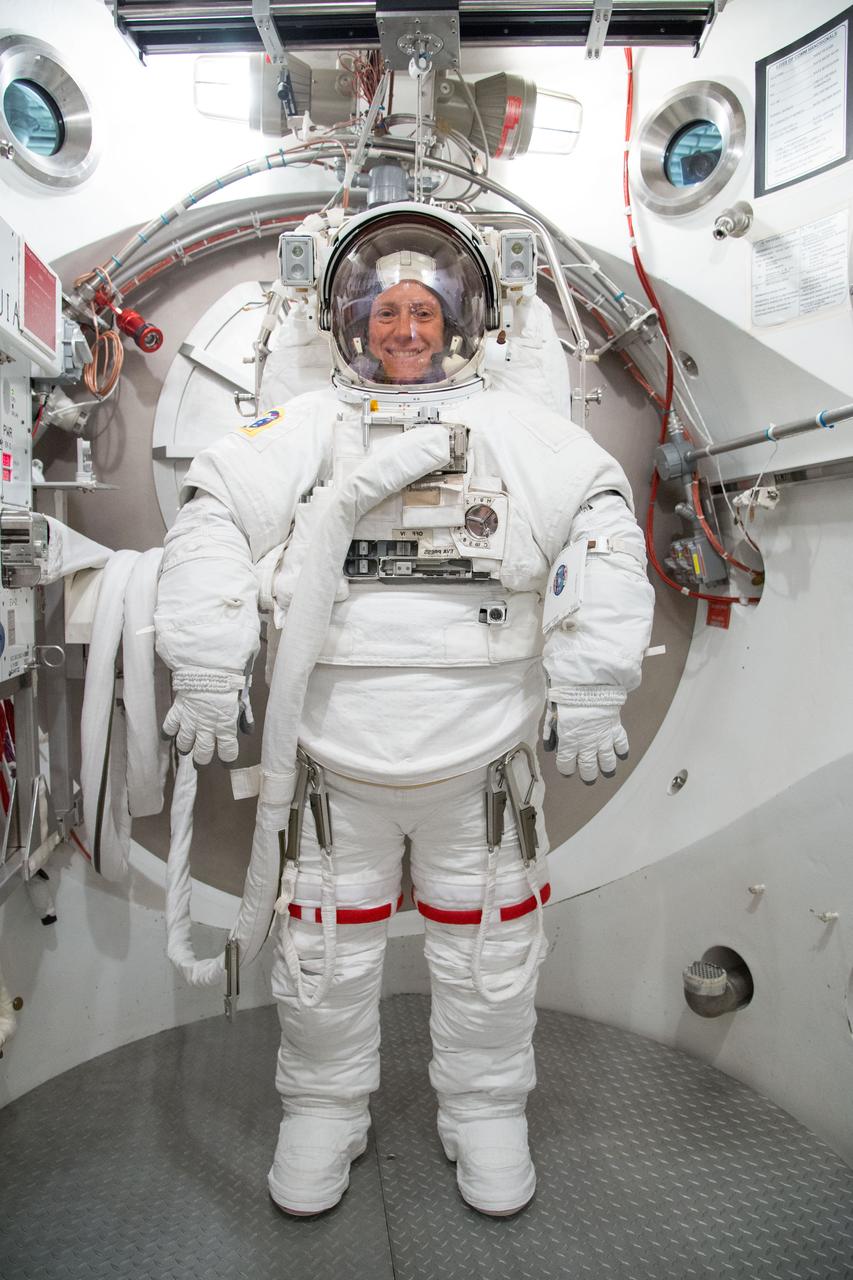
Date: 01-10-13 Location: Bldg 7, SSATA Subject: Expedition 36 astronaut Karen Nyberg during SSATA Chamber - EMU Training & Certification - DRY RUN - STB-ST-989 Photographer: James Blair
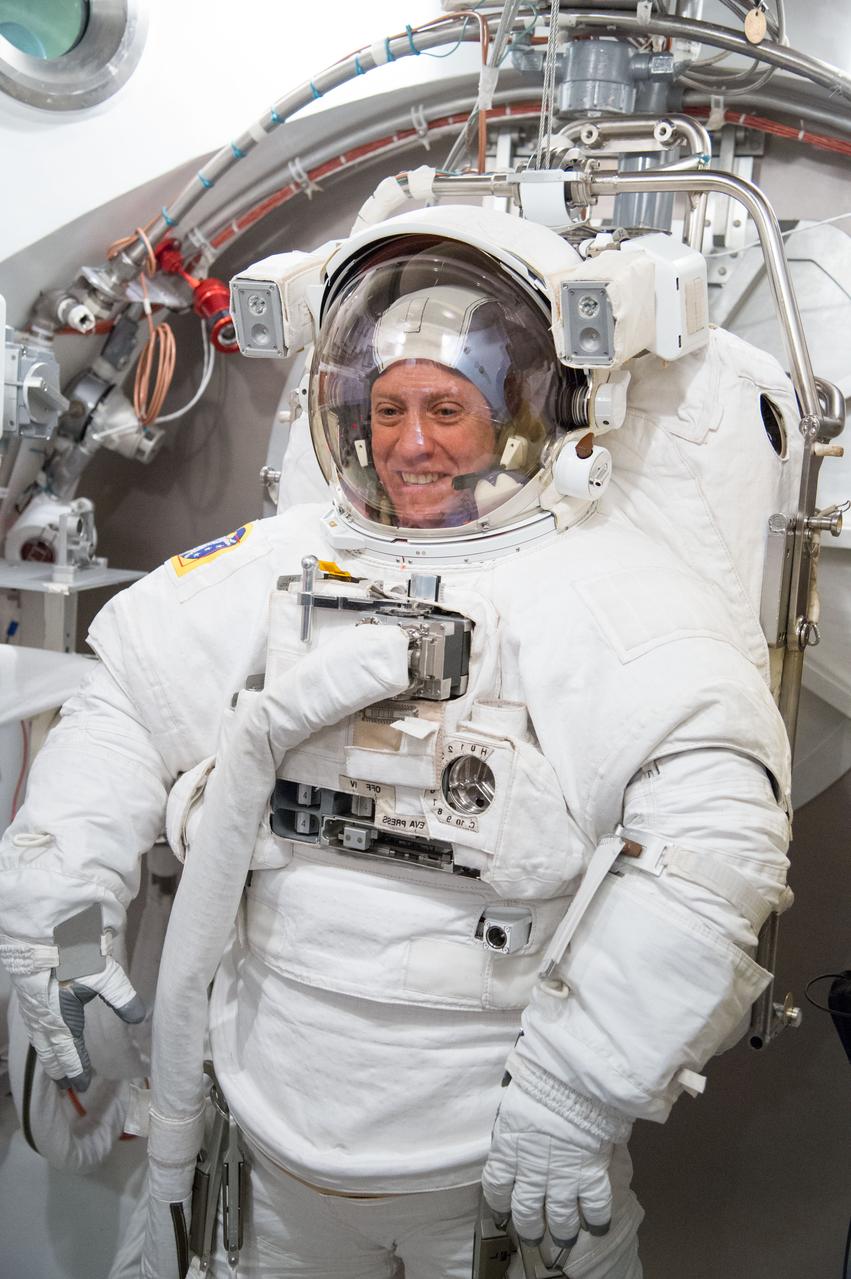
Date: 01-10-13 Location: Bldg 7, SSATA Subject: Expedition 36 astronaut Karen Nyberg during SSATA Chamber - EMU Training & Certification - DRY RUN - STB-ST-989 Photographer: James Blair
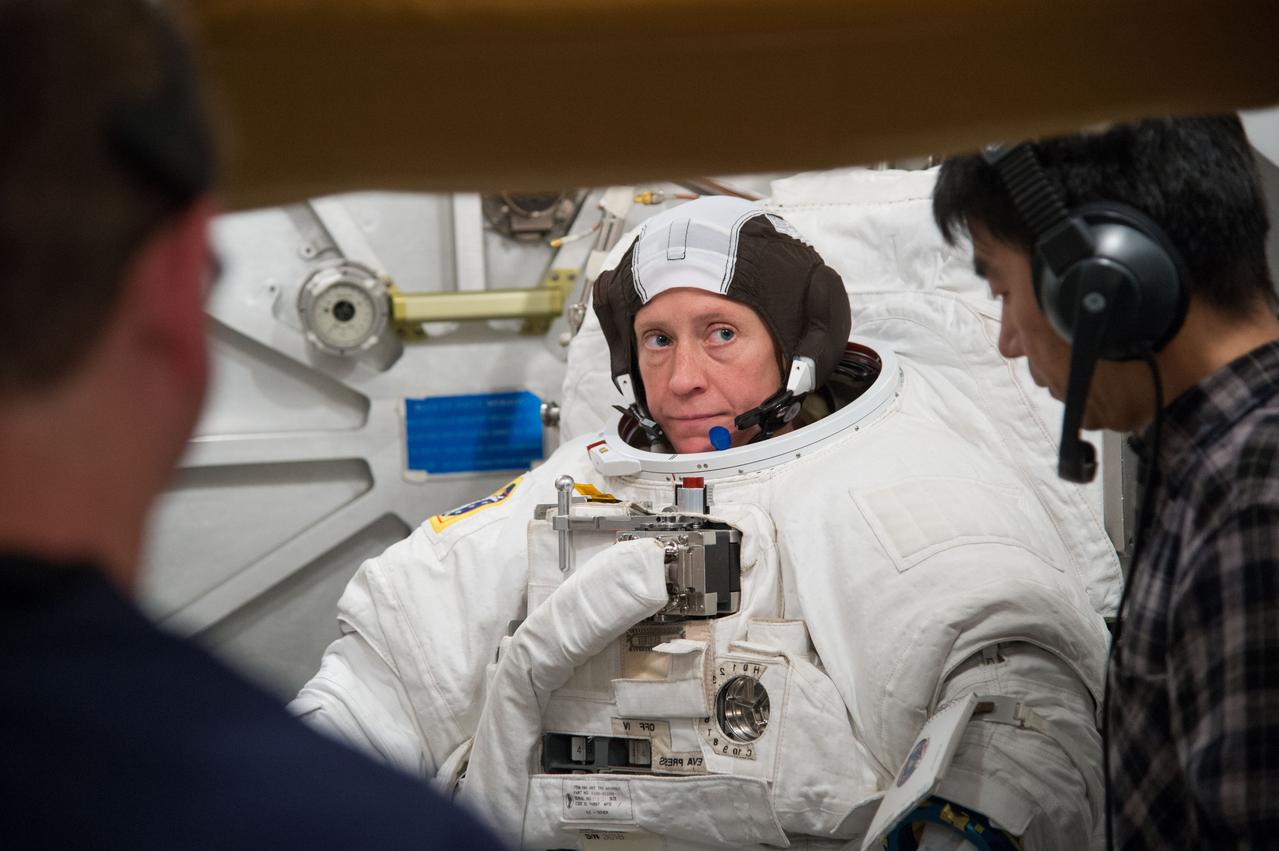
Date: 01-10-13 Location: Bldg 7, SSATA Subject: Expedition 36 astronaut Karen Nyberg during SSATA Chamber - EMU Training & Certification - DRY RUN - STB-ST-989 Photographer: James Blair
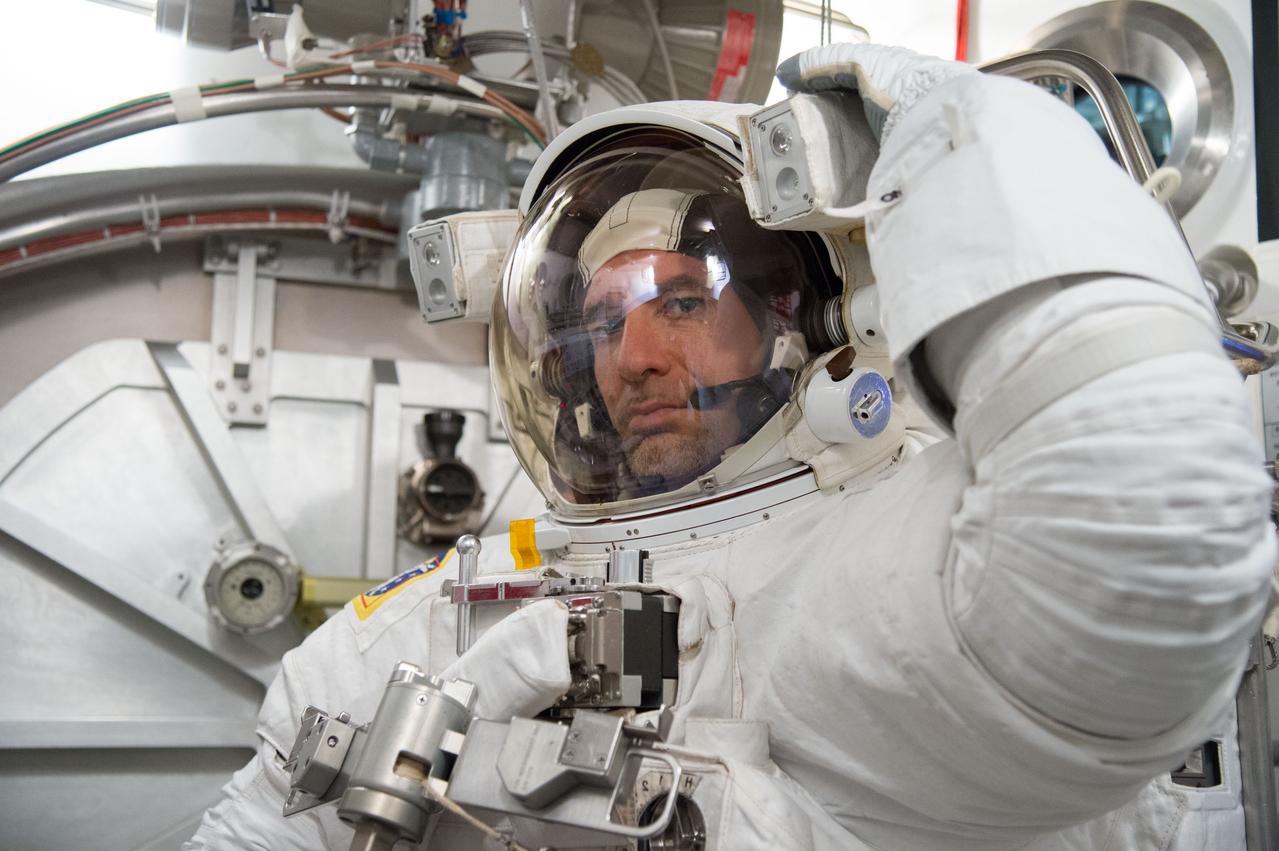
DATE: 3-4-13 LOCATION: Bldg. 7, SSATA Chamber SUBJECT: STB-ST-990 - Crew Training, SSATA ISS Increment 36 EMU Dry Run (Crewmember Luca Parmitano). PHOTOGRAPHER: Lauren Harnett
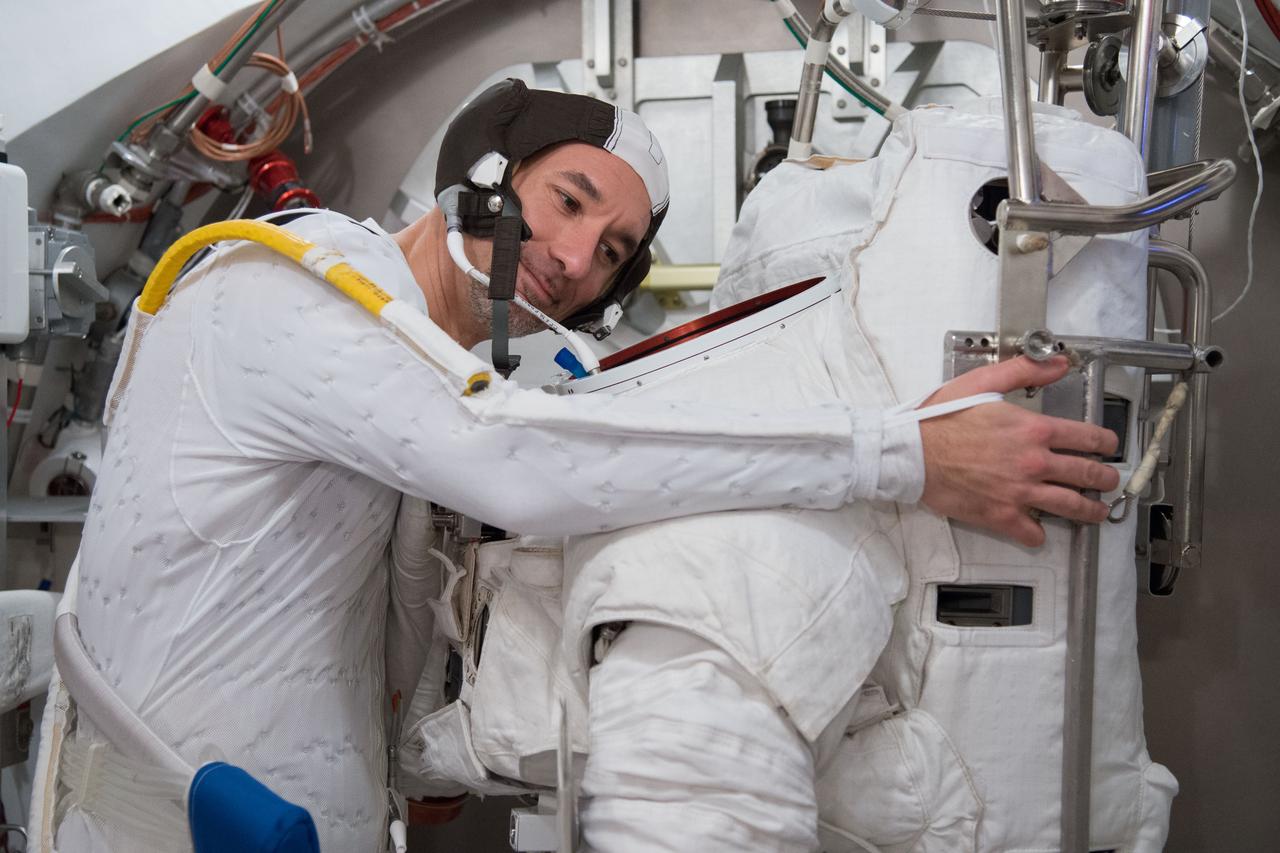
DATE: 3-4-13 LOCATION: Bldg. 7, SSATA Chamber SUBJECT: STB-ST-990 - Crew Training, SSATA ISS Increment 36 EMU Dry Run (Crewmember Luca Parmitano). PHOTOGRAPHER: Lauren Harnett
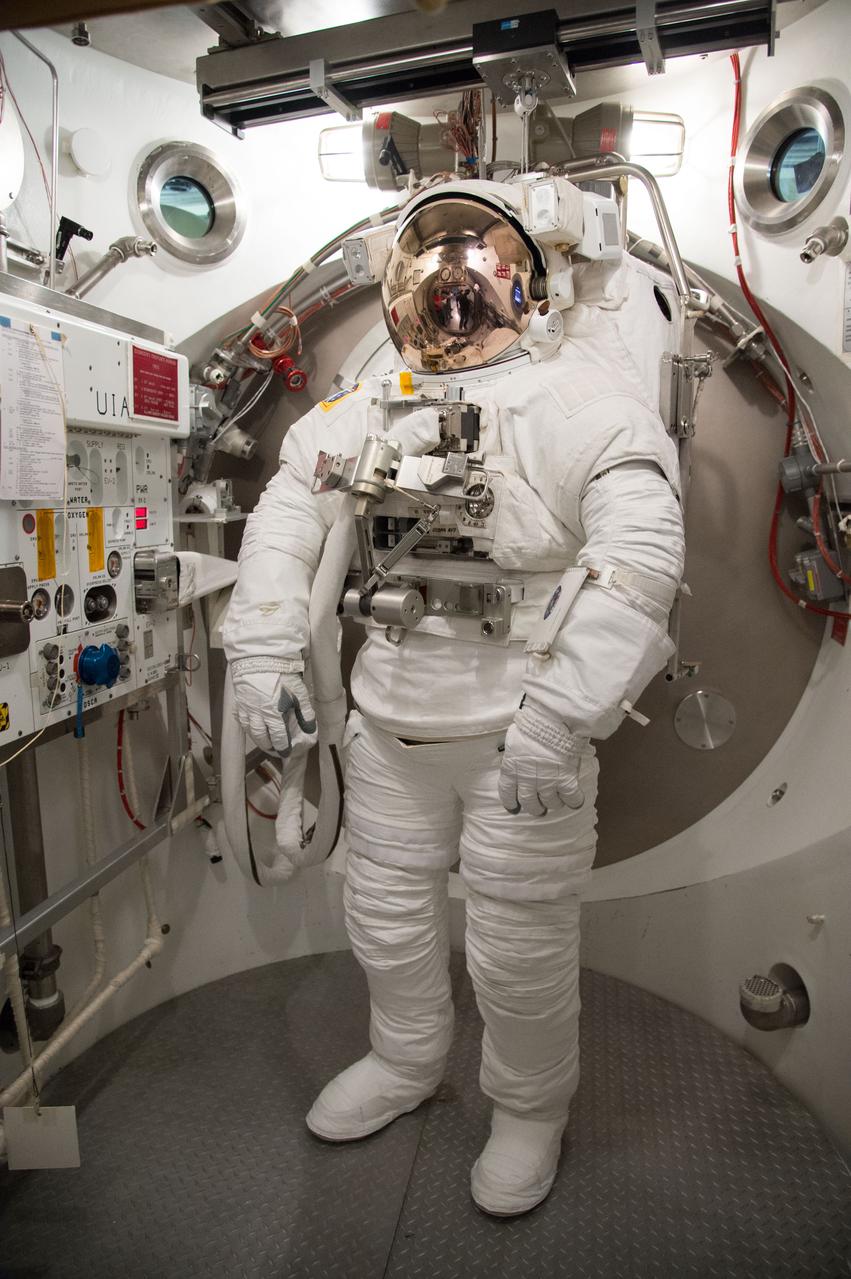
DATE: 3-4-13 LOCATION: Bldg. 7, SSATA Chamber SUBJECT: STB-ST-990 - Crew Training, SSATA ISS Increment 36 EMU Dry Run (Crewmember Luca Parmitano). PHOTOGRAPHER: Lauren Harnett
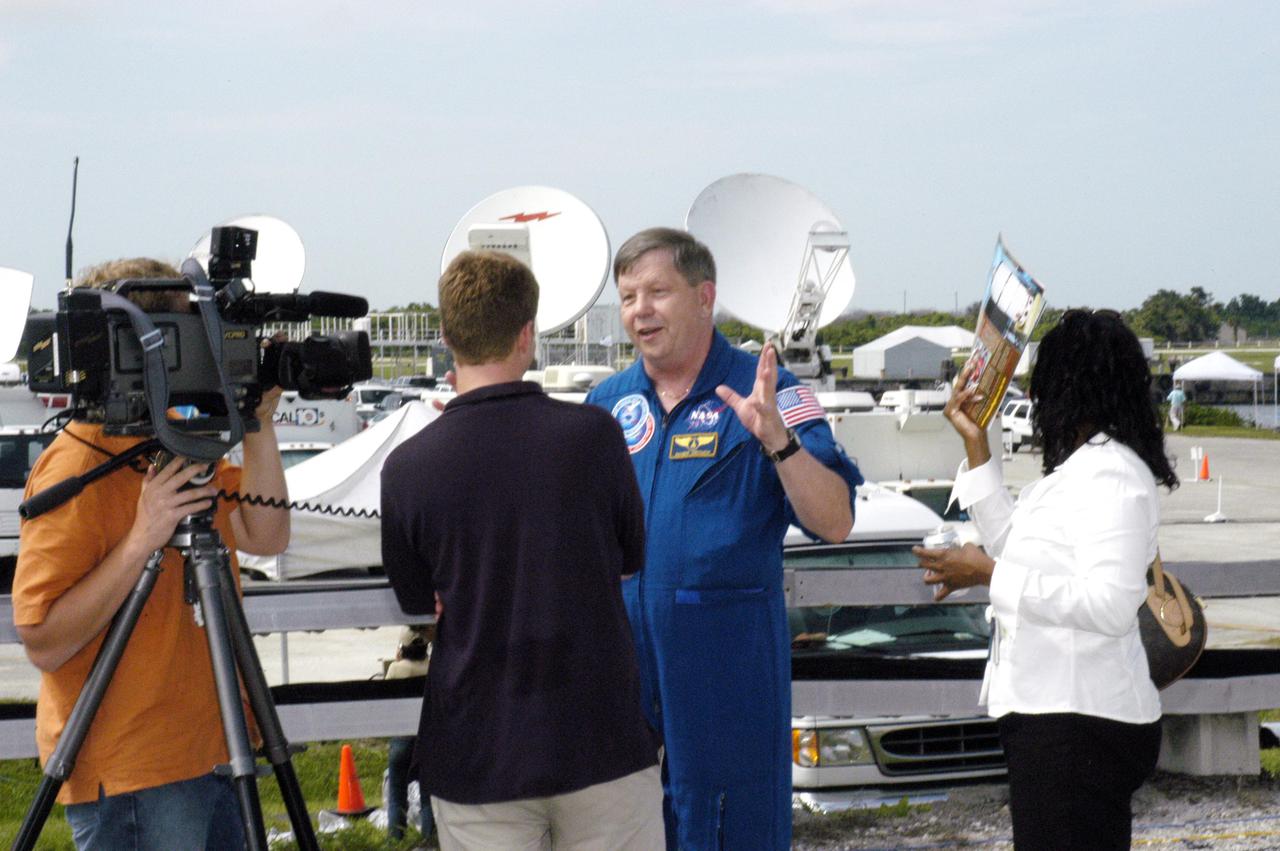
KENNEDY SPACE CENTER, FLA. - Roger Crouch (center), a payload specialist, talks to the media prior to the launch of Space Shuttle Discovery on the historic Return to Flight mission STS-114. He has flown on two Shuttle missions, STS-83 and STS-94. STS-114 is the 114th Space Shuttle flight and the 31st for Discovery. More than a thousand media representatives from 36 states, the District of Columbia and 32 countries converged on the News Center for the historic launch.
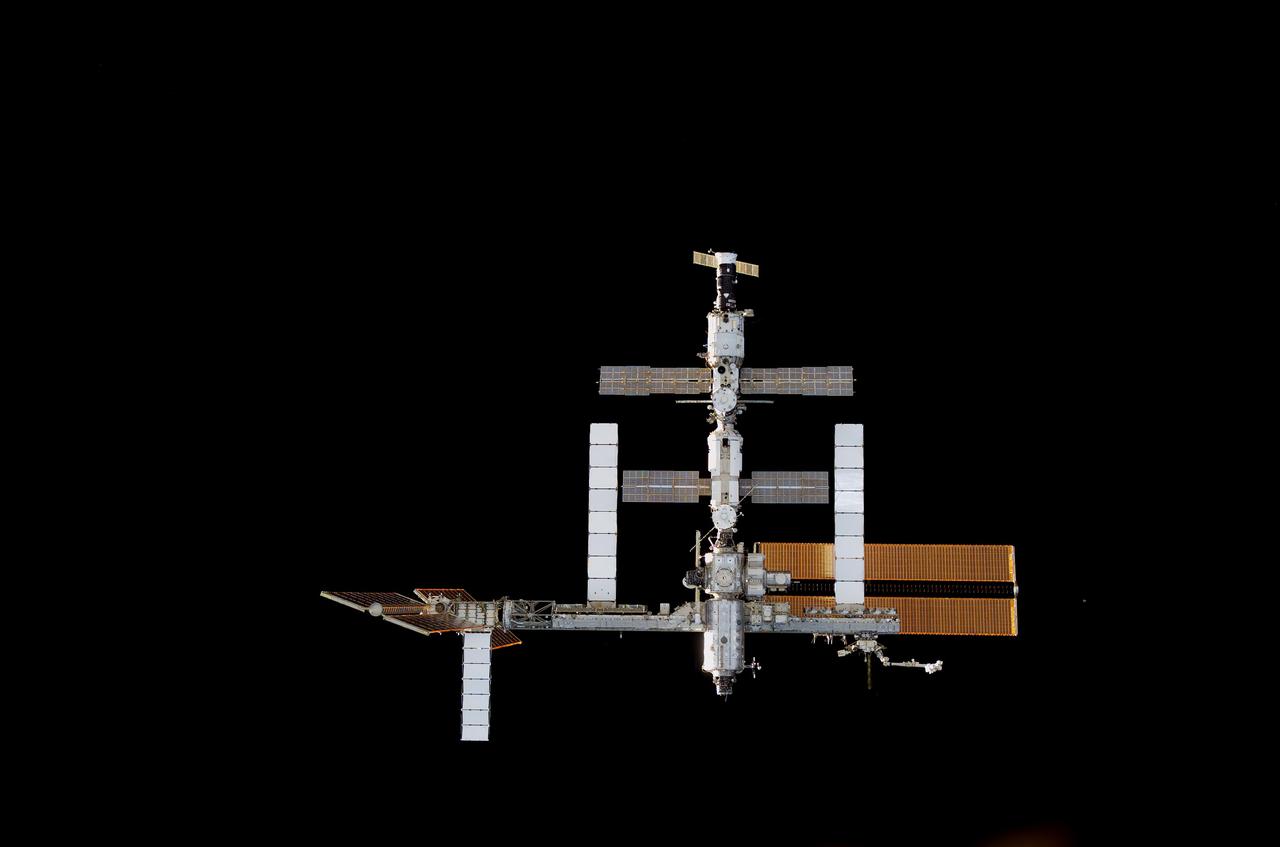
S117-E-06966 (10 June 2007) --- The International Space Station was photographed by one of the STS-117 crewmembers as Space Shuttle Atlantis (out of frame) approached the station during rendezvous and docking activities on flight day three. Docking occurred 2:36 p.m. (CDT) on June 10, 2007.

STS095-E-5149 (3 Nov. 1998) --- Astronaut Stephen K. Robinson, STS-95 mission specialist, talks to ground controllers in Houston from Discovery's middeck. The photo was taken with an electronic still camera (ESC) at 15:27:36 GMT, Nov. 3.
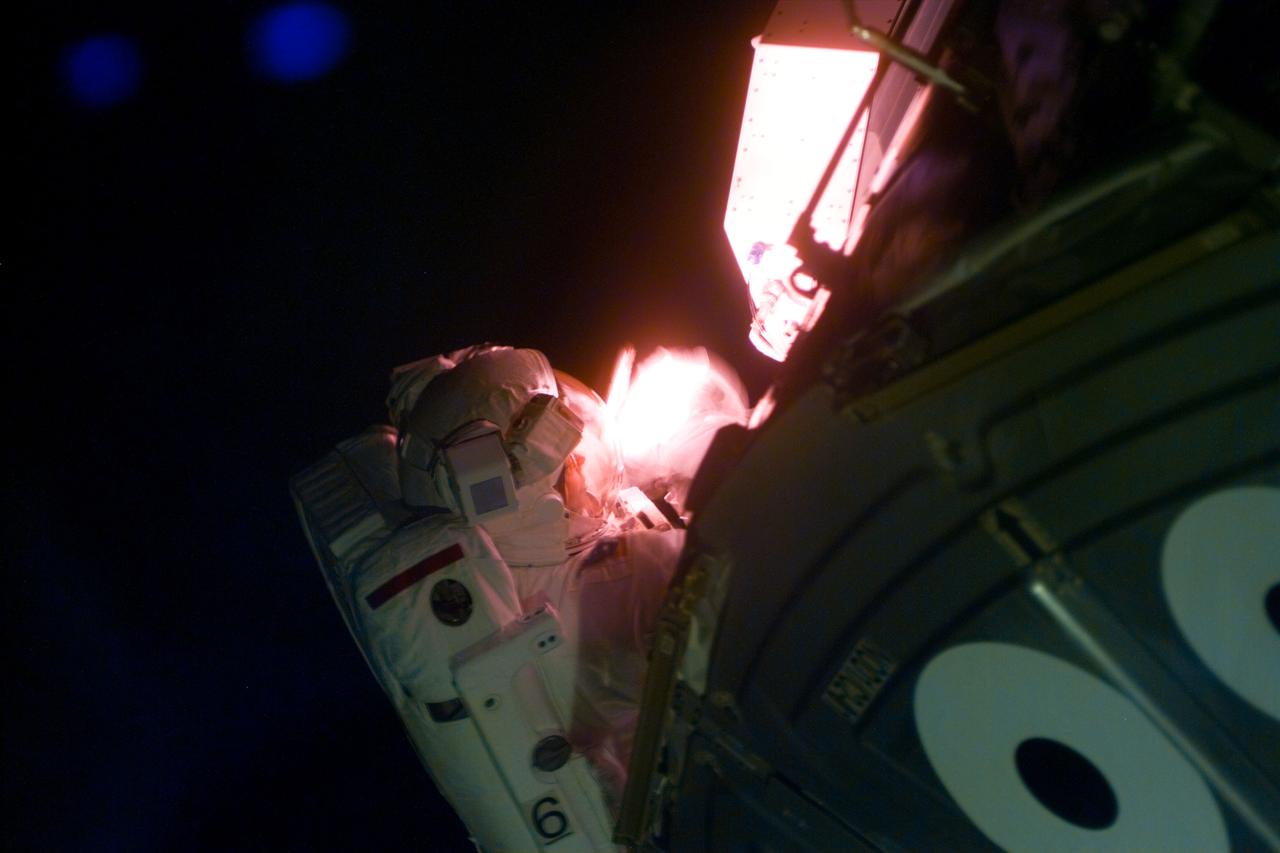
S88-E-5093 (12-09-98) --- Astronaut Jerry L. Ross, mission specialist, requires artificial light to work during the second STS-88 space walk. Part of a pressurized mating adapter (PMA) is in the foreground. The photo was taken with an electronic still camera (ESC) at 23:49:36 GMT, Dec. 9.

S117-E-06962 (10 June 2007) --- The International Space Station was photographed by one of the STS-117 crewmembers as Space Shuttle Atlantis (out of frame) approached the station during rendezvous and docking activities on flight day three. Docking occurred 2:36 p.m. (CDT) on June 10, 2007.
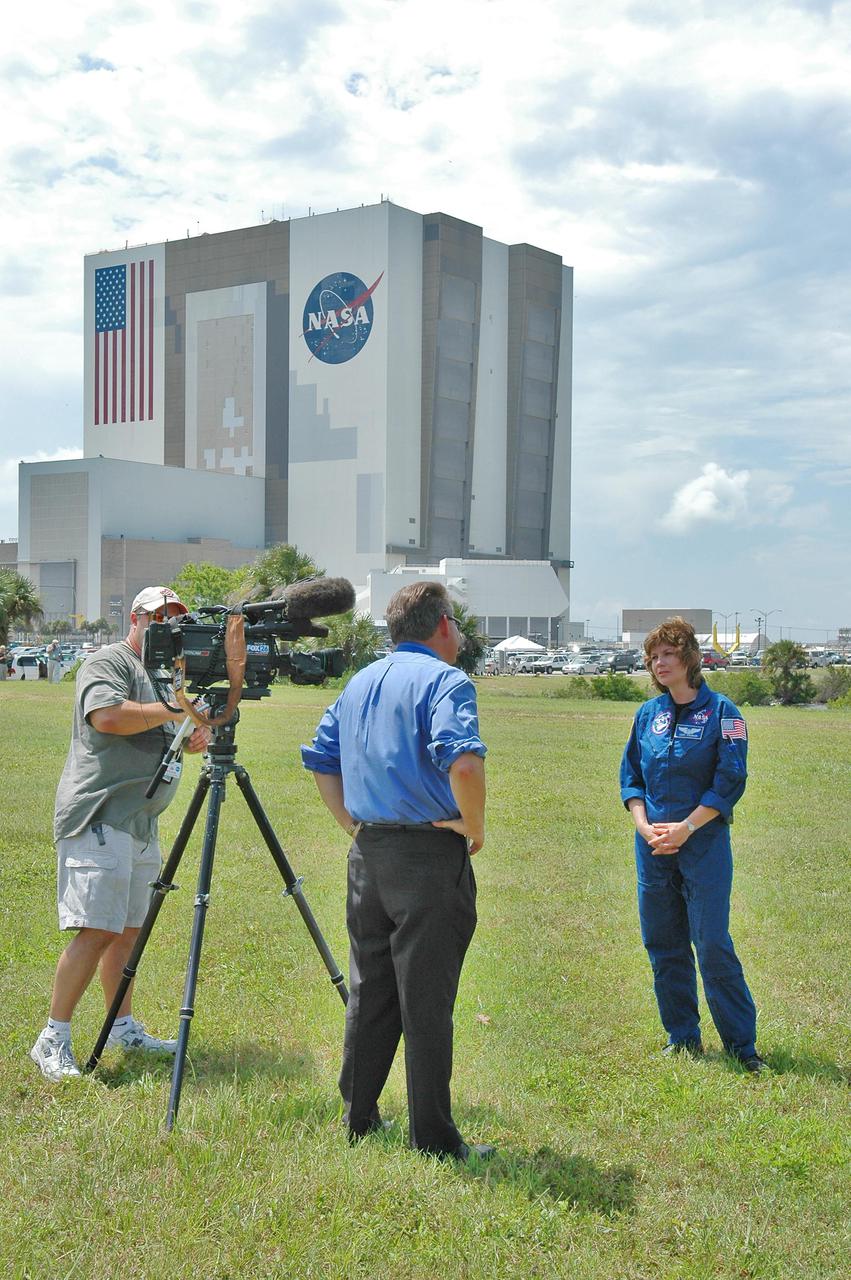
KENNEDY SPACE CENTER, FLA. - Astronaut Catherine “Cady” Coleman is interviewed in the NASA News Center at NASA Kennedy Space Center by a television reporter during launch activities for Return to Flight mission STS-114. Coleman has flown on two Shuttle missions, STS-73 and STS-93. More than a thousand media representatives from 36 states, the District of Columbia and 32 countries converged on the News Center for the historic launch.
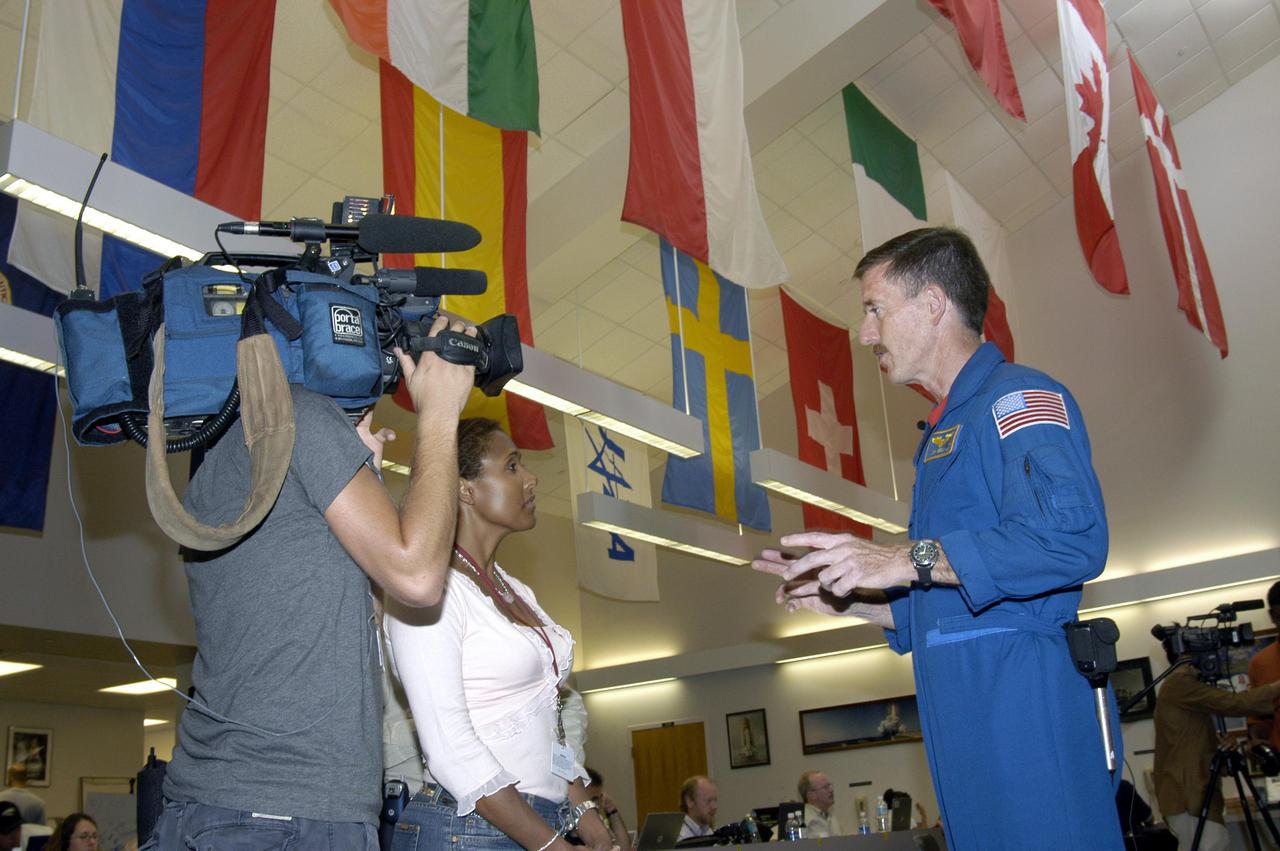
KENNEDY SPACE CENTER, FLA. - Astronaut James Reilly is interviewed in the NASA News Center at NASA Kennedy Space Center by a television reporter during launch activities for Return to Flight mission STS-114. Reilly has flown on two Shuttle missions, STS-89 and STS-104. More than a thousand media representatives from 36 states, the District of Columbia and 32 countries converged on the News Center for the historic launch.

As seen from space, the Great Salt Lake, Utah, USA (41.5N, 112.5W) appears as two separate bodies of water with a narrow divider in the middle. At the turn of the century, a railroad bridge without culverts, was built across the lake and ever since, the water and salinity levels have been uneqal on either side. Fed by snowmelt from the nearby Wasatch Mountains, the lake in recent years has had record high water levels, threatening to flood the local areas.
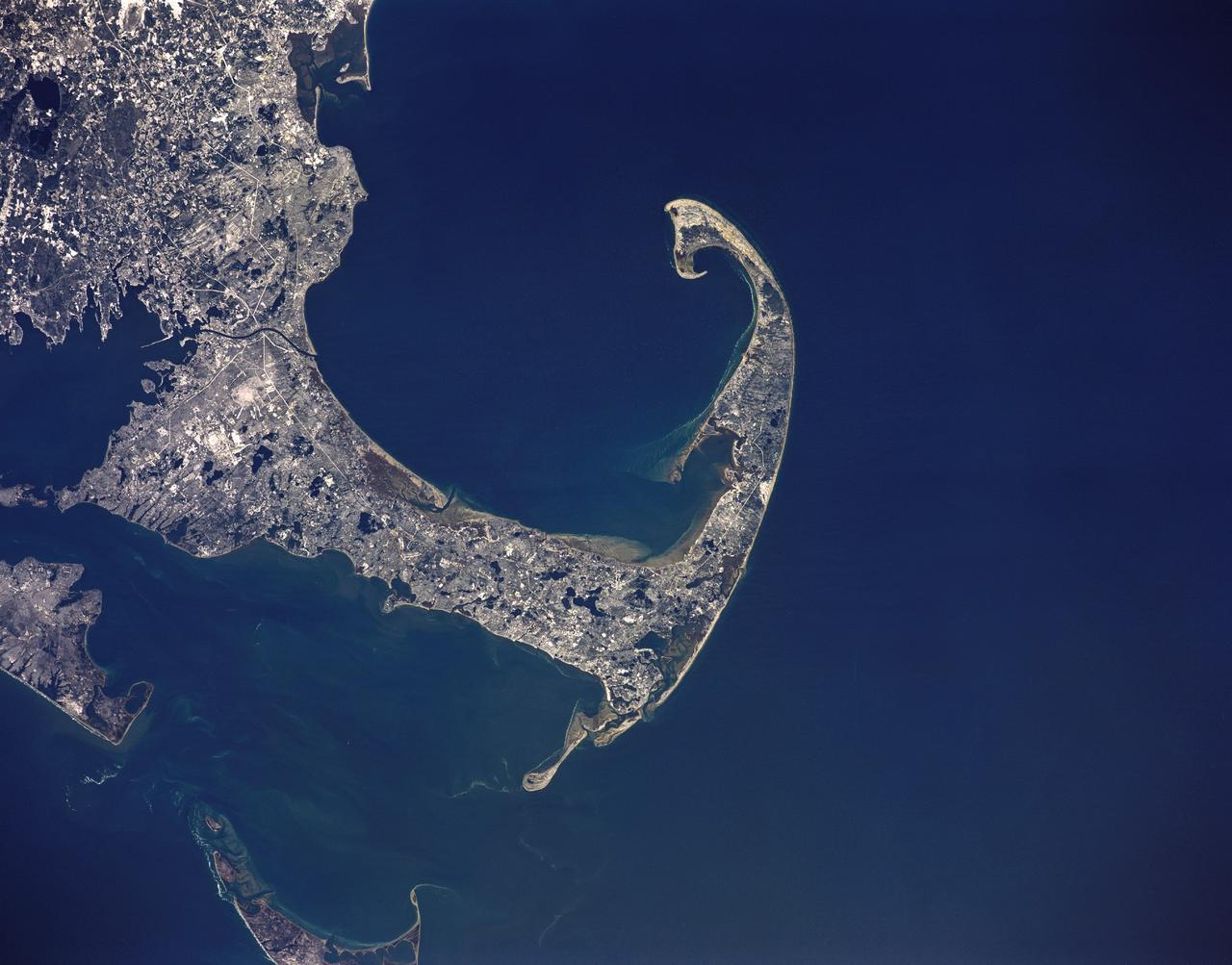
STS036-151-225 (2 March 1990) --- Surrounded by waters of the Atlantic Ocean, Cape Cod Bay and Nantucket Sound, the jutting Cape Cod feature caught the attention of the astronaut crewmembers aboard the Earth-orbiting Space Shuttle Atlantis, 126 nautical miles above Earth. Parts of Martha's Vineyard and Nantucket are in bottom left corner. Plymouth Bay is in upper left corner. Center point coordinates are 42 degrees north latitude and 70 degrees west longitude. A large format Linhof camera (4" x 5" film) was used to expose the frame.
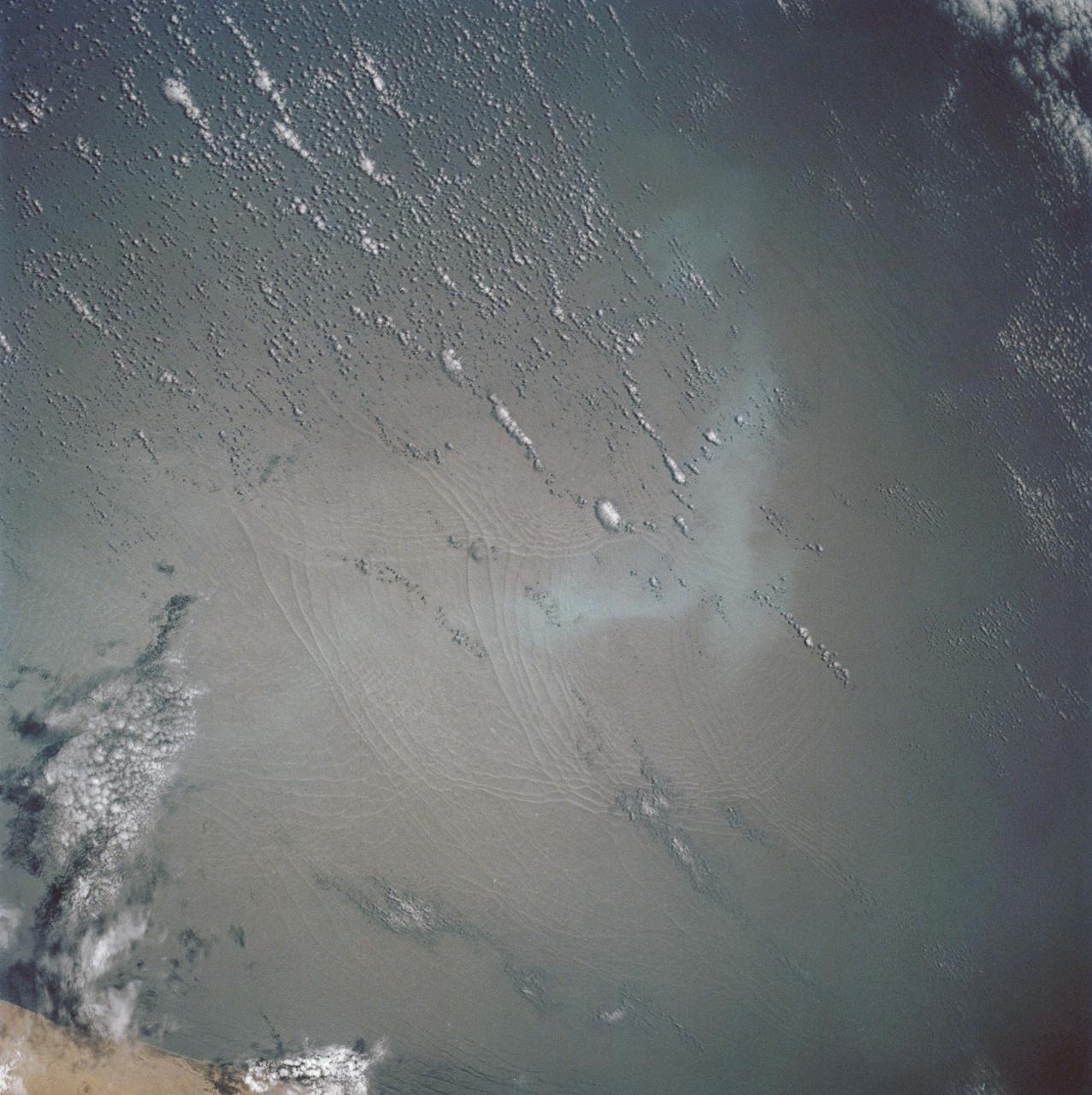
These open ocean Internal Waves were seen off the Namibia Coast, Africa (19.5S, 11.5E). The periodic and regularly spaced sets of incoming internal appear to be diffracting against the coastline and recombining to form a network of interference patterns. They seem to coincide with tidal periods about 12 hours apart and wave length (distance from crest to crest) varies between 1.5 and 5.0 miles and the crest lengths stretch beyond the image.

Site of the original Plymouth Colony in Massachusetts (42.0N, 70.5), This detailed photo is rich in early American history. Plymouth Rock, the Pilgrims first stepping stone on North America and site of Plymouth Colony is located just behind the natural breakwater on the south shore of Plymouth Bay seen in the middle of the photo. The through canal to the south is part of the Intercoastal Canal system. Cape Cod is just south of the canal.
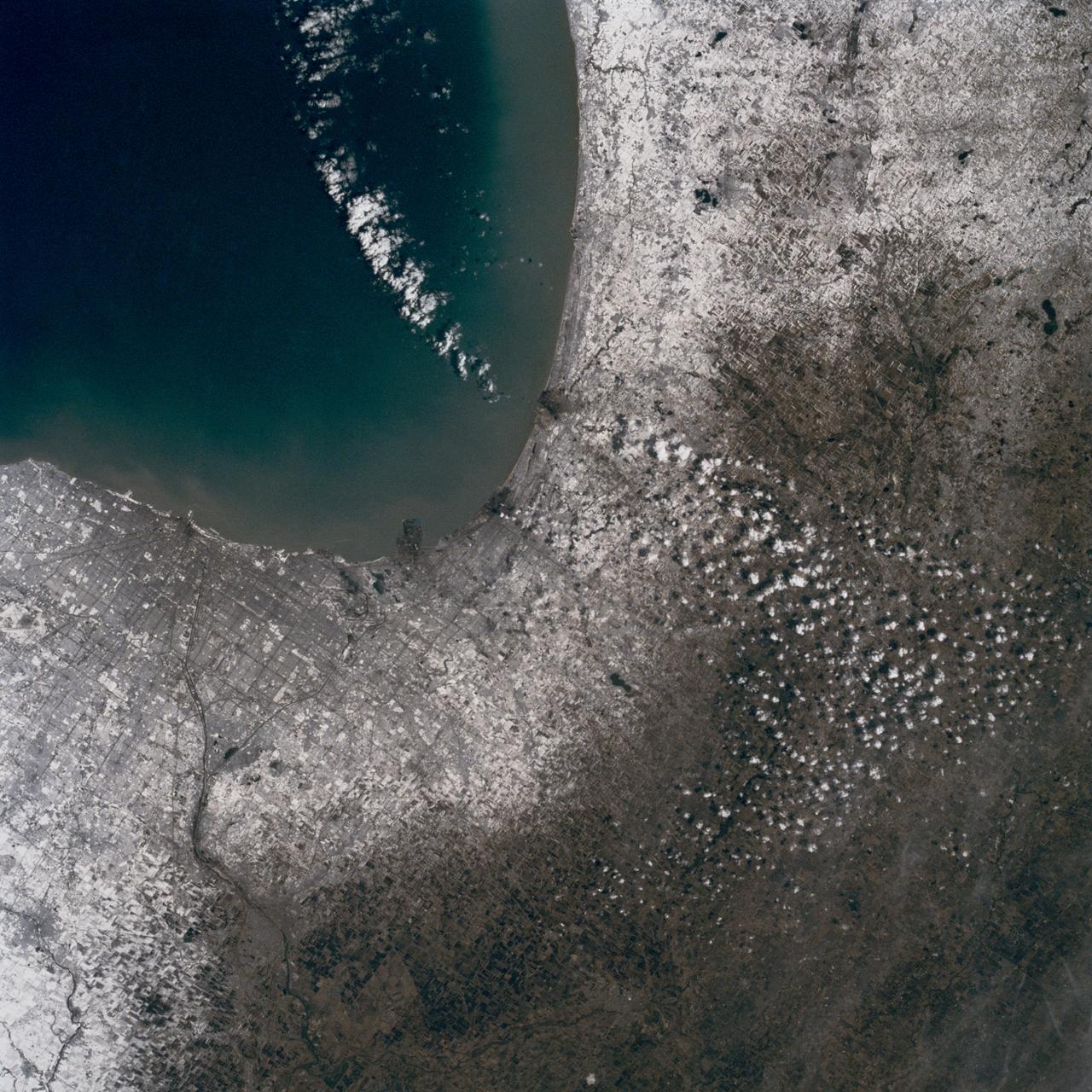
In this late winter scene of Chicago, Illinois, USA (41.5N, 87.0W) the light dusting of snow has actually enhanced the determination of the cities street pattern, parks and other cultural features. Sited at the south end of Lake Michigan, Chicago has long served as an industrial, transportation and communications center for the midwest. The obvious snowline on the ground enables meteorologists to trace the regional groundtracks of winter storms.
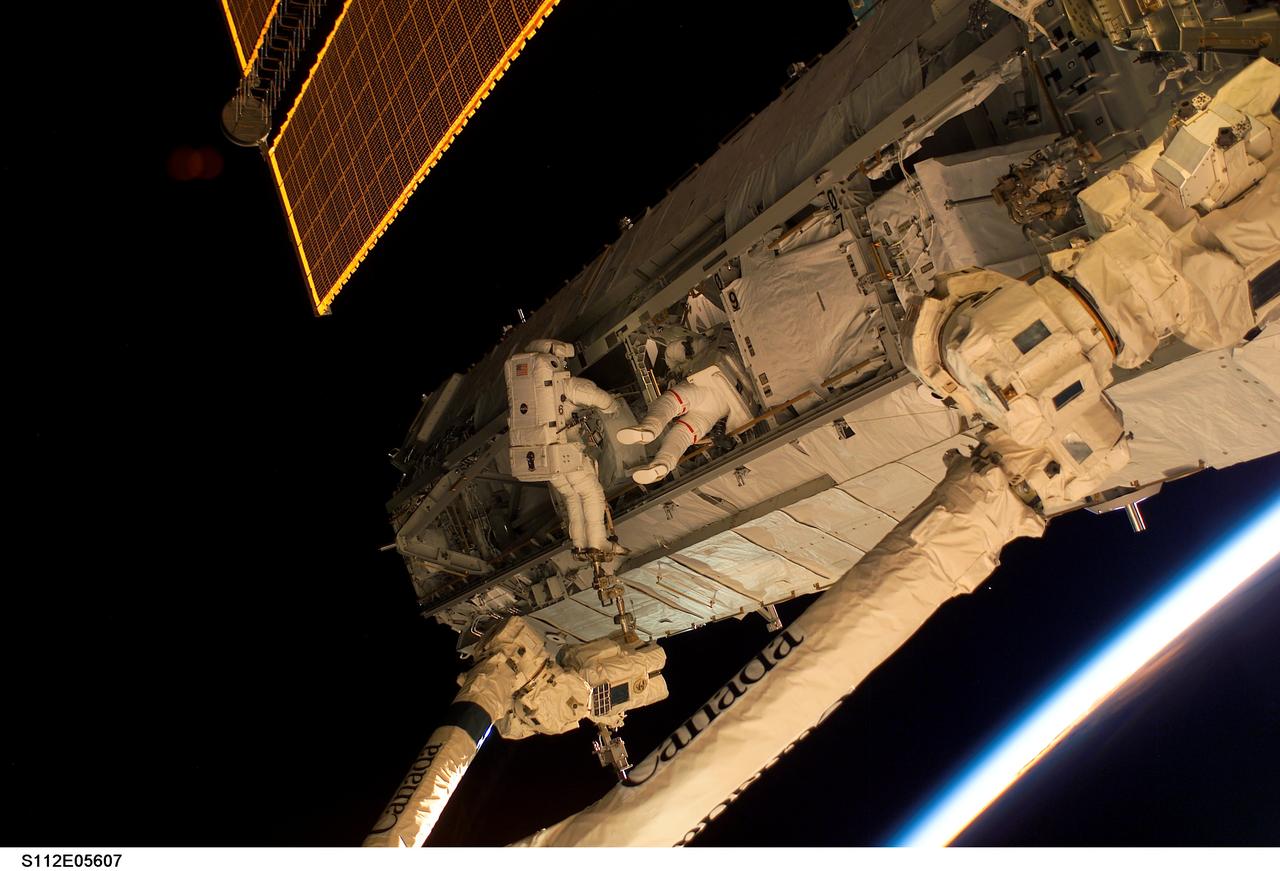
STS112-E-05607 (14 October 2002) --- Astronauts Piers J. Sellers (left) and David A. Wolf, STS-112 mission specialists, work on the newly installed Starboard One (S1) Truss during the third and final scheduled session of extravehicular activity (EVA) for the STS-112 mission. The spacewalk lasted 6 hours and 36 minutes. A thin slice of sunlight can be seen at Earth's horizon.
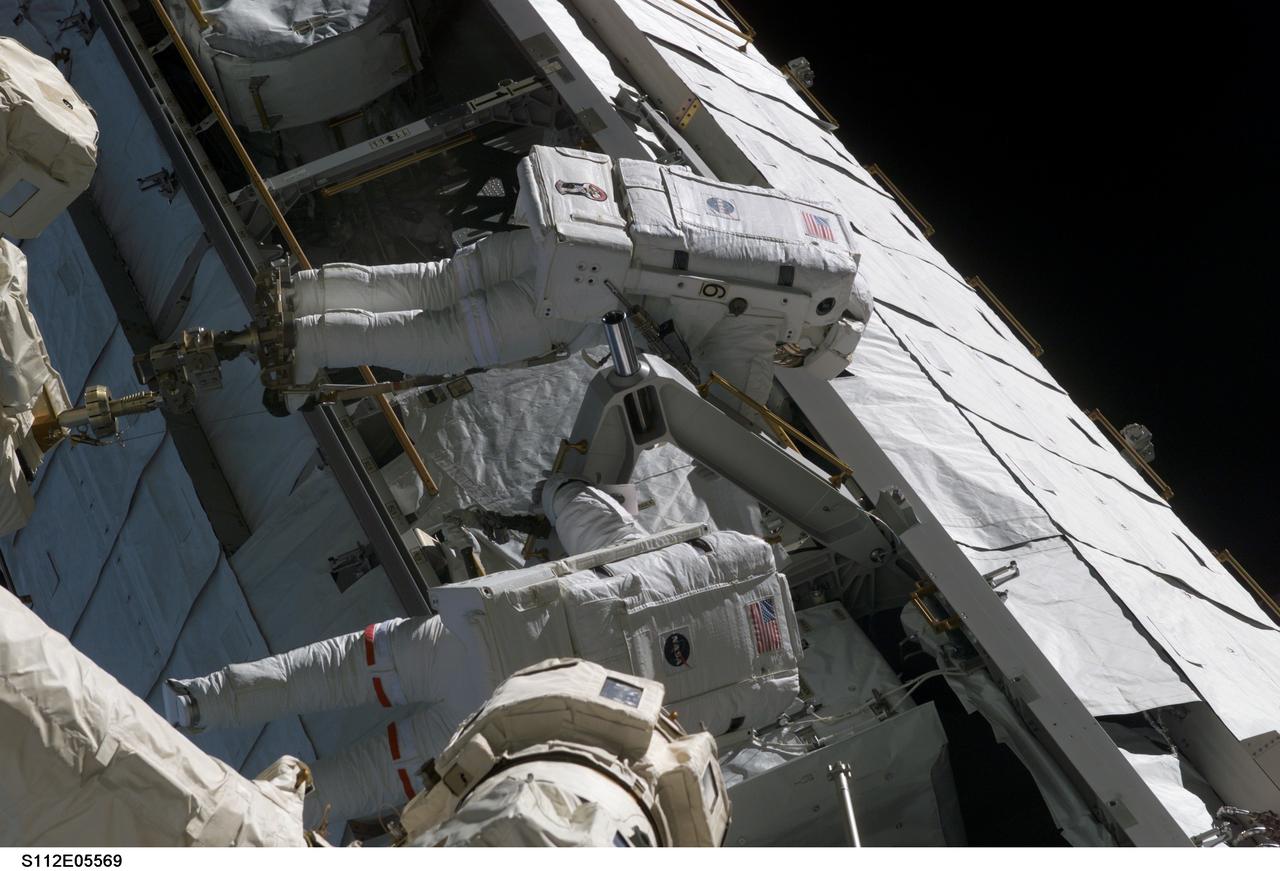
STS112-E-05569 (14 October 2002) --- Astronauts Piers J. Sellers (top) and David A. Wolf, STS-112 mission specialists, work on the newly installed Starboard One (S1) Truss during the third and final scheduled session of extravehicular activity (EVA) for the STS-112 mission. The spacewalk lasted 6 hours and 36 minutes.
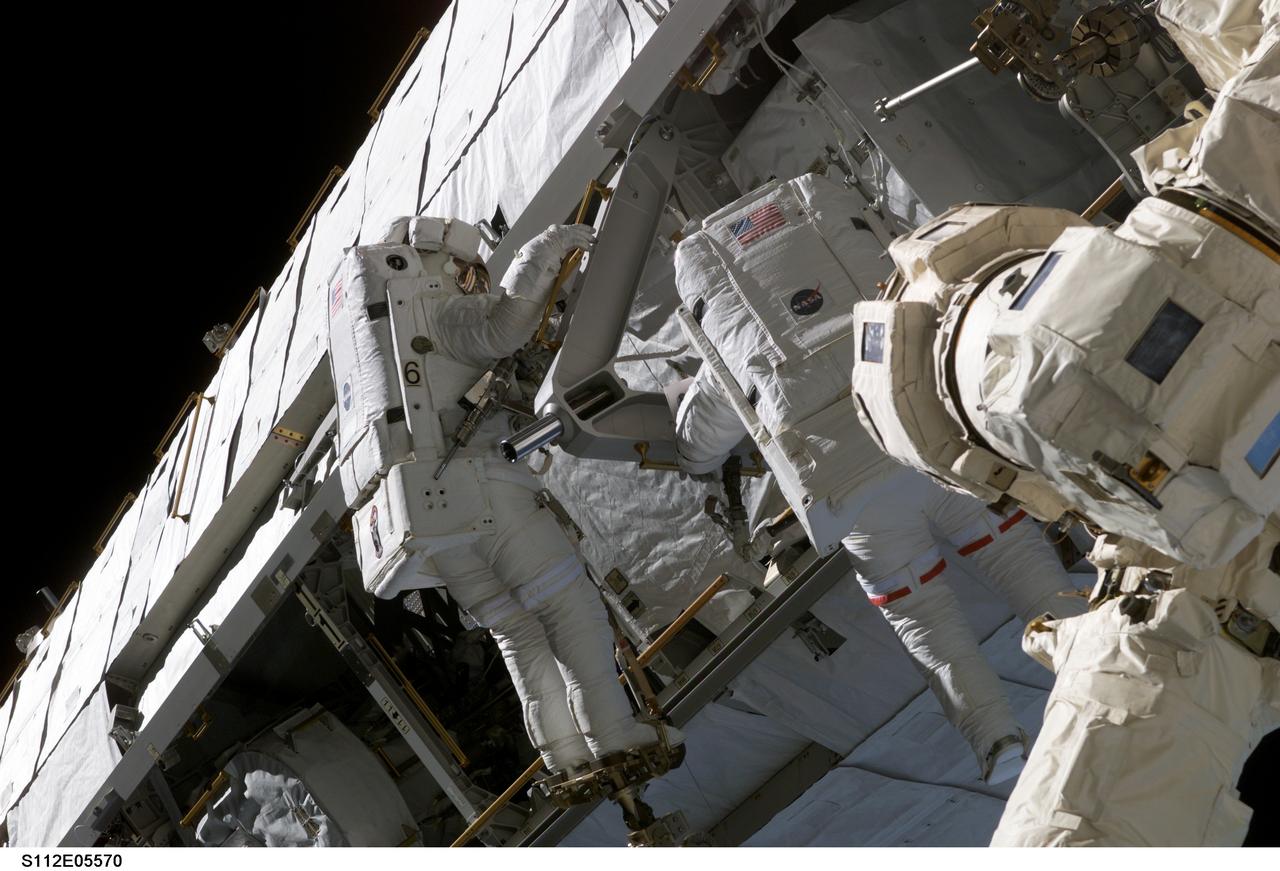
STS112-E-05570 (14 October 2002) --- Astronauts Piers J. Sellers (left) and David A. Wolf, STS-112 mission specialists, work on the newly installed Starboard One (S1) Truss during the third and final scheduled session of extravehicular activity (EVA) for the STS-112 mission. The spacewalk lasted 6 hours and 36 minutes.
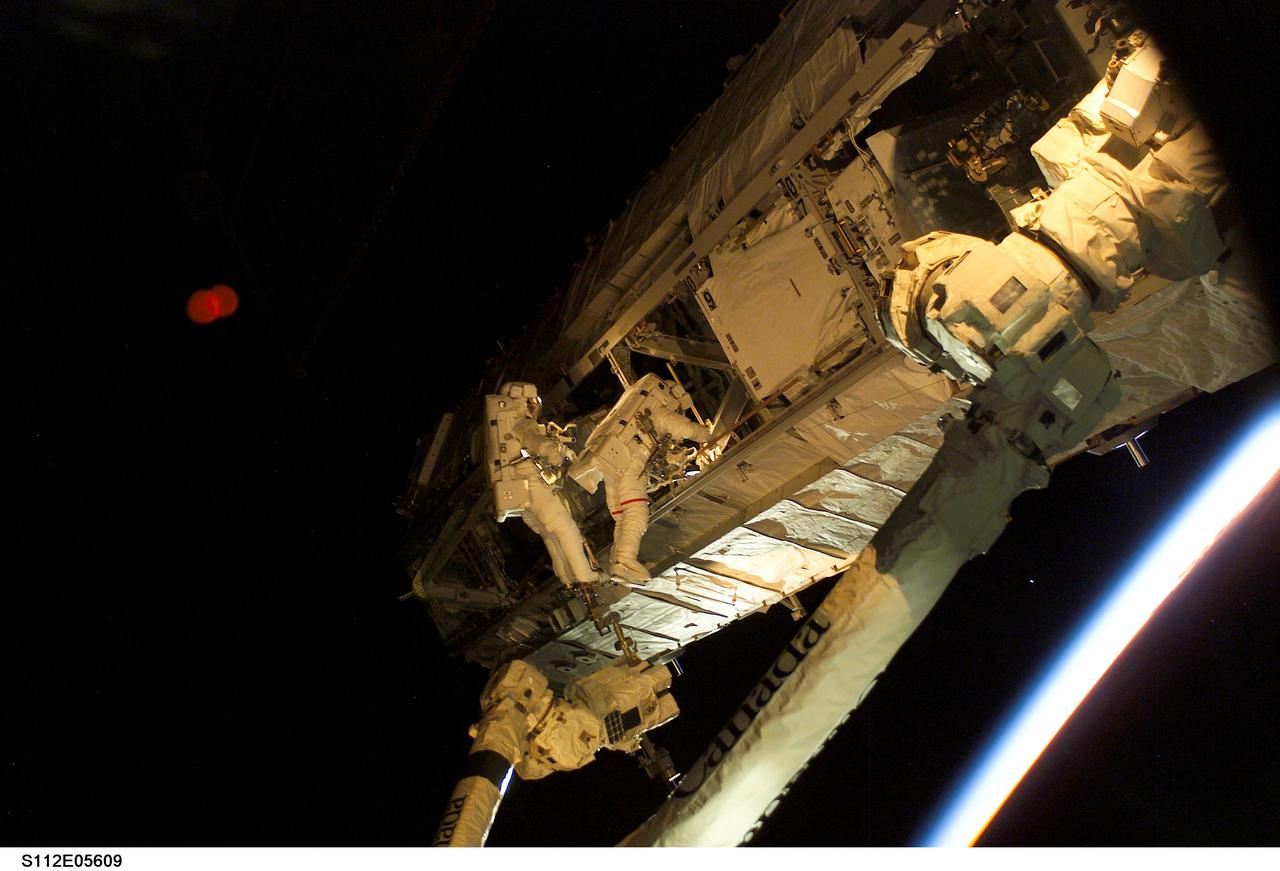
STS112-E-05609 (14 October 2002) --- Astronauts Piers J. Sellers (left) and David A. Wolf, STS-112 mission specialists, work on the newly installed Starboard One (S1) Truss during the third and final scheduled session of extravehicular activity (EVA) for the STS-112 mission. The spacewalk lasted 6 hours and 36 minutes. A thin slice of sunlight can be seen at Earth's horizon.
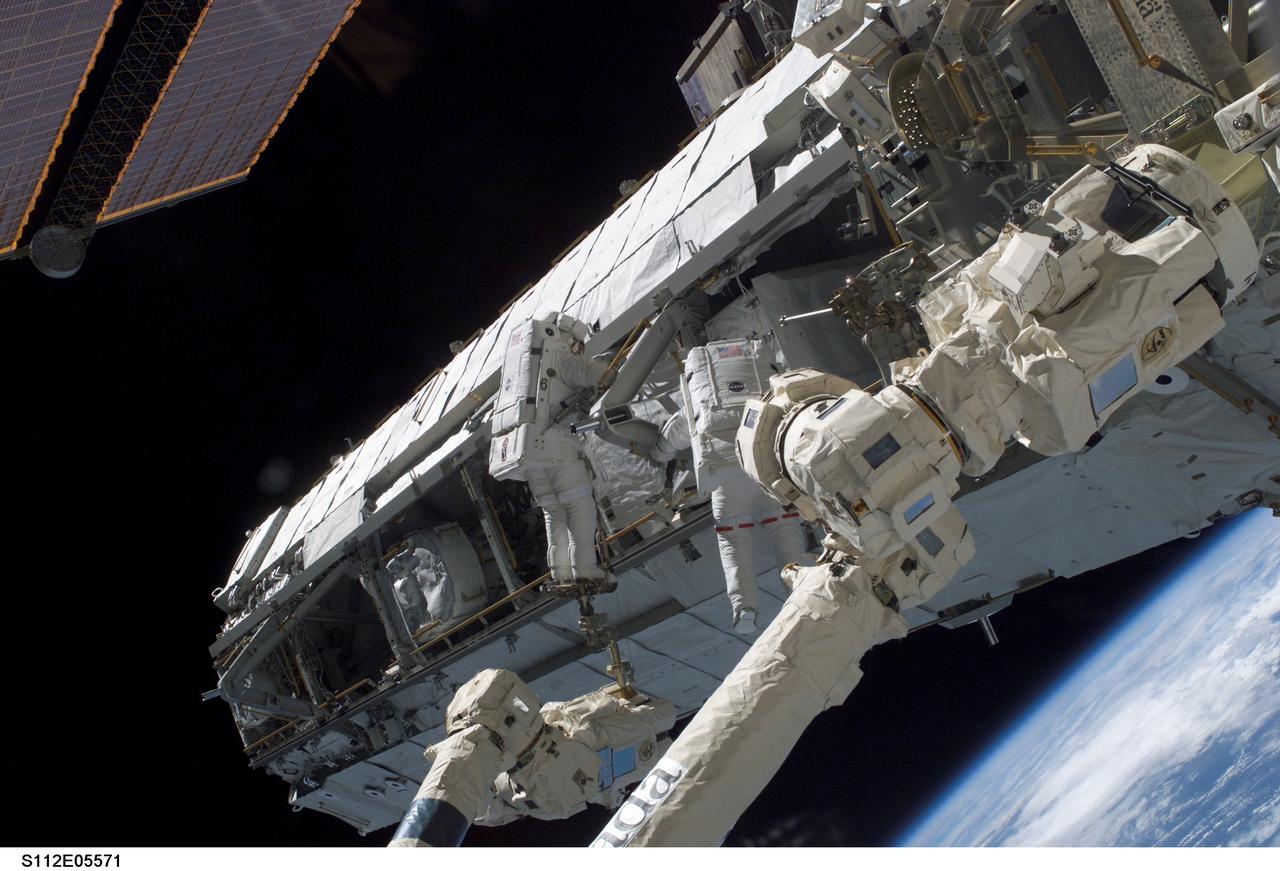
STS112-E-05571 (14 October 2002) --- Astronauts Piers J. Sellers (left) and David A. Wolf, STS-112 mission specialists, work on the newly installed Starboard One (S1) Truss during the third and final scheduled session of extravehicular activity (EVA) for the STS-112 mission. The spacewalk lasted 6 hours and 36 minutes.
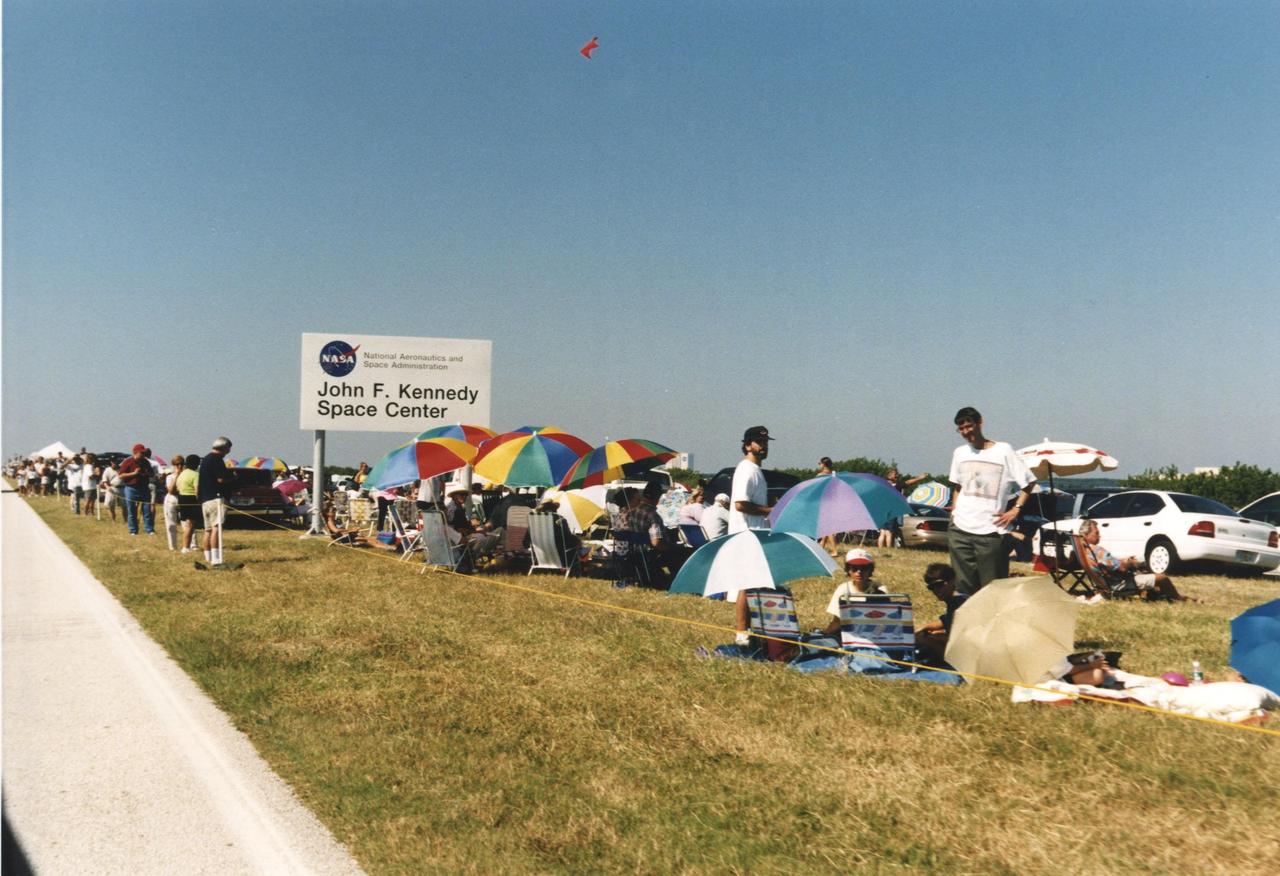
Crowds of thousands line the grassy shoulders of the parkways at Kennedy Space Center to view the launch of STS-95. Extra attention has been drawn to the mission due to the addition to the crew of John H. Glenn Jr., a senator from Ohio. STS-95 is Glenn's second flight into space after 36 years; he was one of the original Project Mercury astronauts and flew his first mission in February 1962. The STS-95 mission includes research payloads such as the Spartan solar-observing deployable spacecraft, the Hubble Space Telescope Orbital Systems Test Platform, the International Extreme Ultraviolet Hitchhiker, as well as a SPACEHAB single module with experiments on space flight and the aging process
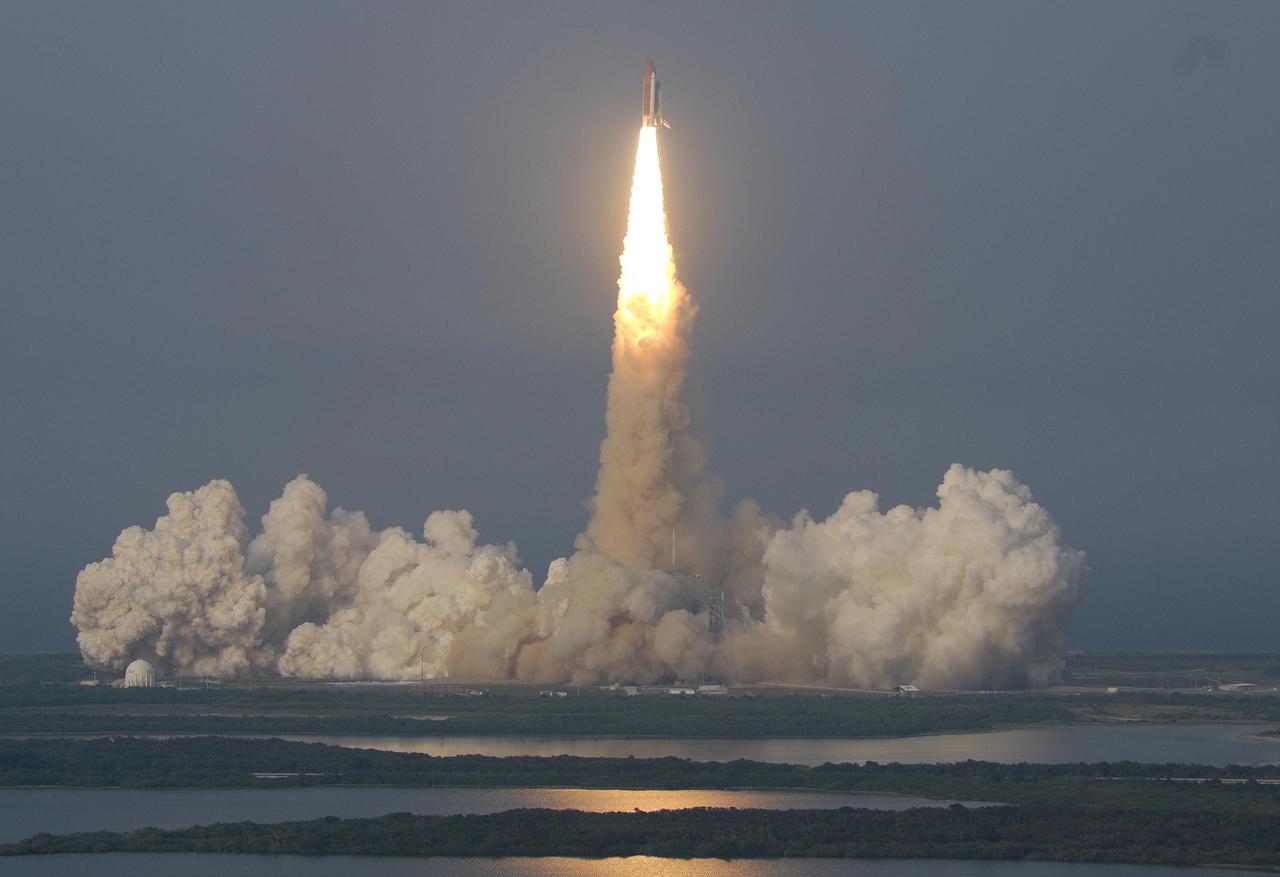
KENNEDY SPACE CENTER, FLA. -- Emerging from the billows of smoke below, Space Shuttle Endeavour hurtles into the sky on mission STS-118. Liftoff from Launch Pad 39A was on time at 6:36 p.m. EDT. Liftoff from Launch Pad 39A was on time at 6:36 p.m. EDT. The mission is the 22nd shuttle flight to the International Space Station. It will continue space station construction by delivering a third starboard truss segment, S5, and other payloads such as the SPACEHAB module and the external stowage platform 3. The 11-day mission may be extended to as many as 14 depending on the test of the Station-to-Shuttle Power Transfer System that will allow the docked shuttle to draw electrical power from the station and extend its visits to the orbiting lab. Photo courtesy of Nikon/Scott Andrews
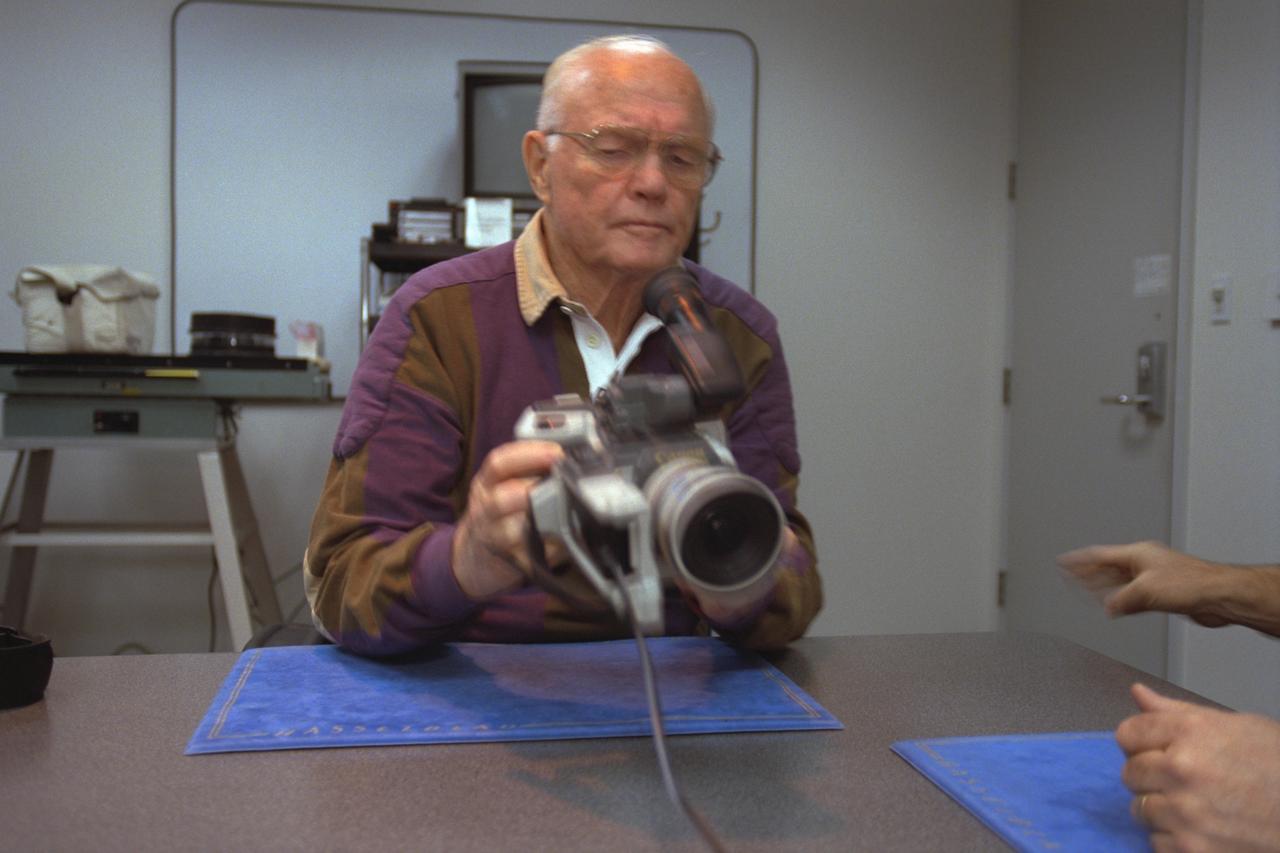
S98-08732 (9 April 1998) --- Holding a 35mm camera, U.S. Sen. John H. Glenn Jr. (D.-Ohio) gets a refresher course in photography from a JSC crew trainer (out of frame, right). The STS-95 payload specialist carried a 35mm camera on his historic MA-6 flight over 36 years ago. The photo was taken by Joe McNally, National Geographic, for NASA.
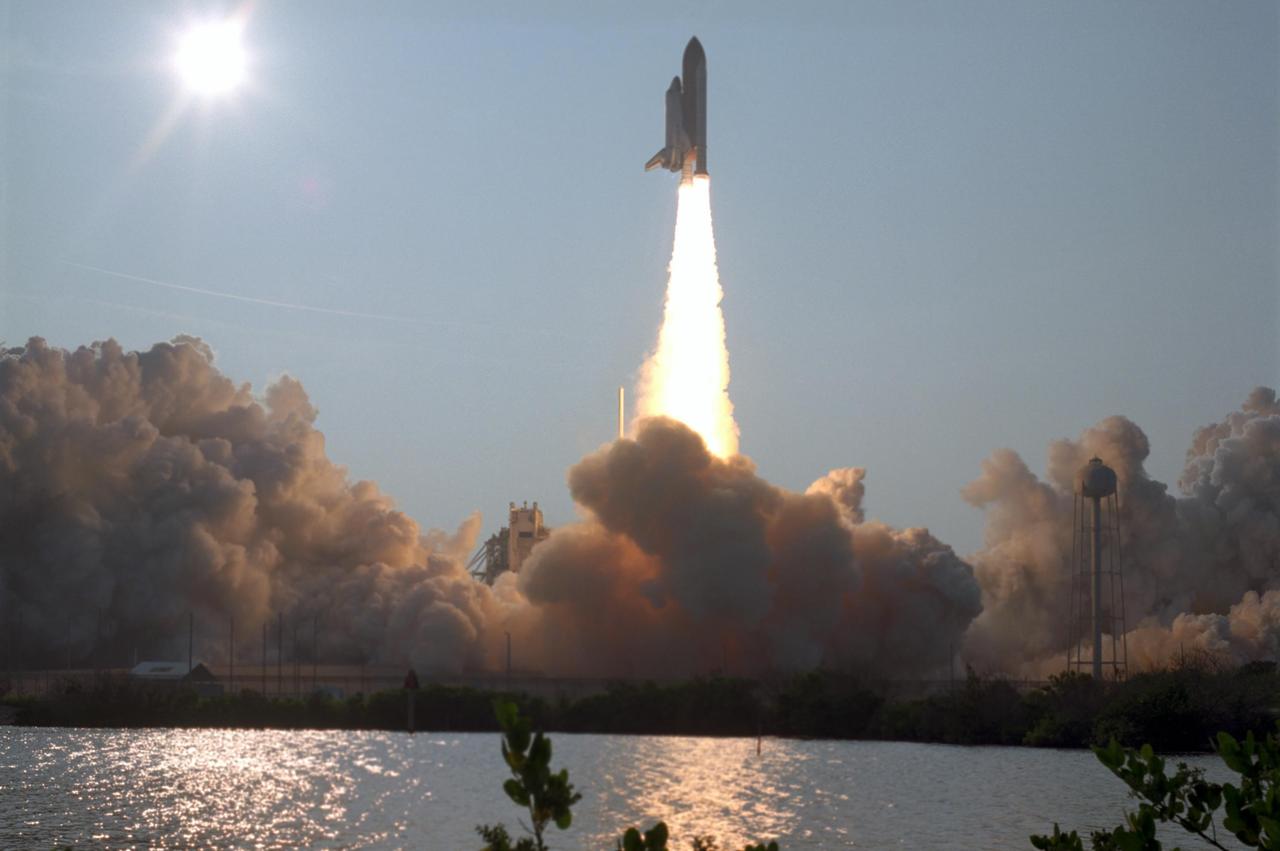
KENNEDY SPACE CENTER, FLA. -- The water near Launch Pad 39A captures the brilliance of both the setting sun, at left, and Space Shuttle Endeavour as it hurtles into space on mission STS-118. The 22nd shuttle flight to the International Space Station, the mission will continue space station construction by delivering a third starboard truss segment, S5, and other payloads such as the SPACEHAB module and the external stowage platform 3. Liftoff of Endeavour was on time at 6:36 p.m. EDT. Photo credit: NASA/Sandra Joseph, Tony Gray, Robert Murray

STS-32 Columbia, Orbiter Vehicle (OV) 102, is captured as its main landing gear (MLG) touches down on runway 22 at Edwards Air Force Base (EAFB), California, in the early morning darkness. The night landing ended a record 11-day mission in space. Moments later, at 1:36:38 am Pacific Standard Time (PST), OV-102 came to a complete stop, having logged 4,509,972 miles in flight.
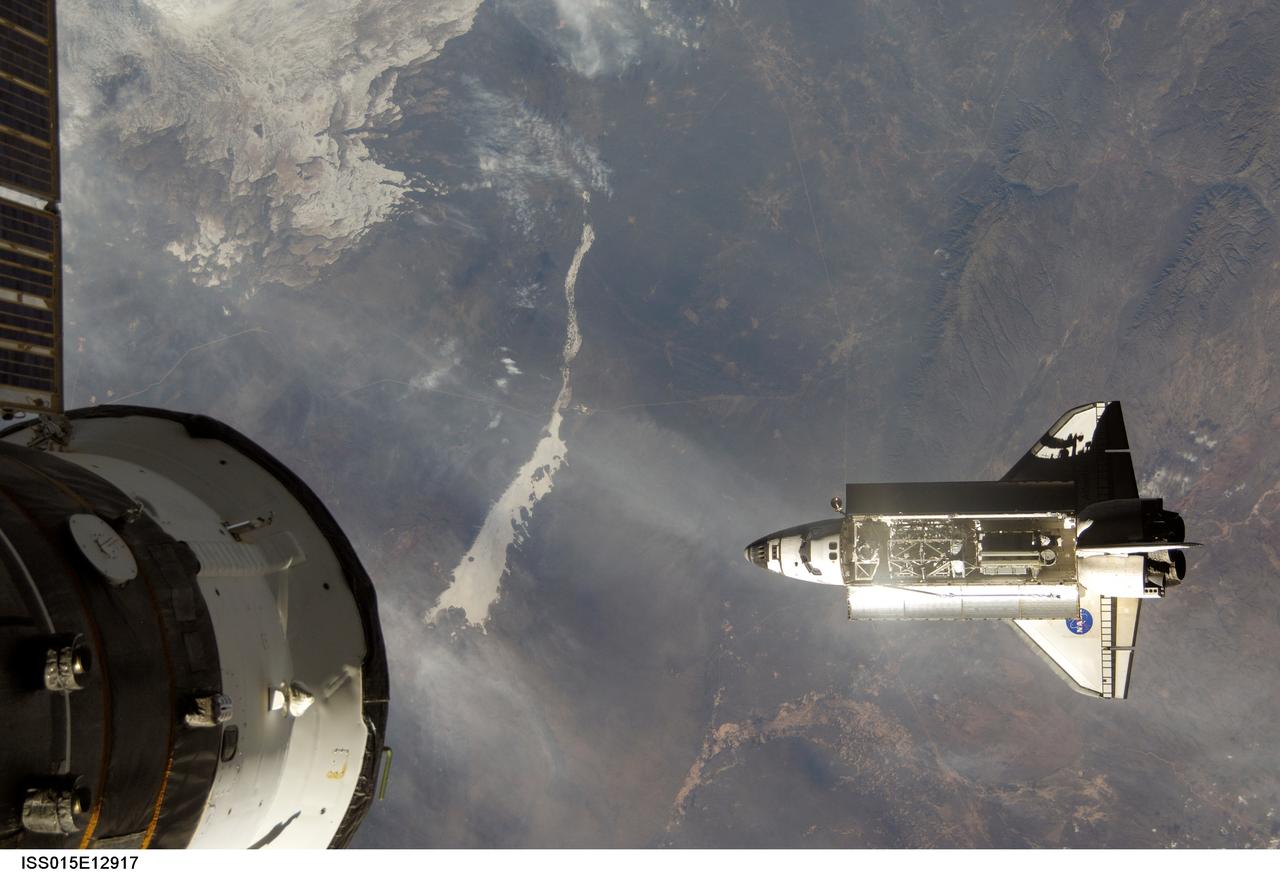
ISS015-E-12917 (10 June 2007) --- Backdropped by rugged Earth terrain, the Space Shuttle Atlantis approaches the International Space Station during STS-117 rendezvous and docking operations. Docking occurred at 2:36 p.m. (CDT) on June 10, 2007. A pair of solar arrays and starboard truss segments (S3/S4), which are later to be attached to the station and outfitted during three spacewalks, can be seen in Atlantis' cargo bay. A docked Soyuz spacecraft is visible at right.
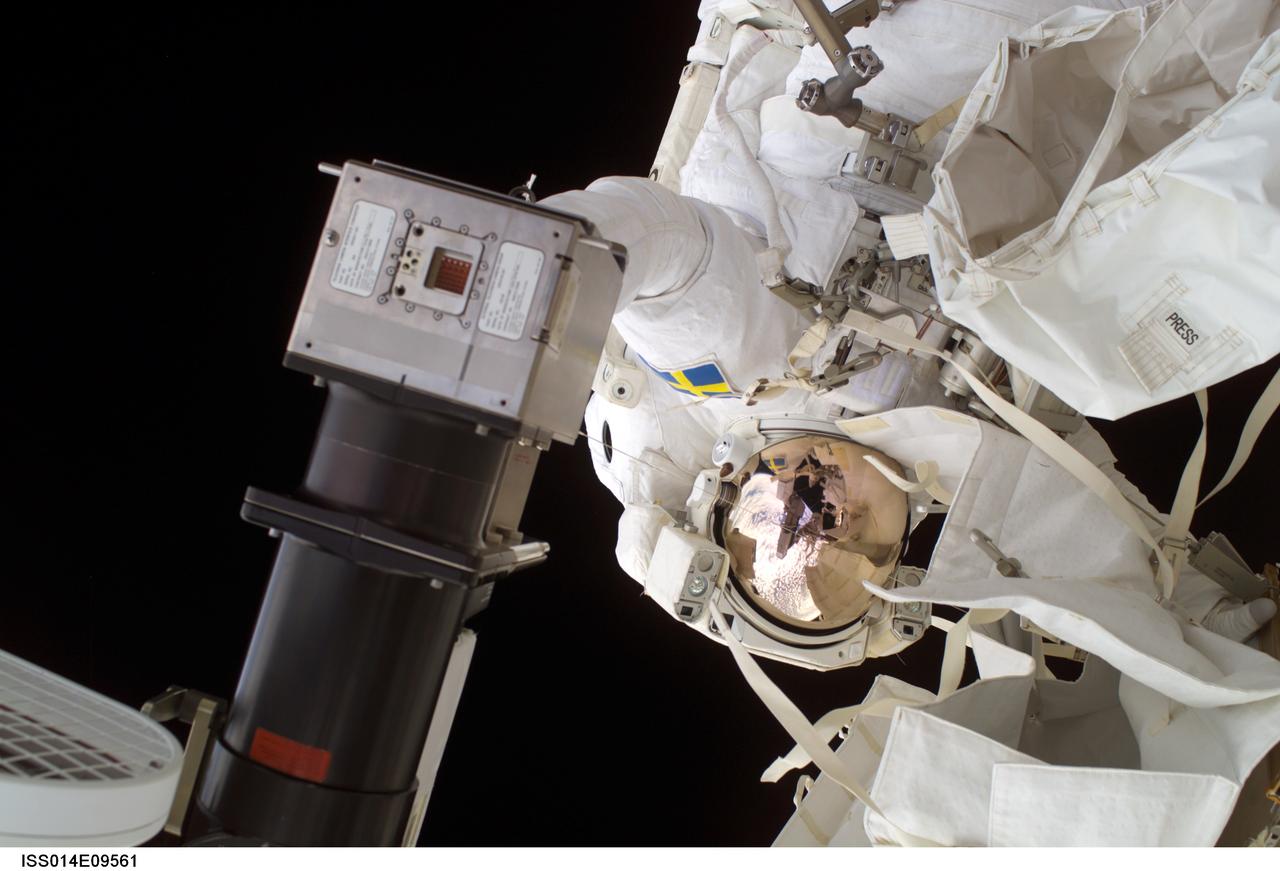
ISS014-E-09561 (12 Dec. 2006) --- European Space Agency (ESA) astronaut Christer Fuglesang, STS-116 mission specialist, replaces a faulty TV camera on the exterior of the International Space Station during the mission's first of three planned sessions of extravehicular activity (EVA). Astronaut Robert L. Curbeam, Jr. (out of frame), mission specialist, also participated in the 6-hour, 36-minute spacewalk.
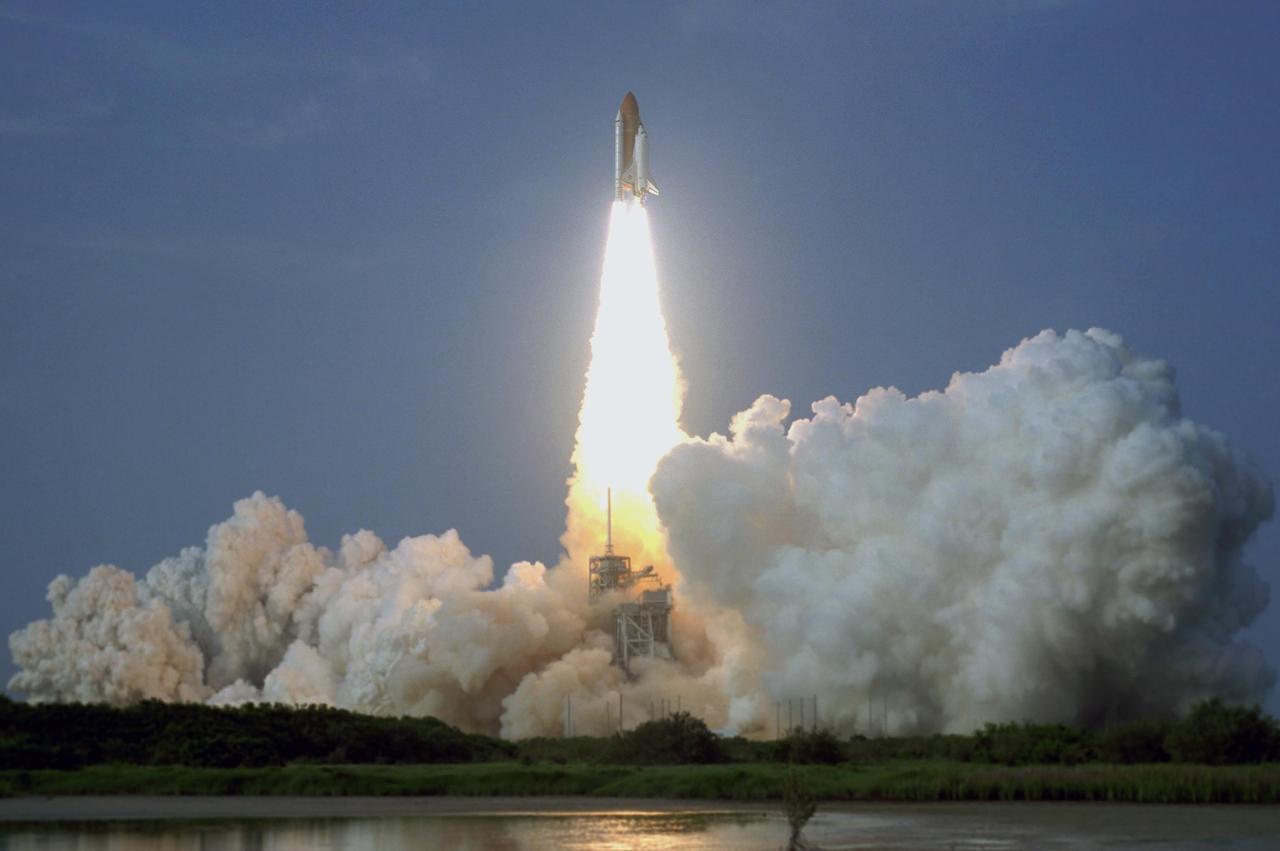
KENNEDY SPACE CENTER, FLA. -- Clouds of smoke and steam fill Launch Pad 39A after liftoff of Space Shuttle Endeavour, trailing a fiery tail, on mission STS-118. The 22nd shuttle flight to the International Space Station, the mission will continue space station construction by delivering a third starboard truss segment, S5, and other payloads such as the SPACEHAB module and the external stowage platform 3. Liftoff of Endeavour was on time at 6:36 p.m. EDT. Photo credit: NASA/Sandra Joseph, Tony Gray, Robert Murray
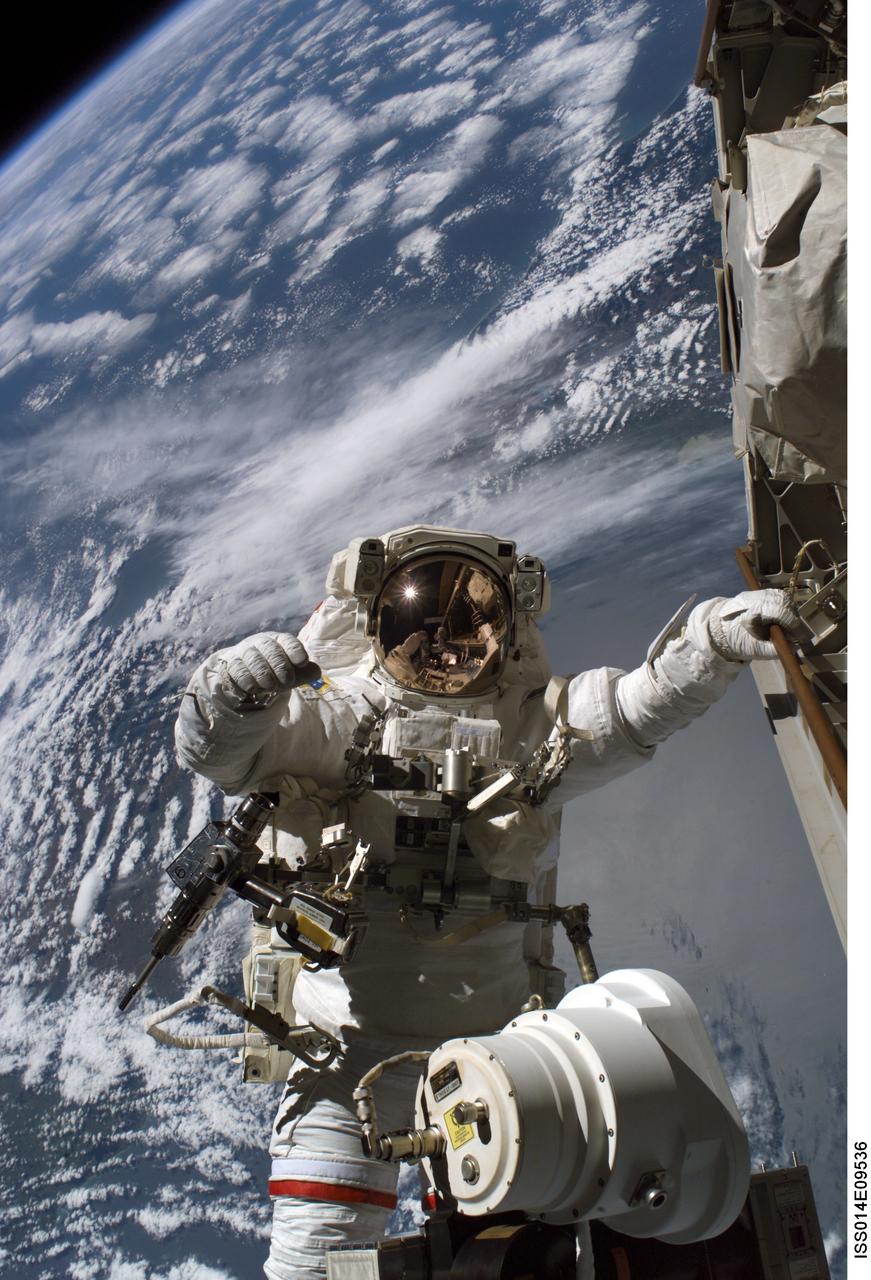
ISS014-E-09536 (12 Dec. 2006) --- Astronaut Robert L. Curbeam, Jr., STS-116 mission specialist, prepares to replace a faulty TV camera on the exterior of the International Space Station during the mission's first of three planned sessions of extravehicular activity (EVA). Astronaut Christer Fuglesang (out of frame), mission specialist representing the European Space Agency (ESA), also participated in the 6-hour, 36-minute spacewalk.
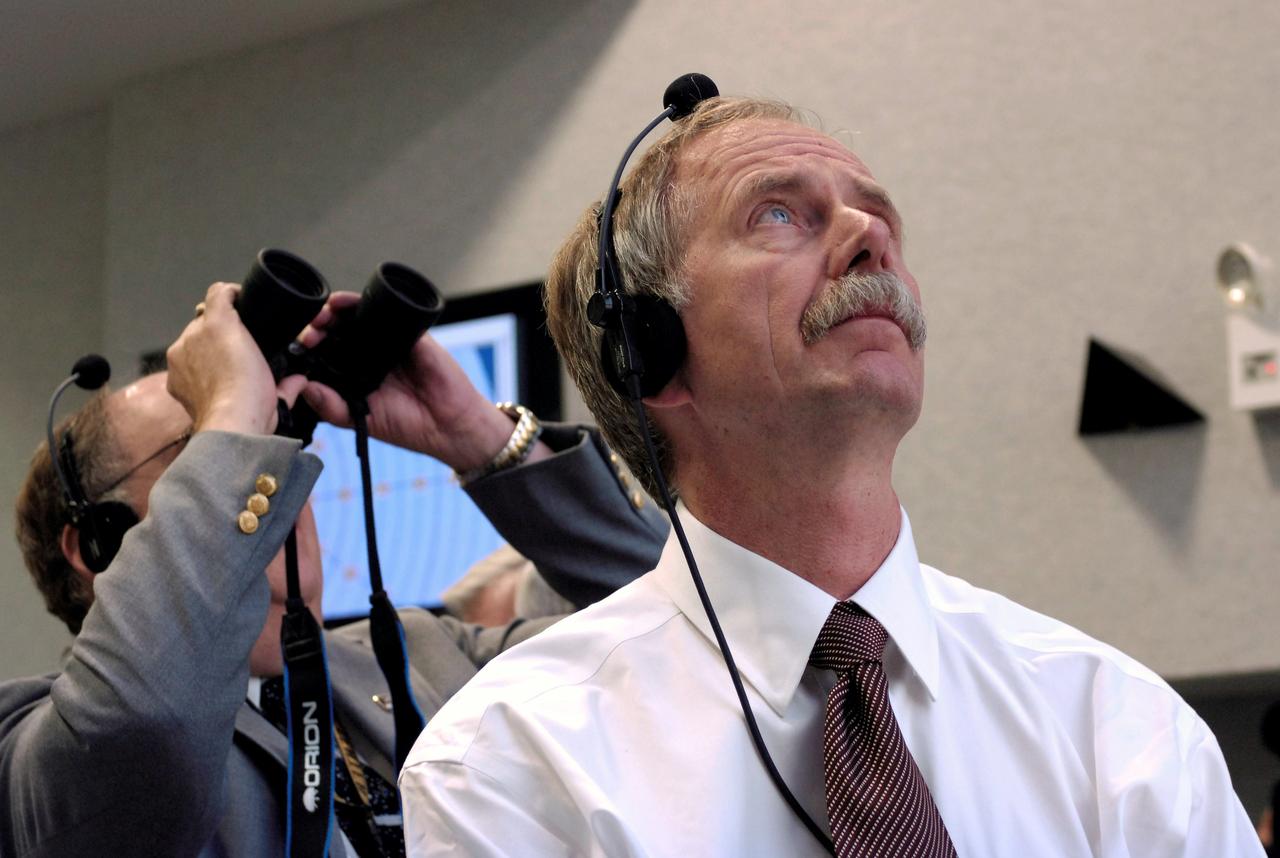
JSC2007-E-41603 (8 August 2007) --- William Gerstenmaier (foreground), NASA Associate Administrator for Space Operations, watches the launch of the Space Shuttle Endeavour, to get STS-118 underway, from the Launch Control Center August 8, 2007 at the Kennedy Space Center in Cape Canaveral, Fla. The shuttle lifted off from launch pad 39A at 6:36 p.m. (EDT). Photo Credit: NASA/Bill Ingalls
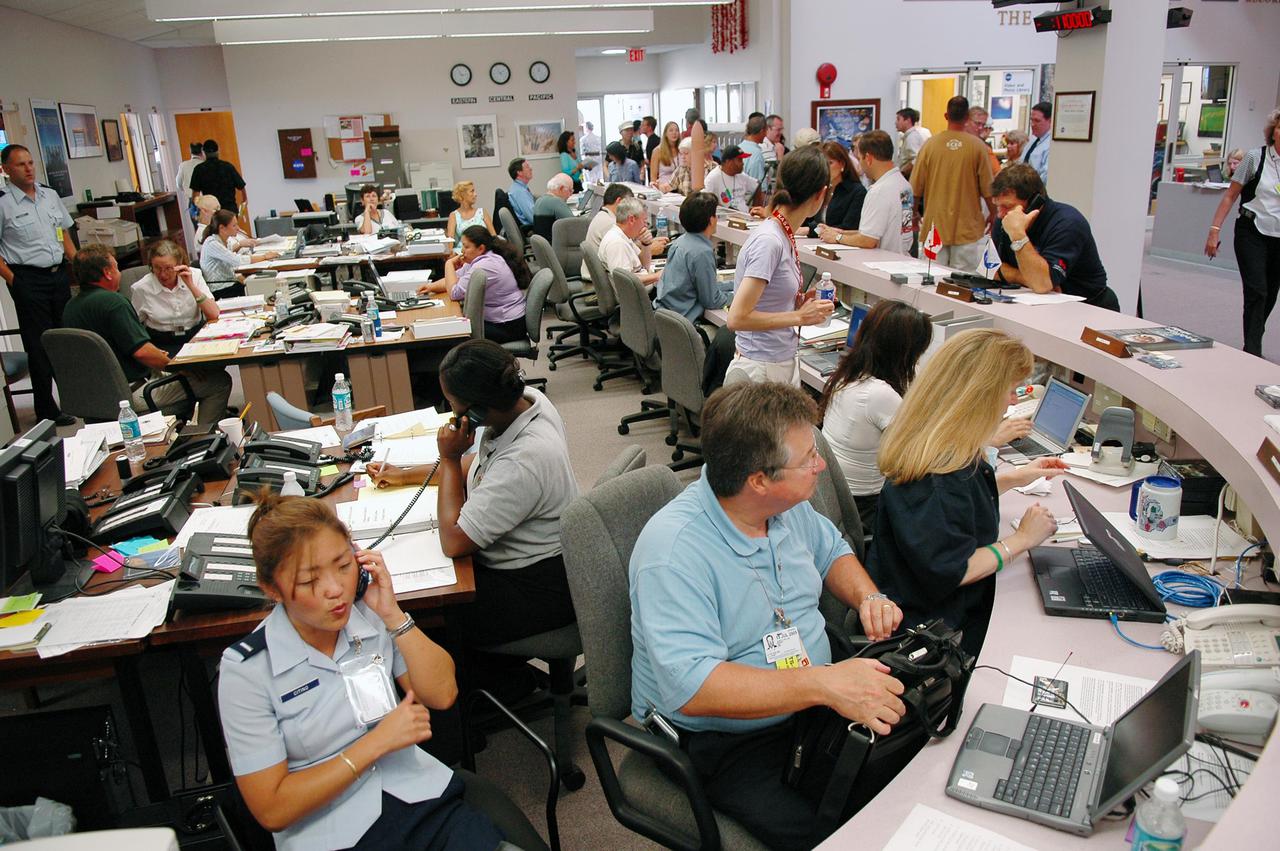
KENNEDY SPACE CENTER, FLA. - The NASA News Center at NASA Kennedy Space Center hums with activity as workers and volunteers behind the counter help the media during launch activities for Return to Flight mission STS-114. More than a thousand media representatives from 36 states, the District of Columbia and 32 countries converged on the News Center for the historic launch.

ISS014-E-09531 (12 Dec. 2006) --- Astronaut Robert L. Curbeam, Jr., STS-116 mission specialist, prepares to replace a faulty TV camera on the exterior of the International Space Station during the mission's first of three planned sessions of extravehicular activity (EVA). Astronaut Christer Fuglesang (out of frame), mission specialist representing the European Space Agency (ESA), also participated in the 6-hour, 36-minute spacewalk.
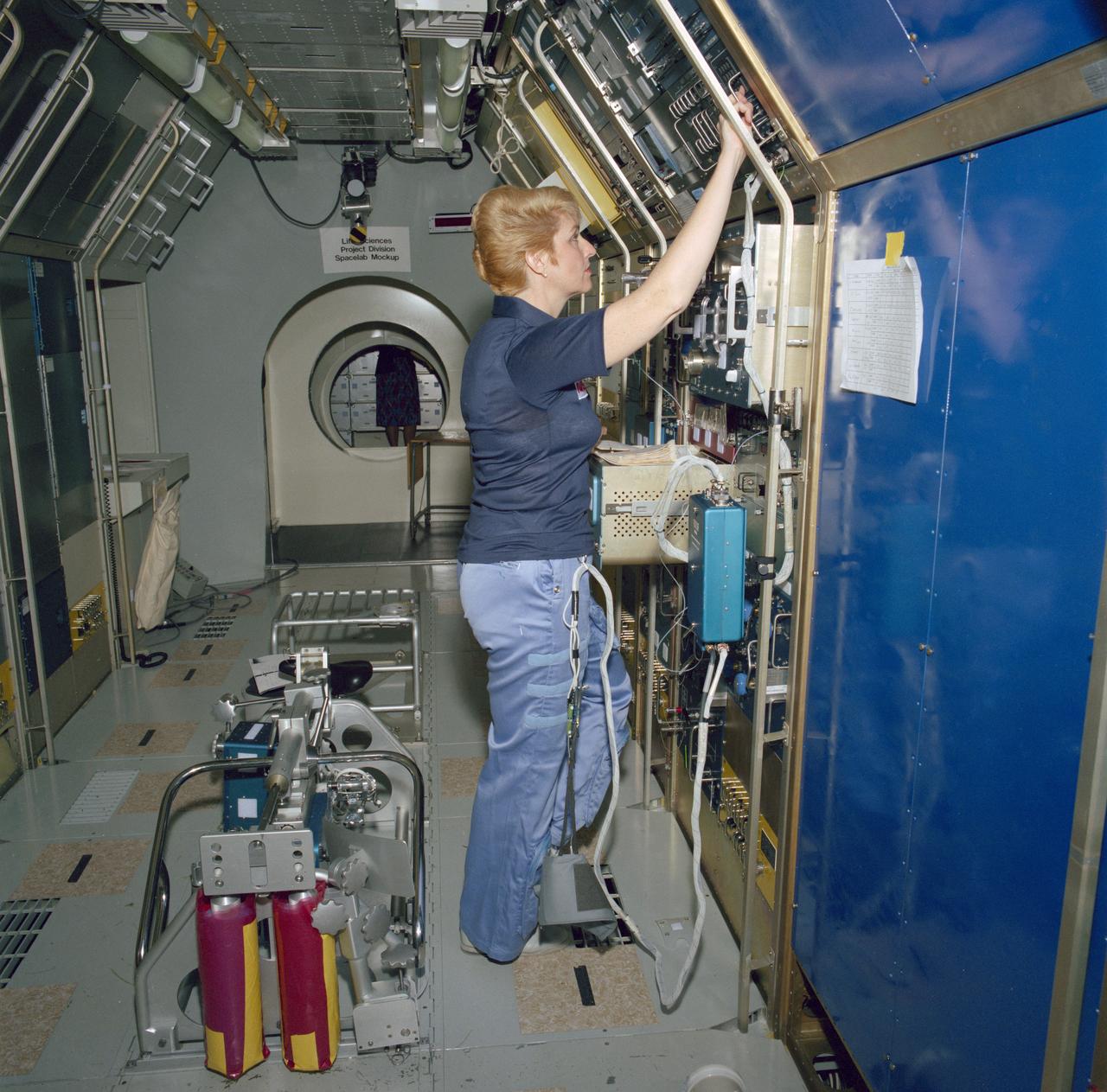
STS-40 Payload Specialist Millie Hughes-Fulford conducts Spacelab Life Sciences 1 (SLS-1) Experiment No. 198, Pulmonary Function During Weightlessness, in JSC's Life Sciences Project Division (LSPD) SLS mockup located in the Bioengineering and Test Support Facility Bldg 36. Hughes-Fulford sets switches on Rack 8. Behind her in the center aisle are the stowed bicycle ergometer (foreground) and the body restraint system.
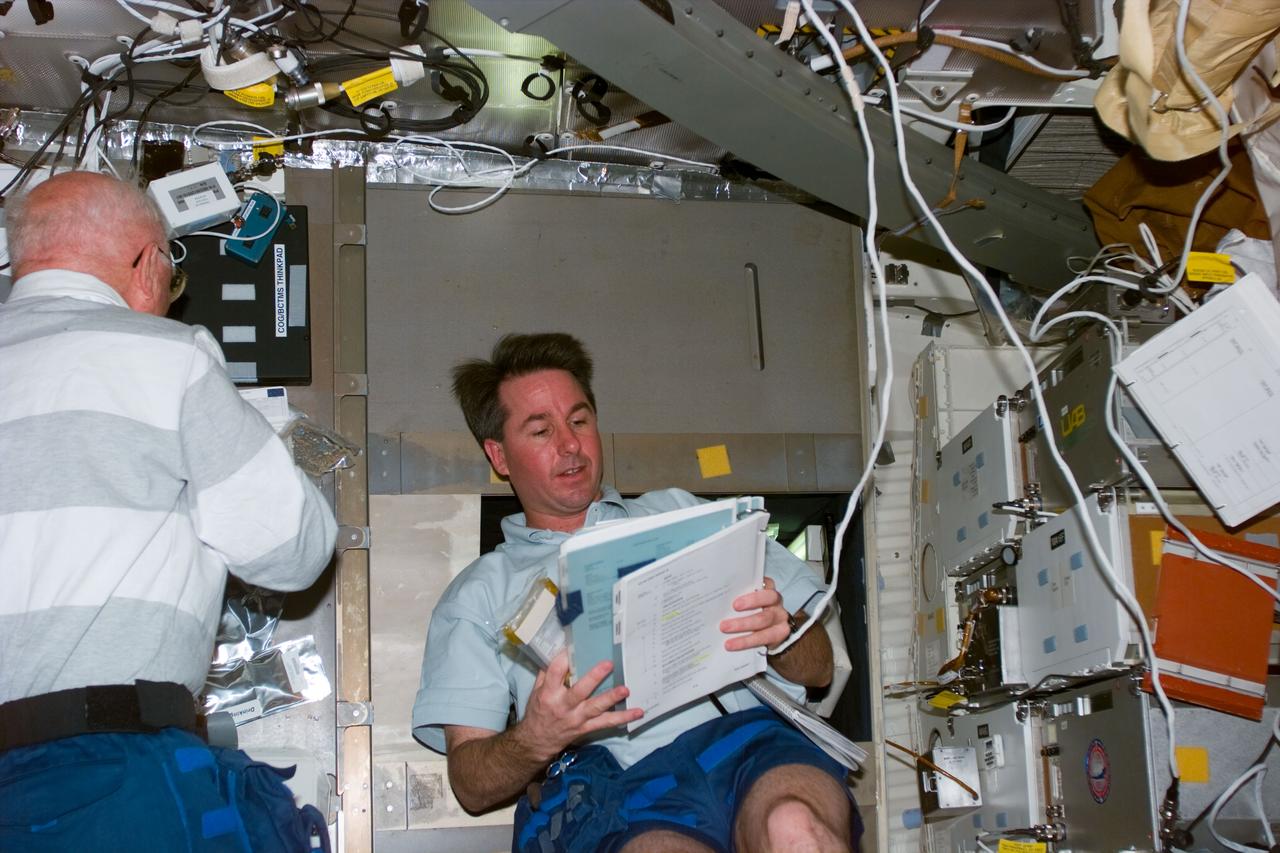
STS095-E-5151 (3 Nov. 1998) --- U.S. Sen. John H. Glenn Jr. (left), payload specialist, and astronaut Stephen K. Robinson, mission specialist, on Discovery's middeck, continue busy experimentation agenda for STS-95. The photo was taken with an electronic still camera (ESC) at 15:27:36 GMT, Nov. 3.
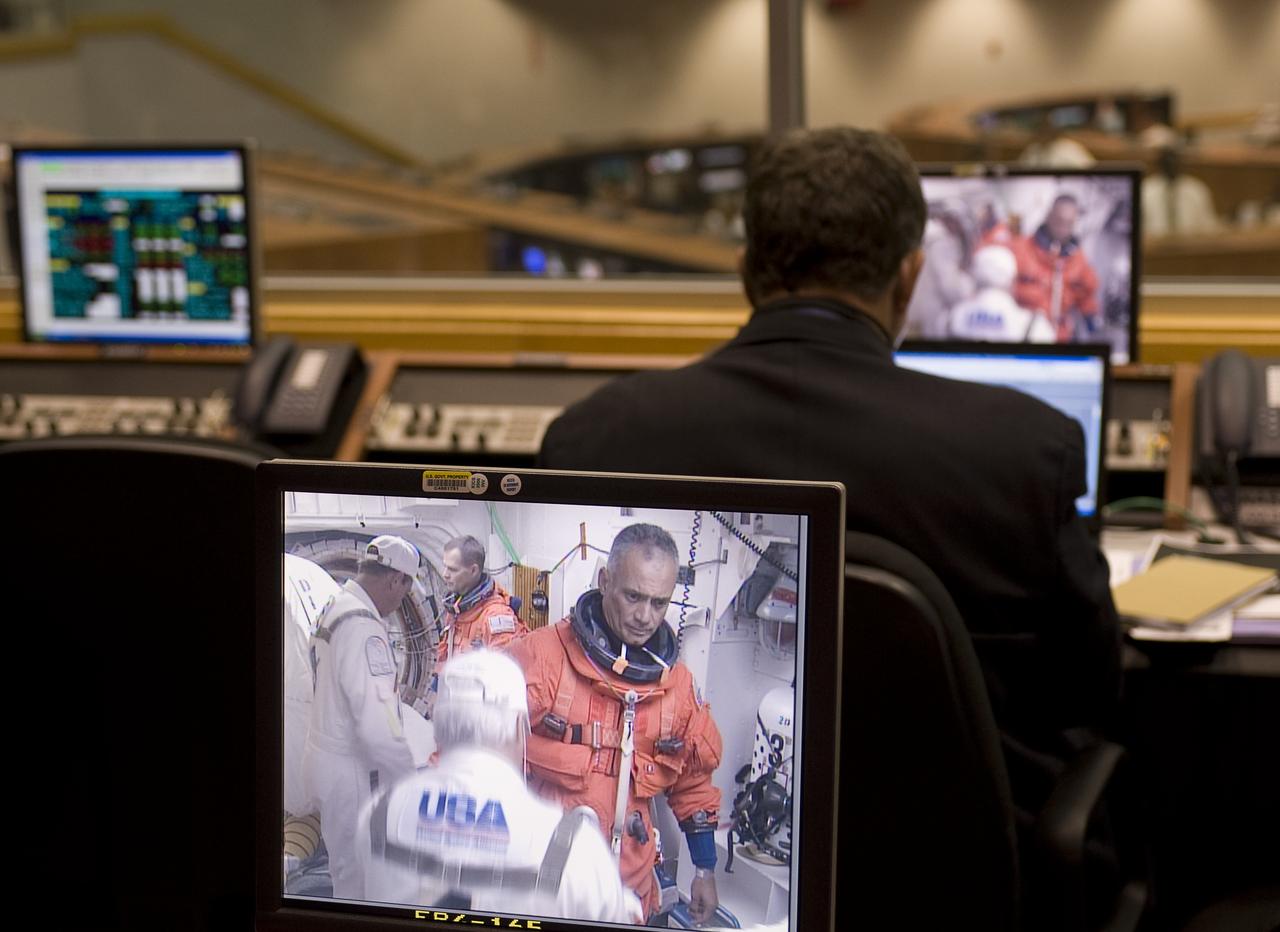
NASA Astronaut John "Danny" Olivas is seen preparing to board the space shuttle Discovery at pad 39a on a monitor in Firing Room Four of the Kennedy Space Center at Cape Canaveral, Fla., Monday, Aug. 24, 2009. Discovery is scheduled to launch Tuesday, Aug. 25, 2009 at 1:36 a.m. EDT and will carry the Leonardo supply module to the International Space Station during STS-128, along with a new crew member for the station, Nicole Stott. Photo Credit: (NASA/Bill Ingalls)
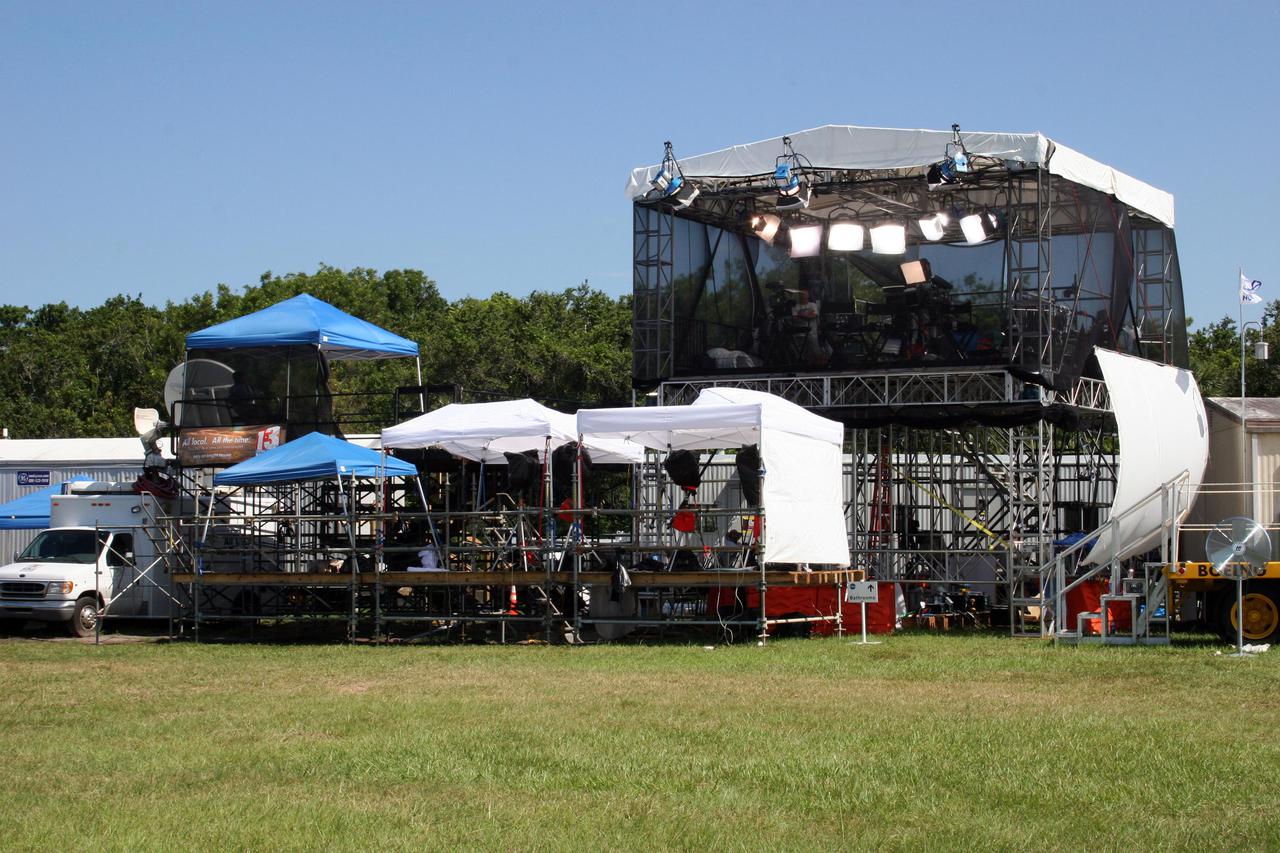
KENNEDY SPACE CENTER, FLA. - Tents cover precious equipment in the area east of the NASA Kennedy Space Center News Center where photographers and other media wait for the launch of Space Shuttle Discovery on Return to Flight mission STS-114. More than a thousand media representatives from 36 states, the District of Columbia and 32 countries converged on the News Center for the historic launch.
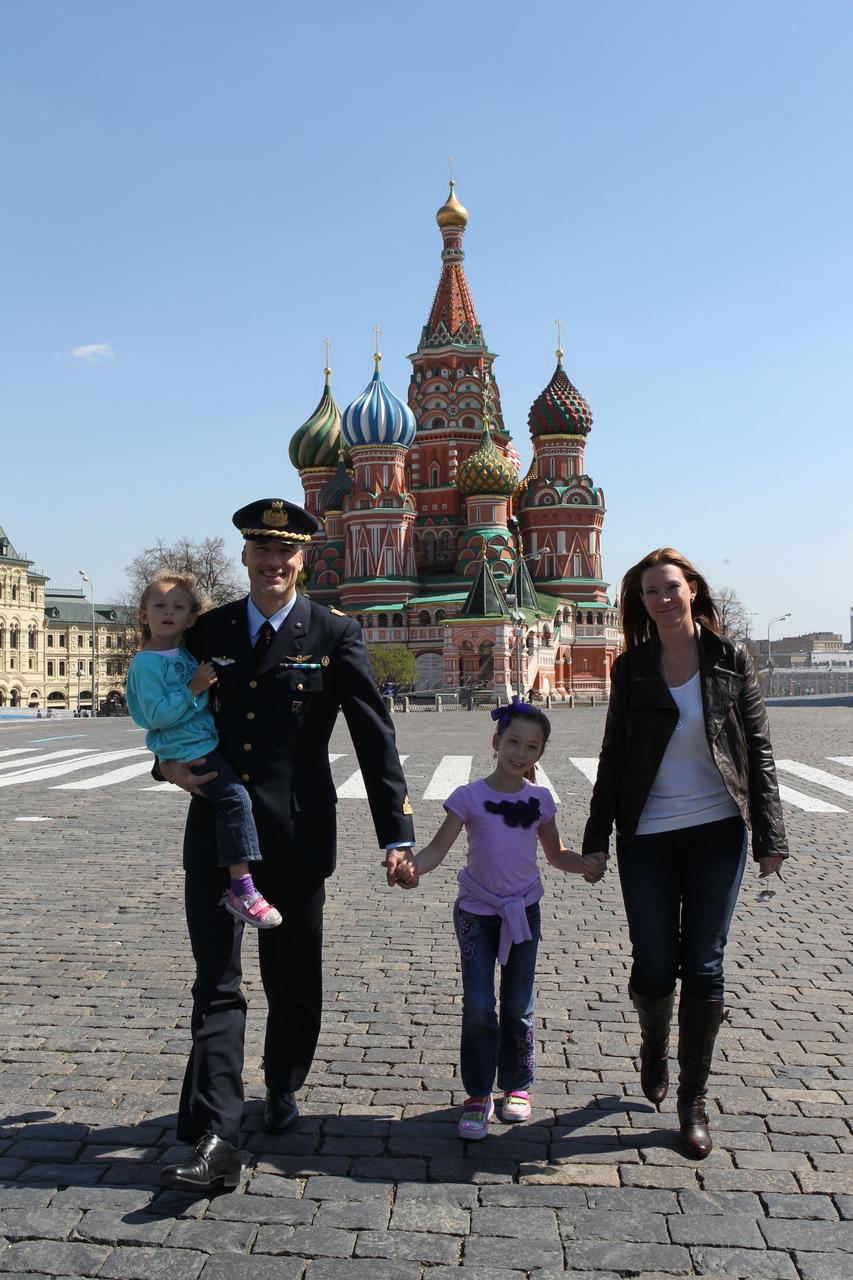
Expedition 36/37 Flight Engineer Luca Parmitano of the European Space Agency takes a stroll through Red Square in Moscow in front of St. Basil’s Cathedral May 8 with his wife, Kathy Dillow, and their daughters. Parmitano, Soyuz Commander Fyodor Yurchikhin and Flight Engineer Karen Nyberg of NASA are preparing for their launch May 29, Kazakh time, in their Soyuz TMA-09M spacecraft from the Baikonur Cosmodrome in Kazakhstan for a six-month mission on the International Space Station. NASA/Stephanie Stoll
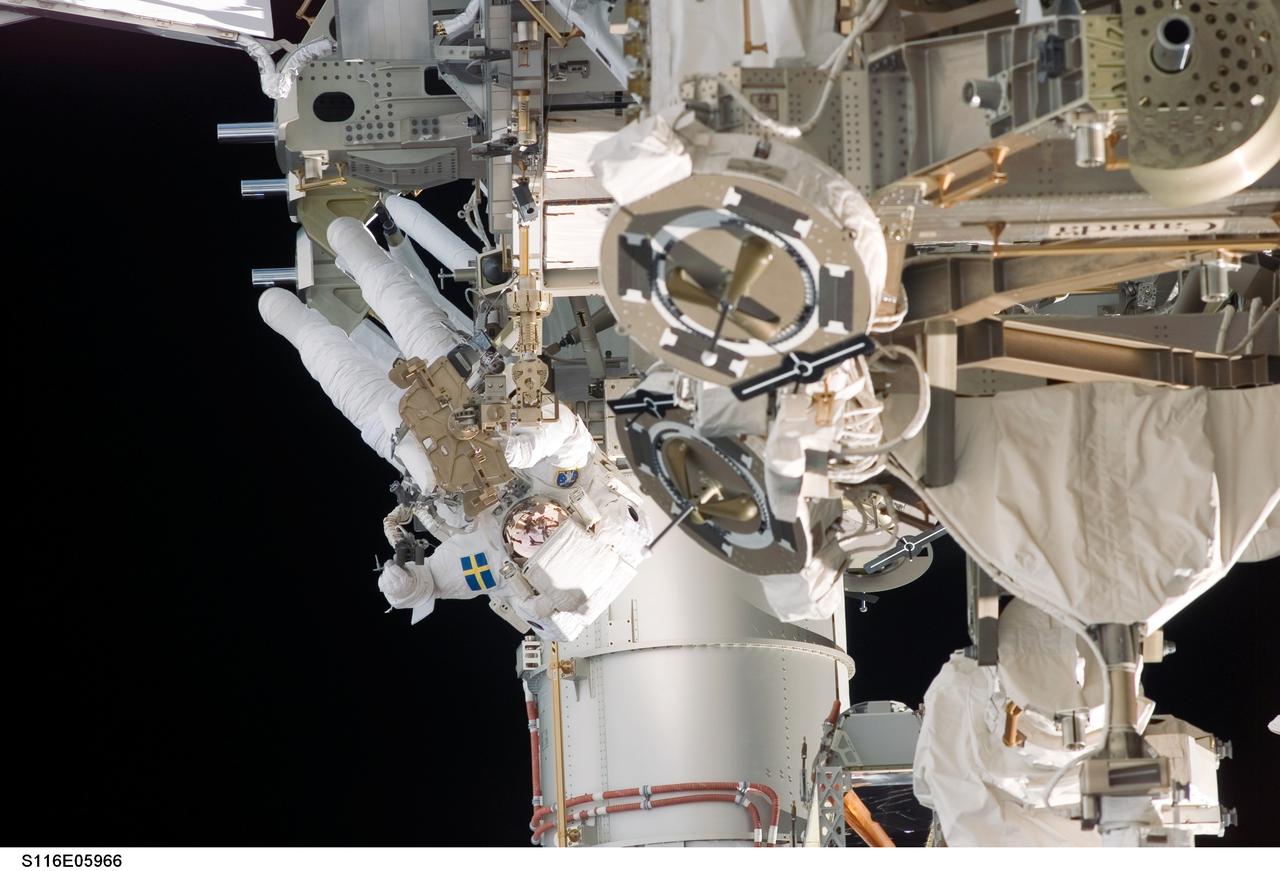
S116-E-05966 (12 Dec. 2006) -- European Space Agency (ESA) astronaut Christer Fuglesang, STS-116 mission specialist, participates in the mission's first of three planned sessions of extravehicular activity (EVA) as construction resumes on the International Space Station. Astronaut Robert L. Curbeam, Jr. (out of frame), mission specialist, also participated in the 6-hour, 36-minute spacewalk.
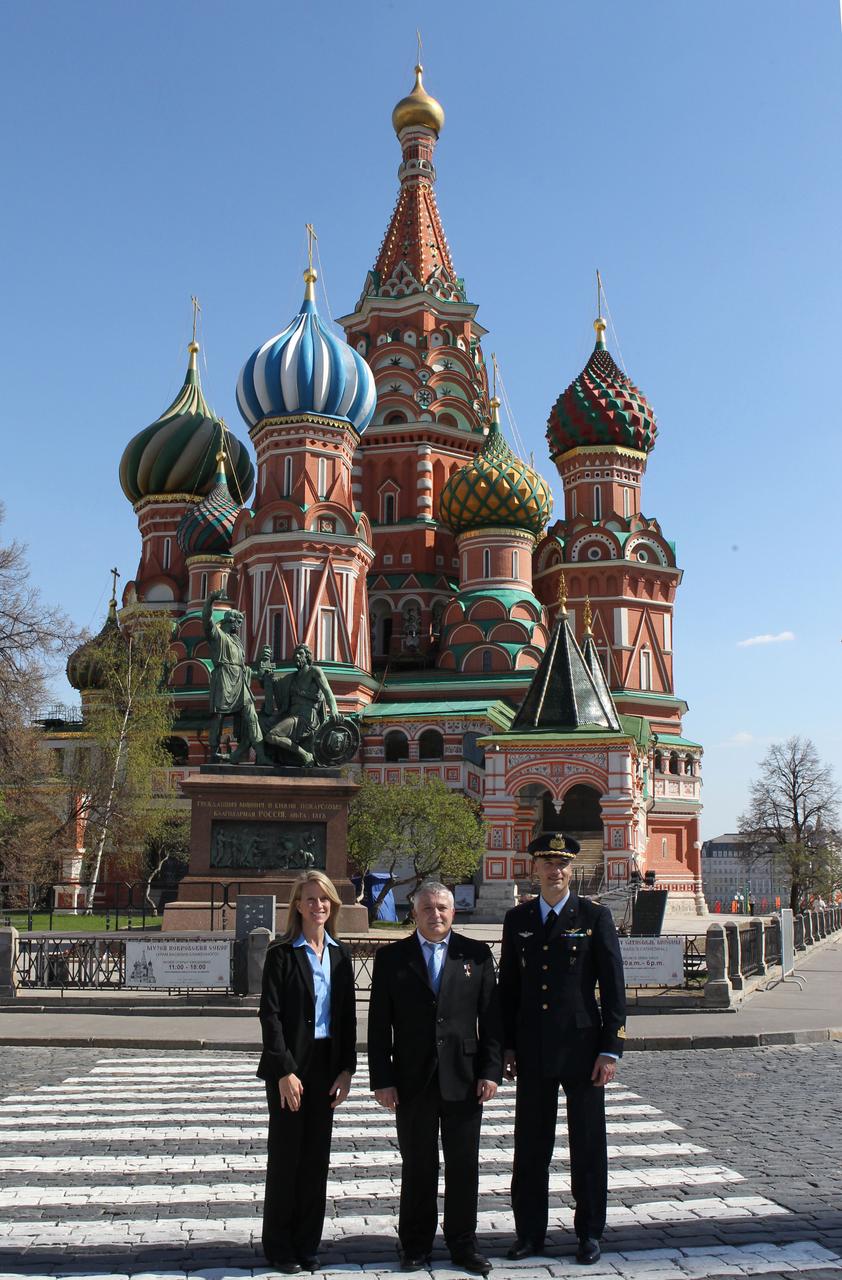
With famed St. Basil’s Cathedral serving as a backdrop, Expedition 36/37 Flight Engineer Karen Nyberg of NASA (left), Soyuz Commander Fyodor Yurchikhin (center) and Flight Engineer Luca Parmitano of the European Space Agency (right) pose for pictures May 8 during a ceremonial tour of Red Square in Moscow. Nyberg, Yurchikhin and Parmitano are preparing for their launch May 29, Kazakh time, in their Soyuz TMA-09M spacecraft from the Baikonur Cosmodrome in Kazakhstan for a six-month mission on the International Space Station. NASA/Stephanie Stoll
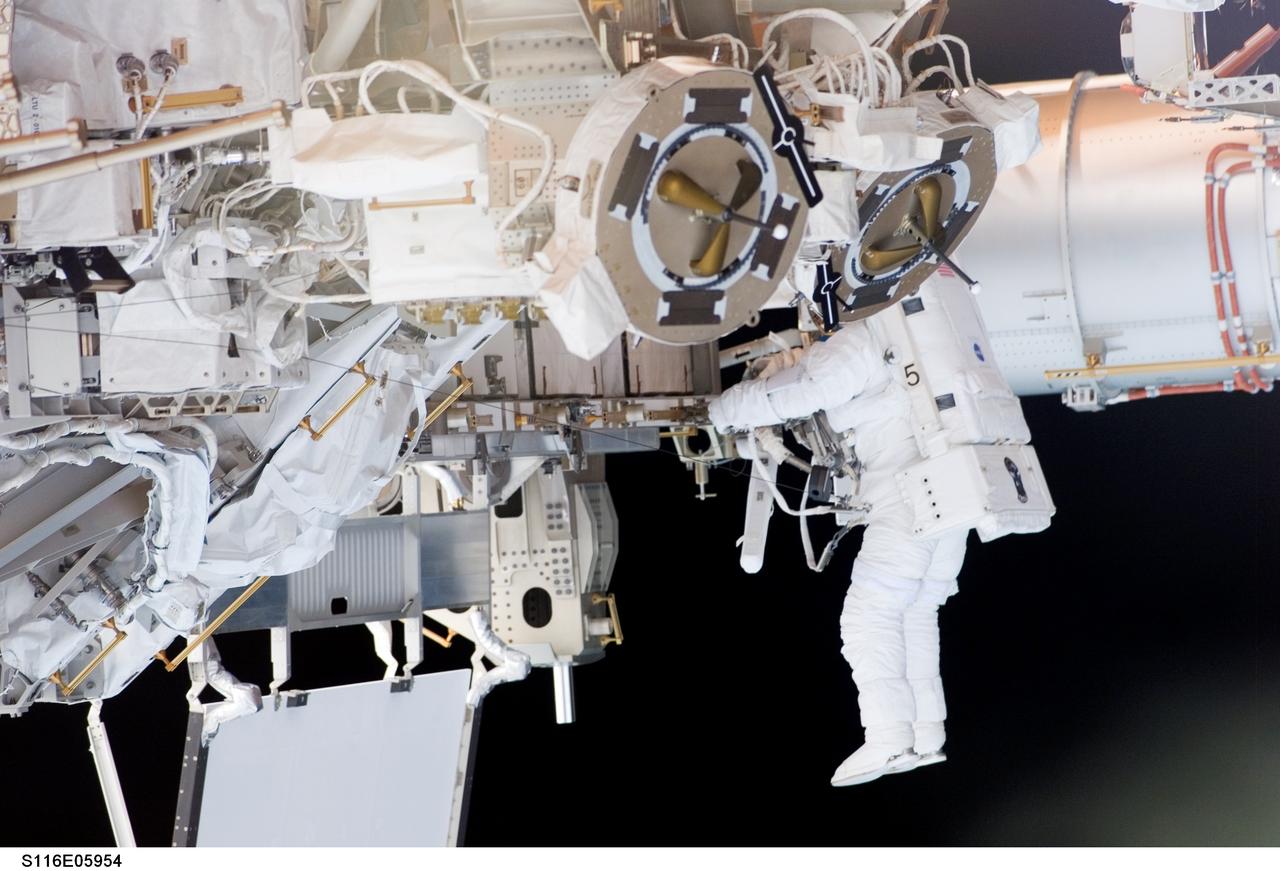
S116-E-05954 (12 Dec. 2006) --- European Space Agency (ESA) astronaut Christer Fuglesang, STS-116 mission specialist, participates in the mission's first of three planned sessions of extravehicular activity (EVA) as construction resumes on the International Space Station. Astronaut Robert L. Curbeam, Jr. (out of frame), mission specialist, also participated in the 6-hour, 36-minute spacewalk.
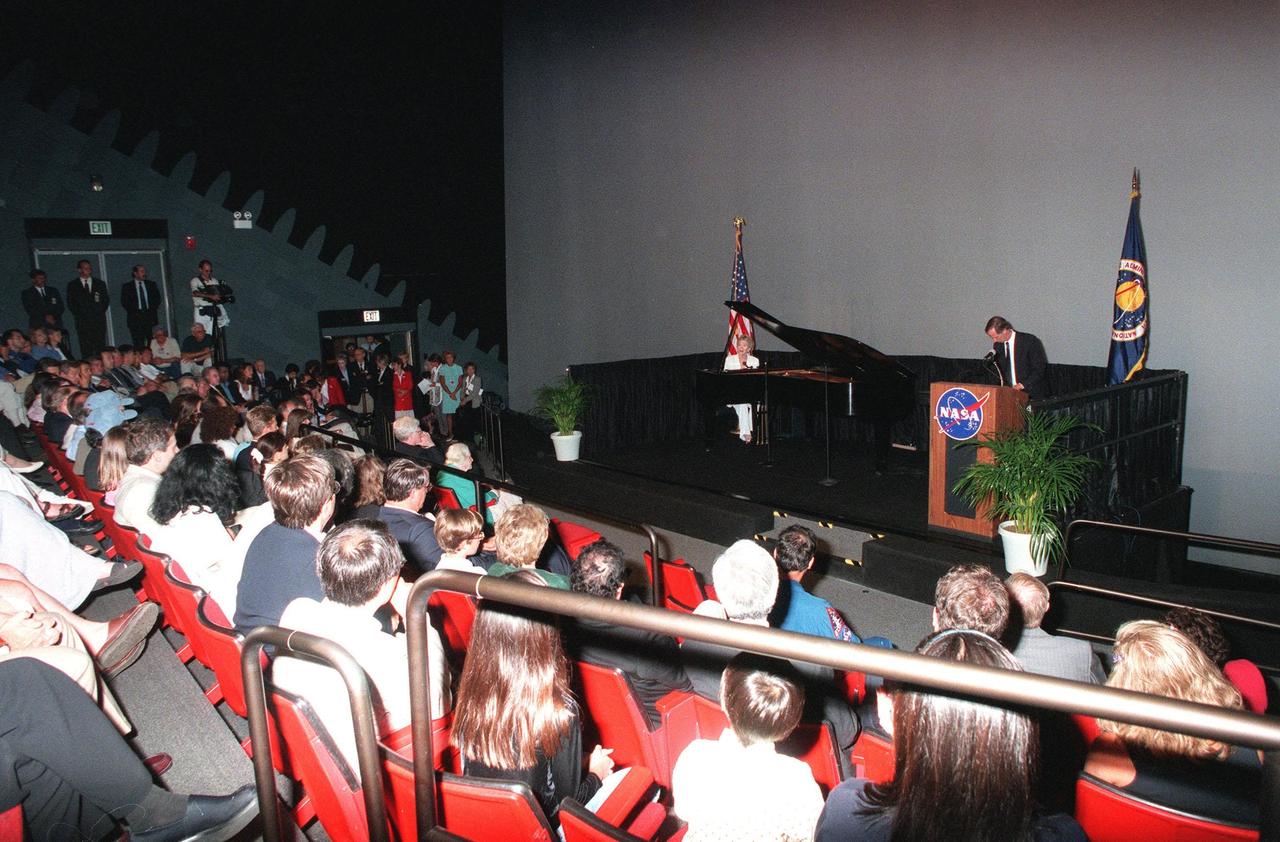
At the piano, singer-songwriter Judy Collins performs her original song, "Beyond the Sky," at the KSC Visitor Complex's Imax Theater for an audience waiting for the launch of STS-93. The song, commissioned by NASA through the Nasa Art Program, honored Eileen Collins, the first woman to command a Space Shuttle. The attendees are planning to view the launch at the Banana Creek viewing sight. Liftoff is scheduled for July 20 at 12:36 a.m. EDT
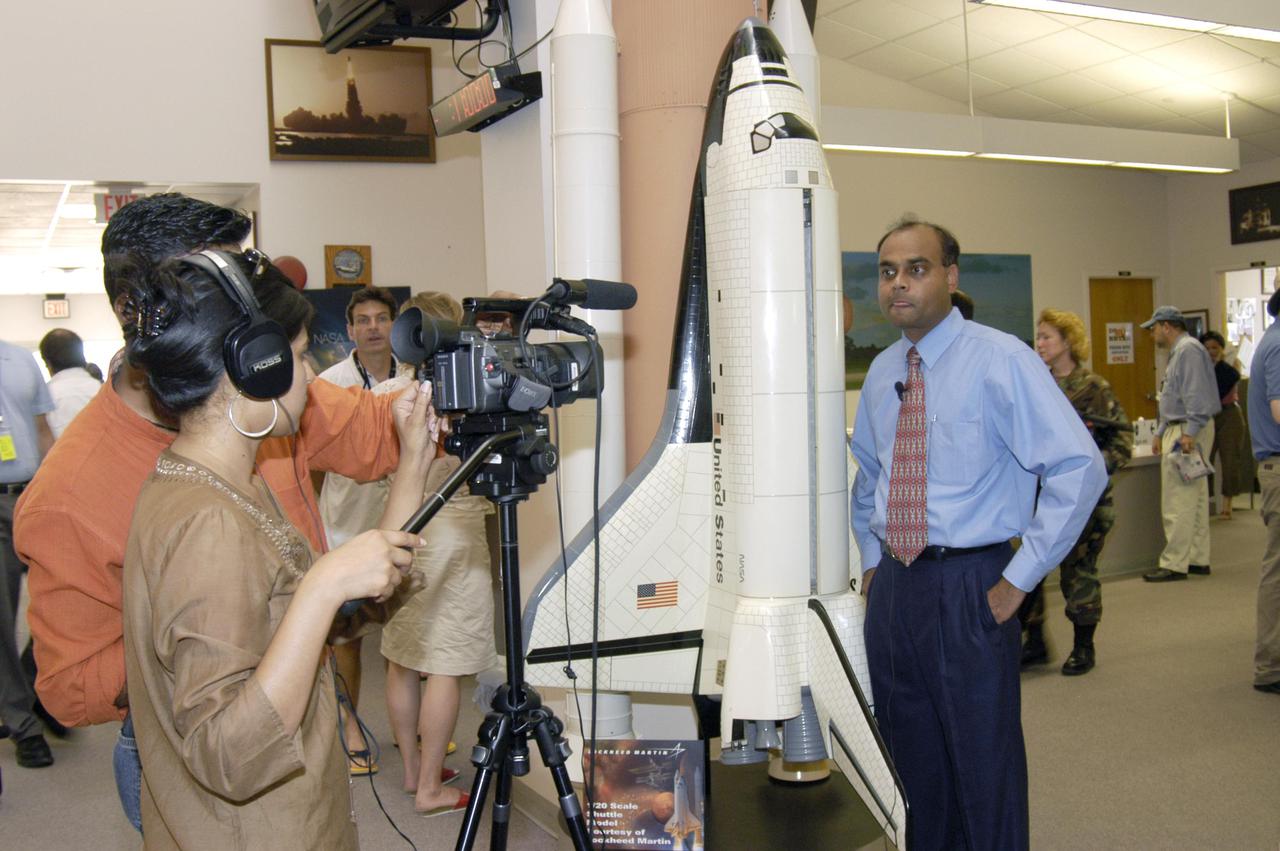
KENNEDY SPACE CENTER, FLA. - The model of the Space Shuttle is a popular backdrop for interviews in the NASA News Center at NASA Kennedy Space Center during launch activities for Return to Flight mission STS-114. More than a thousand media representatives from 36 states, the District of Columbia and 32 countries converged on the News Center for the historic launch.
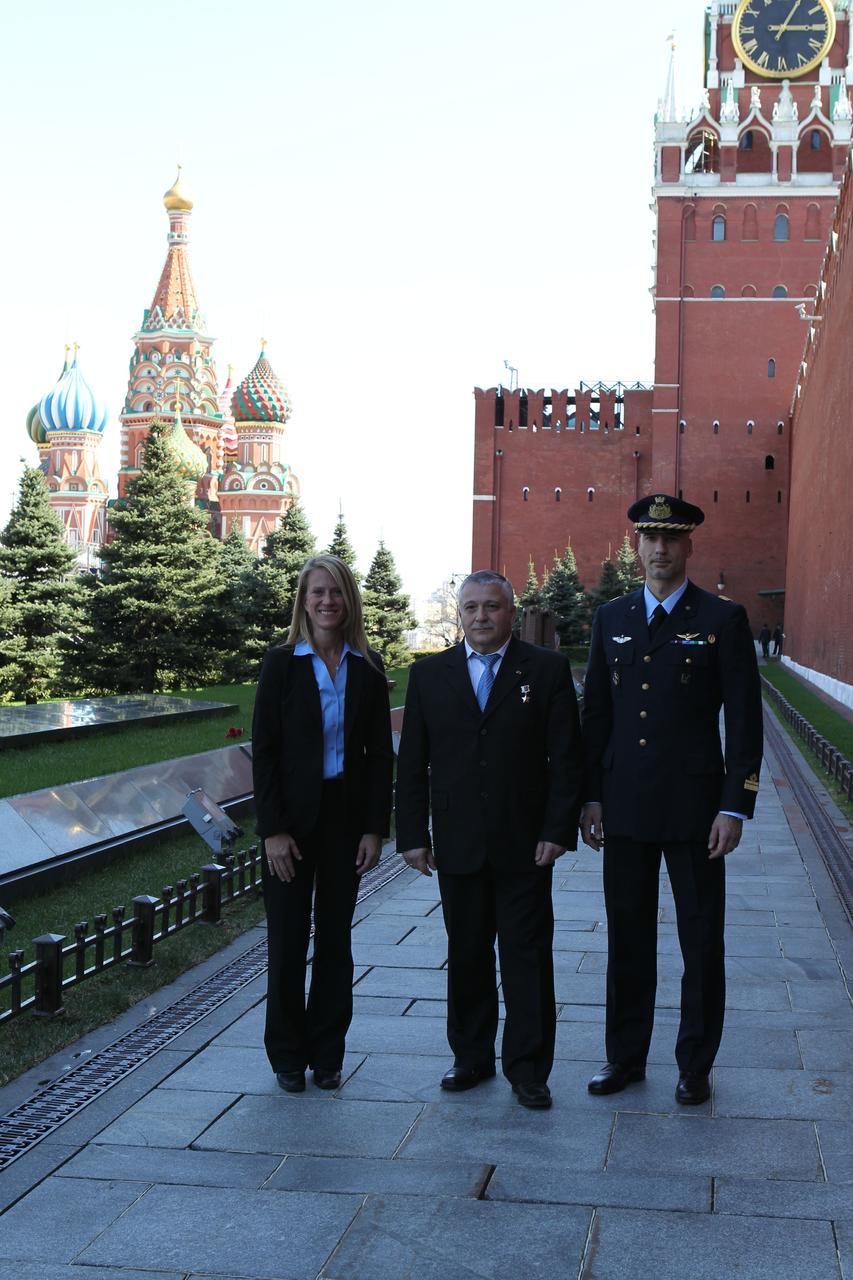
With St. Basil’s Cathedral serving as a backdrop, Expedition 36/37 Flight Engineer Karen Nyberg of NASA (left), Soyuz Commander Fyodor Yurchikhin (center) and Flight Engineer Luca Parmitano of the European Space Agency (right) pose for pictures during a traditional tour of Red Square in Moscow May 8. The three crewmembers are preparing for their launch May 29, Kazakh time, in their Soyuz TMA-09M spacecraft from the Baikonur Cosmodrome in Kazakhstan for a six-month mission on the International Space Station. NASA/Stephanie Stoll
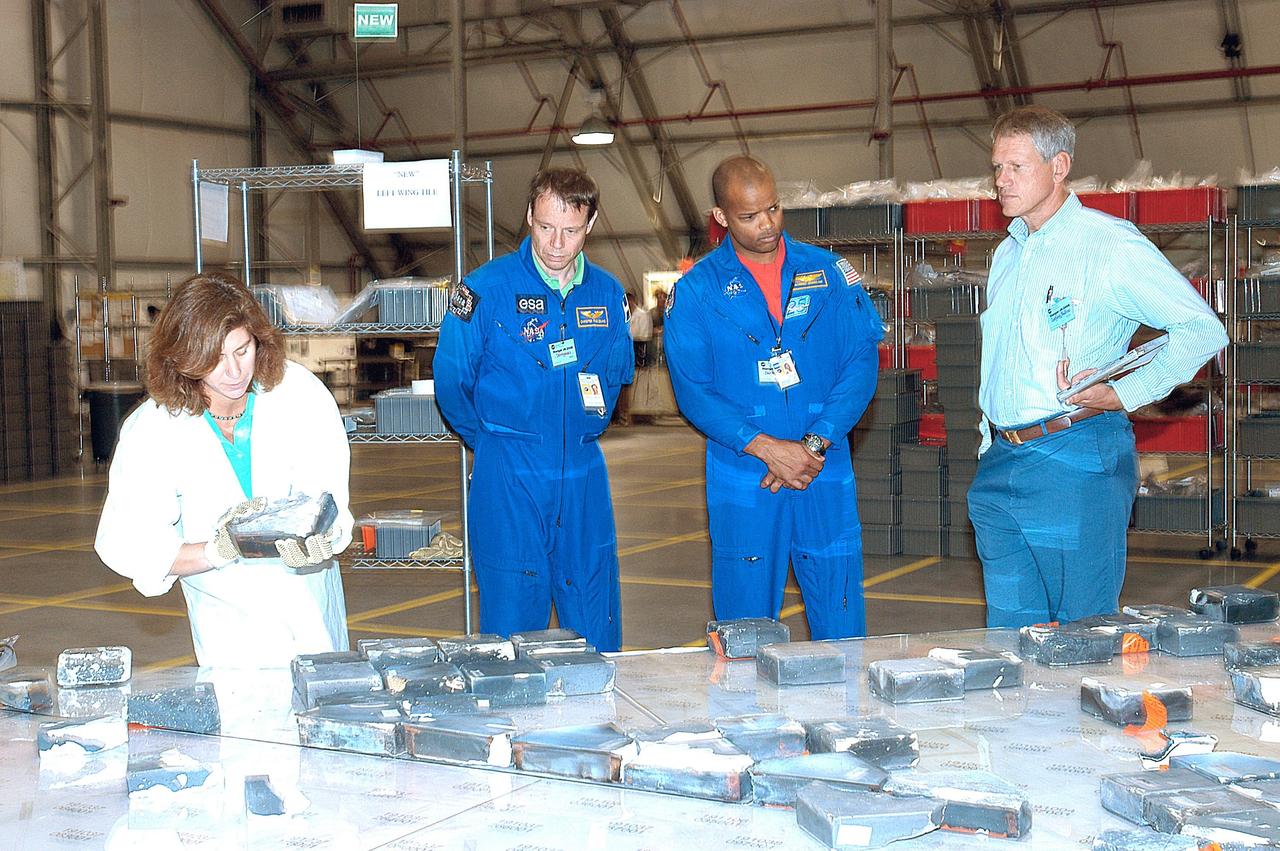
KENNEDY SPACE CENTER, FLA. -- In the RLV Hangar, two members of the STS-116 crew look at pieces of tile from Columbia. Center left is Mission Specialist Christer Fuglesang, with the European Space Agency, and center right is Mission Specialist Robert Curbeam. The Columbia Reconstruction Project Team is examining and identifying pieces as they are delivered to the hangar. More than 70,000 items, weighing 78,000 pounds, about 36 percent of the Shuttle by weight, have been delivered to KSC for use in the mishap investigation.
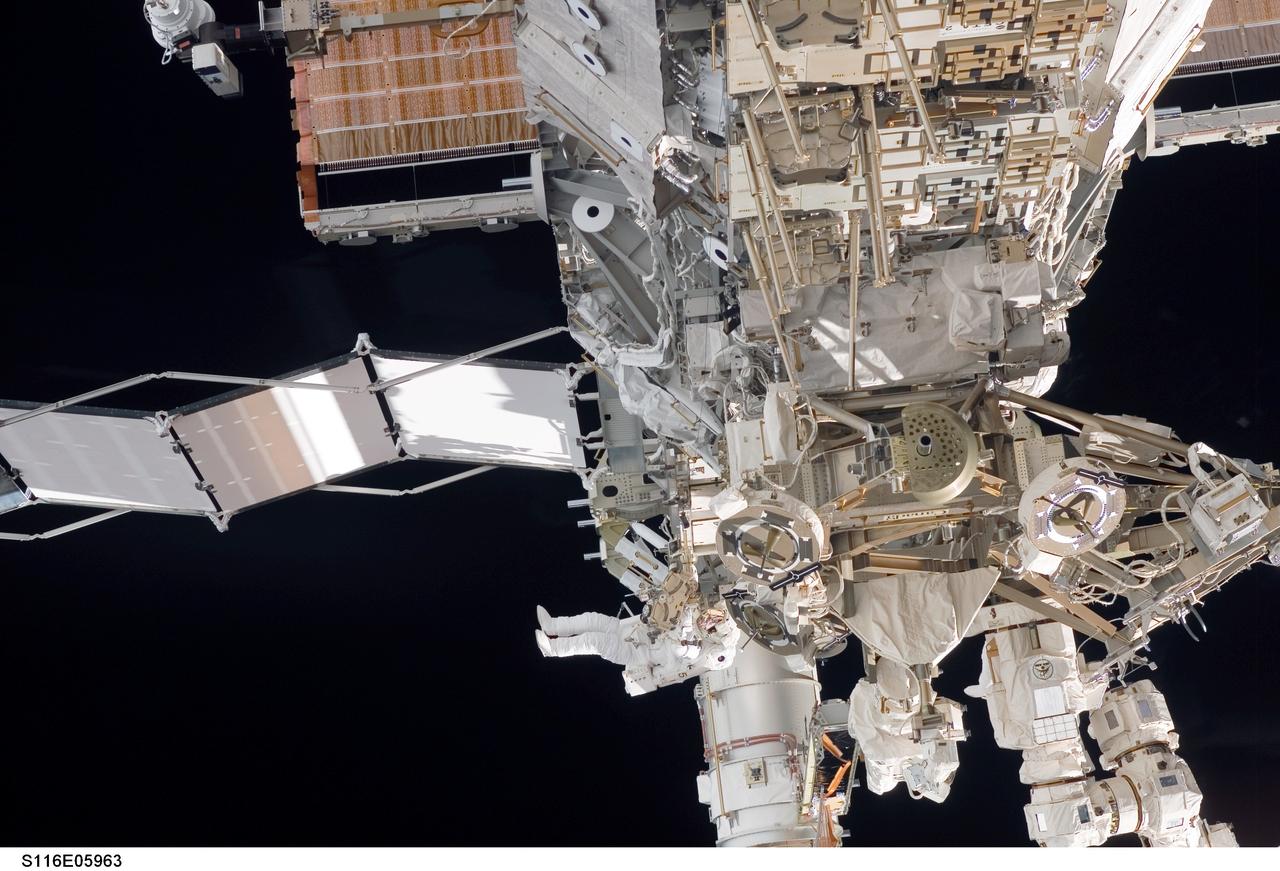
S116-E-05963 (12 Dec. 2006) --- European Space Agency (ESA) astronaut Christer Fuglesang, STS-116 mission specialist, participates in the mission's first of three planned sessions of extravehicular activity (EVA) as construction resumes on the International Space Station. Astronaut Robert L. Curbeam, Jr. (out of frame), mission specialist, also participated in the 6-hour, 36-minute spacewalk.
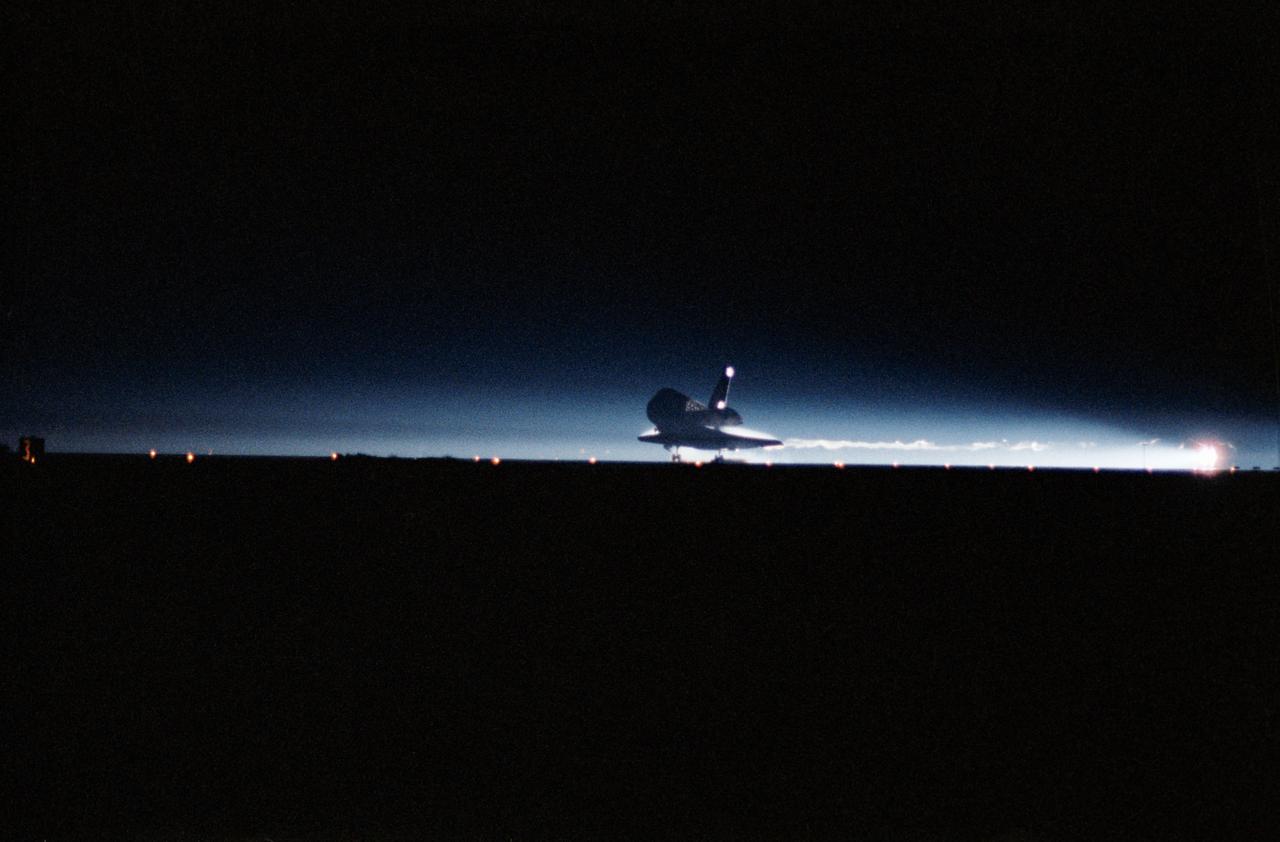
STS-32 Columbia, Orbiter Vehicle (OV) 102, is captured as its main landing gear (MLG) touches down on runway 22 at Edwards Air Force Base (EAFB), California, in the early morning darkness. The night landing ended a record 11-day mission in space. Moments later, at 1:36:38 am Pacific Standard Time (PST), OV-102 came to a complete stop, having logged 4,509,972 miles in flight.
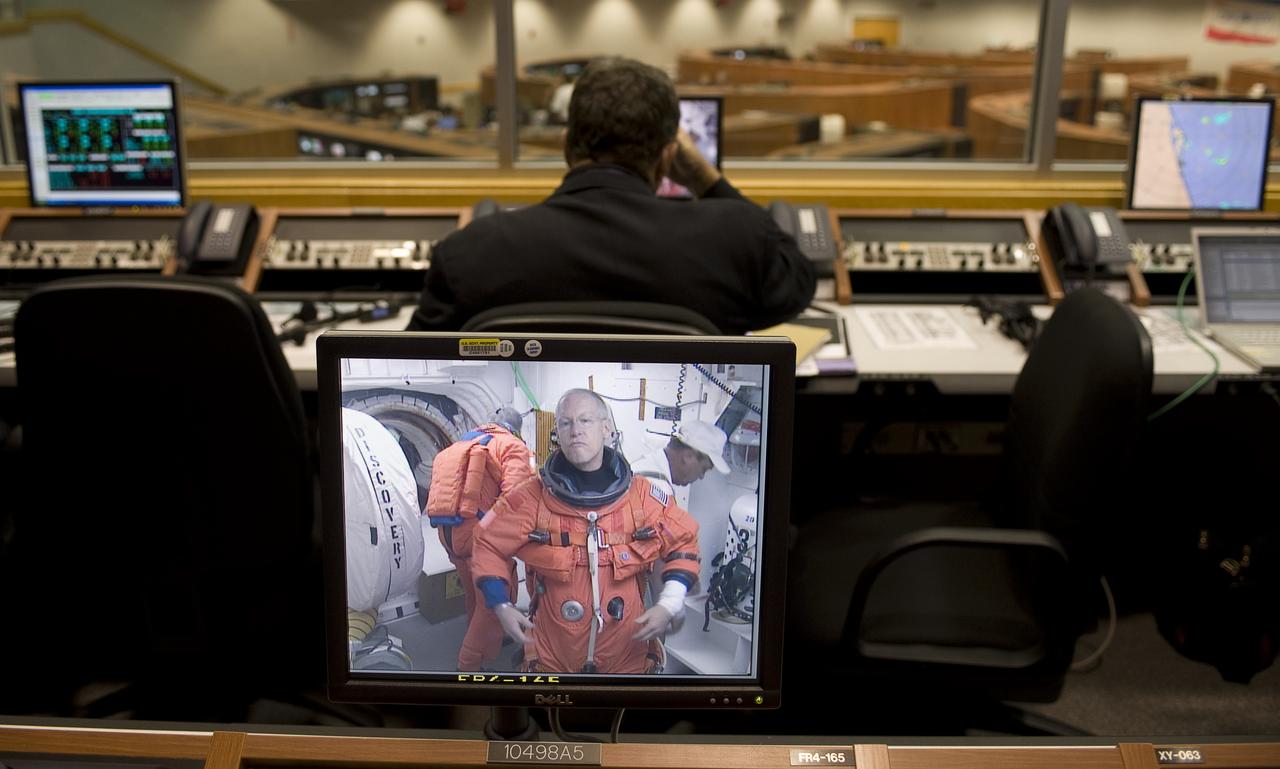
NASA Astronaut Patrick Forrester is seen preparing to board the space shuttle Discovery at pad 39a on a monitor in Firing Room Four of the Kennedy Space Center at Cape Canaveral, Fla., Monday, Aug. 24, 2009. Discovery is scheduled to launch Tuesday, Aug., 25, 2009 at 1:36 a.m. EDT and will carry the Leonardo supply module to the International Space Station during STS-128, along with a new crew member for the station, Nicole Stott. Photo Credit: (NASA/Bill Ingalls)
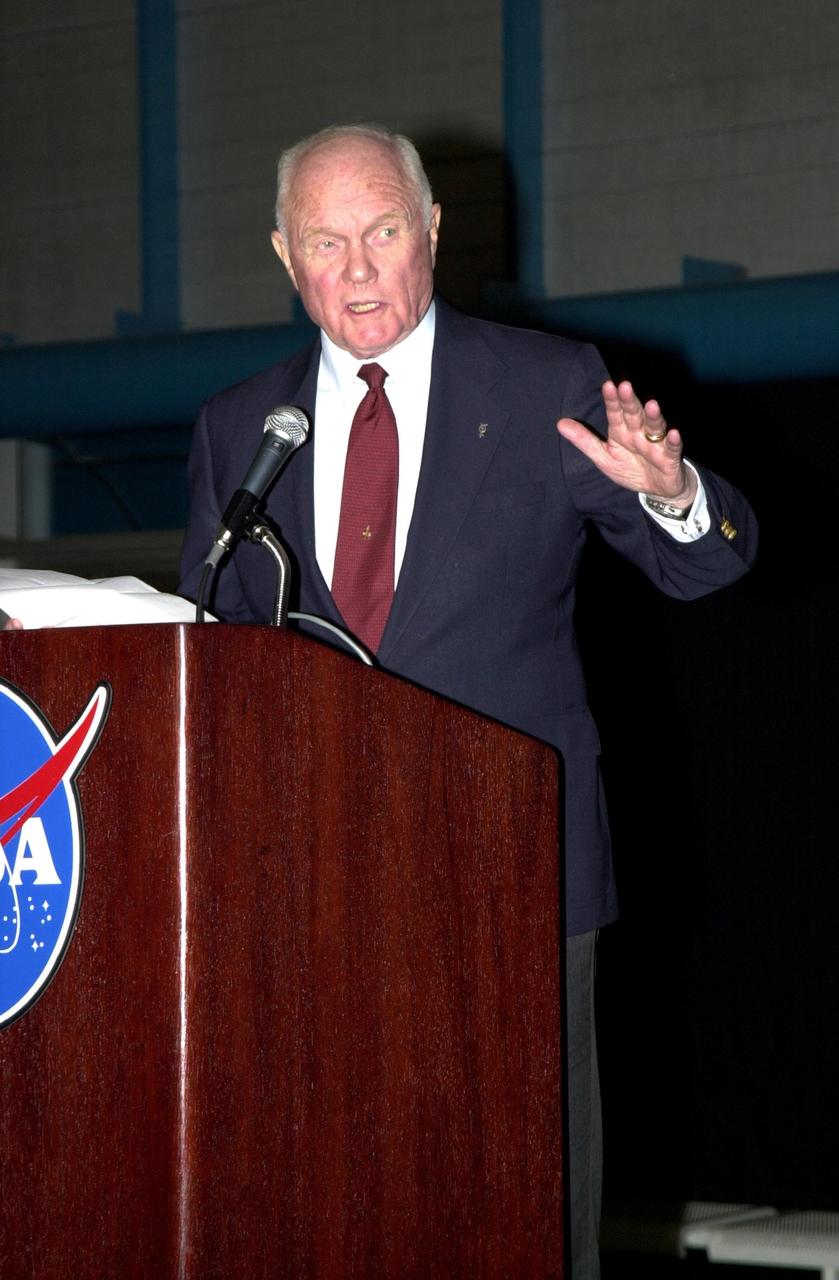
KENNEDY SPACE CENTER, FLA. - John Glenn Jr. speaks to the audience at KSC's Apollo/Saturn V Center during the dinner celebration of the 40th anniversary of American spaceflight. Glenn was the first American to orbit the Earth, aboard the Friendship 7 spacecraft. That journey lasted nearly five hours. In 1998, 36 years later, Glenn flew on Space Shuttle Discovery on mission STS-95, orbiting the Earth for 218 hours
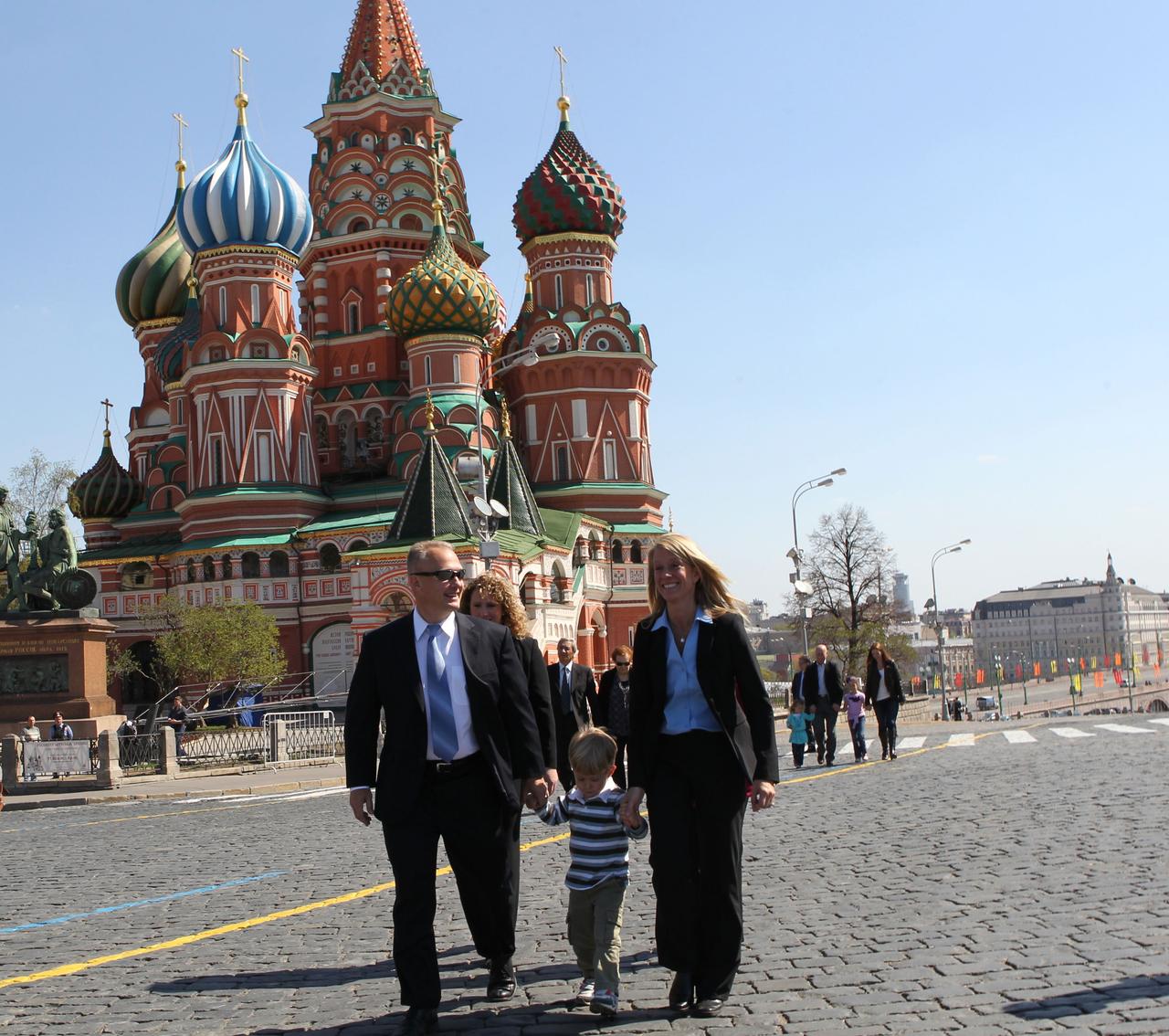
Expedition 36/37 Flight Engineer Karen Nyberg (right) takes a stroll through Red Square in Moscow in front of St. Basil’s Cathedral May 8 with her husband, astronaut Doug Hurley (left) and their son, Soyuz Commander Fyodor Yurchikhin and Flight Engineer Luca Parmitano of the European Space Agency are preparing for their launch May 29, Kazakh time, in their Soyuz TMA-09M spacecraft from the Baikonur Cosmodrome in Kazakhstan for a six-month mission on the International Space Station. NASA/Stephanie Stoll

ISS015-E-11759 (10 June 2007) --- Backdropped by a blue and white Earth, the Space Shuttle Atlantis approaches the International Space Station during STS-117 rendezvous and docking operations. Docking occurred at 2:36 p.m. (CDT) on June 10, 2007. A pair of solar arrays and starboard truss segments (S3/S4), which are later to be attached to the station and outfitted during three spacewalks, can be seen in Atlantis' cargo bay. A docked Soyuz spacecraft is visible at top center.
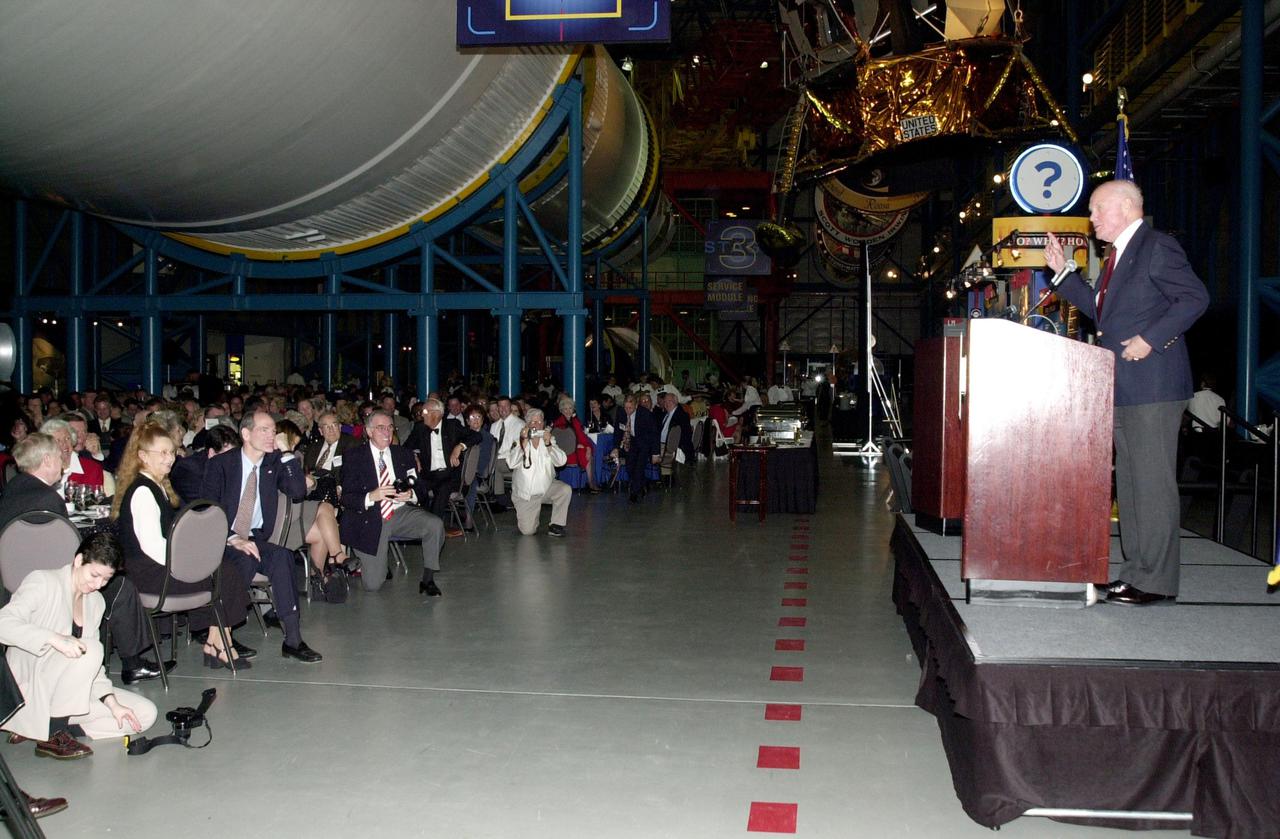
KENNEDY SPACE CENTER, FLA. - In the Apollo_Saturn V Center at KSC, guests enjoy the comments of John Glenn Jr. during the dinner celebration of the 40th anniversary of American spaceflight. In the background is the Saturn V rocket. Glenn was the first American to orbit the Earth, aboard the Friendship 7 spacecraft. That journey lasted nearly five hours. In 1998, 36 years later, Glenn flew on Space Shuttle Discovery on mission STS-95, orbiting the Earth for 218 hours
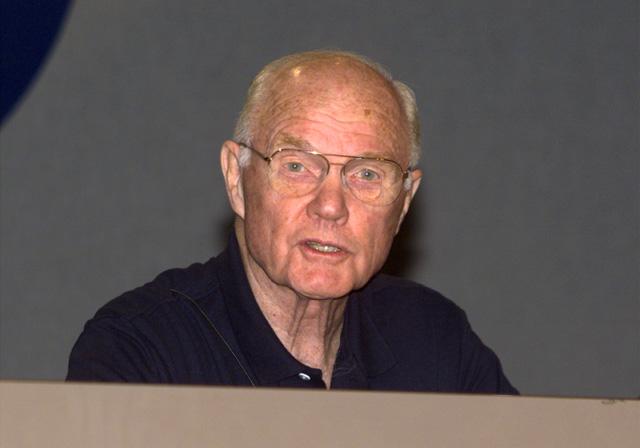
98-E-01303 (20 Feb. 1998) --- U.S. Sen. John H. Glenn Jr. (D., Ohio) fields a question during a press conference held to announce the crew members for STS-95 mission of the Space Shuttle Discovery. Glenn will fly as a payload specialist on the mission. The press conference was held on Feb. 20, 1998, 36 years after Glenn's historic Earth-orbital, MA-6 spaceflight.
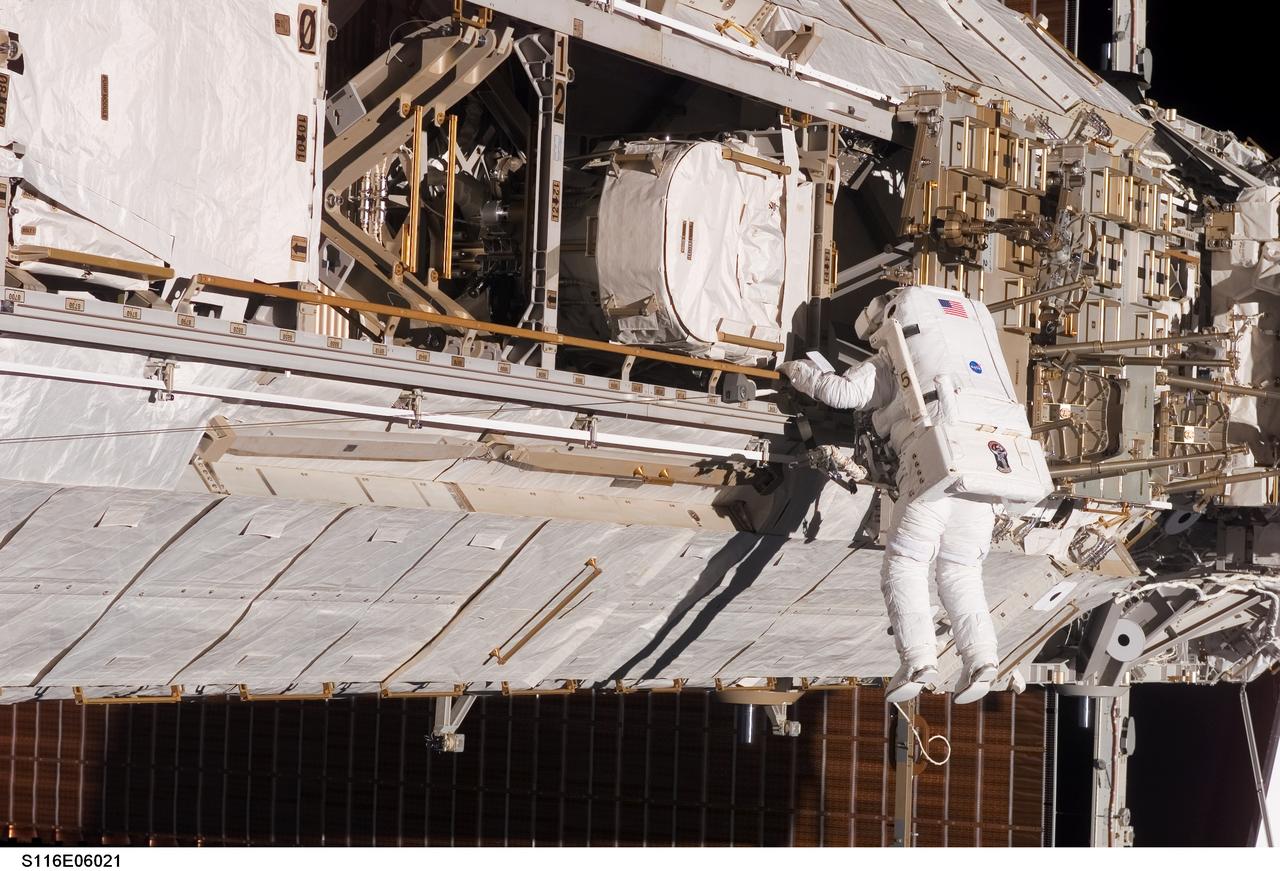
S116-E-06021 (12 Dec. 2006) --- European Space Agency (ESA) astronaut Christer Fuglesang, STS-116 mission specialist, participates in the mission's first of three planned sessions of extravehicular activity (EVA) as construction resumes on the International Space Station. Astronaut Robert L. Curbeam, Jr. (out of frame), mission specialist, also participated in the 6-hour, 36-minute spacewalk.
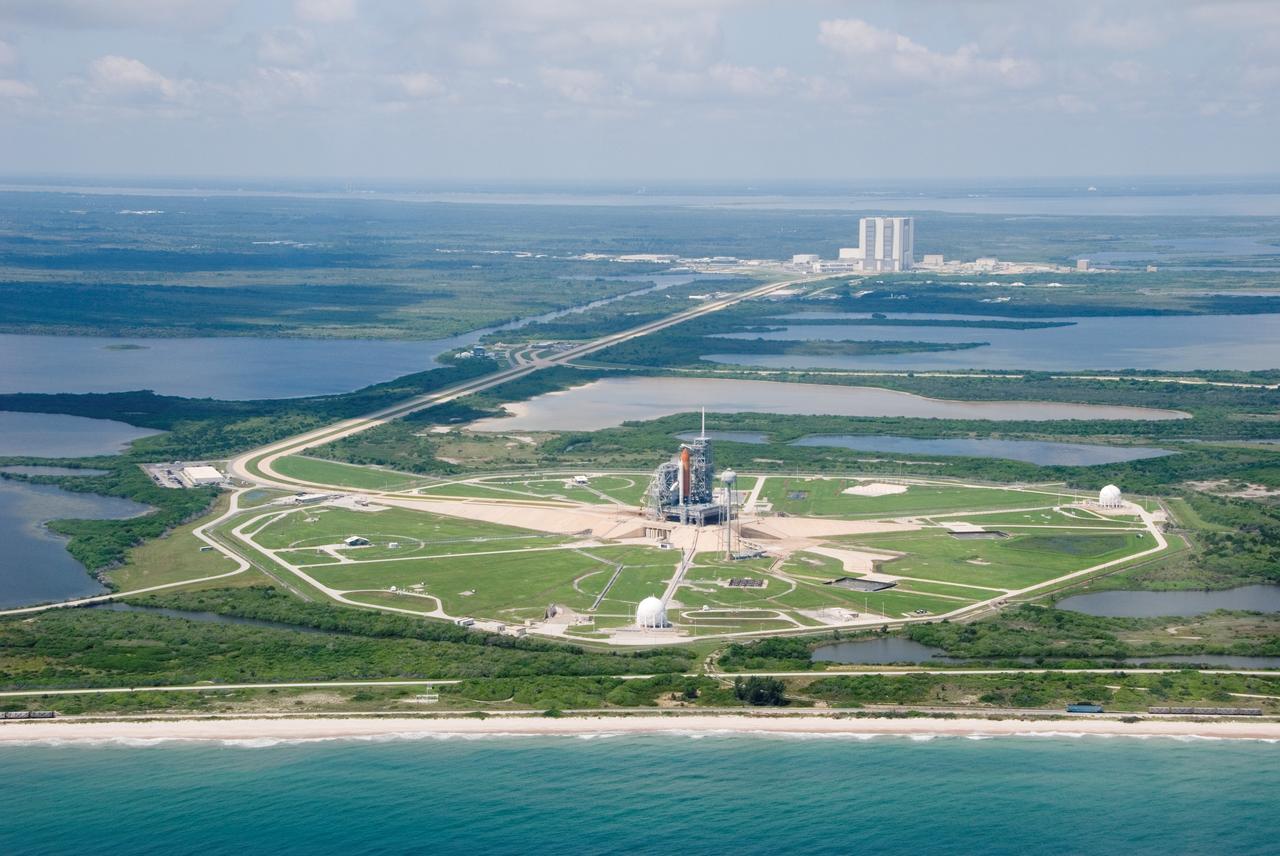
JSC2007-E-40800 (5 Aug. 2007) --- An aerial view of part of the Kennedy Space Center's giant complex featuring the Space Shuttle Endeavour and its support stack of hardware on launch pad 39A, the Vehicle Assembly Building (VAB) and surrounding area. Endeavour's launch is scheduled for Aug. 8, 2007 at 6:36 p.m. (EDT) to begin the STS-118 mission. This image was photographed from a NASA T-38 aircraft.
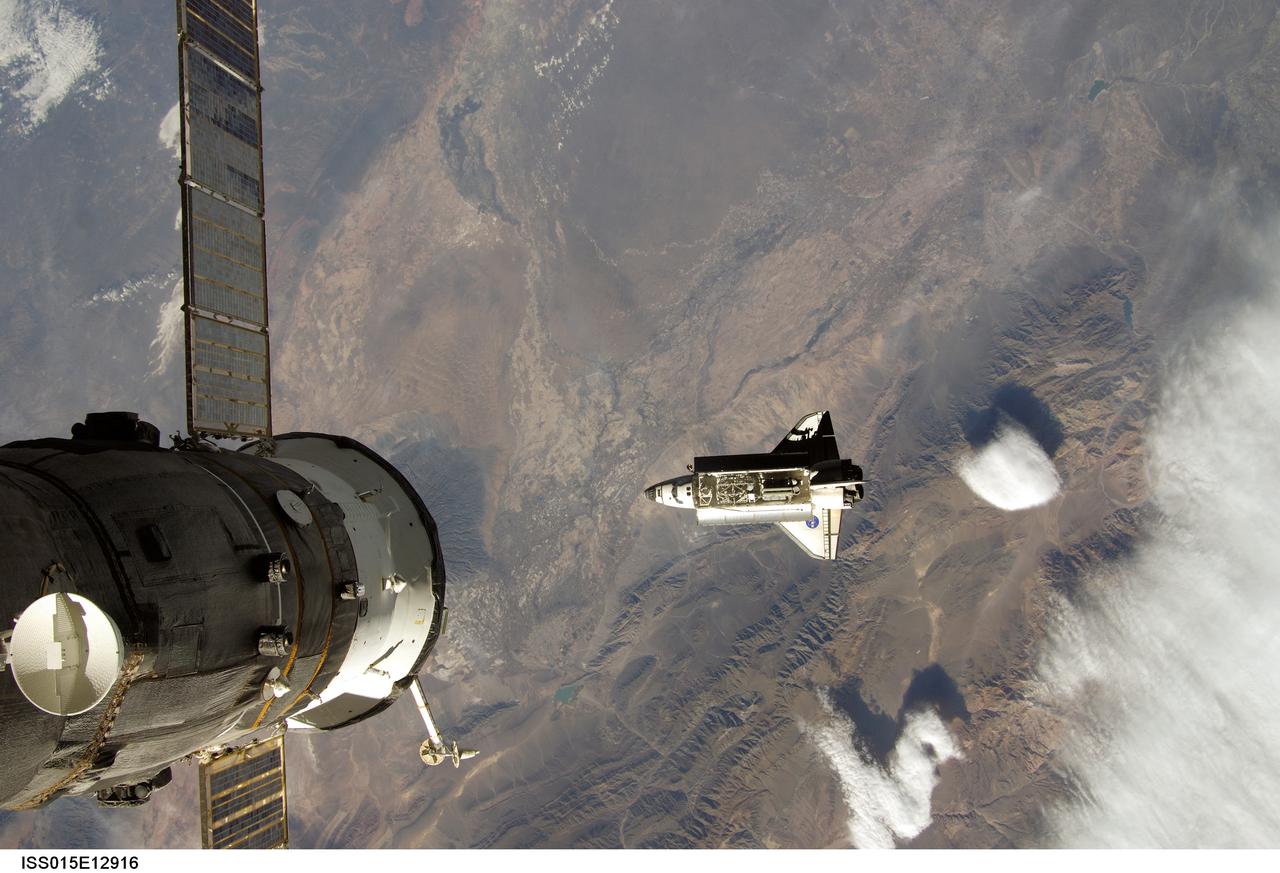
ISS015-E-12916 (10 June 2007) --- Backdropped by rugged Earth terrain, the Space Shuttle Atlantis approaches the International Space Station during STS-117 rendezvous and docking operations. Docking occurred at 2:36 p.m. (CDT) on June 10, 2007. A pair of solar arrays and starboard truss segments (S3/S4), which are later to be attached to the station and outfitted during three spacewalks, can be seen in Atlantis' cargo bay. A docked Soyuz spacecraft is visible at right.
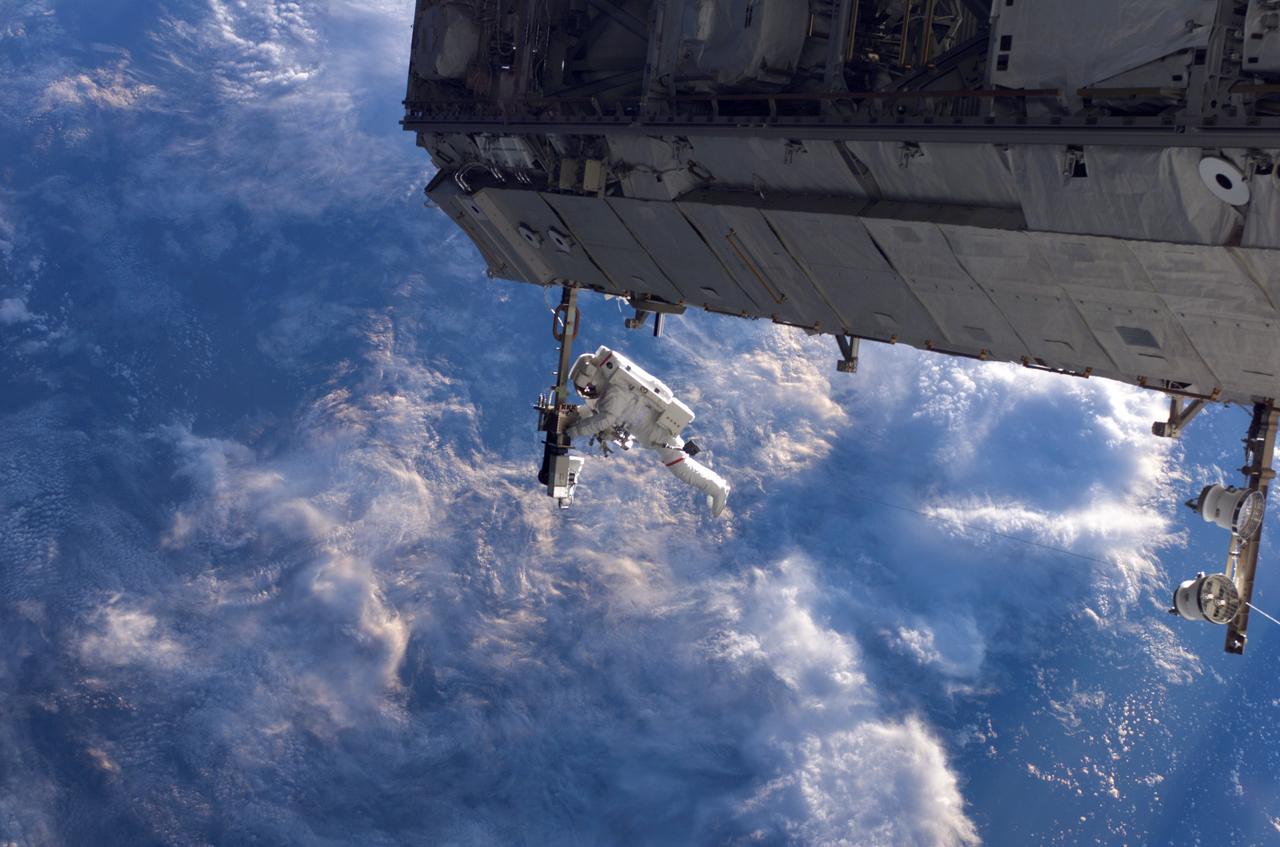
S116-E-05968 (12 Dec. 2006) --- Astronaut Robert L. Curbeam, Jr., STS-116 mission specialist, participates in the mission's first of three planned sessions of extravehicular activity (EVA) as construction resumes on the International Space Station. European Space Agency (ESA) astronaut Christer Fuglesang (out of frame), mission specialist, also participated in the 6-hour, 36-minute spacewalk.
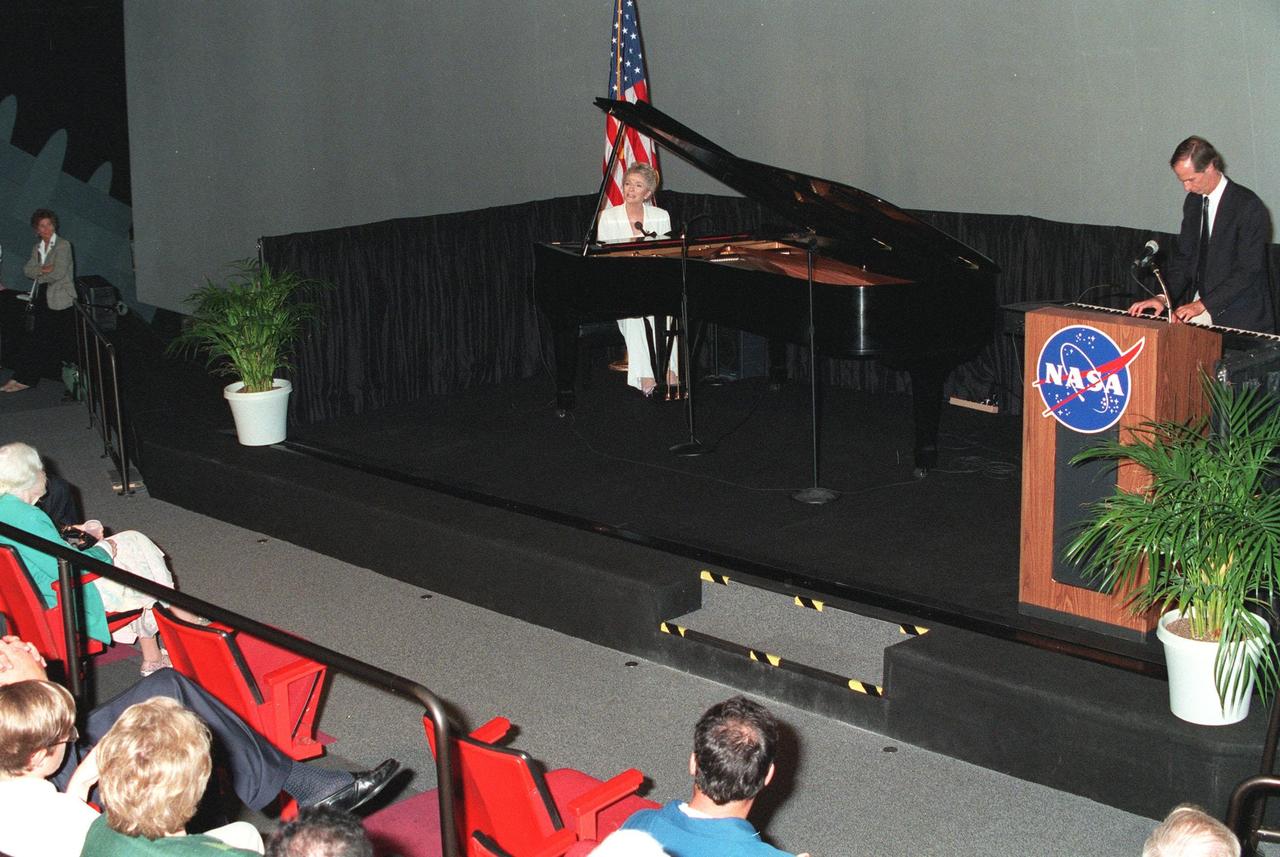
At the piano, singer-songwriter Judy Collins performs her original song, "Beyond the Sky," at the KSC Visitor Complex's Imax Theater for an audience waiting for the launch of STS-93. The song, commissioned by NASA through the Nasa Art Program, honored Eileen Collins, the first woman to command a Space Shuttle. The attendees are planning to view the launch at the Banana Creek viewing sight. Liftoff is scheduled for July 20 at 12:36 a.m. EDT
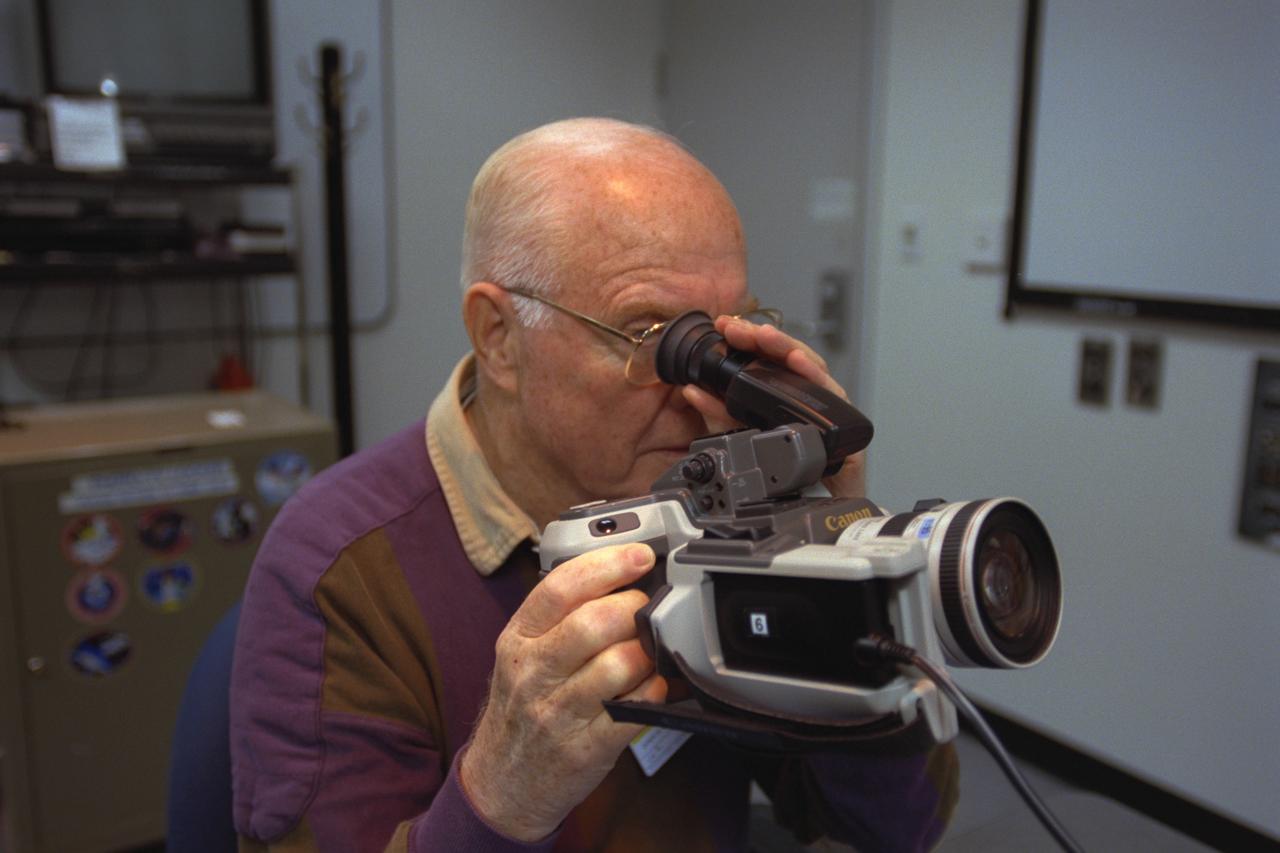
S98-08733 (9 April 1998) --- Looking through the view finder on a camera, U.S. Sen. John H. Glenn Jr. (D.-Ohio) gets a refresher course in photography from a JSC crew trainer (out of frame, right). The STS-95 payload specialist carried a 35mm camera on his historic MA-6 flight over 36 years ago. The photo was taken by Joe McNally, National Geographic, for NASA.
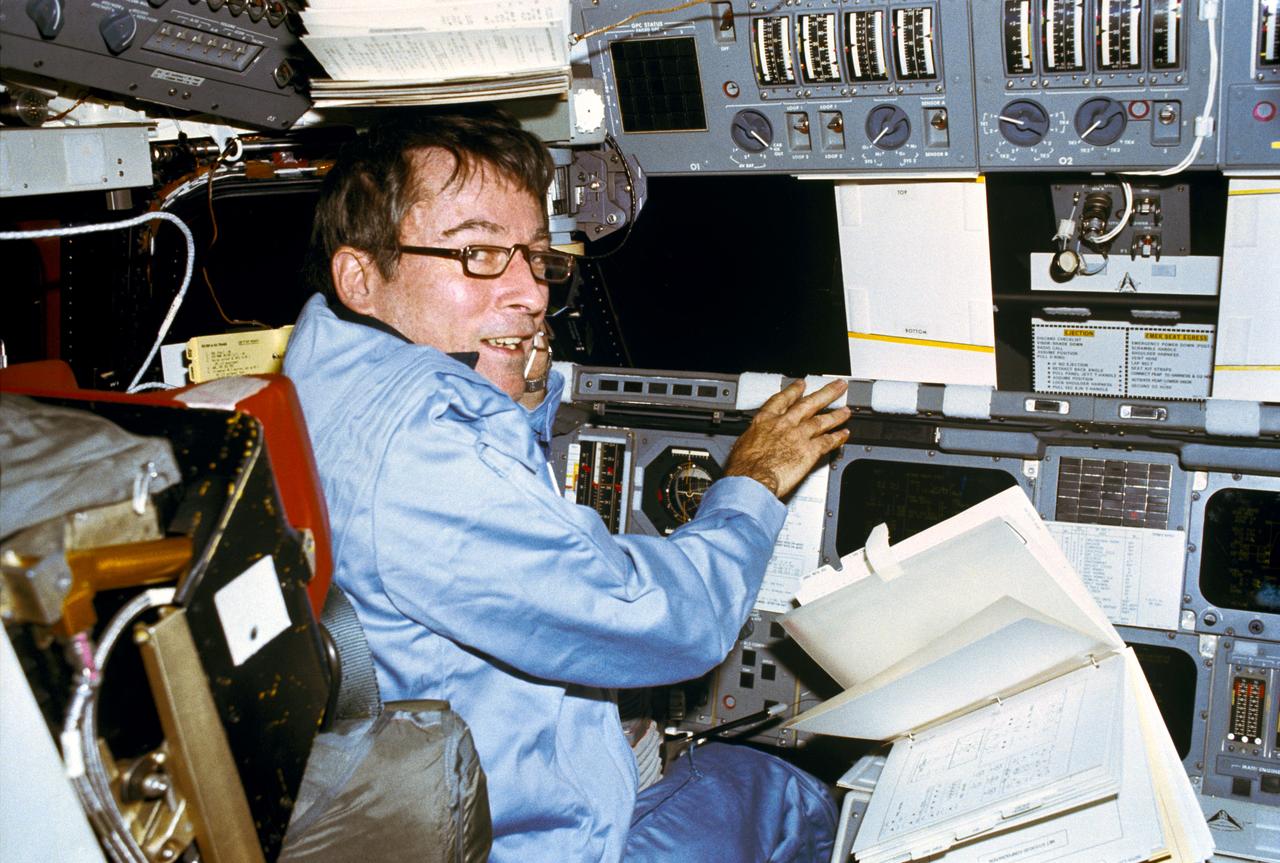
S81-30419 (12-14 April 1981) --- Astronaut John W. Young, mans the commander?s station in the Columbia during the 36-orbit STS-1 flight. A loose leaf notebook with flight activities data floats in the weightless environment. Young is wearing a three-piece constant wear flight suit. This 35mm frame was exposed by astronaut Robert L. Crippen. Photo credit: NASA
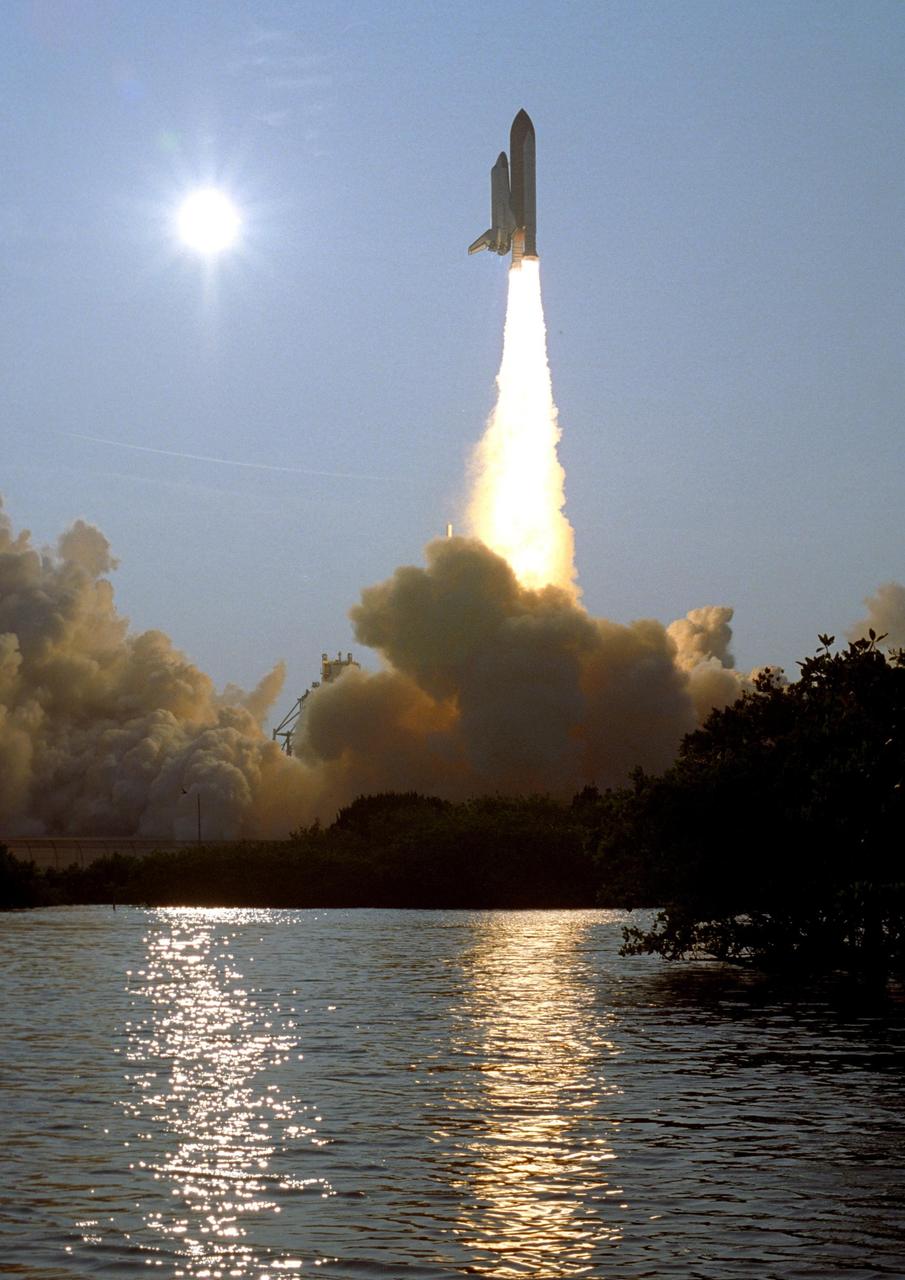
KENNEDY SPACE CENTER, FLA. -- The water near Launch Pad 39A captures the brilliance of both the setting sun, at left, and Space Shuttle Endeavour as it hurtles into space on mission STS-118. The 22nd shuttle flight to the International Space Station, the mission will continue space station construction by delivering a third starboard truss segment, S5, and other payloads such as the SPACEHAB module and the external stowage platform 3. Liftoff of Endeavour was on time at 6:36 p.m. EDT. Photo credit: NASA/Sandra Joseph, Tony Gray, Robert Murray
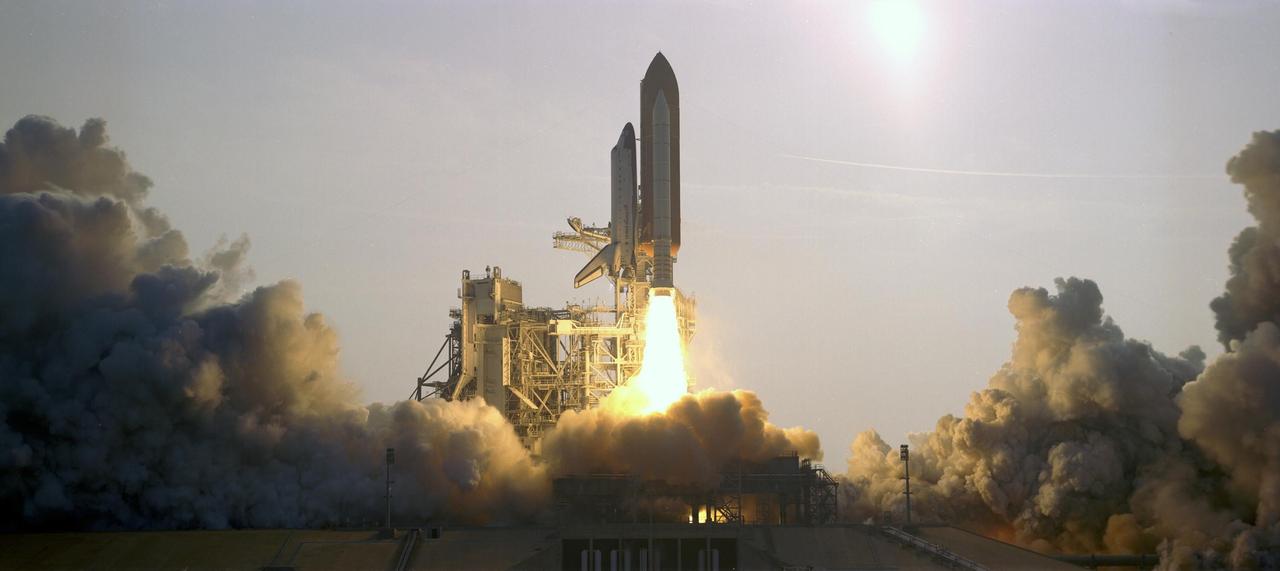
KENNEDY SPACE CENTER, FLA. -- Space Shuttle Endeavour climbs past the fixed service structure on Launch Pad 39A as it begins its journey on mission STS-118. Liftoff from Launch Pad 39A was on time at 6:36 p.m. EDT. The 22nd shuttle flight to the International Space Station, the mission will continue space station construction by delivering a third starboard truss segment, S5, and other payloads such as the SPACEHAB module and the external stowage platform 3. Photo credit: Rick Wetherington, Tim Powers, Don Kight
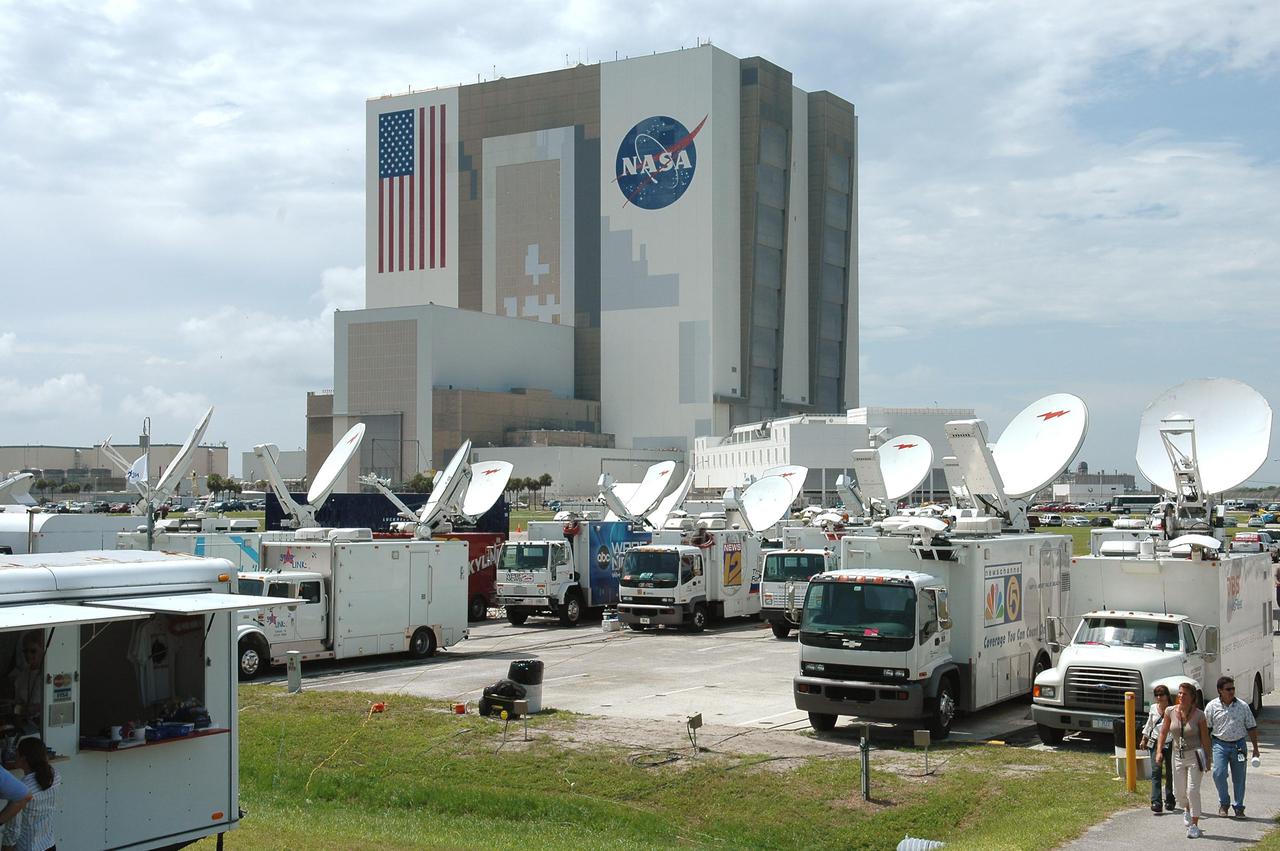
KENNEDY SPACE CENTER, FLA. - Satellite trucks are lined up in the parking lot at the NASA Kennedy Space Center News Center to cover the launch of Space Shuttle Discovery on Return to Flight mission STS-114. In the background is the Vehicle Assembly Building. More than a thousand media representatives from 36 states, the District of Columbia and 32 countries converged on the News Center for the historic launch.
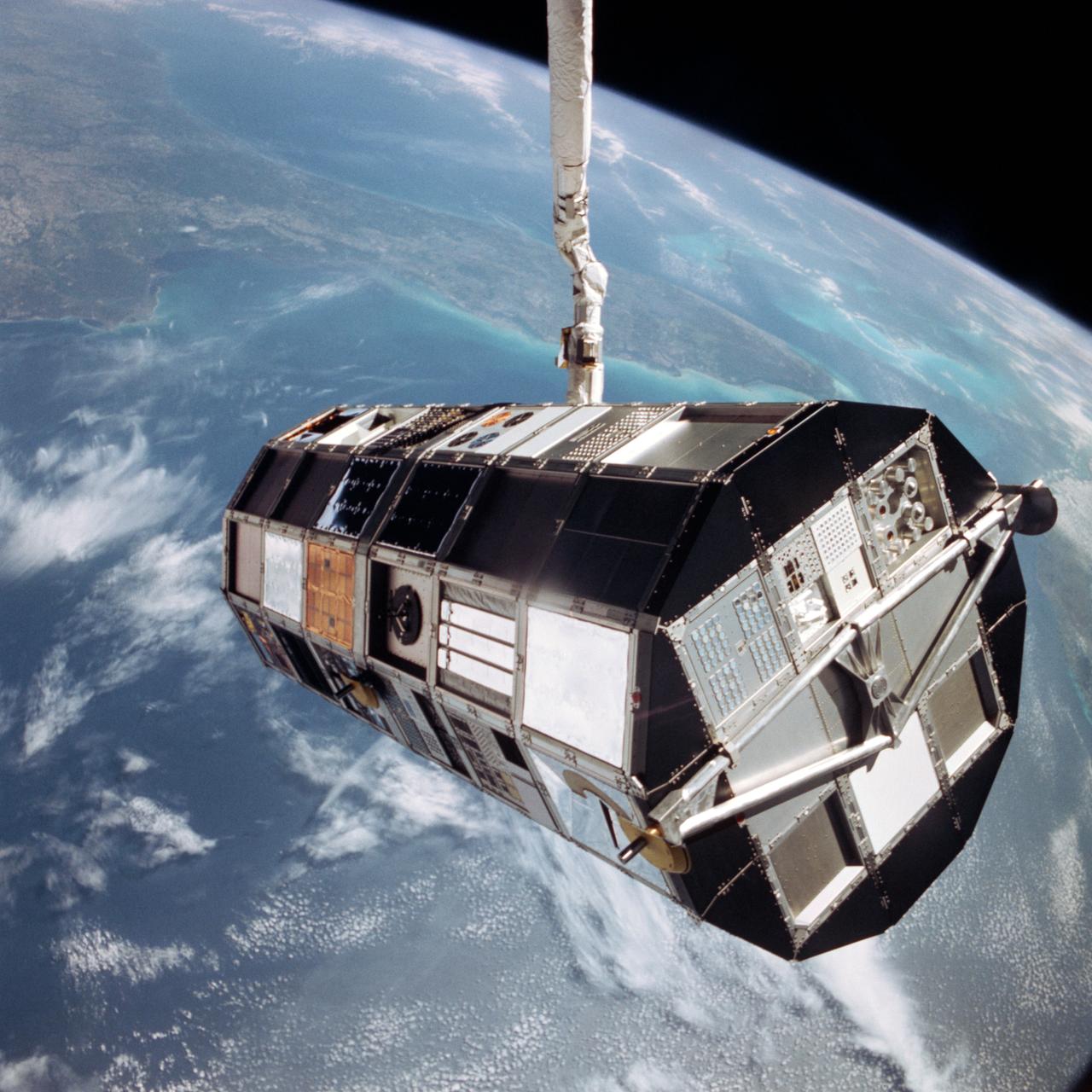
41C-36-1618 (7 April 1984) --- The Remote Manipulator System (RMS) arm suspends the giant Long Duration Exposure Facility (LDEF) high above the Gulf of Mexico prior to releasing it into space. Carried into Earth orbit with the STS-41C crew by the Space Shuttle Challenger, LDEF will remain in space until retrieved by a future Shuttle mission, in nine or ten months. Florida and the Bahama Banks are visible near the Earth's horizon in the 70mm frame.
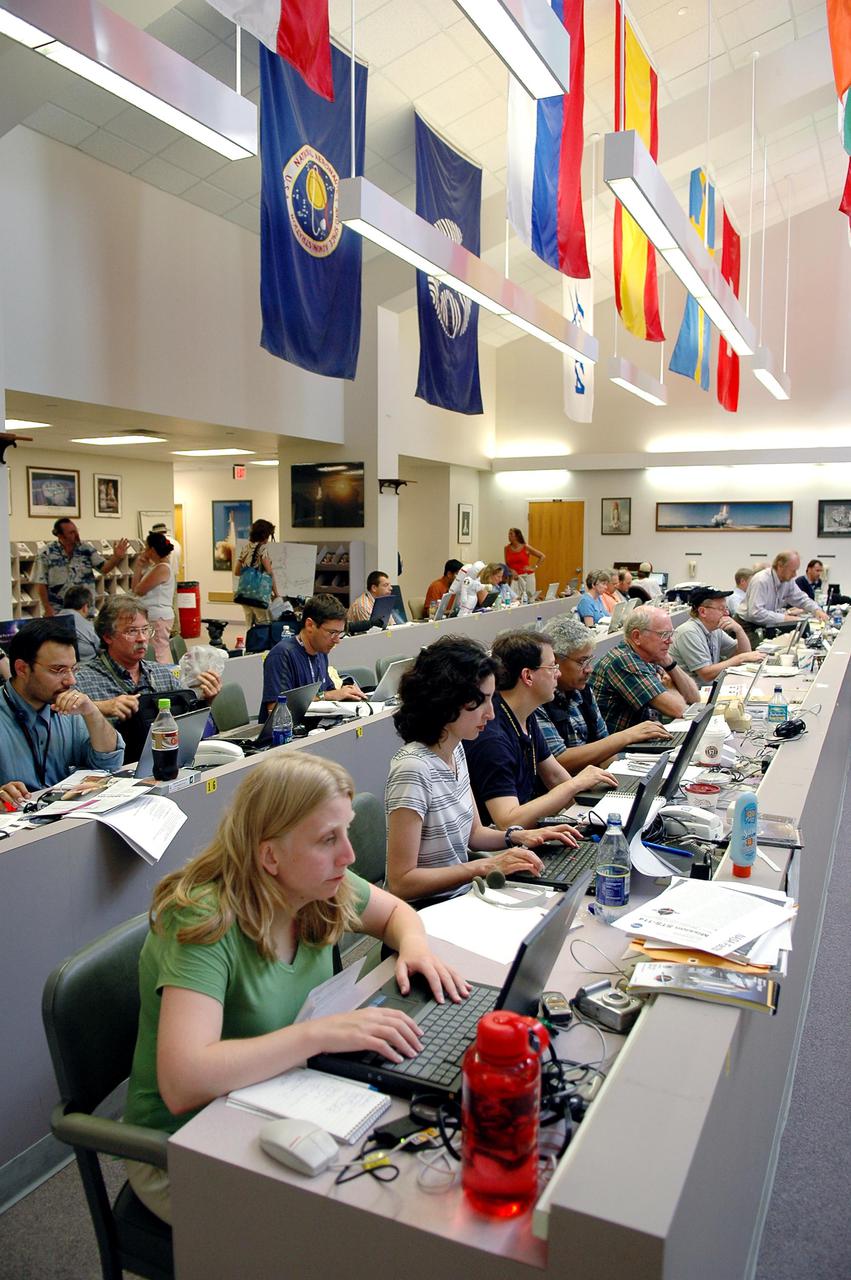
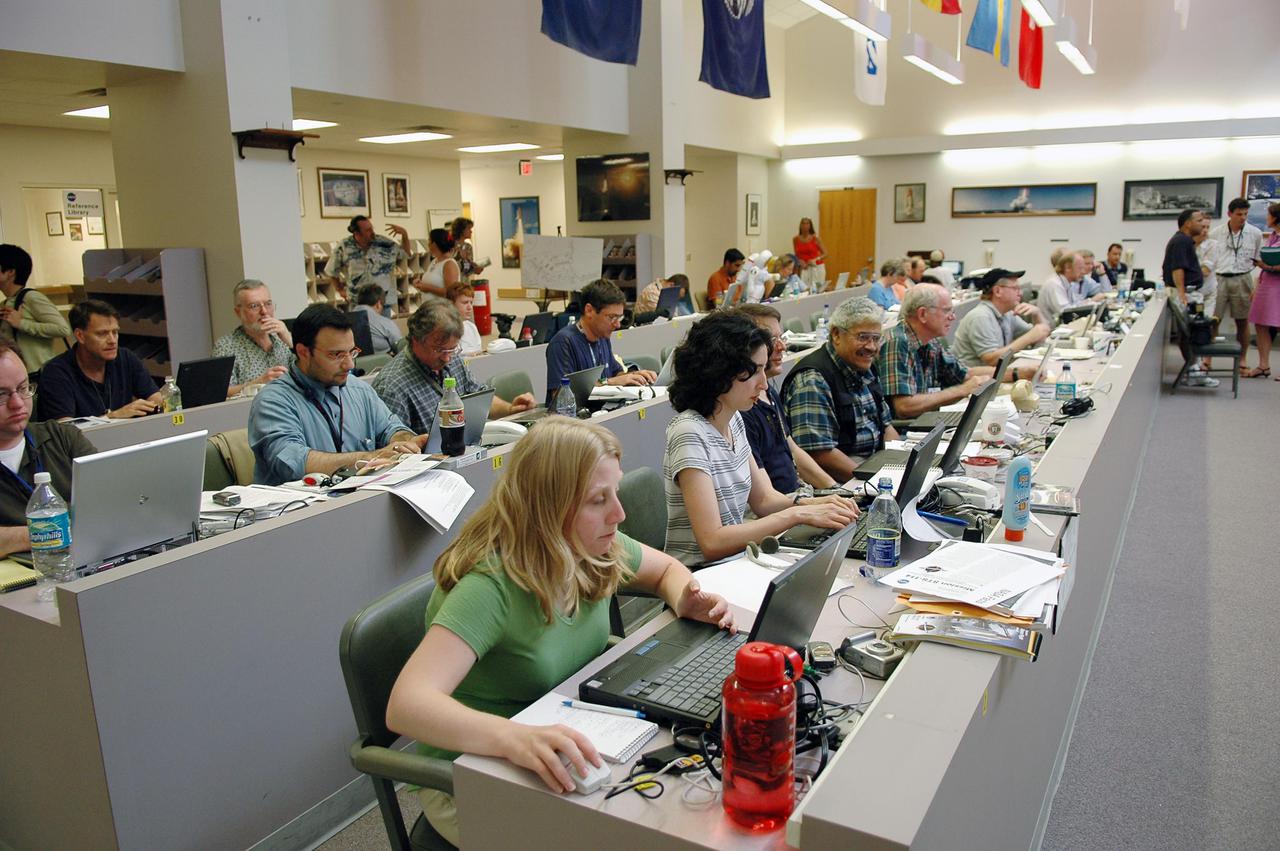
KENNEDY SPACE CENTER, FLA. - Journalists fill the work stations at the NASA News Center while others find standing room only during launch activities for Return to Flight mission STS-114. More than a thousand media representatives from 36 states, the District of Columbia and 32 countries converged on the News Center for the historic launch.
KENNEDY SPACE CENTER, FLA. - Journalists fill the work stations at the NASA News Center while others find standing room only during launch activities for Return to Flight mission STS-114. More than a thousand media representatives from 36 states, the District of Columbia and 32 countries converged on the News Center for the historic launch.
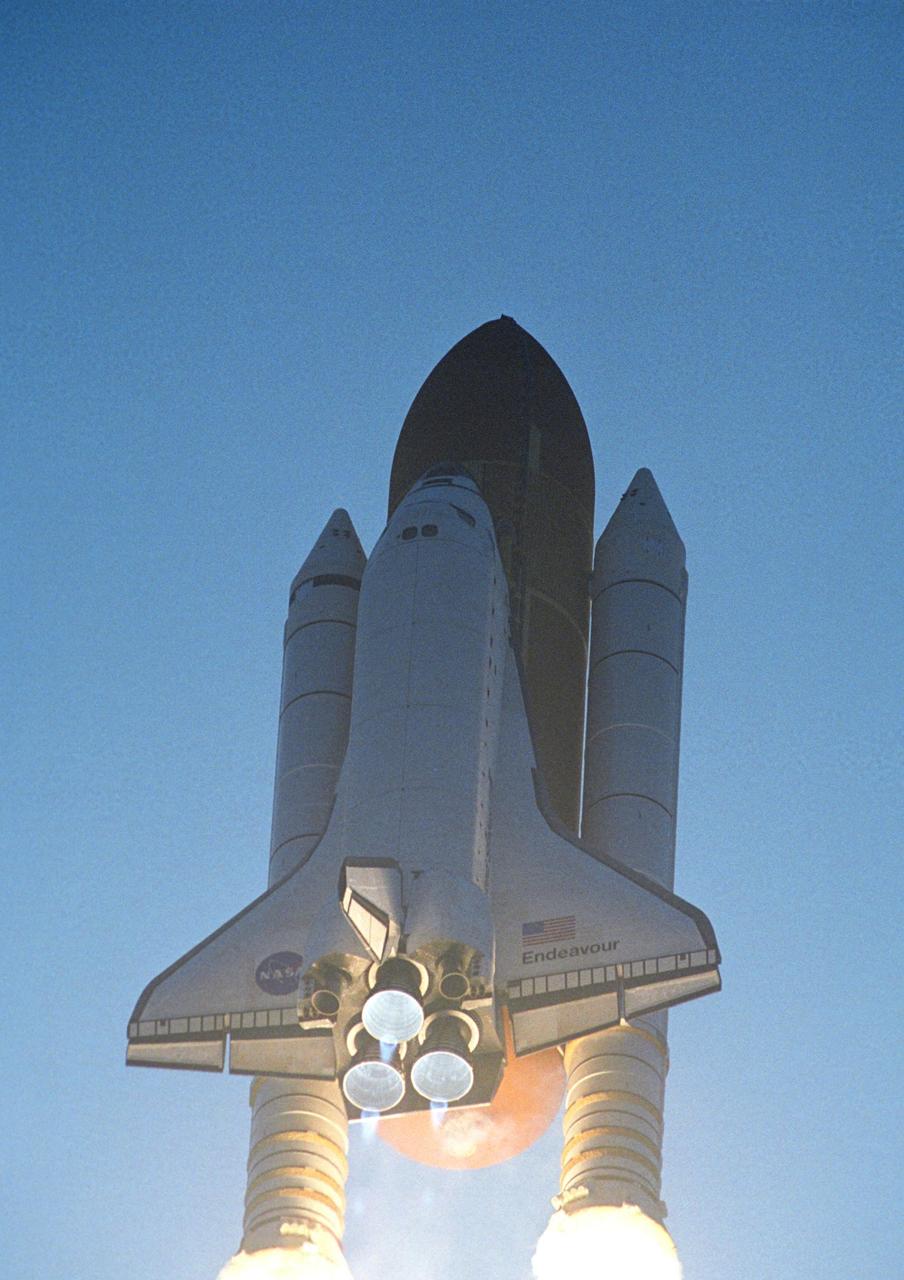
KENNEDY SPACE CENTER, FLA. -- Blue mach diamonds appear beneath the main engines on Space Shuttle Endeavour as it hurtles into the sky on mission STS-118. The 22nd shuttle flight to the International Space Station, the mission will continue space station construction by delivering a third starboard truss segment, S5, and other payloads such as the SPACEHAB module and the external stowage platform 3. Liftoff of Endeavour was on time at 6:36 p.m. EDT. Photo credit: NASA/Jerry Cannon, Mike Kerley
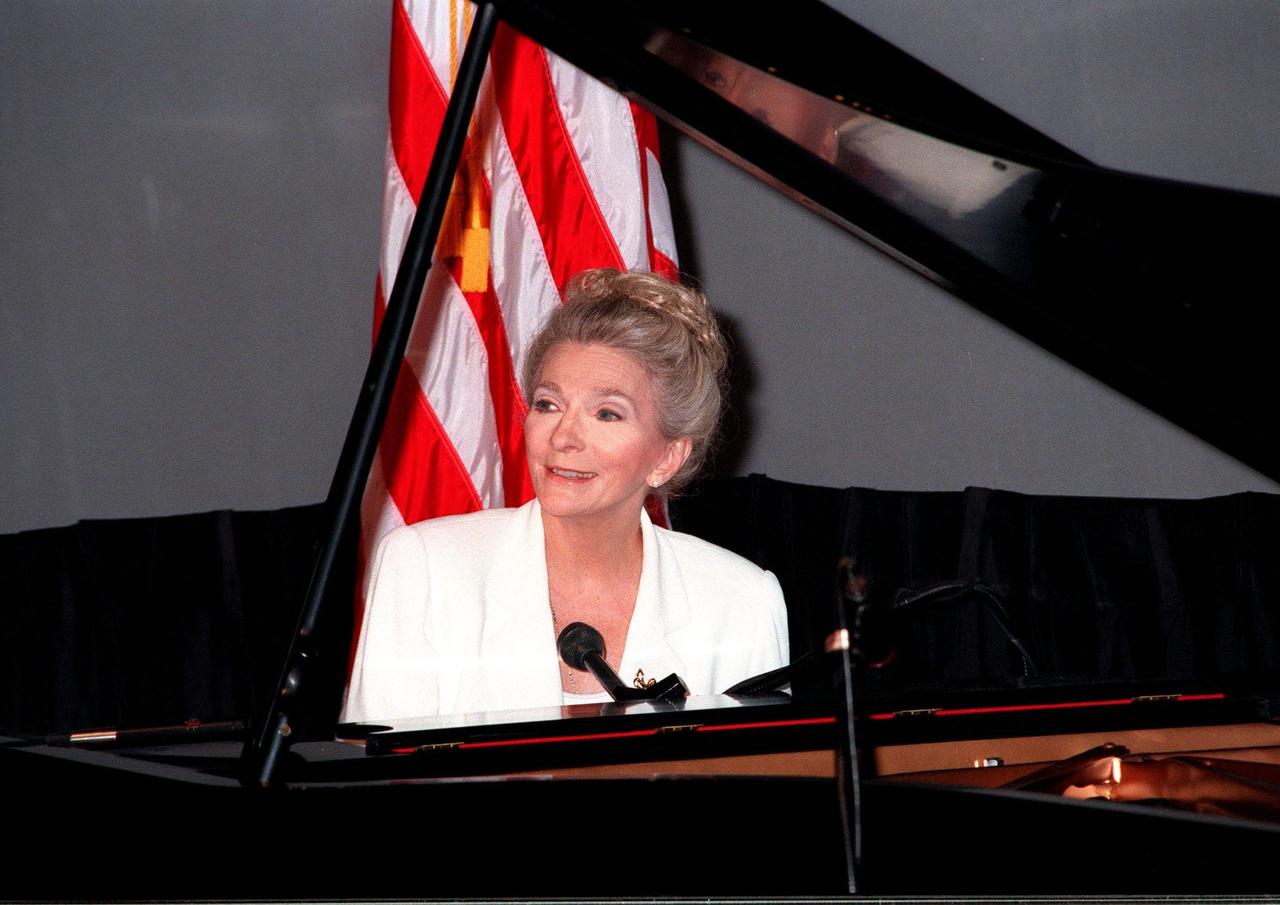
Singer-songwriter Judy Collins performs her original song, "Beyond the Sky," at the KSC Visitor Complex's Imax Theater for an audience waiting for the launch of STS-93. The song, commissioned by NASA through the nASA Art Program, honored Eileen Collins, the first woman to command a Space Shuttle. The attendees are planning to view the launch at the Banana Creek viewing sight. Liftoff is scheduled for July 20 at 12:36 a.m. EDT