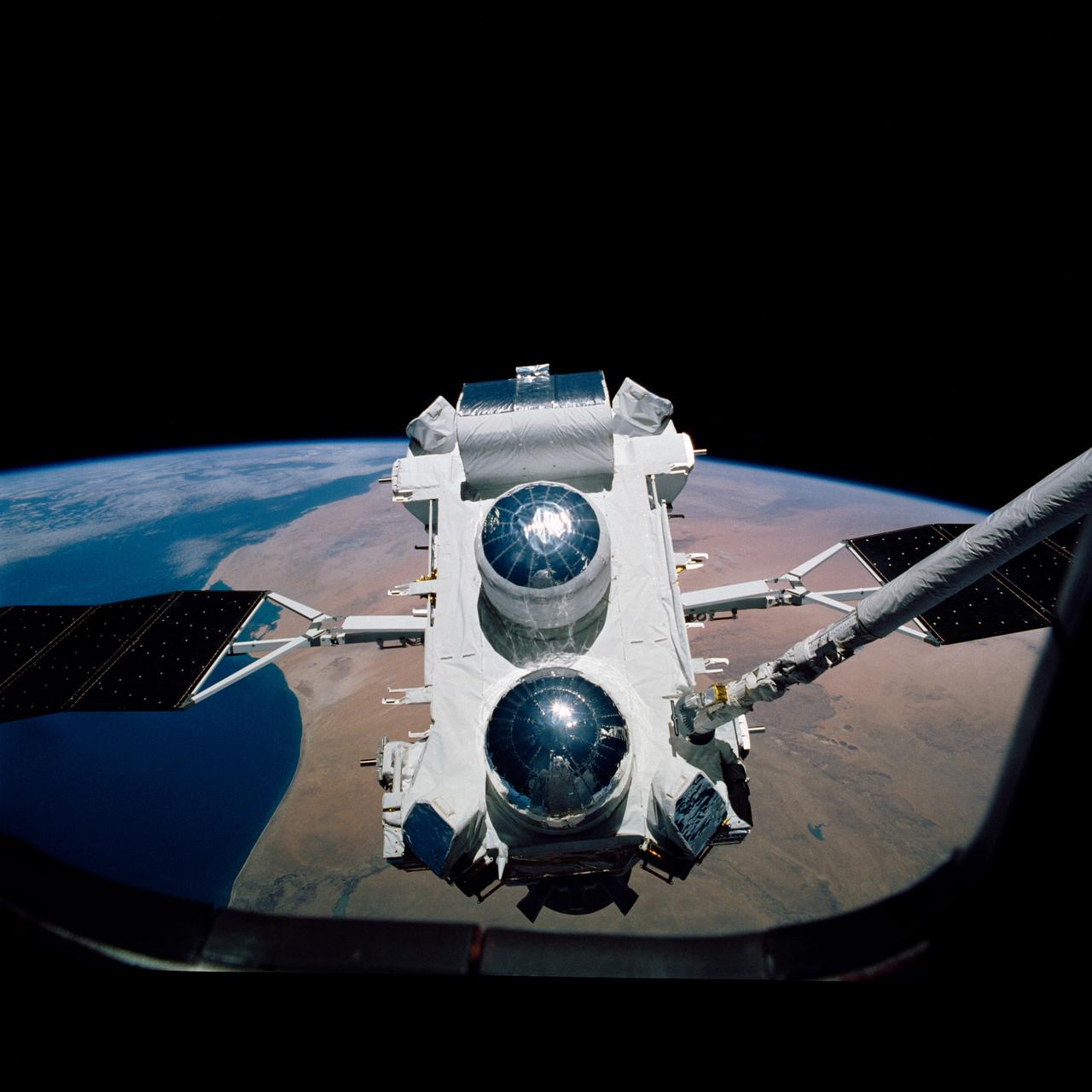
Backdropped against the Earth's surface, the Gamma Ray Observatory (GRO) with its solar array (SA) panels deployed is grappled by the remote manipulator system (RMS) during STS-37 systems checkout. GRO's four complement instruments are visible: the Energetic Gamma Ray Experiment Telescope (EGRET) (at the bottom); the Imaging Compton Telescope (COMPTEL) (center); the Oriented Scintillation Spectrometer Experiment (OSSE) (top); and Burst and Transient Source Experiment (BATSE) (on four corners). The view was taken by STS-37 crew through an aft flight deck overhead window.
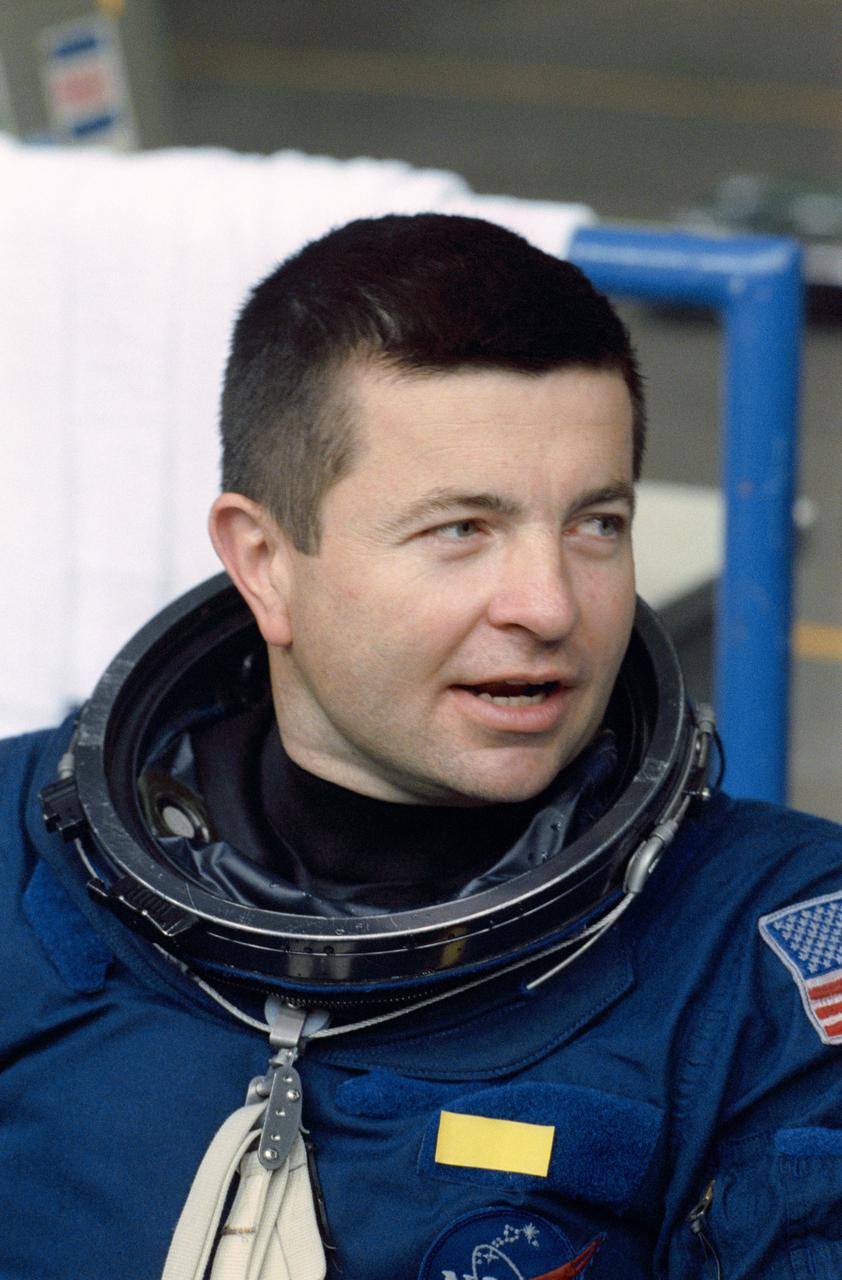
STS-37 Pilot Kenneth D. Cameron, wearing launch and entry suit (LES), discusses simulated emergency egress training on the pool side of JSC's Weightless Environment Training Facility (WETF) Bldg 29. Cameron will be dropped into a simulated ocean, the WETF's 25-ft pool, into which a parachute landing might be made.
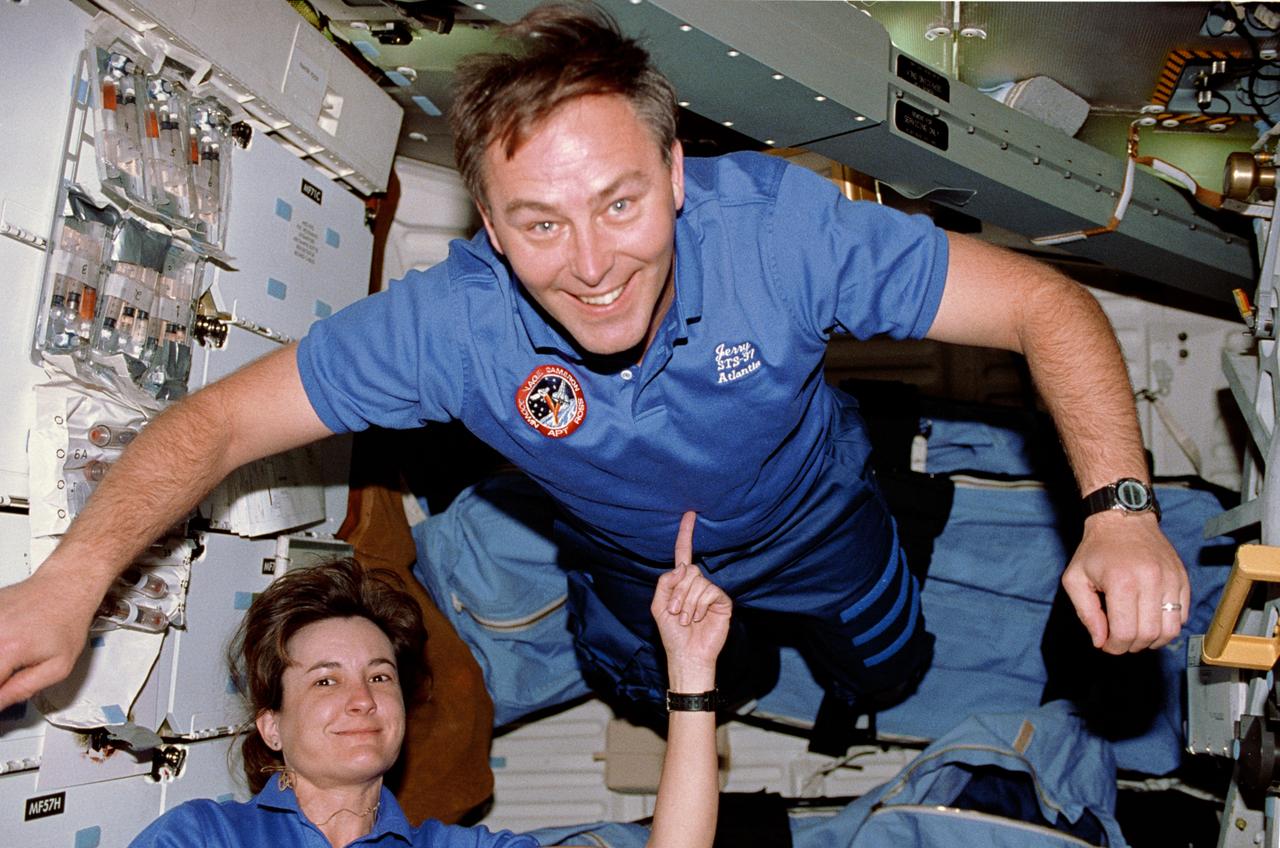
STS037-29-002 (5-11 April 1991) --- Astronauts Linda M. Godwin and Jerry L. Ross perform a balancing act on Atlantis' middeck. With little effort Godwin is able to hold Ross up near the ceiling with her index finger. Although the area the two occupy is very small, a number of articles are seen, including two sleep restraints, the escape pole and Bioserve ITA Materials Dispersion Apparatus bioprocessing test bed (attached to stowage lockers at left). This was one of the visuals used by the STS-37 crewmembers during their April 19 post-flight press conference at the Johnson Space Center (JSC).
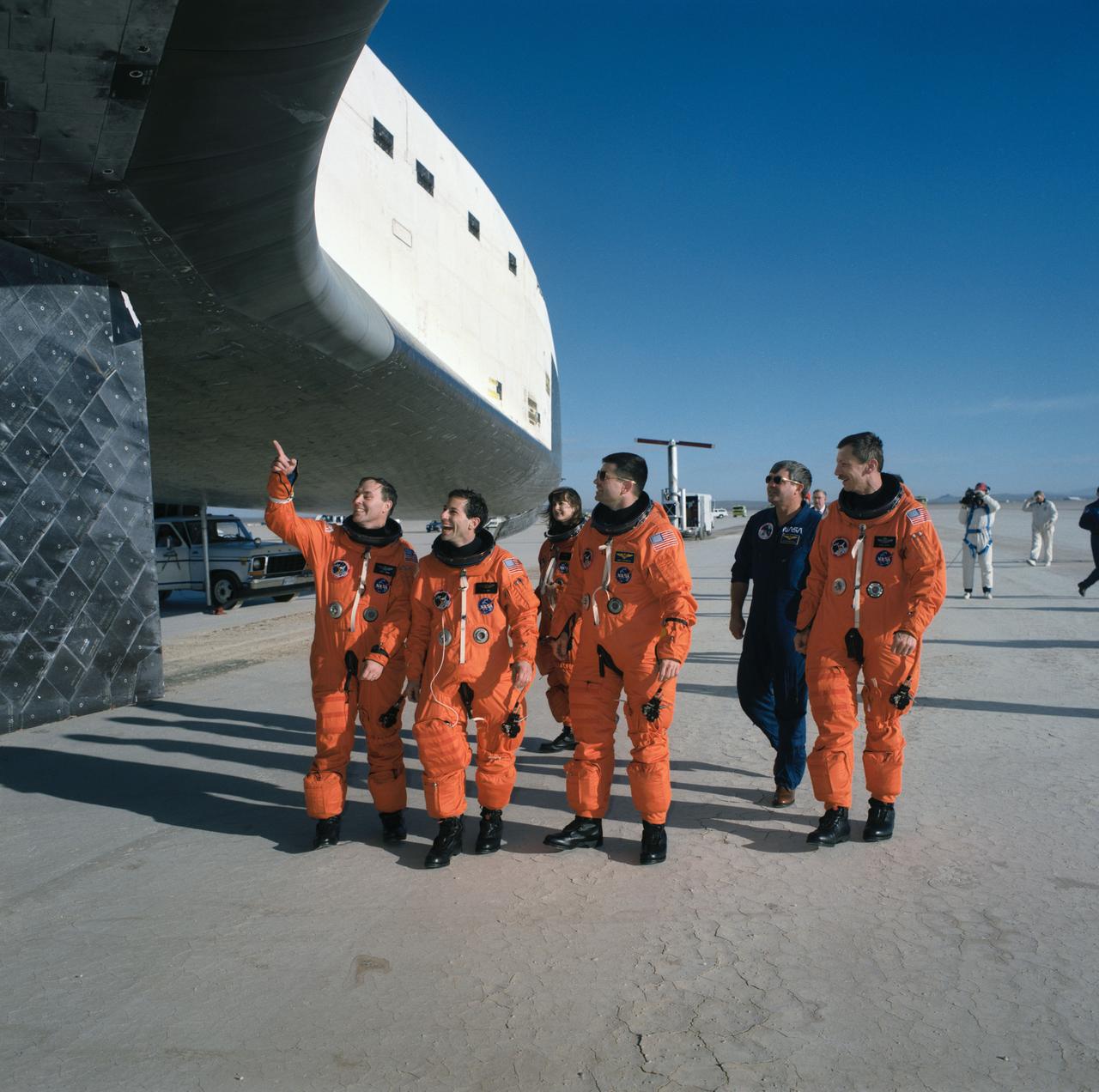
STS037-S-085 (11 April 1991) --- Following their egress from the Space Shuttle Atlantis at Edwards Air Force Base the STS-37 astronauts survey their "home" for the past six days. Pictured, left to right, are astronauts Jerry L. Ross, Jerome J. Apt, Linda M. Godwin, Kenneth D. Cameron, Daniel C. Brandenstein and Steven R. Nagel, mission commander. Brandenstein, chief of the Astronaut Office at JSC, flew the Shuttle training aircraft and took photographs during Atlantis's landing. Complete wheel stop occurred at 6:56:26 (PDT), April 11, 1991.
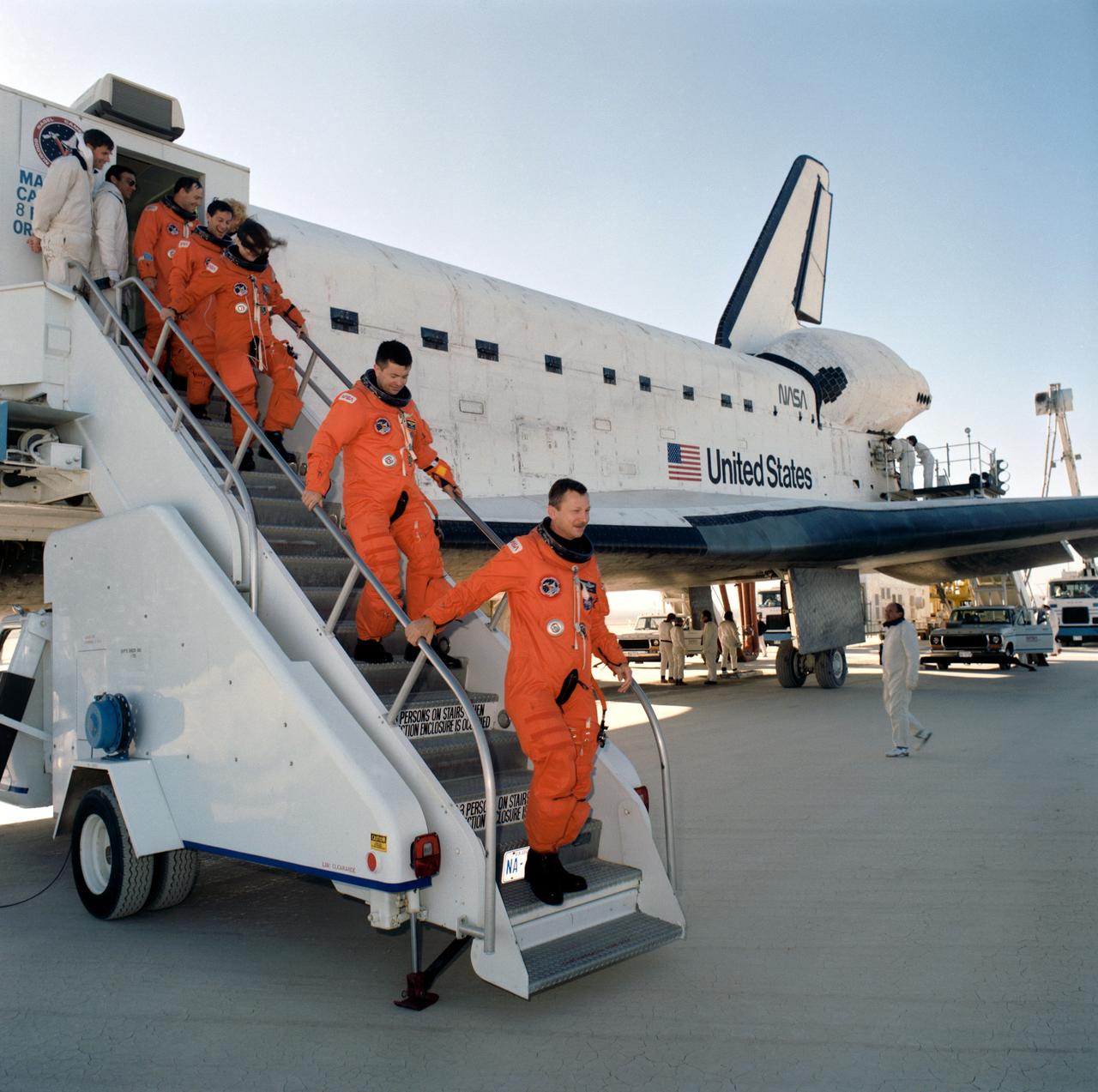
STS037-S-087 (11 April 1991) --- STS-37 crewmembers egress Atlantis via mobile stairway after landing on runway 33 dry lake bed at Edwards Air Force Base. Leading the crewmembers down the stairway is mission commander Steven R. Nagel. He is followed by pilot Kenneth D. Cameron, Mission Specialists Linda M. Godwin, Jerome Apt and Jerry L. Ross.
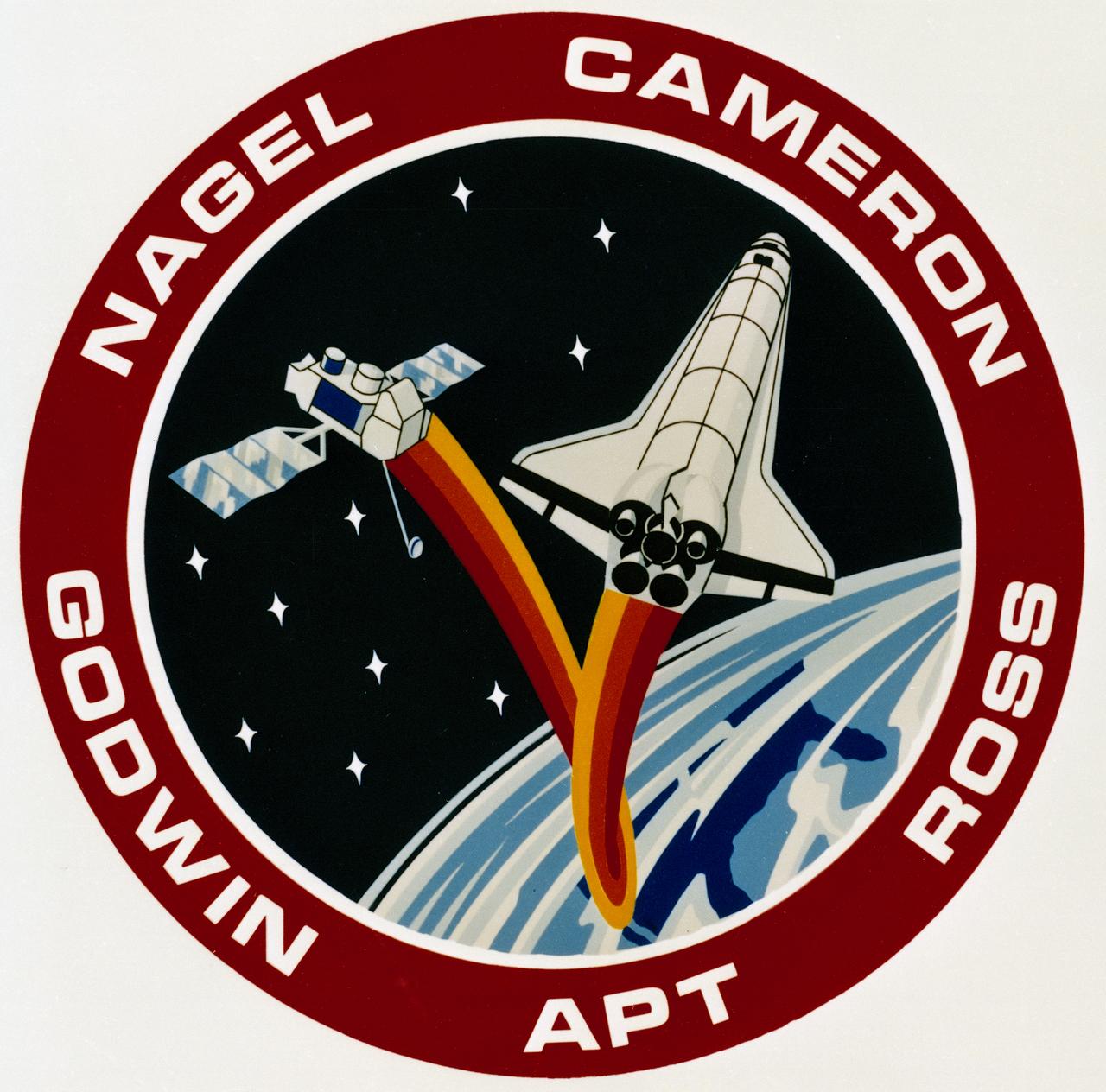
The principal theme of the STS-37 patch, designed by astronaut crewmembers, is the primary payload -- Gamma Ray Observatory (GRO) -- and its relationship to the Space Shuttle. The Shuttle and the GRO are both depicted on the patch and are connected by a large gamma. The gamma symbolizes both the quest for gamma rays by GRO as well as the importance of the relationship between the manned and unmanned elements of the United States space program. The Earth background shows the southern portion of the United States under a partial cloud cover while the two fields of three and seven stars, respectively, refer to the STS-37 mission designation.
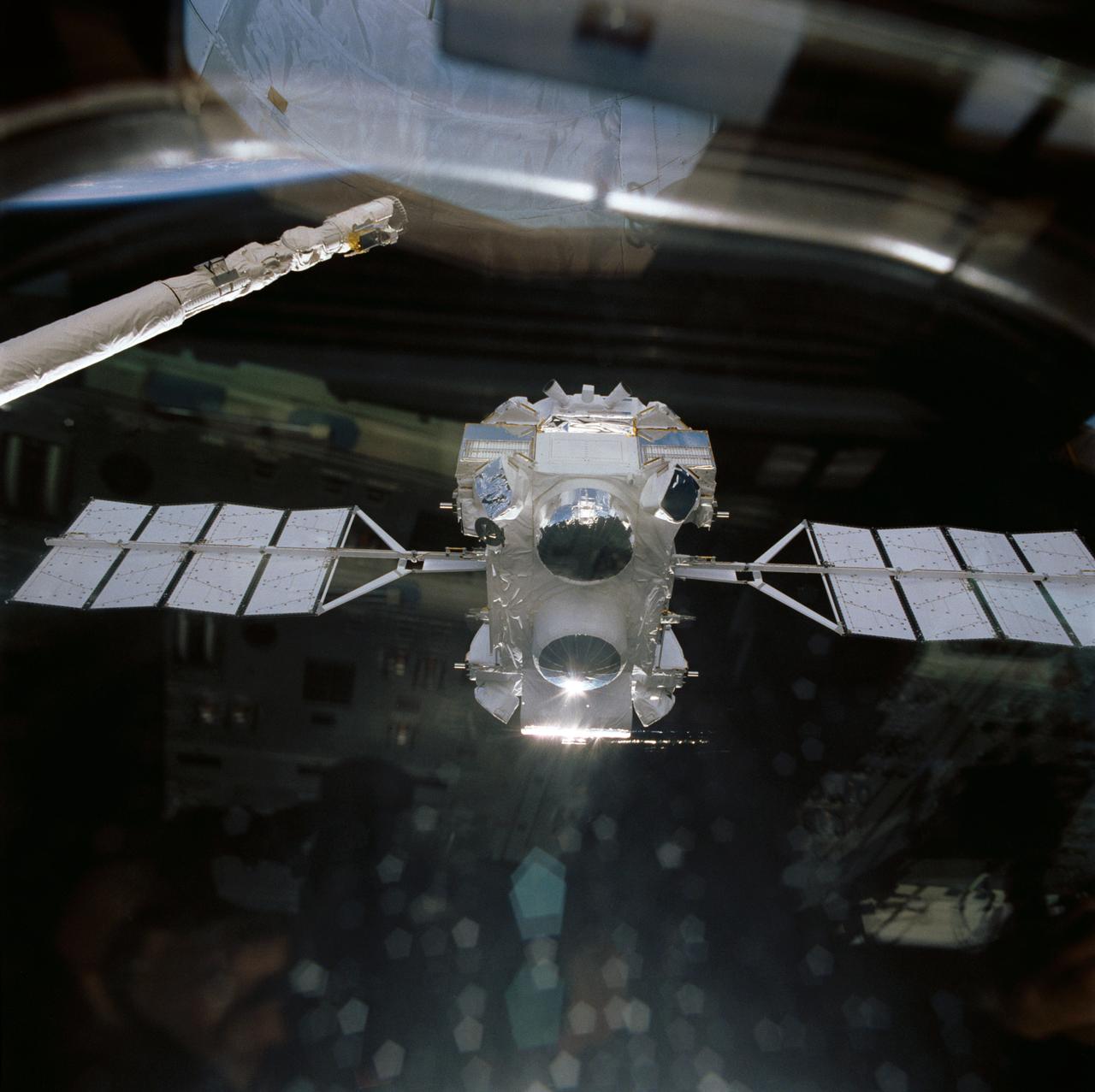
Atlantis', Orbiter Vehicle (OV) 104's, remote manipulator system (RMS) releases Gamma Ray Observatory (GRO) during STS-37 deployment. Visible on the GRO as it drifts away from the RMS end effector are the four complement instruments: the Energetic Gamma Ray Experiment (bottom); Imaging Compton Telescope (COMPTEL) (center); Oriented Scintillation Spectrometer Experiment (OSSE) (top); and Burst and Transient Source Experiment (BATSE) (at four corners). GRO's solar array (SA) panels are extended and are in orbit configuration. View was taken through aft flight deck window which reflects some of the crew compartment interior.
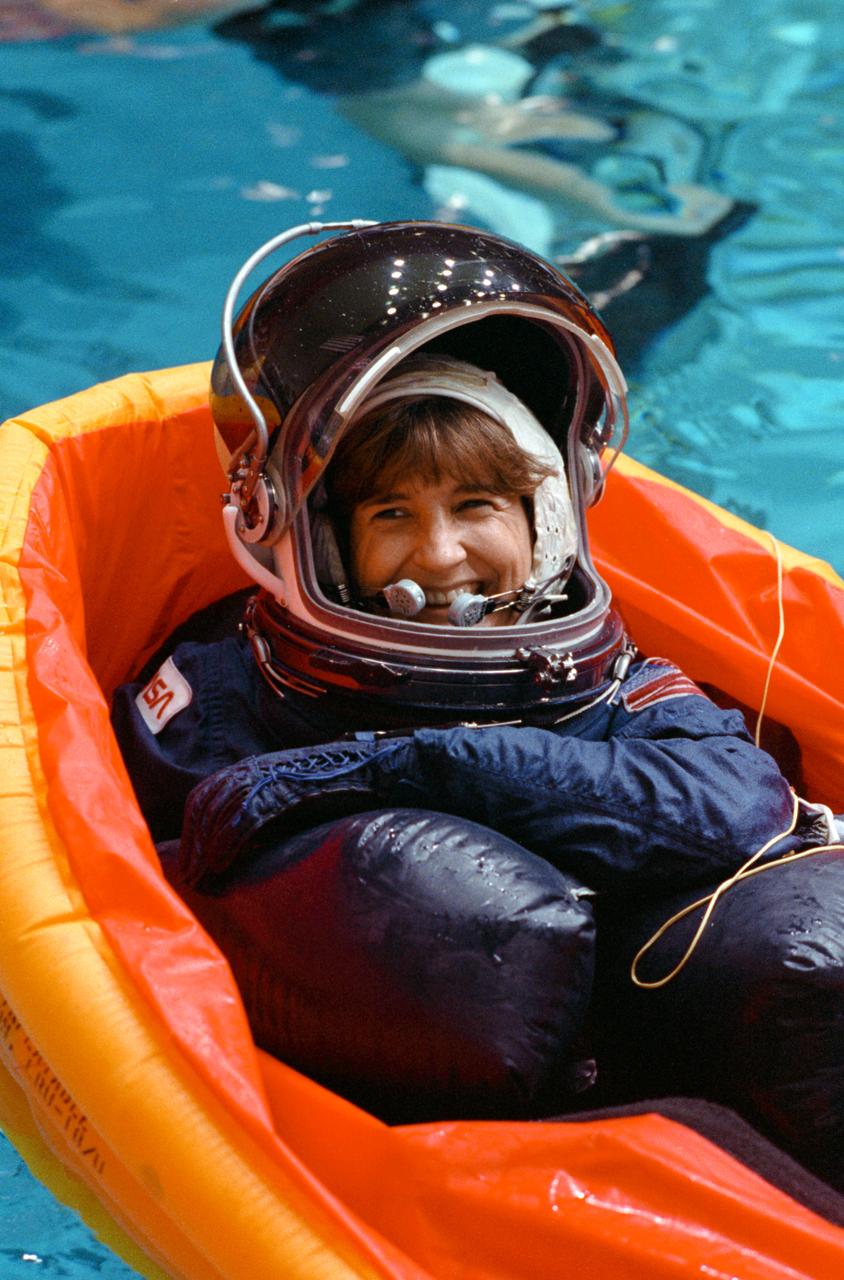
S90-45229 (25 June 1990) --- Astronaut Linda M. Godwin, STS-37 mission specialist, floats in a one-person life raft. She was simulating steps involved in emergency egress from a space shuttle. The training session was held in the Johnson Space Center's weightless environment training facility (WET-F). The 25-ft. deep pool in the facility served as a simulated ocean into which a parachute landing might be made. Early next year, Godwin, along with four other astronauts, will fly onboard Atlantis for a five-day mission.
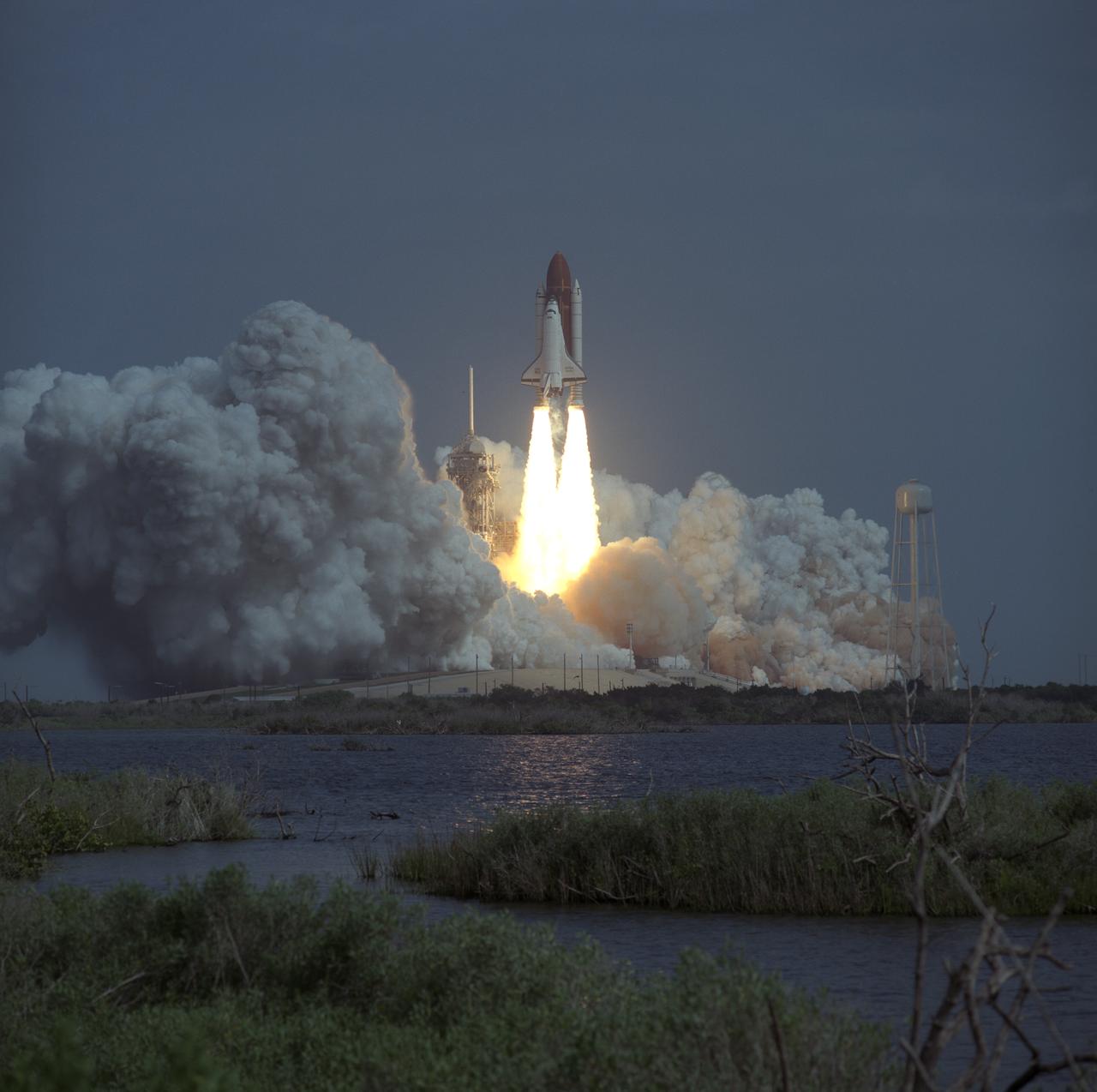
Launched aboard the Space Shuttle Atlantis on April 5, 1991 at 9:22:44am (EST), the STS-37 mission hurtles toward space. Her crew included Steven R. Nagel, commander; Kenneth D. (Ken) Cameron, pilot; and Jay Apt, Jerry L. Ross, and Linda M. Godwin, all mission specialists. The crew’s major objective was the deployment of the Gamma Ray Observatory (GRO). Included in the observatory were the Burst and Transient Source Experiment (BATSE); the Imaging Compton Telescope (COMPTEL); the Energetic Gamma Ray Experiment Telescope (EGRET); and the Oriented Scintillation Spectrometer Telescope (OSSEE).
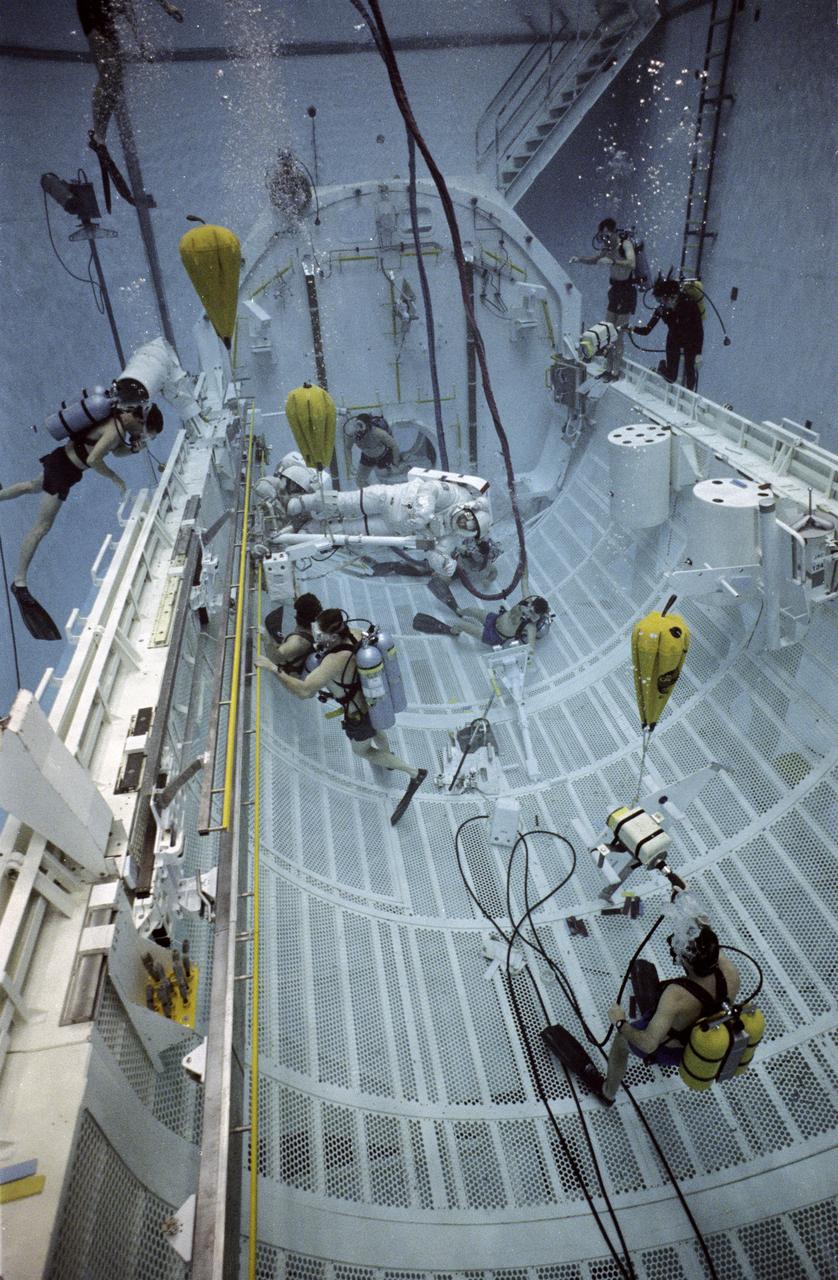
STS-37 Atlantis, Orbiter Vehicle (OV) 104, Mission Specialist (MS) Jerry L. Ross generates electrical power using hand pedals to move crew and equipment translation aid (CETA) cart along a rail during underwater session in JSC's Weightless Environment Training Facility (WETF) Bldg 29. Wearing an extravehicular mobility unit (EMU), Ross operates CETA electrical cart as MS Jerome Apt holds onto the back of the cart. The two crewmembers are practicing a extravehicular activity (EVA) spacewalk they will perform in OV-104's payload bay during STS-37. CETA is a type of railroad hand cart planned as a spacewalker's transportation system along the truss of Space Station Freedom (SSF). SCUBA divers monitor astronauts' underwater activity.
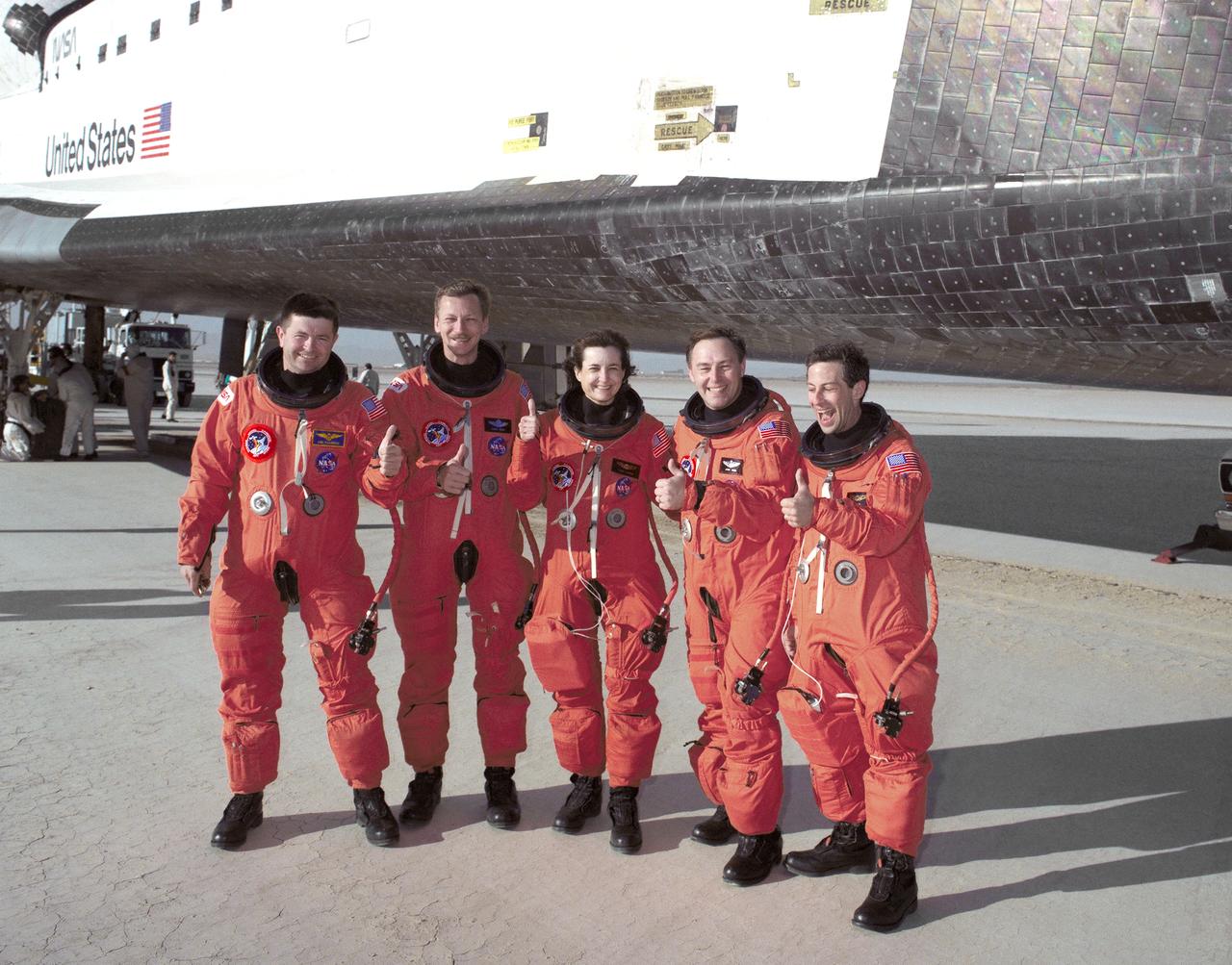
The crew of the Space Shuttle Atlantis gives the "all's well" thumb's-up sign after leaving the 100-ton orbiter following their landing at 6:55 a.m. (PDT), 11 April 1991, at NASA's Ames Dryden Flight Research Facility (later redesignated Dryden Flight Research Center), Edwards, California, to conclude mission STS-37. They are, from left, Kenneth D. Cameron, pilot; Steven R. Nagel, mission commander; and mission specialists Linda M. Godwin, Jerry L. Ross, and Jay Apt. During the mission,which began with launch April 5 at Kennedy Space Center, Florida, the crew deployed the Gamma Ray Observatory. Ross and Jay also carried out two spacewalks, one to deploy an antenna on the Gamma Ray Observatory and the other to test equipment and mobility techniques for the construction of the future Space Station. The planned five-day mission was extended one day because of high winds at Edwards.
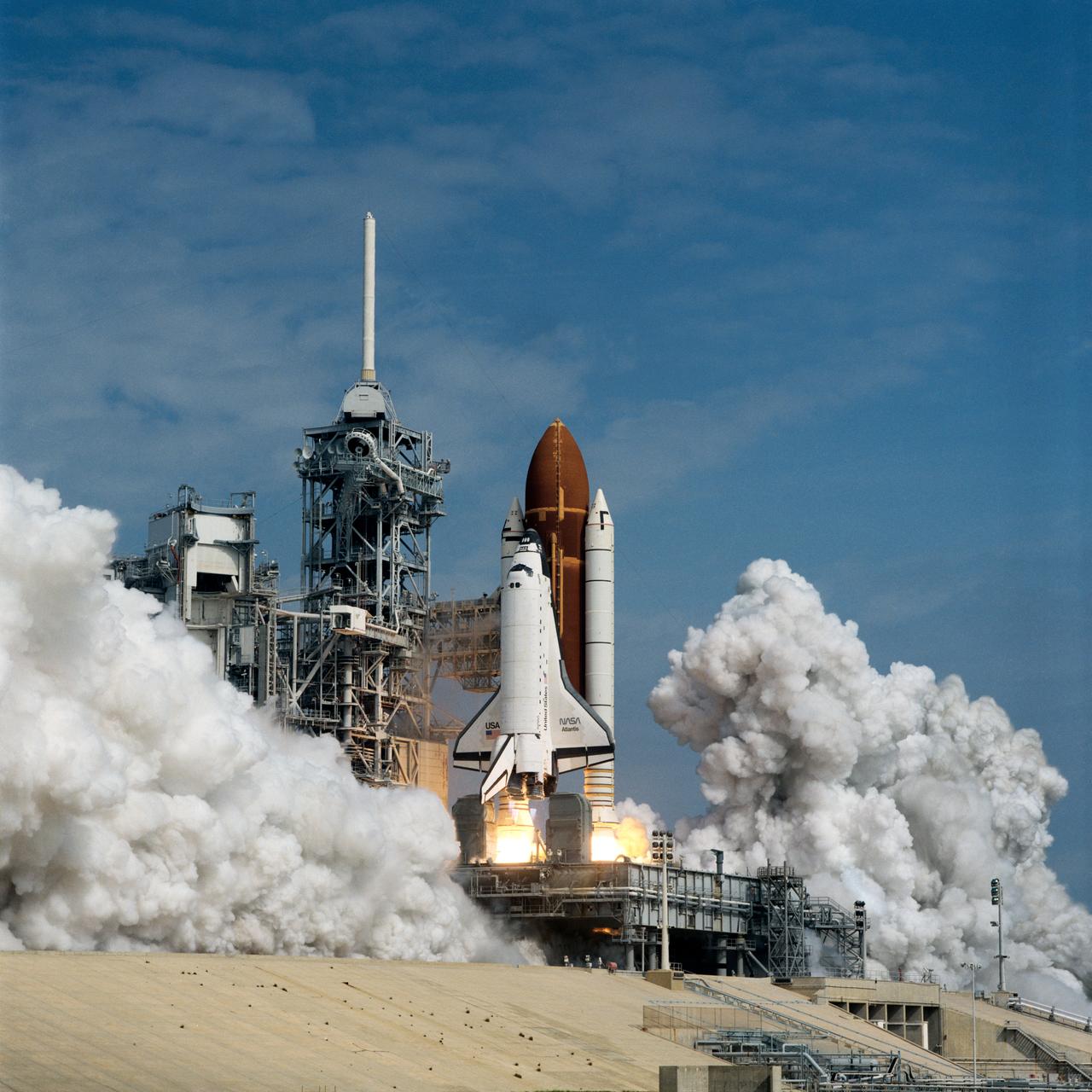
STS-37 Atlantis, Orbiter Vehicle (OV) 104, lifts off from Kennedy Space Center (KSC) Launch Complex (LC) Pad at 9:22:45:0439 (Eastern Standard Time (EST)). OV-104, atop its external tank (ET) and flanked by its two solid rocket boosters (SRBs), is captured just after space shuttle main engine (SSME) firing and as it rises above the mobile launcher platform. The fixed service structure (FSS) and retracted rotating service structure (RSS) appear along side OV-104. Clouds of exhaust smoke begin to fill the launch pad area.
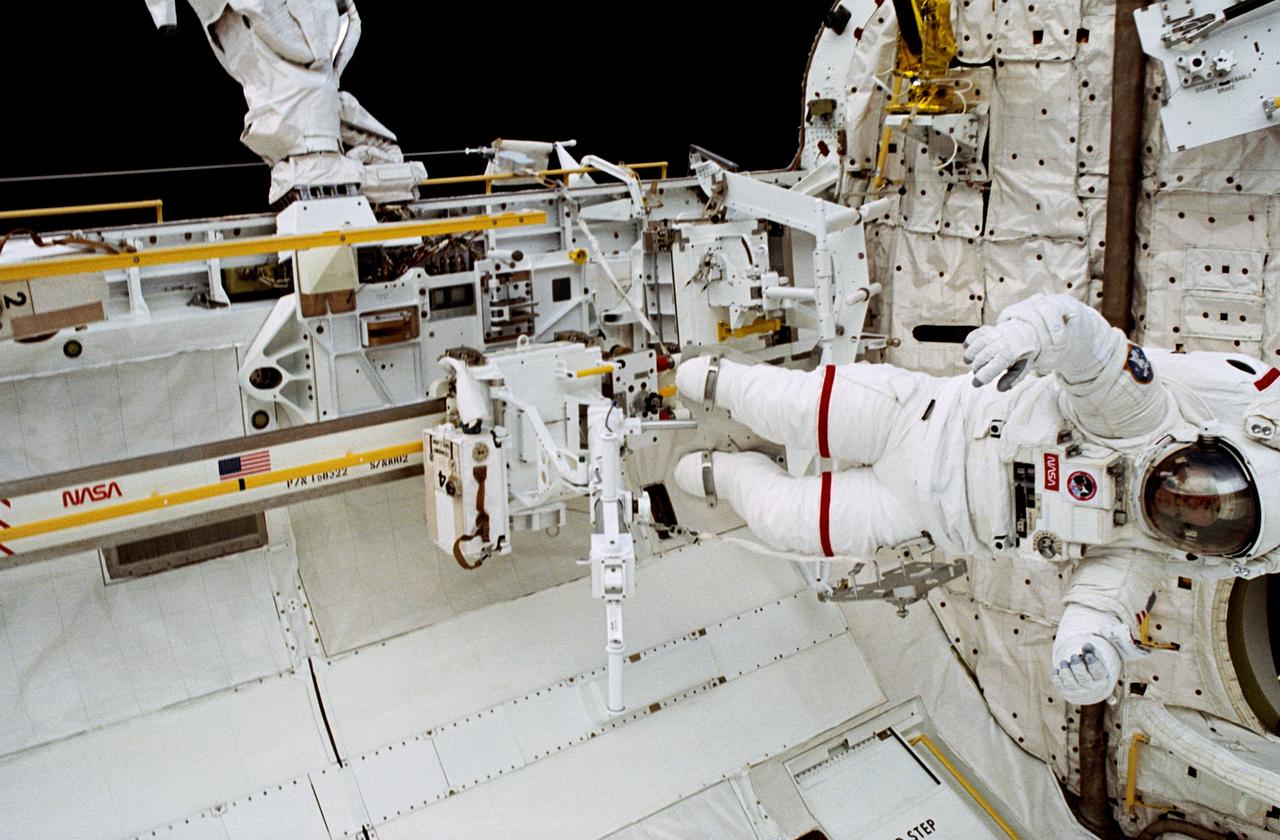
S37-52-008 (April 1999) --- STS-37 Mission Specialist Jerry L. Ross, attired in an extravehicular mobility unit (EMU) with red stripes, can be seen with the crew and equipment transport aid (CETA) just below the base of the remote manipulator system arm on the port side of the payload bay of the space shuttle Atlantis. Photo credit: NASA
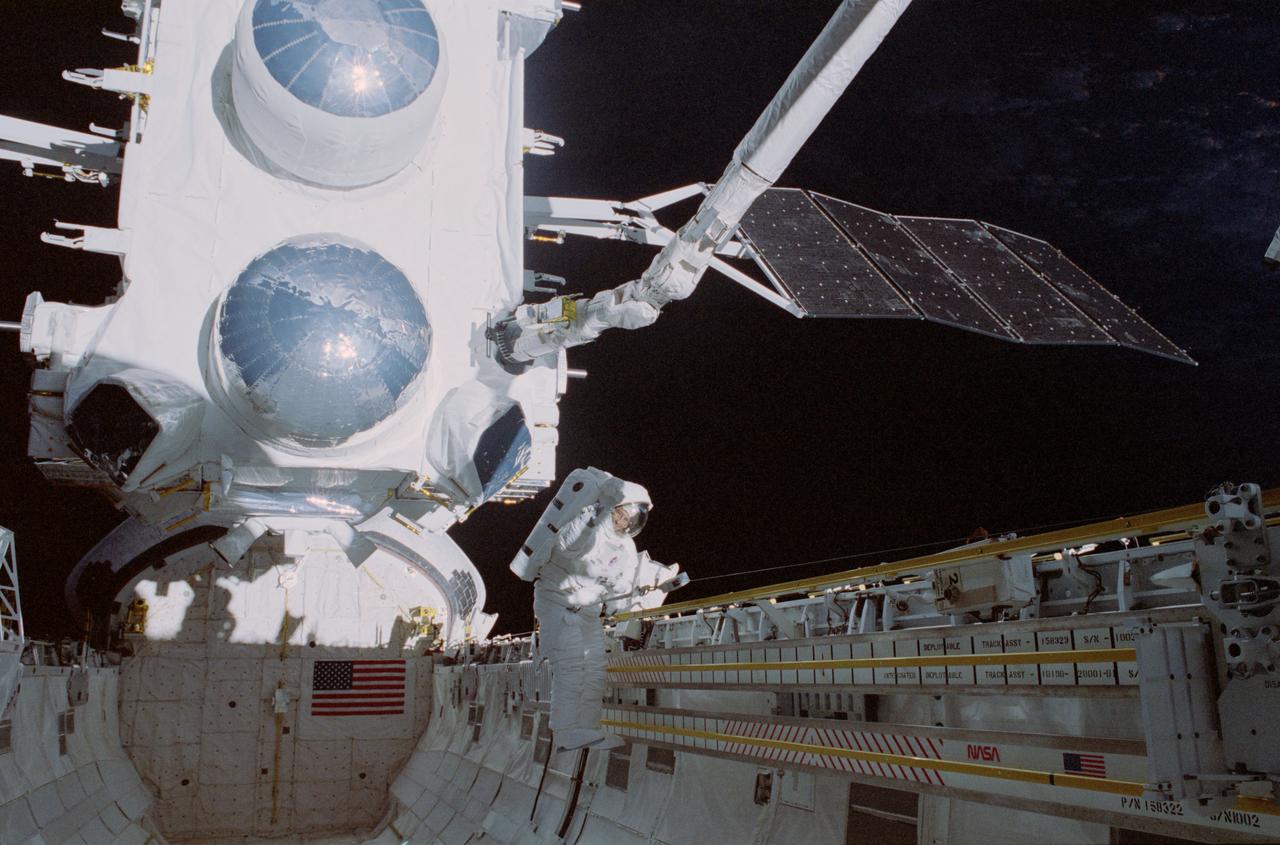
Photographic documentation showing activities in the payload bay of the orbiter Atlantis during STS-37. View include: Gamma Ray Observatory (GRO) on end of Remote Manipulator System (RMS), with Mission Specialist Jay Apt below on the port side of the payload bay.
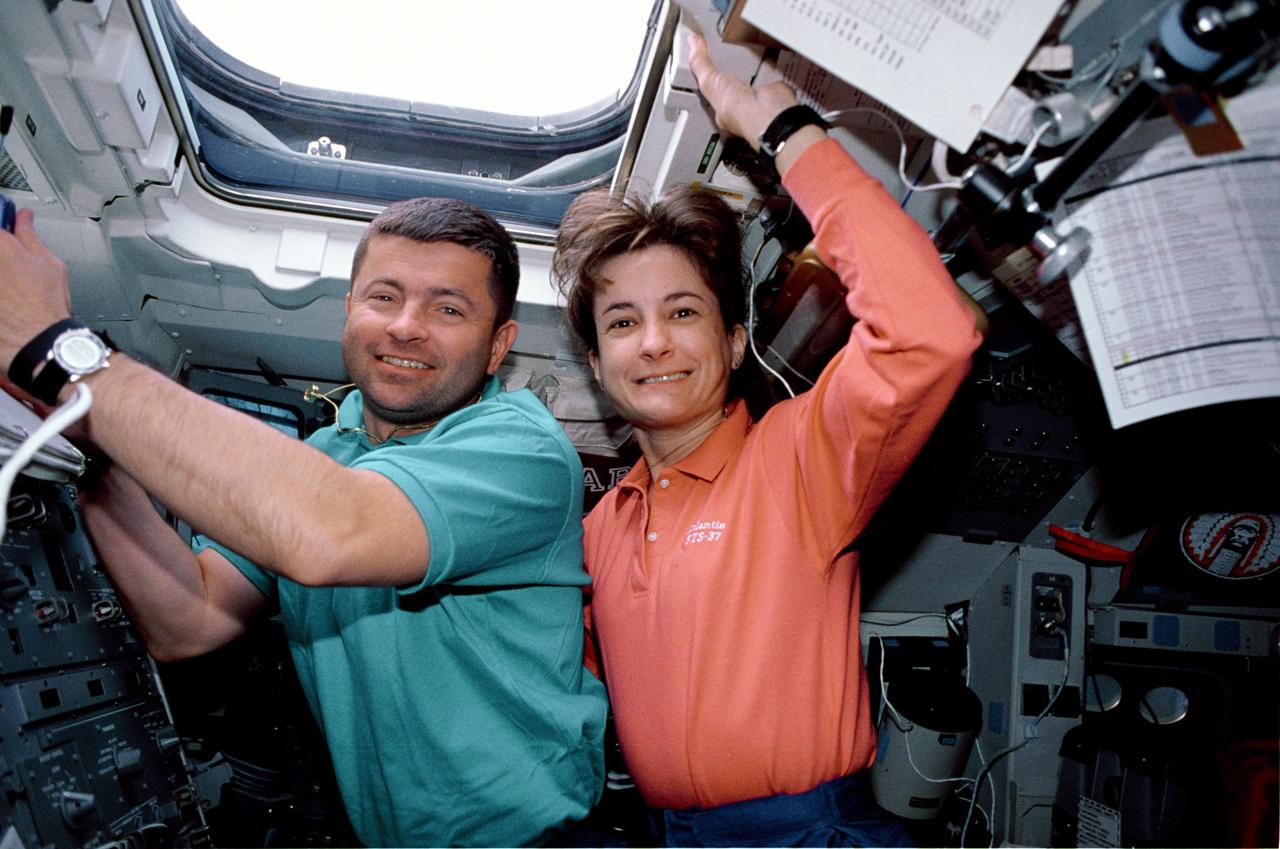
STS037-33-031 (5-11 April 1991) --- Astronauts Kenneth D. Cameron, STS-37 pilot, and Linda M. Godwin, mission specialist, take advantage of a well-lighted crew cabin to pose for an in-space portrait on the Space Shuttle Atlantis' aft flight deck. The two shared duties controlling the Remote Manipulator System (RMS) during operations involving the release of the Gamma Ray Observatory (GRO) and the Extravehicular Activity (EVA) of astronauts Jerry L. Ross and Jerome (Jay) Apt. The overhead window seen here and nearby eye-level windows (out of frame at left) are in a busy location on Shuttle missions, as they are used for payload surveys, Earth observation operations, astronomical studies and other purposes. Note the temporarily stowed large format still photo camera at lower right corner. This photo was made with a 35mm camera. This was one of the visuals used by the crew members during their April 19 Post Flight Press Conference (PFPC) at the Johnson Space Center (JSC).

STS039-72-060 (28 April-6 May 1991) --- This view from the Earth-orbiting Space Shuttle Discovery shows the smoke from burning oil well fires, aftermath of Iraqi occupation. Oil wells to the north of the Bay of Kuwait and just south of Kuwait City, on the south shore, can be seen burning out of control. Compared with pictures of the same area shot during STS-37 (April 1991), this frame shows a complete shift of winds, with much of the smoke blowing eastward over the Gulf. The STS-37 scenes showed lengthy southward-blowing sheets of smoke toward Saudi Arabia. In this view, the Gulf island Faylakah Awhah is barely visible through the smoke.
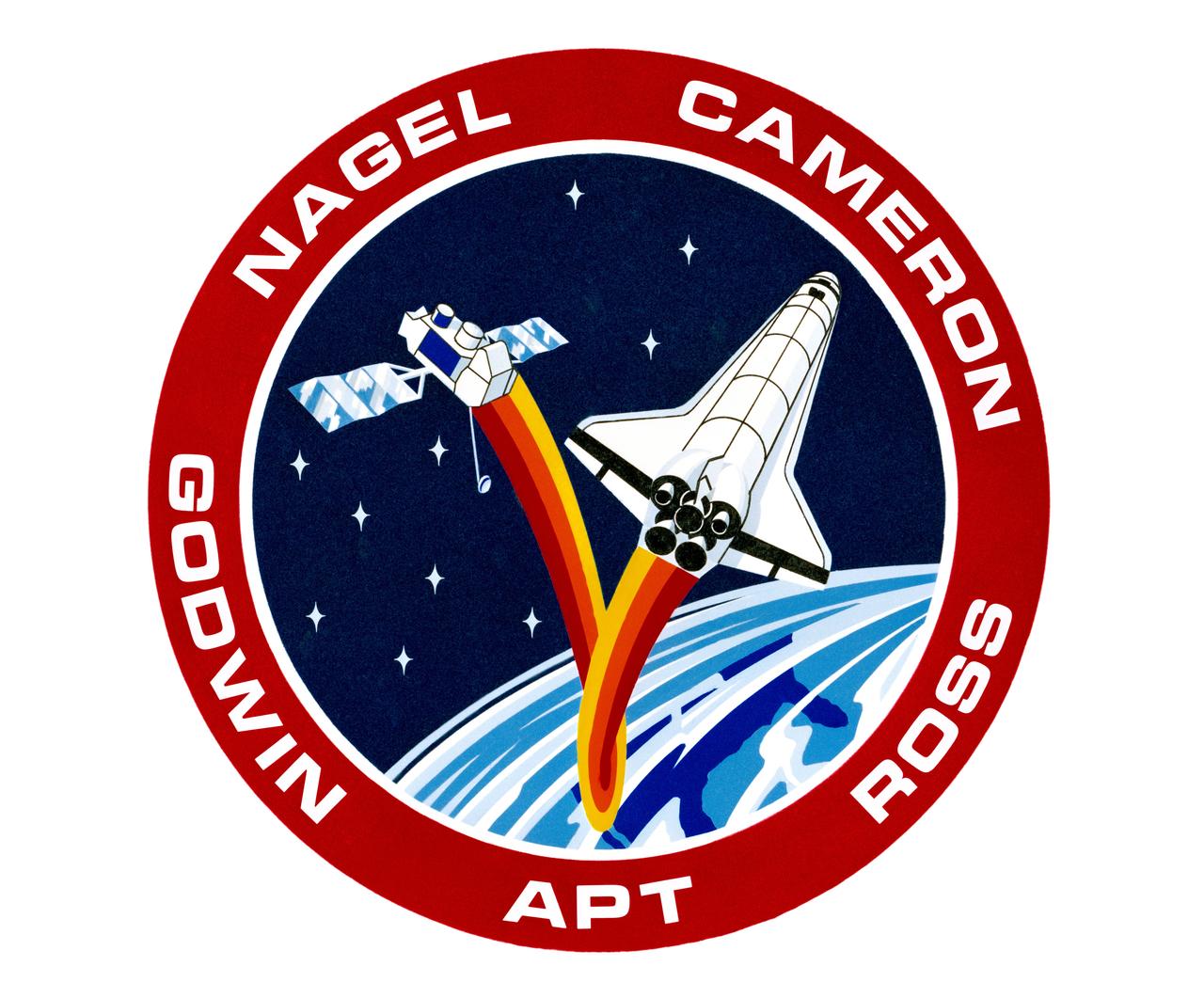
STS037-S-001 (May 1990) --- The principal theme of the STS-37 patch, designed by the astronaut crew members, is the mission's primary payload ? Gamma Ray Observatory (GRO) ? and its relationship to the space shuttle. The shuttle and the GPO are both depicted on the patch and are connected by a large gamma. The gamma symbolizes both the quest for gamma rays by the GRO as well as the importance of the relationship between the manned and unmanned elements of the United States space program. The Earth background shows the southern portion of the United States under a partial cloud cover while the two fields of three and seven stars, respectively, refer to the STS-37 mission designation. The NASA insignia design for space shuttle flights is reserved for use by the astronauts and for other official use as the NASA Administrator may authorize. Public availability has been approved only in the forms of illustrations by the various news media. When and if there is any change in this policy, which is not anticipated, the change will be publicly announced. Photo credit: NASA
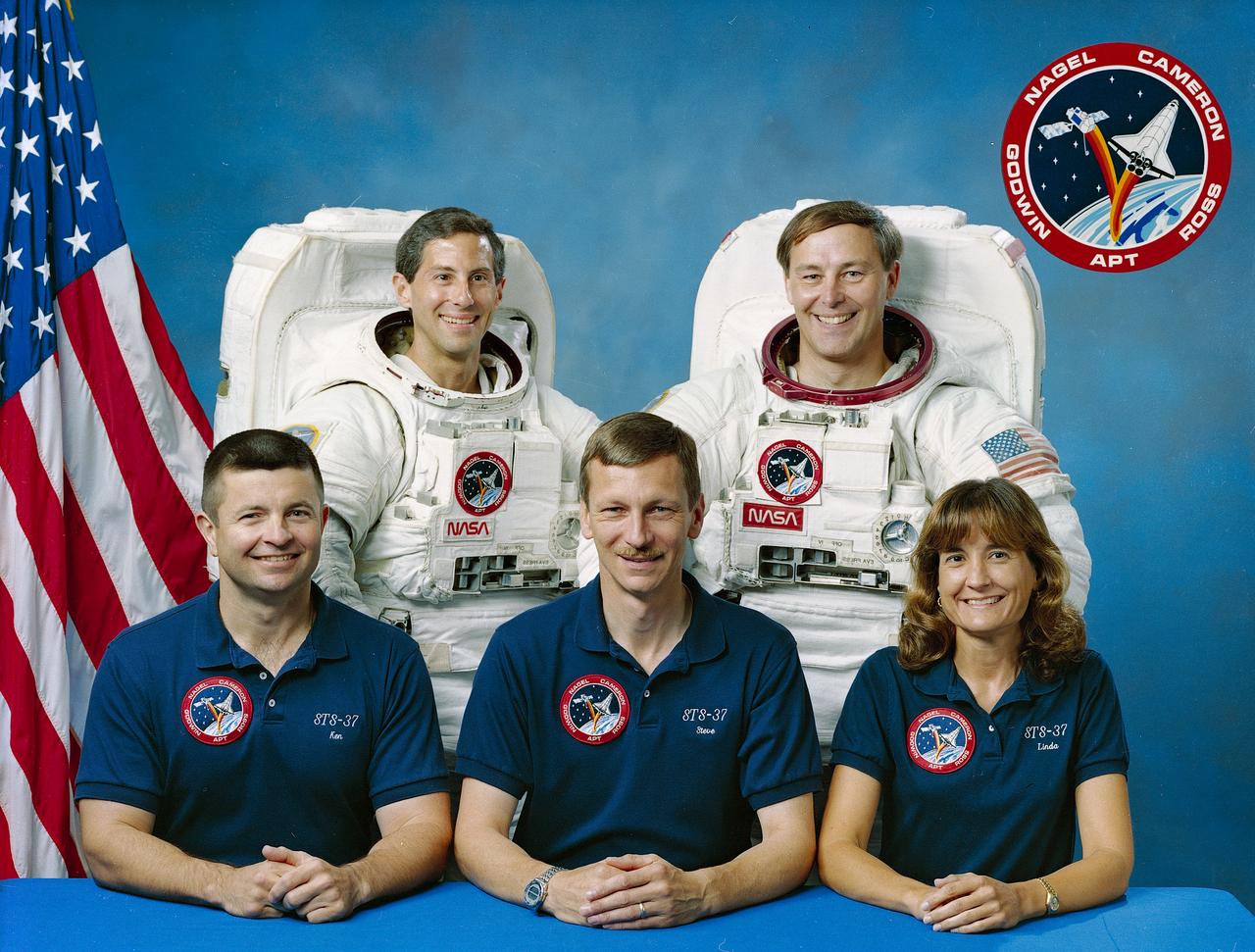
This is the STS-37 Crew portrait. Pictured from left to right are Kenneth D. (Ken) Cameron, pilot; Jay Apt, mission specialist; Steven R. Nagel, commander; and Jerry L. Ross and Linda M. Godwin, mission specialists. Launched aboard the Space Shuttle Atlantis on April 5, 1991 at 9:22:44am (EST), the crew’s major objective was the deployment of the Gamma Ray Observatory (GRO). Included in the observatory were the Burst and Transient Source Experiment (BATSE); the Imaging Compton Telescope (COMPTEL); the Energetic Gamma Ray Experiment Telescope (EGRET); and the Oriented Scintillation Spectrometer Telescope (OSSEE).
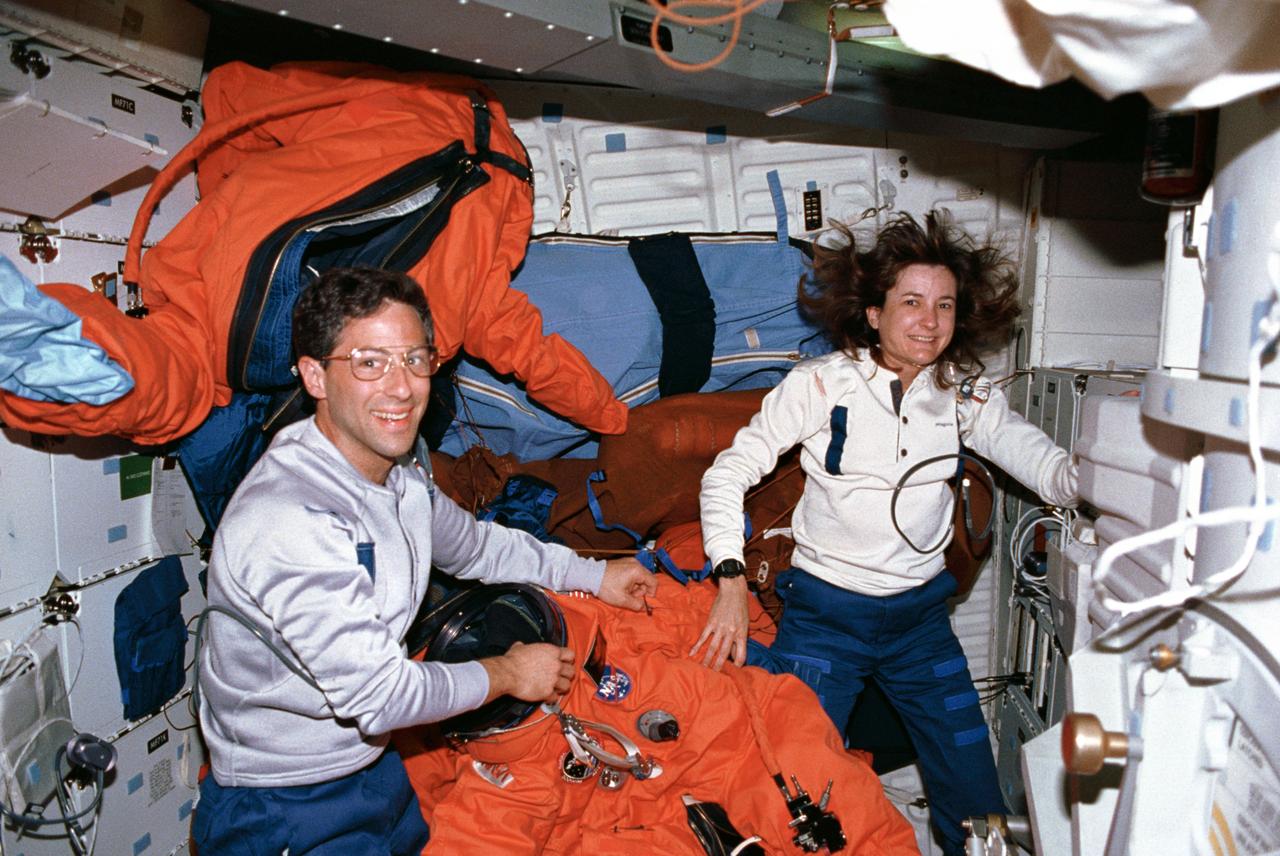
STS037-45-012 (10 April 1991) --- Astronauts Linda M. Godwin and Jerome (Jay) Apt sort out the special partial-pressure garments for landing (and ascent) as the end of their mission in space approaches. The suits are stored on the Space Shuttle Atlantis' mid-deck. The scene was photographed with a 35mm camera. This was one of the visuals used by the crew members during their April 19 Post Flight Press Conference (PFPC) at the Johnson Space Center (JSC).
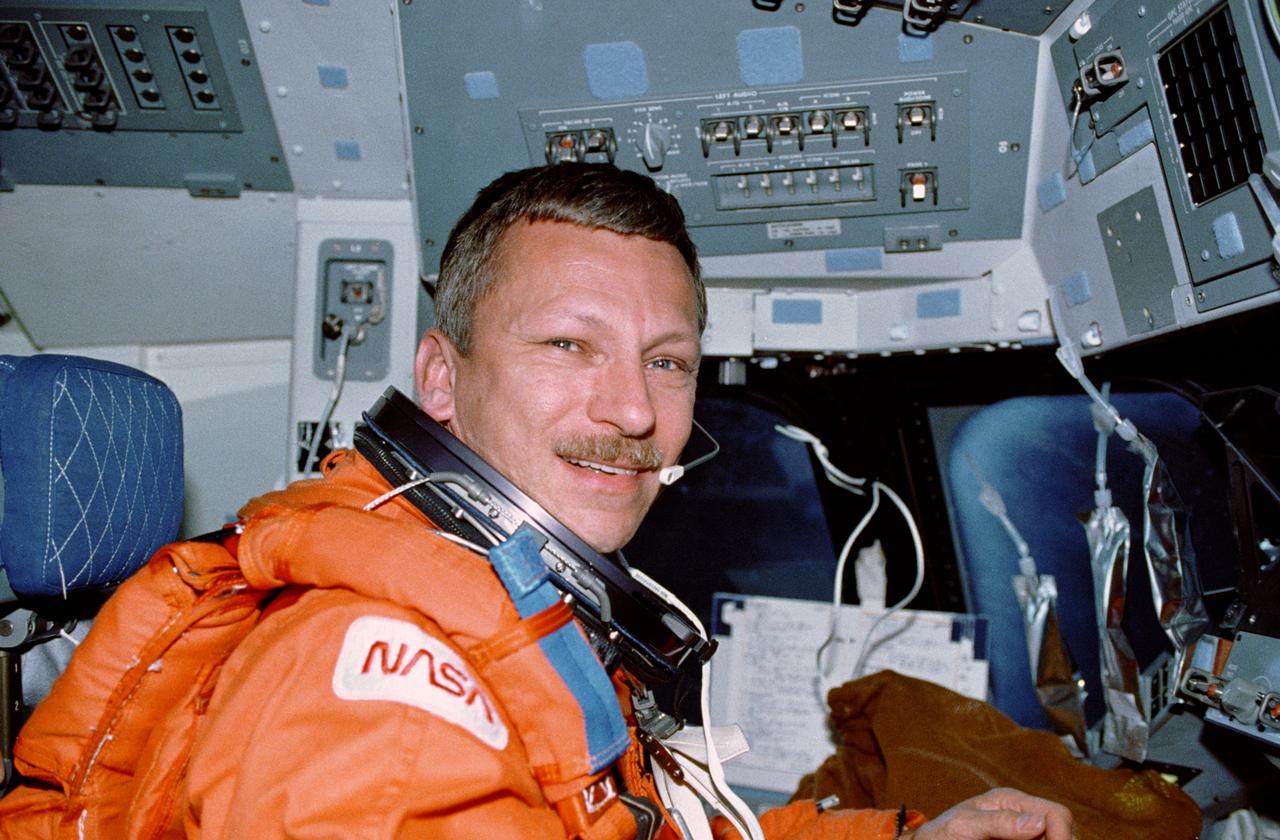
STS037-13-036 (5-11 April 1991) --- Astronaut Steven R. Nagel talks to ground controllers from the commander's station on the space shuttle Atlantis. He is wearing the special partial pressure suit used by space shuttle crew members for ascent and entry phases. Nagel, mission commander, and four other astronauts spent six days in space during which they readied the Gamma Ray Observatory (GRO) for deployment, released it into space, tested possible Space Station Freedom translation aid devices, conducted experiments, took photographs and performed other duties. This frame was taken with a 35mm camera. This was one of the visuals used by the crew members during their April 19 Post Flight Press Conference (PFPC) at the Johnson Space Center (JSC). Photo credit: NASA
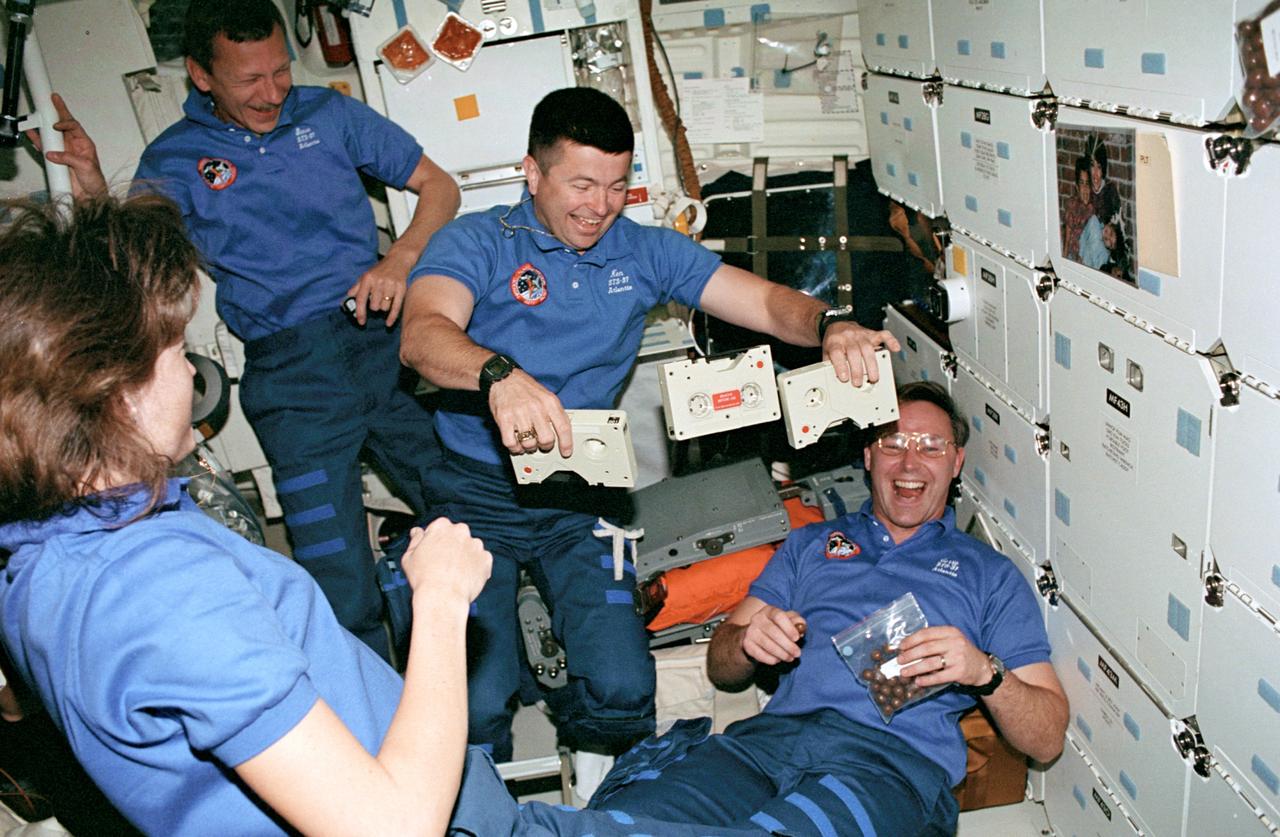
STS037-54-004 (5-11 April 1991) --- Four crew members have fun with weightlessness on the Space Shuttle Atlantis' middeck. Astronaut Kenneth D. Cameron, pilot, performs a "quick hands" feat with three tape cassettes -- obviously a feat much more difficult on Earth. Looking on, left to right, are astronauts Linda M. Godwin, mission specialist; Steven R. Nagel, mission commander; and Jerry L. Ross, mission specialist. Ross later used the microgravity environment to have some fun with the bag of malted milk balls in his hands. This 35mm frame was exposed by astronaut Jerome (Jay) Apt, mission specialist. This was one of the visuals used by the crew members during their April 19 Post Flight Press Conference (PFPC) at the Johnson Space Center (JSC).
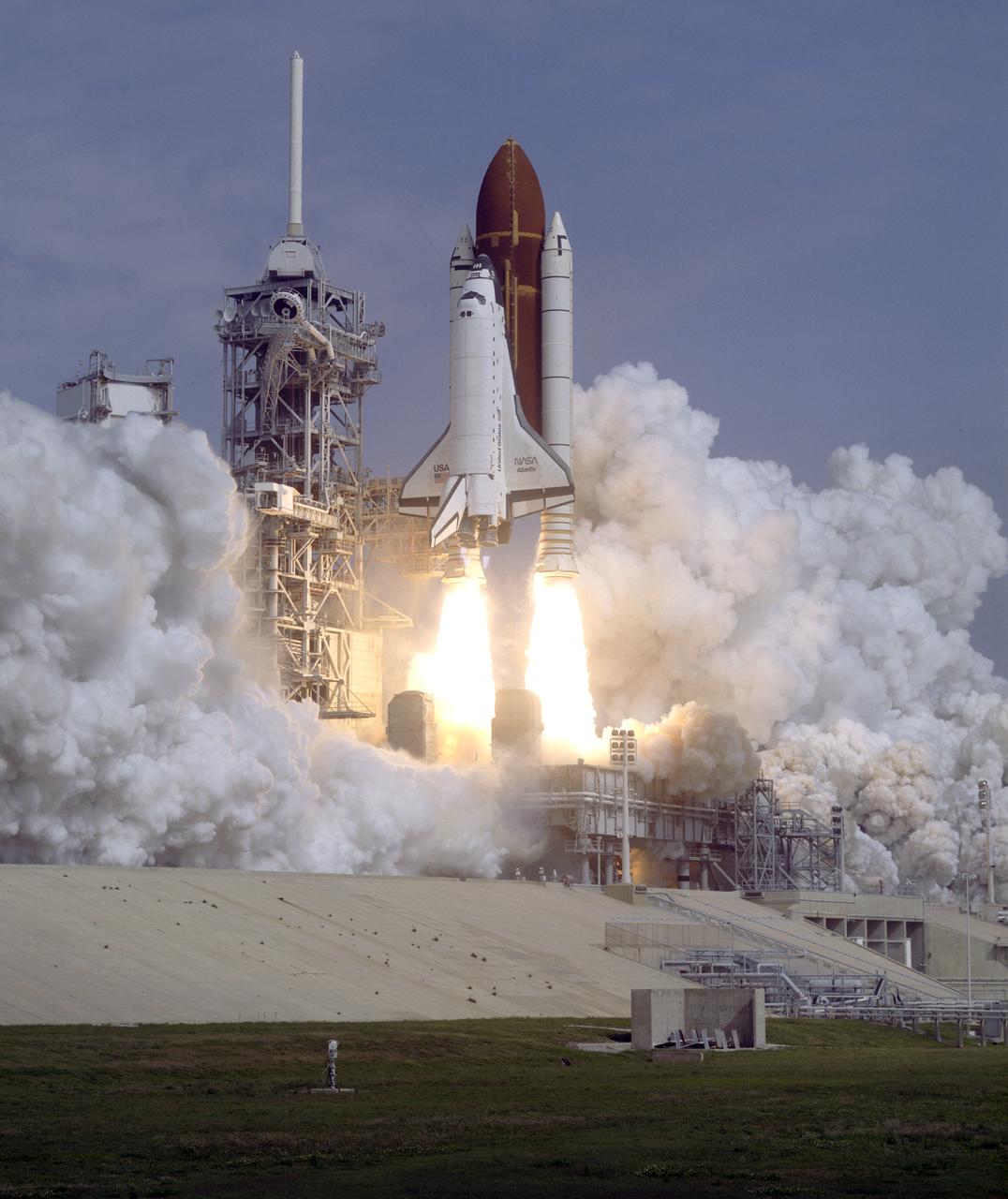
Aboard the Space Shuttle Atlantis, the STS-37 mission launched April 5, 1991 from launch pad 39B at the Kennedy Space Center in Florida, and landed back on Earth April 11, 1991. The 39th shuttle mission included crew members: Steven R. Nagel, commander; Kenneth D. Cameron, pilot; Jerry L,. Ross, mission specialist 1; Jay Apt, mission specialist 2; and Linda M. Godwin, mission specialist 3. The primary payload for the mission was the Gamma Ray Observatory (GRO). The GRO included the Burst and Transient Experiment (BATSE); the Imaging Compton Telescope (COMPTEL); the Energetic Gamma Ray Experiment Telescope (EGRET); and the Oriented Scintillation Spectrometer Experiment (OSSEE). Secondary payloads included Crew and Equipment Translation Aids (CETA); the Ascent Particle Monitor (APM); the Shuttle Amateur Radio Experiment II (SAREXII), the Protein Crystal Growth (PCG); the Bioserve Instrumentation Technology Associates Materials Dispersion Apparatus (BIMDA); Radiation Monitoring Equipment III (RMEIII); and Air Force Maui Optical Site (AMOS).
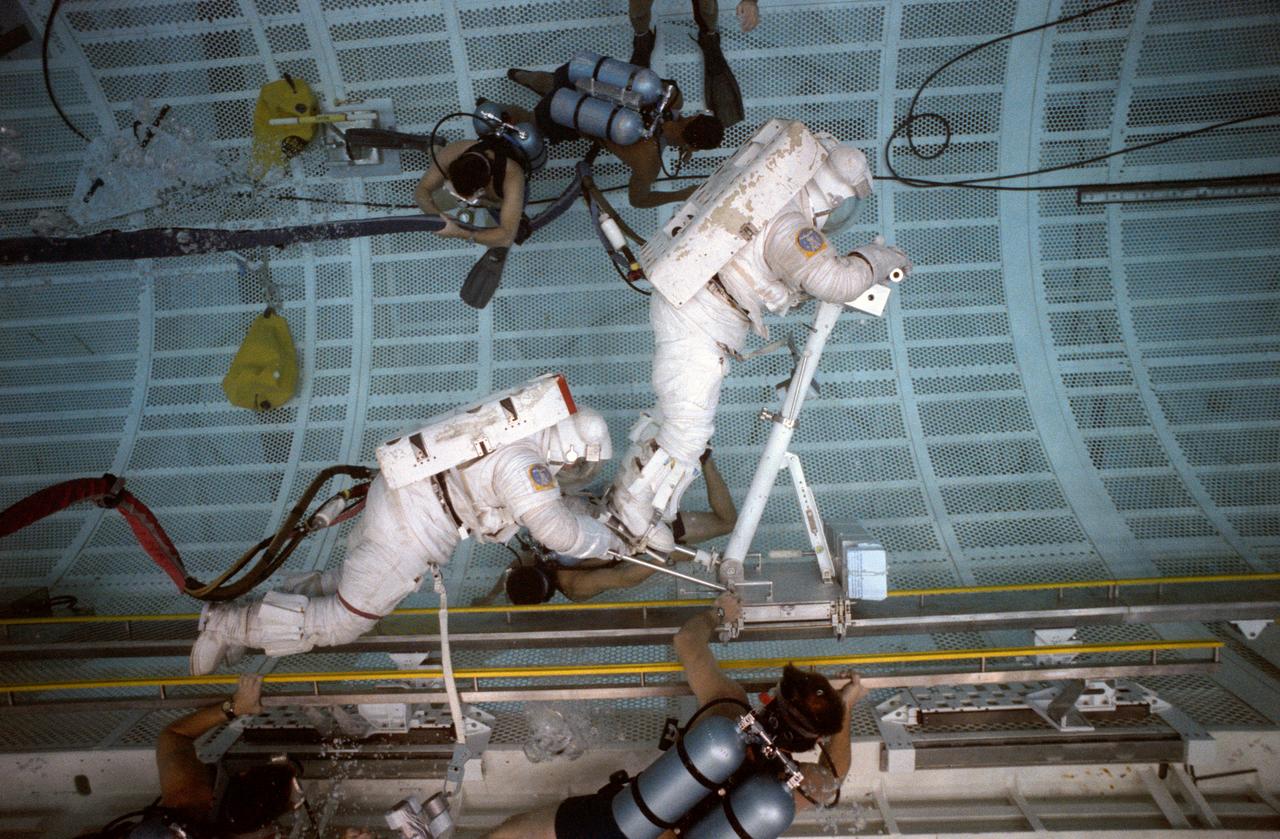
S89-46985 (October 1989) --- Astronauts Jerry L Ross and Jerome (Jay) Apt, STS-37 mission specialists, practice a spacewalk they will perform on that flight. The experiment uses an electrically powered version of the Crew and Equipment Translation Aid (CETA), a type of railroad handcart planned as a spacewalker's transportation system along the truss of Space Station Freedom. Apt is pulling Ross along to test the cart's ability to carry a person plus cargo.
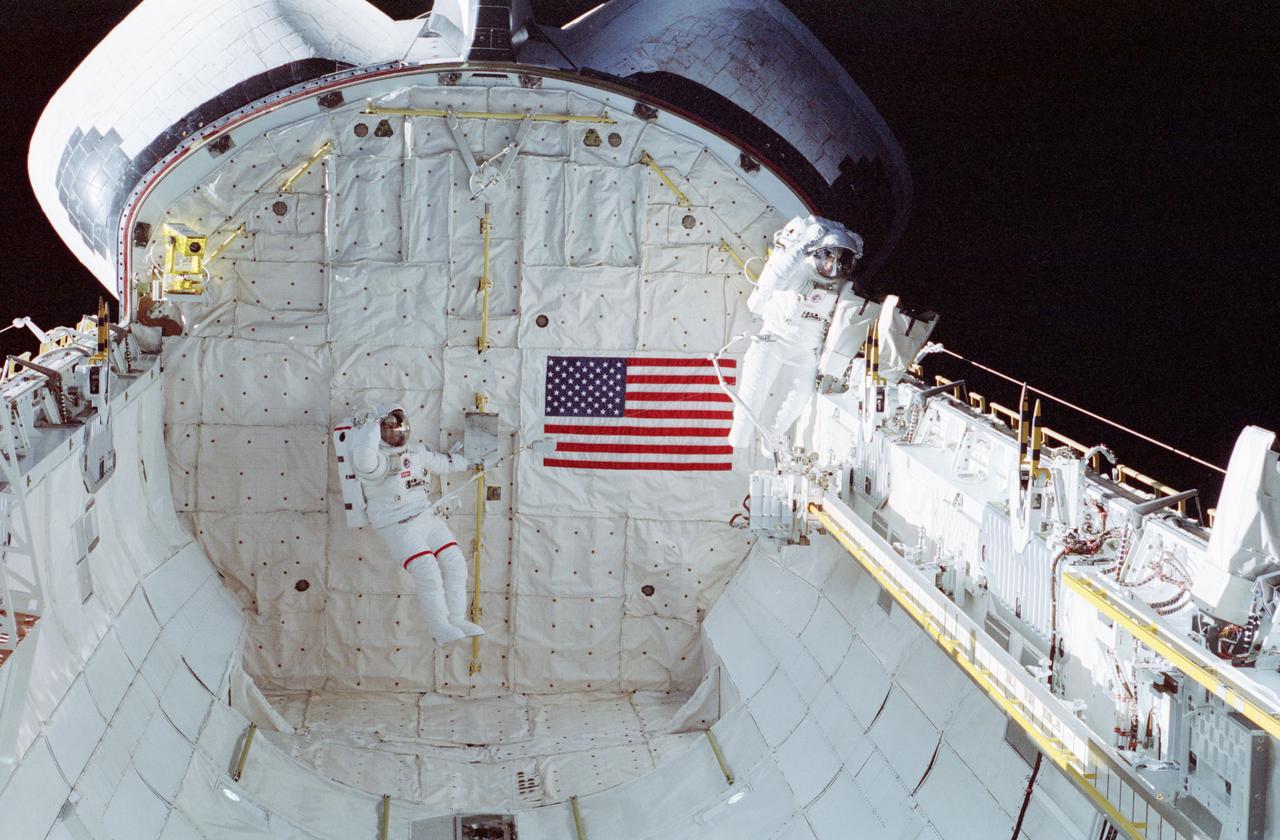
During their STS-37 extravehicular activity (EVA), Mission Specialist (MS) Jerry L. Ross (left) and MS Jerome Apt, in the aft section of Atlantis', Orbiter Vehicle (OV) 104's, payload bay (PLB), turn and wave to their fellow crewmembers who are overseeing the activity from inside the crew compartment. Ross is tethered to the guidewire running along the PLB port side. Apt has reached the end of the Crew and Equipment Translation Aid (CETA) deployable track via the manual hand over hand cart.
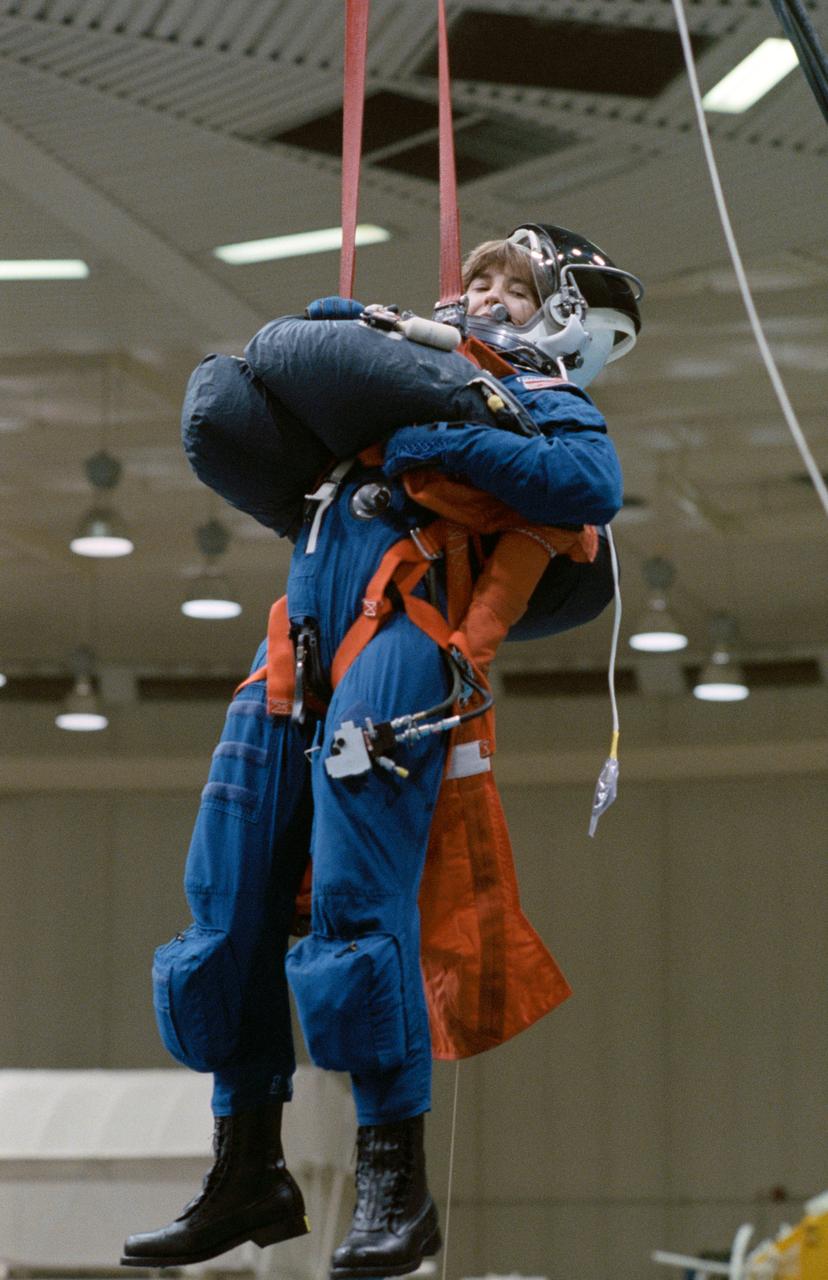
S90-45238 (25 June 1990) ---- Astronaut Linda M. Godwin, STS 37 mission specialist, simulates emergency egress from a Space Shuttle. The training session was held in the Johnson Space Center's (JSC) weightless environment training facility (WET-F). The 25-ft. pool in the facility served as a simulated ocean into which a parachute landing might be made. Early next year, Godwin, along with four other astronauts, will fly onboard Atlantis for a five-day mission.
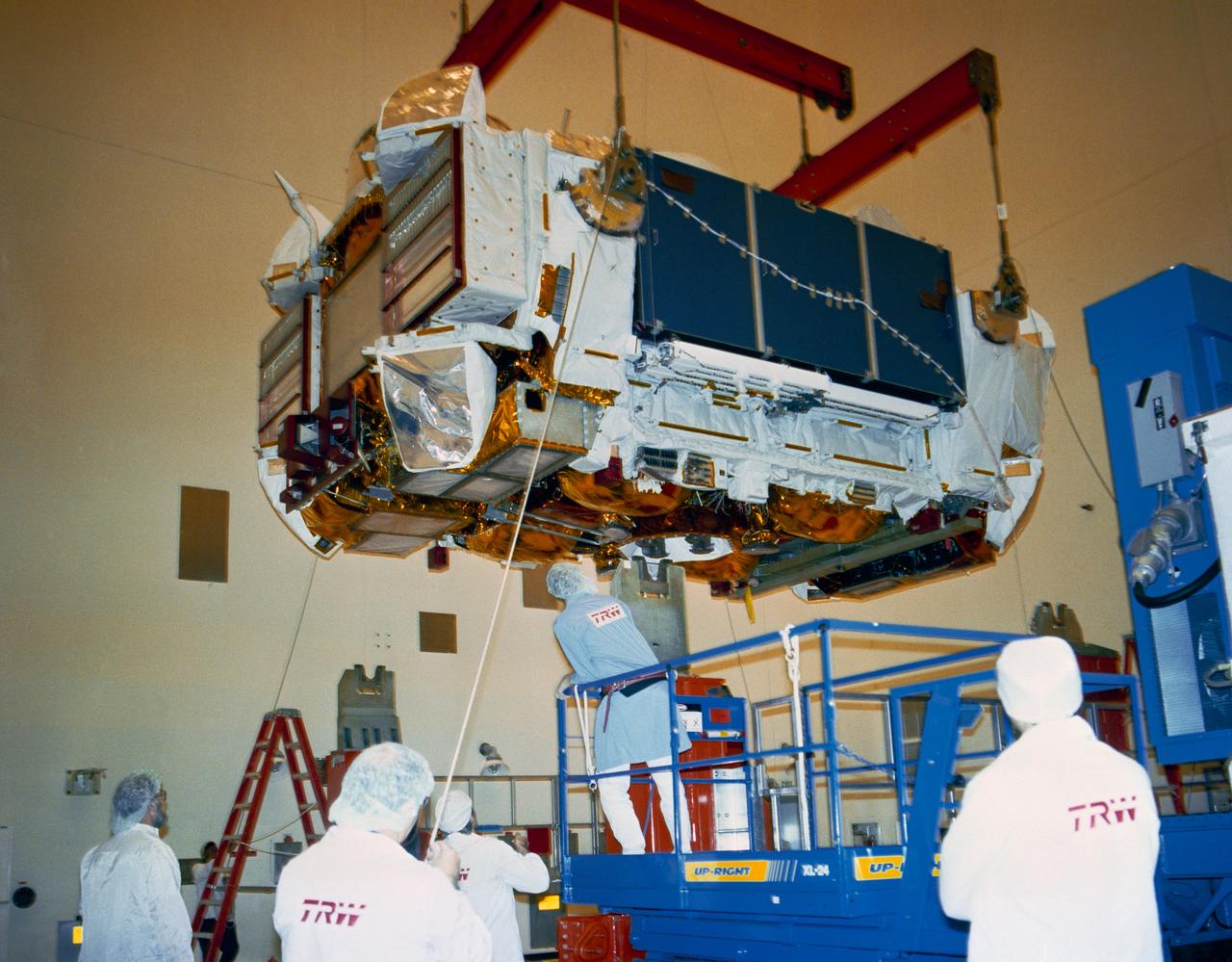
S90-36709 (8 Feb 8, 1990) --- Workers at the Payload Hazardous Servicing Facility are removing the Gamma Ray Observatory from its storage container. GRO, one of four NASA Great Observatories, arrived at the Kennedy Space Center (KSC) February 6 from the California plant of builder TRW. Weighing a massive 34,700 pounds, GRO will be the heaviest payload without an upper stage ever carried aboard the space shuttle. It is scheduled for deployment from the orbiter Atlantis during STS-37 in November 1990.

STS037-18-032 (7 April 1991) --- Astronaut Jerry L. Ross, mission specialist, peers into Space Shuttle Atlantis' cabin and is photographed by a fellow crew member using a 35mm camera. Ross was in the space shuttle's cargo bay to join astronaut Jerome (Jay) Apt in accomplishing a repair task on the Gamma Ray Observatory (GRO), seen in left frame. The two had been called upon to manually extend the high-gain antenna on GRO.
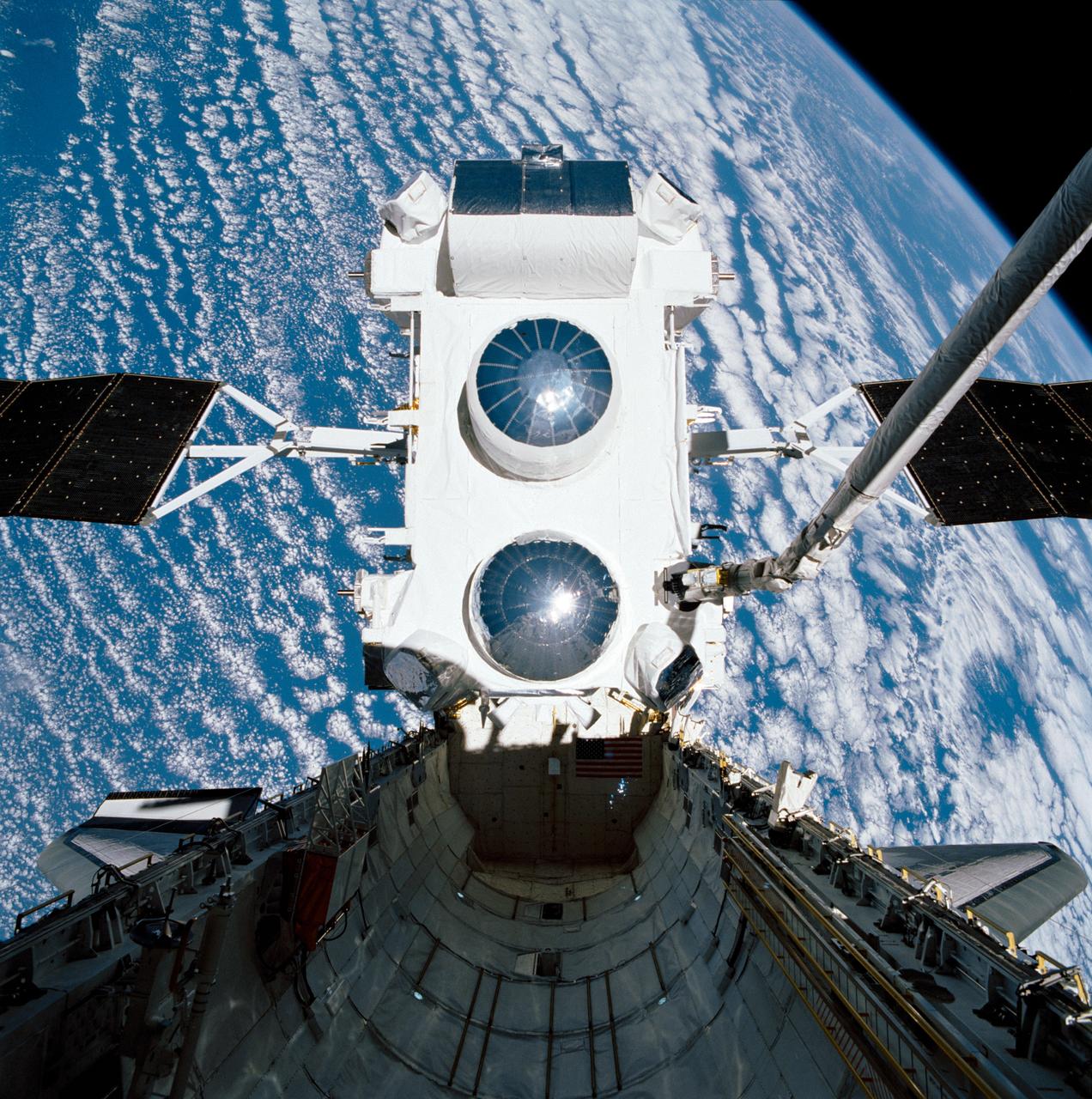
STS037-99-098 (7 April 1991) --- Backdropped against clouds over water, the Gamma Ray Observatory (GRO) is still in the grasp of the Space Shuttle Atlantis' Remote Manipulator System (RMS) in this 70mm scene. A special Extravehicular Activity (EVA) was required by astronauts Jerry L. Ross and Jerome (Jay) Apt to manually extend the high-gain antenna on GRO. The five-member crew capped off a busy Flight Day 3 by releasing the heavy payload.
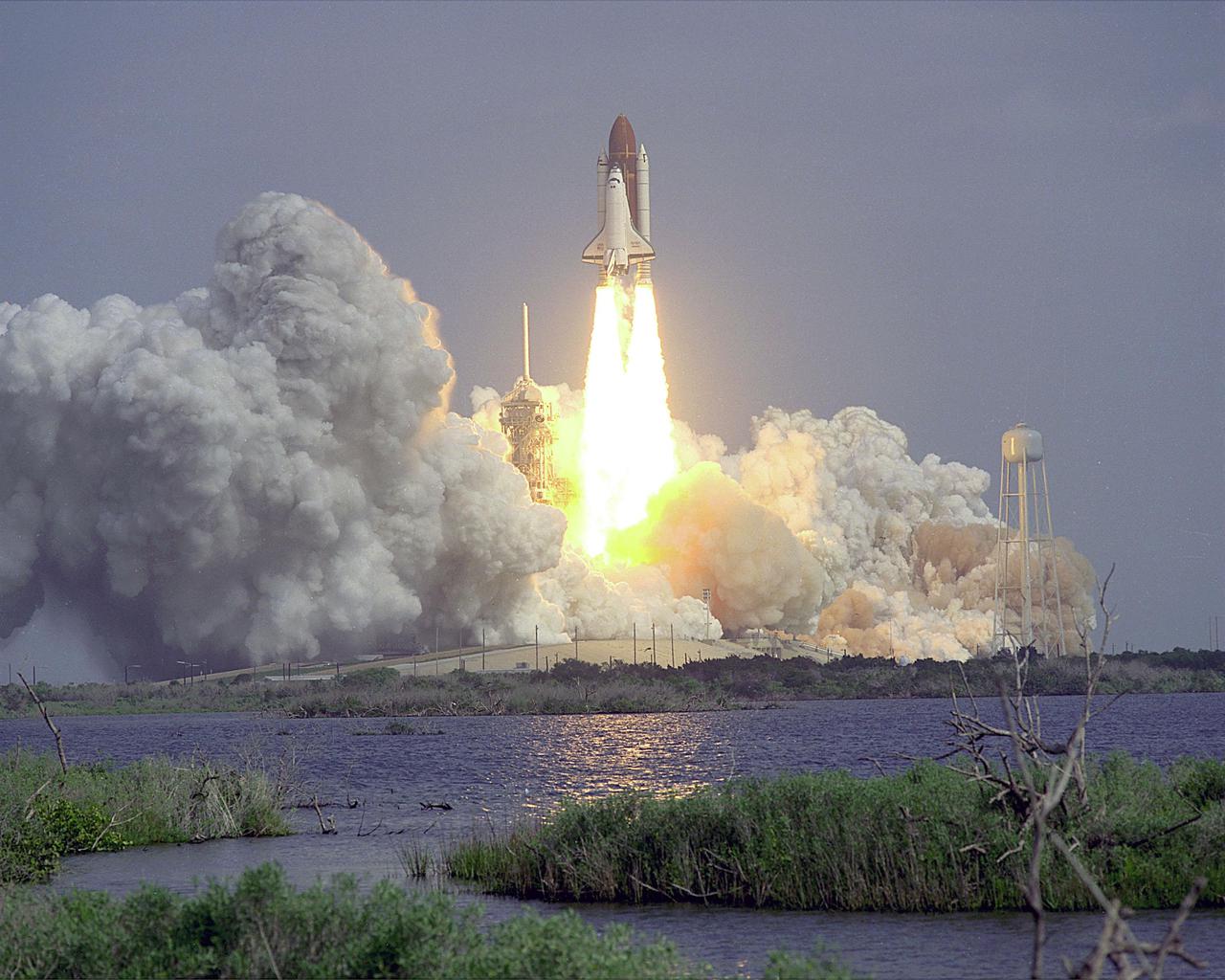
KENNEDY SPACE CENTER, FLA. -- STS-37: Atlantis

This photograph shows the Compton Gamma-Ray Observatory (GRO) being deployed by the Remote Manipulator System (RMS) arm aboard the Space Shuttle Atlantis during the STS-37 mission in April 1991. The GRO reentered Earth atmosphere and ended its successful mission in June 2000. For nearly 9 years, the GRO Burst and Transient Source Experiment (BATSE), designed and built by the Marshall Space Flight Center (MSFC), kept an unblinking watch on the universe to alert scientists to the invisible, mysterious gamma-ray bursts that had puzzled them for decades. By studying gamma-rays from objects like black holes, pulsars, quasars, neutron stars, and other exotic objects, scientists could discover clues to the birth, evolution, and death of stars, galaxies, and the universe. The gamma-ray instrument was one of four major science instruments aboard the Compton. It consisted of eight detectors, or modules, located at each corner of the rectangular satellite to simultaneously scan the entire universe for bursts of gamma-rays ranging in duration from fractions of a second to minutes. In January 1999, the instrument, via the Internet, cued a computer-controlled telescope at Las Alamos National Laboratory in Los Alamos, New Mexico, within 20 seconds of registering a burst. With this capability, the gamma-ray experiment came to serve as a gamma-ray burst alert for the Hubble Space Telescope, the Chandra X-Ray Observatory, and major gound-based observatories around the world. Thirty-seven universities, observatories, and NASA centers in 19 states, and 11 more institutions in Europe and Russia, participated in the BATSE science program.
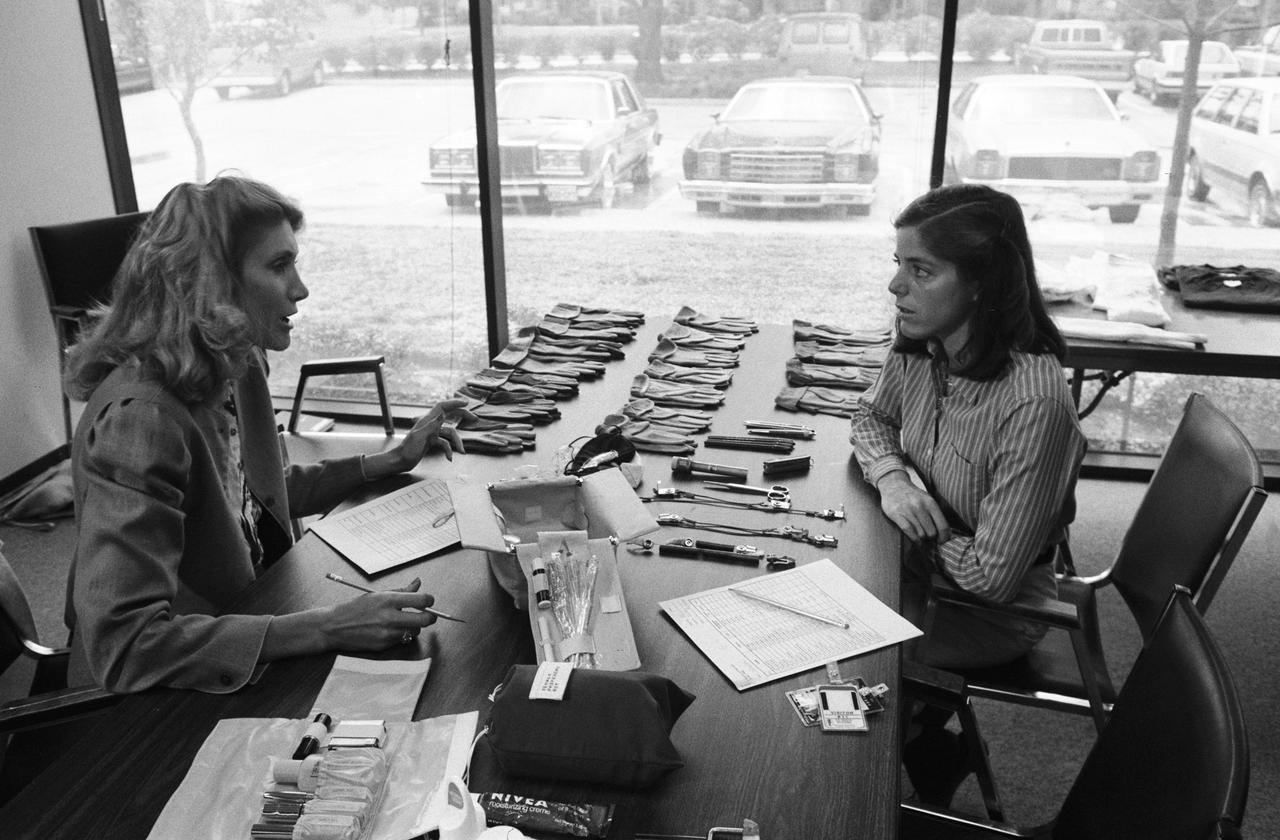
Views of STS-33/51L crew personnel Prime McAuliffe and Backup Morgan at the ILC Facility during clothing selection and Building #37 during food sampling, and with the rest of the STS-33/51L crew. 40074: "Teacher-in-Space" Participant Barbara Morgan (right) is briefed on her suit and on personal hygiene equipment to be used on the STS-51L Mission. 1. JSC - Education Program (Teacher in Space) 2. Barbara Morgan 3. Christa McAuliffe 4. STS-33/51L - Crew Training (Uniforms/Food/Crew)
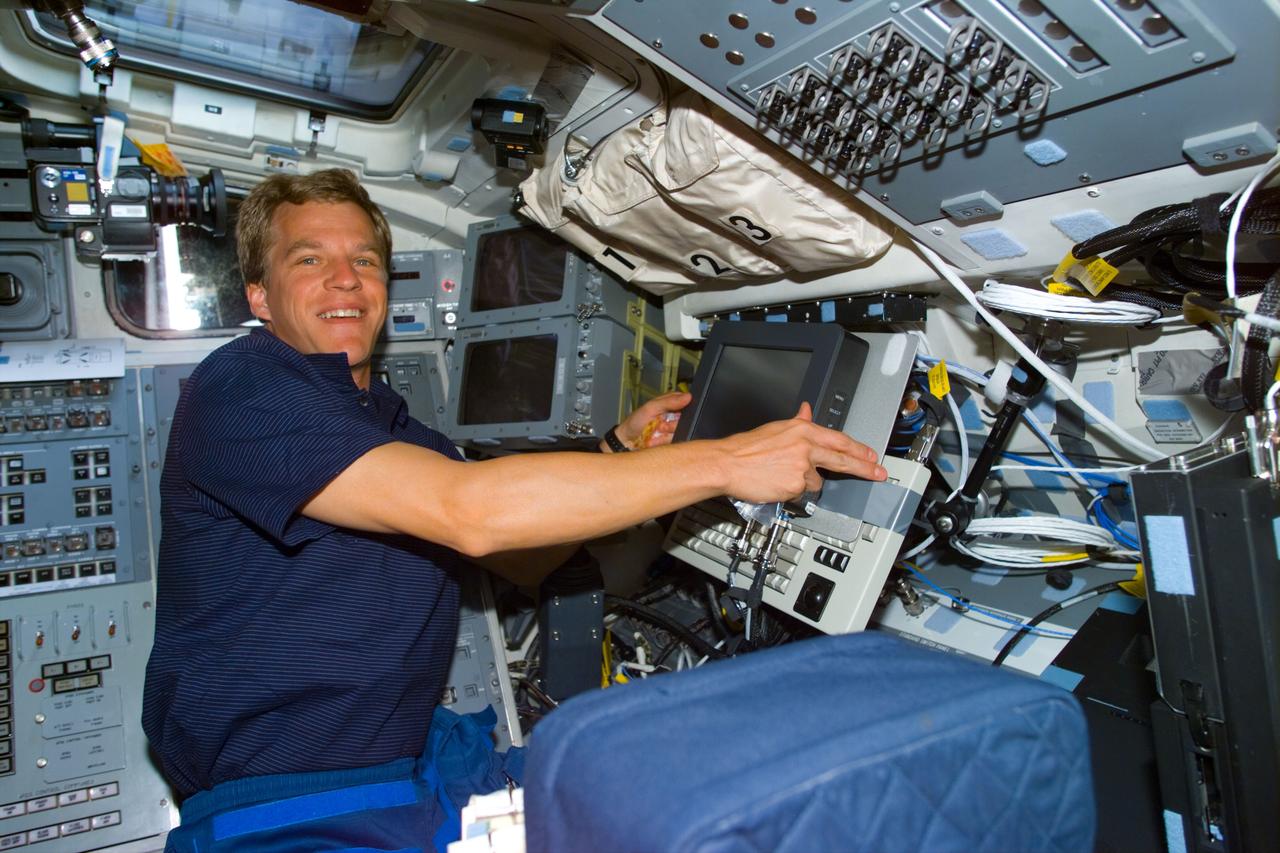
STS095-E-5181 (31 Oct. 1998) --- Astronaut Scott E. Parazynski, STS-95 mission specialist, pictured at a lap top computer on the flight deck of Space Shuttle Discovery. The photo was taken with an electronic still camera (ESC) at 02:05:37, Oct. 31.
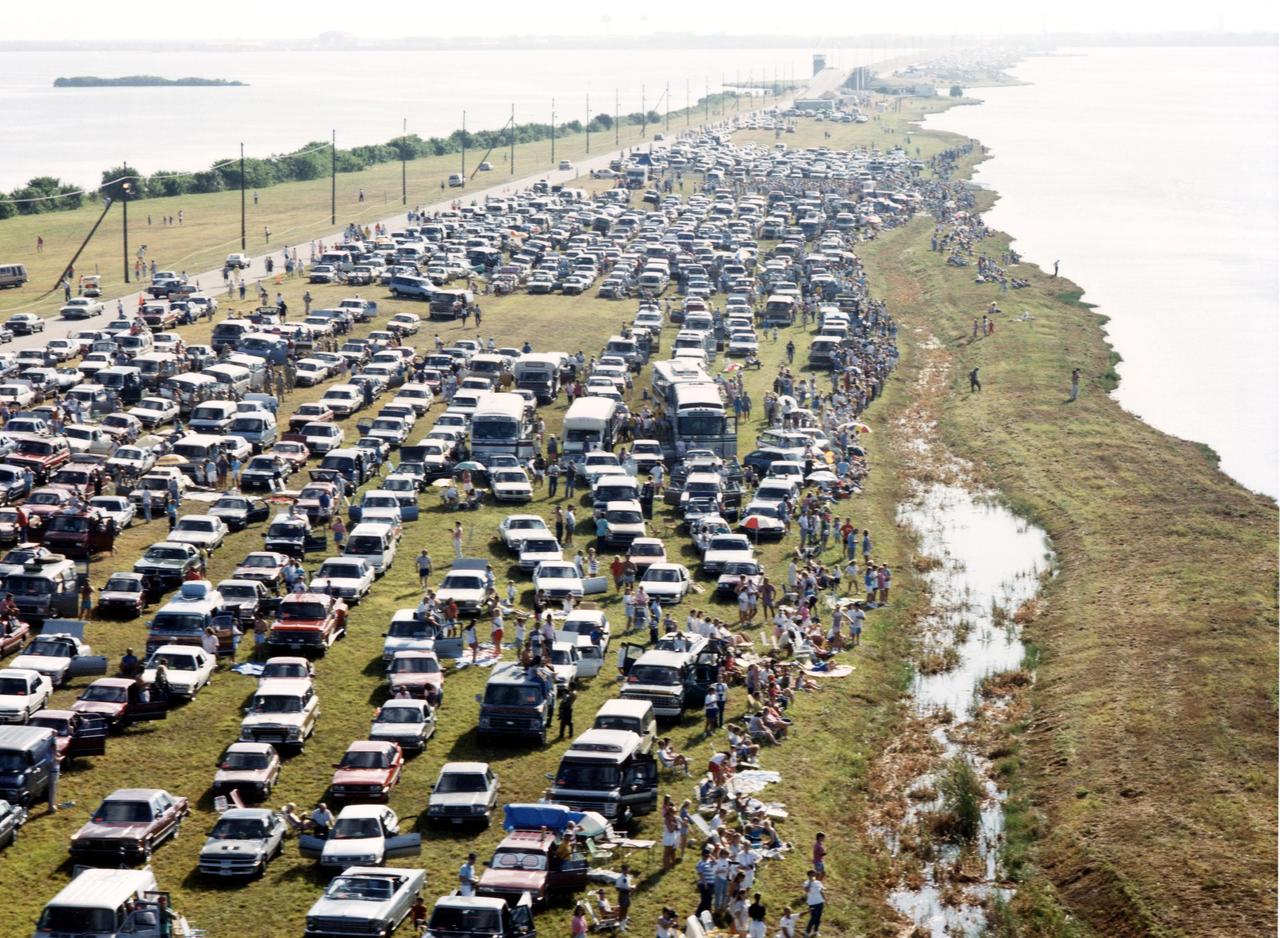
NASA employees, their family and friends gather on the NASA causeway over the Banana River, south of Kennedy Space Center, the morning of the launch of STS-26 and the Space Shuttle Discovery. An estimated 1 million people were expected to view the 11:37 a.m. launch from various locations in Central Florida

Smoke from the burning oil fields to the north of Kuwait City, seen on the south shore of Kuwayt Bay, almost totally obscures the view of the tiny, but oil rich, nation of Kuwait (30.0N, 48.0E). During the brief war between Iraq and the Allied forces, many of the oil wells in Kuwait were destroyed and set afire. For several months, those fires burned out of control, spewing wind borne smoke and ash for hundreds of miles.
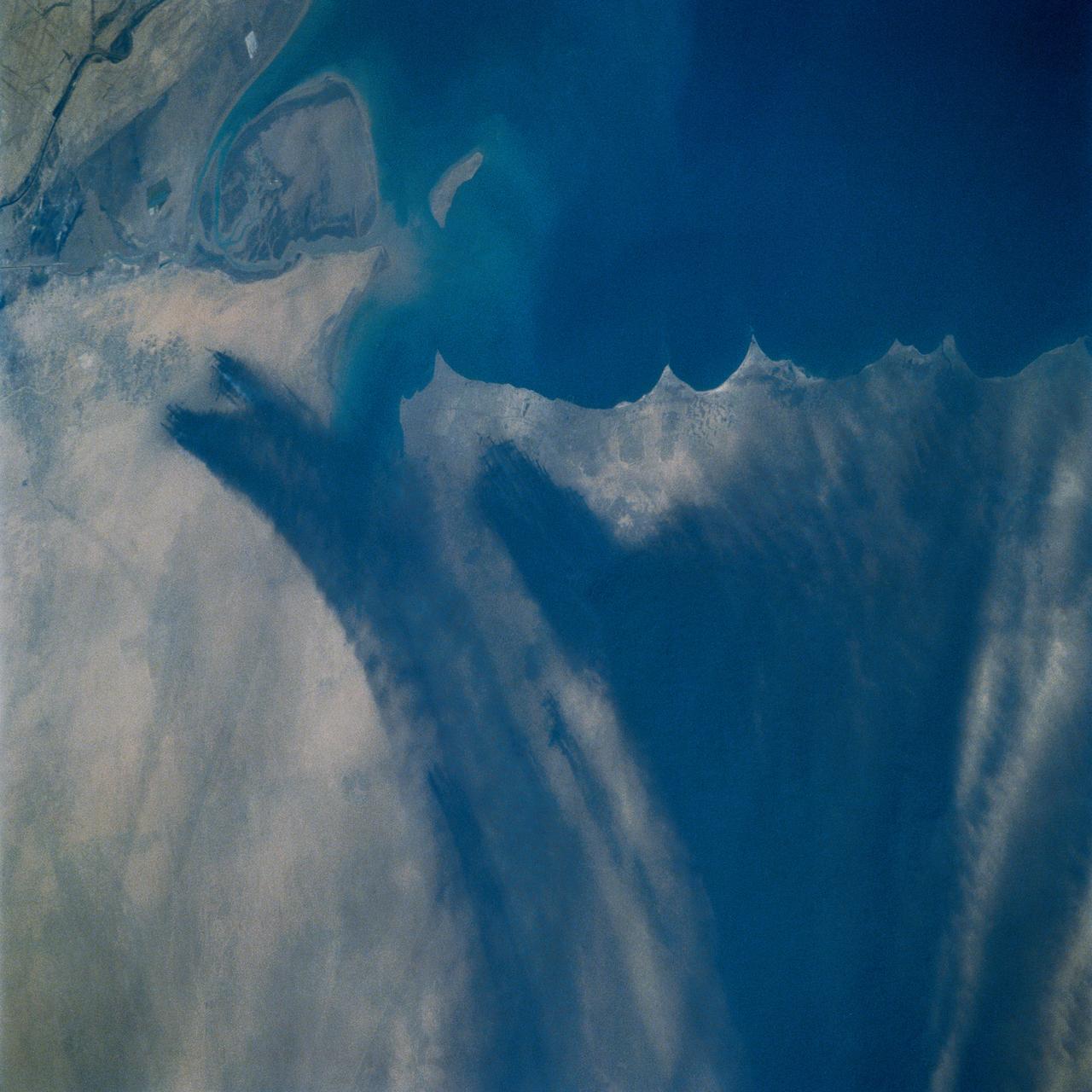
Smoke from the burning oil fields to the north and south of Kuwait City, seen on the south shore of Kuwayt Bay almost totally obscures the view of the tiny, but oil rich, nation of Kuwait (29.0N, 48.0E). During the brief war between Iraq and the Allied forces, many of the oil wells in Kuwait were destroyed and set afire. For several months, those fires burned out of control, spewing wind borne smoke and ash for hundreds of miles.
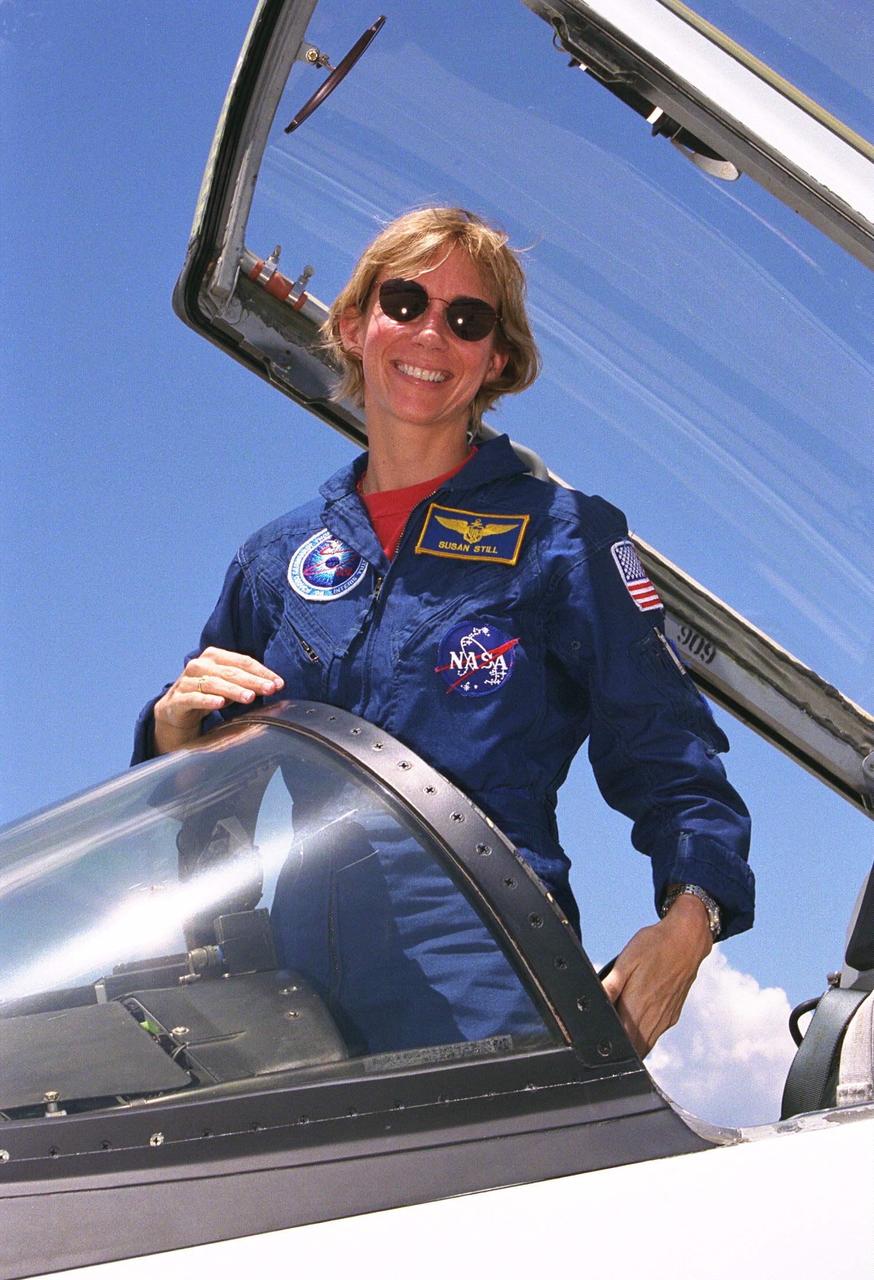
STS-94 Pilot Susan Leigh Still arrives at the Shuttle Landing Facility aboard a T-38 jet in preparation for the reflight of the Microgravity Science Laboratory-1 mission. Launch is scheduled for July 1, 1997, at 2:37 p.m. EDT. The laboratory was scheduled to fly again with the full complement of STS-83 experiments after that mission was cut short due to a faulty fuel cell. During the scheduled 16-day STS-94 mission, the experiments will be used to test some of the hardware, facilities and procedures that are planned for use on the International Space Station while the flight crew conducts combustion, protein crystal growth and materials processing experiments
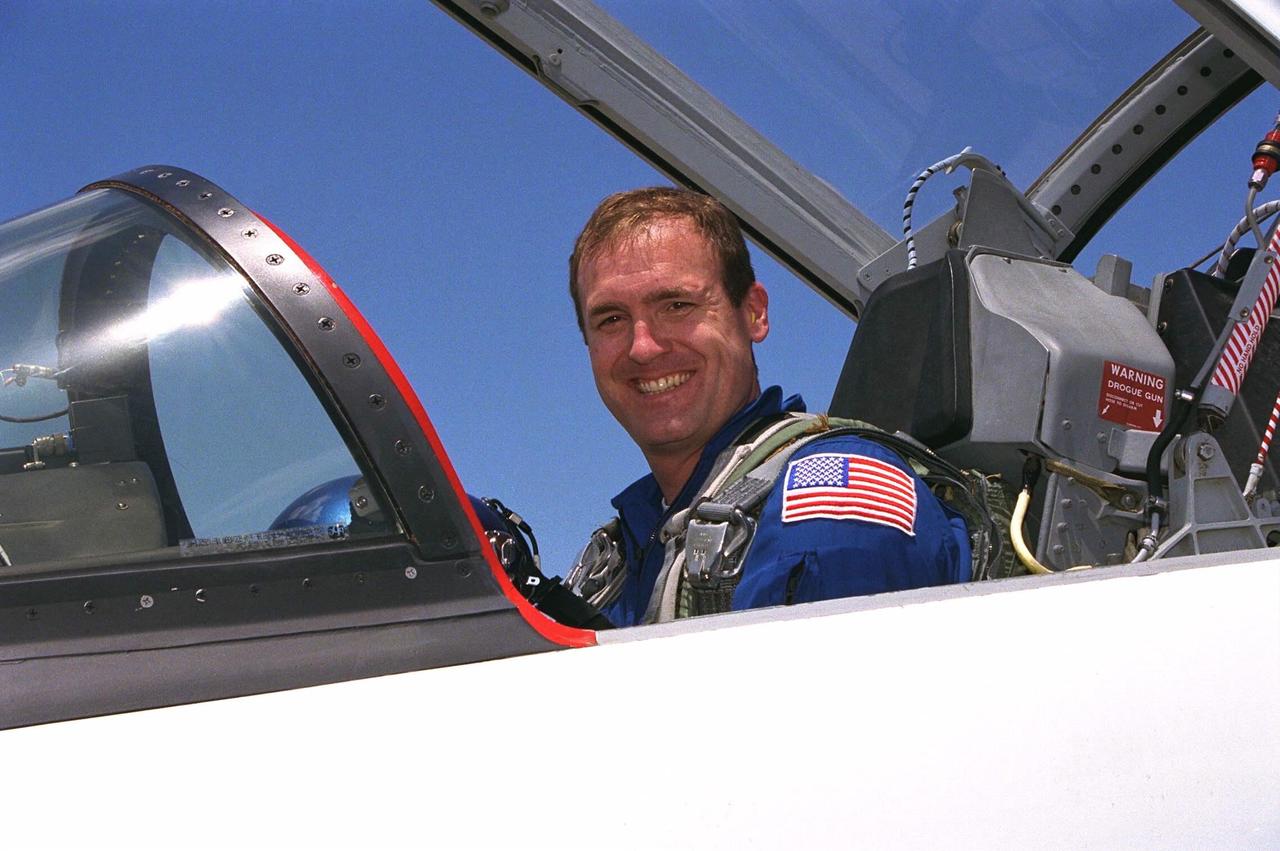
STS-94 Commander James D. Halsell, Jr., arrives at the Shuttle Landing Facility aboard a T-38 jet in preparation for the reflight of the Microgravity Science Laboratory-1 mission. Launch is scheduled for July 1, 1997, at 2:37 p.m. EDT. The laboratory was scheduled to fly again with the full complement of STS-83 experiments after that mission was cut short due to a faulty fuel cell. During the scheduled 16-day STS-94 mission, the experiments will be used to test some of the hardware, facilities and procedures that are planned for use on the International Space Station while the flight crew conducts combustion, protein crystal growth and materials processing experiments
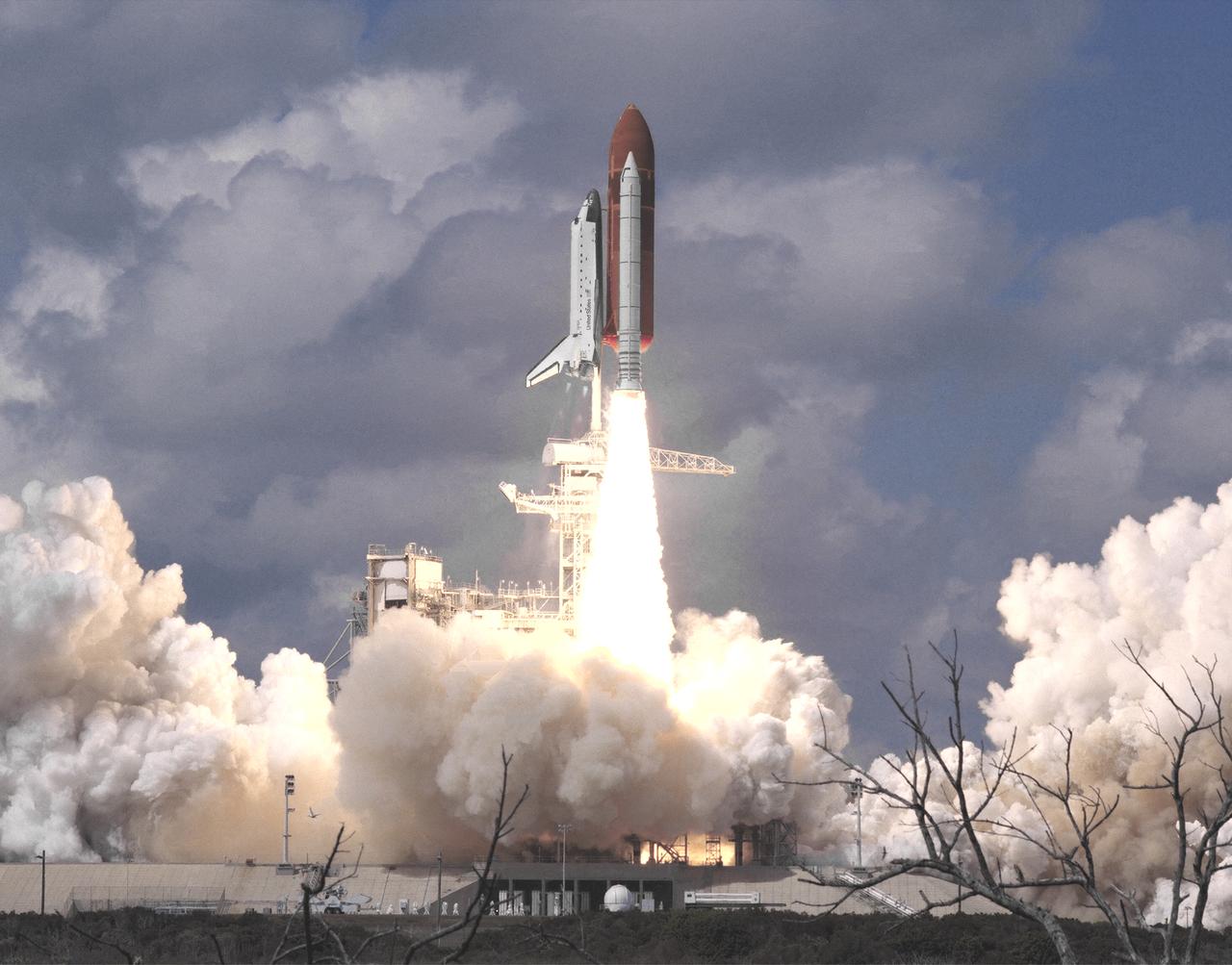
The Space Shuttle Discovery takes off from Launch Pad 39B at the Kennedy Space Center, Florida, to being Mission STS-26 on 29 September 1988,11:37:00 a.m. EDT. The 26th shuttle mission lasted four days, one hour, zero minutes, and 11 seconds. Discovery landed 3 October 1988, 9:37:11 a.m. PDT, on Runway 17 at Edwards Air Force Base, California. Its primary payload, NASA Tracking and Data Relay Satellite-3 (TDRS-3) attached to an Inertial Upper Stage (IUS), became the second TDRS deployed. After deployment, IUS propelled the satellite to a geosynchronous orbit. The crew consisted of Frederick H. Hauck, Commander; Richard O. Covey, Pilot; John M. Lounge, Mission Specialist 1; George D. Nelson, Mission Specialist 2; and David C. Hilmers, Mission Specialist 3.
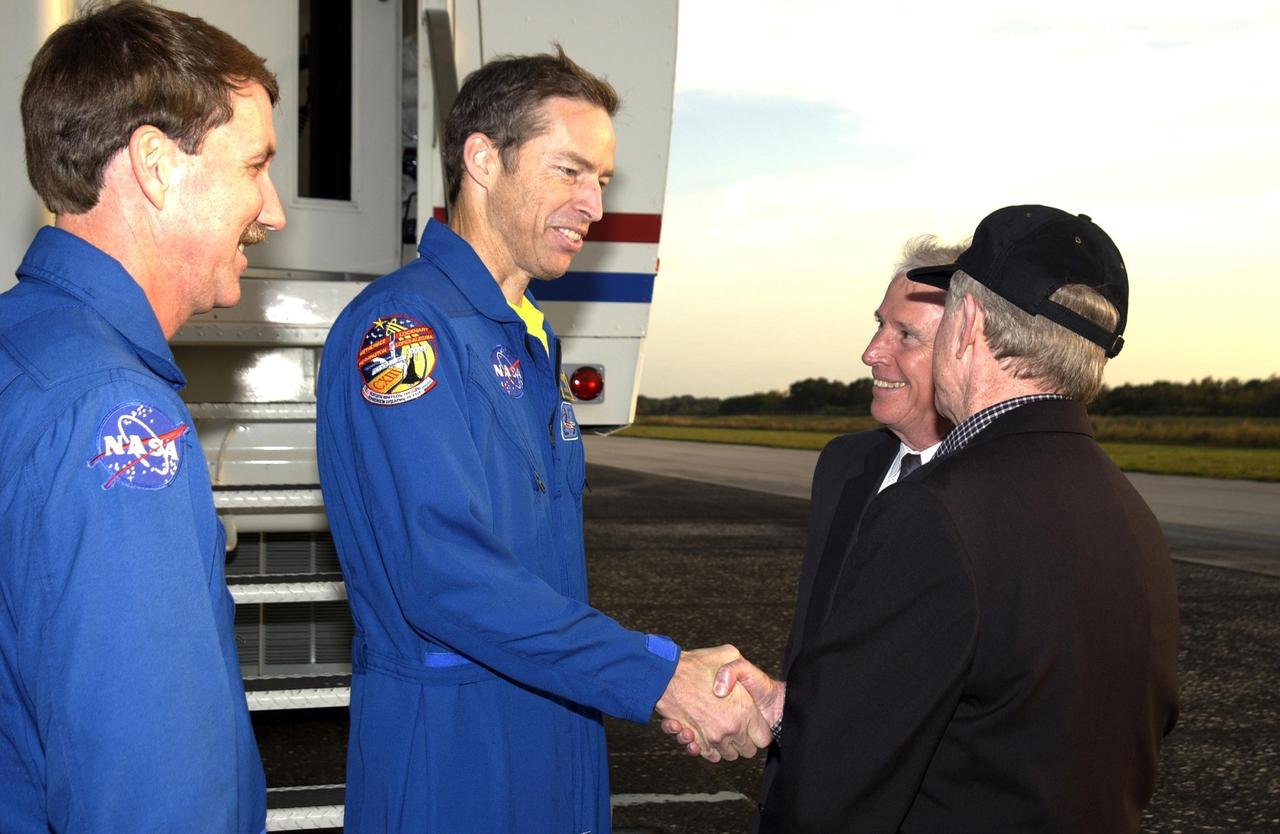
KENNEDY SPACE CENTER, FLA. - STS-113 Commander James Wetherbee shakes hands with KSC Director Roy D. Bridges Jr. following landing at the Shuttle Landing Facility. From left are Kent Rominger, Deputy Director of Flight Crew Operations, Wetherbee, Dr. Daniel R. Mulville, NASA Associate Deputy Administrator, and Bridges. Commander Wetherbee earlier guided Space Shuttle Endeavour to a flawless touchdown on runway 33 at the Shuttle Landing Facility after completing the 13-day, 18-hour, 48-minute, 5.74-million mile STS-113 mission to the International Space Station. Main gear touchdown was at 2:37:12 p.m. EST, nose gear touchdown was at 2:37:23 p.m., and wheel stop was at 2:38:25 p.m. Poor weather conditions thwarted landing opportunities until a fourth day, the first time in Shuttle program history that a landing has been waved off for three consecutive days. The orbiter also carried the other members of the STS-113 crew, Pilot Paul Lockhart and Mission Specialists Michael Lopez-Alegria and John Herrington, as well as the returning Expedition Five crew, Commander Valeri Korzun, ISS Science Officer Peggy Whitson and Flight Engineer Sergei Treschev. The installation of the P1 truss on the International Space Station was accomplished during the mission.
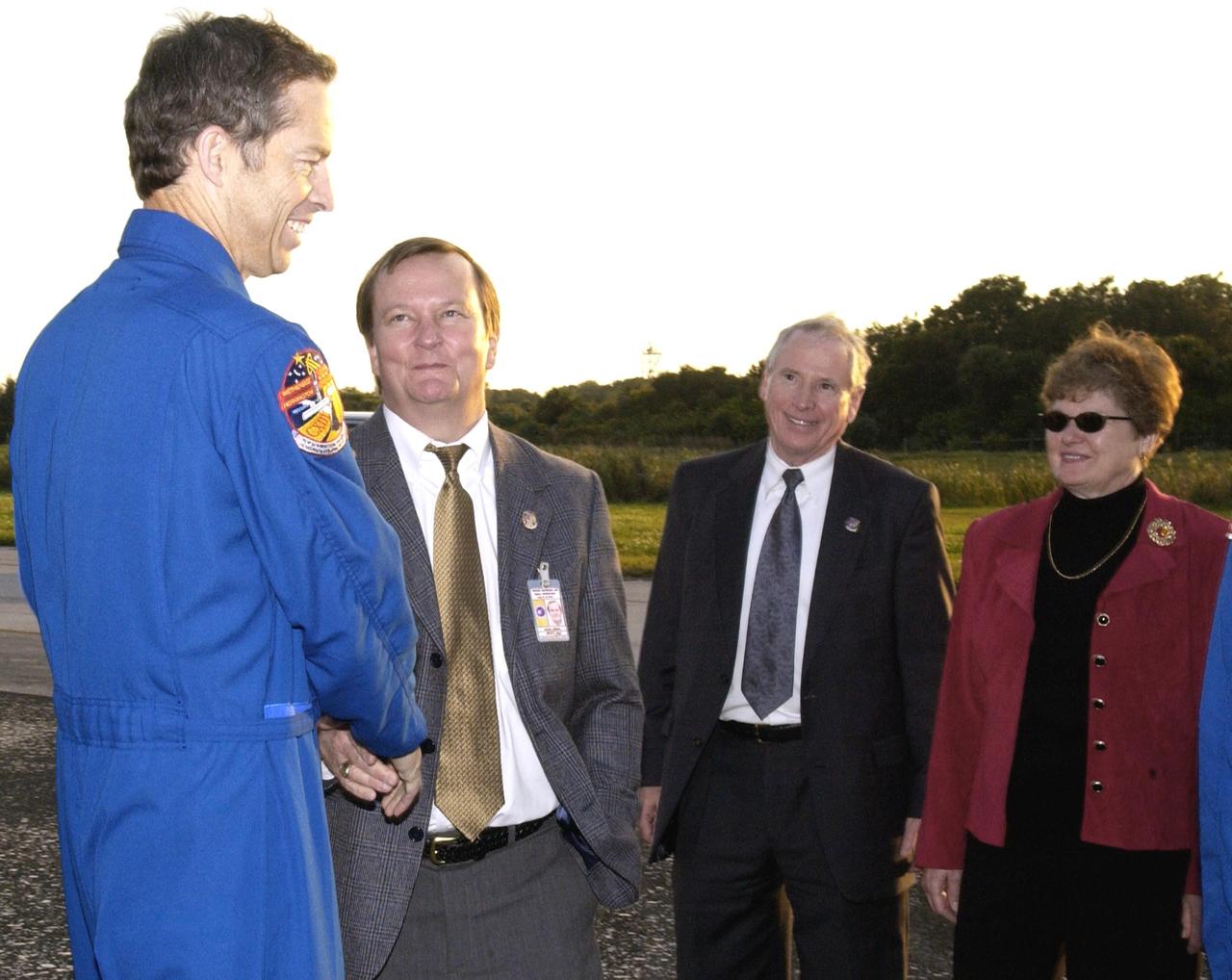
KENNEDY SPACE CENTER, FLA. - STS-113 Commander James Wetherbee shakes hands with Michael D. Leinbach, Shuttle Launch Director at KSC, on the runway of the Shuttle Landing Facility following the landing of Endeavour. From left are Wetherbee, Leinbach, Dr. Daniel R. Mulville, NASA Associate Deputy Administrator, and Mrs. Mulville. Commander Wetherbee earlier guided Space Shuttle Endeavour to a flawless touchdown on runway 33 at the Shuttle Landing Facility after completing the 13-day, 18-hour, 48-minute, 5.74-million mile STS-113 mission to the International Space Station. Main gear touchdown was at 2:37:12 p.m. EST, nose gear touchdown was at 2:37:23 p.m., and wheel stop was at 2:38:25 p.m. Poor weather conditions thwarted landing opportunities until a fourth day, the first time in Shuttle program history that a landing has been waved off for three consecutive days. The orbiter also carried the other members of the STS-113 crew, Pilot Paul Lockhart and Mission Specialists Michael Lopez-Alegria and John Herrington, as well as the returning Expedition Five crew, Commander Valeri Korzun, ISS Science Officer Peggy Whitson and Flight Engineer Sergei Treschev. The installation of the P1 truss on the International Space Station was accomplished during the mission.
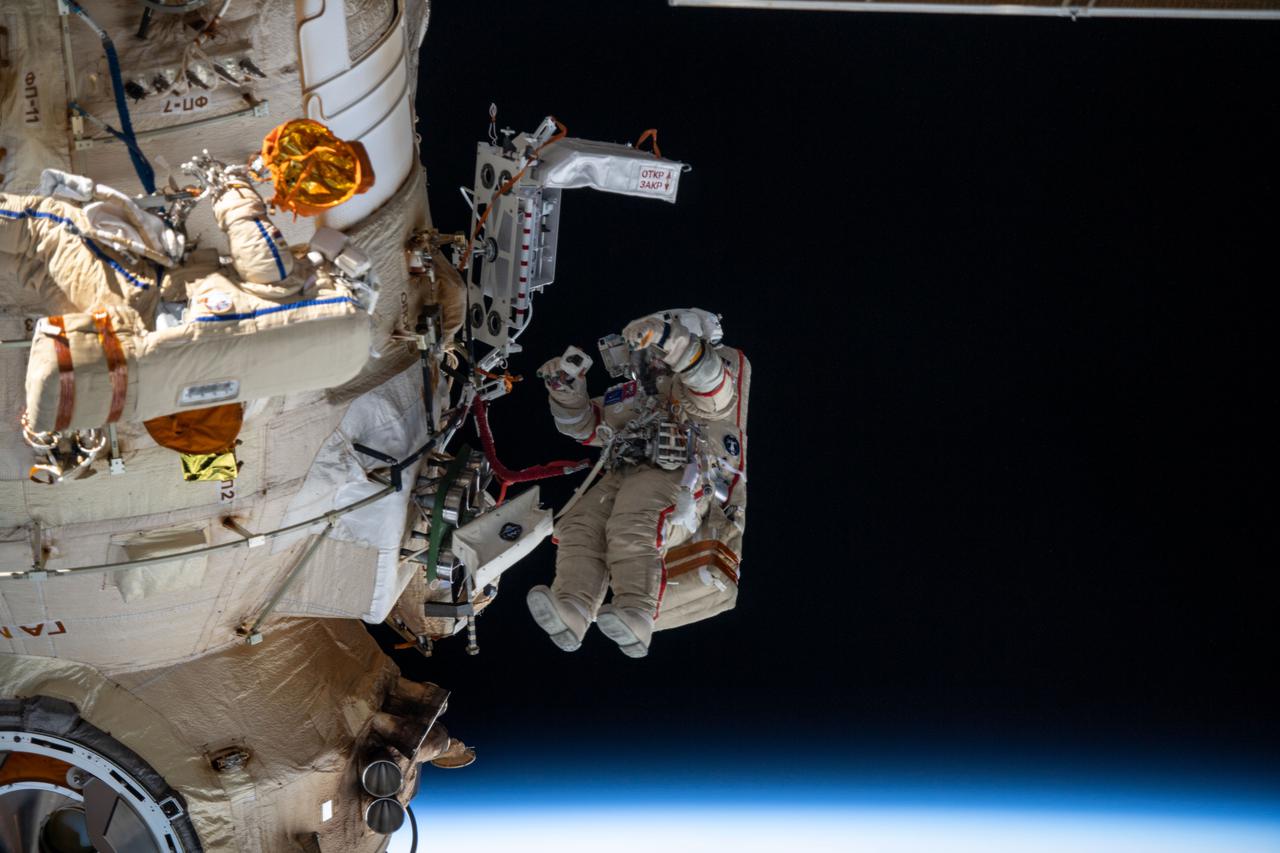
iss067e022065 (April 18, 2022) --- Two spacewalkers from Roscosmos are pictured working outside the Nauka multipurpose laboratory module as the International Space Station orbited 261 miles above the Gulf of St. Lawrence off the coast of Îsles de la Madeleine. Cosmonauts (from left) Denis Matveev and Oleg Artemyev worked outside the station's Russian segment for six hours and 37 minutes outfitting Nauka and configuring the European robotic arm.
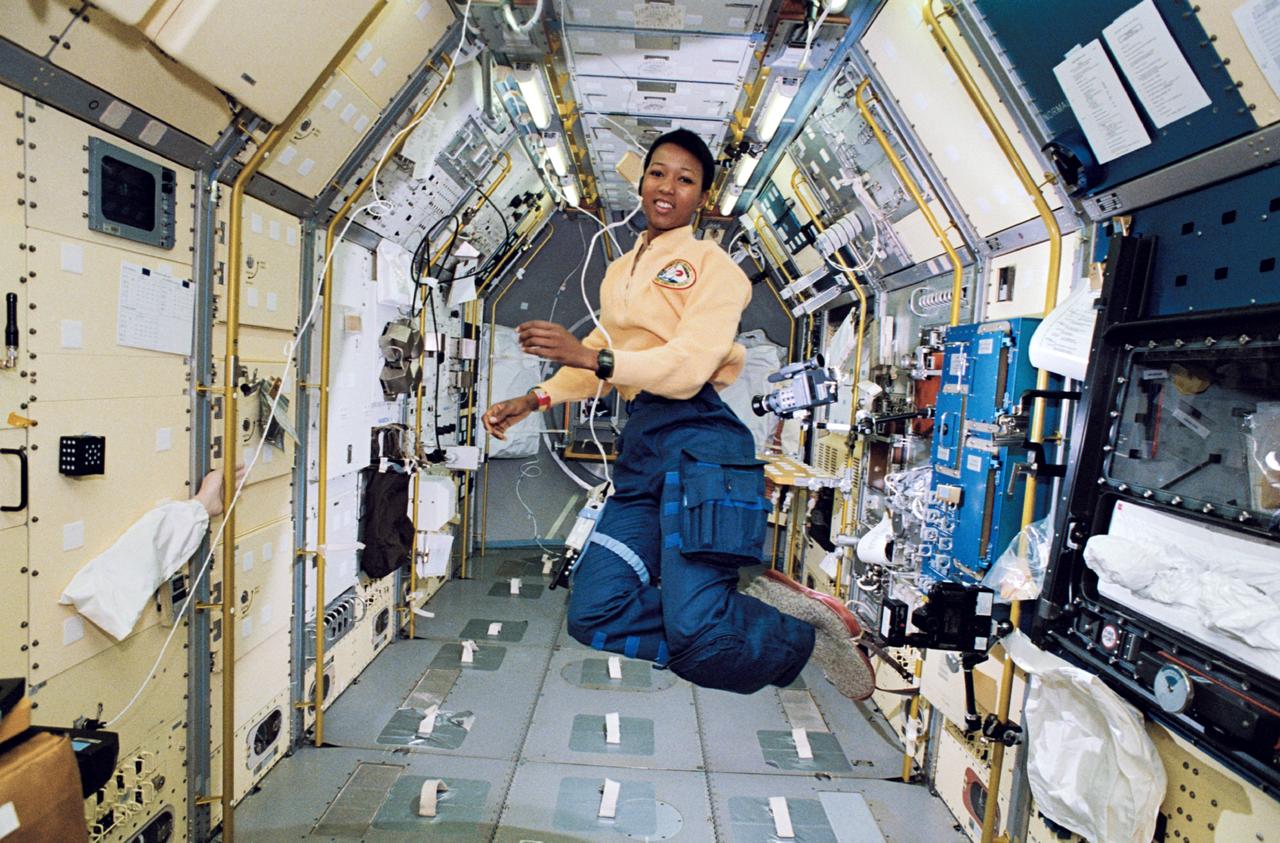
STS047-37-003 (12-20 Sept. 1992) --- Astronaut Mae C. Jemison, STS-47 mission specialist, appears to be clicking her heels in zero-gravity in this 35mm frame photographed in the Science Module aboard the Earth-orbiting Space Shuttle Endeavour. Making her first flight in space, Dr. Jemison was joined by five other NASA astronauts and a Japanese payload specialist for eight days of research in support of the Spacelab-J mission, a joint effort between Japan and the United States.
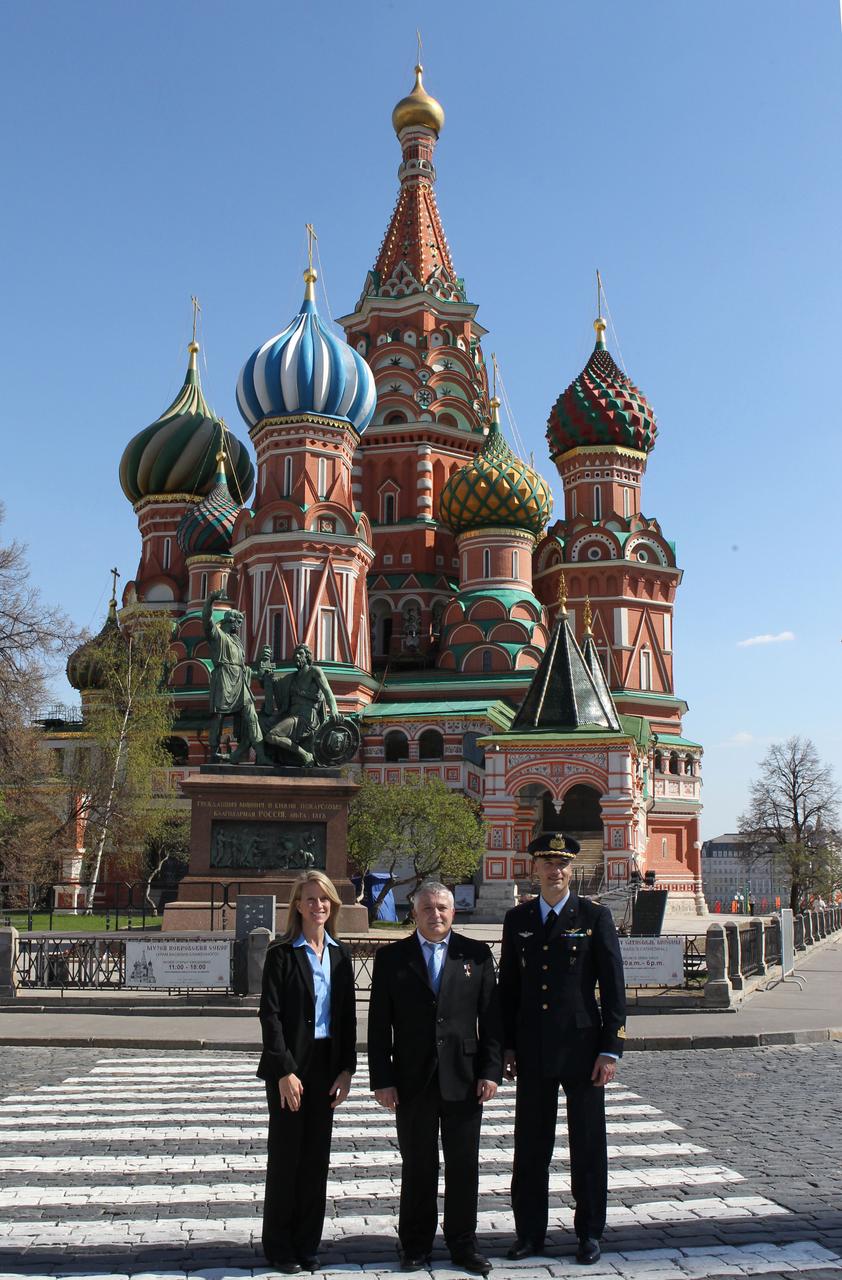
With famed St. Basil’s Cathedral serving as a backdrop, Expedition 36/37 Flight Engineer Karen Nyberg of NASA (left), Soyuz Commander Fyodor Yurchikhin (center) and Flight Engineer Luca Parmitano of the European Space Agency (right) pose for pictures May 8 during a ceremonial tour of Red Square in Moscow. Nyberg, Yurchikhin and Parmitano are preparing for their launch May 29, Kazakh time, in their Soyuz TMA-09M spacecraft from the Baikonur Cosmodrome in Kazakhstan for a six-month mission on the International Space Station. NASA/Stephanie Stoll
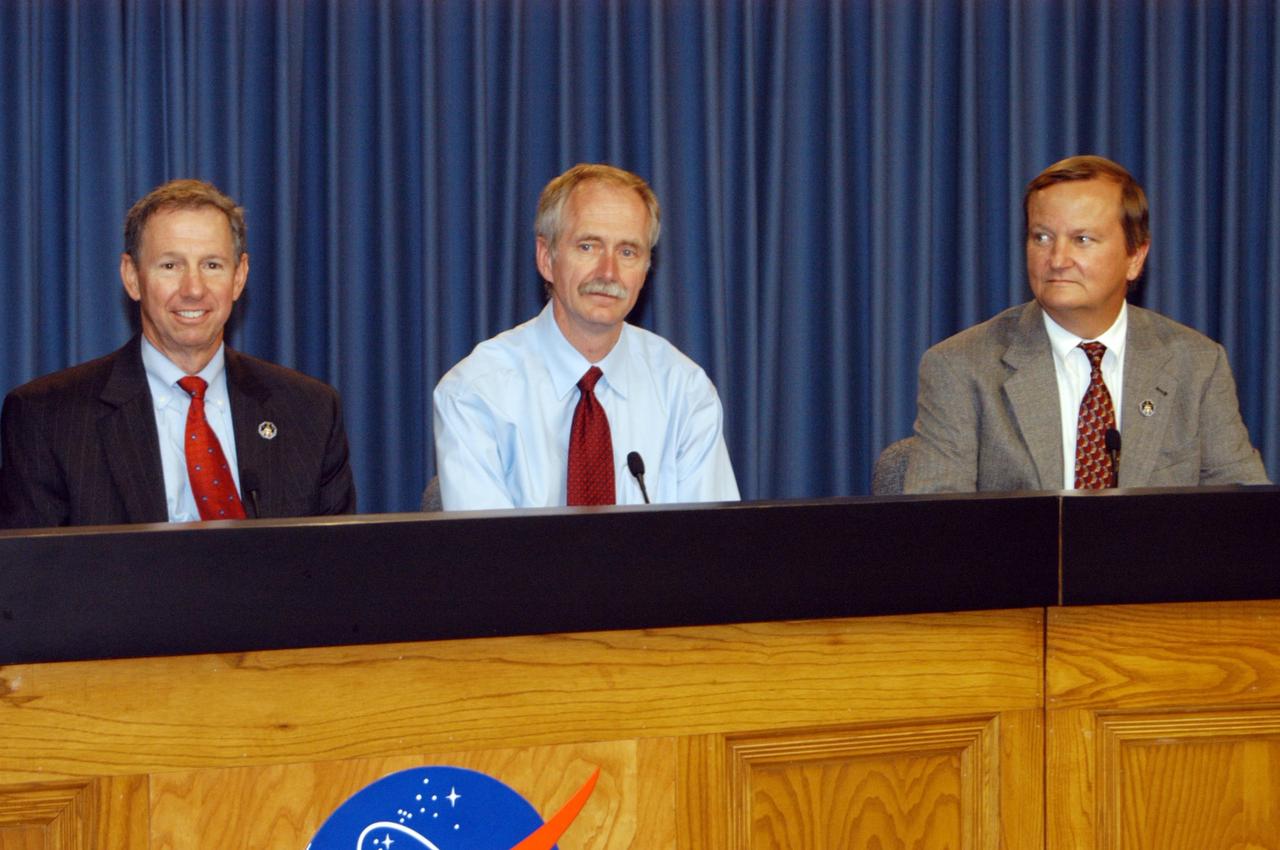
KENNEDY SPACE CENTER, FLA. - A press conference after the landing of the orbiter Discovery and mission STS-121 crew features NASA Administrator Mike Griffin, Associate Administrator for Space Operations Bill Gerstenmaier and Shuttle Launch Director Mike Leinbach. Discovery traveled 5.3 million miles, landing on orbit 202. Mission elapsed time was 12 days, 18 hours, 37 minutes and 54 seconds. The landing is the 62nd at Kennedy Space Center and the 32nd for Discovery. Photo credit: NASA/George Shelton
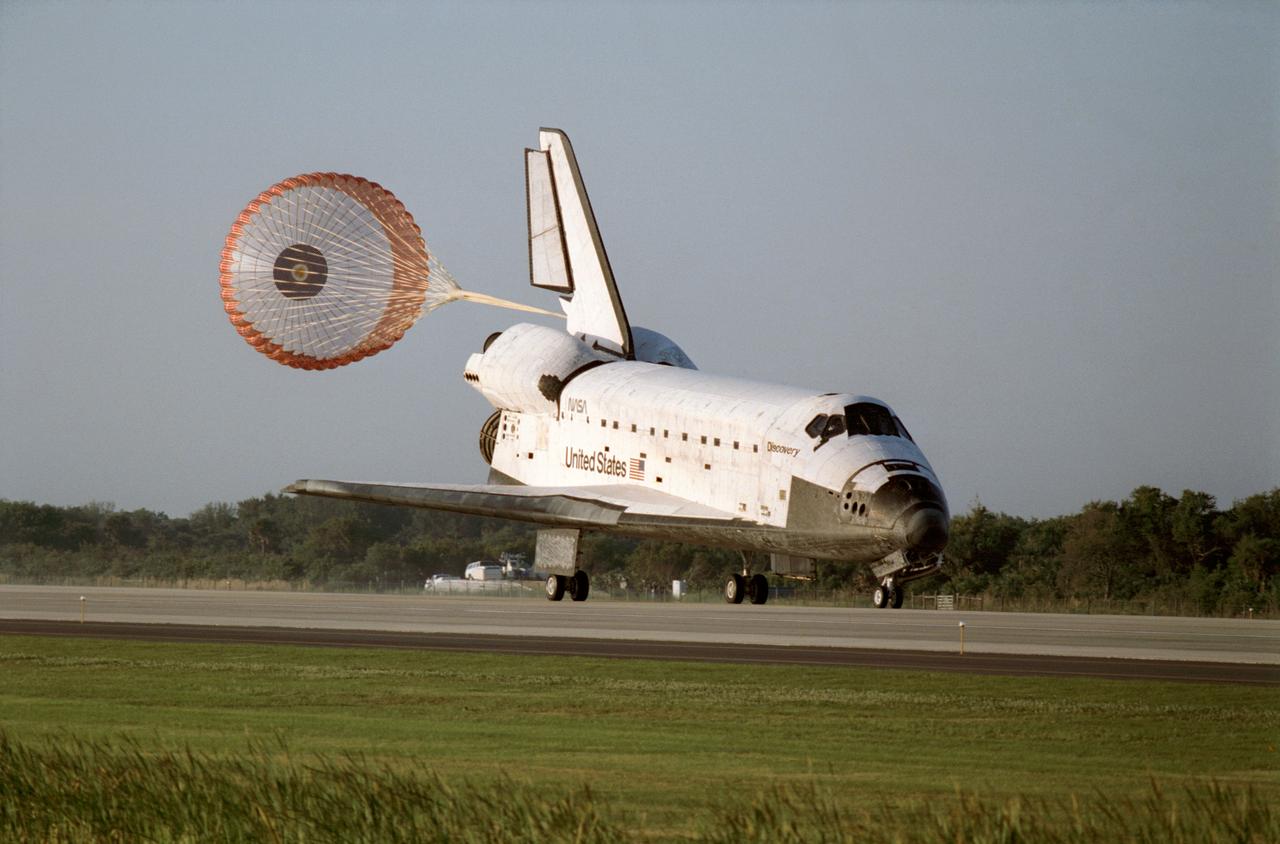
STS056-S-098 (17 April 1993) --- The drag chute is deployed following landing of the Space Shuttle Discovery on the Shuttle landing facility at the Kennedy Space Center to complete the STS-56\Atlas 2 mission. Touchdown occurred at 7:37 a.m. (EDT). Onboard the spacecraft were astronauts Kenneth D. Cameron, commander; Stephen S. Oswald, pilot; and C. Michael Foale, Ellen Ochoa and Kenneth D. Cockrell, mission specialists.
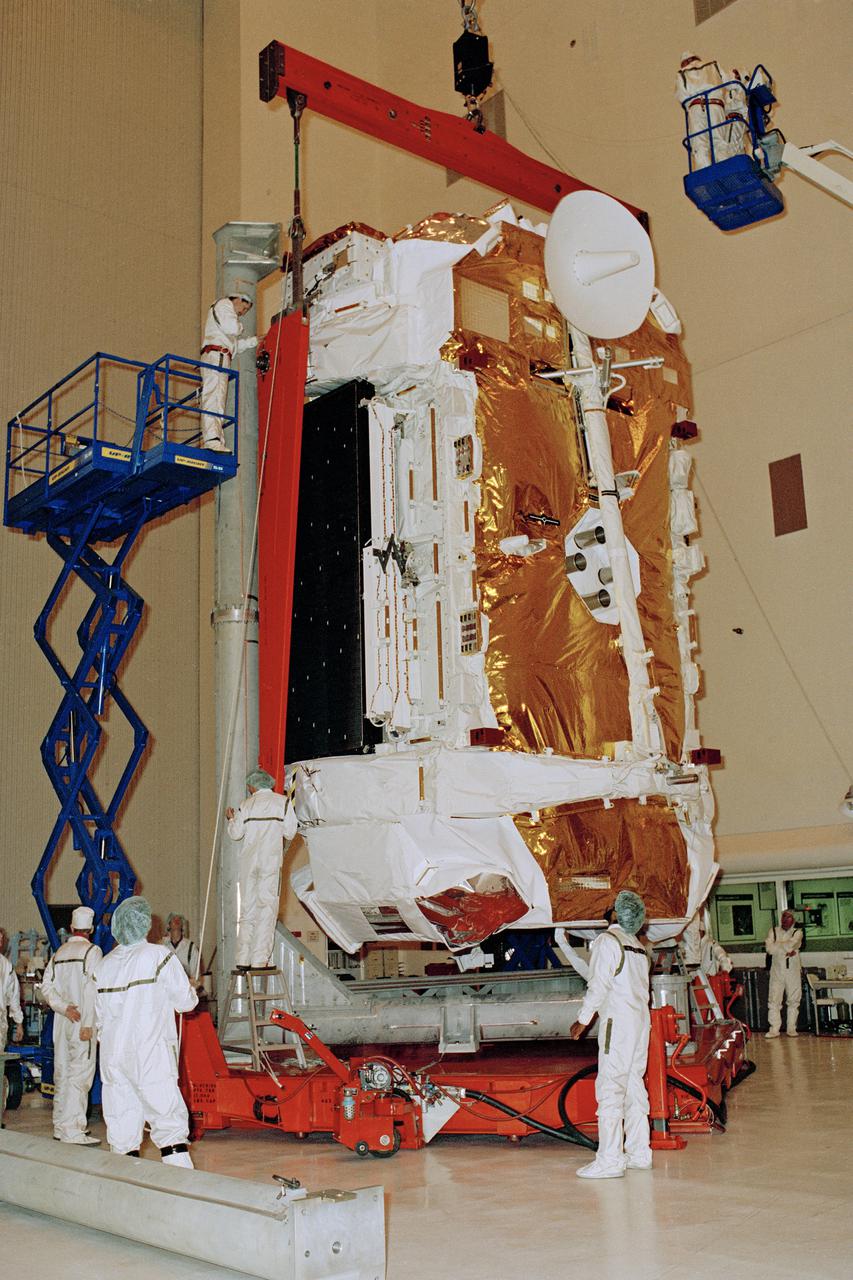
CAPE CANAVERAL, Fla. -- In the Payload Hazardous Servicing Facility at the Kennedy Space Center in Florida, technicians tilt the massive Gamma ray Observatory GRO upright for installation onto the transporter which will carry it to the Vertical Processing Facility. The spacecraft is scheduled to fly aboard the space shuttle Atlantis on STS-37. As the second of four great observatories planned by NASA, GRO will study the celestial gamma rays believed to be a record of cosmic change and evolution. Photo Credit: NASA
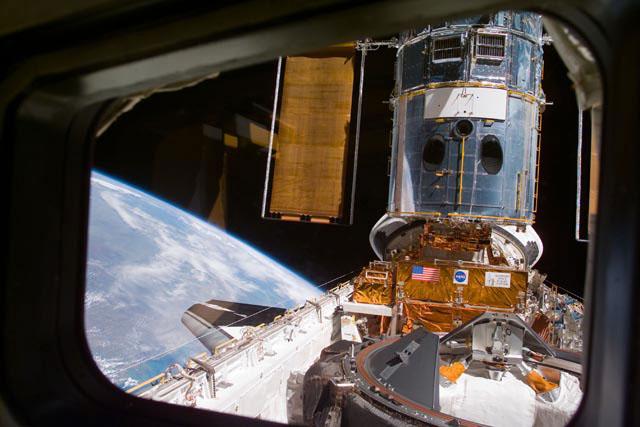
S103-E-5163 (21 December 1999) --- This electronic still camera's view and others in this series showing the Hubble Space Telescope (HST) being berthed in Discovery's bay were recorded during and soon after capture and downlinked at the completion of the mission's first space walk on the following day by the busy STS-103 astronauts. The image was recorded at 19:47:37 GMT, Dec. 21, 1999.
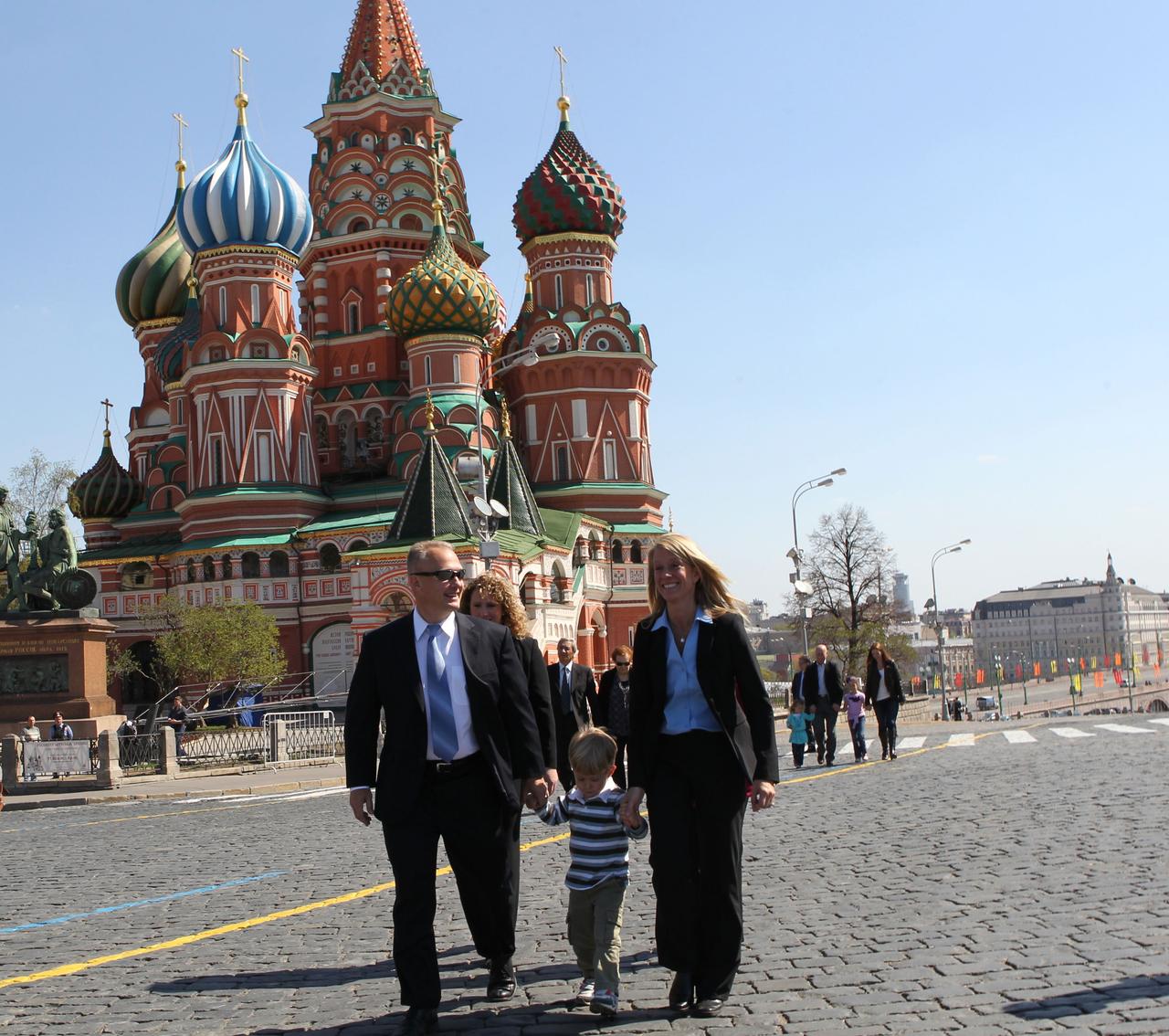
Expedition 36/37 Flight Engineer Karen Nyberg (right) takes a stroll through Red Square in Moscow in front of St. Basil’s Cathedral May 8 with her husband, astronaut Doug Hurley (left) and their son, Soyuz Commander Fyodor Yurchikhin and Flight Engineer Luca Parmitano of the European Space Agency are preparing for their launch May 29, Kazakh time, in their Soyuz TMA-09M spacecraft from the Baikonur Cosmodrome in Kazakhstan for a six-month mission on the International Space Station. NASA/Stephanie Stoll
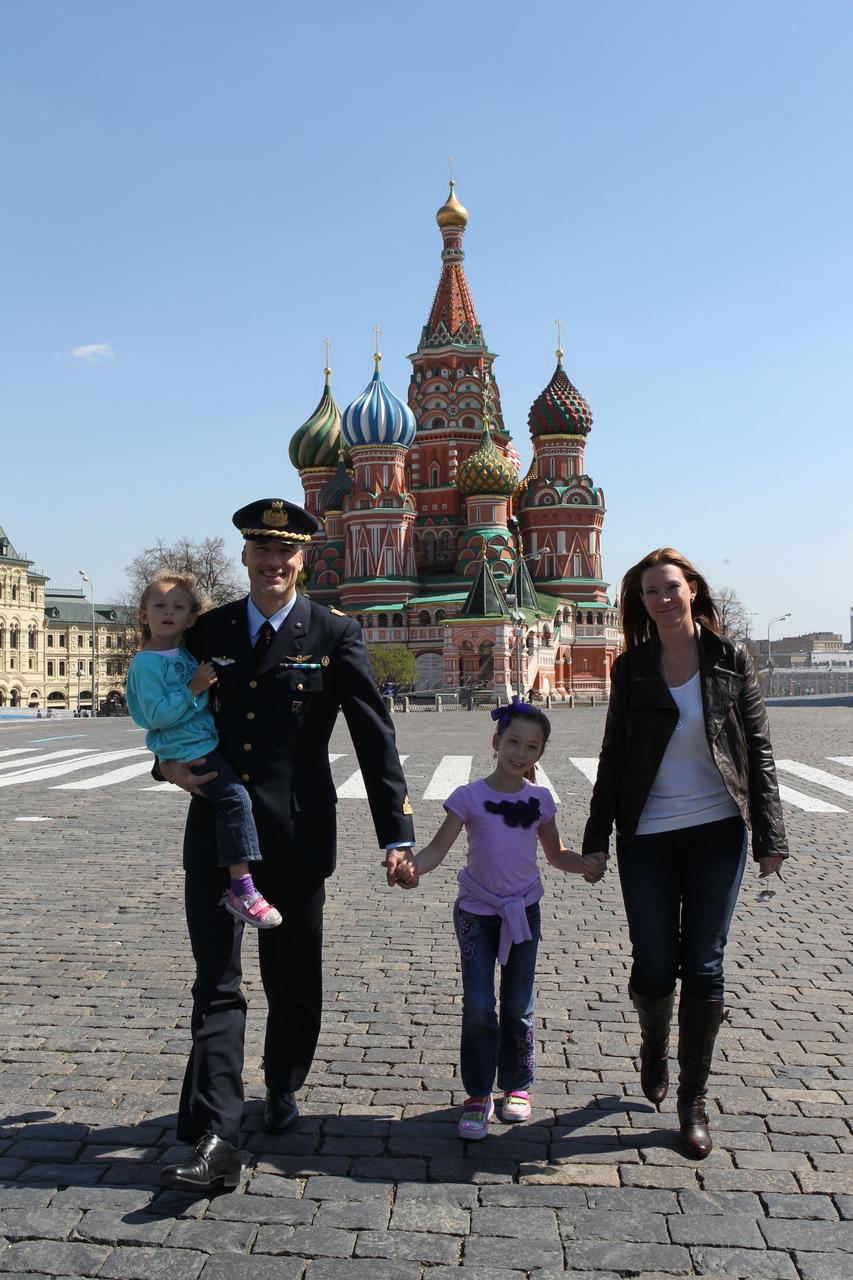
Expedition 36/37 Flight Engineer Luca Parmitano of the European Space Agency takes a stroll through Red Square in Moscow in front of St. Basil’s Cathedral May 8 with his wife, Kathy Dillow, and their daughters. Parmitano, Soyuz Commander Fyodor Yurchikhin and Flight Engineer Karen Nyberg of NASA are preparing for their launch May 29, Kazakh time, in their Soyuz TMA-09M spacecraft from the Baikonur Cosmodrome in Kazakhstan for a six-month mission on the International Space Station. NASA/Stephanie Stoll
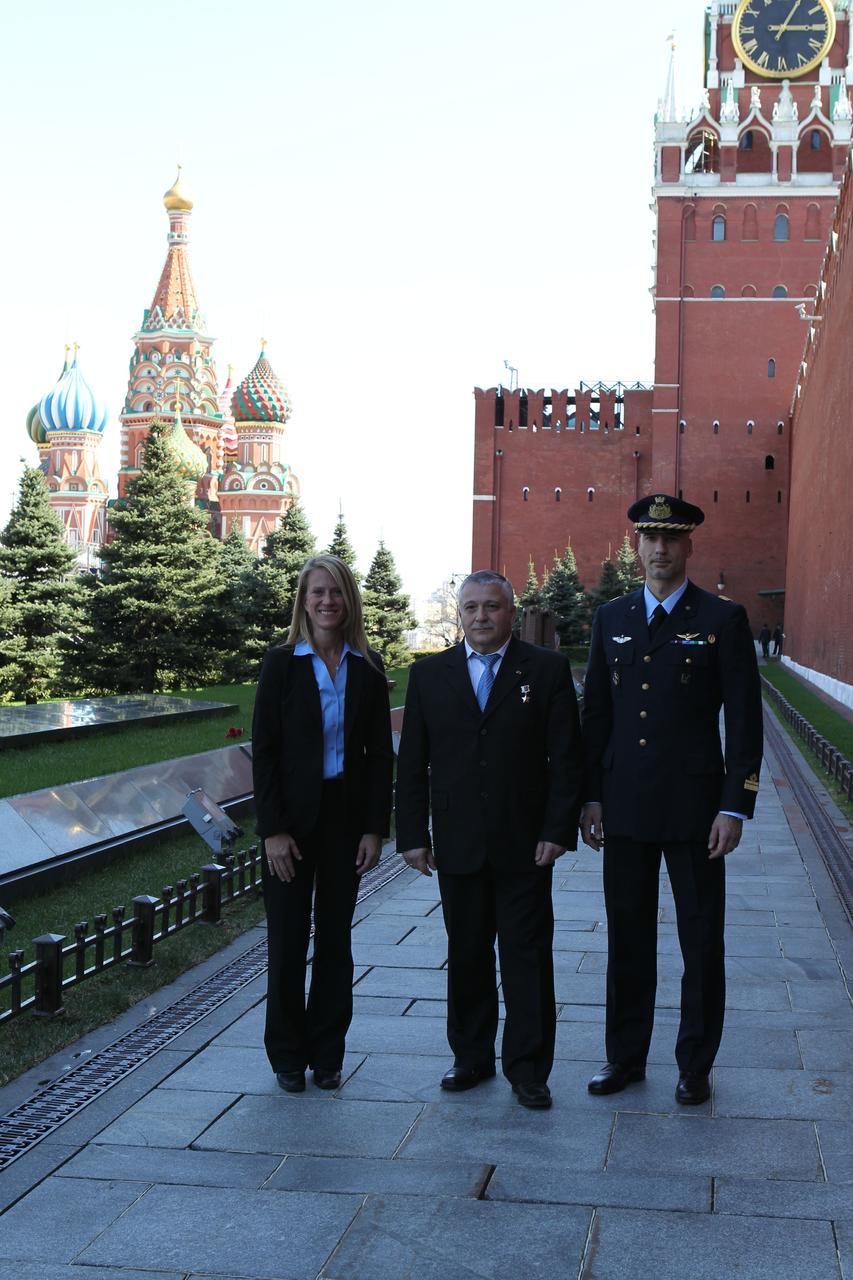
With St. Basil’s Cathedral serving as a backdrop, Expedition 36/37 Flight Engineer Karen Nyberg of NASA (left), Soyuz Commander Fyodor Yurchikhin (center) and Flight Engineer Luca Parmitano of the European Space Agency (right) pose for pictures during a traditional tour of Red Square in Moscow May 8. The three crewmembers are preparing for their launch May 29, Kazakh time, in their Soyuz TMA-09M spacecraft from the Baikonur Cosmodrome in Kazakhstan for a six-month mission on the International Space Station. NASA/Stephanie Stoll

STS038-S-041 (20 Nov 1990) --- STS-38 Atlantis, Orbiter Vehicle (OV) 104, lands on runway 33 at Kennedy Space Center (KSC) Shuttle Landing Facility (SLF). The main landing gear (MLG) has just touched down on the runway surface as the nose landing gear (NLG) glides above it. The Department of Defense (DOD)-devoted mission came to an end (with complete wheel stop) at 4:43:37 pm (Eastern Standard Time (EST)).
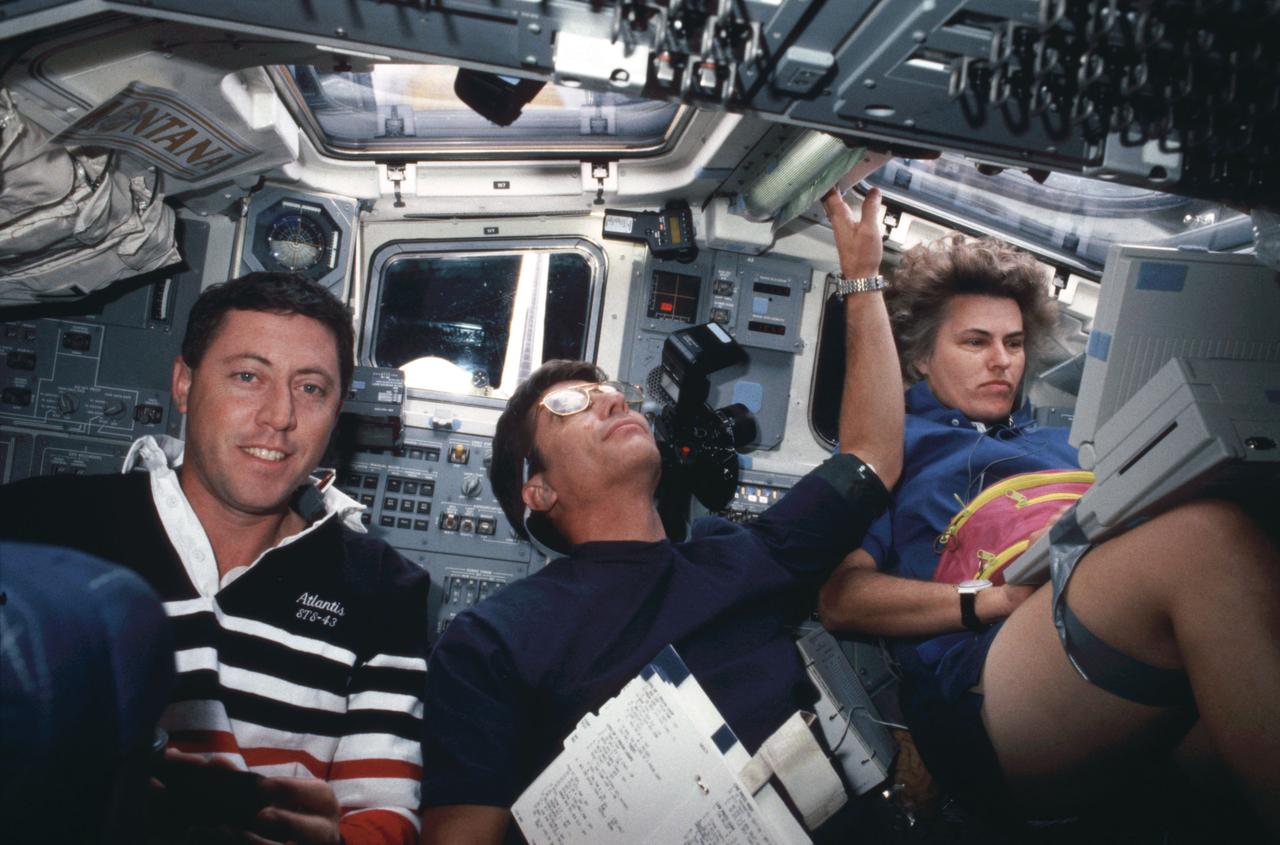
STS043-37-012 (2-11 Aug 1991) --- Three STS-43 astronauts are busy at work onboard the earth-orbiting space shuttle Atlantis. Astronaut Shannon W. Lucid is pictured performing one of several tests on Computer hardware with space station applications in mind. Sharing the aft flight deck with Lucid are Michael A. Baker (left), pilot and John E. Blaha, mission commander.
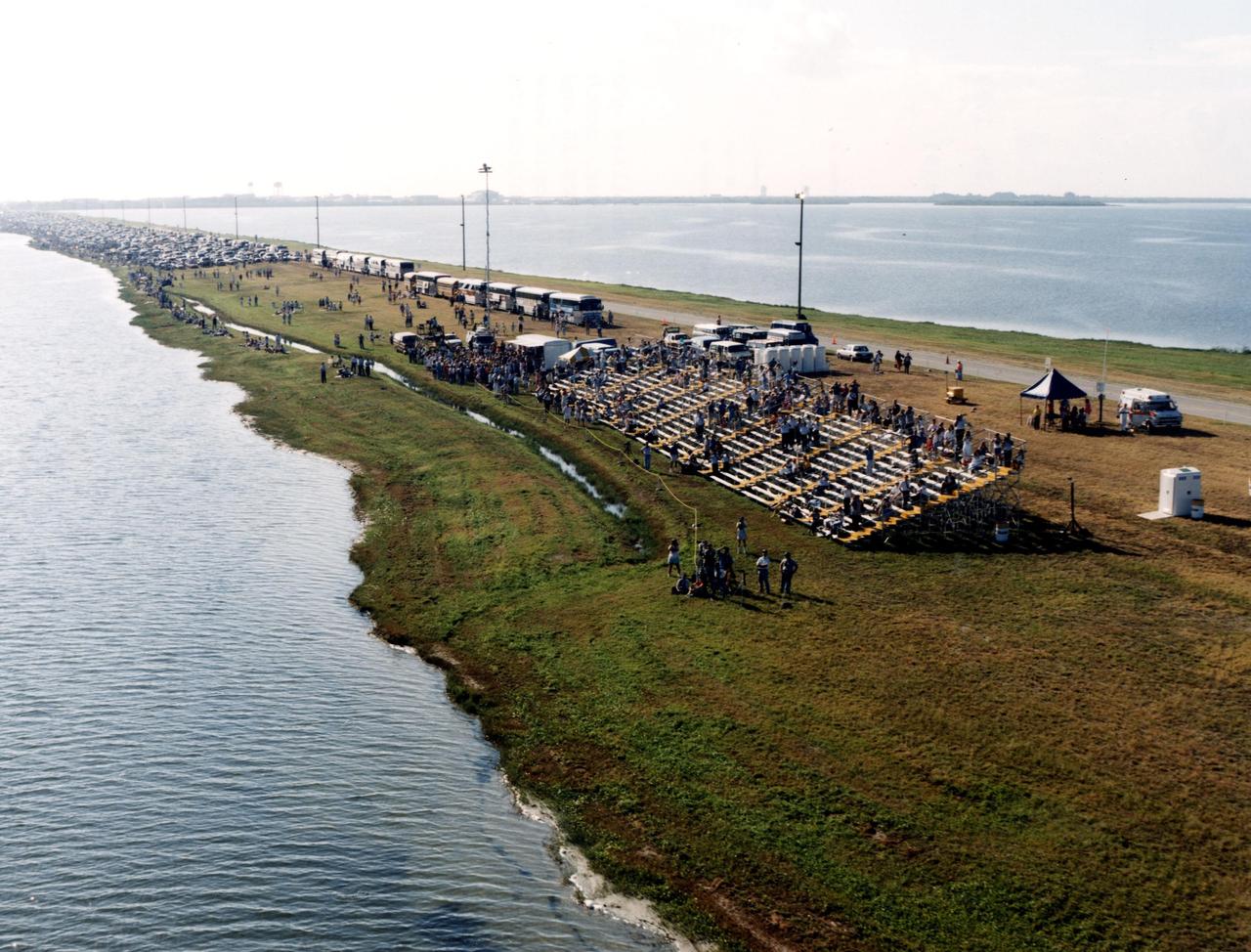
KENNEDY SPACE CENTER, FLA. -- NASA employees, their families and friends gather on the NASA Causeway over the Banana River, south of Kennedy Space Center, the morning of the launch of STS-26 and the Space Shuttle Discovery. An estimated 1 million people were expected to view the 11:37 a.m. launch from various locations in Central Florida
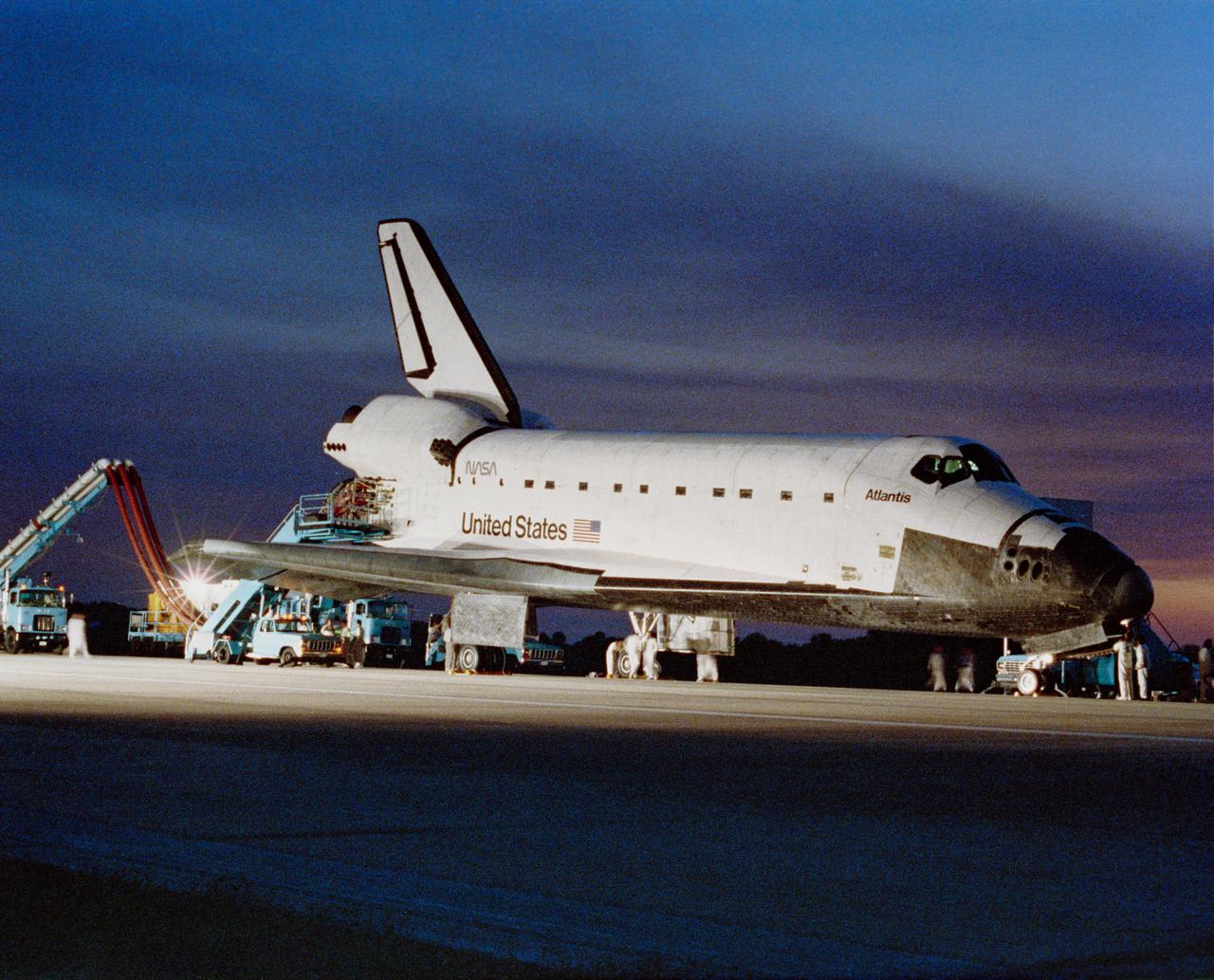
Spotlights illuminate Atlantis, Orbiter Vehicle (OV) 104, during safing operations at the Kennedy Space Center's (KSC's) Shuttle Landing Facility (SLF). OV-104 parked on runway 33 is serviced by KSC ground crews. STS-38, a Department of Defense (DOD)-devoted mission, came to an end (with complete wheel stop) at 4:43:37 pm (Eastern Standard Time (EST)).
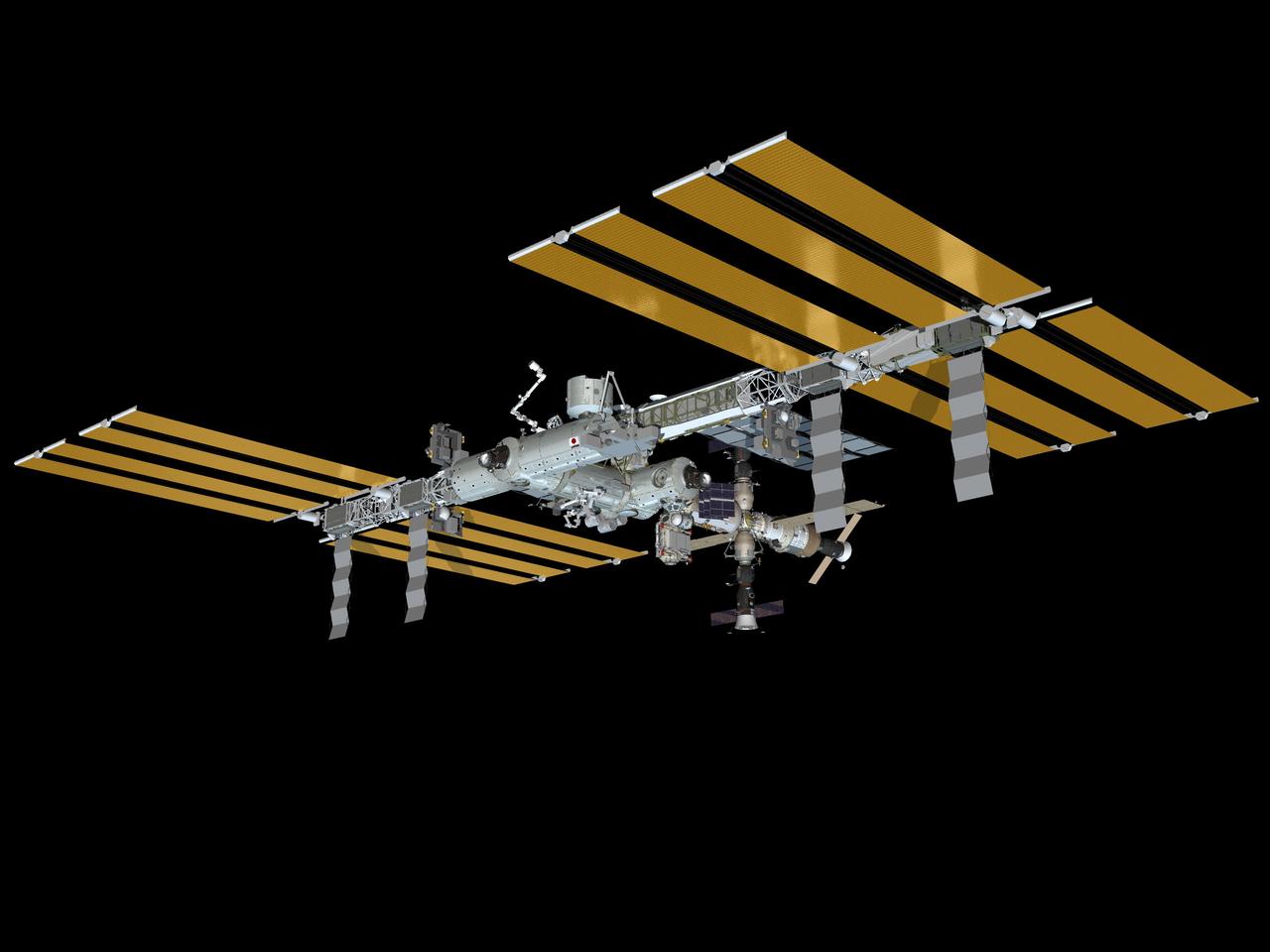
JSC2010-E-086853 (May 2010) --- Computer-generated artist?s rendering of the International Space Station as of May 23, 2010. STS-132 space shuttle Atlantis undocks leaving the new Rassvet Mini-Research Module 1 (MRM1) on the Zarya nadir port. Soyuz 21 (TMA-17) is docked to the Zvezda Service Module?s aft port. Progress 37 resupply vehicle is linked to the Pirs Docking Compartment and Soyuz 22 (TMA-18) remains docked to the Poisk Mini-Research Module 2 (MRM2).
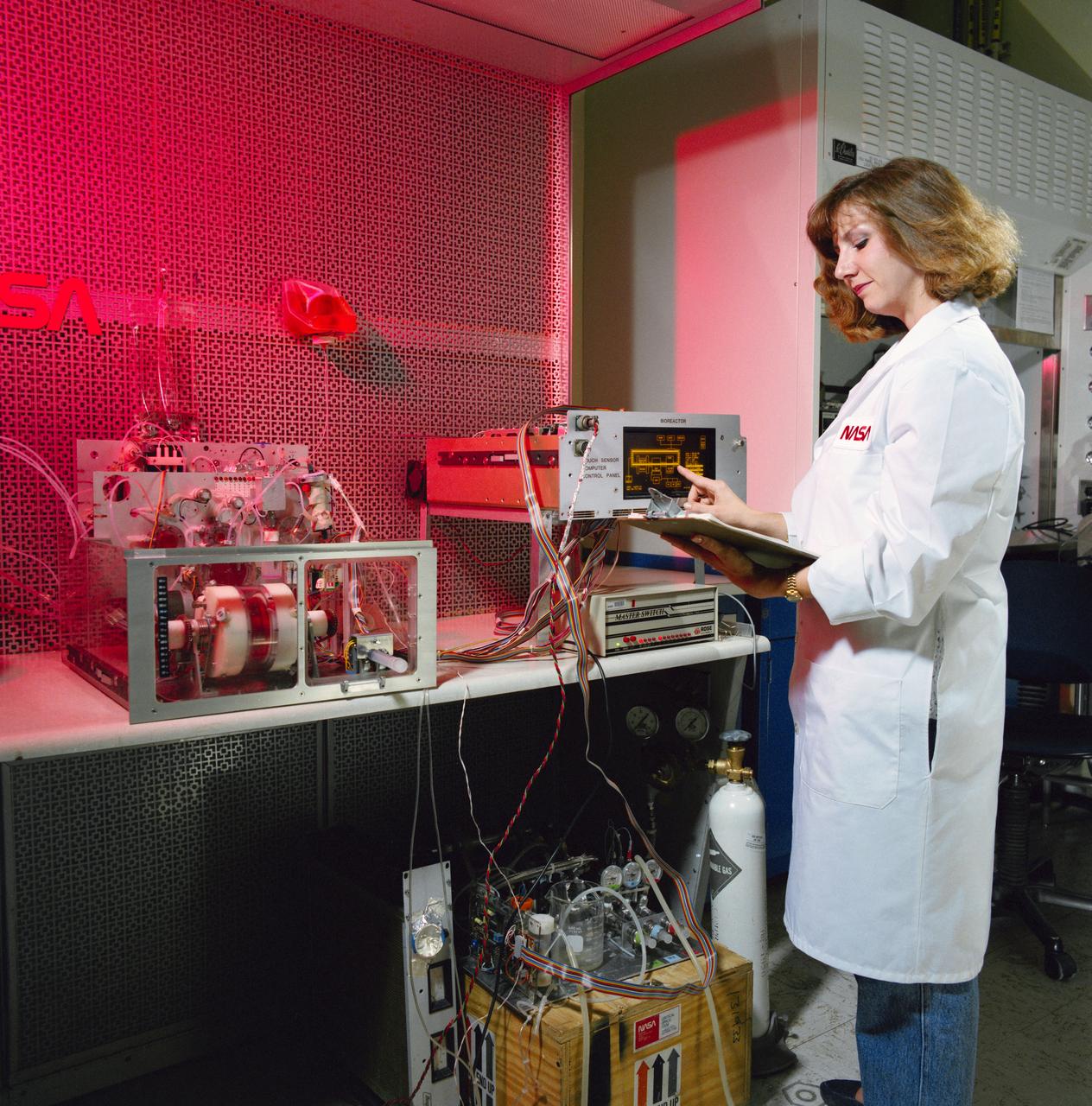
S91-40049 (27 June 1991) --- JSC technician Tacey Prewitt checks the progress on a bioreactor experiment in JSC's Life Sciences Laboratory Bldg 37 biotechnology laboratory. Similar hardware is scheduled for testing aboard Atlantis, Orbiter Vehicle (OV) 104, during STS-44. Detailed Supplementary Objective (DSO) 316 Bioreactor/Flow and Particle Trajectory in Microgravity will checkout the rotating wall vessel hardware and hopefully will confirm researchers' theories and calculations about how flow fields work in space. Plastic beads of various sizes rather than cell cultures are being flown in the vessel for the STS-44 test.
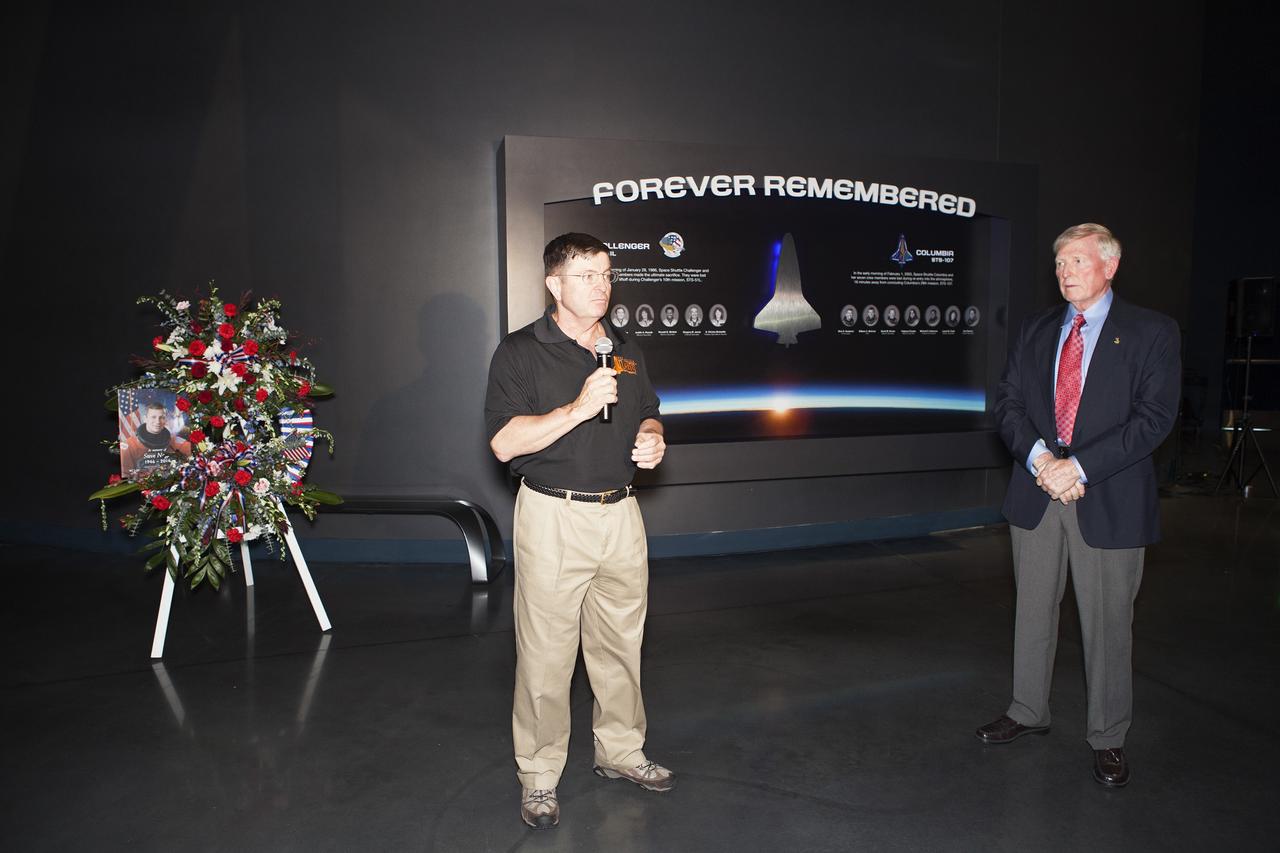
CAPE CANAVERAL, Fla. – Former NASA astronaut Jon McBride speaks at a wreath-laying ceremony honoring former NASA astronaut Steven R. Nagel at the Space Shuttle Atlantis exhibit at the Kennedy Space Center Visitor Complex in Florida. Nagel died Aug. 21 after a long illness. He was 67 years old. Nagel served as a mission specialist on his first space shuttle flight, STS-51G, in 1985. He was pilot on his second shuttle flight, STS-61A, also in 1985. He commanded his final two flights, STS-37 and STS-55, in 1991 and 1993, respectively. He logged a total of 723 hours in space. To learn more about Nagel's career, visit http://www.nasa.gov/press/2014/august/former-nasa-astronaut-steven-nagel-veteran-of-four-shuttle-flights-dies-at-67/. Photo credit: NASA/Dimitri Gerondidakis
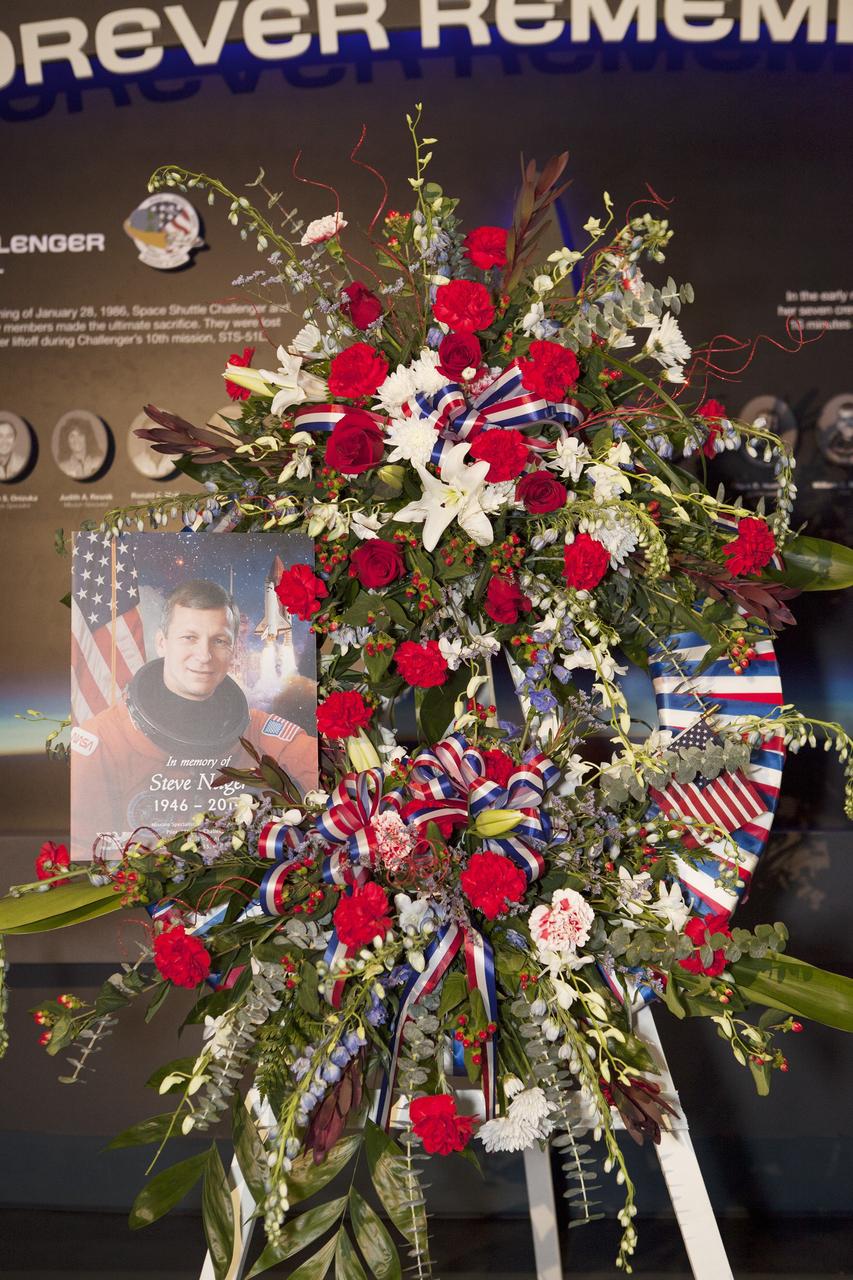
CAPE CANAVERAL, Fla. -- A wreath honoring former NASA astronaut Steven R. Nagel is displayed beside his photo at the Space Shuttle Atlantis exhibit at the Kennedy Space Center Visitor Complex in Florida. Nagel died Aug. 21 after a long illness. He was 67 years old. Nagel served as a mission specialist on his first space shuttle flight, STS-51G, in 1985. He was pilot on his second shuttle flight, STS-61A, also in 1985. He commanded his final two flights, STS-37 and STS-55, in 1991 and 1993, respectively. He logged a total of 723 hours in space. To learn more about Nagel's career, visit http://www.nasa.gov/press/2014/august/former-nasa-astronaut-steven-nagel-veteran-of-four-shuttle-flights-dies-at-67/. Photo credit: NASA/Dimitri Gerondidakis
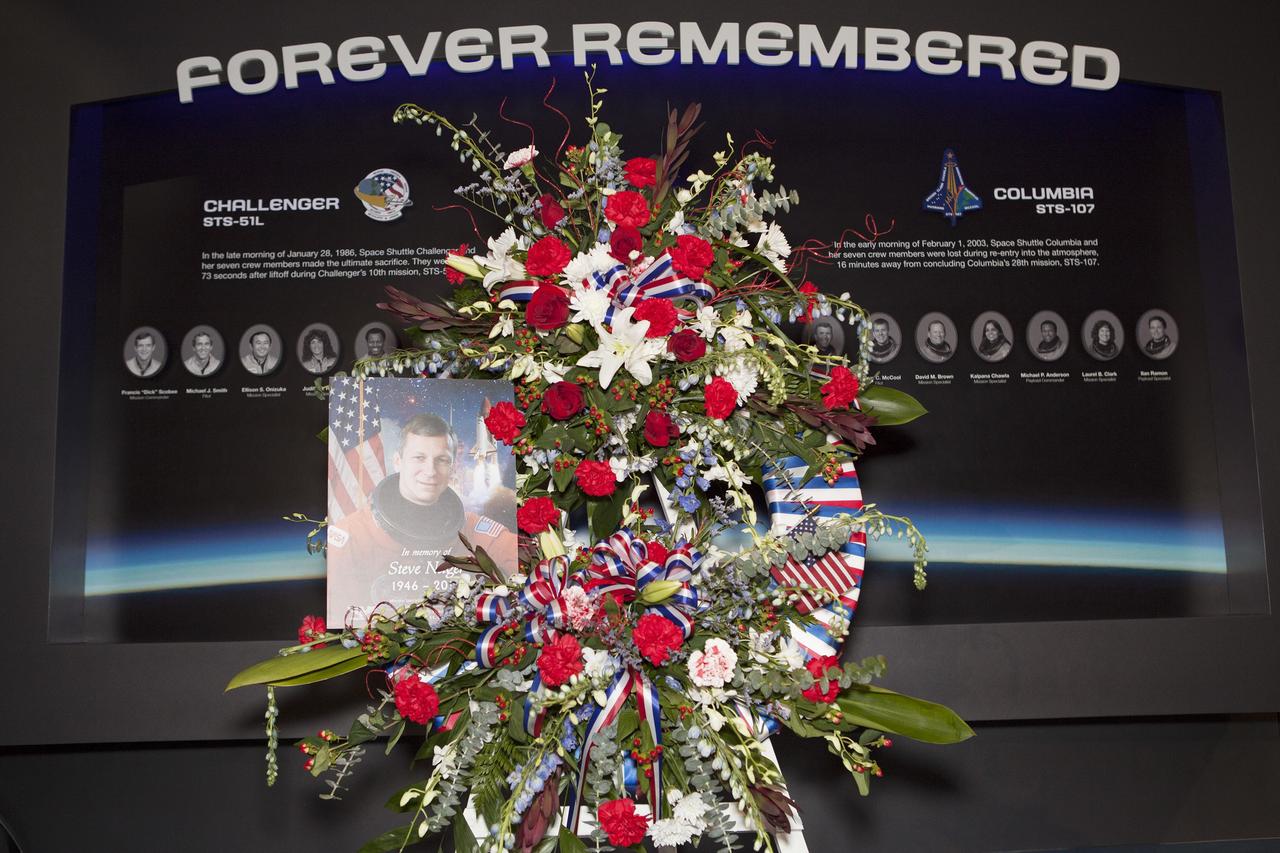
CAPE CANAVERAL, Fla. -- A wreath honoring former NASA astronaut Steven R. Nagel is displayed beside his photo at the Space Shuttle Atlantis exhibit at the Kennedy Space Center Visitor Complex in Florida. Nagel died Aug. 21 after a long illness. He was 67 years old. Nagel served as a mission specialist on his first space shuttle flight, STS-51G, in 1985. He was pilot on his second shuttle flight, STS-61A, also in 1985. He commanded his final two flights, STS-37 and STS-55, in 1991 and 1993, respectively. He logged a total of 723 hours in space. To learn more about Nagel's career, visit http://www.nasa.gov/press/2014/august/former-nasa-astronaut-steven-nagel-veteran-of-four-shuttle-flights-dies-at-67/. Photo credit: NASA/Dimitri Gerondidakis
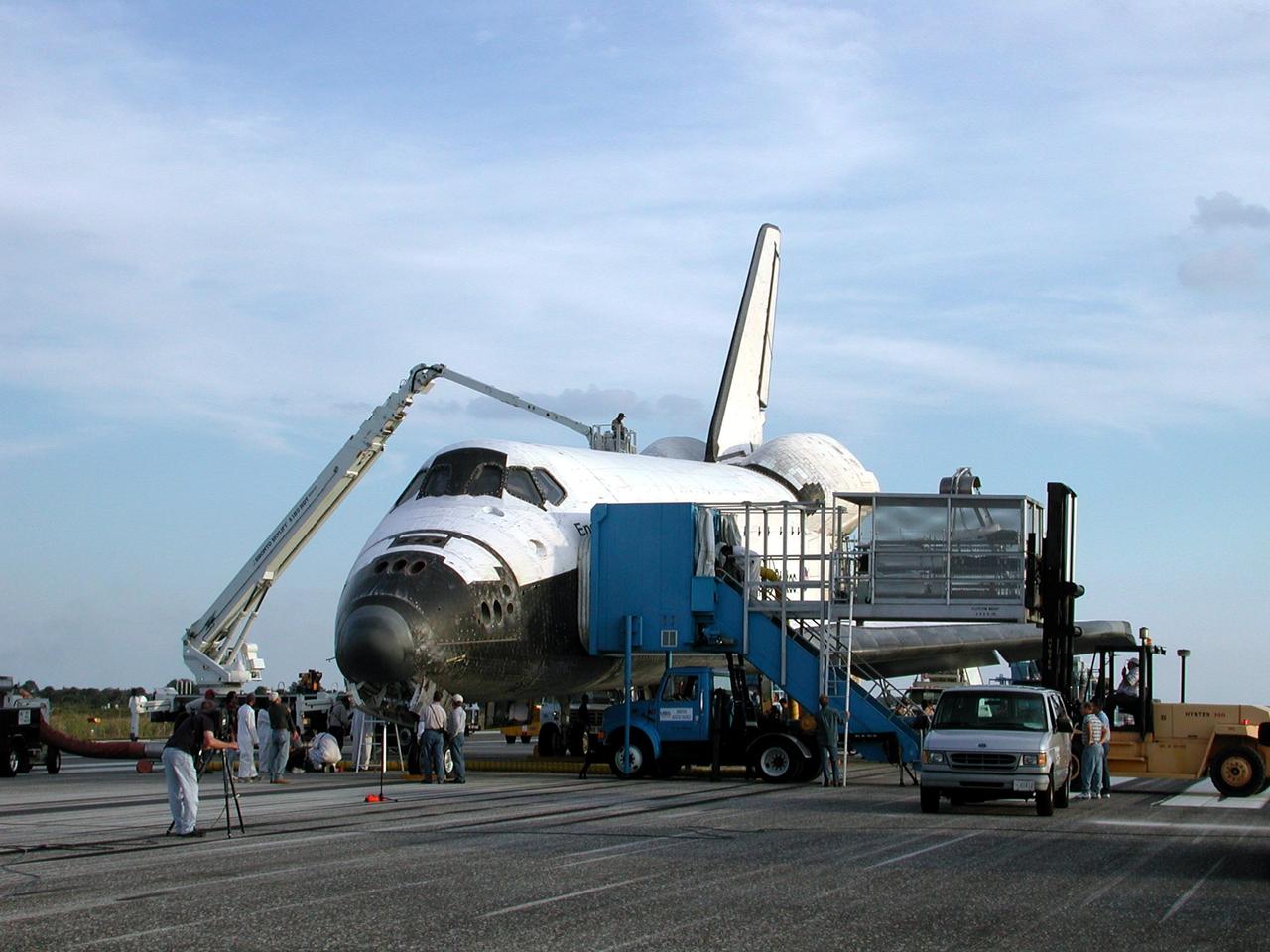
KENNEDY SPACE CENTER, FLA. - Space Shuttle Endeavour is surrounded by vehicles from the landing convoy on runway 33 at the Shuttle Landing Facility at the conclusion of the 13-day, 18-hour, 48-minute, 5.74-million mile STS-113 mission to the International Space Station. The landing convoy's purpose is to safe the vehicle and provide support for the disembarking crew and experiments. Main gear touchdown was at 2:37:12 p.m. EST, nose gear touchdown was at 2:37:23 p.m., and wheel stop was at 2:38:25 p.m. Poor weather conditions thwarted landing opportunities until a fourth day, the first time in Shuttle program history that a landing has been waved off for three consecutive days. The vehicle carries the STS-113 crew, Commander James Wetherbee, Pilot Paul Lockhart and Mission Specialists Michael Lopez-Alegria and John Herrington, as well as the returning Expedition Five crew, Commander Valeri Korzun, ISS Science Officer Peggy Whitson and Flight Engineer Sergei Treschev. The installation of the P1 truss on the International Space Station was accomplished during the mission.
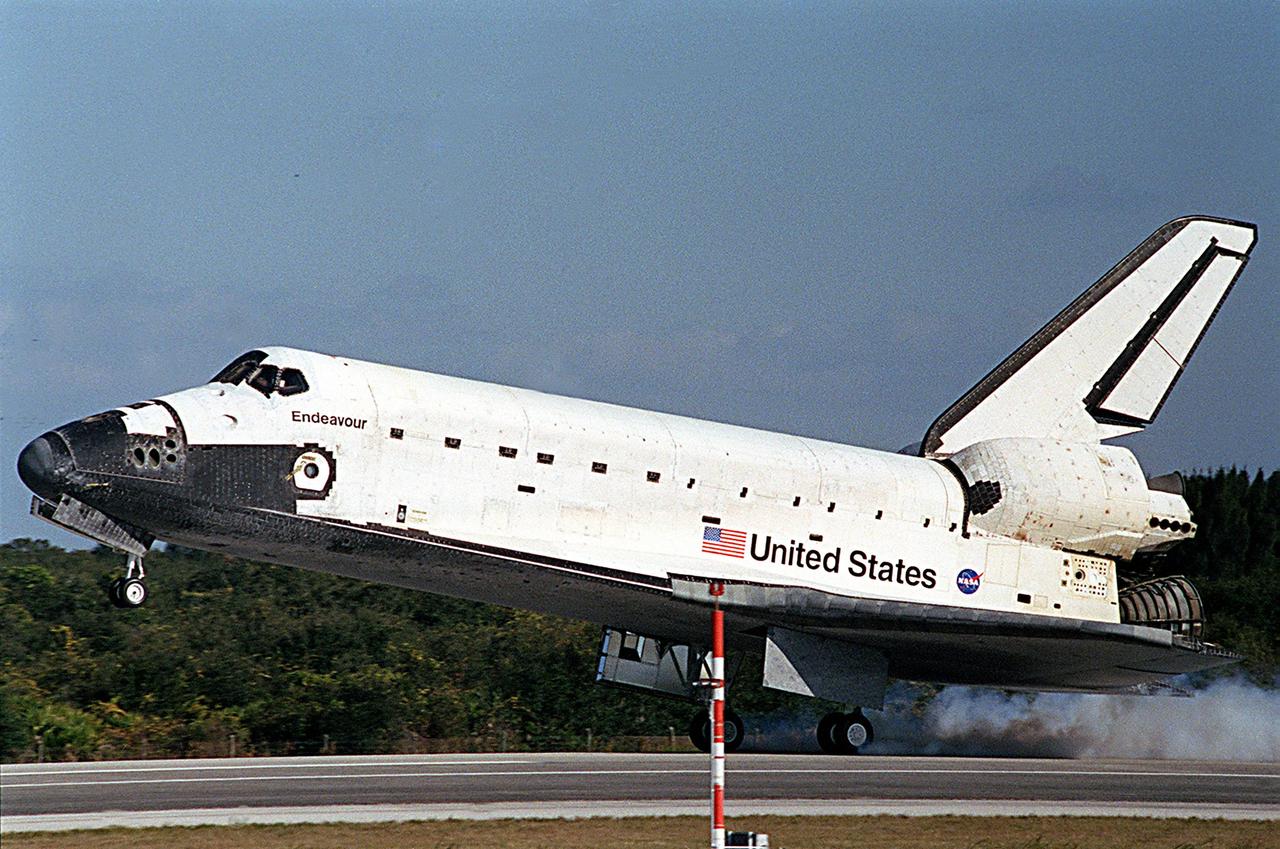
KENNEDY SPACE CENTER, FLA. -- The wheels of Space Shuttle Endeavour make contact with runway 33 at the Shuttle Landing Facility, bringing to a close the 13-day, 18-hour, 48-minute, 5.74-million mile STS-113 mission to the International Space Station. Main gear touchdown was at 2:37:12 p.m. EST, nose gear touchdown was at 2:37:23 p.m., and wheel stop was at 2:38:25 p.m. Poor weather conditions thwarted landing opportunities until a fourth day, the first time in Shuttle program history that a landing has been waved off for three consecutive days. The vehicle carries the STS-113 crew, Commander James Wetherbee, Pilot Paul Lockhart and Mission Specialists Michael Lopez-Alegria and John Herrington, as well as the returning Expedition Five crew, Commander Valeri Korzun, ISS Science Officer Peggy Whitson and Flight Engineer Sergei Treschev. The installation of the P1 truss on the International Space Station was accomplished during the mission.
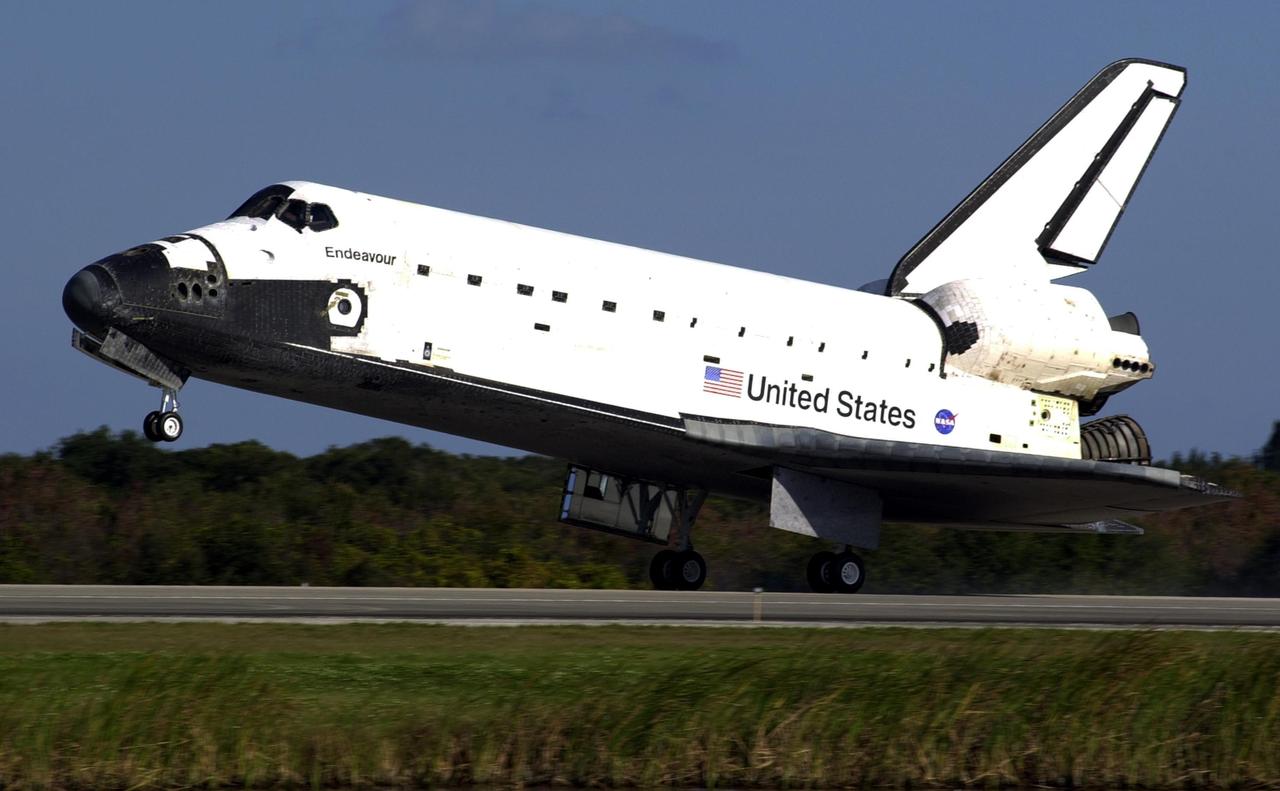
KENNEDY SPACE CENTER, FLA. - Space Shuttle Endeavour touches down on runway 33 at the Shuttle Landing Facility (SLF) after completing the 13-day, 18-hour, 48-minute, 5.74-million mile STS-113 mission to the International Space Station. Main gear touchdown was at 2:37:12 p.m. EST, nose gear touchdown was at 2:37:23 p.m., and wheel stop was at 2:38:25 p.m. Poor weather conditions thwarted landing opportunities until a fourth day, the first time in Shuttle program history that a landing has been waved off for three consecutive days. The vehicle carries the STS-113 crew, Commander James Wetherbee, Pilot Paul Lockhart and Mission Specialists Michael Lopez-Alegria and John Herrington, as well as the returning Expedition Five crew, Commander Valeri Korzun, ISS Science Officer Peggy Whitson and Flight Engineer Sergei Treschev. The installation of the P1 truss on the International Space Station was accomplished during the mission.
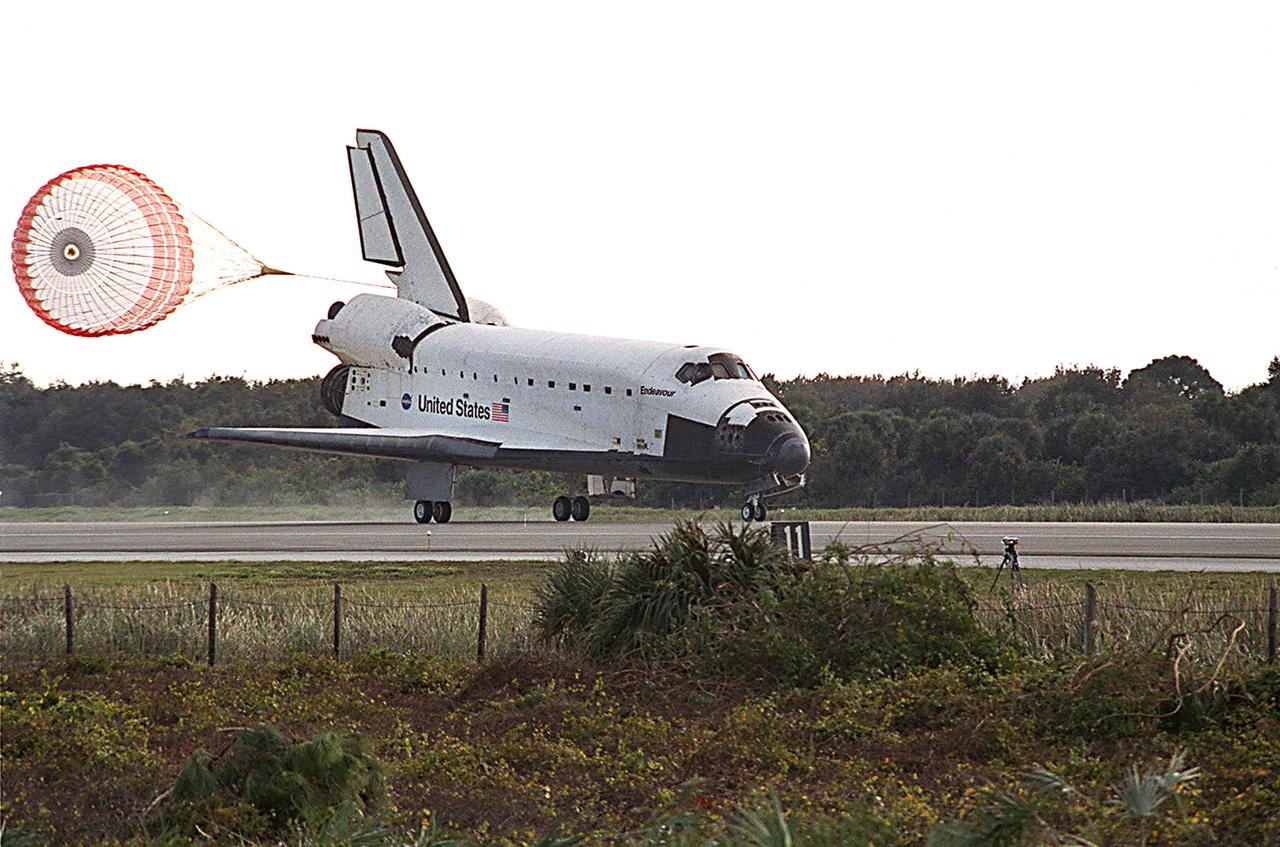
KENNEDY SPACE CENTER, FLA. -- The drag chute trails Space Shuttle Endeavour after touch down on runway 33 at the Shuttle Landing Facility, bringing to a close the 13-day, 18-hour, 48-minute, 5.74-million mile STS-113 mission to the International Space Station. Main gear touchdown was at 2:37:12 p.m. EST, nose gear touchdown was at 2:37:23 p.m., and wheel stop was at 2:38:25 p.m. Poor weather conditions thwarted landing opportunities until a fourth day, the first time in Shuttle program history that a landing has been waved off for three consecutive days. The vehicle carries the STS-113 crew, Commander James Wetherbee, Pilot Paul Lockhart and Mission Specialists Michael Lopez-Alegria and John Herrington, as well as the returning Expedition Five crew, Commander Valeri Korzun, ISS Science Officer Peggy Whitson and Flight Engineer Sergei Treschev. The installation of the P1 truss on the International Space Station was accomplished during the mission.
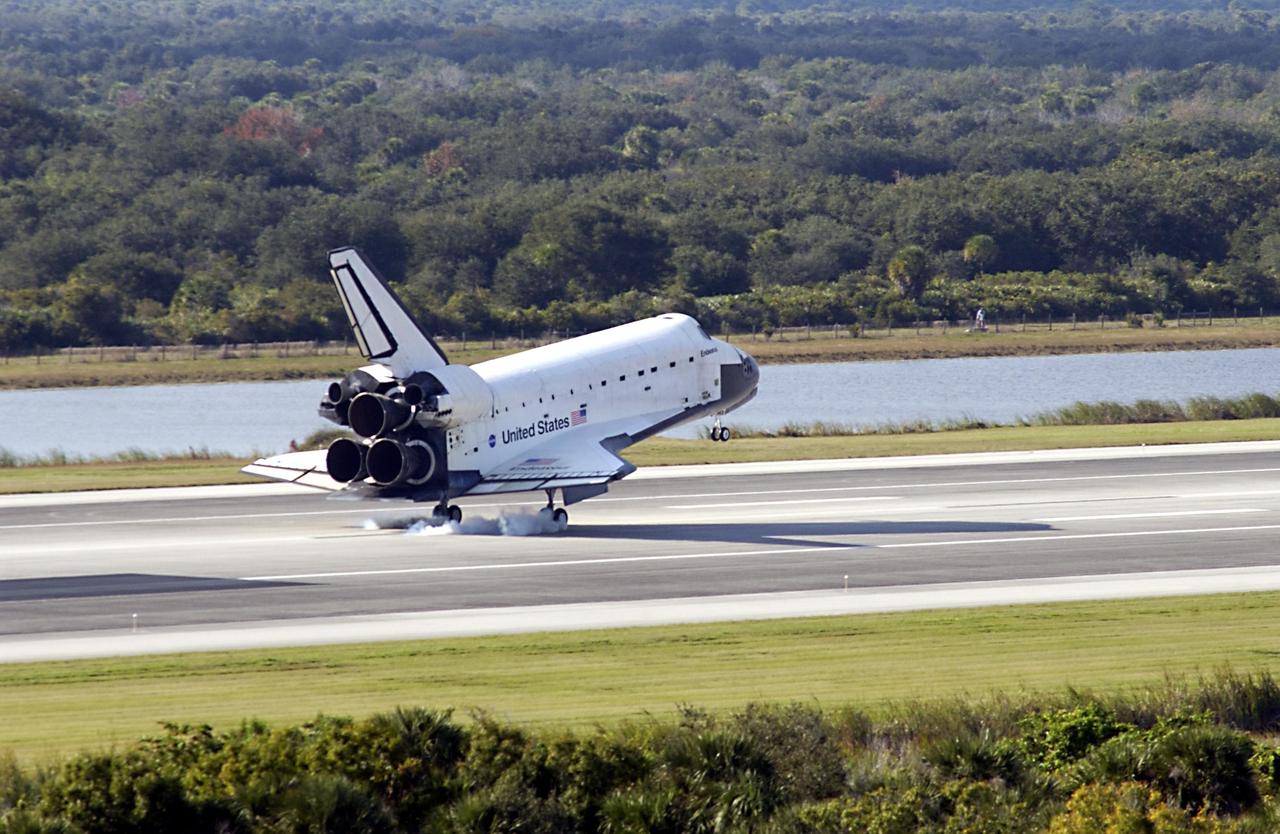
KENNEDY SPACE CENTER, FLA. - Space Shuttle Endeavour's wheels make first contact with runway 33 at the Shuttle Landing Facility after completing the 13-day, 18-hour, 48-minute, 5.74-million mile STS-113 mission to the International Space Station. Main gear touchdown was at 2:37:12 p.m. EST, nose gear touchdown was at 2:37:23 p.m., and wheel stop was at 2:38:25 p.m. Poor weather conditions thwarted landing opportunities until a fourth day, the first time in Shuttle program history that a landing has been waved off for three consecutive days. The vehicle carries the STS-113 crew, Commander James Wetherbee, Pilot Paul Lockhart and Mission Specialists Michael Lopez-Alegria and John Herrington, as well as the returning Expedition Five crew, Commander Valeri Korzun, ISS Science Officer Peggy Whitson and Flight Engineer Sergei Treschev. The installation of the P1 truss on the International Space Station was accomplished during the mission.
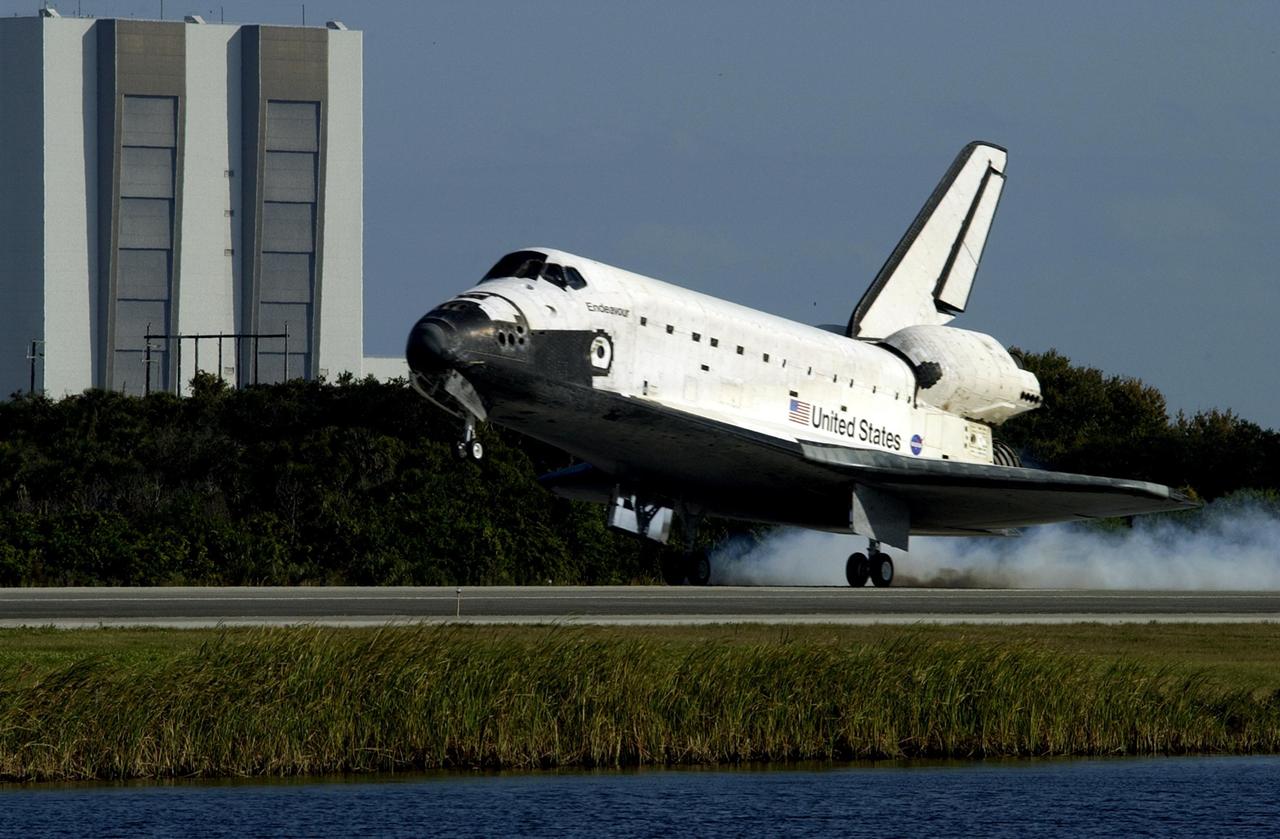
KENNEDY SPACE CENTER, FLA. - Space Shuttle Endeavour touches down on runway 33 at the Shuttle Landing Facility (SLF) after completing the 13-day, 18-hour, 48-minute, 5.74-million mile STS-113 mission to the International Space Station. In the background is a well known KSC landmark: the 525-foot-tall Vehicle Assembly Building. Main gear touchdown was at 2:37:12 p.m. EST, nose gear touchdown was at 2:37:23 p.m., and wheel stop was at 2:38:25 p.m. Poor weather conditions thwarted landing opportunities until a fourth day, the first time in Shuttle program history that a landing has been waved off for three consecutive days. The vehicle carries the STS-113 crew, Commander James Wetherbee, Pilot Paul Lockhart and Mission Specialists Michael Lopez-Alegria and John Herrington, as well as the returning Expedition Five crew, Commander Valeri Korzun, ISS Science Officer Peggy Whitson and Flight Engineer Sergei Treschev. The installation of the P1 truss on the International Space Station was accomplished during the mission.
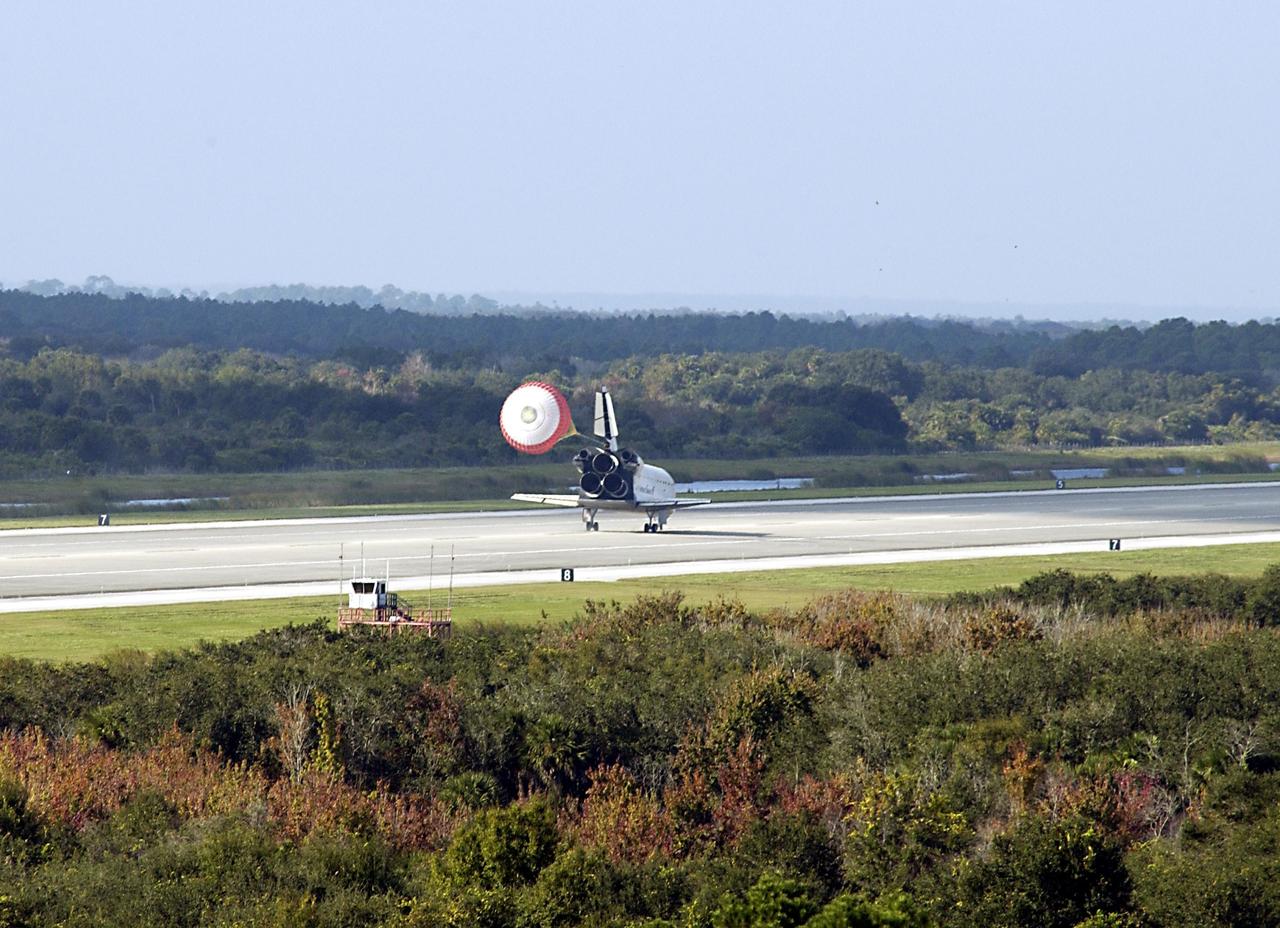
KENNEDY SPACE CENTER, FLA. - Space Shuttle Endeavour's drag chute deploys as the orbiter lands on runway 33 at the Shuttle Landing Facility after completing the 13-day, 18-hour, 48-minute, 5.74-million mile STS-113 mission to the International Space Station. Main gear touchdown was at 2:37:12 p.m. EST, nose gear touchdown was at 2:37:23 p.m., and wheel stop was at 2:38:25 p.m. Poor weather conditions thwarted landing opportunities until a fourth day, the first time in Shuttle program history that a landing has been waved off for three consecutive days. The vehicle carries the STS-113 crew, Commander James Wetherbee, Pilot Paul Lockhart and Mission Specialists Michael Lopez-Alegria and John Herrington, as well as the returning Expedition Five crew, Commander Valeri Korzun, ISS Science Officer Peggy Whitson and Flight Engineer Sergei Treschev. The installation of the P1 truss on the International Space Station was accomplished during the mission.
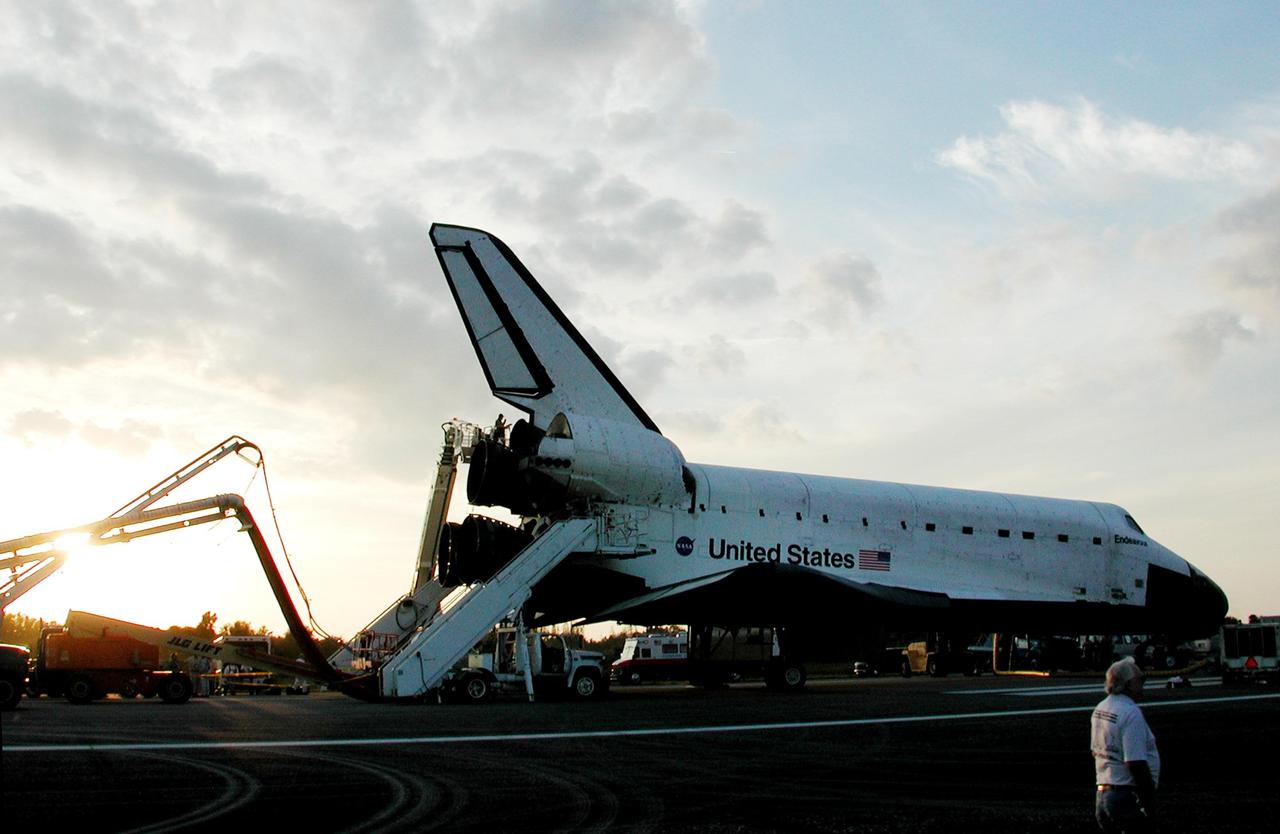
KENNEDY SPACE CENTER, FLA. - A technician, outlined against the setting sun, checks the main engines on Space Shuttle Endeavour on runway 33 at the Shuttle Landing Facility at the conclusion of the 13-day, 18-hour, 48-minute, 5.74-million mile STS-113 mission to the International Space Station. The landing convoy's purpose is to safe the vehicle and provide support for the disembarking crew and experiments. Main gear touchdown was at 2:37:12 p.m. EST, nose gear touchdown was at 2:37:23 p.m., and wheel stop was at 2:38:25 p.m. Poor weather conditions thwarted landing opportunities until a fourth day, the first time in Shuttle program history that a landing has been waved off for three consecutive days. The vehicle carries the STS-113 crew, Commander James Wetherbee, Pilot Paul Lockhart and Mission Specialists Michael Lopez-Alegria and John Herrington, as well as the returning Expedition Five crew, Commander Valeri Korzun, ISS Science Officer Peggy Whitson and Flight Engineer Sergei Treschev. The installation of the P1 truss on the International Space Station was accomplished during the mission.
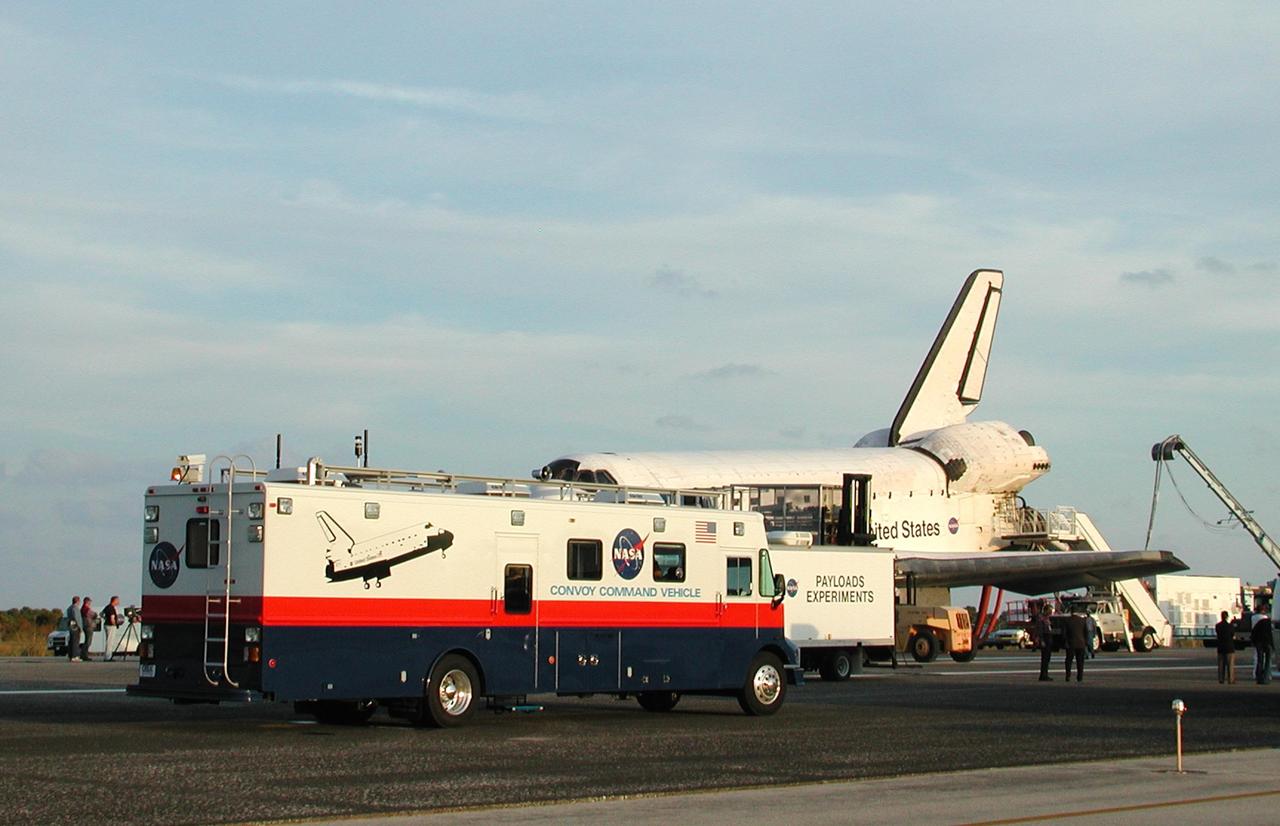
KENNEDY SPACE CENTER, FLA. - Space Shuttle Endeavour is surrounded by vehicles from the landing convoy on runway 33 at the Shuttle Landing Facility at the conclusion of the 13-day, 18-hour, 48-minute, 5.74-million mile STS-113 mission to the International Space Station. In the foreground is the Convoy Command Vehicle which is the command post for the Convoy Commander. The Convoy Commander is in communication with the orbiter and all of the landing convoy vehicles during the post-landing operations. The landing convoy's purpose is to safe the vehicle and provide support for the disembarking crew and experiments. Main gear touchdown was at 2:37:12 p.m. EST, nose gear touchdown was at 2:37:23 p.m., and wheel stop was at 2:38:25 p.m. Poor weather conditions thwarted landing opportunities until a fourth day, the first time in Shuttle program history that a landing has been waved off for three consecutive days. The vehicle carries the STS-113 crew, Commander James Wetherbee, Pilot Paul Lockhart and Mission Specialists Michael Lopez-Alegria and John Herrington, as well as the returning Expedition Five crew, Commander Valeri Korzun, ISS Science Officer Peggy Whitson and Flight Engineer Sergei Treschev. The installation of the P1 truss on the International Space Station was accomplished during the mission.
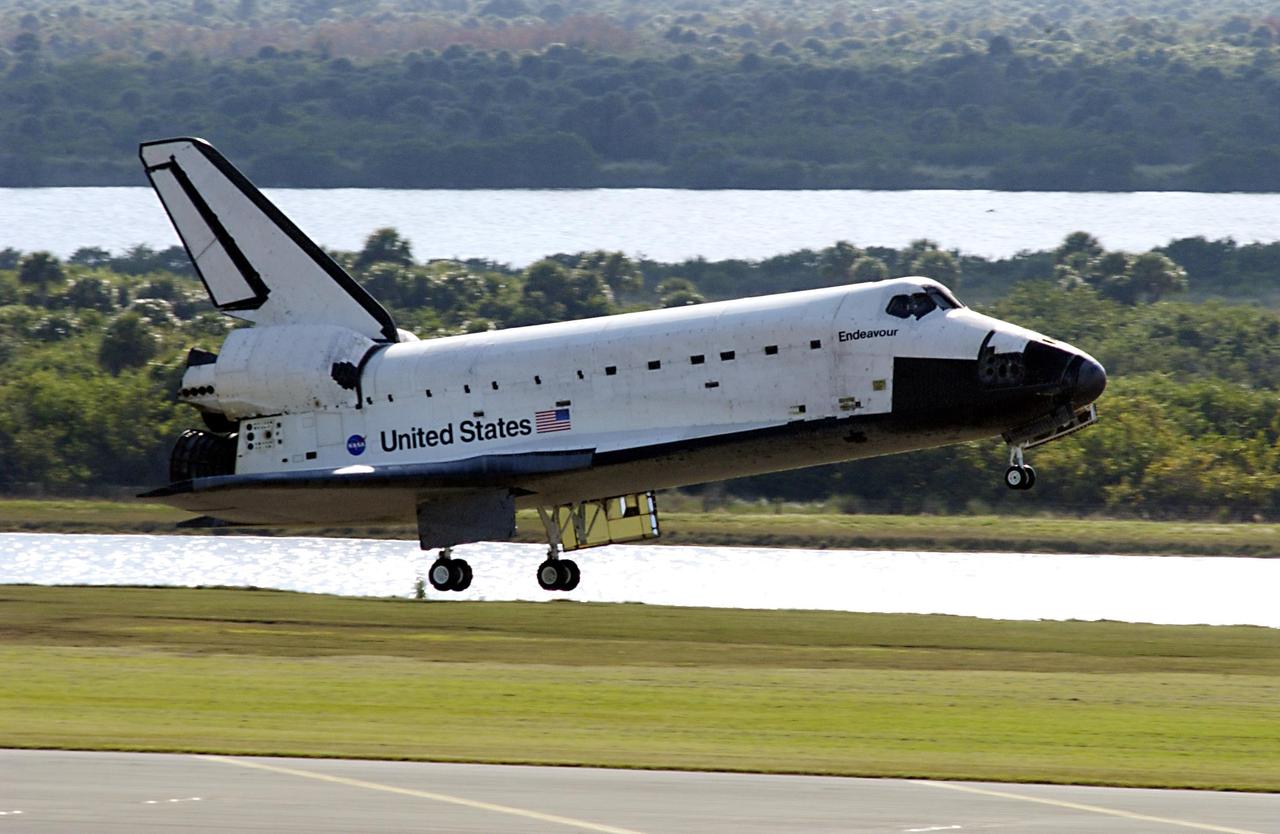
KENNEDY SPACE CENTER, FLA. - Space Shuttle Endeavour is moments away from touching down on runway 33 at the Shuttle Landing Facility after completing the 13-day, 18-hour, 48-minute, 5.74-million mile STS-113 mission to the International Space Station. Main gear touchdown was at 2:37:12 p.m. EST, nose gear touchdown was at 2:37:23 p.m., and wheel stop was at 2:38:25 p.m. Poor weather conditions thwarted landing opportunities until a fourth day, the first time in Shuttle program history that a landing has been waved off for three consecutive days. The vehicle carries the STS-113 crew, Commander James Wetherbee, Pilot Paul Lockhart and Mission Specialists Michael Lopez-Alegria and John Herrington, as well as the returning Expedition Five crew, Commander Valeri Korzun, ISS Science Officer Peggy Whitson and Flight Engineer Sergei Treschev. The installation of the P1 truss on the International Space Station was accomplished during the mission.
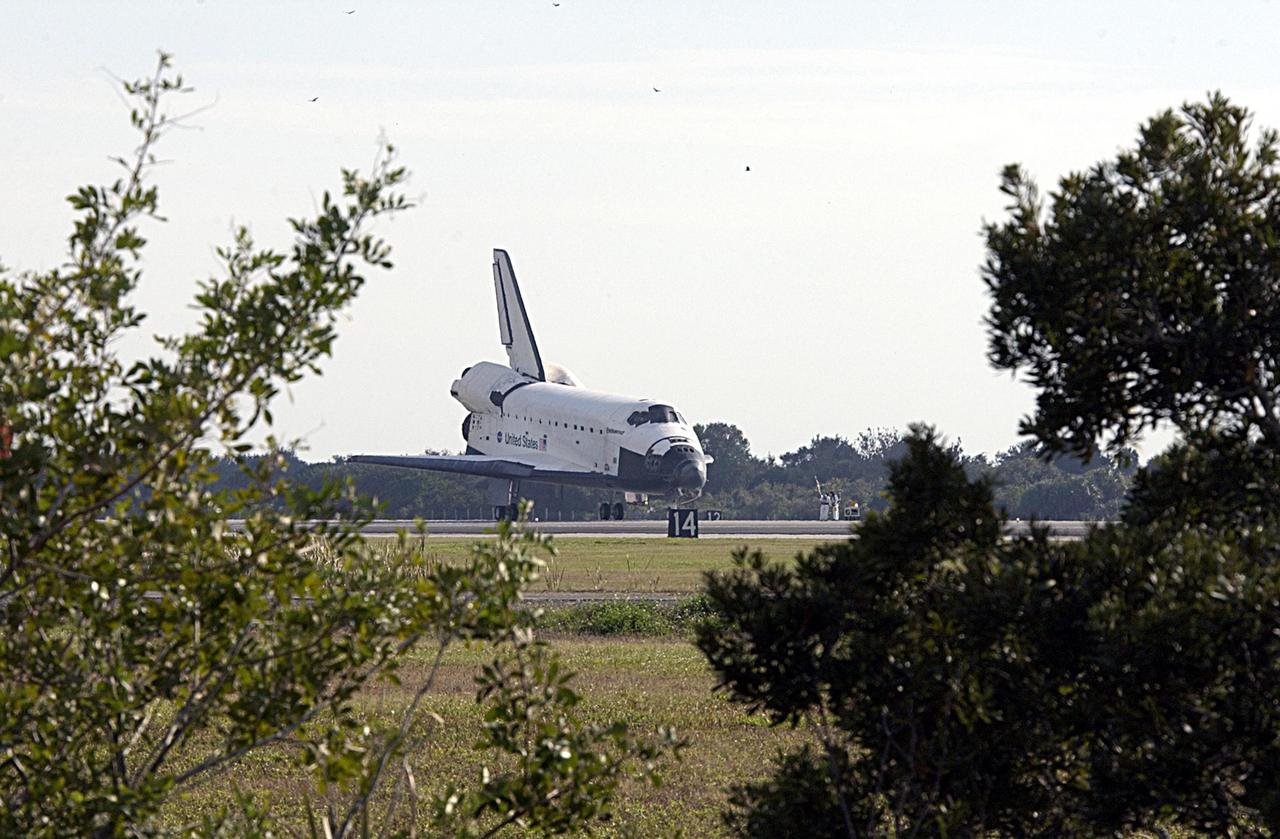
KENNEDY SPACE CENTER, FLA. - Seen through the lush Florida landscape, Space Shuttle Endeavour comes to a stop on runway 33 at the Shuttle Landing Facility after completing the 13-day, 18-hour, 48-minute, 5.74-million mile STS-113 mission to the International Space Station. Main gear touchdown was at 2:37:12 p.m. EST, nose gear touchdown was at 2:37:23 p.m., and wheel stop was at 2:38:25 p.m. Poor weather conditions thwarted landing opportunities until a fourth day, the first time in Shuttle program history that a landing has been waved off for three consecutive days. The vehicle carries the STS-113 crew, Commander James Wetherbee, Pilot Paul Lockhart and Mission Specialists Michael Lopez-Alegria and John Herrington, as well as the returning Expedition Five crew, Commander Valeri Korzun, ISS Science Officer Peggy Whitson and Flight Engineer Sergei Treschev. The installation of the P1 truss on the International Space Station was accomplished during the mission.
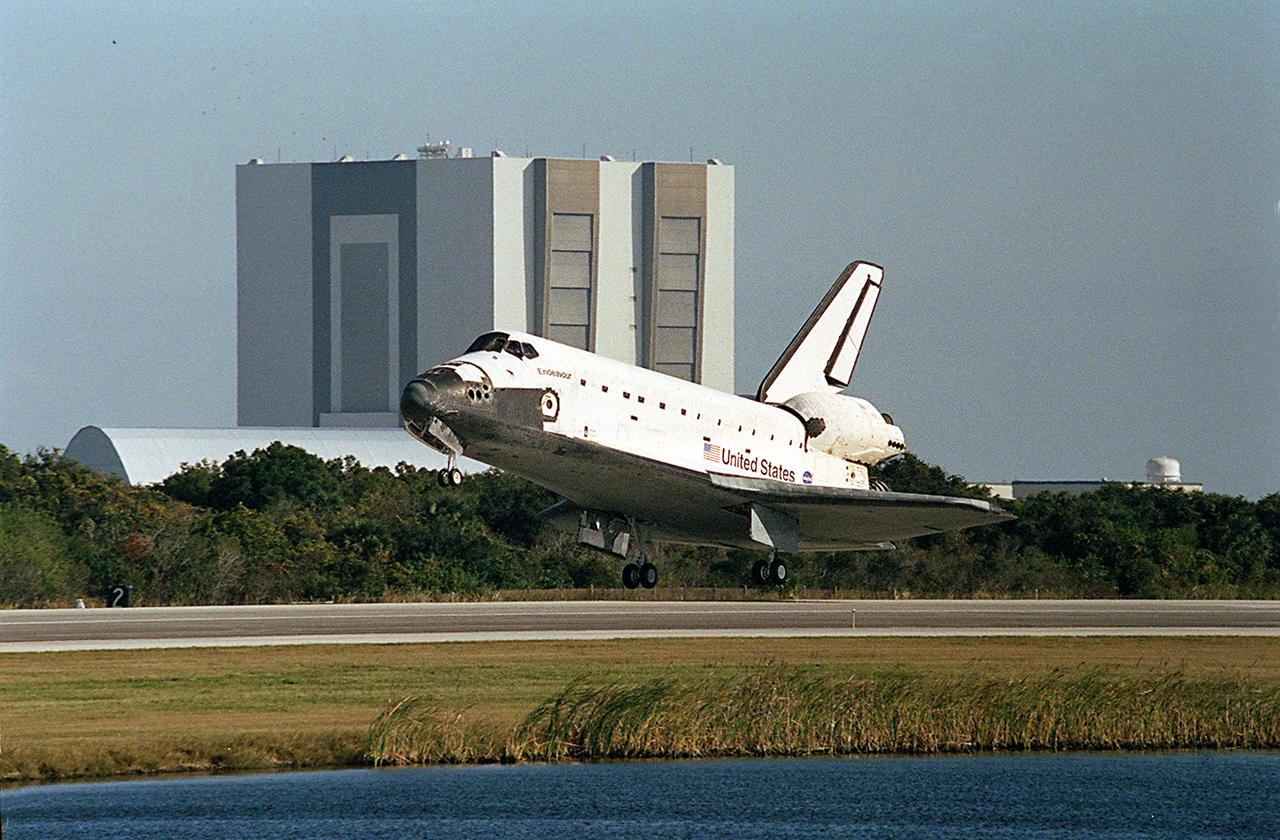
KENNEDY SPACE CENTER, FLA. -- Space Shuttle Endeavour is moments away from touch down on runway 33 at the Shuttle Landing Facility, bringing to a close the 13-day, 18-hour, 48-minute, 5.74-million mile STS-113 mission to the International Space Station. In the background is a KSC landmark: the Vehicle Assembly Building. Main gear touchdown was at 2:37:12 p.m. EST, nose gear touchdown was at 2:37:23 p.m., and wheel stop was at 2:38:25 p.m. Poor weather conditions thwarted landing opportunities until a fourth day, the first time in Shuttle program history that a landing has been waved off for three consecutive days. The vehicle carries the STS-113 crew, Commander James Wetherbee, Pilot Paul Lockhart and Mission Specialists Michael Lopez-Alegria and John Herrington, as well as the returning Expedition Five crew, Commander Valeri Korzun, ISS Science Officer Peggy Whitson and Flight Engineer Sergei Treschev. The installation of the P1 truss on the International Space Station was accomplished during the mission.

KENNEDY SPACE CENTER, FLA. - Space Shuttle Endeavour's drag chute is unreefed as the orbiter lands on runway 33 at the Shuttle Landing Facility at the conclusion of the 13-day, 18-hour, 48-minute, 5.74-million mile STS-113 mission to the International Space Station. The landing convoy in the foreground is ready to approach and safe the vehicle after it comes to a full stop. Main gear touchdown was at 2:37:12 p.m. EST, nose gear touchdown was at 2:37:23 p.m., and wheel stop was at 2:38:25 p.m. Poor weather conditions thwarted landing opportunities until a fourth day, the first time in Shuttle program history that a landing has been waved off for three consecutive days. The vehicle carries the STS-113 crew, Commander James Wetherbee, Pilot Paul Lockhart and Mission Specialists Michael Lopez-Alegria and John Herrington, as well as the returning Expedition Five crew, Commander Valeri Korzun, ISS Science Officer Peggy Whitson and Flight Engineer Sergei Treschev. The installation of the P1 truss on the International Space Station was accomplished during the mission.
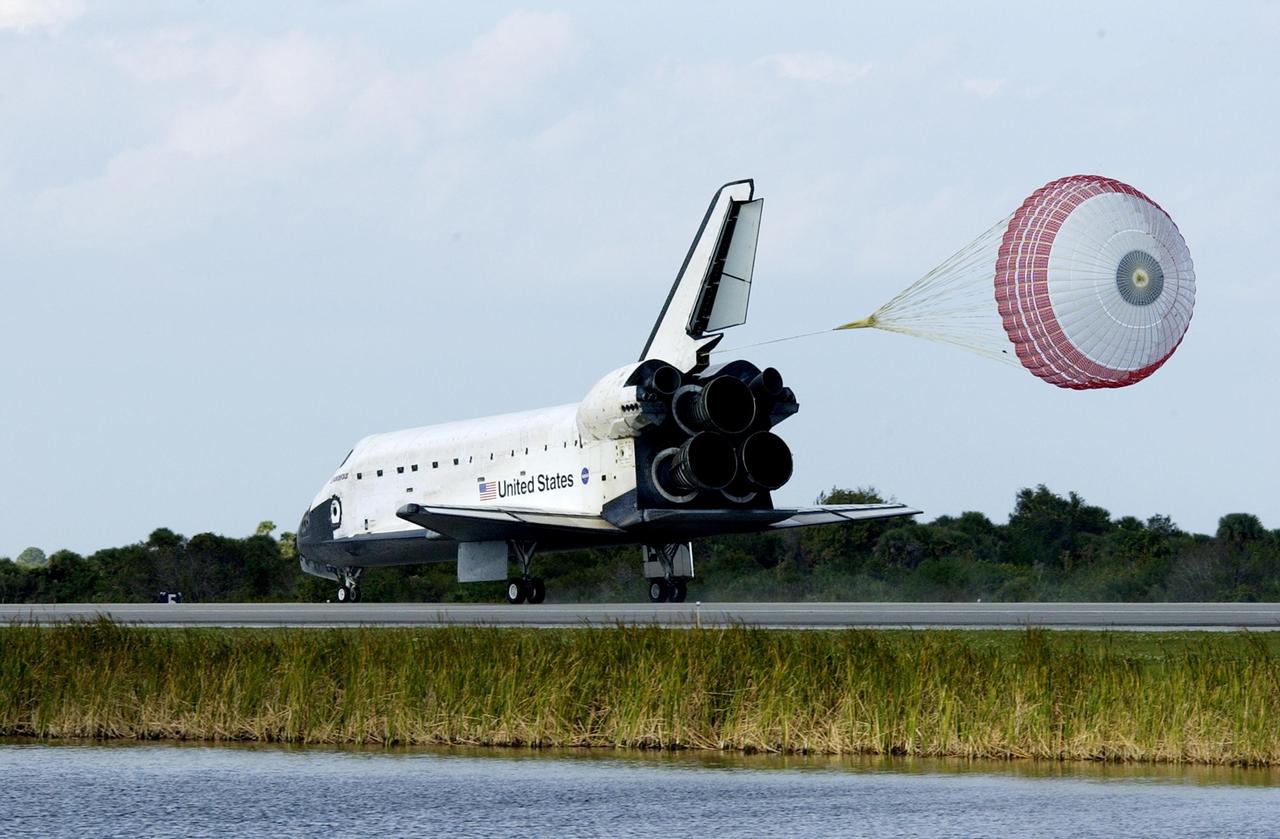
KENNEDY SPACE CENTER, FLA. - Space Shuttle Endeavour's drag chute slows down the orbiter as it lands on runway 33 at the Shuttle Landing Facility after completing the 13-day, 18-hour, 48-minute, 5.74-million mile STS-113 mission to the International Space Station. Main gear touchdown was at 2:37:12 p.m. EST, nose gear touchdown was at 2:37:23 p.m., and wheel stop was at 2:38:25 p.m. Poor weather conditions thwarted landing opportunities until a fourth day, the first time in Shuttle program history that a landing has been waved off for three consecutive days. The vehicle carries the STS-113 crew, Commander James Wetherbee, Pilot Paul Lockhart and Mission Specialists Michael Lopez-Alegria and John Herrington, as well as the returning Expedition Five crew, Commander Valeri Korzun, ISS Science Officer Peggy Whitson and Flight Engineer Sergei Treschev. The installation of the P1 truss on the International Space Station was accomplished during the mission.
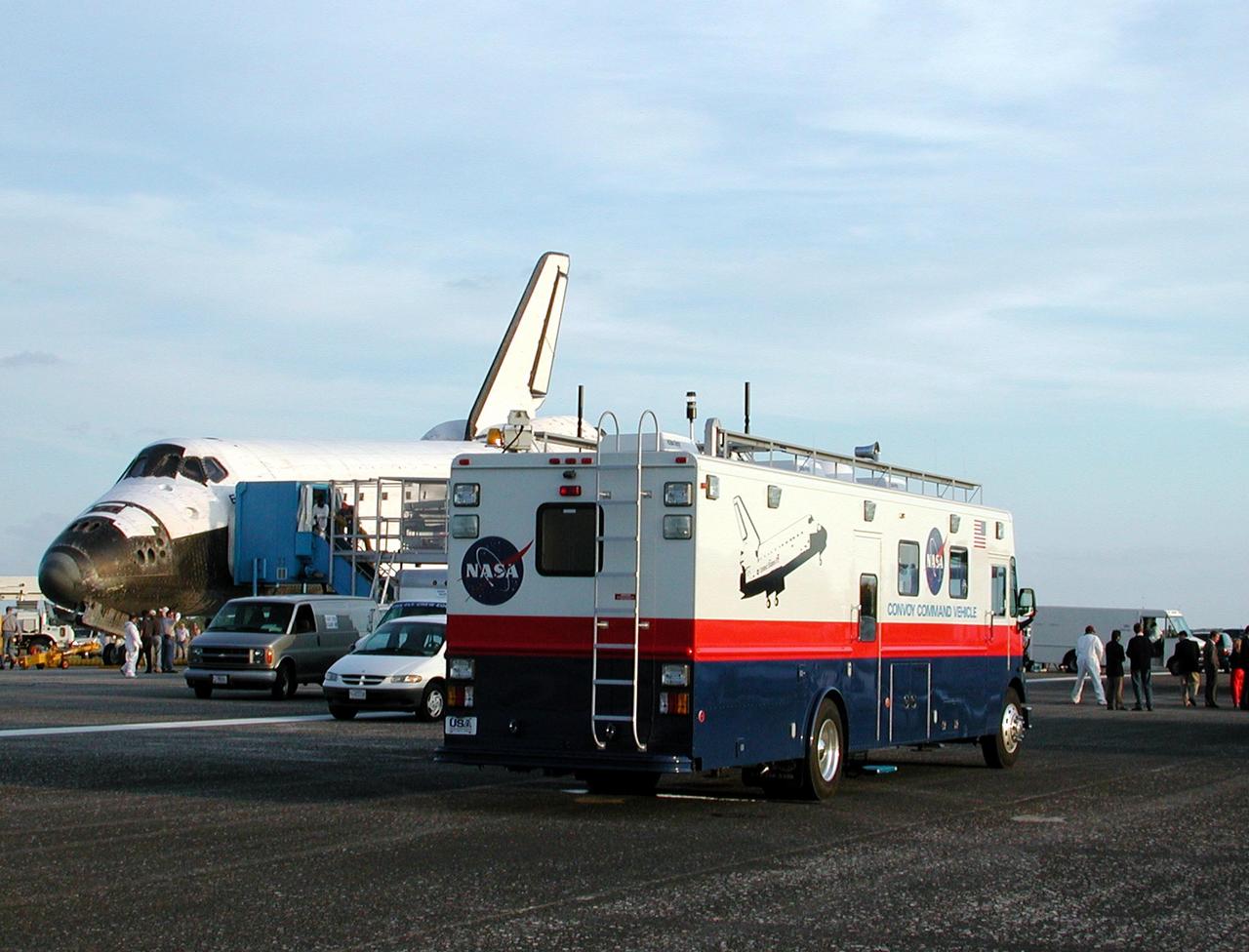
KENNEDY SPACE CENTER, FLA. - Space Shuttle Endeavour is surrounded by vehicles from the landing convoy on runway 33 at the Shuttle Landing Facility at the conclusion of the 13-day, 18-hour, 48-minute, 5.74-million mile STS-113 mission to the International Space Station. In the foreground is the Convoy Command Vehicle which is the command post for the Convoy Commander. The Convoy Commander is in communication with the orbiter and all of the landing convoy vehicles during the post-landing operations. The landing convoy's purpose is to safe the vehicle and provide support for the disembarking crew and experiments. Main gear touchdown was at 2:37:12 p.m. EST, nose gear touchdown was at 2:37:23 p.m., and wheel stop was at 2:38:25 p.m. Poor weather conditions thwarted landing opportunities until a fourth day, the first time in Shuttle program history that a landing has been waved off for three consecutive days. The vehicle carries the STS-113 crew, Commander James Wetherbee, Pilot Paul Lockhart and Mission Specialists Michael Lopez-Alegria and John Herrington, as well as the returning Expedition Five crew, Commander Valeri Korzun, ISS Science Officer Peggy Whitson and Flight Engineer Sergei Treschev. The installation of the P1 truss on the International Space Station was accomplished during the mission.
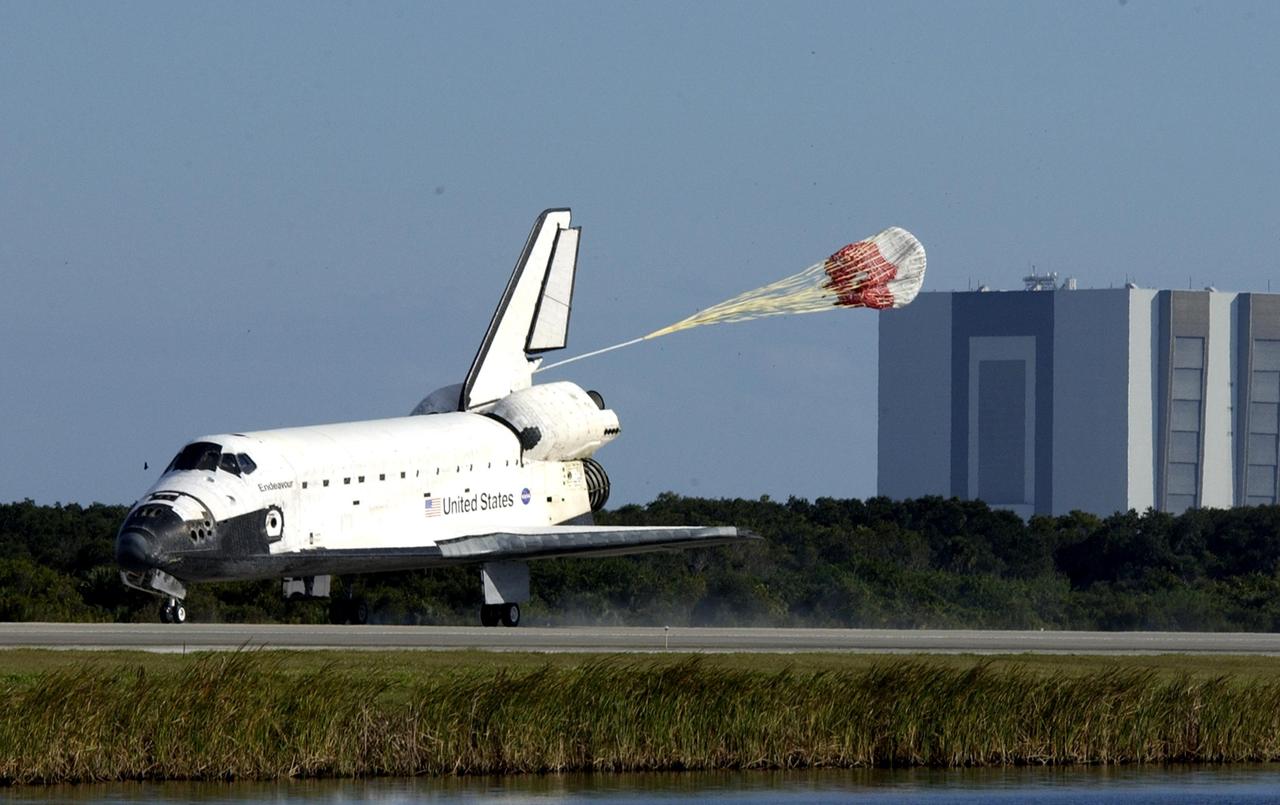
KENNEDY SPACE CENTER, FLA. - Space Shuttle Endeavour's drag chute deploys as the orbiter lands on runway 33 at the Shuttle Landing Facility after completing the 13-day, 18-hour, 48-minute, 5.74-million mile STS-113 mission to the International Space Station. In the background is a well known KSC landmark: the 525-foot-tall Vehicle Assembly Building. Main gear touchdown was at 2:37:12 p.m. EST, nose gear touchdown was at 2:37:23 p.m., and wheel stop was at 2:38:25 p.m. Poor weather conditions thwarted landing opportunities until a fourth day, the first time in Shuttle program history that a landing has been waved off for three consecutive days. The vehicle carries the STS-113 crew, Commander James Wetherbee, Pilot Paul Lockhart and Mission Specialists Michael Lopez-Alegria and John Herrington, as well as the returning Expedition Five crew, Commander Valeri Korzun, ISS Science Officer Peggy Whitson and Flight Engineer Sergei Treschev. The installation of the P1 truss on the International Space Station was accomplished during the mission.
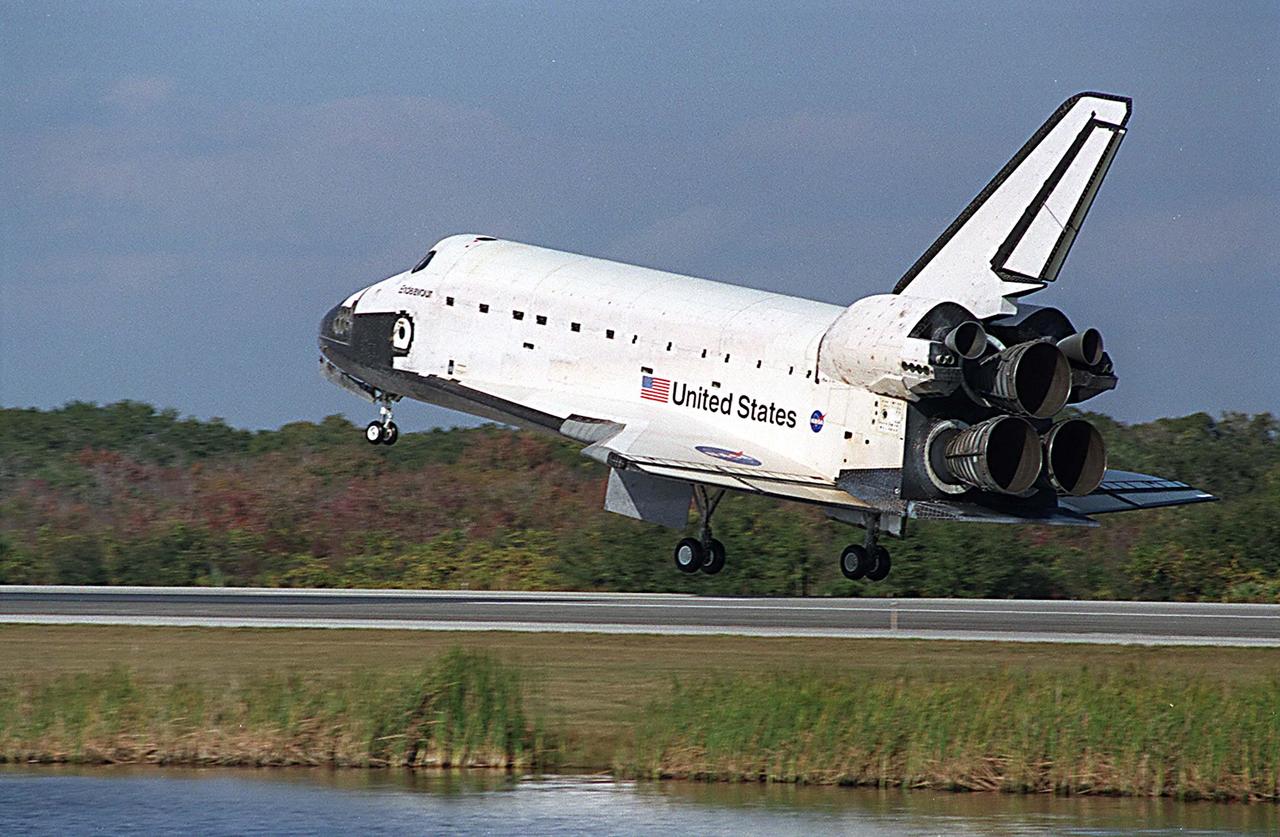
KENNEDY SPACE CENTER, FLA. -- Space Shuttle Endeavour is moments away from touching down on runway 33 at the Shuttle Landing Facility after completing the 13-day, 18-hour, 48-minute, 5.74-million mile STS-113 mission to the International Space Station. Main gear touchdown was at 2:37:12 p.m. EST, nose gear touchdown was at 2:37:23 p.m., and wheel stop was at 2:38:25 p.m. Poor weather conditions thwarted landing opportunities until a fourth day, the first time in Shuttle program history that a landing has been waved off for three consecutive days. The vehicle carries the STS-113 crew, Commander James Wetherbee, Pilot Paul Lockhart and Mission Specialists Michael Lopez-Alegria and John Herrington, as well as the returning Expedition Five crew, Commander Valeri Korzun, ISS Science Officer Peggy Whitson and Flight Engineer Sergei Treschev. The installation of the P1 truss on the International Space Station was accomplished during the mission.
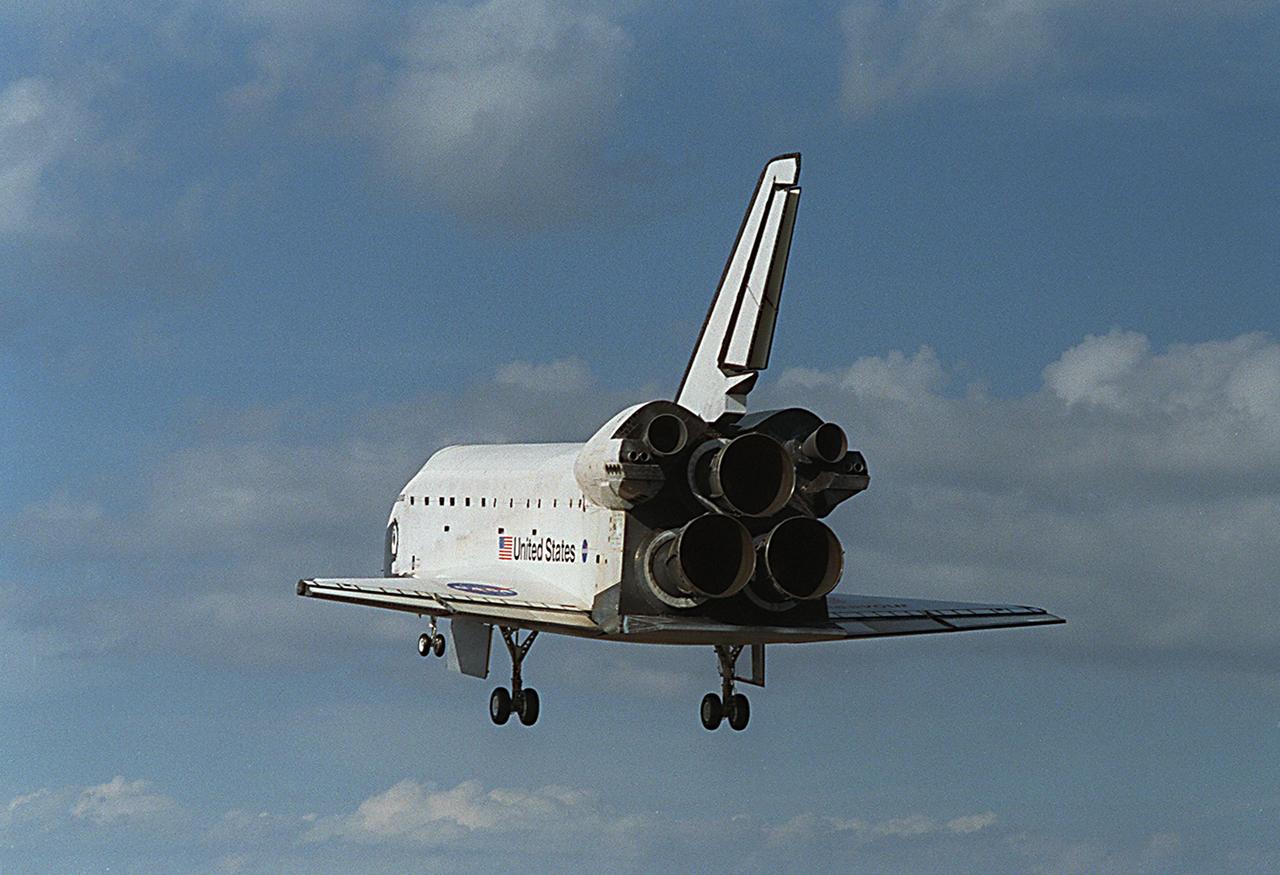
KENNEDY SPACE CENTER, FLA. -- Space Shuttle Endeavour makes its final approach to runway 33 at the Shuttle Landing Facility after completing the 13-day, 18-hour, 48-minute, 5.74-million mile STS-113 mission to the International Space Station. Main gear touchdown was at 2:37:12 p.m. EST, nose gear touchdown was at 2:37:23 p.m., and wheel stop was at 2:38:25 p.m. Poor weather conditions thwarted landing opportunities until a fourth day, the first time in Shuttle program history that a landing has been waved off for three consecutive days. The vehicle carries the STS-113 crew, Commander James Wetherbee, Pilot Paul Lockhart and Mission Specialists Michael Lopez-Alegria and John Herrington, as well as the returning Expedition Five crew, Commander Valeri Korzun, ISS Science Officer Peggy Whitson and Flight Engineer Sergei Treschev. The installation of the P1 truss on the International Space Station was accomplished during the mission.
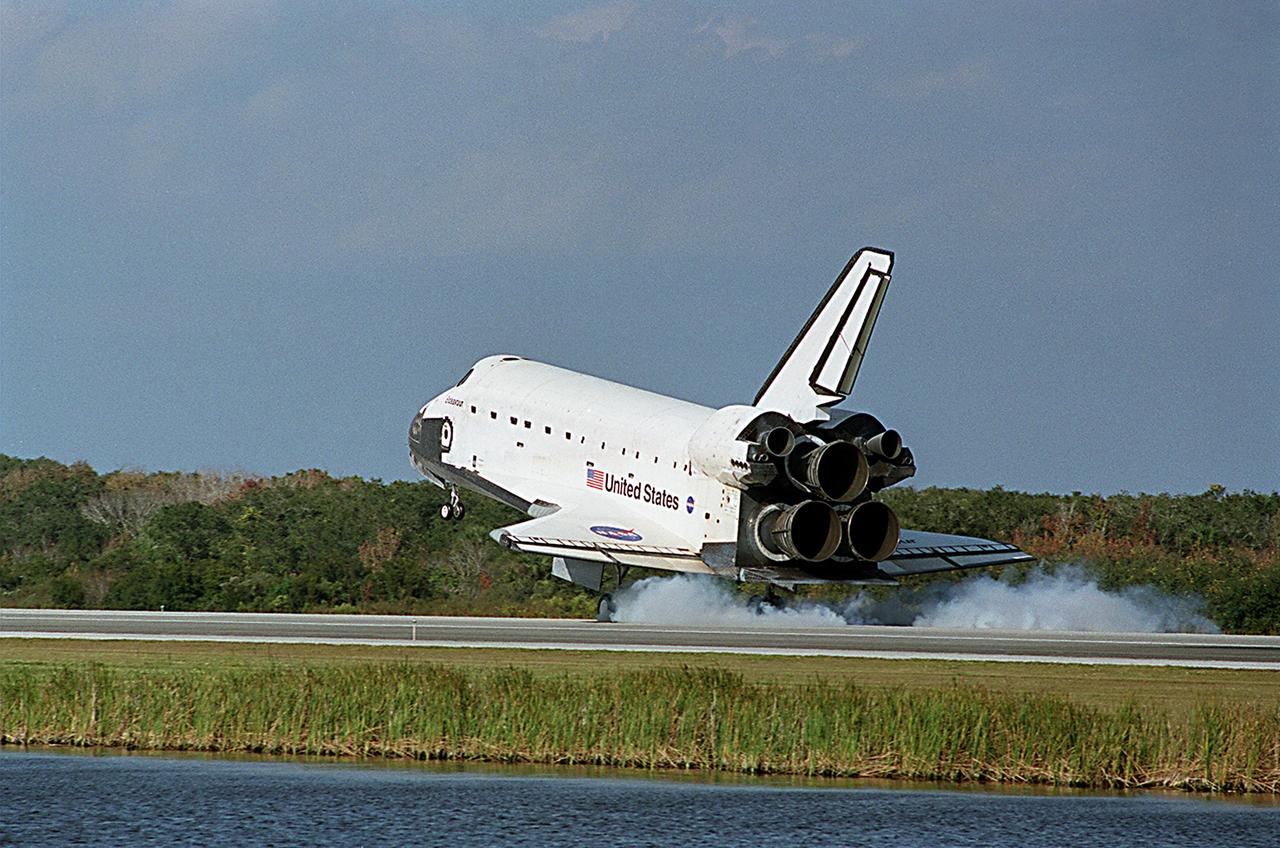
KENNEDY SPACE CENTER, FLA. -- The wheels of Space Shuttle Endeavour make contact with runway 33 at the Shuttle Landing Facility after completing the 13-day, 18-hour, 48-minute, 5.74-million mile STS-113 mission to the International Space Station. Main gear touchdown was at 2:37:12 p.m. EST, nose gear touchdown was at 2:37:23 p.m., and wheel stop was at 2:38:25 p.m. Poor weather conditions thwarted landing opportunities until a fourth day, the first time in Shuttle program history that a landing has been waved off for three consecutive days. The vehicle carries the STS-113 crew, Commander James Wetherbee, Pilot Paul Lockhart and Mission Specialists Michael Lopez-Alegria and John Herrington, as well as the returning Expedition Five crew, Commander Valeri Korzun, ISS Science Officer Peggy Whitson and Flight Engineer Sergei Treschev. The installation of the P1 truss on the International Space Station was accomplished during the mission.
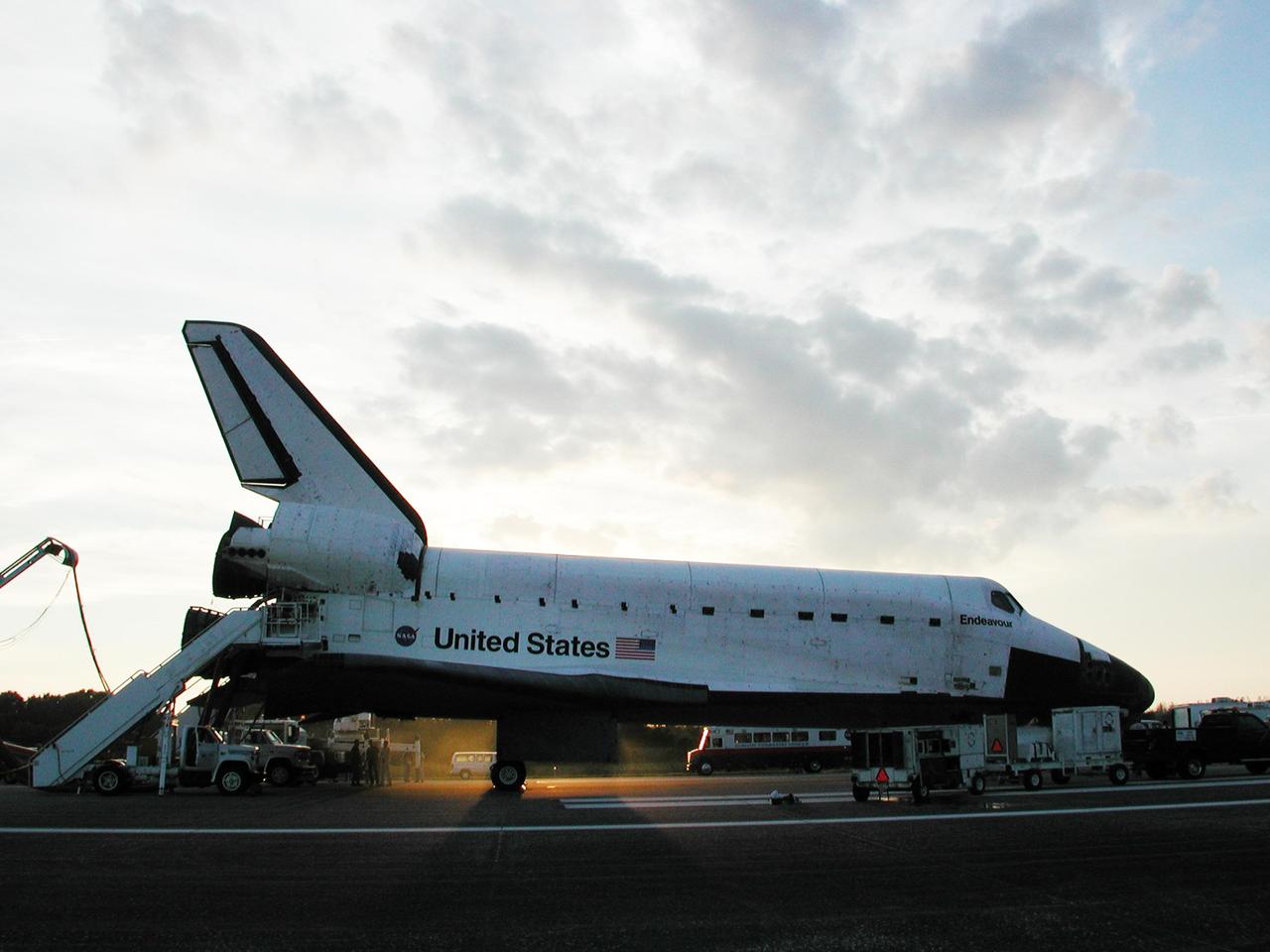
KENNEDY SPACE CENTER, FLA. - Space Shuttle Endeavour is surrounded by vehicles from the landing convoy, as the sun sets on runway 33 at the Shuttle Landing Facility at the conclusion of the 13-day, 18-hour, 48-minute, 5.74-million mile STS-113 mission to the International Space Station. Under the orbiter, the Convoy Command Vehicle, the command post for the Convoy Commander, can be seen on the far side of the runway. The Convoy Commander is in communication with the orbiter and all of the landing convoy vehicles during the post-landing operations. The landing convoy's purpose is to safe the vehicle and provide support for the disembarking crew and experiments. Main gear touchdown was at 2:37:12 p.m. EST, nose gear touchdown was at 2:37:23 p.m., and wheel stop was at 2:38:25 p.m. Poor weather conditions thwarted landing opportunities until a fourth day, the first time in Shuttle program history that a landing has been waved off for three consecutive days. The vehicle carries the STS-113 crew, Commander James Wetherbee, Pilot Paul Lockhart and Mission Specialists Michael Lopez-Alegria and John Herrington, as well as the returning Expedition Five crew, Commander Valeri Korzun, ISS Science Officer Peggy Whitson and Flight Engineer Sergei Treschev. The installation of the P1 truss on the International Space Station was accomplished during the mission.
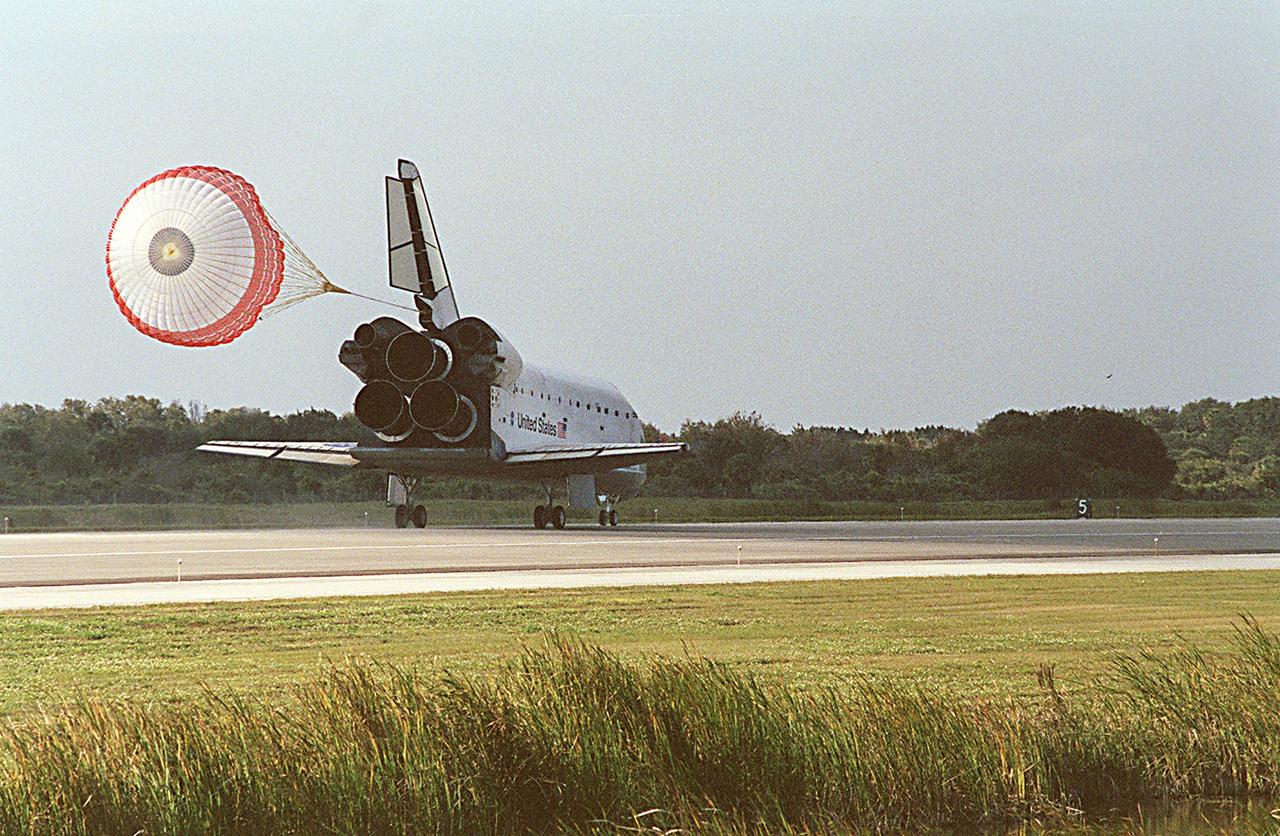
KENNEDY SPACE CENTER, FLA. -- The drag chute on Space Shuttle Endeavour unfurls upon landing on runway 33 at the Shuttle Landing Facility, bringing to a close the 13-day, 18-hour, 48-minute, 5.74-million mile STS-113 mission to the International Space Station. Main gear touchdown was at 2:37:12 p.m. EST, nose gear touchdown was at 2:37:23 p.m., and wheel stop was at 2:38:25 p.m. Poor weather conditions thwarted landing opportunities until a fourth day, the first time in Shuttle program history that a landing has been waved off for three consecutive days. The vehicle carries the STS-113 crew, Commander James Wetherbee, Pilot Paul Lockhart and Mission Specialists Michael Lopez-Alegria and John Herrington, as well as the returning Expedition Five crew, Commander Valeri Korzun, ISS Science Officer Peggy Whitson and Flight Engineer Sergei Treschev. The installation of the P1 truss on the International Space Station was accomplished during the mission.
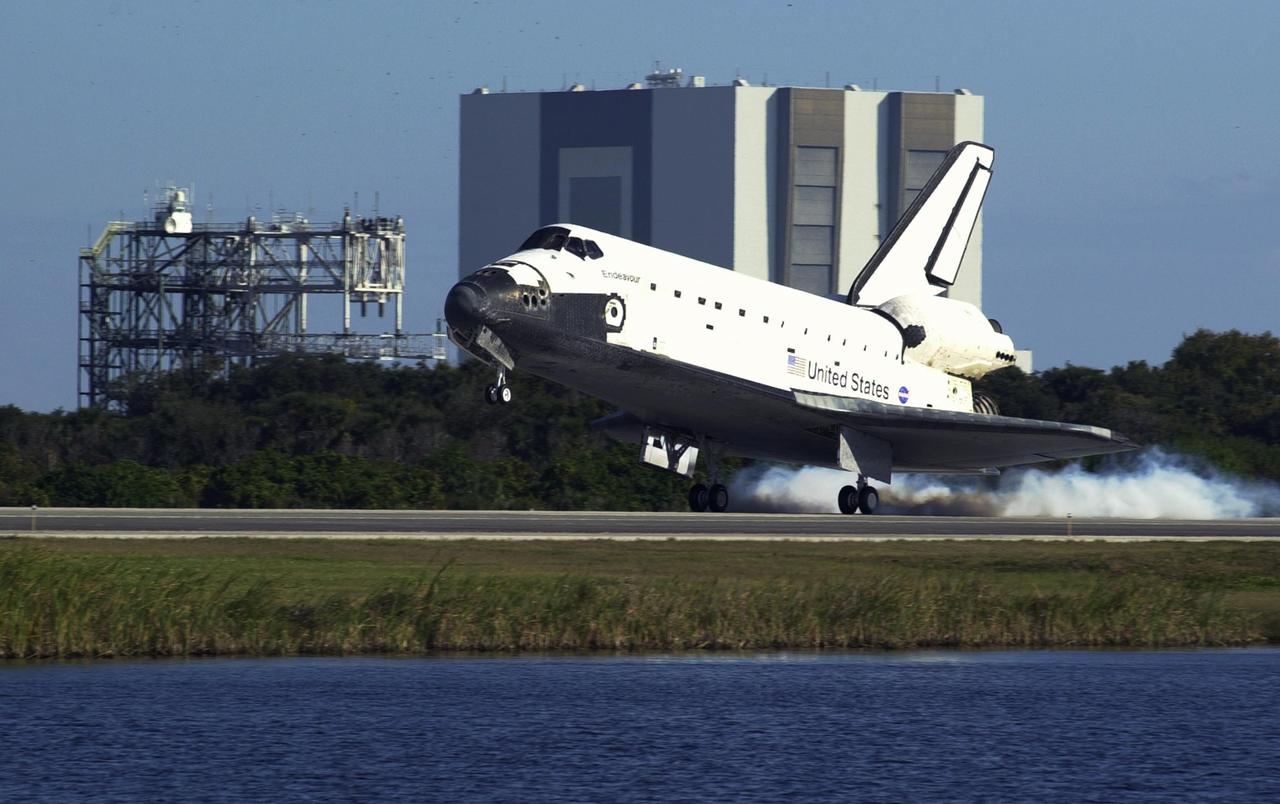
KENNEDY SPACE CENTER, FLA. - Space Shuttle Endeavour touches down on runway 33 at the Shuttle Landing Facility (SLF) after completing the 13-day, 18-hour, 48-minute, 5.74-million mile STS-113 mission to the International Space Station. In the background are two well known landmarks at KSC: the SLF's Mate/Demate Device (left) and the 525-foot-tall Vehicle Assembly Building. Main gear touchdown was at 2:37:12 p.m. EST, nose gear touchdown was at 2:37:23 p.m., and wheel stop was at 2:38:25 p.m. Poor weather conditions thwarted landing opportunities until a fourth day, the first time in Shuttle program history that a landing has been waved off for three consecutive days. The vehicle carries the STS-113 crew, Commander James Wetherbee, Pilot Paul Lockhart and Mission Specialists Michael Lopez-Alegria and John Herrington, as well as the returning Expedition Five crew, Commander Valeri Korzun, ISS Science Officer Peggy Whitson and Flight Engineer Sergei Treschev. The installation of the P1 truss on the International Space Station was accomplished during the mission.

KENNEDY SPACE CENTER, FLA. - Space Shuttle Endeavour touches down on runway 33 at the Shuttle Landing Facility (SLF) after completing the 13-day, 18-hour, 48-minute, 5.74-million mile STS-113 mission to the International Space Station. Main gear touchdown was at 2:37:12 p.m. EST, nose gear touchdown was at 2:37:23 p.m., and wheel stop was at 2:38:25 p.m. Poor weather conditions thwarted landing opportunities until a fourth day, the first time in Shuttle program history that a landing has been waved off for three consecutive days. The vehicle carries the STS-113 crew, Commander James Wetherbee, Pilot Paul Lockhart and Mission Specialists Michael Lopez-Alegria and John Herrington, as well as the returning Expedition Five crew, Commander Valeri Korzun, ISS Science Officer Peggy Whitson and Flight Engineer Sergei Treschev. The installation of the P1 truss on the International Space Station was accomplished during the mission.

KENNEDY SPACE CENTER, FLA. -- The wheels of Space Shuttle Endeavour make contact with runway 33 at the Shuttle Landing Facility, bringing to a close the 13-day, 18-hour, 48-minute, 5.74-million mile STS-113 mission to the International Space Station. Main gear touchdown was at 2:37:12 p.m. EST, nose gear touchdown was at 2:37:23 p.m., and wheel stop was at 2:38:25 p.m. Poor weather conditions thwarted landing opportunities until a fourth day, the first time in Shuttle program history that a landing has been waved off for three consecutive days. The vehicle carries the STS-113 crew, Commander James Wetherbee, Pilot Paul Lockhart and Mission Specialists Michael Lopez-Alegria and John Herrington, as well as the returning Expedition Five crew, Commander Valeri Korzun, ISS Science Officer Peggy Whitson and Flight Engineer Sergei Treschev. The installation of the P1 truss on the International Space Station was accomplished during the mission.
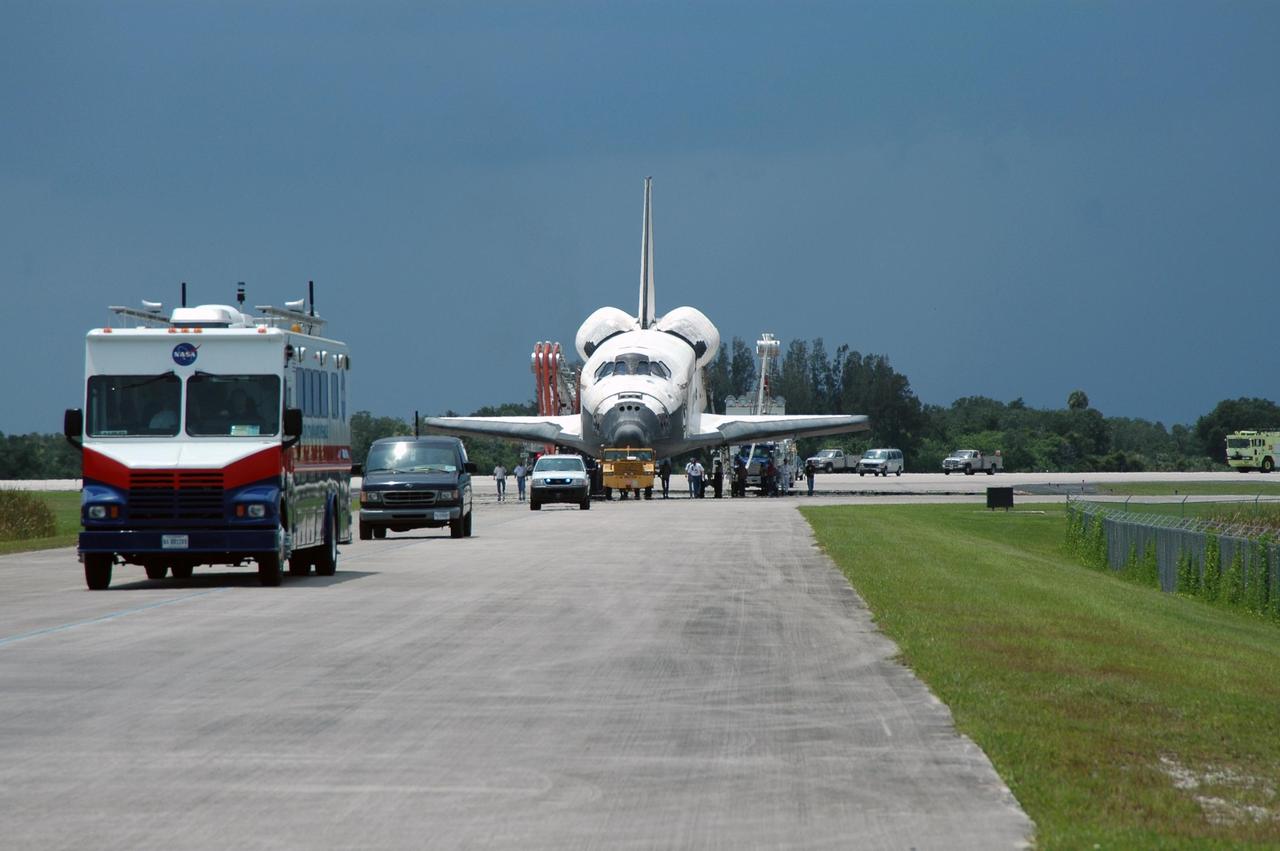
KENNEDY SPACE CENTER, FLA. - Under tow by a diesel-powered tractor, the orbiter Discovery begins its roll to the Orbiter Processing Facility from NASA's Shuttle Landing Facility (SLF) at Kennedy Space Center via a two-mile tow-way. Discovery landed at the SLF at 9:14 a.m. EDT, completing mission STS-121. Discovery landed at the SLF at 9:14 a.m. EDT, completing mission STS-121. Discovery traveled 5.3 million miles, landing on orbit 202. Mission elapsed time was 12 days, 18 hours, 37 minutes and 54 seconds. Main gear touchdown occurred on time at 9:14:43 EDT. Wheel stop was at 9:15:49 EDT. During the mission, the STS-121 crew tested new equipment and procedures to improve shuttle safety, and delivered supplies and made repairs to the International Space Station. Photo credit: NASA/Jim Grossmann
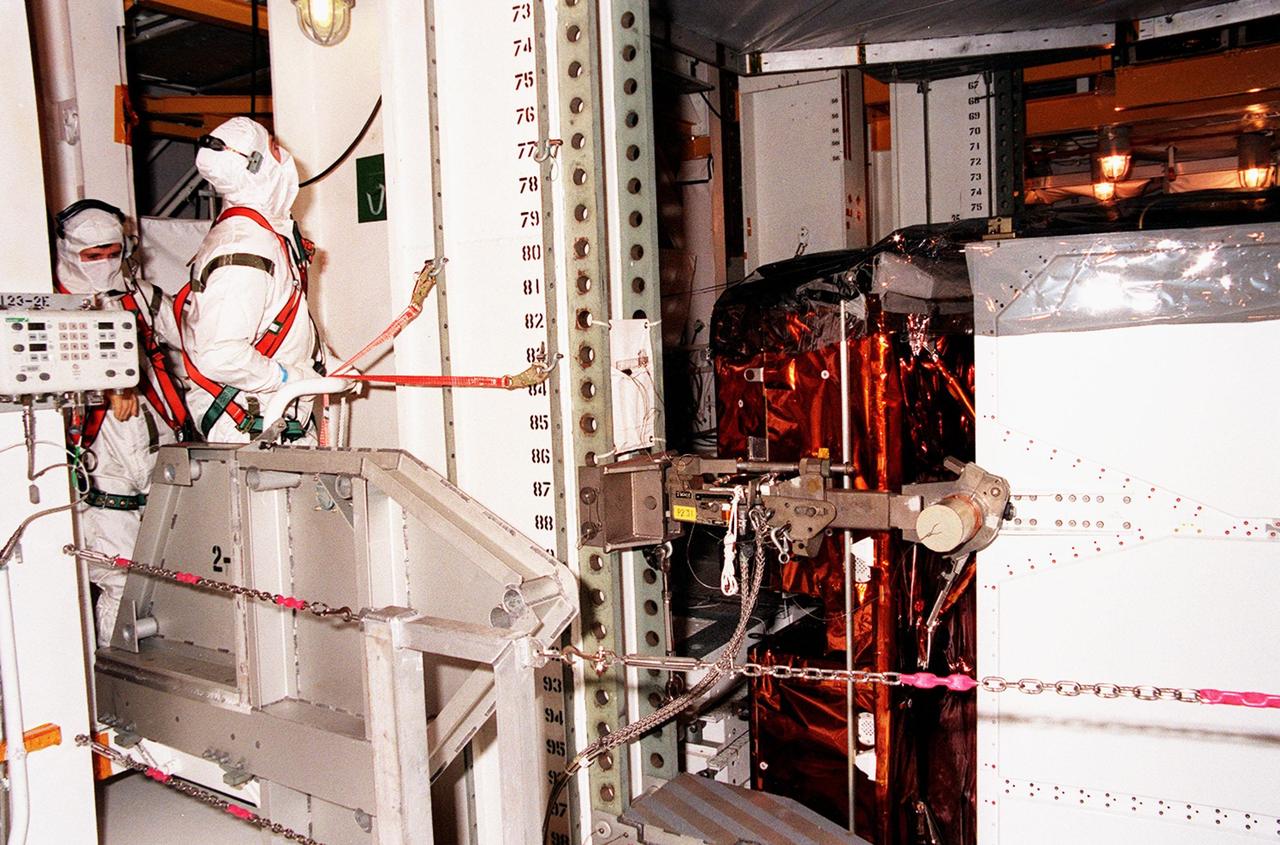
KENNEDY SPACE CENTER, FLA. -- Workers oversee the transfer of STS-103's Hubble servicing cargo from the payload changeout room at Launch Pad 39B to the payload bay in Space Shuttle Discovery. STS-103 is a "call-up" mission due to the need to replace and repair portions of the Hubble Space Telescope, including the gyroscopes that allow the telescope to point at stars, galaxies and planets. The STS-103 crew will be replacing a Fine Guidance Sensor, an older computer with a new enhanced model, an older data tape recorder with a solid-state digital recorder, a failed spare transmitter with a new one, and degraded insulation on the telescope with new thermal insulation. The crew will also install a Battery Voltage/Temperature Improvement Kit to protect the spacecraft batteries from overcharging and overheating when the telescope goes into a safe mode. Four EVA's are planned to make the necessary repairs and replacements on the telescope. The mission is targeted for launch Dec. 6 at 2:37 a.m. EST
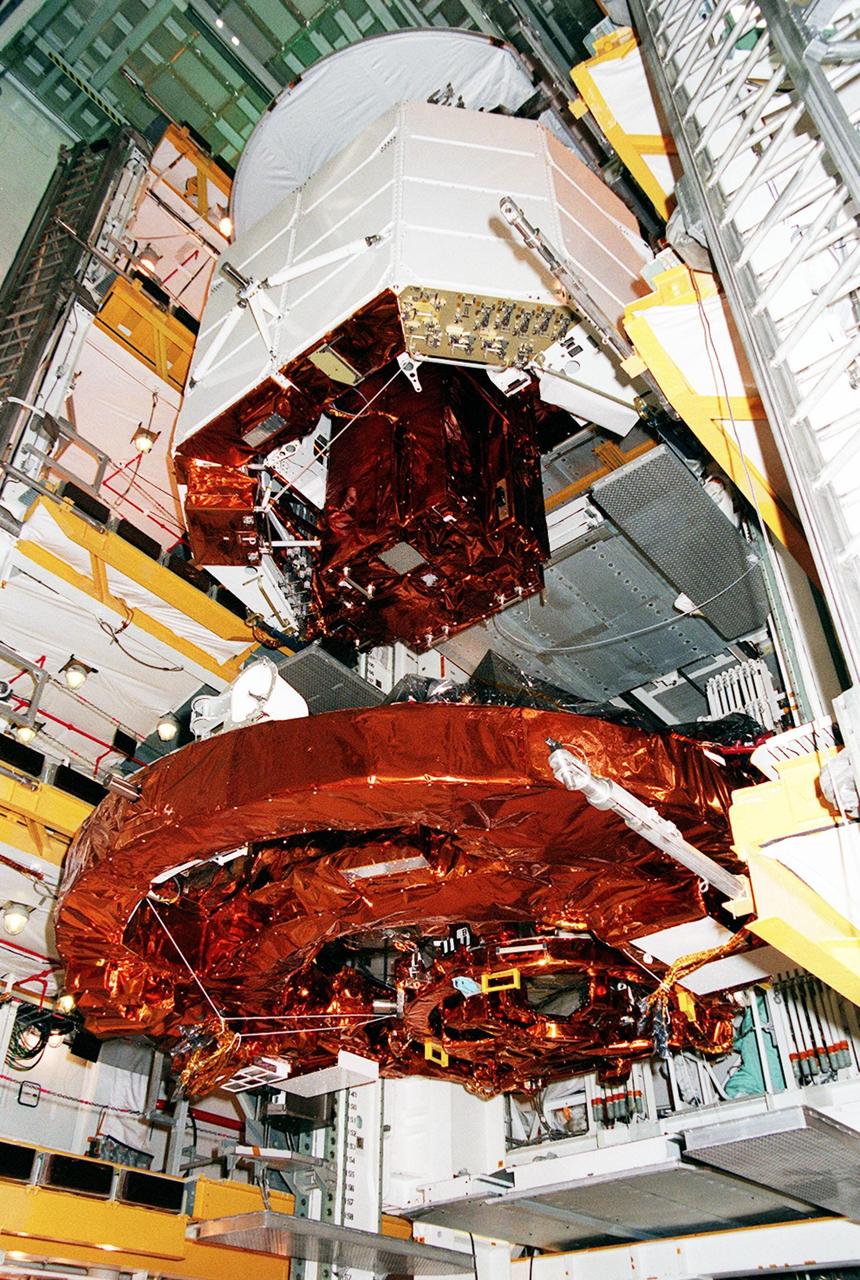
KENNEDY SPACE CENTER, FLA. -- STS-103's Hubble servicing cargo is transferred from the payload changeout room at Launch Pad 39B to the payload bay in Space Shuttle Discovery. STS-103 is a "call-up" mission due to the need to replace and repair portions of the Hubble Space Telescope, including the gyroscopes that allow the telescope to point at stars, galaxies and planets. The STS-103 crew will be replacing a Fine Guidance Sensor, an older computer with a new enhanced model, an older data tape recorder with a solid-state digital recorder, a failed spare transmitter with a new one, and degraded insulation on the telescope with new thermal insulation. The crew will also install a Battery Voltage/Temperature Improvement Kit to protect the spacecraft batteries from overcharging and overheating when the telescope goes into a safe mode. Four EVA's are planned to make the necessary repairs and replacements on the telescope. The mission is targeted for launch Dec. 6 at 2:37 a.m. EST
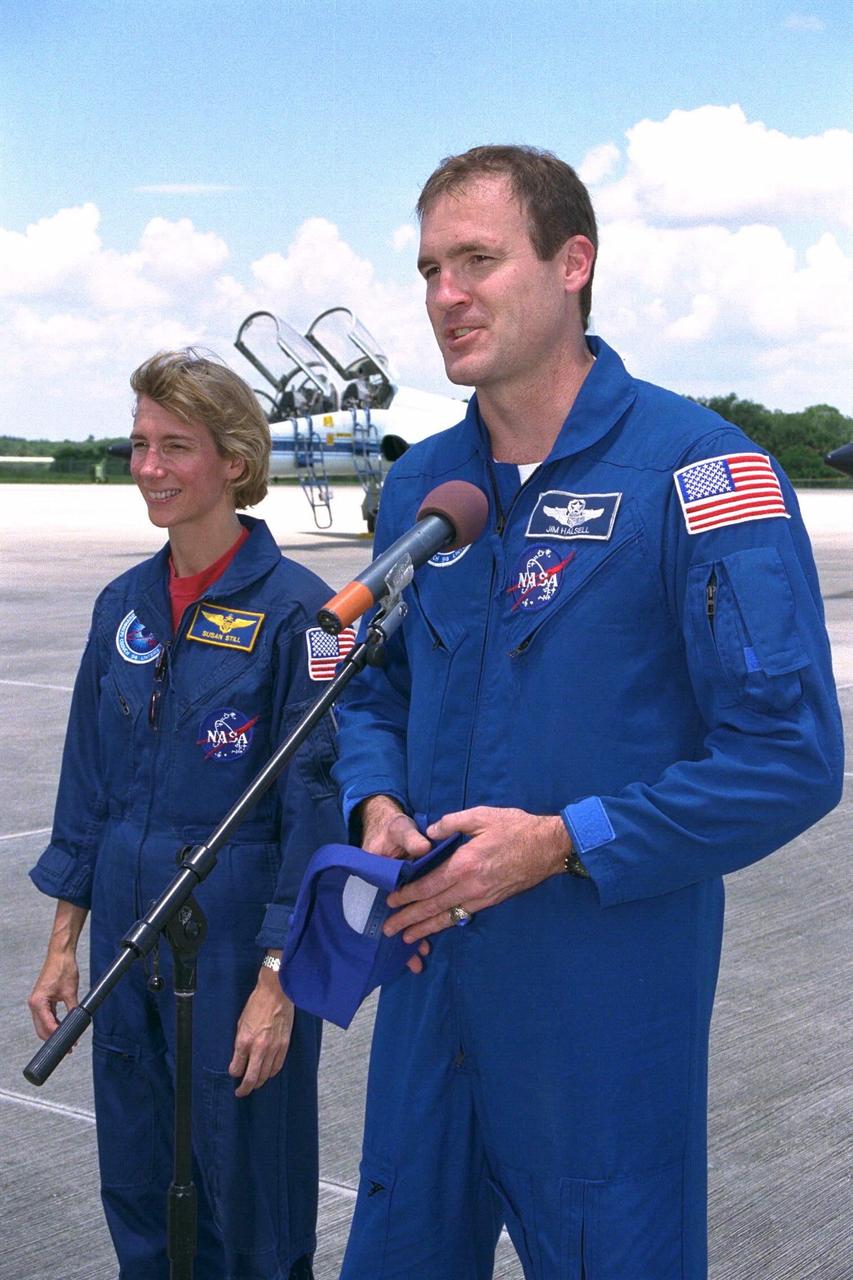
STS-94 Pilot Susan Leigh Still watches as Commander James D. Halsell, Jr., speaks to the media after the crew arrived at the Shuttle Landing Facility at Kennedy Space Center in preparation for the reflight of the Microgravity Science Laboratory-1 mission. Launch is scheduled for July 1, 1997, at 2:37 p.m. EDT. The laboratory was scheduled to fly again with the full complement of STS-83 experiments after that mission was cut short due to a faulty fuel cell. During the scheduled 16-day STS-94 mission, the experiments will be used to test some of the hardware, facilities and procedures that are planned for use on the International Space Station while the flight crew conducts combustion, protein crystal growth and materials processing experiments
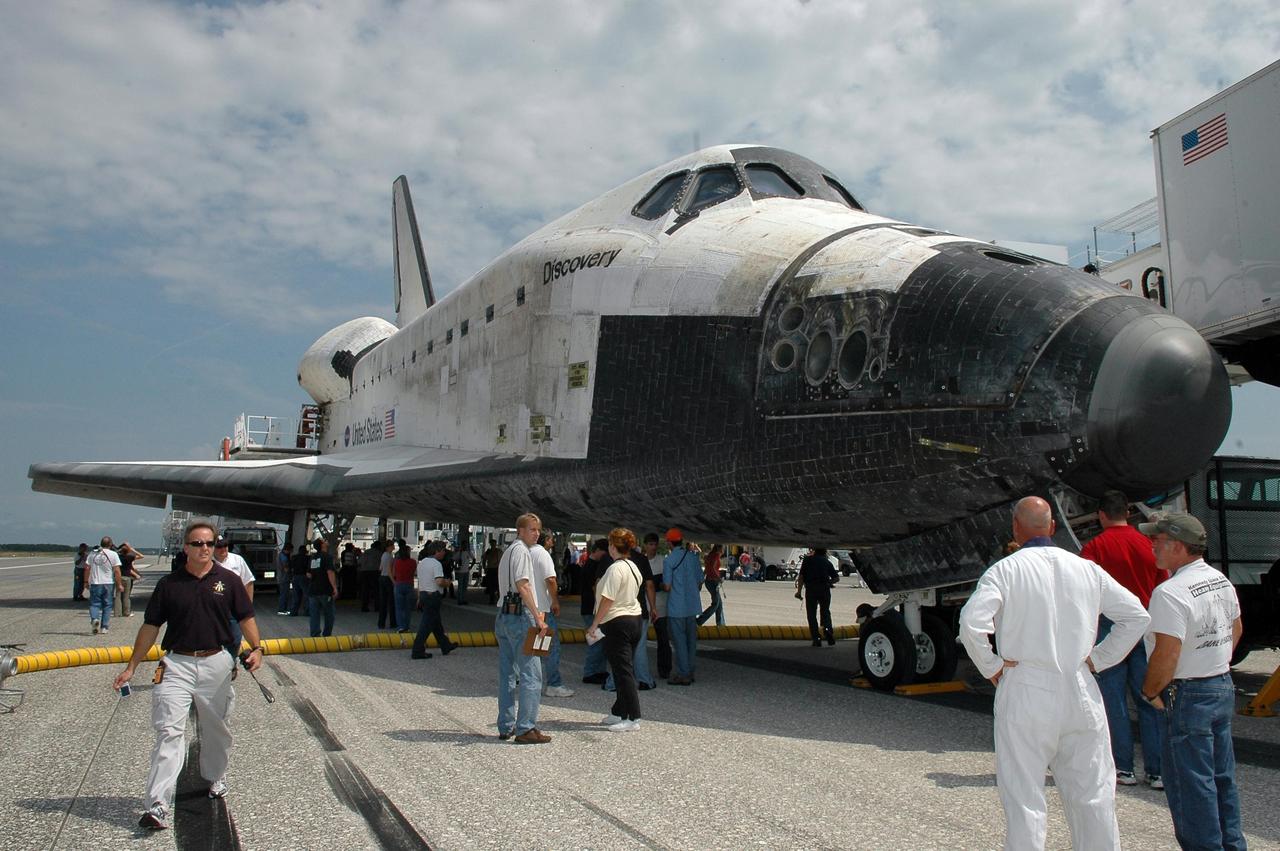
KENNEDY SPACE CENTER, FLA. - Workers and media at NASA's Kennedy Space Center watch while the orbiter Discovery, following the landing from mission STS-121, is prepared for the roll to the Orbiter Processing Facility. Discovery's smooth and perfect landing was on time at 9:14 a.m. EDT on Runway 15 of NASA's Shuttle Landing Facility after traveling 5.3 million miles on 202 orbits. Mission elapsed time was 12 days, 18 hours, 37 minutes and 54 seconds. The landing is the 62nd at Kennedy Space Center and the 32nd for Discovery. Photo credit: NASA/Kim Shiflett
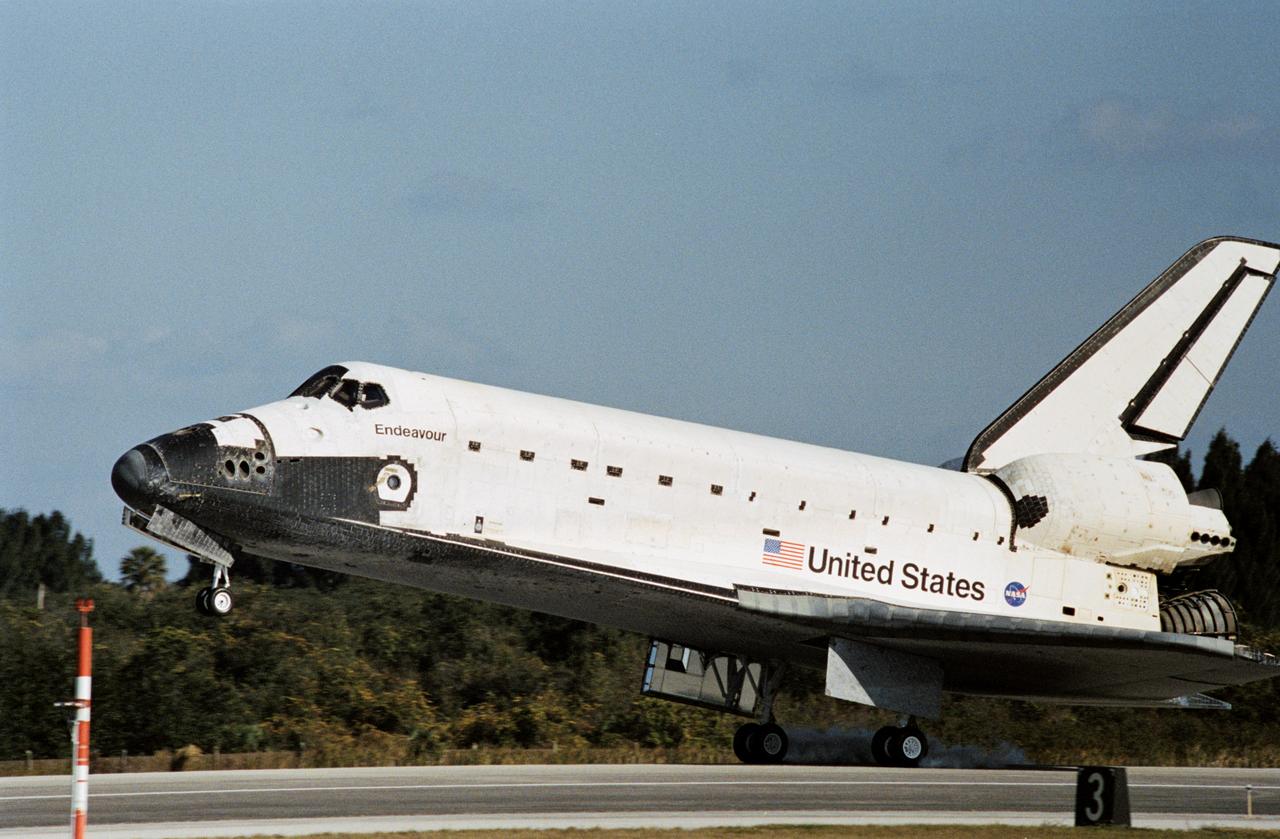
STS113-S-041 (7 December 2002) --- The main landing gear of Space Shuttle Endeavour touches down on runway 33 at the KSC landing facility, completing the nearly 14-day STS-113 mission to the International Space Station (ISS). Astronaut James D. Wetherbee, mission commander, eased Endeavour to a textbook landing on runway 33 at the Florida spaceport at 2:37 p.m. (EST) on December 7, 2002. The landing completed a 5.74-million mile mission that saw successful delivery and installation of the Port One (P1) truss on the orbital outpost.
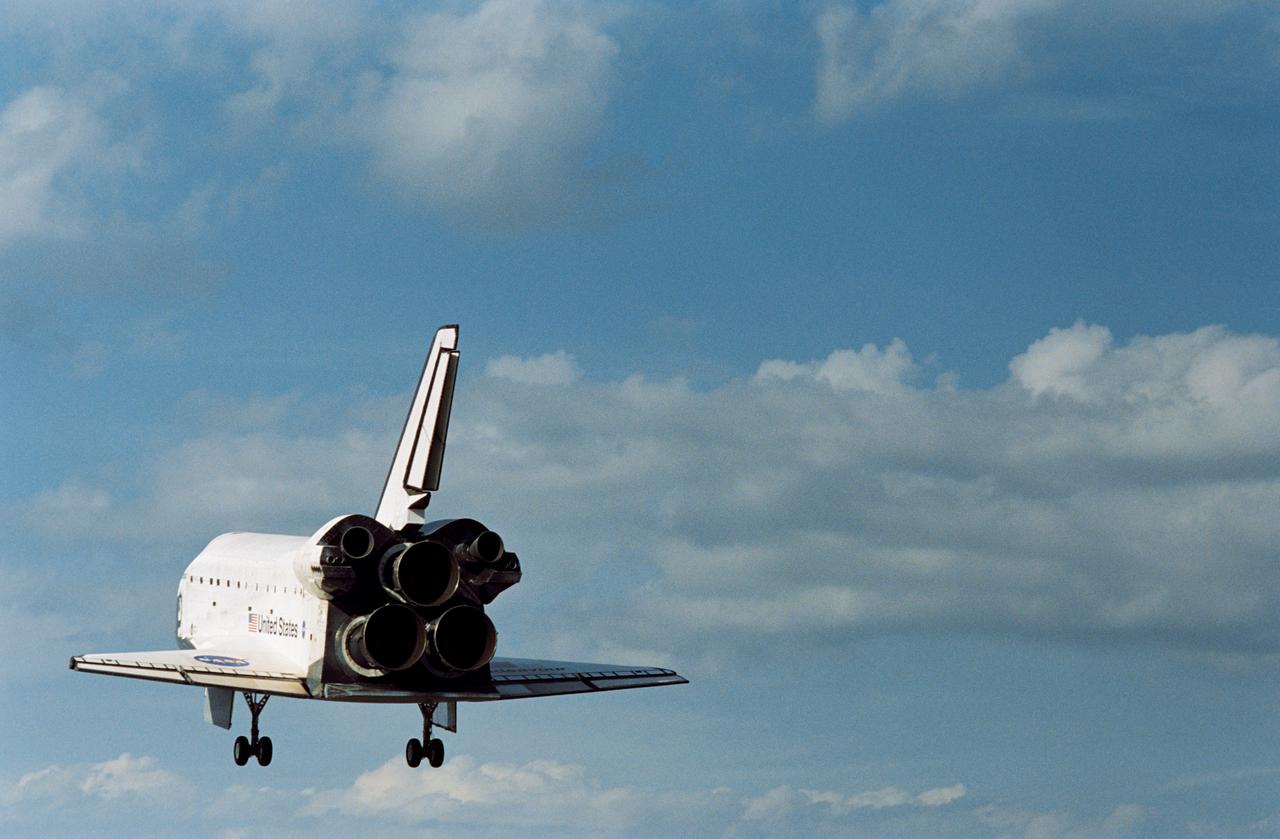
STS113-S-044 (7 December 2002) --- The Space Shuttle Endeavour’s main landing gear is just about to touch down on runway 33 at the Shuttle Landing Facility at the Kennedy Space Center (KSC), completing the nearly 14-day STS-113 mission to the International Space Station (ISS). Astronaut James D. Wetherbee, mission commander, eased Endeavour to a textbook landing at 2:37 p.m. (EST) on December 7, 2002. The landing completed a 5.74-million mile mission that saw successful delivery and installation of the Port One (P1) truss on the orbital outpost.
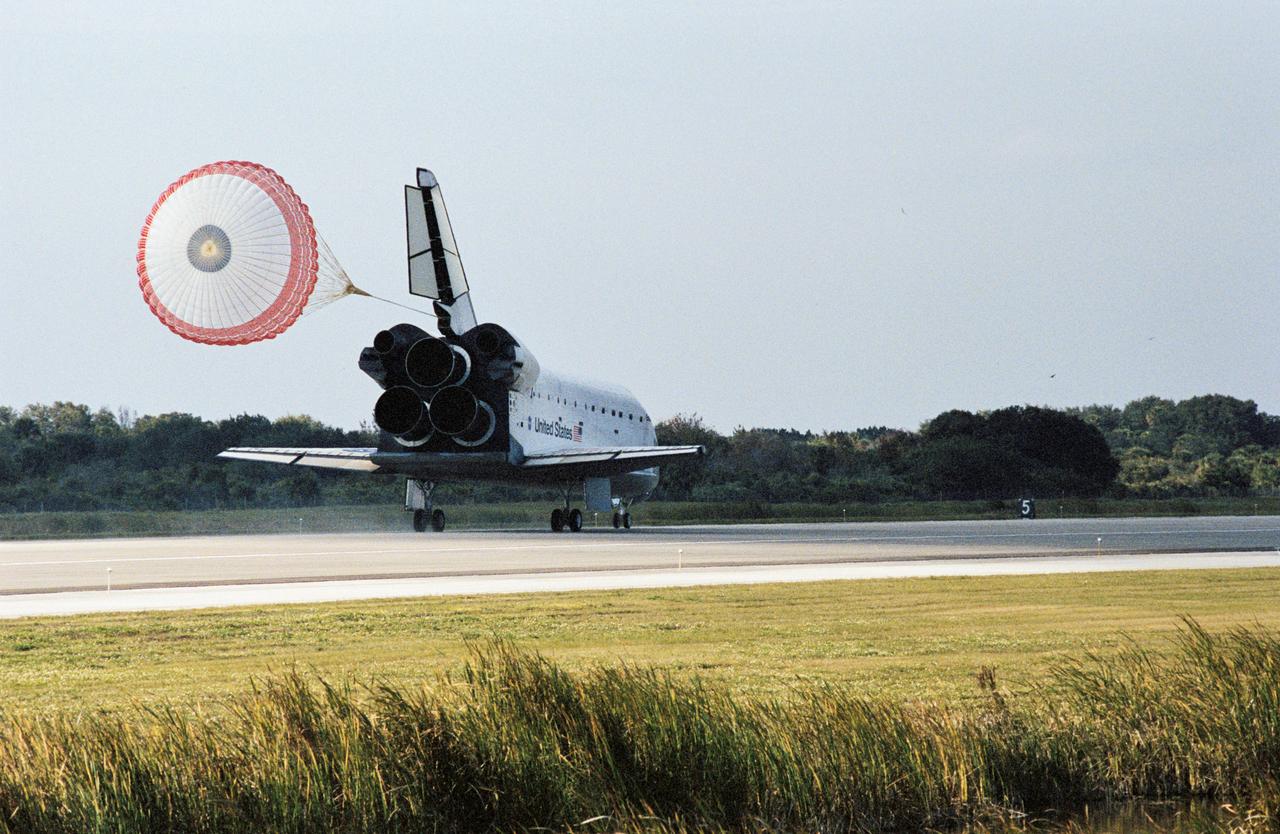
STS113-S-043 (7 December 2002) --- The drag chute on the Space Shuttle Endeavour deploys to slow down the spacecraft during landing on runway 33 at the KSC landing facility, completing the nearly 14-day STS-113 mission to the International Space Station (ISS). Astronaut James D. Wetherbee, mission commander, eased Endeavour to a textbook landing on runway 33 at the Florida spaceport at 2:37 p.m. (EST) on December 7, 2002. The landing completed a 5.74-million mile mission that saw successful delivery and installation of the Port One (P1) truss on the orbital outpost.
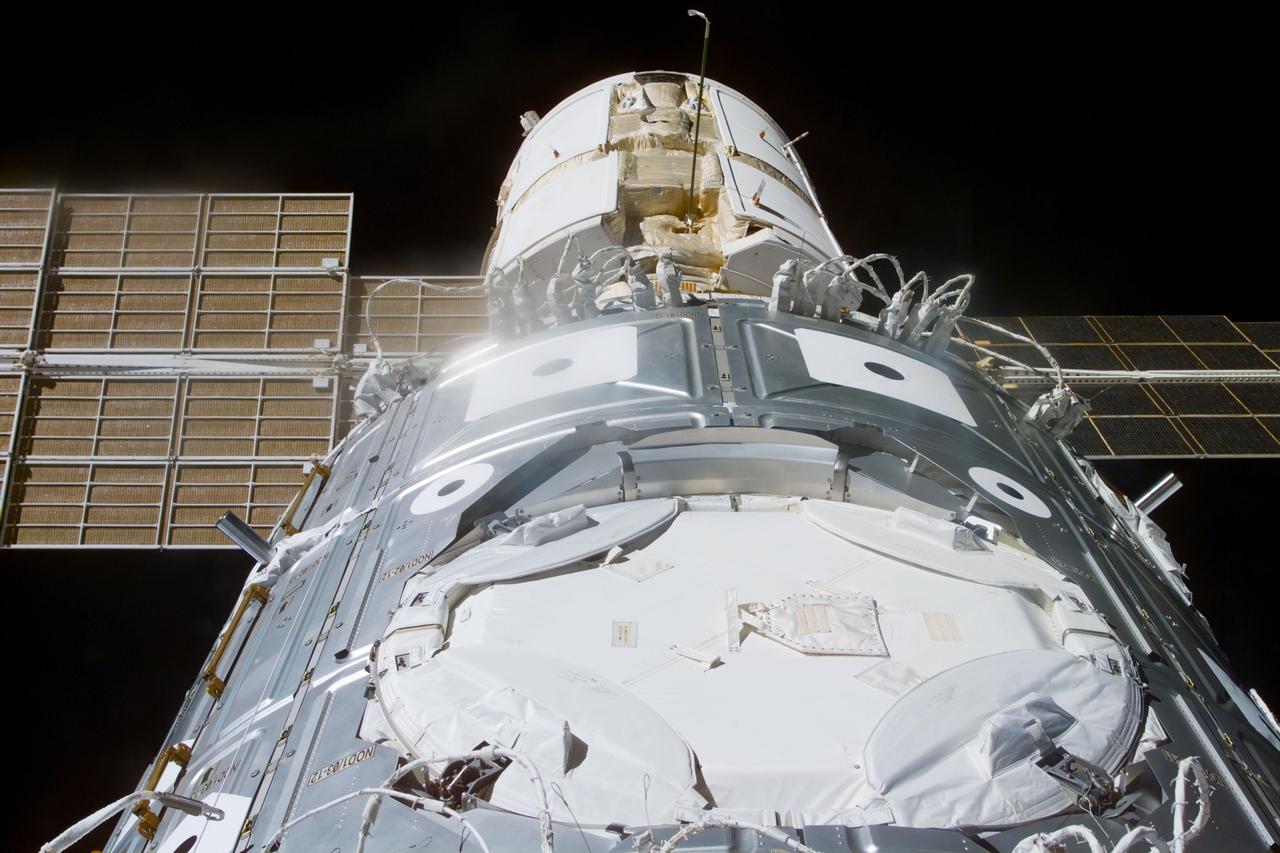
S88-E-5061 (12-08-98) --- Cables and wires in place on the Unity module signify the end of the first of three spacewalks scheduled for the STS-88 mission. Astronauts Jerry L. Ross and James H. Newman, both mission specialists, were succesful in mating 40 cables and connectors running 76 feet from the Zarya control module (seen at top in this photo) to Unity, with the 35-ton complex towering over Endeavour's cargo bay. This photo was taken with an electronic still camera (ESC) at 03:37:35 GMT, Dec. 8.
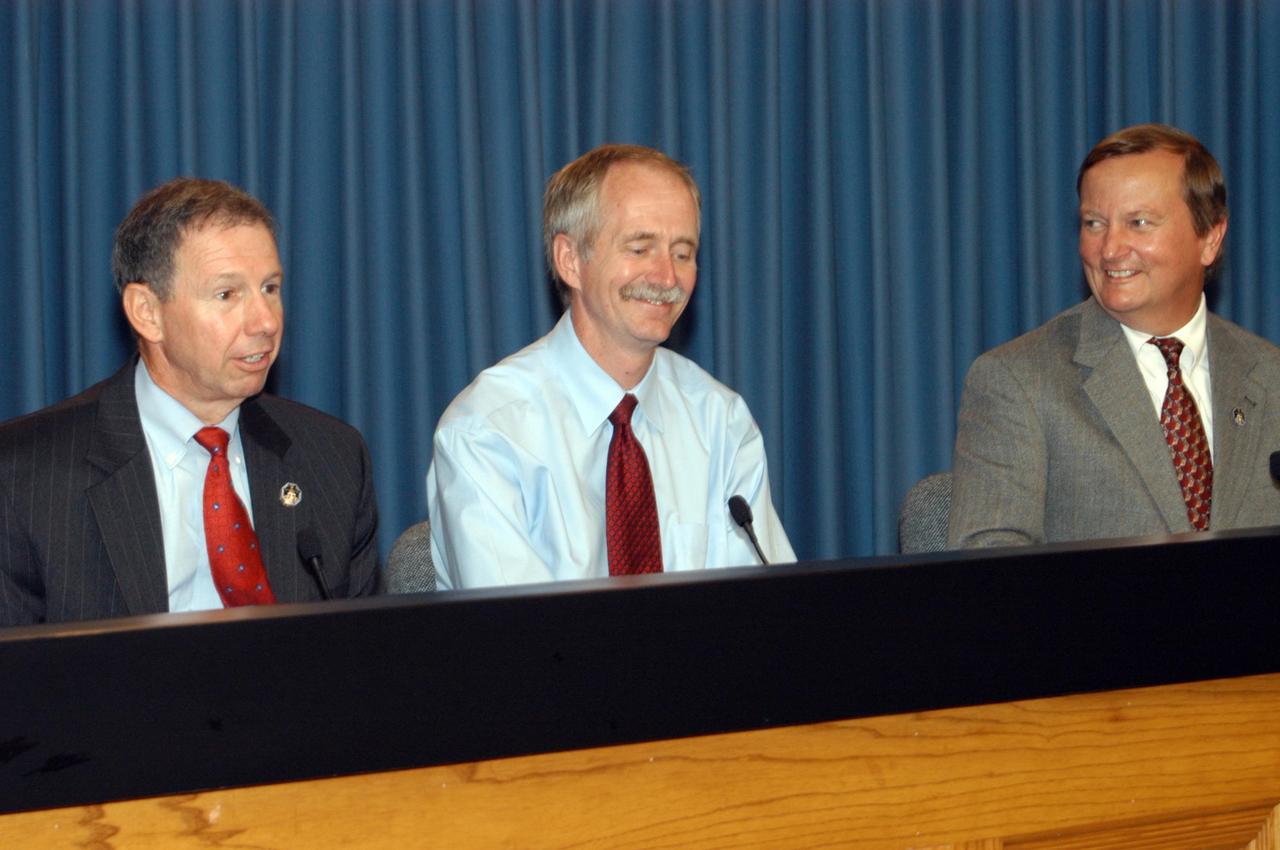
KENNEDY SPACE CENTER, FLA. - A press conference after the landing of the orbiter Discovery and mission STS-121 crew features NASA Administrator Mike Griffin, Associate Administrator for Space Operations Bill Gerstenmaier and Shuttle Launch Director Mike Leinbach. A few of the questions from the media evoked smiles from the panelists. Discovery traveled 5.3 million miles, landing on orbit 202. Mission elapsed time was 12 days, 18 hours, 37 minutes and 54 seconds. The landing is the 62nd at Kennedy Space Center and the 32nd for Discovery. Photo credit: NASA/George Shelton
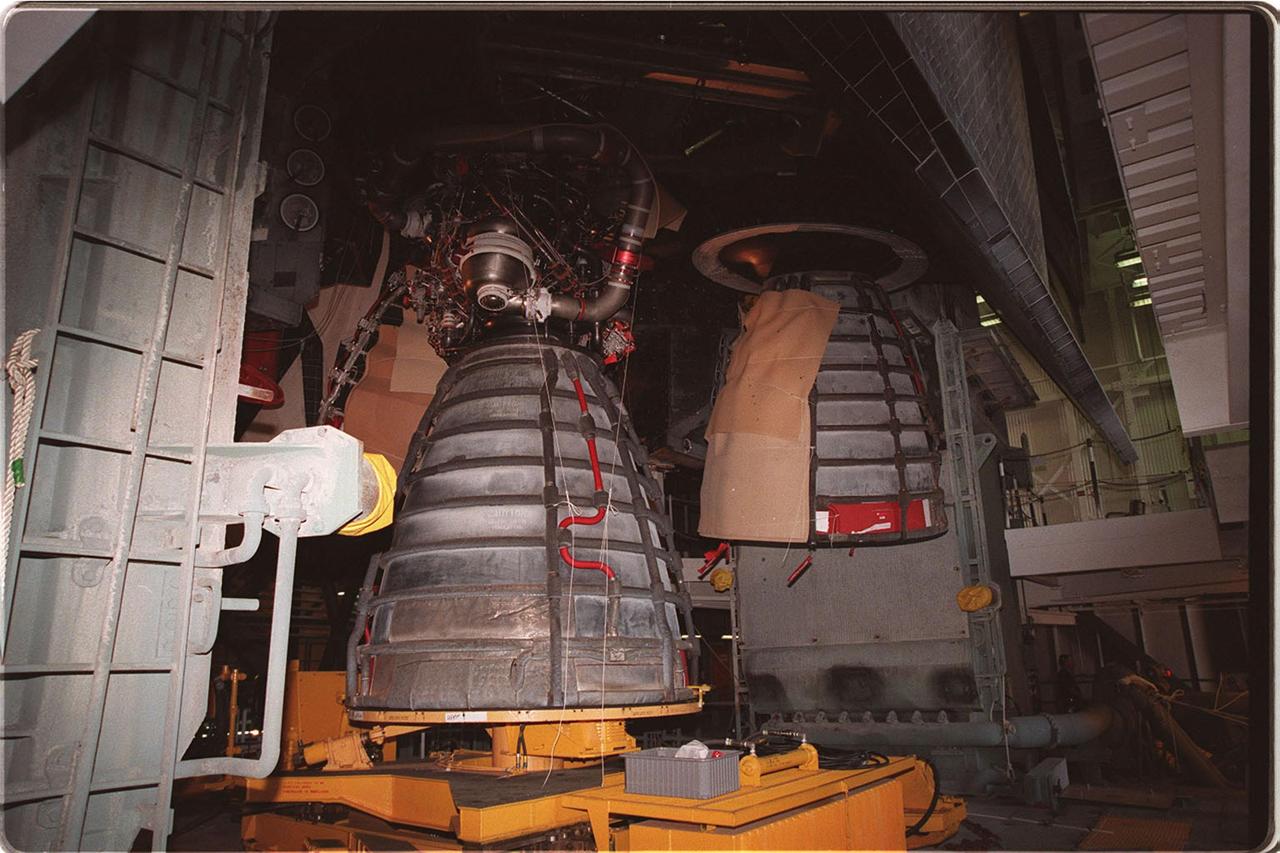
KENNEDY SPACE CENTER, FLA. -- Inside the Vehicle Assembly Building, main engine No. 3 (left) is being removed from Space Shuttle Discovery. Last week, Shuttle managers determined that the engine was not acceptable for flight because a half-inch-long broken drill bit is lodged in the engine's coolant cavity. Therefore, the engine is being replaced. The Shuttle is expected to roll out to the pad at 2 a.m. Saturday morning, Nov. 13. The STS-103 launch is now targeted for Dec. 6 at 2:37 a.m. EST. The 10-day mission is expected to conclude at KSC on Dec. 16 with a 12:45 a.m. landing
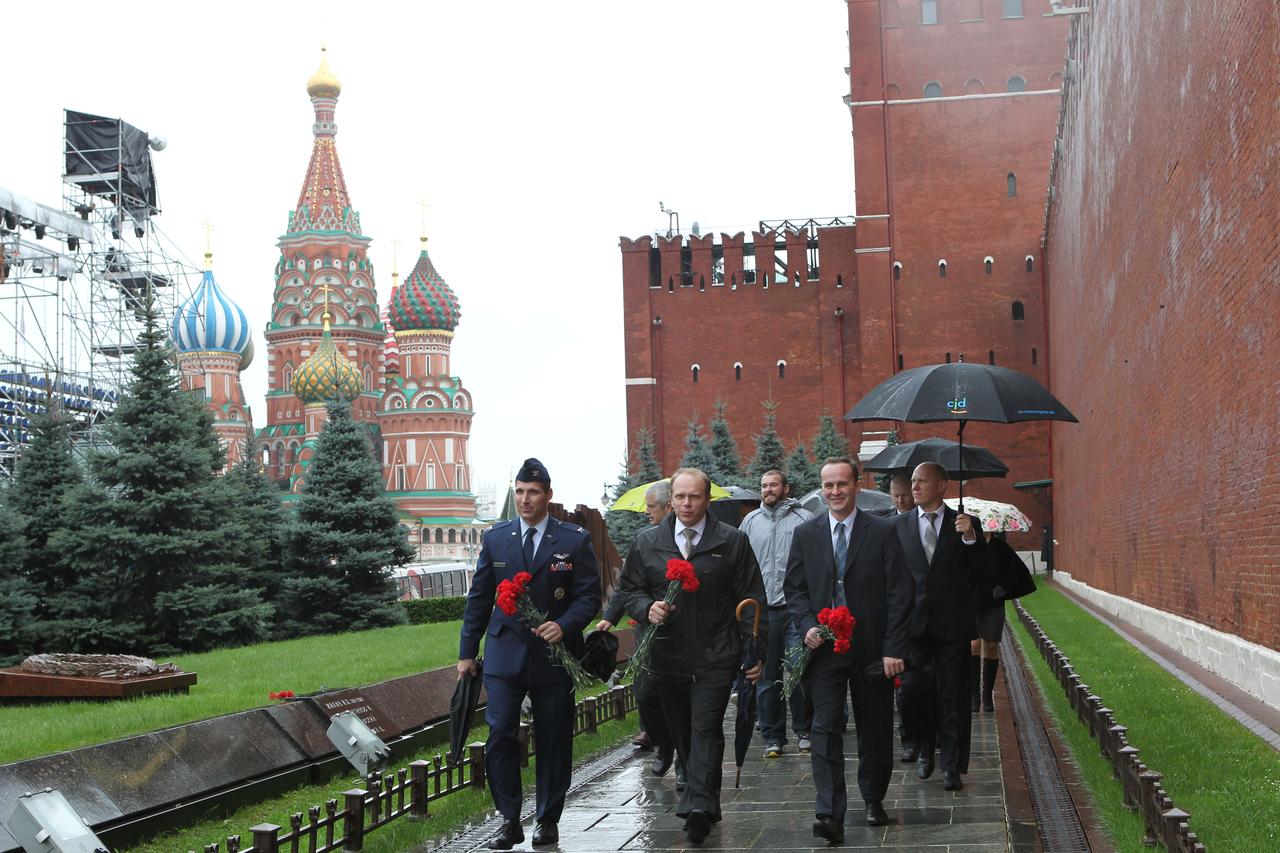
With the onion dome spires of St. Basil’s Cathedral serving as a backdrop, Expedition 37/38 Flight Engineer Michael Hopkins of NASA (front row, left), Soyuz Commander Oleg Kotov (front row, center) and Flight Engineer Sergey Ryazanskiy (front row, right) lead the way along the Kremlin Wall in Red Square in Moscow to lay flowers Sept. 6 in a traditional ceremony to honor Russian space icons who are interred there. Kotov, Hopkins and Ryazanskiy are preparing for their launch to the International Space Station from the Baikonur Cosmodrome in Kazakhstan on Sept. 26, Kazakh time, aboard the Soyuz TMA-10M spacecraft. NASA/Stephanie Stoll
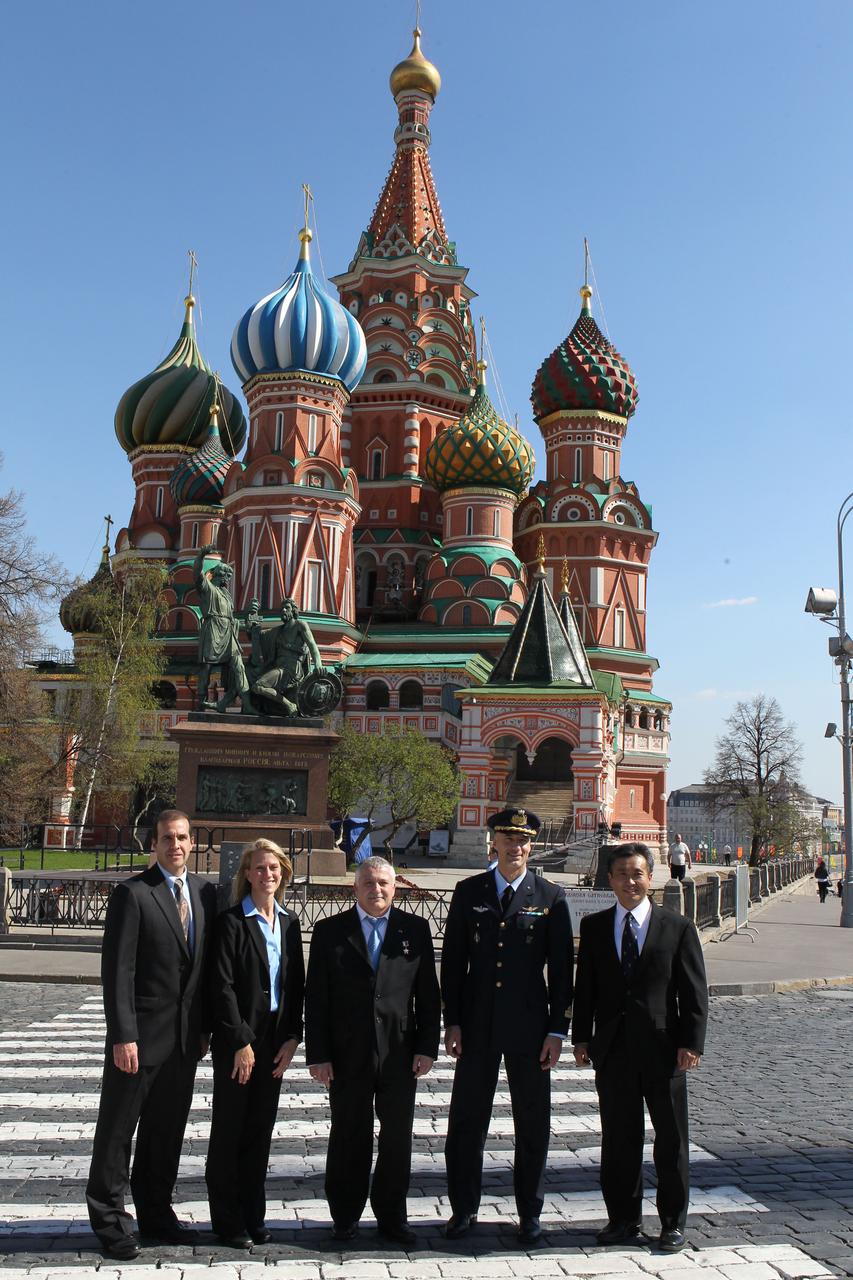
With famed St. Basil’s Cathedral serving as a backdrop, Expedition 36/37 prime and backup crewmembers pose for pictures May 8 during a ceremonial tour of Red Square in Moscow. From left to right are backup crewmember Rick Mastracchio of NASA, prime Flight Engineer Karen Nyberg of NASA, prime Soyuz Commander Fyodor Yurchikhin, prime Flight Engineer Luca Parmitano of the European Space Agency and backup crewmember Koichi Wakata of the Japan Aerospace Exploration Agency. Nyberg, Yurchikhin and Parmitano are preparing for their launch May 29, Kazakh time, in their Soyuz TMA-09M spacecraft from the Baikonur Cosmodrome in Kazakhstan for a six-month mission on the International Space Station. NASA/Stephanie Stoll
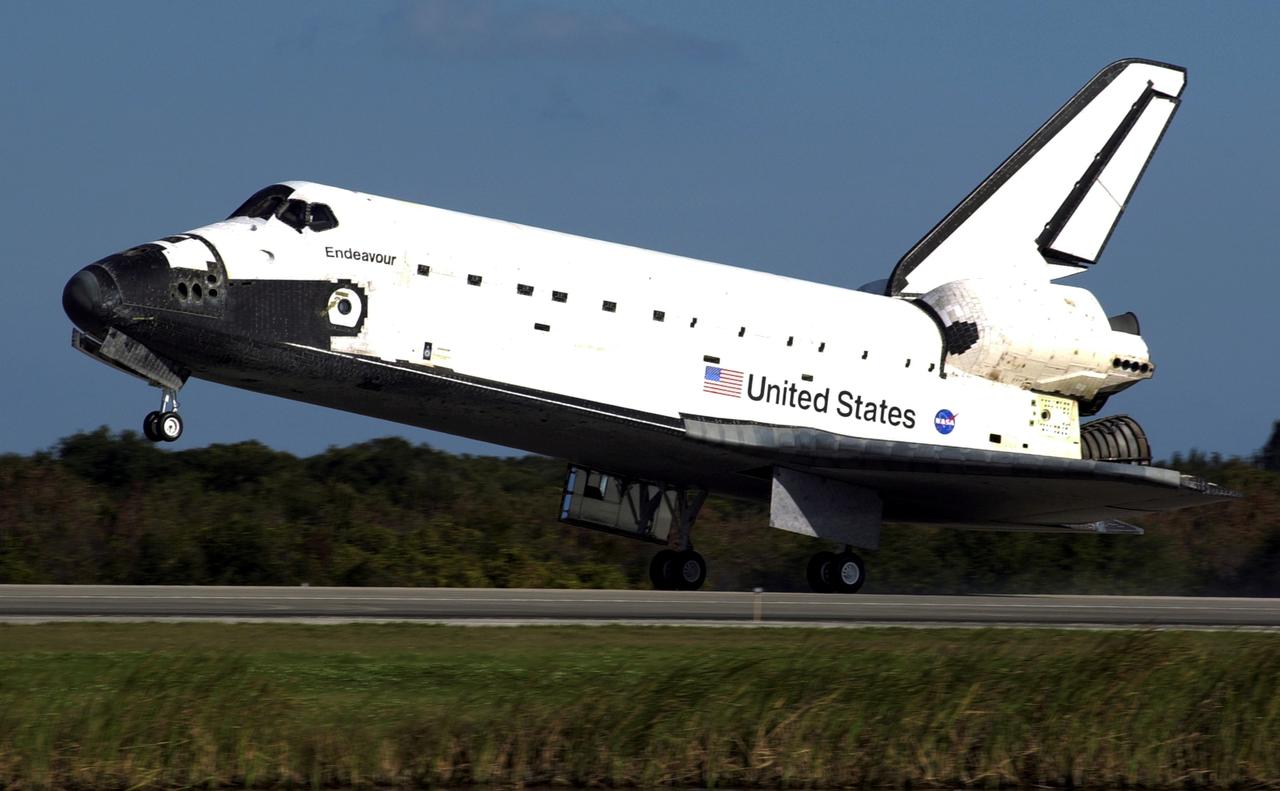
STS113-S-021 (7 December 2002) --- The main landing gear of Space Shuttle Endeavour touches down on runway 33 at the KSC landing facility, completing the nearly 14-day STS-113 mission to the International Space Station (ISS). Astronaut James D. Wetherbee, mission commander, eased Endeavour to a textbook landing on runway 33 at the Florida spaceport at 2:37 p.m. (EST) on December 7, 2002. The landing completed a 5.74-million mile mission that saw successful delivery and installation of the Port One (P1) truss on the orbital outpost.
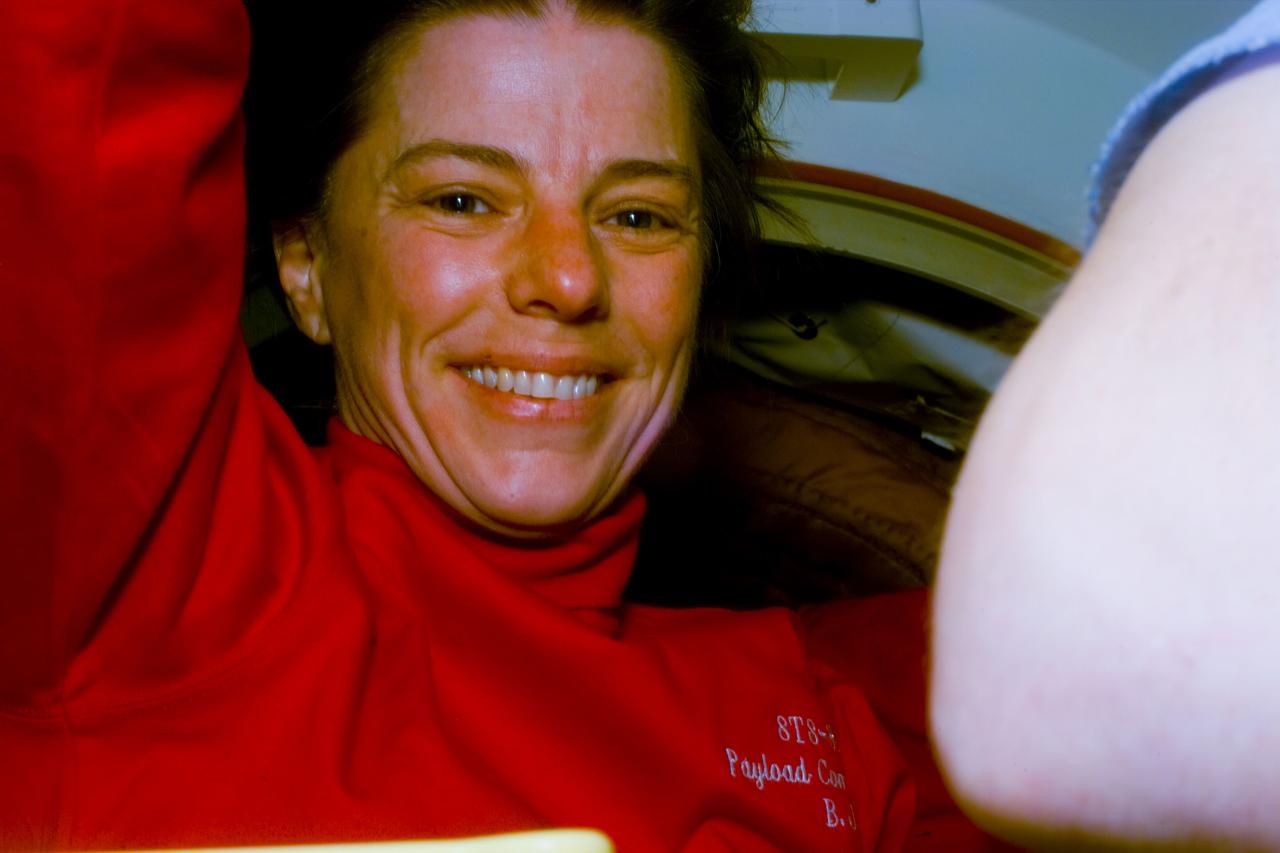
S89-E-5175 (24 Jan 1998) --- This Electronic Still Camera (ESC) image shows astronaut Bonnie J. Dunbar, payload commander, shortly after Shuttle/Mir docking activities began. "Deja-vu" may have come to the mind of Dunbar as she boarded Russia's Mir Space Station. Dunbar was a member of the STS-71 crew -- the first United States aggregation to visit Mir -- along with cosmonaut Anatoliy Y. Solovyev, Mir-24 commander. The ESC view was taken at 22:37:23 GMT, on January 24, 1998.
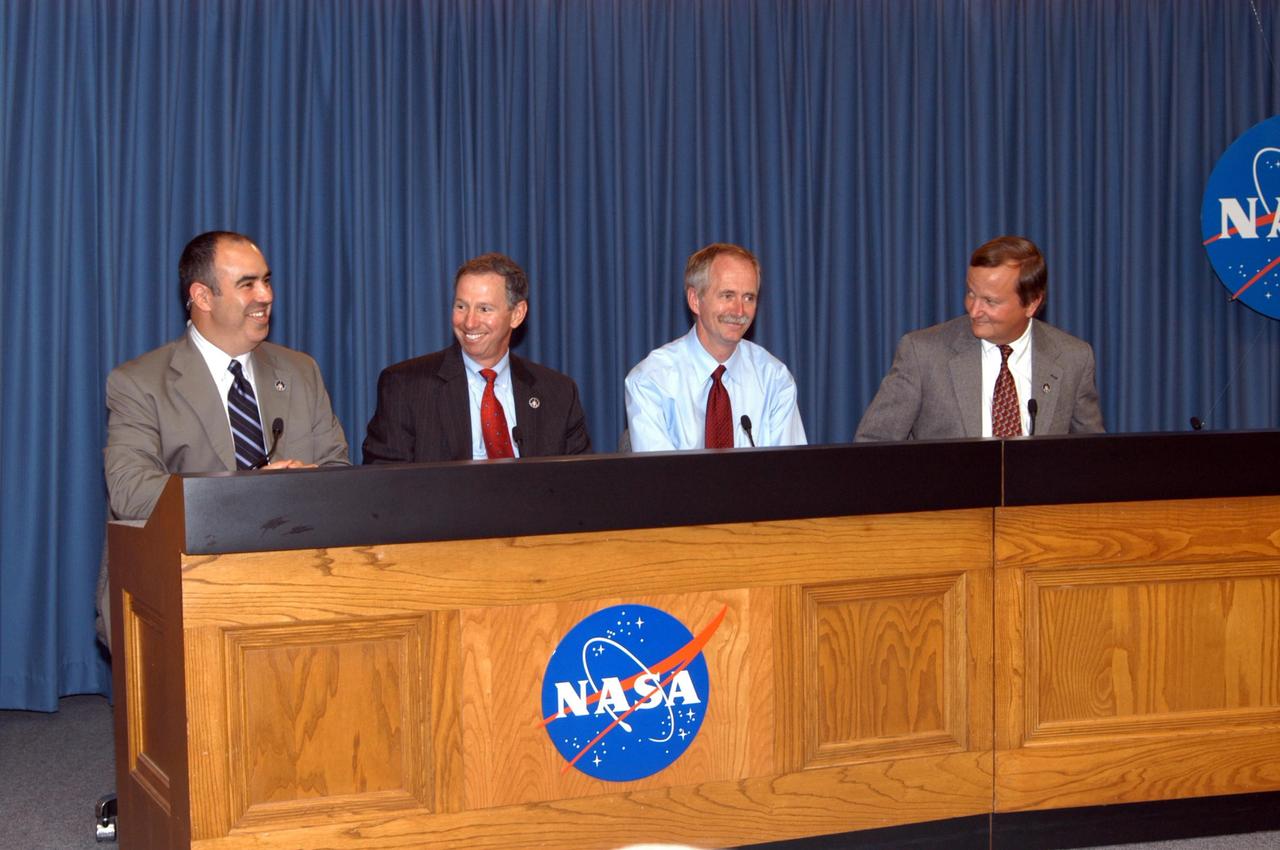
KENNEDY SPACE CENTER, FLA. - A press conference after the landing of the orbiter Discovery and mission STS-121 crew features NASA and Kennedy Space Center senior management. From left, NASA Public Affairs Dean Acosta moderated questions posed to NASA Administrator Mike Griffin, Associate Administrator for Space Operations Bill Gerstenmaier and Shuttle Launch Director Mike Leinbach. Discovery traveled 5.3 million miles, landing on orbit 202. Mission elapsed time was 12 days, 18 hours, 37 minutes and 54 seconds. The landing is the 62nd at Kennedy Space Center and the 32nd for Discovery. Photo credit: NASA/George Shelton
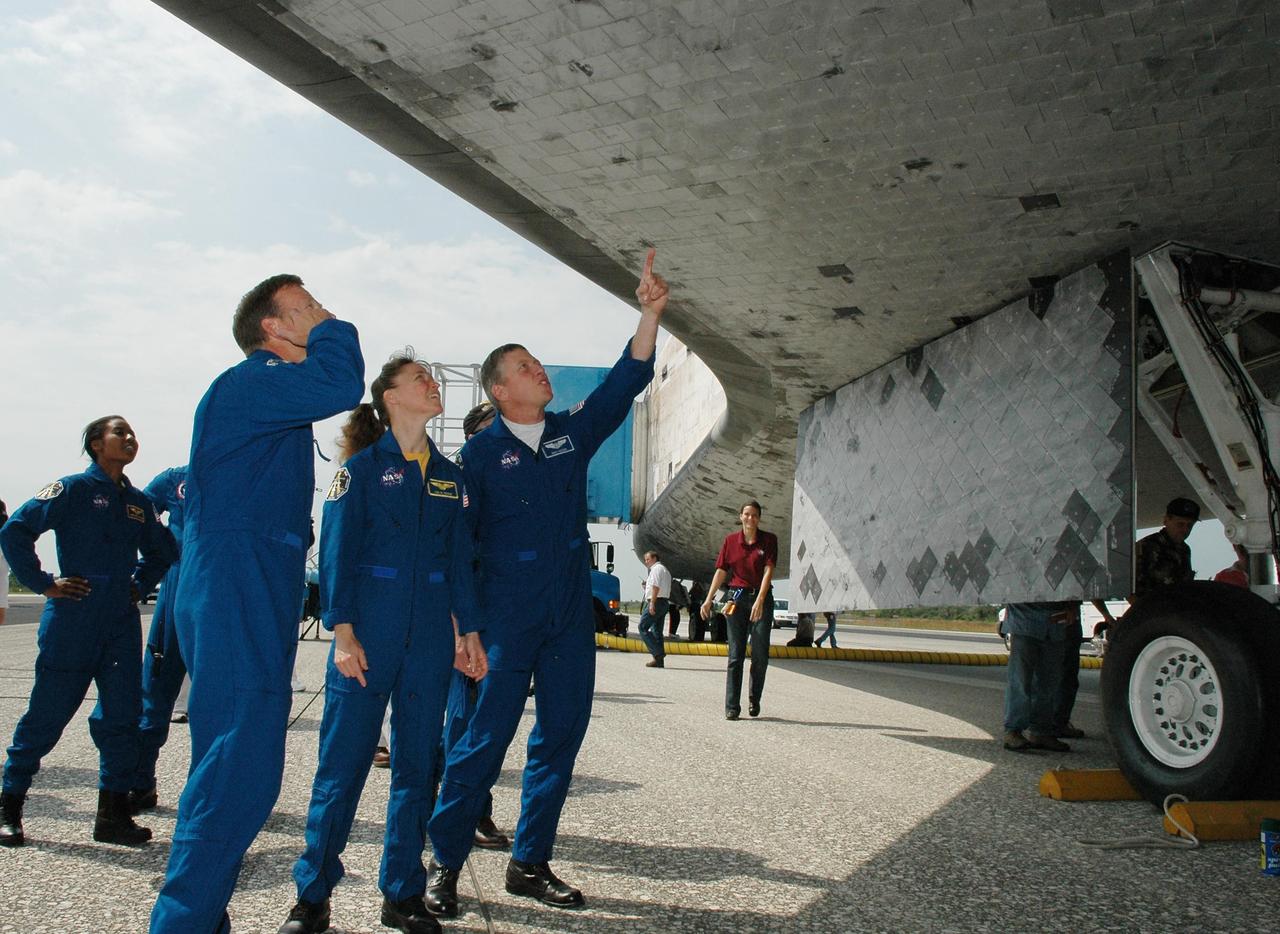
KENNEDY SPACE CENTER, FLA. - The STS-121 crew gets a close look at the underside of the orbiter Discovery after landing. Seen are (from left) Mission Specialist Stephanie Wilson, Commander Steven Lindsey and Mission Specialists Lisa Nowak and Michael Fossum. The post-flight walk-around is a tradition. Discovery's smooth and perfect landing was on time at 9:14 a.m. EDT on Runway 15 of NASA's Shuttle Landing Facility after traveling 5.3 million miles on 202 orbits. Mission elapsed time was 12 days, 18 hours, 37 minutes and 54 seconds. The landing is the 62nd at Kennedy Space Center and the 32nd for Discovery. Photo credit: NASA/Kim Shiflett