
S90-52756 (December 1990) --- NASA's STS-39 crew members, wearing their partial pressure launch and entry suits, pose for traditional portrait. Left to right are astronauts Charles L. (Lacy) Veach, Donald R. McMonagle, Gregory J. Harbaugh, Michael L. Coats, L. Blaine Hammond Jr., Richard J. Hieb and Guion S. Bluford Jr. Coats is mission commander; Hammond, pilot, and the others are mission specialists. Photo credit: NASA
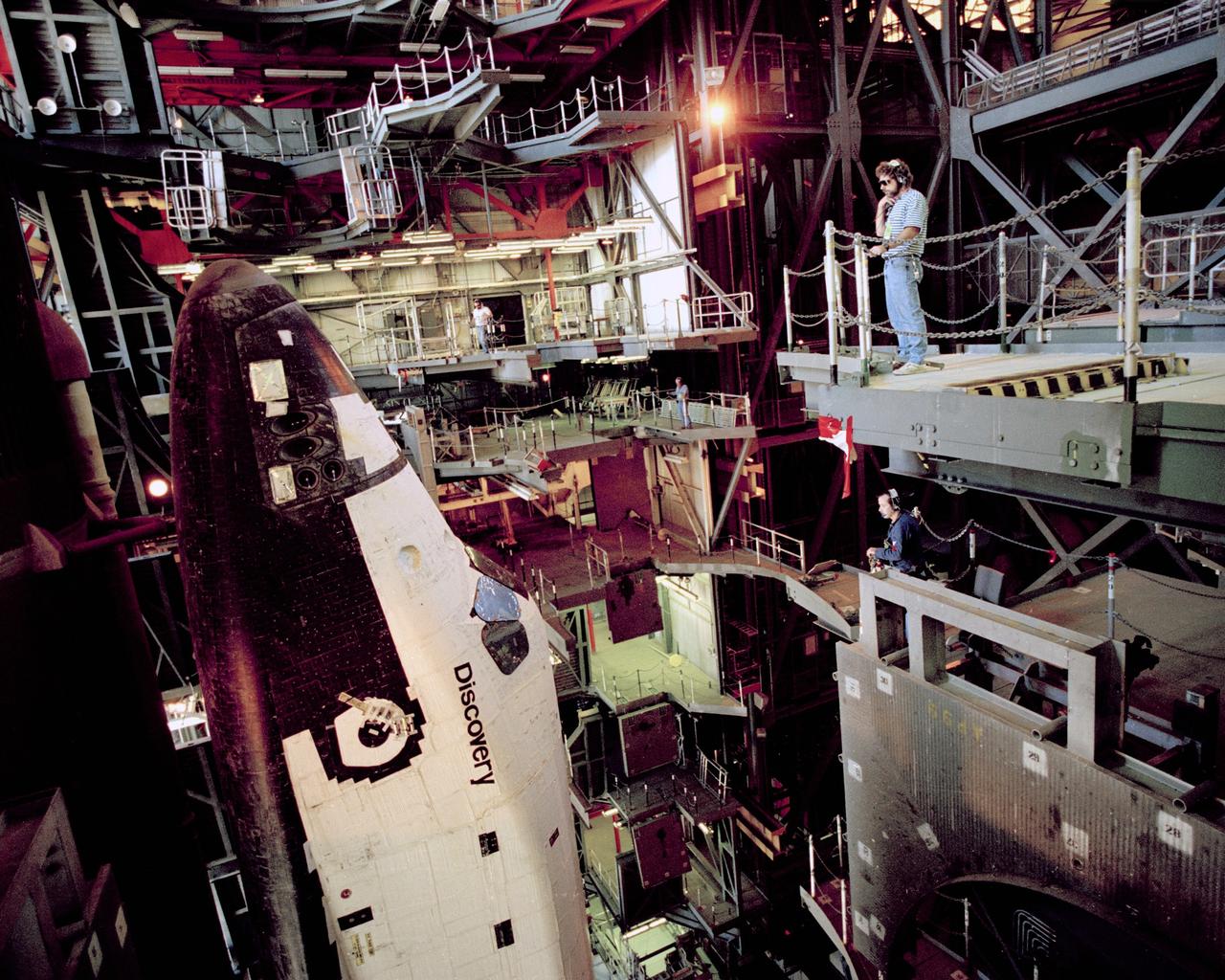
CAPE CANAVERAL, Fla. – Workers watch as the space shuttle Discovery makes the slow journey back from Pad 39A into the Vehicle Assembly Building. After the shuttle is demated, the orbiter will be returned to the Orbiter Processing Facility for repairs to hinges on an orbiter umbilical door. STS-39 is still set to fly this year. Photo credit: NASA
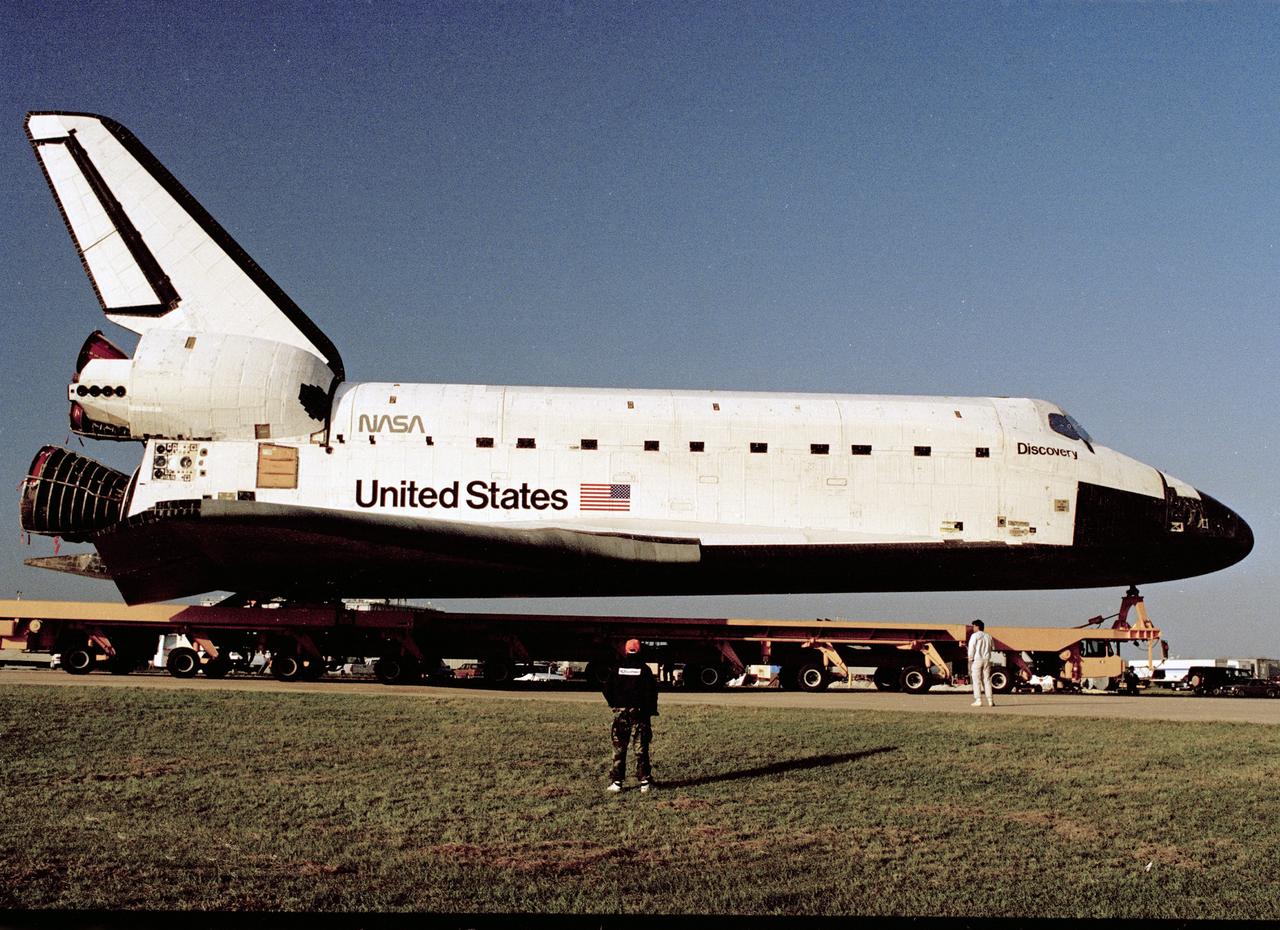
CAPE CANAVERAL, Fla. – The orbiter Discovery, its wheels retracted atop the orbiter transporter, rolls over from the OPF high bay to the VAB. Discovery is slated to lift off in March on mission STS-39, a DoD flight carrying a crew of seven. Photo credit: NASA
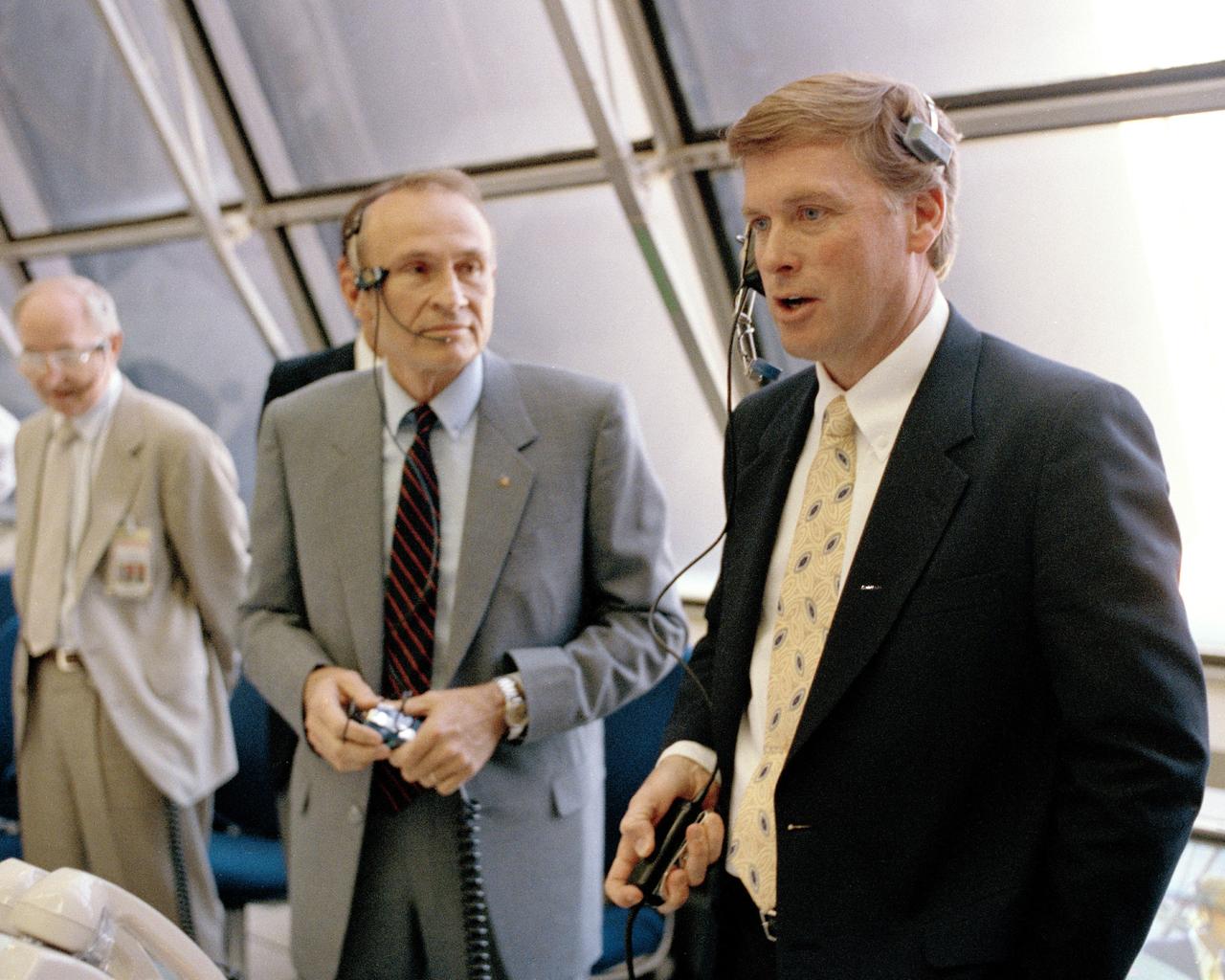
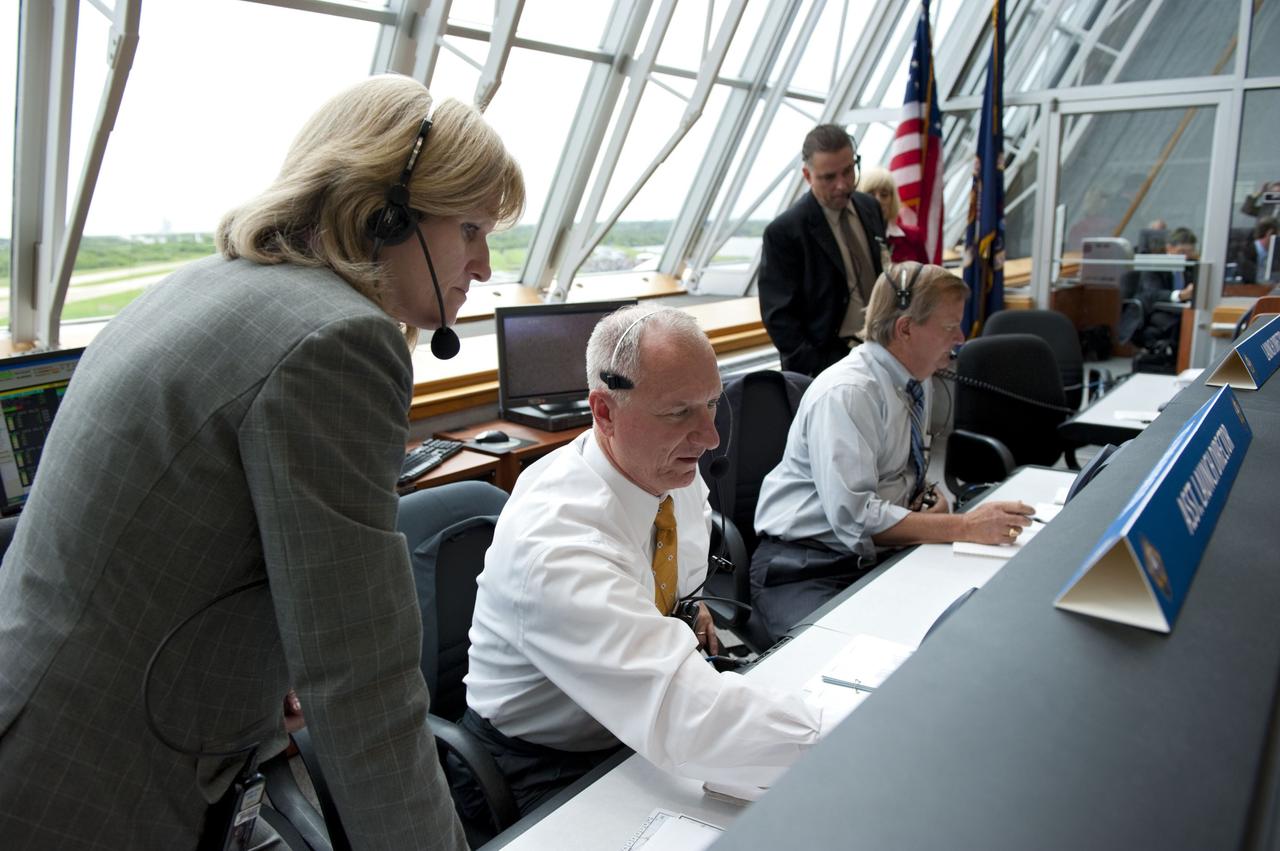
CAPE CANAVERAL, Fla. -- Vice President of the United States Dan Quayle. right. tries on a communications headset in the Launch Control Center and learns about firing room activities from Launch Director Robert Sieck. Quayle spoke with members of the STS-39 flight crew participating in the Terminal Countdown Demonstration Test, toured the launch pad and other center facilities, addressed workers and held a press conference. Image credit: NASA
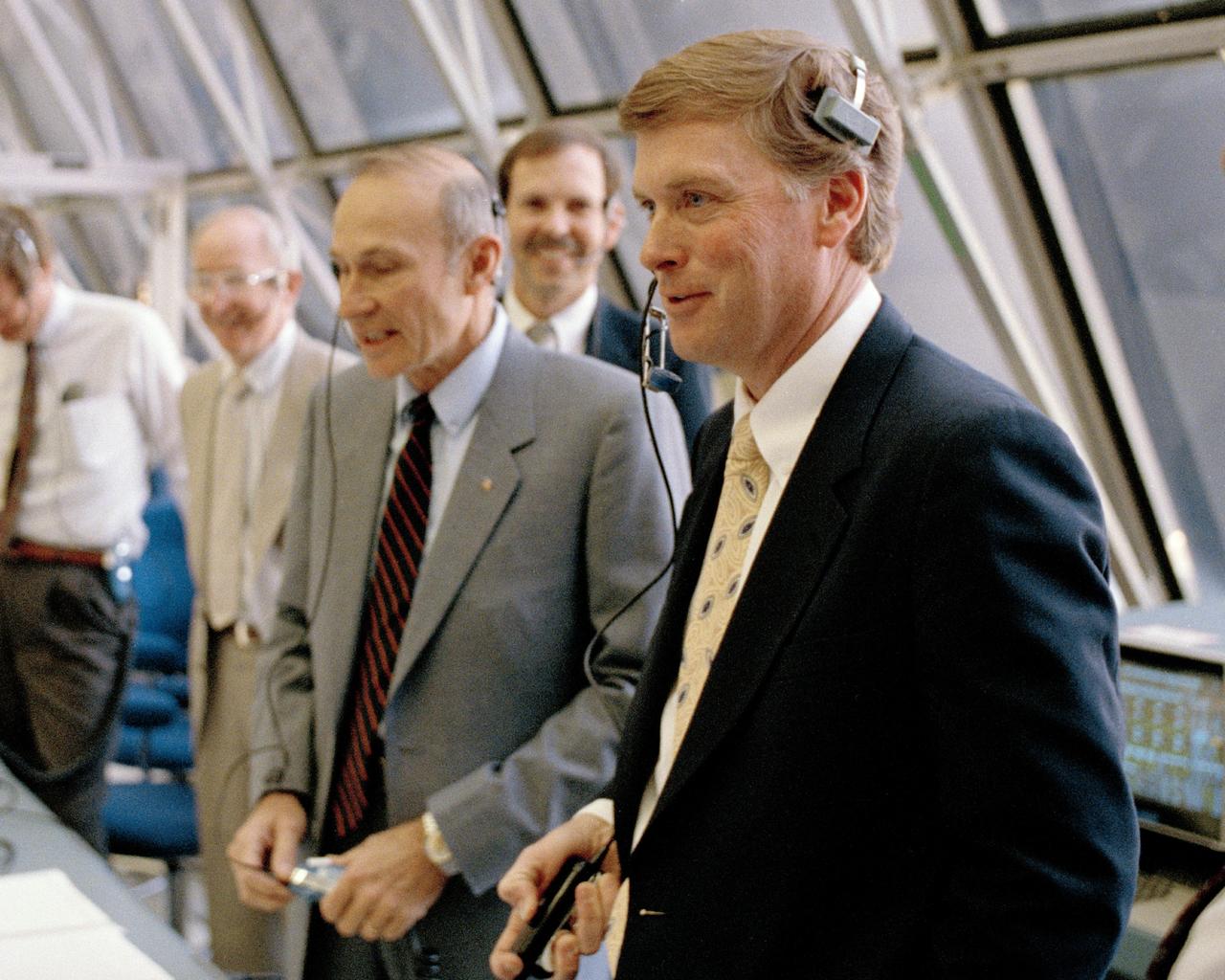
Vice President of the United States Dan Quayle, right, tries on a communications headset in the Launch Control Center and learns about firing room activities from Launch Director Robert Sieck. Quayle spoke with members of the STS-39 flight crew participating in the Terminal Countdown Demonstration Test, toured the launch pad and other center facilities, addressed workers and held a press conference. Image credit: NASA
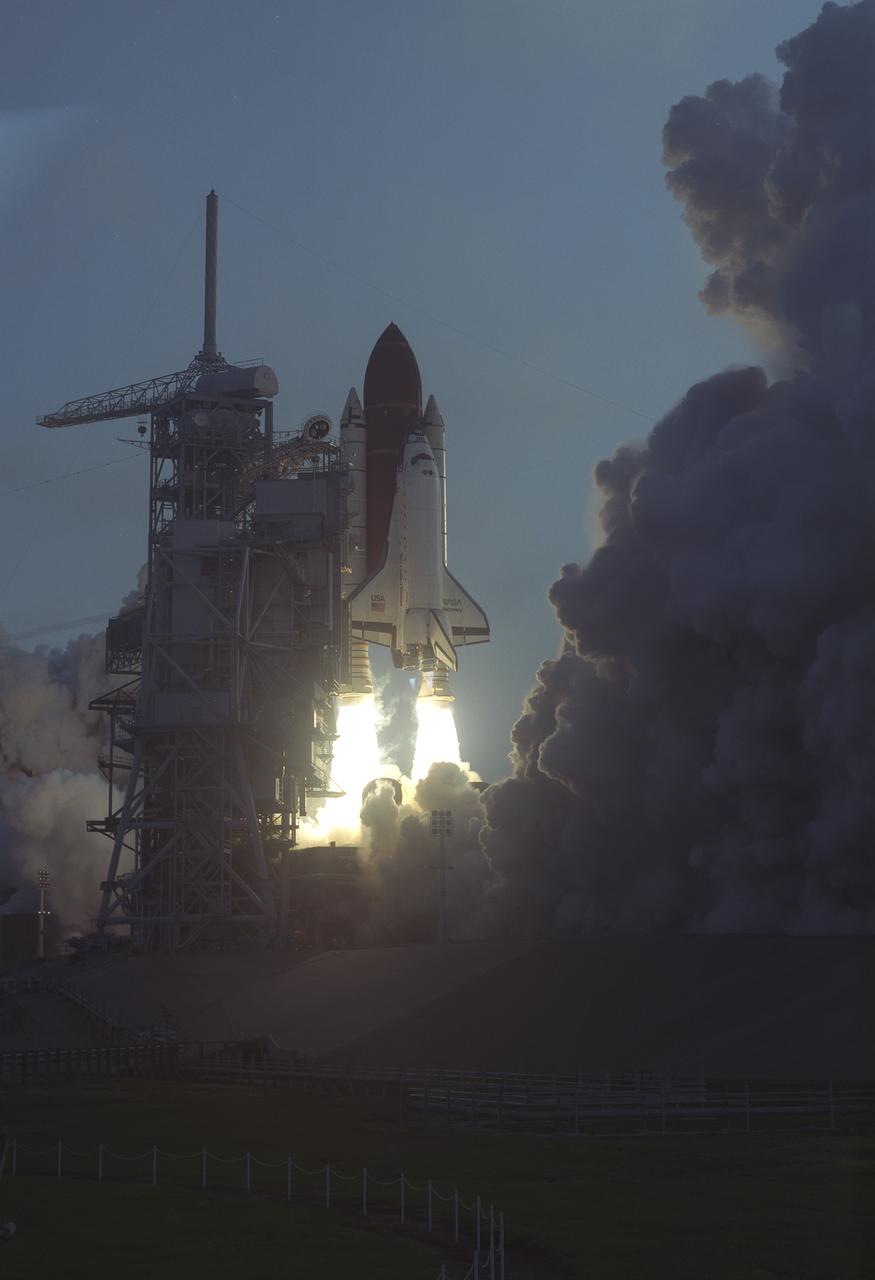
Launched aboard the Space Shuttle Discovery on April 28, 1991 at 7:33:14 am (EDT), STS-39 was a Department of Defense (DOD) mission. The crew included seven astronauts: Michael L. Coats, commander; L. Blaine Hammond, pilot; Guion S. Buford, Jr., mission specialist 1; Gregory J. Harbaugh, mission specialist 2; Richard J. Hieb, mission specialist 3; Donald R. McMonagle, mission specialist 4; and Charles L. Veach, mission specialist 5. The primary unclassified payload included the Air Force Program 675 (AFP-675), the Infrared Background Signature Survey (IBSS), and the Shuttle Pallet Satellite II (SPAS II).

STS039-20-006 (28 April-6 May 1991) --- Astronaut Michael L. Coats, STS-39 mission commander, works controls of a robotic arm on the aft flight deck of the Earth-orbiting space shuttle Discovery. Out the overhead window, the SPAS-II hovers on the end of the remote manipulator system (RMS, out of frame). Inside the window, just above Coats' head is the Crewman Optical Alignment Sight (COAS), an optical device that aids in navigation. Photo credit: NASA
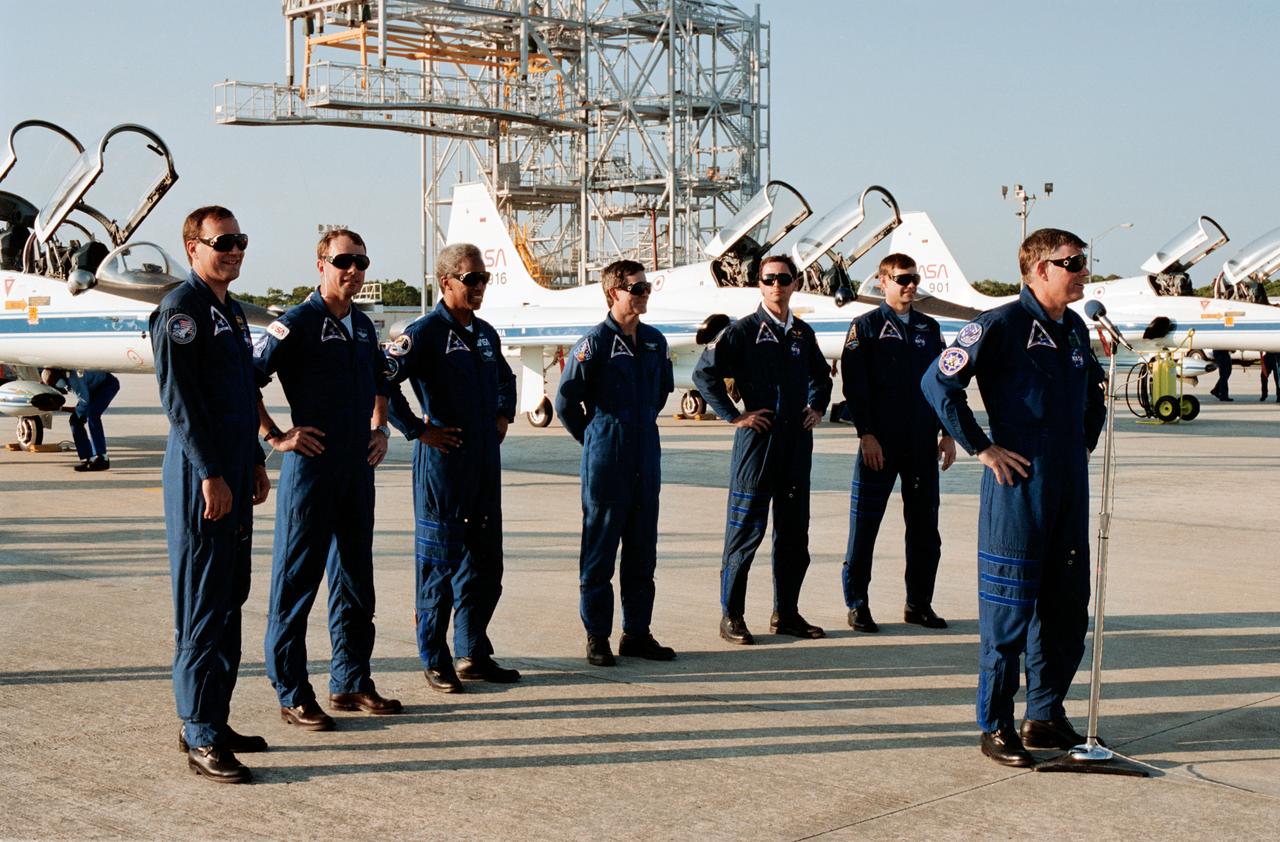
STS039-S-003 (20 April 1991) --- Astronaut Michael L. Coats (right) addresses the news media after arriving at the Shuttle Landing Facility along with his six fellow crewmembers. From left are astronauts Richard J. Hieb, L. Blaine Hammond, Guion S. Bluford, Charles L. (Lacy) Veach, Gregory J. Harbaugh and Donald R. McMonagle. The Space Shuttle mate/demate stand is seen in the background. Note: The STS-39 launch of Discovery occurred at 7:33:14 a.m. (EDT), April 28, 1991.
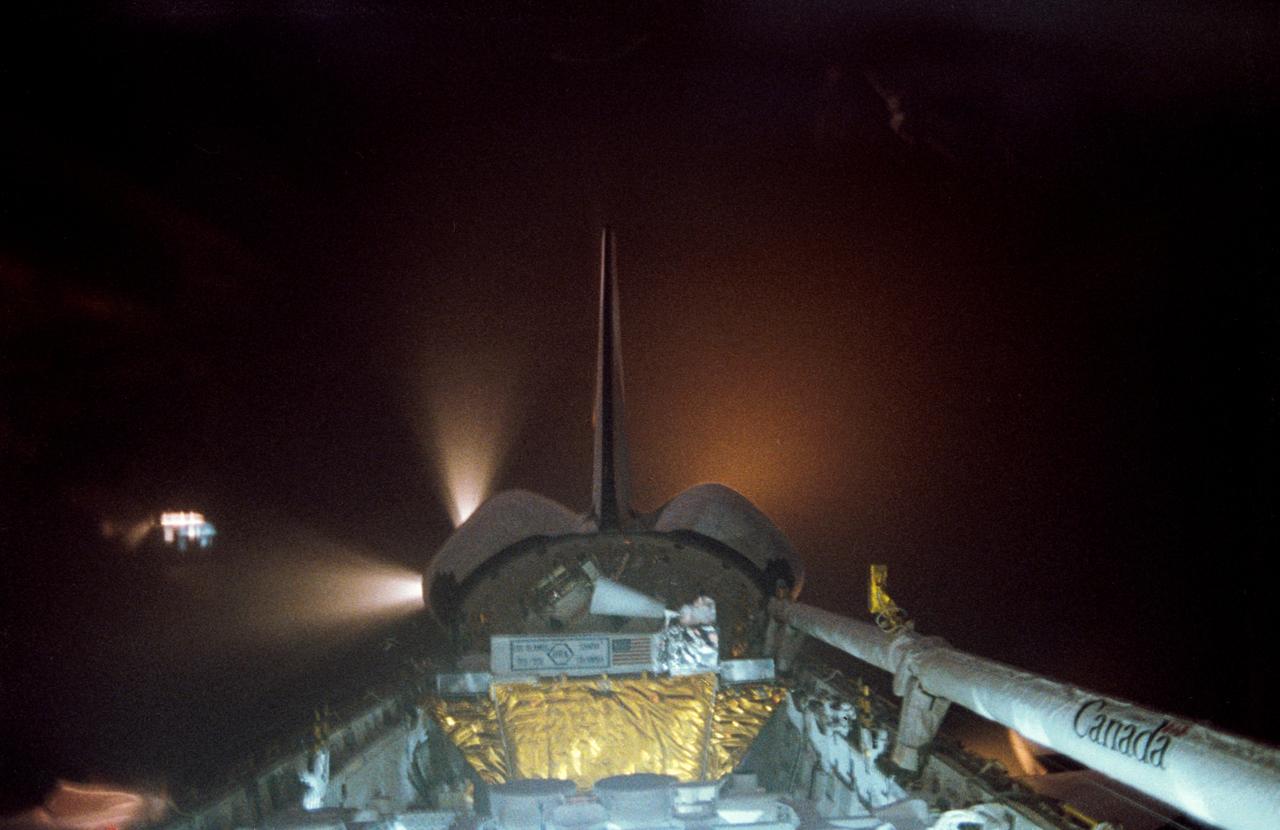
STS039-27-016 (28 April-6 May 1991) --- The Space Shuttle Discovery fires reaction control subsystem (RCS) thrusters in this 35mm frame, taken from inside the crew cabin. Seen in Discovery's payload bay are the tops of cannisters on the STP-1 payload, configured on the STS 39 Hitchhiker carrier; and the Air Force Program (AFP) 675 package. AFP-675 consists of the Cryogenic Infrared Radiance Instrumentation for Shuttle (CIRRIS)-1A; Far Ultraviolet Camera (FAR-UV) Experiment; Horizon Ultraviolet Program (HUP); Quadruple Ion Neutral Mass Spectrometer (QINMS); and the Uniformly Redundant Array (URA).
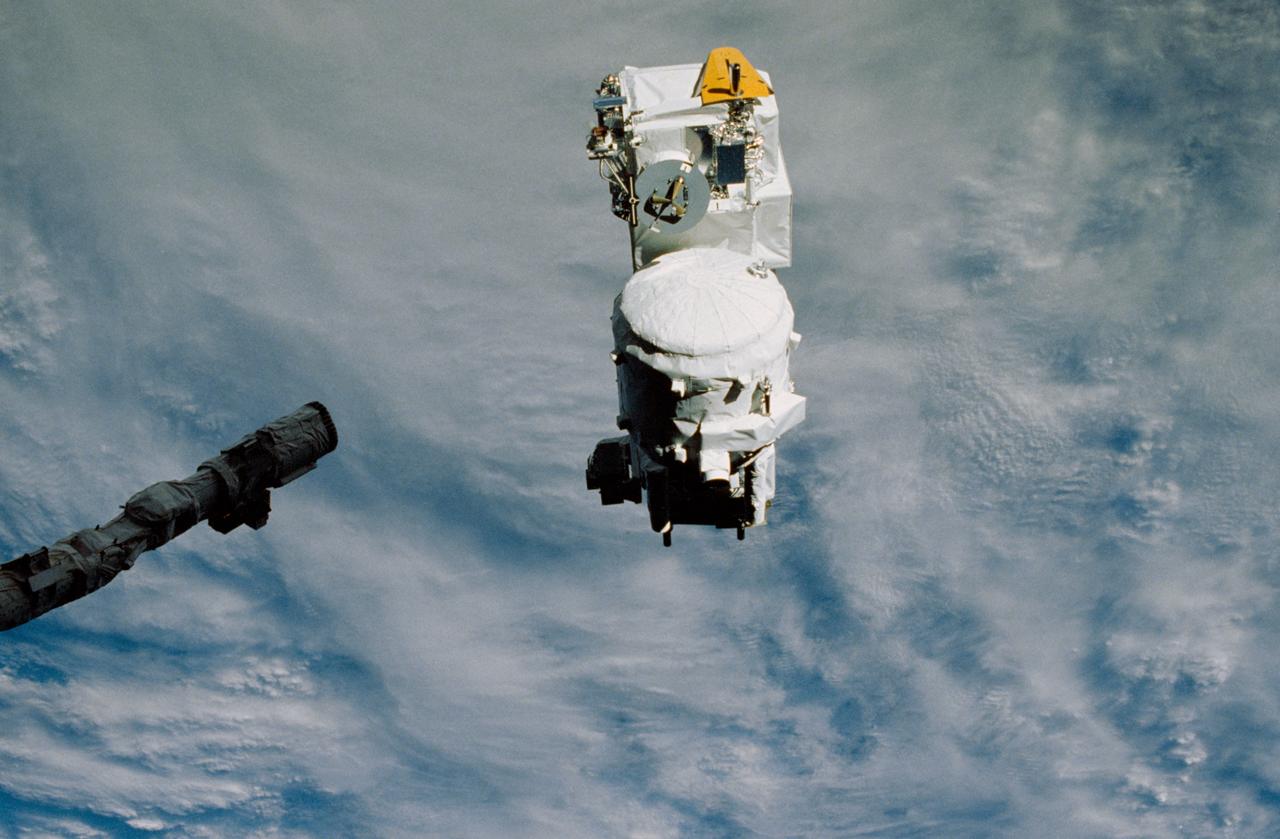
STS039-17-017 (3 May 1990) --- This STS-39 35mm scene shows the Strategic Defense Initiative Organization (SDIO) Shuttle Pallet Satellite (SPAS-II) as it approaches the remote manipulator system (RMS) end effector following a period of free-flight and data collection. During the eight-day flight, SPAS collected data in both a free-flying mode and while attached to the RMS. A huge blanket of white clouds obscures identifiable points on Earth, nearly 300 statute miles away. The target grappling apparatus on SPAS is clearly seen near bottom center of frame.

STS039-11-027 (28 April-6 May 1991) --- Astronaut Michael L. Coats, STS-39 mission commander, is seen in a close-up 35mm frame on the aft flight deck of the Earth-orbiting space shuttle Discovery. Out the overhead window, the SPAS-II hovers on the end of the remote manipulator system (RMS, out of frame). Inside the window, just above Coats' head is the Crewman Optical Alignment Sight (COAS), an optical device that aids in navigation. Photo credit: NASA
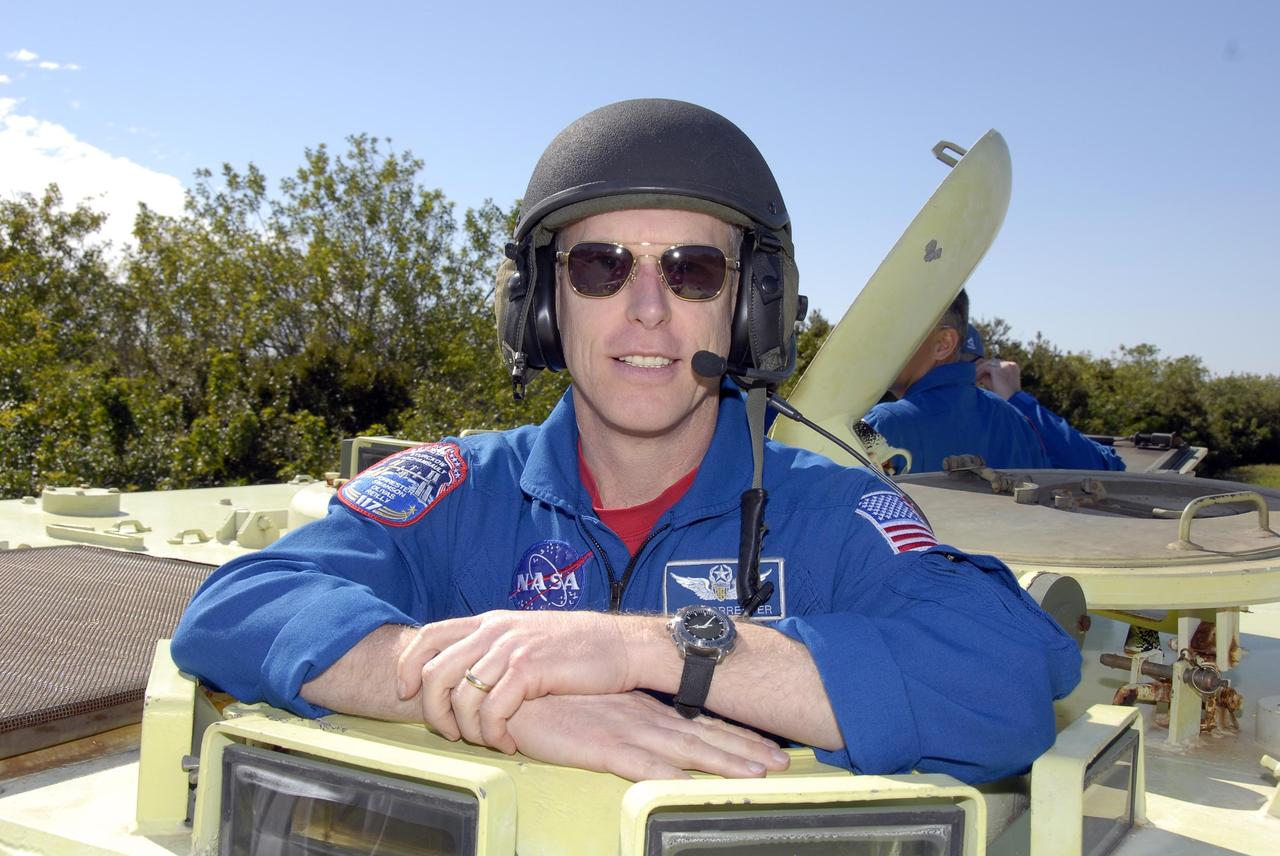
KENNEDY SPACE CENTER, FLA. -- At Launch Complex 39, STS-117 Mission Specialist Patrick Forrester is helmeted and ready to practice driving an M-113 armored personnel carrier. The astronauts on the STS-117 crew are participating in M-113 armored personnel carrier training during Terminal Countdown Demonstration Test (TCDT) activities, a dress rehearsal for their launch, targeted for March 15. The M-113 could be used to move the crew away from the launch pad quickly in the event of an emergency. The TCDT also includes pad emergency egress training and a simulated launch countdown. The mission payload aboard Space Shuttle Atlantis is the S3/S4 integrated truss structure, along with a third set of solar arrays and batteries. The crew of six astronauts will install the truss to continue assembly of the station. Photo credit: NASA/Kim Shiflett
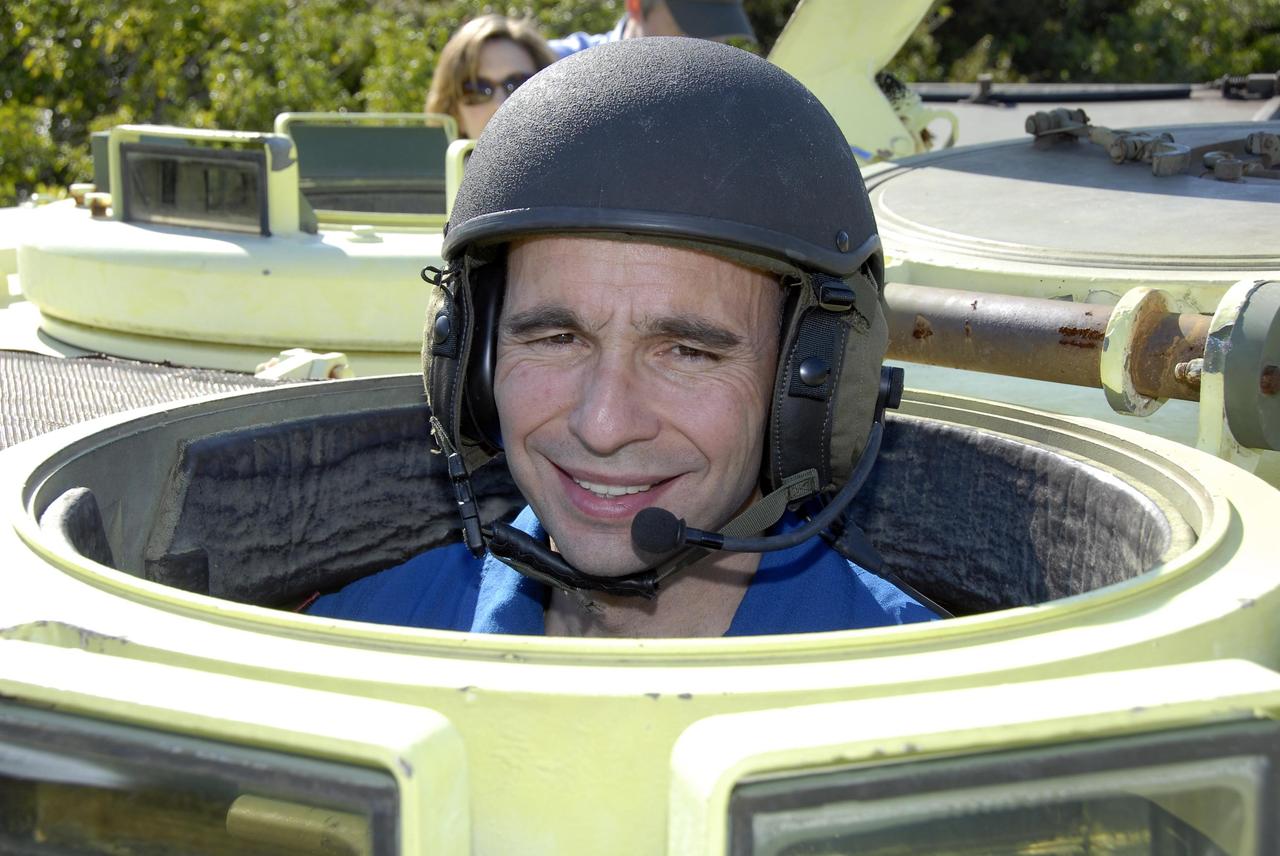
KENNEDY SPACE CENTER, FLA. -- At Launch Complex 39, STS-117 Pilot Lee Archambault is helmeted and ready to practice driving an M-113 armored personnel carrier. The astronauts on the STS-117 crew are participating in M-113 armored personnel carrier training during Terminal Countdown Demonstration Test (TCDT) activities, a dress rehearsal for their launch, targeted for March 15. The M-113 could be used to move the crew away from the launch pad quickly in the event of an emergency. The TCDT also includes pad emergency egress training and a simulated launch countdown. The mission payload aboard Space Shuttle Atlantis is the S3/S4 integrated truss structure, along with a third set of solar arrays and batteries. The crew of six astronauts will install the truss to continue assembly of the station. Photo credit: NASA/Kim Shiflett
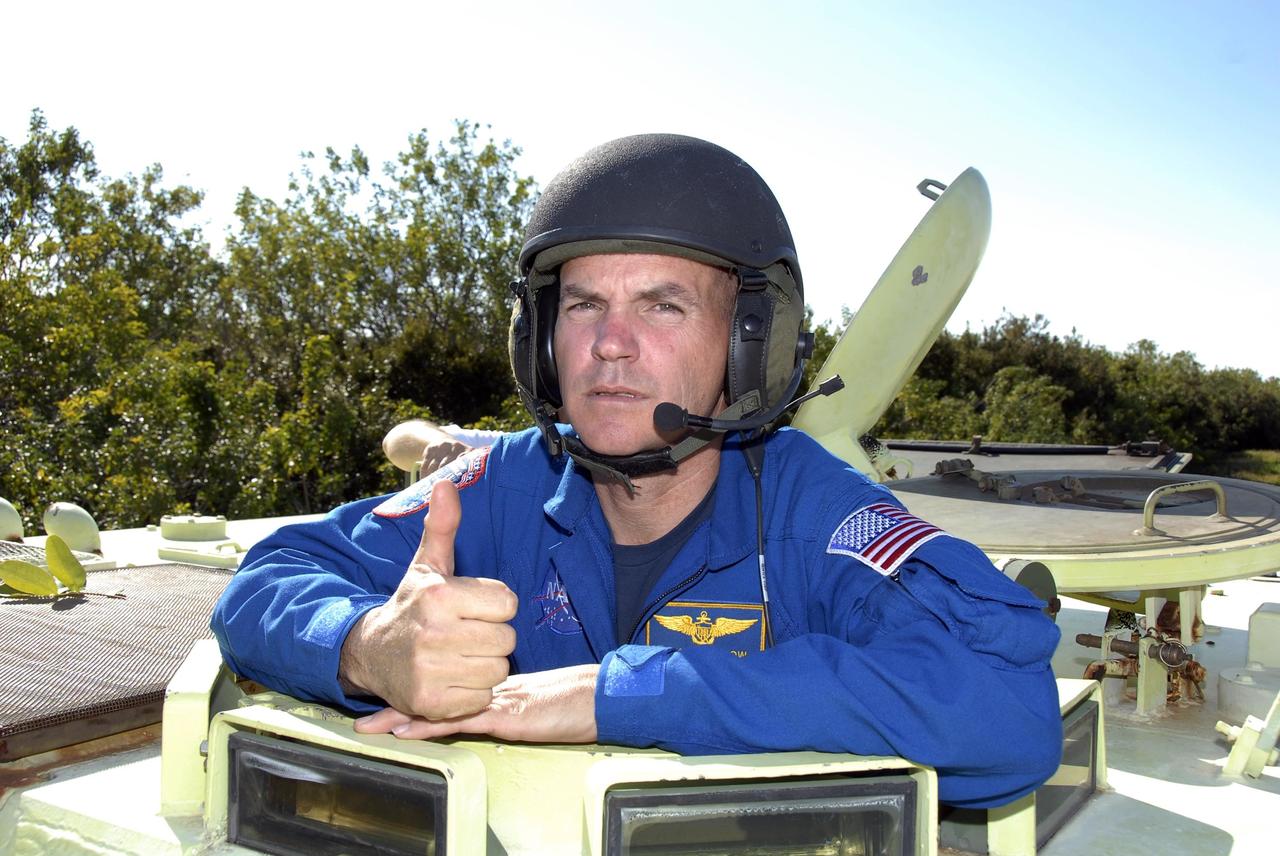
KENNEDY SPACE CENTER, FLA. -- At Launch Complex 39, STS-117 Commander Rick Sturckow signals that he is ready to practice driving an M-113 armored personnel carrier. The astronauts on the STS-117 crew are participating in M-113 armored personnel carrier training during Terminal Countdown Demonstration Test (TCDT) activities, a dress rehearsal for their launch, targeted for March 15. The M-113 could be used to move the crew away from the launch pad quickly in the event of an emergency. The TCDT also includes pad emergency egress training and a simulated launch countdown. The mission payload aboard Space Shuttle Atlantis is the S3/S4 integrated truss structure, along with a third set of solar arrays and batteries. The crew of six astronauts will install the truss to continue assembly of the station. Photo credit: NASA/Kim Shiflett
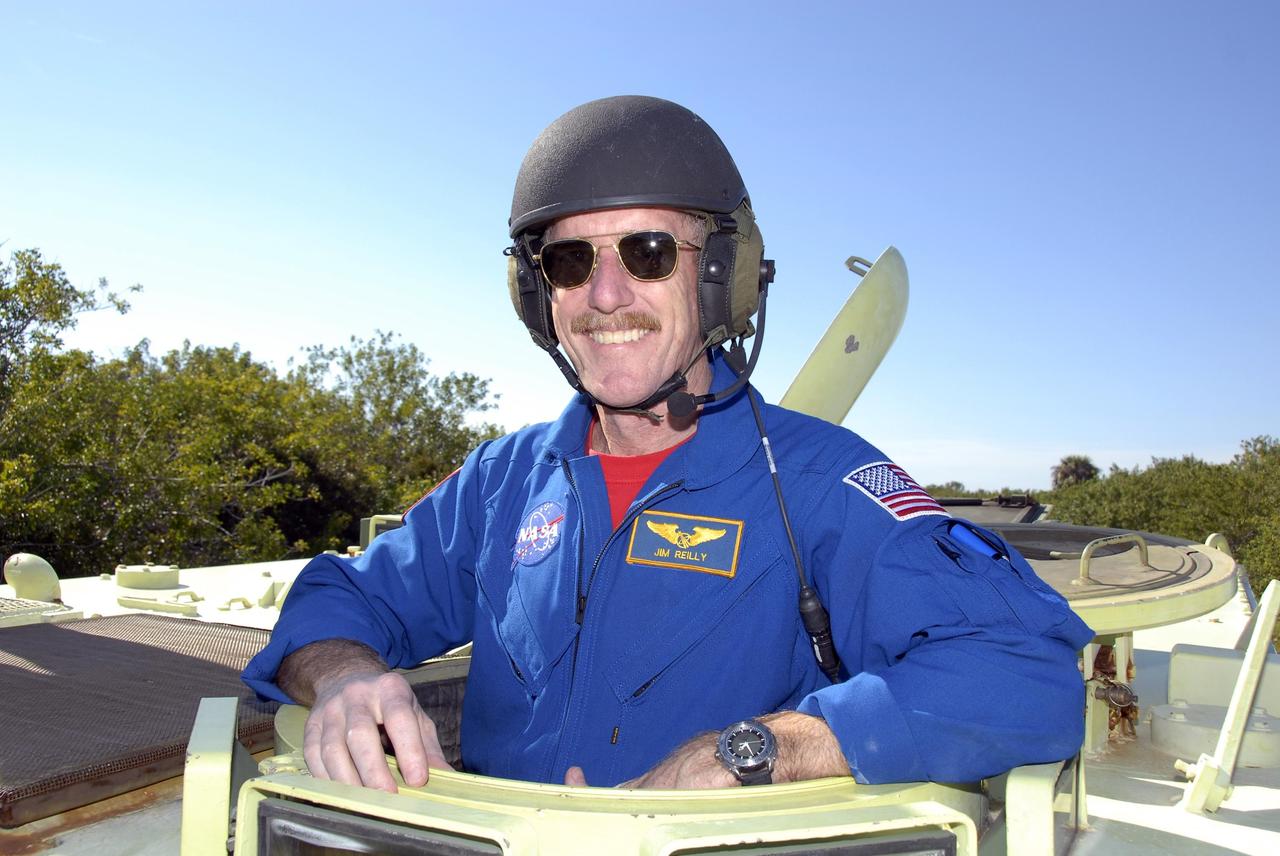
KENNEDY SPACE CENTER, FLA. -- At Launch Complex 39, STS-117 Mission Specialist James Reilly is helmeted and ready to practice driving an M-113 armored personnel carrier. The astronauts on the STS-117 crew are participating in M-113 armored personnel carrier training during Terminal Countdown Demonstration Test (TCDT) activities, a dress rehearsal for their launch, targeted for March 15. The M-113 could be used to move the crew away from the launch pad quickly in the event of an emergency. The TCDT also includes pad emergency egress training and a simulated launch countdown. The mission payload aboard Space Shuttle Atlantis is the S3/S4 integrated truss structure, along with a third set of solar arrays and batteries. The crew of six astronauts will install the truss to continue assembly of the station. Photo credit: NASA/Kim Shiflett
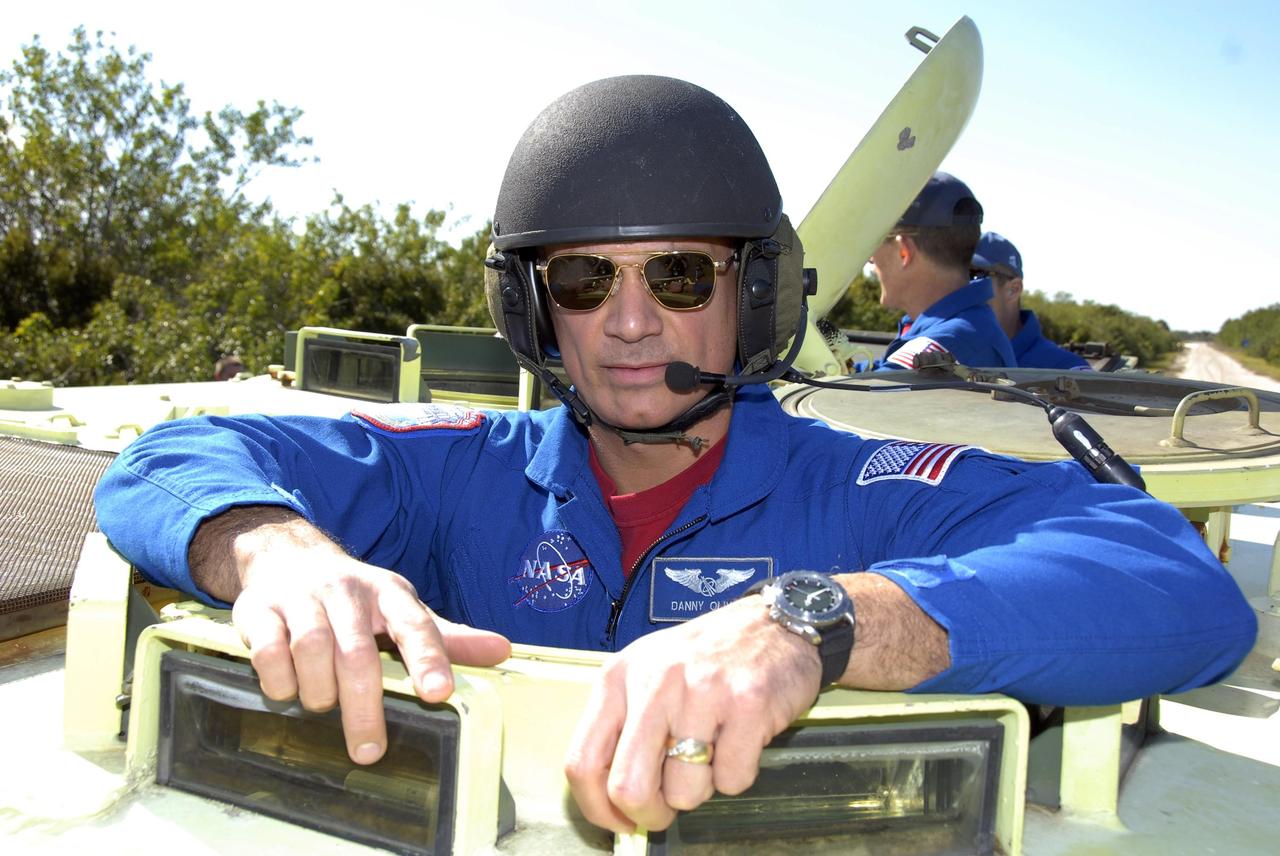
KENNEDY SPACE CENTER, FLA. -- At Launch Complex 39, STS-117 Mission Specialist Danny Olivas is helmeted and ready to practice driving an M-113 armored personnel carrier. The astronauts on the STS-117 crew are participating in M-113 armored personnel carrier training during Terminal Countdown Demonstration Test (TCDT) activities, a dress rehearsal for their launch, targeted for March 15. The M-113 could be used to move the crew away from the launch pad quickly in the event of an emergency. The TCDT also includes pad emergency egress training and a simulated launch countdown. The mission payload aboard Space Shuttle Atlantis is the S3/S4 integrated truss structure, along with a third set of solar arrays and batteries. The crew of six astronauts will install the truss to continue assembly of the station. Photo credit: NASA/Kim Shiflett
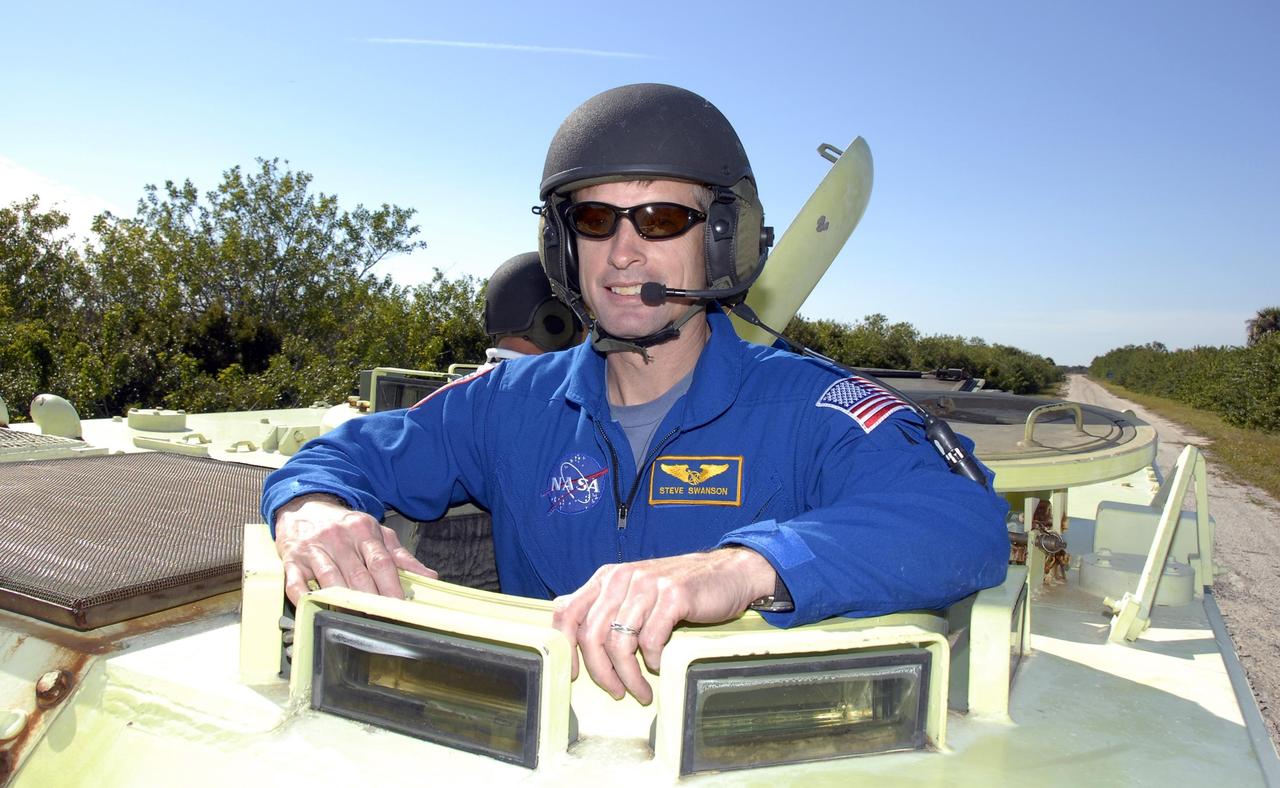
KENNEDY SPACE CENTER, FLA. -- At Launch Complex 39, STS-117 Mission Specialist Steven Swanson is helmeted and ready to practice driving an M-113 armored personnel carrier. The astronauts on the STS-117 crew are participating in M-113 armored personnel carrier training during Terminal Countdown Demonstration Test (TCDT) activities, a dress rehearsal for their launch, targeted for March 15. The M-113 could be used to move the crew away from the launch pad quickly in the event of an emergency. The TCDT also includes pad emergency egress training and a simulated launch countdown. The mission payload aboard Space Shuttle Atlantis is the S3/S4 integrated truss structure, along with a third set of solar arrays and batteries. The crew of six astronauts will install the truss to continue assembly of the station. Photo credit: NASA/Kim Shiflett
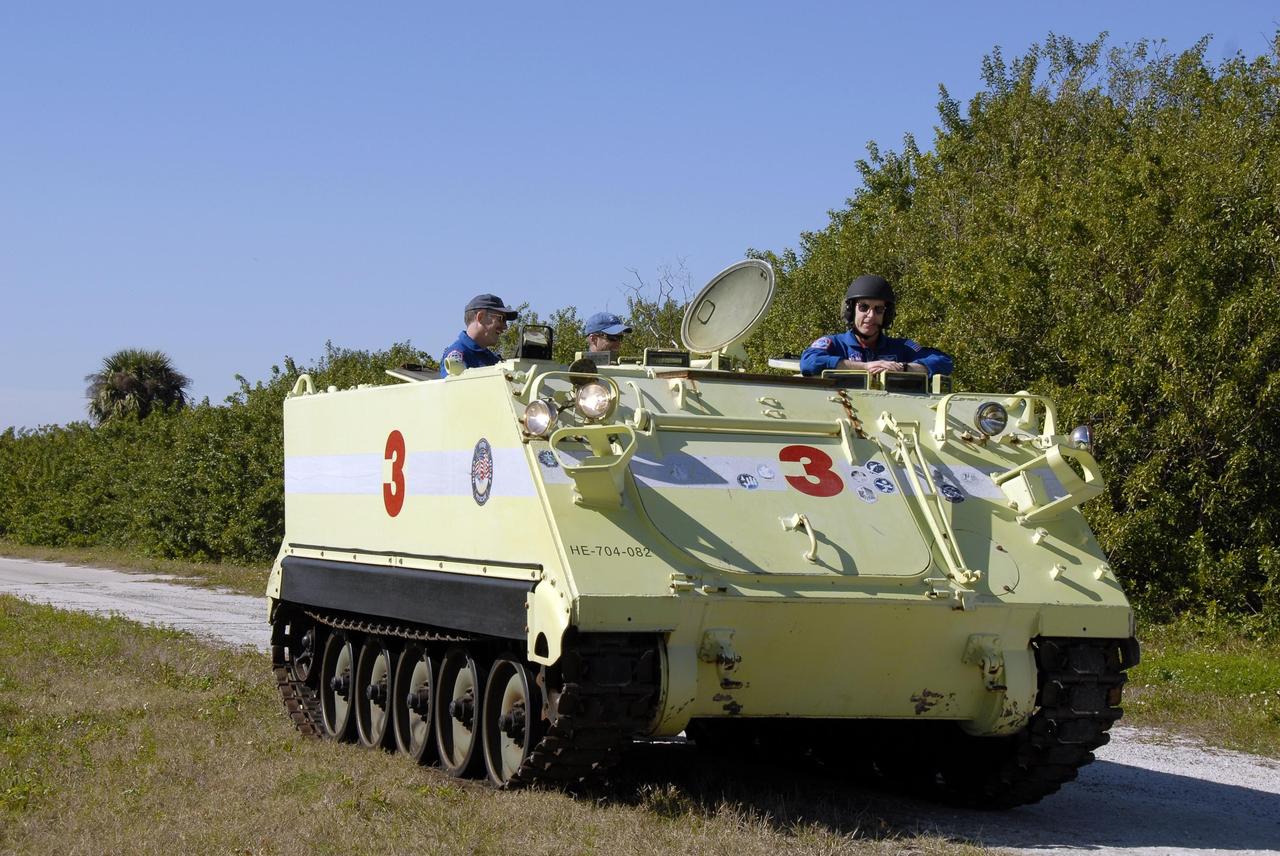
KENNEDY SPACE CENTER, FLA. -- At Launch Complex 39, STS-117 Mission Specialist Patrick Forrester (right) waits his turn to practice driving an M-113 armored personnel carrier as fellow crew members look on. The astronauts on the STS-117 crew are participating in M-113 armored personnel carrier training during Terminal Countdown Demonstration Test (TCDT) activities, a dress rehearsal for their launch, targeted for March 15. The M-113 could be used to move the crew away from the launch pad quickly in the event of an emergency. The TCDT also includes pad emergency egress training and a simulated launch countdown. The mission payload aboard Space Shuttle Atlantis is the S3/S4 integrated truss structure, along with a third set of solar arrays and batteries. The crew of six astronauts will install the truss to continue assembly of the station. Photo credit: NASA/Kim Shiflett
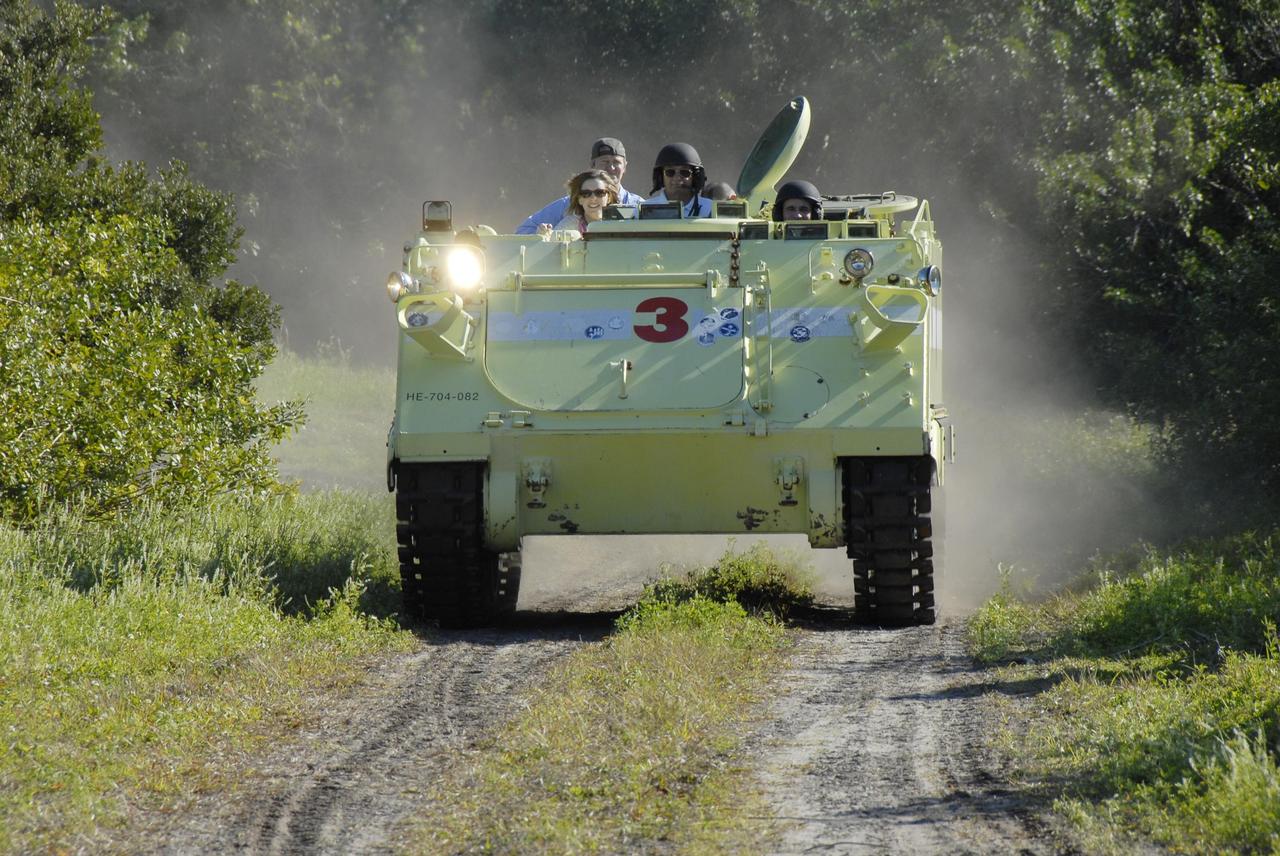
KENNEDY SPACE CENTER, FLA. -- At Launch Complex 39, members of the STS-117 crew are instructed in the operation of an M-113 armored personnel carrier by the astronaut rescue team. The astronauts on the STS-117 crew are participating in M-113 armored personnel carrier training during Terminal Countdown Demonstration Test (TCDT) activities, a dress rehearsal for their launch, targeted for March 15. The M-113 could be used to move the crew away from the launch pad quickly in the event of an emergency. The TCDT also includes pad emergency egress training and a simulated launch countdown. The mission payload aboard Space Shuttle Atlantis is the S3/S4 integrated truss structure, along with a third set of solar arrays and batteries. The crew of six astronauts will install the truss to continue assembly of the station. Photo credit: NASA/Kim Shiflett
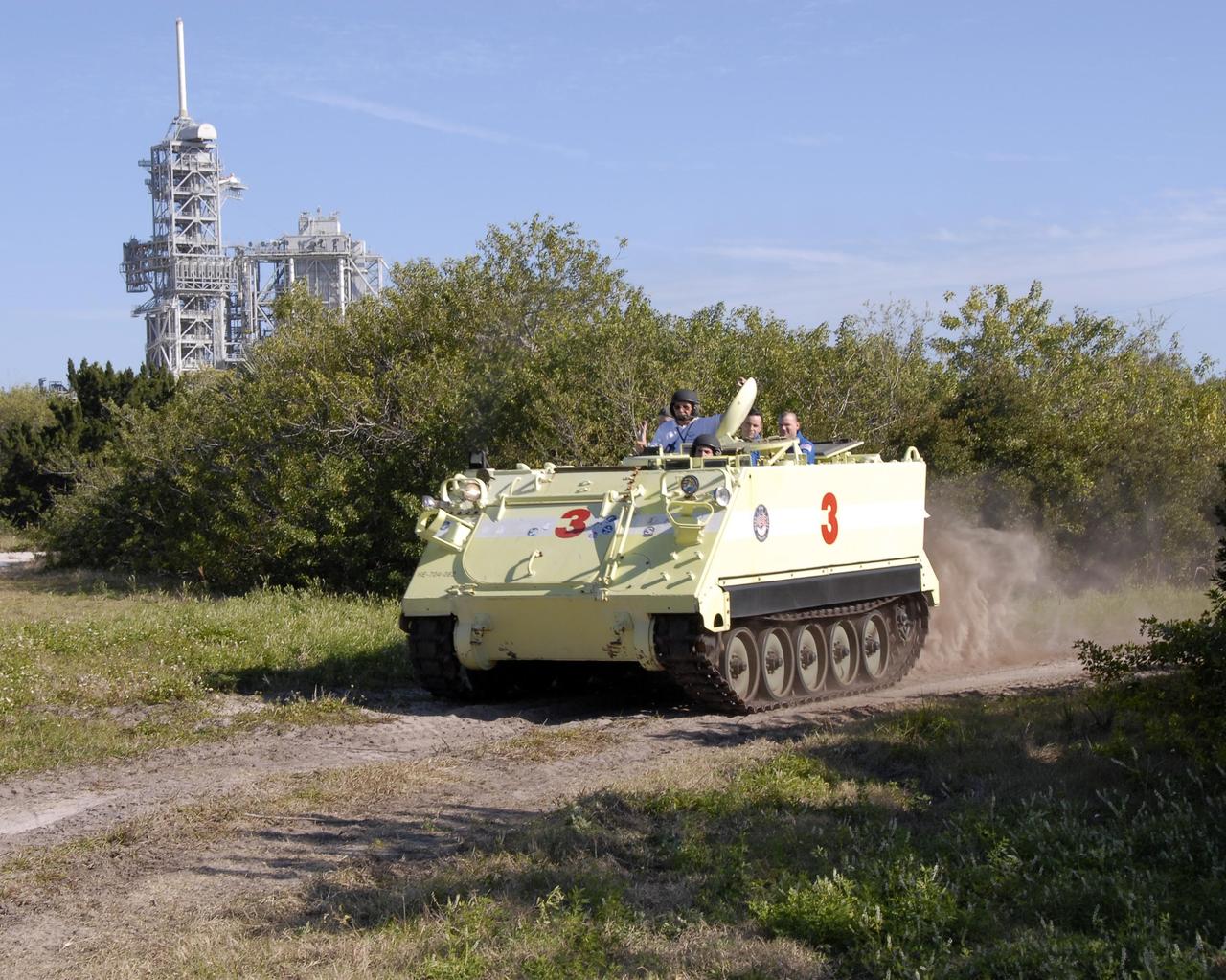
KENNEDY SPACE CENTER, FLA. -- At Launch Complex 39, members of the STS-117 crew are instructed in the operation of an M-113 armored personnel carrier by astronaut rescue team leader Capt. George Hoggard (left). The astronauts on the STS-117 crew are participating in M-113 armored personnel carrier training during Terminal Countdown Demonstration Test (TCDT) activities, a dress rehearsal for their launch, targeted for March 15. The M-113 could be used to move the crew away from the launch pad quickly in the event of an emergency. The TCDT also includes pad emergency egress training and a simulated launch countdown. The mission payload aboard Space Shuttle Atlantis is the S3/S4 integrated truss structure, along with a third set of solar arrays and batteries. The crew of six astronauts will install the truss to continue assembly of the station. Photo credit: NASA/Kim Shiflett
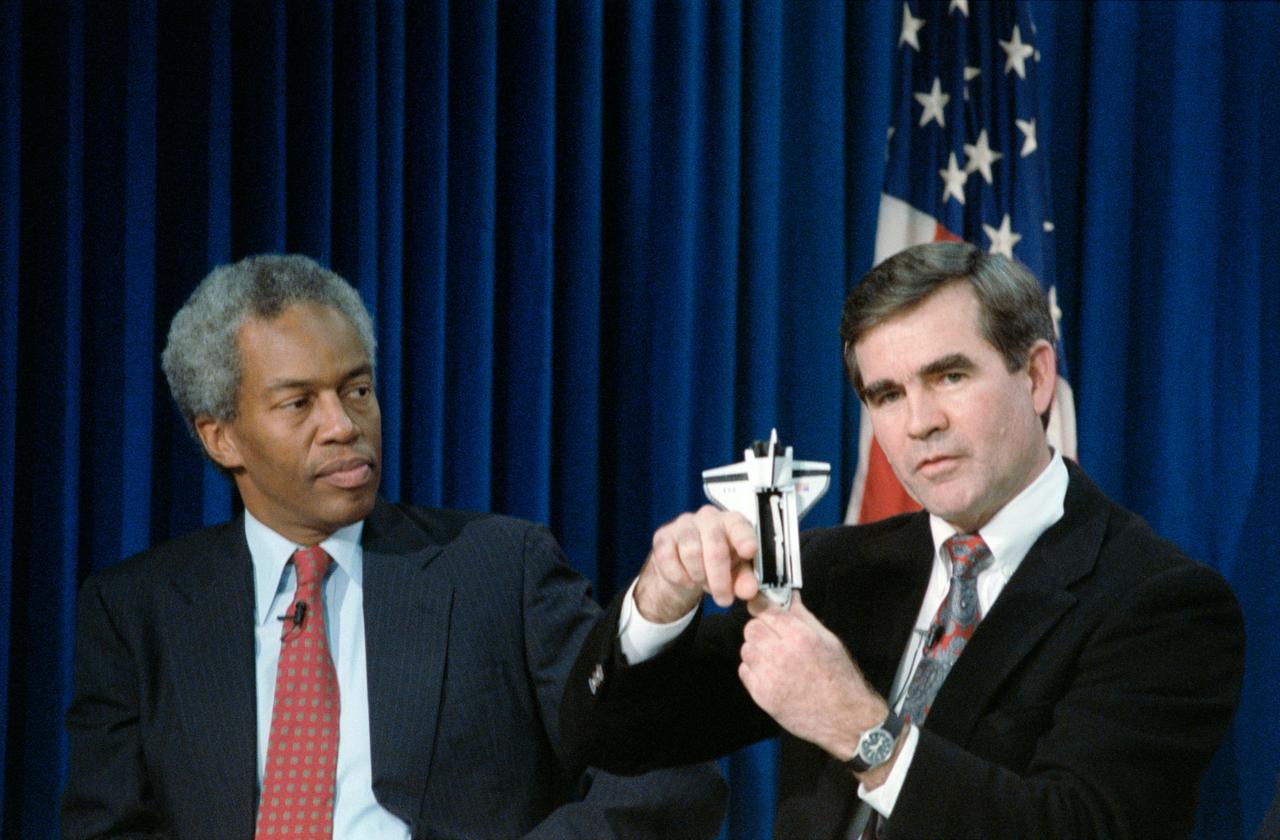
S91-26681 (23 Jan 1991) --- Astronaut C. Lacy Veach (right), STS-39 mission specialist, uses a model to explain some anticipated spacecraft maneuvers during a pre-flight press briefing. Astronaut Guion S. (Guy) Bluford, one of six other crewmembers assigned to the flight, listens at left. The STS-39 mission is scheduled for early March.
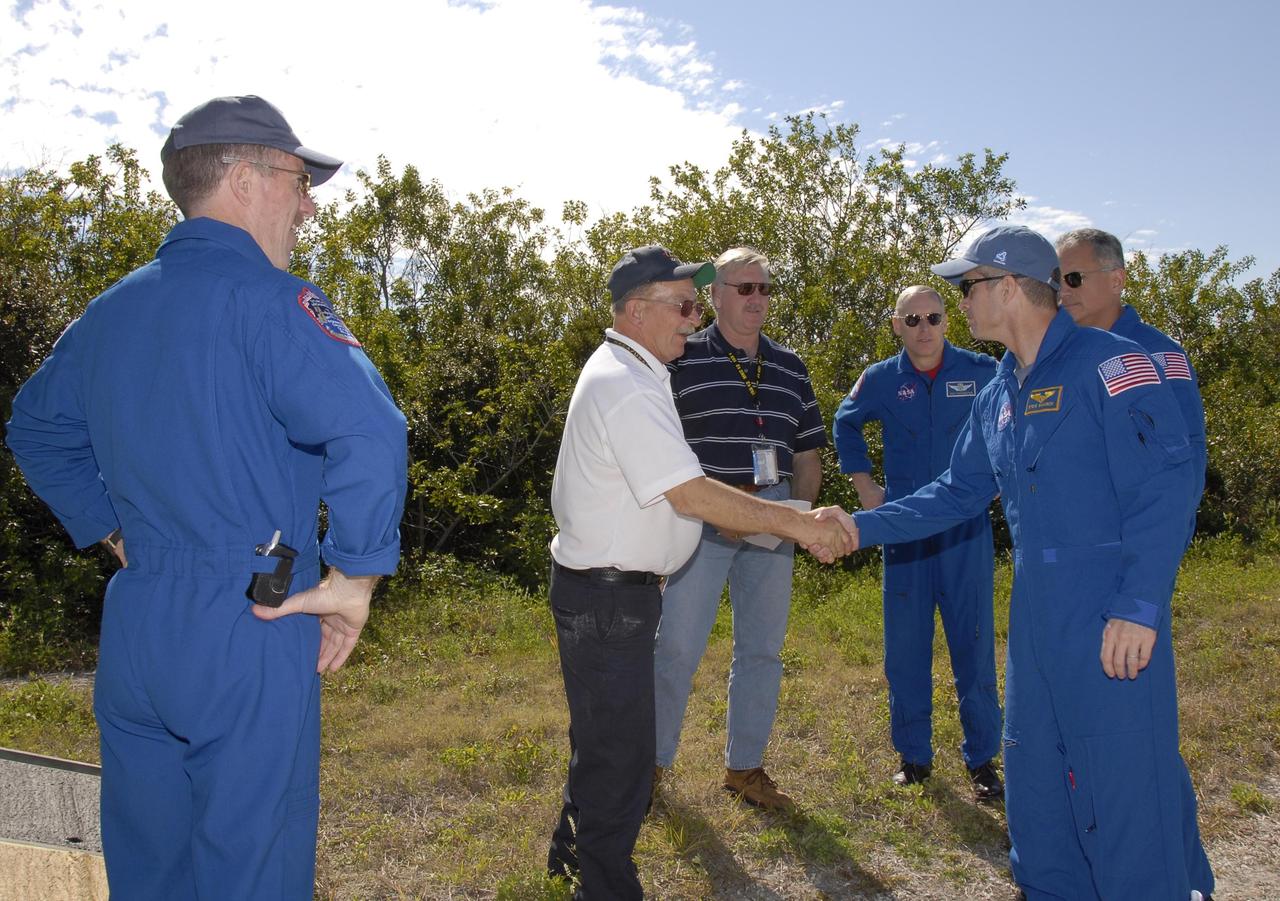
KENNEDY SPACE CENTER, FLA. -- At Launch Complex 39, astronaut rescue team leader Capt. George Hoggard, second from left, greets STS-117 Mission Specialist Steven Swanson as fellow crew members, from left, Mission Specialists James Reilly, Patrick Forrester and Danny Olivas look on. The astronauts on the STS-117 crew are participating in M-113 armored personnel carrier training during Terminal Countdown Demonstration Test (TCDT) activities, a dress rehearsal for their launch, targeted for March 15. The M-113 could be used to move the crew away from the launch pad quickly in the event of an emergency. The TCDT also includes pad emergency egress training and a simulated launch countdown. The mission payload aboard Space Shuttle Atlantis is the S3/S4 integrated truss structure, along with a third set of solar arrays and batteries. The crew of six astronauts will install the truss to continue assembly of the station. Photo credit: NASA/Kim Shiflett
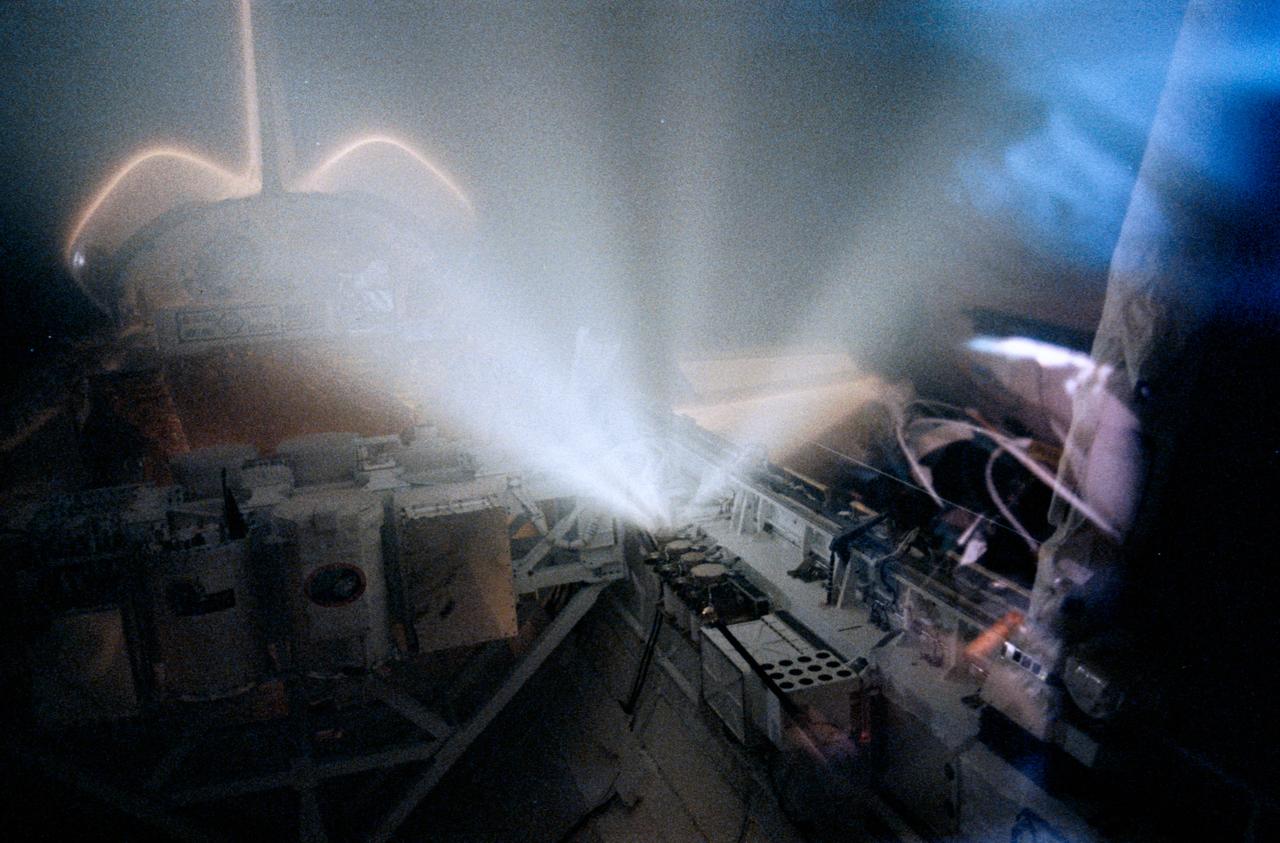
STS039-367-006 (1 May 1991) --- One of the four compressed gas canisters on the forward port side of Discovery's cargo bay releases gas on flight day 4 of the STS-39 mission. The canisters are part of STS-39's Critical Ionization Velocity (CIV) experiment.
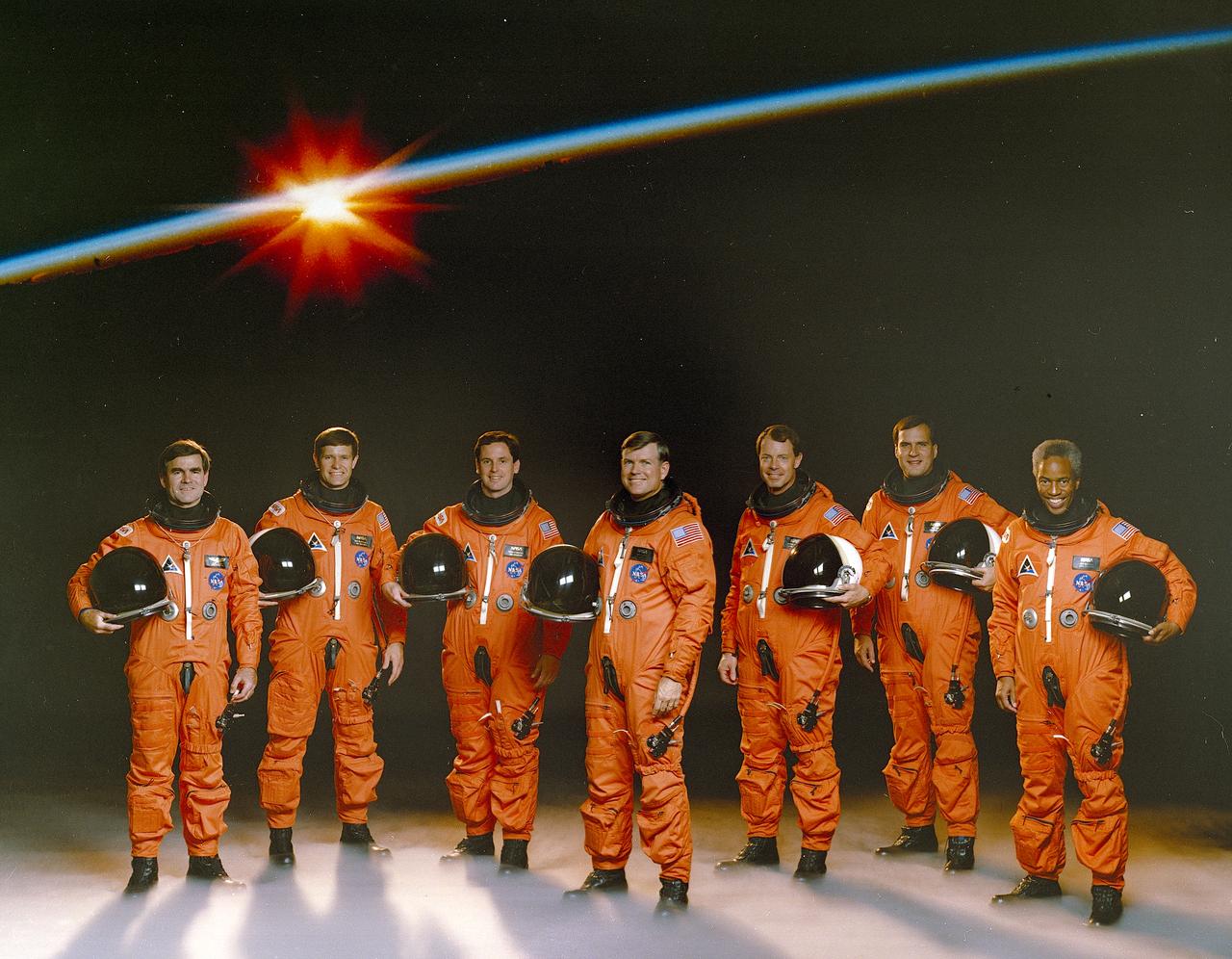
The STS-39 crew portrait includes 7 astronauts. Pictured are Charles L. Veach, mission specialist 5; Michael L. Coats, commander; Gregory J. Harbaugh, mission specialist 2; Donald R. McMonagle, mission specialist 4; L. Blaine Hammond, pilot; Richard J. Hieb, mission specialist 3; and Guion S. Buford, Jr., mission specialist 1. Launched aboard the Space Shuttle Discovery on April 28, 1991 at 7:33:14 am (EDT), STS-39 was a Department of Defense (DOD) mission. The primary unclassified payload included the Air Force Program 675 (AFP-675), the Infrared Background Signature Survey (IBSS), and the Shuttle Pallet Satellite II (SPAS II).
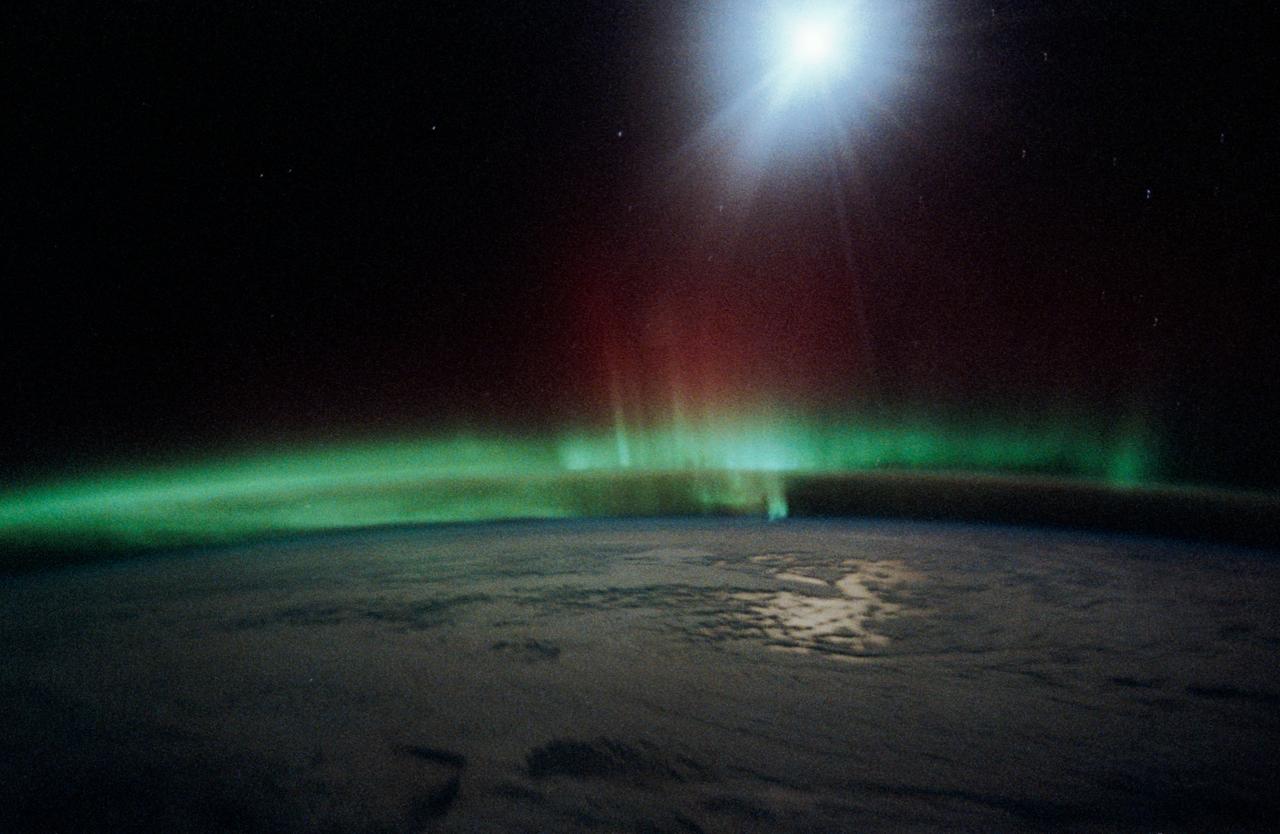
STS039-377-013 (28 April-6 May 1991) --- Moonlight saturates the high speed film used for auroral photography. Moon glint is visible in the open ocean and the cloud patterns are well illuminated. This frame was taken with a handheld 35mm camera from inside the Space Shuttle Discovery's crew cabin. This is one of 25 visuals used by the STS-39 crew at its May 17, 1991 Post Flight Press Conference (PFPC). Discovery's flight of eight days duration, launched April 28, 1991 from Kennedy Space Center (KSC) and completed on May 6, 1991 at the KSC landing facility, was dedicated to the Department of Defense (DOD). Crew members were astronauts Michael L. Coats, L. Blaine Hammond, Guion S. Bluford, Richard J. Hieb, Gregory J. Harbaugh, Donald R. McMonagle and Charles L. (Lacy) Veach.
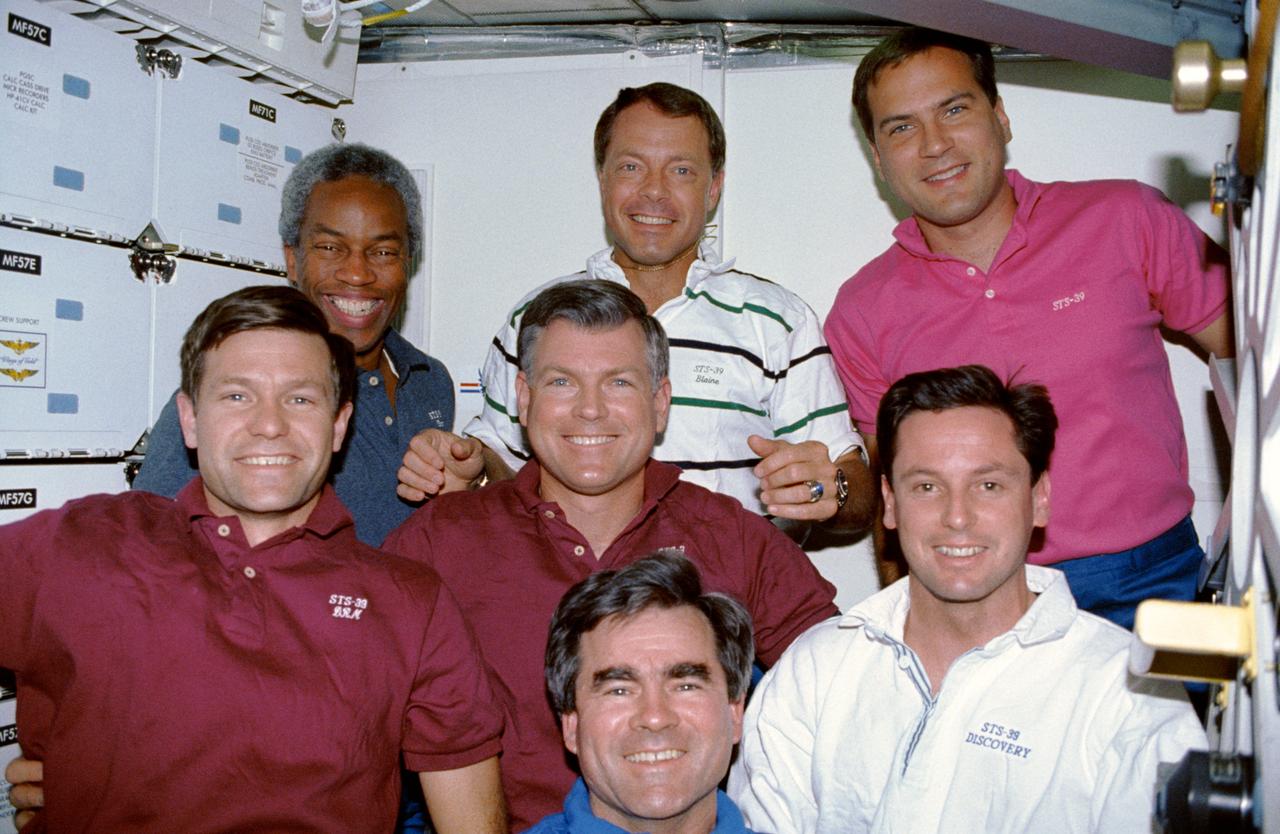
STS039-07-017 (28 April - 6 May 1991) --- The seven member astronaut crew for the STS-39 mission poses on the middeck of the Earth-orbiting space shuttle Discovery for an in-flight crew portrait. Left to right (front) are astronauts Donald R. McMonagle, Michael L. Coats, Charles L. (Lacy) Veach and Gregory J. Harbaugh; and left to right (rear) are astronauts Guion S. Bluford Jr., L. Blaine Hammond and Richard J. Hieb. Photo credit: NASA
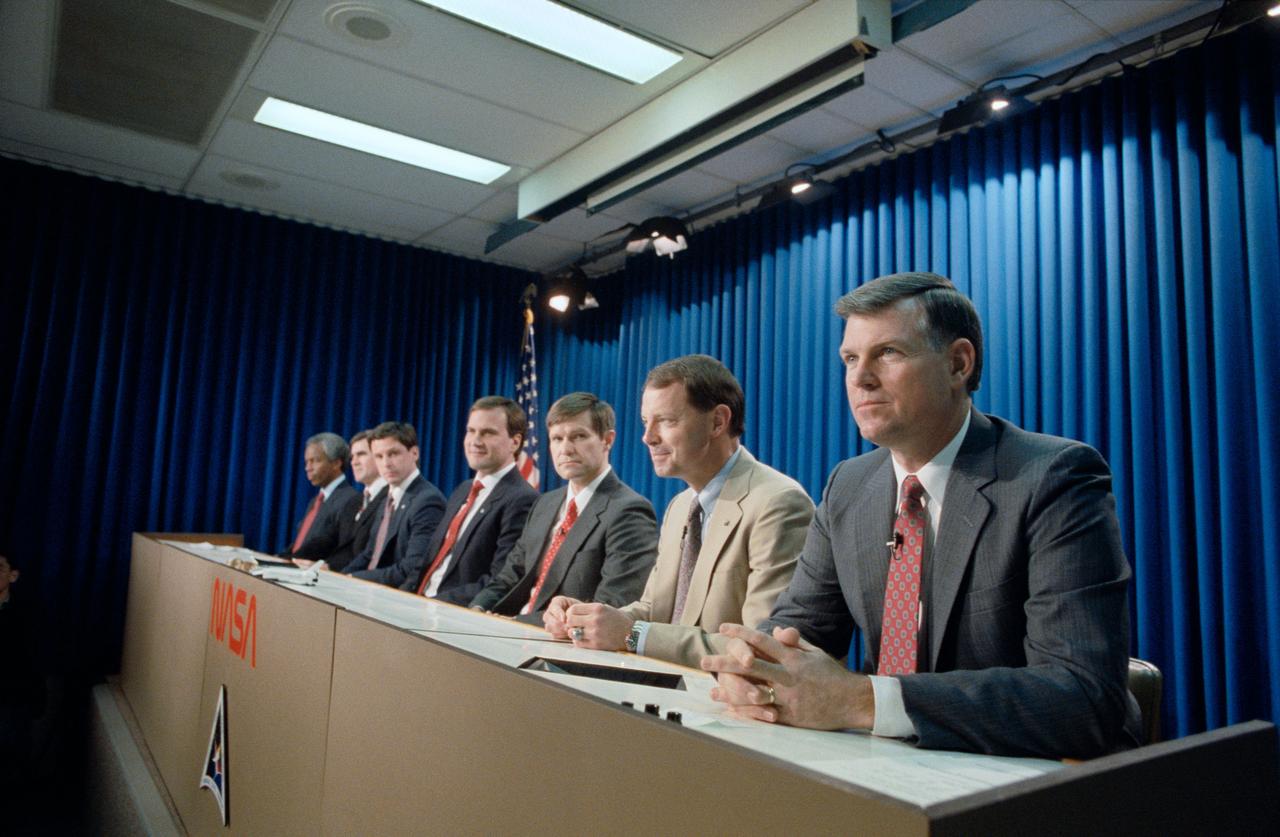
S91-26674 (23 Jan 1991) --- Astronaut Michael L. Coats, mission commander, listens attentively as a news media representative (out of frame) queries the STS-39 crewmembers during a pre-flight press briefing. The others, pictured left to right, are Astronauts Guion (Guy) S. Bluford, C. Lacy Veach, Gregory J. Harbaugh, Richard J. Hieb, Donald R. McMonagle and L. Blaine Hammond Jr.
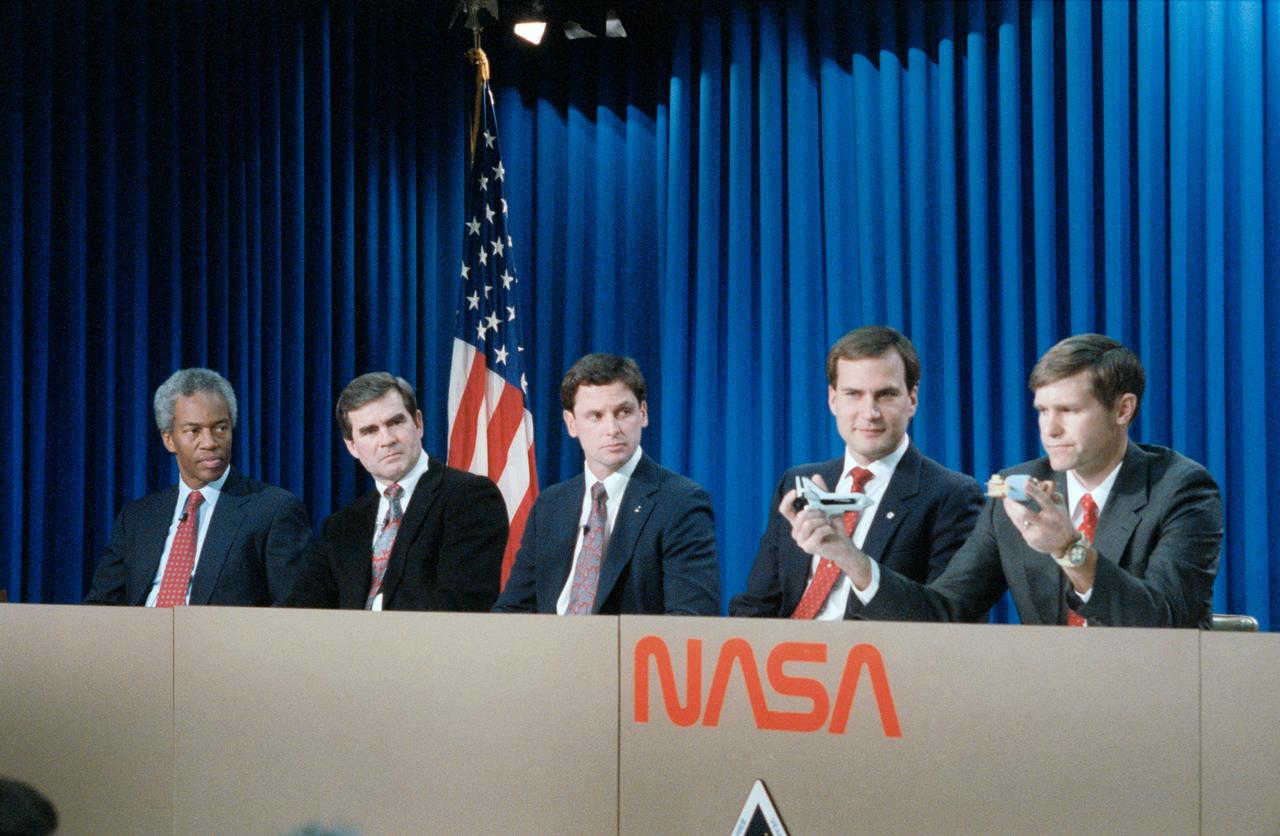
S91-26676 (23 Jan 1991) --- The five mission specialists assigned to the STS-39 Shuttle mission are pictured during a pre-flight press briefing. Pictured left to right are Astronauts Guion (Guy) S. Bluford, C. Lacy Veach, Gregory J. Harbaugh, Richard J. Hieb and Donald R. McMonagle. McMonagle uses models to demonstrate deployment of the infrared background signature survey (IBSS) satellite. Astronauts Michael L. Coats, mission commander, and L. Blaine Hammond Jr., pilot, are out of frame at right.
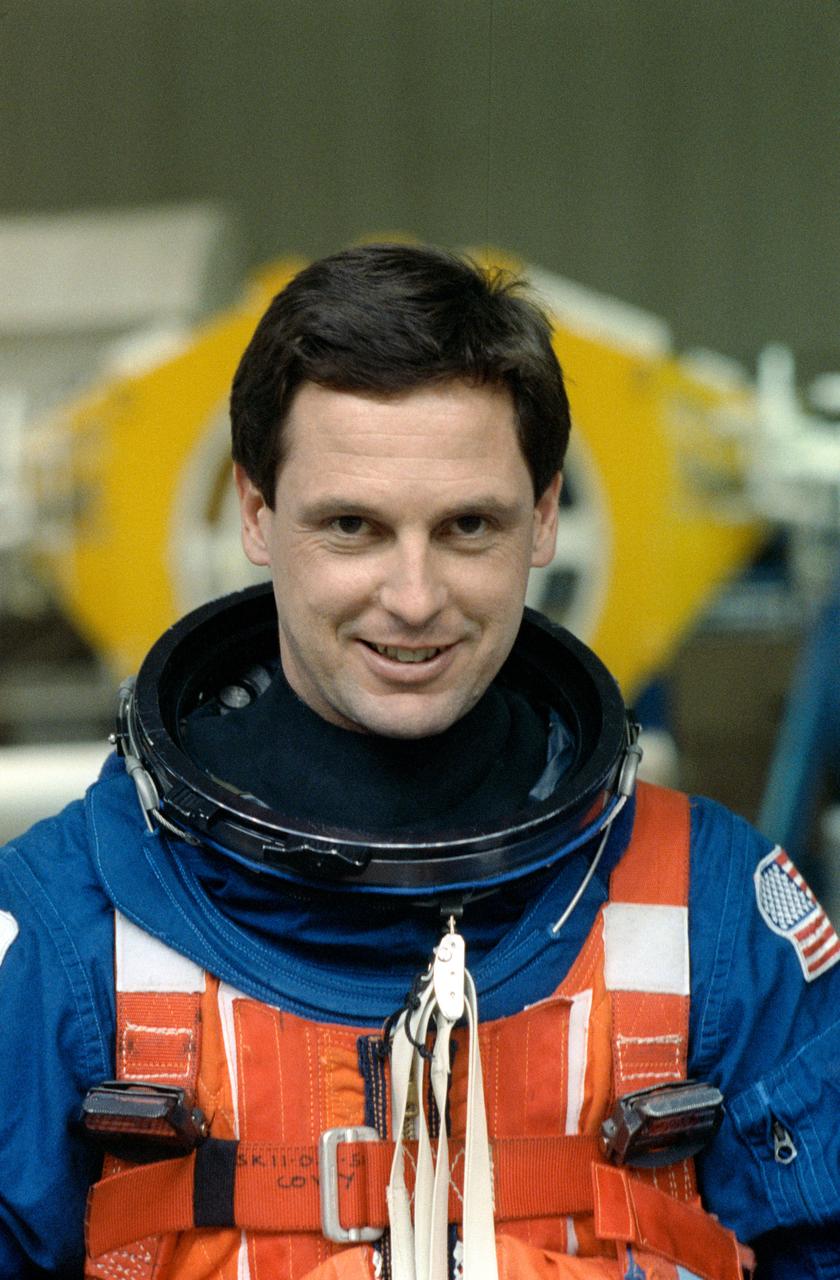
S90-54764 (7 Dec 1990) --- Astronaut Gregory J. Harbaugh, mission specialist, listens attentively as a trainer (out of frame) briefs the STS-39 crewmembers on emergency egress measures. The seven astronauts were in the Johnson Space Center's (JSC) weightless environment training facility (WET-F). This type training uses the WET-F's 25 ft. deep pool to simulate an ocean parachute landing.
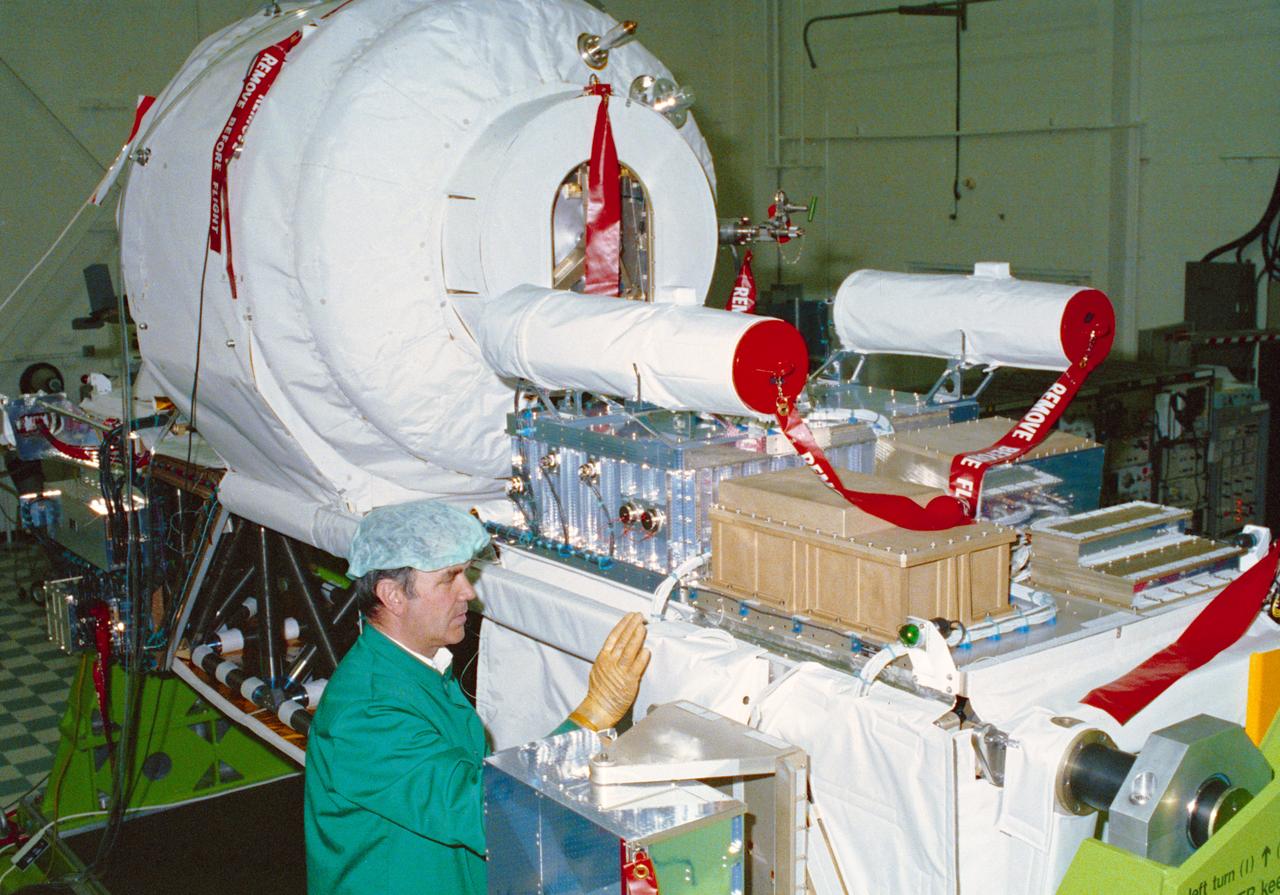
S91-27781 (5 Nov 1990) --- STS-39 Discovery, Orbiter Vehicle (OV) 103, Infrared Background Signature Survey (IBSS) Shuttle Pallet Satellite (SPAS) II documented during preflight processing procedures. German Messerschmitt-Bolkow-Blohm (MBB) technicians work on SPAS II cryostat (without insulation) and other elements at the Cape Canaveral Air Force Station, 11/05/90
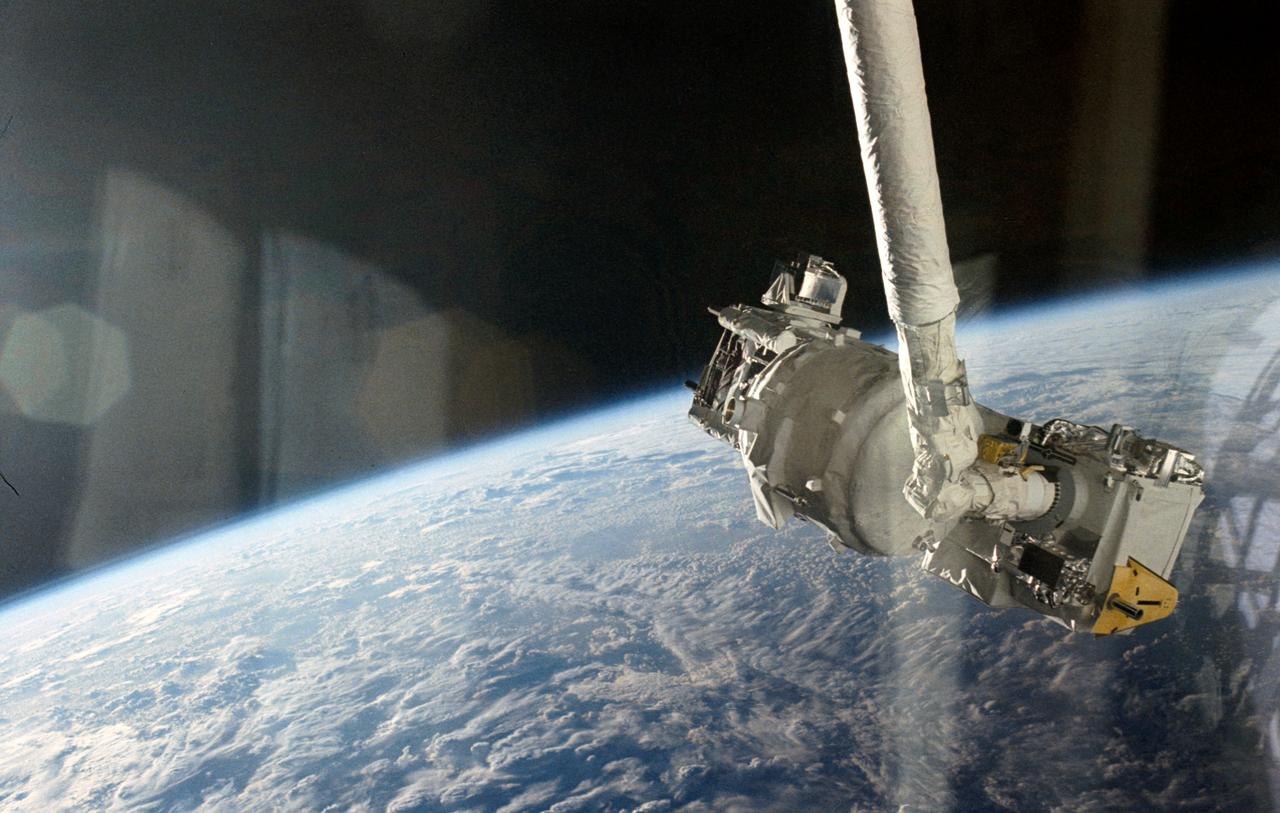
STS039-19-015 (28 April- 6 May 1991) --- This STS-39 35mm scene shows the Strategic Defense Initiative Organization (SDIO) Shuttle Pallet Satellite (SPAS-II) on the end of the remote manipulator system (RMS) end effector. During the eight-day flight, SPAS collected data in both a free-flying mode and while attached to the RMS.
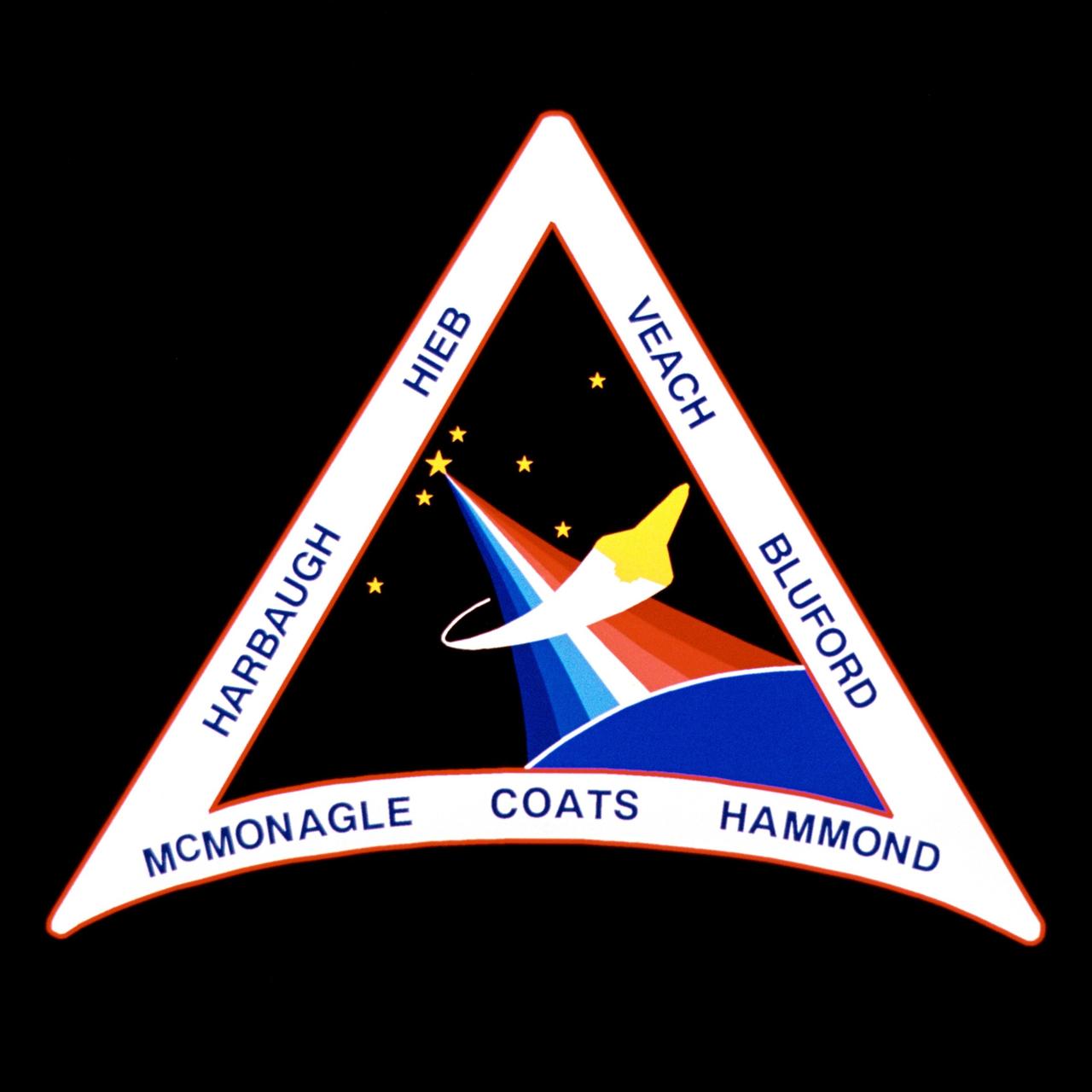
STS039-S-001 (October 1990) --- The arrowhead shape of the STS-39 crew patch represents a skyward aim to learn more about our planet's atmosphere and space environment in support of the Department of Defense. Our national symbol is represented by the star constellation Aguila (the eagle) as its brightest star, Altair, lifts a protective canopy above Earth. The space shuttle encircles the spectrum which represents x-ray, ultraviolet, visible and infrared electromagnetic radiation to be measured by a variety of scientific instruments. Experiments will be operated within the payload bay and aboard a free-flying satellite which will be deployed and retrieved during the mission. The patch was designed by the STS-39 crew. The NASA insignia design for space shuttle flights is reserved for use by the astronauts and for other official use as the NASA Administrator may authorize. Public availability has been approved only in the form of illustrations by the various news media. When and if there is any change in this policy, which we do not anticipate, it will be publicly announced. Photo credit: NASA

CAPE CANAVERAL, Fla. -- Applauding the launch team inside the Launch Control Center are United States President Bill Clinton and First Lady Hillary Rodham Clinton, right. They joined NASA Administrator Daniel Goldin left in the firing room following the successful launch of STS-95, which included as part of the flight crew John H. Glenn Jr., senator from Oho and former NASA Mercury astronaut. The shuttle launch marked Glenn's second flight to space, coming 36 years after his Mercury flight in February 1962. Image credit: NASA
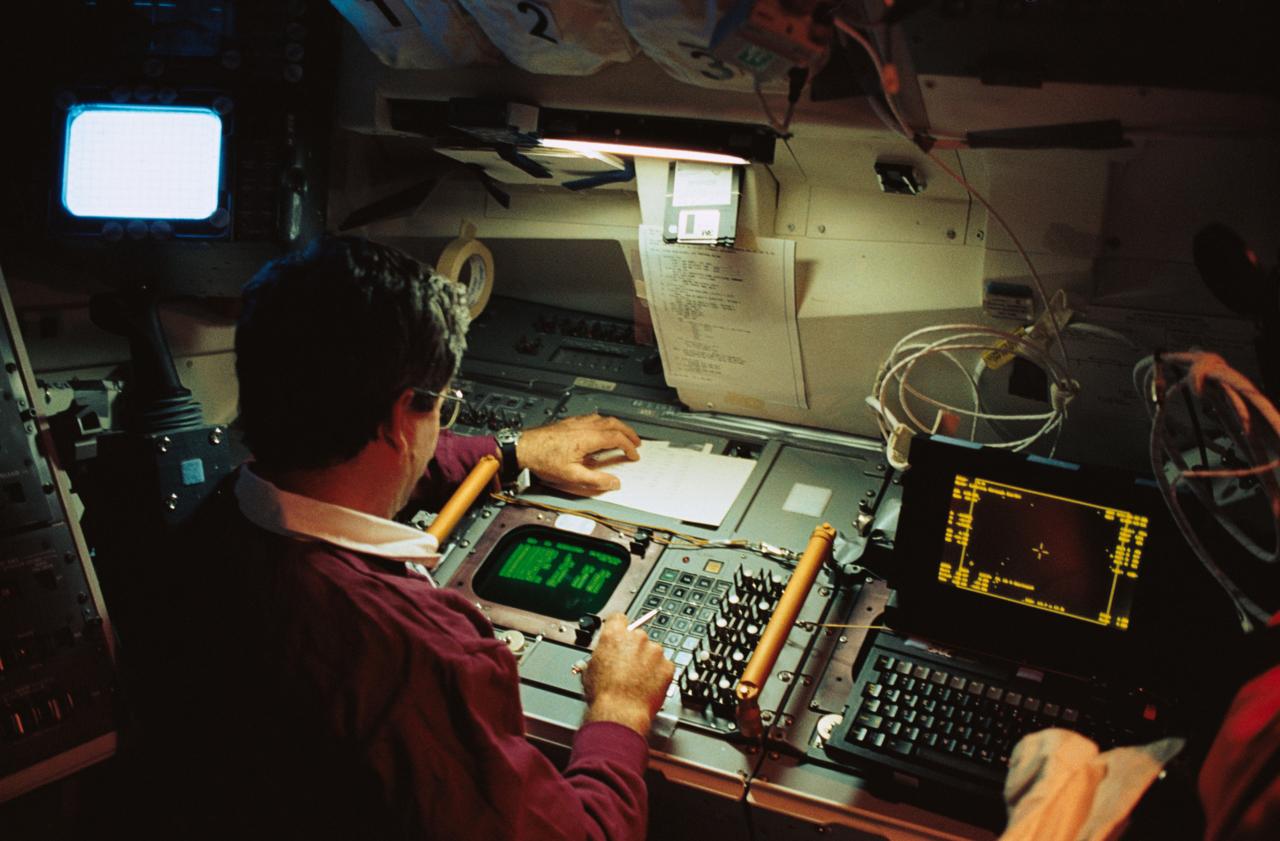
STS039-09-036 (28 April-6 May 1991) --- Astronaut Charles L. (Lacy) Veach monitors experiment data on the aft flight deck of the Earth-orbiting Discovery. The photograph was taken with a 35mm camera. Veach and six other NASA astronauts spent over eight days in space busily collecting data for this mission, dedicated to the Department of Defense.
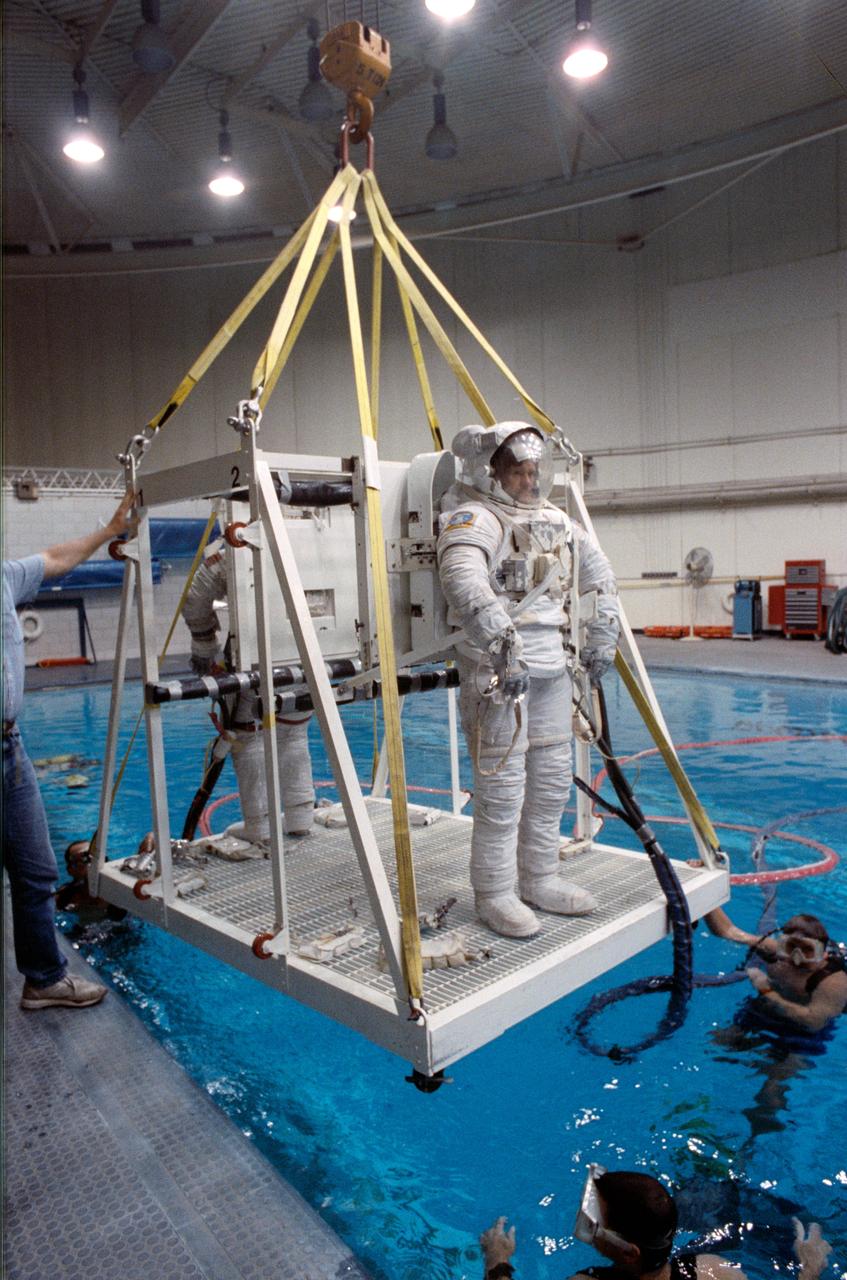
S90-46030 (Aug 1990) --- Astronaut Donald R. McMonagle (foreground) wears an extravehicular mobility unit (EMU) spacesuit as he prepares to be lowered into a 25-ft. deep pool at the Johnson Space Center's weightless environment training facility (WET-F). Astronaut Gregory J. Harbaugh, a fellow STS 39 mission specialist, shares the moveable platform with McMonagle and prepares to join him in the simulation of a contingency extravehicular activity (EVA) for the mission, scheduled for Discovery in the spring of 1991. A number of SCUBA-equipped divers assist in the training session.
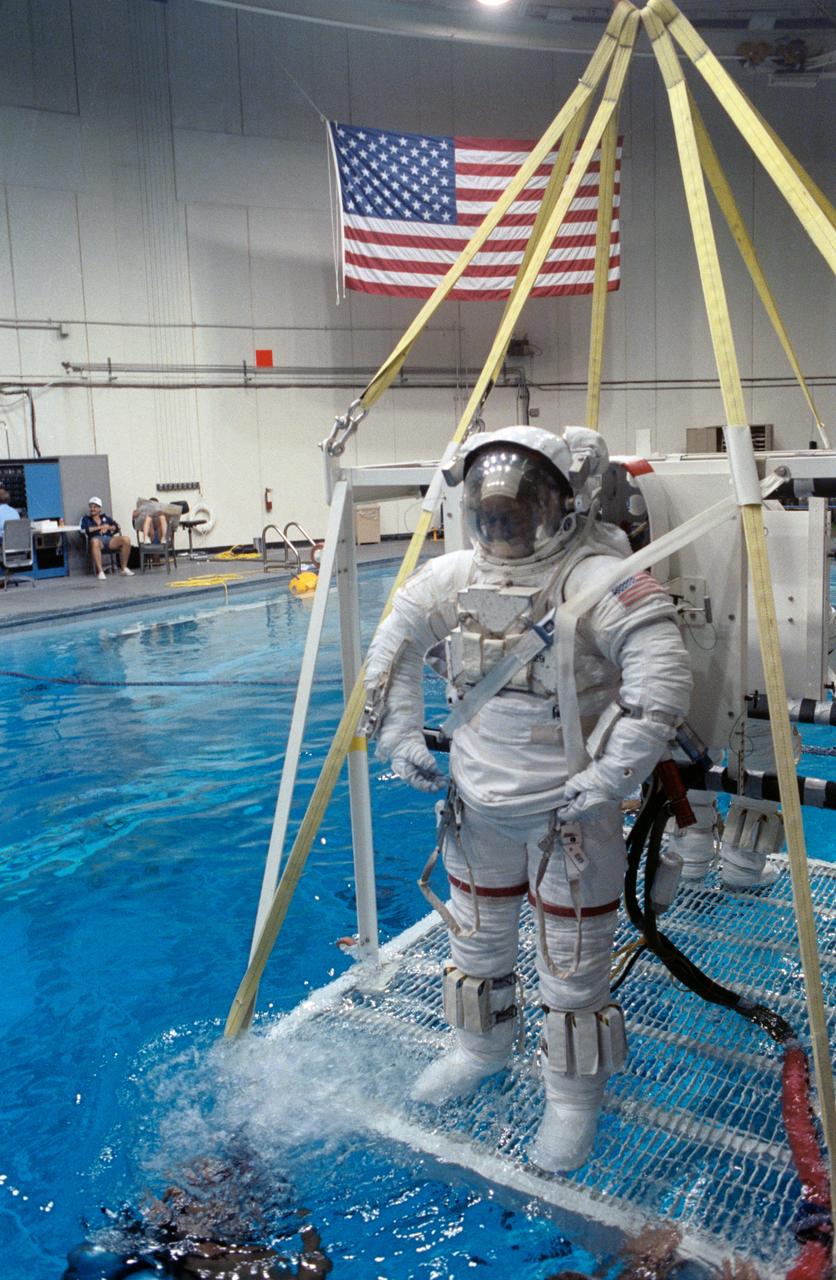
S90-44118 (August 1990) --- Astronaut Guion S. Bluford, mission specialist for STS-39, wearing an extravehicular mobility unit (EMU) spacesuit, is lowered by a hoist device prior to participating in an underwater rehearsal of a contingency EVA. The scene is in the Johnson Space Center's weightless environment training facility (WET-F) which houses a 25-ft. deep pool (visible in background).
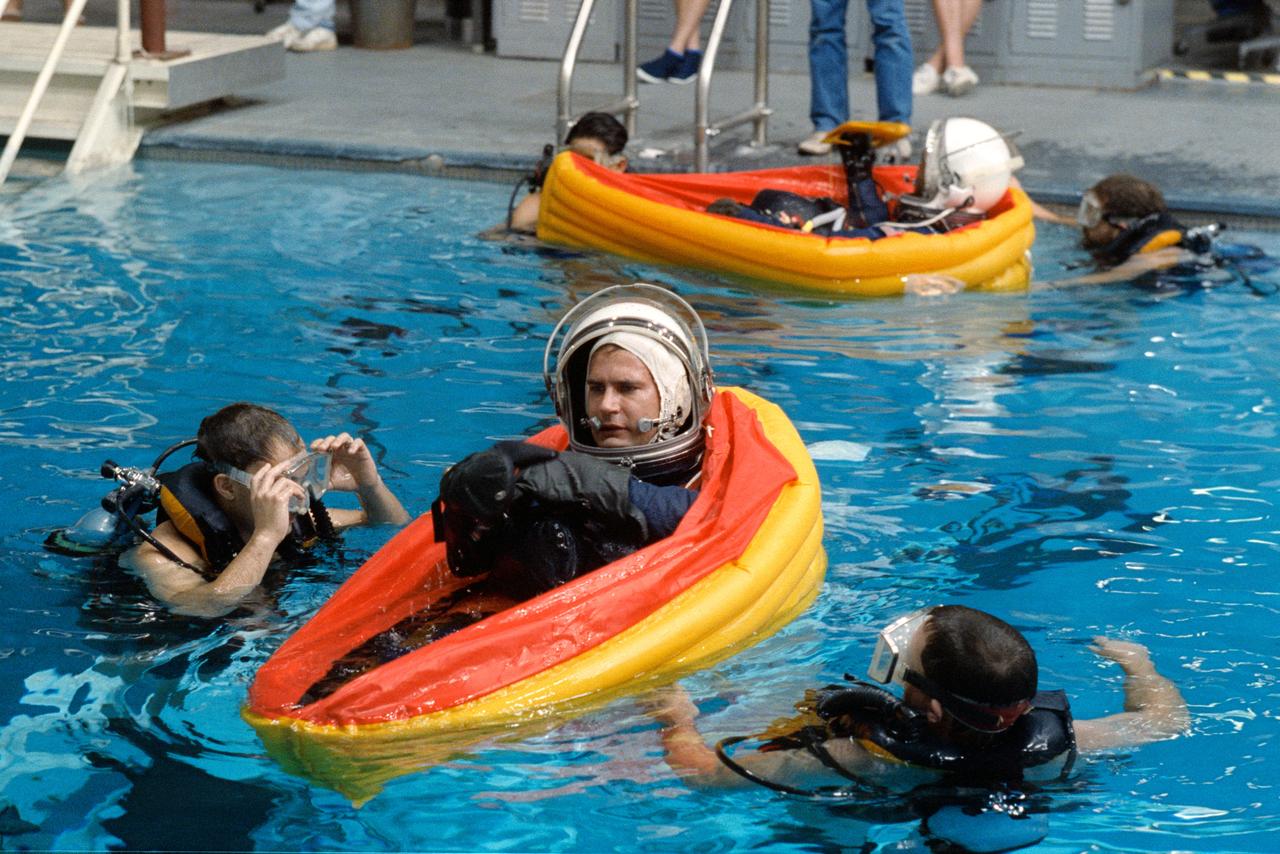
S90-54754 (13 Dec 1990) --- Astronaut Richard J. Hieb, STS-39 mission specialist, wearing launch and entry suit (LES) and launch and entry helmet (LEH), floats in single person life raft after landing in JSC's Weightless Environment Training Facility (WETF) Bldg 29 pool. During emergency egress bailout procedures, Hieb practiced procedures necessary for a water landing. Divers monitor Hieb's activity.
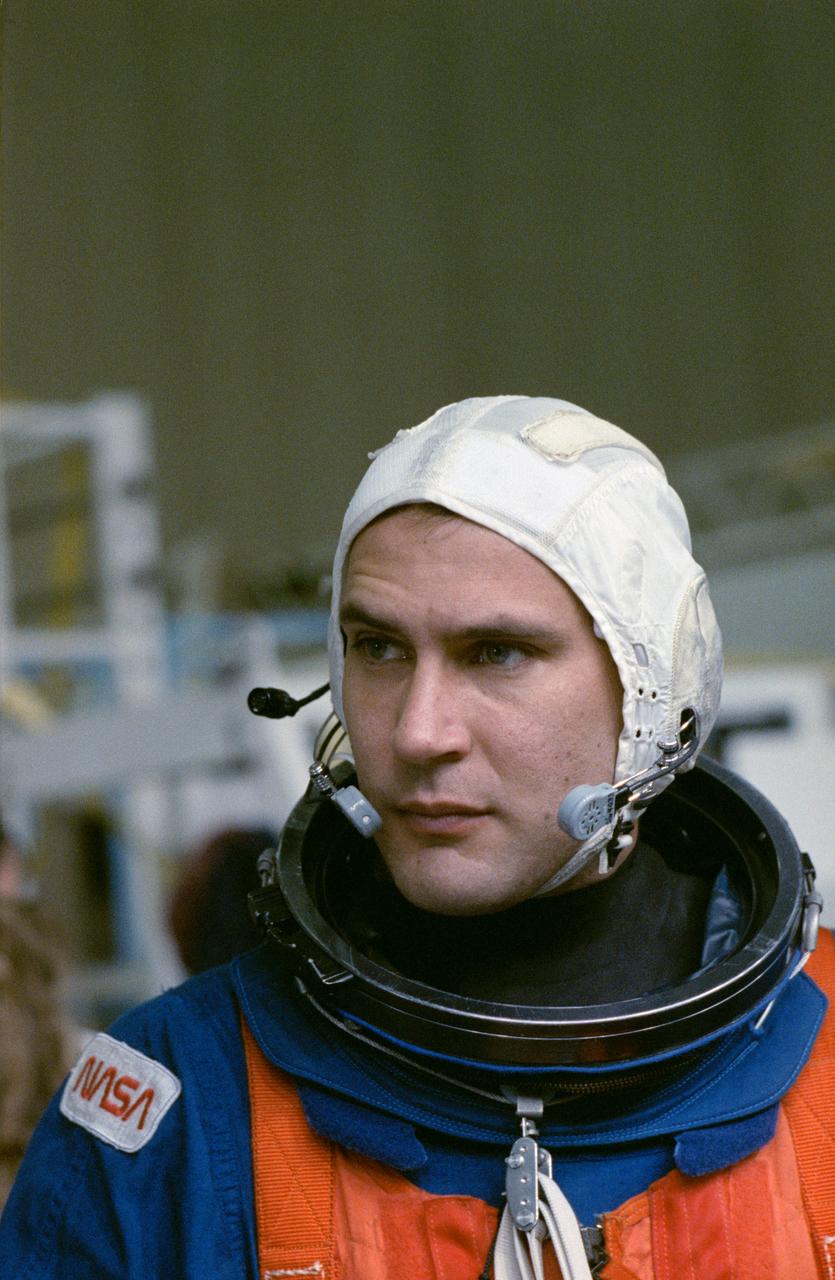
S90-54750 (7 Dec 1990) --- Astronaut Richard J. Hieb, mission specialist, listens attentively as a trainer (out of frame) briefs the STS-39 crewmembers on emergency egress measures. The seven astronauts were in JSC's weightless environment training facility (WET-F). This type training uses the WET-F's 25 ft. deep pool to simulate an ocean parachute landing.
S90-54760 (7 Dec 1990) --- Astronaut Richard J. Hieb, mission specialist, participates in emergency egress training. Hieb and six fellow STS 39 astronauts were in JSC's weightless environment training facility (WET-F). This type training uses the WET-F's 25 ft. deep pool to simulate an ocean parachute landing. A number of SCUBA-equipped divers assist in the training session.
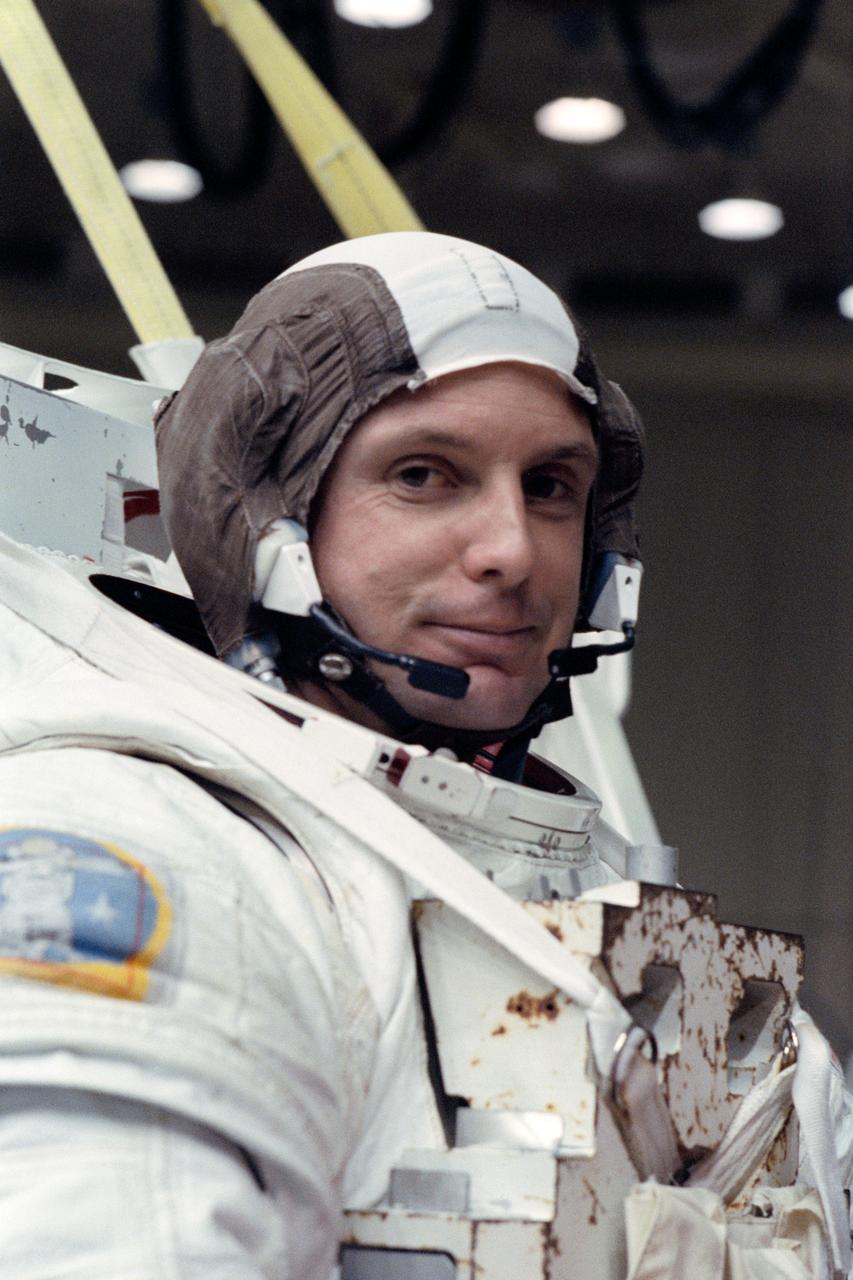
S90-41497 (Aug 1990) --- Astronaut Gregory J. Harbaugh, STS-39 mission specialist, completes suiting up process for a training exercise in the weightless environment training facility (WET-F) at the Johnson Space Center (JSC). Harbaugh and fellow crewmembers are using JSC's WET-F facility to participate in simulations of contingency extravehicular activity (EVA) for the flight.
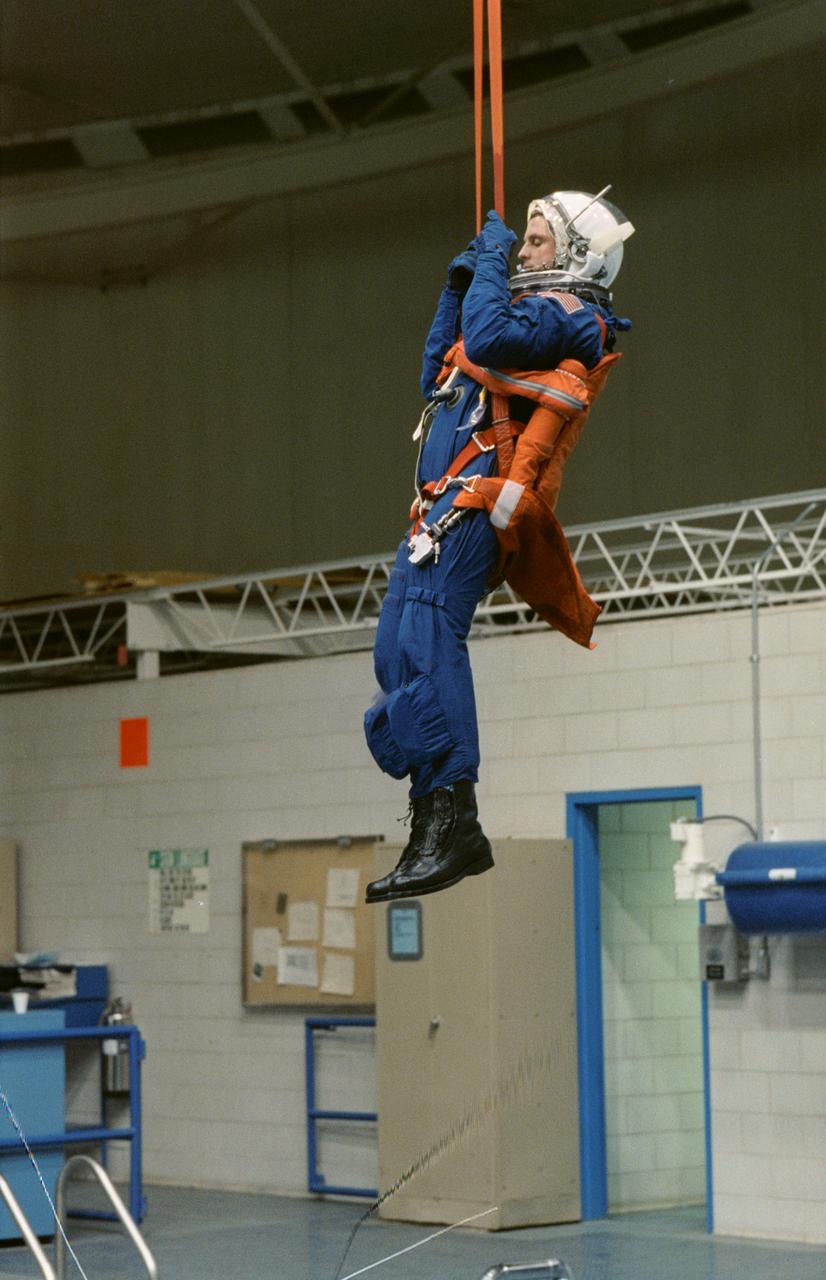
S90-54763 (7 Dec 1990) --- Astronaut Gregory J. Harbaugh. Mission specialist, participates in emergency egress training. Harbaugh and some of his fellow STS 39 astronauts were in JSC's weightless environment training facility (WET-F). Harbaugh is actually suspended over water. This type training uses the WET-F's 25 ft. deep pool to simulate an ocean parachute landing.
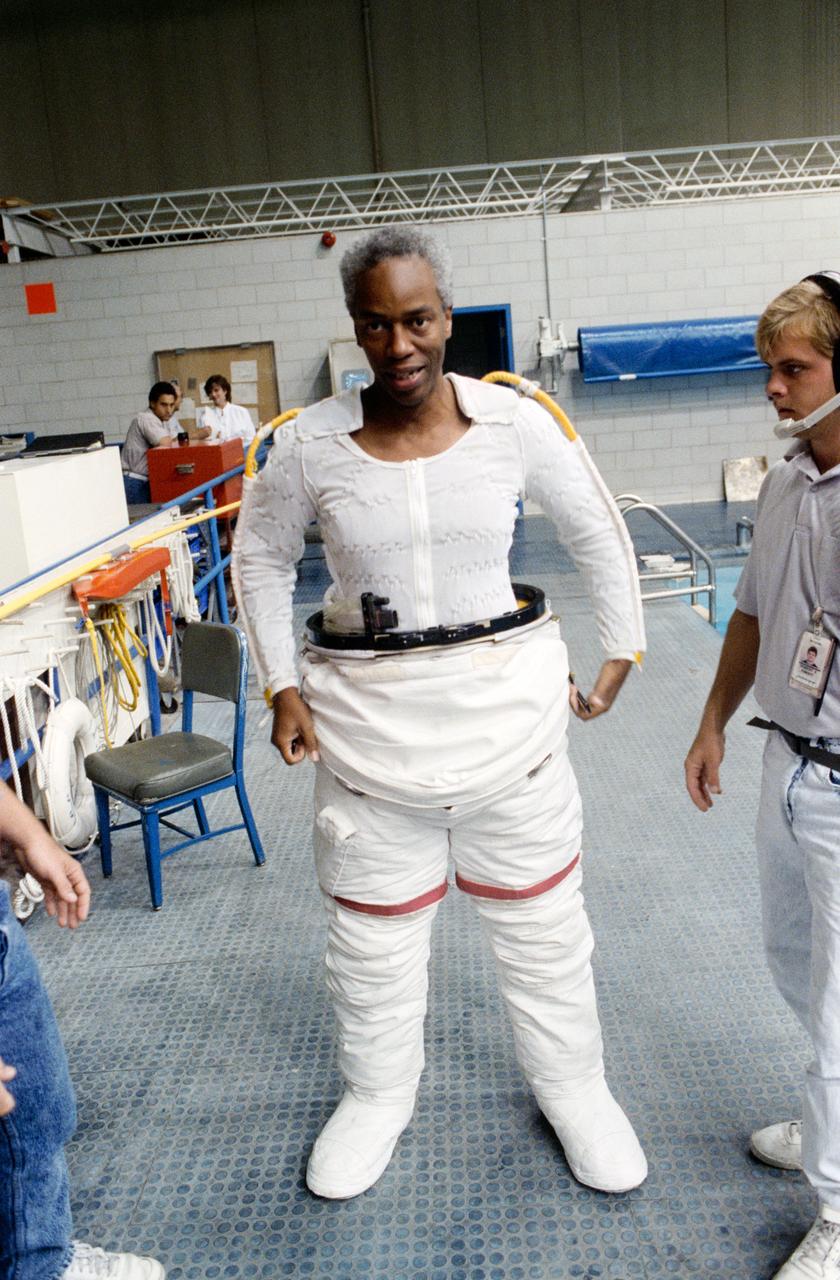
S90-44106 (August 1990) --- Astronaut Guion S. Bluford, mission specialist for STS-39, wearing part of an extravehicular mobility unit (EMU) spacesuit, prepares to participate in a training session for the scheduled March 1991 spaceflight. Soon after this picture was taken, Bluford was lowered into water by a hoist device for the underwater rehearsal of a contingency EVA. The scene is in the Johnson Space Center's weightless environment training facility (WET-F) which houses a 25-ft. deep pool (visible in right background).
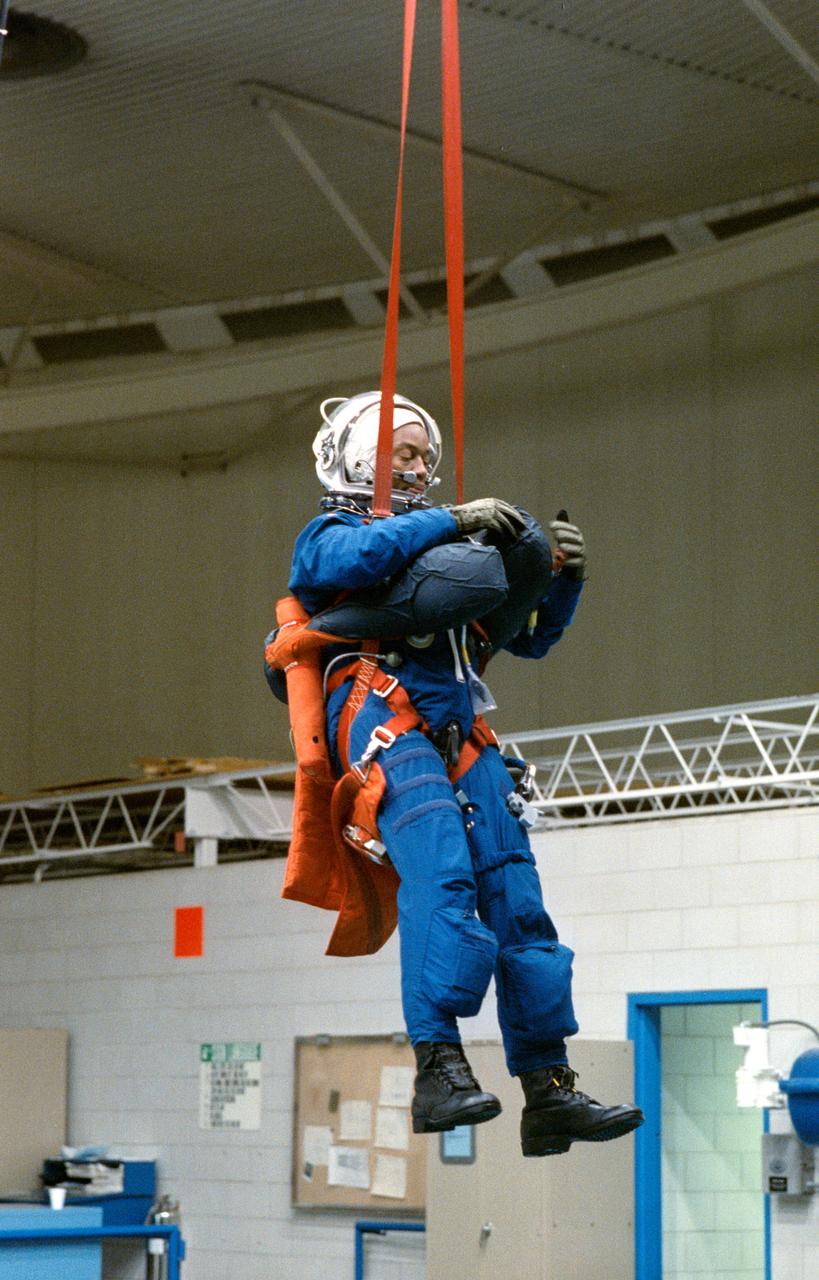
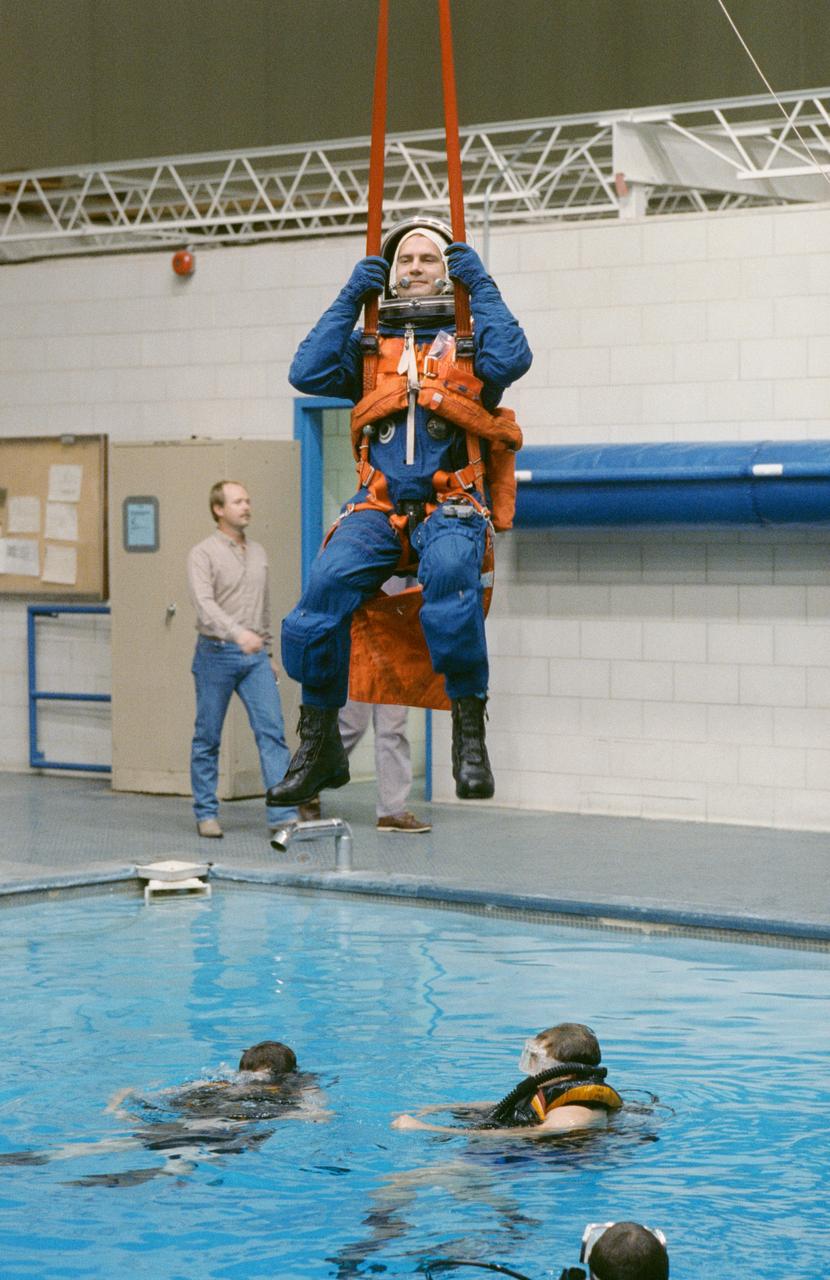
S90-54755 (13 Dec 1990) --- Astronaut Guion S. Bluford, Jr., STS-39 Mission Specialist wearing launch and entry suit (LES) and launch and entry helmet (LEH), is suspended above JSC's Weightless Environment Training Facility (WETF) Bldg 29 pool via his parachute harness. Bluford will be dropped from the harness into the WETF's 25 ft deep pool to simulate an emergency egress bailout from the Space Shuttle into the ocean.
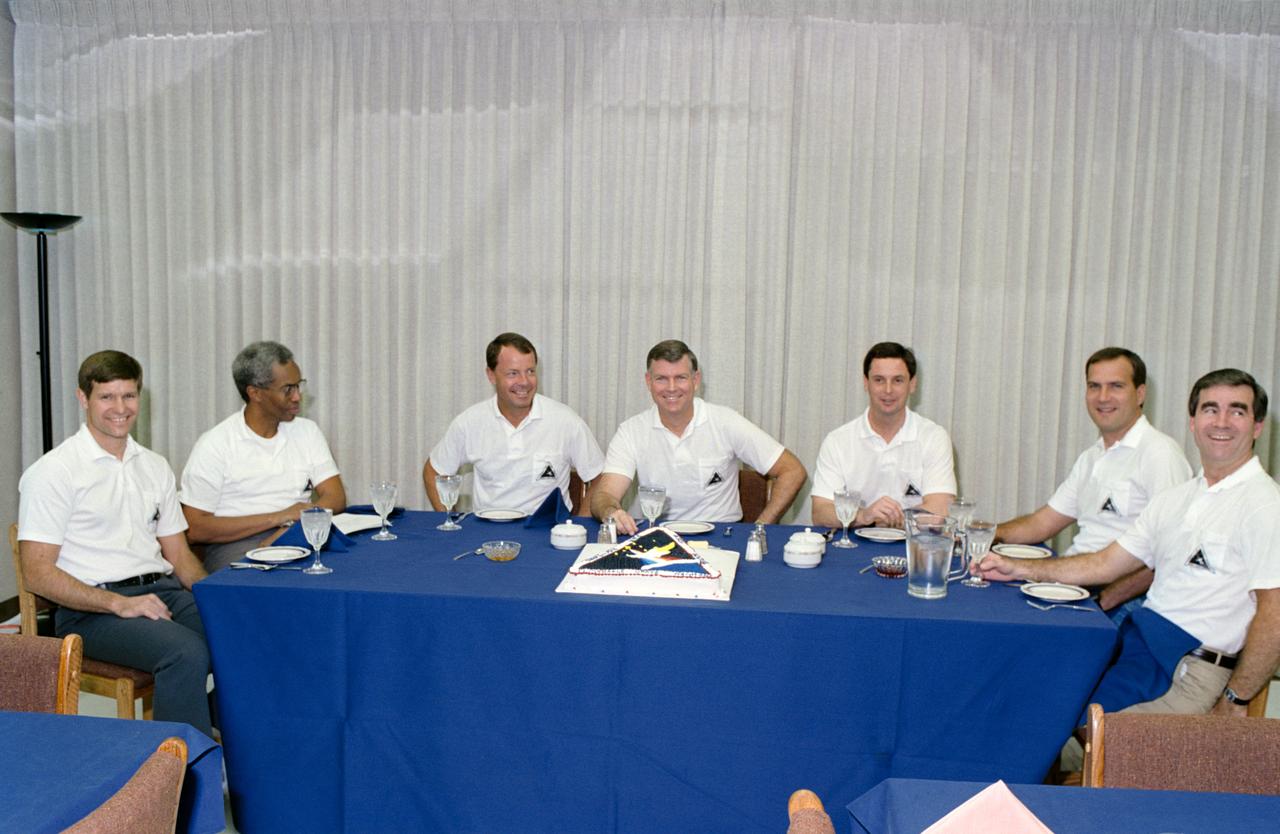
STS039-S-051 (28 April 1991) --- In KSC's Operations and Checkout Building, a very light breakfast is shared by the seven members of the STS-39 flight crew prior to their April 28, 1991 launch. Left to right are astronauts Donald R. McMonagle, Guion S. Bluford Jr., L. Blaine Hammond, Michael L. Coats, Gregory J. Harbaugh, Richard J. Hieb and Charles L. (Lacy) Veach. Launch occurred at 7:33:14 a.m. (EDT), April 28, 1991.
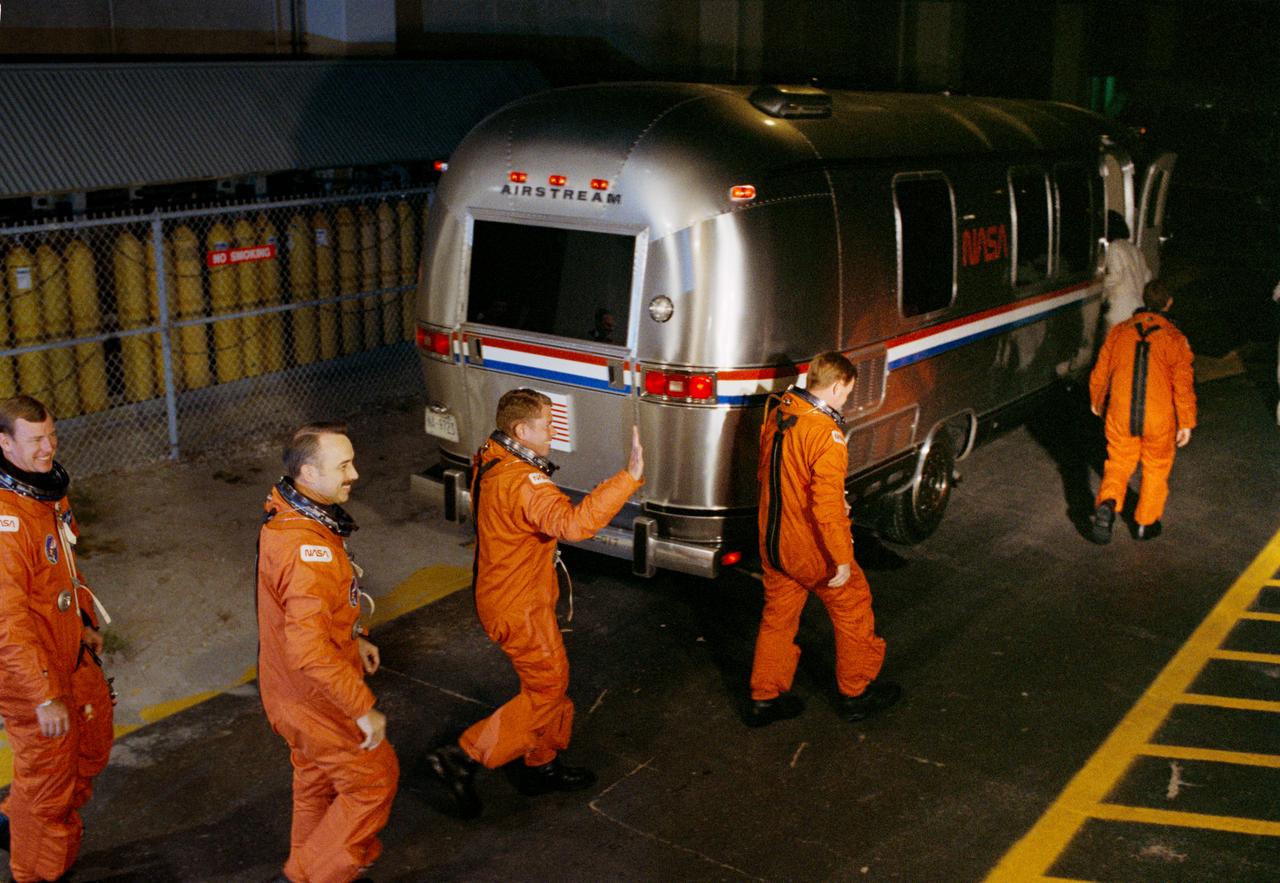
STS028-S-002 (8 Aug 1989) --- The five astronaut crewmembers for STS-28 leave the Operations and Checkout (O&C) Building to board a transfer van en route to Launch Complex 39 for a date with Columbia. Left to right are Astronauts Mark N. Brown, James C. Adamson, David C. Leestma, Richard N. Richards and Brewster H. Shaw Jr.
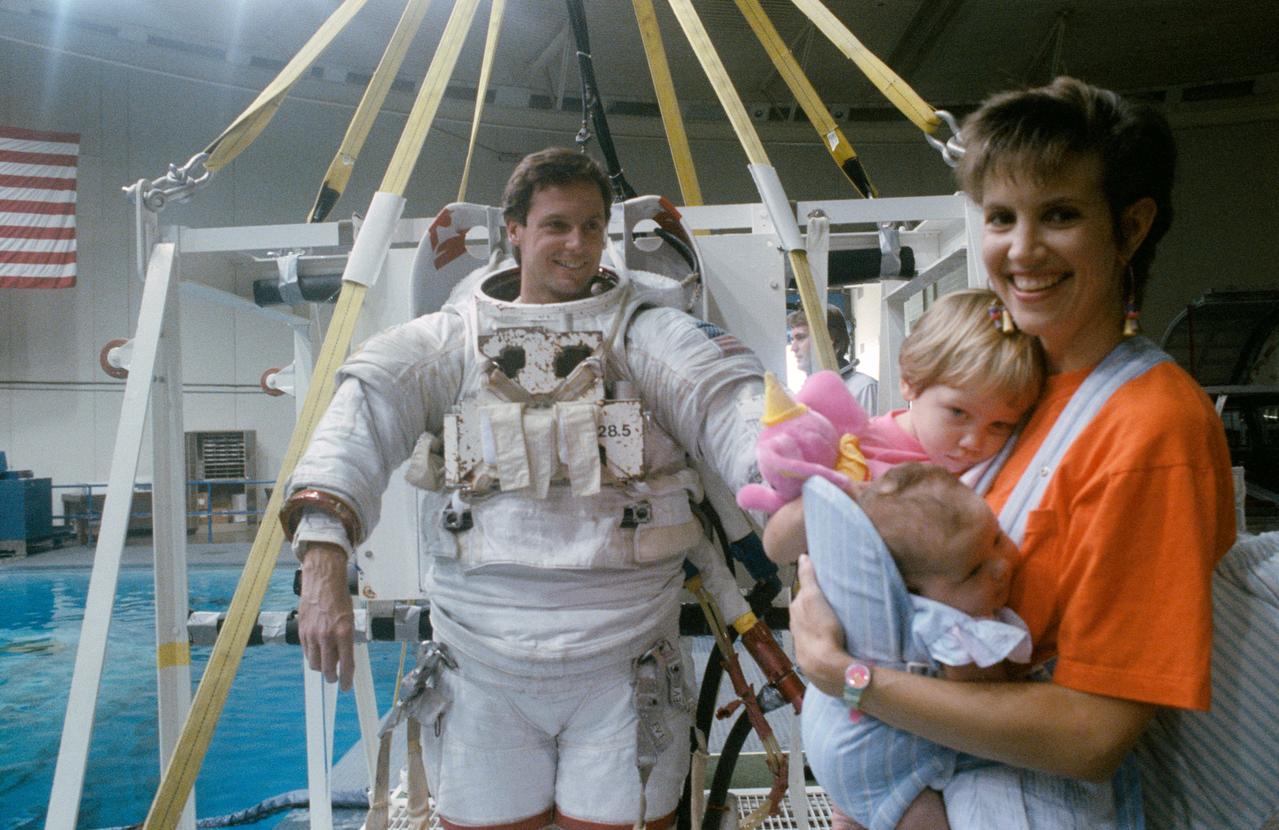
S90-46031 (August 1990)--- Astronaut Gregory J. Harbaugh, STS-39 mission specialist, gets a visit from his wife Carol and daughters while suiting up for a training exercise at the Johnson Space Center (JSC). The children are Kelly Allison, 2, and Dana Claire, six months. The crewmembers are using JSC's WET-F facility to participate in simulations of contingency extravehicular activity (EVA) for the flight.
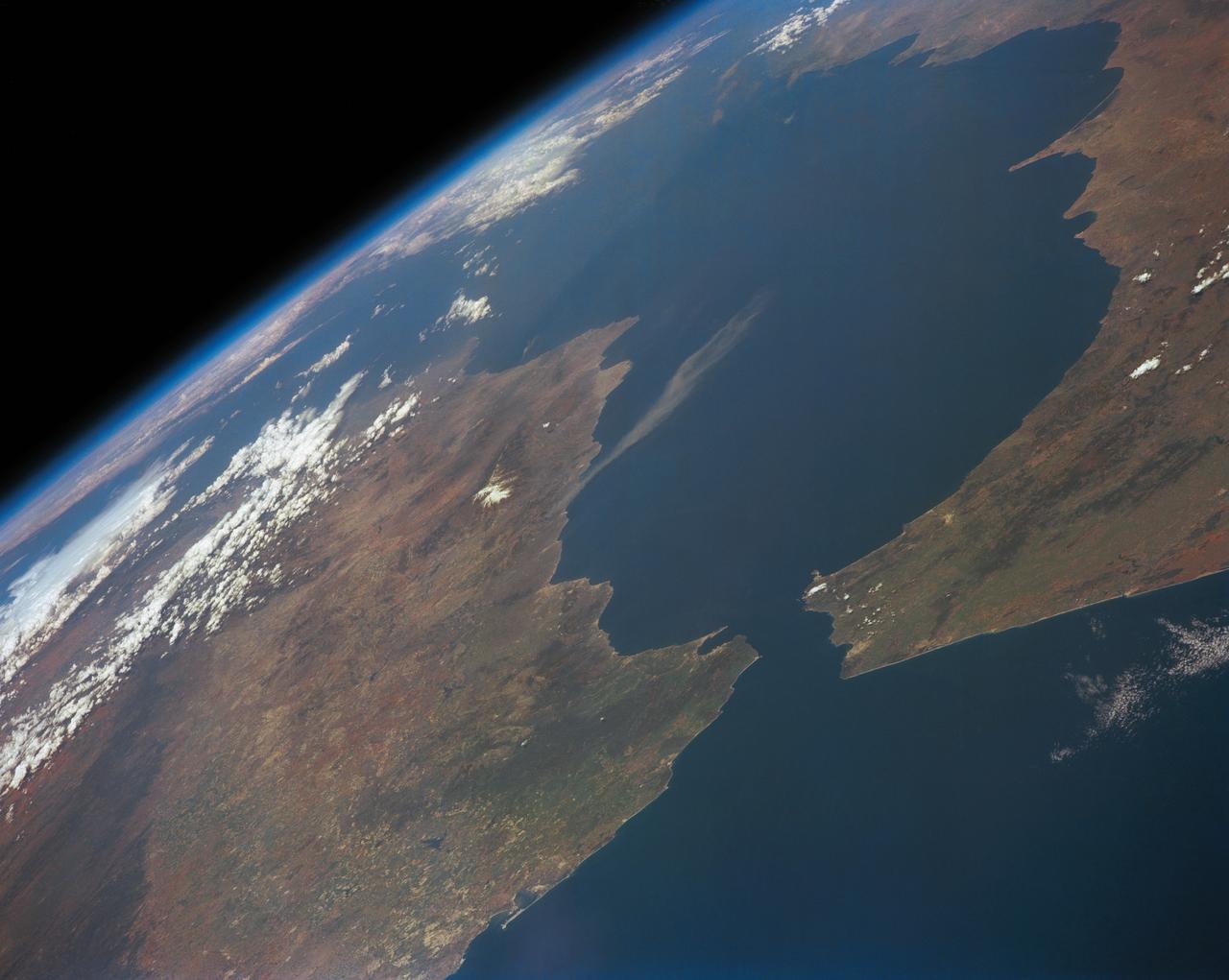
STS039-151-193 (28 April-6 May 1991) --- The Strait of Gibraltar, the only outlet for the Mediterranean Sea, was photographed with a large format handheld camera by the STS-39 crew members. Scientists site evidence in Shuttle photography that the Mediterranean Sea dried up a number of times between 5 million and 20 million years ago. Sea levels, they say, dropped slightly, cutting off the Mediterranean (top right) from the Atlantic Ocean (bottom). In southern Spain, the dark area near the coast is the delta of the Guadalquivir River with the city of Seville. The Sierra Nevada range still has some snow. A small field fire near the Spanish coast has generated a conspicuous smoke plume. The small spike of land on the north side of the Strait is the Rock of Gibraltar, an outpost of the British empire. The larger spike of land on the north coast of Africa marks the border between Morocco (center foreground) and Algeria (right). The sharp line cutting across them Mediterranean (top right) marks the edge of a dust cloud blowing from Africa into Europe. Photo credit: NASA
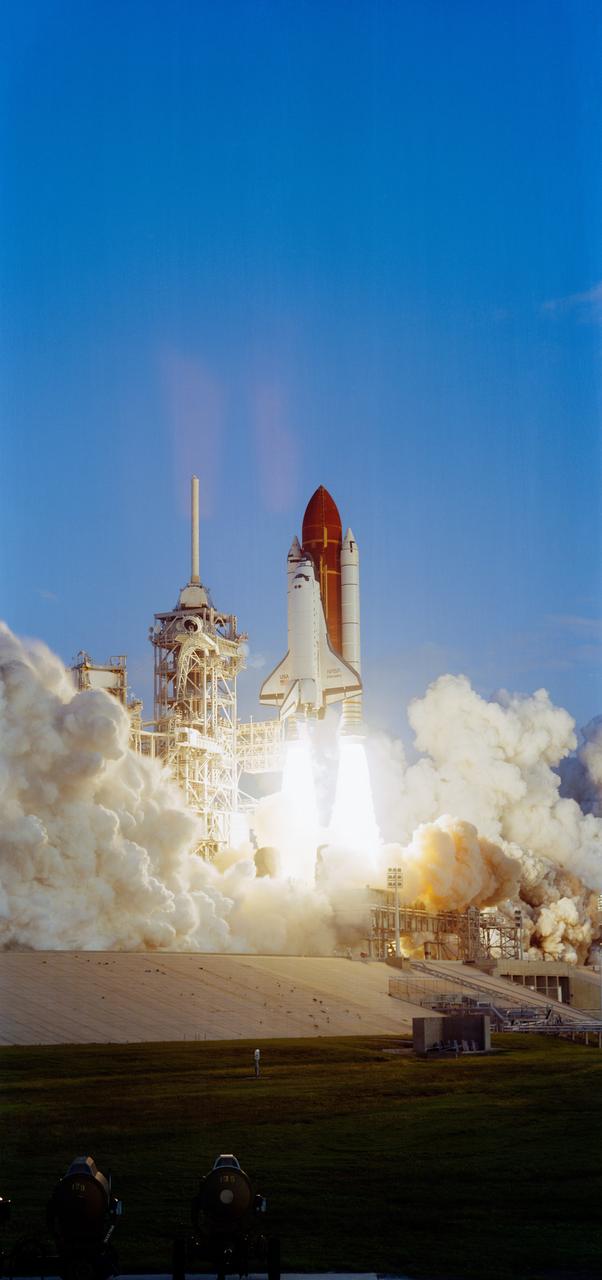
STS-41 Discovery, Orbiter Vehicle (OV) 103, lifts off from the Kennedy Space Center (KSC) Launch Complex (LC) Pad 39 mobile launcher platform at 7:47 am (Eastern Daylight Time (EDT)). OV-103 riding atop the external tank (ET) and flanked by two solid rocket boosters (SRBs), is captured just moments after liftoff. Not yet clear of the fixed service structure (FSS) tower, OV-103 is highlighted against the cloudless morning sky. Exhaust smoke billows from the SRBs and the space shuttle main engines (SSMEs) creating a cloud over the launch pad area.
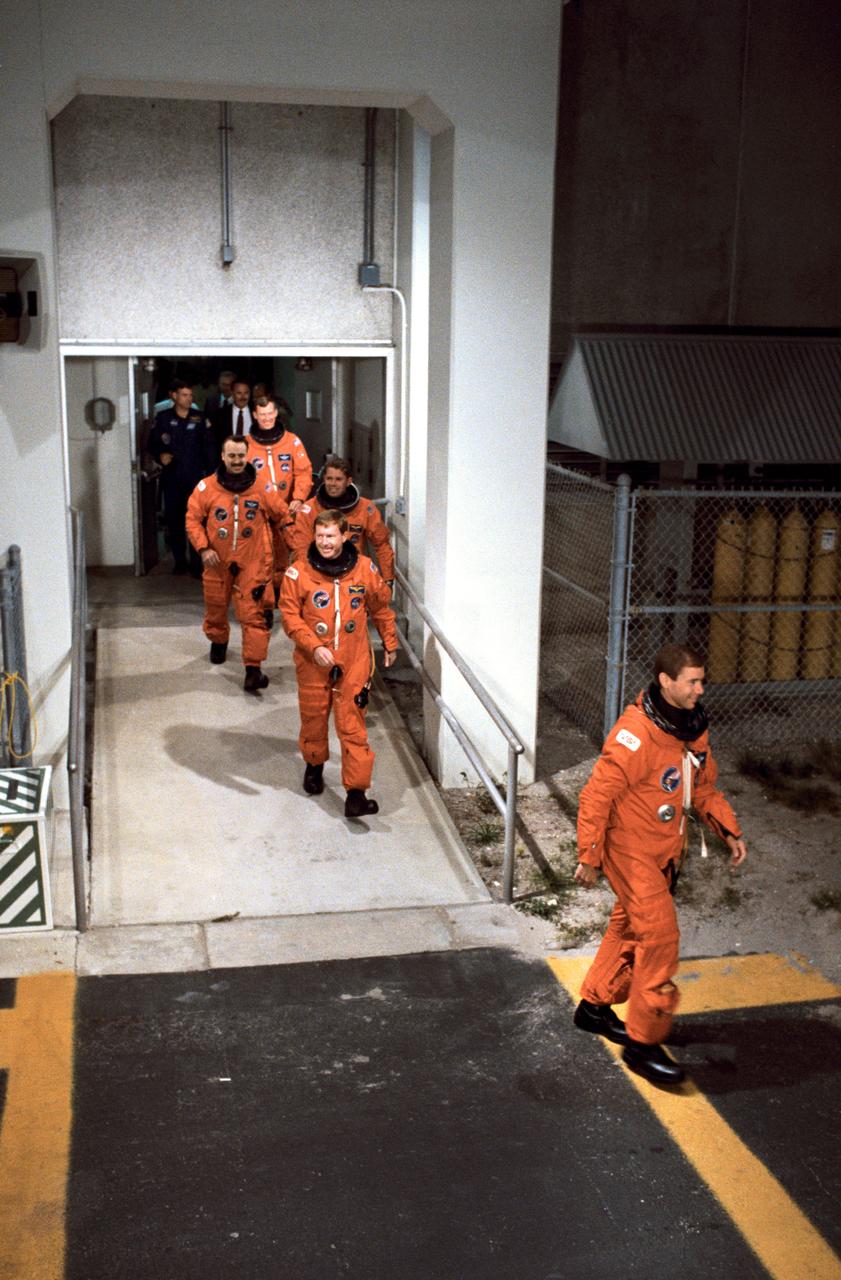
STS028-S-001 (8 Aug 1989) --- The five astronaut crewmembers for STS-28 leave the operations and checkout building to board a transfer van en route to Launch Complex 39 for a date with Columbia. Front to back are Brewster H. Shaw Jr., Richard N. Richards, David C. Leestma, James C. Adamson and Mark N. Brown. At the rear of the line are Astronaut Michael L. Coats, acting chief of the astronaut office; and Donald R. Puddy, director of flight crew operations at JSC. Coats later flew a NASA Shuttle training aircraft for pre-launch and launch monitoring activities.
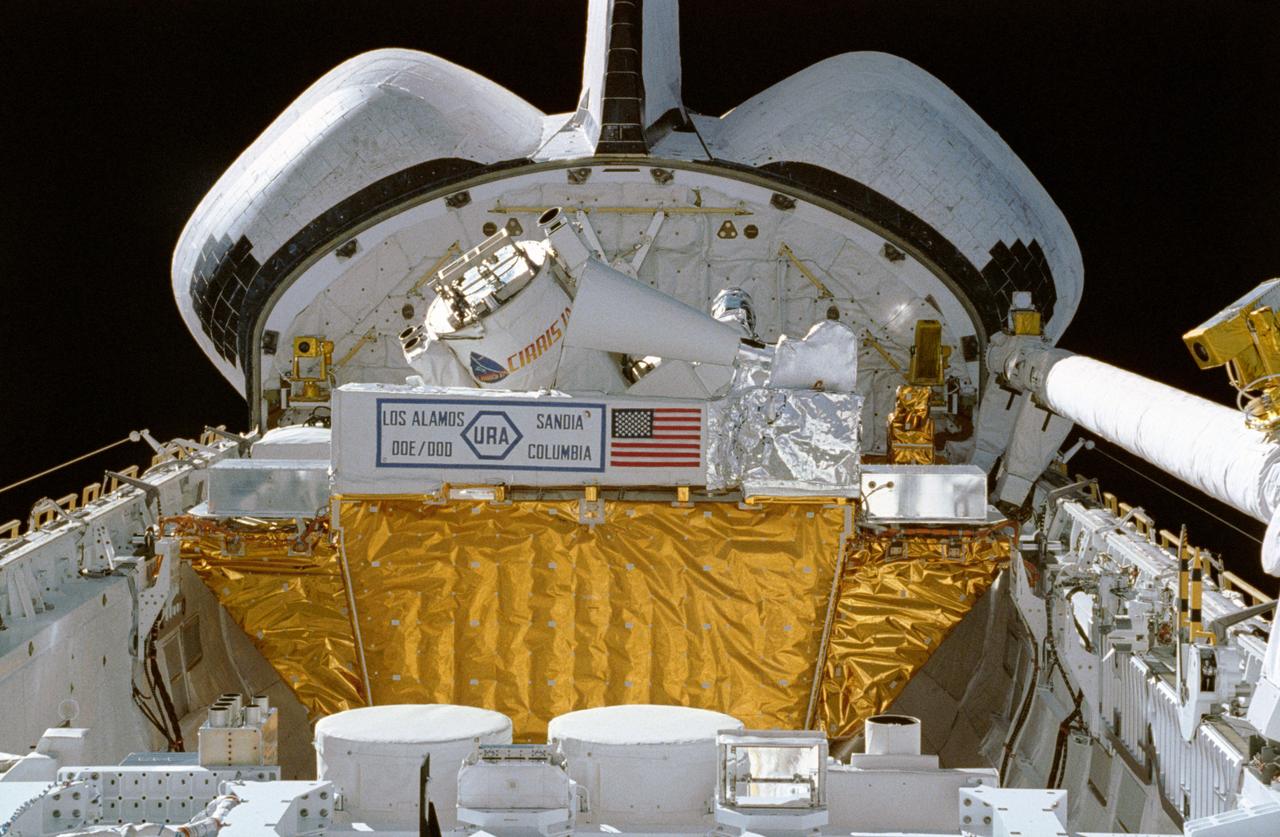
STS039-10-019 (28 April-6 May 1991) --- This 35mm frame, taken from inside the crew cabin, shows some of the cargo in Discovery's payload bay. Seen are the tops of canisters on the STP-1 payload, configured on the STS 39 Hitchhiker carrier; and the Air Force Program (AFP) 675 package. AFP-675 consists of the Cryogenic Infrared Radiance Instrumentation for Shuttle (CIRRIS)-1A; Far Ultraviolet Camera (FAR-UV) Experiment; Horizon Ultraviolet Program (HUP); Quadruple Ion Neutral Mass Spectrometer (QINMS); and the Uniformly Redundant Array (URA).
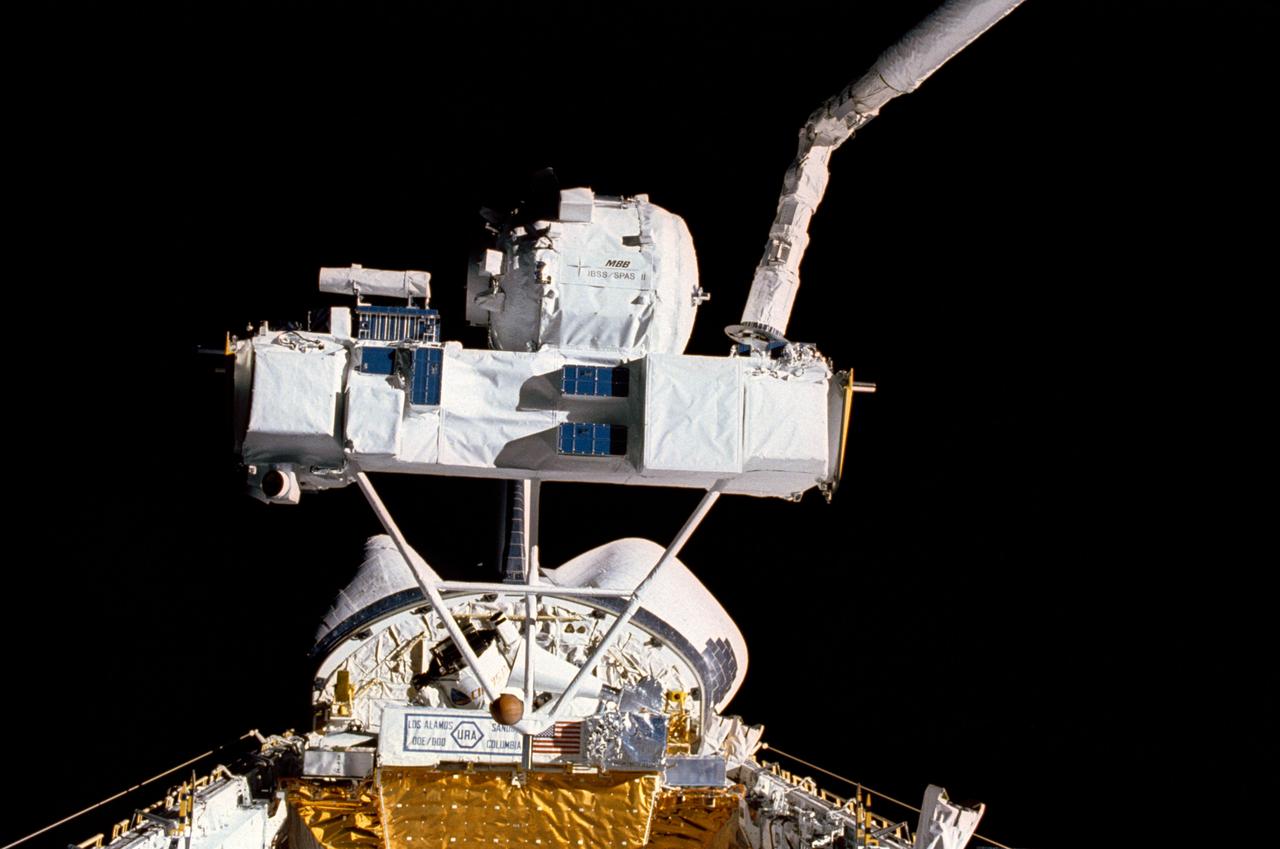
STS039-15-017 (3 May 1990) --- This STS-39 35mm scene shows the Strategic Defense Initiative Organization (SDIO) Shuttle Pallet Satellite (SPAS-II) during its berthing following a period of data collection. During the eight-day flight, SPAS collected data in both a free-flying mode and while attached to the end effector of Discovery's remote manipulator system (RMS). Additional cargo, elements of the Air Force Program (AFP) 675 package, is seen near Discovery's aft bulkhead in the 60-ft. long payload bay.
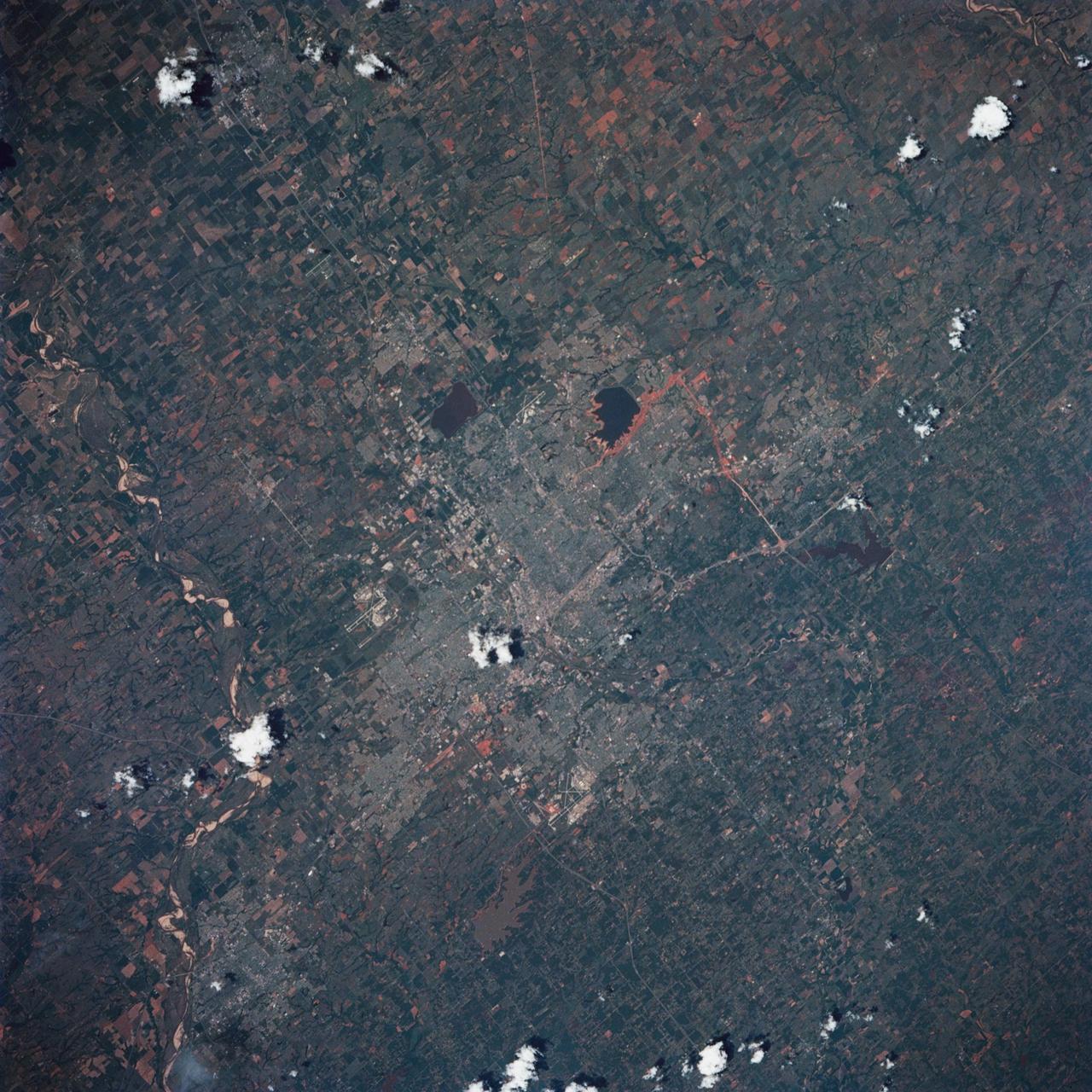
STS039-85-029 (28 April-6 May 1991) --- This 70mm frame is one of the best pictures of the Oklahoma City area from the manned space program, according to NASA photo experts studying STS-39 onboard photography. The central business district is near the center. Several municipalities are visible, along with thousands of acres of farmland. The towns of Norman and Moore and the South Canadian River are in the bottom (south). El Reno and Wiley Post Field off I-40W are just below center in lower left quadrant. Edmond is seen at the top (north). Tinker Field can be seen north of I-40E at right center. Lake Overholser shows recent spring rainfall northwest of the central business district.
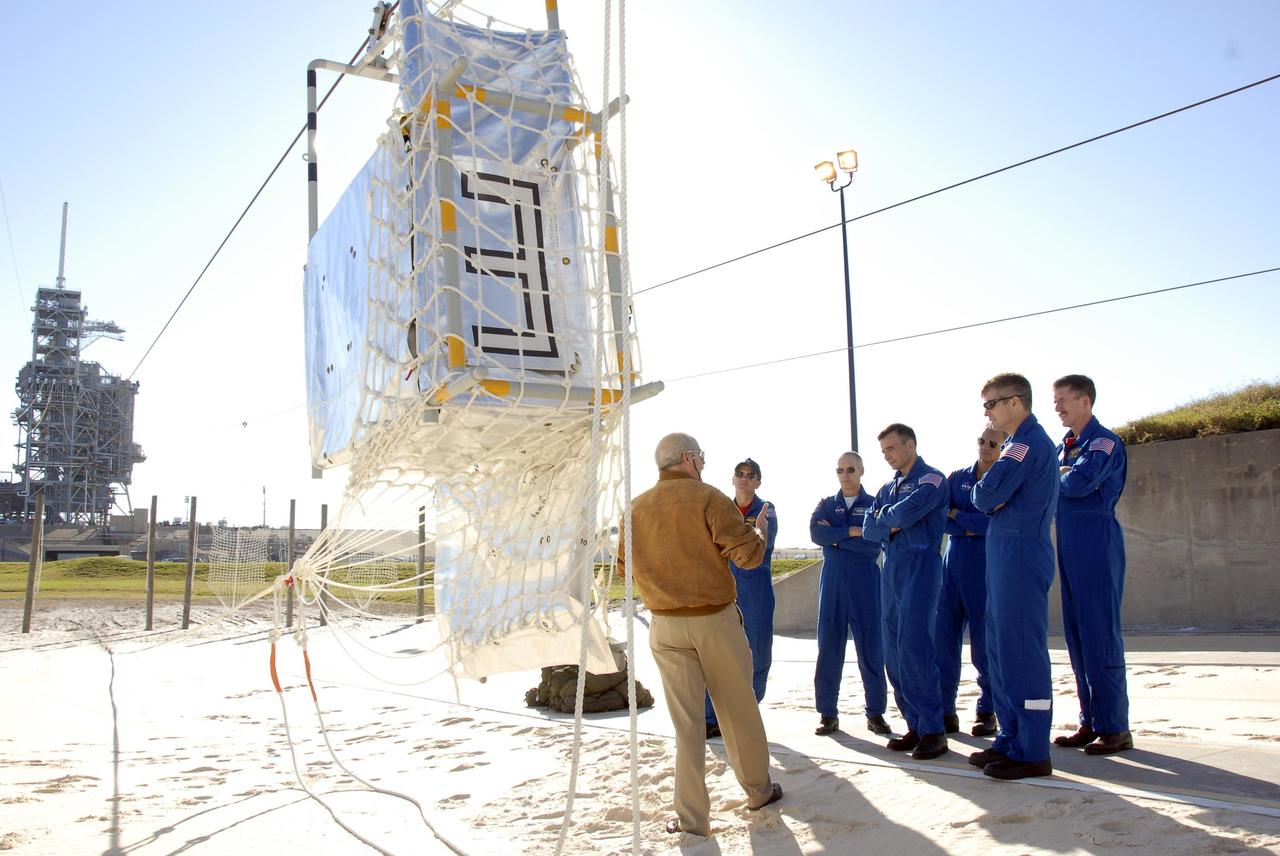
KENNEDY SPACE CENTER, FLA. -- In the Launch Pad 39A area, Mission STS-117 crew members receive instruction on emergency egress using the slidewire basket system during Terminal Countdown Demonstration Test activities. From left are Commander Rick Sturckow, Mission Specialist Patrick Forrester, Pilot Lee Archambault, and Mission Specialists Danny Olivas, Steven Swanson and James Reilly. The TCDT also includes M-113 armored personnel carrier training, and a simulated launch countdown. The mission payload aboard Space Shuttle Atlantis is the S3/S4 integrated truss structure, along with a third set of solar arrays and batteries. The crew of six astronauts will install the truss to continue assembly of the International Space Station. Photo credit: NASA/Kim Shiflett
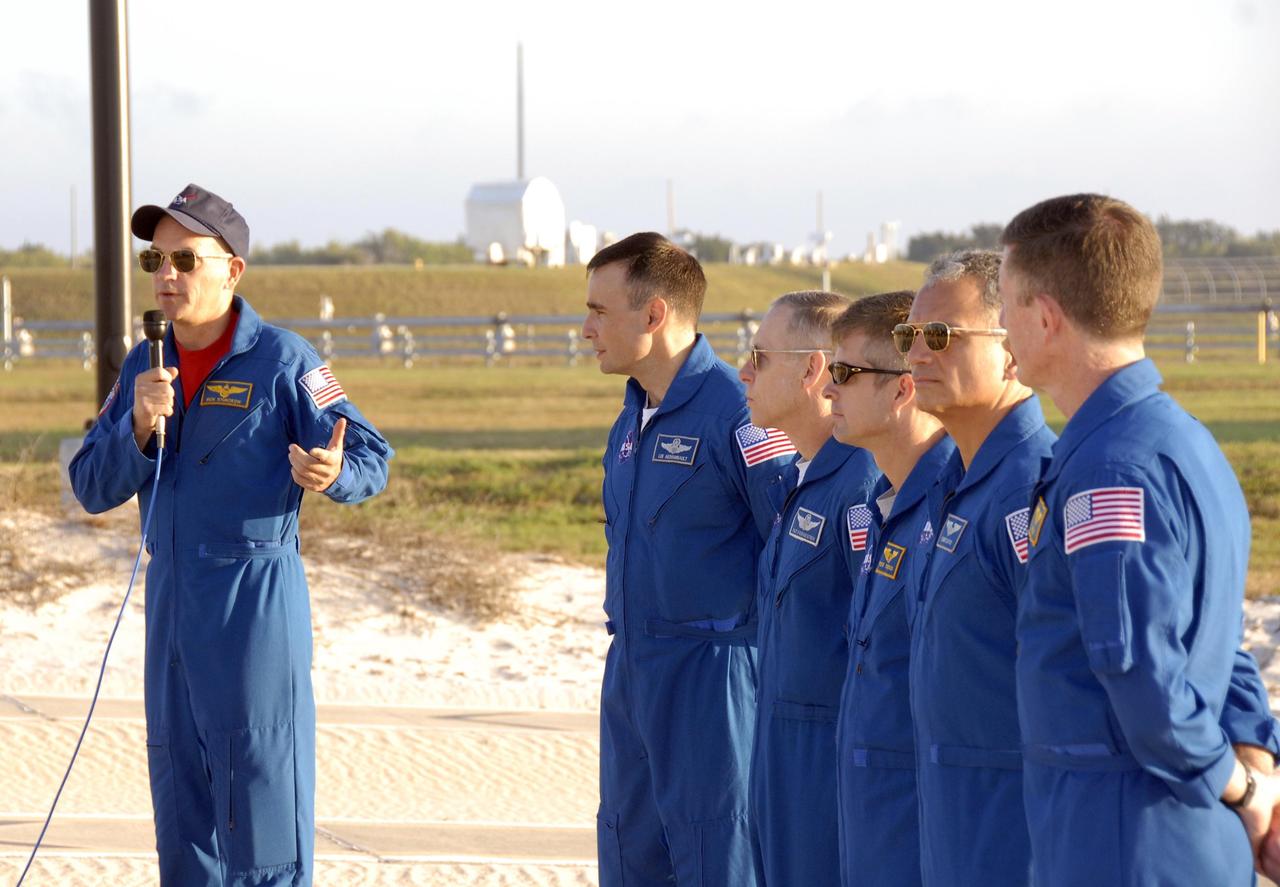
KENNEDY SPACE CENTER, FLA. -- During Terminal Countdown Demonstration Test (TCDT) activities at Launch Pad 39A, Mission STS-117 Commander Rick Sturckow (left) speaks to the media during a question-and-answer session. To his left are Pilot Lee Archambault, and Mission Specialists Patrick Forrester, Steven Swanson, Danny Olivas and James Reilly. The TCDT also includes M-113 armored personnel carrier training, pad emergency egress training and a simulated launch countdown. The mission payload aboard Space Shuttle Atlantis is the S3/S4 integrated truss structure, along with a third set of solar arrays and batteries. The crew of six astronauts will install the truss to continue assembly of the International Space Station. Photo credit: NASA/Kim Shiflett
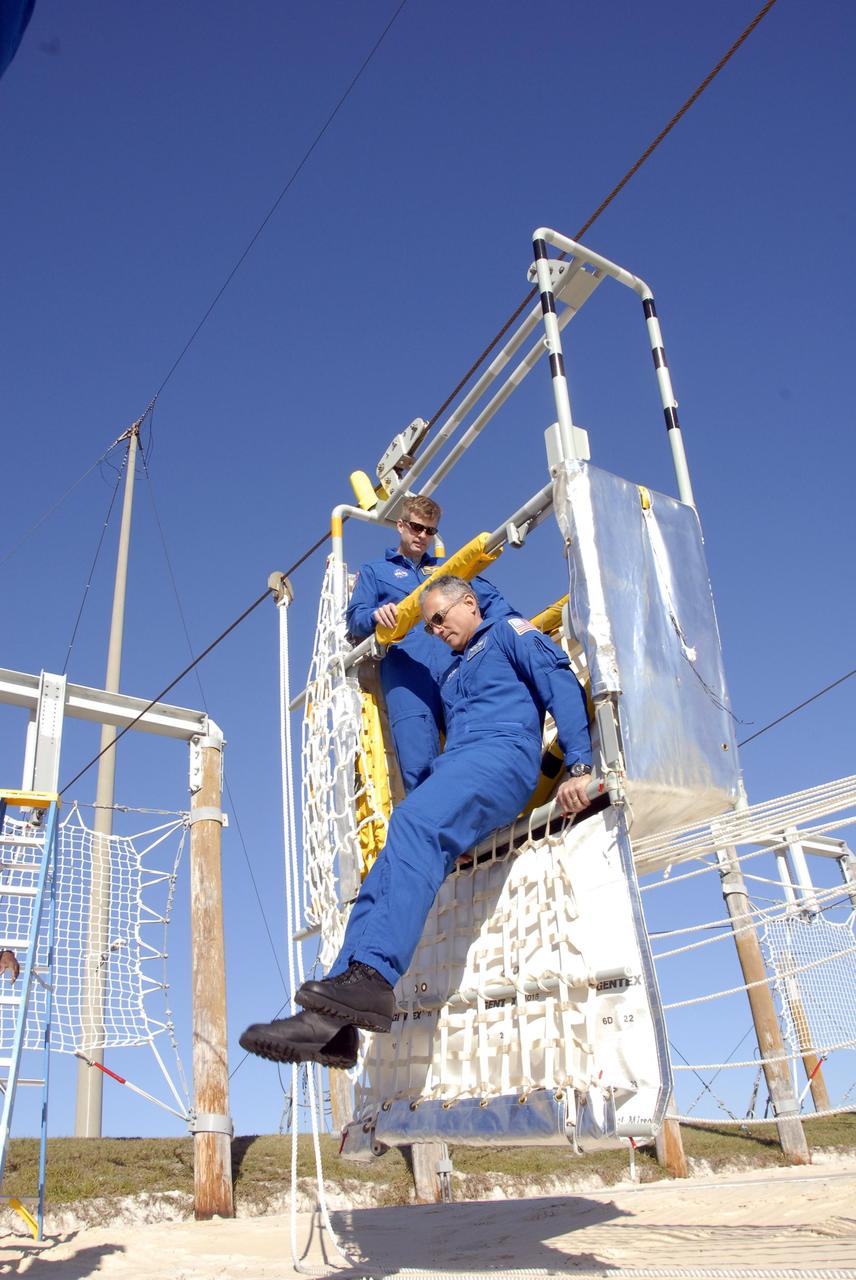
KENNEDY SPACE CENTER, FLA. -- In the Launch Pad 39A area, Mission STS-117 crew members receive instruction on emergency egress using the slidewire basket system during Terminal Countdown Demonstration Test activities. Here, Mission Specialists Steven Swanson (left) and Danny Olivas (right) practice exiting from the slidewire basket. The TCDT also includes M-113 armored personnel carrier training, and a simulated launch countdown. The mission payload aboard Space Shuttle Atlantis is the S3/S4 integrated truss structure, along with a third set of solar arrays and batteries. The crew of six astronauts will install the truss to continue assembly of the International Space Station. Photo credit: NASA/Kim Shiflett
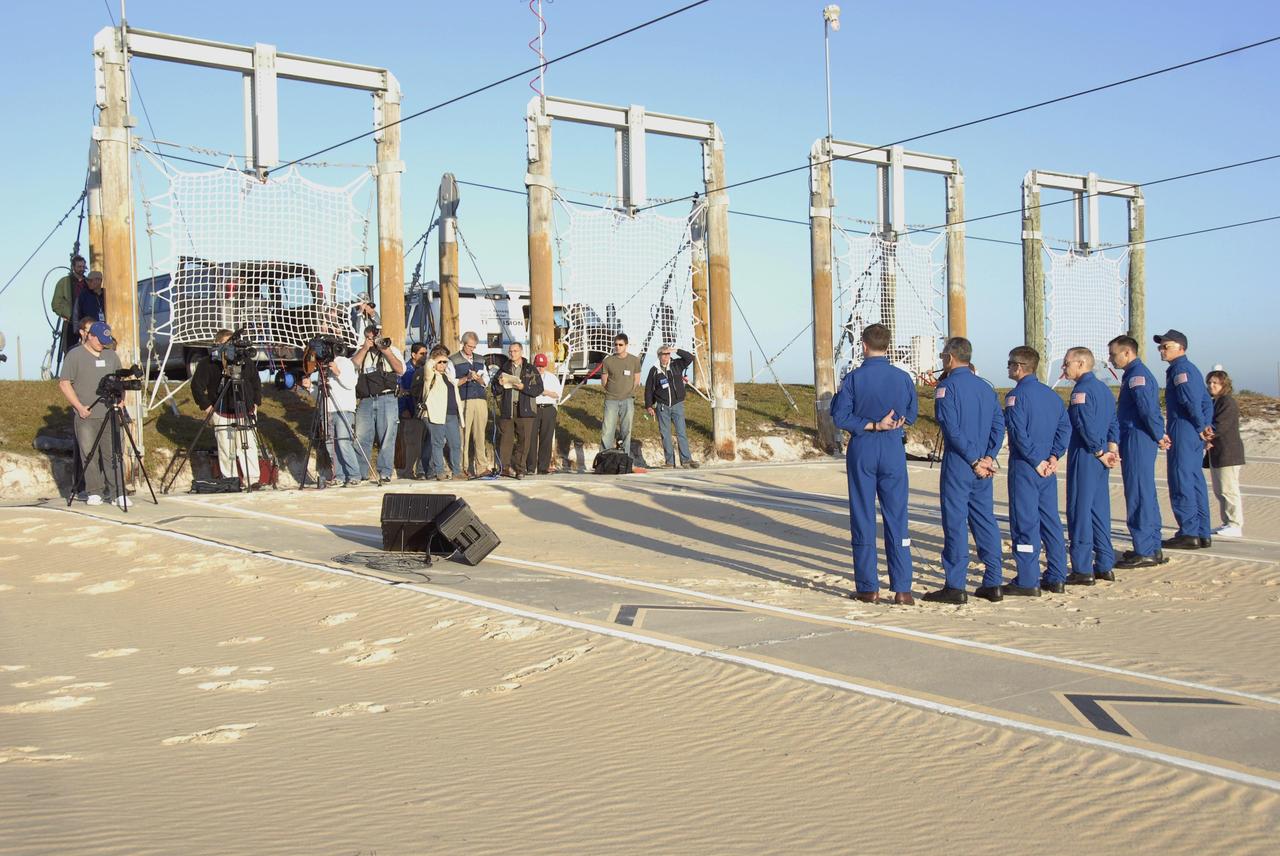
KENNEDY SPACE CENTER, FLA. -- During Terminal Countdown Demonstration Test (TCDT) activities at Launch Pad 39A, the Mission STS-117 crew members speak to the media during a question-and-answer session. From the left are Mission Specialists James Reilly, Danny Olivas, Steven Swanson and Patrick Forrester, Pilot Lee Archambault and Commander Rick Sturckow, along with NASA Public Affairs Specialist Jessica Rye. The TCDT also includes M-113 armored personnel carrier training, pad emergency egress training and a simulated launch countdown. The mission payload aboard Space Shuttle Atlantis is the S3/S4 integrated truss structure, along with a third set of solar arrays and batteries. The crew of six astronauts will install the truss to continue assembly of the International Space Station. Photo credit: NASA/Kim Shiflett
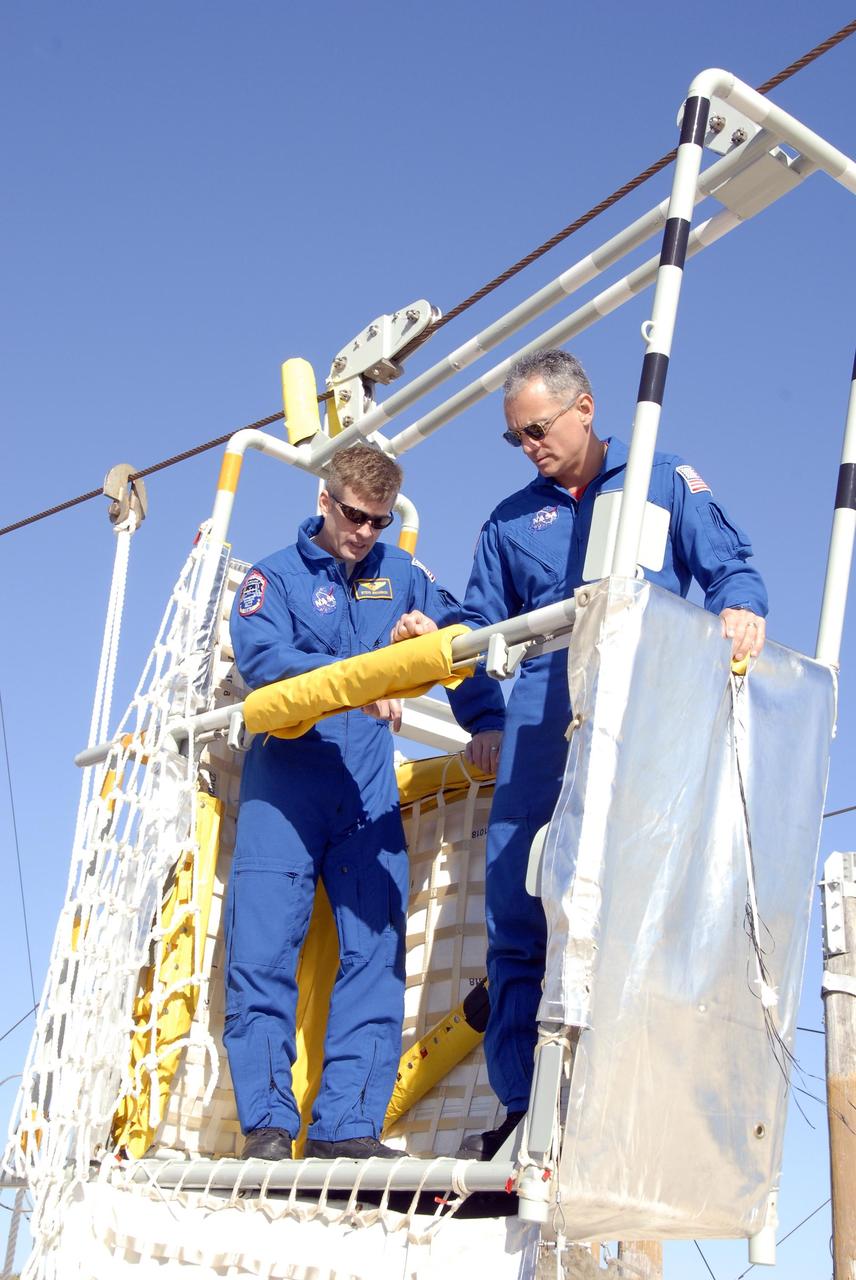
KENNEDY SPACE CENTER, FLA. -- In the Launch Pad 39A area, Mission STS-117 crew members receive instruction on emergency egress using the slidewire basket system during Terminal Countdown Demonstration Test activities. Here, Mission Specialists Steven Swanson (left) and Danny Olivas (right) practice exiting from the slidewire basket. The TCDT also includes M-113 armored personnel carrier training, and a simulated launch countdown. The mission payload aboard Space Shuttle Atlantis is the S3/S4 integrated truss structure, along with a third set of solar arrays and batteries. The crew of six astronauts will install the truss to continue assembly of the International Space Station. Photo credit: NASA/Kim Shiflett
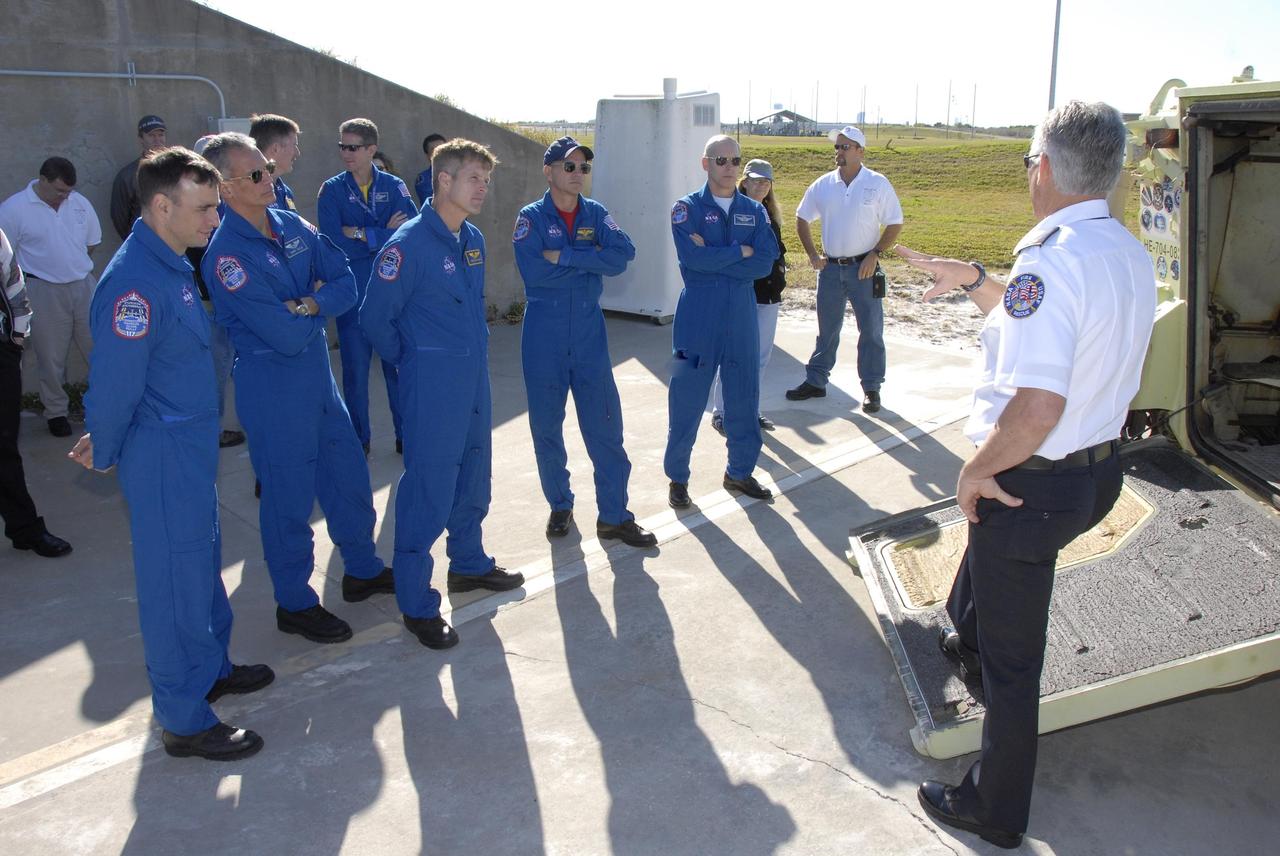
KENNEDY SPACE CENTER, FLA. -- Mission STS-117 crew members receive emergency egress instruction at Launch Pad 39A during Terminal Countdown Demonstration Test activities. From the left in front are Pilot Lee Archambault, Mission Specialists Danny Olivas and Steven Swanson, Commander Rick Sturckow and Mission Specialist Patrick Forrester. Directly behind Olivas is Mission Specialist James Reilly. At right is a partial view of the M-113 armored personnel carrier. The TCDT also includes M-113 armored personnel carrier training, and a simulated launch countdown. The mission payload aboard Space Shuttle Atlantis is the S3/S4 integrated truss structure, along with a third set of solar arrays and batteries. The crew of six astronauts will install the truss to continue assembly of the International Space Station. Photo credit: NASA/Kim Shiflett
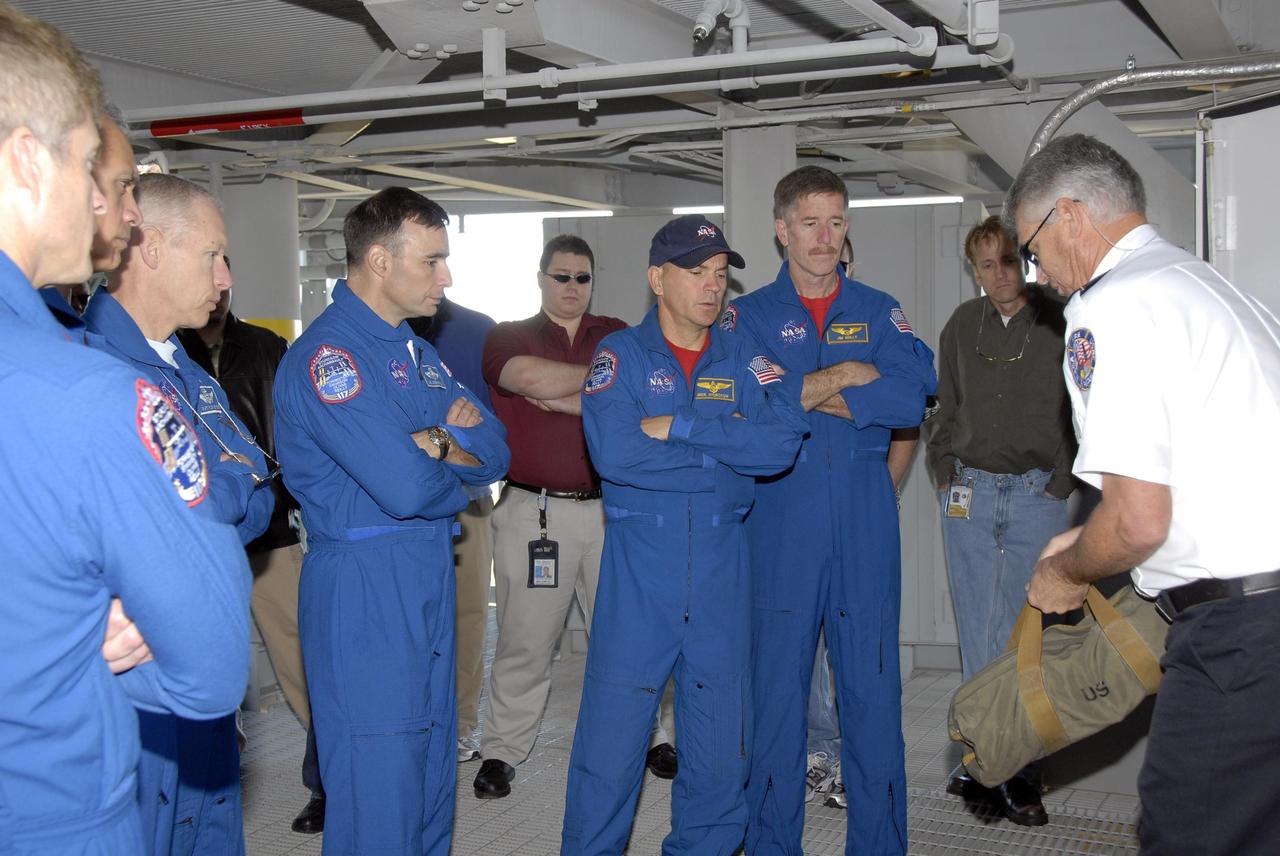
KENNEDY SPACE CENTER, FLA. -- During Terminal Countdown Demonstration Test activities, the Mission STS-117 crew members receive instruction on emergency egress during a walkdown of the 195-foot level of the fixed service structure at Launch Pad 39A. From the left are Mission Specialists Steven Swanson, Danny Olivas and Patrick Forrester, Pilot Lee Archambault, Commander Rick Sturckow and Mission Specialist James Reilly. The TCDT also includes M-113 armored personnel carrier training, and a simulated launch countdown. The mission payload aboard Space Shuttle Atlantis is the S3/S4 integrated truss structure, along with a third set of solar arrays and batteries. The crew of six astronauts will install the truss to continue assembly of the International Space Station. Photo credit: NASA/Kim Shiflett
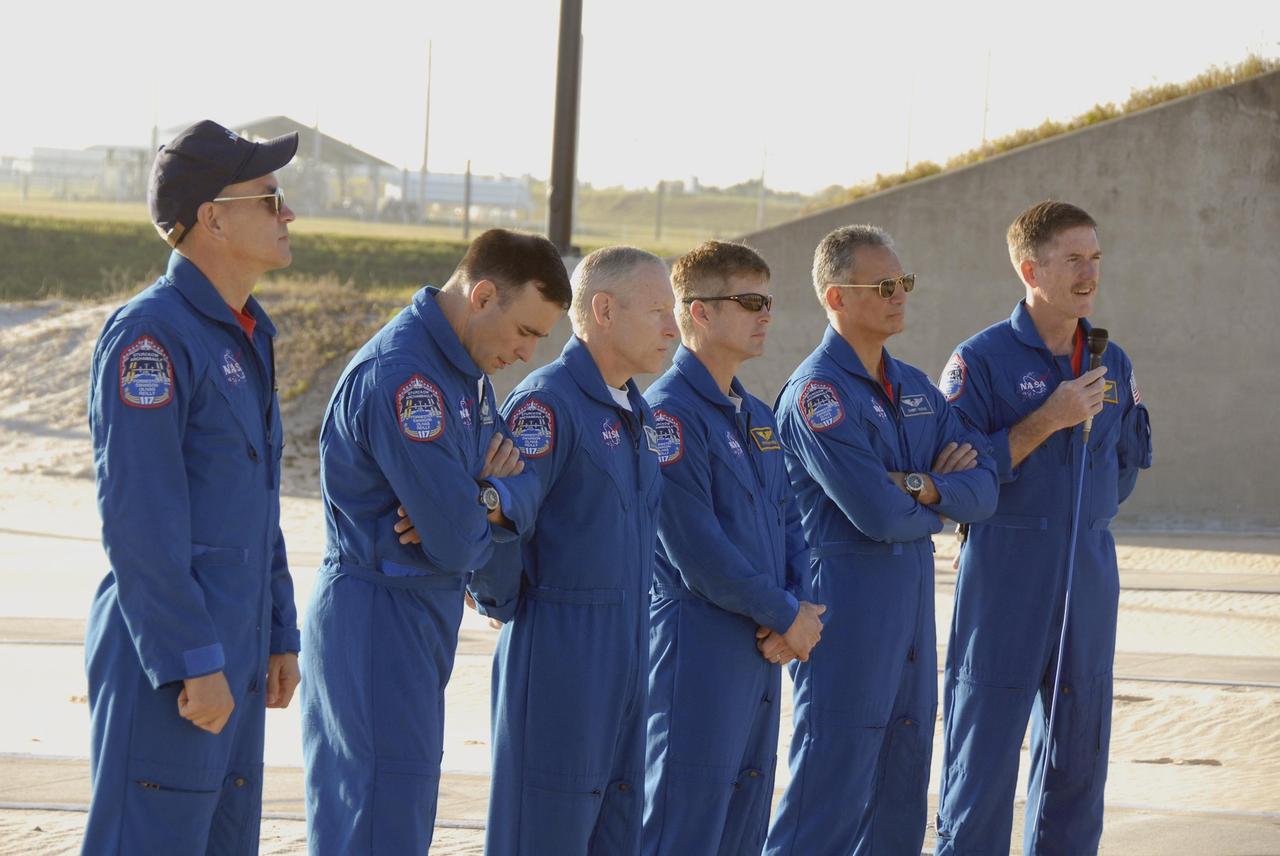
KENNEDY SPACE CENTER, FLA. -- During Terminal Countdown Demonstration Test (TCDT) activities at Launch Pad 39A, the Mission STS-117 crew members speak to the media during a question-and-answer session. From the left are Commander Rick Sturckow, Pilot Lee Archambault, and Mission Specialists Patrick Forrester, Steven Swanson, Danny Olivas and James Reilly. The TCDT also includes M-113 armored personnel carrier training, pad emergency egress training and a simulated launch countdown. The mission payload aboard Space Shuttle Atlantis is the S3/S4 integrated truss structure, along with a third set of solar arrays and batteries. The crew of six astronauts will install the truss to continue assembly of the International Space Station. Photo credit: NASA/Kim Shiflett
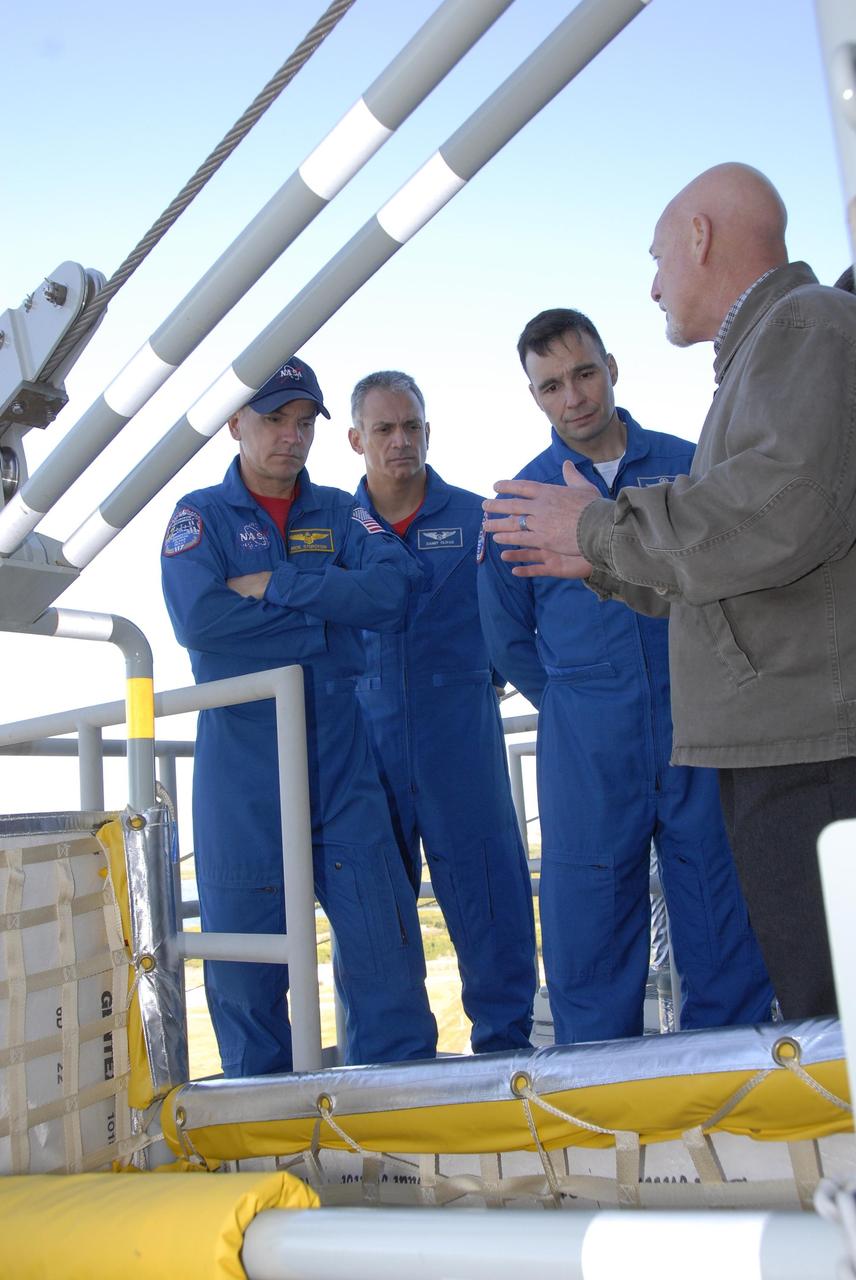
KENNEDY SPACE CENTER, FLA. -- At the 195-foot level of the fixed service structure on Launch Pad 39A, STS-117 crew members receive instruction on emergency egress during Terminal Countdown Demonstration Test activities. From left are Commander Rick Sturckow, Mission Specialist Danny Olivas and Pilot Lee Archambault. They and other crew members are practicing the emergency egress procedure using the slidewire basket system to get off the pad. The TCDT also includes M-113 armored personnel carrier training, and a simulated launch countdown. The mission payload aboard Space Shuttle Atlantis is the S3/S4 integrated truss structure, along with a third set of solar arrays and batteries. The crew of six astronauts will install the truss to continue assembly of the International Space Station. Photo credit: NASA/Kim Shiflett
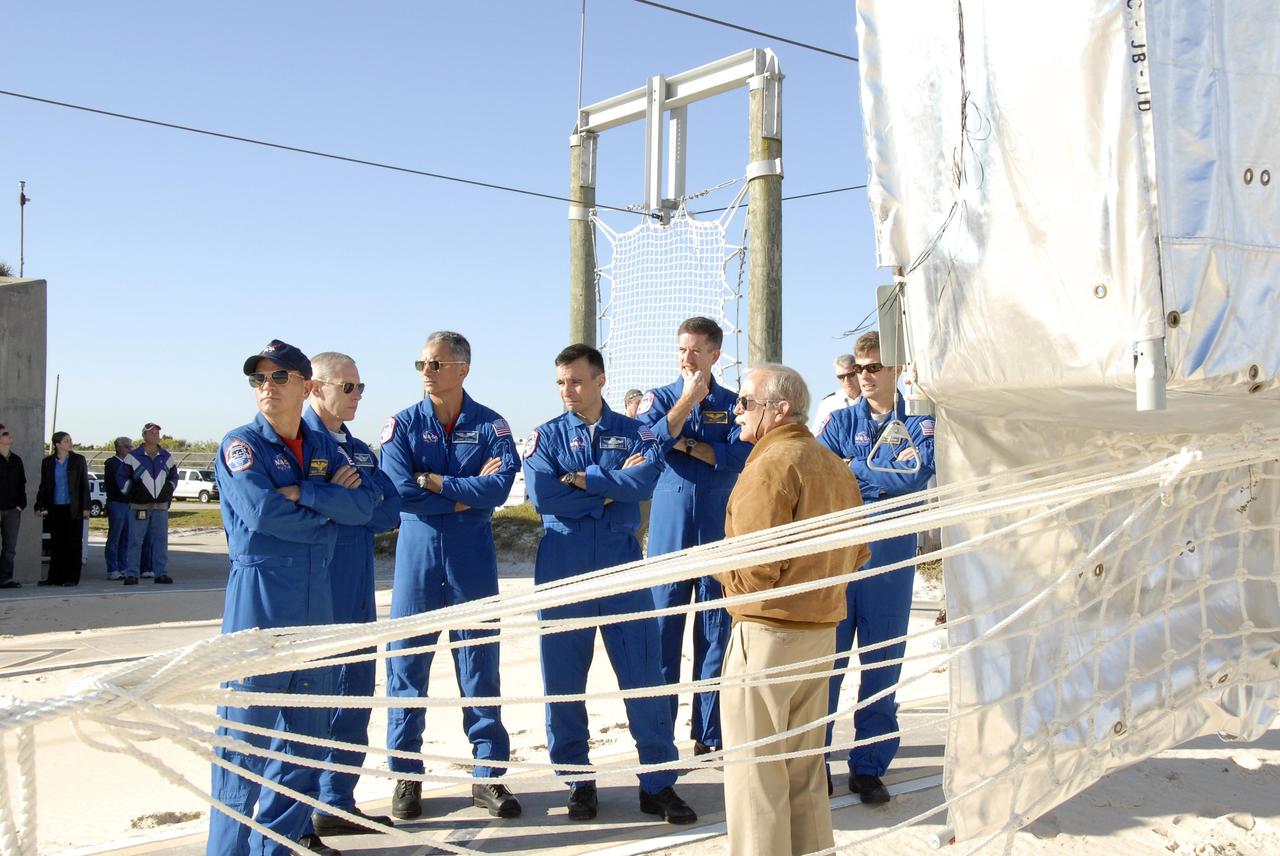
KENNEDY SPACE CENTER, FLA. -- In the Launch Pad 39A area, Mission STS-117 crew members receive instruction on emergency egress using the slidewire basket system during Terminal Countdown Demonstration Test activities. From left are Commander Rick Sturckow, Mission Specialists Patrick Forrester and Danny Olivas, Pilot Lee Archambault, and Mission Specialists James Reilly and Steven Swanson. The TCDT also includes M-113 armored personnel carrier training, and a simulated launch countdown. The mission payload aboard Space Shuttle Atlantis is the S3/S4 integrated truss structure, along with a third set of solar arrays and batteries. The crew of six astronauts will install the truss to continue assembly of the International Space Station. Photo credit: NASA/Kim Shiflett
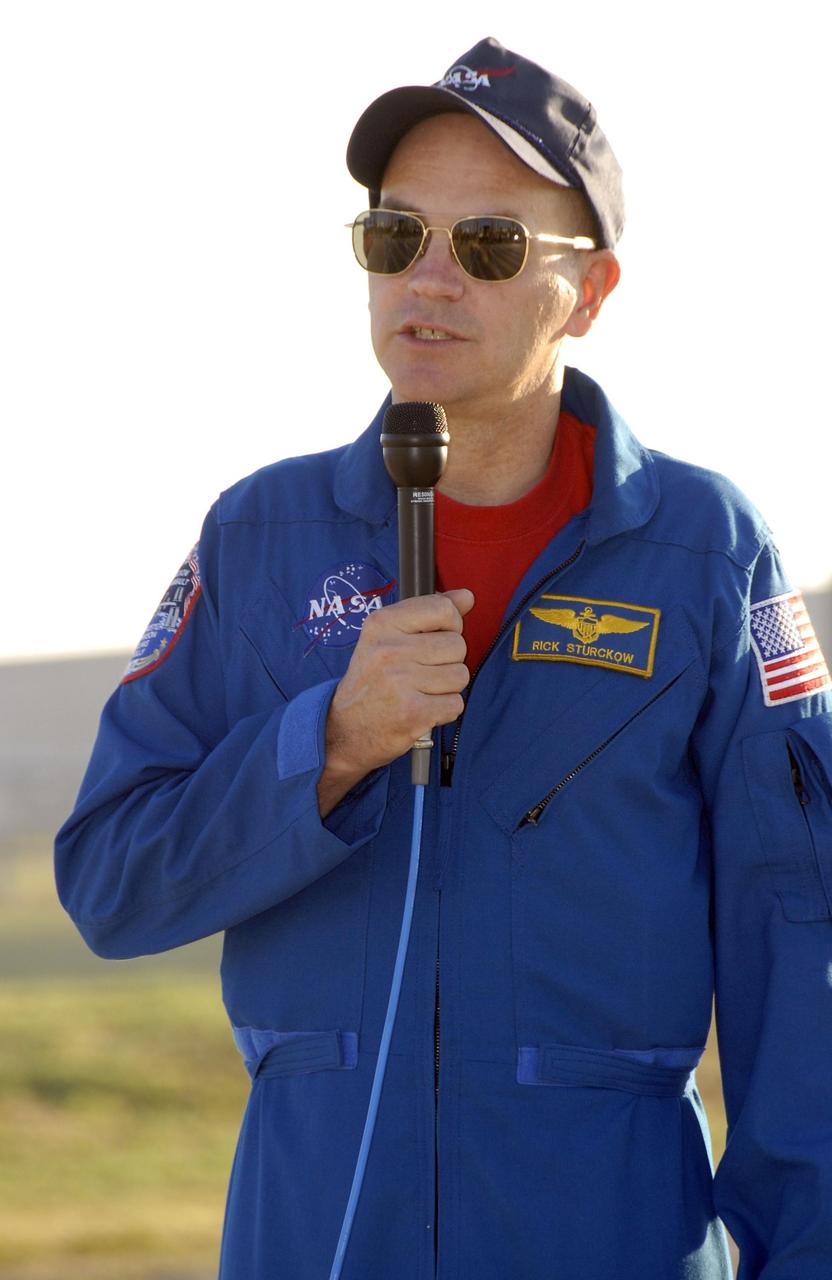
KENNEDY SPACE CENTER, FLA. -- Mission STS-117 Commander Rick Sturckow speaks to the media during a question-and-answer session at Launch Pad 39A during Terminal Countdown Demonstration Test (TCDT) activities. The TCDT also includes M-113 armored personnel carrier training, pad emergency egress training and a simulated launch countdown. The mission payload aboard Space Shuttle Atlantis is the S3/S4 integrated truss structure, along with a third set of solar arrays and batteries. The crew of six astronauts will install the truss to continue assembly of the International Space Station. Photo credit: NASA/Kim Shiflett
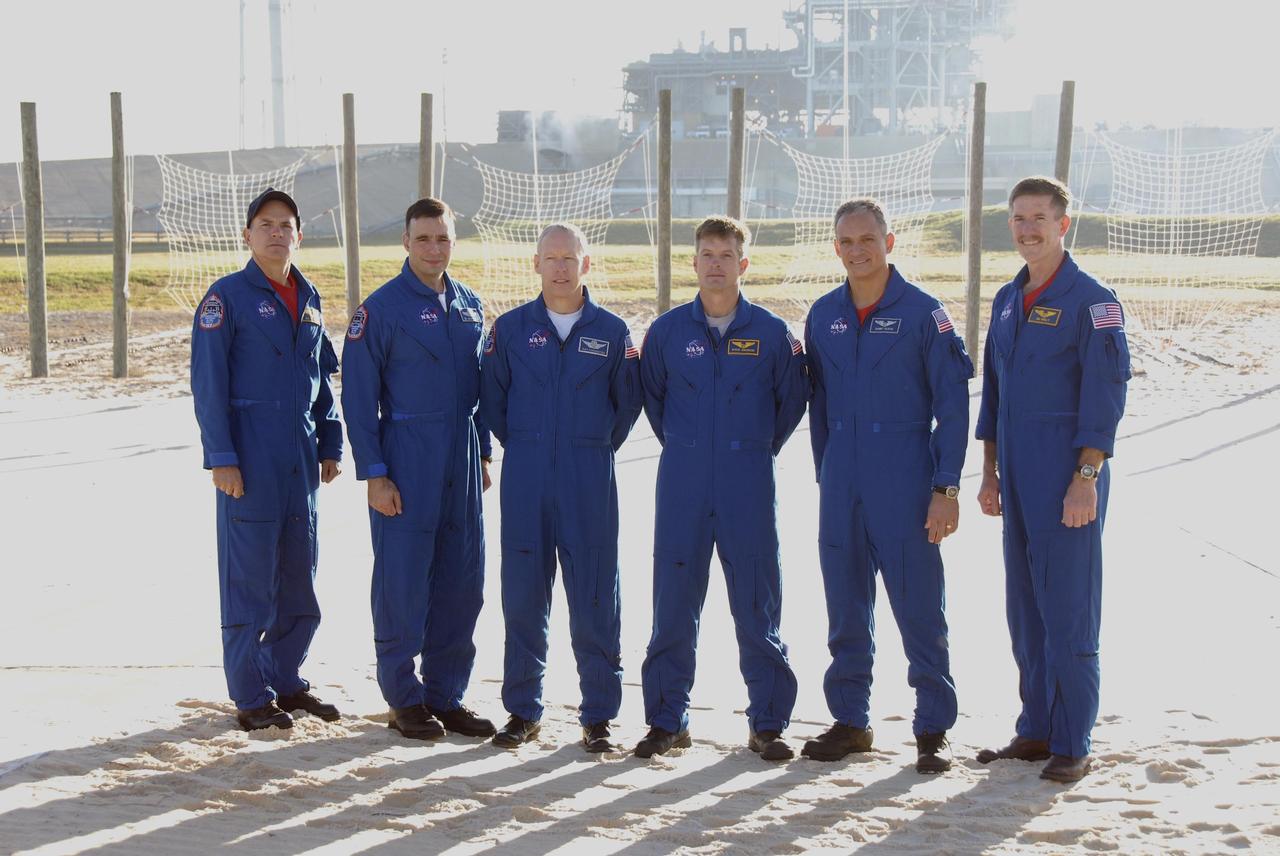
KENNEDY SPACE CENTER, FLA. -- During Terminal Countdown Demonstration Test (TCDT) activities at Launch Pad 39A, the Mission STS-117 crew members take time to speak to the media during a question-and-answer session. From the left are Commander Rick Sturckow, Pilot Lee Archambault, and Mission Specialists Patrick Forrester, Steven Swanson, Danny Olivas and James Reilly. The TCDT also includes M-113 armored personnel carrier training, pad emergency egress training and a simulated launch countdown. The mission payload aboard Space Shuttle Atlantis is the S3/S4 integrated truss structure, along with a third set of solar arrays and batteries. The crew of six astronauts will install the truss to continue assembly of the International Space Station. Photo credit: NASA/Kim Shiflett
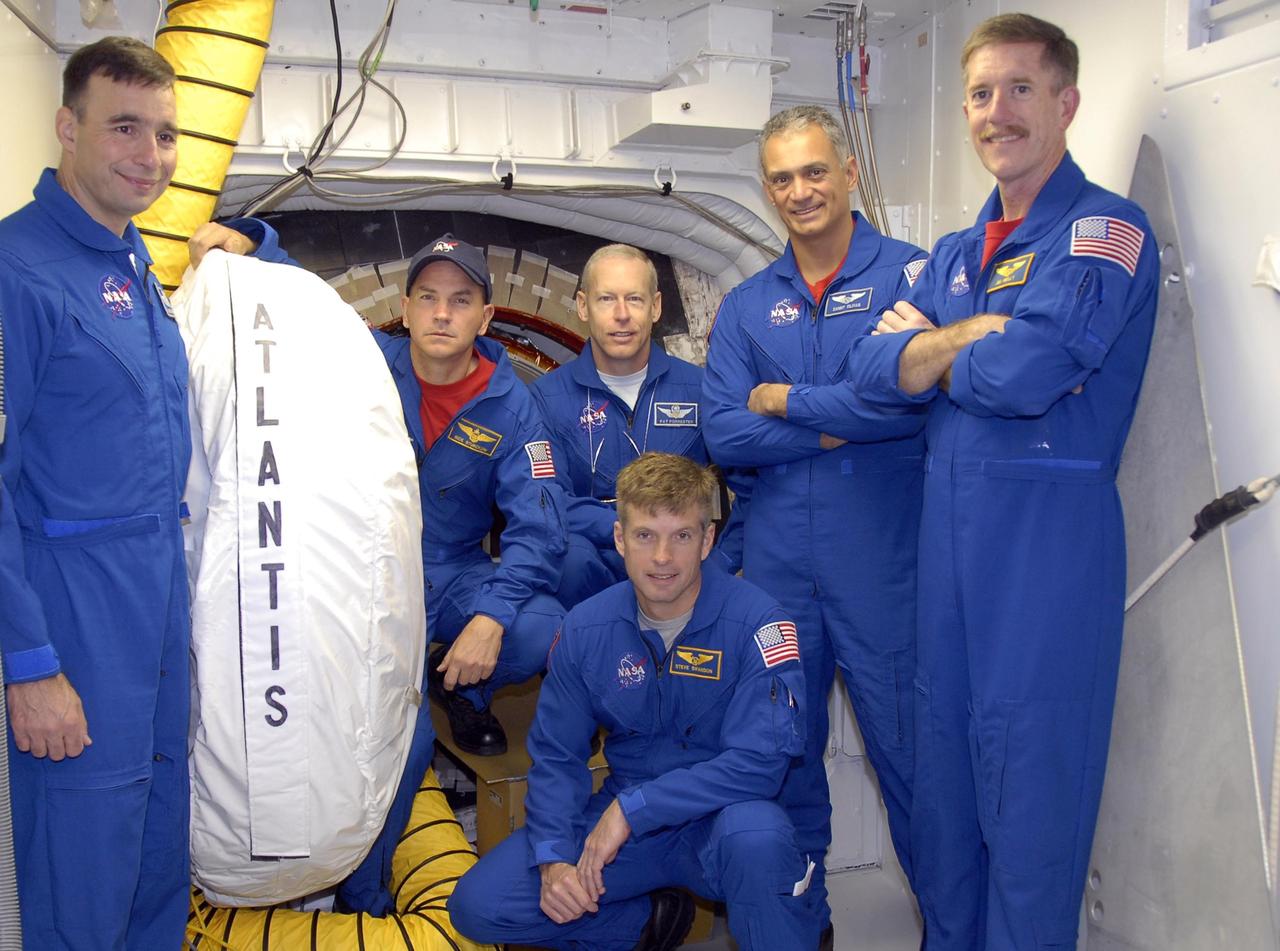
KENNEDY SPACE CENTER, FLA. -- During Terminal Countdown Demonstration Test activities, the Mission STS-117 crew members participate in an emergency egress walkdown at Launch Pad 39A. On the 195-foot level of the fixed service structure inside the white room are Mission Specialist Steven Swanson (kneeling), and standing from left, Pilot Lee Archambault, Commander Rick Sturckow, and Mission Specialists Patrick Forrester, Danny Olivas and James Reilly. The TCDT also includes M-113 armored personnel carrier training, and a simulated launch countdown. The mission payload aboard Space Shuttle Atlantis is the S3/S4 integrated truss structure, along with a third set of solar arrays and batteries. The crew of six astronauts will install the truss to continue assembly of the International Space Station. Photo credit: NASA/Kim Shiflett
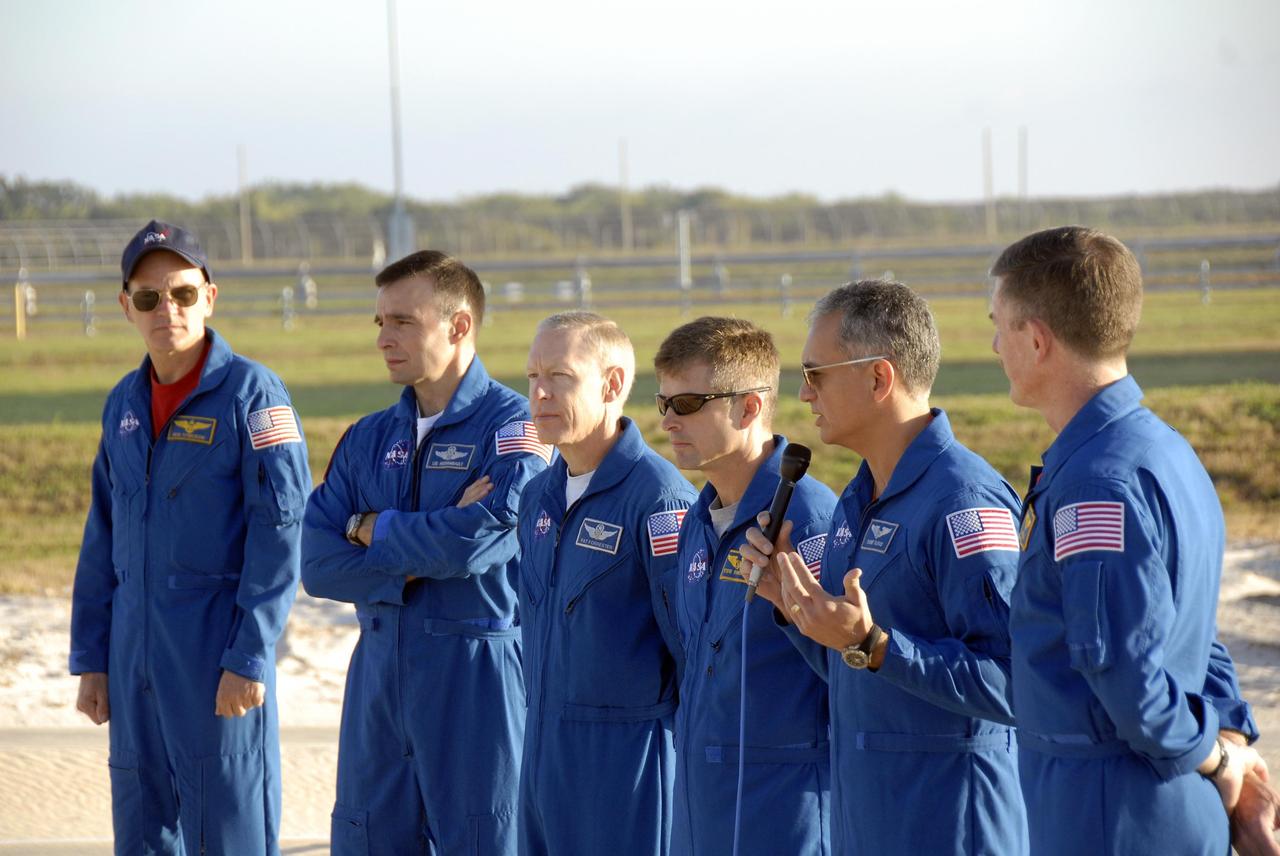
KENNEDY SPACE CENTER, FLA. -- During Terminal Countdown Demonstration Test (TCDT) activities at Launch Pad 39A, the Mission STS-117 crew members speak to the media during a question-and-answer session. From the left are Commander Rick Sturckow, Pilot Lee Archambault, and Mission Specialists Patrick Forrester, Steven Swanson, Danny Olivas and James Reilly. The TCDT also includes M-113 armored personnel carrier training, pad emergency egress training and a simulated launch countdown. The mission payload aboard Space Shuttle Atlantis is the S3/S4 integrated truss structure, along with a third set of solar arrays and batteries. The crew of six astronauts will install the truss to continue assembly of the International Space Station. Photo credit: NASA/Kim Shiflett
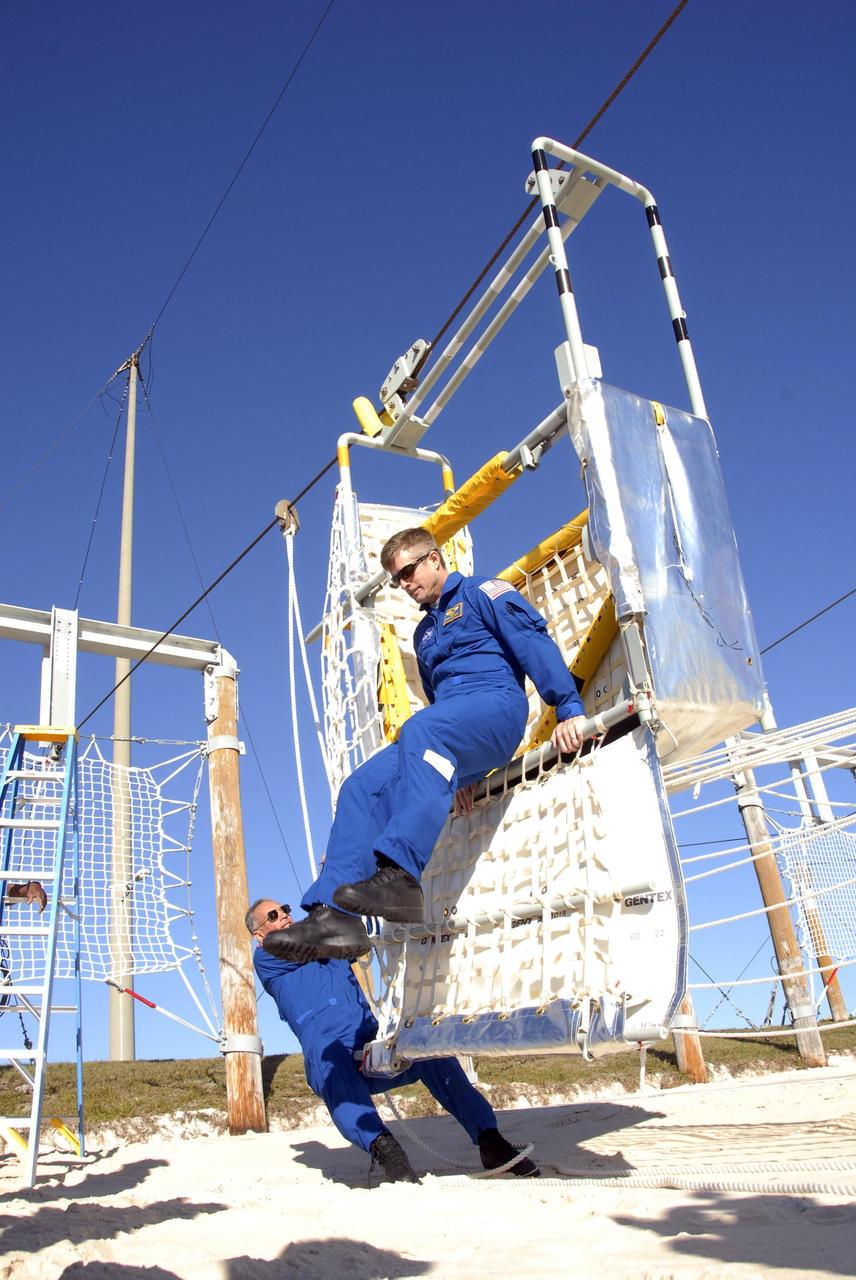
KENNEDY SPACE CENTER, FLA. -- In the Launch Pad 39A area, Mission STS-117 crew members receive instruction on emergency egress using the slidewire basket system during Terminal Countdown Demonstration Test activities. Here, Mission Specialist Steven Swanson (right) practices exiting from the slidewire basket. as Mission Specialist Danny Olivas assists. The TCDT also includes M-113 armored personnel carrier training, and a simulated launch countdown. The mission payload aboard Space Shuttle Atlantis is the S3/S4 integrated truss structure, along with a third set of solar arrays and batteries. The crew of six astronauts will install the truss to continue assembly of the International Space Station. Photo credit: NASA/Kim Shiflett
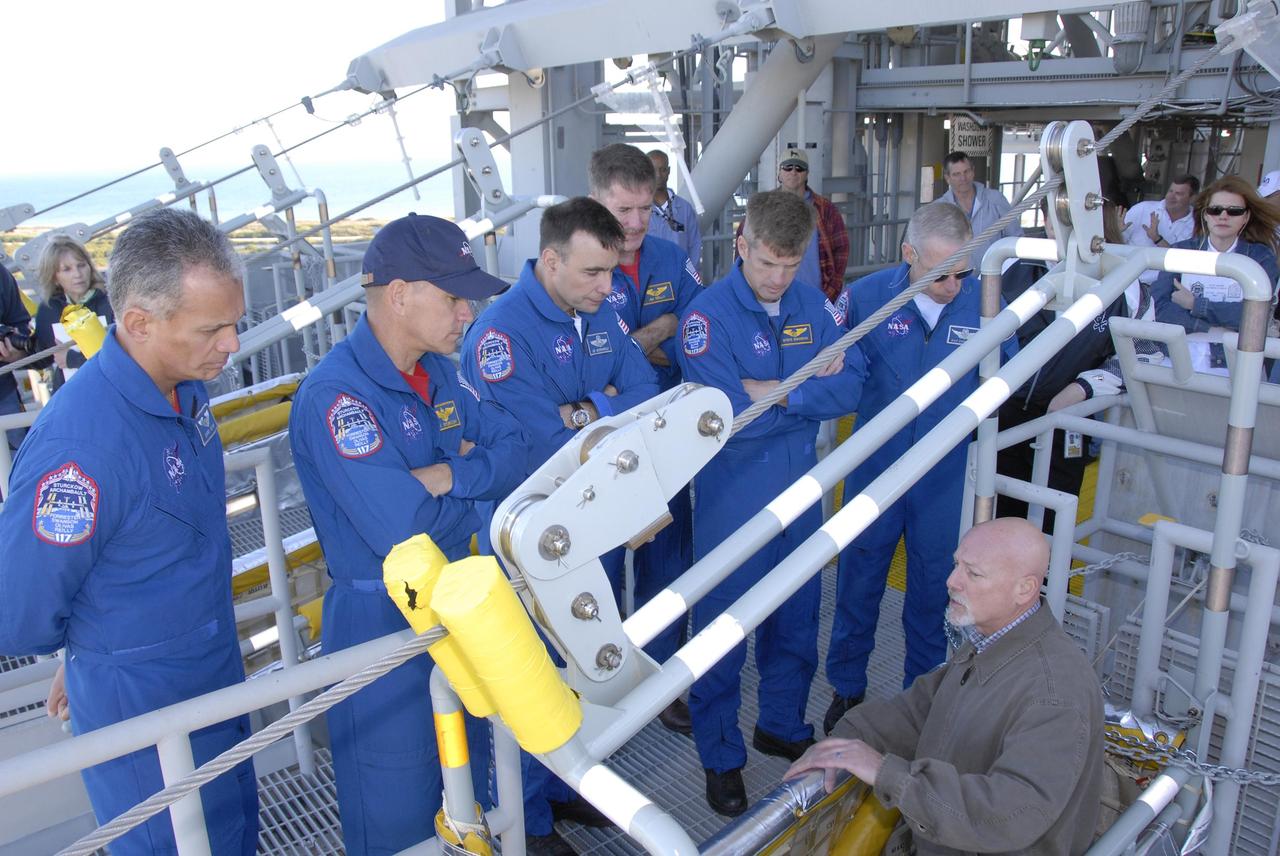
KENNEDY SPACE CENTER, FLA. -- At the 195-foot level of the fixed service structure on Launch Pad 39A, STS-117 crew members receive instruction on emergency egress during Terminal Countdown Demonstration Test activities. From left are Mission Specialist Danny Olivas, Commander Rick Sturckow, Pilot Lee Archambault, and Mission Specialists James Reilly, Steven Swanson and Patrick Forrester. They are practicing the emergency egress procedure using the slidewire basket system to get off the pad. The TCDT also includes M-113 armored personnel carrier training, and a simulated launch countdown. The mission payload aboard Space Shuttle Atlantis is the S3/S4 integrated truss structure, along with a third set of solar arrays and batteries. The crew of six astronauts will install the truss to continue assembly of the International Space Station. Photo credit: NASA/Kim Shiflett
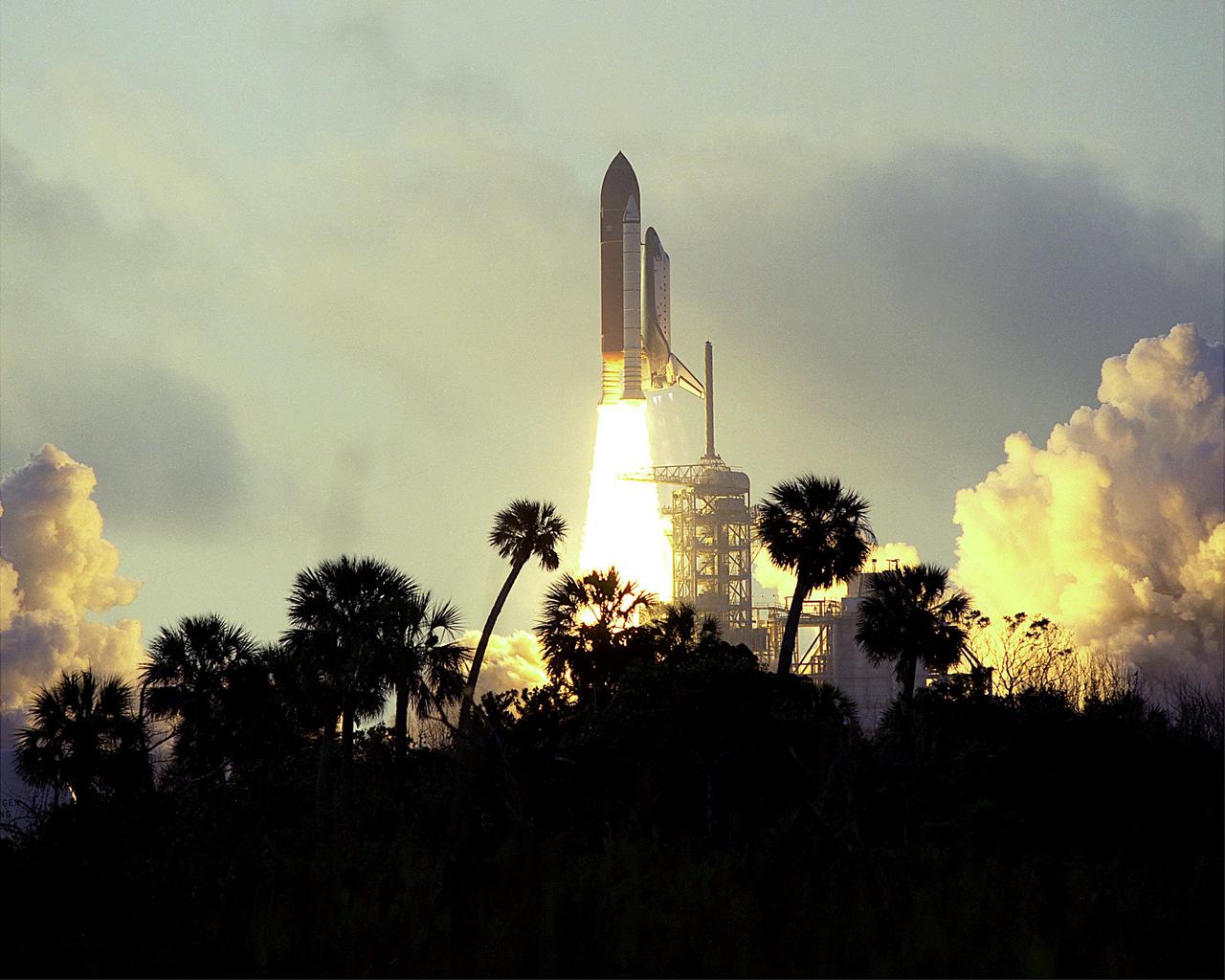
KENNEDY SPACE CENTER, FLA. -- STS-39: Discovery
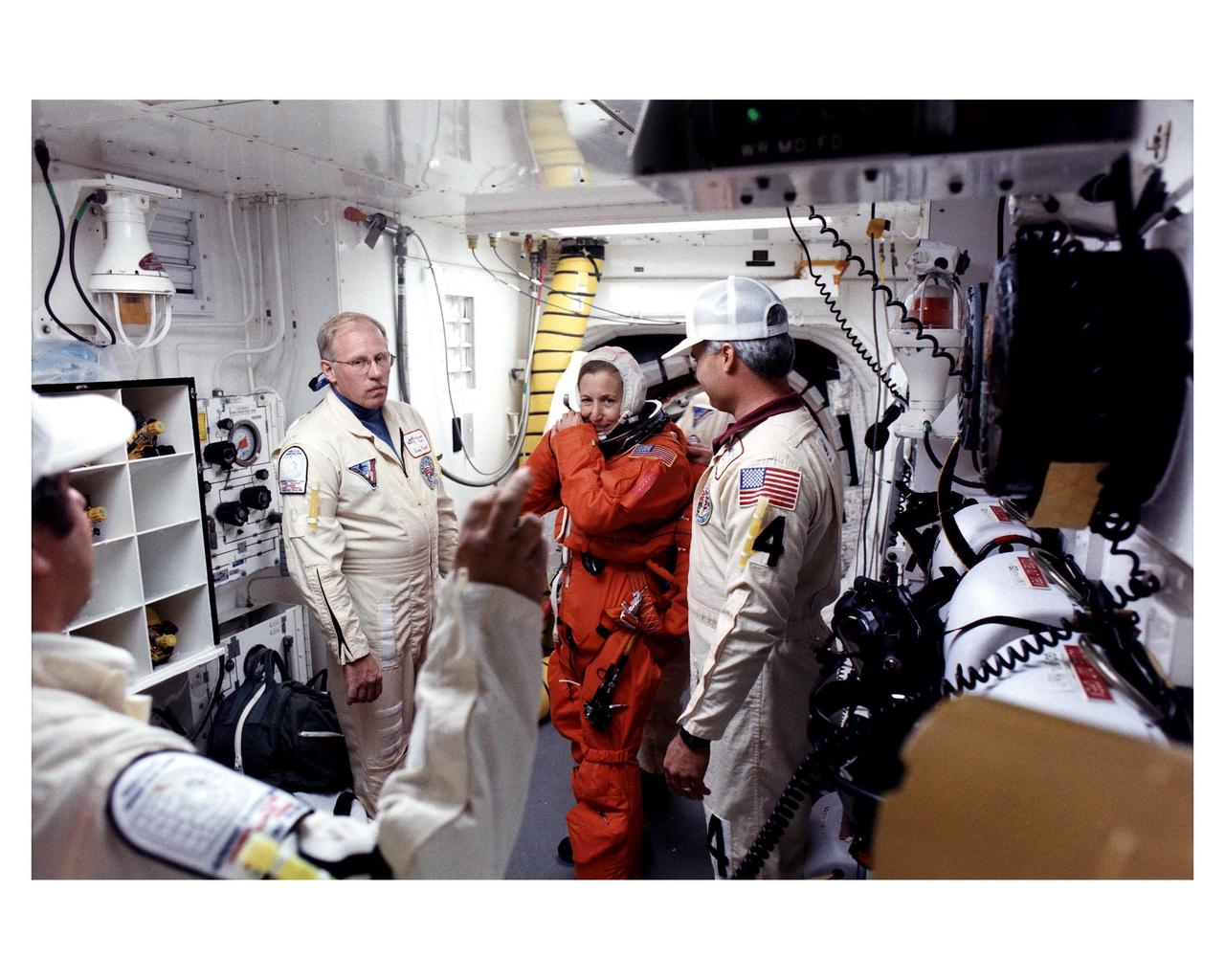
STS-81 crew in the White Room at LC 39
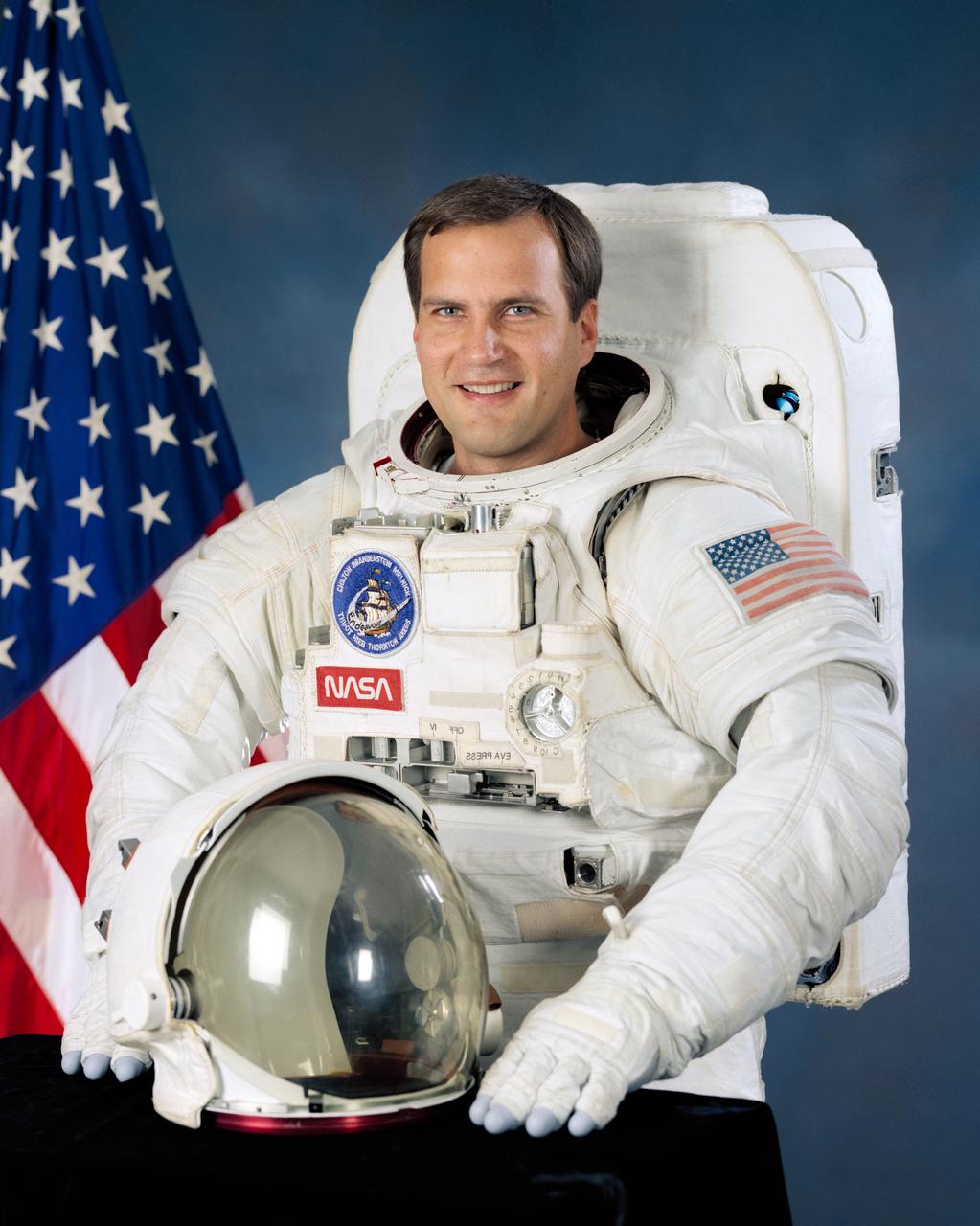
S92-41511 (1992) --- Astronaut Richard J. Hieb.

CAPE CANAVERAL, Fla. -- In Firing Room 4 of the Launch Control Center at NASA's Kennedy Space Center in Florida, NASA Administrator Charles Bolden (right), Associate Administrator for Space Operations Bill Gerstenmaier and Space Shuttle Program Manager John Shannon monitor the countdown to the launch of space shuttle Atlantis on its STS-135 mission to the International Space Station. Atlantis with its crew of four; Commander Chris Ferguson, Pilot Doug Hurley, Mission Specialists Sandy Magnus and Rex Walheim, lifted off at 11:29 a.m. EDT on July 8, 2011 to deliver the Raffaello multi-purpose logistics module packed with supplies and spare parts for the station. Atlantis also will fly the Robotic Refueling Mission experiment that will investigate the potential for robotically refueling existing satellites in orbit. In addition, Atlantis will return with a failed ammonia pump module to help NASA better understand the failure mechanism and improve pump designs for future systems. STS-135 will be the 33rd flight of Atlantis, the 37th shuttle mission to the space station, and the 135th and final mission of NASA's Space Shuttle Program. For more information, visit www.nasa.gov/mission_pages/shuttle/shuttlemissions/sts135/index.html. Photo credit: NASA/Kim Shiflett
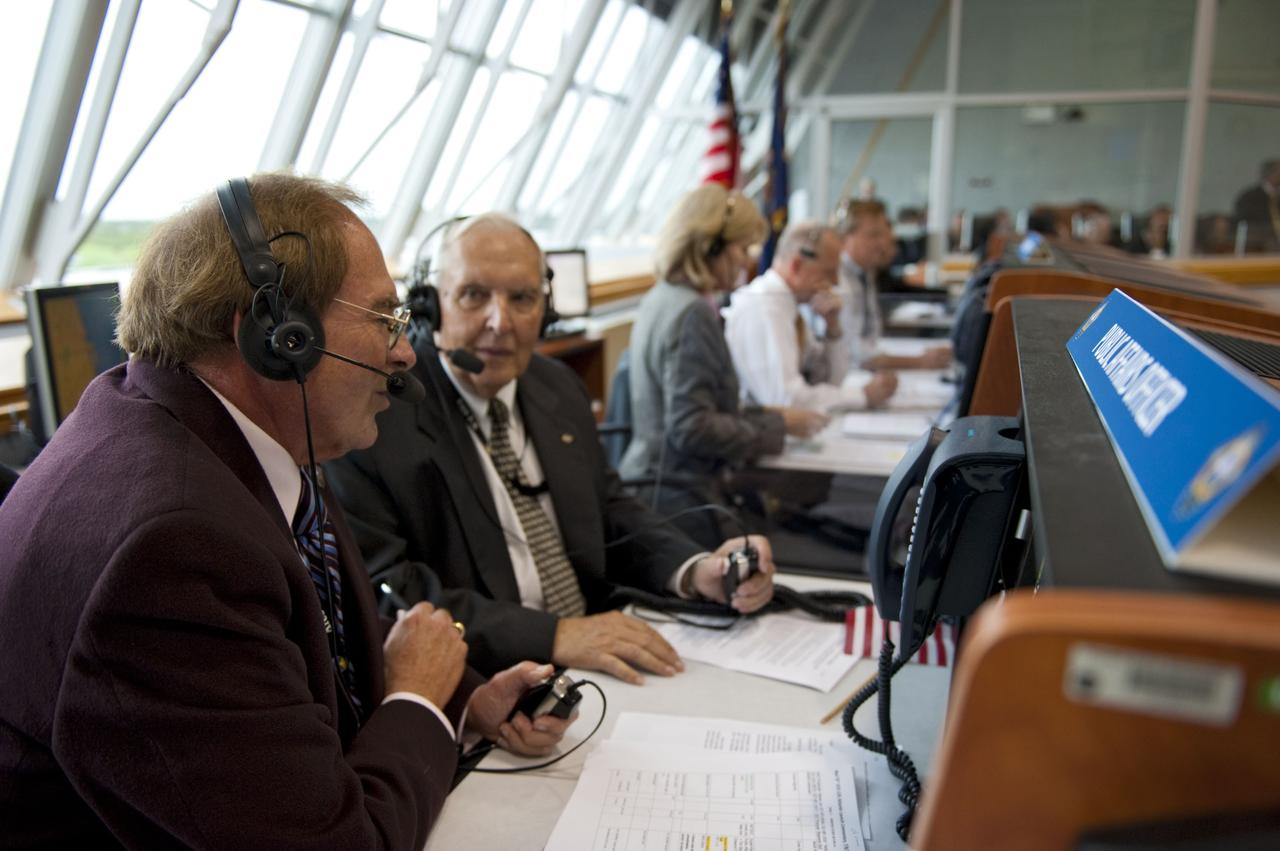
CAPE CANAVERAL, Fla. -- In Firing Room 4 of the Launch Control Center at NASA's Kennedy Space Center in Florida, NASA Launch Commentator and Public Affairs Officer George Diller interviews former Kennedy Director of Public Affairs Hugh Harris during prelaunch activities before liftoff of space shuttle Atlantis on its STS-135 mission. Atlantis with its crew of four; Commander Chris Ferguson, Pilot Doug Hurley, Mission Specialists Sandy Magnus and Rex Walheim, lifted off at 11:29 a.m. EDT on July 8, 2011 to deliver the Raffaello multi-purpose logistics module packed with supplies and spare parts for the station. Atlantis also will fly the Robotic Refueling Mission experiment that will investigate the potential for robotically refueling existing satellites in orbit. In addition, Atlantis will return with a failed ammonia pump module to help NASA better understand the failure mechanism and improve pump designs for future systems. STS-135 will be the 33rd flight of Atlantis, the 37th shuttle mission to the space station, and the 135th and final mission of NASA's Space Shuttle Program. For more information, visit www.nasa.gov/mission_pages/shuttle/shuttlemissions/sts135/index.html. Photo credit: NASA/Kim Shiflett
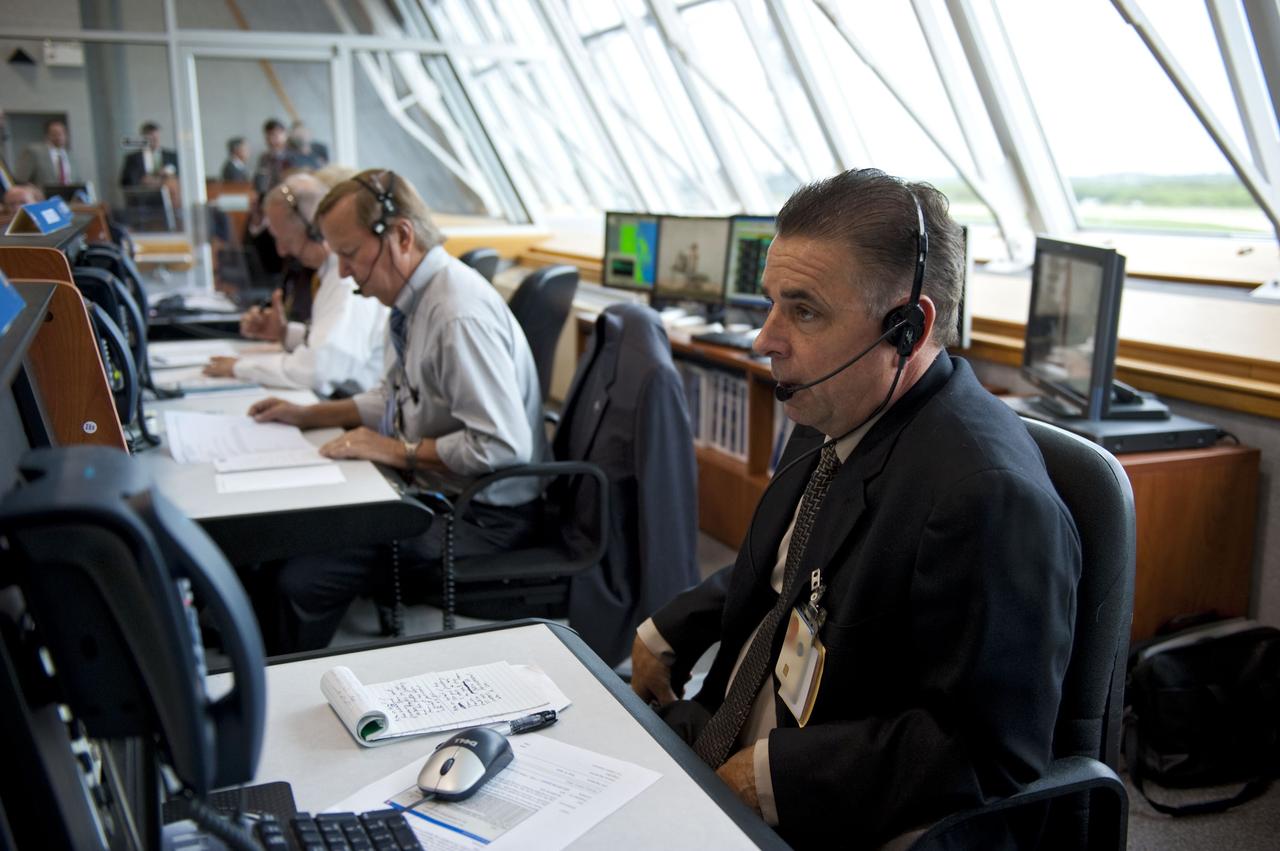
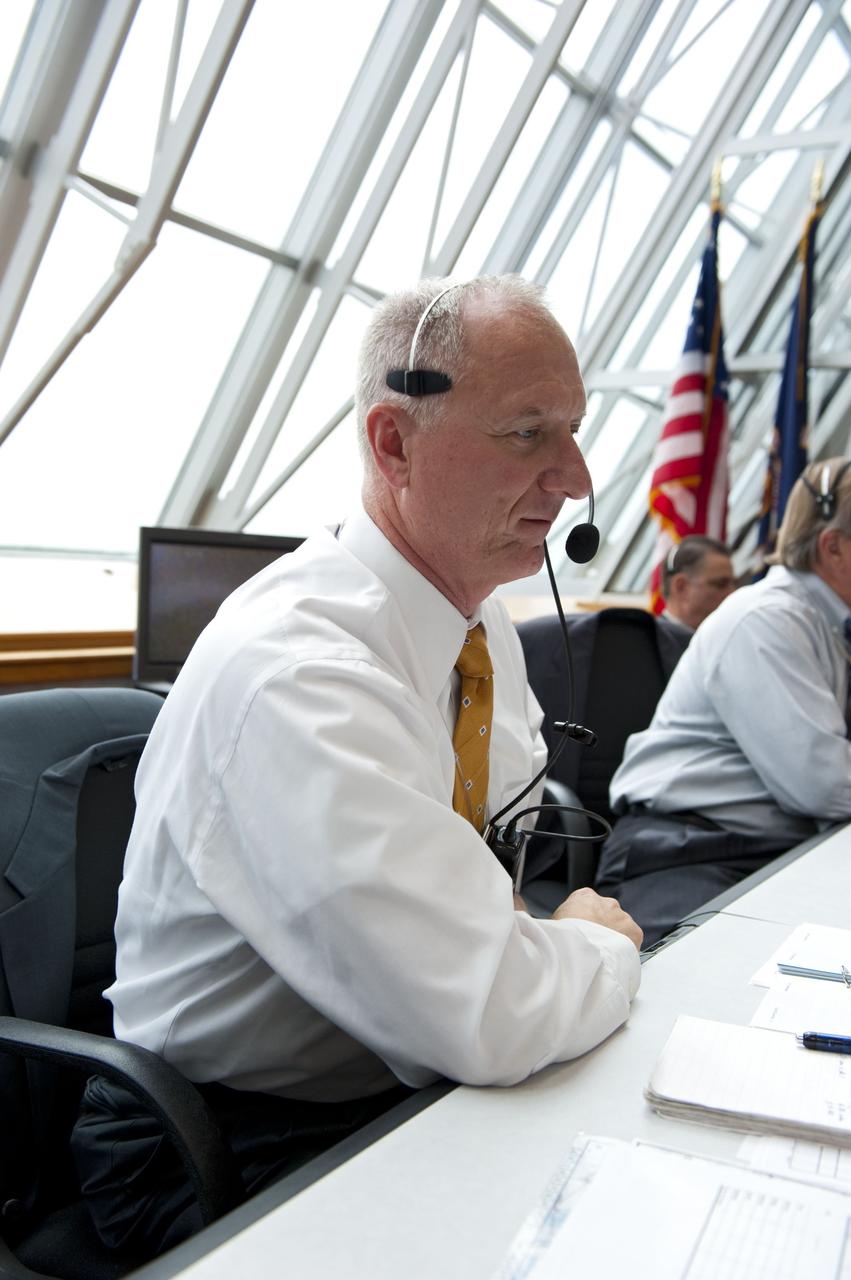
CAPE CANAVERAL, Fla. -- In Firing Room 4 of the Launch Control Center at NASA's Kennedy Space Center in Florida, launch team members monitor the countdown to the launch of space shuttle Atlantis on its STS-135 mission to the International Space Station. Seen here are Assistant Launch Director Pete Nickolenko (background) Shuttle Launch Director Mike Leinbach and Payloads Launch Manager and Deputy Director of ISS and Spacecraft Processing at Kennedy, Bill Dowdell. Atlantis with its crew of four; Commander Chris Ferguson, Pilot Doug Hurley, Mission Specialists Sandy Magnus and Rex Walheim, lifted off at 11:29 a.m. EDT on July 8, 2011 to deliver the Raffaello multi-purpose logistics module packed with supplies and spare parts for the station. Atlantis also will fly the Robotic Refueling Mission experiment that will investigate the potential for robotically refueling existing satellites in orbit. In addition, Atlantis will return with a failed ammonia pump module to help NASA better understand the failure mechanism and improve pump designs for future systems. STS-135 will be the 33rd flight of Atlantis, the 37th shuttle mission to the space station, and the 135th and final mission of NASA's Space Shuttle Program. For more information, visit www.nasa.gov/mission_pages/shuttle/shuttlemissions/sts135/index.html. Photo credit: NASA/Kim Shiflett
CAPE CANAVERAL, Fla. -- In Firing Room 4 of the Launch Control Center at NASA's Kennedy Space Center in Florida, launch team members monitor the countdown to the launch of space shuttle Atlantis on its STS-135 mission to the International Space Station. Atlantis with its crew of four; Commander Chris Ferguson, Pilot Doug Hurley, Mission Specialists Sandy Magnus and Rex Walheim, lifted off at 11:29 a.m. EDT on July 8, 2011 to deliver the Raffaello multi-purpose logistics module packed with supplies and spare parts for the station. Atlantis also will fly the Robotic Refueling Mission experiment that will investigate the potential for robotically refueling existing satellites in orbit. In addition, Atlantis will return with a failed ammonia pump module to help NASA better understand the failure mechanism and improve pump designs for future systems. STS-135 will be the 33rd flight of Atlantis, the 37th shuttle mission to the space station, and the 135th and final mission of NASA's Space Shuttle Program. For more information, visit www.nasa.gov/mission_pages/shuttle/shuttlemissions/sts135/index.html. Photo credit: NASA/Kim Shiflett
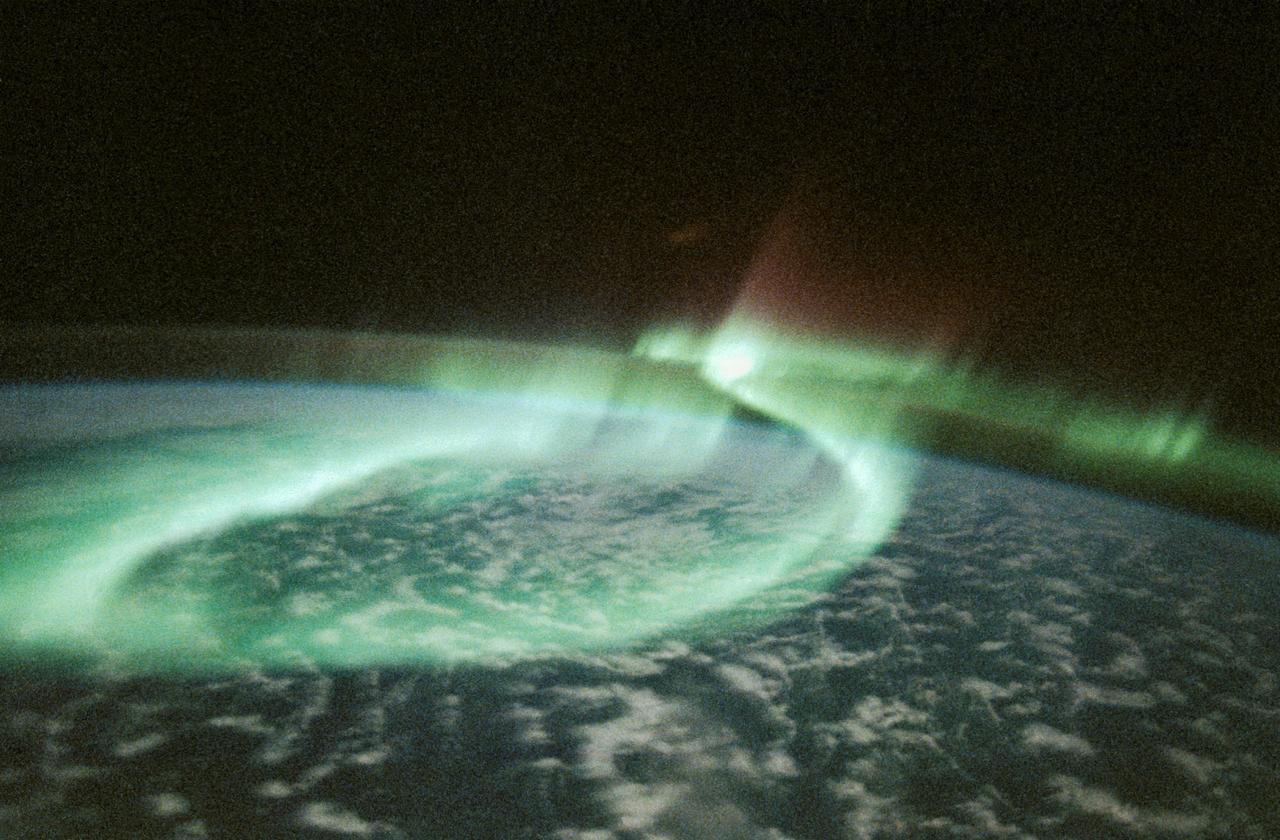
STS039-23-020 (28 April-6 May 1991) --- A 35mm frame of the Aurora Australis, also known as the Southern Lights, photographed from Space Shuttle Discovery's flight deck by one of its seven crew members. One of the mission objectives was to measure the spectral and spatial characteristics of auroral emissions. While passing over the sunlighted portion of Earth, the crew was able to take a number of photos of the various geographic points on the planet; much of the time on nightside passes was devoted to a thorough study and documentation of auroral displays.
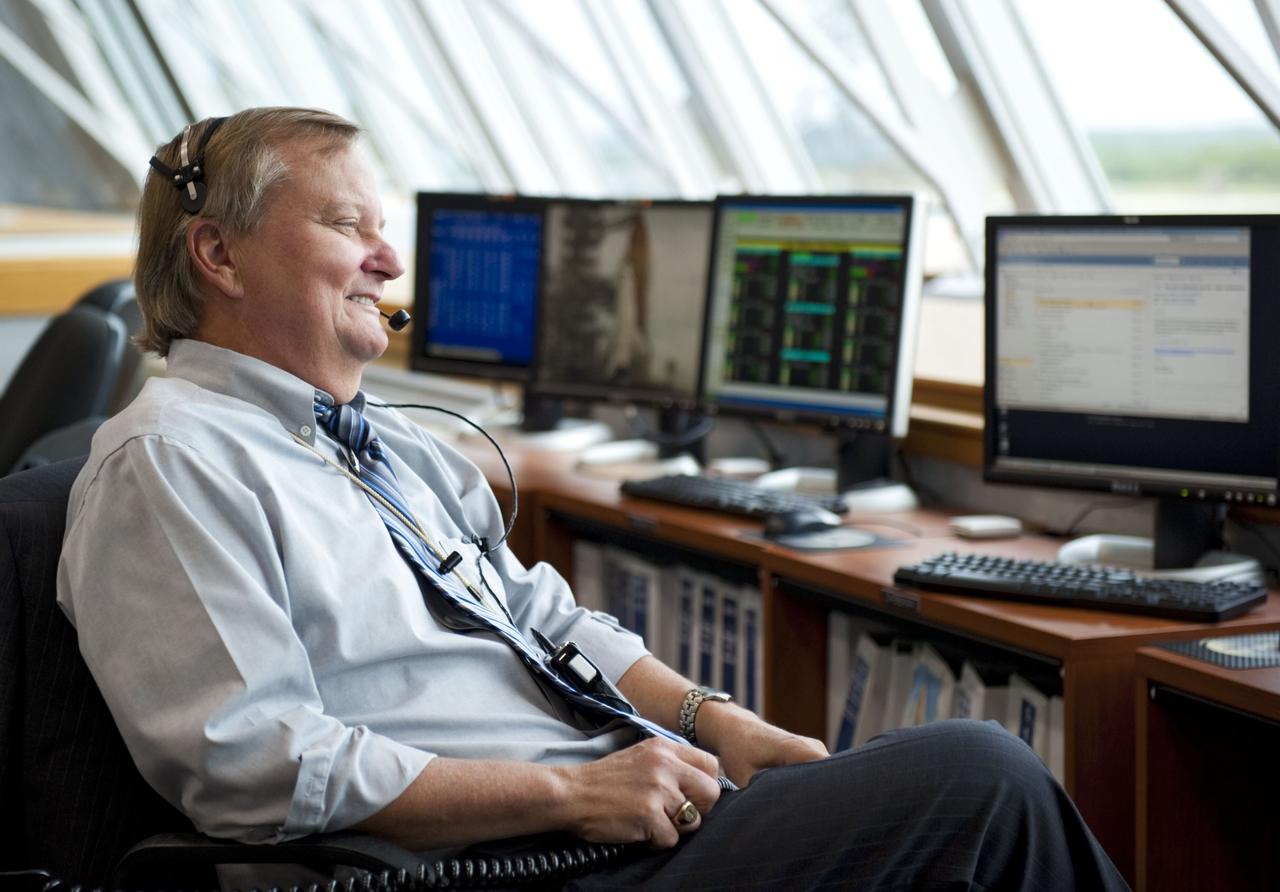
CAPE CANAVERAL, Fla. -- Shuttle Launch Director Mike Leinbach, enjoys a light moment during the countdown to liftoff of space shuttle Atlantis to the International Space Station in Firing Room 4 of the Launch Control Center at NASA's Kennedy Space Center in Florida. Atlantis with its crew of four; Commander Chris Ferguson, Pilot Doug Hurley, Mission Specialists Sandy Magnus and Rex Walheim, lifted off at 11:29 a.m. EDT on July 8, 2011 to deliver the Raffaello multi-purpose logistics module packed with supplies and spare parts for the station. Atlantis also will fly the Robotic Refueling Mission experiment that will investigate the potential for robotically refueling existing satellites in orbit. In addition, Atlantis will return with a failed ammonia pump module to help NASA better understand the failure mechanism and improve pump designs for future systems. STS-135 will be the 33rd flight of Atlantis, the 37th shuttle mission to the space station, and the 135th and final mission of NASA's Space Shuttle Program. For more information, visit www.nasa.gov/mission_pages/shuttle/shuttlemissions/sts135/index.html. Photo credit: NASA/Kim Shiflett
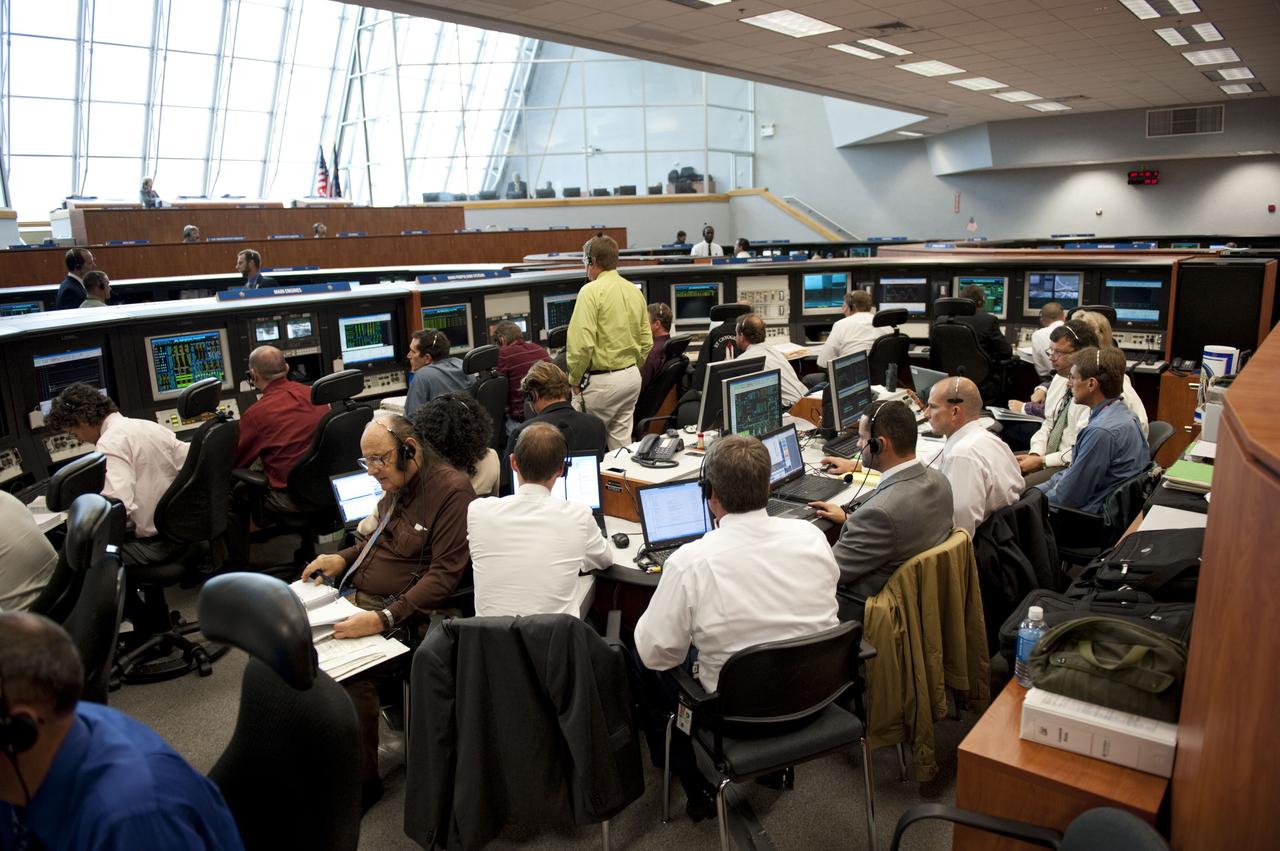
CAPE CANAVERAL, Fla. -- In Firing Room 4 of the Launch Control Center at NASA's Kennedy Space Center in Florida, launch team members monitor the countdown to the launch of space shuttle Atlantis on its STS-135 mission to the International Space Station. Atlantis with its crew of four; Commander Chris Ferguson, Pilot Doug Hurley, Mission Specialists Sandy Magnus and Rex Walheim, lifted off at 11:29 a.m. EDT on July 8, 2011 to deliver the Raffaello multi-purpose logistics module packed with supplies and spare parts for the station. Atlantis also will fly the Robotic Refueling Mission experiment that will investigate the potential for robotically refueling existing satellites in orbit. In addition, Atlantis will return with a failed ammonia pump module to help NASA better understand the failure mechanism and improve pump designs for future systems. STS-135 will be the 33rd flight of Atlantis, the 37th shuttle mission to the space station, and the 135th and final mission of NASA's Space Shuttle Program. For more information, visit www.nasa.gov/mission_pages/shuttle/shuttlemissions/sts135/index.html. Photo credit: NASA/Kim Shiflett
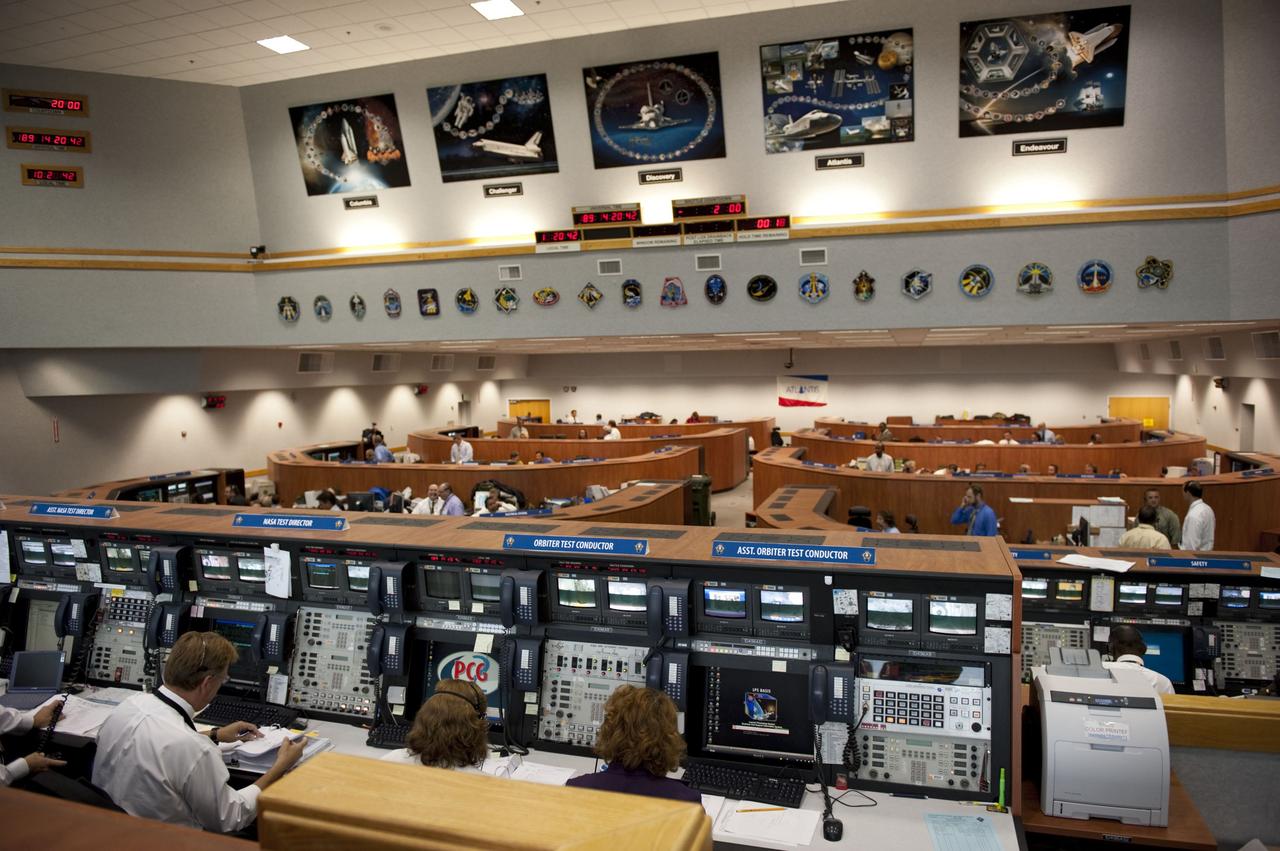
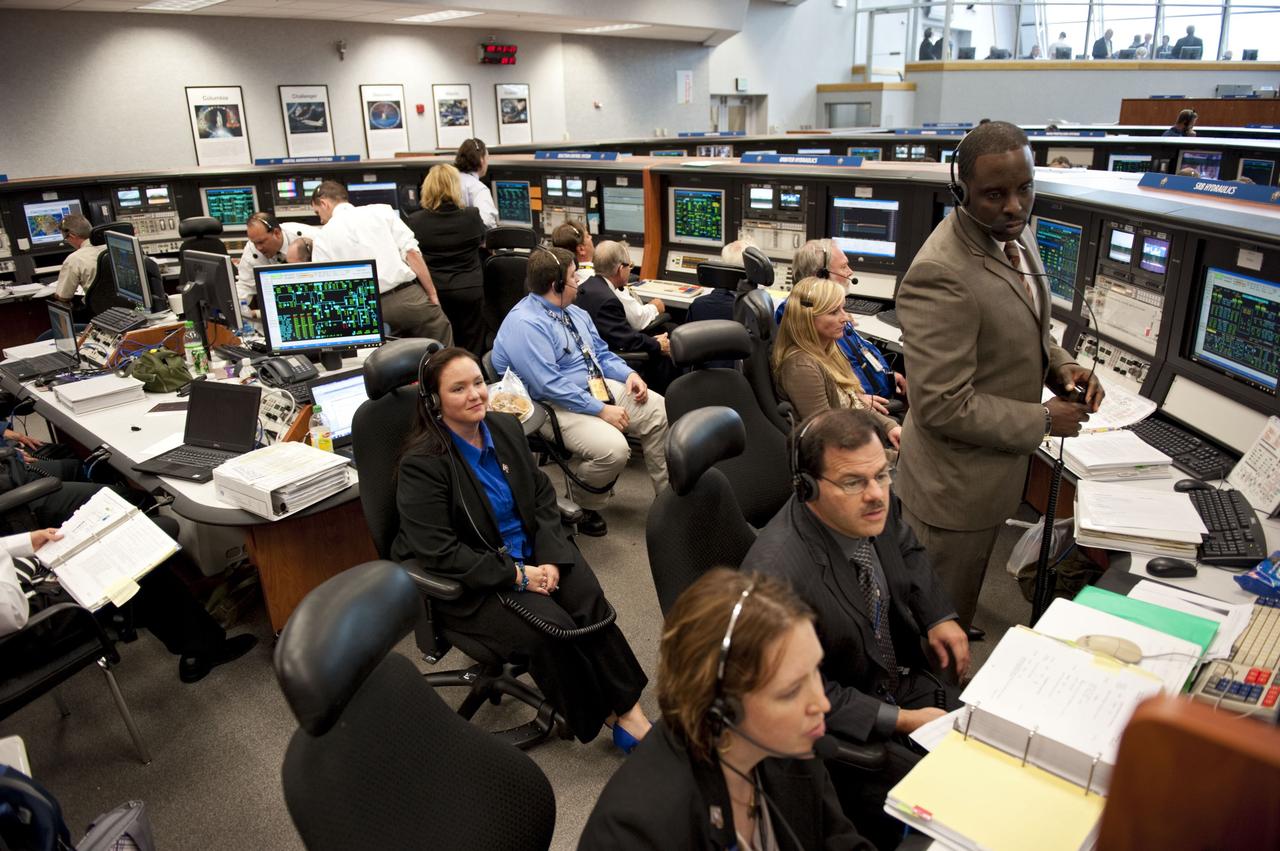
CAPE CANAVERAL, Fla. -- In Firing Room 4 of the Launch Control Center at NASA's Kennedy Space Center in Florida, launch team members monitor the countdown to the launch of space shuttle Atlantis on its STS-135 mission to the International Space Station. Above the space shuttle countdown clock are five orbiter tributes on display. The tributes feature major accomplishments and significant achievements made by each shuttle, as well as mission patches and processing milestones. Atlantis with its crew of four; Commander Chris Ferguson, Pilot Doug Hurley, Mission Specialists Sandy Magnus and Rex Walheim, lifted off at 11:29 a.m. EDT on July 8, 2011 to deliver the Raffaello multi-purpose logistics module packed with supplies and spare parts for the station. Atlantis also will fly the Robotic Refueling Mission experiment that will investigate the potential for robotically refueling existing satellites in orbit. In addition, Atlantis will return with a failed ammonia pump module to help NASA better understand the failure mechanism and improve pump designs for future systems. STS-135 will be the 33rd flight of Atlantis, the 37th shuttle mission to the space station, and the 135th and final mission of NASA's Space Shuttle Program. For more information, visit www.nasa.gov/mission_pages/shuttle/shuttlemissions/sts135/index.html. Photo credit: NASA/Kim Shiflett
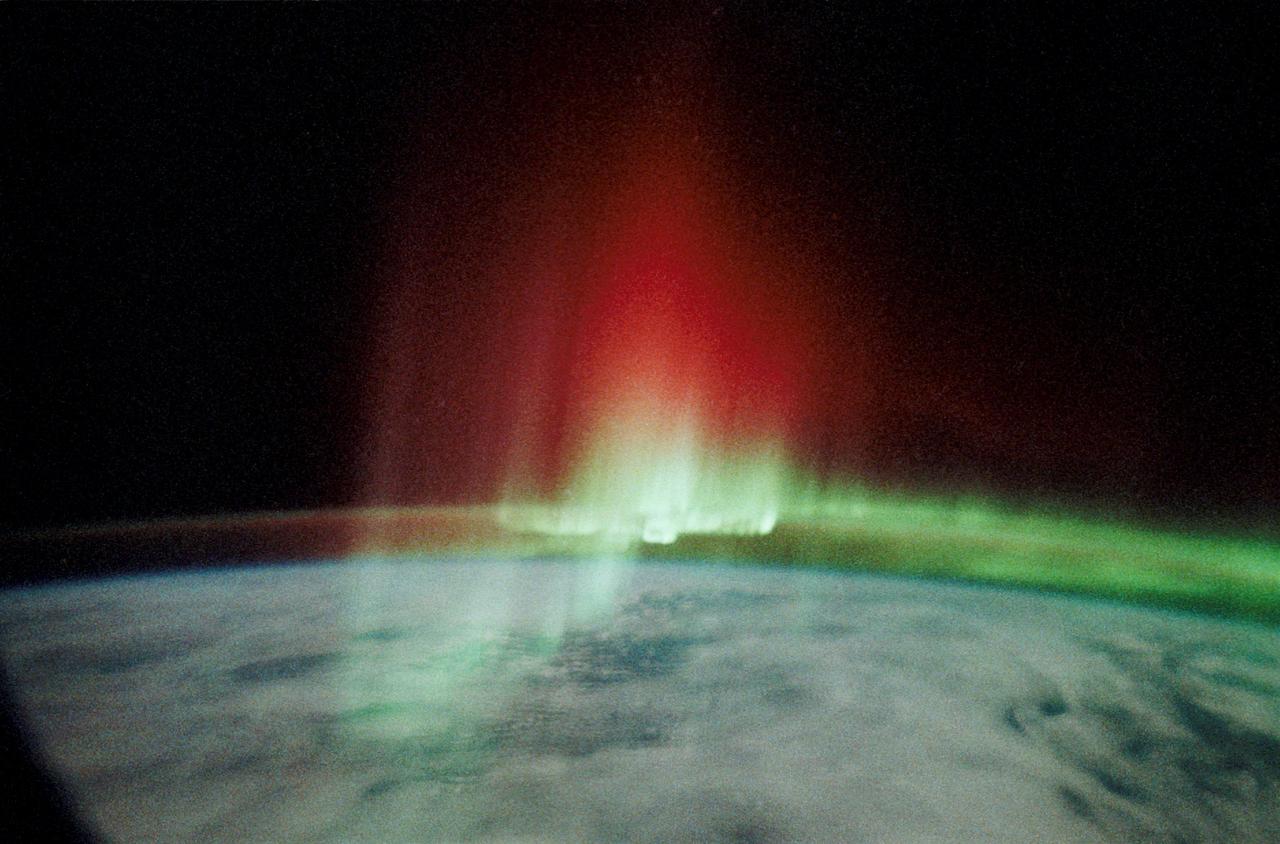
STS039-23-036 (28 April-6 May 1991) --- A 35mm frame of the Aurora Australis, also known as the Southern Lights, photographed from the Space Shuttle Discovery's flight deck by one of its seven crew members. One of the mission objectives was to measure the spectral and spatial characteristics of auroral emissions. While passing over the sunlit portion of Earth, the crew was able to take a number of photos of the various geographic points on the planet; much of the time on nightside passes was devoted to a thorough study and documentation of auroral displays.
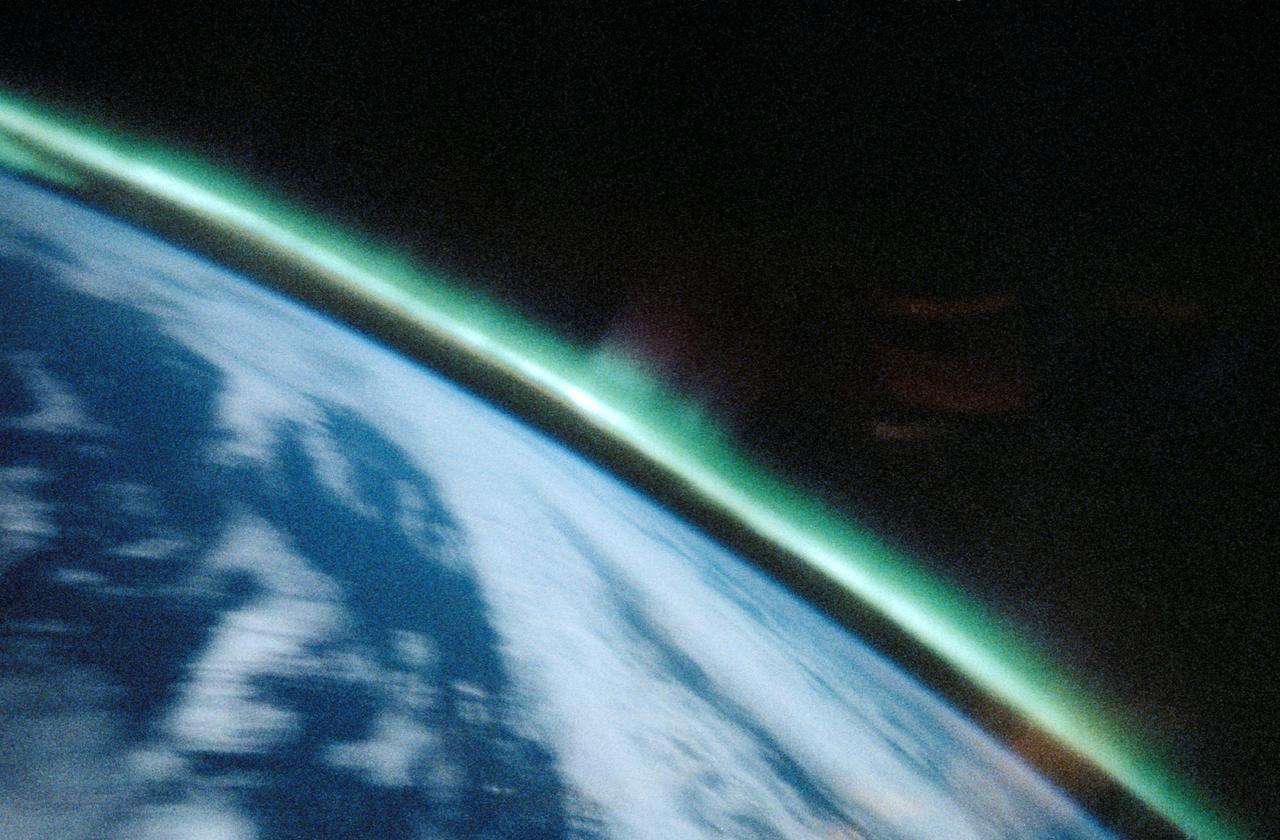
STS039-25-006 (28 April-6 May 1991) --- A 35mm frame of the Aurora Australis, also known as the Southern Lights, photographed from the Space Shuttle Discovery's flight deck by one of its seven crew members. One of the mission objectives was to measure the spectral and spatial characteristics of auroral emissions. While passing over the sunlighted portion of Earth, the crew was able to take a number of photos of the various geographic points on the planet; much of the time on nightside passes was devoted to a thorough study and documentation of auroral displays.
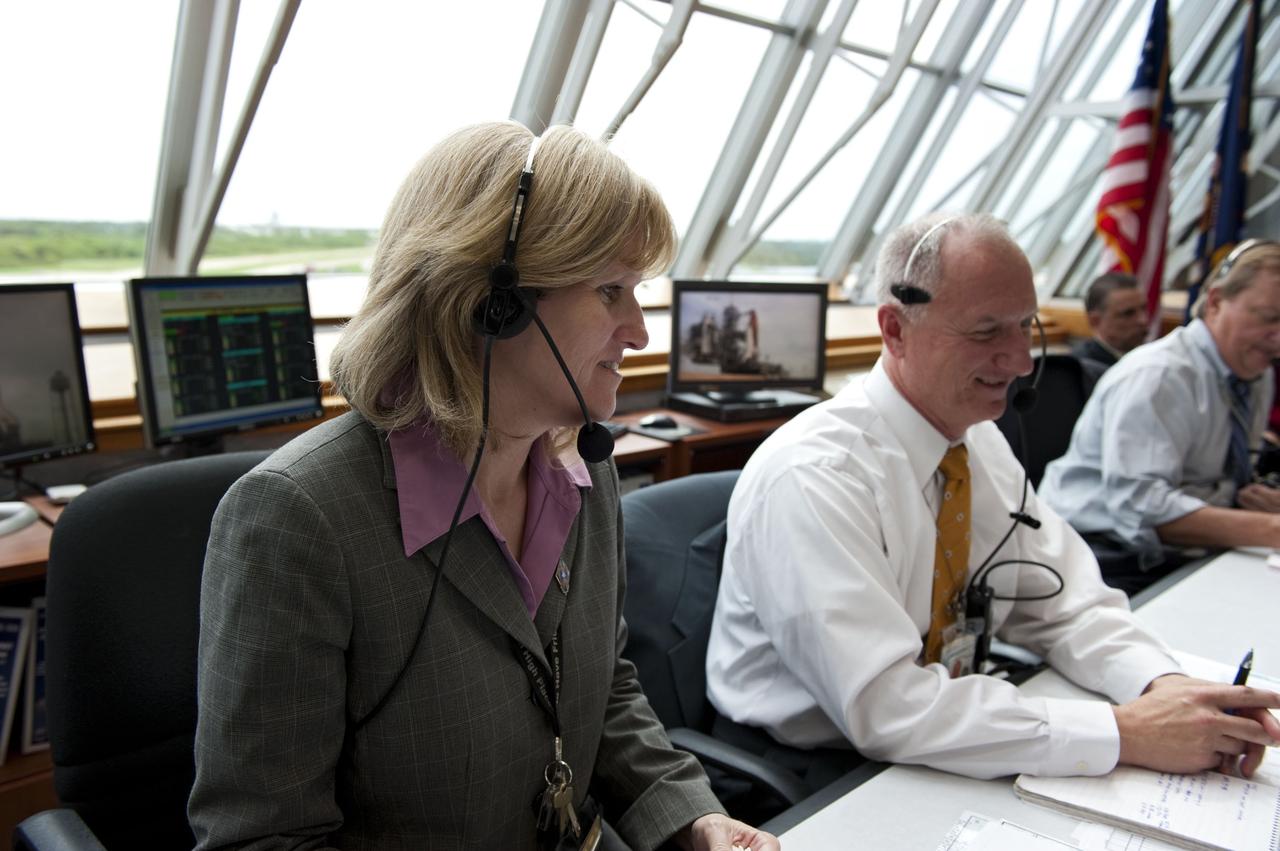
CAPE CANAVERAL, Fla. -- In Firing Room 4 of the Launch Control Center at NASA's Kennedy Space Center in Florida, launch team members monitor the countdown to the launch of space shuttle Atlantis on its STS-135 mission to the International Space Station. Seen here are Atlantis NASA Flow Director Angie Brewer, Assistant Launch Director Pete Nickolenko and Shuttle Launch Director Mike Leinbach (far right). Atlantis with its crew of four; Commander Chris Ferguson, Pilot Doug Hurley, Mission Specialists Sandy Magnus and Rex Walheim, lifted off at 11:29 a.m. EDT on July 8, 2011 to deliver the Raffaello multi-purpose logistics module packed with supplies and spare parts for the station. Atlantis also will fly the Robotic Refueling Mission experiment that will investigate the potential for robotically refueling existing satellites in orbit. In addition, Atlantis will return with a failed ammonia pump module to help NASA better understand the failure mechanism and improve pump designs for future systems. STS-135 will be the 33rd flight of Atlantis, the 37th shuttle mission to the space station, and the 135th and final mission of NASA's Space Shuttle Program. For more information, visit www.nasa.gov/mission_pages/shuttle/shuttlemissions/sts135/index.html. Photo credit: NASA/Kim Shiflett
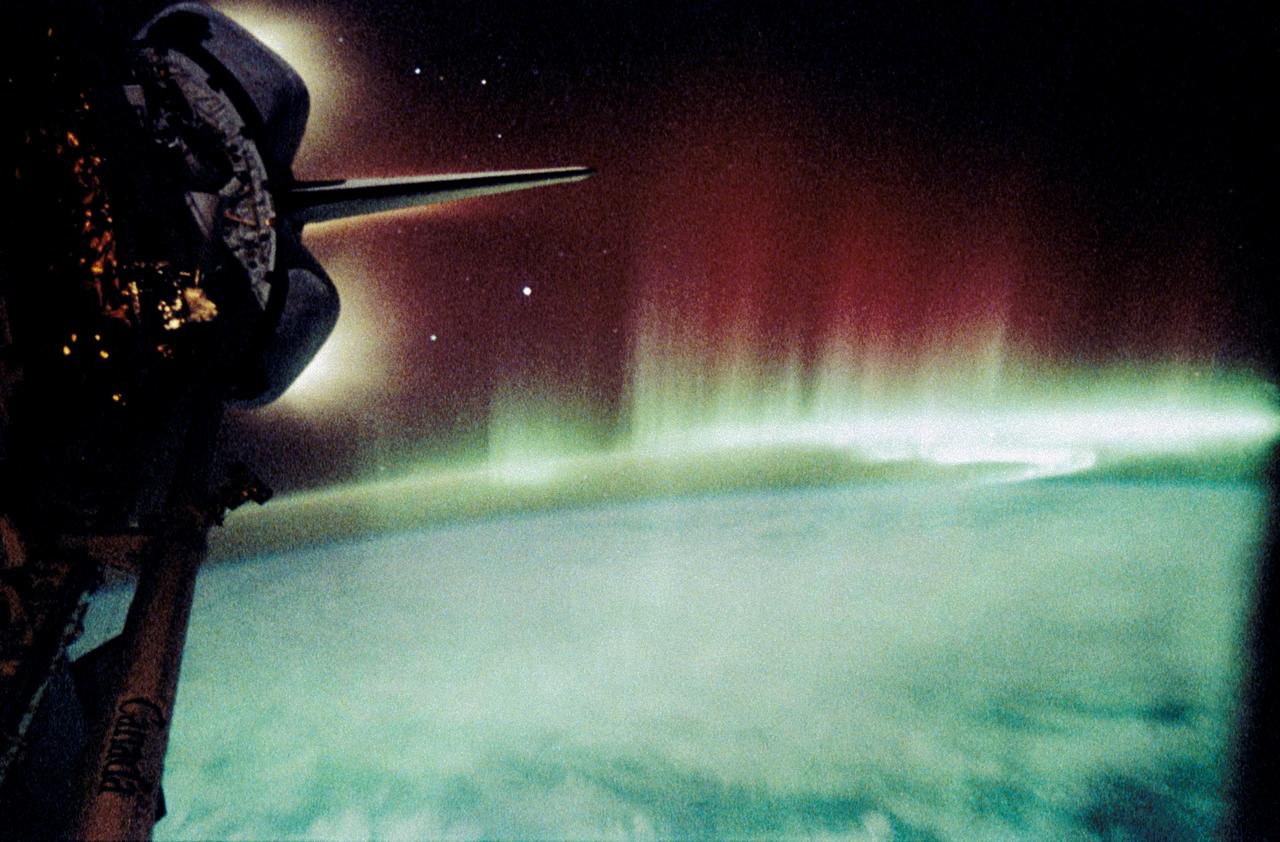
STS039-342-026 (28 April-6 May 1991) --- This view of the Aurora Australis, or Southern Lights, shows a band of airglow above the limb of Earth. Photo experts at NASA studying the mission photography identify the airglow as being in the 80-120 kilometer altitude region and attribute its existence to atomic oxygen (wavelength of 5,577 Angstroms), although other atoms can also contribute. The atomic oxygen airglow is usually most intense at altitudes around 65 degrees north and south latitude, and is most intense in the spring and fall of the year. The aurora phenomena is due to atmospheric oxygen and nitrogen being excited by the particles from the Van Allen Radiation belts which extend between the two geomagnetic poles. The red and green rays appear to extend upward to 200-300 kilometers, much higher than the usual upper limits of about 110 kilometers.
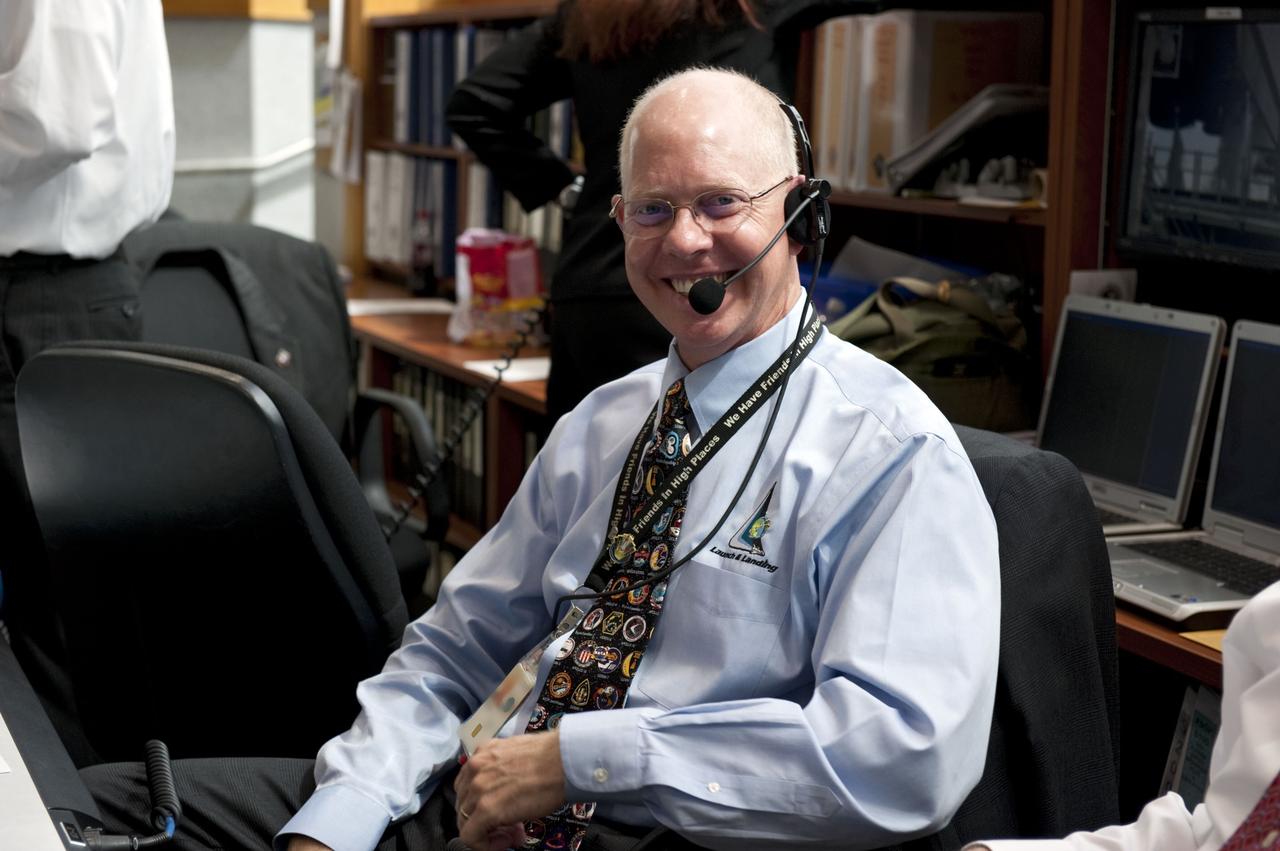
CAPE CANAVERAL, Fla. -- In Firing Room 4 of the Launch Control Center at NASA's Kennedy Space Center in Florida, launch team members monitor the countdown to the launch of space shuttle Atlantis on its STS-135 mission to the International Space Station. Seen here is NASA Test Director Steve Payne. Atlantis with its crew of four; Commander Chris Ferguson, Pilot Doug Hurley, Mission Specialists Sandy Magnus and Rex Walheim, lifted off at 11:29 a.m. EDT on July 8, 2011 to deliver the Raffaello multi-purpose logistics module packed with supplies and spare parts for the station. Atlantis also will fly the Robotic Refueling Mission experiment that will investigate the potential for robotically refueling existing satellites in orbit. In addition, Atlantis will return with a failed ammonia pump module to help NASA better understand the failure mechanism and improve pump designs for future systems. STS-135 will be the 33rd flight of Atlantis, the 37th shuttle mission to the space station, and the 135th and final mission of NASA's Space Shuttle Program. For more information, visit www.nasa.gov/mission_pages/shuttle/shuttlemissions/sts135/index.html. Photo credit: NASA/Kim Shiflett
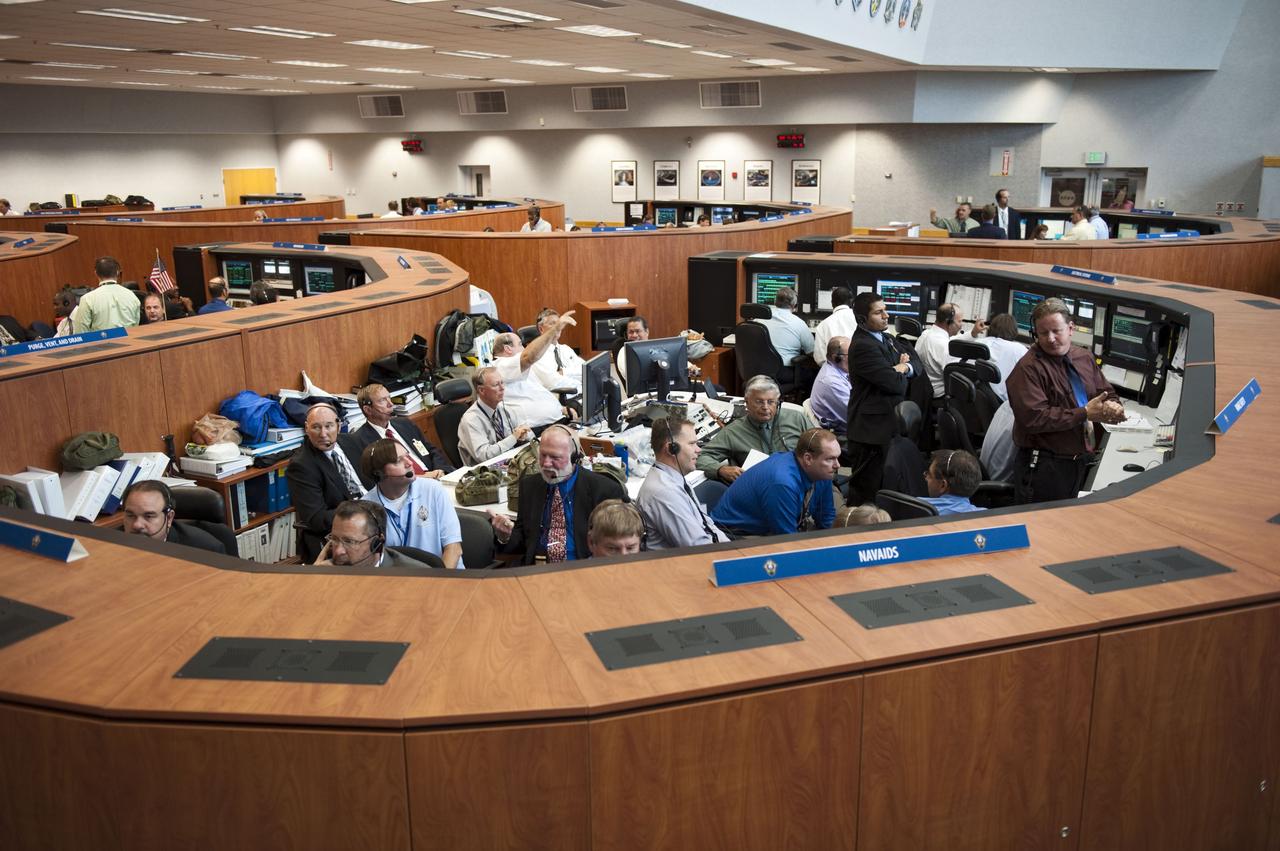
CAPE CANAVERAL, Fla. -- In Firing Room 4 of the Launch Control Center at NASA's Kennedy Space Center in Florida, launch team members monitor the countdown to the launch of space shuttle Atlantis on its STS-135 mission to the International Space Station. Atlantis with its crew of four; Commander Chris Ferguson, Pilot Doug Hurley, Mission Specialists Sandy Magnus and Rex Walheim, lifted off at 11:29 a.m. EDT on July 8, 2011 to deliver the Raffaello multi-purpose logistics module packed with supplies and spare parts for the station. Atlantis also will fly the Robotic Refueling Mission experiment that will investigate the potential for robotically refueling existing satellites in orbit. In addition, Atlantis will return with a failed ammonia pump module to help NASA better understand the failure mechanism and improve pump designs for future systems. STS-135 will be the 33rd flight of Atlantis, the 37th shuttle mission to the space station, and the 135th and final mission of NASA's Space Shuttle Program. For more information, visit www.nasa.gov/mission_pages/shuttle/shuttlemissions/sts135/index.html. Photo credit: NASA/Kim Shiflett
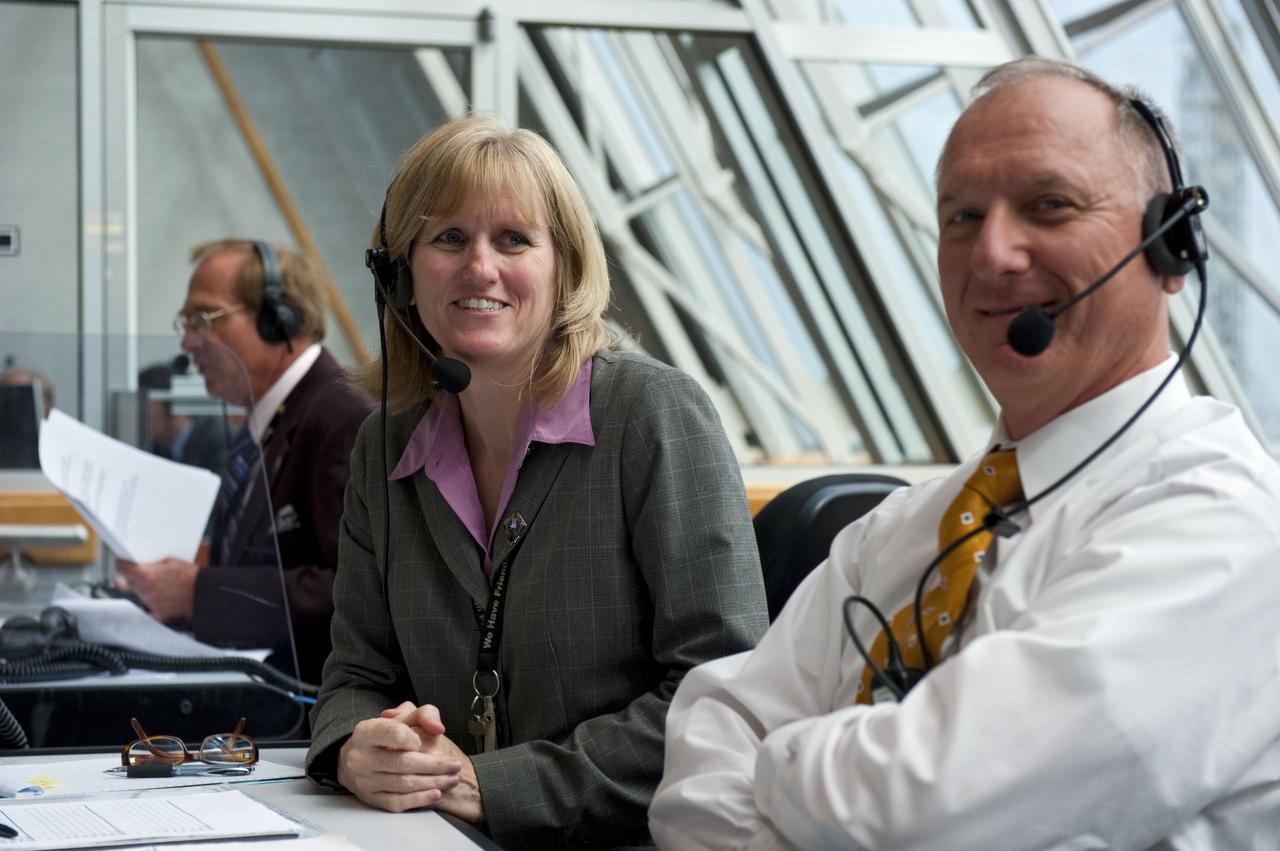
CAPE CANAVERAL, Fla. -- In Firing Room 4 of the Launch Control Center at NASA's Kennedy Space Center in Florida, launch team members monitor the countdown to the launch of space shuttle Atlantis on its STS-135 mission to the International Space Station. Seen here are Atlantis NASA Flow Director Angie Brewer, Assistant Launch Director Pete Nickolenko, Shuttle Launch Director Mike Leinbach and Payloads Launch Manager and Deputy Director of ISS and Spacecraft Processing at Kennedy, Bill Dowdell. Atlantis with its crew of four; Commander Chris Ferguson, Pilot Doug Hurley, Mission Specialists Sandy Magnus and Rex Walheim, lifted off at 11:29 a.m. EDT on July 8, 2011 to deliver the Raffaello multi-purpose logistics module packed with supplies and spare parts for the station. Atlantis also will fly the Robotic Refueling Mission experiment that will investigate the potential for robotically refueling existing satellites in orbit. In addition, Atlantis will return with a failed ammonia pump module to help NASA better understand the failure mechanism and improve pump designs for future systems. STS-135 will be the 33rd flight of Atlantis, the 37th shuttle mission to the space station, and the 135th and final mission of NASA's Space Shuttle Program. For more information, visit www.nasa.gov/mission_pages/shuttle/shuttlemissions/sts135/index.html. Photo credit: NASA/Kim Shiflett
CAPE CANAVERAL, Fla. -- In Firing Room 4 of the Launch Control Center at NASA's Kennedy Space Center in Florida, launch team members monitor the countdown to the launch of space shuttle Atlantis on its STS-135 mission to the International Space Station. Seen here is Assistant Launch Director Pete Nickolenko. Atlantis with its crew of four; Commander Chris Ferguson, Pilot Doug Hurley, Mission Specialists Sandy Magnus and Rex Walheim, lifted off at 11:29 a.m. EDT on July 8, 2011 to deliver the Raffaello multi-purpose logistics module packed with supplies and spare parts for the station. Atlantis also will fly the Robotic Refueling Mission experiment that will investigate the potential for robotically refueling existing satellites in orbit. In addition, Atlantis will return with a failed ammonia pump module to help NASA better understand the failure mechanism and improve pump designs for future systems. STS-135 will be the 33rd flight of Atlantis, the 37th shuttle mission to the space station, and the 135th and final mission of NASA's Space Shuttle Program. For more information, visit www.nasa.gov/mission_pages/shuttle/shuttlemissions/sts135/index.html. Photo credit: NASA/Kim Shiflett
CAPE CANAVERAL, Fla. -- In Firing Room 4 of the Launch Control Center at NASA's Kennedy Space Center in Florida, launch team members monitor the countdown to the launch of space shuttle Atlantis on its STS-135 mission to the International Space Station. Seen here are Assistant Launch Director Pete Nickolenko (right), Atlantis NASA Flow Director Angie Brewer and NASA Commentator and Public Affairs Officer George Diller. Atlantis with its crew of four; Commander Chris Ferguson, Pilot Doug Hurley, Mission Specialists Sandy Magnus and Rex Walheim, lifted off at 11:29 a.m. EDT on July 8, 2011 to deliver the Raffaello multi-purpose logistics module packed with supplies and spare parts for the station. Atlantis also will fly the Robotic Refueling Mission experiment that will investigate the potential for robotically refueling existing satellites in orbit. In addition, Atlantis will return with a failed ammonia pump module to help NASA better understand the failure mechanism and improve pump designs for future systems. STS-135 will be the 33rd flight of Atlantis, the 37th shuttle mission to the space station, and the 135th and final mission of NASA's Space Shuttle Program. For more information, visit www.nasa.gov/mission_pages/shuttle/shuttlemissions/sts135/index.html. Photo credit: NASA/Kim Shiflett
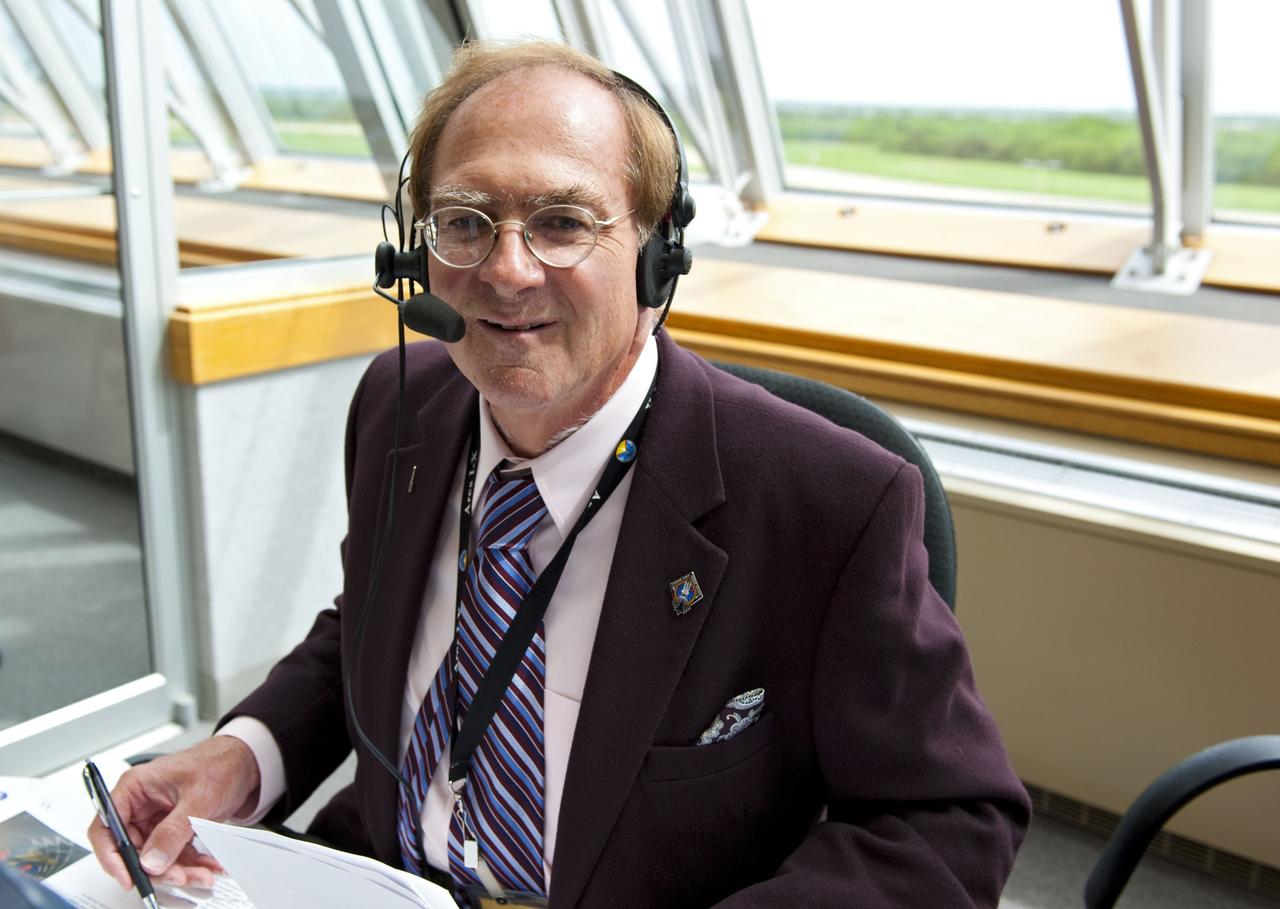
CAPE CANAVERAL, Fla. -- In Firing Room 4 of the Launch Control Center at NASA's Kennedy Space Center in Florida, NASA Commentator and Public Affairs Officer George Diller provides live launch coverage of space shuttle Atlantis' STS-135 mission to the International Space Station for NASA TV. Atlantis with its crew of four; Commander Chris Ferguson, Pilot Doug Hurley, Mission Specialists Sandy Magnus and Rex Walheim, lifted off at 11:29 a.m. EDT on July 8, 2011 to deliver the Raffaello multi-purpose logistics module packed with supplies and spare parts for the station. Atlantis also will fly the Robotic Refueling Mission experiment that will investigate the potential for robotically refueling existing satellites in orbit. In addition, Atlantis will return with a failed ammonia pump module to help NASA better understand the failure mechanism and improve pump designs for future systems. STS-135 will be the 33rd flight of Atlantis, the 37th shuttle mission to the space station, and the 135th and final mission of NASA's Space Shuttle Program. For more information, visit www.nasa.gov/mission_pages/shuttle/shuttlemissions/sts135/index.html. Photo credit: NASA/Kim Shiflett
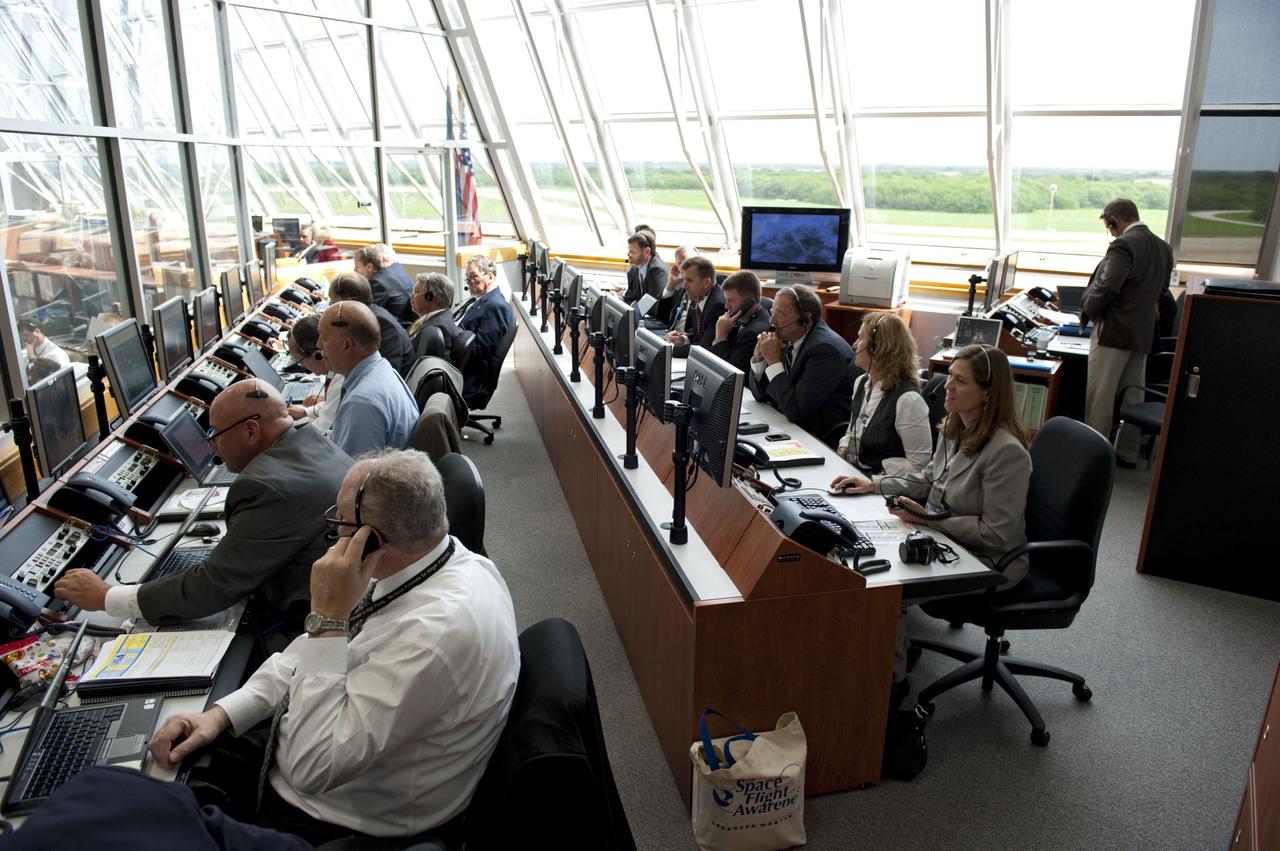
CAPE CANAVERAL, Fla. -- In Firing Room 4 of the Launch Control Center at NASA's Kennedy Space Center in Florida, launch team members monitor the countdown to the launch of space shuttle Atlantis on its STS-135 mission to the International Space Station. Atlantis with its crew of four; Commander Chris Ferguson, Pilot Doug Hurley, Mission Specialists Sandy Magnus and Rex Walheim, lifted off at 11:29 a.m. EDT on July 8, 2011 to deliver the Raffaello multi-purpose logistics module packed with supplies and spare parts for the station. Atlantis also will fly the Robotic Refueling Mission experiment that will investigate the potential for robotically refueling existing satellites in orbit. In addition, Atlantis will return with a failed ammonia pump module to help NASA better understand the failure mechanism and improve pump designs for future systems. STS-135 will be the 33rd flight of Atlantis, the 37th shuttle mission to the space station, and the 135th and final mission of NASA's Space Shuttle Program. For more information, visit www.nasa.gov/mission_pages/shuttle/shuttlemissions/sts135/index.html. Photo credit: NASA/Kim Shiflett
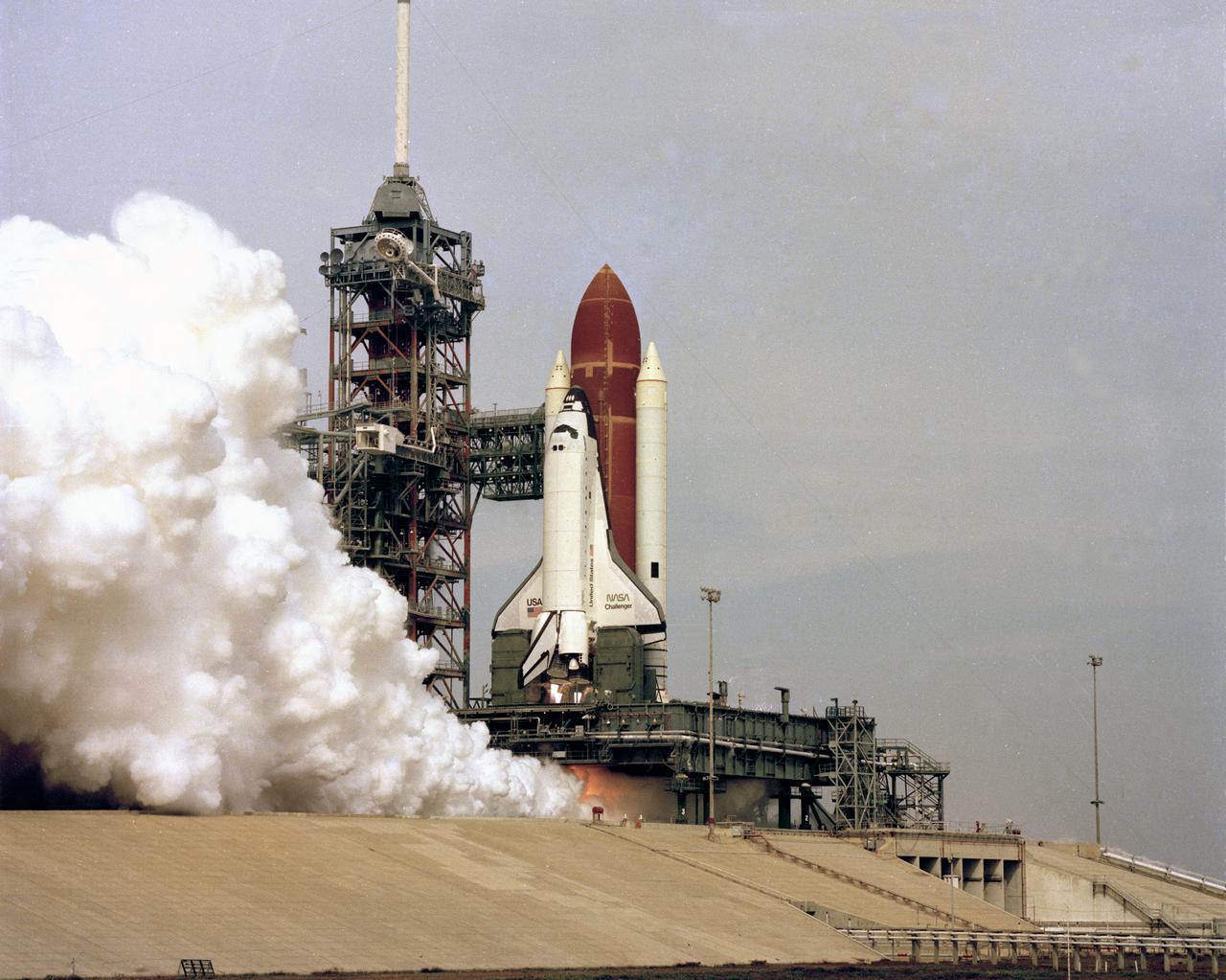
CAPE CANAVERAL, Fla. -- STS-6 second Flight Readiness Firing test, Launch Complex 39. Photo credit: NASA
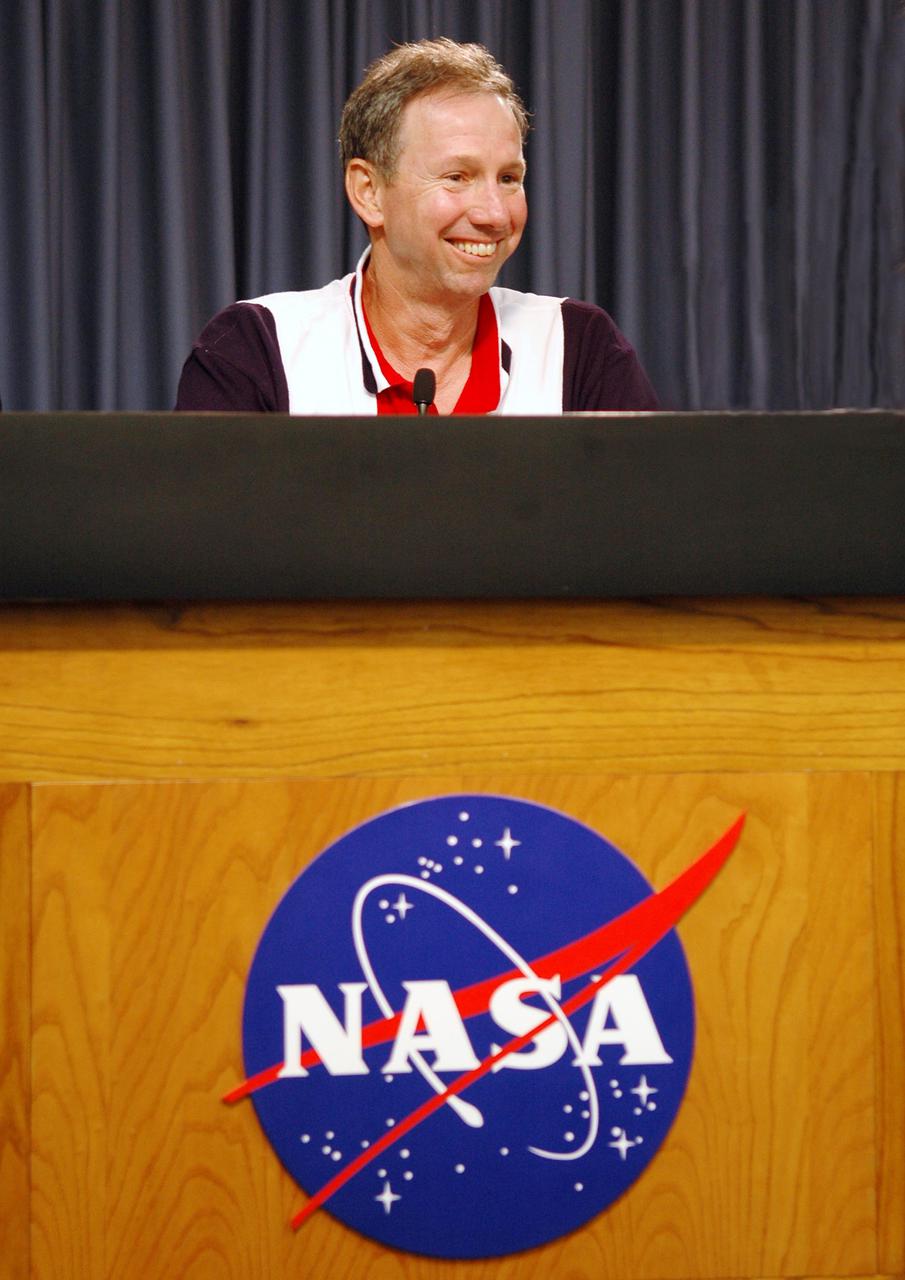
KENNEDY SPACE CENTER, FLA. - At the STS-114 Launch Readiness Press Conference at NASA Kennedy Space Center, NASA Administrator Mike Griffin was pleased to confirm the July 26 launch of Space Shuttle Discovery on the Return to Flight mission STS-114 scheduled for 10:39 a.m. EDT July 26 from Launch Pad 39B. Liftoff of Space Shuttle Discovery on the Return to Flight mission STS-114 is scheduled for 10:39 a.m. EDT July 26 from Launch Pad 39B.
![CAPE CANAVERAL, Fla. - This rare view on September 5 shows on adjacent Launch Complex 39 pads with the Rotating Service Structures retracted. The orbiter Columbia on Pad A [foreground] was being readied for a September 6 early morning launch on Mission STS-39, while it sister spaceship, the orbiter Discovery, was set to begin preparations for an October liftoff on Mission STS- 41.](https://images-assets.nasa.gov/image/90PC-1264/90PC-1264~medium.jpg)
CAPE CANAVERAL, Fla. - This rare view on September 5 shows on adjacent Launch Complex 39 pads with the Rotating Service Structures retracted. The orbiter Columbia on Pad A [foreground] was being readied for a September 6 early morning launch on Mission STS-39, while it sister spaceship, the orbiter Discovery, was set to begin preparations for an October liftoff on Mission STS- 41.
![CAPE CANAVERAL, Fla. - This rare view on September 5 shows on adjacent Launch Complex 39 pads with the Rotating Service Structures retracted. The orbiter Columbia on Pad A [foreground] was being readied for a September 6 early morning launch on Mission STS-39, while it sister spaceship, the orbiter Discovery, was set to begin preparations for an October liftoff on Mission STS- 41.](https://images-assets.nasa.gov/image/90PC-1266/90PC-1266~medium.jpg)
CAPE CANAVERAL, Fla. - This rare view on September 5 shows on adjacent Launch Complex 39 pads with the Rotating Service Structures retracted. The orbiter Columbia on Pad A [foreground] was being readied for a September 6 early morning launch on Mission STS-39, while it sister spaceship, the orbiter Discovery, was set to begin preparations for an October liftoff on Mission STS- 41.
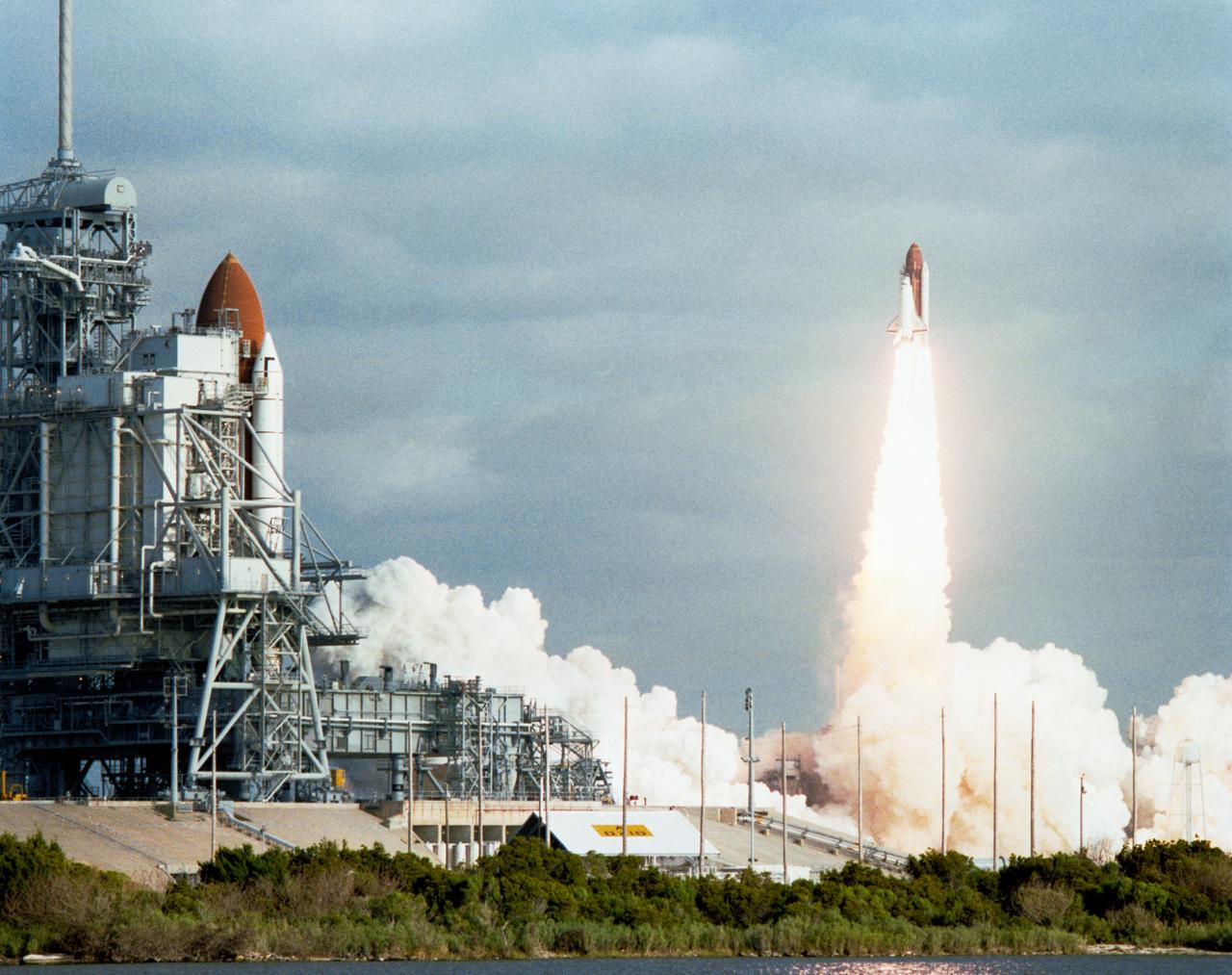
STS-31 Discovery, Orbiter Vehicle (OV) 103, lifts off from Kennedy Space Center (KSC) Launch Complex (LC) 39 Pad B. In the foreground STS-35 Columbia, OV-102, is visible on launch pad 39A. This event marked the first time since January 1986 that there was an orbiter on each pad. LC 39 pads are separated by 1.6 miles. View provided by KSC with alternate number KSC-90PC-610.
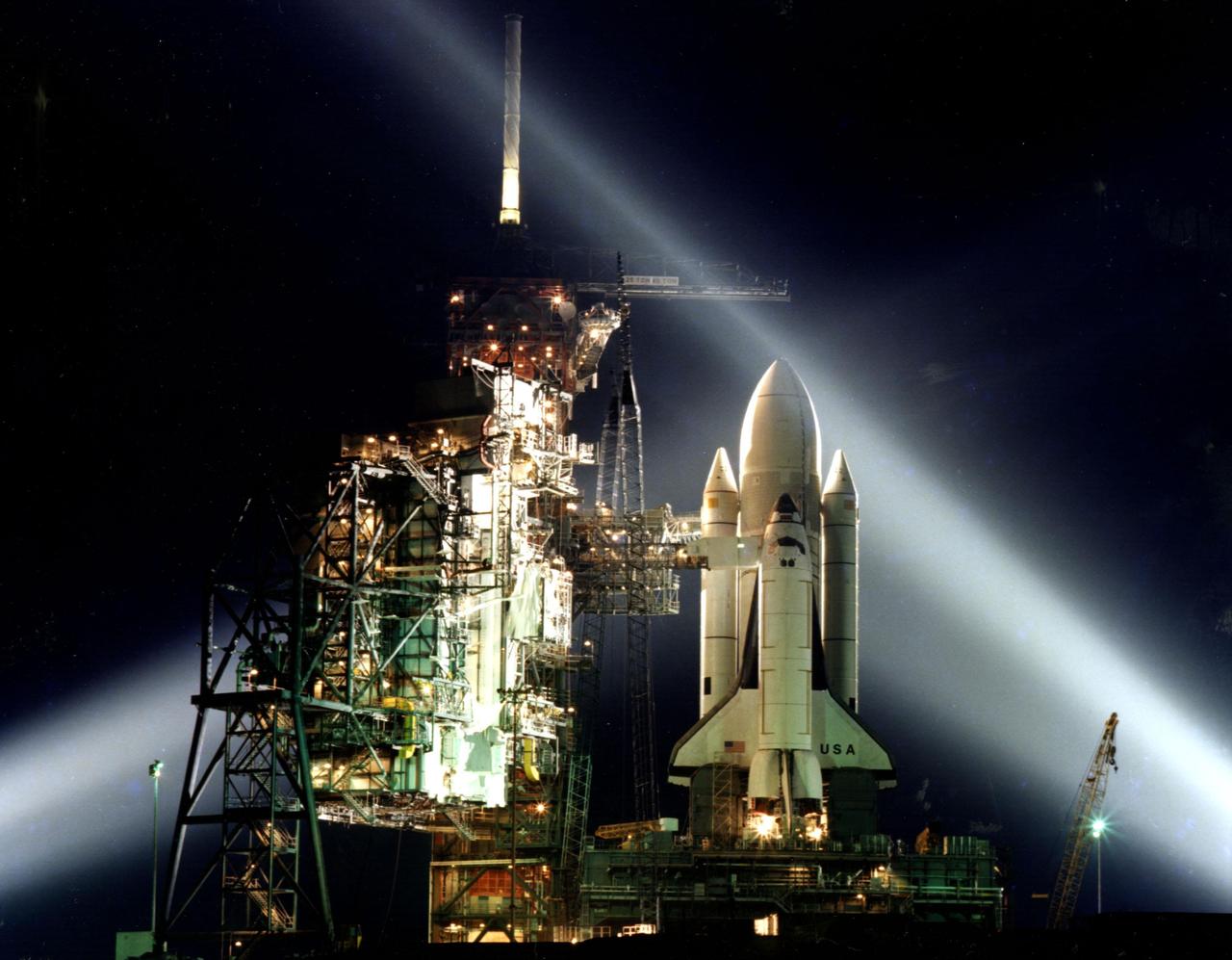
A timed exposure of the first Space Shuttle, STS-1, at Launch Pad A, Complex 39, turns the space vehicle and support facilities into a night-time fantasy of light. To the left of the Shuttle are the fixed and the rotating service structures.
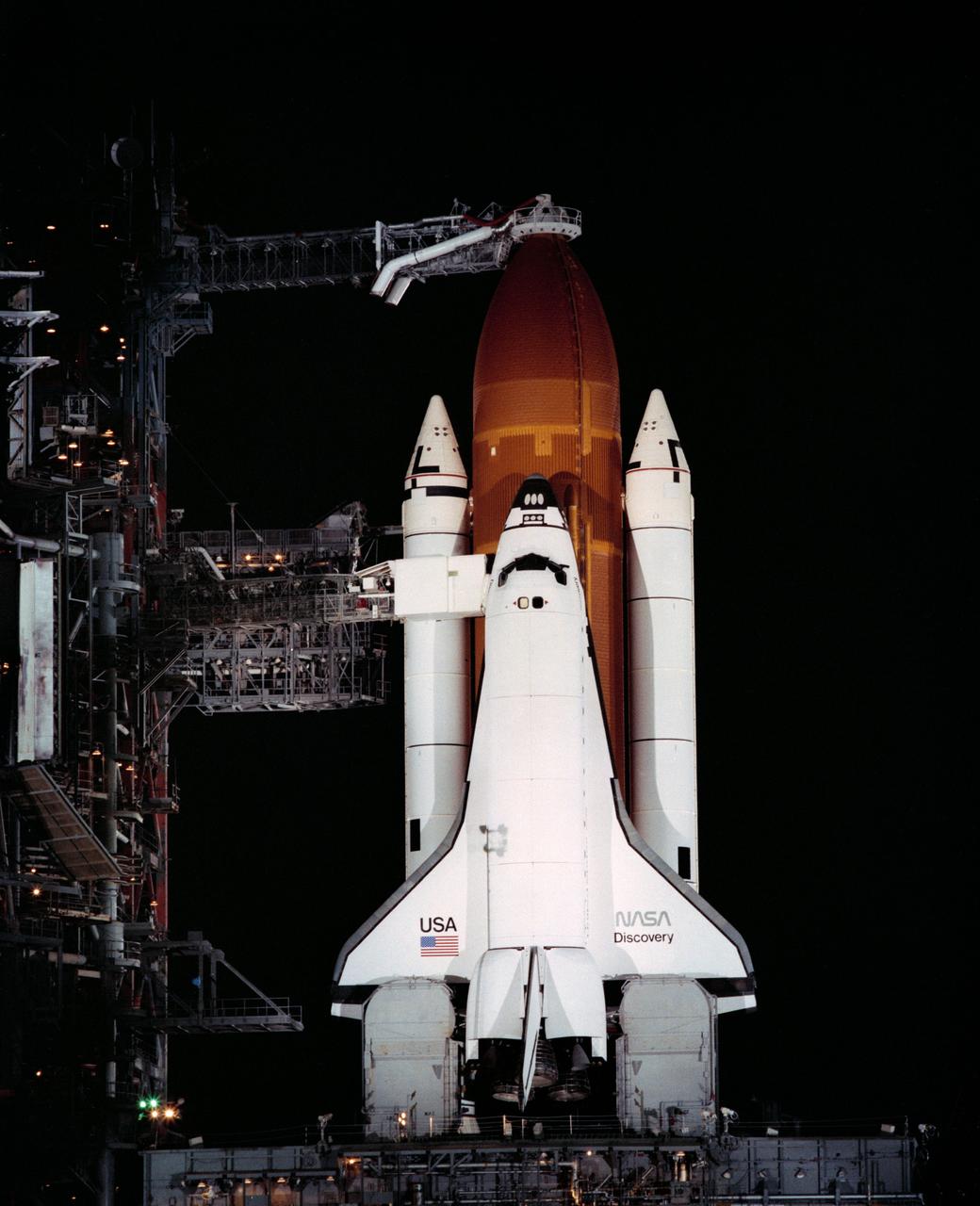
The Space Shuttle Discovery moves towards Pad "A" on the crawler transporter for its maiden flight. The Shuttle Discovery is poised atop Pad "A" at Complex 39 prior ot the STS-41D mission. KSC, FL
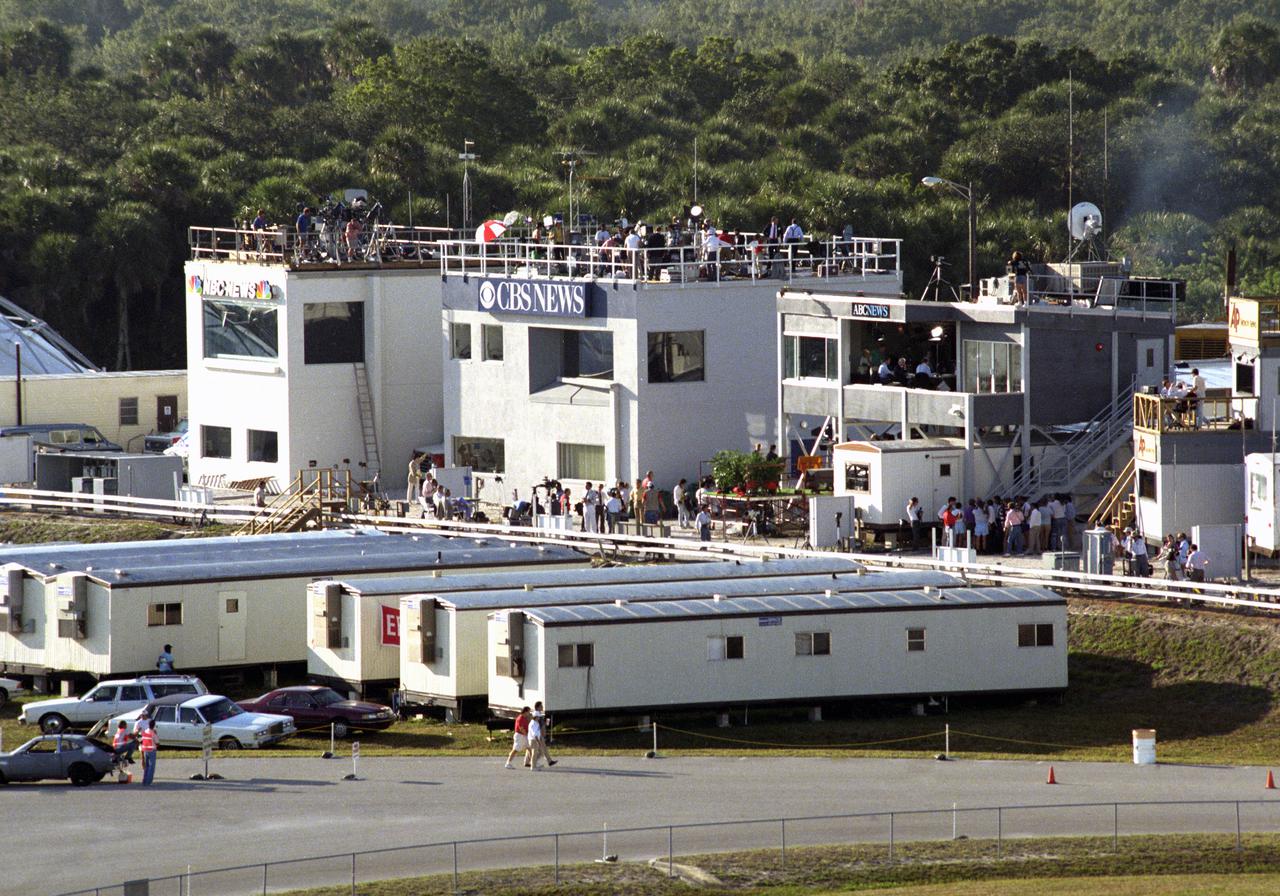
CAPE CANAVERAL, Fla. -- Complex 39 Press Site prepares for the nearly 2,500 accredited news media who arrived to cover the launch of Discovery and space shuttle mission STS-26R. Photo Credit: NASA
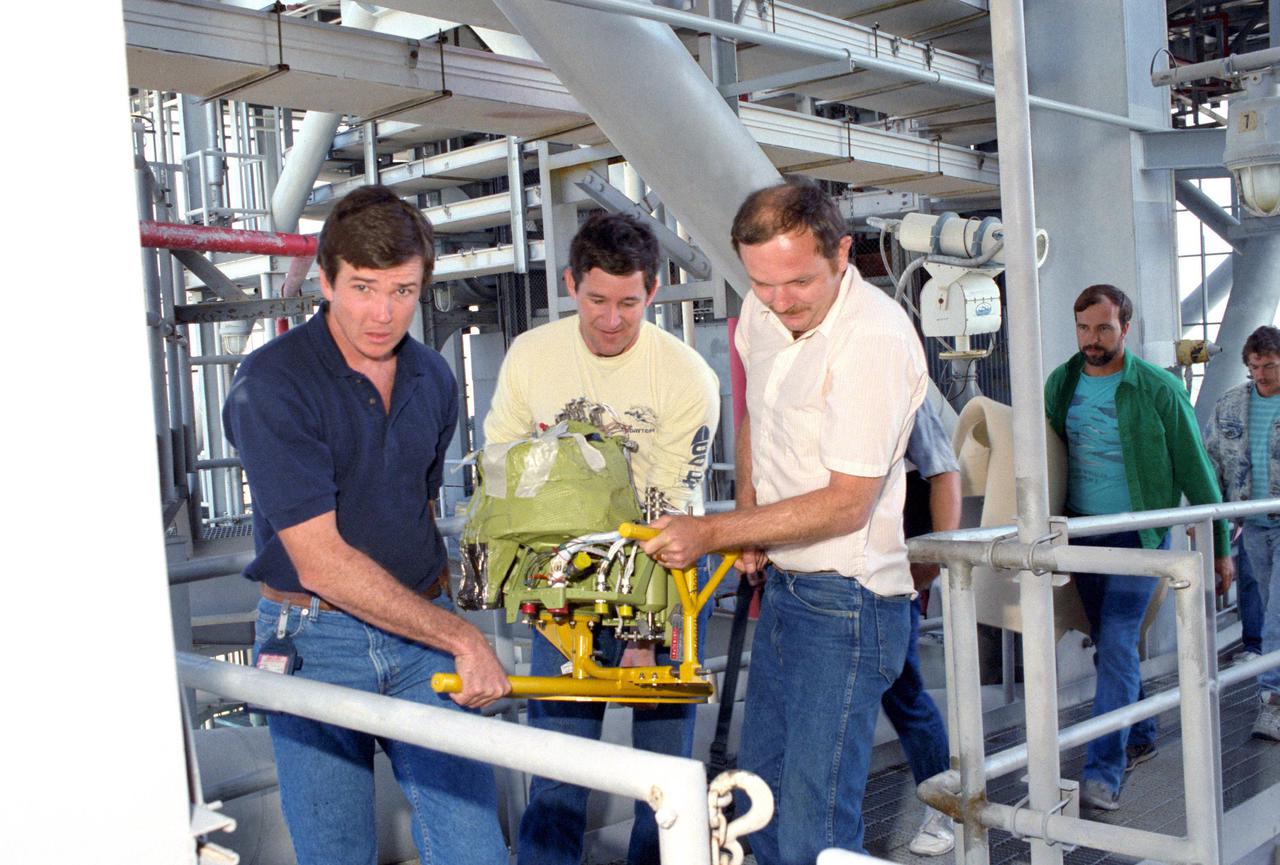
KENNEDY SPACE CENTER, FLA. -- Technicians at Pad 39-B carry a new Auxiliary Power Unit (APU) to be installed in the orbiter Discovery. It will replace APU #1 that failed during the STS-31 launch attempt on April 10.
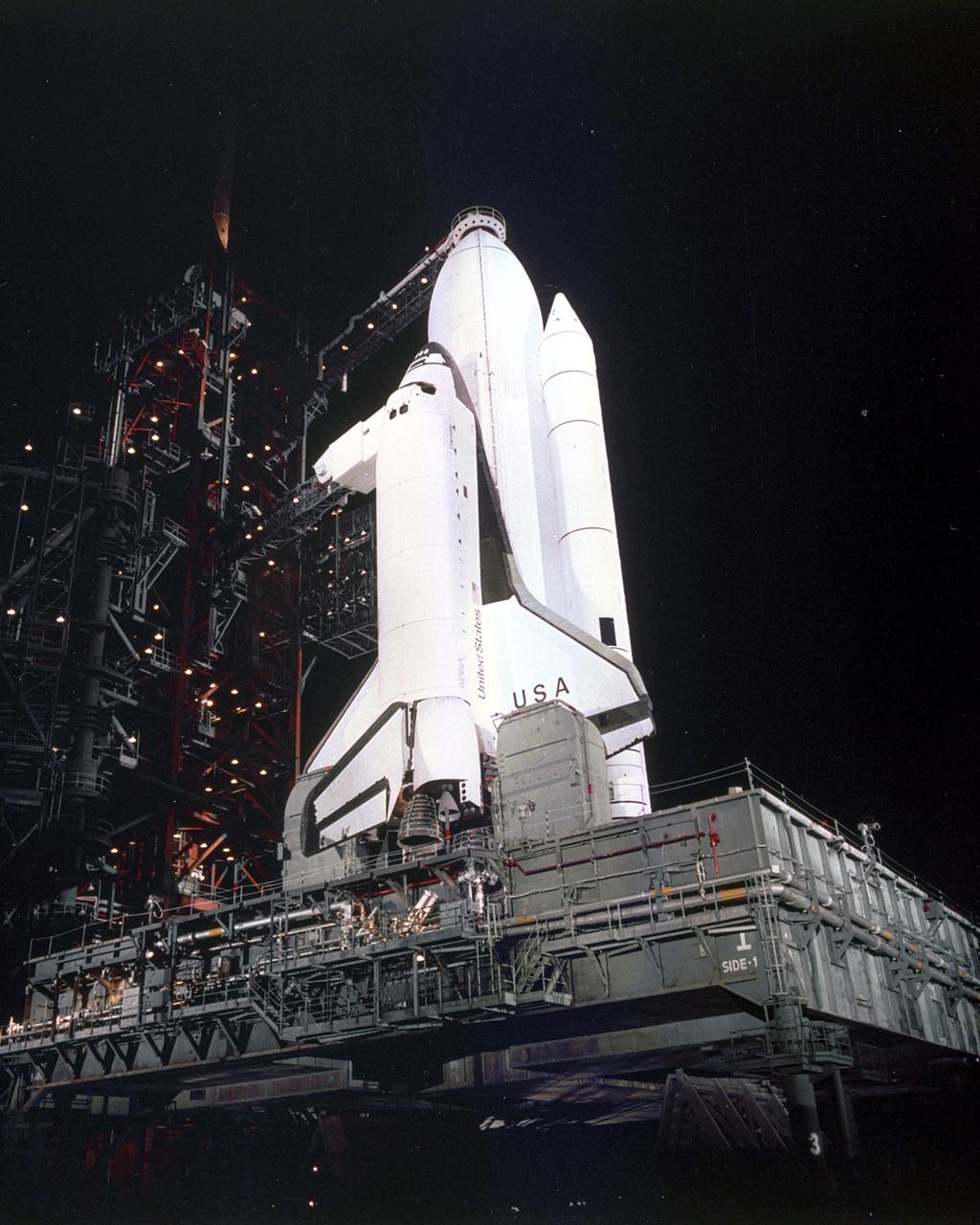
KENNEDY SPACE CENTER, FLA. - The Space Shuttle Columbia, (STS-1) stands poised for its maiden flight into space from Launch Pad A, Complex 39, following retraction of the Rotating Service Structure (RSS).