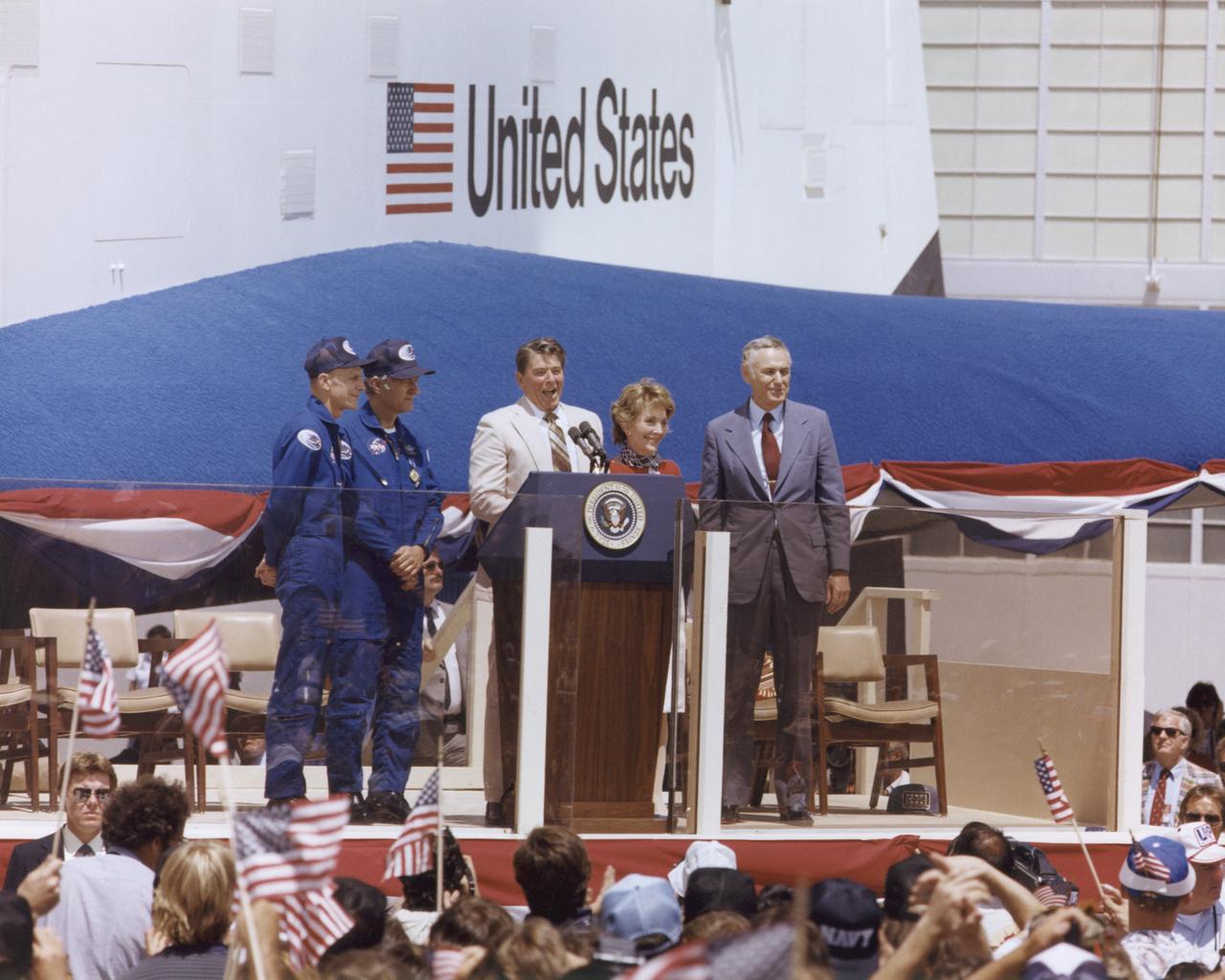
President Ronald Reagan speaks to a crowd of more than 45,000 people at NASA's Dryden Flight Research Center following the landing of STS-4 on July 4, 1982. To the right of the President are Mrs. Reagan and NASA Administrator James M. Beggs. To the left are STS-4 Columbia astronauts Thomas K. Mattingly and Henry W. Hartsfield, Jr. Prototype Space Shuttle Enterprise is in the background.
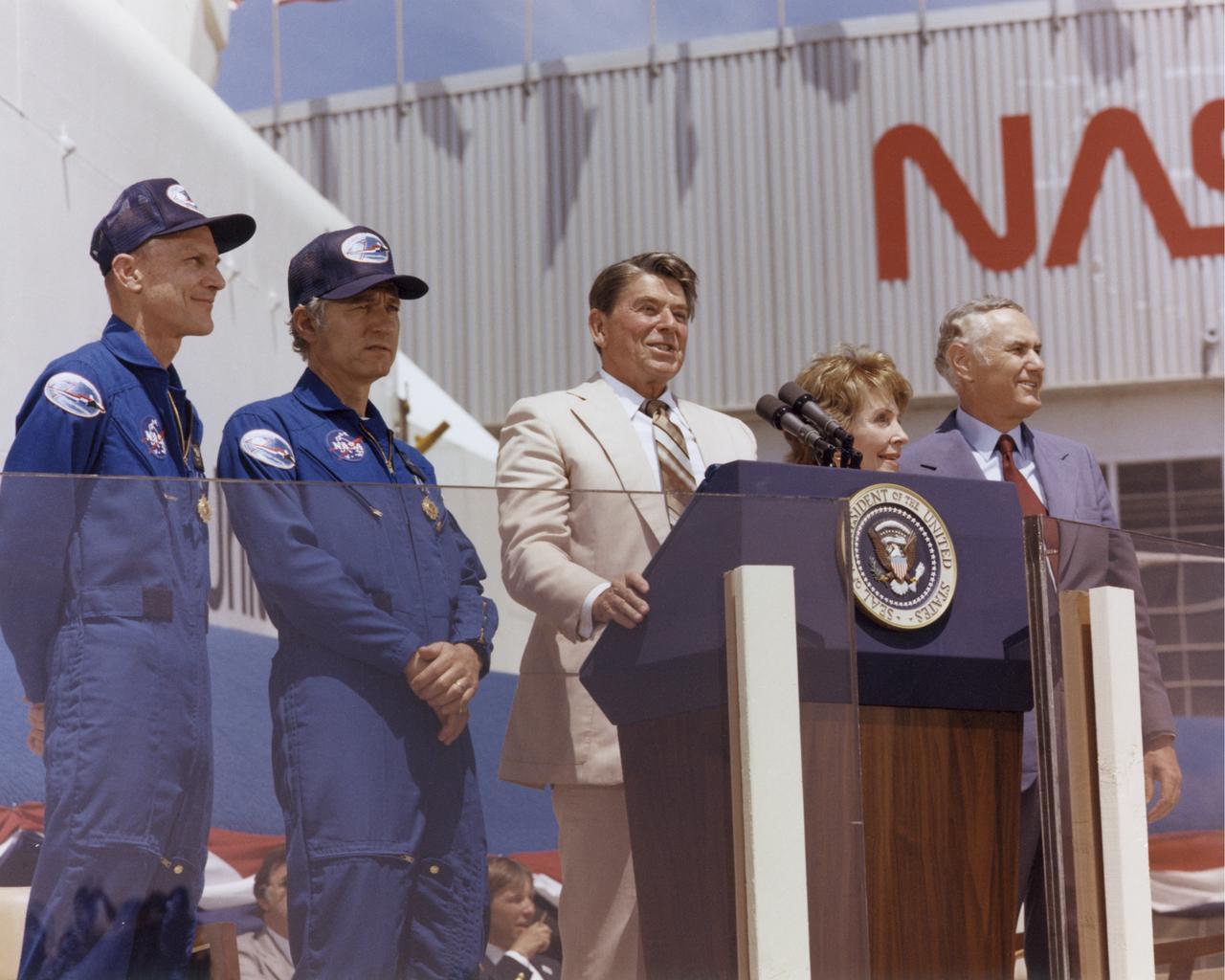
President Ronald Reagan speaks to a crowd of more than 45,000 people at NASA's Dryden Flight Research Center following the landing of STS-4 on July 4, 1982. To the right of the President are Mrs. Reagan and NASA Administrator James M. Beggs. To the left are STS-4 Columbia astronauts Thomas K. Mattingly and Henry W. Hartsfield, Jr. Prototype Space Shuttle Enterprise is in the background.
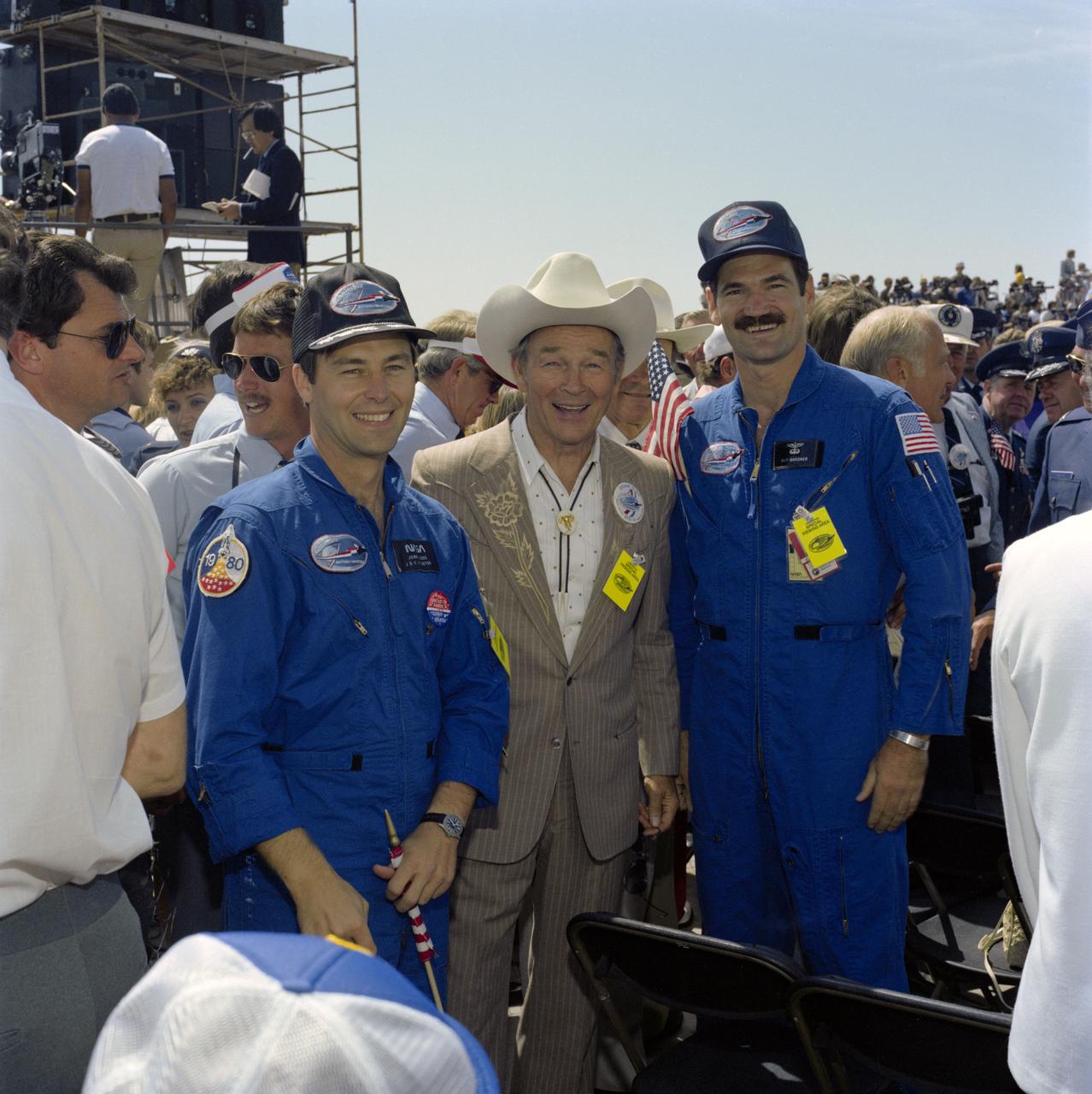
S82-33226 (4 July 1982) --- Inveterate space fan Roy Rogers with astronauts Jerry L. Ross, left, and Guy S. Gardner at Edwards Air Force Base for the landing of the space shuttle Columbia at the conclusion of the STS-4 mission on July 4, 1982. Ross and Gardner piloted chase planes involved in the approach and landing operations for the flight?s conclusion. Also present at the landing was (near far right) former astronaut Edwin E. Aldrin Jr., lunar module pilot for the historic first moon landing of almost 13 years ago. Photo credit: NASA
Views of the Columbia landing at EAFB ending the STS-4 Mission on 07/04/1982; of President and Mrs. Reagan greeting the crew out on the Lake bed Runway; and, the view of Roy Rogers with Astronauts Jerry Ross and Guy Gardner. 1. President Ronald Reagan & wife Nancy 2. Roy Rogers 3. Astronaut Jerry L. Ross 4. Astronaut Guy S. Gardner Edwards AFB, CA
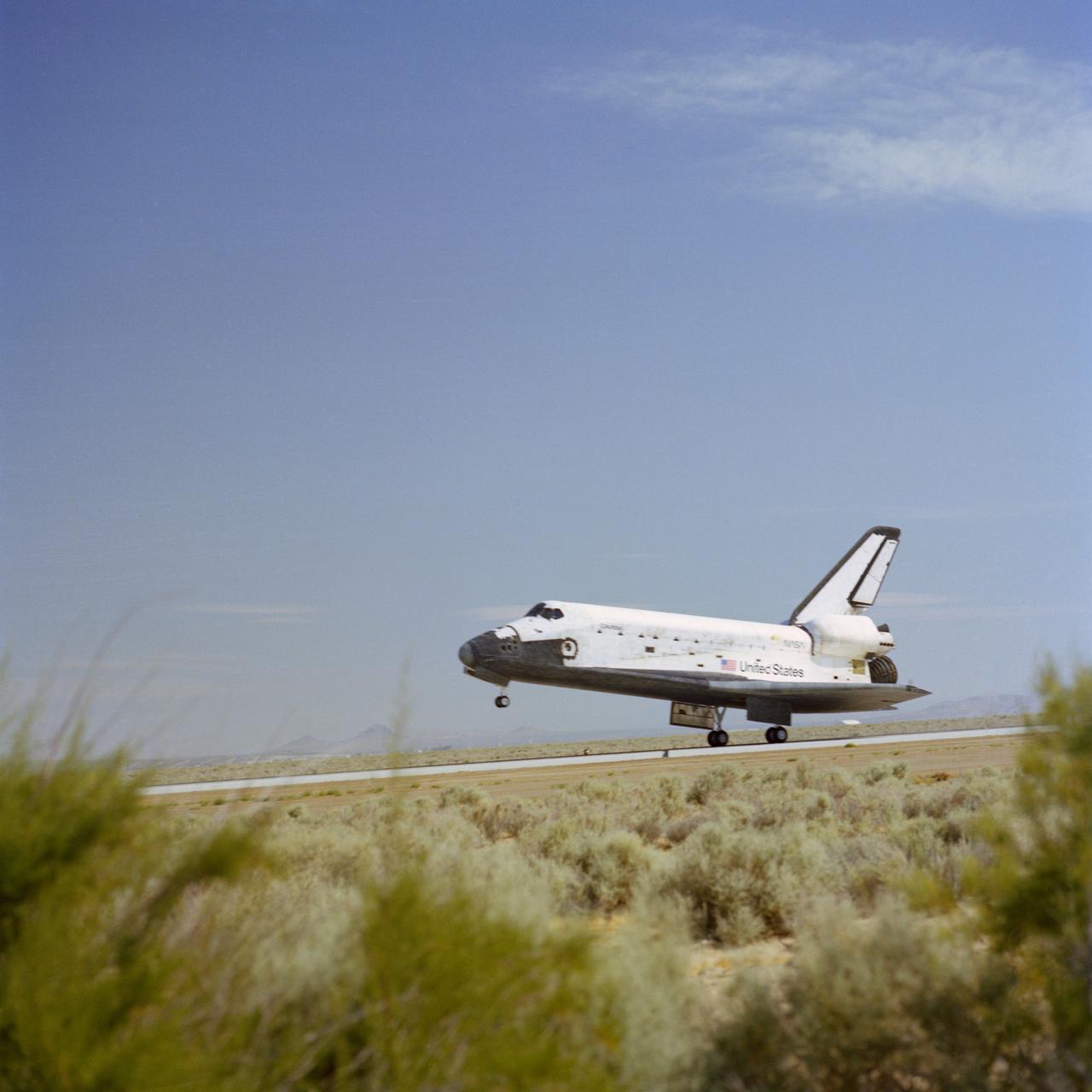
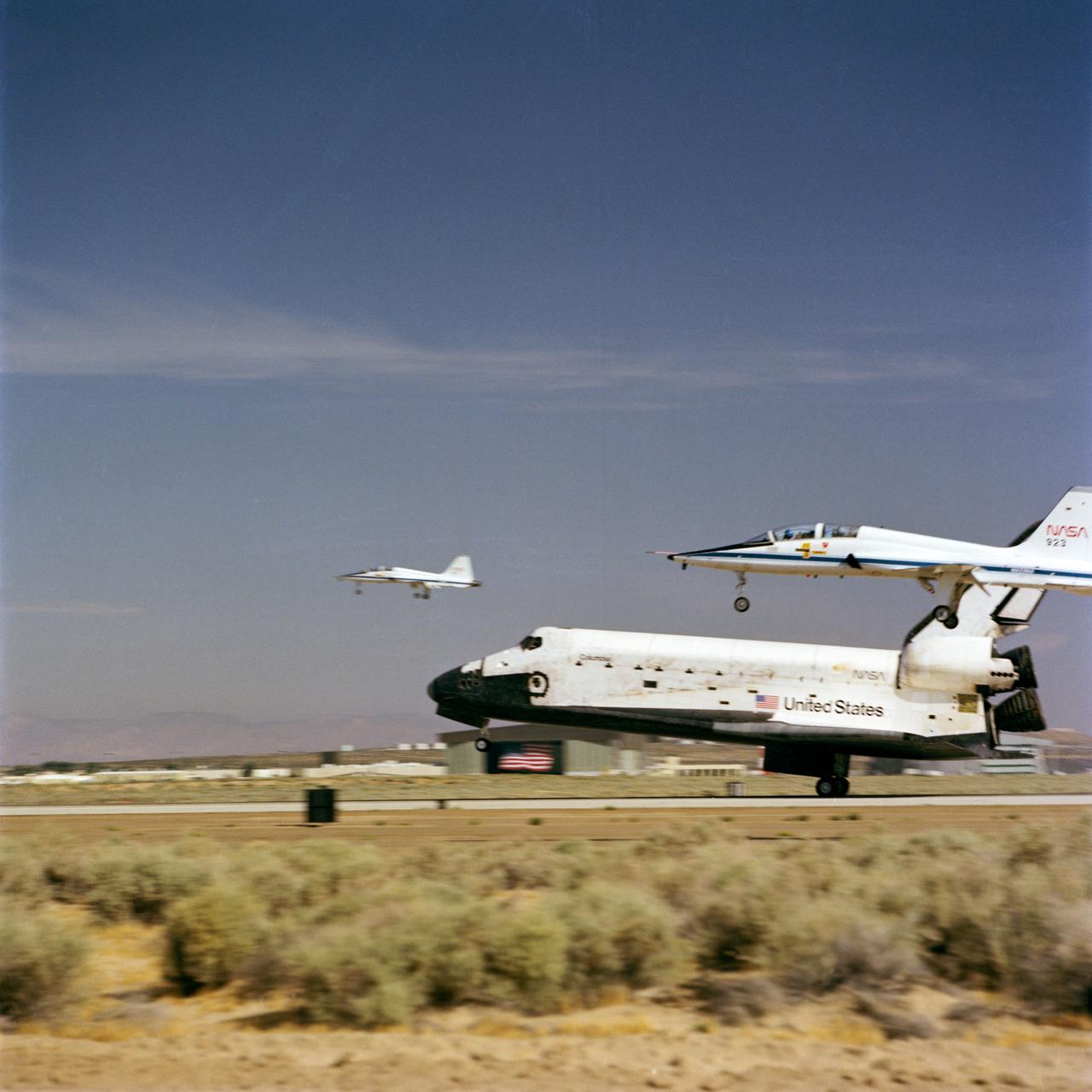
S82-33229 (4 July 1982) --- The space shuttle Columbia touches down on Runway 22 at Edwards Air Force Base in Southern California at the completion of a successful seven-day stay in Earth orbit. Inside are astronauts Thomas K. Mattingly II and Henry W. Hartsfield Jr., STS-4 commander and pilot, respectively. Though this closeup scene is devoid of visible people, hundreds of thousands weren?t far away for the unique July 4 celebration. Photo credit: NASA
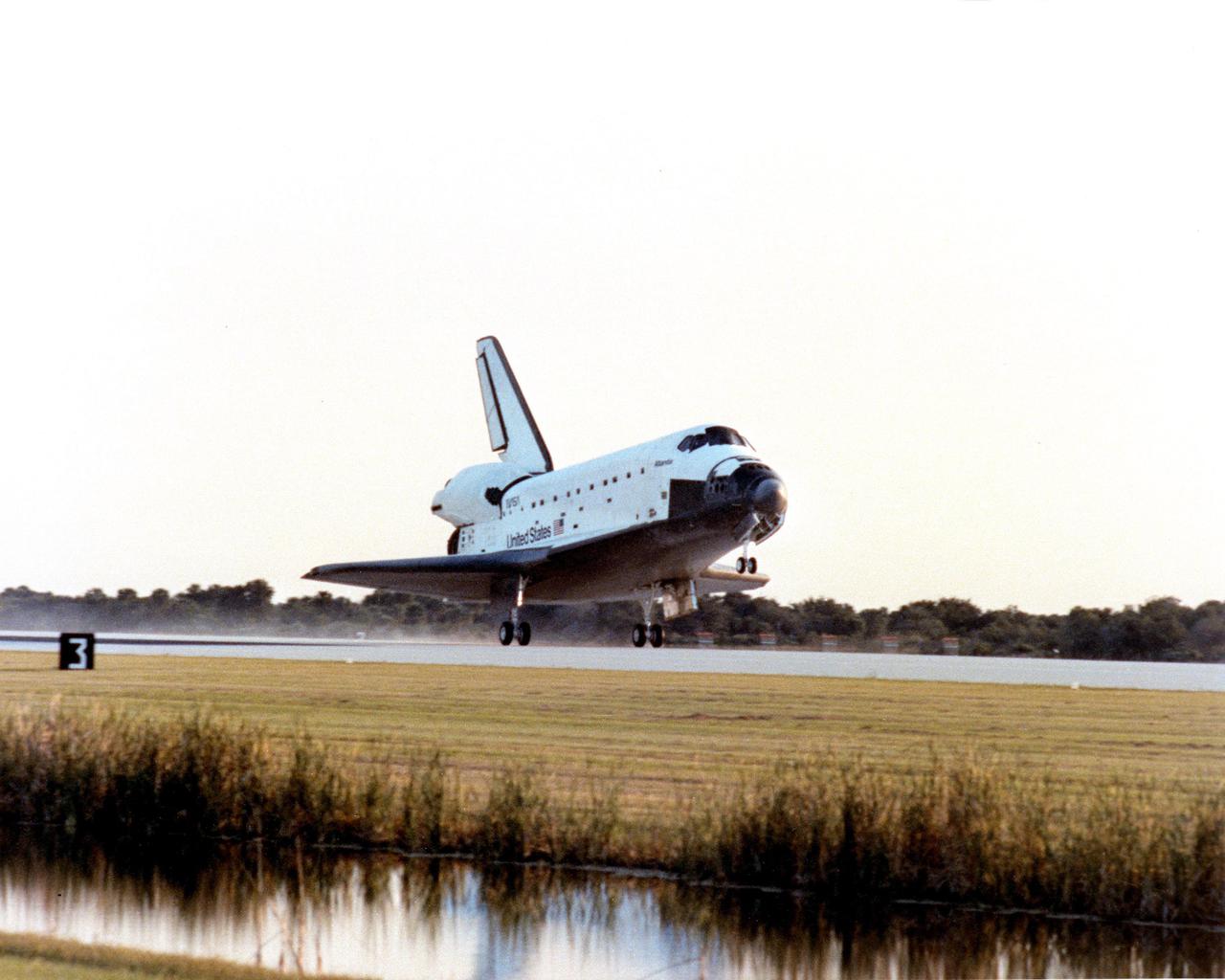
KENNEDY SPACE CENTER, FLA. -- The Shuttle Atlantis and Space Shuttle Mission STS-38 lands at Kennedy Space Center's Shuttle Landing Facility at 4:43 p.m. EST. This is the first Shuttle landing at KSC since 1985.
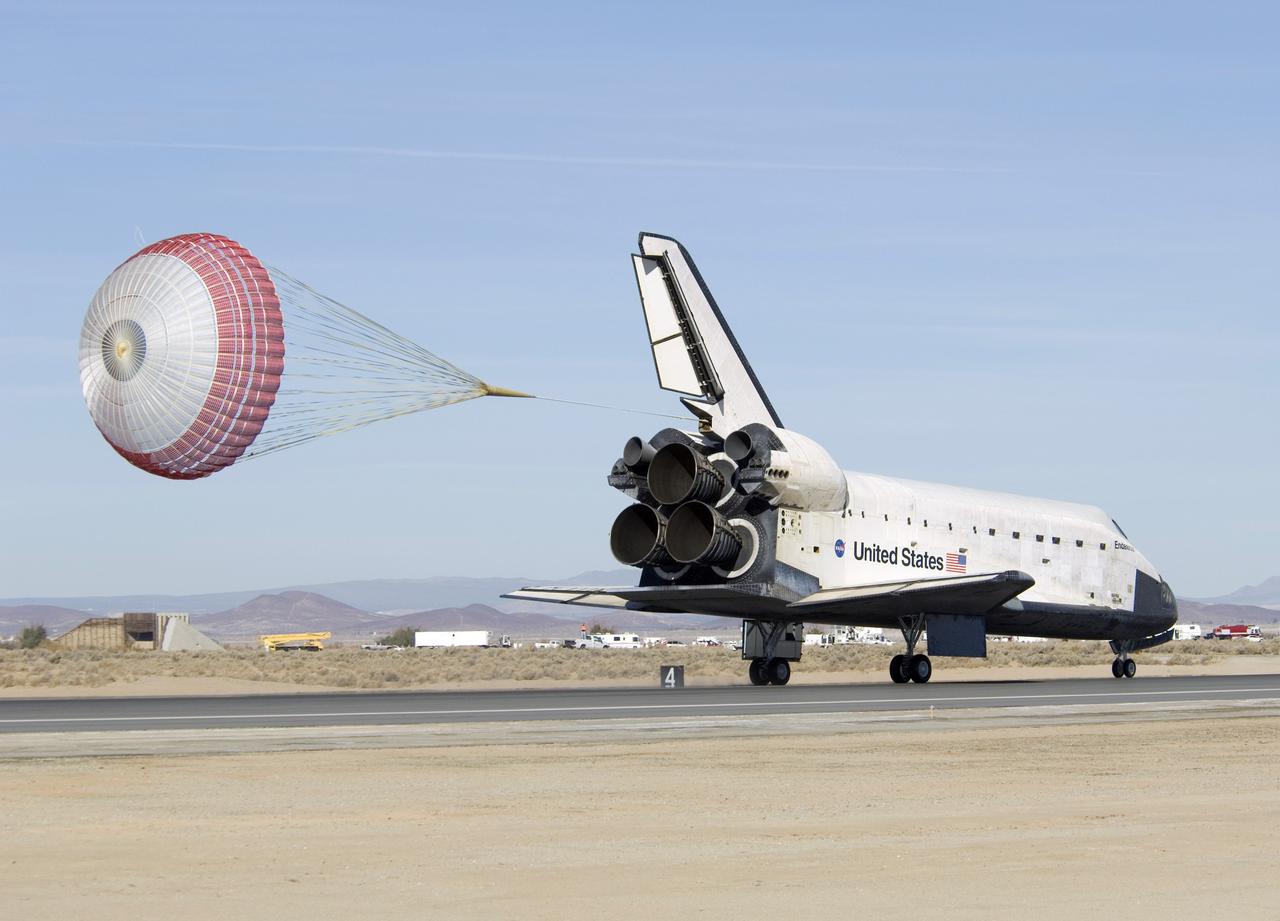
EDWARDS, Calif. –- A drag chute slows the speed of space shuttle Endeavour as it lands at Edwards Air Force Base in California after touching down at 4:25 p.m. EST to end the STS-126 mission, completing its 16-day journey of over 6.6 million miles in space. The main landing gear touched down at 4:25:06 p.m. EST. The nose landing gear touched down at 4:25:21 p.m. and wheel stop was at 4:26:03 p.m. The STS-126 mission was the 27th flight to the International Space Station, carrying equipment and supplies in the Multi-Purpose Logistics Module Leonardo. The mission featured four spacewalks and work to prepare the space station to house six crew members for long-duration missions. Photo credit: NASA/ Tony Landis, EAFB
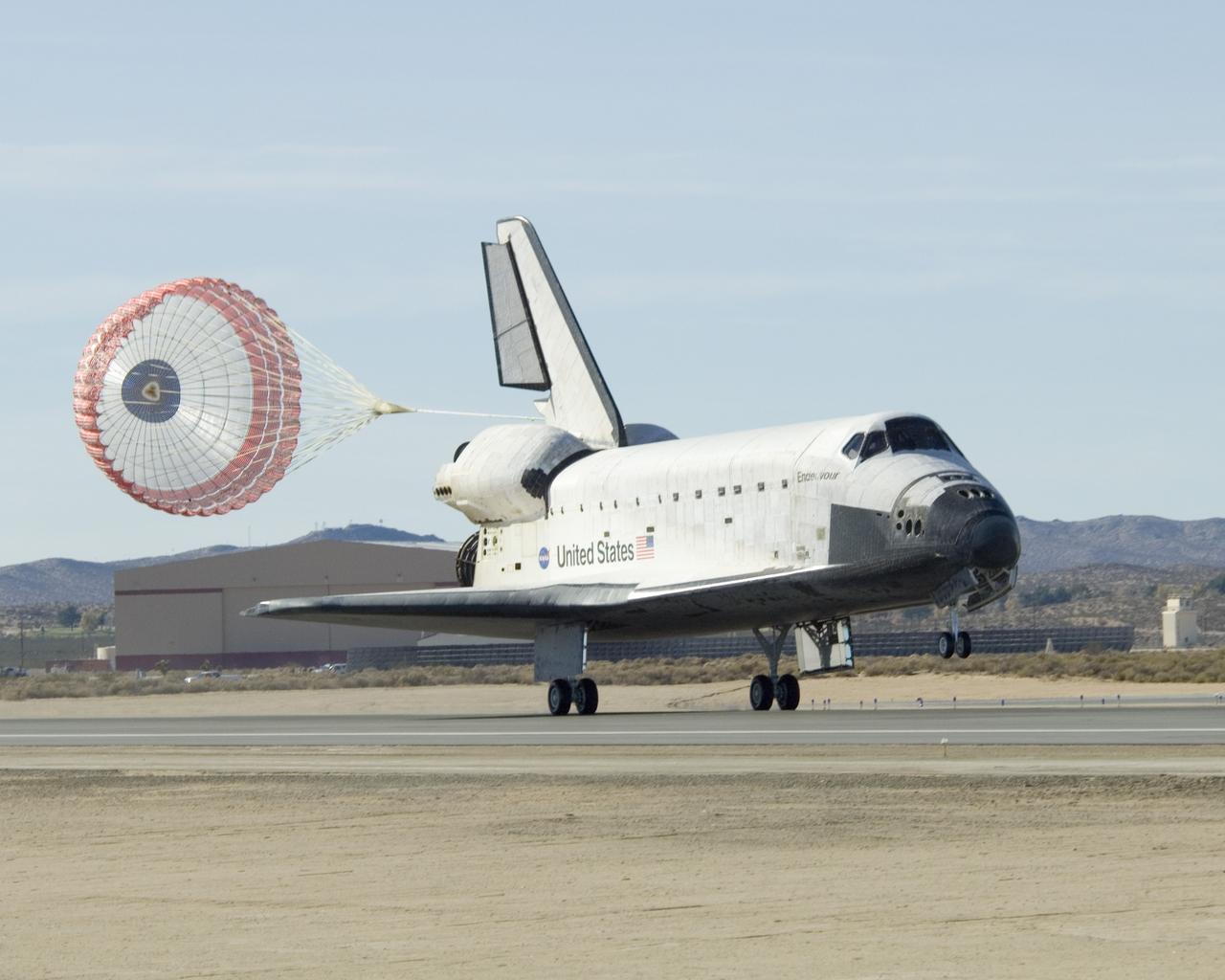
EDWARDS, Calif. –- A drag chute slows the speed of space shuttle Endeavour as it lands at Edwards Air Force Base in California after touching down at 4:25 p.m. EST to end the STS-126 mission, completing its 16-day journey of over 6.6 million miles in space.The main landing gear touched down at 4:25:06 p.m. EST. The nose landing gear touched down at 4:25:21 p.m. and wheel stop was at 4:26:03 p.m. The STS-126 mission was the 27th flight to the International Space Station, carrying equipment and supplies in the Multi-Purpose Logistics Module Leonardo. The mission featured four spacewalks and work to prepare the space station to house six crew members for long-duration missions. Photo credit: NASA/ Tony Landis, EAFB
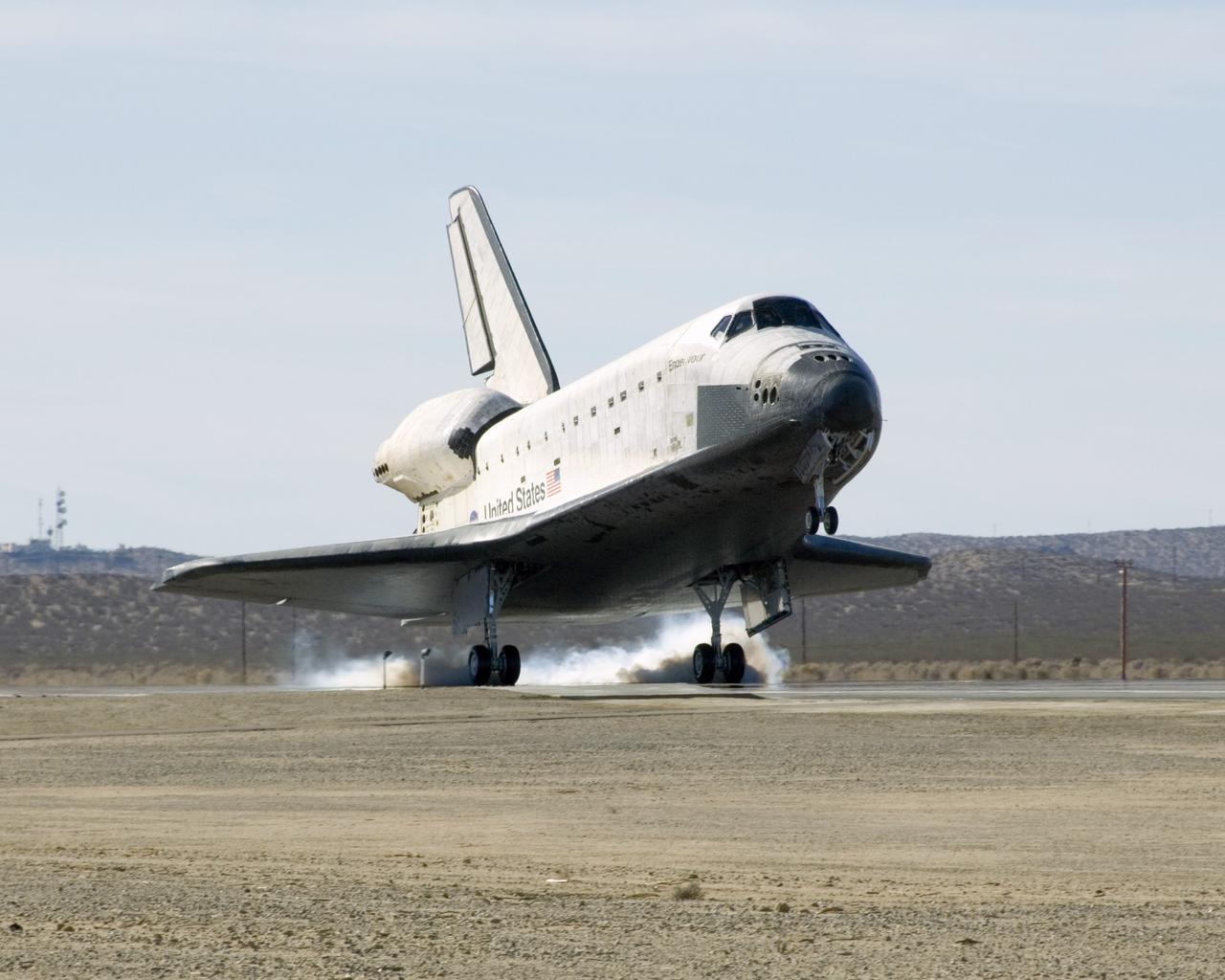
EDWARDS, Calif. –- In the 52nd landing at Edwards Air Force Base in California, space shuttle Endeavour touches down at 4:25 p.m. EST to end the STS-126 mission, completing its 16-day journey of over 6.6 million miles in space. The main landing gear touched down at 4:25:06 p.m. EST. The nose landing gear touched down at 4:25:21 p.m. and wheel stop was at 4:26:03 p.m. The STS-126 mission was the 27th flight to the International Space Station, carrying equipment and supplies in the Multi-Purpose Logistics Module Leonardo. The mission featured four spacewalks and work to prepare the space station to house six crew members for long-duration missions. Photo credit: NASA/ Tom Tschida, EAFB
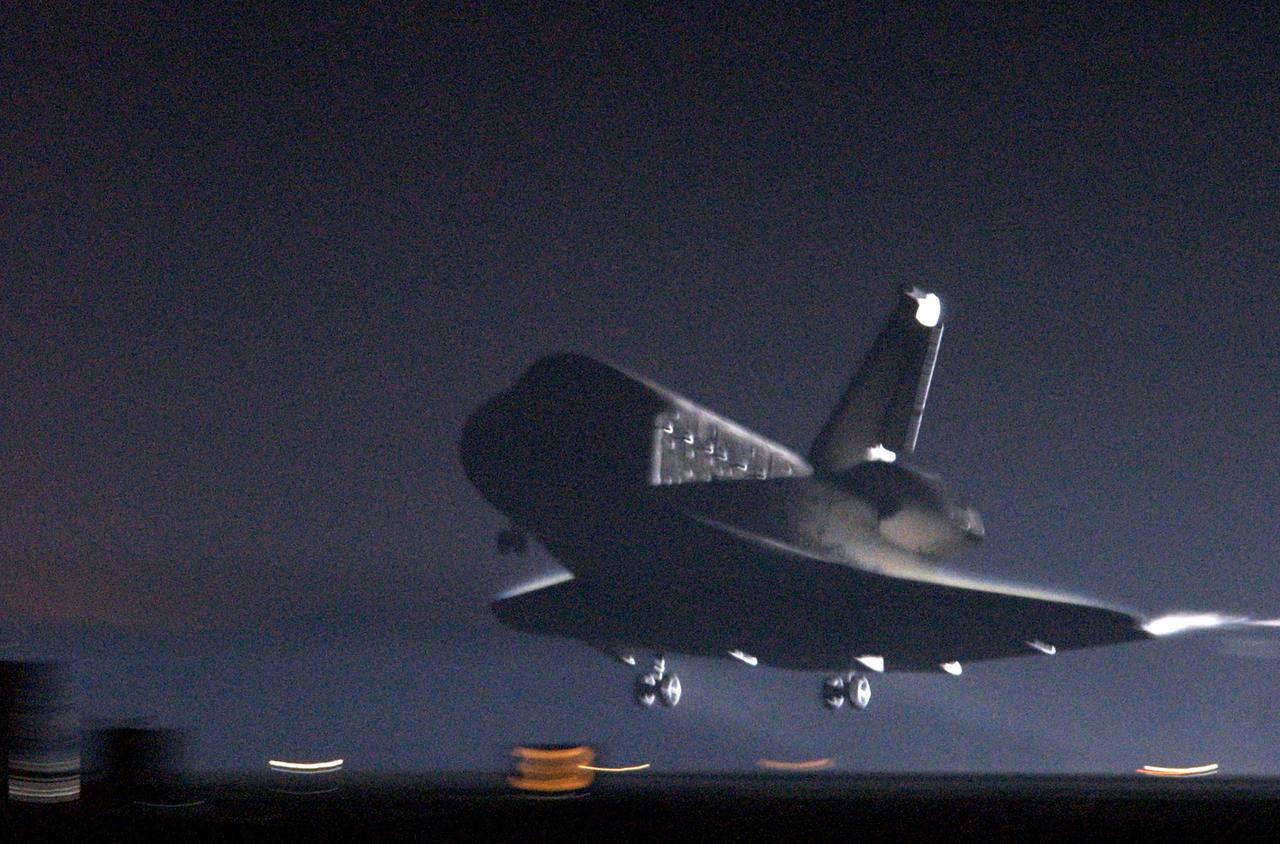
KENNEDY SPACE CENTER, FLA. -- Powerful xenon lights on the Shuttle Landing Facility outline the dark image of orbiter Columbia as it approaches touchdown on Runway 33. The landing completes mission STS-109 to service the Hubble Space Telescope, returning the crew of seven to Earth after a mission elapsed time of 10 days, 22 hours, 11 minutes. Wheel stop occurred on orbit 165 at 4:33:09 a.m. EST. Main gear touchdown occurred at 4:31:52 a.m. and nose wheel touchdown an 4:32:02. It was the 58th landing at KSC out of 108 missions in the history of the Shuttle program
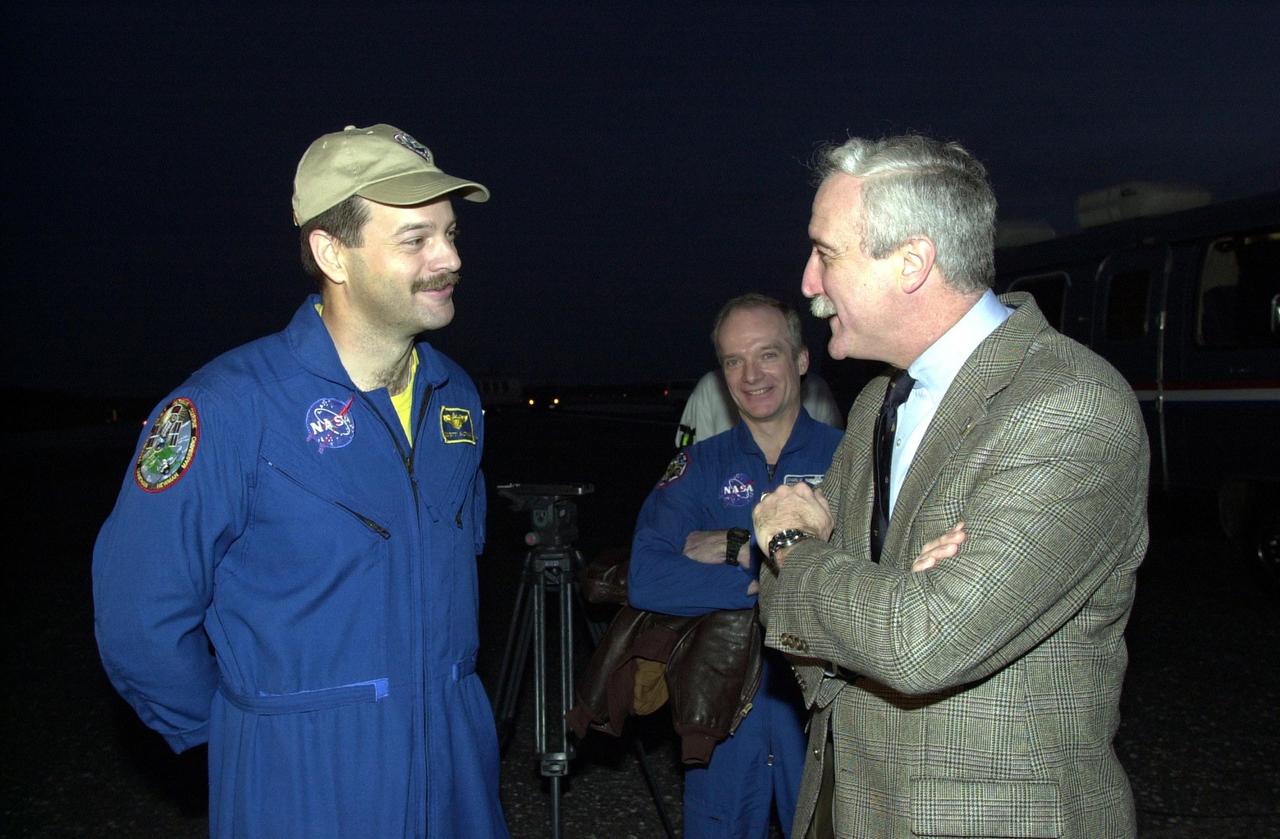
KENNEDY SPACE CENTER, FLA. -- After landing Columbia on its return from mission STS-109 - servicing the Hubble Space Telescope -- Commander Scott Altman (left) talks with NASA Administrator Sean O'Keefe. In the background is astronaut Charlie Precourt, who flew weather reconnaissance for the landing. Columbia returned to Earth the crew of seven after a mission elapsed time of 10 days, 22 hours, 11 minutes. Wheel stop occurred on orbit 165 at 4:33:09 a.m. EST. Main gear touchdown occurred at 4:31:52 a.m. and nose wheel touchdown an 4:32:02. It was the 58th landing at KSC out of 108 missions in the history of the Shuttle program
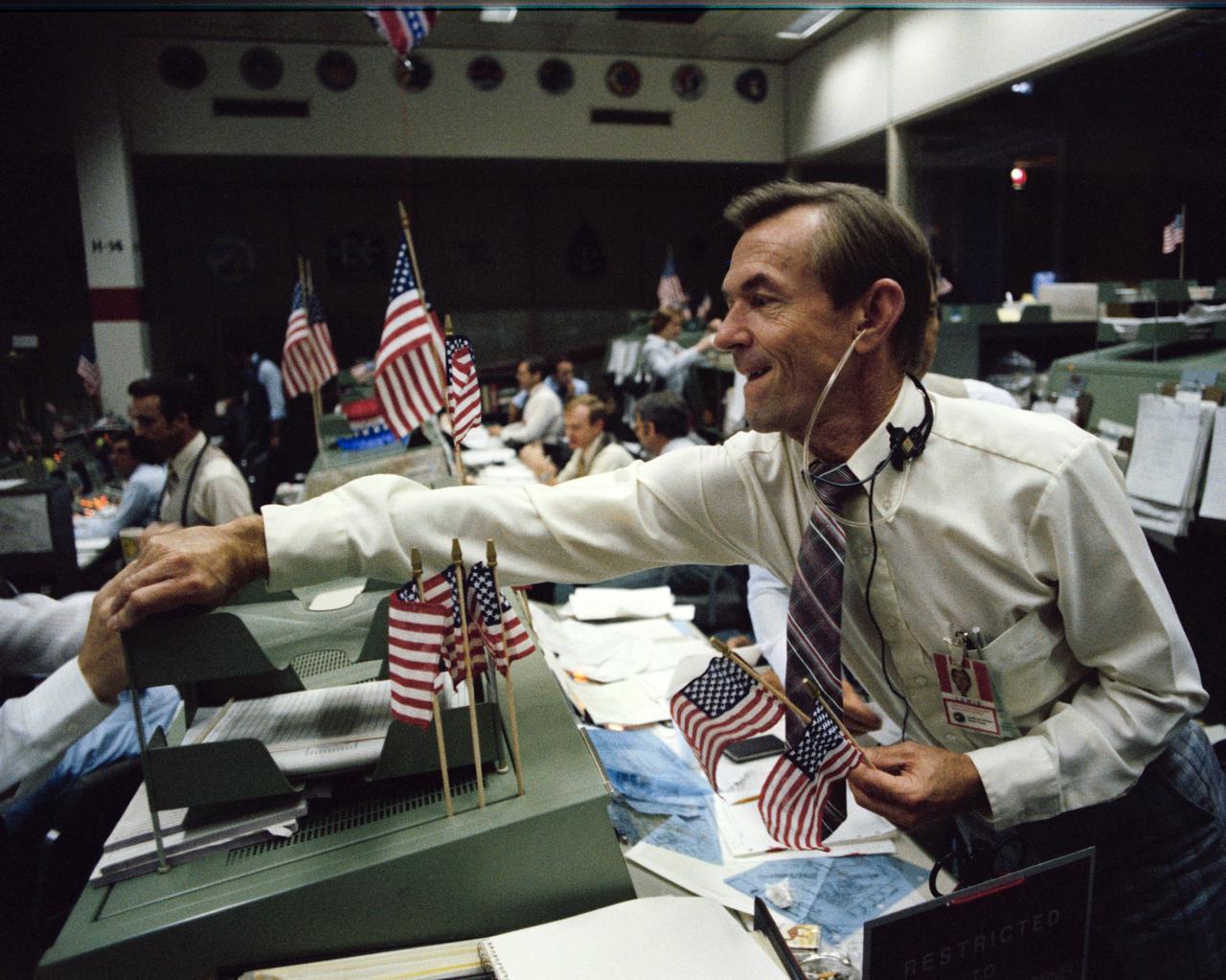
S82-33221 (4 July 1982) --- Lead STS-4 flight director Charles Lewis is congratulated by an unidentified flight controller (partially out of frame) in the Johnson Space Center's Mission Control Center following the landing of the space shuttle Columbia at Edwards Air Force Base in California. Photo credit: NASA
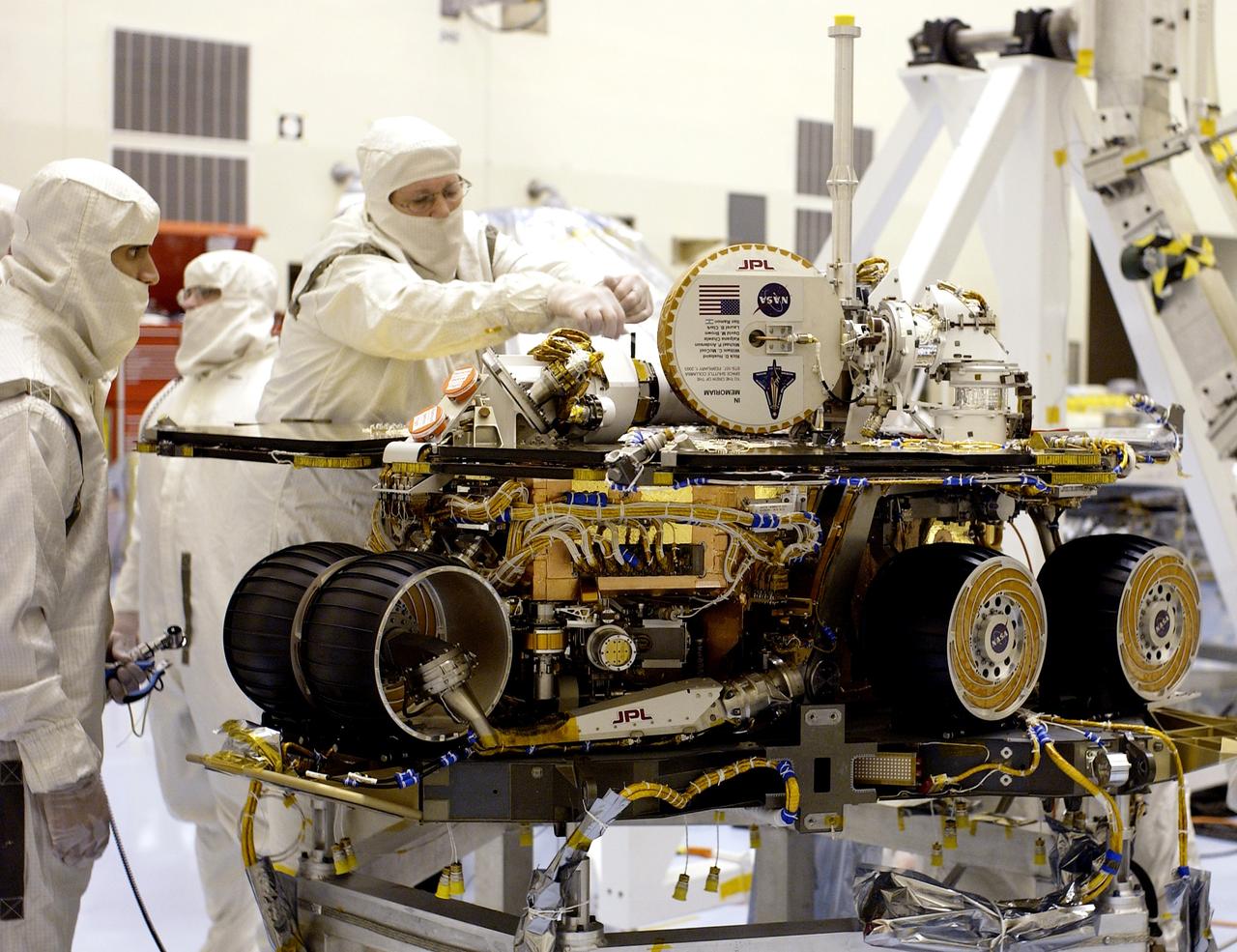
KENNEDY SPACE CENTER, FLA. -- This plaque commemorating the STS-107 Space Shuttle Columbia crew now looks over the Mars landscape after the successful landing and deployment of the Mars Exploration Rover “Spirit” Jan. 4 onto the red planet. The plaque, mounted on the high-gain antenna, is shown while the rover underwent final checkout March 28, 2003, in the Payload Hazardous Servicing Facility at KSC.
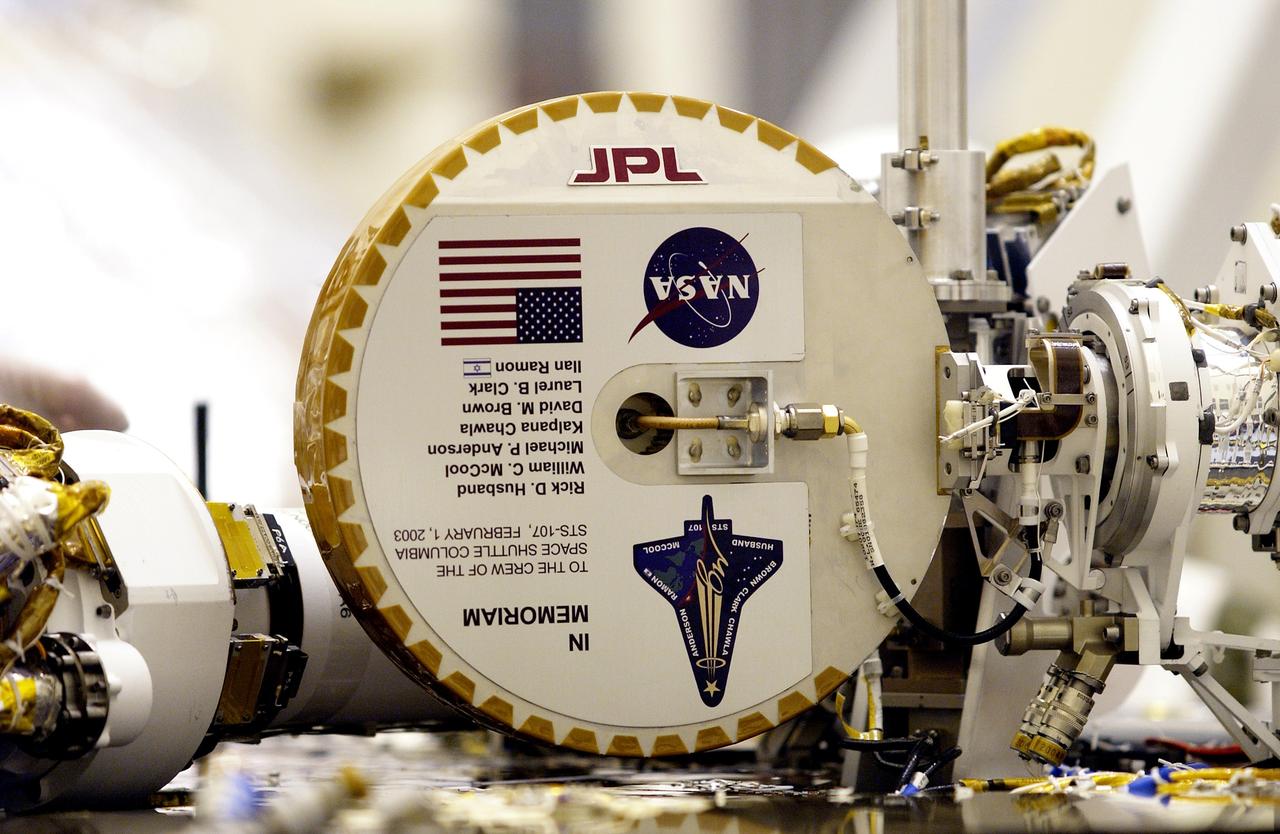
KENNEDY SPACE CENTER, FLA. -- This plaque commemorating the STS-107 Space Shuttle Columbia crew now looks over the Mars landscape after the successful landing and deployment of the Mars Exploration Rover “Spirit” Jan. 4 onto the red planet. The plaque, mounted on the high-gain antenna, is shown while the rover underwent final checkout March 28, 2003, in the Payload Hazardous Servicing Facility at KSC.
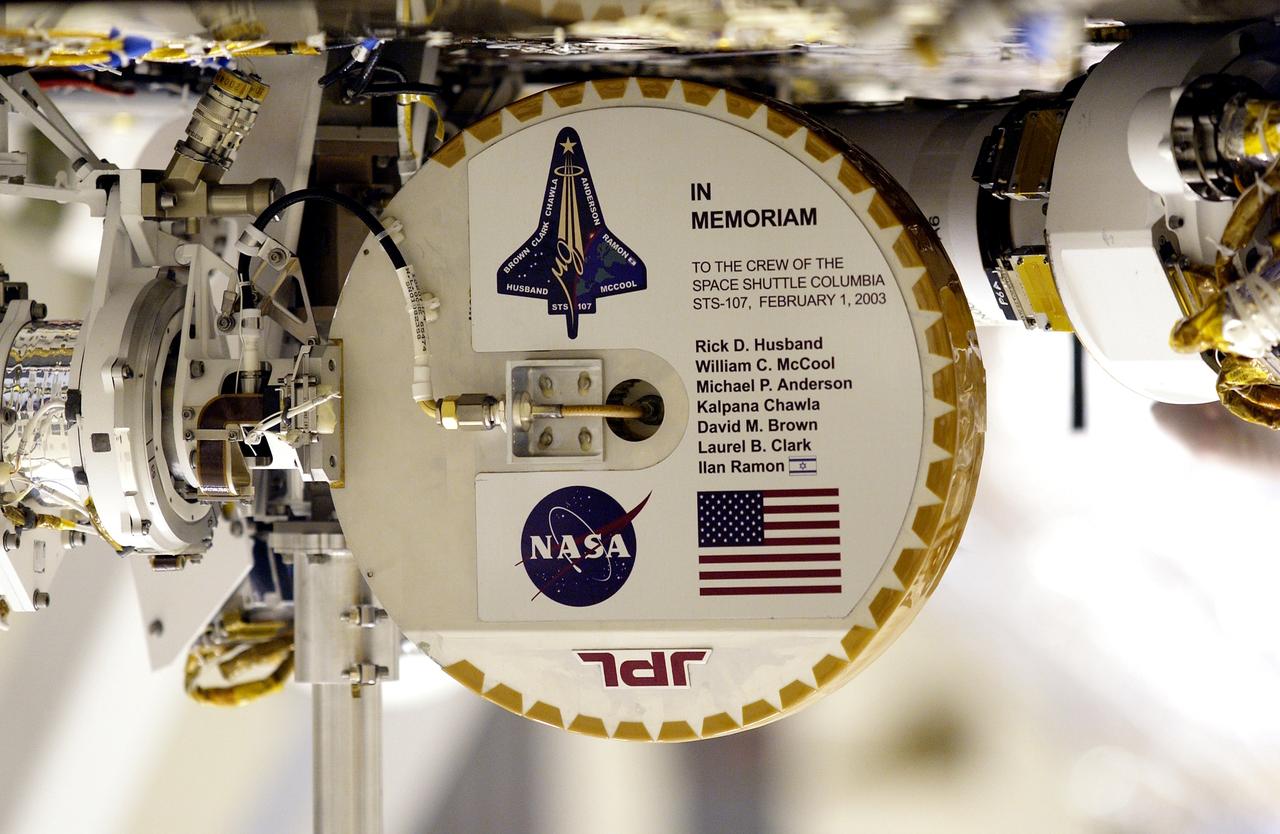
KENNEDY SPACE CENTER, FLA. --Shown upside down to read the names, this plaque commemorating the STS-107 Space Shuttle Columbia crew now looks over the Mars landscape after the successful landing and deployment of the Mars Exploration Rover “Spirit” Jan. 4 onto the red planet. The plaque, mounted on the high-gain antenna, is shown while the rover underwent final checkout March 28, 2003, in the Payload Hazardous Servicing Facility at KSC.
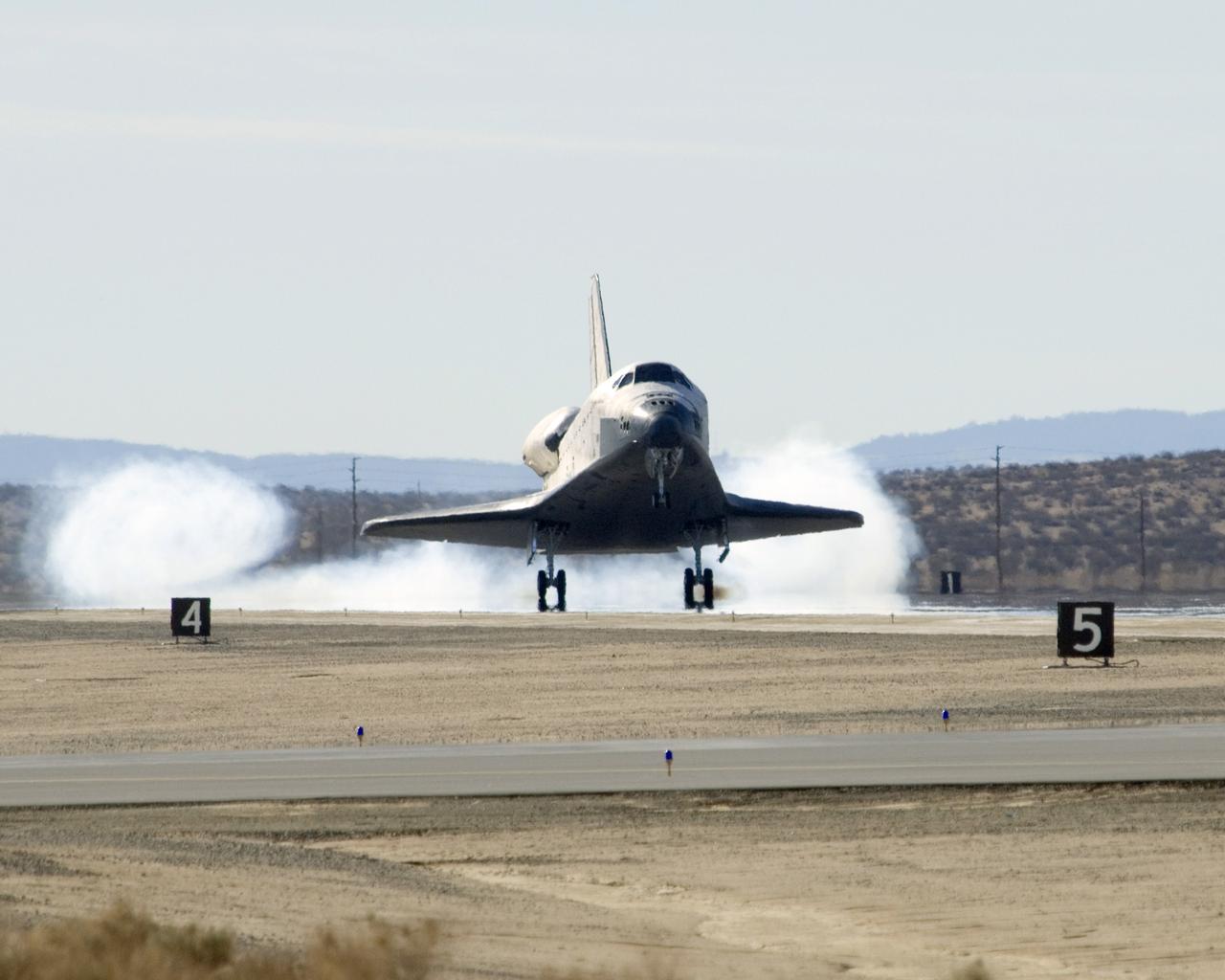
EDWARDS, Calif. –- Space shuttle Endeavour kicks up dust as it touches down at Edwards Air Force Base in California at 4:25 p.m. EST to end the STS-126 mission, completing its 16-day journey of over 6.6 million miles in space. The main landing gear touched down at 4:25:06 p.m. EST. The nose landing gear touched down at 4:25:21 p.m. and wheel stop was at 4:26:03 p.m. The STS-126 mission was the 27th flight to the International Space Station, carrying equipment and supplies in the Multi-Purpose Logistics Module Leonardo. The mission featured four spacewalks and work to prepare the space station to house six crew members for long-duration missions. Photo credit: NASA/ Tony Landis, EAFB

EDWARDS, Calif. –- Space shuttle Endeavour glides down the runway at Edwards Air Force Base in California after touching down at 4:25 p.m. EST to end the STS-126 mission, completing its 16-day journey of over 6.6 million miles in space. The main landing gear touched down at 4:25:06 p.m. EST. The nose landing gear touched down at 4:25:21 p.m. and wheel stop was at 4:26:03 p.m. The STS-126 mission was the 27th flight to the International Space Station, carrying equipment and supplies in the Multi-Purpose Logistics Module Leonardo. The mission featured four spacewalks and work to prepare the space station to house six crew members for long-duration missions. Photo credit: NASA/ Tom Tschida, EAFB
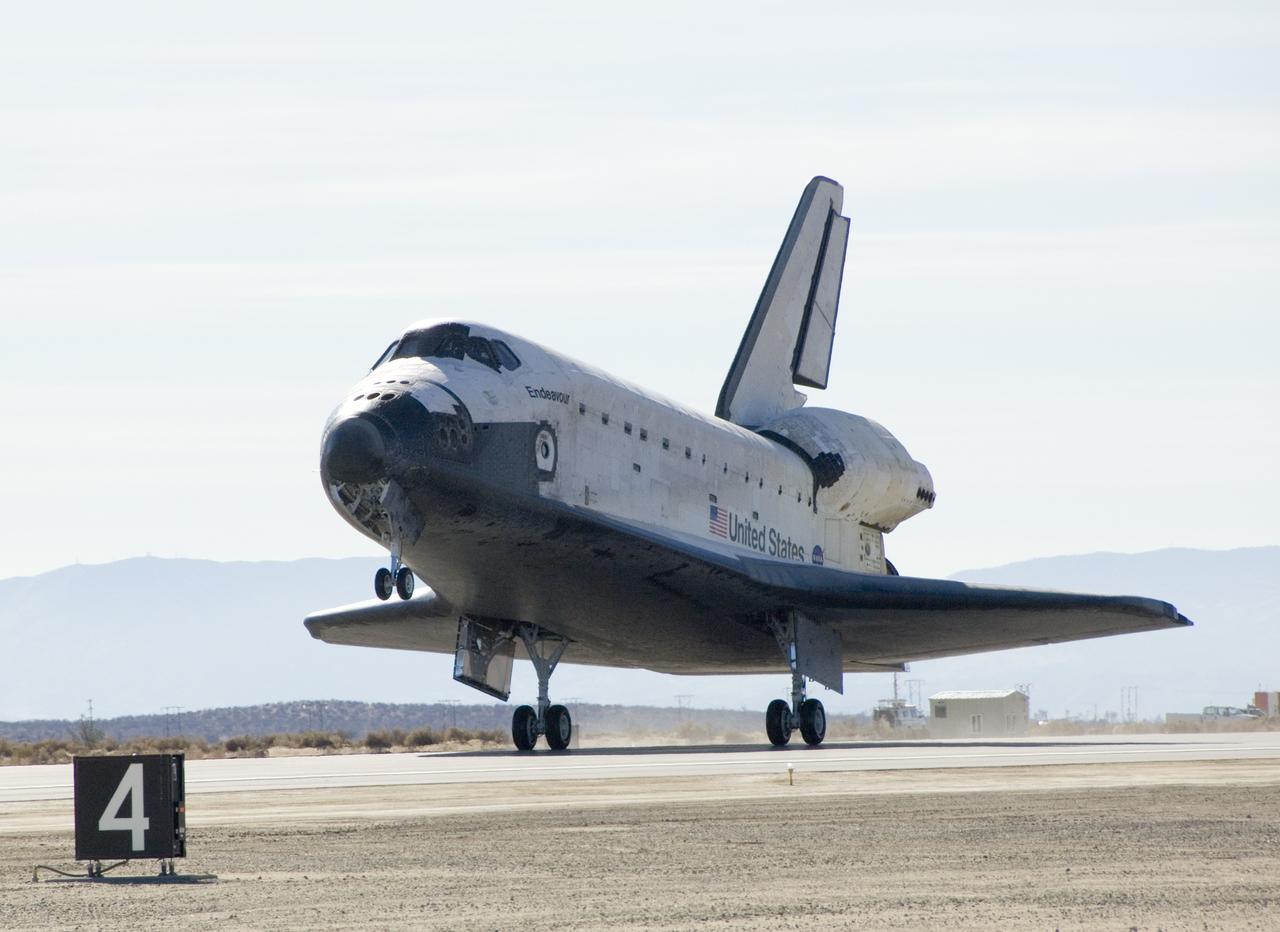
EDWARDS, Calif. –- Space shuttle Endeavour glides down the runway at Edwards Air Force Base in California after touching down at 4:25 p.m. EST to end the STS-126 mission, completing its 16-day journey of over 6.6 million miles in space. The main landing gear touched down at 4:25:06 p.m. EST. The nose landing gear touched down at 4:25:21 p.m. and wheel stop was at 4:26:03 p.m. The STS-126 mission was the 27th flight to the International Space Station, carrying equipment and supplies in the Multi-Purpose Logistics Module Leonardo. The mission featured four spacewalks and work to prepare the space station to house six crew members for long-duration missions. Photo credit: NASA/ Carla Thomas, EAFB
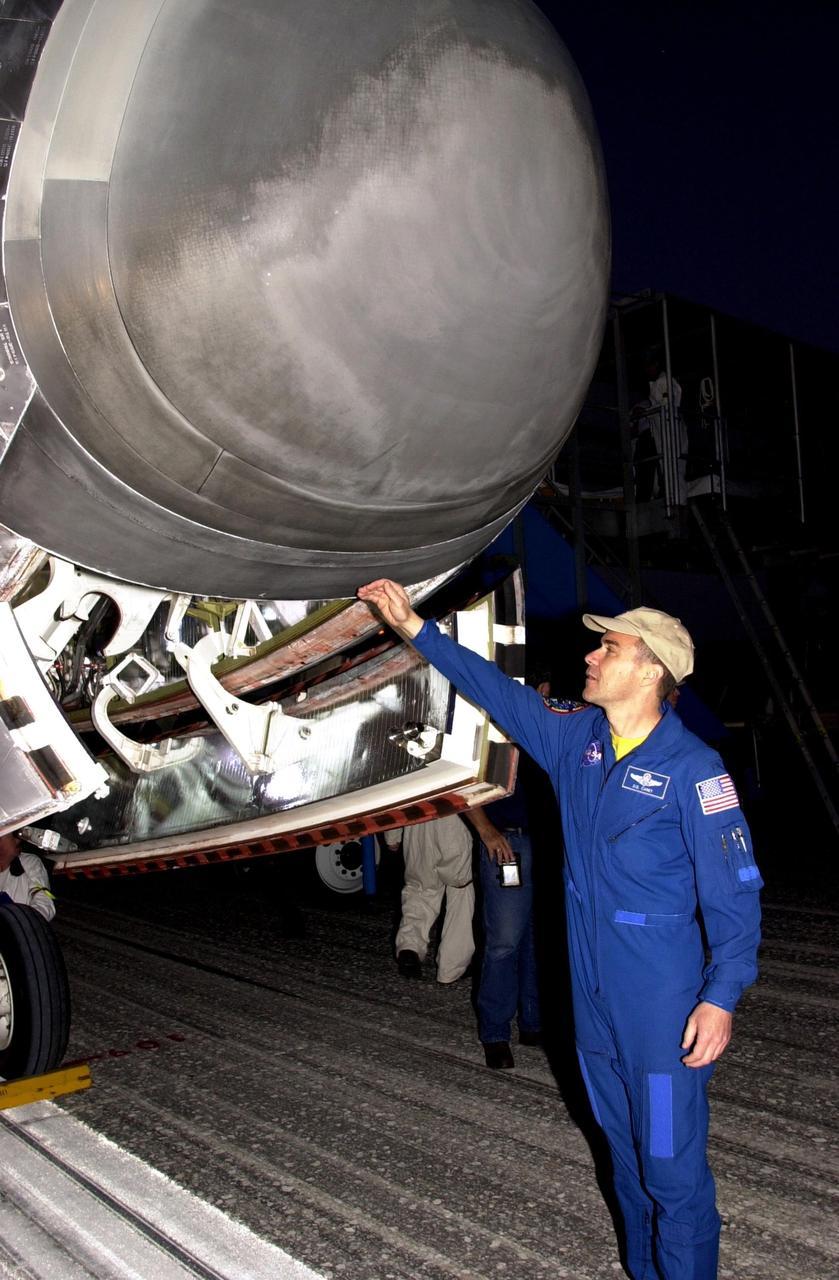
KENNEDY SPACE CENTER, FLA. -- During a post-flight walk around orbiter Columbia at the Shuttle Landing Facility, STS-109 Pilot Duane Carey gingerly checks the heat of the nose cone. The crew returned to Earth after an 11-day mission servicing the Hubble Space Telescope. Wheel stop occurred on orbit 165 at 4:33:09 a.m. EST. Main gear touchdown occurred at 4:31:52 a.m. and nose wheel touchdown at 4:32:02. Rollout time was 1 minute, 17 seconds. This was the 58th landing at KSC out of 108 missions in the history of the Shuttle program
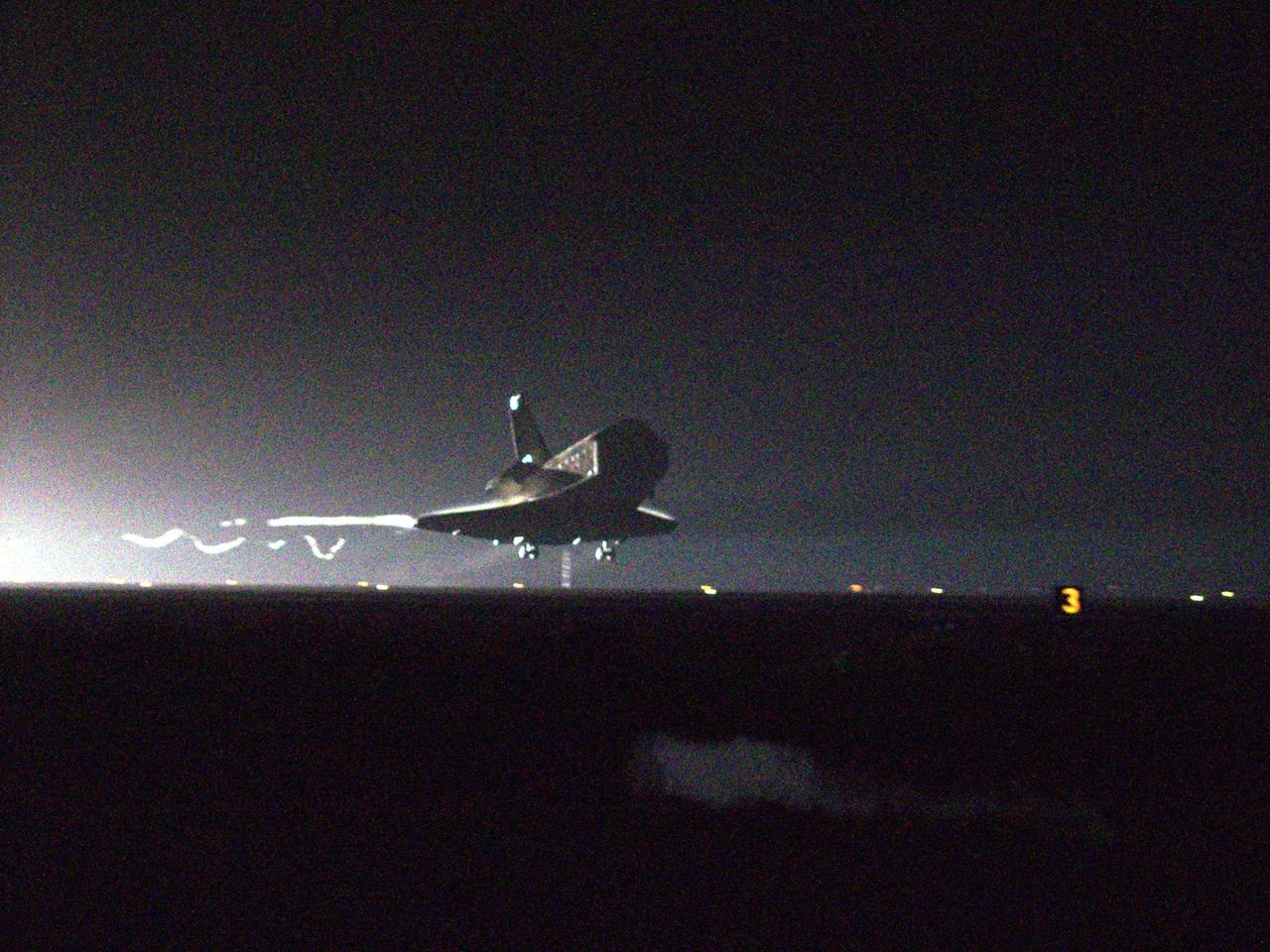
KENNEDY SPACE CENTER, FLA. -- Orbiter Columbia, with its crew of seven, approaches touchdown on Runway 33 of the KSC Shuttle Landing Facility, completing mission STS-109 to service the Hubble Space Telescope. Wheel stop occurred on orbit 165 at 4:33:09 a.m. EST with mission elapsed time of 10 days, 22 hours, 11 minutes. Main gear touchdown occurred at 4:31:52 a.m. and nose wheel touchdown an 4:32:02. It was the 58th landing at KSC out of 108 missions in the history of the Shuttle program
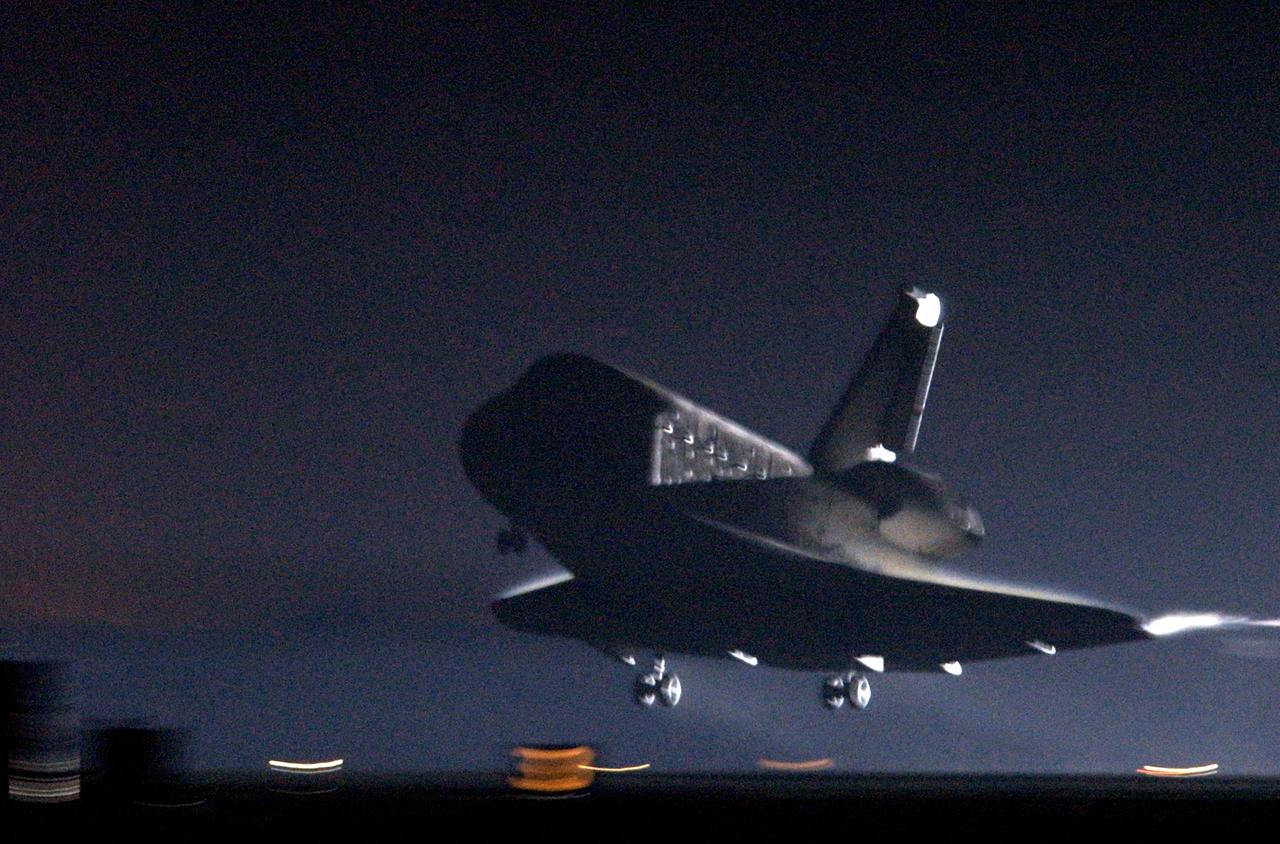
STS109-S-016 (12 March 2002)--- The Space Shuttle Columbia, with its crew of seven astronauts on board, approaches touchdown on Runway 33 of the KSC Shuttle Landing Facility, completing mission STS-109 to service the Hubble Space Telescope. Wheel stop occurred on orbit 165 at 4:33:09 a.m. EST with mission elapsed time of 10 days, 22 hours, 11 minutes. Main gear touchdown occurred at 4:31:52 a.m. and nose wheel touchdown an 4:32:02. It was the 58th landing at KSC out of 108 missions in the history of the Shuttle program.
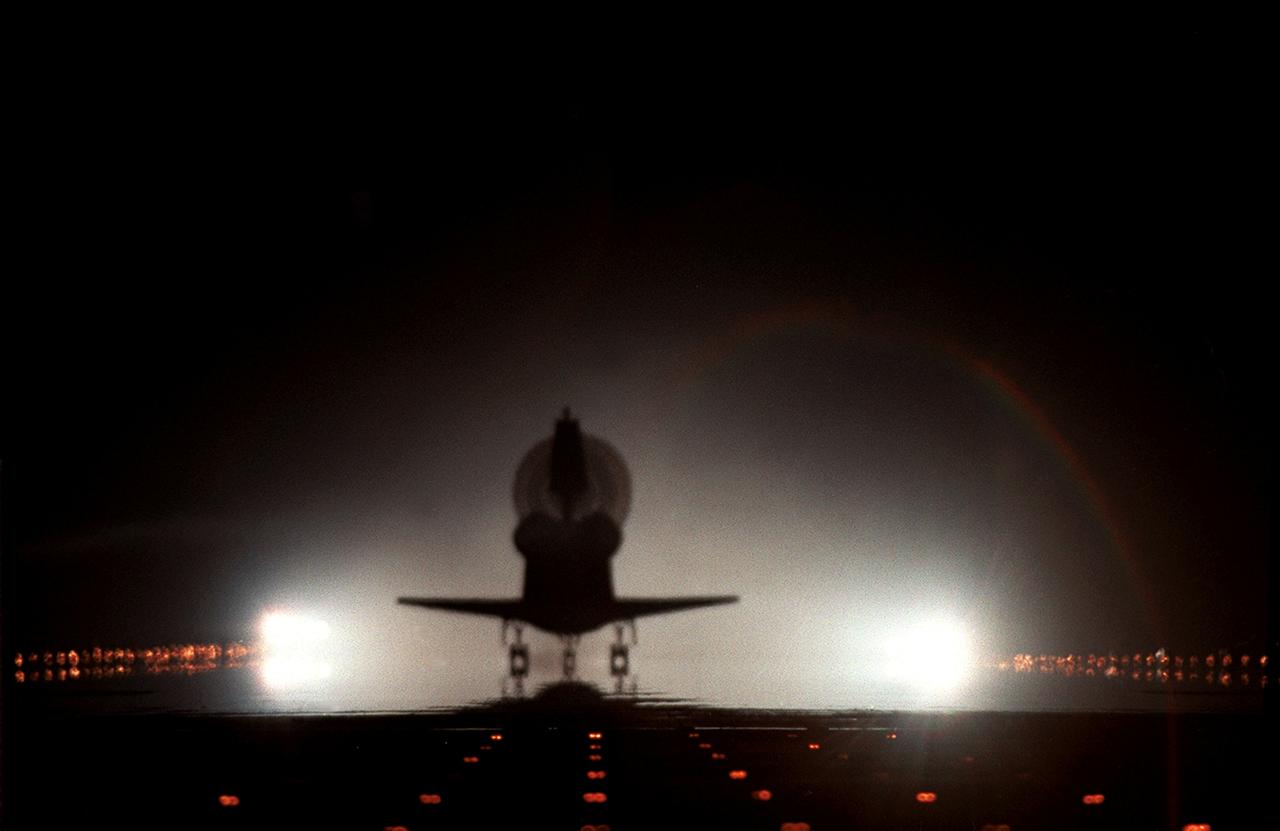
The Space Shuttle Columbia, with its crew of seven astronauts on board, touches down on Runway 33 of the KSC Shuttle Landing Facility, completing mission STS-109 to service the Hubble Space Telescope. Wheel stop occurred on orbit 165 at 4:33:09 a.m. EST with mission elapsed time of 10 days, 22 hours, 11 minutes. Main gear touchdown occurred at 4:31:52 a.m. and nose wheel touchdown an 4:32:02.

STS038-S-041 (20 Nov 1990) --- STS-38 Atlantis, Orbiter Vehicle (OV) 104, lands on runway 33 at Kennedy Space Center (KSC) Shuttle Landing Facility (SLF). The main landing gear (MLG) has just touched down on the runway surface as the nose landing gear (NLG) glides above it. The Department of Defense (DOD)-devoted mission came to an end (with complete wheel stop) at 4:43:37 pm (Eastern Standard Time (EST)).
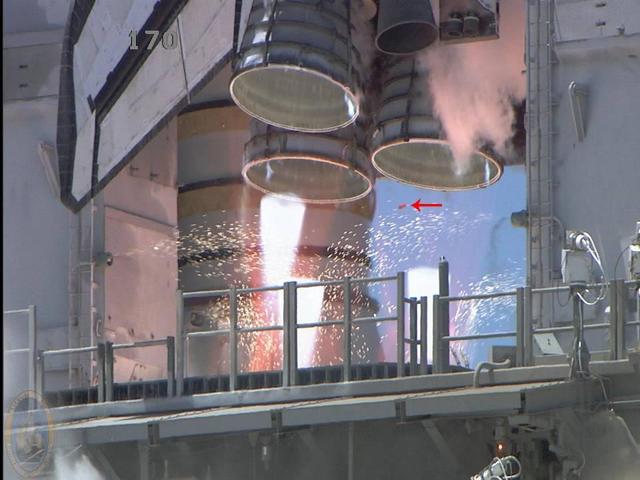
KENNEDY SPACE CENTER, FLA. - During liftoff of Space Shuttle Discovery on mission STS-121 on July 4, a camera captured a small piece of debris (pointed to by the arrow) that is believed to be a part of a shim used on the thermal protection system on the orbiter. The piece did not cause any damage nor will the loss be a concern for the mission or landing.
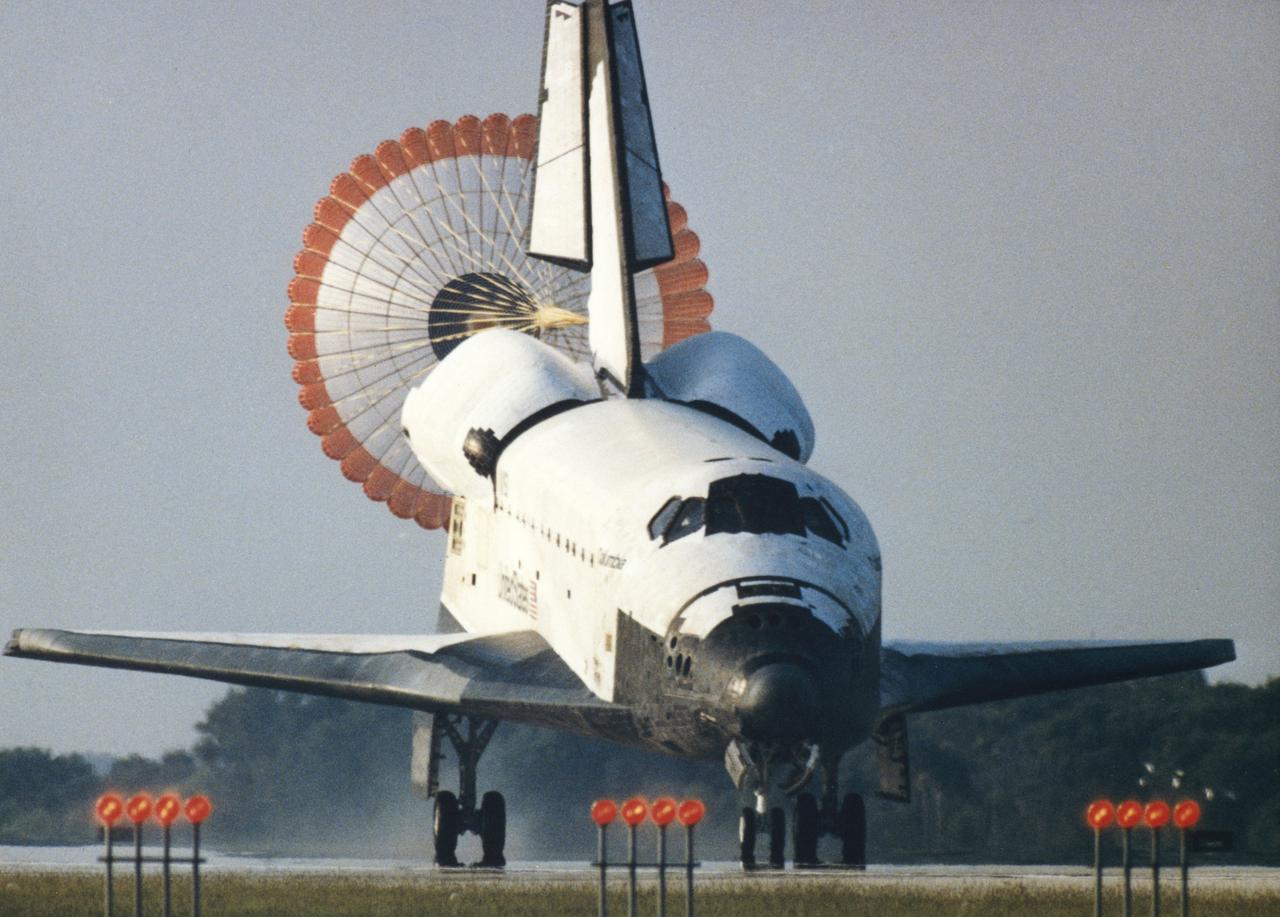
As the orbiter Columbia (STS-50) rolled down Runway 33 of Kennedy Space Center's (KSC) Shuttle Landing Facility, its distinctively colored drag chute deployed to slow down the spaceship. This landing marked OV-102's first end-of-mission landing at KSC and the tenth in the program, and the second shuttle landing with the drag chute. Edwards Air Force Base, CA, was the designated prime for the landing of Mission STS-50, but poor weather necessitated the switch to KSC after a one-day extension of the historic flight. STS-50 was the longest in Shuttle program historyo date, lasting 13 days, 19 hours, 30 minutes and 4 seconds. A crew of seven and the USML-1 were aboard.
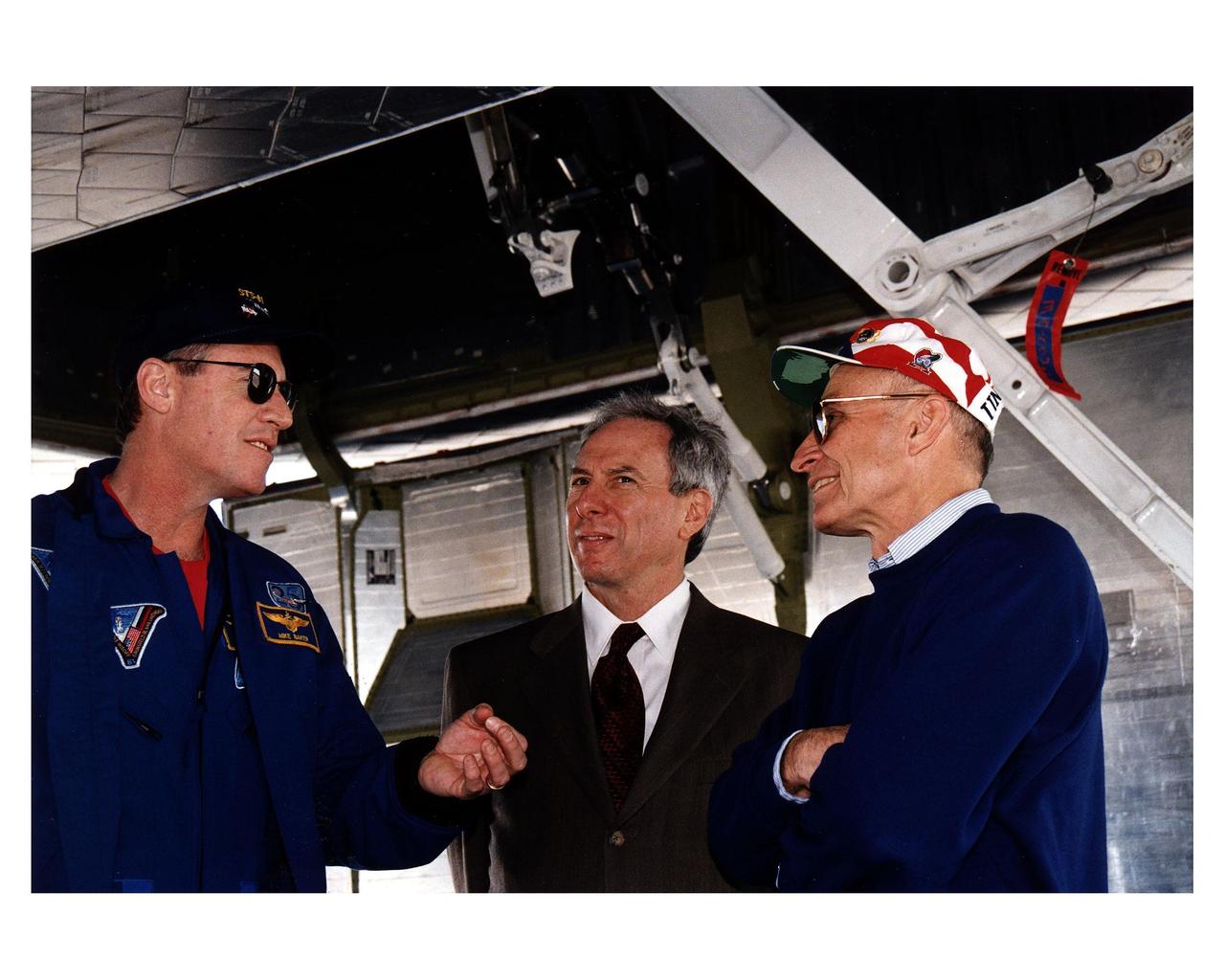
KENNEDY SPACE CENTER, FLA. -- NASA Administrator Daniel S. Goldin (center) and KSC Director of Shuttle Operations Robert B. Sieck (right) discuss the successful conclusion of the STS-81 mission with Mission Commander Michael A. Baker (left). They are underneath the Space Shuttle orbiter Atlantis after the space plane landed on Runway 33 at the KSC Shuttle Landing Facility at 9:22:44 a.m. EST Jan. 22 to conclude the fifth Shuttle-Mir docking mission. At main gear touchdown, the STS-81 mission duration was 10 days, 4 hours, 55 minutes. This was the 34th KSC landing in Shuttle history
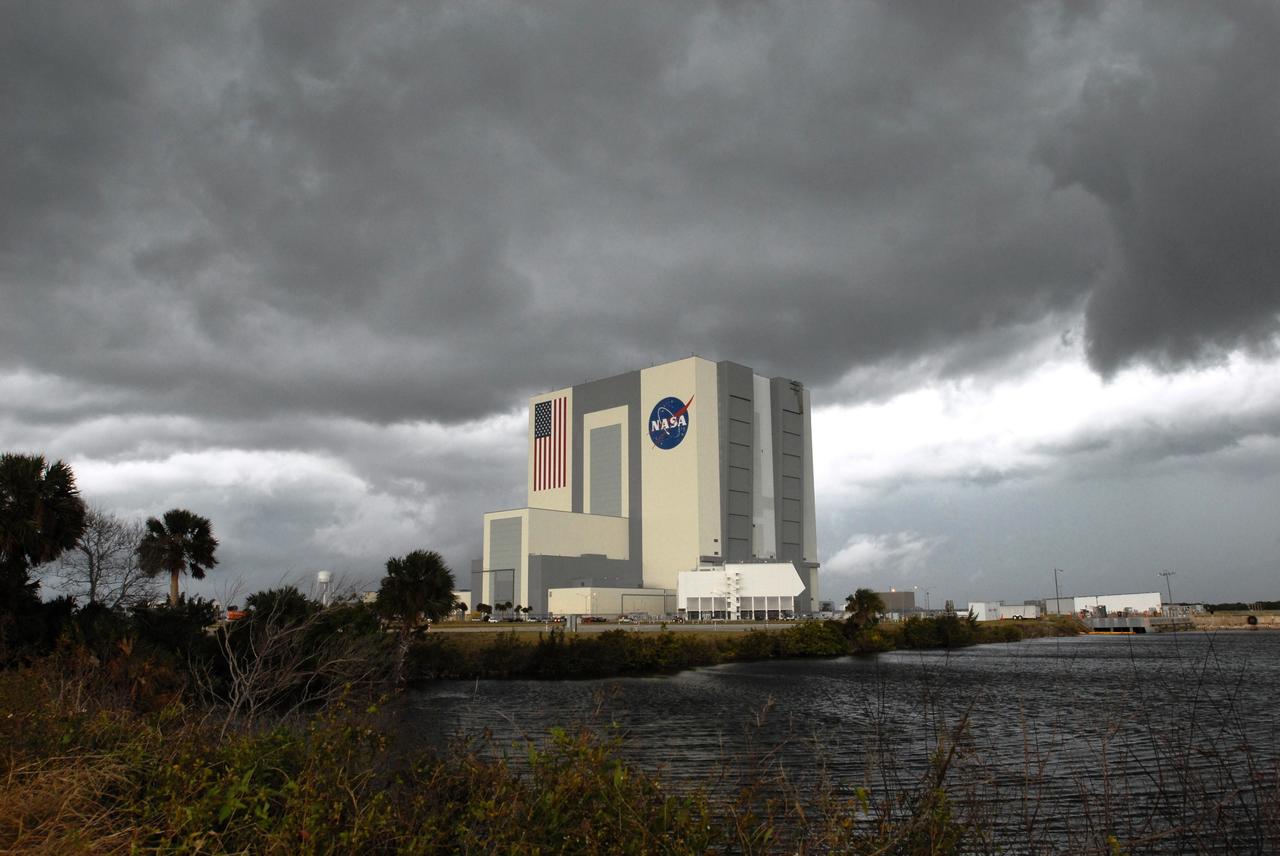
CAPE CANAVERAL, Fla. –- Dark gray clouds hover over the Vehicle Assembly Building at NASA's Kennedy Space Center in Florida, part of a strong weather system that included crosswinds and anvil clouds blowing across the state. The weather concerns prevented space shuttle Endeavour and its crew from returning to Kennedy, the primary end-of-mission landing site. Instead, Endeavour landed safely at 4:25 p.m. at Edwards Air Force Base in California after traveling more than 6.6 million miles in space. The main landing gear touched down at Edwards at 4:25:06 p.m. EST. The nose landing gear touched down at 4:25:21 p.m. and wheel stop was at 4:26:03 p.m. The STS-126 mission was the 27th flight to the International Space Station, carrying equipment and supplies in the Multi-Purpose Logistics Module Leonardo. The mission featured four spacewalks and work to prepare the space station to house six crew members for long-duration missions. Photo credit: NASA/Jim Grossmann
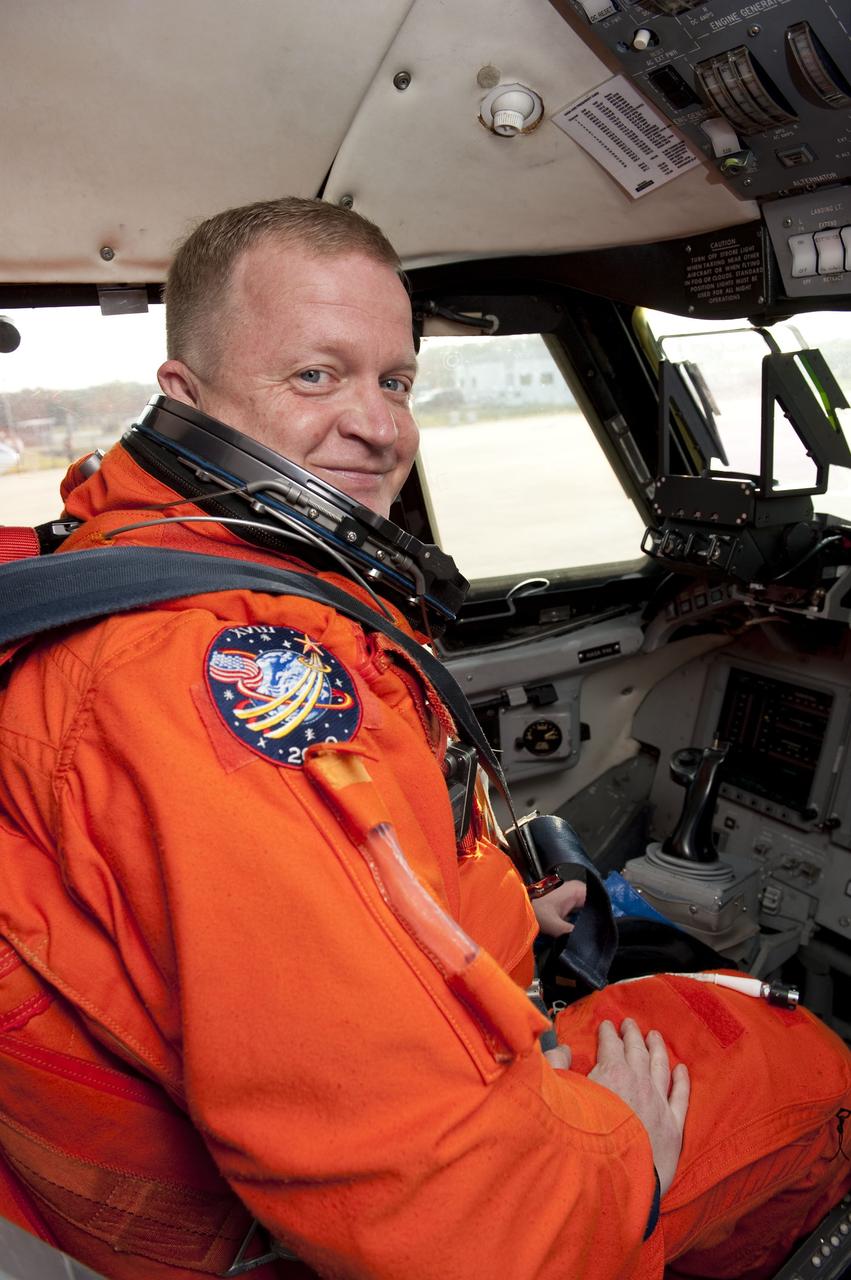
CAPE CANAVERAL, Fla. -- STS-133 Pilot Eric Boe prepares to perform touch-and-go landings aboard a Shuttle Training Aircraft (STA) on the Shuttle Landing Facility runway at NASA's Kennedy Space Center in Florida. An STA is a Gulfstream II business jet that is modified to mimic the shuttle's handling during the final phase of landing. Boe and STS-133 Commander Steve Lindsey will practice landings as part of standard training before space shuttle Discovery's launch to the International Space Station. Scheduled to lift off Feb. 24 at 4:50 p.m. EST, Discovery and its six-member crew will deliver the Permanent Multipurpose Module, packed with supplies and critical spare parts, as well as Robonaut 2, the dexterous humanoid astronaut helper, to the orbiting outpost. For more information on the STS-133 mission, visit www.nasa.gov/mission_pages/shuttle/shuttlemissions/sts133/. Photo credit: NASA/Kim Shiflett
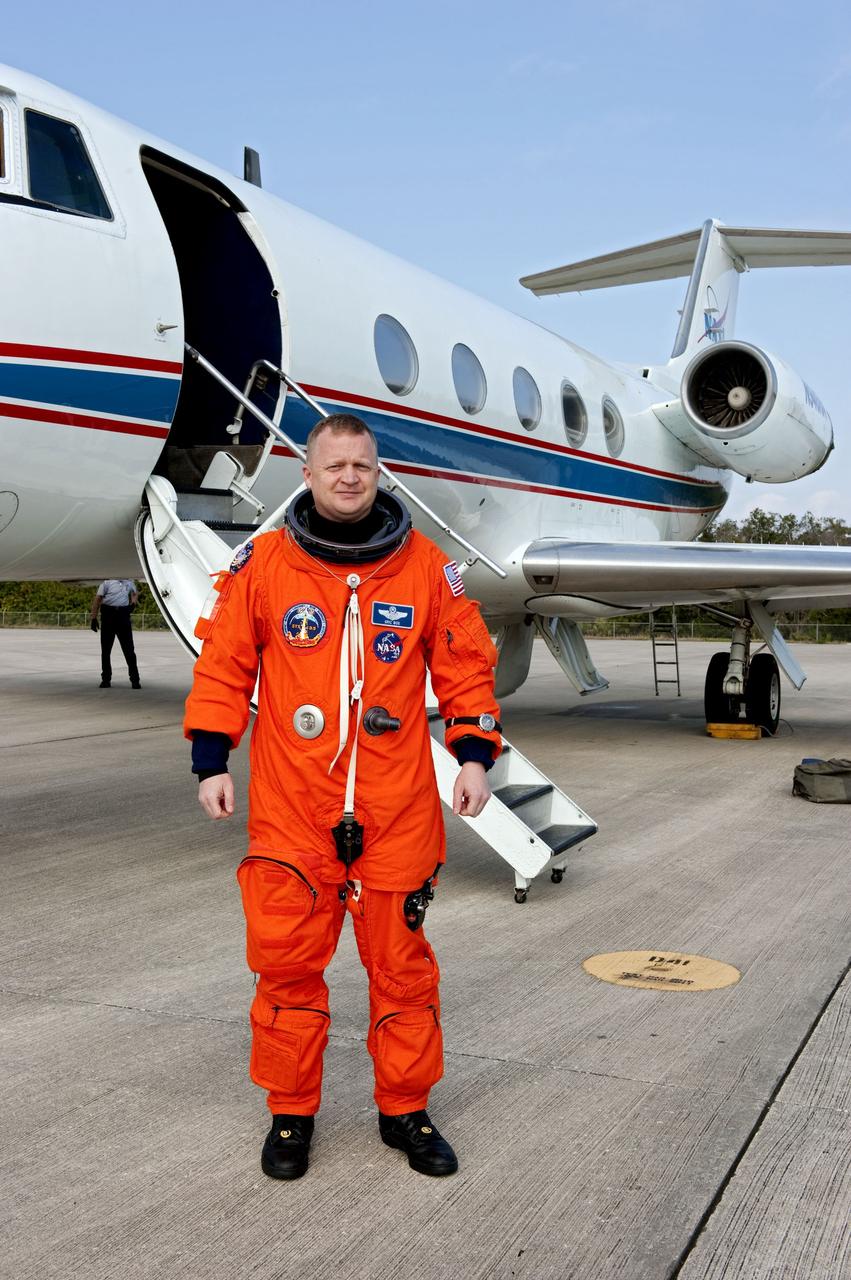
CAPE CANAVERAL, Fla. -- STS-133 Pilot Eric Boe takes a break on the Shuttle Landing Facility runway from performing touch-and-go landings in a Shuttle Training Aircraft (STA) at NASA's Kennedy Space Center in Florida. Boe and STS-133 Commander Steve Lindsey flew two Gulfstream II business jets that are modified to mimic the shuttle's handling during the final phase of landing. Practice landings are part of standard training before space shuttle Discovery's launch to the International Space Station. Scheduled to lift off Feb. 24 at 4:50 p.m. EST, Discovery and its six-member crew will deliver the Permanent Multipurpose Module, packed with supplies and critical spare parts, as well as Robonaut 2, the dexterous humanoid astronaut helper, to the orbiting outpost. For more information on the STS-133 mission, visit www.nasa.gov/mission_pages/shuttle/shuttlemissions/sts133/. Photo credit: NASA/Kim Shiflett
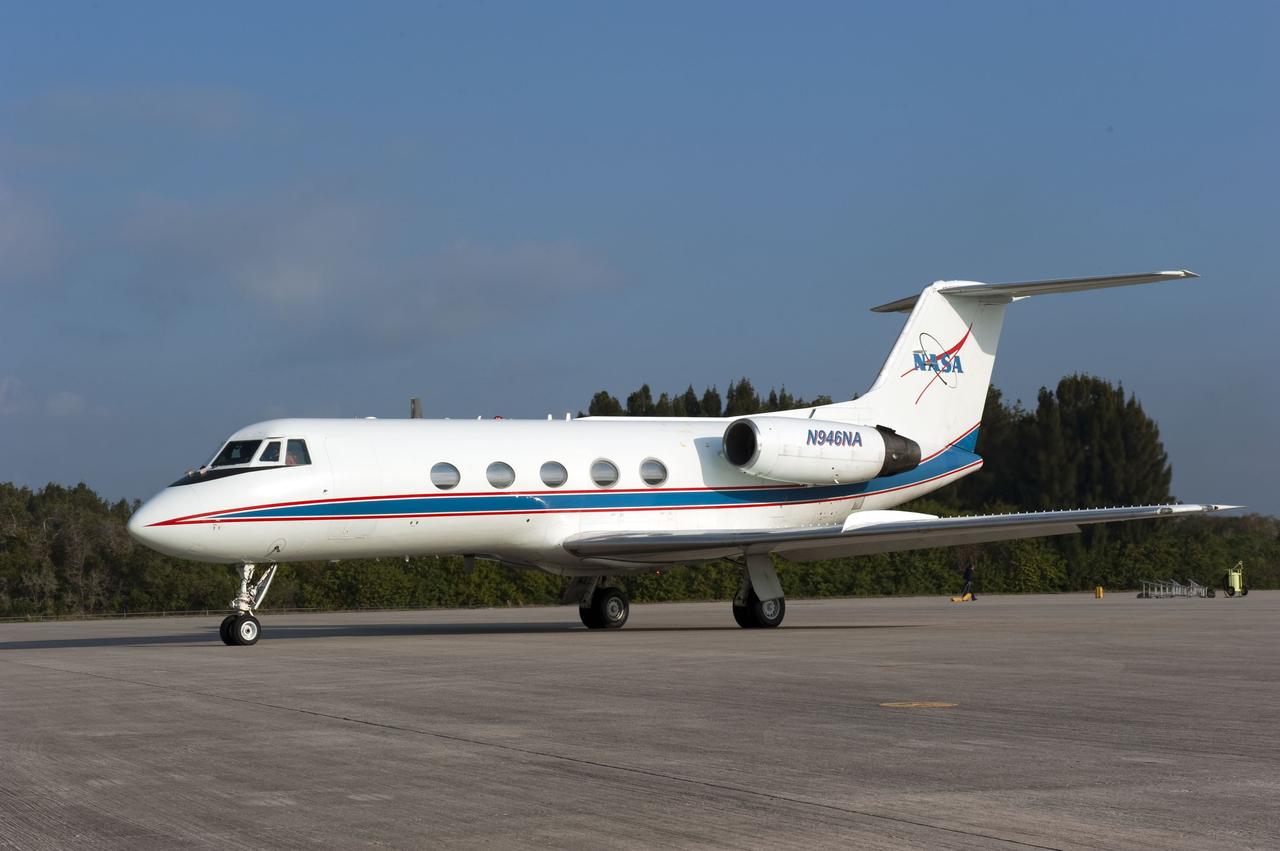
CAPE CANAVERAL, Fla. -- STS-133 Pilot Eric Boe is ready to take off and perform touch-and-go landings aboard a Shuttle Training Aircraft (STA) on the Shuttle Landing Facility runway at NASA's Kennedy Space Center in Florida. An STA is a Gulfstream II business jet that is modified to mimic the shuttle's handling during the final phase of landing. Boe and STS-133 Commander Steve Lindsey will practice landings as part of standard training before space shuttle Discovery's launch to the International Space Station. Scheduled to lift off Feb. 24 at 4:50 p.m. EST, Discovery and its six-member crew will deliver the Permanent Multipurpose Module, packed with supplies and critical spare parts, as well as Robonaut 2, the dexterous humanoid astronaut helper, to the orbiting outpost. For more information on the STS-133 mission, visit www.nasa.gov/mission_pages/shuttle/shuttlemissions/sts133/. Photo credit: NASA/Kim Shiflett
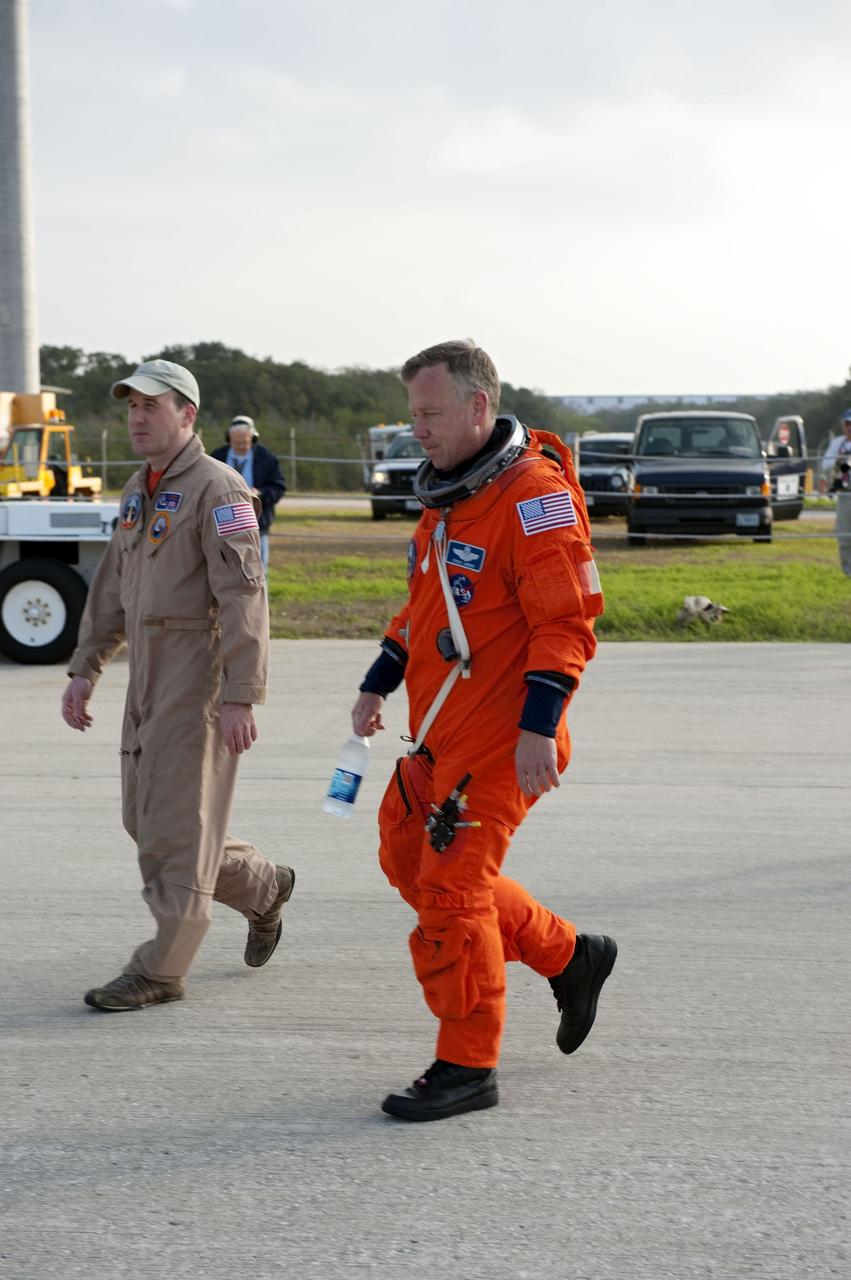
CAPE CANAVERAL, Fla. -- STS-133 Commander Steve Lindsey, right, arrives on the Shuttle Landing Facility runway at NASA's Kennedy Space Center in Florida to perform touch-and-go landings aboard a Shuttle Training Aircraft (STA). An STA is a Gulfstream II business jet that is modified to mimic the shuttle's handling during the final phase of landing. Lindsey and STS-133 Pilot Eric Boe will practice landings as part of standard training before space shuttle Discovery's launch to the International Space Station. Scheduled to lift off Feb. 24 at 4:50 p.m. EST, Discovery and its six-member crew will deliver the Permanent Multipurpose Module, packed with supplies and critical spare parts, as well as Robonaut 2, the dexterous humanoid astronaut helper, to the orbiting outpost. For more information on the STS-133 mission, visit www.nasa.gov/mission_pages/shuttle/shuttlemissions/sts133/. Photo credit: NASA/Kim Shiflett
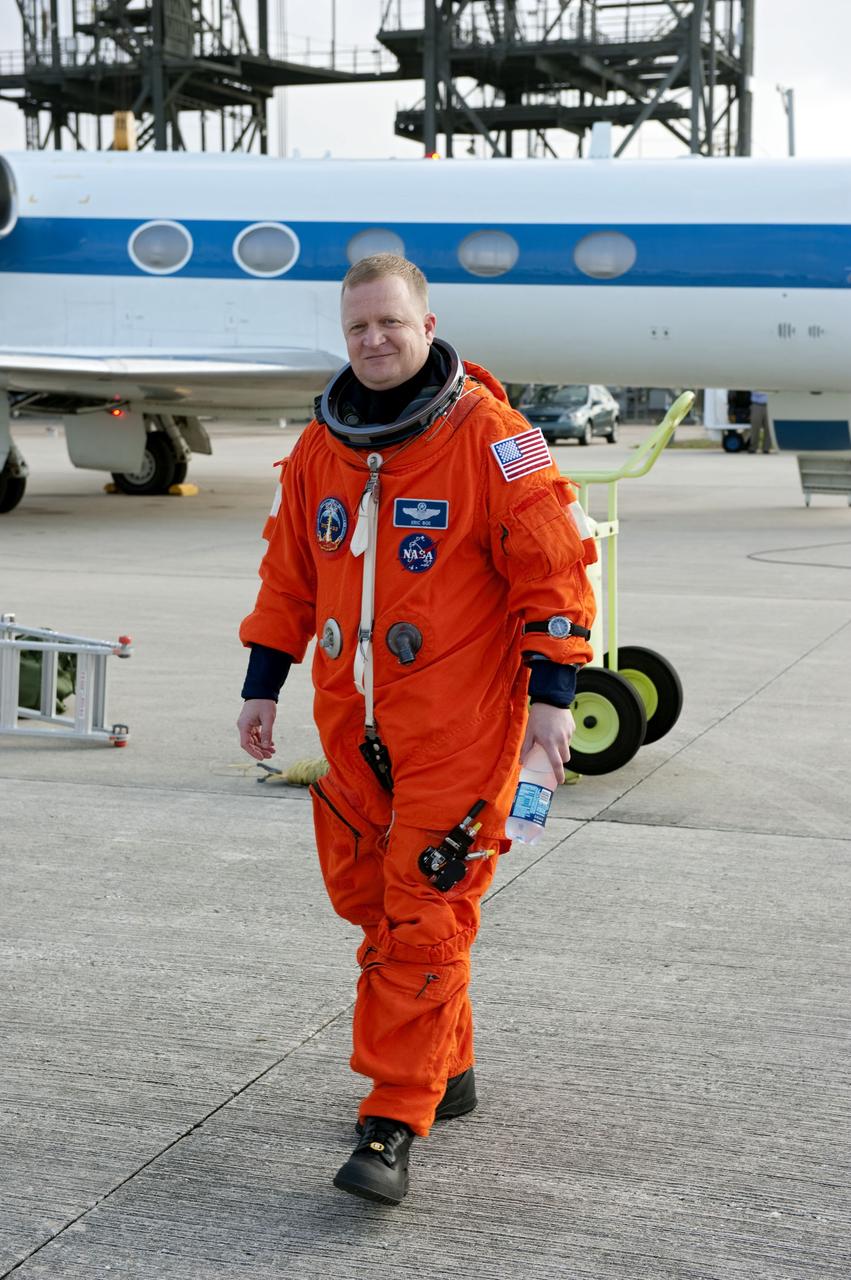
CAPE CANAVERAL, Fla. -- STS-133 Pilot Eric Boe prepares to perform touch-and-go landings aboard a Shuttle Training Aircraft (STA) on the Shuttle Landing Facility runway at NASA's Kennedy Space Center in Florida. An STA is a Gulfstream II business jet that is modified to mimic the shuttle's handling during the final phase of landing. Boe and STS-133 Commander Steve Lindsey will practice landings as part of standard training before space shuttle Discovery's launch to the International Space Station. Scheduled to lift off Feb. 24 at 4:50 p.m. EST, Discovery and its six-member crew will deliver the Permanent Multipurpose Module, packed with supplies and critical spare parts, as well as Robonaut 2, the dexterous humanoid astronaut helper, to the orbiting outpost. For more information on the STS-133 mission, visit www.nasa.gov/mission_pages/shuttle/shuttlemissions/sts133/. Photo credit: NASA/Kim Shiflett
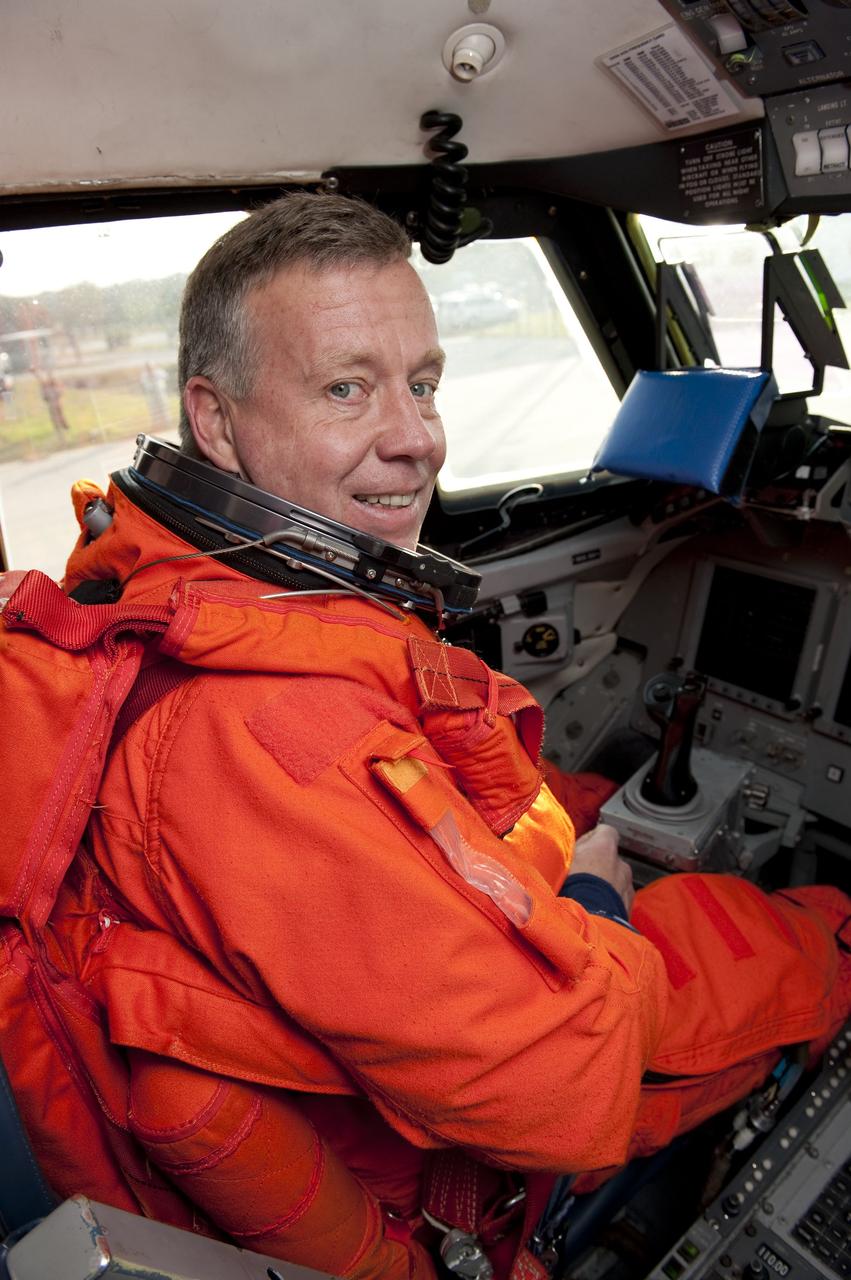
CAPE CANAVERAL, Fla. -- STS-133 Commander Steve Lindsey prepares to perform touch-and-go landings aboard a Shuttle Training Aircraft (STA) on the Shuttle Landing Facility runway at NASA's Kennedy Space Center in Florida. An STA is a Gulfstream II business jet that is modified to mimic the shuttle's handling during the final phase of landing. Lindsey and STS-133 Pilot Eric Boe will practice landings as part of standard training before space shuttle Discovery's launch to the International Space Station. Scheduled to lift off Feb. 24 at 4:50 p.m. EST, Discovery and its six-member crew will deliver the Permanent Multipurpose Module, packed with supplies and critical spare parts, as well as Robonaut 2, the dexterous humanoid astronaut helper, to the orbiting outpost. For more information on the STS-133 mission, visit www.nasa.gov/mission_pages/shuttle/shuttlemissions/sts133/. Photo credit: NASA/Kim Shiflett

CAPE CANAVERAL, Fla. -- STS-133 Pilot Eric Boe is ready to take off and perform touch-and-go landings aboard a Shuttle Training Aircraft (STA) on the Shuttle Landing Facility runway at NASA's Kennedy Space Center in Florida. An STA is a Gulfstream II business jet that is modified to mimic the shuttle's handling during the final phase of landing. Boe and STS-133 Commander Steve Lindsey will practice landings as part of standard training before space shuttle Discovery's launch to the International Space Station. Scheduled to lift off Feb. 24 at 4:50 p.m. EST, Discovery and its six-member crew will deliver the Permanent Multipurpose Module, packed with supplies and critical spare parts, as well as Robonaut 2, the dexterous humanoid astronaut helper, to the orbiting outpost. For more information on the STS-133 mission, visit www.nasa.gov/mission_pages/shuttle/shuttlemissions/sts133/. Photo credit: NASA/Kim Shiflett
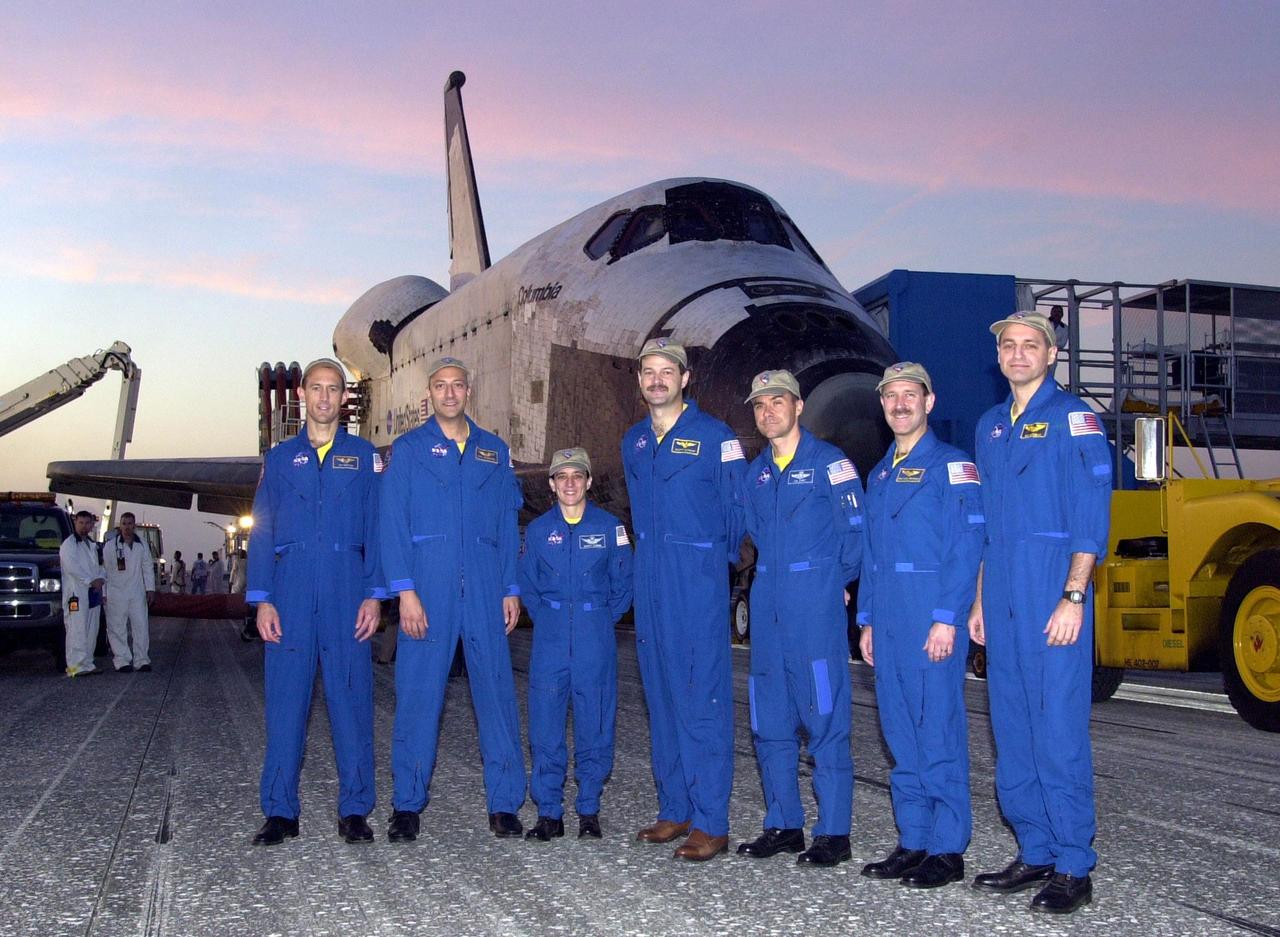
KENNEDY SPACE CENTER, FLA. -- Before orbiter Columbia is towed from the Shuttle Landing Facility to the Orbiter Processing Facility, the STS-109 crew poses for photo. From left to right are Mission Specialists James Newman, Michael Massimino and Nancy Jane Currie; Commander Scott Altman; Pilot Duane Carey; Payload Commander John Grunsfeld; and Mission Specialist Richard Linnehan. The crew returned to Earth after a successful 11-day mission servicing the Hubble Space Telescope. Wheel stop occurred on orbit 165 at 4:33:09 a.m. EST. Main gear touchdown occurred at 4:31:52 a.m. and nose wheel touchdown at 4:32:02. Rollout time was 1 minute, 17 seconds. This was the 58th landing at KSC out of 108 missions in the history of the Shuttle program
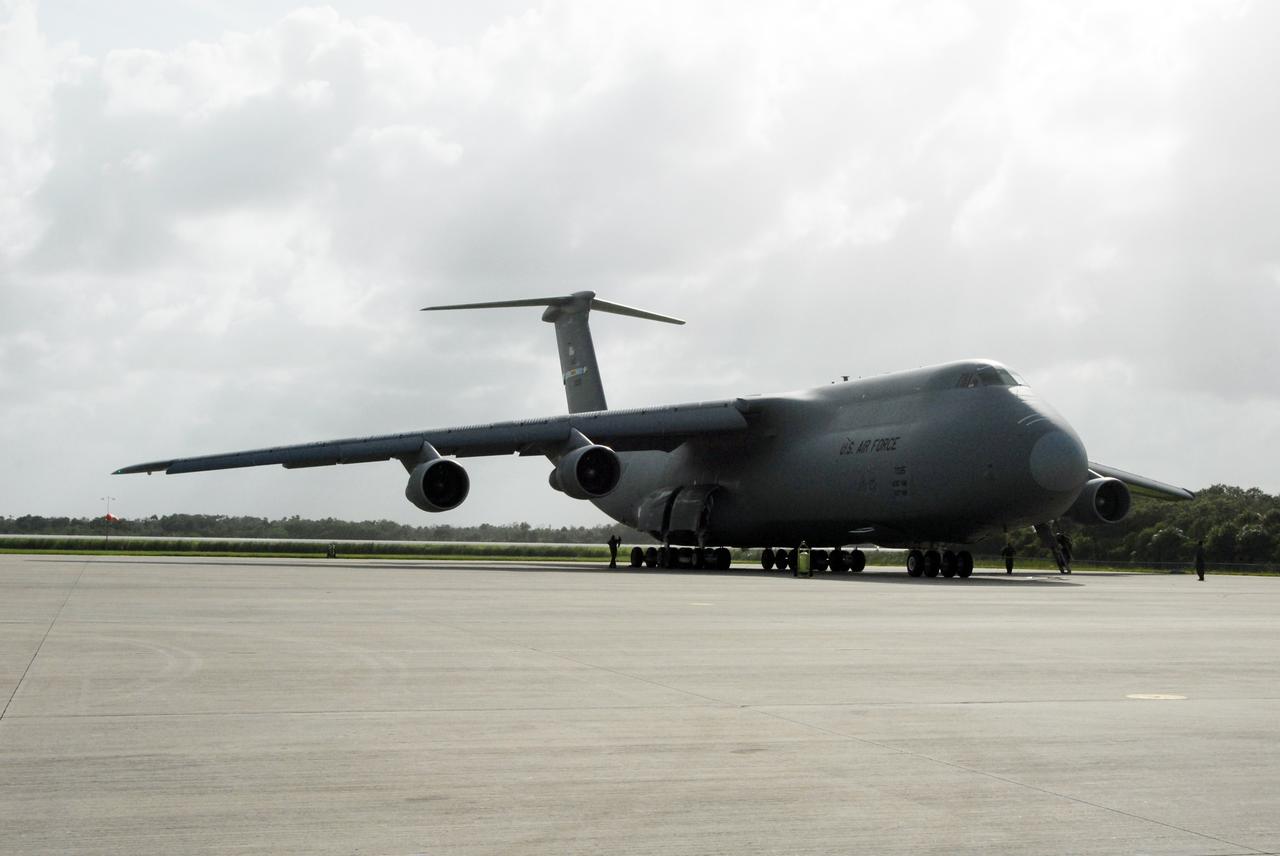
CAPE CANAVERAL, Fla. – The U.S. Air Force C-5 lands on NASA Kennedy Space Center's Shuttle Landing Facility. The aircraft carries the Express Logistics Carrier 4, or ELC4, part of the payload for the STS-133 mission. Space shuttle Endeavour will deliver the ELC4 and ELC3 with critical spare components to the International Space Station on the mission. Endeavour's launch is targeted for late July in 2010. Photo credit: NASA/Amanda Diller
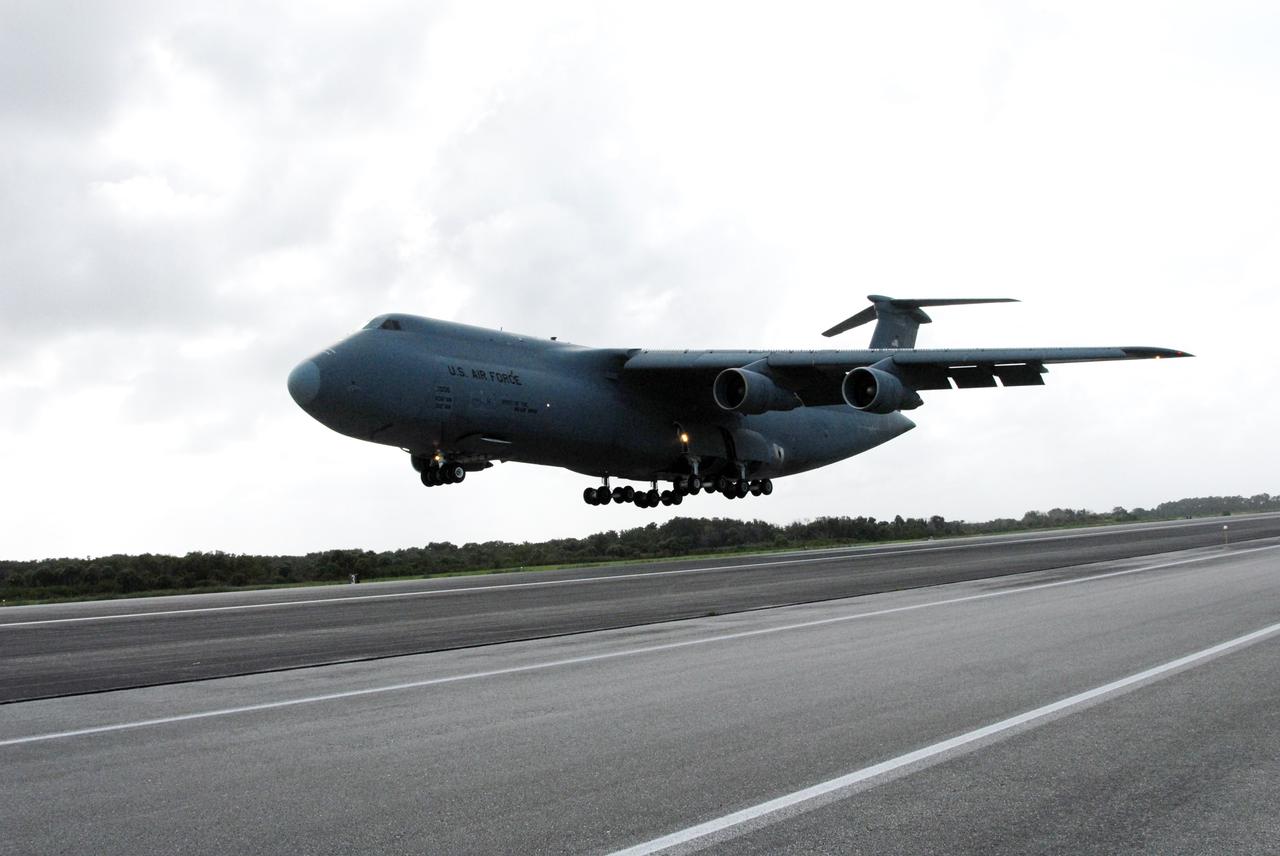
CAPE CANAVERAL, Fla. – The U.S. Air Force C-5 prepares to land on NASA Kennedy Space Center's Shuttle Landing Facility. The aircraft carries the Express Logistics Carrier 4, or ELC4, part of the payload for the STS-133 mission. Space shuttle Endeavour will deliver the ELC4 and ELC3 with critical spare components to the International Space Station on the mission. Endeavour's launch is targeted for late July in 2010. Photo credit: NASA/Amanda Diller
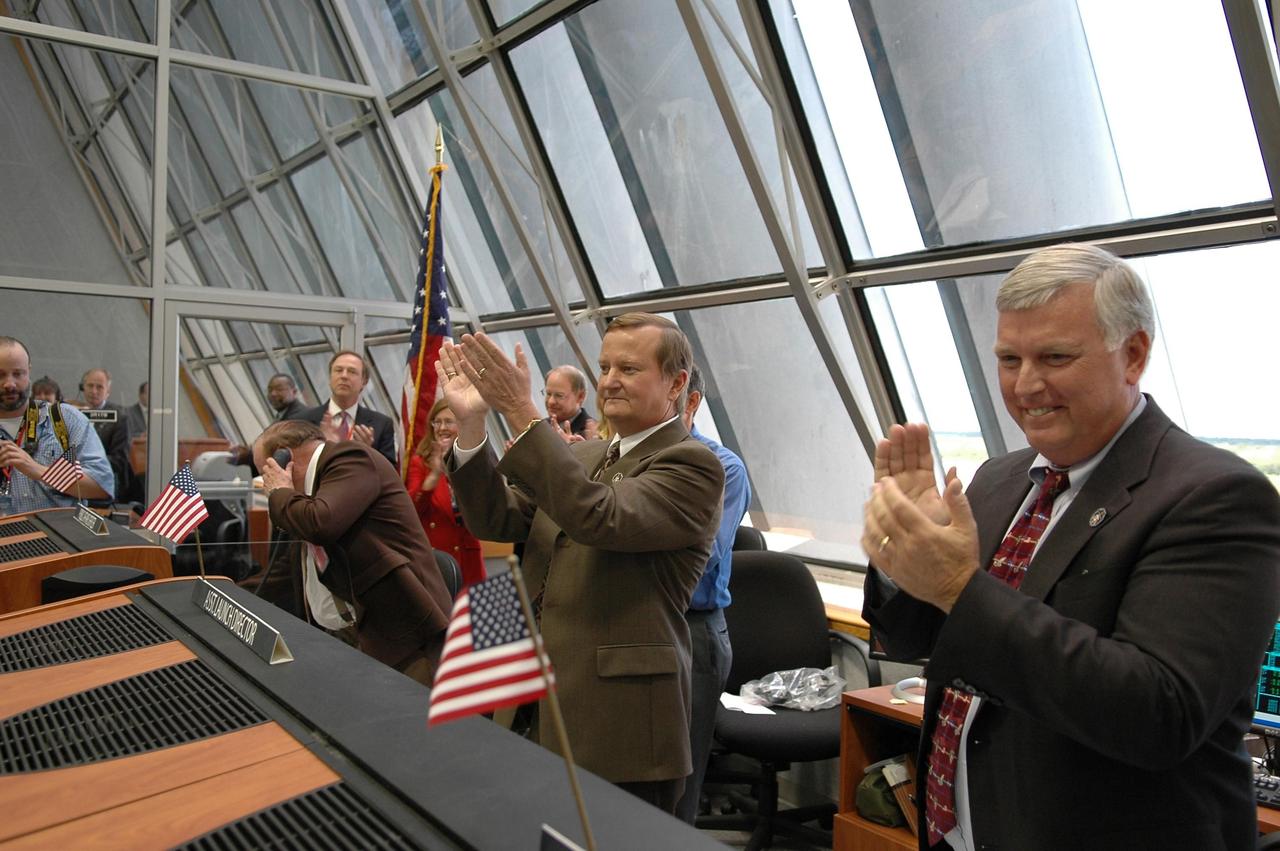
KENNEDY SPACE CENTER, FLA. - In Firing Room 4 of the Launch Control Center, Shuttle Launch Director Mike Leinbach (center) and Center Director Jim Kennedy congratulate the launch team after the successful launch of Space Shuttle Discovery on mission STS-121. The launch was the first ever to take place on Independence Day. During the 12-day mission, the STS-121 crew of seven will test new equipment and procedures to improve shuttle safety, as well as deliver supplies and make repairs to the International Space Station. Landing is scheduled for July 16 or 17 at Kennedy's Shuttle Landing Facility. Photo credit: NASA/Kim Shiflett
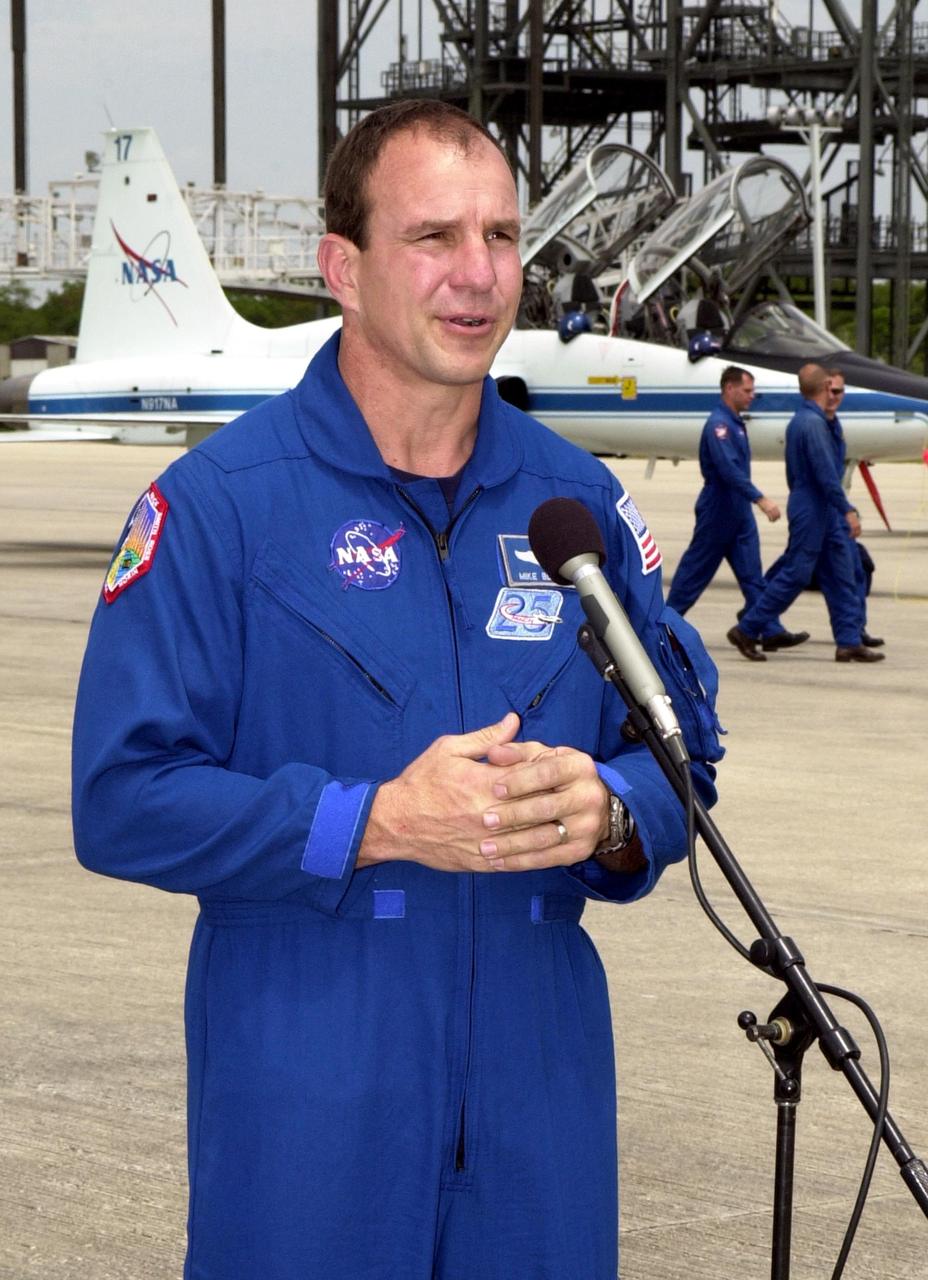
KENNEDY SPACE CENTER, FLA. -- -- After landing at the KSC Shuttle Landing Facility to prepare for launch April 4, STS-110 Commander Michael Bloomfield comments about the upcoming mission for the media. Mission STS-110 is the 13th assembly flight to the International Space Station. During four planned spacewalks, crew members will install the S0 Integrated Truss Structure (ITS), centerpiece of the orbiting International Space Station (ISS), at the center of the 10-truss, girderlike structure that will ultimately extend the length of a football field on the ISS. The S0 truss will be attached to the U.S. Lab, "Destiny," on the 11-day mission
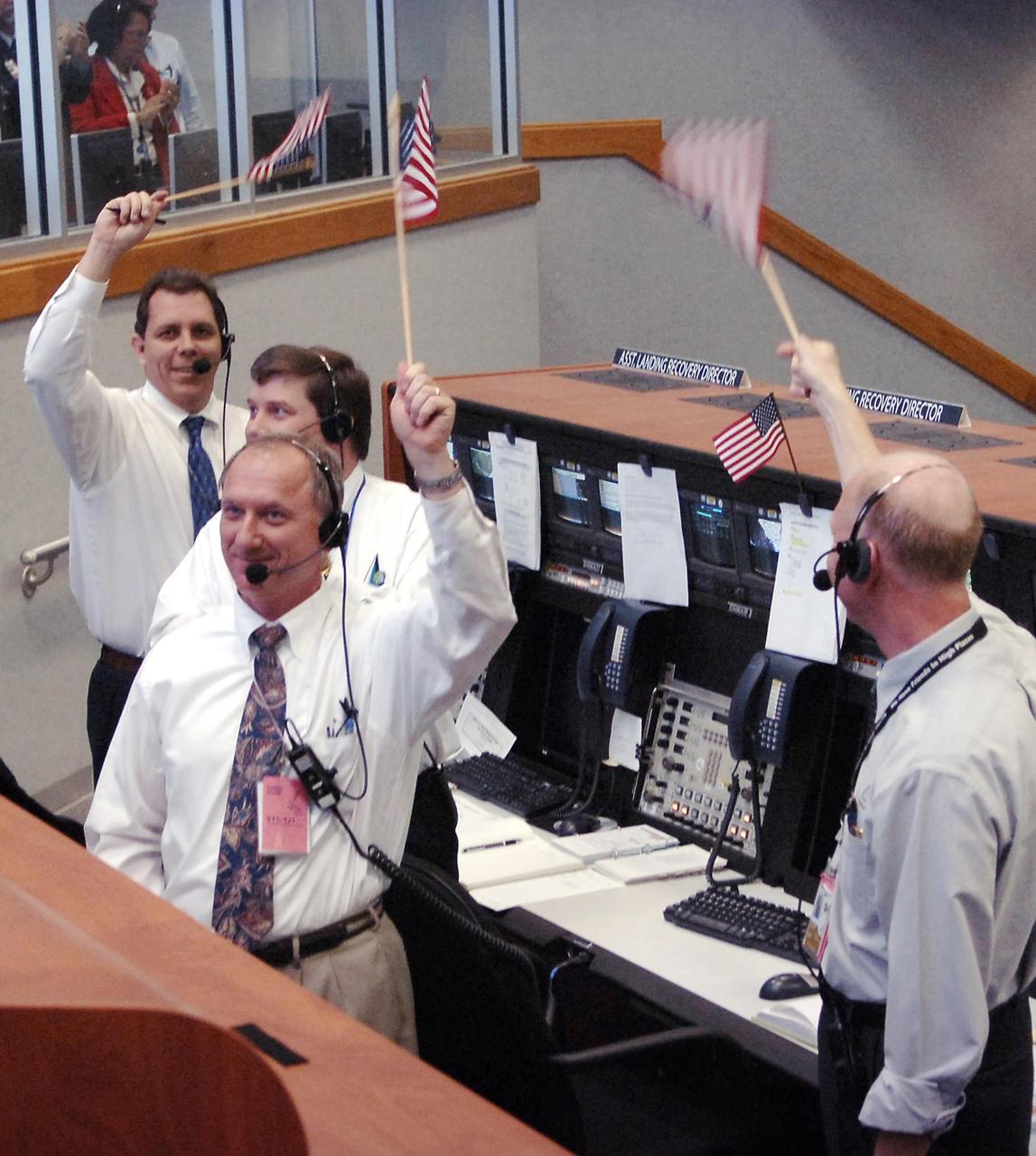
KENNEDY SPACE CENTER, FLA. - In Firing Room 4 of the Launch Control Center, NASA launch team members cheer and wave American flags at the successful launch of Space Shuttle Discovery on mission STS-121. The launch made history as the first to occur on Independence Day. Liftoff was on-time at 2:38 p.m. EDT. During the 12-day mission, the STS-121 crew of seven will test new equipment and procedures to improve shuttle safety, as well as deliver supplies and make repairs to the International Space Station. Landing is scheduled for July 16 or 17 at Kennedy's Shuttle Landing Facility. Photo credit: NASA/Bill Ingalls
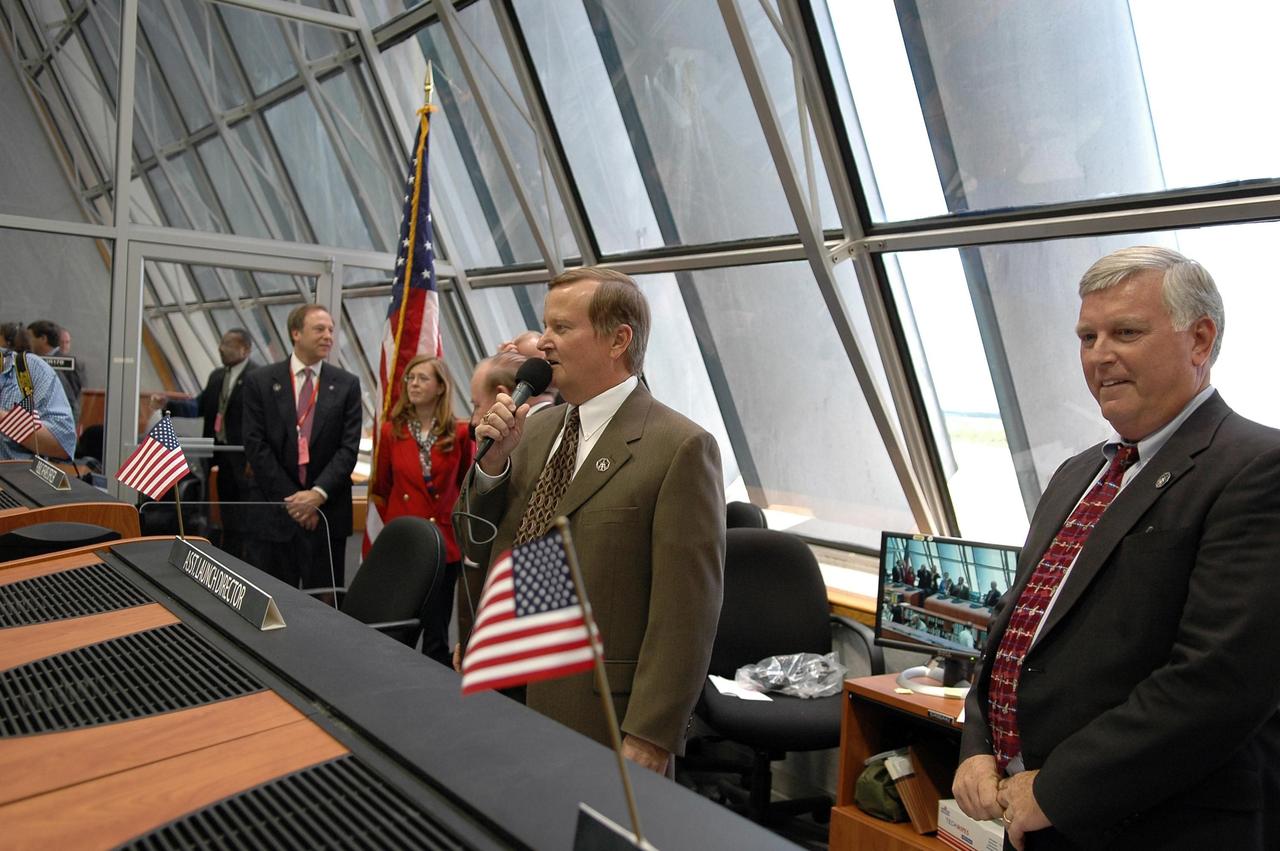
KENNEDY SPACE CENTER, FLA. - In Firing Room 4 of the Launch Control Center, Shuttle Launch Director Mike Leinbach (center) congratulates the launch team after the successful launch of Space Shuttle Discovery on mission STS-121. The launch was the first ever to take place on Independence Day. At far right is Center Director Jim Kennedy. During the 12-day mission, the STS-121 crew of seven will test new equipment and procedures to improve shuttle safety, as well as deliver supplies and make repairs to the International Space Station. Landing is scheduled for July 16 or 17 at Kennedy's Shuttle Landing Facility. Photo credit: NASA/Kim Shiflett
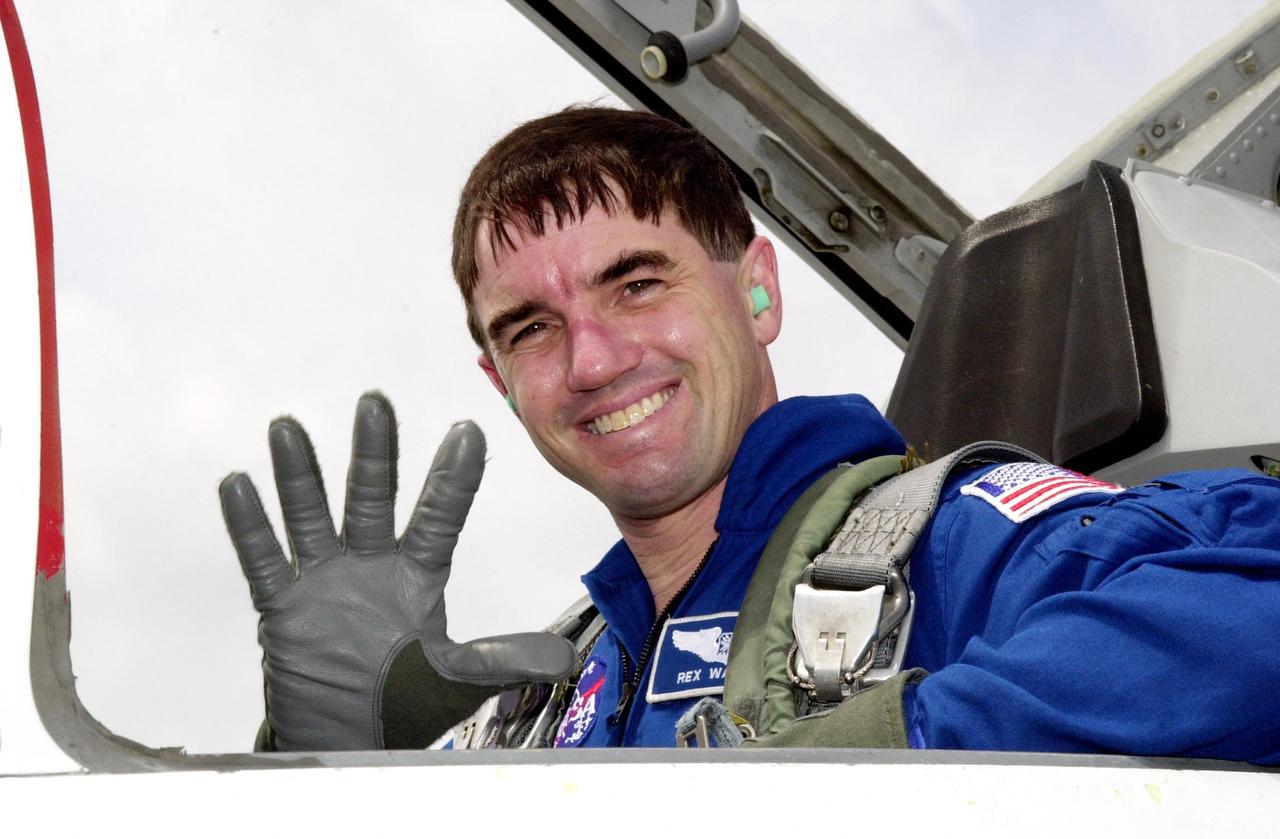
KENNEDY SPACE CENTER, FLA. - After landing at the KSC Shuttle Landing Facility, STS-110 Mission Specialist Rex Walheim smiles in anticipation of his first Space Shuttle flight, scheduled for launch April 4. Mission STS-110 is the 13th assembly flight to the International Space Station. During four planned spacewalks, crew members will install the S0 Integrated Truss Structure (ITS), centerpiece of the orbiting International Space Station (ISS), at the center of the 10-truss, girderlike structure that will ultimately extend the length of a football field on the ISS. The S0 truss will be attached to the U.S. Lab, "Destiny," on the 11-day mission
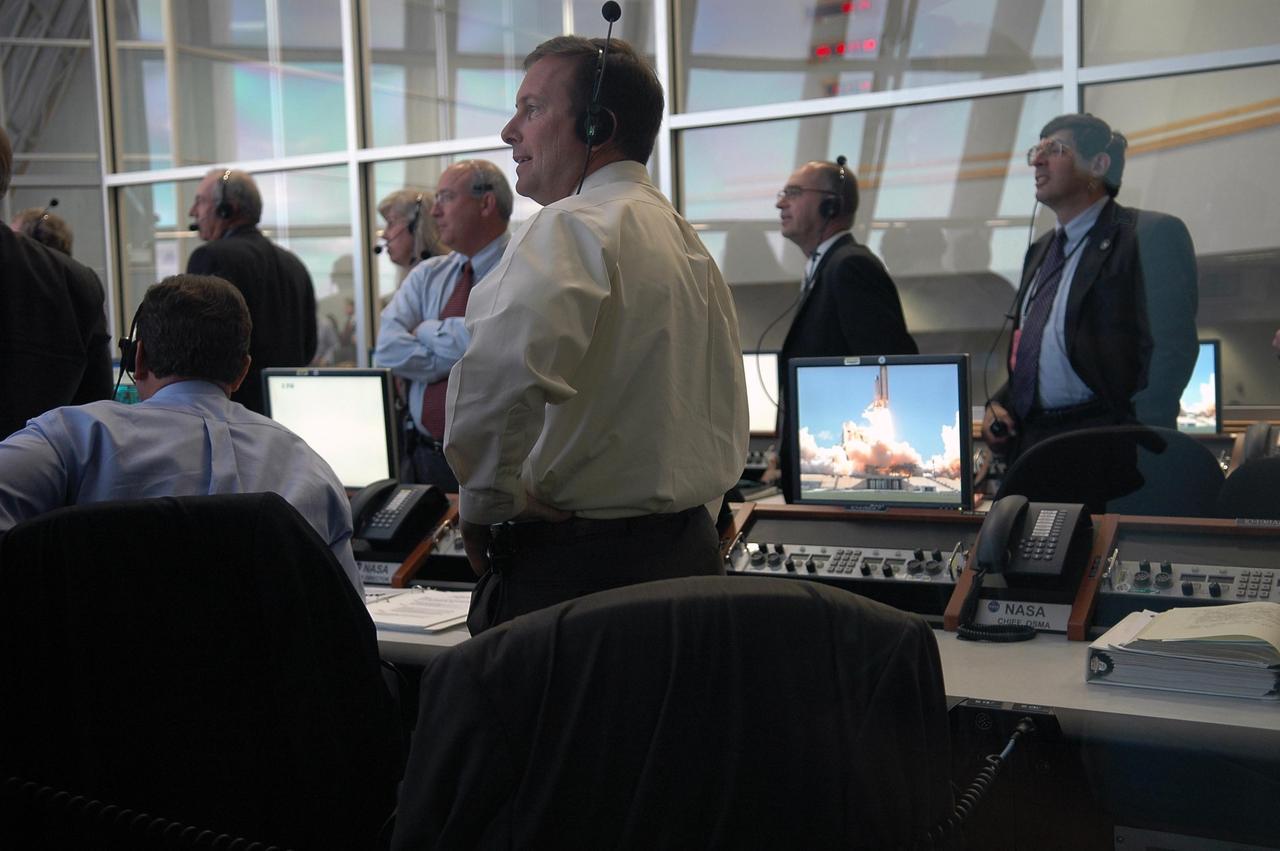
KENNEDY SPACE CENTER, FLA. - In Firing Room 4 of the Launch Control Center, the launch team stands to view the liftoff of Space Shuttle Discovery on mission STS-121 -- the first ever Independence Day launch of a space shuttle. Liftoff was on-time at 2:38 p.m. EDT. During the 12-day mission, the STS-121 crew of seven will test new equipment and procedures to improve shuttle safety, as well as deliver supplies and make repairs to the International Space Station. Landing is scheduled for July 16 or 17 at Kennedy's Shuttle Landing Facility. Photo credit: NASA/Kim Shiflett
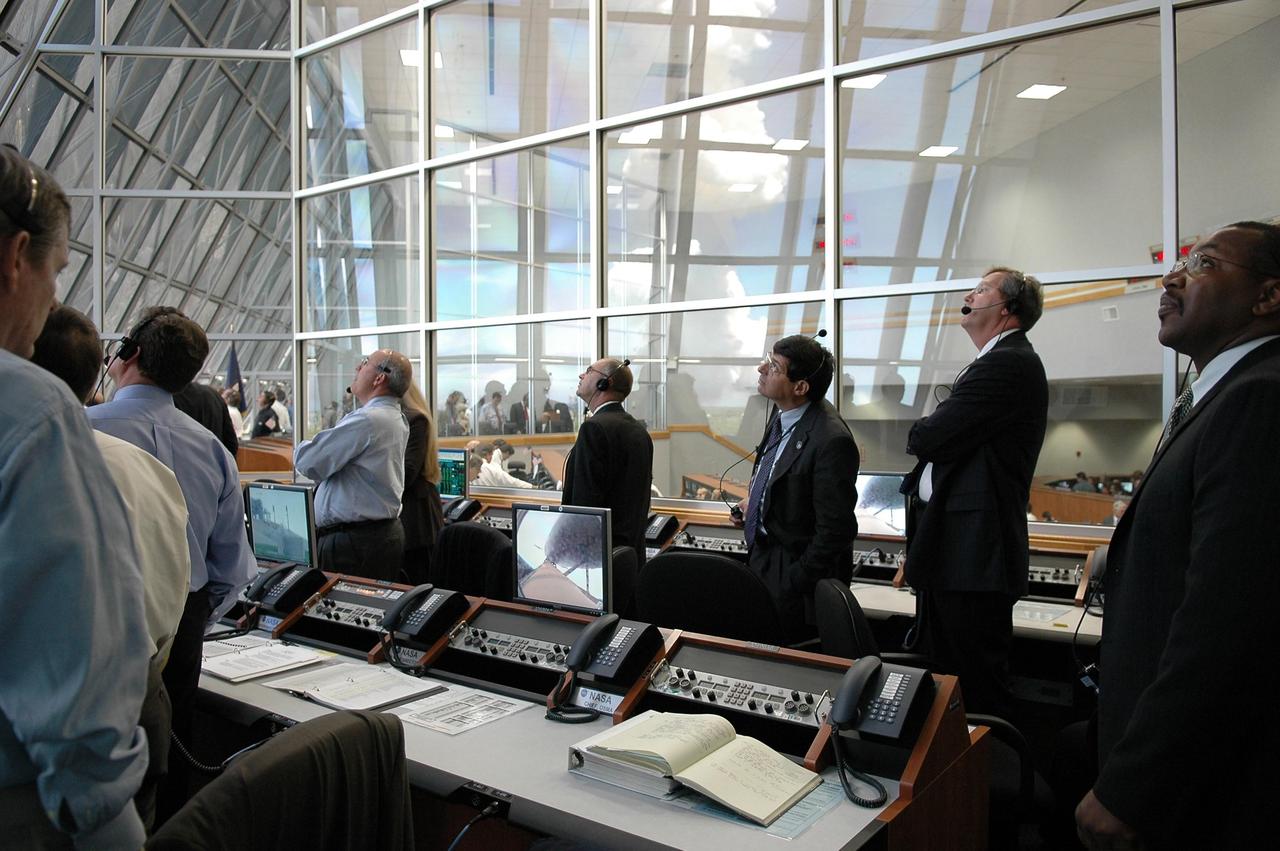
KENNEDY SPACE CENTER, FLA. - Members of the launch team in Firing Room 4 of the Launch Control Center watch the historic ride of Space Shuttle Discovery as it rockets through the sky on mission STS-121 -- the first ever Independence Day launch of a space shuttle. Liftoff was on-time at 2:38 p.m. EDT. During the 12-day mission, the STS-121 crew of seven will test new equipment and procedures to improve shuttle safety, as well as deliver supplies and make repairs to the International Space Station. Landing is scheduled for July 16 or 17 at Kennedy's Shuttle Landing Facility. Photo credit: NASA/Kim Shiflett
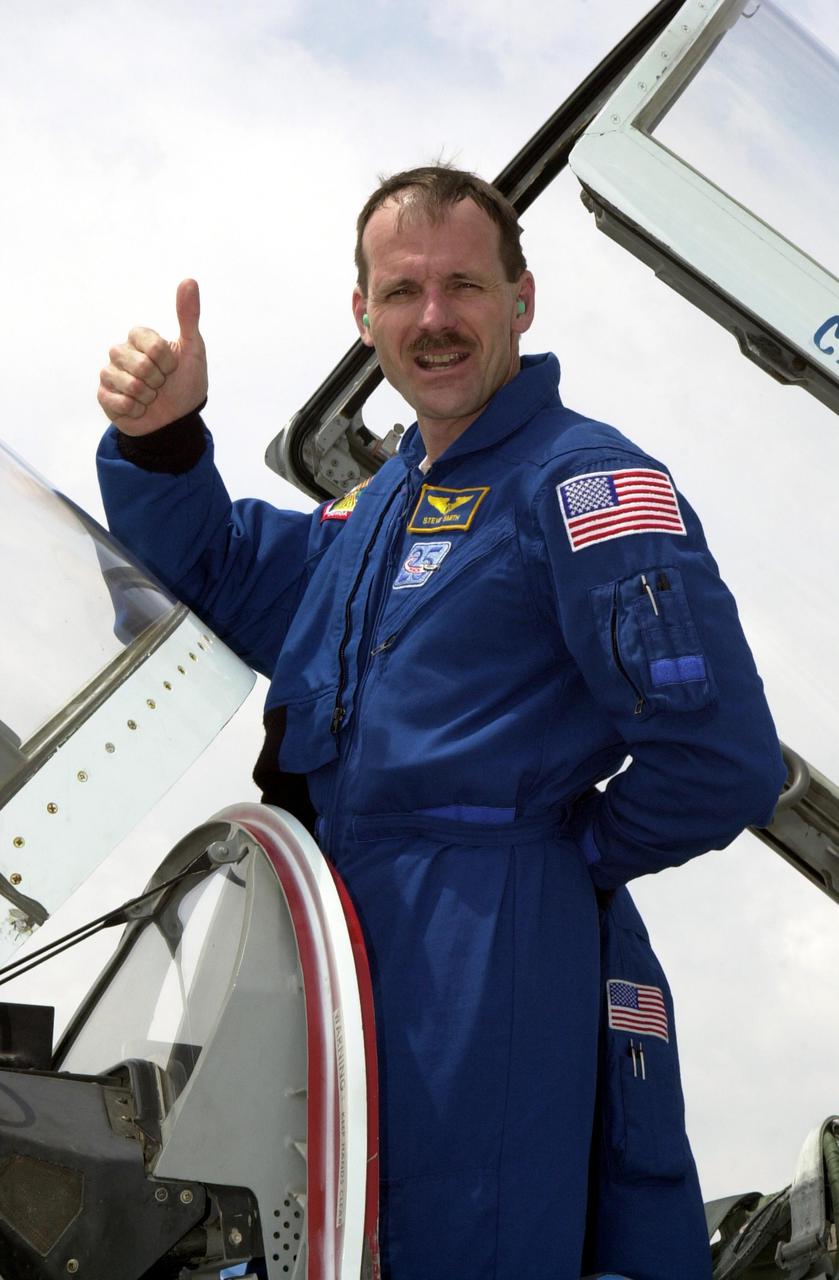
KENNEDY SPACE CENTER, FLA. --, STS-110 Mission Specialist Steven Smith gives a thumbs up after landing at the KSC Shuttle Landing Facility to prepare for launch April 4. The mission will be his fourth Space Shuttle flight. Mission STS-110 is the 13th assembly flight to the International Space Station. During four planned spacewalks, crew members will install the S0 Integrated Truss Structure (ITS), centerpiece of the orbiting International Space Station (ISS), at the center of the 10-truss, girderlike structure that will ultimately extend the length of a football field on the ISS. The S0 truss will be attached to the U.S. Lab, 'Destiny,' on the 11-day mission
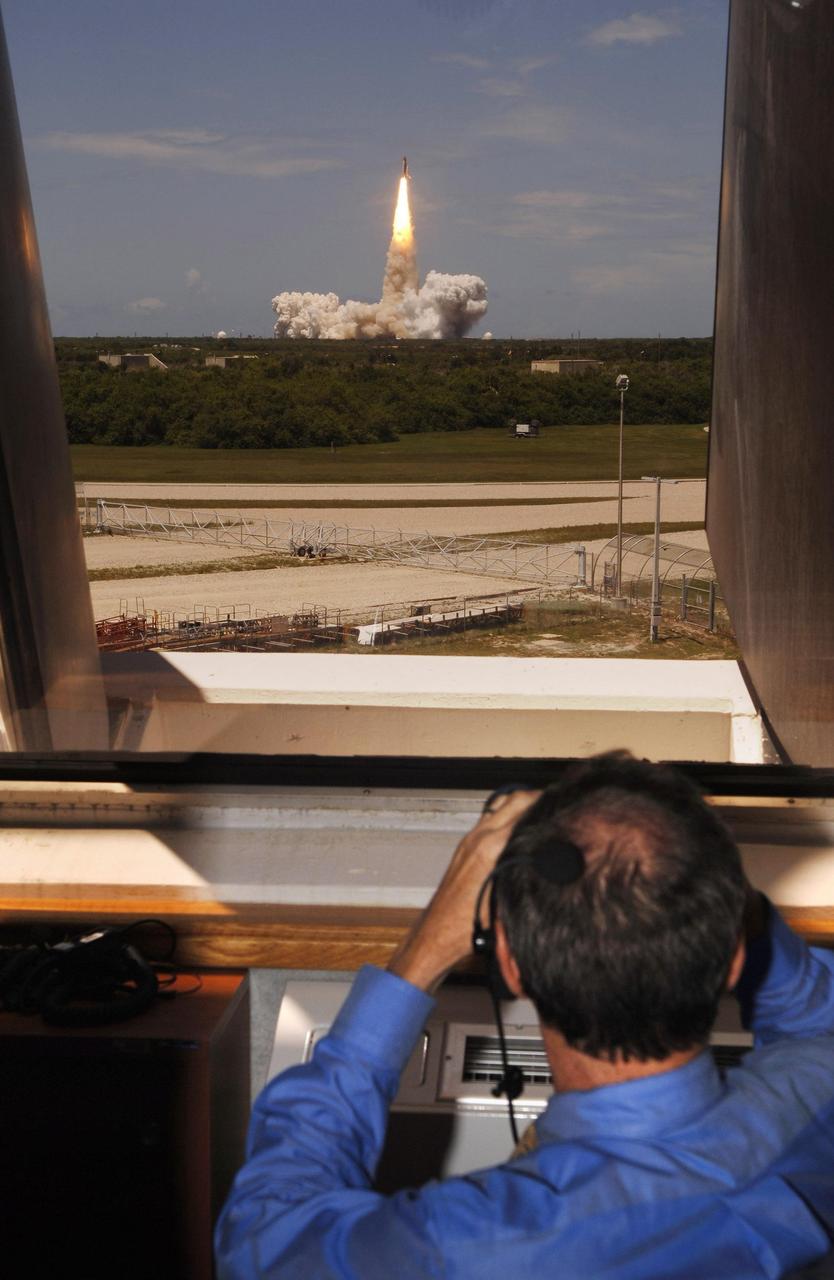
KENNEDY SPACE CENTER, FLA. - From Firing Room 4 of the Launch Control Center, NASA Administrator Mike Griffin uses binoculars to view of the launch of Space Shuttle Discovery (in the background) on mission STS-121. The launch made history as the first to occur on Independence Day. Liftoff was on-time at 2:38 p.m. EDT. During the 12-day mission, the STS-121 crew of seven will test new equipment and procedures to improve shuttle safety, as well as deliver supplies and make repairs to the International Space Station. Landing is scheduled for July 16 or 17 at Kennedy's Shuttle Landing Facility. Photo credit: NASA/Bill Ingalls
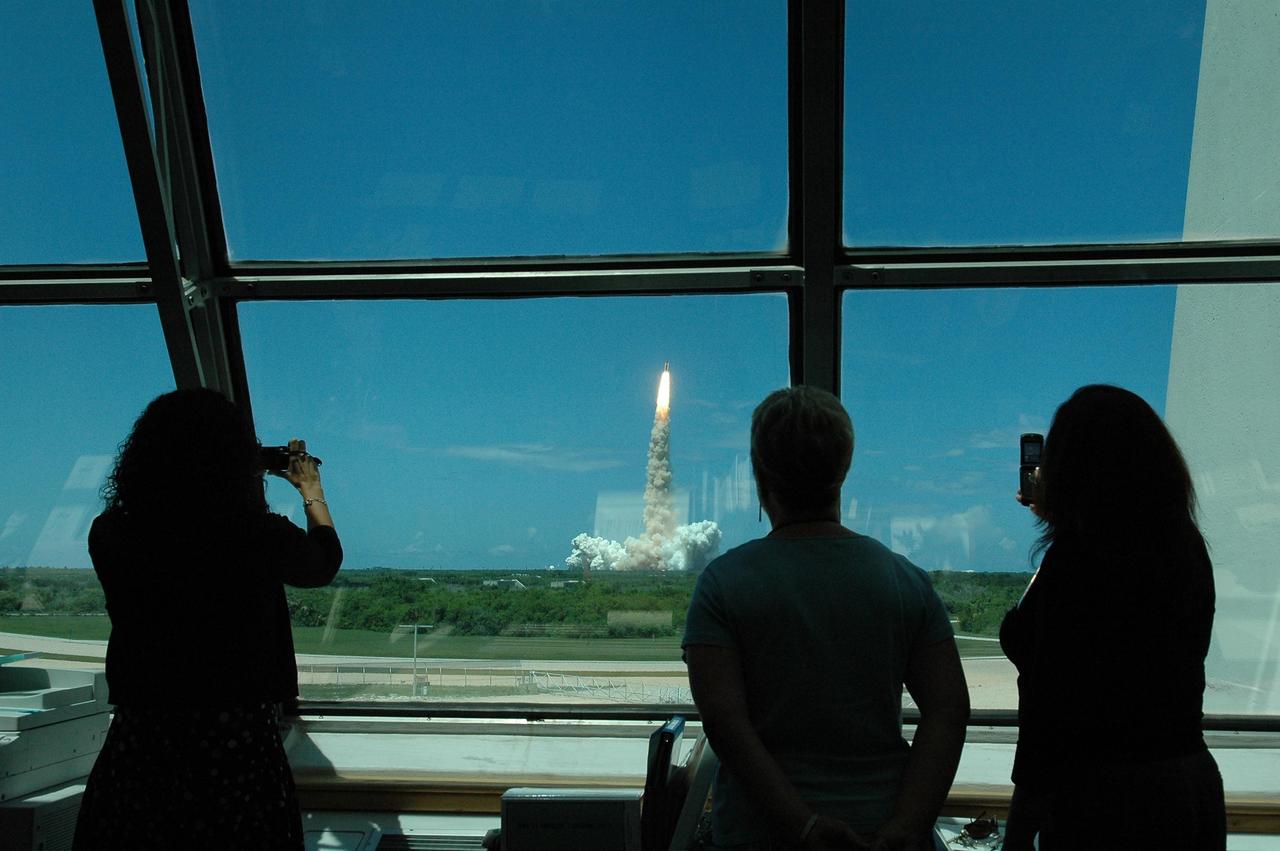
KENNEDY SPACE CENTER, FLA. - Workers in Firing Room 4 of the Launch Control Center take advantage of the view as Space Shuttle Discovery lifts off on mission STS-121 -- the first ever Independence Day launch of a space shuttle. Liftoff was on-time at 2:38 p.m. EDT. During the 12-day mission, the STS-121 crew of seven will test new equipment and procedures to improve shuttle safety, as well as deliver supplies and make repairs to the International Space Station. Landing is scheduled for July 16 or 17 at Kennedy's Shuttle Landing Facility. Photo credit: NASA/Kim Shiflett

KENNEDY SPACE CENTER, FLA. - In Firing Room 4 of the Launch Control Center, Kennedy Space Center Director Jim Kennedy watches one of the computer screens as the countdown heads for launch of Space Shuttle Discovery on mission STS-121. Liftoff was on-time at 2:38 p.m. EDT. During the 12-day mission, the STS-121 crew of seven will test new equipment and procedures to improve shuttle safety, as well as deliver supplies and make repairs to the International Space Station. Landing is scheduled for July 16 or 17 at Kennedy's Shuttle Landing Facility. Photo credit: NASA/Kim Shiflett
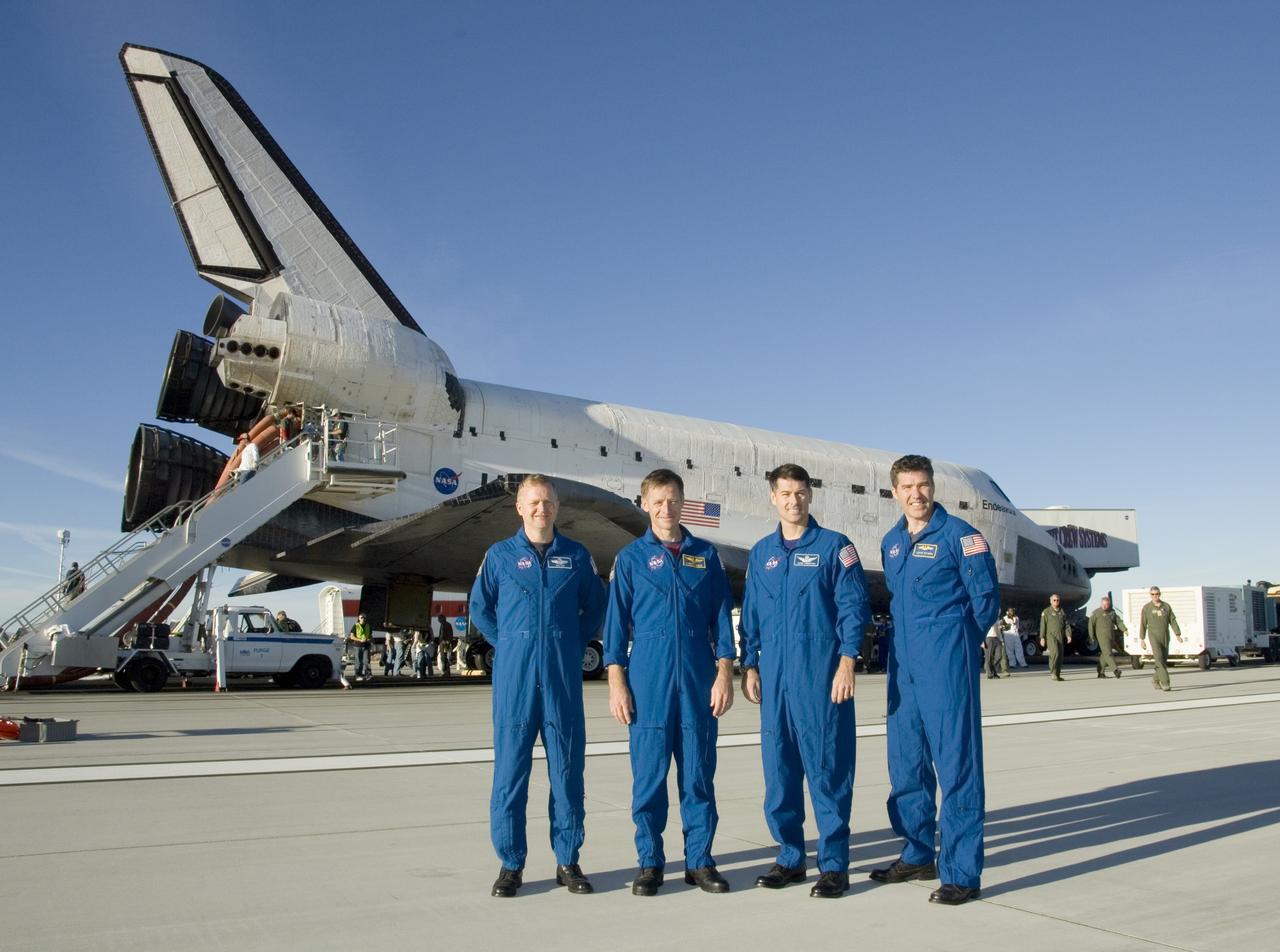
EDWARDS, Calif. – After space shuttle Endeavour's landing at Edwards Air Force Base in California, four of the STS-126 crew members pose for the media. From left are Pilot Eric Boe, Commander Chris Ferguson and Mission Specialists Shane Kimbrough and Steve Bowen. The decision to land at Edwards was made due to weather concerns at NASA's Kennedy Space Center in Florida. In the 52nd landing at Edwards, Endeavour touched down at 4:25 p.m. EST to end the STS-126 mission, completing its 16-day journey of over 6.6 million miles in space. The STS-126 mission was the 27th flight to the International Space Station, carrying equipment and supplies in the Multi-Purpose Logistics Module Leonardo. The mission featured four spacewalks and work to prepare the space station to house six crew members for long-duration missions. Photo credit: NASA/Tom Tschida, VAFB
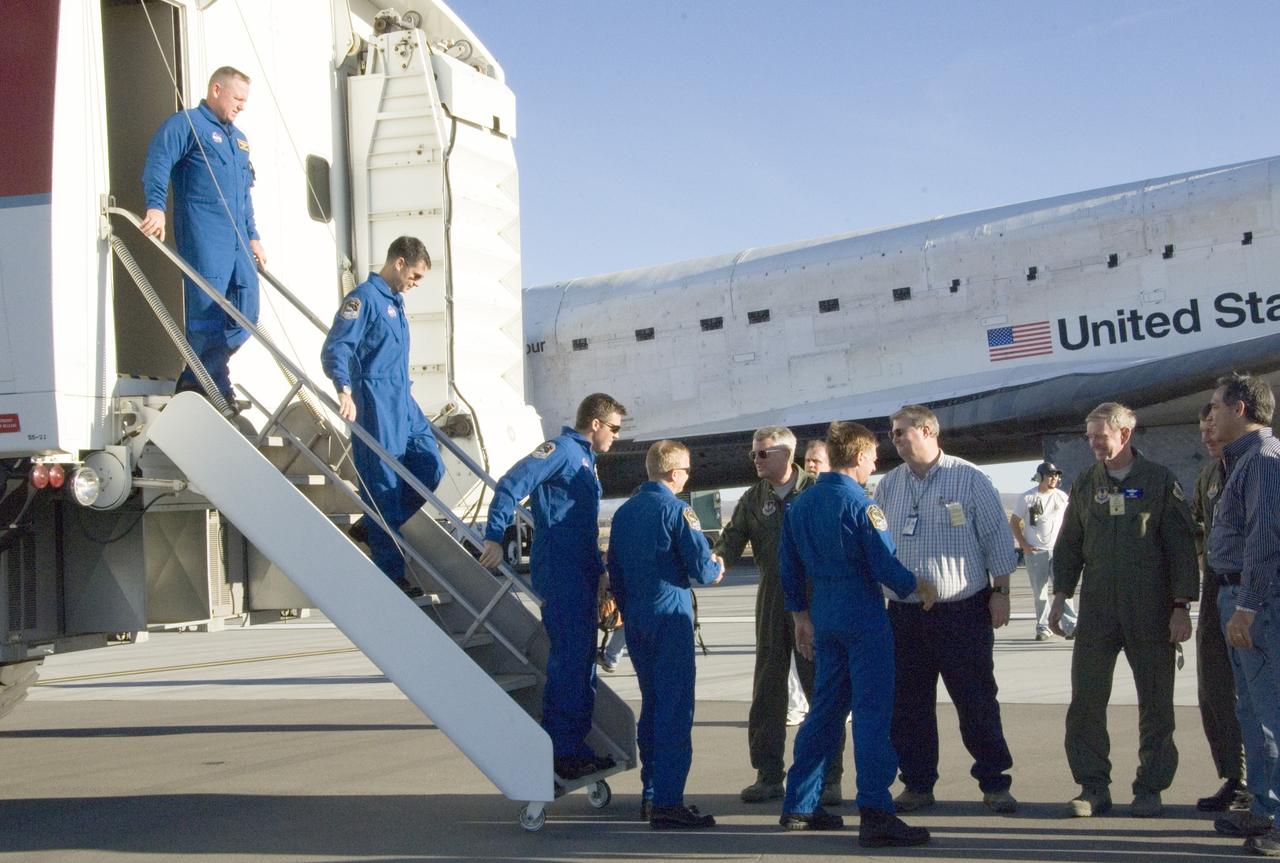
EDWARDS, Calif. – At Edwards Air Force Base in California, STS-126 crew members are greeted as they exit the crew transport vehicle after landing aboard space shuttle Endeavour. Leading the crew is Commander Chris Ferguson (right) followed by Pilot Eric Boe and Mission Specialists Steve Bowen and Shane Kimbrough. The decision to land at Edwards was made due to weather concerns at NASA's Kennedy Space Center in Florida. In the 52nd landing at Edwards, Endeavour touched down at 4:25 p.m. EST to end the STS-126 mission, completing its 16-day journey of over 6.6 million miles in space. The STS-126 mission was the 27th flight to the International Space Station, carrying equipment and supplies in the Multi-Purpose Logistics Module Leonardo. The mission featured four spacewalks and work to prepare the space station to house six crew members for long-duration missions. Photo credit: NASA/Tom Tschida, VAFB

EDWARDS, Calif. – After space shuttle Endeavour's landing at Edwards Air Force Base in California, STS-126 Commander Chris Ferguson (left) and Pilot Eric Boe examine the tiles on space shuttle Endeavour for any visible damage. The decision to land at Edwards was made due to weather concerns at NASA's Kennedy Space Center in Florida. In the 52nd landing at Edwards, Endeavour touched down at 4:25 p.m. EST to end the STS-126 mission, completing its 16-day journey of over 6.6 million miles in space. The STS-126 mission was the 27th flight to the International Space Station, carrying equipment and supplies in the Multi-Purpose Logistics Module Leonardo. The mission featured four spacewalks and work to prepare the space station to house six crew members for long-duration missions. Photo credit: NASA/Tom Tschida, VAFB
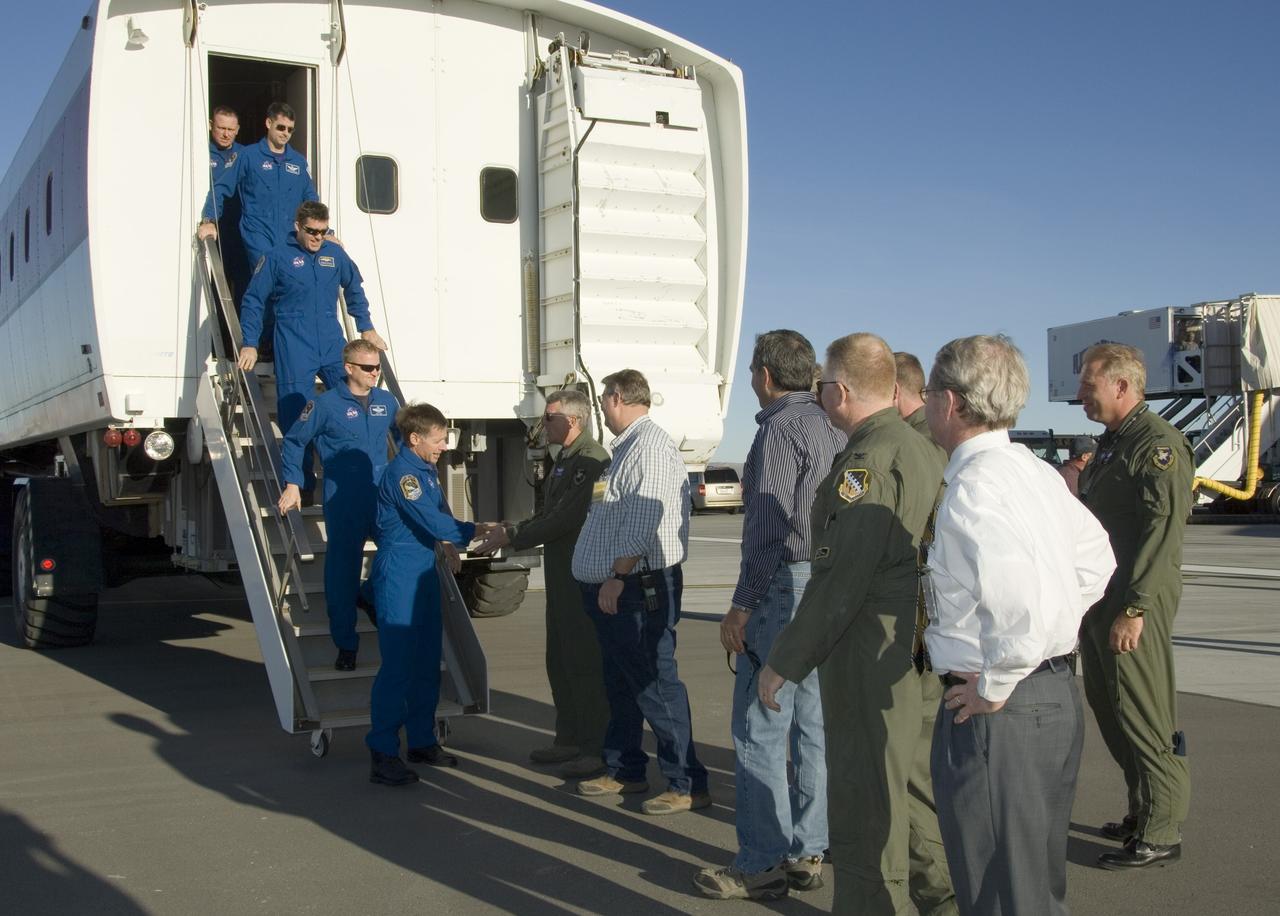
EDWARDS, Calif. – At Edwards Air Force Base in California, STS-126 crew members are greeted as they exit the crew transport vehicle after landing aboard space shuttle Endeavour. Leading the crew is Commander Chris Ferguson (right) followed by Pilot Eric Boe and Mission Specialists Steve Bowen and Shane Kimbrough. The decision to land at Edwards was made due to weather concerns at NASA's Kennedy Space Center in Florida. In the 52nd landing at Edwards, Endeavour touched down at 4:25 p.m. EST to end the STS-126 mission, completing its 16-day journey of over 6.6 million miles in space. The STS-126 mission was the 27th flight to the International Space Station, carrying equipment and supplies in the Multi-Purpose Logistics Module Leonardo. The mission featured four spacewalks and work to prepare the space station to house six crew members for long-duration missions. Photo credit: NASA/Tom Tschida, VAFB
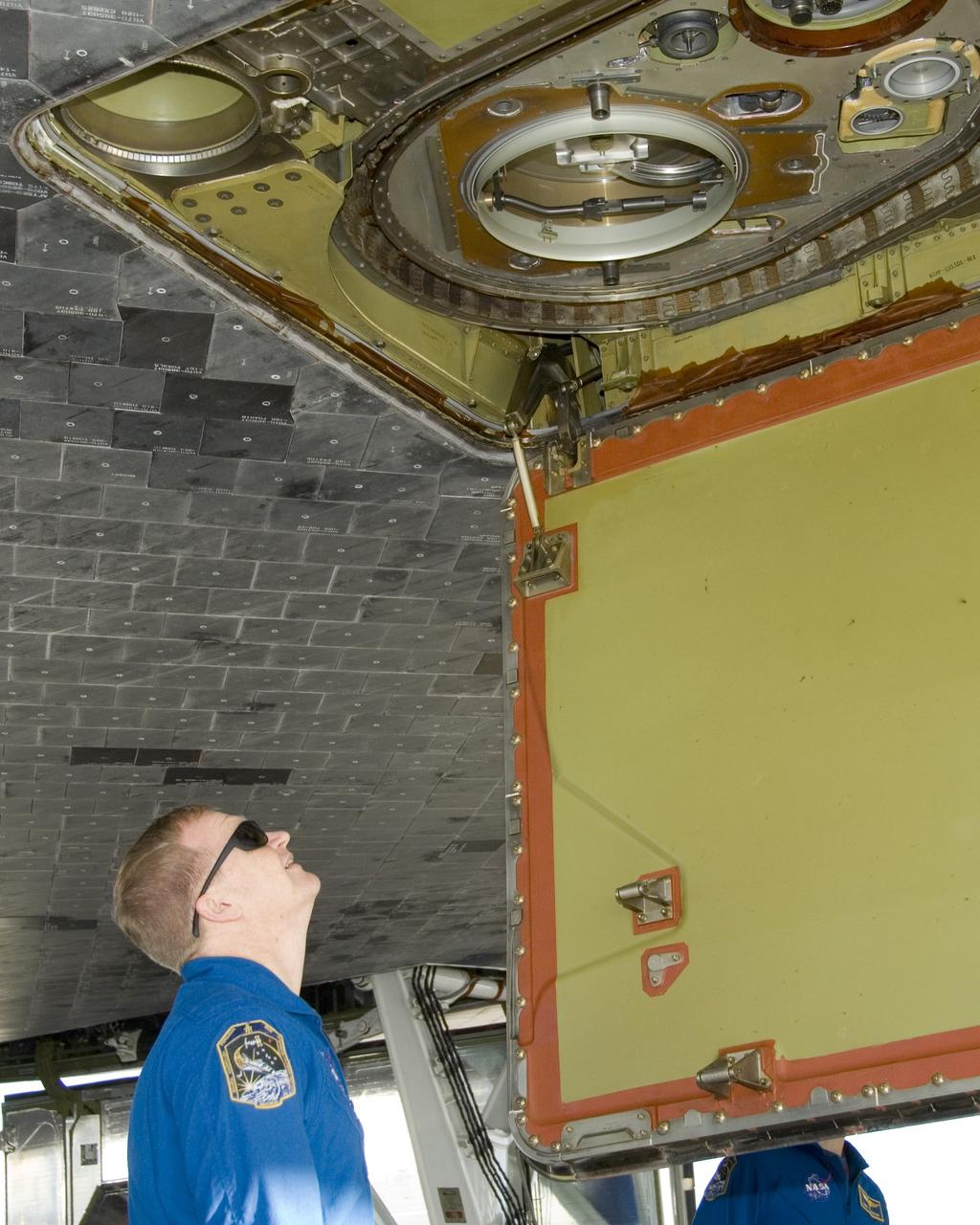
EDWARDS, Calif. – After space shuttle Endeavour's landing at Edwards Air Force Base in California, STS-126 Pilot Eric Boe examines the underside of the orbiter for any visible damage. The decision to land at Edwards was made due to weather concerns at NASA's Kennedy Space Center in Florida. In the 52nd landing at Edwards, Endeavour touched down at 4:25 p.m. EST to end the STS-126 mission, completing its 16-day journey of over 6.6 million miles in space. The STS-126 mission was the 27th flight to the International Space Station, carrying equipment and supplies in the Multi-Purpose Logistics Module Leonardo. The mission featured four spacewalks and work to prepare the space station to house six crew members for long-duration missions. Photo credit: NASA/Tom Tschida, VAFB
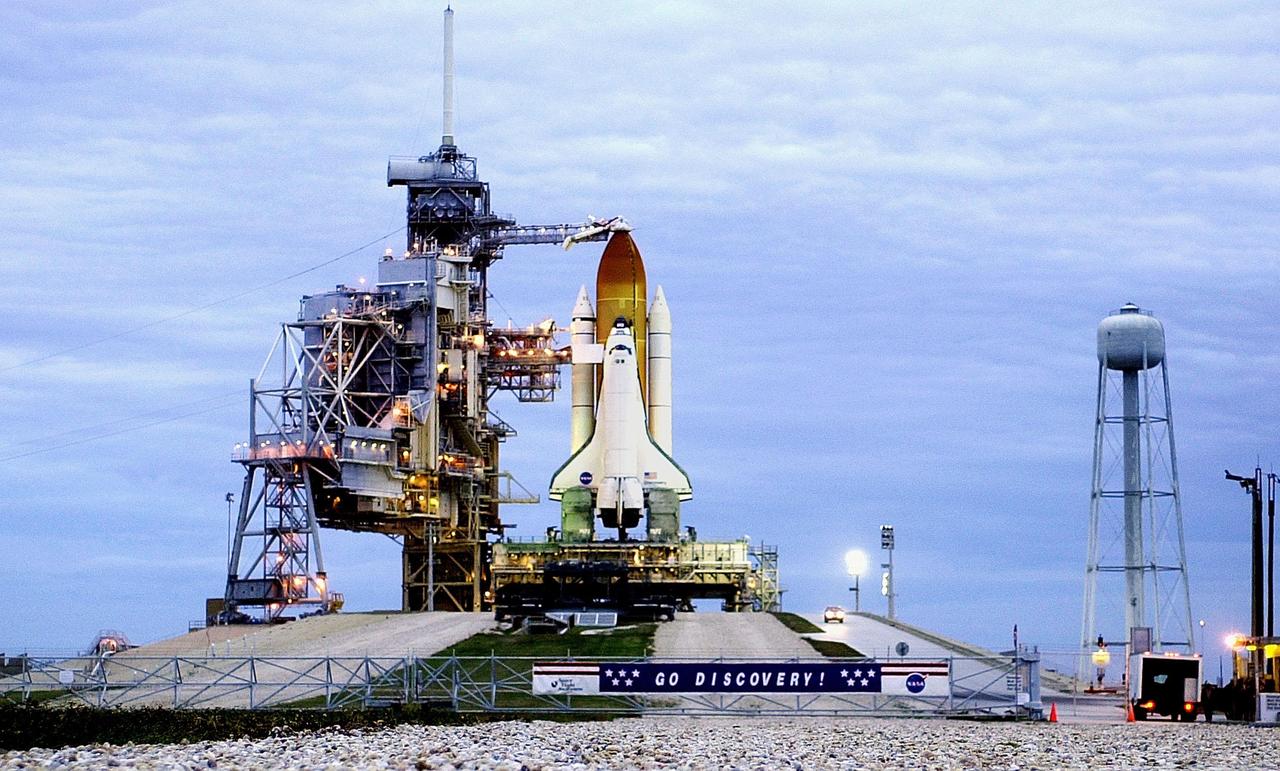
In the pre-dawn hours at Launch Pad 39B under a cloud-filled sky on the east coast of Florida, the Rotating Service Structure is rolled back to reveal the Space Shuttle Discovery poised for flight on mission STS-103. The rollback of the structure was complete at 4:46 a.m. EST. STS-103 is scheduled for launch Dec. 16 at 9:18 p.m. EST. The mission is expected to last about 9 days and 21 hours with a landing at KSC Sunday, Dec. 26, at 6:56 p.m. EST
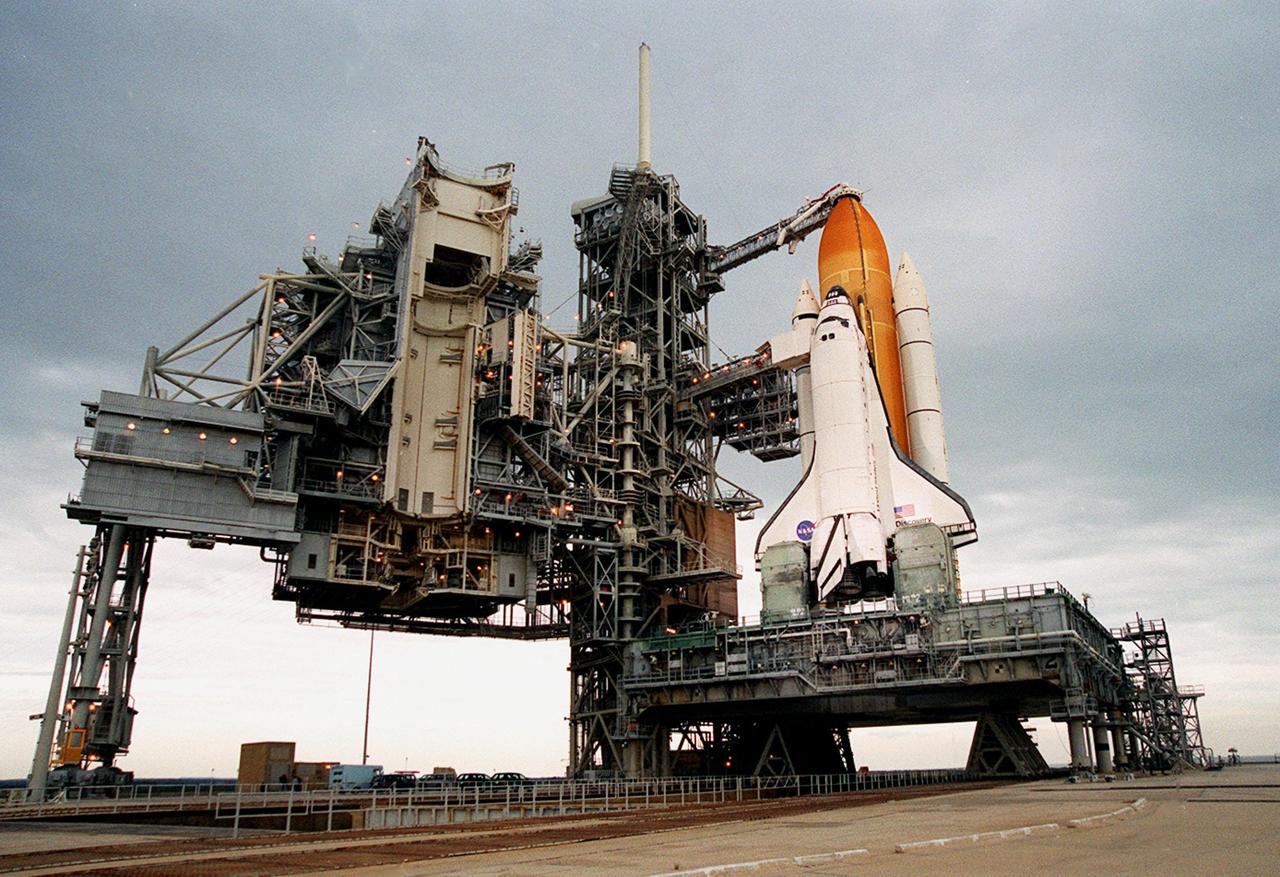
After rollback of the Rotating Service Structure at Launch Pad 39B (left) before dawn, the Space Shuttle Discovery is revealed poised for flight on mission STS-103. The rollback of the structure was complete at 4:46 a.m. EST. STS-103 is scheduled for launch Dec. 16 at 9:18 p.m. EST. The mission is expected to last about 9 days and 21 hours with a landing at KSC Sunday, Dec. 26, at 6:56 p.m. EST
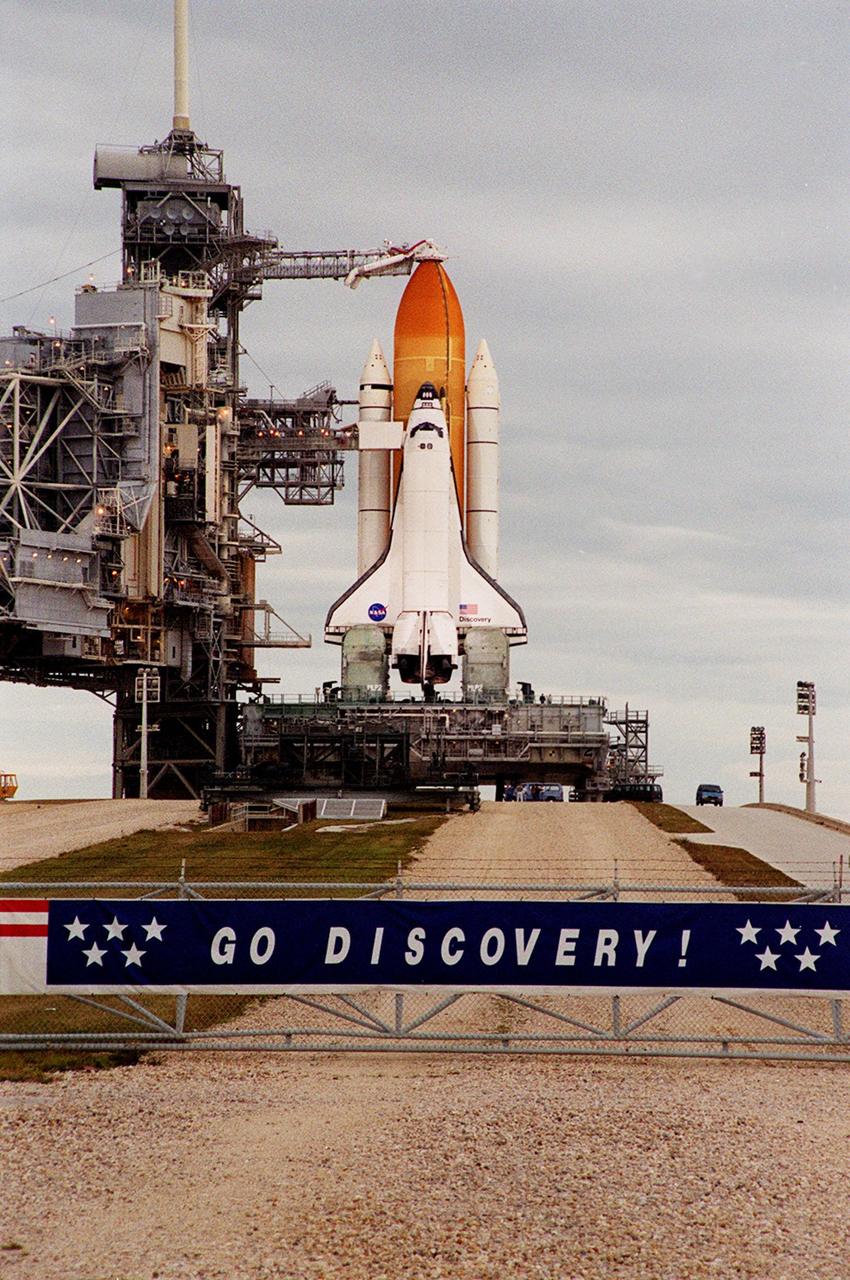
As dawn breaks at Launch Pad 39B on the east coast of Florida, the Space Shuttle Discovery is revealed poised for flight on mission STS-103. The rollback of the Rotating Service Structure (left) was complete at 4:46 a.m. EST. STS-103 is scheduled for launch Dec. 16 at 9:18 p.m. EST. The mission is expected to last about 9 days and 21 hours with a landing at KSC Sunday, Dec. 26, at 6:56 p.m. EST
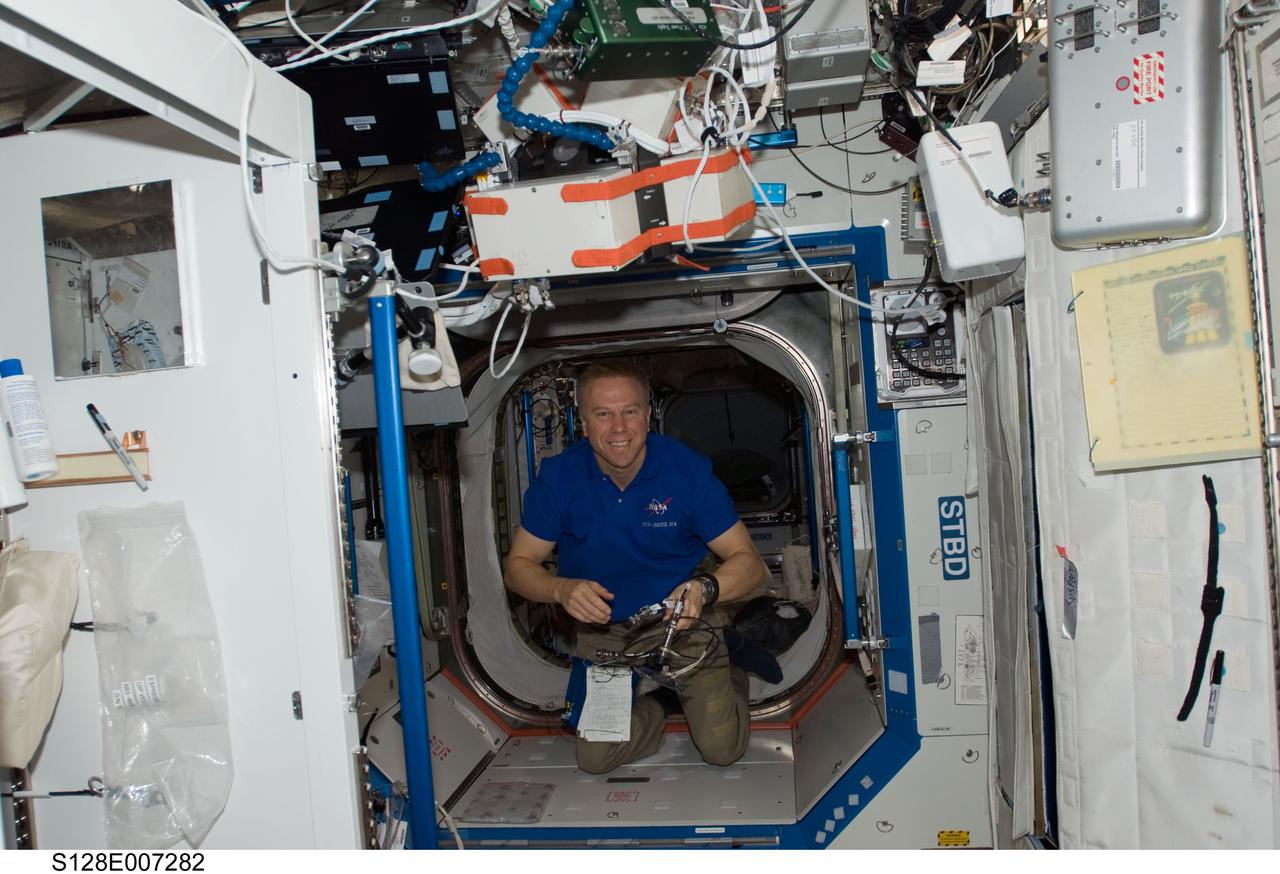
S128-E-007282 (4 Sept. 2009) --- Onboard the International Space Station since July, astronaut Tim Kopra is pictured on the orbital outpost a little less than a week before his scheduled return to Earth. Earlier this week, Kopra changed roles from Expedition 20 flight engineer to STS-128 mission specialist. Kopra came up to the station with the STS-127 crew and participated in a spacewalk on July 18. He will return to Earth aboard the Discovery on a scheduled Sept. 10 landing.
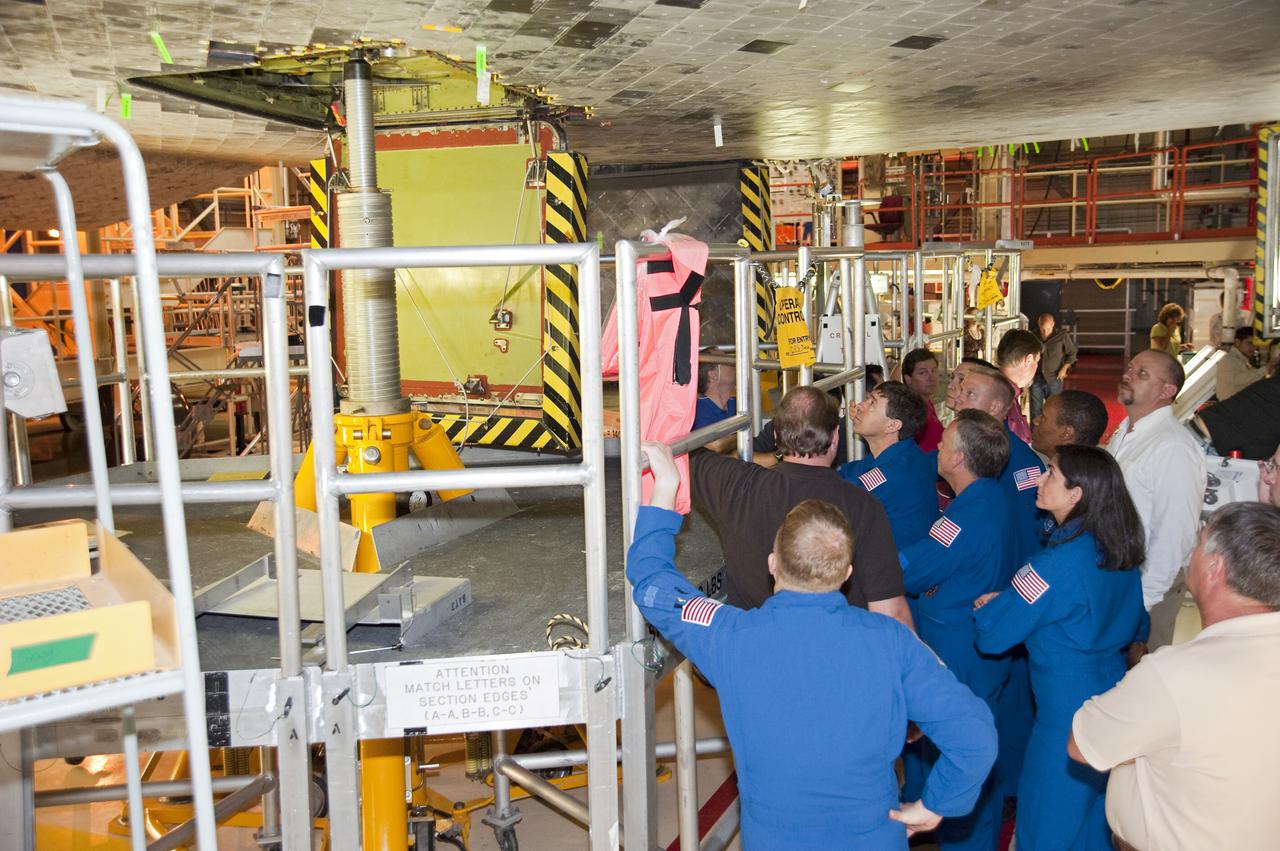
CAPE CANAVERAL, Fla. -- In Orbiter Processing Facility-3 at NASA's Kennedy Space Center in Florida, the STS-133 crew members look up into the shuttle's wheel well as a technician describes the landing gear. The astronauts are at Kennedy for the Crew Equipment Interface Test, or CEIT, which provides the crew with hands-on training and observation of shuttle and flight hardware for their mission to the International Space Station. Launch of the STS-133 mission on space shuttle Discovery is targeted for Nov. 1 at 4:33 p.m. EDT. Photo credit: NASA_Kim Shiflett
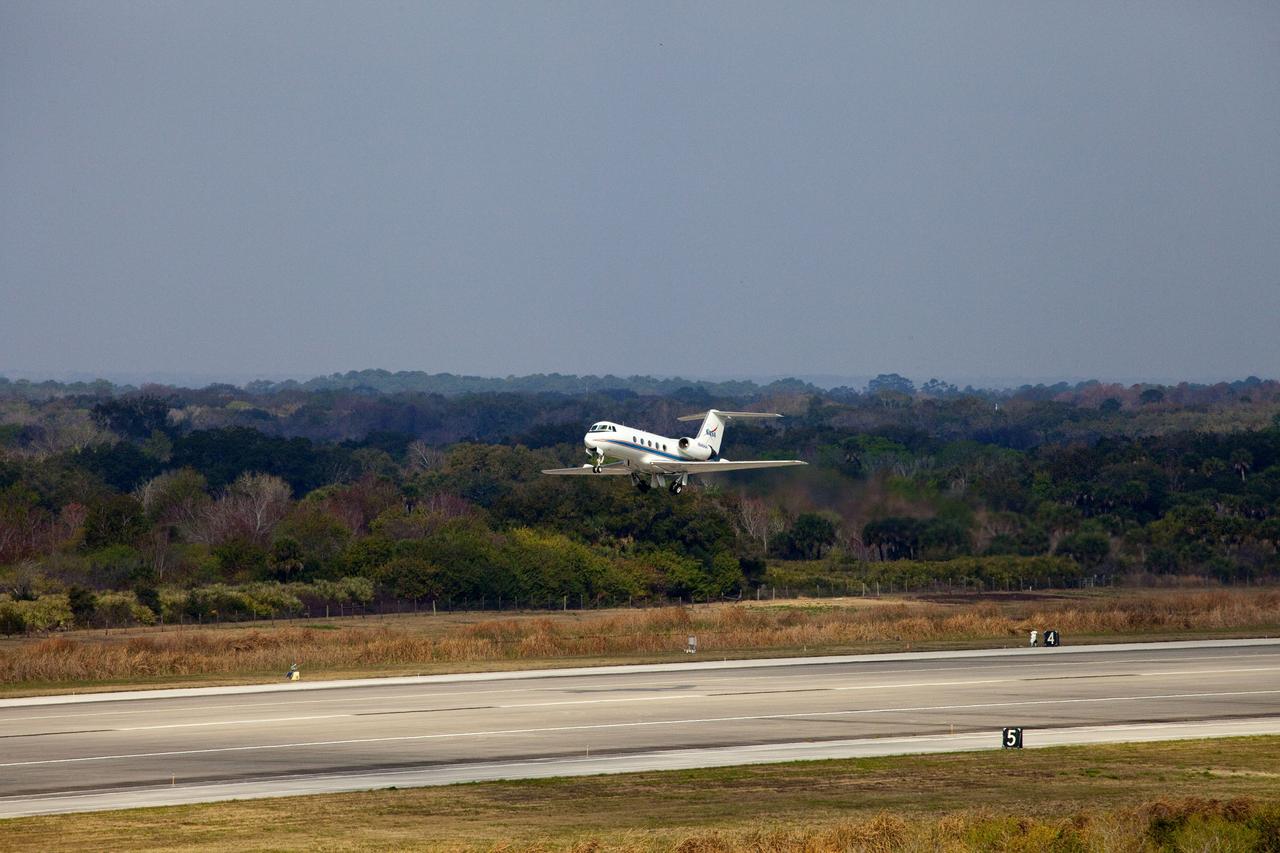
CAPE CANAVERAL, Fla. -- This image was taken from the Shuttle Landing Facility's air traffic control tower at NASA's Kennedy Space Center in Florida and provides a birds-eye view of STS-133 Pilot Eric Boe performing touch-and-go landings aboard one of two Shuttle Training Aircraft (STA). STAs are Gulfstream II business jets that are modified to mimic the shuttle's handling during the final phase of landing. Practice landings are part of standard training before space shuttle Discovery's launch to the International Space Station. Scheduled to lift off Feb. 24 at 4:50 p.m. EST, Discovery and its six-member crew will deliver the Permanent Multipurpose Module, packed with supplies and critical spare parts, as well as Robonaut 2, the dexterous humanoid astronaut helper, to the orbiting outpost. For more information on the STS-133 mission, visit www.nasa.gov/mission_pages/shuttle/shuttlemissions/sts133/. Photo credit: NASA/Ben Smegelsky
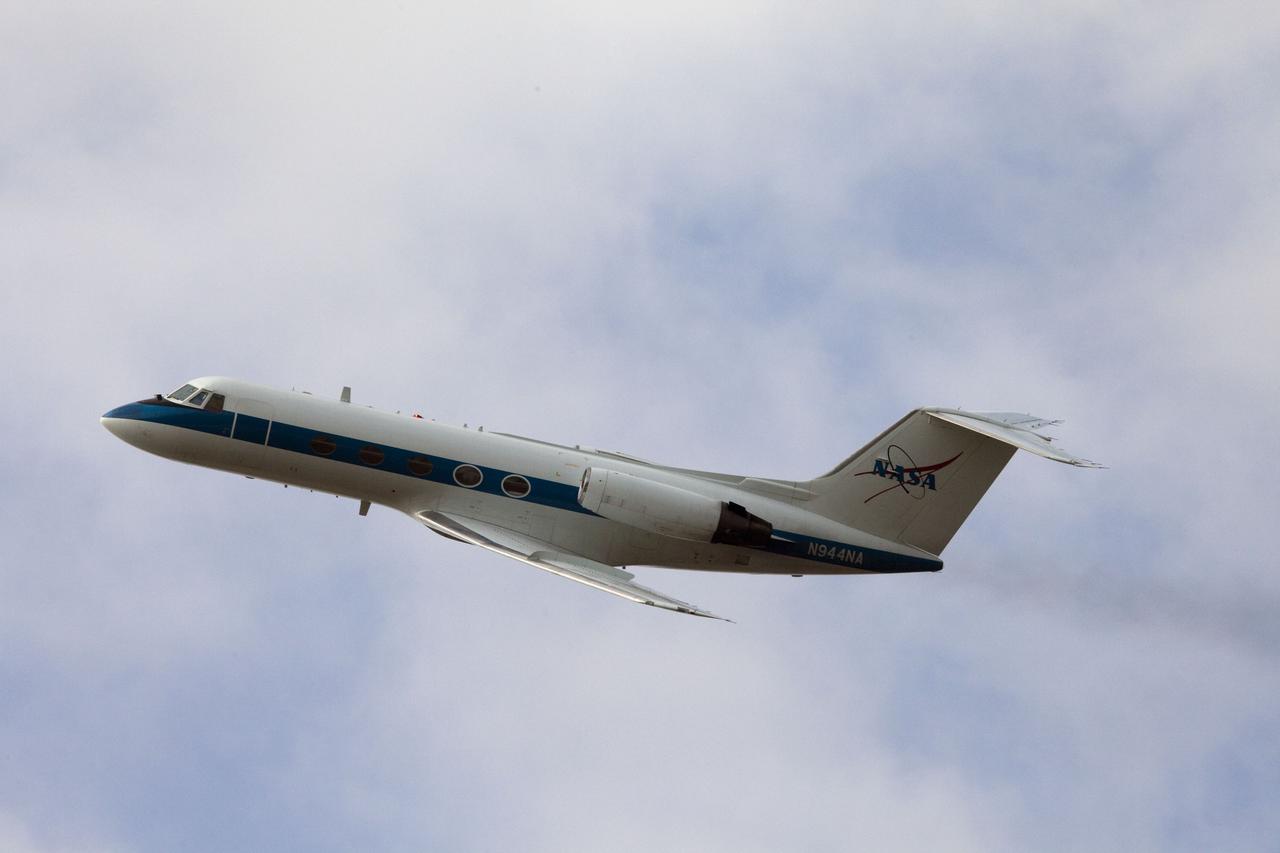
CAPE CANAVERAL, Fla. -- This image was taken from the Shuttle Landing Facility's air traffic control tower at NASA's Kennedy Space Center in Florida and provides a birds-eye view of STS-133 Commander Steve Lindsey performing touch-and-go landings aboard one of two Shuttle Training Aircraft (STA). STAs are Gulfstream II business jets that are modified to mimic the shuttle's handling during the final phase of landing. Practice landings are part of standard training before space shuttle Discovery's launch to the International Space Station. Scheduled to lift off Feb. 24 at 4:50 p.m. EST, Discovery and its six-member crew will deliver the Permanent Multipurpose Module, packed with supplies and critical spare parts, as well as Robonaut 2, the dexterous humanoid astronaut helper, to the orbiting outpost. For more information on the STS-133 mission, visit www.nasa.gov/mission_pages/shuttle/shuttlemissions/sts133/. Photo credit: NASA/Ben Smegelsky

CAPE CANAVERAL, Fla. -- This image was taken from the Shuttle Landing Facility's air traffic control tower at NASA's Kennedy Space Center in Florida and provides a birds-eye view of STS-133 Commander Steve Lindsey performing touch-and-go landings aboard one of two Shuttle Training Aircraft (STA). STAs are Gulfstream II business jets that are modified to mimic the shuttle's handling during the final phase of landing. Practice landings are part of standard training before space shuttle Discovery's launch to the International Space Station. Scheduled to lift off Feb. 24 at 4:50 p.m. EST, Discovery and its six-member crew will deliver the Permanent Multipurpose Module, packed with supplies and critical spare parts, as well as Robonaut 2, the dexterous humanoid astronaut helper, to the orbiting outpost. For more information on the STS-133 mission, visit www.nasa.gov/mission_pages/shuttle/shuttlemissions/sts133/. Photo credit: NASA/Ben Smegelsky
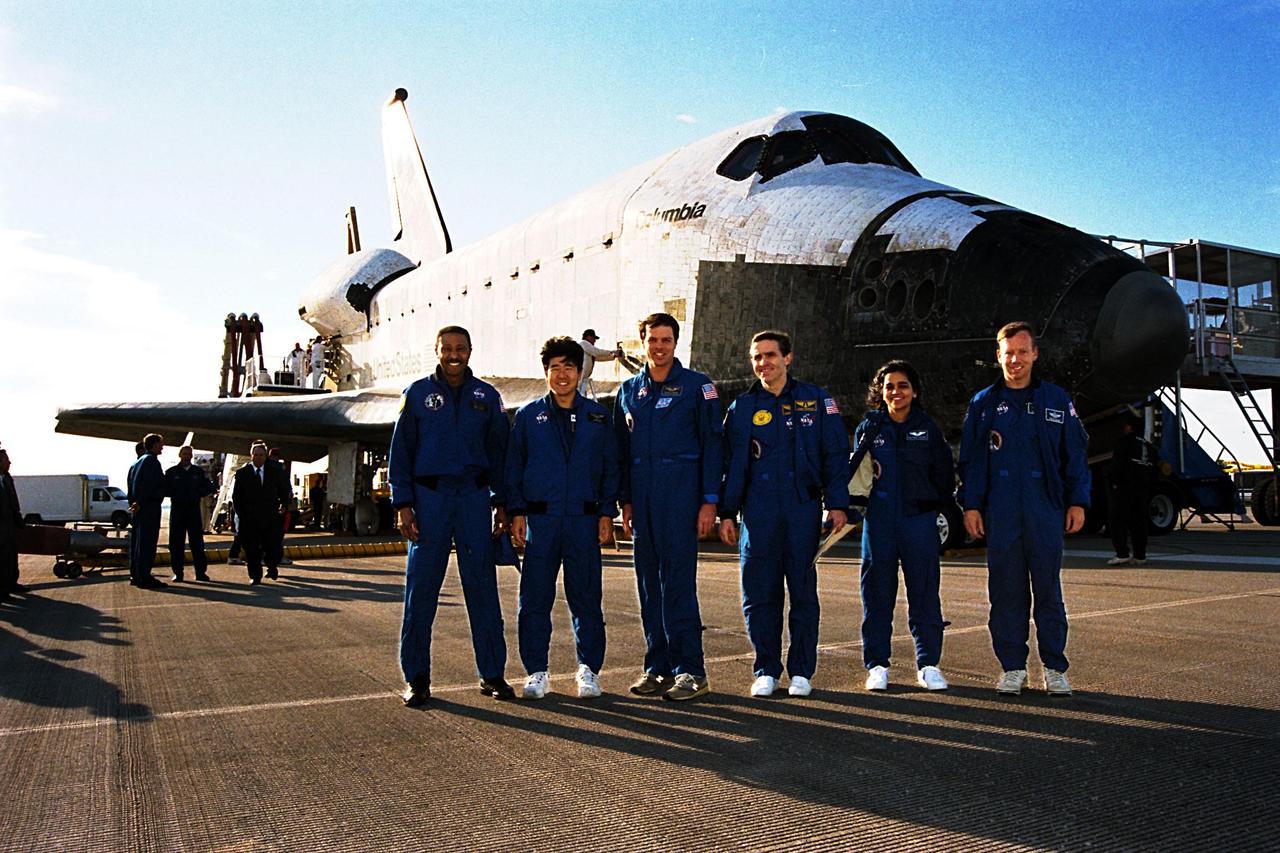
The STS-87 crew pose in front of the orbiter Columbia shortly after landing on Runway 33 at KSC's Shuttle Landing Facility. STS-87 concluded its mission with a main gear touchdown at 7:20:04 a.m. EST Dec. 5, drawing the 15-day, 16-hour and 34-minute-long mission of 6.5 million miles to a close. From left to right are Mission Specialists Winston Scott and Takao Doi, Ph.D., of the National Space Development Agency of Japan; Commander Kevin Kregel; Payload Specialist Leonid Kadenyuk of the National Space Agency of Ukraine; Mission Specialist Kalpana Chawla, Ph.D.; and Pilot Steven Lindsey. During the 88th Space Shuttle mission, the crew performed experiments on the United States Microgravity Payload-4 and pollinated plants as part of the Collaborative Ukrainian Experiment. This was the 12th landing for Columbia at KSC and the 41st KSC landing in the history of the Space Shuttle program
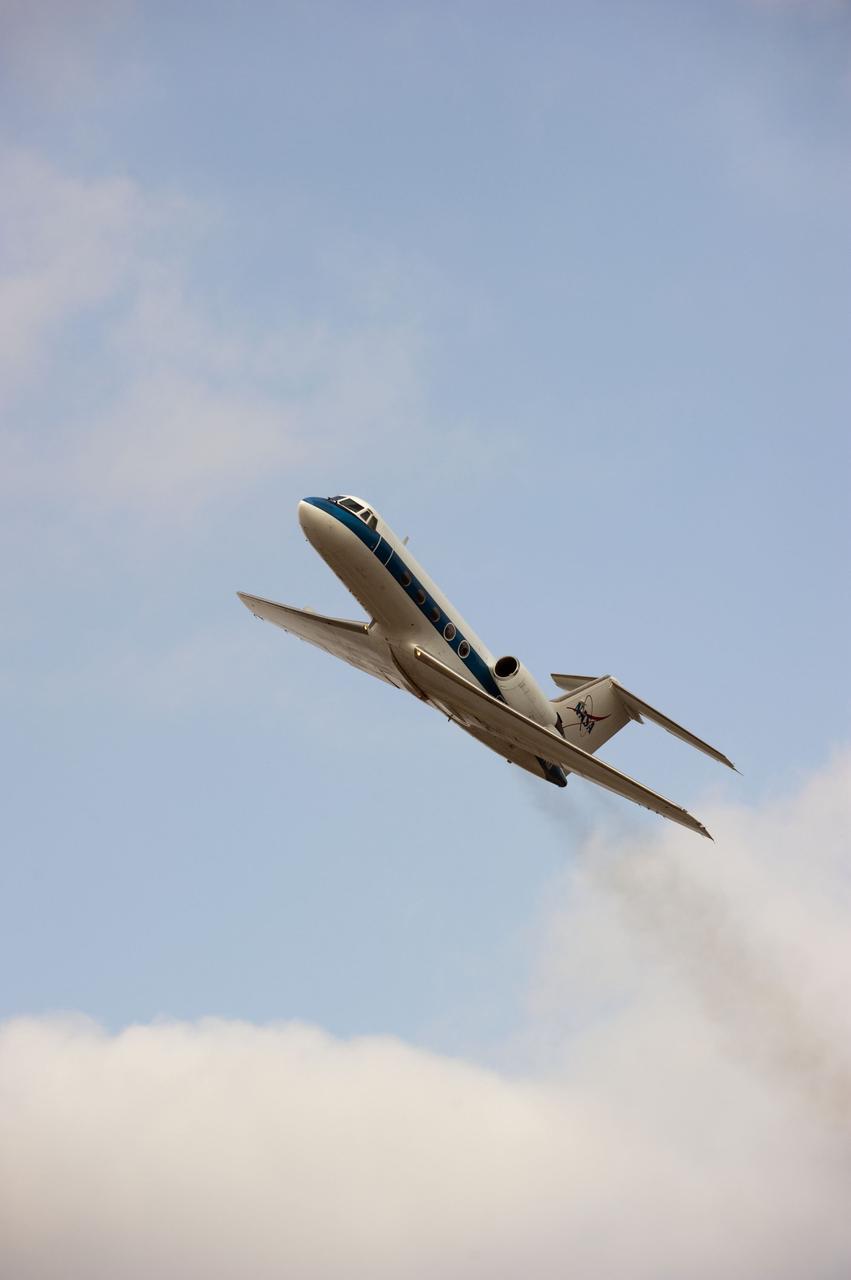
CAPE CANAVERAL, Fla. -- A Shuttle Training Aircraft (STA) performs touch-and-go landings over the Shuttle Landing Facility runway at NASA's Kennedy Space Center in Florida. STS-133 Commander Steve Lindsey and Pilot Eric Boe are flying two Gulfstream II business jets that are modified to mimic the shuttle's handling during the final phase of landing. These practice landings are part of standard training before space shuttle Discovery's launch to the International Space Station. Scheduled to lift off Feb. 24 at 4:50 p.m. EST, Discovery and its six-member crew will deliver the Permanent Multipurpose Module, packed with supplies and critical spare parts, as well as Robonaut 2, the dexterous humanoid astronaut helper, to the orbiting outpost. For more information on the STS-133 mission, visit www.nasa.gov/mission_pages/shuttle/shuttlemissions/sts133/. Photo credit: NASA/Kim Shiflett
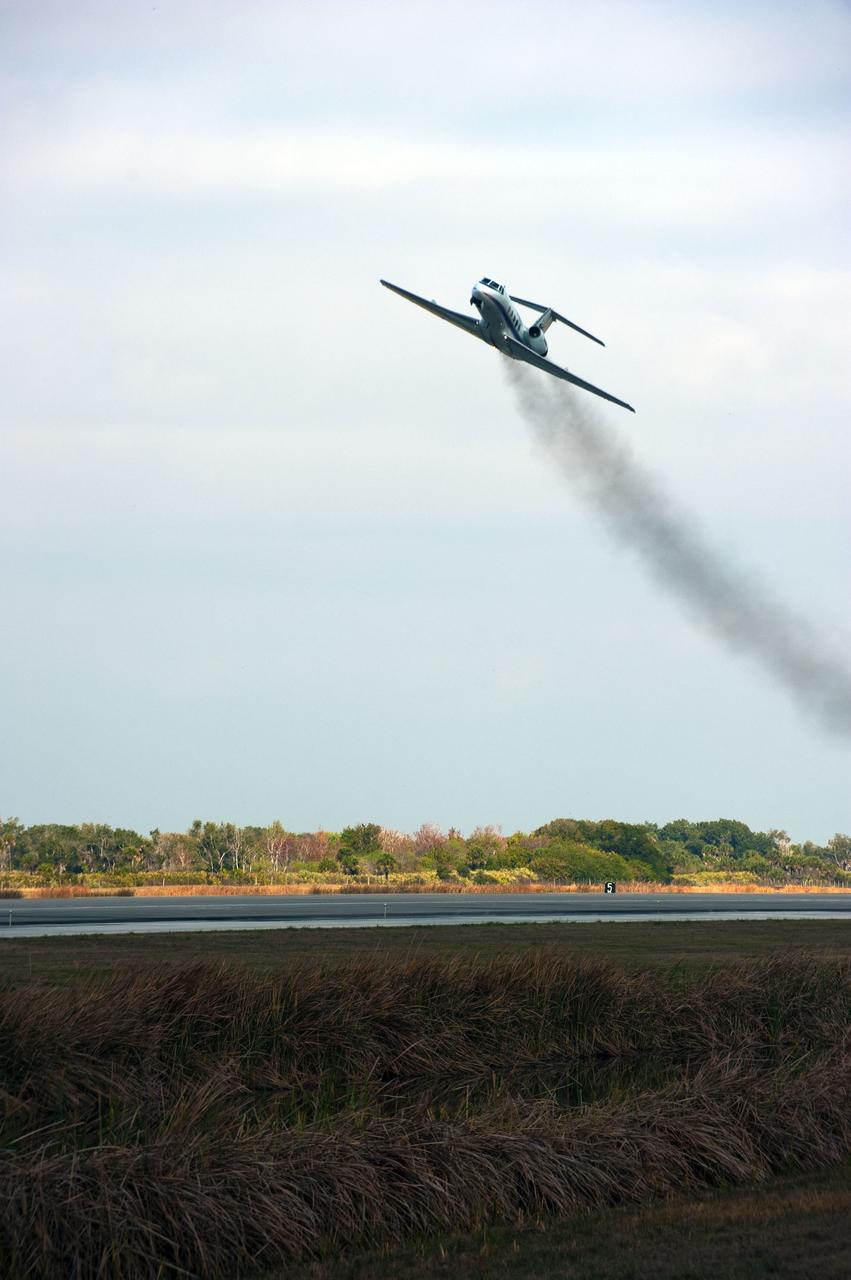
CAPE CANAVERAL, Fla. -- A Shuttle Training Aircraft (STA) performs touch-and-go landings over the Shuttle Landing Facility runway at NASA's Kennedy Space Center in Florida. STS-133 Commander Steve Lindsey and Pilot Eric Boe are flying two Gulfstream II business jets that are modified to mimic the shuttle's handling during the final phase of landing. These practice landings are part of standard training before space shuttle Discovery's launch to the International Space Station. Scheduled to lift off Feb. 24 at 4:50 p.m. EST, Discovery and its six-member crew will deliver the Permanent Multipurpose Module, packed with supplies and critical spare parts, as well as Robonaut 2, the dexterous humanoid astronaut helper, to the orbiting outpost. For more information on the STS-133 mission, visit www.nasa.gov/mission_pages/shuttle/shuttlemissions/sts133/. Photo credit: NASA/Kim Shiflett
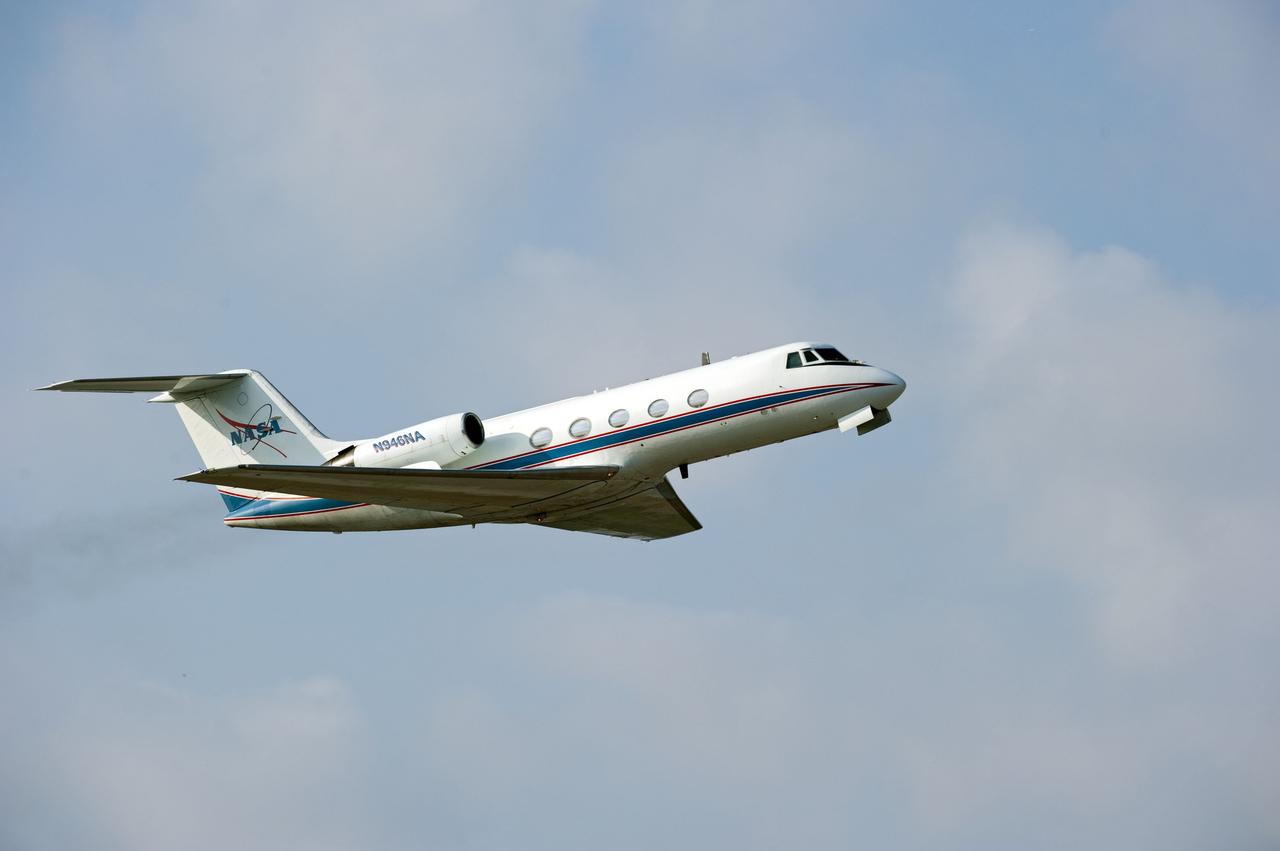
CAPE CANAVERAL, Fla. -- A Shuttle Training Aircraft (STA) performs touch-and-go landings over the Shuttle Landing Facility runway at NASA's Kennedy Space Center in Florida. STS-133 Commander Steve Lindsey and Pilot Eric Boe are flying two Gulfstream II business jets that are modified to mimic the shuttle's handling during the final phase of landing. These practice landings are part of standard training before space shuttle Discovery's launch to the International Space Station. Scheduled to lift off Feb. 24 at 4:50 p.m. EST, Discovery and its six-member crew will deliver the Permanent Multipurpose Module, packed with supplies and critical spare parts, as well as Robonaut 2, the dexterous humanoid astronaut helper, to the orbiting outpost. For more information on the STS-133 mission, visit www.nasa.gov/mission_pages/shuttle/shuttlemissions/sts133/. Photo credit: NASA/Kim Shiflett
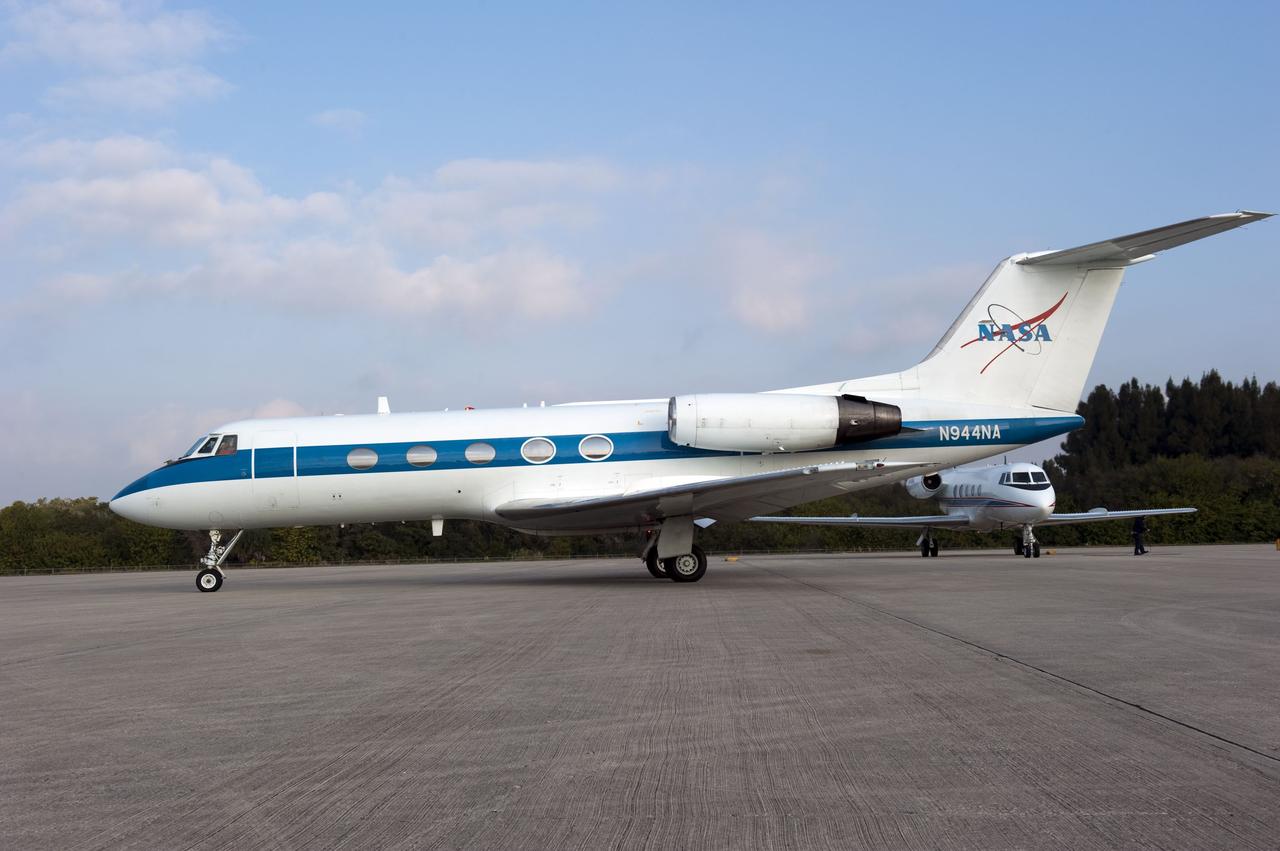
CAPE CANAVERAL, Fla. -- STS-133 Commander Steve Lindsey, foreground aircraft, and Pilot Eric Boe are ready to take off and perform touch-and-go landings aboard two Shuttle Training Aircraft (STA) on the Shuttle Landing Facility runway at NASA's Kennedy Space Center in Florida. STAs are Gulfstream II business jets that are modified to mimic the shuttle's handling during the final phase of landing. Practice landings are part of standard training before space shuttle Discovery's launch to the International Space Station. Scheduled to lift off Feb. 24 at 4:50 p.m. EST, Discovery and its six-member crew will deliver the Permanent Multipurpose Module, packed with supplies and critical spare parts, as well as Robonaut 2, the dexterous humanoid astronaut helper, to the orbiting outpost. For more information on the STS-133 mission, visit www.nasa.gov/mission_pages/shuttle/shuttlemissions/sts133/. Photo credit: NASA/Kim Shiflett
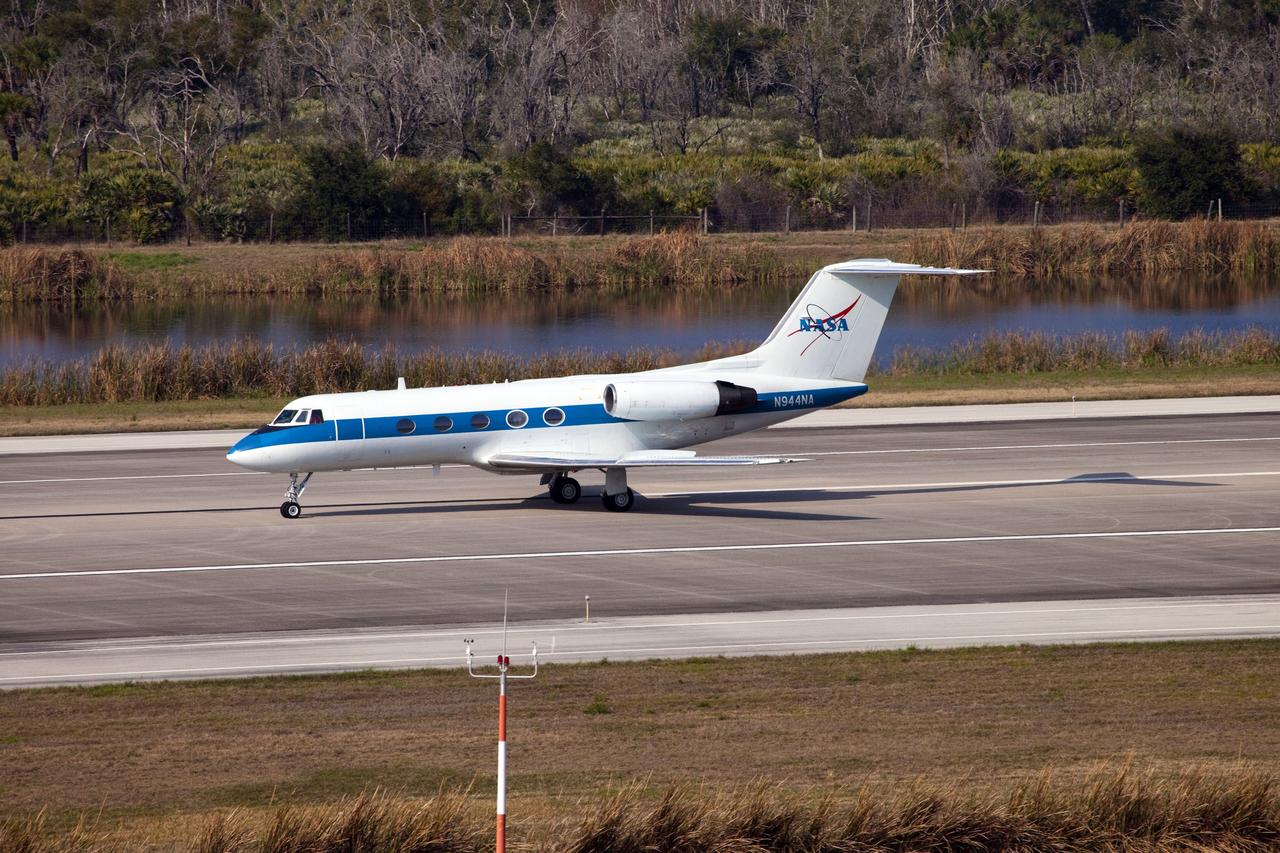
CAPE CANAVERAL, Fla. -- This image was taken from the Shuttle Landing Facility's air traffic control tower at NASA's Kennedy Space Center in Florida and provides a birds-eye view of STS-133 Commander Steve Lindsey performing touch-and-go landings aboard one of two Shuttle Training Aircraft (STA). STAs are Gulfstream II business jets that are modified to mimic the shuttle's handling during the final phase of landing. Practice landings are part of standard training before space shuttle Discovery's launch to the International Space Station. Scheduled to lift off Feb. 24 at 4:50 p.m. EST, Discovery and its six-member crew will deliver the Permanent Multipurpose Module, packed with supplies and critical spare parts, as well as Robonaut 2, the dexterous humanoid astronaut helper, to the orbiting outpost. For more information on the STS-133 mission, visit www.nasa.gov/mission_pages/shuttle/shuttlemissions/sts133/. Photo credit: NASA/Ben Smegelsky

CAPE CANAVERAL, Fla. -- STS-133 Commander Steve Lindsey, left, and Pilot Eric Boe arrive on the Shuttle Landing Facility runway at NASA's Kennedy Space Center in Florida to perform touch-and-go landings aboard two Shuttle Training Aircraft (STA). STAs are Gulfstream II business jets that are modified to mimic the shuttle's handling during the final phase of landing. Practice landings are part of standard training before space shuttle Discovery's launch to the International Space Station. Scheduled to lift off Feb. 24 at 4:50 p.m. EST, Discovery and its six-member crew will deliver the Permanent Multipurpose Module, packed with supplies and critical spare parts, as well as Robonaut 2, the dexterous humanoid astronaut helper, to the orbiting outpost. For more information on the STS-133 mission, visit www.nasa.gov/mission_pages/shuttle/shuttlemissions/sts133/. Photo credit: NASA/Kim Shiflett
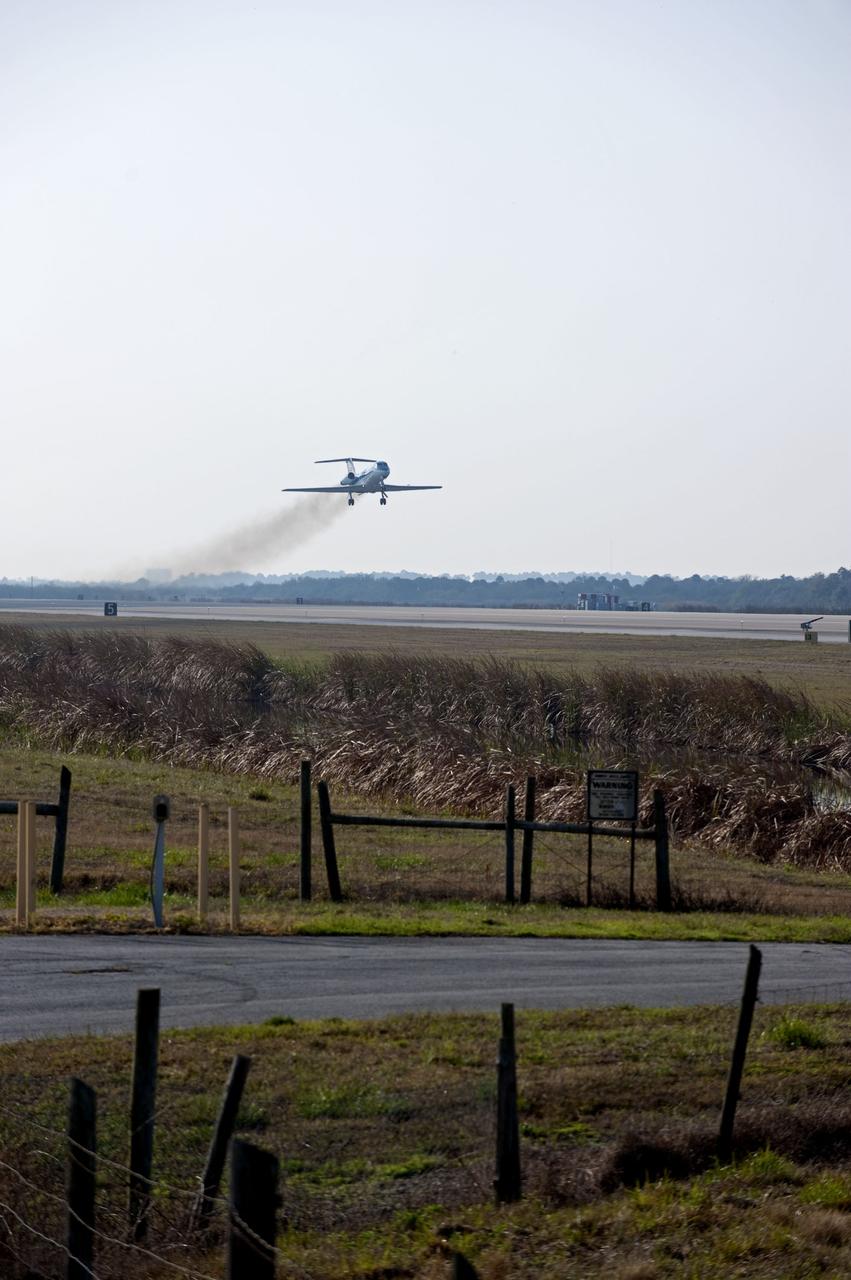
CAPE CANAVERAL, Fla. -- A Shuttle Training Aircraft (STA) performs touch-and-go landings over the Shuttle Landing Facility runway at NASA's Kennedy Space Center in Florida. STS-133 Commander Steve Lindsey and Pilot Eric Boe are flying two Gulfstream II business jets that are modified to mimic the shuttle's handling during the final phase of landing. These practice landings are part of standard training before space shuttle Discovery's launch to the International Space Station. Scheduled to lift off Feb. 24 at 4:50 p.m. EST, Discovery and its six-member crew will deliver the Permanent Multipurpose Module, packed with supplies and critical spare parts, as well as Robonaut 2, the dexterous humanoid astronaut helper, to the orbiting outpost. For more information on the STS-133 mission, visit www.nasa.gov/mission_pages/shuttle/shuttlemissions/sts133/. Photo credit: NASA/Kim Shiflett
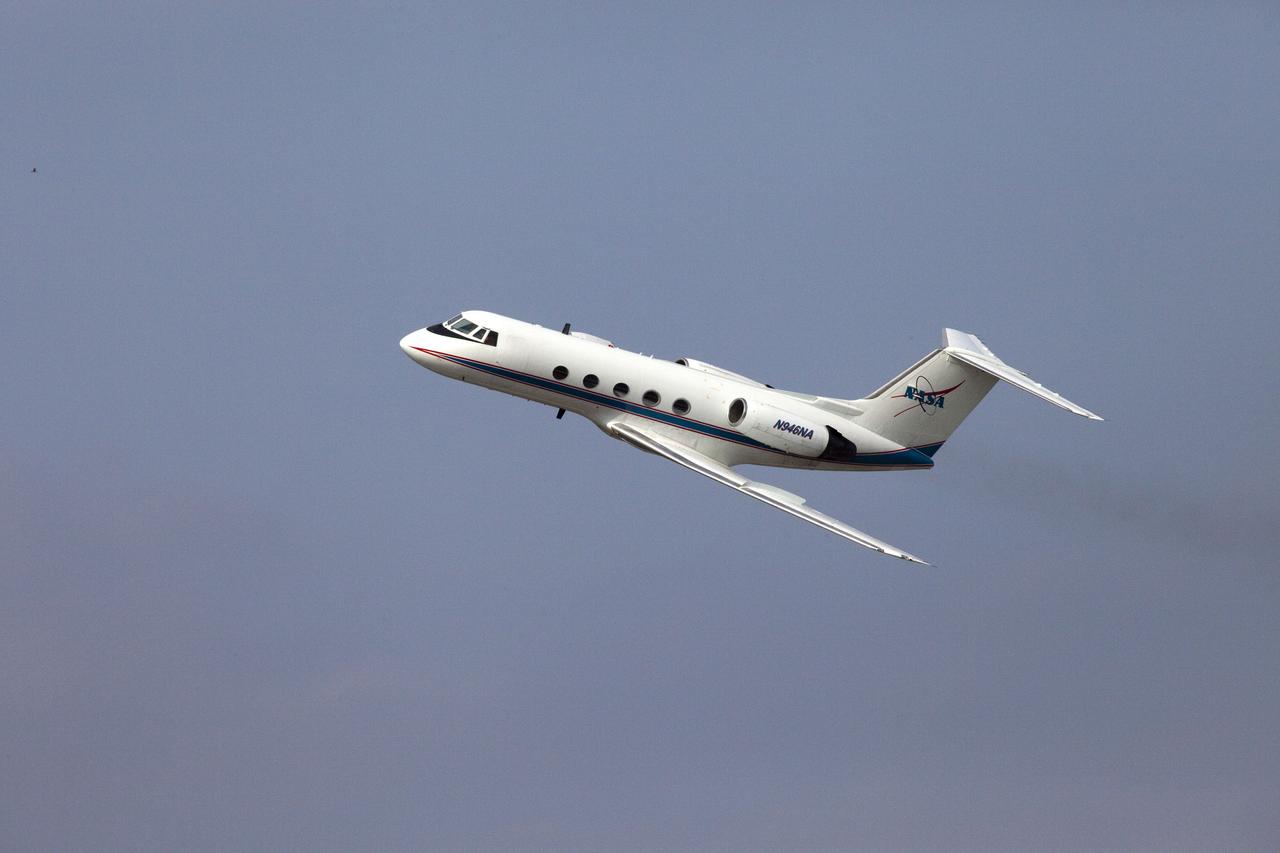
CAPE CANAVERAL, Fla. -- This image was taken from the Shuttle Landing Facility's air traffic control tower at NASA's Kennedy Space Center in Florida and provides a birds-eye view of STS-133 Pilot Eric Boe performing touch-and-go landings aboard one of two Shuttle Training Aircraft (STA). STAs are Gulfstream II business jets that are modified to mimic the shuttle's handling during the final phase of landing. Practice landings are part of standard training before space shuttle Discovery's launch to the International Space Station. Scheduled to lift off Feb. 24 at 4:50 p.m. EST, Discovery and its six-member crew will deliver the Permanent Multipurpose Module, packed with supplies and critical spare parts, as well as Robonaut 2, the dexterous humanoid astronaut helper, to the orbiting outpost. For more information on the STS-133 mission, visit www.nasa.gov/mission_pages/shuttle/shuttlemissions/sts133/. Photo credit: NASA/Ben Smegelsky
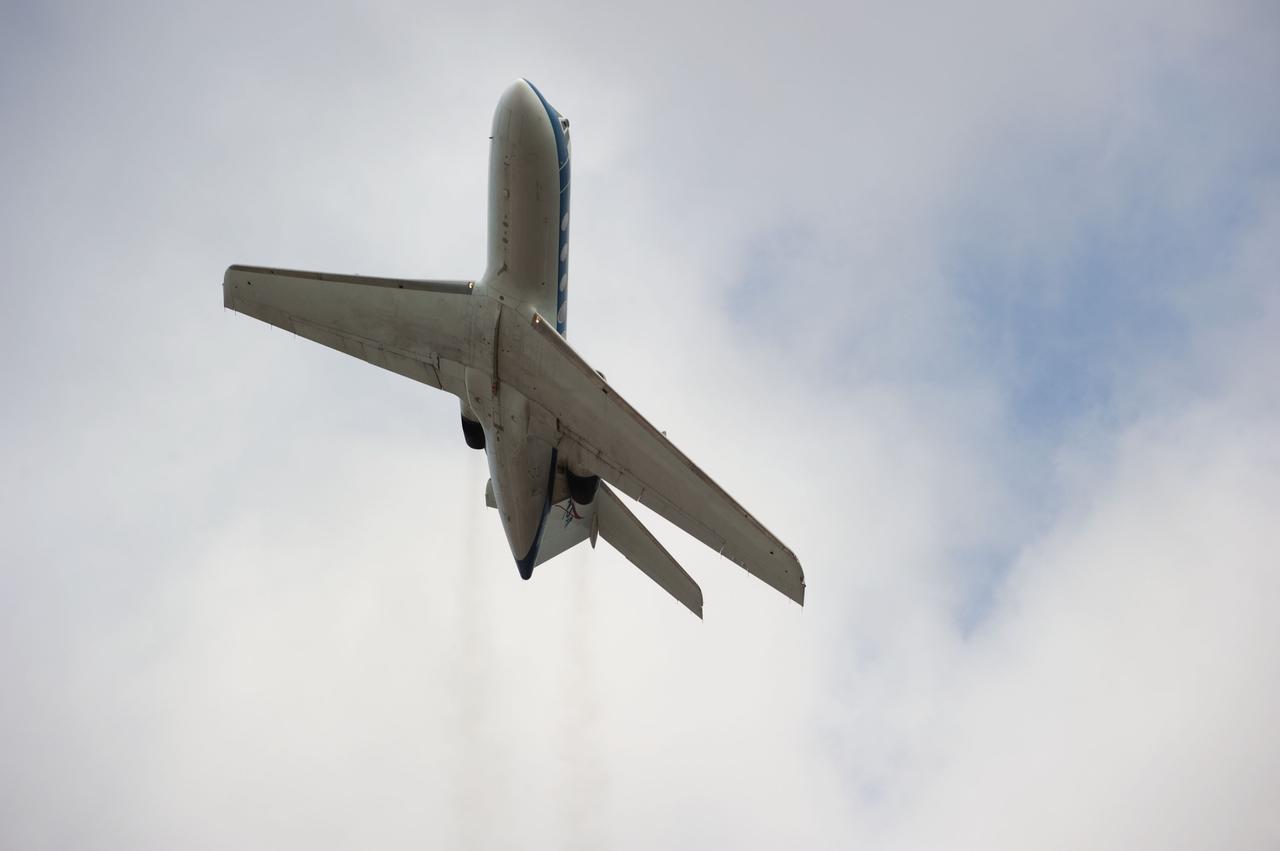
CAPE CANAVERAL, Fla. -- A Shuttle Training Aircraft (STA) performs touch-and-go landings over the Shuttle Landing Facility runway at NASA's Kennedy Space Center in Florida. STS-133 Commander Steve Lindsey and Pilot Eric Boe are flying two Gulfstream II business jets that are modified to mimic the shuttle's handling during the final phase of landing. These practice landings are part of standard training before space shuttle Discovery's launch to the International Space Station. Scheduled to lift off Feb. 24 at 4:50 p.m. EST, Discovery and its six-member crew will deliver the Permanent Multipurpose Module, packed with supplies and critical spare parts, as well as Robonaut 2, the dexterous humanoid astronaut helper, to the orbiting outpost. For more information on the STS-133 mission, visit www.nasa.gov/mission_pages/shuttle/shuttlemissions/sts133/. Photo credit: NASA/Kim Shiflett
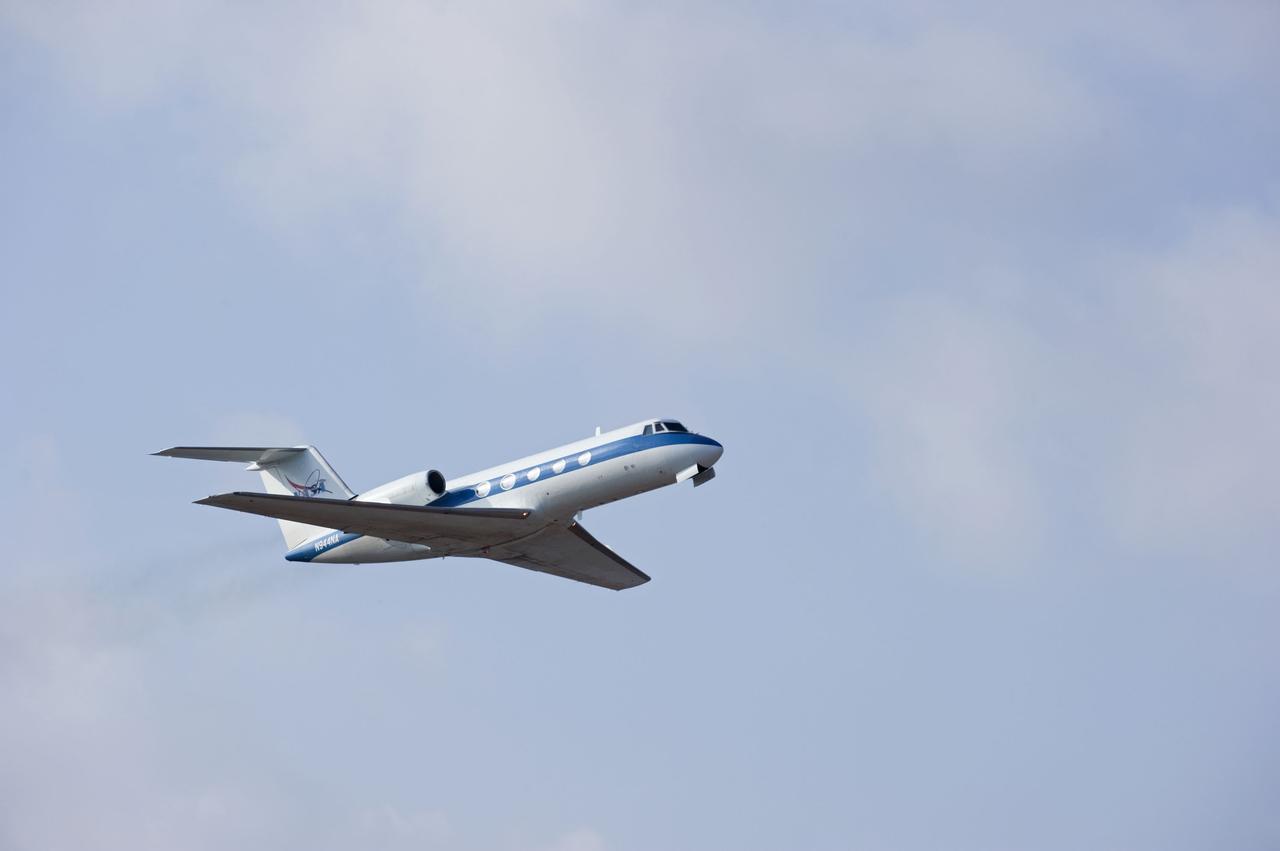
CAPE CANAVERAL, Fla. -- A Shuttle Training Aircraft (STA) performs touch-and-go landings over the Shuttle Landing Facility runway at NASA's Kennedy Space Center in Florida. STS-133 Commander Steve Lindsey and Pilot Eric Boe are flying two Gulfstream II business jets that are modified to mimic the shuttle's handling during the final phase of landing. These practice landings are part of standard training before space shuttle Discovery's launch to the International Space Station. Scheduled to lift off Feb. 24 at 4:50 p.m. EST, Discovery and its six-member crew will deliver the Permanent Multipurpose Module, packed with supplies and critical spare parts, as well as Robonaut 2, the dexterous humanoid astronaut helper, to the orbiting outpost. For more information on the STS-133 mission, visit www.nasa.gov/mission_pages/shuttle/shuttlemissions/sts133/. Photo credit: NASA/Kim Shiflett
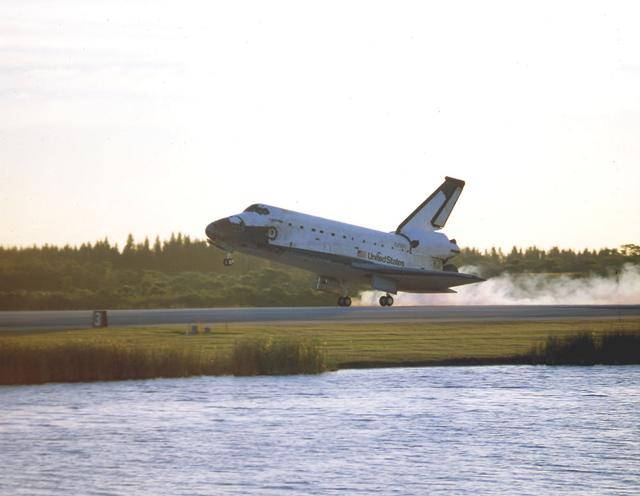
With Commander Kevin R. Kregel and Pilot Steven W. Lindsey at the controls, the orbiter Columbia (STS-87) touched down its main gear on Runway 33 at Kennedy Space Center's (KSC) Shuttle Landing Facility to complete a 15-day, 16-hour and 34-minute-long mission of 6.5 million miles. During the 88th Space Shuttle mission, the crew performed experiments on the United States Microgravity Payload-4 and pollinated plants as part of the Collaborative Ukrainian Experiment. This was the 12th landing for Columbia at KSC and the 41st KSC landing in the history of the Space Shuttle program.
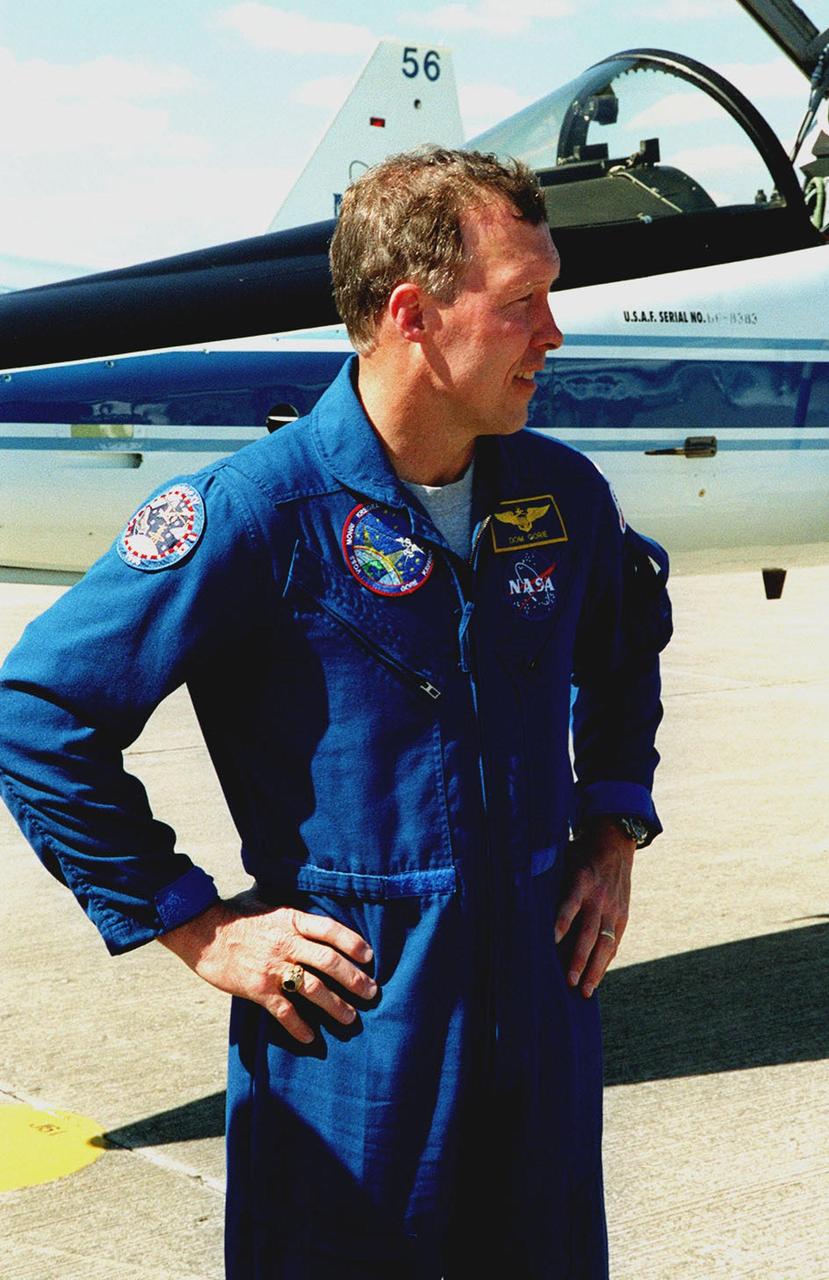
After landing at the Shuttle Landing Facility aboard a T-38 jet aircraft, STS-99 Pilot Dominic Gorie stands ready to prepare for the second launch attempt of Endeavour Feb. 11 at 12:30 p.m. EST from Launch Pad 39A. The earlier launch scheduled for Jan. 31 was scrubbed due to poor weather and a faulty Enhanced Master Events Controller in the orbiter's aft compartment. Over the next few days, the crew will review mission procedures, conduct test flights in the Shuttle Training Aircraft and undergo routine preflight medical exams. STS-99 is the Shuttle Radar Topography Mission, which will produce unrivaled 3-D images of the Earth's surface. The result of the Shuttle Radar Topography Mission could be close to 1 trillion measurements of the Earth's topography. Landing is expected at KSC on Feb. 22 at 4:36 p.m. EST
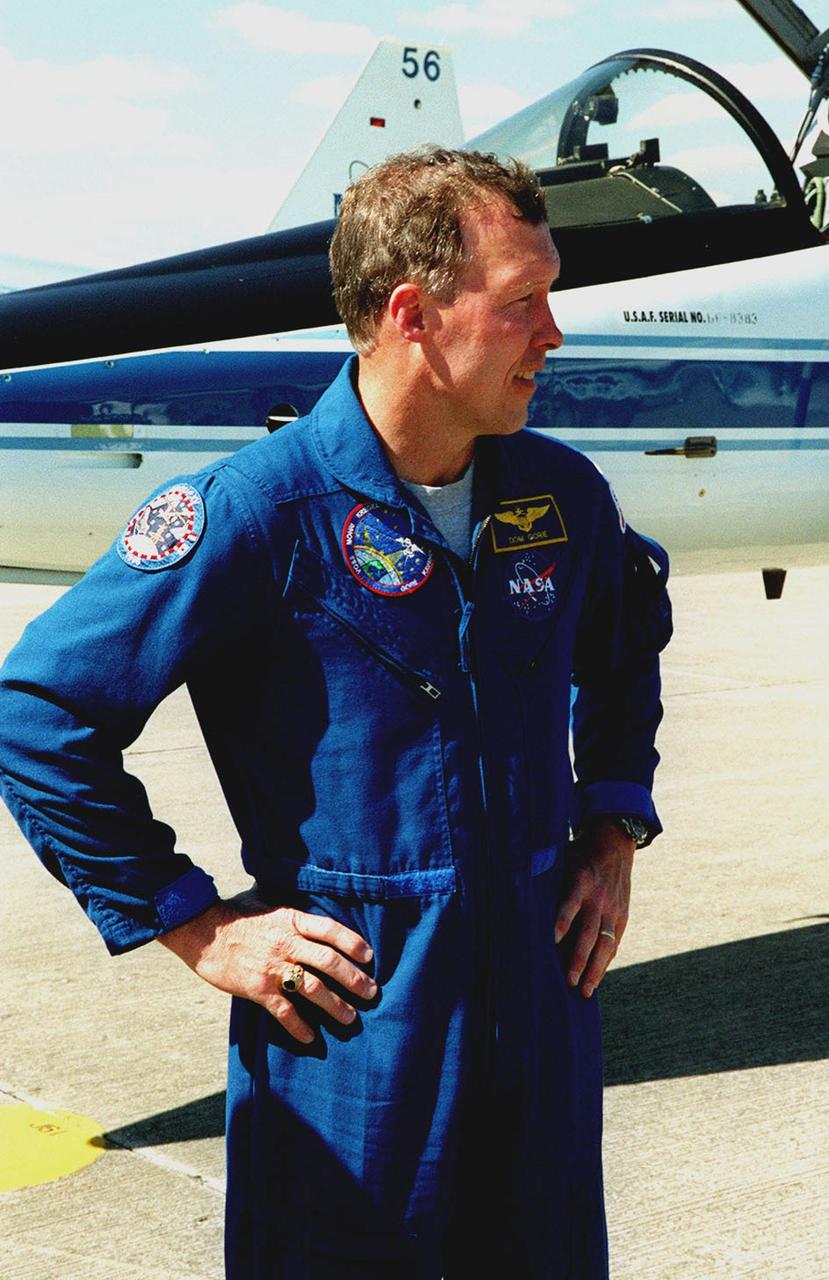
After landing at the Shuttle Landing Facility aboard a T-38 jet aircraft, STS-99 Pilot Dominic Gorie stands ready to prepare for the second launch attempt of Endeavour Feb. 11 at 12:30 p.m. EST from Launch Pad 39A. The earlier launch scheduled for Jan. 31 was scrubbed due to poor weather and a faulty Enhanced Master Events Controller in the orbiter's aft compartment. Over the next few days, the crew will review mission procedures, conduct test flights in the Shuttle Training Aircraft and undergo routine preflight medical exams. STS-99 is the Shuttle Radar Topography Mission, which will produce unrivaled 3-D images of the Earth's surface. The result of the Shuttle Radar Topography Mission could be close to 1 trillion measurements of the Earth's topography. Landing is expected at KSC on Feb. 22 at 4:36 p.m. EST

KENNEDY SPACE CENTER, FLA. -- The Space Shuttle orbiter Atlantis glides out of a morning sky as it prepares to land on Runway 33 at a scheduled time of about 9:23 a.m. EST Jan. 22 to conclude the fifth Shuttle-Mir docking mission and return NASA astronaut John Blaha to Earth after four months in space. At main gear touchdown, the STS-81 mission duration will be 10 days, 4 hours, 55 minutes. This is the 34th KSC landing in Shuttle history. Mission Commander Michael A. Baker is steering Atlantis to a perfect landing, with help from Pilot Brent W. Jett, Jr. Other returning STS-81 crew members are Mission Specialists John M. Grunsfeld, Peter J. K. "Jeff" Wisoff and Marsha S. Ivins. Atlantis also brought back experiment samples from the Russian space station Mir for analysis on Earth
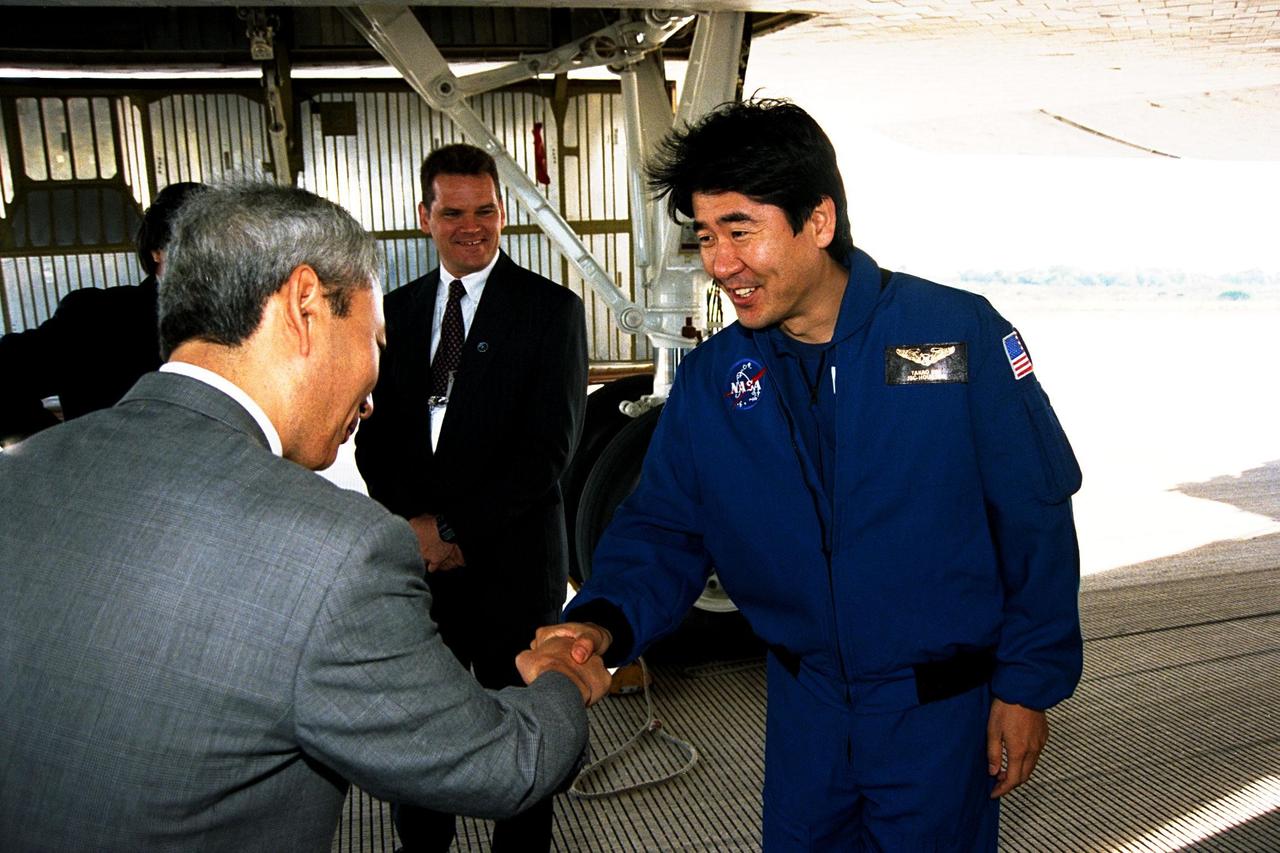
STS-87 Mission Specialist Takao Doi, Ph.D., of the National Space Development Agency (NASDA) of Japan greets a NASDA official shortly after the orbiter Columbia returned to KSC, touching down on Runway 33 at KSC's Shuttle Landing Facility. STS-87 concluded its mission with a main gear touchdown at 7:20:04 a.m. EST Dec. 5, drawing the 15-day, 16-hour and 34-minute-long mission of 6.5 million miles to a close. Also onboard the orbiter were Commander Kevin Kregel; Pilot Steven Lindsey; Mission Specialists Winston Scott and Kalpana Chawla, Ph.D.; and Payload Specialist Leonid Kadenyuk of the National Space Agency of Ukraine. During the 88th Space Shuttle mission, the crew performed experiments on the United States Microgravity Payload-4 and pollinated plants as part of the Collaborative Ukrainian Experiment. This was the 12th landing for Columbia at KSC and the 41st KSC landing in the history of the Space Shuttle program
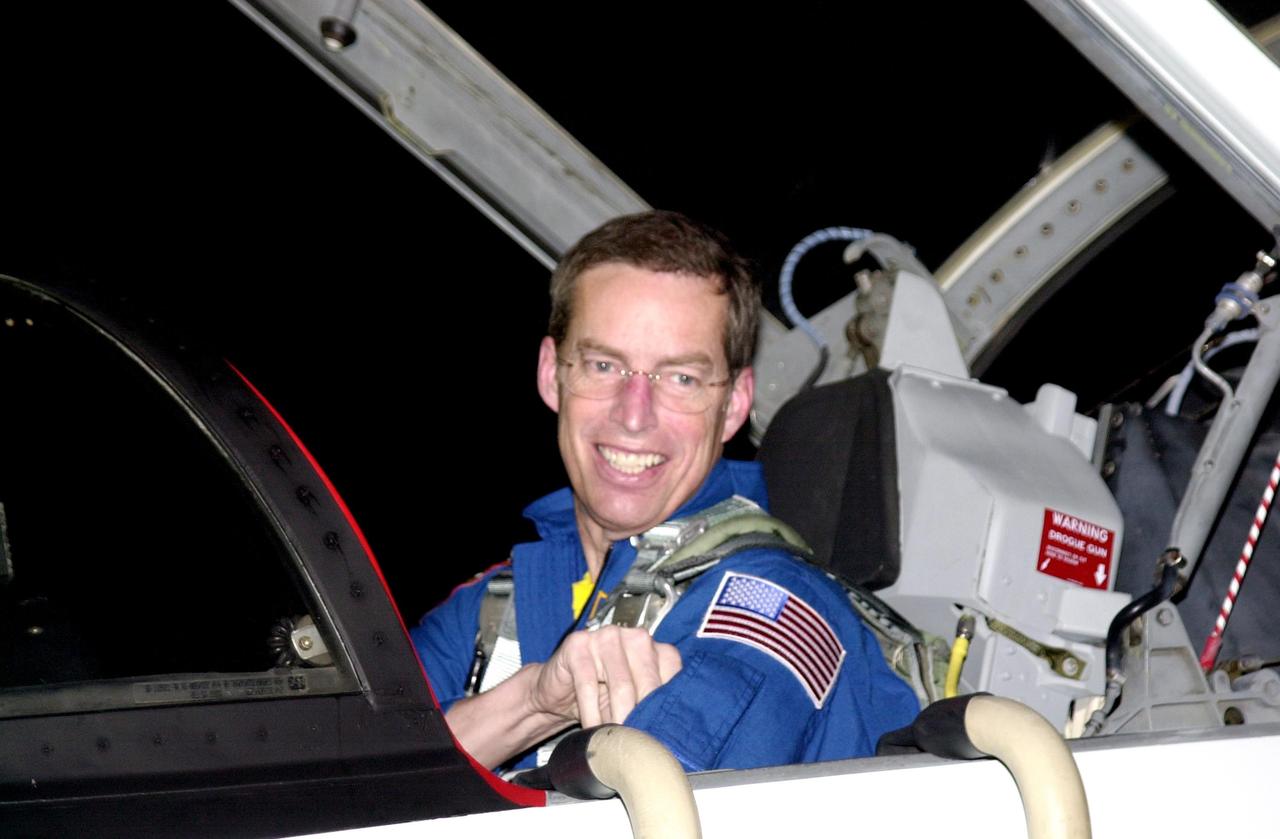
KENNEDY SPACE CENTER, FLA. - STS-113 Commander James Wetherbee arrives at the KSC Shuttle Landing Facility to get ready for launch. STS-113 is the 16th American assembly flight to the International Space Station. The primary mission is bringing the Expedition 6 crew to the Station and returning the Expedition 5 crew to Earth. The major objective of the mission is delivery of the Port 1 (P1) Integrated Truss Assembly, which will be attached to the port side of the S0 truss. Three spacewalks are planned to install and activate the truss and its associated equipment. Launch of Space Shuttle Endeavour on mission STS-113 is scheduled for Nov. 11 between midnight and 4 a.m. EST.
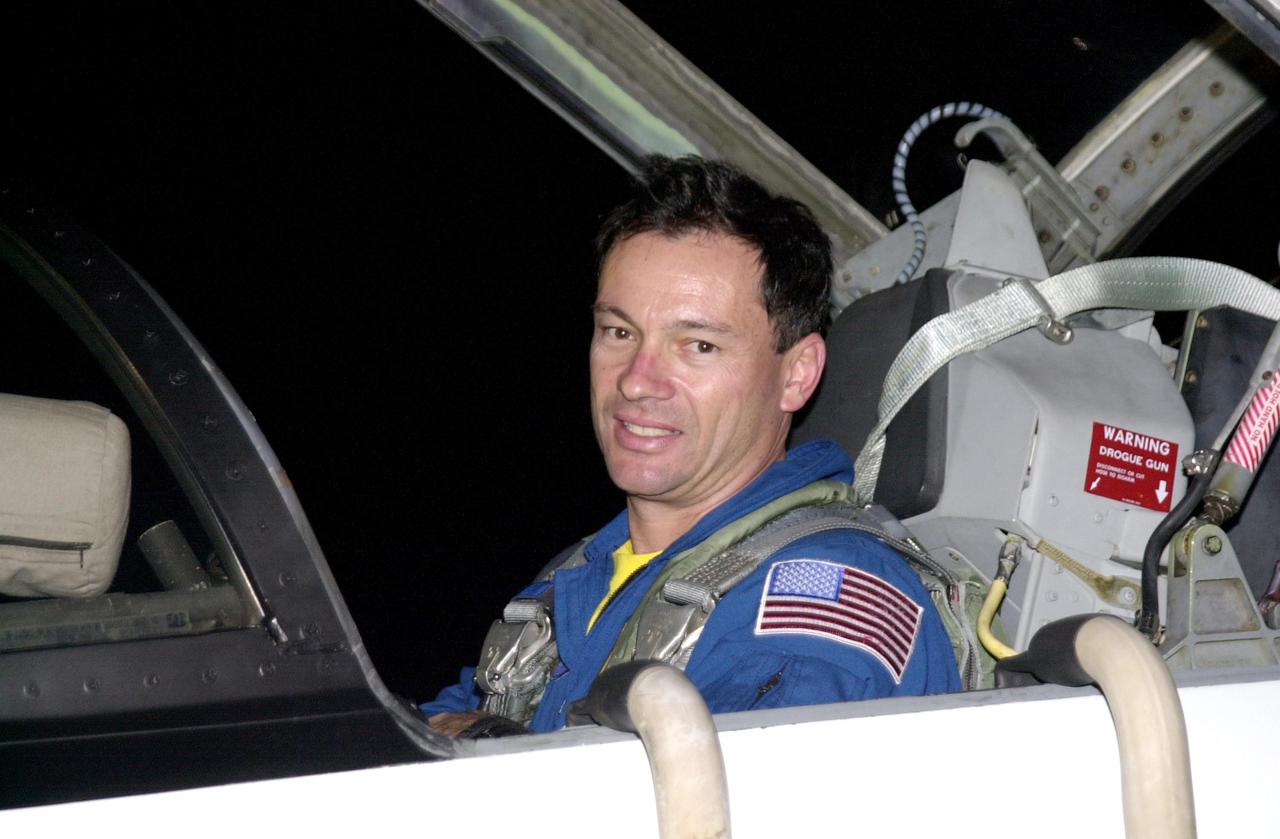
KENNEDY SPACE CENTER, FLA. - STS-113 Mission Specialist Michael Lopez-Alegria arrives at the KSC Shuttle Landing Facility to get ready for launch. STS-113 is the 16th American assembly flight to the International Space Station. The primary mission is bringing the Expedition 6 crew to the Station and returning the Expedition 5 crew to Earth. The major objective of the mission is delivery of the Port 1 (P1) Integrated Truss Assembly, which will be attached to the port side of the S0 truss. Three spacewalks are planned to install and activate the truss and its associated equipment. Launch of Space Shuttle Endeavour on mission STS-113 is scheduled for Nov. 11 between midnight and 4 a.m. EST.
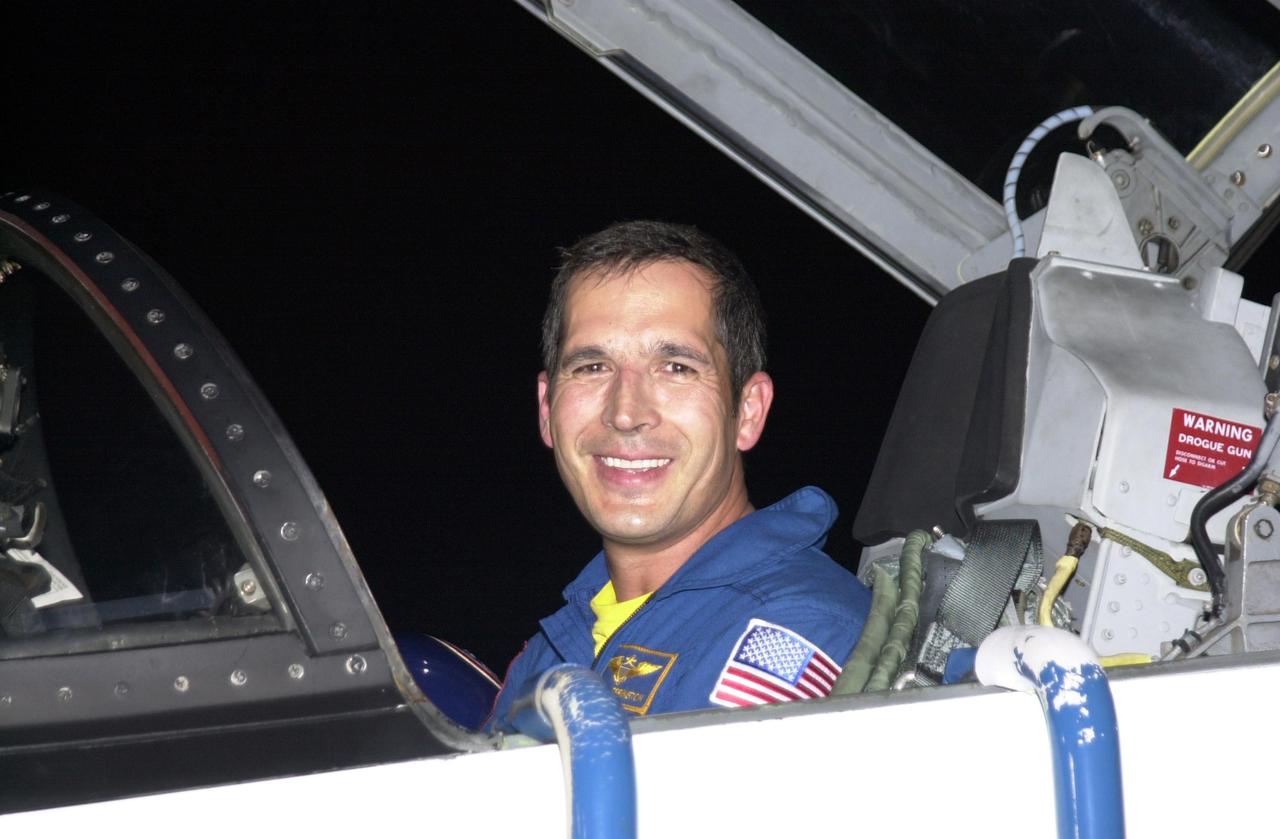
KENNEDY SPACE CENTER, FLA. - STS-113 Mission Specialist John Herrington arrives at the KSC Shuttle Landing Facility to get ready for launch. STS-113 is the 16th American assembly flight to the International Space Station. The primary mission is bringing the Expedition 6 crew to the Station and returning the Expedition 5 crew to Earth. The major objective of the mission is delivery of the Port 1 (P1) Integrated Truss Assembly, which will be attached to the port side of the S0 truss. Three spacewalks are planned to install and activate the truss and its associated equipment. Launch of Space Shuttle Endeavour on mission STS-113 is scheduled for Nov. 11 between midnight and 4 a.m. EST.

KENNEDY SPACE CENTER, FLA. - STS-113 Pilot Paul Lockhart arrives at the KSC Shuttle Landing Facility to get ready for launch. STS-113 is the 16th American assembly flight to the International Space Station. The primary mission is bringing the Expedition 6 crew to the Station and returning the Expedition 5 crew to Earth. The major objective of the mission is delivery of the Port 1 (P1) Integrated Truss Assembly, which will be attached to the port side of the S0 truss. Three spacewalks are planned to install and activate the truss and its associated equipment. Launch of Space Shuttle Endeavour on mission STS-113 is scheduled for Nov. 11 between midnight and 4 a.m. EST.
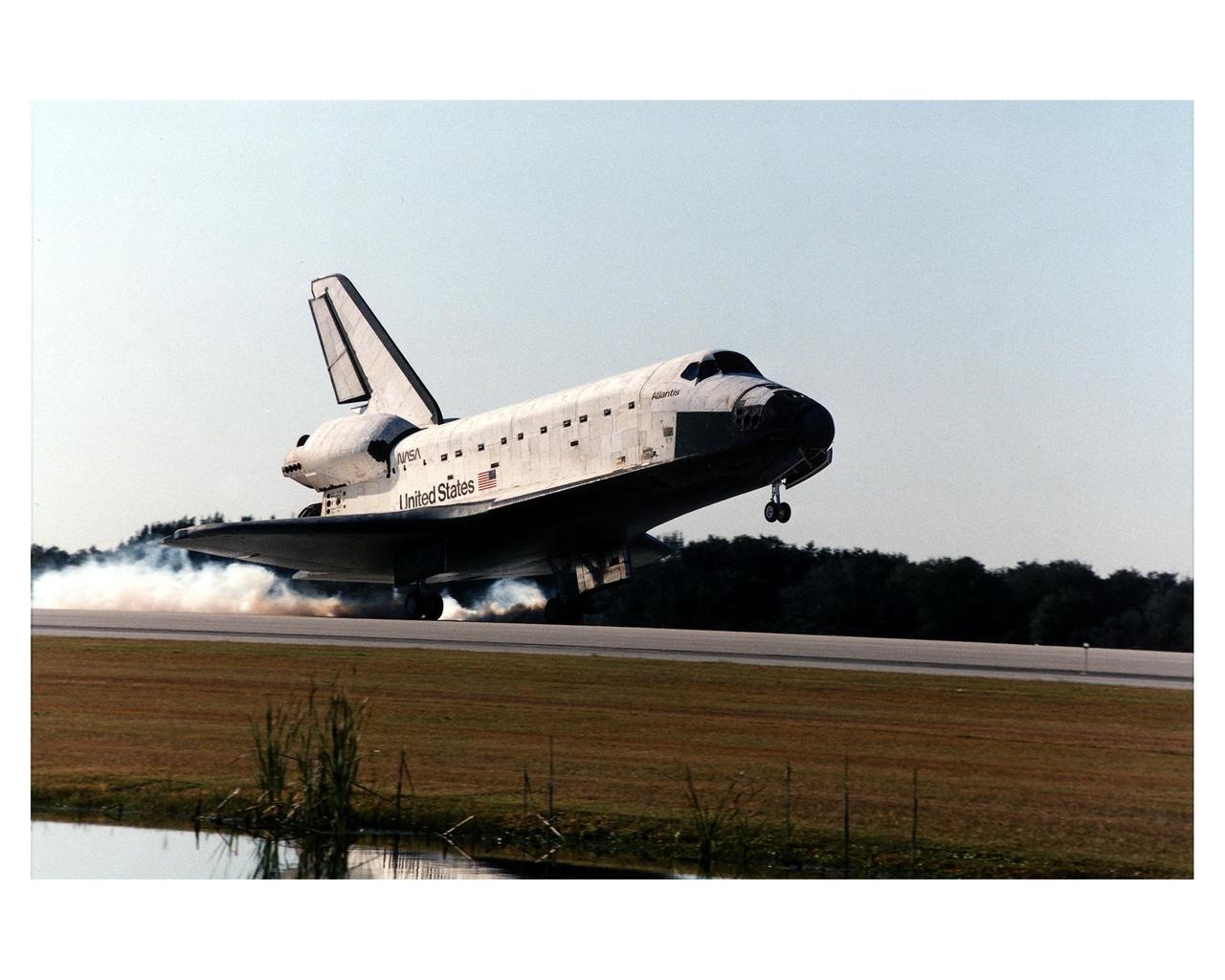
The Space Shuttle orbiter Atlantis touches down on Runway 33 at 9:22:44 a.m. EST Jan. 22 to conclude the fifth Shuttle-Mir docking mission and return NASA astronaut John Blaha to Earth after four months in space. Blaha was replaced by STS-81 Mission Specialist Jerry Linenger during the five days of docked operations. At main gear touchdown, the STS-81 mission duration was 10 days, 4 hours, 55 minutes. This was the 34th KSC landing in Shuttle history. Mission Commander Michael A. Baker flew Atlantis to a perfect landing, with help from Pilot Brent W. Jett, Jr. Other returning STS-81 crew members are Mission Specialists John M. Grunsfeld, Peter J. K. "Jeff" Wisoff and Marsha S. Ivins. Atlantis also brought back experiment samples from the Russian space station for analysis on Earth, along with Russian logistics equipment
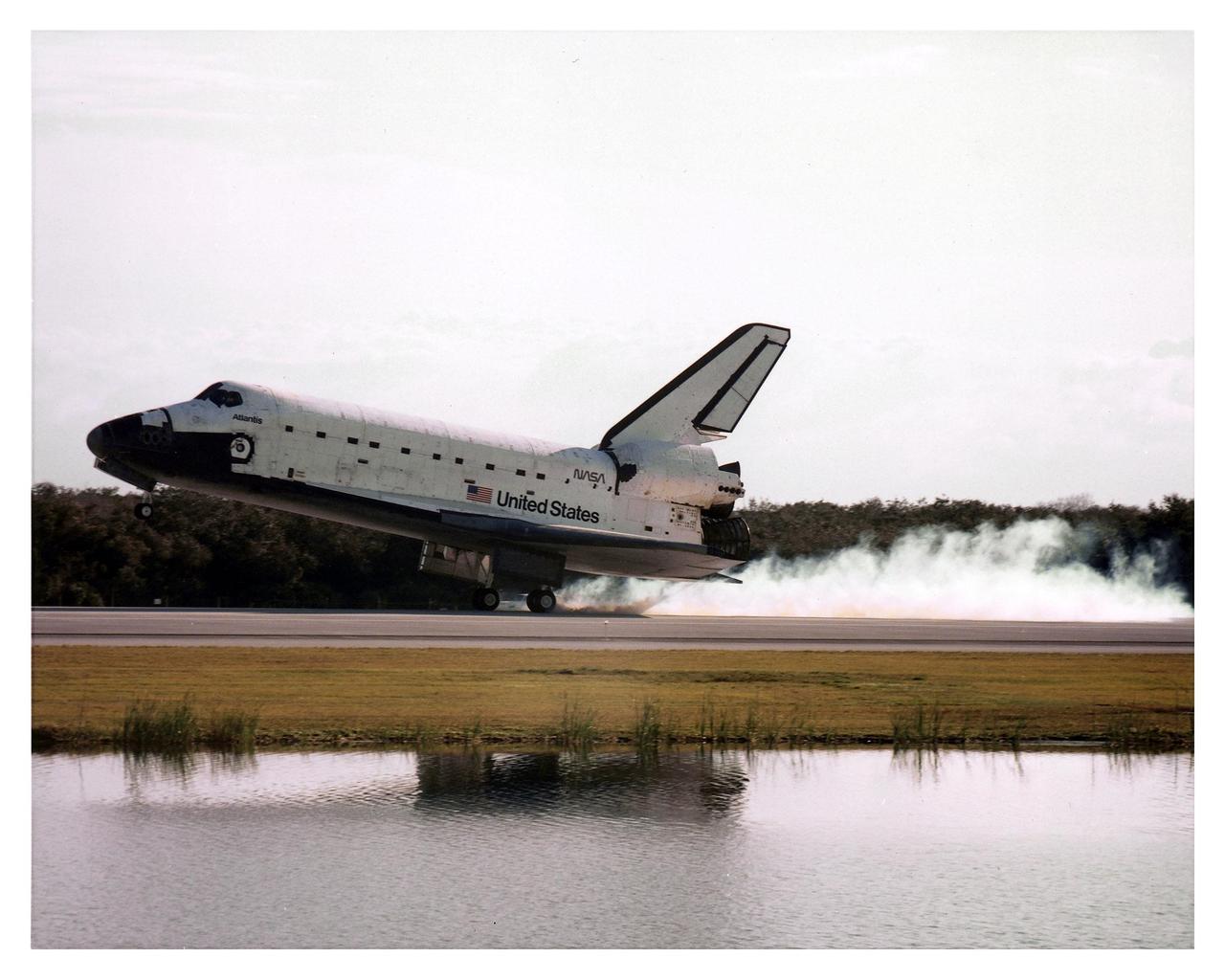
The Space Shuttle orbiter Atlantis touches down on Runway 33 at 9:22:44 a.m. EST Jan. 22 to conclude the fifth Shuttle-Mir docking mission and return NASA astronaut John Blaha to Earth after four months in space. Blaha was replaced by STS-81 Mission Specialist Jerry Linenger during the five days of docked operations. At main gear touchdown, the STS-81 mission duration was 10 days, 4 hours, 55 minutes. This was the 34th KSC landing in Shuttle history. Mission Commander Michael A. Baker flew Atlantis to a perfect landing, with help from Pilot Brent W. Jett, Jr. Other returning STS-81 crew members are Mission Specialists John M. Grunsfeld, Peter J. K. "Jeff" Wisoff and Marsha S. Ivins. Atlantis also brought back experiment samples from the Russian space station for analysis on Earth, along with Russian logistics equipment
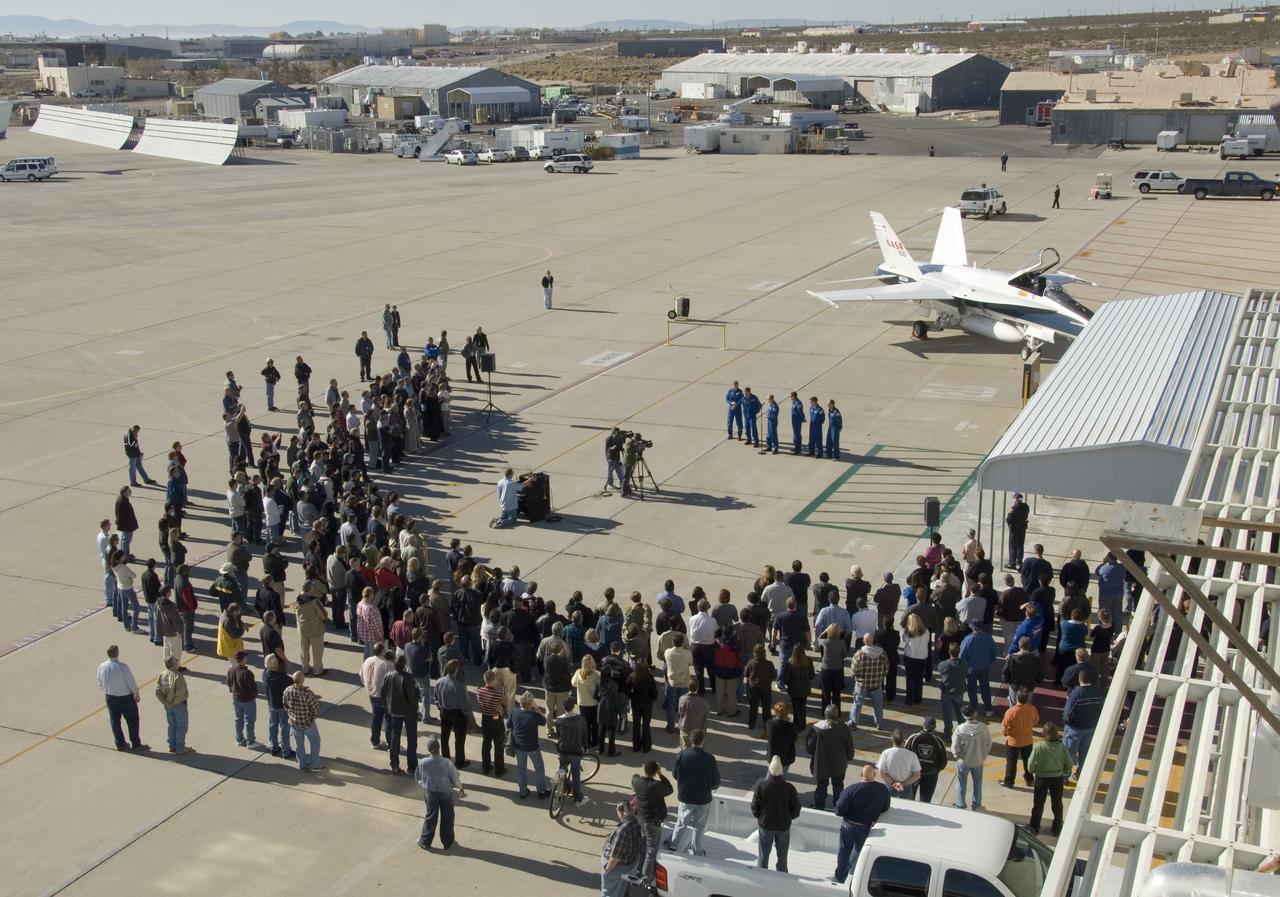
EDWARDS, Calif. – At Edwards Air Force Base in California, photographers and journalists circle STS-126 crew members before their departure for NASA's Johnson Space Center in Houston. The crew took time to talk to the media before they left. The decision to land space shuttle Endeavour at Edwards was made due to weather concerns at NASA's Kennedy Space Center in Florida. In the 52nd landing at Edwards, Endeavour touched down at 4:25 p.m. EST on Nov. 30 to end the STS-126 mission, completing its 16-day journey of over 6.6 million miles in space. The STS-126 mission was the 27th flight to the International Space Station, carrying equipment and supplies in the Multi-Purpose Logistics Module Leonardo. The mission featured four spacewalks and work to prepare the space station to house six crew members for long-duration missions. Photo credit: NASA/Tony Landis, VAFB
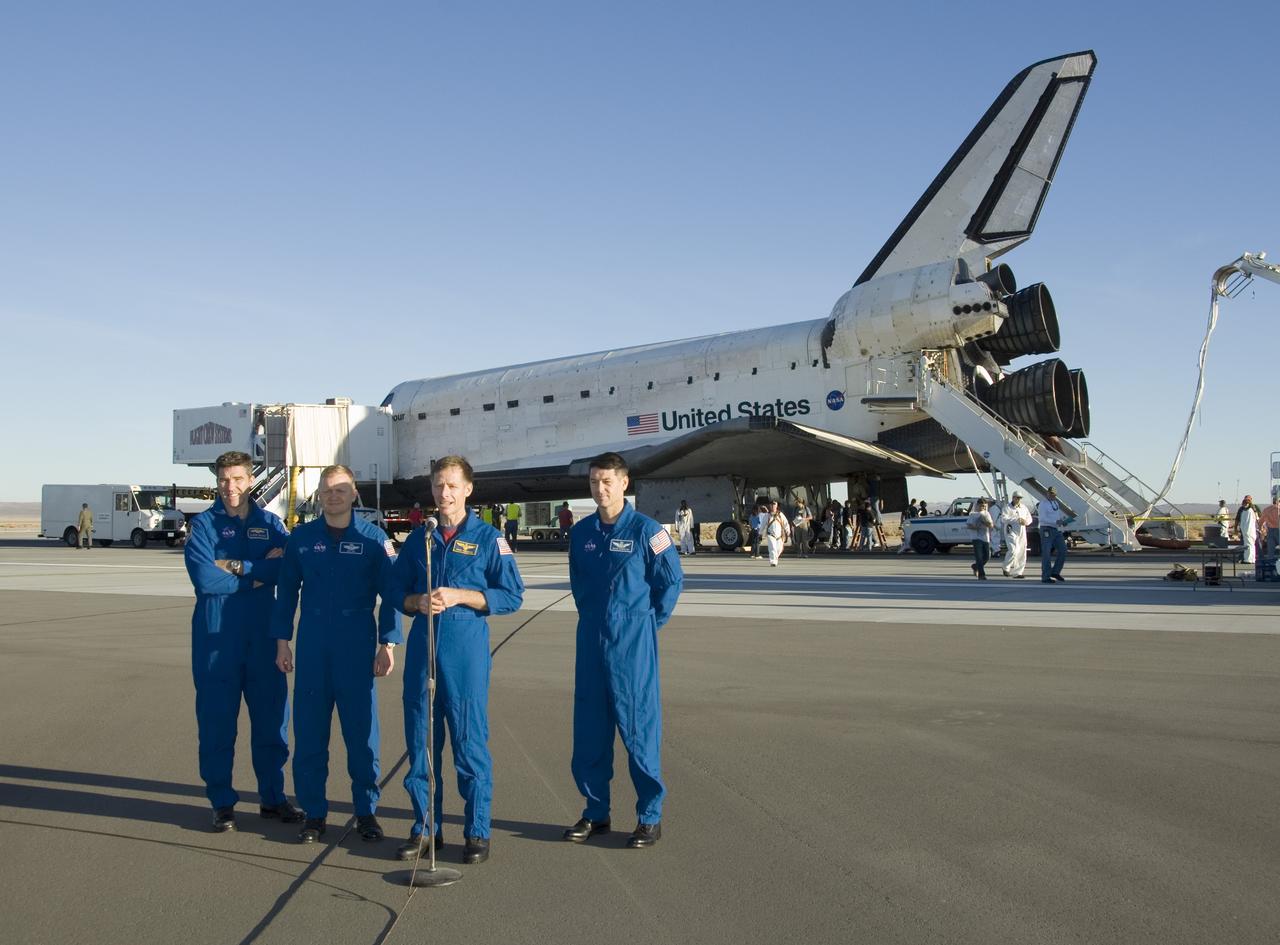
EDWARDS, Calif. – After space shuttle Endeavour's landing at Edwards Air Force Base in California, four of the STS-126 crew members greet the media. From left are Mission Specialist Steve Bowen, Pilot Eric Boe, Commander Chris Ferguson and Mission Specialist Shane Kimbrough. In the 52nd landing at Edwards, Endeavour touched down at 4:25 p.m. EST to end the STS-126 mission, completing its 16-day journey of over 6.6 million miles in space. The STS-126 mission was the 27th flight to the International Space Station, carrying equipment and supplies in the Multi-Purpose Logistics Module Leonardo. The mission featured four spacewalks and work to prepare the space station to house six crew members for long-duration missions. Photo credit: NASA/Tom Tschida, VAFB
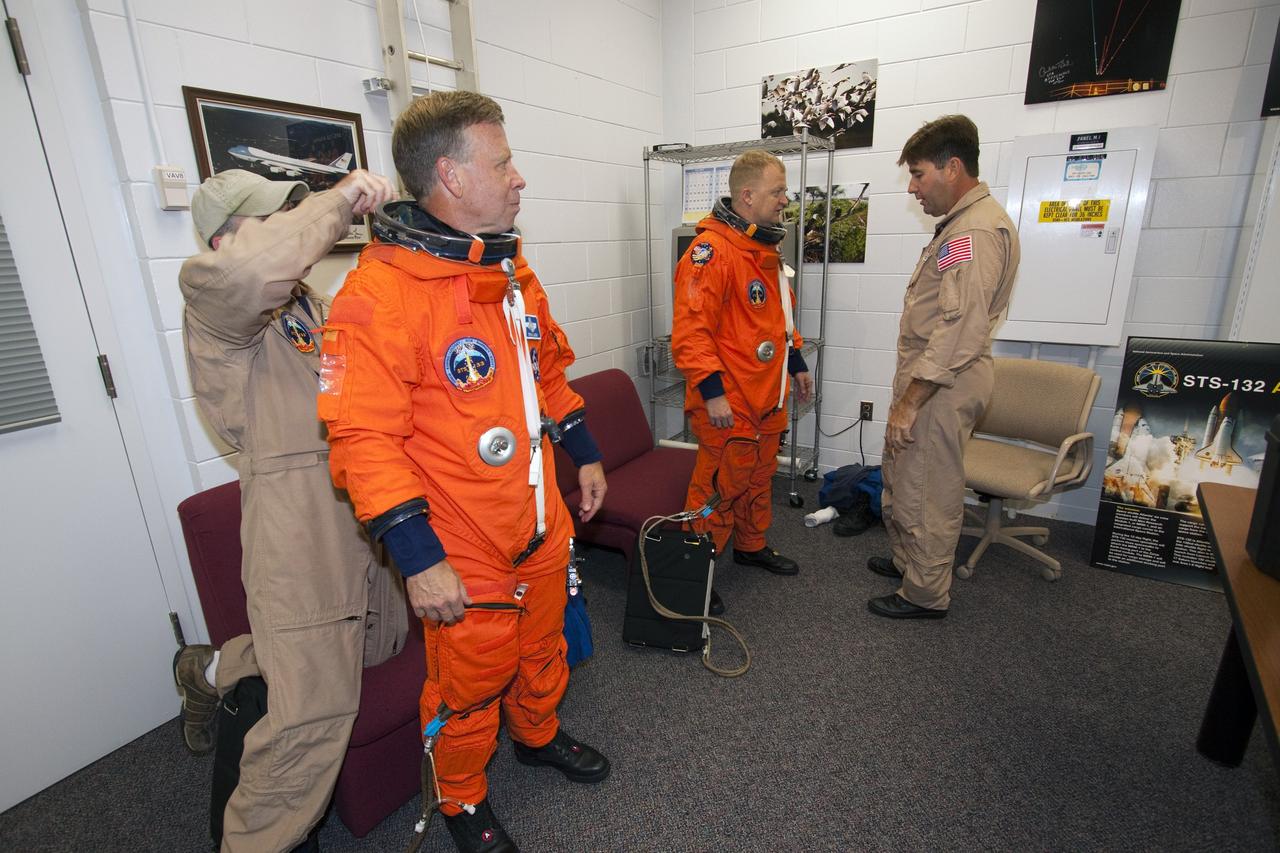
CAPE CANAVERAL, Fla. -- At NASA's Kennedy Space Center in Florida, STS-133 Commander Steve Lindsey and Pilot Eric Boe put on their orange flight suits in the Shuttle Landing Facility's Landing Aids Control Building, which is on the south end of the facility's runway. They are preparing to practice landings in Shuttle Training Aircraft, modified Gulfstream II business jets that mimic the shuttle's handling during the final phase of landing. Practice landings are part of the Terminal Countdown Demonstration Test (TCDT), which provides each shuttle crew and launch team an opportunity to participate in various simulated activities, including equipment familiarization and emergency training at the launch pad. Space shuttle Discovery and its STS-133 crew will deliver the Permanent Multipurpose Module, packed with supplies and critical spare parts, as well as Robonaut 2, the dexterous humanoid astronaut helper, to the International Space Station. Launch is targeted for Nov. 1 at 4:40 p.m. For more information on the STS-133 mission, visit www.nasa.gov/mission_pages/shuttle/shuttlemissions/sts133/. Photo credit: NASA/Jack Pfaller
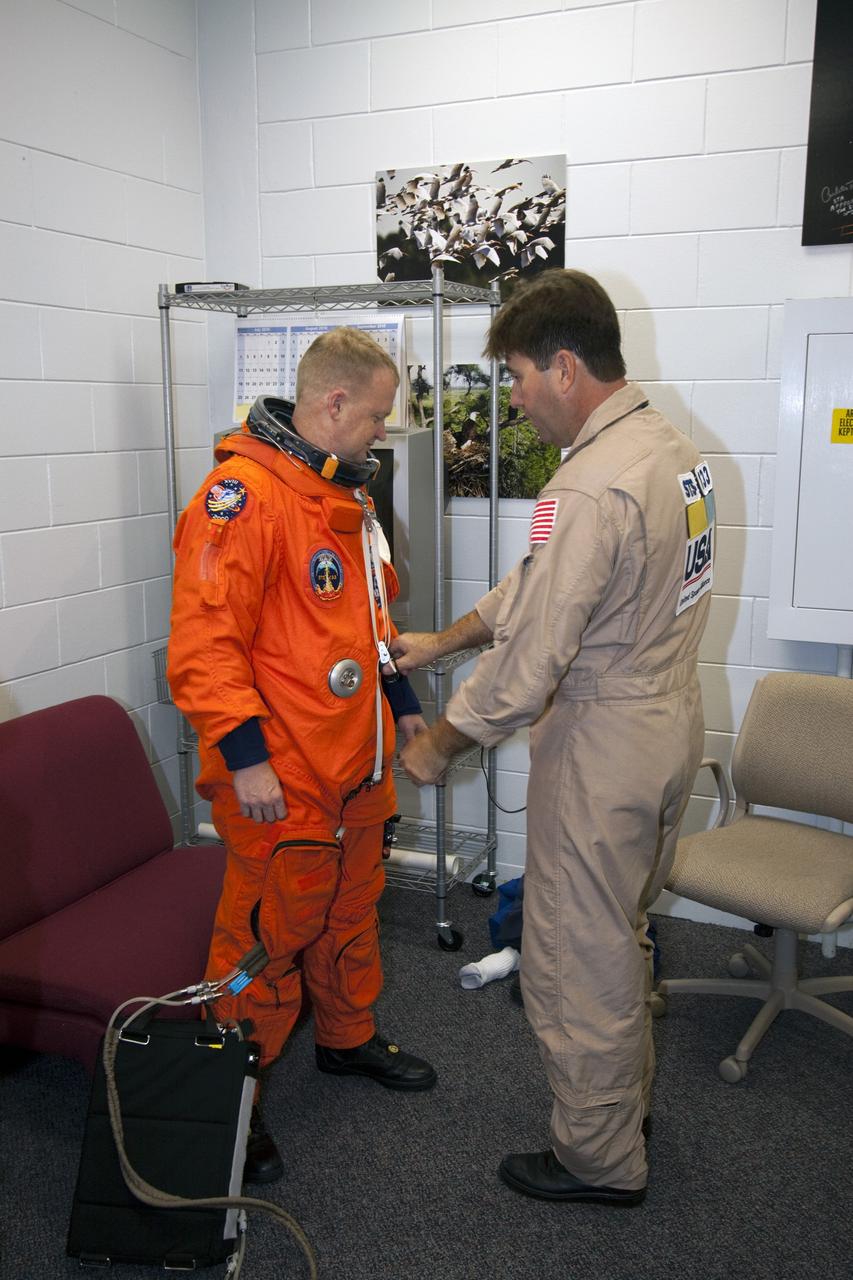
CAPE CANAVERAL, Fla. -- At NASA's Kennedy Space Center in Florida, STS-133 Pilot Eric Boe puts on his orange flight suit in the Shuttle Landing Facility's Landing Aids Control Building, which is on the south end of the facility's runway. Boe and Commander Steve Lindsey are preparing to practice landings in Shuttle Training Aircraft, modified Gulfstream II business jets that mimic the shuttle's handling during the final phase of landing. Practice landings are part of the Terminal Countdown Demonstration Test (TCDT), which provides each shuttle crew and launch team an opportunity to participate in various simulated activities, including equipment familiarization and emergency training at the launch pad. Space shuttle Discovery and its STS-133 crew will deliver the Permanent Multipurpose Module, packed with supplies and critical spare parts, as well as Robonaut 2, the dexterous humanoid astronaut helper, to the International Space Station. Launch is targeted for Nov. 1 at 4:40 p.m. For more information on the STS-133 mission, visit www.nasa.gov/mission_pages/shuttle/shuttlemissions/sts133/. Photo credit: NASA/Jack Pfaller
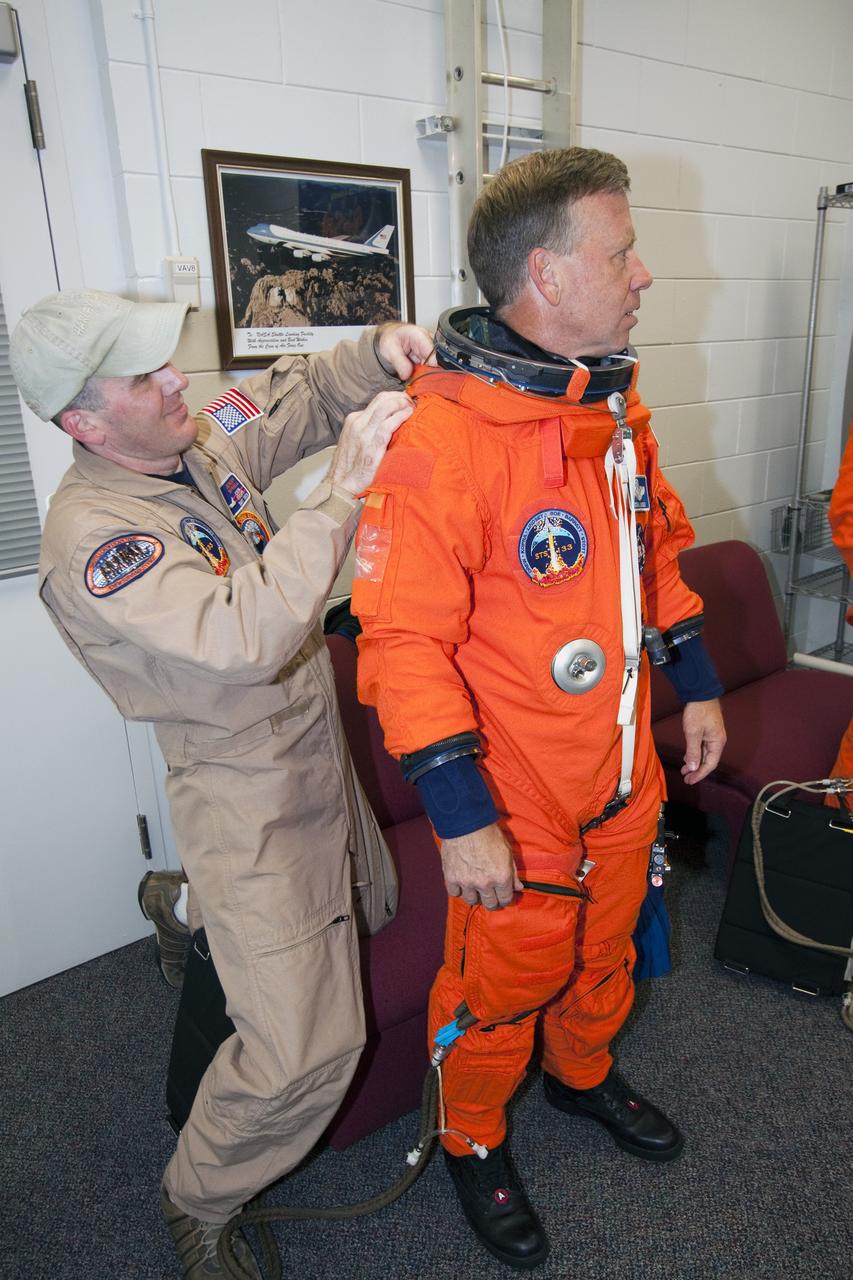
CAPE CANAVERAL, Fla. -- At NASA's Kennedy Space Center in Florida, STS-133 Commander Steve Lindsey puts on his orange flight suit in the Shuttle Landing Facility's Landing Aids Control Building, which is on the south end of the facility's runway. Lindsey and Pilot Eric Boe are preparing to practice landings in Shuttle Training Aircraft, modified Gulfstream II business jets that mimic the shuttle's handling during the final phase of landing. Practice landings are part of the Terminal Countdown Demonstration Test (TCDT), which provides each shuttle crew and launch team an opportunity to participate in various simulated activities, including equipment familiarization and emergency training at the launch pad. Space shuttle Discovery and its STS-133 crew will deliver the Permanent Multipurpose Module, packed with supplies and critical spare parts, as well as Robonaut 2, the dexterous humanoid astronaut helper, to the International Space Station. Launch is targeted for Nov. 1 at 4:40 p.m. For more information on the STS-133 mission, visit www.nasa.gov/mission_pages/shuttle/shuttlemissions/sts133/. Photo credit: NASA/Jack Pfaller
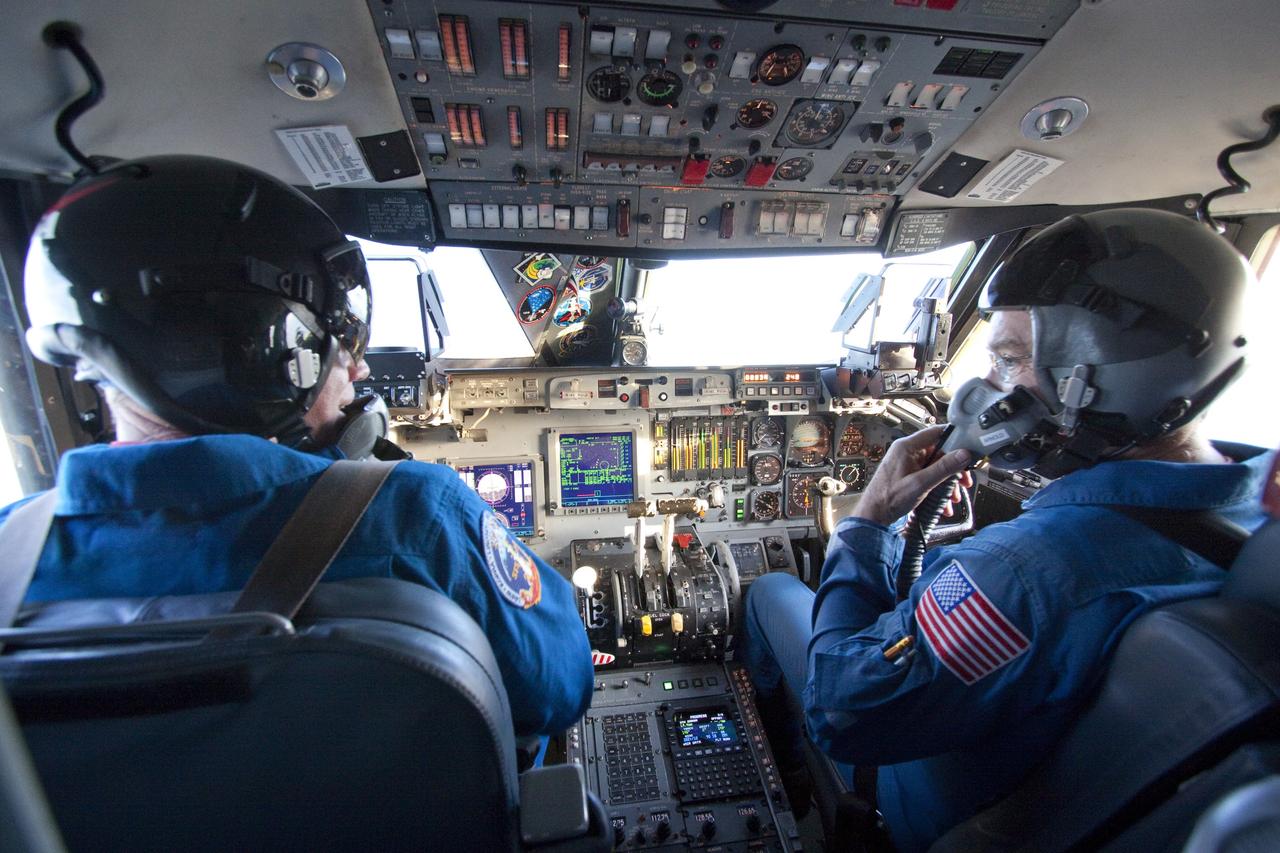
CAPE CANAVERAL, Fla. -- STS-133 Commander Steve Lindsey, left, straps in and prepares to fly touch-and-go landings in a Shuttle Training Aircraft (STA) on the Shuttle Landing Facility runway at NASA's Kennedy Space Center in Florida. At right is Bruce Arnold, an STA instructor pilot. Lindsey and STS-133 Pilot Eric Boe will fly two of the Gulfstream II business jets that are modified to mimic the shuttle's handling during the final phase of landing. Practice landings are part of the Terminal Countdown Demonstration Test (TCDT), which provides each shuttle crew and launch team an opportunity to participate in various simulated activities, including equipment familiarization and emergency training at the launch pad. Space shuttle Discovery and its STS-133 crew will deliver the Permanent Multipurpose Module, packed with supplies and critical spare parts, as well as Robonaut 2, the dexterous humanoid astronaut helper, to the International Space Station. Launch is targeted for Nov. 1 at 4:40 p.m. For more information on the STS-133 mission, visit www.nasa.gov/mission_pages/shuttle/shuttlemissions/sts133/. Photo credit: NASA/Jack Pfaller
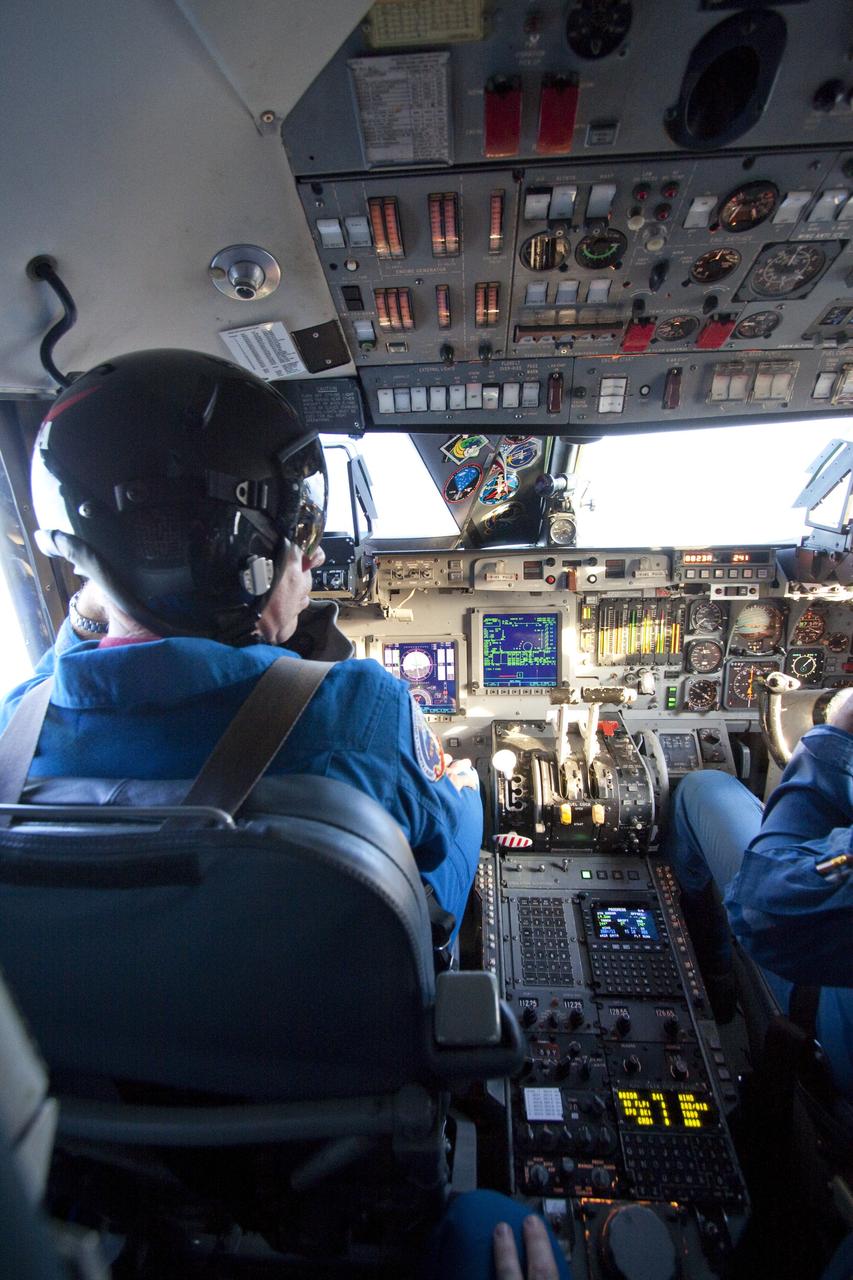
CAPE CANAVERAL, Fla. -- STS-133 Commander Steve Lindsey straps in and prepares to fly touch-and-go landings in a Shuttle Training Aircraft (STA) on the Shuttle Landing Facility runway at NASA's Kennedy Space Center in Florida. Lindsey and STS-133 Pilot Eric Boe will fly two of the Gulfstream II business jets that are modified to mimic the shuttle's handling during the final phase of landing. Practice landings are part of the Terminal Countdown Demonstration Test (TCDT), which provides each shuttle crew and launch team an opportunity to participate in various simulated activities, including equipment familiarization and emergency training at the launch pad. Space shuttle Discovery and its STS-133 crew will deliver the Permanent Multipurpose Module, packed with supplies and critical spare parts, as well as Robonaut 2, the dexterous humanoid astronaut helper, to the International Space Station. Launch is targeted for Nov. 1 at 4:40 p.m. For more information on the STS-133 mission, visit www.nasa.gov/mission_pages/shuttle/shuttlemissions/sts133/. Photo credit: NASA/Jack Pfaller
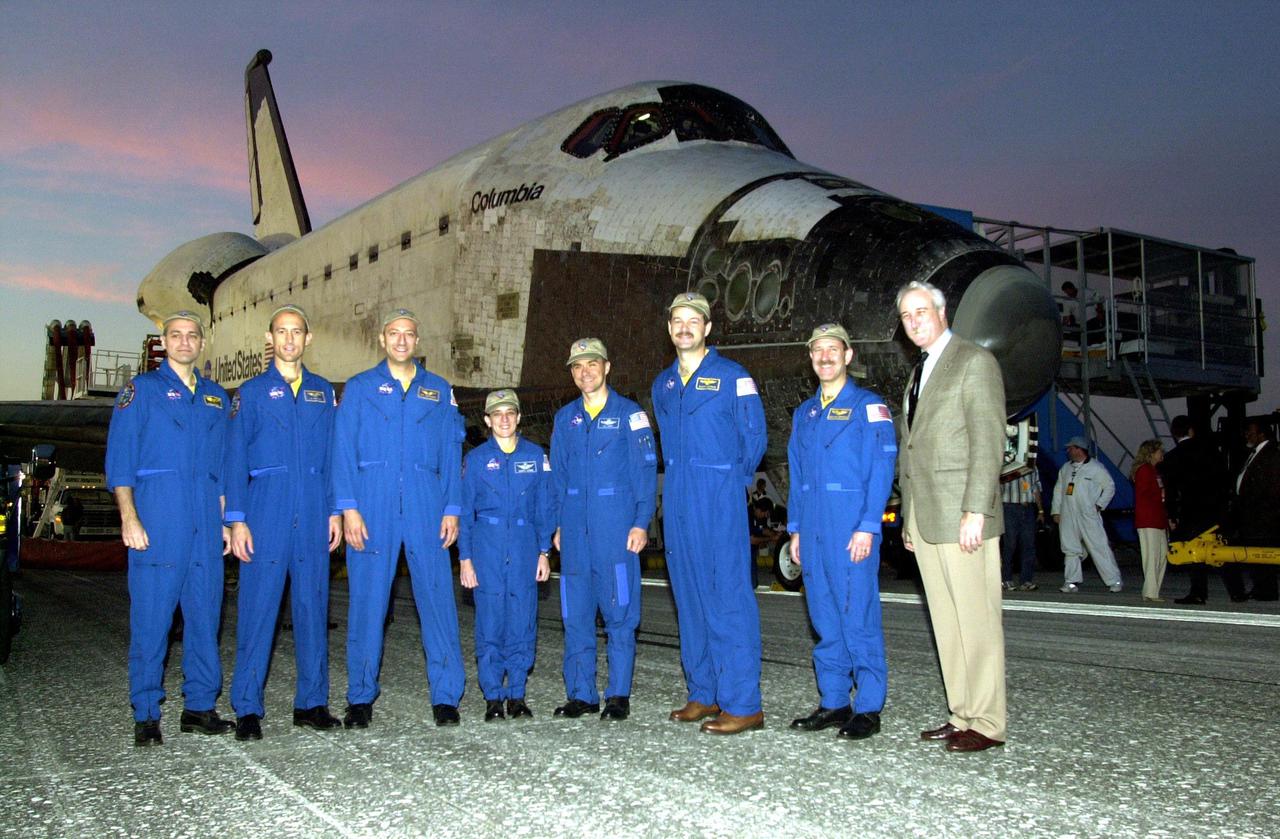
KENNEDY SPACE CENTER, FLA. -- Posing in front of orbiter Columbia is the returning STS-109 crew along with NASA Administrator Sean O'Keefe (right). From left are Mission Specialists Richard Linnehan, James Newman, Michael Massimino and Nancy Jane Currie; Pilot Duane Carey; Commander Scott Altman; Payload Commander John Grunsfeld; and O'Keefe. The crew returned to Earth after a successful 11-day mission servicing the Hubble Space Telescope. Wheel stop occurred on orbit 165 at 4:33:09 a.m. EST. Main gear touchdown occurred at 4:31:52 a.m. and nose wheel touchdown at 4:32:02. Rollout time was 1 minute, 17 seconds. This was the 58th landing at KSC out of 108 missions in the history of the Shuttle program
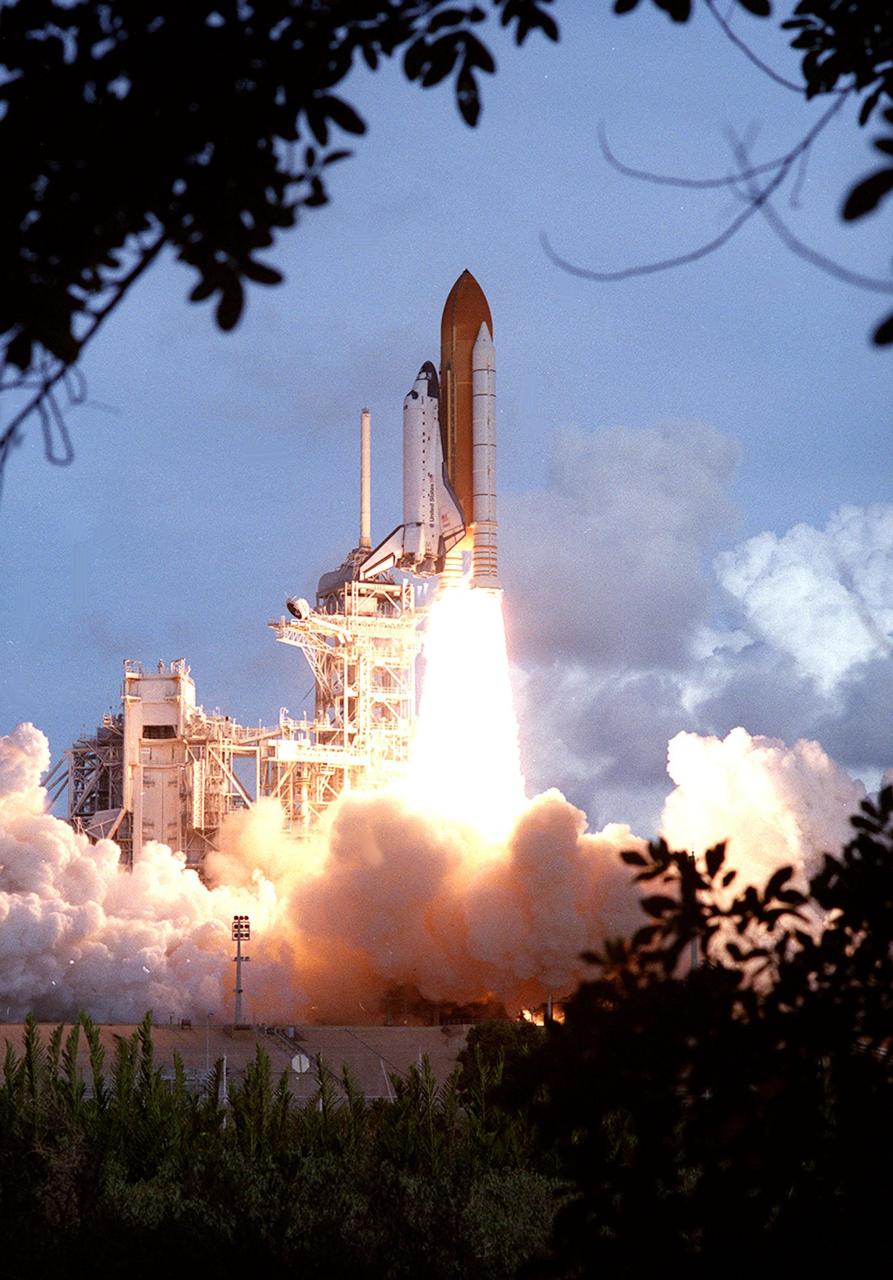
KENNEDY SPACE CENTER, Fla. -- Space Shuttle Atlantis appears to burst forth from a cocoon of smoke in the Florida marsh lands as it rockets toward space on mission STS-106. The perfect on-time liftoff of Atlantis occurred at 8:45:47 a.m. EDT. On the 11-day mission to the International Space Station, the seven-member crew will perform support tasks on orbit, transfer supplies and prepare the living quarters in the newly arrived Zvezda Service Module. The first long-duration crew, dubbed “Expedition One,” is due to arrive at the Station in late fall. Landing of Atlantis is targeted for 4:45 a.m. EDT on Sept. 19
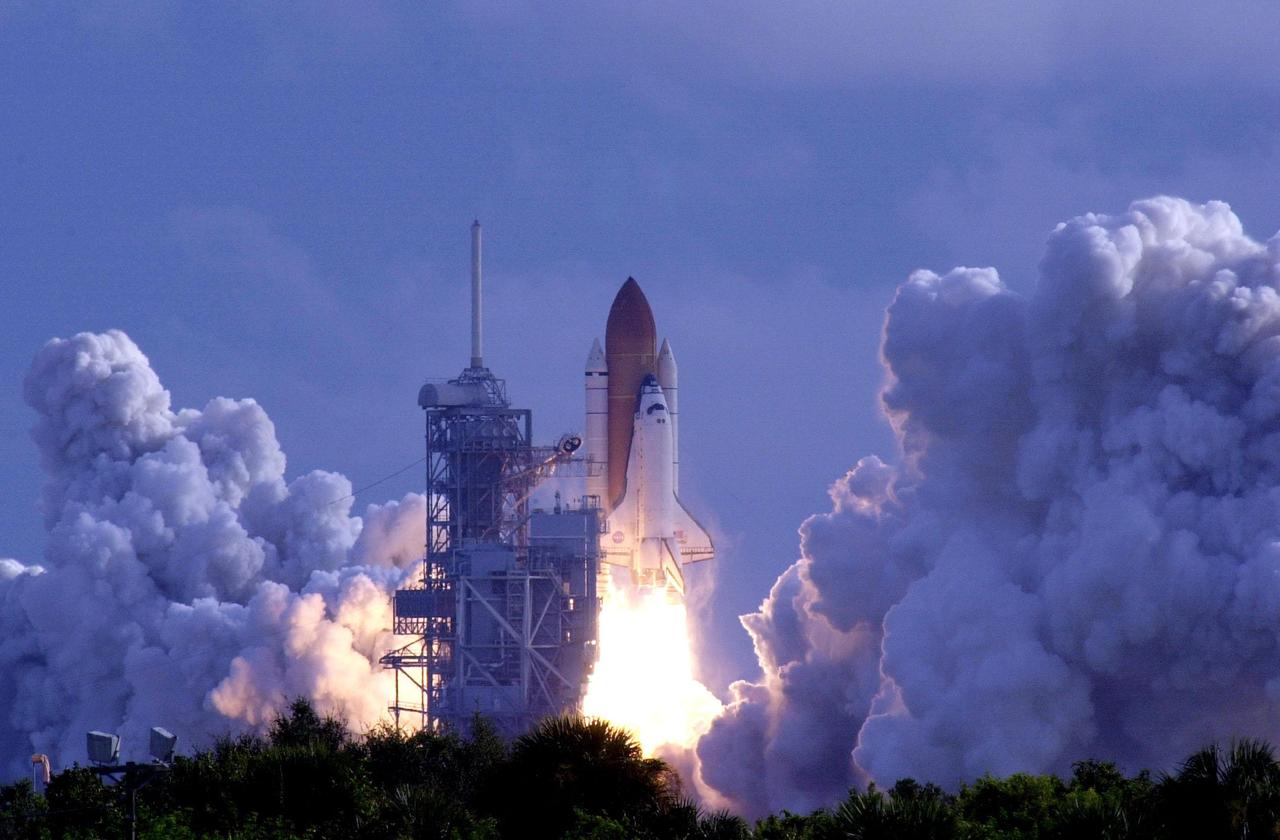
KENNEDY SPACE CENTER, Fla. -- Belching clouds of steam and smoke across the scrub lands at KSC, Space Shuttle Atlantis hurtles toward space on mission STS-106 after liftoff at 8:45:47 a.m. EDT today. On the 11-day mission to the International Space Station, the seven-member crew will perform support tasks on orbit, transfer supplies and prepare the living quarters in the newly arrived Zvezda Service Module. The first long-duration crew, dubbed “Expedition One,” is due to arrive at the Station in late fall. Landing of Atlantis is targeted for 4:45 a.m. EDT on Sept. 19
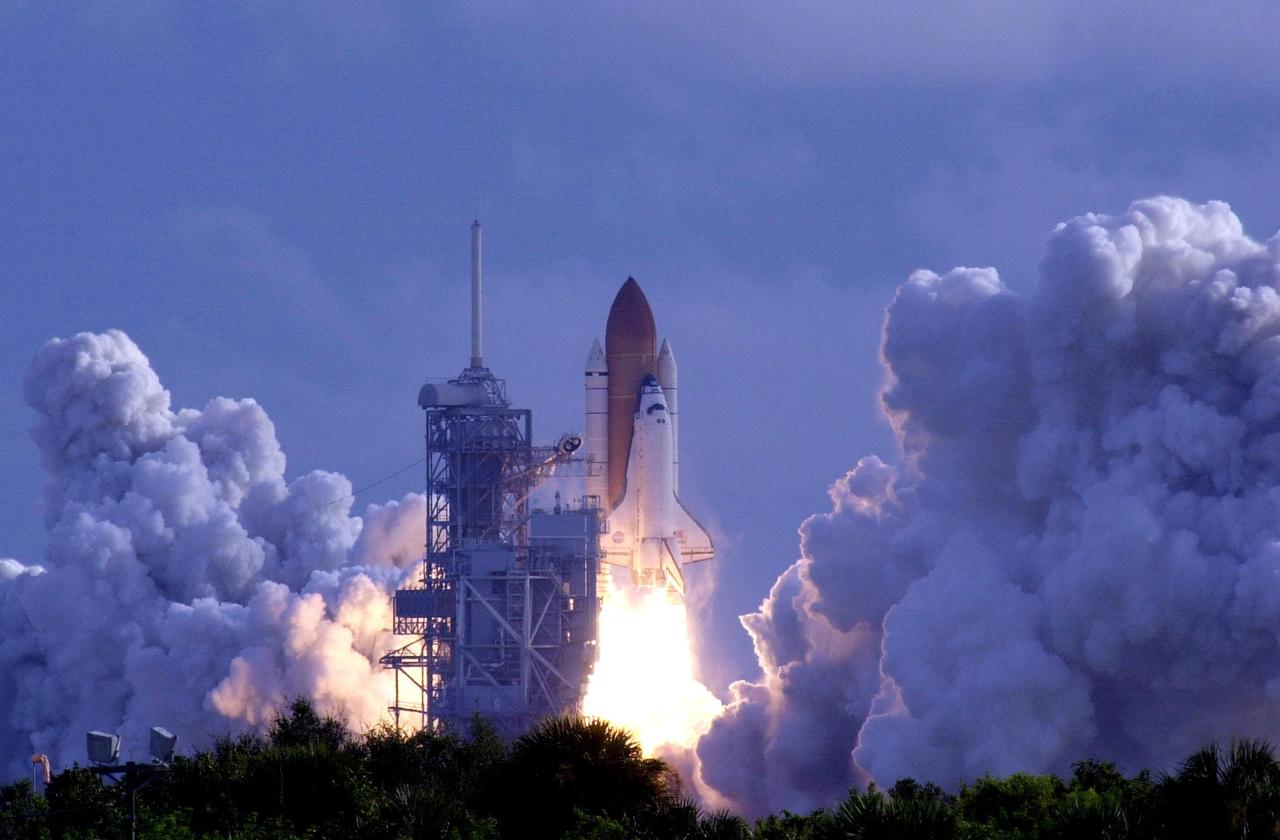
KENNEDY SPACE CENTER, Fla. -- Belching clouds of steam and smoke across the scrub lands at KSC, Space Shuttle Atlantis hurtles toward space on mission STS-106 after liftoff at 8:45:47 a.m. EDT today. On the 11-day mission to the International Space Station, the seven-member crew will perform support tasks on orbit, transfer supplies and prepare the living quarters in the newly arrived Zvezda Service Module. The first long-duration crew, dubbed “Expedition One,” is due to arrive at the Station in late fall. Landing of Atlantis is targeted for 4:45 a.m. EDT on Sept. 19
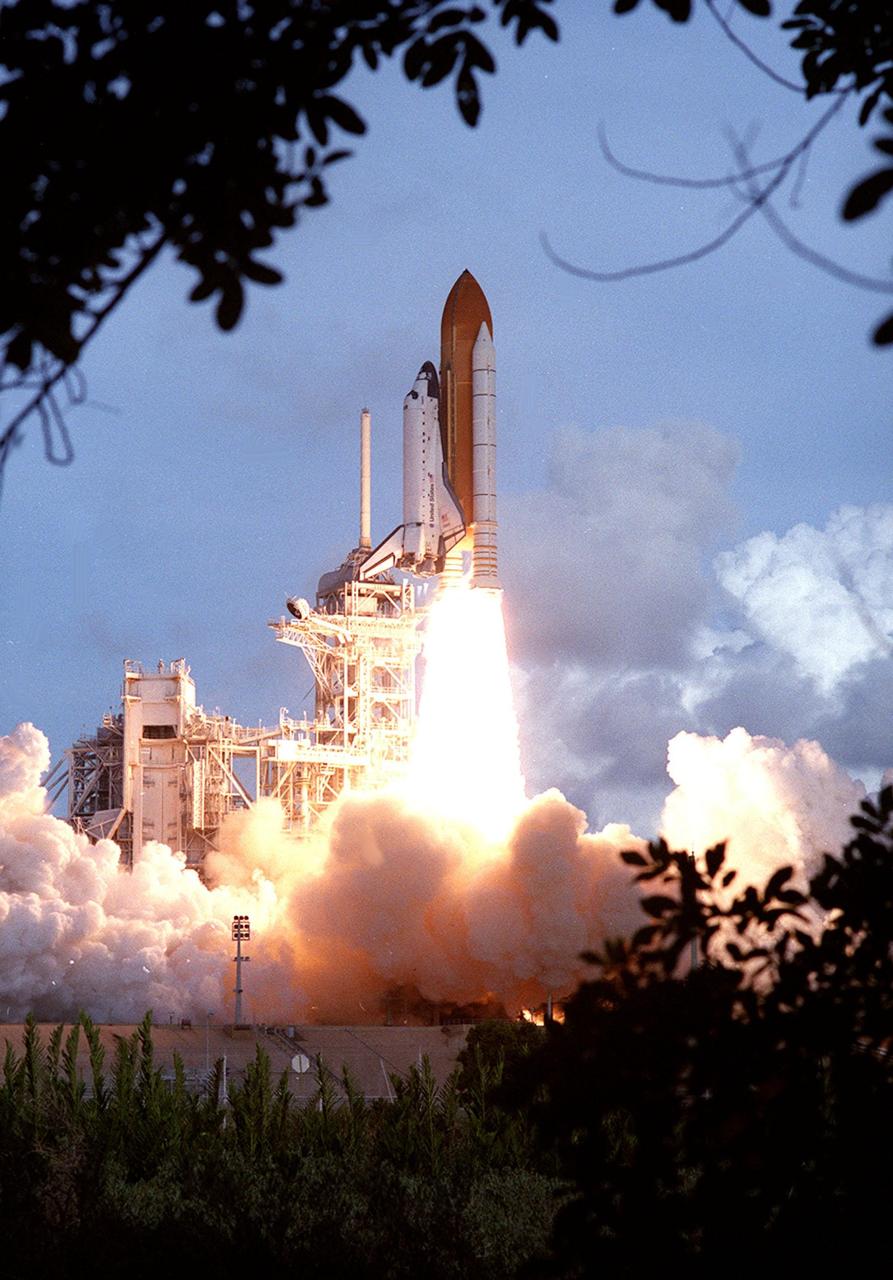
KENNEDY SPACE CENTER, Fla. -- Space Shuttle Atlantis appears to burst forth from a cocoon of smoke in the Florida marsh lands as it rockets toward space on mission STS-106. The perfect on-time liftoff of Atlantis occurred at 8:45:47 a.m. EDT. On the 11-day mission to the International Space Station, the seven-member crew will perform support tasks on orbit, transfer supplies and prepare the living quarters in the newly arrived Zvezda Service Module. The first long-duration crew, dubbed “Expedition One,” is due to arrive at the Station in late fall. Landing of Atlantis is targeted for 4:45 a.m. EDT on Sept. 19
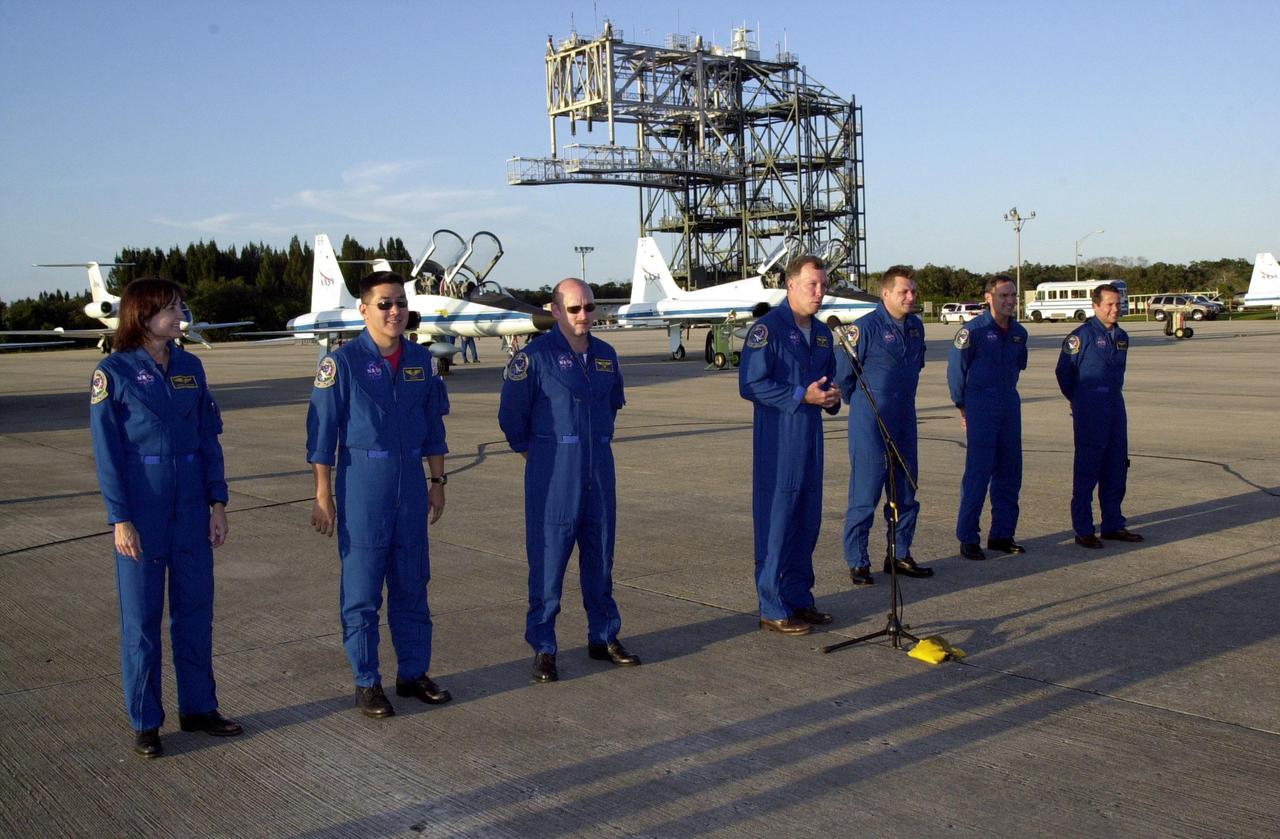
KENNEDY SPACE CENTER, Fla. -- On the parking apron at KSC's Shuttle Landing Facility, the STS-108 and Expedition 4 crews pause after their arrival to greet the media. Standing, left to right, are Mission Specialists Linda A. Godwin and Daniel M. Tani, Pilot Mark E. Kelly, and Commander Dominic L. Gorie; Expedition 4 Commander Yuri Onufrienko and crew members Carl E. Walz and Daniel W. Bursch. Top priorities for the STS-108 (UF-1) mission of Endeavour are rotation of the International Space Station Expedition Three and Expedition Four crews, bringing water, equipment and supplies to the station in the Multi-Purpose Logistics Module Raffaello, and completion of spacewalk and robotics tasks. Tani and Godwin will take part in the spacewalk to install thermal blankets over two pieces of equipment at the bases of the Space Station's solar wings. Liftoff is scheduled for 7:41 p.m. EST
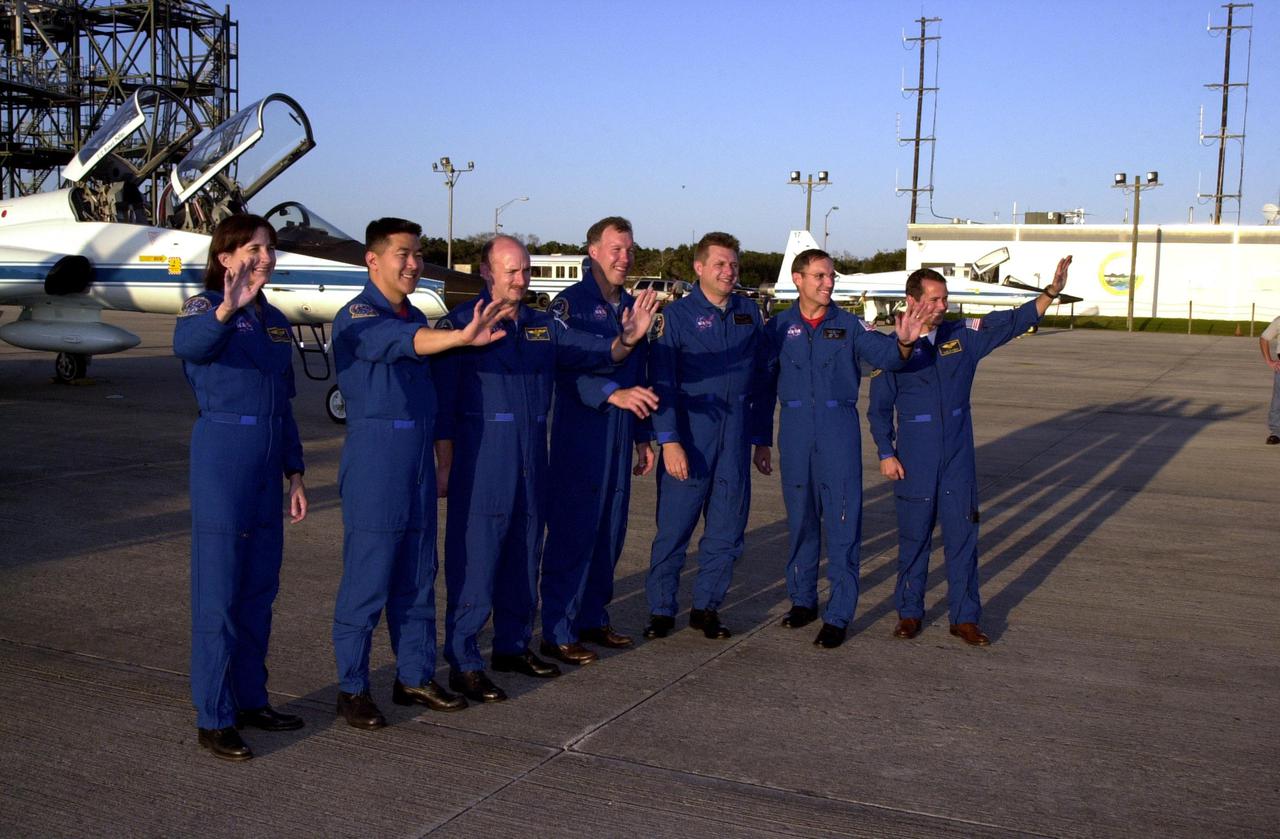
KENNEDY SPACE CENTER, Fla. -- After arriving at the KSC Shuttle Landing Facility, the STS-108 and Expedition 4 crews wave to the media who waited for comments from the crew. Standing, left to right, are Mission Specialists Linda A. Godwin and Daniel M. Tani, Pilot Mark E. Kelly, and Commander Dominic L. Gorie; Expedition 4 Commander Yuri Onufrienko and crew members Carl E. Walz and Daniel W. Bursch. Top priorities for the STS-108 (UF-1) mission of Endeavour are rotation of the International Space Station Expedition Three and Expedition Four crews, bringing water, equipment and supplies to the station in the Multi-Purpose Logistics Module Raffaello, and completion of spacewalk and robotics tasks. Tani and Godwin will take part in the spacewalk to install thermal blankets over two pieces of equipment at the bases of the Space Station's solar wings. Liftoff is scheduled for 7:41 p.m. EST
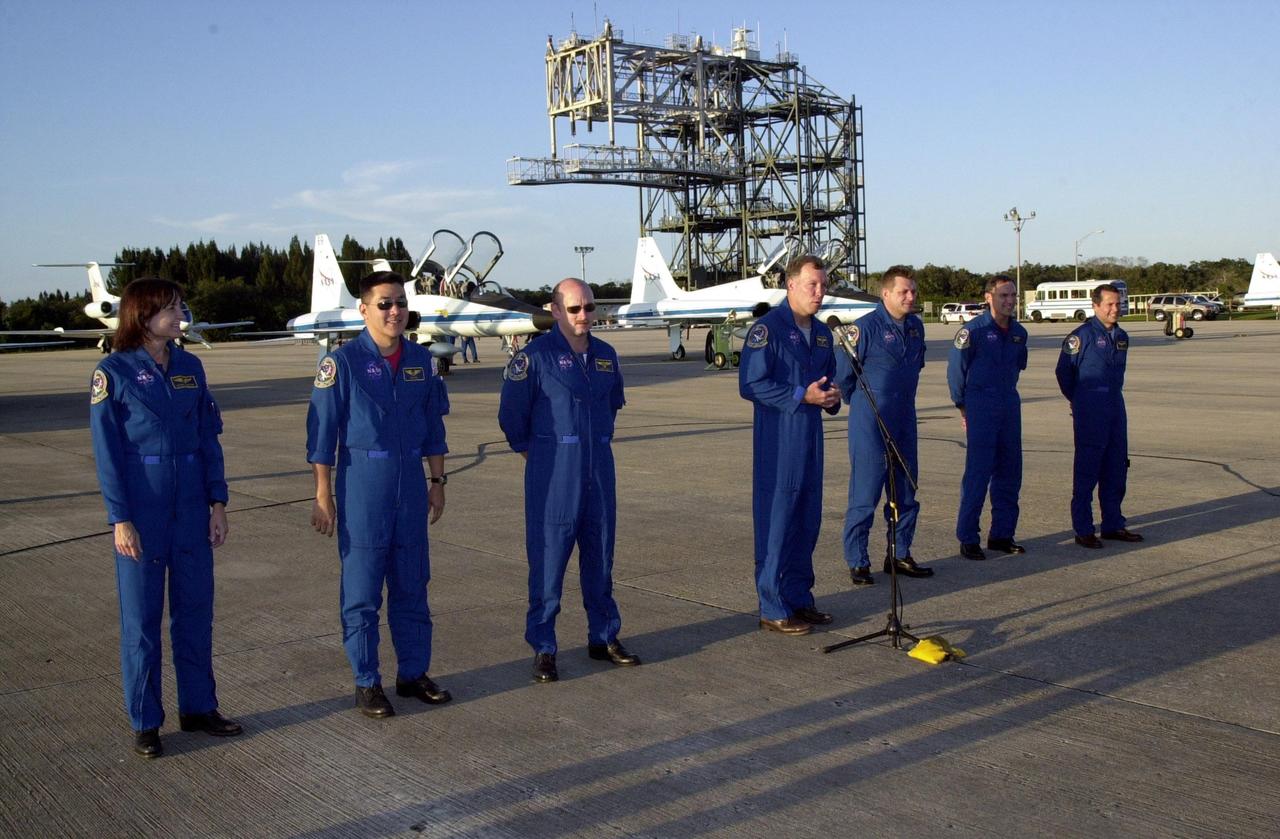
KENNEDY SPACE CENTER, Fla. -- On the parking apron at KSC's Shuttle Landing Facility, the STS-108 and Expedition 4 crews pause after their arrival to greet the media. Standing, left to right, are Mission Specialists Linda A. Godwin and Daniel M. Tani, Pilot Mark E. Kelly, and Commander Dominic L. Gorie; Expedition 4 Commander Yuri Onufrienko and crew members Carl E. Walz and Daniel W. Bursch. Top priorities for the STS-108 (UF-1) mission of Endeavour are rotation of the International Space Station Expedition Three and Expedition Four crews, bringing water, equipment and supplies to the station in the Multi-Purpose Logistics Module Raffaello, and completion of spacewalk and robotics tasks. Tani and Godwin will take part in the spacewalk to install thermal blankets over two pieces of equipment at the bases of the Space Station's solar wings. Liftoff is scheduled for 7:41 p.m. EST
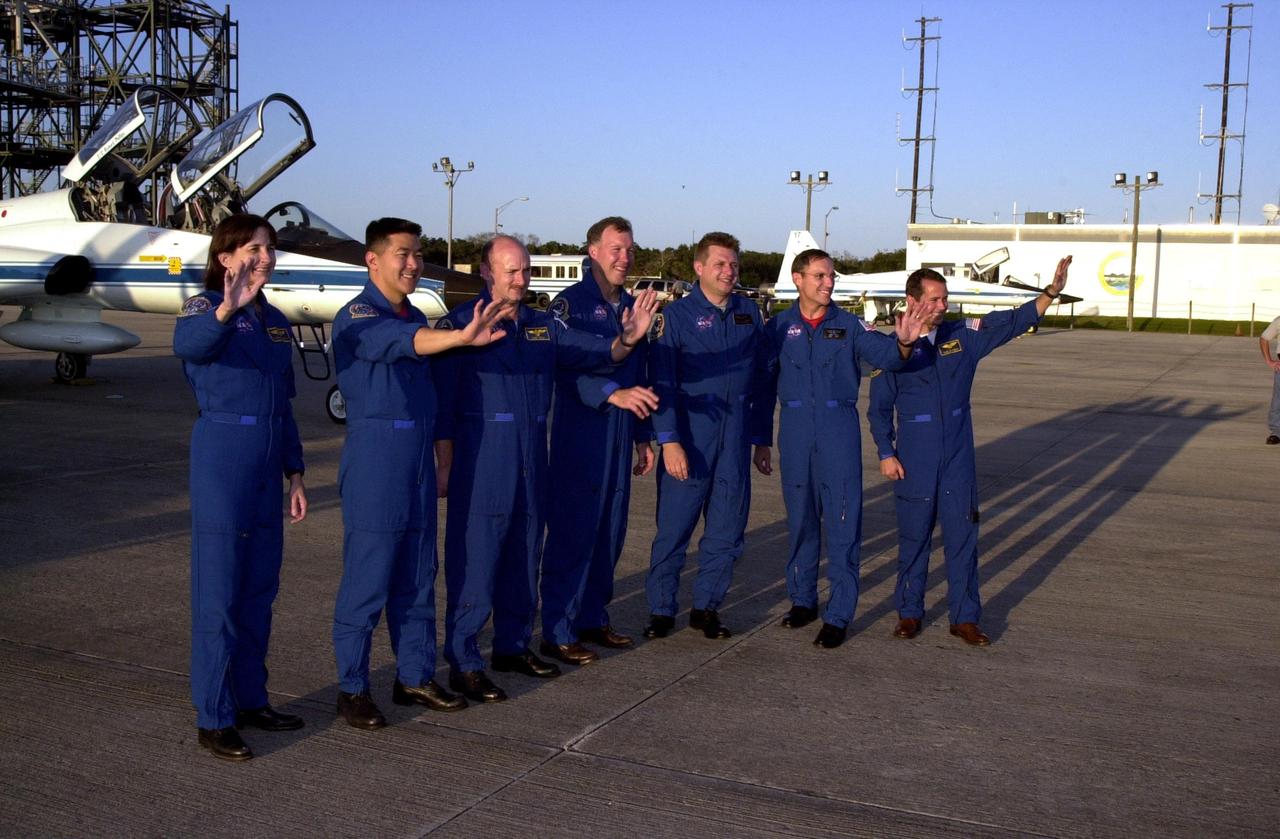
KENNEDY SPACE CENTER, Fla. -- After arriving at the KSC Shuttle Landing Facility, the STS-108 and Expedition 4 crews wave to the media who waited for comments from the crew. Standing, left to right, are Mission Specialists Linda A. Godwin and Daniel M. Tani, Pilot Mark E. Kelly, and Commander Dominic L. Gorie; Expedition 4 Commander Yuri Onufrienko and crew members Carl E. Walz and Daniel W. Bursch. Top priorities for the STS-108 (UF-1) mission of Endeavour are rotation of the International Space Station Expedition Three and Expedition Four crews, bringing water, equipment and supplies to the station in the Multi-Purpose Logistics Module Raffaello, and completion of spacewalk and robotics tasks. Tani and Godwin will take part in the spacewalk to install thermal blankets over two pieces of equipment at the bases of the Space Station's solar wings. Liftoff is scheduled for 7:41 p.m. EST
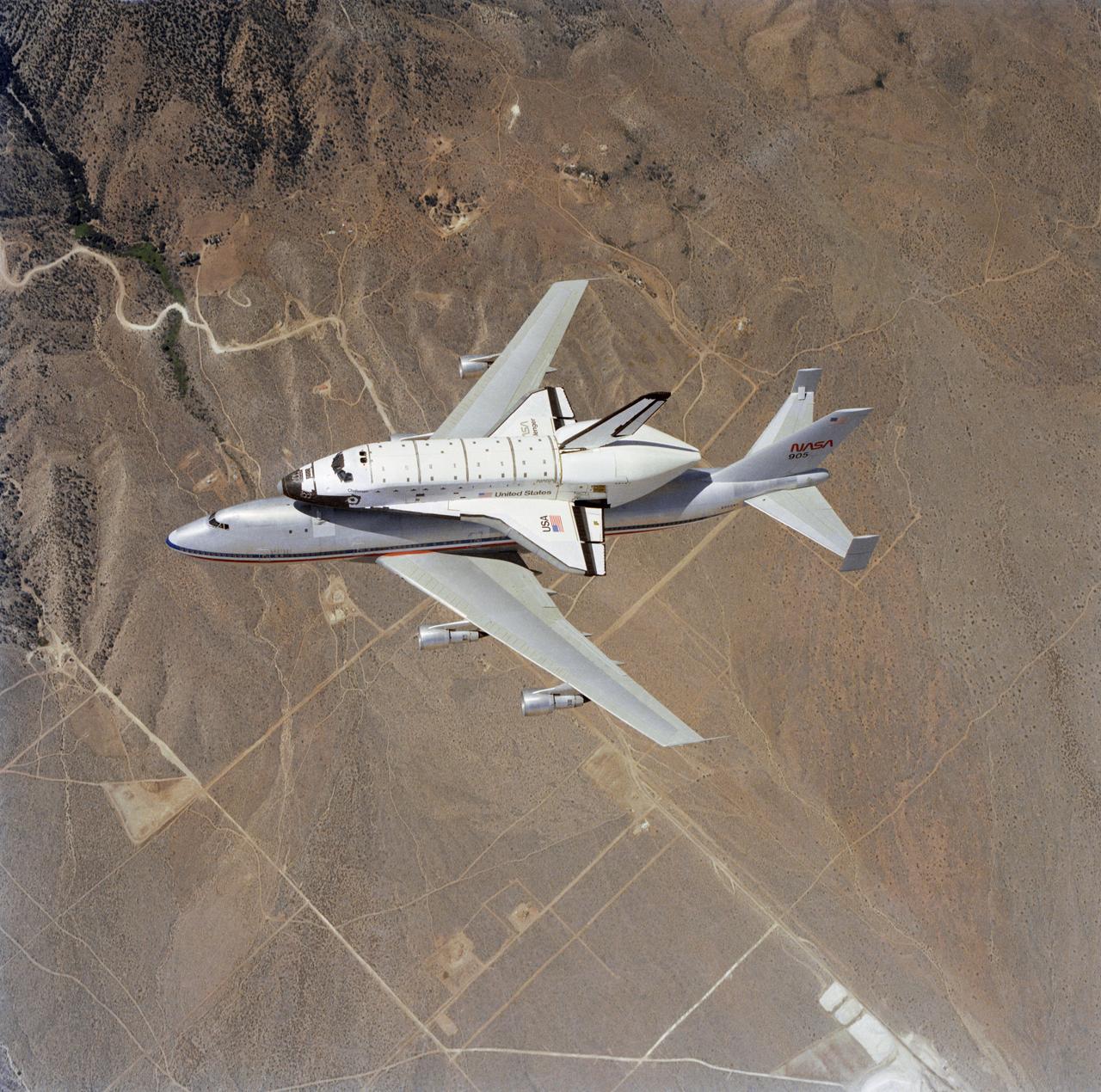
S82-33421 (4 July 1982) --- This spectacular view of the NASA 905 transport aircraft taxiing the new space shuttle Challenger was recorded from a T-38 aircraft as the aircraft were heading for Houston, Texas and a combination "meet the Challenger and greet the STS-4 crew" ceremony at Ellington Air Force Base. The STS-4 astronauts-Thomas K. Mattingly II, and Henry W. Hartsfield Jr., were minutes ahead of the tandem in another aircraft. Earlier today they completed a successful week-long stay in space aboard the Columbia. Upon their landing at Edwards Air Force Base, a historical "first" occurred for NASA and this nation. Three shuttlecraft ? The Enterprise, Challenger and Columbia ? were together at one time in the same location. The hardware served as a backdrop for a speech by President Ronald Reagan leading the nation in a special July 4 celebration. Following the stopover in Houston, the Challenger will move onto Florida for processing in preparation for future spaceflights. Photo credit: NASA