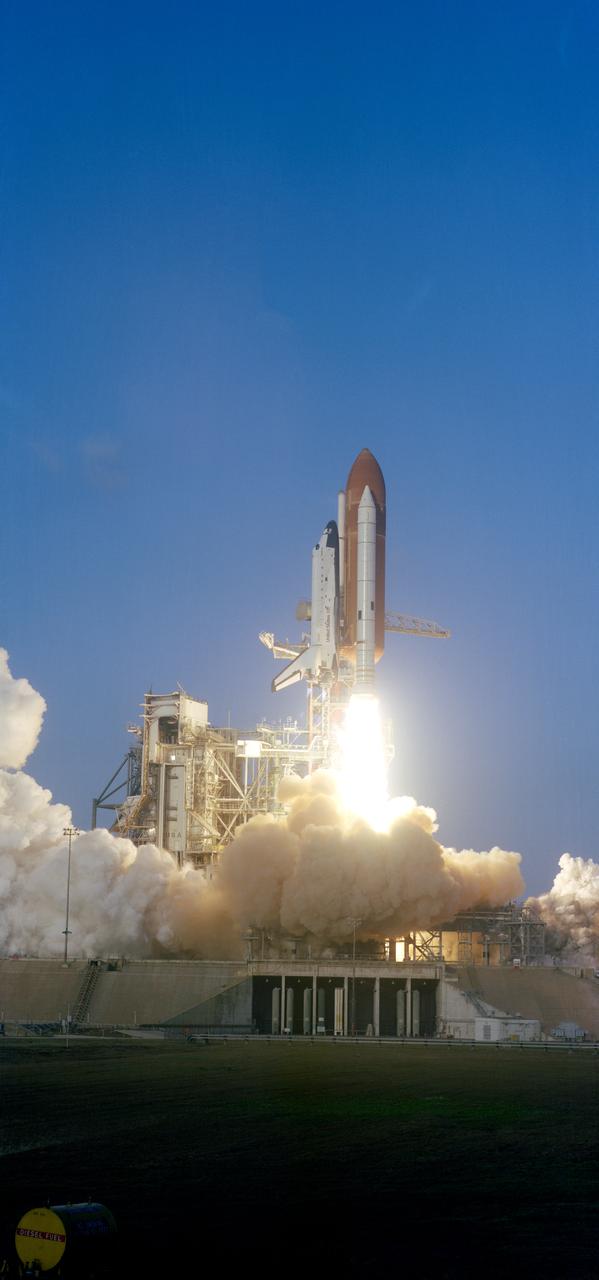
S84-26327 (3 Feb. 1984) --- Beginning a busy year, NASA's space shuttle Challenger, attached to two solid rocket boosters and an external fuel tank which it will later jettison, blasts off from Pad A at Kennedy Space Center's Launch Complex 39 at 8:00 a.m. (EST), Feb. 3, 1984. Inside the STS 41-B spacecraft are astronauts Vance D. Brand, Robert L. Gibson, Bruce McCandless II, Ronald E. McNair and Robert L. Stewart. Brand is making his first trip in the Challenger but his second STS flight and third spaceflight overall. The rest of the crew members are experiencing space travel for the first time. Marking a space first, this flight will be landing at KSC. Photo credit: NASA
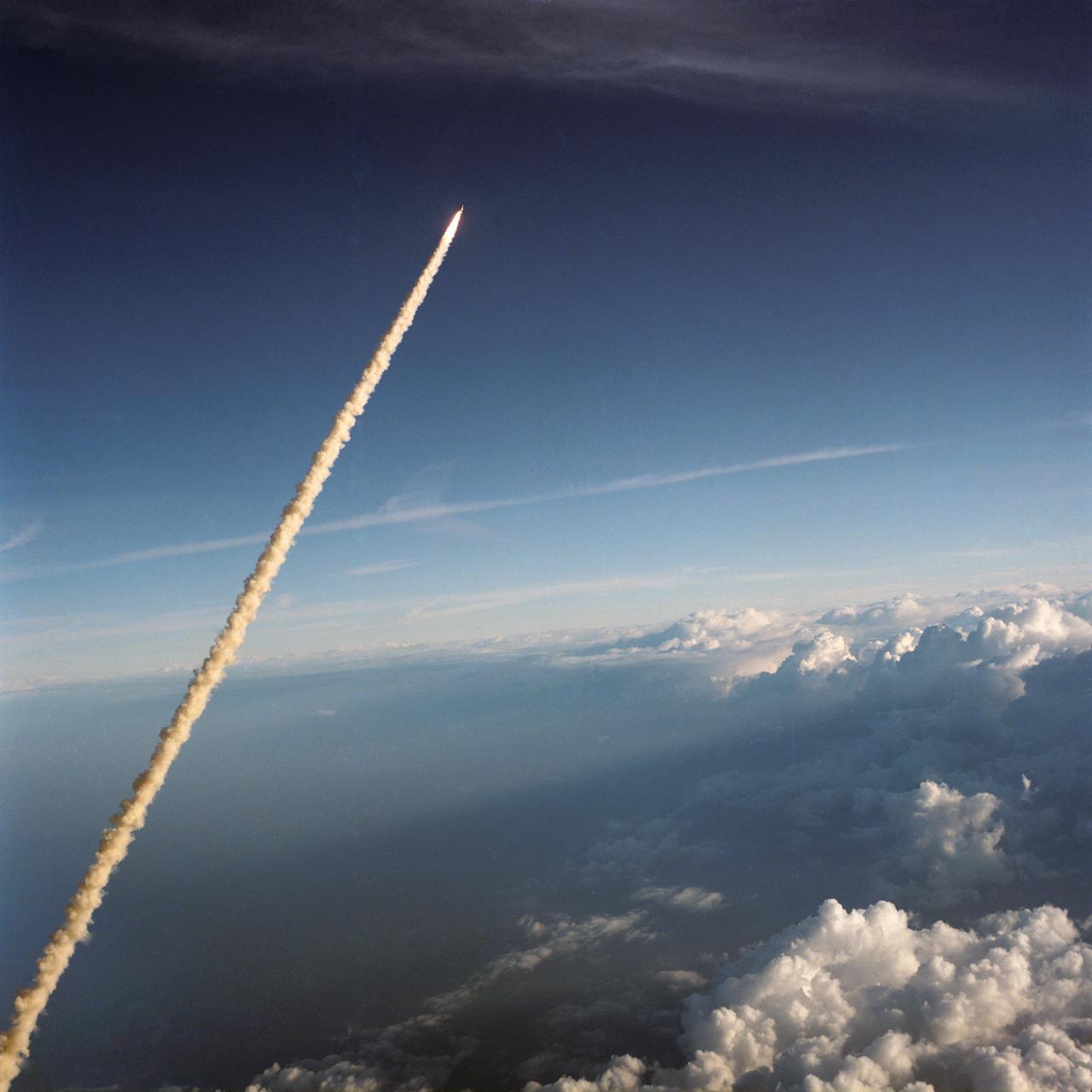
S84-26294 (3 Feb 1984) --- This scenic panorama of billowy clouds over the Atlantic and Florida and the contrasting addition of mankind's technology into the picture was provided by astronaut John W. Young and a handheld camera in the cockpit of NASA's Shuttle Training Aircraft (STA) moments after the 226 tons of spacecraft hardware were lifted off Kennedy Space Center's (KSC) Launch Pad 39A. Inside the Space Shuttle Challenger (STS 41-B), attached here to its two Solid Rocket Boosters (SRB) and External Fuel Tank (ET), were astronauts Vance D. Brand, Robert L. Gibson, Ronald E. McNair, Bruce McCandless II and Robert L. Stewart.
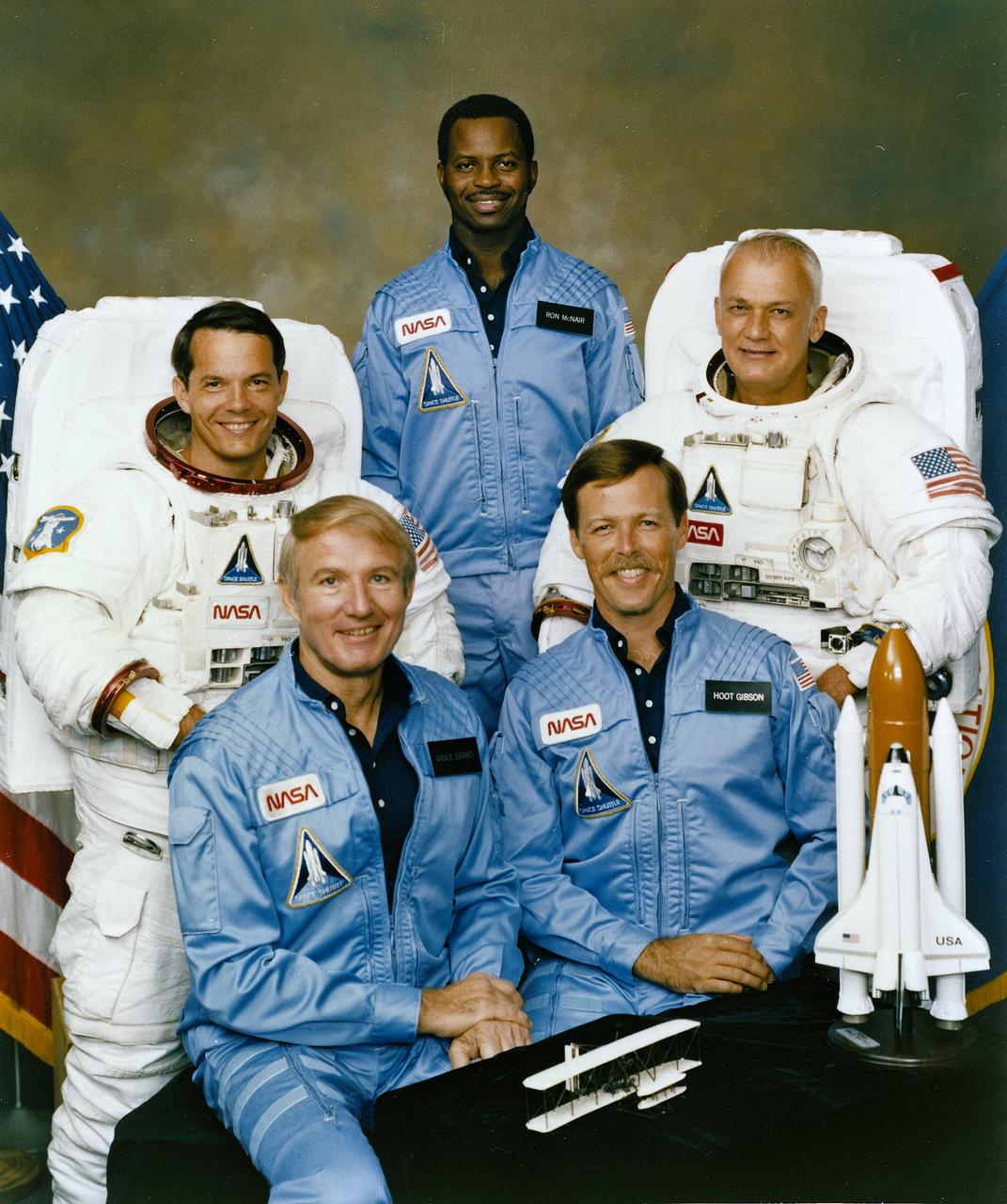
The crew assigned to the STS-41B (STS-11) mission included (seated left to right) Vance D. Brand, commander; and Robert L. Gibson, pilot. Standing left to right are mission specialists Robert L. Stewart, Ronald E. McNair, and Bruce McCandless. Launched aboard the Space Shuttle Challenger on February 3, 1984 at 8:00:00 am (EST), the STS-41B mission marked the first untethered space walks which were performed by McCandless and Stewart. The crew deployed the WESTAR-VI and PALAPA-B2 satellites.
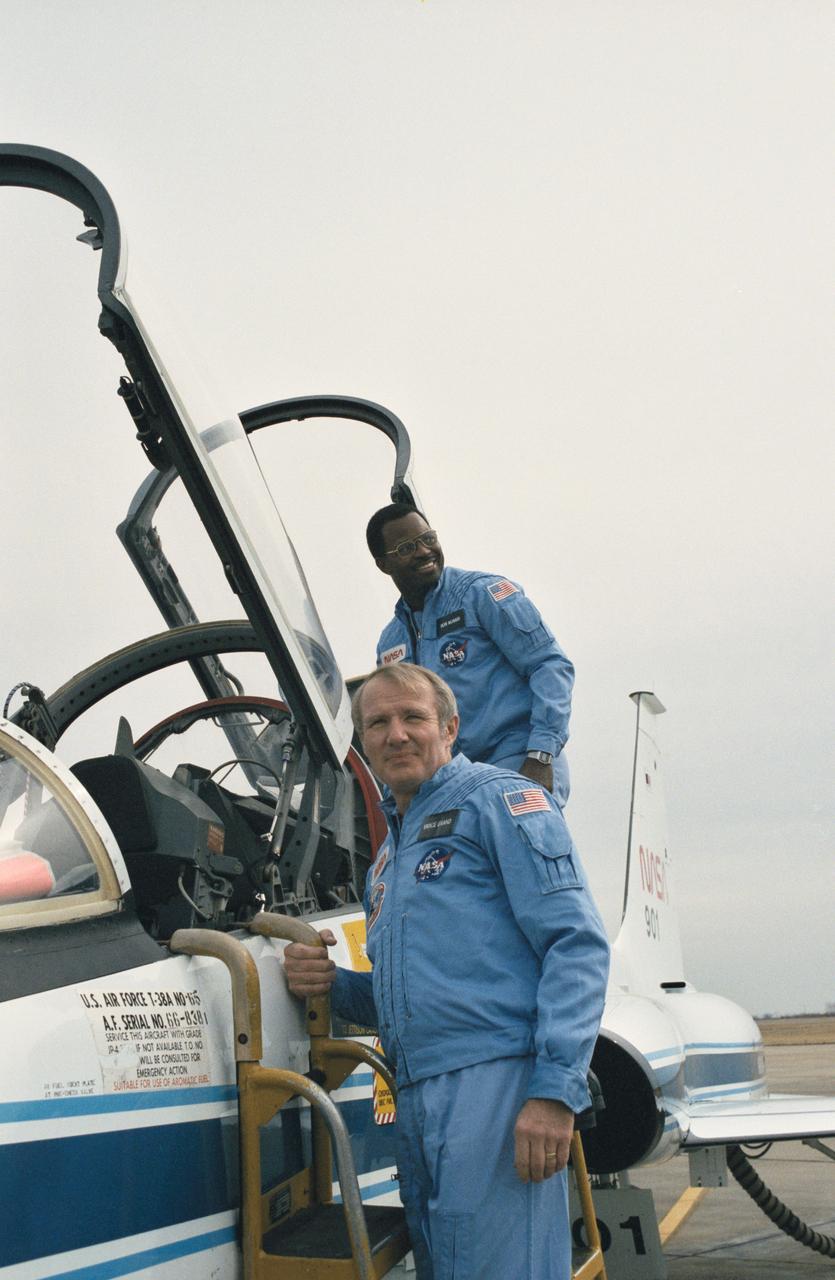
S84-26244 (31 Jan 1984) --- Astronauts Vance D. Brand, foreground, and Ronald E. McNair, of NASA's STS-41B Space Shuttle Challenger crew, prepare to climb into a T-38 jet aircraft readied for takeoff to Florida and the Kennedy Space Center (KSC). Brand is making his third Spaceflight, including his second as a Shuttle flight crew commander. McNair, mission specialist, will be making his first trip into space. Launch for STS-41B is scheduled for 8 a.m. (EST), February 3, 1984. This photo was taken by Otis Imboden.
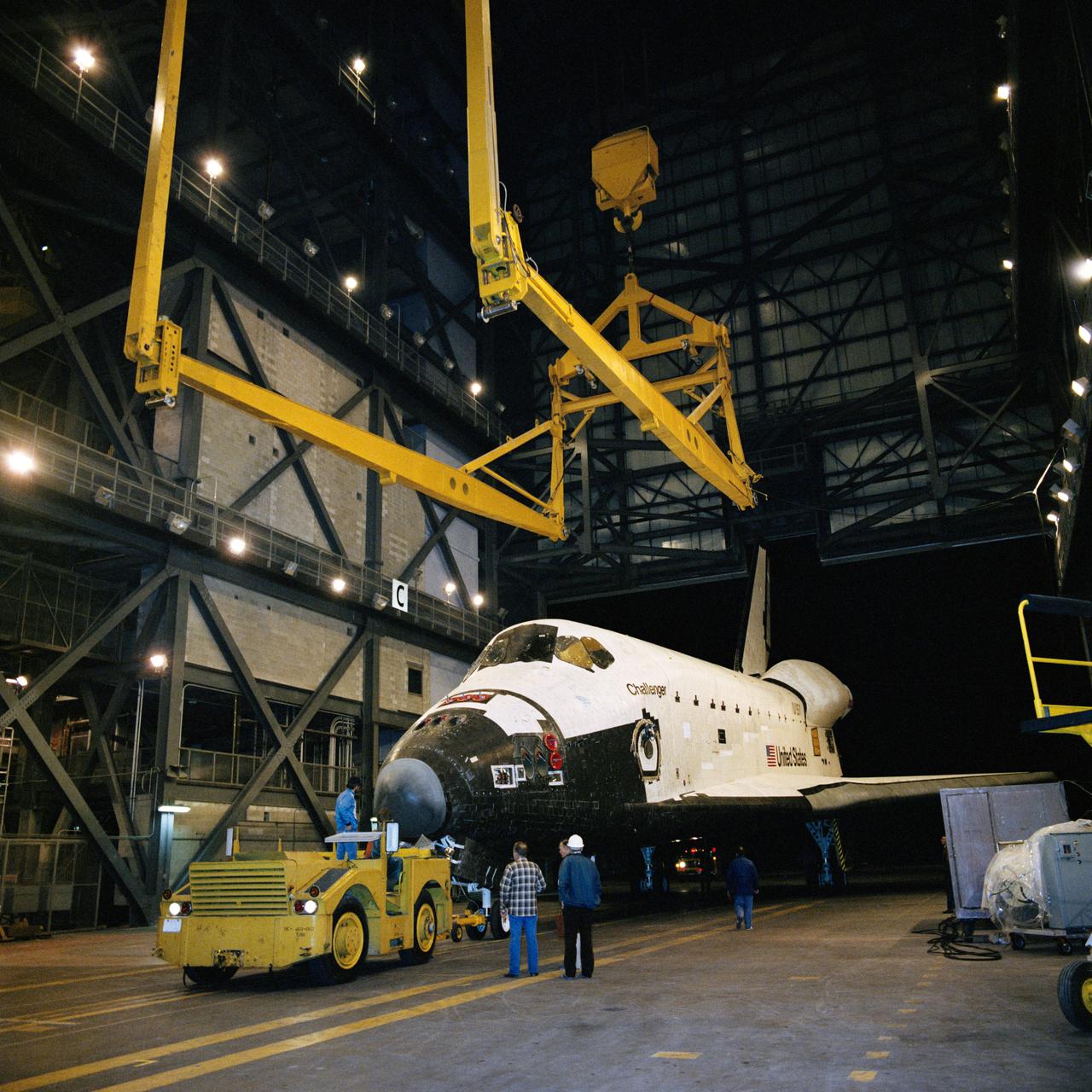
S84-25872 (6 Jan 1984) --- Progress continues at the Kennedy Space Center (KSC) as the Space Shuttle Challenger is moved into the Vehicle Assembly Building (VAB) for mating to its two Solid Rocket Boosters (SRB) and External Fuel Tank (ET). The flight of STS-41B will carry five astronaut crew members into space for the performance of a variety of duties. Launch is scheduled for February 3, 1984.
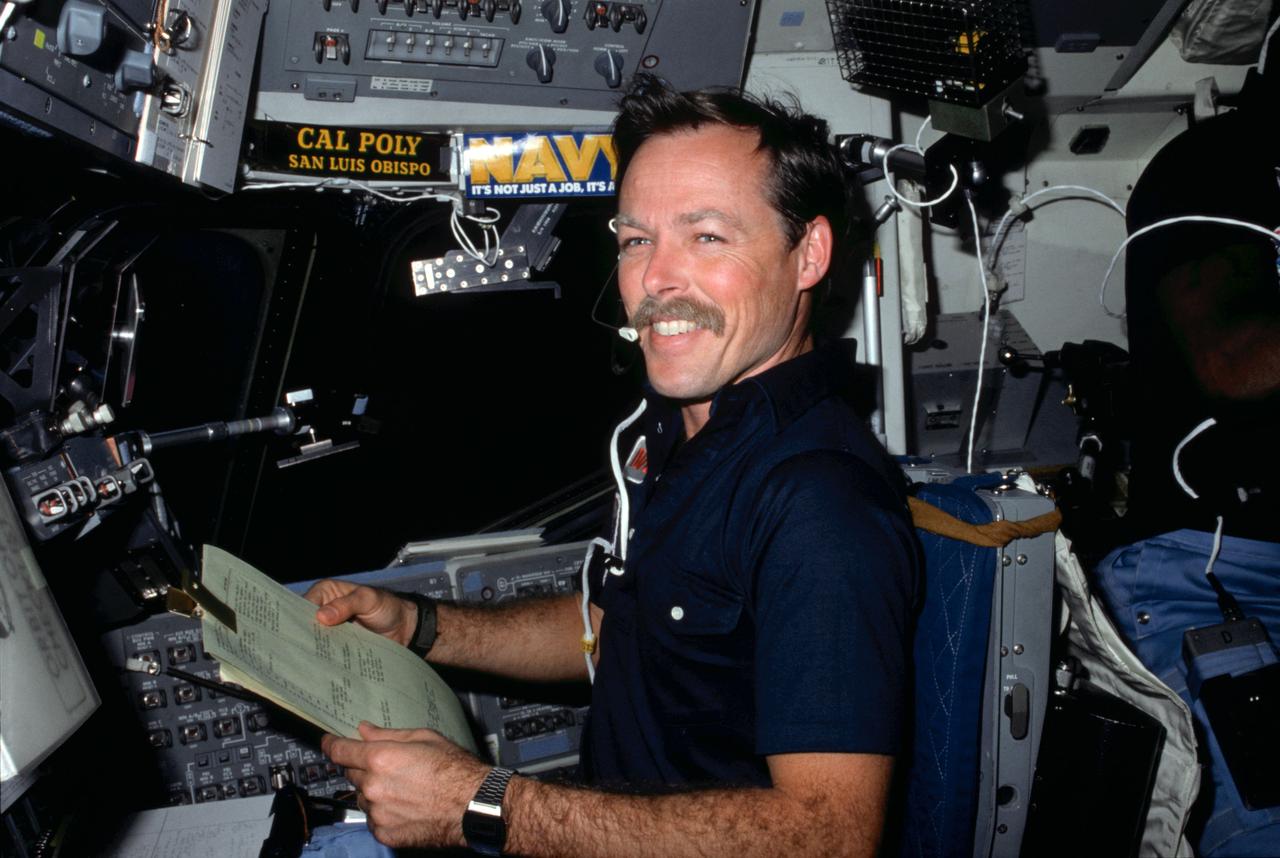
S84-27027 (3-11 Feb 1984) --- Astronaut Robert L. Gibson, STS-41B pilot, reviews some teleprinter copy on the flight deck's starboard station during the eight-day STS-41B Space Shuttle mission. Four other astronauts share the Challenger with Gibson. They are astronauts Vance D. Brand, commander; and Ronald E. McNair, Bruce McCandless II and Robert L. Stewart, all mission specialists. The photograph was taken from the commander's station with a 35mm camera.
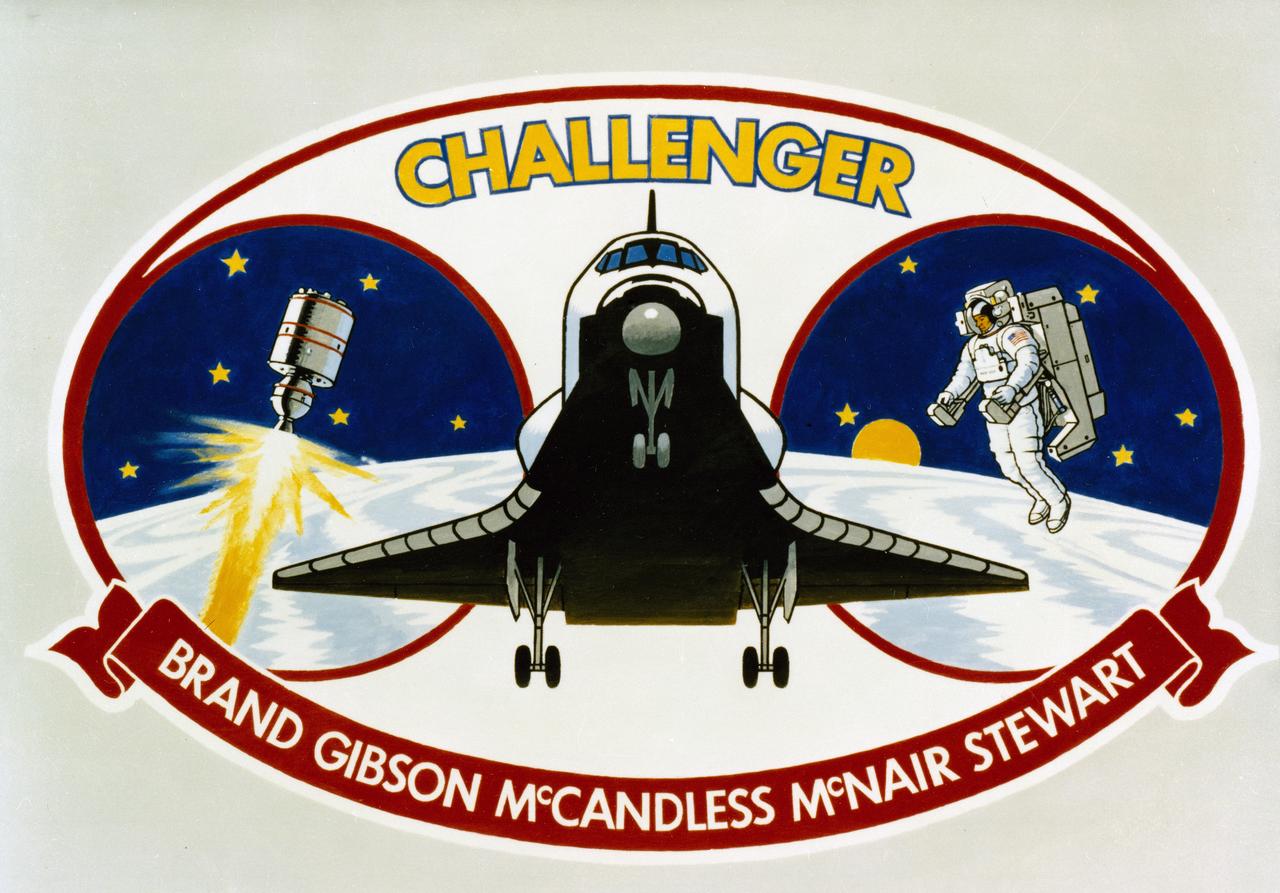
The Space Shuttle Challenger, making its fourth space flight, highlights the 41B insignia. The reusable vehicle is flanked in the oval by an illustration of a Payload Assist Module-D solid rocket motor (PAM-D) for assisted satellite deployment; an astronaut making the first non-tethered extravehicular activity (EVA); and eleven stars.
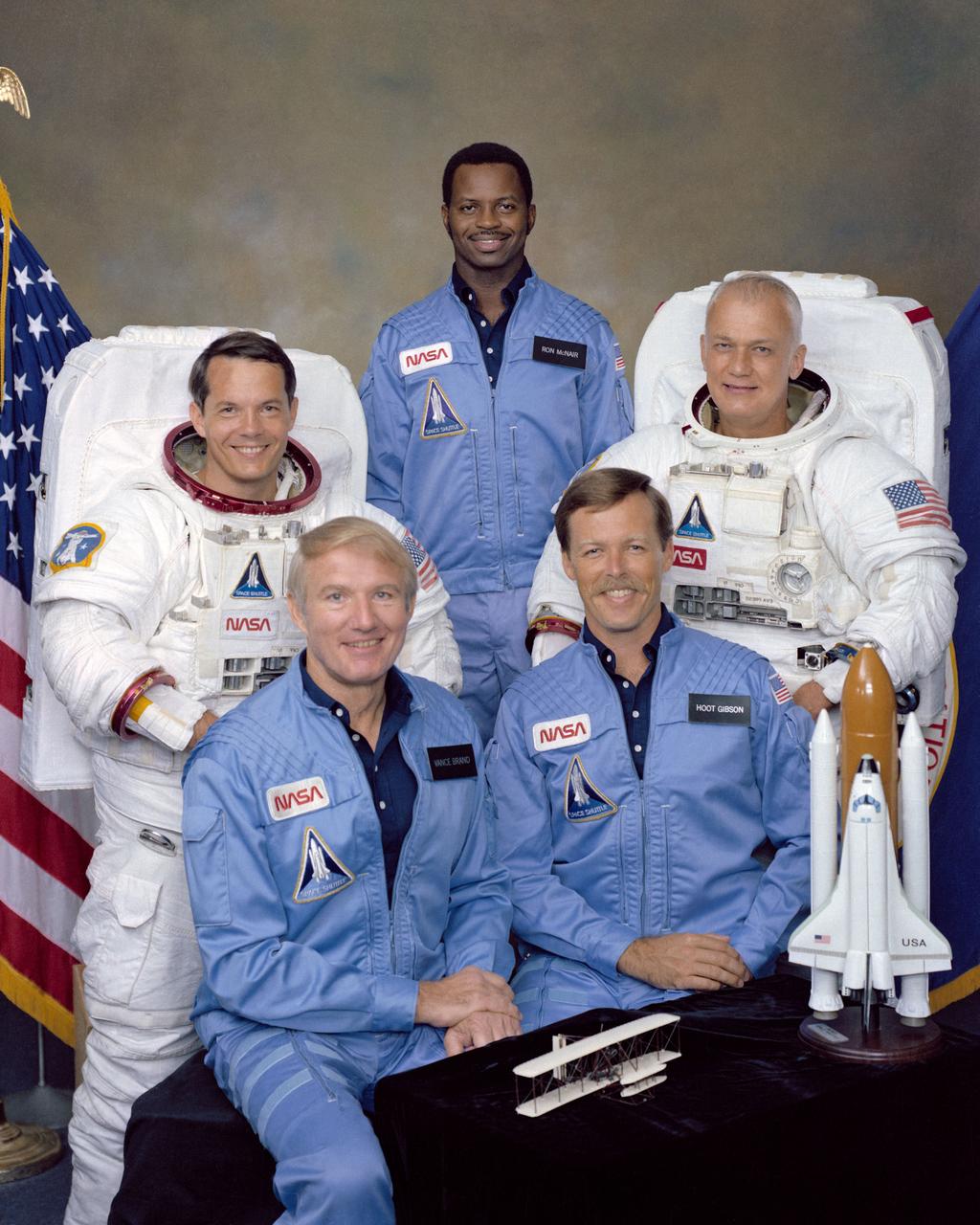
S83-40555 (15 October 1983) --- These five astronauts are in training for the STS-41B mission, scheduled early next year. On the front row are Vance D. Brand, commander; and Robert L. Gibson, pilot. Mission specialists (back row, left to right) are Robert L. Stewart, Dr. Ronald E. McNair and Bruce McCandless II. Stewart and McCandless are wearing Extravehicular Mobility Units (EMU) space suits. The STS program's second extravehicular activity (EVA) is to be performed on this flight, largely as a rehearsal for a scheduled repair visit to the Solar Maximum Satellite (SMS), on a later mission. The Manned Maneuvering Unit (MMU) will make its space debut on STS-41B.
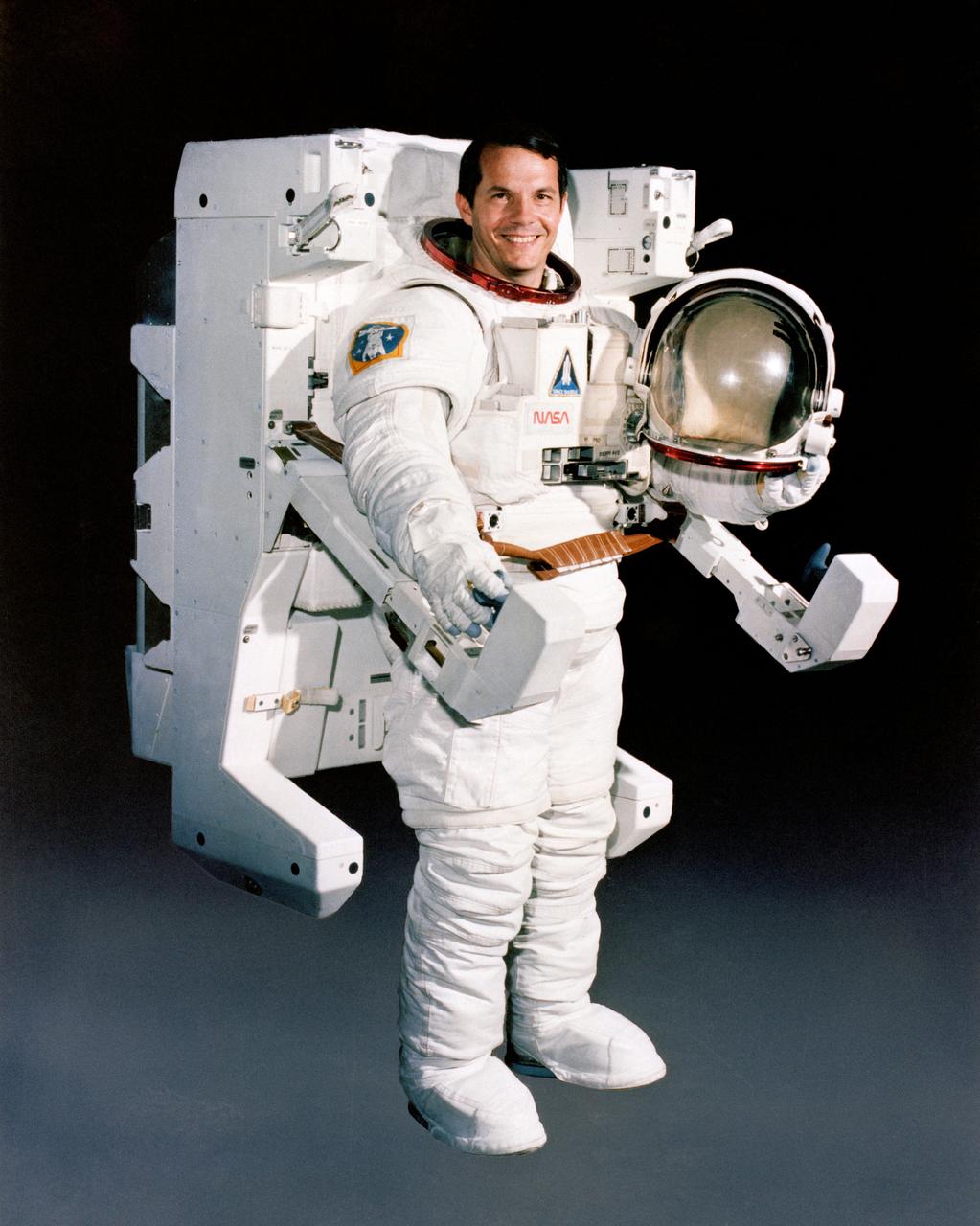
Portrait photographs of STS-11/41B Crewman Robert L. Stewart, wearing the Extravehicular Maneuvering Unit (EMU) with the Manned Manuevering Unit (MMU) attached, and without helmet.
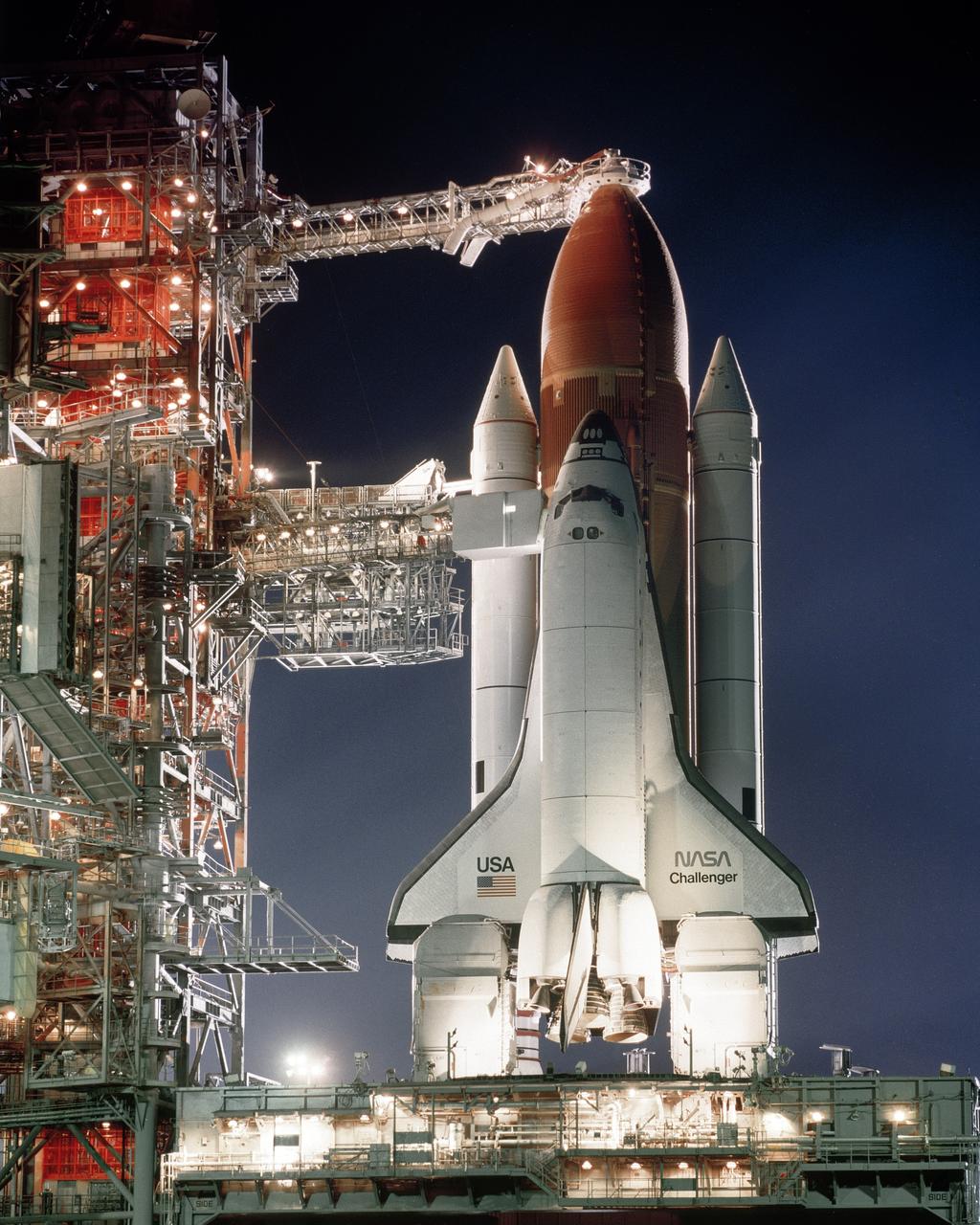
CAPE CANAVERAL, Fla. -- At the Kennedy Space Center in Florida, the rotating service structure has pulled back to the prelaunch position, the shuttle Challenger sits at Launch Pad 39-A bathed in billion candlepower searchlights ready to embark on it fourth space mission STS-41B, the 10th flight of the space shuttle. Photo Credit: NASA
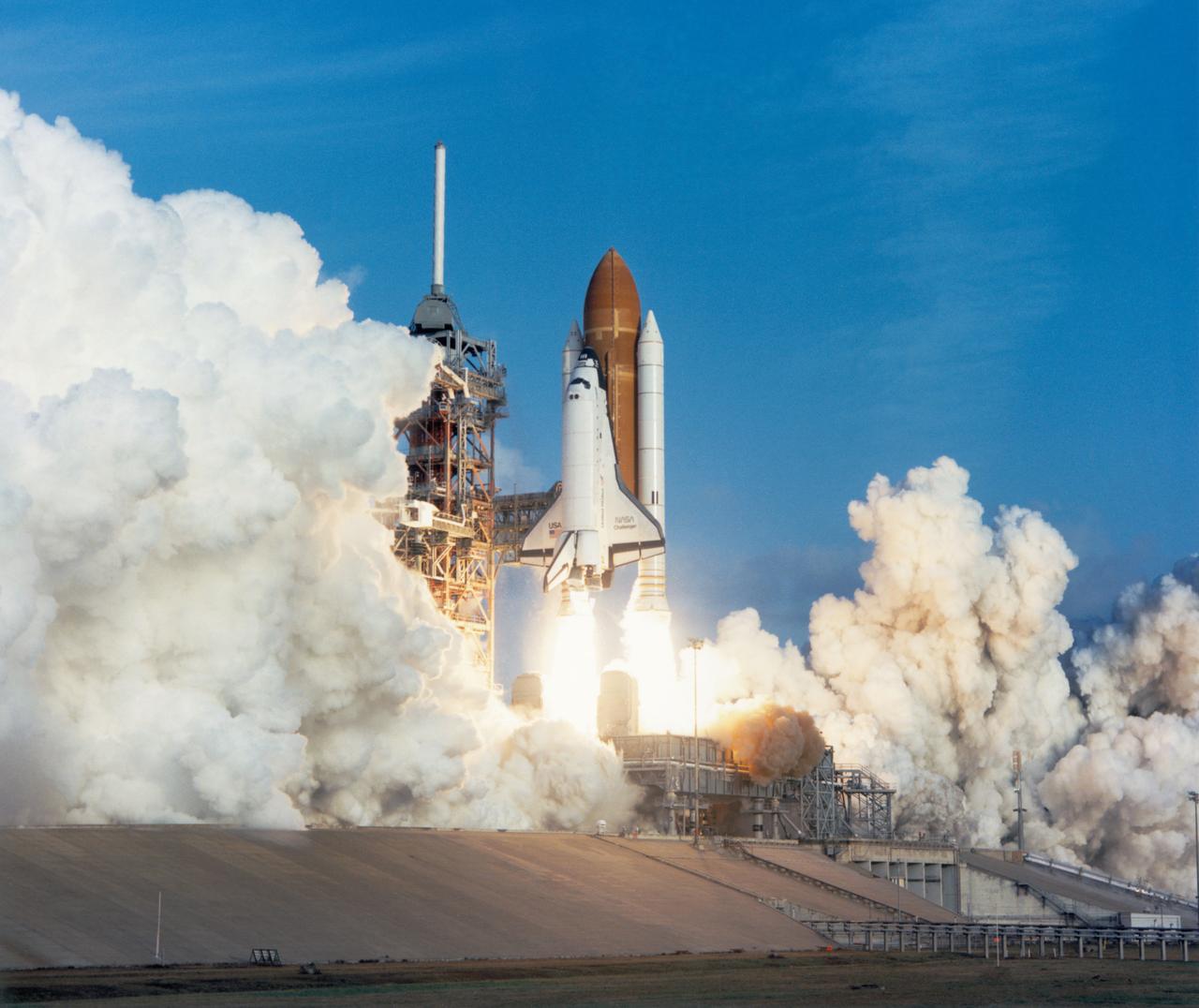
S84-26325 (3 Feb. 1984) --- Beginning a busy year, NASA's space shuttle Challenger, attached to two solid rocket boosters and an external fuel tank which it will later jettison, blasts off from Pad A at Kennedy Space Center's Launch Complex 39 at 8:00 a.m. (EST), Feb. 3, 1984. Inside the spacecraft are astronauts Vance D. Brand, Robert L. Gibson, Bruce McCandless II, Ronald E. McNair and Robert L. Stewart. Brand is making his first trip in the Challenger but his second STS flight and third spaceflight overall. The rest of the crew members are experiencing space travel for the first time. Marking a space first, this flight will be landing at KSC. Photo credit: NASA
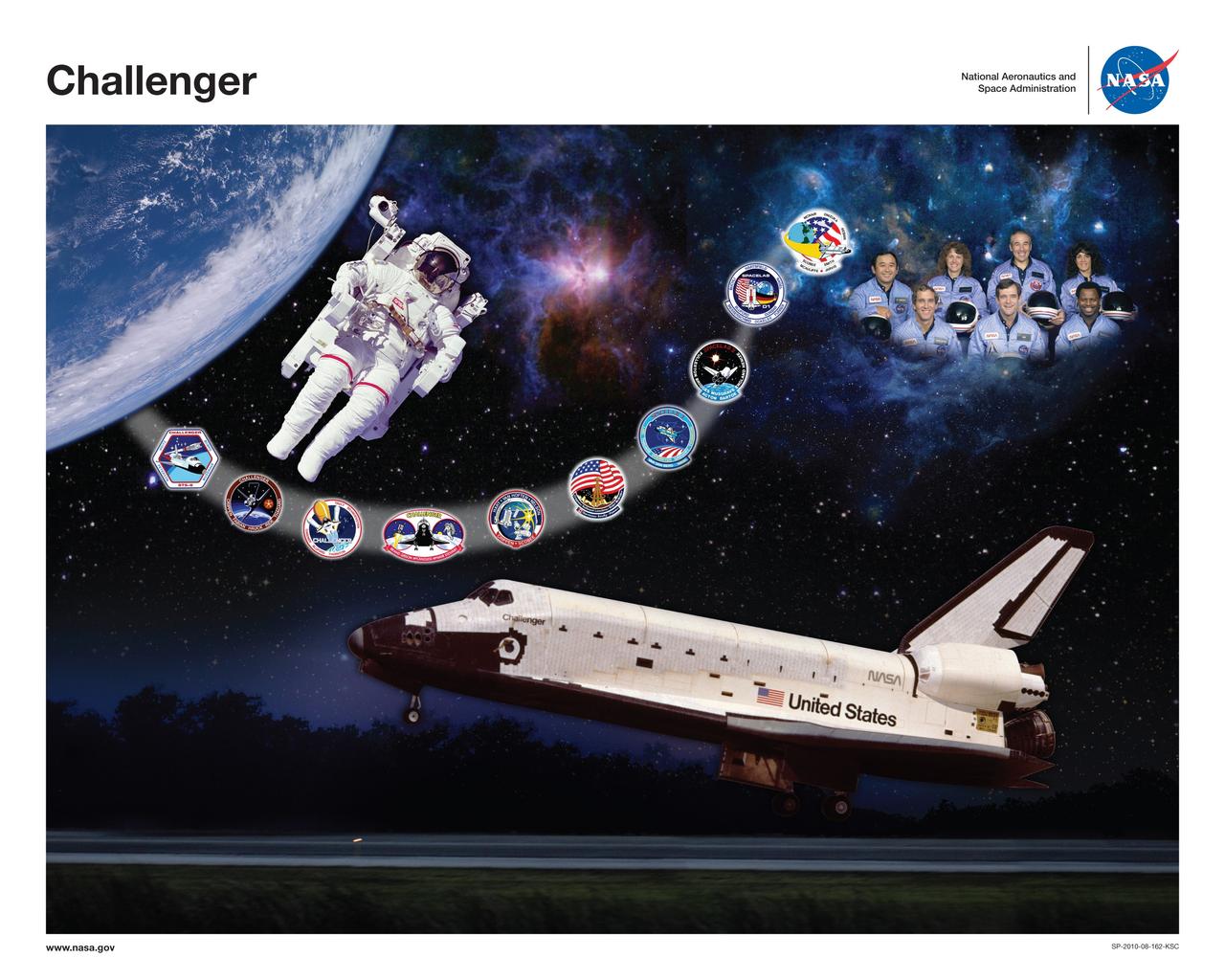
CAPE CANAVERAL, Fla. -- This is a version of space shuttle Challenger's orbiter tribute, or OV-099, which hangs in Firing Room 4 of the Launch Control Center at NASA's Kennedy Space Center in Florida. Challenger's accomplishments include the first night launch and first African-American in space, Guion Bluford, on STS-8, the first in-flight capture, repair and redeployment of an orbiting satellite during STS-41C, the first American woman in space, Sally Ride, on STS-7, and the first American woman to walk in space, Kathryn Sullivan, during STS-41G. Challenger is credited with blazing a trail for NASA's other orbiters with the first night landing at Edwards Air Force Base in California on STS-8 and the first landing at Kennedy on STS-41B. The spacewalker in the tribute represents Challenger’s role in the first spacewalk during STS-6 and the first untethered spacewalk on STS-41B. Crew-designed patches for each of Challenger’s missions lead from Earth toward a remembrance of the STS-51L crew, which was lost 73 seconds after liftoff on Jan. 28, 1986. Five orbiter tributes are on display in the firing room, representing Atlantis, Challenger, Columbia, Endeavour and Discovery. Graphic design credit: NASA/Lynda Brammer. NASA publication number: SP-2010-08-162-KSC
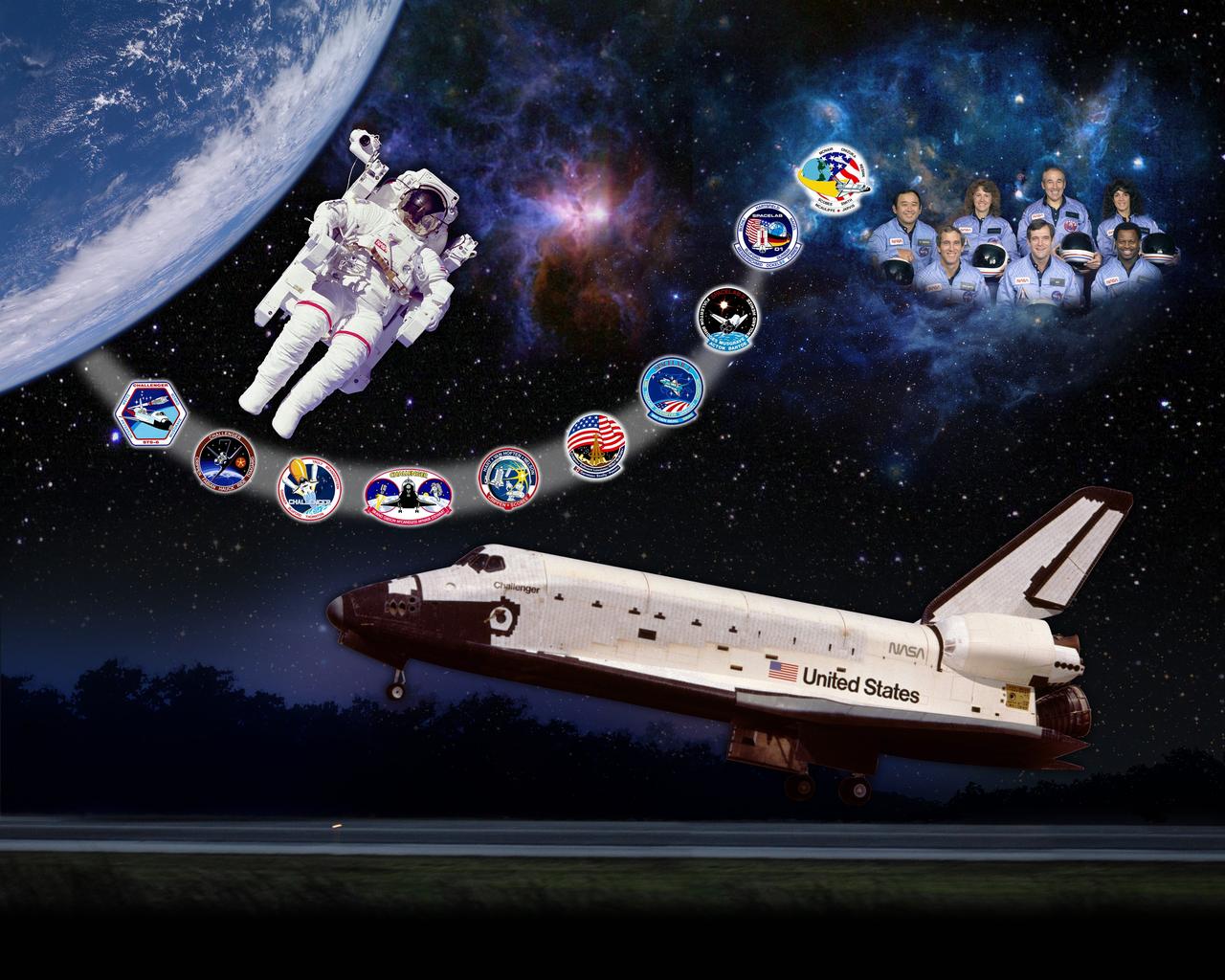
CAPE CANAVERAL, Fla. -- This orbiter tribute of space shuttle Challenger, or OV-099, hangs in Firing Room 4 of the Launch Control Center at NASA's Kennedy Space Center in Florida. Challenger's accomplishments include the first night launch and first African-American in space, Guion Bluford, on STS-8, the first in-flight capture, repair and redeployment of an orbiting satellite during STS-41C, the first American woman in space, Sally Ride, on STS-7, and the first American woman to walk in space, Kathryn Sullivan, during STS-41G. Challenger is credited with blazing a trail for NASA's other orbiters with the first night landing at Edwards Air Force Base in California on STS-8 and the first landing at Kennedy on STS-41B. The spacewalker in the tribute represents Challenger’s role in the first spacewalk during STS-6 and the first untethered spacewalk on STS-41B. Crew-designed patches for each of Challenger’s missions lead from Earth toward a remembrance of the STS-51L crew, which was lost 73 seconds after liftoff on Jan. 28, 1986. Five orbiter tributes are on display in the firing room, representing Atlantis, Challenger, Columbia, Endeavour and Discovery. Graphic design credit: NASA/Lynda Brammer
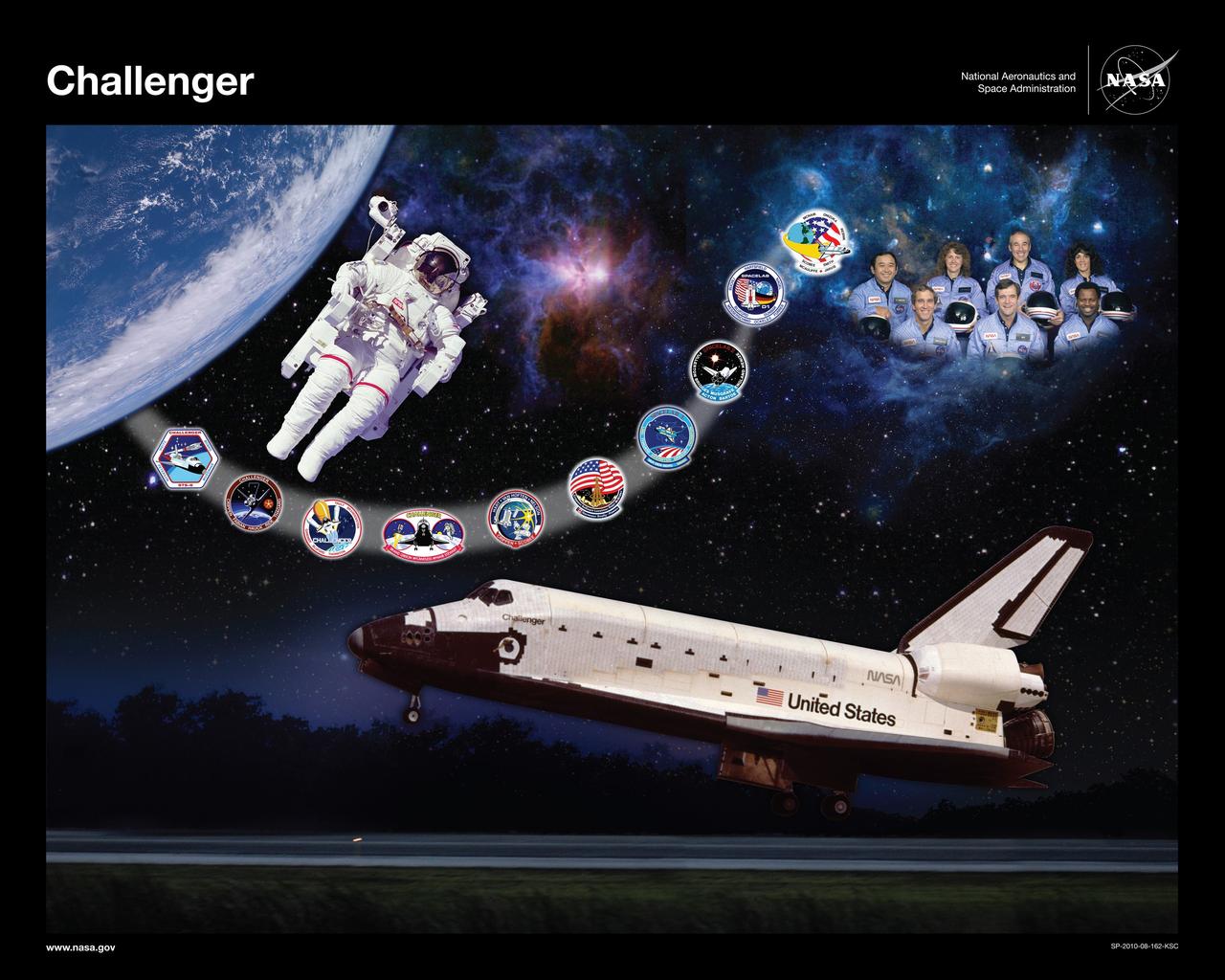
CAPE CANAVERAL, Fla. -- This is a printable version of space shuttle Challenger's orbiter tribute, or OV-099, which hangs in Firing Room 4 of the Launch Control Center at NASA's Kennedy Space Center in Florida. Challenger's accomplishments include the first night launch and first African-American in space, Guion Bluford, on STS-8, the first in-flight capture, repair and redeployment of an orbiting satellite during STS-41C, the first American woman in space, Sally Ride, on STS-7, and the first American woman to walk in space, Kathryn Sullivan, during STS-41G. Challenger is credited with blazing a trail for NASA's other orbiters with the first night landing at Edwards Air Force Base in California on STS-8 and the first landing at Kennedy on STS-41B. The spacewalker in the tribute represents Challenger’s role in the first spacewalk during STS-6 and the first untethered spacewalk on STS-41B. Crew-designed patches for each of Challenger’s missions lead from Earth toward a remembrance of the STS-51L crew, which was lost 73 seconds after liftoff on Jan. 28, 1986. Five orbiter tributes are on display in the firing room, representing Atlantis, Challenger, Columbia, Endeavour and Discovery. Graphic design credit: NASA/Lynda Brammer. NASA publication number: SP-2010-08-162-KSC
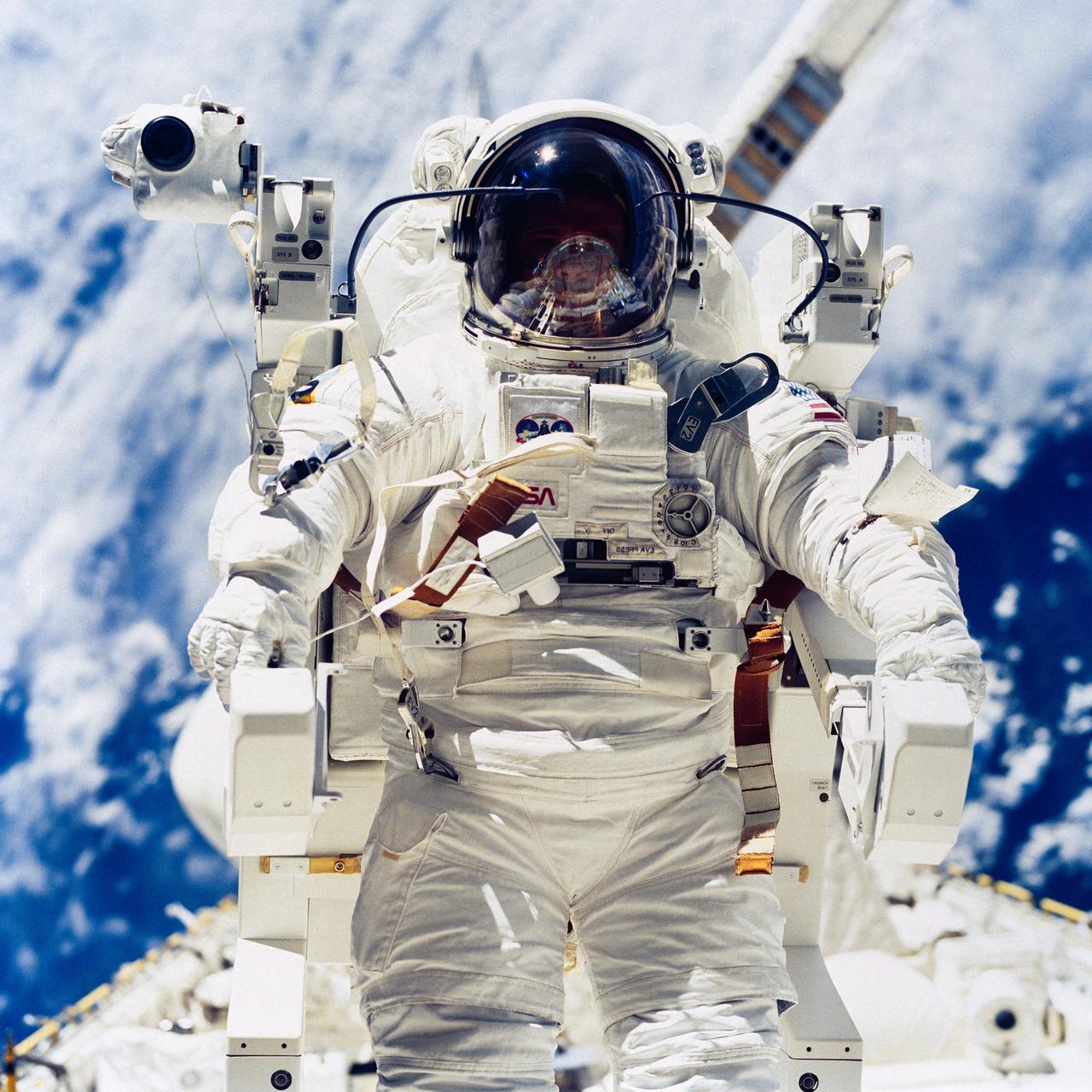
S84-27034A (9 Feb. 1984) --- Astronaut Robert L. Stewart appears to glide a few meters above the Earth-orbiting Space Shuttle Challenger's cargo bay during the second of two extravehicular activity (EVA) session on the Challenger's fourth flight in space. Astronauts Stewart and Bruce McCandless II, two of NASA's three mission specialists on flight STS-41B, earlier made another EVA, testing another manned maneuvering unit (MMU).
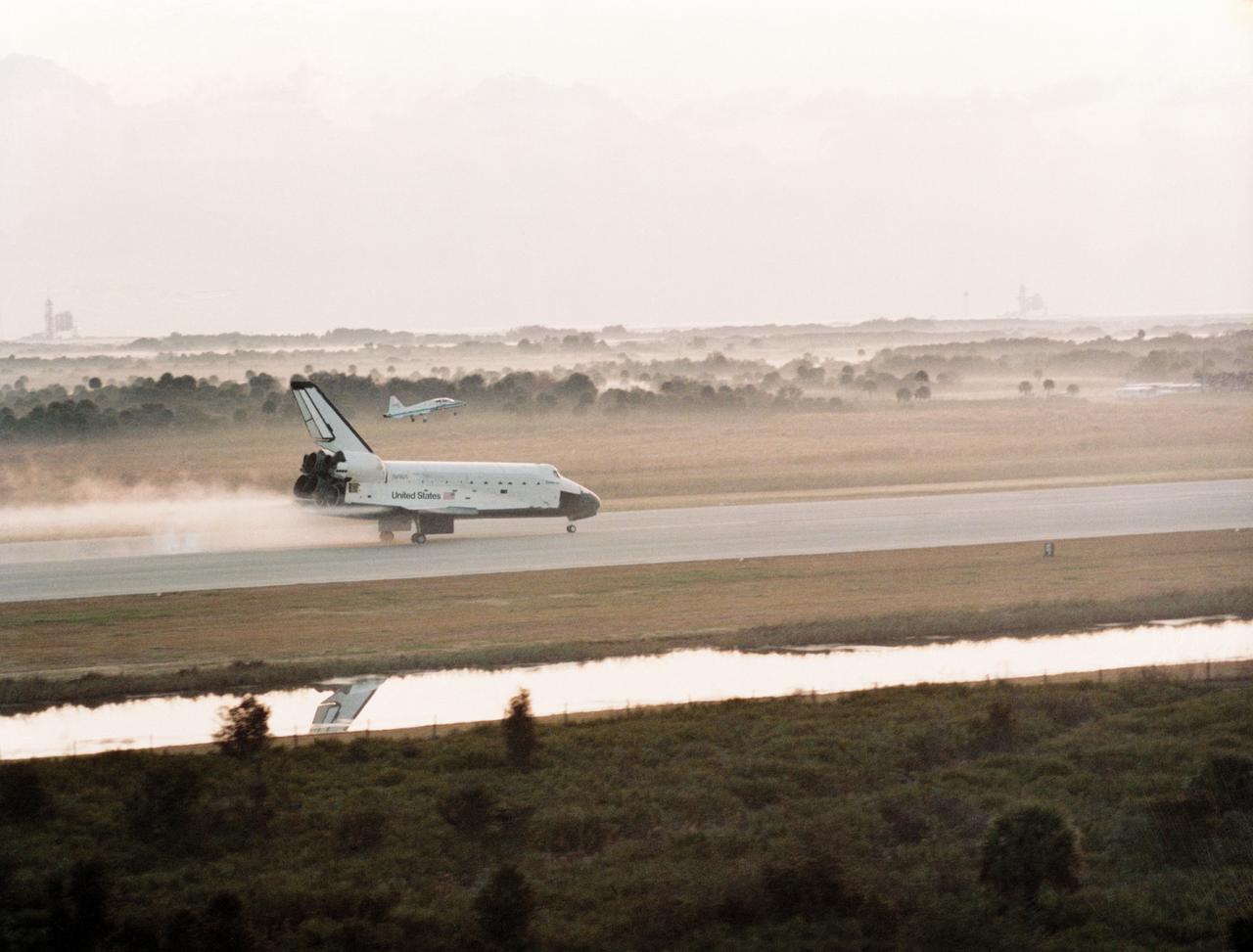
S84-27717 (11 Feb 1984) --- A chase plane gets a "front row" position to view the touchdown of the total landing gear of the Space Shuttle Challenger as the reusable spacecraft makes NASA's first landing on the runway at the Kennedy Space Center's (KSC) landing facility. This photograph was taken from another T-38 chase plane.
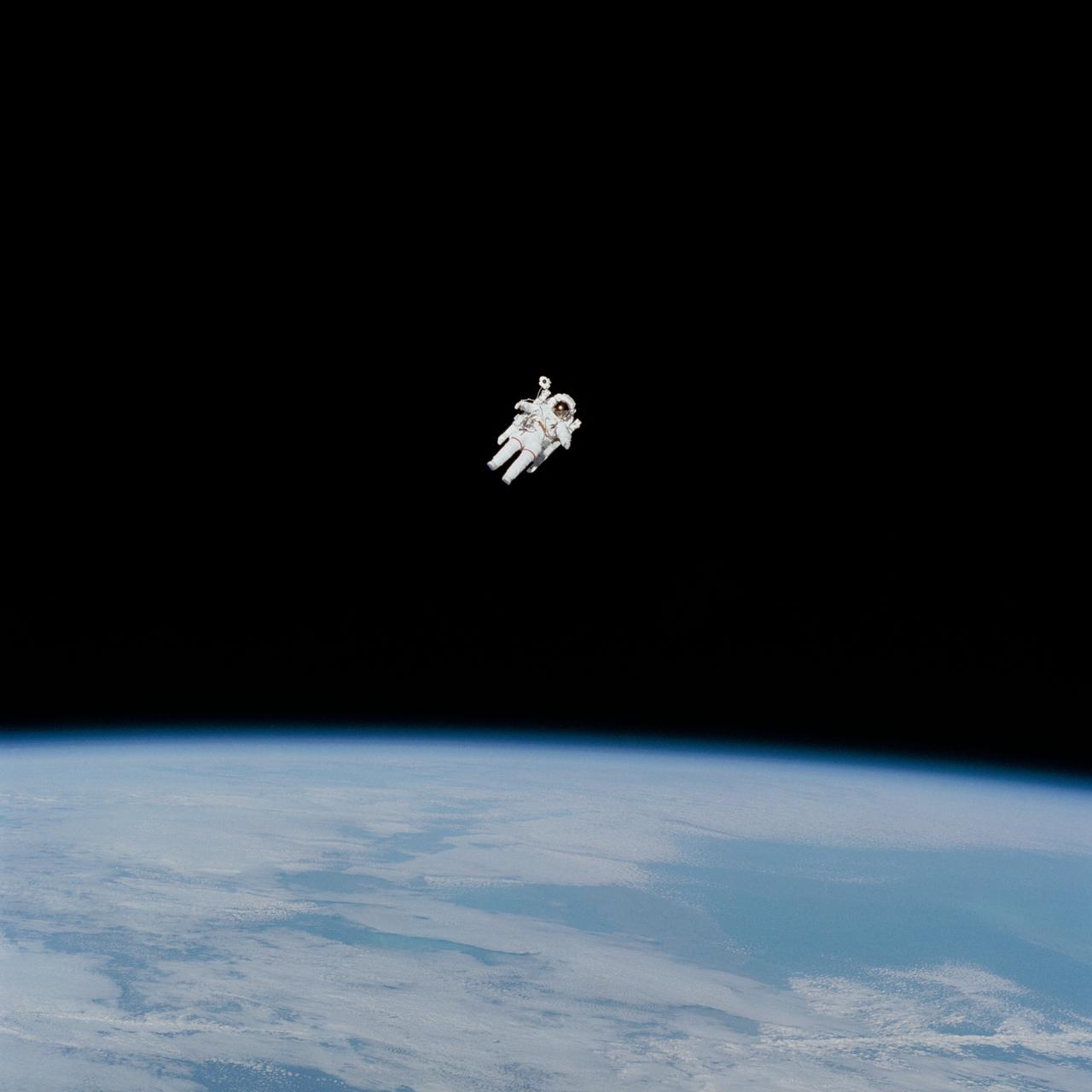
S84-27018 (7 Feb 1984) --- Astronaut Bruce McCandless II approaches his maximum distance from the Earth-orbiting Space Shuttle Challenger in this 70mm frame photographed by his fellow crewmembers onboard the reusable vehicle. McCandless is in the midst of the first "field" tryout of the nitrogen-propelled, hand-controlled back-pack device called the manned maneuvering unit (MMU). Astronaut Robert L. Stewart got a chance to test the same unit a while later in the lengthy EVA session while the two spacewalkers were photographed and monitored by their fellow crewmembers in Challenger's cabin. Those inside were Astronauts Vance D. Brand, Robert L. Gibson and Dr. Ronald E. McNair.
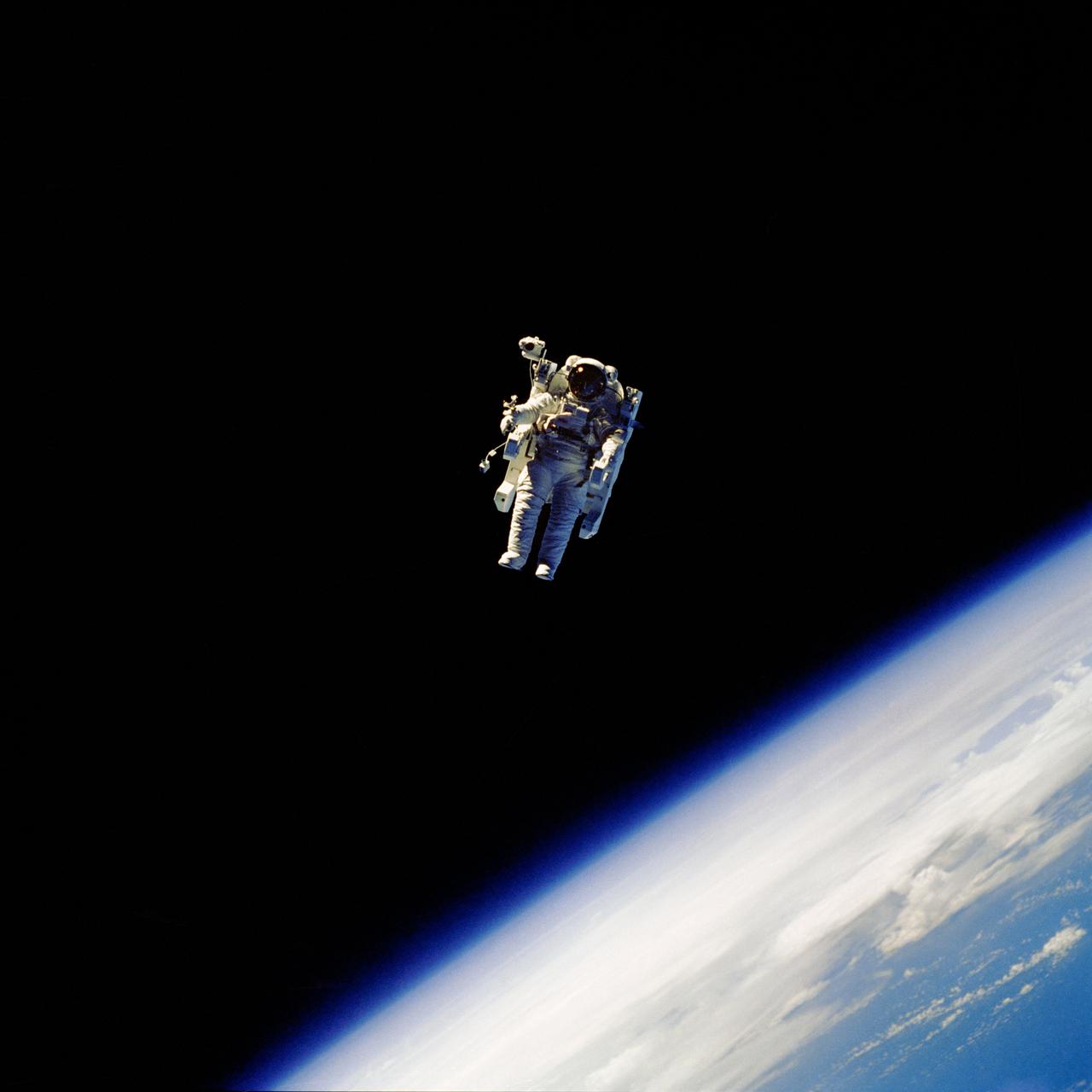
Astronaut Robert L. Stewart, Mission Specialist (MS), uses his hands to control his movement in space while using the nitrogen propelled Manned Maneuvering Unit (MMU). He is participating in a EVA, a few meters away from the cabin of the Shuttle Challenger. MS Stewart is centered in a background of clouds and Earth in this view of his EVA. He is floating without tethers attaching him to the Shuttle.
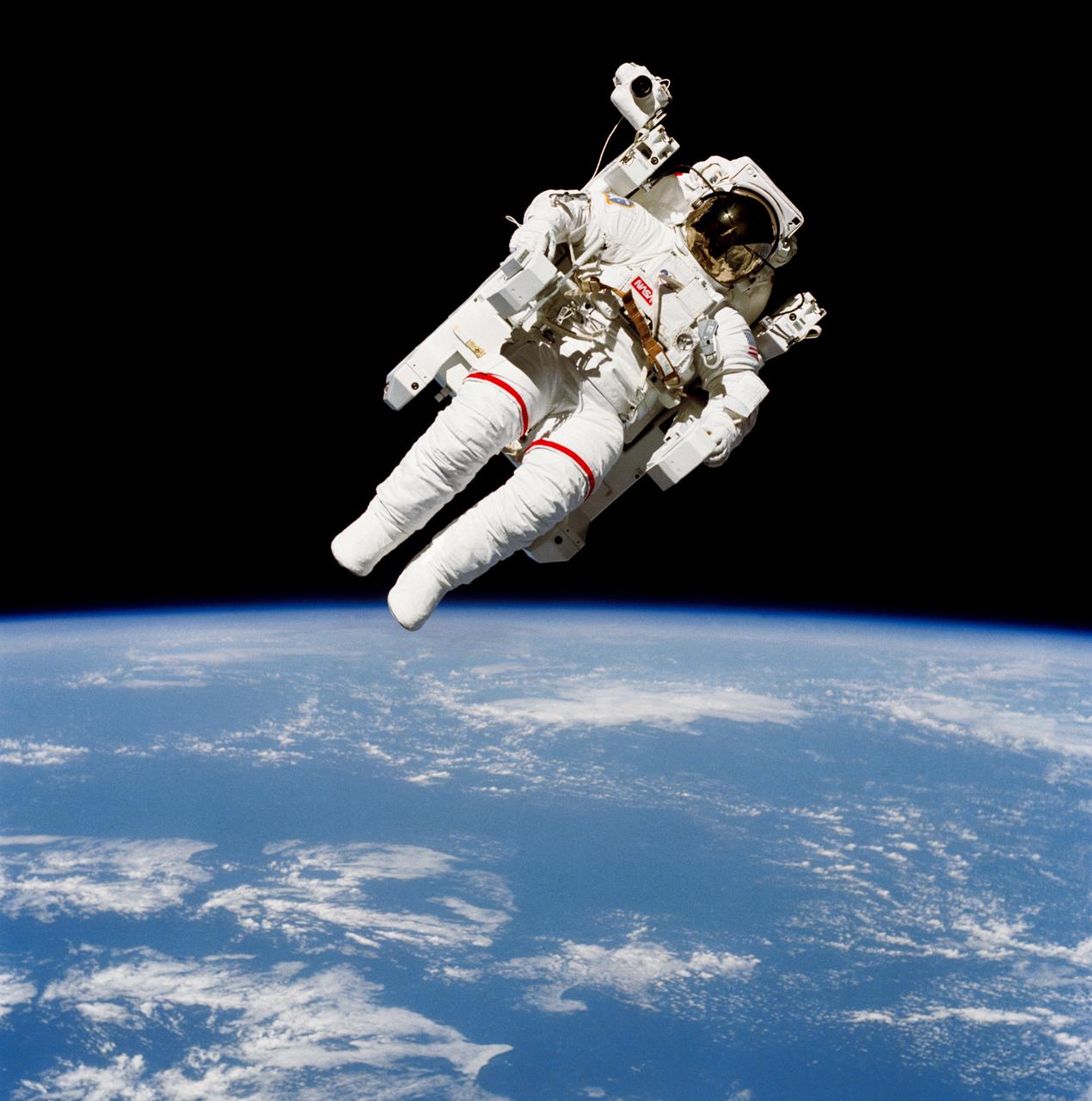
S84-27017 (7 Feb. 1984) --- Astronaut Bruce McCandless II, one of two 41-B mission specialist, participating in a historical Extravehicular Activity (EVA), is a few meters away from the cabin of the Earth-orbiting space shuttle Challenger in this 70mm frame. This EVA represented the first use of a nitrogen-propelled, hand-controlled device called the Manned Maneuvering Unit (MMU), which allows for much greater mobility than that afforded previous spacewalkers who had to use restrictive tethers. Robert L. Stewart, mission specialist, later tried out the MMU McCandless is using here. The two of them tested another similar unit two days later. Inside the spacecraft were astronauts Vance D. Brand, commander; Robert L. Gibson, pilot; and Ronald E. McNair, mission specialist. Photo credit: NASA
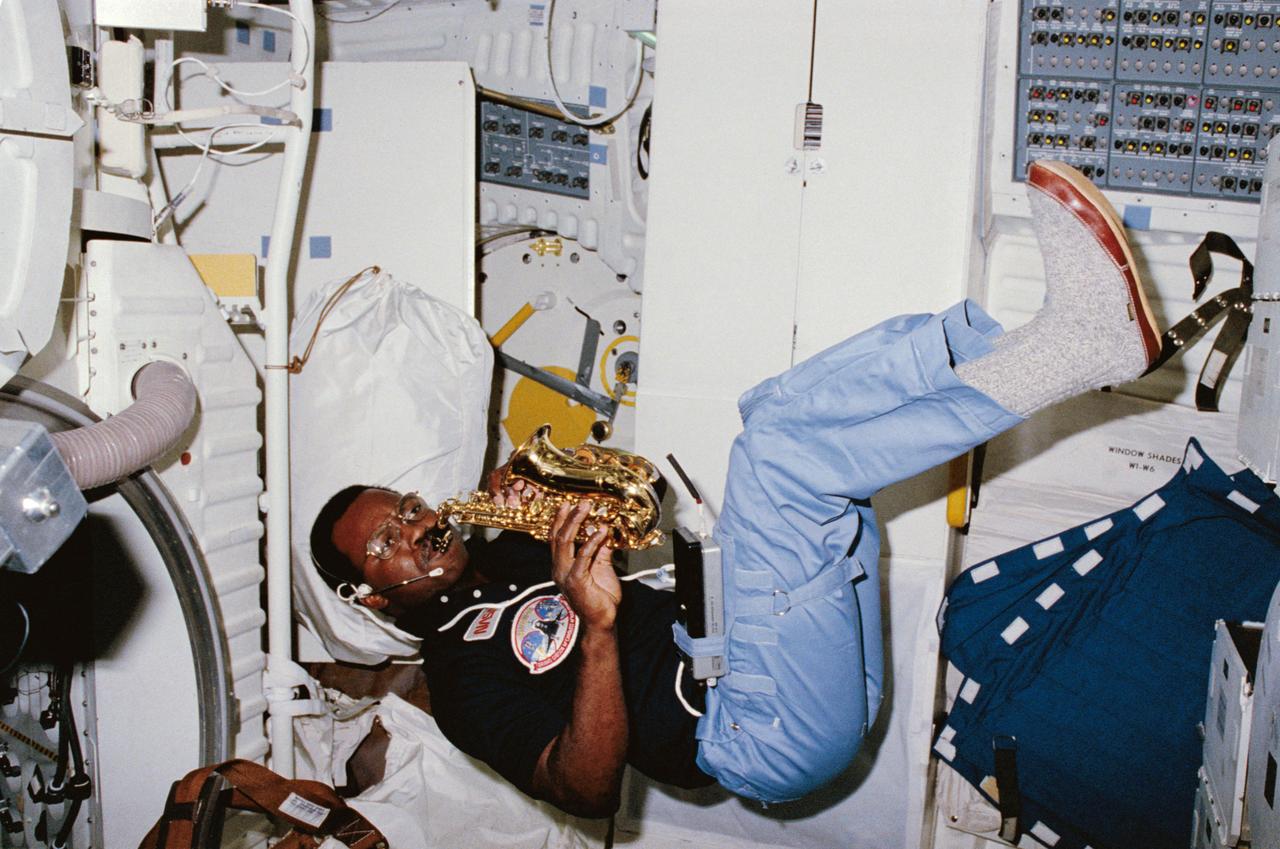
S84-27211 (8 Feb 1984) --- Astronaut Ronald E. McNair, 41-B mission specialist, uses some of his off-duty time, aboard the Space Shuttle Challenger, to play his saxaphone.

S84-27219 (3-11 Feb 1984) --- Astronaut Ronald E. McNair, 41-B mission specialist, doubles as "director" for a movie being "produced" aboard the Earth-orbiting Space Shuttle Challenger. McNair’s name tag ("Cecil B. McNair") and beret and slate are all humorous props for application of a serious piece of cargo on this eight day flight - the Cinema 360 camera. Two of the cameras were carried aboard the Challenger to provide a test for motion picture photography in a unique format designed especially for planetarium viewing. This camera was located in the crew cabin area and a second was stowed in a getaway special (GAS) canister in the payload bay. The other camera recorded extravehicular activity (EVA) of the flight’s other two mission specialists, Astronauts Bruce McCandless II and Robert L. Stewart.
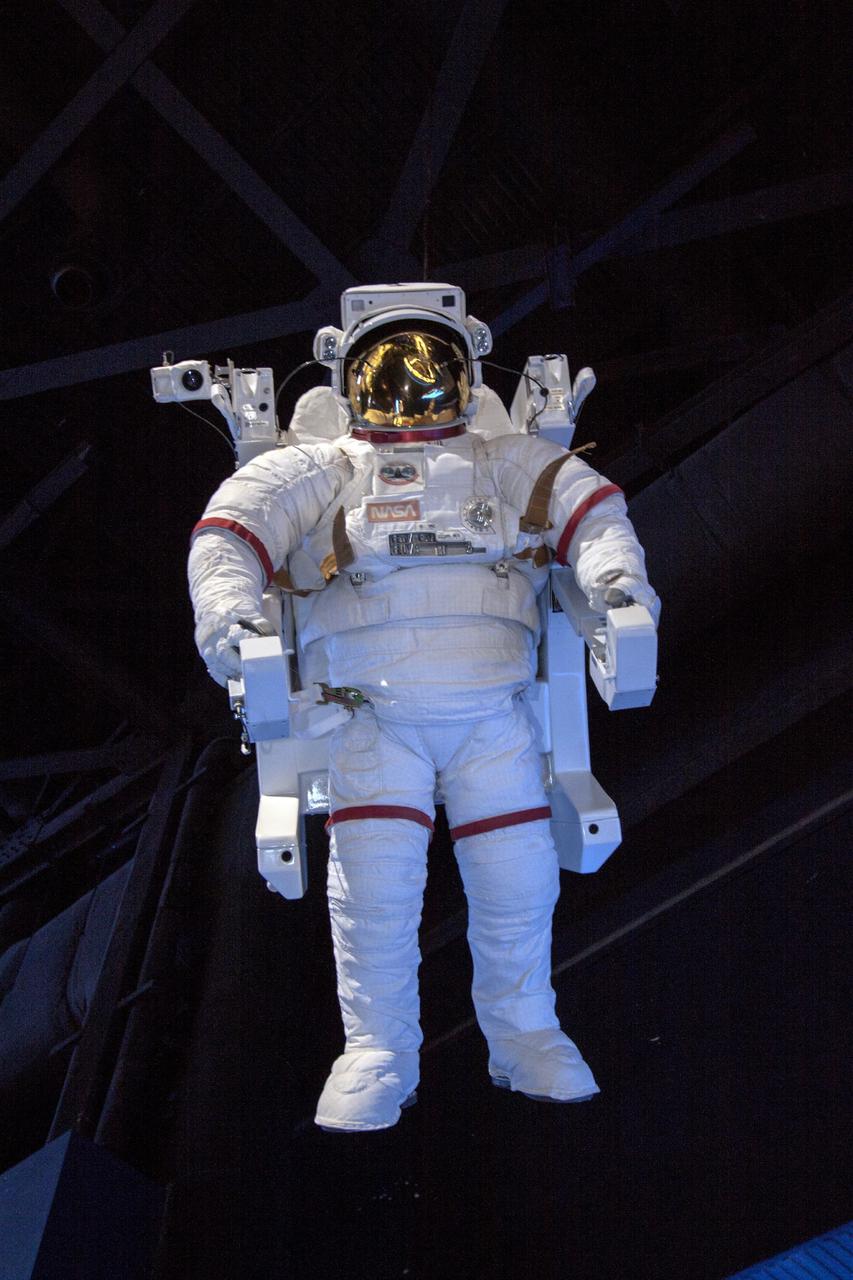
CAPE CANAVERAL, Fla. -- At the Kennedy Space Center Visitor Complex in Florida, a display inside the "Space Shuttle Atlantis" facility features an extravehicular activity mobility unit -- the space suit worn by spacewalking astronauts during the shuttle program. Attached to the back is a Manned Maneuvering Unit jet pack worn by astronauts during untethered spacewalks on STS-41B and STS-41C. The new $100 million facility will include interactive exhibits that tell the story of the 30-year Space Shuttle Program and highlight the future of space exploration. The "Space Shuttle Atlantis" exhibit is scheduled to open June 29, 2013.Photo credit: NASA/Jim Grossmann
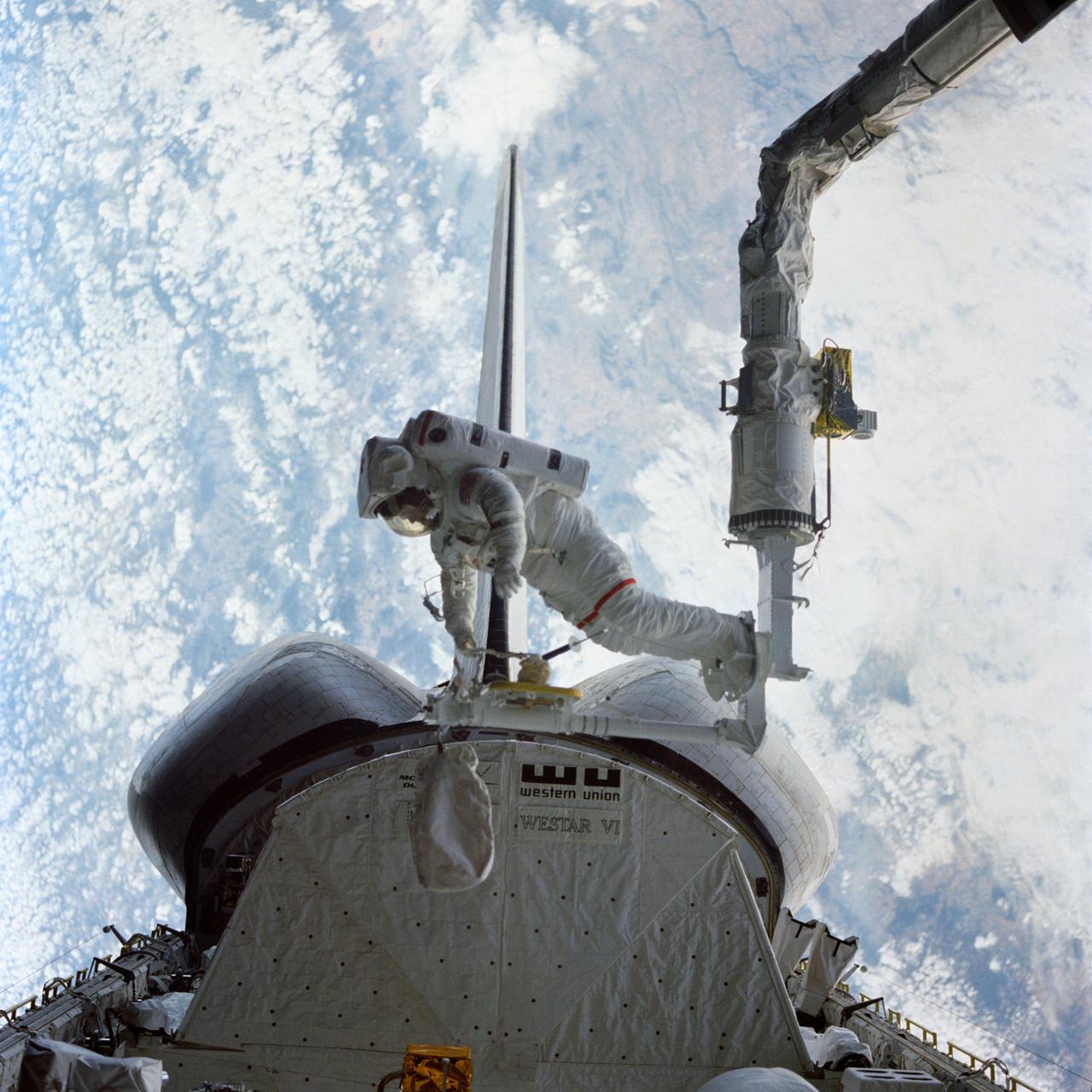
S84-27021 (7 Feb 1984) --- Astronaut Bruce McCandless II, 41B mission specialist tests a "cherry-picker" type device during February 7 historical Extravehicular Activity (EVA). The EVA, in which Astronauts McCandless and Robert L. Stewart, two of three STS-41B mission specialists, participated, marked two firsts--initial use of both the Mobile Foot Restraint (MFR) attached to the Remote Manipulator System (RMS) arm here, and the Manned Maneuvering Unit (MMU) backpack (not seen in this frame). The Challenger was flying with its aft end aimed toward the Earth. This photograph clearly shows where the MFR connects to the end effector of the Canadian-built RMS arm. The two spacewalkers were monitored and photographed by their fellow crewmembers, astronauts Vance D. Brand, commander; Robert L. Gibson, pilot; and Ronald E. McNair, mission specialist. The three remained in the cabin for another EVA session two days later. Photo Credit: NASA

CAPE CANAVERAL, Fla. -- The crew of 41B STS-11, the first spaceflight in history to begin and conclude a mission at the same site, leave the flight deck of orbiter Challenger to be greeted by George Abbey, director of Flight Crew Operations. In ascending order, the crew members are Vance Brand, mission commander mission Pilot Robert L.'Hoot' Gibson and Mission Specialists Robert L. Stewart, Ronald E. McNair and Bruce McCandless II. Challenger touched down at 7:15:55 a.m. EST on Feb. 11, rolling 10,700 feet before coming to a stop on the Kennedy Space Center's 15,000-foot-long runway. Photo credit: NASA
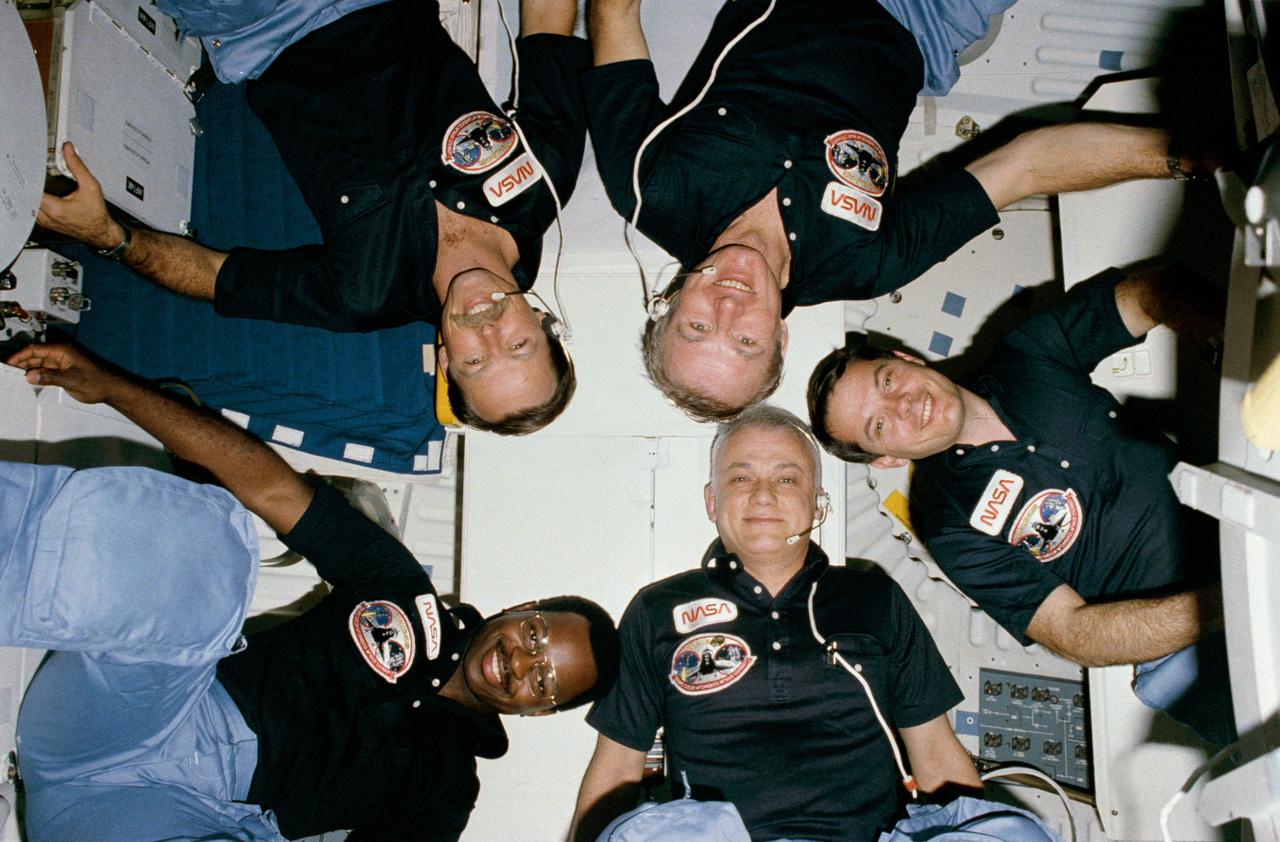
S84-27026 (3-11 Feb. 1984) --- The "star burst" type informal portrait of Space Shuttle crews has become somewhat of a tradition and the five-member STS-41B crew is no exception. HOLD PICTURE WITH SEMI-CIRCLE AT LOWER RIGHT CORNER. Counter clockwise from the lower left are Astronauts Vance D. Brand commander; Robert L. Gibson, pilot; and Dr. Ronald E. McNair; Bruce McCandless II and Robert L. Stewart, all mission specialists. The five are on the mid-deck of the Earth-orbiting Challenger. The "semi-circle" is actually part of the monodisperse latex reactor (MLR) experiment. A pre-set 35mm camera was triggered automatically to expose the frame.
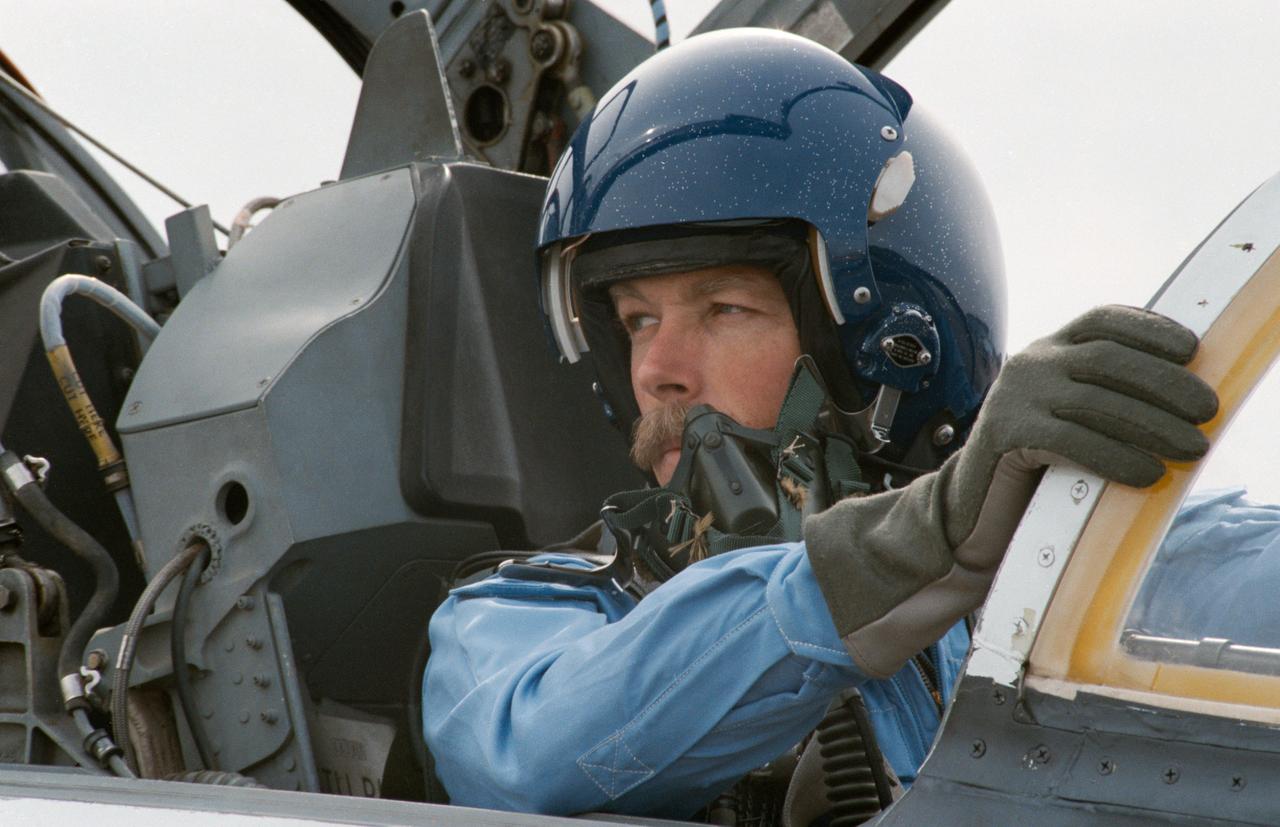
S84-26243 (31 Jan 1984) --- Astronaut Robert L. Gibson, one of five 41-B crewmembers, prepares to leave Houston?s Ellington Base in a T-38 jet aircraft en route to Florida and the Kennedy Space Center, site of February 3?s launch of the Challenger. Gibson, along with two other members of this crew, began training at JSC in July in 1978. He will be joined by Astronauts Vance D. Brand, commander; and Bruce McCandless II, Ronald E. McNair and Robert L. Stewart, all mission specialists. Brand and McCandless came aboard as NASA astronauts in April 1966.
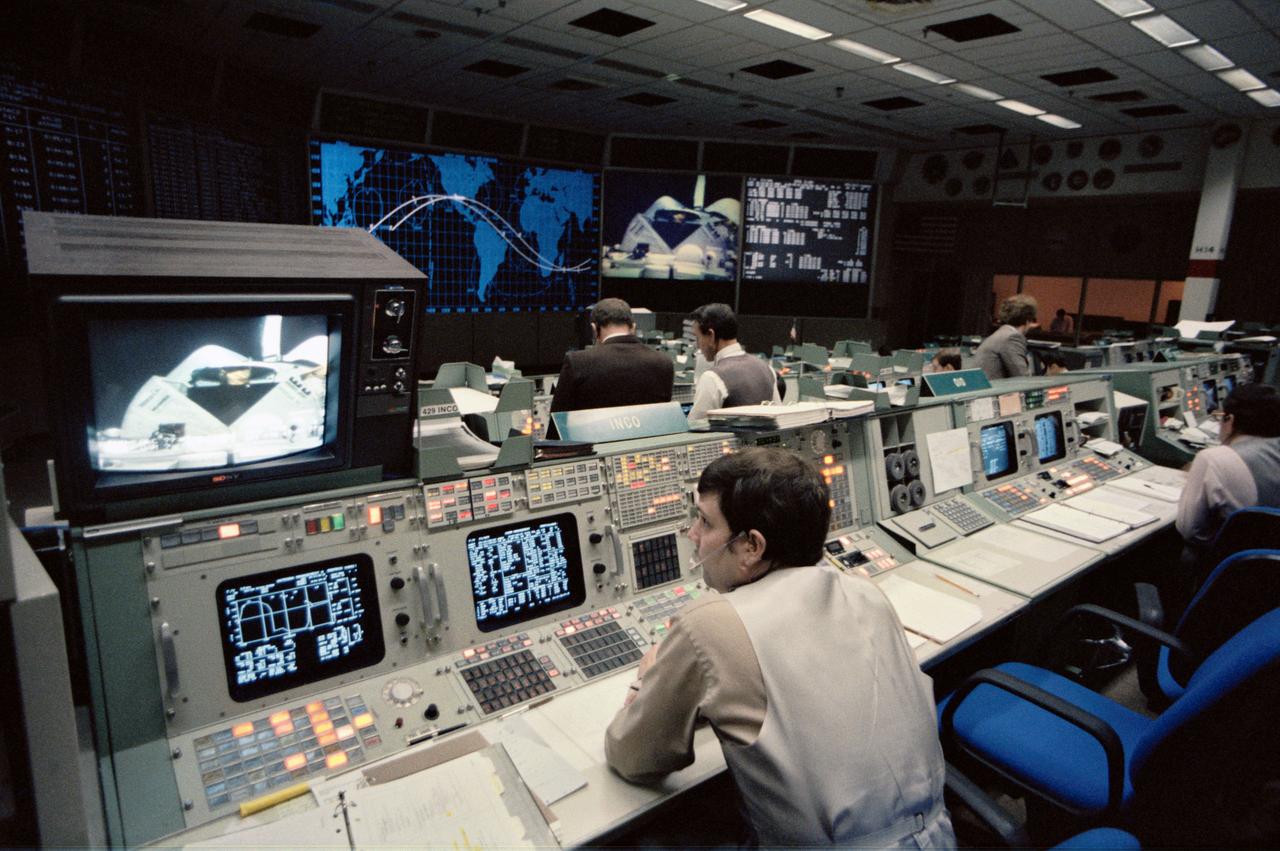
S84-26332 (3 Feb 1984) --- Robert E. Castle, integrated communications officer (INCO), plays an important role in the first television transmission from the Earth-orbiting Space Shuttle Challenger. Castle, at a console in the Johnson Space Center?s mission operations control room (MOCR) in the mission control center, is responsible for ground controlled television from the orbiter on his shift. Here, the Westar VI satellite is seen in the cargo bay just after opening of the payload bay doors.
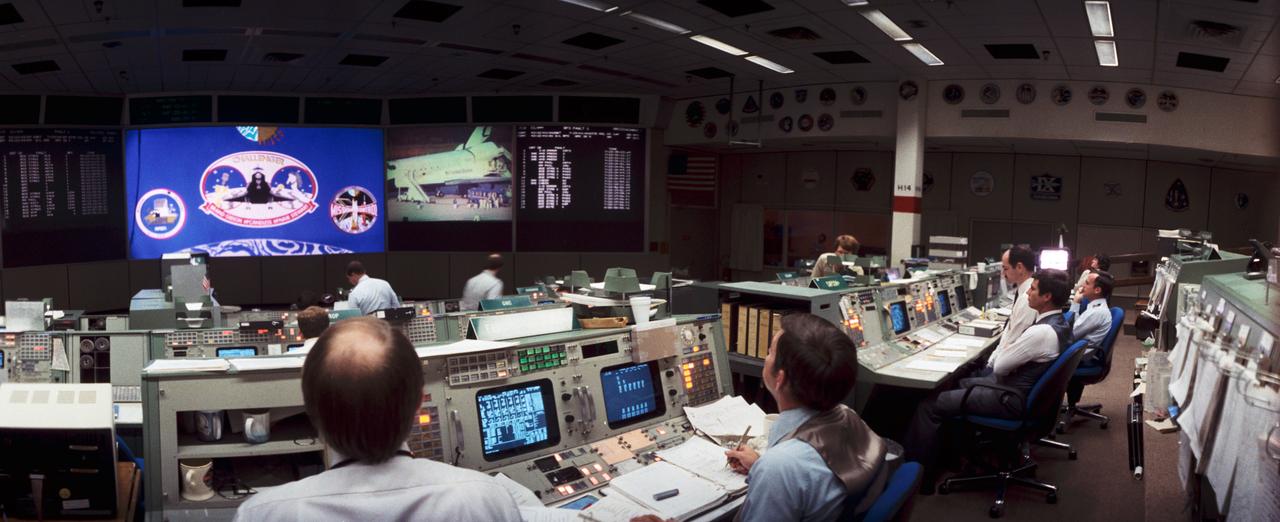
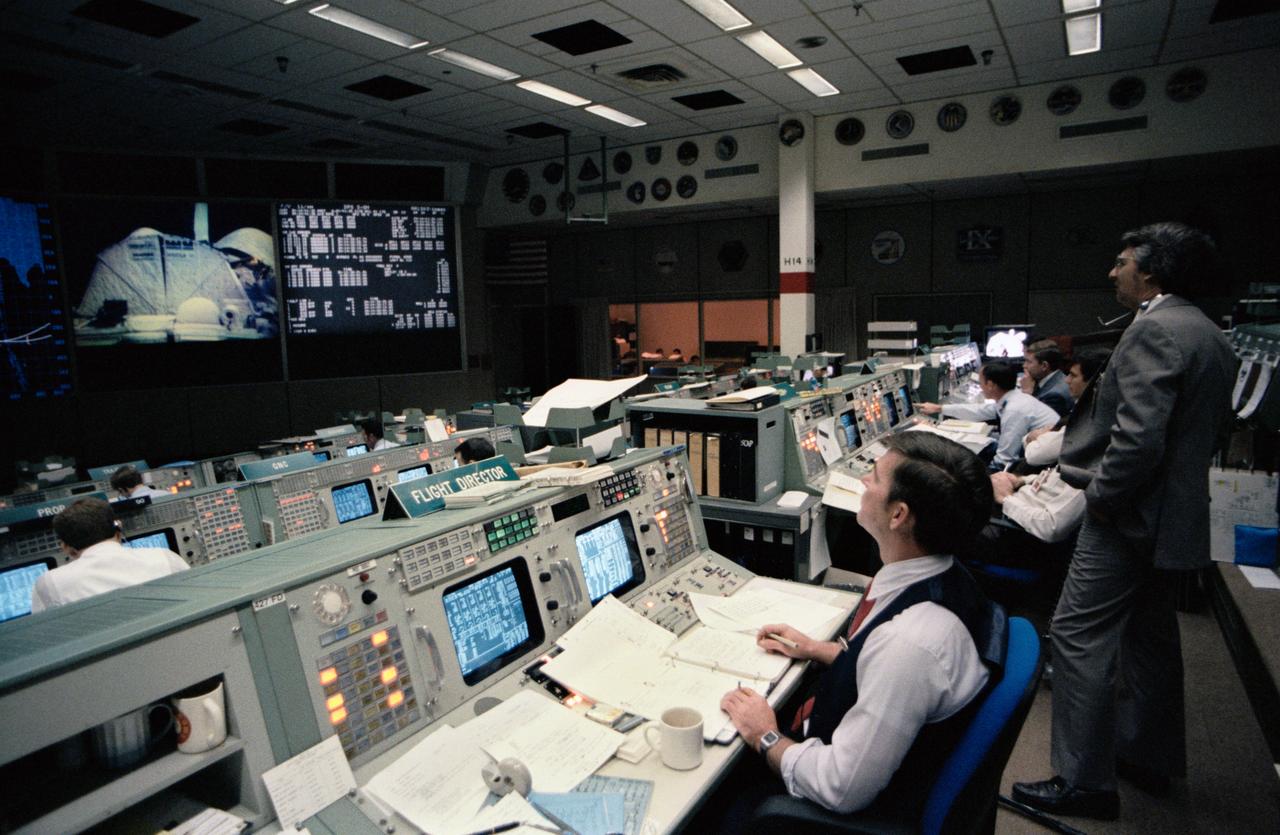
S84-26977 (11 Feb 1984) --- Flight Director Randy Stone, left, and Gary Coen, center foreground, watch a monitor in the front of the mission operations control room (MOCR) to stay attuned to post-landing activity at the KSC facility in Florida. MOCR is the Johnson Space Center?s mission control center. Astronauts John E. Blaha and Guy S. Gardner man the spacecraft communicator (CAPCOM) console in the background. The Space Shuttle Challenger, having just completed its fourth mission in earth orbit and weighing some 201,600 pounds, can be seen on the monitor.
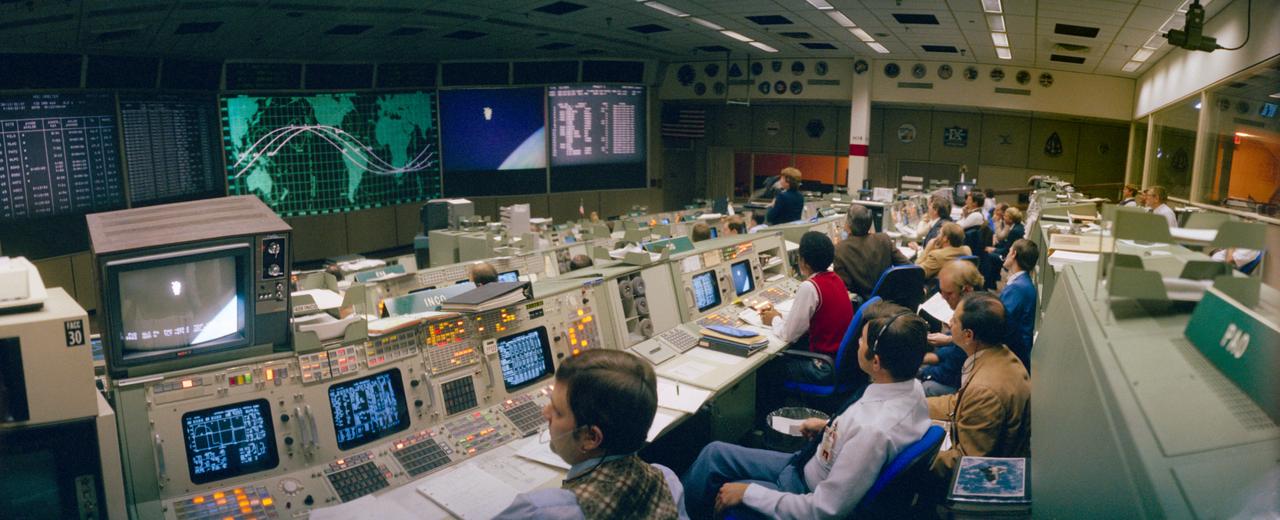
S84-26503 (7 Feb 1984) --- This wide angle, overall view of activity in the mission operations control room in the Johnson Space Center?s mission control center, was photographed during the first even non-tethered extravehicular activity (EVA) in space. The large MOCR monitor and those at individual consoles feed to ground controllers the spectacular scene of Astronaut Bruce McCandless II ?suspended? I space above the blue and white Earth. The scene was photographed at 7:30 a.m. (CST), February 7, 1984.
S84-26333 (6 Feb 1984) --- Robert E. Castle, integrated communications officer (INCO), is seated at the INCO console in the mission operations control room (MOCR) of Johnson Space Center's (JSC) mission control center (MCC). He is responsible for ground controlled television from the orbiter on his shift. On the screen at the front of the room the Westar VI satellite is seen in the cargo bay just after opening the payload bay doors.