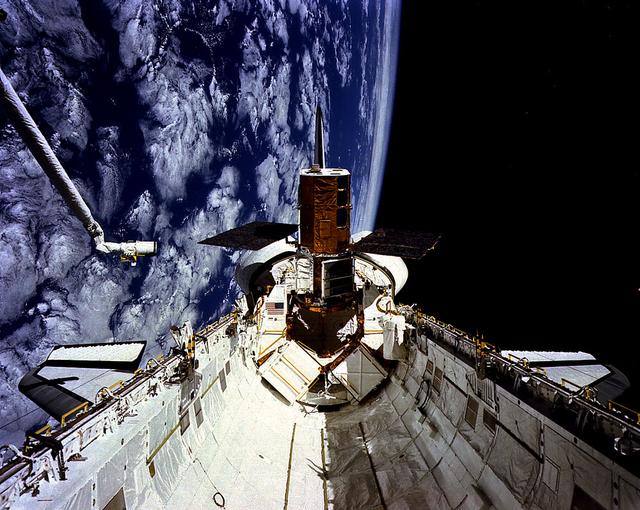
Space Shuttle mission STS-41C onboard view of the revived Solar Maximum Mission Satellite (SMMS). As part of the mission the crew demonstrated the capability of the shuttle to rendezvous, service, check-out and deploy an on-orbit satellite. Also as part of the redeployment, the SMMS was fitted with a Long Duration Exposure Facility (LDEF), which provides accommodations for experiments requiring long-term exposure to the space environment. the STS-41C mission was launched aboard the Space Shuttle Orbitor Challenger on April 6, 1984.
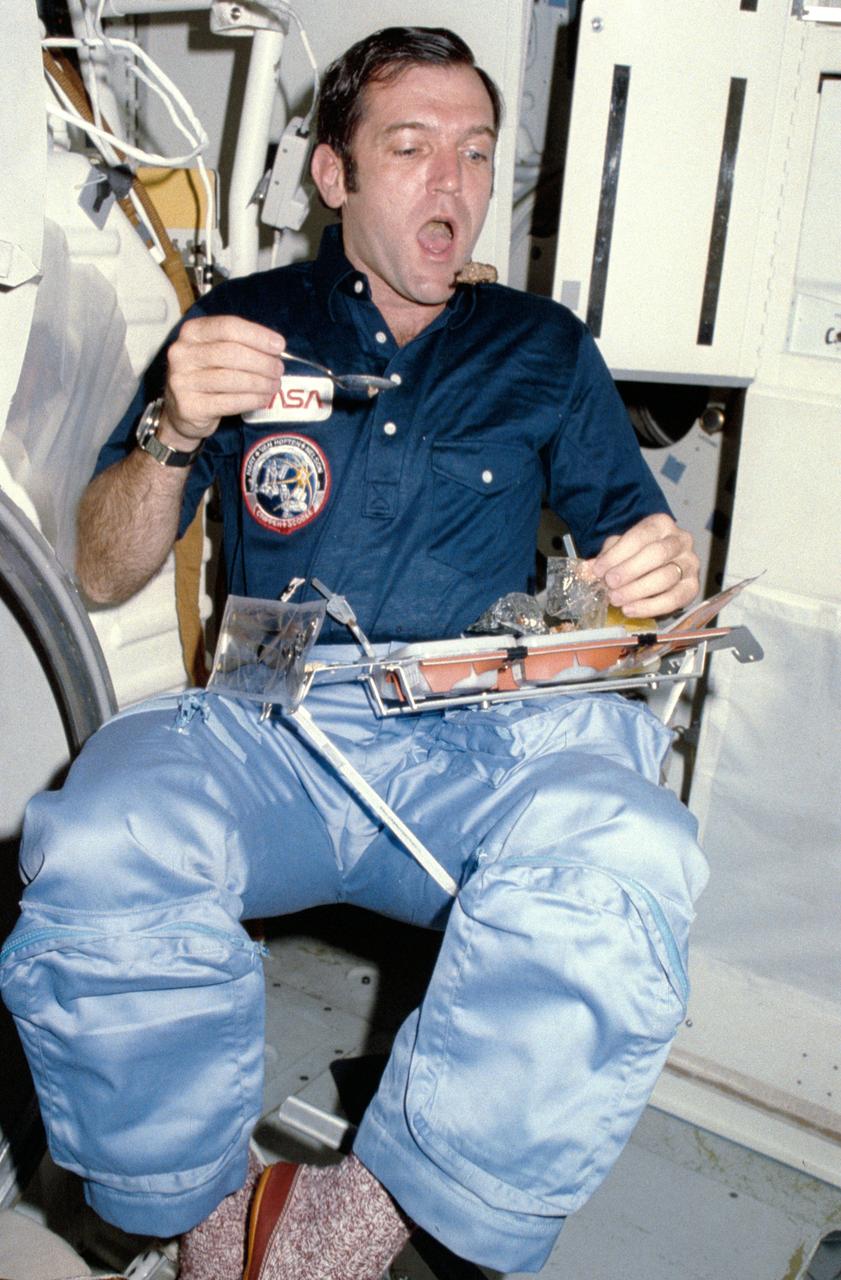
Candid views of the STS-41C crew preparing and eating food on the middeck include : Mission pilot Francis R. (Dick) Scobee goes bobbing for a morsel of food from his position on the middeck near the galley.
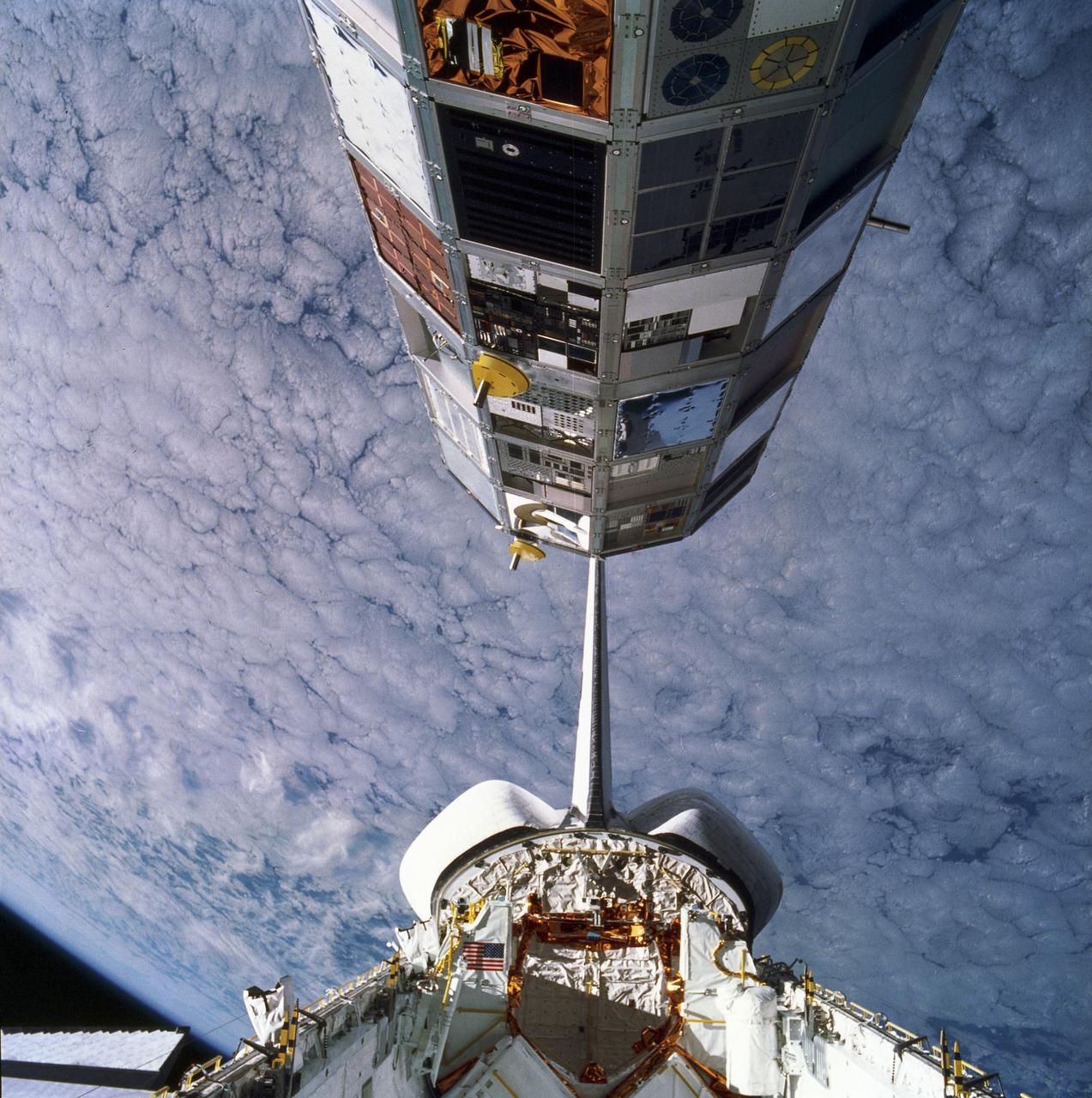
This is an onboard photo of the deployment of the Long Duration Exposure Facility (LDEF) from the cargo bay of the Space Shuttle Orbiter Challenger STS-41C mission, April 7, 1984. After a five year stay in space, the LDEF was retrieved during the STS-32 mission by the Space Shuttle Orbiter Columbia in January 1990 and was returned to Earth for close examination and analysis. The LDEF was designed by the Marshall Space Flight Center (MSFC) to test the performance of spacecraft materials, components, and systems that have been exposed to the environment of micrometeoroids, space debris, radiation particles, atomic oxygen, and solar radiation for an extended period of time. Proving invaluable to the development of both future spacecraft and the International Space Station (ISS), the LDEF carried 57 science and technology experiments, the work of more than 200 investigators, 33 private companies, 21 universities, 7 NASA centers, 9 Department of Defense laboratories, and 8 forein countries.
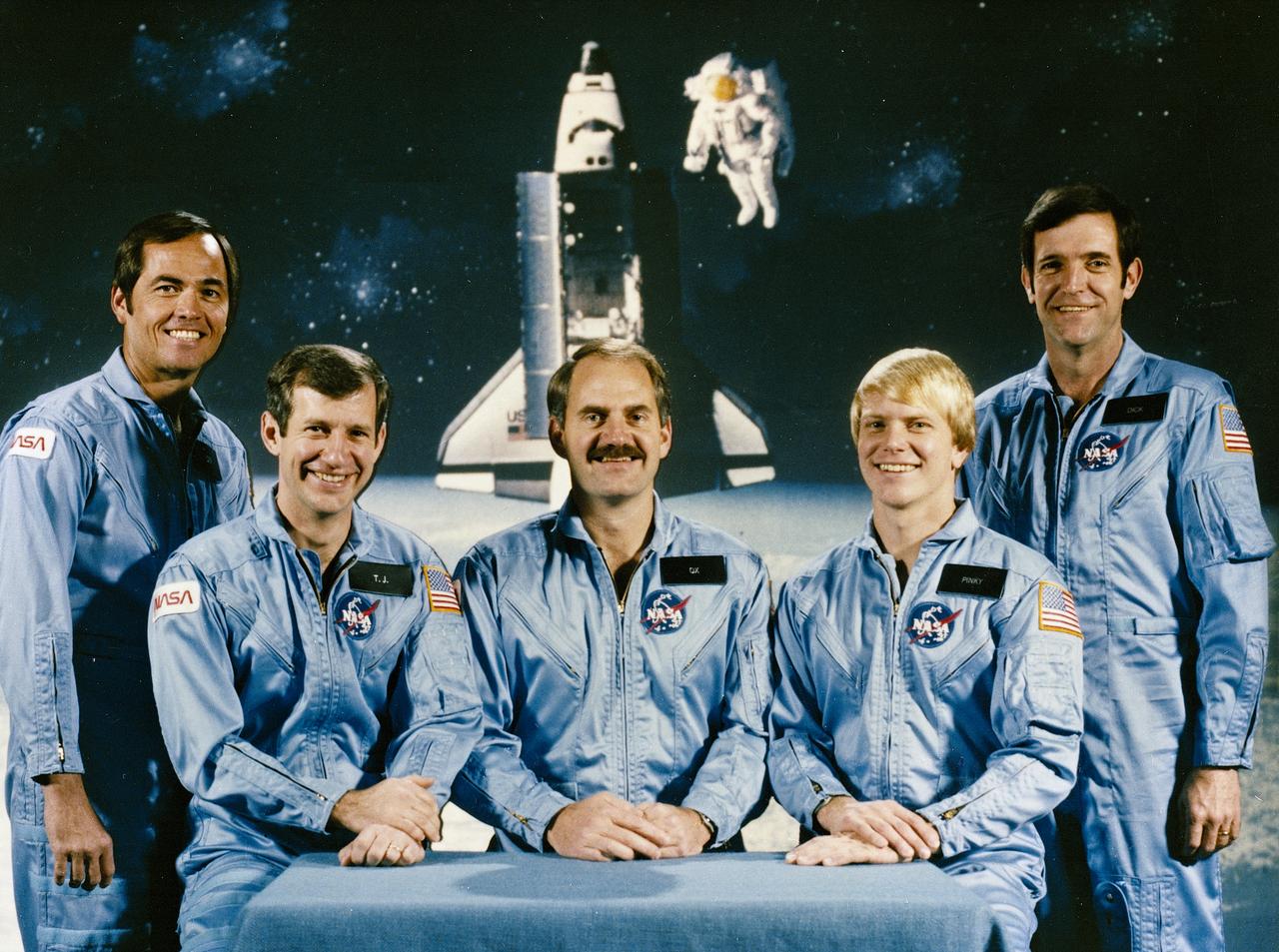
The crew assigned to the STS-41CB (STS-13) mission included (left to right) Robert L. Crippen, commander; Terry J. Hart, mission specialist; James D. Van-Hoften, mission specialist; George D. Nelson, mission specialist; and Francis R. (Dick) Scobee, pilot. Launched aboard the Space Shuttle Challenger on April 6, 1984 at 8:58:00 am (EST), the STS-41C mission marked the first direct ascent trajectory for the Space Shuttle. The crew deployed the Long Duration Exposure Facility (LDEF).
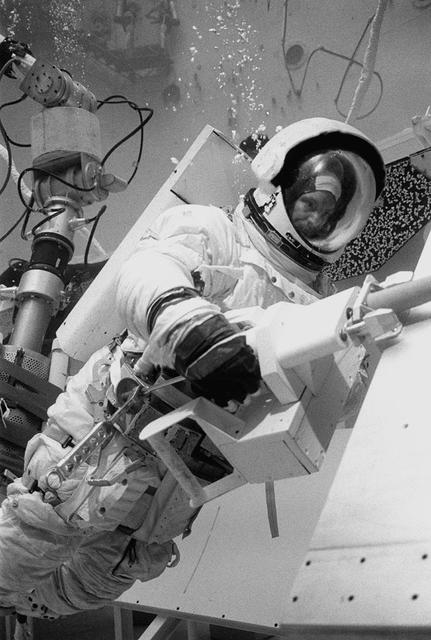
In February 1980, a satellite called Solar Maximum Mission Spacecraft, or Solar Max, was launched into Earth's orbit. Its primary objective was to provide a detailed study of solar flares, active regions on the Sun's surface, sunspots, and other solar activities. Additionally, it was to measure the total output of radiation from the Sun. Not much was known about solar activity at that time except for a slight knowledge of solar flares. After its launch, Solar Max fulfilled everyone's expectations. However, after a year in orbit, Solar Max's Altitude Control System malfunctioned, preventing the precise pointing of instruments at the Sun. NASA scientists were disappointed at the lost data, but not altogether dismayed because Solar Max had been designed for Space Shuttle retrievability enabling repair of the satellite. On April 6, 1984, Space Shuttle Challenger (STS-41C), Commanded by astronaut Robert L. Crippen and piloted by Francis R. Scobee, launched on a historic voyage. This voyage initiated a series of firsts for NASA; the first satellite retrieval, the first service use of a new space system called the Marned Maneuvering Unit (MMU), the first in-orbit repair, the first use of the Remote Manipulator System (RMS), and the Space Shuttle Challenger's first space flight. The mission was successful in retrieving Solar Max. Mission Specialist Dr. George D. Nelson, using the MMU, left the orbiter's cargo bay and rendezvoused with Solar Max. After attaching himself to the satellite, he awaited the orbiter to maneuver itself nearby. Using the RMS, Solar Max was captured and docked in the cargo bay while Dr. Nelson replaced the altitude control system and the coronagraph/polarimeter electronics box. After the repairs were completed, Solar Max was redeposited in orbit with the assistance of the RMS. Prior to the April 1984 launch, countless man-hours were spent preparing for this mission. The crew of Challenger spent months at Marshall Space Flight Center's (MSFC) Neutral Buoyancy Simulator (NBS) practicing retrieval maneuvers, piloting the MMU, and training on equipment so they could make the needed repairs to Solar Max. Pictured is Dr. Nelson performing a replacement task on the Solar Max mock-up in the NBS.
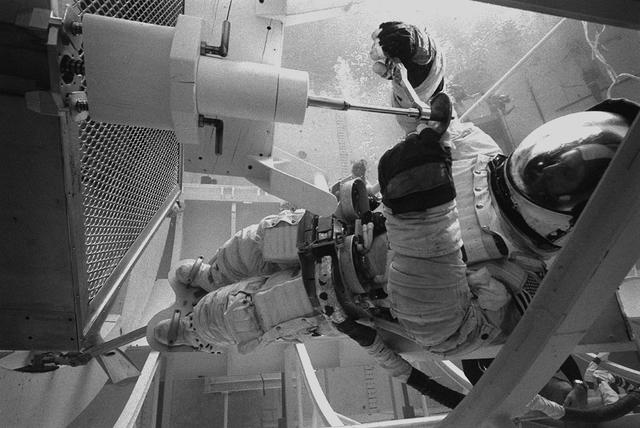
In February 1980, a satellite called Solar Maximum Mission Spacecraft, or Solar Max, was launched into Earth's orbit. Its primary objective was to provide a detailed study of solar flares,active regions on the Sun's surface, sunspots, and other solar activities. Additionally, it was to measure the total output of radiation from the Sun. Not much was known about solar activity at that time except for a slight knowledge of solar flares. After its launch, Solar Max fulfilled everyone's expectations. However, after a year in orbit, Solar Max's Altitude Control System malfunctioned, preventing the precise pointing of instruments at the Sun. NASA scientists were disappointed at the lost data, but not altogether dismayed because Solar Max had been designed for Space Shuttle retrievability enabling the repair of the satellite. On April 6, 1984, Space Shuttle Challenger (STS-41C), Commanded by astronaut Robert L. Crippen and piloted by Francis R. Scobee, launched on a historic voyage. This voyage initiated a series of firsts for NASA; the first satellite retrieval, the first service use of a new space system called the Marned Maneuvering Unit (MMU), the first in-orbit repair, the first use of the Remote Manipulator System (RMS), and the Space Shuttle Challenger's first space flight. The mission was successful in retrieving Solar Max. Mission Specialist Dr. George D. Nelson, using the MMU, left the orbiter's cargo bay and rendezvoused with Solar Max. After attaching himself to the satellite, he awaited the orbiter to maneuver itself nearby. Using the RMS, Solar Max was captured and docked in the cargo bay while Dr. Nelson replaced the altitude control system and the coronagraph/polarimeter electronics box. After the repairs were completed, Solar Max was redeposited in orbit with the assistance of the RMS. Prior to the April 1984 launch, countless man-hours were spent preparing for this mission. The crew of Challenger spent months at Marshall Space Flight Center's (MSFC) Neutral Buoyancy Simulator (NBS) practicing retrieval maneuvers, piloting the MMU, and training on equipment so they could make the needed repairs to Solar Max. Pictured is Dr. Nelson performing a replacement task on the Solar Max mock-up in the NBS.
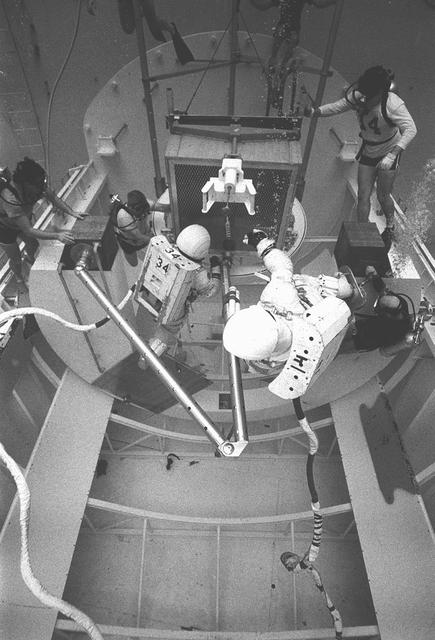
In February 1980, a satellite called Solar Maximum Mission Spacecraft, or Solar Max, was launched into Earth's orbit. Its primary objective was to provide a detailed study of solar flares, active regions on the Sun's surface, sunspots, and other solar activities. Additionally, it was to measure the total output of radiation from the Sun. Not much was known about solar activity at that time except for a slight knowledge of solar flares. After its launch, Solar Max fulfilled everyone's expectations. However, after a year in orbit, Solar Max's Altitude Control System malfunctioned, preventing the precise pointing of instruments at the Sun. NASA scientists were disappointed at the lost data, but not altogether dismayed because Solar Max had been designed for Space Shuttle retrievability enabling the repair of the satellite. On April 6, 1984, Space Shuttle Challenger (STS-41C), Commanded by astronaut Robert L. Crippen and piloted by Francis R. Scobee, launched on a historic voyage. This voyage initiated a series of firsts for NASA; the first satellite retrieval, the first service use of a new space system called the Marned Maneuvering Unit (MMU), the first in-orbit repair, the first use of the Remote Manipulator System (RMS), and the Space Shuttle Challenger's first space flight. The mission was successful in retrieving Solar Max. Mission Specialist Dr. George D. Nelson, using the MMU, left the orbiter's cargo bay and rendezvoused with Solar Max. After attaching himself to the satellite, he awaited the orbiter to maneuver itself nearby. Using the RMS, Solar Max was captured and docked in the cargo bay while Dr. Nelson replaced the altitude control system and the coronagraph/polarimeter electronics box. After the repairs were completed, Solar Max was redeposited in orbit with the assistance of the RMS. Prior to the April 1984 launch, countless man-hours were spent preparing for this mission. The crew of Challenger spent months at Marshall Space Flight Center's (MSFC) Neutral Buoyancy Simulator (NBS) practicing retrieval maneuvers, piloting the MMU, and training on equipment so they could make the needed repairs to Solar Max. Pictured are crew members training on repair tasks.
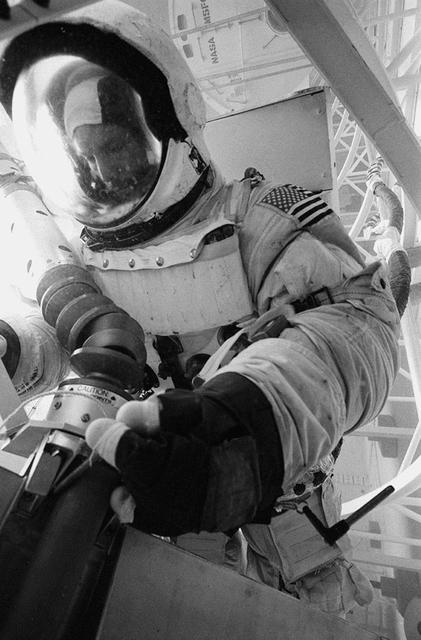
In February 1980, a satellite called Solar Maximum Mission Spacecraft, or Solar Max, was launched into Earth's orbit. Its primary objective was to provide a detailed study of solar flares,active regions on the Sun's surface, sunspots, and other solar activities. Additionally, it was to measure the total output of radiation from the Sun. Not much was known about solar activity at that time except for a slight knowledge of solar flares. After its launch, Solar Max fulfilled everyone's expectations. However, after a year in orbit, Solar Max's Altitude Control System malfunctioned, preventing the precise pointing of instruments at the Sun. NASA scientists were disappointed at the lost data, but not altogether dismayed because Solar Max had been designed for Space Shuttle retrievability, enabling repair to the satellite. On April 6, 1984, Space Shuttle Challenger (STS-41C), Commanded by astronaut Robert L. Crippen and piloted by Francis R. Scobee, launched on a historic voyage. This voyage initiated a series of firsts for NASA; the first satellite retrieval, the first service use of a new space system called the Marned Maneuvering Unit (MMU), the first in-orbit repair, the first use of the Remote Manipulator System (RMS), and the Space Shuttle Challenger's first space flight. The mission was successful in retrieving Solar Max. Mission Specialist Dr. George D. Nelson, using the MMU, left the orbiter's cargo bay and rendezvoused with Solar Max. After attaching himself to the satellite, he awaited the orbiter to maneuver itself nearby. Using the RMS, Solar Max was captured and docked in the cargo bay while Dr. Nelson replaced the altitude control system and the coronagraph/polarimeter electronics box. After the repairs were completed, Solar Max was redeposited in orbit with the assistance of the RMS. Prior to the April 1984 launch, countless man-hours were spent preparing for this mission. The crew of Challenger spent months at Marshall Space Flight Center's (MSFC) Neutral Buoyancy Simulator (NBS) practicing retrieval maneuvers, piloting the MMU, and training on equipment so they could make the needed repairs to Solar Max. Pictured is Dr. Nelson performing a replacement task on the Solar Max mock-up in the NBS.
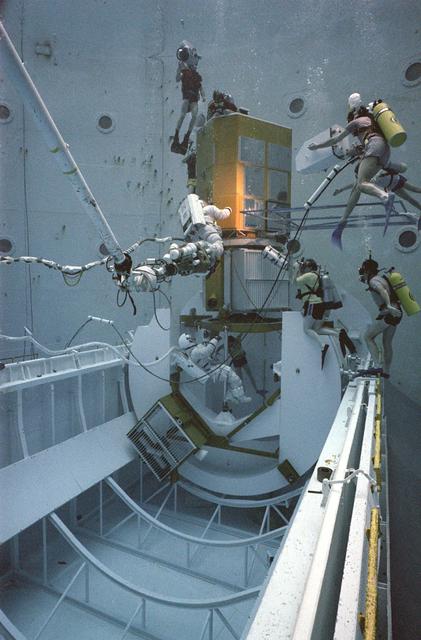
In February 1980, a satellite called Solar Maximum Mission Spacecraft, or Solar Max, was launched into Earth's orbit. Its primary objective was to provide a detailed study of solar flares, active regions on the Sun's surface, sunspots, and other solar activities. Additionally, it was to measure the total output of radiation from the Sun. Not much was known about solar activity at that time except for a slight knowledge of solar flares. After its launch, Solar Max fulfilled everyone's expectations. However, after a year in orbit, Solar Max's Altitude Control System malfunctioned, preventing the precise pointing of instruments at the Sun. NASA scientists were disappointed at the lost data, but not altogether dismayed because Solar Max had been designed for Space Shuttle retrievability enabling the repair of the satellite. On April 6, 1984, Space Shuttle Challenger (STS-41C), Commanded by astronaut Robert L. Crippen and piloted by Francis R. Scobee, launched on a historic voyage. This voyage initiated a series of firsts for NASA; the first satellite retrieval, the first service use of a new space system called the Marned Maneuvering Unit (MMU), the first in-orbit repair, the first use of the Remote Manipulator System (RMS), and the Space Shuttle Challenger's first space flight. The mission was successful in retrieving Solar Max. Mission Specialist Dr. George D. Nelson, using the MMU, left the orbiter's cargo bay and rendezvoused with Solar Max. After attaching himself to the satellite, he awaited the orbiter to maneuver itself nearby. Using the RMS, Solar Max was captured and docked in the cargo bay while Dr. Nelson replaced the altitude control system and the coronagraph/polarimeter electronics box. After the repairs were completed, Solar Max was redeposited in orbit with the assistance of the RMS. Prior to the April 1984 launch, countless man-hours were spent preparing for this mission. The crew of Challenger spent months at Marshall Space Flight Center's (MSFC) Neutral Buoyancy Simulator (NBS) practicing retrieval maneuvers, piloting the MMU, and training on equipment so they could make the needed repairs to Solar Max. Pictured are crew members training for repair tasks.
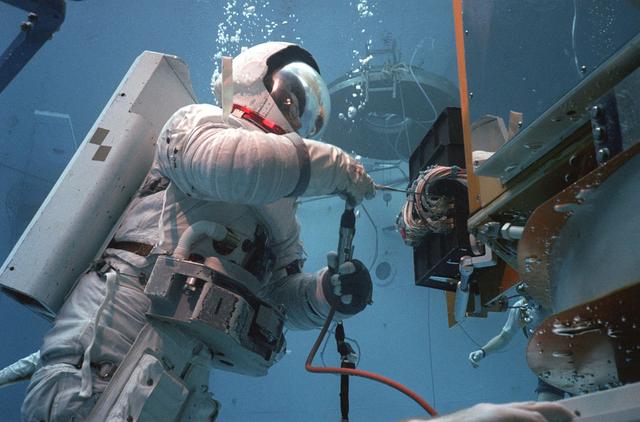
In February 1980, a satellite called Solar Maximum Mission Spacecraft, or Solar Max, was launched into Earth's orbit. Its primary objective was to provide a detailed study of solar flares, active regions on the Sun's surface, sunspots, and other solar activities. Additionally, it was to measure the total output of radiation from the Sun. Not much was known about solar activity at that time except for a slight knowledge of solar flares. After its launch, Solar Max fulfilled everyone's expectations. However, after a year in orbit, Solar Max's Altitude Control System malfunctioned, preventing the precise pointing of instruments at the Sun. NASA scientists were disappointed at the lost data, but not altogether dismayed because Solar Max had been designed for Space Shuttle retrievability enabling the repair of the satellite. On April 6, 1984, Space Shuttle Challenger (STS-41C), Commanded by astronaut Robert L. Crippen and piloted by Francis R. Scobee, launched on a historic voyage. This voyage initiated a series of firsts for NASA; the first satellite retrieval, the first service use of a new space system called the Marned Maneuvering Unit (MMU), the first in-orbit repair, the first use of the Remote Manipulator System (RMS), and the Space Shuttle Challenger's first space flight. The mission was successful in retrieving Solar Max. Mission Specialist Dr. George D. Nelson, using the MMU, left the orbiter's cargo bay and rendezvoused with Solar Max. After attaching himself to the satellite, he awaited the orbiter to maneuver itself nearby. Using the RMS, Solar Max was captured and docked in the cargo bay while Dr. Nelson replaced the altitude control system and the coronagraph/polarimeter electronics box. After the repairs were completed, Solar Max was redeposited in orbit with the assistance of the RMS. Prior to the April 1984 launch, countless man-hours were spent preparing for this mission. The crew of Challenger spent months at Marshall Space Flight Center's (MSFC) Neutral Buoyancy Simulator (NBS) practicing retrieval maneuvers, piloting the MMU, and training on equipment so they could make the needed repairs to Solar Max. Pictured is Dr. Nelson performing a replacement task on the Solar Max mock-up in the NBS.

Transferring the Long Duration Exposure Facility (LDEF) into Canister 1 for STS-41C, March 6, 1984
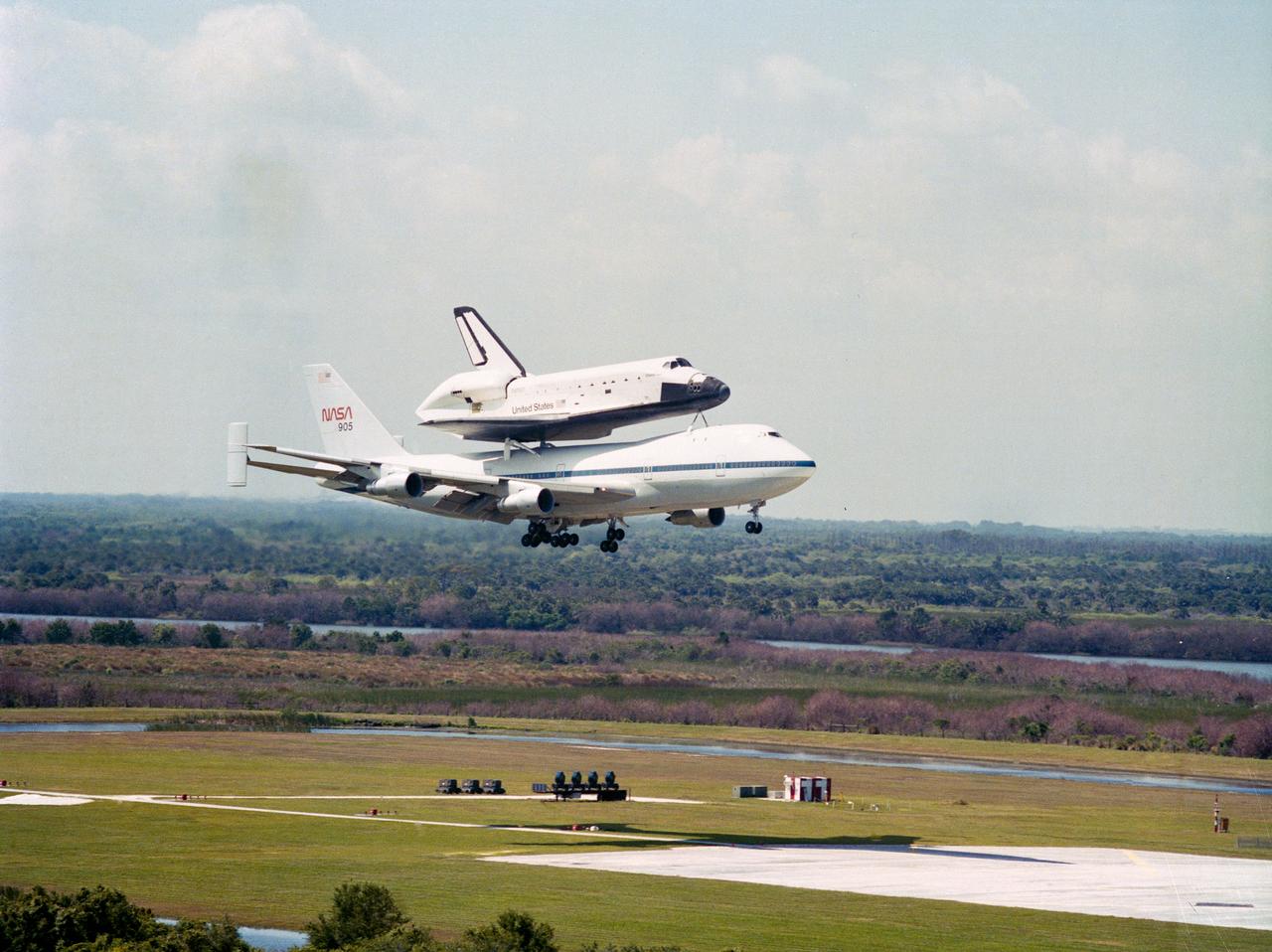
S84-33083 (18 April 1984) --- The Space Shuttle Challenger, atop NASA 905, approaches the runway at Kennedy Space Center following a flight from Edwards Air Force Base in southern California. Less than two weeks earlier the Challenger, mated to two solid rocket boosters and an external fuel tank, launched into space from a nearby launch pad for a week-long stay in space.
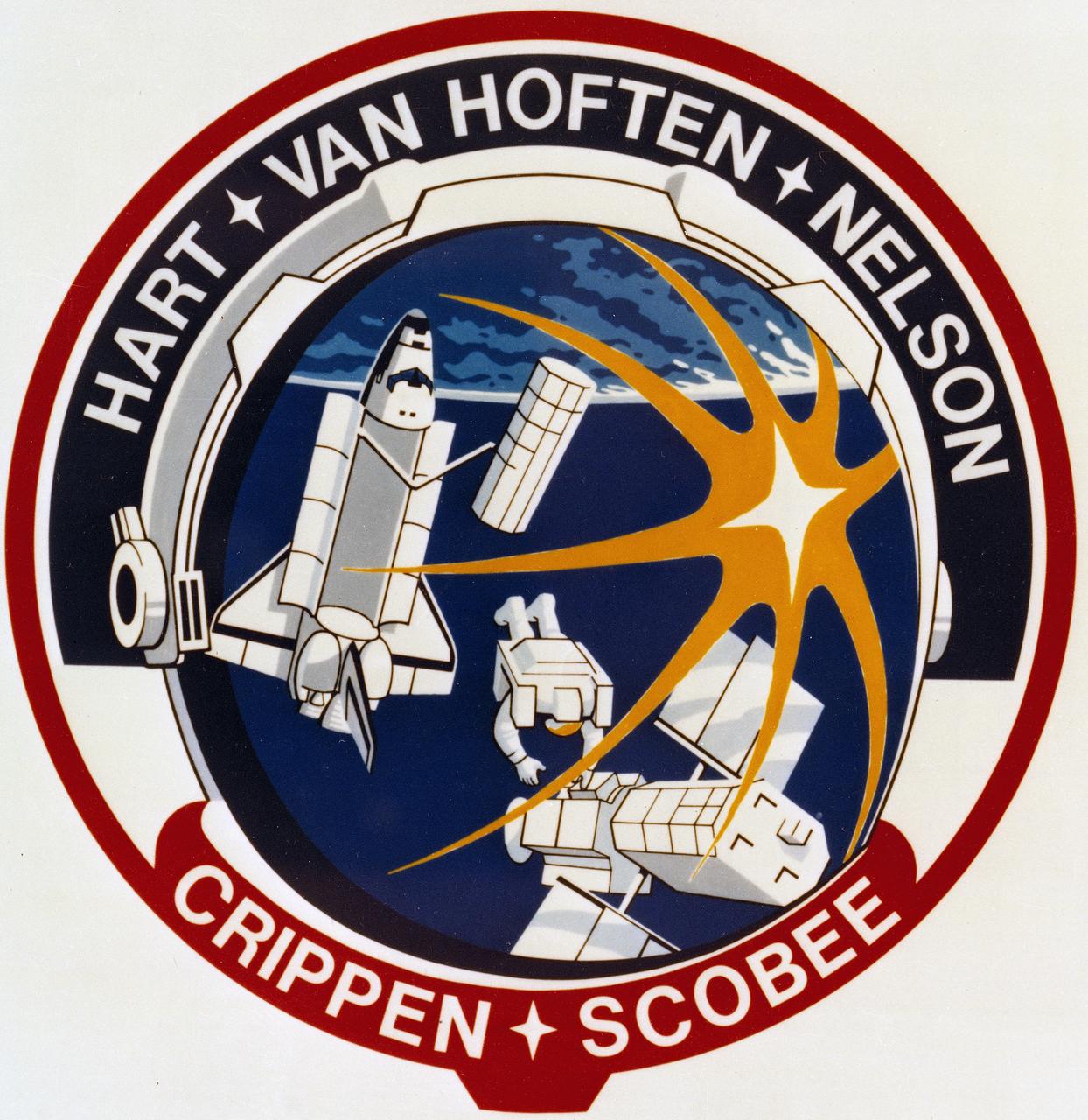
The patch features a helmet visor of an astronaut performing an extravehicular activity. In the visor are reflected the sun's rays, the Challenger and its remote manipulator system (RMS) deploying the long duration exposure facility (LDEF), the Earth and blue sky, and another astronaut working at the damaged Solar Maximum Satellite (SMS). The scene is encircled by the surnames of the crewmembers.
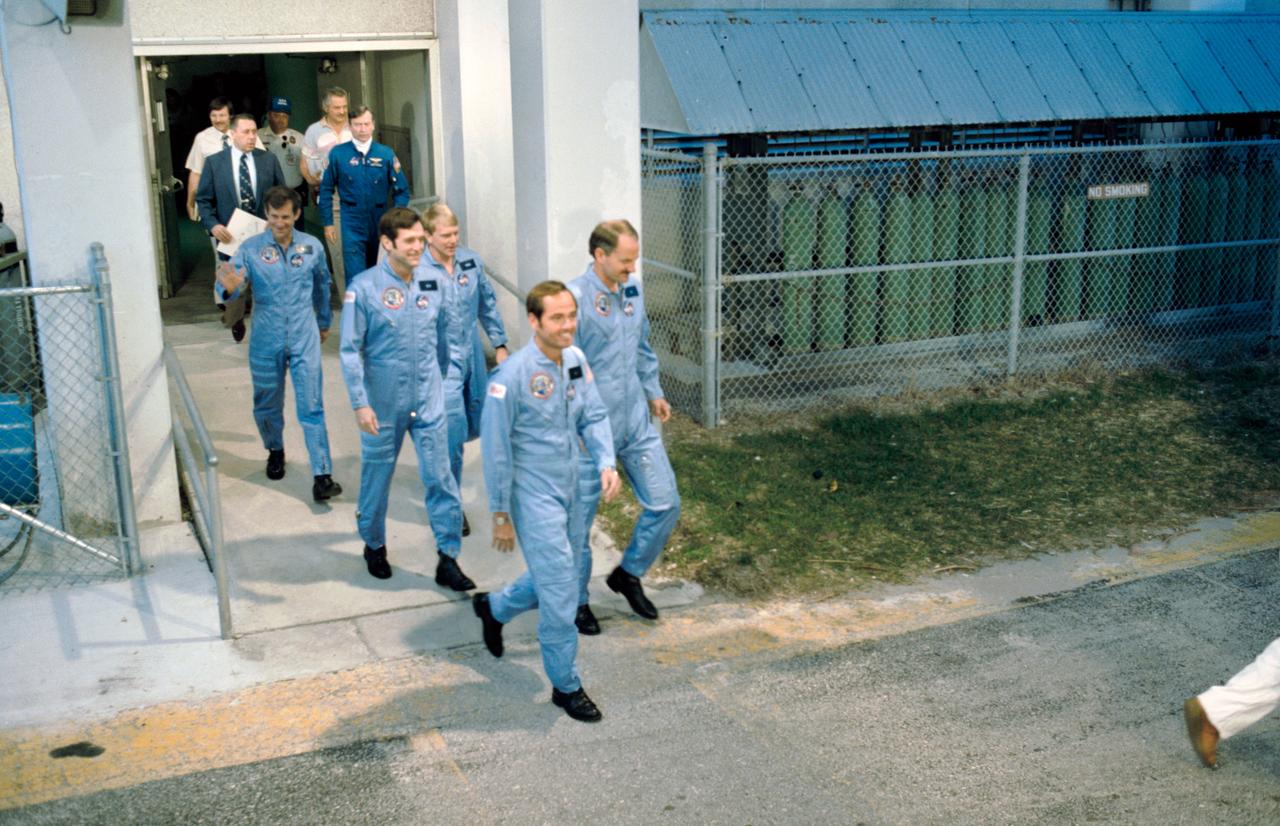
41C-3061 (6 April 1984) --- The five-member astronauts crew for NASA's STS-41C Space Shuttle mission head for the transfer van that will transport them to Launch Pad 39B at the Kennedy Space Center. Astronaut Robert L. Crippen, commander, leads the way. Immediately behind Crippen is Astronaut Francis R. (Dick) Scobee, pilot. The three mission specialists are (left to right) Astronauts Terry J. Hart, George D. Nelson and James D. van Hoften. The photograph was taken by Otis Imobden.
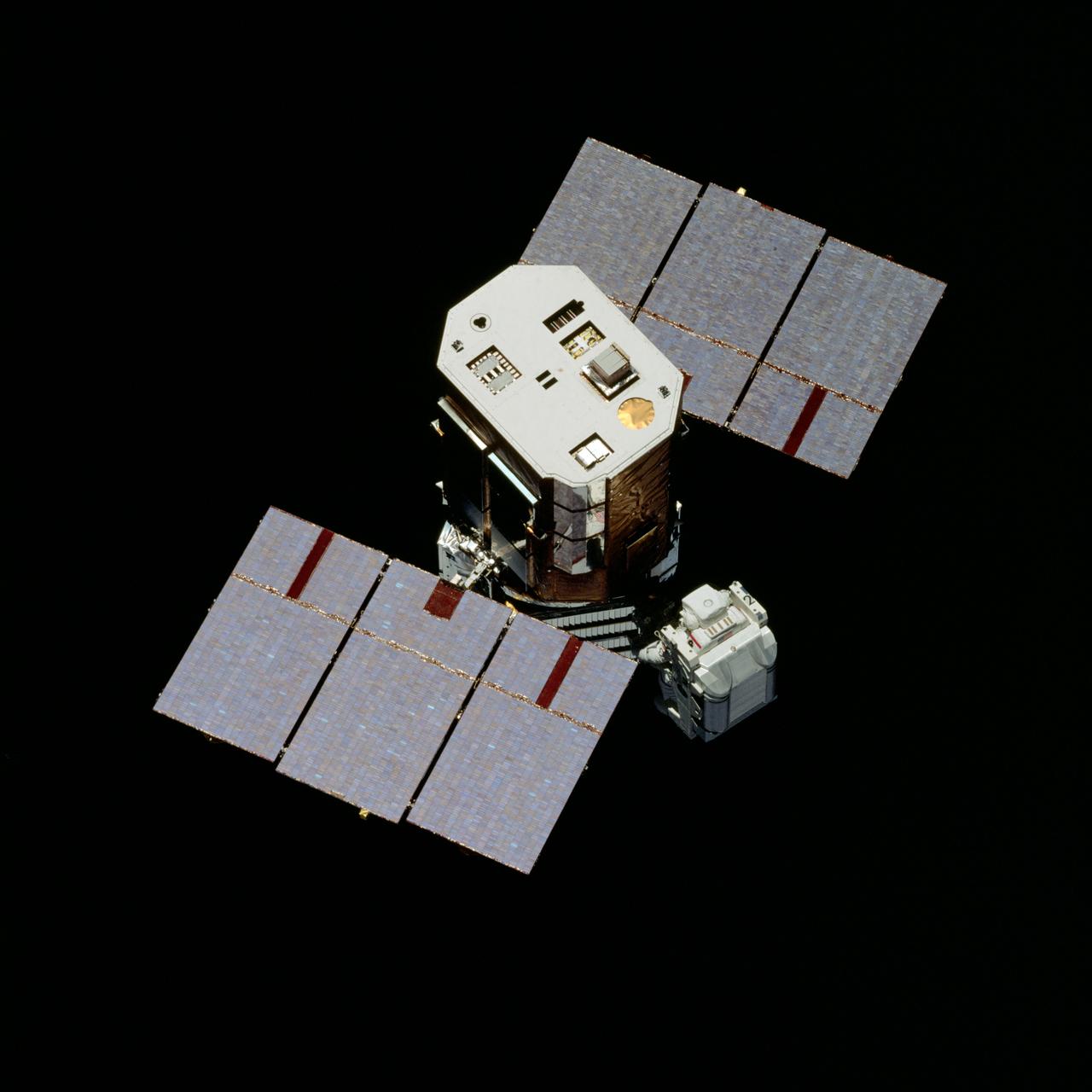
41C-34-1380 (10-11 April 1984) --- Astronaut George D. Nelson, using the manned maneuvering unit (MMU), arrives at the ailing Solar Maximum Mission Satellite (SMMS). After the STS-41C crewmembers captured the errant satellite and temporarily cradled it in Challenger?s payload bay, astronauts Nelson and James D. van Hoften repaired it and later re-released it.
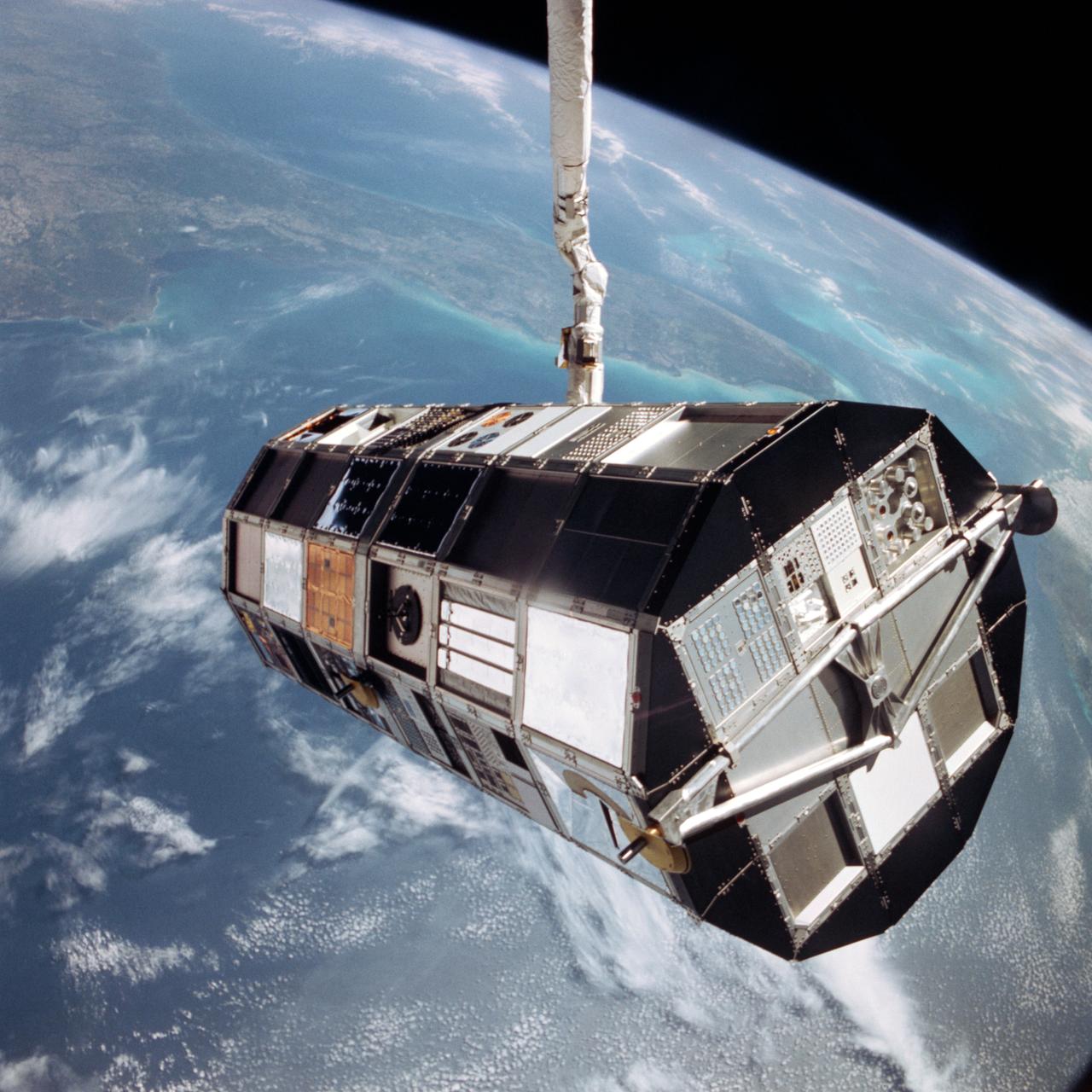
41C-36-1618 (7 April 1984) --- The Remote Manipulator System (RMS) arm suspends the giant Long Duration Exposure Facility (LDEF) high above the Gulf of Mexico prior to releasing it into space. Carried into Earth orbit with the STS-41C crew by the Space Shuttle Challenger, LDEF will remain in space until retrieved by a future Shuttle mission, in nine or ten months. Florida and the Bahama Banks are visible near the Earth's horizon in the 70mm frame.
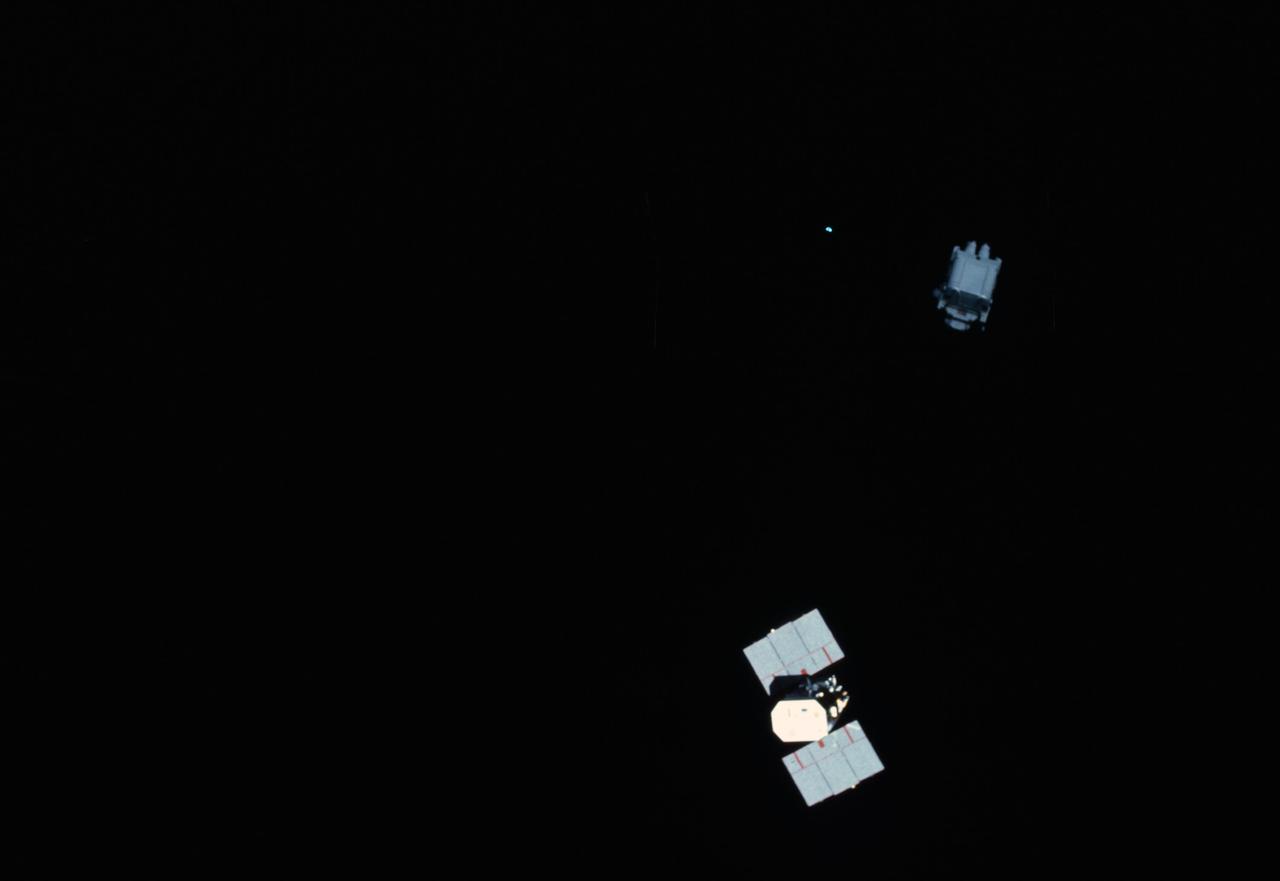
41C-22-885 (8 April 1984) --- The 35mm camera was used to photograph this scene of Astronaut George D. Nelson, STS-41C mission specialist, as he uses the manned maneuvering unit (MMU) to make an excursion to the plagued Solar Maximum, Mission Satellite (SMMS)._Astronaut James D. van Hoften remained in the Challenger's cargo bay during the April 8 extravehicular activity (EVA).
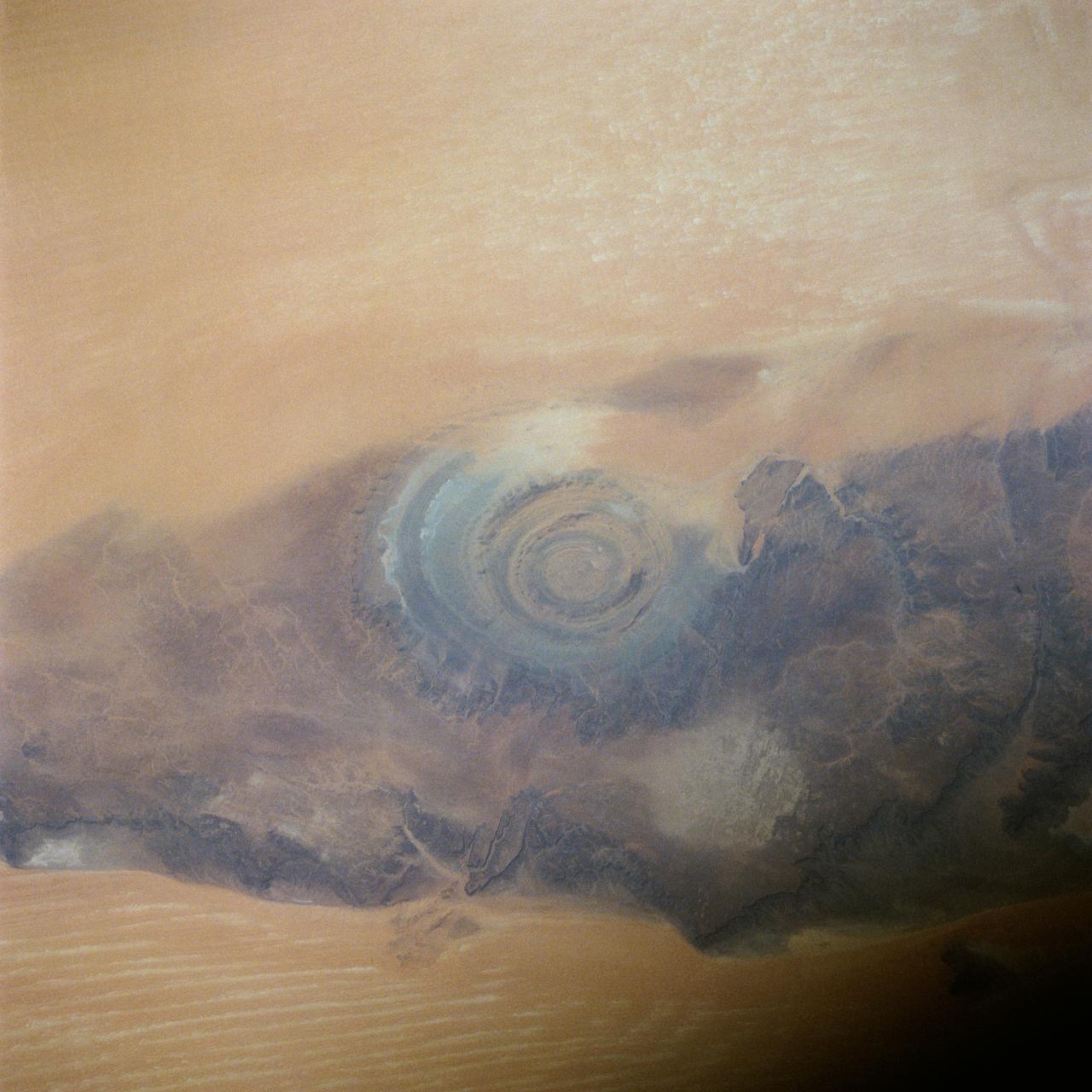
41C-39-1973 (6-13 April 1984) --- Though photographed on previous manned spaceflights, the Richat Structure in Western Mauritania has seldom if ever been able to be seen more clearly and studied more completely than in this 41-C 70mm frame, according to geologists. The structure is actually a 25-mile wide, 1,000-ft. deep hole in the Earth, the result of heavy wind erosion. This frame was one of the visuals used by the 41-C astronauts at their April 24, 1984 post-flight press conference.
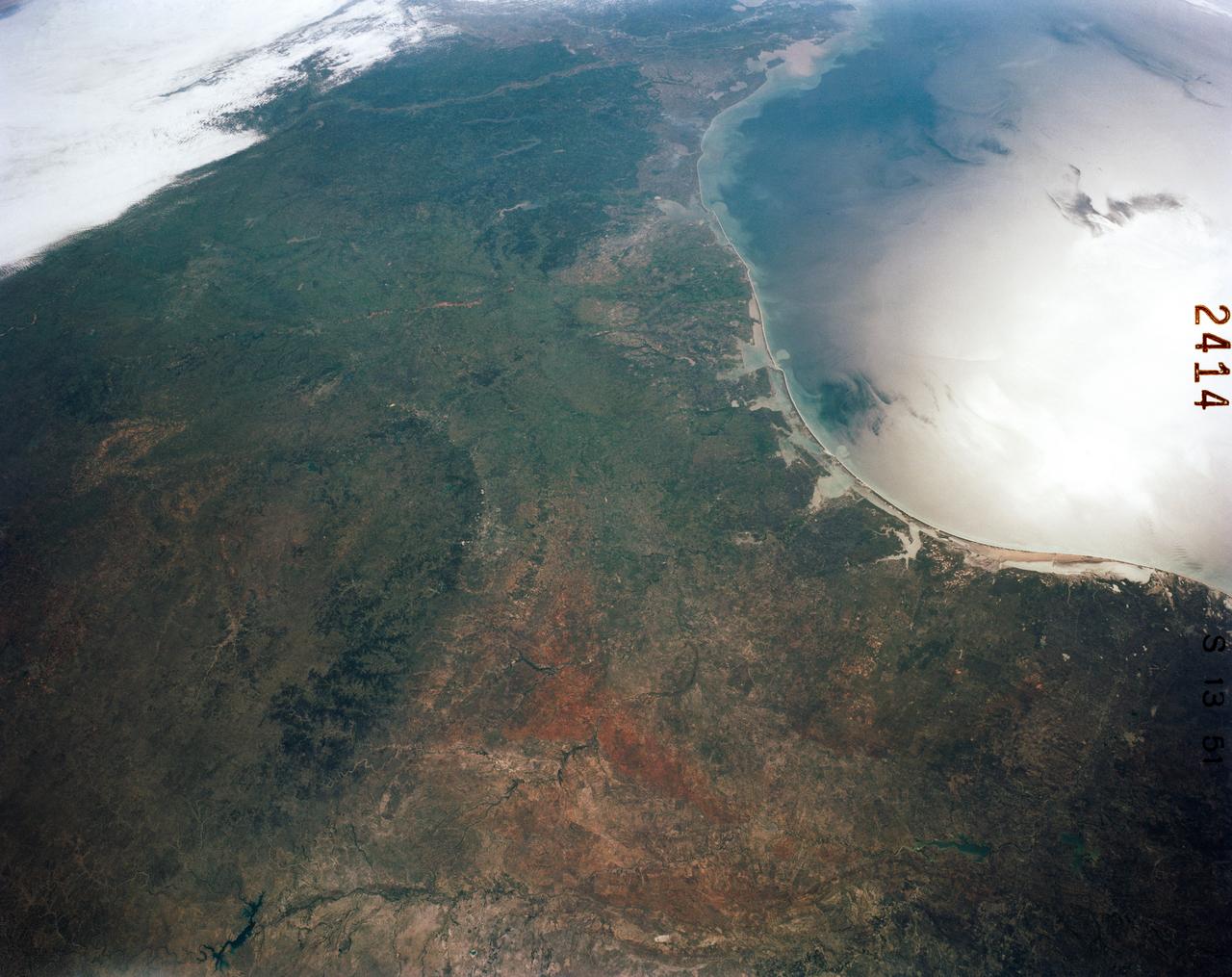
41C-51-2414 (6-13 April 1984) --- The entire Texas portion of the Gulf Coast and part of Louisiana's shoreline are visible in this frame, photographed on 4"x5" roll film using a large format camera aboard the Earth-orbiting space shuttle Challenger. Coastal bays and other geographic features from the Boca Chica (mouth of Rio Grande), to the mouth of the Mississippi are included in the frame, photographed from approximately 285 nautical miles above Earth. Inland cities that can be easily delineated are San Antonio, Austin, College Station, Del Rio and Lufkin. Easily pinpointed coastal cities include Houston, Galveston and Corpus Christi. The 41-C crew members used this frame as one of the visuals for their post-flight press conference on April 24, 1984.
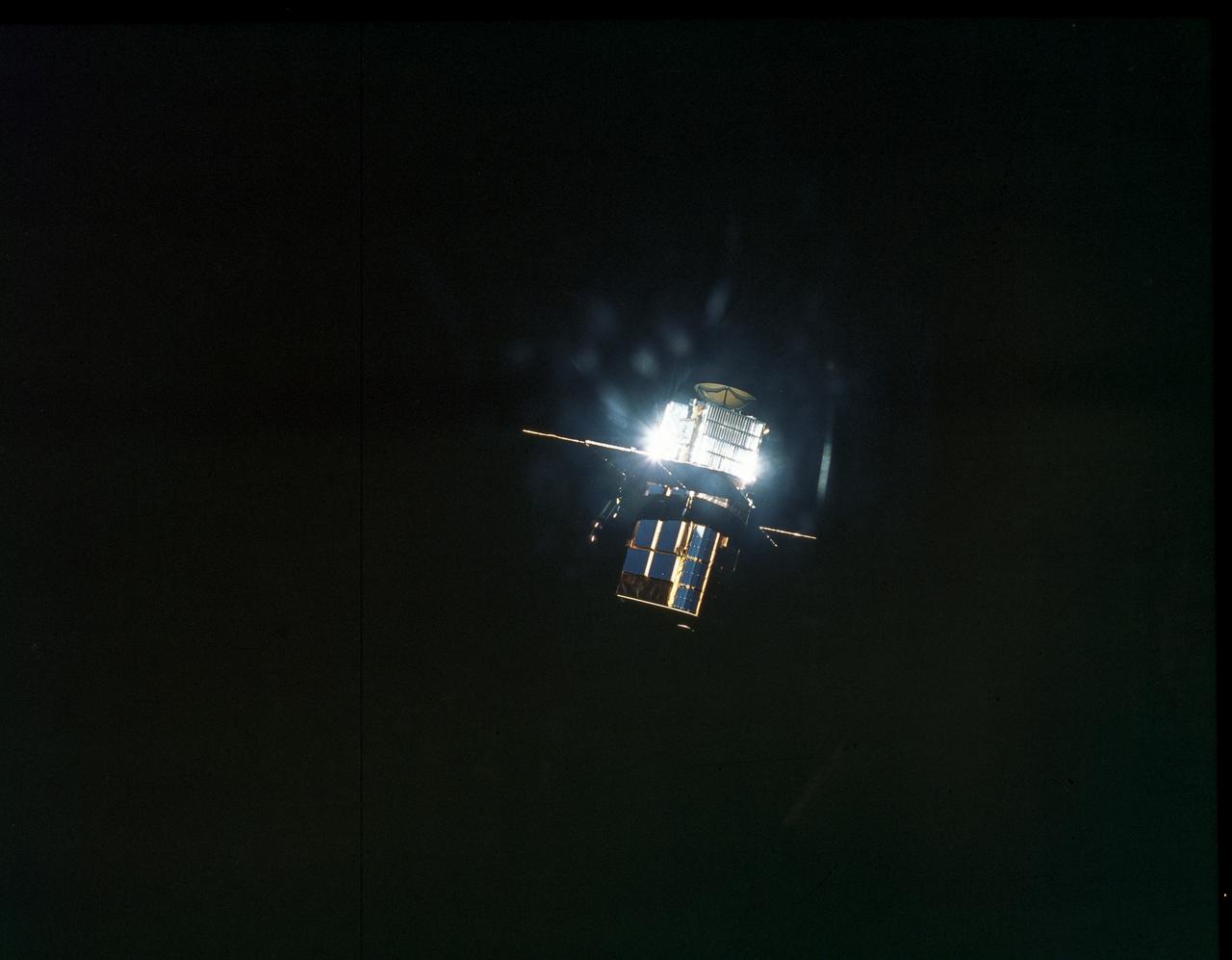
This is a photograph of the free-flying Solar Maximum Mission Satellite (SMMS), or Solar Max, as seen by the approaching Space Shuttle Orbiter Challenger STS-41C mission. Launched April 6, 1984, one of the goals of the STS-41C mission was to repair the damaged Solar Max. The original plan was to make an excursion out to the SMMS for capture to make necessary repairs, however, this attempted feat was unsuccessful. It was necessary to capture the satellite via the orbiter's Remote Manipulator System (RMS) and secure it into the cargo bay in order to perform the repairs, which included replacing the altitude control system and the coronograph/polarimeter electronics box. The SMMS was originally launched into space via the Delta Rocket in February 1980, with the purpose to provide a means of studying solar flares during the most active part of the current sunspot cycle. Dr. Einar Tandberg-Hanssen of Marshall Space Flight Center's Space Sciences Lab was principal investigator for the Ultraviolet Spectrometer and Polarimeter, one of the seven experiments on the Solar Max.
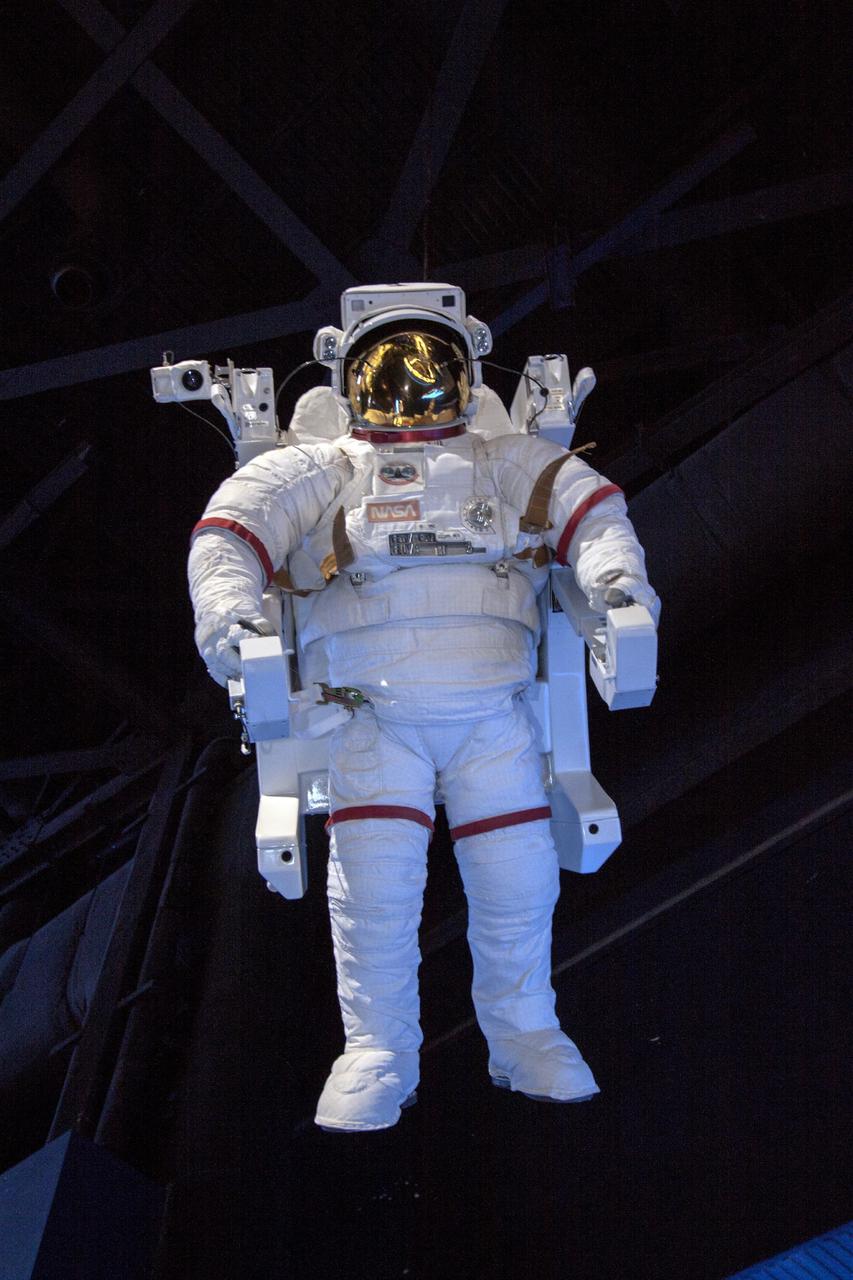
CAPE CANAVERAL, Fla. -- At the Kennedy Space Center Visitor Complex in Florida, a display inside the "Space Shuttle Atlantis" facility features an extravehicular activity mobility unit -- the space suit worn by spacewalking astronauts during the shuttle program. Attached to the back is a Manned Maneuvering Unit jet pack worn by astronauts during untethered spacewalks on STS-41B and STS-41C. The new $100 million facility will include interactive exhibits that tell the story of the 30-year Space Shuttle Program and highlight the future of space exploration. The "Space Shuttle Atlantis" exhibit is scheduled to open June 29, 2013.Photo credit: NASA/Jim Grossmann
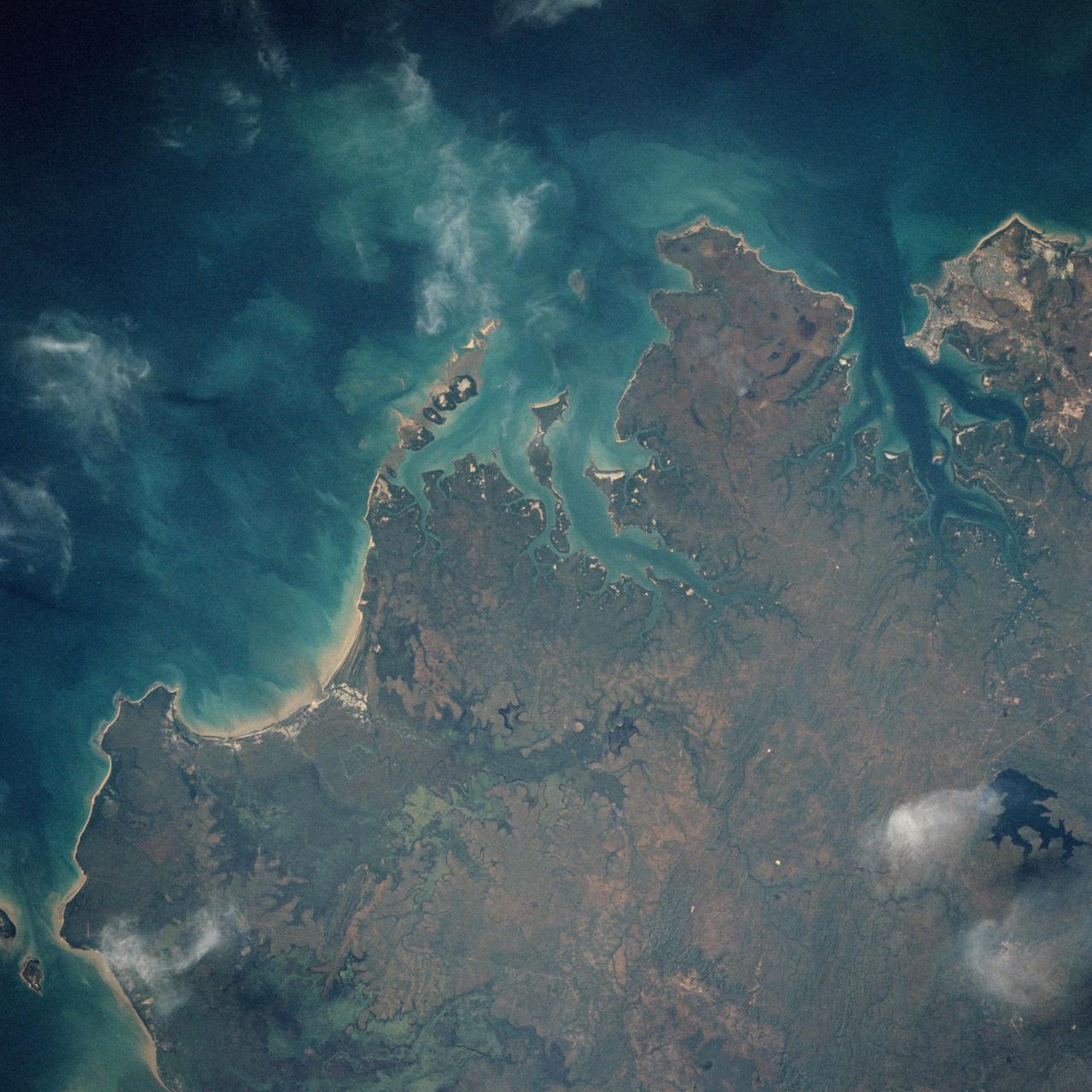
41C-34-1417 (6-13 April 1984) --- Darwin and Fog Bay, Australia are featured in this 70mm frame photographed from mission 41C's 42nd orbit of the Space Shuttle Challenger in April of 1984. Center-point coordinates are 12.5 degrees south latitude and 130.5 degrees east longitude.
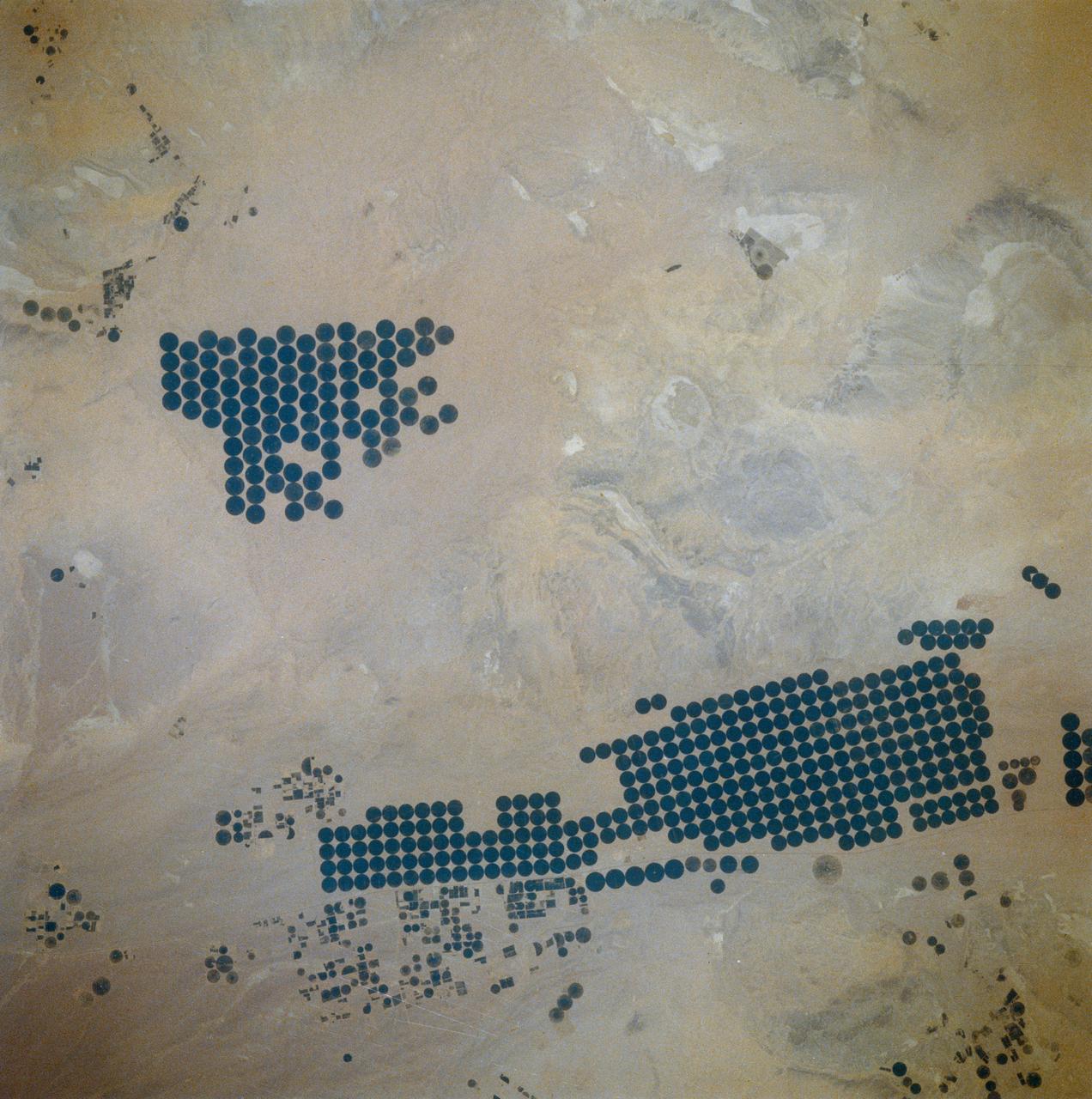
41C-31-1002 (6-13 April 1984) --- Though previous photographs of this area have been taken prior to 41-C, that mission?s photography represents the best ever of ground water irrigation in Near East deserts. The system here is located in northeast Saudi Arabia, in the vicinity of Al Hufuf. Designed for use in the American west, the center pivot irrigation method pumps water from the ground and broadcasts it in a half-mile diameter circle from a mobile sprinkler system. This frame was one of the visuals used by the 41-C astronauts at their post-flight press conference.
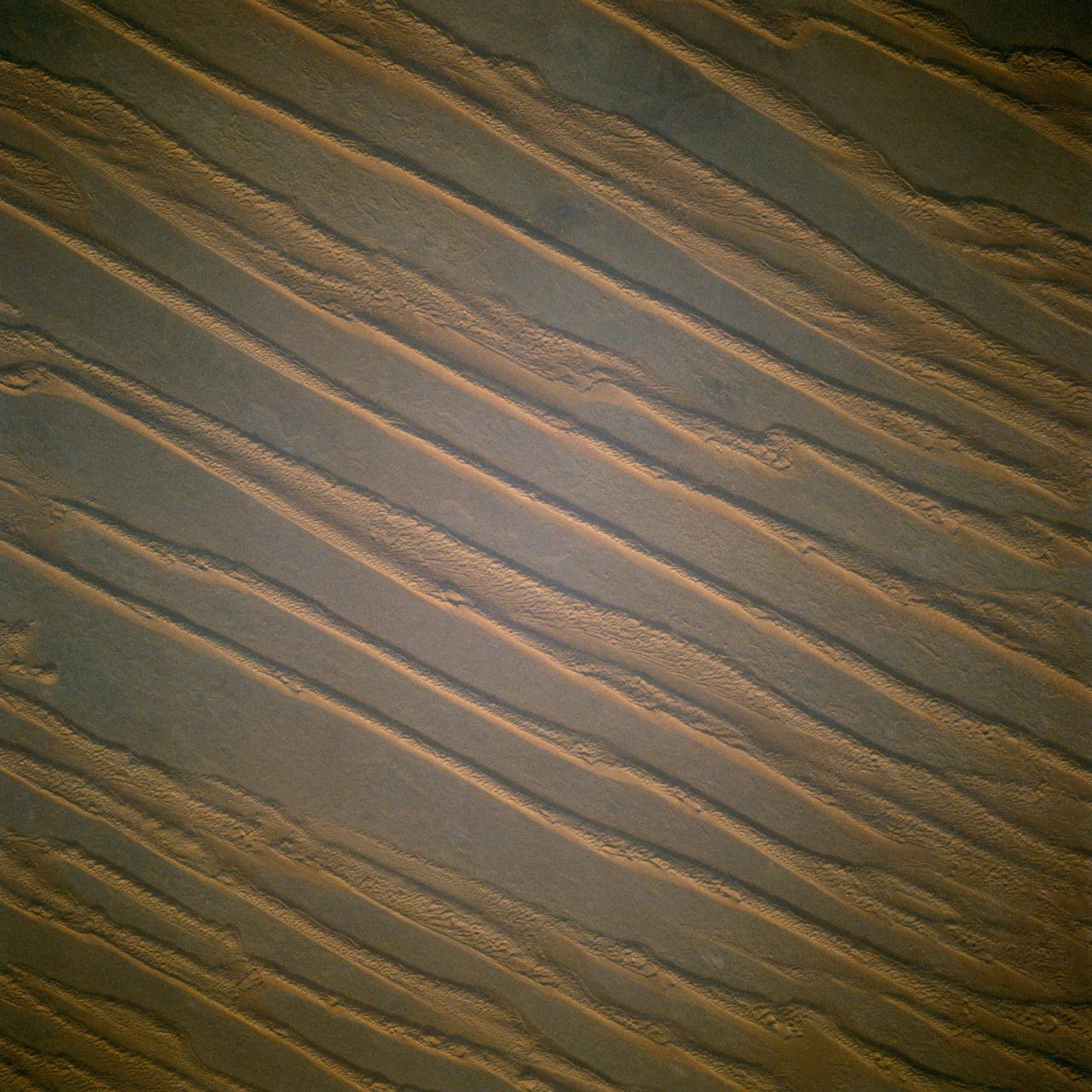
41C-31-990 (6-13 April 1984) --- Southwestern Algeria's Erg Chech shows long lines of parallel sand dunes called siefs. The Erg (sand desert) is in a remote (26.5 degrees north by 1.5 degrees west) of harsh desert, uninhabited and rarely visited. These parallel sand dunes are about 100 miles in length and 5 to 10 miles apart and are found in very few areas of the Earth. Most sand dunes are traverse dunes, or perpendicular to the general direction of the wind.
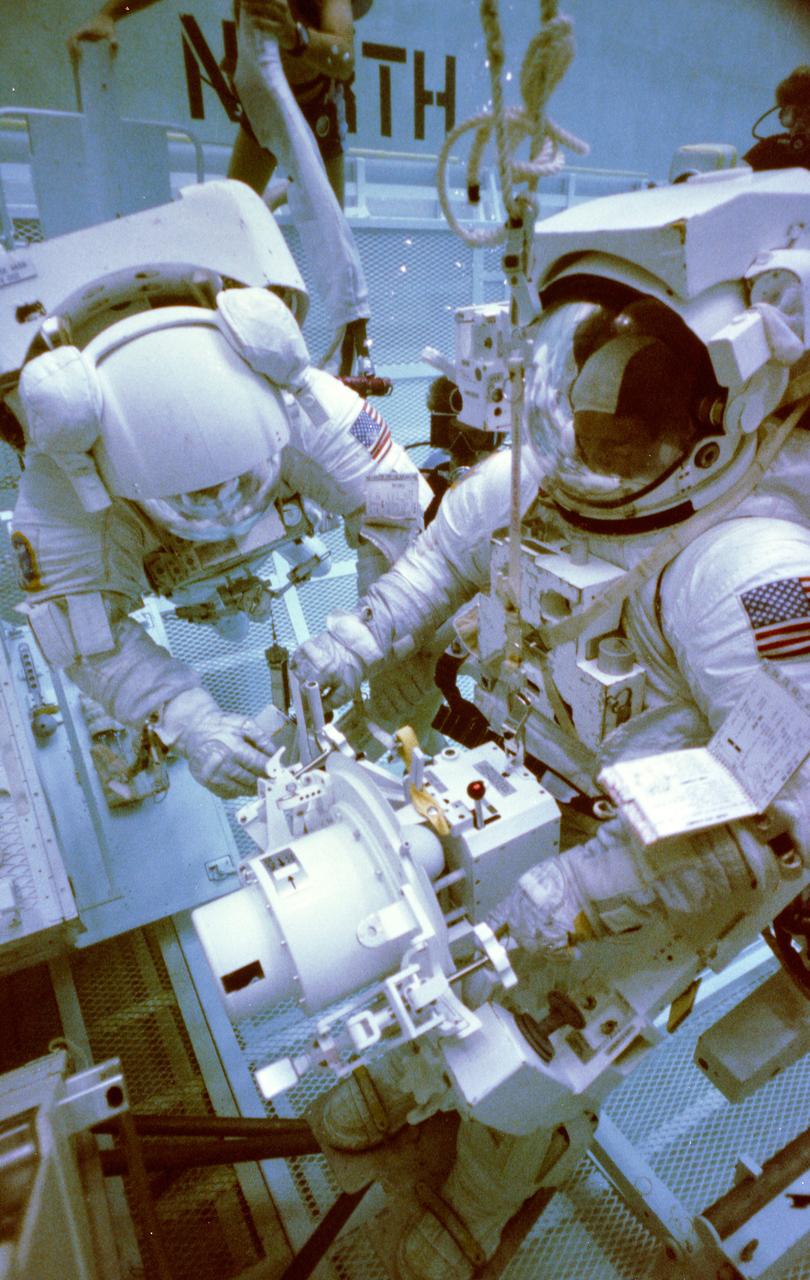
S83-42893 (19 Oct 1983) ---- Astronauts George D. Nelson and James D. van Hoften, two of three STS-41C mission specialists, share an extravehicular activity (EVA) task in this simulation of a Solar Maximum Satellite (SMS) repair visit. The two are making use of the Johnson Space Center's (JSC) weightless environment training facility (WET-F). Dr. Nelson is equipped with the manned maneuvering unit (MMU) trainer and he handles the trunion pin attachment device (TPAD), a major tool to be used on the mission. The photograph was taken by Otis Imboden.
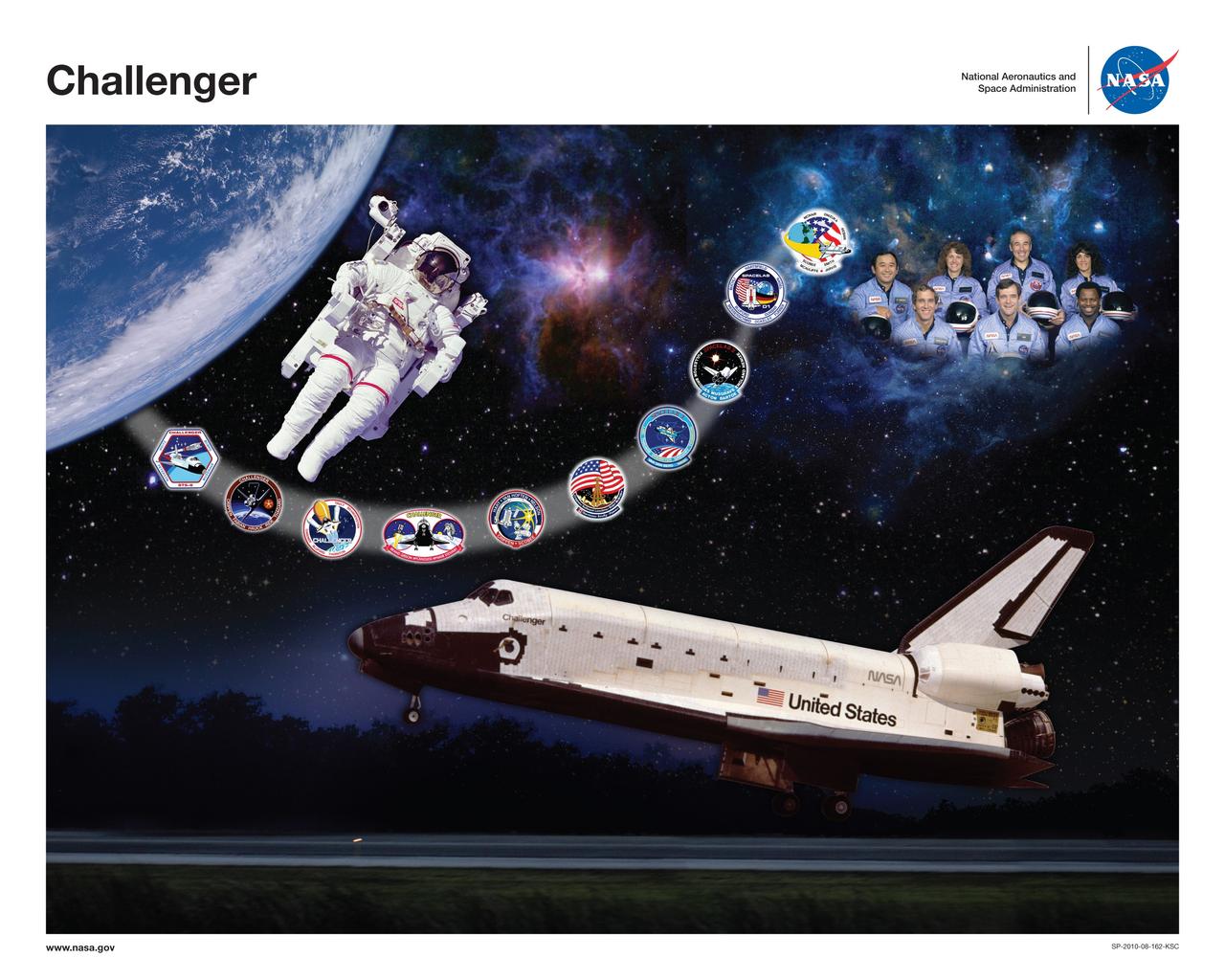
CAPE CANAVERAL, Fla. -- This is a version of space shuttle Challenger's orbiter tribute, or OV-099, which hangs in Firing Room 4 of the Launch Control Center at NASA's Kennedy Space Center in Florida. Challenger's accomplishments include the first night launch and first African-American in space, Guion Bluford, on STS-8, the first in-flight capture, repair and redeployment of an orbiting satellite during STS-41C, the first American woman in space, Sally Ride, on STS-7, and the first American woman to walk in space, Kathryn Sullivan, during STS-41G. Challenger is credited with blazing a trail for NASA's other orbiters with the first night landing at Edwards Air Force Base in California on STS-8 and the first landing at Kennedy on STS-41B. The spacewalker in the tribute represents Challenger’s role in the first spacewalk during STS-6 and the first untethered spacewalk on STS-41B. Crew-designed patches for each of Challenger’s missions lead from Earth toward a remembrance of the STS-51L crew, which was lost 73 seconds after liftoff on Jan. 28, 1986. Five orbiter tributes are on display in the firing room, representing Atlantis, Challenger, Columbia, Endeavour and Discovery. Graphic design credit: NASA/Lynda Brammer. NASA publication number: SP-2010-08-162-KSC
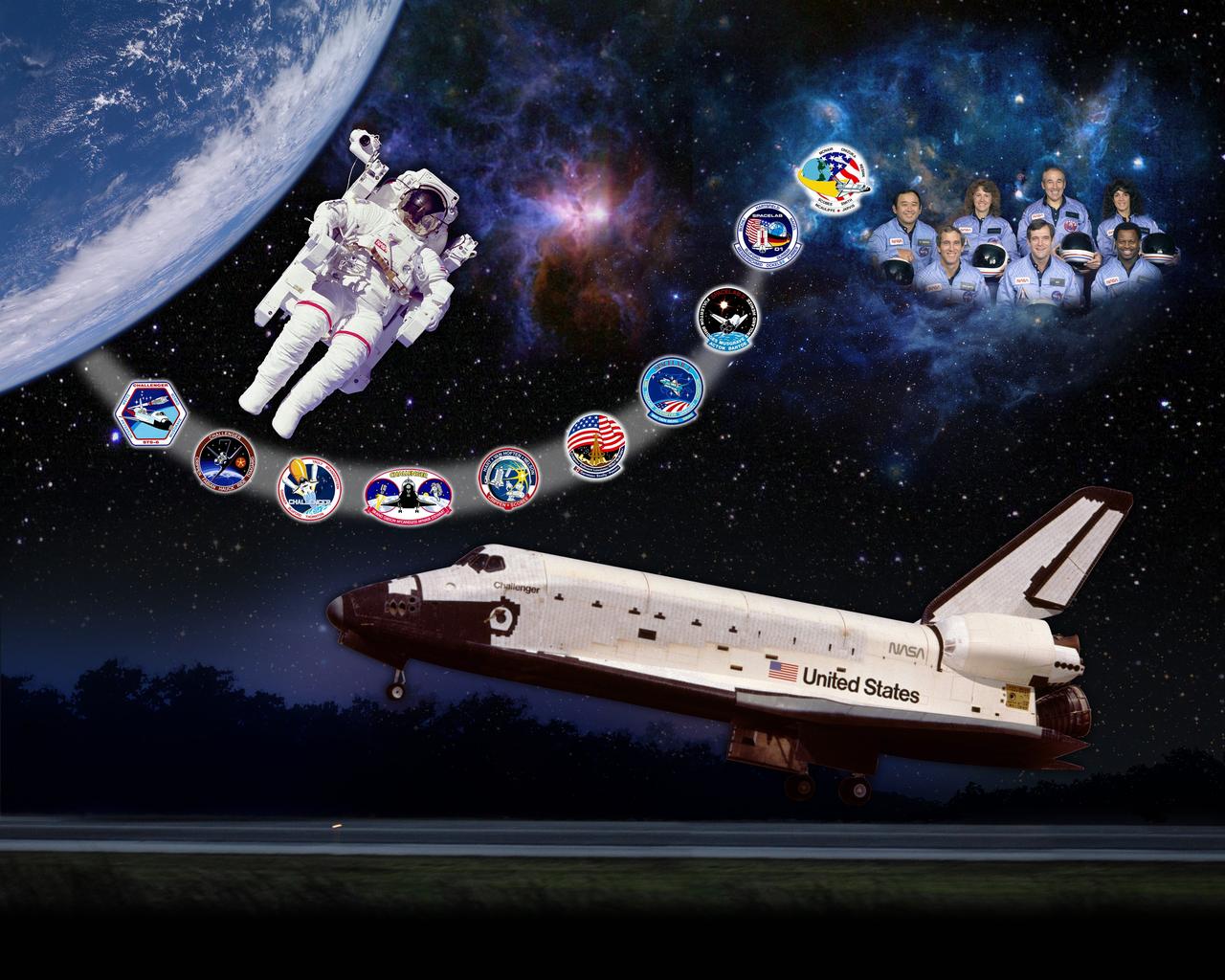
CAPE CANAVERAL, Fla. -- This orbiter tribute of space shuttle Challenger, or OV-099, hangs in Firing Room 4 of the Launch Control Center at NASA's Kennedy Space Center in Florida. Challenger's accomplishments include the first night launch and first African-American in space, Guion Bluford, on STS-8, the first in-flight capture, repair and redeployment of an orbiting satellite during STS-41C, the first American woman in space, Sally Ride, on STS-7, and the first American woman to walk in space, Kathryn Sullivan, during STS-41G. Challenger is credited with blazing a trail for NASA's other orbiters with the first night landing at Edwards Air Force Base in California on STS-8 and the first landing at Kennedy on STS-41B. The spacewalker in the tribute represents Challenger’s role in the first spacewalk during STS-6 and the first untethered spacewalk on STS-41B. Crew-designed patches for each of Challenger’s missions lead from Earth toward a remembrance of the STS-51L crew, which was lost 73 seconds after liftoff on Jan. 28, 1986. Five orbiter tributes are on display in the firing room, representing Atlantis, Challenger, Columbia, Endeavour and Discovery. Graphic design credit: NASA/Lynda Brammer
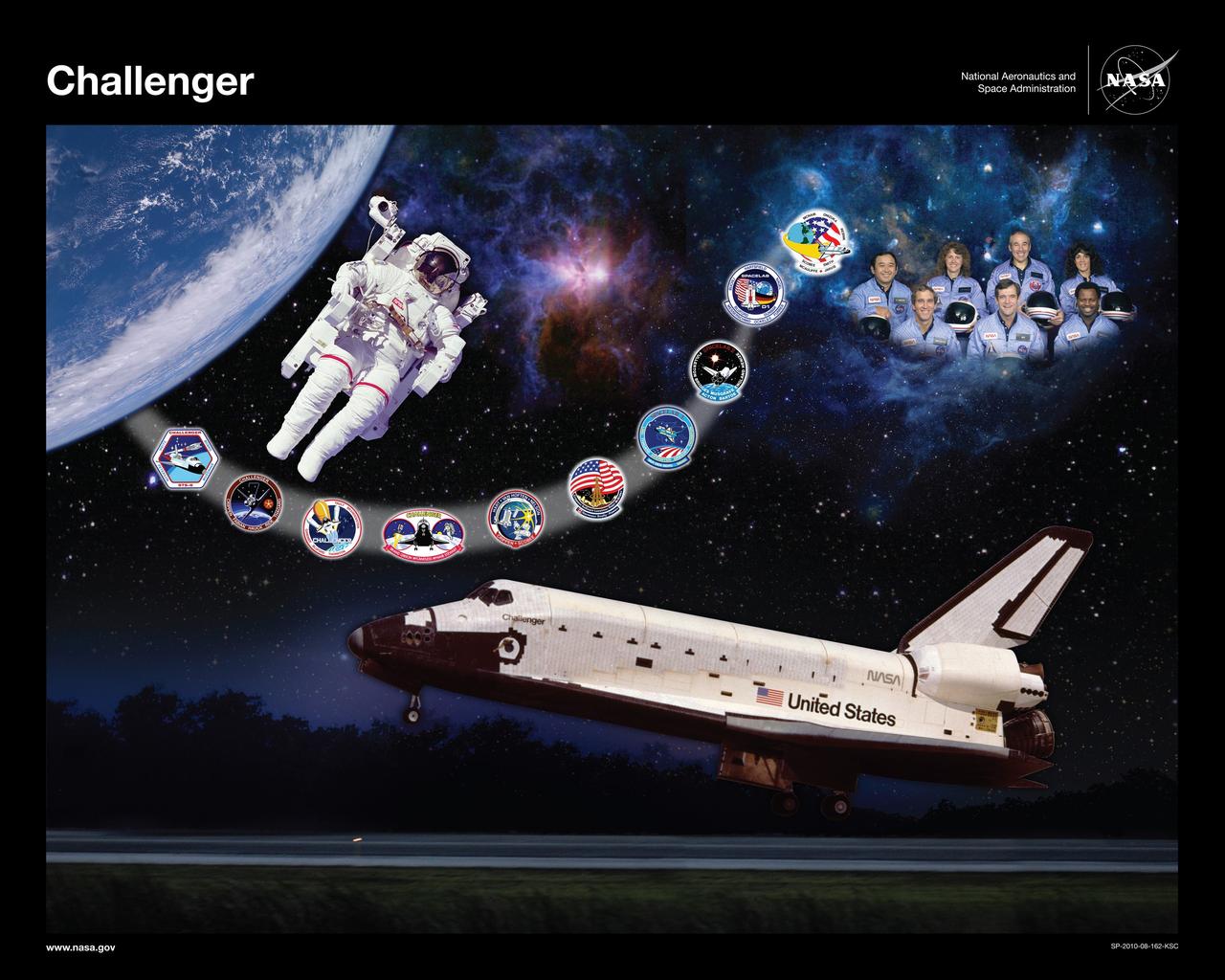
CAPE CANAVERAL, Fla. -- This is a printable version of space shuttle Challenger's orbiter tribute, or OV-099, which hangs in Firing Room 4 of the Launch Control Center at NASA's Kennedy Space Center in Florida. Challenger's accomplishments include the first night launch and first African-American in space, Guion Bluford, on STS-8, the first in-flight capture, repair and redeployment of an orbiting satellite during STS-41C, the first American woman in space, Sally Ride, on STS-7, and the first American woman to walk in space, Kathryn Sullivan, during STS-41G. Challenger is credited with blazing a trail for NASA's other orbiters with the first night landing at Edwards Air Force Base in California on STS-8 and the first landing at Kennedy on STS-41B. The spacewalker in the tribute represents Challenger’s role in the first spacewalk during STS-6 and the first untethered spacewalk on STS-41B. Crew-designed patches for each of Challenger’s missions lead from Earth toward a remembrance of the STS-51L crew, which was lost 73 seconds after liftoff on Jan. 28, 1986. Five orbiter tributes are on display in the firing room, representing Atlantis, Challenger, Columbia, Endeavour and Discovery. Graphic design credit: NASA/Lynda Brammer. NASA publication number: SP-2010-08-162-KSC
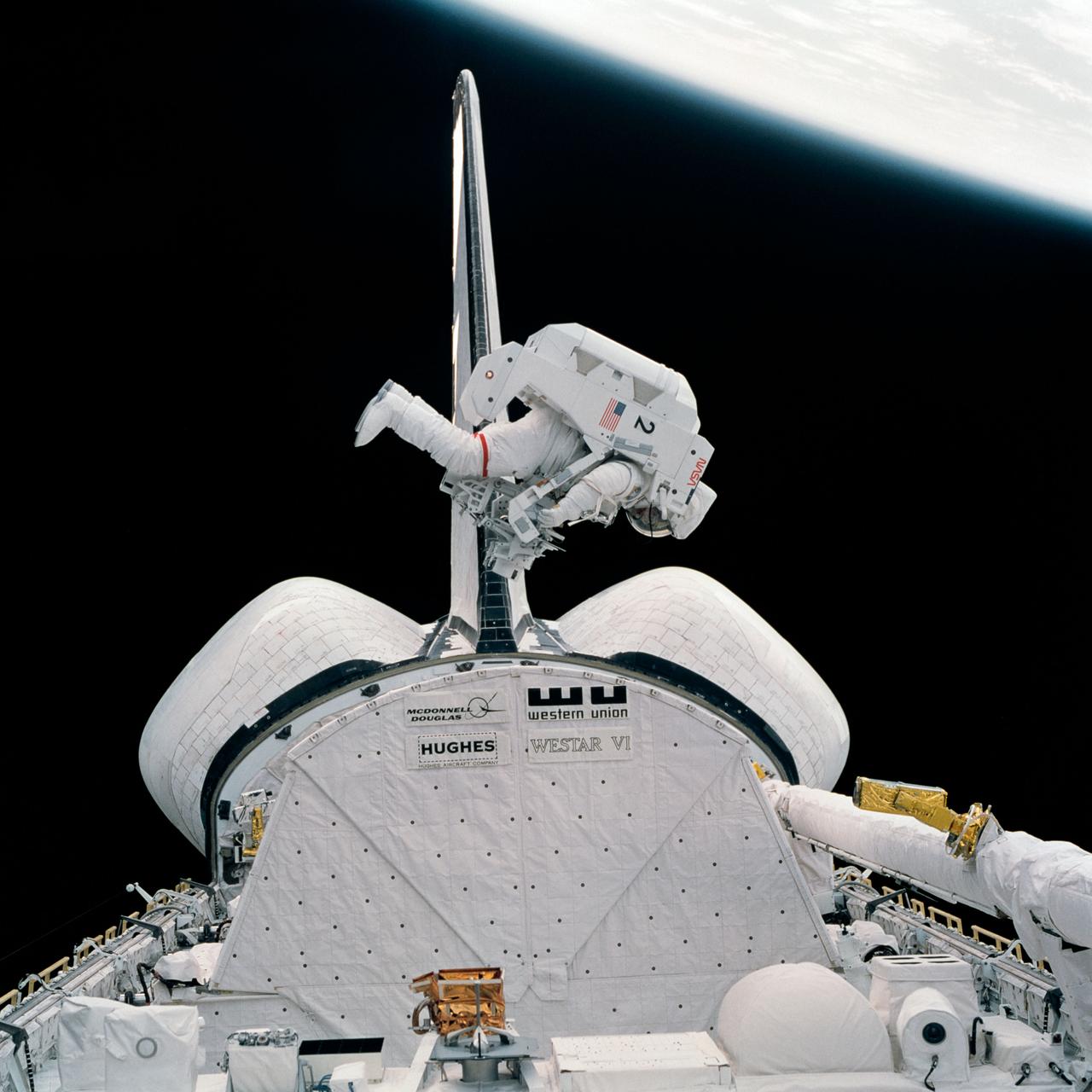
S84-27023 (7 Feb 1984) --- This 70mm frame shows astronaut Bruce McCandless II moving in to conduct a test involving the Trunion Pin Attachment Device (TPAD) he carries and the Shuttle Pallet Satellite (SPAS-01A) partially visible at bottom of frame. SPAS was a stand-in for the damaged Solar Maximum Satellite (SMS) which will be visited for repairs by the STS-41C Shuttle crew in early spring. This particular Extravehicular Activity (EVA) session was a rehearsal for the SMS visit. The test and the actual visit to the SMS both involve the use of jet-powered, hand-controlled Manned Maneuvering Unit (MMU). The one McCandless uses is the second unit to be tested on this flight. Astronaut Robert L. Stewart got a chance to work with both MMU's on the two EVA's.
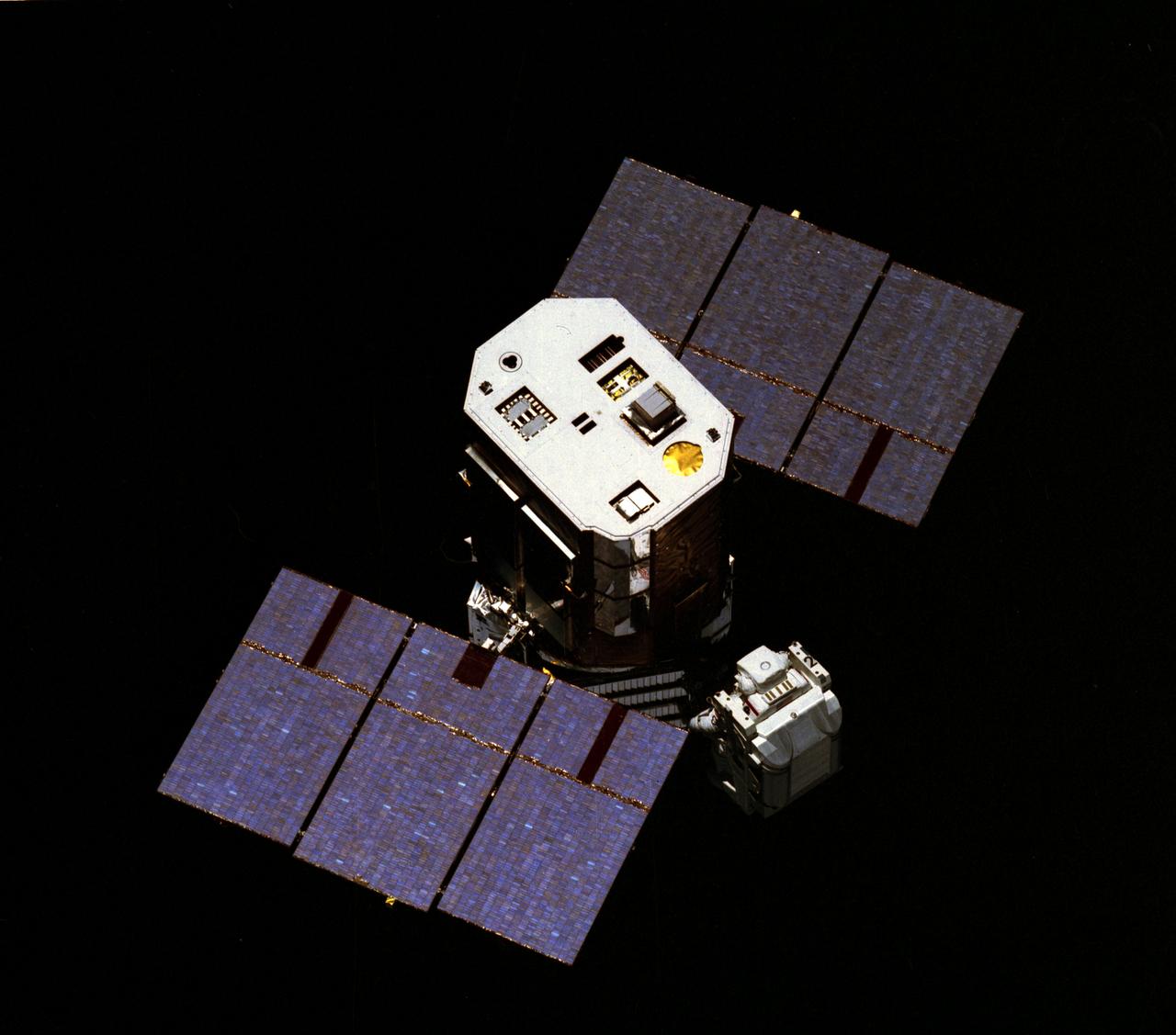
Launched April 6, 1984, one of the goals of the STS-41C mission was to repair the damaged free-flying Solar Maximum Mission Satellite (SMMS), or Solar Max. The original plan was to make an excursion out to the SMMS and capture it for necessary repairs. Pictured is Mission Specialist George Nelson approaching the damaged satellite in a capture attempt. This attempted feat was unsuccessful. It was necessary to capture the satellite via the orbiter's Remote Manipulator System (RMS) and secure it into the cargo bay in order to perform the repairs, which included replacing the altitude control system and the coronograph/polarimeter electronics box. The SMMS was originally launched into space via the Delta Rocket in February 1980, with the purpose to provide a means of studying solar flares during the most active part of the current sunspot cycle. Dr. Einar Tandberg-Hanssen of Marshall Space Flight Center's Space Sciences Lab was principal investigator for the Ultraviolet Spectrometer and Polarimeter, one of the seven experiments of the Solar Max.
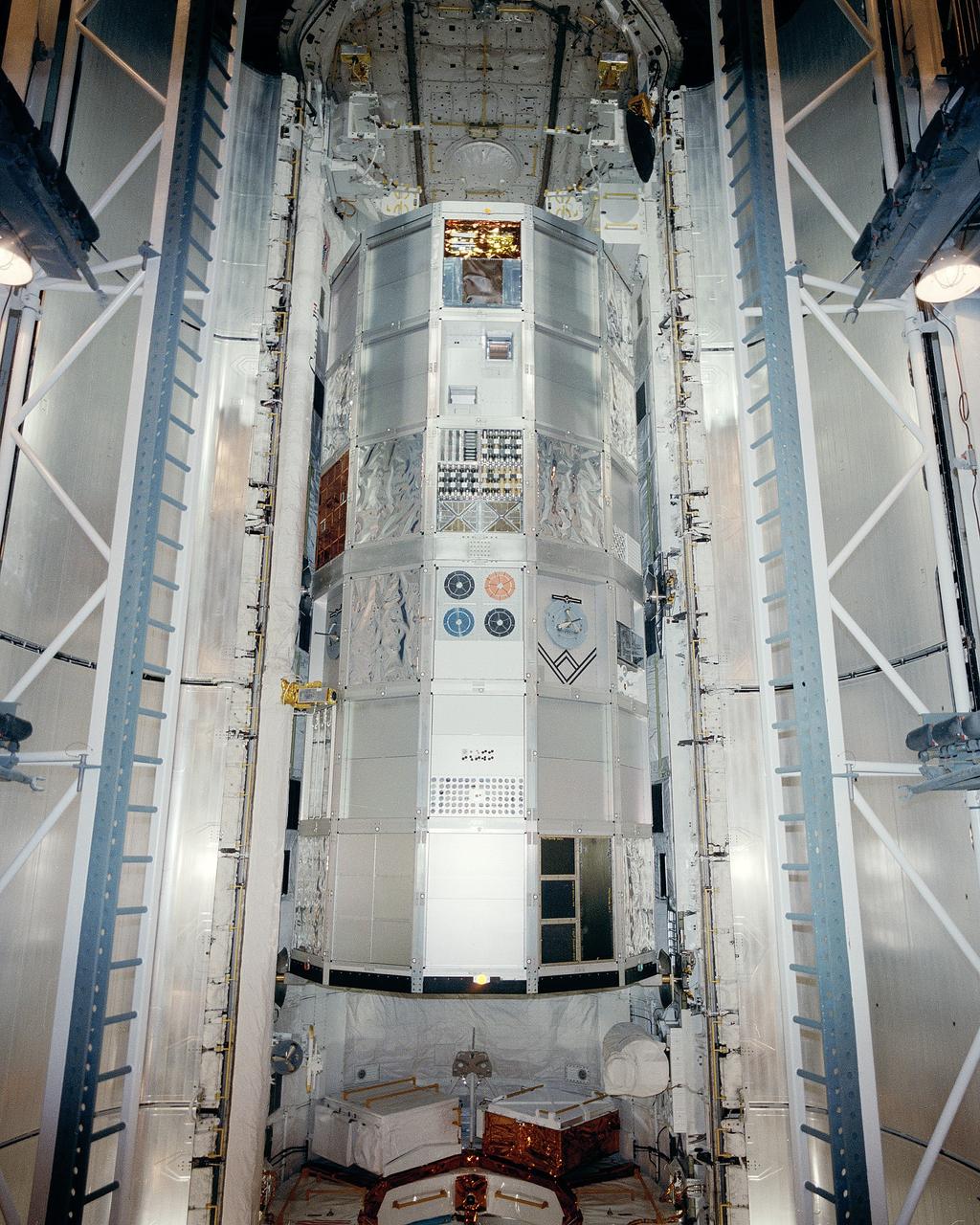
CAPE CANAVERAL, Fla. -- At NASA's Kennedy Space Center's Launch Pad 39-A, the school bus-sized Long Duration Exposure Facility LDEF containing 57 active and passive experiments from nine nations has been loaded into the payload bay of the space shuttle Challenger. The view from the Payload Change-out Room shows LDEF which will be deployed in orbit at an altitude of nearly 300 miles and retrieved after nearly a year so that the experimenters may analyze the effects of long term exposure to space on various substances and processes. The five-member STS-41C crew for this flight is headed by veteran astronaut Robert Crippen on his third space shuttle flight, and includes space rookies, pilot Dick Scobee and mission specialists Terry Hart, George Nelson and James van Hoften. Photo Credit: NASA
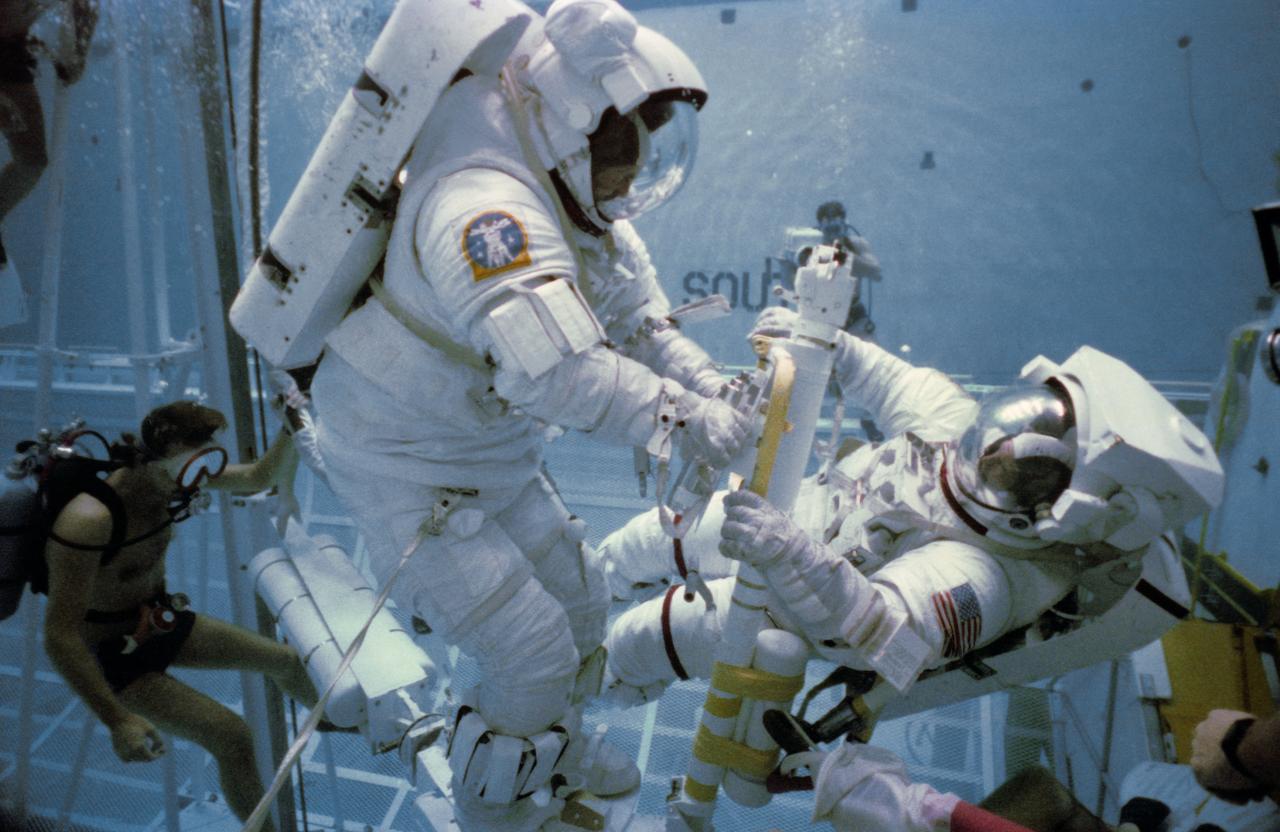
S83-42895 (19 Oct 1983) --- Astronauts George D. Nelson and James D. van Hoften, NASA Flight STS-41C mission specialists, offer an underwater version of a preview of their mission's extravehicular activity (EVA). The April 1984 flight includes as one of its primary objectives a two-person EVA and a visit to the damaged Solar Maximum Satellite (SMS). Van Hoften, left, and Nelson work here with the mobile foot restraint (MFR), which attaches to the remote manipulator system (RMS) arm to form a "cherry-picker" device. Van Hoften is standing on the MFR. The two are making use of the Johnson Space Center's (JSC) weightless environment training facility (WET-F). This photograph was taken by Otis Imboden.
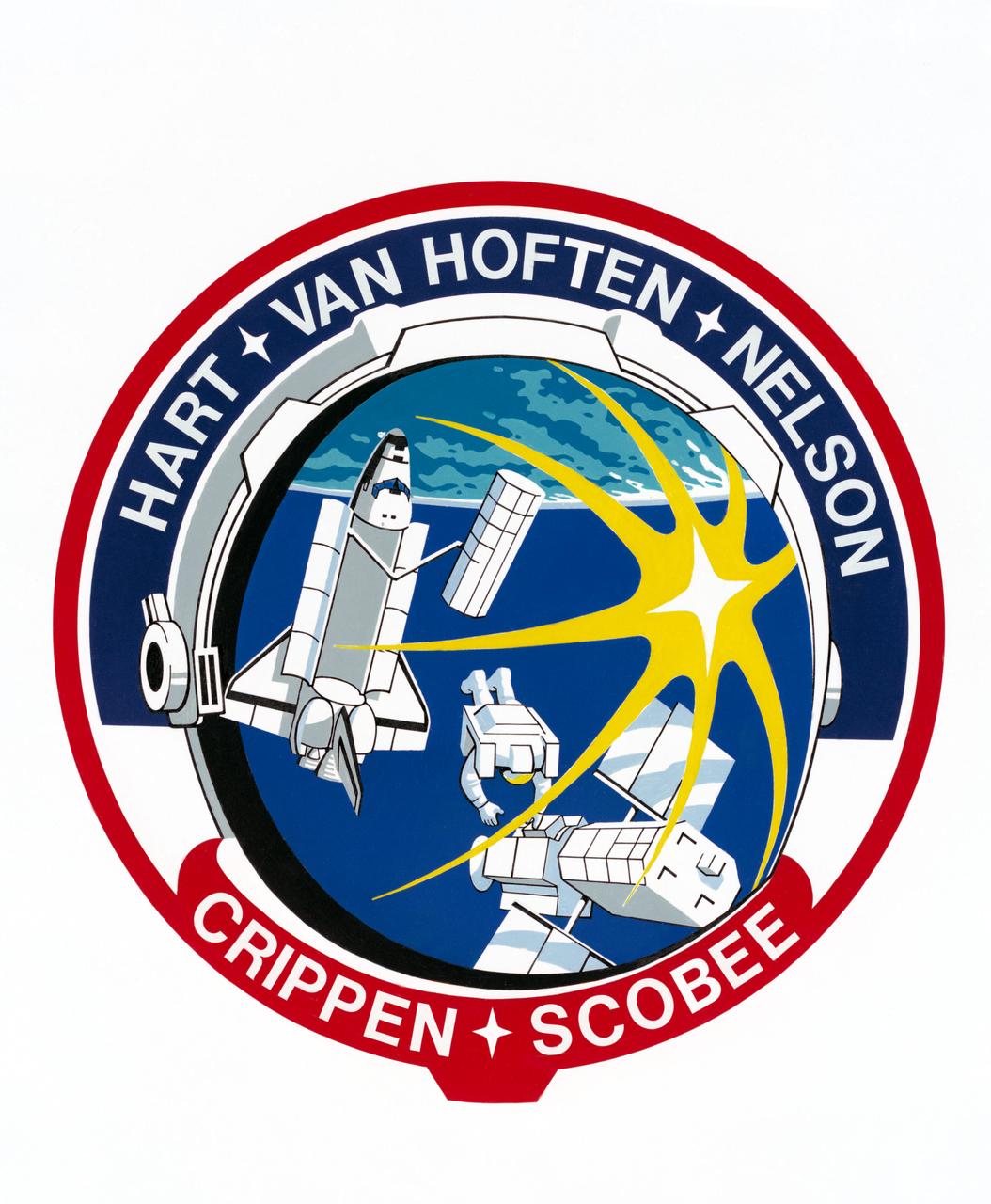
S84-25522 (15 Jan. 1984) --- The patch to be worn by the five members of NASA's STS-41C space mission tells the story of that flight. It features a helmet visor of an astronaut performing an extravehicular activity (EVA). In the visor are reflected the sun's rays, the space shuttle Challenger and its Remote Manipulator System (RMS) deploying the Long Duration Exposure Facility (LDEF), Earth and blue sky, and another astronaut working at the damaged Solar Maximum Satellite (SMS). The scene is encircled by the surnames of the crew members. They are astronauts Robert L. Crippen, commander; Francis R. (Dick) Scobee, pilot; and Terry J. Hart, James D. van Hoften and George D. Nelson, all mission specialists. The NASA insignia design for space shuttle flights is reserved for use by the astronauts and for other official use as the NASA Administrator may authorize. Public availability has been approved only in the forms of illustrations by the various news media. When and if there is any change in this policy, which is not anticipated, the change will be publicly announced. Photo credit: NASA
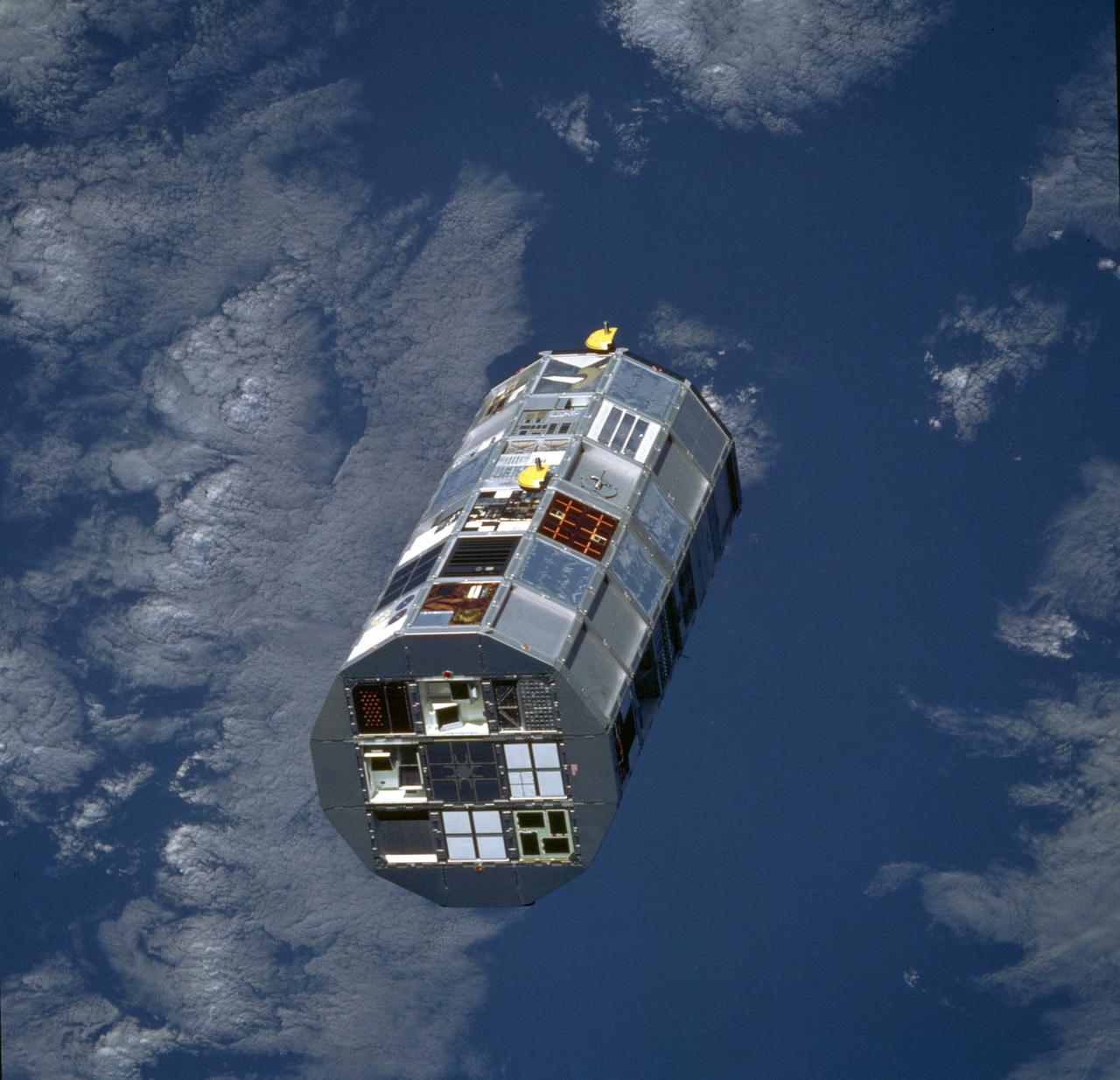
The Long Duration Exposure Facility (LDEF) was designed by the Marshall Space Flight Center (MSFC) to test the performance of spacecraft materials, components, and systems that have been exposed to the environment of micrometeoroids and space debris for an extended period of time. The LDEF proved invaluable to the development of future spacecraft and the International Space Station (ISS). The LDEF carried 57 science and technology experiments, the work of more than 200 investigators. MSFC`s experiments included: Trapped Proton Energy Determination to determine protons trapped in the Earth's magnetic field and the impact of radiation particles; Linear Energy Transfer Spectrum Measurement Experiment which measures the linear energy transfer spectrum behind different shielding configurations; Atomic oxygen-Simulated Out-gassing, an experiment that exposes thermal control surfaces to atomic oxygen to measure the damaging out-gassed products; Thermal Control Surfaces Experiment to determine the effects of the near-Earth orbital environment and the shuttle induced environment on spacecraft thermal control surfaces; Transverse Flat-Plate Heat Pipe Experiment, to evaluate the zero-gravity performance of a number of transverse flat plate heat pipe modules and their ability to transport large quantities of heat; Solar Array Materials Passive LDEF Experiment to examine the effects of space on mechanical, electrical, and optical properties of lightweight solar array materials; and the Effects of Solar Radiation on Glasses. Launched aboard the Space Shuttle Orbiter Challenger's STS-41C mission April 6, 1984, the LDEF remained in orbit for five years until January 1990 when it was retrieved by the Space Shuttle Orbiter Columbia STS-32 mission and brought back to Earth for close examination and analysis.