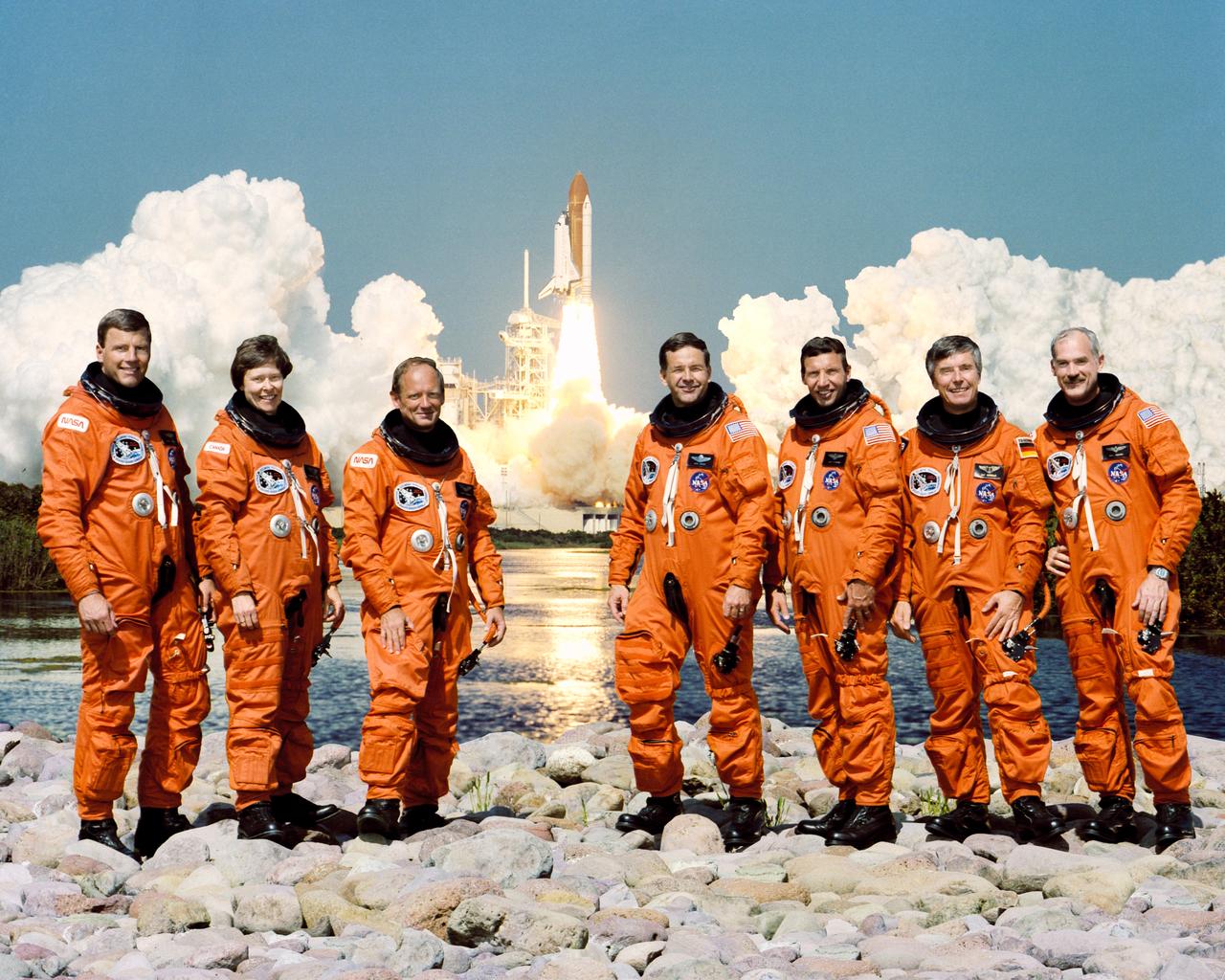
STS042-S-002 (November 1991) --- Payload specialists representing Canada and the European Space Agency (CSA - ESA) join five NASA astronauts for the January 1992 scheduled STS-42 mission. Left to right are astronauts Stephen S. Oswald, pilot; Roberta L. Bondar, payload specialist; Norman E. Thagard, payload commander; Ronald J. Grabe, mission commander; David C. Hilmers, mission specialist; Ulf Merbold, payload specialist; and William F. Readdy, mission specialist. The STS-42 mission will utilize the Space Shuttle Discovery to carry out experiments for the International Microgravity Laboratory (IML-1).
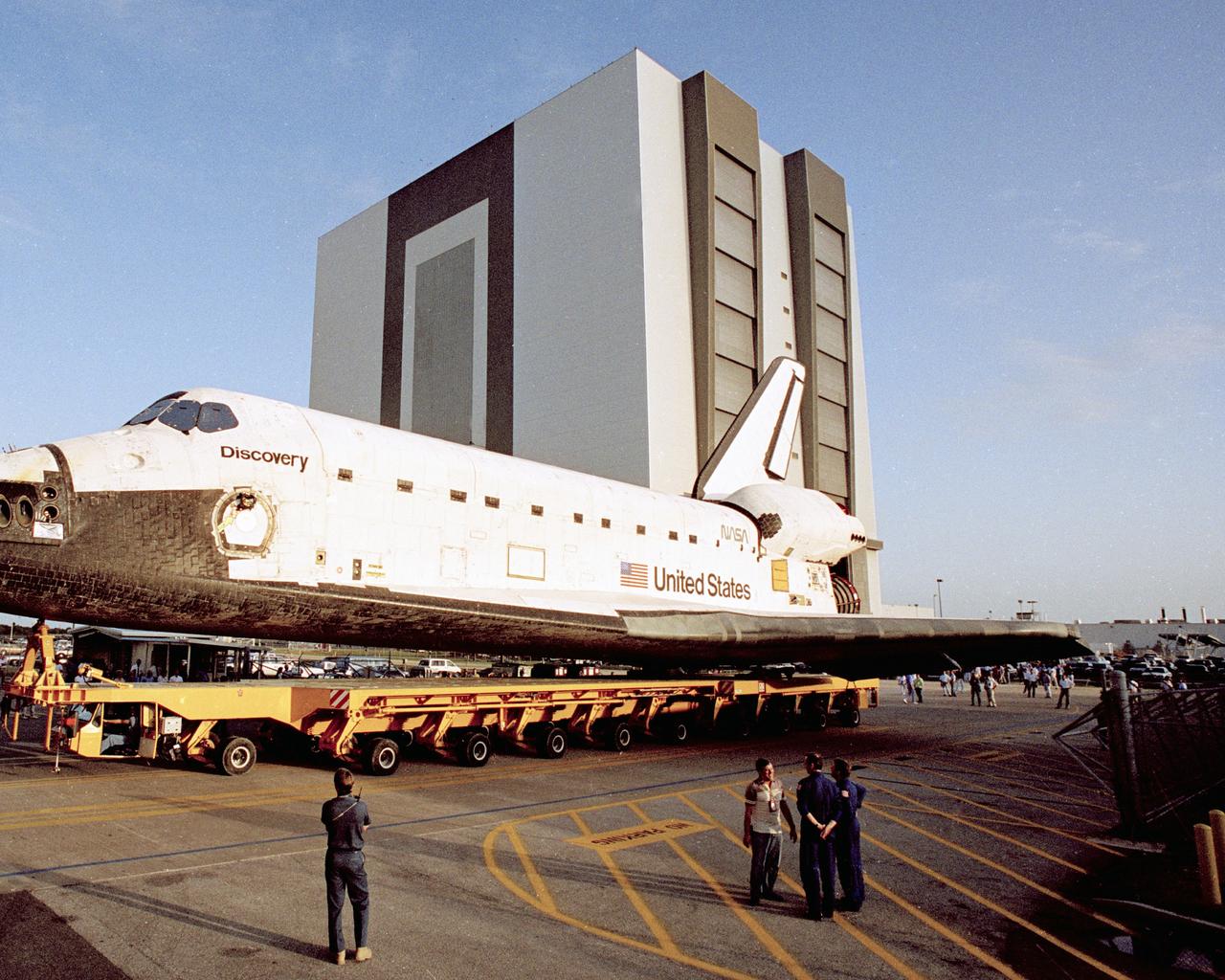
CAPE CANAVERAL, Fla. – The orbiter Discovery heads for the VAB atop the specially designed orbiter transporter. Once inside the VAB, Discovery will be mated with the external tank/solid rocket booster assembly. The fully assembled shuttle will then be rolled to Pad 39A, where liftoff on mission STS-42 is set for early 1992. Photo credit: NASA
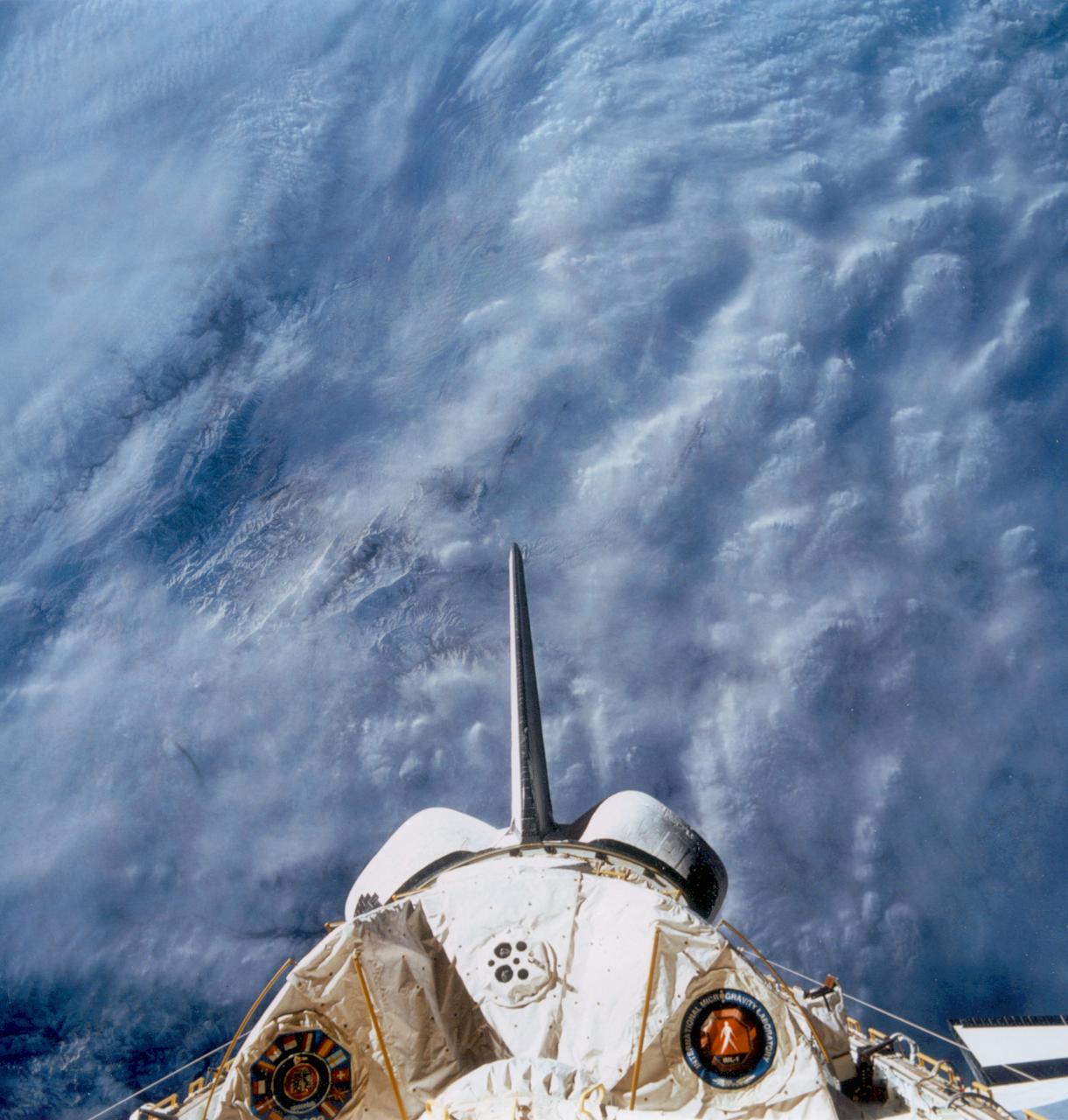
Viewing earth from STS-42.

S91-52649 (Nov 1991) ---- Astronaut Ulf Merbold, PhD, European Space Agency (ESA) Payload Specialist for STS-42, International Microgravity Laboratory (IML-1).
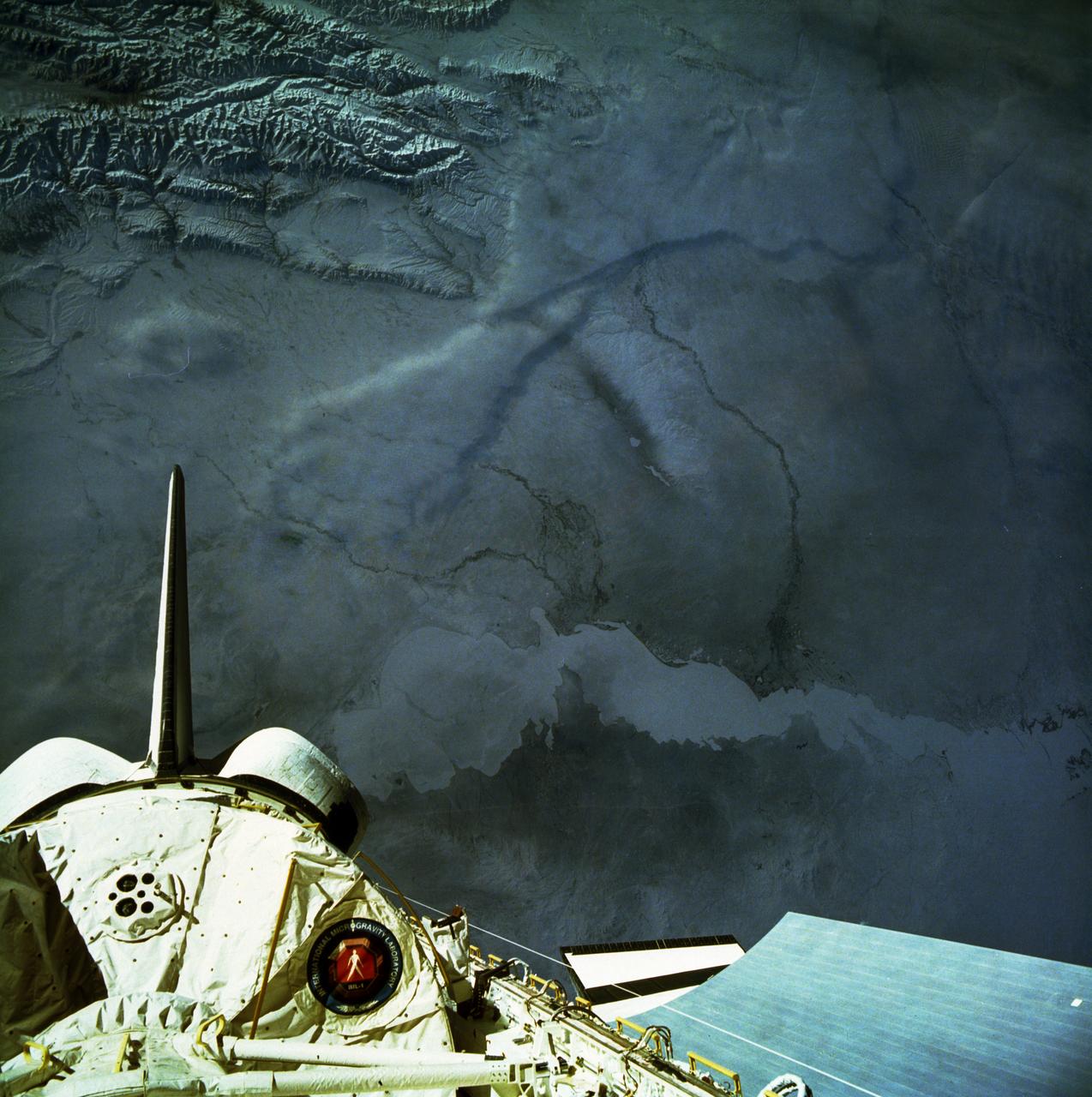
STS-42, Viewing earth with lots of snow, partial view of IML-1 (International Microgravity Laboratory) in cargo bay.
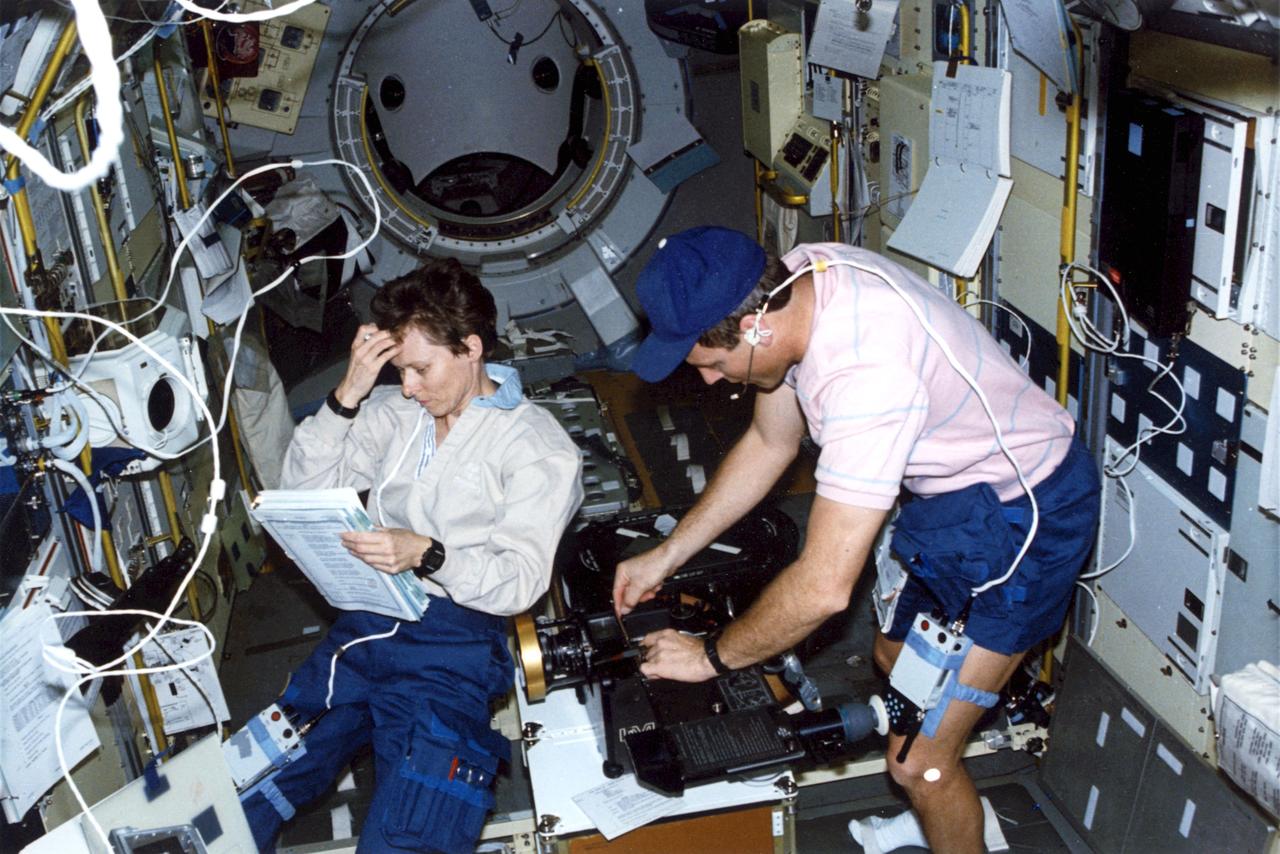
STS-42, Astronauts Steve Oswald and Canadian Roberta Bondar working in IML-1 (International Microgravity Laboratory).
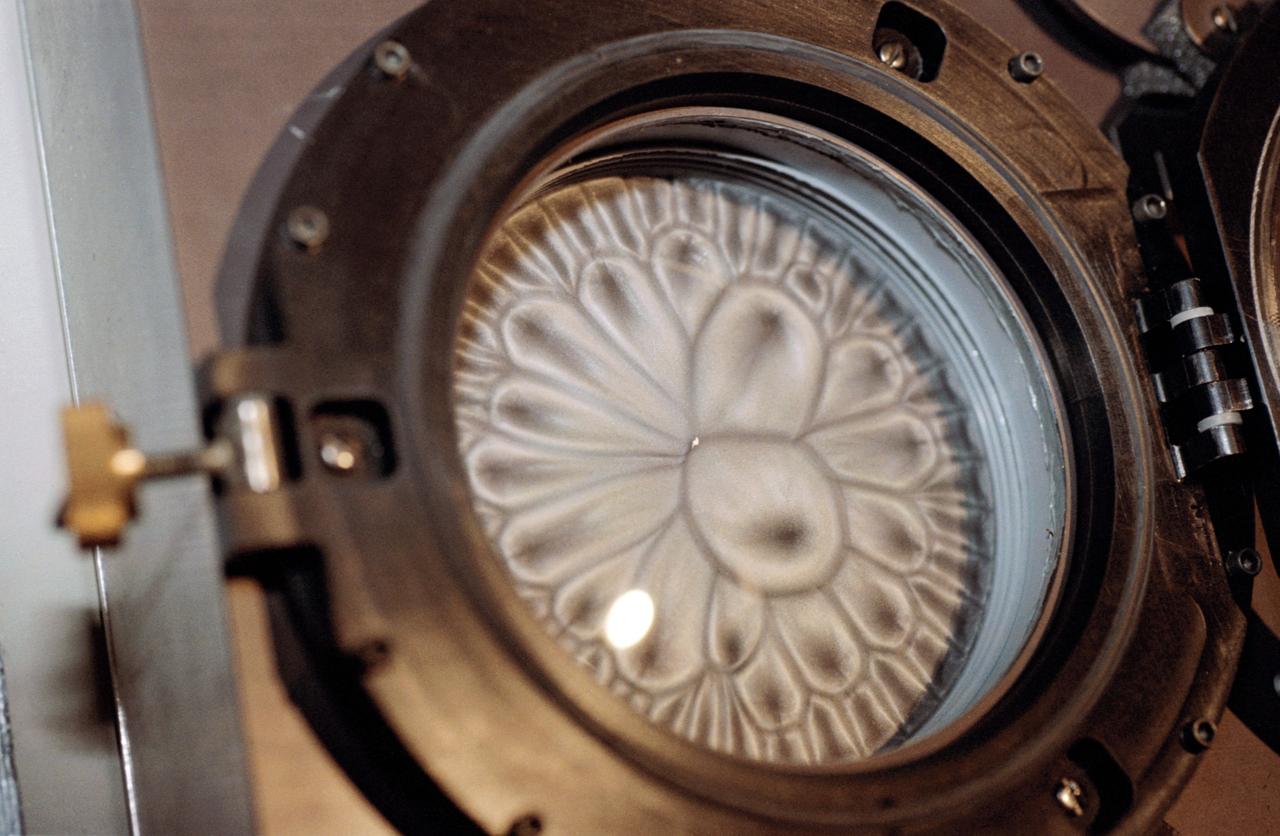
STS-42 closeup view shows Student Experiment 81-09 (SE 81-09), Convection in Zero Gravity experiment, with radial pattern caused by convection induced by heating an oil and aluminum powder mixture in the weightlessness of space. While the STS-42 crewmembers activated the Shuttle Student Involvement Program (SSIP) experiment on Discovery's, Orbiter Vehicle (OV) 103's, middeck, Scott Thomas, the student who designed the experiment, was able to observe the procedures via downlinked television (TV) in JSC's Mission Control Center (MCC). Thomas, now a physics doctoral student at the University of Texas, came up with the experiment while he participated in the SSIP as a student at Richland High School in Johnstown, Pennsylvia.

STS-42 Earth observation taken aboard Discovery, Orbiter Vehicle (OV) 103, is of New York City (NYC), New York (41.0N, 74.0W). Snow cover highlights the large areas of development and the many reservoirs in this wintertime scene of the metropolitan NYC area. Features such as Central Park in Manhattan, the George Washington Bridge connecting Manhattan with New Jersey, street patterns in most of the boroughs, La Guardia and JFK airports in Queens, and the extensive harbor system are easily identified.
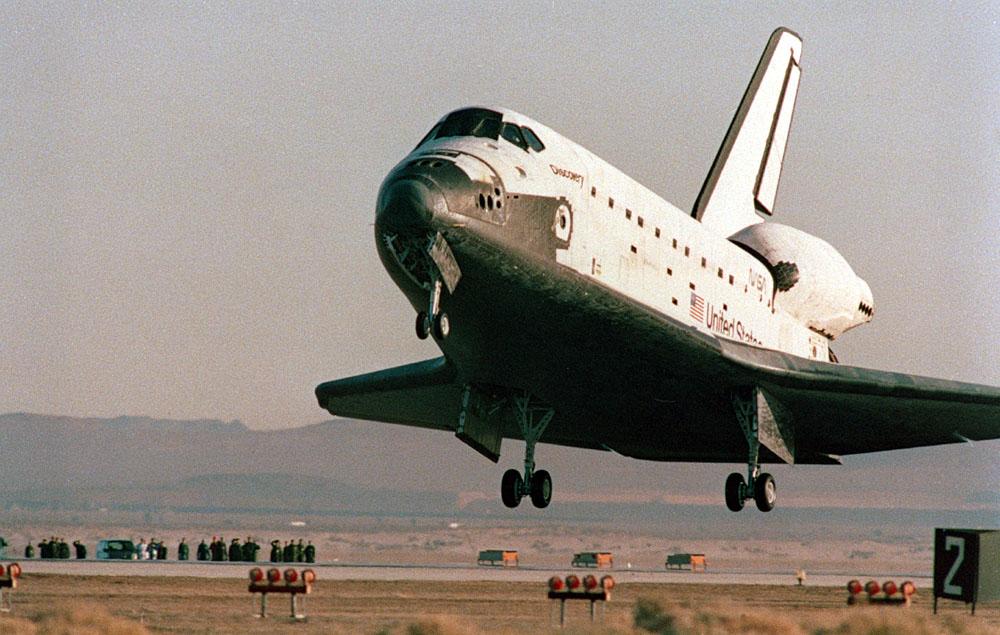
Space Shuttle Discovery STS-42) is just about to ease down its main gear on Runway 22 at Edwards Air Force Base in southern California. The successful landing completed an eight-day mission for five NASA astronauts and two payload specialists supporting the first International Microgravity Laboratory (IML-1) mission.
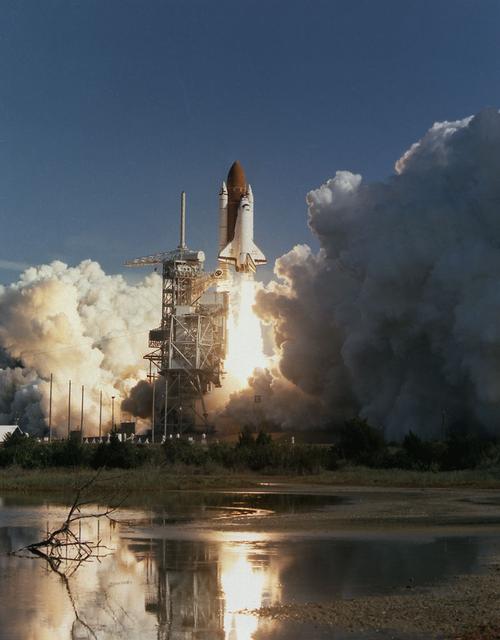
Space Shuttle Discovery (STS-42) lifted off from Kennedy Space Center (KSC) with International Microgravity Laboratory (IML-1) aboard the orbiter's cargo bay. IML missions were devoted to material and life sciences studies using the Spacelab Long Module.
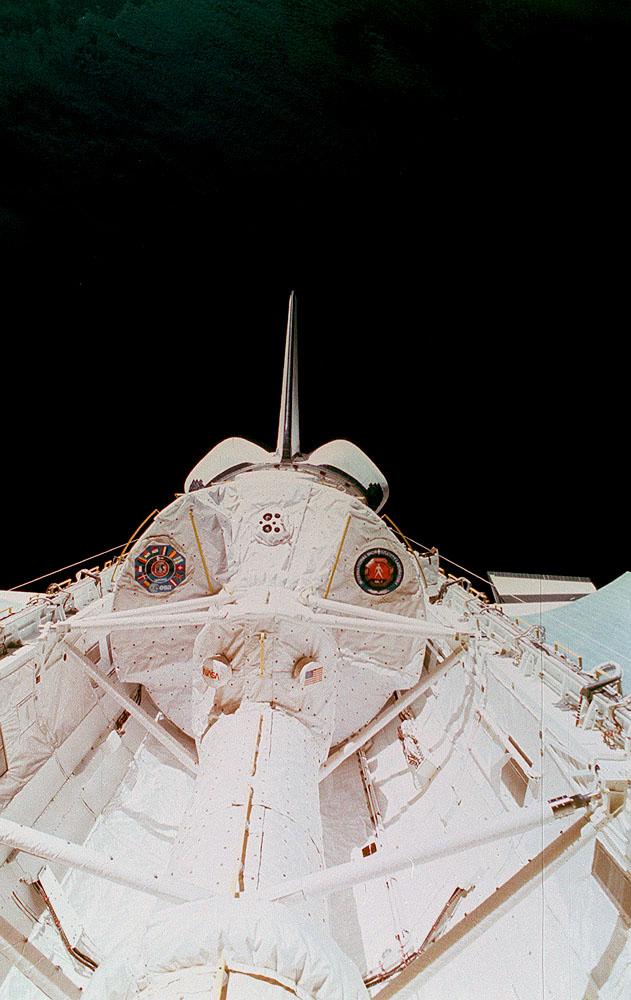
This is the Space Shuttle Orbiter Discovery, STS-42 mission, with the First International Microgravity Laboratory (IML-1) module shown in the cargo bay. IML-1, the first in a series of Shuttle flights, was dedicated to study the fundamental materials and life sciences in the microgravity environment inside Spacelab, a laboratory carried aloft by the Shuttle. The mission explored how life forms adapt to weightlessness and investigated how materials behave when processed in space. The IML program gave a team of scientists from around the world access to a unique environment, one that is free from most of Earth's gravity. The 14-nation European Space Agency (ESA), the Canadian Space Agency (SCA), the French National Center for Space Studies (CNES), the German Space Agency and the German Aerospace Research Establishment (DARA/DLR), and the National Space Development Agency of Japan (NASDA) participated in developing hardware and experiments for the IML missions. The missions were managed by NASA's Marshall Space Flight Center. The Orbiter Discovery was launched on January 22, 1992 for the IML-1 mission.
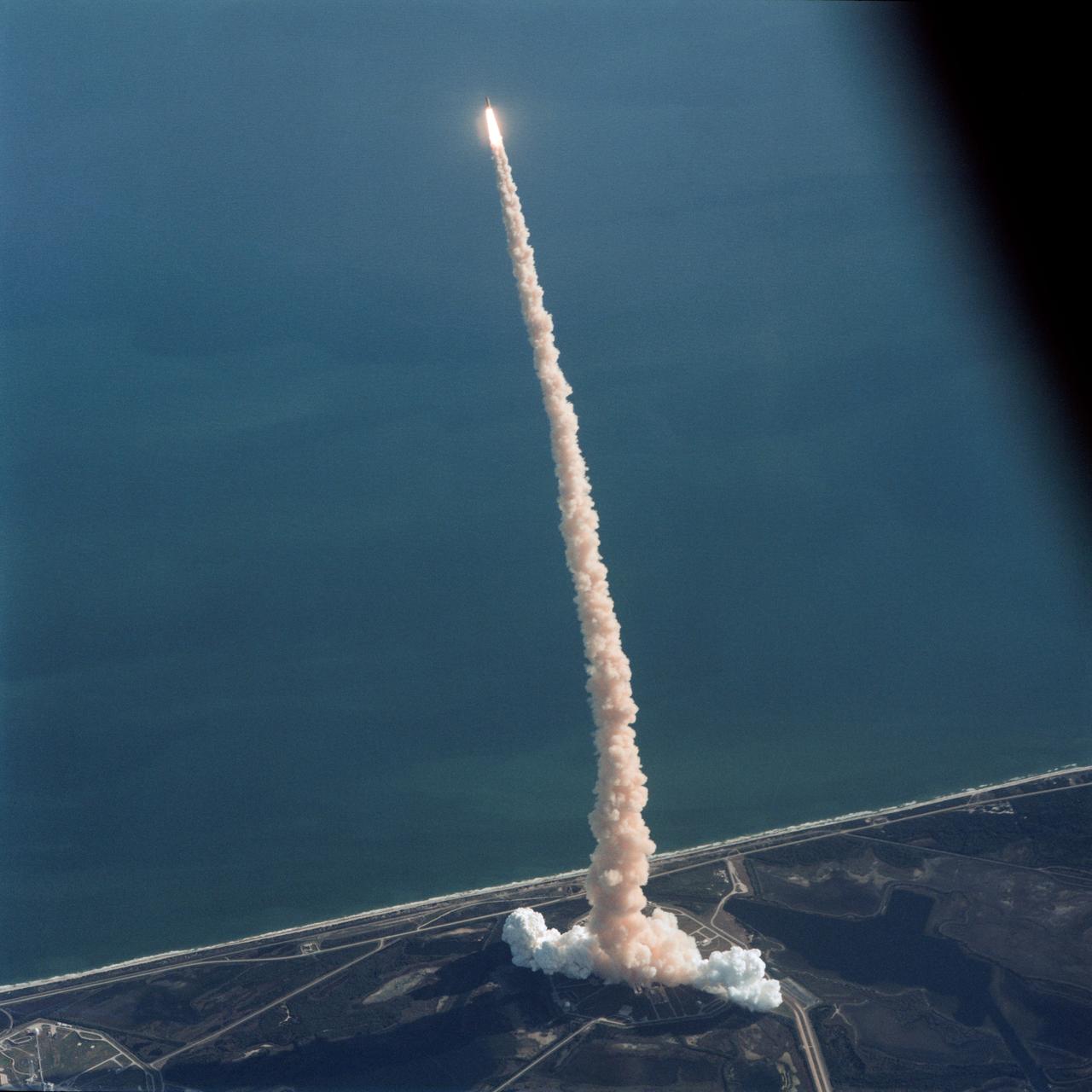
Air-to-air view, taken from the weather-monitoring Shuttle Training Aircraft (STA), shows STS-42 Discovery, Orbiter Vehicle (OV) 103, as it soars above the Atlantic Ocean after liftoff from a Kennedy Space Center (KSC) Launch Complex (LC) Pad at 9:52:33 am (Eastern Standard Time (EST)). The exhaust plume traces OV-103's flight path.
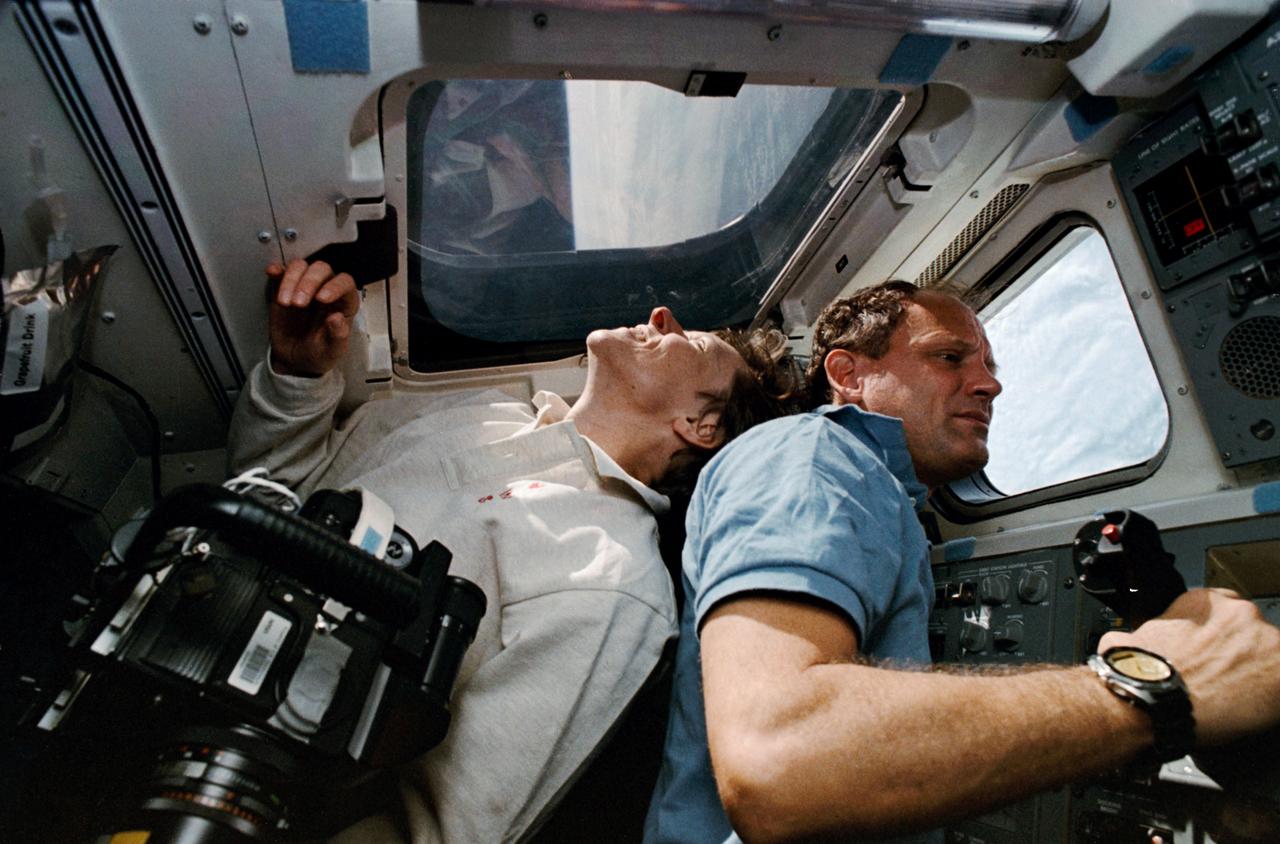
STS-42 Payload Specialist Roberta L. Bondar (light shirt) smiles as she looks out overhead window W7 while Mission Specialist (MS) and Payload Commander (PLC) Norman E. Thagard peers out aft viewing window W9. The two crewmembers are on the aft flight deck of Discovery, Orbiter Vehicle (OV) 103. In the foreground, a camera is ready to capture the Earth below.
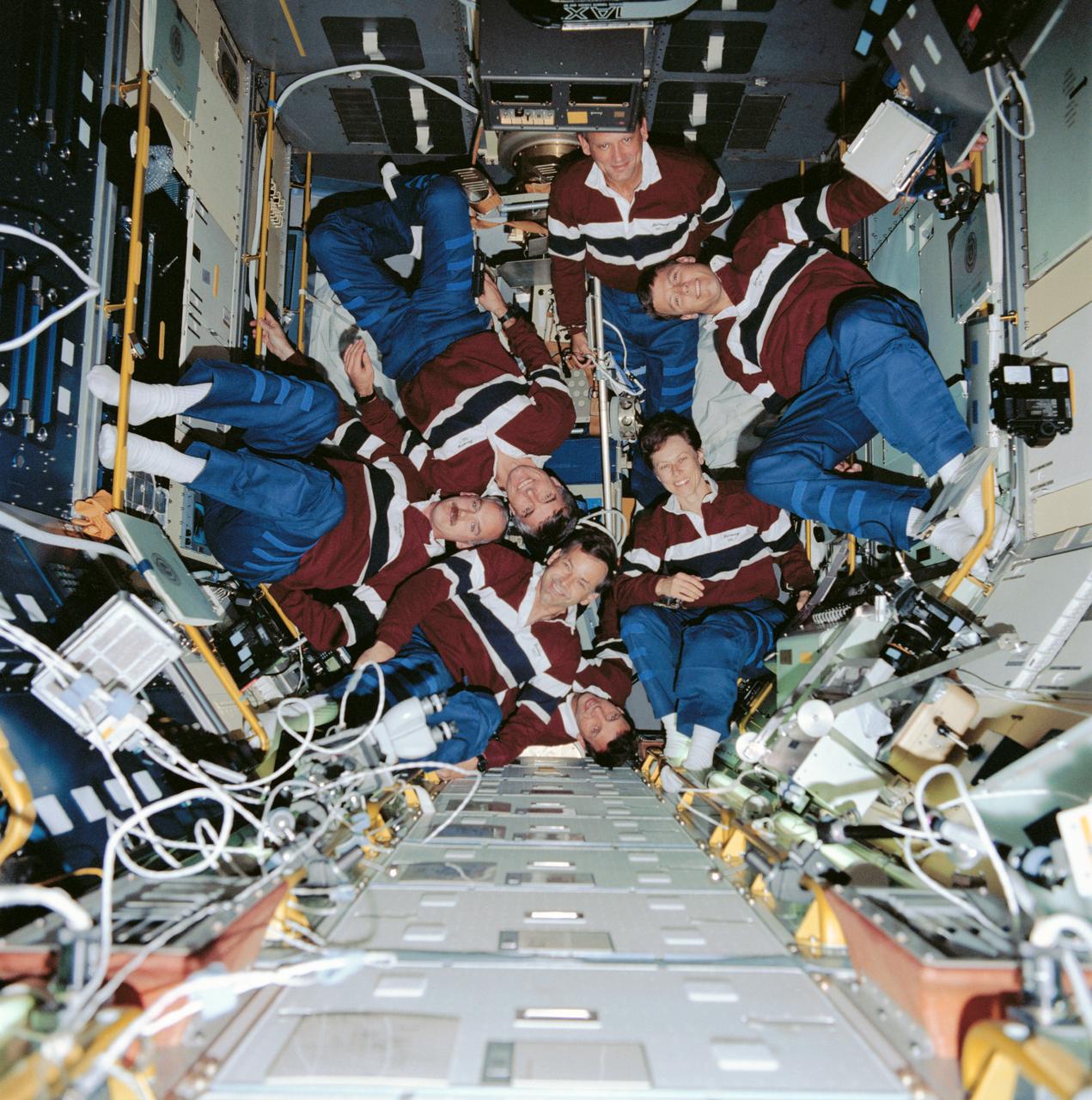
STS042-78-061 (22-30 Jan. 1992) --- The seven STS-42 crewmembers pose for a traditional in-space portrait in the shirt-sleeve environment of the International Microgravity Laboratory (IML-1) science module in the shuttle's cargo bay. (Hold picture with index numbers at top.) David C. Hilmers, mission specialist, is at top center of the 70mm image. Others pictured are (clockwise) Ronald J. Grabe, mission commander; William F. Readdy; mission specialist; Ulf Merbold, European Space Agency (ESA) payload specialist; Norman E. Thagard, payload commander; Stephen S. Oswald, pilot; and Roberta L. Bondar, Canadian payload specialist. The rotating chair, used often in biomedical tests on the eight-day flight, is (partially obscured) in center frame.
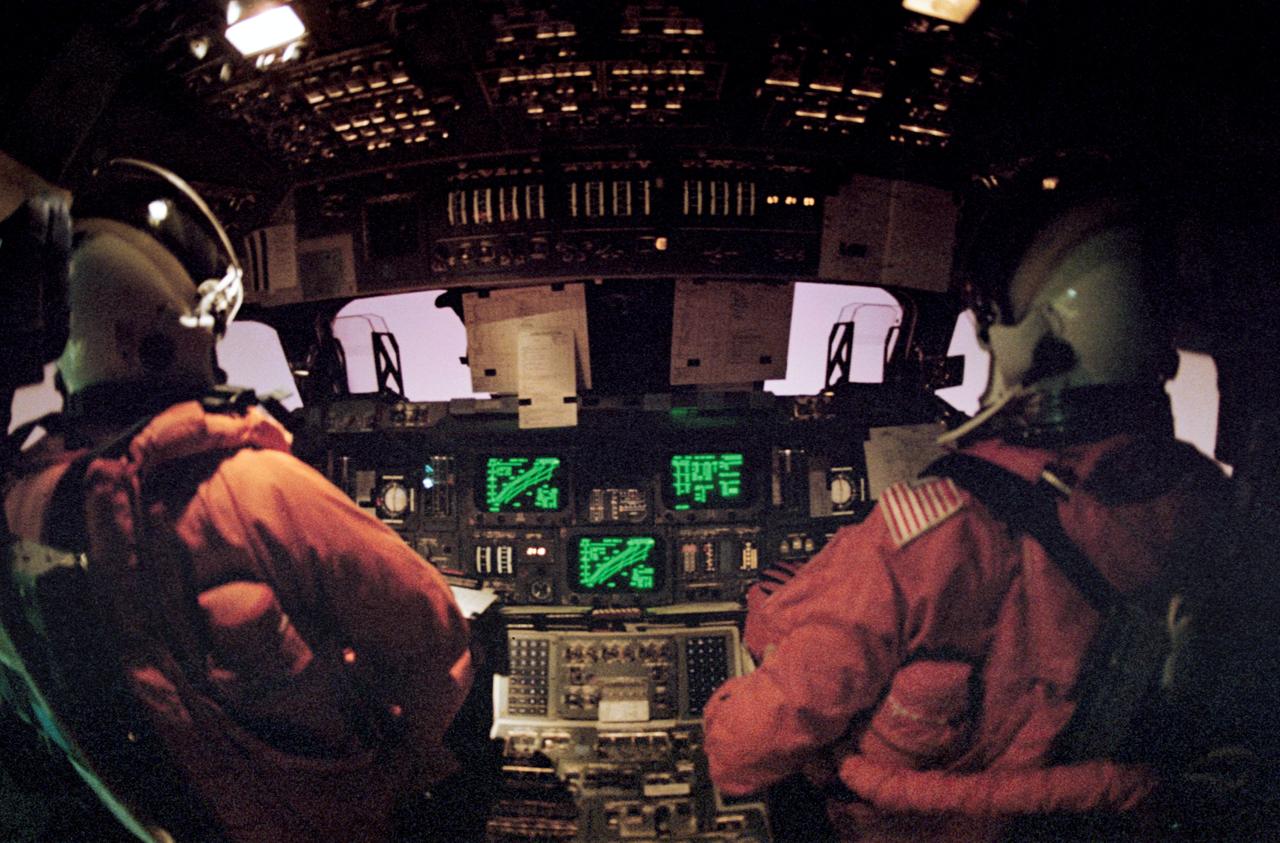
STS042-45-033 (30 Jan. 1992) --- Astronauts Ronald J. Grabe (left) and Stephen S. Oswald man the commander and pilot stations, respectively, during the entry phase of the STS-42 mission. The pink glow through the front windows telltale of friction caused heat encountered upon passing through Earth's atmosphere on the return trip home.
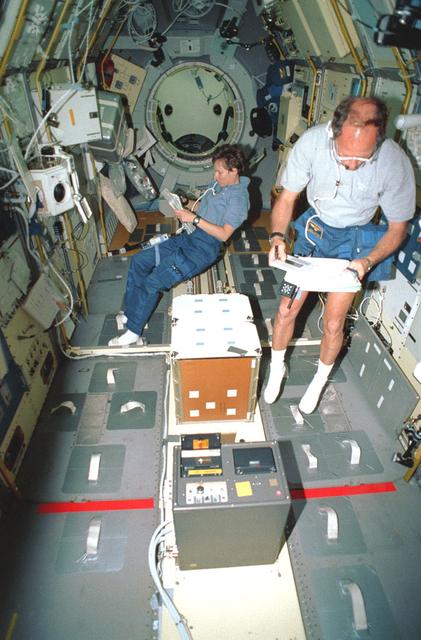
Onboard Space Shuttle Discovery (STS-42) Astronaut Norman E. Thagard, payload commander, and Canadian payload specialist Roberta L. Bondar are busily engaged with experiments in the International Microgravity Laboratory (IML-1) science module. Bondar reads a checklist near the Biorack while Thagard performs a VCR tape change-out. The two, along with four other NASA astronauts and a second IML-1 payload specialist spent more than eight days conducting experiments in Earth orbit. Part of the Space Acceleration Measurement System is in center foreground.
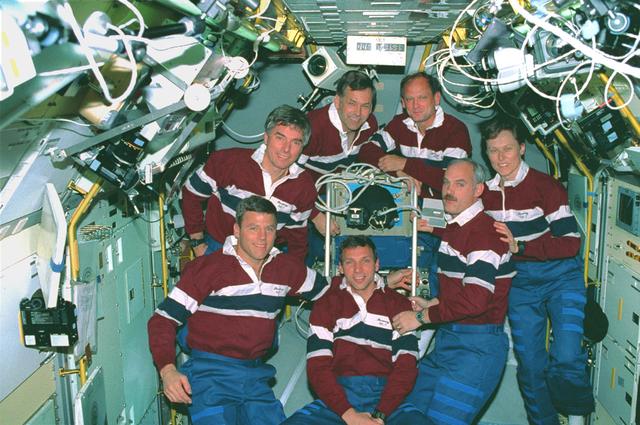
Onboard Space Shuttle Discovery (STS-42) the seven crewmembers pose for a traditional in-space portrait in the shirt-sleeve environment of the International Microgravity Laboratory (IML-1) science module in the Shuttle's cargo bay. Pictured are (clockwise from top),Commander Ronald J. Grabe, payload commander Norman E. Thagard, payload specialist Roberta L. Bondar; mission specialists William F. Readdy and David C. Hilmers; pilot Stephen S. Oswald and payload specialist Ulf Merbold. The rotating chair, used often in biomedical tests on the eight-day flight, is in center frame.
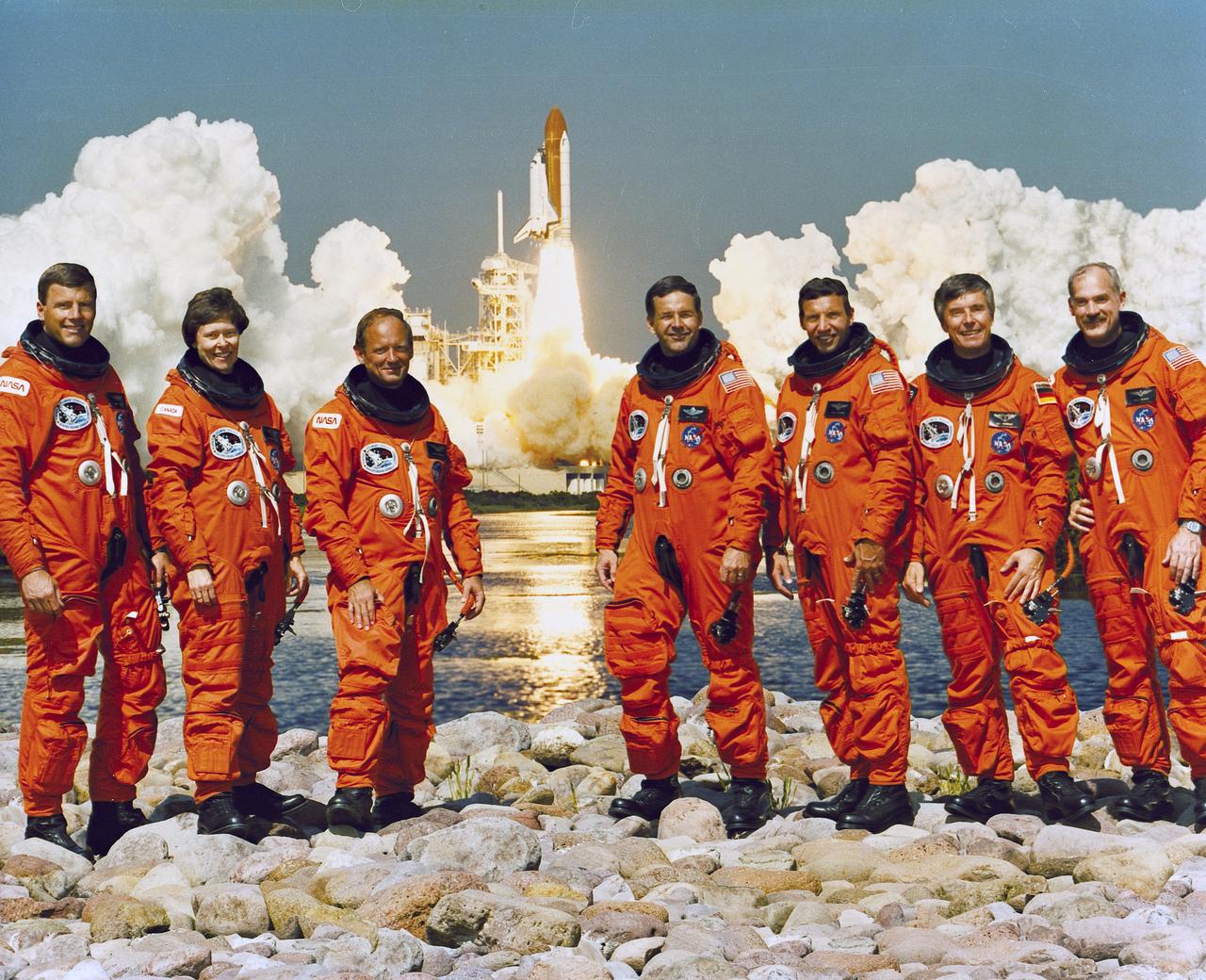
The STS-42 crew portrait includes from left to right: Stephen S. Oswald, pilot; Roberta L. Bondar, payload specialist 1; Norman E. Thagard, mission specialist 1; Ronald J. Grabe, commander; David C. Hilmers, mission specialist 2; Ulf D. Merbold, payload specialist 2; and William F. Readdy, mission specialist 3. Launched aboard the Space Shuttle Discovery on January 22, 1992 at 9:52:33 am (EST), the STS-42 served as the International Microgravity Laboratory-1 (ML-1 ) mission.
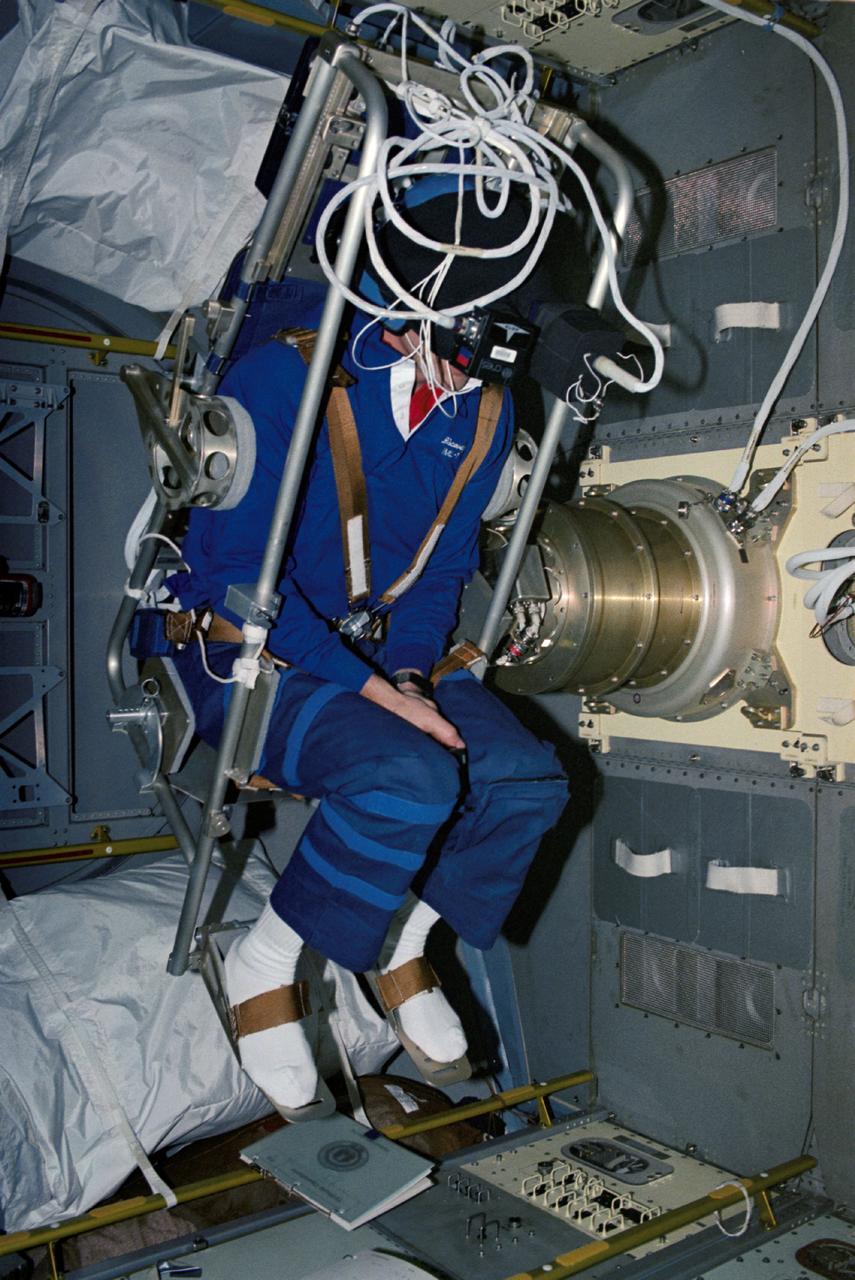
STS042-27-037 (22-30 Jan. 1992) --- Astronaut David C. Hilmers, STS-42 mission specialist, wearing a helmet assembly, sits in the Microgravity Vestibular Investigation (MVI) rotating chair. The scene is in the International Microgravity Laboratory (IML-1) science module aboard Discovery. Hilmers, a mission specialist, and six other crewmembers spent more than eight days in Earth-orbit conducting experiments. Hilmer's helmet assembly is outfitted with accelerometers to measure head movements and visors that fit over each eye independently to provide visual stimuli. The chair system has three movement patterns: "sinusoidal" or traveling predictably back and forth over the same distance at a constant speed; "pseudorandom" or moving back and forth over the varying distances; and "stepped" or varying speeds beginning and stopping suddenly.
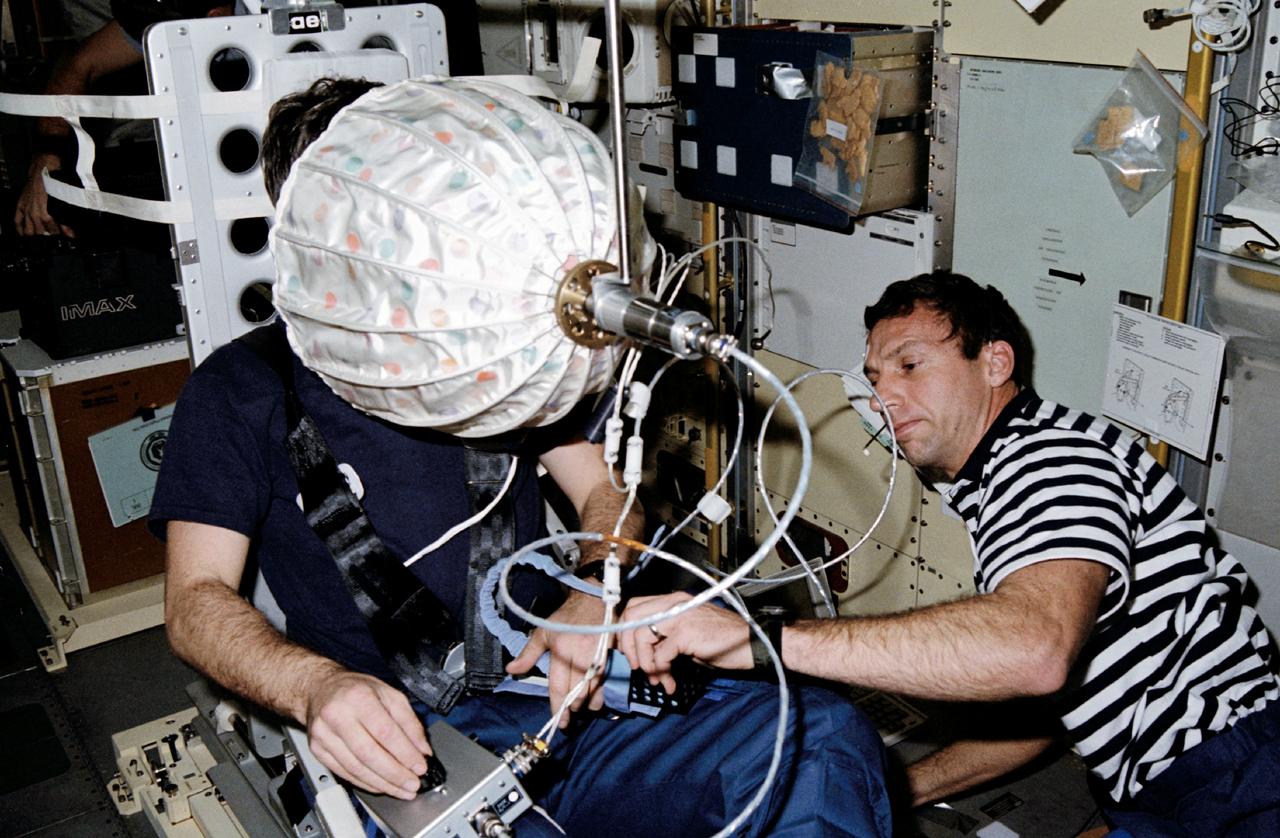
STS042-203-024 (22-30 Jan. 1992) --- Astronaut David C. Hilmers (right), STS-42 mission specialist, assists European Space Agency (ESA) payload specialist Ulf Merbold with the visual stimulator experiment on the Space Shuttle Discovery's middeck. This particular test is part of an ongoing study of the Space Adaptation Syndrome (SAS). Seated in a stationary mini-sled, Merbold (or any other subject for this test) stares at an umbrella-shaped rotating dome with a pattern of colored dots on its interior. While observing the rotating dome, the subject turns a knob to indicate his perception of body rotation. The strength of circular vection is calculated by comparing the signals from the dome and the knob. The greater the false sense of circular vection, the more the subject is relying on visual information instead of otolith information.
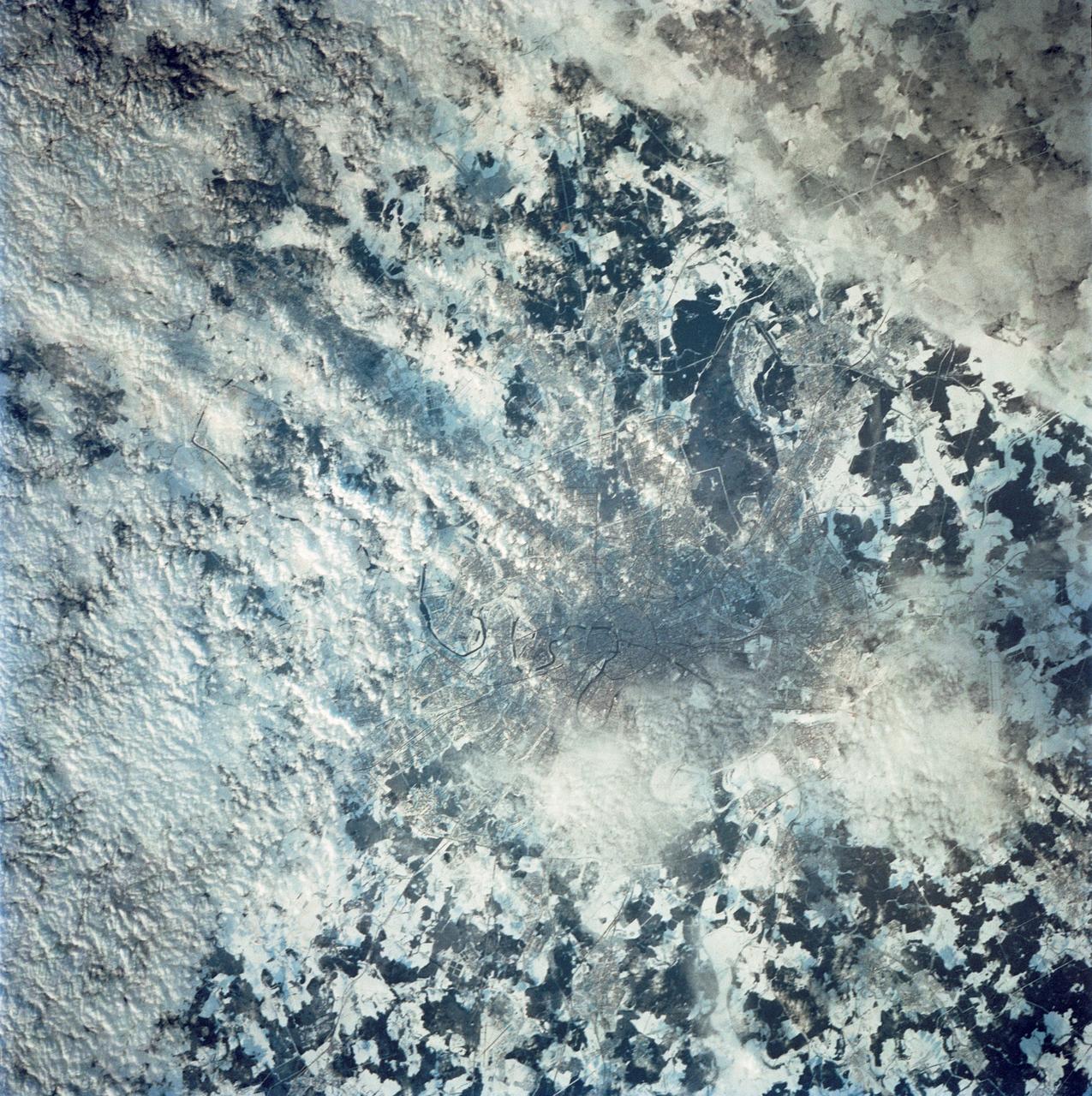
STS042-80-000AV (22-30 Jan. 1992) --- Moscow is arranged as a series of concentric transportation routes crossed by straight spokes which lead away from the Kremlin at the city center. One of the inner rings, the Garden Ring, follows the line of the Sixteenth Century city wall and moat. Both this and the outer ring of the Moscow Circular Motorway can be seen. The Kremlin, established in the Twelfth Century, lies on the north bank of the winding Moskva River. Very large high-rise buildings were erected after World War II. Clusters of these produce a coarser pattern and can be detected at two points within the outer ring road. Of the five airports surrounding the city, Vnukovo Airport to the south is easily distinguished, and Sheremetyevo to the west can also be delineated. The once-secret Ramenskoye Airport, with the longest runways in the world, lies under clouds to the northeast.
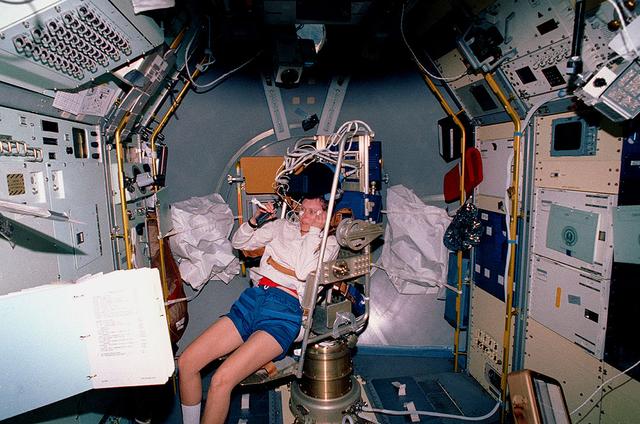
This Space Shuttle Orbiter Discovery (STS-42) onboard photo shows Canadian Payload Specialist Roberta Bondar getting into the Microgravity Vestibular Investigation (MVI) chair to begin an experiment in the International Microgravity Lab-1 (IML-1) Science Module. The (MVI) chair was designed to test the crew member's visual and vestibular responses to head and body movements.
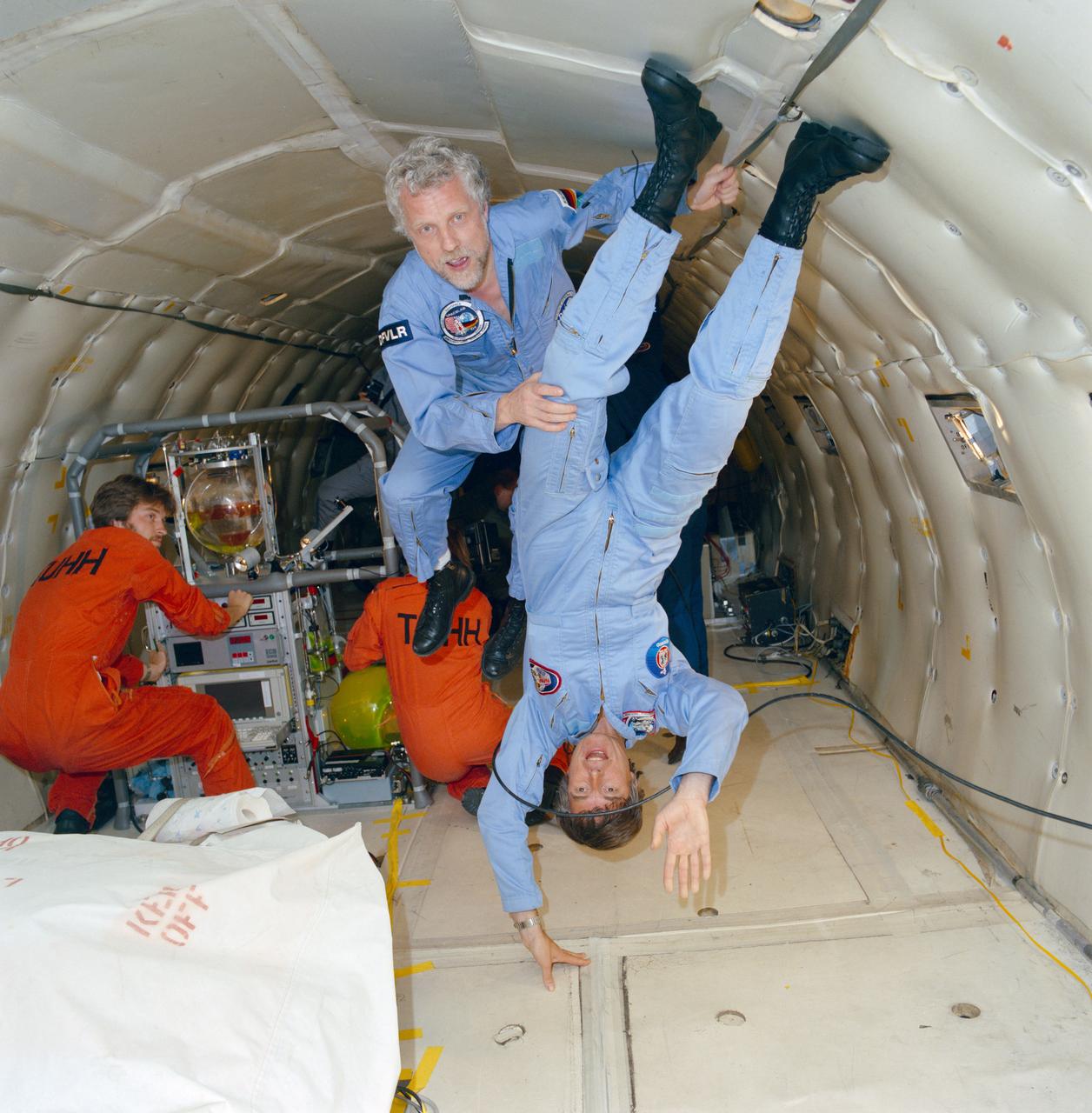
S88-37966 (2 Oct 1988) --- European Space Agency payload specialists Ulf Merbold (STS-42, right) and Reinhold Furrer (STS 61-A) get the "feel" of zero-gravity aboard NASA's KC-135 aircraft over the Gulf of Mexico.

jsc2024e052328 (July 22, 2024) --- NASA’s SpaceX Crew-9 Mission Specialist Stephanie Wilson focuses during the crew equipment interface test (CEIT). She has collectively spent 42 days in space aboard three space shuttle Discovery missions – STS-120, STS-121, and STS-131. Credit: SpaceX
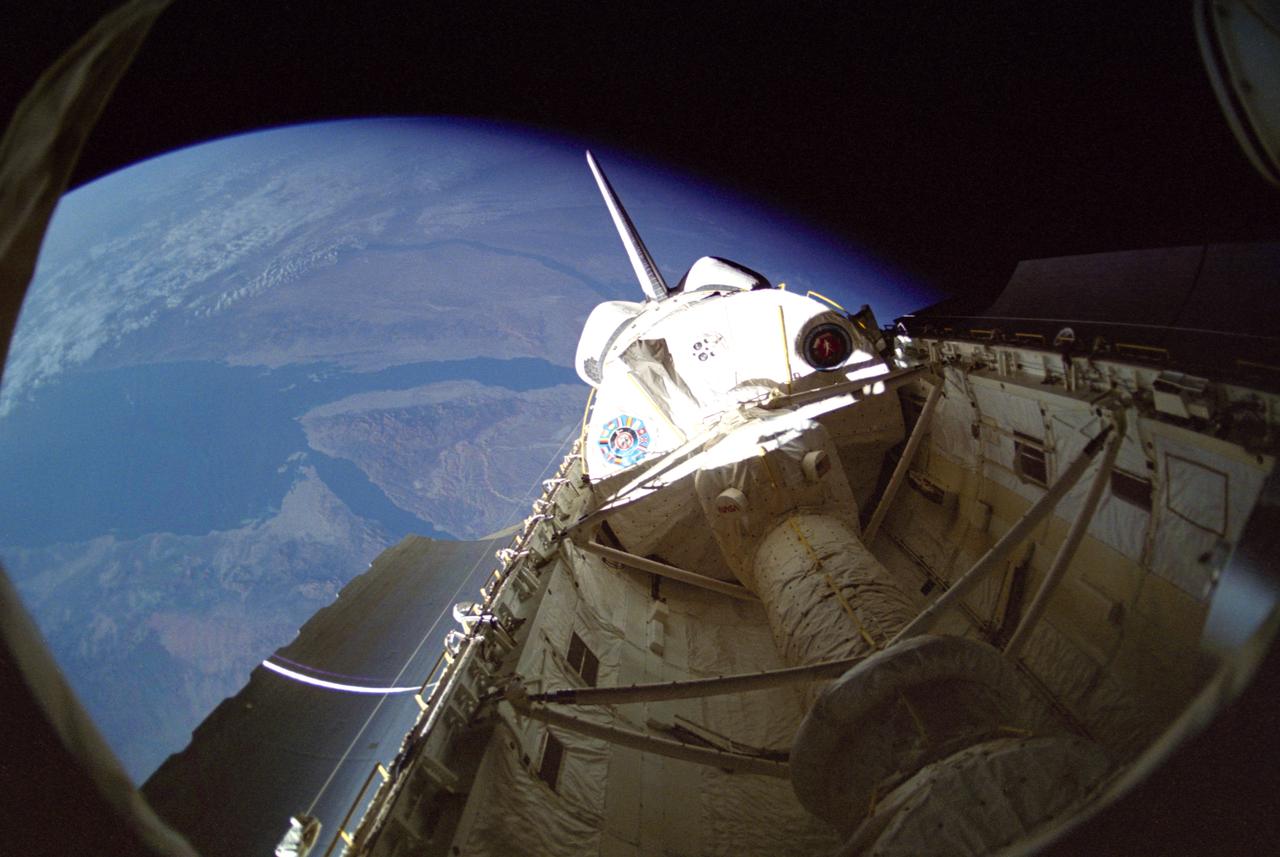
STS042-25-027 (30 Jan 1992) --- STS-42 International Microgravity Laboratory 1 (IML-1) Spacelab module and Spacelab tunnel (foreground) exteriors are documented in the payload bay (PLB) of Discovery, Orbiter Vehicle (OV) 103, and backdropped against the Red Sea and part of the Sinai Peninsula.
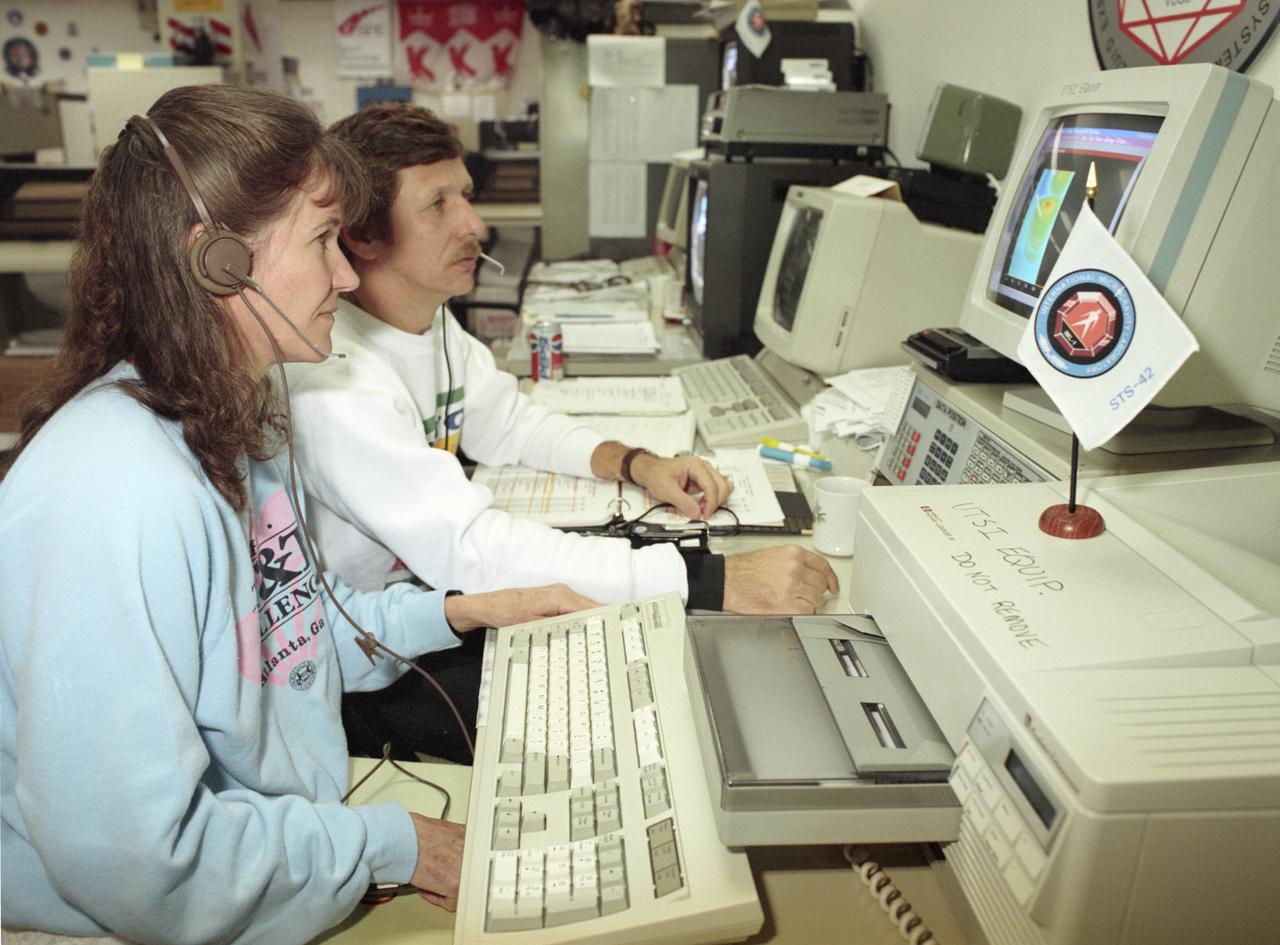
The primary payload for Space Shuttle Mission STS-42, launched January 22, 1992, was the International Microgravity Laboratory-1 (IML-1), a pressurized manned Spacelab module. The goal of IML-1 was to explore in depth the complex effects of weightlessness of living organisms and materials processing. Around-the-clock research was performed on the human nervous system's adaptation to low gravity and effects of microgravity on other life forms such as shrimp eggs, lentil seedlings, fruit fly eggs, and bacteria. Materials processing experiments were also conducted, including crystal growth from a variety of substances such as enzymes, mercury iodide, and a virus. The Huntsville Operations Support Center (HOSC) Spacelab Payload Operations Control Center (SL POCC) at the Marshall Space Flight Center (MSFC) was the air/ground communication channel used between the astronauts and ground control teams during the Spacelab missions. Featured are activities in the SL POCC during STS-42, IML-1 mission.

S91-51633 (November 1991) --- Astronaut Roberta L. Bondar, Canadian payload specialist.
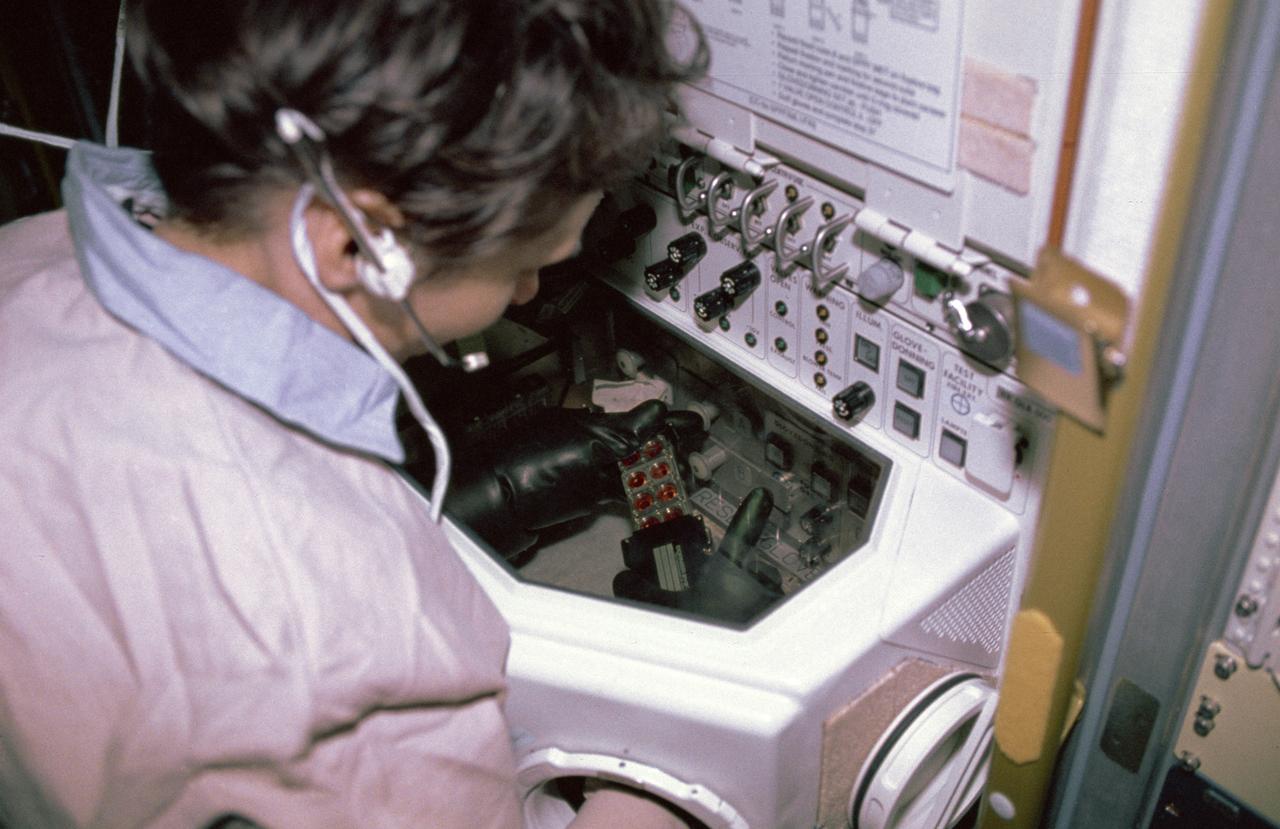
In this photograph, astronaut Roberta Bondar conducts a life science experiment by using the Biorack Glovebox (GBX) during the International Microgravity Laboratory-1 (IML-1) mission. The Biorack was a large multipurpose facility designed for studying the effects of microgravity and cosmic radiation on numerous small life forms such as cells, tissues, small organisms, and plants. Located at the Biorack, the GBX was an enclosed environment that protected samples from contamination and prevented liquid from escaping. Crewmembers handled the specimens with their hands inside gloves that extended into the sealed work area. A microscope and video camera mounted on the GBX door were used to observe and document experiments. Managed by the Marshall Space Flight Center, the IML-1 mission was the first in a series of Shuttle flights dedicated to fundamental materials and life sciences research and was launched aboard the Shuttle Orbiter Discovery (STS-42) on January 22, 1992.
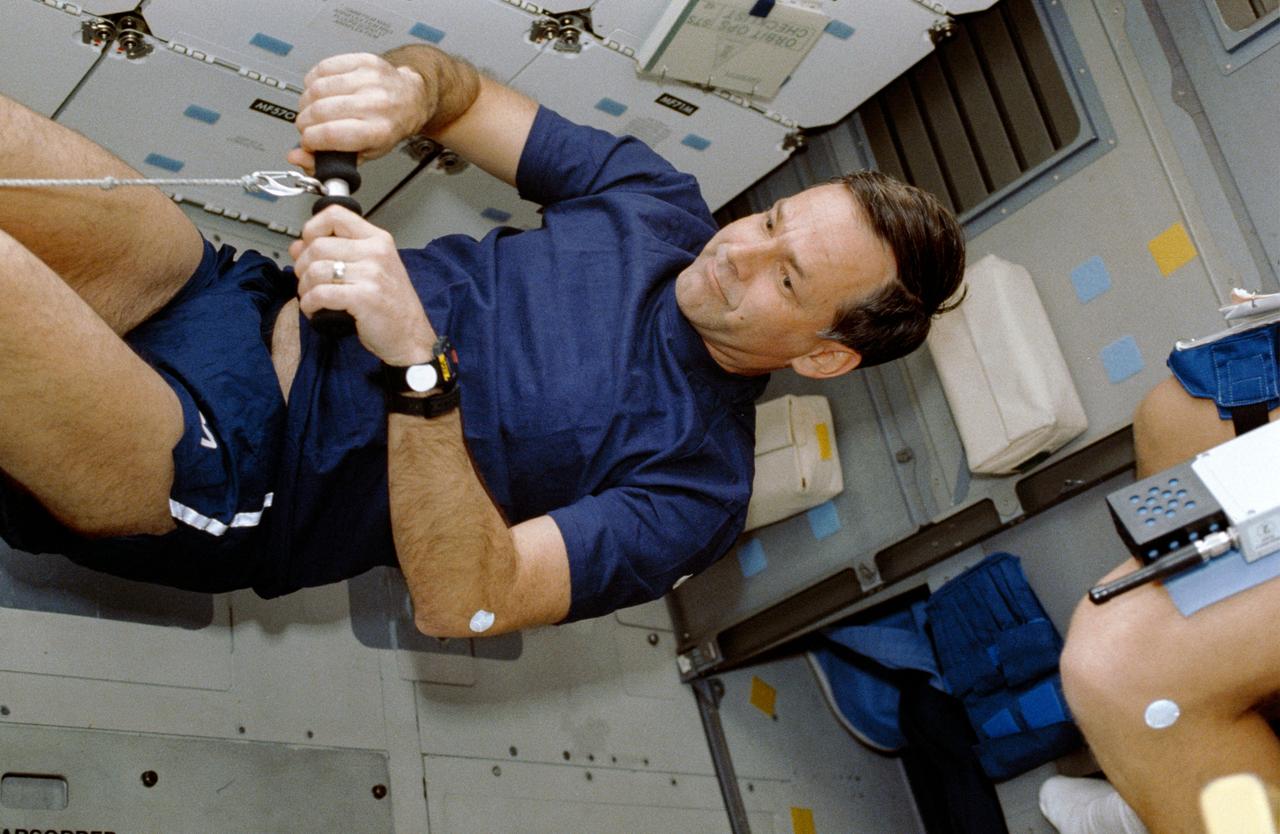
STS042-05-037 (30 Jan 1992) --- Astronaut Ronald J. Grabe, STS-42 commander, exercises using MK1 Rowing Machine on the middeck of Discovery, Orbiter Vehicle (OV) 103. Grabe is using the exercise device as part of Development Test Objective (DTO) 653, Evaluation of MK1 Rowing Machine. The forward lockers appear at Grabe's right and the sleep station behind him.
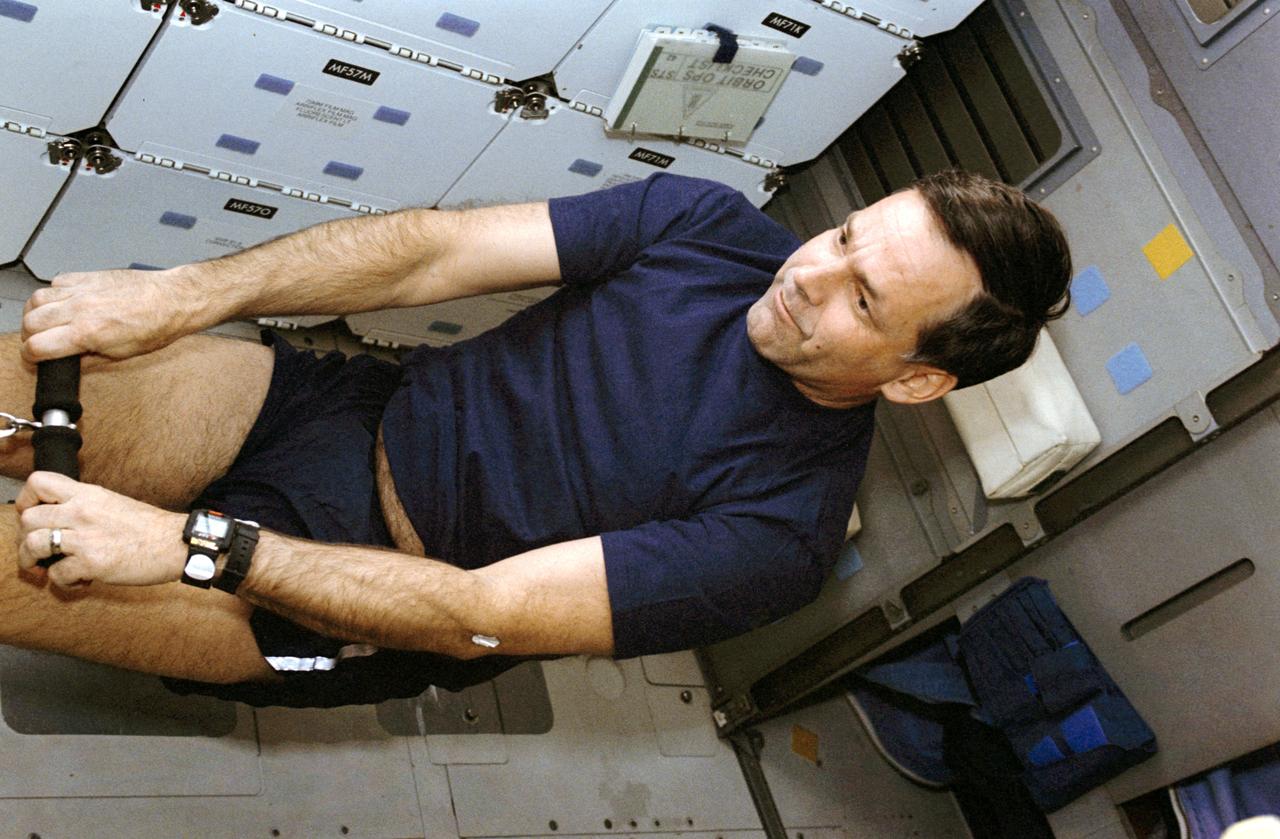
STS042-209-002 (22-30 Jan 1992) --- Astronaut Ronald J. Grabe, STS-42 mission commander, exercises on Discovery's middeck. Grabe, along with four other NASA astronauts and two International Microgravity Laboratory (IML-1) payload specialists spent more than eight days conducting experiments in Earth orbit.
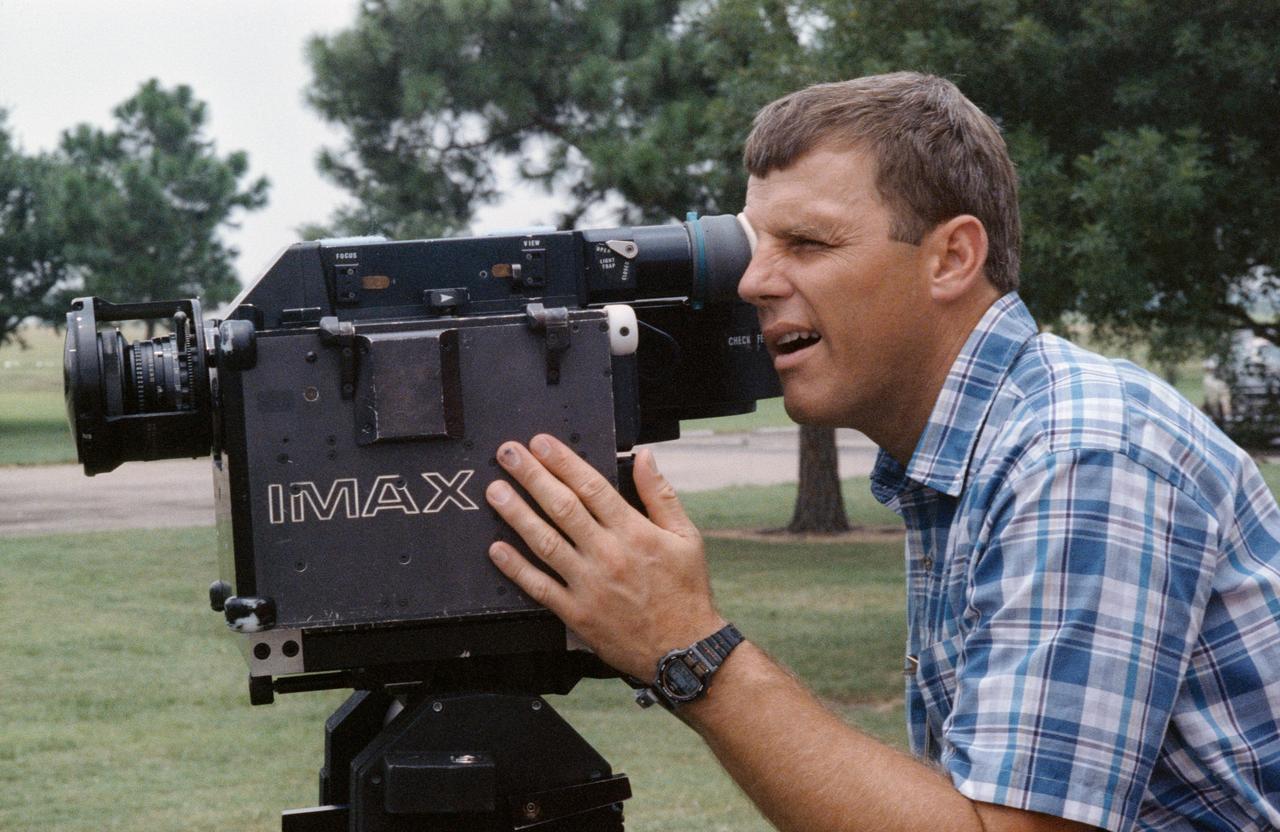
S91-42999 (20 July 1991) --- Astronaut Stephen S. Oswald, STS-42 pilot, uses the IMAX camera system (ICS) during training session held at Johnson Space Center?s (JSC) Manned Space Flight Exhibit Complex Bldg 90 (Rocket Park). Oswald squints as he looks through the ICS eyepiece.
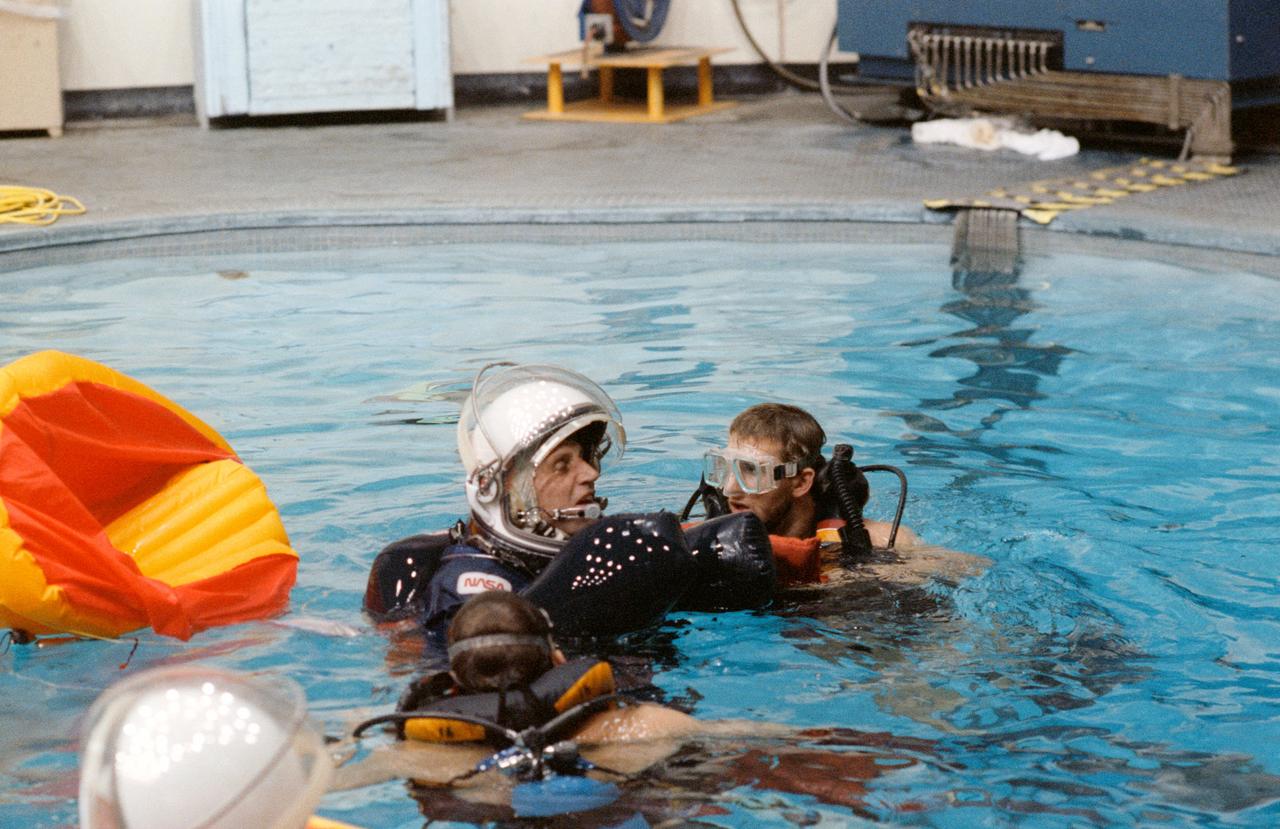
S91-51995 (26 Nov 1991) --- Astronaut David C. Hilmers, STS-42 mission specialist, wearing launch and entry suit (LES) and launch and entry helmet (LEH), floats in the water with the aid of an underarm flotation device as SCUBA-equipped divers look on. Behind Hilmers is his yellow and orange single person life raft. Hilmers is rehearsing launch emergency egress (bailout) procedures in the Johnson Space Center?s (JSC) Weightless Environment Training Facility (WETF) Bldg 29. The crewmembers would use this equipment in the event of an emergency bailout over water. The WETF's 25 ft deep pool is used to simulate the ocean.
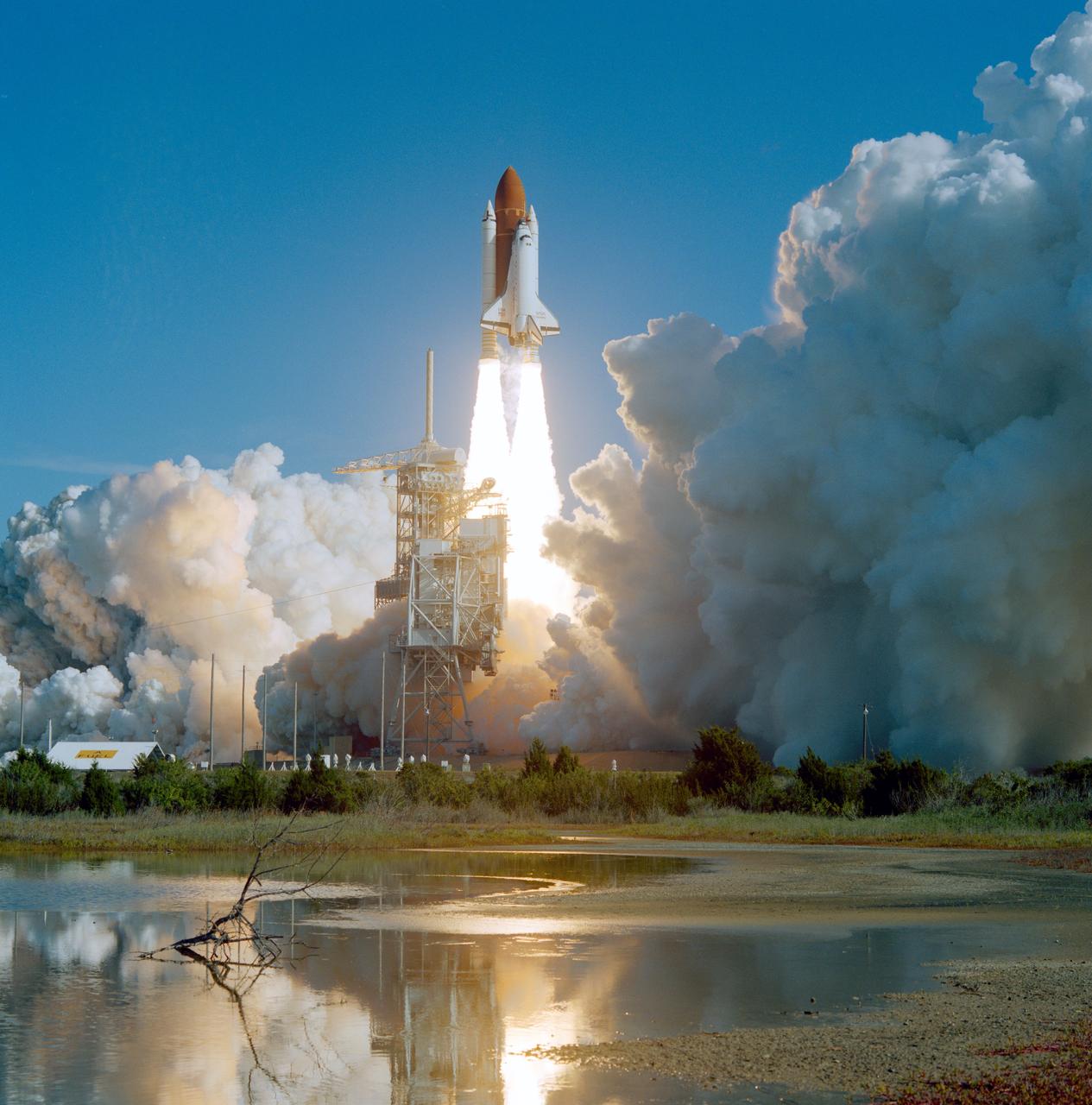
STS042-S-064 (22 Jan 1992) --- A horizontal image of liftoff of STS-42, with a crew of seven and the International Microgravity Laboratory (IML-1) onboard. Crewmembers are astronauts Ronald J. Grabe, mission commander; Stephen S. Oswald, pilot; Norman E. Thagard, payload commander; David C. Hilmers and William F. Readdy, both mission specialists; and payload specialists Roberta L. Bondar of Canada and Ulf Merbold, representing the European Space Agency (ESA). Liftoff occurred at 9:52:33 a.m. (EST), Jan. 22, 1992.

The Space Shuttle Endeavour, atop NASA's 747 Shuttle Carrier Aircraft (SCA), taking off for the Kennedy Space Center shortly after its landing on 11 October 1994, at Edwards, California, to complete mission STS-68. Endeavour was being ferried from the Kennedy Space Center, Florida, to Air Force Plant 42, Palmdale, California, where it will undergo six months of inspections, modifications, and systems upgrades. The STS-68 11-day mission was devoted to radar imaging of Earth's geological features with the Space Radar Laboratory.
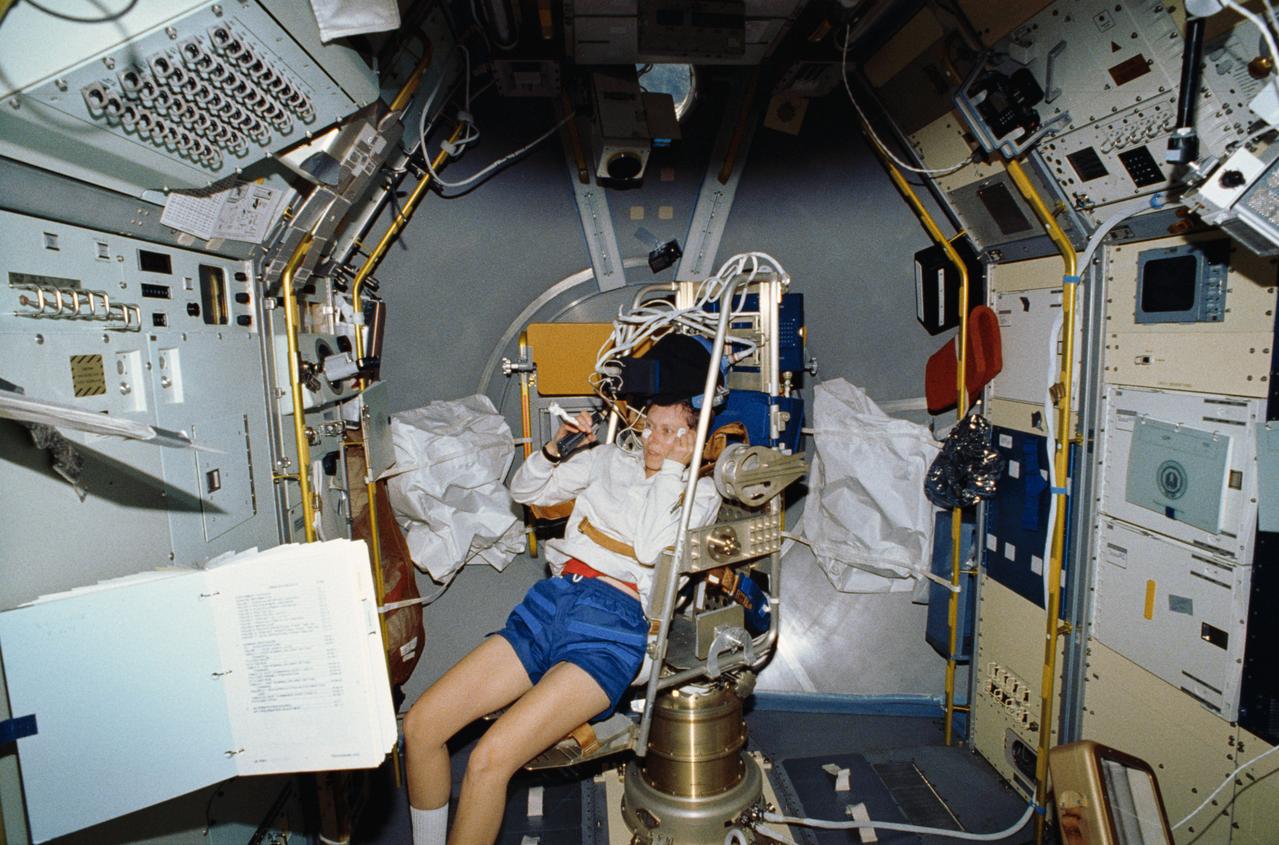
STS042-06-031 (30 Jan 1992) - - - STS-42 Payload Specialist Roberta L. Bondar gets into the Microgravity Vestibular Investigations (MVI) rotator chair to begin an experiment. The chair is mounted in the center aisle of the International Microgravity Laboratory 1 (IML-1) Spacelab (SL) module. Just above Bondar's head is the helmet assembly which is outfitted with accelerometers to measure head movements and visors that fit over each eye independently to provide visual stimuli. The chair system has three movement patterns: "sinusoidal" or traveling predictably back and forth over the same distance at a constant speed; "pseudorandom" or moving back and forth over varying distances; and "stepped" or varying speeds beginning and stopping suddenly.
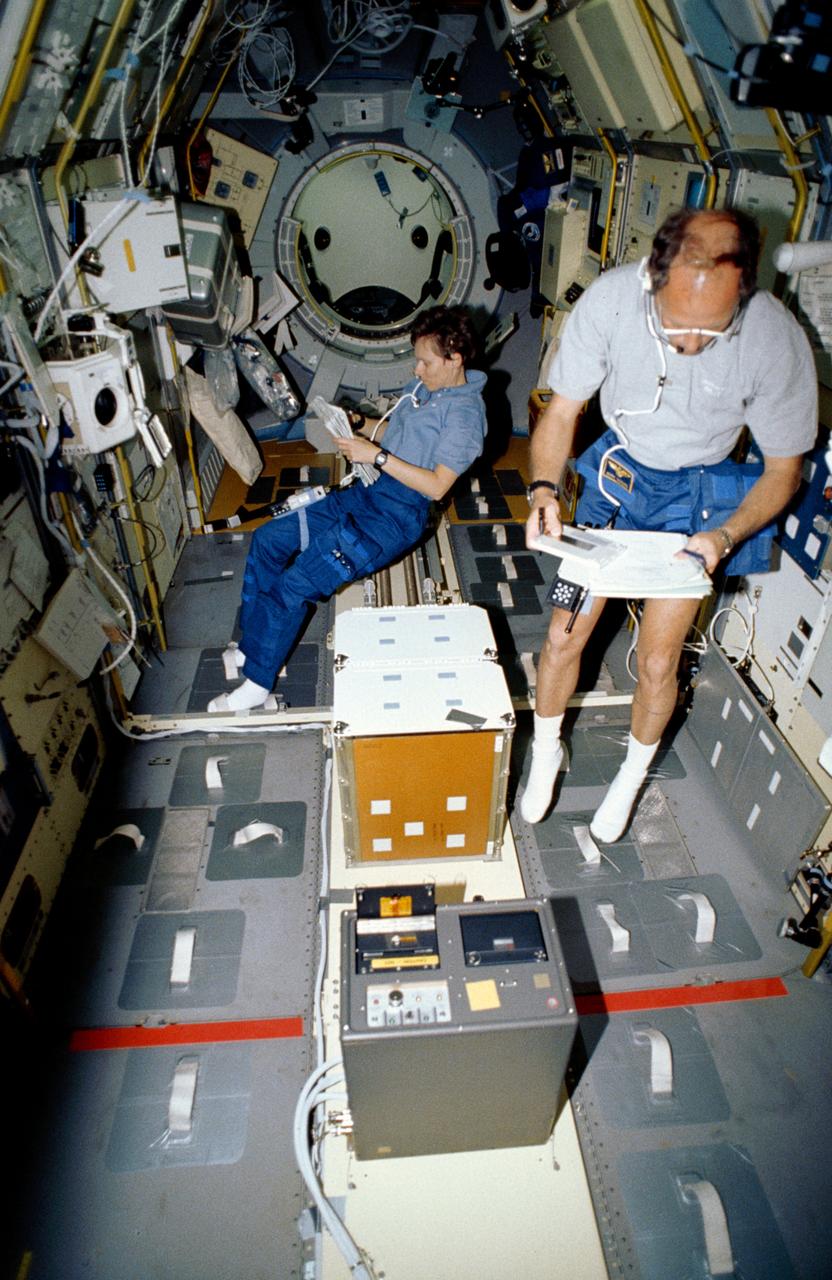
STS042-11-016 (30 Jan 1992) --- Astronaut Norman E. Thagard, STS-42 missions specialist and payload commander, and payload specialist Roberta L. Bondar are busily engaged with experiments in the International Microgravity Laboratory 1 (IML-1) Spacelab module. Bondar reads a checklist near the Rack 5 Biorack and glovebox while Thagard performs a VCR tape change-out. The Space Acceleration Measurement System (SAMS) (foreground) and shuttle middeck lockers are secured in IML-1's center aisle. In the background the open hatch and Spacelab tunnel interior are visible. Crewmembers enter and exit the IML-1 module via the Spacelab tunnel which connects to Discovery's, Orbiter Vehicle (OV) 103's, airlock.
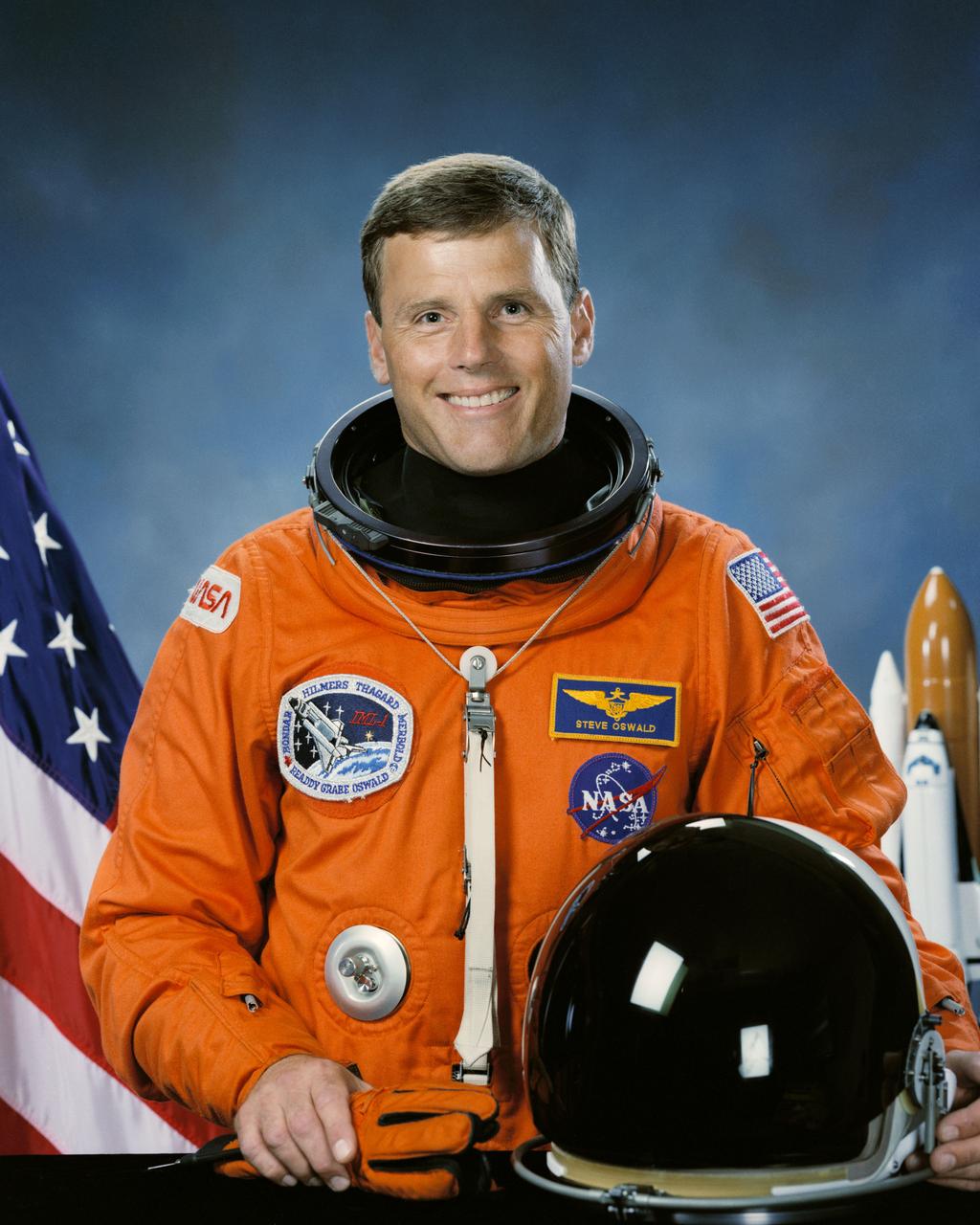
S92-31007 (March 1992) --- Astronaut Stephen S. Oswald.
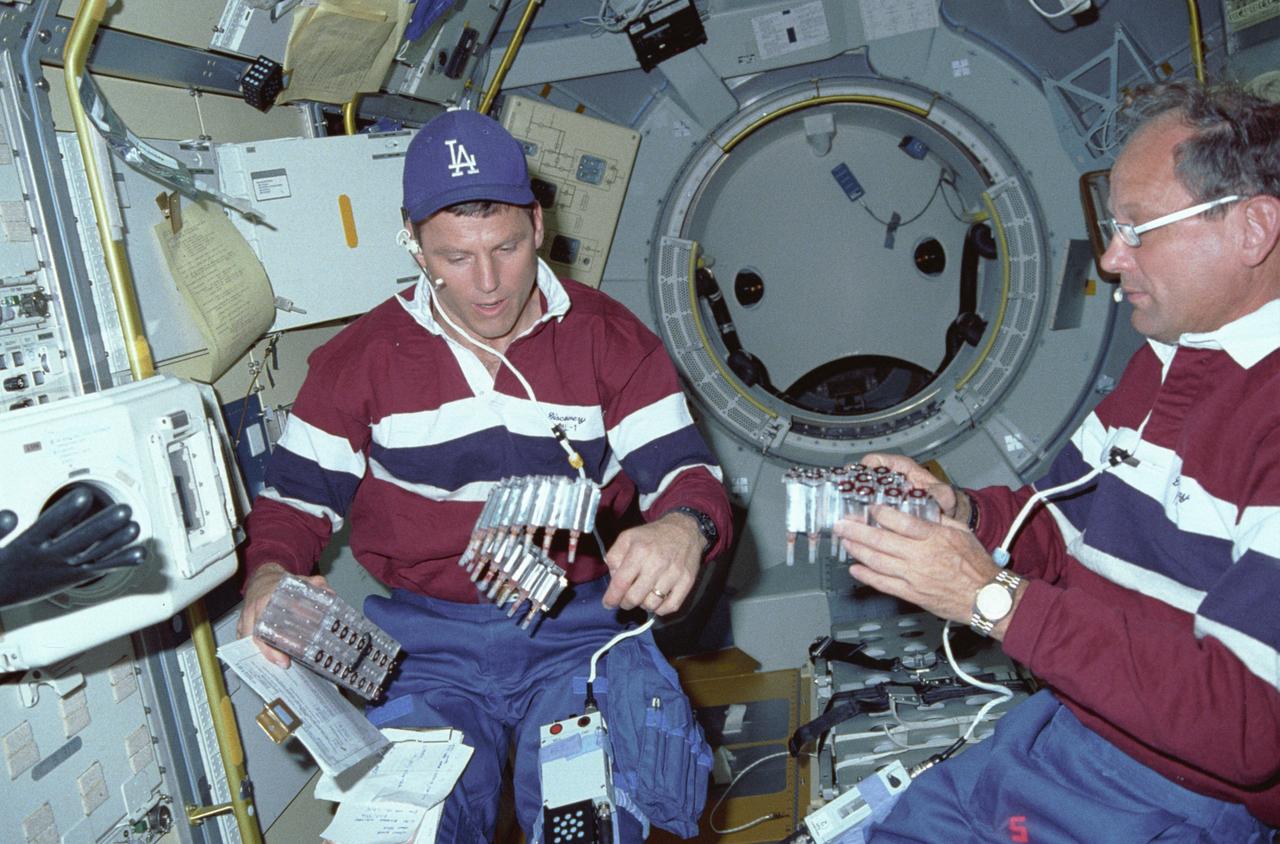
International Microgravity Laboratory-1 (IML-1) was the first in a series of Shuttle flights dedicated to fundamental materials and life sciences research with the international partners. The participating space agencies included: NASA, the 14-nation European Space Agency (ESA), the Canadian Space Agency (CSA), the French National Center of Space Studies (CNES), the German Space Agency and the German Aerospace Research Establishment (DAR/DLR), and the National Space Development Agency of Japan (NASDA). Dedicated to the study of life and materials sciences in microgravity, the IML missions explored how life forms adapt to weightlessness and investigated how materials behave when processed in space. Both life and materials sciences benefited from the extended periods of microgravity available inside the Spacelab science module in the cargo bay of the Space Shuttle Orbiter. In this photograph, Astronauts Stephen S. Oswald and Norman E. Thagard handle ampoules used in the Mercuric Iodide Crystal Growth (MICG) experiment. Mercury Iodide crystals have practical uses as sensitive x-ray and gamma-ray detectors. In addition to their exceptional electronic properties, these crystals can operate at room temperature rather than at the extremely low temperatures usually required by other materials. Because a bulky cooling system is urnecessary, these crystals could be useful in portable detector devices for nuclear power plant monitoring, natural resource prospecting, biomedical applications in diagnosis and therapy, and astronomical observation. Managed by the Marshall Space Flight Center, IML-1 was launched on January 22, 1992 aboard the Space Shuttle Orbiter Discovery (STS-42 mission).
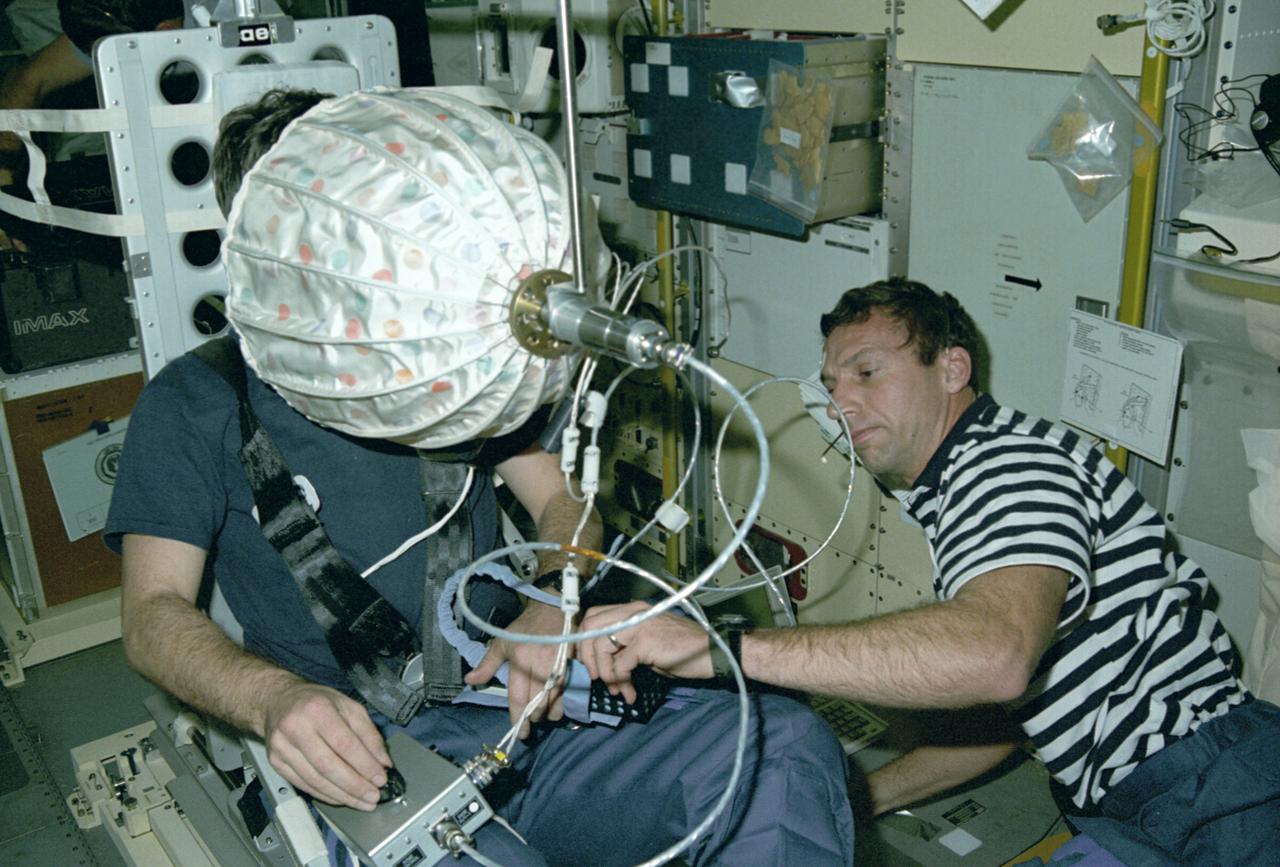
Astronaut Ulf Merbold on the stationary seat of the mini-sled, stares into an umbrella-shaped rotating dome with colored dots. Astronaut Merbold, assisted by astronaut David Hilmer, are conducting the Visual Simulator Experiment, a space physiology experiment. The Visual Stimulator Experiment measures the relative importance of visual and vestibular information in determining body orientation. When a person looks at a rotating visual field, a false sensation of self-rotation, called circularvection, results. In weightlessness, circularvection should increase immediately and may continue to increase as the nervous system comes to rely more on visual than vestibular cues. As Astronaut Merbold stares into the rotating dome with a pattern of colored dots and its interior, he turns a knob to indicate his perception of body rotation. The strength of circularvection is calculated by comparing signals from the dome and the knob. The greater the false sense of circularvection, the more the subject is relying on visual information instead of otolith information. The IML-1 mission was the first in a series of Shuttle flights dedicated to fundamental materials and life sciences research with the international partners. The participating space agencies included: NASA, the 14-nation European Space Agency (ESA), the Canadian Space Agency (CSA), the French National Center of Space Studies (CNES), the German Space Agency and the German Aerospace Research Establishment (DAR/DLR), and the National Space Development Agency of Japan (NASDA). Managed by the Marshall Space Flight Center, IML-1 was launched on January 22, 1992 aboard the Space Shuttle Orbiter Discovery (STS-42 mission).
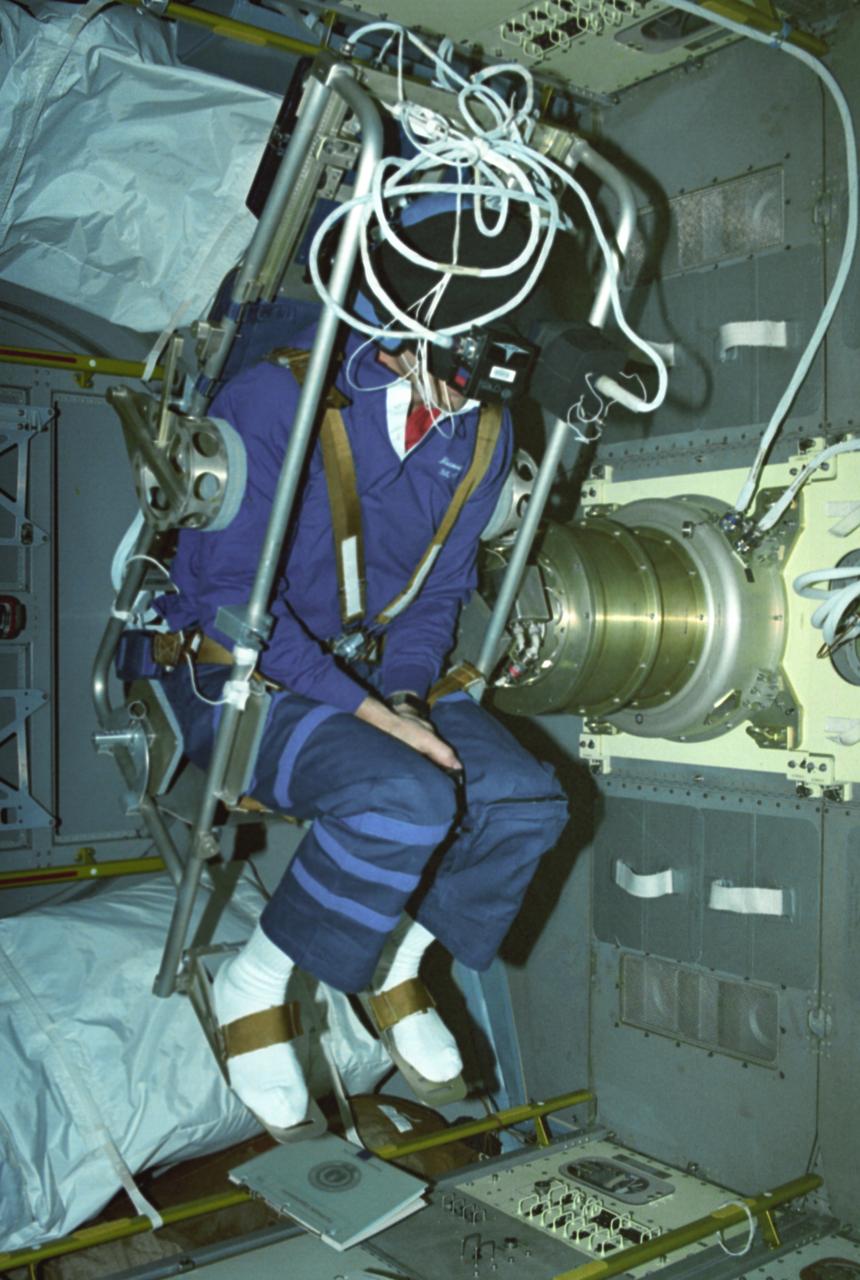
Astronaut David C. Hilmers conducts the Microgravity Vestibular Investigations (MVI) sitting in its rotator chair inside the IML-1 science module. When environmental conditions change so that the body receives new stimuli, the nervous system responds by interpreting the incoming sensory information differently. In space, the free-fall environment of an orbiting spacecraft requires that the body adapts to the virtual absence of gravity. Early in flights, crewmembers may feel disoriented or experience space motion sickness. MVI examined the effects of orbital flight on the human orientation system to obtain a better understanding of the mechanisms of adaptation to weightlessness. By provoking interactions among the vestibular, visual, and proprioceptive systems and then measuring the perceptual and sensorimotor reactions, scientists can study changes that are integral to the adaptive process. The IML-1 mission was the first in a series of Shuttle flights dedicated to fundamental materials and life sciences research with the international partners. The participating space agencies included: NASA, the 14-nation European Space Agency (ESA), the Canadian Space Agency (CSA), the French National Center of Space Studies (CNES), the German Space Agency and the German Aerospace Research Establishment (DAR/DLR), and the National Space Development Agency of Japan (NASDA). Both life and materials sciences benefited from the extended periods of microgravity available inside the Spacelab science module in the cargo bay of the Space Shuttle Orbiter. Managed by the Marshall Space Flight Center, IML-1 was launched on January 22, 1992 aboard the Space Shuttle Orbiter Discovery (STS-42 mission).
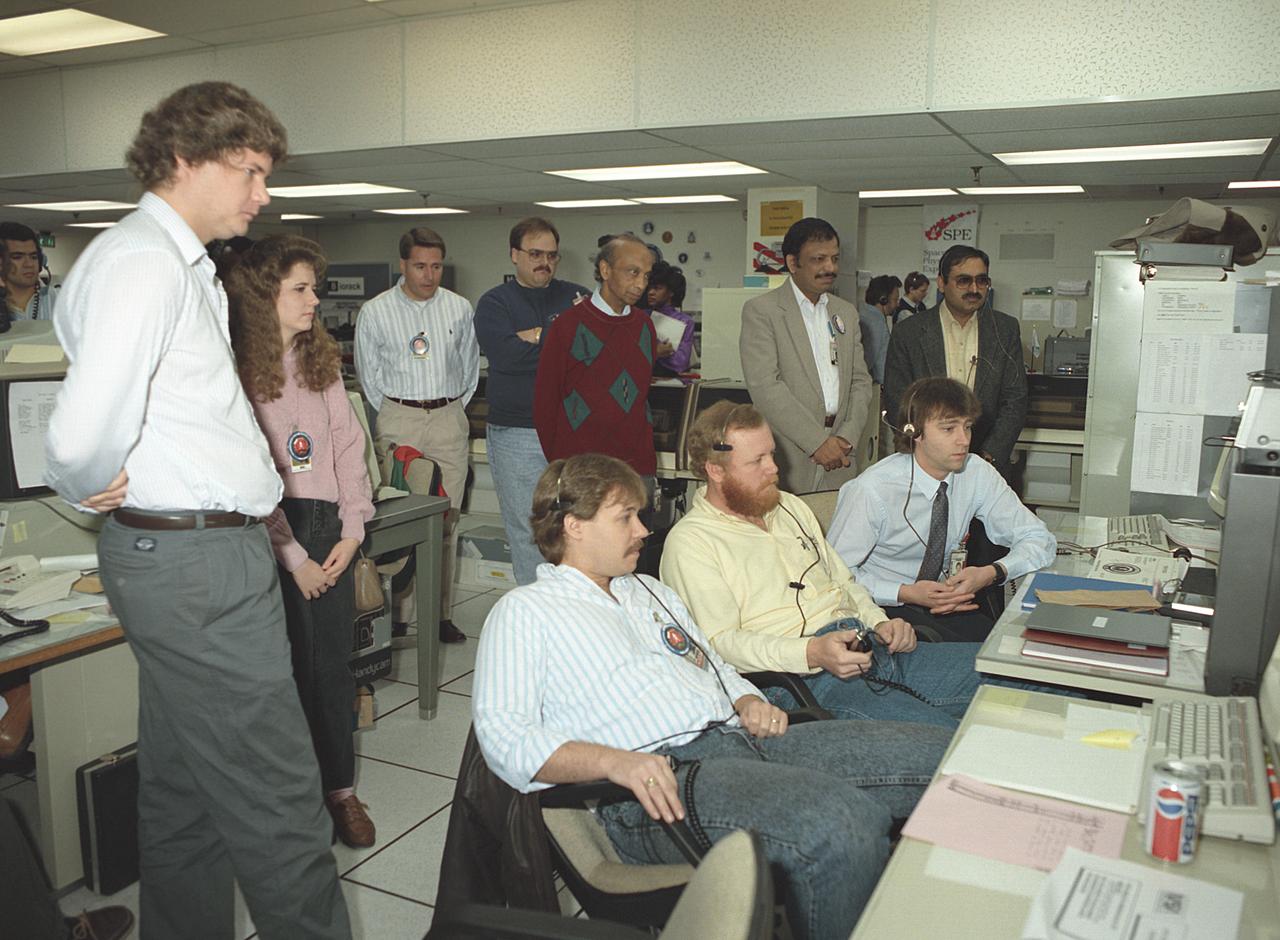
The primary payload for Space Shuttle Mission STS-42, launched January 22, 1992, was the International Microgravity Laboratory-1 (IML-1), a pressurized manned Spacelab module. The goal of IML-1 was to explore in depth the complex effects of weightlessness of living organisms and materials processing. Around-the-clock research was performed on the human nervous system's adaptation to low gravity and effects of microgravity on other life forms such as shrimp eggs, lentil seedlings, fruit fly eggs, and bacteria. Materials processing experiments were also conducted, including crystal growth from a variety of substances such as enzymes, mercury iodide, and a virus. The Huntsville Operations Support Center (HOSC) Spacelab Payload Operations Control Center (SL POCC) at the Marshall Space Flight Center (MSFC) was the air/ground communication channel used between the astronauts and ground control teams during the Spacelab missions. Featured is the Crystal Growth team in the SL POCC during STS-42, IML-1 mission.
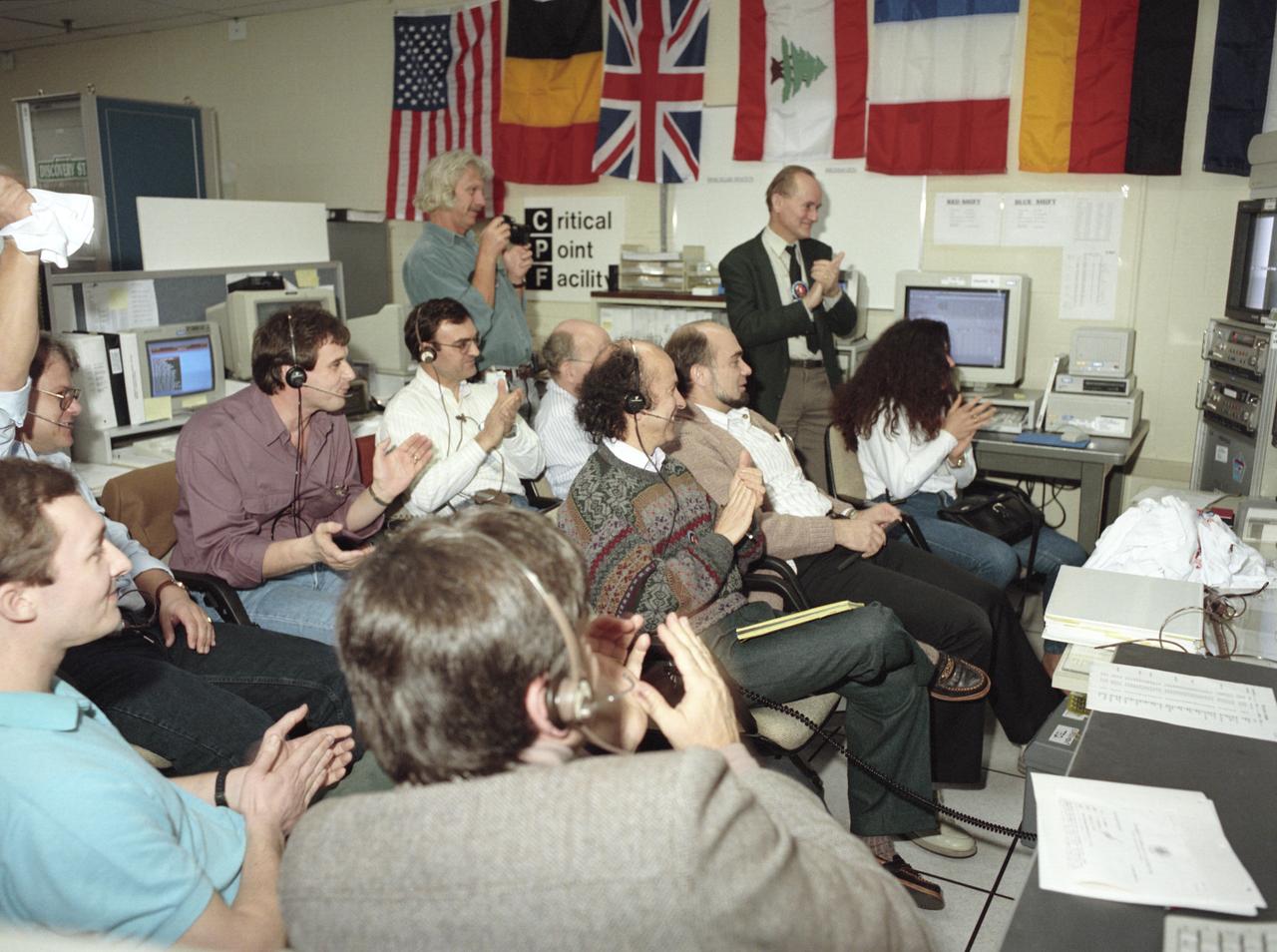
The primary payload for Space Shuttle Mission STS-42, launched January 22, 1992, was the International Microgravity Laboratory-1 (IML-1), a pressurized manned Spacelab module. The goal of IML-1 was to explore in depth the complex effects of weightlessness of living organisms and materials processing. Around-the-clock research was performed on the human nervous system's adaptation to low gravity and effects of microgravity on other life forms such as shrimp eggs, lentil seedlings, fruit fly eggs, and bacteria. Materials processing experiments were also conducted, including crystal growth from a variety of substances such as enzymes, mercury iodide, and a virus. The Huntsville Operations Support Center (HOSC) Spacelab Payload Operations Control Center (SL POCC) at the Marshall Space Flight Center (MSFC) was the air/ground communication channel used between the astronauts and ground control teams during the Spacelab missions. Featured is the Critical Point Facility (CPE) group in the SL POCC during STS-42, IML-1 mission.
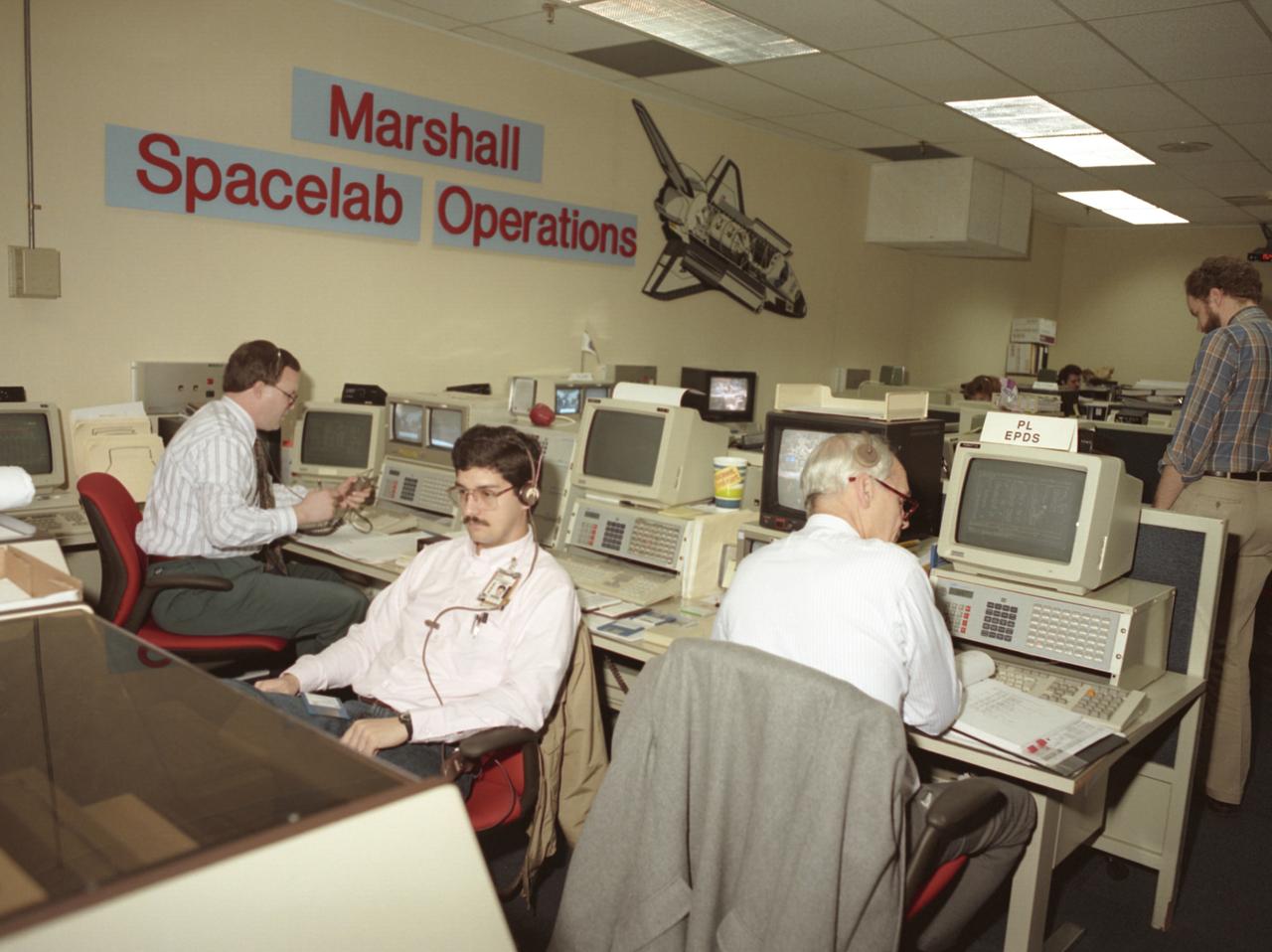
The primary payload for Space Shuttle Mission STS-42, launched January 22, 1992, was the International Microgravity Laboratory-1 (IML-1), a pressurized manned Spacelab module. The goal of IML-1 was to explore in depth the complex effects of weightlessness of living organisms and materials processing. Around-the-clock research was performed on the human nervous system's adaptation to low gravity and effects of microgravity on other life forms such as shrimp eggs, lentil seedlings, fruit fly eggs, and bacteria. Materials processing experiments were also conducted, including crystal growth from a variety of substances such as enzymes, mercury iodide, and a virus. The Huntsville Operations Support Center (HOSC) Spacelab Payload Operations Control Center (SL POCC) at the Marshall Space Flight Center (MSFC) was the air/ground communication channel used between the astronauts and ground control teams during the Spacelab missions. Featured is the Spacelab Operations Support Room Space Engineering Support team in the SL POCC during STS-42, IML-1 mission.
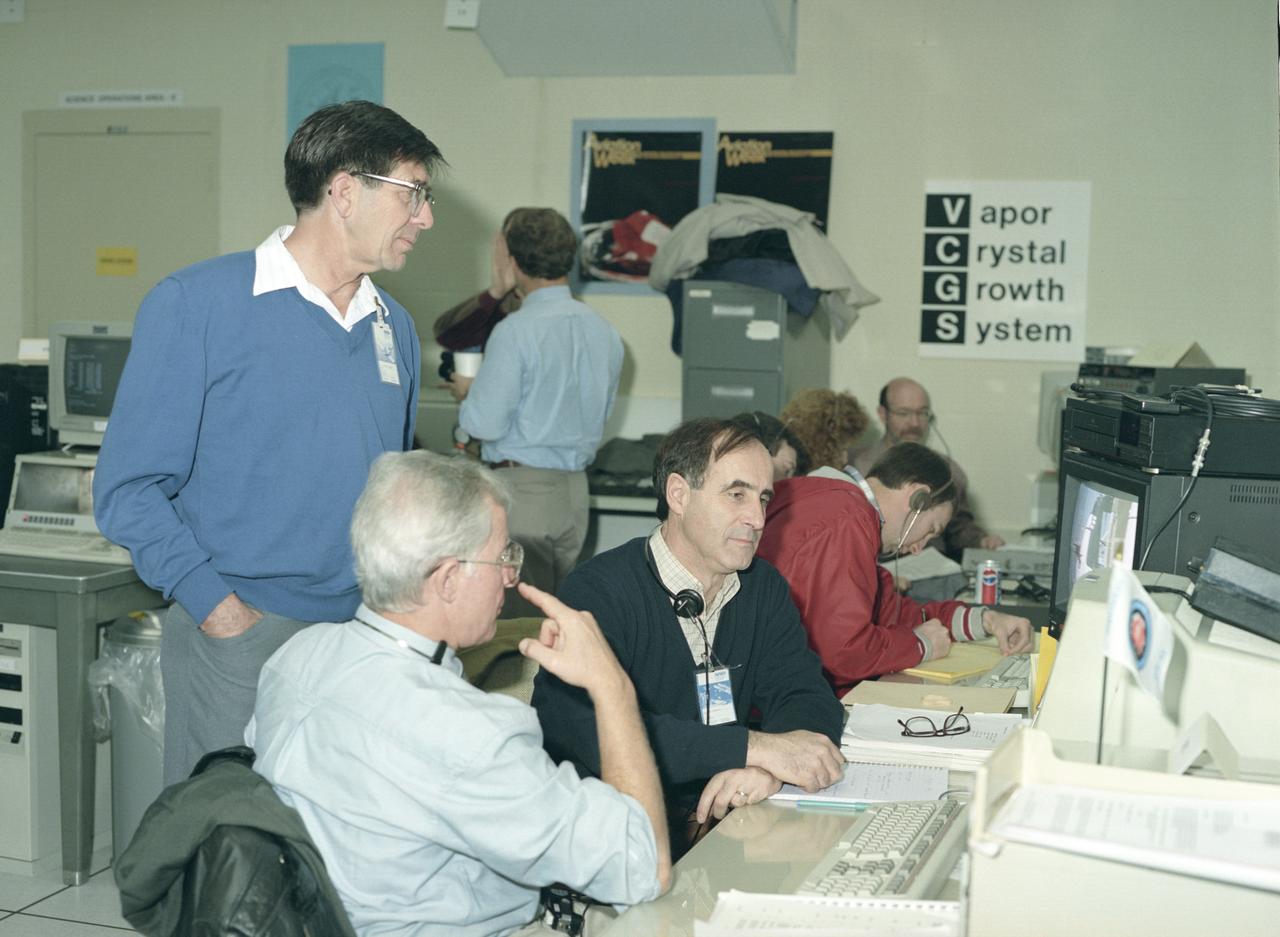
The primary payload for Space Shuttle Mission STS-42, launched January 22, 1992, was the International Microgravity Laboratory-1 (IML-1), a pressurized manned Spacelab module. The goal of IML-1 was to explore in depth the complex effects of weightlessness of living organisms and materials processing. Around-the-clock research was performed on the human nervous system's adaptation to low gravity and effects of microgravity on other life forms such as shrimp eggs, lentil seedlings, fruit fly eggs, and bacteria. Materials processing experiments were also conducted, including crystal growth from a variety of substances such as enzymes, mercury iodide, and a virus. The Huntsville Operations Support Center (HOSC) Spacelab Payload Operations Control Center (SL POCC) at the Marshall Space Flight Center (MSFC) was the air/ground communication channel used between the astronauts and ground control teams during the Spacelab missions. Featured is the Vapor Crystal Growth System (VCGS) team in SL POCC), during STS-42, IML-1 mission.
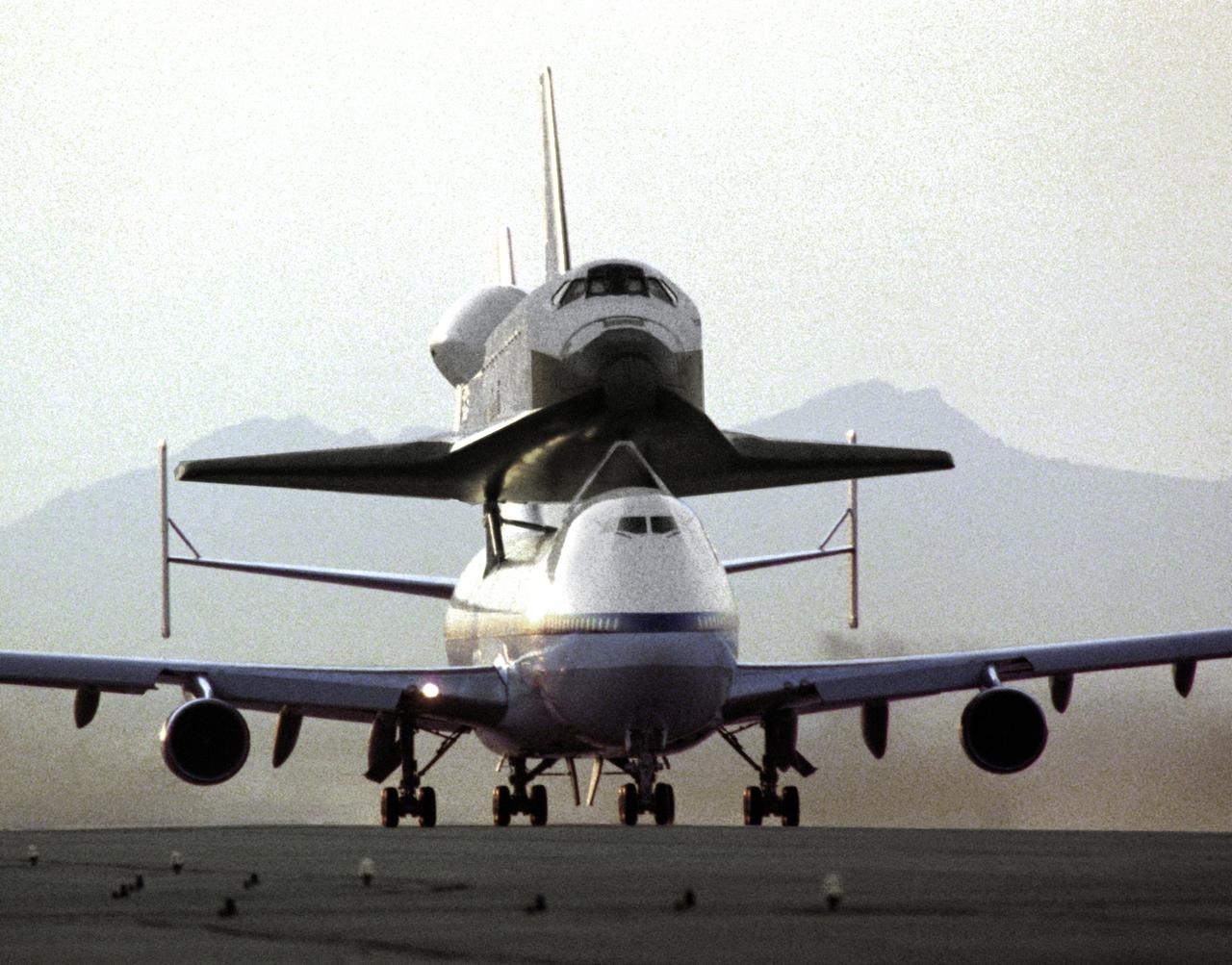
NASA's 747 Shuttle Carrier Aircraft No. 911, with the space shuttle orbiter Endeavour securely mounted atop its fuselage, taxies to the runway to begin the ferry flight from Rockwell's Plant 42 at Palmdale, California, where the orbiter was built, to the Kennedy Space Center, Florida. At Kennedy, the space vehicle was processed and launched on orbital mission STS-49, which landed at NASA's Ames-Dryden Flight Research Facility (later redesignated Dryden Flight Research Center), Edwards, California, 16 May 1992. NASA 911, the second modified 747 that went into service in November 1990, has special support struts atop the fuselage and internal strengthening to accommodate the added weight of the orbiters.
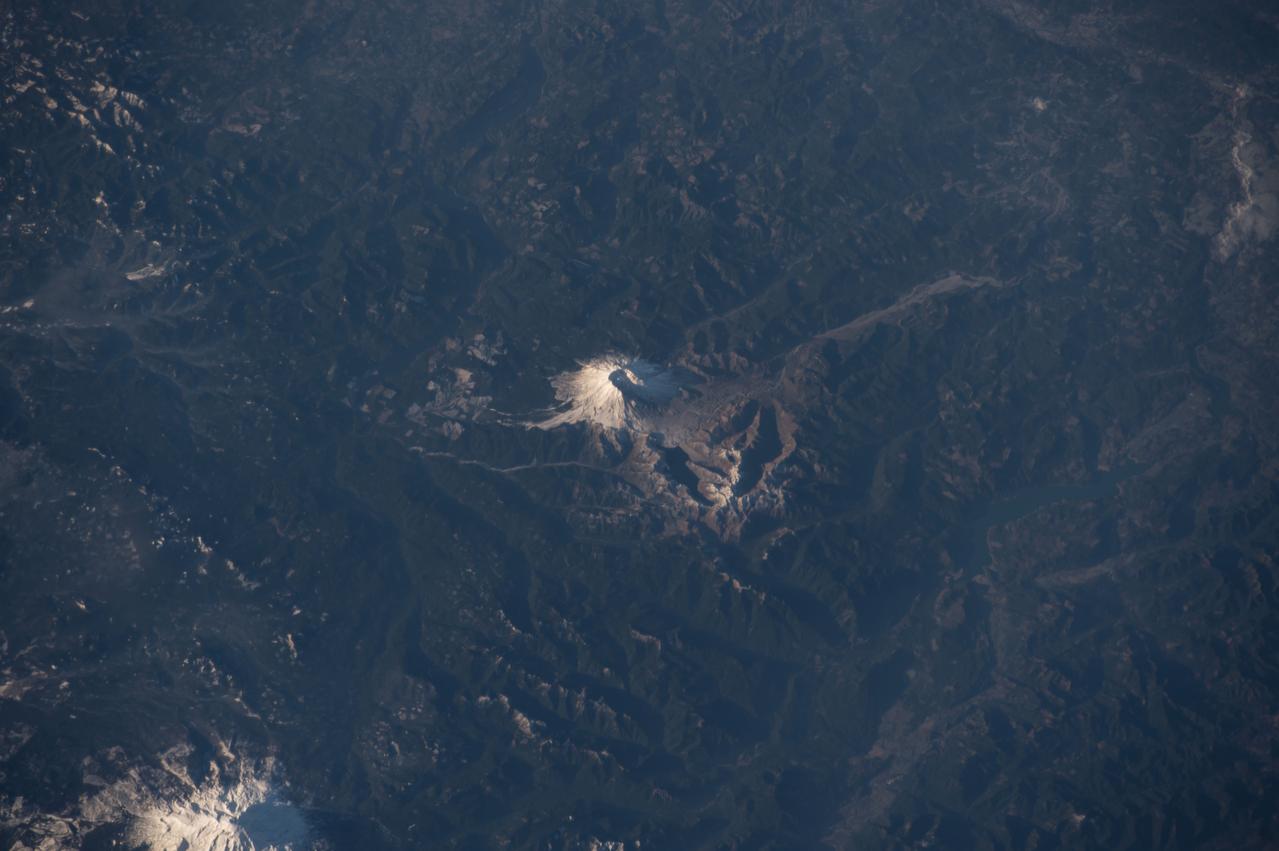
Earth observation taken by the Expedition 42 crew aboard the ISS. Mt. St. Helens (center) and Mt. Rainier, Washington. Image was released by astronaut on Instagram.
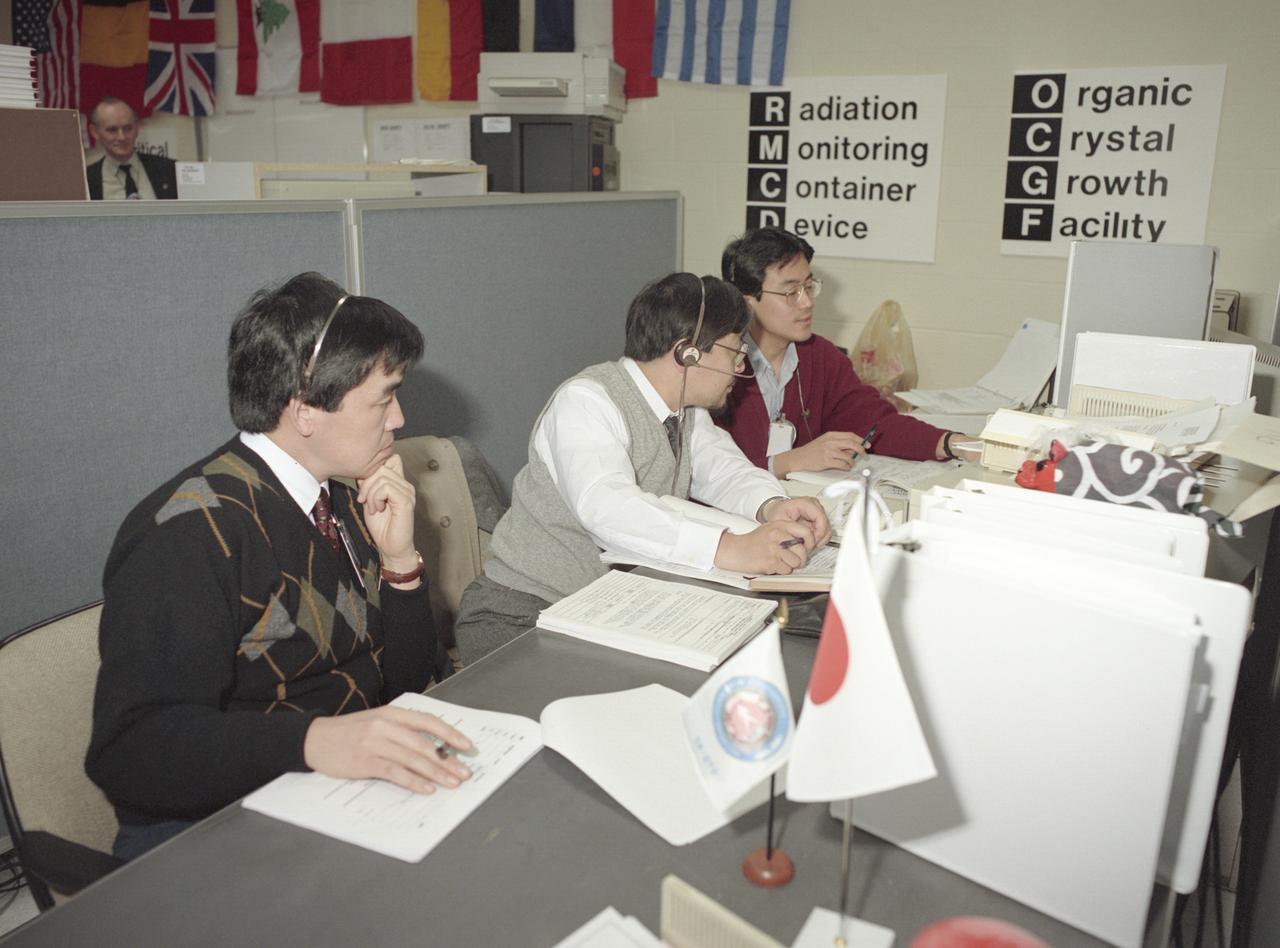
The primary payload for Space Shuttle Mission STS-42, launched January 22, 1992, was the International Microgravity Laboratory-1 (IML-1), a pressurized manned Spacelab module. The goal of IML-1 was to explore in depth the complex effects of weightlessness of living organisms and materials processing. Around-the-clock research was performed on the human nervous system's adaptation to low gravity and effects of microgravity on other life forms such as shrimp eggs, lentil seedlings, fruit fly eggs, and bacteria. Materials processing experiments were also conducted, including crystal growth from a variety of substances such as enzymes, mercury iodide, and a virus. The Huntsville Operations Support Center (HOSC) Spacelab Payload Operations Control Center (SL POCC) at the Marshall Space Flight Center (MSFC) was the air/ground communication channel used between the astronauts and ground control teams during the Spacelab missions. Featured are activities of the Organic Crystal Growth Facility (OCGF) and Radiation Monitoring Container Device (RMCD) groups in the SL POCC during the IML-1 mission.
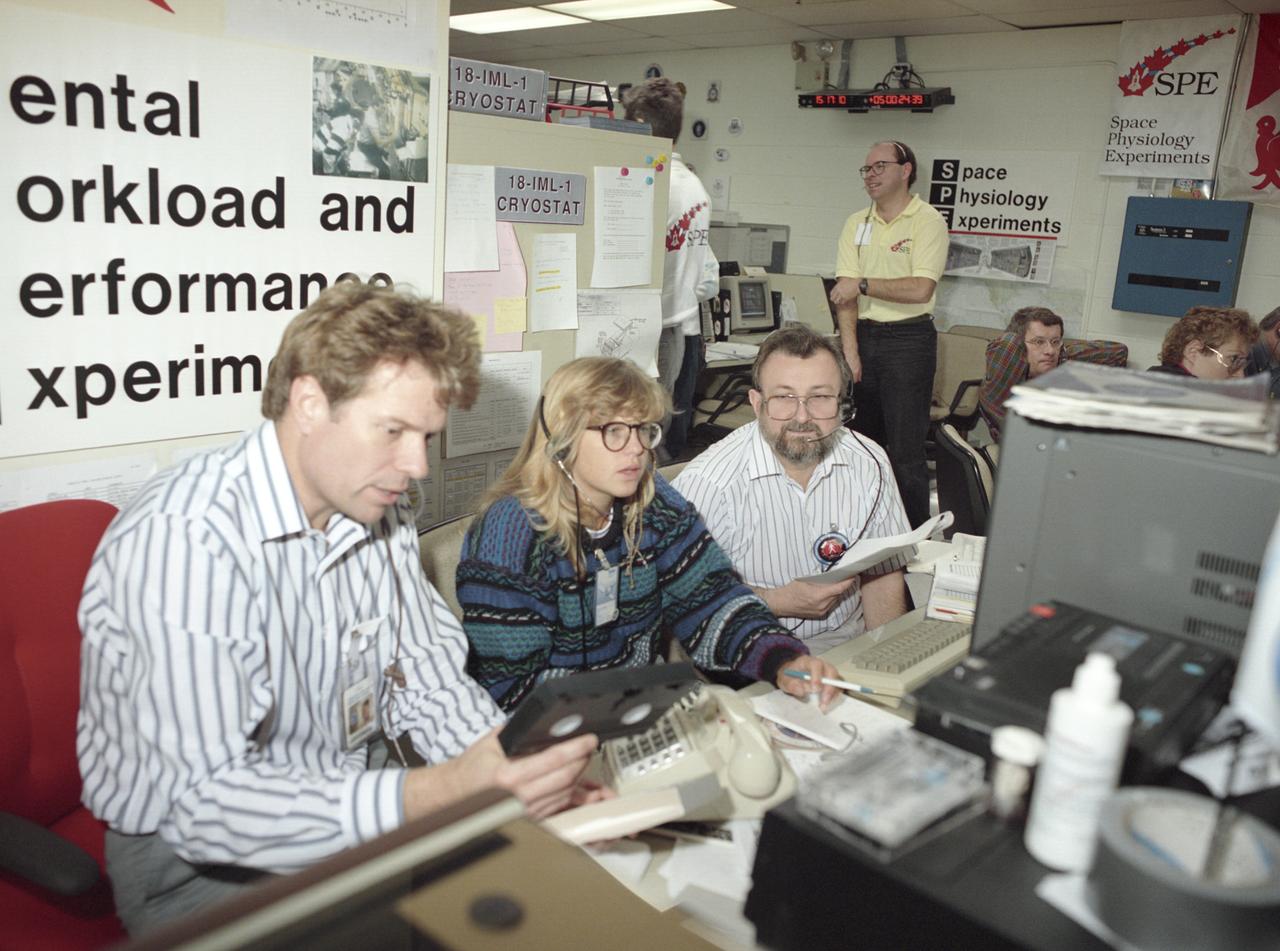
The primary payload for Space Shuttle Mission STS-42, launched January 22, 1992, was the International Microgravity Laboratory-1 (IML-1), a pressurized manned Spacelab module. The goal of IML-1 was to explore in depth the complex effects of weightlessness of living organisms and materials processing. Around-the-clock research was performed on the human nervous system's adaptation to low gravity and effects of microgravity on other life forms such as shrimp eggs, lentil seedlings, fruit fly eggs, and bacteria. Materials processing experiments were also conducted, including crystal growth from a variety of substances such as enzymes, mercury iodide, and a virus. The Huntsville Operations Support Center (HOSC) Spacelab Payload Operations Control Center (SL POCC) at the Marshall Space Flight Center (MSFC) was the air/ground communication channel used between the astronauts and ground control teams during the Spacelab missions. Featured activities are of the Mental Workload and Performance Experiment (MWPE) team in the SL POCC during the IML-1 mission.
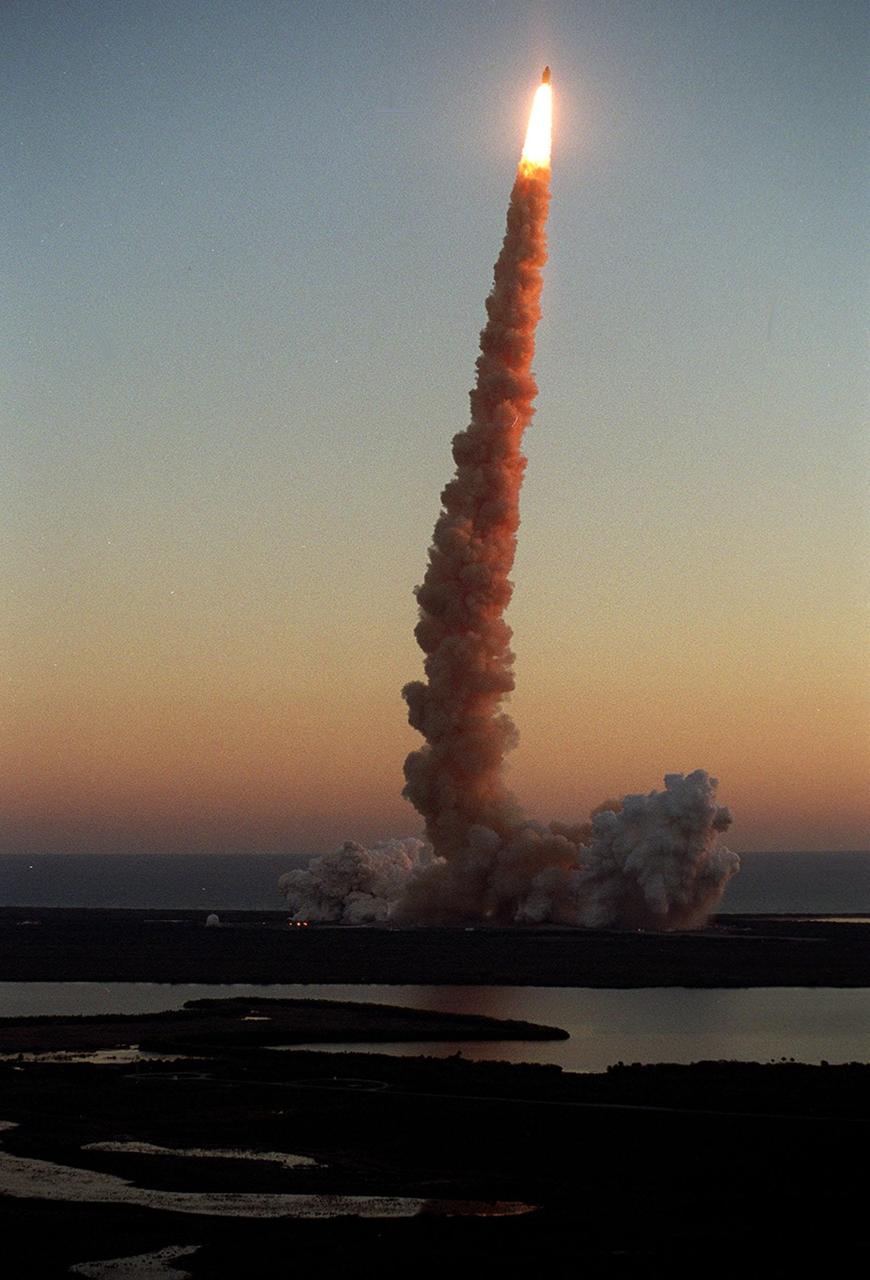
KENNEDY SPACE CENTER, Fla. -- Sunrise paints the exhaust trail of Space Shuttle Discovery a rosy hue at liftoff on mission STS-102 . Liftoff occurred at 6:42:09 EST for the eighth flight to the International Space Station
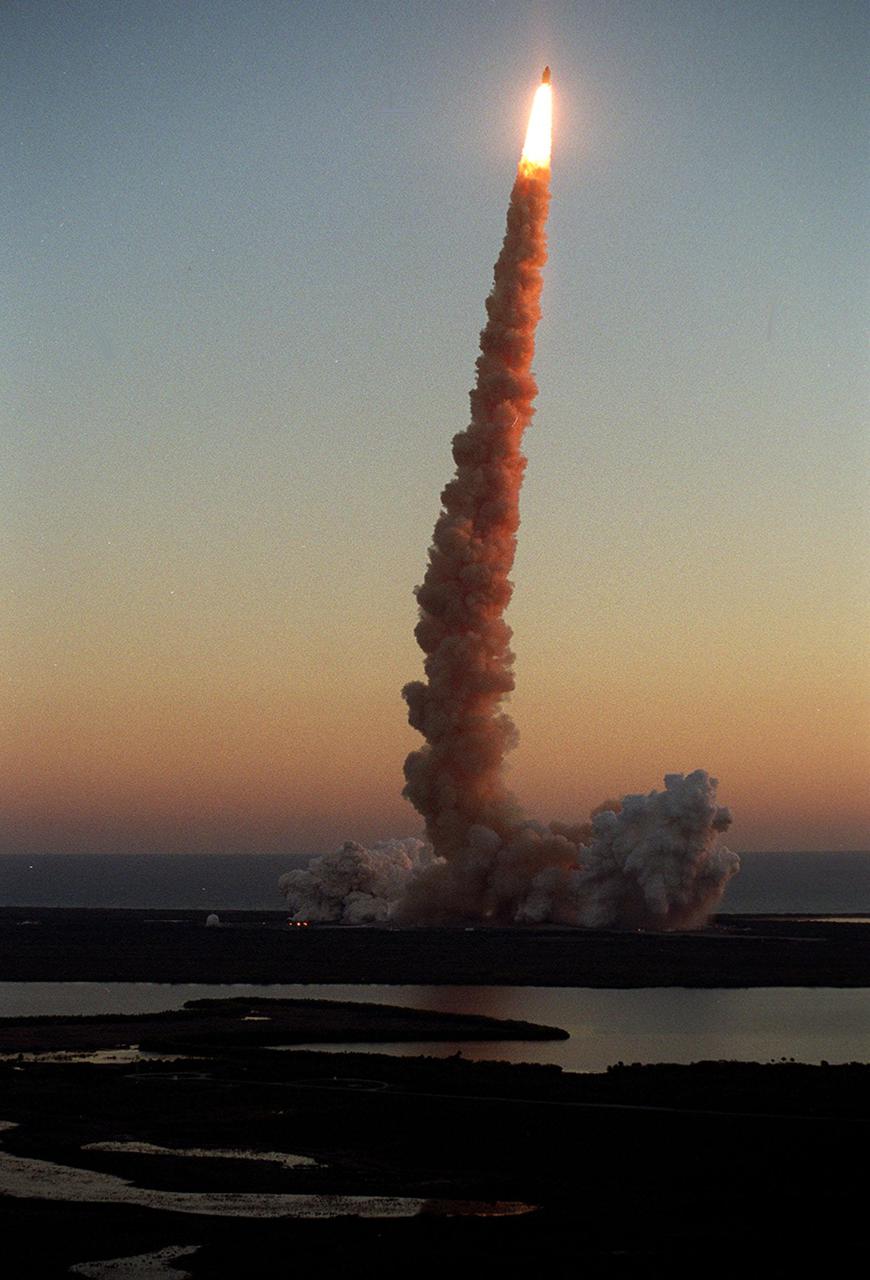
KENNEDY SPACE CENTER, Fla. -- Sunrise paints the exhaust trail of Space Shuttle Discovery a rosy hue at liftoff on mission STS-102 . Liftoff occurred at 6:42:09 EST for the eighth flight to the International Space Station
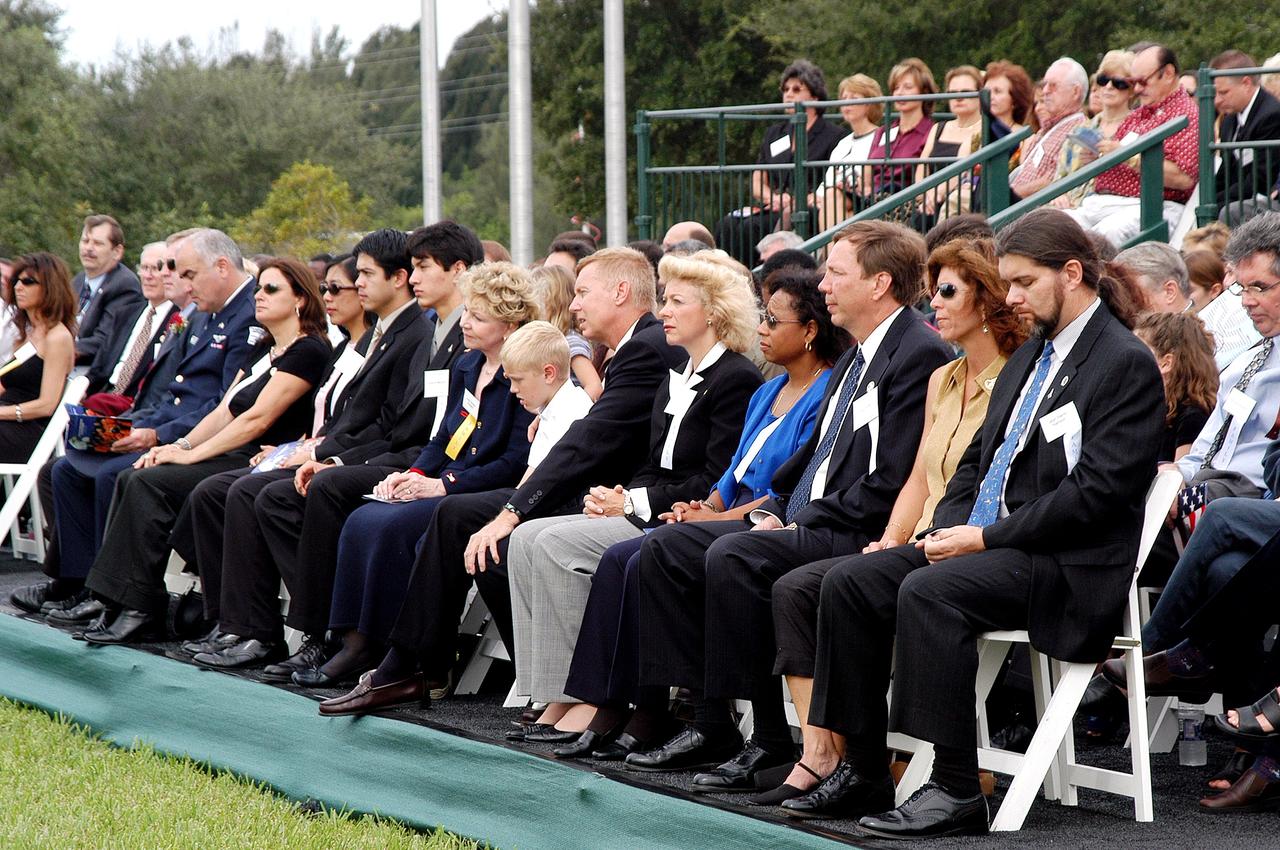
KENNEDY SPACE CENTER, FLA. - Family members of the STS-107 astronauts and other dignitaries attend a dedication ceremony at the Space Mirror Memorial at the Kennedy Space Center Visitor Complex. During this solemn event, the names of the STS-107 astronauts who lost their lives during the Columbia accident -- Rick Husband, Willie McCool, Laurel Clark, Michael Anderson, David Brown, Kalpana Chawla, and Ilan Ramon -- join the names of 17 other space heroes who gave their lives for the U.S. space program. The "Space Mirror," 42 1/2 feet high by 50 feet wide, illuminates the names of the fallen astronauts cut through the monument's black granite surface.
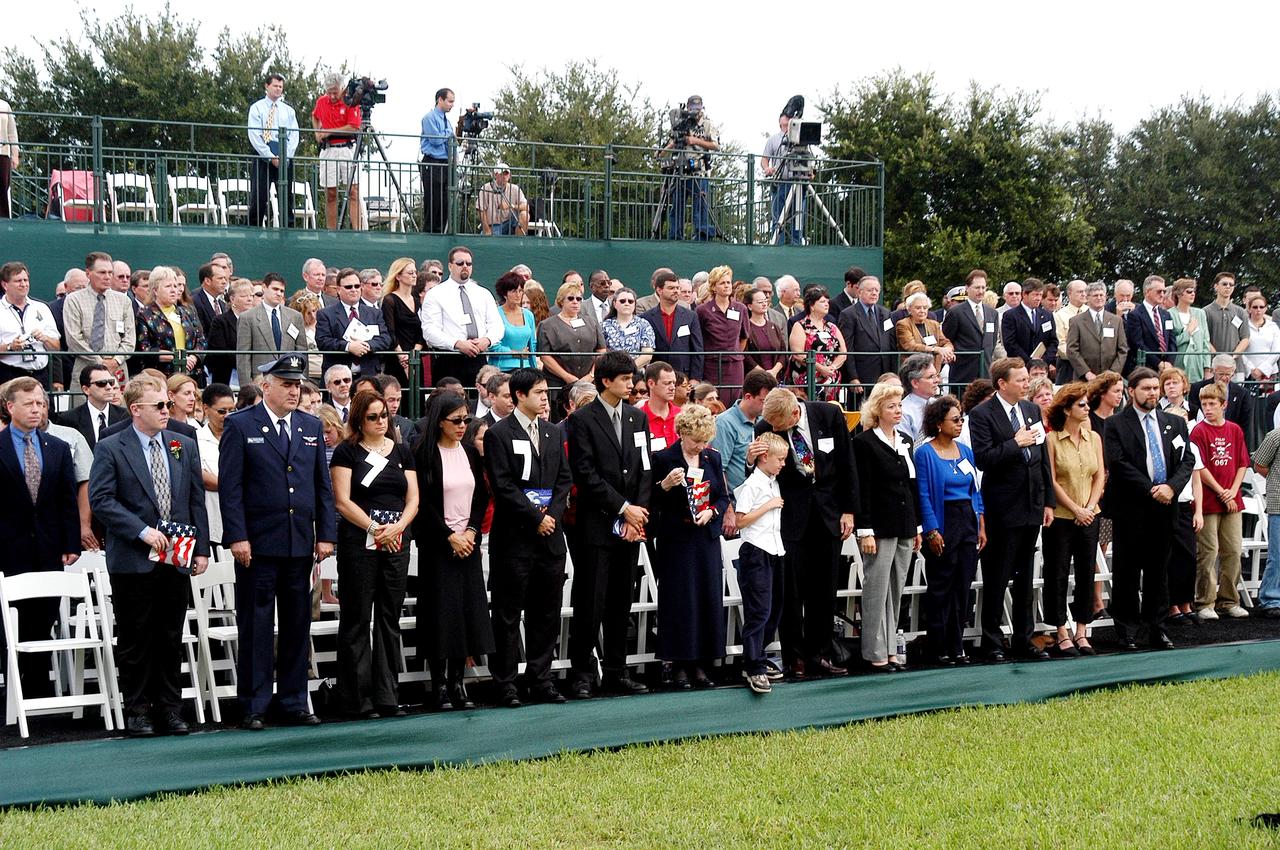
KENNEDY SPACE CENTER, FLA. - Family members of the STS-107 astronauts and other dignitaries attend a dedication ceremony at the Space Mirror Memorial at the Kennedy Space Center Visitor Complex. During this solemn event, the names of the STS-107 astronauts who lost their lives during the Columbia accident -- Rick Husband, Willie McCool, Laurel Clark, Michael Anderson, David Brown, Kalpana Chawla, and Ilan Ramon -- join the names of 17 other space heroes who gave their lives for the U.S. space program. The "Space Mirror," 42 1/2 feet high by 50 feet wide, illuminates the names of the fallen astronauts cut through the monument's black granite surface.
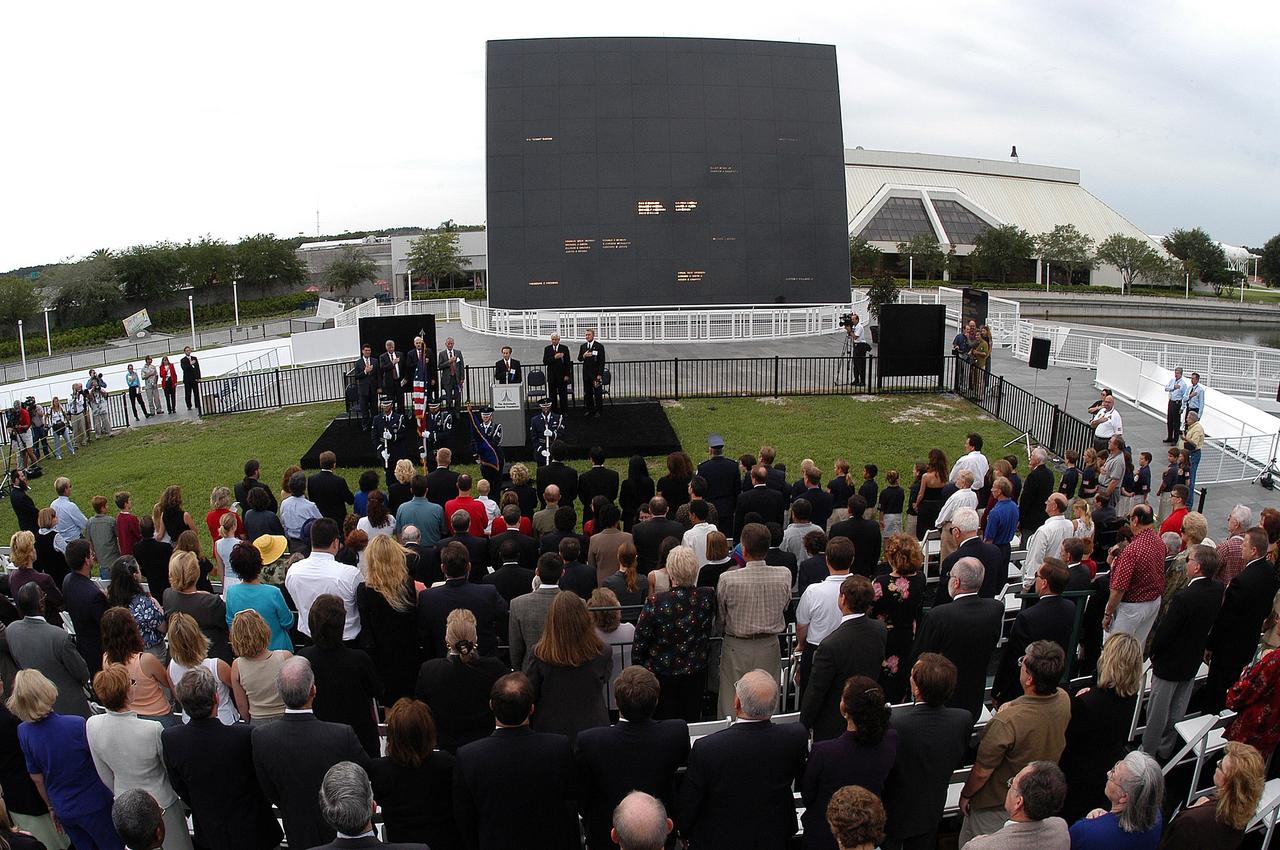
KENNEDY SPACE CENTER, FLA. - Family members of the STS-107 astronauts and other dignitaries attend a dedication ceremony at the Space Mirror Memorial at the Kennedy Space Center Visitor Complex. During this solemn event, the names of the STS-107 astronauts who lost their lives during the Columbia accident -- Rick Husband, Willie McCool, Laurel Clark, Michael Anderson, David Brown, Kalpana Chawla, and Ilan Ramon -- join the names of 17 other space heroes who gave their lives for the U.S. space program. The "Space Mirror," 42 1/2 feet high by 50 feet wide, illuminates the names of the fallen astronauts cut through the monument's black granite surface.
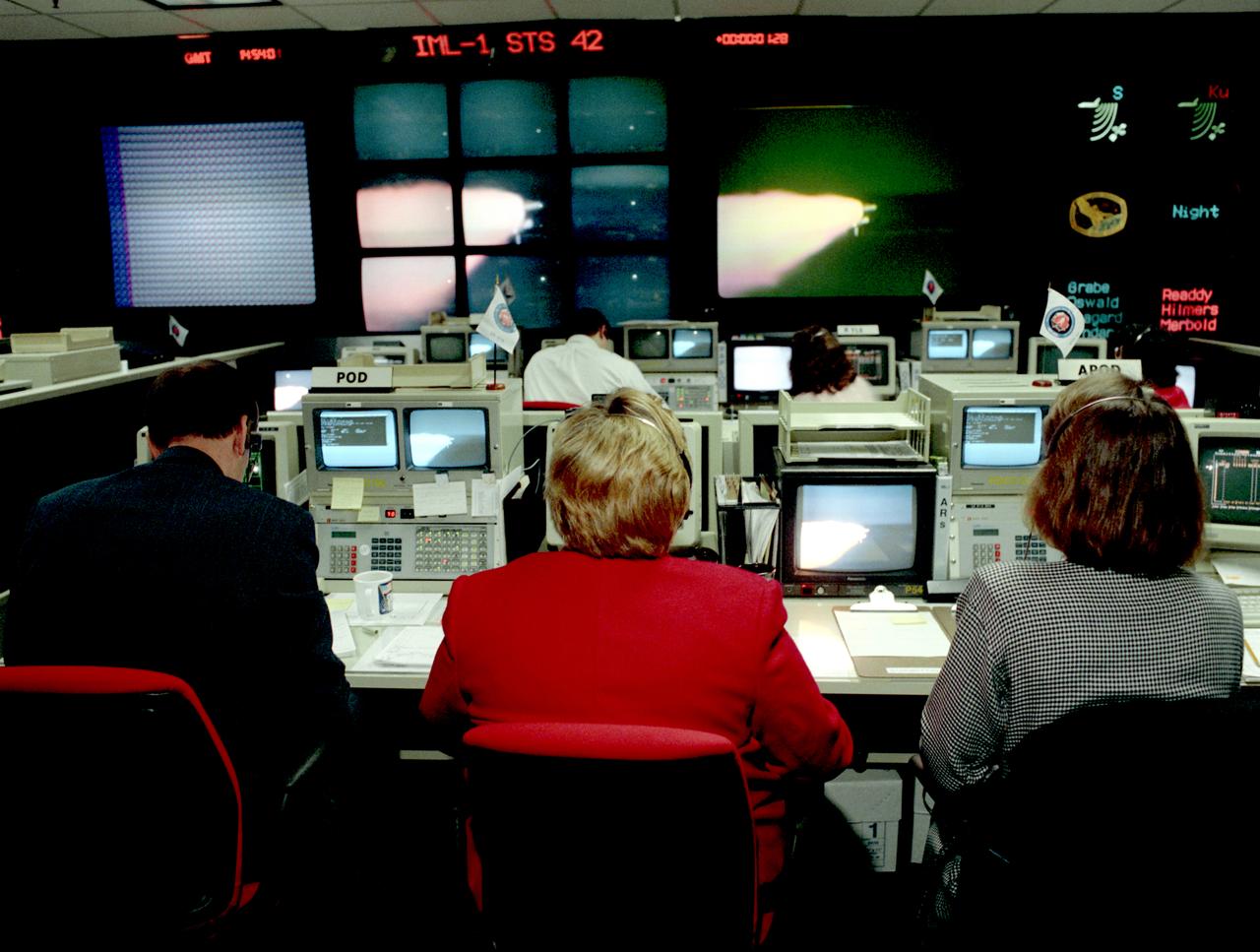
The primary payload for Space Shuttle Mission STS-42, launched January 22, 1992, was the International Microgravity Laboratory-1 (IML-1), a pressurized manned Spacelab module. The goal of IML-1 was to explore in depth the complex effects of weightlessness of living organisms and materials processing. Around-the-clock research was performed on the human nervous system's adaptation to low gravity and effects of microgravity on other life forms such as shrimp eggs, lentil seedlings, fruit fly eggs, and bacteria. Materials processing experiments were also conducted, including crystal growth from a variety of substances such as enzymes, mercury iodide and a virus. The Huntsville Operations Support Center (HOSC) Spacelab Payload Operations Control Center (SL POCC) at the Marshall Space Flight Center (MSFC) was the air/ground communication channel used between the astronauts aboard the Spacelab and scientists, researchers, and ground control teams during the Spacelab missions. The facility made instantaneous video and audio communications possible for scientists on the ground to follow the progress and to send direct commands of their research almost as if they were in space with the crew. Teams of controllers and researchers directed on-orbit science operations, sent commands to the spacecraft, received data from experiments aboard the Space Shuttle, adjusted mission schedules to take advantage of unexpected science opportunities or unexpected results, and worked with crew members to resolve problems with their experiments. In this photograph the Payload Operations Director (POD) views the launch.
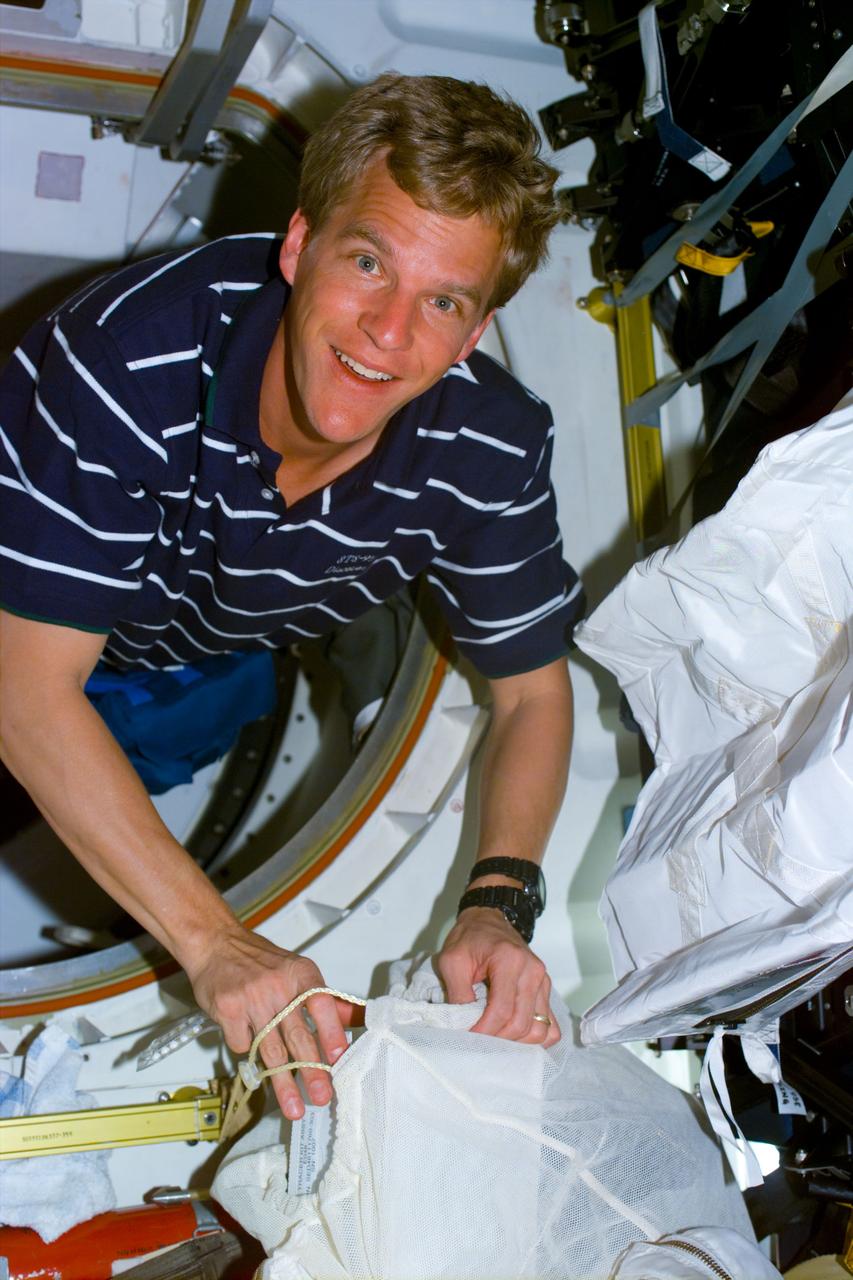
STS095-E-5052 (30 Oct. 1998) --- Astronaut Scott E. Parazynski, STS-95 mission specialist, emerges from the tunnel that connects SPACEHAB to Discovery's middeck during flight day two activity. The photo was taken with an electronic still camera (ESC) at 10:42:30, Oct. 30.
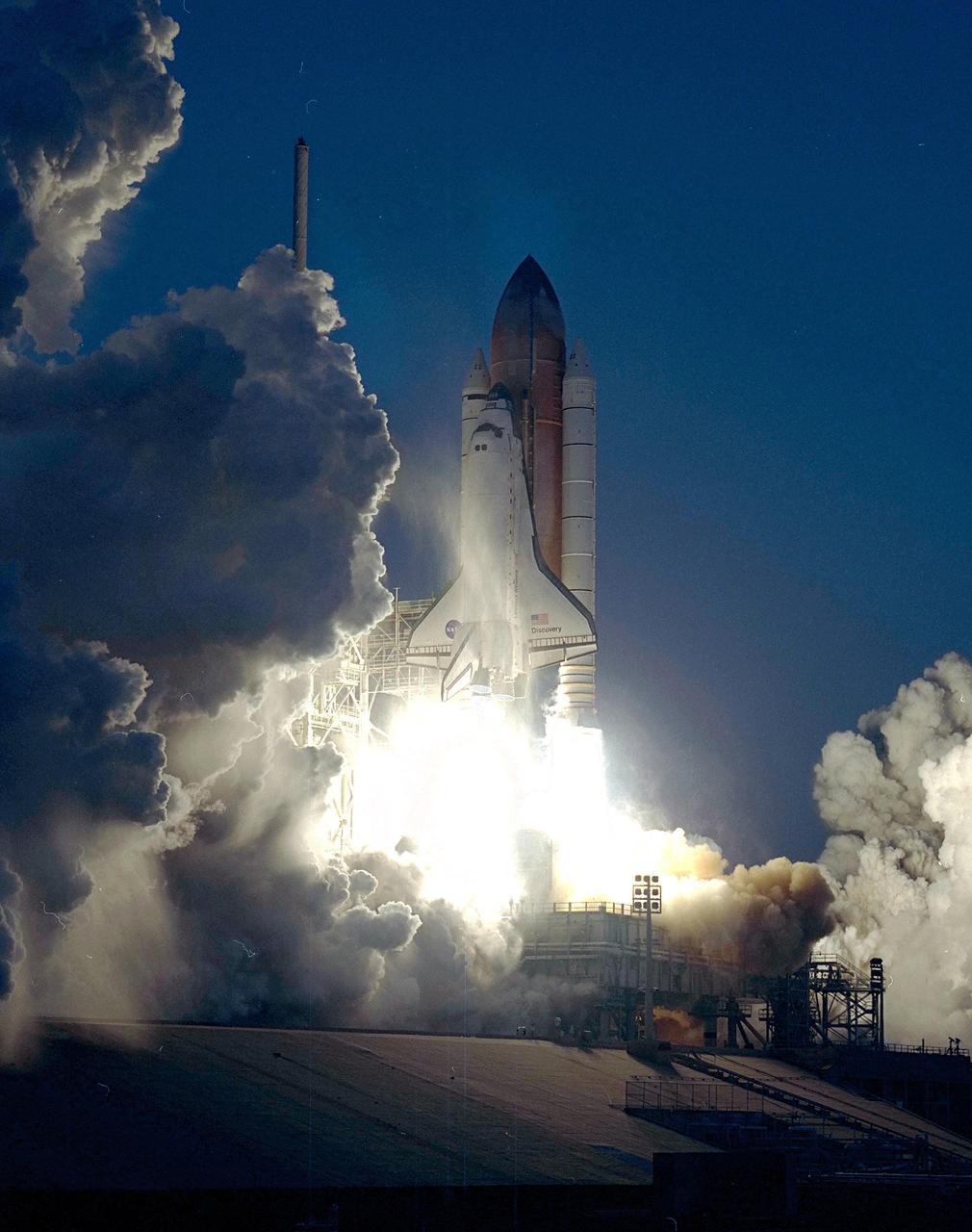
KENNEDY SPACE CENTER, Fla. -- In a burst of light rivaling the rising sun, Space Shuttle Discovery blasts off from Launch Pad 39B on mission STS-102. Liftoff occurred at 6:42:09 EST for this eighth flight to the International Space Station
KENNEDY SPACE CENTER, Fla. -- In a burst of light rivaling the rising sun, Space Shuttle Discovery blasts off from Launch Pad 39B on mission STS-102. Liftoff occurred at 6:42:09 EST for this eighth flight to the International Space Station
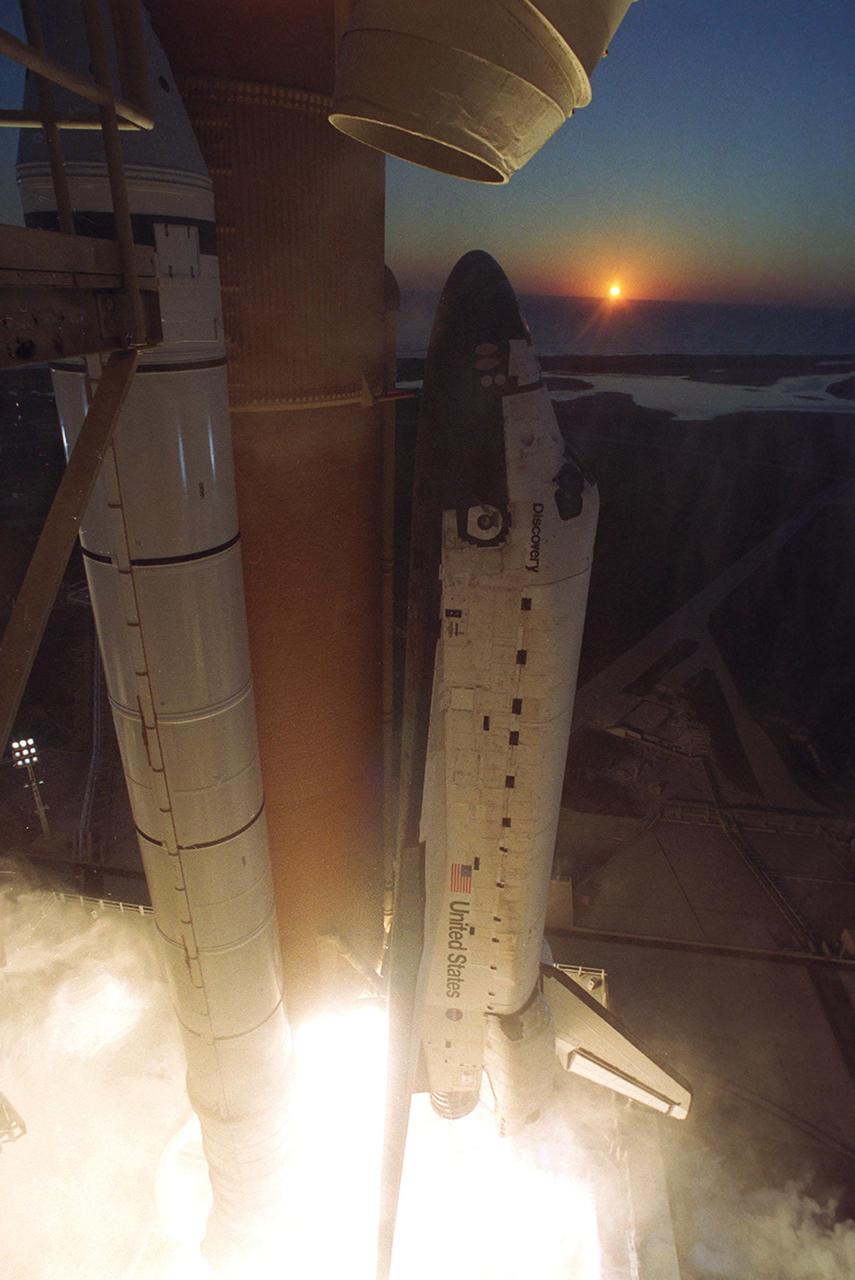
KENNEDY SPACE CENTER, Fla. -- As Space Shuttle Discovery clears Launch Pad 39B, the sun peers over the horizon of the Atlantic Ocean.Liftoff of Discovery on mission STS-102 occurred at 6:42:09 EST for the eighth flight to the International Space Station
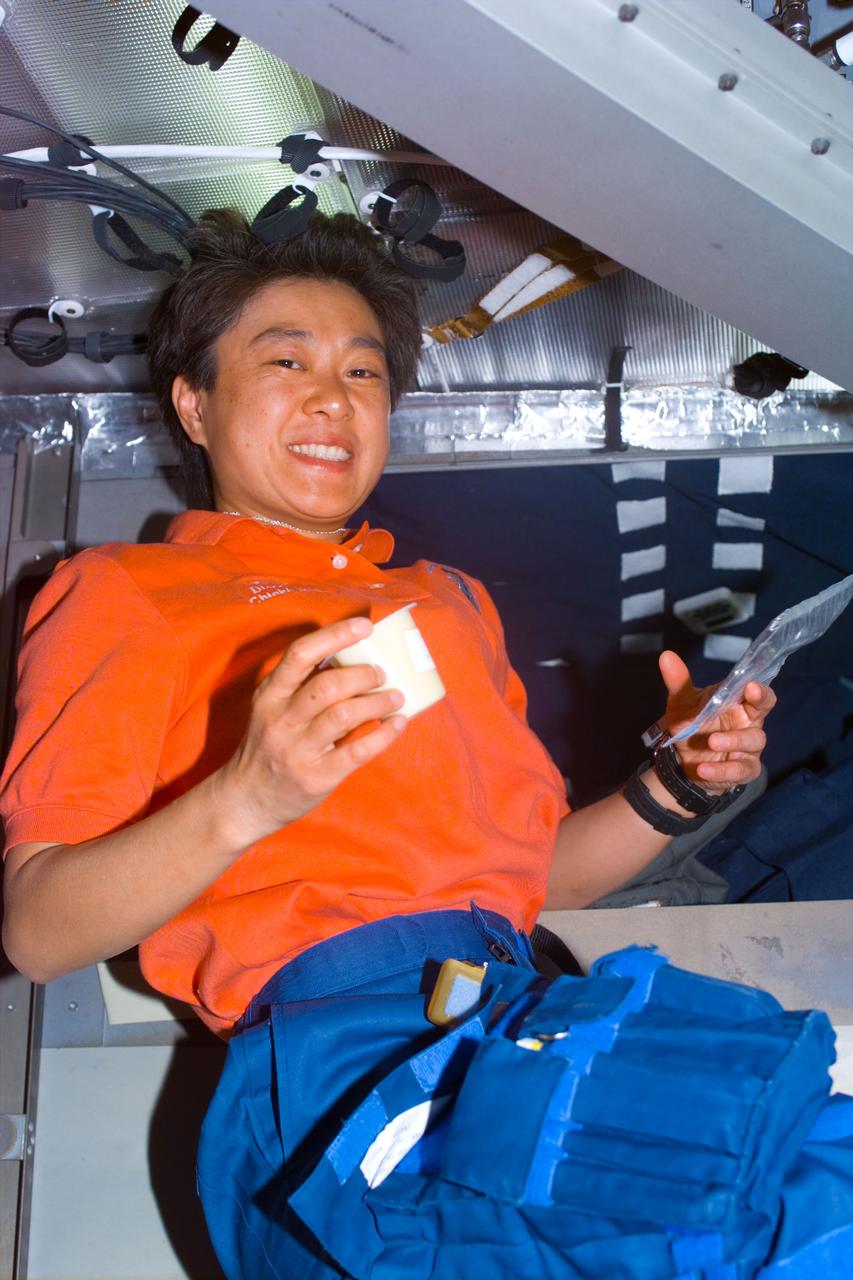
STS095-E-5053 (30 Oct. 1998) --- STS-95 payload specialist Chiaki Mukai continues her experimentation onboard the Space Shuttle Discovery during Flight Day 2 of a schedule nine-day mission. The photo was taken with an electronic still camera (ESC) at 10:42:38 GMT, Oct. 30.
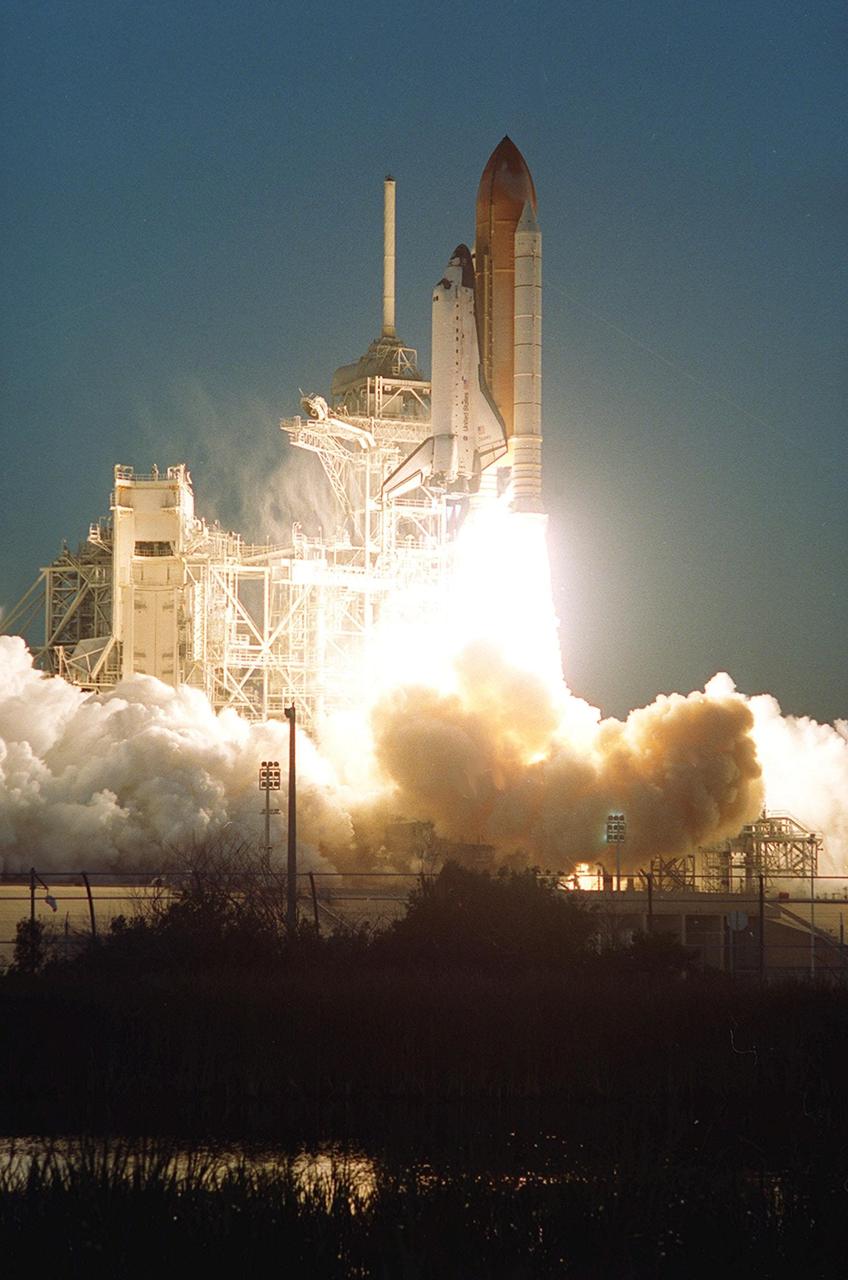
KENNEDY SPACE CENTER, Fla. -- Clouds of smoke and steam flow from Space Shuttle Discovery as it lifts off on mission STS-102 to the International Space Station. The brilliance of the launch rivaled the sunrise on this perfect launch. Liftoff occurred at 6:42:09 EST for the eighth flight to the Space Station

KENNEDY SPACE CENTER, Fla. -- Viewed from the top of the Vehicle Assembly Building, Space Shuttle Discovery leaps from the Earth against the background of the Atlantic Ocean on mission STS-102. Liftoff at dawn occurrred at 6:42:09 EST for the eighth flight to the International Space Station
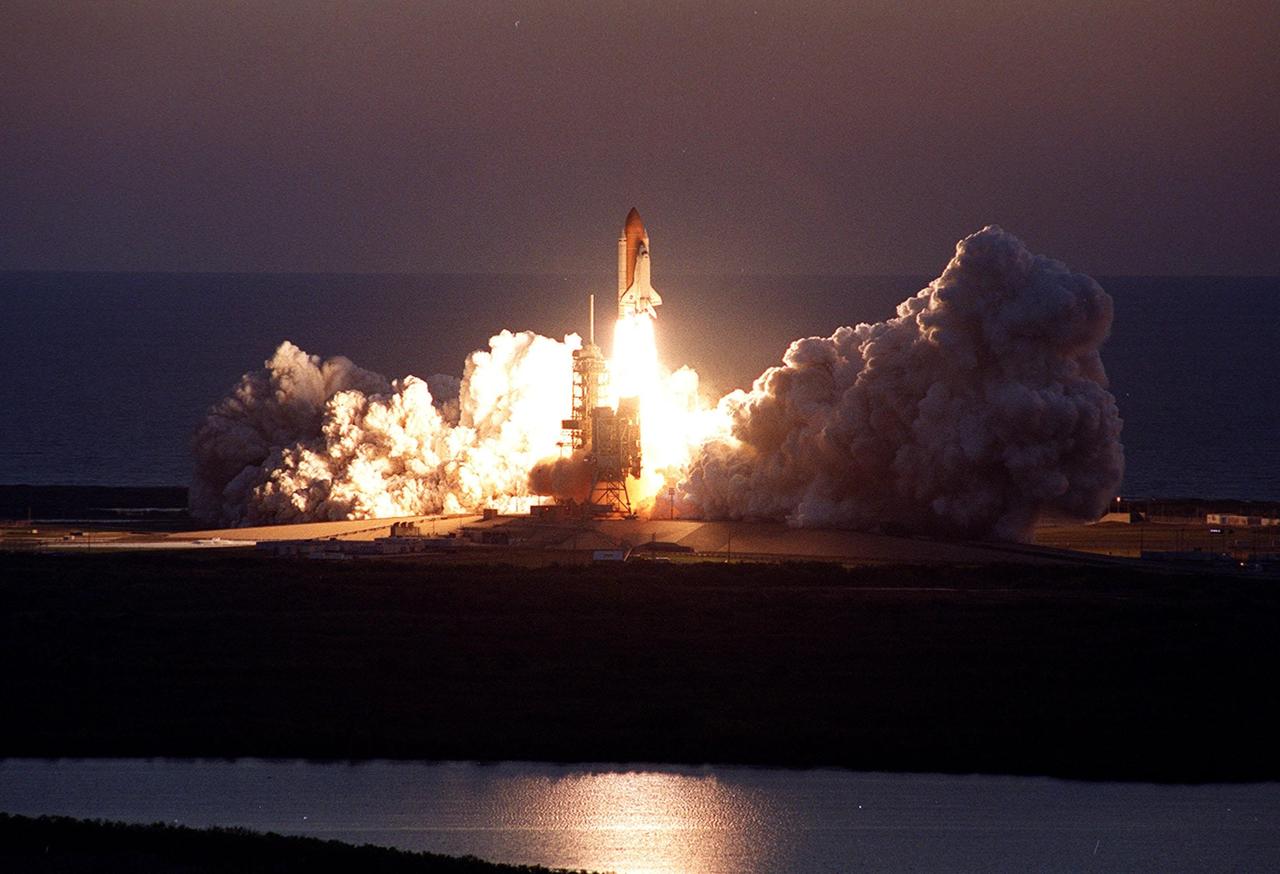
KENNEDY SPACE CENTER, Fla. -- Viewed from the top of the Vehicle Assembly Building, Space Shuttle Discovery leaps from the Earth against the background of the Atlantic Ocean on mission STS-102. Liftoff at dawn occurrred at 6:42:09 EST for the eighth flight to the International Space Station
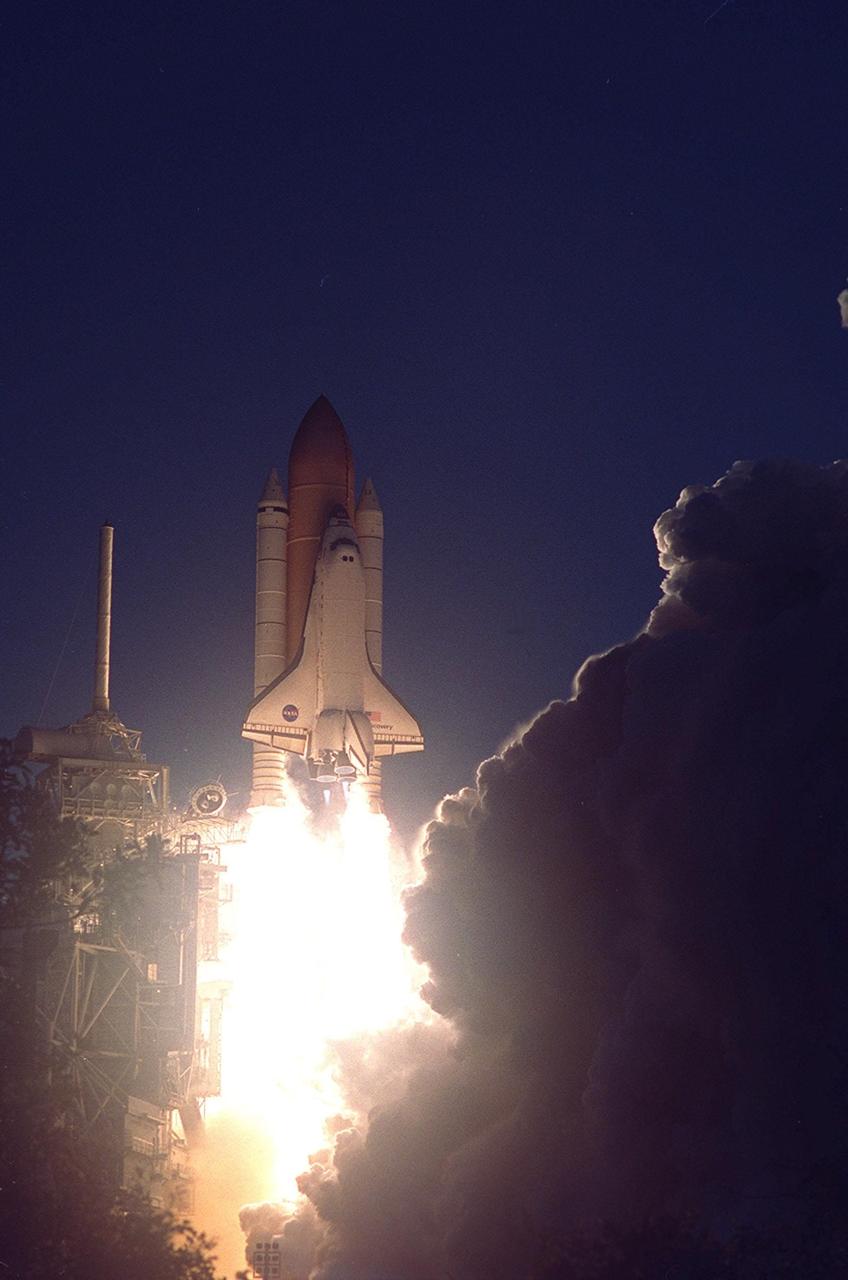
KENNEDY SPACE CENTER, Fla. -- Space Shuttle Discovery rivals the rising sun as it blasts off from Launch Pad 39B at dawn on mission STS-102. . Liftoff occurred at 6:42:09 EST for this eighth flight to the International Space Station
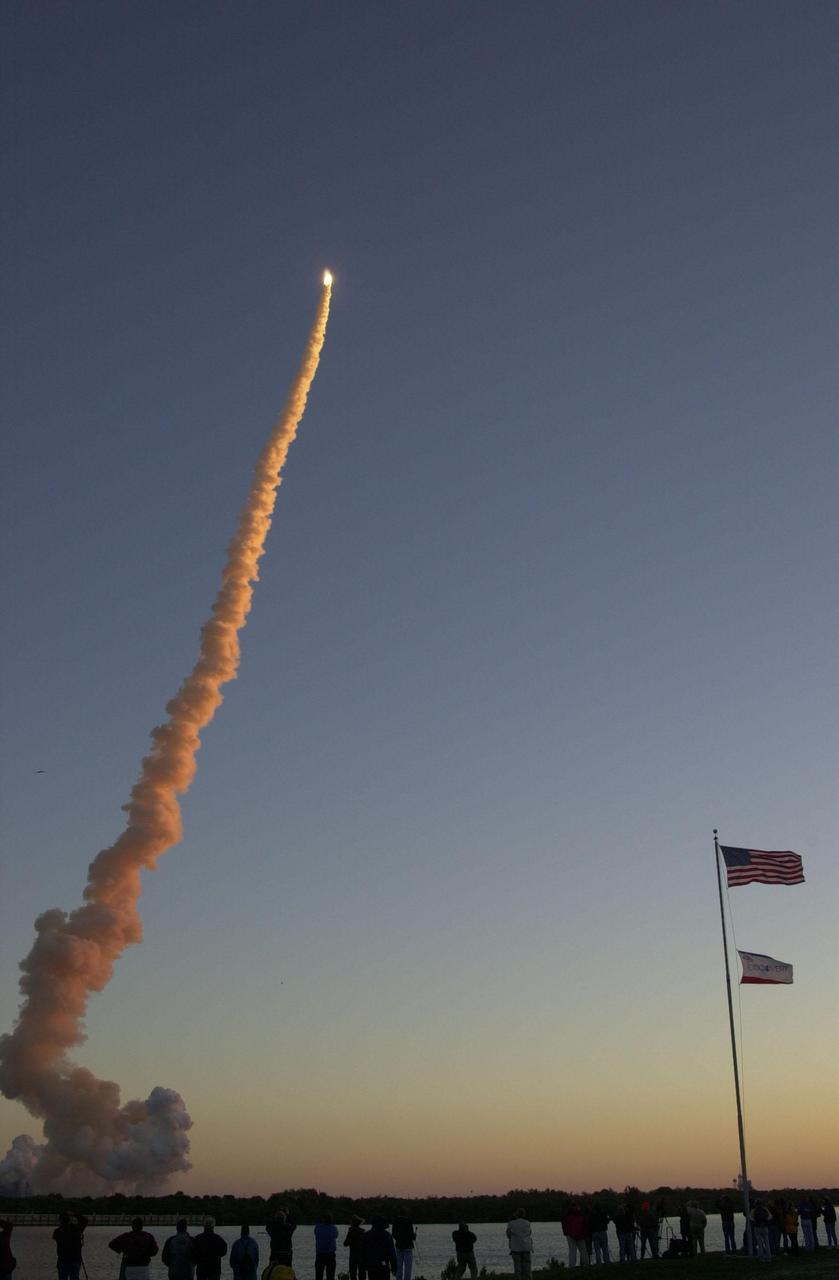
KENNEDY SPACE CENTER, Fla. -- Space Shuttle Discovery outshines a rising sun as it blasts off on mission STS-102, the eighth construction flight to the International Space Station. The lower smoke plumes appear red from the dawn’s rays. Liftoff occurred on time at 6:42:09 EST
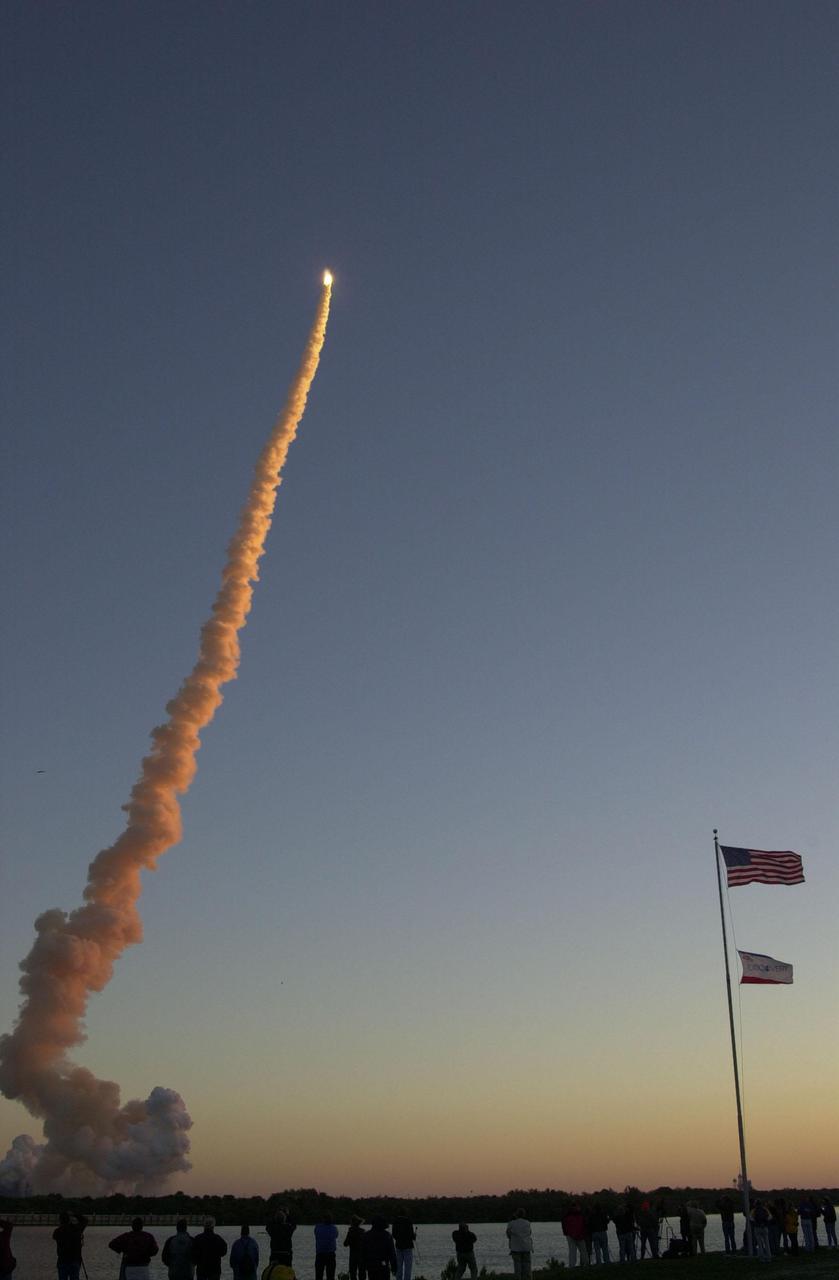
KENNEDY SPACE CENTER, Fla. -- Space Shuttle Discovery outshines a rising sun as it blasts off on mission STS-102, the eighth construction flight to the International Space Station. The lower smoke plumes appear red from the dawn’s rays. Liftoff occurred on time at 6:42:09 EST
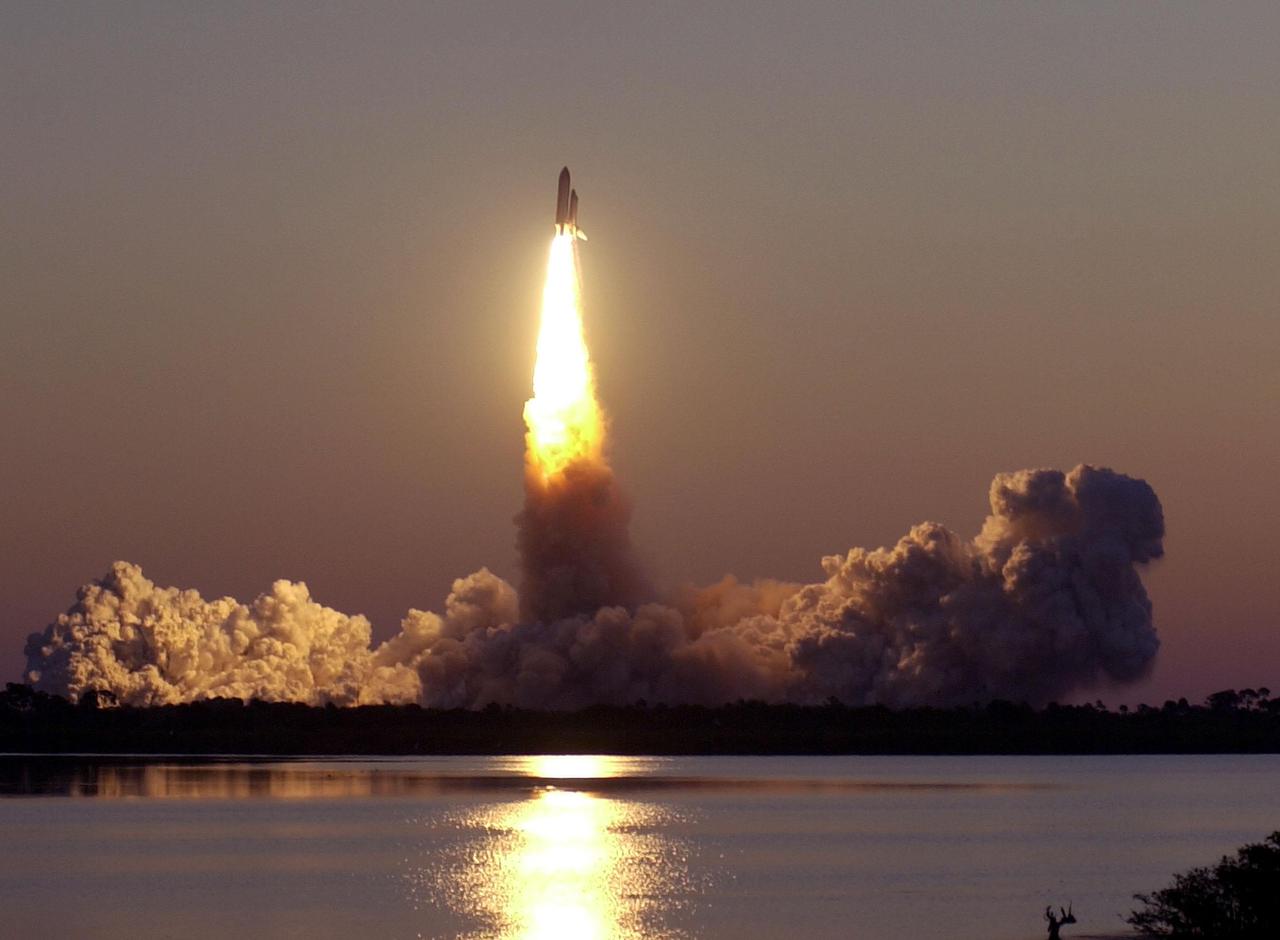
KENNEDY SPACE CENTER, Fla. -- Viewed from Astronaut Rd., Space Shuttle Discovery breaks away from the cocoon of smoke below, blazing a trail into the dawn sky. Liftoff of Discovery on mission STS-102 occurred at 6:42:09 EST on the eighth flight to the International Space Station
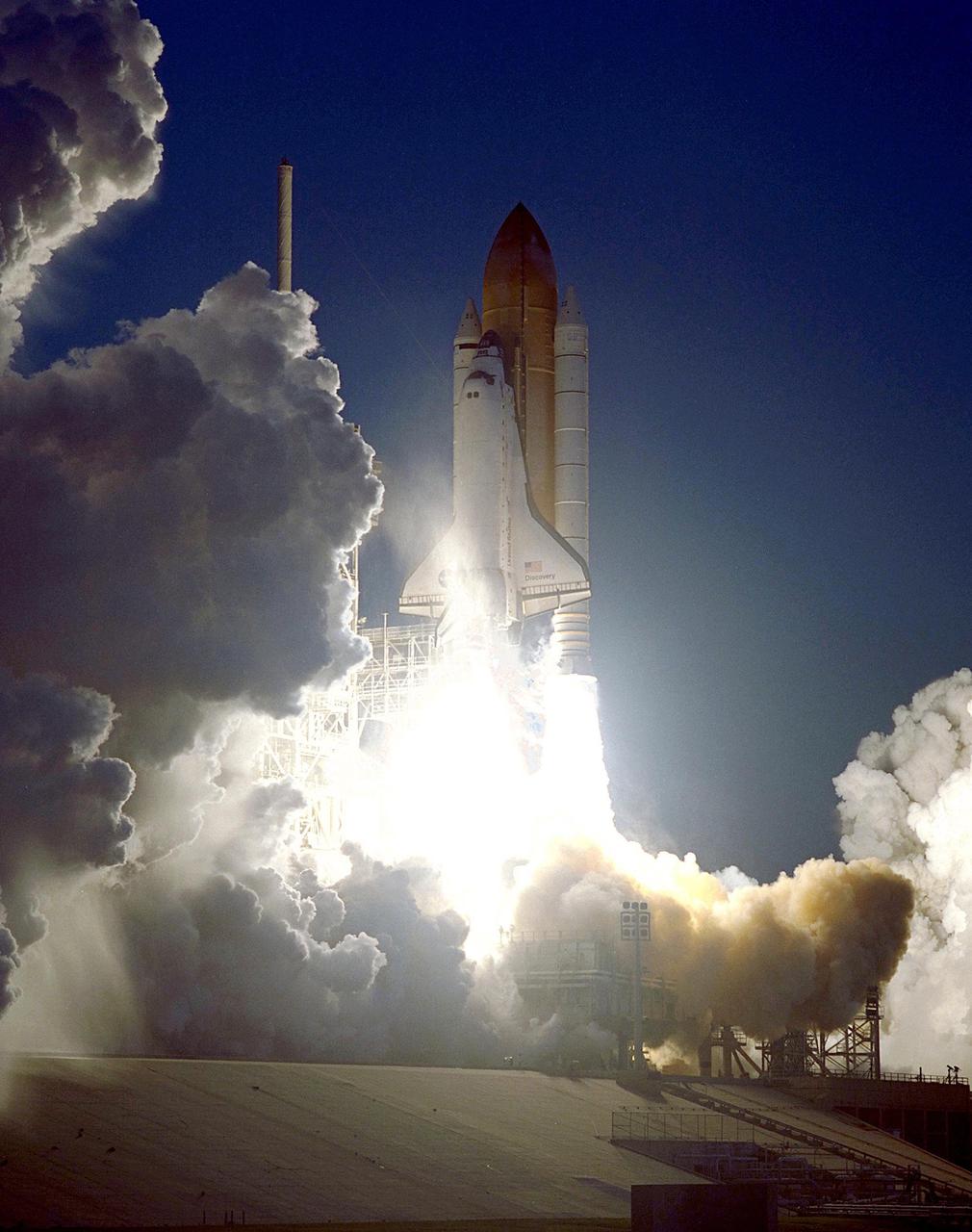
KENNEDY SPACE CENTER, Fla. -- Clouds of smoke and steam billow out from Launch Pad 39B as Space Shuttle Discovery lifts off for mission STS-102 to the International Space Station. The brilliance of the launch rivaled the sunrise on this perfect launch. Liftoff occurred at 6:42:09 EST for the eighth flight to the Space Station

KENNEDY SPACE CENTER, Fla. -- Space Shuttle Discovery competes with the rising sun as it blasts off from Launch Pad 39B just at dawn on mission STS-102. . Liftoff occurred at 6:42:09 EST for this eighth flight to the International Space Station
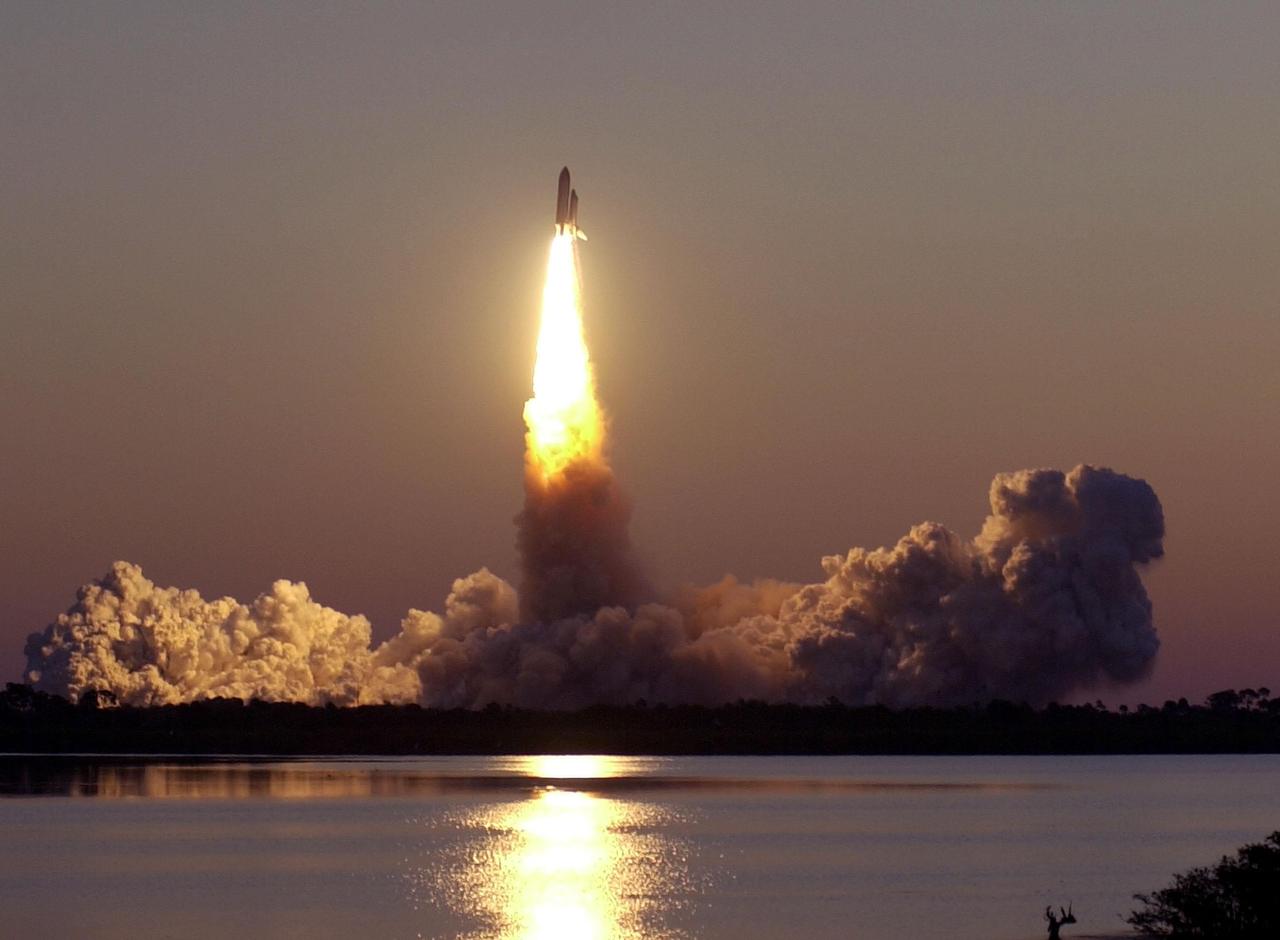
KENNEDY SPACE CENTER, Fla. -- Viewed from Astronaut Rd., Space Shuttle Discovery breaks away from the cocoon of smoke below, blazing a trail into the dawn sky. Liftoff of Discovery on mission STS-102 occurred at 6:42:09 EST on the eighth flight to the International Space Station
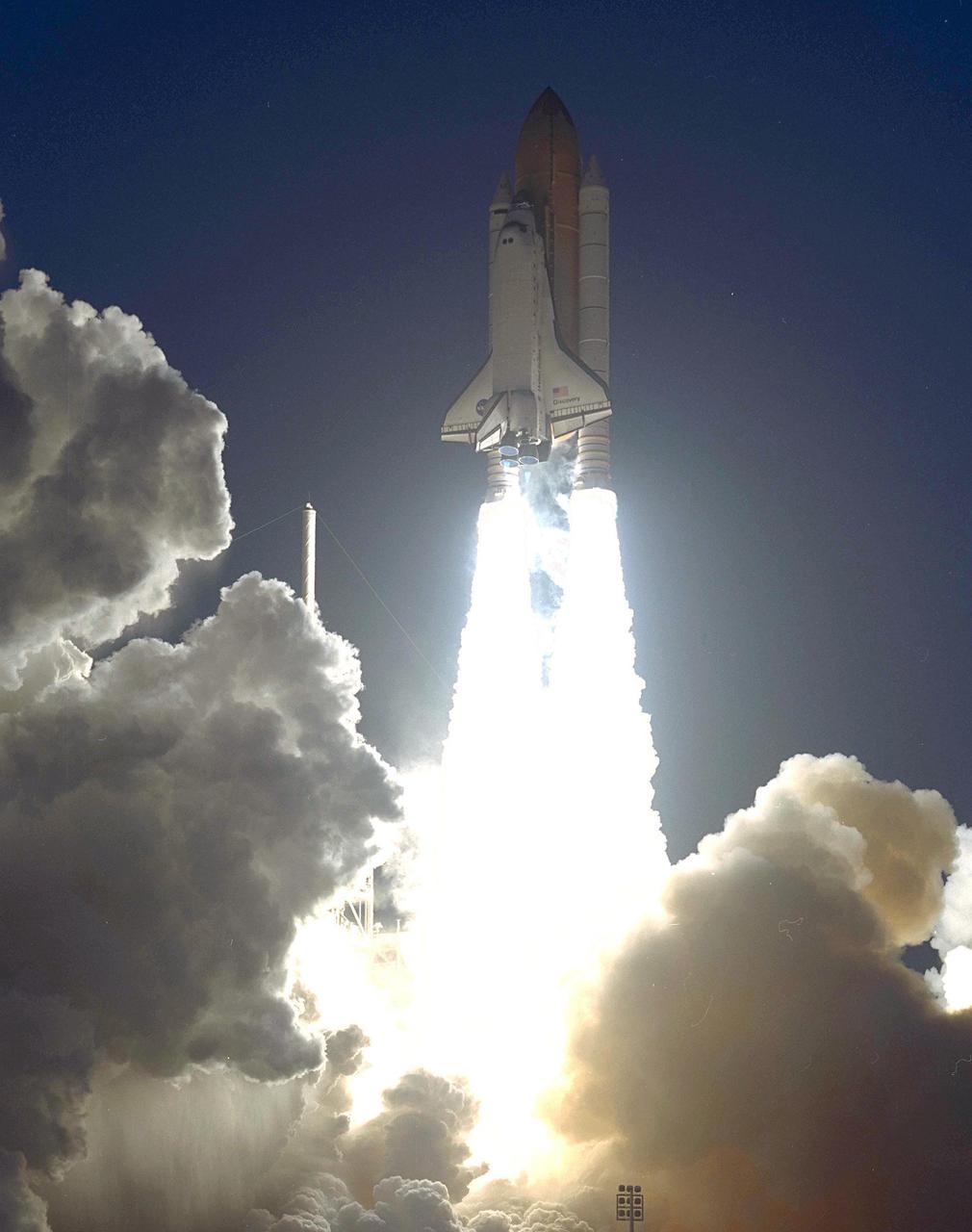
KENNEDY SPACE CENTER, Fla. -- Clouds of smoke and steam seem to break away as Space Shuttle Discovery blasts off from Launch Pad 39B on mission STS-102. Liftoff occurred at 6:42:09 EST for this eighth flight to the International Space Station
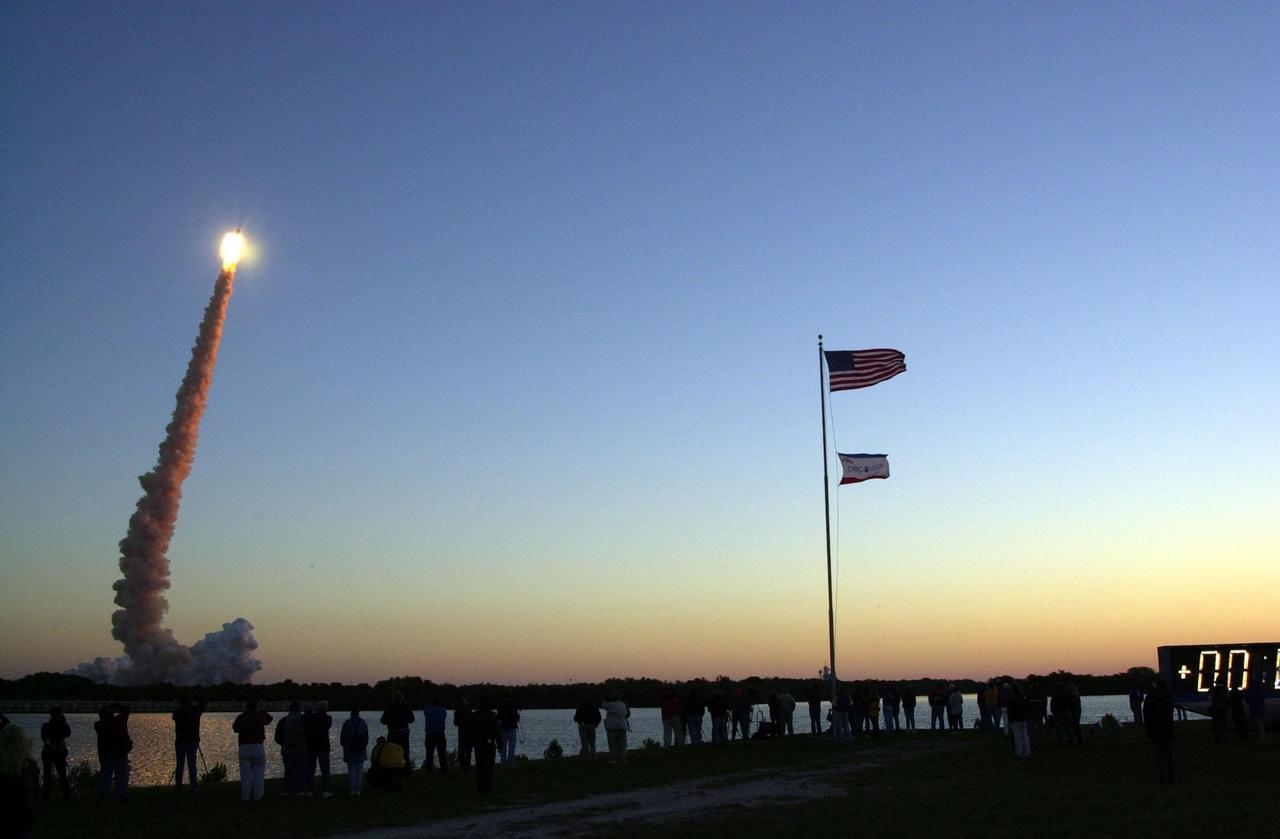
KENNEDY SPACE CENTER, Fla. -- Dozens of spectators line up by the turn basin to watch Space Shuttle Discovery blast off on mission STS-102, the eighth construction flight to the International Space Station. The lower smoke plumes appear red from the dawn’s rays. Liftoff occurred on time at 6:42:09 EST
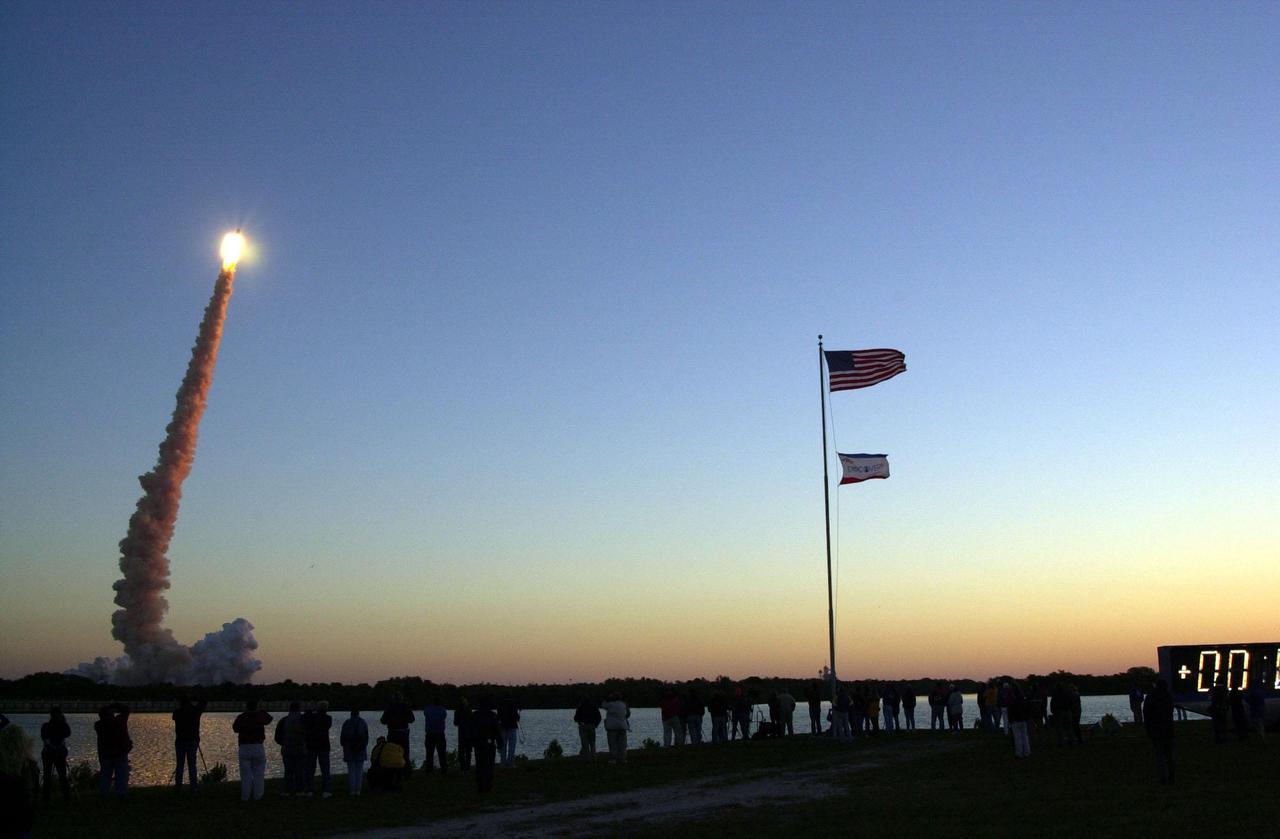
KENNEDY SPACE CENTER, Fla. -- Dozens of spectators line up by the turn basin to watch Space Shuttle Discovery blast off on mission STS-102, the eighth construction flight to the International Space Station. The lower smoke plumes appear red from the dawn’s rays. Liftoff occurred on time at 6:42:09 EST
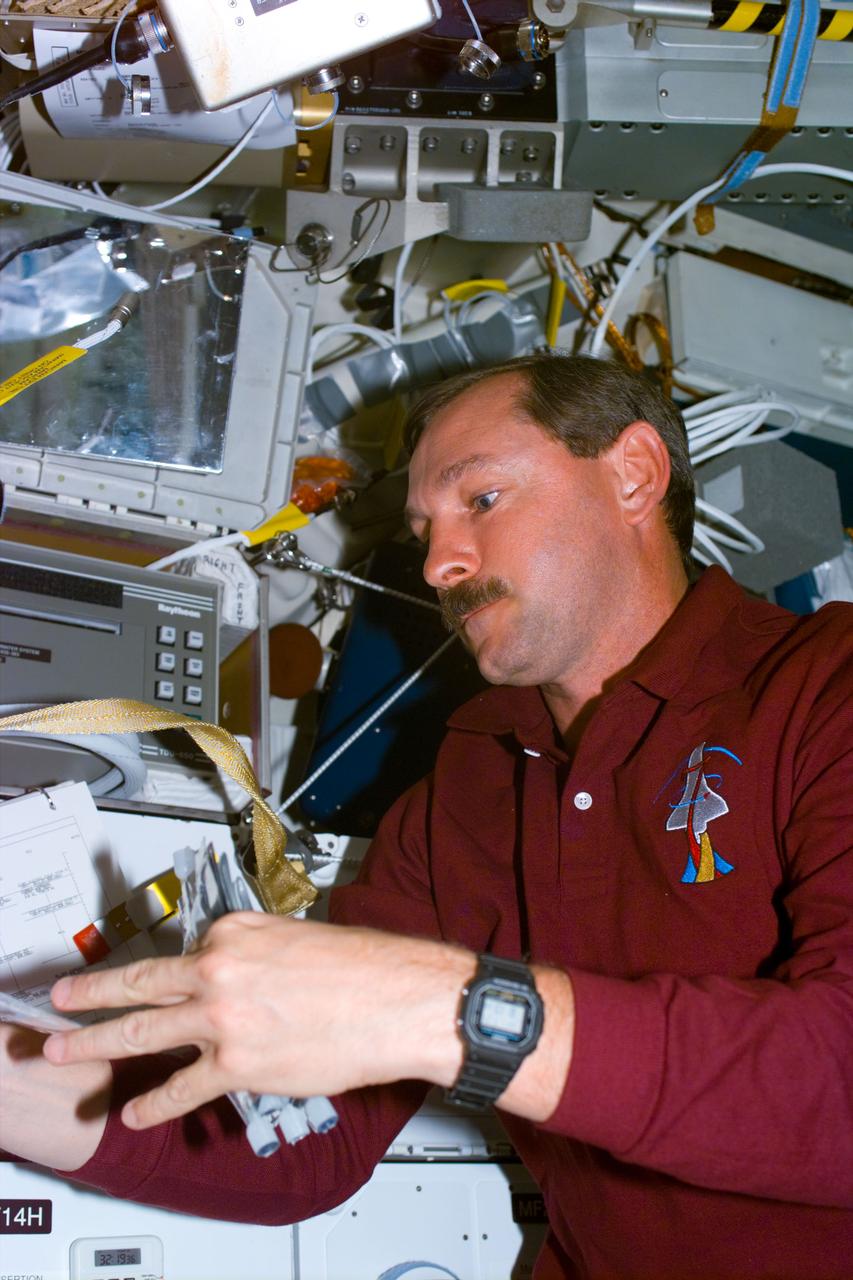
STS095-E-5054 (30 Oct. 1998) --- Astronaut Curtis L. Brown, STS-95 commander, has a handful of vials as he checks a notebook during Flight Day two activity onboard the Space Shuttle Discovery. The photo was taken with an electronic still camera at 10:42:49 GMT, Oct. 30.
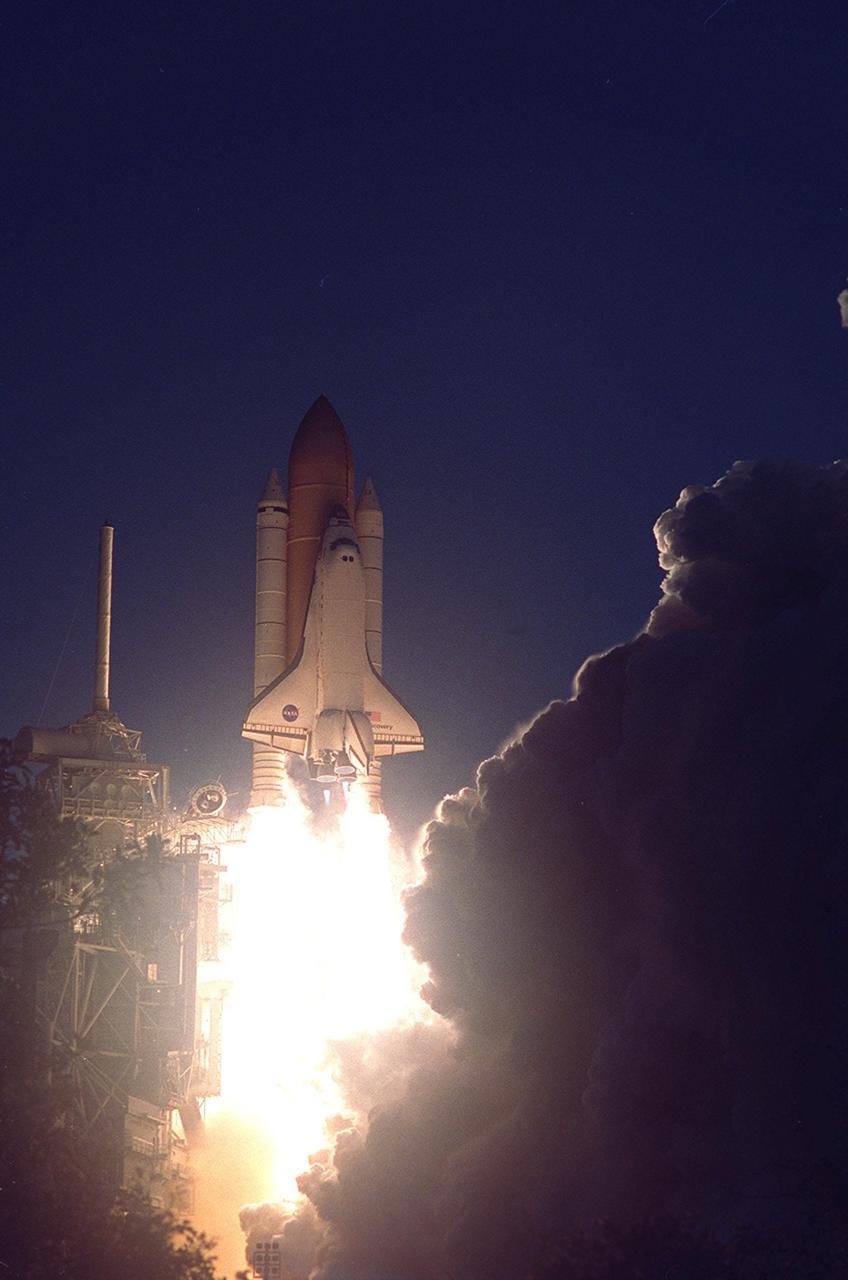
KENNEDY SPACE CENTER, Fla. -- Space Shuttle Discovery rivals the rising sun as it blasts off from Launch Pad 39B at dawn on mission STS-102. . Liftoff occurred at 6:42:09 EST for this eighth flight to the International Space Station
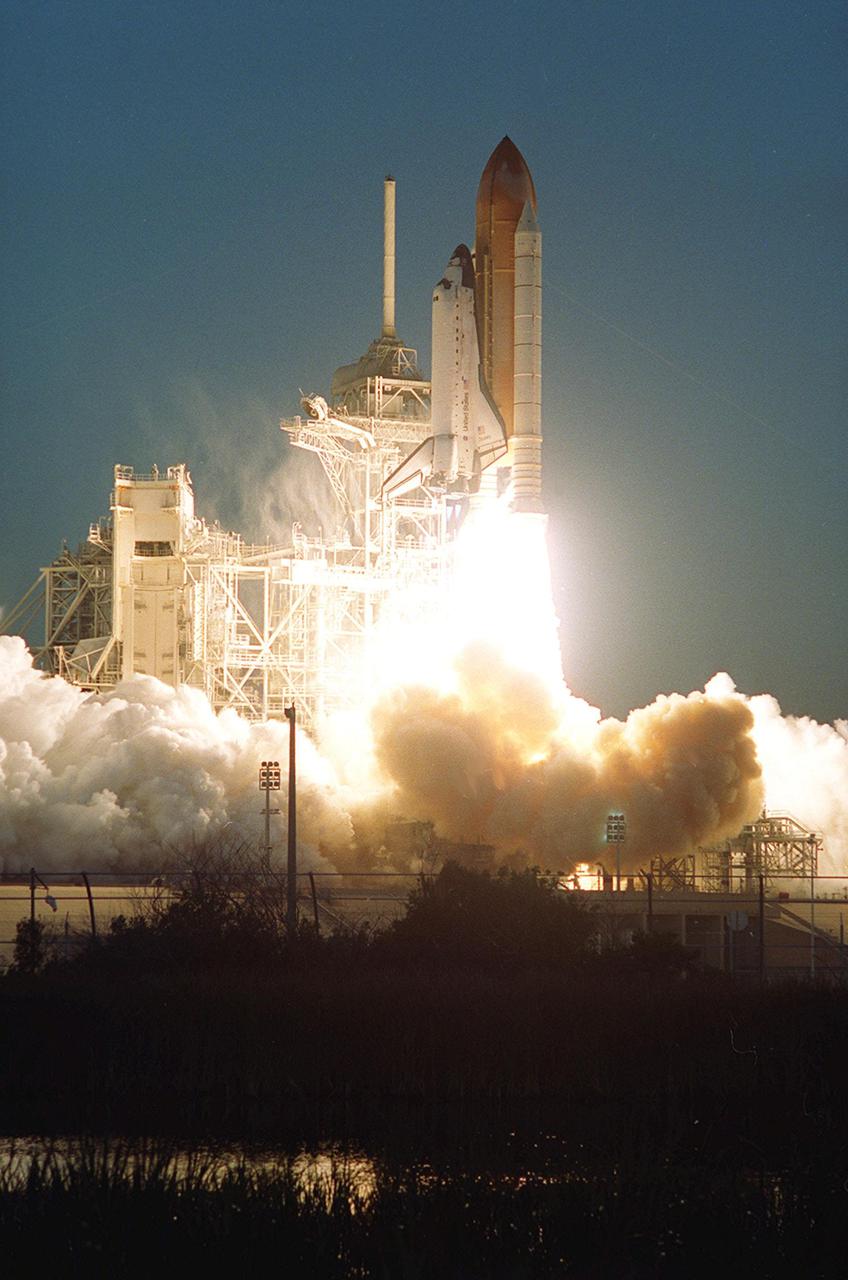
KENNEDY SPACE CENTER, Fla. -- Clouds of smoke and steam flow from Space Shuttle Discovery as it lifts off on mission STS-102 to the International Space Station. The brilliance of the launch rivaled the sunrise on this perfect launch. Liftoff occurred at 6:42:09 EST for the eighth flight to the Space Station
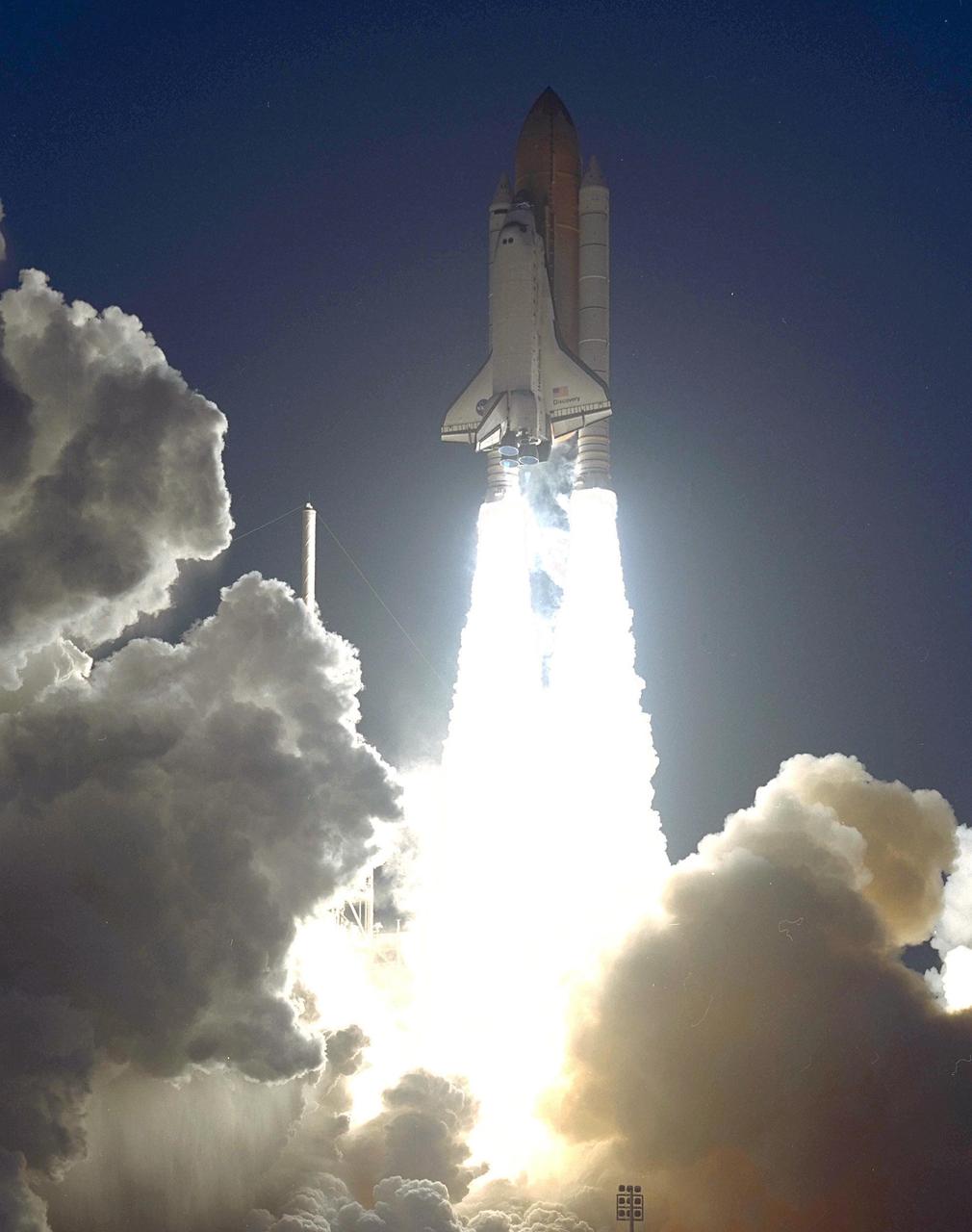
KENNEDY SPACE CENTER, Fla. -- Clouds of smoke and steam seem to break away as Space Shuttle Discovery blasts off from Launch Pad 39B on mission STS-102. Liftoff occurred at 6:42:09 EST for this eighth flight to the International Space Station
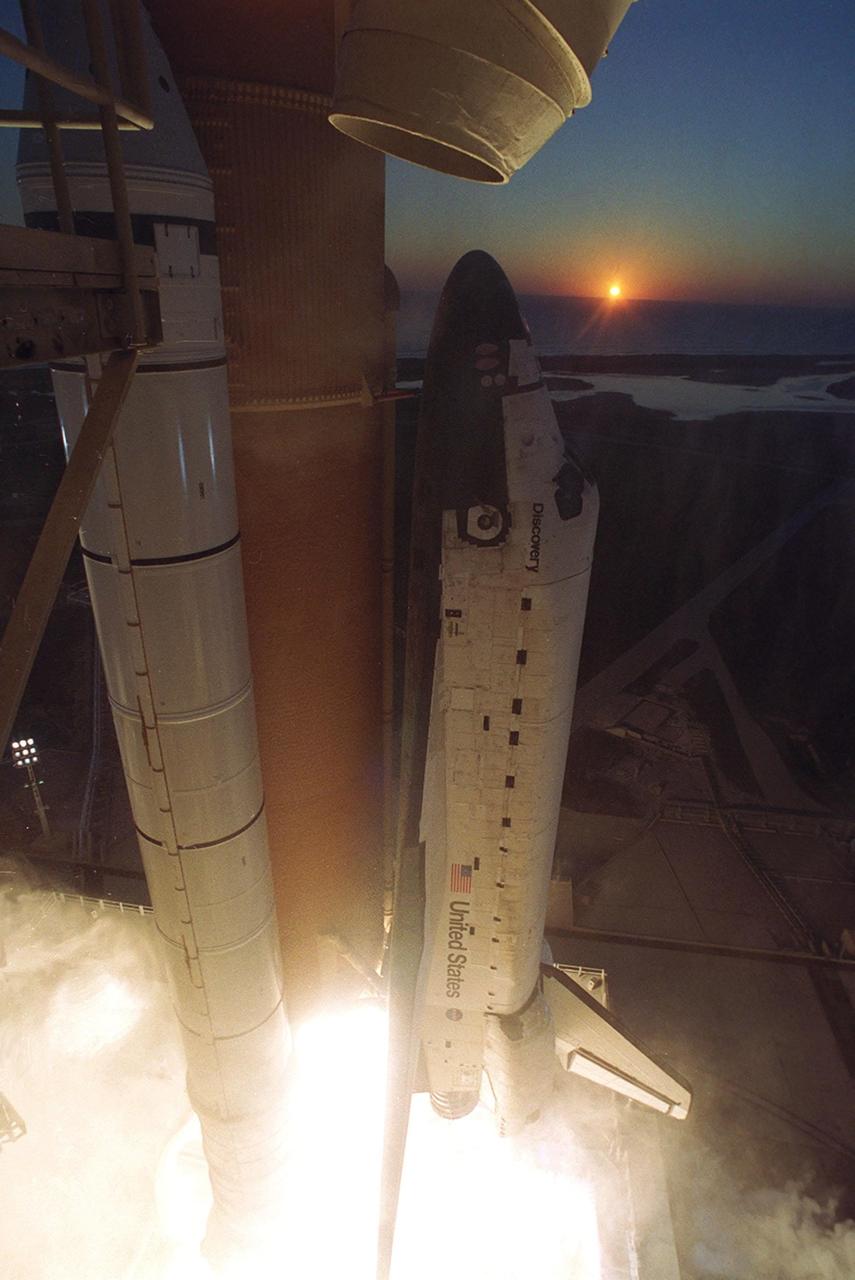
KENNEDY SPACE CENTER, Fla. -- As Space Shuttle Discovery clears Launch Pad 39B, the sun peers over the horizon of the Atlantic Ocean.Liftoff of Discovery on mission STS-102 occurred at 6:42:09 EST for the eighth flight to the International Space Station
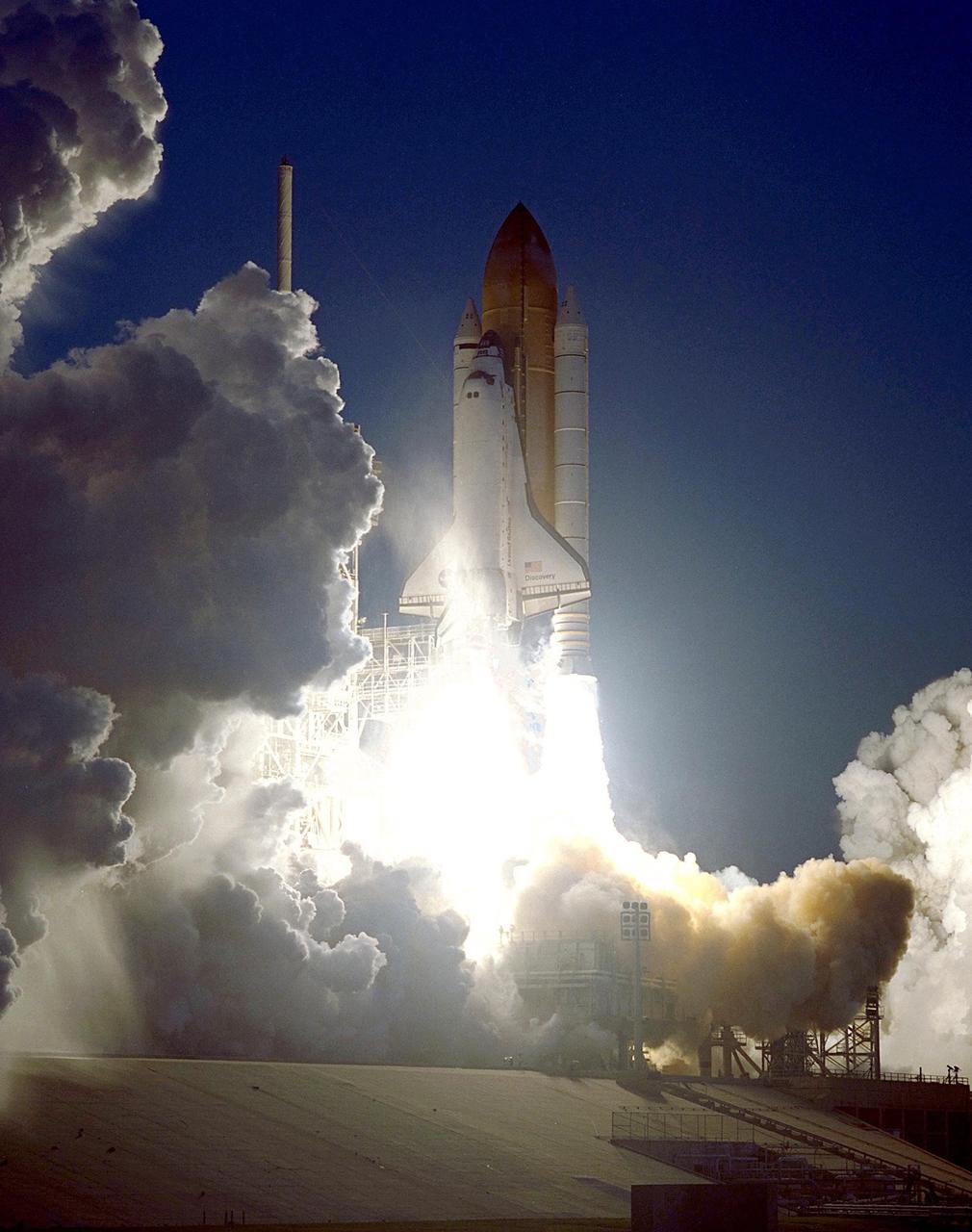
KENNEDY SPACE CENTER, Fla. -- Clouds of smoke and steam billow out from Launch Pad 39B as Space Shuttle Discovery lifts off for mission STS-102 to the International Space Station. The brilliance of the launch rivaled the sunrise on this perfect launch. Liftoff occurred at 6:42:09 EST for the eighth flight to the Space Station
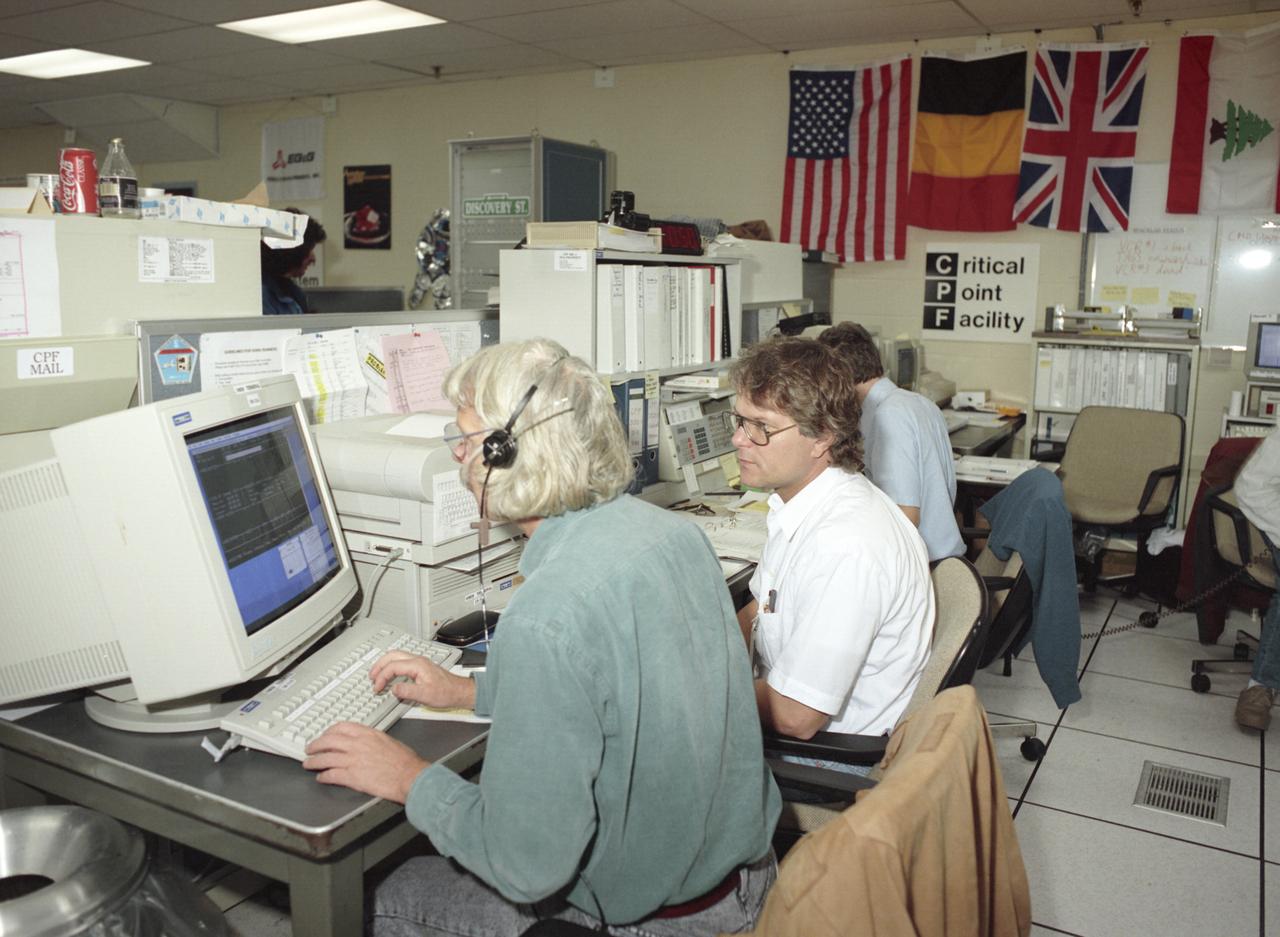
The primary payload for Space Shuttle Mission STS-42, launched January 22, 1992, was the International Microgravity Laboratory-1 (IML-1), a pressurized manned Spacelab module. The goal of IML-1 was to explore in depth the complex effects of weightlessness of living organisms and materials processing. Around-the-clock research was performed on the human nervous system's adaptation to low gravity and effects of microgravity on other life forms such as shrimp eggs, lentil seedlings, fruit fly eggs, and bacteria. Materials processing experiments were also conducted, including crystal growth from a variety of substances such as enzymes, mercury iodide, and a virus. The Huntsville Operations Support Center (HOSC) Spacelab Payload Operations Control Center (SL POCC) at the Marshall Space Flight Center (MSFC) was the air/ground communication channel used between the astronauts and ground control teams during the Spacelab missions. Featured is the Critical Point Facility (CPF) team in the SL POCC during the IML-1 mission.
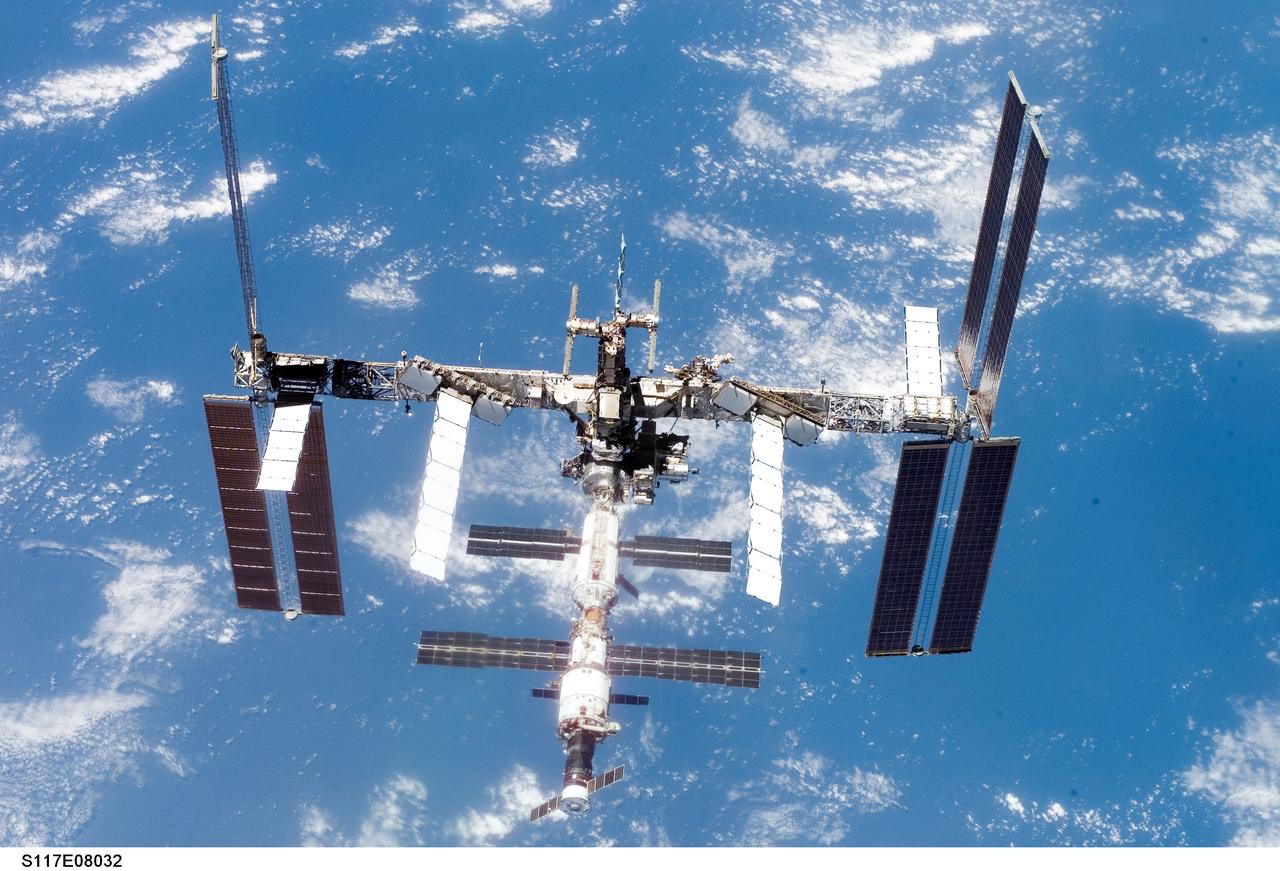
S117-E-08032 (19 June 2007) --- Backdropped by a blue and white Earth, the International Space Station moves away from the Space Shuttle Atlantis. Earlier the STS-117 and Expedition 15 crews concluded about eight days of cooperative work onboard the shuttle and station. Undocking of the two spacecraft occurred at 9:42 a.m. (CDT) on June 19, 2007. Astronaut Lee Archambault, STS-117 pilot, was at the controls for the departure and fly-around, which gave Atlantis' crew a look at the station's new expanded configuration.
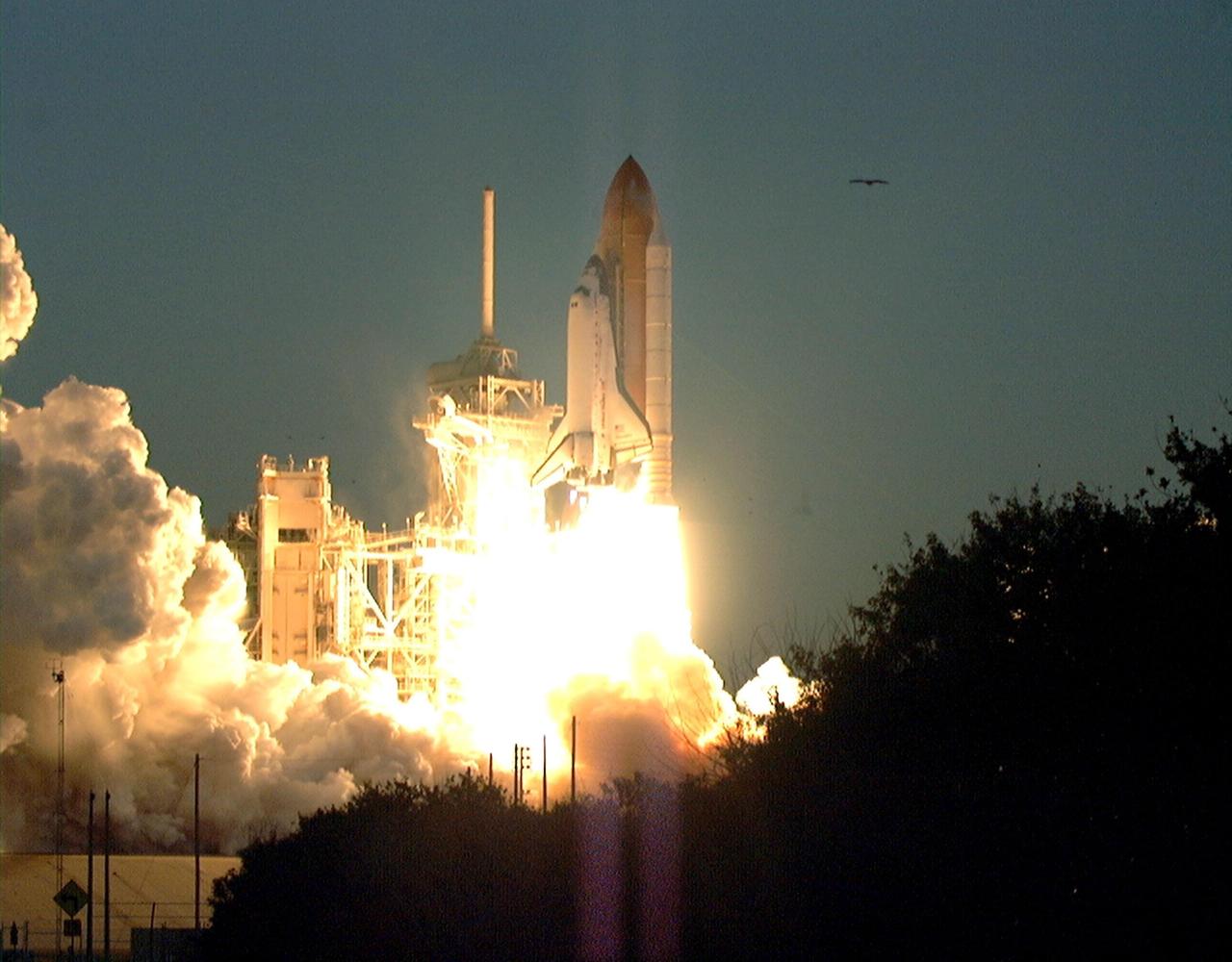
KENNEDY SPACE CENTER, Fla. -- Space Shuttle Discovery lifts off at 6:42:09 EST on mission STS-102 from Launch Pad 39B, rousing the birds in the area just at dawn. The brilliant flames and exhaust rival the rising sun, barely seen on the horizon. STS-102 is the eighth flight to the International Space Station
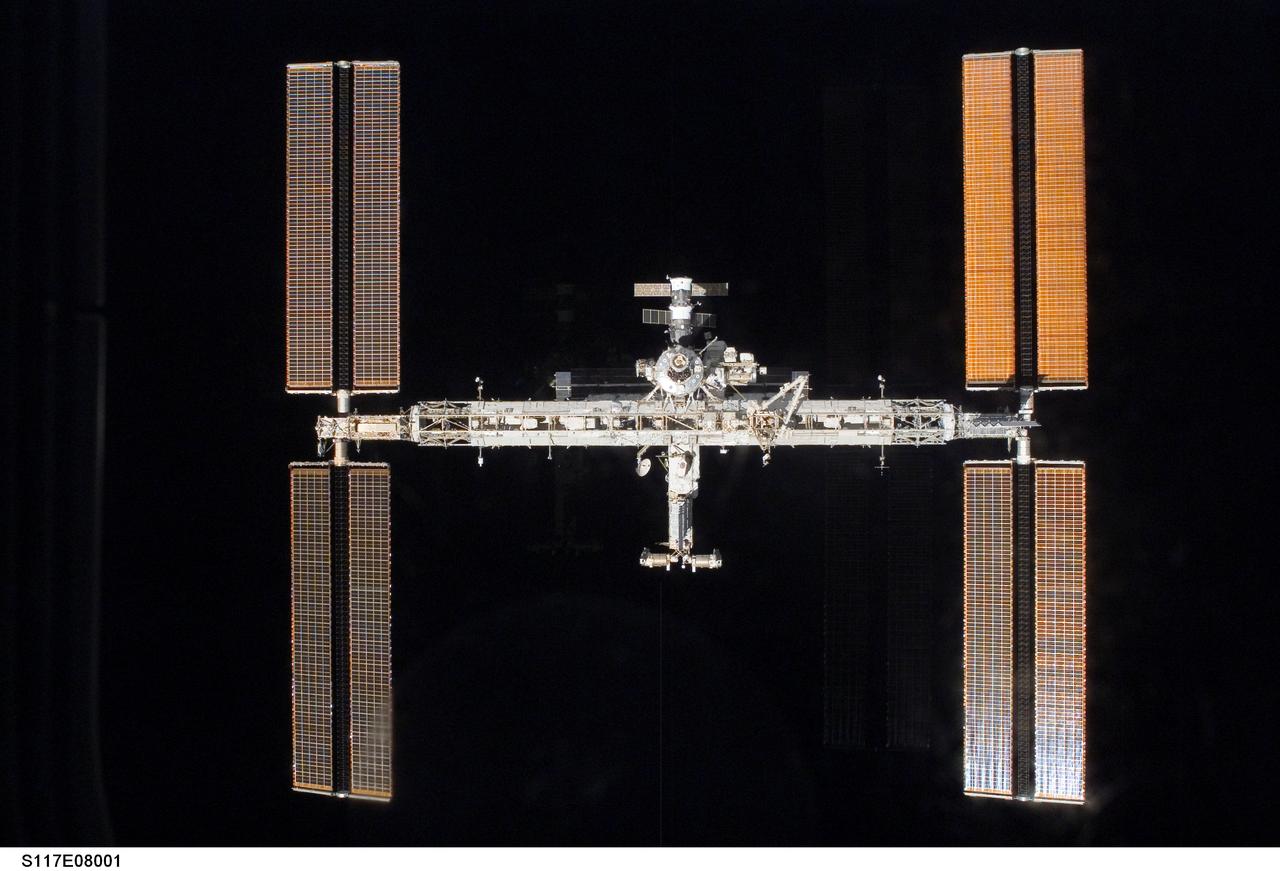
S117-E-08001 (19 June 2007) --- Backdropped by the blackness of space, the International Space Station moves away from the Space Shuttle Atlantis. Earlier the STS-117 and Expedition 15 crews concluded about eight days of cooperative work onboard the shuttle and station. Undocking of the two spacecraft occurred at 9:42 a.m. (CDT) on June 19, 2007. Astronaut Lee Archambault, STS-117 pilot, was at the controls for the departure and fly-around, which gave Atlantis' crew a look at the station's new expanded configuration.
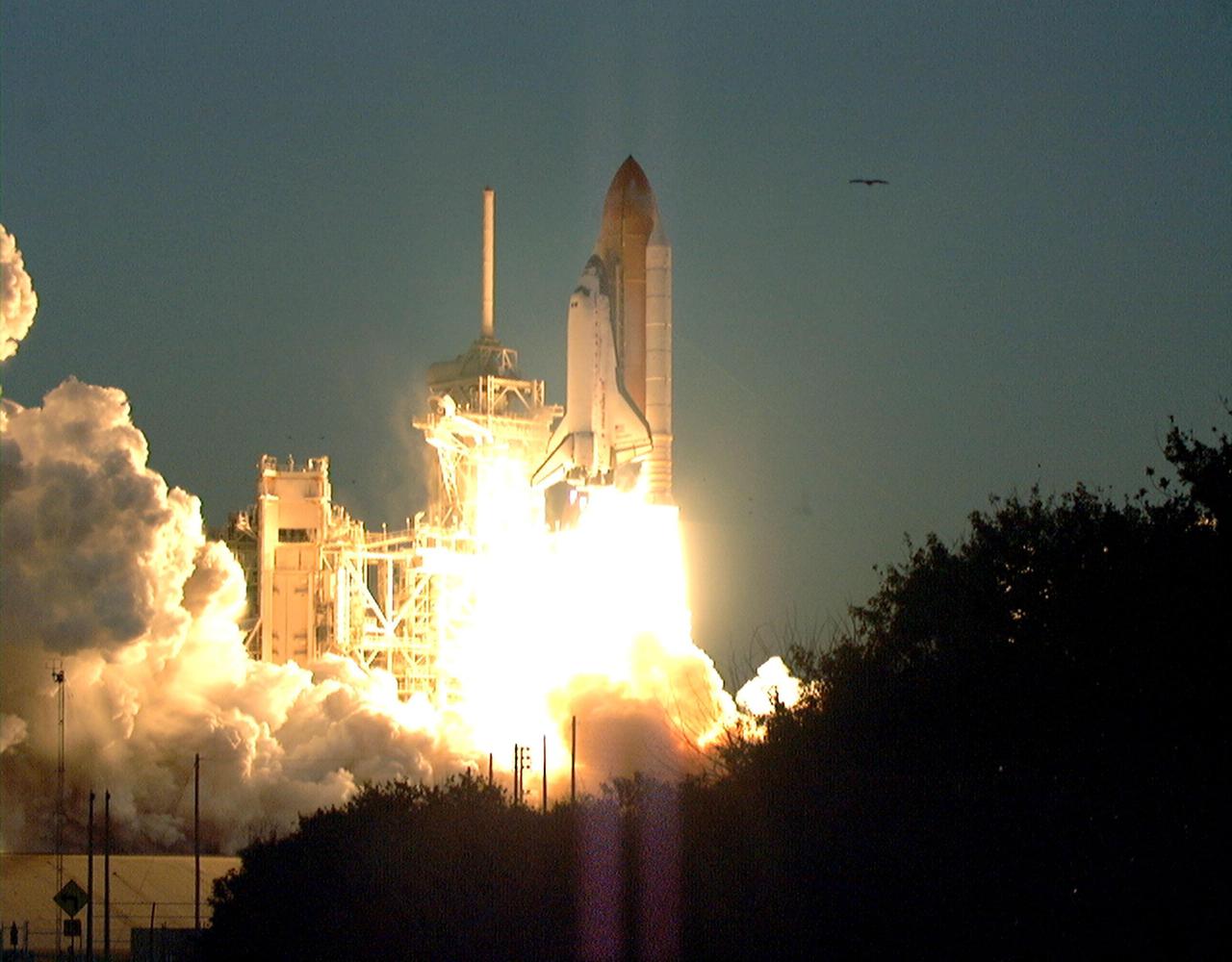
KENNEDY SPACE CENTER, Fla. -- Space Shuttle Discovery lifts off at 6:42:09 EST on mission STS-102 from Launch Pad 39B, rousing the birds in the area just at dawn. The brilliant flames and exhaust rival the rising sun, barely seen on the horizon. STS-102 is the eighth flight to the International Space Station
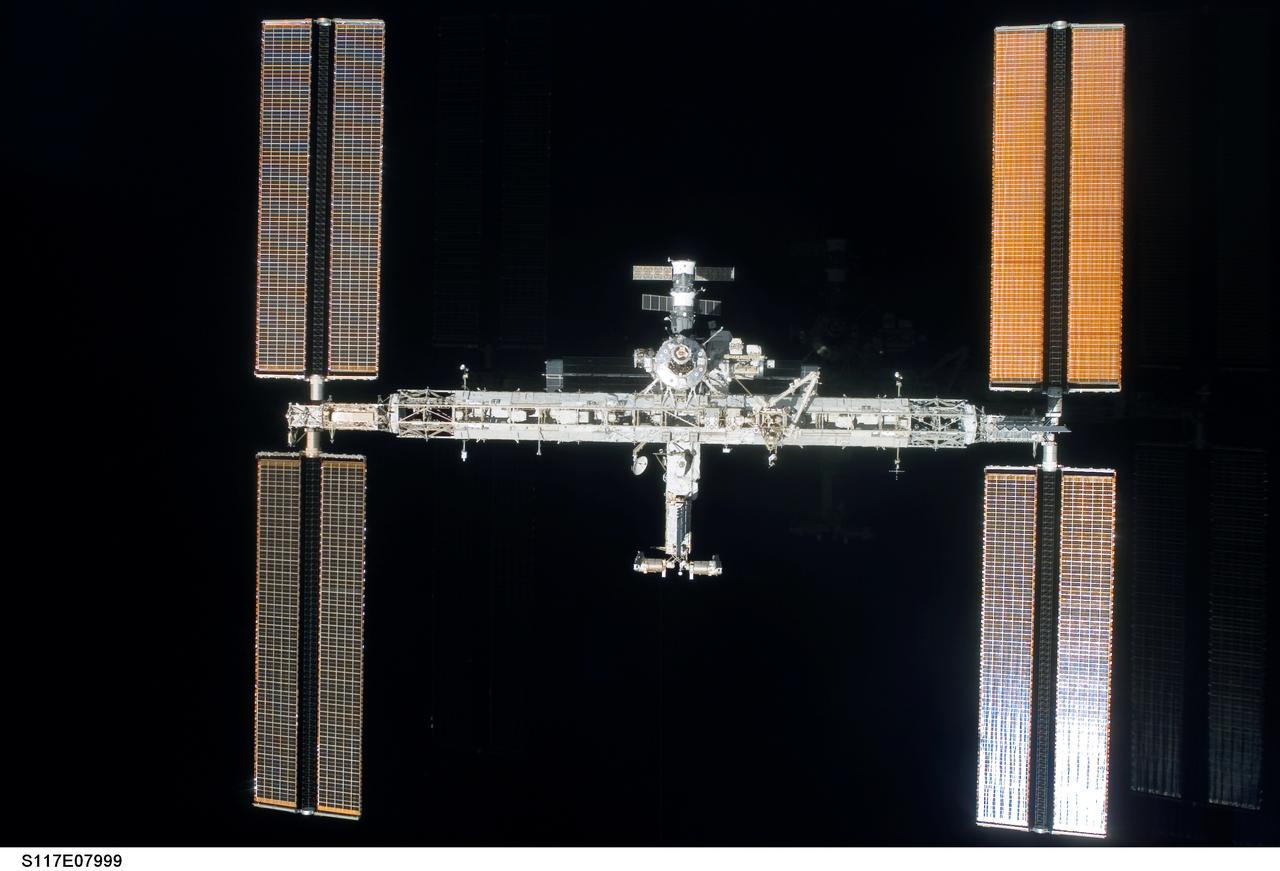
S117-E-07999 (19 June 2007) --- Backdropped by the blackness of space, the International Space Station moves away from the Space Shuttle Atlantis. Earlier the STS-117 and Expedition 15 crews concluded about eight days of cooperative work onboard the shuttle and station. Undocking of the two spacecraft occurred at 9:42 a.m. (CDT) on June 19, 2007. Astronaut Lee Archambault, STS-117 pilot, was at the controls for the departure and fly-around, which gave Atlantis' crew a look at the station's new expanded configuration.
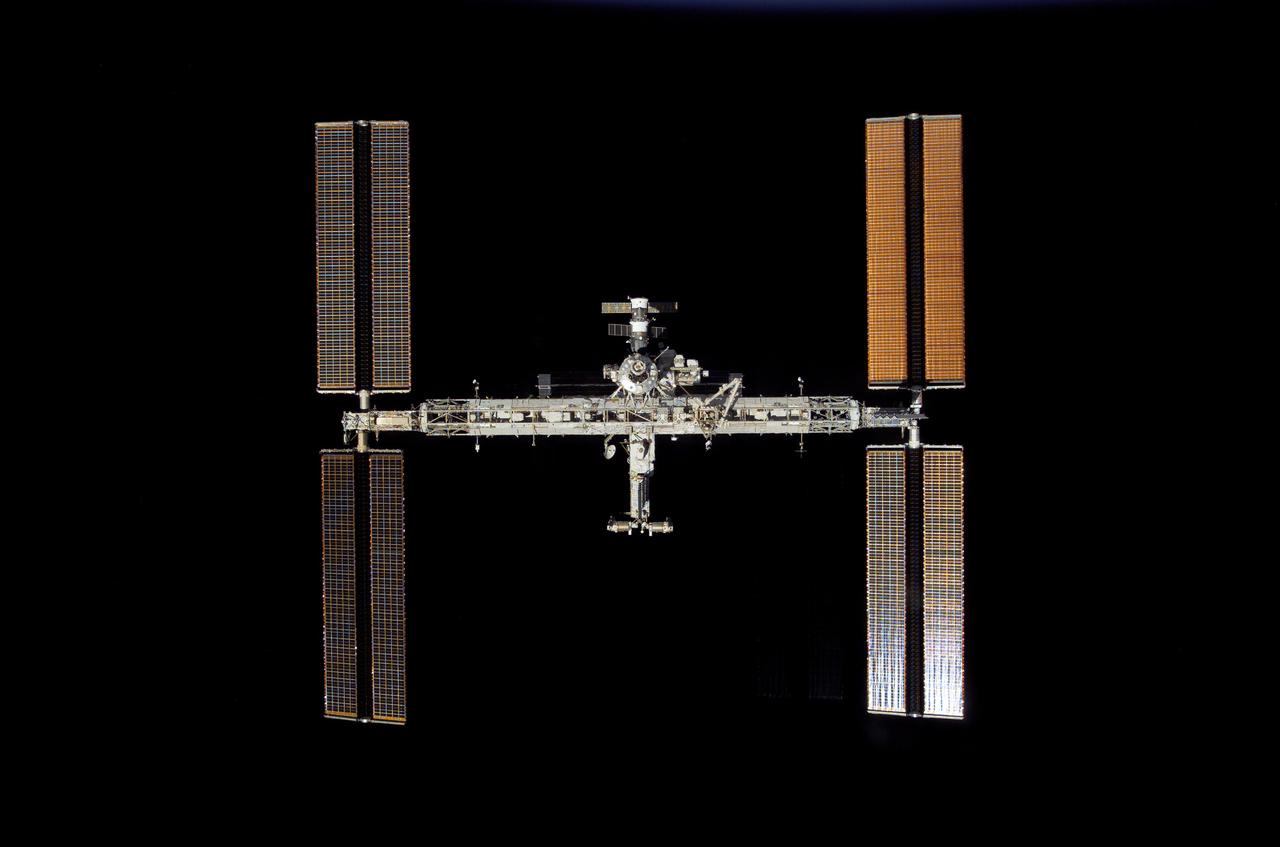
S117-E-08731 (19 June 2007) --- Backdropped by the blackness of space, the International Space Station moves away from the Space Shuttle Atlantis. Earlier the STS-117 and Expedition 15 crews concluded about eight days of cooperative work onboard the shuttle and station. Undocking of the two spacecraft occurred at 9:42 a.m. (CDT) on June 19, 2007. Astronaut Lee Archambault, STS-117 pilot, was at the controls for the departure and fly-around, which gave Atlantis' crew a look at the station's new expanded configuration.
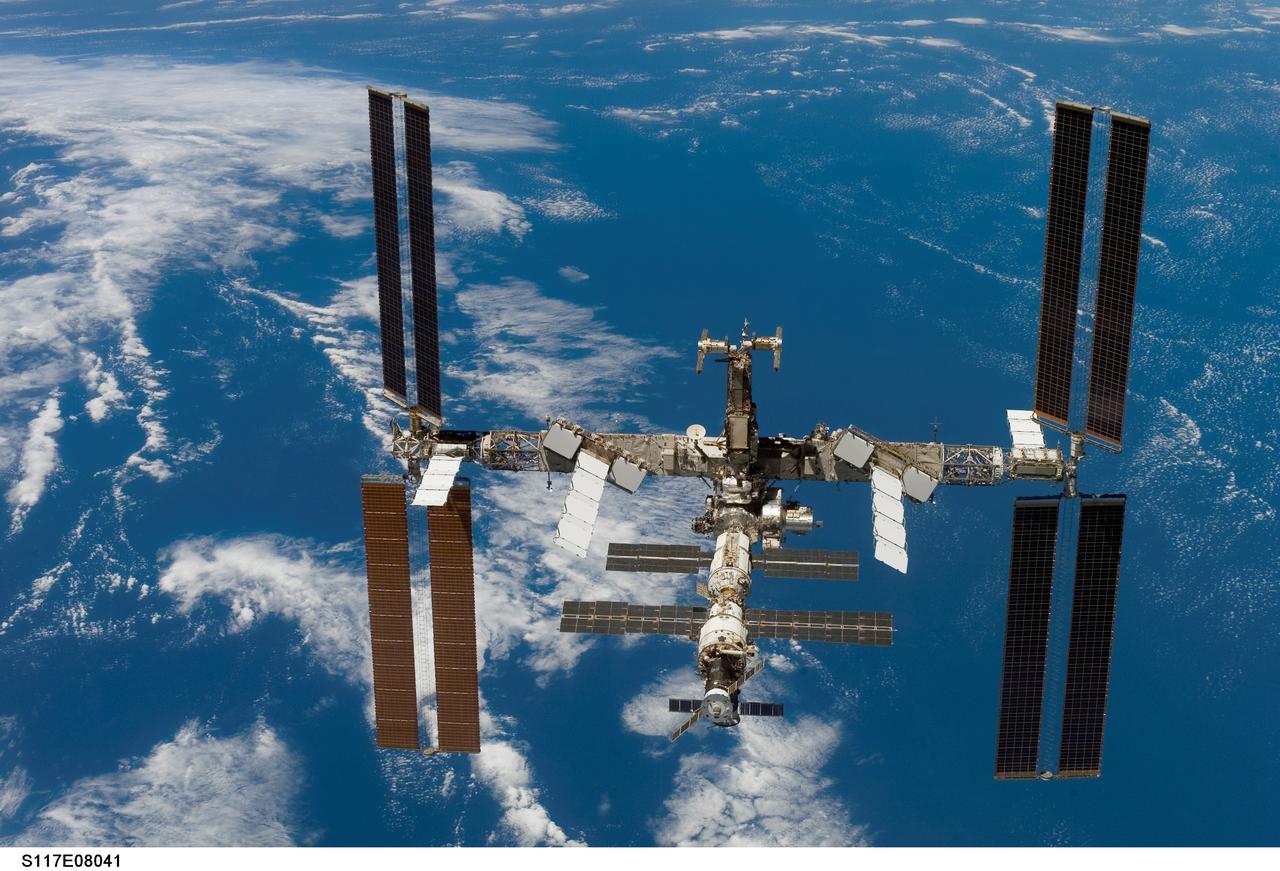
S117-E-08041 (19 June 2007) --- Backdropped by a blue and white Earth, the International Space Station moves away from the Space Shuttle Atlantis. Earlier the STS-117 and Expedition 15 crews concluded about eight days of cooperative work onboard the shuttle and station. Undocking of the two spacecraft occurred at 9:42 a.m. (CDT) on June 19, 2007. Astronaut Lee Archambault, STS-117 pilot, was at the controls for the departure and fly-around, which gave Atlantis' crew a look at the station's new expanded configuration.

KENNEDY SPACE CENTER, FLA. -- Danny Wyatt, with NASA Quality, inspects wiring, using a flashlight and magnifying glass, in the aft compartment of Discovery before launch. Electrical wire inspections and repairs in the orbiter's payload bay, external tank umbilical and engine compartment have been ongoing for more than a month and are near completion. Launch of Space Shuttle Discovery on mission STS-103 is scheduled for Dec. 11 at 11:42 p.m. from Launch Pad 39B. STS-103 is the third servicing mission for the Hubble Space Telescope
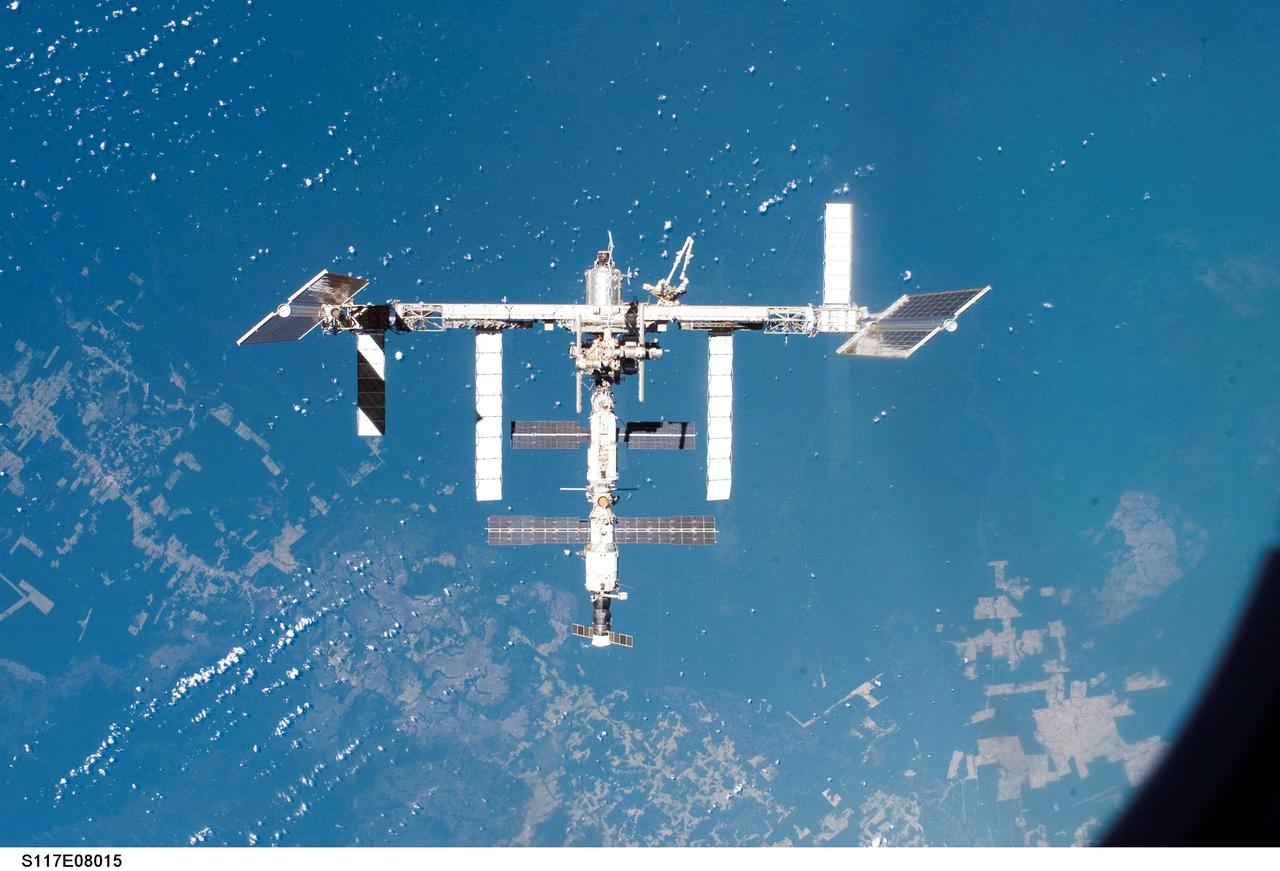
S117-E-08015 (19 June 2007) --- Backdropped by a colorful Earth, the International Space Station moves away from the Space Shuttle Atlantis. Earlier the STS-117 and Expedition 15 crews concluded about eight days of cooperative work onboard the shuttle and station. Undocking of the two spacecraft occurred at 9:42 a.m. (CDT) on June 19, 2007. Astronaut Lee Archambault, STS-117 pilot, was at the controls for the departure and fly-around, which gave Atlantis' crew a look at the station's new expanded configuration.
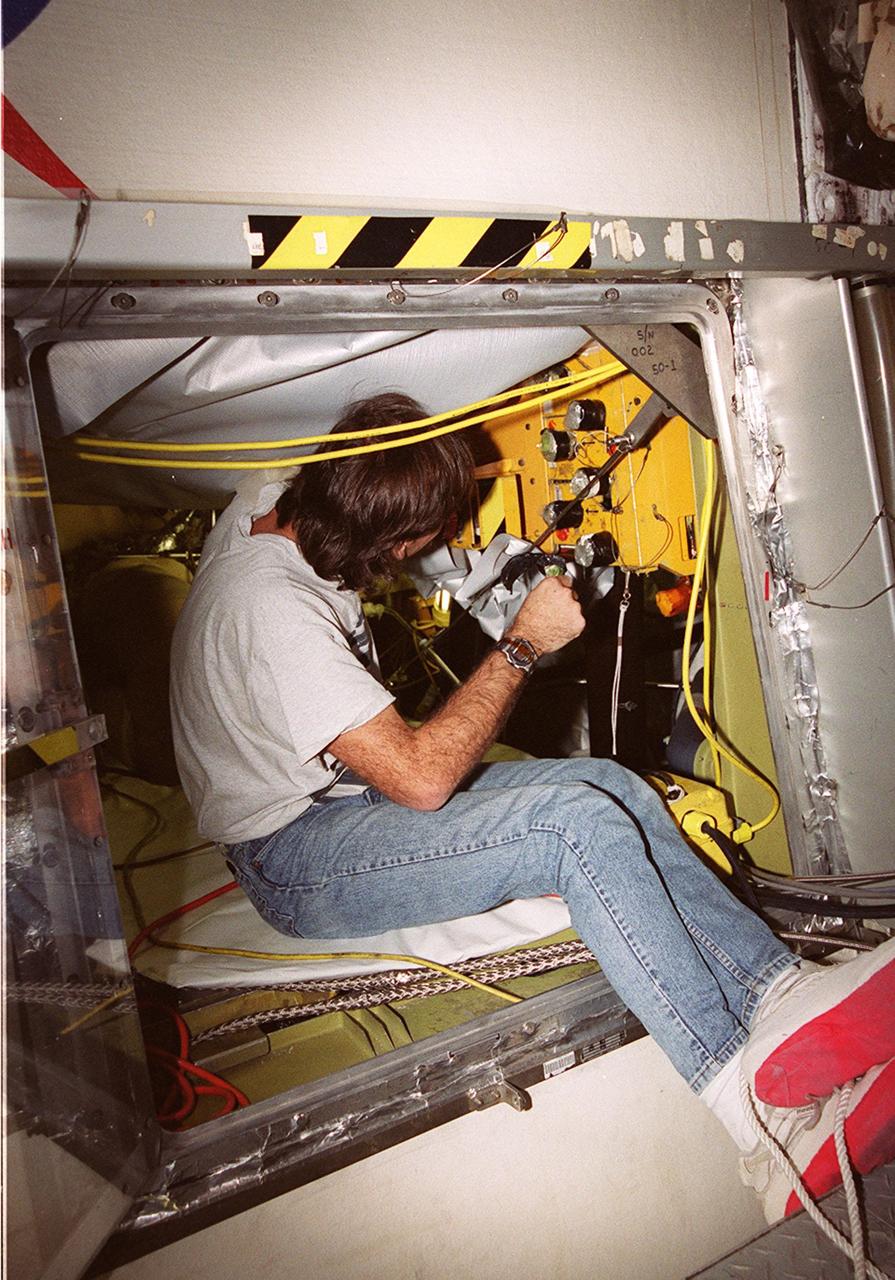
KENNEDY SPACE CENTER, FLA. -- Todd Biddle, with United Space Alliance, inspects wiring in the aft compartment of Discovery before launch. Electrical wire inspections and repairs in the orbiter's payload bay, external tank umbilical and engine compartment have been ongoing for more than a month and are near completion. Launch of Space Shuttle Discovery on mission STS-103 is scheduled for Dec. 11 at 11:42 p.m. from Launch Pad 39B. STS-103 is the third servicing mission for the Hubble Space Telescope
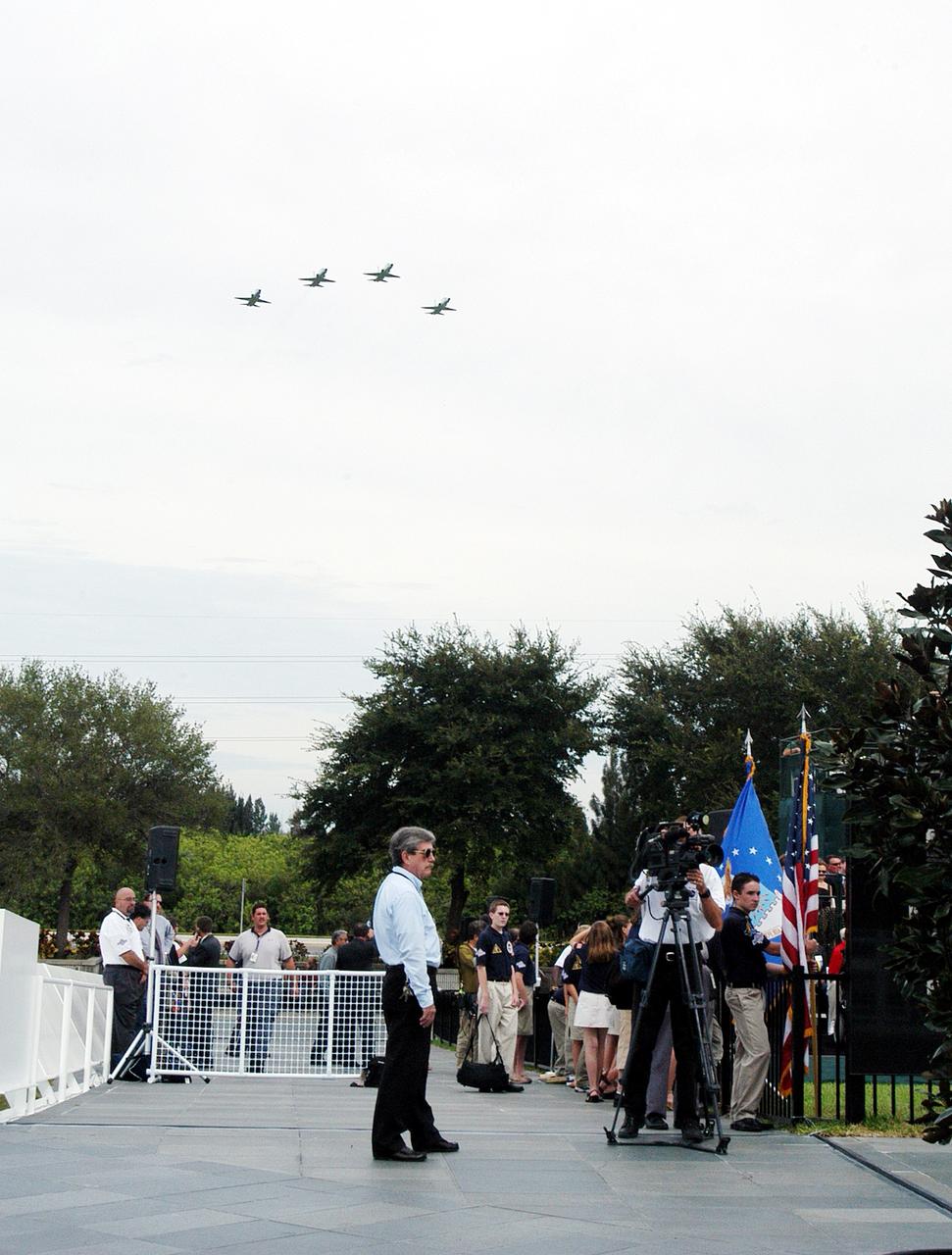
KENNEDY SPACE CENTER, FLA. - NASA T-38 jets fly over the Space Mirror Memorial at the Kennedy Space Center Visitor Complex in the Missing Man Formation. During this dedication ceremony, the names of the STS-107 astronauts who lost their lives during the Columbia accident -- Rick Husband, Willie McCool, Laurel Clark, Michael Anderson, David Brown, Kalpana Chawla, and Ilan Ramon -- join the names of 17 other space heroes who gave their lives for the U.S. space program. The "Space Mirror," 42 1/2 feet high by 50 feet wide, illuminates the names of the fallen astronauts cut through the monument's black granite surface.
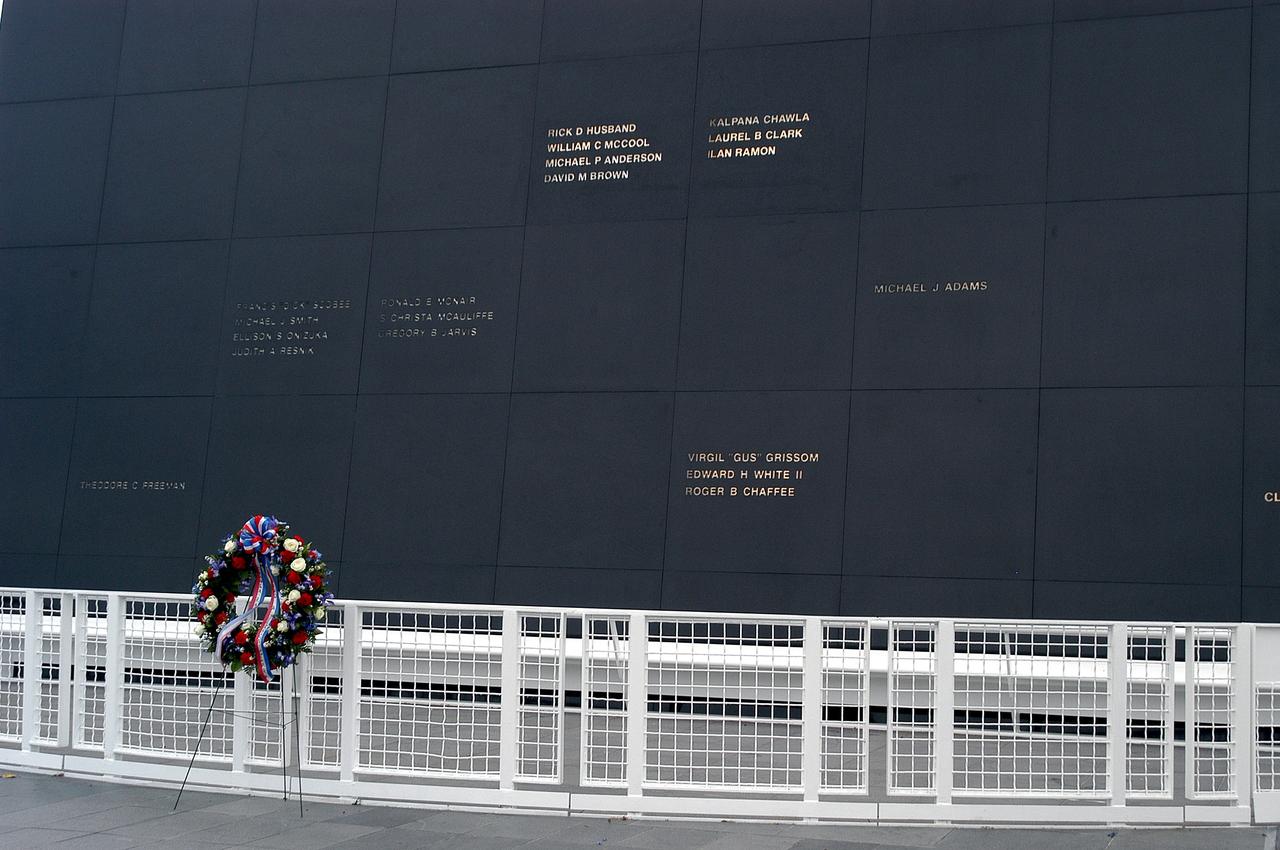
KENNEDY SPACE CENTER, FLA. - A ceremonial wreath is placed at the Space Mirror Memorial at the Kennedy Space Center Visitor Complex. During this dedication ceremony, the names of the STS-107 astronauts who lost their lives during the Columbia accident -- Rick Husband, Willie McCool, Laurel Clark, Michael Anderson, David Brown, Kalpana Chawla, and Ilan Ramon -- join the names of 17 other space heroes who gave their lives for the U.S. space program. The "Space Mirror," 42 1/2 feet high by 50 feet wide, illuminates the names of the fallen astronauts cut through the monument's black granite surface.

KENNEDY SPACE CENTER, FLA. - A ceremonial wreath is placed at the Space Mirror Memorial at the Kennedy Space Center Visitor Complex. During this dedication ceremony, the names of the STS-107 astronauts who lost their lives during the Columbia accident -- Rick Husband, Willie McCool, Laurel Clark, Michael Anderson, David Brown, Kalpana Chawla, and Ilan Ramon -- join the names of 17 other space heroes who gave their lives for the U.S. space program. The "Space Mirror," 42 1/2 feet high by 50 feet wide, illuminates the names of the fallen astronauts cut through the monument's black granite surface.
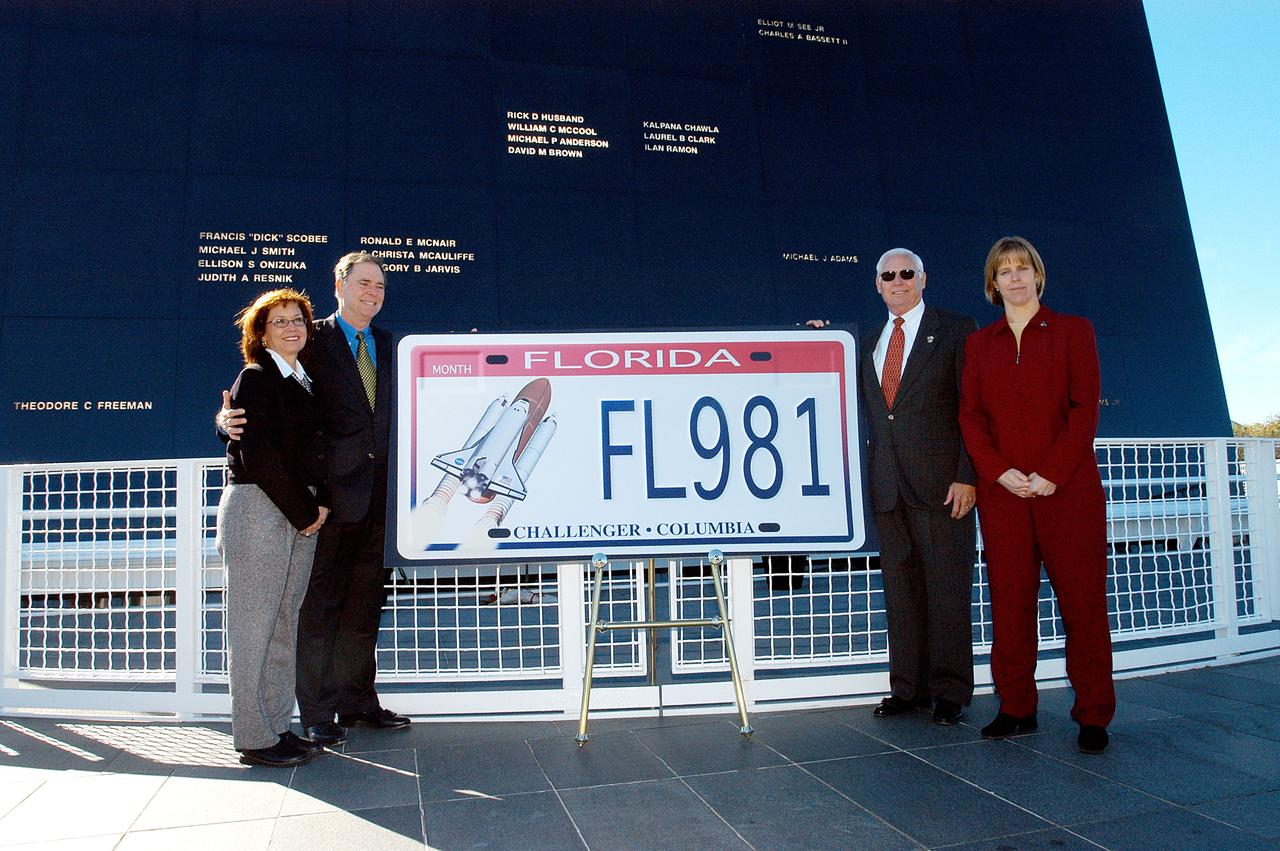
KENNEDY SPACE CENTER, FLA. - The new Florida license plate honoring the fallen astronauts of Challenger and Columbia is unveiled at the KSC Visitor Complex, in front of the Space Memorial Mirror. Participants in the dedication included (from left) Susan Berry, a teacher from Mila Elementary School in Brevard County; Sen. Bill Posey; Florida Rep. Ralph Poppell; and Kirstie McCool Chadwick, sister of William “Willie” J. McCool, who was the pilot on mission STS-107 that ended in disaster Feb. 1, 2003. The Space Mirror, 42-1/2 feet high by 50 feet wide, illuminates the names of the fallen astronauts cut through the monument’s black granite surface.
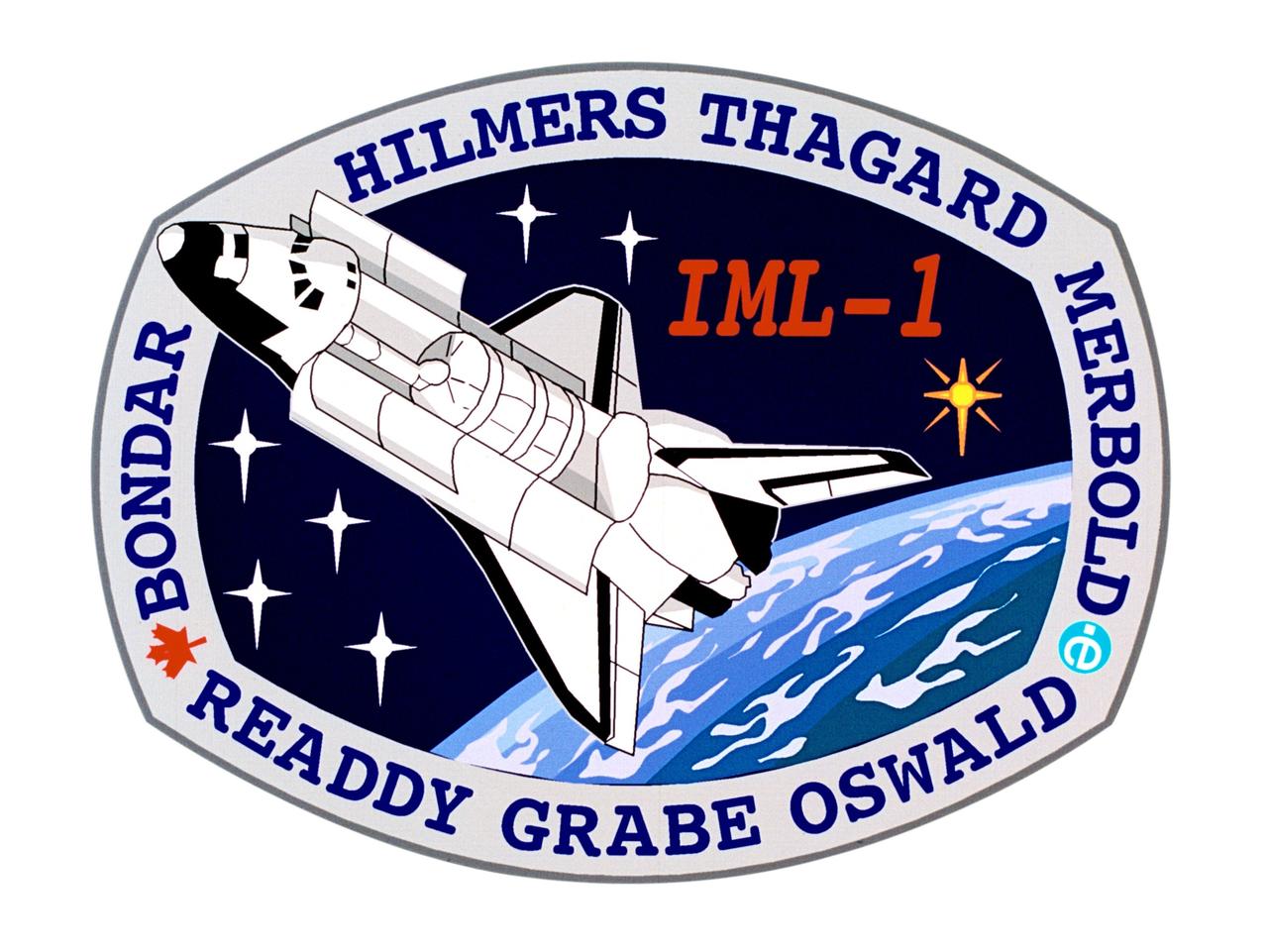
STS042-S-001 (October 1991) --- Designed by the crew members, the International Microgravity Lab-1 (IML-1) insignia depicts the orbiter with the Spacelab Module aboard. The spacecraft is oriented in a quiescent, tail-to-Earth, gravity-gradient attitude to best support the various microgravity payloads and experiments. The international composition of the crew is depicted by symbols representing both the Canadian Space Agency (CSA) and the European Space Agency (ESA). The number 42 is represented by six white stars -- four on one side of the orbiter and two on the other. The single gold star above Earth's horizon honors the memory of astronaut Manley L. (Sonny) Carter, who was killed earlier this year in a commuter plane crash. A crew spokesperson stated that Carter "...was our crew mate, colleague and friend." Blue letters set against white give the surnames of the five astronauts and two payload specialists for the flight. The NASA insignia design for space shuttle flights is reserved for use by the astronauts and for other official use as the NASA Administrator may authorize. Public availability has been approved only in the form of illustrations by the various news media. When and if there is any change in this policy, which is not anticipated, it will be publicly announced. Photo credit: NASA
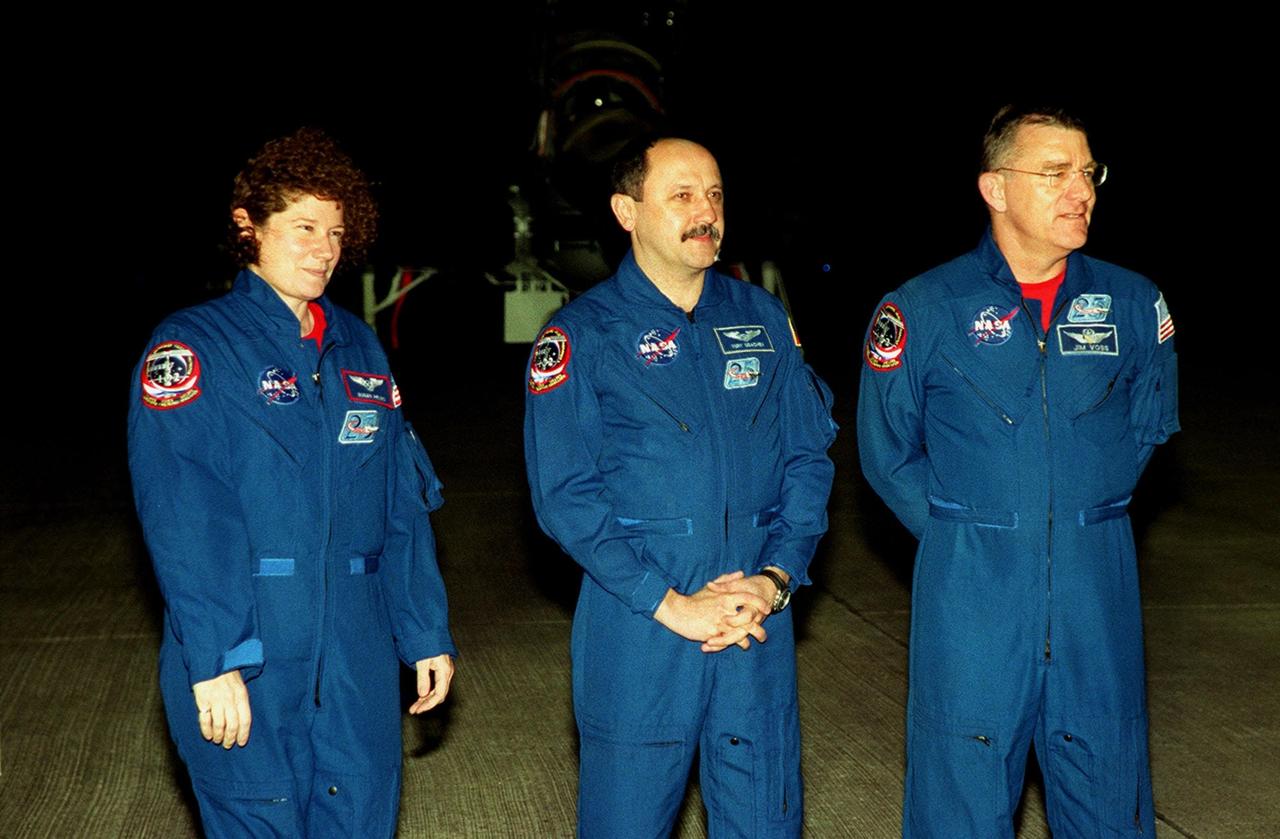
After their arrival at the Shuttle Landing Facility, STS-102 Mission Specialists (left to right) Susan Helms, Yury Usachev and James Voss happily greet the media. They are also the Expedition Two crew replacing Expedition One on the International Space Station. STS-102 will be carrying the Multi-Purpose Logistics Module Leonardo, the primary delivery system used to resupply and return Station cargo requiring a pressurized environment. Leonardo will deliver up to 10 tons of laboratory racks filled with equipment, experiments and supplies for outfitting the newly installed U.S. Laboratory Destiny. STS-102 is scheduled to launch March 8 at 6:42 a.m. EST
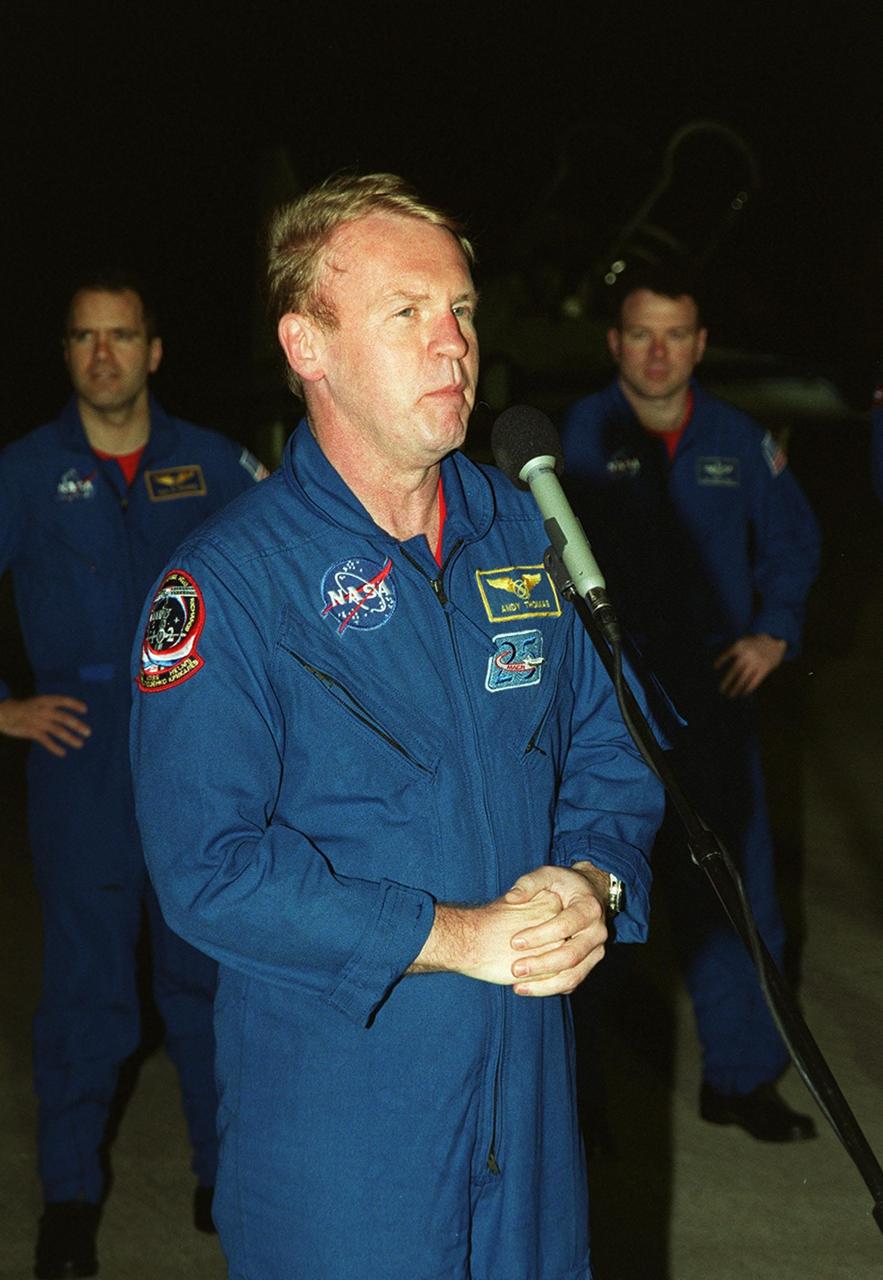
After arrival at the Shuttle Landing Facility, STS-102 Mission Specialist Andrew Thomas addresses the media. Behind him are Mission Specialist Paul Richards (left) and Pilot James Kelly (right). The crew is making the eighth construction flight to the International Space Station. STS-102 will be carrying the Multi-Purpose Logistics Module Leonardo, the primary delivery system used to resupply and return Station cargo requiring a pressurized environment. Leonardo will deliver up to 10 tons of laboratory racks filled with equipment, experiments and supplies for outfitting the newly installed U.S. Laboratory Destiny. STS-102 is scheduled to launch March 8 at 6:42 a.m. EST
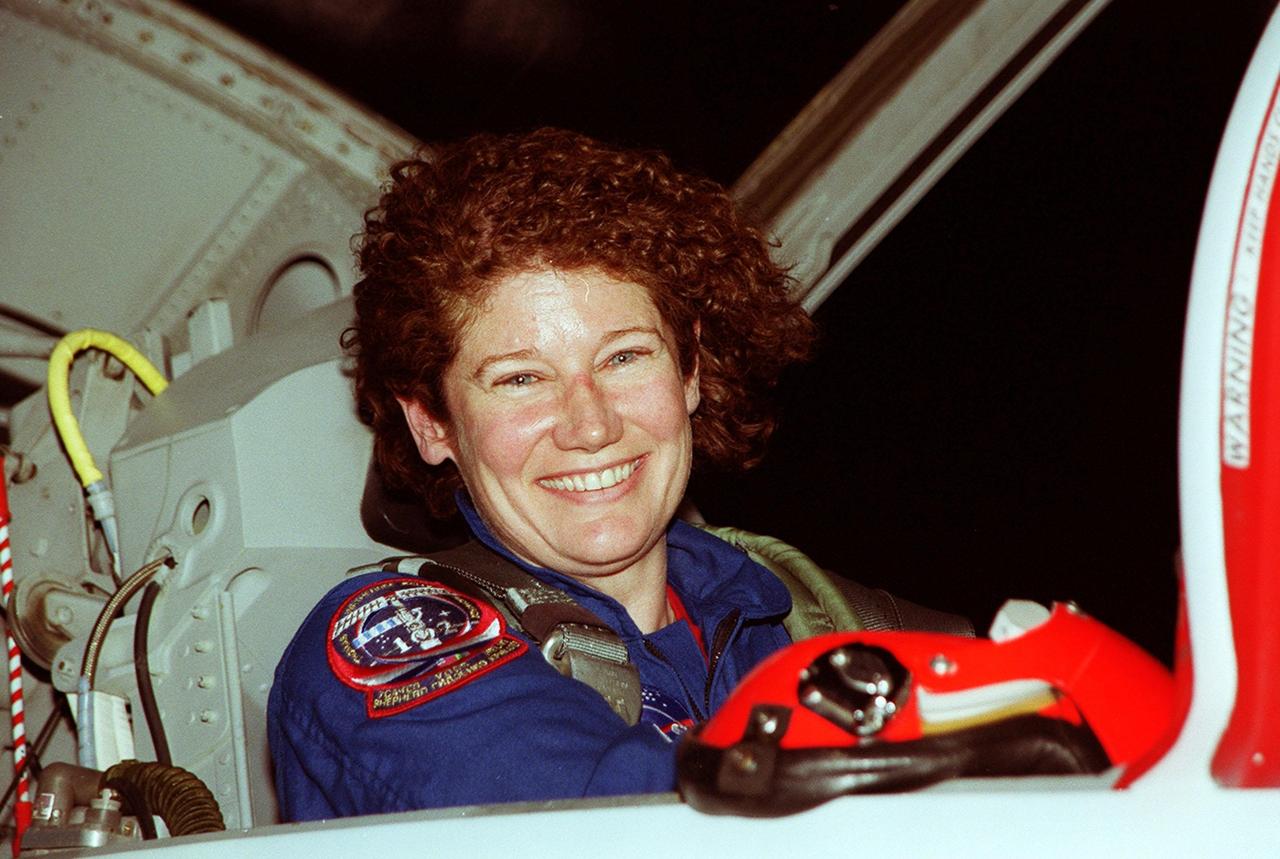
STS-102 Mission Specialist Susan V. Helms smiles on her arrival for launch. She is also one of the Expedition Two crew who will be replacing Expedition One on the International Space Station. STS-102 will be carrying the Multi-Purpose Logistics Module Leonardo, the primary delivery system used to resupply and return Station cargo requiring a pressurized environment. Leonardo will deliver up to 10 tons of laboratory racks filled with equipment, experiments and supplies for outfitting the newly installed U.S. Laboratory Destiny. STS-102 is scheduled to launch March 8 at 6:42 a.m. EST
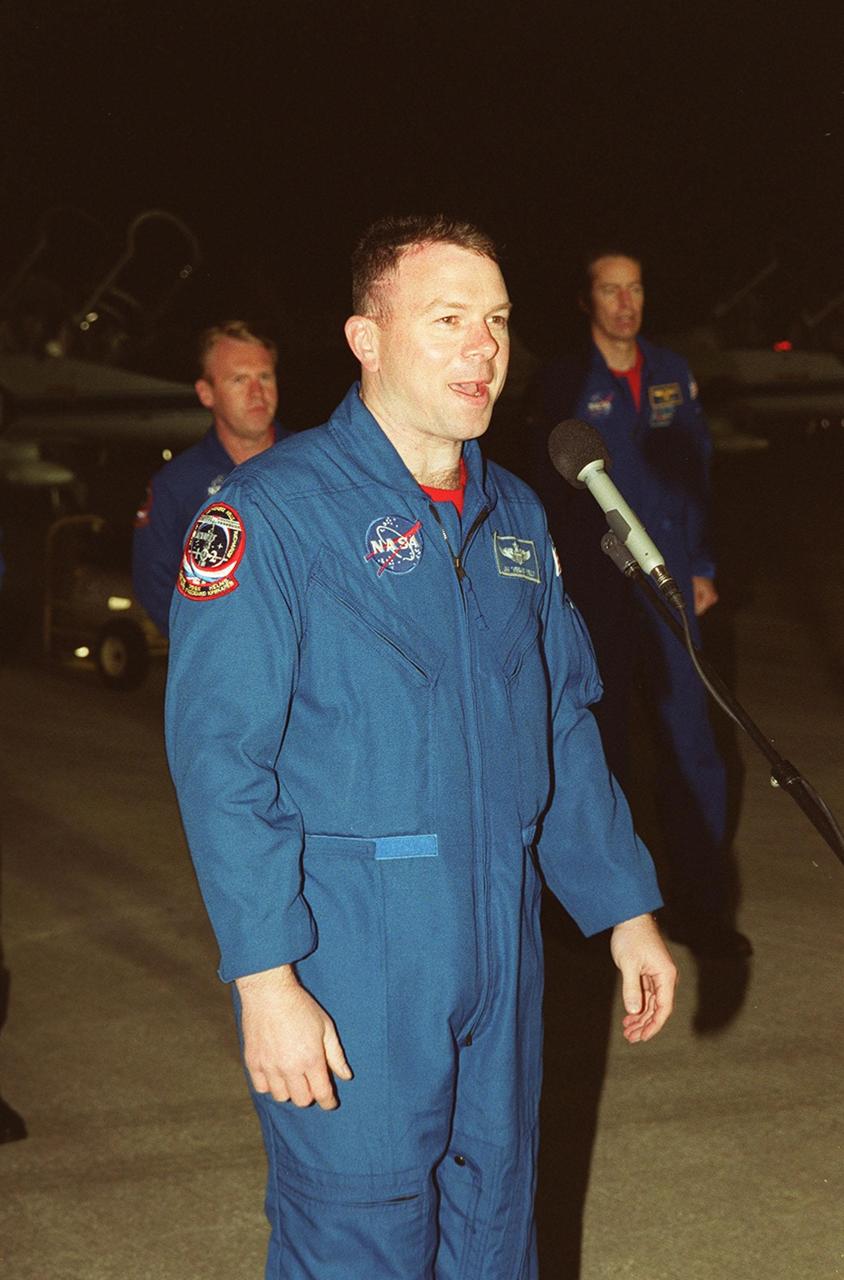
After arrival at the Shuttle Landing Facility, STS-102 Pilot James Kelly addresses the media. Behind him are Mission Specialist Andrew Thomas (left) and Commander James Wetherbee (right). The crew is making the eighth construction flight to the International Space Station. STS-102 will be carrying the Multi-Purpose Logistics Module Leonardo, the primary delivery system used to resupply and return Station cargo requiring a pressurized environment. Leonardo will deliver up to 10 tons of laboratory racks filled with equipment, experiments and supplies for outfitting the newly installed U.S. Laboratory Destiny. STS-102 is scheduled to launch March 8 at 6:42 a.m. EST
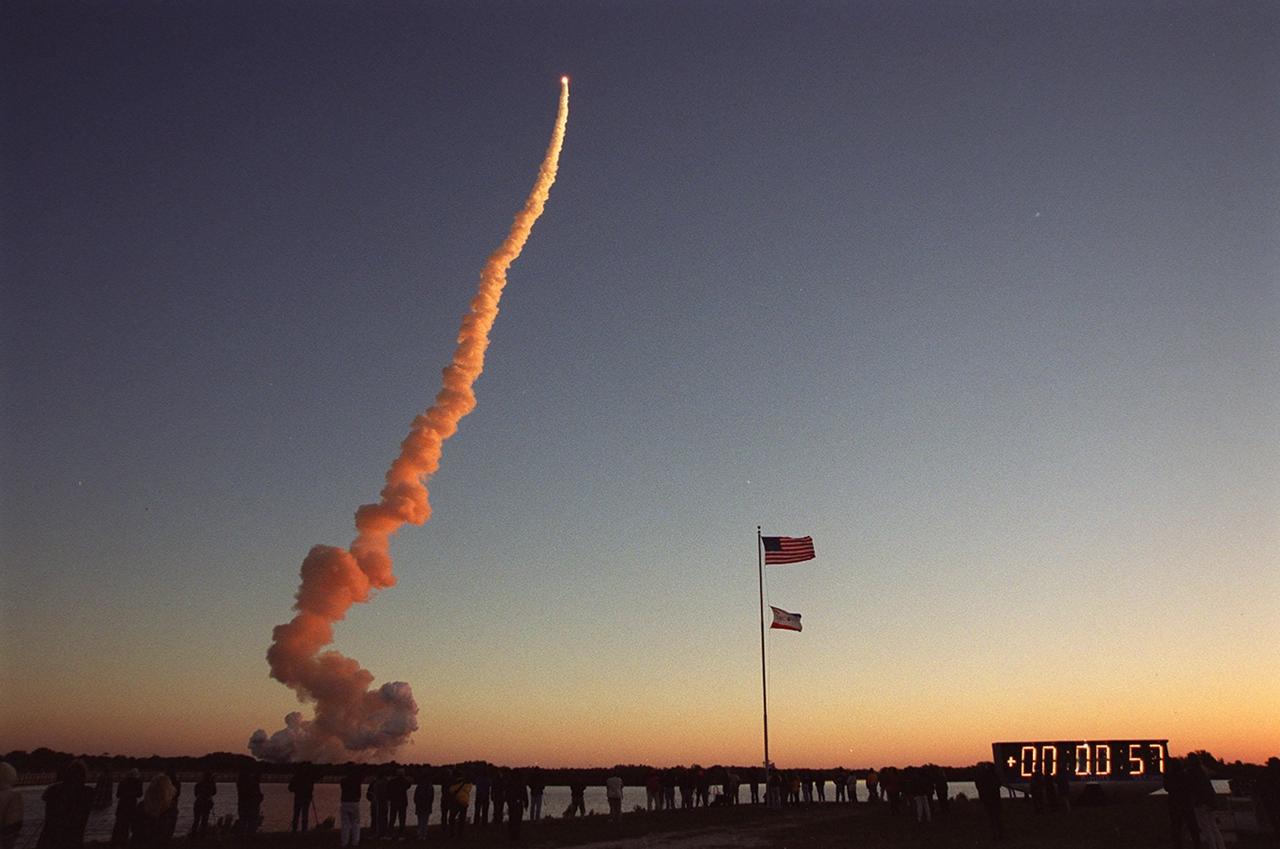
KENNEDY SPACE CENTER, Fla. -- Spectators line the banks of the turn basin to watch the dawn launch of Space Shuttle Discovery on mission STS-102. The rosy sky pales in comparison to the deep rose of the orbiter’s exhaust trail that captures the rising sun’s rays. Liftoff occurred at 6:42:09 EST for the eighth flight to the International Space Station
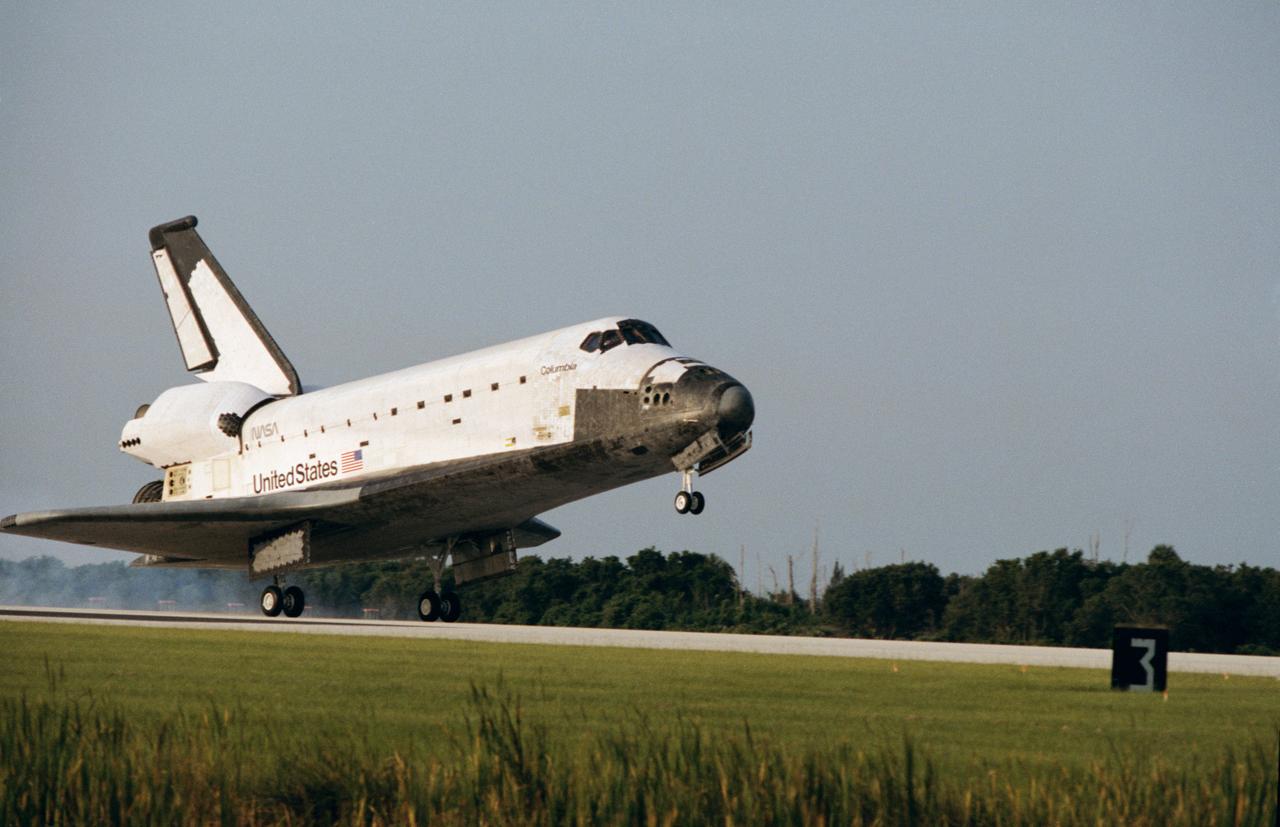
STS-50 Columbia's, Orbiter Vehicle (OV) 102's, main landing gear touches down on runway 33 at the Kennedy Space Center (KSC) Shuttle Landing Facility (SLF) producing a small cloud of dust. Landing occurred at 7:42 am (Eastern Daylight Time (EDT)). In this view of the OV-102's starboard side, the nose landing gear (NLG) continues to ride above the runway surface. Florida vegetation, a runway sign, and runway lights appear in the foreground.