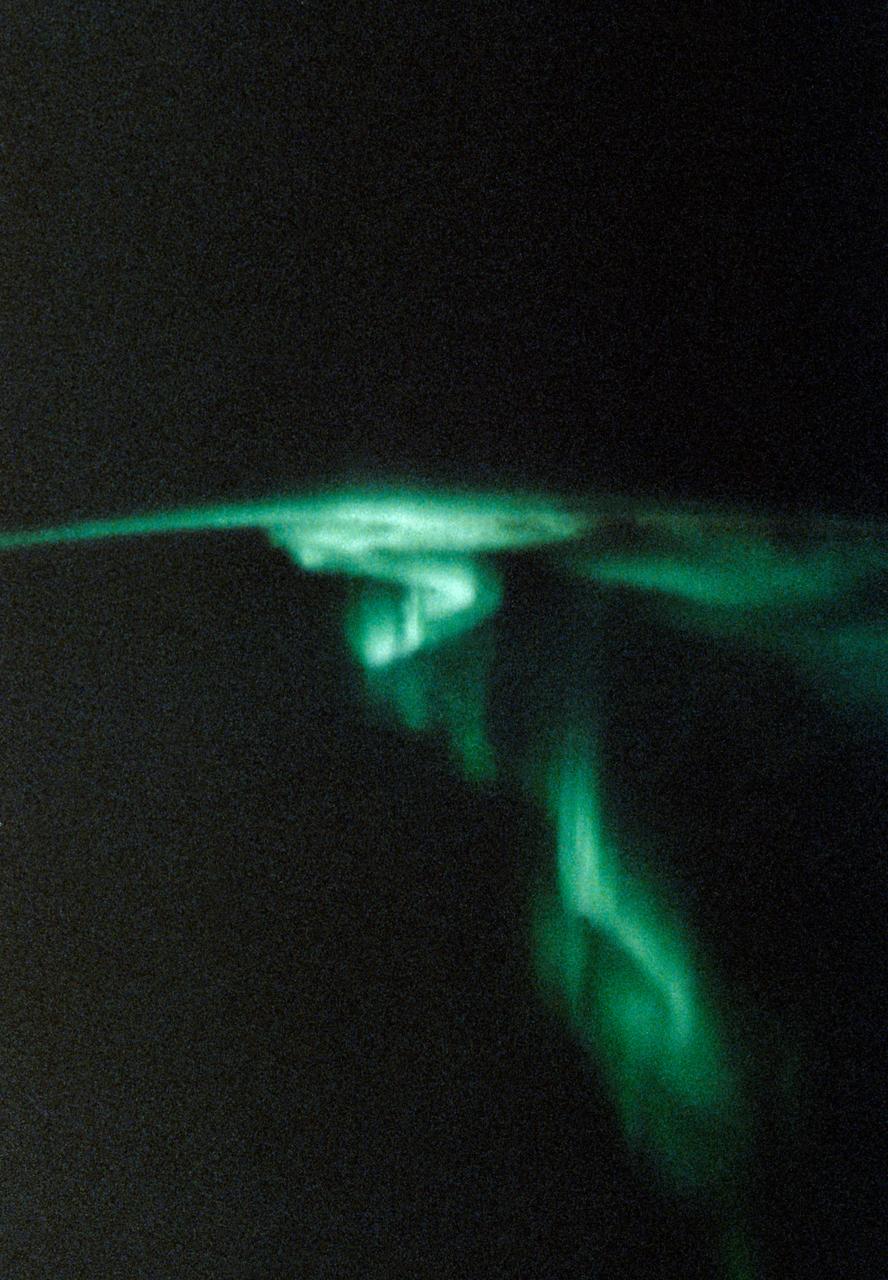
STS-45 Earth observation taken onboard Atlantis, Orbiter Vehicle (OV) 104, is of the Aurora Australis or Southern Lights. The STS-45 crewmembers note the interesting spiralling or corkscrew appearance of this particular sighting. Aurorae were observed and photographed throughout the STS-45 nine-day mission.
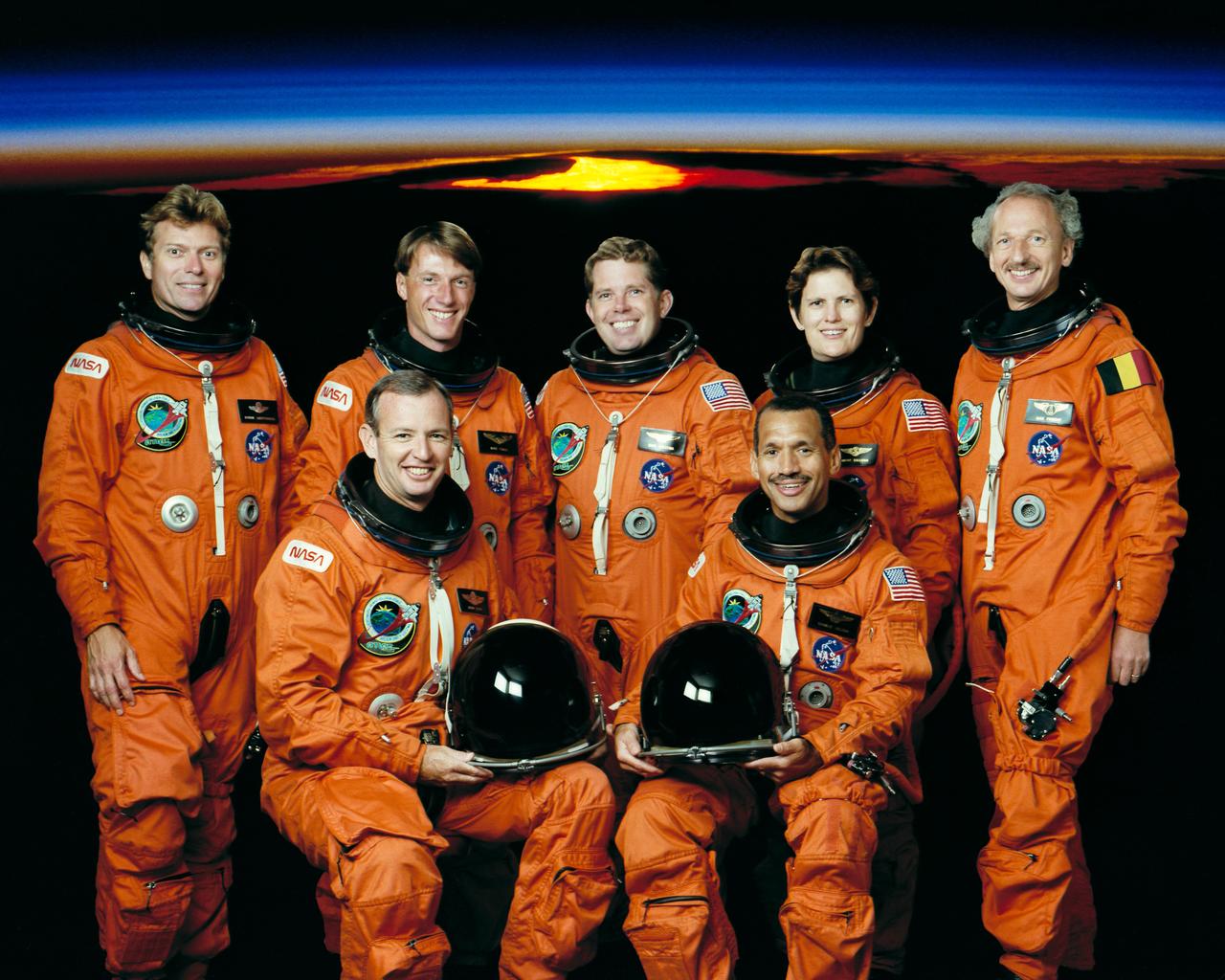
STS045-S-002 (January 1992) --- The seven crew members for NASA's STS-45 mission are pictured in their partial-pressure launch and entry suits. In front are astronauts Charles F. Bolden, Jr. (right), mission commander, and Brian Duffy, pilot. Back row, left to right, are payload specialist Byron K. Lichtenberg; astronauts C. Michael Foale and David C. Leestma, mission specialists; Kathryn D. Sullivan, payload commander; and payload specialist Dirk Frimout, of Belgium. The Atmospheric Laboratory for Applications and Science (ATLAS) is scheduled for a March 1992 launch aboard the Space Shuttle Atlantis.
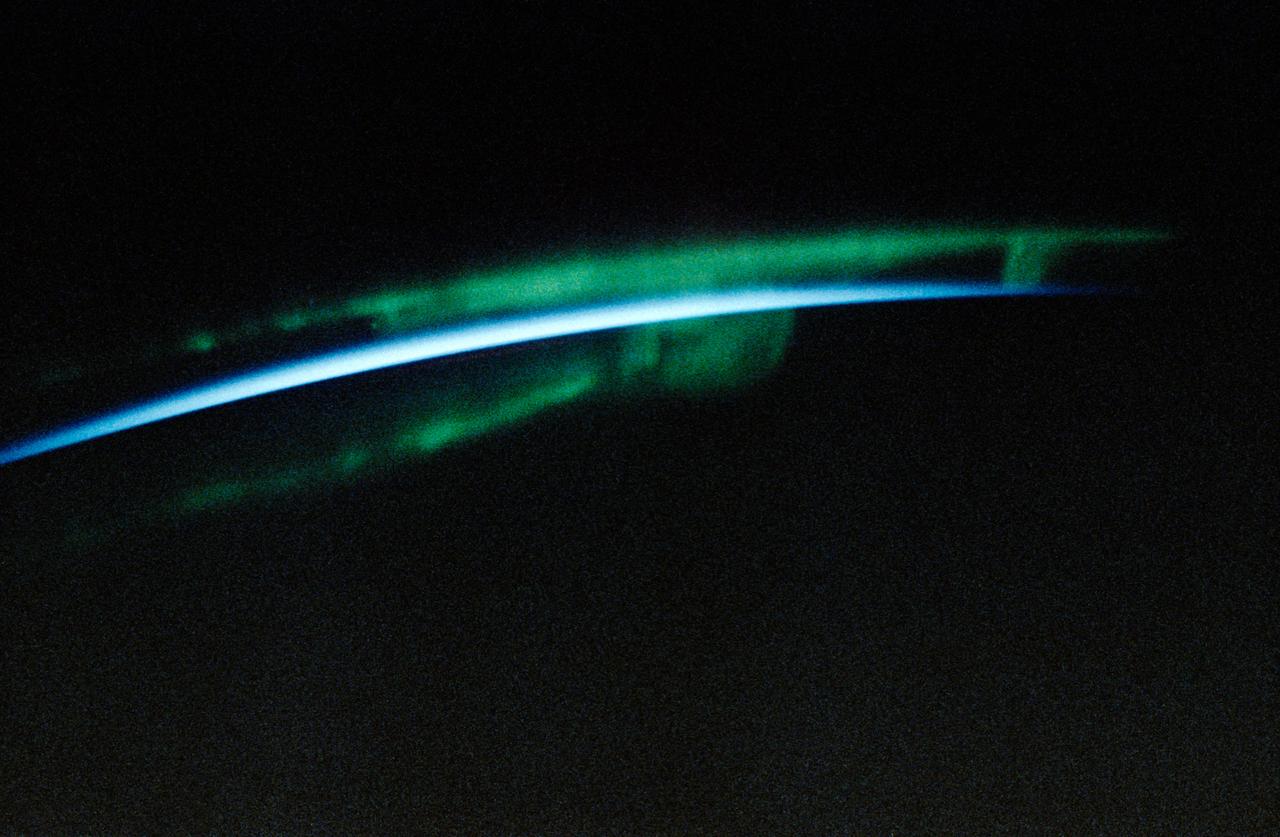
STS-45 Earth observation taken onboard Atlantis, Orbiter Vehicle (OV) 104, is of the Aurora Australis or Southern Lights. The green appearing auroral activity engulfs the thin blue line on the Earth's limb. Aurorae were observed and photographed throughout the STS-45 nine-day mission.
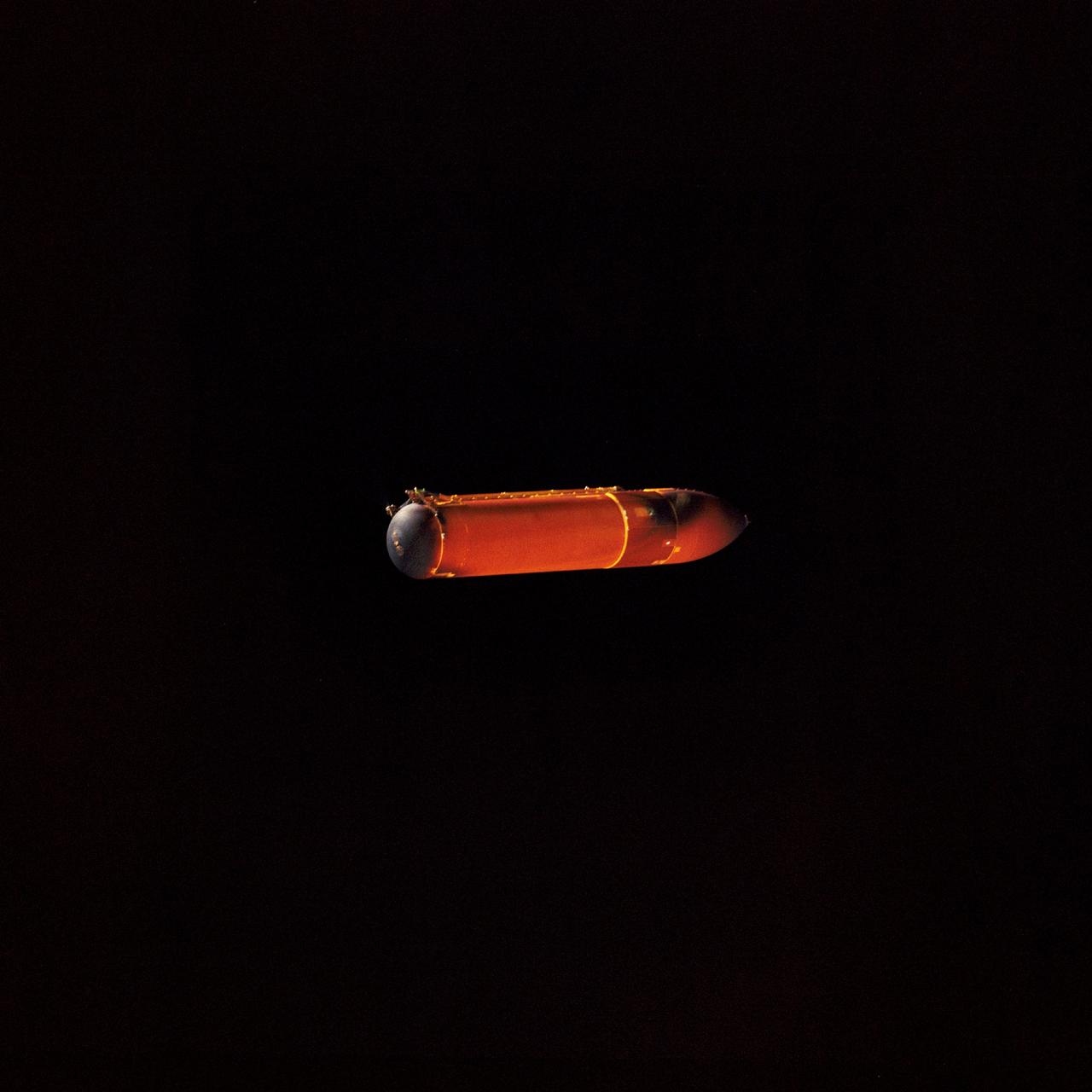
STS045-71-001 (24 March 1992) --- This 70mm photograph of the external fuel tank (ET) for STS-45 was photographed 4 1/2 minutes after having been jettisoned from Space Shuttle Atlantis. The excellent view of the starboard side of the ET shows both top and bottom attach points to the two solid rocket boosters (SRB). NASA engineers studying the STS-45 onboard photography deem the visible burn scars, caused by the SRBs, to be normal. The long thin pipe visible is the liquid oxygen line. At the bottom end of the large tank, both the liquid oxygen (nearest camera) and liquid hydrogen orbiter-to-ET attach hardware can be seen.
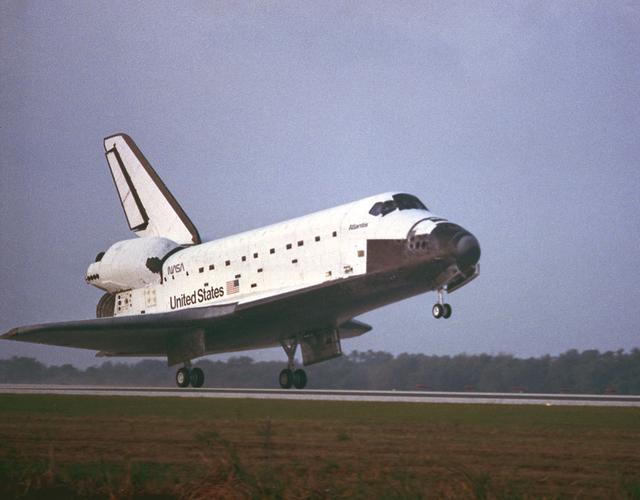
The orbiter Atlantis (STS-45) touched down on Runway 33 of Kennedy Space Center's Shuttle Landing Facility, bringing to a conclusion Mission STS-45. On board were seven crew members and the Atmospheric Lab for Applications and Sciences 1 (ATLAS-1).
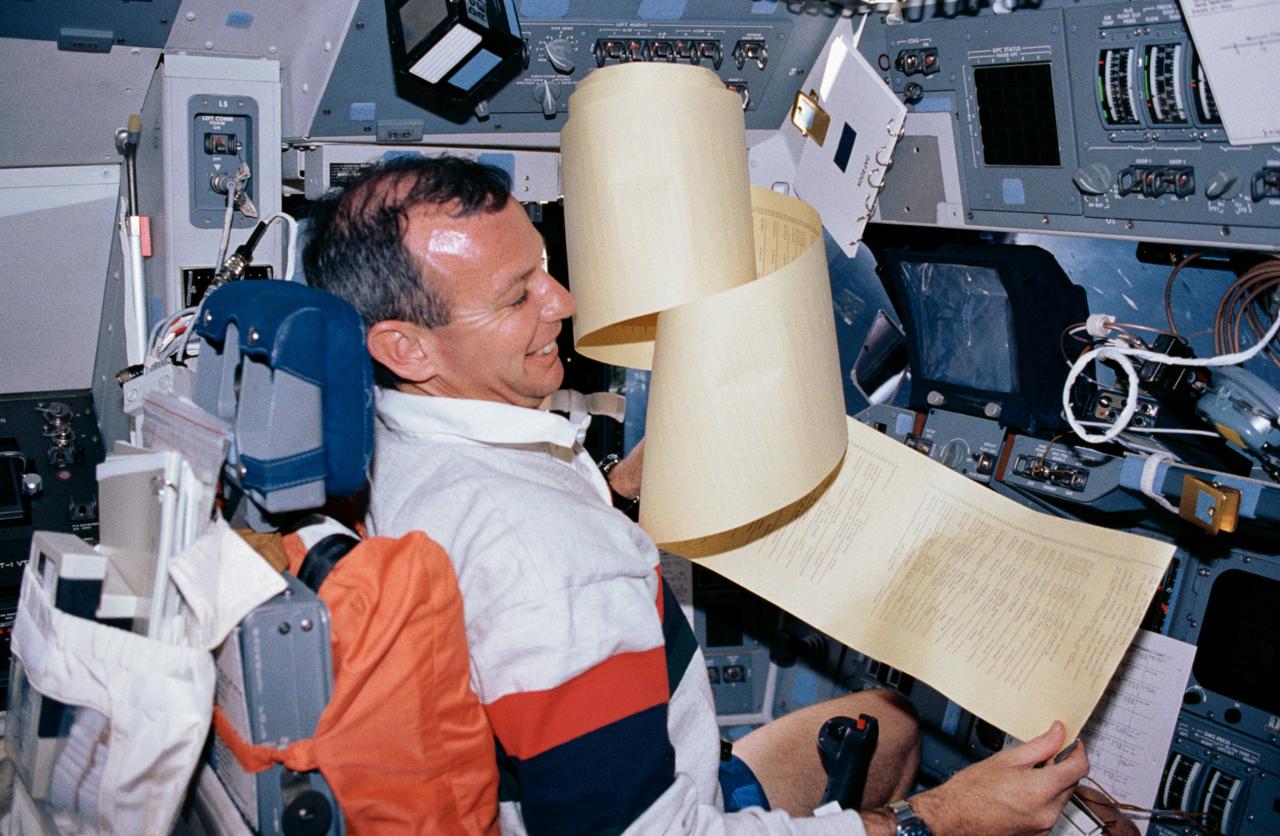
STS045-02-020 (24 March-2 April 1992) --- Brian Duffy, STS-45 pilot, struggles with a large volume of data printouts from the teleprinter system. He is seated at the commander's station on the flight deck of the Earth-orbiting Atlantis during the nine-day mission. This frame was taken with a 35mm camera.
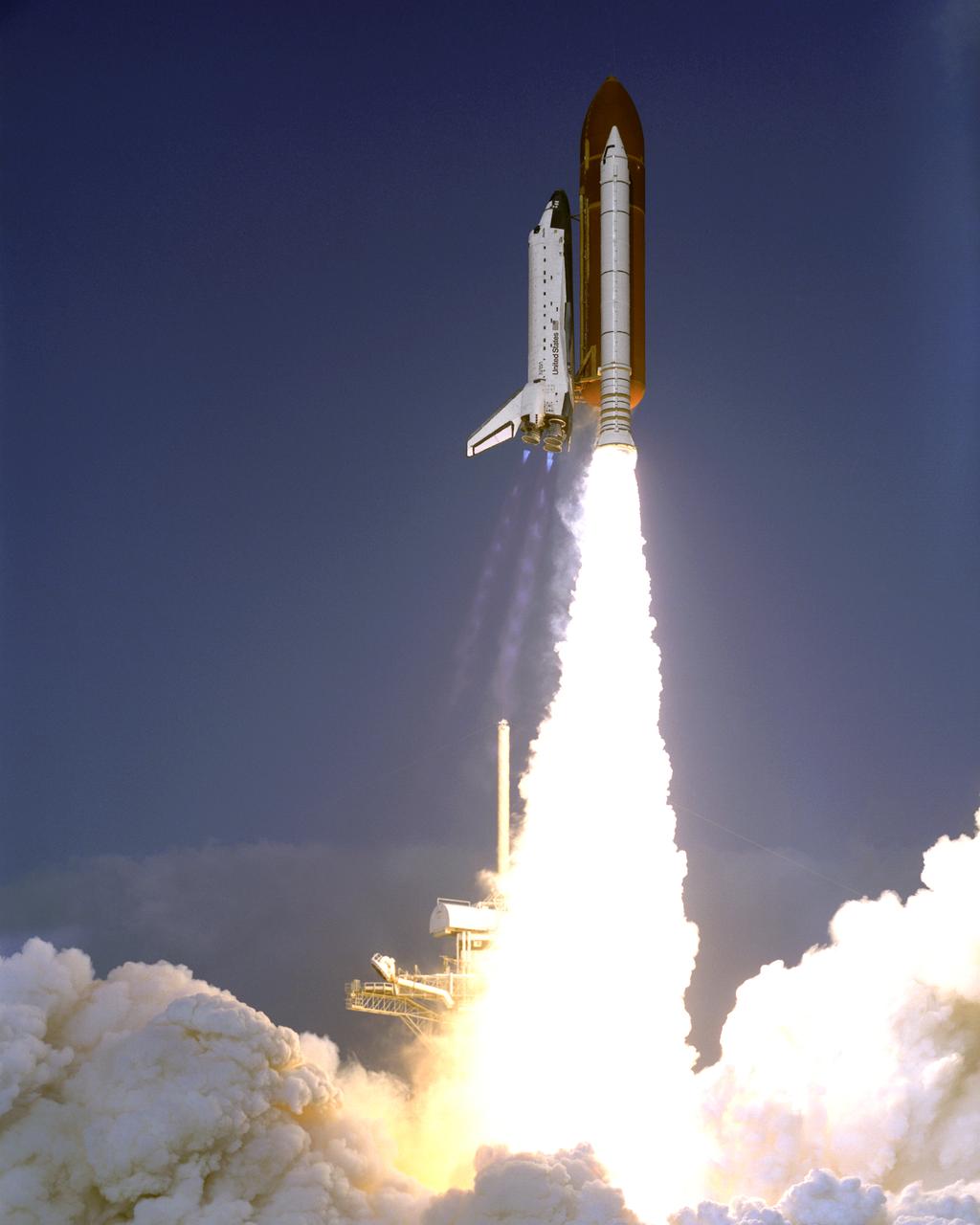
NASA's mission to planet Earth continues as Atlantis and the STS-45 International crew of xeven roars off Pad 39A with theAtmospheric Laboratory for Applications and Science (Atlas-1) onboard. Launch occurred at 8:13 A.M., EST March 24, 1992. (Test D1310)(Item D-56)
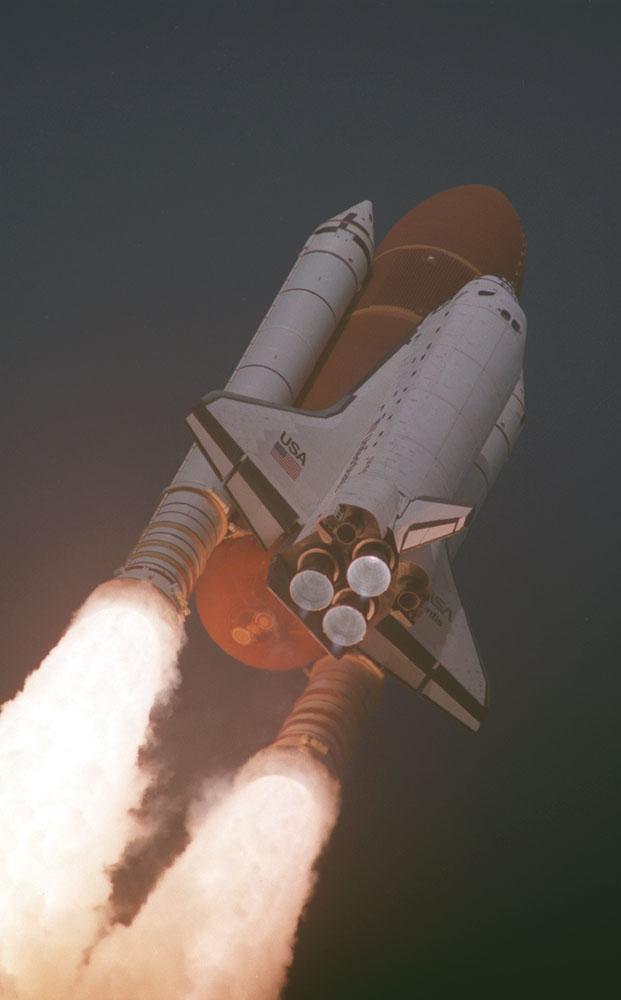
The Space Shuttle Atlantis (STS-45) roars into space in this photo showing a close-up of the Solid Rocket Boosters (SRBs) and the external tank. Atlantis' mission included experiments on the Atmospheric Lab for Applications and Sciences (ATLAS). ATLAS-1 measures long-term variability in the total energy radiated by the sun and determines the variability in the solar spectrum.
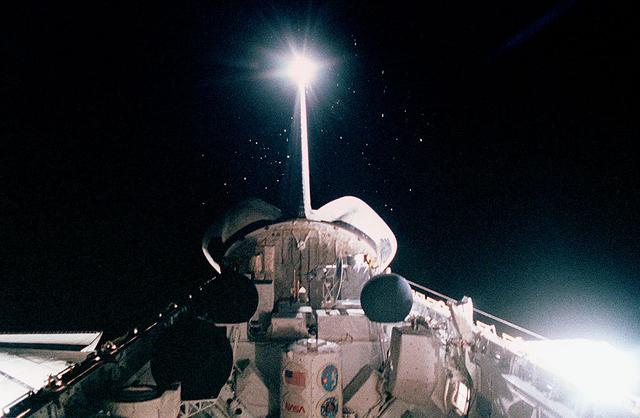
Space Shuttle Atlantis (STS-45) onboard photo of open cargo bay with the forward portion of the Atmospheric Laboratory for Applications and Science (Atlas-1) shown at night.
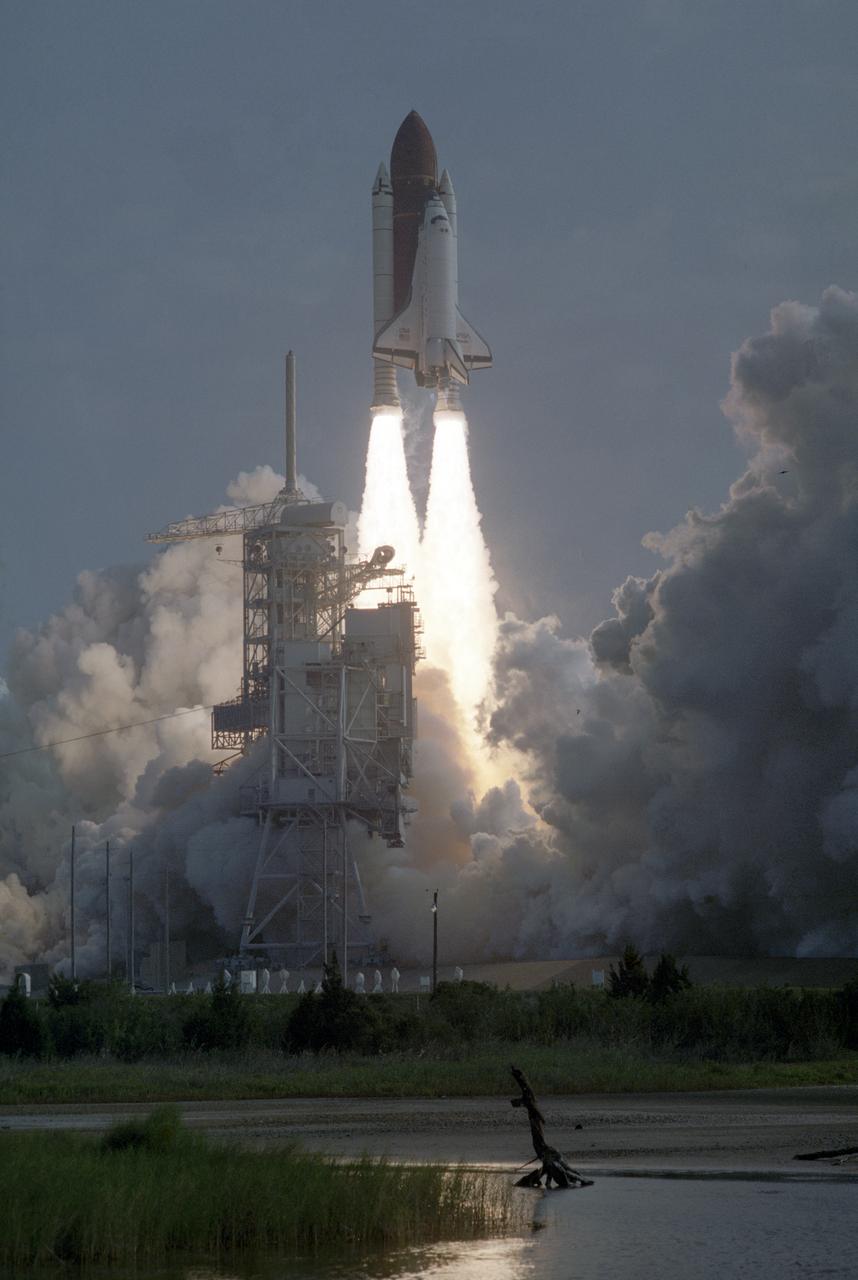
The STS-45 mission launched aboard the Space Shuttle Atlantis on March 24, 1992 at 8:13:40am (EST) carrying the Atmospheric Laboratory for Application and Science (ATLAS-1) as its primary payload. Crew members included: Charles F. Bolden, Jr., commander; Brian Duffy, pilot; Kathryn D. Sullivan, payload commander; Byron K. Lichtenberg, payload specialist 1; Dirk K. Frimout, payload specialist 2; David C. Leestma, mission specialist 2; and C. Michael Foale, mission specialist 3.
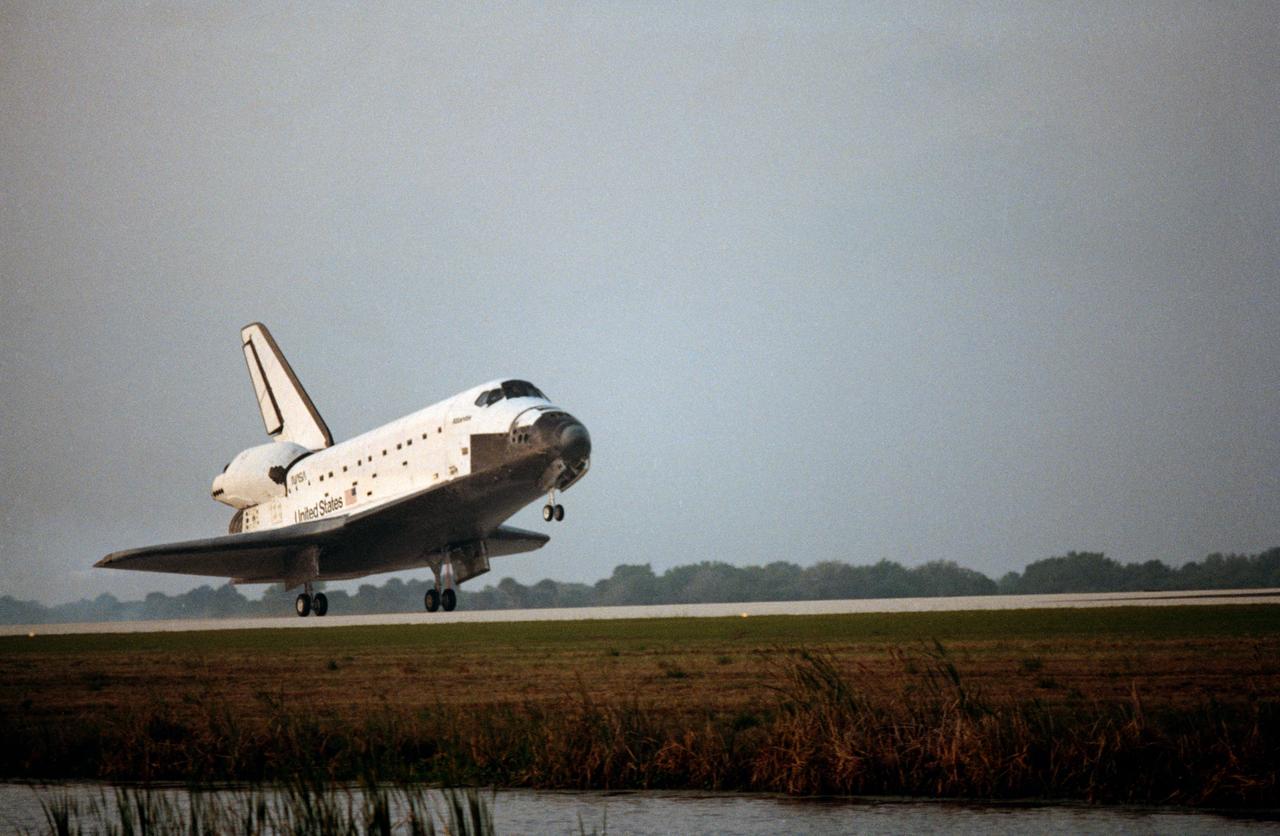
STS-45 Atlantis, Orbiter Vehicle (OV) 104, lands on concrete runway 33 at the Kennedy Space Center's (KSC's) Shuttle Landing Facility (SLF). The main landing gear (MLG) touched down at 6:23:06 am (Eastern Standard Time (EST)) in the early morning Florida fog as seen in these views. The deployed nose landing gear (NLG) rides above the runway before wheel stop.
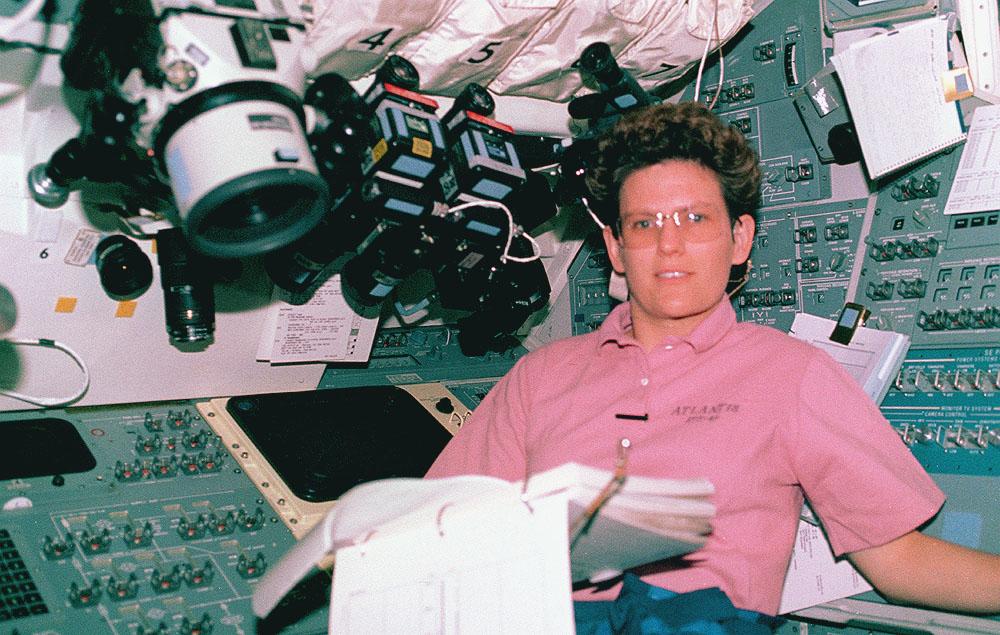
Space Shuttle Atlantis (STS-45) onboard photo of Mission Specialist Kathryn Sullivan working in the Atmospheric Laboratory for Applications and Science (Atlas-1) module. Atlas-1 flew in a series of Spacelab flights that measured long term variability in the total energy radiated by the Sun and determined the variability in the solar spectrum.
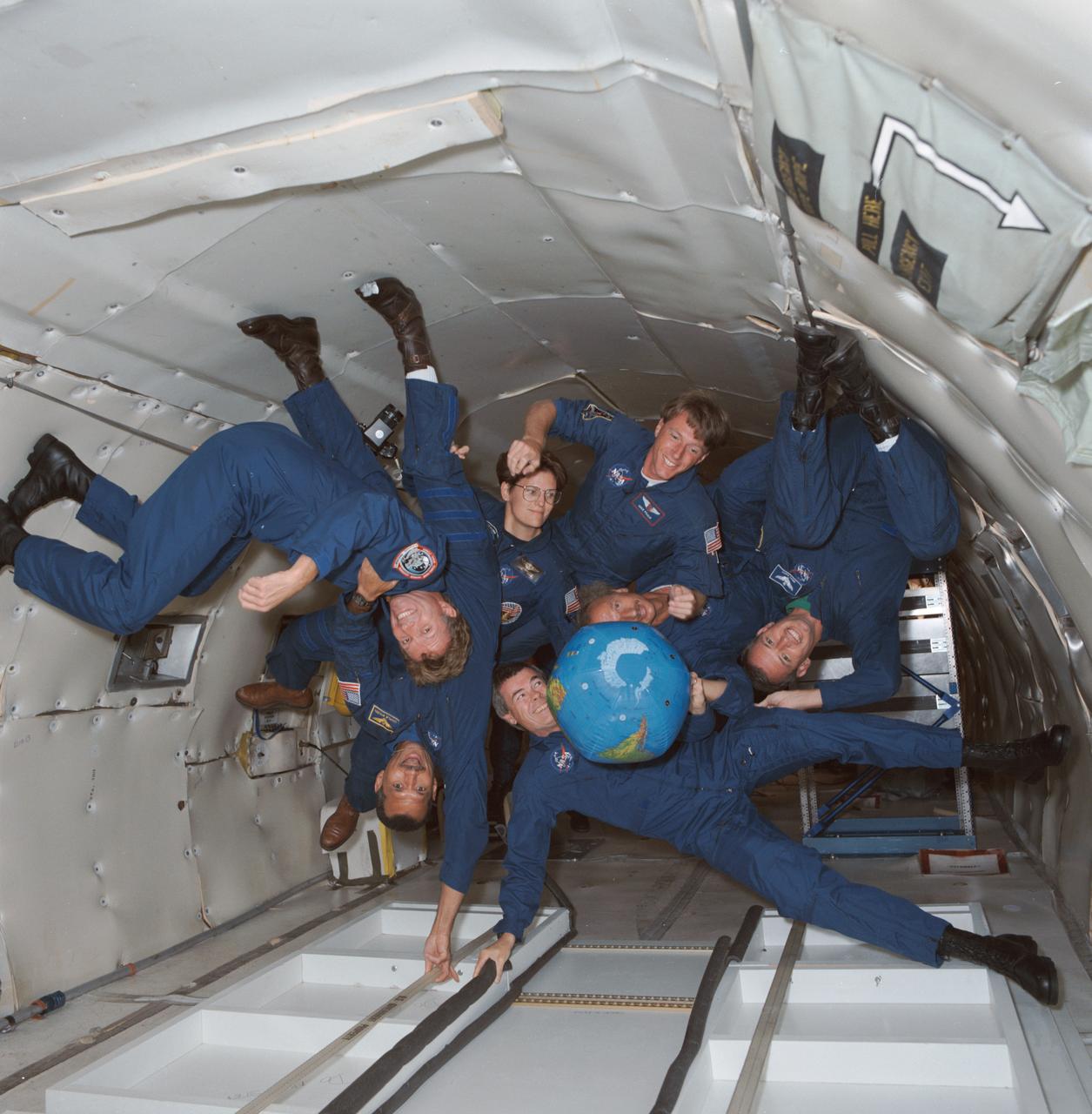
S91-44453 (21 Aug 1991) --- The crew of STS-45 is already training for its March 1992 mission, including stints on the KC-135 zero-gravity-simulating aircraft. Shown with an inflatable globe are, clockwise from the top, C. Michael Foale, mission specialist; Dirk Frimout, payload specialist; Brian Duffy, pilot; Charles R. (Rick) Chappell, backup payload specialist; Charles F. Bolden, mission commander; Byron K. Lichtenberg, payload specialist; and Kathryn D. Sullivan, payload commander.
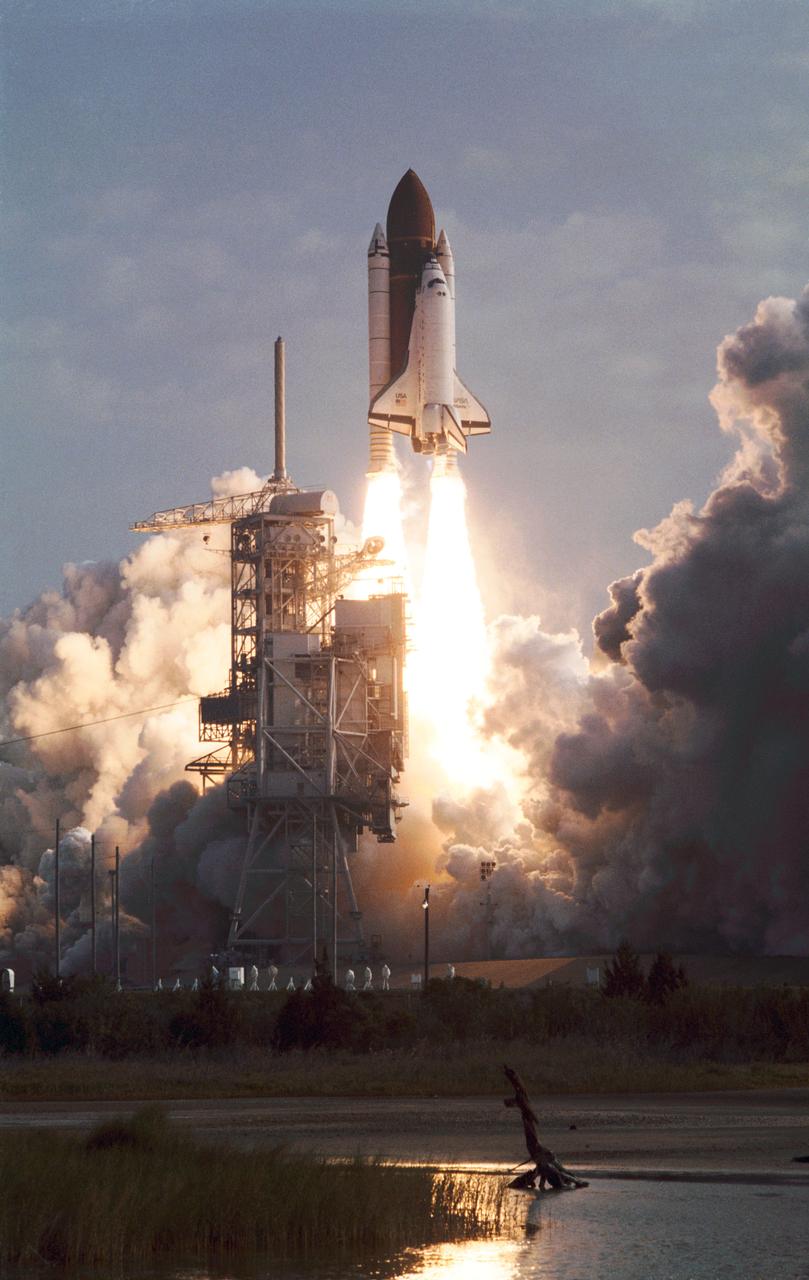
STS-45 Atlantis, Orbiter Vehicle (OV) 104, lifts off from a Kennedy Space Center (KSC) Launch Complex (LC) Pad at 8:13:40:048 am (Eastern Standard Time (EST)). Exhaust billows out the solid rocket boosters (SRBs) as OV-104 atop its external tank (ET) soars above the mobile launcher platform and is nearly clear of the fixed service structure (FSS) tower. The diamond shock effect produced by the space shuttle main engines (SSMEs) is visible. The glow of the SRB/SSME firings is reflected in a nearby waterway. An exhaust cloud covers the launch pad area.
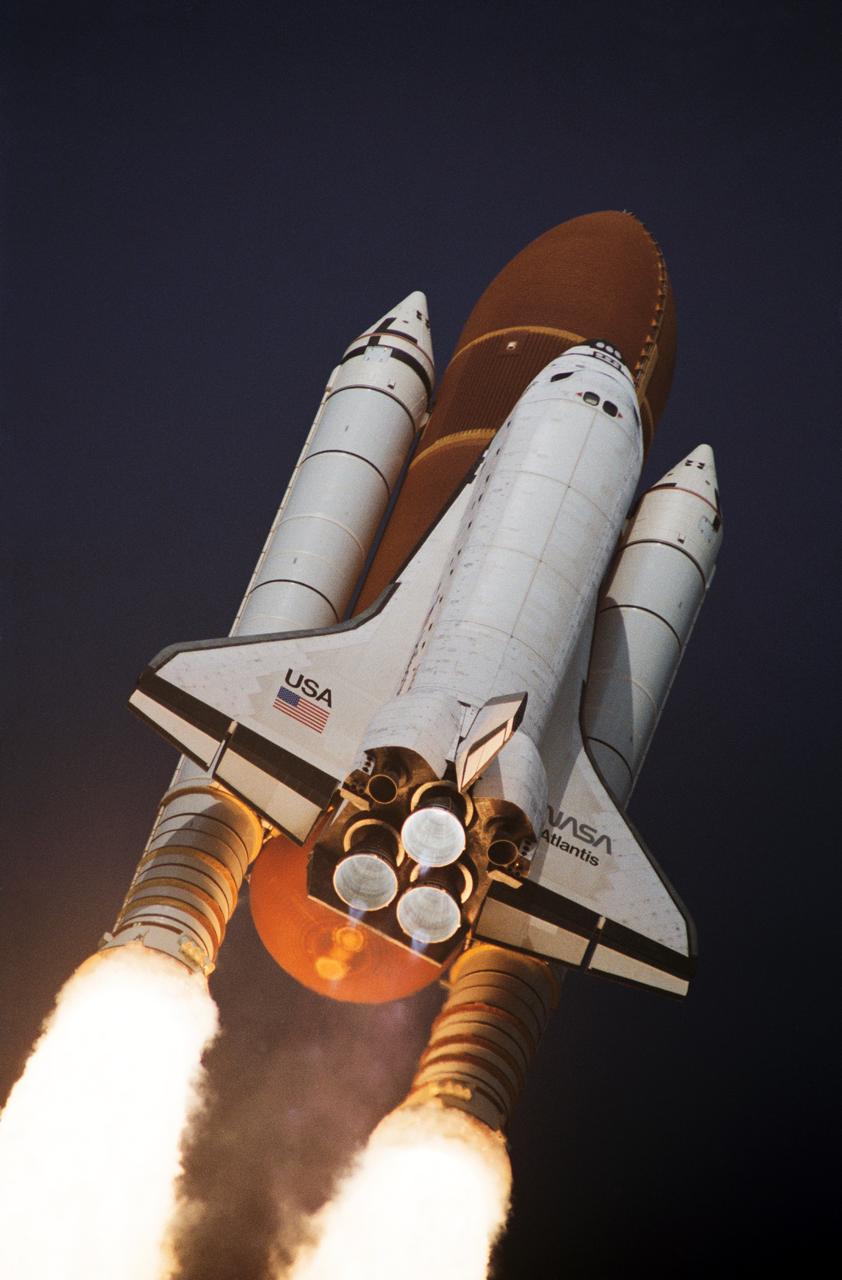
STS045-S-053 (24 March 1992) --- A low-angle view of the Space Shuttle Atlantis as it soars off the launch pad and heads toward Earth orbit with a crew of seven and the Atmospheric Laboratory for Applications and Science (ATLAS) aboard. Launch occurred at 8:13:40:048 a.m. (EST), March 24, 1992. Onboard were astronauts Charles F. Bolden, STS-45 commander; Brian Duffy, pilot; Kathryn D. Sullivan, payload commander; David C. Leestma and C. Michael Foale, mission specialists; and Dirk Frimout of the European Space Agency and Byron K. Lichtenberg, payload specialists.

S91-51294 (Nov 1991) --- Astronaut Byron K. Lichtenberg, payload specialist.
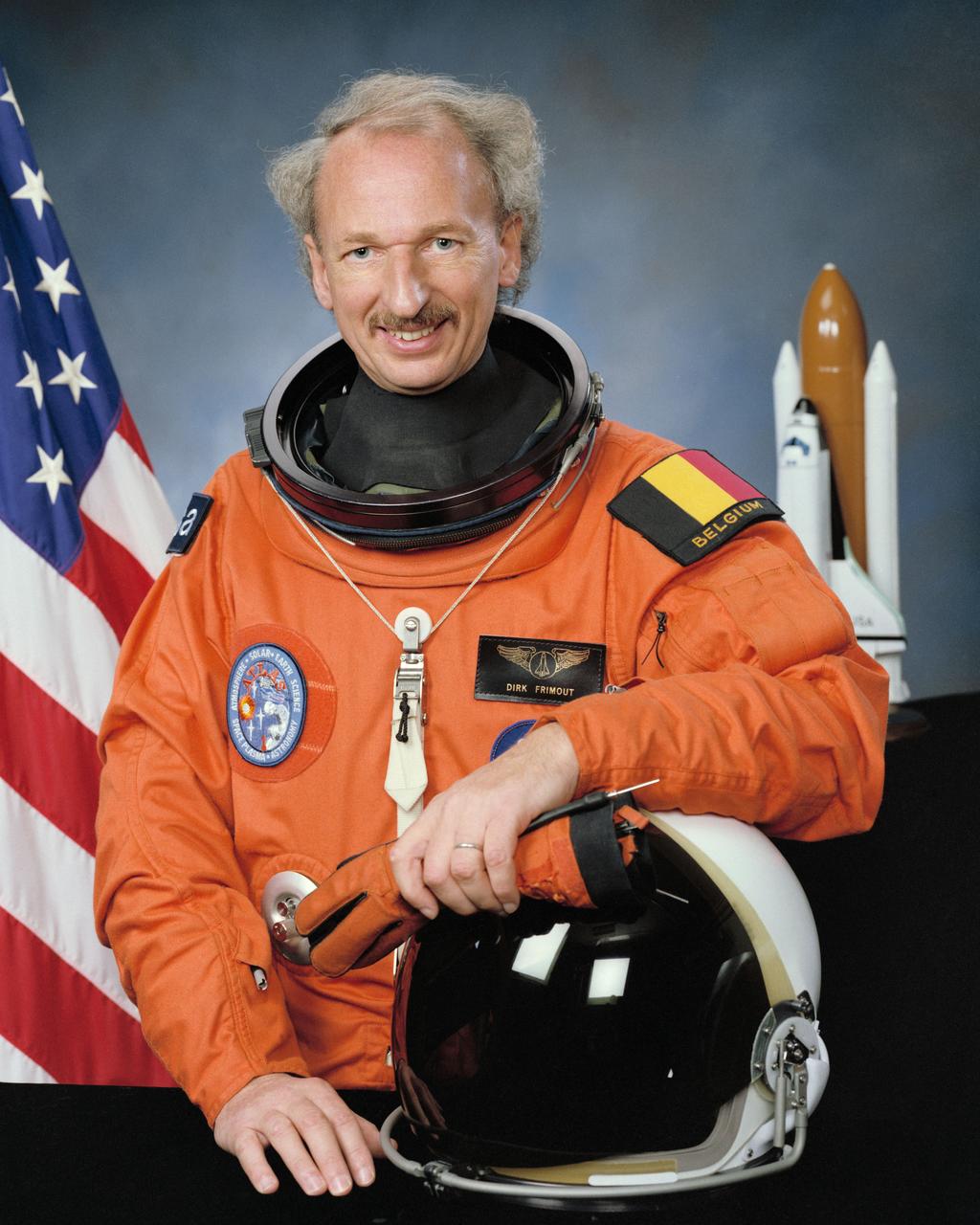
S91-51295 (1991) --- Astronaut Dirk Frimout, payload specialist representing the European Space Agency (ESA).

STS045-19-032 (24 March-2 April 1992) --- Astronaut Brian Duffy, STS-45 pilot, uses an inflatable globe to demonstrate Earth observations for an educational program to be distributed to classrooms following the mission.
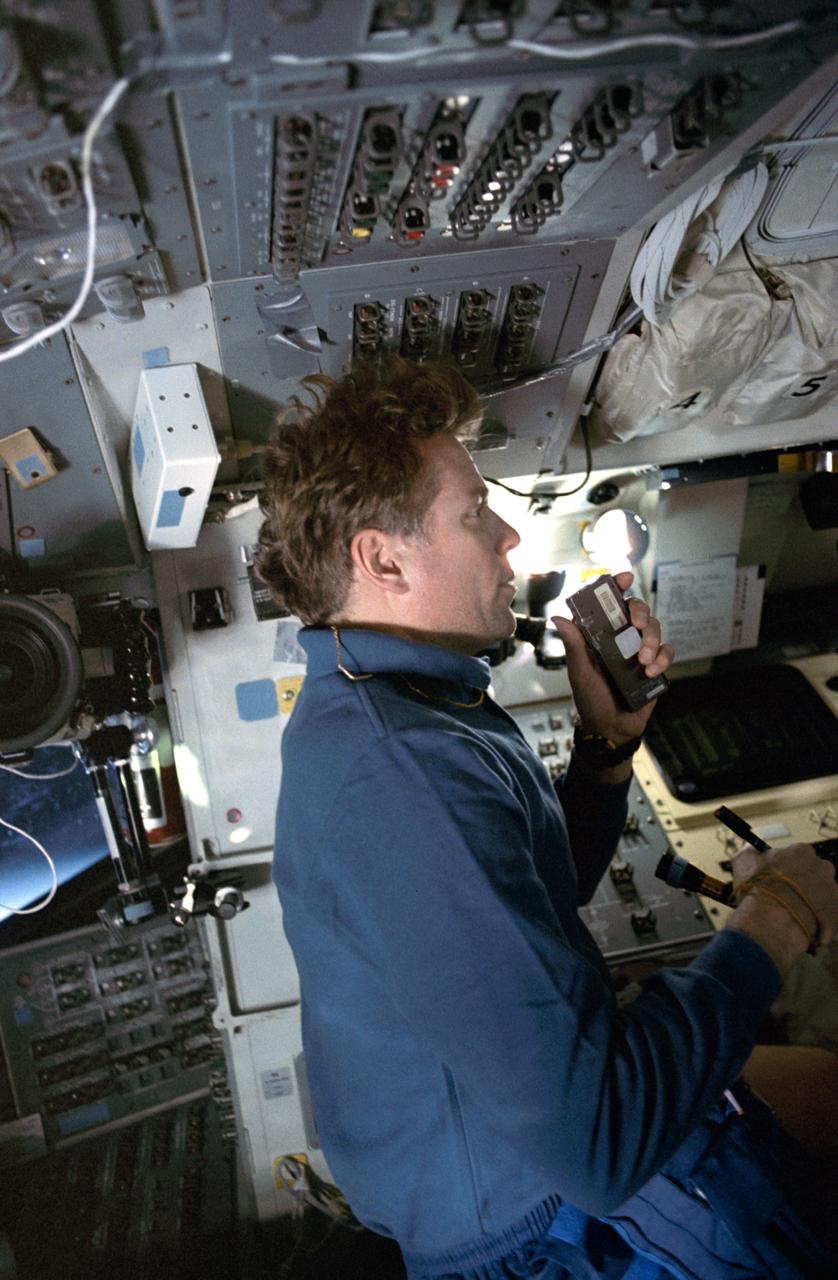
STS045-20-018 (2 April 1992) --- STS-45 Payload Specialist Byron K. Lichtenberg talks into a cassette tape recorder to note observations following a science run of the Atmospheric Emissions Photometric Imaging (AEPI) experiment. Lichtenberg is on the aft flight deck of Atlantis, Orbiter Vehicle (OV) 104. At Lichtenberg's left is the mission station, the forward flight deck and window W6 appear behind him, and overhead control panels appear above his head.
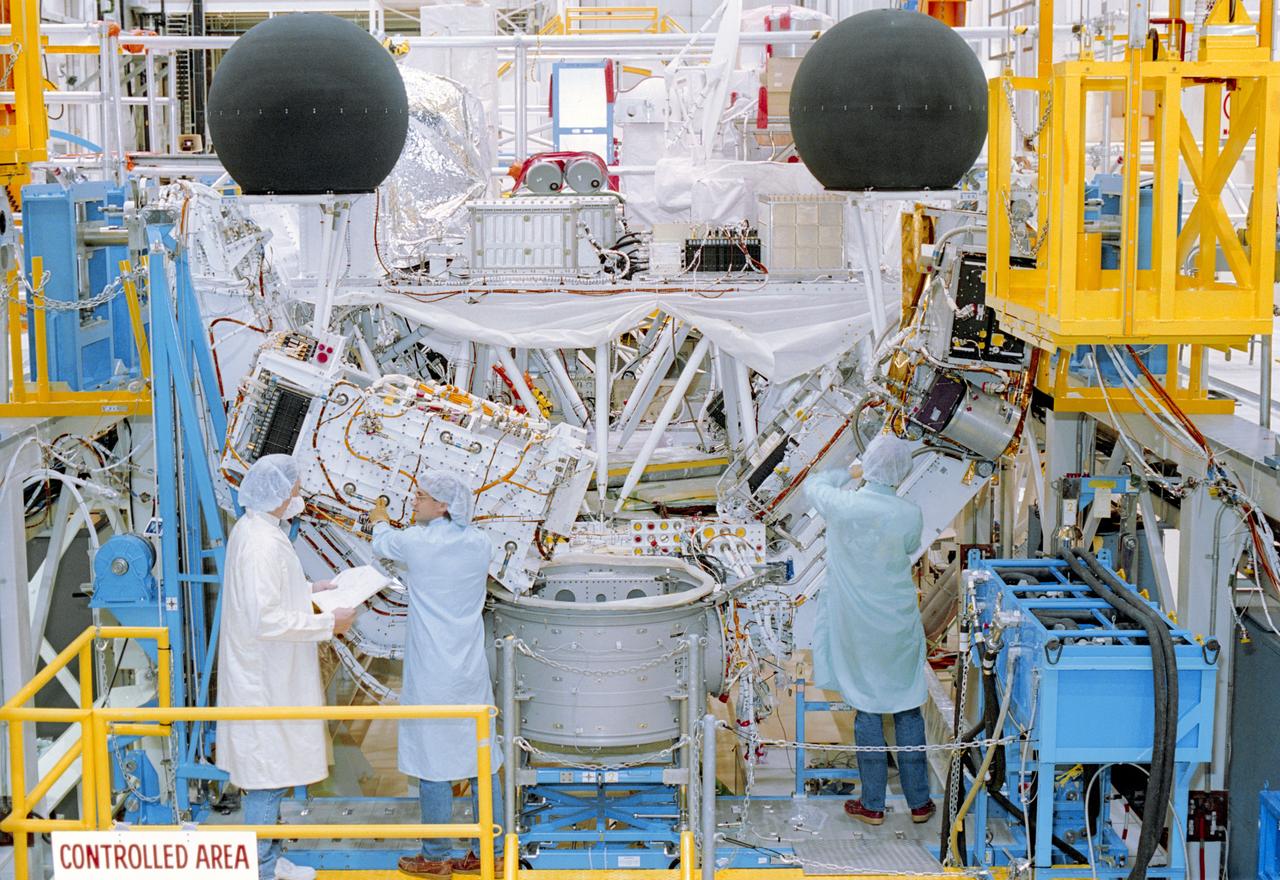
S92-27865 (23 Sept 1991) --- In test stand 3 of the Operations and Checkout Building high bay, workers complete mating of the Atmosphere Laboratory for Applications and Science-1 (ATLAS-1) pallet and Igloo power unit. Closeout activities on the ATLAS-1 payload are under way, with a systems test scheduled for later in October. The ATLAS series of missions will study solar and atmospheric physics. ATLAS-1 is scheduled to fly on Space Shuttle Mission STS-45 in 1992.
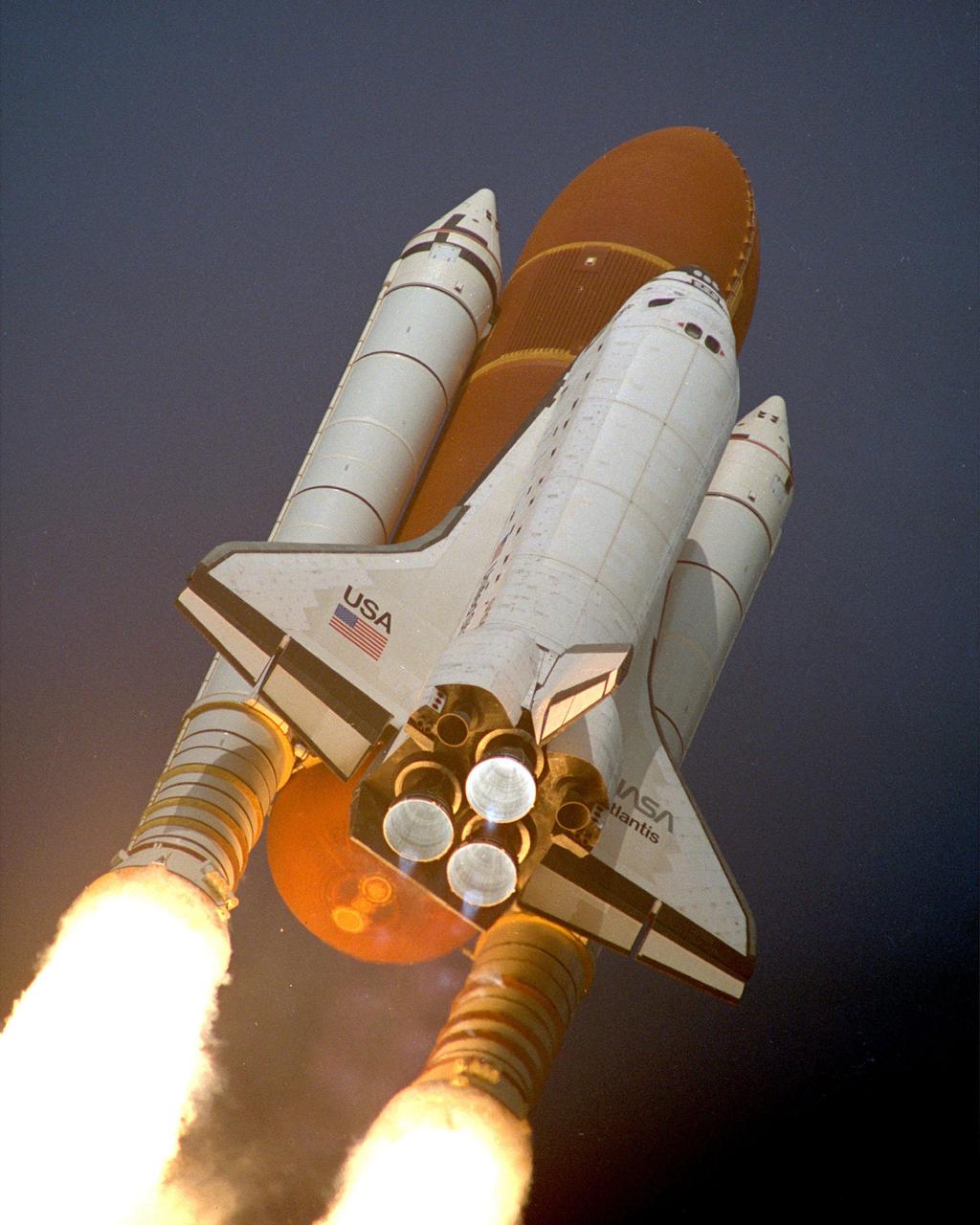
KENNEDY SPACE CENTER, FLA. -- STS-45: Atlantis
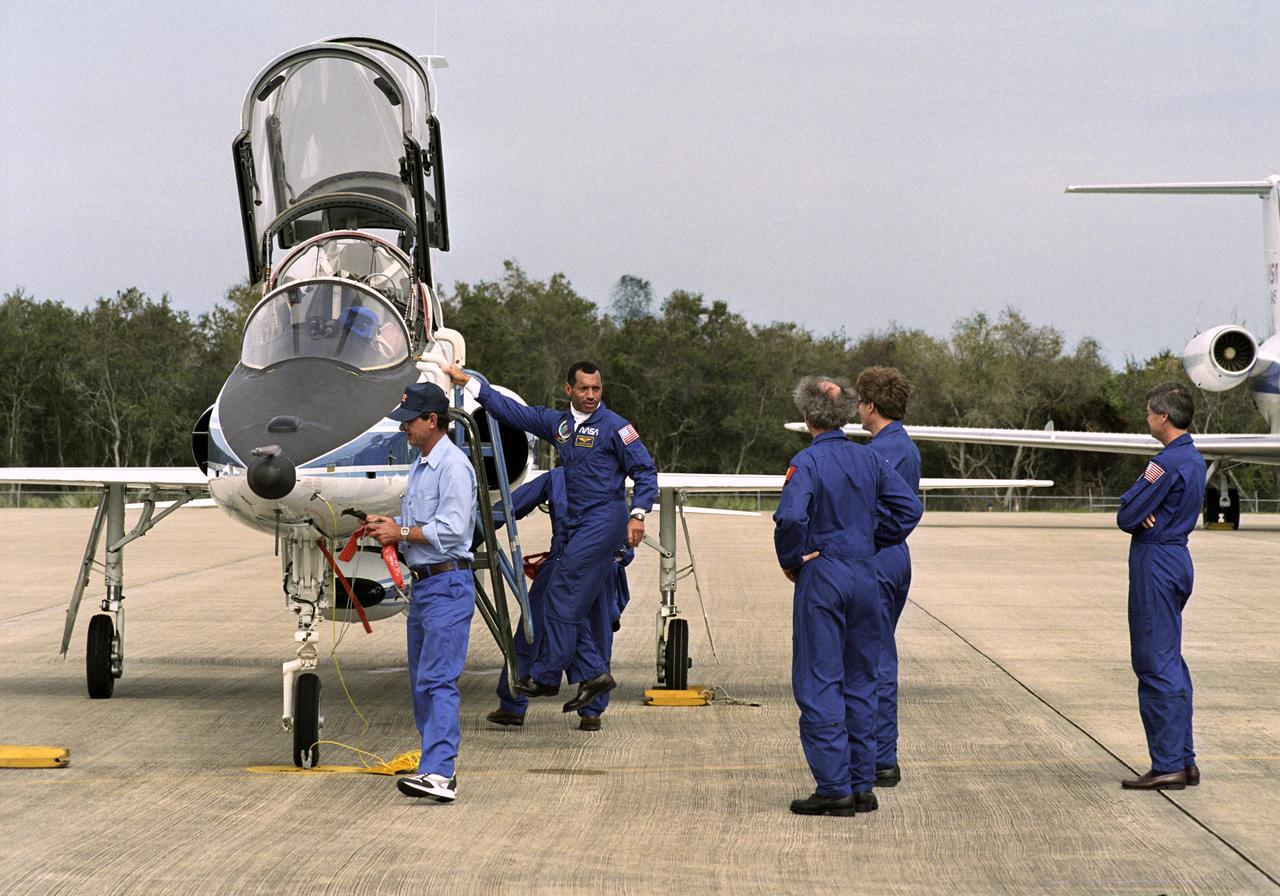
STS-45 Mission Commander Charles Bolden steps down from his T-38 after he and the rest of the flight crew arrived at KSC for the Terminal Countdown Demonstration Test. Space Shuttle Mission STS-45 is scheduled to liftoff in March.
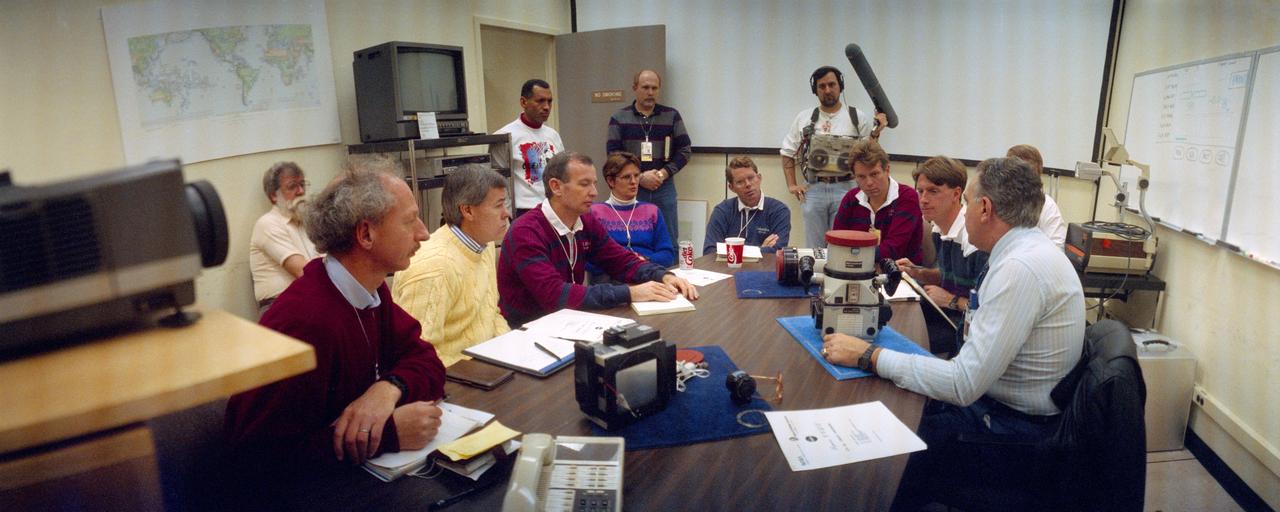
S92-26522 (Feb 1992) --- Crewmembers assigned to NASA's STS-45 mission are briefed on the use of the Linhof camera in the flight operations facility at the Johnson Space Center (JSC). Charles F. Bolden, mission commander, stands at left. Other crewmembers (seated clockwise around the table from lower left) are Dirk Frimout of Belgium representing the European Space Agency as payload specialist; Charles R. (Rick) Chappell, backup payload specialist; Brian Duffy, pilot; Kathryn D. Sullivan, payload commander; David C. Leestma, mission specialist; Byron K. Lichtenberg, payload specialist; and C. Michael Foale, mission specialist. James H. Ragan (far right), head of the flight equipment section of the flight systems branch in JSC's Man Systems Division, briefs the crewmembers. Donald C. Carico, of the crew training staff and Rockwell International, stands near Bolden. The camera, used for out-the-window observations, is expected to be used frequently on the Atmospheric Laboratory for Applications and Science (ATLAS-1) mission, scheduled for a March date with the Space Shuttle Atlantis.
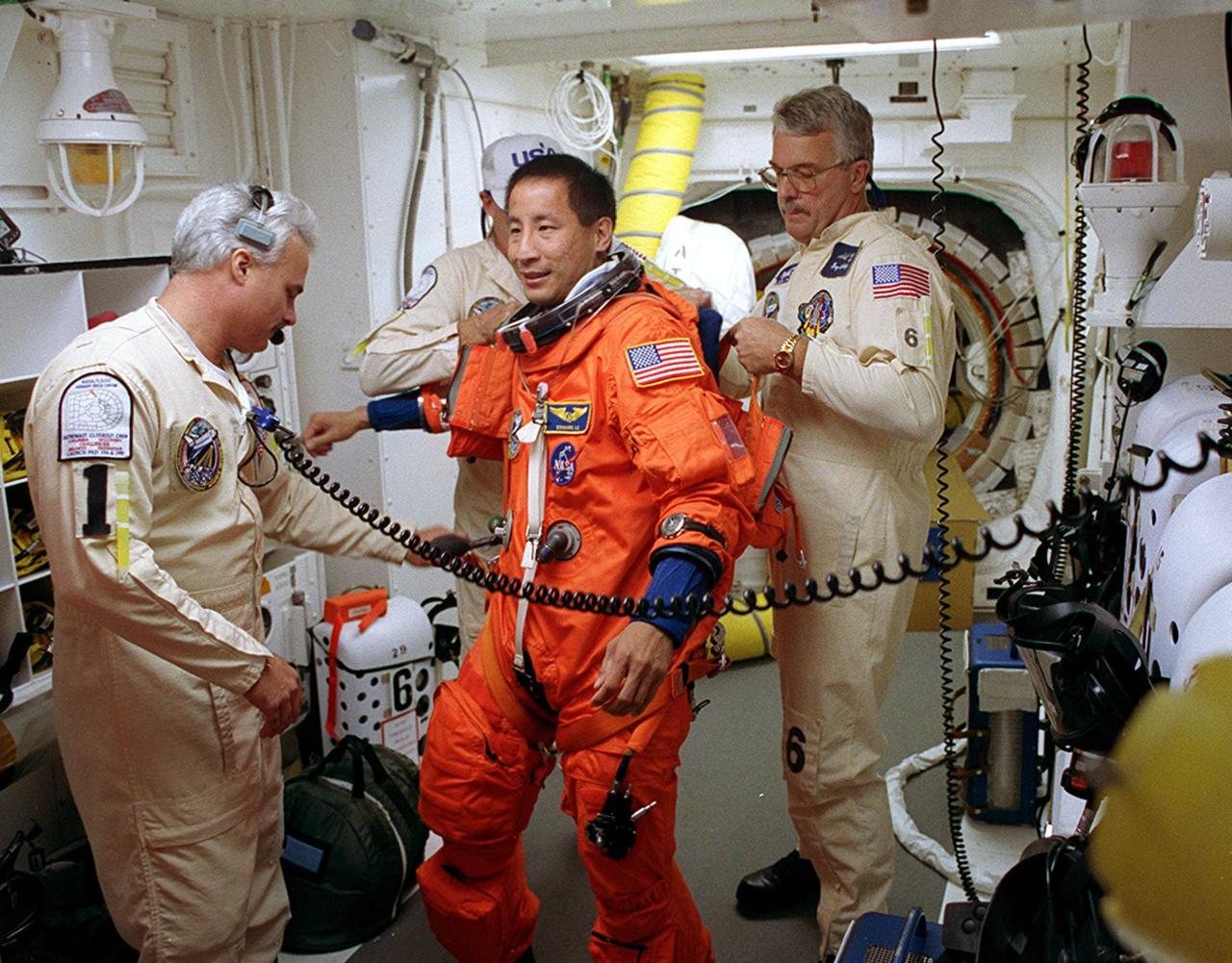
Before entering Space Shuttle Atlantis, STS-106 Mission Specialist Edward T. Lu gets help with his launch and entry suit in the White Room. The perfect on-time liftoff of Atlantis on mission STS-106 occurred at 8:45:47 a.m. EDT. On the 11-day mission to the International Space Station, the seven-member crew will perform support tasks on orbit, transfer supplies and prepare the living quarters in the newly arrived Zvezda Service Module. The first long-duration crew, dubbed “Expedition One,” is due to arrive at the Station in late fall. Landing of Atlantis is targeted for 4:45 a.m. EDT on Sept. 19

STS-106 Pilot Scott D. Altman is helped with his launch and entry suit by suit technicians in the White Room before entering Space Shuttle Atlantis. The perfect on-time liftoff of Atlantis on mission STS-106 occurred at 8:45:47 a.m. EDT. On the 11-day mission to the International Space Station, the seven-member crew will perform support tasks on orbit, transfer supplies and prepare the living quarters in the newly arrived Zvezda Service Module. The first long-duration crew, dubbed “Expedition One,” is due to arrive at the Station in late fall. Landing of Atlantis is targeted for 4:45 a.m. EDT on Sept. 19
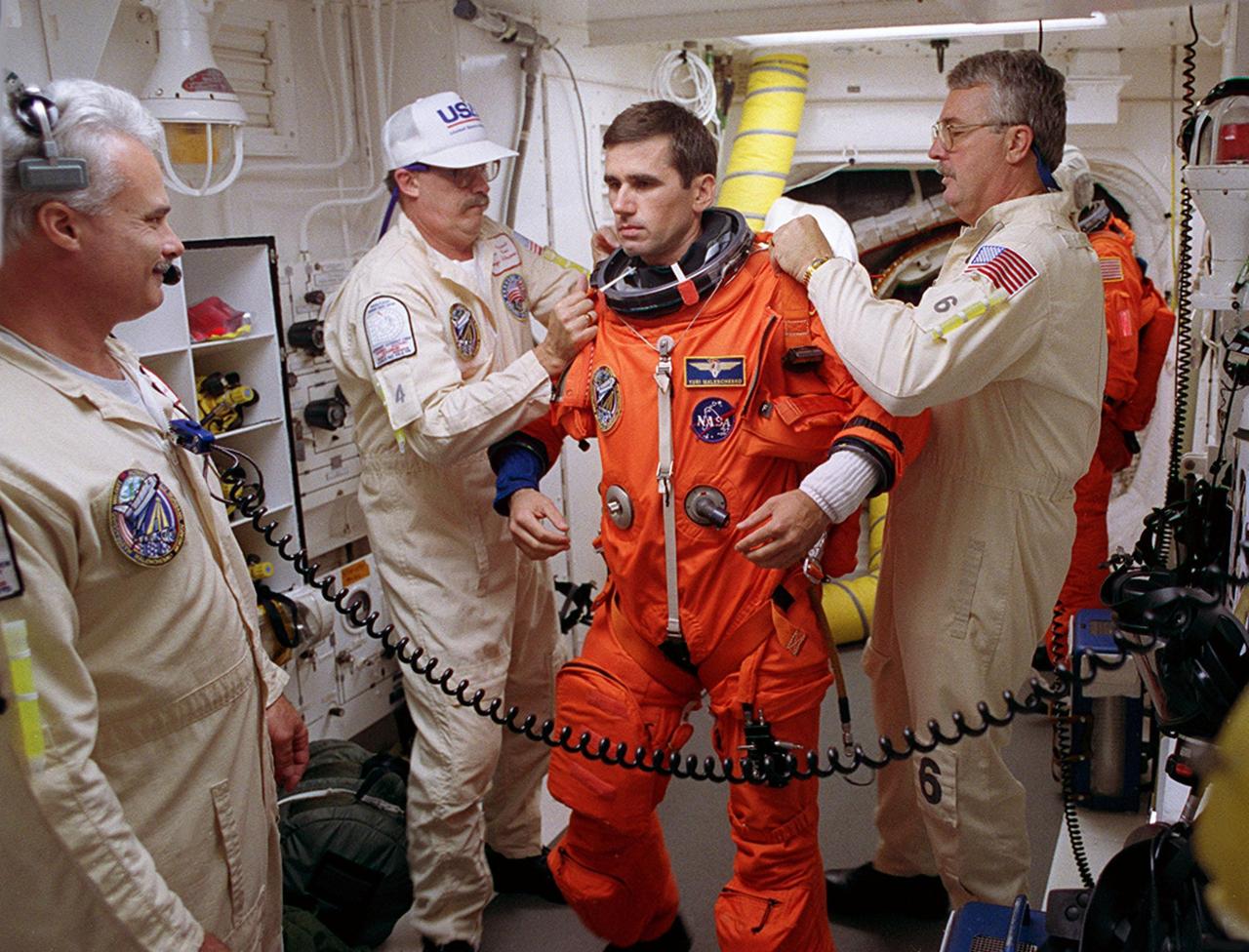
Before entering Space Shuttle Atlantis, STS-106 Mission Specialist Yuri I. Malenchenko gets help with his launch and entry suit in the White Room. The perfect on-time liftoff of Atlantis on mission STS-106 occurred at 8:45:47 a.m. EDT. On the 11-day mission to the International Space Station, the seven-member crew will perform support tasks on orbit, transfer supplies and prepare the living quarters in the newly arrived Zvezda Service Module. The first long-duration crew, dubbed “Expedition One,” is due to arrive at the Station in late fall. Landing of Atlantis is targeted for 4:45 a.m. EDT on Sept. 19
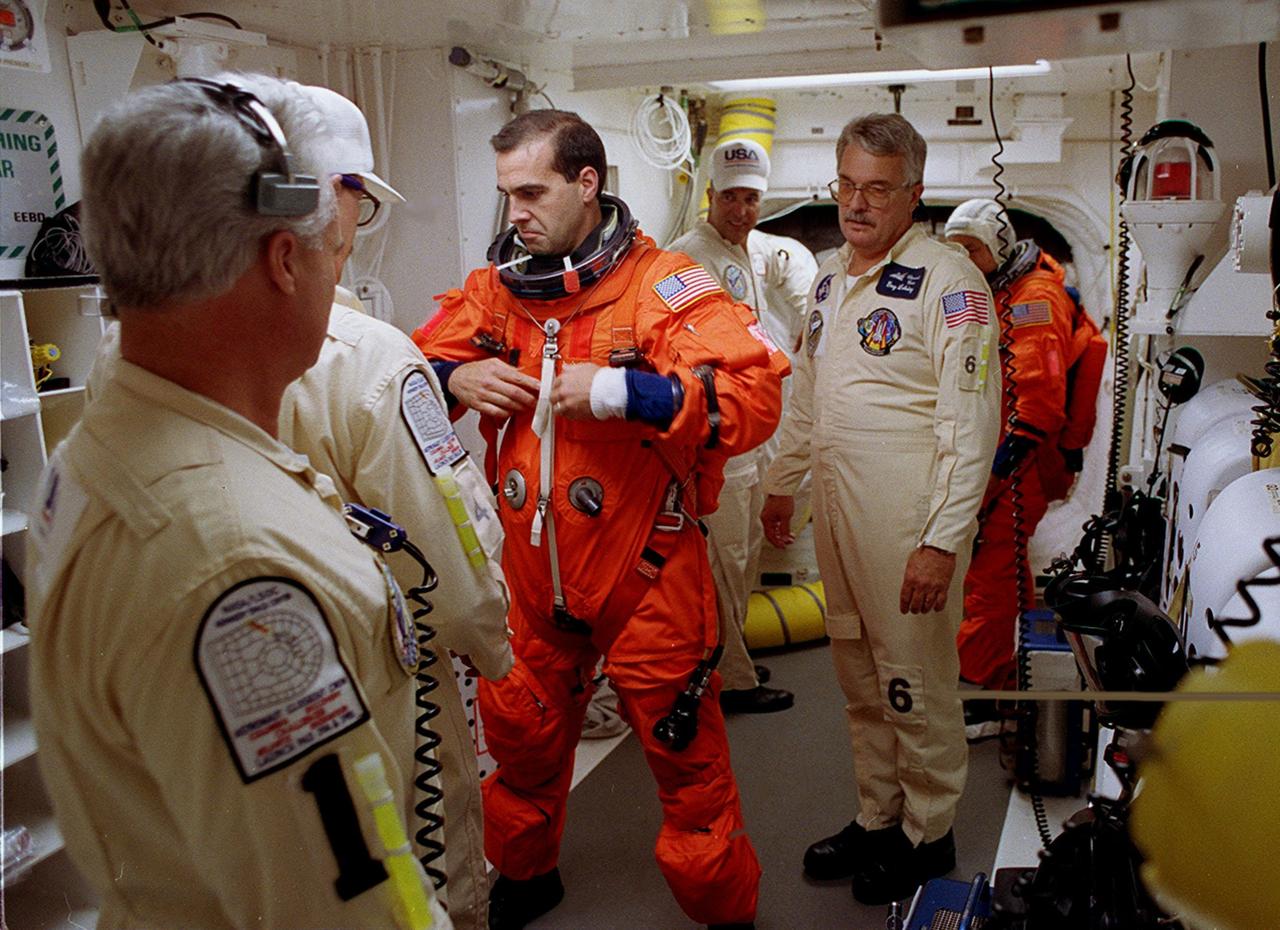
STS-106 Mission Specialist Richard A. Mastracchio is helped with his launch and entry suit in the White Room before entering Space Shuttle Atlantis. The perfect on-time liftoff of Atlantis on mission STS-106 occurred at 8:45:47 a.m. EDT. On the 11-day mission to the International Space Station, the seven-member crew will perform support tasks on orbit, transfer supplies and prepare the living quarters in the newly arrived Zvezda Service Module. The first long-duration crew, dubbed “Expedition One,” is due to arrive at the Station in late fall. Landing of Atlantis is targeted for 4:45 a.m. EDT on Sept. 19
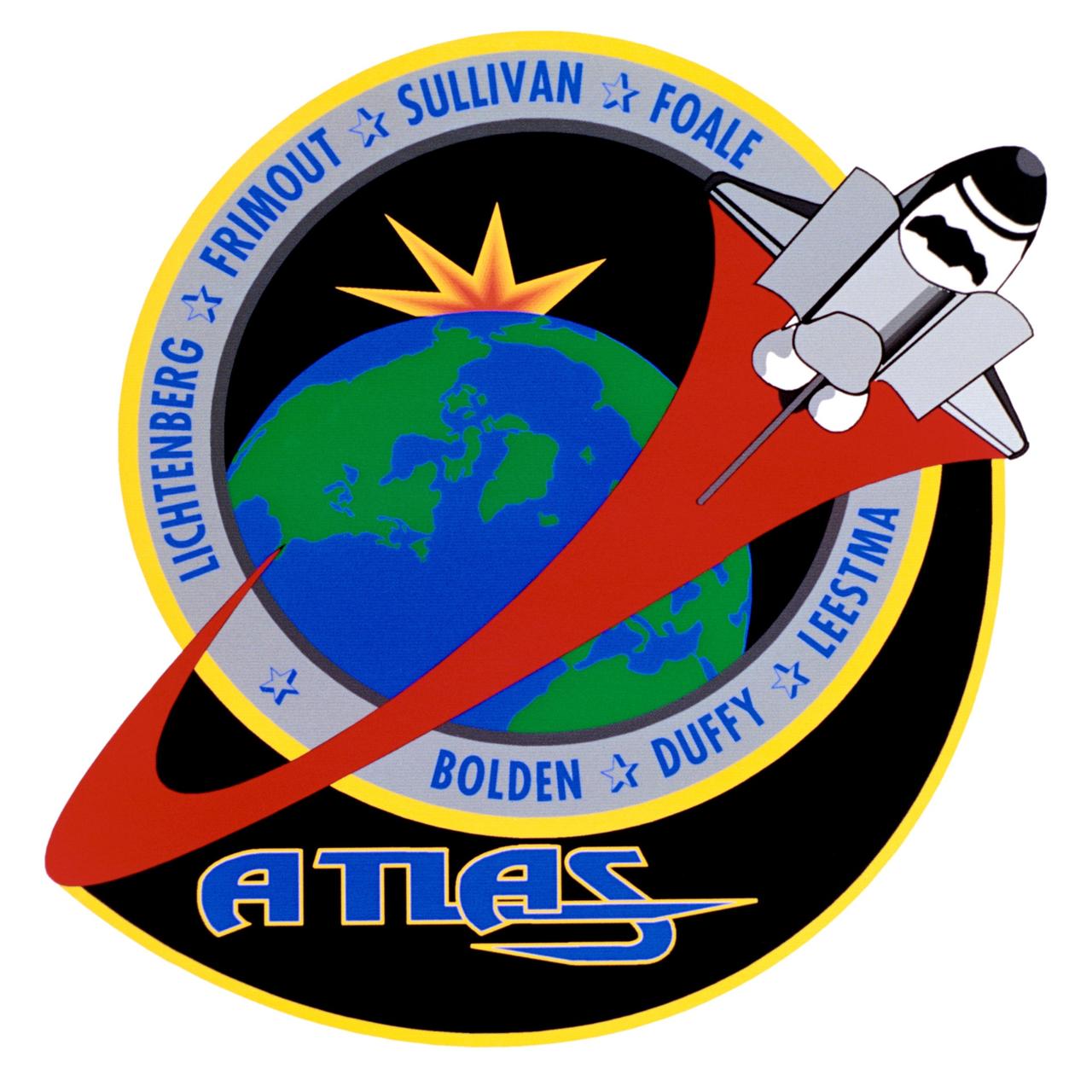
STS045-S-001 (October 1991) --- Designed by the crew members, the patch depicts the space shuttle launching from the Kennedy Space Center (KSC) into a high inclination orbit. From this vantage point, the Atmospheric Laboratory for Applications and Science (ATLAS) payload can view Earth, the sun, and their dynamic interactions against the background of space. Earth is prominently displayed and is the focus of the mission's space plasma physics and Earth sciences observations. The colors of the setting sun, measured by sensitive instruments, provide detailed information about ozone, carbon dioxide and other gases which determine Earth's climate and environment. Encircling the scene are the names of the flight crew members: Charles F. Bolden Jr., commander; Brian Duffy, pilot; C. Michael Foale, David C. Leestma, and Kathryn D. Sullivan, all mission specialists; Dirk Frimout and Byron K. Lichtenberg, payload specialists. The additional star in the ring is to recognize Charles R. Chappell and Michael Lampton, alternate payload specialists, and the entire ATLAS-1 team for its dedication and support of this "Mission to Planet Earth" (MTPE). The NASA insignia design for space shuttle flights is reserved for use by the astronauts and for other official use as the NASA Administrator may authorize. Public availability has been approved only in the form of illustrations by the various news media. When and if there is any change in this policy, which is not anticipated, it will be publicly announced. Photo credit: NASA
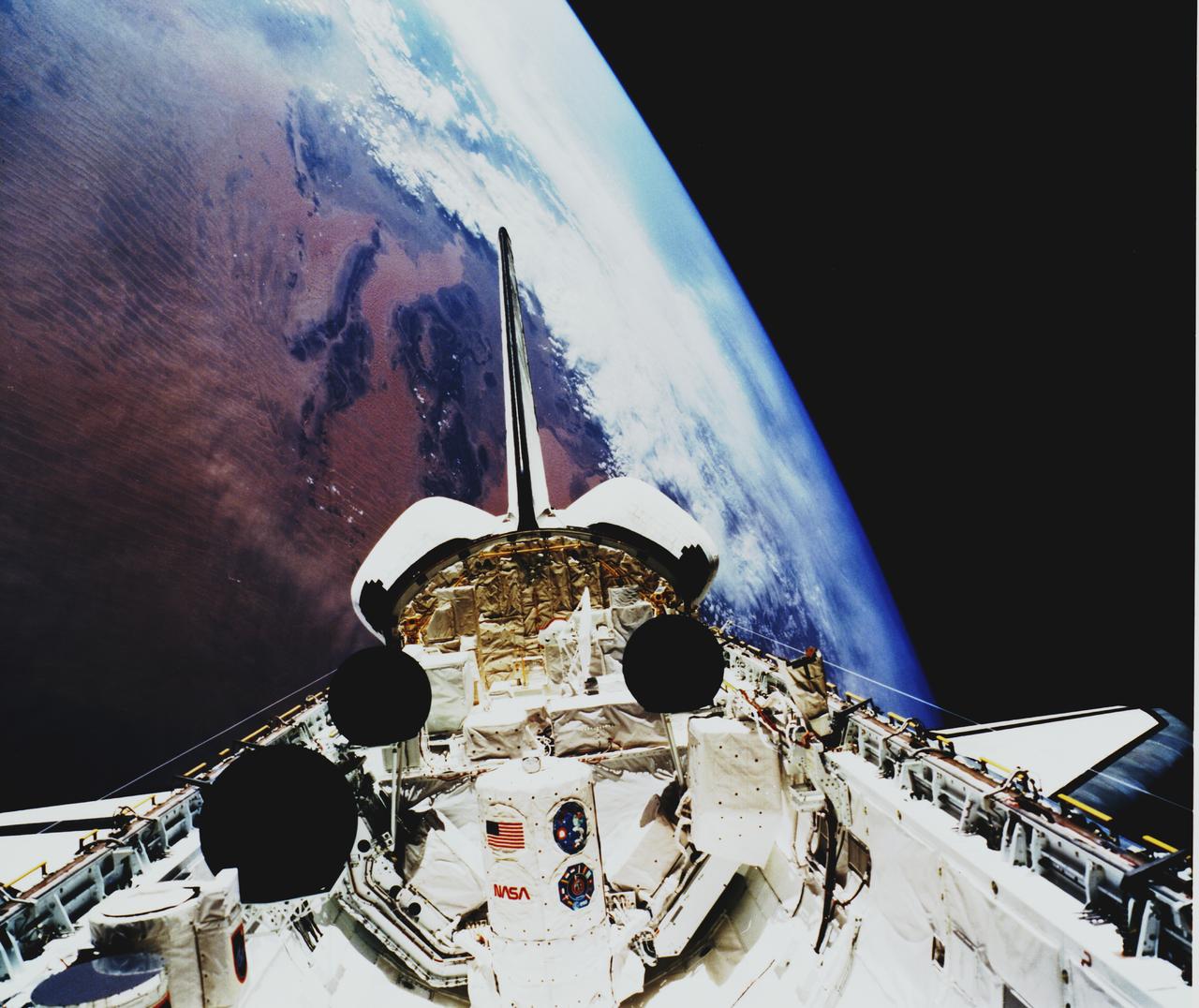
Space Shuttle Atlantis (STS-45) onboard photo of Atmospheric Laboratory for Applications and Science (Atlas-1) module in open cargo bay. Atlas-1 pallets are back dropped against the Atlas Mountains. Taken over Mali in the western Sahara, shows dunes in the Iguidi Dune Sea.
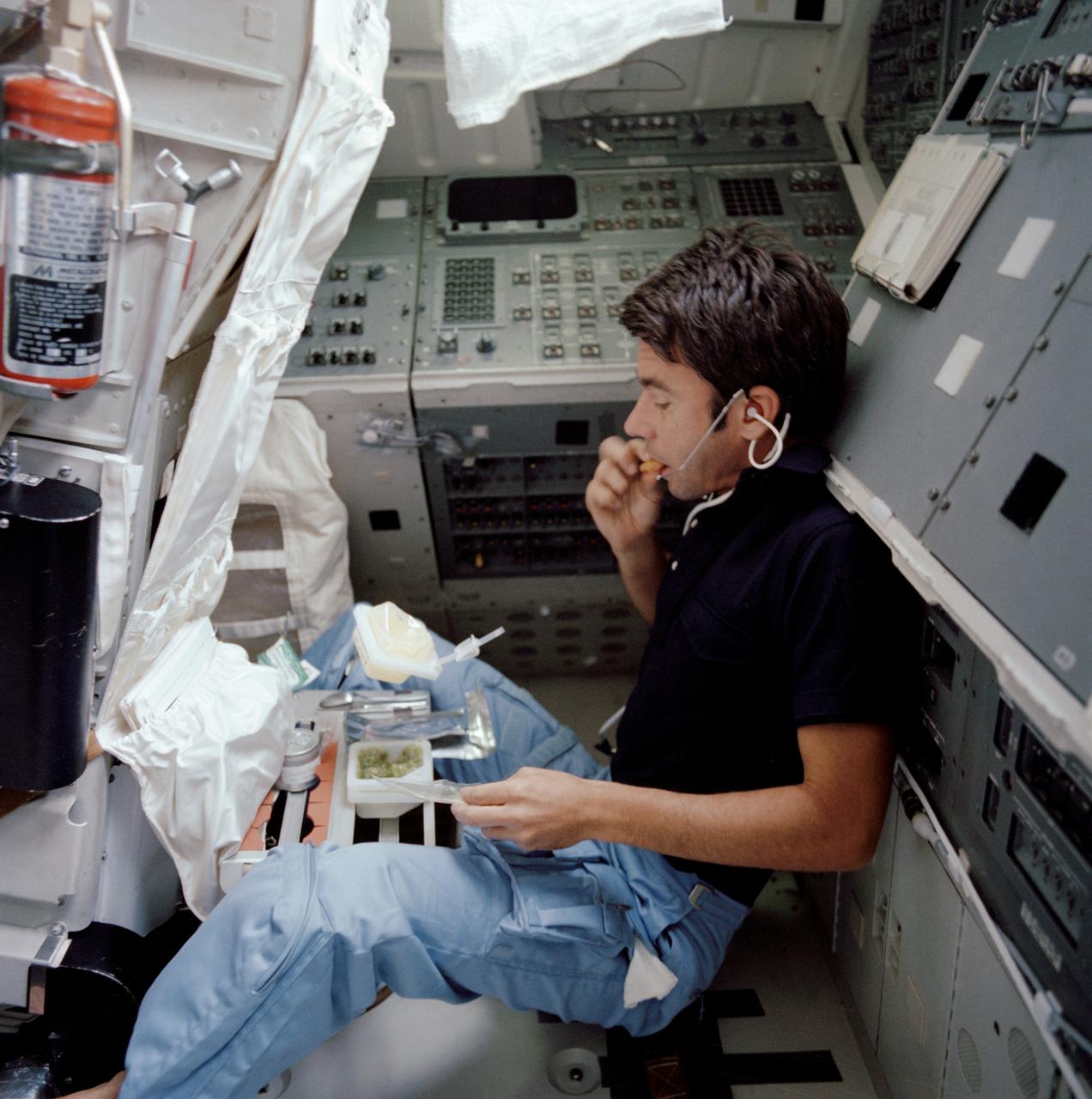
STS005-45-1821 (11-16 Nov. 1982) --- Astronaut William B. Lenoir, STS-5 mission specialist, takes a break to eat his meal on the space shuttle Columbia. Wet trash stowage bags float freely around him and a fire extinguisher hangs on the wall in front of him. Photo credit: NASA

STS-45 Mission Commander Charlie Bolden, Jr., is glad to be back in Florida and ready for the launch of the 46th Shuttle Mission. Bolden and six fellow crew members arrived at KSC's landing strip after the Countdown Clock had already stated ticking toward liftoff of the Space Shuttle Atlantis from Pad 39-A.
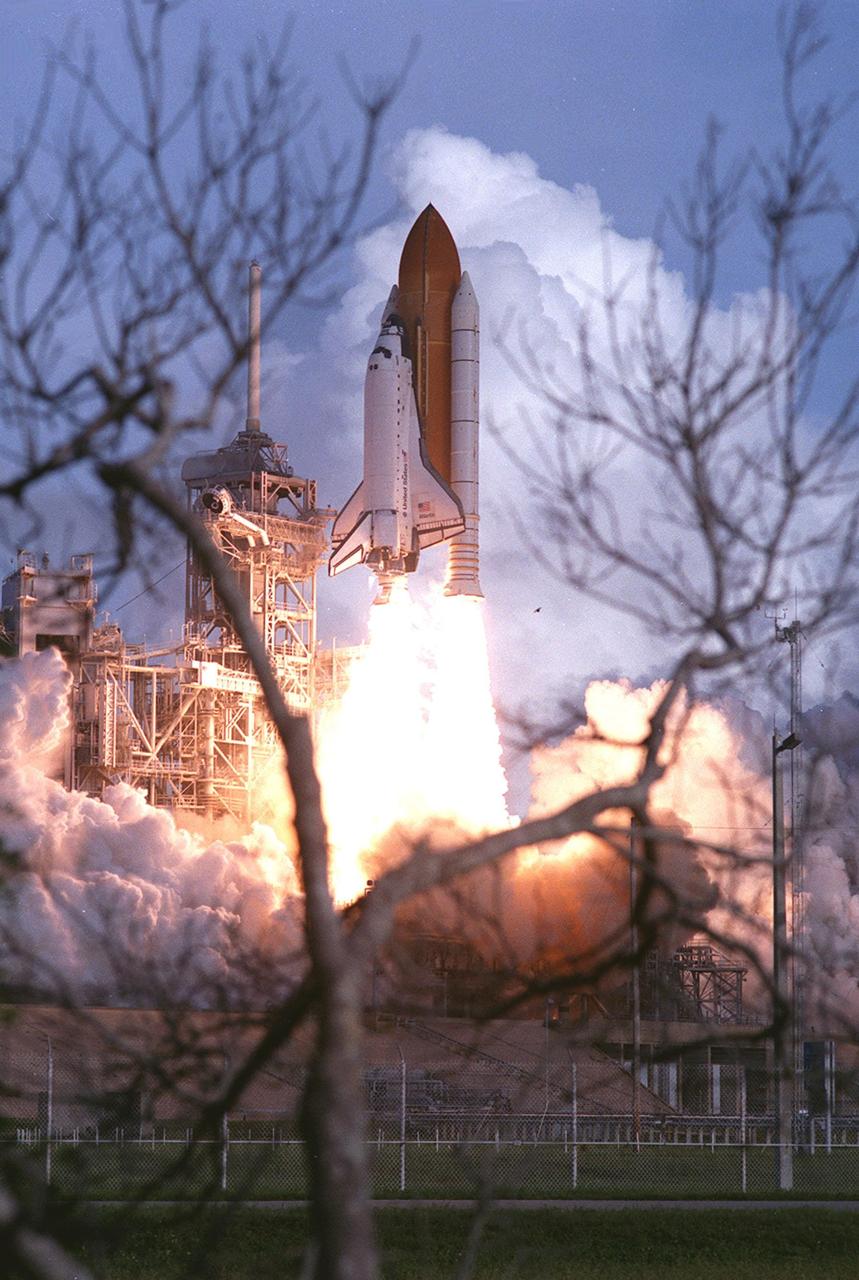
KENNEDY SPACE CENTER, Fla. -- Bare branches frame the liftoff of Space Shuttle Atlantis on mission STS-106 to the International Space Station. Billows of smoke and steam are illuminated by the flames of the solid rocket boosters. The perfect on-time liftoff of Atlantis occurred at 8:45:47 a.m. EDT. On the 11-day mission to the International Space Station, the seven-member crew will perform support tasks on orbit, transfer supplies and prepare the living quarters in the newly arrived Zvezda Service Module. The first long-duration crew, dubbed “Expedition One,” is due to arrive at the Station in late fall. Landing of Atlantis is targeted for 4:45 a.m. EDT on Sept. 19
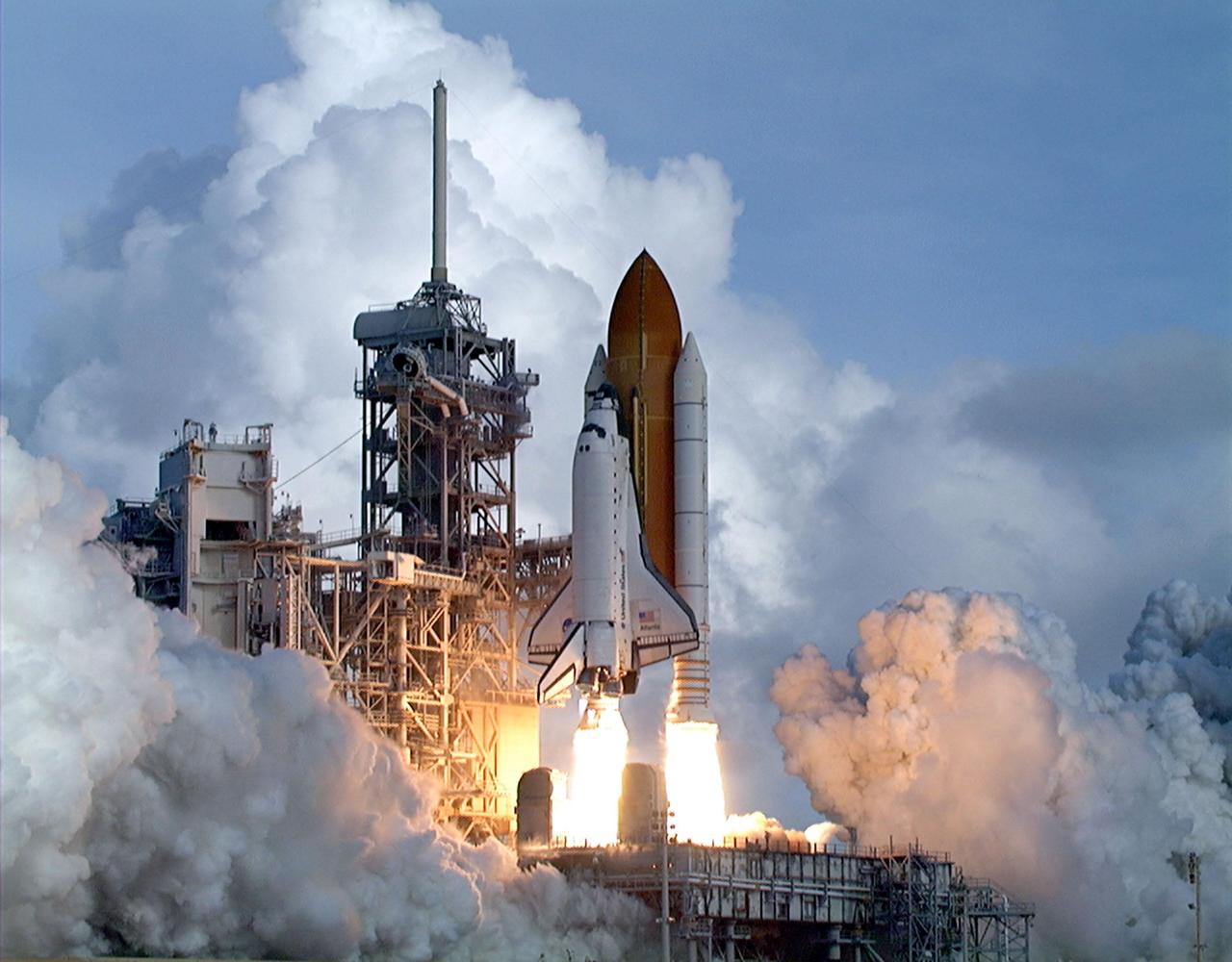
KENNEDY SPACE CENTER, Fla. -- Columns of flame spew from the solid rocket boosters hurling Space Shuttle Atlantis toward space on mission STS-106. The on-time liftoff occurred at 8:45:47 a.m. EDT for the start of an 11-day mission to the International Space Station. While on board, the seven-member crew will perform support tasks, transfer supplies and prepare the living quarters in the newly arrived Zvezda Service Module. The first long-duration crew, dubbed “Expedition One,” is due to arrive at the Station in late fall. Landing of Atlantis is targeted for 4:45 a.m. EDT on Sept. 19
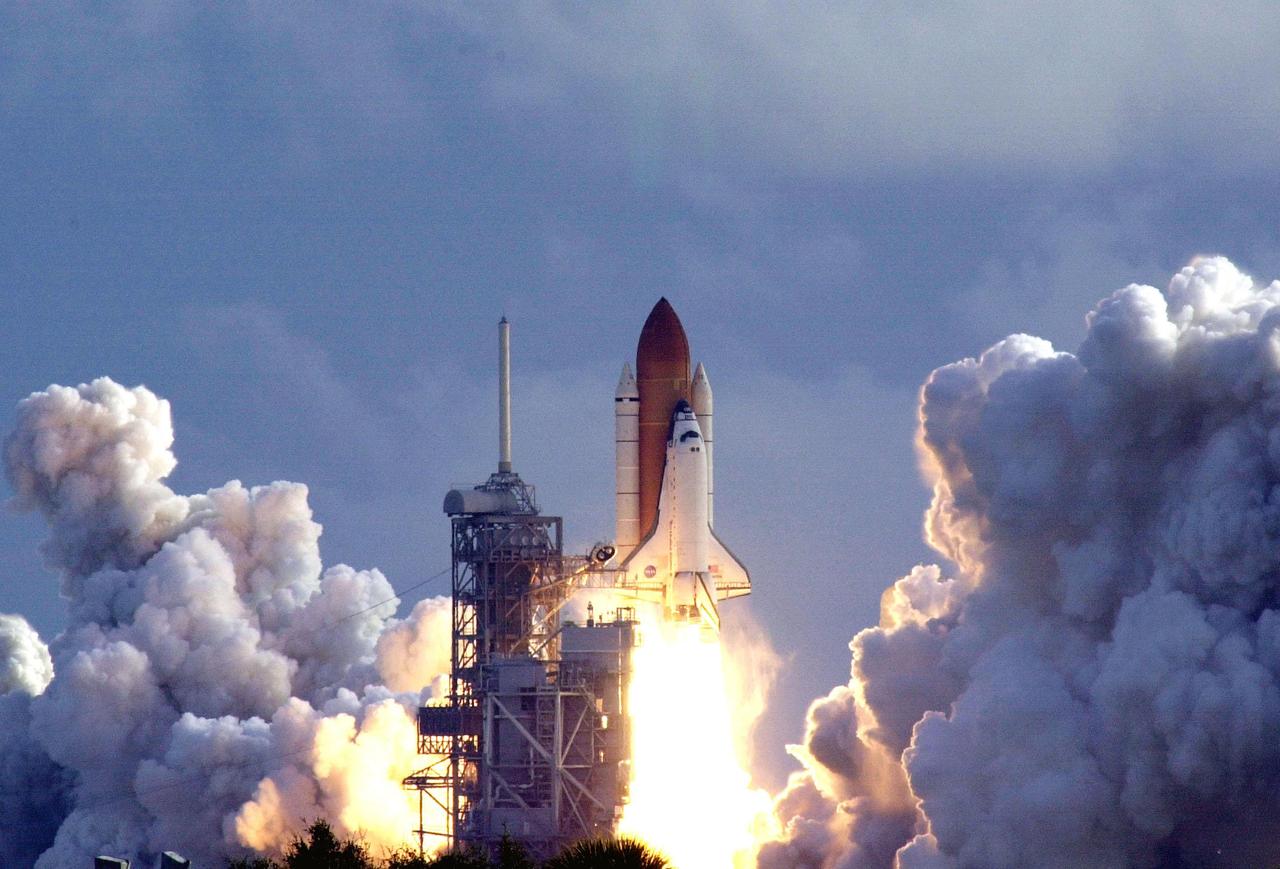
KENNEDY SPACE CENTER, Fla. -- A perfect launch sends Space Shuttle Atlantis, leaving a trail of flames and billows of smoke and clouds behind, hurtling toward space on mission STS-106. Liftoff occurred at 8:45:47 a.m. EDT today. On the 11-day mission to the International Space Station, the seven-member crew will perform support tasks on orbit, transfer supplies and prepare the living quarters in the newly arrived Zvezda Service Module. The first long-duration crew, dubbed “Expedition One,” is due to arrive at the Station in late fall. Landing of Atlantis is targeted for 4:45 a.m. EDT on Sept. 19

KENNEDY SPACE CENTER, Fla. -- Bare branches frame the liftoff of Space Shuttle Atlantis on mission STS-106 to the International Space Station. Billows of smoke and steam are illuminated by the flames of the solid rocket boosters. The perfect on-time liftoff of Atlantis occurred at 8:45:47 a.m. EDT. On the 11-day mission to the International Space Station, the seven-member crew will perform support tasks on orbit, transfer supplies and prepare the living quarters in the newly arrived Zvezda Service Module. The first long-duration crew, dubbed “Expedition One,” is due to arrive at the Station in late fall. Landing of Atlantis is targeted for 4:45 a.m. EDT on Sept. 19
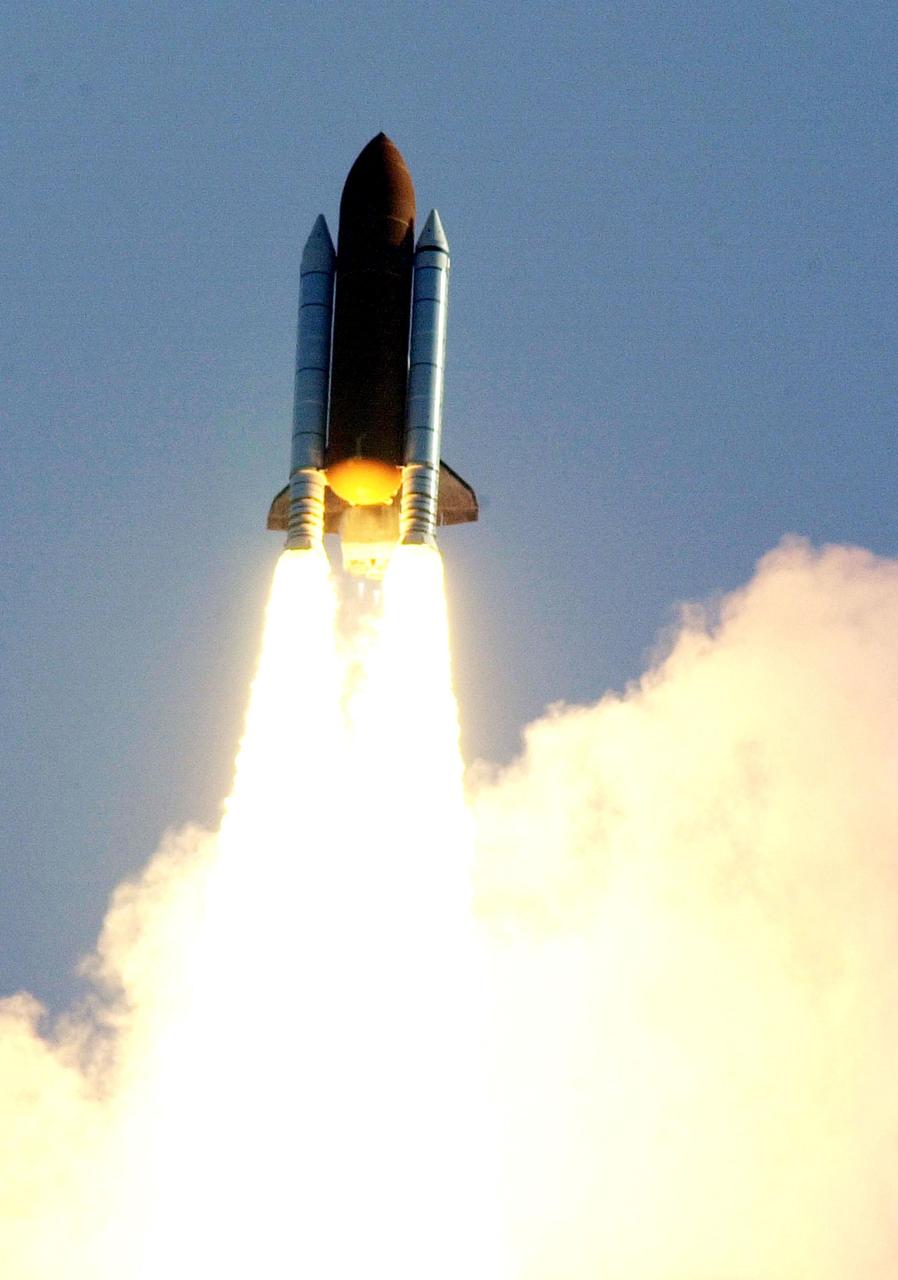
KENNEDY SPACE CENTER, Fla. -- After a perfect on-time launch on mission STS-106 at 8:45:47 a.m. EDT, Space Shuttle Atlantis rolls and displays its external tank and solid rocket boosters. On the 11-day mission to the International Space Station, the seven-member crew will perform support tasks on orbit, transfer supplies and prepare the living quarters in the newly arrived Zvezda Service Module. The first long-duration crew, dubbed “Expedition One,” is due to arrive at the Station in late fall. Landing of Atlantis is targeted for 4:45 a.m. EDT on Sept. 19
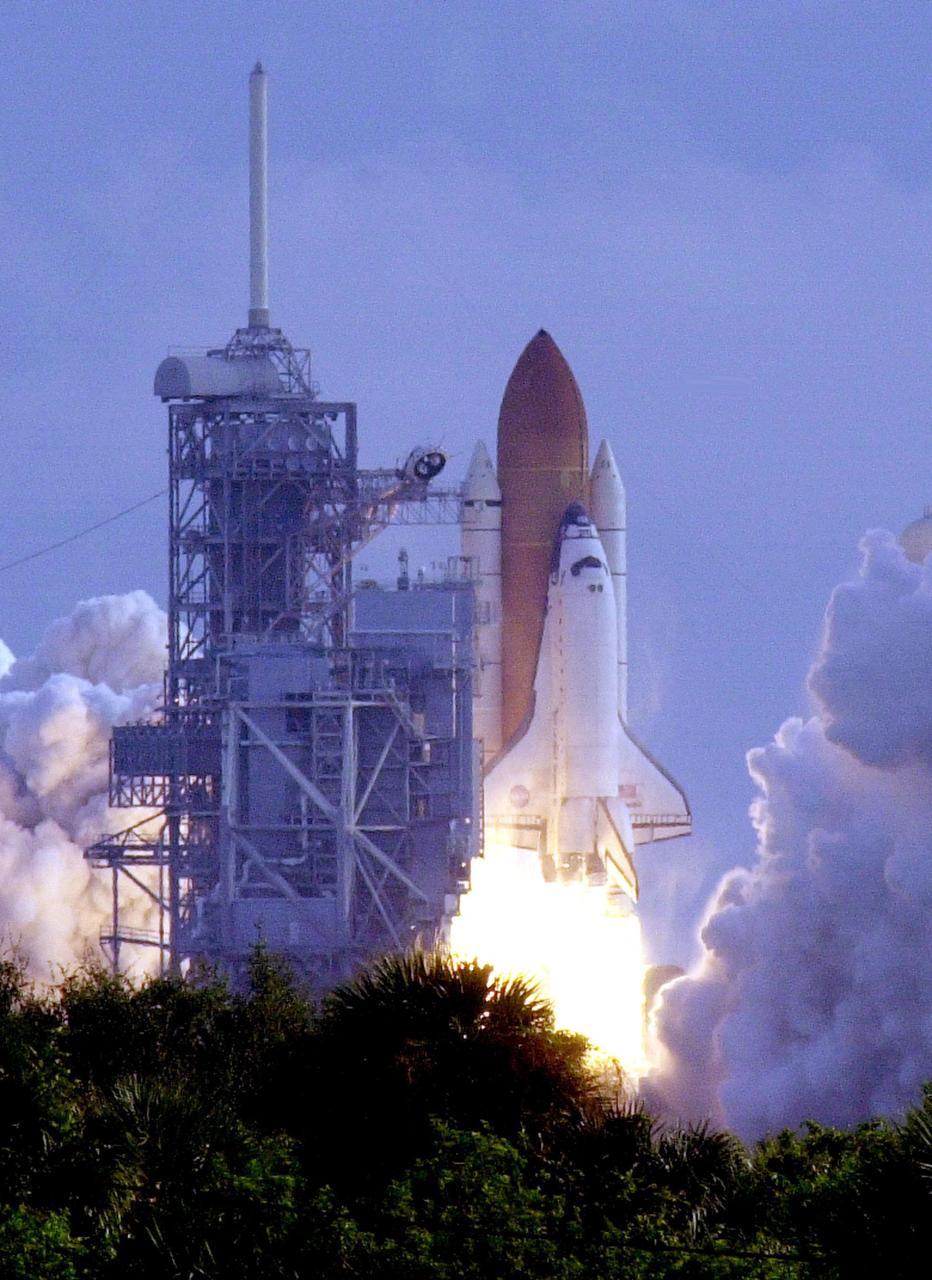
KENNEDY SPACE CENTER, Fla. -- Space Shuttle Atlantis roars toward space on mission STS-106 as it lifts off in a perfect launch at 8:45:47 a.m. EDT today. On the 11-day mission to the International Space Station, the seven-member crew will perform support tasks on orbit, transfer supplies and prepare the living quarters in the newly arrived Zvezda Service Module. The first long-duration crew, dubbed “Expedition One,” is due to arrive at the Station in late fall. Landing of Atlantis is targeted for 4:45 a.m. EDT on Sept. 19
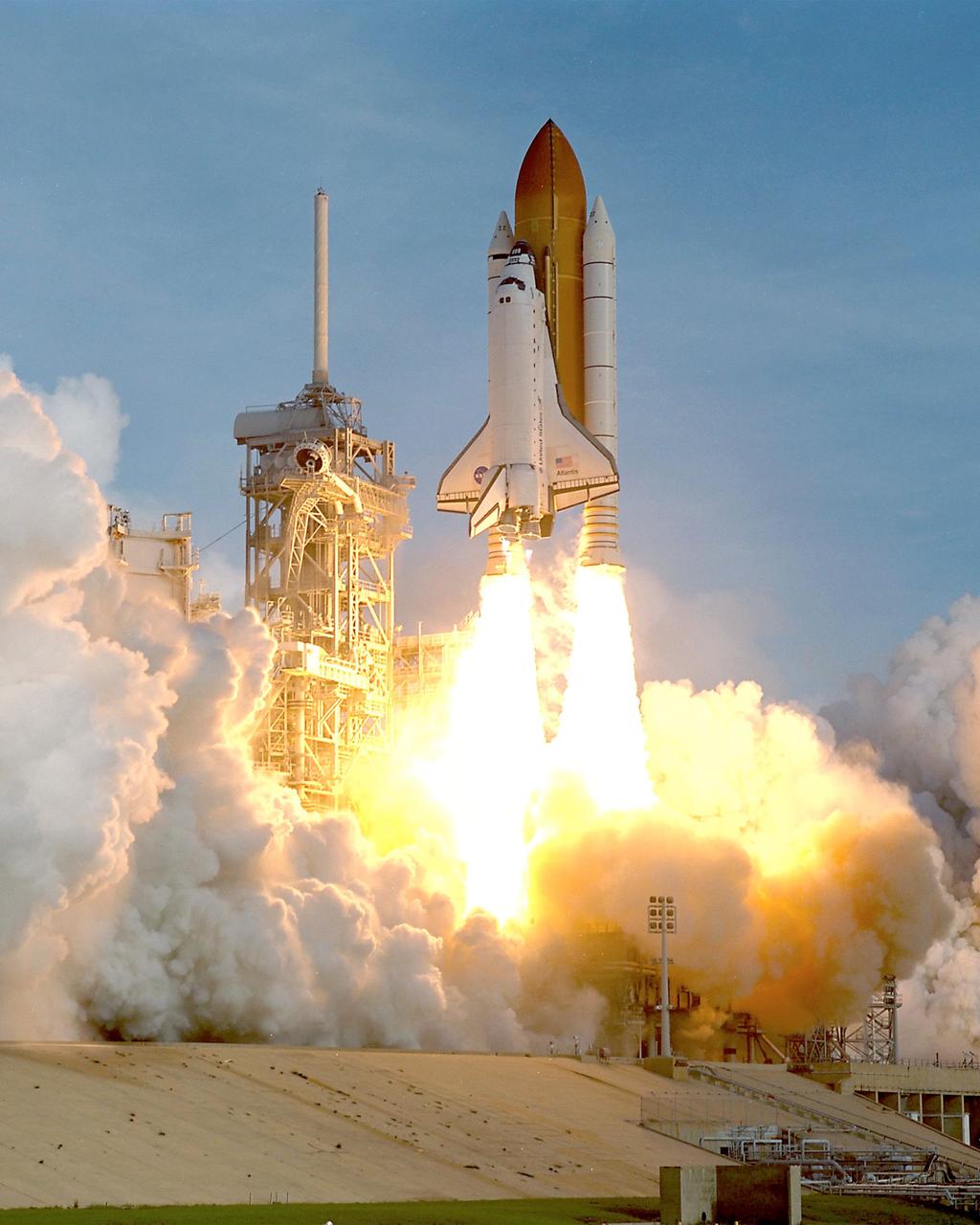
KENNEDY SPACE CENTER, Fla. -- Space Shuttle Atlantis appears to burst forth from a cocoon of smoke as it rockets toward space on mission STS-106. The perfect on-time liftoff of Atlantis occurred at 8:45:47 a.m. EDT. On the 11-day mission to the International Space Station, the seven-member crew will perform support tasks on orbit, transfer supplies and prepare the living quarters in the newly arrived Zvezda Service Module. The first long-duration crew, dubbed “Expedition One,” is due to arrive at the Station in late fall. Landing of Atlantis is targeted for 4:45 a.m. EDT on Sept. 19

KENNEDY SPACE CENTER, Fla. -- Columns of flame spew from the solid rocket boosters hurling Space Shuttle Atlantis toward space on mission STS-106. The on-time liftoff occurred at 8:45:47 a.m. EDT for the start of an 11-day mission to the International Space Station. While on board, the seven-member crew will perform support tasks, transfer supplies and prepare the living quarters in the newly arrived Zvezda Service Module. The first long-duration crew, dubbed “Expedition One,” is due to arrive at the Station in late fall. Landing of Atlantis is targeted for 4:45 a.m. EDT on Sept. 19
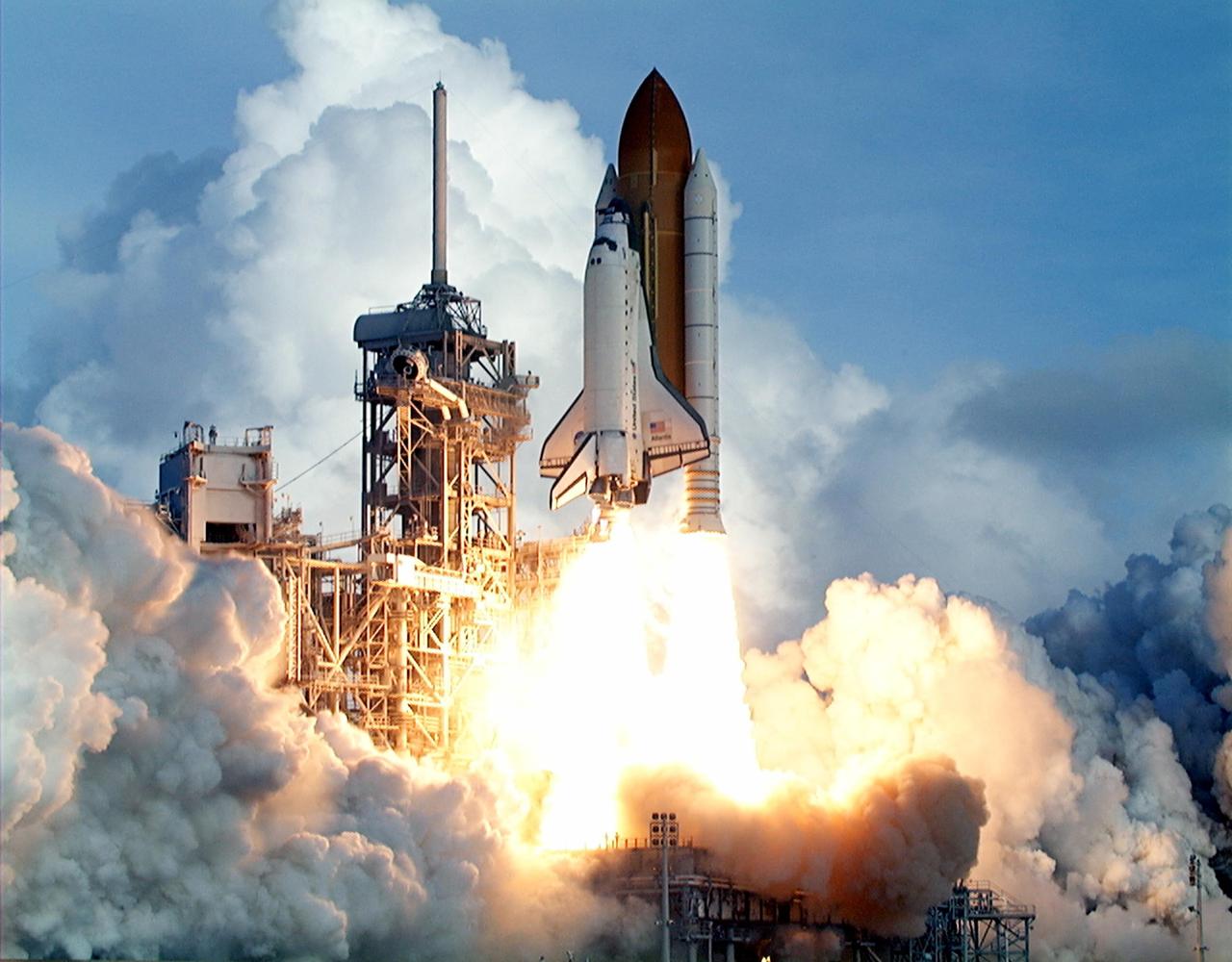
KENNEDY SPACE CENTER, Fla. -- Filling the ground with billows of smoke and steam created by the flaming solid rocket boosters, Space Shuttle Atlantis speeds toward space on mission STS-106. The perfect on-time liftoff occurred at 8:45:47 a.m. EDT. On the 11-day mission to the International Space Station, the seven-member crew will perform support tasks on orbit, transfer supplies and prepare the living quarters in the newly arrived Zvezda Service Module. The first long-duration crew, dubbed “Expedition One,” is due to arrive at the Station in late fall. Landing of Atlantis is targeted for 4:45 a.m. EDT on Sept. 19
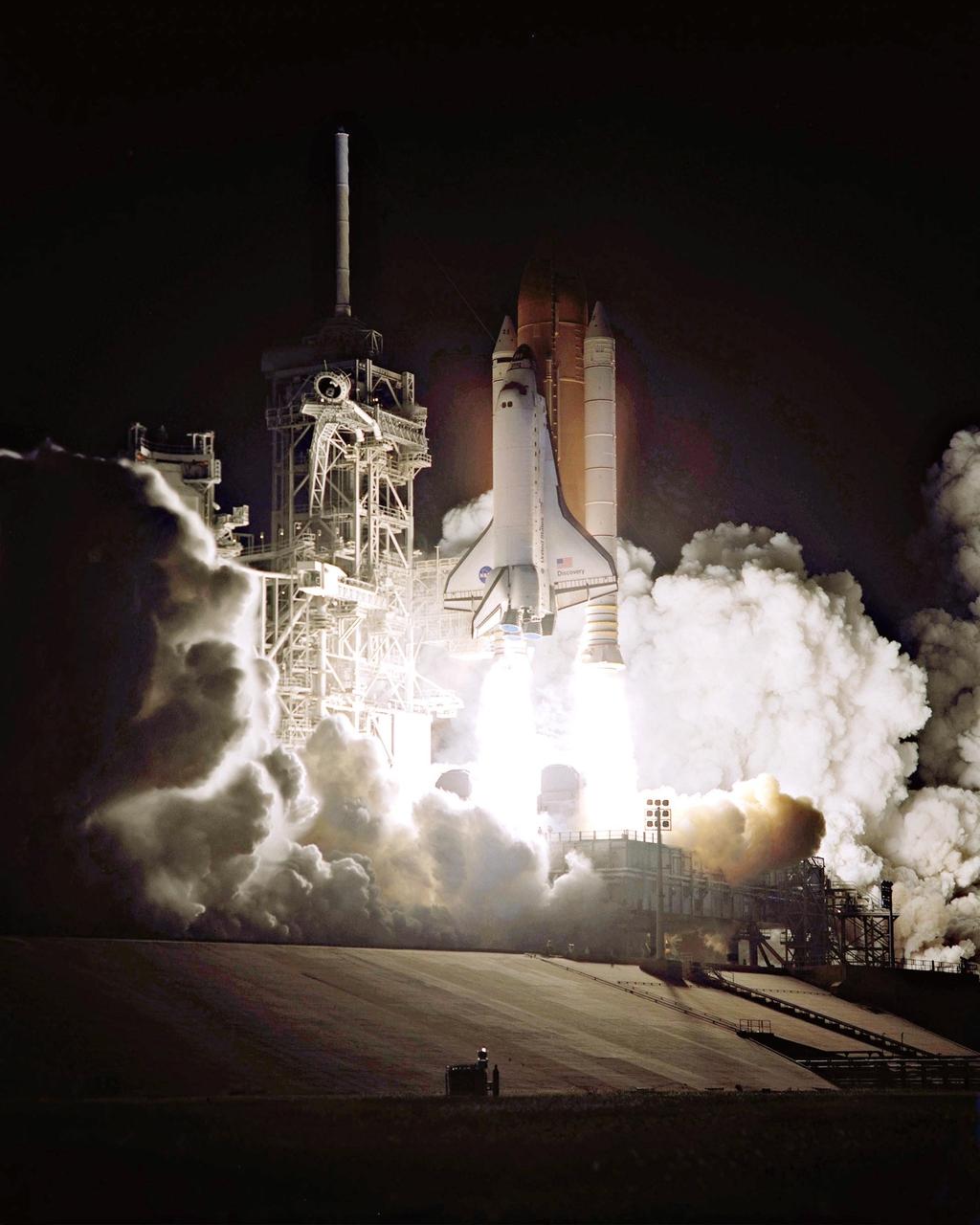
KENNEDY SPACE CENTER, Fla. -- A perfect on-time launch for Atlantis as it rockets toward space on mission STS-106. Liftoff occurred at 8:45:47 a.m. EDT. On the 11-day mission to the International Space Station, the seven-member crew will perform support tasks on orbit, transfer supplies and prepare the living quarters in the newly arrived Zvezda Service Module. The first long-duration crew, dubbed “Expedition One,” is due to arrive at the Station in late fall. Landing of Atlantis is targeted for 4:45 a.m. EDT on Sept. 19
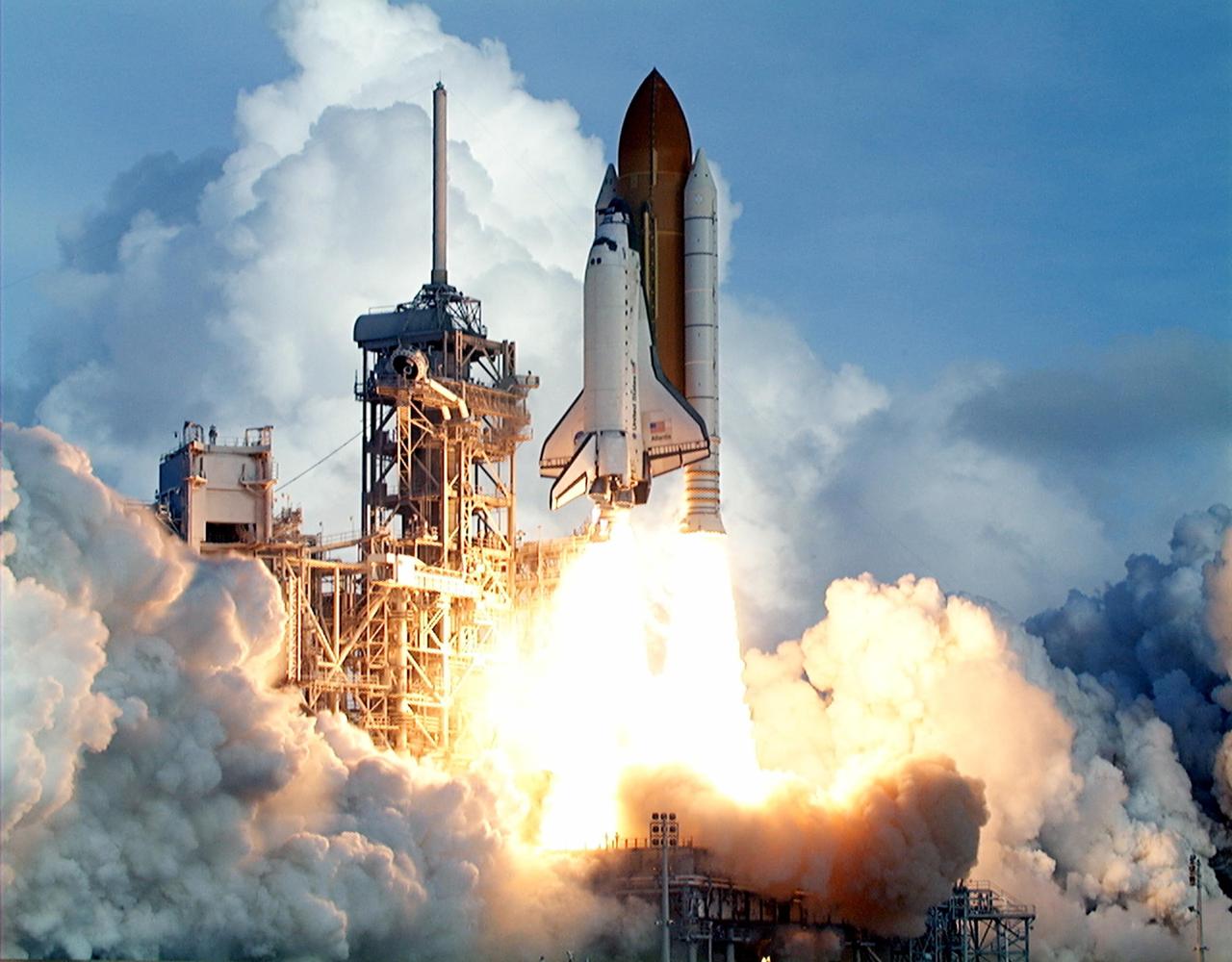
KENNEDY SPACE CENTER, Fla. -- Filling the ground with billows of smoke and steam created by the flaming solid rocket boosters, Space Shuttle Atlantis speeds toward space on mission STS-106. The perfect on-time liftoff occurred at 8:45:47 a.m. EDT. On the 11-day mission to the International Space Station, the seven-member crew will perform support tasks on orbit, transfer supplies and prepare the living quarters in the newly arrived Zvezda Service Module. The first long-duration crew, dubbed “Expedition One,” is due to arrive at the Station in late fall. Landing of Atlantis is targeted for 4:45 a.m. EDT on Sept. 19
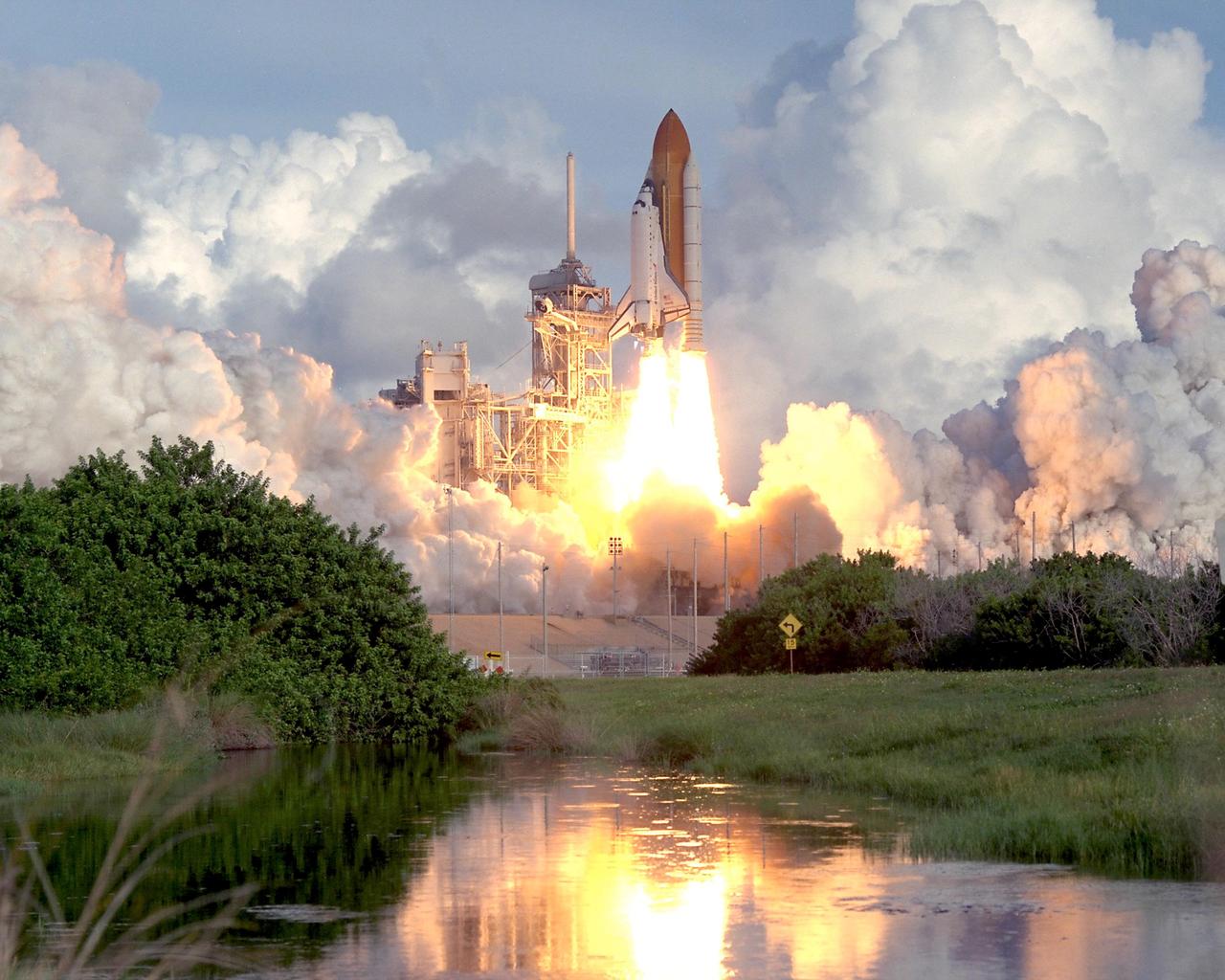
KENNEDY SPACE CENTER, Fla. -- The waters near Launch Pad 39B reflect the brilliant red-orange flames from the solid rocket boosters as Space Shuttle Atlantis lifts off on mission STS-106 to the International Space Station. The perfect on-time launch occurred at 8:45:47 a.m. EDT. On the 11-day mission to the Station, the seven-member crew will perform support tasks on orbit, transfer supplies and prepare the living quarters in the newly arrived Zvezda Service Module. The first long-duration crew, dubbed “Expedition One,” is due to arrive at the Station in late fall. Landing of Atlantis is targeted for 4:45 a.m. EDT on Sept. 19.
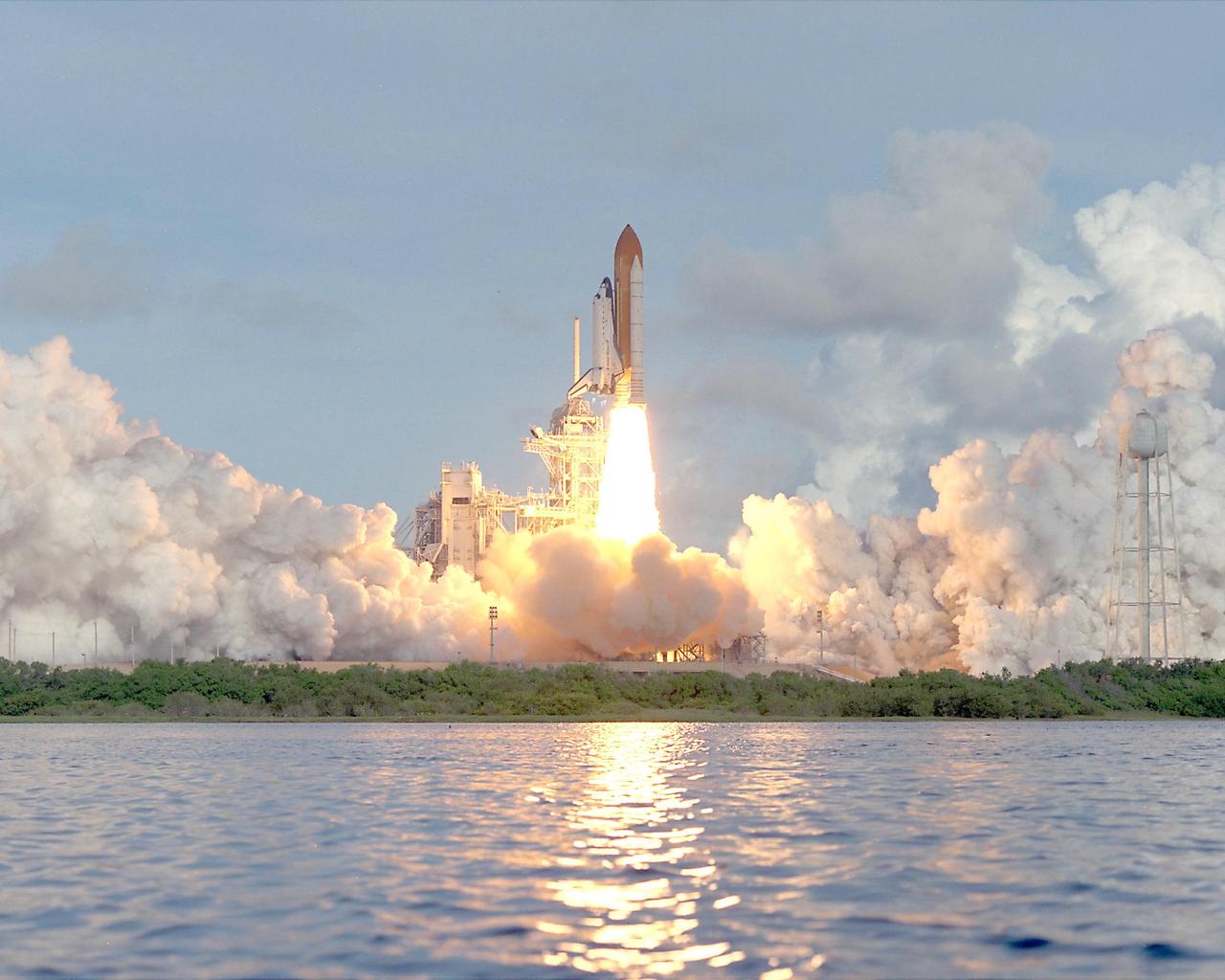
KENNEDY SPACE CENTER, Fla. -- The clouds of steam and smoke generated from the launch of Space Shuttle Atlantis seem to blend with the sky. The launch is reflected in waters near Launch Pad 39B. The perfect on-time liftoff of Atlantis on mission STS-106 occurred at 8:45:47 a.m. EDT. On the 11-day mission to the International Space Station, the seven-member crew will perform support tasks on orbit, transfer supplies and prepare the living quarters in the newly arrived Zvezda Service Module. The first long-duration crew, dubbed “Expedition One,” is due to arrive at the Station in late fall. Landing of Atlantis is targeted for 4:45 a.m. EDT on Sept. 19
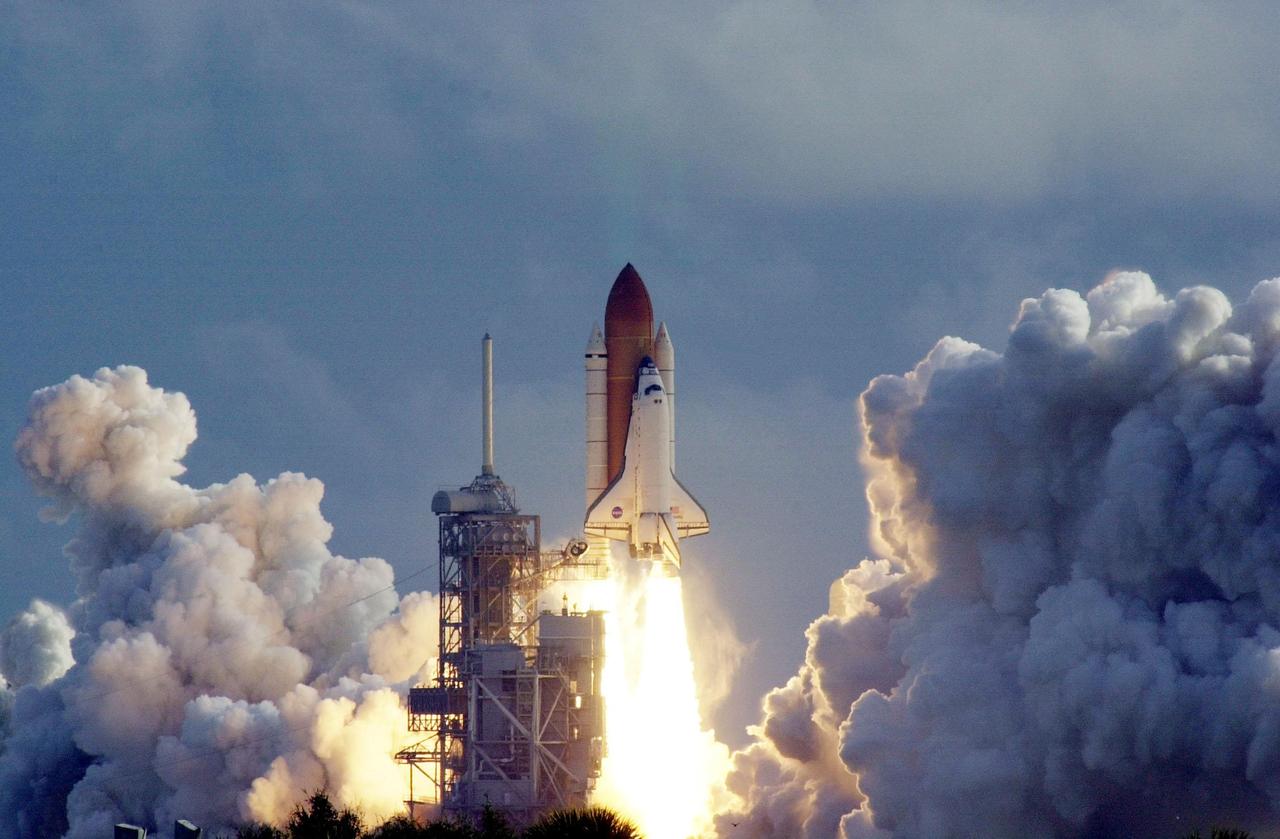
KENNEDY SPACE CENTER, Fla. -- Billows of clouds and smoke frame Space Shuttle Atlantis after a perfect on-time launch on mission STS-106 at 8:45:47 a.m. EDT. On the 11-day mission to the International Space Station, the seven-member crew will perform support tasks on orbit, transfer supplies and prepare the living quarters in the newly arrived Zvezda Service Module. The first long-duration crew, dubbed “Expedition One,” is due to arrive at the Station in late fall. Landing of Atlantis is targeted for 4:45 a.m. EDT on Sept. 19
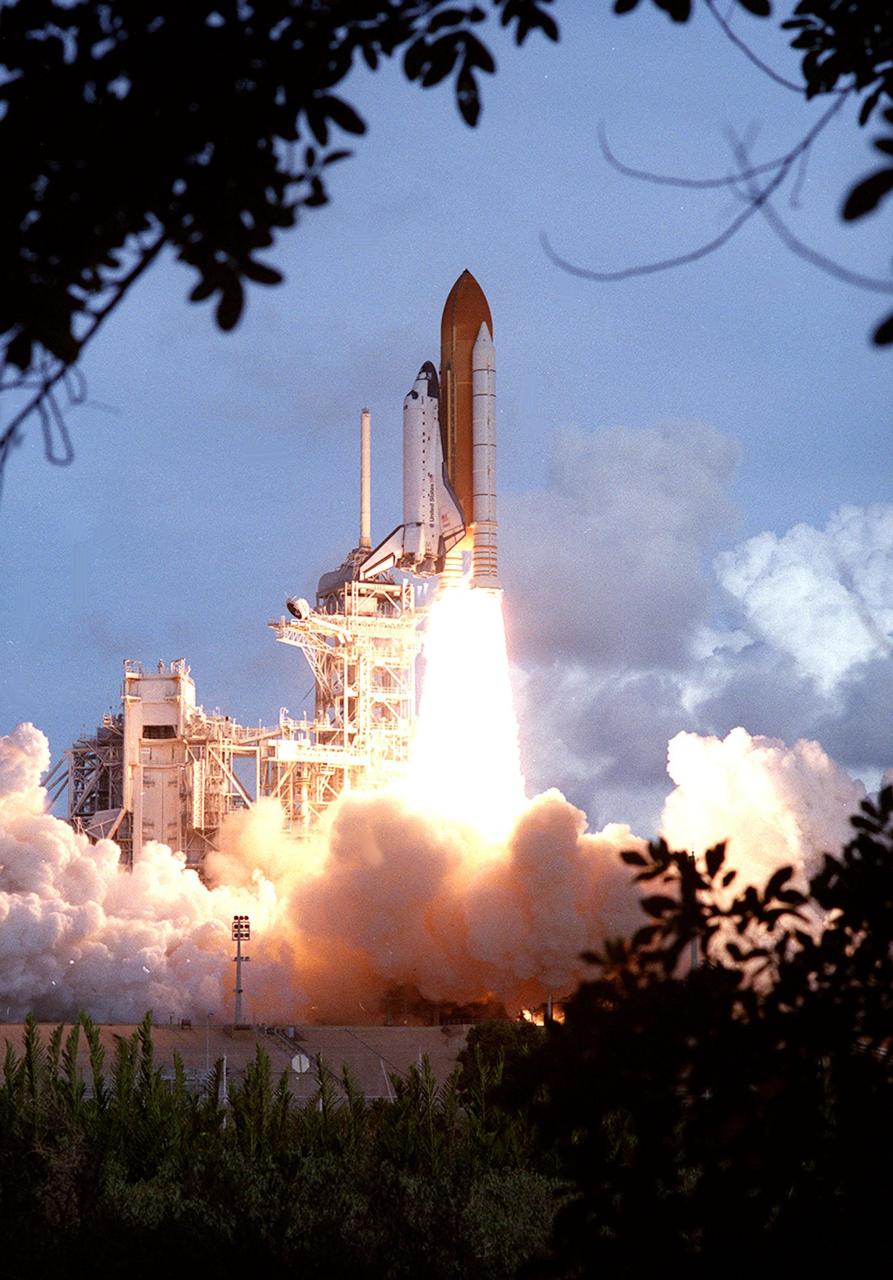
KENNEDY SPACE CENTER, Fla. -- Space Shuttle Atlantis appears to burst forth from a cocoon of smoke in the Florida marsh lands as it rockets toward space on mission STS-106. The perfect on-time liftoff of Atlantis occurred at 8:45:47 a.m. EDT. On the 11-day mission to the International Space Station, the seven-member crew will perform support tasks on orbit, transfer supplies and prepare the living quarters in the newly arrived Zvezda Service Module. The first long-duration crew, dubbed “Expedition One,” is due to arrive at the Station in late fall. Landing of Atlantis is targeted for 4:45 a.m. EDT on Sept. 19
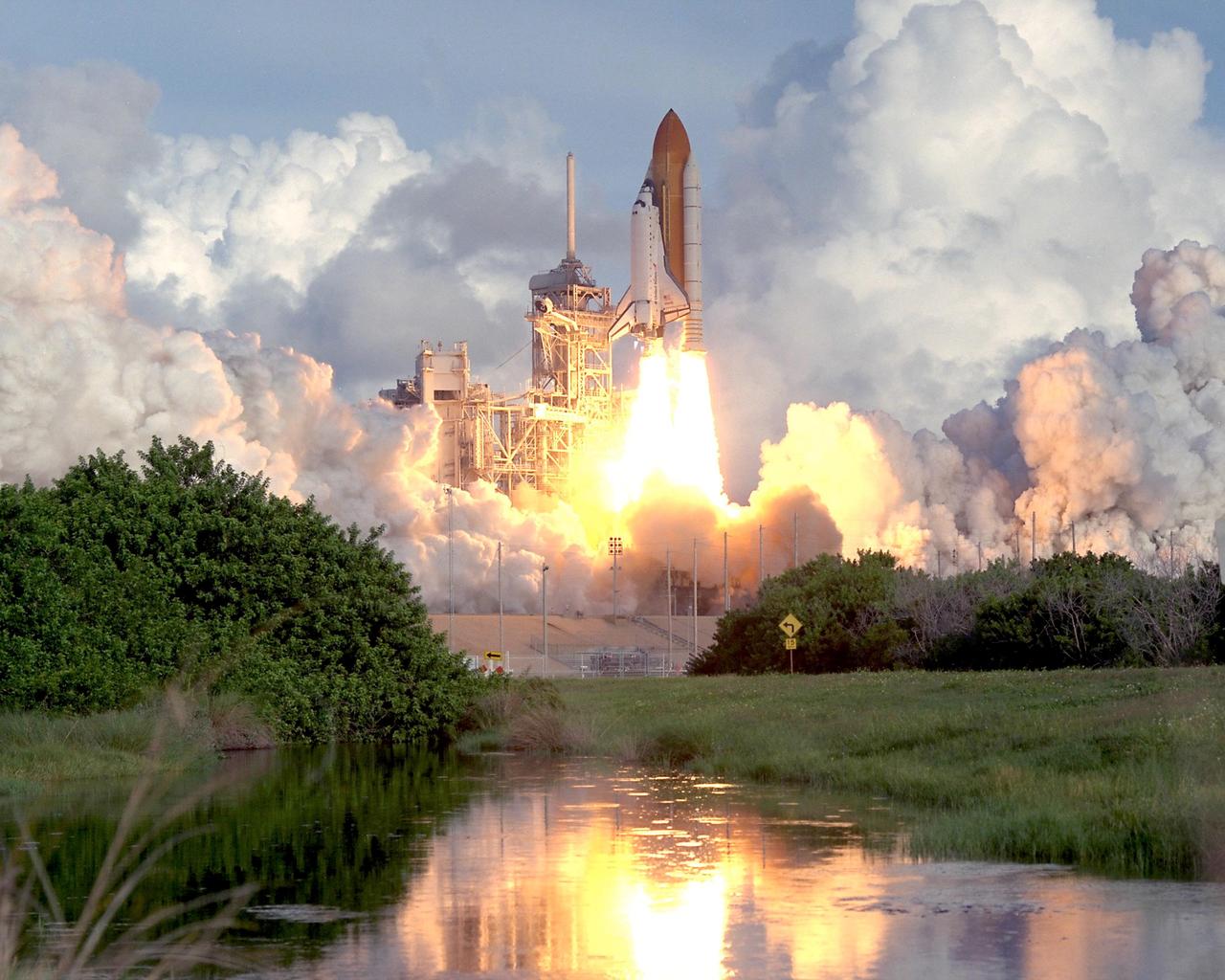
KENNEDY SPACE CENTER, Fla. -- The waters near Launch Pad 39B reflect the brilliant red-orange flames from the solid rocket boosters as Space Shuttle Atlantis lifts off on mission STS-106 to the International Space Station. The perfect on-time launch occurred at 8:45:47 a.m. EDT. On the 11-day mission to the Station, the seven-member crew will perform support tasks on orbit, transfer supplies and prepare the living quarters in the newly arrived Zvezda Service Module. The first long-duration crew, dubbed “Expedition One,” is due to arrive at the Station in late fall. Landing of Atlantis is targeted for 4:45 a.m. EDT on Sept. 19.
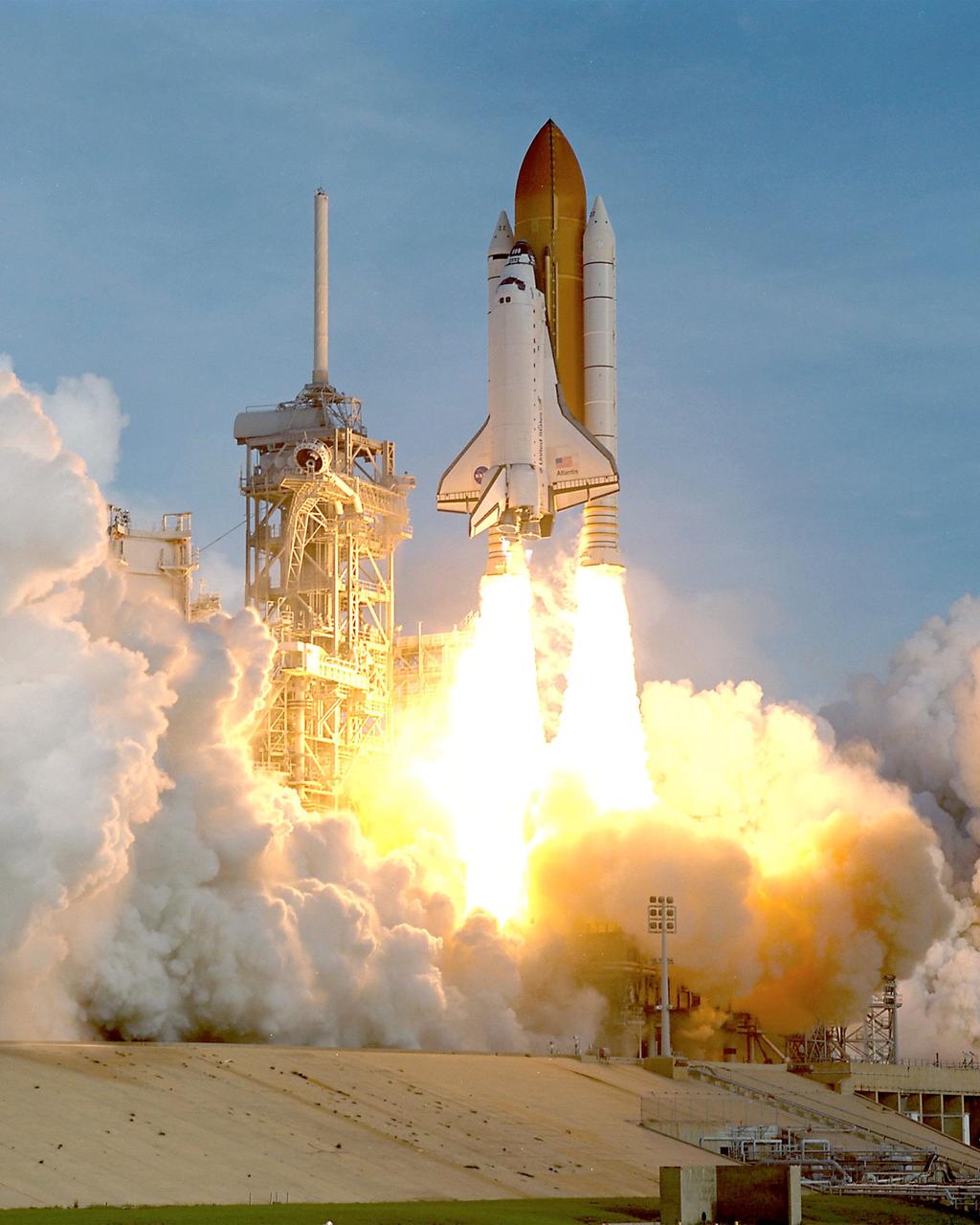
KENNEDY SPACE CENTER, Fla. -- Space Shuttle Atlantis appears to burst forth from a cocoon of smoke as it rockets toward space on mission STS-106. The perfect on-time liftoff of Atlantis occurred at 8:45:47 a.m. EDT. On the 11-day mission to the International Space Station, the seven-member crew will perform support tasks on orbit, transfer supplies and prepare the living quarters in the newly arrived Zvezda Service Module. The first long-duration crew, dubbed “Expedition One,” is due to arrive at the Station in late fall. Landing of Atlantis is targeted for 4:45 a.m. EDT on Sept. 19
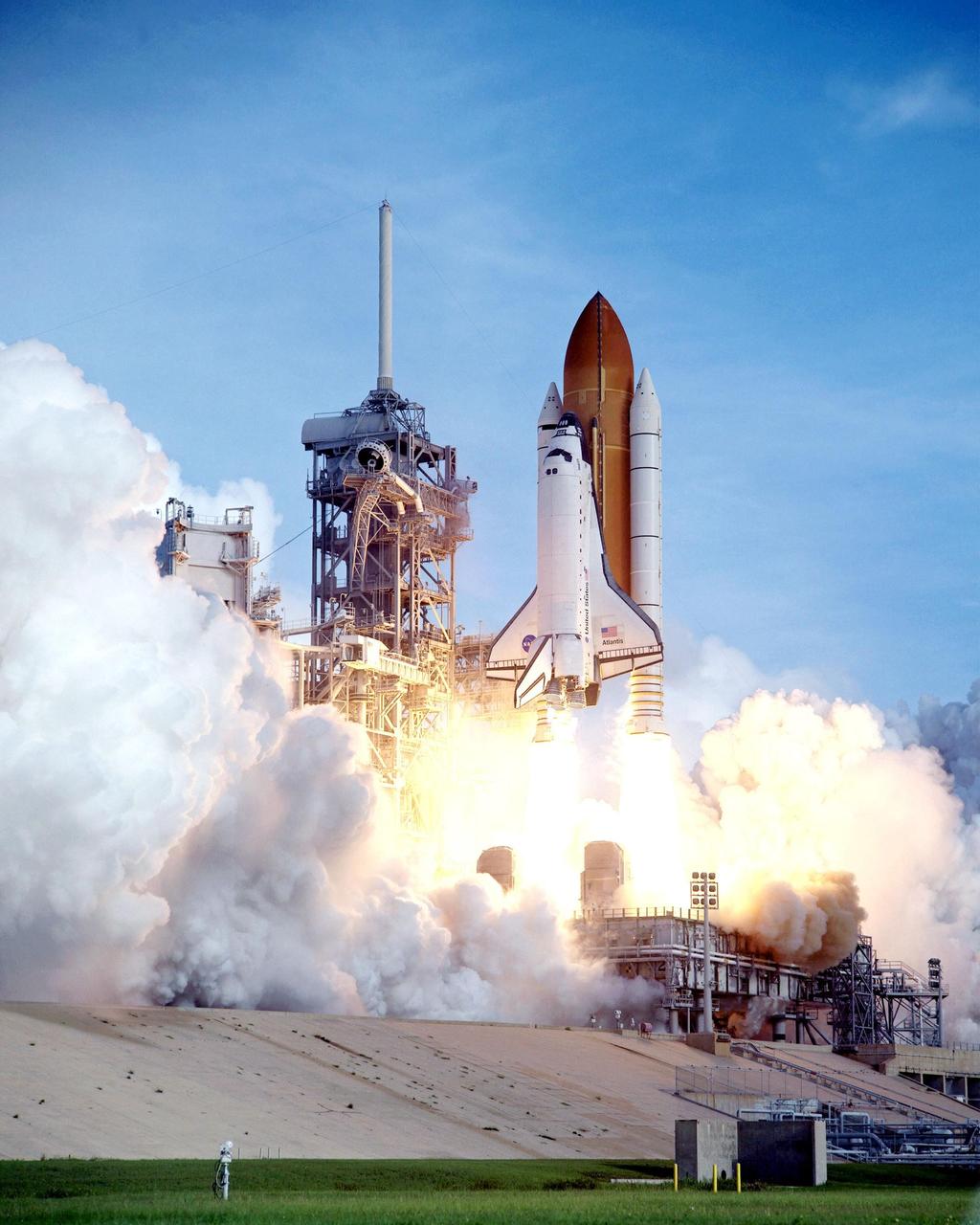
KENNEDY SPACE CENTER, Fla. -- Space Shuttle Atlantis rises from a cocoon of smoke as it rockets toward space on mission STS-106. The perfect on-time liftoff of Atlantis occurred at 8:45:47 a.m. EDT. On the 11-day mission to the International Space Station, the seven-member crew will perform support tasks on orbit, transfer supplies and prepare the living quarters in the newly arrived Zvezda Service Module. The first long-duration crew, dubbed “Expedition One,” is due to arrive at the Station in late fall. Landing of Atlantis is targeted for 4:45 a.m. EDT on Sept. 19
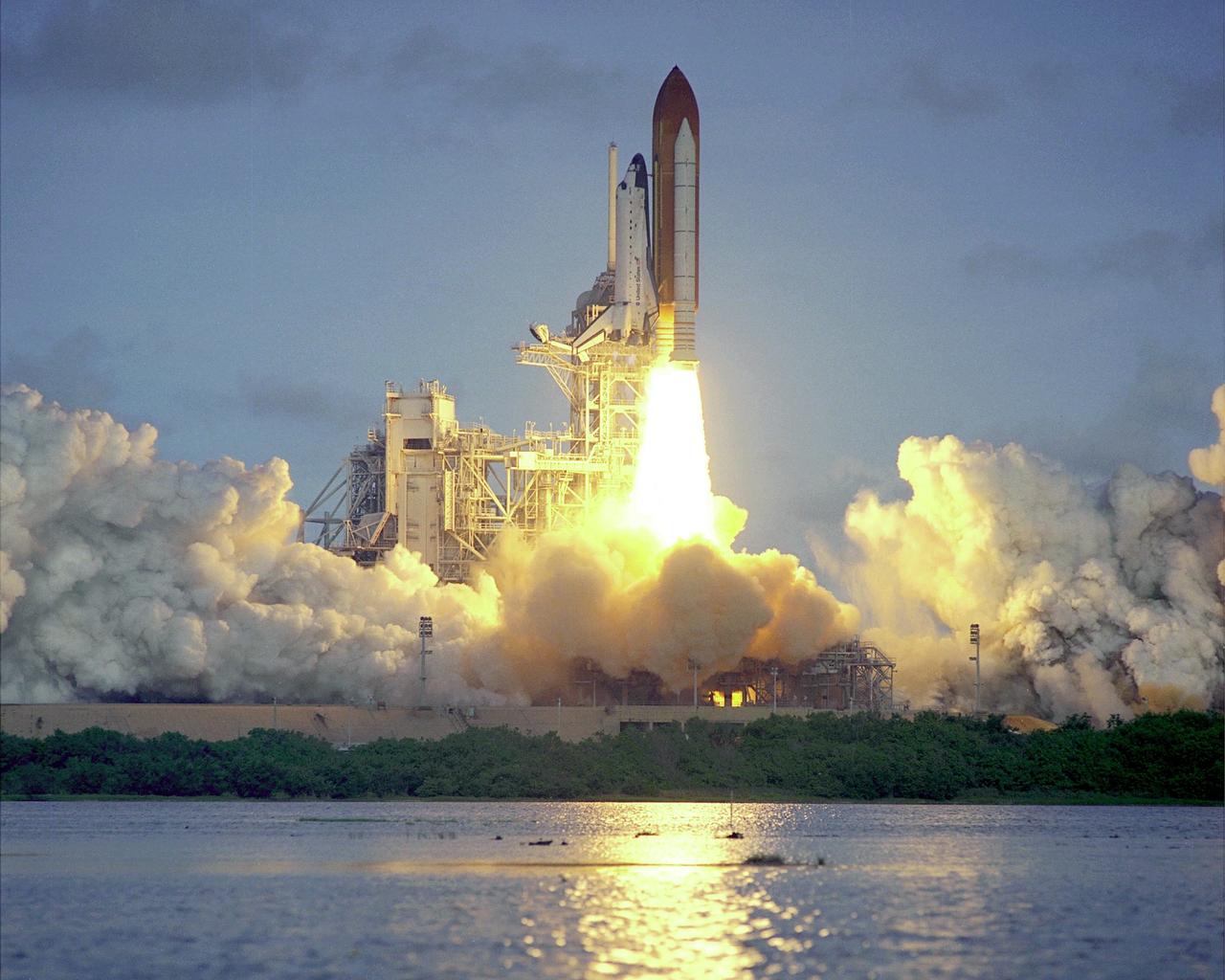
KENNEDY SPACE CENTER, Fla. -- Space Shuttle Atlantis’s solid rocket boosters trail brilliant flames that light up the clouds of smoke and steam and reflect in the waters Launch Pad 39B at launch. The perfect on-time liftoff of Atlantis on mission STS-106 occurred at 8:45:47 a.m. EDT. On the 11-day mission to the International Space Station, the seven-member crew will perform support tasks on orbit, transfer supplies and prepare the living quarters in the newly arrived Zvezda Service Module. The first long-duration crew, dubbed “Expedition One,” is due to arrive at the Station in late fall. Landing of Atlantis is targeted for 4:45 a.m. EDT on Sept. 19
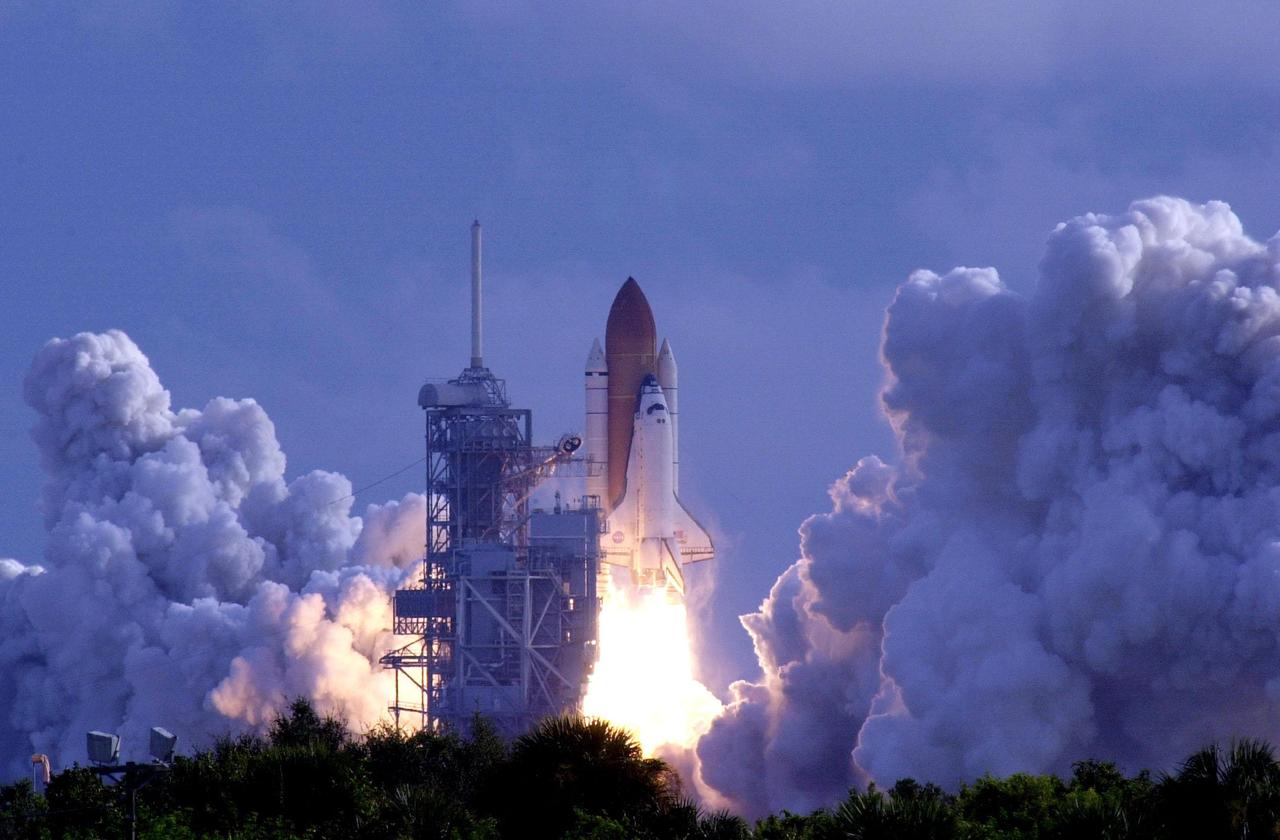
KENNEDY SPACE CENTER, Fla. -- Belching clouds of steam and smoke across the scrub lands at KSC, Space Shuttle Atlantis hurtles toward space on mission STS-106 after liftoff at 8:45:47 a.m. EDT today. On the 11-day mission to the International Space Station, the seven-member crew will perform support tasks on orbit, transfer supplies and prepare the living quarters in the newly arrived Zvezda Service Module. The first long-duration crew, dubbed “Expedition One,” is due to arrive at the Station in late fall. Landing of Atlantis is targeted for 4:45 a.m. EDT on Sept. 19
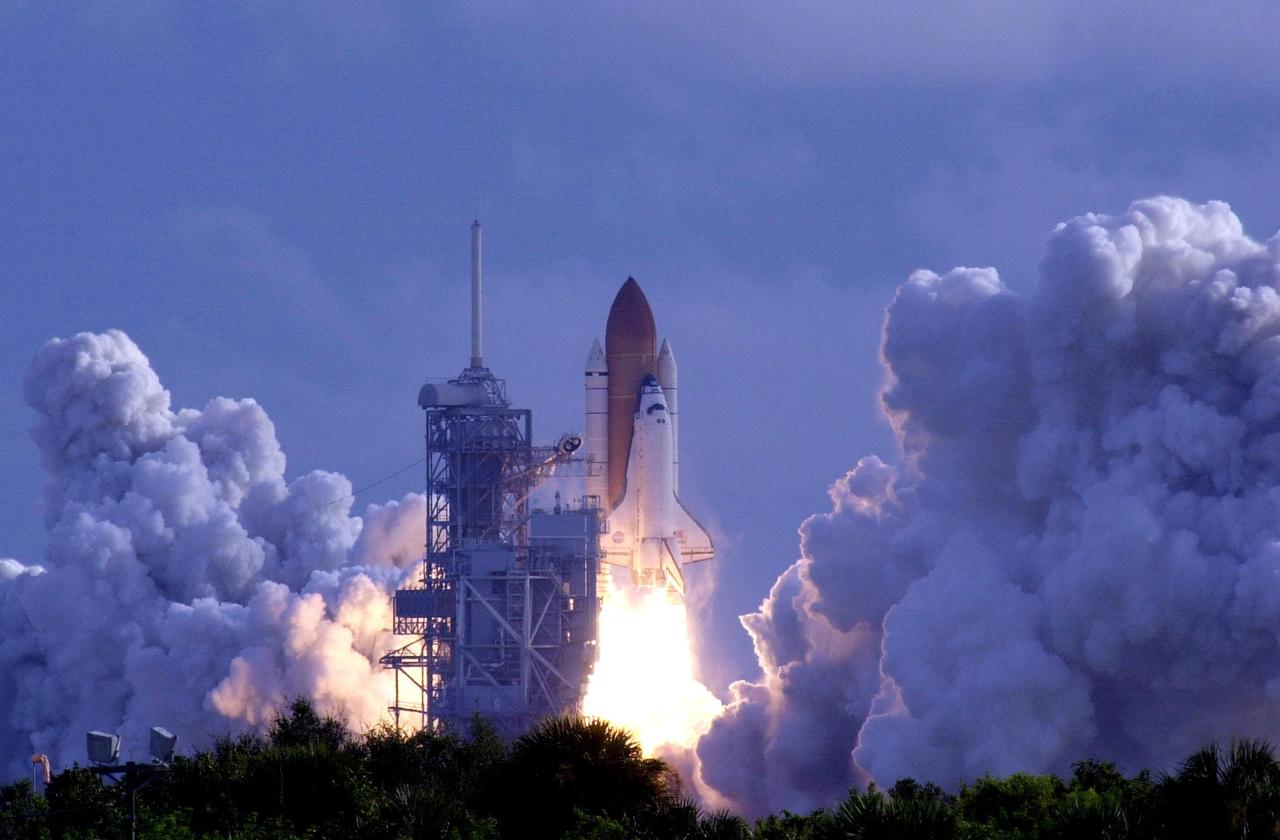
KENNEDY SPACE CENTER, Fla. -- Belching clouds of steam and smoke across the scrub lands at KSC, Space Shuttle Atlantis hurtles toward space on mission STS-106 after liftoff at 8:45:47 a.m. EDT today. On the 11-day mission to the International Space Station, the seven-member crew will perform support tasks on orbit, transfer supplies and prepare the living quarters in the newly arrived Zvezda Service Module. The first long-duration crew, dubbed “Expedition One,” is due to arrive at the Station in late fall. Landing of Atlantis is targeted for 4:45 a.m. EDT on Sept. 19
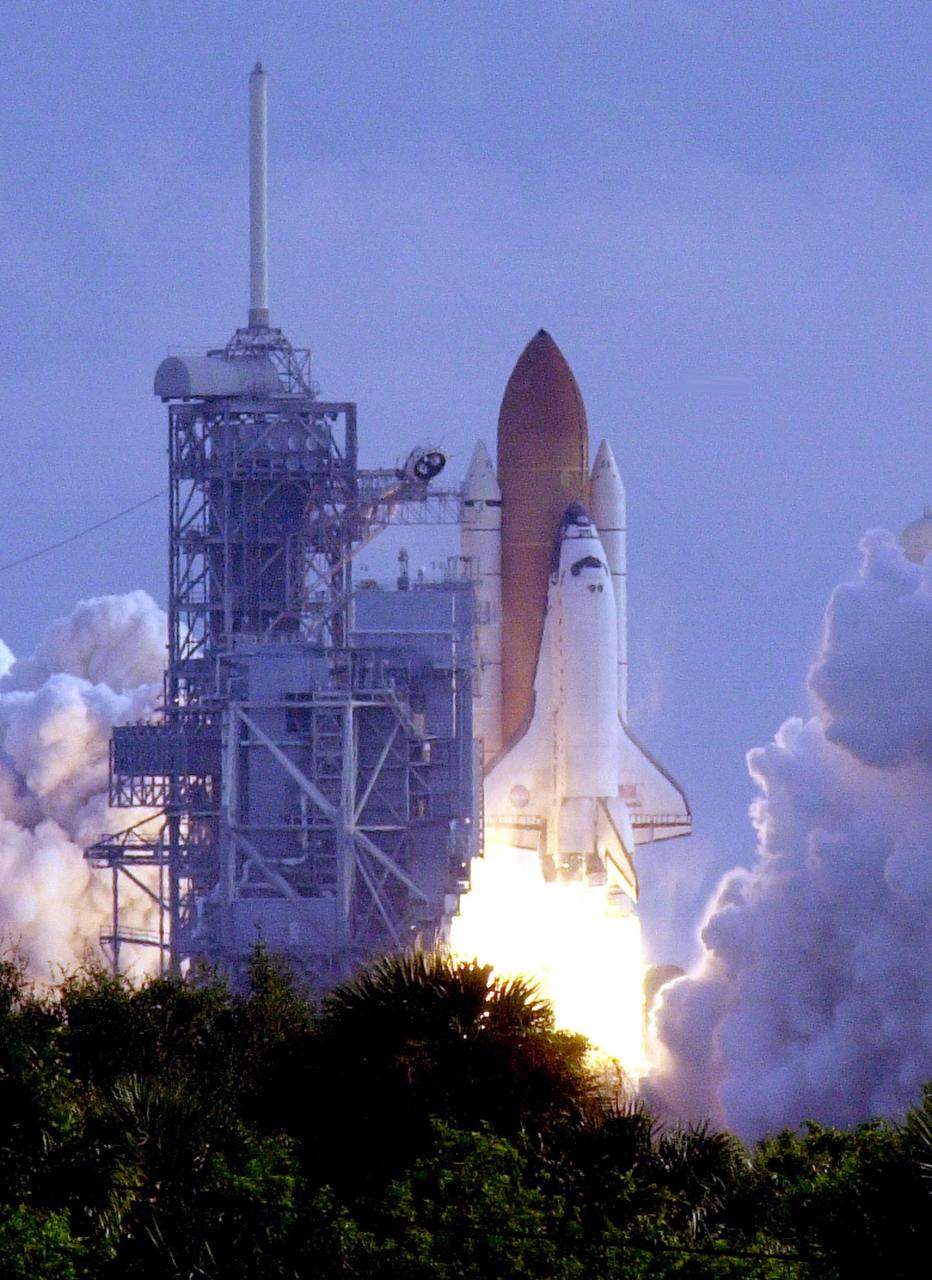
KENNEDY SPACE CENTER, Fla. -- Space Shuttle Atlantis roars toward space on mission STS-106 as it lifts off in a perfect launch at 8:45:47 a.m. EDT today. On the 11-day mission to the International Space Station, the seven-member crew will perform support tasks on orbit, transfer supplies and prepare the living quarters in the newly arrived Zvezda Service Module. The first long-duration crew, dubbed “Expedition One,” is due to arrive at the Station in late fall. Landing of Atlantis is targeted for 4:45 a.m. EDT on Sept. 19
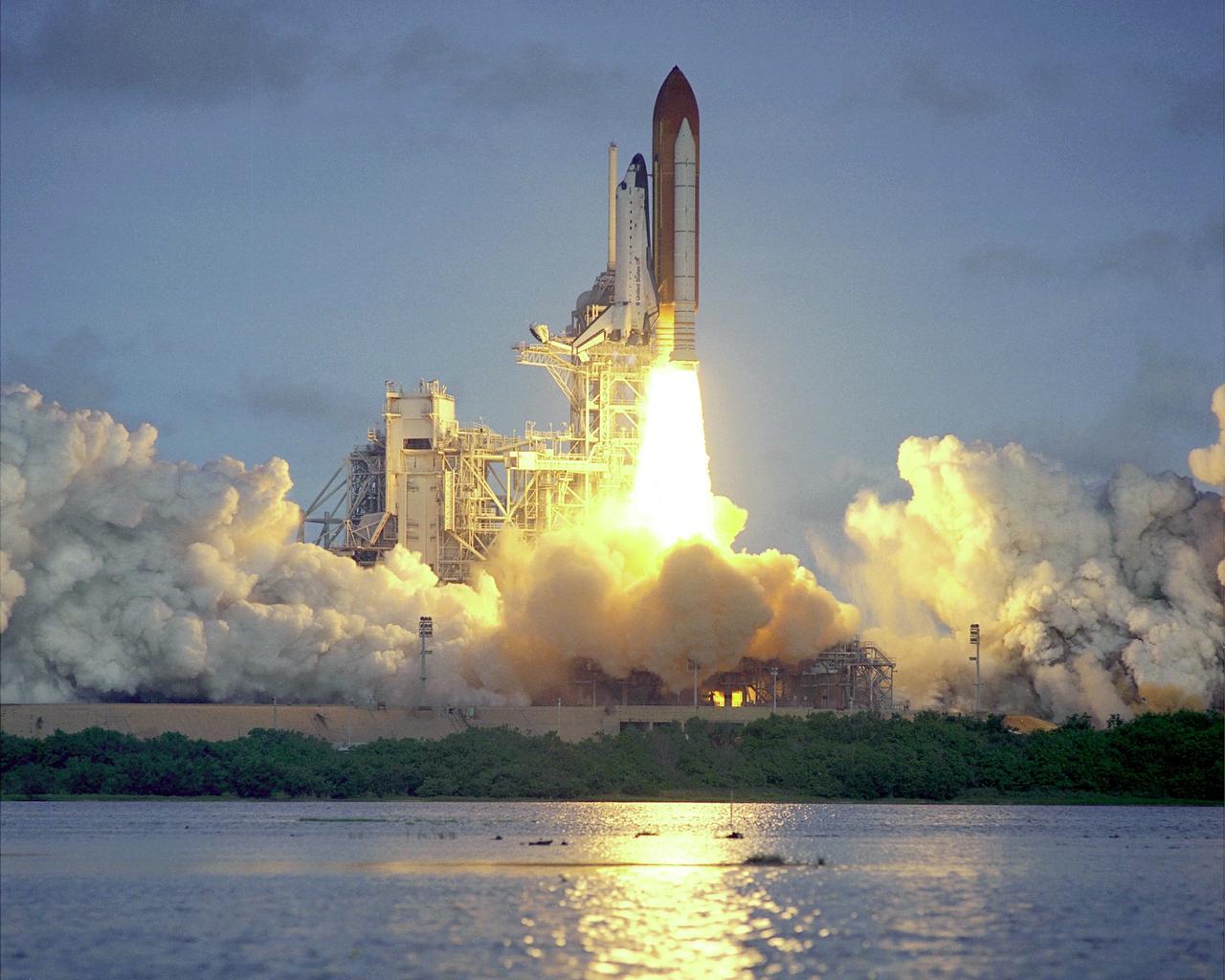
KENNEDY SPACE CENTER, Fla. -- Space Shuttle Atlantis’s solid rocket boosters trail brilliant flames that light up the clouds of smoke and steam and reflect in the waters Launch Pad 39B at launch. The perfect on-time liftoff of Atlantis on mission STS-106 occurred at 8:45:47 a.m. EDT. On the 11-day mission to the International Space Station, the seven-member crew will perform support tasks on orbit, transfer supplies and prepare the living quarters in the newly arrived Zvezda Service Module. The first long-duration crew, dubbed “Expedition One,” is due to arrive at the Station in late fall. Landing of Atlantis is targeted for 4:45 a.m. EDT on Sept. 19
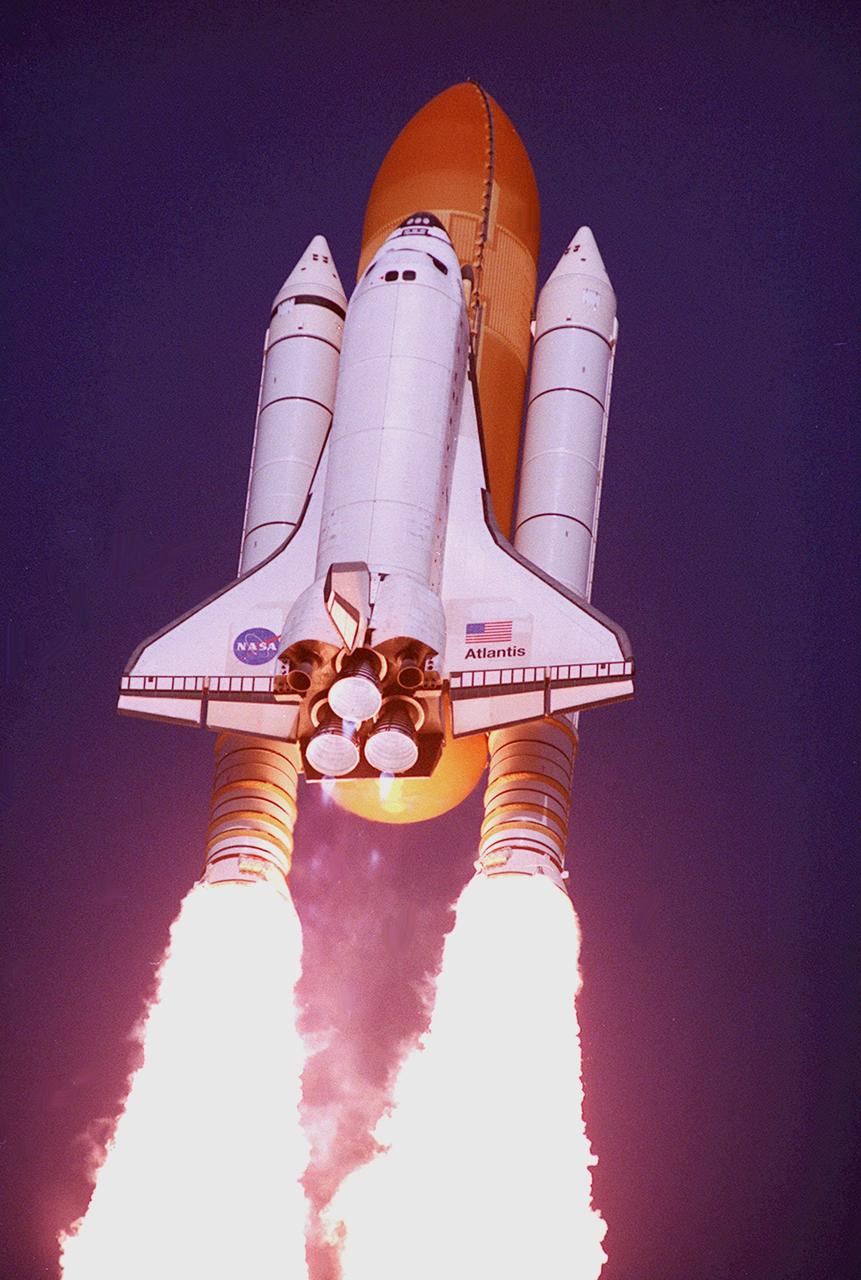
KENNEDY SPACE CENTER, Fla. -- Space Shuttle Atlantis streaks into the sky on mission STS-106 after a perfect on-time launch at 8:45:47 a.m. EDT. Blue mach diamonds are barely visible behind the main engine nozzles. On the 11-day mission to the International Space Station, the seven-member crew will perform support tasks on orbit, transfer supplies and prepare the living quarters in the newly arrived Zvezda Service Module. The first long-duration crew, dubbed “Expedition One,” is due to arrive at the Station in late fall. Landing of Atlantis is targeted for 4:45 a.m. EDT on Sept. 19
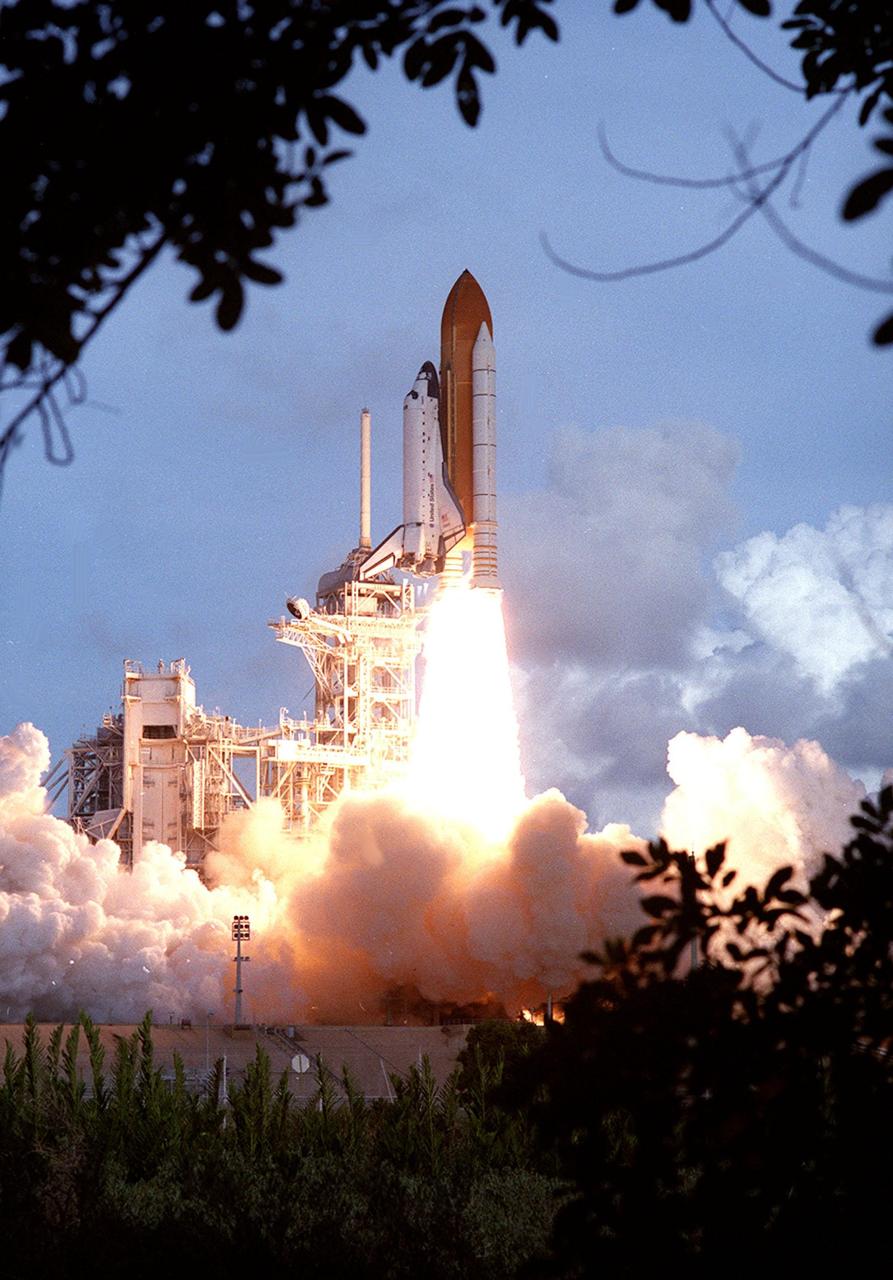
KENNEDY SPACE CENTER, Fla. -- Space Shuttle Atlantis appears to burst forth from a cocoon of smoke in the Florida marsh lands as it rockets toward space on mission STS-106. The perfect on-time liftoff of Atlantis occurred at 8:45:47 a.m. EDT. On the 11-day mission to the International Space Station, the seven-member crew will perform support tasks on orbit, transfer supplies and prepare the living quarters in the newly arrived Zvezda Service Module. The first long-duration crew, dubbed “Expedition One,” is due to arrive at the Station in late fall. Landing of Atlantis is targeted for 4:45 a.m. EDT on Sept. 19

KENNEDY SPACE CENTER, Fla. -- Space Shuttle Atlantis clears the tower as it roars into space on mission STS-106 after a perfect on-time launch at 8:45:47 a.m. EDT. On the 11-day mission to the International Space Station, the seven-member crew will perform support tasks on orbit, transfer supplies and prepare the living quarters in the newly arrived Zvezda Service Module. The first long-duration crew, dubbed “Expedition One,” is due to arrive at the Station in late fall. Landing of Atlantis is targeted for 4:45 a.m. EDT on Sept. 19
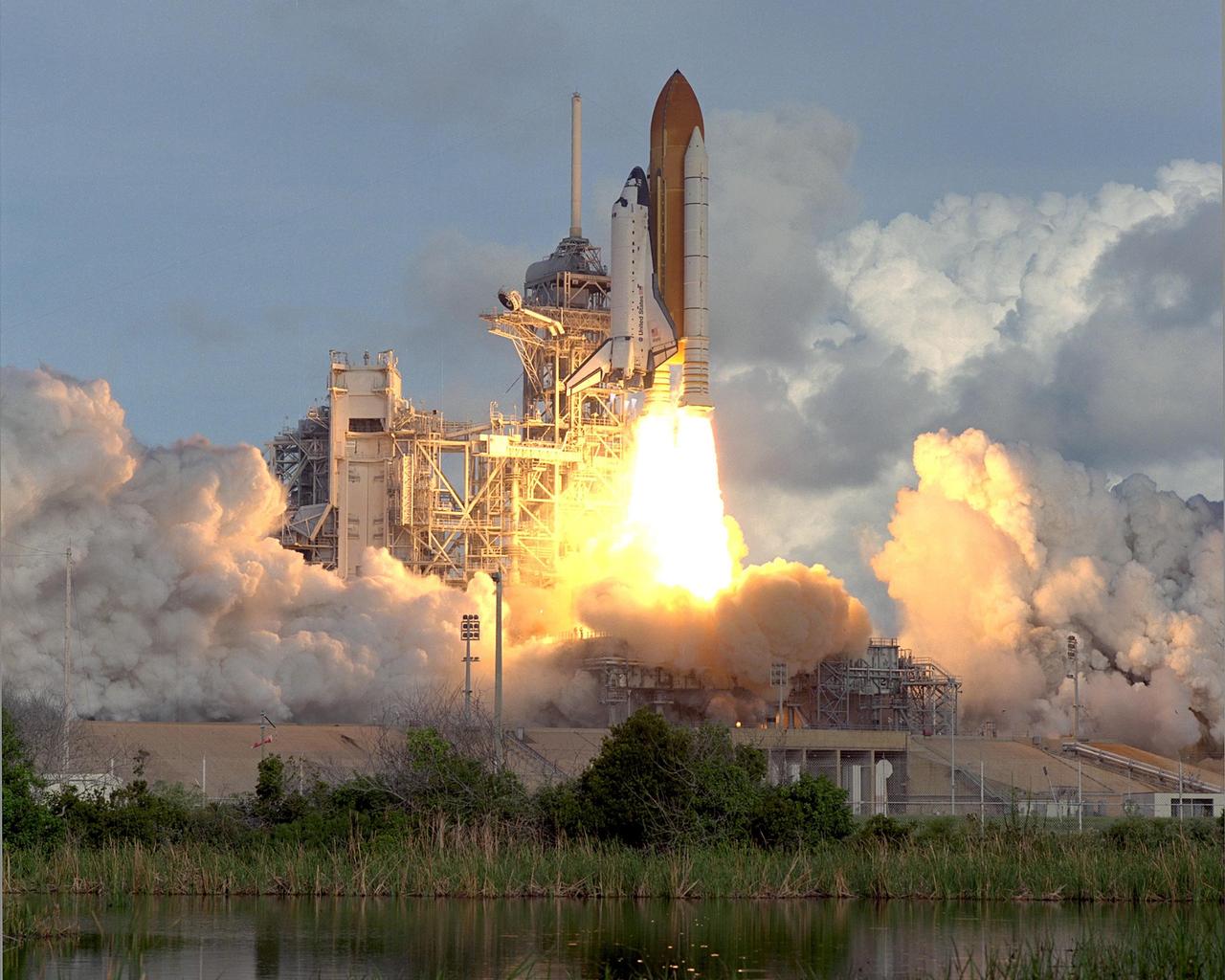
KENNEDY SPACE CENTER, Fla. -- Clouds on the horizon seem to wait for their rival Space Shuttle Atlantis as it churns billows of steam and smoke after launch. The perfect on-time liftoff of Atlantis on mission STS-106 occurred at 8:45:47 a.m. EDT. On the 11-day mission to the International Space Station, the seven-member crew will perform support tasks on orbit, transfer supplies and prepare the living quarters in the newly arrived Zvezda Service Module. The first long-duration crew, dubbed “Expedition One,” is due to arrive at the Station in late fall. Landing of Atlantis is targeted for 4:45 a.m. EDT on Sept. 19
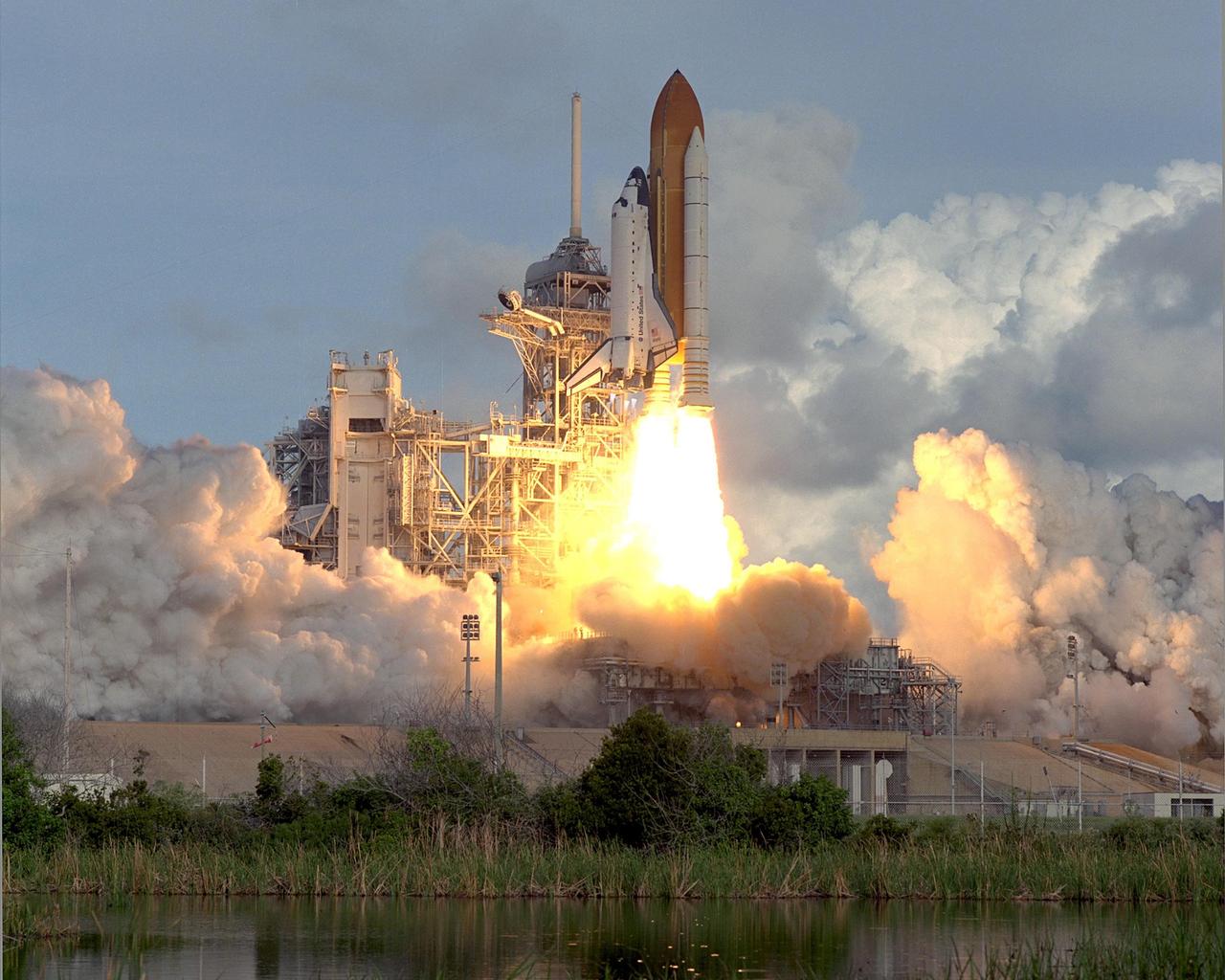
KENNEDY SPACE CENTER, Fla. -- Clouds on the horizon seem to wait for their rival Space Shuttle Atlantis as it churns billows of steam and smoke after launch. The perfect on-time liftoff of Atlantis on mission STS-106 occurred at 8:45:47 a.m. EDT. On the 11-day mission to the International Space Station, the seven-member crew will perform support tasks on orbit, transfer supplies and prepare the living quarters in the newly arrived Zvezda Service Module. The first long-duration crew, dubbed “Expedition One,” is due to arrive at the Station in late fall. Landing of Atlantis is targeted for 4:45 a.m. EDT on Sept. 19
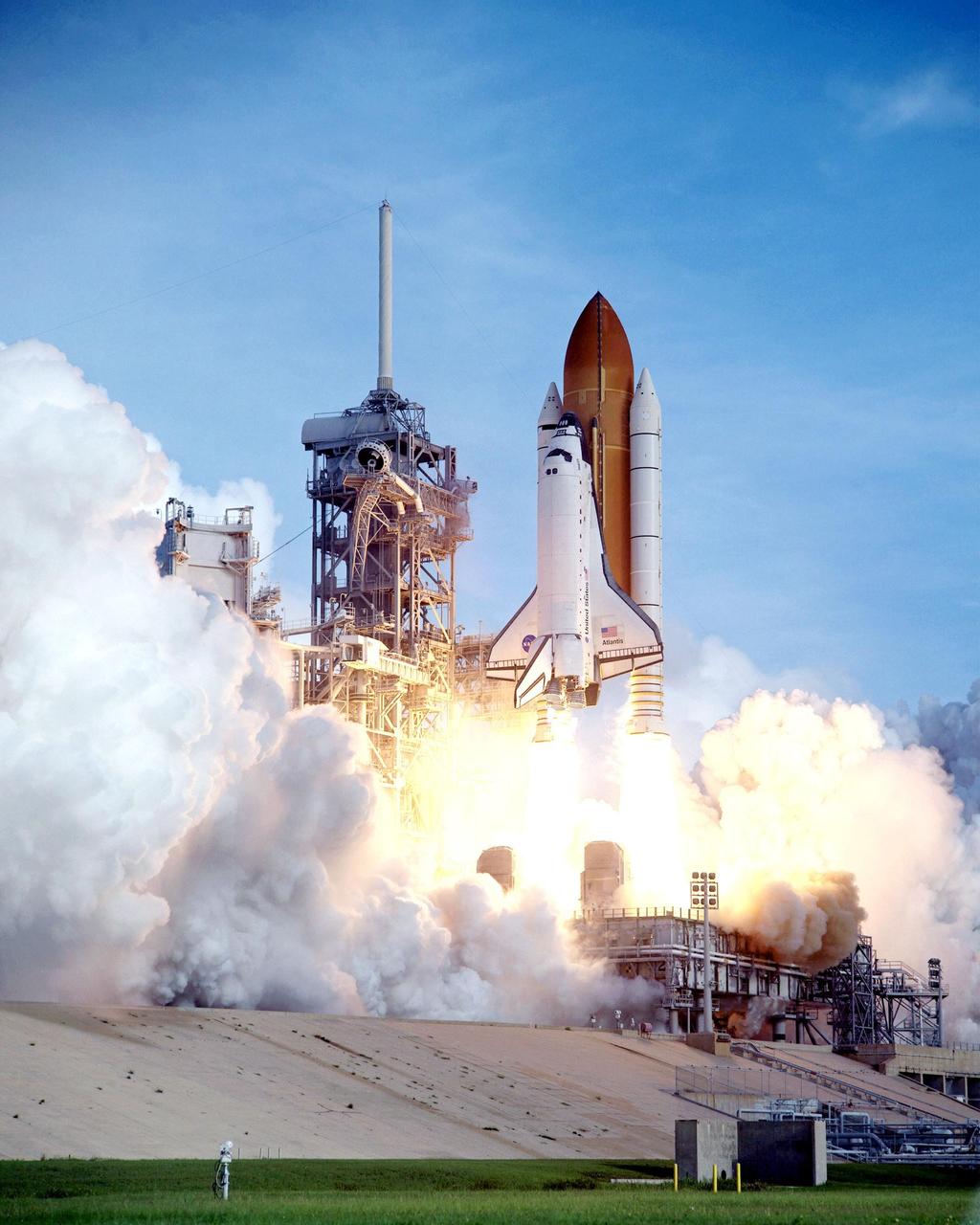
KENNEDY SPACE CENTER, Fla. -- Space Shuttle Atlantis rises from a cocoon of smoke as it rockets toward space on mission STS-106. The perfect on-time liftoff of Atlantis occurred at 8:45:47 a.m. EDT. On the 11-day mission to the International Space Station, the seven-member crew will perform support tasks on orbit, transfer supplies and prepare the living quarters in the newly arrived Zvezda Service Module. The first long-duration crew, dubbed “Expedition One,” is due to arrive at the Station in late fall. Landing of Atlantis is targeted for 4:45 a.m. EDT on Sept. 19
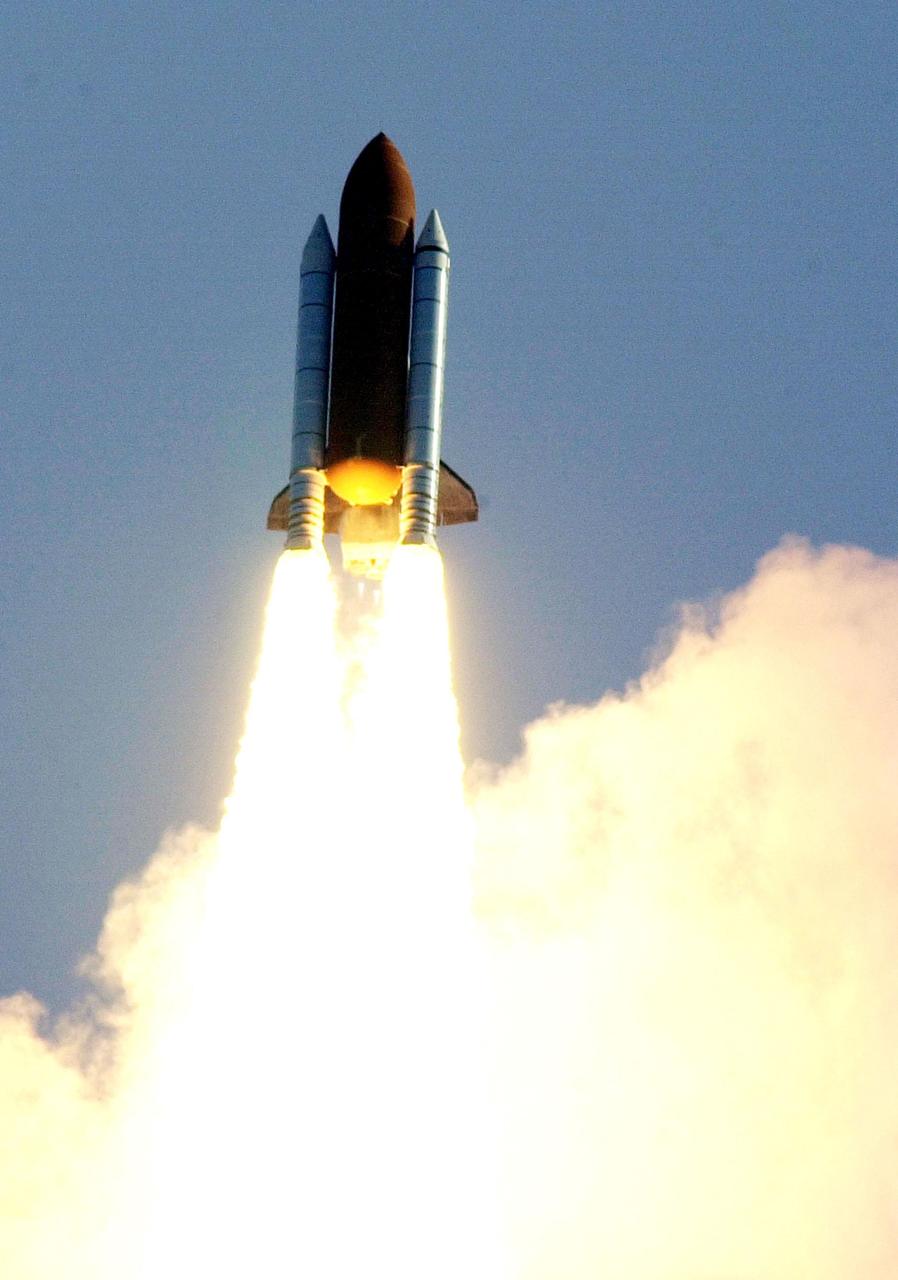
KENNEDY SPACE CENTER, Fla. -- After a perfect on-time launch on mission STS-106 at 8:45:47 a.m. EDT, Space Shuttle Atlantis rolls and displays its external tank and solid rocket boosters. On the 11-day mission to the International Space Station, the seven-member crew will perform support tasks on orbit, transfer supplies and prepare the living quarters in the newly arrived Zvezda Service Module. The first long-duration crew, dubbed “Expedition One,” is due to arrive at the Station in late fall. Landing of Atlantis is targeted for 4:45 a.m. EDT on Sept. 19
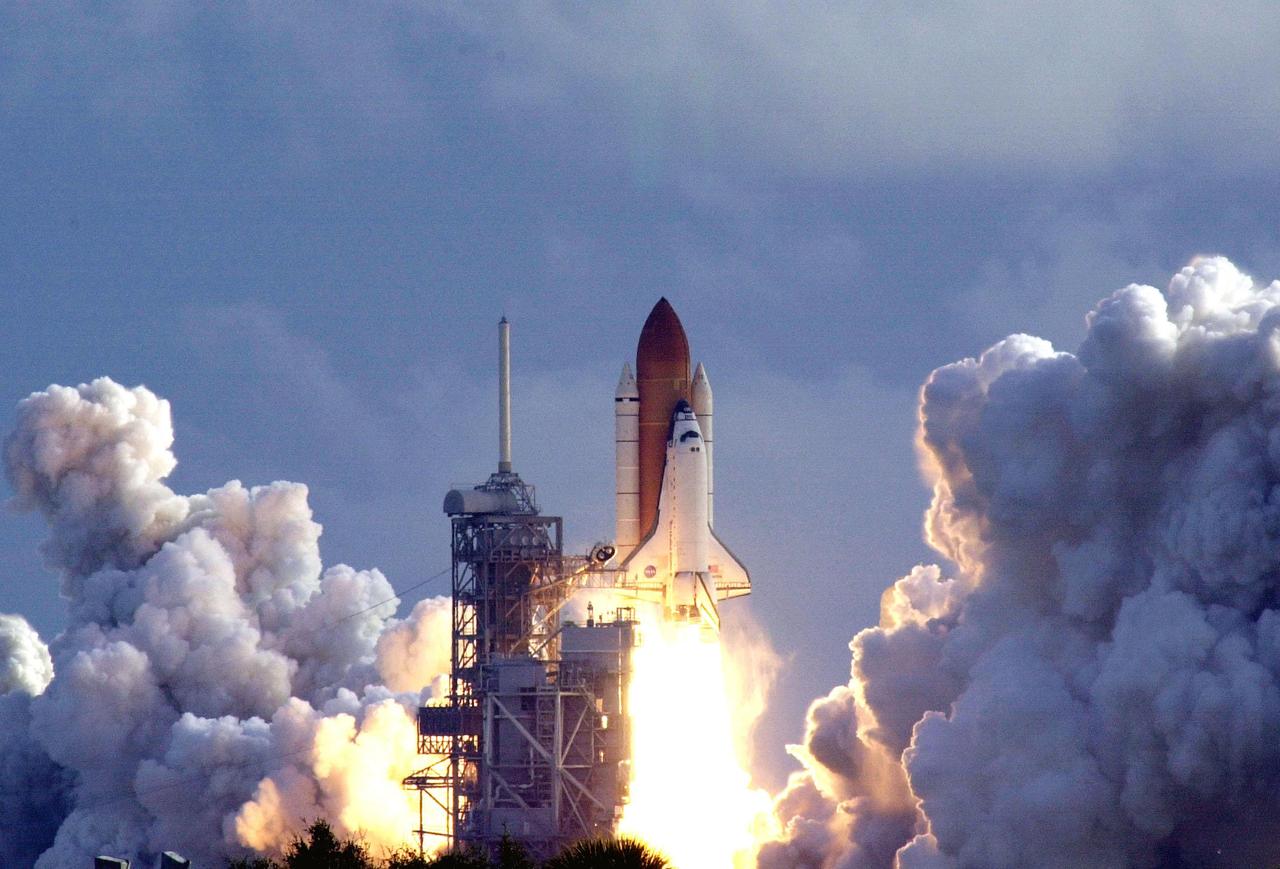
KENNEDY SPACE CENTER, Fla. -- A perfect launch sends Space Shuttle Atlantis, leaving a trail of flames and billows of smoke and clouds behind, hurtling toward space on mission STS-106. Liftoff occurred at 8:45:47 a.m. EDT today. On the 11-day mission to the International Space Station, the seven-member crew will perform support tasks on orbit, transfer supplies and prepare the living quarters in the newly arrived Zvezda Service Module. The first long-duration crew, dubbed “Expedition One,” is due to arrive at the Station in late fall. Landing of Atlantis is targeted for 4:45 a.m. EDT on Sept. 19
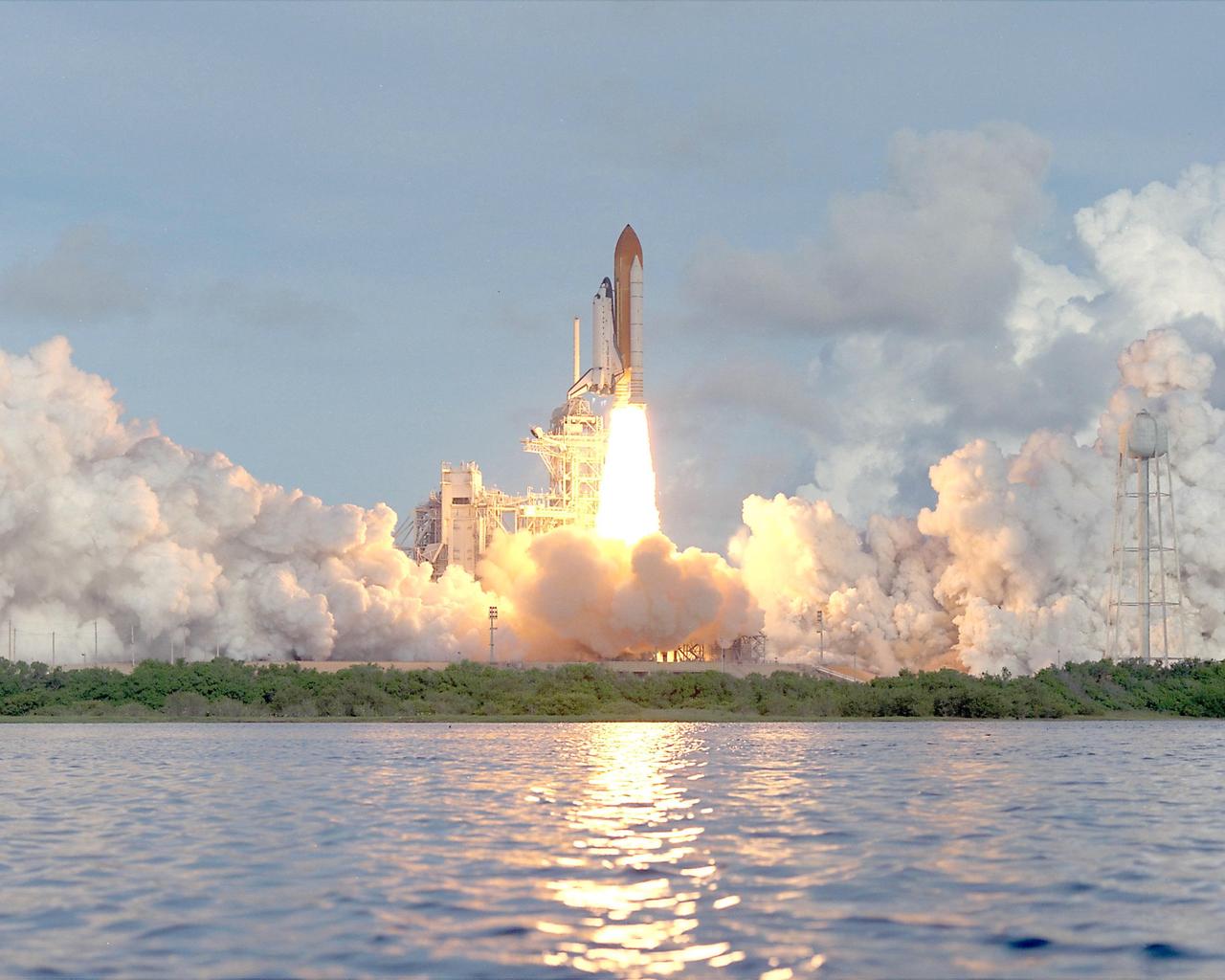
KENNEDY SPACE CENTER, Fla. -- The clouds of steam and smoke generated from the launch of Space Shuttle Atlantis seem to blend with the sky. The launch is reflected in waters near Launch Pad 39B. The perfect on-time liftoff of Atlantis on mission STS-106 occurred at 8:45:47 a.m. EDT. On the 11-day mission to the International Space Station, the seven-member crew will perform support tasks on orbit, transfer supplies and prepare the living quarters in the newly arrived Zvezda Service Module. The first long-duration crew, dubbed “Expedition One,” is due to arrive at the Station in late fall. Landing of Atlantis is targeted for 4:45 a.m. EDT on Sept. 19
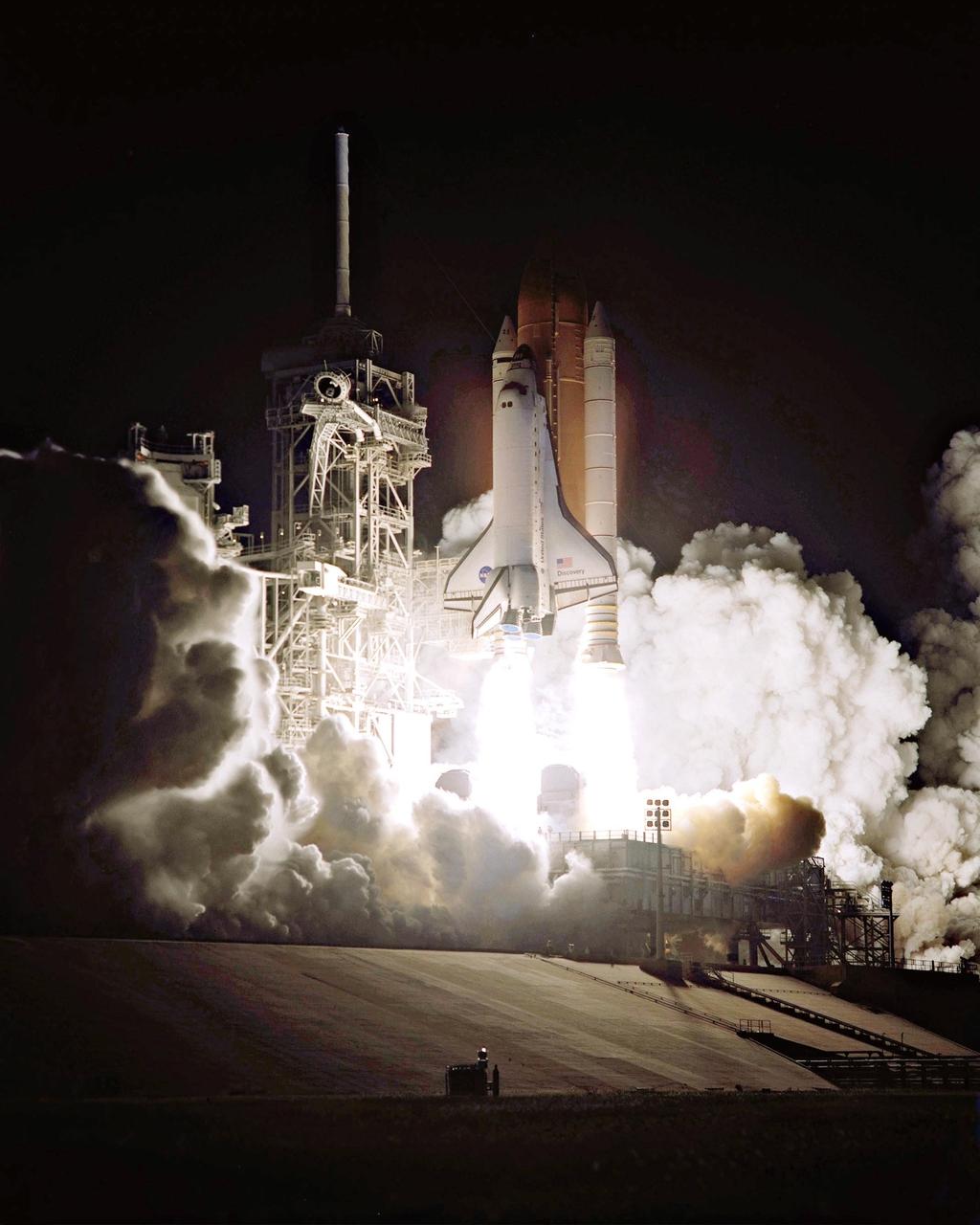
KENNEDY SPACE CENTER, Fla. -- A perfect on-time launch for Atlantis as it rockets toward space on mission STS-106. Liftoff occurred at 8:45:47 a.m. EDT. On the 11-day mission to the International Space Station, the seven-member crew will perform support tasks on orbit, transfer supplies and prepare the living quarters in the newly arrived Zvezda Service Module. The first long-duration crew, dubbed “Expedition One,” is due to arrive at the Station in late fall. Landing of Atlantis is targeted for 4:45 a.m. EDT on Sept. 19
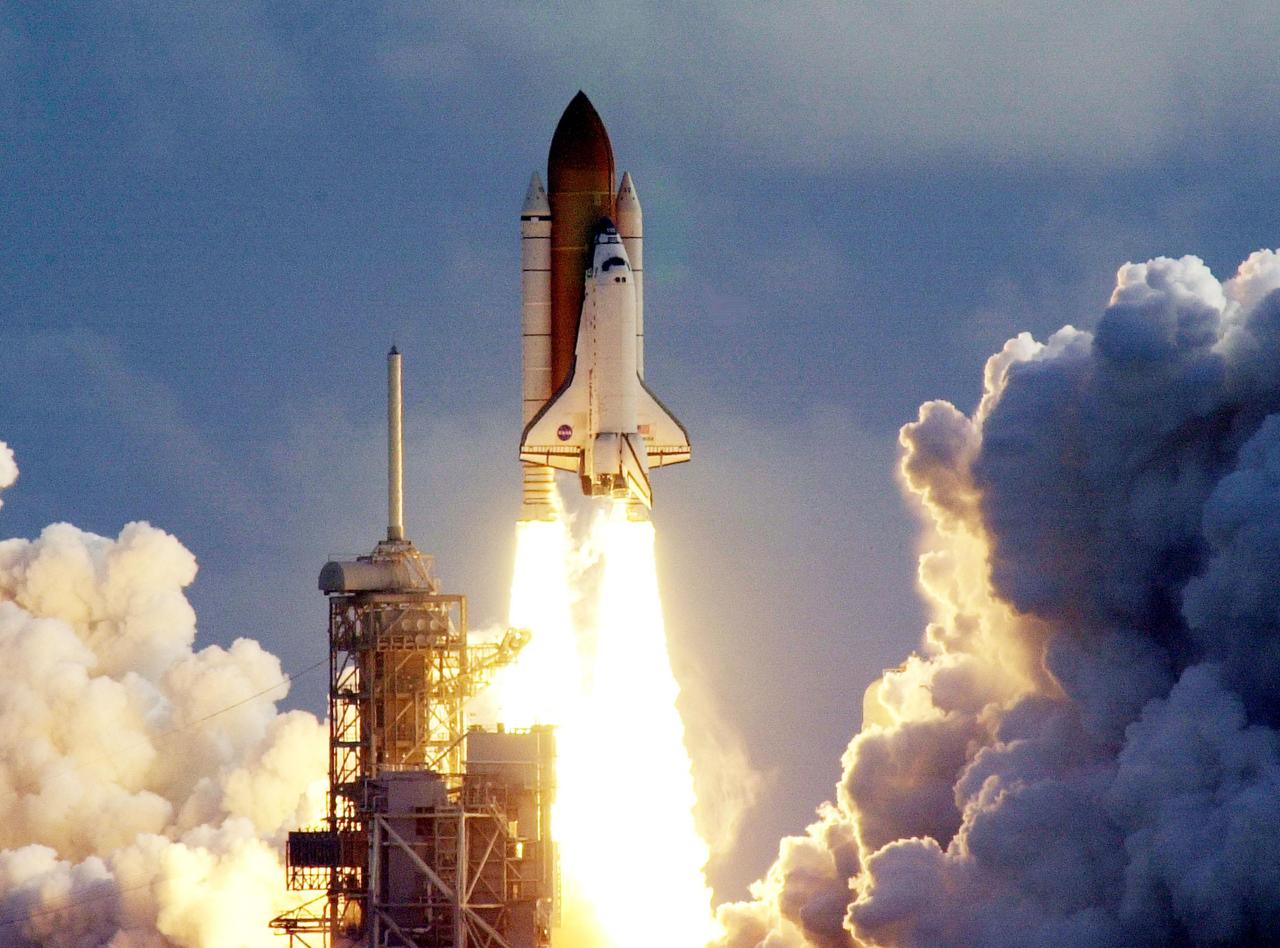
KENNEDY SPACE CENTER, Fla. -- Space Shuttle Atlantis clears the tower as it roars into space on mission STS-106 after a perfect on-time launch at 8:45:47 a.m. EDT. On the 11-day mission to the International Space Station, the seven-member crew will perform support tasks on orbit, transfer supplies and prepare the living quarters in the newly arrived Zvezda Service Module. The first long-duration crew, dubbed “Expedition One,” is due to arrive at the Station in late fall. Landing of Atlantis is targeted for 4:45 a.m. EDT on Sept. 19
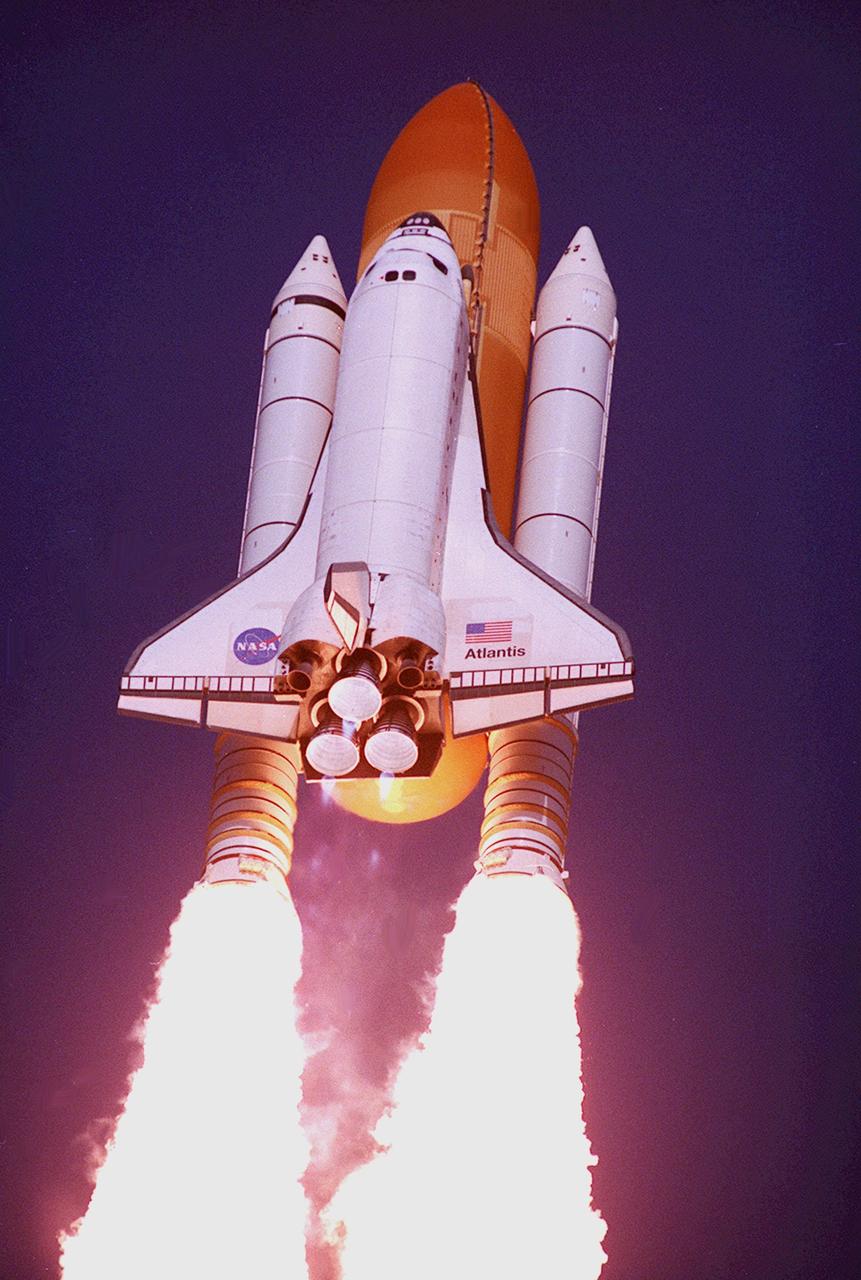
KENNEDY SPACE CENTER, Fla. -- Space Shuttle Atlantis streaks into the sky on mission STS-106 after a perfect on-time launch at 8:45:47 a.m. EDT. Blue mach diamonds are barely visible behind the main engine nozzles. On the 11-day mission to the International Space Station, the seven-member crew will perform support tasks on orbit, transfer supplies and prepare the living quarters in the newly arrived Zvezda Service Module. The first long-duration crew, dubbed “Expedition One,” is due to arrive at the Station in late fall. Landing of Atlantis is targeted for 4:45 a.m. EDT on Sept. 19
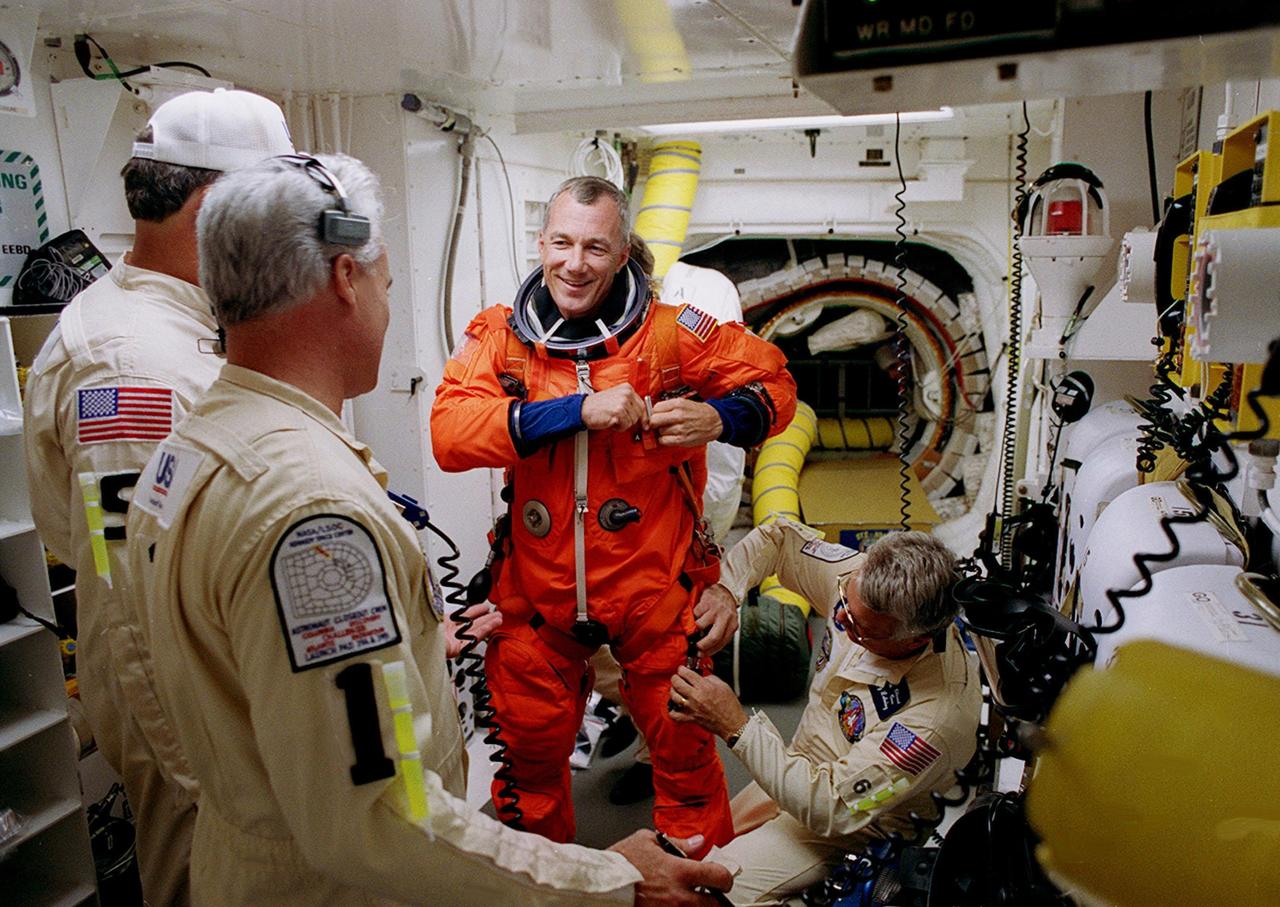
STS-106 Commander Terrence W. Wilcutt gets help with his launch and entry suit from suit technicians in the White Room before he enters Space Shuttle Atlantis. In the background can be seen the opening into Atlantis. The perfect on-time liftoff of Atlantis on mission STS-106 occurred at 8:45:47 a.m. EDT. On the 11-day mission to the International Space Station, the seven-member crew will perform support tasks on orbit, transfer supplies and prepare the living quarters in the newly arrived Zvezda Service Module. The first long-duration crew, dubbed “Expedition One,” is due to arrive at the Station in late fall. Landing of Atlantis is targeted for 4:45 a.m. EDT on Sept. 19
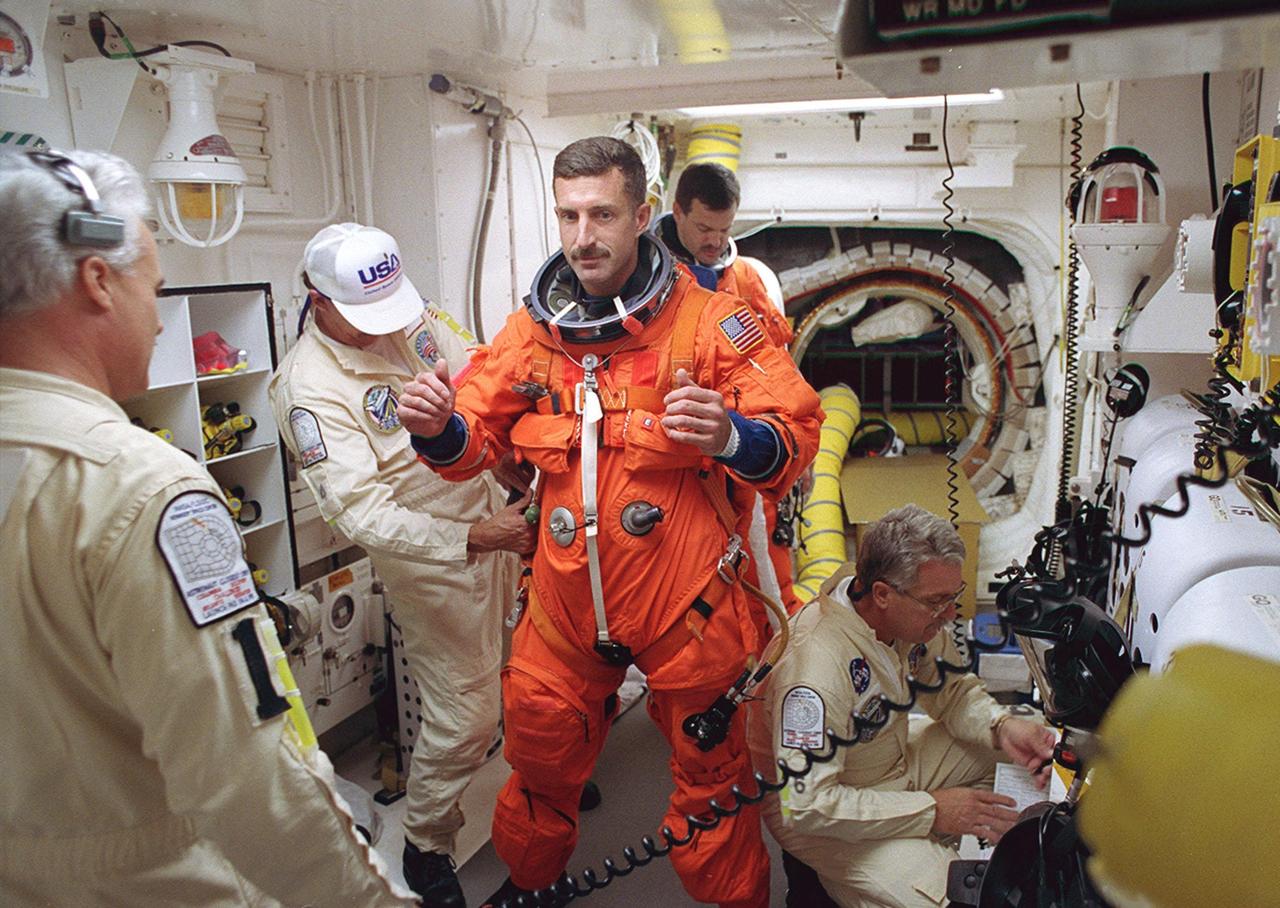
Before entering Space Shuttle Atlantis, STS-106 Mission Specialist Daniel C. Burbank is helped getting into his launch and entry suit in the White Room. Behind him is Pilot Scott D. Altman. In the background can be seen the opening into Atlantis. The perfect on-time liftoff of Atlantis on mission STS-106 occurred at 8:45:47 a.m. EDT. On the 11-day mission to the International Space Station, the seven-member crew will perform support tasks on orbit, transfer supplies and prepare the living quarters in the newly arrived Zvezda Service Module. The first long-duration crew, dubbed “Expedition One,” is due to arrive at the Station in late fall. Landing of Atlantis is targeted for 4:45 a.m. EDT on Sept. 19
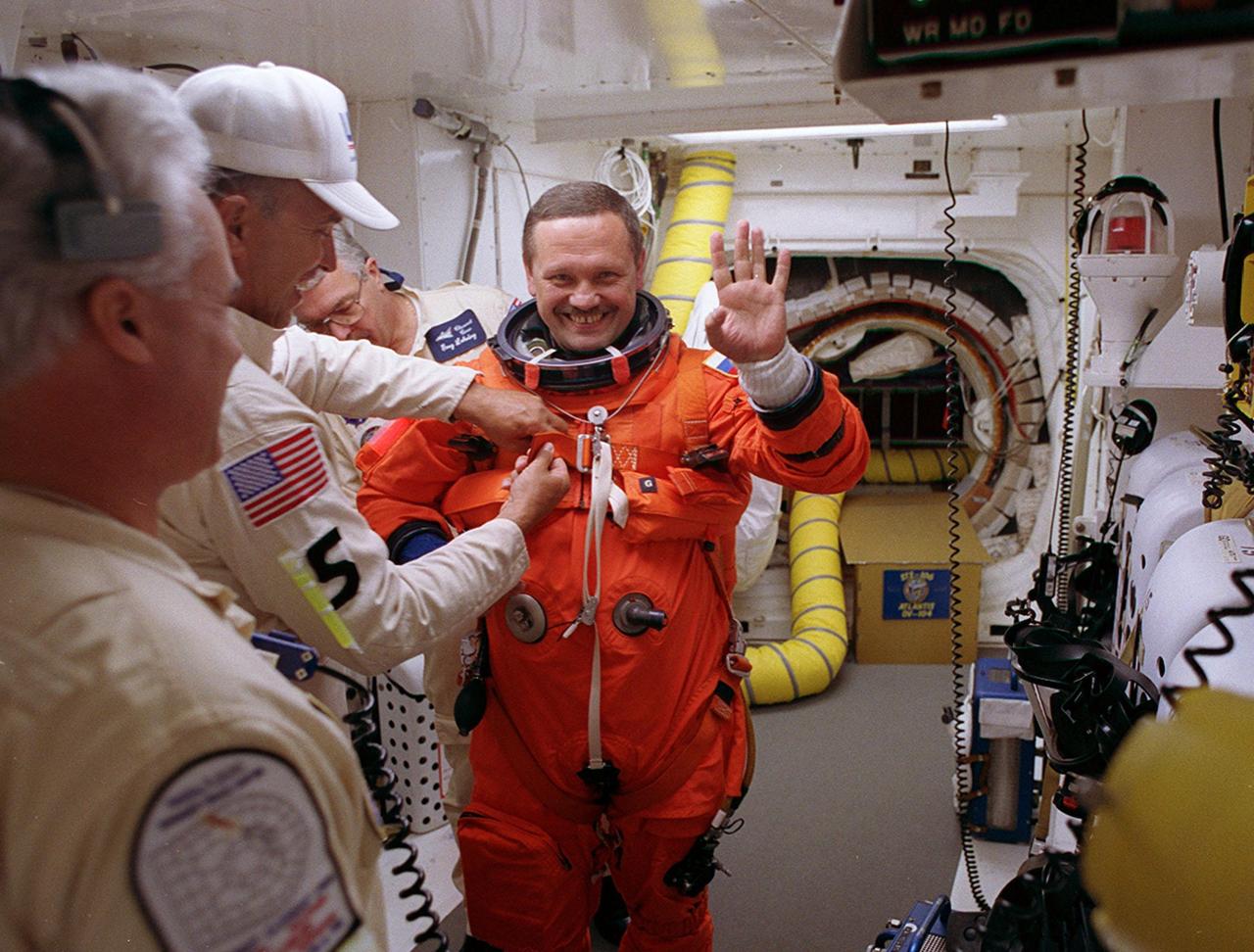
STS-106 Mission Specialist Boris V. Morukov waves as a suit technician in the White Room helps him with his launch and entry suit before he enters Space Shuttle Atlantis. The opening into Atlantis can be seen in the background. The perfect on-time liftoff of Atlantis on mission STS-106 occurred at 8:45:47 a.m. EDT. On the 11-day mission to the International Space Station, the seven-member crew will perform support tasks on orbit, transfer supplies and prepare the living quarters in the newly arrived Zvezda Service Module. The first long-duration crew, dubbed “Expedition One,” is due to arrive at the Station in late fall. Landing of Atlantis is targeted for 4:45 a.m. EDT on Sept. 19

STS045-78-016 (24 March-2 April 1992) --- This view is of the Bahamas and Florida looking westward into the sunglint. The Bahama Banks are in the foreground; from left to right, Andros Island, the Berry Islands, and Grand Bahama Island are surrounded by shallow limestone banks. Bimini is the double dark spot on the edge of the Straits of Florida, with the peninsula of Florida within the sunglint. Cuba can be seen to the upper left.

In this southeast looking view, Mont Blanc, on the French/Italian border, (48.0N, 4.5E) the highest mountain peak in all of Europe, is just below and right of center (below the end of the prominent valley of the Aosta River, in the center of the photo. The rivers flow out of the Alps into Italy toward Turin. Chamonix, the famous resort town and center of Alpine mountain climbing, lies in the valley just below Mont Blanc.

The northeast coast of Hokkaido and Kunashir Island, Japan (44.0N, 143.0E) are seen bordered by drifting sea ice. The sea ice has formed a complex pattern of eddies in response to surface water currents and winds. Photos of this kind aid researchers in describing local ocean current patterns and the effects of wind speed and direction on the drift of surface material, such as ice floes or oil. Kunashir is the southernmost of the Kuril Islands.

This view of the central portion of upstate New York, centers on the Finger Lakes. The large city on the shore of Lake Ontario, is Rochester. Although the city, being a business, educational and technical center, has no heavy industry, the outline of the city shows fairly well in the snow, but not as well as the outlines of industrial cities elsewhere in the world. The Finger Lakes are large linear lakes carved out by glaciers during the last ice age.

The Bight of Bangkok and the city of Bangkok, Thailand are visible in this west looking view. The city of Bangkok, with an estimated population in excess of 3.7 million people, can be seen in the lower right-hand corner of the view. The city, famous as a jewelry trading center, dealing in precious stones and silver and bronze ware, is situated in a vast lowland. This lowland is a major rice growing area interspersed with canals used for irrigation and drainage. Rice is a major export commodity of Thailand. The deforested hills of the Bilauktaung Range can be seen at the top of the view.
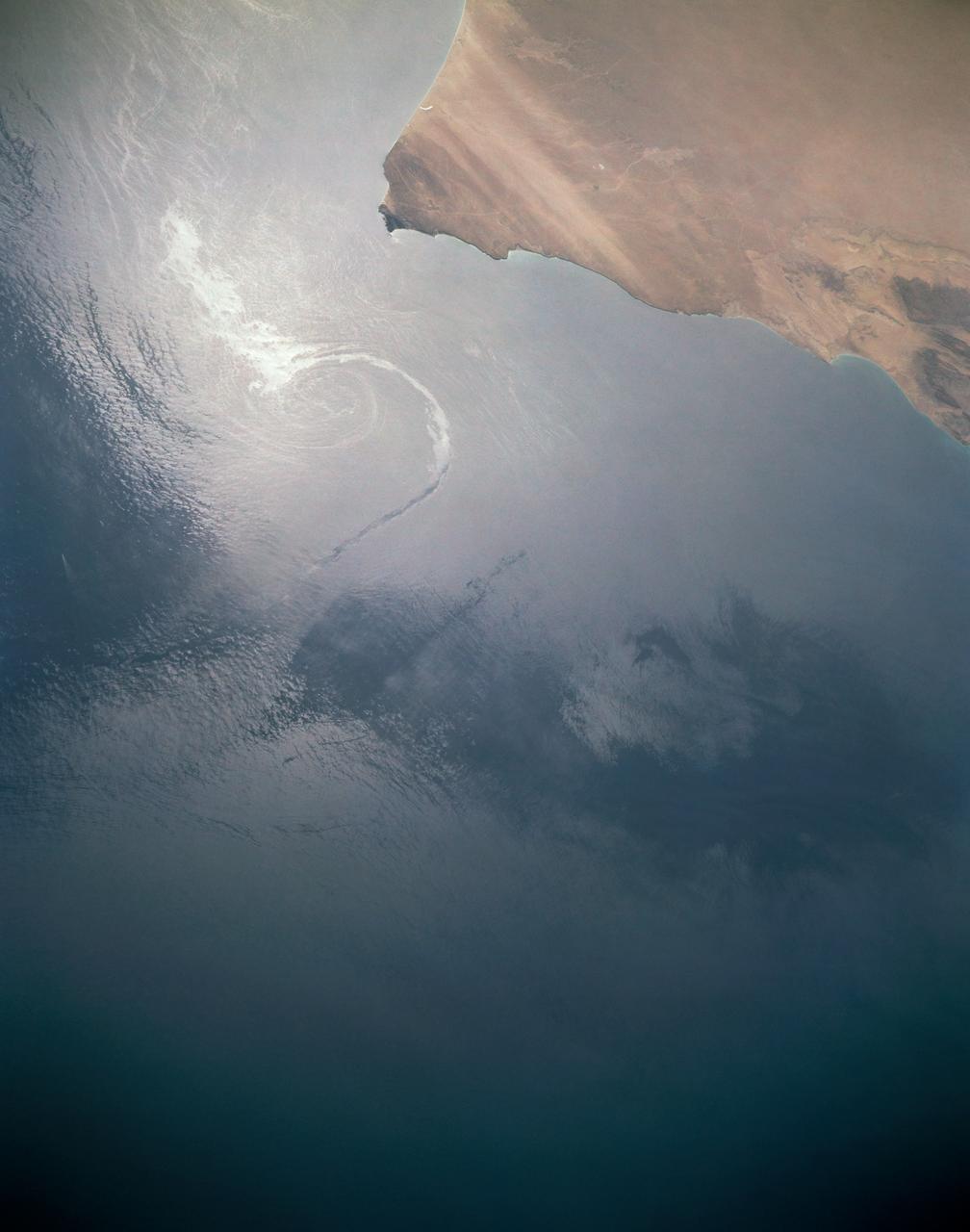
In this sunglint view of the Arabian Seacoast of Oman (19.0N, 59.0E) an oil slick is highlighted on the water's surface by sunglint lighting conditions. Nearly 50 percent of the oil transported worldwide passes through the Gulf of Oman, en route from the Persian Gulf and numerous ship wakes can be seen in this view. The oil slick, rounding the tip of Cape Ras Al Hadd, has formed a counterclockwise bright spiral indicating the local ocean currents.

This spectacular north looking view of south Greenland (62.0N, 46.0W) shows numerous indentations along the coastline, many of which contain small settlements. These indentations are fiords carved by glaciers of the last ice age. Even today, ice in the center of Greenland is as much as 10,000 ft. thick and great rivers of ice continuously flow toward the sea, where they melt or break off as icebergs - some of which may be seen floating offshore.
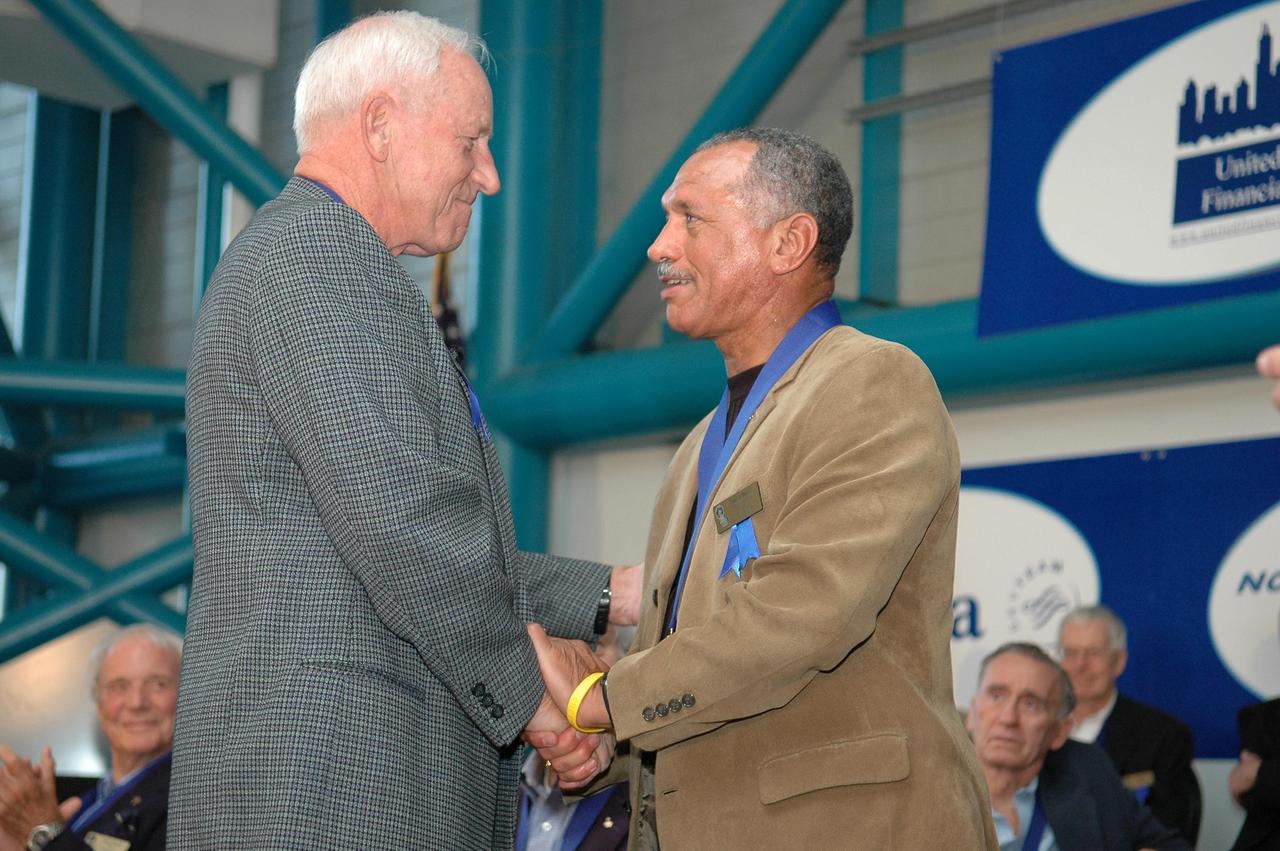
KENNEDY SPACE CENTER, FLA. - Charles F. Bolden Jr. (right) accepts congratulations from Al Worden, U.S. Astronaut Hall of Fame member and chairman of the Astronaut Scholarship Foundation. The occasion is the 2006 induction ceremony for the U.S. Astronaut Hall of Fame, held in the Apollo/Saturn V Center. The inductees for 2006 are former NASA astronauts Bolden, Henry "Hank" Hartsfield Jr. and Brewster H. Shaw Jr. Bolden flew on four space shuttle missions including STS-61C, STS-31, STS-45 and STS-60, logging 680 hours in space. The U.S. Astronaut Hall of Fame now includes 63 space explorers. Photo credit: NASA/Kim Shiflett
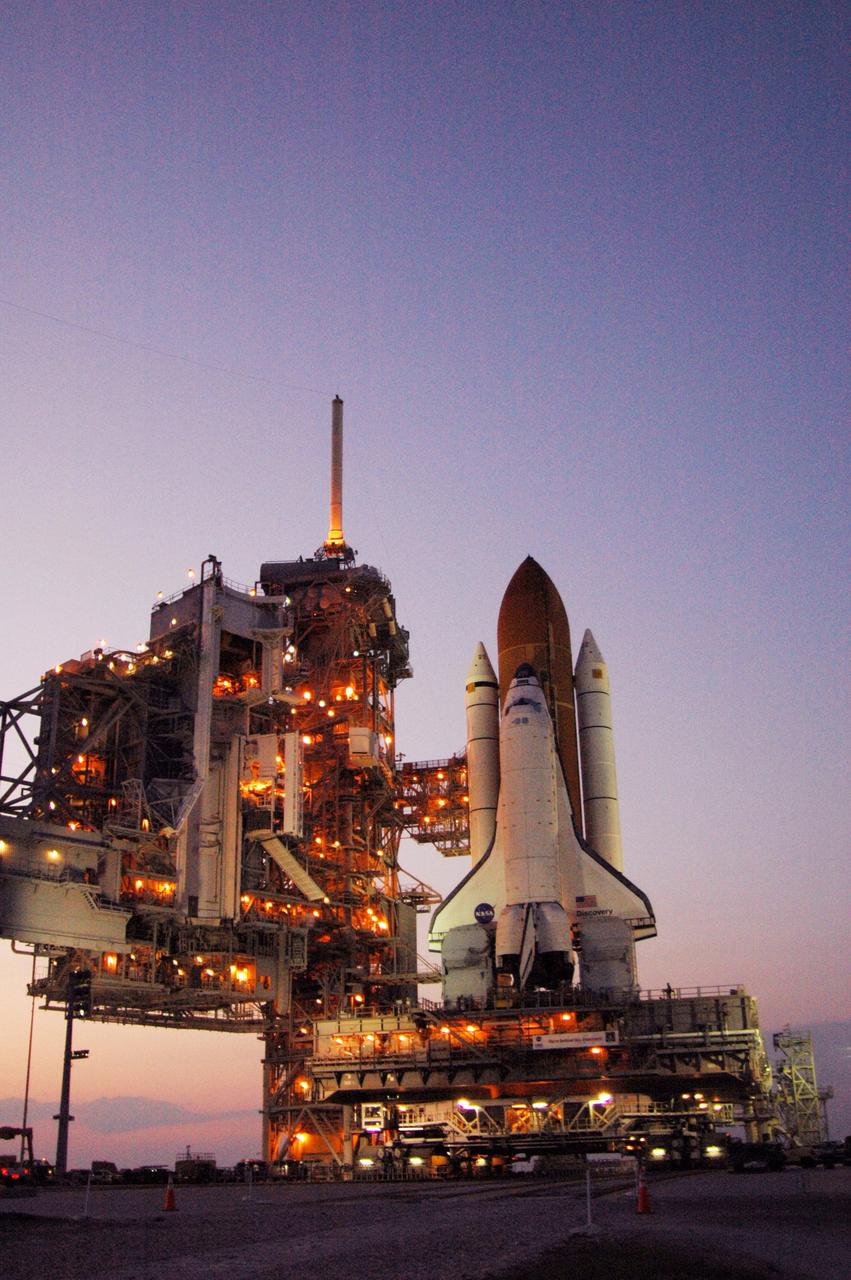
KENNEDY SPACE CENTER, FLA. -- Amid the glow of lights from the fixed and rotating service structures, Space Shuttle Discovery rests on the hardstand of Launch Pad 39B at NASA's Kennedy Space Center after completing the 4.2-mile journey from the Vehicle Assembly Building. First motion was at 12:45 p.m. EDT. The shuttle rests on a mobile launcher platform. The rollout is an important step before launch of Discovery on mission STS-121 to the International Space Station. First motion of the shuttle leaving NASA's Vehicle Assembly Building was at 12:45 p.m. EDT. Discovery's launch is targeted for July 1 in a launch window that extends to July 19. During the 12-day mission, Discovery's crew will test new hardware and techniques to improve shuttle safety, as well as deliver supplies and make repairs to the station. Photo credit: NASA/Ken Thornsley
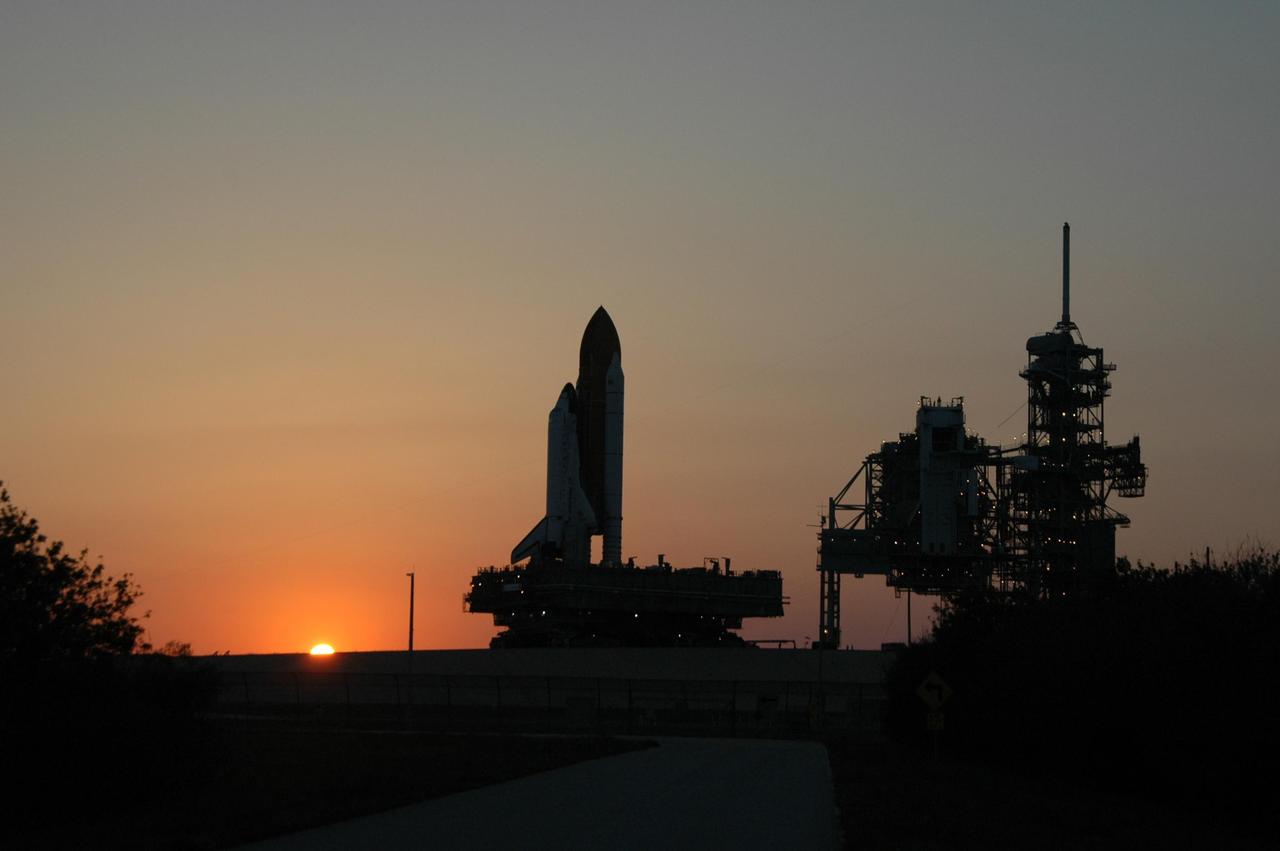
KENNEDY SPACE CENTER, FLA. -- The sun is setting as Space Shuttle Discovery arrives on the hardstand of Launch Pad 39B at NASA's Kennedy Space Center. At right are the fixed and rotating service structures. First motion was at 12:45 p.m. EDT. The shuttle rests on a mobile launcher platform and made the 4.2-mile journey from the Vehicle Assembly Building via the crawler-transporter beneath the platform. The rollout is an important step before launch of Discovery on mission STS-121 to the International Space Station. First motion of the shuttle leaving NASA's Vehicle Assembly Building was at 12:45 p.m. EDT. Discovery's launch is targeted for July 1 in a launch window that extends to July 19. During the 12-day mission, Discovery's crew will test new hardware and techniques to improve shuttle safety, as well as deliver supplies and make repairs to the station. Photo credit: NASA/Ken Thornsley
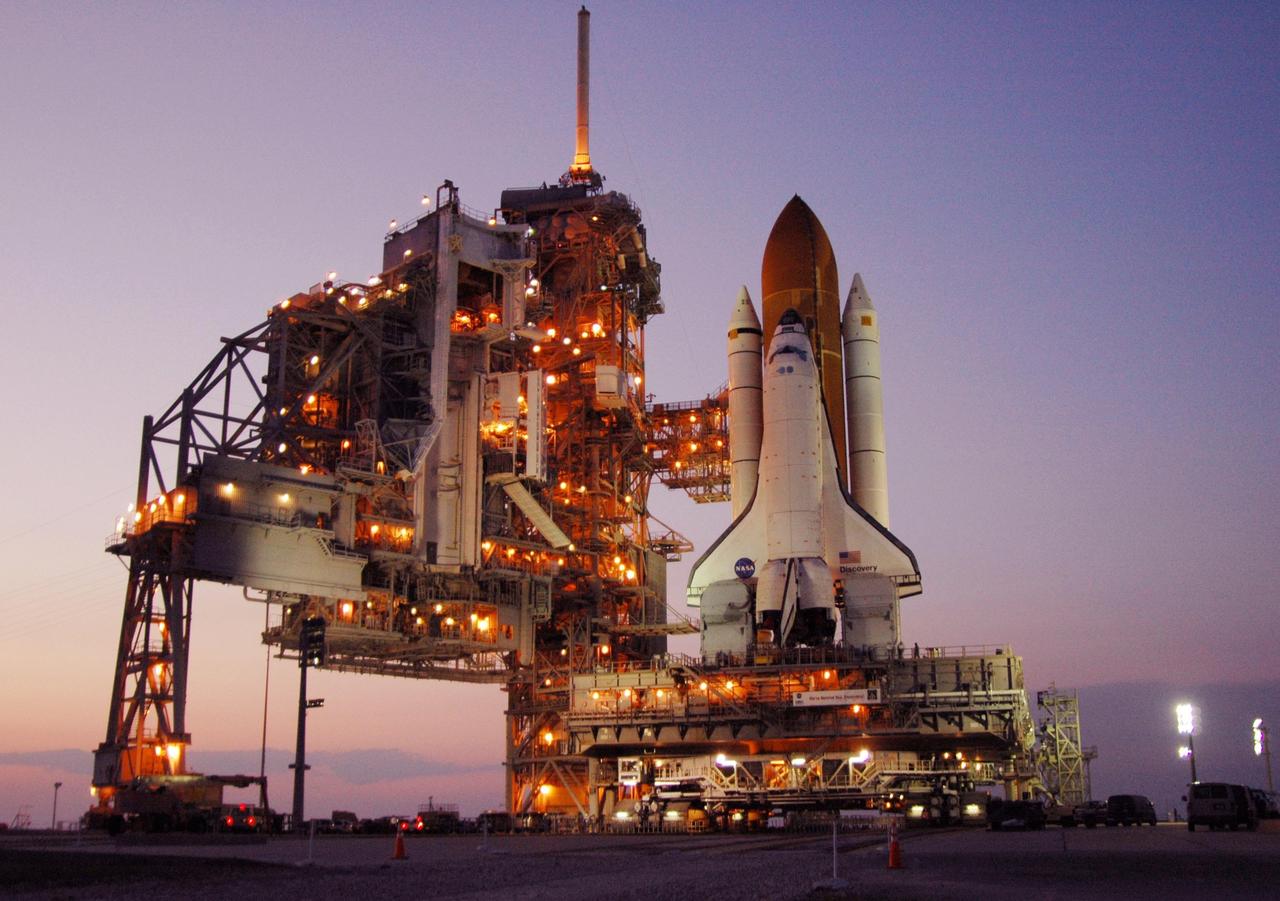
KENNEDY SPACE CENTER, FLA. -- Amid the glow of lights from the fixed and rotating service structures, Space Shuttle Discovery rests on the hardstand of Launch Pad 39B at NASA's Kennedy Space Center after completing the 4.2-mile journey from the Vehicle Assembly Building. First motion was at 12:45 p.m. EDT. The shuttle rests on a mobile launcher platform. The rollout is an important step before launch of Discovery on mission STS-121 to the International Space Station. First motion of the shuttle leaving NASA's Vehicle Assembly Building was at 12:45 p.m. EDT. Discovery's launch is targeted for July 1 in a launch window that extends to July 19. During the 12-day mission, Discovery's crew will test new hardware and techniques to improve shuttle safety, as well as deliver supplies and make repairs to the station. Photo credit: NASA/Ken Thornsley
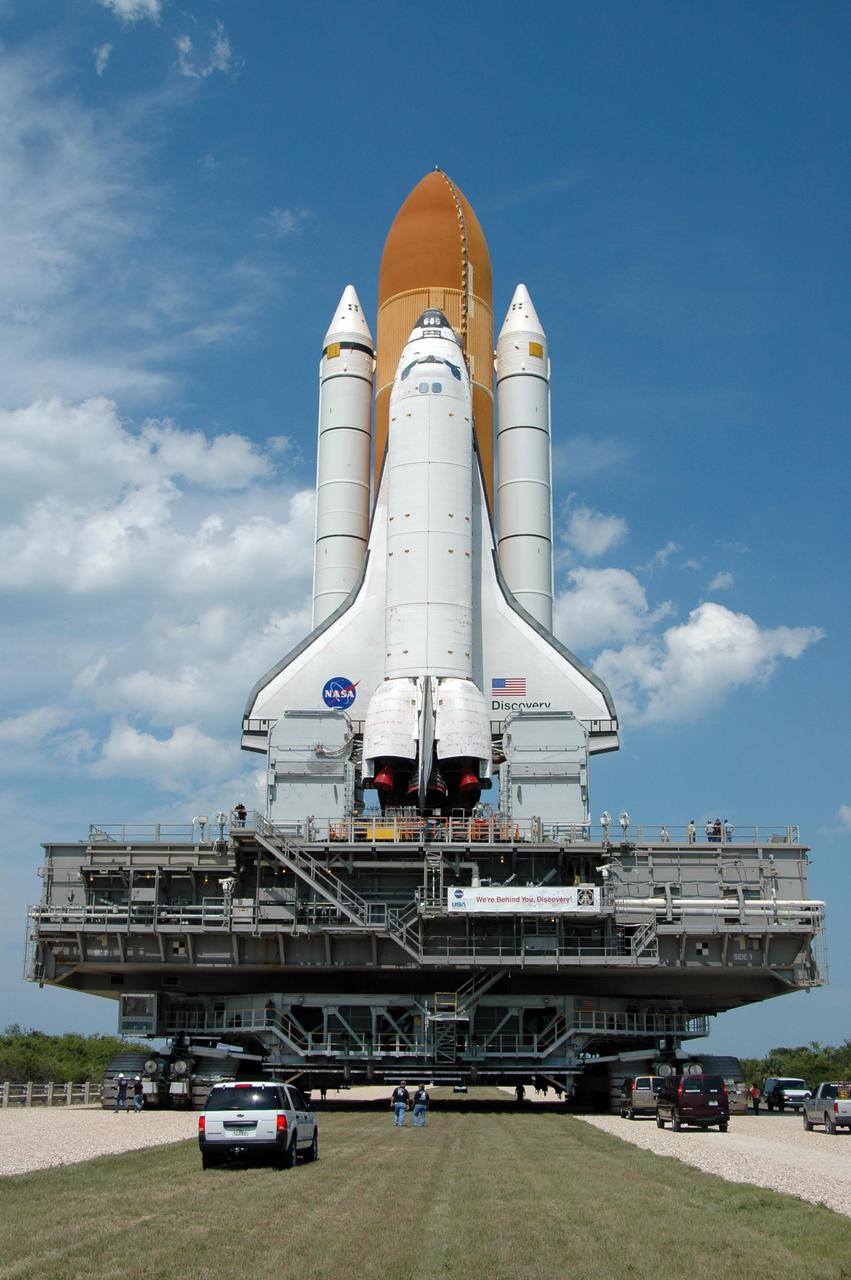
KENNEDY SPACE CENTER, FLA. -- Space Shuttle Discovery rolls toward Launch Pad 39B. The shuttle rests on the mobile launcher platform, which is being carried by the crawler-transporter underneath. First motion of the shuttle leaving NASA's Vehicle Assembly Building was at 12:45 p.m. EDT. The rollout is an important step before launch of Discovery on mission STS-121 to the International Space Station. First motion of the shuttle leaving NASA's Vehicle Assembly Building was at 12:45 p.m. EDT. Discovery's launch is targeted for July 1 in a launch window that extends to July 19. During the 12-day mission, Discovery's crew will test new hardware and techniques to improve shuttle safety, as well as deliver supplies and make repairs to the station. Photo credit: NASA/Dimitri Gerondidakis
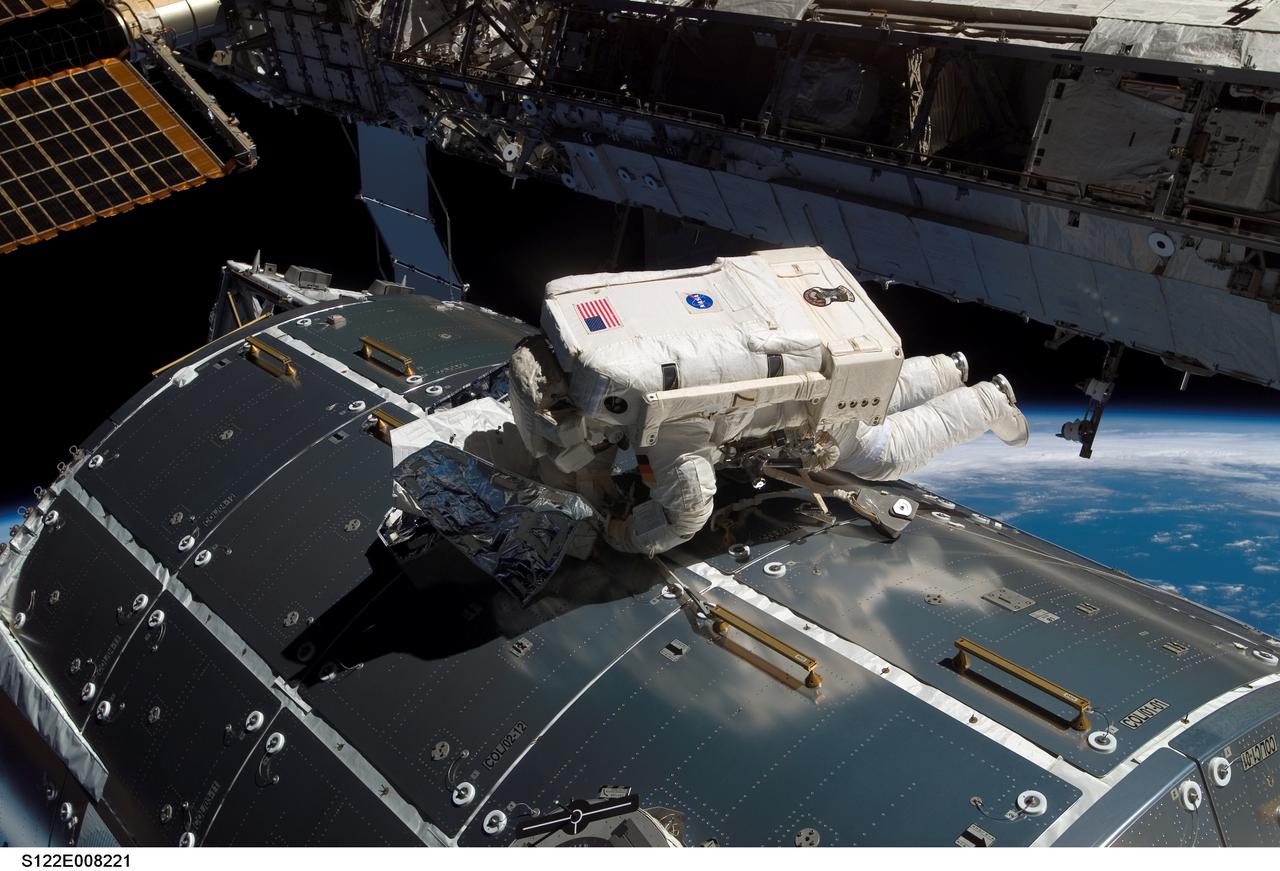
S122-E-008221 (13 Feb. 2008) --- European Space Agency (ESA) astronaut Hans Schlegel, STS-122 mission specialist, works on the new Columbus laboratory as he participates in the mission's second scheduled session of extravehicular activity (EVA) as construction and maintenance continue on the International Space Station. During the six-hour, 45-minute spacewalk, among other tasks, Schlegel and NASA astronaut Rex Walheim (out of frame), mission specialist, worked to replace a nitrogen tank used to pressurize the station's ammonia cooling system.
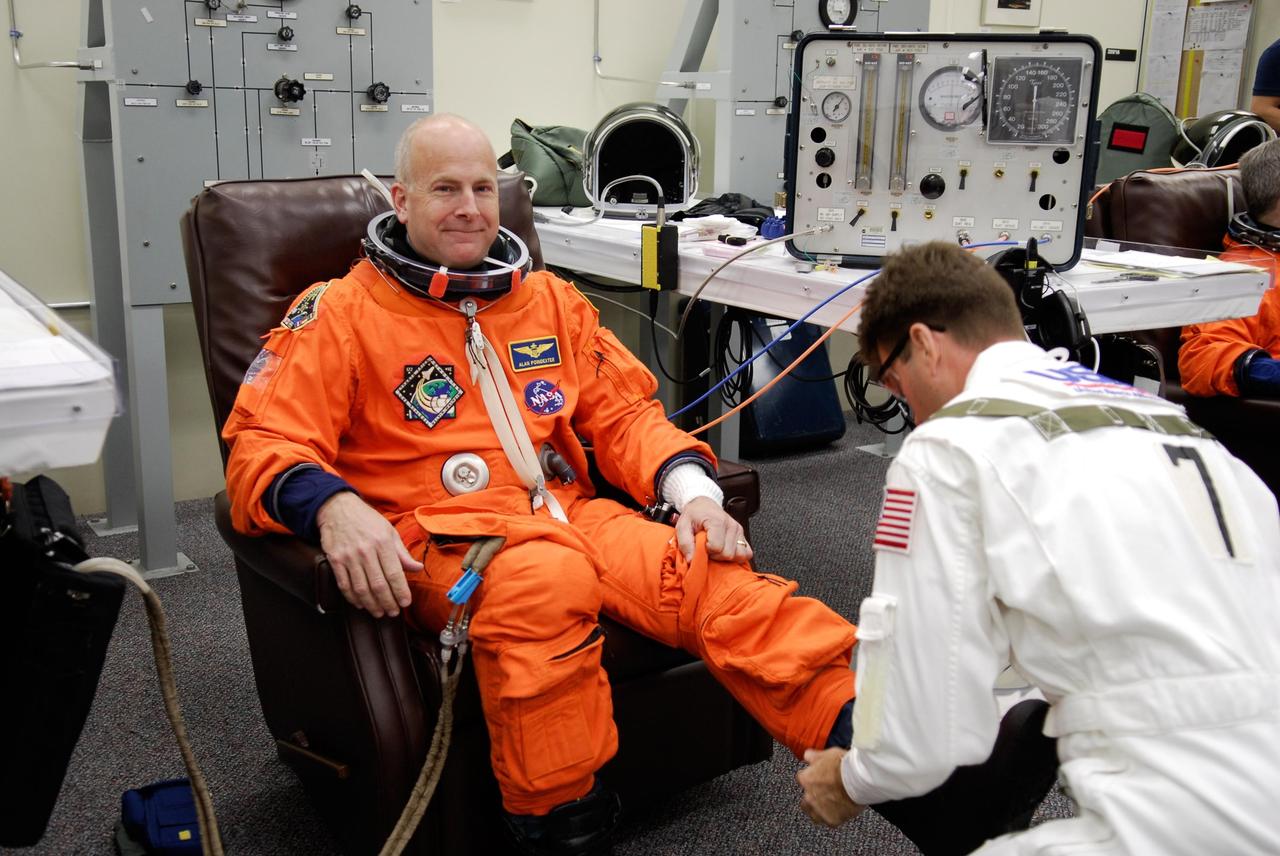
KENNEDY SPACE CENTER, FLA. -- Pilot Alan Poindexter is helped with his boots while donning his launch and entry suit for launch of space shuttle Atlantis on the STS-122 mission. The launch, scheduled for 2:45 p.m. EST, will be the third attempt for Atlantis since December 2007 to carry the European Space Agency's Columbus laboratory to the International Space Station. During the 11-day mission, the crew's prime objective is to attach the laboratory to the Harmony module, adding to the station's size and capabilities. Photo credit: NASA/Kim Shiflett
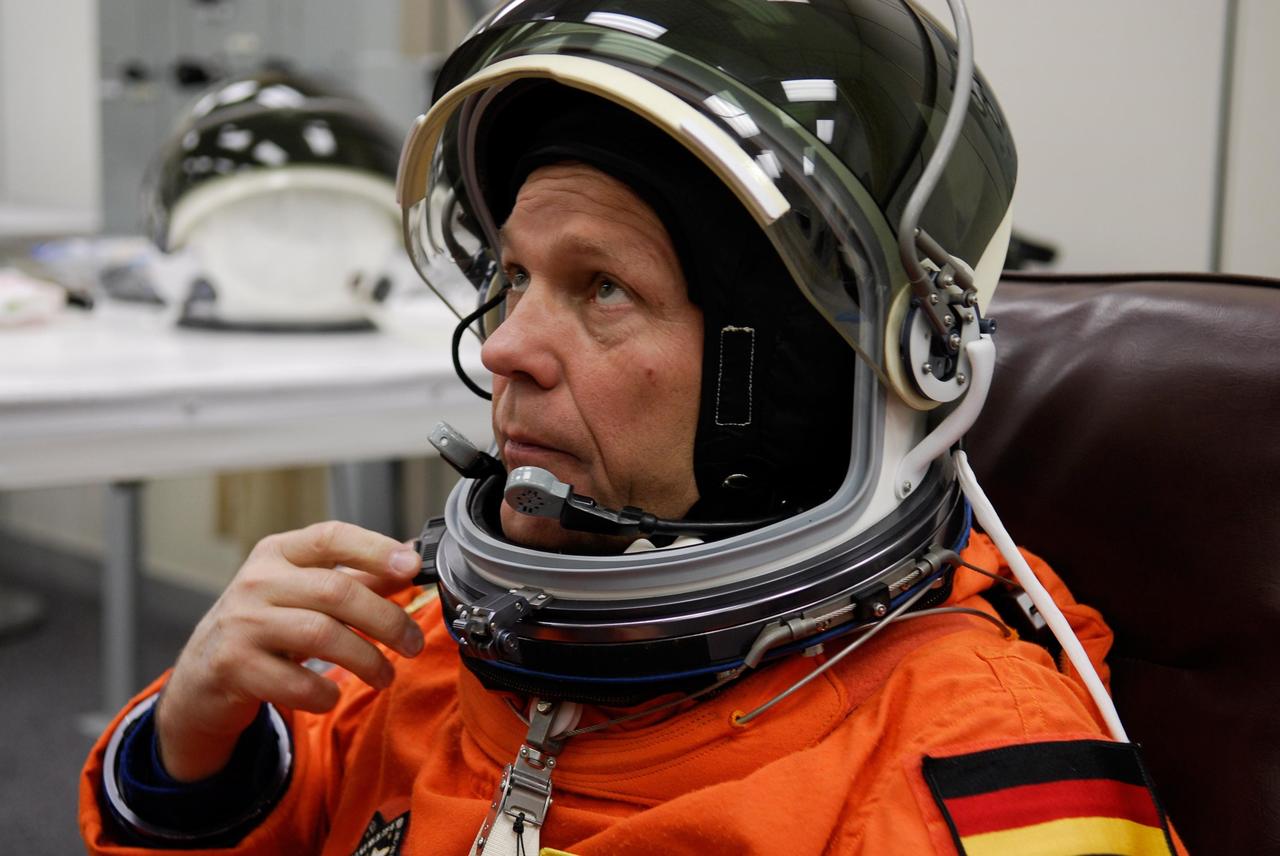
KENNEDY SPACE CENTER, FLA. -- Mission Specialist Hans Schlegel dons his helmet for launch of space shuttle Atlantis on the STS-122 mission. Schlegel represents the European Space Agency. The launch, scheduled for 2:45 p.m. EST, will be the third attempt for Atlantis since December 2007 to carry the European Space Agency's Columbus laboratory to the International Space Station. During the 11-day mission, the crew's prime objective is to attach the laboratory to the Harmony module, adding to the station's size and capabilities. Photo credit: NASA/Kim Shiflett
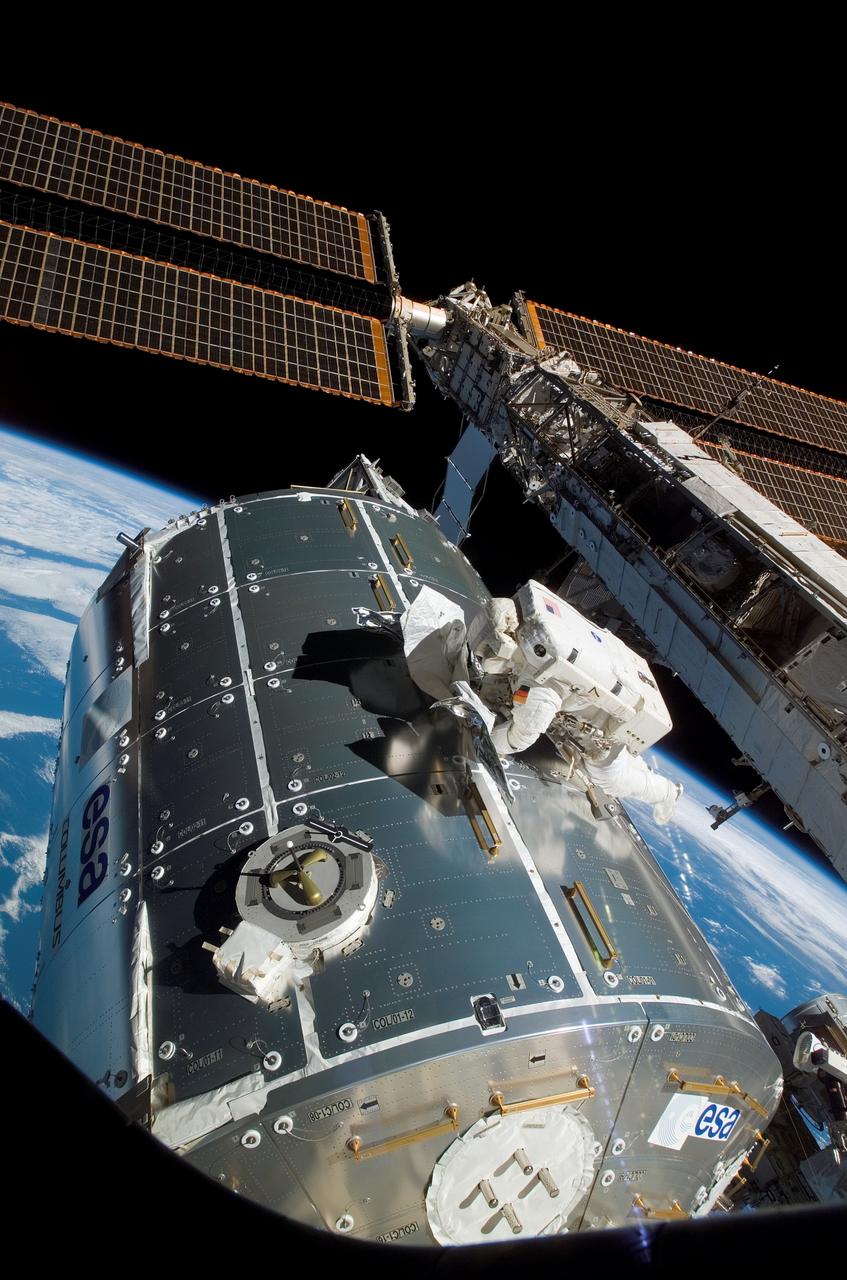
S122-E-008222 (13 Feb. 2008) --- European Space Agency (ESA) astronaut Hans Schlegel, STS-122 mission specialist, works on the new Columbus laboratory as he participates in the mission's second scheduled session of extravehicular activity (EVA) as construction and maintenance continue on the International Space Station. During the six-hour, 45-minute spacewalk, among other tasks, Schlegel and NASA astronaut Rex Walheim (out of frame), mission specialist, worked to replace a nitrogen tank used to pressurize the station's ammonia cooling system.
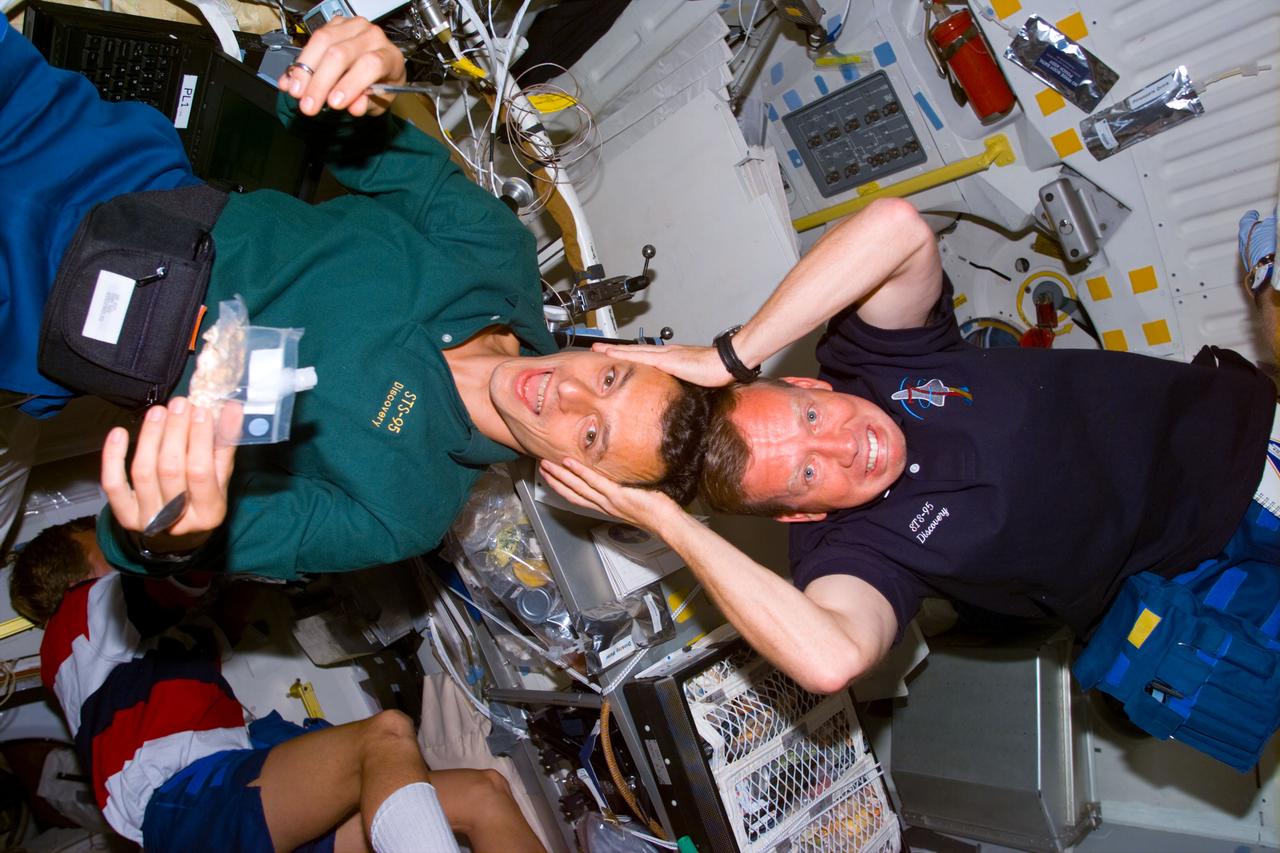
STS095-E-5204 (4 Nov. 1998) --- Astronauts Pedro Duque (left) and Steven W. Lindsey take a break from busy experimentation onboard the Space Shuttle Discovery during Flight Day 7. Lindsey is pilot and Duque, a mission specialist representing the European Space Agency (ESA) for the STS-95 flight. The photo was taken with an electronic still camera (ESC) at 19:04:45 GMT, Nov. 4.
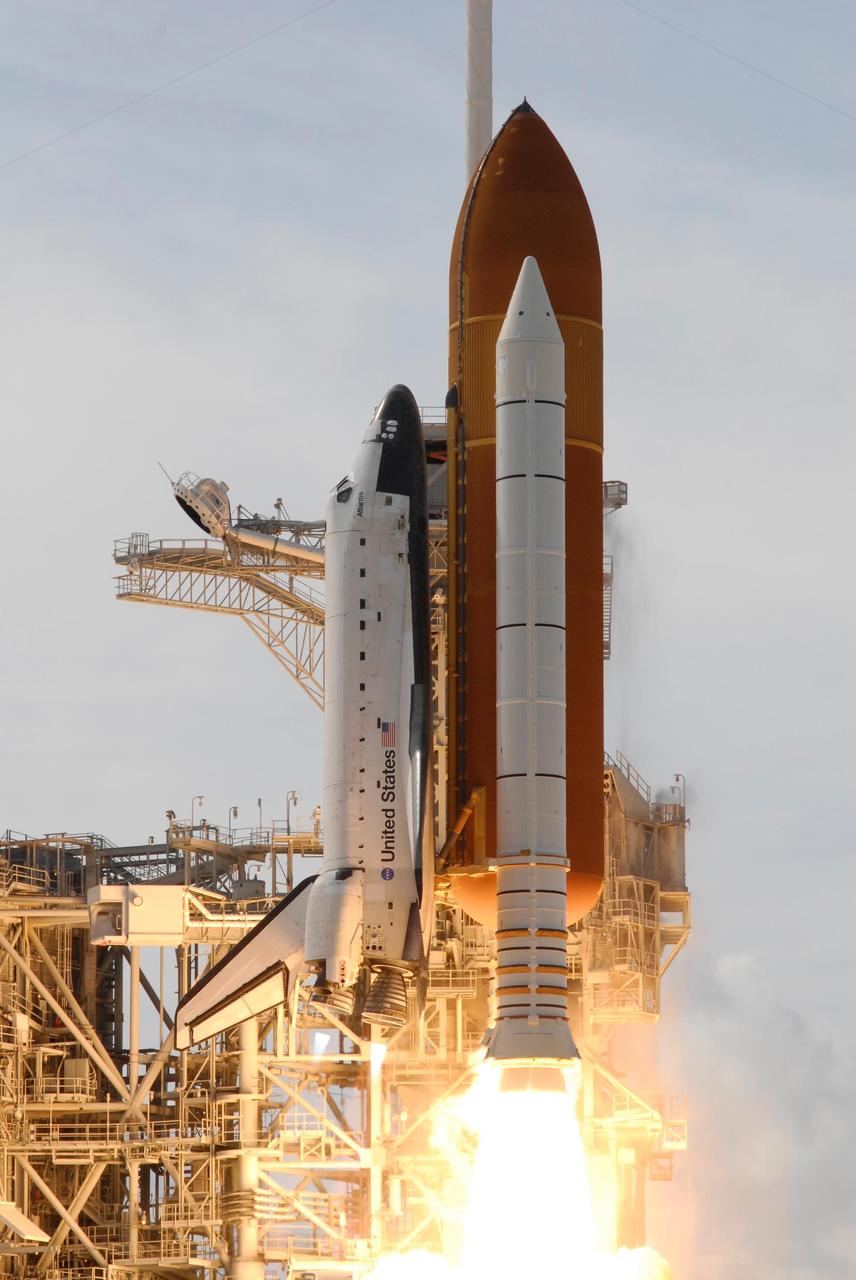
KENNEDY SPACE CENTER, FLA. -- At liftoff, space shuttle Atlantis begins its majestic climb into the heavens on mission STS-122 to the International Space Station. Liftoff was on time at 2:45 p.m. EST. The launch is the third attempt for Atlantis since December 2007 to carry the European Space Agency's Columbus laboratory to the International Space Station. During the 11-day mission, the crew's prime objective is to attach the laboratory to the Harmony module, adding to the station's size and capabilities. Photo credit: NASA/Jerry Cannon, Rusty Backer
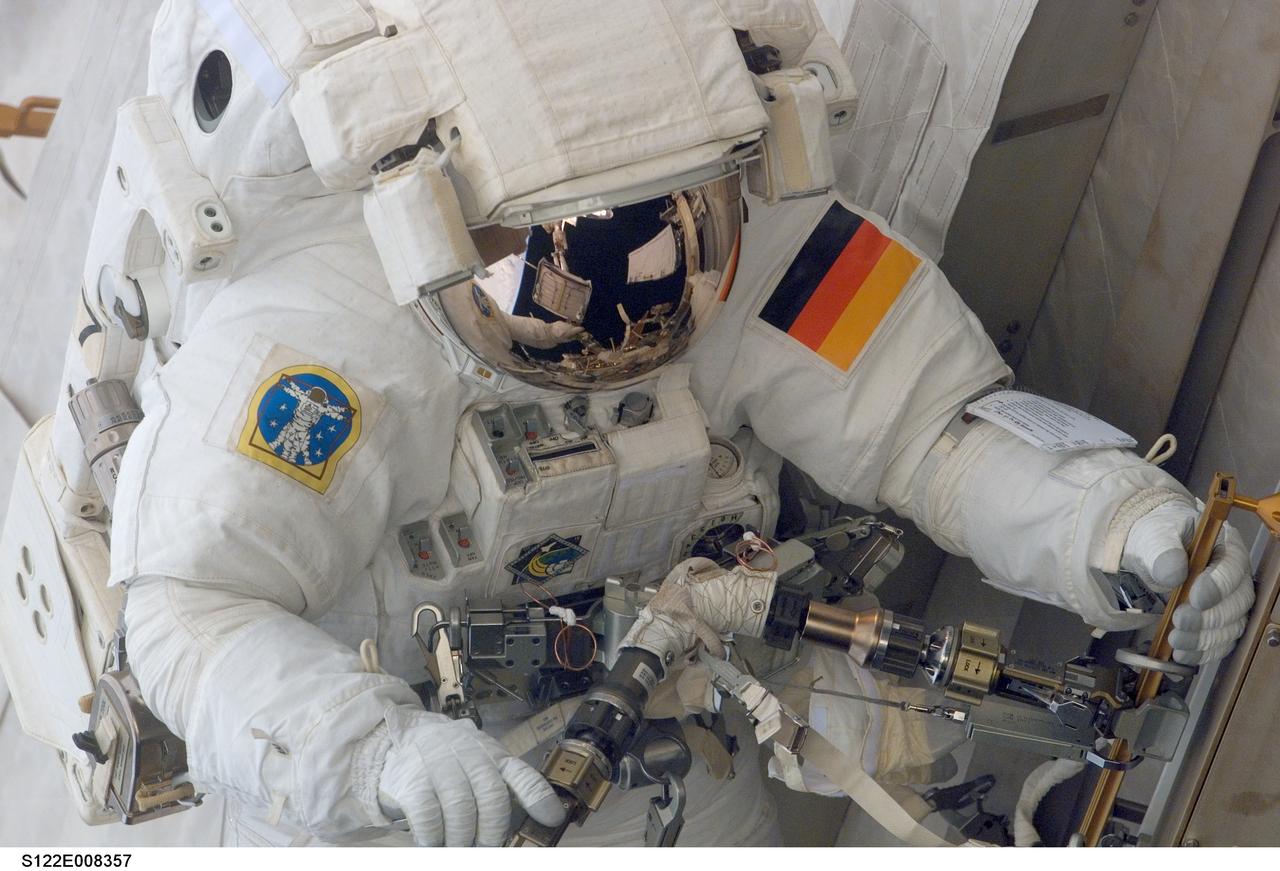
S122-E-008357 (13 Feb. 2008) --- European Space Agency (ESA) astronaut Hans Schlegel, STS-122 mission specialist, participates in the mission's second scheduled session of extravehicular activity (EVA) as construction and maintenance continue on the International Space Station. During the six-hour, 45-minute spacewalk, among other tasks, Schlegel and NASA astronaut Rex Walheim (out of frame), mission specialist, worked to replace a nitrogen tank used to pressurize the station's ammonia cooling system.

S122-E-008401 (13 Feb. 2008) --- European Space Agency (ESA) astronaut Hans Schlegel, STS-122 mission specialist, participates in the mission's second scheduled session of extravehicular activity (EVA) as construction and maintenance continue on the International Space Station. During the six-hour, 45-minute spacewalk, among other tasks, Schlegel and NASA astronaut Rex Walheim (out of frame), mission specialist, worked to replace a nitrogen tank used to pressurize the station's ammonia cooling system.
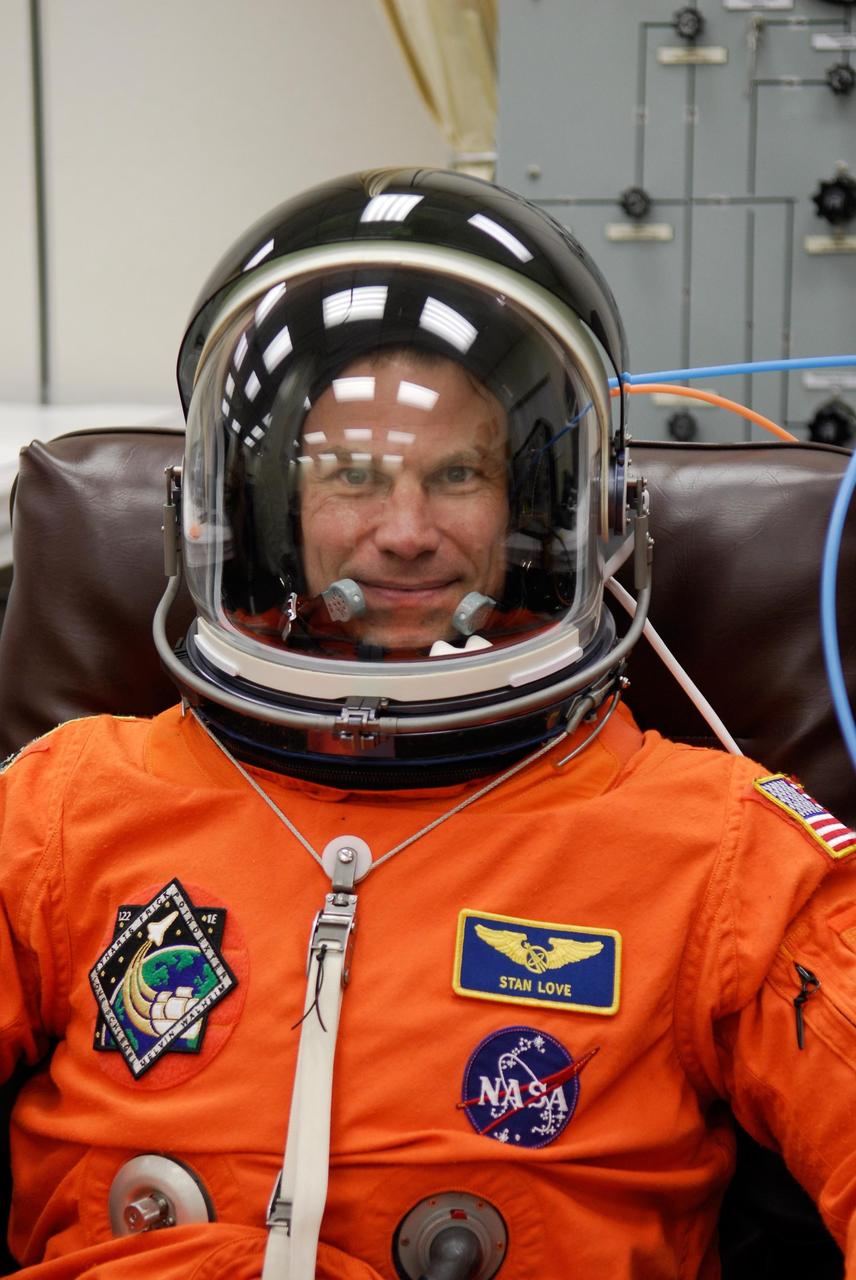
KENNEDY SPACE CENTER, FLA. --Mission Specialist Stanley Love is suited and ready to head for Launch Pad 39A and liftoff of space shuttle Atlantis on the STS-122 mission. The launch, scheduled for 2:45 p.m. EST, will be the third attempt for Atlantis since December 2007 to carry the European Space Agency's Columbus laboratory to the International Space Station. During the 11-day mission, the crew's prime objective is to attach the laboratory to the Harmony module, adding to the station's size and capabilities. Photo credit: NASA/Kim Shiflett
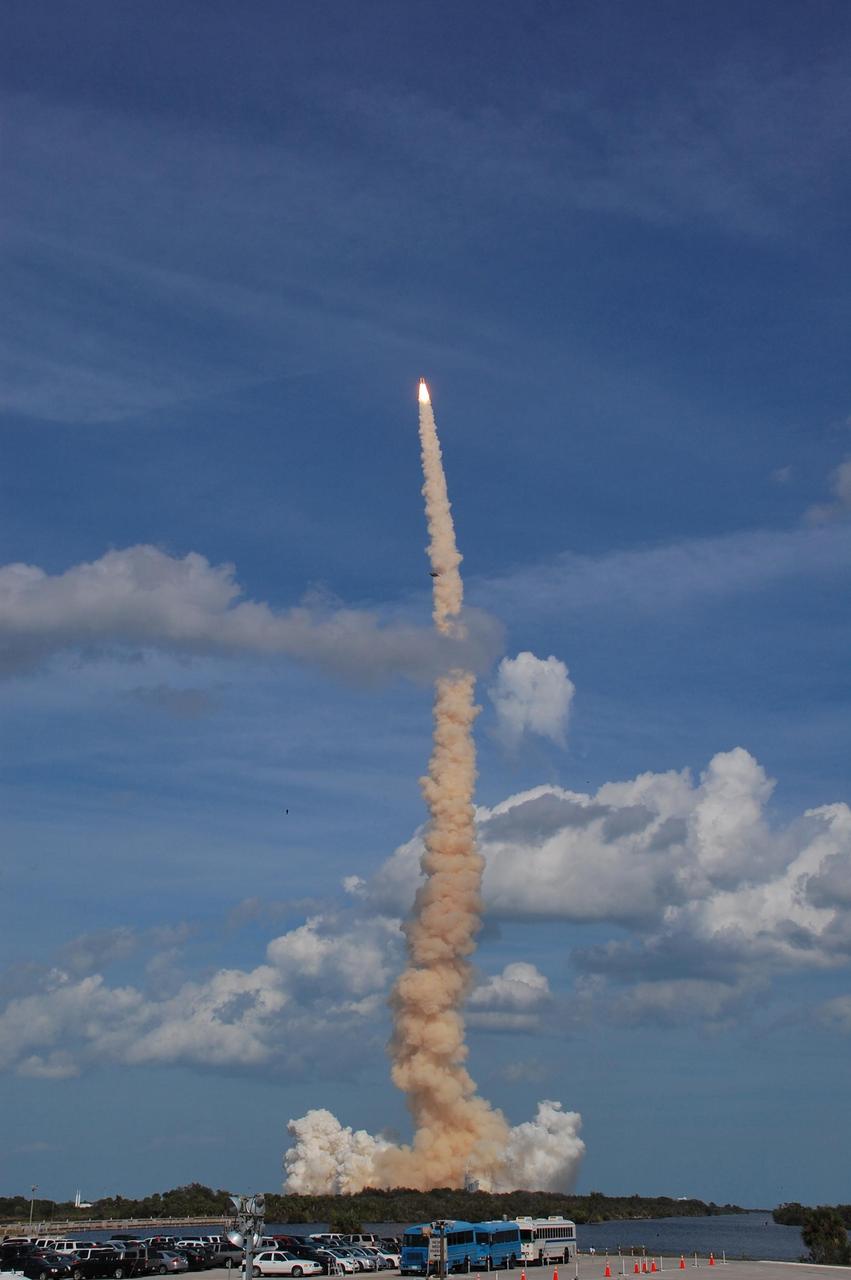
KENNEDY SPACE CENTER, FLA. -- Through a partly cloudy sky, space shuttle Atlantis hurtles into the sky, atop a column of fire and smoke, on the STS-122 mission. Liftoff was on time at 2:45 p.m. EST. This is the third launch attempt for Atlantis since December 2007 to carry the European Space Agency's Columbus laboratory to the International Space Station. During the 11-day mission, the crew's prime objective is to attach the laboratory to the Harmony module, adding to the station's size and capabilities. Photo credit: NASA/Fletch Hildreth
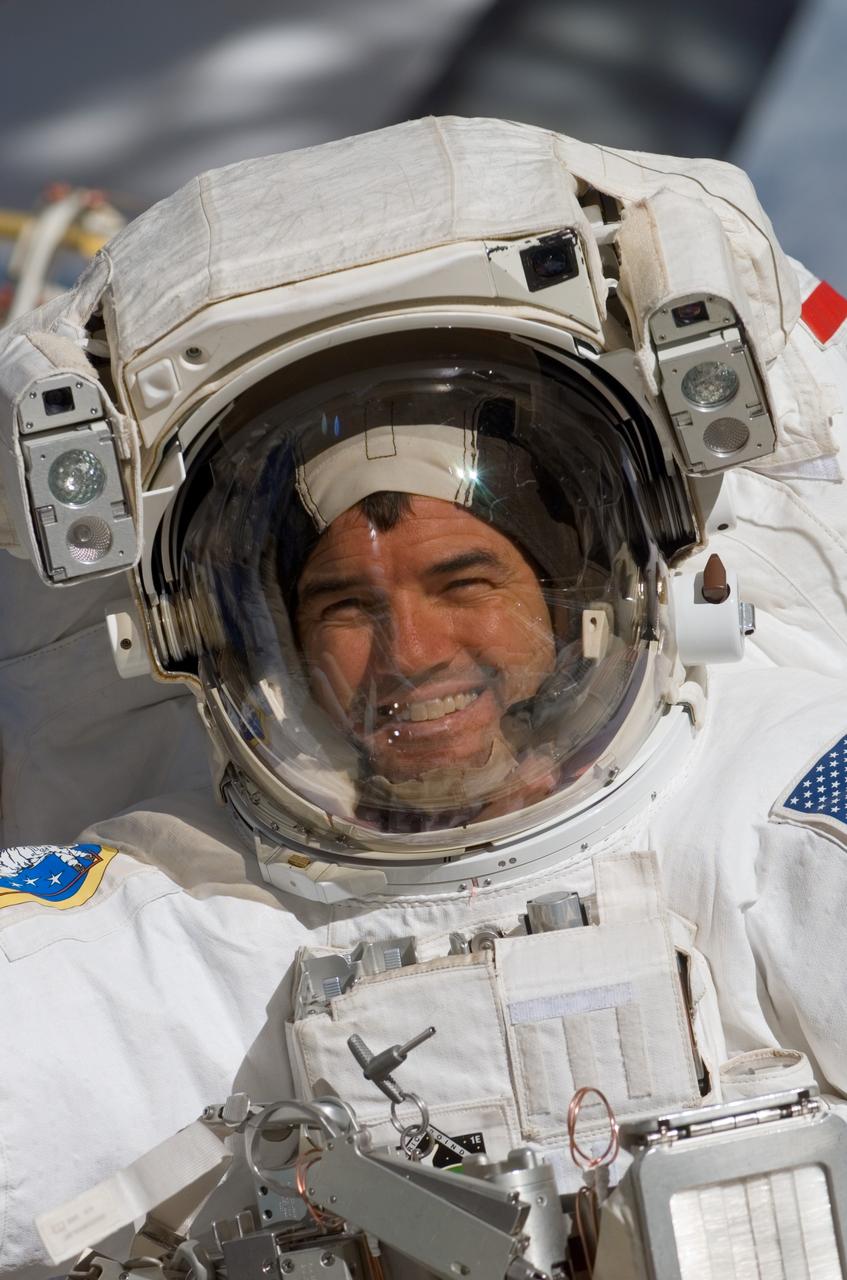
S122-E-008323 (13 Feb. 2008) --- Astronaut Rex Walheim, STS-122 mission specialist, participates in the mission's second scheduled session of extravehicular activity (EVA) as construction and maintenance continue on the International Space Station. During the six-hour, 45-minute spacewalk, among other tasks, Walheim and European Space Agency (ESA) astronaut Hans Schlegel (out of frame), mission specialist, worked to replace a nitrogen tank used to pressurize the station's ammonia cooling system.
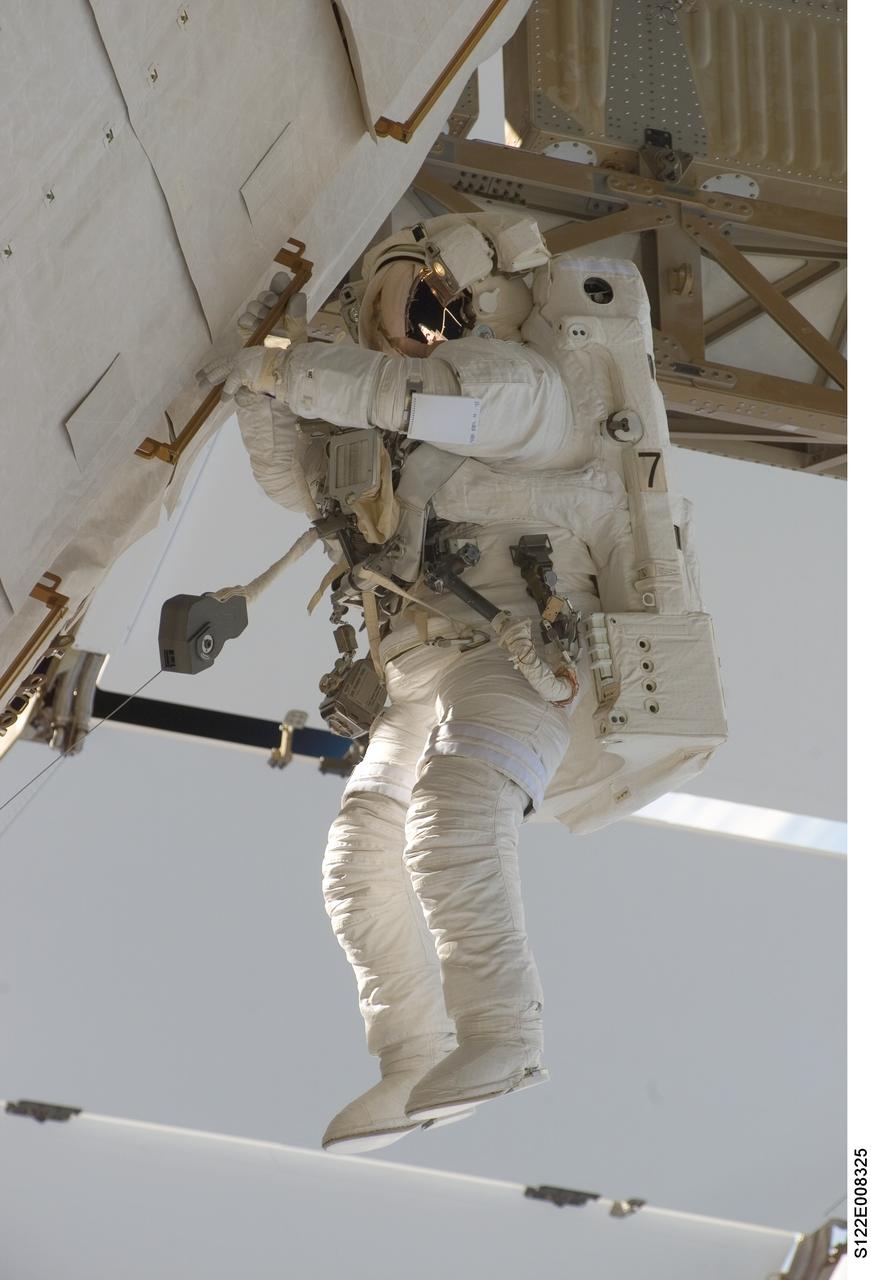
S122-E-008325 (13 Feb. 2008) --- European Space Agency (ESA) astronaut Hans Schlegel, STS-122 mission specialist, participates in the mission's second scheduled session of extravehicular activity (EVA) as construction and maintenance continue on the International Space Station. During the six-hour, 45-minute spacewalk, among other tasks, Schlegel and NASA astronaut Rex Walheim (out of frame), mission specialist, worked to replace a nitrogen tank used to pressurize the station's ammonia cooling system.
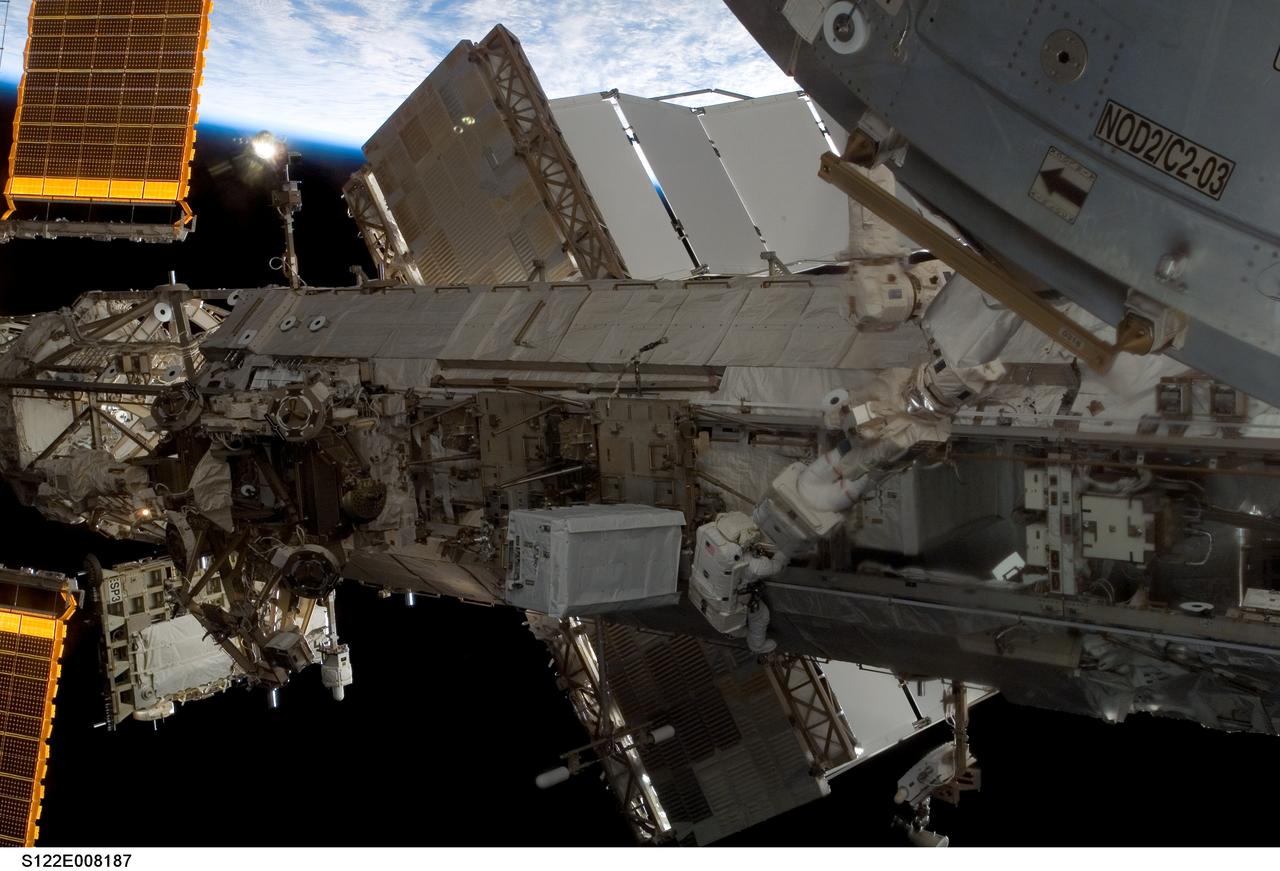
S122-E-008187 (13 Feb. 2008) --- European Space Agency (ESA) astronaut Hans Schlegel (left) and NASA astronaut Rex Walheim, both STS-122 mission specialists, participate in the mission's second scheduled session of extravehicular activity (EVA) as construction and maintenance continue on the International Space Station. During the six-hour, 45-minute spacewalk, among other tasks, Walheim and Schlegel worked to replace a nitrogen tank used to pressurize the station's ammonia cooling system.
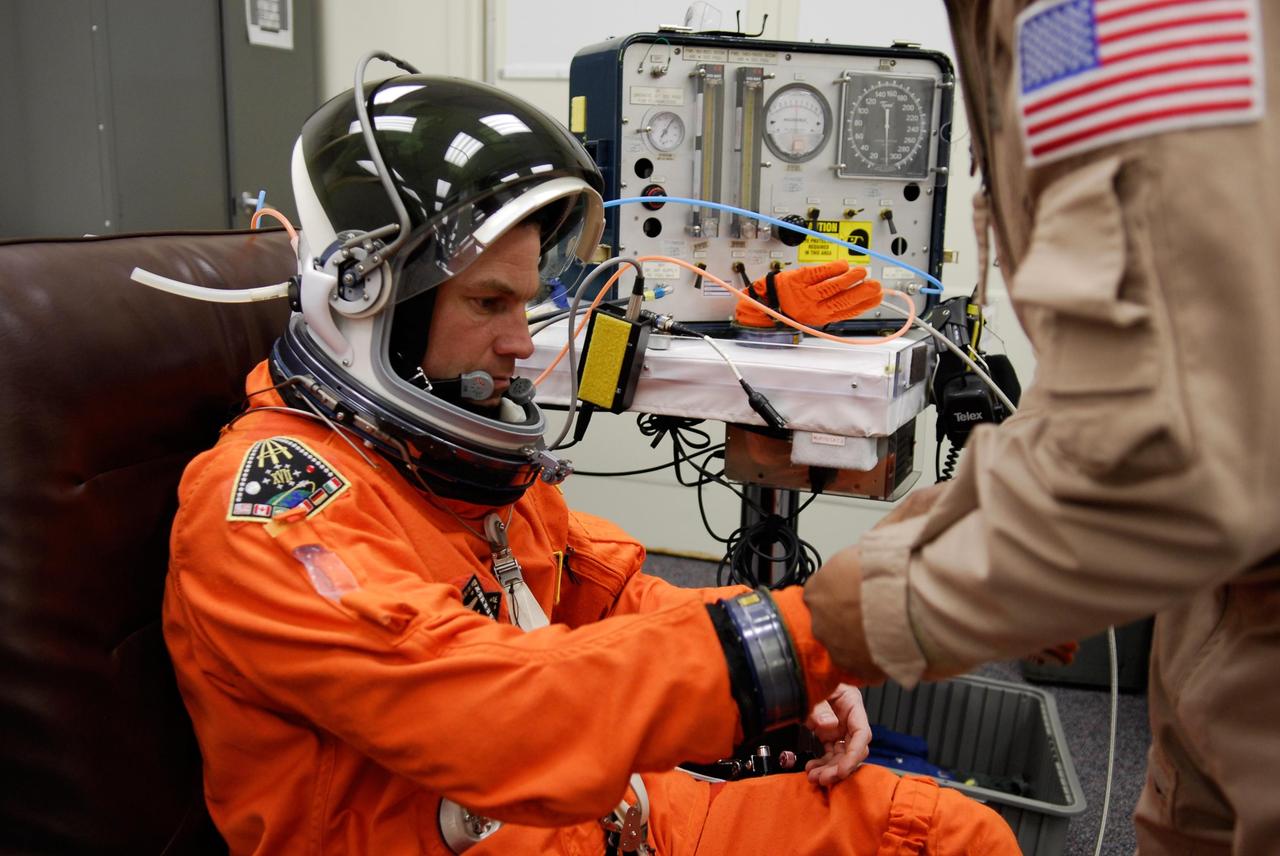
KENNEDY SPACE CENTER, FLA. --Mission Specialist Stanley Love gets help with his gloves to complete his suitup for launch of space shuttle Atlantis on the STS-122 mission. The launch, scheduled for 2:45 p.m. EST, will be the third attempt for Atlantis since December 2007 to carry the European Space Agency's Columbus laboratory to the International Space Station. During the 11-day mission, the crew's prime objective is to attach the laboratory to the Harmony module, adding to the station's size and capabilities. Photo credit: NASA/Kim Shiflett

NASA's Lunar Lander exhibit is located at the Mississippi I-10 Welcome Center in Hancock County, Miss., just west of Bay St. Louis and 45 miles east of New Orleans on I-10 at Exit 2. The exhibit features a 30-foot-tall replica of a Lunar Lander used as a trainer by the Apollo 13 astronauts. Apollo 13 astronaut and Mississippi native Fred Haise left space-boot prints and signature in concrete at the base of the exhibit.
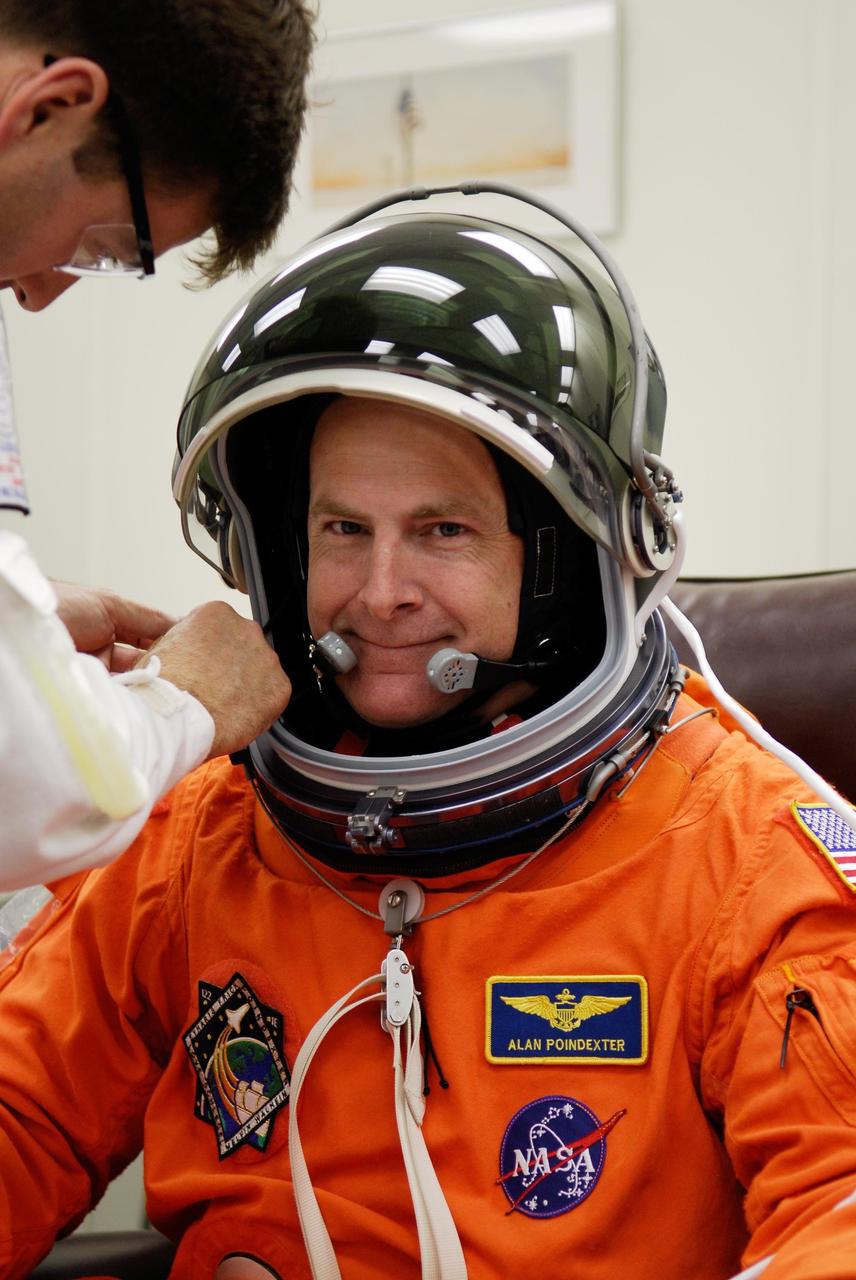
KENNEDY SPACE CENTER, FLA. -- Pilot Alan Poindexter is helped with his helmet while donning his launch and entry suit for launch of space shuttle Atlantis on the STS-122 mission. The launch, scheduled for 2:45 p.m. EST, will be the third attempt for Atlantis since December 2007 to carry the European Space Agency's Columbus laboratory to the International Space Station. During the 11-day mission, the crew's prime objective is to attach the laboratory to the Harmony module, adding to the station's size and capabilities. Photo credit: NASA/Kim Shiflett

JSC2008-E-010333 (7 Feb. 2008) --- Public Affairs Office commentator Rob Navias watches the large screens in the space shuttle flight control room of Johnson Space Center's Mission Control Center (MCC) during launch countdown activities a few hundred miles away in Florida, site of Space Shuttle Atlantis' scheduled STS-122 launch. Liftoff occurred at 2:45 p.m. (EST) on Feb. 7, 2008 from launch pad 39A at Kennedy Space Center.
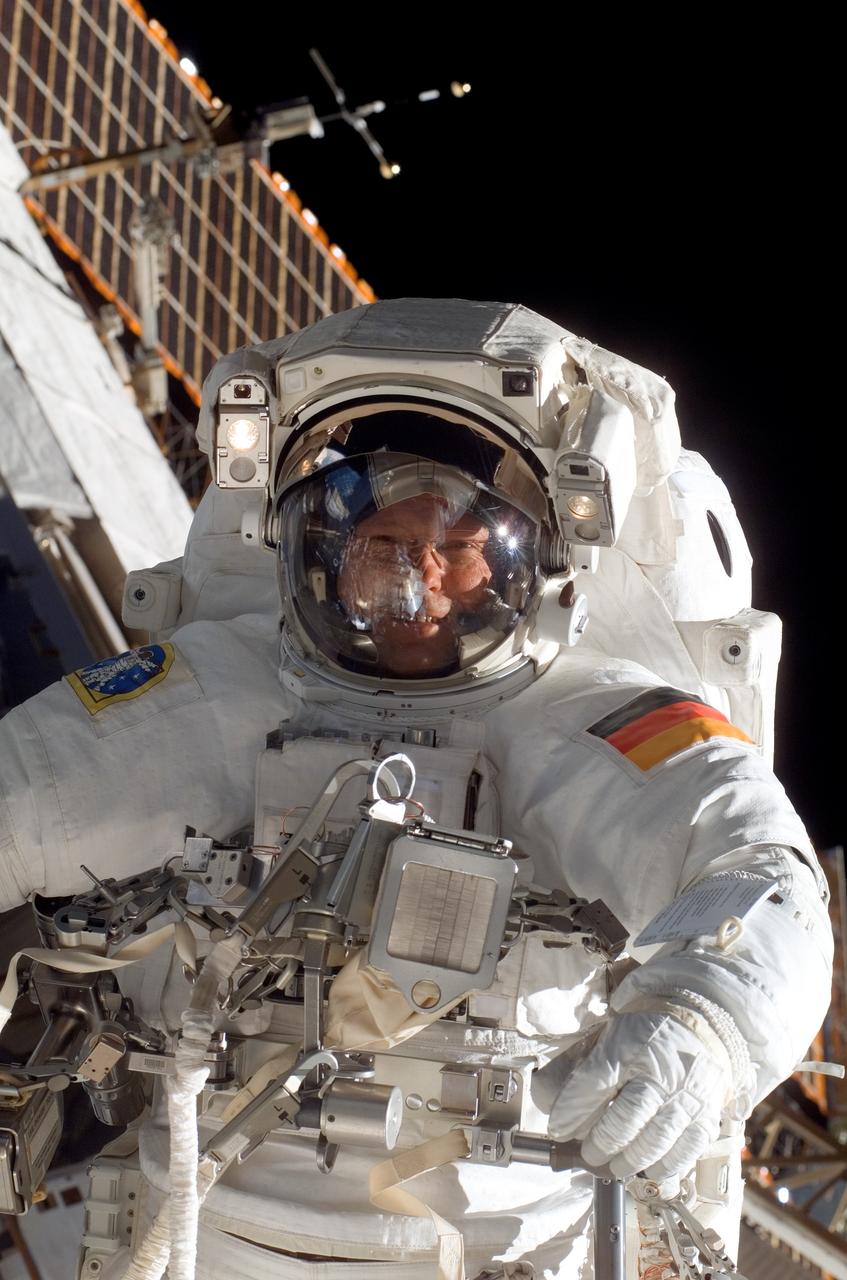
S122-E-008218 (13 Feb. 2008) --- European Space Agency (ESA) astronaut Hans Schlegel, STS-122 mission specialist, participates in the mission's second scheduled session of extravehicular activity (EVA) as construction and maintenance continue on the International Space Station. During the six-hour, 45-minute spacewalk, among other tasks, Schlegel and NASA astronaut Rex Walheim (out of frame), mission specialist, worked to replace a nitrogen tank used to pressurize the station's ammonia cooling system.
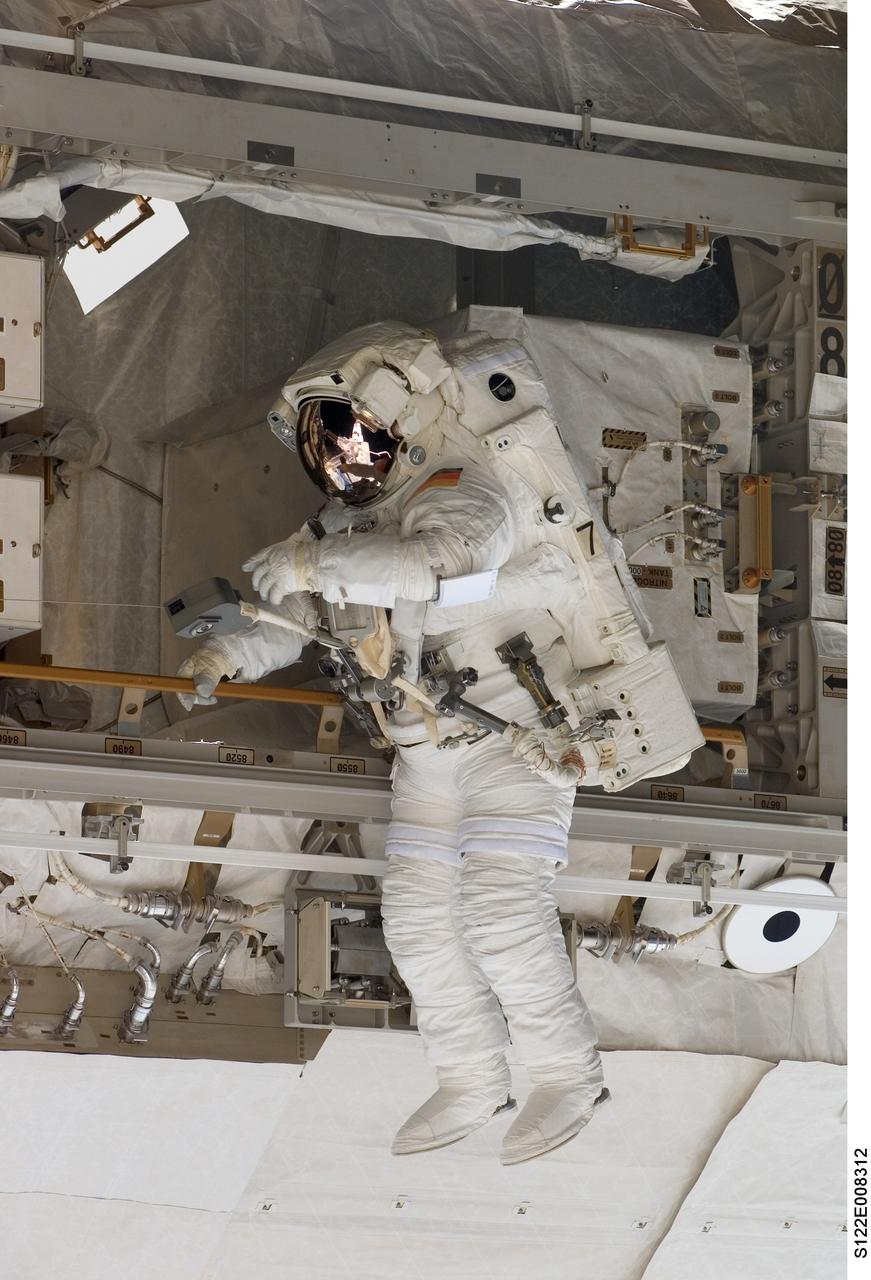
S122-E-008312 (13 Feb. 2008) --- European Space Agency (ESA) astronaut Hans Schlegel, STS-122 mission specialist, participates in the mission's second scheduled session of extravehicular activity (EVA) as construction and maintenance continue on the International Space Station. During the six-hour, 45-minute spacewalk, among other tasks, Schlegel and NASA astronaut Rex Walheim (out of frame), mission specialist, worked to replace a nitrogen tank used to pressurize the station's ammonia cooling system.