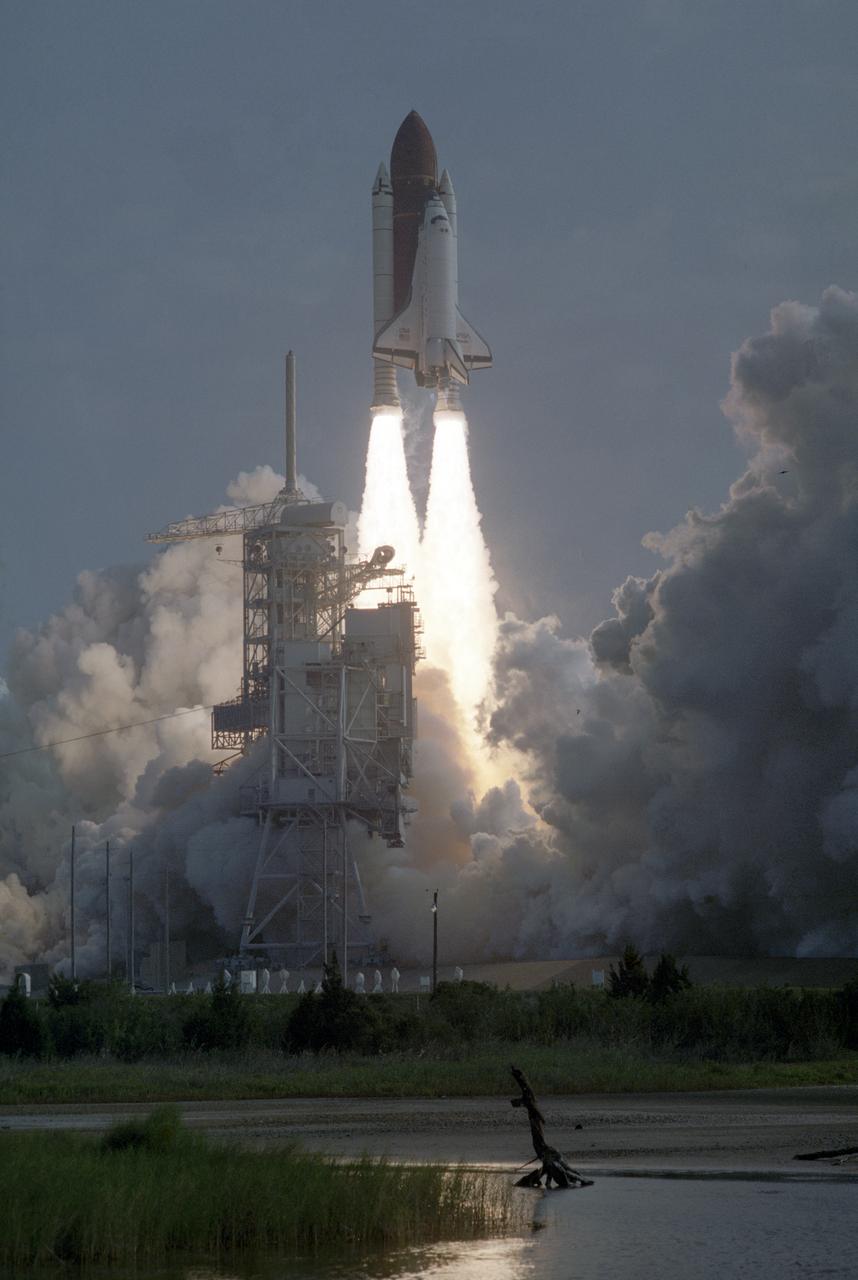
The STS-45 mission launched aboard the Space Shuttle Atlantis on March 24, 1992 at 8:13:40am (EST) carrying the Atmospheric Laboratory for Application and Science (ATLAS-1) as its primary payload. Crew members included: Charles F. Bolden, Jr., commander; Brian Duffy, pilot; Kathryn D. Sullivan, payload commander; Byron K. Lichtenberg, payload specialist 1; Dirk K. Frimout, payload specialist 2; David C. Leestma, mission specialist 2; and C. Michael Foale, mission specialist 3.
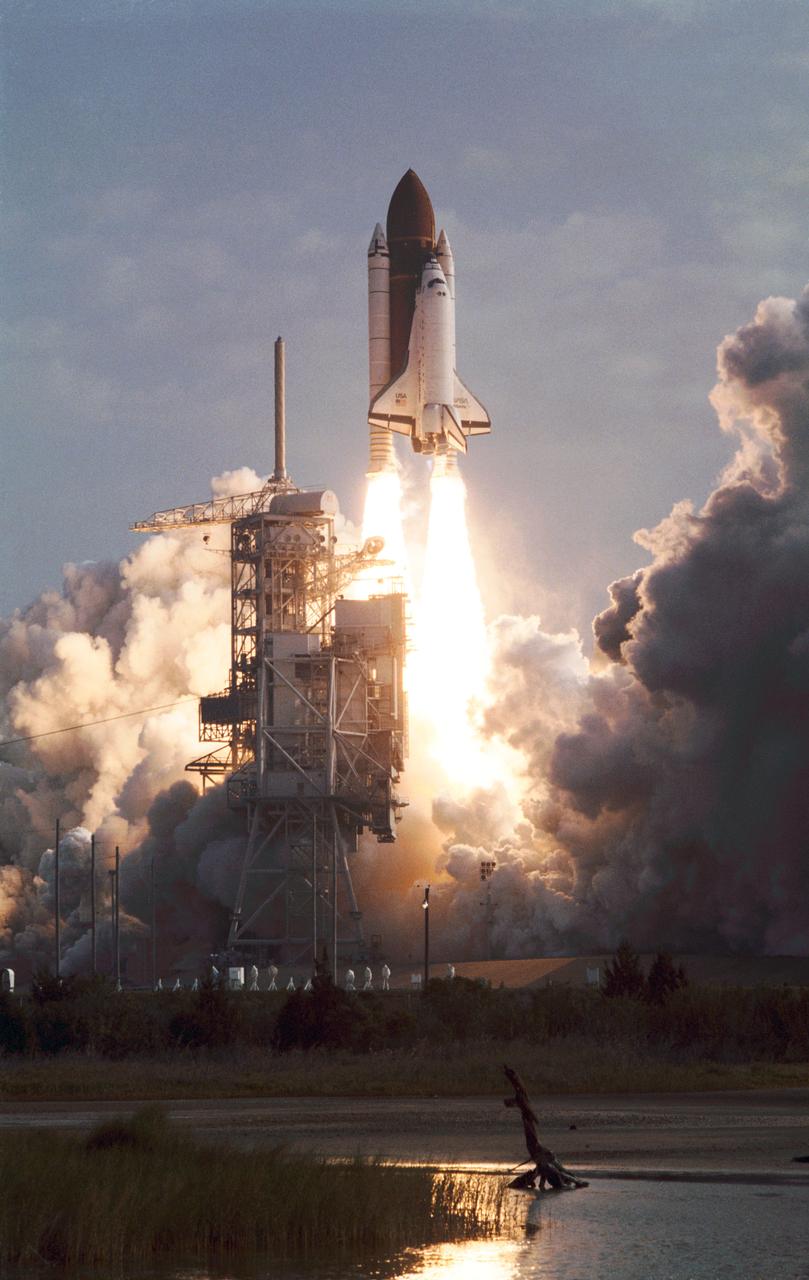
STS-45 Atlantis, Orbiter Vehicle (OV) 104, lifts off from a Kennedy Space Center (KSC) Launch Complex (LC) Pad at 8:13:40:048 am (Eastern Standard Time (EST)). Exhaust billows out the solid rocket boosters (SRBs) as OV-104 atop its external tank (ET) soars above the mobile launcher platform and is nearly clear of the fixed service structure (FSS) tower. The diamond shock effect produced by the space shuttle main engines (SSMEs) is visible. The glow of the SRB/SSME firings is reflected in a nearby waterway. An exhaust cloud covers the launch pad area.
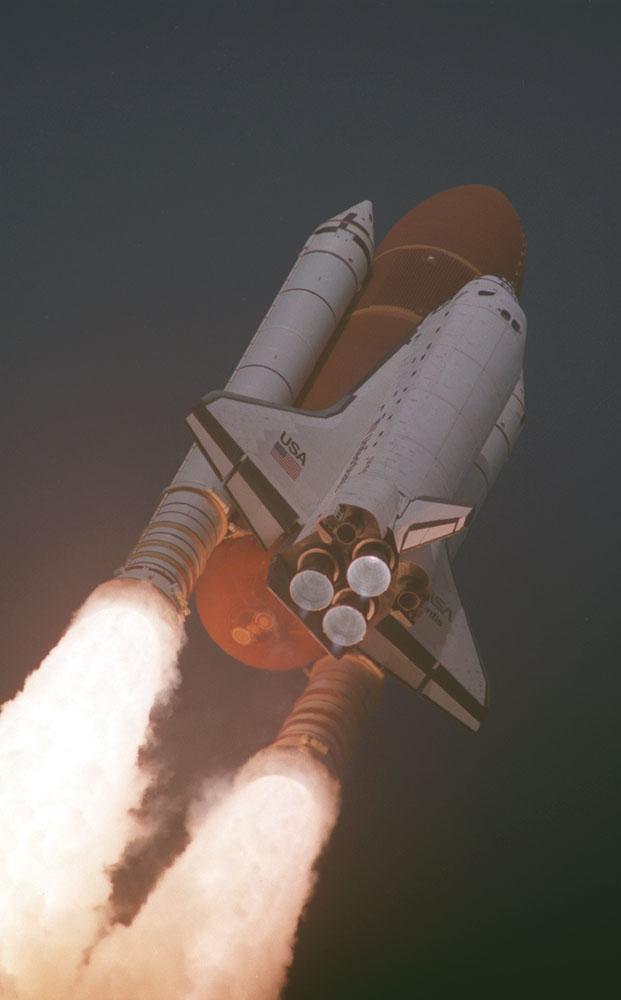
The Space Shuttle Atlantis (STS-45) roars into space in this photo showing a close-up of the Solid Rocket Boosters (SRBs) and the external tank. Atlantis' mission included experiments on the Atmospheric Lab for Applications and Sciences (ATLAS). ATLAS-1 measures long-term variability in the total energy radiated by the sun and determines the variability in the solar spectrum.
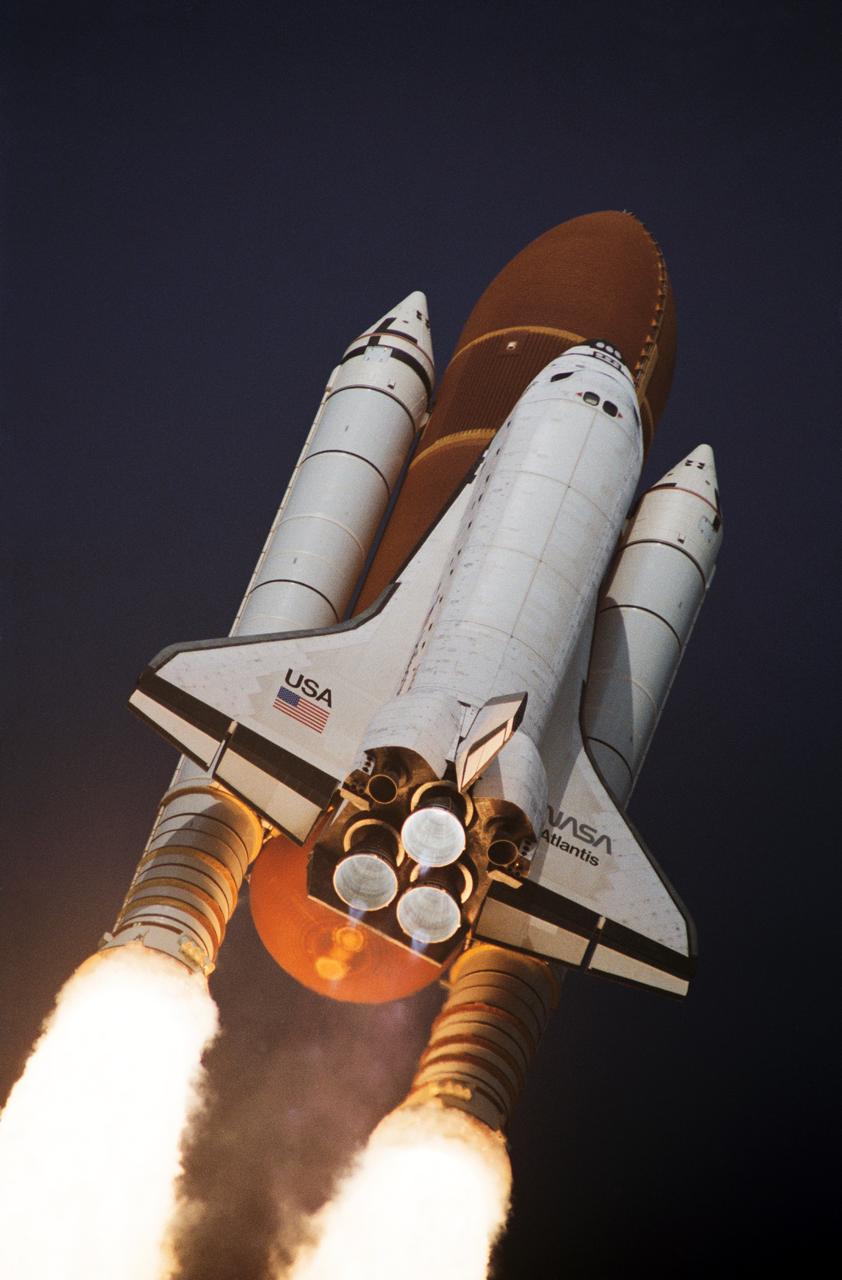
STS045-S-053 (24 March 1992) --- A low-angle view of the Space Shuttle Atlantis as it soars off the launch pad and heads toward Earth orbit with a crew of seven and the Atmospheric Laboratory for Applications and Science (ATLAS) aboard. Launch occurred at 8:13:40:048 a.m. (EST), March 24, 1992. Onboard were astronauts Charles F. Bolden, STS-45 commander; Brian Duffy, pilot; Kathryn D. Sullivan, payload commander; David C. Leestma and C. Michael Foale, mission specialists; and Dirk Frimout of the European Space Agency and Byron K. Lichtenberg, payload specialists.
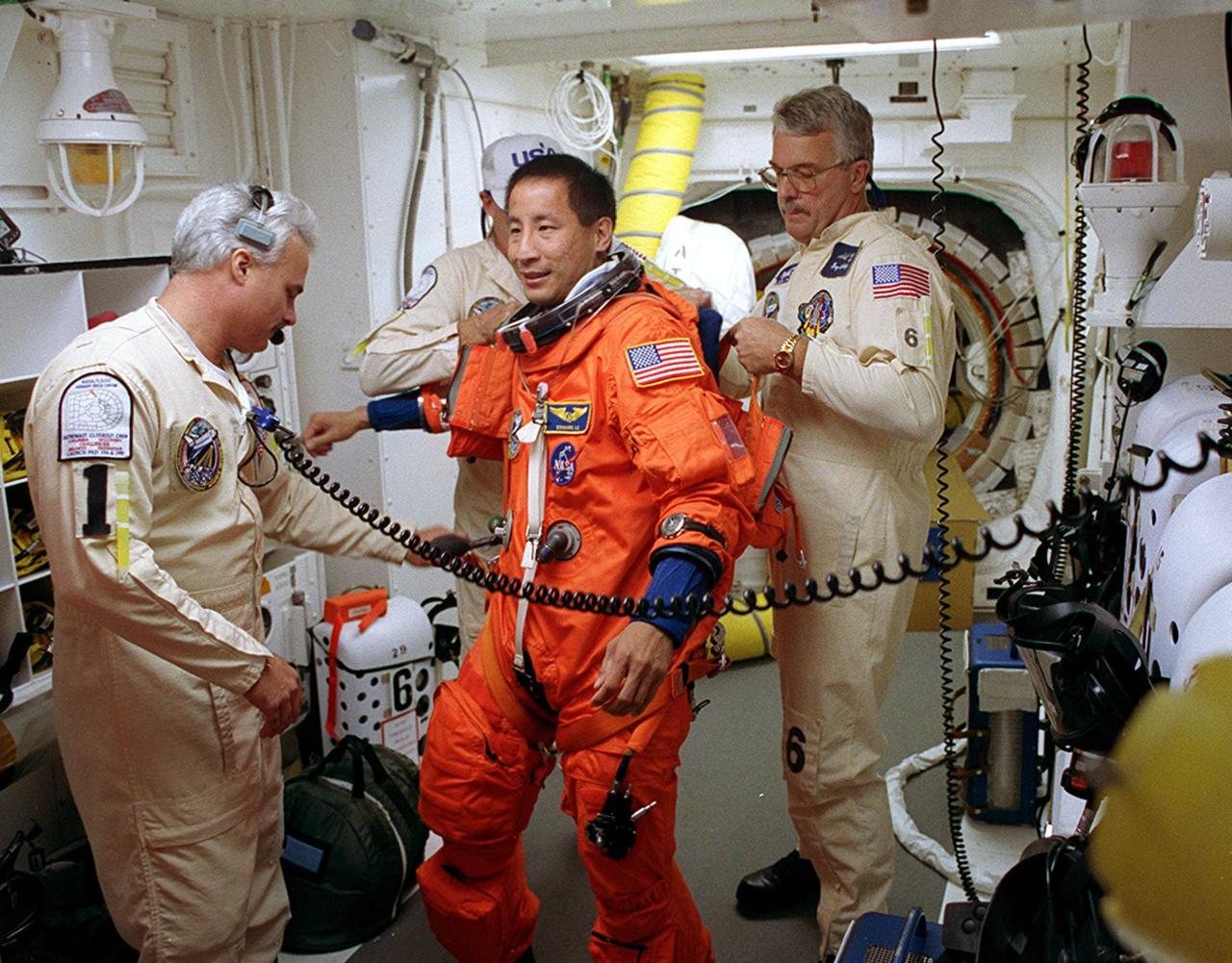
Before entering Space Shuttle Atlantis, STS-106 Mission Specialist Edward T. Lu gets help with his launch and entry suit in the White Room. The perfect on-time liftoff of Atlantis on mission STS-106 occurred at 8:45:47 a.m. EDT. On the 11-day mission to the International Space Station, the seven-member crew will perform support tasks on orbit, transfer supplies and prepare the living quarters in the newly arrived Zvezda Service Module. The first long-duration crew, dubbed “Expedition One,” is due to arrive at the Station in late fall. Landing of Atlantis is targeted for 4:45 a.m. EDT on Sept. 19
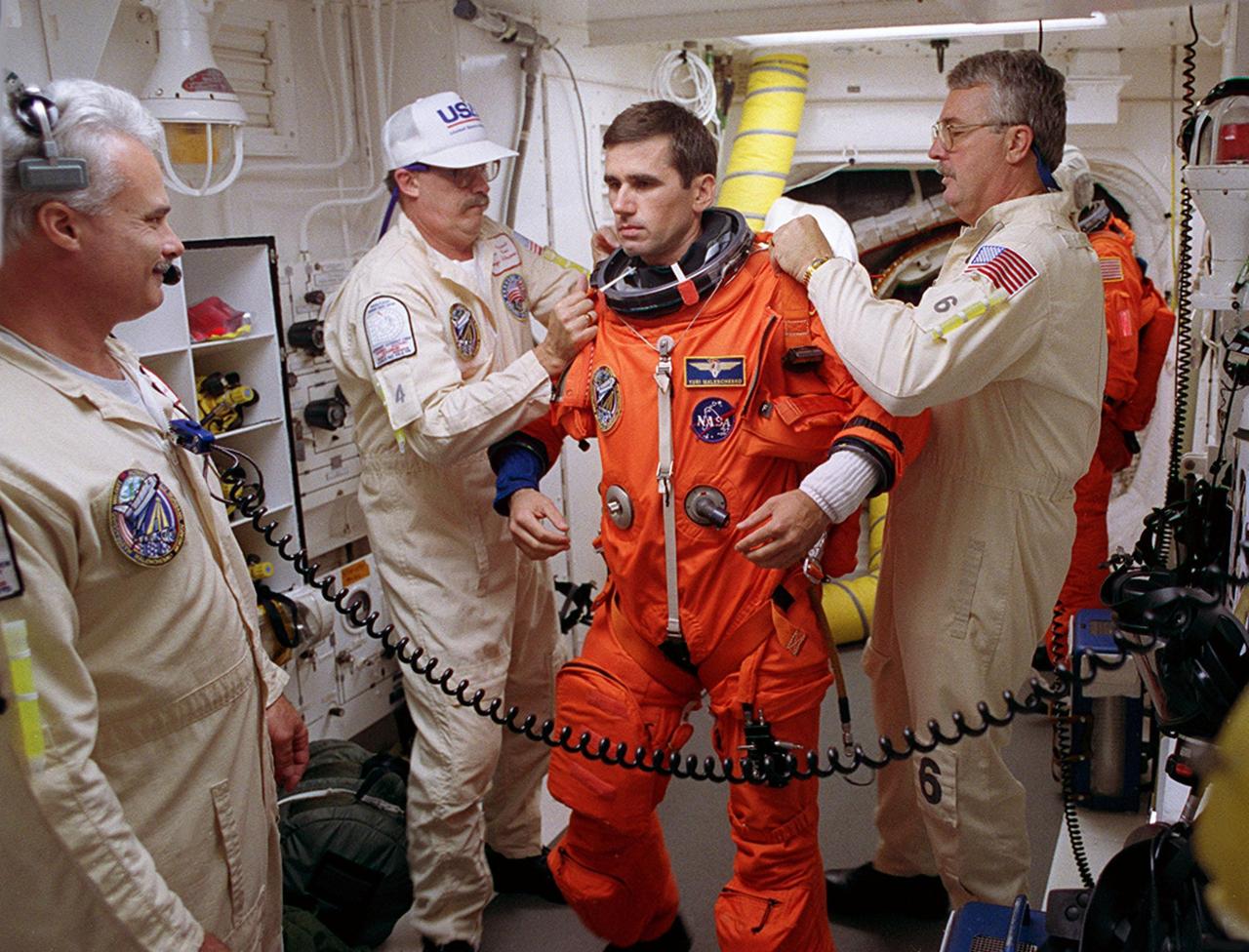
Before entering Space Shuttle Atlantis, STS-106 Mission Specialist Yuri I. Malenchenko gets help with his launch and entry suit in the White Room. The perfect on-time liftoff of Atlantis on mission STS-106 occurred at 8:45:47 a.m. EDT. On the 11-day mission to the International Space Station, the seven-member crew will perform support tasks on orbit, transfer supplies and prepare the living quarters in the newly arrived Zvezda Service Module. The first long-duration crew, dubbed “Expedition One,” is due to arrive at the Station in late fall. Landing of Atlantis is targeted for 4:45 a.m. EDT on Sept. 19
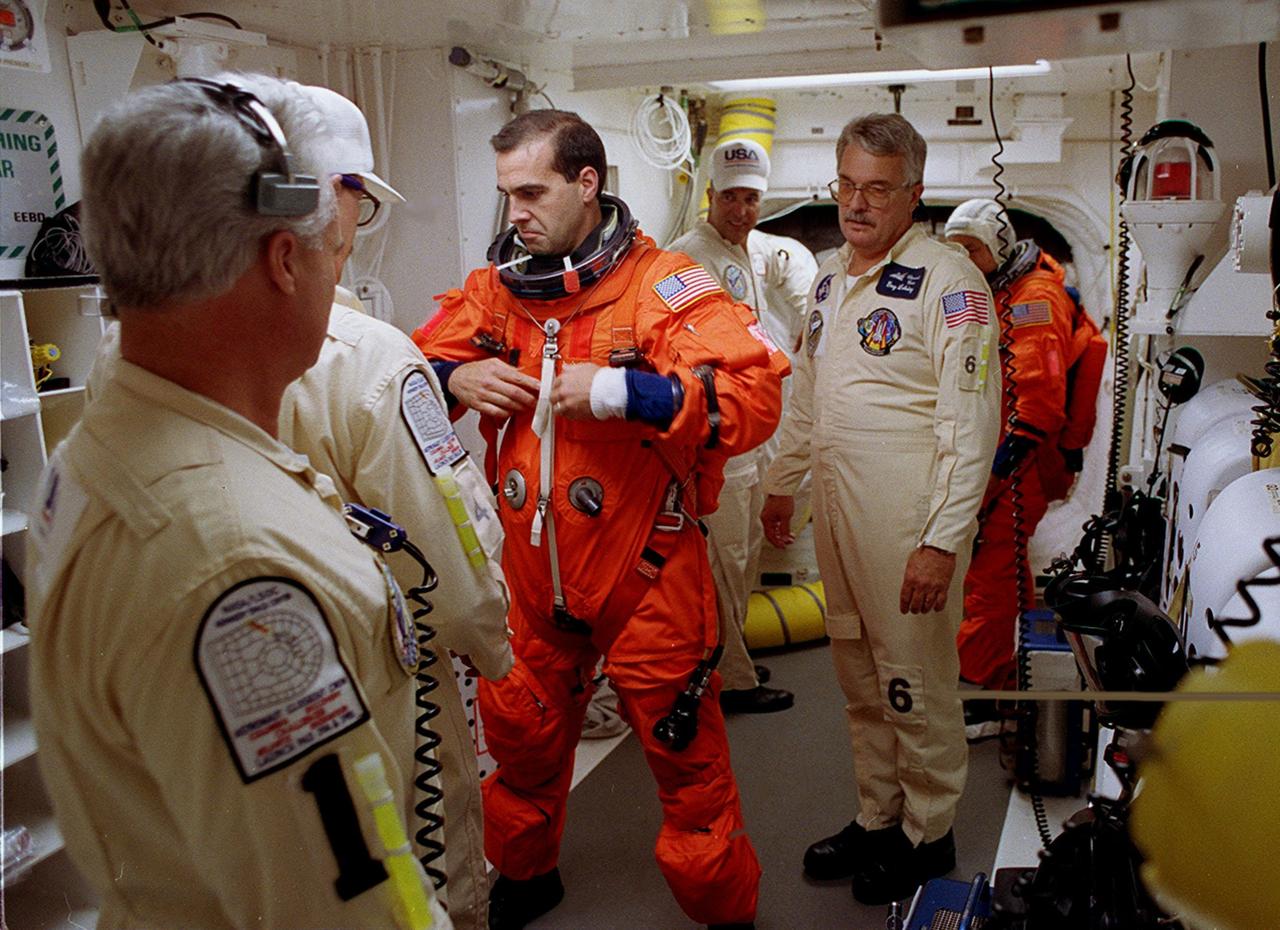
STS-106 Mission Specialist Richard A. Mastracchio is helped with his launch and entry suit in the White Room before entering Space Shuttle Atlantis. The perfect on-time liftoff of Atlantis on mission STS-106 occurred at 8:45:47 a.m. EDT. On the 11-day mission to the International Space Station, the seven-member crew will perform support tasks on orbit, transfer supplies and prepare the living quarters in the newly arrived Zvezda Service Module. The first long-duration crew, dubbed “Expedition One,” is due to arrive at the Station in late fall. Landing of Atlantis is targeted for 4:45 a.m. EDT on Sept. 19

STS-106 Pilot Scott D. Altman is helped with his launch and entry suit by suit technicians in the White Room before entering Space Shuttle Atlantis. The perfect on-time liftoff of Atlantis on mission STS-106 occurred at 8:45:47 a.m. EDT. On the 11-day mission to the International Space Station, the seven-member crew will perform support tasks on orbit, transfer supplies and prepare the living quarters in the newly arrived Zvezda Service Module. The first long-duration crew, dubbed “Expedition One,” is due to arrive at the Station in late fall. Landing of Atlantis is targeted for 4:45 a.m. EDT on Sept. 19
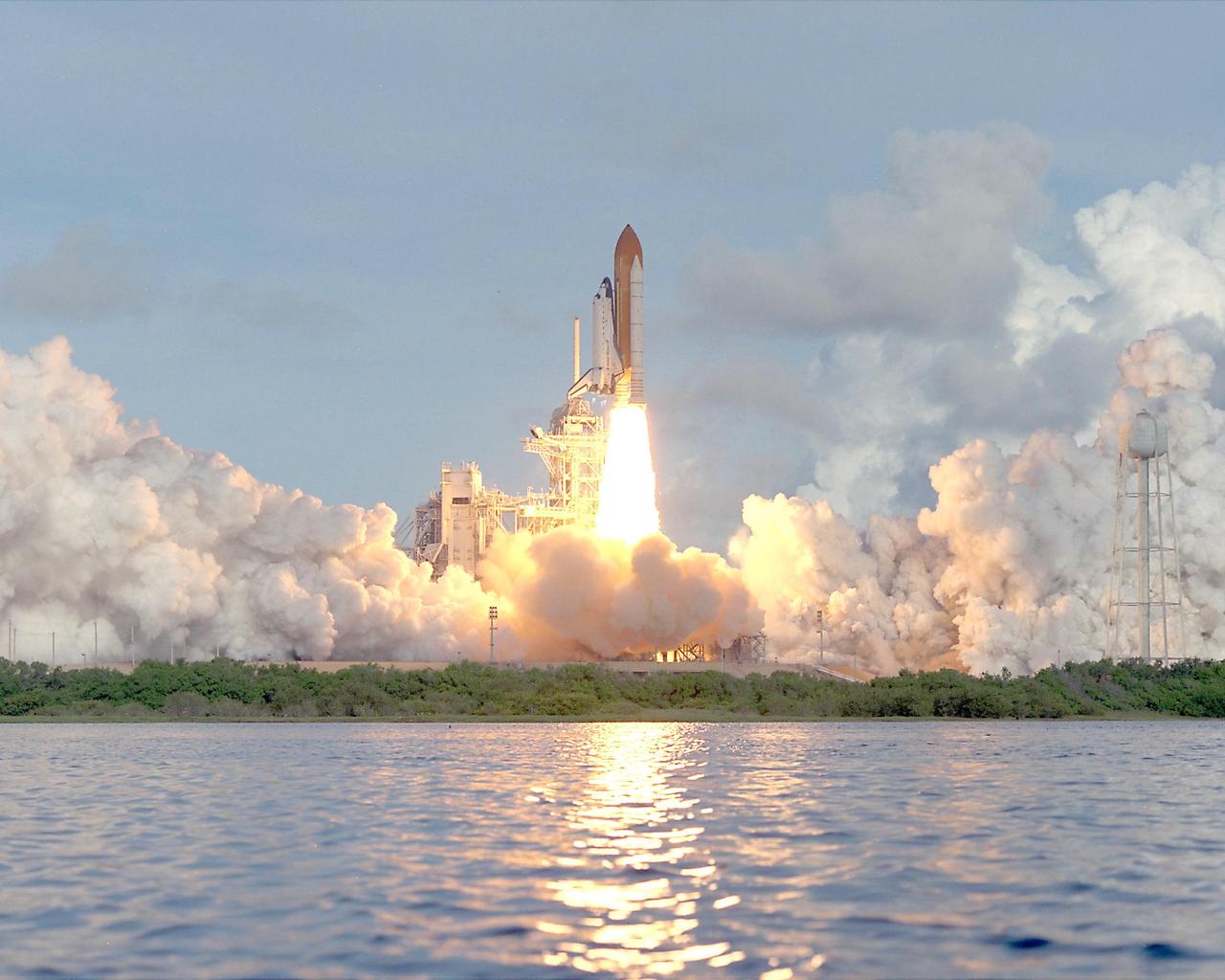
KENNEDY SPACE CENTER, Fla. -- The clouds of steam and smoke generated from the launch of Space Shuttle Atlantis seem to blend with the sky. The launch is reflected in waters near Launch Pad 39B. The perfect on-time liftoff of Atlantis on mission STS-106 occurred at 8:45:47 a.m. EDT. On the 11-day mission to the International Space Station, the seven-member crew will perform support tasks on orbit, transfer supplies and prepare the living quarters in the newly arrived Zvezda Service Module. The first long-duration crew, dubbed “Expedition One,” is due to arrive at the Station in late fall. Landing of Atlantis is targeted for 4:45 a.m. EDT on Sept. 19
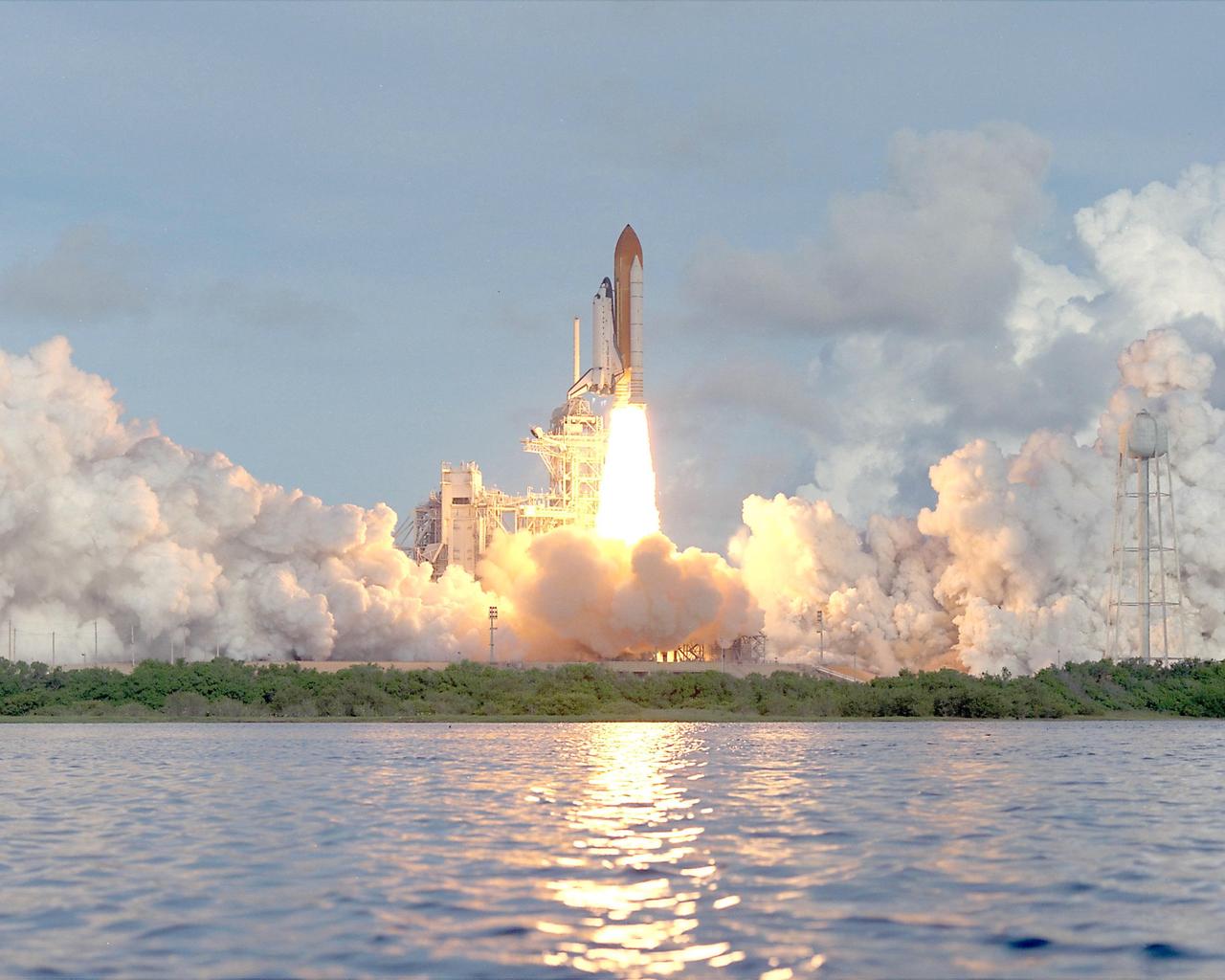
KENNEDY SPACE CENTER, Fla. -- The clouds of steam and smoke generated from the launch of Space Shuttle Atlantis seem to blend with the sky. The launch is reflected in waters near Launch Pad 39B. The perfect on-time liftoff of Atlantis on mission STS-106 occurred at 8:45:47 a.m. EDT. On the 11-day mission to the International Space Station, the seven-member crew will perform support tasks on orbit, transfer supplies and prepare the living quarters in the newly arrived Zvezda Service Module. The first long-duration crew, dubbed “Expedition One,” is due to arrive at the Station in late fall. Landing of Atlantis is targeted for 4:45 a.m. EDT on Sept. 19
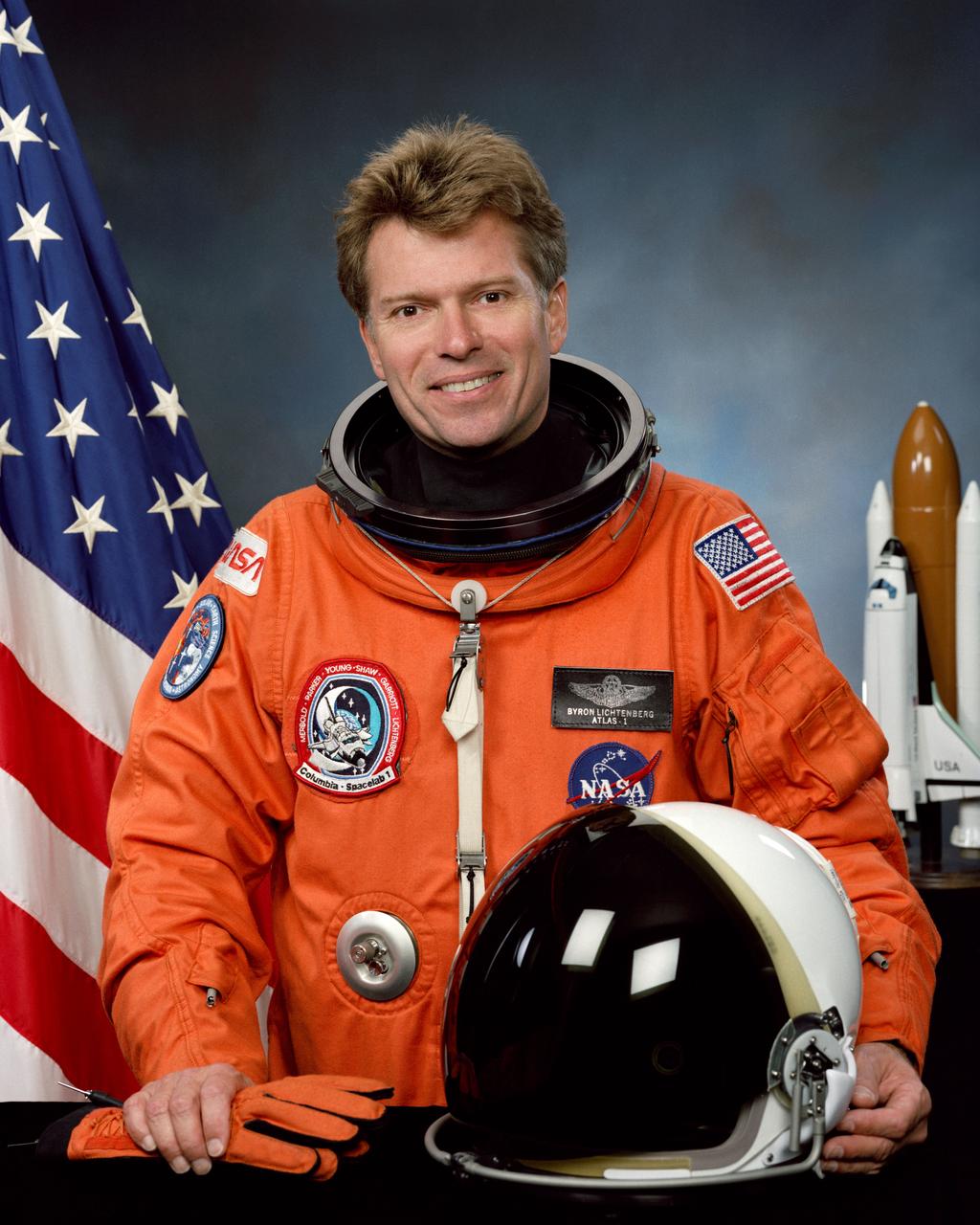
S91-51294 (Nov 1991) --- Astronaut Byron K. Lichtenberg, payload specialist.
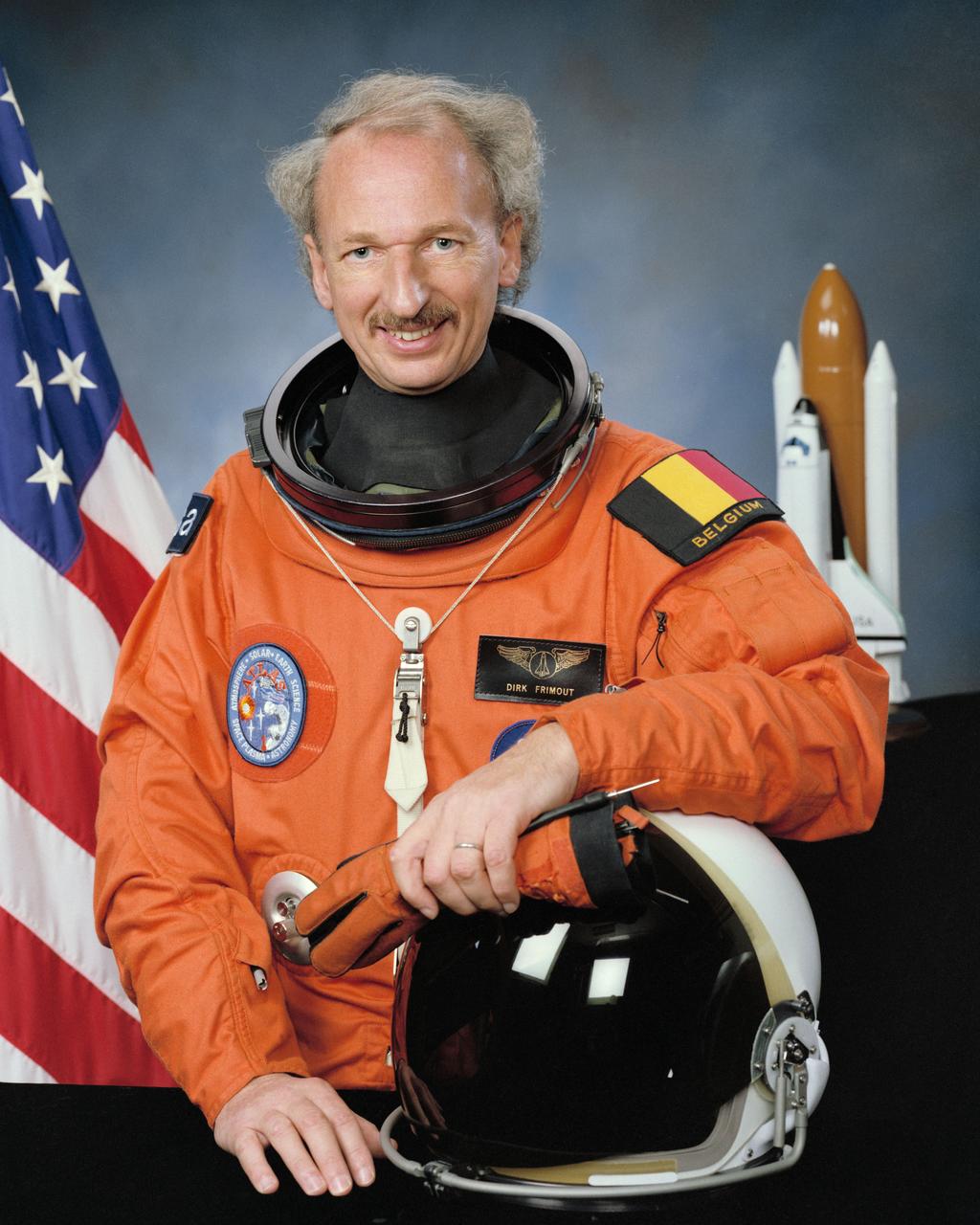
S91-51295 (1991) --- Astronaut Dirk Frimout, payload specialist representing the European Space Agency (ESA).
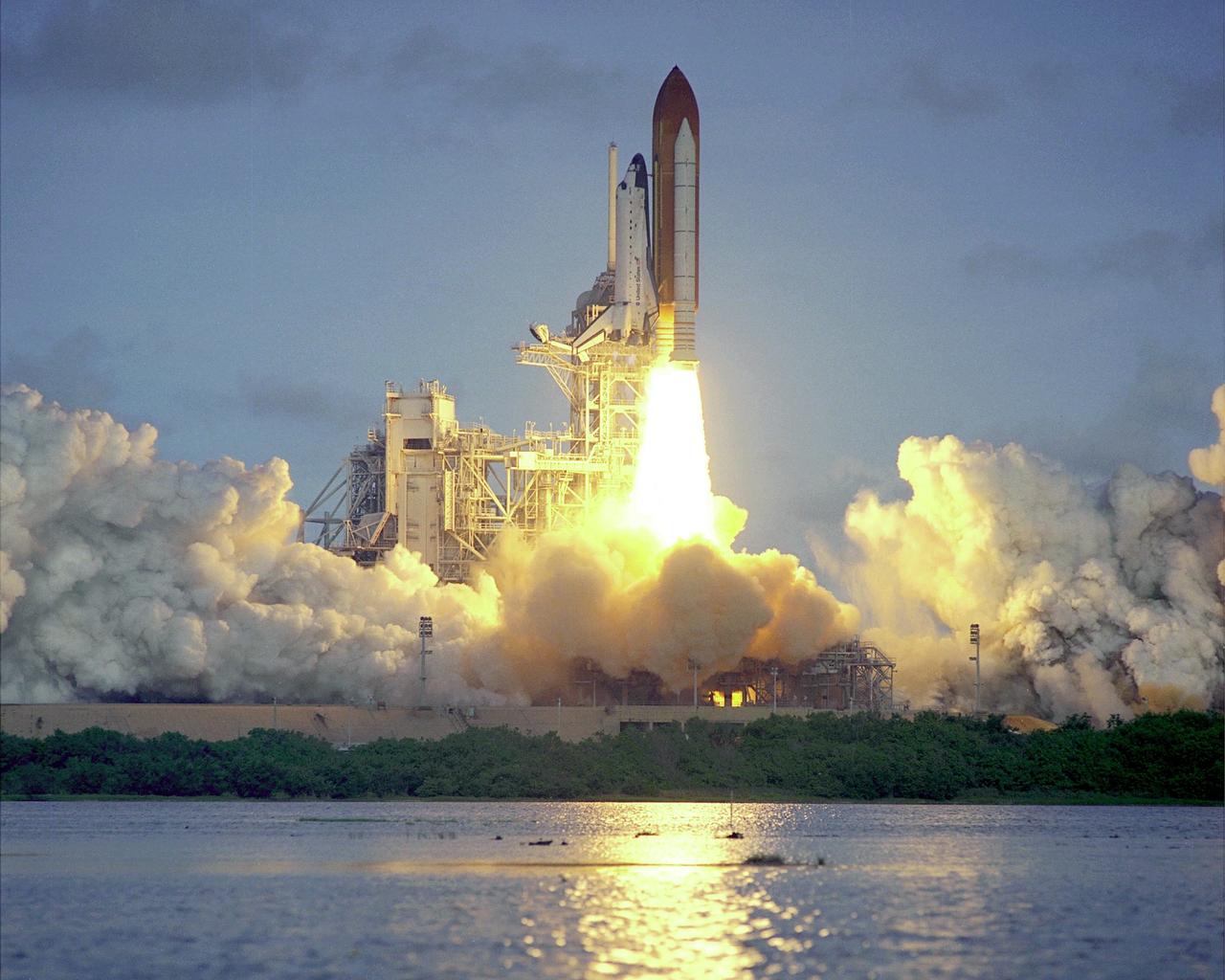
KENNEDY SPACE CENTER, Fla. -- Space Shuttle Atlantis’s solid rocket boosters trail brilliant flames that light up the clouds of smoke and steam and reflect in the waters Launch Pad 39B at launch. The perfect on-time liftoff of Atlantis on mission STS-106 occurred at 8:45:47 a.m. EDT. On the 11-day mission to the International Space Station, the seven-member crew will perform support tasks on orbit, transfer supplies and prepare the living quarters in the newly arrived Zvezda Service Module. The first long-duration crew, dubbed “Expedition One,” is due to arrive at the Station in late fall. Landing of Atlantis is targeted for 4:45 a.m. EDT on Sept. 19
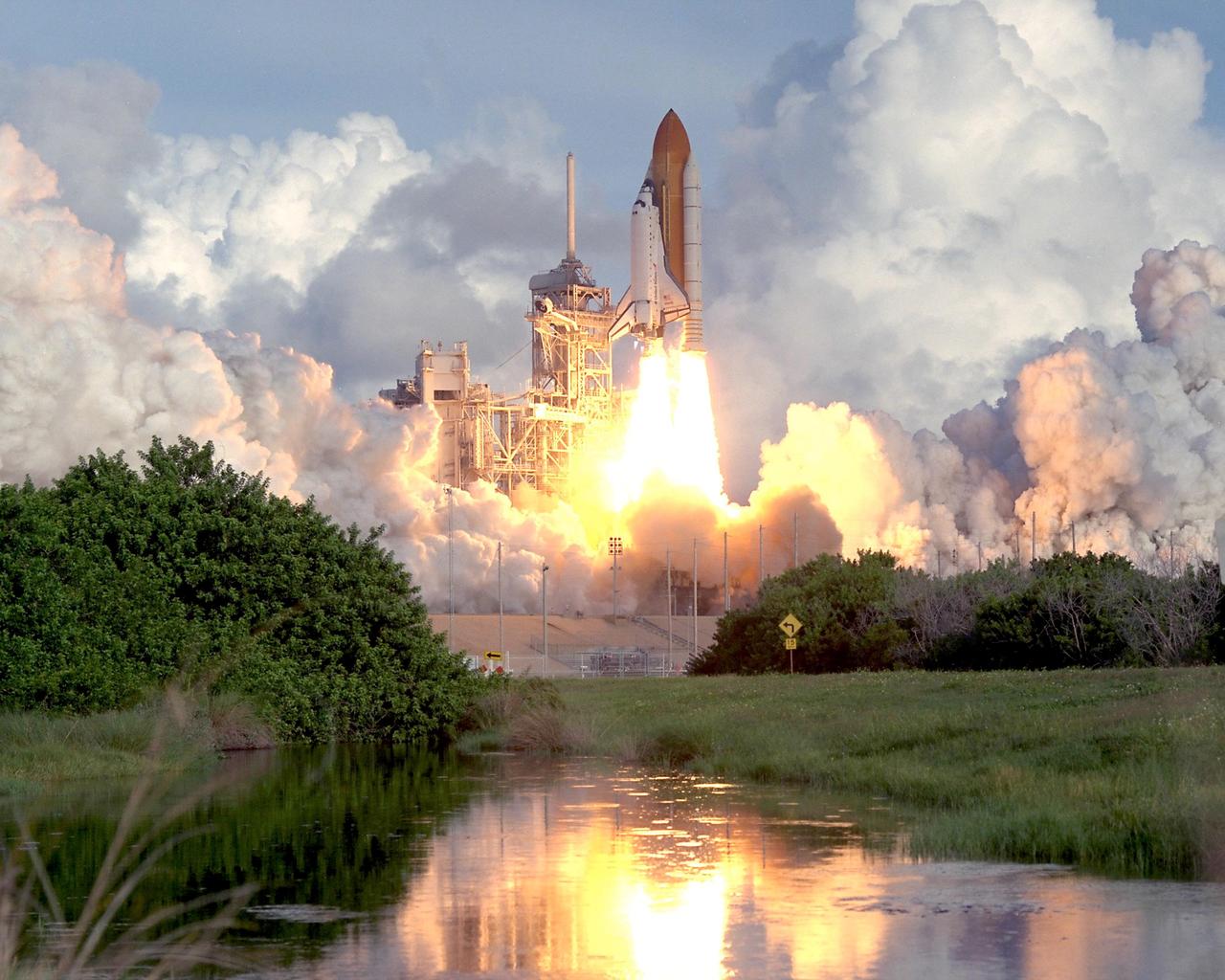
KENNEDY SPACE CENTER, Fla. -- The waters near Launch Pad 39B reflect the brilliant red-orange flames from the solid rocket boosters as Space Shuttle Atlantis lifts off on mission STS-106 to the International Space Station. The perfect on-time launch occurred at 8:45:47 a.m. EDT. On the 11-day mission to the Station, the seven-member crew will perform support tasks on orbit, transfer supplies and prepare the living quarters in the newly arrived Zvezda Service Module. The first long-duration crew, dubbed “Expedition One,” is due to arrive at the Station in late fall. Landing of Atlantis is targeted for 4:45 a.m. EDT on Sept. 19.
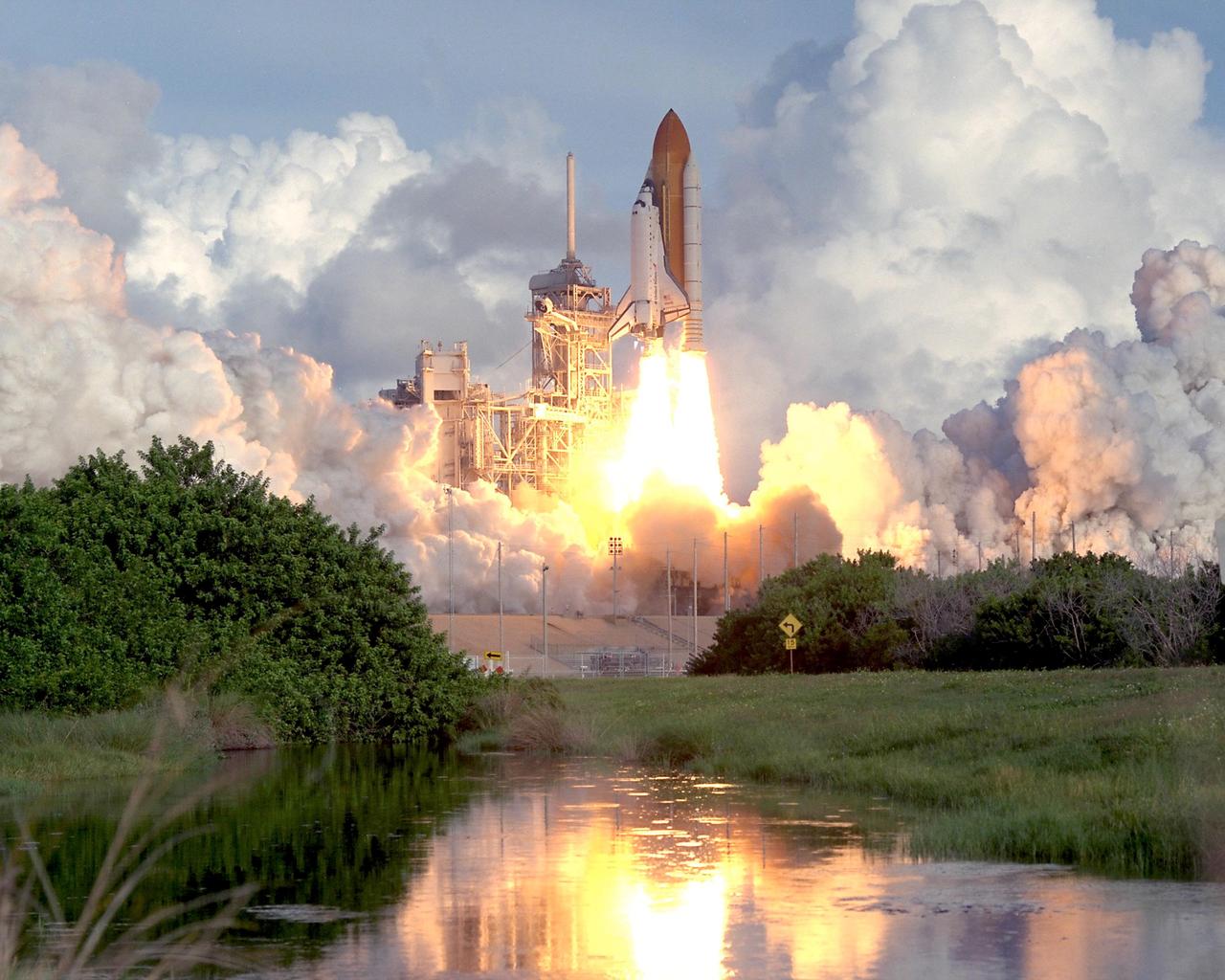
KENNEDY SPACE CENTER, Fla. -- The waters near Launch Pad 39B reflect the brilliant red-orange flames from the solid rocket boosters as Space Shuttle Atlantis lifts off on mission STS-106 to the International Space Station. The perfect on-time launch occurred at 8:45:47 a.m. EDT. On the 11-day mission to the Station, the seven-member crew will perform support tasks on orbit, transfer supplies and prepare the living quarters in the newly arrived Zvezda Service Module. The first long-duration crew, dubbed “Expedition One,” is due to arrive at the Station in late fall. Landing of Atlantis is targeted for 4:45 a.m. EDT on Sept. 19.
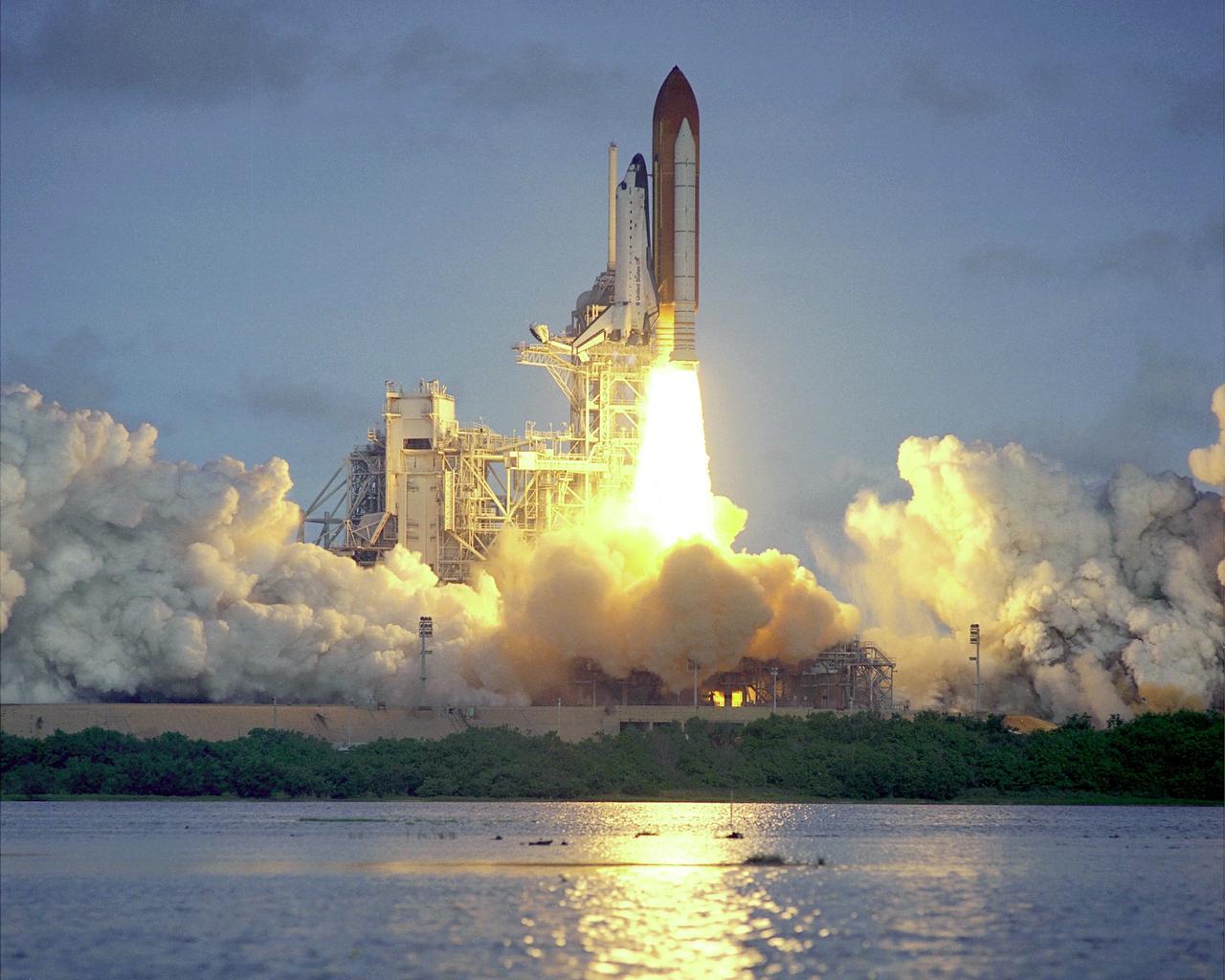
KENNEDY SPACE CENTER, Fla. -- Space Shuttle Atlantis’s solid rocket boosters trail brilliant flames that light up the clouds of smoke and steam and reflect in the waters Launch Pad 39B at launch. The perfect on-time liftoff of Atlantis on mission STS-106 occurred at 8:45:47 a.m. EDT. On the 11-day mission to the International Space Station, the seven-member crew will perform support tasks on orbit, transfer supplies and prepare the living quarters in the newly arrived Zvezda Service Module. The first long-duration crew, dubbed “Expedition One,” is due to arrive at the Station in late fall. Landing of Atlantis is targeted for 4:45 a.m. EDT on Sept. 19
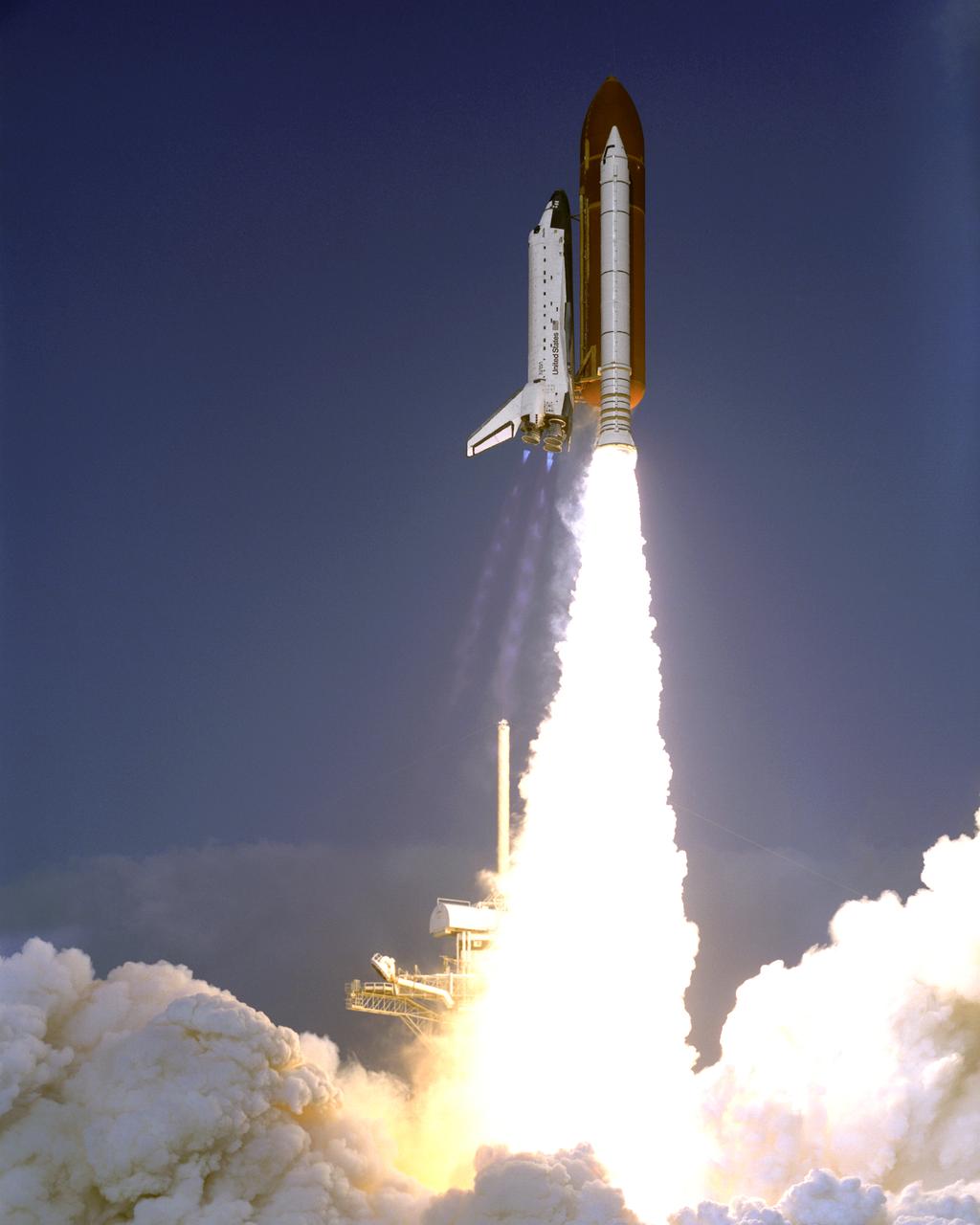
NASA's mission to planet Earth continues as Atlantis and the STS-45 International crew of xeven roars off Pad 39A with theAtmospheric Laboratory for Applications and Science (Atlas-1) onboard. Launch occurred at 8:13 A.M., EST March 24, 1992. (Test D1310)(Item D-56)

STS-45 Mission Commander Charlie Bolden, Jr., is glad to be back in Florida and ready for the launch of the 46th Shuttle Mission. Bolden and six fellow crew members arrived at KSC's landing strip after the Countdown Clock had already stated ticking toward liftoff of the Space Shuttle Atlantis from Pad 39-A.
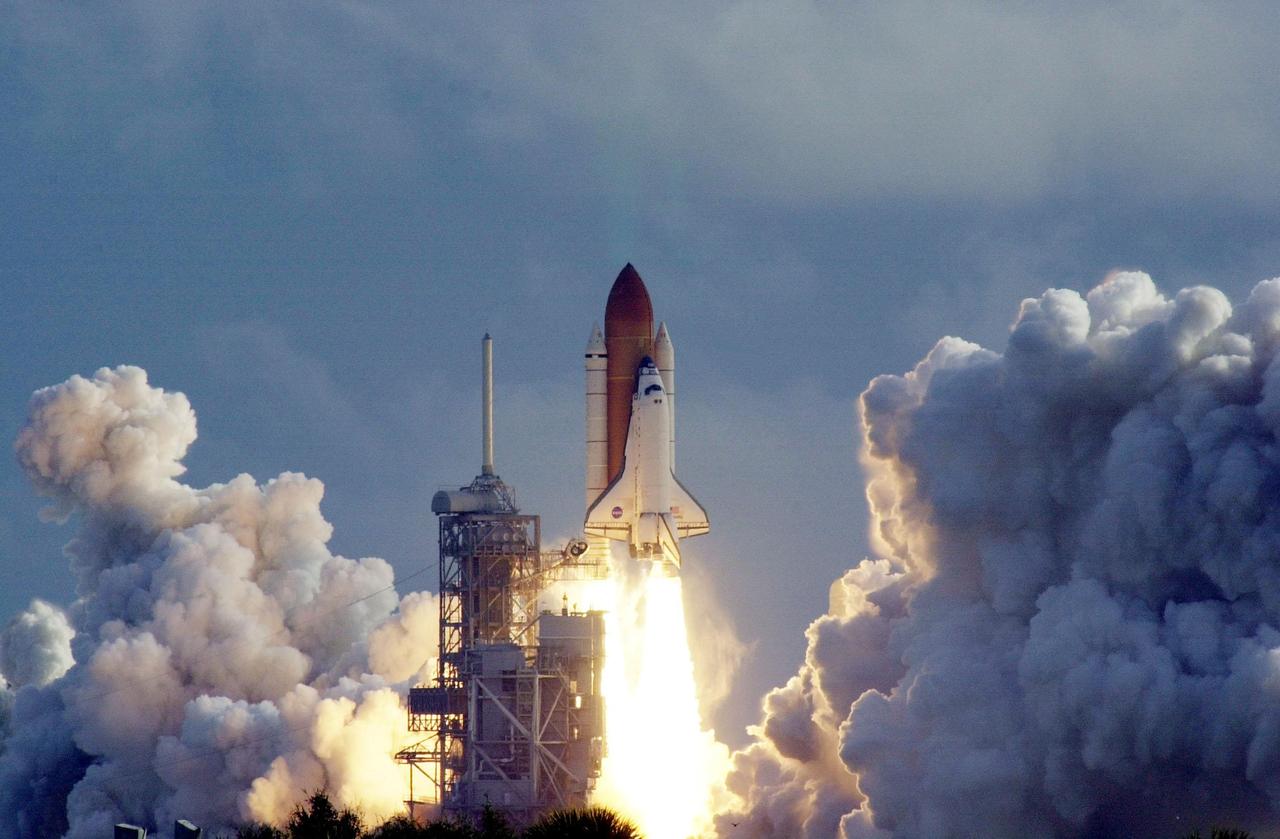
KENNEDY SPACE CENTER, Fla. -- Billows of clouds and smoke frame Space Shuttle Atlantis after a perfect on-time launch on mission STS-106 at 8:45:47 a.m. EDT. On the 11-day mission to the International Space Station, the seven-member crew will perform support tasks on orbit, transfer supplies and prepare the living quarters in the newly arrived Zvezda Service Module. The first long-duration crew, dubbed “Expedition One,” is due to arrive at the Station in late fall. Landing of Atlantis is targeted for 4:45 a.m. EDT on Sept. 19
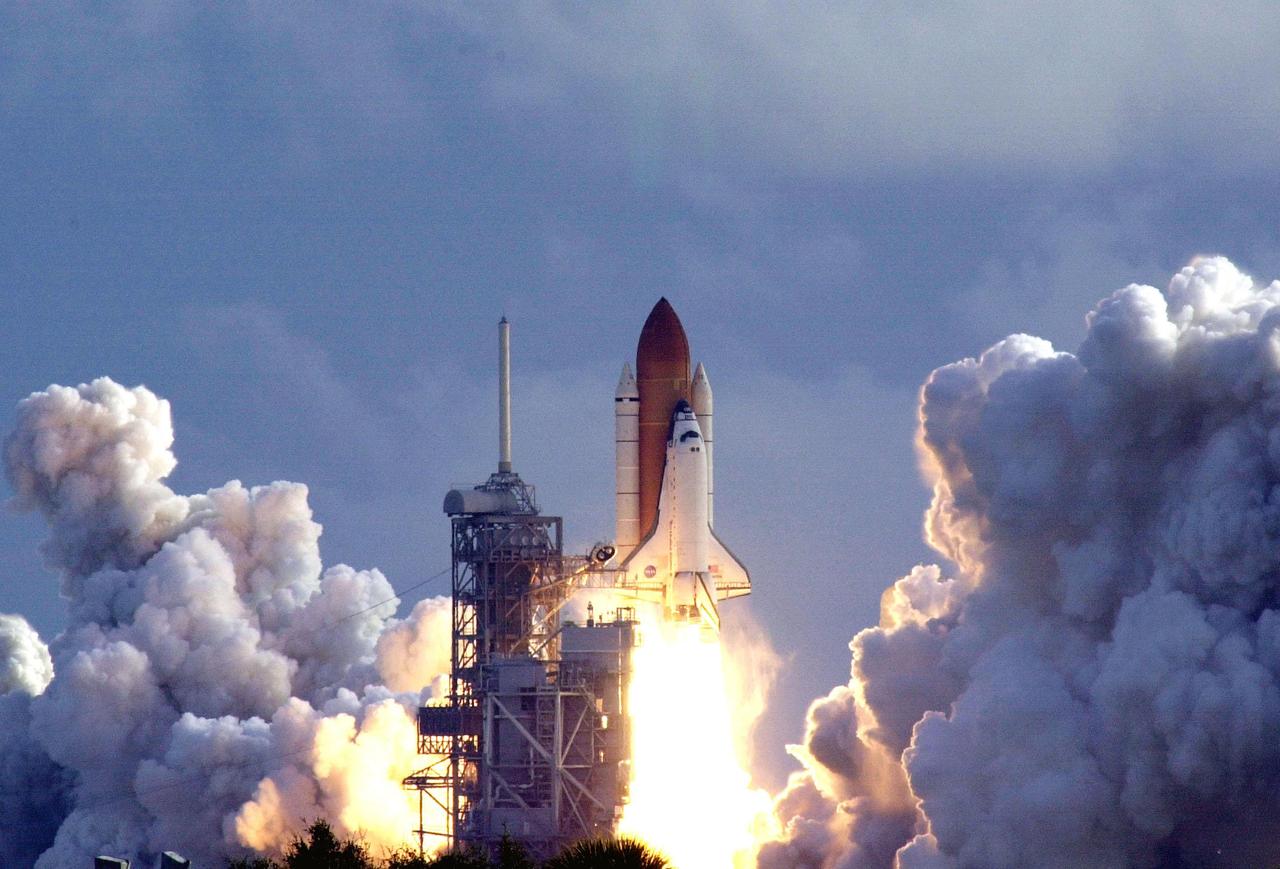
KENNEDY SPACE CENTER, Fla. -- A perfect launch sends Space Shuttle Atlantis, leaving a trail of flames and billows of smoke and clouds behind, hurtling toward space on mission STS-106. Liftoff occurred at 8:45:47 a.m. EDT today. On the 11-day mission to the International Space Station, the seven-member crew will perform support tasks on orbit, transfer supplies and prepare the living quarters in the newly arrived Zvezda Service Module. The first long-duration crew, dubbed “Expedition One,” is due to arrive at the Station in late fall. Landing of Atlantis is targeted for 4:45 a.m. EDT on Sept. 19
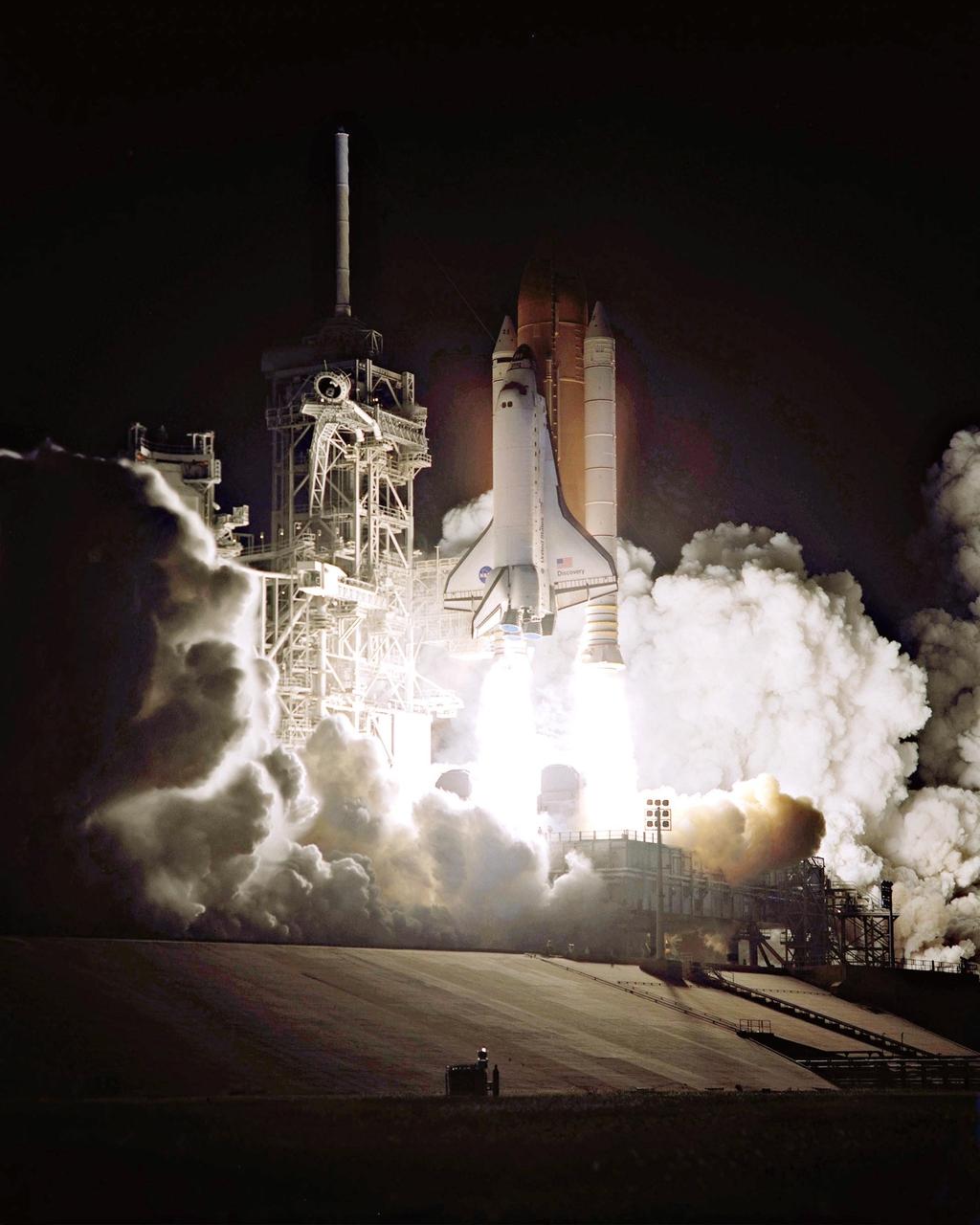
KENNEDY SPACE CENTER, Fla. -- A perfect on-time launch for Atlantis as it rockets toward space on mission STS-106. Liftoff occurred at 8:45:47 a.m. EDT. On the 11-day mission to the International Space Station, the seven-member crew will perform support tasks on orbit, transfer supplies and prepare the living quarters in the newly arrived Zvezda Service Module. The first long-duration crew, dubbed “Expedition One,” is due to arrive at the Station in late fall. Landing of Atlantis is targeted for 4:45 a.m. EDT on Sept. 19
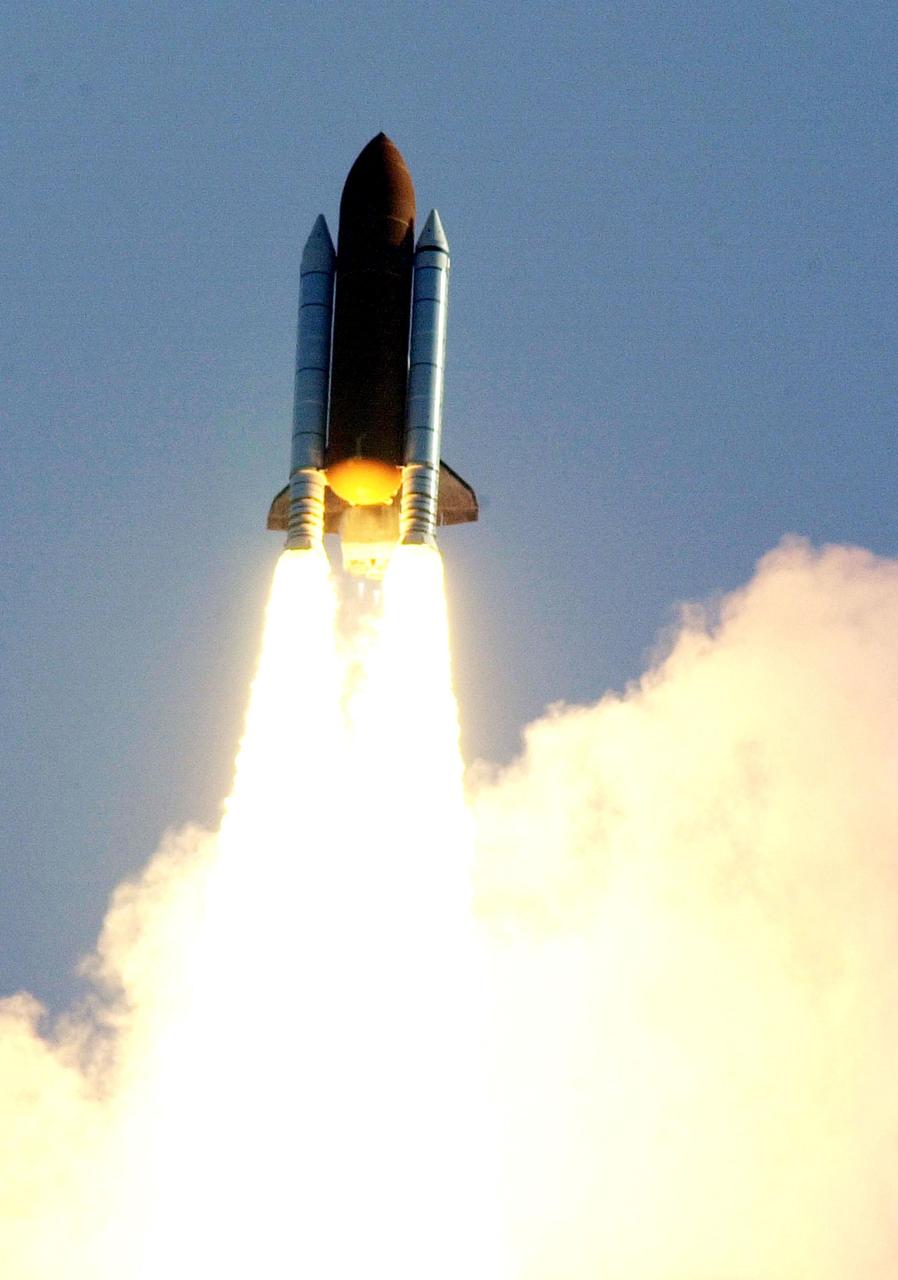
KENNEDY SPACE CENTER, Fla. -- After a perfect on-time launch on mission STS-106 at 8:45:47 a.m. EDT, Space Shuttle Atlantis rolls and displays its external tank and solid rocket boosters. On the 11-day mission to the International Space Station, the seven-member crew will perform support tasks on orbit, transfer supplies and prepare the living quarters in the newly arrived Zvezda Service Module. The first long-duration crew, dubbed “Expedition One,” is due to arrive at the Station in late fall. Landing of Atlantis is targeted for 4:45 a.m. EDT on Sept. 19
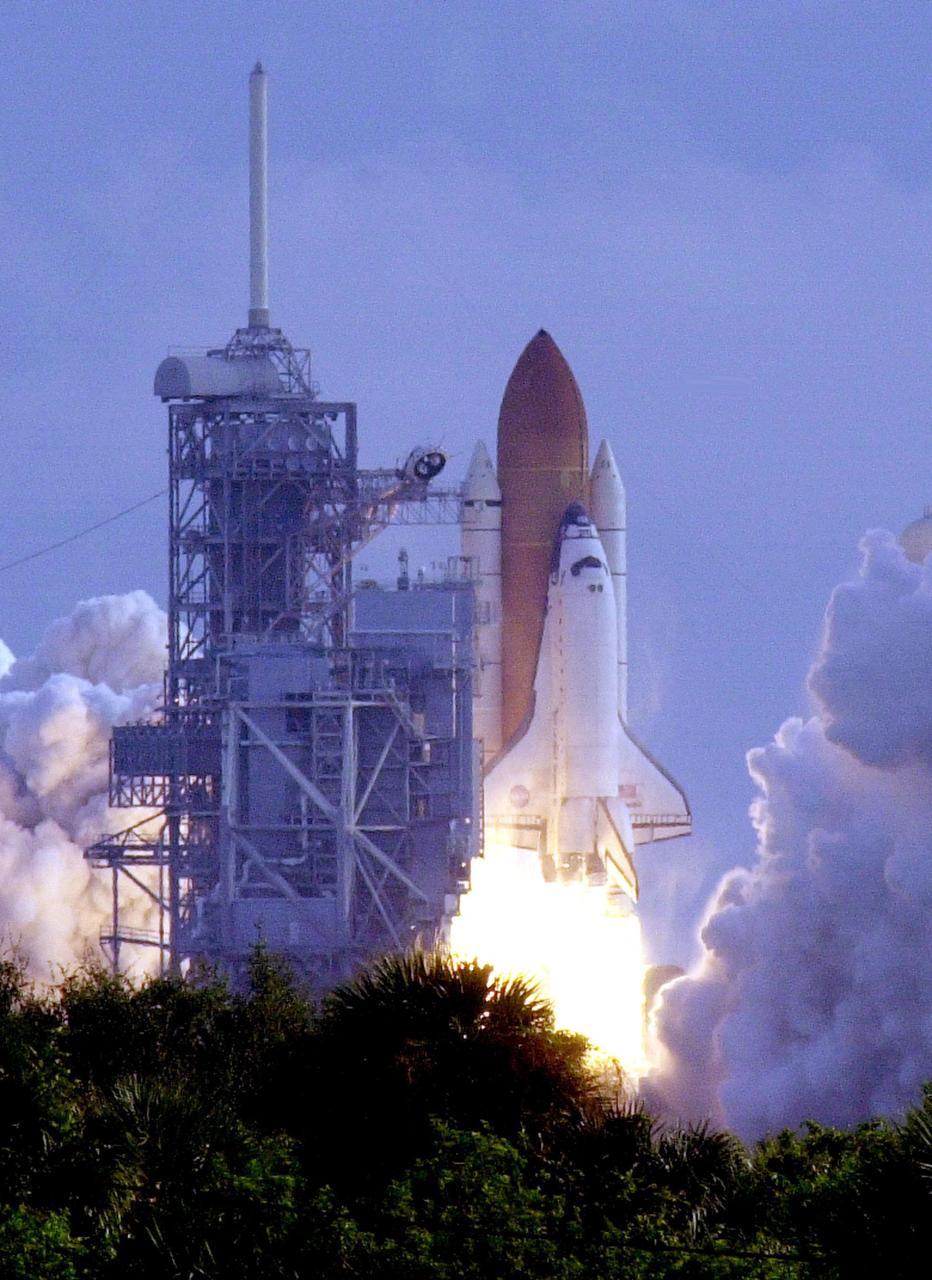
KENNEDY SPACE CENTER, Fla. -- Space Shuttle Atlantis roars toward space on mission STS-106 as it lifts off in a perfect launch at 8:45:47 a.m. EDT today. On the 11-day mission to the International Space Station, the seven-member crew will perform support tasks on orbit, transfer supplies and prepare the living quarters in the newly arrived Zvezda Service Module. The first long-duration crew, dubbed “Expedition One,” is due to arrive at the Station in late fall. Landing of Atlantis is targeted for 4:45 a.m. EDT on Sept. 19
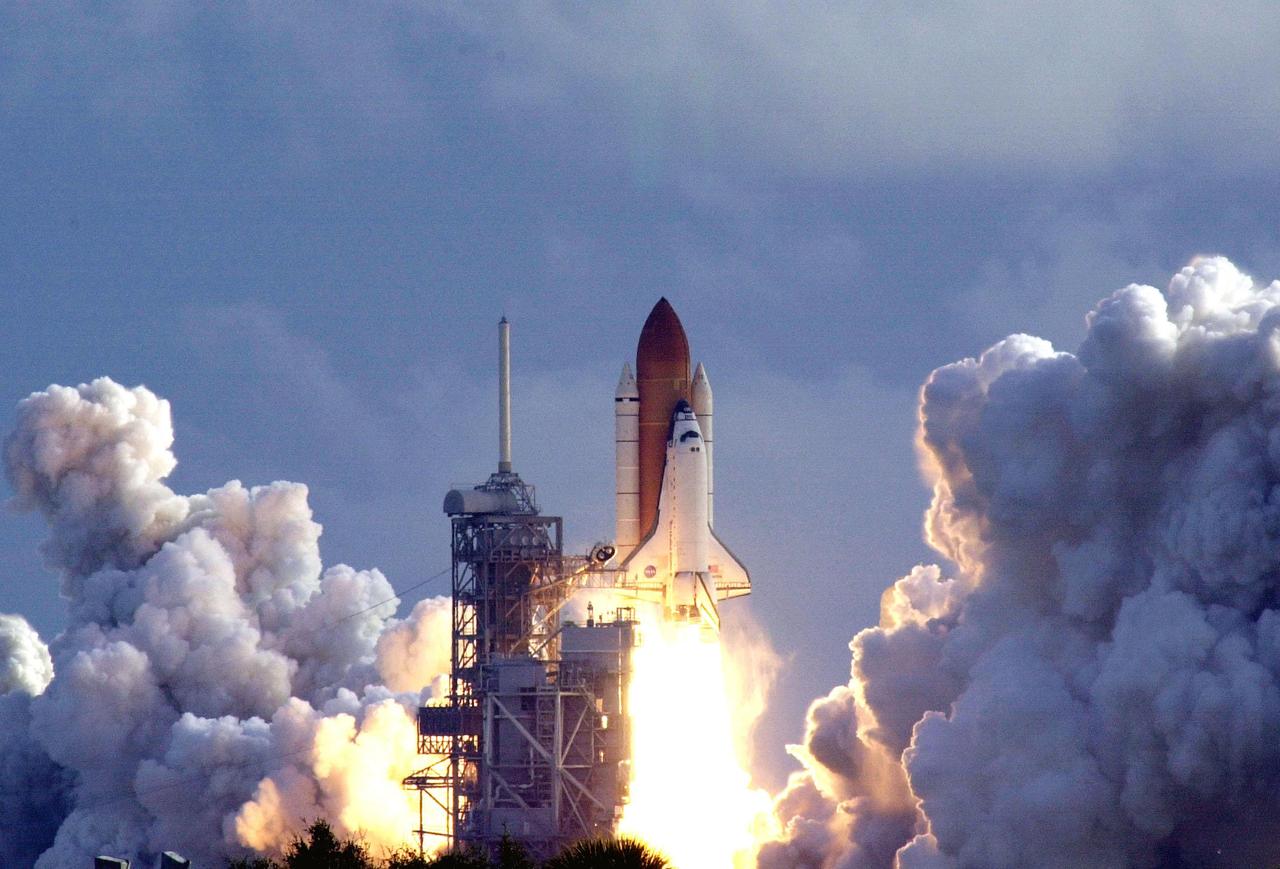
KENNEDY SPACE CENTER, Fla. -- A perfect launch sends Space Shuttle Atlantis, leaving a trail of flames and billows of smoke and clouds behind, hurtling toward space on mission STS-106. Liftoff occurred at 8:45:47 a.m. EDT today. On the 11-day mission to the International Space Station, the seven-member crew will perform support tasks on orbit, transfer supplies and prepare the living quarters in the newly arrived Zvezda Service Module. The first long-duration crew, dubbed “Expedition One,” is due to arrive at the Station in late fall. Landing of Atlantis is targeted for 4:45 a.m. EDT on Sept. 19
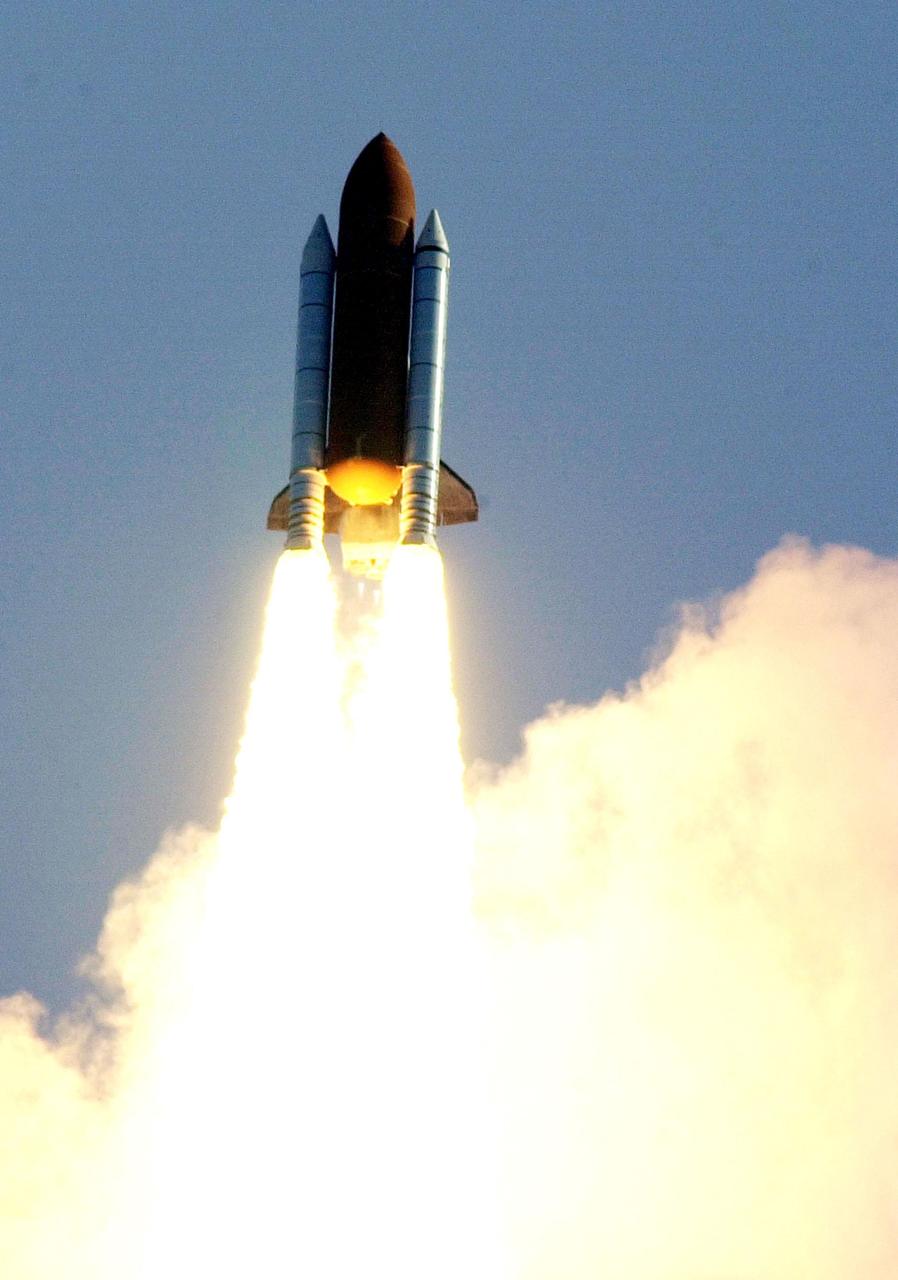
KENNEDY SPACE CENTER, Fla. -- After a perfect on-time launch on mission STS-106 at 8:45:47 a.m. EDT, Space Shuttle Atlantis rolls and displays its external tank and solid rocket boosters. On the 11-day mission to the International Space Station, the seven-member crew will perform support tasks on orbit, transfer supplies and prepare the living quarters in the newly arrived Zvezda Service Module. The first long-duration crew, dubbed “Expedition One,” is due to arrive at the Station in late fall. Landing of Atlantis is targeted for 4:45 a.m. EDT on Sept. 19
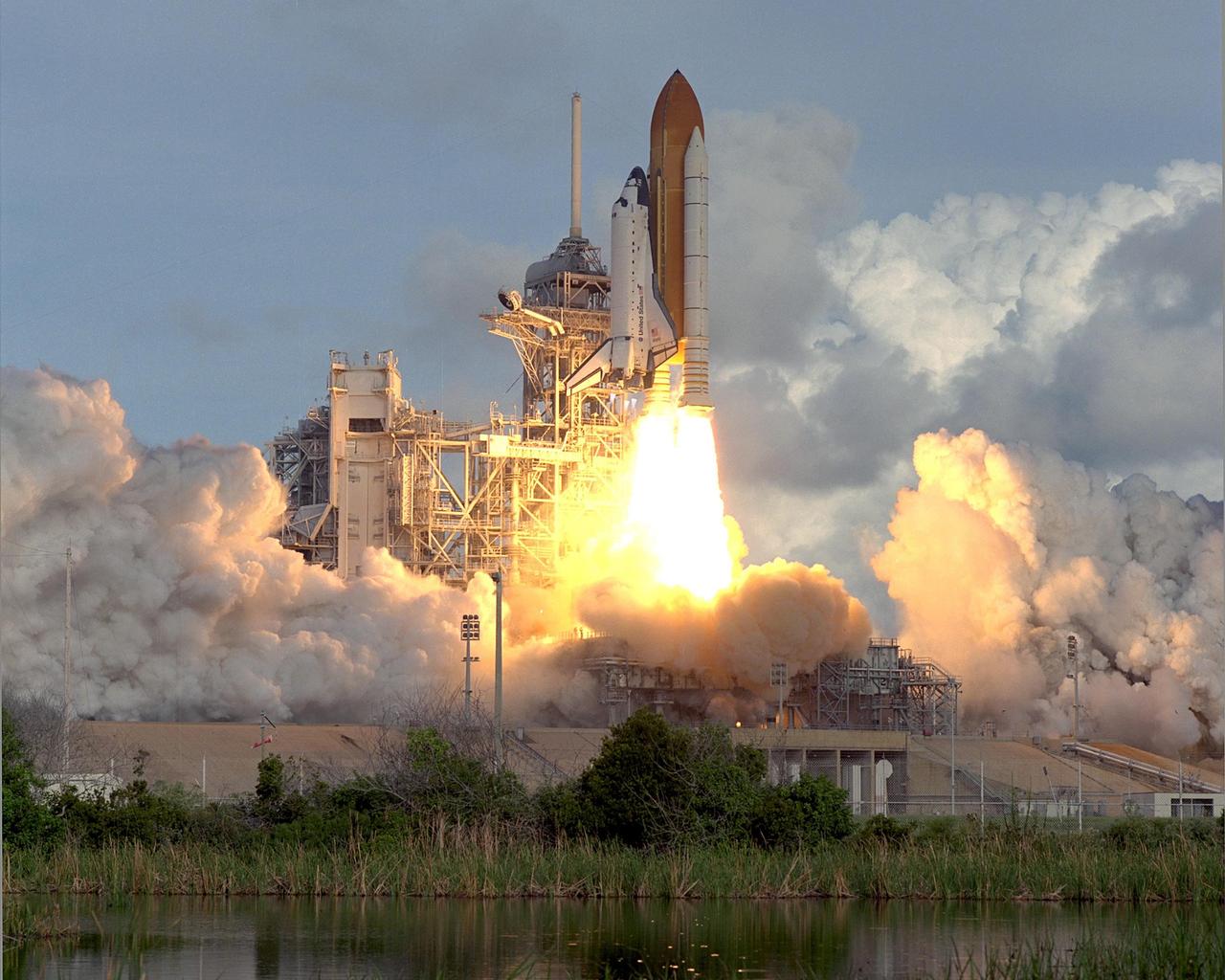
KENNEDY SPACE CENTER, Fla. -- Clouds on the horizon seem to wait for their rival Space Shuttle Atlantis as it churns billows of steam and smoke after launch. The perfect on-time liftoff of Atlantis on mission STS-106 occurred at 8:45:47 a.m. EDT. On the 11-day mission to the International Space Station, the seven-member crew will perform support tasks on orbit, transfer supplies and prepare the living quarters in the newly arrived Zvezda Service Module. The first long-duration crew, dubbed “Expedition One,” is due to arrive at the Station in late fall. Landing of Atlantis is targeted for 4:45 a.m. EDT on Sept. 19
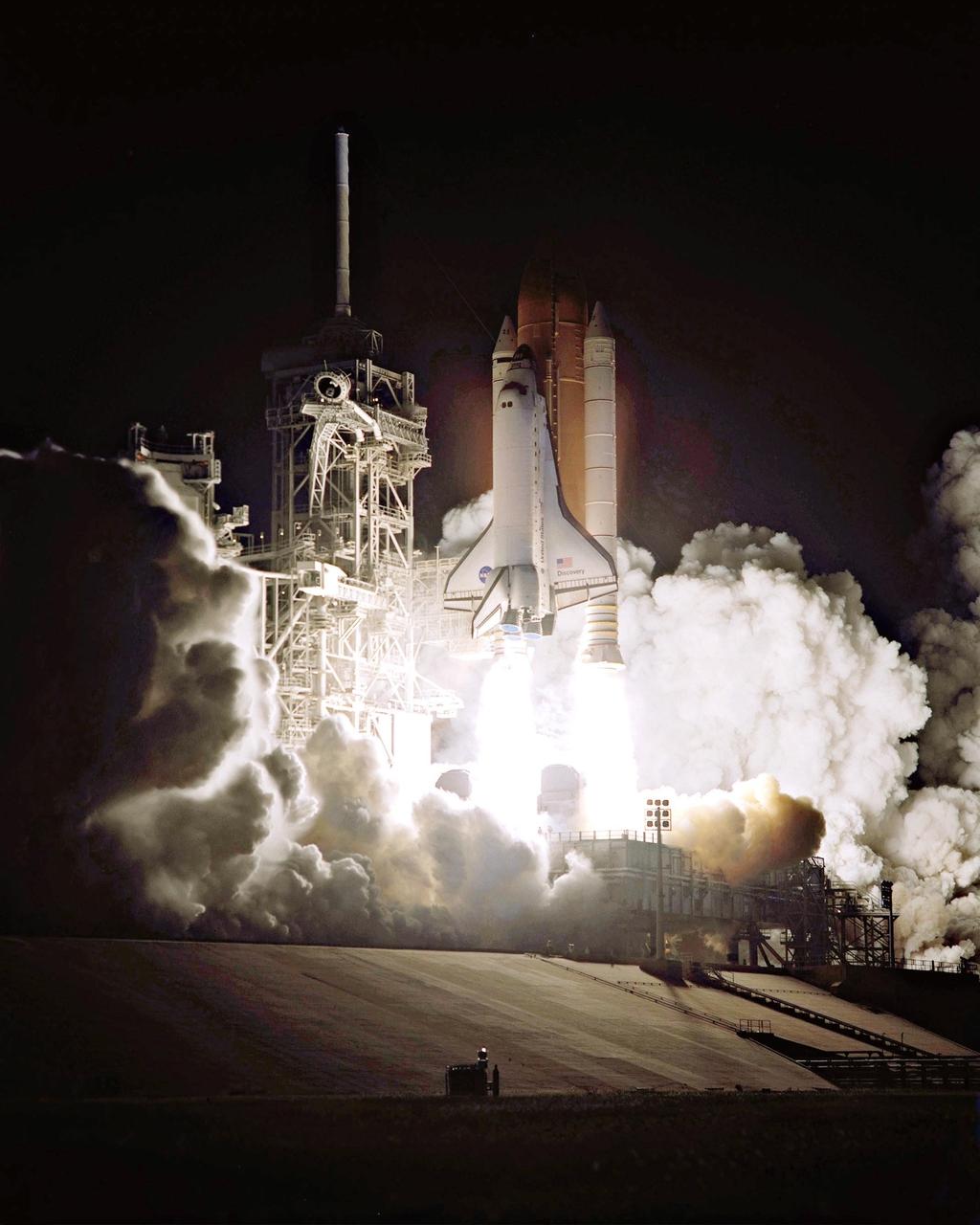
KENNEDY SPACE CENTER, Fla. -- A perfect on-time launch for Atlantis as it rockets toward space on mission STS-106. Liftoff occurred at 8:45:47 a.m. EDT. On the 11-day mission to the International Space Station, the seven-member crew will perform support tasks on orbit, transfer supplies and prepare the living quarters in the newly arrived Zvezda Service Module. The first long-duration crew, dubbed “Expedition One,” is due to arrive at the Station in late fall. Landing of Atlantis is targeted for 4:45 a.m. EDT on Sept. 19
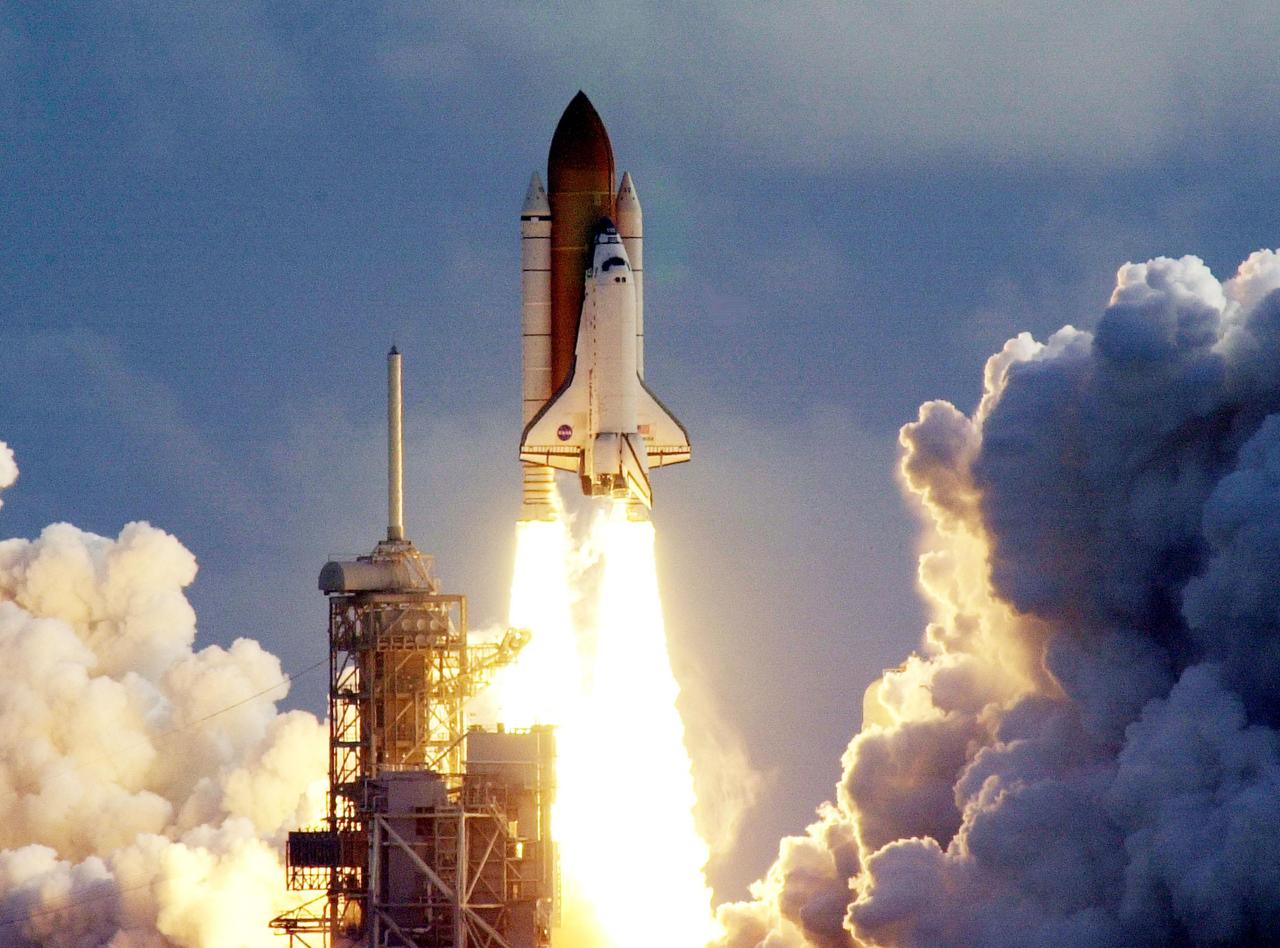
KENNEDY SPACE CENTER, Fla. -- Space Shuttle Atlantis clears the tower as it roars into space on mission STS-106 after a perfect on-time launch at 8:45:47 a.m. EDT. On the 11-day mission to the International Space Station, the seven-member crew will perform support tasks on orbit, transfer supplies and prepare the living quarters in the newly arrived Zvezda Service Module. The first long-duration crew, dubbed “Expedition One,” is due to arrive at the Station in late fall. Landing of Atlantis is targeted for 4:45 a.m. EDT on Sept. 19
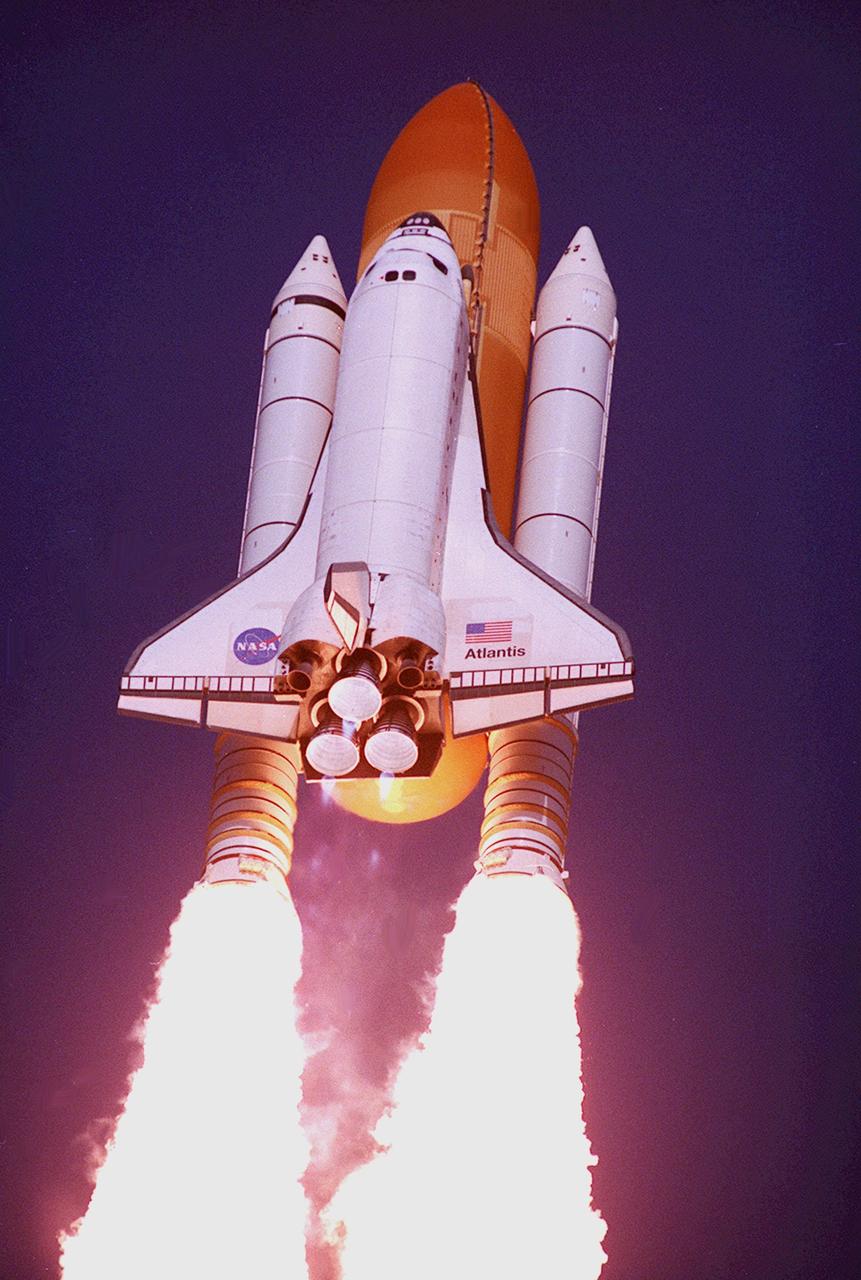
KENNEDY SPACE CENTER, Fla. -- Space Shuttle Atlantis streaks into the sky on mission STS-106 after a perfect on-time launch at 8:45:47 a.m. EDT. Blue mach diamonds are barely visible behind the main engine nozzles. On the 11-day mission to the International Space Station, the seven-member crew will perform support tasks on orbit, transfer supplies and prepare the living quarters in the newly arrived Zvezda Service Module. The first long-duration crew, dubbed “Expedition One,” is due to arrive at the Station in late fall. Landing of Atlantis is targeted for 4:45 a.m. EDT on Sept. 19
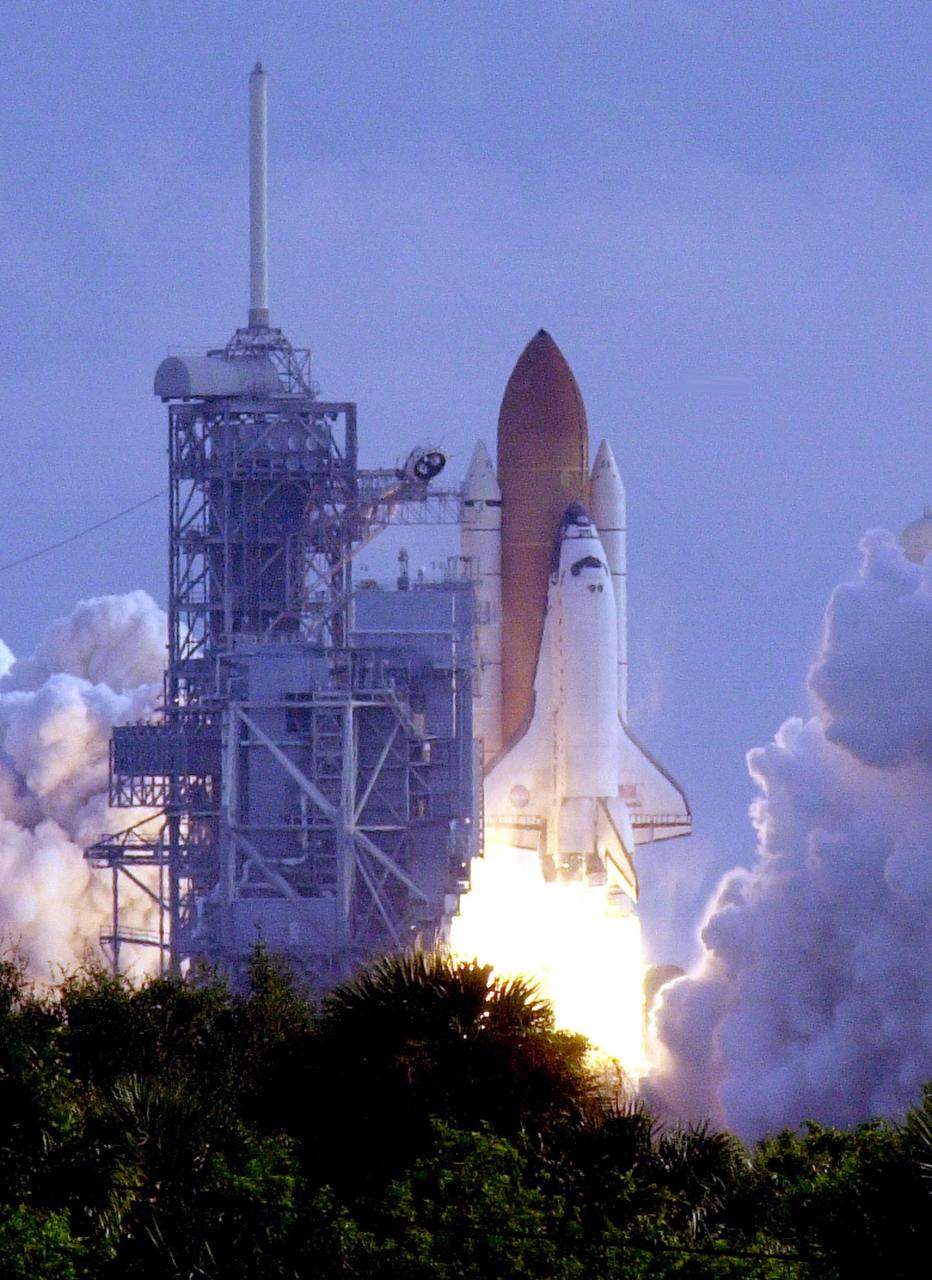
KENNEDY SPACE CENTER, Fla. -- Space Shuttle Atlantis roars toward space on mission STS-106 as it lifts off in a perfect launch at 8:45:47 a.m. EDT today. On the 11-day mission to the International Space Station, the seven-member crew will perform support tasks on orbit, transfer supplies and prepare the living quarters in the newly arrived Zvezda Service Module. The first long-duration crew, dubbed “Expedition One,” is due to arrive at the Station in late fall. Landing of Atlantis is targeted for 4:45 a.m. EDT on Sept. 19

KENNEDY SPACE CENTER, Fla. -- Space Shuttle Atlantis clears the tower as it roars into space on mission STS-106 after a perfect on-time launch at 8:45:47 a.m. EDT. On the 11-day mission to the International Space Station, the seven-member crew will perform support tasks on orbit, transfer supplies and prepare the living quarters in the newly arrived Zvezda Service Module. The first long-duration crew, dubbed “Expedition One,” is due to arrive at the Station in late fall. Landing of Atlantis is targeted for 4:45 a.m. EDT on Sept. 19
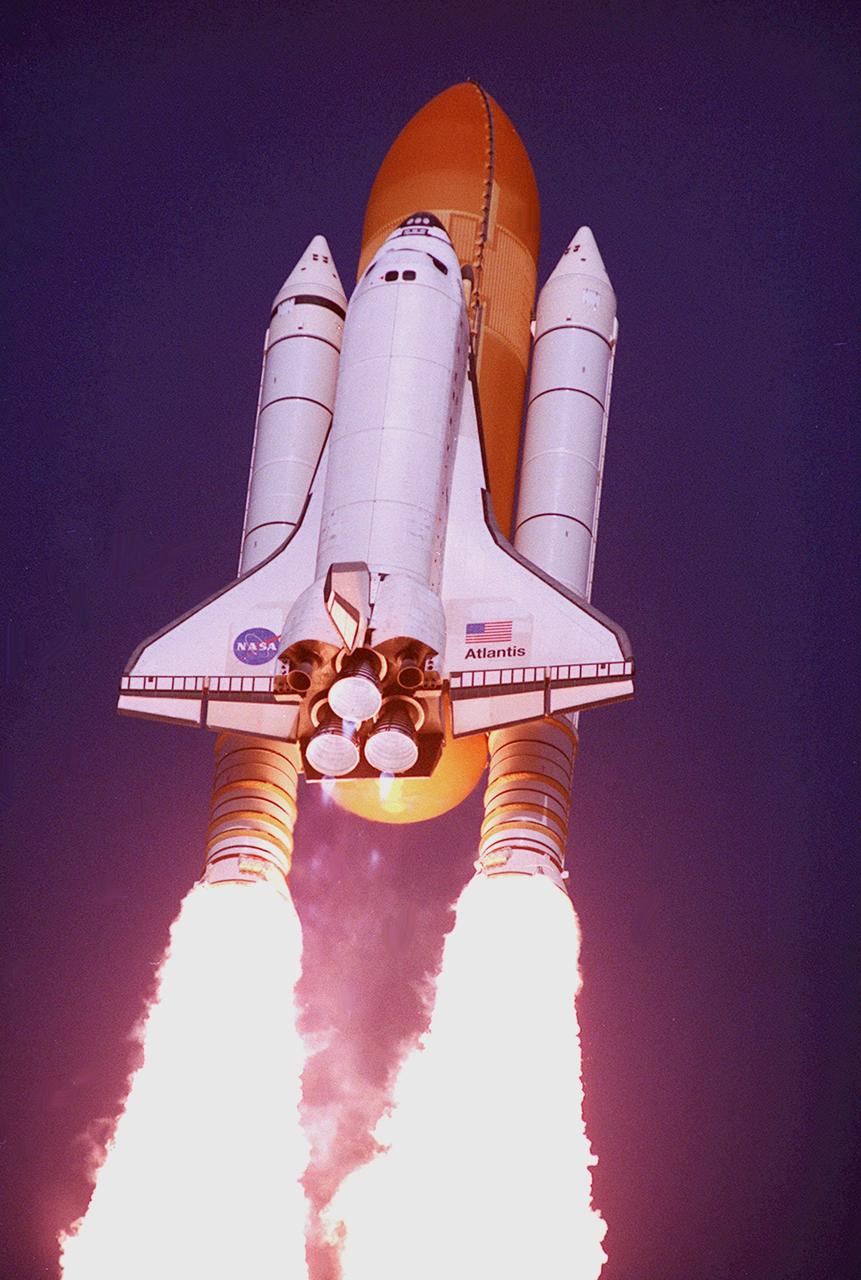
KENNEDY SPACE CENTER, Fla. -- Space Shuttle Atlantis streaks into the sky on mission STS-106 after a perfect on-time launch at 8:45:47 a.m. EDT. Blue mach diamonds are barely visible behind the main engine nozzles. On the 11-day mission to the International Space Station, the seven-member crew will perform support tasks on orbit, transfer supplies and prepare the living quarters in the newly arrived Zvezda Service Module. The first long-duration crew, dubbed “Expedition One,” is due to arrive at the Station in late fall. Landing of Atlantis is targeted for 4:45 a.m. EDT on Sept. 19
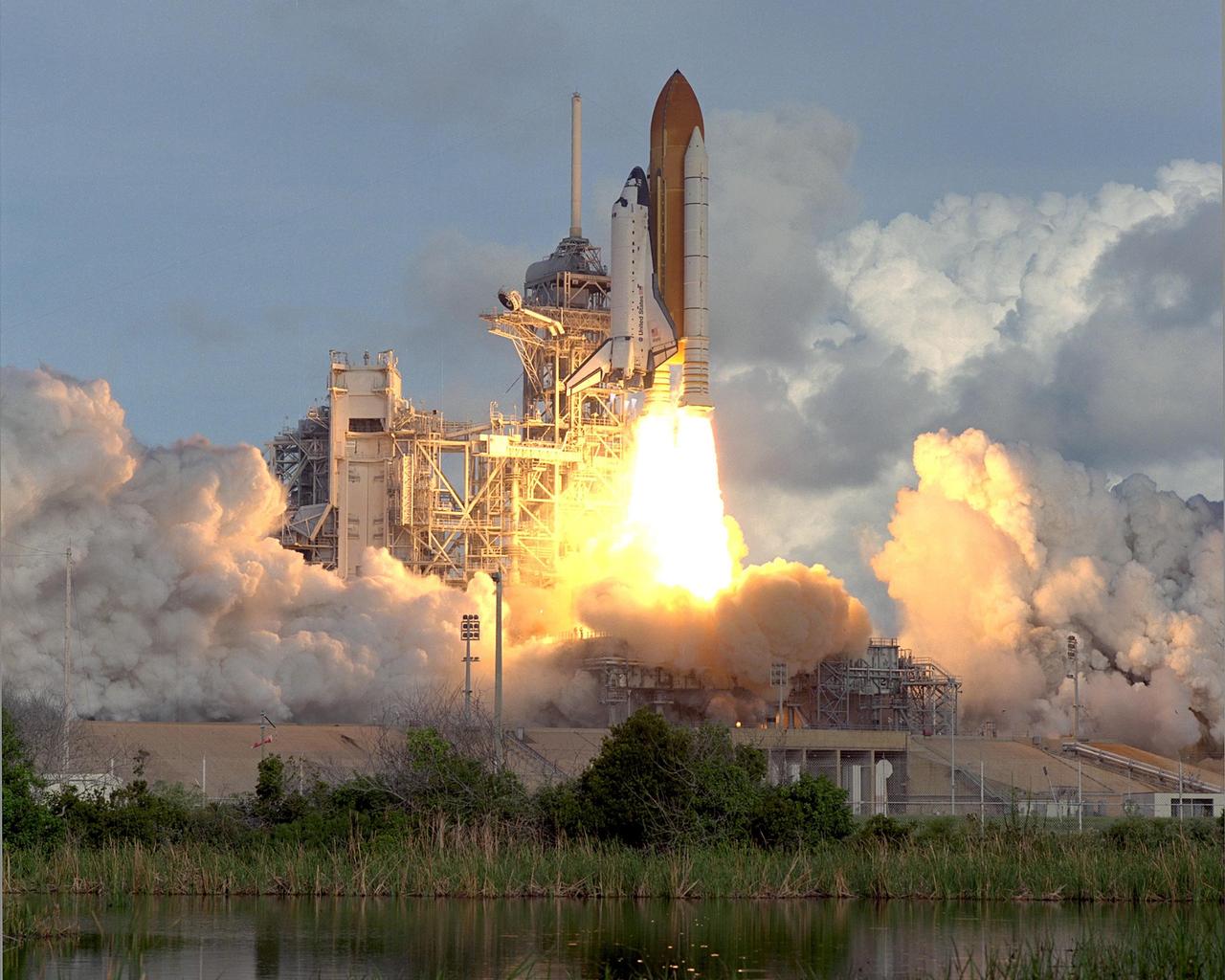
KENNEDY SPACE CENTER, Fla. -- Clouds on the horizon seem to wait for their rival Space Shuttle Atlantis as it churns billows of steam and smoke after launch. The perfect on-time liftoff of Atlantis on mission STS-106 occurred at 8:45:47 a.m. EDT. On the 11-day mission to the International Space Station, the seven-member crew will perform support tasks on orbit, transfer supplies and prepare the living quarters in the newly arrived Zvezda Service Module. The first long-duration crew, dubbed “Expedition One,” is due to arrive at the Station in late fall. Landing of Atlantis is targeted for 4:45 a.m. EDT on Sept. 19
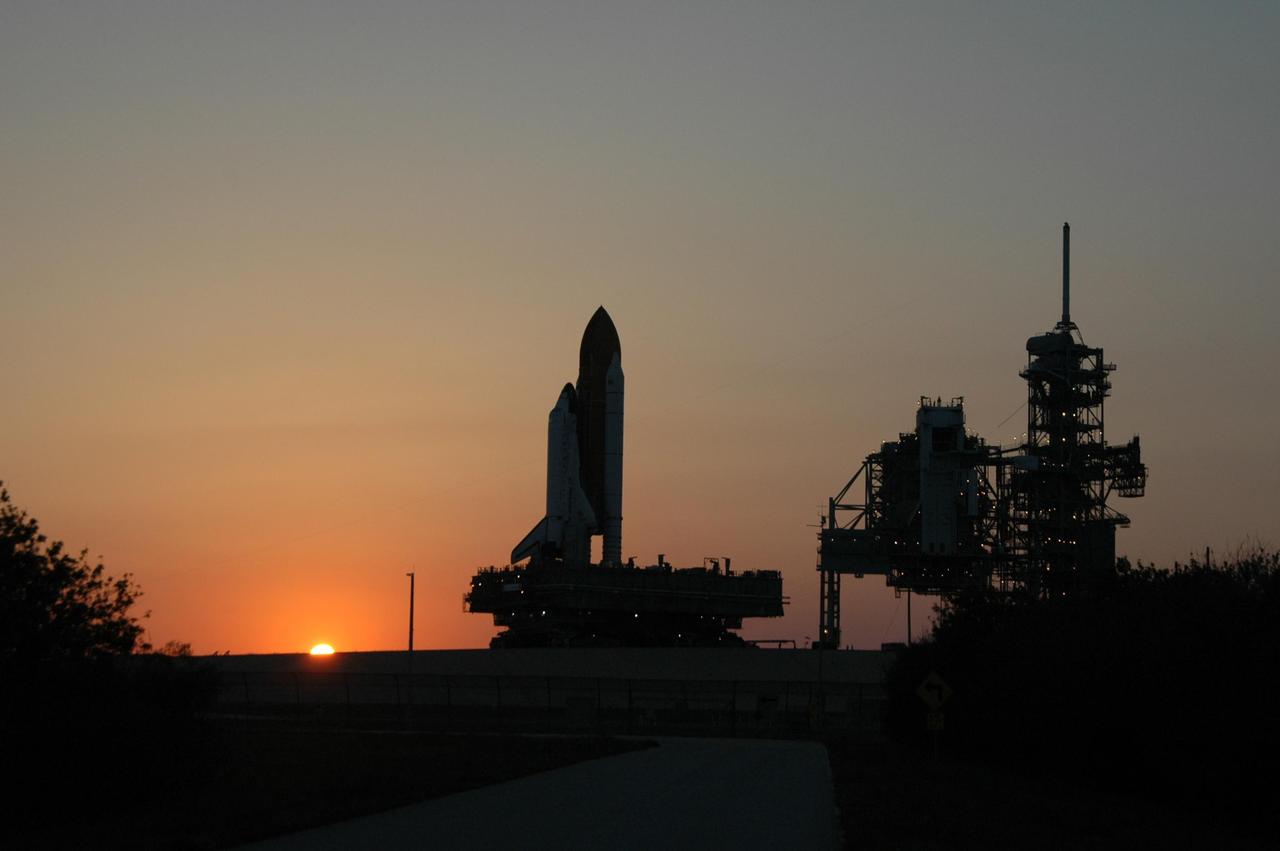
KENNEDY SPACE CENTER, FLA. -- The sun is setting as Space Shuttle Discovery arrives on the hardstand of Launch Pad 39B at NASA's Kennedy Space Center. At right are the fixed and rotating service structures. First motion was at 12:45 p.m. EDT. The shuttle rests on a mobile launcher platform and made the 4.2-mile journey from the Vehicle Assembly Building via the crawler-transporter beneath the platform. The rollout is an important step before launch of Discovery on mission STS-121 to the International Space Station. First motion of the shuttle leaving NASA's Vehicle Assembly Building was at 12:45 p.m. EDT. Discovery's launch is targeted for July 1 in a launch window that extends to July 19. During the 12-day mission, Discovery's crew will test new hardware and techniques to improve shuttle safety, as well as deliver supplies and make repairs to the station. Photo credit: NASA/Ken Thornsley
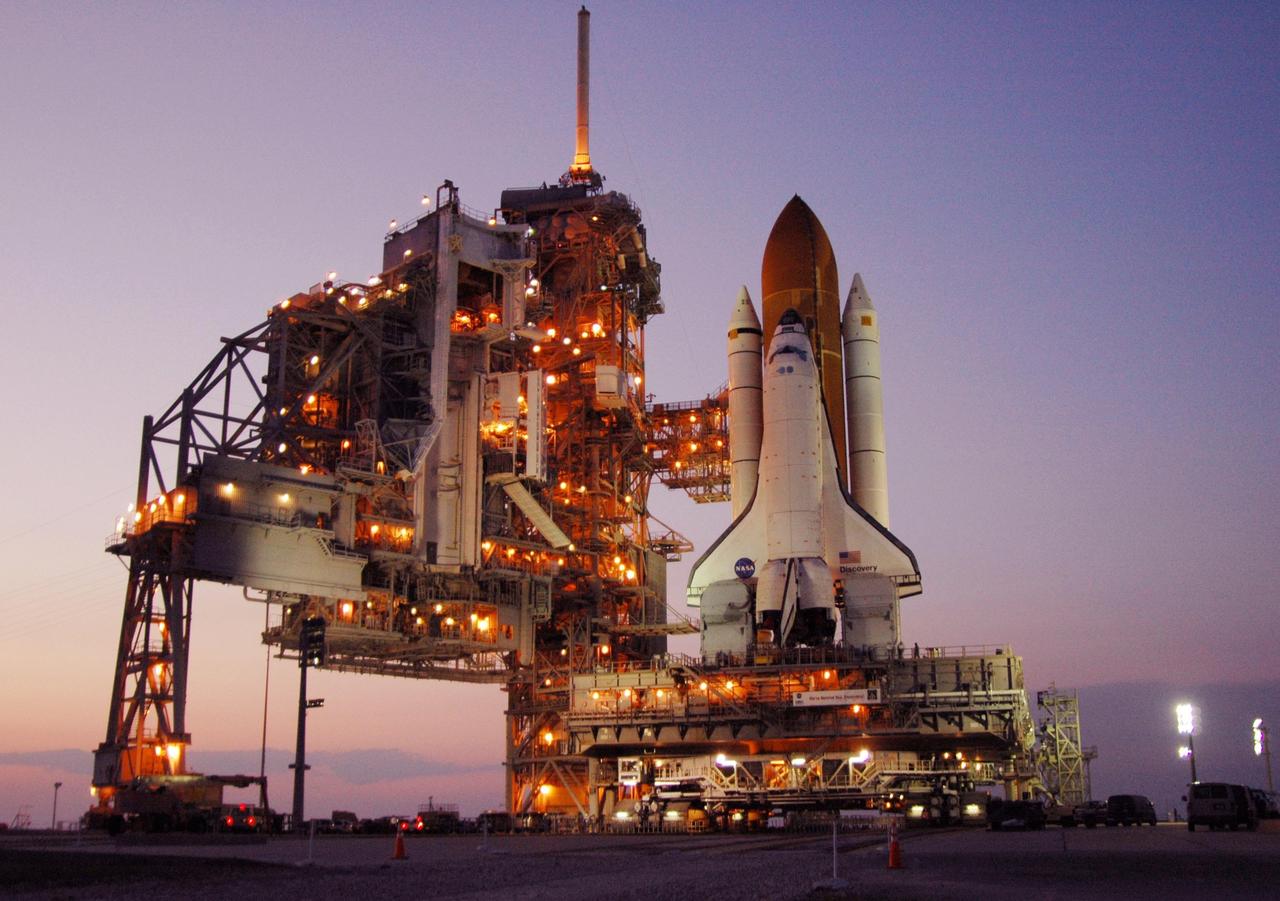
KENNEDY SPACE CENTER, FLA. -- Amid the glow of lights from the fixed and rotating service structures, Space Shuttle Discovery rests on the hardstand of Launch Pad 39B at NASA's Kennedy Space Center after completing the 4.2-mile journey from the Vehicle Assembly Building. First motion was at 12:45 p.m. EDT. The shuttle rests on a mobile launcher platform. The rollout is an important step before launch of Discovery on mission STS-121 to the International Space Station. First motion of the shuttle leaving NASA's Vehicle Assembly Building was at 12:45 p.m. EDT. Discovery's launch is targeted for July 1 in a launch window that extends to July 19. During the 12-day mission, Discovery's crew will test new hardware and techniques to improve shuttle safety, as well as deliver supplies and make repairs to the station. Photo credit: NASA/Ken Thornsley
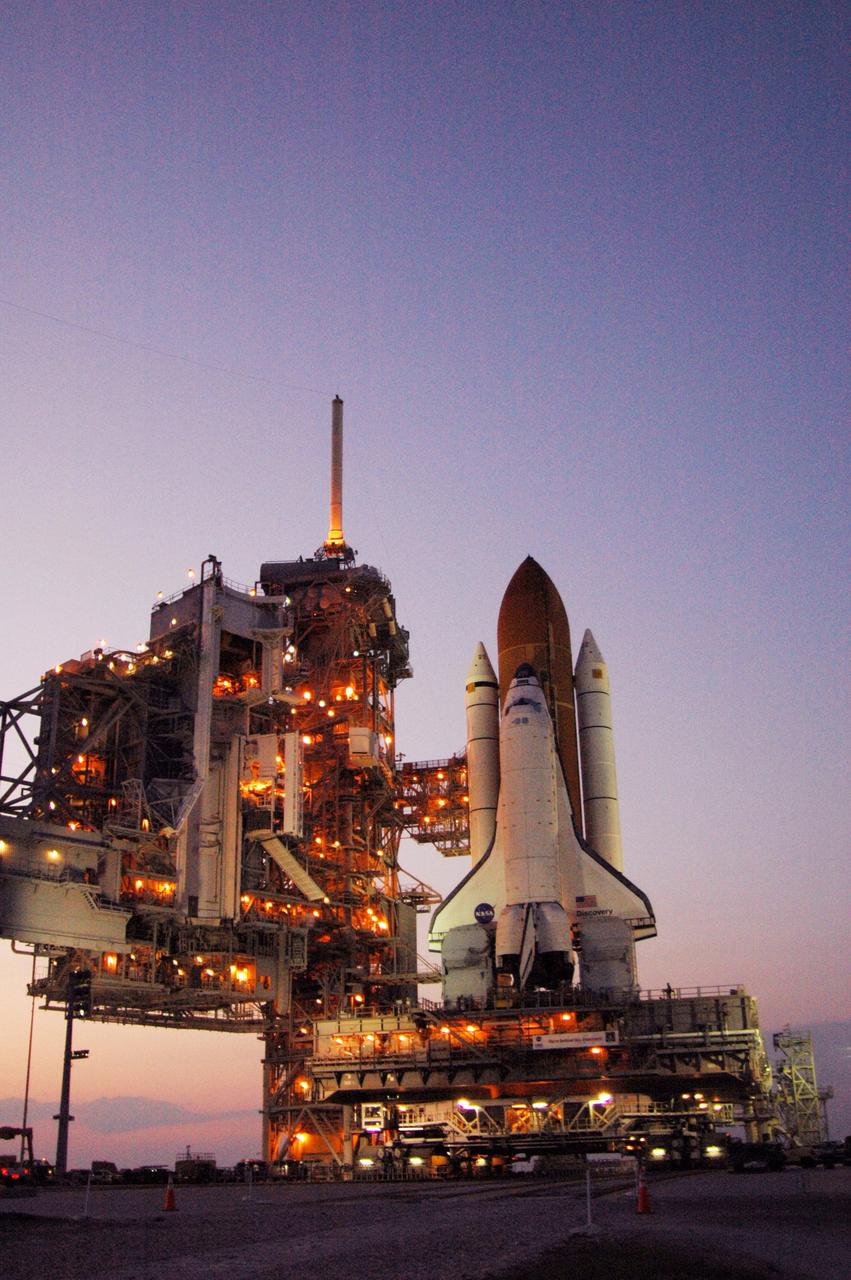
KENNEDY SPACE CENTER, FLA. -- Amid the glow of lights from the fixed and rotating service structures, Space Shuttle Discovery rests on the hardstand of Launch Pad 39B at NASA's Kennedy Space Center after completing the 4.2-mile journey from the Vehicle Assembly Building. First motion was at 12:45 p.m. EDT. The shuttle rests on a mobile launcher platform. The rollout is an important step before launch of Discovery on mission STS-121 to the International Space Station. First motion of the shuttle leaving NASA's Vehicle Assembly Building was at 12:45 p.m. EDT. Discovery's launch is targeted for July 1 in a launch window that extends to July 19. During the 12-day mission, Discovery's crew will test new hardware and techniques to improve shuttle safety, as well as deliver supplies and make repairs to the station. Photo credit: NASA/Ken Thornsley
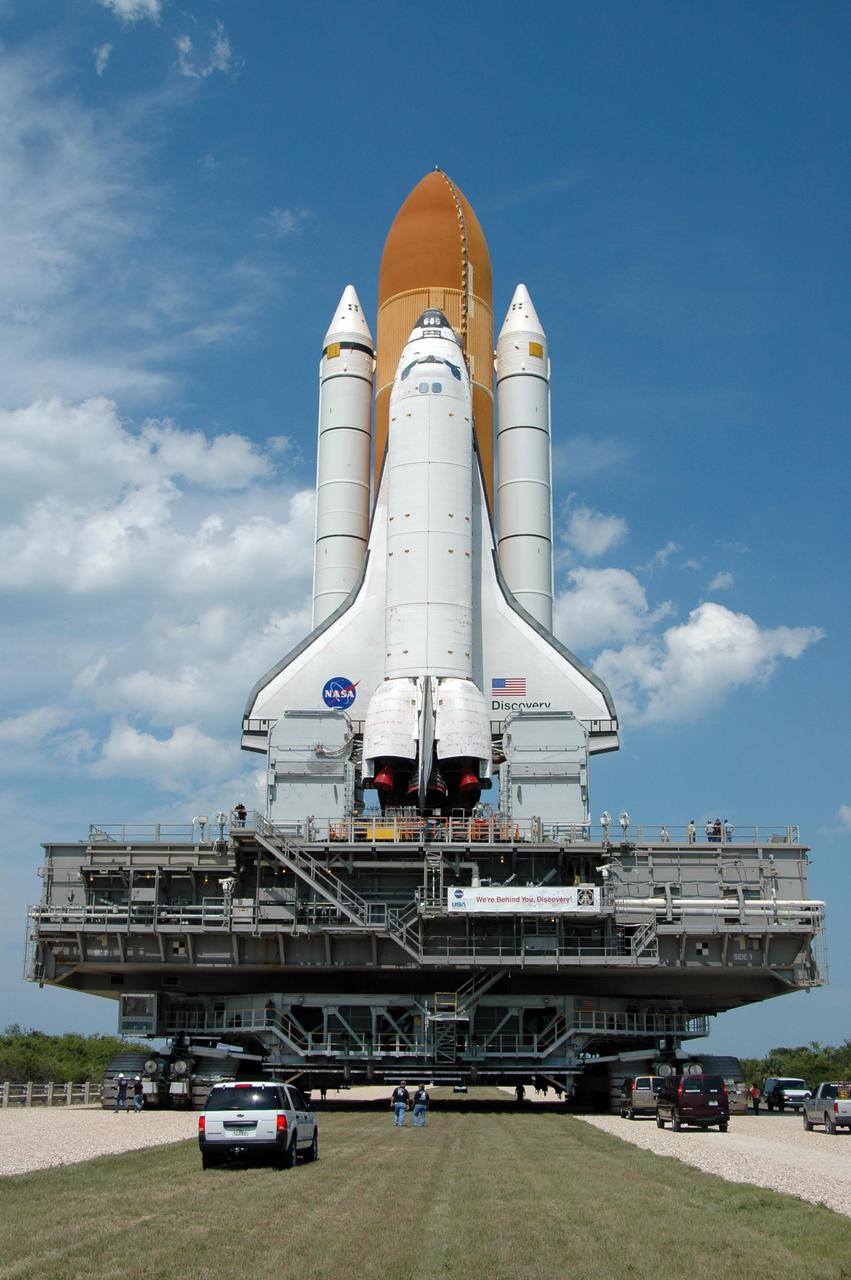
KENNEDY SPACE CENTER, FLA. -- Space Shuttle Discovery rolls toward Launch Pad 39B. The shuttle rests on the mobile launcher platform, which is being carried by the crawler-transporter underneath. First motion of the shuttle leaving NASA's Vehicle Assembly Building was at 12:45 p.m. EDT. The rollout is an important step before launch of Discovery on mission STS-121 to the International Space Station. First motion of the shuttle leaving NASA's Vehicle Assembly Building was at 12:45 p.m. EDT. Discovery's launch is targeted for July 1 in a launch window that extends to July 19. During the 12-day mission, Discovery's crew will test new hardware and techniques to improve shuttle safety, as well as deliver supplies and make repairs to the station. Photo credit: NASA/Dimitri Gerondidakis
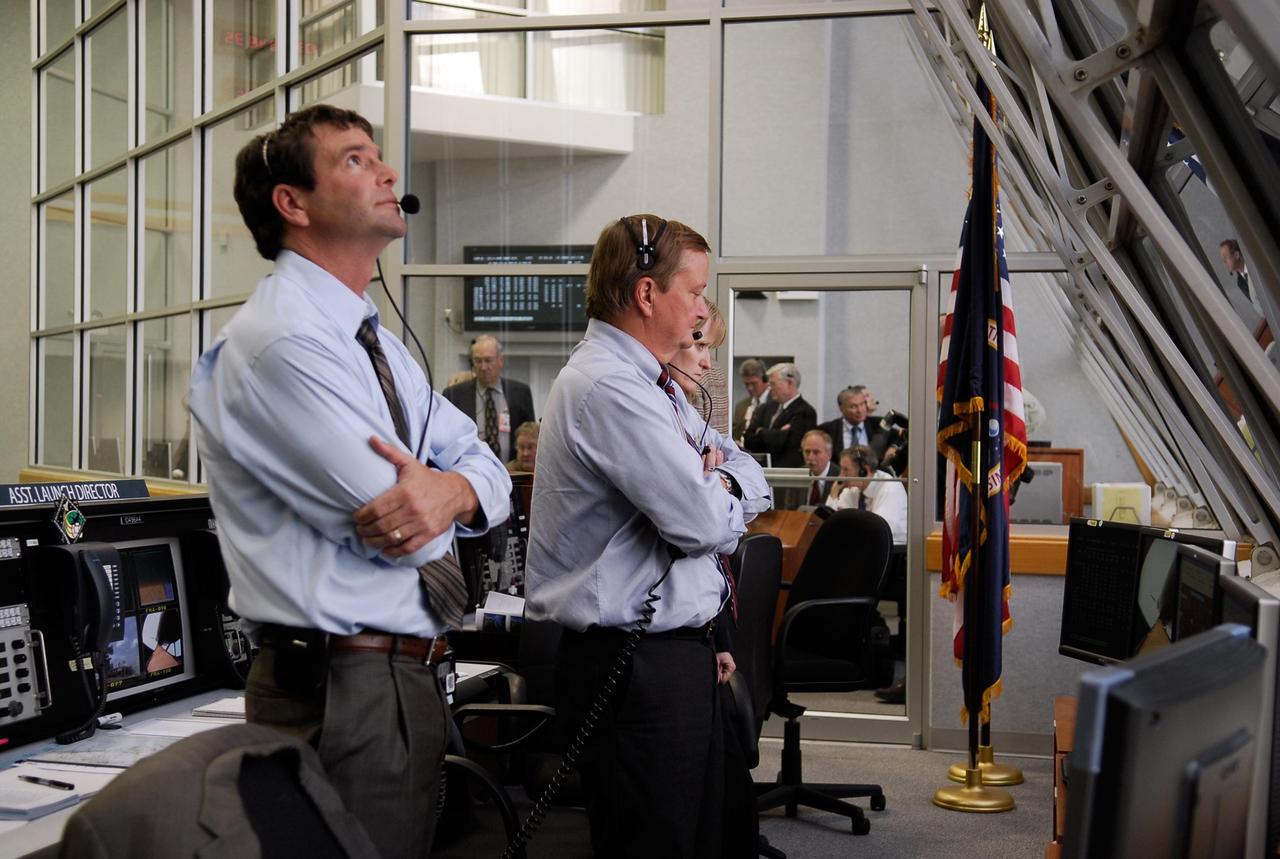
KENNEDY SPACE CENTER, FLA. -- Inside the Launch Control Center Firing Room at NASA's Kennedy Space Center, STS-122 Launch Director Doug Lyons (left) and Shuttle Launch Director Mike Leinbach watch the launch of space shuttle Atlantis on the STS-122 mission to the International Space Station. Liftoff was on time at 2:45 p.m. EST from Launch Pad 39A. The launch is the third attempt for Atlantis since December 2007 to carry the European Space Agency's Columbus laboratory to the International Space Station. During the 11-day mission, the crew's prime objective is to attach the laboratory to the Harmony module, adding to the station's size and capabilities. Photo credit: NASA/Kim Shiflett
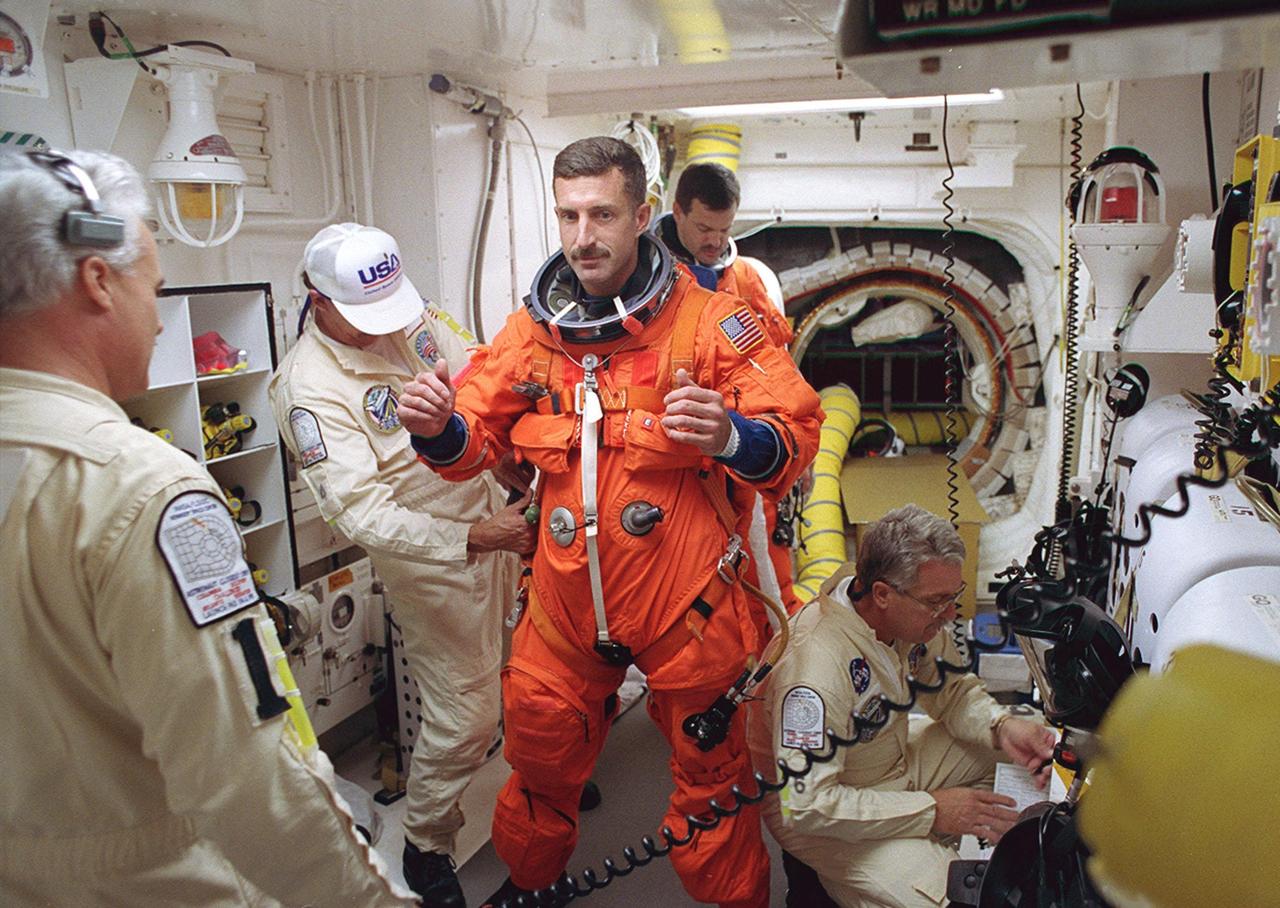
Before entering Space Shuttle Atlantis, STS-106 Mission Specialist Daniel C. Burbank is helped getting into his launch and entry suit in the White Room. Behind him is Pilot Scott D. Altman. In the background can be seen the opening into Atlantis. The perfect on-time liftoff of Atlantis on mission STS-106 occurred at 8:45:47 a.m. EDT. On the 11-day mission to the International Space Station, the seven-member crew will perform support tasks on orbit, transfer supplies and prepare the living quarters in the newly arrived Zvezda Service Module. The first long-duration crew, dubbed “Expedition One,” is due to arrive at the Station in late fall. Landing of Atlantis is targeted for 4:45 a.m. EDT on Sept. 19
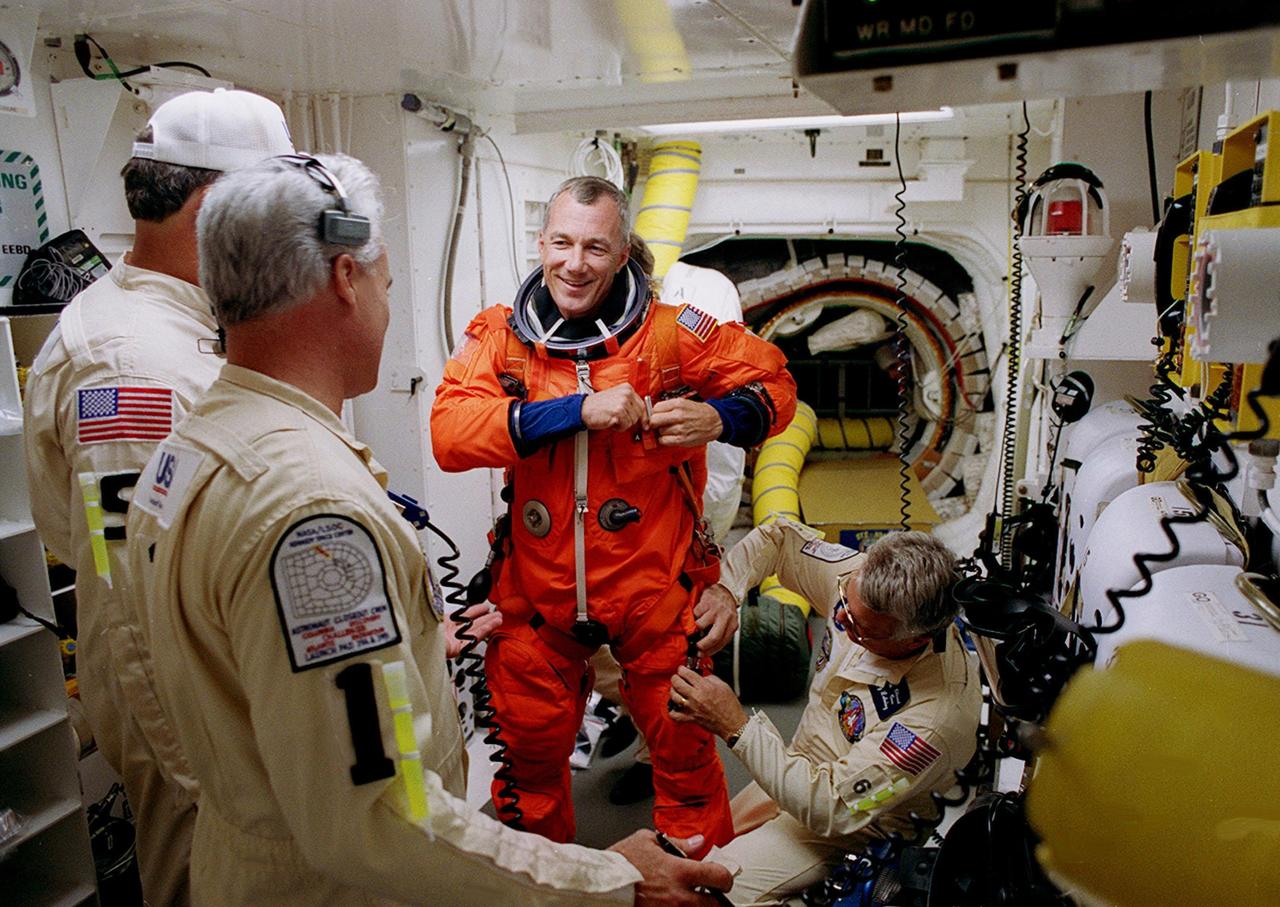
STS-106 Commander Terrence W. Wilcutt gets help with his launch and entry suit from suit technicians in the White Room before he enters Space Shuttle Atlantis. In the background can be seen the opening into Atlantis. The perfect on-time liftoff of Atlantis on mission STS-106 occurred at 8:45:47 a.m. EDT. On the 11-day mission to the International Space Station, the seven-member crew will perform support tasks on orbit, transfer supplies and prepare the living quarters in the newly arrived Zvezda Service Module. The first long-duration crew, dubbed “Expedition One,” is due to arrive at the Station in late fall. Landing of Atlantis is targeted for 4:45 a.m. EDT on Sept. 19
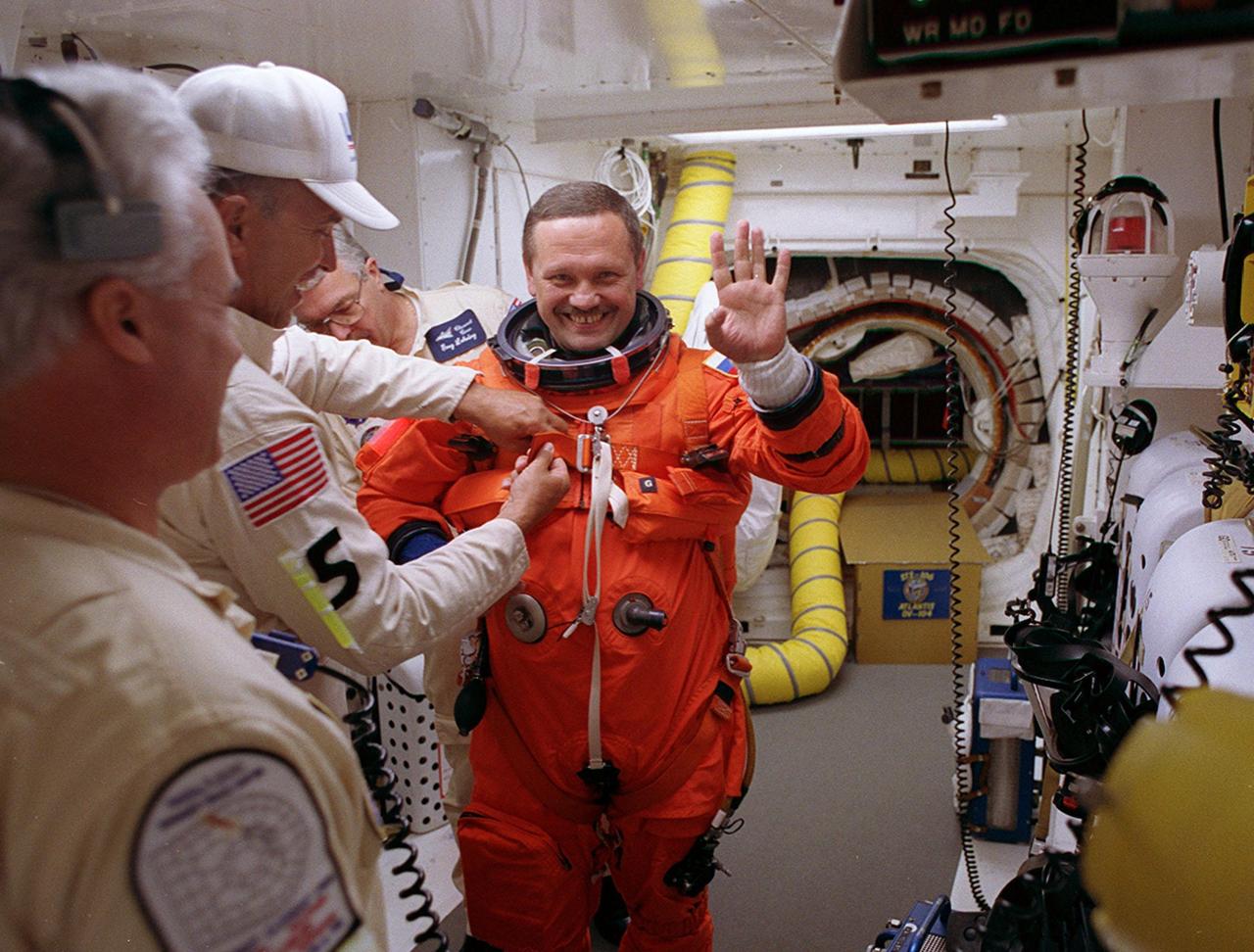
STS-106 Mission Specialist Boris V. Morukov waves as a suit technician in the White Room helps him with his launch and entry suit before he enters Space Shuttle Atlantis. The opening into Atlantis can be seen in the background. The perfect on-time liftoff of Atlantis on mission STS-106 occurred at 8:45:47 a.m. EDT. On the 11-day mission to the International Space Station, the seven-member crew will perform support tasks on orbit, transfer supplies and prepare the living quarters in the newly arrived Zvezda Service Module. The first long-duration crew, dubbed “Expedition One,” is due to arrive at the Station in late fall. Landing of Atlantis is targeted for 4:45 a.m. EDT on Sept. 19
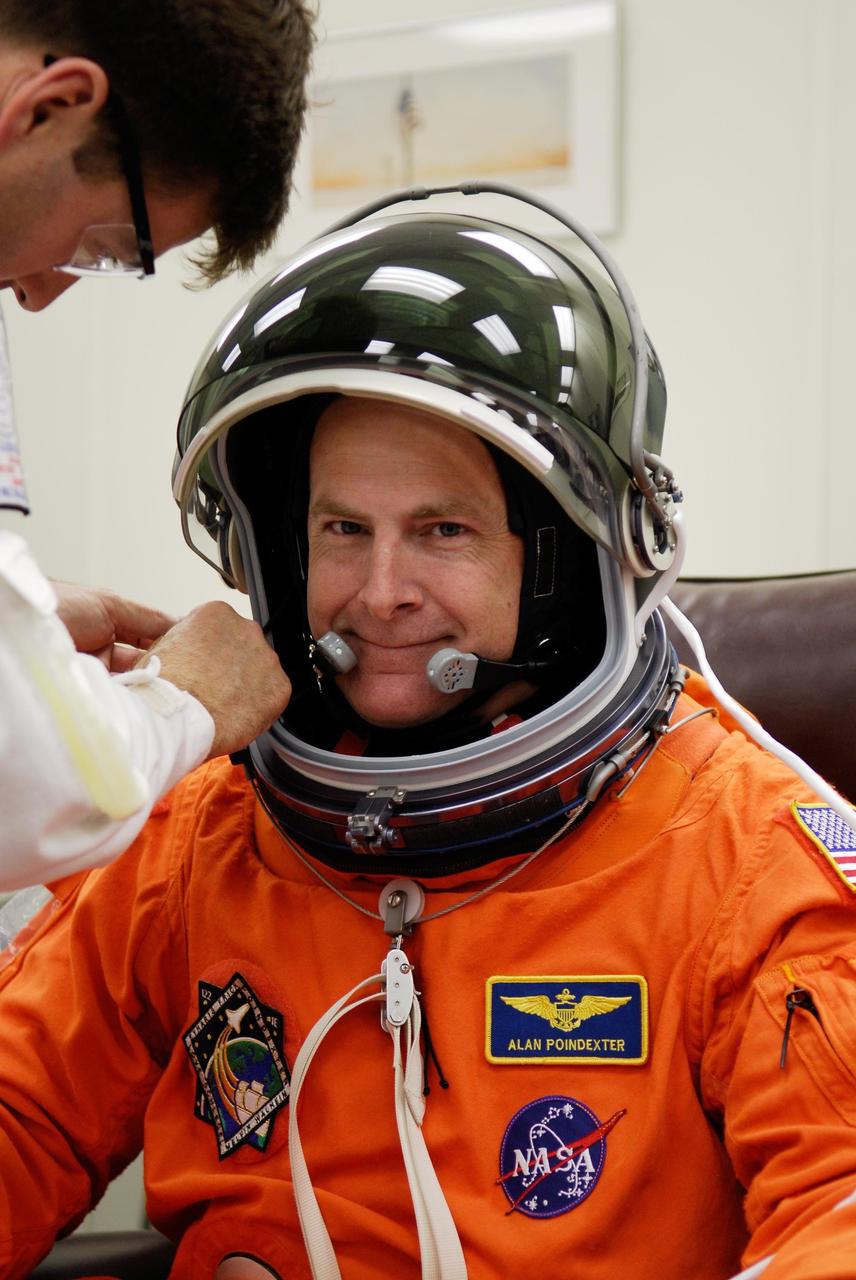
KENNEDY SPACE CENTER, FLA. -- Pilot Alan Poindexter is helped with his helmet while donning his launch and entry suit for launch of space shuttle Atlantis on the STS-122 mission. The launch, scheduled for 2:45 p.m. EST, will be the third attempt for Atlantis since December 2007 to carry the European Space Agency's Columbus laboratory to the International Space Station. During the 11-day mission, the crew's prime objective is to attach the laboratory to the Harmony module, adding to the station's size and capabilities. Photo credit: NASA/Kim Shiflett
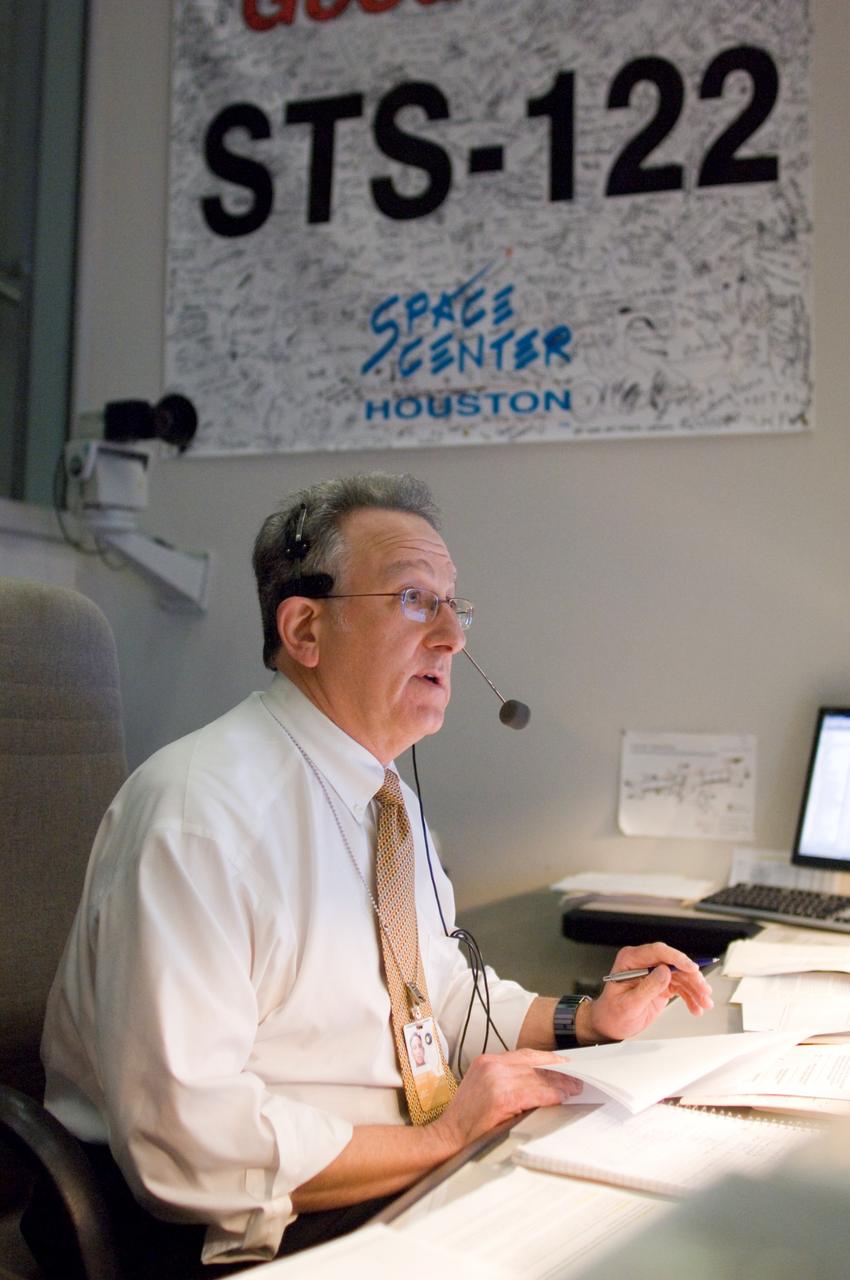
JSC2008-E-010333 (7 Feb. 2008) --- Public Affairs Office commentator Rob Navias watches the large screens in the space shuttle flight control room of Johnson Space Center's Mission Control Center (MCC) during launch countdown activities a few hundred miles away in Florida, site of Space Shuttle Atlantis' scheduled STS-122 launch. Liftoff occurred at 2:45 p.m. (EST) on Feb. 7, 2008 from launch pad 39A at Kennedy Space Center.
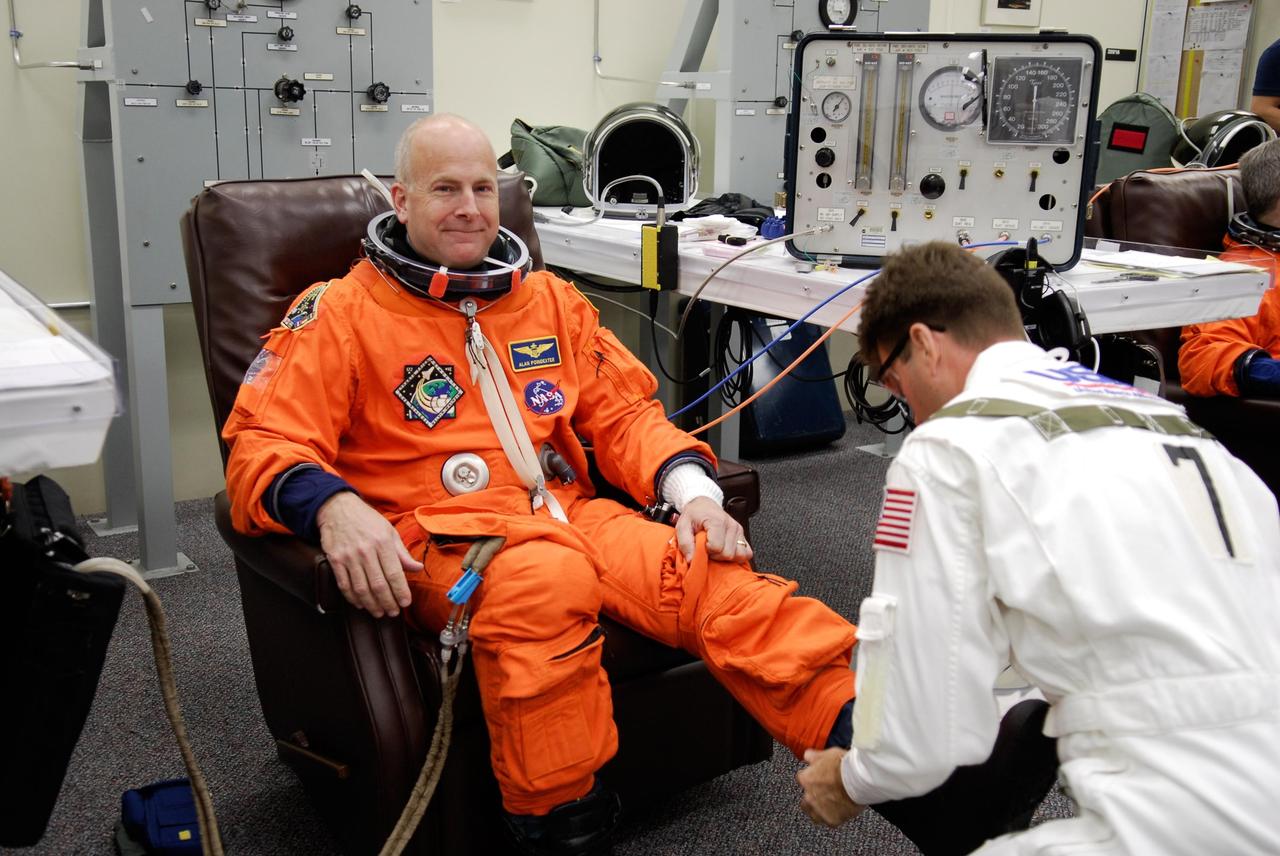
KENNEDY SPACE CENTER, FLA. -- Pilot Alan Poindexter is helped with his boots while donning his launch and entry suit for launch of space shuttle Atlantis on the STS-122 mission. The launch, scheduled for 2:45 p.m. EST, will be the third attempt for Atlantis since December 2007 to carry the European Space Agency's Columbus laboratory to the International Space Station. During the 11-day mission, the crew's prime objective is to attach the laboratory to the Harmony module, adding to the station's size and capabilities. Photo credit: NASA/Kim Shiflett
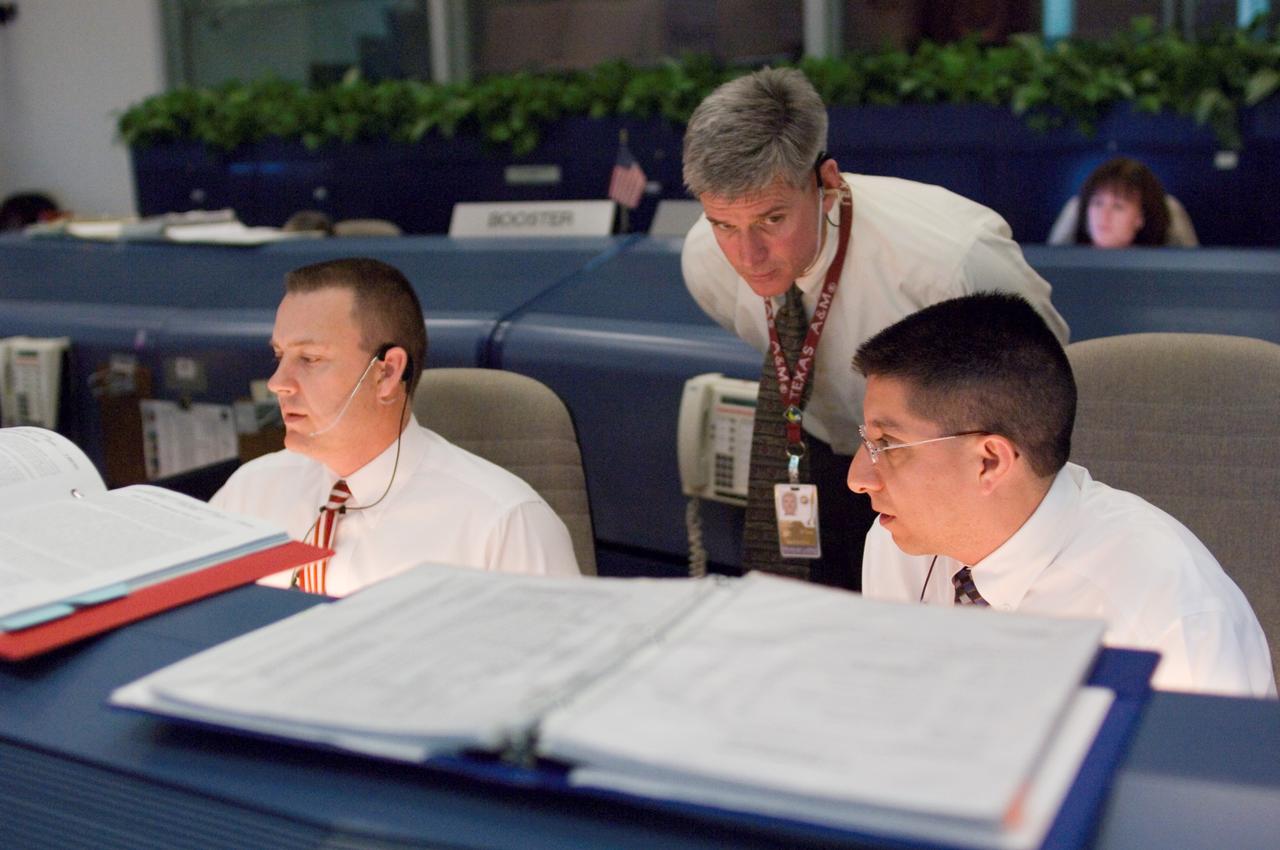
JSC2008-E-010344 (7 Feb. 2008) --- Flight directors Norm Knight (left), Bryan Lunney and Richard Jones monitor data at their consoles in the space shuttle flight control room of Johnson Space Center's Mission Control Center (MCC) during launch countdown activities a few hundred miles away in Florida, site of Space Shuttle Atlantis' scheduled STS-122 launch. Liftoff occurred at 2:45 p.m. (EST) on Feb. 7, 2008 from launch pad 39A at Kennedy Space Center.

KENNEDY SPACE CENTER, Fla. - STS-108 Mission Specialist Daniel M. Tani is happy to be suiting up for launch before heading to Launch Pad 39B and Space Shuttle Endeavour. Top priorities for the STS-108 (UF-1) mission of Endeavour are rotation of the International Space Station Expedition 3 and Expedition 4 crews; bringing water, equipment and supplies to the station in the Multi-Purpose Logistics Module Raffaello; and the crew's completion of robotics tasks and a spacewalk to install thermal blankets over two pieces of equipment at the bases of the Space Station's solar wings. Launch is scheduled for 5:45 p.m. EST Dec. 4, 2001, from Launch Pad 39B
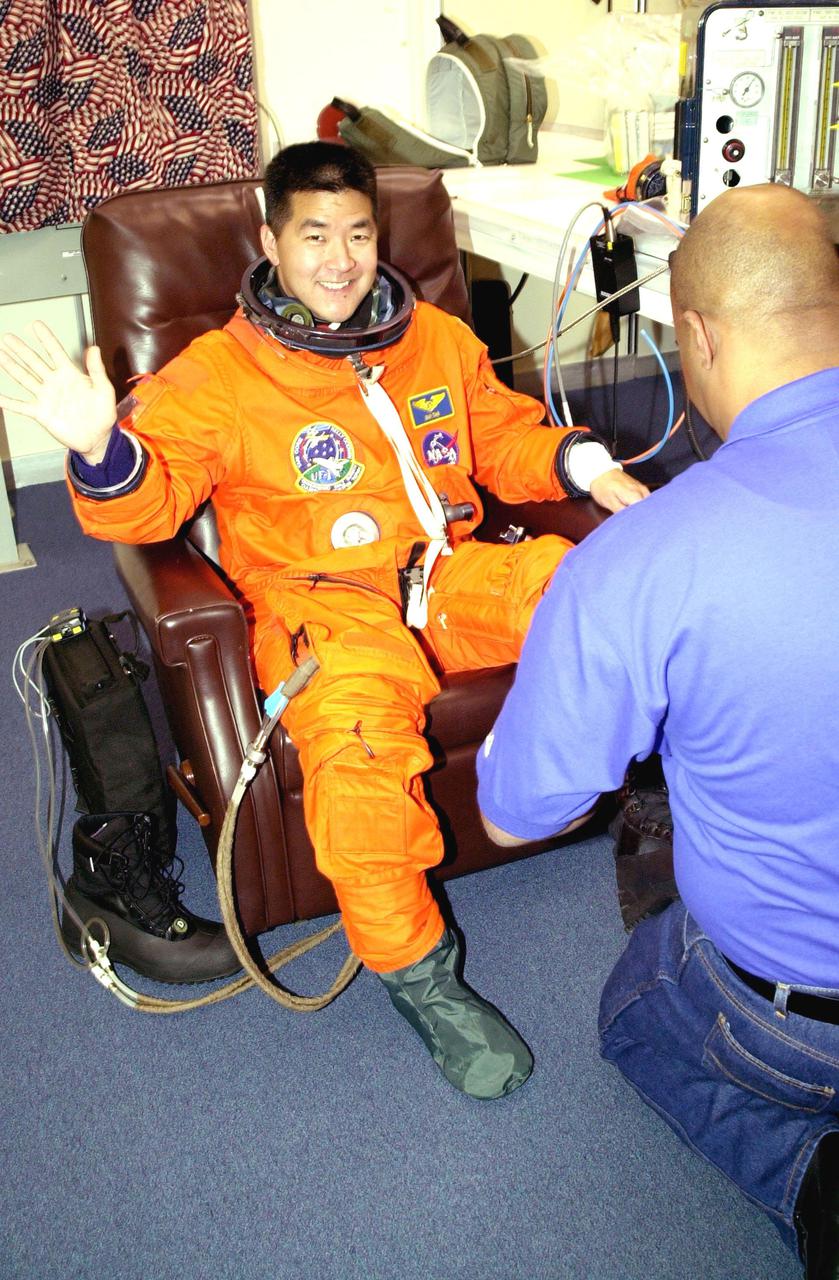
KENNEDY SPACE CENTER, Fla. - STS-108 Mission Specialist Daniel M. Tani is happy to be suiting up for launch before heading to Launch Pad 39B and Space Shuttle Endeavour. Top priorities for the STS-108 (UF-1) mission of Endeavour are rotation of the International Space Station Expedition 3 and Expedition 4 crews; bringing water, equipment and supplies to the station in the Multi-Purpose Logistics Module Raffaello; and the crew's completion of robotics tasks and a spacewalk to install thermal blankets over two pieces of equipment at the bases of the Space Station's solar wings. Launch is scheduled for 5:45 p.m. EST Dec. 4, 2001, from Launch Pad 39B
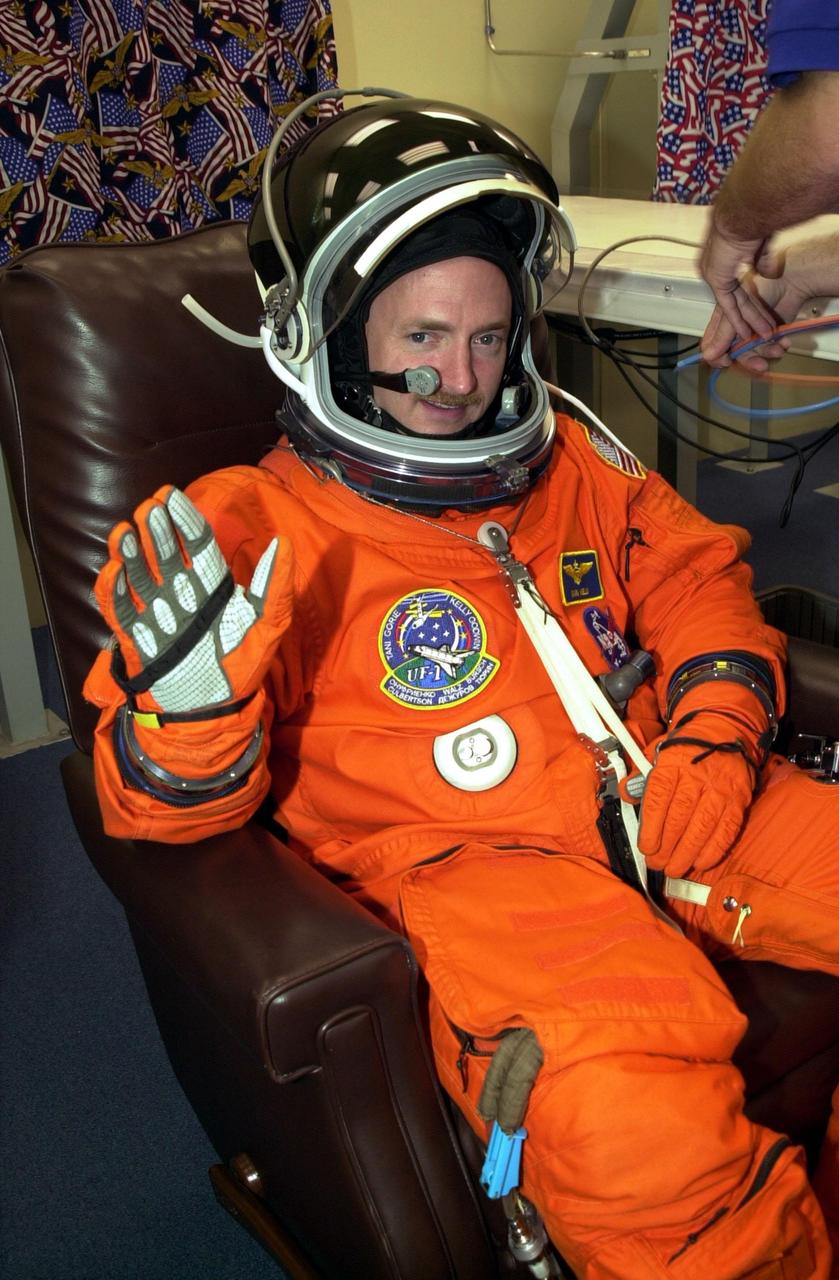
KENNEDY SPACE CENTER, Fla. -- STS-108 Pilot Mark E. Kelly gets a final suit check prior to heading to Launch Pad 39B and Space Shuttle Endeavour. Top priorities for the 11-day STS-108 (UF-1) mission of Endeavour are rotation of the International Space Station Expedition 3 and Expedition 4 crews; bringing water, equipment and supplies to the station in the Multi-Purpose Logistics Module Raffaello; and the crew's completion of robotics tasks and a spacewalk to install thermal blankets over two pieces of equipment at the bases of the Space Station's solar wings. Launch is scheduled for 5:45 p.m. EST Dec. 4, 2001, from Launch Pad 39B
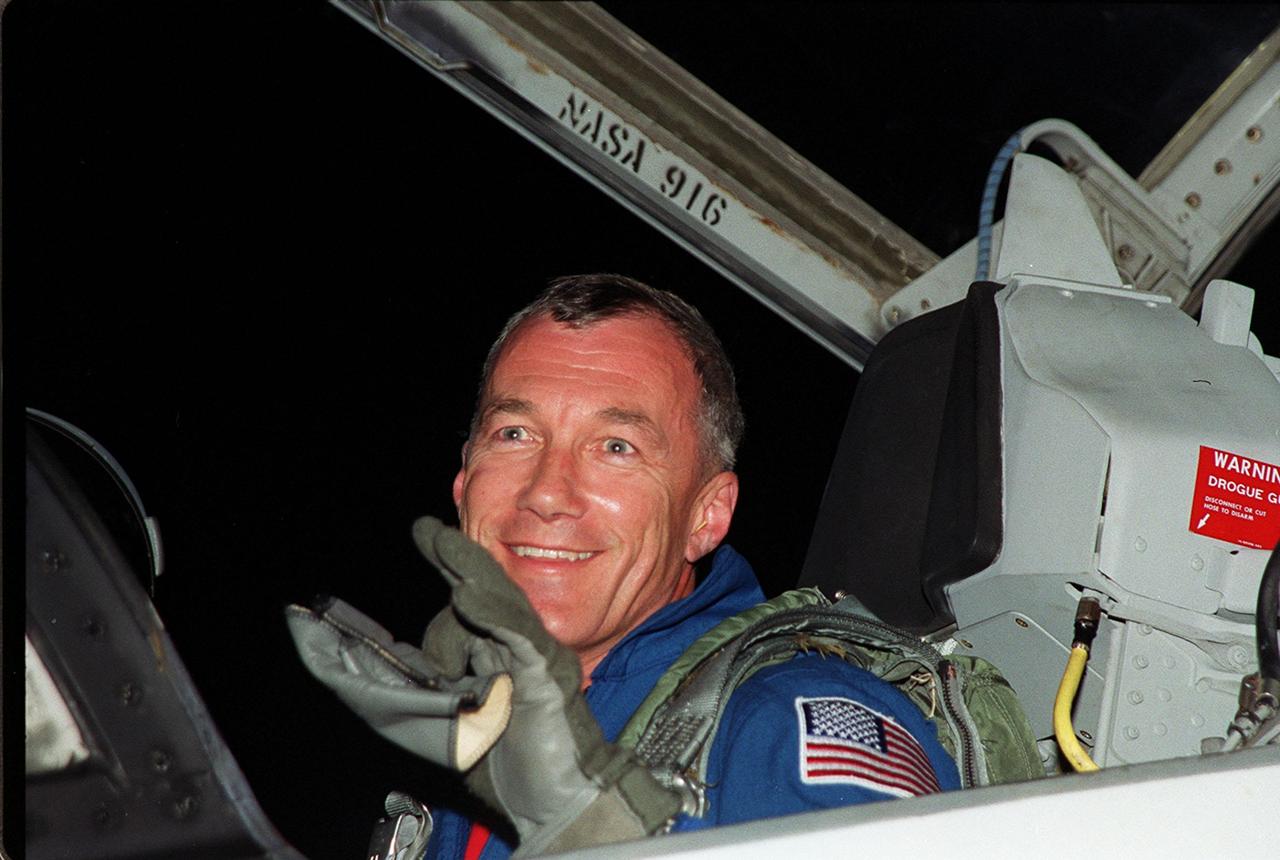
STS-106 Commander Terrence W. Wilcutt waves to onlookers as he arrives at the KSC Shuttle Landing Facility. He and the rest of the crew will be making pre-launch preparations for the fourth flight to the International Space Station. STS-106 is scheduled to launch Sept. 8, 2000, at 8:45 a.m. EDT from Launch Pad 39B. On the 11-day mission, the seven-member crew will perform support tasks on orbit, transfer supplies and prepare the living quarters in the newly arrived Zvezda Service Module. The first long-duration crew, dubbed “Expedition One,” is due to arrive at the Station in late fall
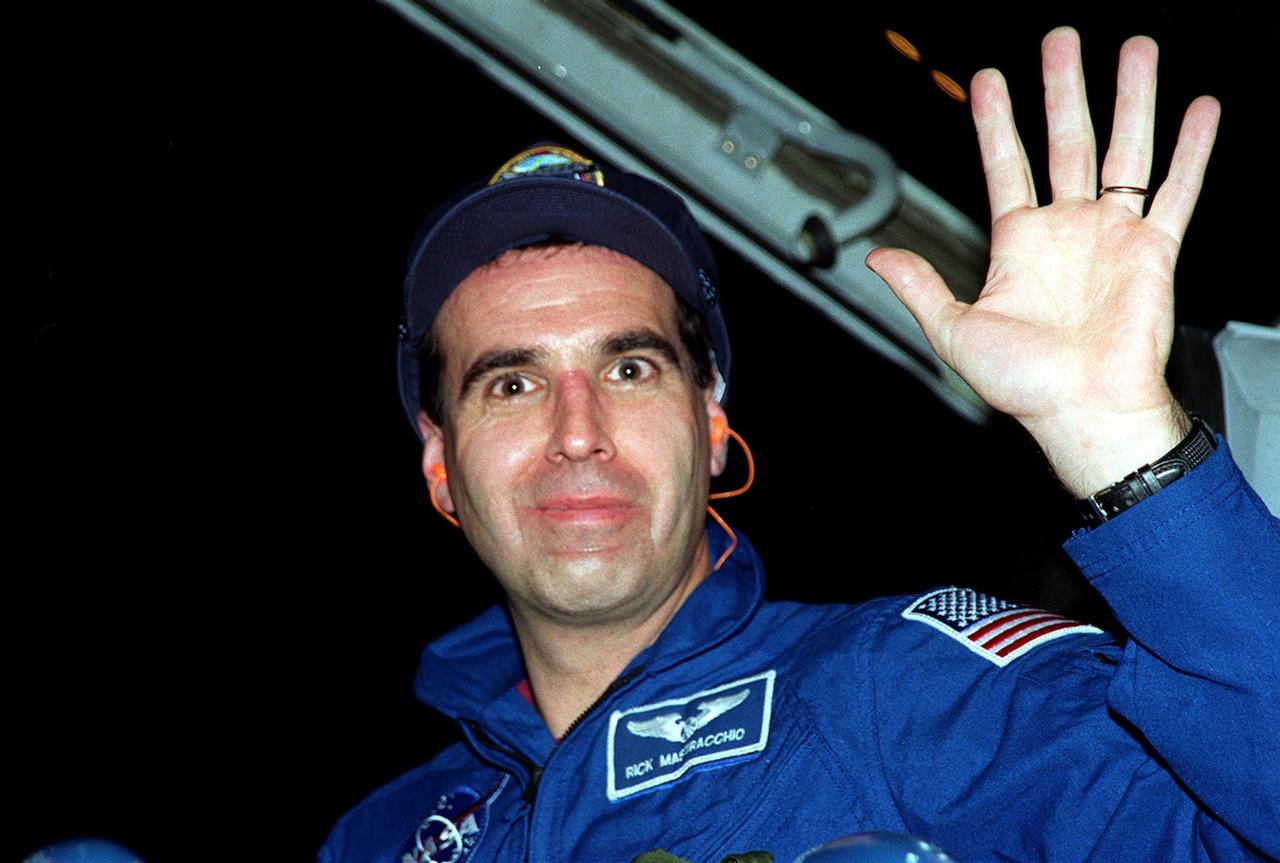
STS-106 Mission Specialist Richard A. Mastracchio waves at the camera upon his arrival at the KSC Shuttle Landing Facility. He and the rest of the crew will be making pre-launch preparations for the fourth flight to the International Space Station. STS-106 is scheduled to launch Sept. 8, 2000, at 8:45 a.m. EDT from Launch Pad 39B. On the 11-day mission, the seven-member crew will perform support tasks on orbit, transfer supplies and prepare the living quarters in the newly arrived Zvezda Service Module. The first long-duration crew, dubbed “Expedition One,” is due to arrive at the Station in late fall
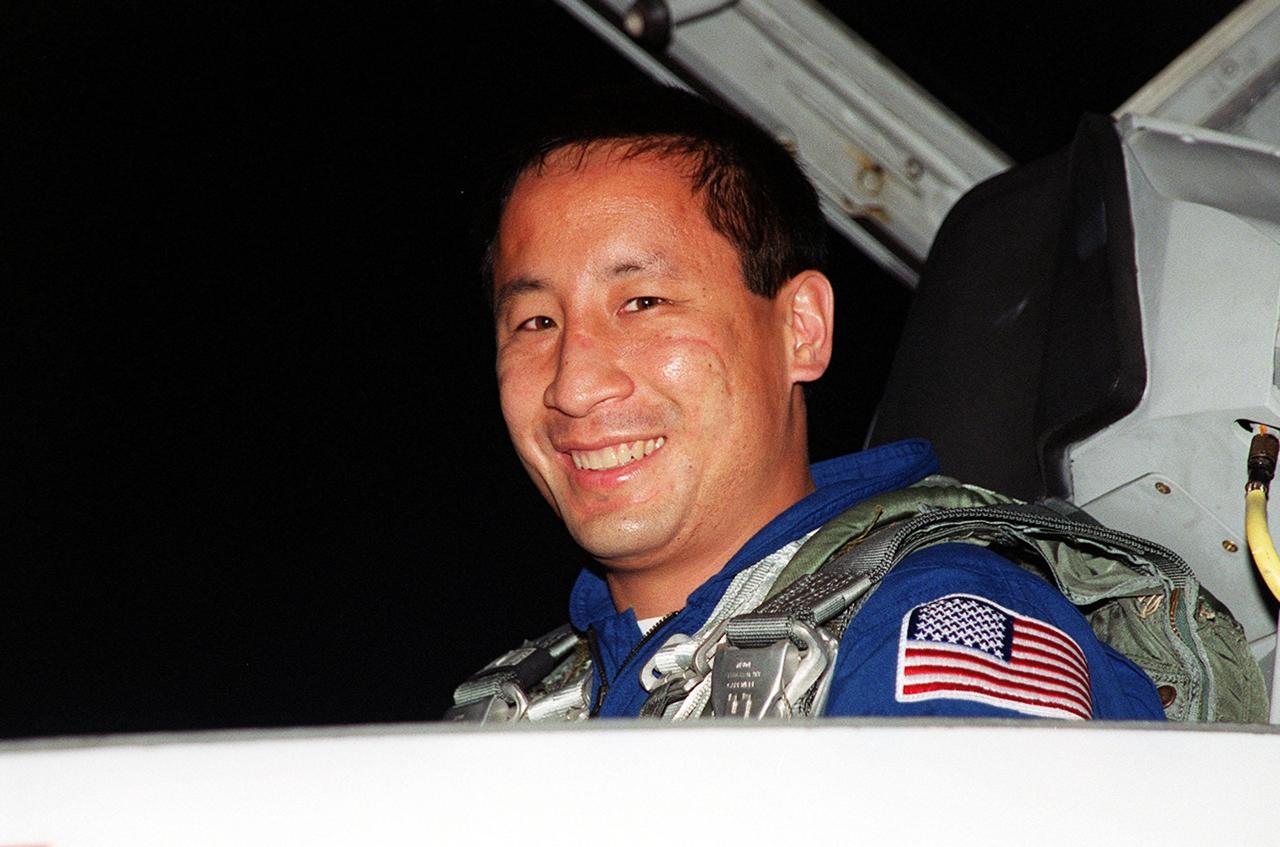
STS-106 Mission Specialist Edward T. Lu grins upon his arrival at the KSC Shuttle Landing Facility. He and the rest of the crew will be making pre-launch preparations for the fourth flight to the International Space Station. STS-106 is scheduled to launch Sept. 8, 2000, at 8:45 a.m. EDT from Launch Pad 39B. On the 11-day mission, the seven-member crew will perform support tasks on orbit, transfer supplies and prepare the living quarters in the newly arrived Zvezda Service Module. The first long-duration crew, dubbed "Expedition One," is due to arrive at the Station in late fall
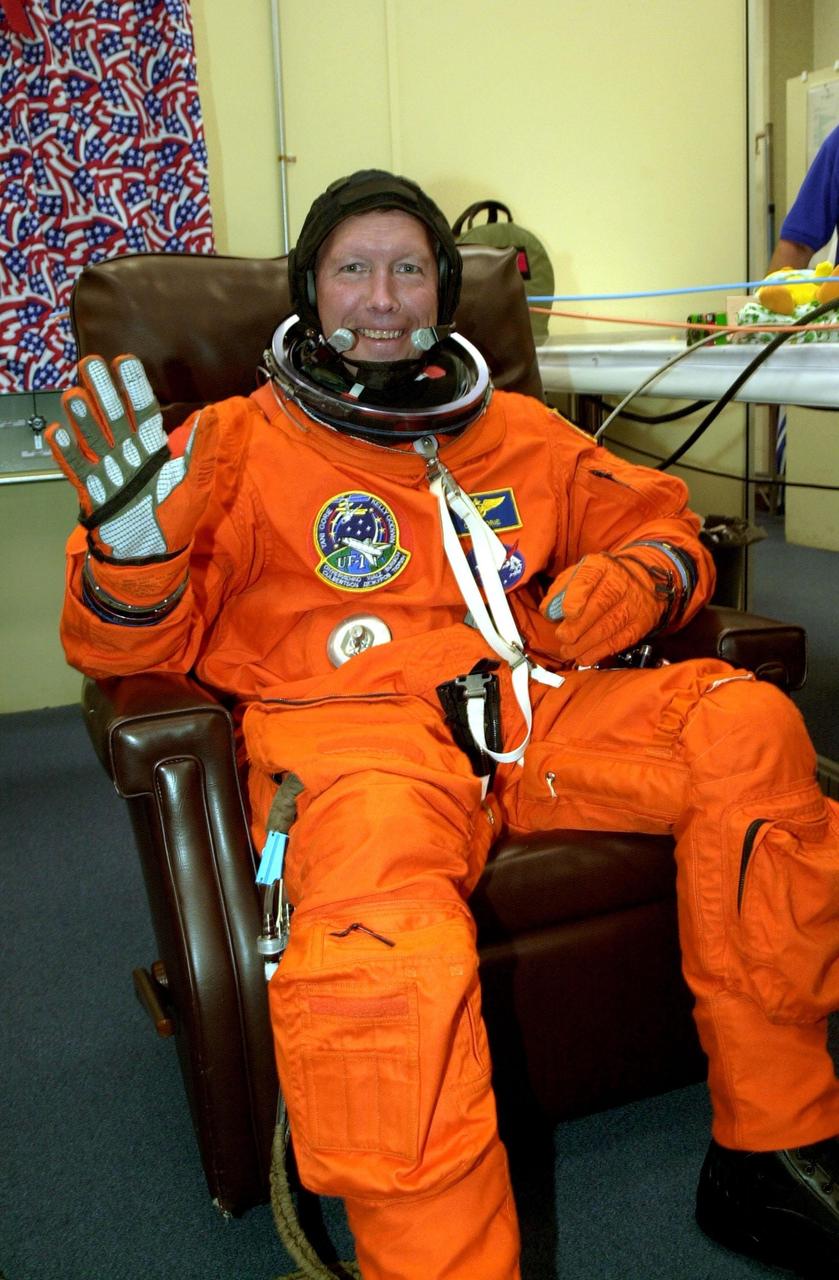
KENNEDY SPACE CENTER, Fla. -- STS-108 Commander Dominic L. Gorie gets a final suit check prior to heading to Launch Pad 39B and Space Shuttle Endeavour. Top priorities for the 11-day STS-108 (UF-1) mission of Endeavour are rotation of the International Space Station Expedition 3 and Expedition 4 crews; bringing water, equipment and supplies to the station in the Multi-Purpose Logistics Module Raffaello; and the crew's completion of robotics tasks and a spacewalk to install thermal blankets over two pieces of equipment at the bases of the Space Station's solar wings. Launch is scheduled for 5:45 p.m. EST Dec. 4, 2001, from Launch Pad 39B
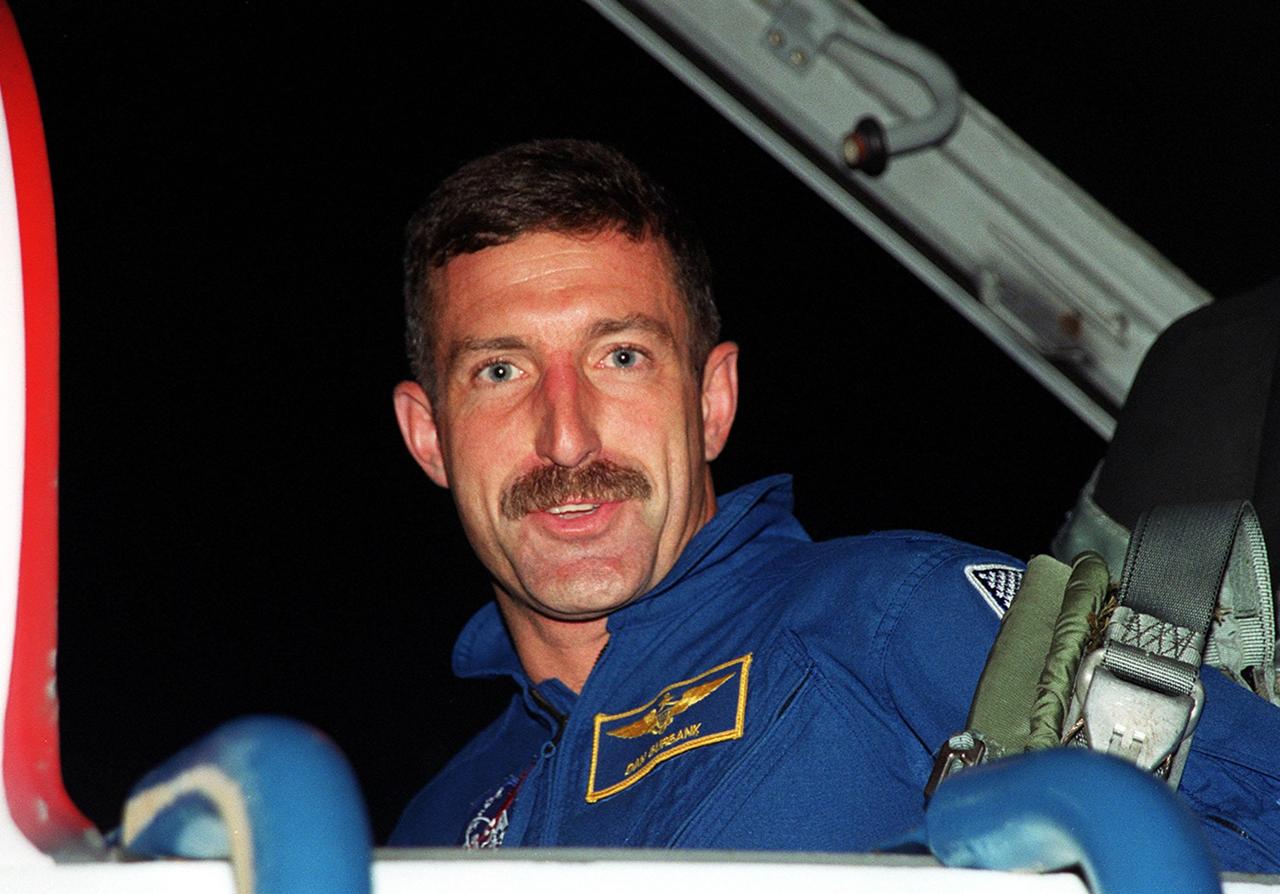
STS-106 Mission Specialist Daniel C. Burbank smiles on his arrival at the KSC Shuttle Landing Facility. He and the rest of the crew will be making pre-launch preparations for the fourth flight to the International Space Station. STS-106 is scheduled to launch Sept. 8, 2000, at 8:45 a.m. EDT from Launch Pad 39B. On the 11-day mission, the seven-member crew will perform support tasks on orbit, transfer supplies and prepare the living quarters in the newly arrived Zvezda Service Module. The first long-duration crew, dubbed “Expedition One,” is due to arrive at the Station in late fall
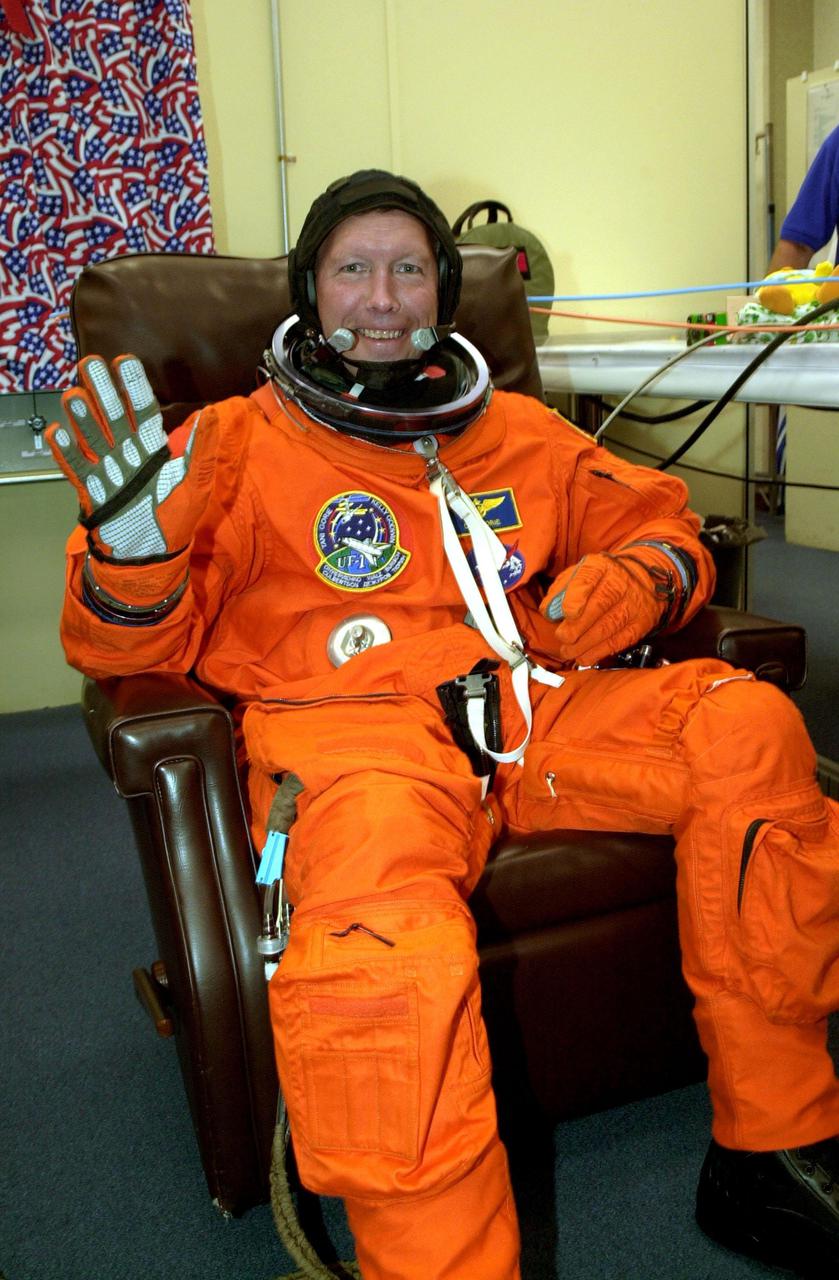
KENNEDY SPACE CENTER, Fla. -- STS-108 Commander Dominic L. Gorie gets a final suit check prior to heading to Launch Pad 39B and Space Shuttle Endeavour. Top priorities for the 11-day STS-108 (UF-1) mission of Endeavour are rotation of the International Space Station Expedition 3 and Expedition 4 crews; bringing water, equipment and supplies to the station in the Multi-Purpose Logistics Module Raffaello; and the crew's completion of robotics tasks and a spacewalk to install thermal blankets over two pieces of equipment at the bases of the Space Station's solar wings. Launch is scheduled for 5:45 p.m. EST Dec. 4, 2001, from Launch Pad 39B
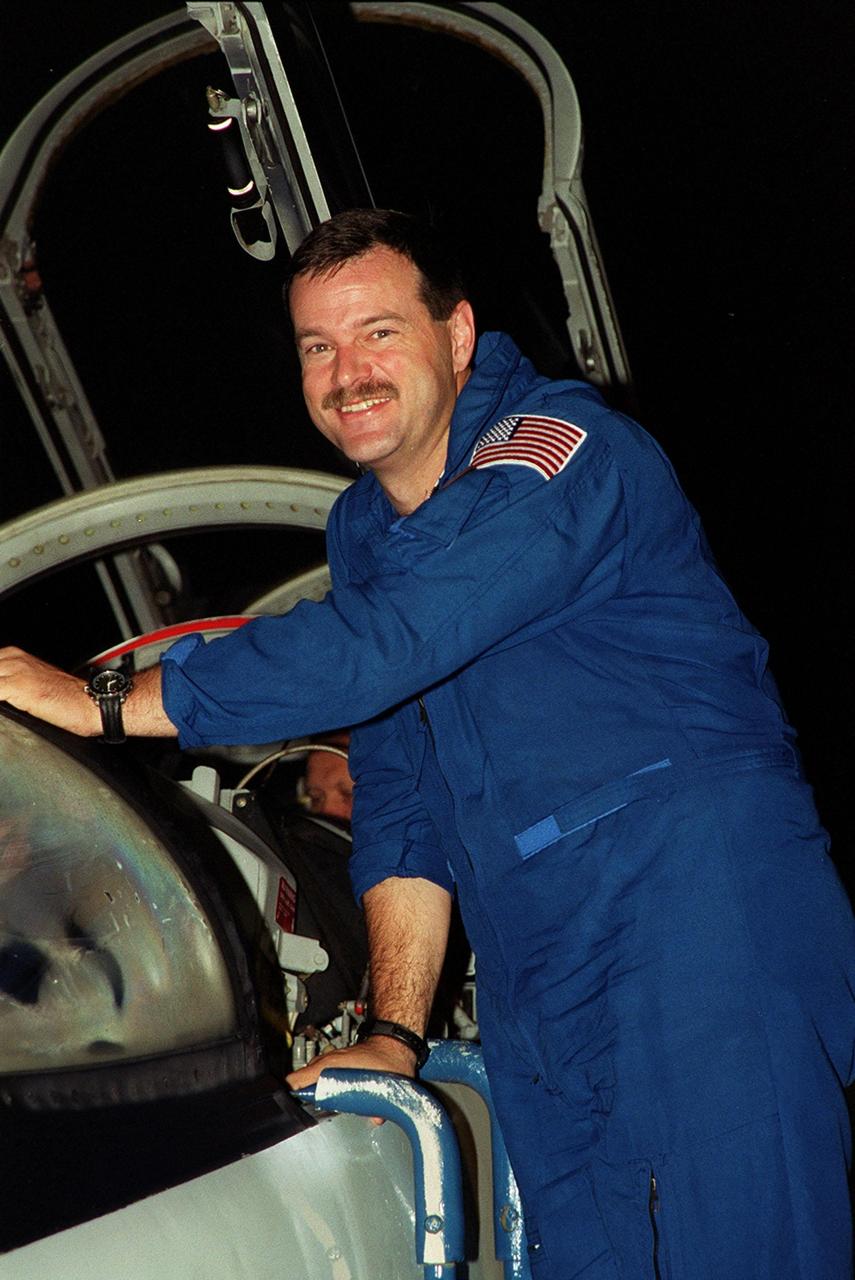
STS-106 Pilot Scott D. Altman steps down from the T-38 jet aircraft after landing at the KSC Shuttle Landing Facility. He and the rest of the crew will be making pre-launch preparations for the fourth flight to the International Space Station. STS-106 is scheduled to launch Sept. 8, 2000, at 8:45 a.m. EDT from Launch Pad 39B. On the 11-day mission, the seven-member crew will perform support tasks on orbit, transfer supplies and prepare the living quarters in the newly arrived Zvezda Service Module. The first long-duration crew, dubbed “Expedition One,” is due to arrive at the Station in late fall
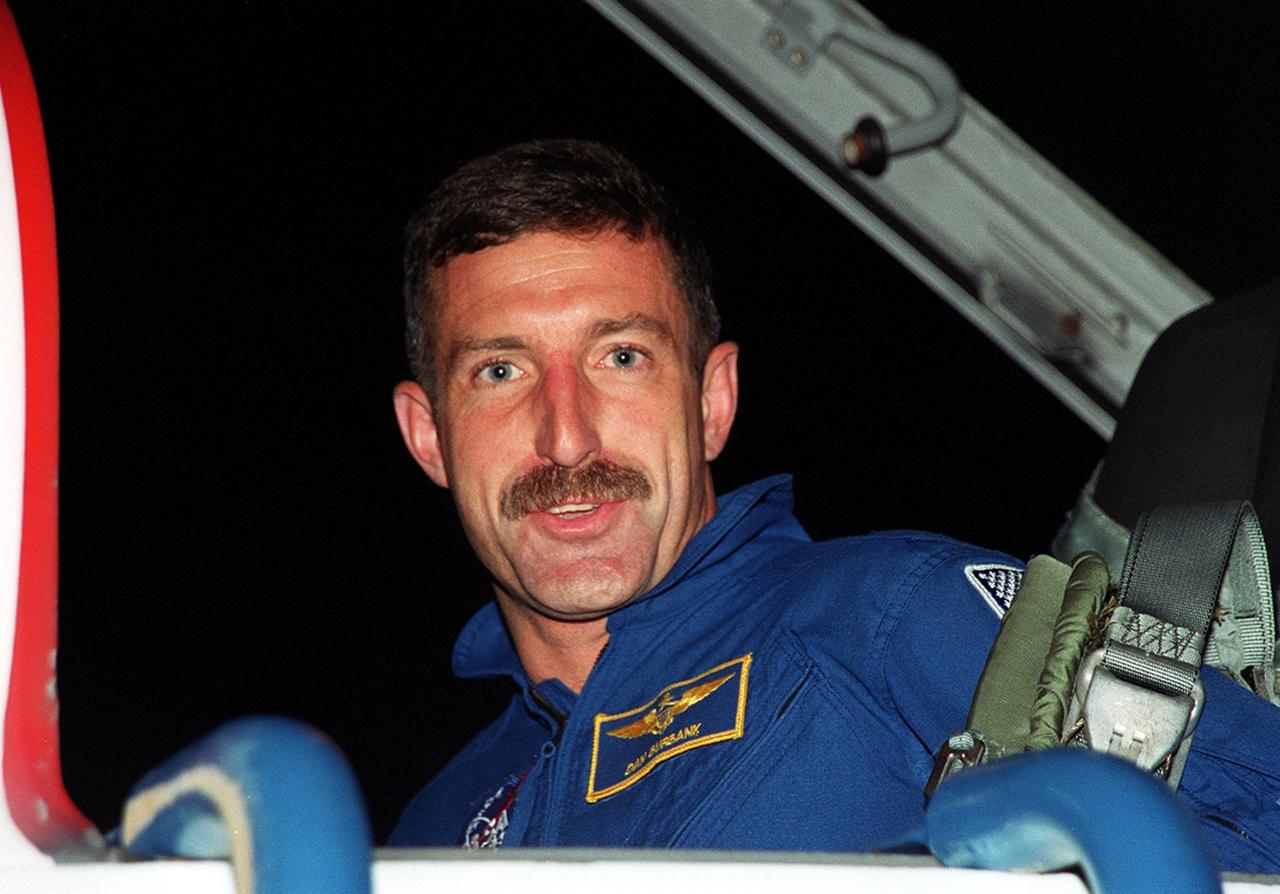
STS-106 Mission Specialist Daniel C. Burbank smiles on his arrival at the KSC Shuttle Landing Facility. He and the rest of the crew will be making pre-launch preparations for the fourth flight to the International Space Station. STS-106 is scheduled to launch Sept. 8, 2000, at 8:45 a.m. EDT from Launch Pad 39B. On the 11-day mission, the seven-member crew will perform support tasks on orbit, transfer supplies and prepare the living quarters in the newly arrived Zvezda Service Module. The first long-duration crew, dubbed “Expedition One,” is due to arrive at the Station in late fall
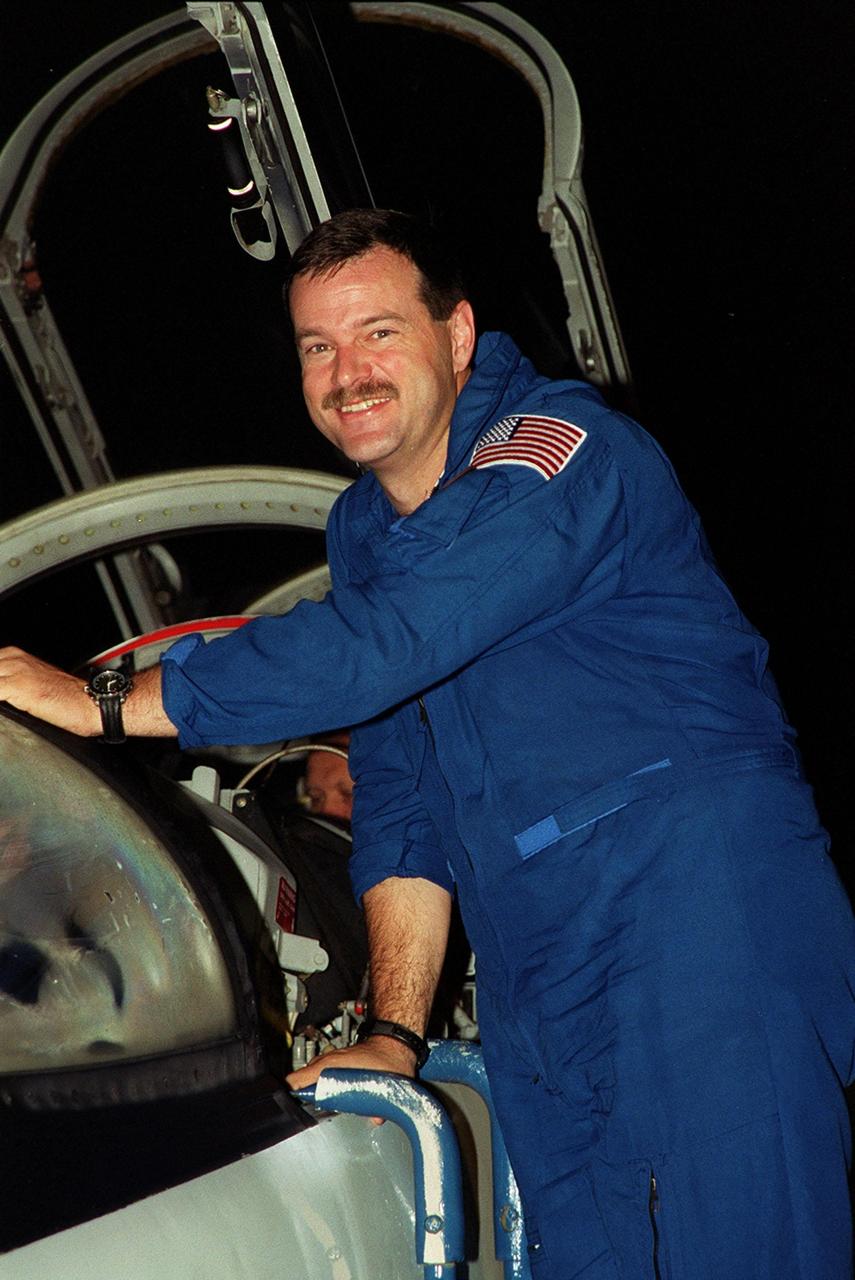
STS-106 Pilot Scott D. Altman steps down from the T-38 jet aircraft after landing at the KSC Shuttle Landing Facility. He and the rest of the crew will be making pre-launch preparations for the fourth flight to the International Space Station. STS-106 is scheduled to launch Sept. 8, 2000, at 8:45 a.m. EDT from Launch Pad 39B. On the 11-day mission, the seven-member crew will perform support tasks on orbit, transfer supplies and prepare the living quarters in the newly arrived Zvezda Service Module. The first long-duration crew, dubbed “Expedition One,” is due to arrive at the Station in late fall
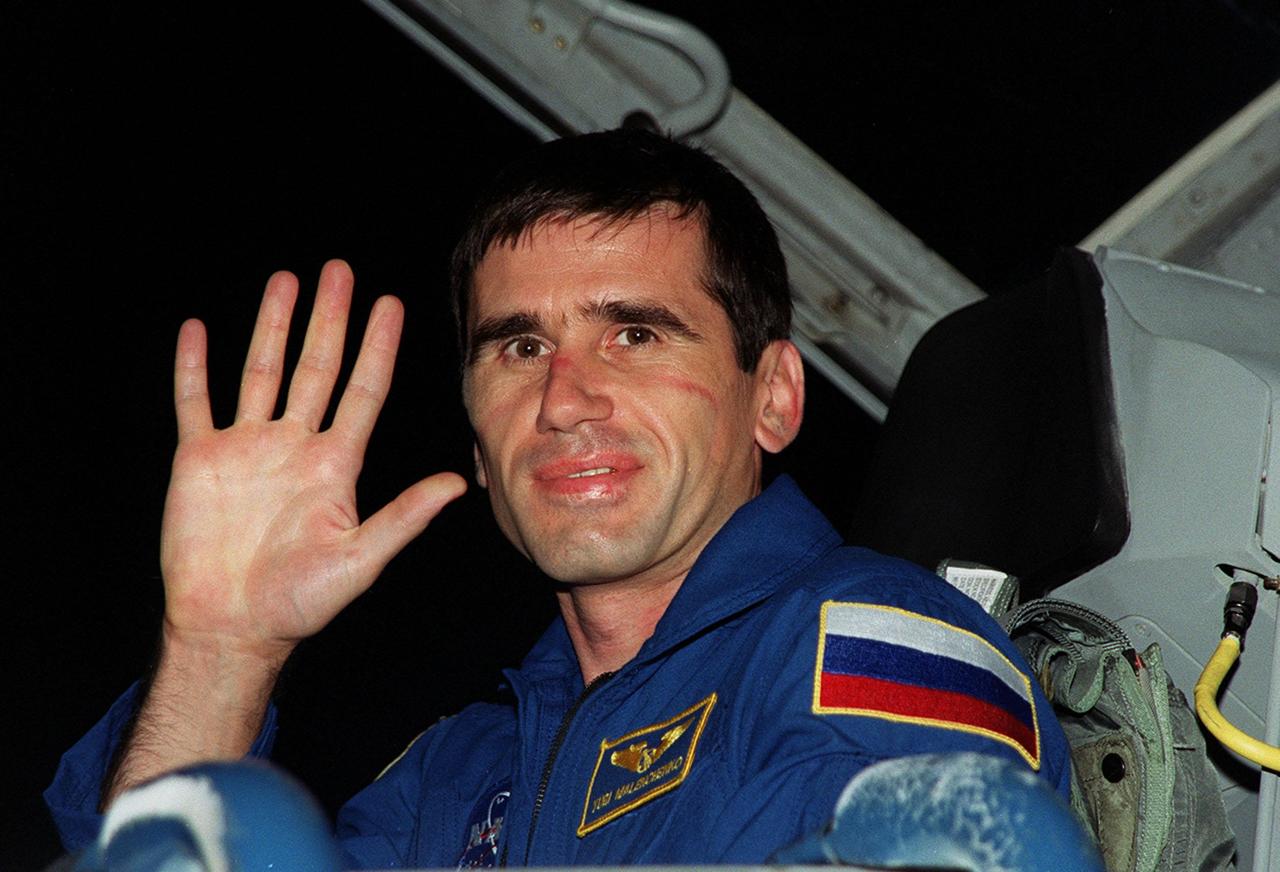
STS-106 Mission Specialist Yuri I. Malenchenko waves for the camera as he arrives at the KSC Shuttle Landing Facility. Malenchenko is with the Russian Aviation and Space Agency. He and the rest of the crew will be making pre-launch preparations for the fourth flight to the International Space Station. STS-106 is scheduled to launch Sept. 8, 2000, at 8:45 a.m. EDT from Launch Pad 39B. On the 11-day mission, the seven-member crew will perform support tasks on orbit, transfer supplies and prepare the living quarters in the newly arrived Zvezda Service Module. The first long-duration crew, dubbed "Expedition One," is due to arrive at the Station in late fall
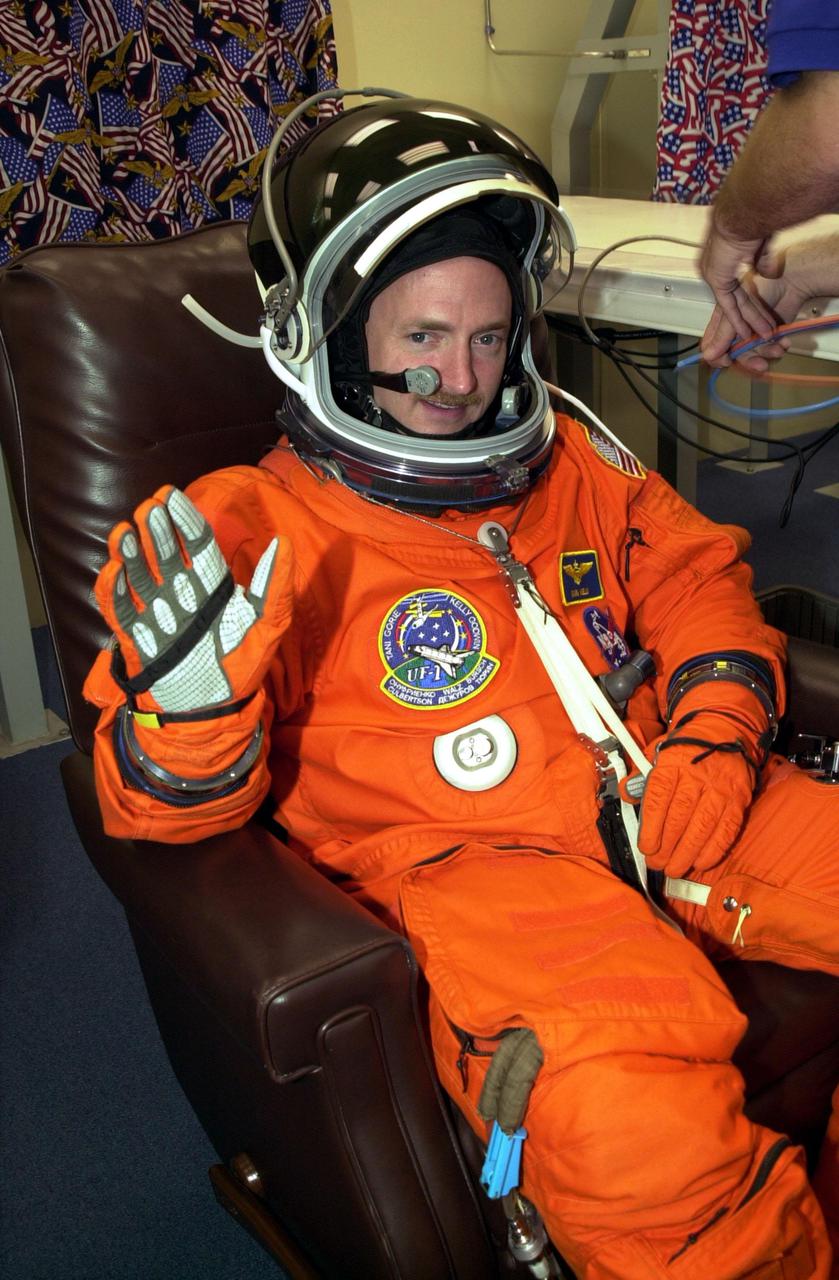
KENNEDY SPACE CENTER, Fla. -- STS-108 Pilot Mark E. Kelly gets a final suit check prior to heading to Launch Pad 39B and Space Shuttle Endeavour. Top priorities for the 11-day STS-108 (UF-1) mission of Endeavour are rotation of the International Space Station Expedition 3 and Expedition 4 crews; bringing water, equipment and supplies to the station in the Multi-Purpose Logistics Module Raffaello; and the crew's completion of robotics tasks and a spacewalk to install thermal blankets over two pieces of equipment at the bases of the Space Station's solar wings. Launch is scheduled for 5:45 p.m. EST Dec. 4, 2001, from Launch Pad 39B
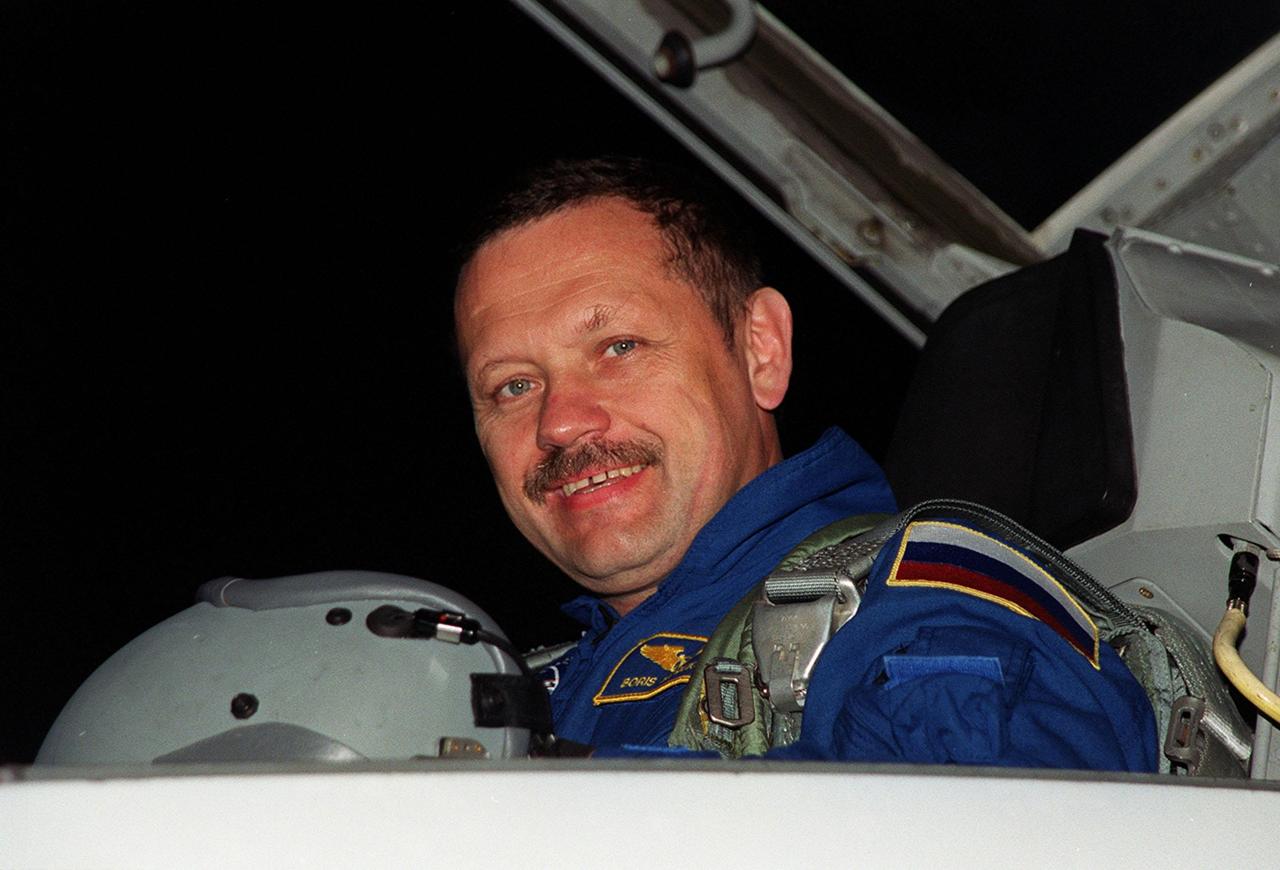
STS-106 Mission Specialist Boris V. Morukov smiles upon his arrival at the KSC Shuttle Landing Facility. He and the rest of the crew will be making pre-launch preparations for the fourth flight to the International Space Station. STS-106 is scheduled to launch Sept. 8, 2000, at 8:45 a.m. EDT from Launch Pad 39B. On the 11-day mission, the seven-member crew will perform support tasks on orbit, transfer supplies and prepare the living quarters in the newly arrived Zvezda Service Module. The first long-duration crew, dubbed “Expedition One,” is due to arrive at the Station in late fall
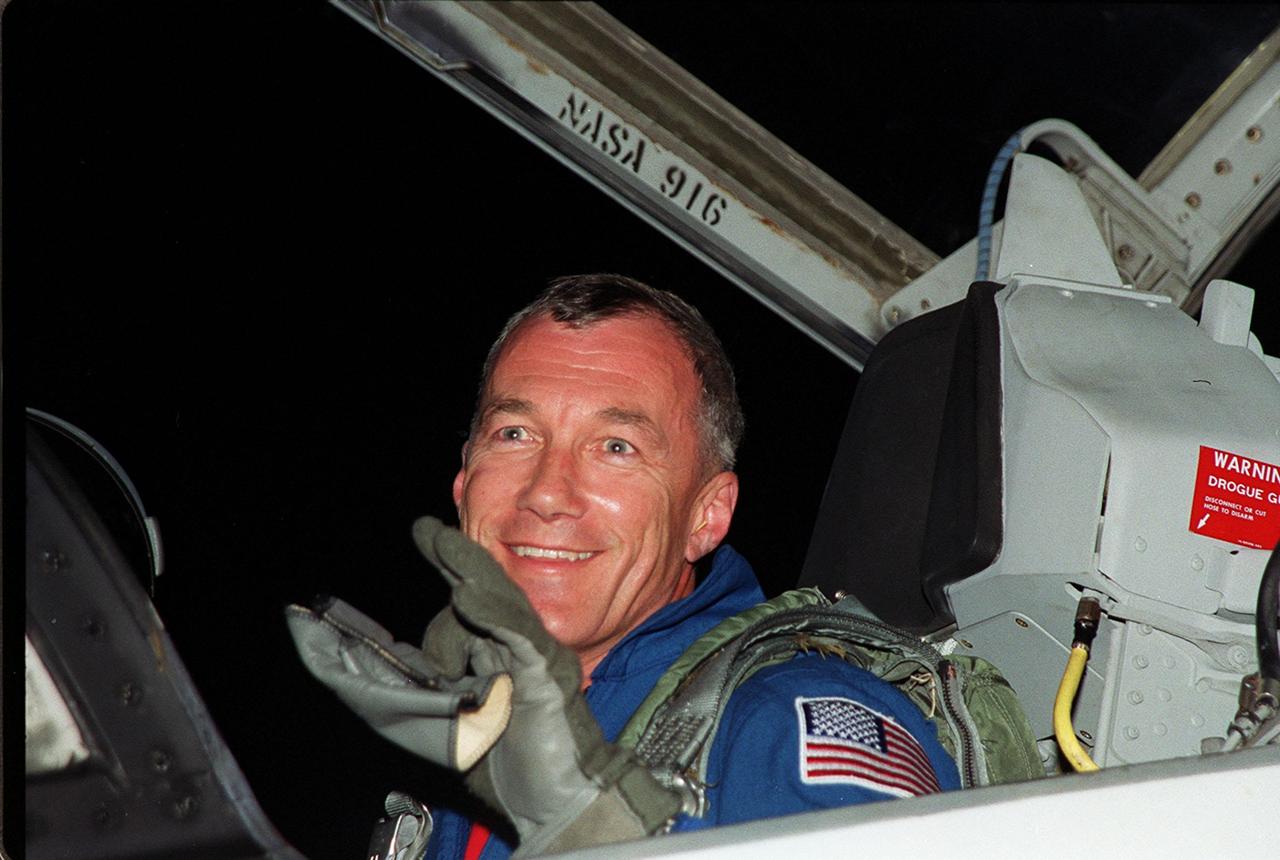
STS-106 Commander Terrence W. Wilcutt waves to onlookers as he arrives at the KSC Shuttle Landing Facility. He and the rest of the crew will be making pre-launch preparations for the fourth flight to the International Space Station. STS-106 is scheduled to launch Sept. 8, 2000, at 8:45 a.m. EDT from Launch Pad 39B. On the 11-day mission, the seven-member crew will perform support tasks on orbit, transfer supplies and prepare the living quarters in the newly arrived Zvezda Service Module. The first long-duration crew, dubbed “Expedition One,” is due to arrive at the Station in late fall
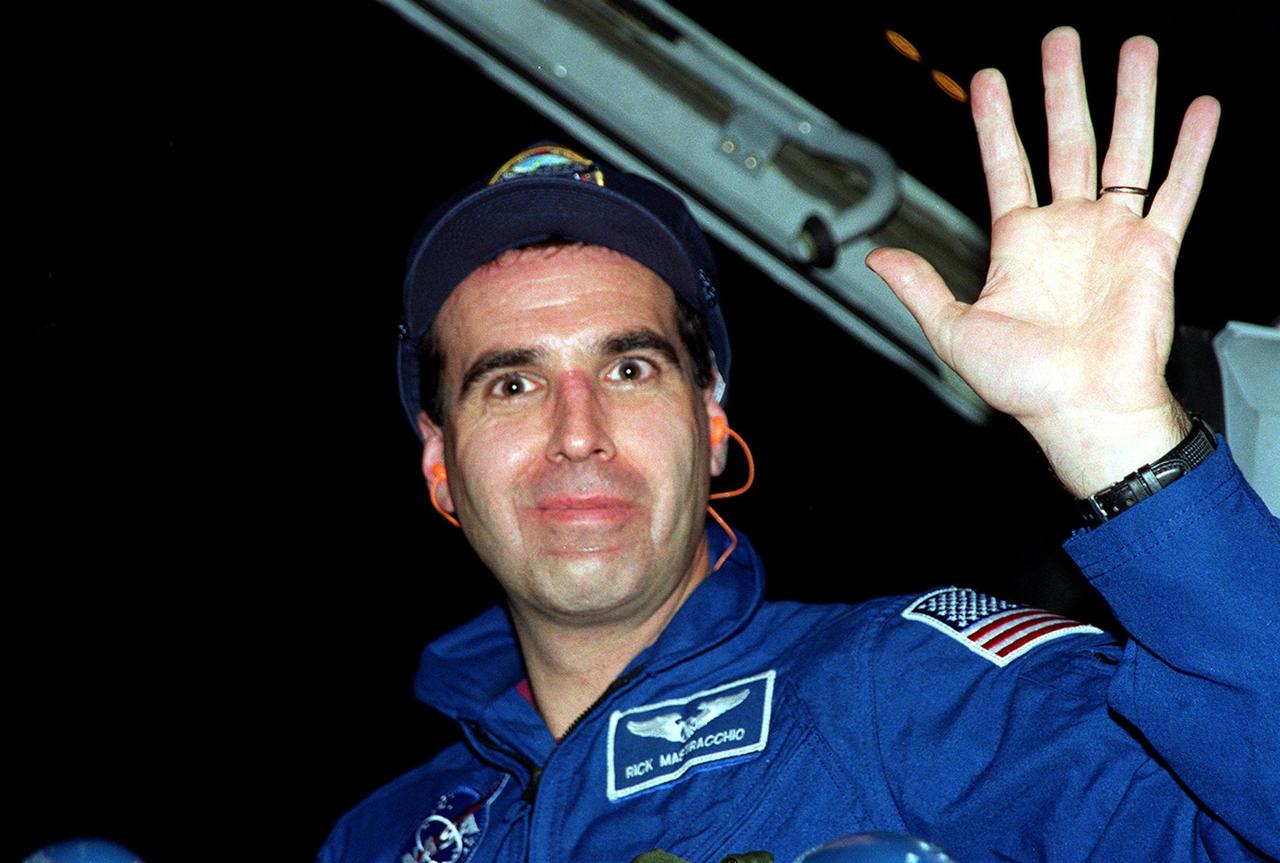
STS-106 Mission Specialist Richard A. Mastracchio waves at the camera upon his arrival at the KSC Shuttle Landing Facility. He and the rest of the crew will be making pre-launch preparations for the fourth flight to the International Space Station. STS-106 is scheduled to launch Sept. 8, 2000, at 8:45 a.m. EDT from Launch Pad 39B. On the 11-day mission, the seven-member crew will perform support tasks on orbit, transfer supplies and prepare the living quarters in the newly arrived Zvezda Service Module. The first long-duration crew, dubbed “Expedition One,” is due to arrive at the Station in late fall
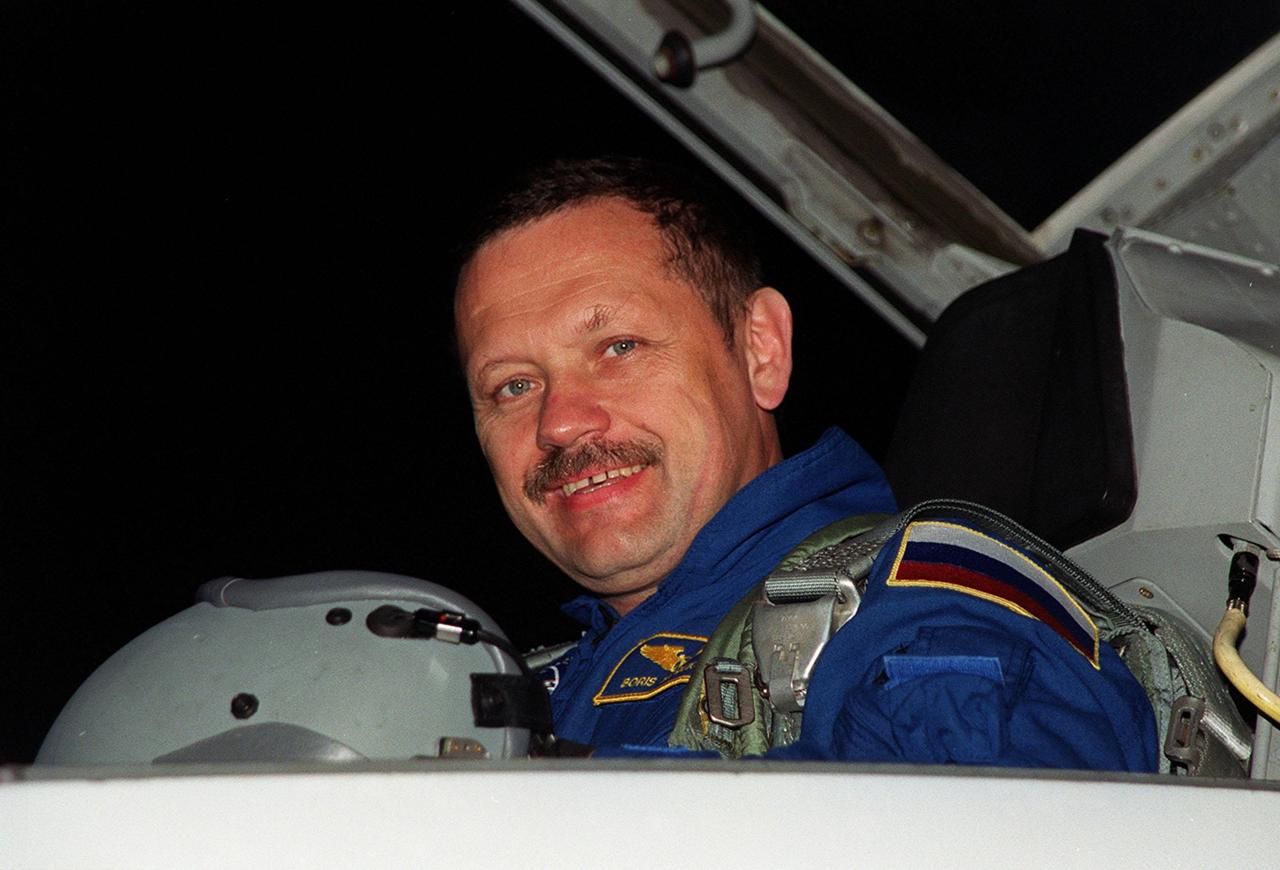
STS-106 Mission Specialist Boris V. Morukov smiles upon his arrival at the KSC Shuttle Landing Facility. He and the rest of the crew will be making pre-launch preparations for the fourth flight to the International Space Station. STS-106 is scheduled to launch Sept. 8, 2000, at 8:45 a.m. EDT from Launch Pad 39B. On the 11-day mission, the seven-member crew will perform support tasks on orbit, transfer supplies and prepare the living quarters in the newly arrived Zvezda Service Module. The first long-duration crew, dubbed “Expedition One,” is due to arrive at the Station in late fall
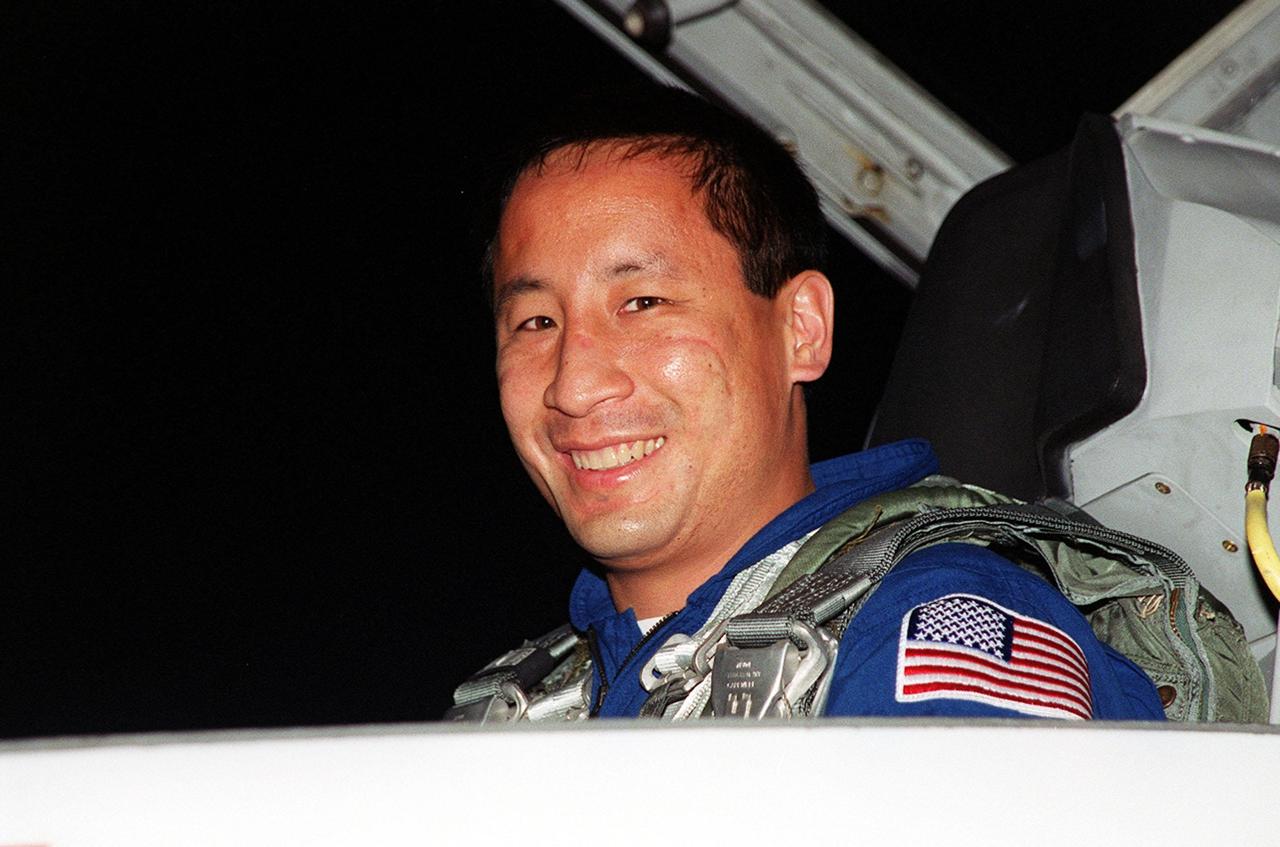
STS-106 Mission Specialist Edward T. Lu grins upon his arrival at the KSC Shuttle Landing Facility. He and the rest of the crew will be making pre-launch preparations for the fourth flight to the International Space Station. STS-106 is scheduled to launch Sept. 8, 2000, at 8:45 a.m. EDT from Launch Pad 39B. On the 11-day mission, the seven-member crew will perform support tasks on orbit, transfer supplies and prepare the living quarters in the newly arrived Zvezda Service Module. The first long-duration crew, dubbed "Expedition One," is due to arrive at the Station in late fall
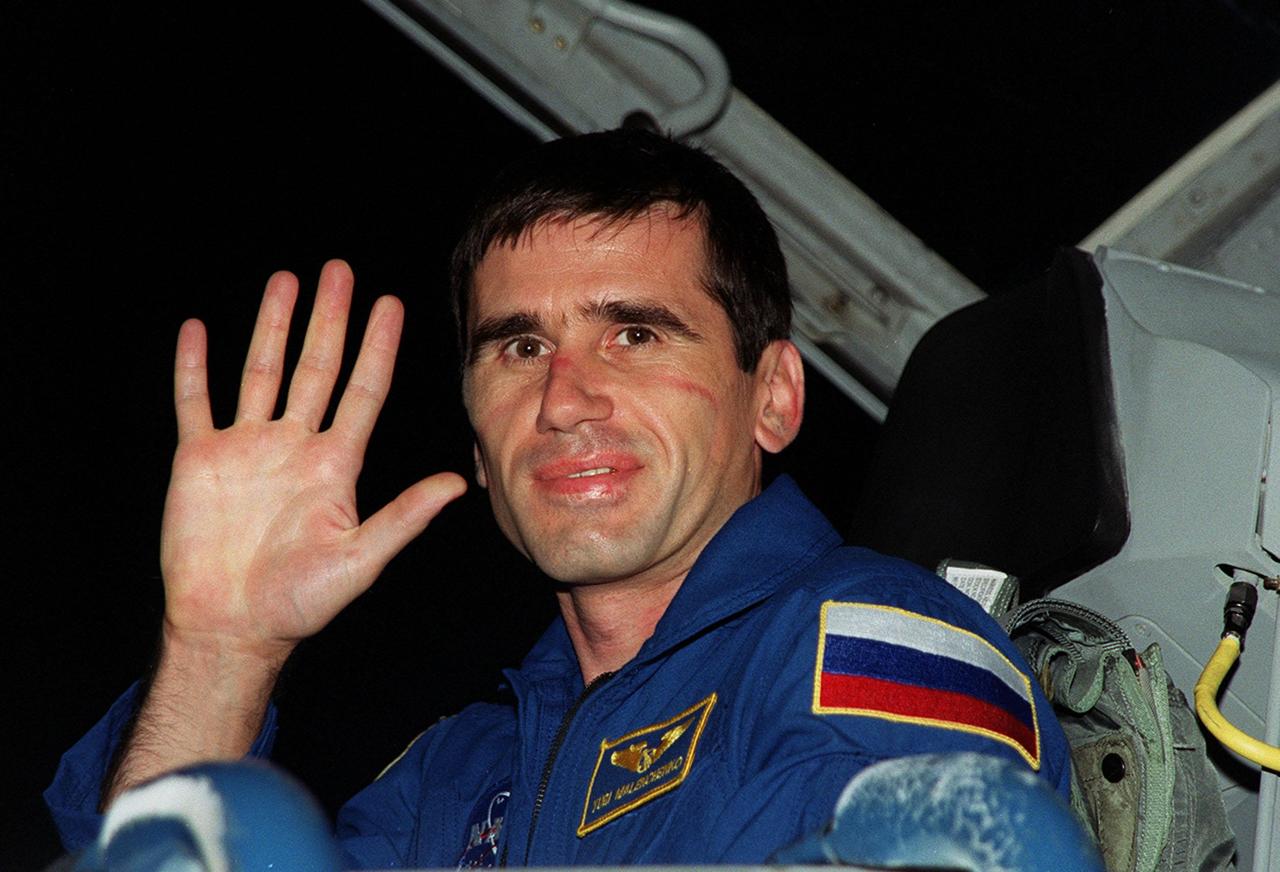
STS-106 Mission Specialist Yuri I. Malenchenko waves for the camera as he arrives at the KSC Shuttle Landing Facility. Malenchenko is with the Russian Aviation and Space Agency. He and the rest of the crew will be making pre-launch preparations for the fourth flight to the International Space Station. STS-106 is scheduled to launch Sept. 8, 2000, at 8:45 a.m. EDT from Launch Pad 39B. On the 11-day mission, the seven-member crew will perform support tasks on orbit, transfer supplies and prepare the living quarters in the newly arrived Zvezda Service Module. The first long-duration crew, dubbed "Expedition One," is due to arrive at the Station in late fall
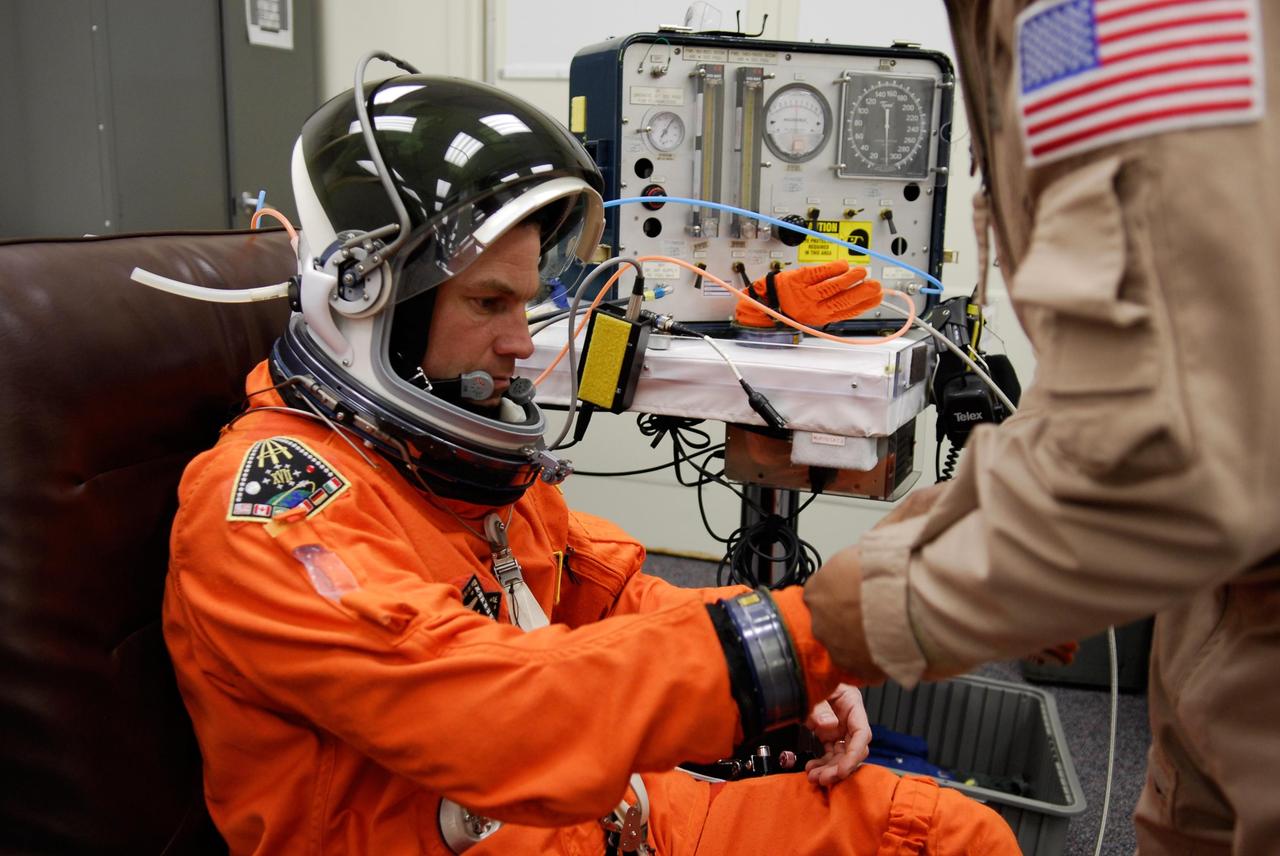
KENNEDY SPACE CENTER, FLA. --Mission Specialist Stanley Love gets help with his gloves to complete his suitup for launch of space shuttle Atlantis on the STS-122 mission. The launch, scheduled for 2:45 p.m. EST, will be the third attempt for Atlantis since December 2007 to carry the European Space Agency's Columbus laboratory to the International Space Station. During the 11-day mission, the crew's prime objective is to attach the laboratory to the Harmony module, adding to the station's size and capabilities. Photo credit: NASA/Kim Shiflett
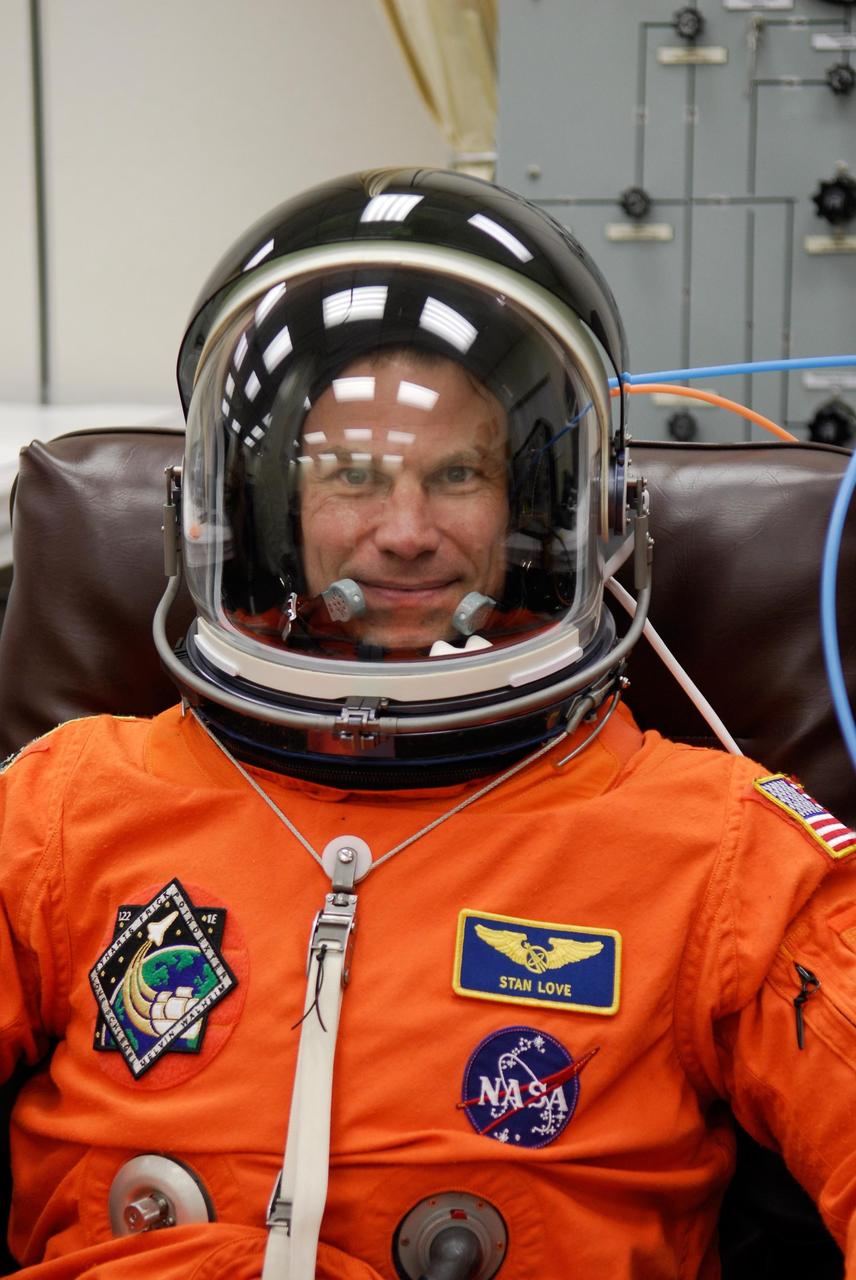
KENNEDY SPACE CENTER, FLA. --Mission Specialist Stanley Love is suited and ready to head for Launch Pad 39A and liftoff of space shuttle Atlantis on the STS-122 mission. The launch, scheduled for 2:45 p.m. EST, will be the third attempt for Atlantis since December 2007 to carry the European Space Agency's Columbus laboratory to the International Space Station. During the 11-day mission, the crew's prime objective is to attach the laboratory to the Harmony module, adding to the station's size and capabilities. Photo credit: NASA/Kim Shiflett
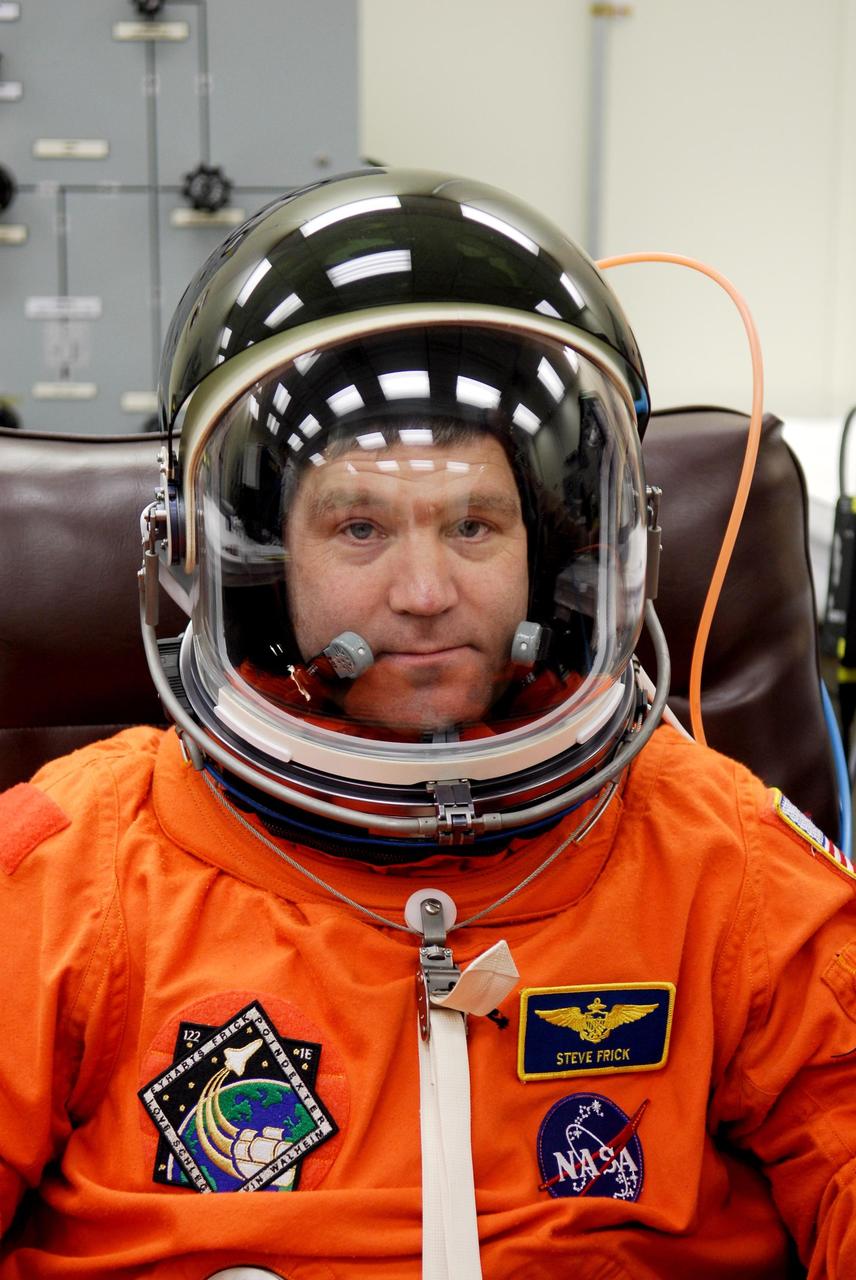
KENNEDY SPACE CENTER, FLA. -- Commander Steve Frick completes suiting up for the launch of space shuttle Atlantis on the STS-122 mission. The launch, scheduled for 2:45 p.m. EST, will be the third attempt for Atlantis since December 2007 to carry the European Space Agency's Columbus laboratory to the International Space Station. During the 11-day mission, the crew's prime objective is to attach the laboratory to the Harmony module, adding to the station's size and capabilities. Photo credit: NASA/Kim Shiflett
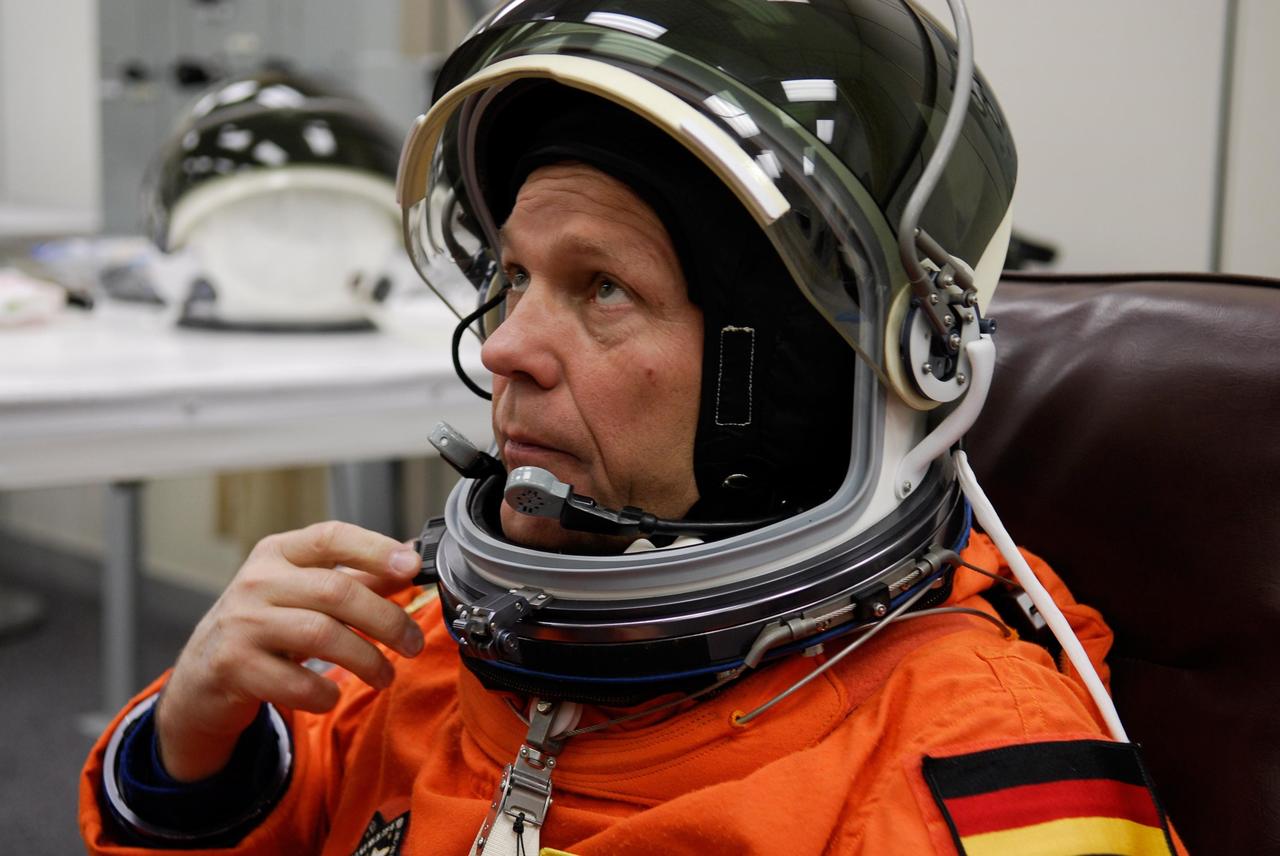
KENNEDY SPACE CENTER, FLA. -- Mission Specialist Hans Schlegel dons his helmet for launch of space shuttle Atlantis on the STS-122 mission. Schlegel represents the European Space Agency. The launch, scheduled for 2:45 p.m. EST, will be the third attempt for Atlantis since December 2007 to carry the European Space Agency's Columbus laboratory to the International Space Station. During the 11-day mission, the crew's prime objective is to attach the laboratory to the Harmony module, adding to the station's size and capabilities. Photo credit: NASA/Kim Shiflett
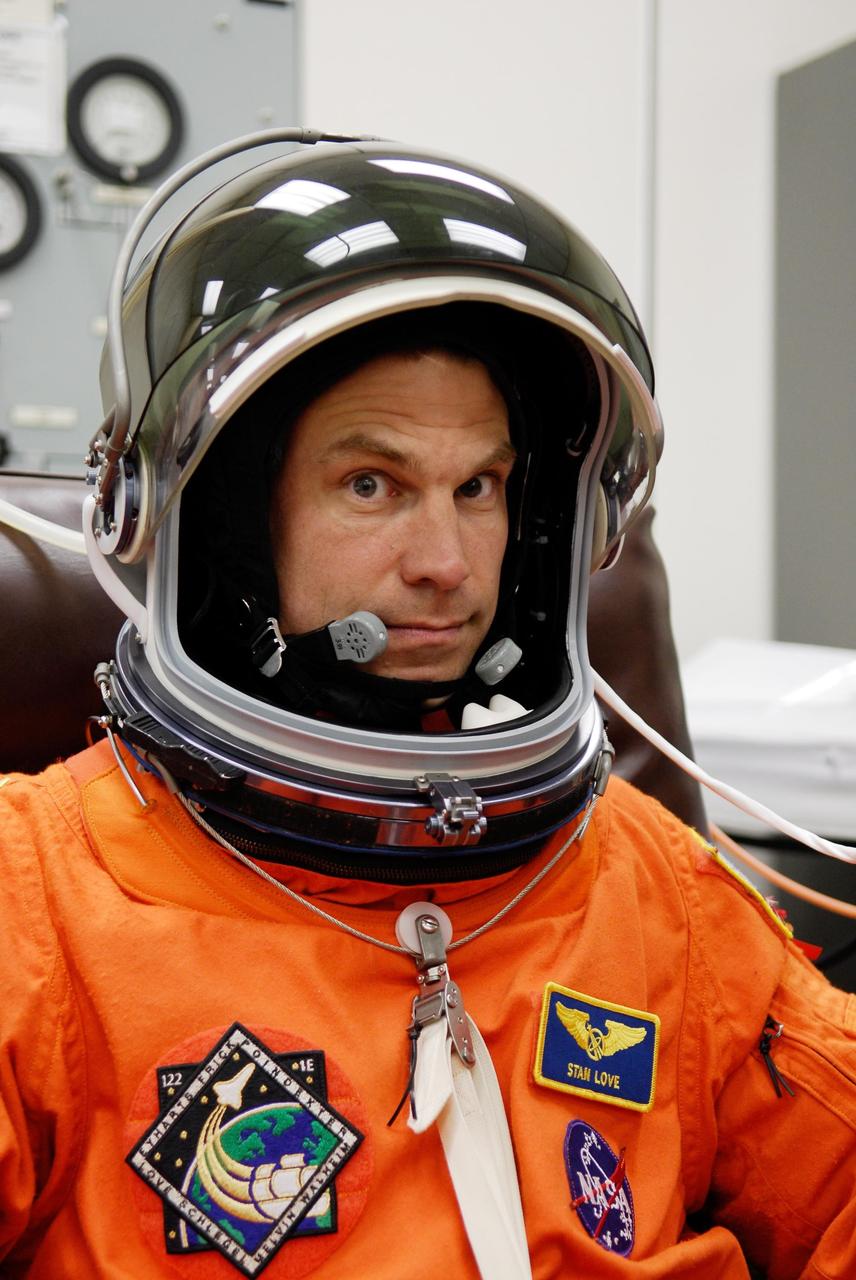
KENNEDY SPACE CENTER, FLA. --Mission Specialist Stanley Love tests the communication in his helmet as he completes suitup for launch of space shuttle Atlantis on the STS-122 mission. The launch, scheduled for 2:45 p.m. EST, will be the third attempt for Atlantis since December 2007 to carry the European Space Agency's Columbus laboratory to the International Space Station. During the 11-day mission, the crew's prime objective is to attach the laboratory to the Harmony module, adding to the station's size and capabilities. Photo credit: NASA/Kim Shiflett
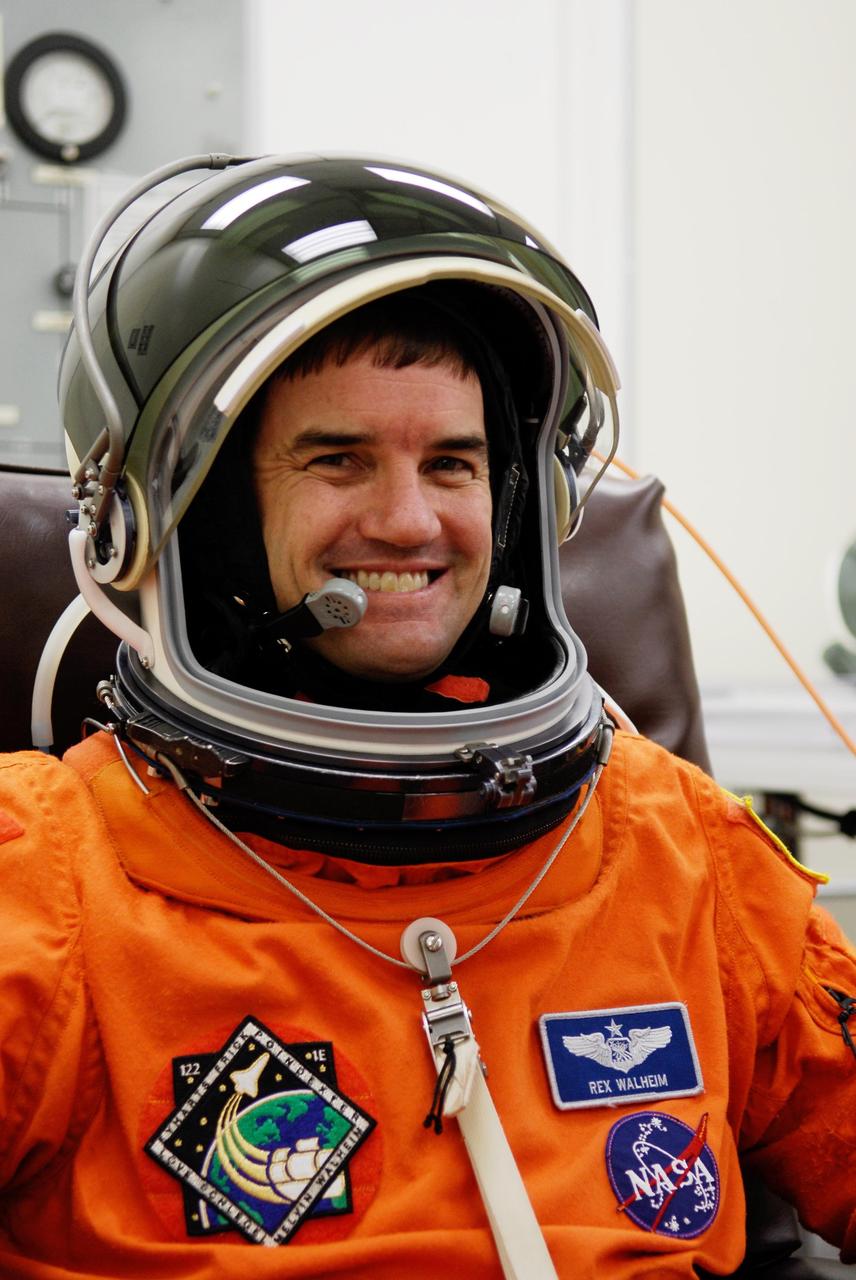
KENNEDY SPACE CENTER, FLA. -- Mission Specialist Rex Walheim is eager to finish suiting up for launch of space shuttle Atlantis on the STS-122 mission. The launch, scheduled for 2:45 p.m. EST, will be the third attempt for Atlantis since December 2007 to carry the European Space Agency's Columbus laboratory to the International Space Station. During the 11-day mission, the crew's prime objective is to attach the laboratory to the Harmony module, adding to the station's size and capabilities. Photo credit: NASA/Kim Shiflett
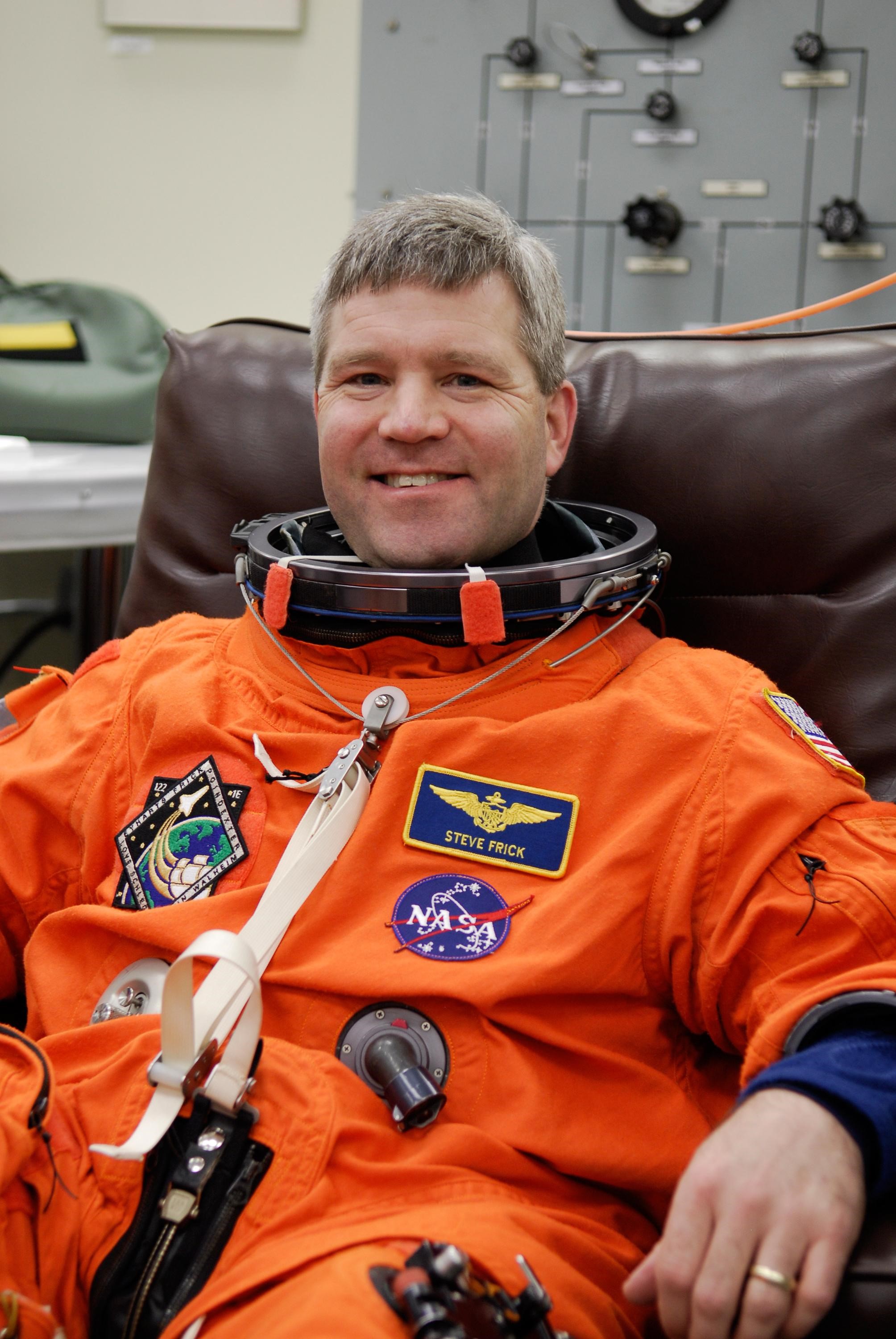
KENNEDY SPACE CENTER, FLA. -- Commander Steve Frick is happy to be suiting up for launch of space shuttle Atlantis on the STS-122 mission. The launch, scheduled for 2:45 p.m. EST, will be the third attempt for Atlantis since December 2007 to carry the European Space Agency's Columbus laboratory to the International Space Station. During the 11-day mission, the crew's prime objective is to attach the laboratory to the Harmony module, adding to the station's size and capabilities. Photo credit: NASA/Kim Shiflett
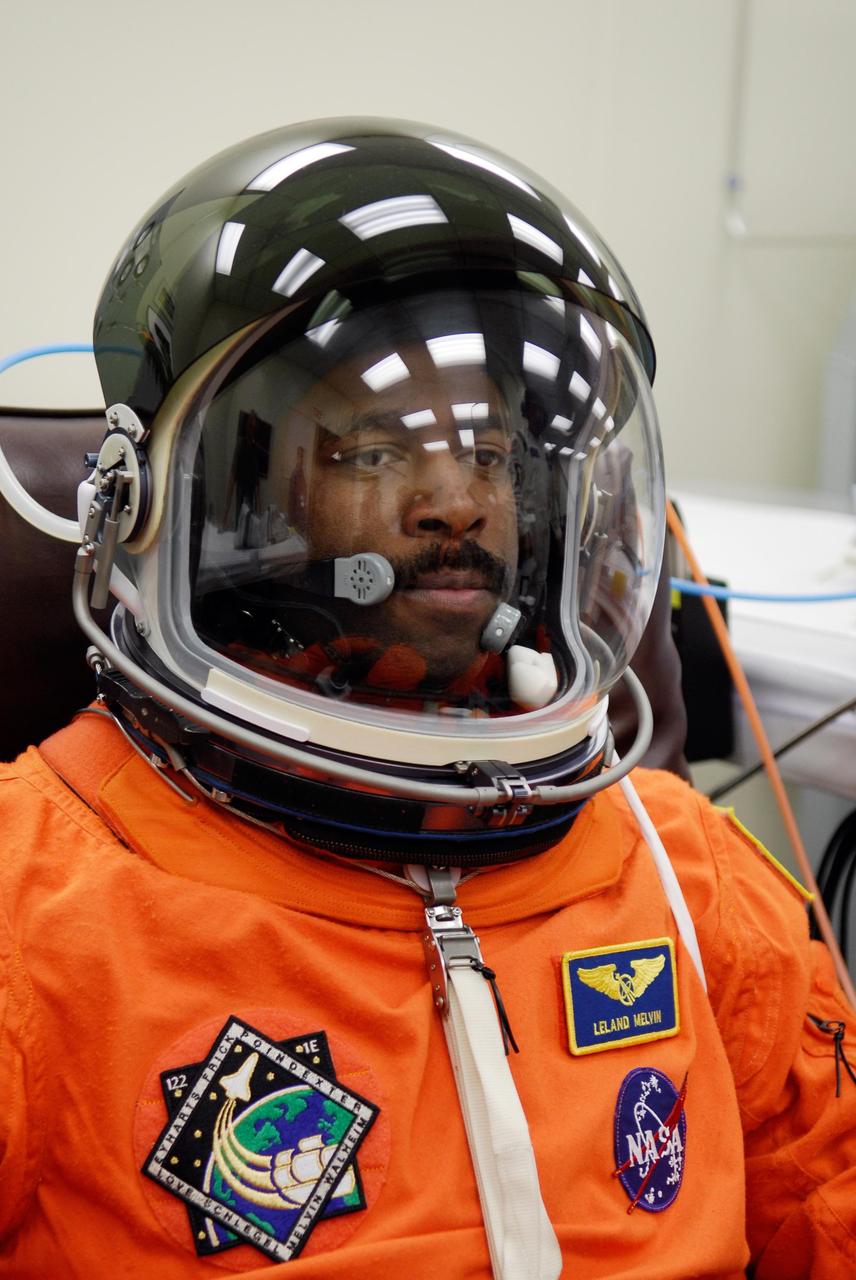
KENNEDY SPACE CENTER, FLA. -- Mission Specialist Leland Melvin completes his suitup by donning the helmet he'll wear during launch of space shuttle Atlantis on the STS-122 mission. The launch, scheduled for 2:45 p.m. EST, will be the third attempt for Atlantis since December 2007 to carry the European Space Agency's Columbus laboratory to the International Space Station. During the 11-day mission, the crew's prime objective is to attach the laboratory to the Harmony module, adding to the station's size and capabilities. Photo credit: NASA/Kim Shiflett
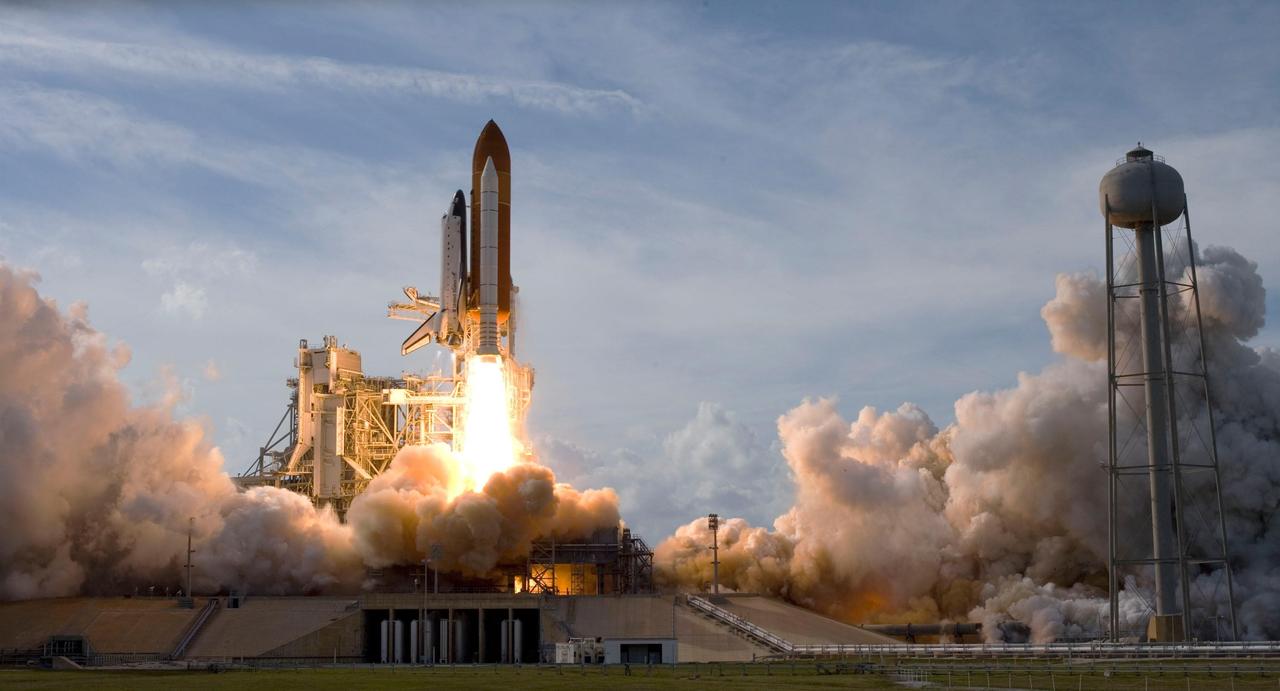
KENNEDY SPACE CENTER, FLA. -- Emerging from the billows of smoke and steam on Launch Pad 39A, space shuttle Atlantis hurtles into space for a rendezvous with the International Space Station on mission STS-122. Liftoff was on time at 2:45 p.m. EST. This is the third launch attempt for Atlantis since December 2007 to carry the European Space Agency's Columbus laboratory to the station. During the 11-day mission, the crew's prime objective is to attach the laboratory to the Harmony module, adding to the station's size and capabilities. Photo credit: Scott Andrews
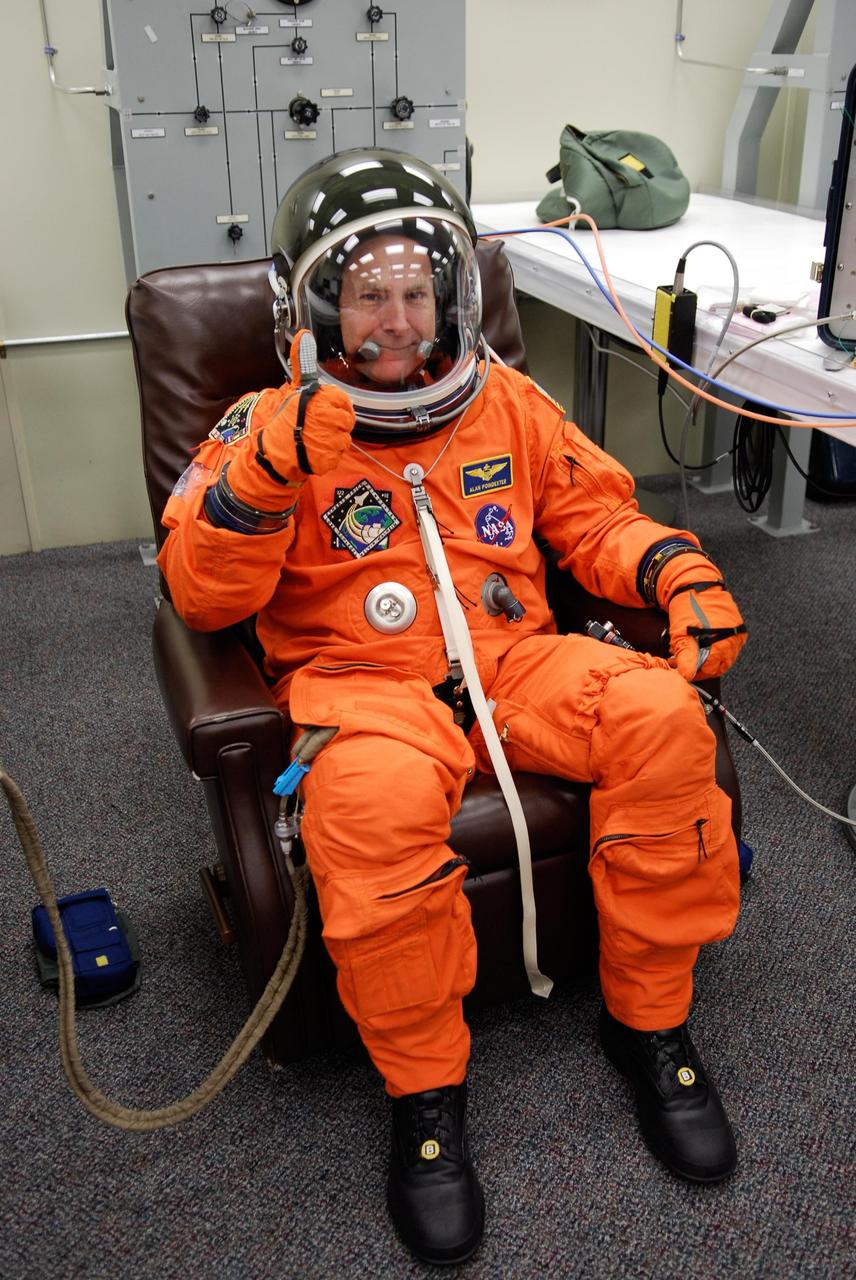
KENNEDY SPACE CENTER, FLA. -- Pilot Alan Poindexter is suited and ready for the launch of space shuttle Atlantis on the STS-122 mission. The launch, scheduled for 2:45 p.m. EST, will be the third attempt for Atlantis since December 2007 to carry the European Space Agency's Columbus laboratory to the International Space Station. During the 11-day mission, the crew's prime objective is to attach the laboratory to the Harmony module, adding to the station's size and capabilities. Photo credit: NASA/Kim Shiflett
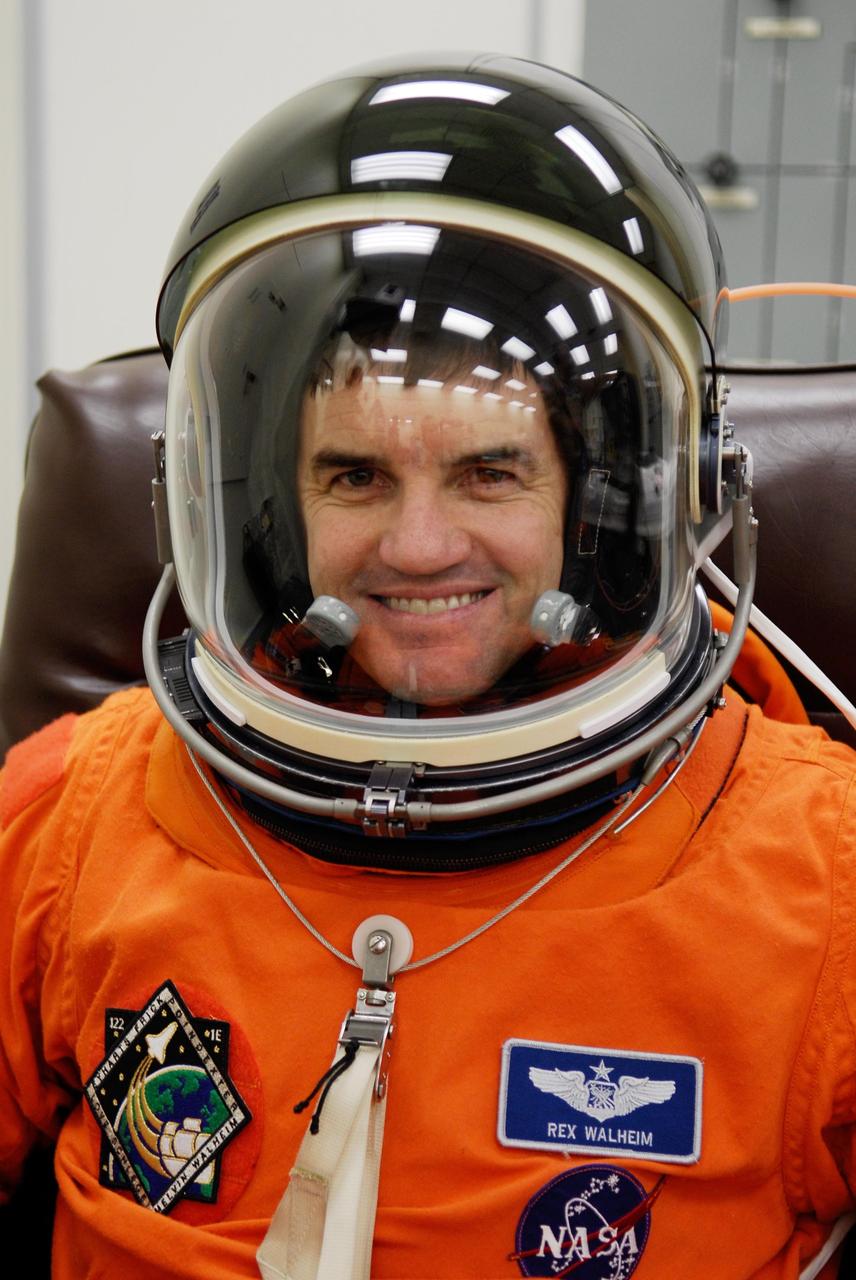
KENNEDY SPACE CENTER, FLA. -- Mission Specialist Rex Walheim completes suiting up for the launch of space shuttle Atlantis on the STS-122 mission. The launch, scheduled for 2:45 p.m. EST, will be the third attempt for Atlantis since December 2007 to carry the European Space Agency's Columbus laboratory to the International Space Station. During the 11-day mission, the crew's prime objective is to attach the laboratory to the Harmony module, adding to the station's size and capabilities. Photo credit: NASA/Kim Shiflett
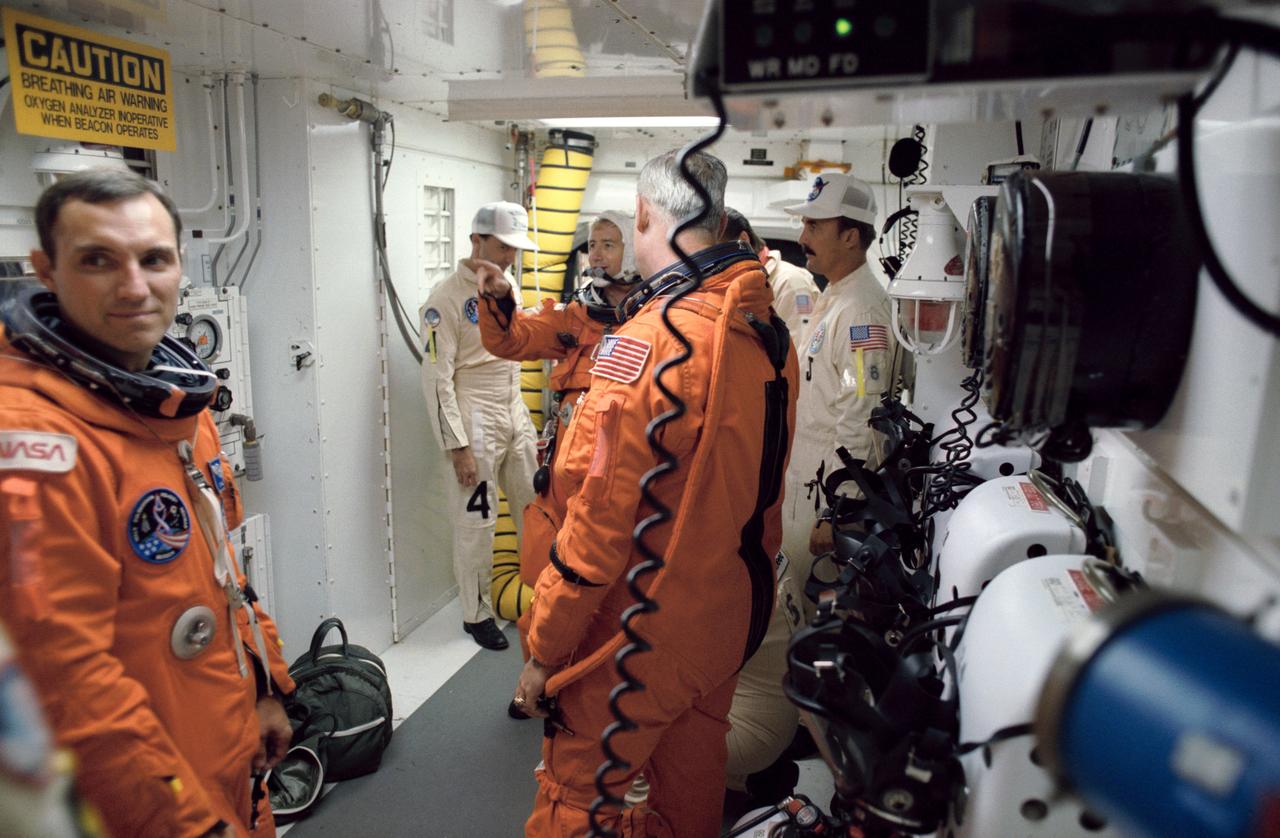
STS051-S-109 (12 Sept 1993) --- Inside the White Room, three astronaut crew members for the STS-51 flight await their queues to ingress the Space Shuttle Discovery. Wearing the partial pressure launch and entry suits are, left to right, Carl E. Walz, mission specialist; Frank L. Culbertson Jr., mission commander; and William F. Readdy, pilot. Not pictured are astronauts James H. Newman and Daniel W. Bursch. Launch occurred at 7:45 a.m. (EDT), September 12, 1993.
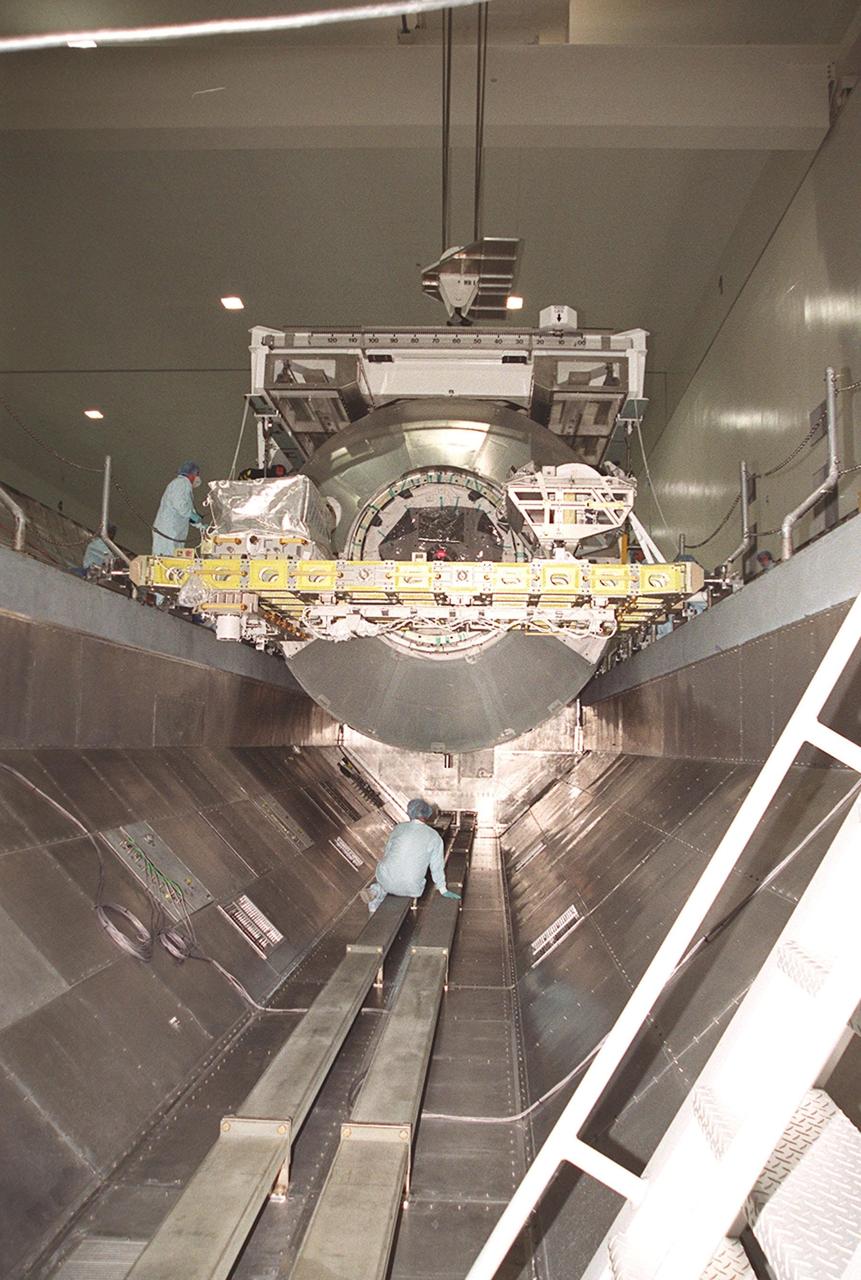
The Multi-Purpose Logistics Module Leonardo is placed inside the payload canister while workers below and on the side check its progress. The MPLM is being transferred to Launch Pad 39B for installation in Space Shuttle Discovery. Leonardo, one of Italy’s major contributions to the International Space Station program, is a reusable logistics carrier. It is the primary delivery system used to resupply and return Station cargo requiring a pressurized environment. Leonardo is the primary payload on mission STS-102 and will deliver up to 10 tons of laboratory racks filled with equipment, experiments and supplies for outfitting the newly installed U.S. Laboratory Destiny. STS-102 is scheduled to launch March 8 at 6:45 a.m. EST
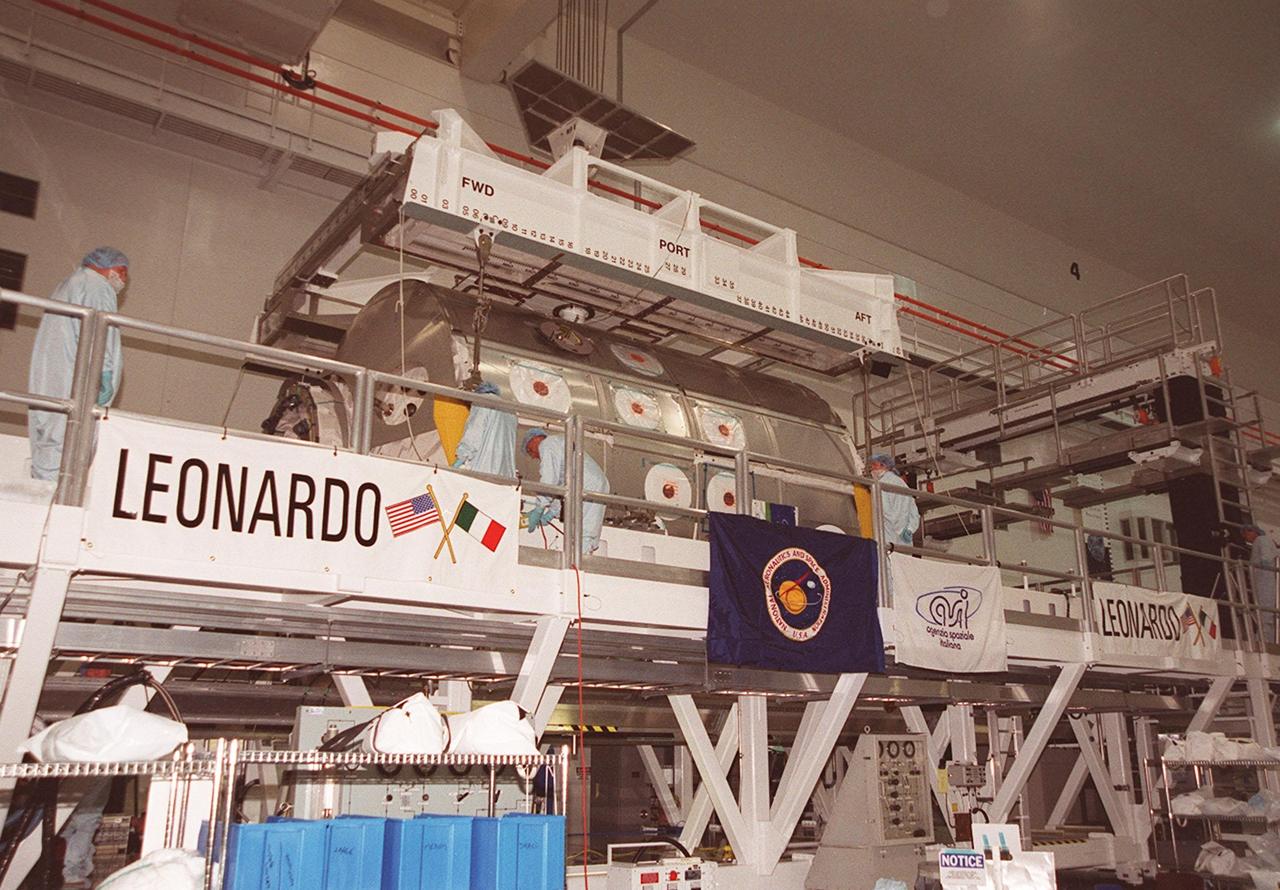
In the Space Station Processing Facility, workers attach an overhead crane to the Multi-Purpose Logistics Module Leonardo. The MPLM is being moved to the payload canister for transfer to Launch Pad 39B and installation in Space Shuttle Discovery. The Leonardo, one of Italy’s major contributions to the International Space Station program, is a reusable logistics carrier. It is the primary delivery system used to resupply and return Station cargo requiring a pressurized environment. Leonardo is the primary payload on mission STS-102 and will deliver up to 10 tons of laboratory racks filled with equipment, experiments and supplies for outfitting the newly installed U.S. Laboratory Destiny. STS-102 is scheduled to launch March 8 at 6:45 a.m. EST
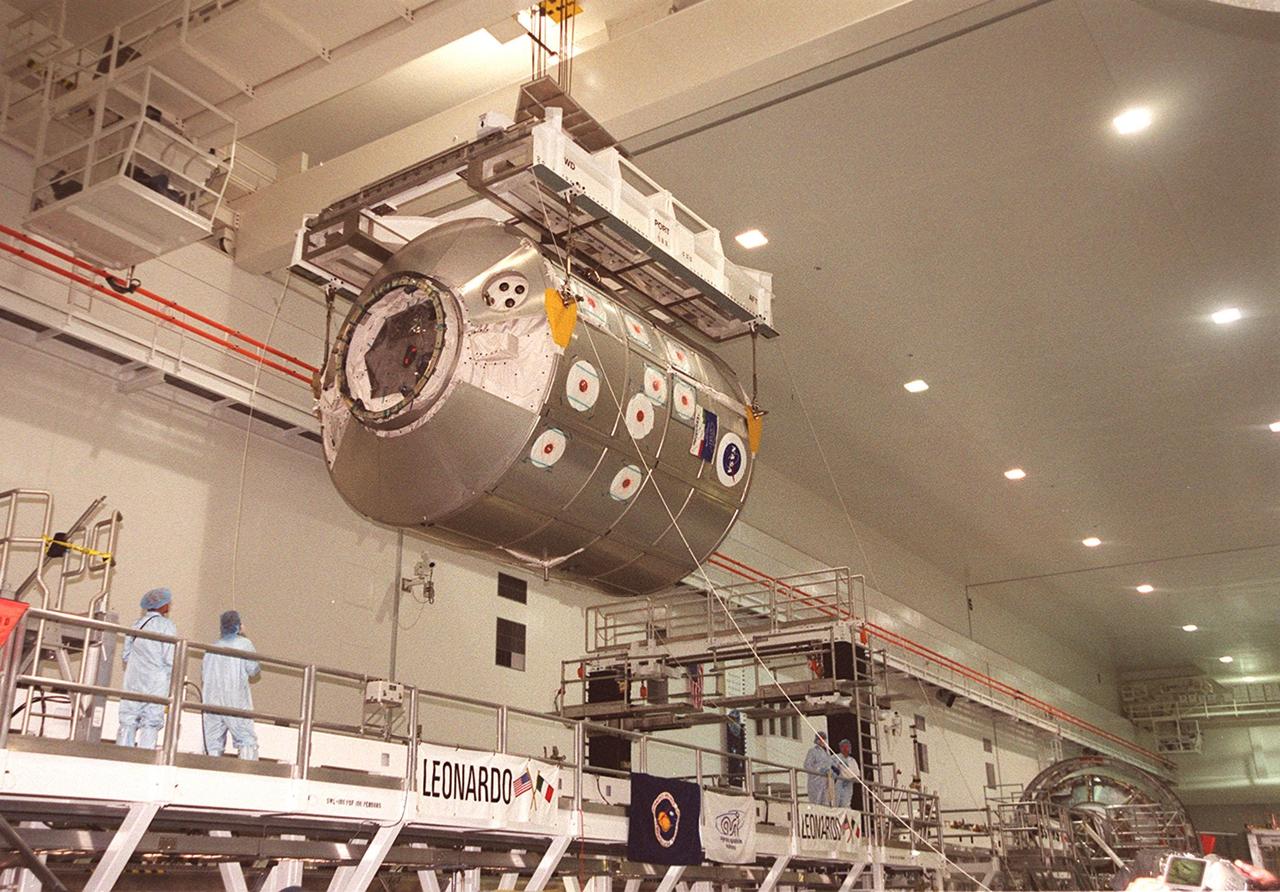
In the Space Station Processing Facility, the Multi-Purpose Logistics Module Leonardo, suspended from an overhead crane, glides across the room to a payload canister for transfer to Launch Pad 39B and installation in Space Shuttle Discovery. The Leonardo, one of Italy’s major contributions to the International Space Station program, is a reusable logistics carrier. It is the primary delivery system used to resupply and return Station cargo requiring a pressurized environment. Leonardo is the primary payload on mission STS-102 and will deliver up to 10 tons of laboratory racks filled with equipment, experiments and supplies for outfitting the newly installed U.S. Laboratory Destiny. STS-102 is scheduled to launch March 8 at 6:45 a.m. EST

In the payload changeout room on the Rotating Service Structure, Launch Pad 39B, workers move the Multi-Purpose Logistics Module Leonardo out of the payload canister. From the PCR Leonardo then will be transferred into Space Shuttle Discovery’s payload bay. One of Italy’s major contributions to the International Space Station program, Leonardo is a reusable logistics carrier. It is the primary delivery system used to resupply and return Station cargo requiring a pressurized environment. Leonardo is the primary payload on mission STS-102 and will deliver up to 10 tons of laboratory racks filled with equipment, experiments and supplies for outfitting the newly installed U.S. Laboratory Destiny. STS-102 is scheduled to launch March 8 at 6:45 a.m. EST
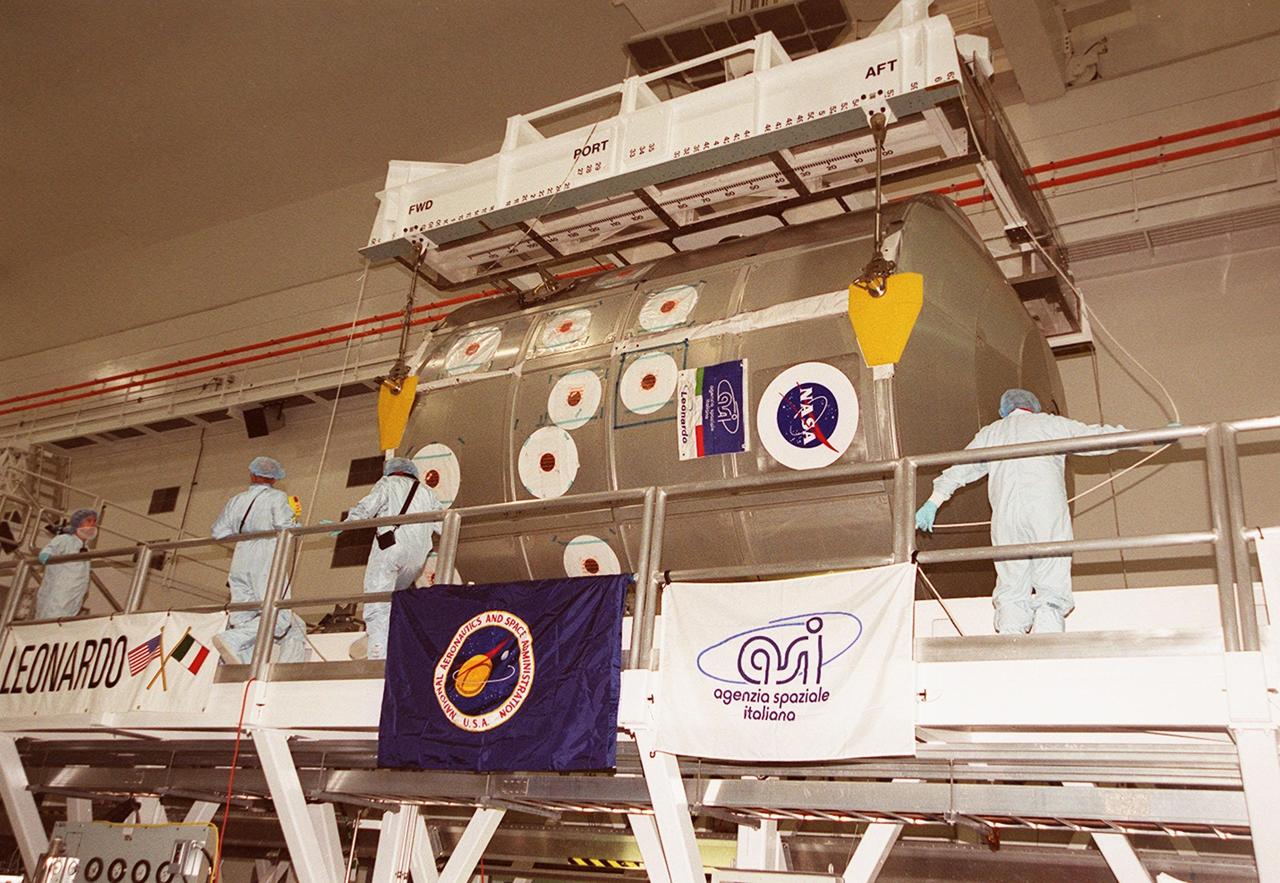
In the Space Station Processing Facility, an overhead crane begins lifting the Multi-Purpose Logistics Module Leonardo. The MPLM is being moved to the payload canister for transfer to Launch Pad 39B and installation in Space Shuttle Discovery. The Leonardo, one of Italy’s major contributions to the International Space Station program, is a reusable logistics carrier. It is the primary delivery system used to resupply and return Station cargo requiring a pressurized environment. Leonardo is the primary payload on mission STS-102 and will deliver up to 10 tons of laboratory racks filled with equipment, experiments and supplies for outfitting the newly installed U.S. Laboratory Destiny. STS-102 is scheduled to launch March 8 at 6:45 a.m. EST
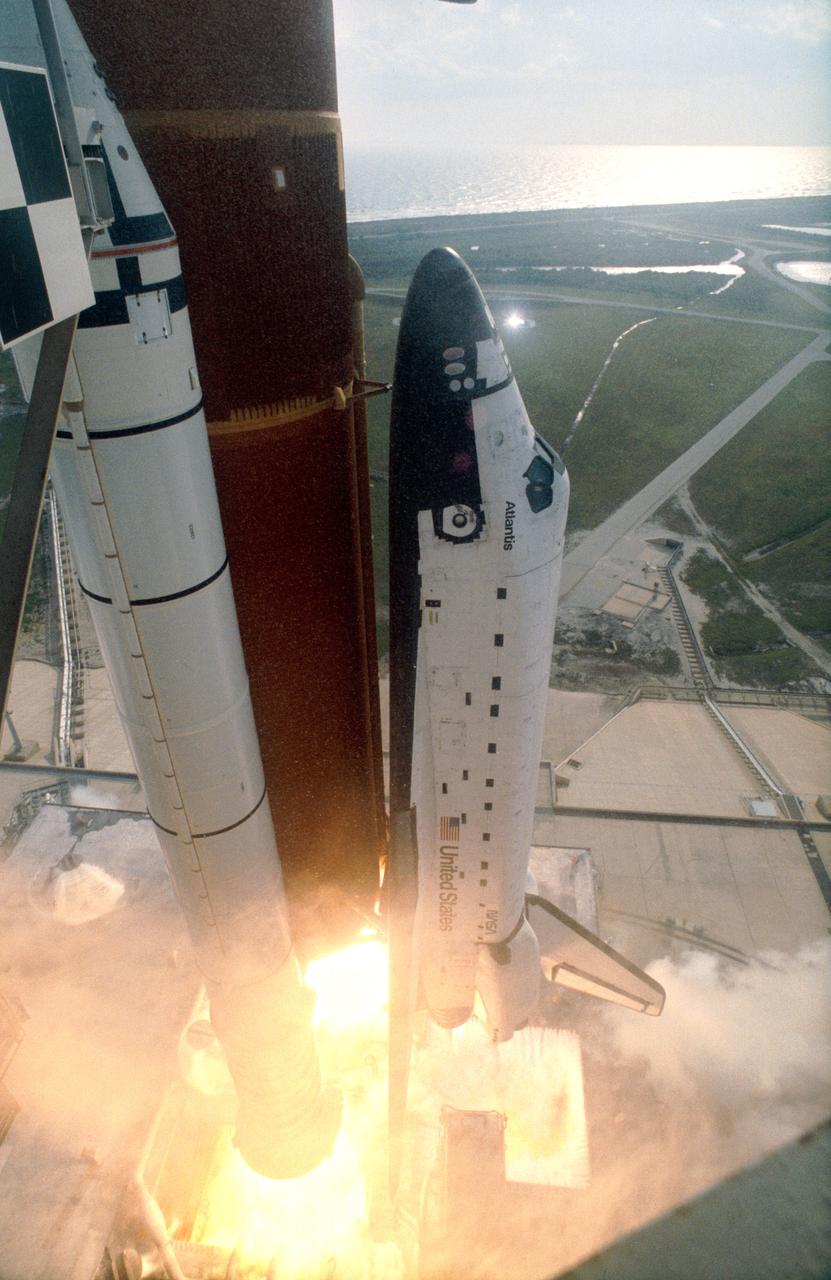
STS045-S-054 (24 March 1992) --- A profile view of the Space Shuttle Atlantis as it soars off the launch pad and heads toward Earth orbit with a crew of seven and the Atmospheric Laboratory for Applications and Science (ATLAS) aboard. Launch occurred at 8:13:40:048 a.m. (EST), March 24, 1992. Onboard were Charles F. Bolden, mission commander; Brian Duffy, pilot; Kathryn D. Sullivan, payload commander; David C. Leestma and C. Michael Foale, mission specialists; and Dirk Frimout of the European Space Agency and Byron K. Lichtenberg, payload specialists. The view was provided by an automatic camera on the launch service structure.
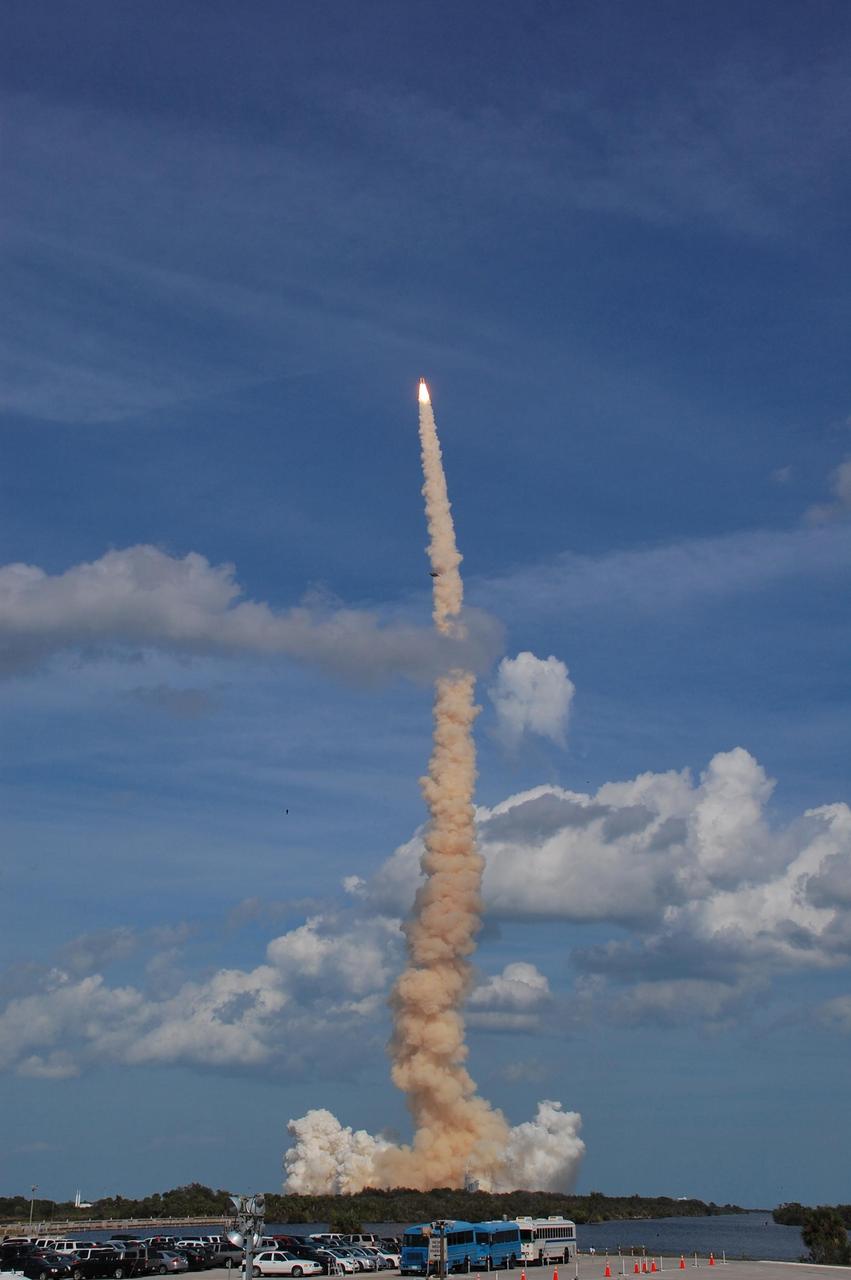
KENNEDY SPACE CENTER, FLA. -- Through a partly cloudy sky, space shuttle Atlantis hurtles into the sky, atop a column of fire and smoke, on the STS-122 mission. Liftoff was on time at 2:45 p.m. EST. This is the third launch attempt for Atlantis since December 2007 to carry the European Space Agency's Columbus laboratory to the International Space Station. During the 11-day mission, the crew's prime objective is to attach the laboratory to the Harmony module, adding to the station's size and capabilities. Photo credit: NASA/Fletch Hildreth
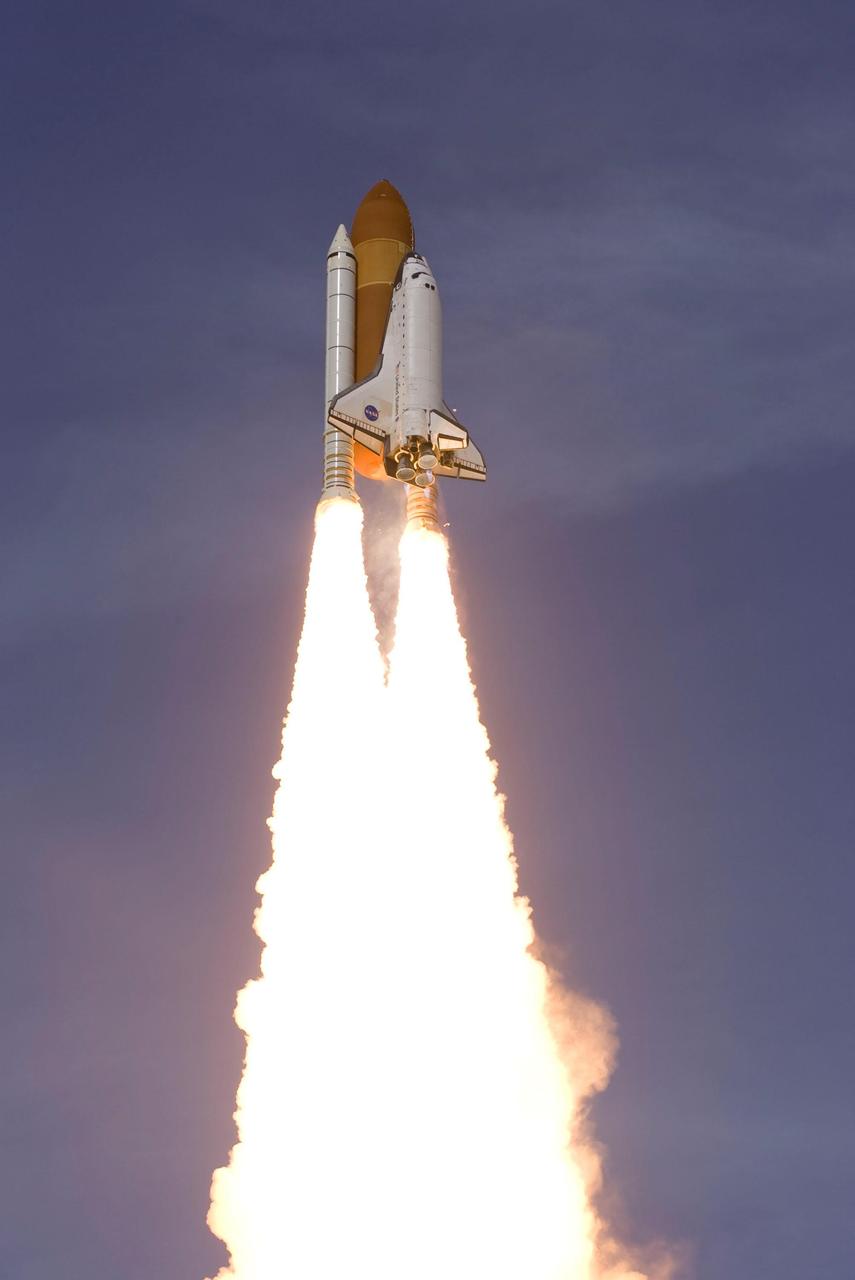
KENNEDY SPACE CENTER, FLA. -- Boosted by the columns of flame from the solid rocket boosters, space shuttle Atlantis hurtles into space for a rendezvous with the International Space Station on mission STS-122. Liftoff was on time at 2:45 p.m. EST. This is the third launch attempt for Atlantis since December 2007 to carry the European Space Agency's Columbus laboratory to the station. During the 11-day mission, the crew's prime objective is to attach the laboratory to the Harmony module, adding to the station's size and capabilities. Photo credit: Scott Andrews
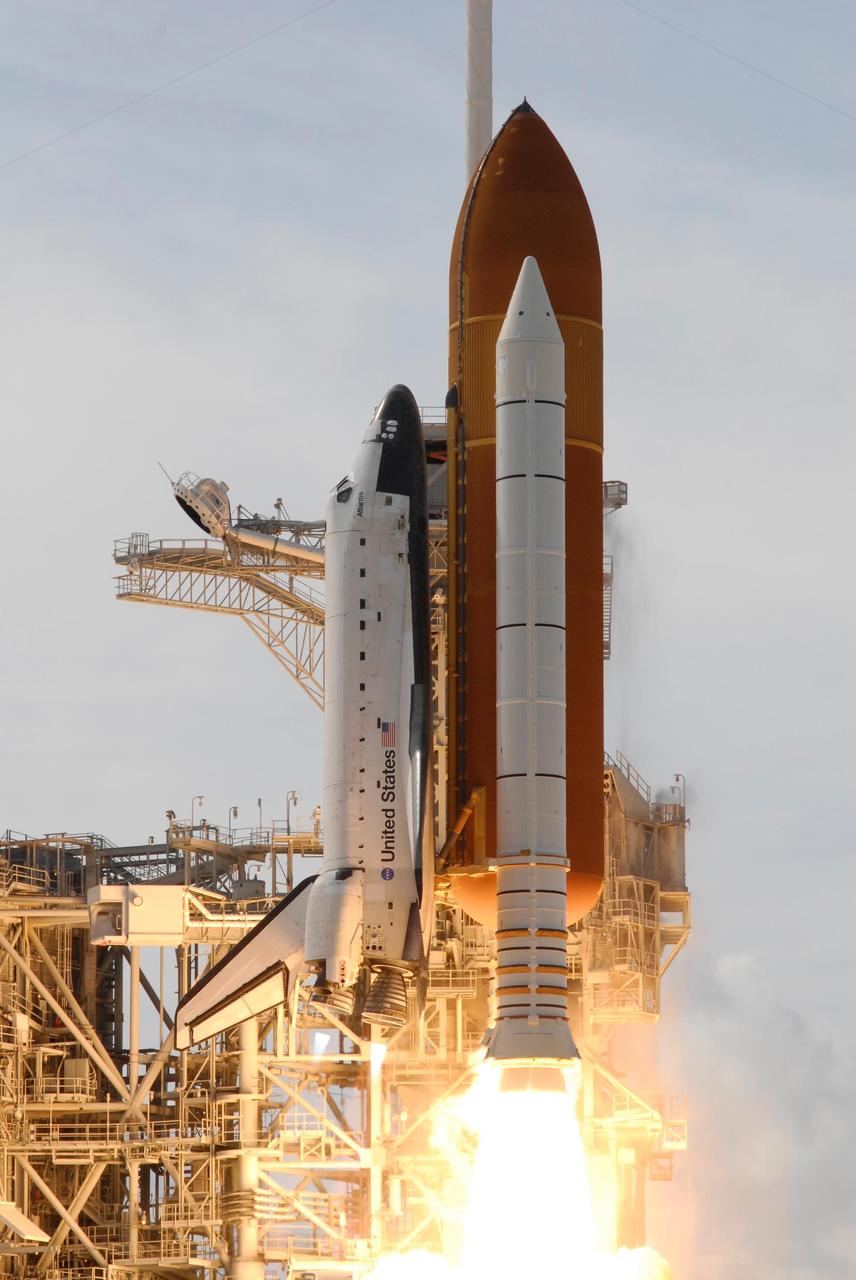
KENNEDY SPACE CENTER, FLA. -- At liftoff, space shuttle Atlantis begins its majestic climb into the heavens on mission STS-122 to the International Space Station. Liftoff was on time at 2:45 p.m. EST. The launch is the third attempt for Atlantis since December 2007 to carry the European Space Agency's Columbus laboratory to the International Space Station. During the 11-day mission, the crew's prime objective is to attach the laboratory to the Harmony module, adding to the station's size and capabilities. Photo credit: NASA/Jerry Cannon, Rusty Backer
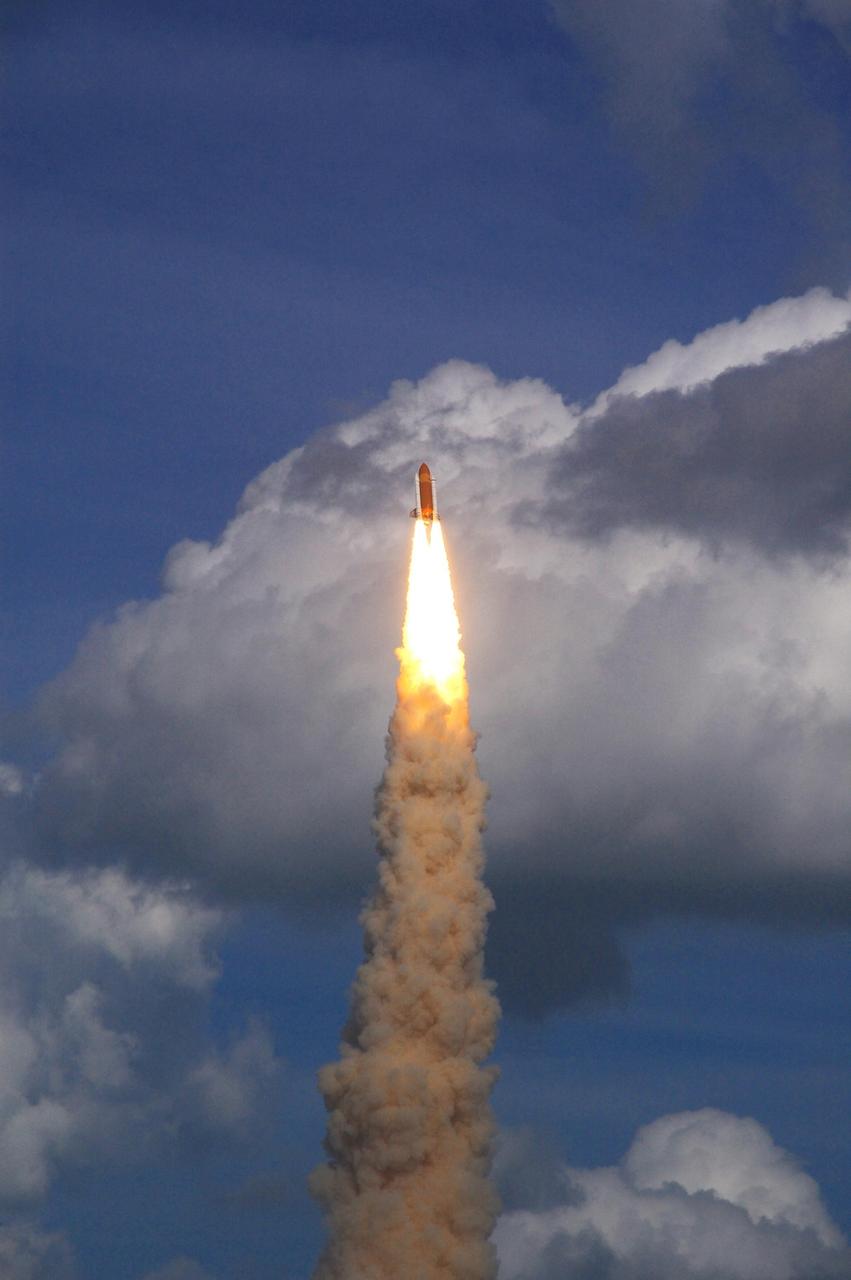
KENNEDY SPACE CENTER, FLA. -- Against a backdrop of clouds, space shuttle Atlantis hurtles into the sky atop a column of fire and smoke on the STS-122 mission. Liftoff was on time at 2:45 p.m. EST. This is the third launch attempt for Atlantis since December 2007 to carry the European Space Agency's Columbus laboratory to the International Space Station. During the 11-day mission, the crew's prime objective is to attach the laboratory to the Harmony module, adding to the station's size and capabilities. Photo credit: NASA/Fletch Hildreth
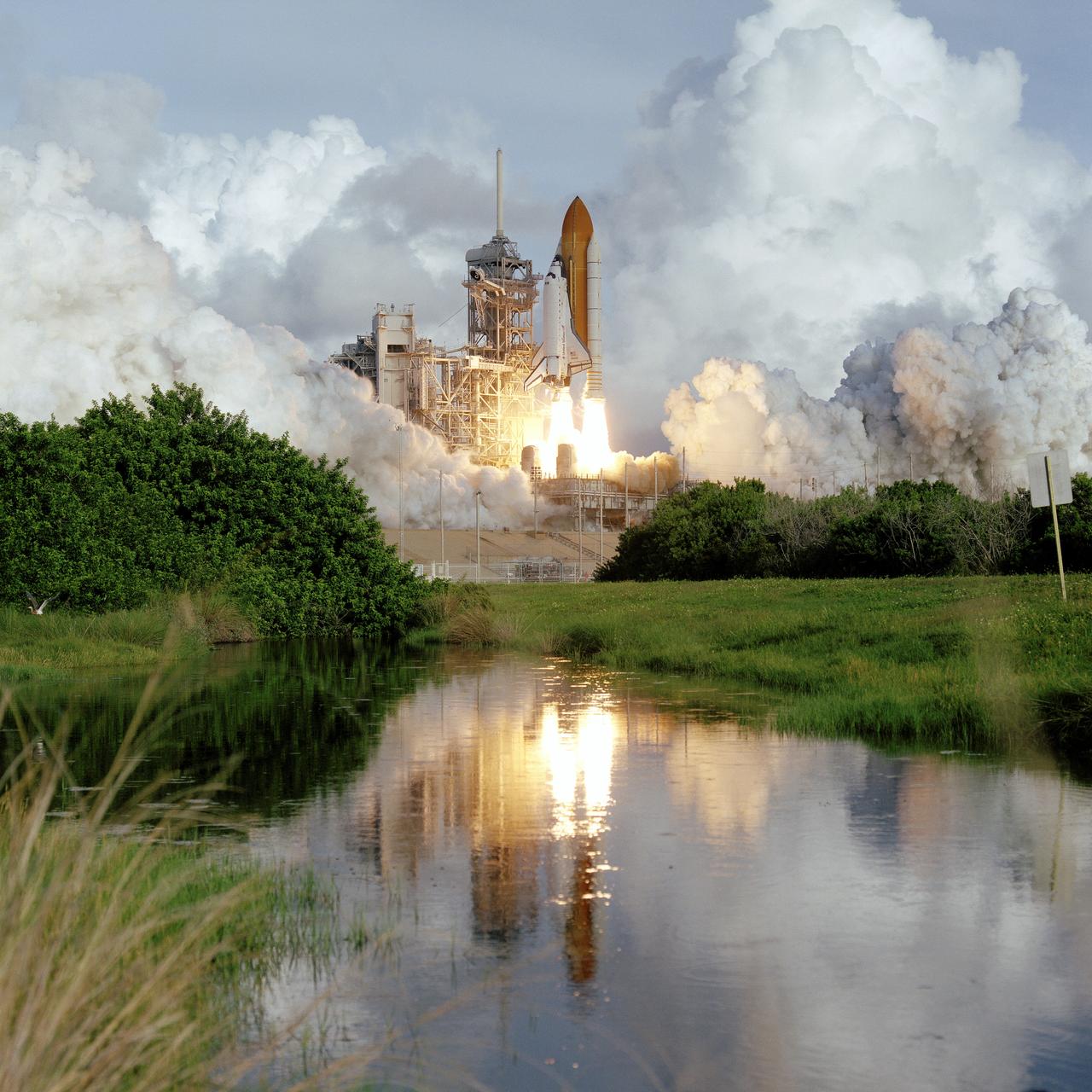
STS106-S-010 (8 Sept. 2000) --- The Space Shuttle Atlantis is mirrored in nearby marsh waters as it makes its 22nd launch into space. The perfect on-time liftoff for STS-106 occurred at 8:45:47 a.m. (EDT), Sept. 8, 2000. Onboard the shuttle were astronauts Terrence W. Wilcutt, Scott D. Altman, Edward T. Lu, Richard A. Mastracchio and Daniel C. Burbank, along with cosmonauts Yuri I. Malenchenko and Boris V. Morukov who represent the Russian Aviation and Space Agency.
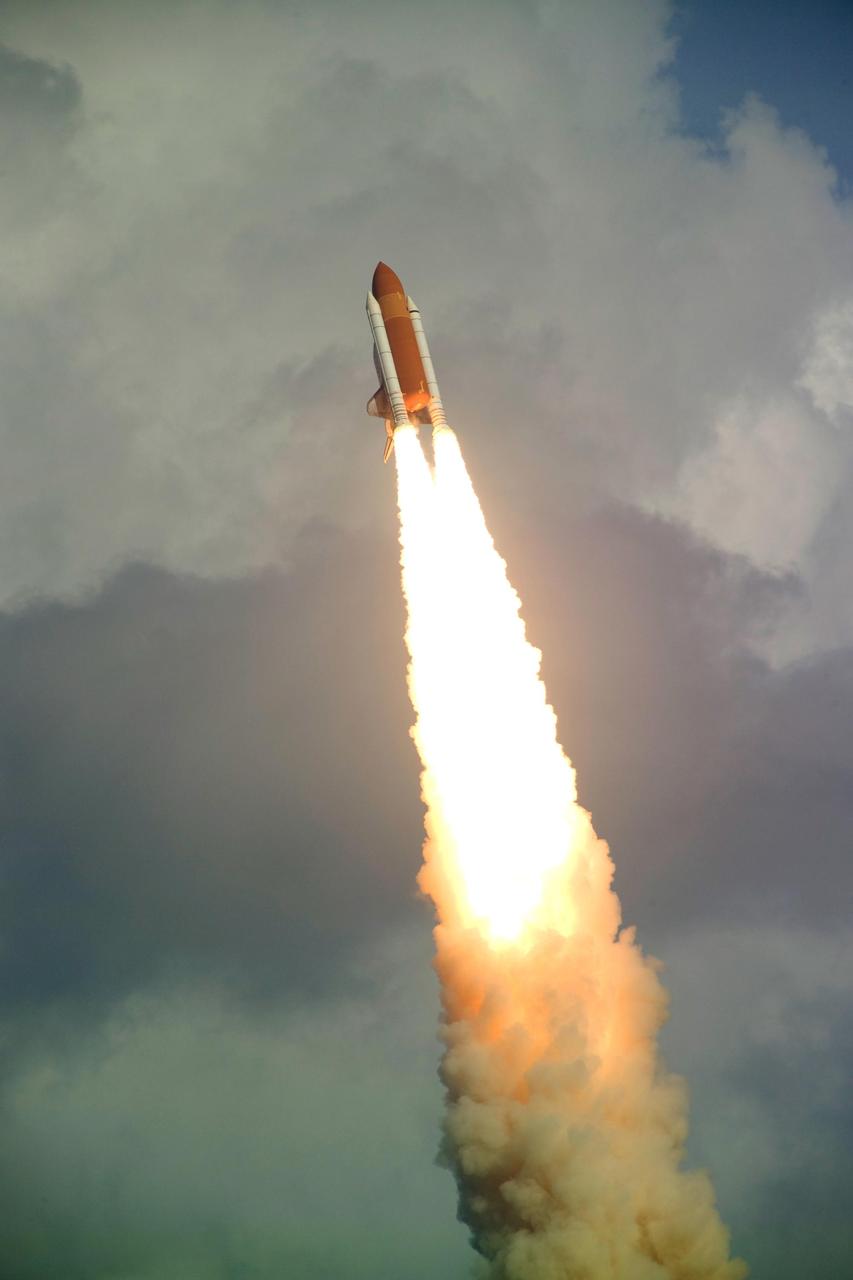
KENNEDY SPACE CENTER, FLA. -- Twin columns of fire propel space shuttle Atlantis into space on mission STS-122 to the International Space Station. Liftoff was on time at 2:45 p.m.The launch is the third attempt for Atlantis since December 2007 to carry the European Space Agency's Columbus laboratory to the International Space Station. During the 11-day mission, the crew's prime objective is to attach the laboratory to the Harmony module, adding to the station's size and capabilities. Photo credit: NASA/Chris Lynch
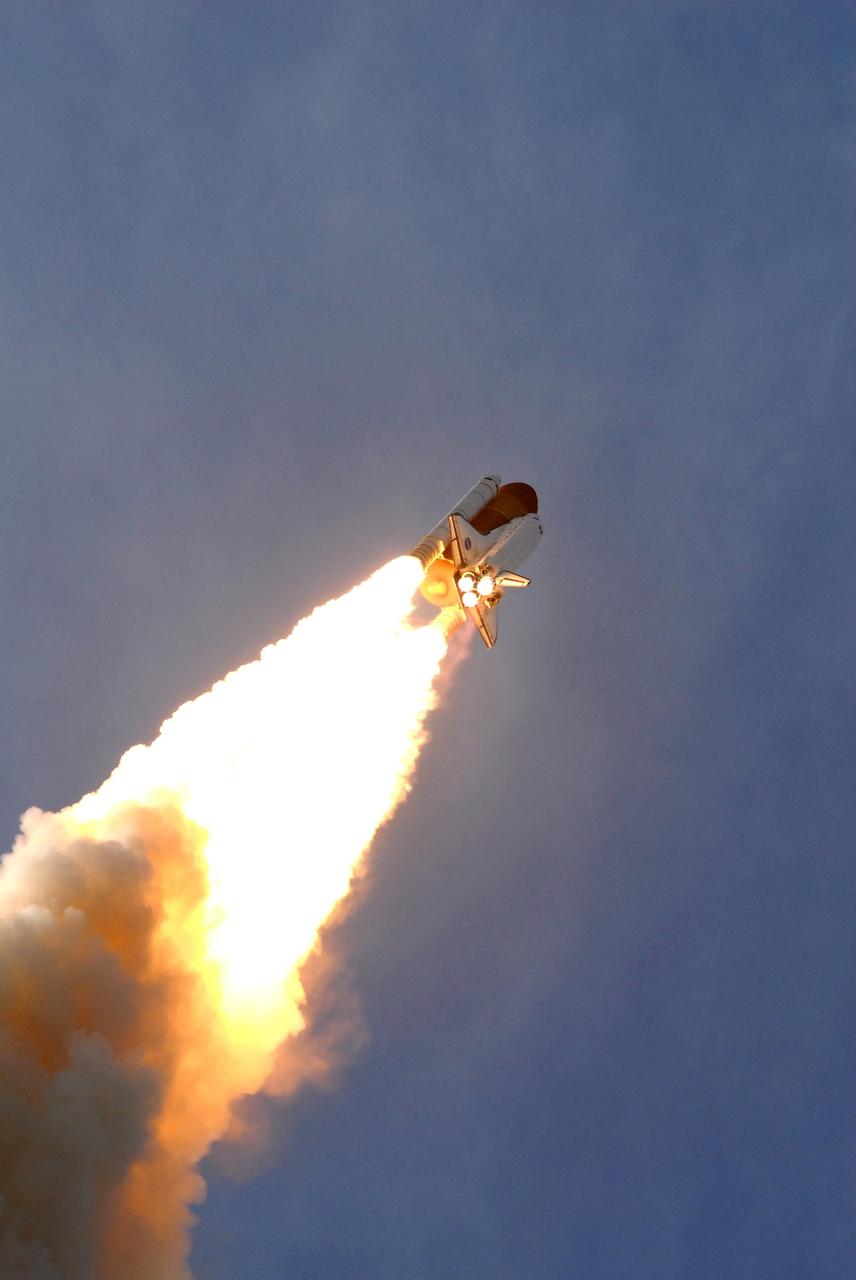
KENNEDY SPACE CENTER, FLA. -- Its twin columns of fire merged behind it, space shuttle Atlantis is propelled into space on mission STS-122 to the International Space Station. Liftoff was on time at 2:45 p.m. The launch is the third attempt for Atlantis since December 2007 to carry the European Space Agency's Columbus laboratory to the International Space Station. During the 11-day mission, the crew's prime objective is to attach the laboratory to the Harmony module, adding to the station's size and capabilities. Photo credit: NASA/Jerry Cannon, Rusty Backer
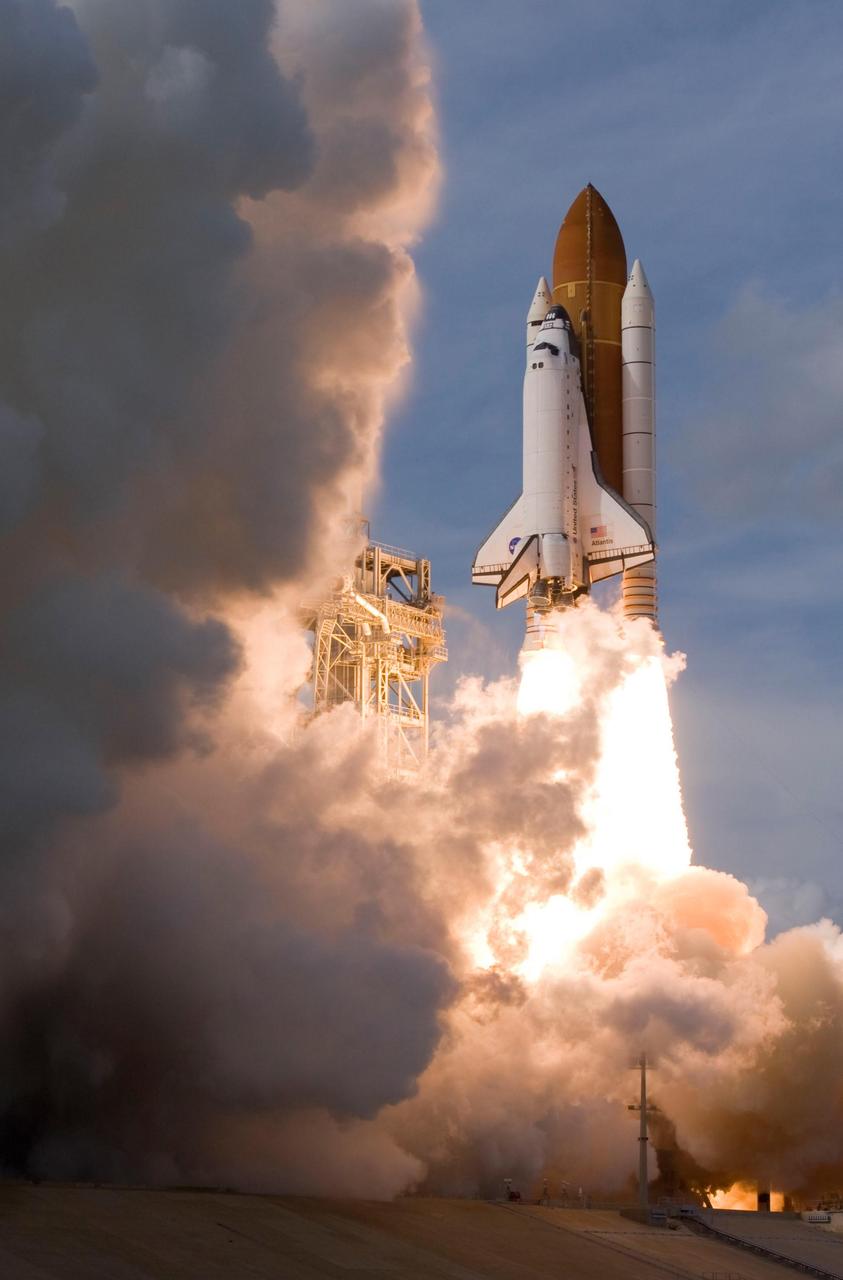
KENNEDY SPACE CENTER, FLA. -- Billows of smoke and steam nearly obscure the twin columns of fire boosting space shuttle Atlantis into space for a rendezvous with the International Space Station on mission STS-122. Liftoff was on time at 2:45 p.m. EST. This is the third launch attempt for Atlantis since December 2007 to carry the European Space Agency's Columbus laboratory to the station. During the 11-day mission, the crew's prime objective is to attach the laboratory to the Harmony module, adding to the station's size and capabilities. Photo credit: Scott Andrews
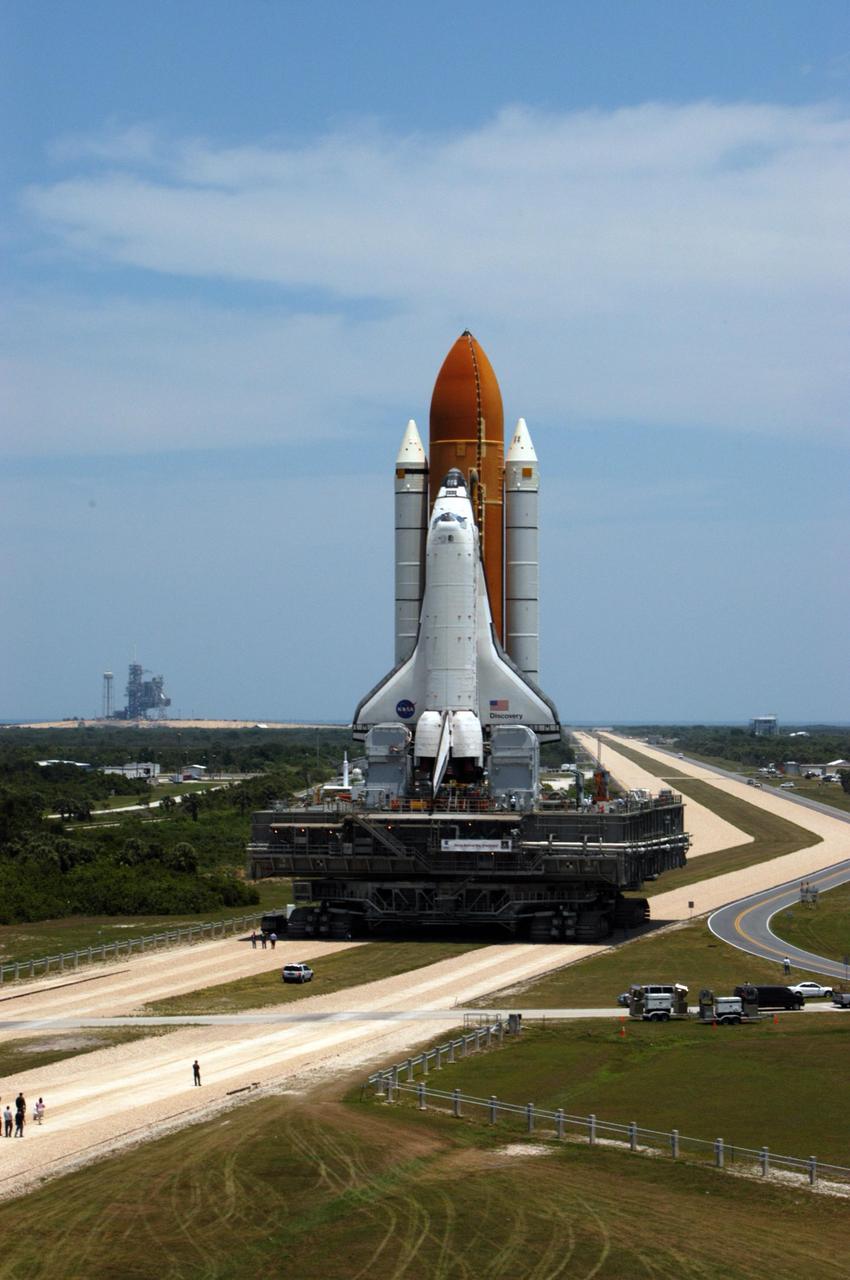
KENNEDY SPACE CENTER, FLA. -- Space Shuttle Discovery rolls toward Launch Pad 39B. Launch Pad 39A is in the background. The shuttle rests on a mobile launcher platform that sits atop a crawler-transporter. First motion from NASA's Vehicle Assembly Building was at 12:45 p.m. EDT. The rollout is an important step before launch of Discovery on mission STS-121 to the International Space Station. Discovery's launch is targeted for July 1 in a launch window that extends to July 19. During the 12-day mission, Discovery's crew will test new hardware and techniques to improve shuttle safety, as well as deliver supplies and make repairs to the station. Photo credit: NASA/George Shelton
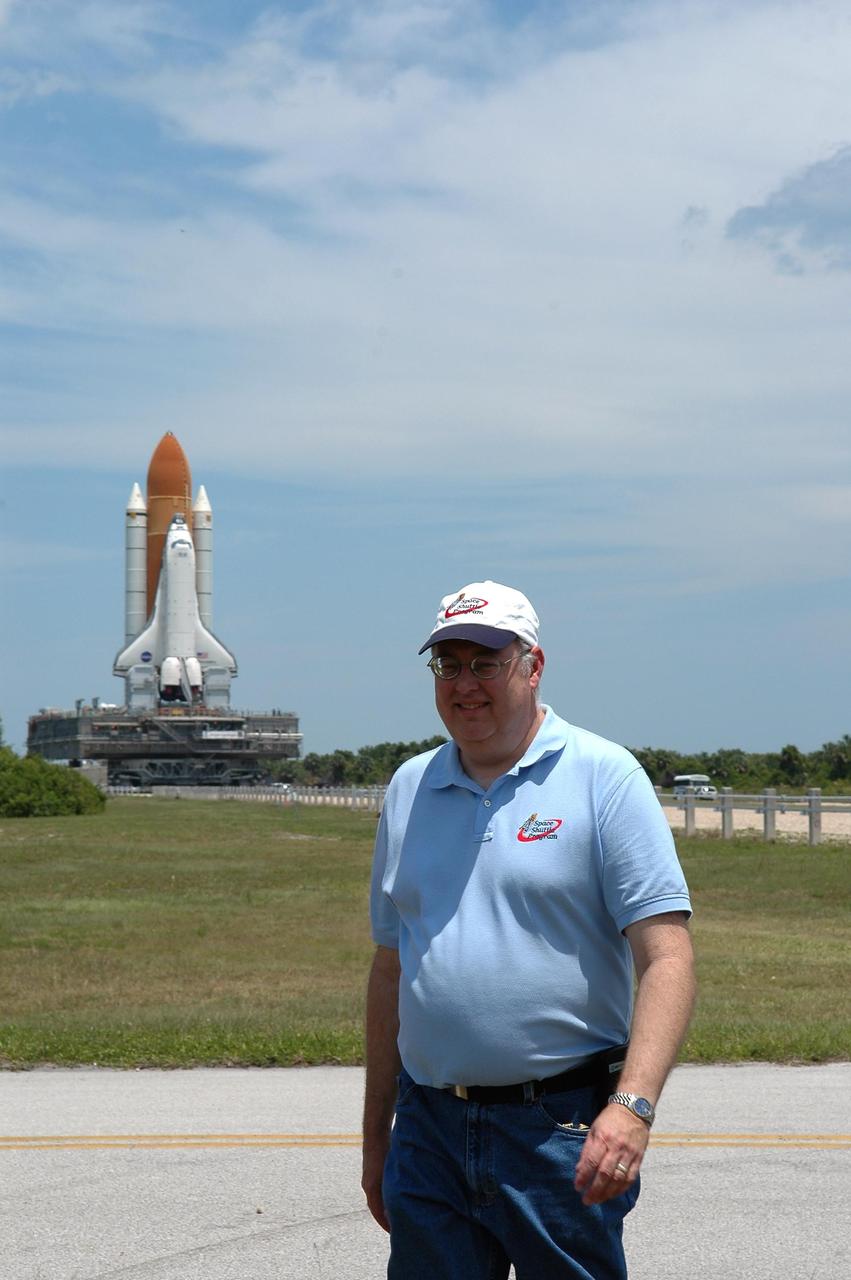
KENNEDY SPACE CENTER, FLA. -- Space Shuttle Program Director Wayne Hale is on hand to watch the historic moment of Space Shuttle Discovery's rollout to Launch Pad 39B. First motion of the shuttle (seen in the background) from NASA's Vehicle Assembly Building was at 12:45 p.m. EDT. The rollout is an important step before launch of Discovery on mission STS-121 to the International Space Station. Discovery's launch is targeted for July 1 in a launch window that extends to July 19. During the 12-day mission, Discovery's crew will test new hardware and techniques to improve shuttle safety, as well as deliver supplies and make repairs to the station. Photo credit: NASA/Kim Shiflett
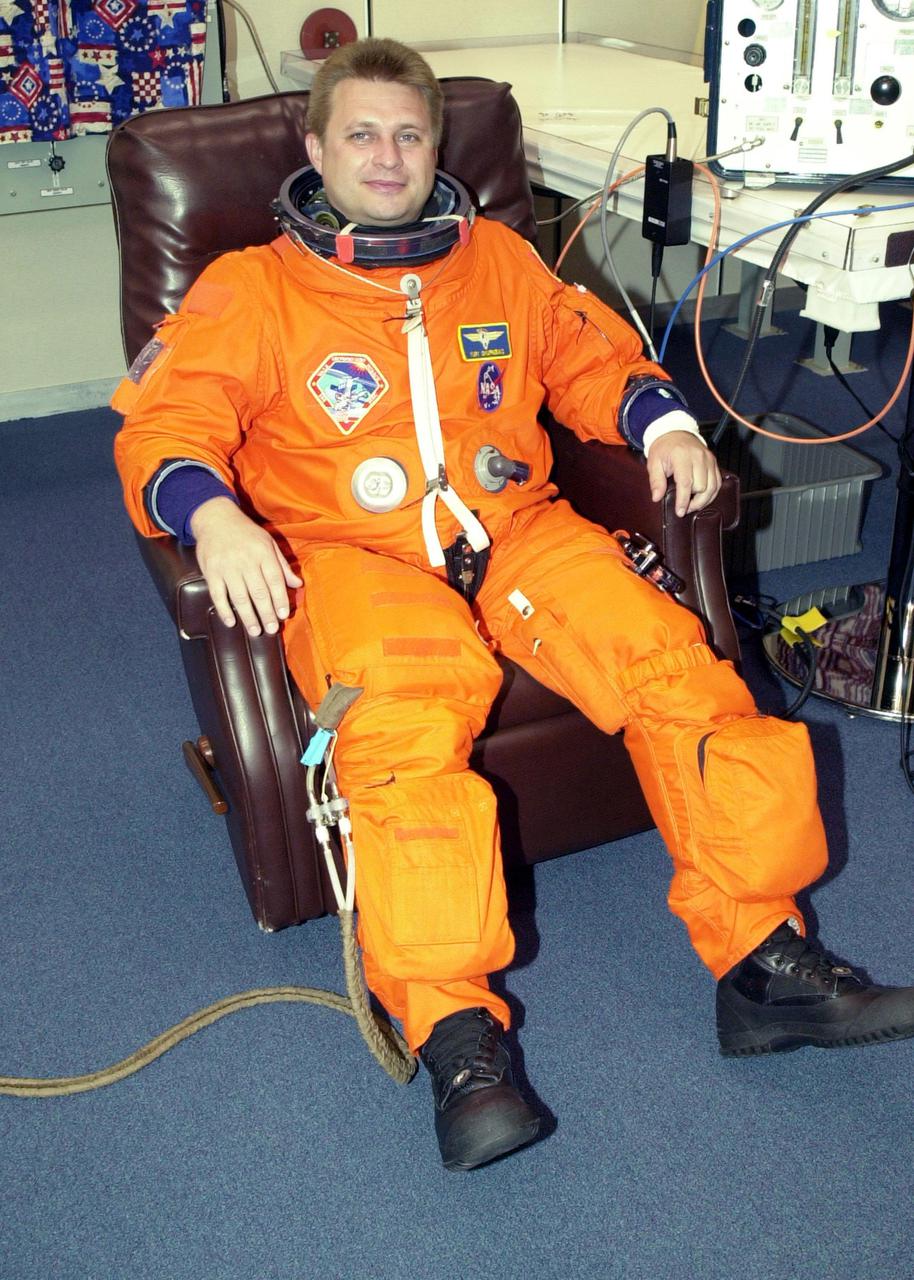
KENNEDY SPACE CENTER, Fla. -- Expedition 4 Commander Yuri Onufrienko waits for final checkout of his launch and entry suit prior to heading to Launch Pad 39B and Space Shuttle Endeavour. Top priorities for the STS-108 (UF-1) mission of Endeavour are rotation of the International Space Station Expedition 3 and Expedition 4 crews; bringing water, equipment and supplies to the station in the Multi-Purpose Logistics Module Raffaello; and the crew's completion of robotics tasks and a spacewalk to install thermal blankets over two pieces of equipment at the bases of the Space Station's solar wings. Launch is scheduled for 5:45 p.m. EST Dec. 4, 2001, from Launch Pad 39B
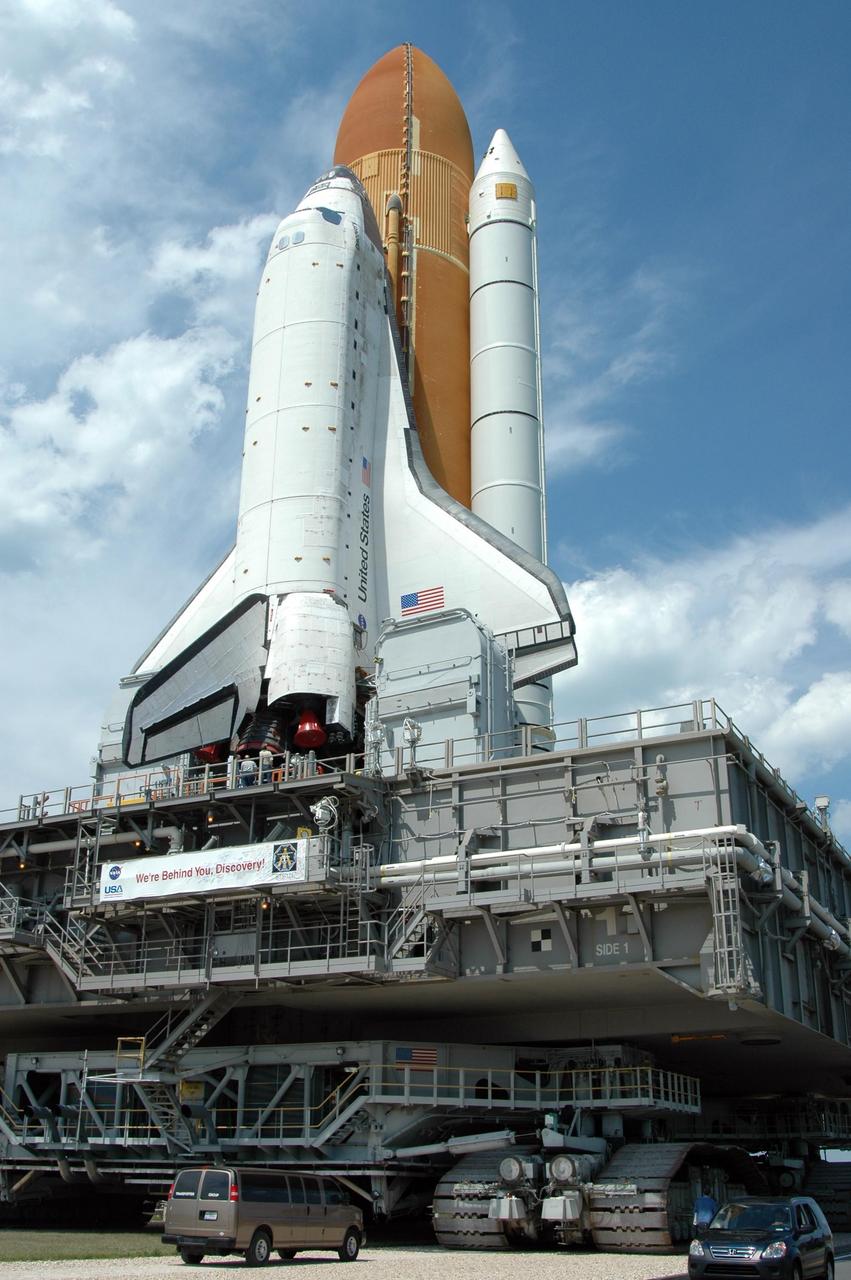
KENNEDY SPACE CENTER, FLA. -- Space Shuttle Discovery rolls toward Launch Pad 39B. The shuttle rests on the mobile launcher platform, which is being carried by the crawler-transporter underneath. First motion of the shuttle leaving NASA's Vehicle Assembly Building was at 12:45 p.m. EDT. The rollout is an important step before launch of Discovery on mission STS-121 to the International Space Station. Discovery's launch is targeted for July 1 in a launch window that extends to July 19. During the 12-day mission, Discovery's crew will test new hardware and techniques to improve shuttle safety, as well as deliver supplies and make repairs to the station. Photo credit: NASA/Dimitri Gerondidakis
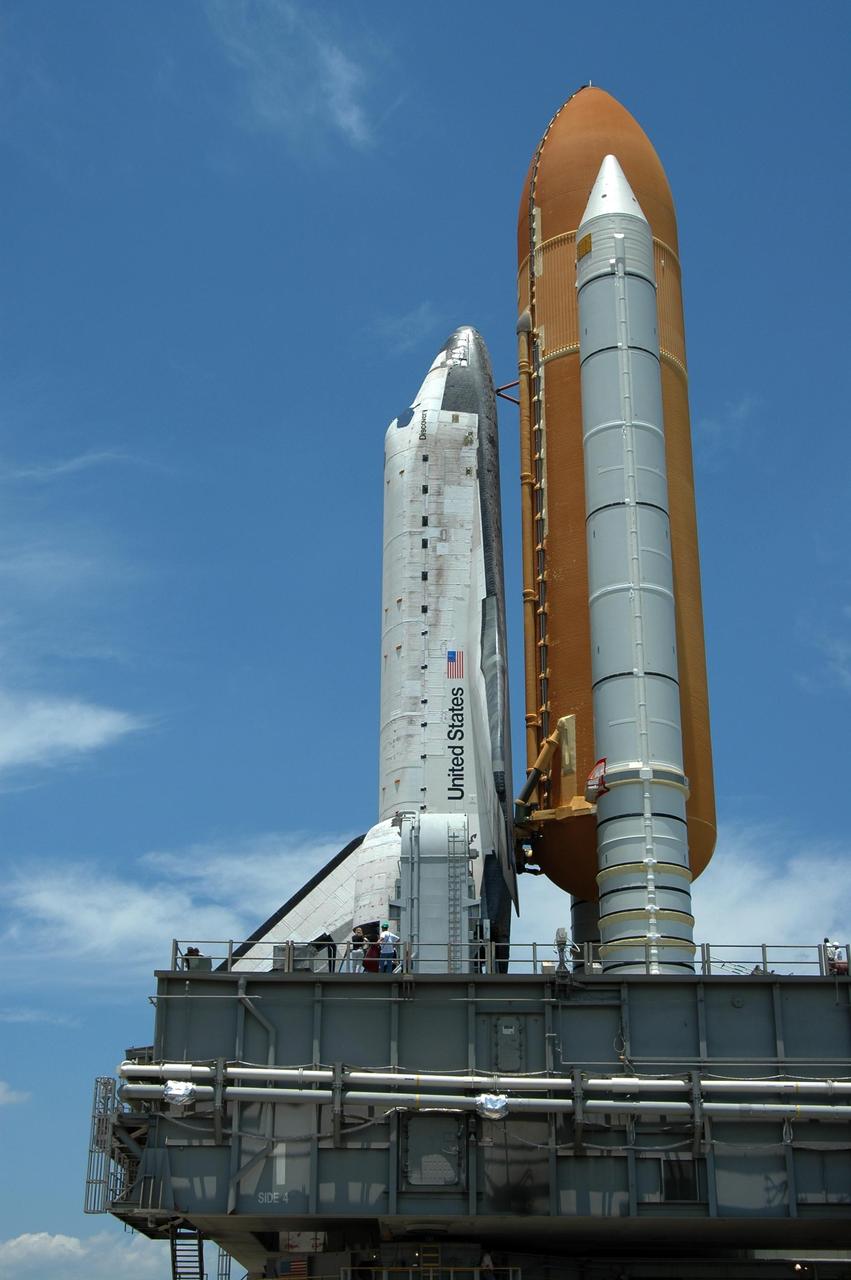
KENNEDY SPACE CENTER, FLA. -- Space Shuttle Discovery looms large in this closeup as it rolls to Launch Pad 39B. The shuttle rests on the mobile launcher platform. Underneath is the crawler, providing transport via the crawlerway. First motion of the shuttle from NASA's Vehicle Assembly Building was at 12:45 p.m. EDT. The rollout is an important step before launch of Discovery on mission STS-121 to the International Space Station. Discovery's launch is targeted for July 1 in a launch window that extends to July 19. During the 12-day mission, Discovery's crew will test new hardware and techniques to improve shuttle safety, as well as deliver supplies and make repairs to the station. Photo credit: NASA/Dimitri Gerondidakis
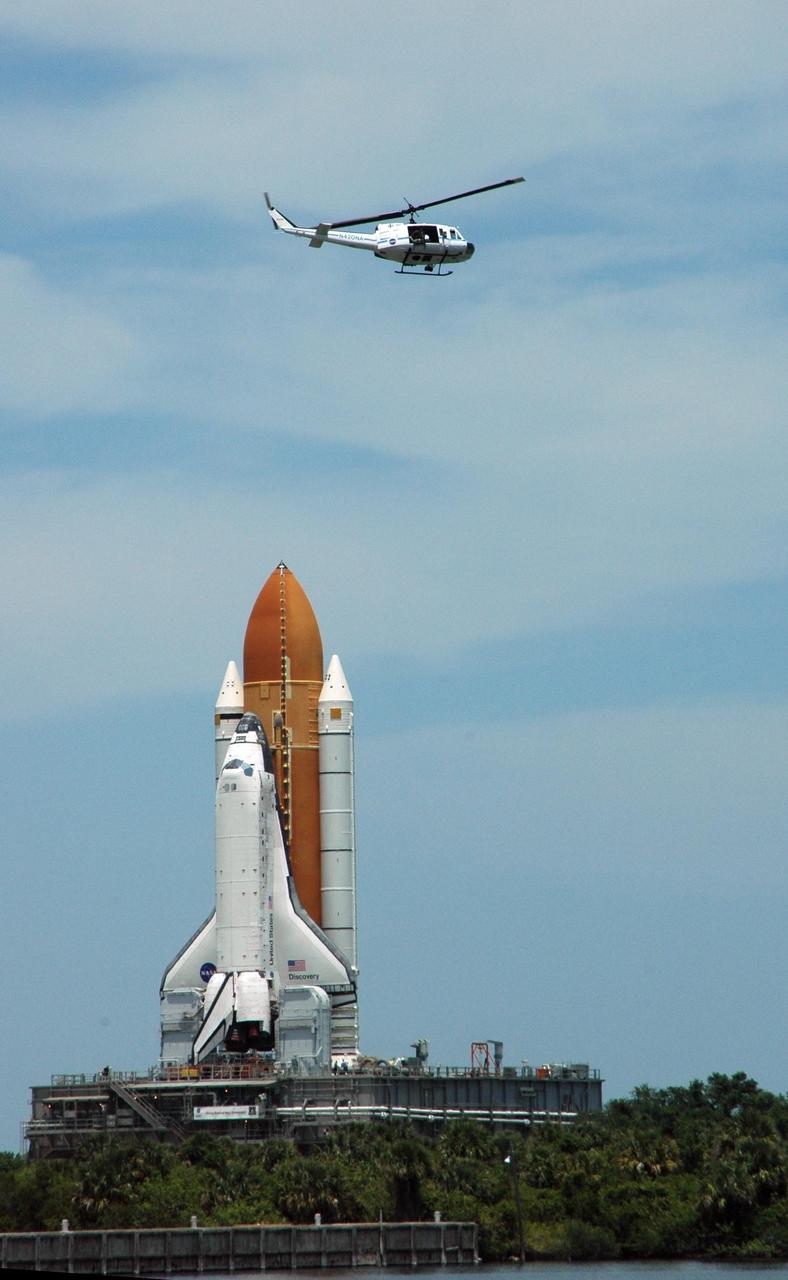
KENNEDY SPACE CENTER, FLA. -- A NASA helicopter follows the route of Space Shuttle Discovery on the crawlerway as it rolls out toward Launch Pad 39B. First motion of the shuttle from NASA's Vehicle Assembly Building was at 12:45 p.m. EDT. The rollout is an important step before launch of Discovery on mission STS-121 to the International Space Station. Discovery's launch is targeted for July 1 in a launch window that extends to July 19. During the 12-day mission, Discovery's crew will test new hardware and techniques to improve shuttle safety, as well as deliver supplies and make repairs to the station. Photo credit: NASA/Ken Thornsley

KENNEDY SPACE CENTER, FLA. -- Moments after liftoff, the launch of space shuttle Atlantis casts a glow in the lagoon waters during launch from Launch Pad 39A at NASA's Kennedy Space Center. Atlantis is racing to the International Space Station on mission STS-122. Liftoff was on time at 2:45 p.m. EST. The launch is the third attempt for Atlantis since December 2007 to carry the European Space Agency's Columbus laboratory to the International Space Station. During the 11-day mission, the crew's prime objective is to attach the laboratory to the Harmony module, adding to the station's size and capabilities. Photo credit: NASA/Sandra Joseph, Tony Gray, Robert Murray

KENNEDY SPACE CENTER, FLA. -- Sitting on the mobile launcher platform, Space Shuttle Discovery rolls toward Launch Pad 39B via the crawler transporter. First motion of the shuttle from NASA's Vehicle Assembly Building was at 12:45 p.m. EDT. The rollout is an important step before launch of Discovery on mission STS-121 to the International Space Station. Discovery's launch is targeted for July 1 in a launch window that extends to July 19. During the 12-day mission, Discovery's crew will test new hardware and techniques to improve shuttle safety, as well as deliver supplies and make repairs to the station. Photo credit: NASA/Dimitri Gerondidakis

KENNEDY SPACE CENTER, FLA. -- From the shallow water of the turn basin, the alligator in the foreground gets a unique view of Space Shuttle Discovery's journey to Launch Pad 39B. First motion of the shuttle from NASA's Vehicle Assembly Building was at 12:45 p.m. EDT. The rollout is an important step before launch of Discovery on mission STS-121 to the International Space Station. Discovery's launch is targeted for July 1 in a launch window that extends to July 19. During the 12-day mission, Discovery's crew will test new hardware and techniques to improve shuttle safety, as well as deliver supplies and make repairs to the station. Photo credit: NASA/Ken Thornsley