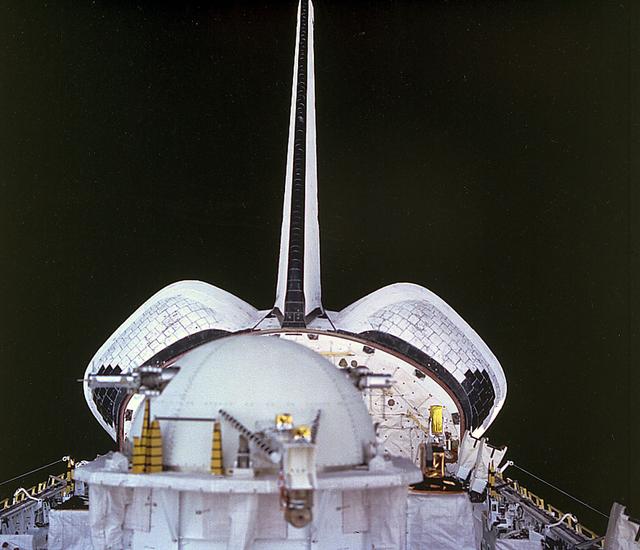
Space Shuttle Atlantis (STS-46) onboard photo of the Tethered Satellite System (TSS-1) in Orbiter's cargo bay. The Tethered Satellite System (TSS) was a cooperative development effort by the Italian Space Agency (ASI) and NASA made capable of deploying and retrieving a satellite which is attached by a wire tether from distances up to 100 km from the Orbiter. These free-flying satellites are used as observation platforms outside of the Orbiter.
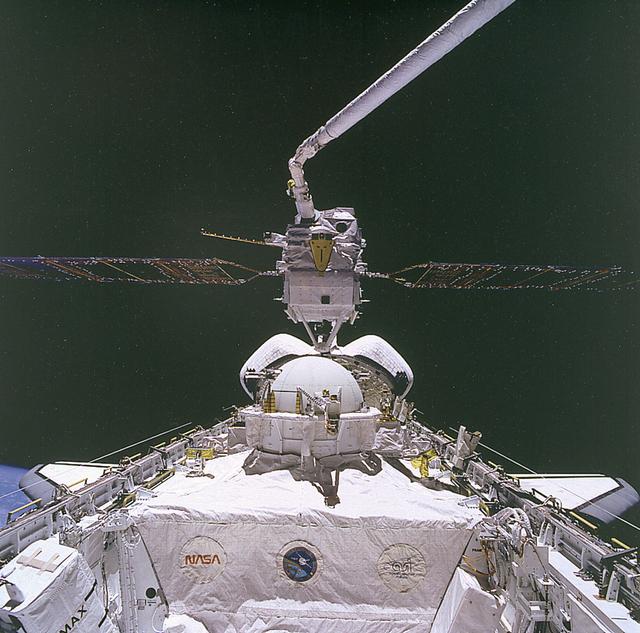
Space Shuttle Atlantis (STS-46) onboard photo of the Tethered Satellite System (TSS-1) on deployer boom. The Tethered Satellite System (TSS) was a cooperative development effort by the Italian Space Agency (ASI) and NASA made capable of deploying and retrieving a satellite which is attached by a wire tether from distances up to 100 km from the Orbiter. These free-flying satellites are used as observation platforms outside of the Orbiter.
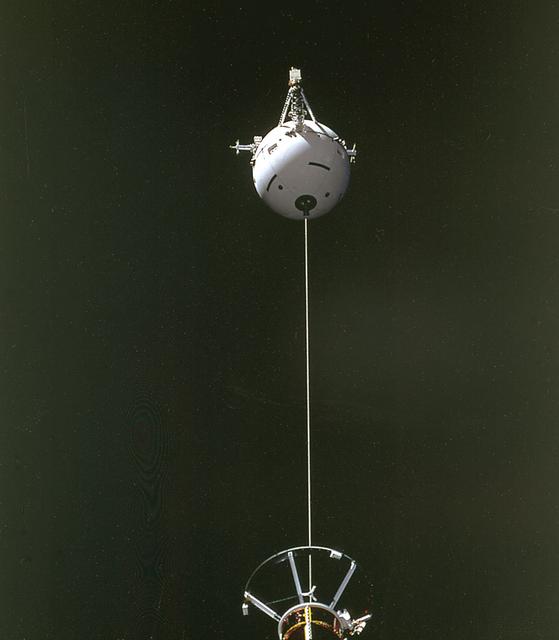
This is a Space Shuttle Orbiter Atlantis (STS-46) onboard photo of the Tethered Satellite System (TSS-1) deployment. A cooperative development effort by the Italian Space Agency (ASI) and NASA, the Tethered Satellite System (TSS) made capable the deployment and retrieval of a satellite which is attached by a wire tether from distances up to 100 km from the Orbiter. These free-flying satellites are used as observation platforms outside of the Orbiter.
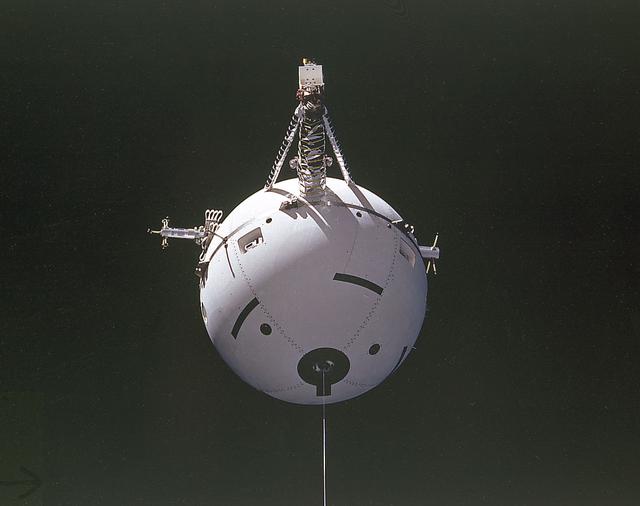
Space Shuttle Atlantis (STS-46) onboard photo of the Tethered Satellite System (TSS-1) deployment. A cooperative development effort by the Italian Space Agency (ASI) and NASA, the Tethered Satellite System (TSS) made capable the deployment and retrieval of a satellite which is attached by a wire tether from distances up to 100 km from the Orbiter. These free-flying satellites are used as observation platforms outside of the Orbiter.
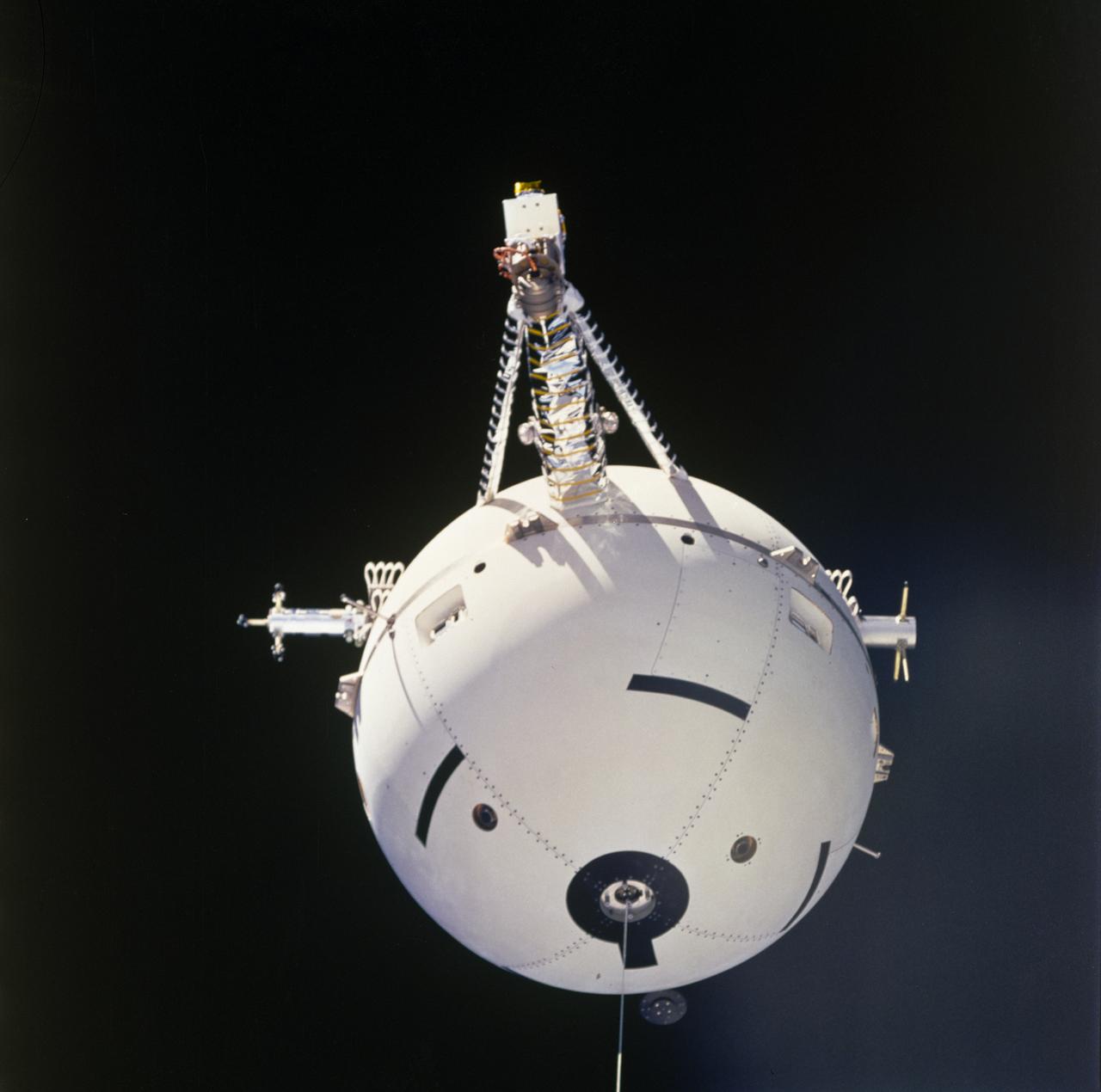
This Space Shuttle Orbiter Atlantis (STS-46) onboard photo is a close-up view of the Tethered Satellite System (TSS-1) in orbit above the Shuttle. A cooperative development effort by the Italian Space Agency (ASI) and NASA, the Tethered Satellite System (TSS) made capable the deployment and retrieval of a satellite which is attached by a wire tether from distances up to 100 km from the Orbiter. These free-flying satellites are used as observation platforms outside of the Orbiter.
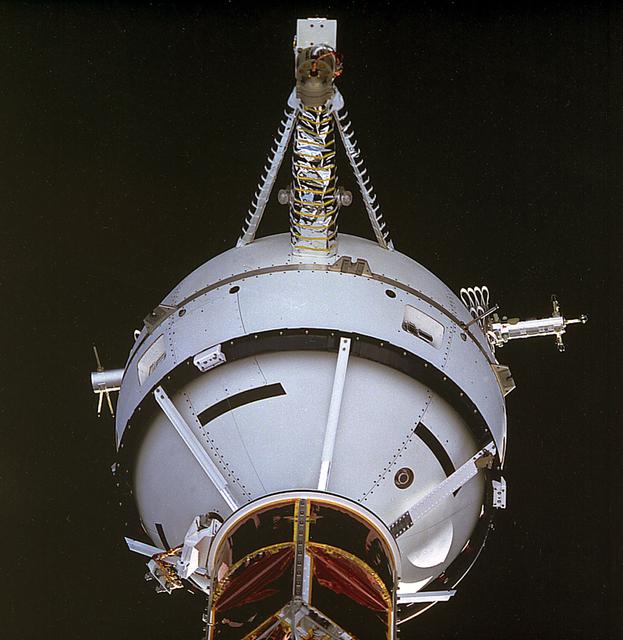
Pictured here is a Space Shuttle Atlantis (STS-46) onboard photo of the Tethered Satellite System (TSS-1) deployment. The Tethered Satellite System (TSS) was a cooperative development effort by the Italian Space Agency (ASI) and NASA. Combined efforts resulted in the capability of deploying and retrieving a satellite which is attached by a wire tether from distances up to 100-km from the Orbiter. These free-flying satellites are used as observation platforms outside of the Orbiter.
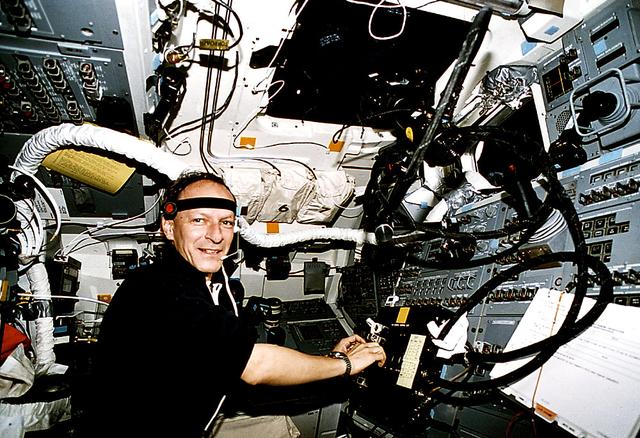
This Space Shuttle Orbiter Atlantis (STS-46) onboard photo shows Swiss scientist Claude Nicollier of the European Space Agency (ESA) supporting the Tether Opitical Phenomena (TOP) activities on the flight deck. The Tethered Satellite System (TSS) was a cooperative development effort by the Italian Space Agency (ASI) and NASA made capable of deploying and retrieving a satellite which is attached by a wire tether from distances up to 100 km from the Orbiter. These free-flying satellites are used as observation platforms outside of the Orbiter.
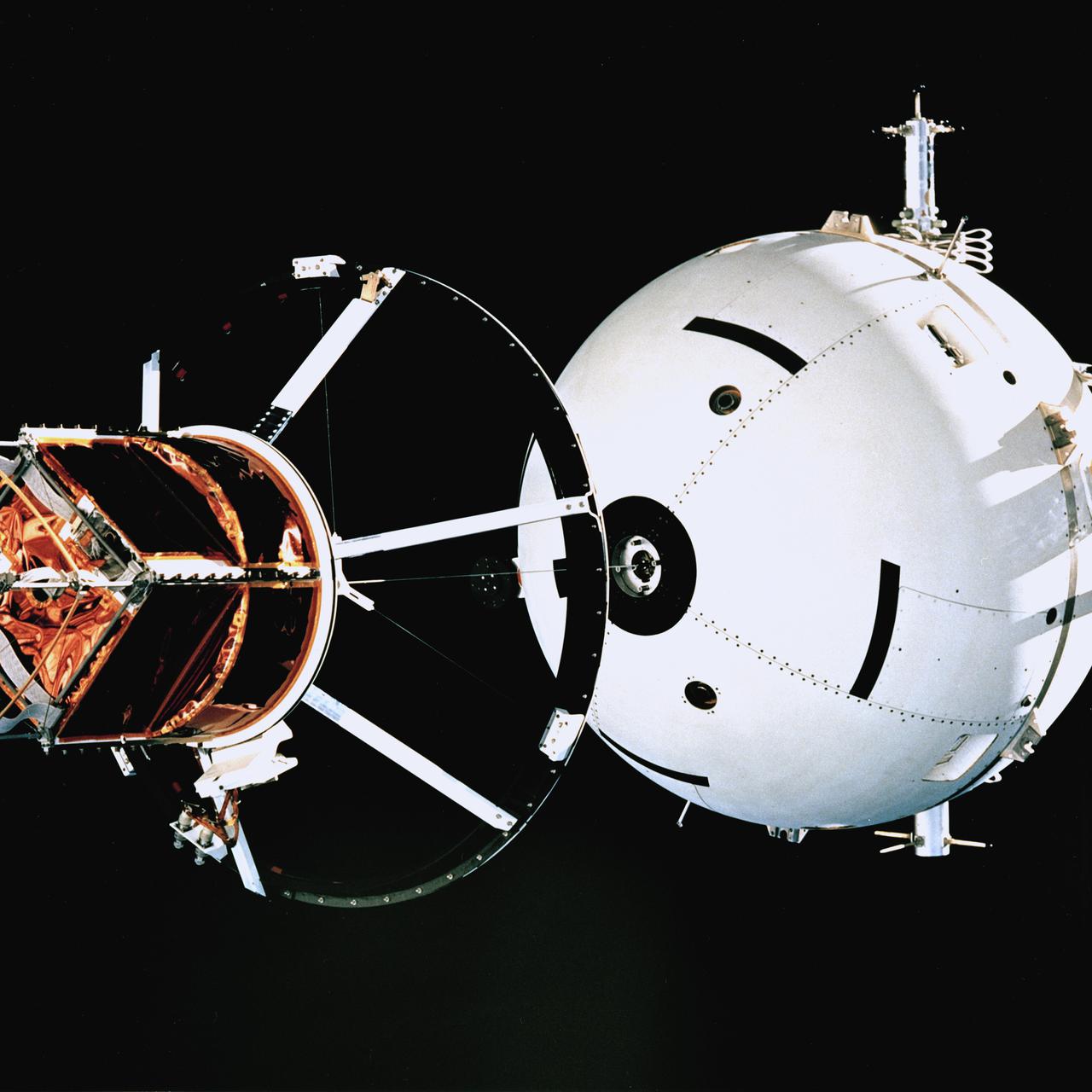
ONBOARD ATLANTIS -- A 70mm handheld camera was used by the STS-46 crewmembers to capture this medium closeup view of early operations with the Tethered Satellite System. The sphere can be seen moving away from the ring structure on the boom device in Atlantis’ cargo bay. Photo Credit: NASA
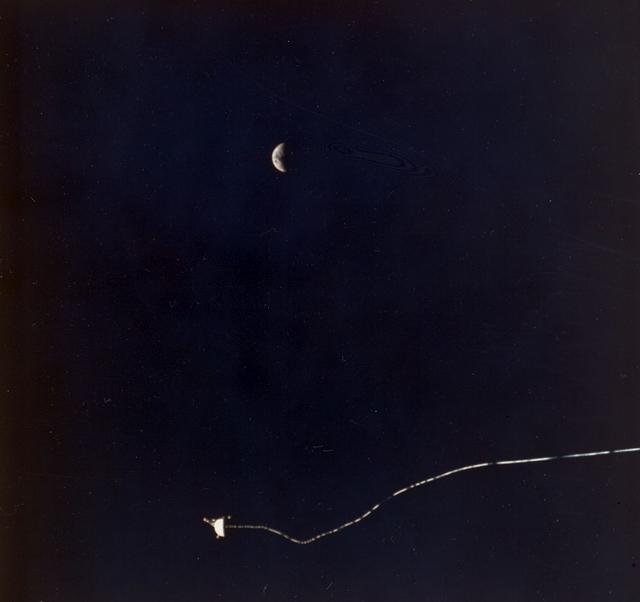
Sharing this scene with a half-moon is the Tethered Satellite System (TSS), in a photo captured onboard the STS-46. Circling Earth at an altitude of 296 kilometers (184 miles), the TSS-1 will be well within the tenuous, electrically charged layer of the atmosphere known as the ionosphere. There, a satellite attached to the orbiter by a thin conducting cord, or tether, will be reeled from the Shuttle payload bay. On this mission the satellite was plarned to be deployed 20 kilometers (12.5 miles) above the Shuttle. The conducting tether will generate high voltage and electrical currents as it moves through the atmosphere allowing scientists to examine the electrodynamics of a conducting tether system. These studies will not only increase our understanding of physical processes in the near-Earth space environment, but will also help provide an explanation for events witnessed elsewhere in the solar system. The crew of the STS-46 mission were unable to reel the satellite as planned. After several unsuccessful attempts, they were only able to extend the satellite 9.8 kilometers (6.1 miles). The TSS was a cooperative development effort by the Italian Space Agency (ASI), and NASA.
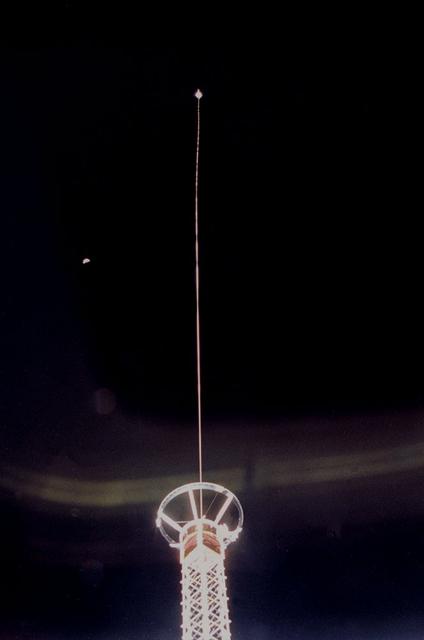
This STS-46 onboard photo is of the Tethered Satellite System-1 (TSS-1) being deployed from its boom as it is perched above the cargo bay of the Earth-orbiting Space Shuttle Atlantis. Circling the Earth at an altitude of 296 kilometers (184 miles), the TSS-1 will be well within the tenuous, electrically charged layer of the atmosphere known as the ionosphere. There, a satellite attached to the orbiter by a thin conducting cord, or tether, will be reeled from the Shuttle payload bay. On this mission the satellite was plarned to be deployed 20 kilometers (12.5 miles) above the Shuttle. The conducting tether will generate high voltage and electrical currents as it moves through the atmosphere allowing scientists to examine the electrodynamics of a conducting tether system. These studies will not only increase our understanding of physical processes in the near-Earth space environment, but will also help provide an explanation for events witnessed elsewhere in the solar system. The crew of the STS-46 mission were unable to reel the satellite as planned. After several unsuccessful attempts, they were only able to extend the satellite 9.8 kilometers (6.1 miles). The TSS was a cooperative development effort by the Italian Space Agency (ASI), and NASA.