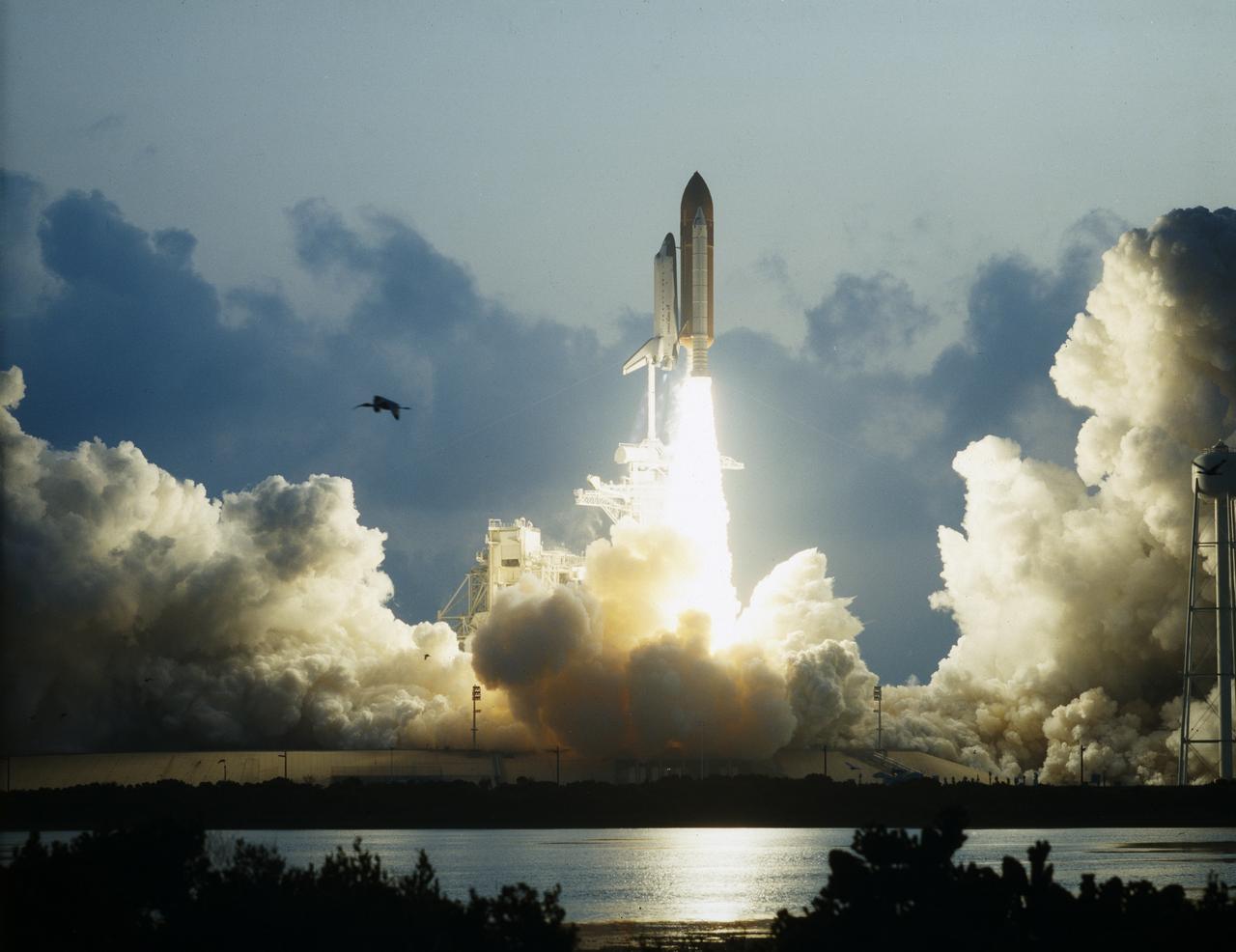
STS-49, the first flight of the Space Shuttle Orbiter Endeavour, lifted off from launch pad 39B on May 7, 1992 at 6:40 pm CDT. The STS-49 mission was the first U.S. orbital flight to feature 4 extravehicular activities (EVAs), and the first flight to involve 3 crew members working simultaneously outside of the spacecraft. The primary objective was the capture and redeployment of the INTELSAT VI (F-3) which was stranded in an unusable orbit since its launch aboard the Titan rocket in March 1990.
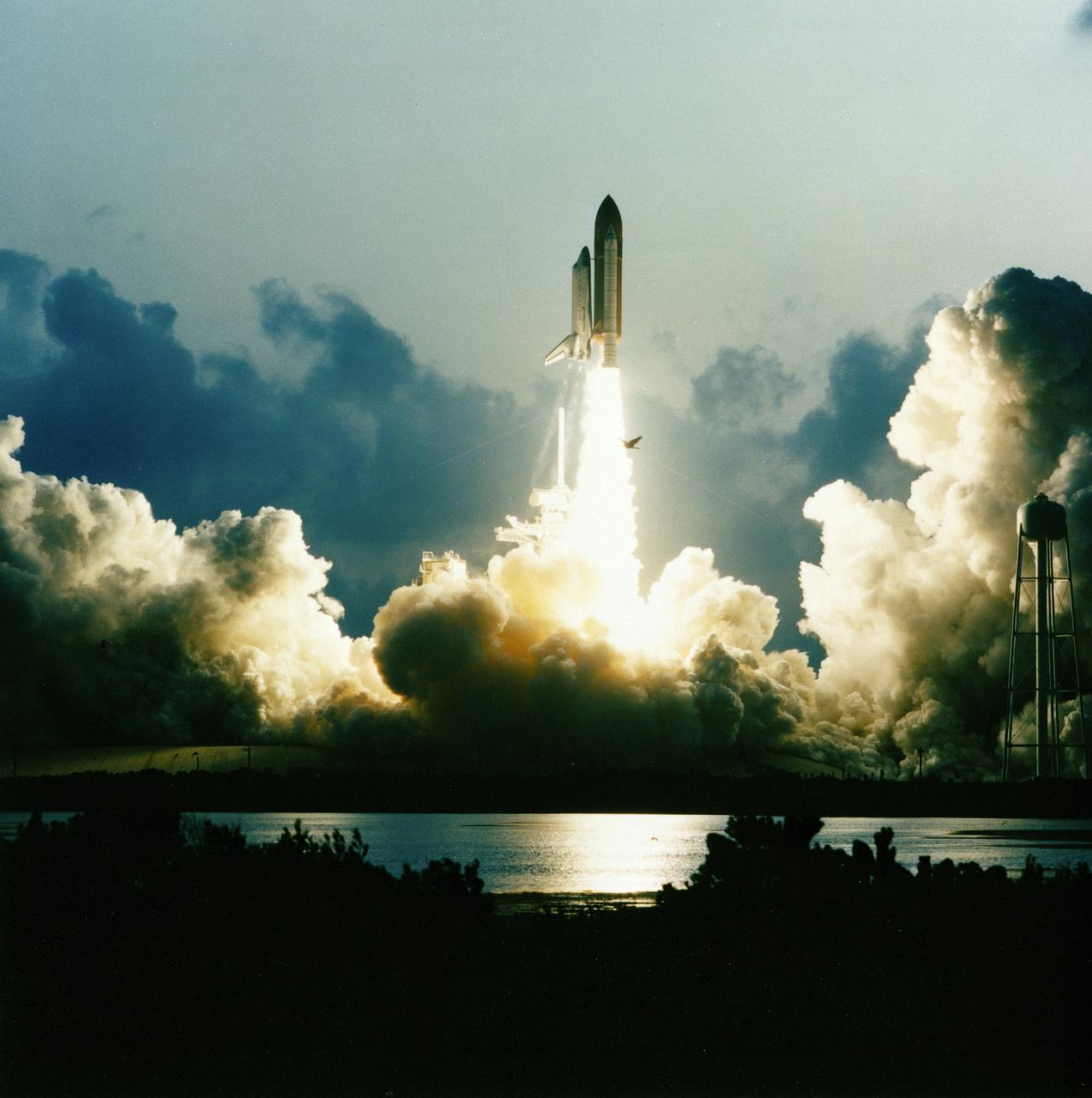
STS-49, the first flight of the Space Shuttle Orbiter Endeavour, lifted off from launch pad 39B on May 7, 1992 at 6:40 pm CDT. The STS-49 mission was the first U.S. orbital flight to feature 4 extravehicular activities (EVAs), and the first flight to involve 3 crew members working simultaneously outside of the spacecraft. The primary objective was the capture and redeployment of the INTELSAT VI (F-3) which was stranded in an unusable orbit since its launch aboard the Titan rocket in March 1990.
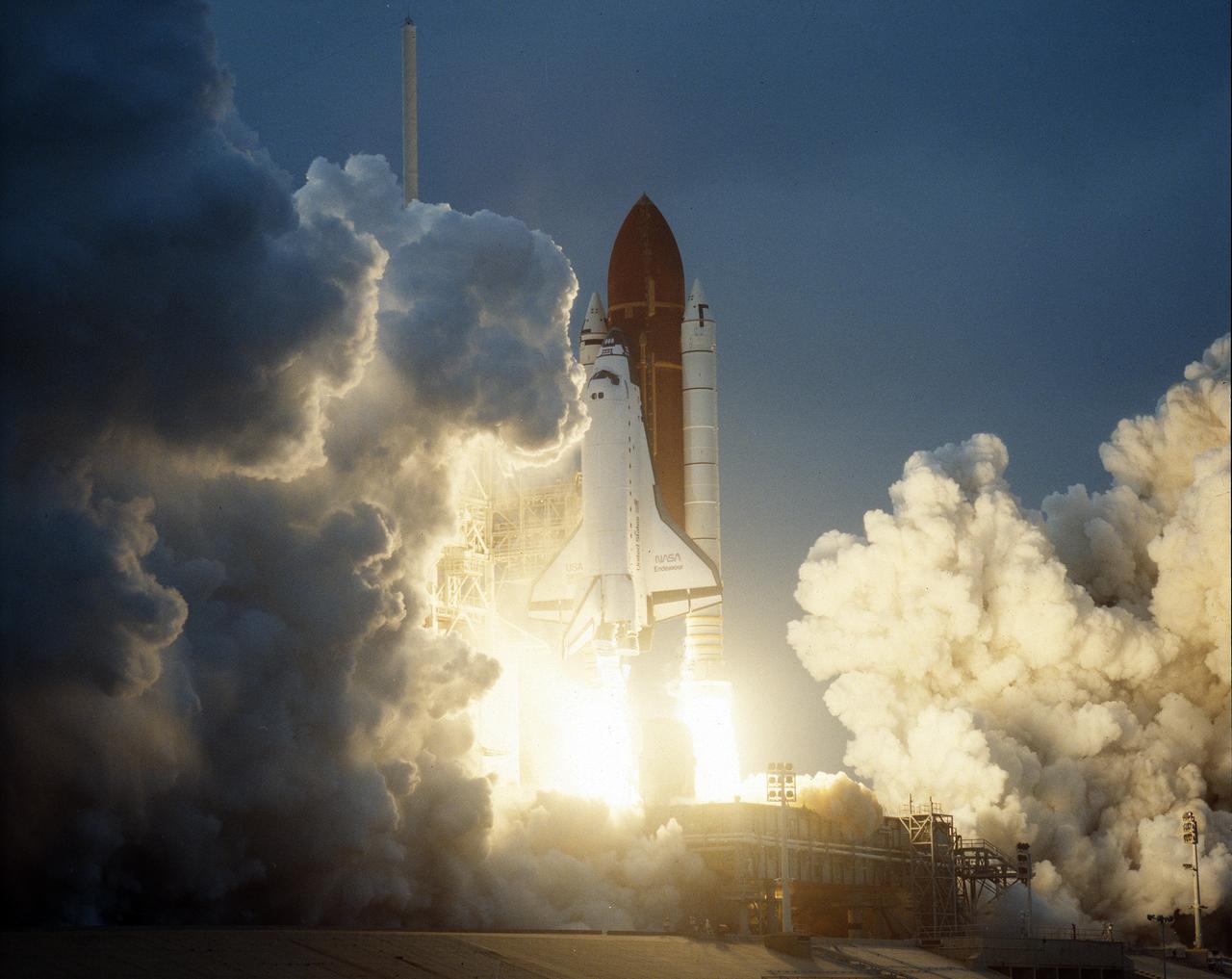
STS-49, the first flight of the Space Shuttle Orbiter Endeavour, lifted off from launch pad 39B on May 7, 1992 at 6:40 pm CDT. The STS-49 mission was the first U.S. orbital flight to feature 4 extravehicular activities (EVAs), and the first flight to involve 3 crew members working simultaneously outside of the spacecraft. The primary objective was the capture and redeployment of the INTELSAT VI (F-3) which was stranded in an unusable orbit since its launch aboard the Titan rocket in March 1990.
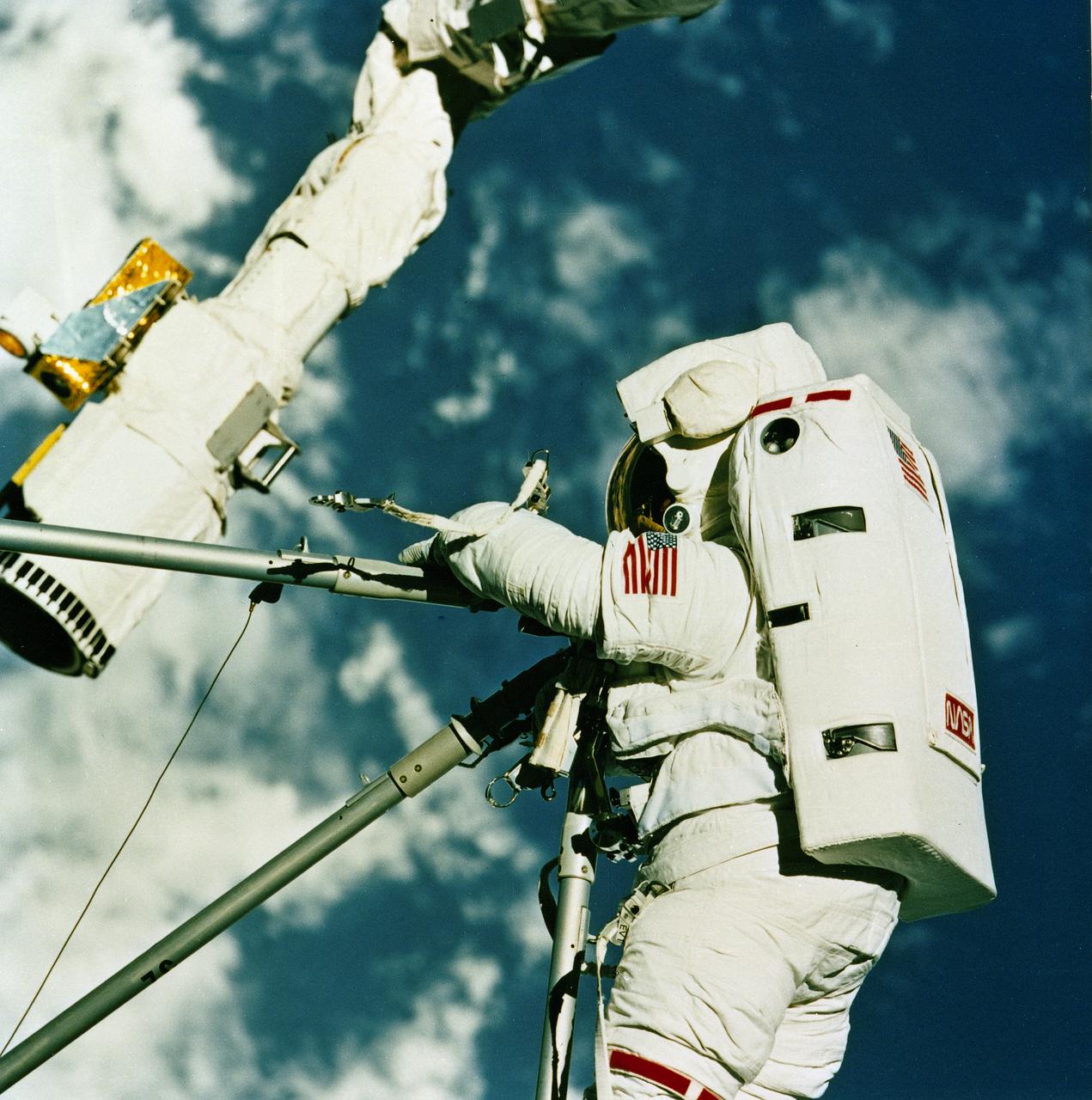
STS-49, the first flight of the Space Shuttle Orbiter Endeavour, lifted off from launch pad 39B on May 7, 1992 at 6:40 pm CDT. The STS-49 mission was the first U.S. orbital flight to feature 4 extravehicular activities (EVAs), and the first flight to involve 3 crew members working simultaneously outside of the spacecraft. The primary objective was the capture and redeployment of the INTELSAT VI (F-3) which was stranded in an unusable orbit since its launch aboard the Titan rocket in March 1990. In this STS-49 onboard photo, Astronaut Kathryn Thornton joins three struts together during her Extra Vehicular Activity (EVA).
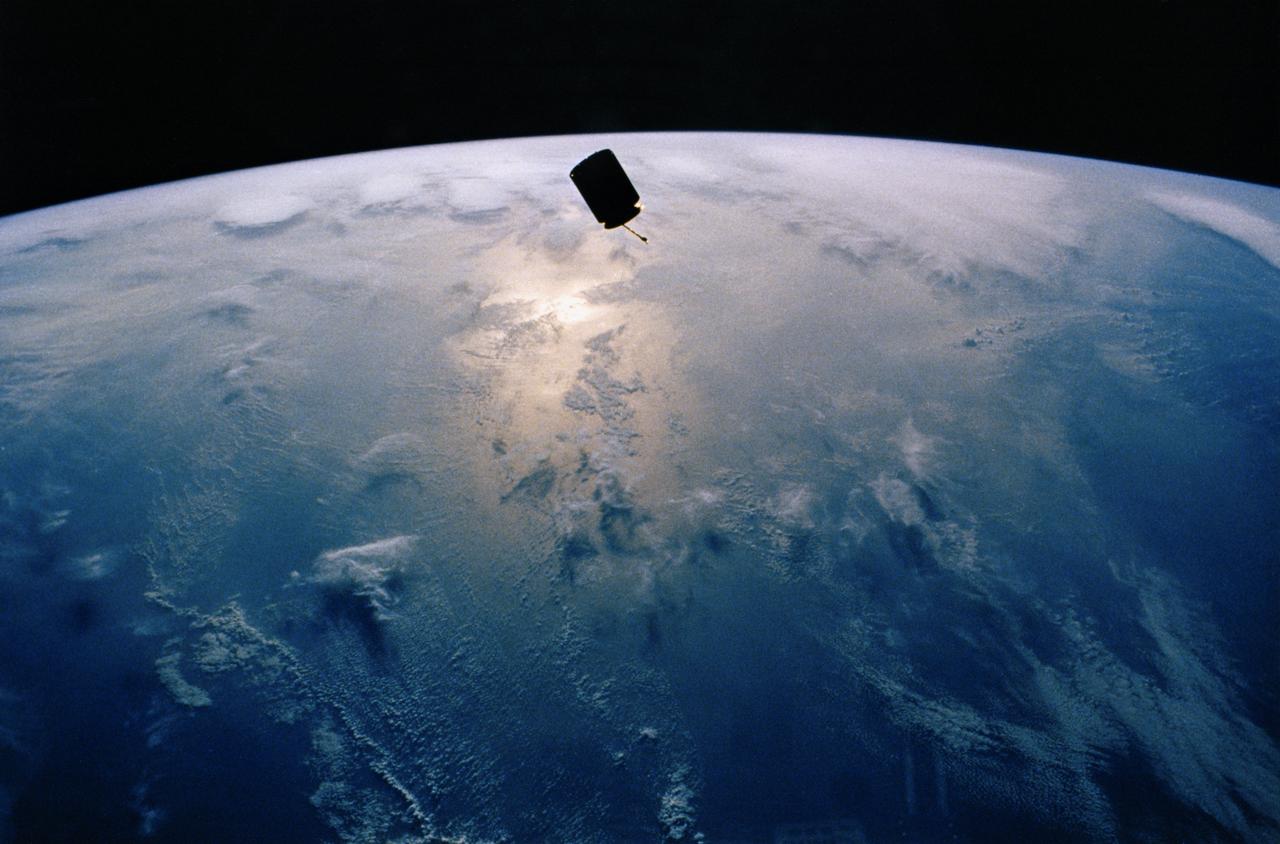
STS-49, the first flight of the Space Shuttle Orbiter Endeavour, lifted off from launch pad 39B on May 7, 1992 at 6:40 pm CDT. The STS-49 mission was the first U.S. orbital flight to feature 4 extravehicular activities (EVAs), and the first flight to involve 3 crew members working simultaneously outside of the spacecraft. The primary objective was the capture and redeployment of the INTELSAT VI (F-3), a communication satellite for the International Telecommunication Satellite organization, which was stranded in an unusable orbit since its launch aboard the Titan rocket in March 1990. This onboard photo captures the free flying INTELSAT IV.
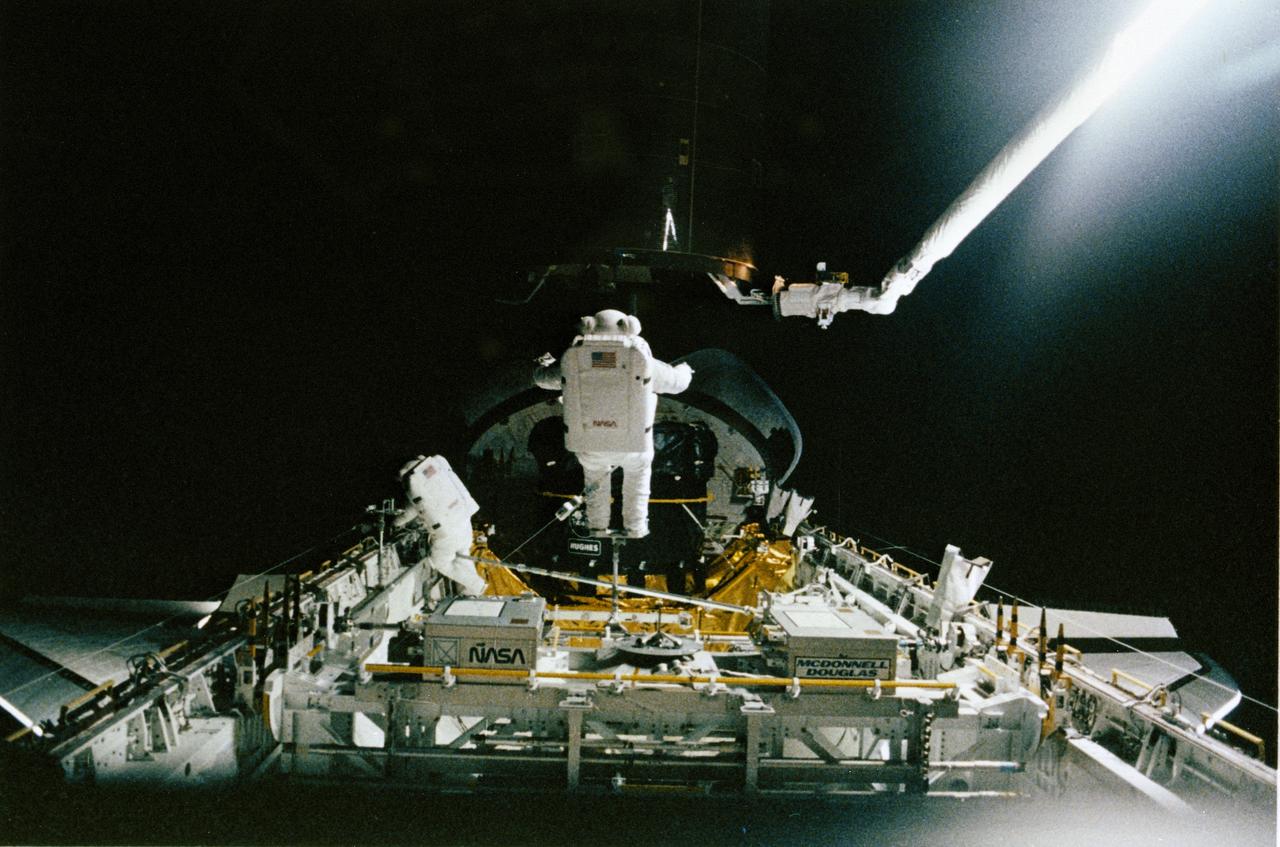
STS-49, the first flight of the Space Shuttle Orbiter Endeavour, lifted off from launch pad 39B on May 7, 1992 at 6:40 pm CDT. The STS-49 mission was the first U.S. orbital flight to feature 4 extravehicular activities (EVAs), and the first flight to involve 3 crew members working simultaneously outside of the spacecraft. The primary objective was the capture and redeployment of the INTELSAT VI (F-3), a communication satellite for the International Telecommunication Satellite organization, which was stranded in an unusable orbit since its launch aboard the Titan rocket in March 1990. After securing the satellite with the Remote Manipulator System (RMS), the crew proceeded with preparing the satellite for its release into space.
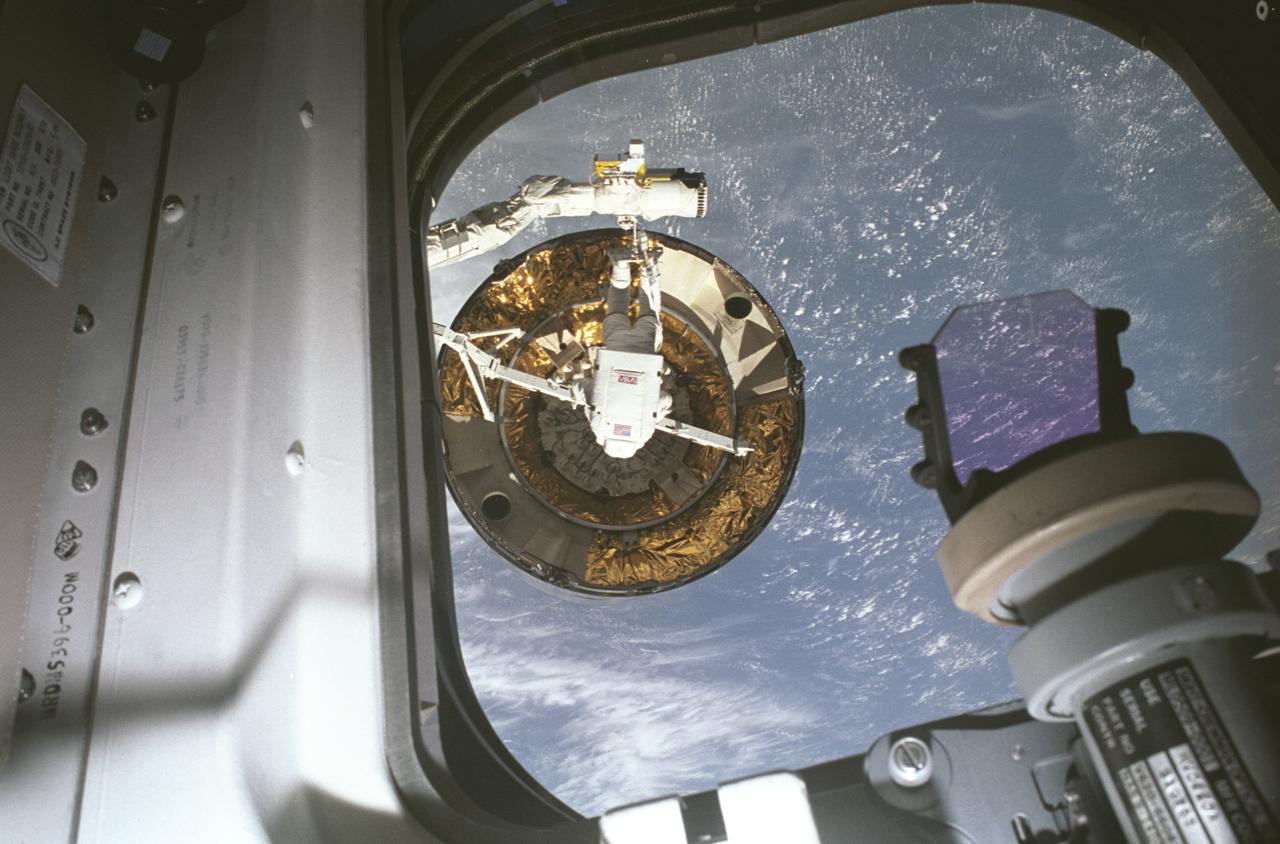
STS-49, the first flight of the Space Shuttle Orbiter Endeavour, lifted off from launch pad 39B on May 7, 1992 at 6:40 pm CDT. The STS-49 mission was the first U.S. orbital flight to feature 4 extravehicular activities (EVAs), and the first flight to involve 3 crew members working simultaneously outside of the spacecraft. The primary objective was the capture and redeployment of the INTELSAT VI (F-3), a communication satellite for the International Telecommunication Satellite organization, which was stranded in an unusable orbit since its launch aboard the Titan rocket in March 1990. Recorded with a 35 mm camera inside Endeavour’s cabin, is astronaut Pierre Thuot after his second unsuccessful attempt to affix a specially designed grapple bar to the 4.5 ton INTELSAT VI.
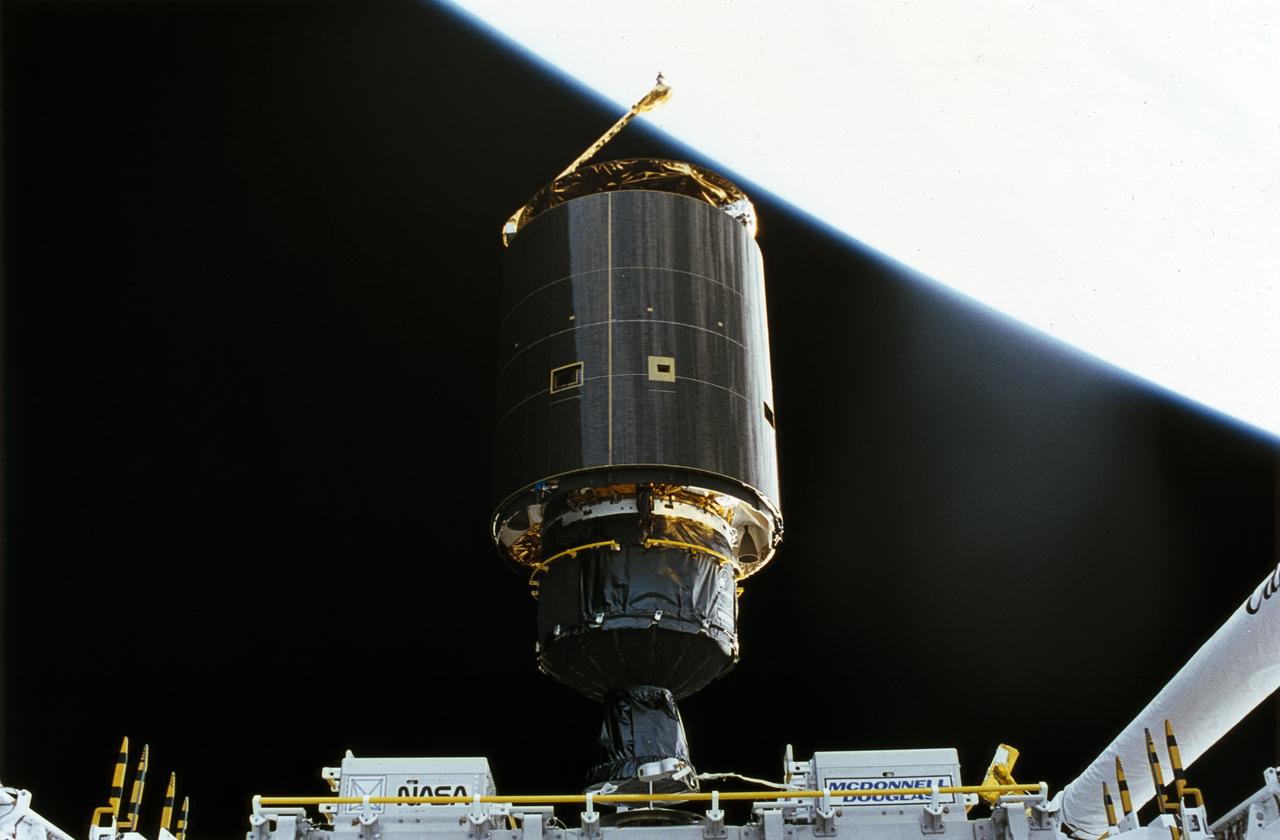
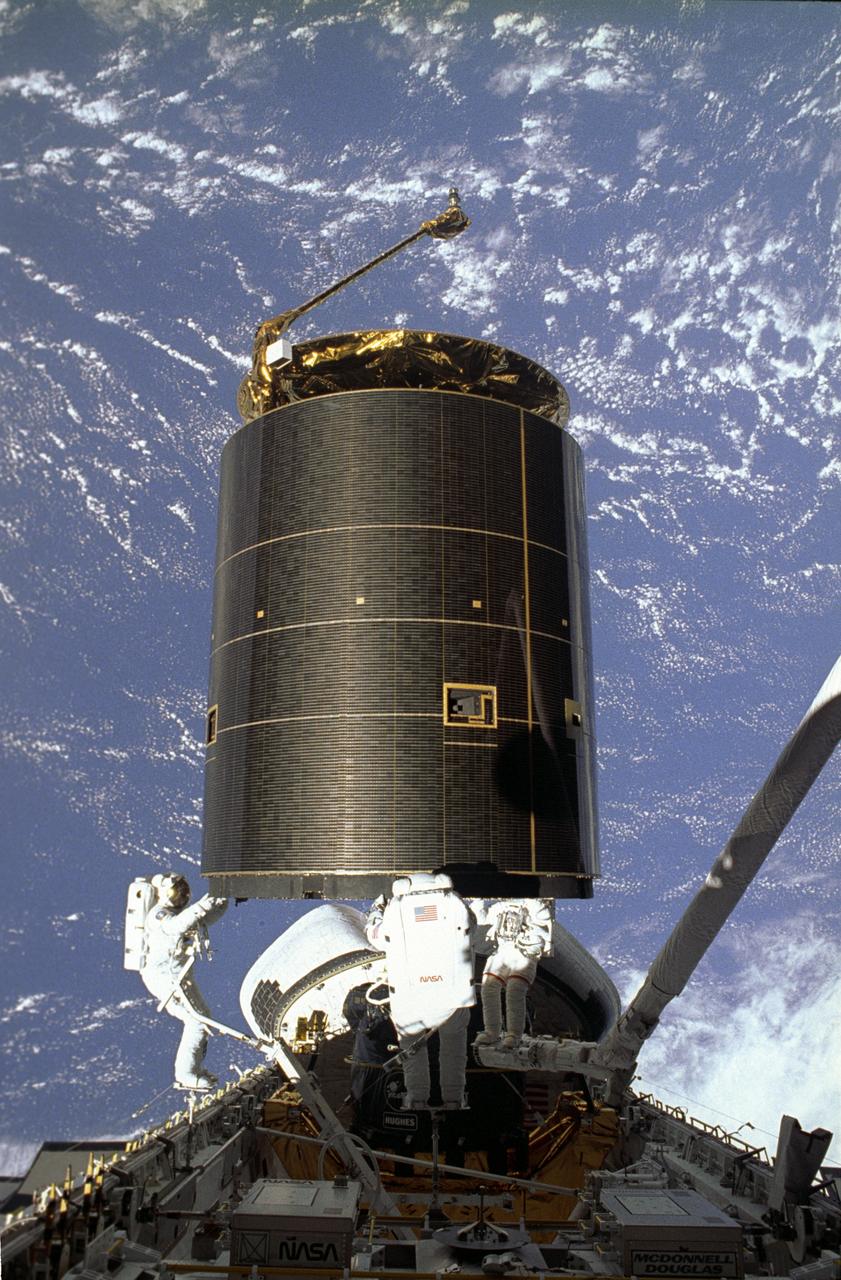
STS-49, the first flight of the Space Shuttle Orbiter Endeavour, lifted off from launch pad 39B on May 7, 1992 at 6:40 pm CDT. The STS-49 mission was the first U.S. orbital flight to feature 4 extravehicular activities (EVAs), and the first flight to involve 3 crew members working simultaneously outside of the spacecraft. The primary objective was the capture and redeployment of the INTELSAT VI (F-3), a communication satellite for the International Telecommunication Satellite organization, which was stranded in an unusable orbit since its launch aboard the Titan rocket in March 1990. The 4.5 ton INTELSAT VI was successfully snared by three astronauts on a third EVA. In this photo, the satellite, with its newly deployed perigee stage, begins its separation from the Shuttle.
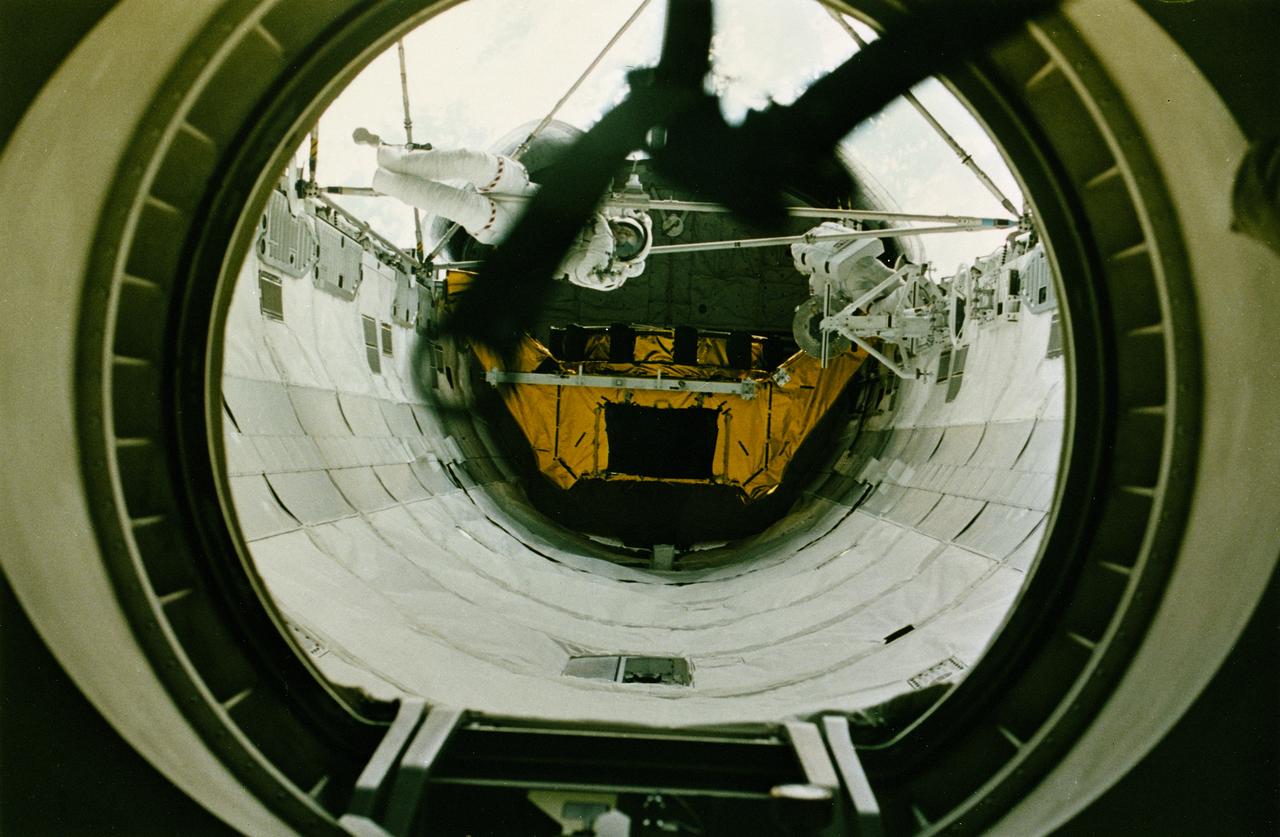
STS-49, the first flight of the Space Shuttle Orbiter Endeavour, lifted off from launch pad 39B on May 7, 1992 at 6:40 pm CDT. The STS-49 mission was the first U.S. orbital flight to feature 4 extravehicular activities (EVAs), and the first flight to involve 3 crew members working simultaneously outside of the spacecraft. The primary objective was the capture and redeployment of the INTELSAT VI (F-3), a communication satellite for the International Telecommunication Satellite organization, which was stranded in an unusable orbit since its launch aboard the Titan rocket in March 1990. A view through Endeavour’s busy airlock reveals astronauts Thomas Akers and Kathryn Thornton.
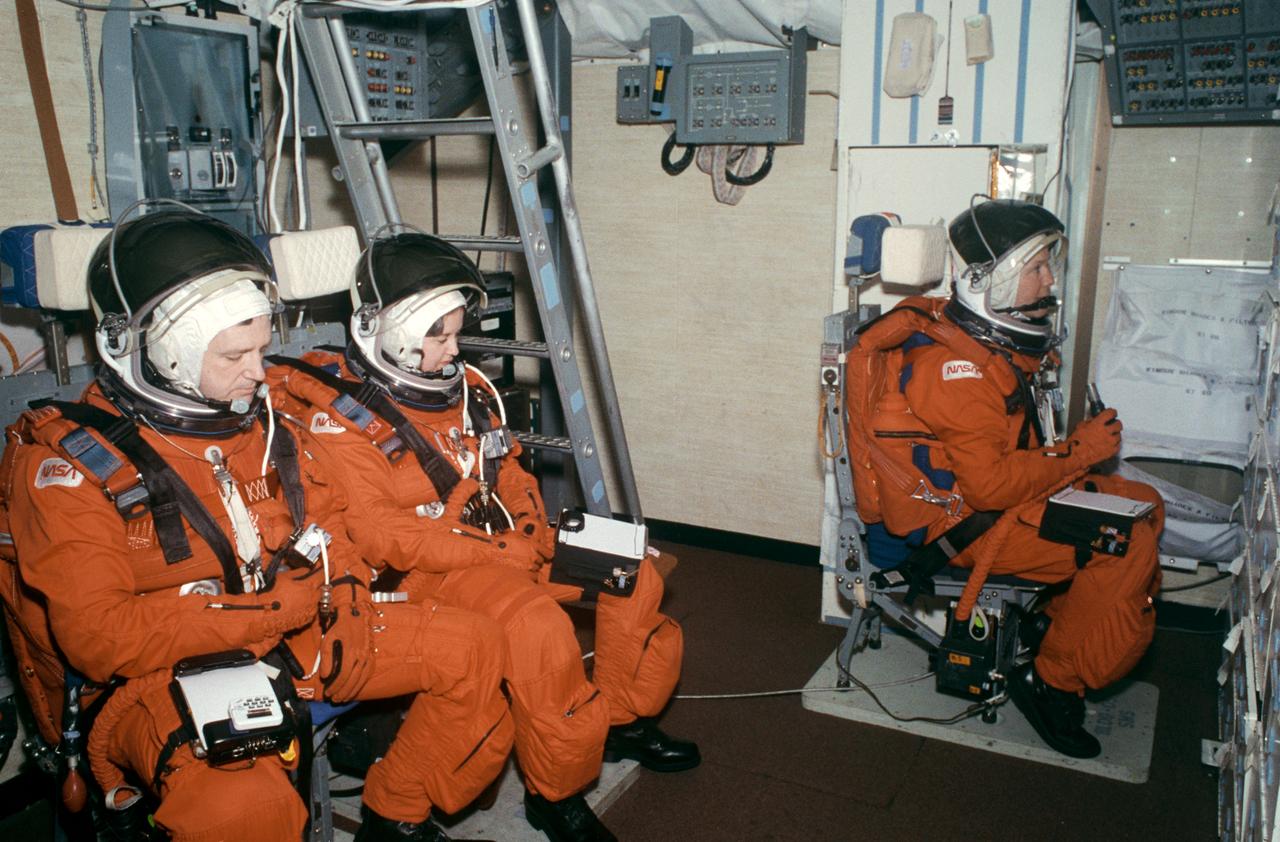
S92-29406 (Feb 1992) --- Three mission specialists assigned to the STS-49 flight occupy temporary stations on the "middeck" of a Johnson Space Center (JSC) Shuttle trainer during a rehearsal of Endeavour's launch and entry phases. Left to right are astronauts Thomas D. Akers, Kathryn C. Thornton and Pierre J. Thuot. The three, along with four other NASA astronauts, will be aboard Endeavour in May for a week-long mission during which a satellite will be retrieved and boosted toward a higher orbit and extravehicular activity evaluations for Space Station Freedom assembly techniques will be conducted.
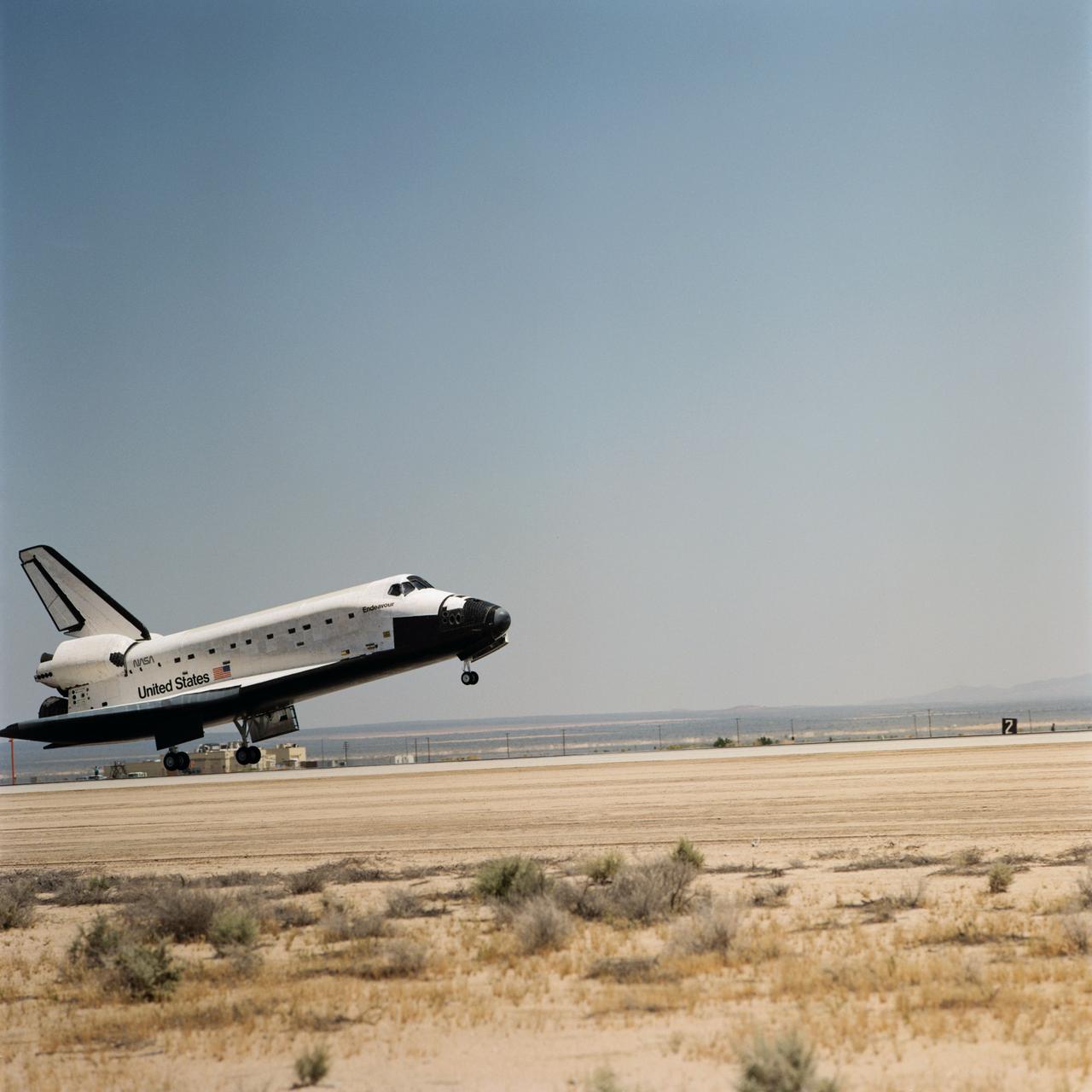
STS049-S-325 (16 May 1992) --- The main landing gear of Endeavour is just about to touch down at Edwards Air Force Base to draw to an end NASA's nine-day STS-49 mission. Crewmembers onboard were astronauts Daniel C. Brandenstein, mission commander; Kevin P. Chilton, pilot; and Thomas D. Akers, Richard J. Hieb, Bruce E. Melnick, Kathryn C. Thornton and Pierre J. Thout, all mission specialists. Landing occurred at 1:36:38 p.m. (PDT), May 16, 1992.
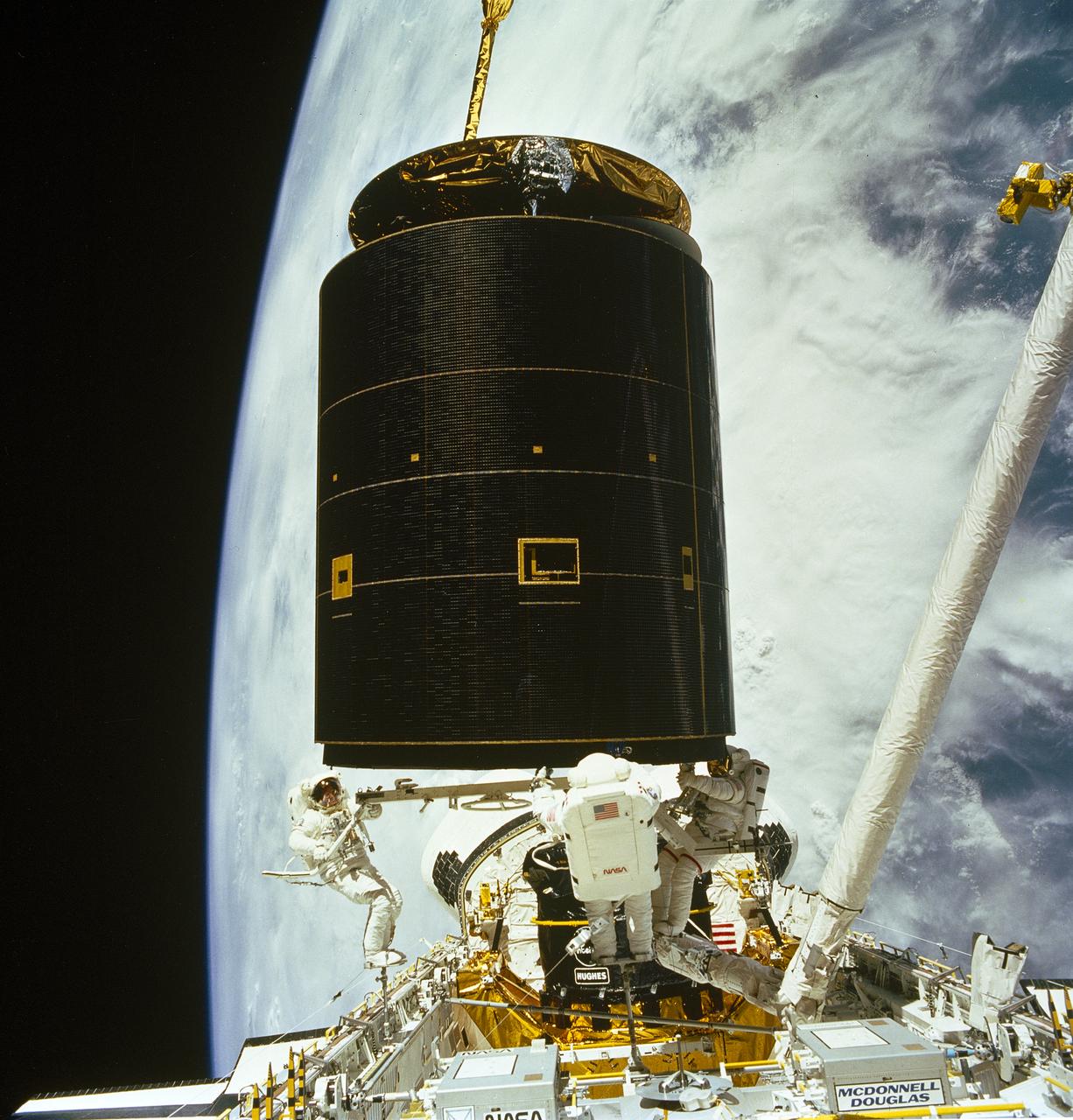
STS-49, the first flight of the Space Shuttle Orbiter Endeavour, lifted off from launch pad 39B on May 7, 1992 at 6:40 pm CDT. The STS-49 mission was the first U.S. orbital flight to feature 4 extravehicular activities (EVAs), and the first flight to involve 3 crew members working simultaneously outside of the spacecraft. The primary objective was the capture and redeployment of the INTELSAT VI (F-3), a communication satellite for the International Telecommunication Satellite organization, which was stranded in an unusable orbit since its launch aboard the Titan rocket in March 1990. The 4.5 ton INTELSAT VI was successfully snared by three astronauts on a third EVA. The three hand-grabbed the errant satellite, pulled it into the cargo bay, and attached a boost-given perigee stage before its release.
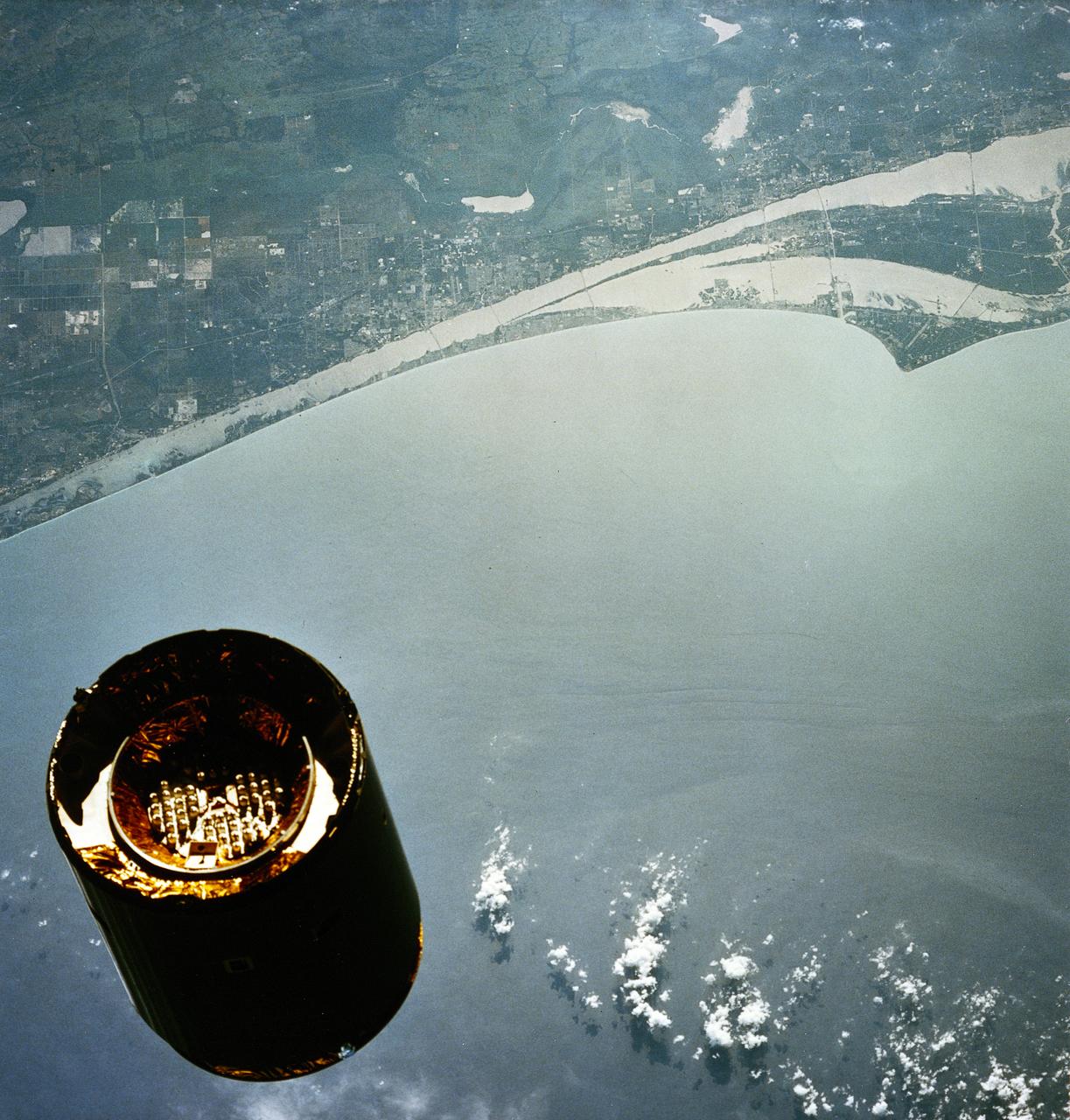
STS-49, the first flight of the Space Shuttle Orbiter Endeavour, lifted off from launch pad 39B on May 7, 1992 at 6:40 pm CDT. The STS-49 mission was the first U.S. orbital flight to feature 4 extravehicular activities (EVAs), and the first flight to involve 3 crew members working simultaneously outside of the spacecraft. The primary objective was the capture and redeployment of the INTELSAT VI (F-3), a communication satellite for the International Telecommunication Satellite organization, which was stranded in an unusable orbit since its launch aboard the Titan rocket in March 1990. This onboard photo depicts Florida’s Atlantic coast and the Cape Canaveral area as the backdrop for this scene of the INTELSAT VI’s approach to the Shuttle Endeavour.
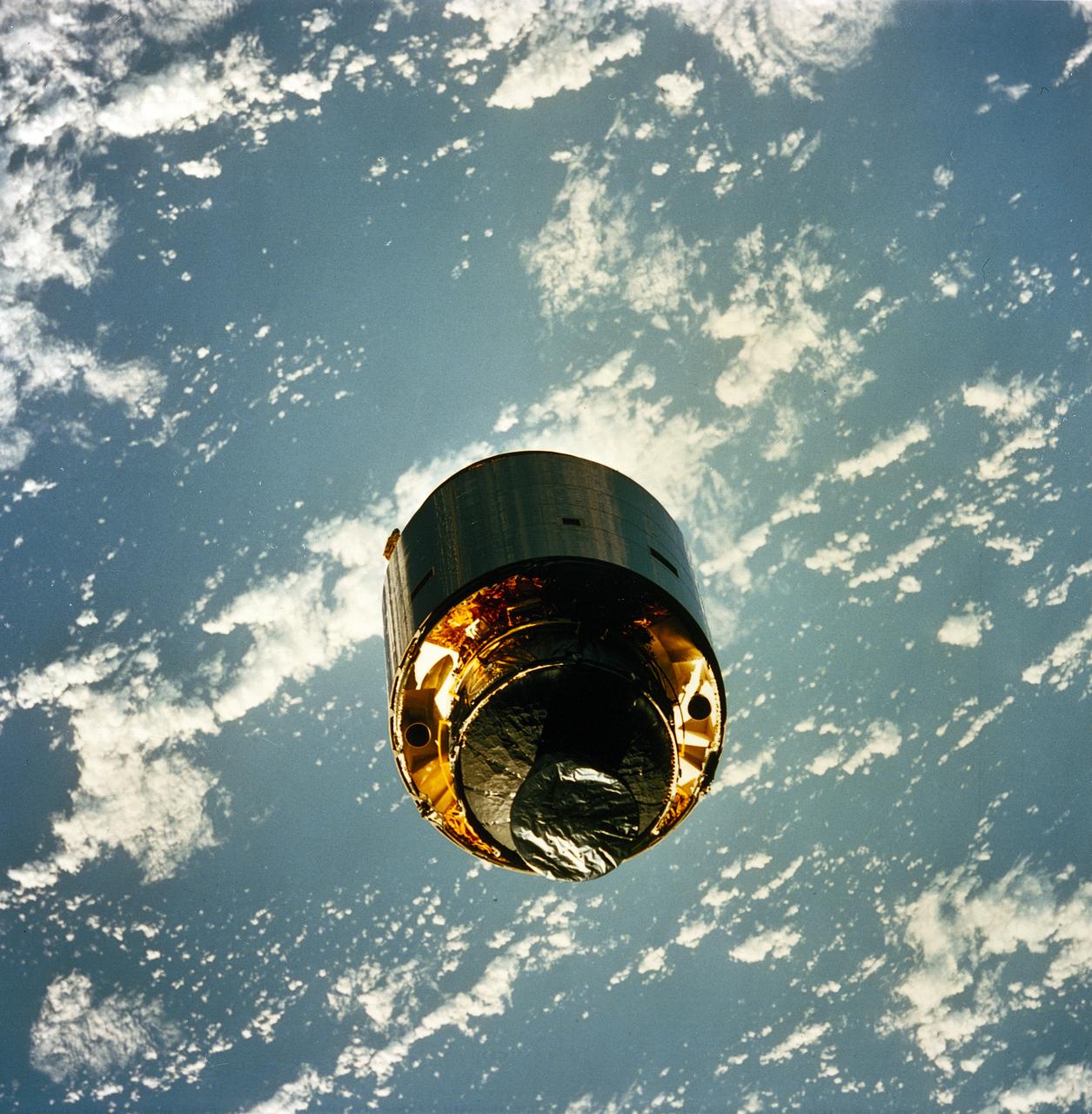
STS-49, the first flight of the Space Shuttle Orbiter Endeavour, lifted off from launch pad 39B on May 7, 1992 at 6:40 pm CDT. The STS-49 mission was the first U.S. orbital flight to feature 4 extravehicular activities (EVAs), and the first flight to involve 3 crew members working simultaneously outside of the spacecraft. The primary objective was the capture and redeployment of the INTELSAT VI (F-3), a communication satellite for the International Telecommunication Satellite organization, which was stranded in an unusable orbit since its launch aboard the Titan rocket in March 1990. The 4.5 ton satellite was successfully snared by three astronauts on a third EVA. The three hand-grabbed the errant satellite, pulled it into the cargo bay, and attached a boost-given perigee stage before its release. In this photo, the satellite spins slowly out of cargo bay to begin its “new lift”.
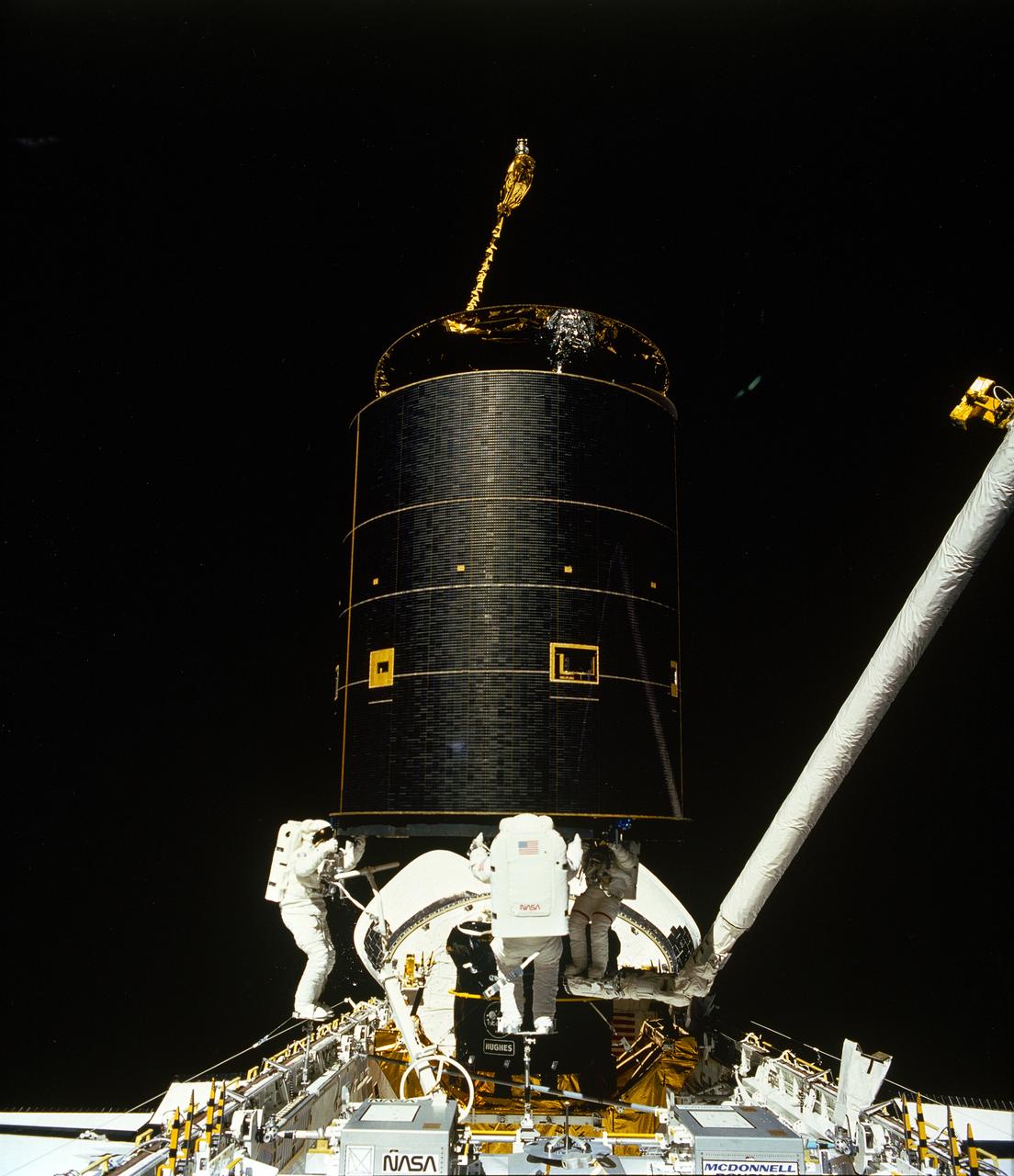
STS-49, the first flight of the Space Shuttle Orbiter Endeavour, lifted off from launch pad 39B on May 7, 1992 at 6:40 pm CDT. The STS-49 mission was the first U.S. orbital flight to feature 4 extravehicular activities (EVAs), and the first flight to involve 3 crew members working simultaneously outside of the spacecraft. The primary objective was the capture and redeployment of the INTELSAT VI (F-3), a communication satellite for the International Telecommunication Satellite organization, which was stranded in an unusable orbit since its launch aboard the Titan rocket in March 1990. The 4.5 ton INTELSAT VI was successfully snared by three astronauts on a third EVA. The three hand-grabbed the errant satellite, pulled it into the cargo bay, and attached a boost-given perigee stage before its release.

STS049-S-002 (16 Jan. 1992) --- These seven NASA astronauts are currently training for the first flight of the Space Shuttle Endeavour, seen in the background. Daniel C. Brandenstein, center, is mission commander; and Kevin P. Chilton, third from right, is pilot. Mission specialists are, left to right, Kathryn C. Thornton, Bruce E. Melnick, Pierre J. Thout, Thomas D. Akers and Richard J. Hieb.

STS049-S-269 (16 May 1992) --- The seven crewmembers of STS-49 pose near Endeavour for a post-flight shot soon after getting their feet on terra firma following nine days in Earth orbit. Left to right are astronauts Richard J. Hieb, Kevin P. Chilton, Daniel C. Brandenstein, Thomas D. Akers, Pierre J. Thuot, Kathryn C. Thornton and Bruce E. Melnick. Brandenstein was mission commander; Chilton, pilot; and the others, mission specialists.

One step closer to its maiden voyage, the Space Shuttle Orbiter Endeavour rolls out of the Vehicle Assembly Building, headed to Launch Pad 39B. Launched on May 7th 1992, the STS-49 mission was the first U.S. orbital flight to feature 4 extravehicular activities (EVAs), and the first flight to involve 3 crew members working simultaneously outside of the spacecraft. The primary objective was the capture and redeployment of the INTELSAT VI (F-3) which was stranded in an unusable orbit since its launch aboard the Titan rocket in March 1990.
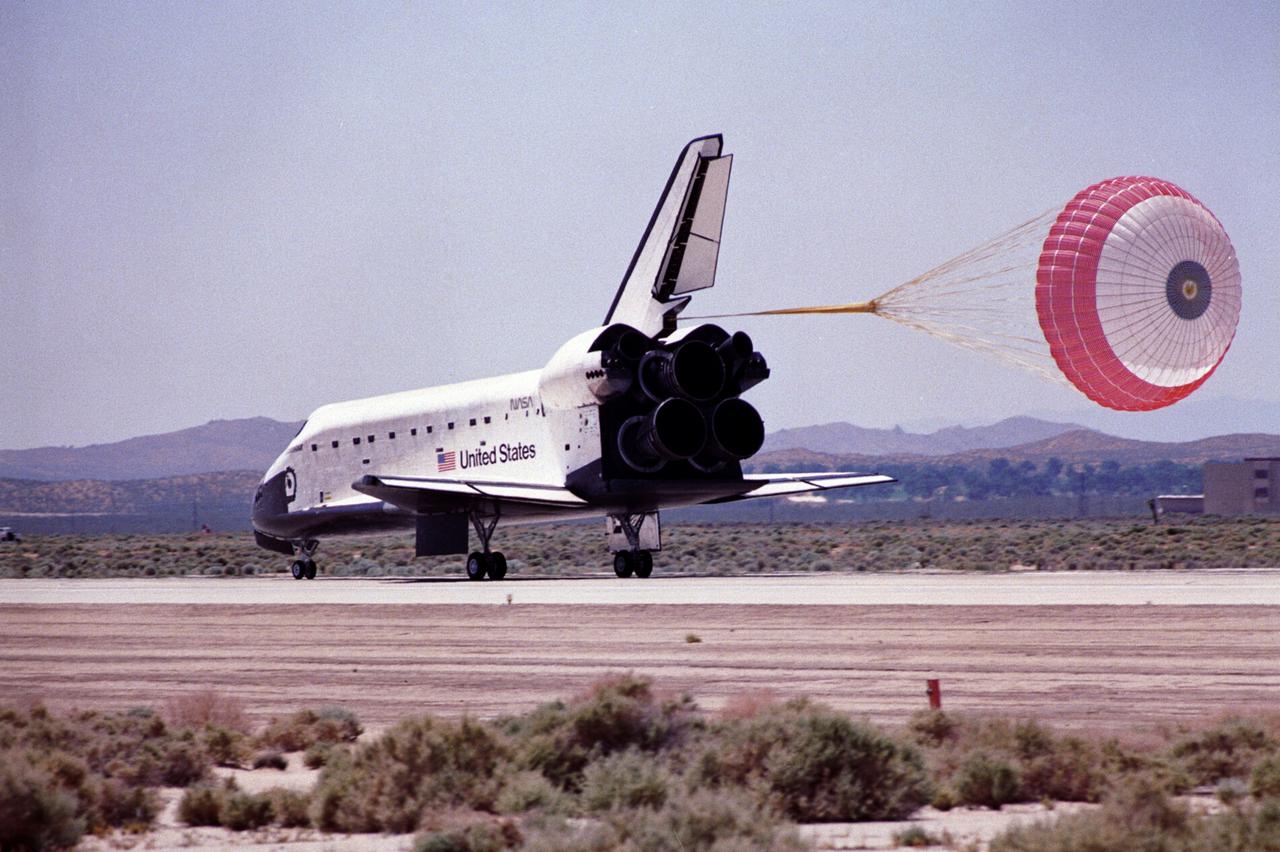
STS-49 Orbiter Endeavour landed at Edwards Air Force Base on May 16, 1992 The drogue chute precedes the main chute in NASA’s first exercise of its detailed test objective on the drag chute system. STS-49 ended its successful nine day mission dedicated to the retrieval, repair, and redeployment of the the INTELSAT VI (F-3) satellite. The communication satellite for the International Telecommunication Satellite organization had been stranded in an unusable orbit since its launch aboard the Titan rocket in March 1990. The mission marked the first time 3 astronauts worked simultaneously outside the space craft.
STS-49, the first flight of the Space Shuttle Orbiter Endeavour, lifted off from launch pad 39B on May 7, 1992 at 6:40 pm CDT. The STS-49 mission was the first U.S. orbital flight to feature 4 extravehicular activities (EVAs), and the first flight to involve 3 crew members working simultaneously outside of the spacecraft. The primary objective was the capture and redeployment of the INTELSAT VI (F-3), a communication satellite for the International Telecommunication Satellite organization, which was stranded in an unusable orbit since its launch aboard the Titan rocket in March 1990. In this onboard photo, astronauts Hieb, Akers, and Thuot have handholds on the satellite.
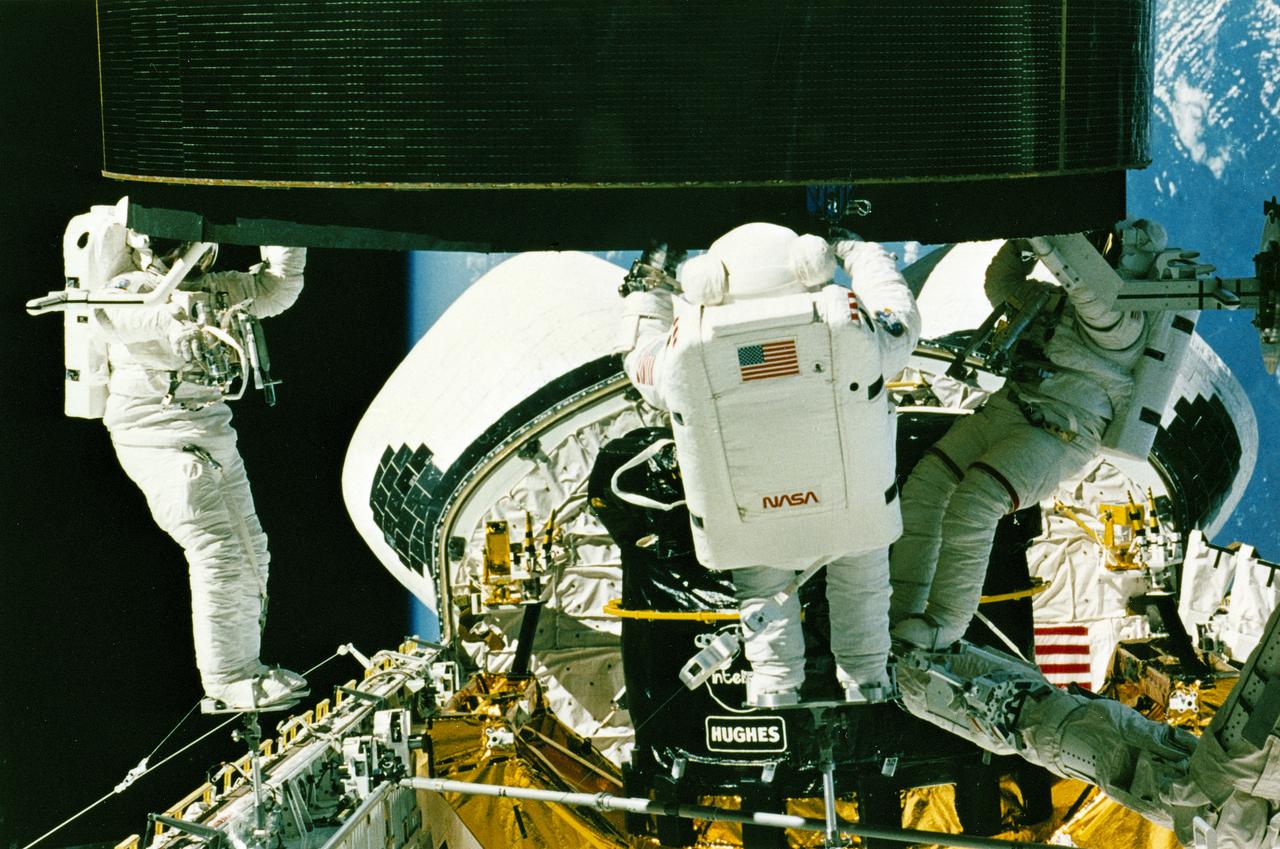
STS-49, the first flight of the Space Shuttle Orbiter Endeavour, lifted off from launch pad 39B on May 7, 1992 at 6:40 pm CDT. The STS-49 mission was the first U.S. orbital flight to feature 4 extravehicular activities (EVAs), and the first flight to involve 3 crew members working simultaneously outside of the spacecraft. The primary objective was the capture and redeployment of the INTELSAT VI (F-3), a communication satellite for the International Telecommunication Satellite organization, which was stranded in an unusable orbit since its launch aboard the Titan rocket in March 1990. In this onboard photo, astronauts Hieb, Akers, and Thuot have handholds on the satellite.
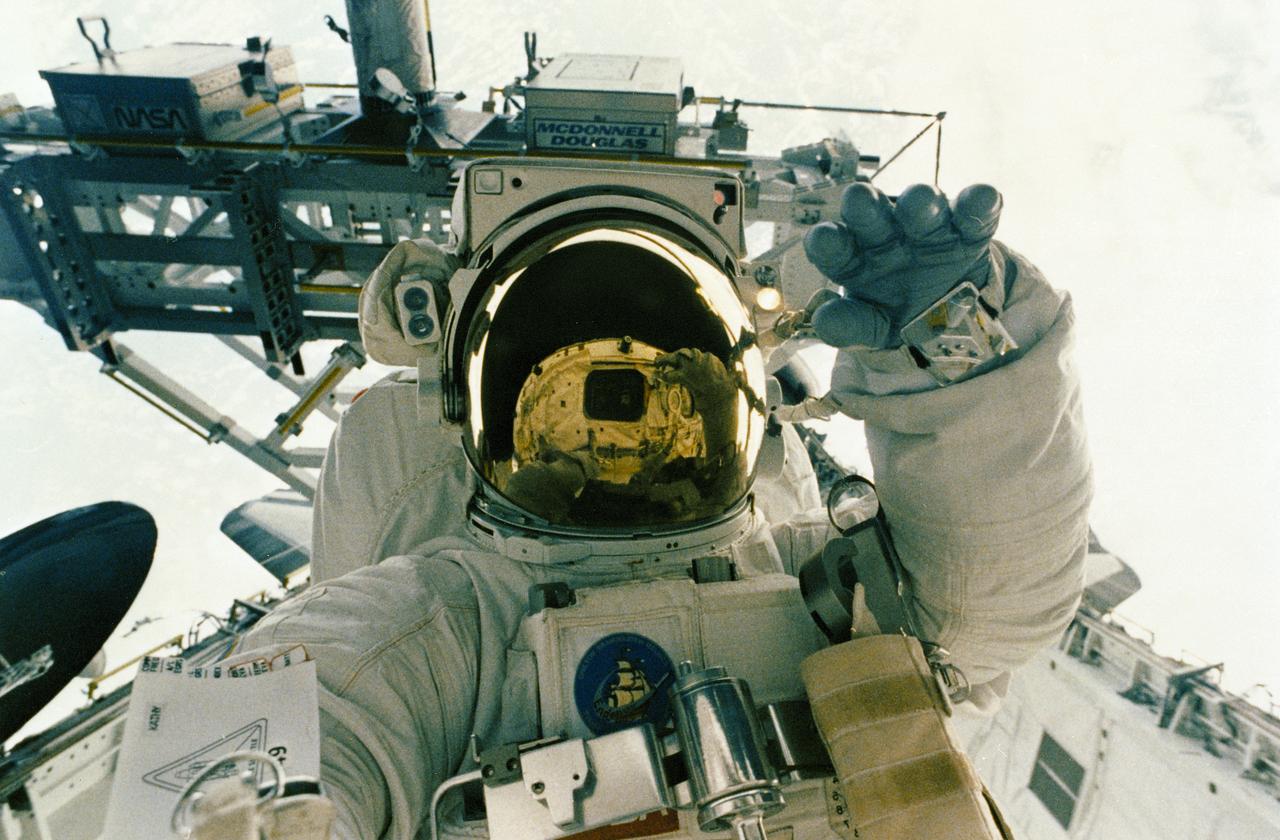
STS-49, the first flight of the Space Shuttle Orbiter Endeavour, lifted off from launch pad 39B on May 7, 1992 at 6:40 pm CDT. The STS-49 mission was the first U.S. orbital flight to feature 4 extravehicular activities (EVAs), and the first flight to involve 3 crew members working simultaneously outside of the spacecraft. The primary objective was the capture and redeployment of the INTELSAT VI (F-3), a communication satellite for the International Telecommunication Satellite organization, which was stranded in an unusable orbit since its launch aboard the Titan rocket in March 1990. In this onboard photo, astronaut Kathryn Thornton is working on the Assembly of Station by EVA Methods (ASEM) in the cargo bay.
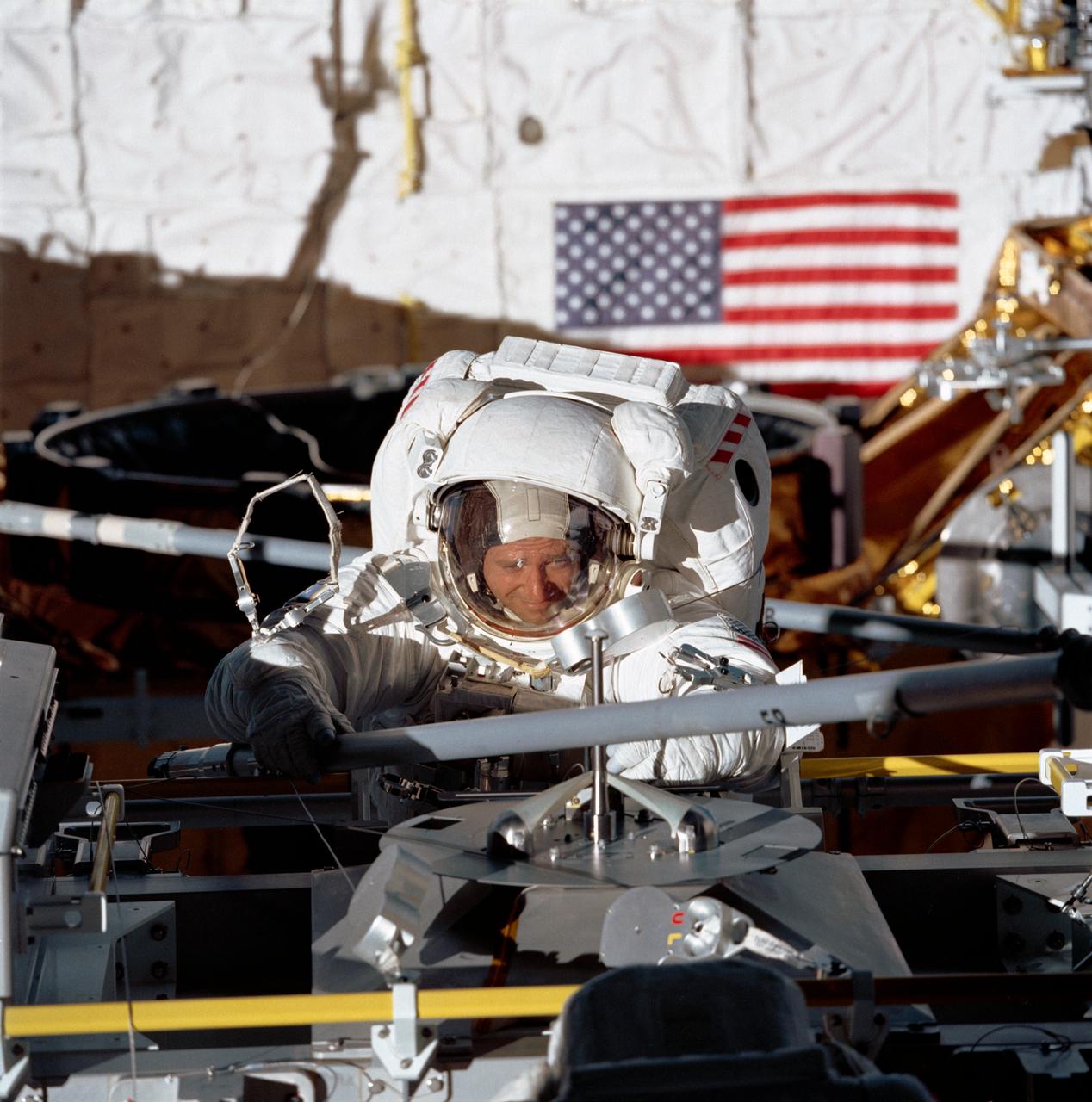
STS049-77-028 (14 May 1992) --- Astronaut Thomas D. Akers, STS-49 mission specialist, grabs a strut device as fourth period of extravehicular activity (EVA) gets underway in the Space Shuttle Endeavour's cargo bay. Akers is positioned near the Multi-purpose Support Structure (MPESS). The purpose of the final EVA on this nine-day mission was the evaluation of Assembly of Station by EVA Methods (ASEM). The scene was recorded on 70mm film by a fellow crew member in the space shuttle's cabin. Astronaut Kathryn C. Thornton (out of frame) joined Akers on the 7 1/2 hour EVA.
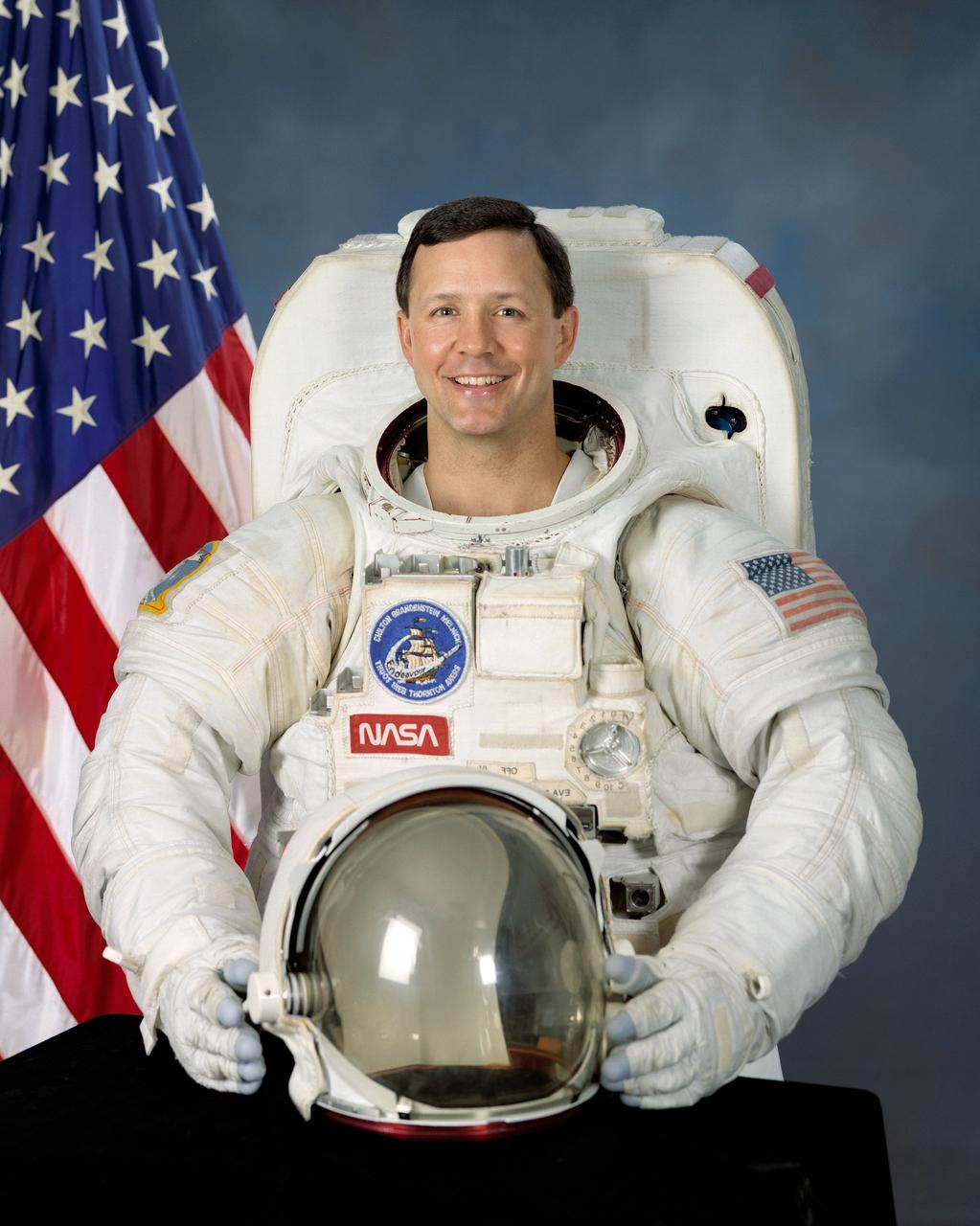
S92-41763 (October 1985) --- Astronaut Pierre J. Thuot
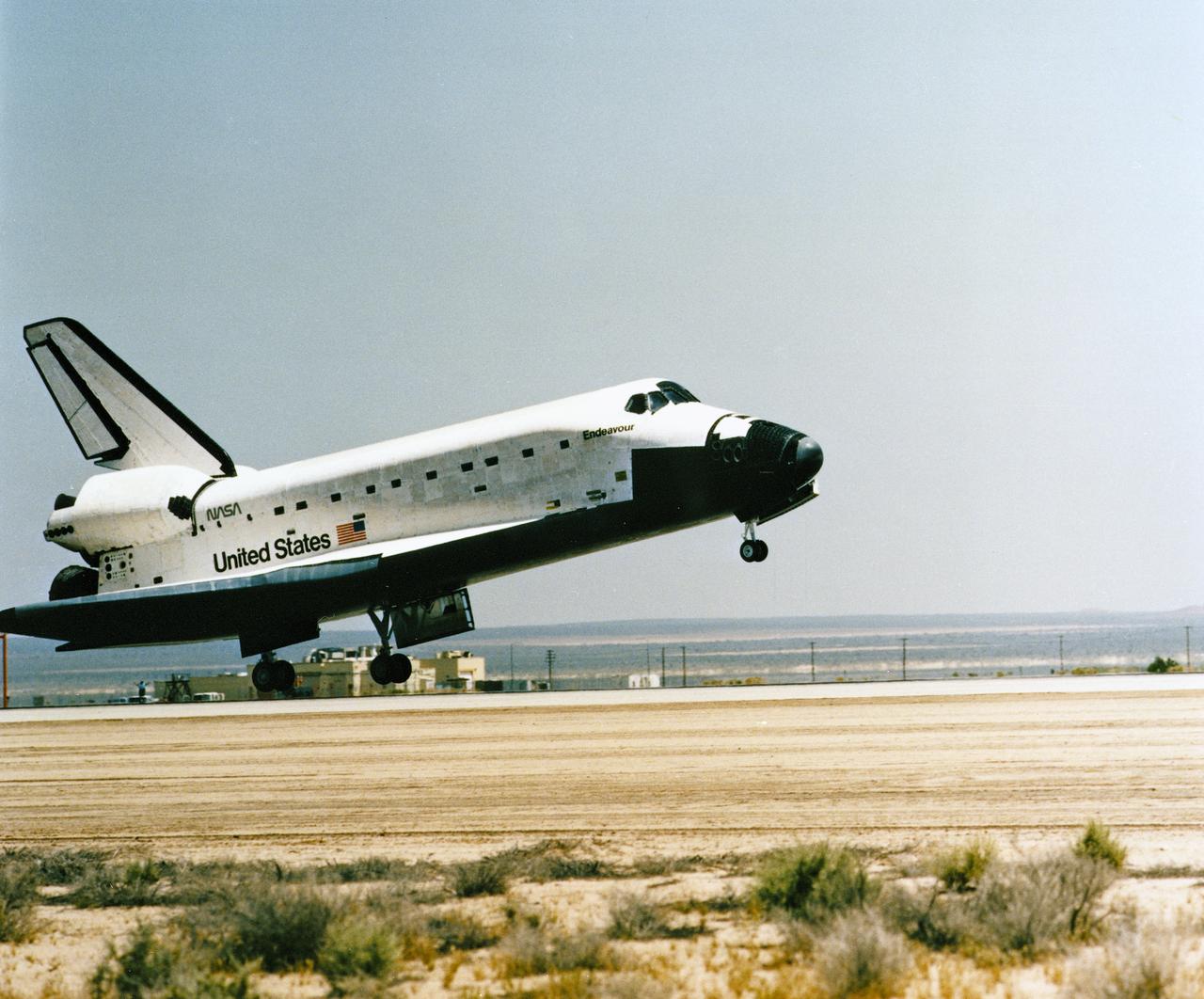
STS-49 Orbiter Endeavour landed at Edwards Air Force Base on May 16, 1992 after a successful nine day mission dedicated to the retrieval, repair, and redeployment of the INTELSAT VI (F-3) satellite. The communication satellite for the International Telecommunication Satellite organization had been stranded in an unusable orbit since its launch aboard the Titan rocket in March 1990. The mission marked the first time 3 astronauts worked simultaneously outside the space craft.
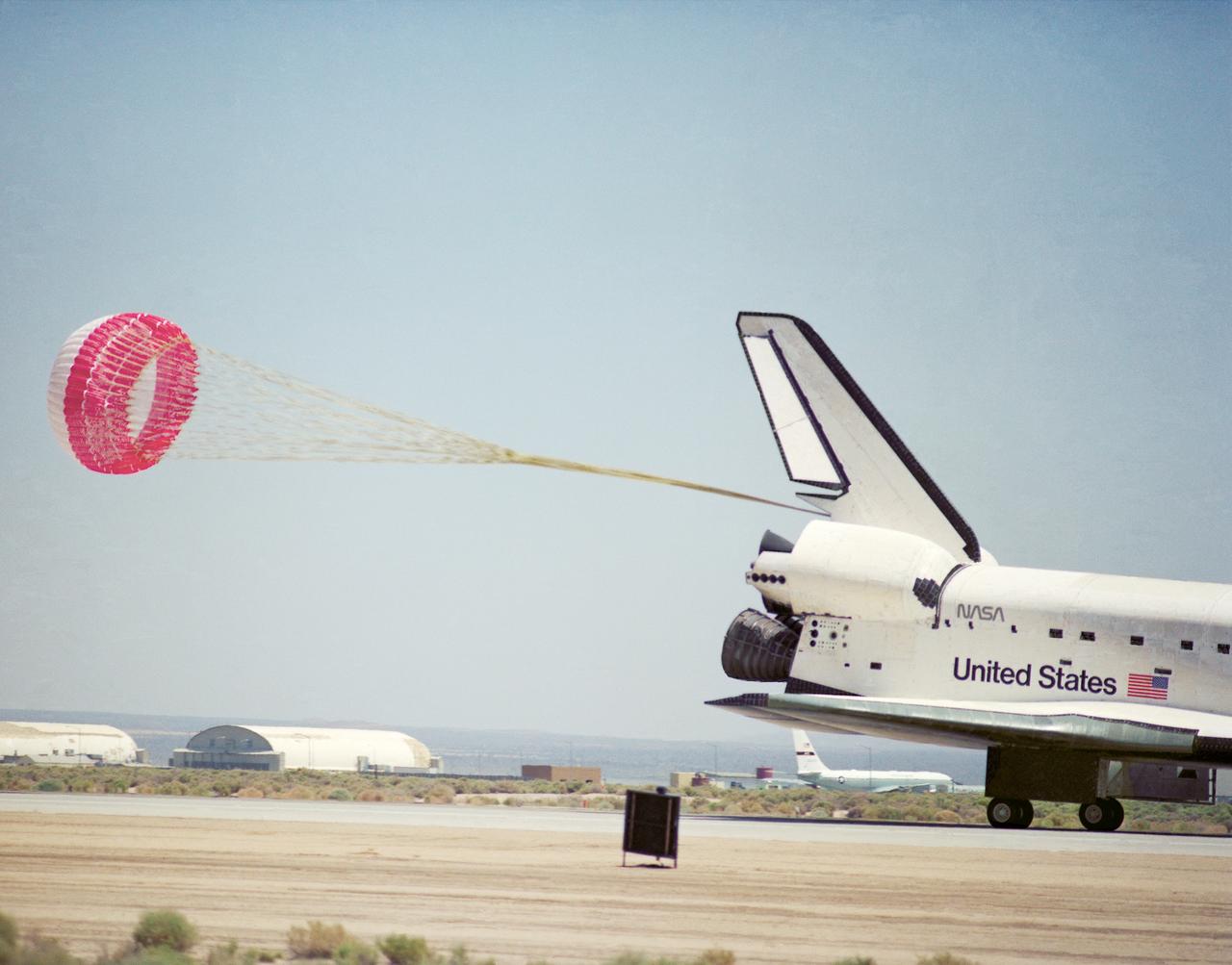
The Space Shuttle Endeavour concludes mission STS-49 at NASA's Ames-Dryden Flight Research Facility (later redesignated Dryden Flight Research Center), Edwards, California, with a 1:57 p.m. (PDT) landing 16 May on Edward's concrete runway 22. The planned 7-day mission, which began with a launch from Kennedy Space Center, Florida, at 4:41 p.m. (PFT), 7 May, was extended two days to allow extra time to rescue the Intelsat VI satellite and complete Space Station assembly techniques originally planned. After a perfect rendezvous in orbit and numerous attempts to grab the satellite, space walking astronauts Pierre Thuot, Rick Hieb and Tom Akers successfully rescued it by hand on the third space walk with the support of mission specialists Kathy Thornton and Bruce Melnick. The three astronauts, on a record space walk, took hold of the satellite and directed it to the shuttle where a booster motor was attached to launch it to its proper orbit. Commander Dan Brandenstein and Pilot Kevin Chilton brought Endeavours's record setting maiden voyage to a perfect landing at Edwards AFB with the first deployment of a drag chute on a shuttle mission.
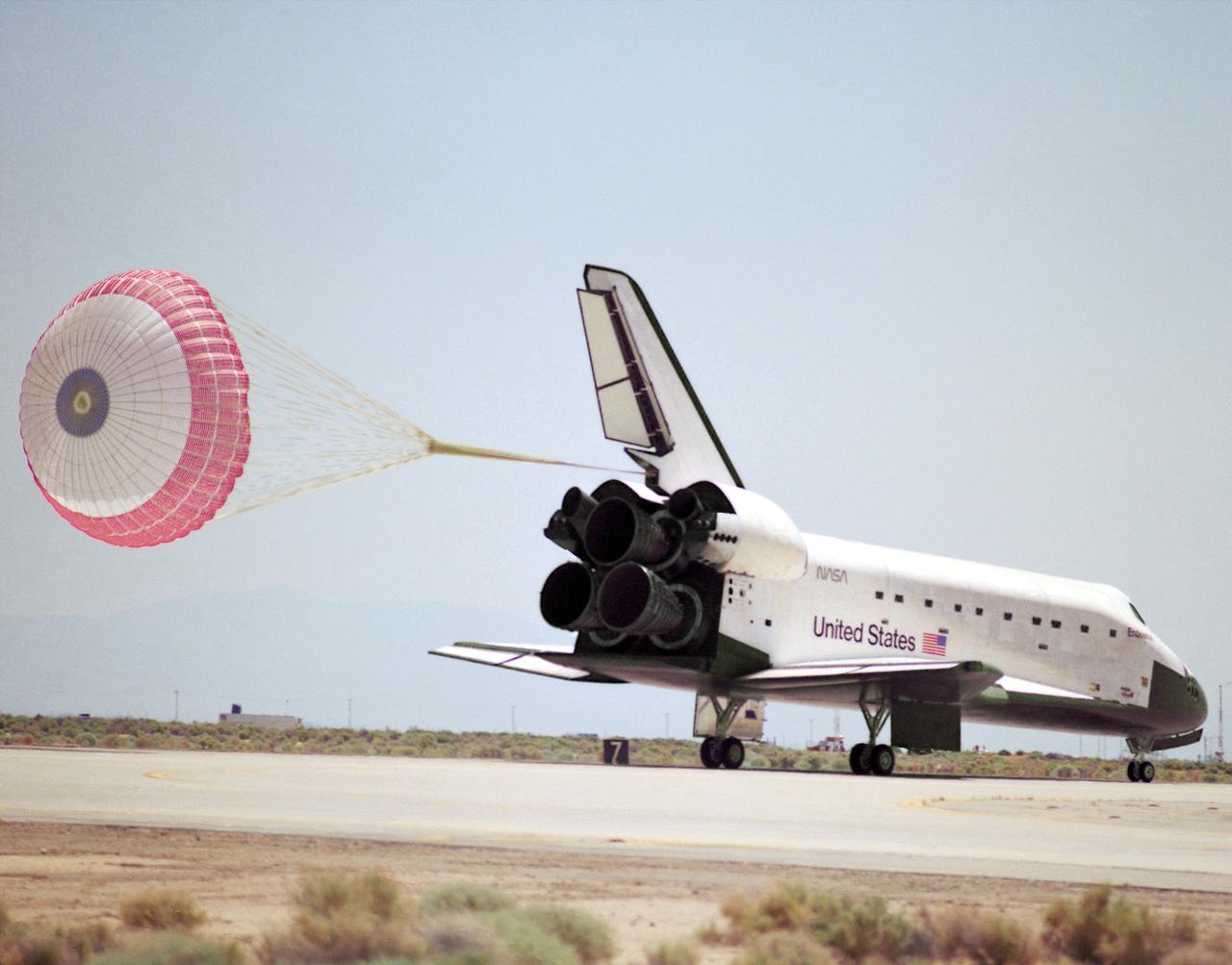
The Space Shuttle Endeavour concludes mission STS-49 at NASA's Ames-Dryden Flight Research Facility (later redesignated Dryden Flight Research Center), Edwards, California, with a 1:57 p.m. (PDT) landing May 16 on Edward's concrete runway 22. The planned 7-day mission, which began with a launch from Kennedy Space Center, Florida, at 4:41 p.m. (PFT), 7 May, was extended two days to allow extra time to rescue the Intelsat VI satellite and complete Space Station assembly techniques originally planned. After a perfect rendezvous in orbit and numerous attempts to grab the satellite, space walking astronauts Pierre Thuot, Rick Hieb and Tom Akers successfully rescued it by hand on the third space walk with the support of mission specialists Kathy Thornton and Bruce Melnick. The three astronauts, on a record space walk, took hold of the satellite and directed it to the shuttle where a booster motor was attached to launch it to its proper orbit. Commander Dan Brandenstein and Pilot Kevin Chilton brought Endeavours's record setting maiden voyage to a perfect landing at Edwards with the first deployment of a drag chute on a shuttle mission.
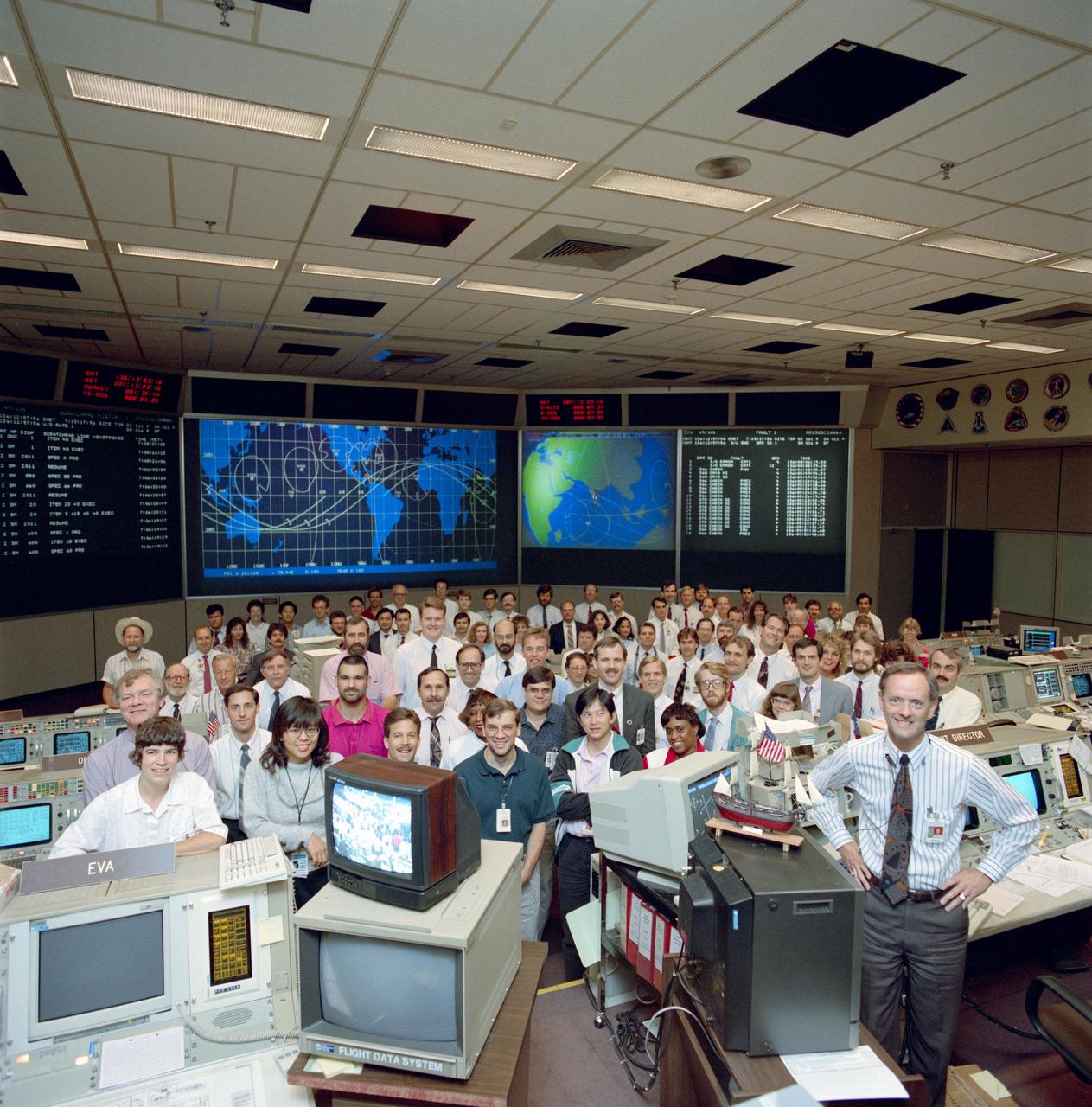
S92-36606 (20 May 1992) --- STS-49 Endeavour, Orbiter Vehicle (OV) 105, Planning Team with Flight Director (FD) James M. Heflin, Jr. (front right next to ship model) poses in Johnson Space Center?s (JSC) Mission Control Center (MCC) Bldg 30 Flight Control Room (FCR). The group stands in front of visual displays projecting STS-49 data and ground track map.
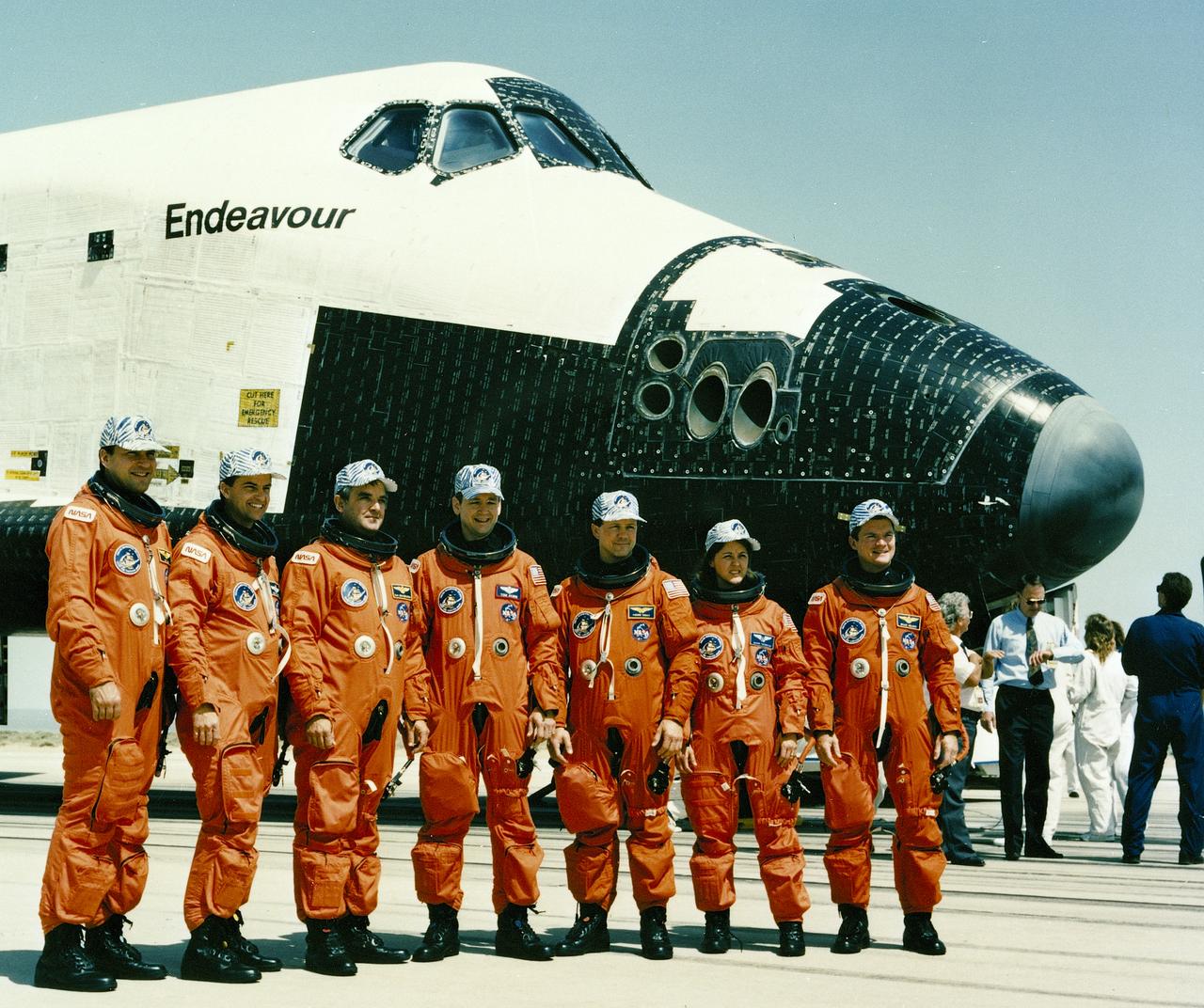
The STS-49 crew members pose near Endeavour after landing. Pictured left to right are: Richard J. Hieb, mission specialist; Kevin P. Chiltin, pilot; Daniel C. Brandenstein, commander; and mission specialists Thomas D. Akers, Pierre J. Thuot, Kathryn C. Thornton, and Bruce E. Melnick. Launched on May 7, 1992 at 7:40:00 pm (EDT), the crew of seven was the first to fly aboard the Space Shuttle Endeavor. The mission was the first US orbital flight to feature 4 extravehicular activities (EVAs), and the first flight to involve 3 crew members simultaneously working outside of the spacecraft. The primary objective was the capture and redeployment of the INTELSAT VI (F-3) which was stranded in an unusable orbit since its launch aboard the Titan rocket in March 1990.
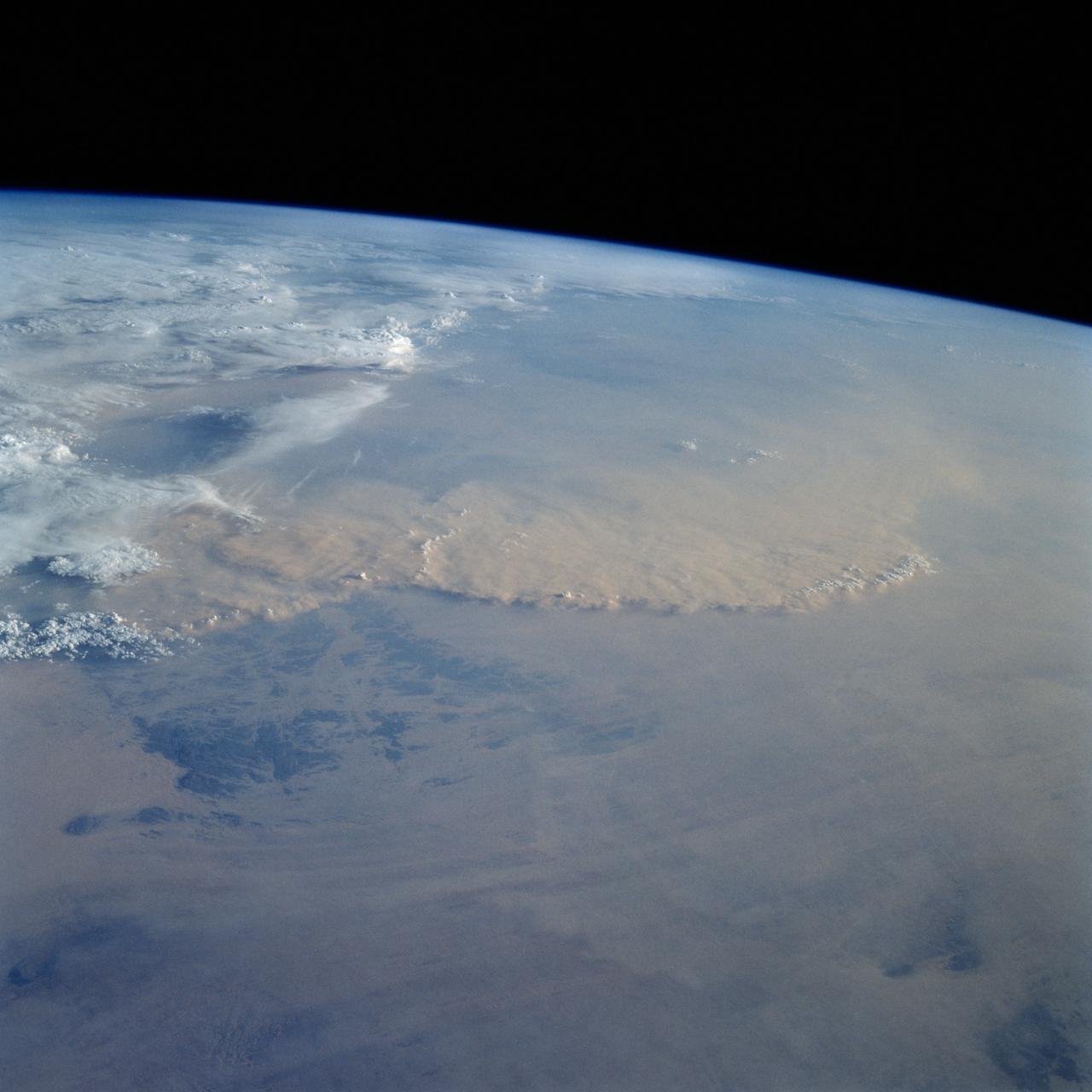
STS049-92-071 (13 May 1992) --- The STS-49 crew aboard the Earth-orbiting Space Shuttle Endeavour captured this Saharan dust storm on the Algeria-Niger border. The south-looking, late-afternoon view shows one of the best examples in the Shuttle photo data base of a dust storm. A series of gust fronts, caused by dissipating thunderstorms have picked up dust along the outflow boundaries. Small cumulus clouds have formed over the most vigorously ascending parts of the dust front, enhancing the visual effect of the front. The storm is moving roughly north-northwest, at right angles to the most typical path for dust storms in this part of the Sahara (shown by lines of sand on the desert surface in the foreground). Storms such as this can move out into the Atlantic, bringing dust even as far as the Americas on some occasions. A crewmember used a 70mm handheld Hasselblad camera with a 100mm lens to record the frame.
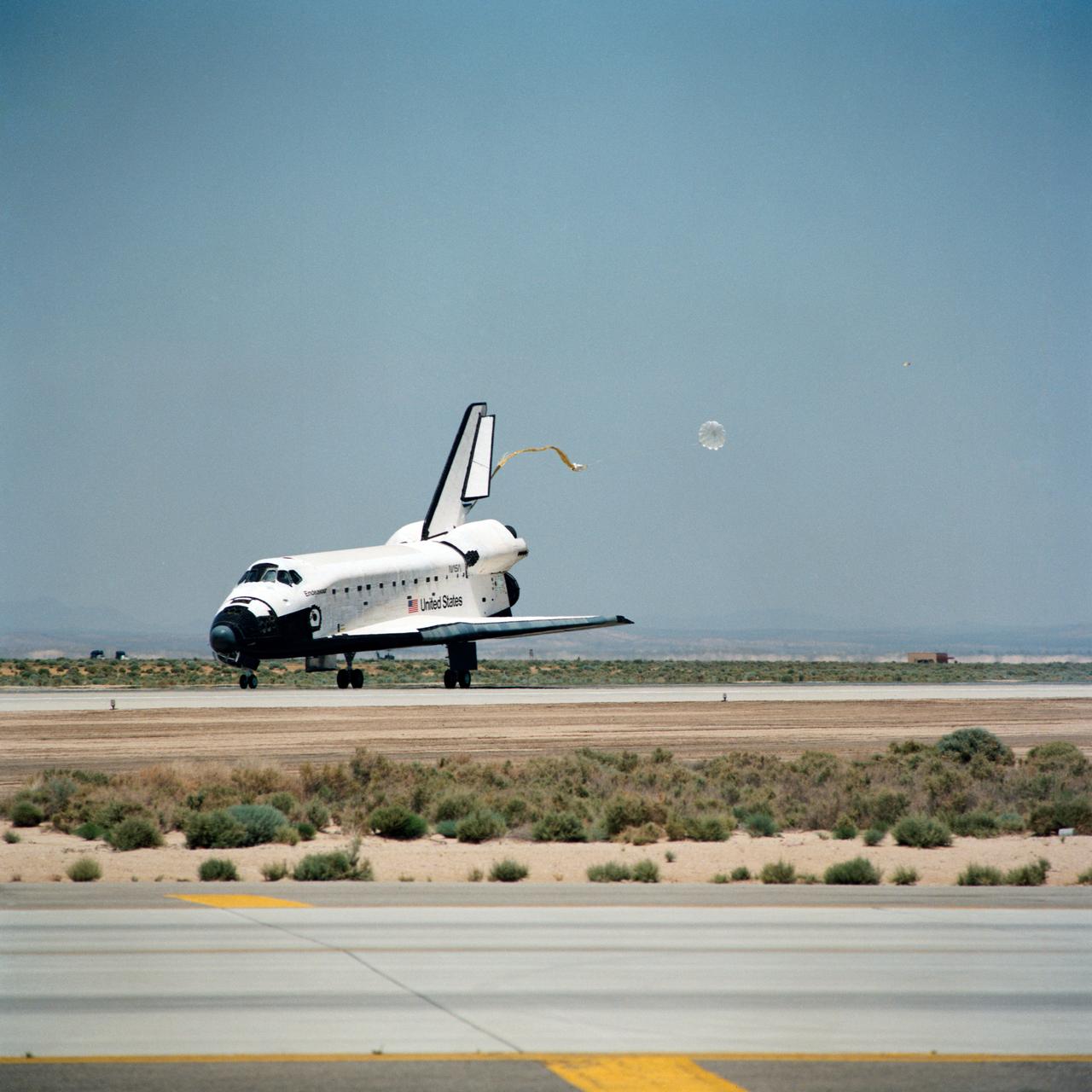
STS049-S-268 (16 May 1992) --- A three-quarter forward view of the Space Shuttle Endeavour making its first landing, following a successful nine-day mission in Earth orbit. The drogue chute precedes the main chute in NASA's first exercise of its detailed test objective (DTO-521) on the drag chute system. Main gear touchdown occurred at 1:57:38 p.m. (PDT), May 16, 1992.
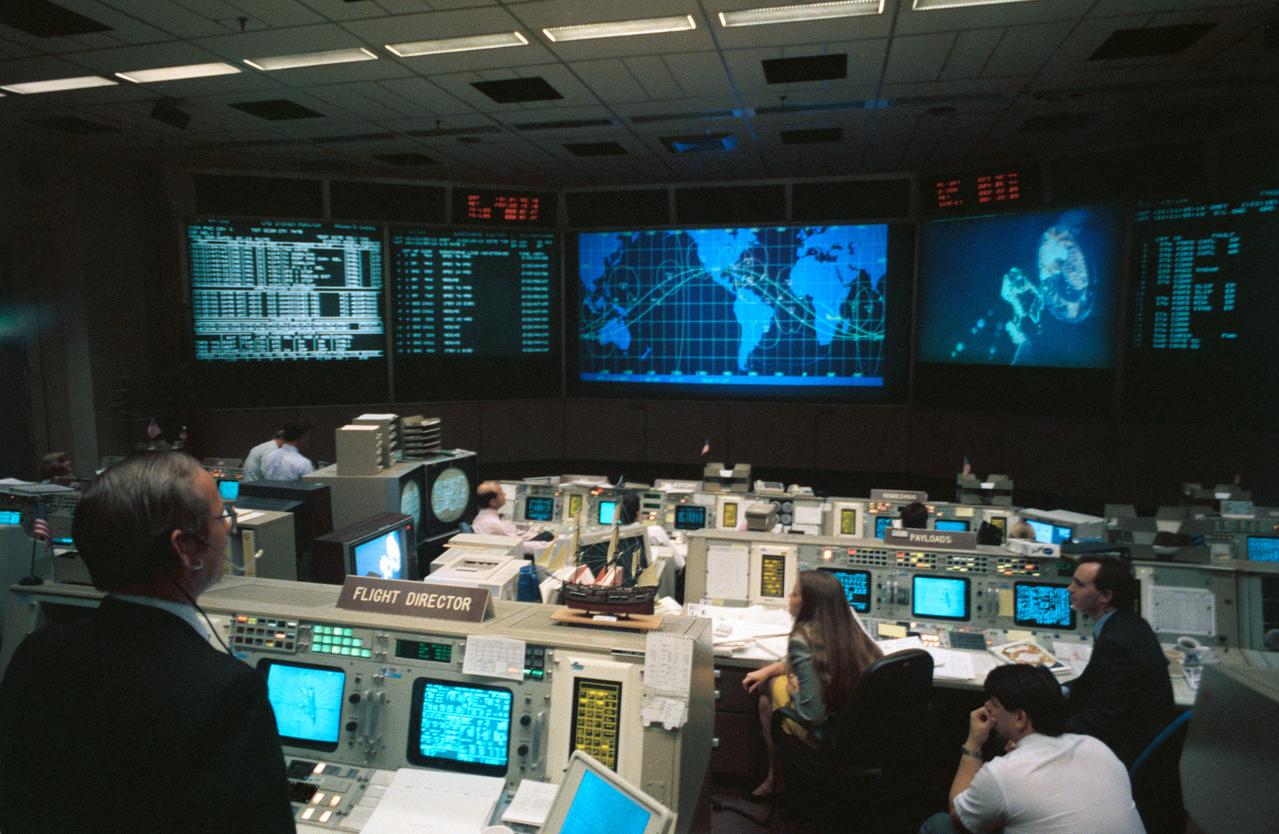
S49-S-0231 (11 May 1992) --- In the space shuttle flight control room (FCR) in Mission Control Center in Houston, Flight Director Al Pennington monitors the progress of the initial spacewalk of the STS-49 flight. A scale model of HM Bark Endeavour, namesake for the space shuttle currently making its inaugural flight, adorns the console. The model was built by Dan Willett of JSC's Information Resources Directorate. The original sailing ship Endeavour was commanded by Lt. James Cook on a scientific voyage to the South Pacific, Australia and New Zealand from 1768 to 1771. Photo credit: NASA
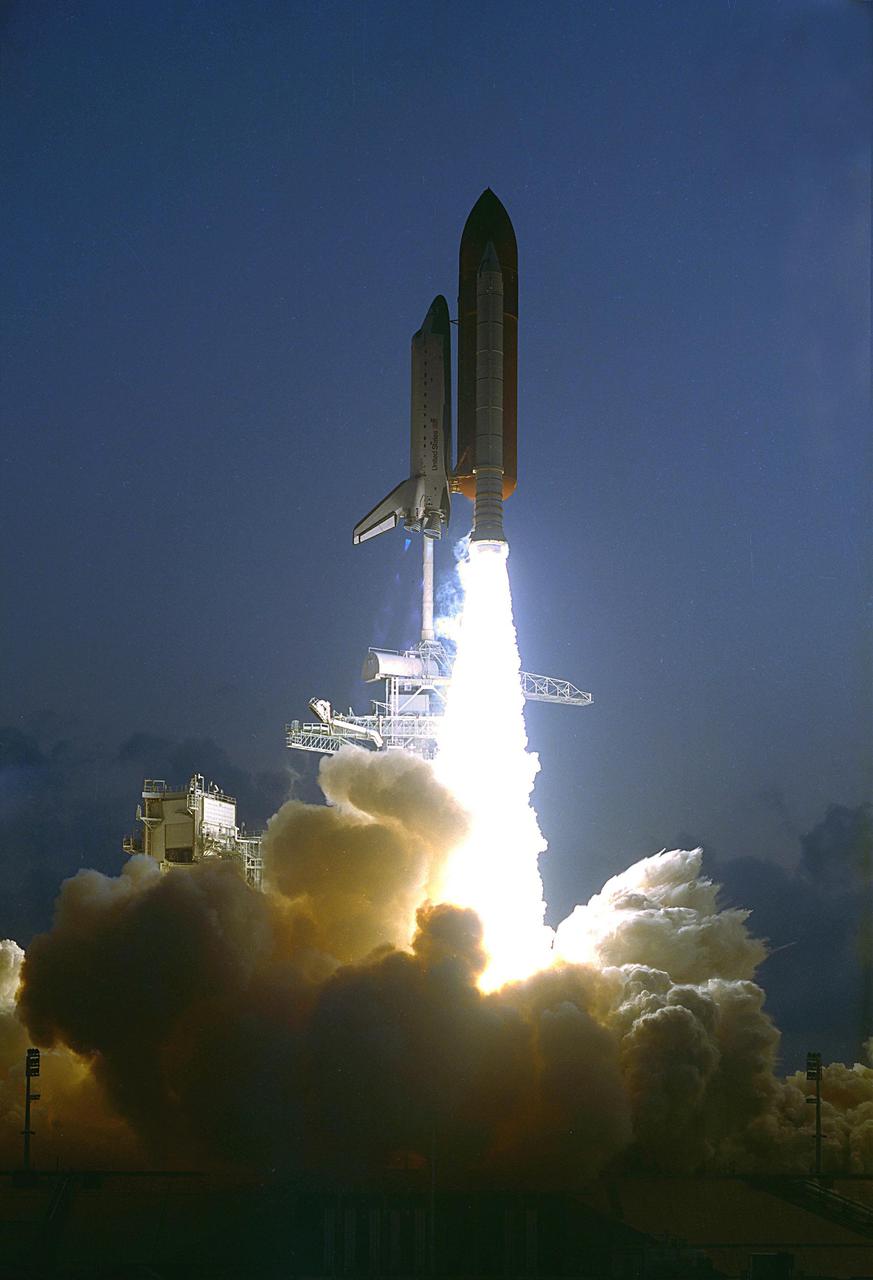
KENNEDY SPACE CENTER, FLA. -- STS-49: Endeavour
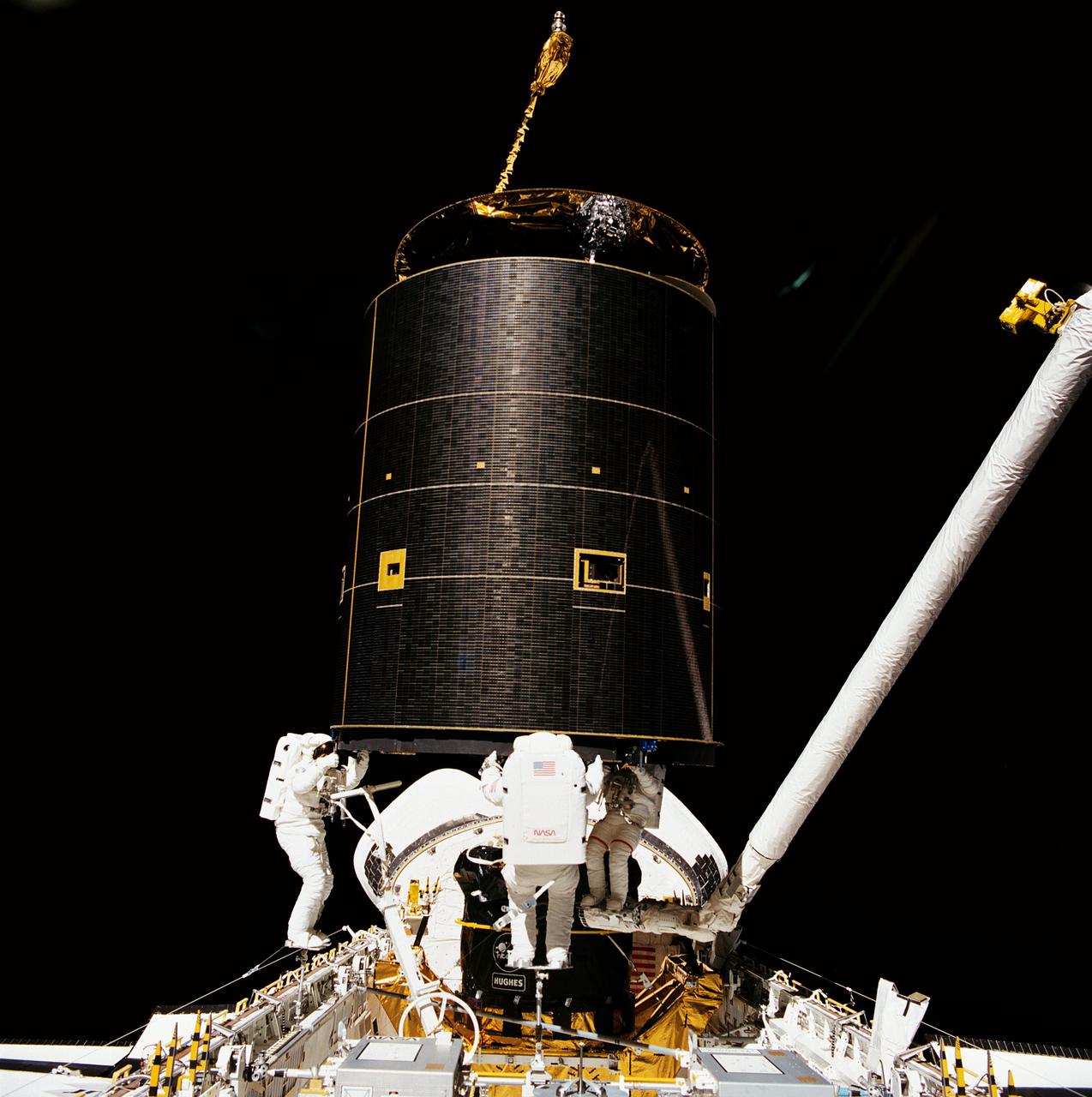
STS049-91-026 (13 May 1992) --- Three astronauts hold onto the 4.5-ton Intelsat VI satellite after a six-handed "capture" was made minutes earlier. Left to right are astronauts Richard J. Hieb, Thomas D. Akers and Pierre J. Thuot. Thuot stands on the end of the remote manipulator system arm, from which he had made two earlier unsuccessful grapple attempts on two-person extravehicular activity sessions. Ground controllers and crew members agreed that a third attempt, using three mission specialists in the cargo bay of the space shuttle Endeavour, was the effort needed to accomplish the capture feat.

STS049-S-301 (16 May 1992) --- A three-quarter aft view of the Space Shuttle Endeavour making its first landing, following a successful nine-day mission in Earth orbit. Fully deployed here is the main chute in NASA's first exercise of its detailed test objective (DTO-521) on the drag chute system. Main gear touchdown occurred at 1:57:38 p.m. (PDT), May 16, 1992.
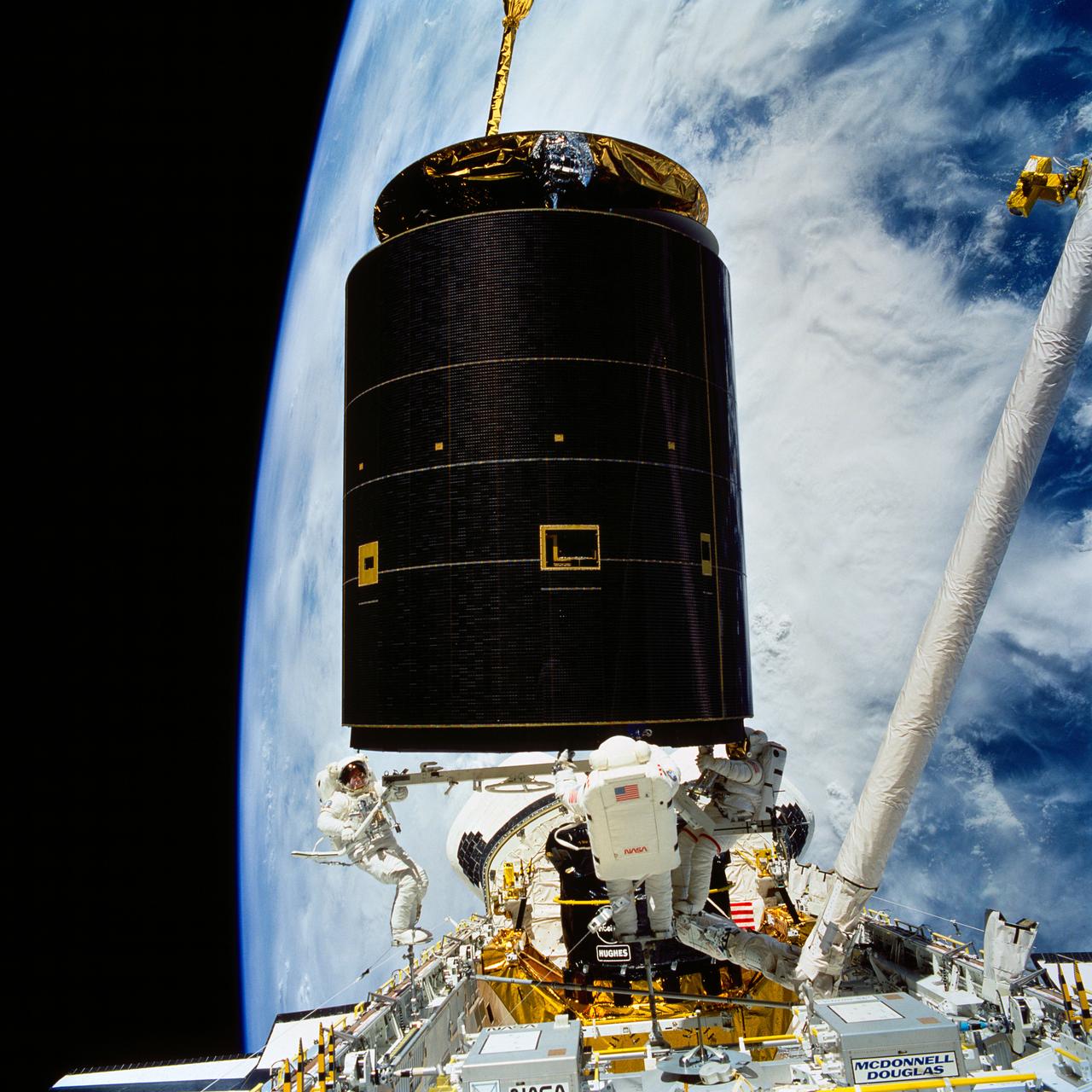
STS049-91-029 (13 May 1992) --- Following the successful capture of Intelsat VI satellite, three astronauts continue their chores toward moving the 4.5 ton communications satellite into the space shuttle Endeavour's cargo bay. A fellow crew member recorded this 70mm still frame from inside Endeavour's cabin. Left to right, astronauts Richard J. Hieb, Thomas D. Akers and Pierre J. Thuot, cooperate on the effort to attach a specially designed grapple bar underneath the satellite. Thuot stands on the end of the Remote Manipulator System's (RMS) arm while Hieb and Akers are on Portable Foot Restraints (PFR) affixed to Endeavour's portside and the Multipurpose Support Structure (MPESS), respectively. The sections of Earth which form the backdrop for the scene are blanketed with thousands of square miles of clouds. Photo credit: NASA
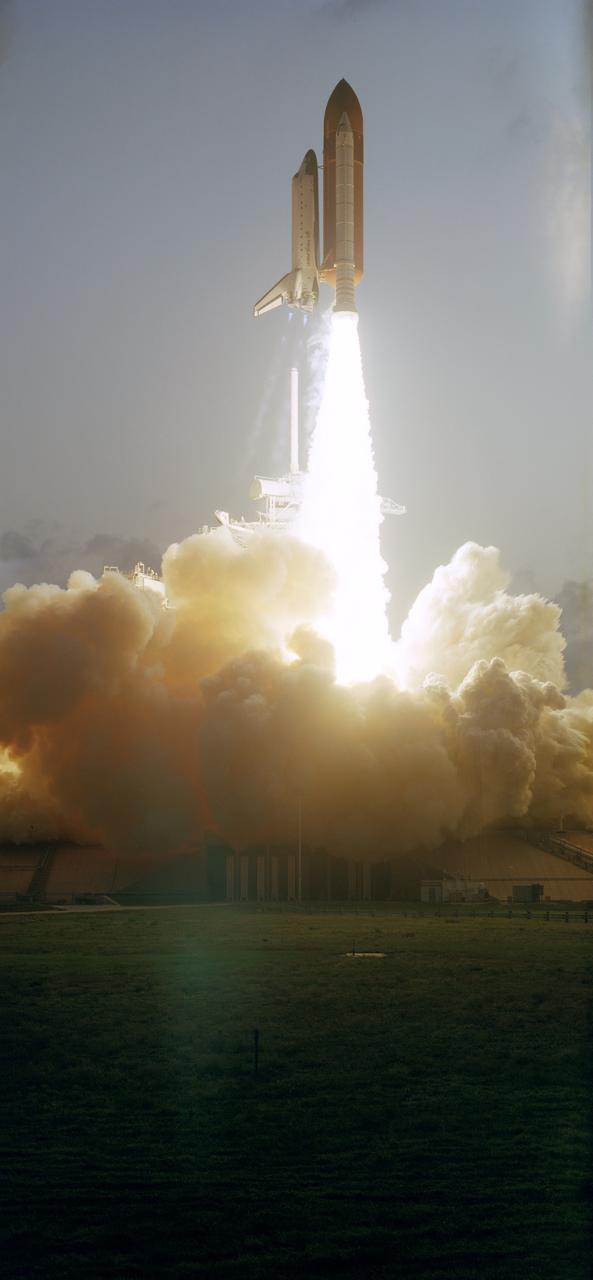
STS049-S-251 (7 May 1992) --- The Space Shuttle Endeavour soars toward Earth orbit where a crew of seven NASA astronauts will spend at least a week. Endeavour, the newest orbiter in NASA's Space Shuttle fleet, lifted off from Pad 39B at 7:40 p.m. (EDT), May 7, 1992. A diamond shock effect can be seen beneath the three main engines. Onboard are astronauts Daniel C. Brandenstein, mission commander; Kevin P. Chilton, pilot; and Richard J. Hieb, Bruce E. Melnick, Pierre J. Thuot, Kathryn C. Thornton and Thomas D. Akers, all mission specialists.
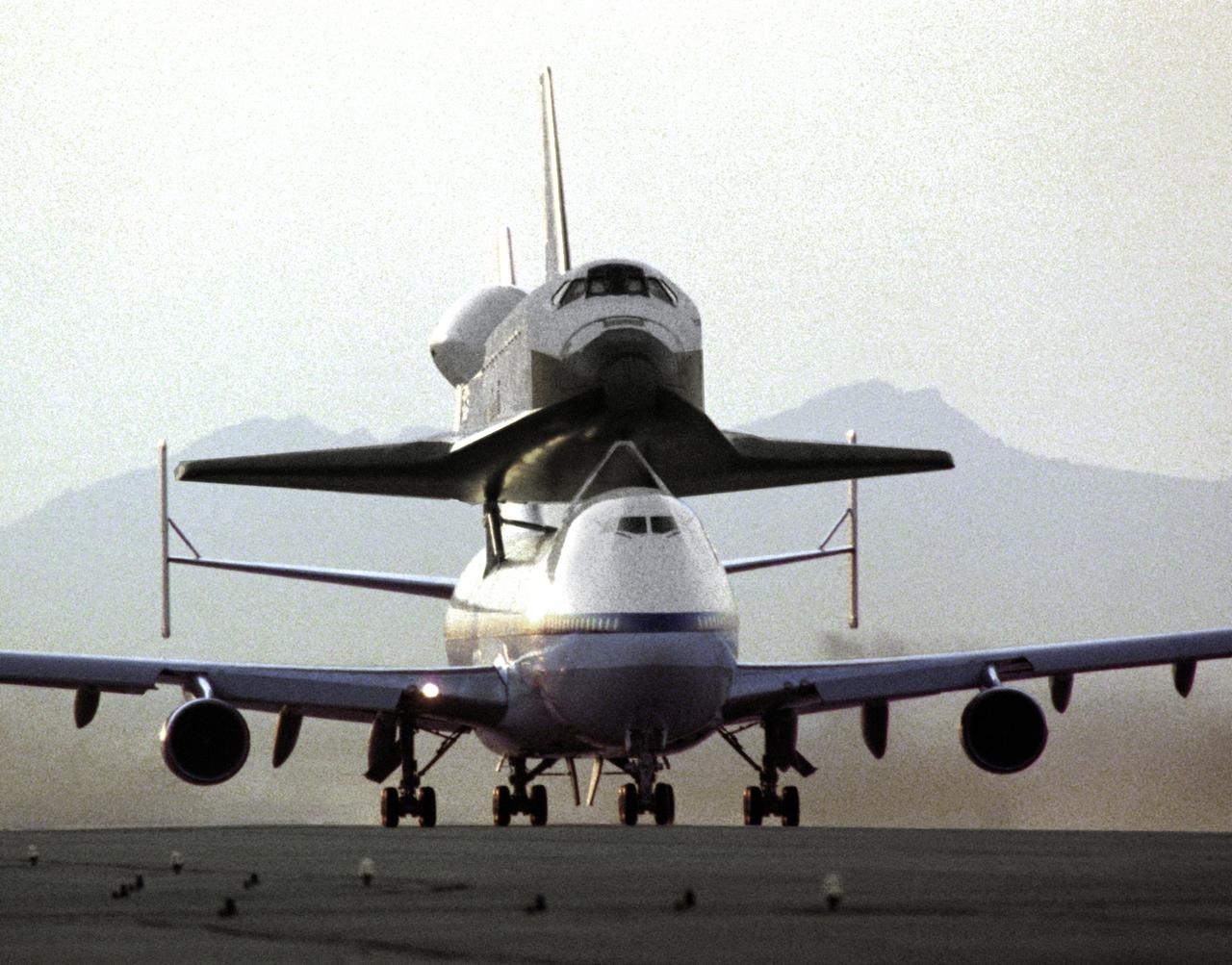
NASA's 747 Shuttle Carrier Aircraft No. 911, with the space shuttle orbiter Endeavour securely mounted atop its fuselage, taxies to the runway to begin the ferry flight from Rockwell's Plant 42 at Palmdale, California, where the orbiter was built, to the Kennedy Space Center, Florida. At Kennedy, the space vehicle was processed and launched on orbital mission STS-49, which landed at NASA's Ames-Dryden Flight Research Facility (later redesignated Dryden Flight Research Center), Edwards, California, 16 May 1992. NASA 911, the second modified 747 that went into service in November 1990, has special support struts atop the fuselage and internal strengthening to accommodate the added weight of the orbiters.
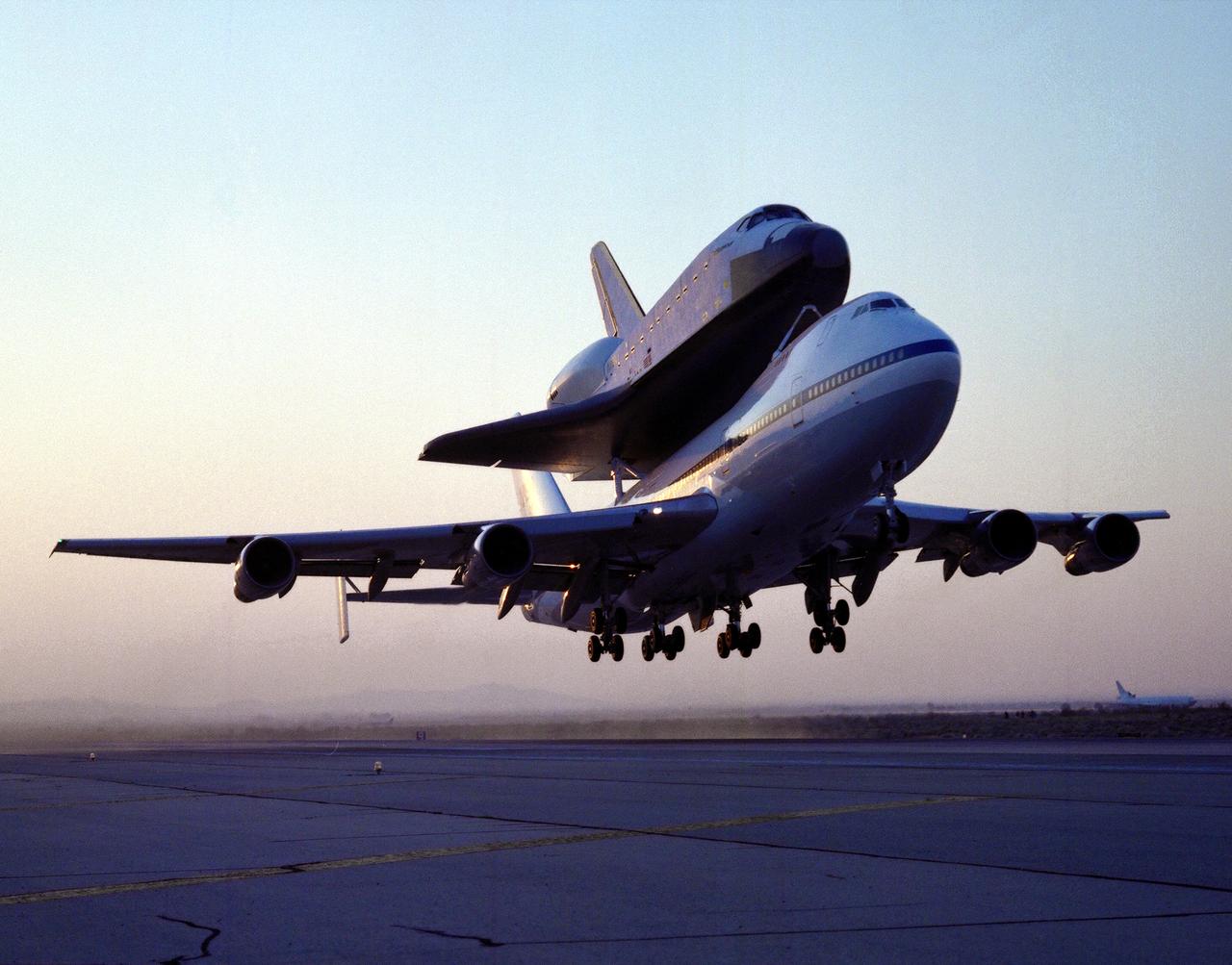
NASA's 747 Shuttle Carrier Aircraft No. 911, with the space shuttle orbiter Endeavour securely mounted atop its fuselage, begins the ferry flight from Rockwell's Plant 42 at Palmdale, California, where the orbiter was built, to the Kennedy Space Center, Florida. At Kennedy, the space vehicle was processed and launched on orbital mission STS-49, which landed at NASA's Ames-Dryden Flight Research Facility (later redesignated Dryden Flight Research Center), Edwards, California, 16 May 1992. NASA 911, the second modified 747 that went into service in November 1990, has special support struts atop the fuselage and internal strengthening to accommodate the added weight of the orbiters.
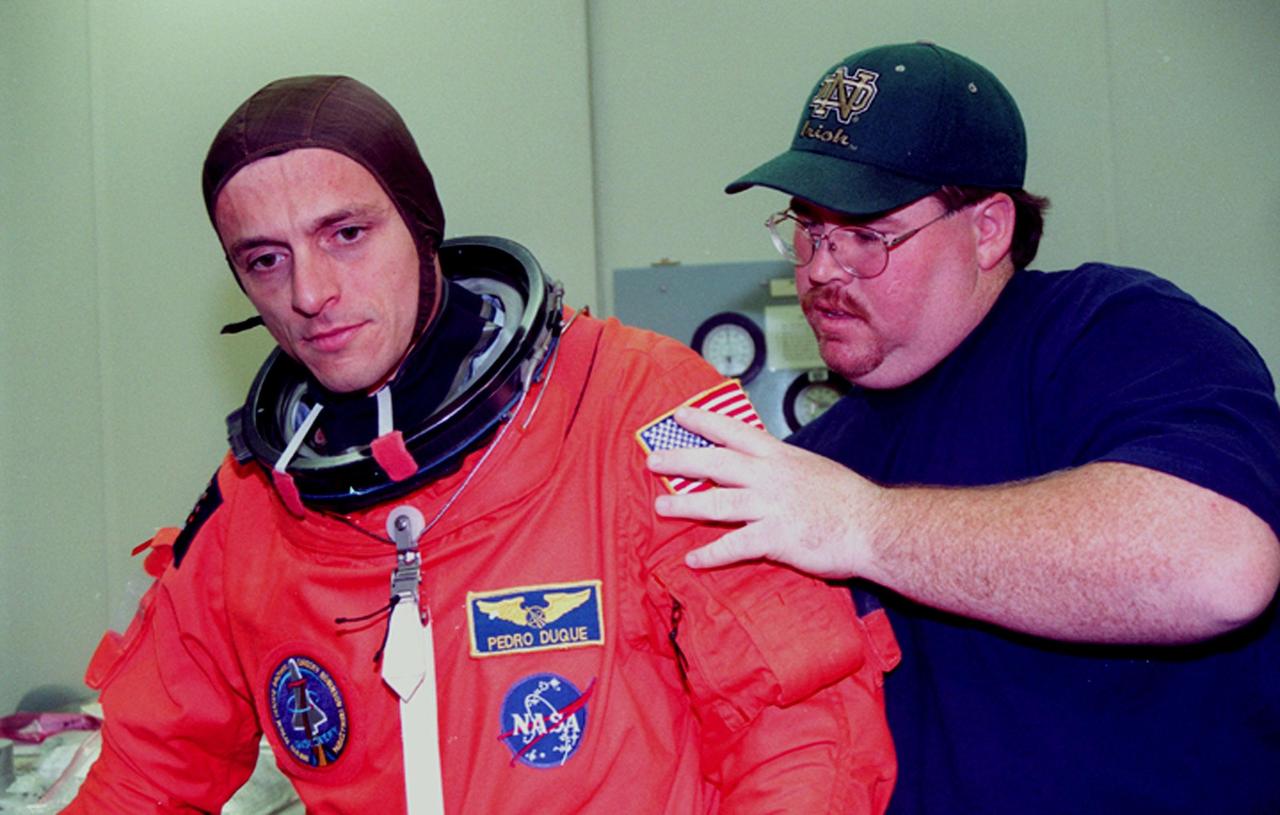
In the Operations and Checkout Building, STS-95 Mission Specialist Pedro Duque of Spain, with the European Space Agency, gets help with his suit from suit technician Tommy McDonald. The STS-95 crew were conducting flight crew equipment fit checks prior to launch on Oct. 29. STS-95 is expected to launch at 2 p.m. EST on Oct. 29, last 8 days, 21 hours and 49 minutes, and land at 11:49 a.m. EST on Nov. 7
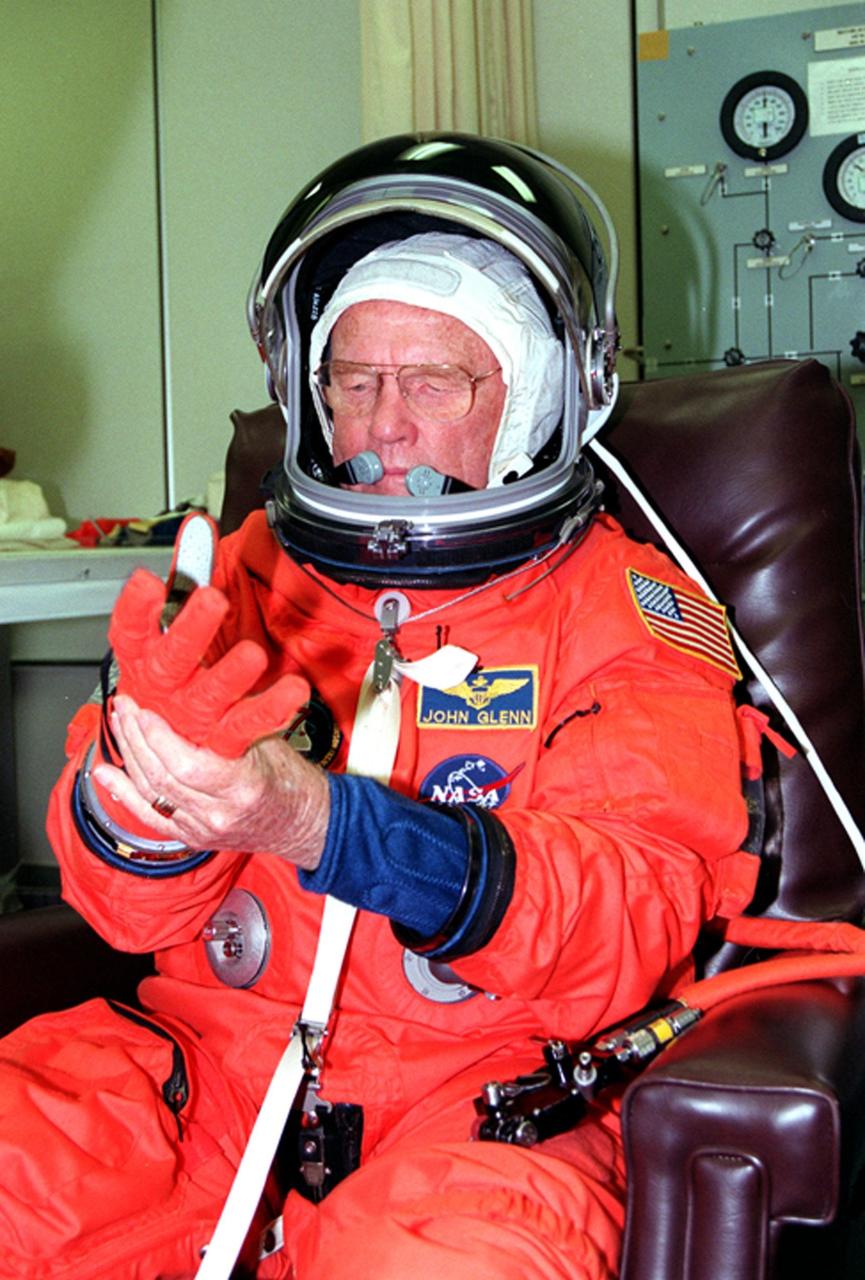
In the Operations and Checkout Building, STS-95 Payload Specialist John H. Glenn Jr. pulls on a glove, part of his equipment check. The STS-95 crew were conducting flight crew equipment fit checks prior to launch on Oct. 29. STS-95 is expected to launch at 2 p.m. EST on Oct. 29, last 8 days, 21 hours and 49 minutes, and land at 11:49 a.m. EST on Nov. 7
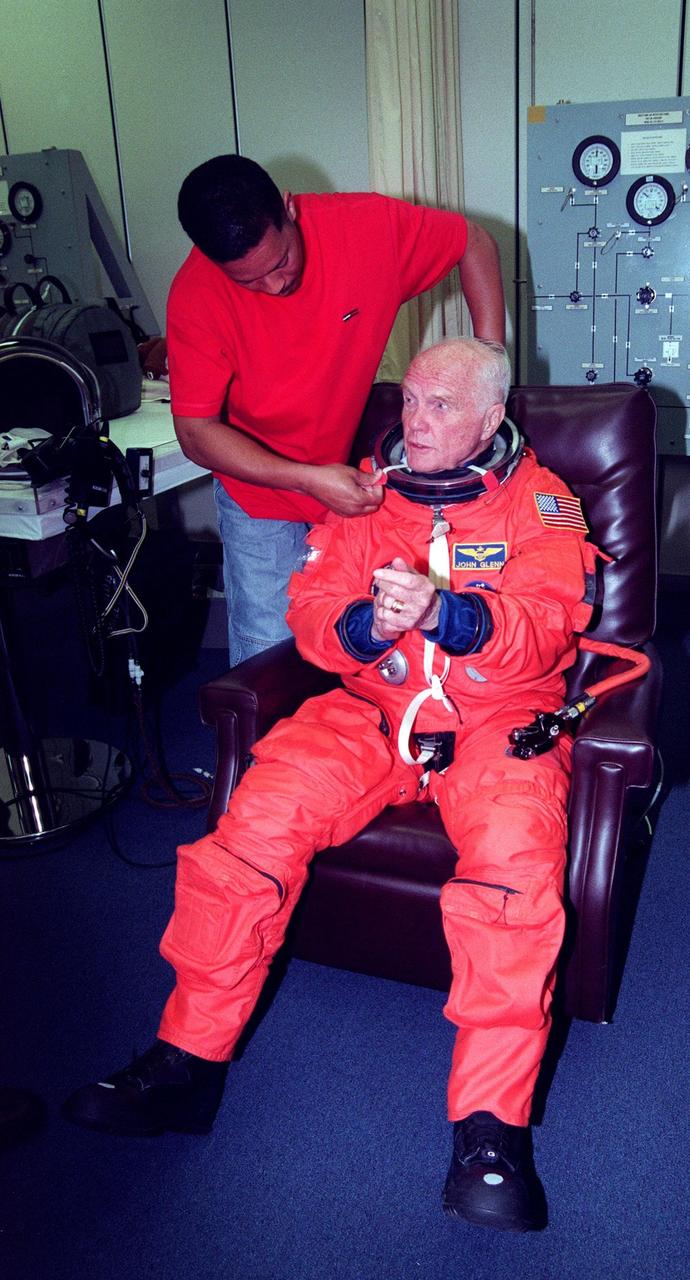
In the Operations and Checkout Building, suit technician George Brittingham helps STS-95 Payload Specialist John H. Glenn Jr., senator from Ohio, with his suit. The STS-95 crew were conducting flight crew equipment fit checks prior to launch on Oct. 29. STS-95 is expected to launch at 2 p.m. EST on Oct. 29, last 8 days, 21 hours and 49 minutes, and land at 11:49 a.m. EST on Nov. 7
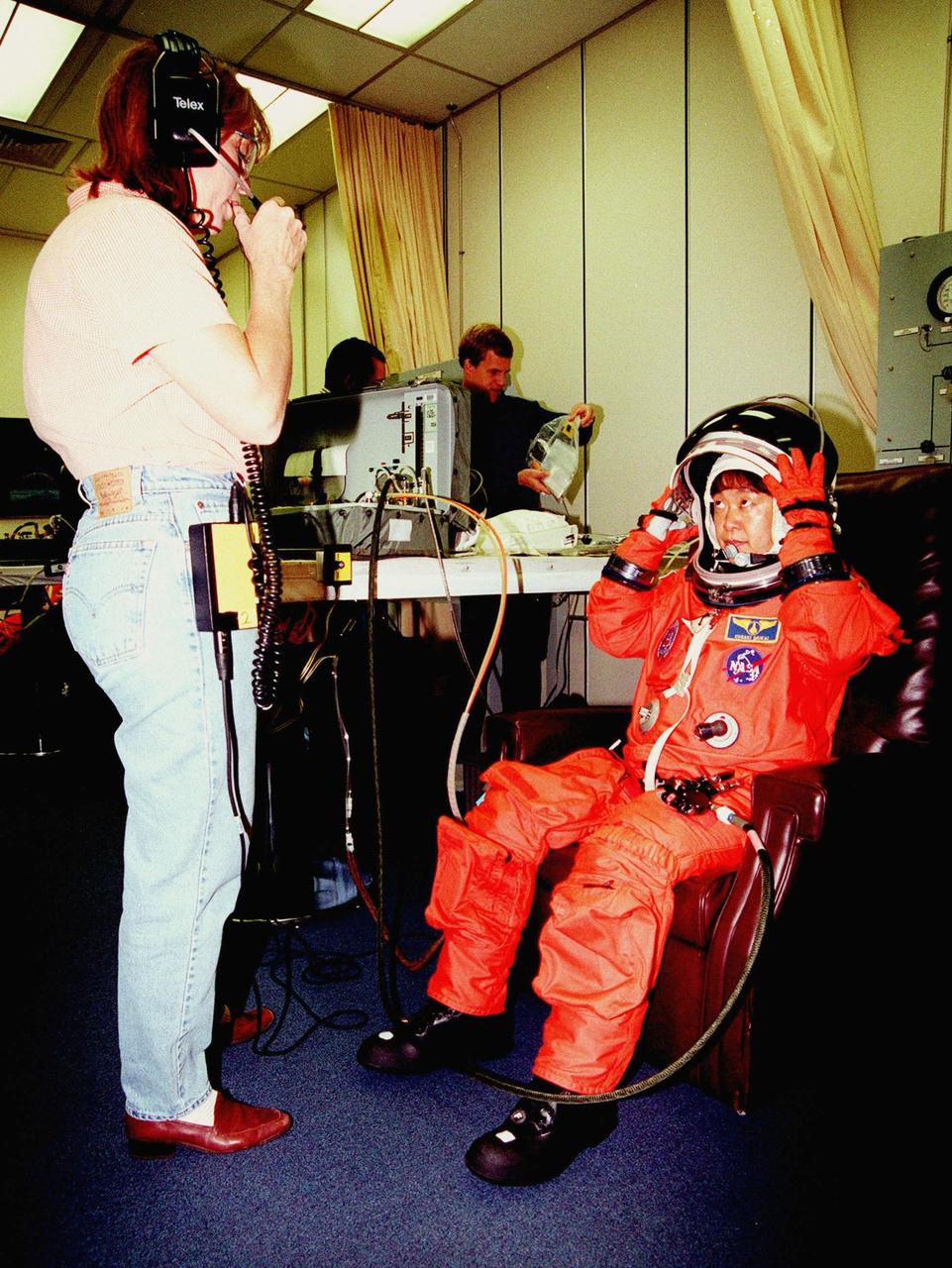
In the Operations and Checkout Building, STS-95 Payload Specialist Chiaki Mukai, with the National Space Development Agency of Japan (NASDA), gets help with her suit from suit technician Monica Golden. The STS-95 crew were conducting flight crew equipment fit checks prior to launch on Oct. 29. STS-95 is expected to launch at 2 p.m. EST on Oct. 29, last 8 days, 21 hours and 49 minutes, and land at 11:49 a.m. EST on Nov. 7
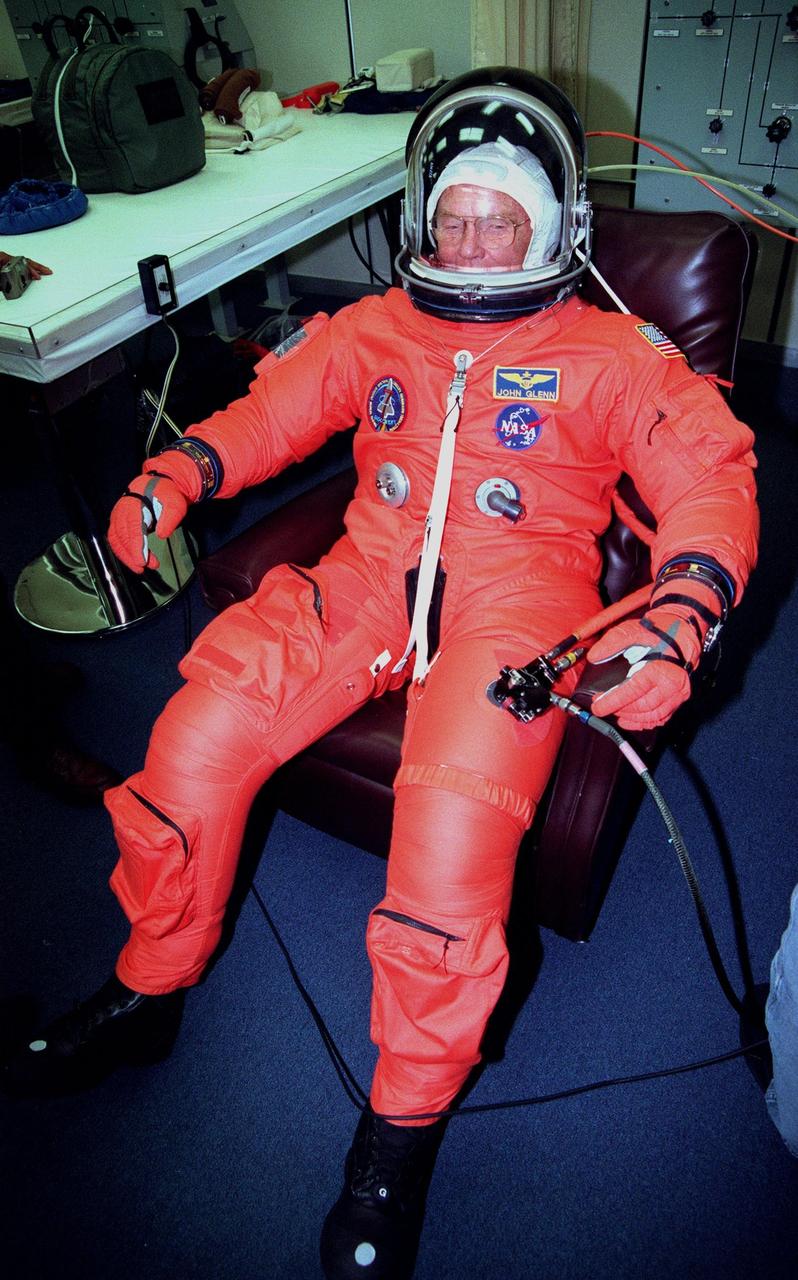
In the Operations and Checkout Building, STS-95 Payload Specialist John H. Glenn Jr., senator from Ohio, participates in a complete suit check. The STS-95 crew were conducting flight crew equipment fit checks prior to launch on Oct. 29. STS-95 is expected to launch at 2 p.m. EST on Oct. 29, last 8 days, 21 hours and 49 minutes, and land at 11:49 a.m. EST on Nov. 7
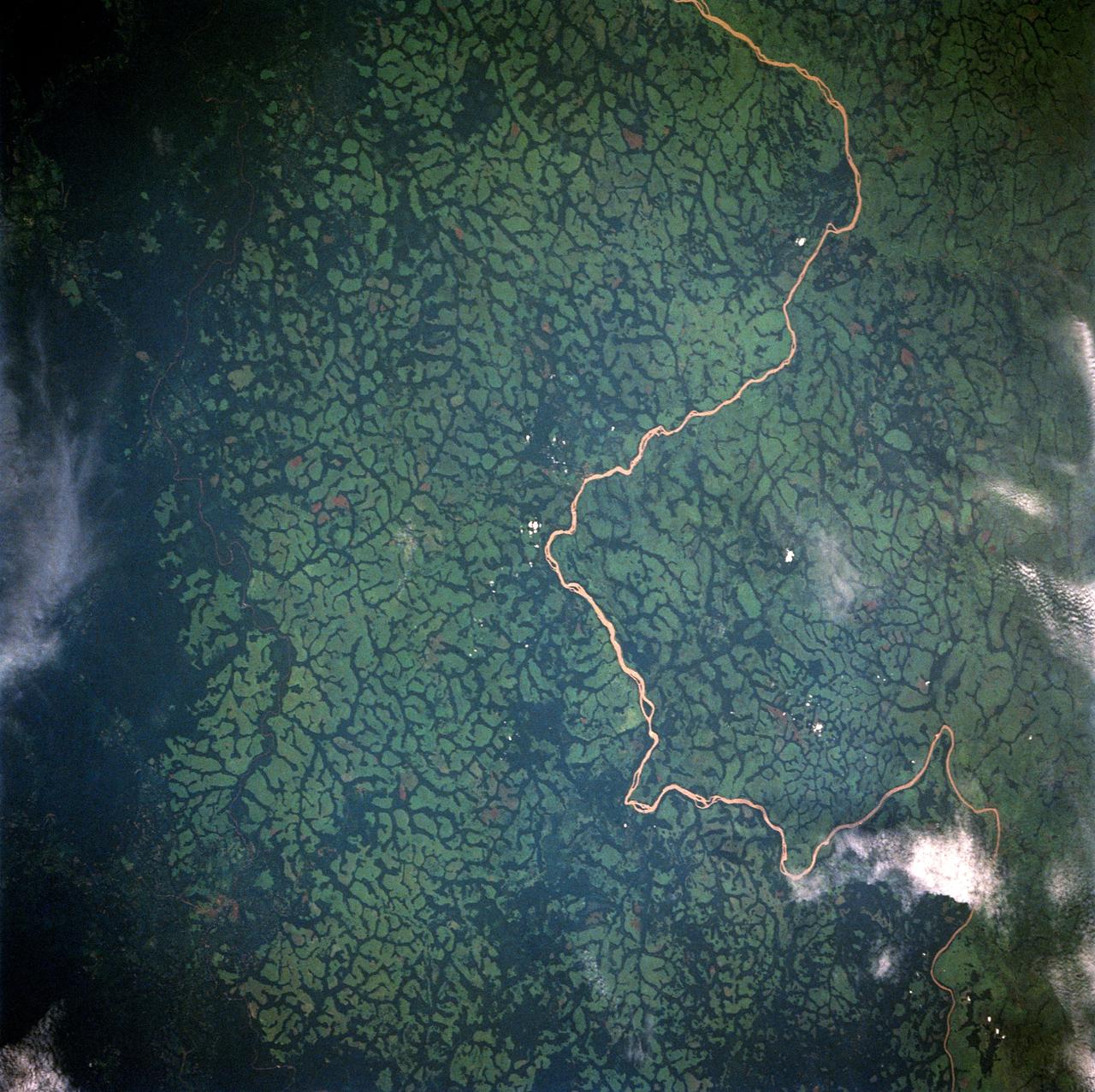
STS049-91-079 (7 - 16 May 1992) --- This 70mm frame, photographed from the Earth-orbiting Space Shuttle Endeavour, features a dendritic drainage pattern in Zaire. Cleared pasture land shows light green in this color photograph, in contrast to the dark, closed-canopy forest of Zaire. Remnant woodland along minor streams indicates the intricate drainage network of this hilly region. Scattered vegetation-free spots show the deep red, tropical soil of the region. The sediment-laden stream is the Vele River just west of the village of Niangara. A crew member used a 70mm handheld Hasselblad camera with a 250mm lens to record the image.
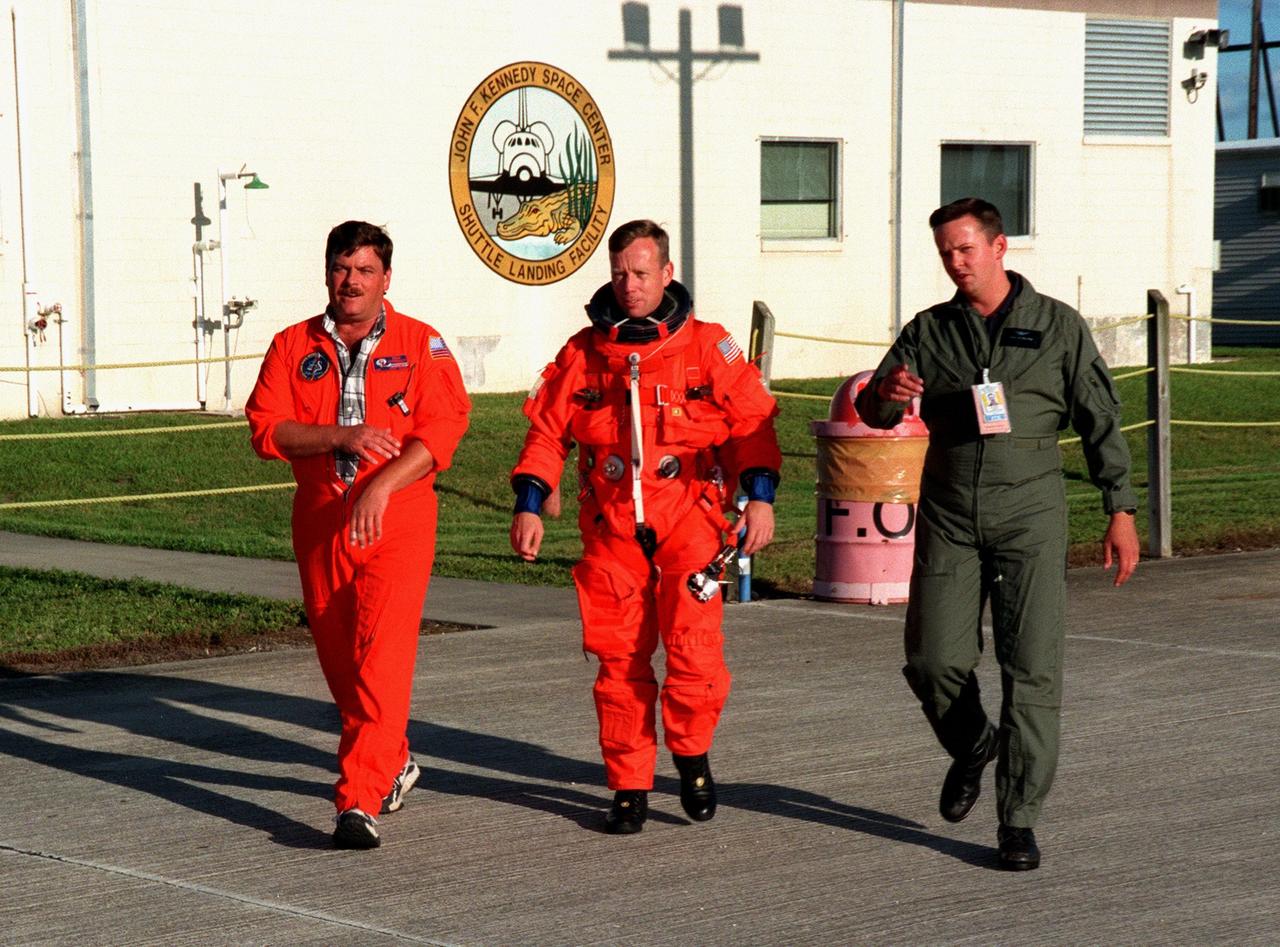
STS-95 Pilot Steven K. Lindsey leaves the Shuttle Landing Facility (SLF) enroute to the Shuttle Training Aircraft (STA). He is accompanied by two suit technicians, Mike Birkenseher (left) and Paul Reylea (right). Lindsey will be practicing Shuttle landing and takeoffs at the SLF on the STA, which is designed to fly like the Shuttle, prior to launch. STS-95 is expected to launch at 2 p.m. EST on Oct. 29, last 8 days, 21 hours and 49 minutes, and land at 11:49 a.m. EST on Nov. 7
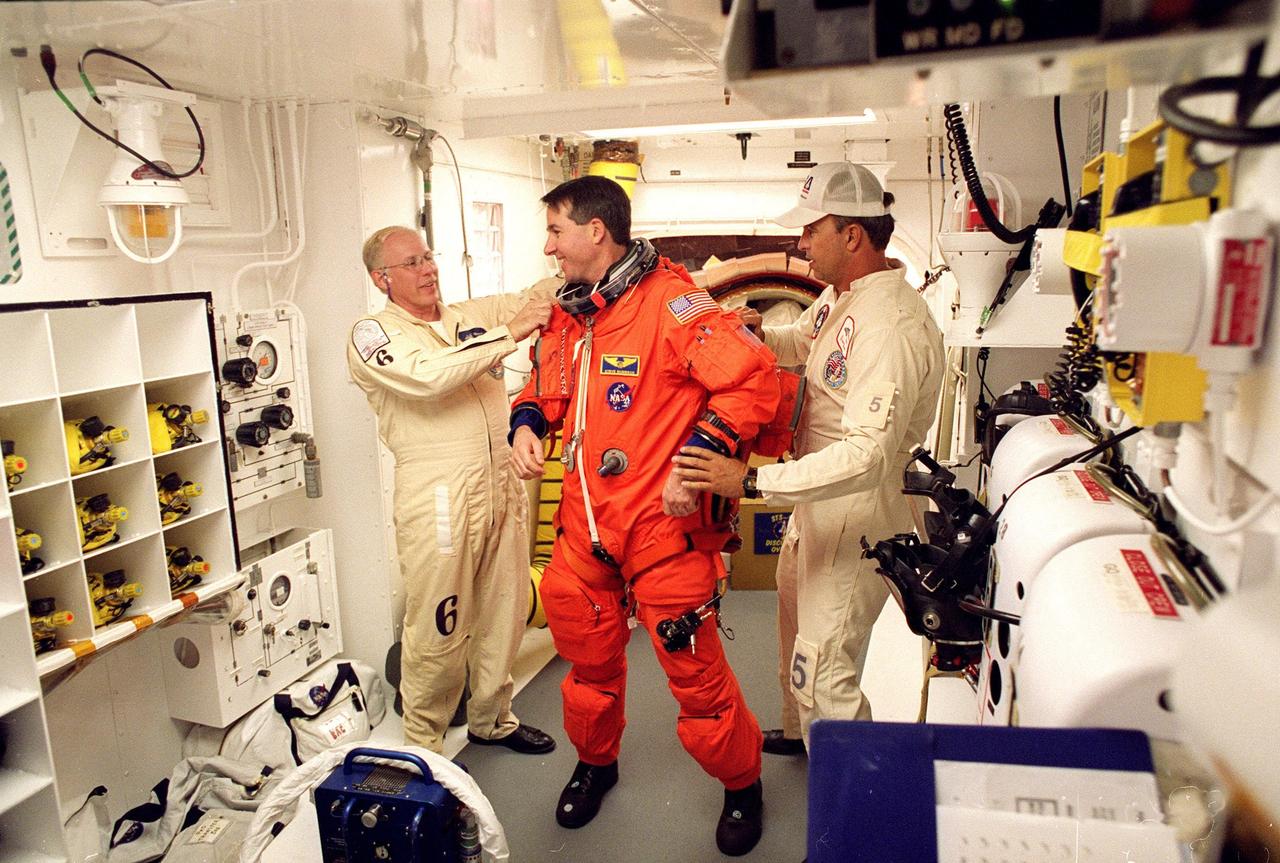
In the environmental chamber known as the white room, STS-95 Mission Specialist Stephen K. Robinson is prepared by closeout room crew members (left) Danny Wyatt and Dave Law (right) for entry into the Space Shuttle Discovery for his second flight into space. The STS-95 mission, targeted for launch at 2 p.m. EST on Oct. 29, is expected to last 8 days, 21 hours and 49 minutes, and return to KSC at 11:49 a.m. EST on Nov. 7
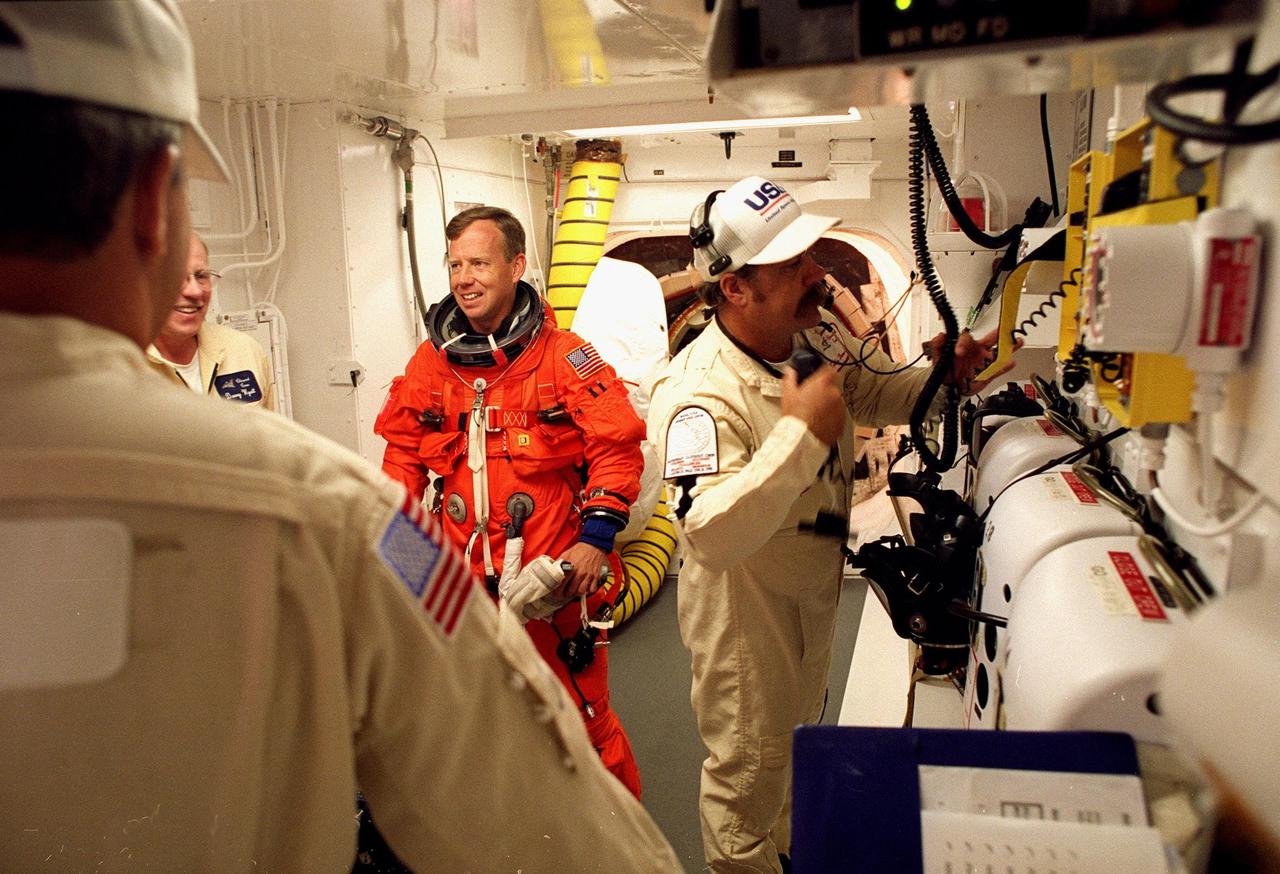
In the environmental chamber known as the white room, STS-95 Pilot Steven W. Lindsey is prepared by closeout room crew members Dave Law(left), Danny Wyatt and Travis Thompson (right) for entry into the Space Shuttle Discovery for his second flight into space. The STS-95 mission, targeted for launch at 2 p.m. EST on Oct. 29, is expected to last 8 days, 21 hours and 49 minutes, and return to KSC at 11:49 a.m. EST on Nov. 7
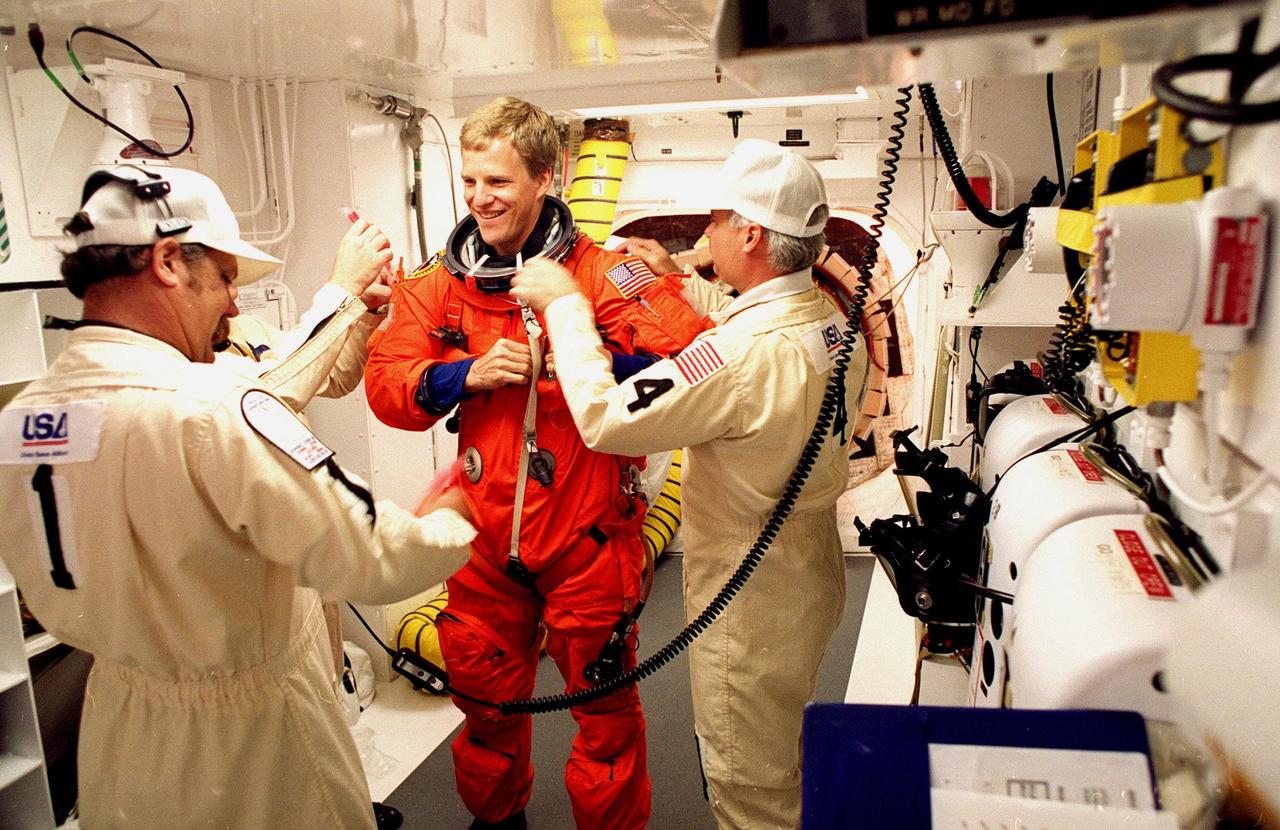
In the environmental chamber known as the white room, STS-95 Mission Specialist Scott E. Parazynski is prepared by closeout room crew members Travis Thompson (left), Danny Wyatt (partially hidden) and Chris Meinert (right) for entry into the Space Shuttle Discovery for his third flight into space. The STS-95 mission, targeted for launch at 2 p.m. EST on Oct. 29, is expected to last 8 days, 21 hours and 49 minutes, and return to KSC at 11:49 a.m. EST on Nov. 7
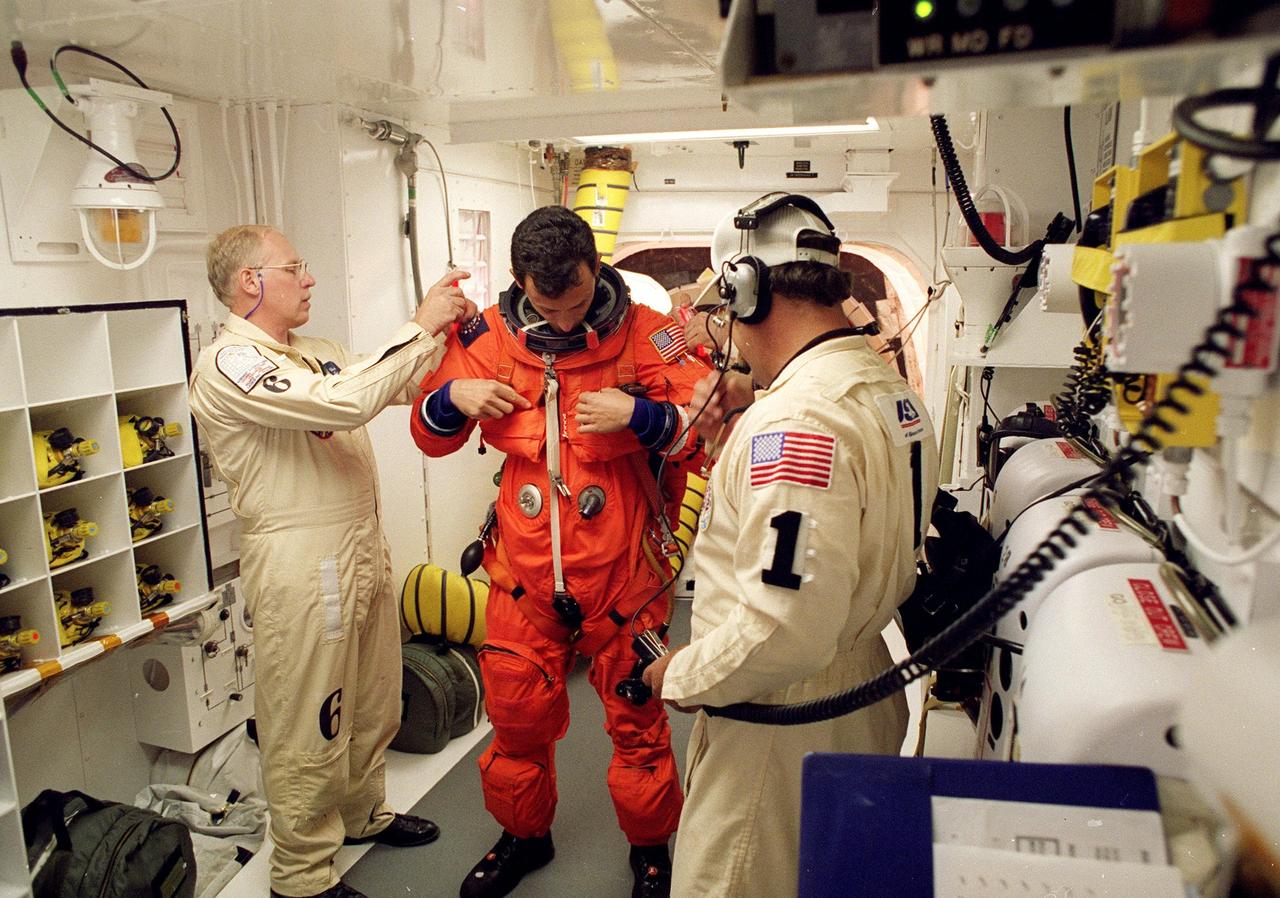
In the environmental chamber known as the white room, STS-95 Mission Specialist Pedro Duque of Spain, with the European Space Agency, is prepared by closeout room crew members Danny Wyatt (left) and Travis Thompson (right) for entry into the Space Shuttle Discovery for his first flight into space. The STS-95 mission, targeted for launch at 2 p.m. EST on Oct. 29, is expected to last 8 days, 21 hours and 49 minutes, and return to KSC at 11:49 a.m. EST on Nov. 7
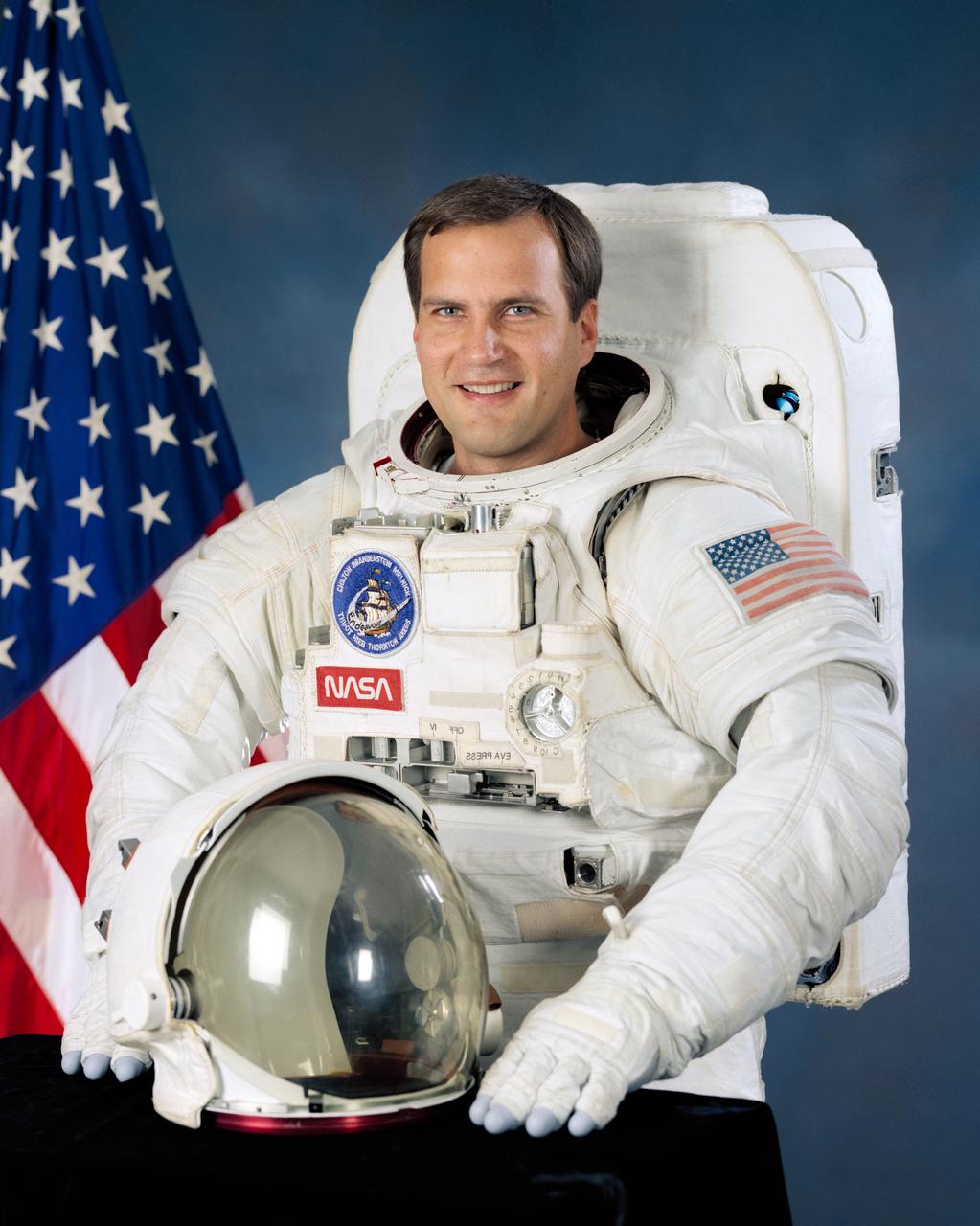
S92-41511 (1992) --- Astronaut Richard J. Hieb.
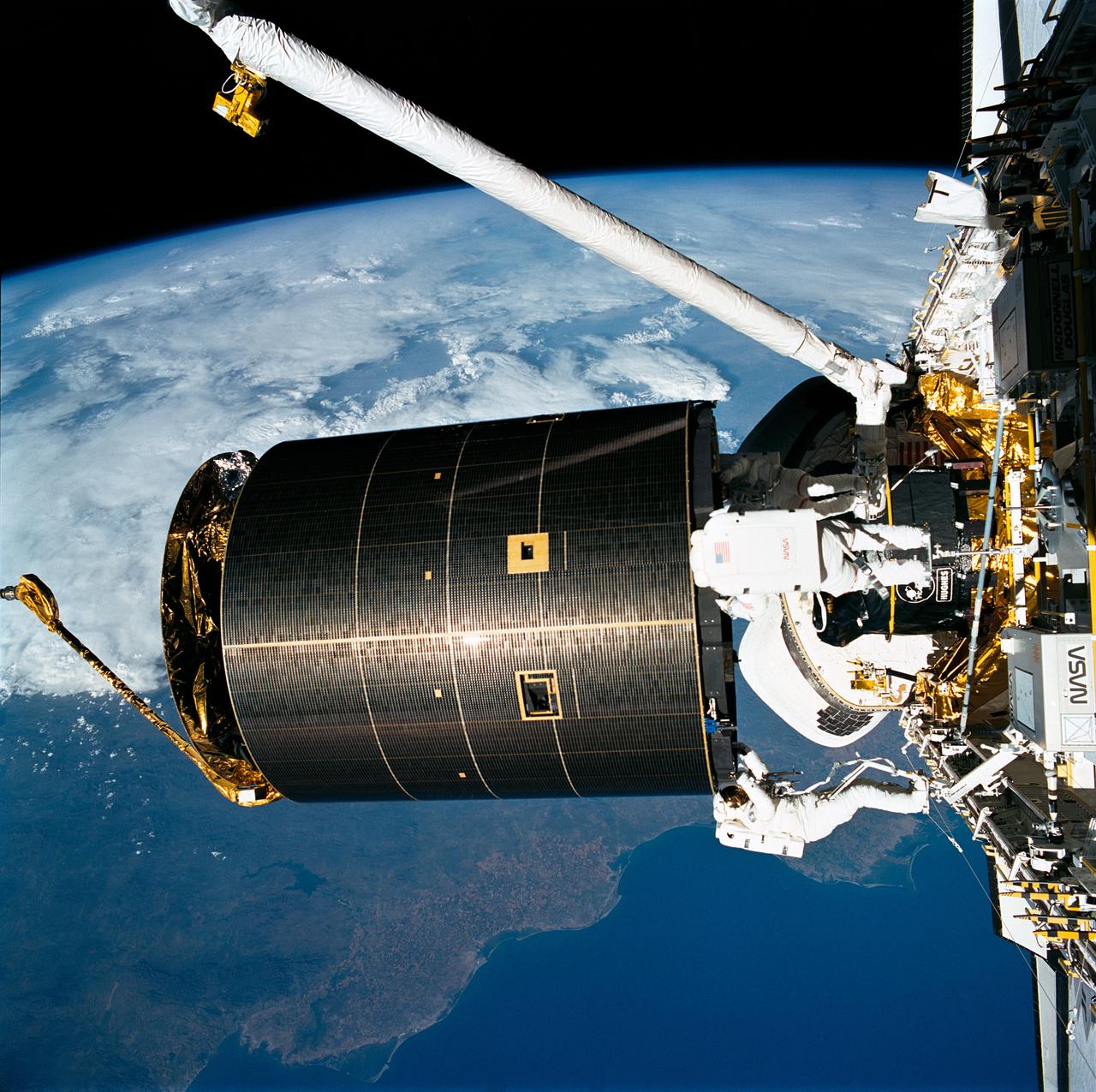
STS049-91-020 (13 May 1992) --- The successful capture of Intelsat VI satellite is recorded over Mexico on this 70mm frame, from inside the Space Shuttle Endeavour's cabin. Left to right, astronauts Richard J. Hieb, Thomas D. Akers and Pierre J. Thuot have handholds on the satellite. Ground coverage in the frame includes an area from Hermosillo, Sonara to Los Mochis in the state of Sinaloa. The nine-day mission accomplished the capture of the Intelsat, subsequent mating of the satellite to a booster and its eventual deployment, as well as a Space Station Freedom preview Extravehicular Activity (EVA). Endeavour's crew members were astronauts Daniel C. Brandenstein, mission commander; Kevin P. Chilton, pilot; and Thomas D. Akers, Richard J. Hieb, Bruce E. Melnick, Kathryn C. Thornton and Pierre J. Thuot, all mission specialists.
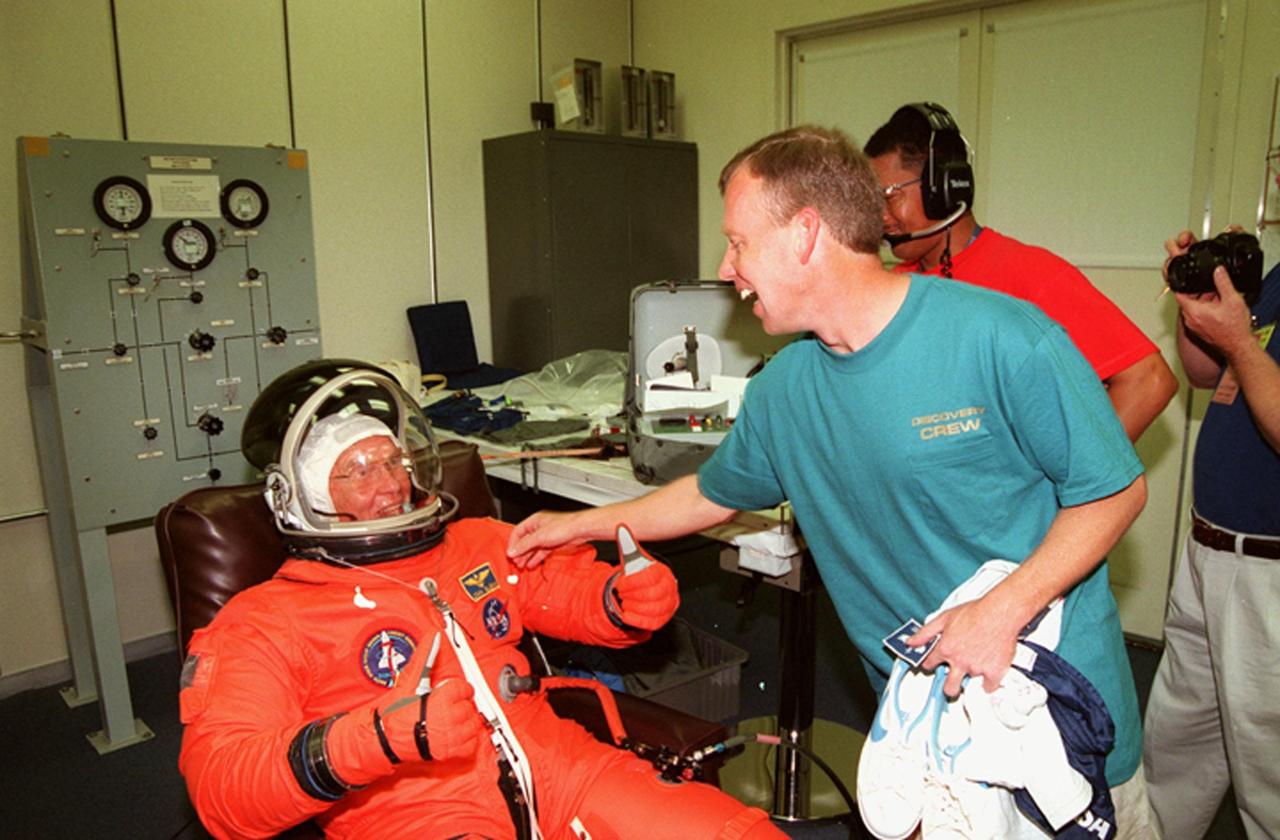
KENNEDY SPACE CENTER, FLA. -- In the Operations and Checkout Building, STS-95 Pilot Steven W. Lindsey (right) reaches playfully for the name tag on the flight suit of Payload Specialist John H. Glenn Jr., senator from Ohio, seated in the chair. The STS-95 crew were conducting flight crew equipment fit checks prior to launch on Oct. 29. STS-95 is expected to launch at 2 p.m. EST on Oct. 29, last 8 days, 21 hours and 49 minutes, and land at 11:49 a.m. EST on Nov. 7
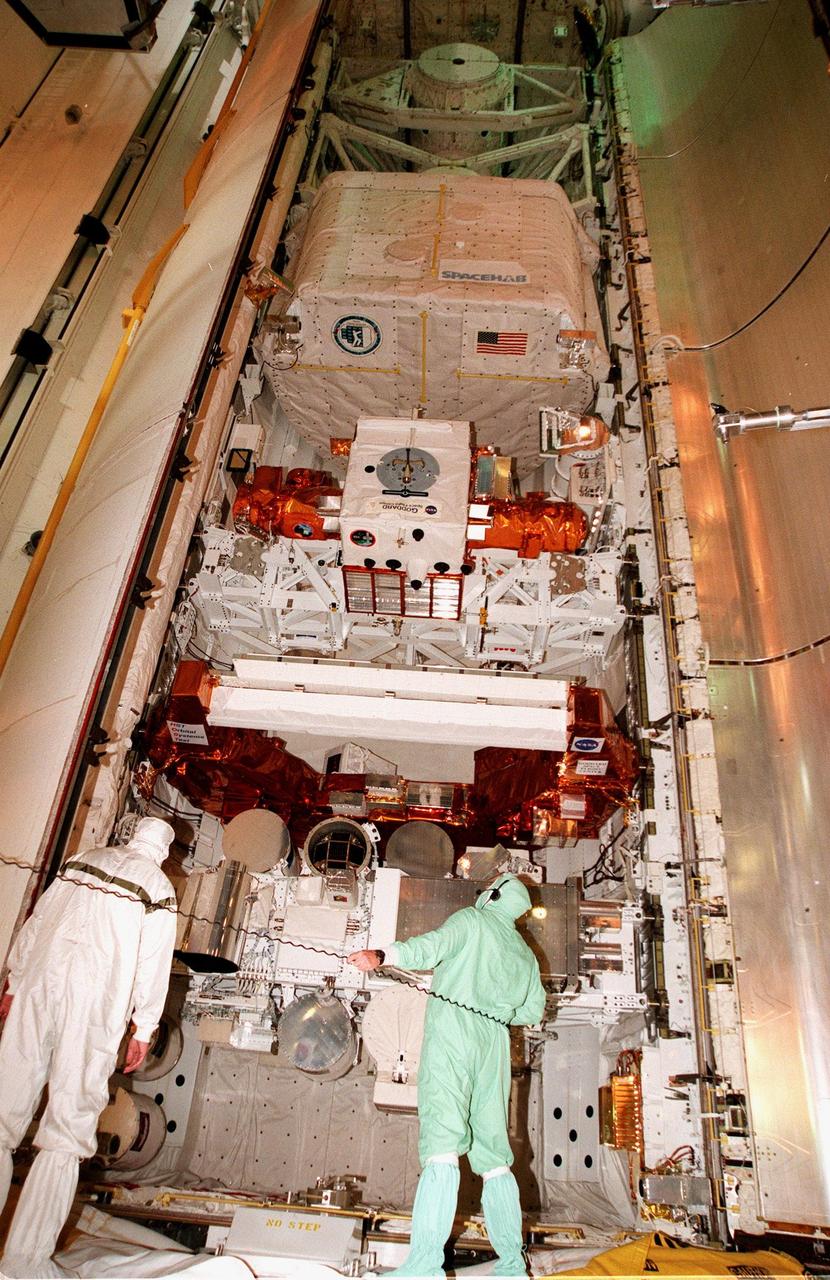
KENNEDY SPACE CENTER, FLA. -- On Launch Complex 39B, KSC workers check the payloads for mission STS-95 which were loaded into the orbiter Discovery payload bay before launch. The mission includes the SPACEHAB single module (seen at the top of the bay) with experiments on space flight and the aging process, the International Extreme Ultraviolet Hitchhiker (IEH-3), the Hubble Space Telescope Orbital Systems Test Platform, and the Spartan solar-observing deployable spacecraft. STS-95 is expected to launch at 2 p.m. EST on Oct. 29, last 8 days, 21 hours and 49 minutes, and land at 11:49 a.m. EST on Nov. 7
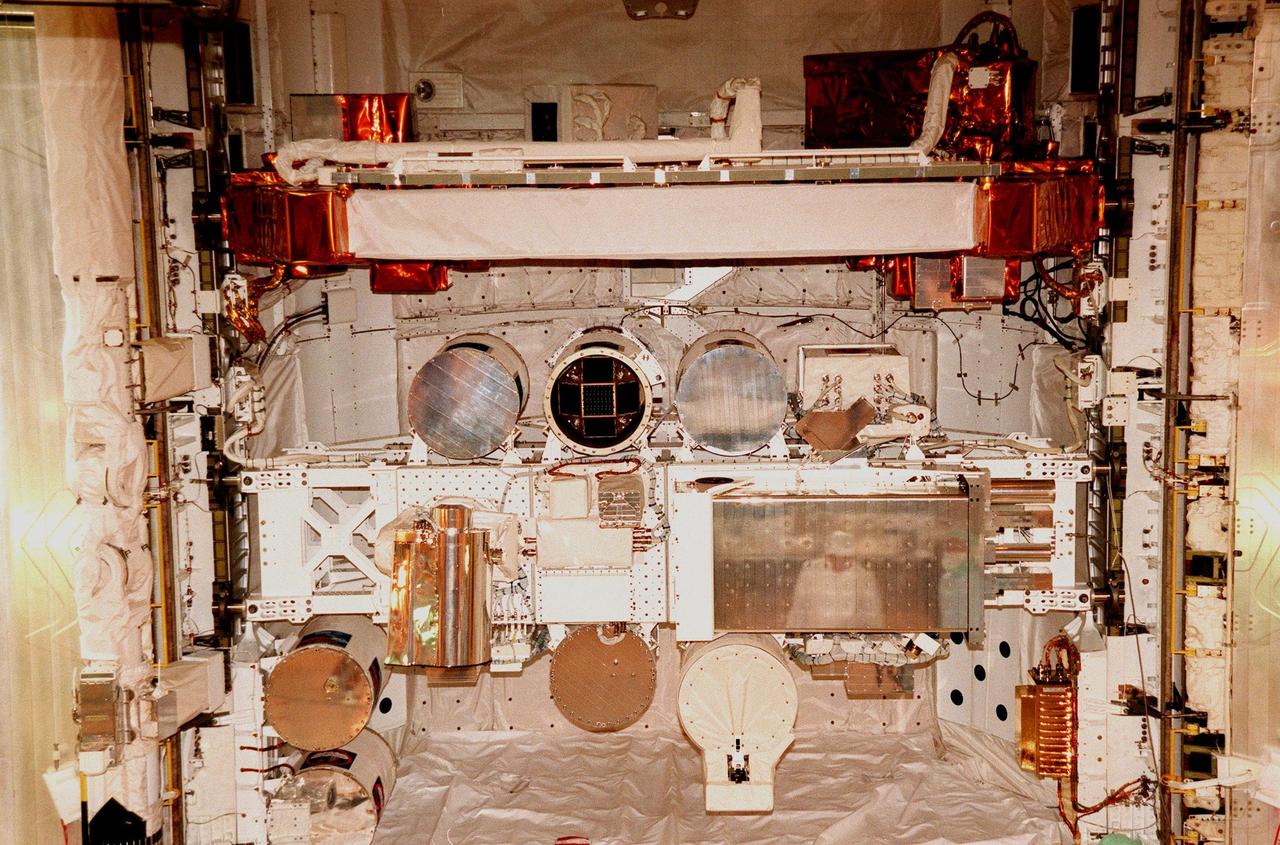
KENNEDY SPACE CENTER, FLA. -- On Launch Complex 39B, the open payload bay doors on the orbiter Discovery reveal (bottom) International Extreme Ultraviolet Hitchhiker (IEH-3) and (above it) Hubble Space Telescope Orbital Systems Test Platform (HOST), two of the payloads for mission STS-95. The other payloads include the Spartan solar-observing deployable spacecraft and SPACEHAB, a single module containing experiments on space flight and the aging process. STS-95 is expected to launch at 2 p.m. EST on Oct. 29, last 8 days, 21 hours and 49 minutes, and land at 11:49 a.m. EST on Nov. 7
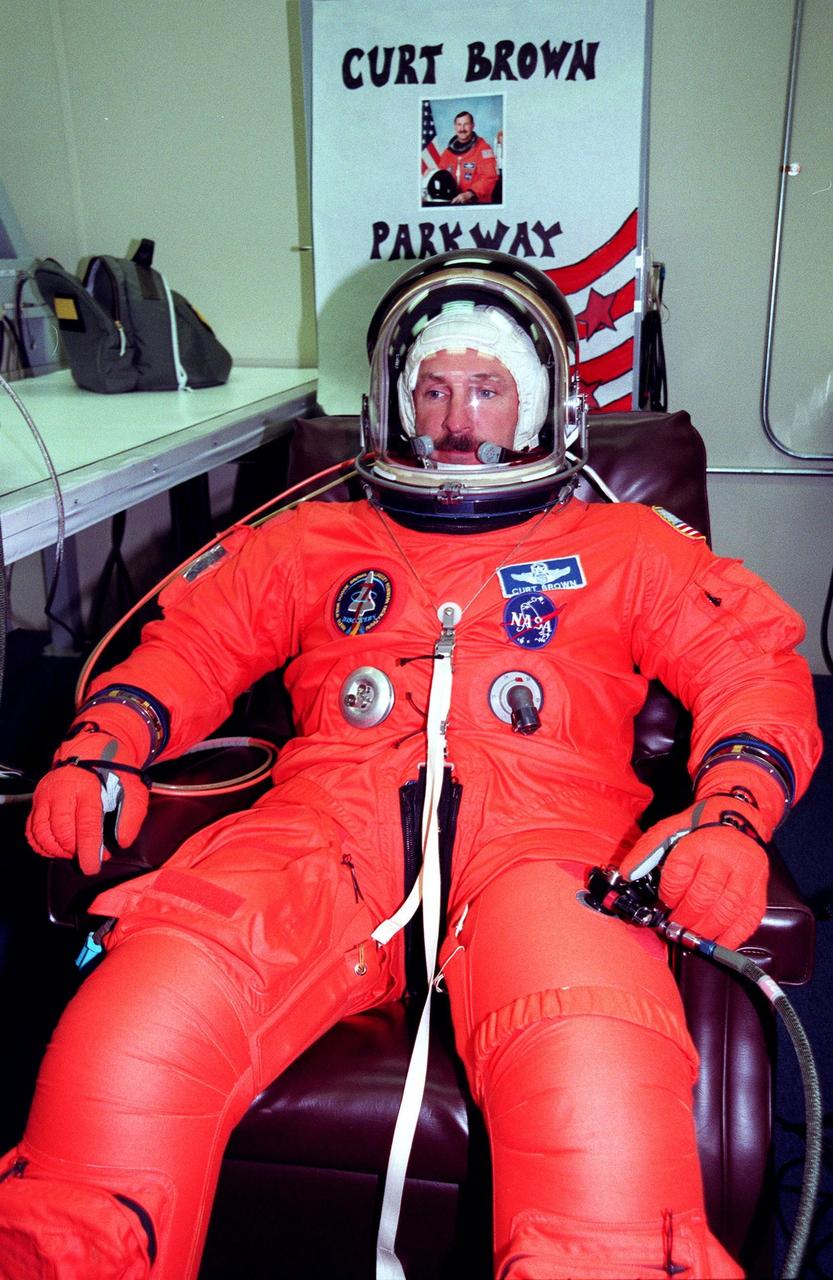
STS-95 Mission Commander Curtis L. Brown Jr. tests his flight suit in the Operations and Checkout Building. The final fitting takes place prior to the crew walkout and transport to Launch Pad 39B. Targeted for launch at 2 p.m. EST on Oct. 29, the mission is expected to last 8 days, 21 hours and 49 minutes, and return to KSC at 11:49 a.m. EST on Nov. 7. The STS-95 mission includes research payloads such as the Spartan solar-observing deployable spacecraft, the Hubble Space Telescope Orbital Systems Test Platform, the International Extreme Ultraviolet Hitchhiker, as well as the SPACEHAB single module with experiments on space flight and the aging process
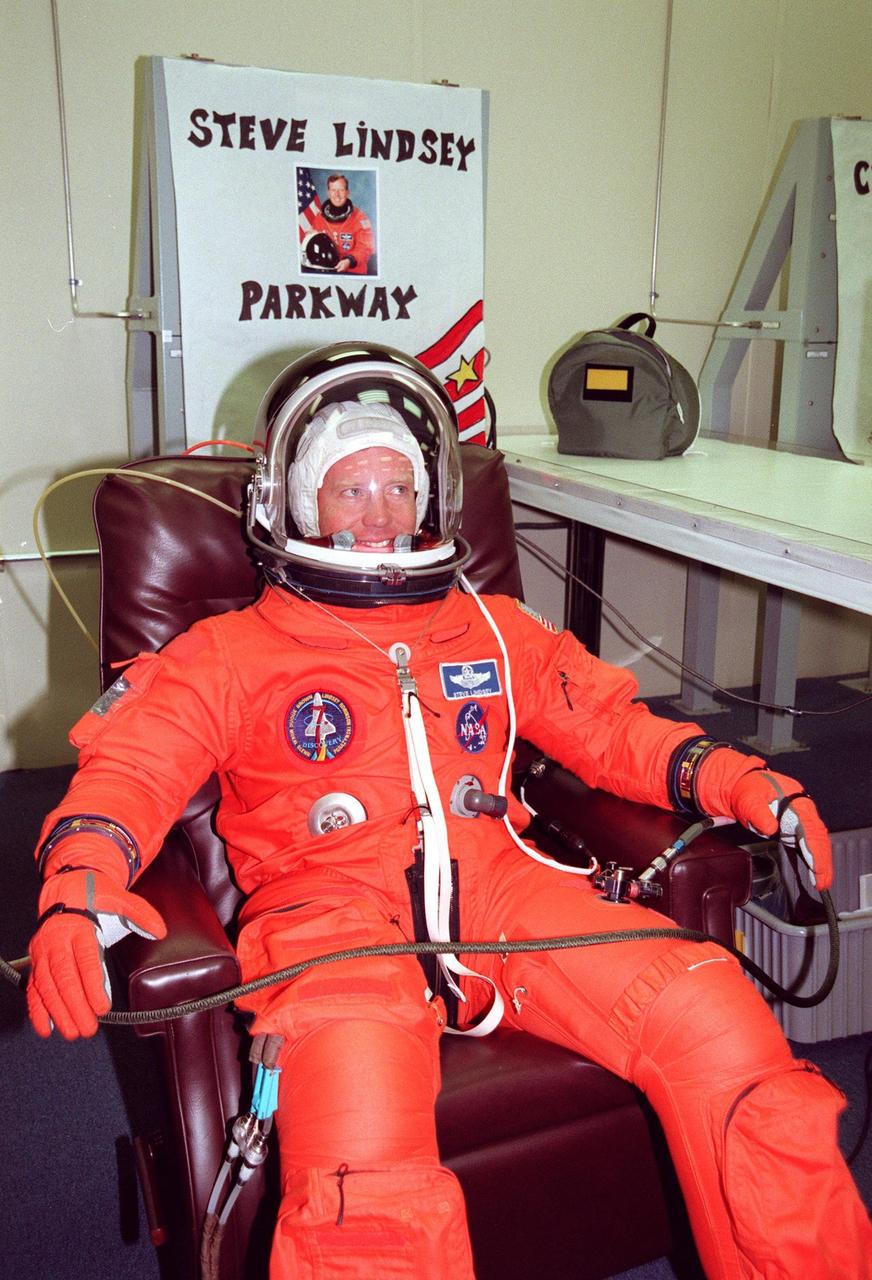
STS-95 Pilot Steven W. Lindsey tests his flight suit in the Operations and Checkout Building. The final fitting takes place prior to the crew walkout and transport to Launch Pad 39B. Targeted for launch at 2 p.m. EST on Oct. 29, the mission is expected to last 8 days, 21 hours and 49 minutes, and return to KSC at 11:49 a.m. EST on Nov. 7. The STS-95 mission includes research payloads such as the Spartan solar-observing deployable spacecraft, the Hubble Space Telescope Orbital Systems Test Platform, the International Extreme Ultraviolet Hitchhiker, as well as the SPACEHAB single module with experiments on space flight and the aging process
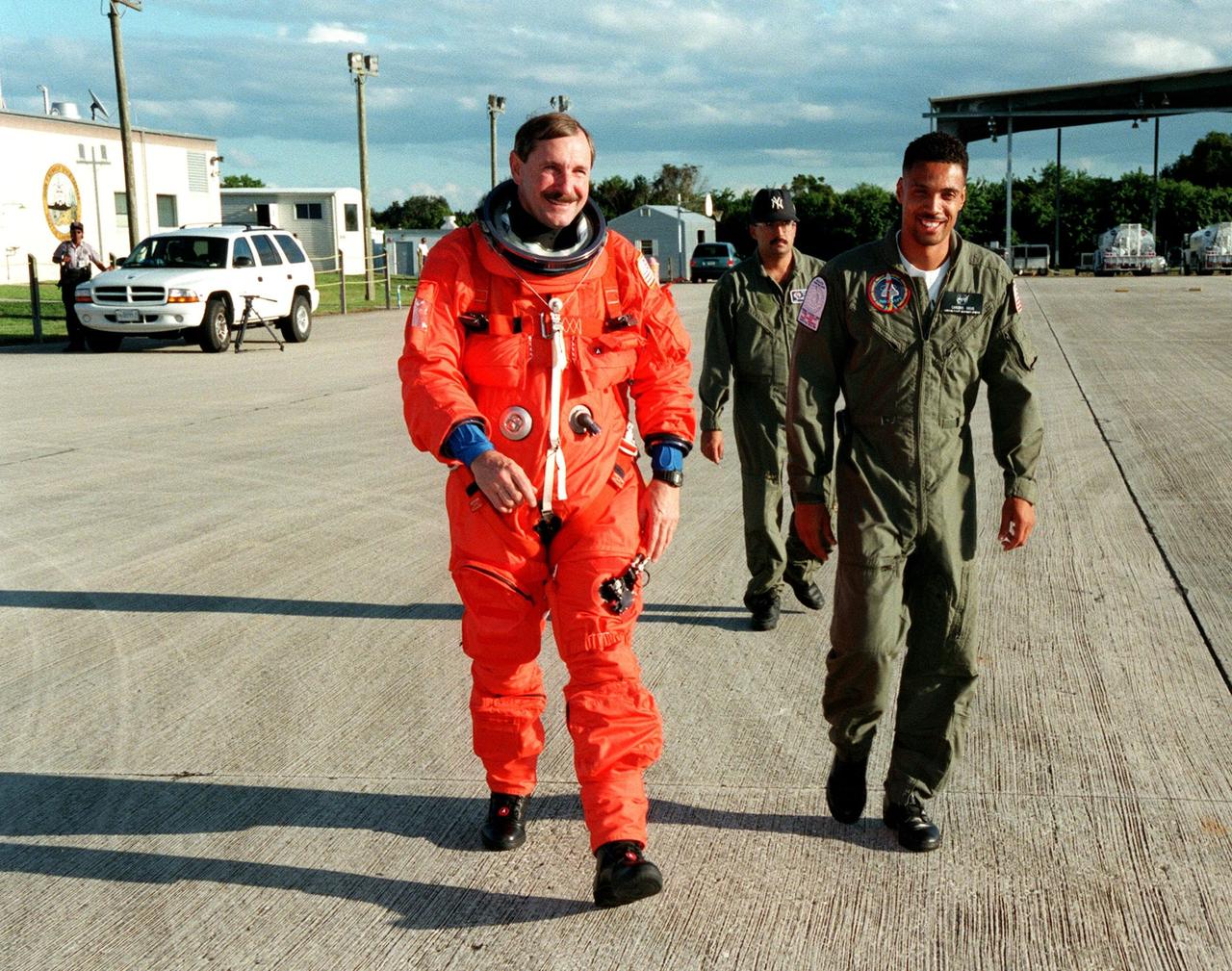
STS-95 Mission Commander Curtis L. Brown Jr. (left) leaves the Shuttle Landing Facility (SLF) enroute to the Shuttle Training Aircraft (STA). He is accompanied by two suit technicians, Ray Cuevas (middle) and Carlous Gillis (right). Brown will be practicing Shuttle landing and takeoffs at the SLF prior to launch. The STA is designed to fly like the Shuttle. STS-95 is expected to launch at 2 p.m. EST on Oct. 29, last 8 days, 21 hours and 49 minutes, and land at 11:49 a.m. EST on Nov. 7
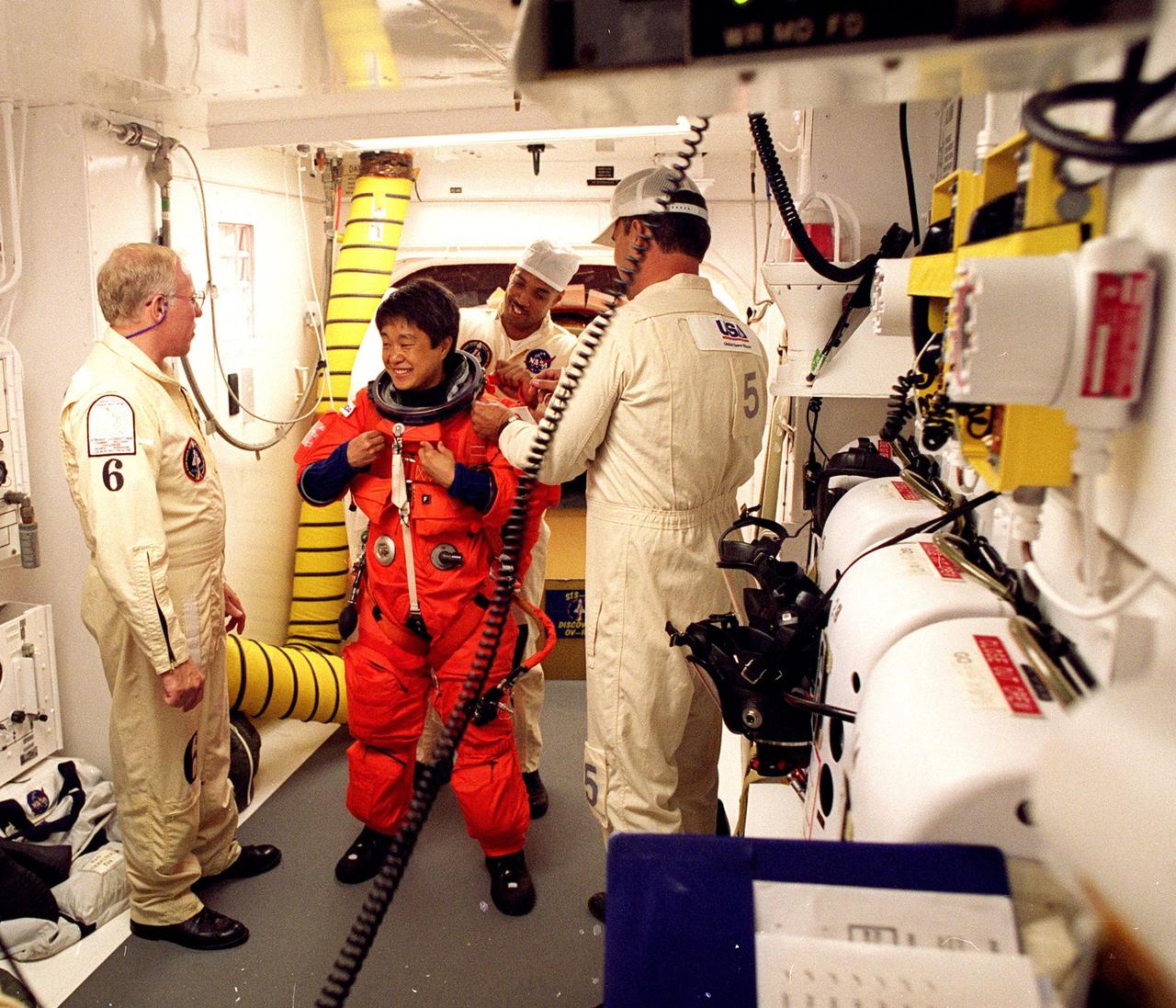
In the environmental chamber known as the white room, STS-95 Payload Specialist Chiaki Mukai, with the National Space Development Agency of Japan (NASDA), is prepared by closeout room crew members Danny Wyatt (left), Carlous Gillis (behind her) and Dave Law (right) for entry into the Space Shuttle Discovery for her second flight into space. The STS-95 mission, targeted for launch at 2 p.m. EST on Oct. 29, is expected to last 8 days, 21 hours and 49 minutes, and return to KSC at 11:49 a.m. EST on Nov. 7
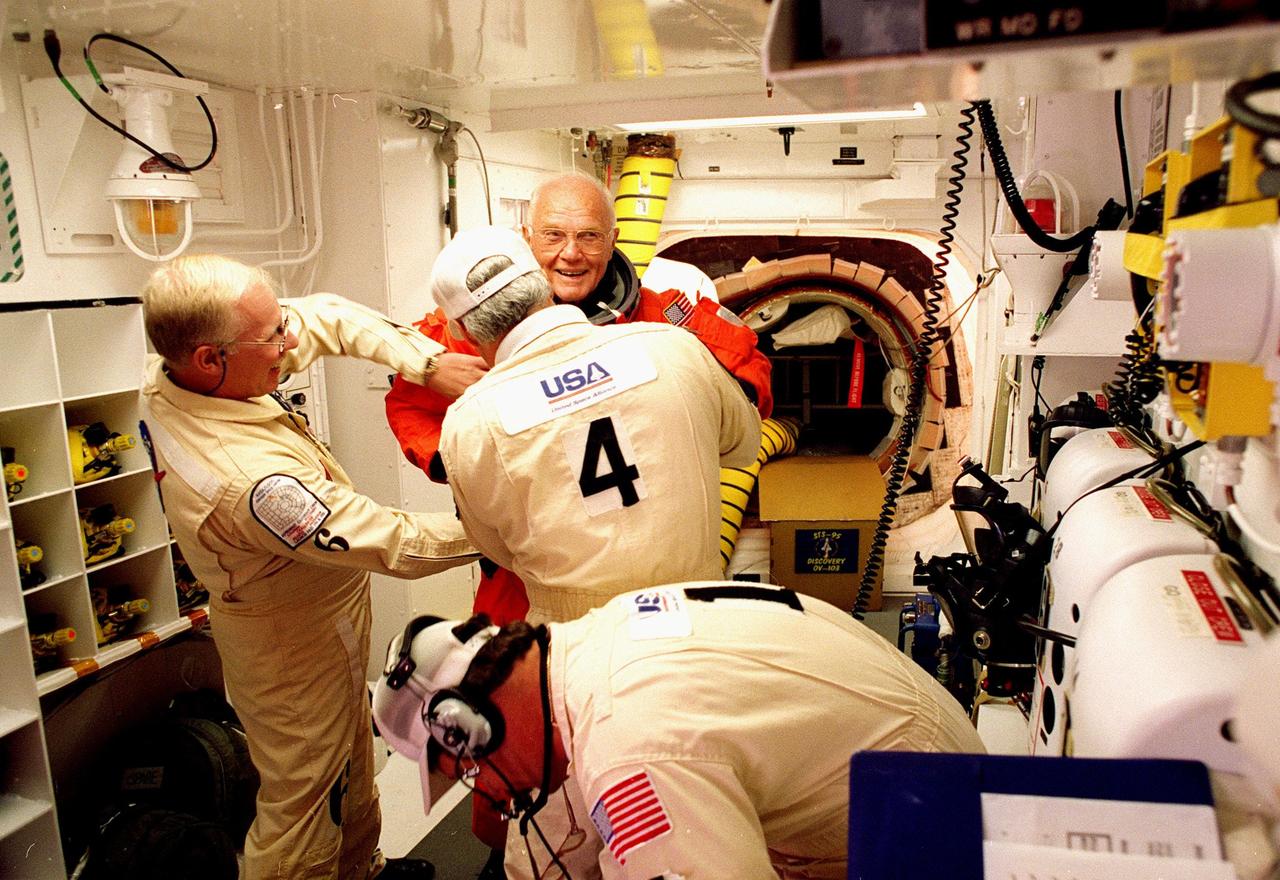
In the environmental chamber known as the white room, an eager STS-95 Payload Specialist John H. Glenn Jr., senator from Ohio, has his flight suit checked by closeout room crew members Danny Wyatt (left to right), Chris Meinert and Travis Thompson (foreground) for entry into the Space Shuttle Discovery for his second flight into space after 36 years. The STS-95 mission, targeted for launch at 2 p.m. EST on Oct. 29, is expected to last 8 days, 21 hours and 49 minutes, and return to KSC at 11:49 a.m. EST on Nov. 7
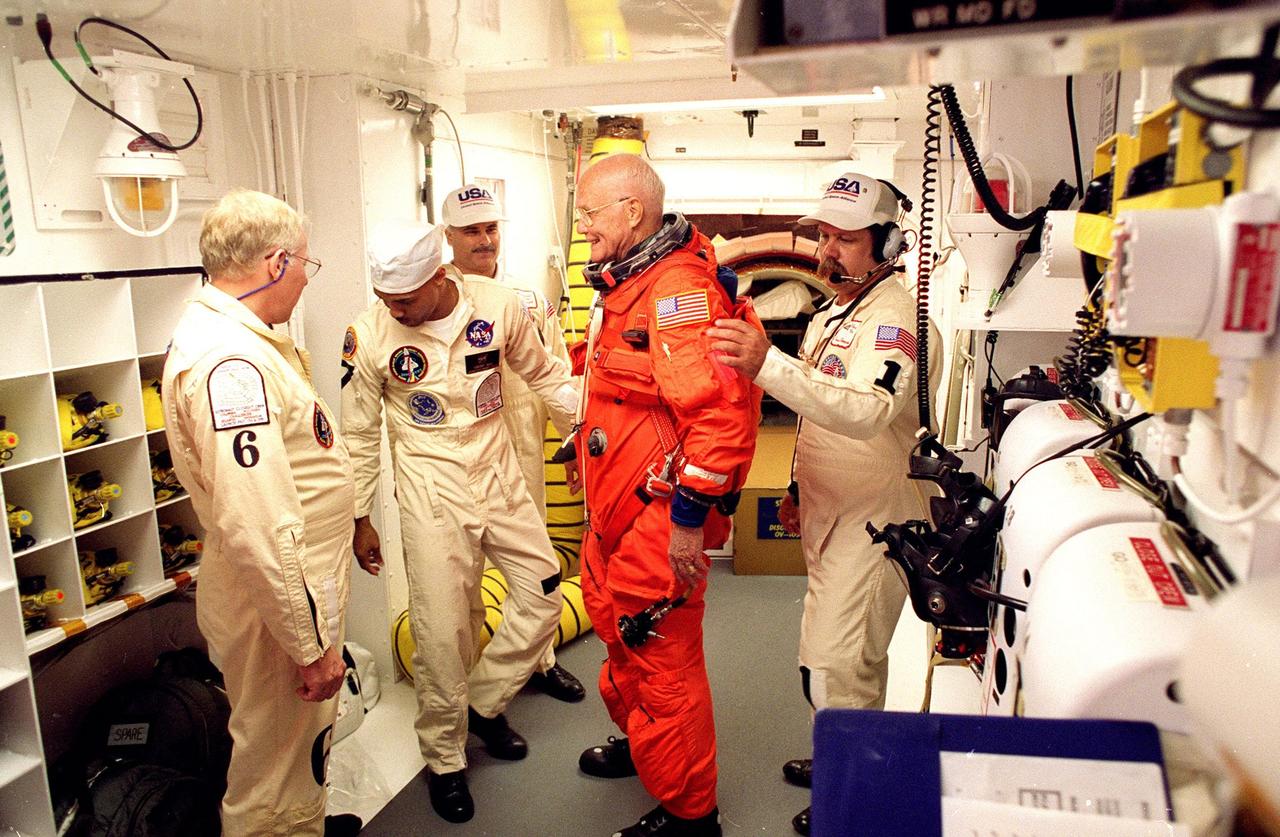
In the environmental chamber known as the white room, STS-95 Payload Specialist John H. Glenn Jr., senator from Ohio, is prepared by closeout room crew members Danny Wyatt (left to right), Carlous Gillis, Jim Kelly and Travis Thompson for entry into the Space Shuttle Discovery for his second flight into space after 36 years. The STS-95 mission, targeted for launch at 2 p.m. EST on Oct. 29, is expected to last 8 days, 21 hours and 49 minutes, and return to KSC at 11:49 a.m. EST on Nov. 7
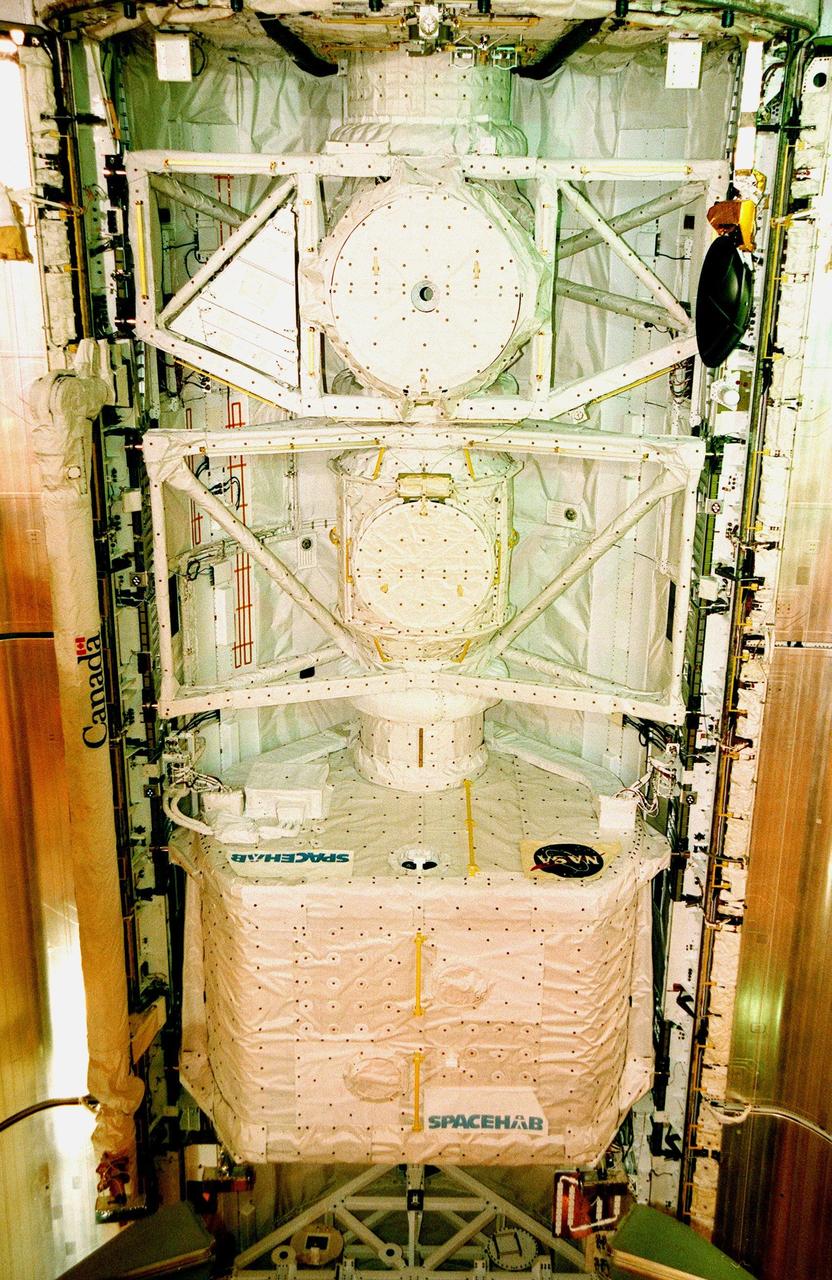
KENNEDY SPACE CENTER, FLA. -- On Launch Complex 39B, the open payload bay doors on the orbiter Discovery reveal the SPACEHAB single module, one of the payloads for mission STS-95. SPACEHAB contains experiments on space flight and the aging process. Other payloads to be added include the International Extreme Ultraviolet Hitchhiker (IEH-3), the Hubble Space Telescope Orbital Systems Test Platform, and the Spartan solar-observing deployable spacecraft. STS-95 is expected to launch at 2 p.m. EST on Oct. 29, last 8 days, 21 hours and 49 minutes, and land at 11:49 a.m. EST on Nov. 7
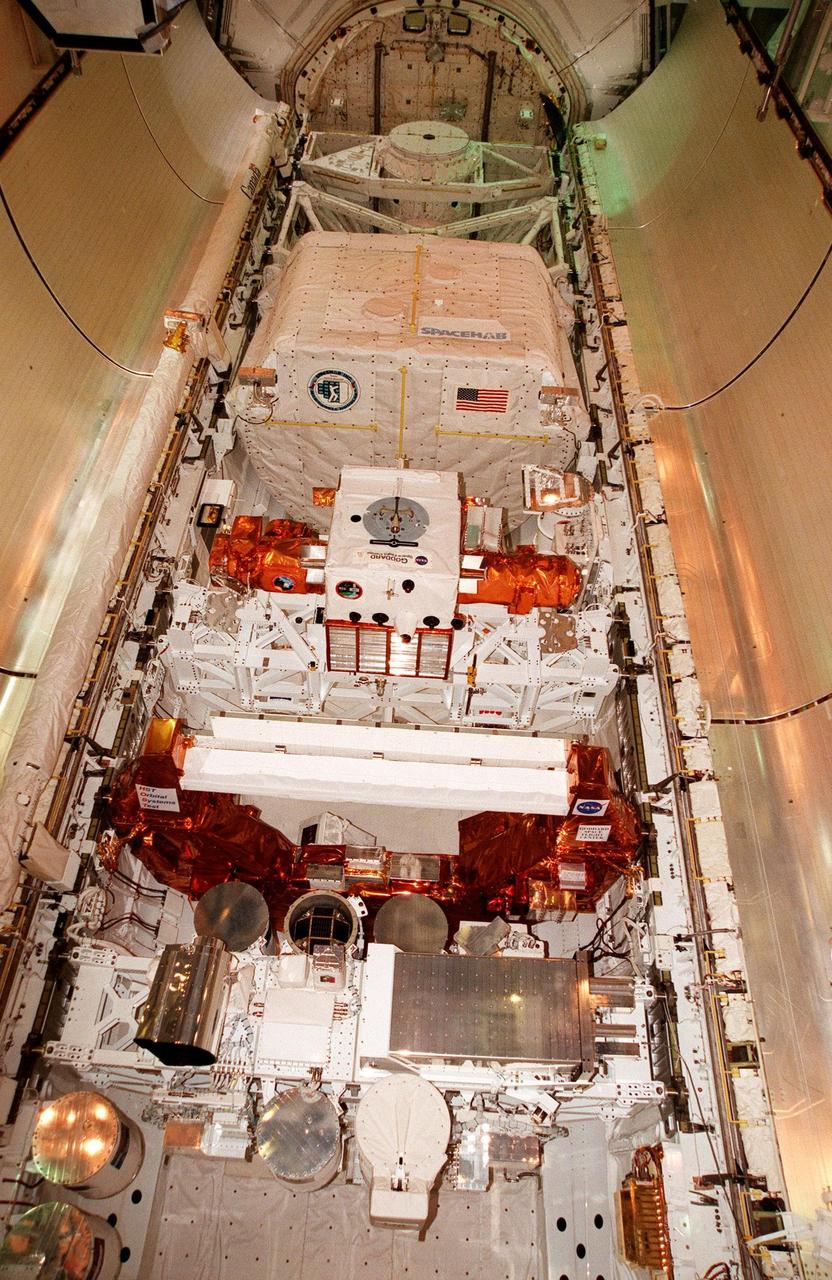
KENNEDY SPACE CENTER, FLA. -- On Launch Complex 39B, the payload bay doors on the orbiter Discovery, scheduled to launch mission STS-95, are poised for closure. The mission includes the SPACEHAB single module (seen at the top of the bay) with experiments on space flight and the aging process, the International Extreme Ultraviolet Hitchhiker (IEH-3), the Hubble Space Telescope Orbital Systems Test Platform, and the Spartan solar-observing deployable spacecraft. STS-95 is expected to launch at 2 p.m. EST on Oct. 29, last 8 days, 21 hours and 49 minutes, and land at 11:49 a.m. EST on Nov. 7
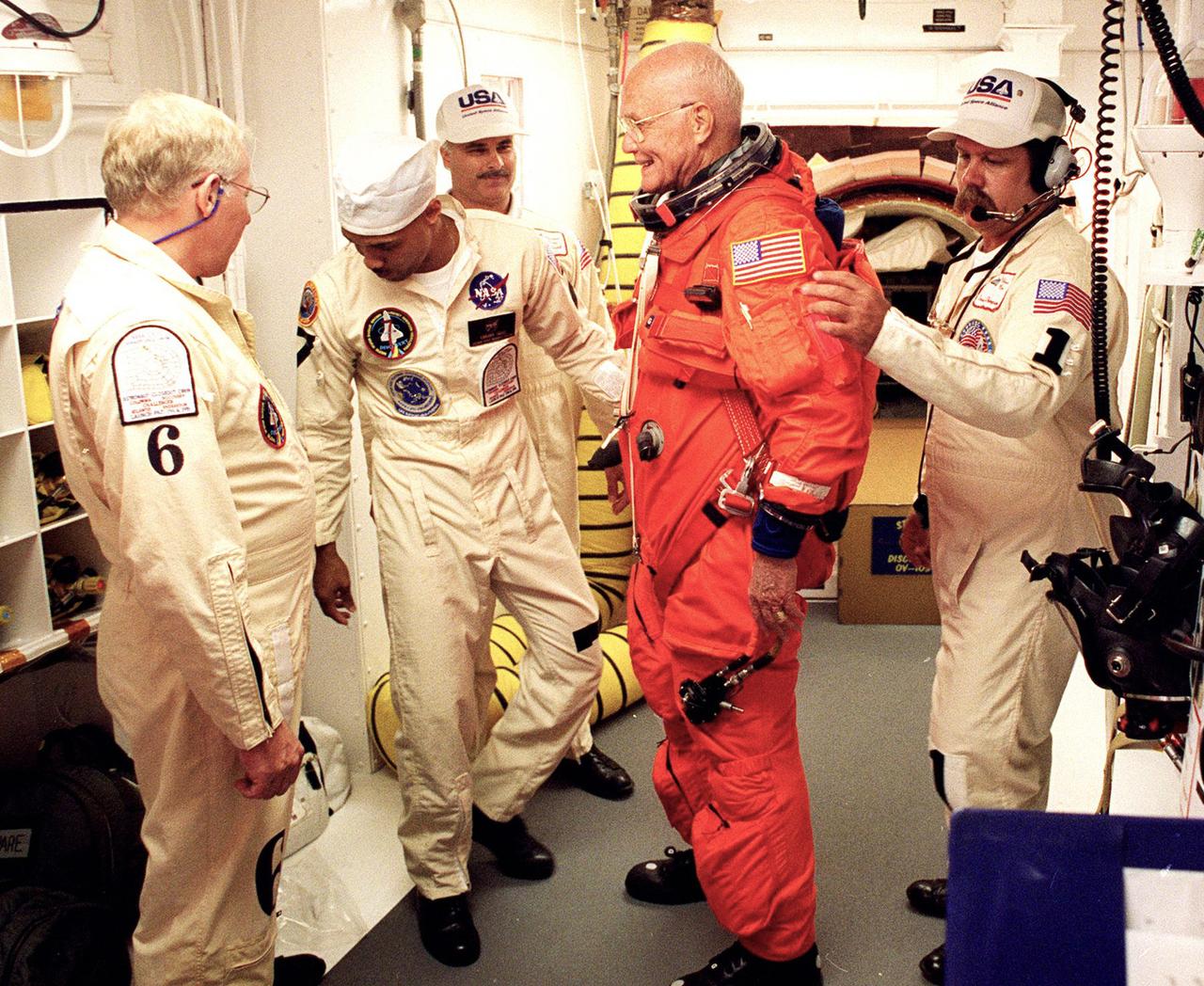
In the white room at the Kenndy Space Center's Launch Pad 39B, STS-95 Payload Specialist John H. Glenn Jr., senator from Ohio, is prepared by closeout room crew members Danny Wyatt (left to right), Carlous Gillis, Jim Kelly and Travis Thompson for entry into the Space Shuttle Discovery for his second flight into space after 36 years. The STS-95 mission, targeted for launch at 2 p.m. EST on Oct. 29, is expected to last 8 days, 21 hours and 49 minutes, and return to KSC at 11:49 a.m. EST on Nov. 7.
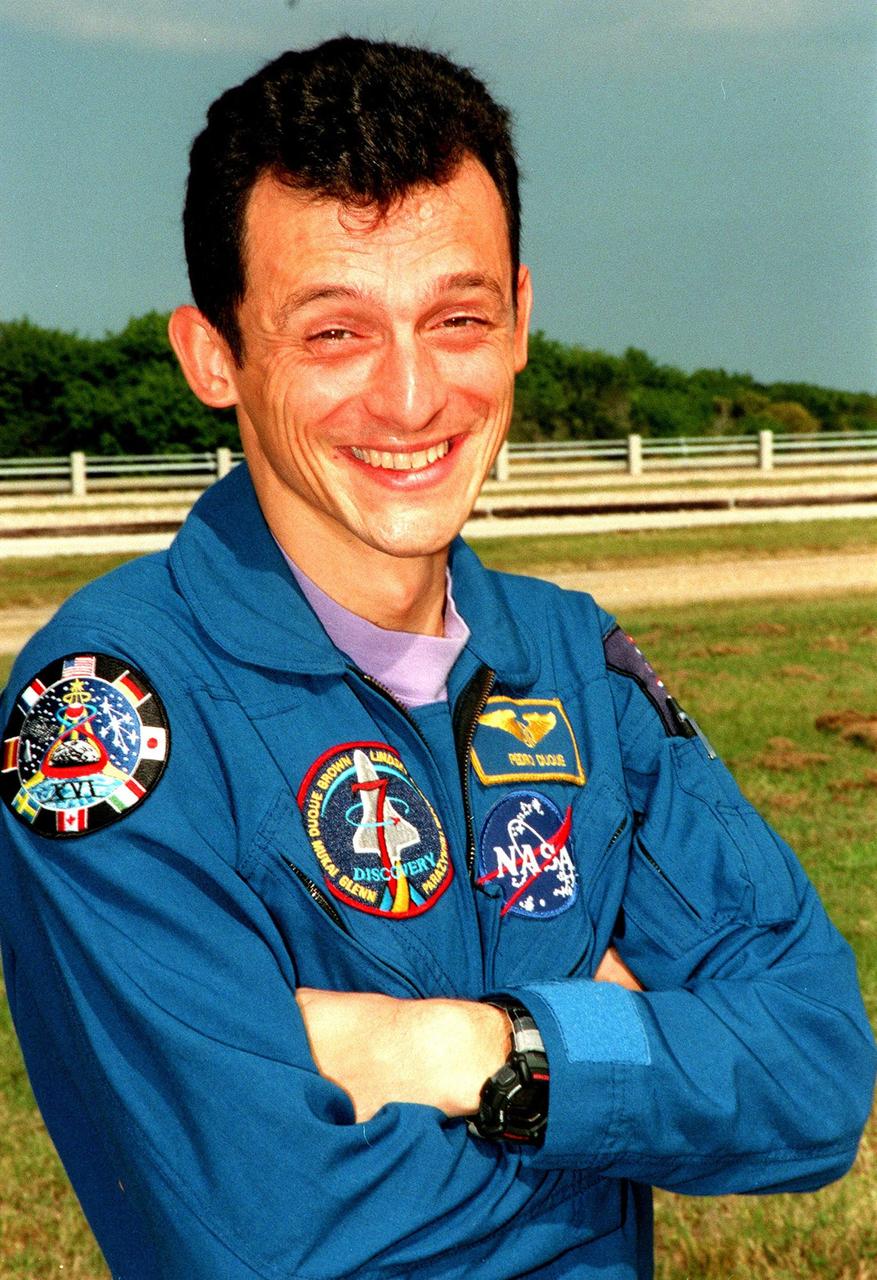
STS-95 Mission Specialist Pedro Duque of Spain, with the European Space Agency (ESA), smiles for the camera from Launch Pad 39B. The STS-95 crew were making final preparations for launch, targeted for liftoff at 2 p.m. on Oct. 29. Other crew members not shown are Mission Commander Curtis L. Brown Jr., Pilot Steven W. Lindsey, Mission Specialists Scott E. Parazynski, Stephen K. Robinsion, and and Payload Specialists John H. Glenn Jr., senator from Ohio, and Chiaki Mukai, with the National Space Development Agency of Japan (NASDA). The STS-95 mission is expected to last 8 days, 21 hours and 49 minutes, returning to KSC at 11:49 a.m. EST on Nov. 7
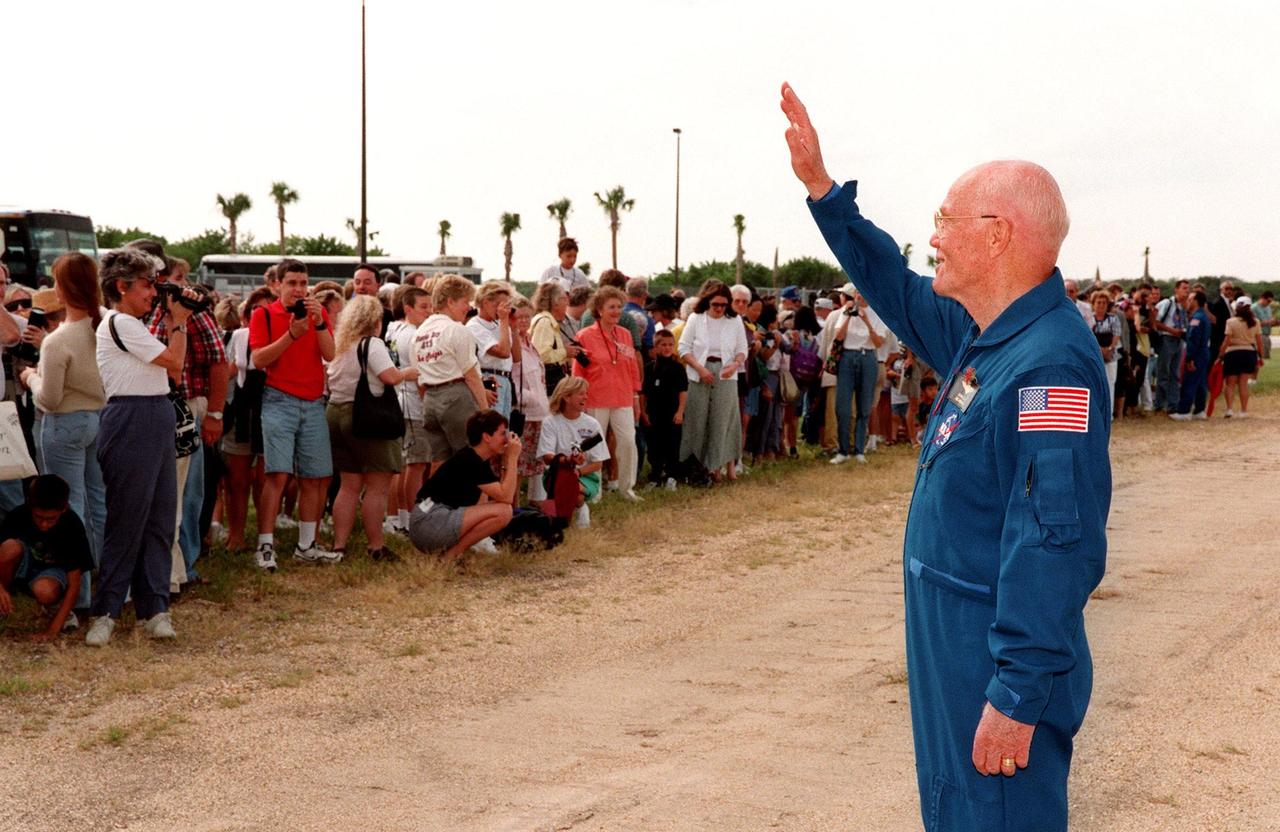
STS-95 Payload Specialist John H. Glenn Jr., senator from Ohio, waves at well-wishers from Launch Pad 39B. The STS-95 crew were making final preparations for launch, targeted for liftoff at 2 p.m. on Oct. 29. Other crew members not shown are Mission Commander Curtis L. Brown Jr., Pilot Steven W. Lindsey, Mission Specialists Scott E. Parazynski, Stephen K. Robinsion, and Pedro Duque of Spain, with the European Space Agency (ESA), and Payload Specialist Chiaki Mukai, with the National Space Development Agency of Japan (NASDA). The STS-95 mission is expected to last 8 days, 21 hours and 49 minutes, returning to KSC at 11:49 a.m. EST on Nov. 7
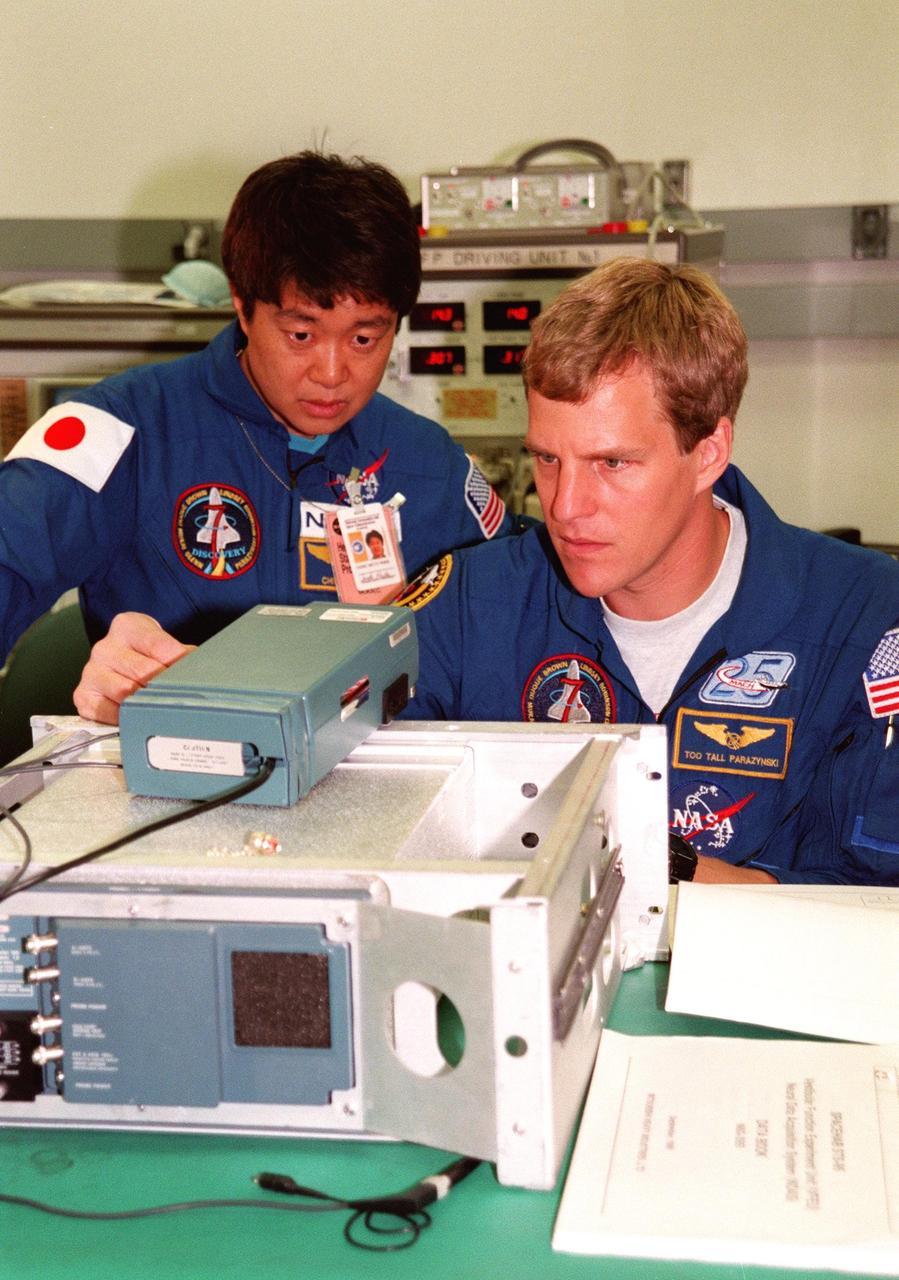
STS-95 Payload Specialist Chiaki Mukai (left), with the National Space Development Agency of Japan (NASDA) and Mission Specialist Scott E. Parazynski (right) look over equipment being used on an experiment with toadfish on mission STS-95. The fish will be electronically monitored to determine the effect of gravitational changes on the inner-ear system. Mukai and Parazynski and other crewmembers were making final preparations for launch, targeted for liftoff at 2 p.m. on Oct. 29. The STS-95 crew also includes Mission Commander Curtis L. Brown Jr., Pilot Steven W. Lindsey, Mission Specialist Stephen K. Robinson, Payload Specialist John H. Glenn Jr., senator from Ohio, and Mission Specialist Pedro Duque, with the European Space Agency (ESA). The mission is expected to last 8 days, 21 hours and 49 minutes, returning to KSC at 11:49 a.m. EST on Nov. 7
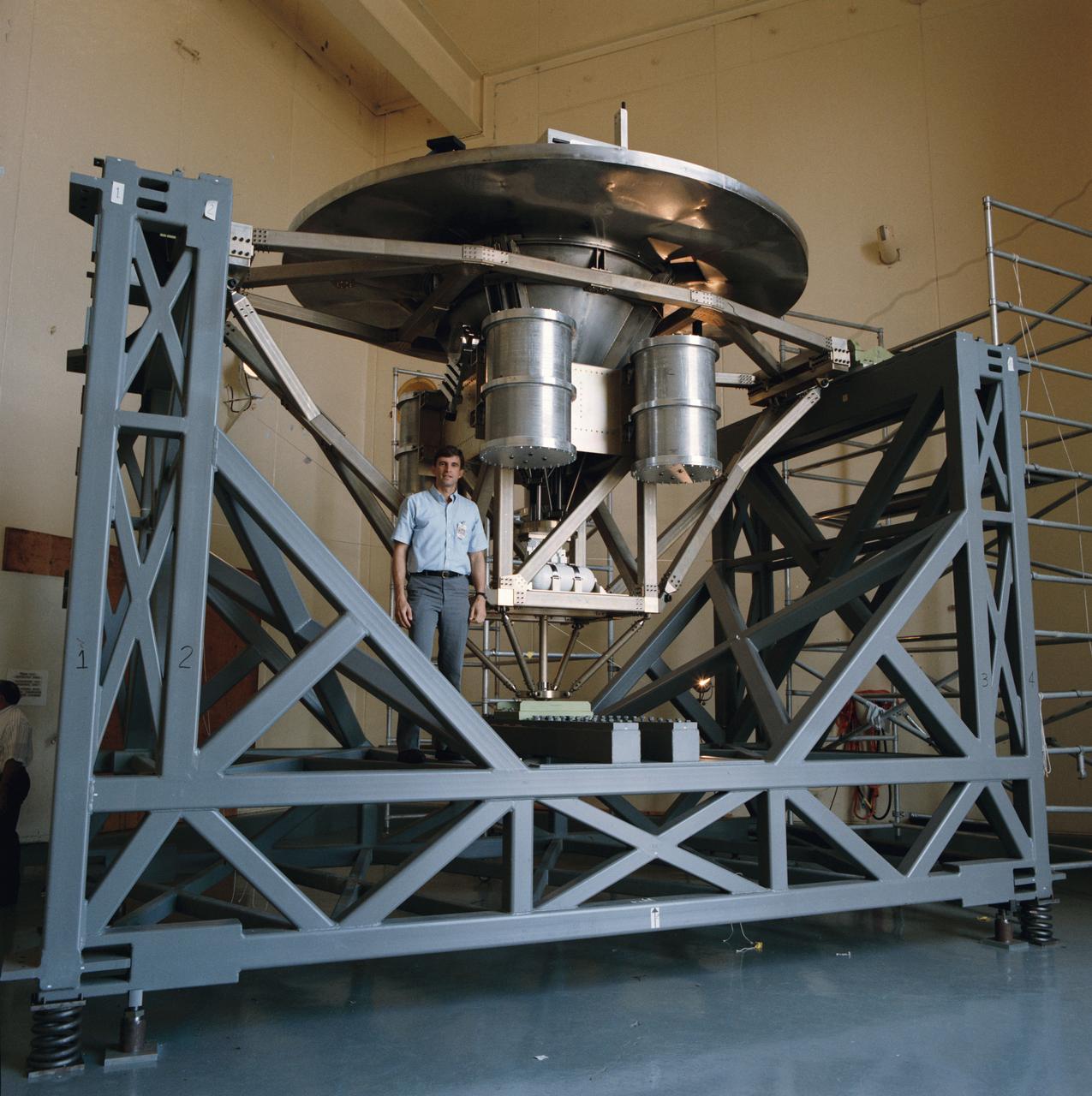
Astronaut Ronald M. Sega stands beside the University of Houston's Wake Shield Facility before it undergoes a Modal Survey Test in the Vibration and Acoustic Test Facility Building 49, prior to being flown on space shuttle mission STS-60.
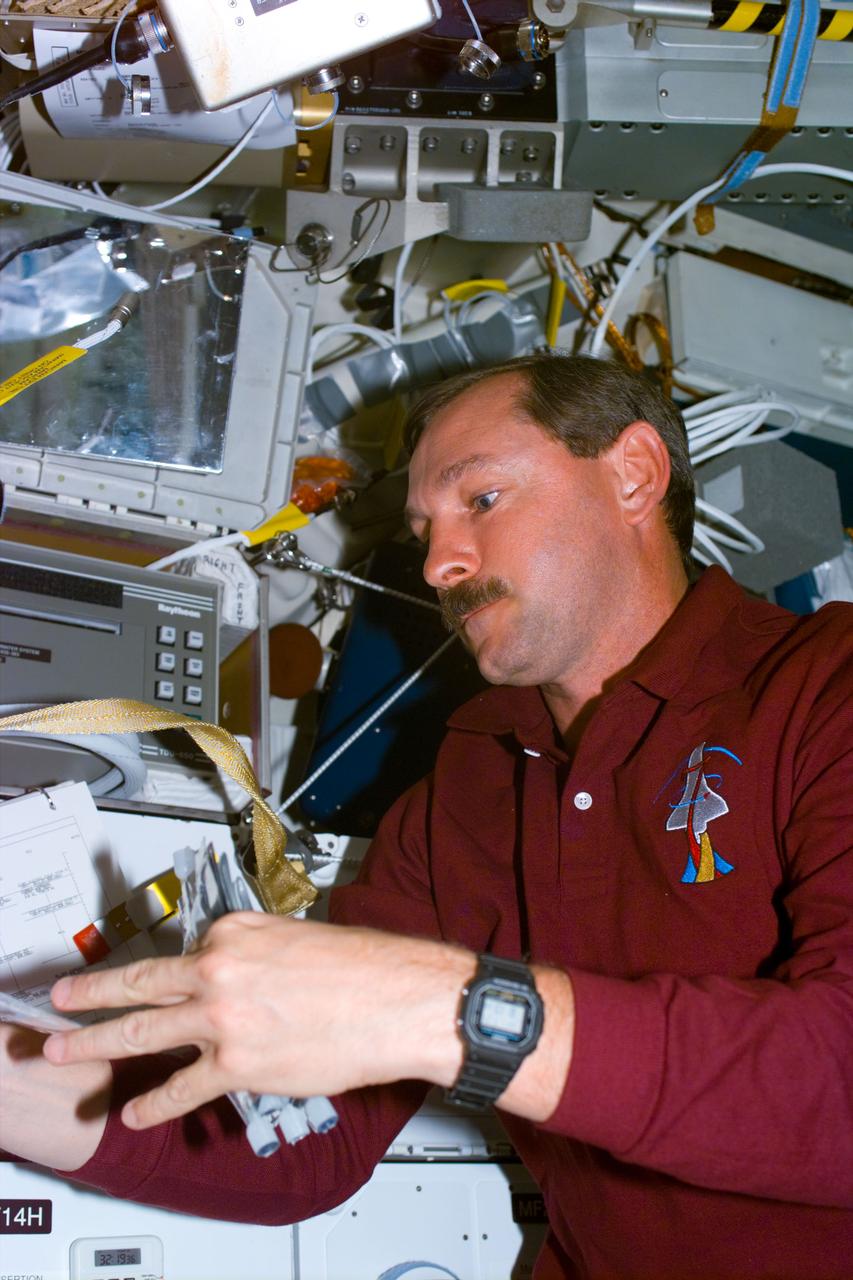
STS095-E-5054 (30 Oct. 1998) --- Astronaut Curtis L. Brown, STS-95 commander, has a handful of vials as he checks a notebook during Flight Day two activity onboard the Space Shuttle Discovery. The photo was taken with an electronic still camera at 10:42:49 GMT, Oct. 30.
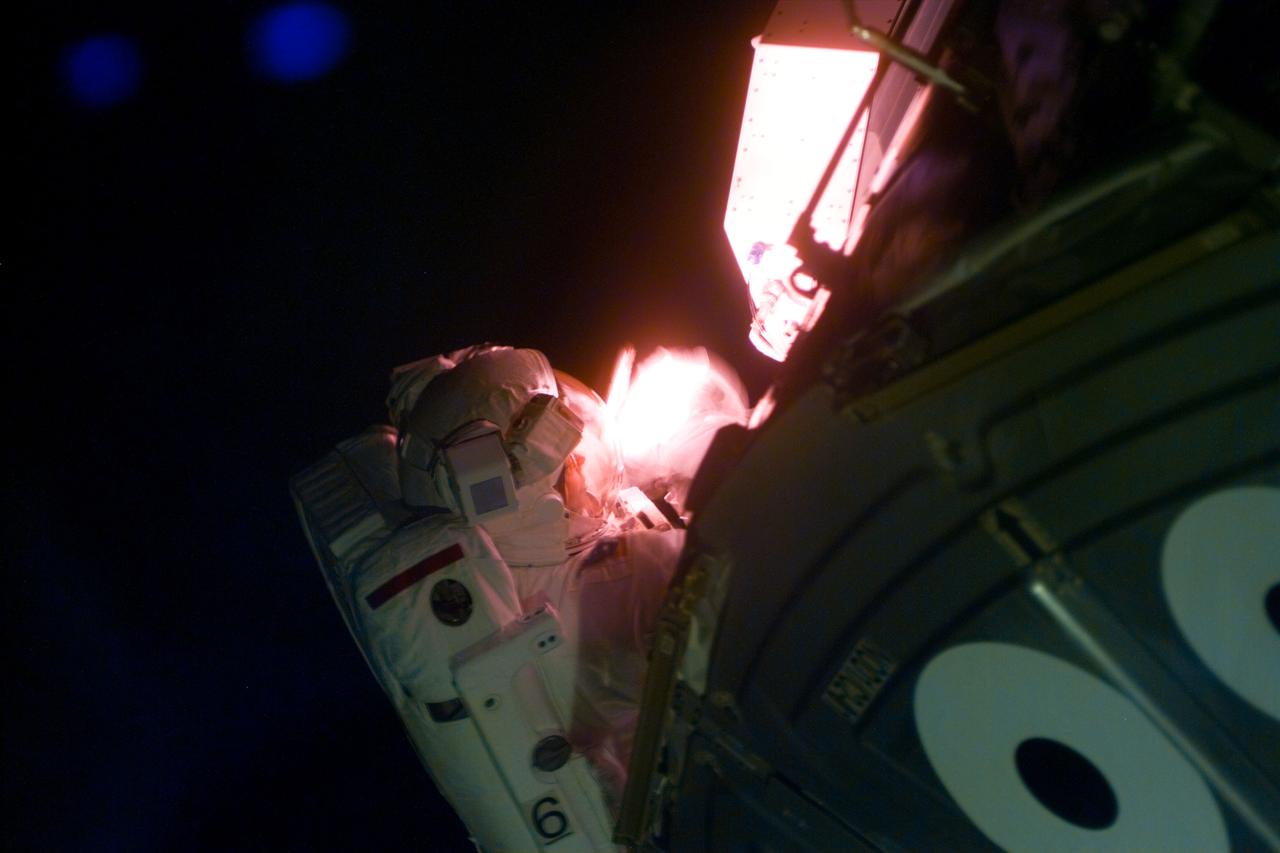
S88-E-5093 (12-09-98) --- Astronaut Jerry L. Ross, mission specialist, requires artificial light to work during the second STS-88 space walk. Part of a pressurized mating adapter (PMA) is in the foreground. The photo was taken with an electronic still camera (ESC) at 23:49:36 GMT, Dec. 9.
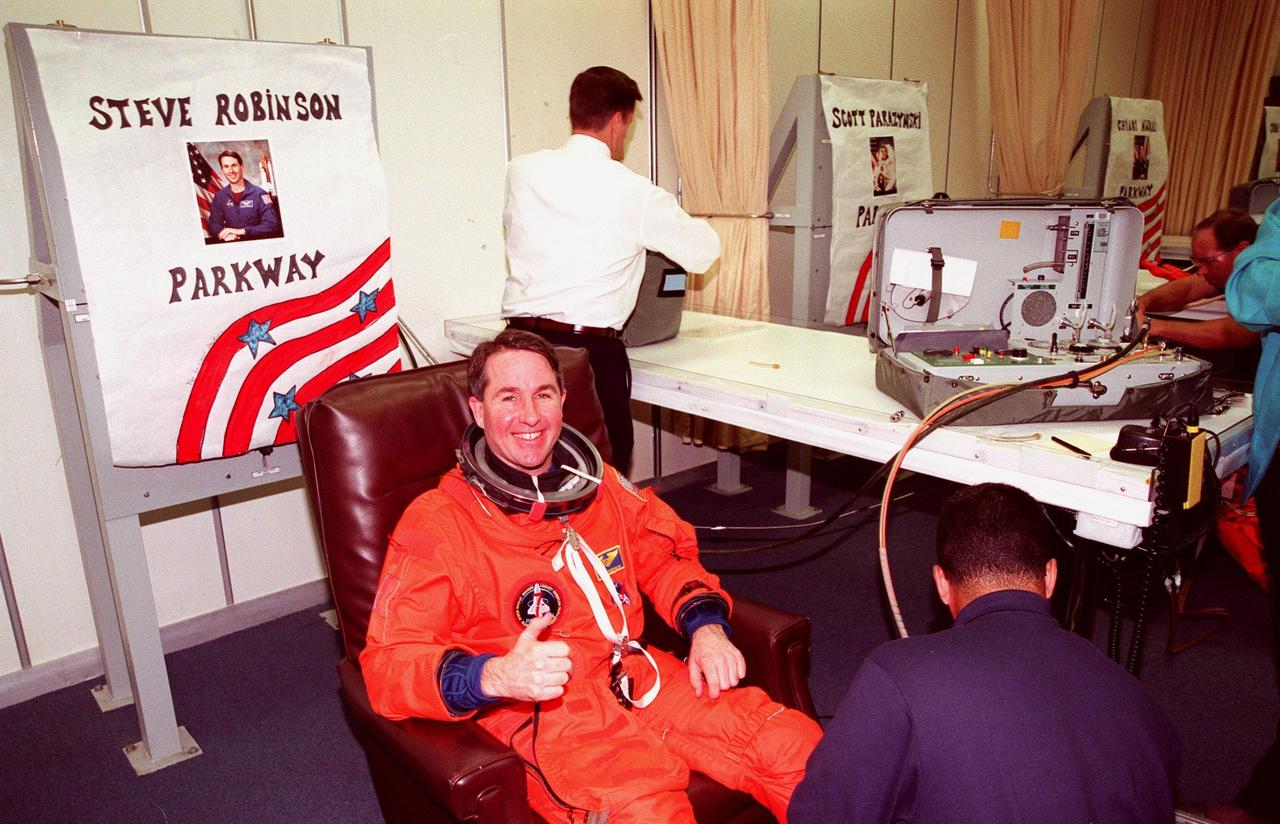
STS-95 Mission Specialist Stephen K. Robinson gives a thumbs up as he dons his flight suit in the Operations and Checkout Building with the help of suit tech George Brittingham (lower right). The final fitting takes place prior to the crew walkout and transport to Launch Pad 39B. Targeted for launch at 2 p.m. EST on Oct. 29, the mission is expected to last 8 days, 21 hours and 49 minutes, and return to KSC at 11:49 a.m. EST on Nov. 7. The STS-95 mission includes research payloads such as the Spartan solar-observing deployable spacecraft, the Hubble Space Telescope Orbital Systems Test Platform, the International Extreme Ultraviolet Hitchhiker, as well as the SPACEHAB single module with experiments on space flight and the aging process
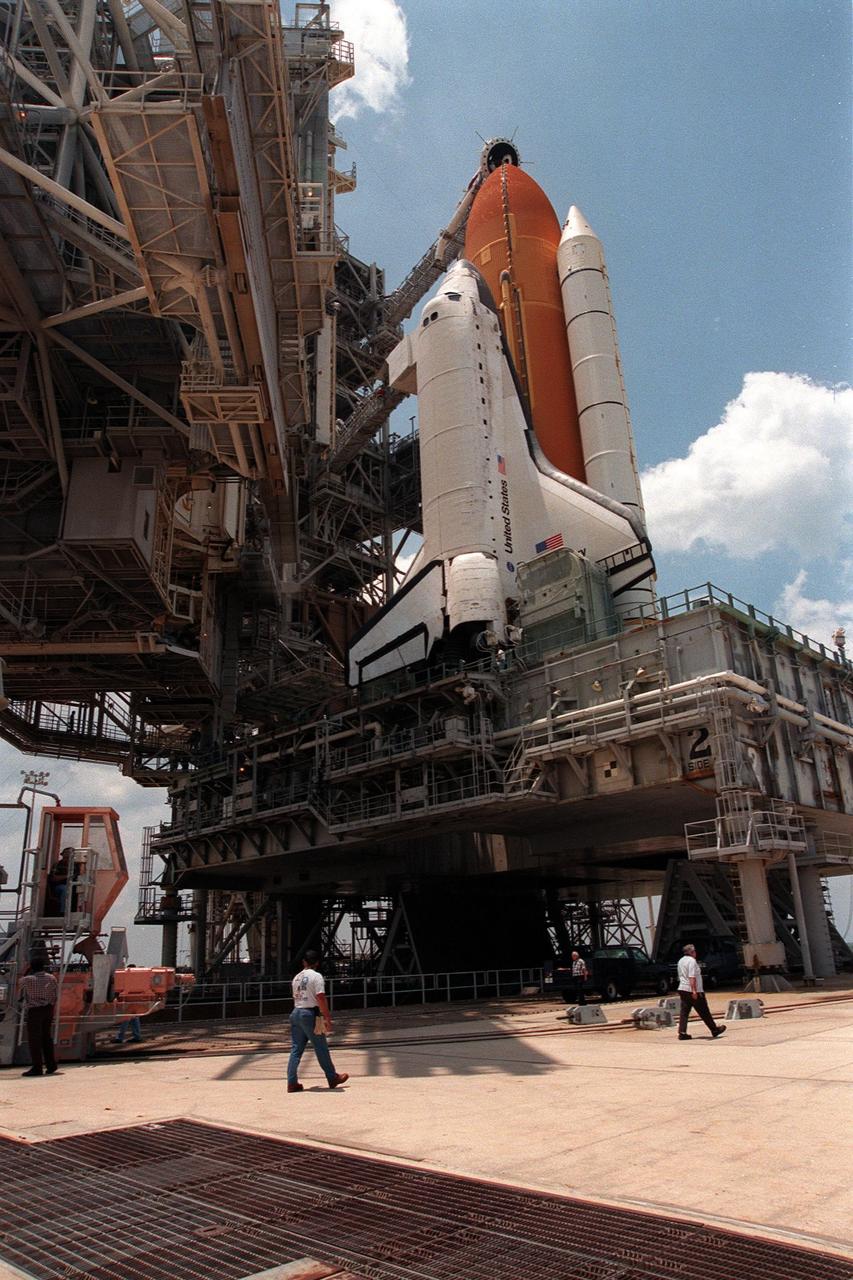
KENNEDY SPACE CENTER, FLA. -- The Rotating Service Structure is rolled back at Launch Pad 39B to reveal the Space Shuttle Discovery, scheduled to launch on mission STS-96 at 6:49 a.m. EDT on May 27. STS-96 is a 10-day logistics and resupply mission for the International Space Station, carrying about 4,000 pounds of supplies to be stored aboard the station, for use by future crews, including laptop computers, cameras, tools, spare parts, and clothing. The mission also includes such payloads as a Russian crane, the Strela; a U.S.-built crane; the Spacehab Oceaneering Space System Box (SHOSS), a logistics items carrier; and STARSHINE, a student-involved experiment. The mission will include a space walk to attach the cranes to the outside of the ISS for use in future construction. Space Shuttle Discovery is due to launch on May 27 at 6:49 a.m. EDT. Landing is expected at the SLF on June 6 about 1:58 a.m. EDT
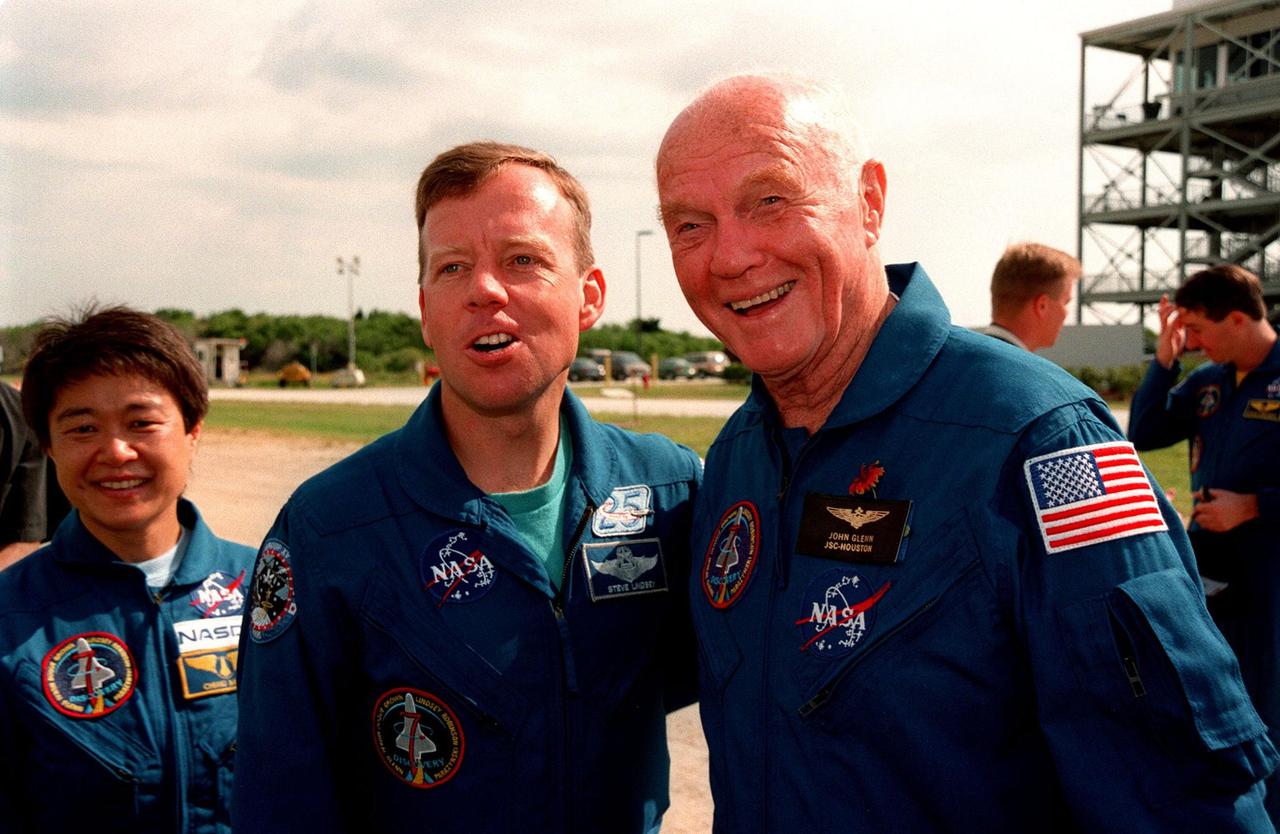
STS-95 Payload Specialist Chiaki Mukai, with the National Space Development Agency of Japan (NASDA), Pilot Steven W. Lindsey and Payload Specialist John H. Glenn Jr., senator from Ohio, share a light moment while visiting with their families on Launch Pad 39B. In the background, at right, is Mission Specialist Stephen K. Robinson. The crew were making final preparations for launch, targeted for liftoff at 2 p.m. on Oct. 29. Other crew members not shown are Mission Commander Curtis L. Brown Jr., Mission Specialist Pedro Duque of Spain, with the European Space Agency (ESA), and Mission Specialist Scott E. Parazynski. The STS-95 mission is expected to last 8 days, 21 hours and 49 minutes, returning to KSC at 11:49 a.m. EST on Nov. 7
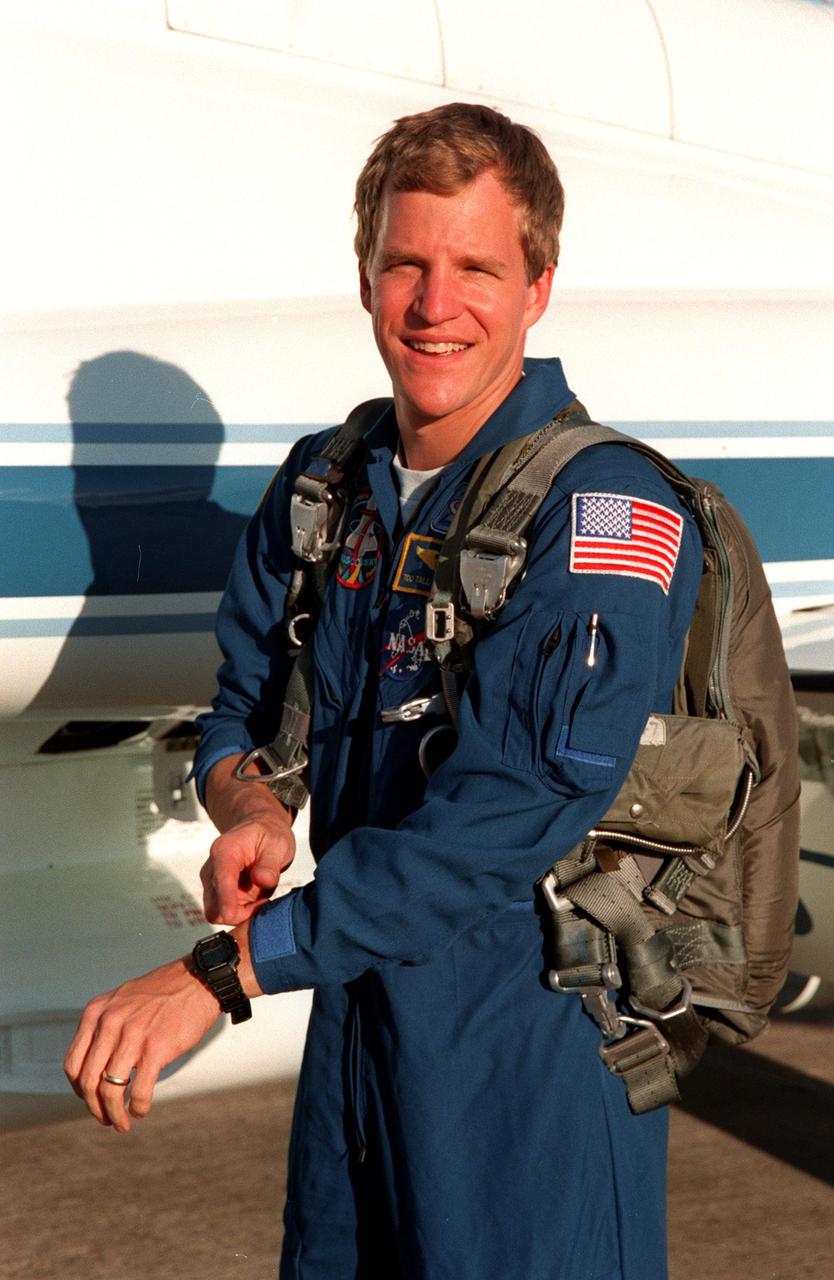
STS-95 Mission Specialist Scott E. Parazynski notes the time on his watch upon his late arrival aboard a T-38 jet at the Shuttle Landing Facility. Parazynski's first plane experienced problems at the stop at Tyndall AFB and he had to wait for another jet and pilot to finish the flight to KSC. He joined other crewmembers Mission Commander Curtis L. Brown Jr., Pilot Steven W. Lindsey, Mission Specialist Stephen K. Robinson, Payload Specialist John H. Glenn Jr., senator from Ohio, Mission Specialist Pedro Duque, with the European Space Agency (ESA), and Payload Specialist Chiaki Mukai, with the National Space Development Agency of Japan (NASDA), for final pre-launch preparations. STS-95 is expected to launch at 2 p.m. EST on Oct. 29, last 8 days, 21 hours and 49 minutes, and land at 11:49 a.m. EST on Nov. 7
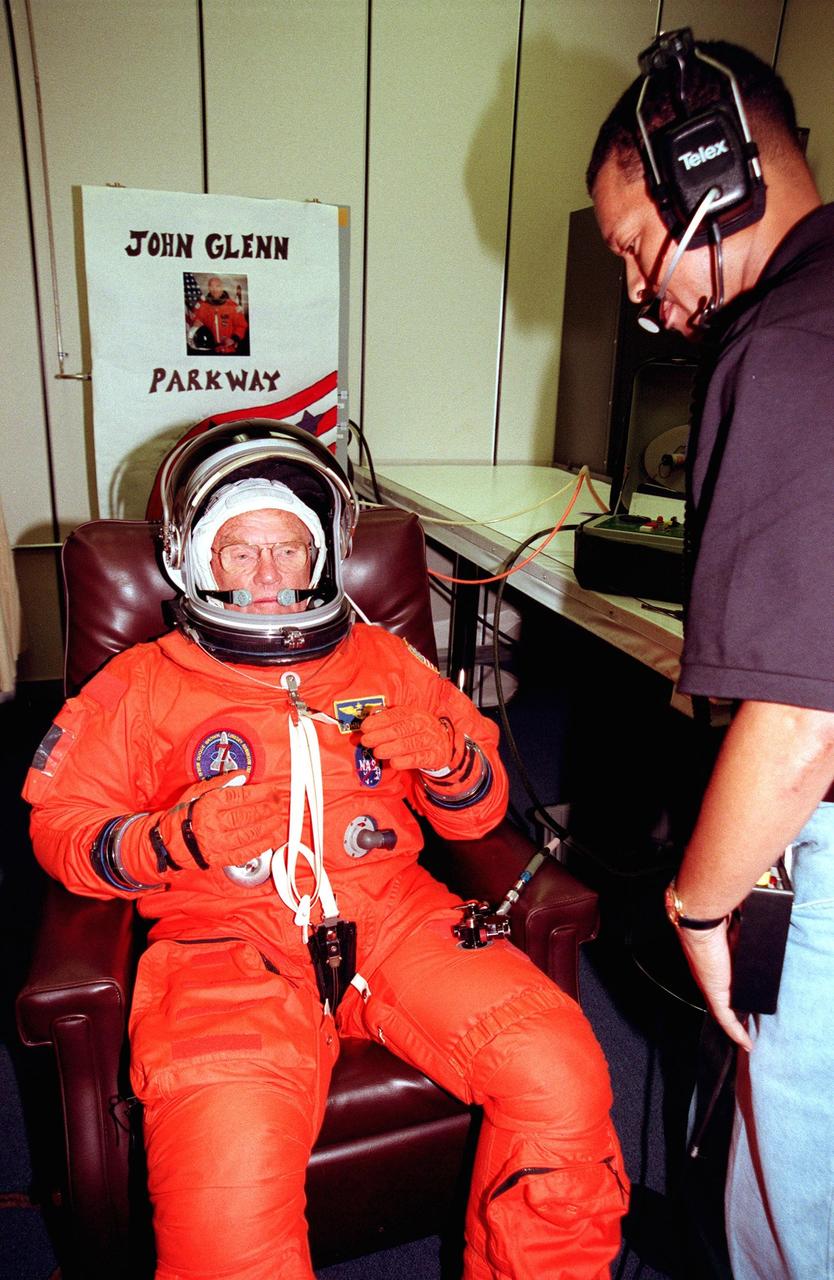
STS-95 Payload Specialist John H. Glenn Jr., senator from Ohio, tests the fitting of his flight suit in the Operations and Checkout Building while suit tech George Brittingham watches. The final fitting takes place prior to the crew walkout and transport to Launch Pad 39B. Targeted for launch at 2 p.m. EST on Oct. 29, the mission is expected to last 8 days, 21 hours and 49 minutes, and return to KSC at 11:49 a.m. EST on Nov. 7. The STS-95 mission includes research payloads such as the Spartan solar-observing deployable spacecraft, the Hubble Space Telescope Orbital Systems Test Platform, the International Extreme Ultraviolet Hitchhiker, as well as the SPACEHAB single module with experiments on space flight and the aging process
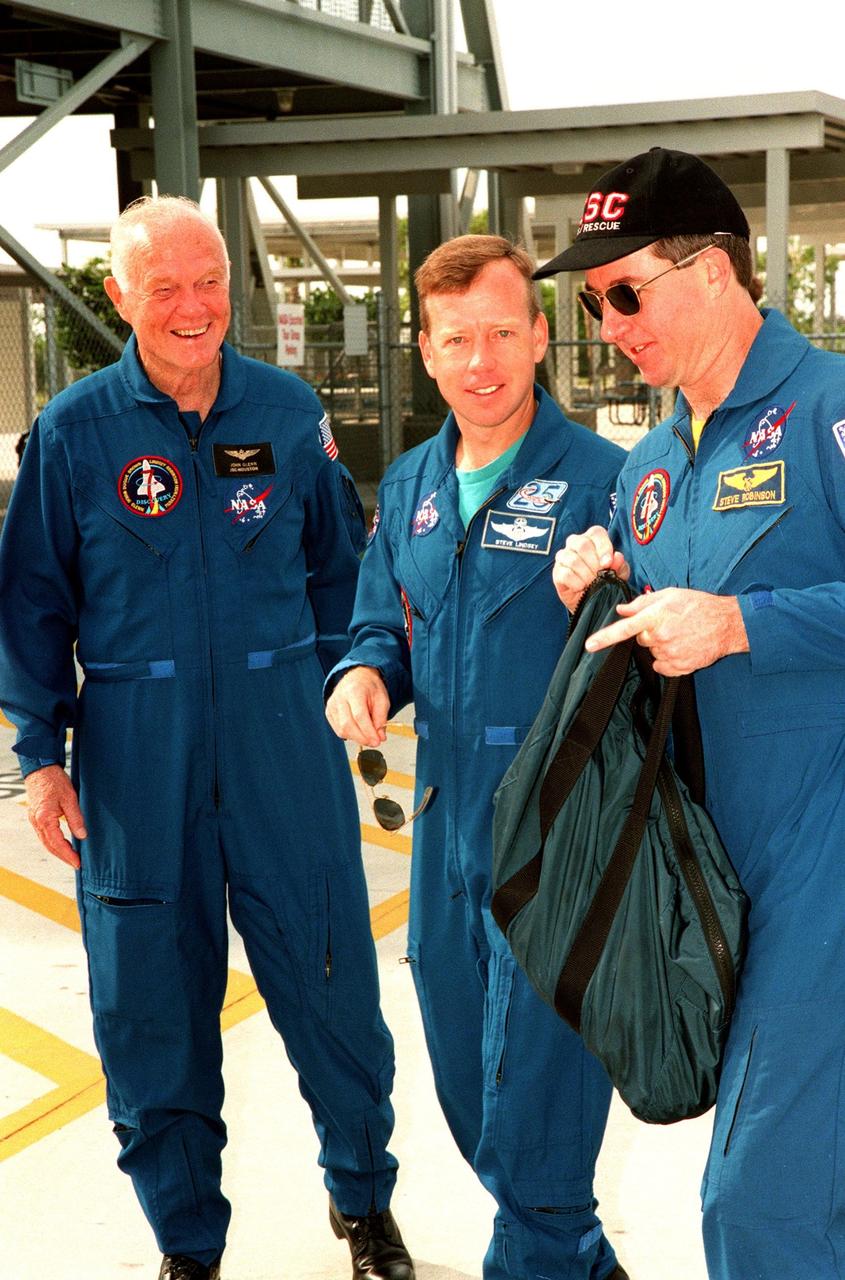
STS-95 Payload Specialist John H. Glenn Jr., senator from Ohio, smiles at his fellow crew members (middle) Pilot Steven W. Lindsey and (right) Mission Specialist Stephen K. Robinson while visiting Launch Pad 39B. The crew were making final preparations for launch, targeted for liftoff at 2 p.m. on Oct. 29. The other crew members (not shown) are Mission Specialist Scott E. Parazynski, Payload Specialist Chiaki Mukai, with the National Space Development Agency of Japan (NASDA), Mission Commander Curtis L. Brown Jr., and Mission Specialist Pedro Duque of Spain, with the European Space Agency (ESA). The STS-95 mission is expected to last 8 days, 21 hours and 49 minutes, returning to KSC at 11:49 a.m. EST on Nov. 7
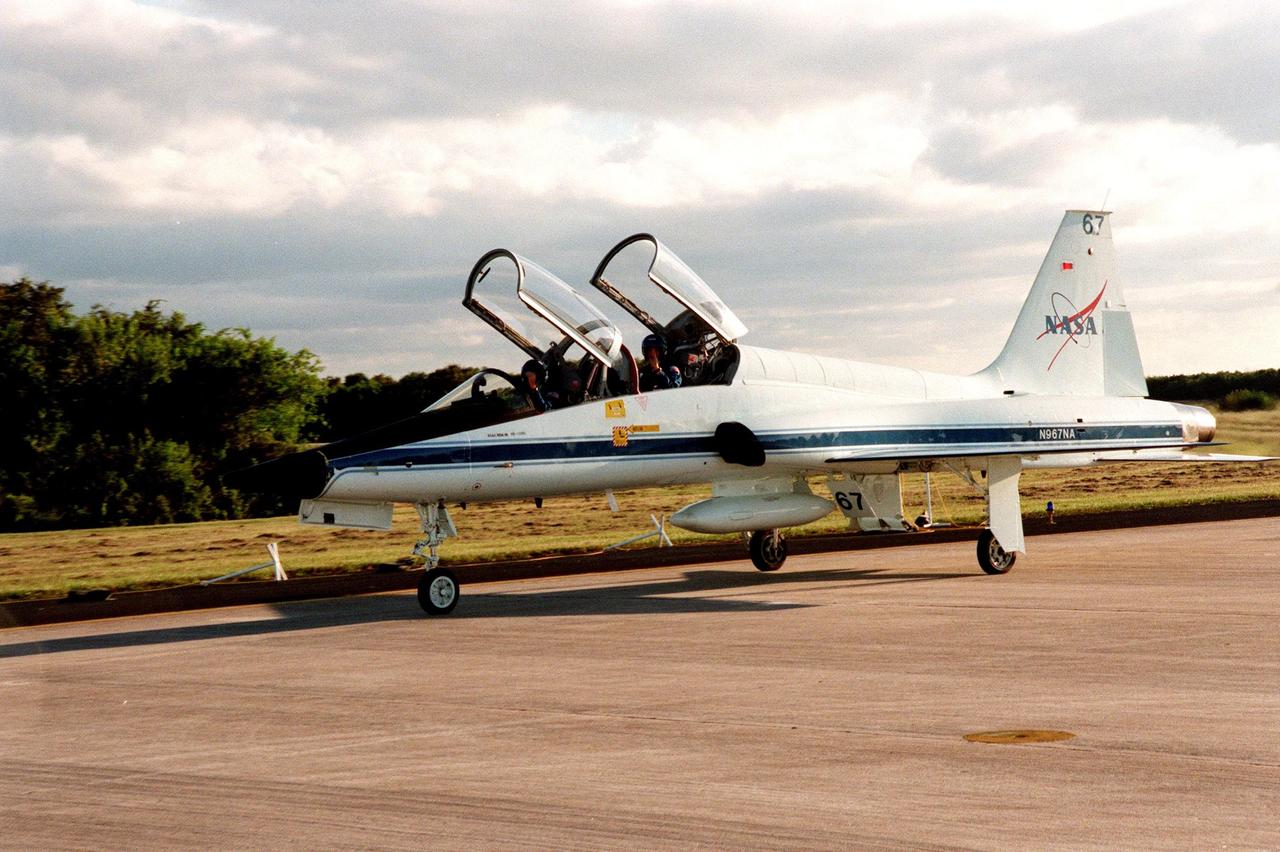
The T-38 jet aircraft arrives at the Shuttle Landing Facility carrying STS-95 Mission Specialist Scott E. Parazynski (second seat). The pilot is astronaut Kent Rominger. Parazynski's first plane experienced problems at the stop at Tyndall AFB and he had to wait for another jet and pilot to finish the flight to KSC. He joined other crewmembers Mission Commander Curtis L. Brown Jr., Pilot Steven W. Lindsey, Mission Specialist Stephen K. Robinson, Payload Specialist John H. Glenn Jr., senator from Ohio, Mission Specialist Pedro Duque, with the European Space Agency (ESA), and Payload Specialist Chiaki Mukai, with the National Space Development Agency of Japan (NASDA), for final pre-launch preparations. STS-95 is expected to launch at 2 p.m. EST on Oct. 29, last 8 days, 21 hours and 49 minutes, and land at 11:49 a.m. EST on Nov. 7
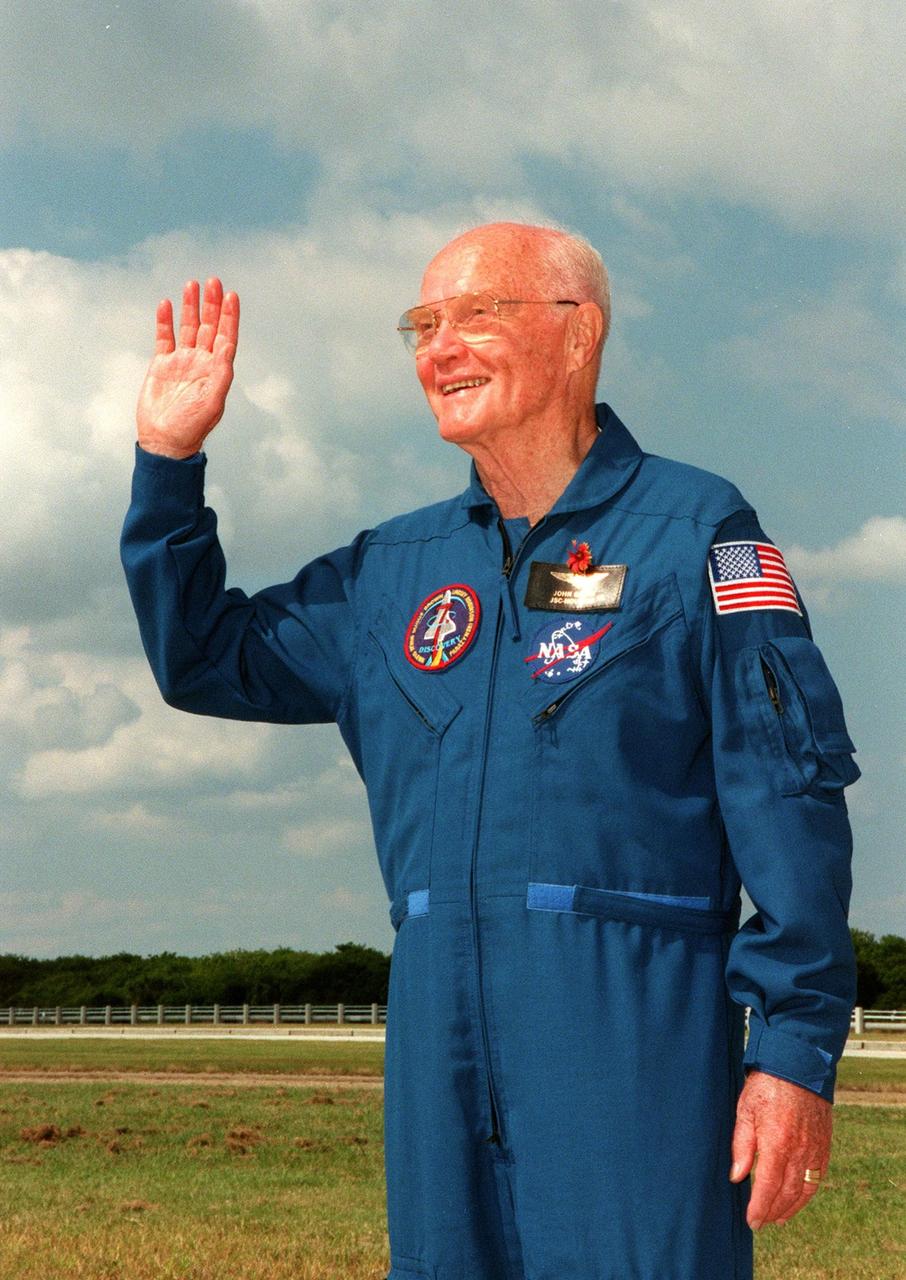
STS-95 Payload Specialist Payload Specialist John H. Glenn Jr., senator from Ohio, waves at family and well-wishers while at Launch Pad 39B. The crew were making final preparations for launch, targeted for liftoff at 2 p.m. on Oct. 29. Other crew members not shown are Mission Commander Curtis L. Brown Jr., Pilot Steven W. Lindsey, Mission Specialist Pedro Duque of Spain, with the European Space Agency (ESA), Mission Specialist Scott E. Parazynski, Mission Specialist Stephen K. Robinson, and Chiaki Mukai, with the National Space Development Agency of Japan (NASDA). The STS-95 mission is expected to last 8 days, 21 hours and 49 minutes, returning to KSC at 11:49 a.m. EST on Nov. 7
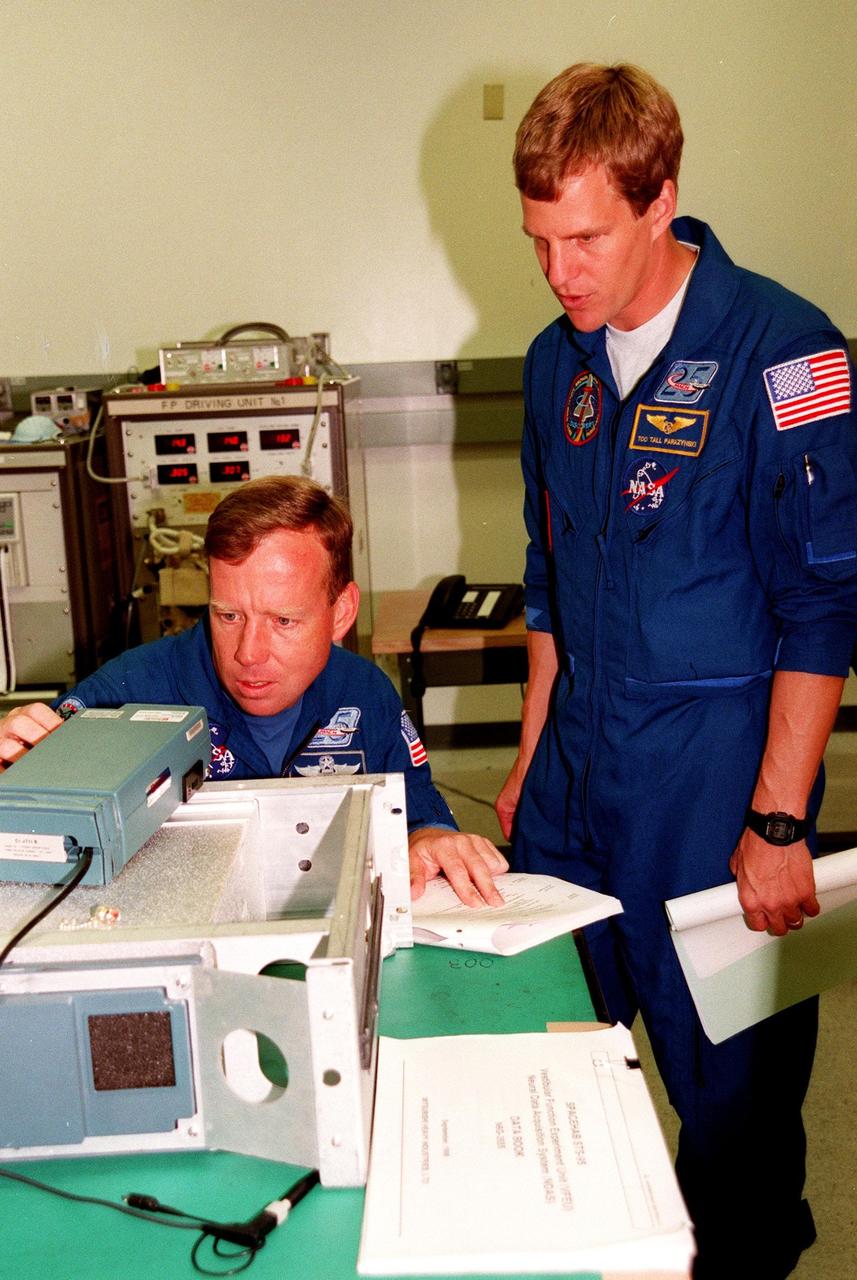
STS-95 Pilot Steven W. Lindsey and Mission Specialist Scott E. Parazynski look at equipment being used in an experiment with toadfish on the mission. The fish will be electronically monitored to determine the effect of gravitational changes on the inner-ear system. Lindsey and Parazynski and other crewmembers were making final preparations for launch, targeted for liftoff at 2 p.m. on Oct. 29. The STS-95 crew also includes Mission Commander Curtis L. Brown Jr., Mission Specialists Stephen K. Robinson and Pedro Duque, with the European Space Agency (ESA), Payload Specialists John H. Glenn Jr., senator from Ohio, and Chiaki Mukai, with the National Space Development Agency of Japan (NASDA), ). The mission is expected to last 8 days, 21 hours and 49 minutes, returning to KSC at 11:49 a.m. EST on Nov. 7
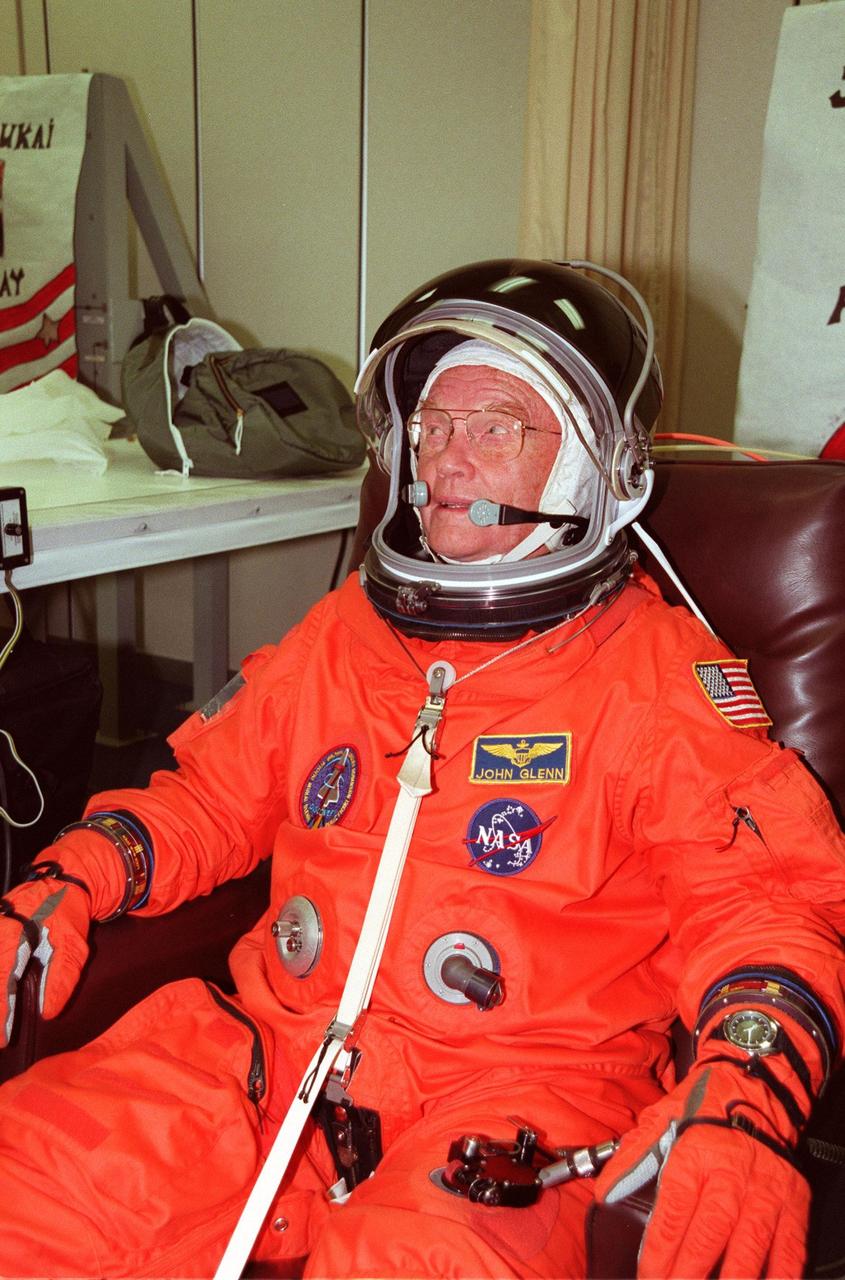
STS-95 Payload Specialist John H. Glenn Jr., senator from Ohio, smiles as he dons his flight suit in the Operations and Checkout Building. The final fitting takes place prior to the crew walkout and transport to Launch Pad 39B. Targeted for launch at 2 p.m. EST on Oct. 29, the mission is expected to last 8 days, 21 hours and 49 minutes, and return to KSC at 11:49 a.m. EST on Nov. 7. The STS-95 mission includes research payloads such as the Spartan solar-observing deployable spacecraft, the Hubble Space Telescope Orbital Systems Test Platform, the International Extreme Ultraviolet Hitchhiker, as well as the SPACEHAB single module with experiments on space flight and the aging process
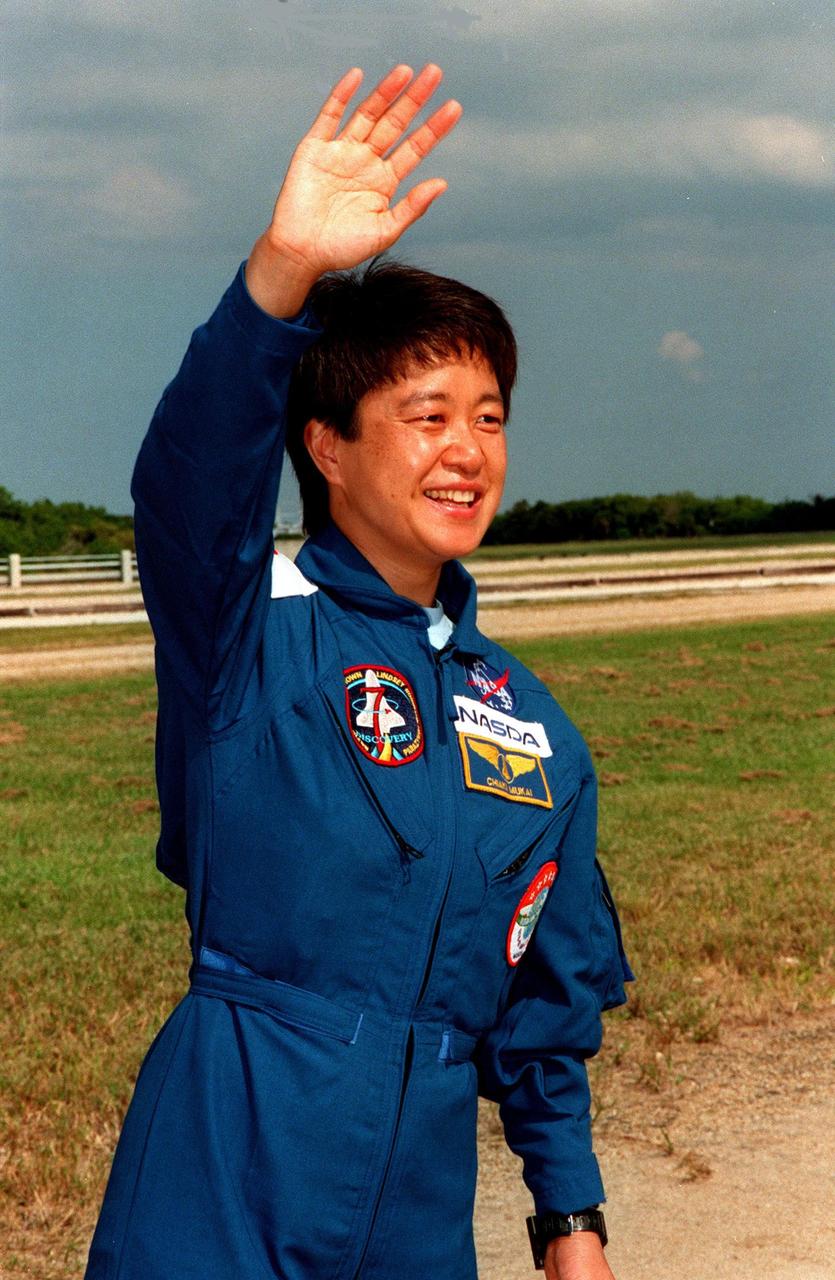
STS-95 Payload Specialist Chiaki Mukai, with the National Space Development Agency of Japan (NASDA), smiles at well-wishers while at Launch Pad 39B. The crew were making final preparations for launch, targeted for liftoff at 2 p.m. on Oct. 29. Other crew members not shown are Mission Commander Curtis L. Brown Jr., Pilot Steven W. Lindsey, Mission Specialist Pedro Duque of Spain, with the European Space Agency (ESA), Mission Specialist Scott E. Parazynski, Mission Specialist Stephen K. Robinson, and Payload Specialist John H. Glenn Jr., senator from Ohio. The STS-95 mission is expected to last 8 days, 21 hours and 49 minutes, returning to KSC at 11:49 a.m. EST on Nov. 7
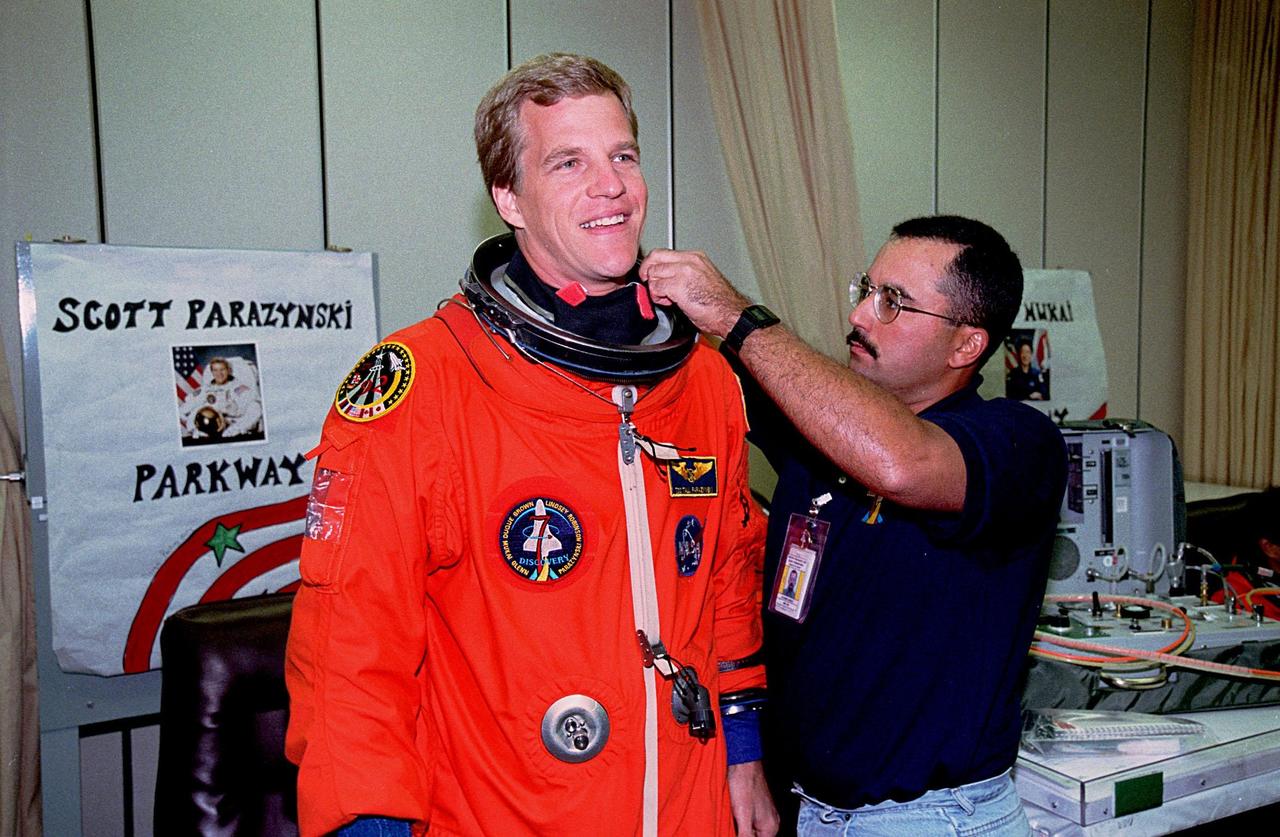
STS-95 Mission Specialist Scott E. Parazynski gets help with his flight suit in the Operations and Checkout Building from a suit technician George Brittingham. The final fitting takes place prior to the crew walkout and transport to Launch Pad 39B. Targeted for launch at 2 p.m. EST on Oct. 29, the mission is expected to last 8 days, 21 hours and 49 minutes, and return to KSC at 11:49 a.m. EST on Nov. 7. The STS-95 mission includes research payloads such as the Spartan solar-observing deployable spacecraft, the Hubble Space Telescope Orbital Systems Test Platform, the International Extreme Ultraviolet Hitchhiker, as well as the SPACEHAB single module with experiments on space flight and the aging process
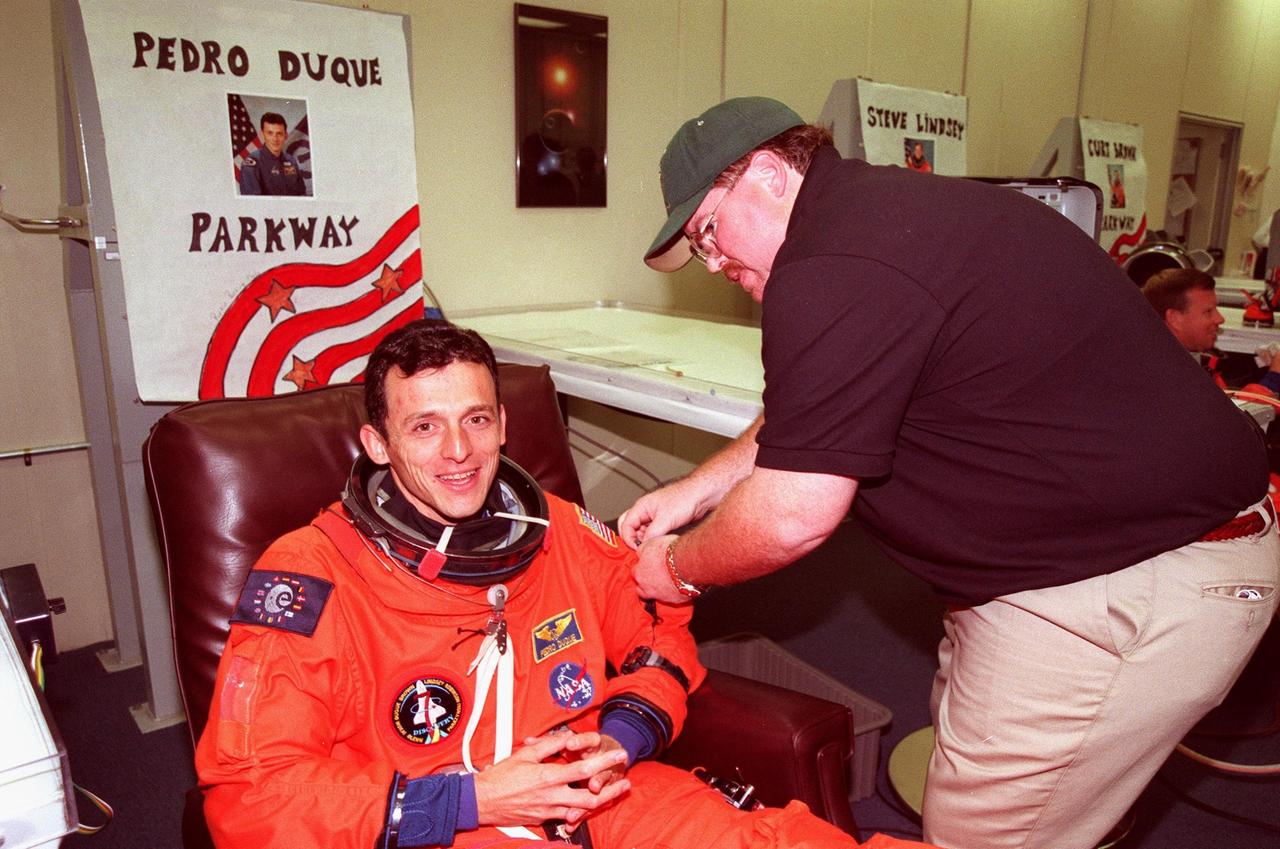
STS-95 Mission Specialist Pedro Duque of Spain, with the European Space Agency, is helped with his flight suit by suit tech Tommy McDonald in the Operations and Checkout Building. The final fitting takes place prior to the crew walkout and transport to Launch Pad 39B. Targeted for launch at 2 p.m. EST on Oct. 29, the mission is expected to last 8 days, 21 hours and 49 minutes, and return to KSC at 11:49 a.m. EST on Nov. 7. The STS-95 mission includes research payloads such as the Spartan solar-observing deployable spacecraft, the Hubble Space Telescope Orbital Systems Test Platform, the International Extreme Ultraviolet Hitchhiker, as well as the SPACEHAB single module with experiments on space flight and the aging process
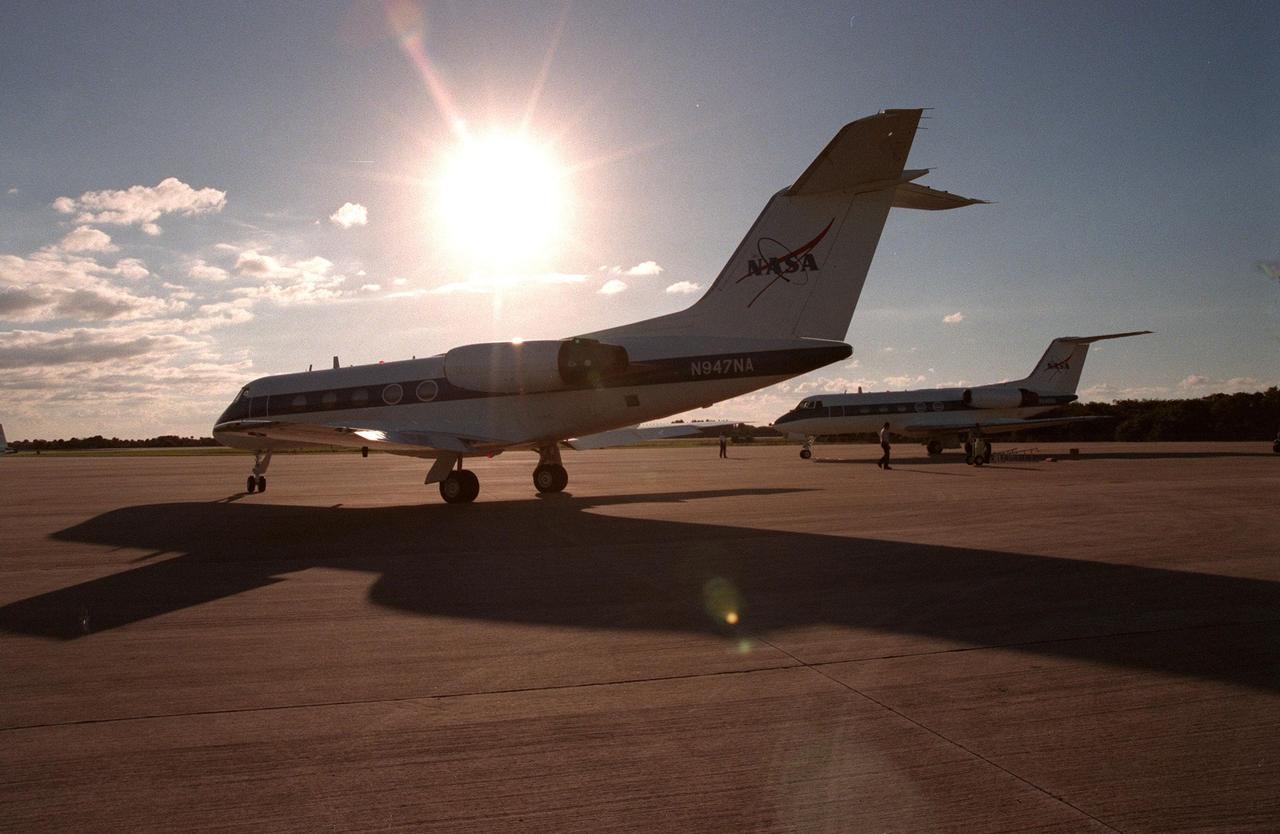
Practicing takeoffs and landings in the Shuttle Training Aircraft in the late afternoon sunlight, STS-95 Mission Commander Curtis L. Brown Jr. taxis across the Shuttle Landing Facility (at left) while Pilot Steven W. Lindsey waits his turn (at right). The STA is designed to fly like the Shuttle. Brown, Lindsey and the rest of the crew are at KSC for final launch preparations. STS-95 is expected to launch at 2 p.m. EST on Oct. 29, last 8 days, 21 hours and 49 minutes, and land at 11:49 a.m. EST on Nov. 7. Other crew members are Mission Specialist Scott E. Parazynski, Mission Specialist Stephen K. Robinson, Payload Specialist John H. Glenn Jr., senator from Ohio, Mission Specialist Pedro Duque, with the European Space Agency (ESA), and Payload Specialist Chiaki Mukai, with the National Space Development Agency of Japan (NASDA)
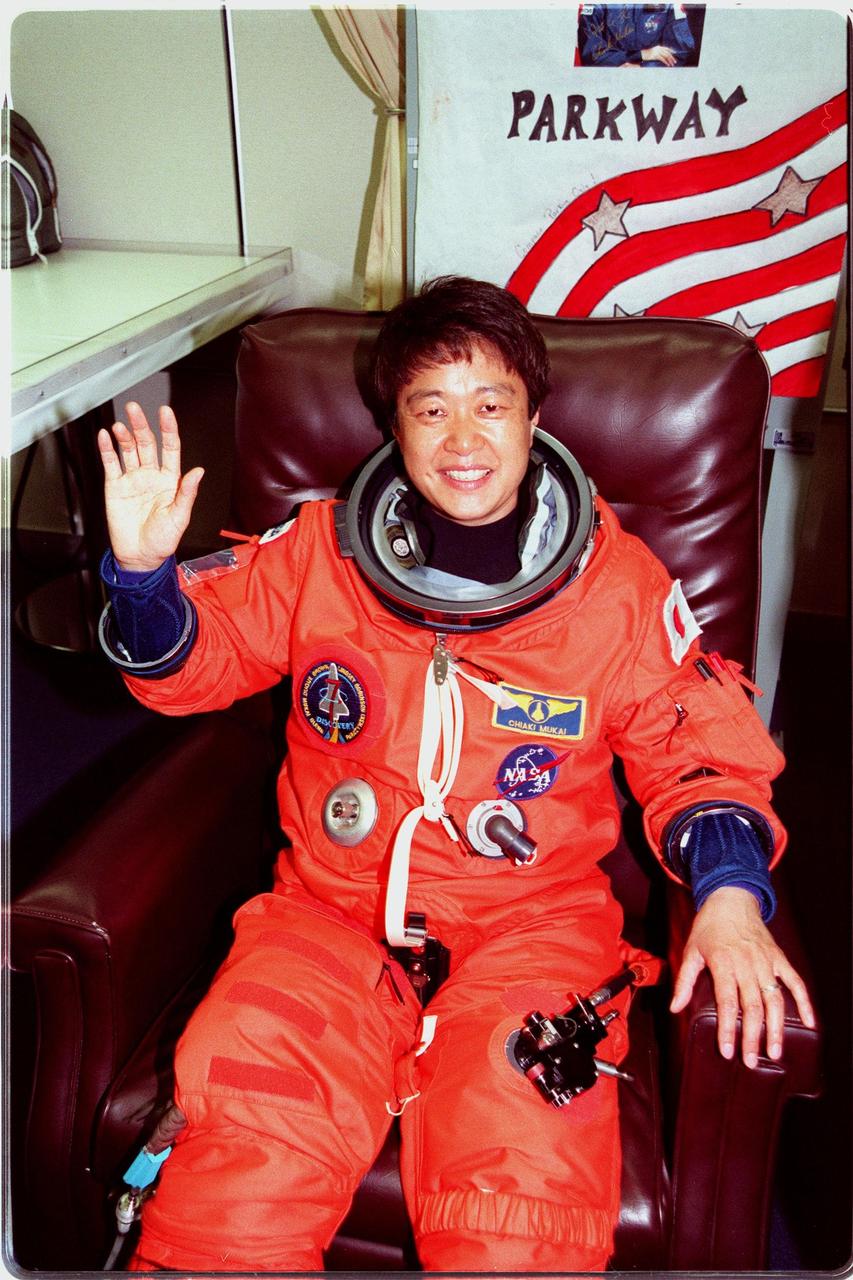
STS-95 Payload Specialist Chiaki Mukai, (M.D., Ph.D.), with the National Space Development Agency of Japan (NASDA), smiles as she dons her flight suit in the Operations and Checkout Building. The final fitting takes place prior to the crew walkout and transport to Launch Pad 39B. Targeted for launch at 2 p.m. EST on Oct. 29, the mission is expected to last 8 days, 21 hours and 49 minutes, and return to KSC at 11:49 a.m. EST on Nov. 7. The STS-95 mission includes research payloads such as the Spartan solar-observing deployable spacecraft, the Hubble Space Telescope Orbital Systems Test Platform, the International Extreme Ultraviolet Hitchhiker, as well as the SPACEHAB single module with experiments on space flight and the aging process
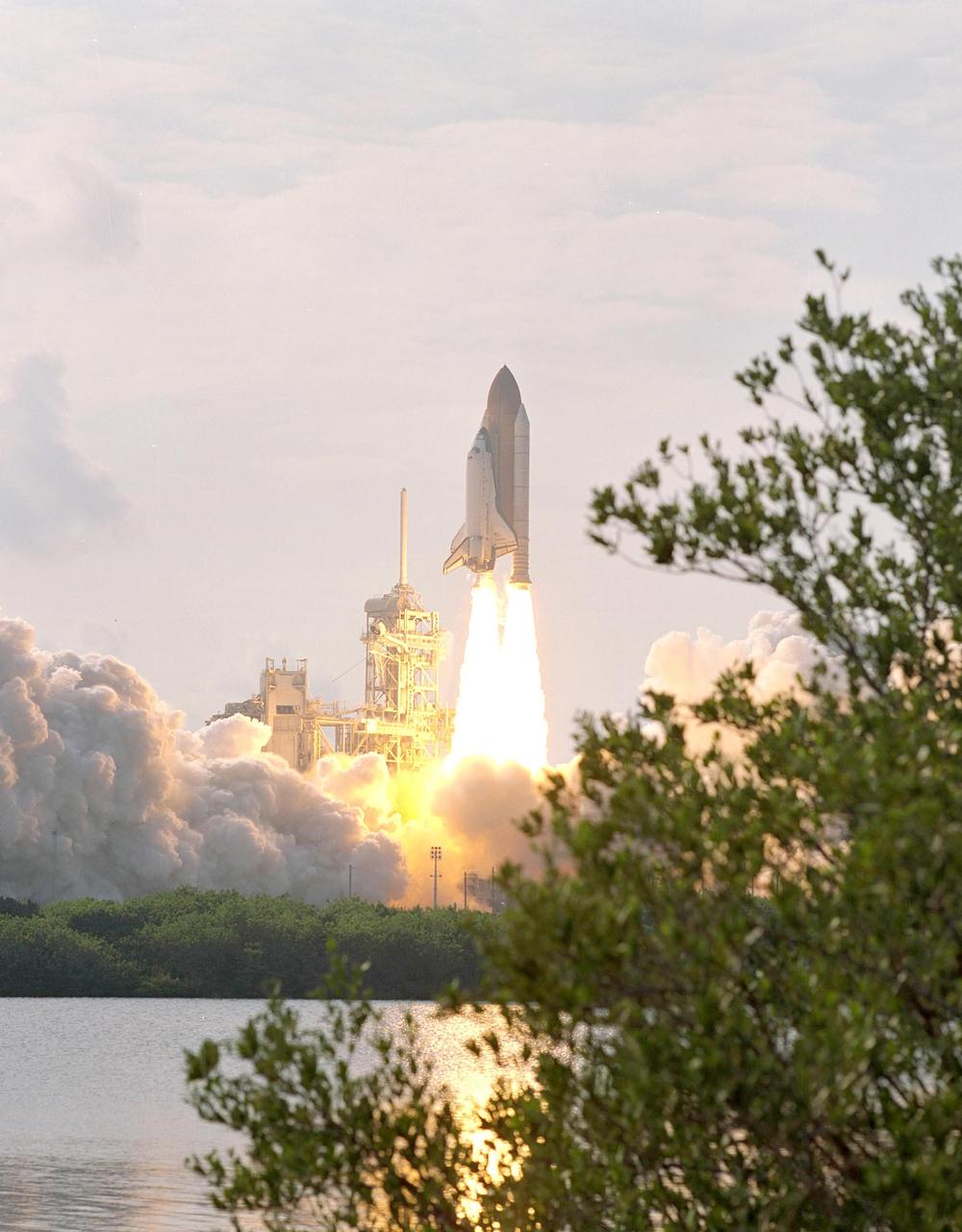
KENNEDY SPACE CENTER, FLA. - Viewed from across the nearby water, the launch of Space Shuttle Endeavour fills the horizon. Liftoff at 5:22:49 p.m. EDT sent Endeavour and its crew of four, plus the Expedition 5 crew, on its way to the International space Station on mission STS-111. This mission marks the 14th Shuttle flight to the International Space Station and the third Shuttle mission this year. Mission STS-111 is the 18th flight of Endeavour and the 110th flight overall in NASA's Space Shuttle program
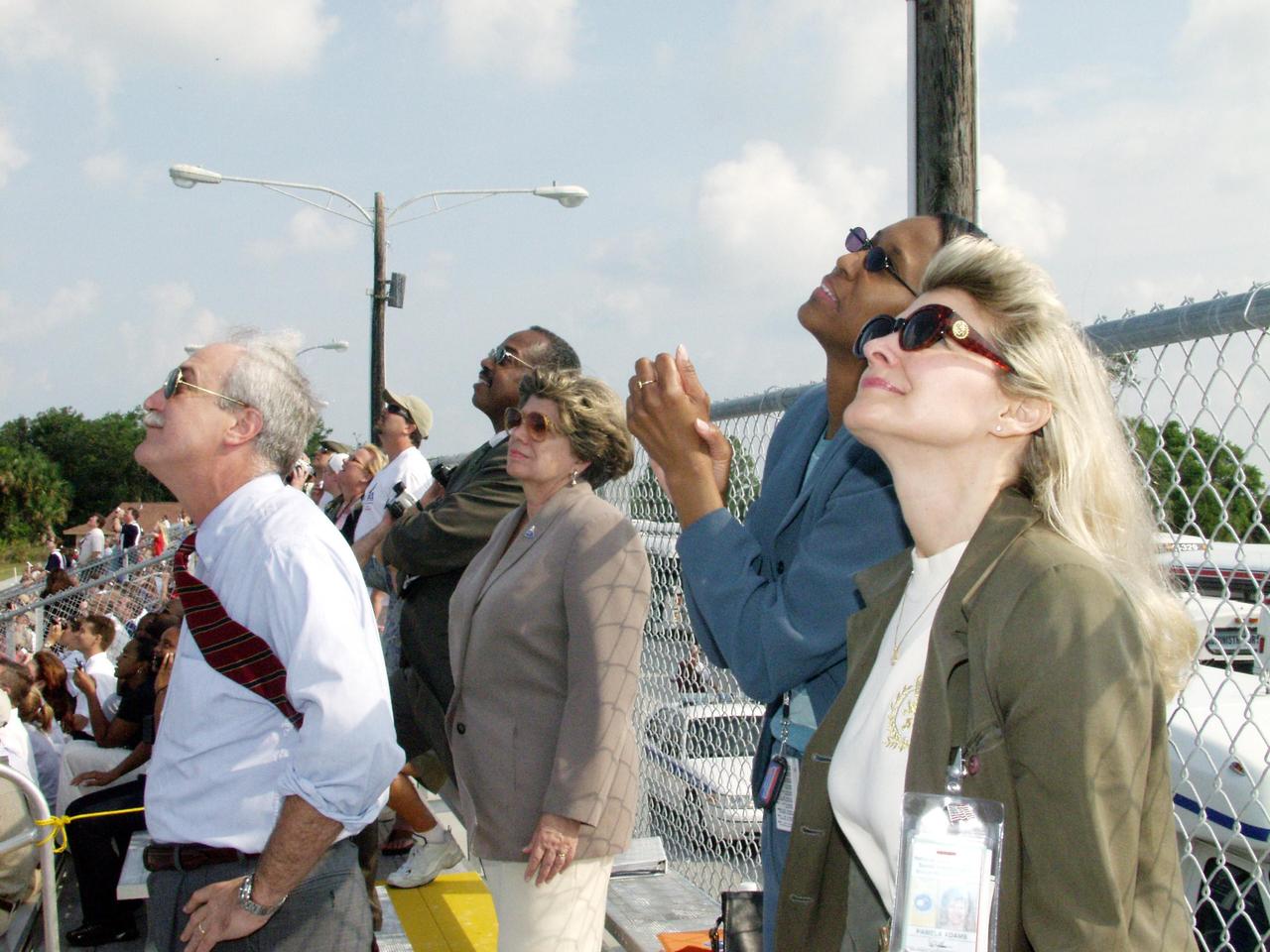
KENNEDY SPACE CENTER, FLA. -- NASA Administrator Sean O'Keefe (left), External Relations and Business Development Director JoAnn Morgan (center) and other guests watch the launch of Space Shuttle Endeavour on mission STS-111 to the International Space Station. Liftoff occurred on time at 5:22:49 p.m EDT. This mission marks the 14th Shuttle flight to the International Space Station and the third Shuttle mission this year. Mission STS-111 is the 18th flight of Endeavour and the 110th flight overall in NASA's Space Shuttle program
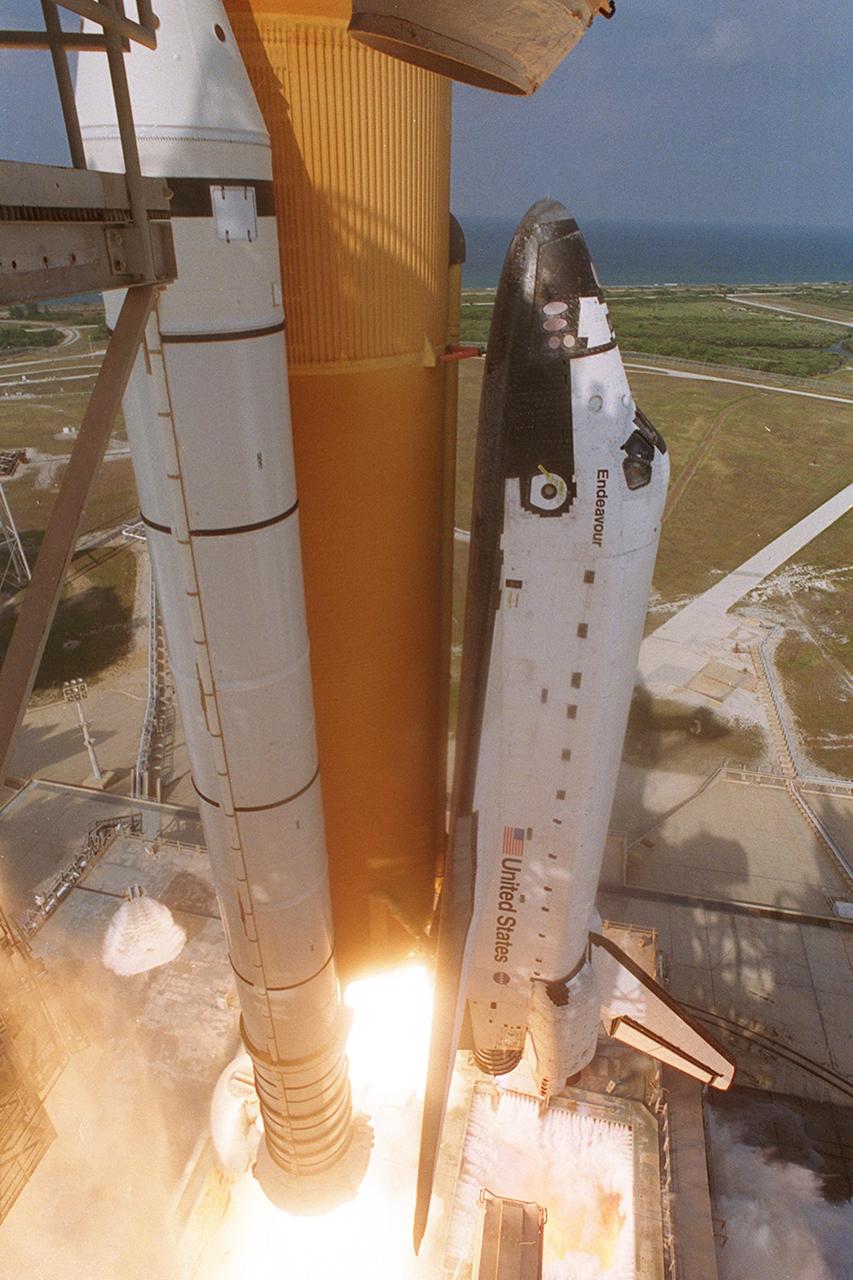
KENNEDY SPACE CENTER, FLA. -- A camera at the pad catches this closeup view of Space Shuttle Endeavour just after liftoff, which occurred at 5:22:49 p.m. EDT. The Shuttle and crew are bound for the International Space Station on mission STS-111, a utilization flight. This mission marks the 14th Shuttle flight to the International Space Station and the third Shuttle mission this year. Mission STS-111 is the 18th flight of Endeavour and the 110th flight overall in NASA's Space Shuttle program
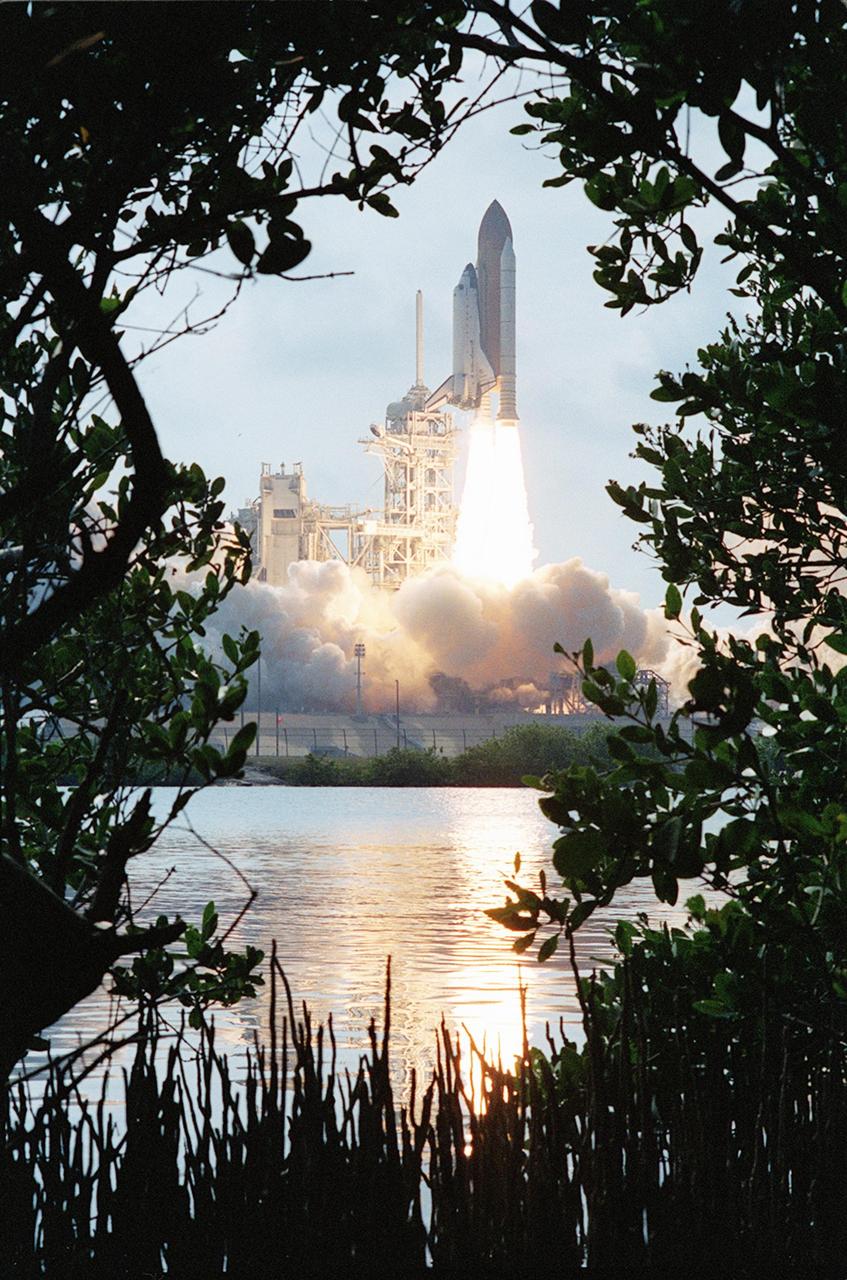
KENNEDY SPACE CENTER, FLA. -- Water near Launch Pad 39A reflects the fiery trail behind Space Shuttle Endeavour as it lifts off on mission STS-111. Liftoff occurred at 5:22:49 p.m. EDT. This mission marks the 14th Shuttle flight to the International Space Station and the third Shuttle mission this year. Mission STS-111 is the 18th flight of Endeavour and the 110th flight overall in NASA's Space Shuttle program
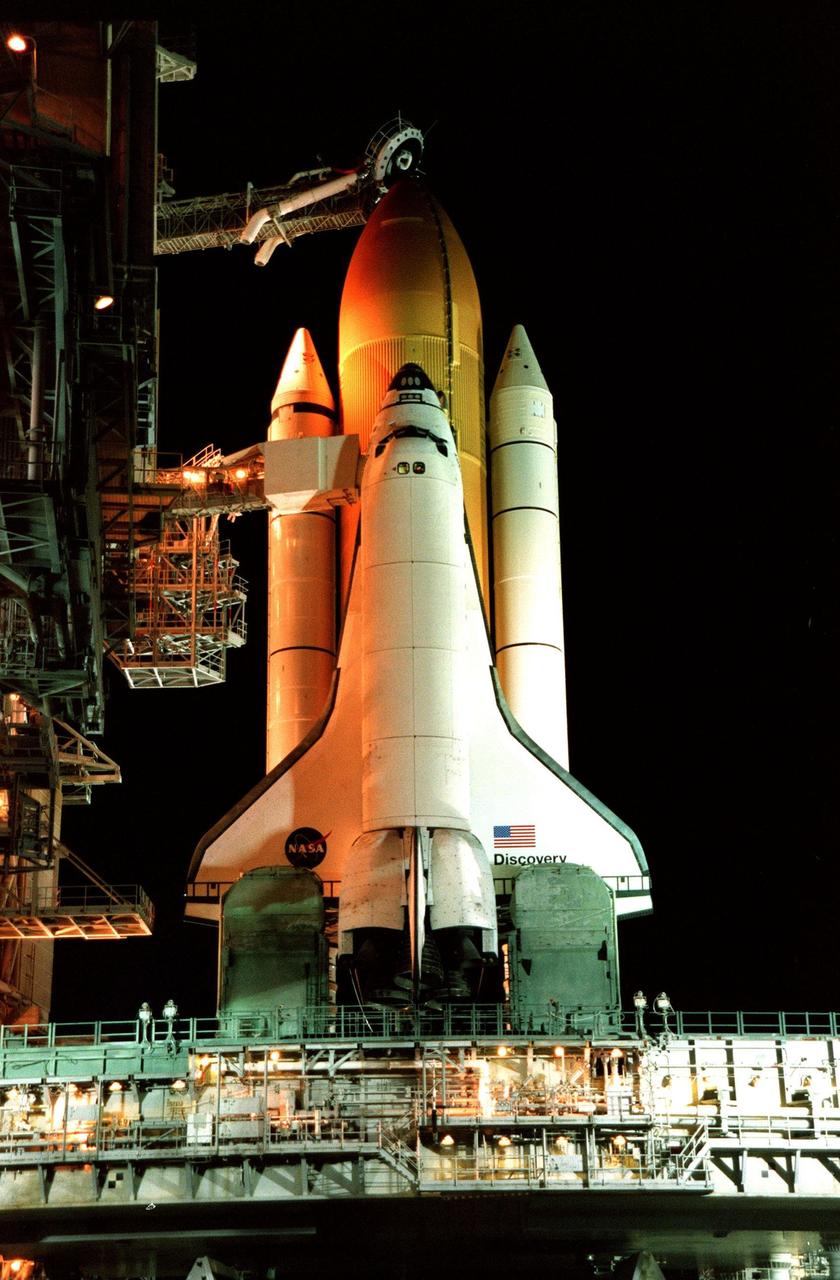
After its Rotational Service Structure is rolled back, the Space Shuttle Discovery awaits the dawn of day on its scheduled day of launch on mission STS-95 at Launch Pad 39B. Liftoff is scheduled for 2 p.m. on Oct. 29. The STS-95 mission is expected to last almost 9 days, with a landing at KSC at 11:49 a.m. EST on Nov. 7
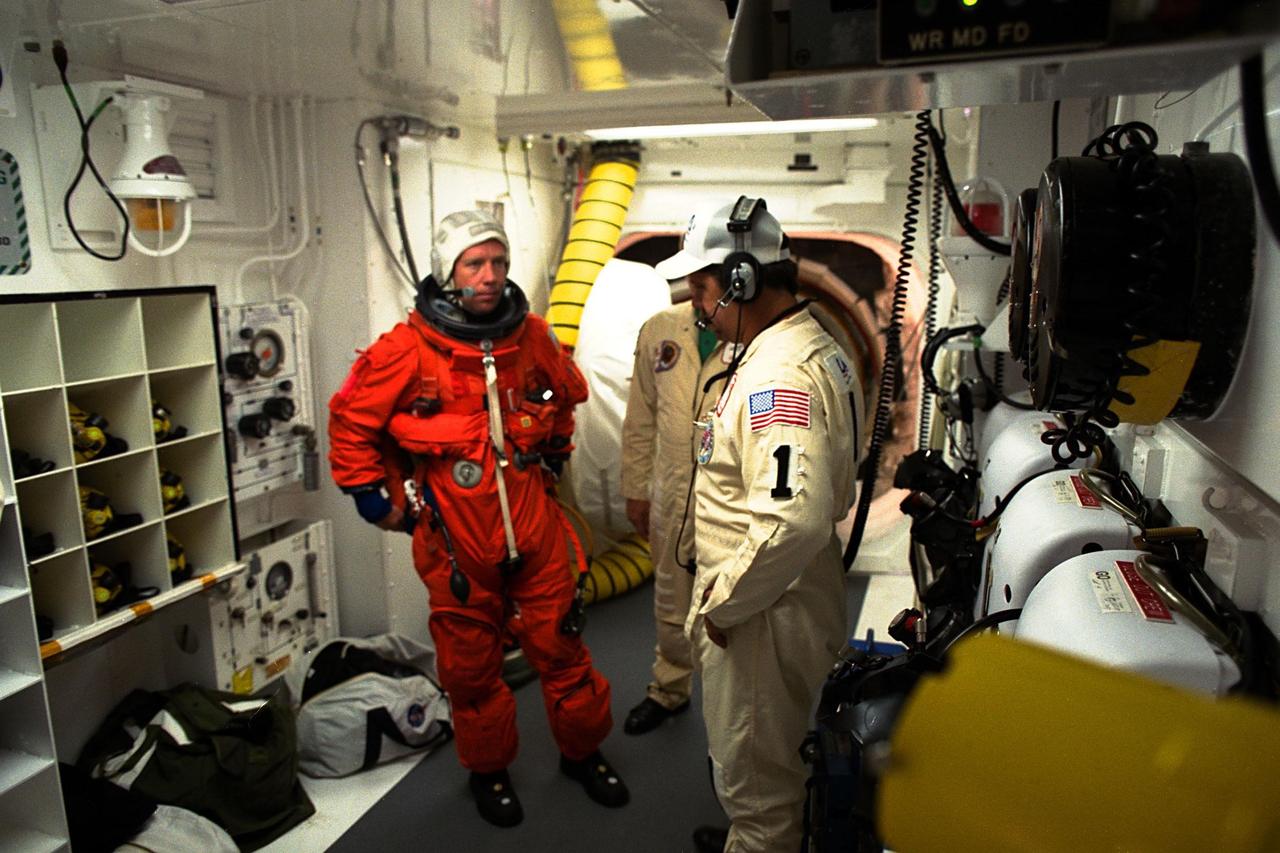
STS-87 Pilot Steven Lindsey is inspected before launch in his ascent and re-entry flight suit in the white room at Launch Pad 39B by Travis Thompson, USA orbiter vehicle closeout chief. STS-87 is the fourth flight of the United States Microgravity Payload and Spartan-201. Although this is his first Shuttle flight, Lindsey has logged more than 2,700 hours of flying time in 49 different types of aircraft
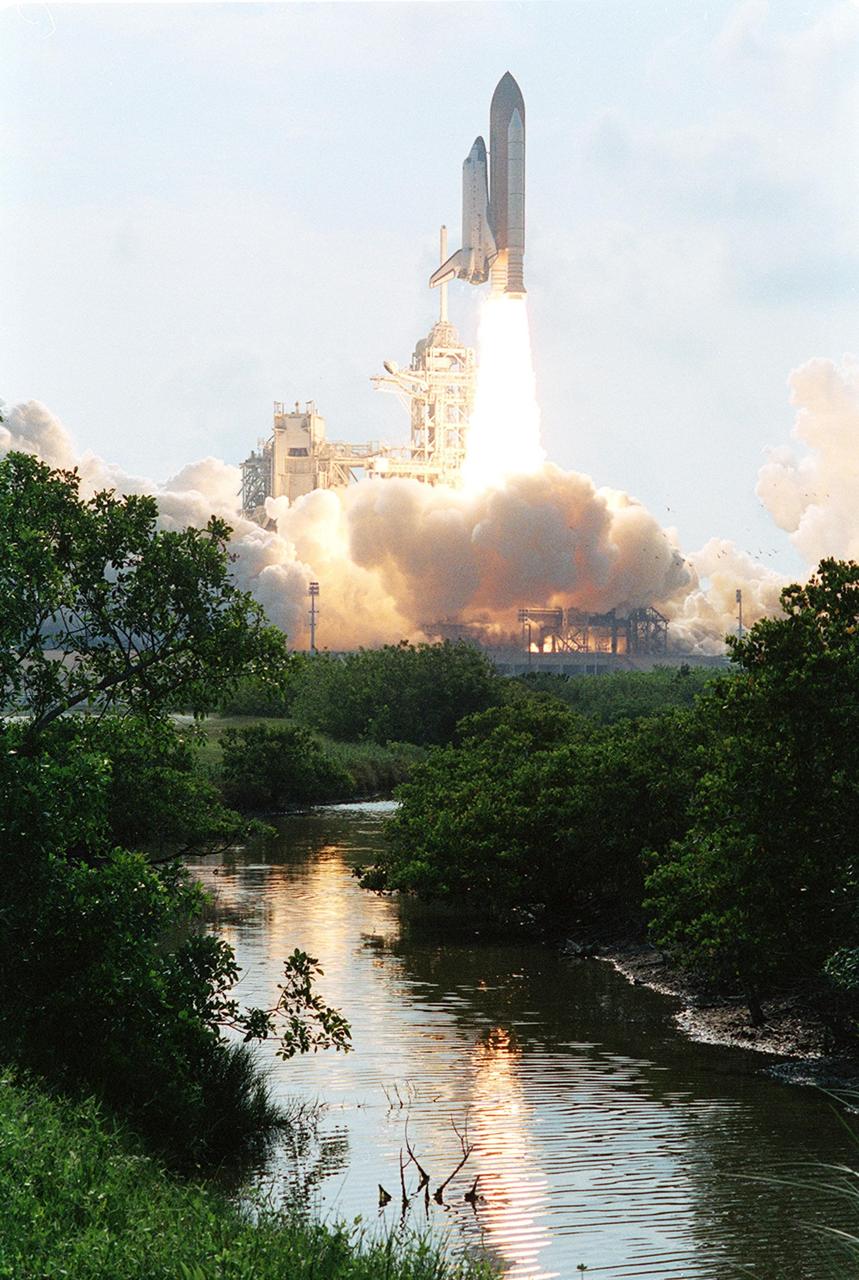
KENNEDY SPACE CENTER, FLA. -- Water near Launch Pad 39A reflects the fiery trail behind Space Shuttle Endeavour as it lifts off on mission STS-111. Liftoff occurred at 5:22:49 p.m. EDT. This mission marks the 14th Shuttle flight to the International Space Station and the third Shuttle mission this year. Mission STS-111 is the 18th flight of Endeavour and the 110th flight overall in NASA's Space Shuttle program
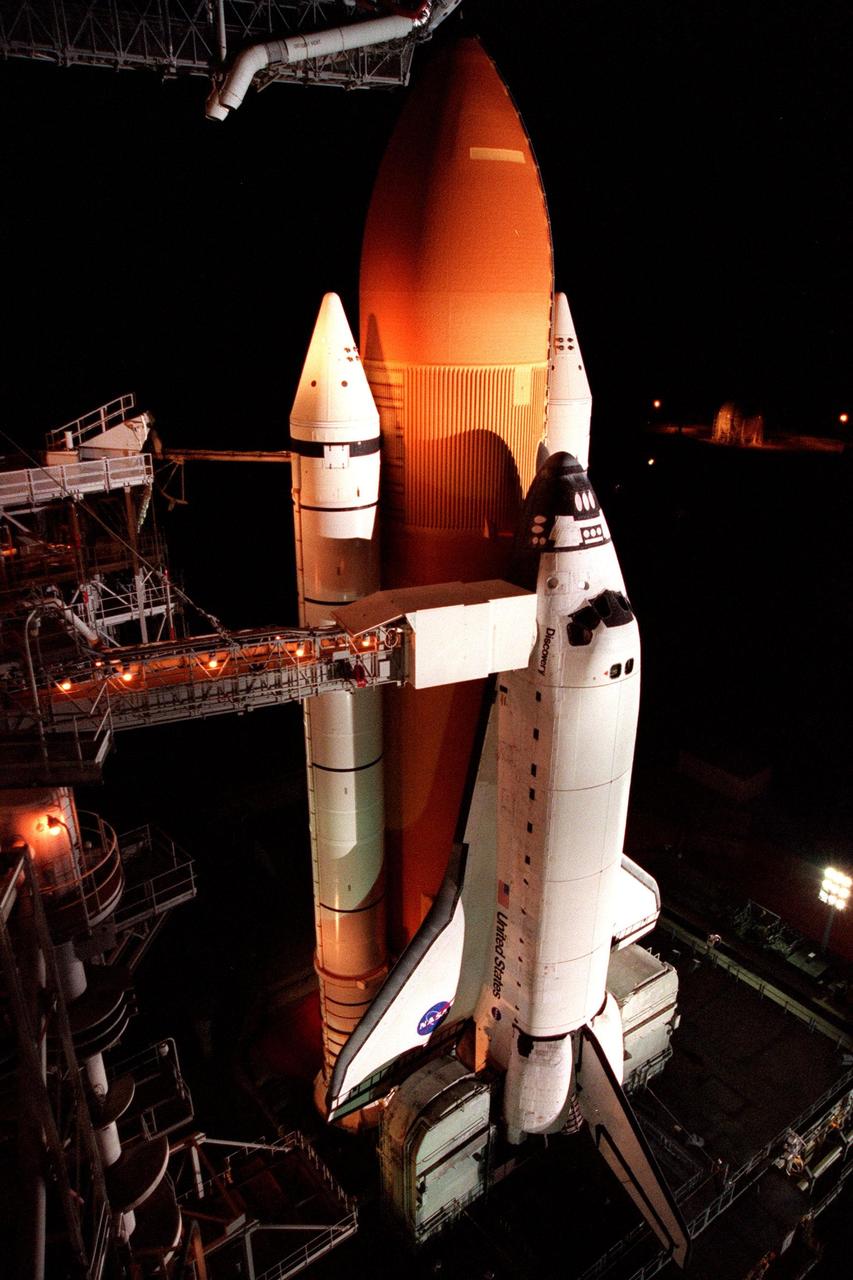
After its Rotational Service Structure is rolled back, the Space Shuttle Discovery awaits the dawn of day on its scheduled day of launch on mission STS-95 at Launch Pad 39B. Liftoff is scheduled for 2 p.m. on Oct. 29. The STS-95 mission is expected to last almost 9 days, with a landing at KSC at 11:49 a.m. EST on Nov. 7
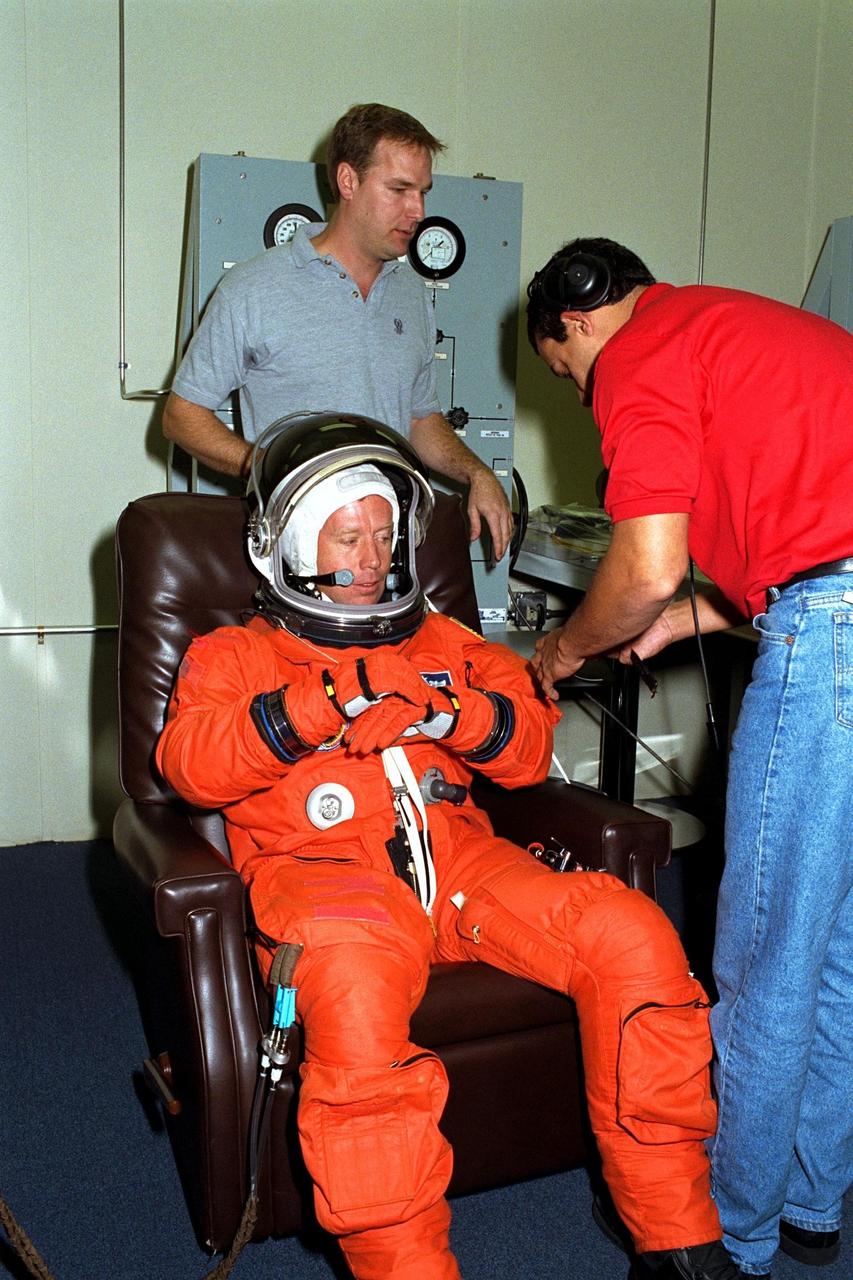
STS-87 Pilot Steven Lindsey dons his launch and entry suit with the help of two assistants in the Operations and Checkout Building. Shortly, he and the five other crew members of STS-87 will depart for Launch Pad 39B, where the Space Shuttle Columbia awaits liftoff on a 16-day mission to perform microgravity and solar research. Although this is his first Shuttle flight, Lindsey has logged more than 2,700 hours of flying time in 49 different types of aircraft
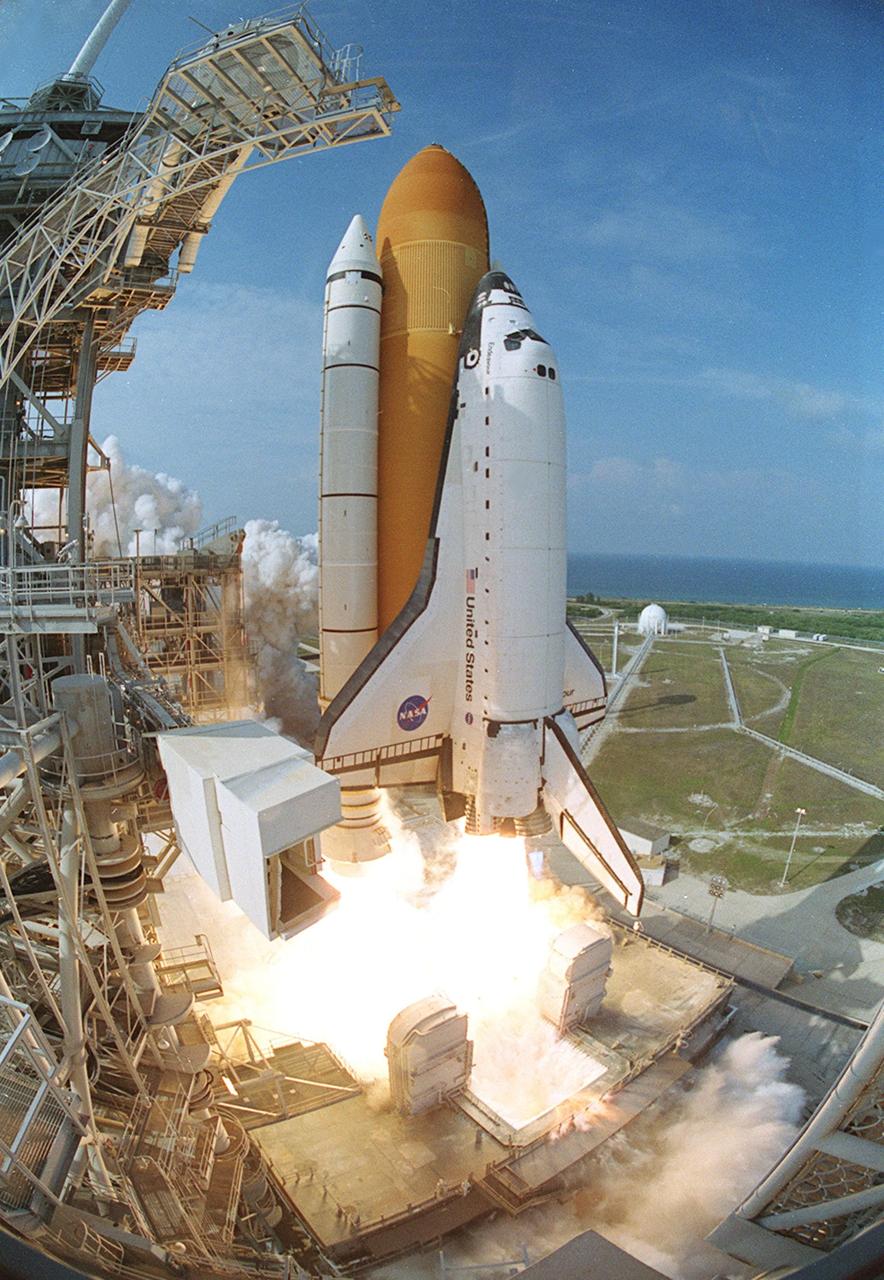
KENNEDY SPACE CENTER, FLA. -- A fish-eye view captures Space Shuttle Endeavour just after liftoff, which occurred at 5:22:49 p.m. EDT. The Shuttle and crew are bound for the International Space Station on mission STS-111, a utilization flight. This mission marks the 14th Shuttle flight to the International Space Station and the third Shuttle mission this year. Mission STS-111 is the 18th flight of Endeavour and the 110th flight overall in NASA's Space Shuttle program
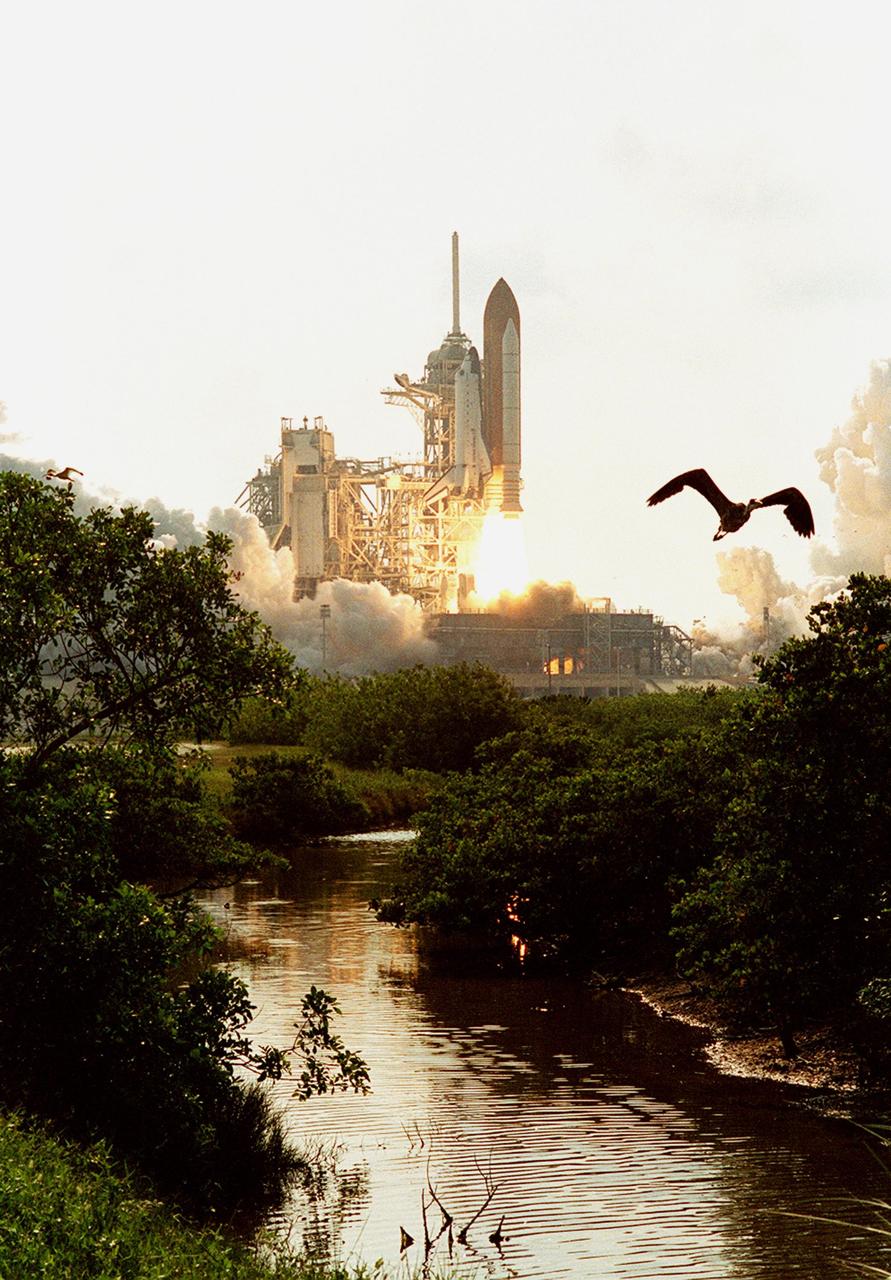
KENNEDY SPACE CENTER, FLA. - Launch of Space Shuttle Endeavour on mission STS-111 startles a large bird to flight over nearby waters. Liftoff occurred at 5:22:49 p.m. EDT. This mission marks the 14th Shuttle flight to the International Space Station and the third Shuttle mission this year. Mission STS-111 is the 18th flight of Endeavour and the 110th flight overall in NASA's Space Shuttle program
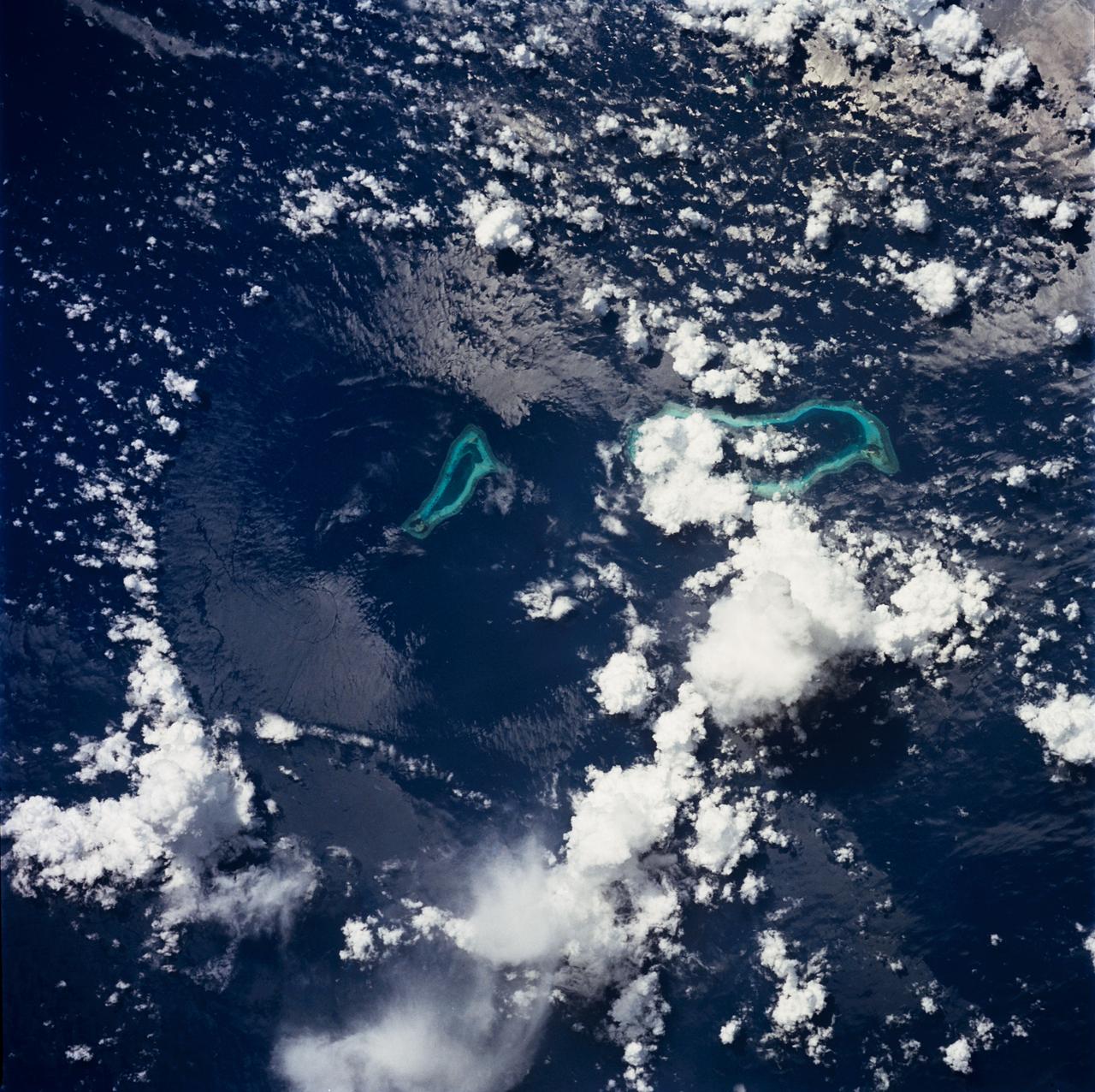
STS049-71-042 (8 May 1992) --- This photograph, taken from the Earth-orbiting Space Shuttle Endeavour, shows a collapsed thunderstorm in the southwestern Pacific Ocean. The clouds were pushed from this circular area of the ocean's surface by relatively cool air that spread downward and outward from a dying thunderstorm. Around the edges of the downdrafted air, new, though smaller, storms are developing. The photo was taken on May 8, 1992, between Borneo and the Philippine island of Mindoro. Two coral atolls can be seen near the center of the photograph. The crew members used a handheld Hasselblad camera, 250-mm lens, color film to expose the image.
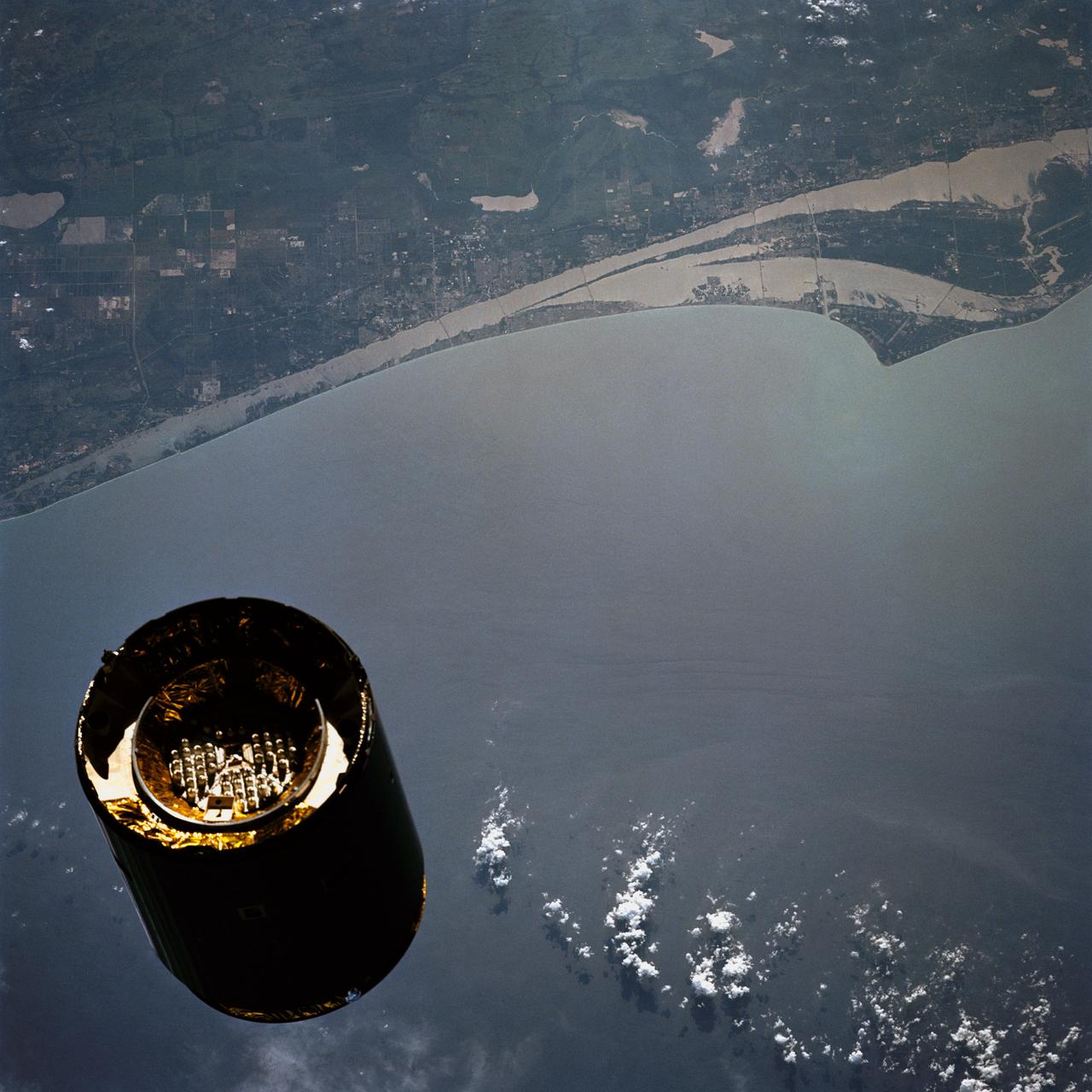
STS049-79-024 (13 May 1992) --- Florida's Atlantic Coast and the Cape Canaveral area form the backdrop for this 70mm scene of Intelsat VI's approach to the Space Shuttle Endeavour. Later, the seven-member crew was successful in capturing the satellite and adding a perigee phase. The new motor allowed the needed boost for Intelsat, once the crew members had released it into space.
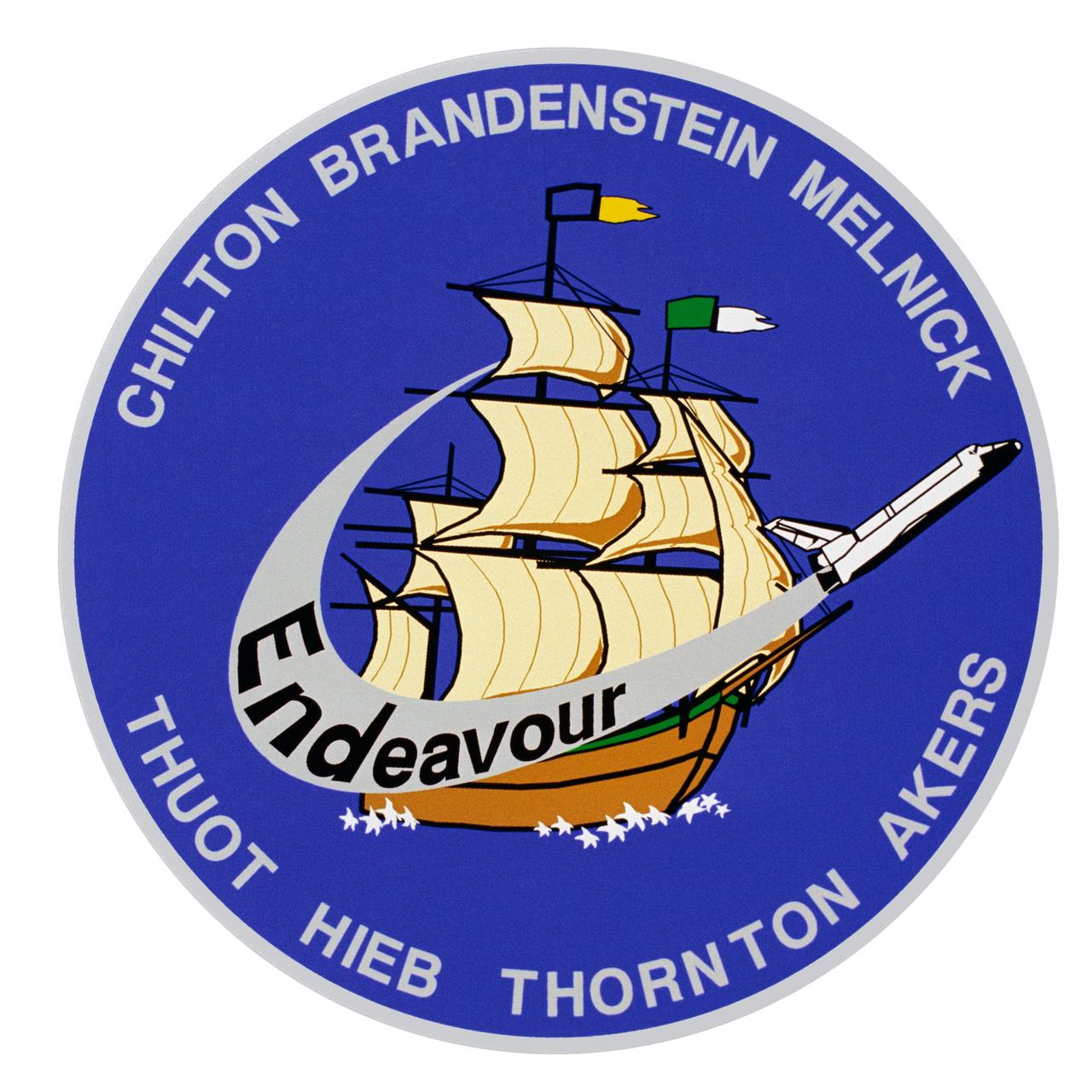
STS049-S-001 (March 1991) --- The patch, designed by its crew members, captures spaceflight's spirit of exploration which has its origins in the early seagoing vessels that explored the uncharted reaches of Earth and its oceans. The ship depicted on the patch is HMS Endeavour, the sailing vessel which Captain James Cook commanded on his first scientific expedition to the South Pacific. Just as Captain Cook engaged in unprecedented feats of exploration during his voyage, on the space shuttle Endeavour's maiden flight, its crew will expand the horizons of space operations with an unprecedented rendezvous and series of three spacewalks. During three consecutive days of extravehicular activity (EVA), the crew will conduct one spacewalk to retrieve, repair and deploy the Intelsat IV-F3 communications satellite, and two additional EVA's to evaluate potential Space Station Freedom assembly concepts. The flags flying high on Endeavour's masts wear the colors of the two schools that won the nationwide contest when Endeavour was chosen as the name of NASA's newest space shuttle: Senatobia (Mississippi) Middle School and Tallulah Falls (Georgia) School. The NASA insignia design for space shuttle flights is reserved for use by the astronauts and for other official use as the NASA Administrator may authorize. Public availability has been approved only in the form of illustrations by the various news media. When and if there is any change in this policy, which is not anticipated, it will be publicly announced. Photo credit: NASA

STS049-S-218 (8 May 1992) --- Astronaut Richard J. Hieb, on Endeavour's middeck, changes batteries on the electronic still camera to begin a series of snapshots with the experiment, a detailed test objective. DTO 648 is making its fourth flight into space. At various times during the week-long mission, crewmembers will downlink images from the camera. The scene was recorded at 16:51:15:05 GMT, May 8, 1992.