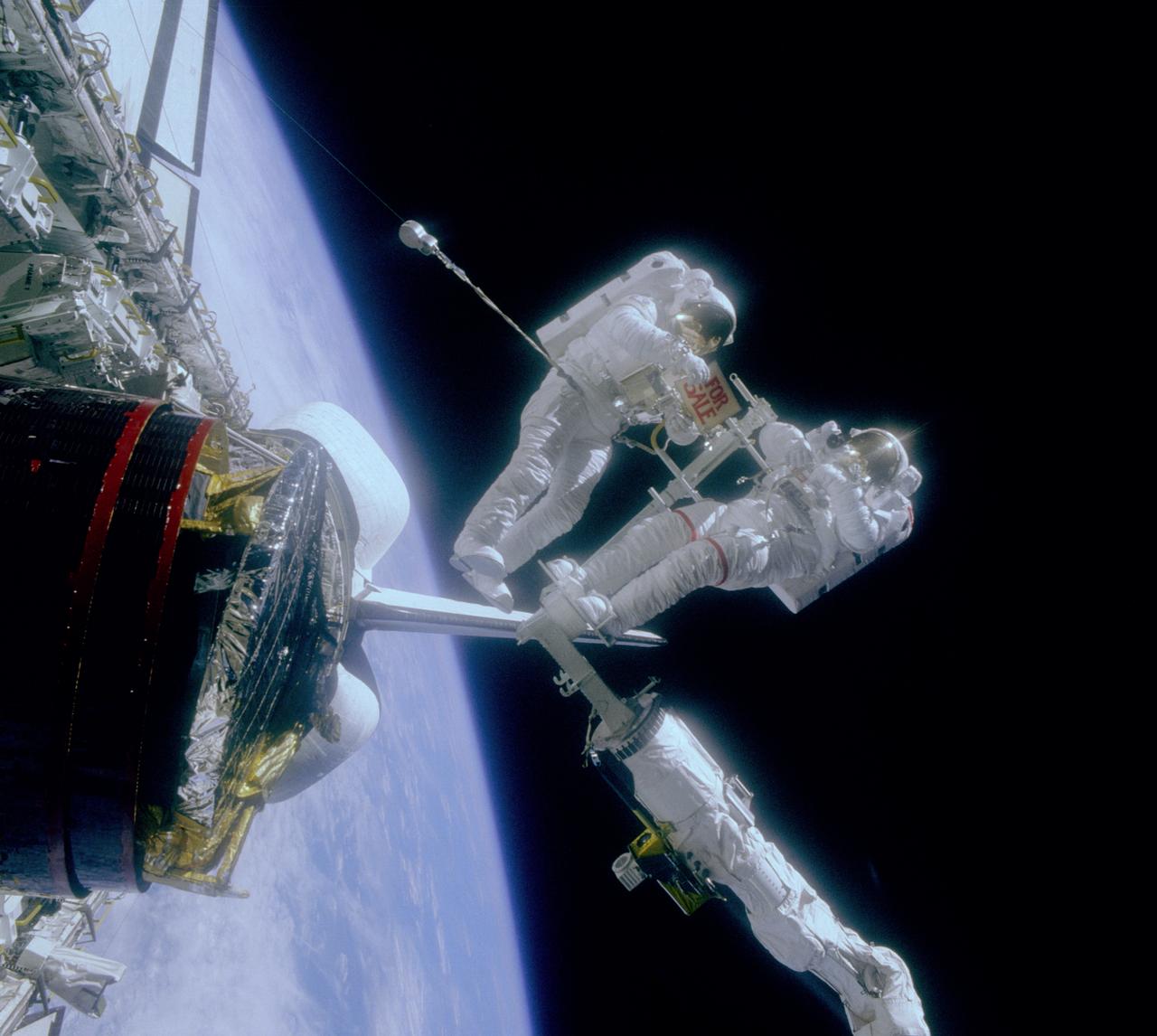
Astronauts are clowning around in space in this STS-51A onboard photo. Astronaut Gardner, holds a “For Sale” sign after the retrieval of two malfunctioning satellites; the Western Union Telegraph Communication Satellite (WESTAR VI); and the PALAPA-B2 Satellite. Astronaut Allen, who is standing on the RMS (Remote Manipulator System) is reflected in Gardner’s helmet visor. The 51A mission launched aboard the Space Shuttle Discovery on November 8, 1984.
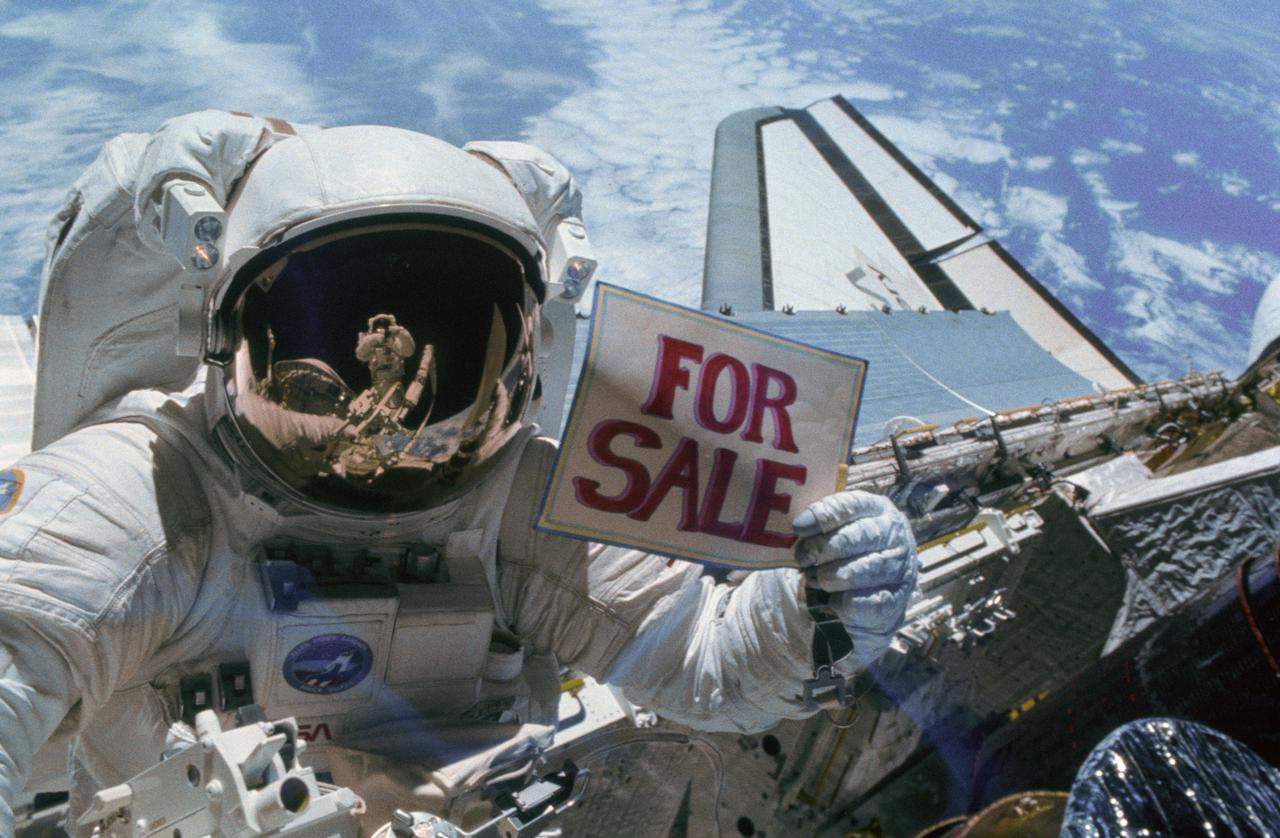
Astronauts are clowning around in space in this STS-51A onboard photo. Astronaut Gardner, holds a “For Sale” sign after the retrieval of two malfunctioning satellites; the Western Union Telegraph Communication Satellite (WESTAR VI); and the PALAPA-B2 Satellite. Astronaut Allen, who is standing on the Remote Manipulator System (RMS) is reflected in Gardner’s helmet visor. The 51A mission launched aboard the Space Shuttle Discovery on November 8, 1984.
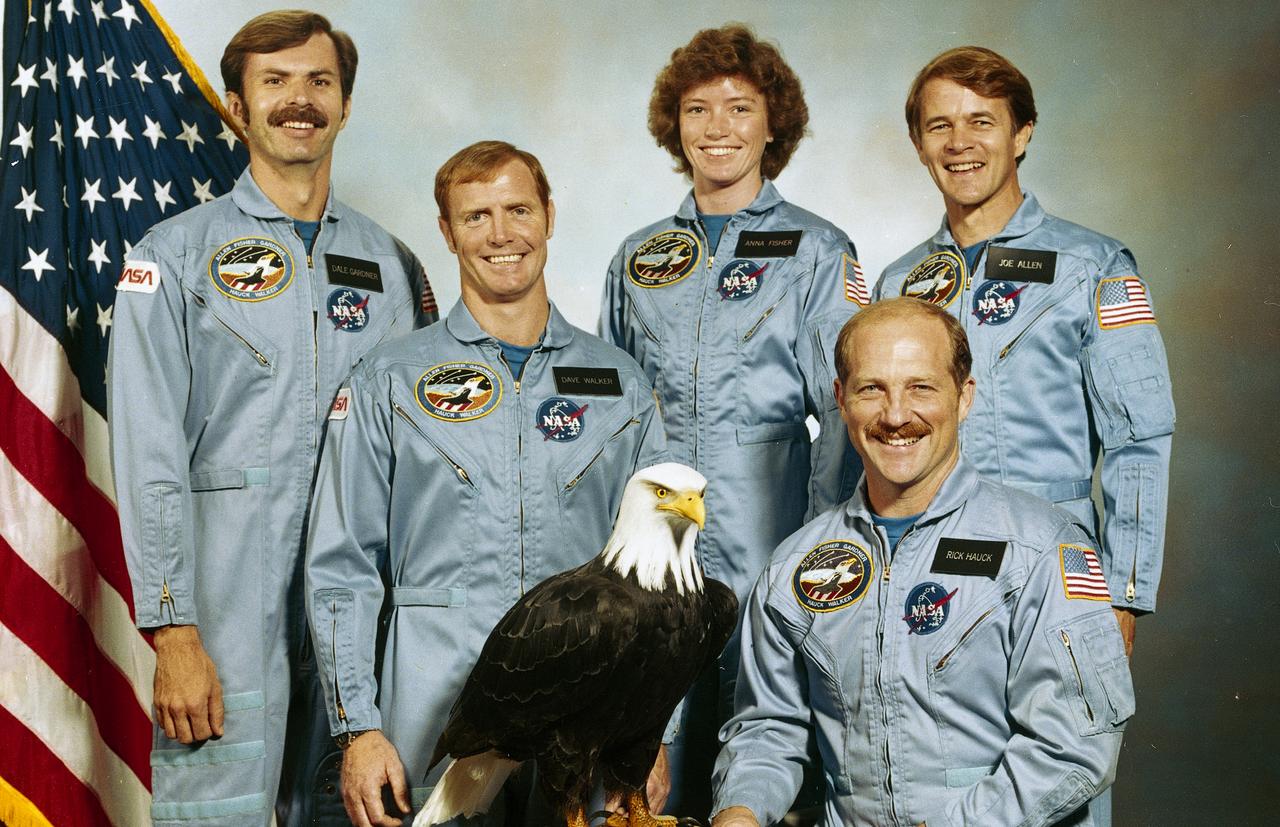
The crew assigned to the STS-51A mission included Frederick H. Hauck, commander,who is seated to the right. Standing, left to right, are Dale A. Gardner, mission specialist; David M. Walker, pilot; and mission specialists Anna L. Fisher, and Joseph P. Allen. Launched aboard the Space Shuttle Discovery on November 8, 1984 at 7:15:00 am (EST), the STS-51A mission deployed the Canadian communications satellite TELLESAT-H (ANIK), and the defense communications satellite SYCOM IV-1 (also known as LEASAT-1). In addition, 2 malfunctioning satellites were retrieved: the PALAPA-B2 and the WESTAR-VI.
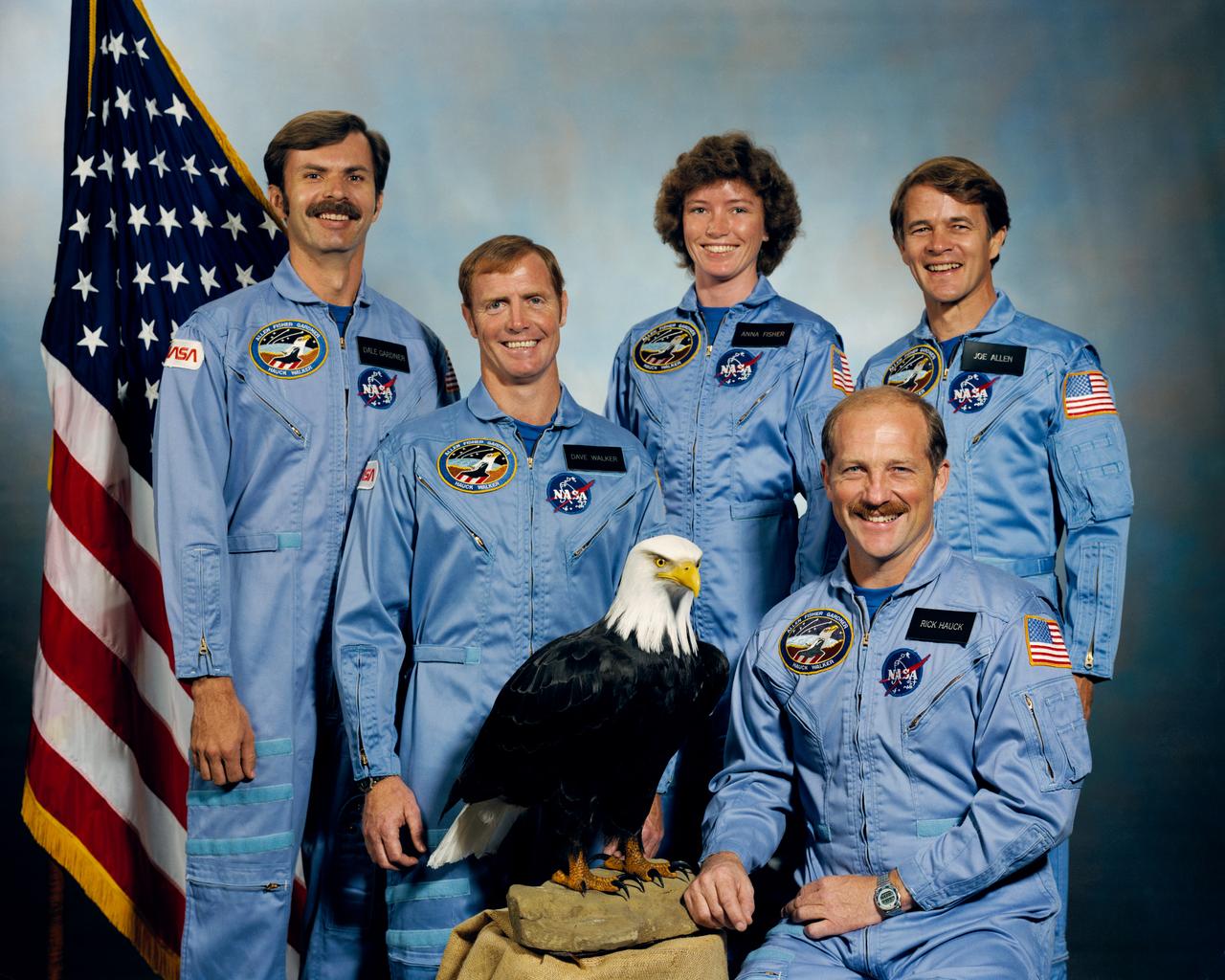
S84-40082 (August 1984) --- These five astronauts are scheduled to fly aboard the Space Shuttle Discovery on Mission STS-51A for NASA. The mission is scheduled for early November 1984. Astronaut Frederick H. (Rick) Hauck, seated, is crew commander. Astronaut David M. Walker, pilot, stands next to the Eagle, 51-A mascot. Others on the back row, left-to-right, are astronauts Dale A. Gardner, Anna L. Fisher and Joseph P. Allen IV, all mission specialists.
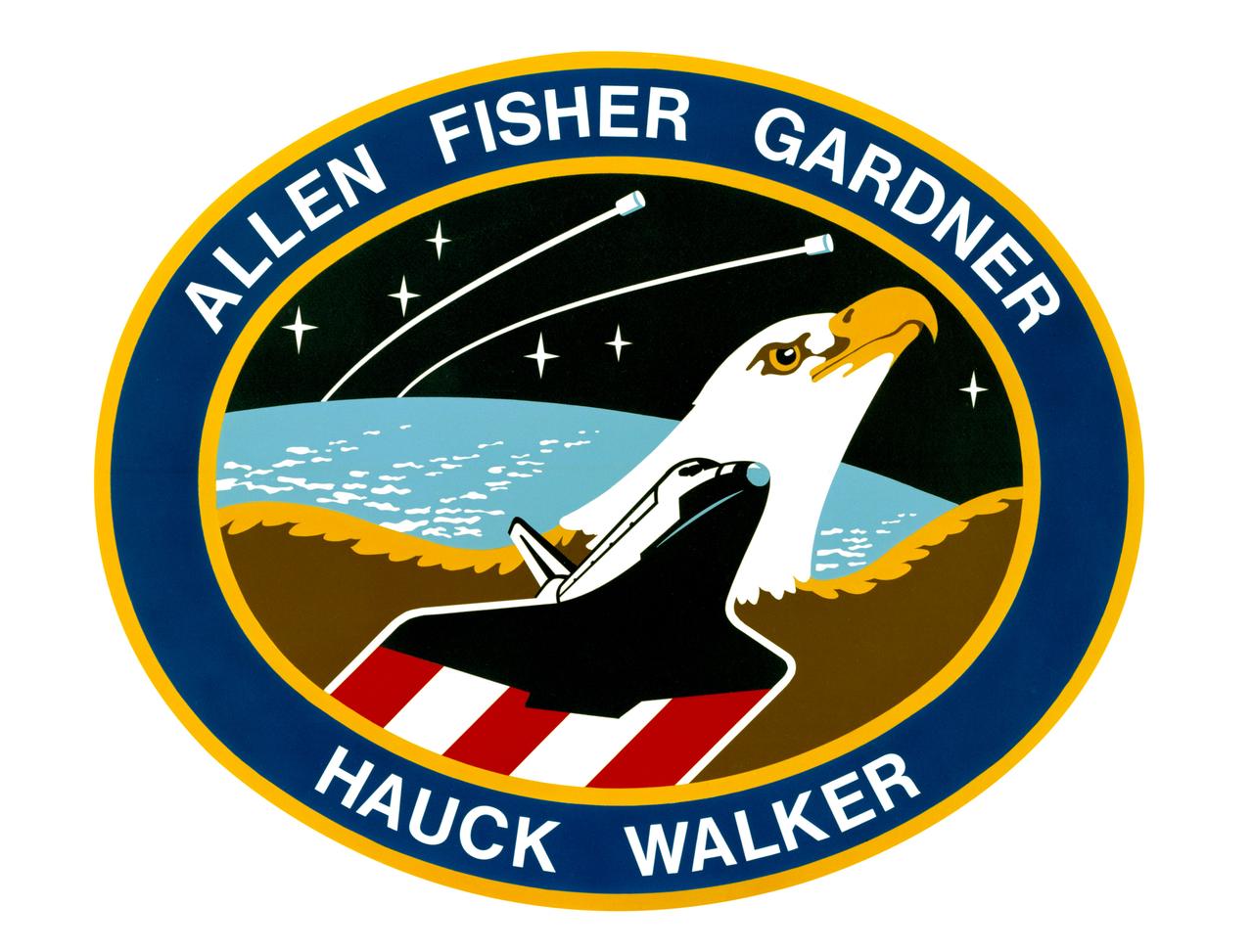
S84-40148 (8 Oct. 1984) --- The space shuttle Discovery en route to Earth orbit for NASA's 51-A mission is reminiscent of a soaring Eagle. The red and white trailing stripes and the blue background, along with the presence of the Eagle, generate memories of America's 208-year-old history and traditions. The two satellites orbiting Earth backgrounded amidst a celestial scene are a universal representation of the versatility of the space shuttle. White lettering against the blue border lists the surnames of the five-member crew--astronauts Frederick H. (Rick) Hauck, David M. Walker, Joseph P. Allen IV, Anna Lee Fisher and Dale A. Gardner. The artwork was done by artist Stephen R. Hustvedt. The NASA insignia design for space shuttle flights is reserved for use by the astronauts and for other official use as the NASA Administrator may authorize. Public availability has been approved only in the forms of illustrations by the various news media. When and if there is any change in this policy, which is not anticipated, the change will be publicly announced. Photo credit: NASA

The Space Shuttle Discovery en route to Earth orbit for NASA's 51-A mission is reminiscent of a soaring Eagle. The red and white trailing stripes and the blue background, along with the presence of the Eagle, generate memories of America's 208 year-old history and traditions. The two satellites orbiting the Earth backgrounded amidst a celestial scene are a universal representation of the versatility of the Space Shuttle. White lettering against the blue border lists the surnames of the five-member crew.

51A-46-057 (14 November 1984) --- Astronaut Dale A. Gardner, getting his turn in the Manned Maneuvering Unit (MMU) like those used by five other astronauts this year, prepares to dock with the spinning WESTAR VI satellite. Gardner used a large tool called the Apogee Kick Motor Capture Device (ACD) to enter the nozzle of a spent WESTAR VI engine and stabilize the communications spacecraft sufficiently to capture it for return to Earth in the cargo bay of the Space Shuttle Discovery. This frame was used by the STS-51A crew at its Post-Flight Press Conference (PFPC) on November 28, 1984.
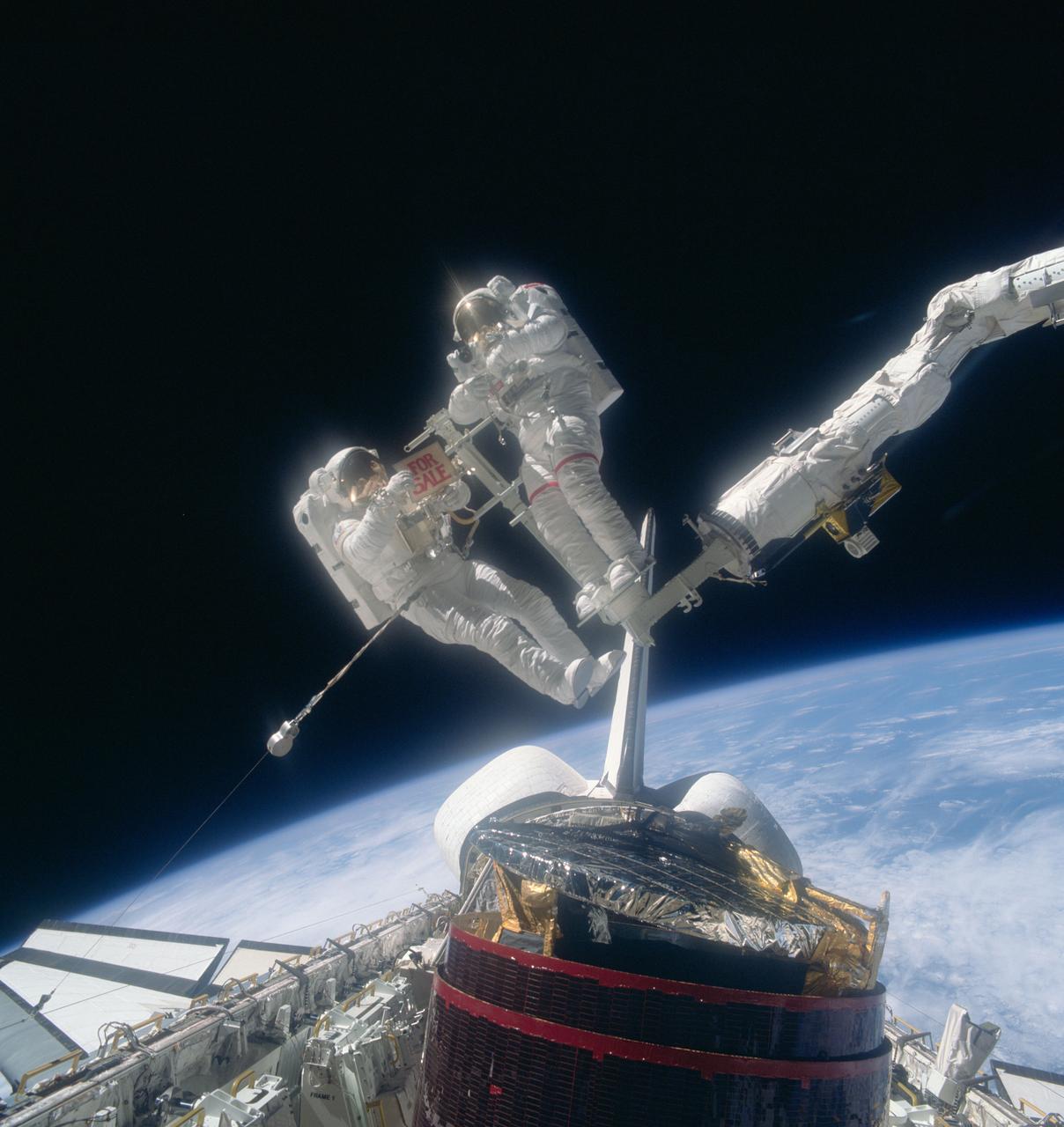
51A-39-063 (14 Nov 1984) --- A 70mm frame of WESTAR VI post-retrieval activity. Astronaut Dale A. Gardner (left), STS-51A mission specialist, holds a "For Sale" sign, making light reference to the status of the re-captured communications spacecraft, which has been stranded since its initial deployment. Astronaut Joseph P. Allen IV stands on the Mobile Foot Restraint (MFR), which in tandem with the Remote Manipulator System (RMS) arm, controlled by Dr. Anna L. Fisher inside the space shuttle Discovery's cabin, served as a cherry-picker for capture efforts. Photo credit: NASA