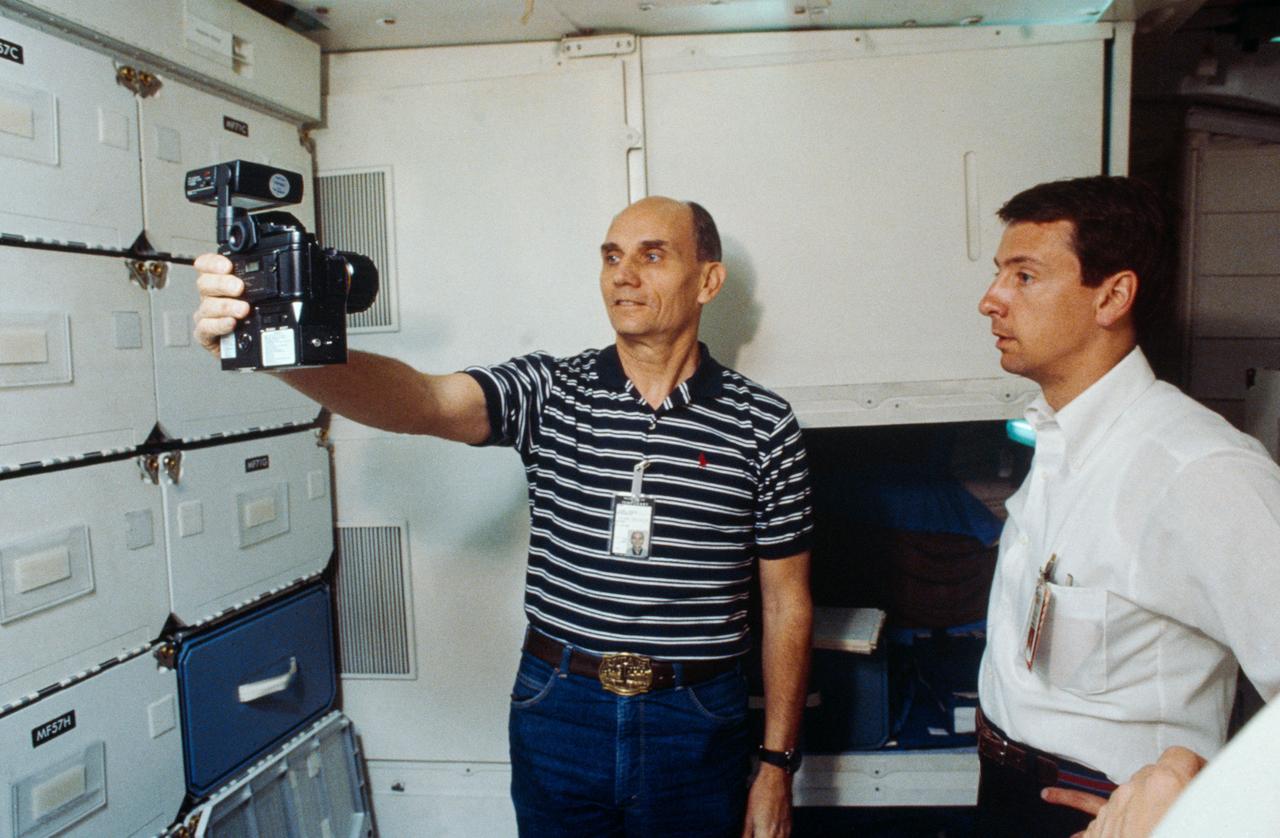
Views of Sen. Jake Garn and Charles Walker during STS-51B, Medical Experiment Training, 1-G Trainer, Bldg. 9A. 1. Senator Jake Garn - STS-51B Training 2. Charles Walker - STS-51B Training JSC, Houston, TX
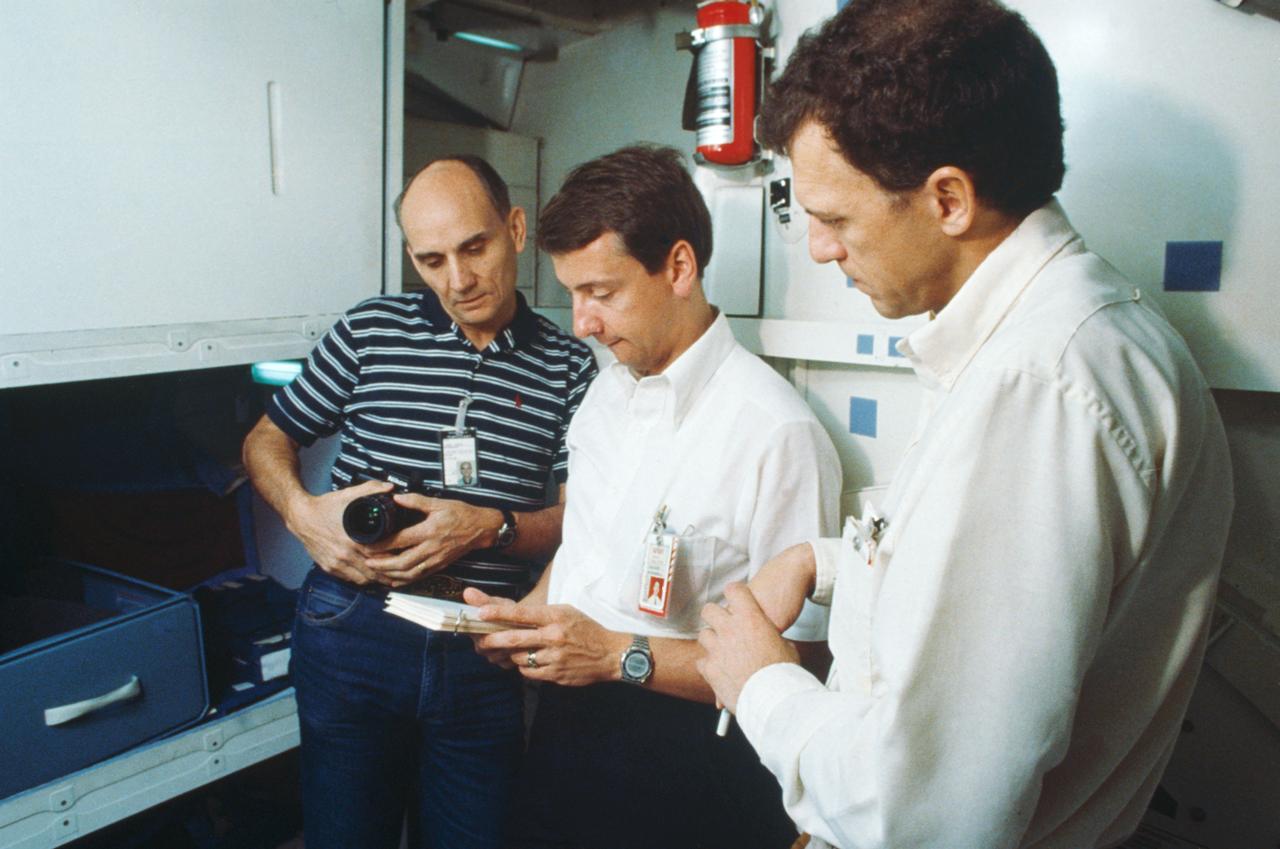
Views of Sen. Jake Garn and Charles Walker during STS-51B, Medical Experiment Training, 1-G Trainer, Bldg. 9A. 1. Senator Jake Garn - STS-51B Training 2. Charles Walker - STS-51B Training JSC, Houston, TX

Views of Sen. Jake Garn and Charles Walker during STS-51B, Medical Experiment Training, 1-G Trainer, Bldg. 9A. 1. Senator Jake Garn - STS-51B Training 2. Charles Walker - STS-51B Training JSC, Houston, TX
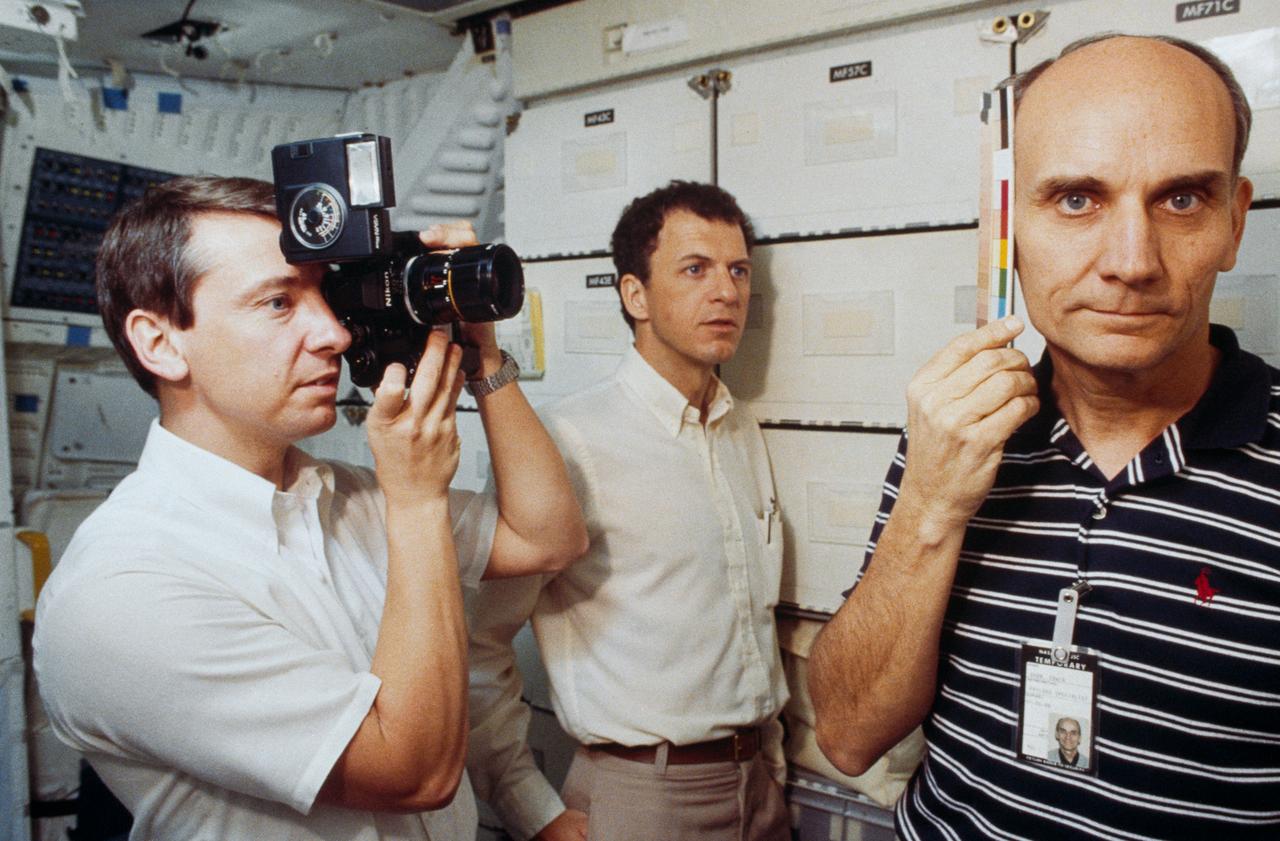
Views of Sen. Jake Garn and Charles Walker during STS-51B, Medical Experiment Training, 1-G Trainer, Bldg. 9A. 1. Senator Jake Garn - STS-51B Training 2. Charles Walker - STS-51B Training JSC, Houston, TX
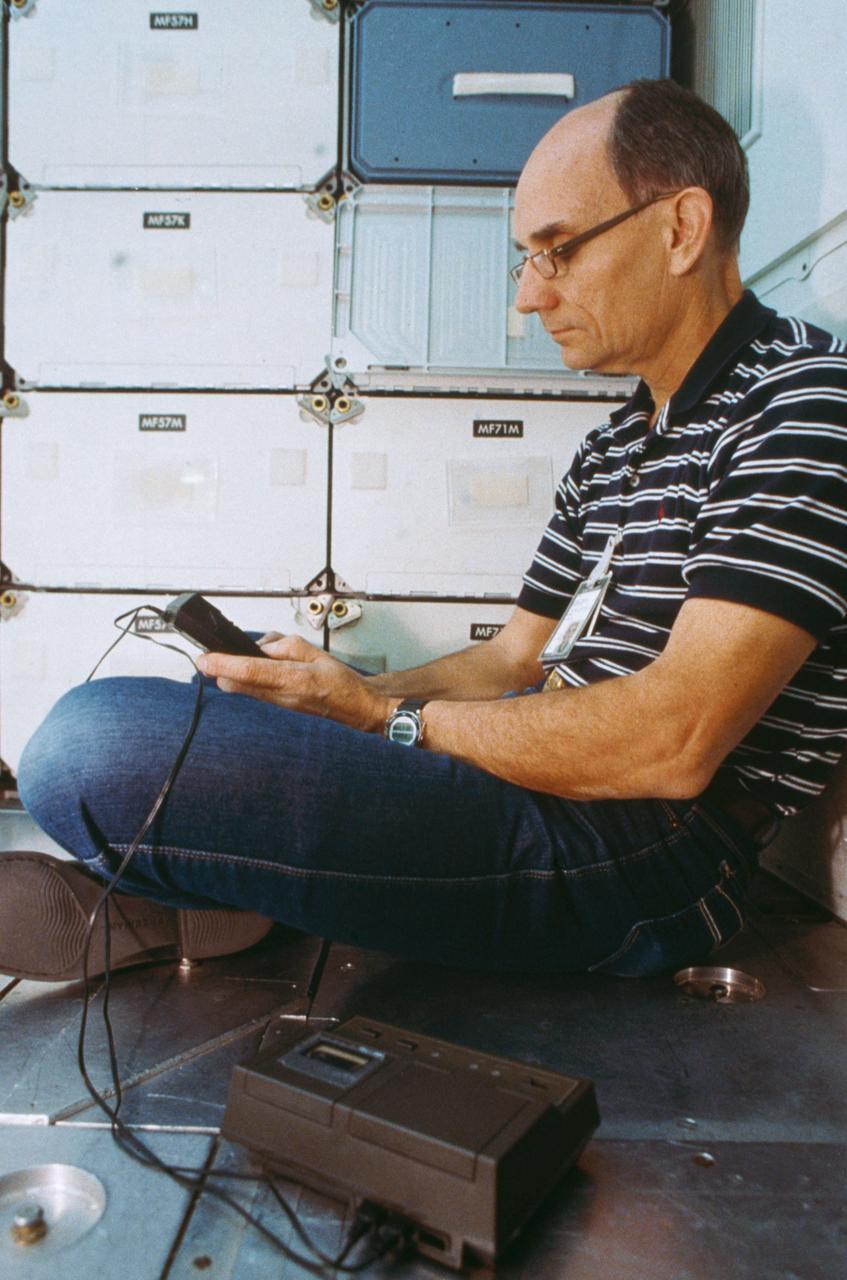
Views of Sen. Jake Garn and Charles Walker during STS-51B, Medical Experiment Training, 1-G Trainer, Bldg. 9A. 1. Senator Jake Garn - STS-51B Training 2. Charles Walker - STS-51B Training JSC, Houston, TX
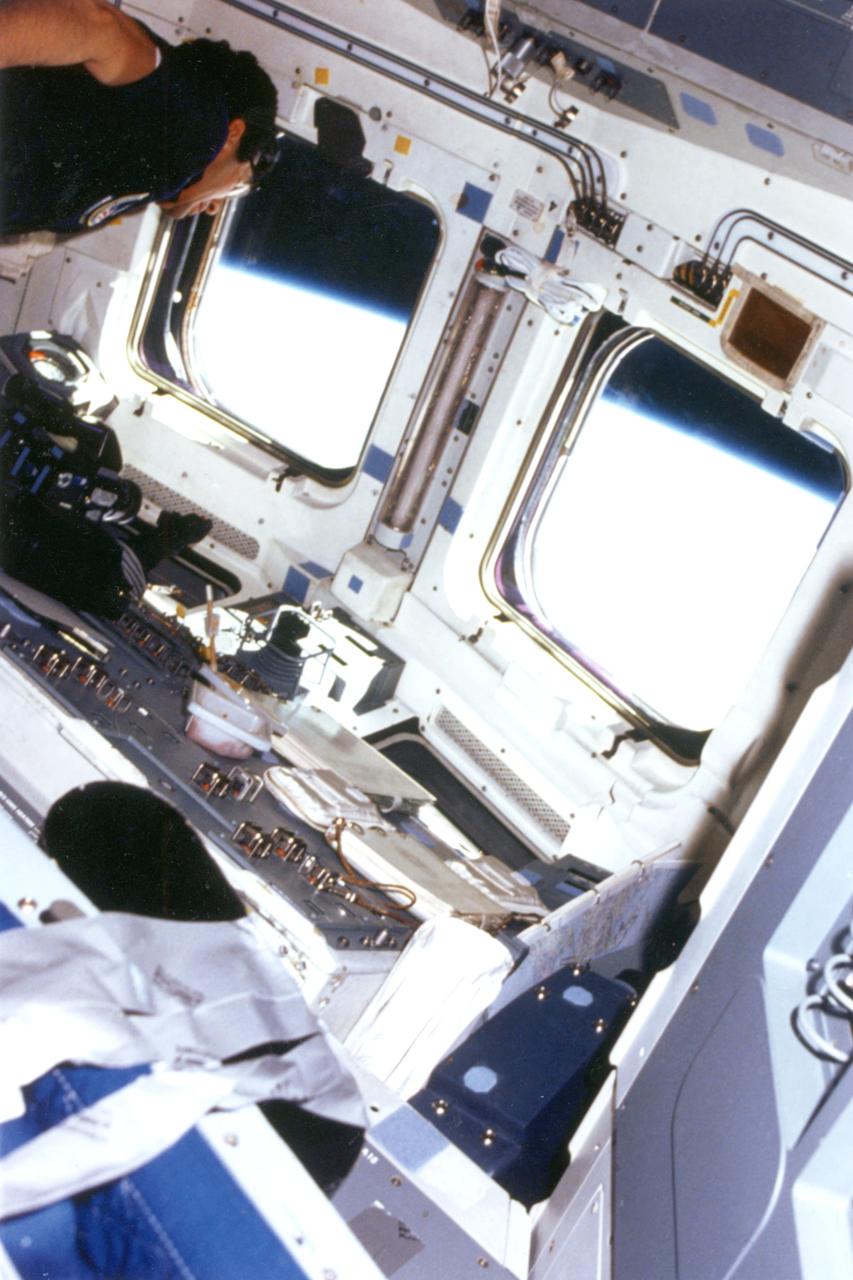
STS-51B, Spacelab-3, Payload Specialist Lodewijk van den Berg on flight deck with earth view out window.
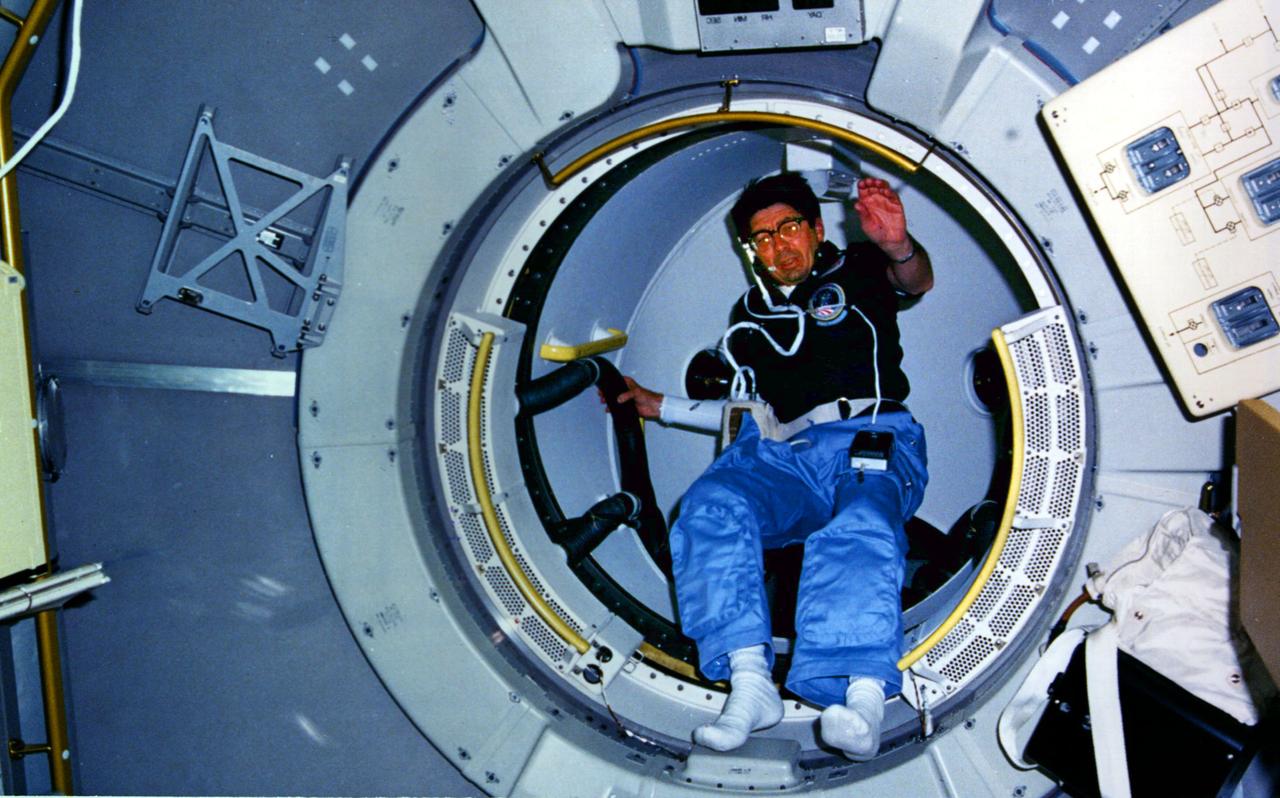
STS-51B, Spacelab 3, Lodewijk van den Berg coming through the turnel.
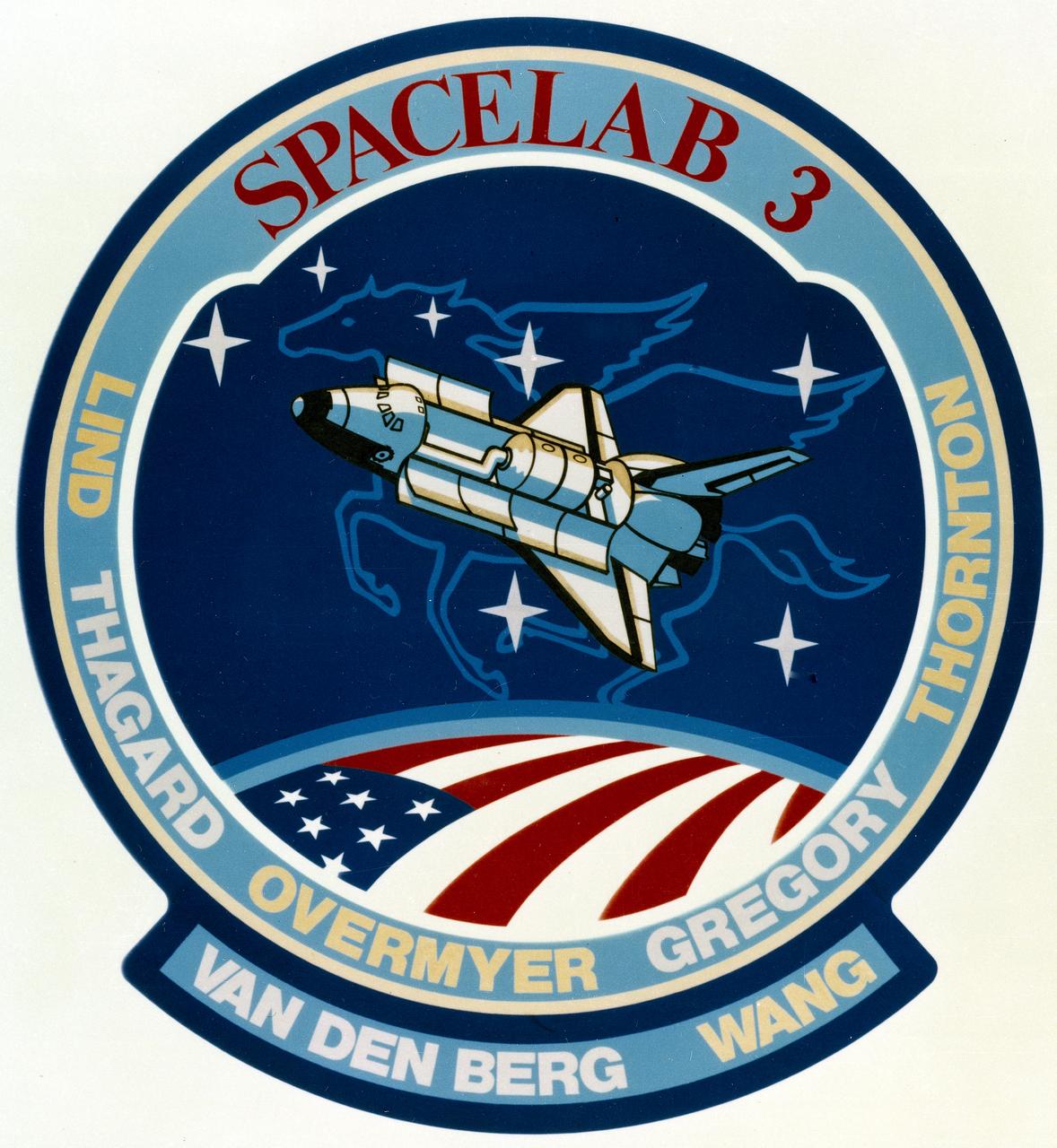
The Space Shuttle Discovery and its science module payload are featured in the insignia for the STS-51B / Spacelab-3 mission. The seven stars of the constellation Pegasus surround the orbiting spacehip above the flag draped Earth. Surnames of the seven crewmembers encircle the scene. The artwork was done by Carol Ann Lind.
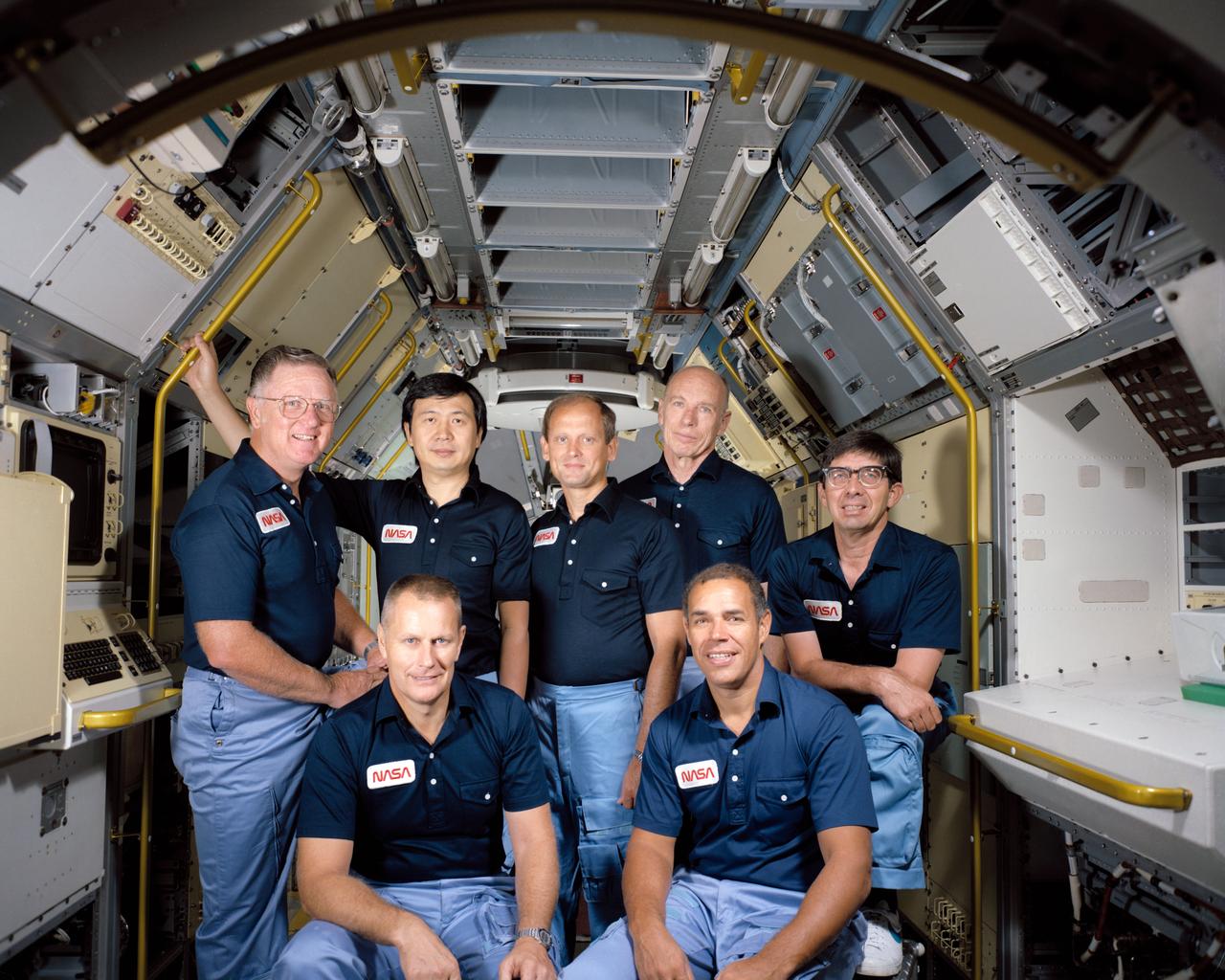
S84-43852 (November 1984) --- These seven men have been training for NASA’s Spacelab 3/STS-51B mission scheduled for launch in late April 1985. On the front row are astronauts Robert F. Overmyer (left), commander; and Frederick D. Gregory, pilot. On the back row, left to right, are Don L. Lind, mission specialist; Taylor G. Wang, payload specialist; Norman E. Thagard and William E. Thornton, both mission specialists; and Lodewijk van den Berg, payload specialist.
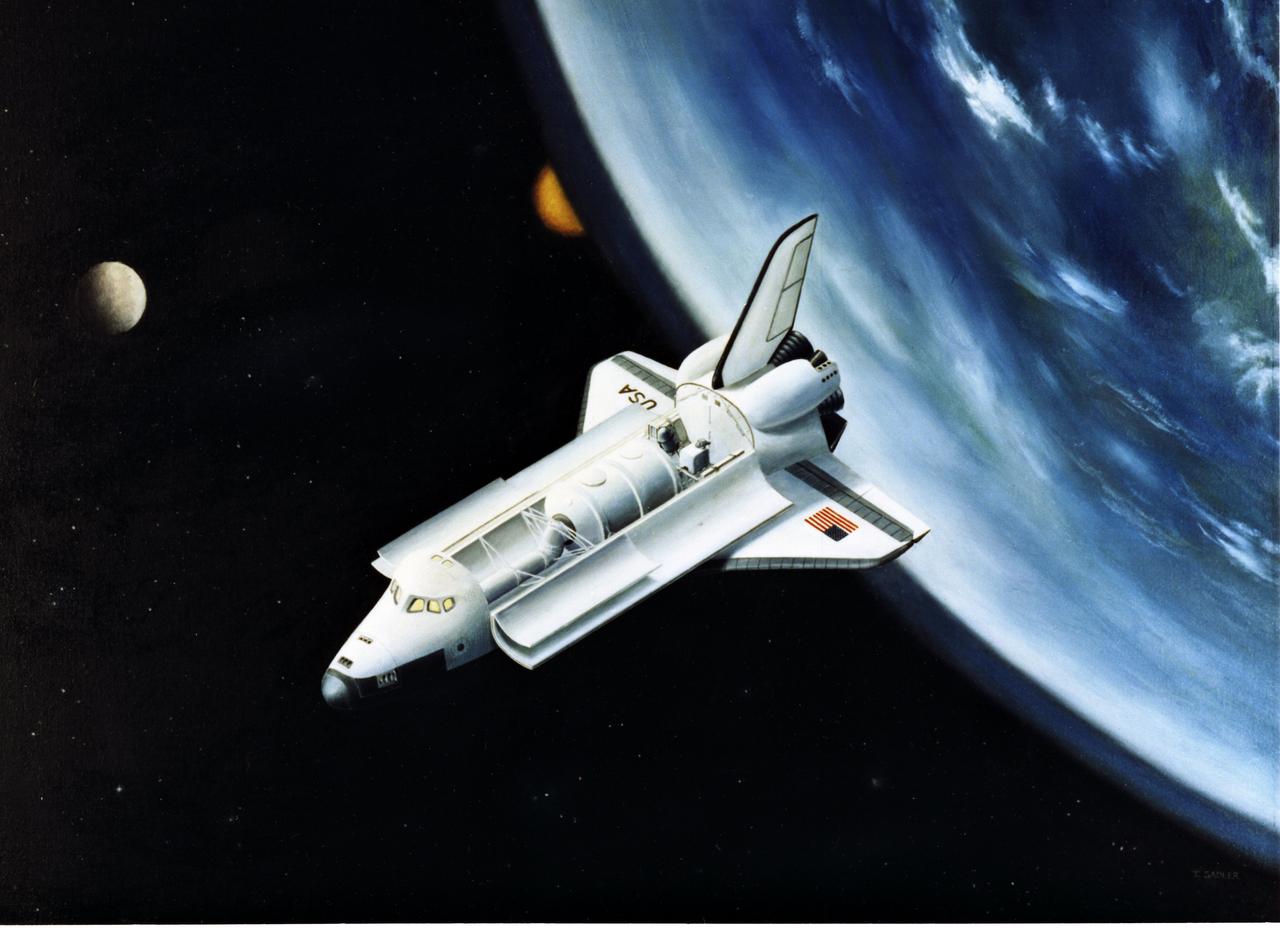
The primary purpose of the Spacelab-3 mission was to conduct materials science experiments in a stable low-gravity environment. In addition, the crew did research in life sciences, fluid mechanics, atmospheric science, and astronomy. Spacelab-3 was equipped with several new mini-labs, special facilities that would be used repeatedly on future flights. Two elaborate crystal growth furnaces, a life support and housing facility for small animals, and two types of apparatus for the study of fluids were evaluated on their inaugural flight. The instruments requiring direct exposure to space were mounted outside in the open payload bay of the Shuttle. Spacelab represented the merger of science and marned spaceflight. It opened remarkable opportunities to push the frontiers of knowledge beyond the limits of research on Earth. Scientists in space performed experiments in close collaboration with their colleagues on the ground. On the Spacelab-3 mission, managed by the Marshall Space Flight Center, this versatile laboratory entered routine operation service for the next two decades. Spacelab-3 (STS-51B mission) was launched aboard Space Shuttle Orbiter Challenger on April 29, 1985.
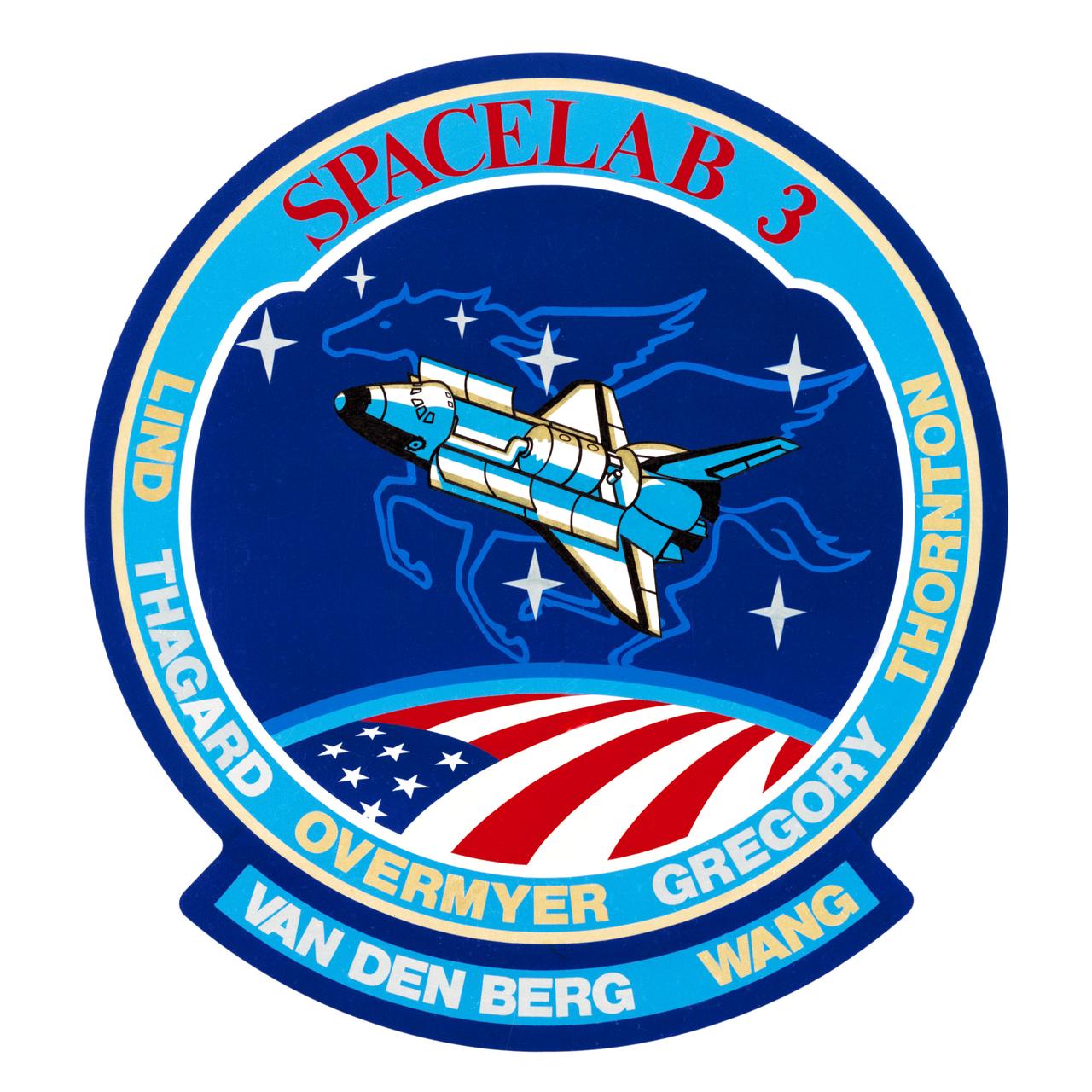
S84-44372 (December 1984) --- The space shuttle Discovery and its science module payload are featured in the insignia for the STS-51B/Spacelab 3 mission. The seven stars of the constellation Pegasus surround the orbiting spaceship above the flag draped Earth. Surnames of the seven crew members encircle the scene. Crew members are astronauts Robert F. Overmyer, Frederick D. Gregory, Don L. Lind, Norman E. Thagard and William E. Thornton; and payload specialists Lodewijk van den Berg and Taylor G. Wang. The artwork was done by Carol Ann Lind. The NASA insignia design for space shuttle flights is reserved for use by the astronauts and for other official use as the NASA Administrator may authorize. Public availability has been approved only in the forms of illustrations by the various news media. When and if there is any change in this policy, which is not anticipated, the change will be publicly announced. Photo credit: NASA
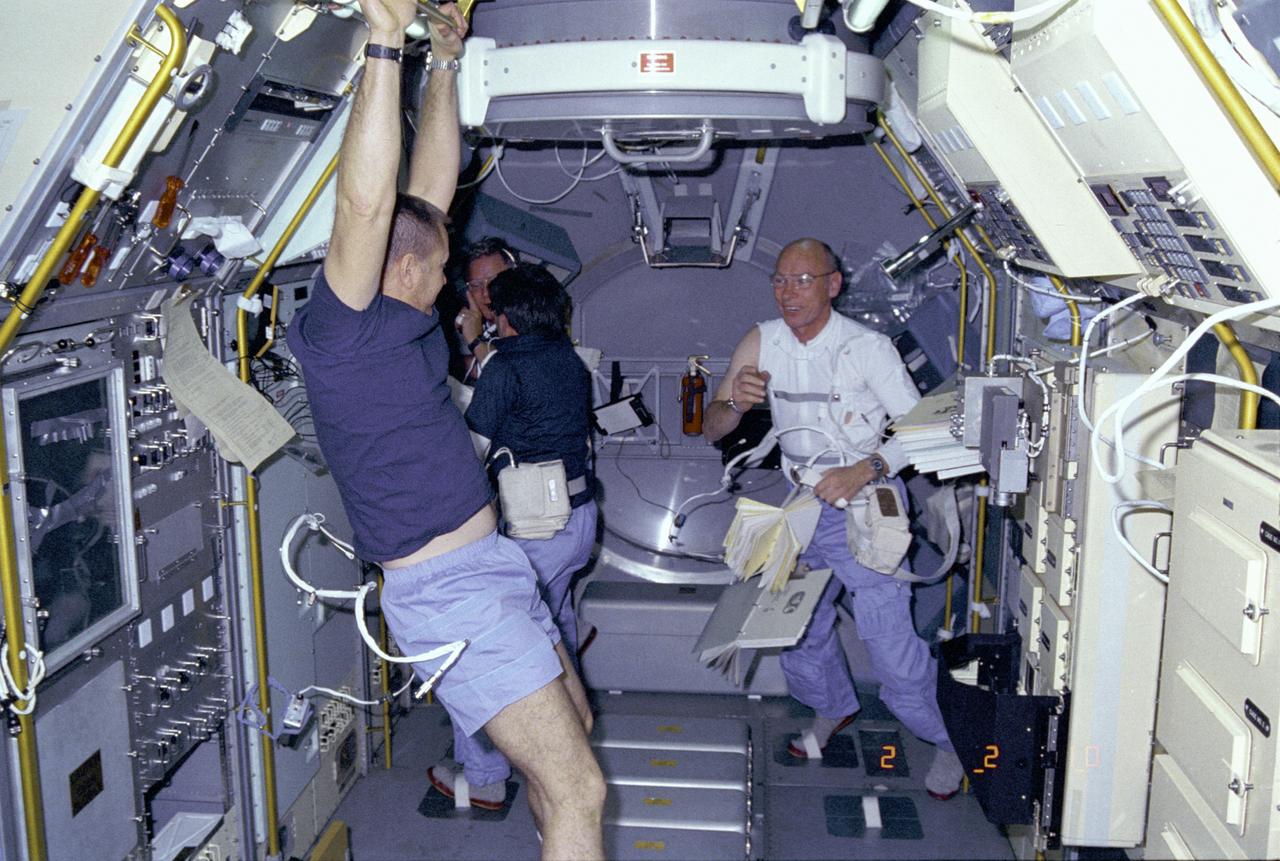
Activities inside the laboratory module during the Spacelab-3 mission are shown in this photograph. Left to right are astronauts Robert Overmyer, Commander of the mission; Don Lind, Mission Specialist; Lodewijk van den Berg, Payload Specialist; and William Thornton, Mission Specialist. The primary purpose of the Spacelab-3 mission was to conduct materials science experiments in a stable low-gravity environment. In addition, the crew did research in life sciences, fluid mechanics, atmospheric science, and astronomy. Spacelab-3 was equipped with several new minilabs, special facilities that would be used repeatedly on future flights. Two elaborate crystal growth furnaces, a life support and housing facility for small animals, and two types of apparatus for the study of fluids were evaluated on their inaugural flight. Spacelab-3 (STS-51B) was launched aboard the Space Shuttle Challenger on April 29, 1985. The Marshall Space Flight Center had managing responsibilities of the mission.
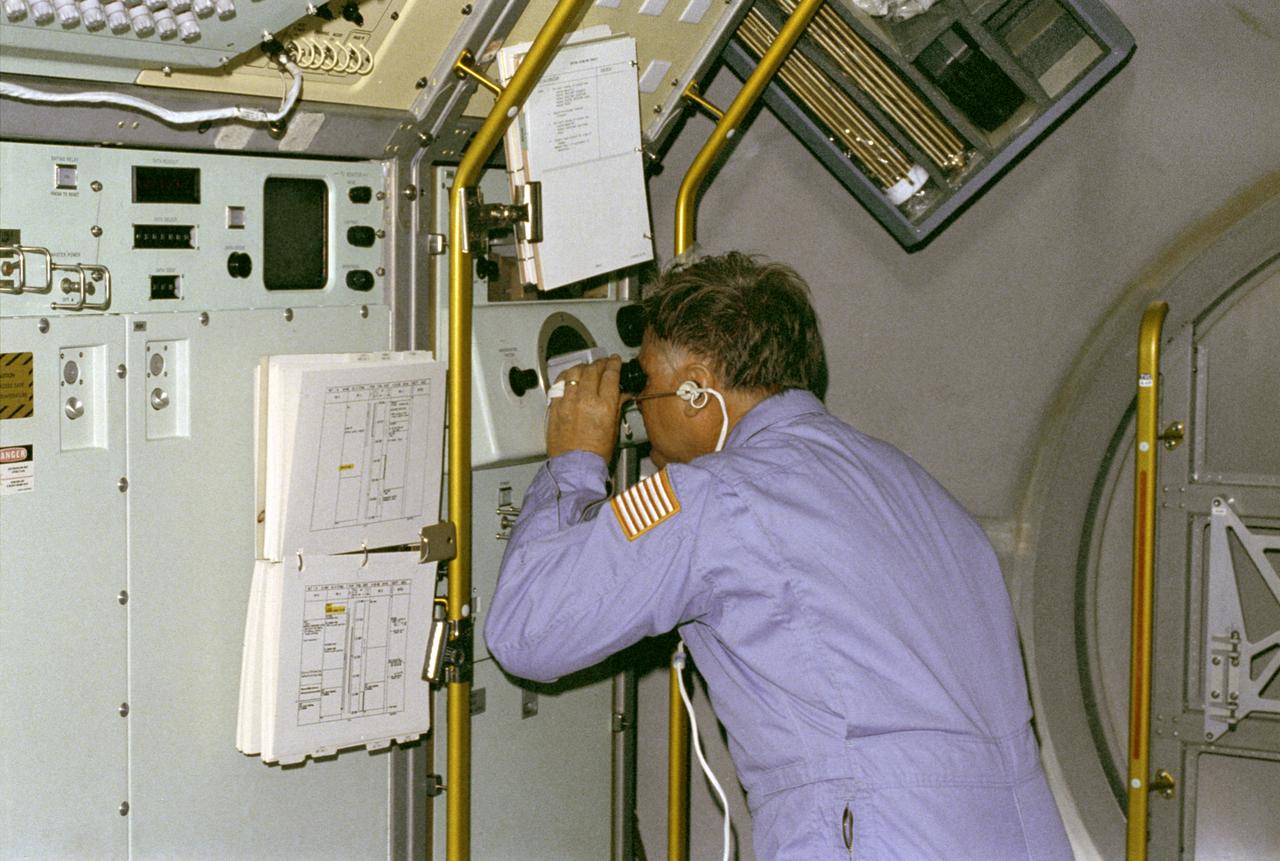
The primary purpose of the Spacelab-3 mission was to conduct materials science experiments in a stable low-gravity environment. In addition, the crew performed research in life sciences, fluid mechanics, atmospheric science, and astronomy. Spacelab-3 was equipped with several new minilabs, special facilities that would be used repeatedly on future flights. Two elaborate crystal growth furnaces, a life support and housing facility for small animals, and two types of apparatus for the study of fluids were evaluated on their inaugural flight. In this photograph, astronaut Don Lind observes the mercuric iodide growth experiment through a microscope at the vapor crystal growth furnace. The goals of this investigation were to grow near-perfect single crystals of mercuric iodide and to gain improved understanding of crystal growth by a vapor process. Mercuric iodide crystals have practical use as sensitive x-ray and gamma-ray detectors, and in portable detector devices for nuclear power plant monitoring, natural resource prospecting, biomedical applications in diagnosis and therapy, and in astronomical instruments. Managed by the Marshall Space Flight Center, Spacelab-3 (STS-51B) was launched aboard the Space Shuttle Orbiter Challenger on April 29, 1985.
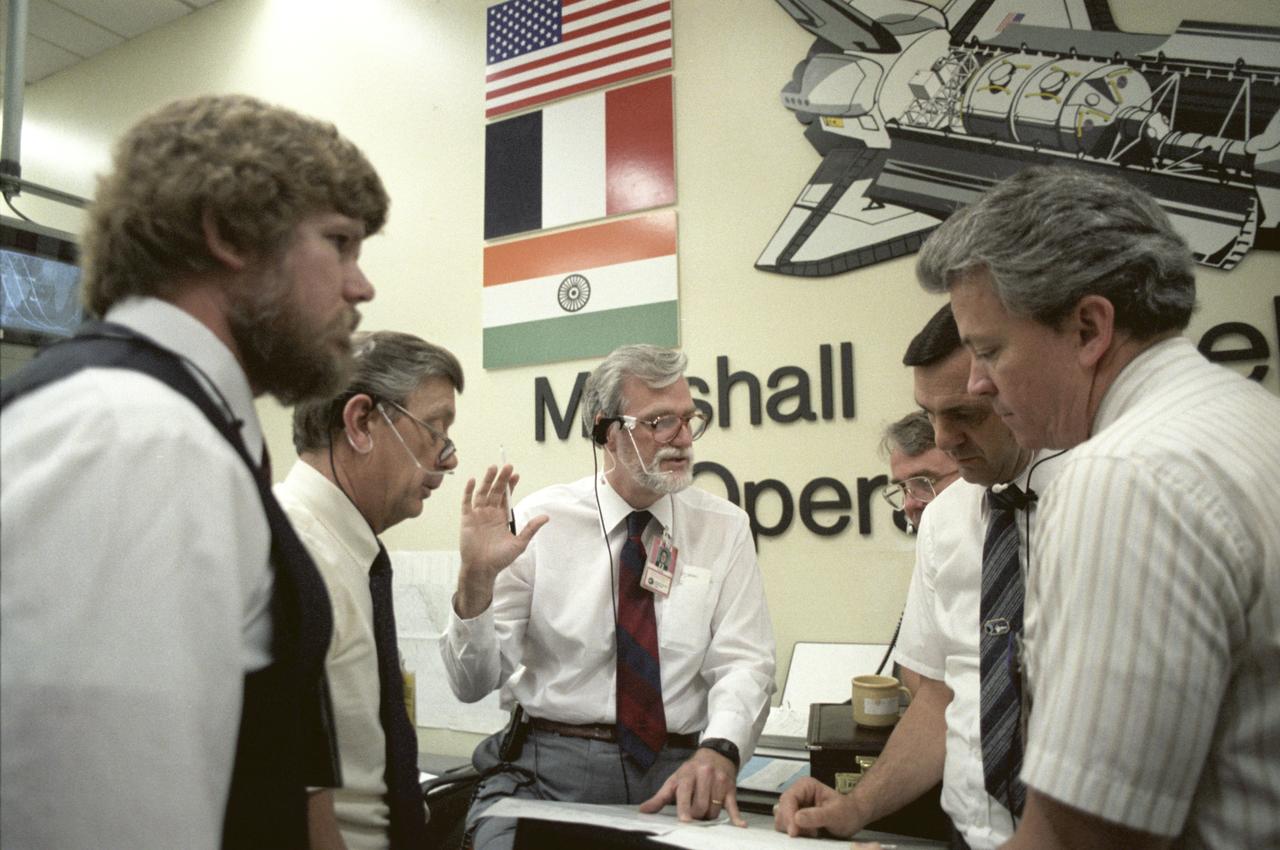
Spacelab-3 launched aboard STS-51B, with the major science objective being to perform engineering tests on two new facilities: the rodent animal holding facility and the primate animal holding facility. In addition, scientists observed the animals to obtain first hand knowledge of the effects of launch and reentry stresses and behavior. The need for suitable animal housing to support research in space led to the development of the Research Animal Holding Facility at the Ames Research Center. Scientists often study animals to find clues to human physiology and behavior. Rats, insects, and microorganisms had already been studied aboard the Shuttle on previous missions. On Spacelab-3, scientists had a chance to observe a large number of animals living in space in a specially designed and independently controlled housing facility. Marshall Space Flight Center (MSFC) had management responsibility for the Spacelab 3 mission. This photograph depicts activities during the mission at the Huntsville Operations Support Center (HOSC) Spacelab Payload Operations Control Center (SL POCC) at MSFC.
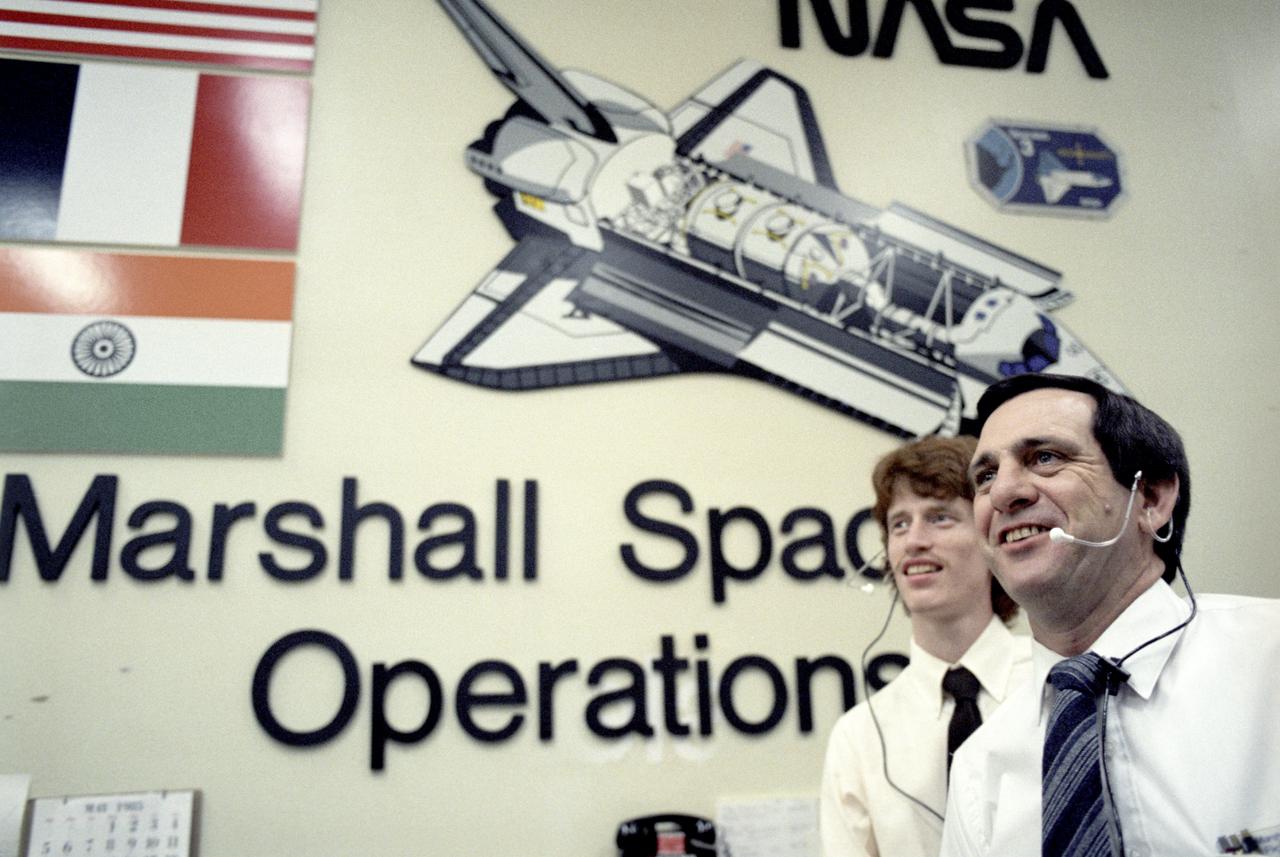
Spacelab-3 launched aboard STS-51B, with the major science objective being to perform engineering tests on two new facilities: the rodent animal holding facility and the primate animal holding facility. In addition, scientists observed the animals to obtain first hand knowledge of the effects of launch and reentry stresses and behavior. The need for suitable animal housing to support research in space led to the development of the Research Animal Holding Facility at the Ames Research Center. Scientists often study animals to find clues to human physiology and behavior. Rats, insects, and microorganisms had already been studied aboard the Shuttle on previous missions. On Spacelab-3, scientists had a chance to observe a large number of animals living in space in a specially designed and independently controlled housing facility. Marshall Space Flight Center (MSFC) had management responsibility for the Spacelab-3 mission. This photograph depicts activities during the mission at the Huntsville Operations Support Center (HOSC) Spacelab Payload Operations Control Center (SL POCC) at MSFC.
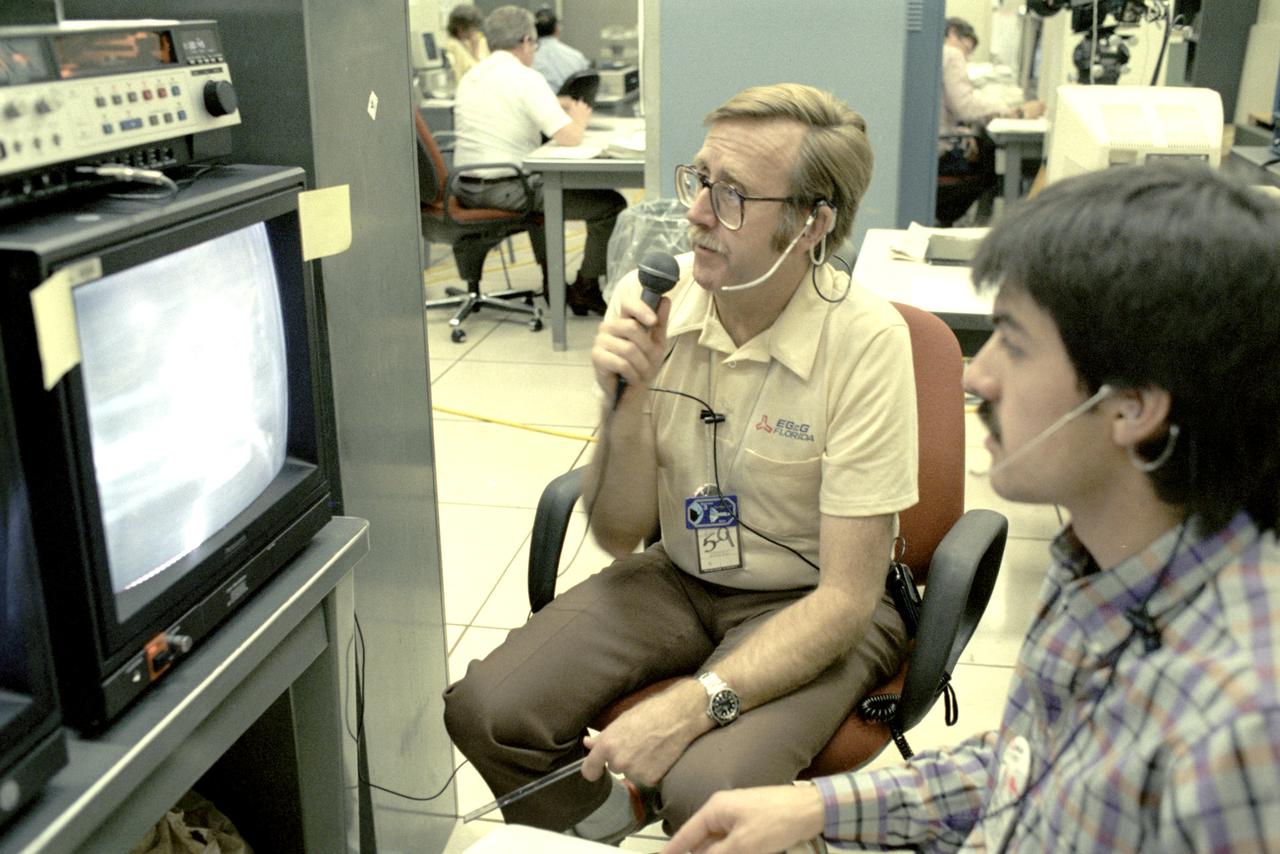
Spacelab-3 launched aboard STS-51B, with the major science objective being to perform engineering tests on two new facilities: the rodent animal holding facility and the primate animal holding facility. In addition, scientists observed the animals to obtain first hand knowledge of the effects of launch and reentry stresses and behavior. The need for suitable animal housing to support research in space led to the development of the Research Animal Holding Facility at the Ames Research Center. Scientists often study animals to find clues to human physiology and behavior. Rats, insects, and microorganisms had already been studied aboard the Shuttle on previous missions. On Spacelab-3, scientists had a chance to observe a large number of animals living in space in a specially designed and independently controlled housing facility. Marshall Space Flight Center (MSFC) had management responsibility for the Spacelab-3 mission. This photograph depicts activities during the mission at the Huntsville Operations Support Center (HOSC) Spacelab Payload Operations Control Center (SL POCC) at MSFC.
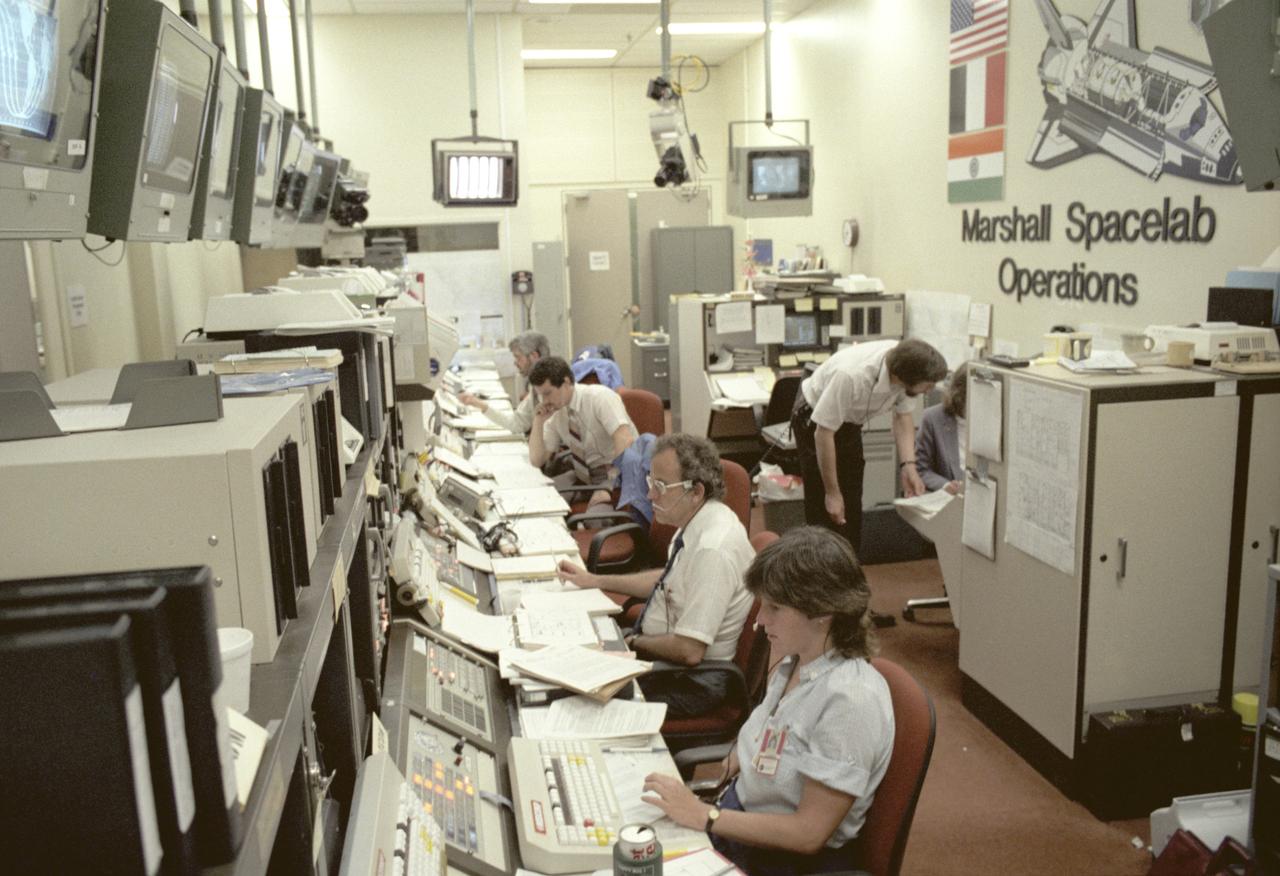
Spacelab-3 launched aboard STS-51B, with the major science objective being to perform engineering tests on two new facilities: the rodent animal holding facility and the primate animal holding facility. In addition, scientists observed the animals to obtain first hand knowledge of the effects of launch and reentry stresses and behavior. The need for suitable animal housing to support research in space led to the development of the Research Animal Holding Facility at the Ames Research Center. Scientists often study animals to find clues to human physiology and behavior. Rats, insects, and microorganisms had already been studied aboard the Shuttle on previous missions. On Spacelab-3, scientists had a chance to observe a large number of animals living in space in a specially designed and independently controlled housing facility. Marshall Space Flight Center (MSFC) had management responsibility for the Spacelab-3 mission. This photograph depicts activities during the mission at the Huntsville Operations Support Center (HOSC) Spacelab Payload Operations Control Center (SL POCC) at MSFC.
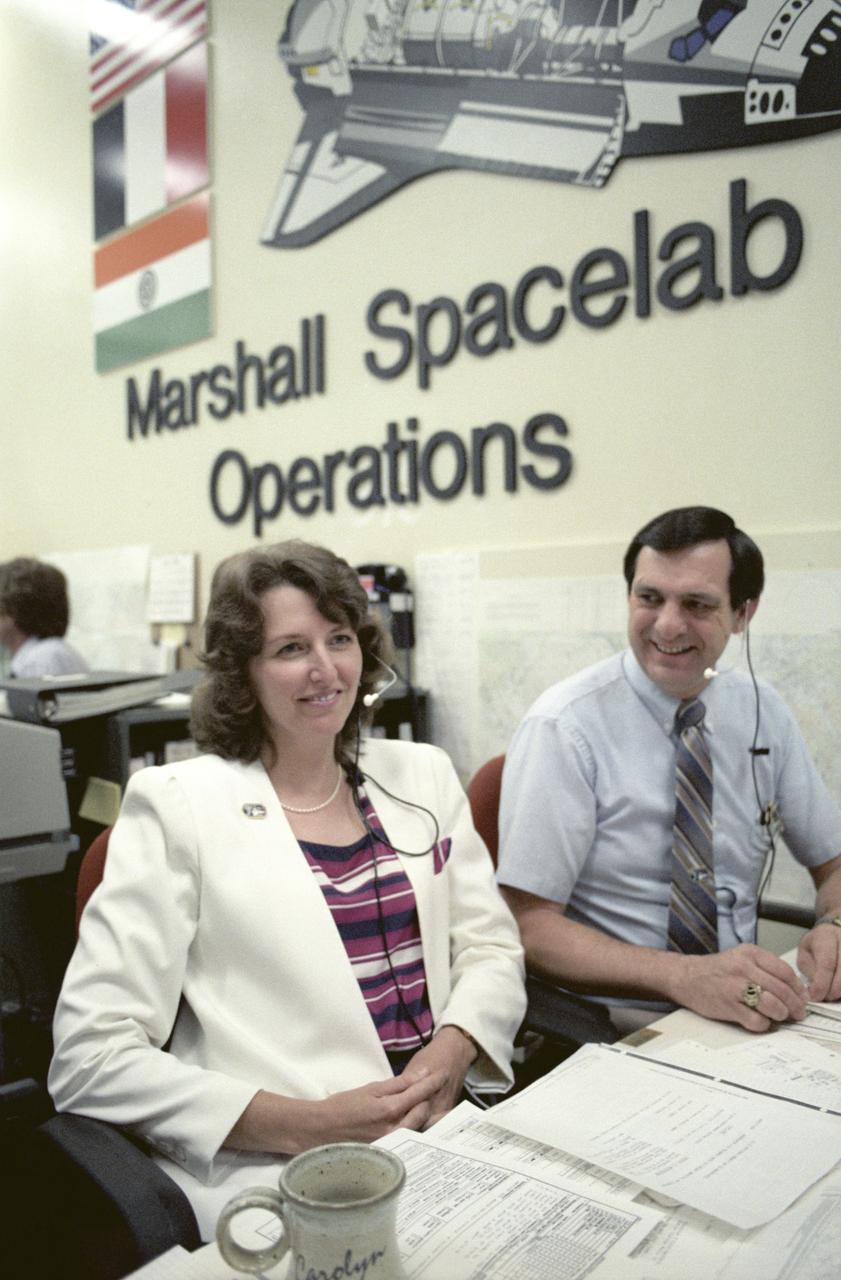
Spacelab-3 launched aboard STS-51B, with the major science objective being to perform engineering tests on two new facilities: the rodent animal holding facility and the primate animal holding facility. In addition, scientists observed the animals to obtain first hand knowledge of the effects of launch and reentry stresses and behavior. The need for suitable animal housing to support research in space led to the development of the Research Animal Holding Facility at the Ames Research Center. Scientists often study animals to find clues to human physiology and behavior. Rats, insects, and microorganisms had already been studied aboard the Shuttle on previous missions. On Spacelab-3, scientists had a chance to observe a large number of animals living in space in a specially designed and independently controlled housing facility. Marshall Space Flight Center (MSFC) had management responsibility for the Spacelab-3 mission. This photograph depicts activities during the mission at the Huntsville Operations Support Center (HOSC) Spacelab Payload Operations Control Center (SL POCC) at MSFC.

Spacelab-3 launched aboard STS-51B, with the major science objective being to perform engineering tests on two new facilities: the rodent animal holding facility and the primate animal holding facility. In addition, scientists observed the animals to obtain first hand knowledge of the effects of launch and reentry stresses and behavior. The need for suitable animal housing to support research in space led to the development of the Research Animal Holding Facility at the Ames Research Center. Scientists often study animals to find clues to human physiology and behavior. Rats, insects, and microorganisms had already been studied aboard the Shuttle on previous missions. On Spacelab-3, scientists had a chance to observe a large number of animals living in space in a specially designed and independently controlled housing facility. Marshall Space Flight Center (MSFC) had management responsibility for the Spacelab 3 mission. This photograph depicts activities during the mission at the Huntsville Operations Support Center (HOSC) Spacelab Payload Operations Control Center (SL POCC) at MSFC.
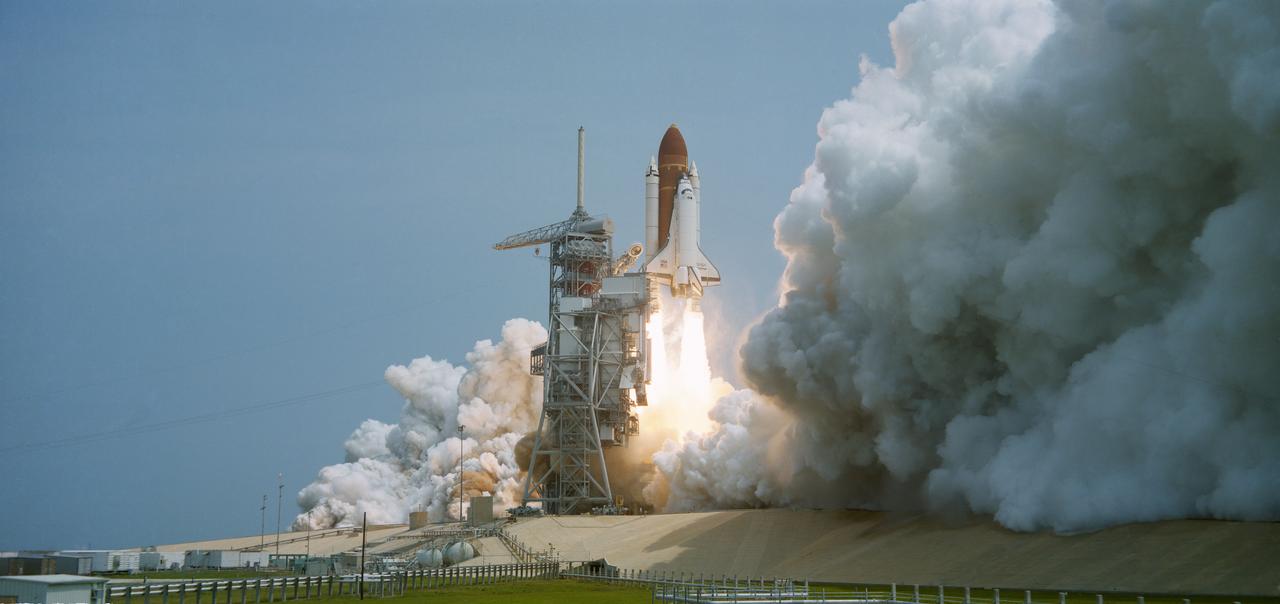
51B-S-052 (20 April 1985) --- The STS 51-B Spacelab 3 mission begins with the liftoff of the Challenger from Pad 39A at 12:02 p.m. (EDT). The Spacelab-3 configuration consists of a long module and a Mission Experiment Support Structure (MPESS). The object of the mission is to conduct applications, science and technology-oriented experimentation requiring the low-gravity of Earth orbit and extended duration stable vehicle attitude. Mission emphasis will be on materials processing. The seven-member crew consists of astronauts Robert F Overmyer, commander; Frederick D. Gregory, pilot; Don L. Lind, Norman E. Thagard and William E. Thornton; all mission specialists and payload specialists Taylor G. Wang and Lodewijk van den Berg. The mission is planned for 7 days with a landing at Dryden Flight Research Facility, Edwards California scheduled for May 6.