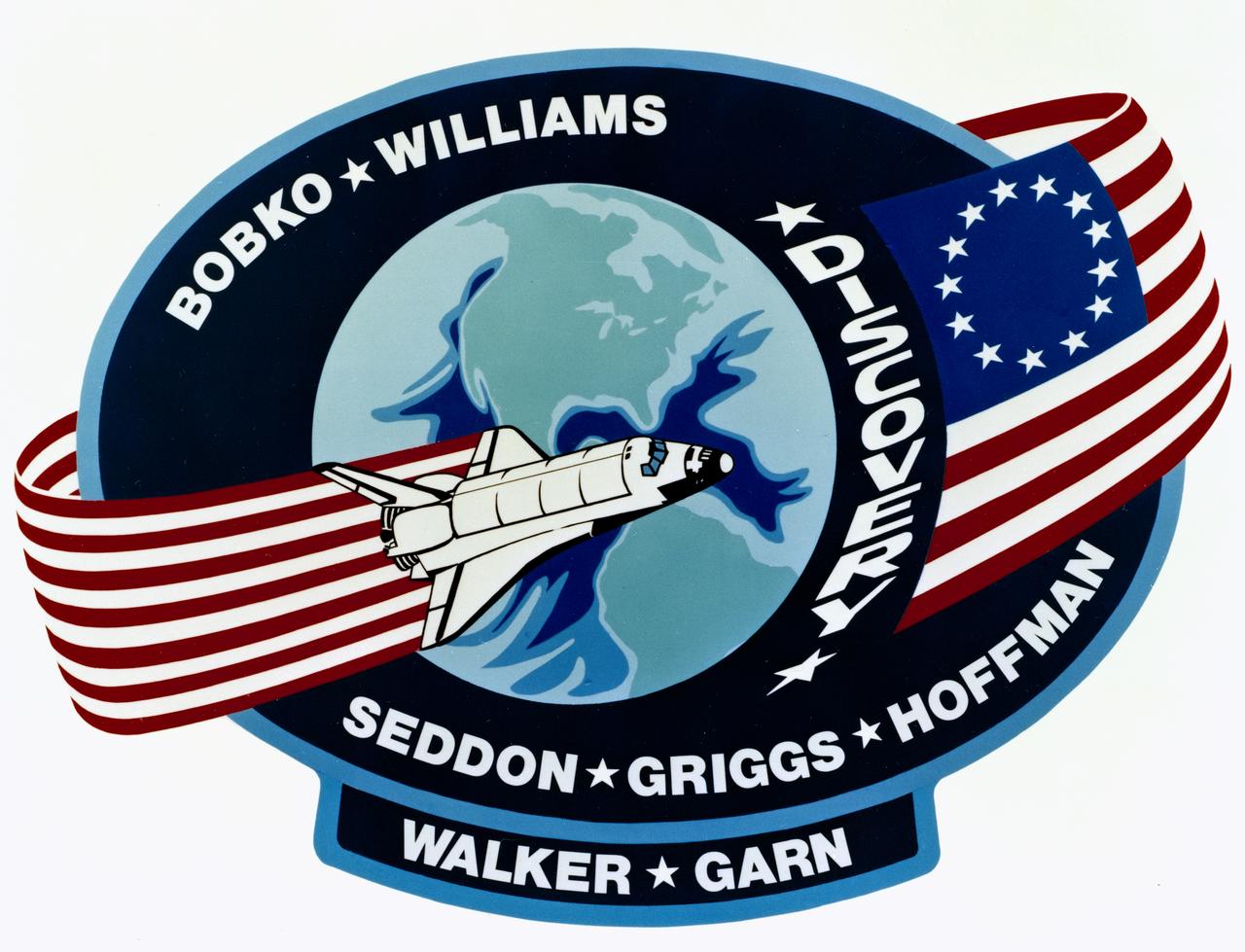
The dominant features of the STS-51D emblem are an orbit formed by a Colonial American flag and a Space Shuttle. The flag in orbit signifies the U.S. flag to indicate that it comes from this country and the American people. The original 13- star flag is used to symbolize a continuity of technical achievement and progress since colonial times. The name Discovery preceding the flag represents the spirit of Discovery and exploration of new frontiers which have been a hallmark of American people even before they were formed together as a nation.

The crew assigned to the STS-51D mission included (front left to right) Karol J. Bobko, commander; Donald E. Williams, pilot; M. Rhea Seddon, mission specialist; and Jeffrey A. Hoffman, mission specialist. On the back row, left to right, are S. David Griggs, mission specialist; and payload specialists Charles D. Walker, and E. Jake Garn (Republican Utah Senator). Launched aboard the Space Shuttle Discovery on April 12, 1985 at 8:59:05 am (EST), the STS-51D mission’s primary payloads were the TELESAT-1 (ANIK-C) communications satellite and the SYNCOM IV-3 (also known as LEASAT-3).
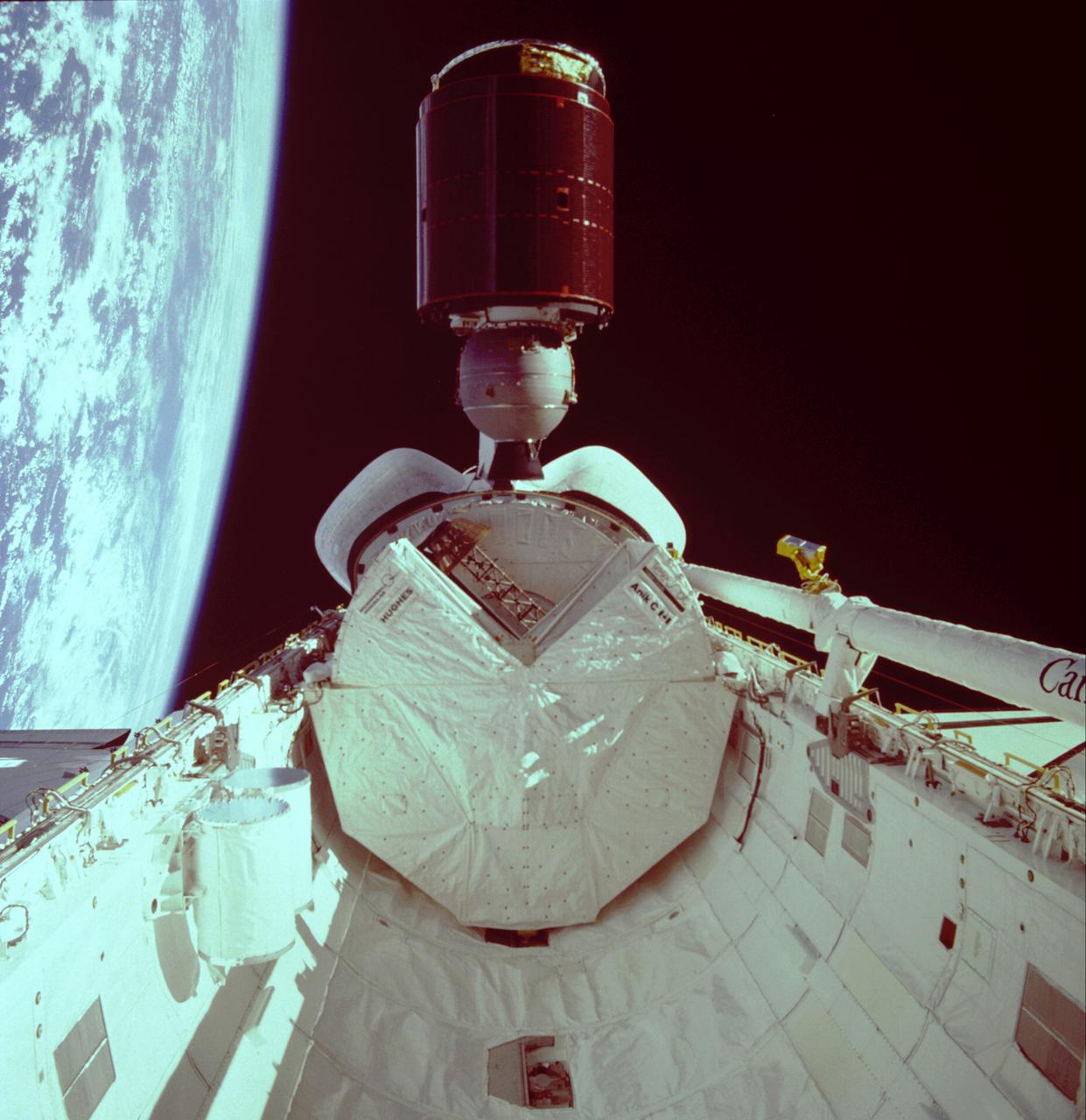
The TELESAT-1, also known as ANIK C-1, satellite is being released from the cargo bay of the Space Shuttle Orbiter Discovery during STS-51D, the 16th Shuttle mission. TELESAT-1 is a communication satellite built for Telesat Canada to provide voice and TV coverage of the Earth stations to trans-Canada network. Also shows in this photograph is an anterna for SYNCOM IV-3, also known as LEASAT-3, folded in a stowage. The SYNCOM is the Hughes Geosynchronous Communication Satellite and provides communication services from geosynchronous orbits principally to the U.S. Government. Both satellites were launched on April 12, 1985, aboard the Space Shuttle Orbiter Discovery.

S85-28647 (28 Feb 1985) --- The seven members of the STS-51D mission are pictured in the midst of a busy training schedule in preparation for NASA's 16th Space Shuttle flight, currently planned for April of this year. The crewmembers are (front row, left to right), Karol J. Bobko, commander; Donald E. Williams, pilot; Rhea Seddon and Jeffrey A. Hoffman, mission specialists; and (back row) S. David Griggs, mission specialist; and Charles D. Walker and United States Senator Jake Garn (Republican - Utah) both payload specialists. Walker represents McDonnell-Douglas Corporation. EDITOR'S NOTE: Mission specialist S. David Griggs died June 17, 1989, near Earle, Arkansas, in the crash of a World-War-II-era training plane.
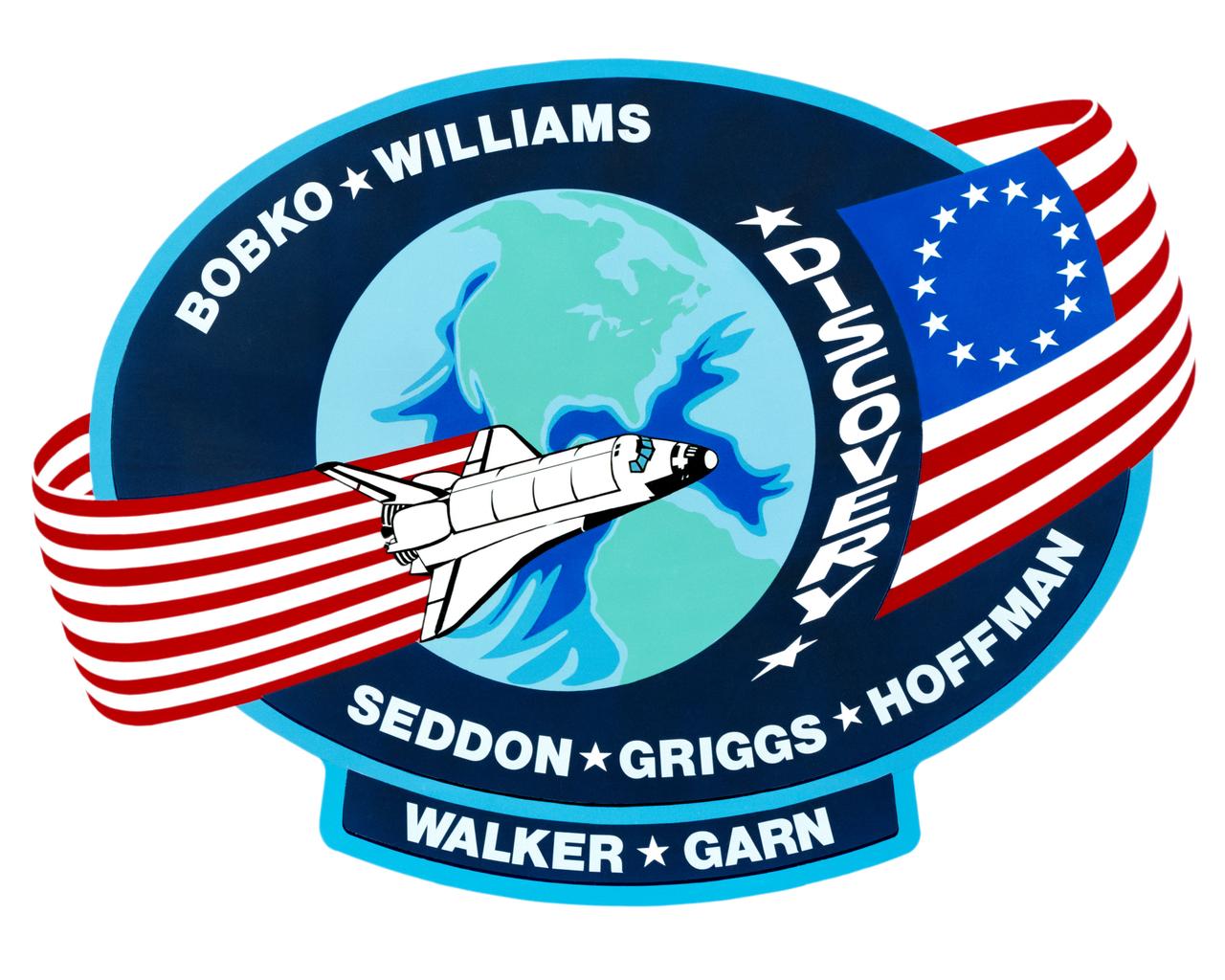
S85-28989 (March 1985) --- The dominant features of the STS-51D emblem are an orbit formed by a Colonial American flag and a space shuttle. The flag in orbit signifies the U.S. flag to indicate that it comes from this country and the American people. The original 13-star flag is used to symbolize a continuity of technical achievement and progress since colonial times. The name Discovery preceding the flag represents the spirit of Discovery and exploration of new frontiers which have been a hallmark of American people even before they were formed together as a nation. The crew members are Karol J. Bobko, Donald E. Williams, Rhea Seddon, S. David Griggs and Jeffrey A. Hoffman of NASA; and Charles D. Walker, representing McDonnell Douglas Corporation; and U. S. Senator Jake Garn. The NASA insignia design for space shuttle flights is reserved for use by the astronauts and for other official use as the NASA Administrator may authorize. Public availability has been approved only in the forms of illustrations by the various news media. When and if there is any change in this policy, which is not anticipated, the change will be publicly announced. Photo credit: NASA
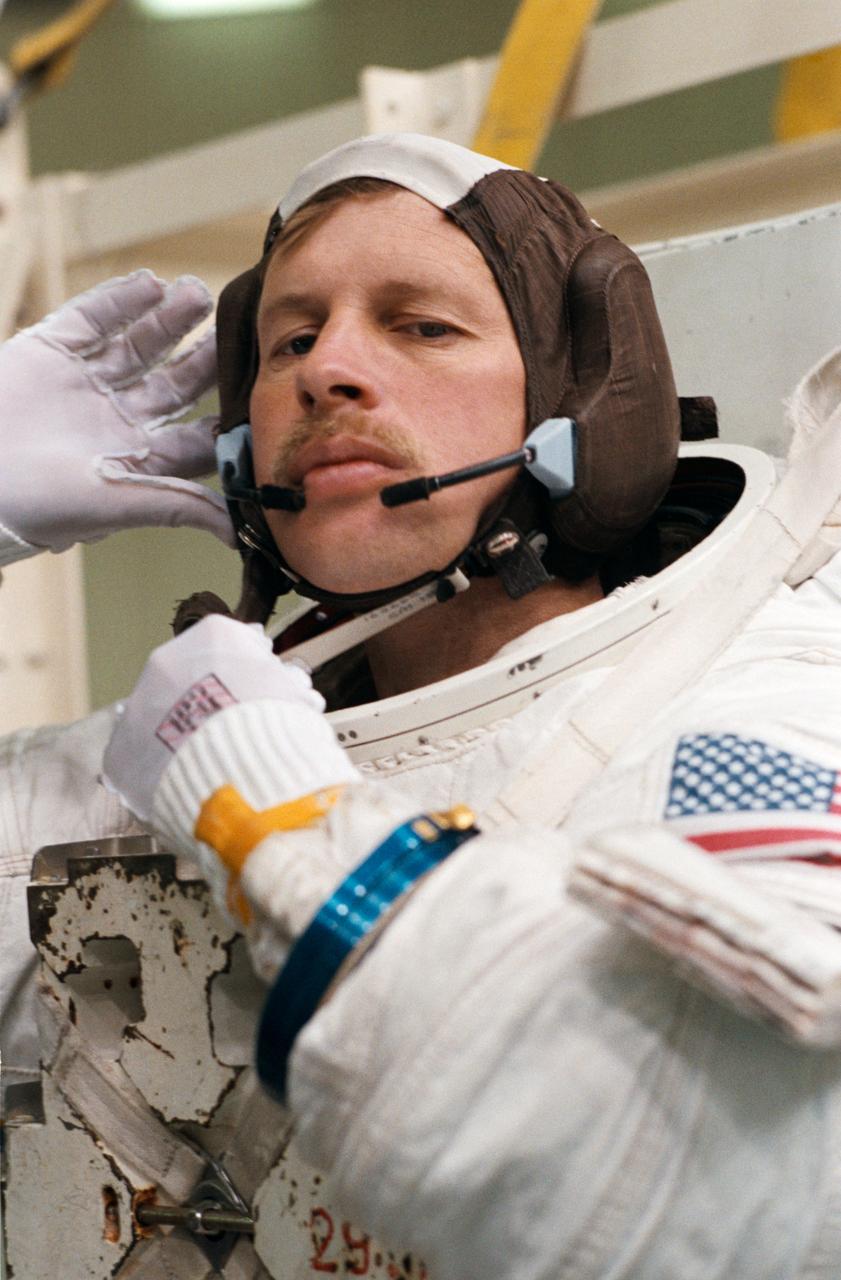
Astronaut Sherwood Springer prepares for an underwater test at Weightless Environment Training Facility (WETF) in response to the discovery of problems with the 04/13 deployed Syncom IV (LEASAT) communications satellite. Activities, Bldg. 29, WETF for the STS-23/51D Extravehicular Activity (EVA) Simulation for Syncom IV, 04/14/1985. 1. Shuttle - Simulation (SYNCOM IV) 2. Astronaut Jerry L. Ross - Simulation (SYNCOM) 3. Astronaut Sherwood C. Spring - Simulation (SYNCOM IV) JSC, Houston, TX
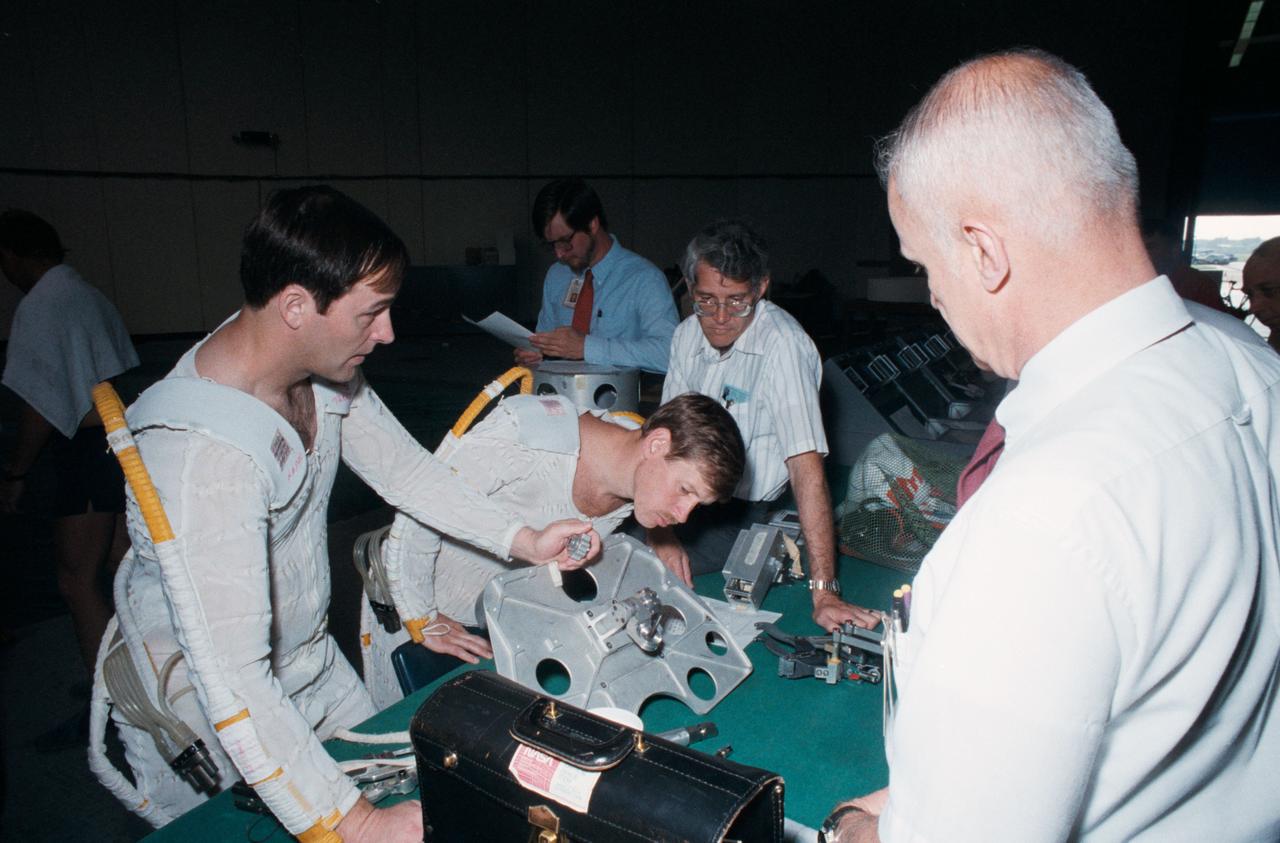
Astronauts Jerry L. Ross (left) and Sherwood Springer (center), look over a foot restraint like that on the currently orbiting Shuttle Discovery. At right is Astronaut Bruce McCandless II. Activities, Bldg. 29, Weightless Environment Training Facility (WETF) for the STS-23/51D Extravehicular Activity (EVA) Simulation for Syncom IV, 04/14/1985. 1. SHUTTLE - SIMULATION (SYNCOM IV) 2. ASTRONAUT ROSS, JERRY L. - SIMULATION (SYNCOM) 3. ASTRONAUT SPRING, SHERWOOD C. - SIMULATION (SYNCOM IV) JSC, HOUSTON, TX
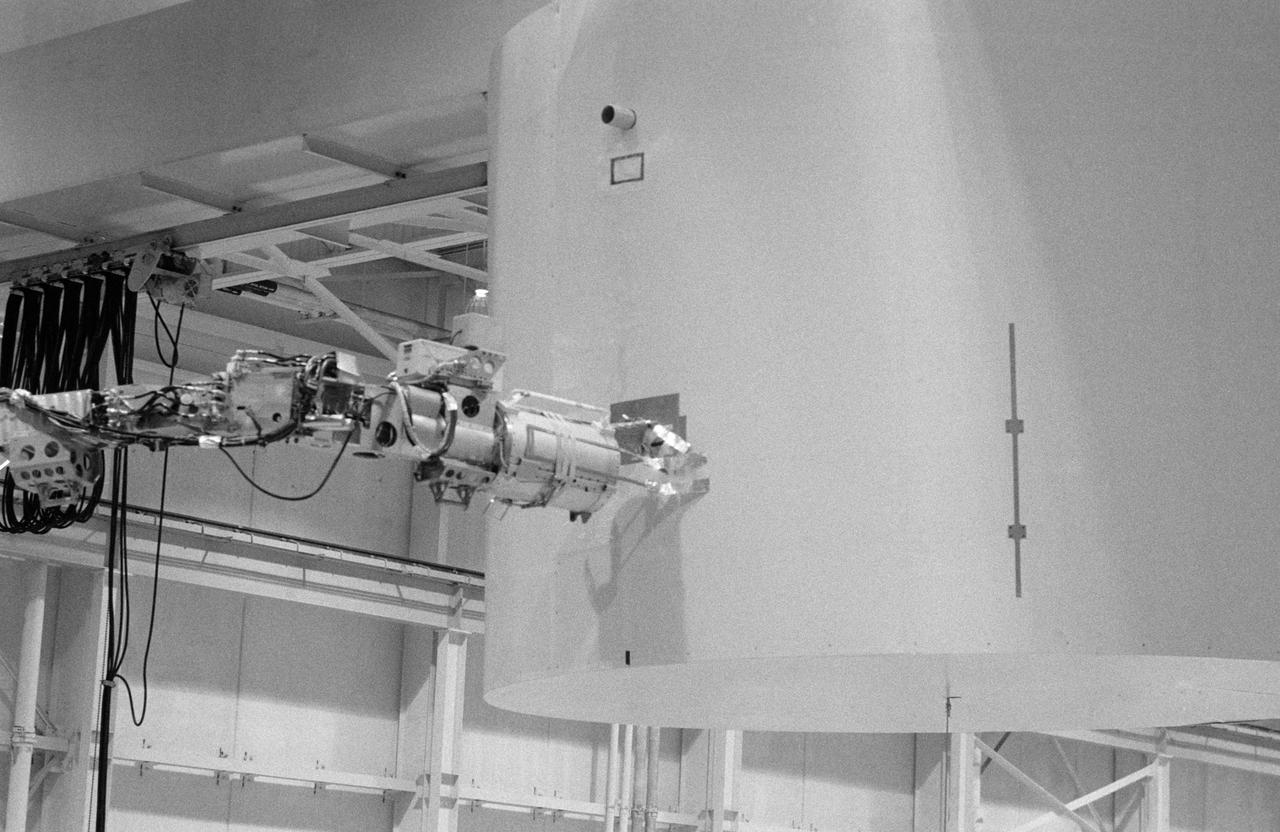
Simulation activities with the RMS in Bldg. 9A, with Astronaut Sally Ride testing the feasibility of the "Flyswatter" design for the STS-23/51D Mission on 04/15/16/1985. 1. STS-23/51D - Crew Training (Flyswatter) 2. Shuttle - Simulation (Flyswatter) JSC, Houston, TX
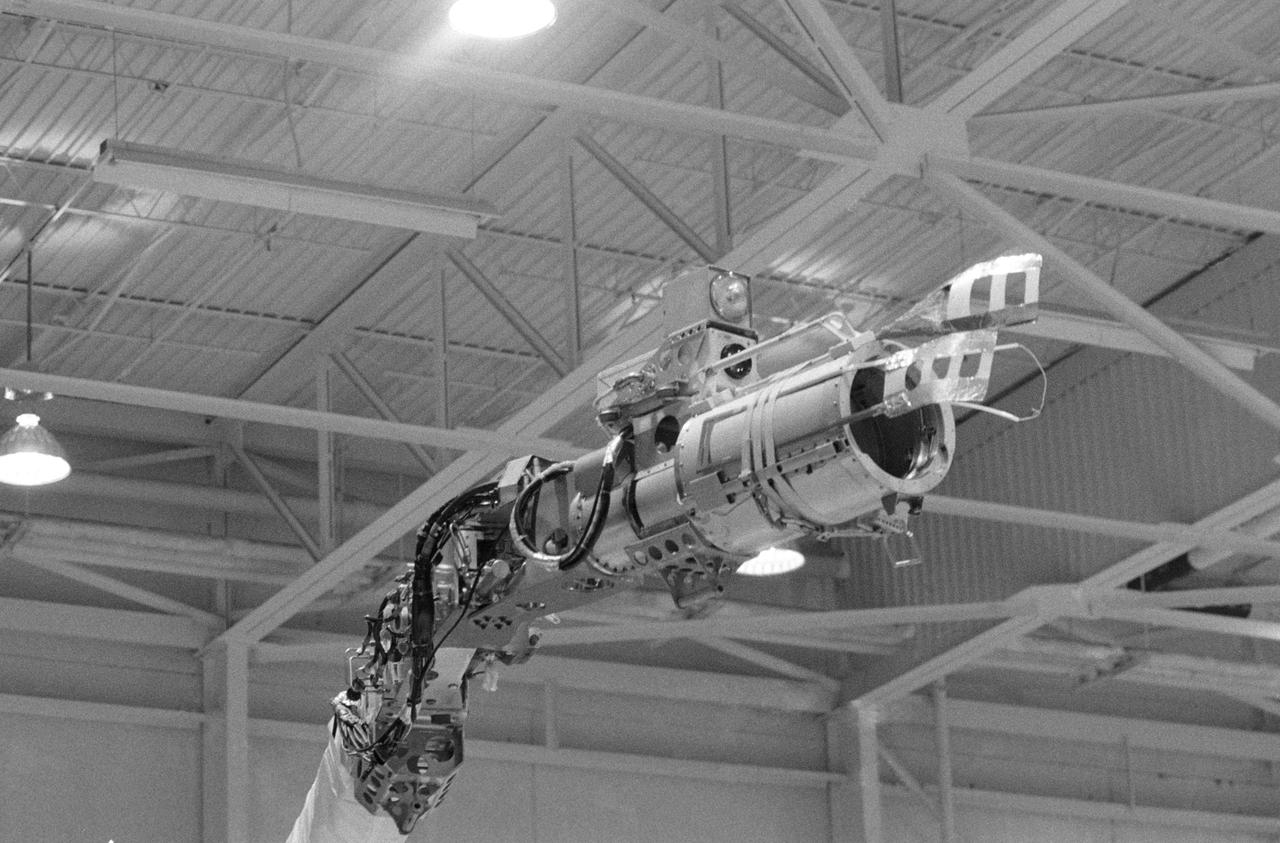
Simulation activities with the RMS in Bldg. 9A, with Astronaut Sally Ride testing the feasibility of the "Flyswatter" design for the STS-23/51D Mission on 04/15/16/1985. 1. STS-23/51D - Crew Training (Flyswatter) 2. Shuttle - Simulation (Flyswatter) JSC, Houston, TX
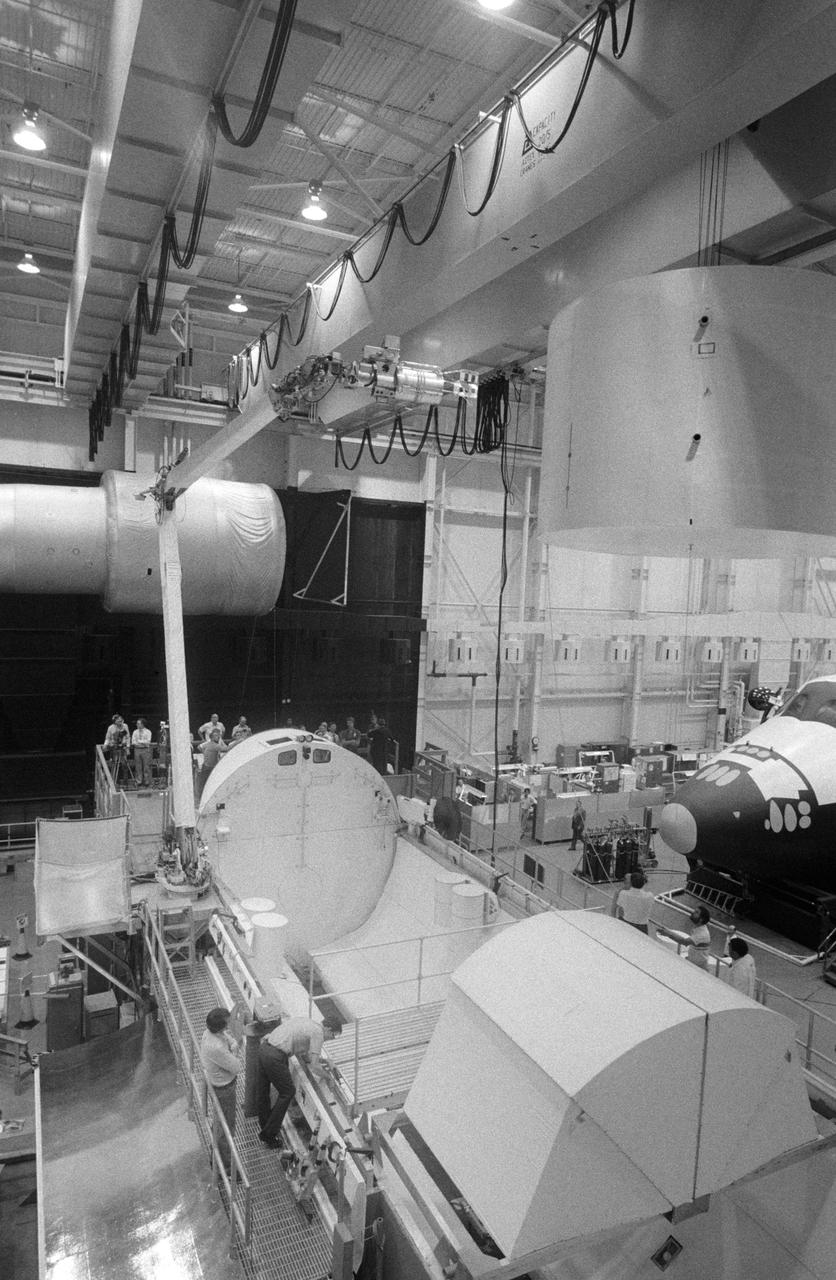
Simulation activities with the RMS in Bldg. 9A, with Astronaut Sally Ride testing the feasibility of the "Flyswatter" design for the STS-23/51D Mission on 04/15/16/1985. 1. STS-23/51D - Crew Training (Flyswatter) 2. Shuttle - Simulation (Flyswatter) JSC, Houston, TX
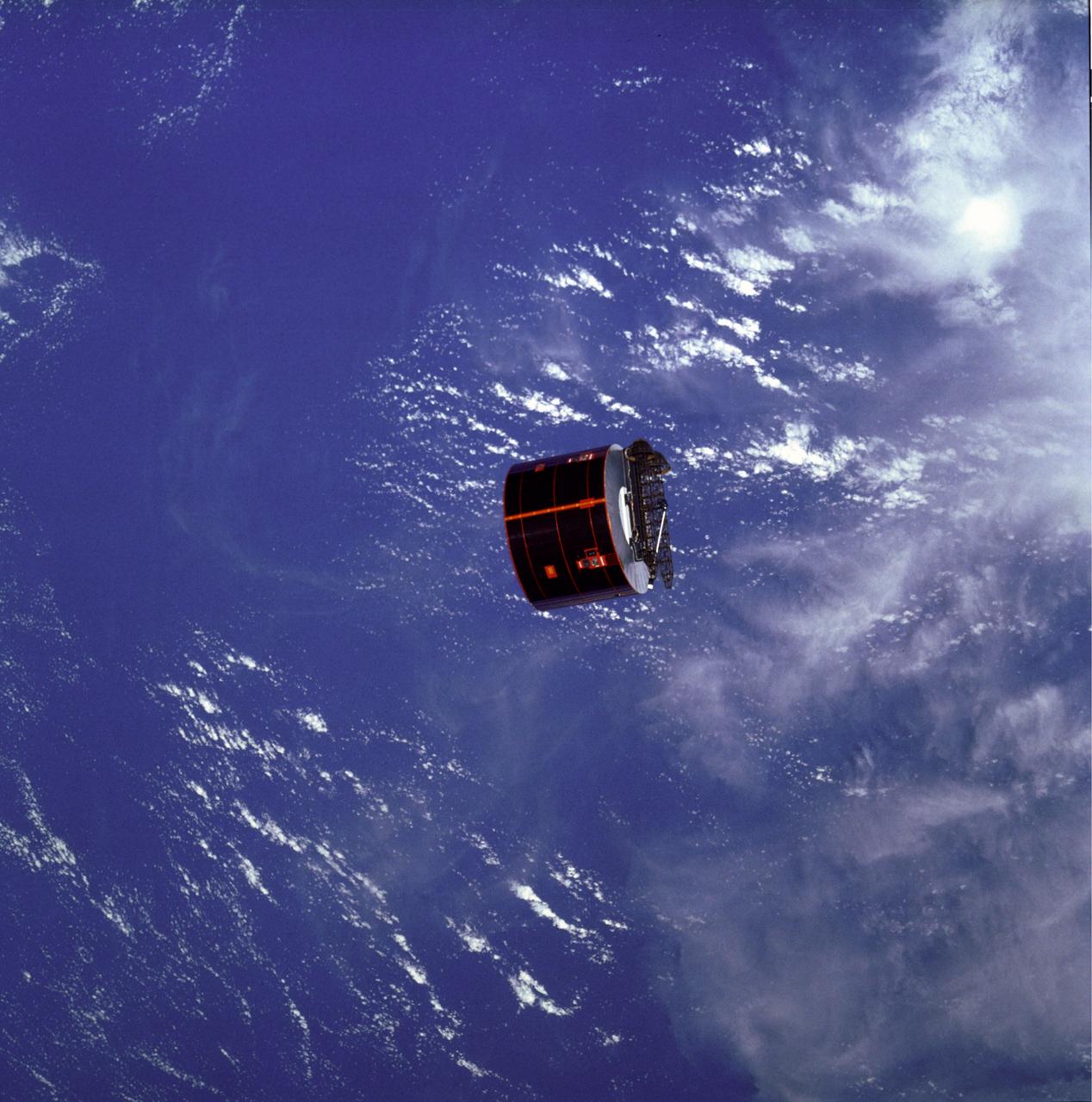
In this photograph the SYNCOM IV-3, also known as LEASAT 3, satellite moves away from the Space Shuttle Orbiter Discovery. SYNCOM (Hughes Geosynchronous Communication Satellite) provides communication services from geosynchronous orbit, principally to the U.S. Government. The satellite was launched on April 12, 1985, aboard the Space Shuttle Orbiter Discovery.
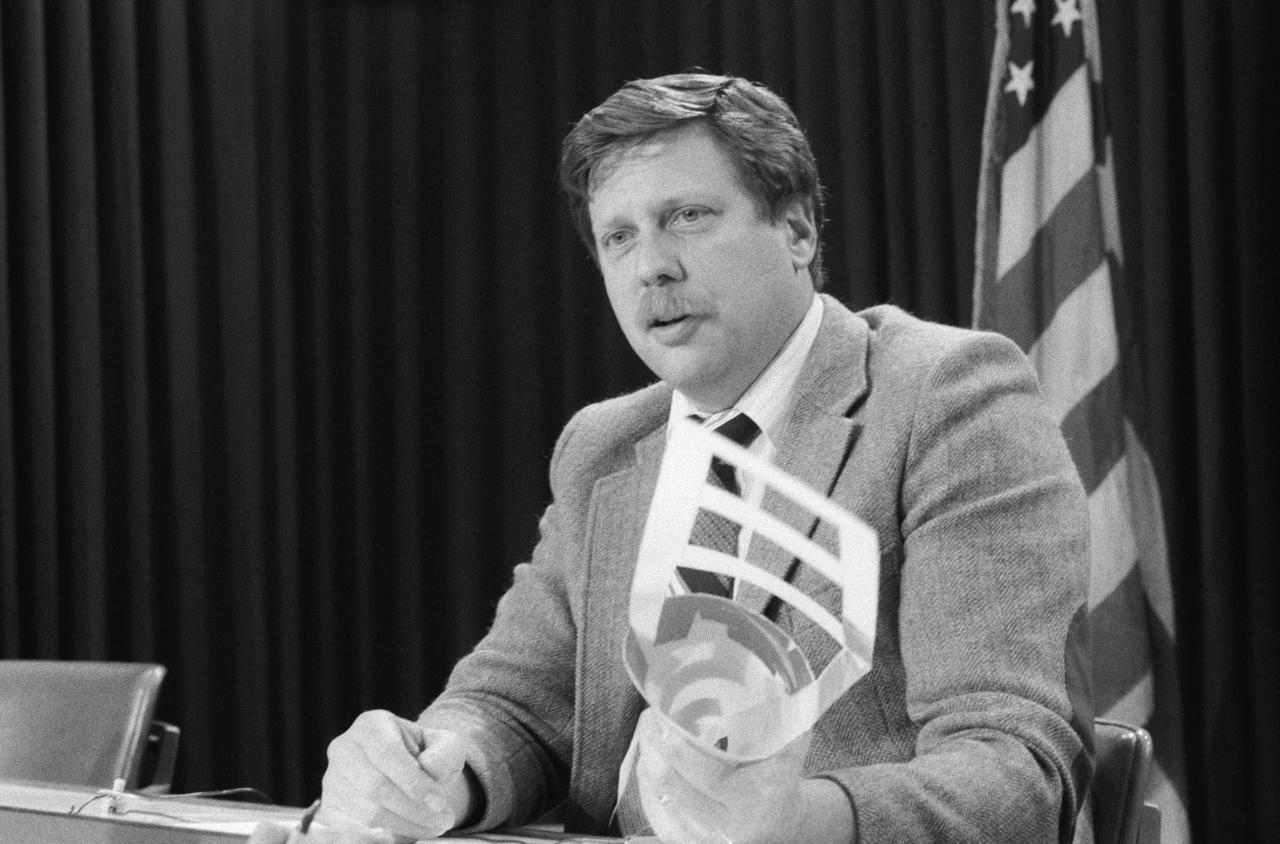
Views of Flight Director John Cox with the Flyswatter. 1. STS-23/51D - Press Conference
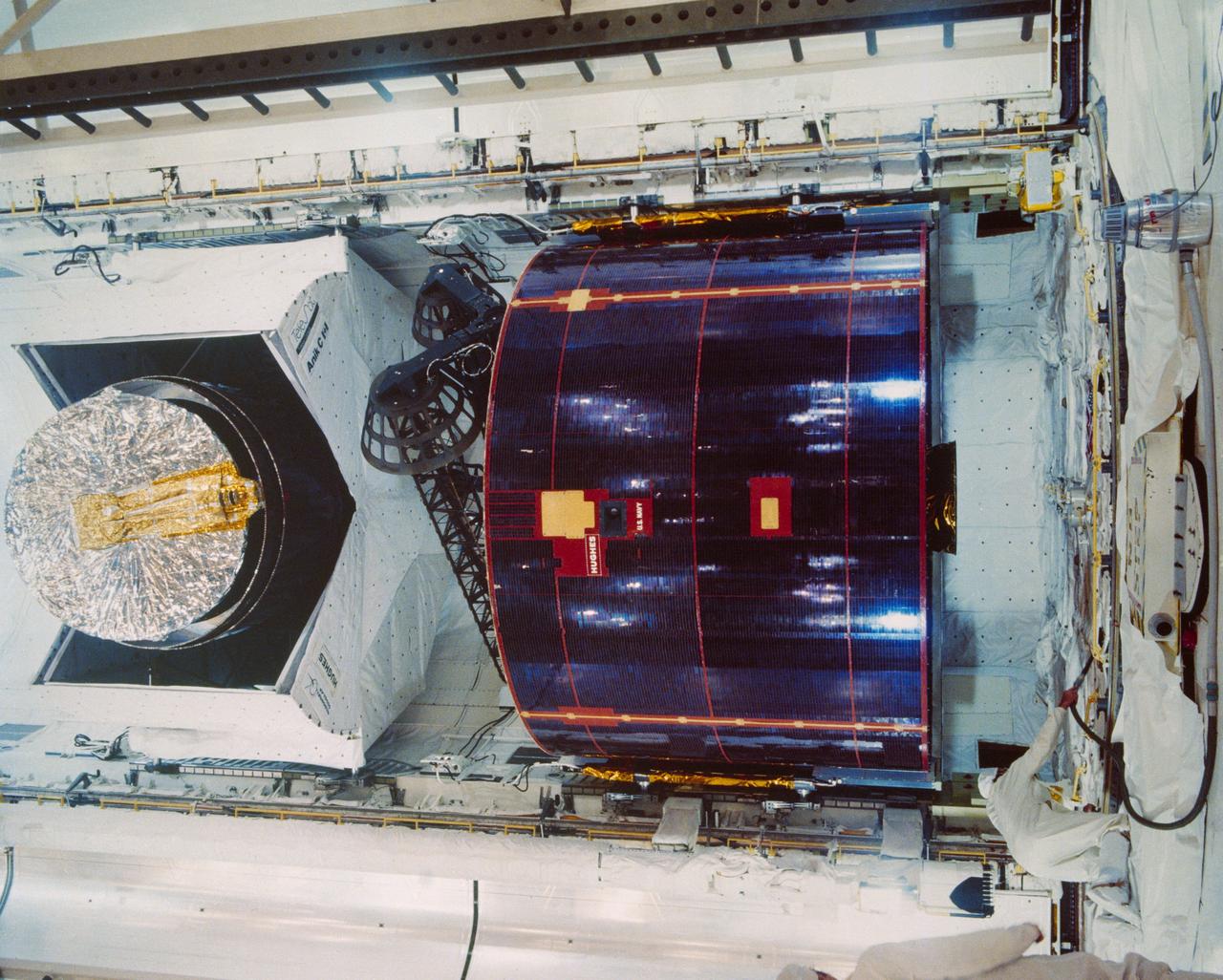
"Discovery" on pad and payload bay doors open to show satellite payloads. SEE: 108-KSC-85-PC-156 SEE: 108-KSC-85-PC-157 KSC, FL
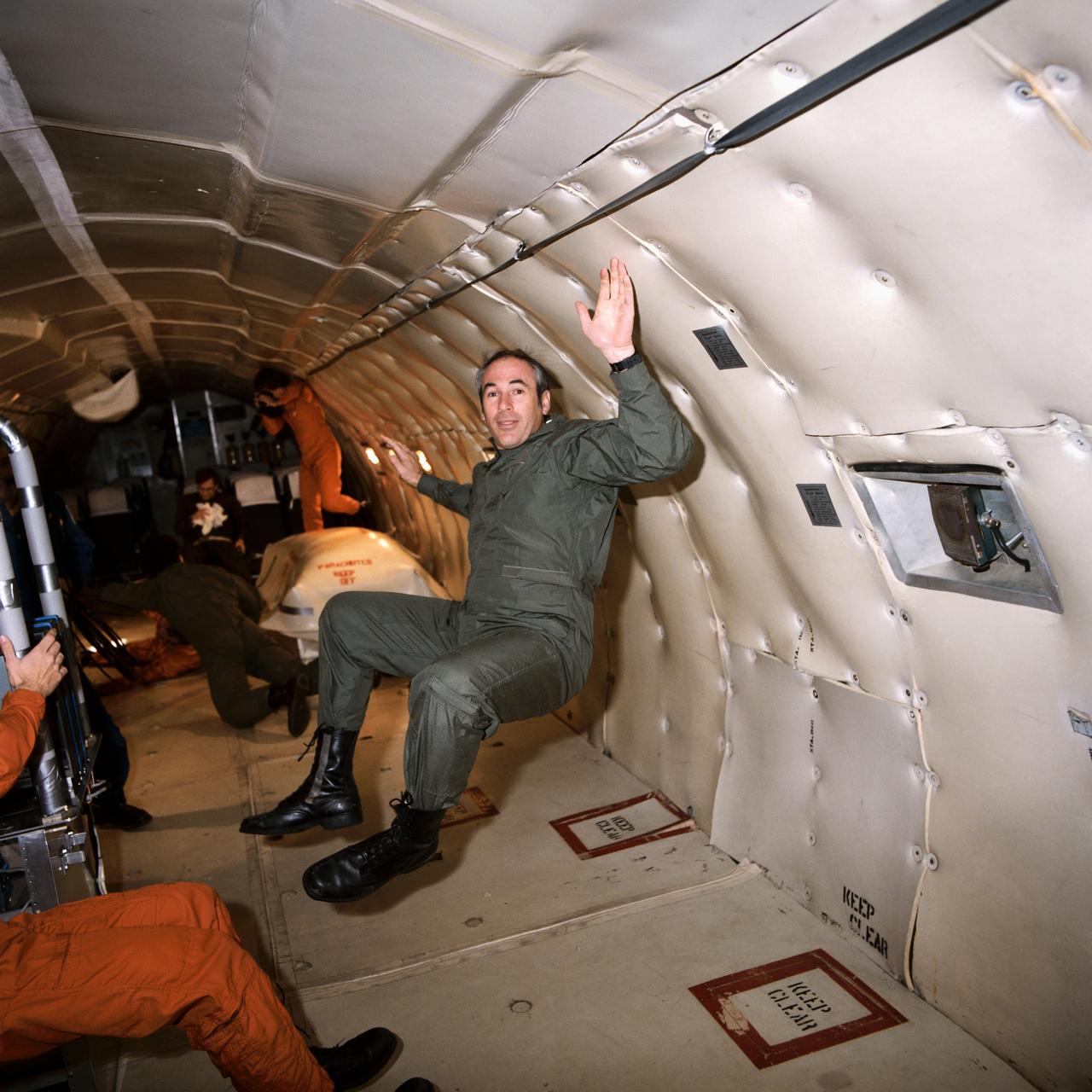
S85-26106 (25 Jan. 1985) --- Astronaut Gregory Jarvis gets a familiarization session in weightlessness aboard a KC-135 "zero gravity" aircraft. Jarvis was originally assigned as payload specialist to STS-51D but was reassigned to STS-51L. Photo credit: NASA

51D-09-034 (12-19 April 1985) --- The seven crew members of STS-51D take time, during a busy full week in space, to pose for a "star-burst" type in-space portrait. Hold picture with astronaut Rhea Seddon at bottom center. Counter-clockwise from the bottom left are Jeffrey A. Hoffman, mission specialist; Dr. Seddon, mission specialist; Charles D. Walker, payload specialist; U. S. Senator E. J. (Jake) Garn, payload specialist; S. David Griggs, mission specialist; Karol J. Bobko, mission commander; and Donald W. Williams, pilot. A pre-set 35mm camera exposed the frame in the mid-deck of the Earth-orbiting Space Shuttle Discovery. The crew launched at 8:59 a.m. (EST), April 12, 1985 and landed at 8:54 a.m. (EST), April 19, 1985 spending five minutes less than a full week on the busy mission.
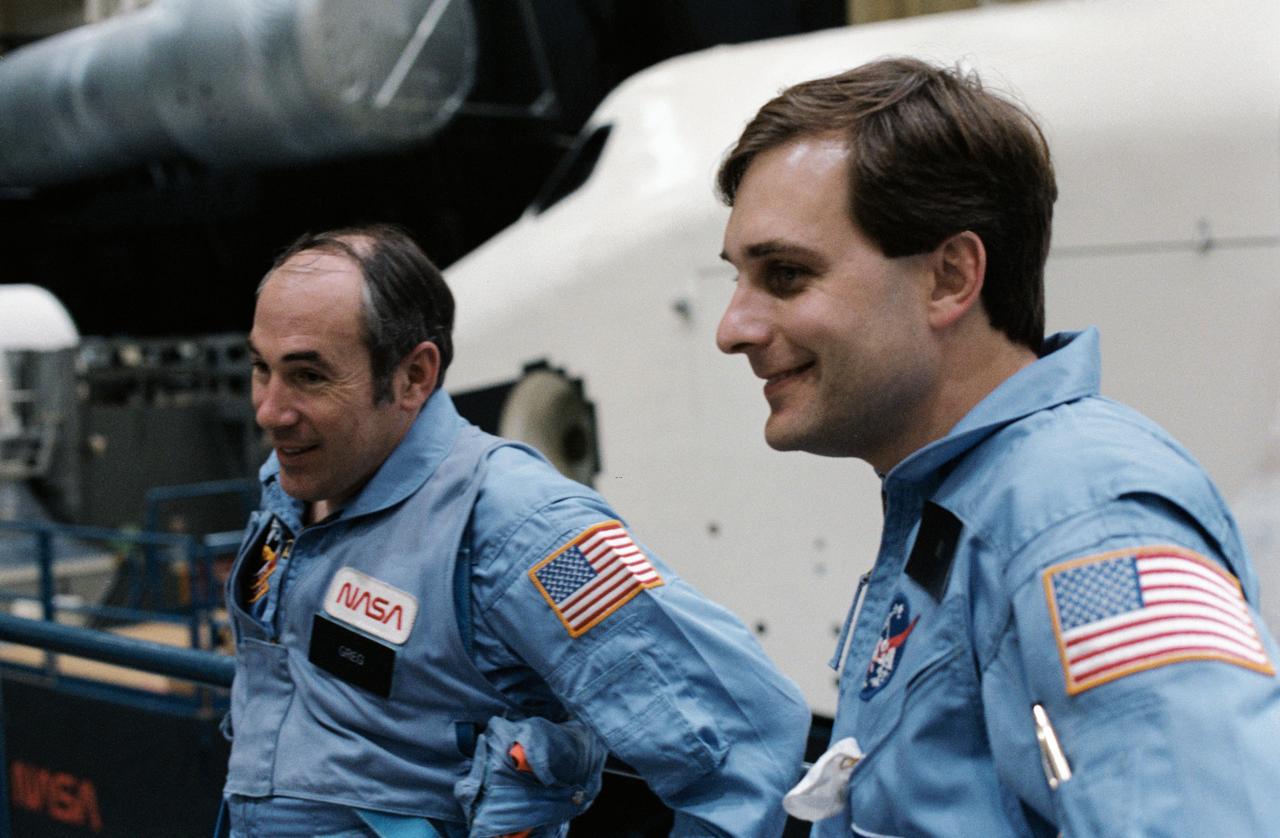
S85-28161 (1 March 1985) --- Astronauts Gregory Jarvis, left, and L. William Butterworth take a breather from training activities in Johnson Space Center’s (JSC) shuttle mock-up and integration laboratory. Jarvis and Butterworth, both Hughes Co. payload specialists, were originally assigned as payload specialists to STS-51D but were reassigned to STS-51L. Photo credit: NASA
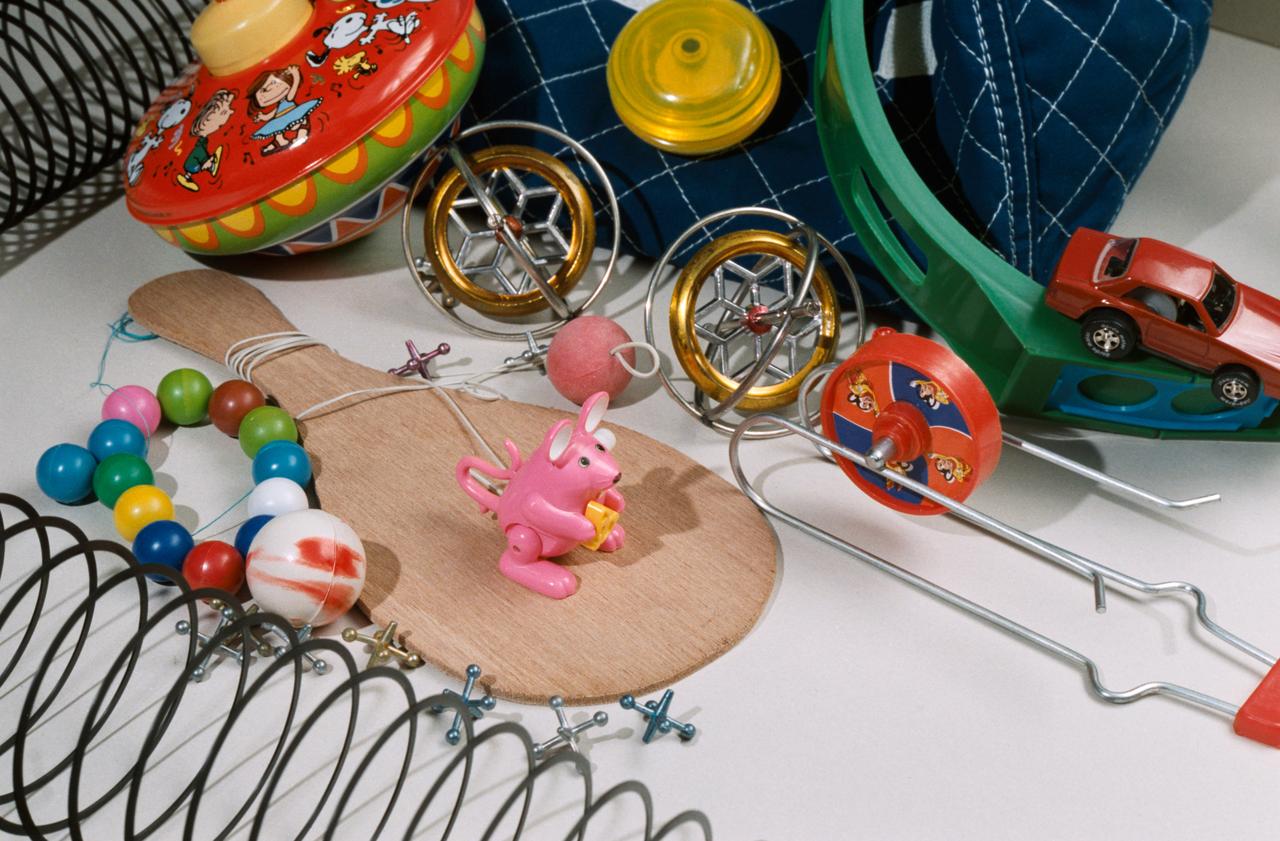
S85-26822 (February 1985) --- The crew members of Space Shuttle flight STS-51D have agreed to demonstrate the behavior of simple toys on their mission scheduled for launch in early March of this year. The pictured toys will be carried aboard the Challenger as part of a study of physics in cooperation with the Houston Museum of Natural Sciences. The toys include a yo-yo, paddle ball, friction powered toy car, flipping mouse, top, ball and jacks, gyroscopes, Slinky, Wheelo. The photograph was taken by Otis Imboden.
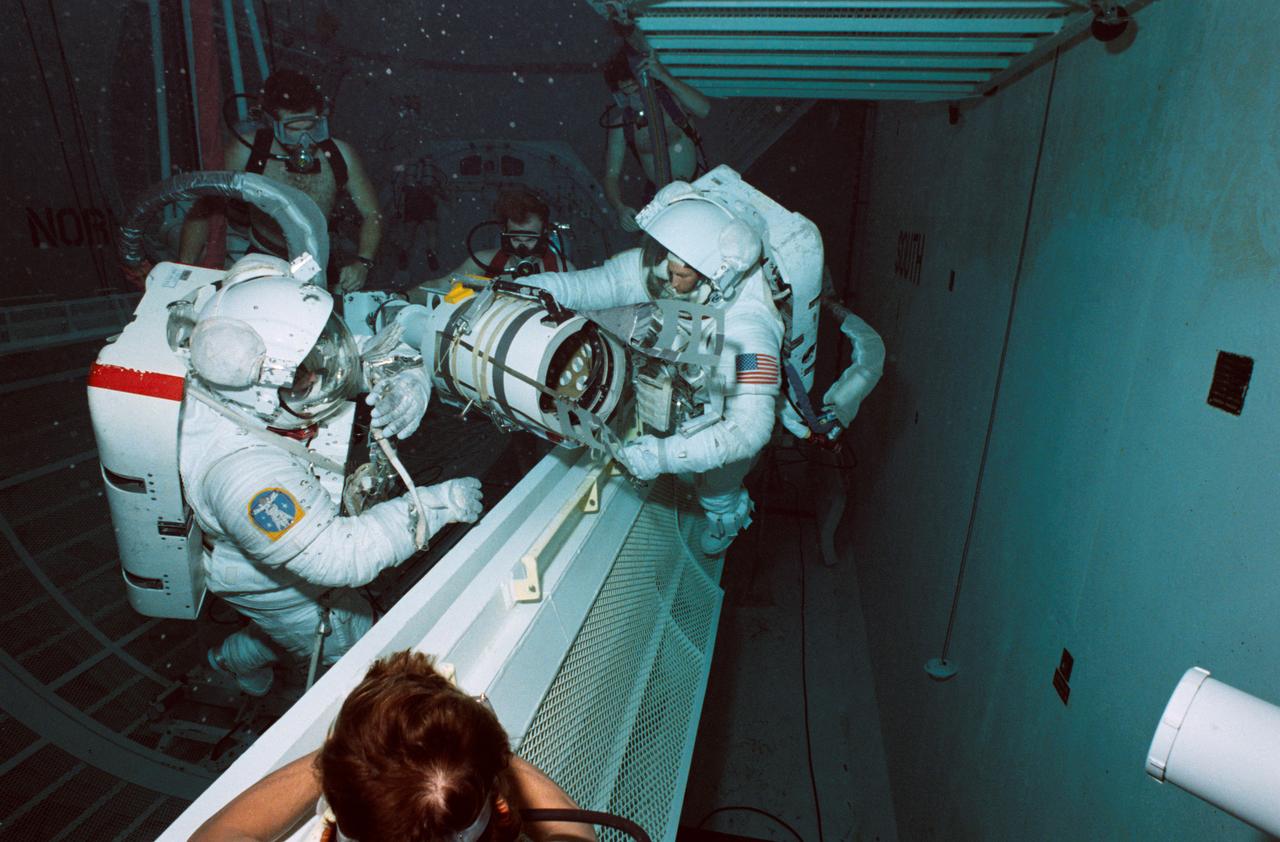
Underwater EVA Simulation of "Flyswatter" attachment in the Weightless Environment Training Facility (WETF), 04/15/1985. JSC, HOUSTON, TX

S85-30878 (15 April 1985) --- Astronaut Jerry L. Ross, left, and Astronaut candidate Mark C. Lee rehearse the deployment of two specially designed flyswatter like tools on the end of the orbiter's remote manipulator system (RMS) arm. Their "dry" run of a planned Discovery STS 51-D extravehicular activity (EVA) is actually not so dry, since it is held in a 25 ft. deep pool, part of the Johnson Space Center's (JSC) weightless environment test facility (WET-F). Astronauts Jeffrey A. Hoffman and S. David Griggs, two 51-D mission specialists, have been assigned the task of April 16's EVA. A rendezvous with the troubled Syncom IV (LEASAT) satellite has been scheduled for the day after the EVA, and an attempt will be made by the arm to trip an important lever on the troubled communications satellite.