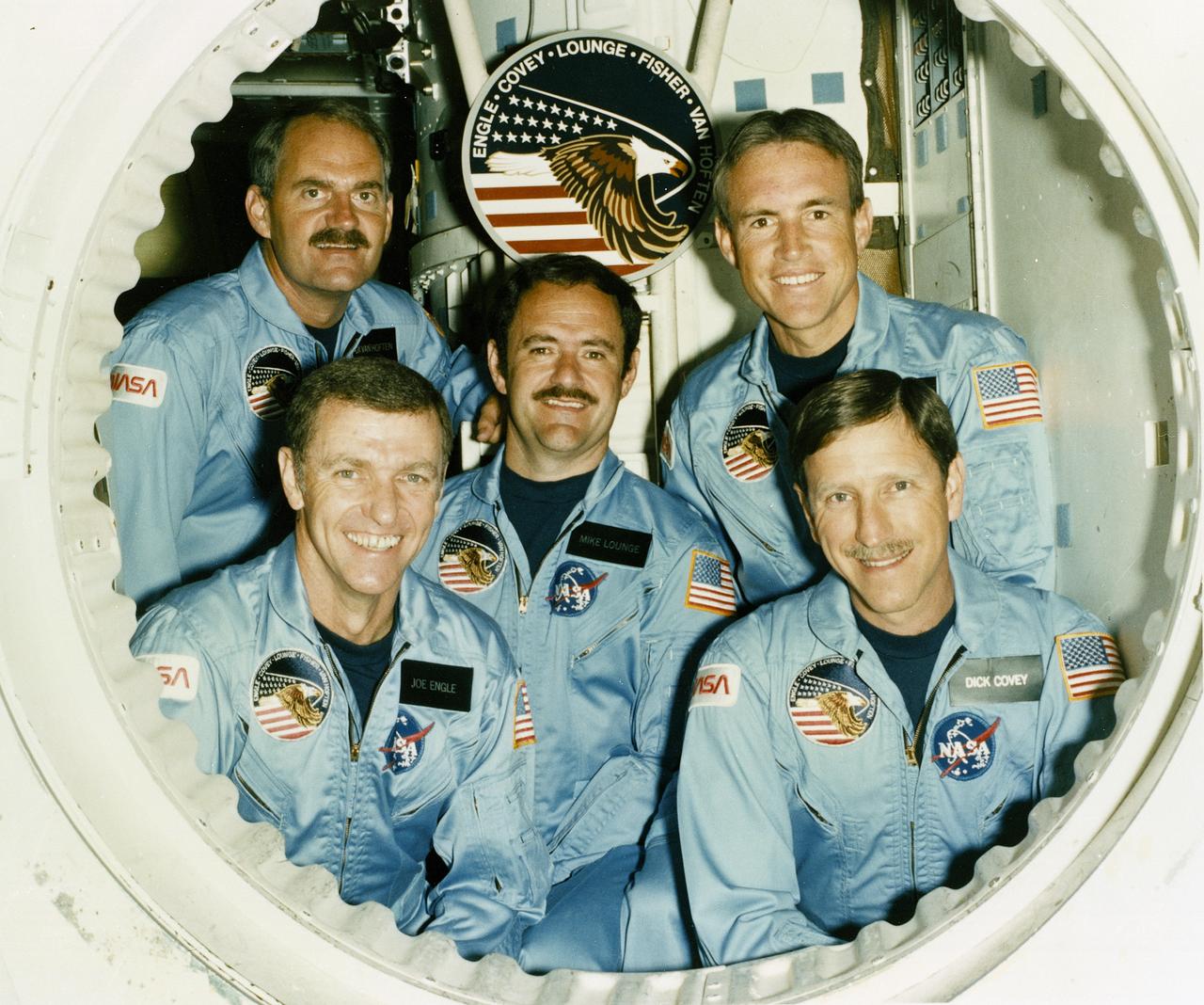
The crew assigned to the STS-51I mission included (front row left to right) Joe H. Engle, commander; and Richard O. Covey, pilot. In the center is John M. (Mike) Lounge, mission specialist. On the back row, from left to right, are mission specialists James D. van Hoften, and William F. Fisher. Launched aboard the Space Shuttle Discovery on August 27, 1985 at 6:58:01 am (EDT), the STS-51I mission’s primary payloads were three communication satellites: the ASC-1 for the American Satellite Company; the AUSSAT-1, an Australian communications satellite; and the SYNCOM-IV-4, the synchronous communications satellite.
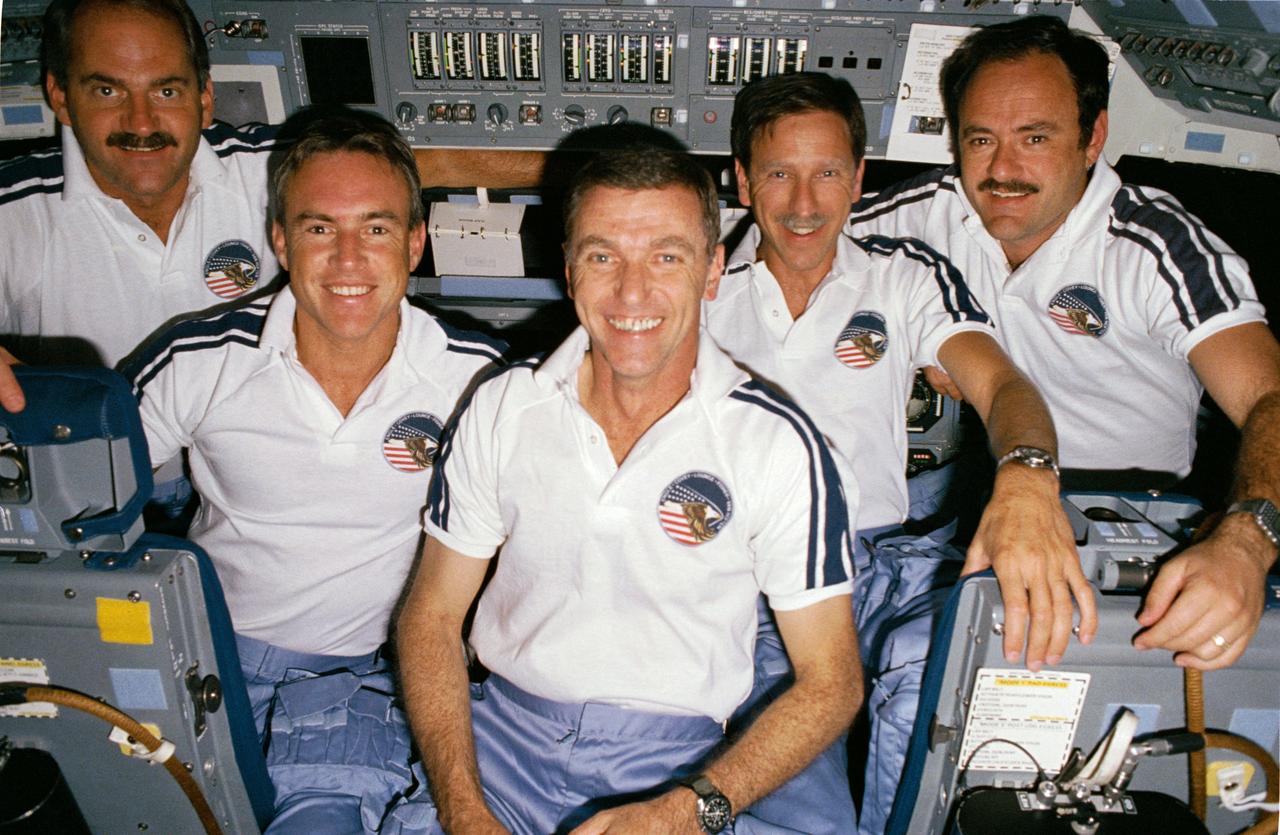
51I-17-029 (Aug-Sept 1985) --- A group portrait, recorded by a pre-set 35mm camera, shows all five STS- 51-I crewmembers on the flight deck of the Earth-orbiting Discovery in early September 1985, following the successful Syncom repair performed by the crewmembers. Left to right are Astronauts James D. van Hoften, William F. Fisher, Joe H. Engle, Richard O. Covey and John M. (Mike) Lounge.
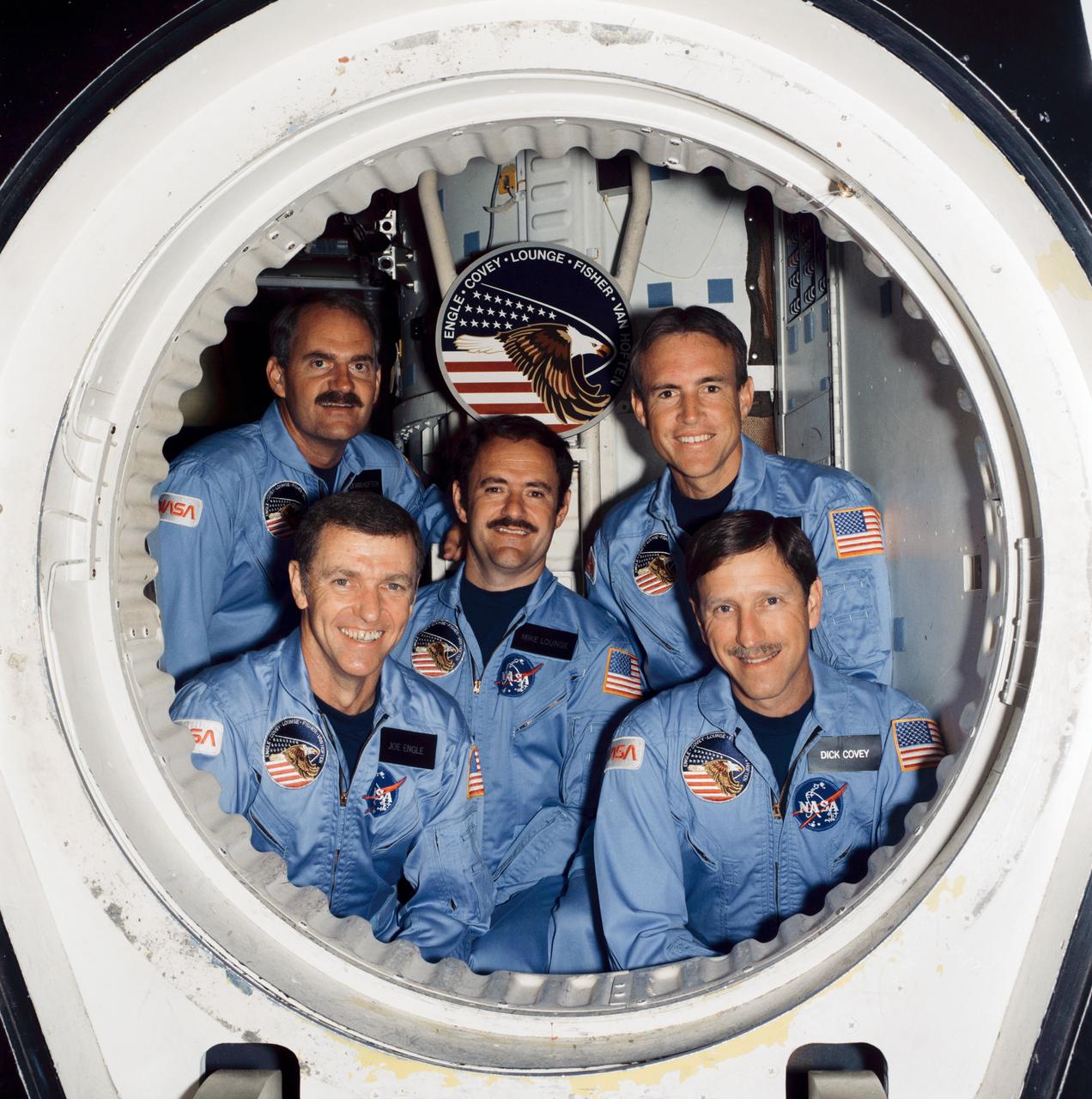
S85-36062 (1 July 1985) --- These five NASA astronauts make up the crew for the mission STS-51I, scheduled for launch in August of this year. Taking a break from rehearsals in the crew compartment trainer in the Shuttle Mockup and Integration Laboratory at JSC are astronauts Joe H. Engle (front left), crew commander; Richard O. Covey (front right), pilot; and (back row, left-to-right) astronauts James D. van Hoften, John M. (Mike) Lounge and William F. Fisher -- all mission specialists.

S85-25870 (August 1985) --- The crew emblem for STS-51I is based on a strong patriotic theme with the basic colors of red, white and blue suggesting the American flag and a dominant American bald eagle in aggressive flight. The 19 stars signify the numerical sequence of the flight. The shock wave represents that formed by the orbiter during the entry phase of the flight. Surnames of crew members surround the top part of the circular design. The five-member crew composed of astronauts Joe H. Engle, commander; Richard O. Covey, pilot; John Michael (Mike) Lounge, William F. Fisher and James D. van Hoften, all mission specialists. The NASA insignia design for space shuttle flights is reserved for use by the astronauts and for other official use as the NASA Administrator may authorize. Public availability has been approved only in the forms of illustrations by the various news media. When and if there is any change in this policy, which is not anticipated, the change will be publicly announced. Photo credit: NASA
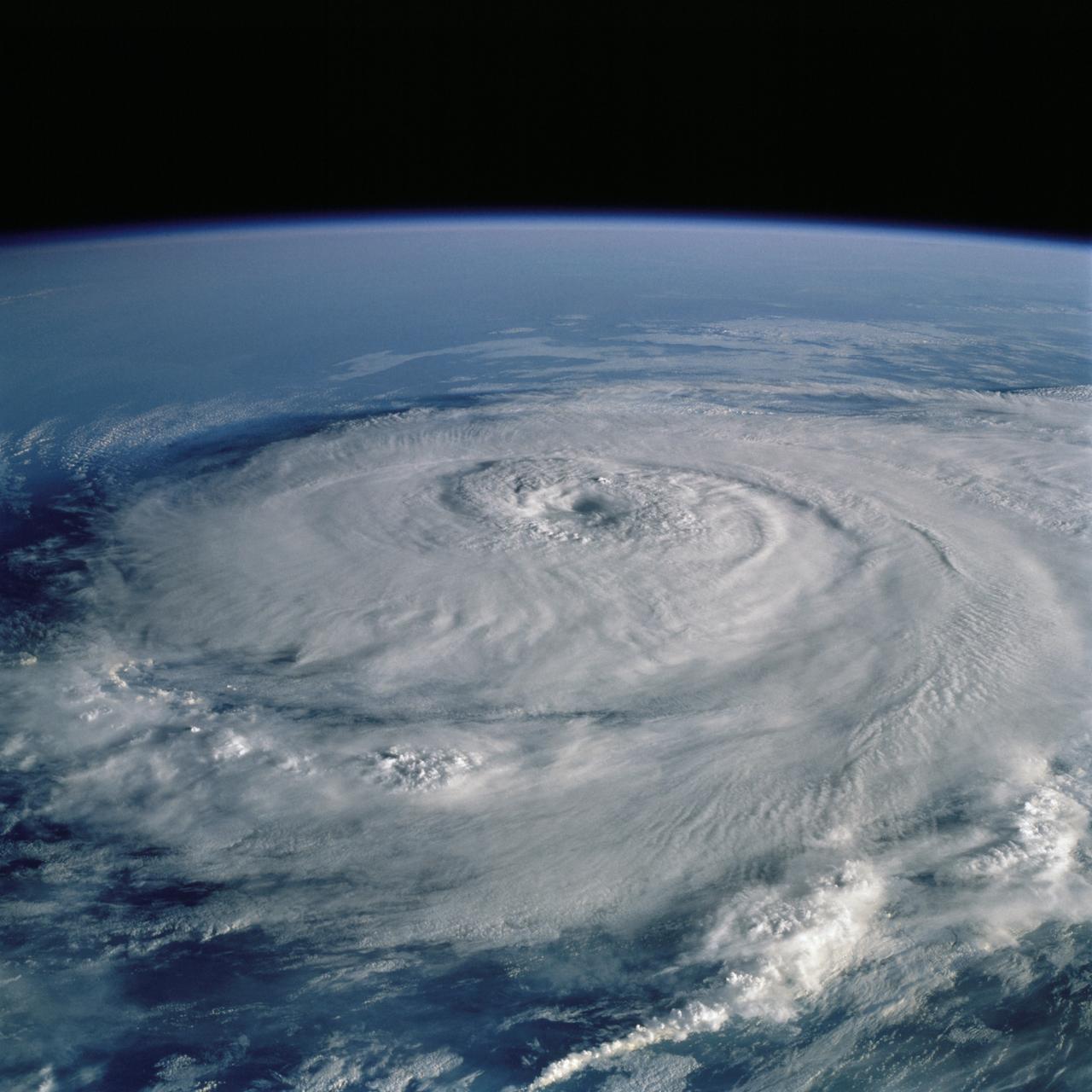
51I-44-052 (2 Sept. 1985) --- An oblique view of Hurricane Elena, photographed with a 70mm camera by STS-51I crew members of the space shuttle Discovery on Sept. 2, 1985. Photo credit: NASA
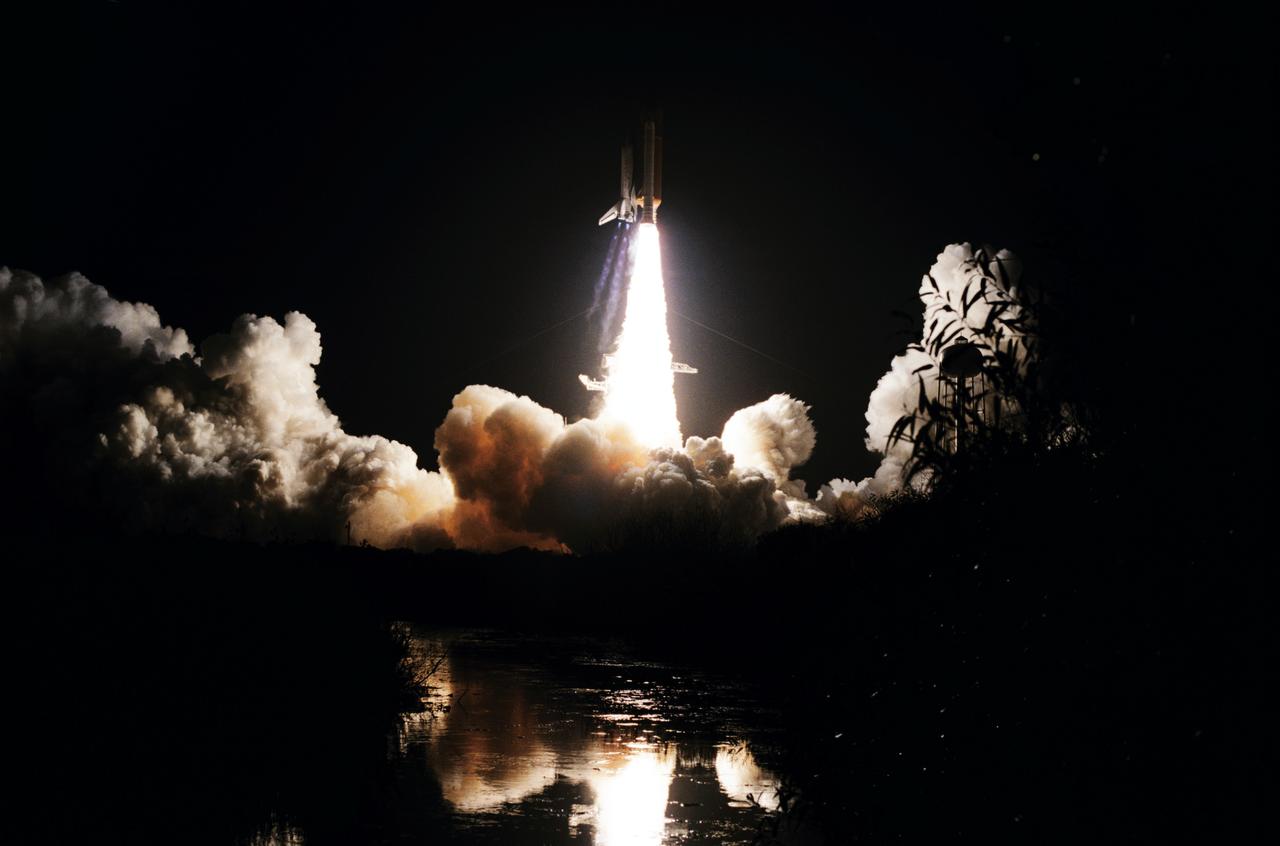
51I-S-223 (27 August 1985) --- Launch of the Space Shuttle Discovery and beginning of STS-51I mission. View of the pre-dawn launch shows a reflection of the ignition in the river across from the launch complex.
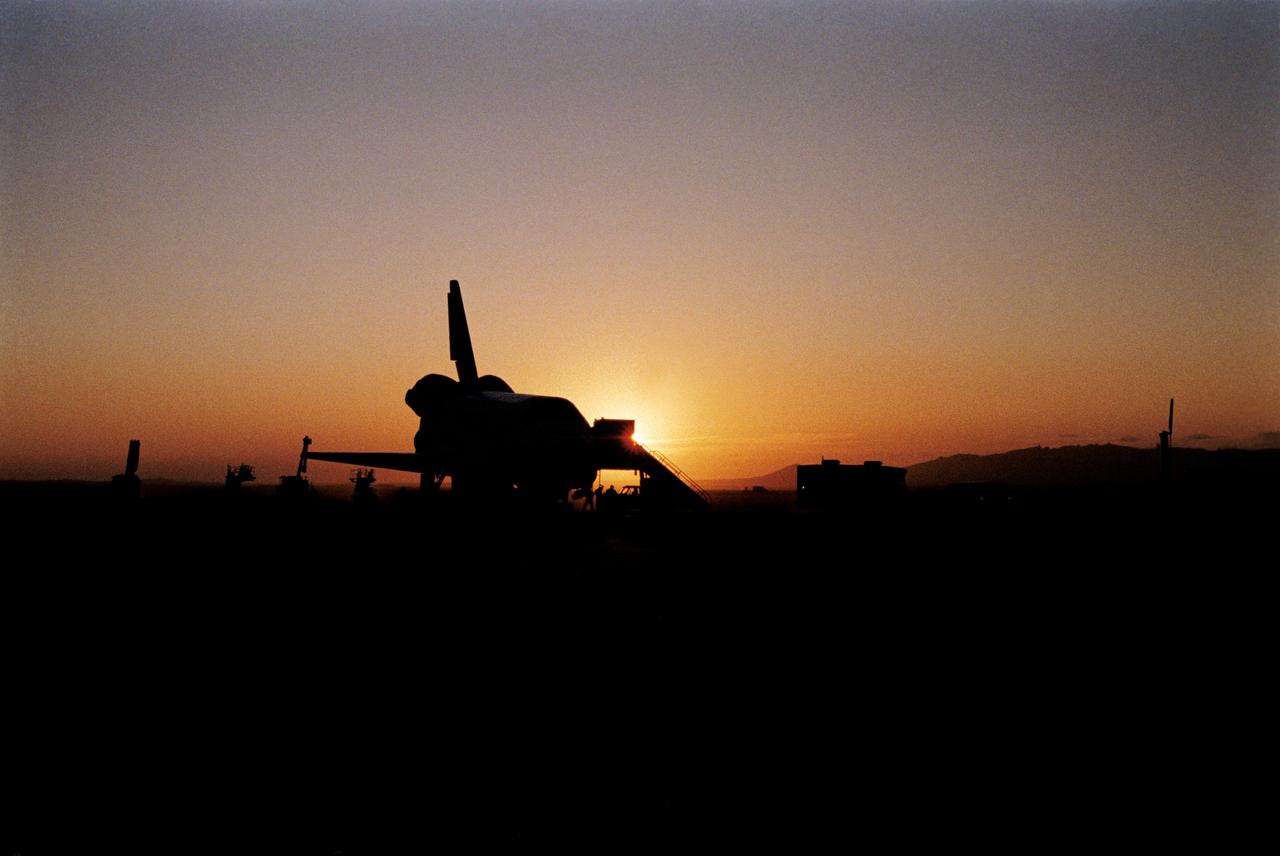
51I-S-240 (3 Sept. 1985) --- Servicing of the space shuttle Discovery after its landing at Edwards Air Force Base ending the STS-51I mission. Photo credit: NASA

51I-13-024 (2 Sept. 1985) --- Astronaut Joe H. Engle, STS51-I commander, is seen in a 35mm frame exposed with a fisheye lens as he works at controls between the commander and pilot stations on the forward flight deck of the space shuttle Discovery. Photo credit: NASA
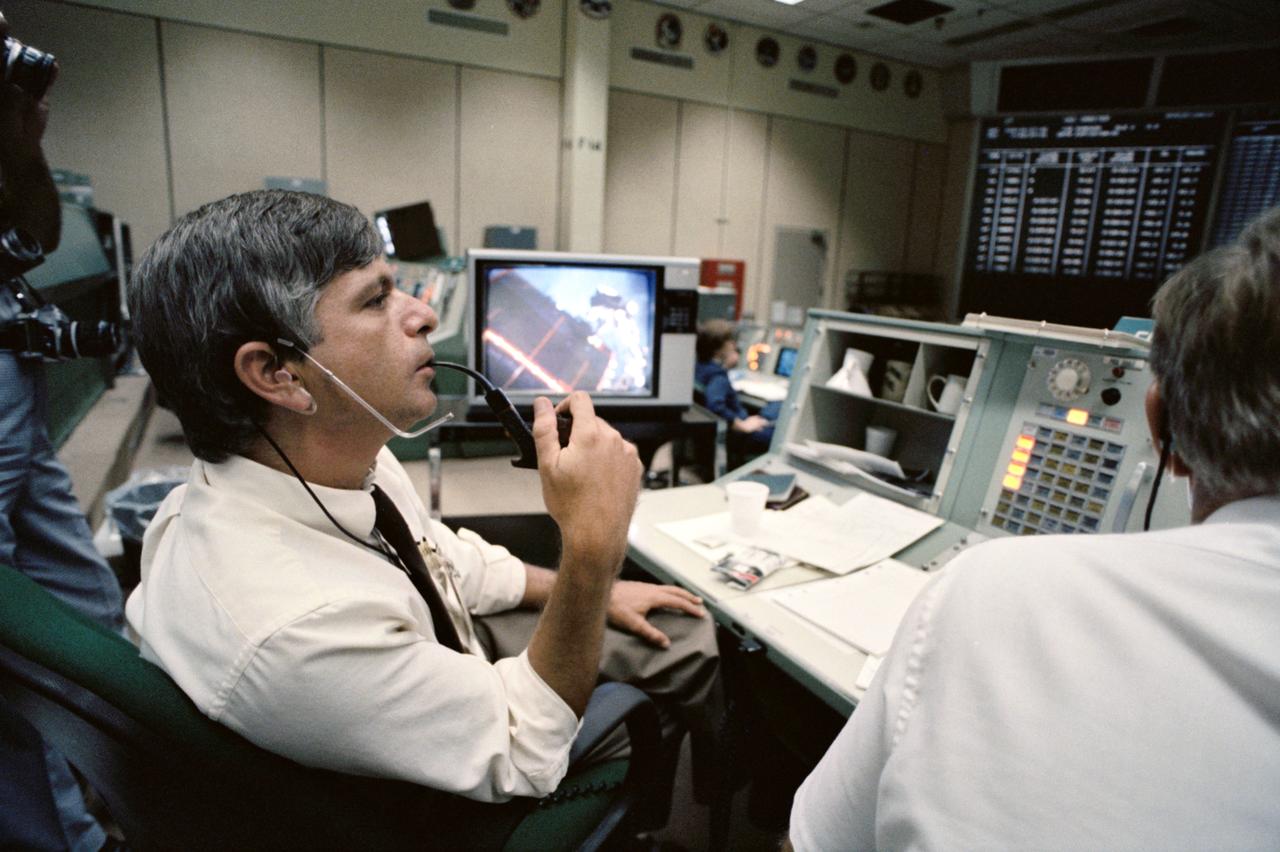
51I-S-189 (27 Aug 1985) --- View of the mission control center (MCC) during STS 51-I as flight controllers watch monitors at consoles to follow the extravehicular activity of two of the Discovery's astronauts.
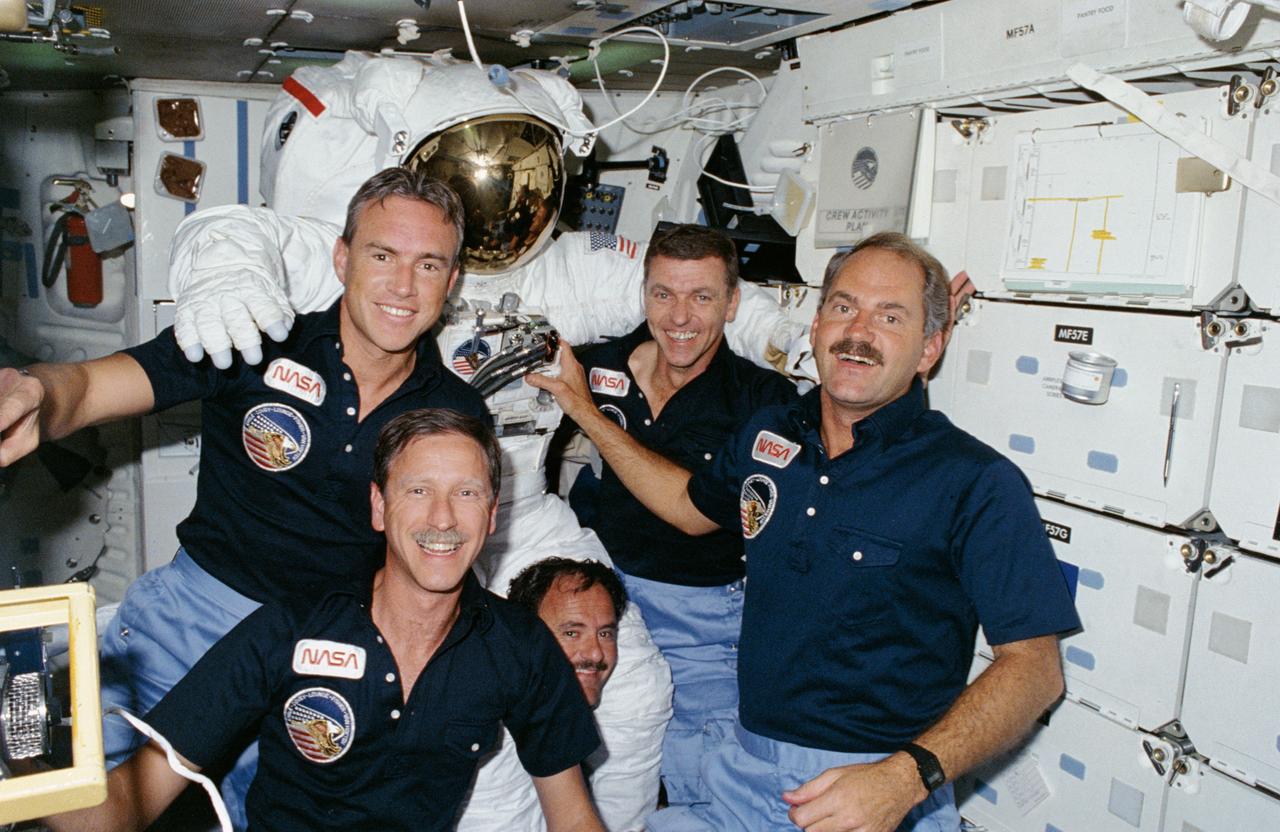
51I-07-015 (4-5 Sept 1985) --- All five STS 51-I crewmembers pose with one of two extravehicular mobility unit (EMU) spacesuits used by Astronauts van Hoften and Fisher on their two-day EVA.
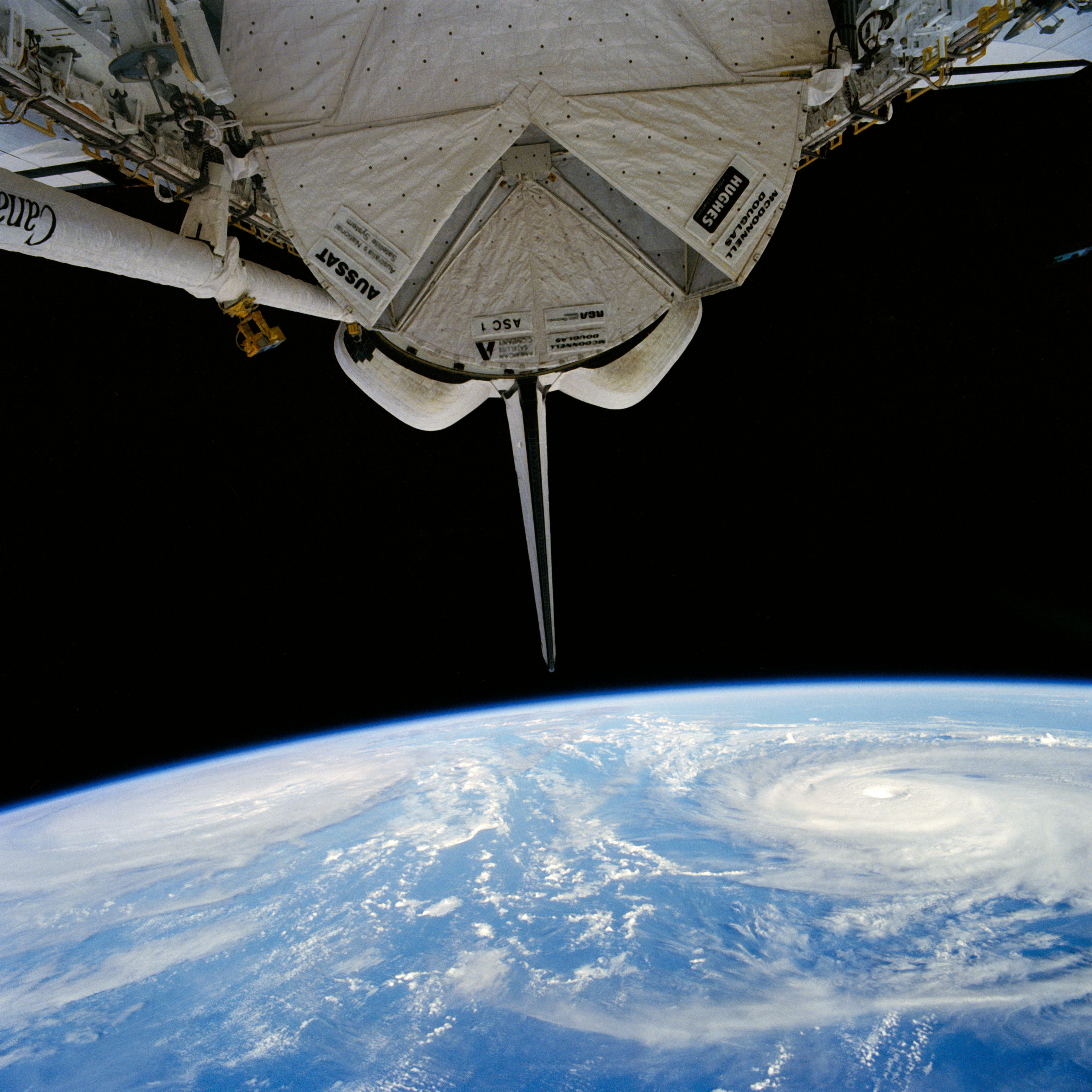
51I-35-078 (30 Aug 1985) --- Typhoons Pat (left) and Odessa in the western Pacific. Of the many tropical cyclones photographed by the STS 51-I crew, the dual typhoons of Pat and Odessa were the most unusual. The twin typhoons constitute a Fujiwara system of connected cyclones first described by the Japanese meteorologist after whom the phenomena has been named. Never before have such paired typhoons been photographed from orbit.