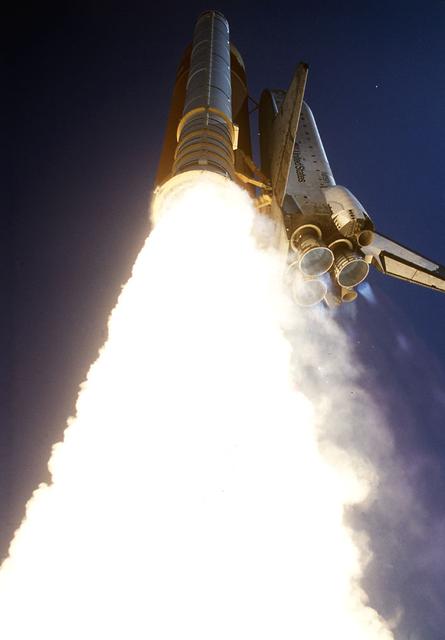
The Space Shuttle Columbia (STS-52) thunders off Launch Pad 39B, embarking on a 10-day flight and carrying a crew of six who will deploy the Laser Geodynamic Satellite II (LAGEOS). LAGEOS is a spherical passive satellite covered with reflectors which are illuminated by ground-based lasers to determine precise measurements of the Earth's crustal movements. The other major payload on this mission is the United States Microgravity Payload 1 (USMP-1), where experiments will be conducted by crew members while in low earth orbit (LEO).
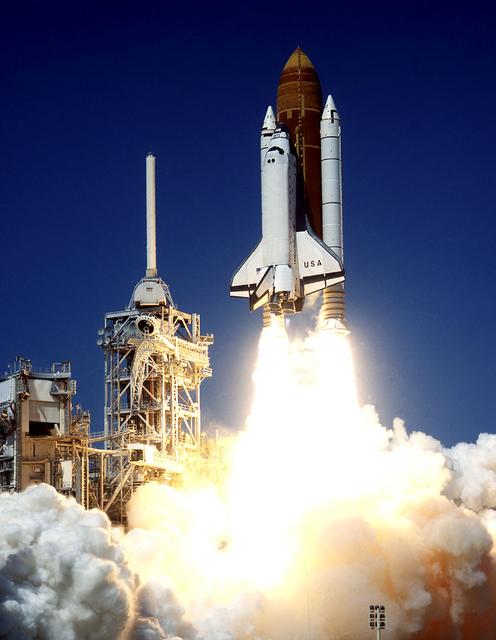
The Space Shuttle Columbia (STS-52) thunders off Launch Pad 39B, embarking on a 10-day flight and carrying a crew of six who will deploy the Laser Geodynamic Satellite II (LAGEOS). LAGEOS is a spherical passive satellite covered with reflectors which are illuminated by ground-based lasers to determine precise measurements of the Earth's crustal movements. The other major payload on this mission is the United States Microgravity Payload 1 (USMP-1), where experiments will be conducted by crew members while in low earth orbit (LEO).
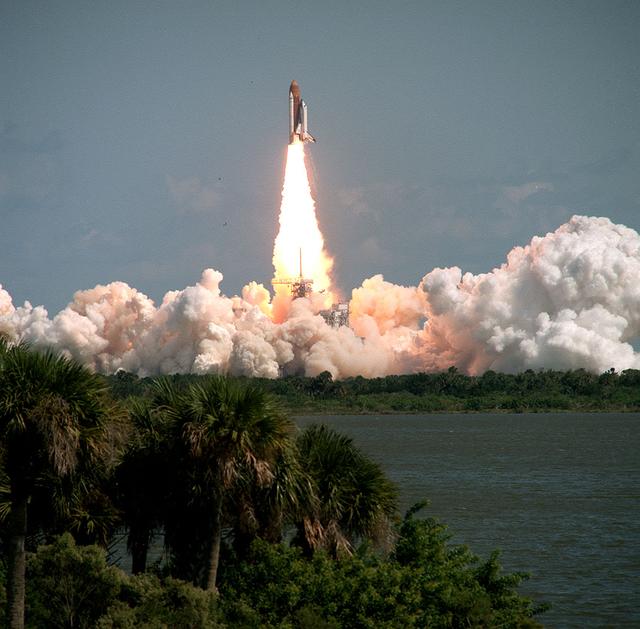
The Space Shuttle Columbia (STS-52) thunders off Launch Pad 39B, embarking on a 10-day flight and carrying a crew of six who will deploy the Laser Geodynamic Satellite II (LAGEOS). LAGEOS is a spherical passive satellite covered with reflectors which are illuminated by ground-based lasers to determine precise measurements of the Earth's crustal movements. The other major payload on this mission is the United States Microgravity Payload 1 (USMP-1), where experiments will be conducted by crew members while in low earth orbit (LEO).
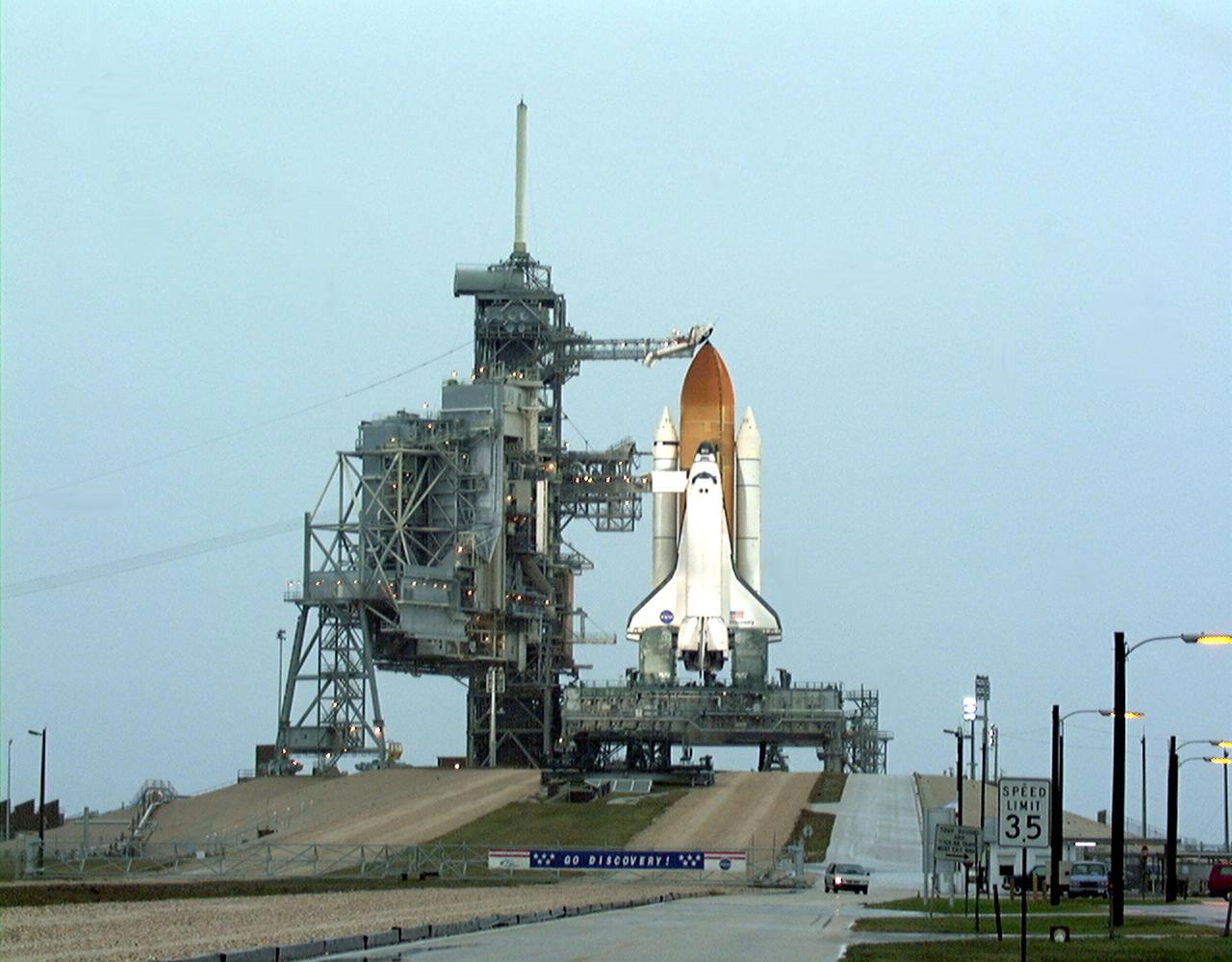
In the early morning at Launch Complex 39B, Space Shuttle Discovery stands ready for launch on mission STS-103 as rain falls all around it. Uncooperative weather also caused the scrub of a launch attempt Friday evening at about 8:52 p.m. EST. The STS-103 mission, to service the Hubble Space Telescope, is now scheduled for launch on Dec. 18 at 8:21 p.m. EST. Mission objectives include replacing gyroscopes and an old computer, installing a backup solid state recorder, and replacing damaged insulation on the telescope
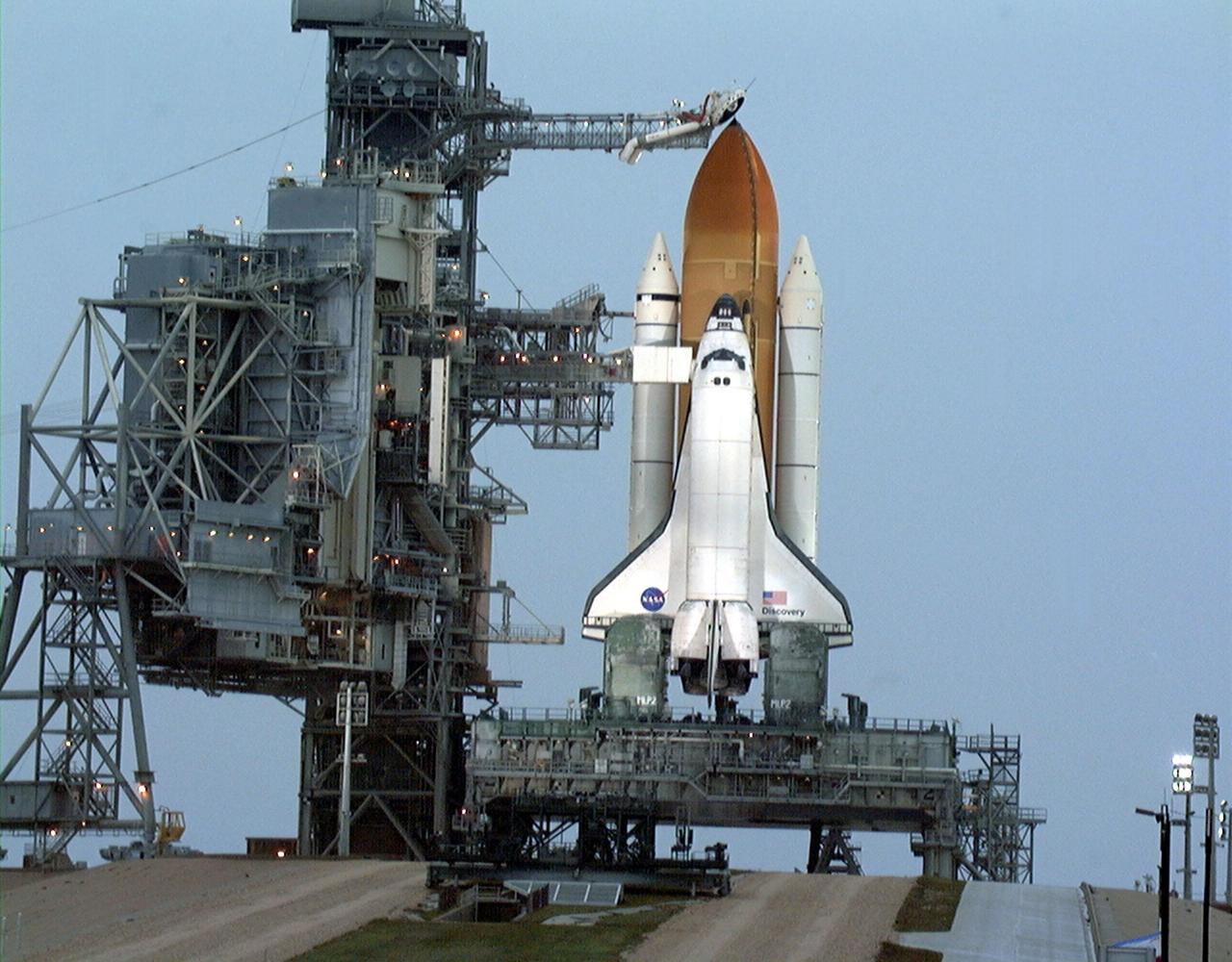
In the early morning at Launch Complex 39B, Space Shuttle Discovery stands ready for launch on mission STS-103 as rain falls all around it. Uncooperative weather also caused the scrub of a launch attempt Friday evening at about 8:52 p.m. EST. The STS-103 mission, to service the Hubble Space Telescope, is now scheduled for launch on Dec. 18 at 8:21 p.m. EST. Mission objectives include replacing gyroscopes and an old computer, installing a backup solid state recorder, and replacing damaged insulation on the telescope
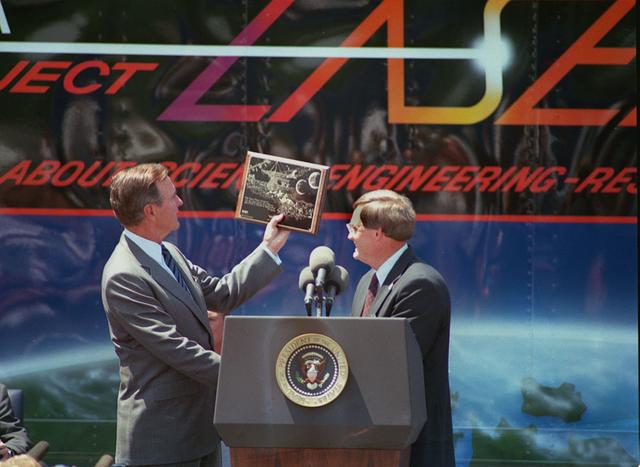
President George Bush receives a placque commemorating the quincentenary of Columbus' voyage to the new world and exploration from Marshall's sixth Center Director Thomas J. Lee (1989-1994) during an address to Marshall employees. The three replicas of Columbus' ships, the Nina, the Pinta, and the Santa Maria sailed by the launch pad at Kennedy Space Center while STS-52 Columbia awaited launch on the anniversary of Columbus' arrival in the New World.
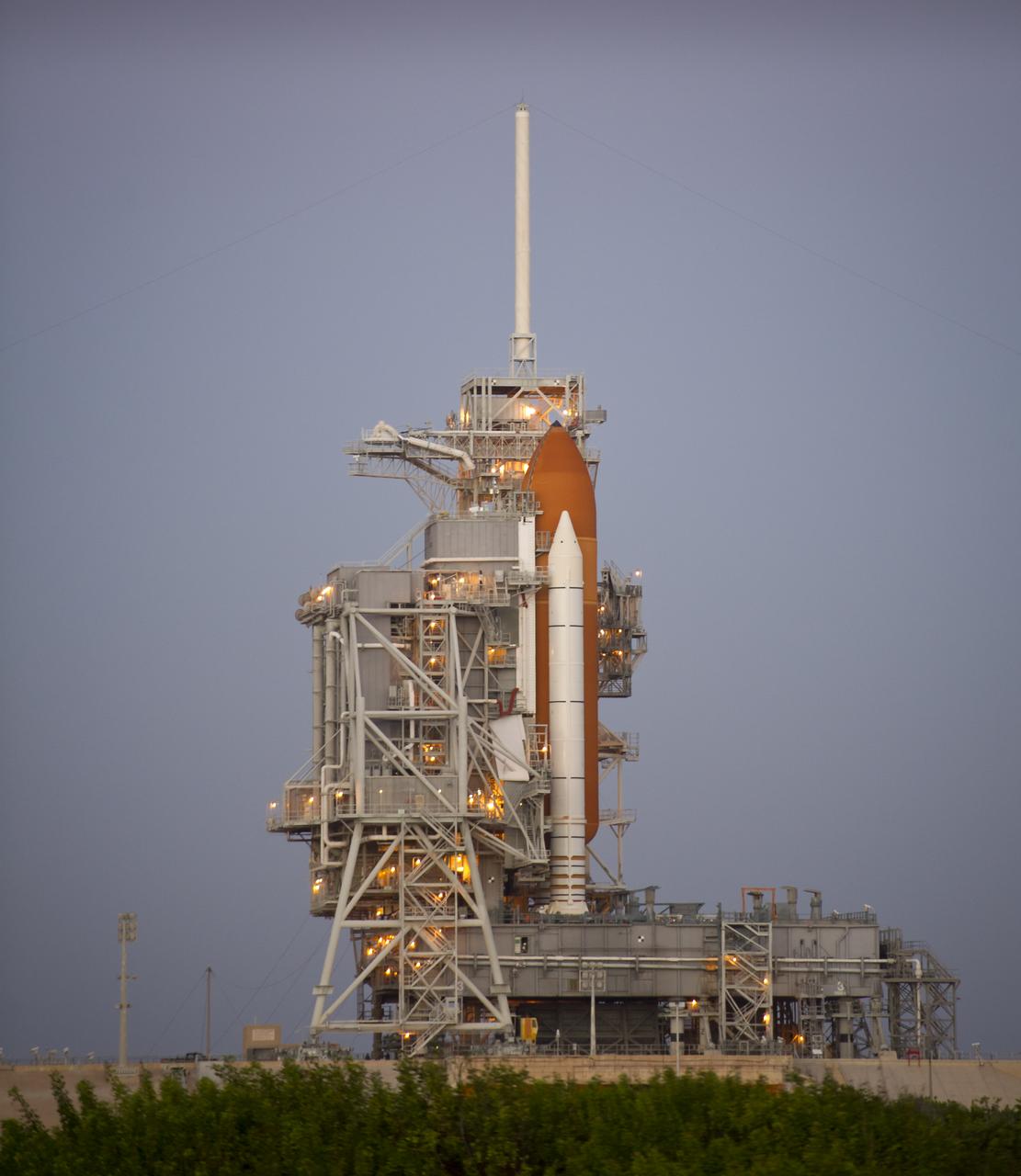
The space shuttle Discovery is seen on launch pad 39a early in the morning of Sunday, Oct. 31, 2010 at the NASA Kennedy Space Center in Cape Canaveral, Fla. During Space Shuttle Discovery's final spaceflight, the STS-133 crew members will take important spare parts to the International Space Station along with the Express Logistics Carrier-4. Discovery is targeted for launch at 3:52 p.m. Wednesday, Nov. 3, 2010. Photo Credit: (NASA/Bill Ingalls)
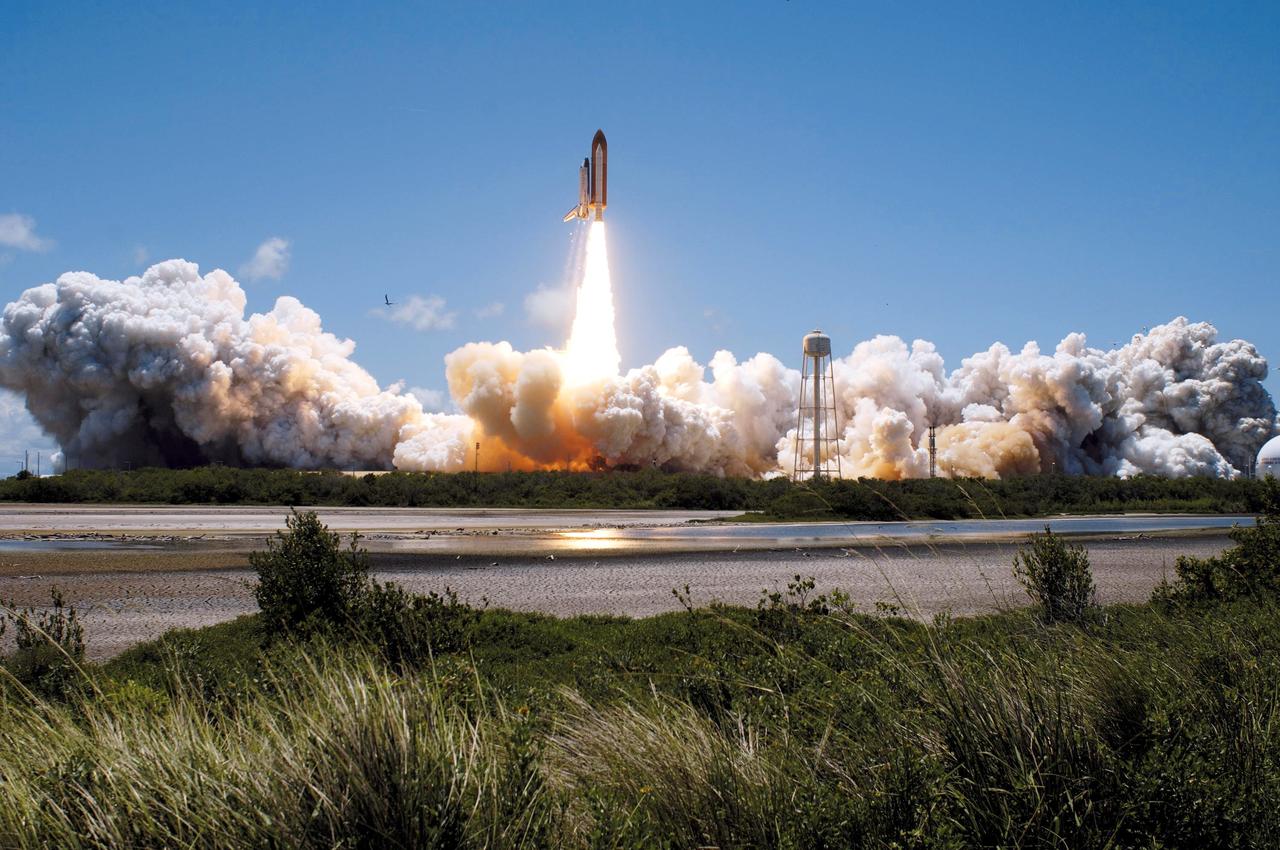
STS121-S-024 (4 July 2006) --- Space Shuttle Discovery and its seven-member crew launched at 2:38 p.m. (EDT) to begin the two-day journey to the International Space Station on the historic Return to Flight STS-121 mission. Discovery is slated to dock with the station at 10:52 a.m. (EDT) Thursday July 6, 2006. The shuttle made history as it was the first human-occupying spacecraft to launch on Independence Day. During the 12-day mission, the STS-121 crew of seven will test new equipment and procedures to improve shuttle safety, as well as deliver supplies and make repairs to the space station.
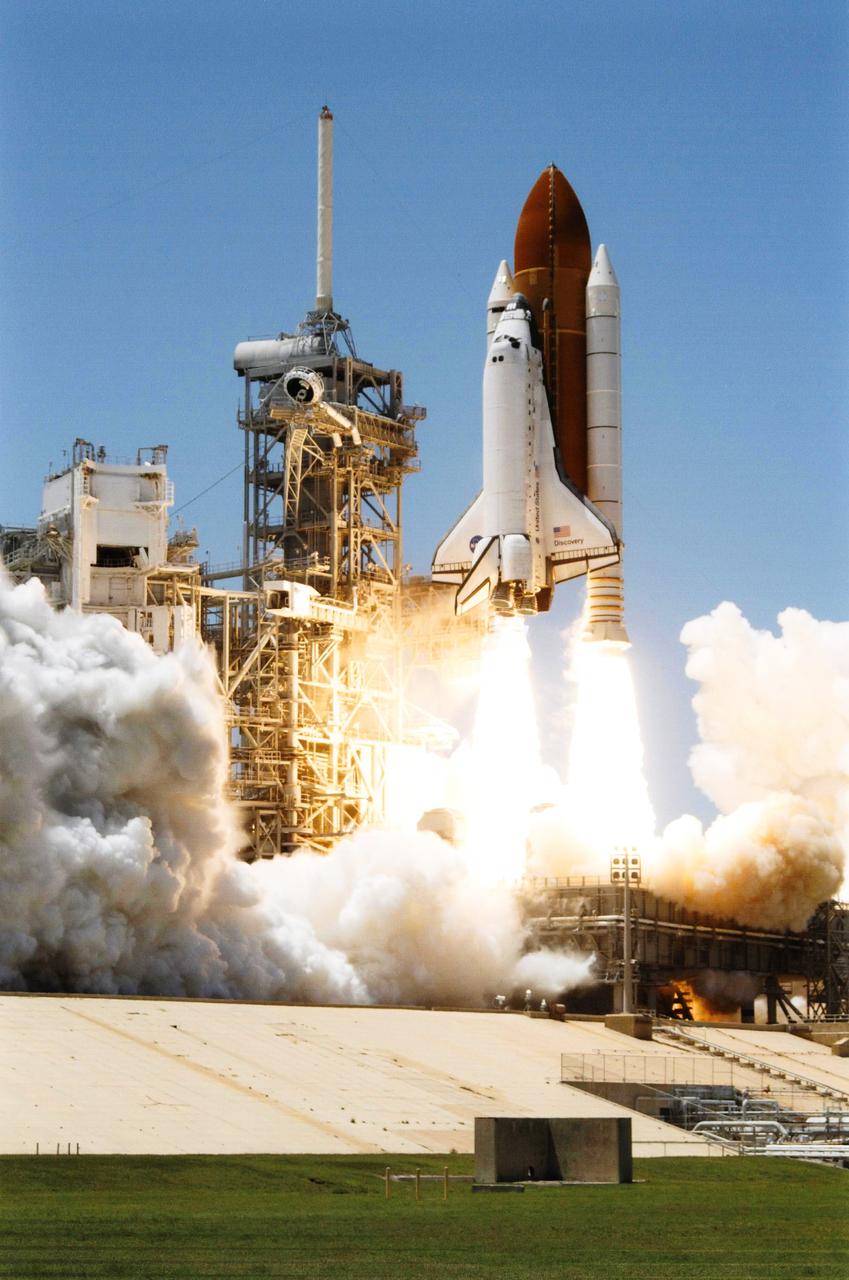
STS121-S-026 (4 July 2006) --- Space Shuttle Discovery and its seven-member crew launched at 2:38 p.m. (EDT) to begin the two-day journey to the International Space Station on the historic Return to Flight STS-121 mission. Discovery is slated to dock with the station at 10:52 a.m. (EDT) Thursday July 6, 2006. The shuttle made history as it was the first human-occupying spacecraft to launch on Independence Day. During the 12-day mission, the STS-121 crew of seven will test new equipment and procedures to improve shuttle safety, as well as deliver supplies and make repairs to the space station.
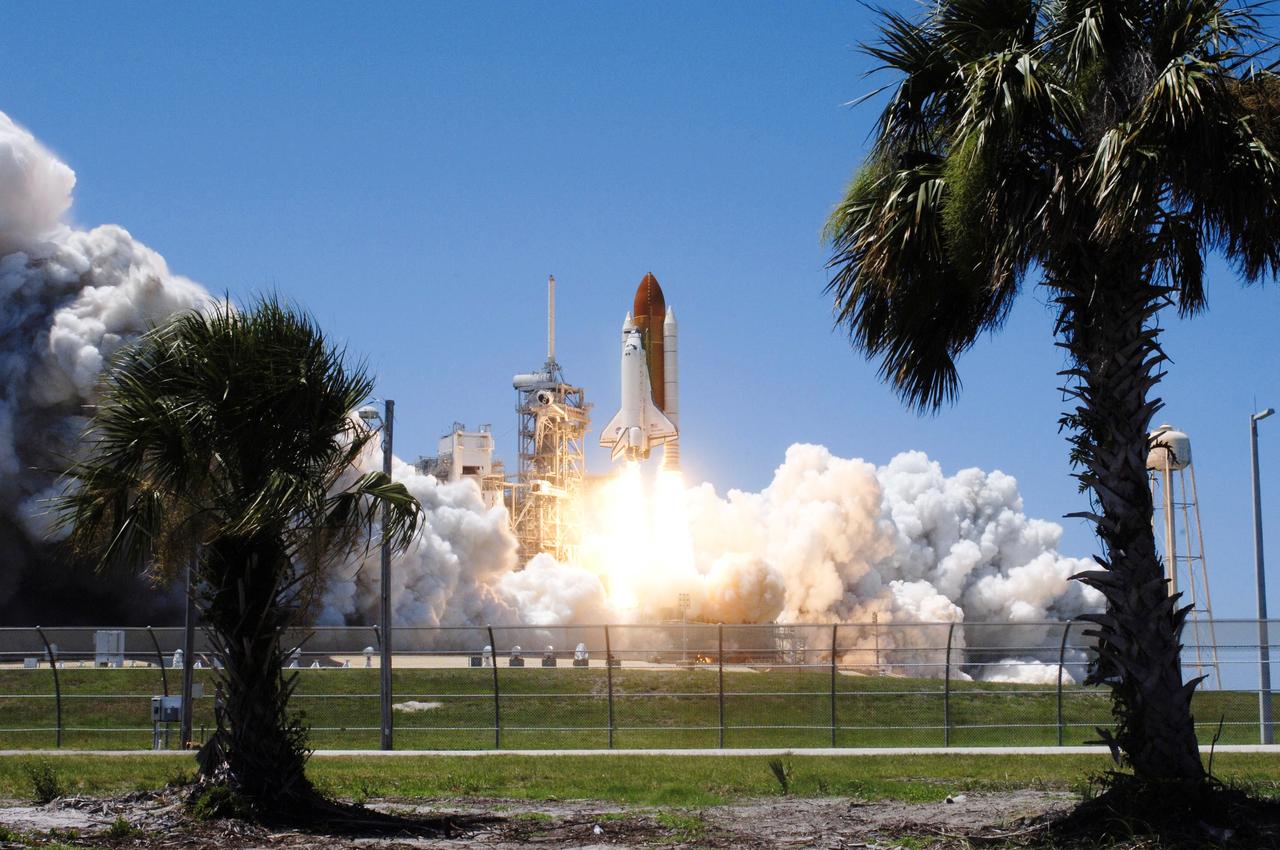
STS121-S-019 (4 July 2006) --- Space Shuttle Discovery and its seven-member crew launched at 2:38 p.m. (EDT) to begin the two-day journey to the International Space Station on the historic Return to Flight STS-121 mission. Discovery is slated to dock with the station at 10:52 a.m. (EDT) Thursday July 6, 2006. The shuttle made history as it was the first human-occupying spacecraft to launch on Independence Day. During the 12-day mission, the STS-121 crew of seven will test new equipment and procedures to improve shuttle safety, as well as deliver supplies and make repairs to the space station.
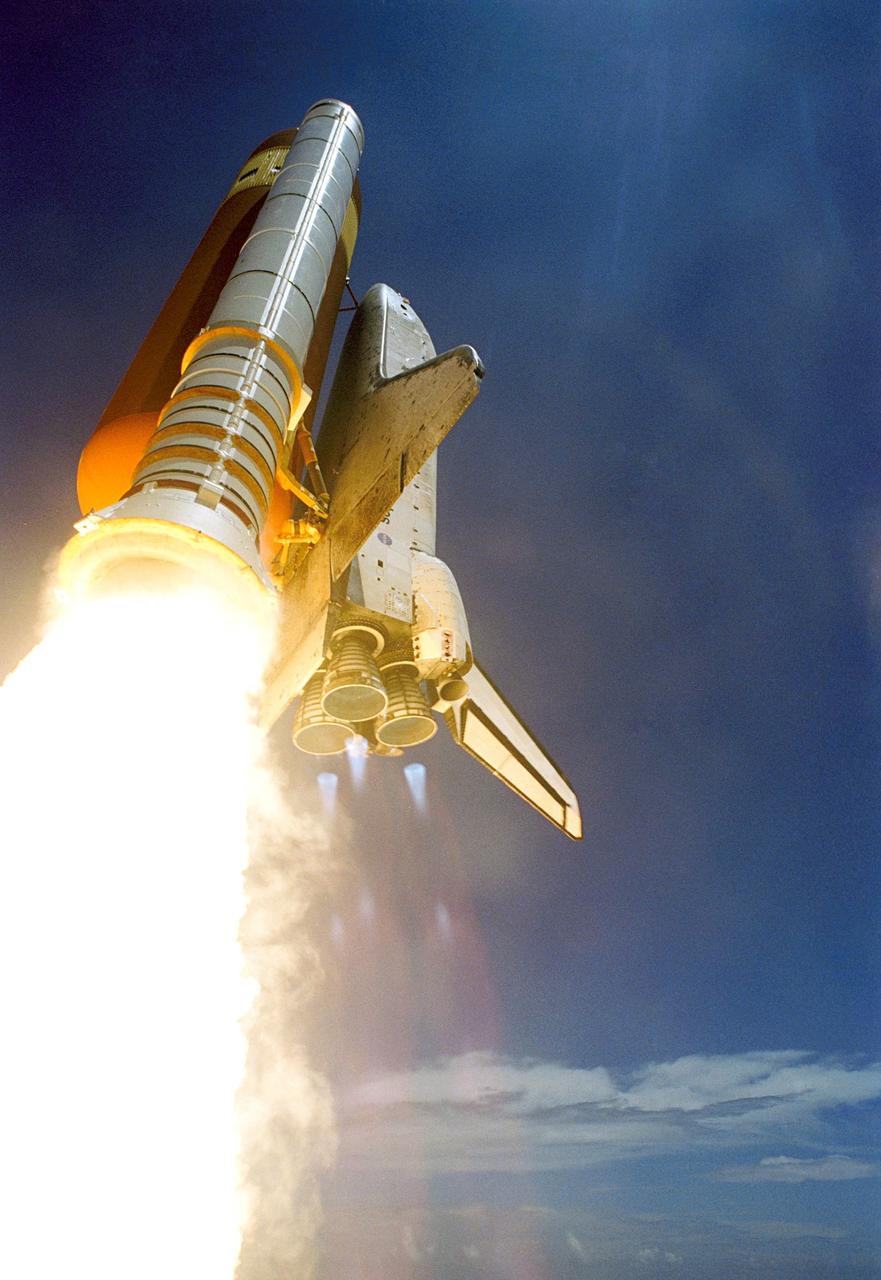
STS121-S-029 (4 July 2006) --- Space Shuttle Discovery and its seven-member crew launched at 2:38 p.m. (EDT) to begin the two-day journey to the International Space Station on the historic Return to Flight STS-121 mission. Discovery is slated to dock with the station at 10:52 a.m. (EDT) Thursday July 6, 2006. The shuttle made history as it was the first human-occupying spacecraft to launch on Independence Day. During the 12-day mission, the STS-121 crew of seven will test new equipment and procedures to improve shuttle safety, as well as deliver supplies and make repairs to the space station.
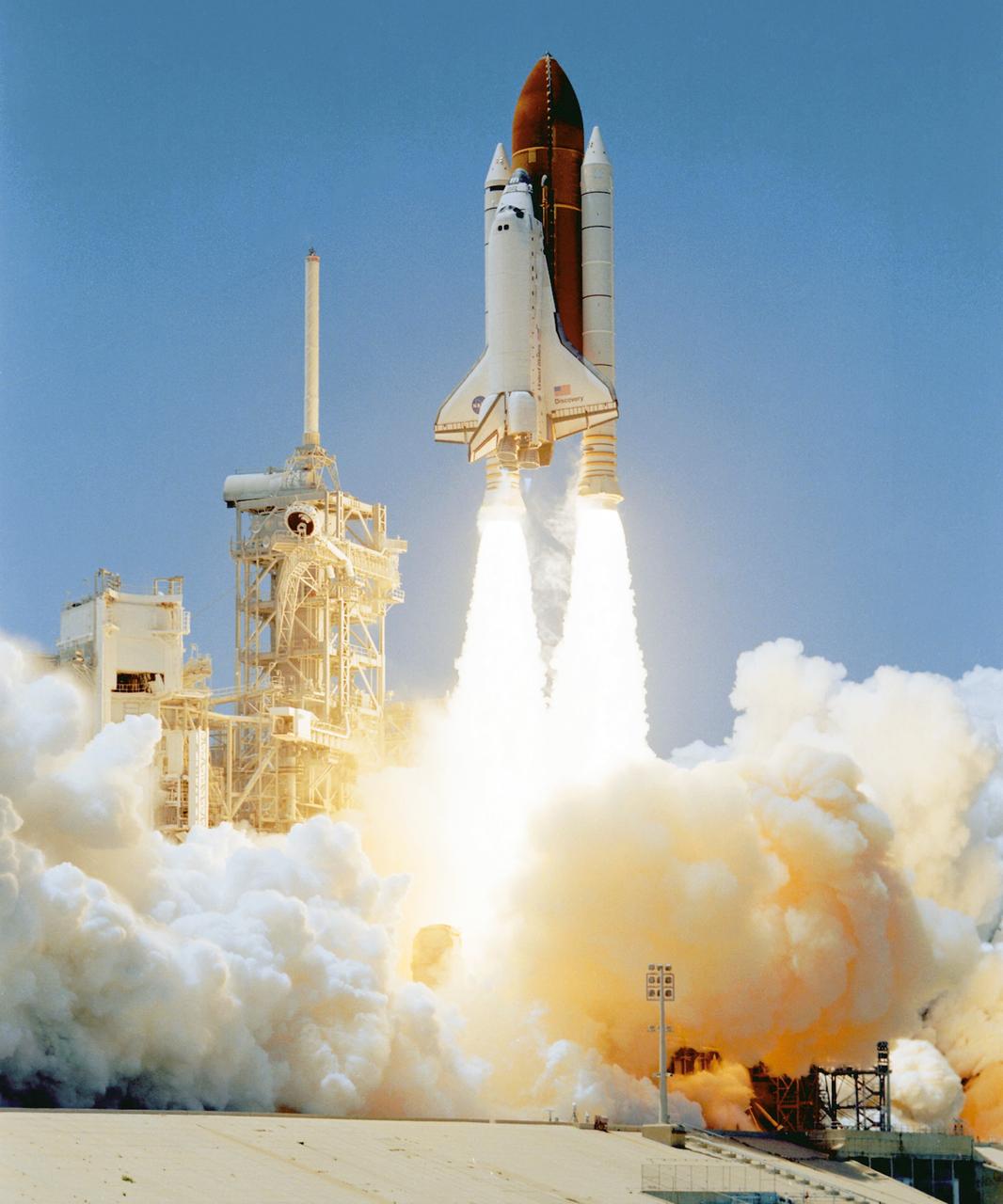
STS121-S-038 (4 July 2006) --- The Space Shuttle Discovery and its seven-member crew launch at 2:38 p.m. (EDT) to begin the two-day journey to the International Space Station on the historic Return to Flight STS-121 mission. Discovery is slated to dock with the station at 10:52 a.m. (EDT) Thursday July 6, 2006. The shuttle made history as it was the first human-occupying spacecraft to launch on Independence Day. During the 12-day mission, the STS-121 crew of seven will test new equipment and procedures to improve shuttle safety, as well as deliver supplies and make repairs to the space station.
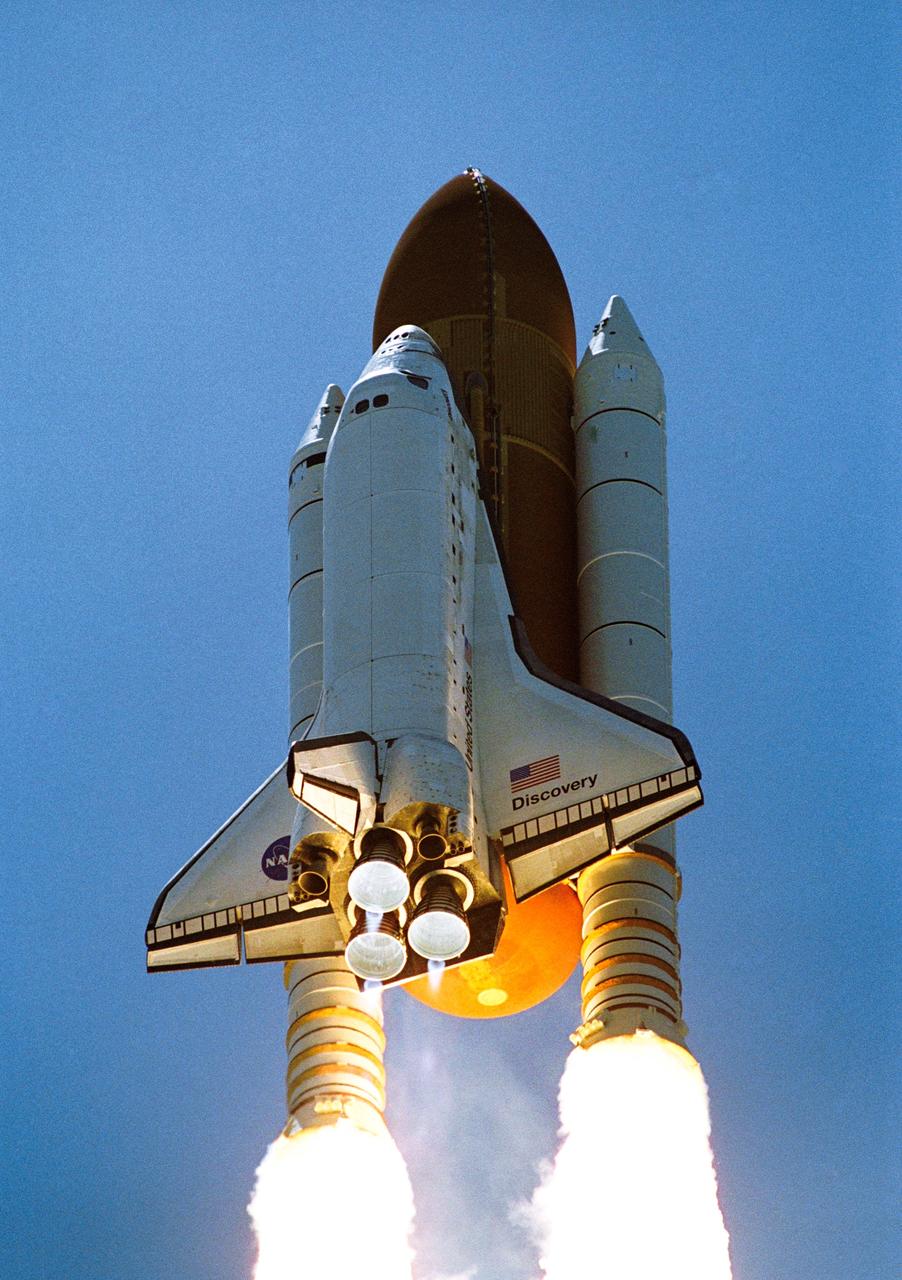
STS121-S-030 (4 July 2006) --- Space shuttle Discovery and its seven-member crew launched at 2:38 p.m. (EDT) to begin the two-day journey to the International Space Station on the historic Return to Flight STS-121 mission. Discovery is slated to dock with the station at 10:52 a.m. (EDT) Thursday July 6, 2006. The shuttle made history as it was the first human-occupied spacecraft to launch on Independence Day. During the 12-day mission, the STS-121 crew of seven will test new equipment and procedures to improve shuttle safety, as well as deliver supplies and make repairs to the space station. Photo credit: NASA or National Aeronautics and Space Administrtion
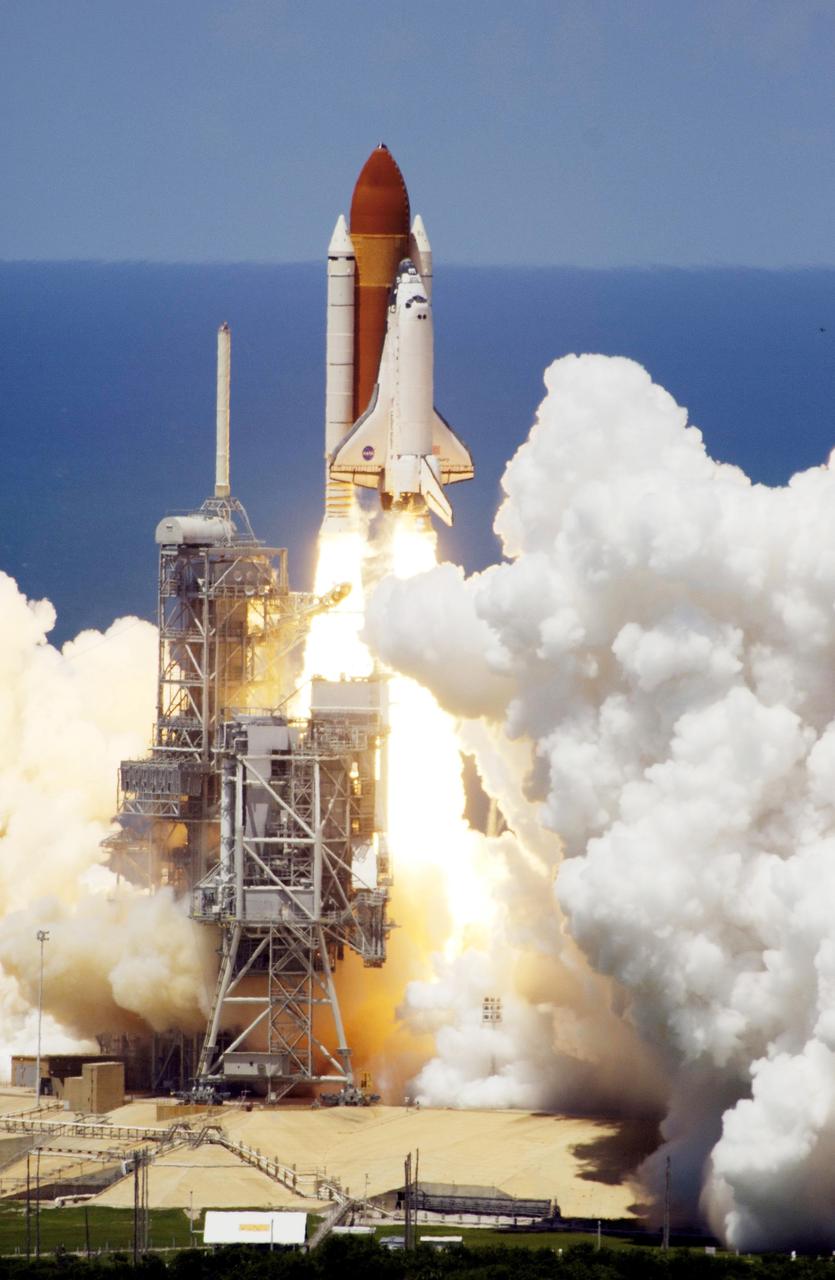
STS121-S-027 (4 July 2006) --- Space Shuttle Discovery and its seven-member crew launched at 2:38 p.m. (EDT) to begin the two-day journey to the International Space Station on the historic Return to Flight STS-121 mission. Discovery is slated to dock with the station at 10:52 a.m. (EDT) Thursday July 6, 2006. The shuttle made history as it was the first human-occupying spacecraft to launch on Independence Day. During the 12-day mission, the STS-121 crew of seven will test new equipment and procedures to improve shuttle safety, as well as deliver supplies and make repairs to the space station.
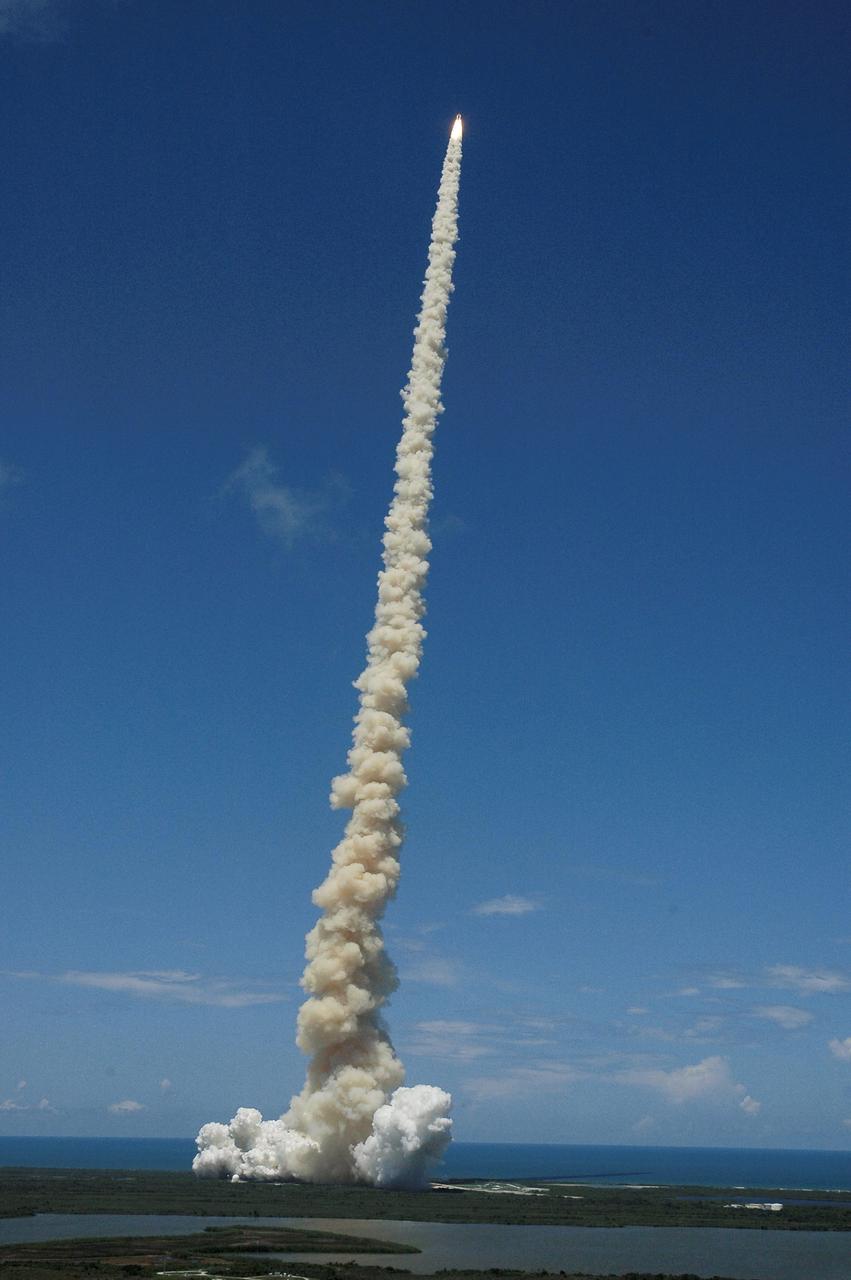
STS121-S-023 (4 July 2006) --- Space Shuttle Discovery and its seven-member crew launched at 2:38 p.m. (EDT) to begin the two-day journey to the International Space Station on the historic Return to Flight STS-121 mission. Discovery is slated to dock with the station at 10:52 a.m. (EDT) Thursday July 6, 2006. The shuttle made history as it was the first human-occupying spacecraft to launch on Independence Day. During the 12-day mission, the STS-121 crew of seven will test new equipment and procedures to improve shuttle safety, as well as deliver supplies and make repairs to the space station.
STS121-S-015 (4 July 2006) --- Space shuttle Discovery and its seven-member crew launched at 2:38 p.m. (EDT) to begin the two-day journey to the International Space Station on the historic Return to Flight STS-121 mission. Discovery is slated to dock with the station at 10:52 a.m. (EDT) Thursday July 6, 2006. The shuttle made history as it was the first human-occupied spacecraft to launch on Independence Day. During the 12-day mission, the STS-121 crew of seven will test new equipment and procedures to improve shuttle safety, as well as deliver supplies and make repairs to the space station. Photo credit: NASA or National Aeronautics and Space Administration
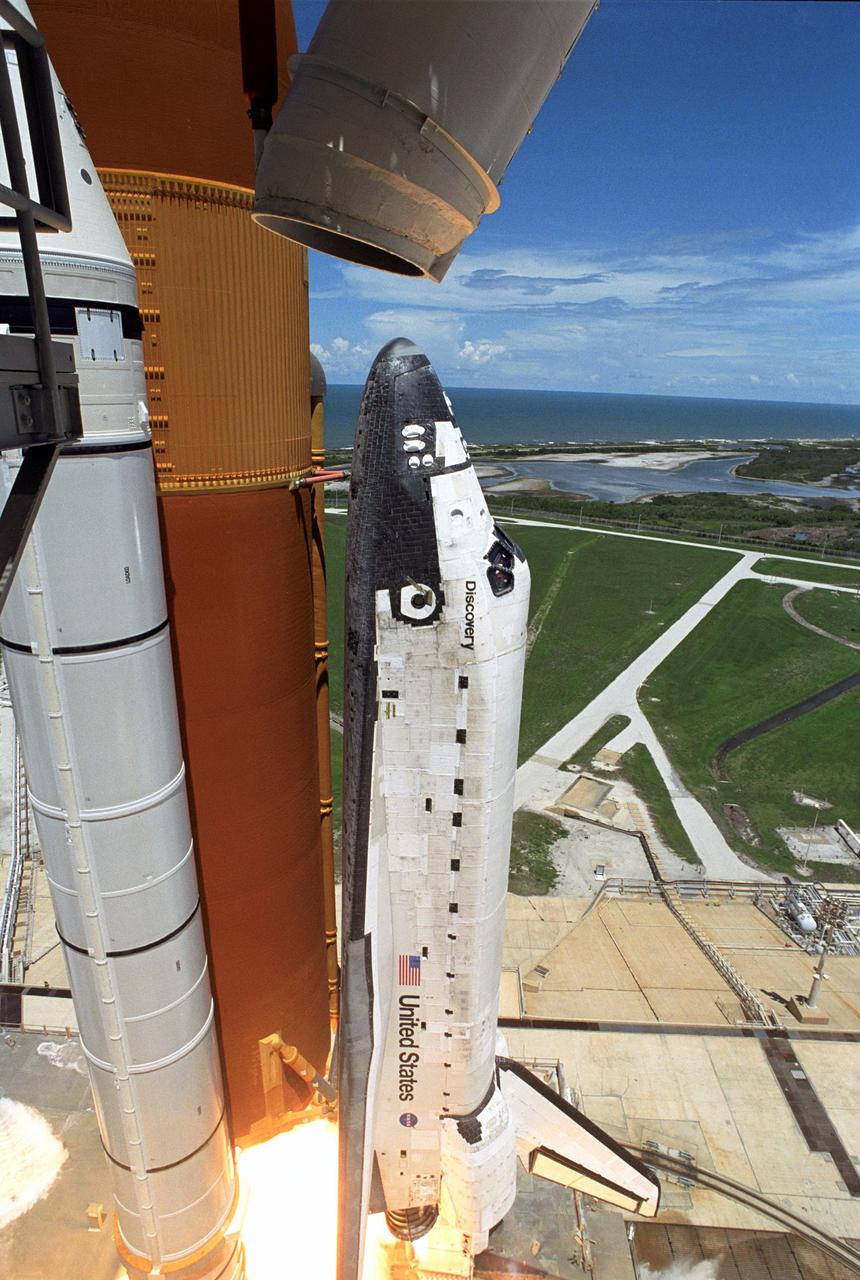
STS121-S-031 (4 July 2006) --- Space Shuttle Discovery and its seven-member crew launched at 2:38 p.m. (EDT) to begin the two-day journey to the International Space Station on the historic Return to Flight STS-121 mission. Discovery is slated to dock with the station at 10:52 a.m. (EDT) Thursday July 6, 2006. The shuttle made history as it was the first human-occupying spacecraft to launch on Independence Day. During the 12-day mission, the STS-121 crew of seven will test new equipment and procedures to improve shuttle safety, as well as deliver supplies and make repairs to the space station.
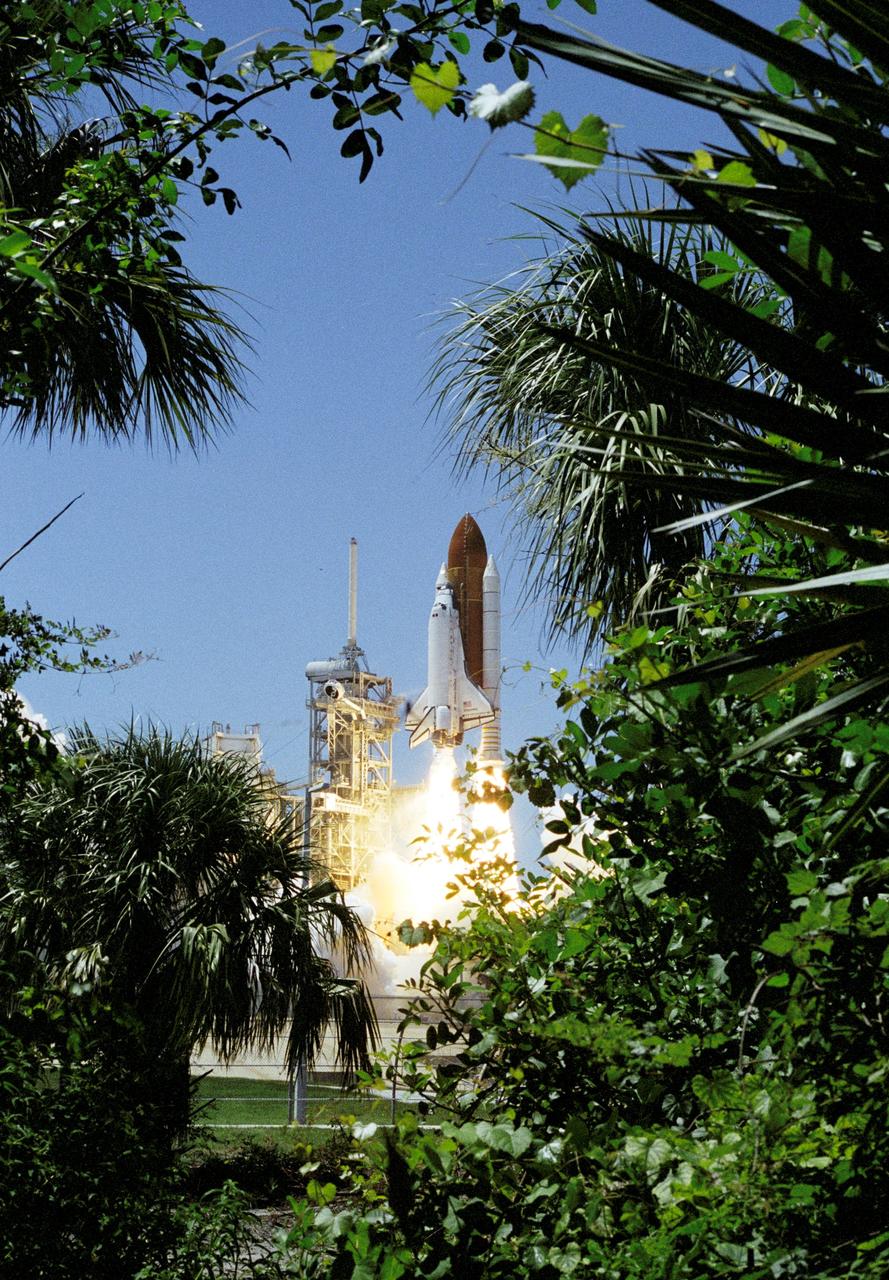
STS121-S-033 (4 July 2006) --- Framed here by Florida foliage, the Space Shuttle Discovery and its seven-member crew launch at 2:38 p.m. (EDT) to begin the two-day journey to the International Space Station on the historic Return to Flight STS-121 mission. Discovery is slated to dock with the station at 10:52 a.m. (EDT) Thursday July 6, 2006. The shuttle made history as it was the first human-occupying spacecraft to launch on Independence Day. During the 12-day mission, the STS-121 crew of seven will test new equipment and procedures to improve shuttle safety, as well as deliver supplies and make repairs to the space station.
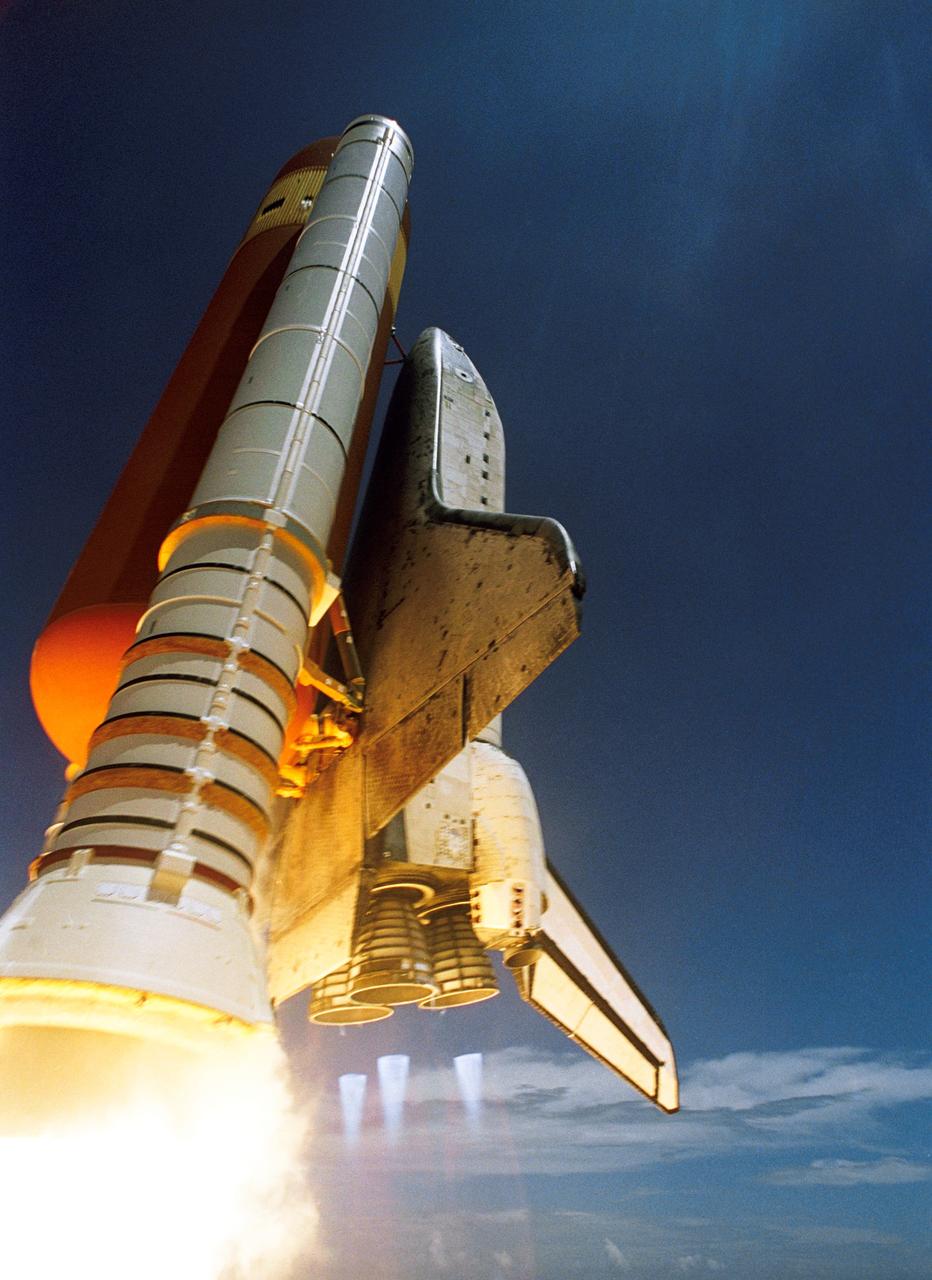
STS121-S-028 (4 July 2006) --- Space Shuttle Discovery and its seven-member crew launched at 2:38 p.m. (EDT) to begin the two-day journey to the International Space Station on the historic Return to Flight STS-121 mission. Discovery is slated to dock with the station at 10:52 a.m. (EDT) Thursday July 6, 2006. The shuttle made history as it was the first human-occupying spacecraft to launch on Independence Day. During the 12-day mission, the STS-121 crew of seven will test new equipment and procedures to improve shuttle safety, as well as deliver supplies and make repairs to the space station.
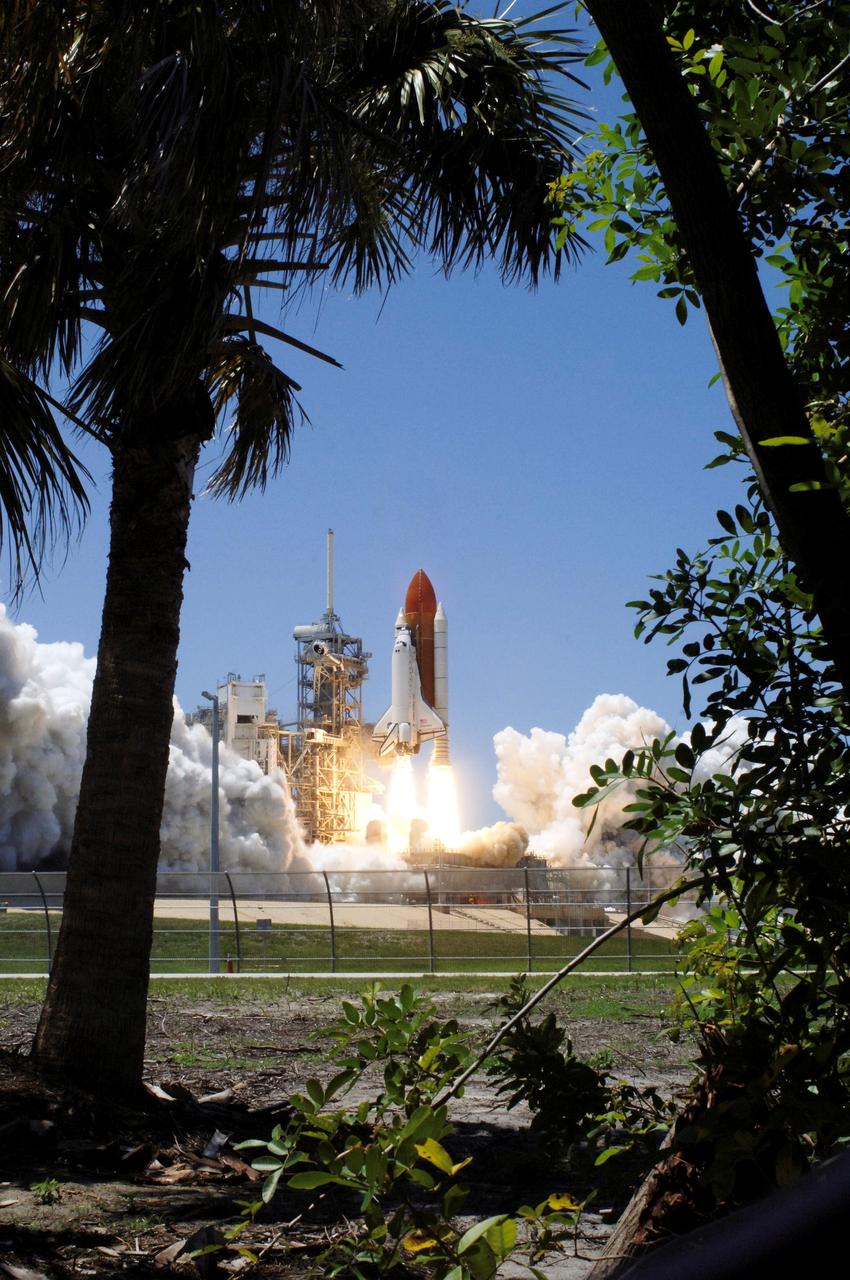
STS121-S-018 (4 July 2006) --- Space Shuttle Discovery and its seven-member crew launched at 2:38 p.m. (EDT) to begin the two-day journey to the International Space Station on the historic Return to Flight STS-121 mission. Discovery is slated to dock with the station at 10:52 a.m. (EDT) Thursday July 6, 2006. The shuttle made history as it was the first human-occupying spacecraft to launch on Independence Day. During the 12-day mission, the STS-121 crew of seven will test new equipment and procedures to improve shuttle safety, as well as deliver supplies and make repairs to the space station.
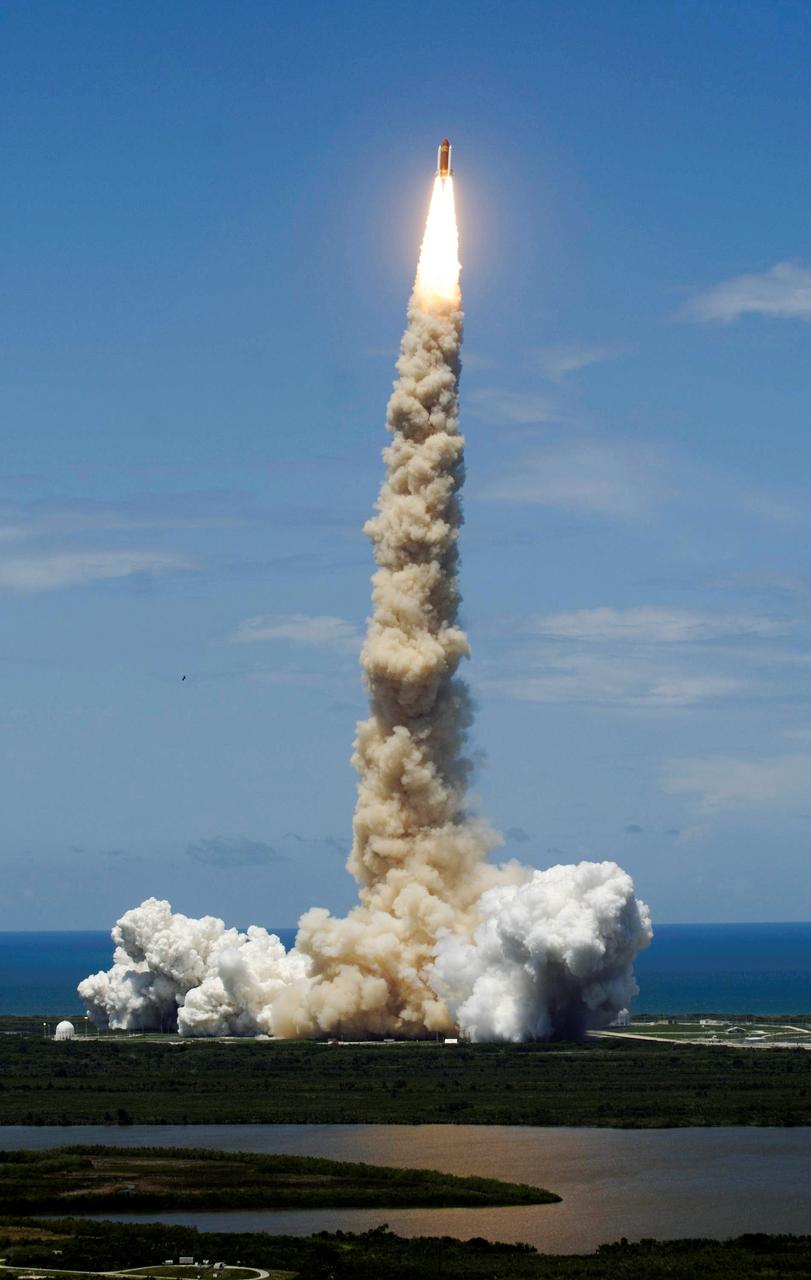
STS121-S-022 (4 July 2006) --- Space Shuttle Discovery and its seven-member crew launched at 2:38 p.m. (EDT) to begin the two-day journey to the International Space Station on the historic Return to Flight STS-121 mission. Discovery is slated to dock with the station at 10:52 a.m. (EDT) Thursday July 6, 2006. The shuttle made history as it was the first human-occupying spacecraft to launch on Independence Day. During the 12-day mission, the STS-121 crew of seven will test new equipment and procedures to improve shuttle safety, as well as deliver supplies and make repairs to the space station.
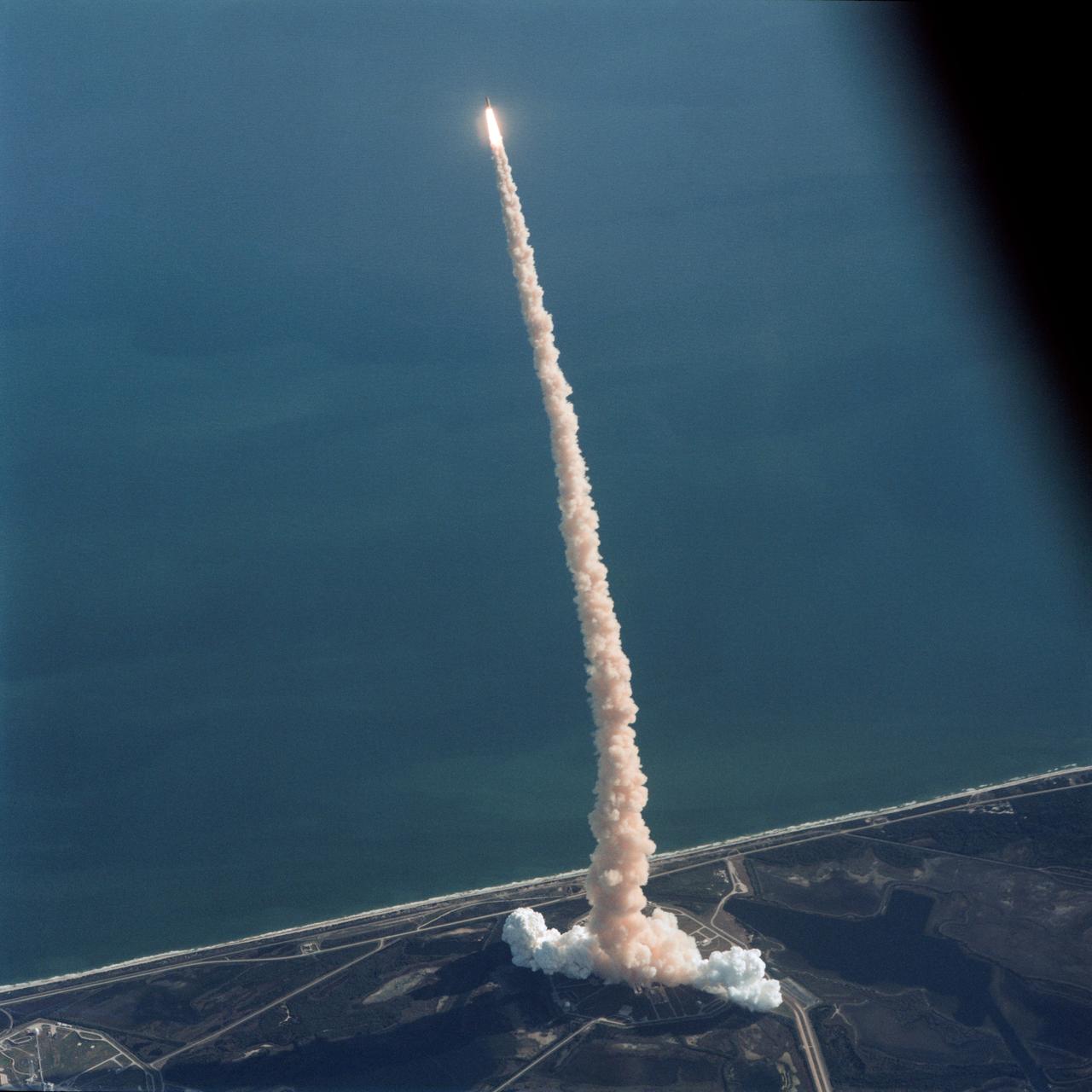
Air-to-air view, taken from the weather-monitoring Shuttle Training Aircraft (STA), shows STS-42 Discovery, Orbiter Vehicle (OV) 103, as it soars above the Atlantic Ocean after liftoff from a Kennedy Space Center (KSC) Launch Complex (LC) Pad at 9:52:33 am (Eastern Standard Time (EST)). The exhaust plume traces OV-103's flight path.
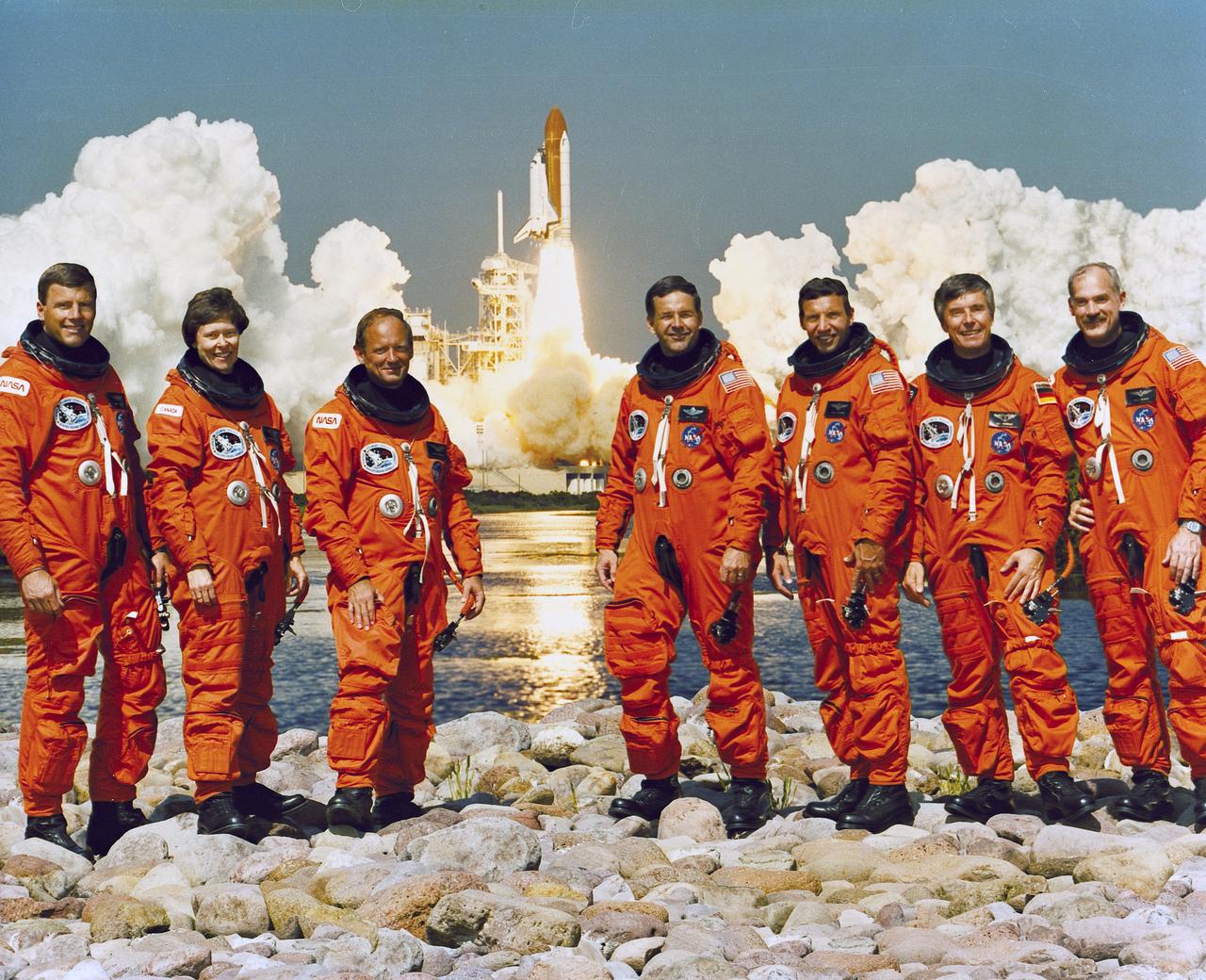
The STS-42 crew portrait includes from left to right: Stephen S. Oswald, pilot; Roberta L. Bondar, payload specialist 1; Norman E. Thagard, mission specialist 1; Ronald J. Grabe, commander; David C. Hilmers, mission specialist 2; Ulf D. Merbold, payload specialist 2; and William F. Readdy, mission specialist 3. Launched aboard the Space Shuttle Discovery on January 22, 1992 at 9:52:33 am (EST), the STS-42 served as the International Microgravity Laboratory-1 (ML-1 ) mission.
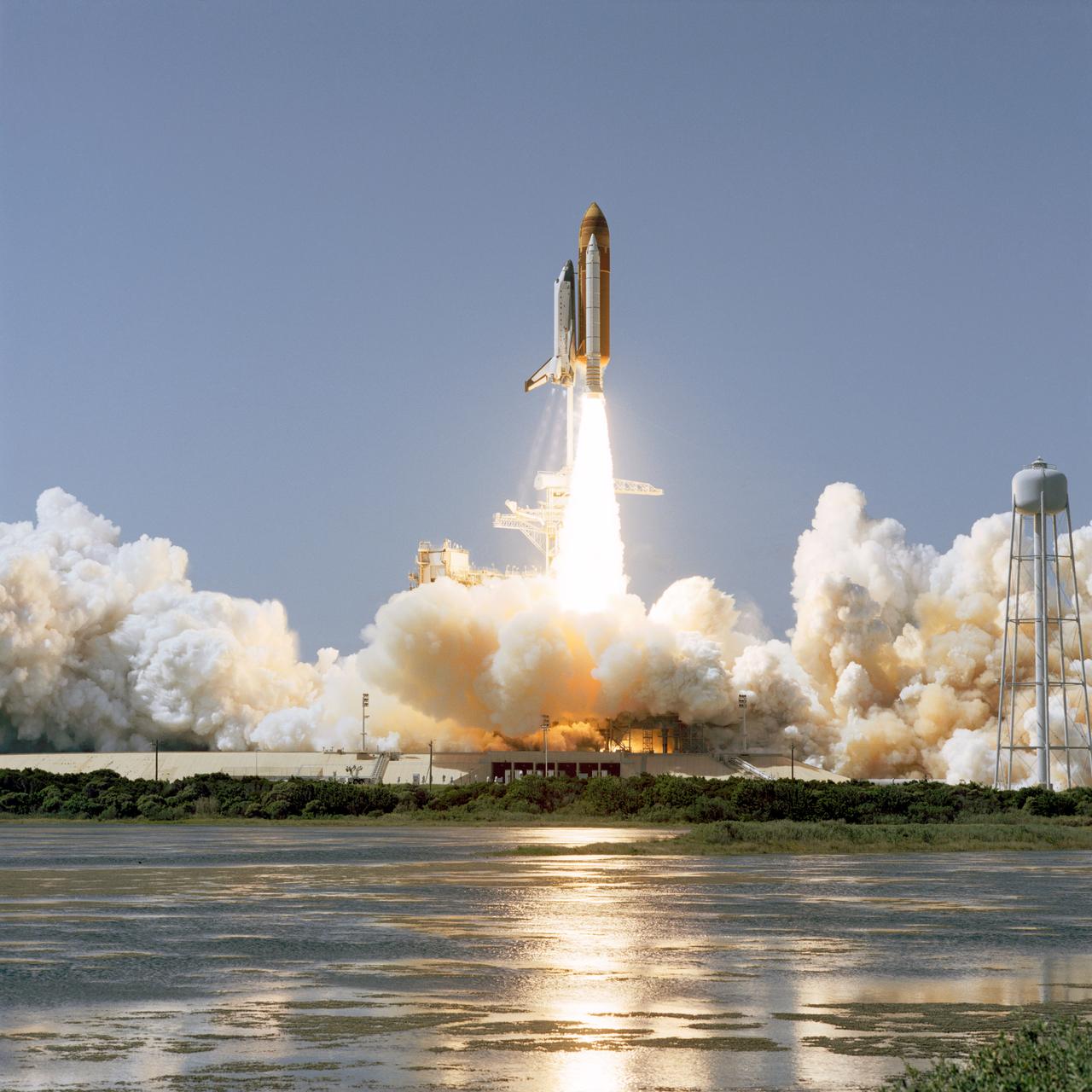
STS052-S-051 (22 Oct 1992) --- This distant 70mm image shows the Space Shuttle Columbia clearing the tower at Launch Pad 39B, at the Kennedy Space Center (KSC), on its way toward a ten-day Earth-orbital mission with a crew of five NASA astronauts and a Canadian payload specialist. Liftoff occurred at 1:09:39 p.m. (EDT), October 22, 1992. Crew members are astronauts James D. Wetherbee, Michael A. Baker, Tamara E. Jernigan, Charles L. (Lacy) Veach and William M. Shepherd, along with payload specialist Steven G. MacLean. Payloads onboard include the Laser Geodynamic Satellite II (LAGEOS II), which will be deployed early in the mission, a series of Canadian experiments, and the United States Microgravity Payload-1 (USMP-1).
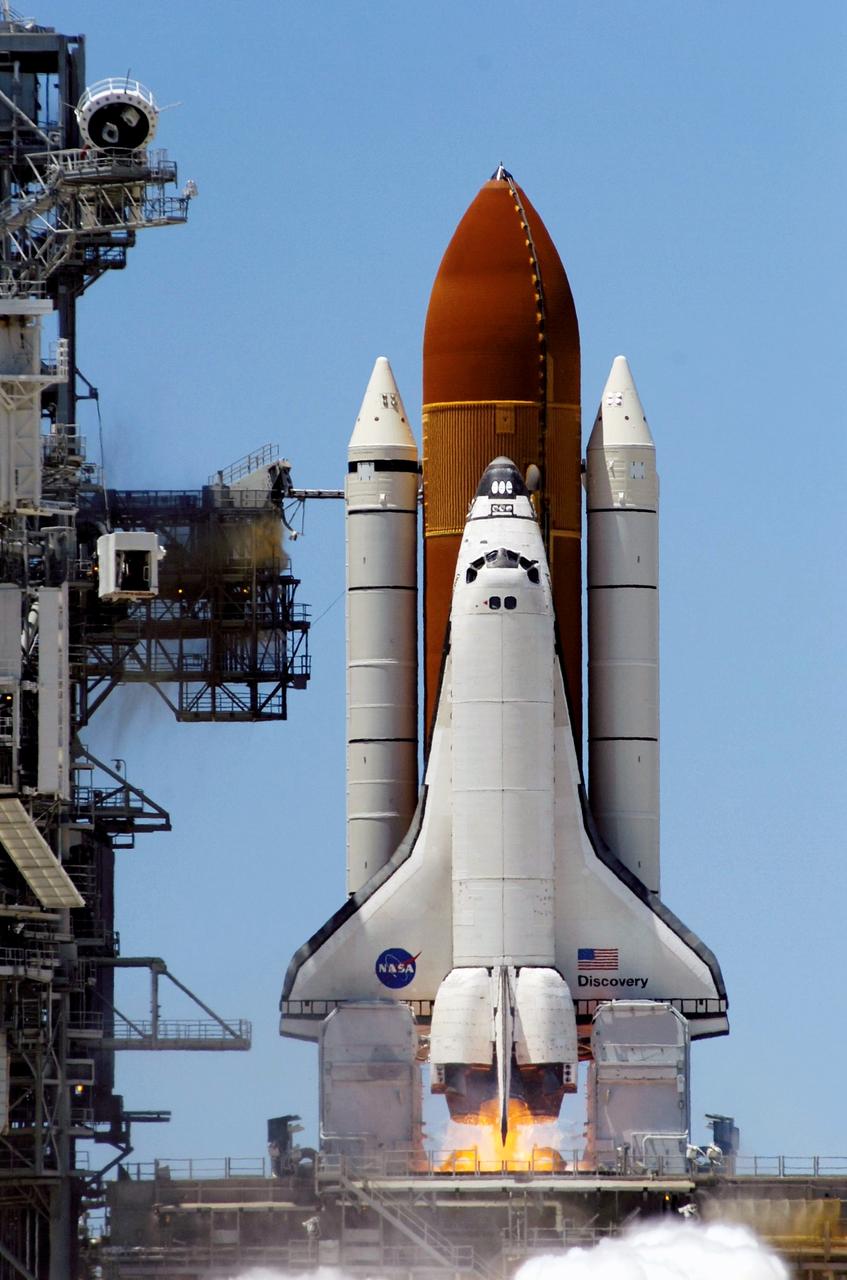
STS121-S-025 (4 July 2006) --- The moment of ignition is captured in this photo of Space Shuttle Discovery as it lifts off from Launch Pad 39B at Kennedy Space Center. Discovery and its seven-member crew launched at 2:38 p.m. (EDT) to begin the two-day journey to the International Space Station on the historic Return to Flight STS-121 mission. Discovery is slated to dock with the station at 10:52 a.m. (EDT) Thursday July 6, 2006. The shuttle made history as it was the first human-occupying spacecraft to launch on Independence Day. During the 12-day mission, the STS-121 crew of seven will test new equipment and procedures to improve shuttle safety, as well as deliver supplies and make repairs to the space station.
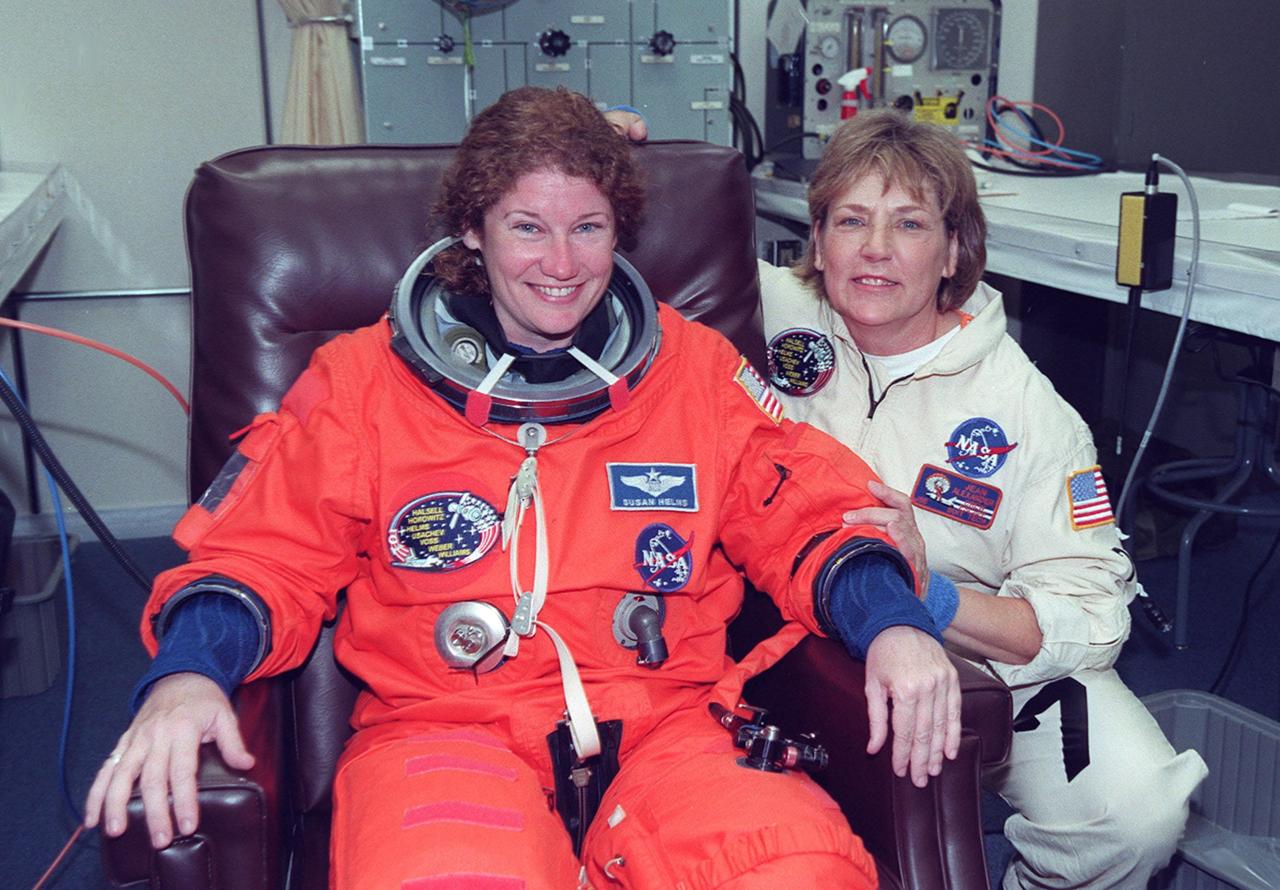
In the Operations and Checkout Building, STS-101 Mission Specialist Susan J. Helms (left) and a suit technician grin with anticipation for a successful second attempt at launch of Space Shuttle Atlantis on mission STS-101. The previous day's launch attempt was scrubbed due to high cross winds at the Shuttle Landing Facility. The mission will take the crew to the International Space Station to deliver logistics and supplies and to prepare the Station for the arrival of the Zvezda Service Module, expected to be launched by Russia in July 2000. Also, the crew will conduct one space walk. This will be the third assembly flight to the Space Station. Liftoff is targeted for 3:52 p.m. EDT. The mission is expected to last about 10 days, with Atlantis landing at KSC Saturday, May 6, about 11:53 a.m. EDT
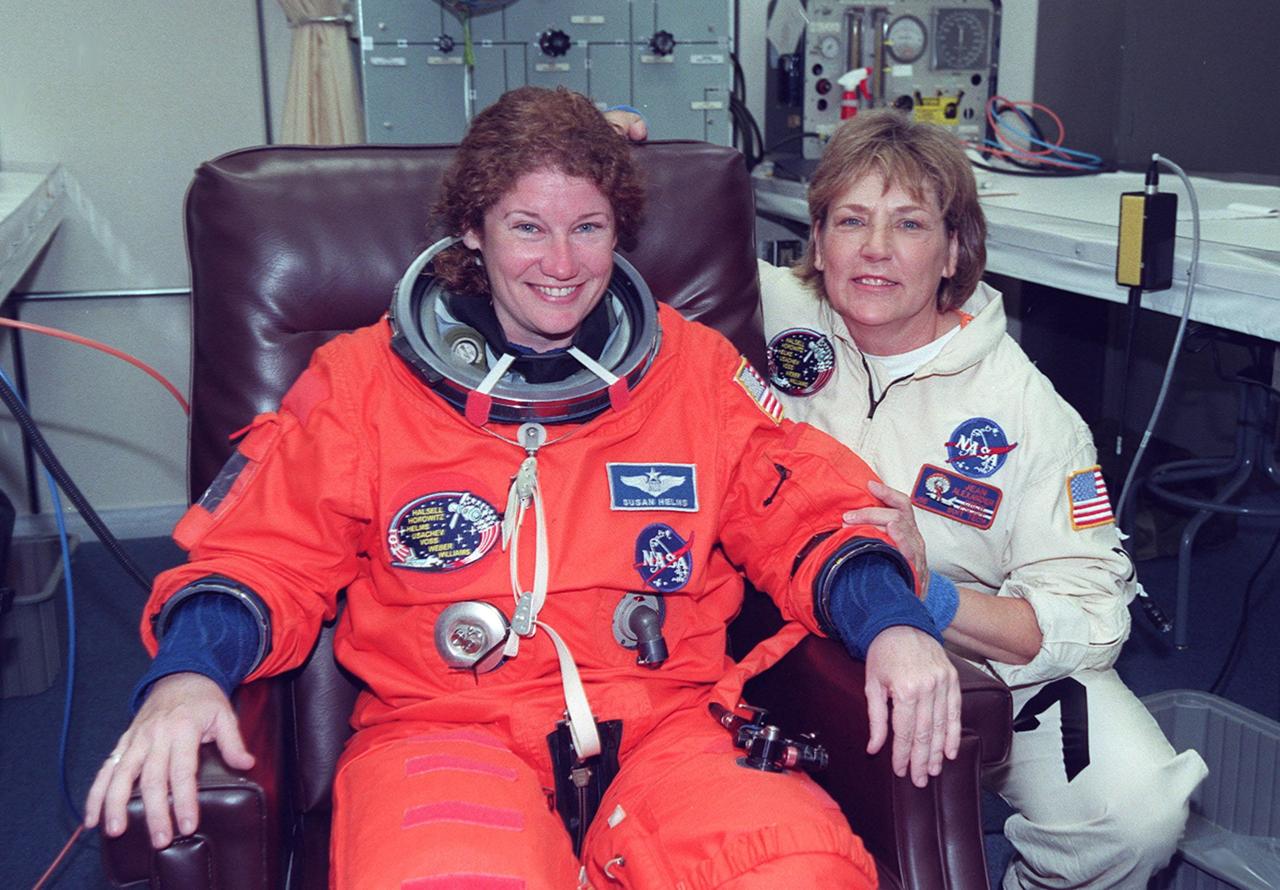
In the Operations and Checkout Building, STS-101 Mission Specialist Susan J. Helms (left) and a suit technician grin with anticipation for a successful second attempt at launch of Space Shuttle Atlantis on mission STS-101. The previous day's launch attempt was scrubbed due to high cross winds at the Shuttle Landing Facility. The mission will take the crew to the International Space Station to deliver logistics and supplies and to prepare the Station for the arrival of the Zvezda Service Module, expected to be launched by Russia in July 2000. Also, the crew will conduct one space walk. This will be the third assembly flight to the Space Station. Liftoff is targeted for 3:52 p.m. EDT. The mission is expected to last about 10 days, with Atlantis landing at KSC Saturday, May 6, about 11:53 a.m. EDT
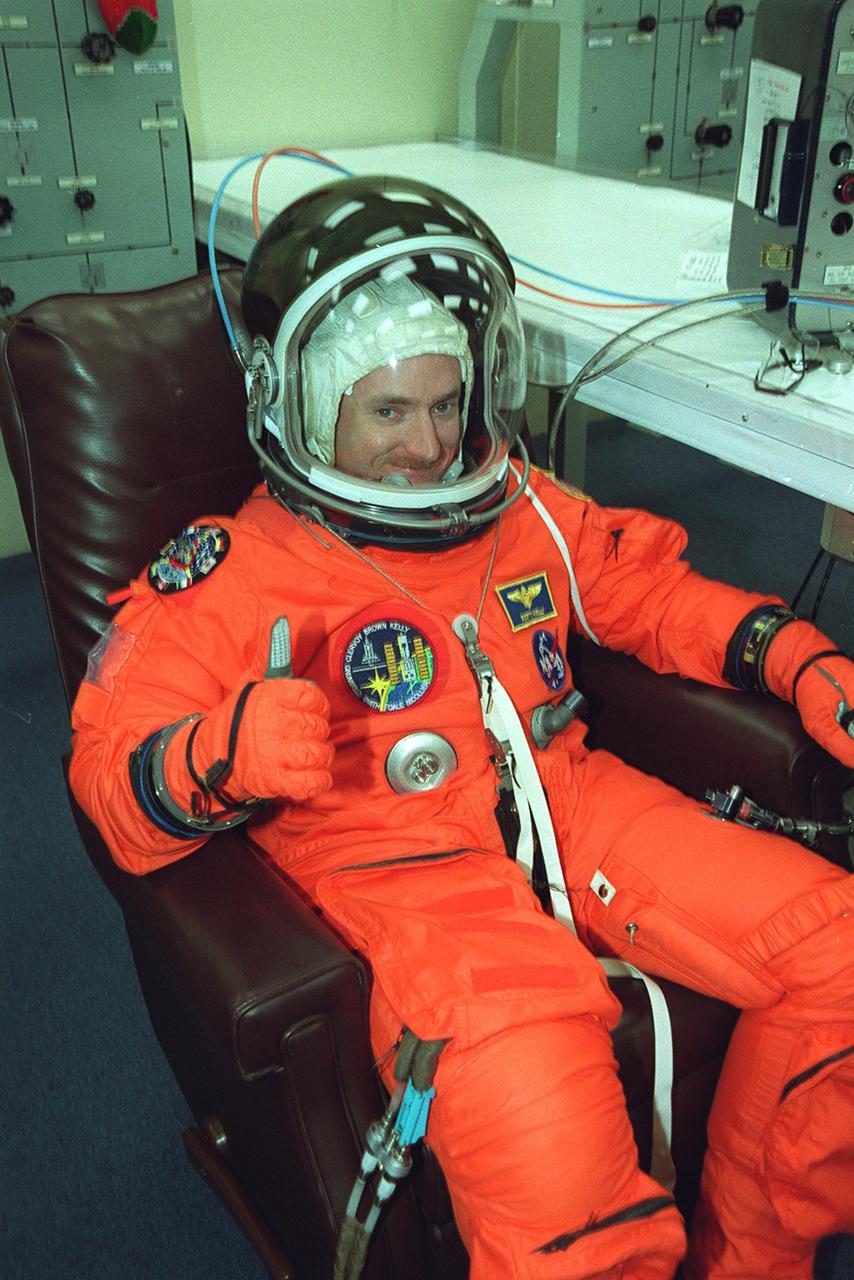
STS-103 Pilot Scott J. Kelly is suited up and ready for the second launch attempt of Space Shuttle Discovery. The previous launch attempt on Dec. 17 was scrubbed about 8:52 p.m. due to numerous violations of weather launch commit criteria at KSC. Kelly and fellow crew members Commander Curtis L. Brown Jr. and Mission Specialists Steven L. Smith, C. Michael Foale (Ph.D.), John M. Grunsfeld (Ph.D.), Claude Nicollier of Switzerland and Jean-Francois Clervoy of France are scheduled to lift off at 7:50 p.m. EST Dec. 19 on mission STS-103, servicing the Hubble Space Telescope. Objectives for the nearly eight-day mission include replacing gyroscopes and an old computer, installing another solid state recorder, and replacing damaged insulation in the telescope. Discovery is expected to land at KSC Monday, Dec. 27, at about 5:24 p.m. EST
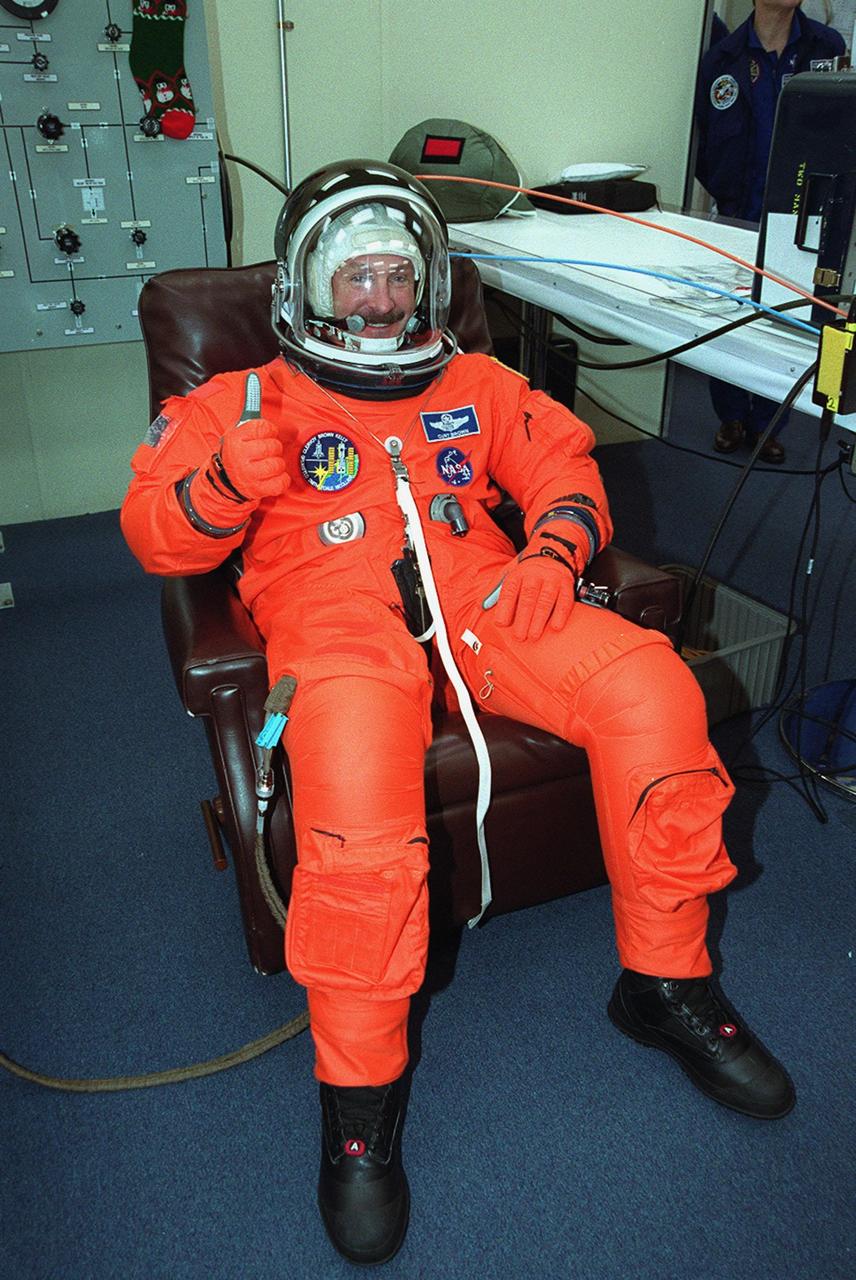
STS-103 Commander Curtis L. Brown Jr. is suited up and ready to go for the second launch attempt of Space Shuttle Discovery. The previous launch attempt on Dec. 17 was scrubbed about 8:52 p.m. due to numerous violations of weather launch commit criteria at KSC. Brown and fellow crew members Pilot Scott J. Kelly and Mission Specialists Steven L. Smith, C. Michael Foale (Ph.D.), John M. Grunsfeld (Ph.D.), Claude Nicollier of Switzerland and Jean-Francois Clervoy of France are scheduled to lift off at 7:50 p.m. EST Dec. 19 on mission STS-103, servicing the Hubble Space Telescope. Objectives for the nearly eight-day mission include replacing gyroscopes and an old computer, installing another solid state recorder, and replacing damaged insulation in the telescope. Discovery is expected to land at KSC Monday, Dec. 27, at about 5:24 p.m. EST
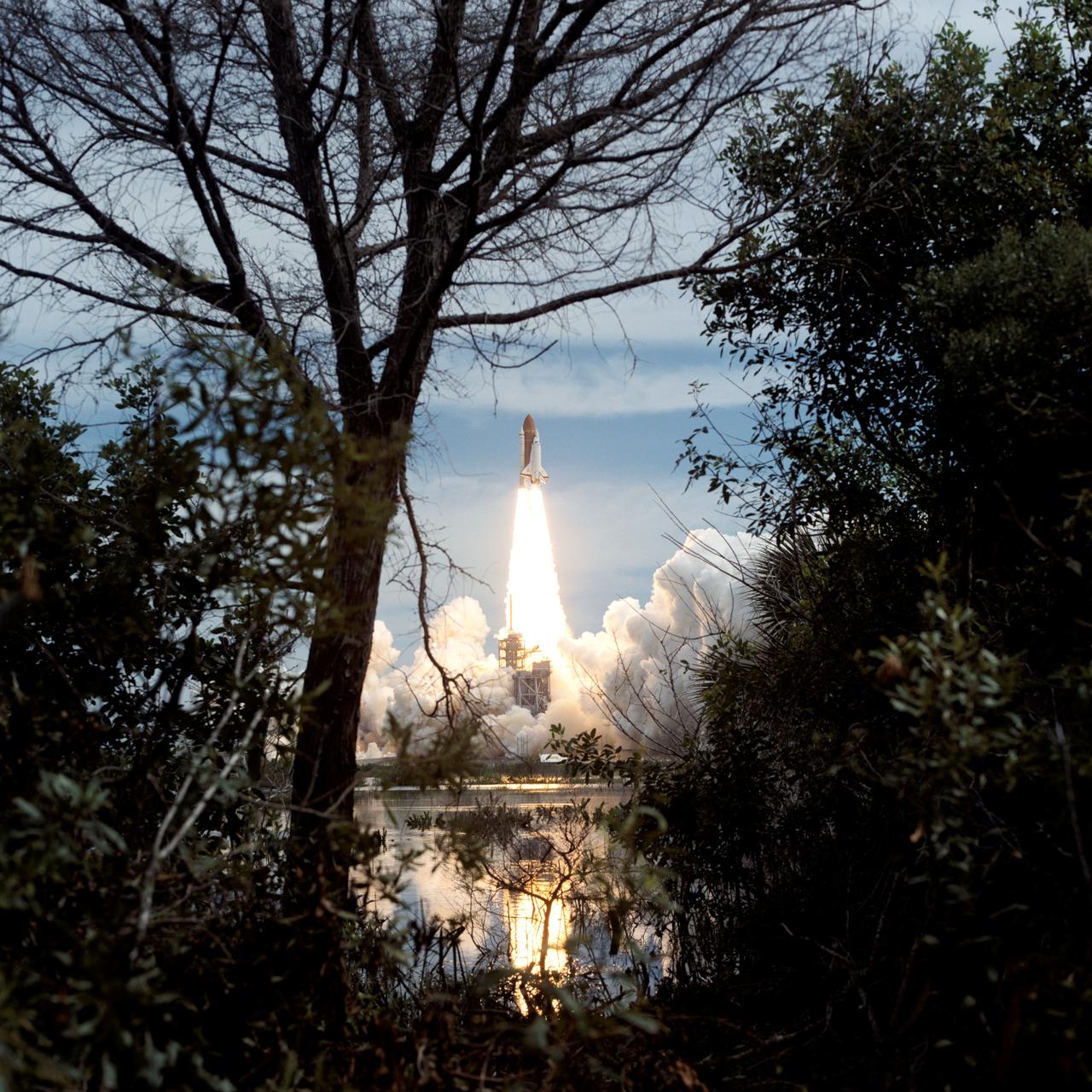
STS069-S-024 (7 September 1995) --- Trees and shrubs frame the liftoff phase of the Space Shuttle Endeavour as it begins the STS-69 mission. Liftoff from Launch Pad 39A occurred at 11:09:00:52 a.m. (EDT), September 7, 1995. The crew of five NASA astronauts is embarking on an 11-day multifaceted mission featuring two free-flying scientific research spacecraft, a spacewalk and a host of experiments in both the cargo bay and the middeck. Onboard were astronauts David M. Walker, Kenneth D. Cockrell, James S. Voss, James H. Newman and Michael L. Gernhardt.
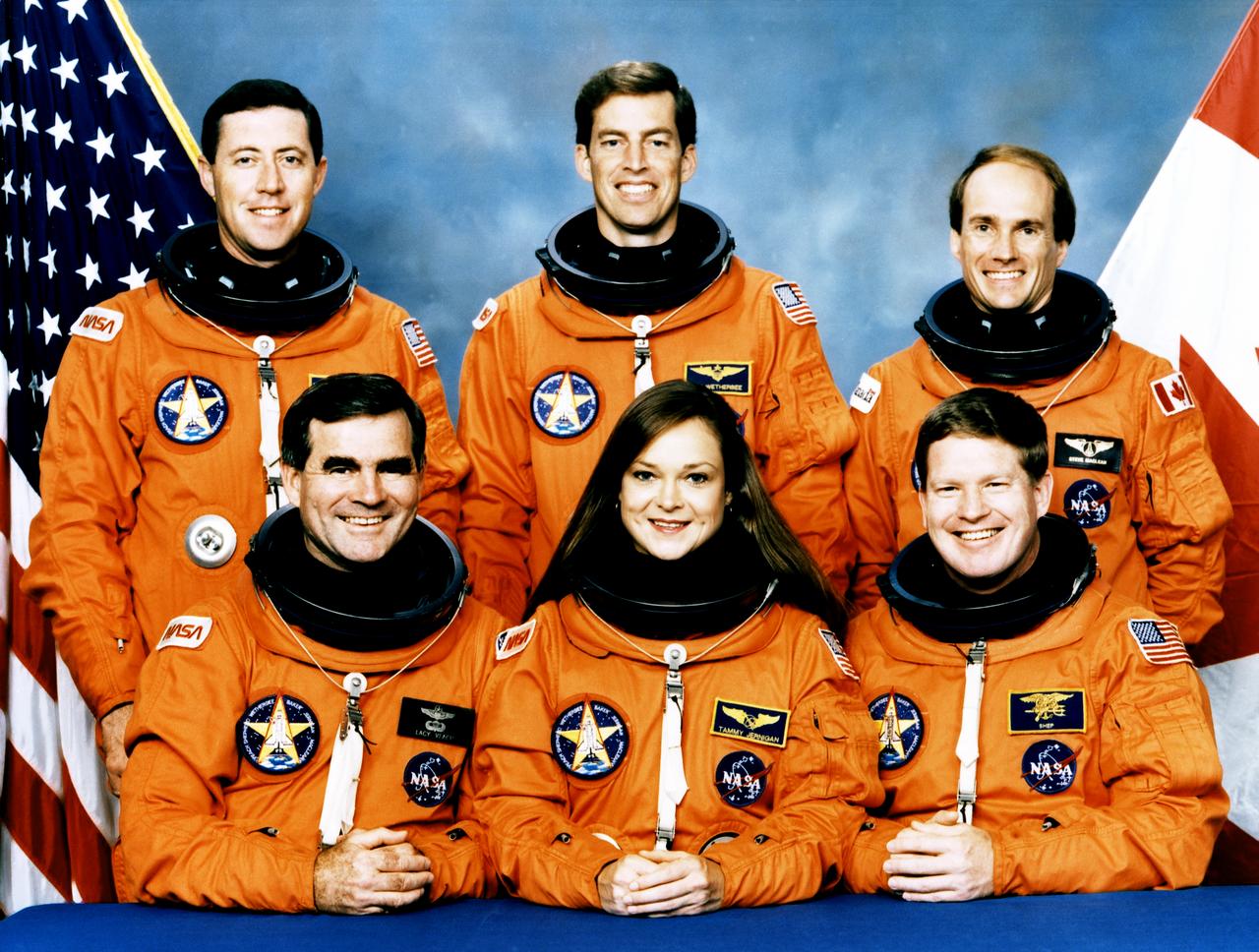
Five NASA astronauts and one Canadian payload specialist composed the STS-52 crew. Pictured on the back row, left to right, are Michael A. Baker, pilot; James B. Wetherbee, commander; and Steven G. Maclean, payload specialist. On the front row, left to right, are mission specialists Charles (Lacy) Veach, Tamara Jernigan, and William Shepherd. Launched aboard the Space Shuttle Columbia on October 22, 1992 at 1:09:39 p.m. (EDT), the crew’s primary objectives were the deployment of the Laser Geodynamic Satellite (LAGEOS II) and operation of the U.S. Microgravity Payload-1 (USMP-1).
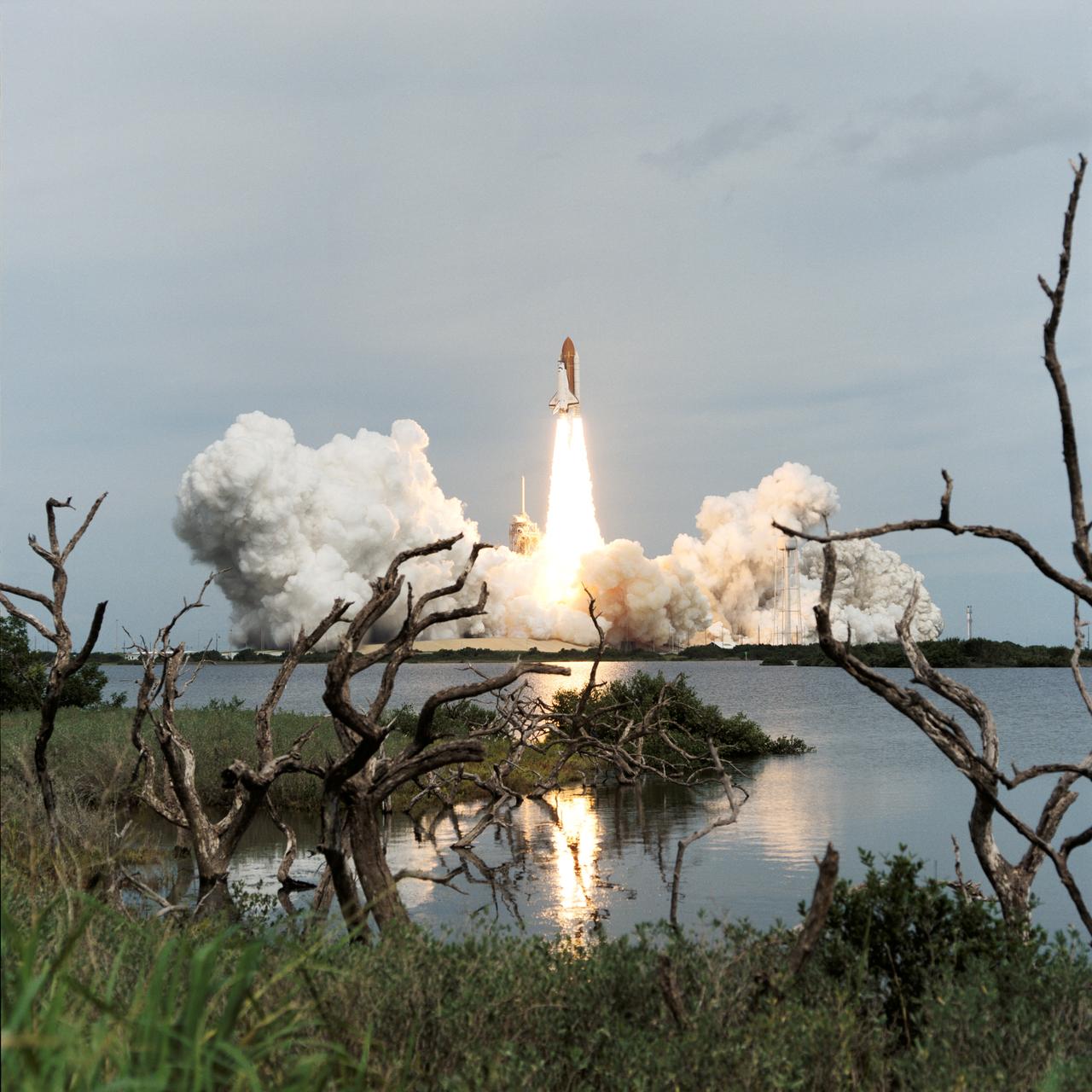
STS069-S-022 (7 September 1995) --- Marsh driftwood and Florida shrubbery frame the liftoff phase of the Space Shuttle Endeavour as it begins the STS-69 mission. Liftoff from Launch Pad 39A occurred at 11:09:00:52 a.m. (EDT), September 7, 1995. The crew of five NASA astronauts is embarking on an 11-day multifaceted mission featuring two free-flying scientific research spacecraft, a spacewalk and a host of experiments in both the cargo bay and the middeck. Onboard were astronauts David M. Walker, Kenneth D. Cockrell, James S. Voss, James H. Newman and Michael L. Gernhardt.
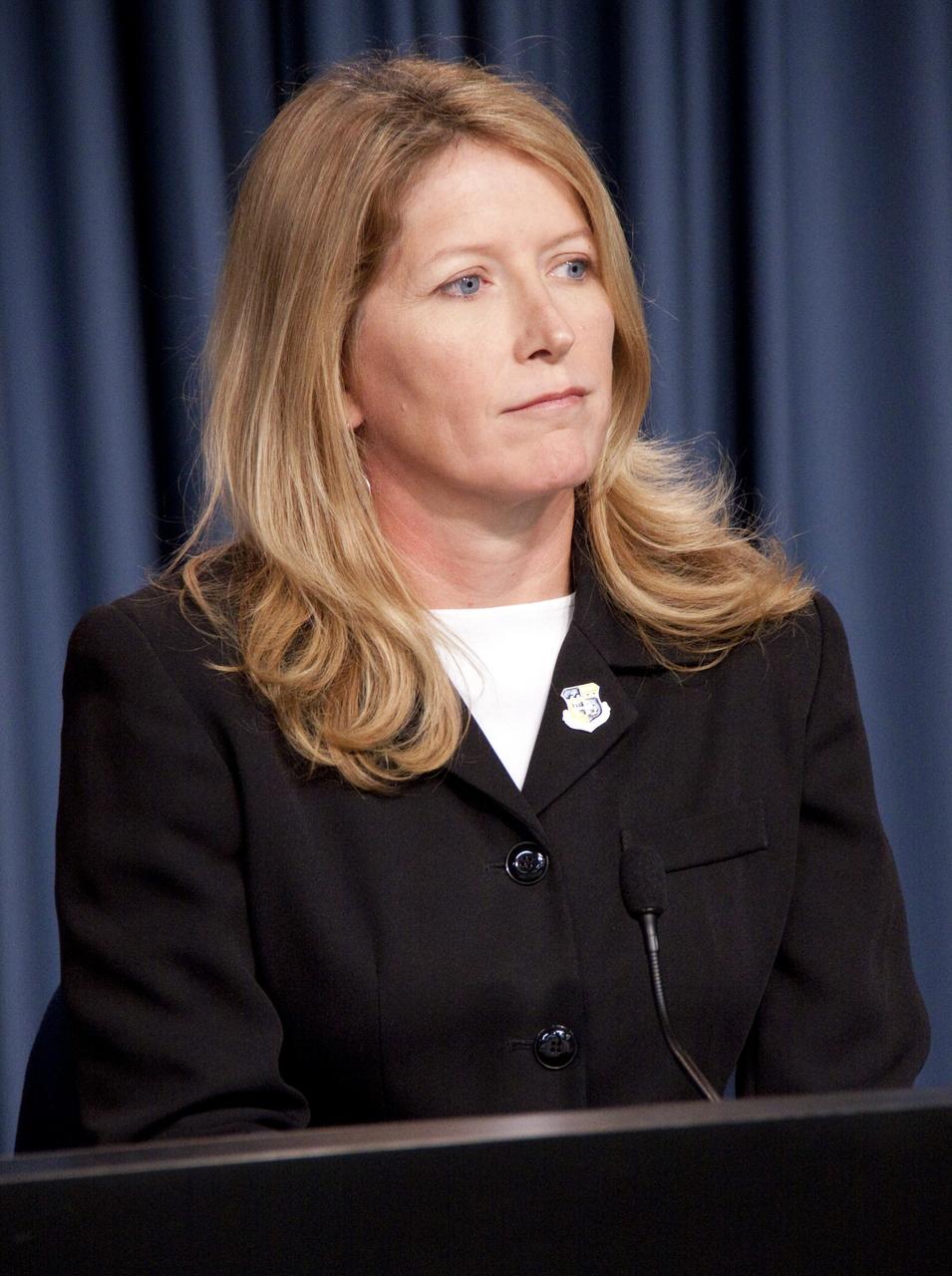
CAPE CANAVERAL, Fla. -- At NASA's Kennedy Space Center in Florida, Shuttle Weather Officer Kathy Winters talks to media about the weather forecast for space shuttle Discovery's upcoming launch to the International Space Station during a Countdown Status Briefing. Scheduled to lift off Nov. 3 at 3:52 p.m. EDT, Discovery and crew will deliver the Permanent Multipurpose Module, packed with supplies and critical spare parts, as well as Robonaut 2, the dexterous humanoid astronaut helper, to the orbiting outpost. For more information on the STS-133 mission, visit www.nasa.gov/mission_pages/shuttle/shuttlemissions/sts133/. Photo credit: NASA/Jack Pfaller
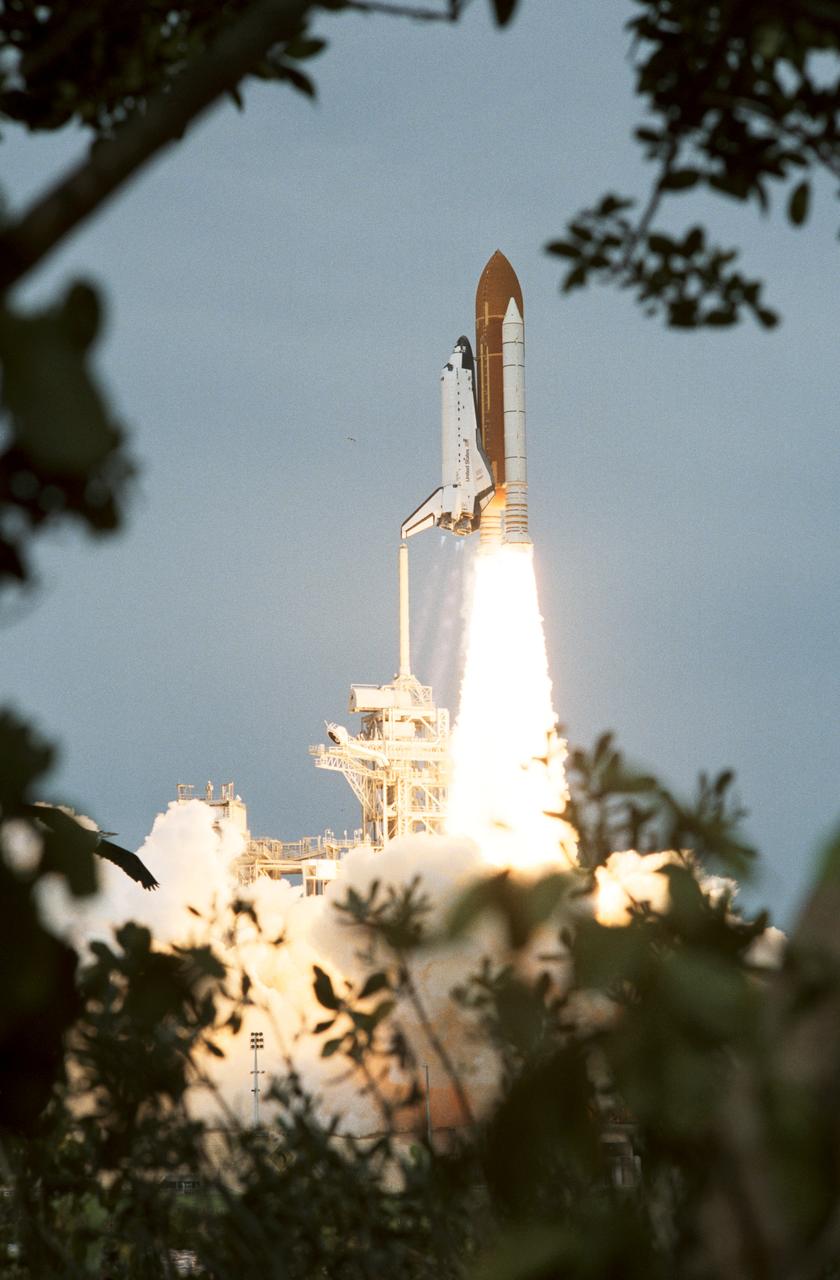
STS069-S-019 (7 September 1995) --- Florida shrubbery frames the liftoff phase of the Space Shuttle Endeavour as it begins the STS-69 mission. Liftoff from Launch Pad 39A occurred at 11:09:00:52 a.m. (EDT), September 7, 1995. The crew of five NASA astronauts is embarking on an 11-day multifaceted mission featuring two free-flying scientific research spacecraft, a spacewalk and a host of experiments in both the cargo bay and the middeck. Onboard were astronauts David M. Walker, Kenneth D. Cockrell, James S. Voss, James H. Newman and Michael L. Gernhardt.
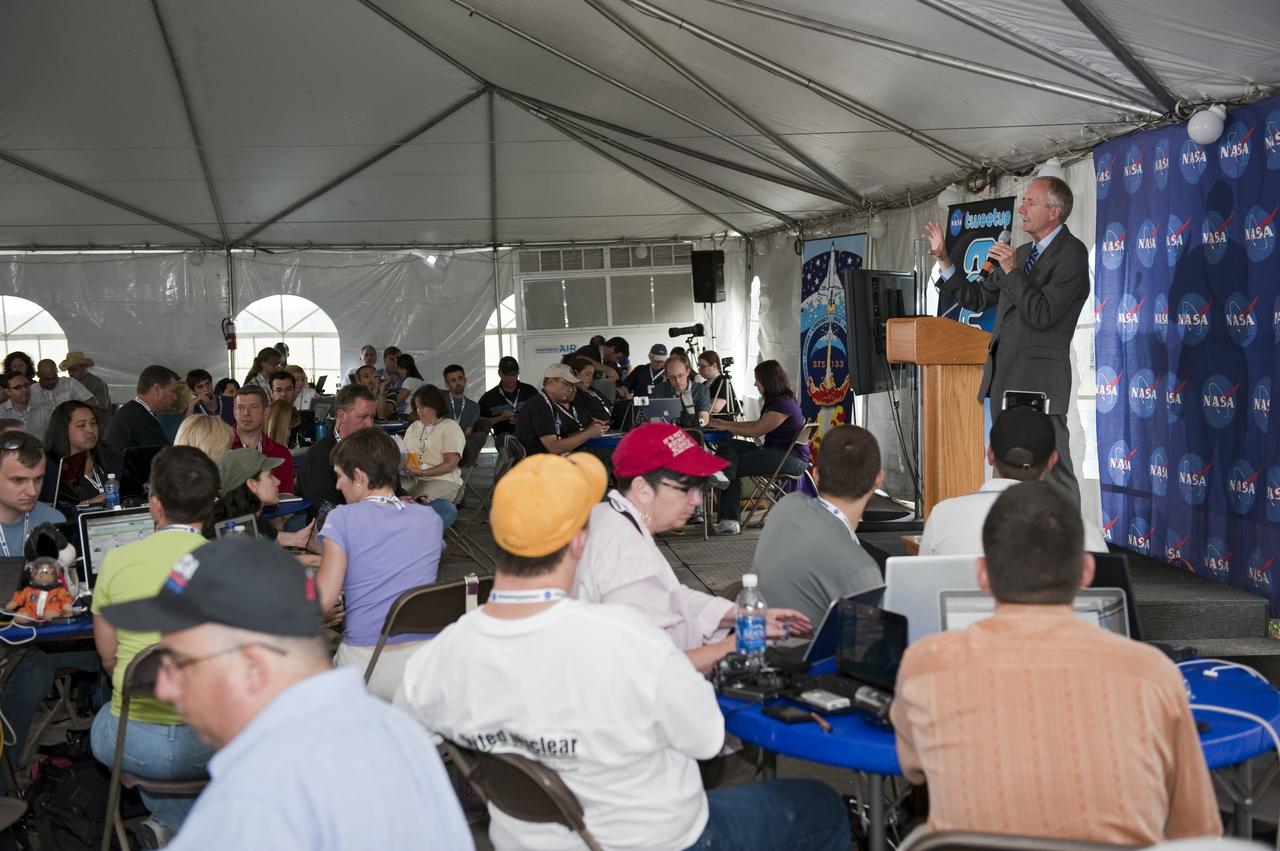
CAPE CANAVERAL, Fla. -- At NASA's Kennedy Space Center in Florida, NASA Associate Administrator for Space Operations Bill Gerstenmaier addresses participants of the STS-133 Tweetup. NASA is hosting about 150 of its Twitter followers from around the world and several dozen states and providing them with a behind-the-scenes perspective to share with their own followers on the social networking service. The "Tweeps," as NASA calls them, will have a chance to tour Kennedy and meet with shuttle technicians, managers, engineers and astronauts. They also will receive a demonstration of Robonaut, a human-like robot similar to the one that will be delivered to the International Space Station on the STS-133 mission. Space shuttle Discovery and its STS-133 crew are scheduled to launch Nov. 3 at 3:52 p.m. EDT. For more information on the upcoming mission, visit www.nasa.gov/mission_pages/shuttle/shuttlemissions/sts133/. Photo credit: NASA/Kim Shiflett
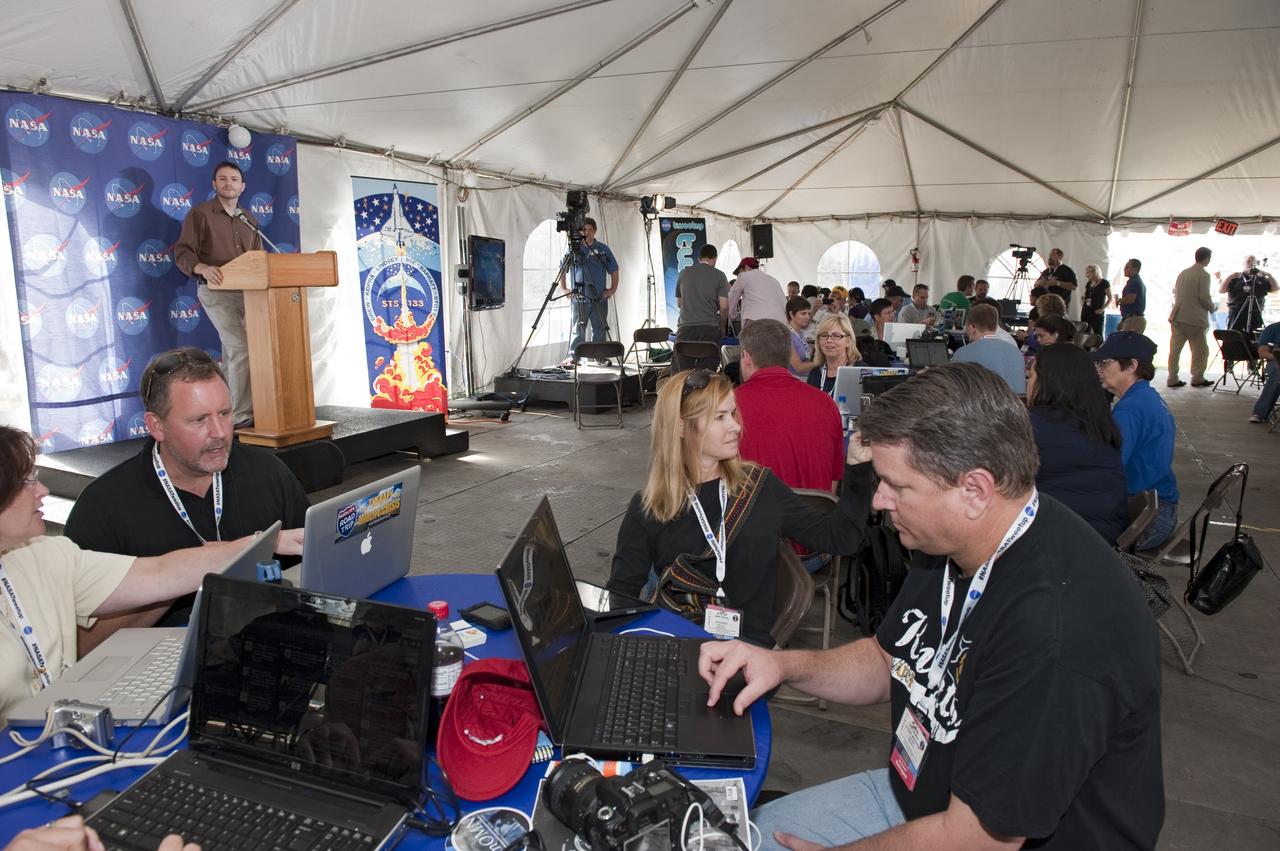
CAPE CANAVERAL, Fla. -- At NASA's Kennedy Space Center in Florida, NASA Public Affairs Officer John Yembrick welcomes participants to the STS-133 Tweetup. NASA is hosting about 150 of its Twitter followers from around the world and several dozen states and providing them with a behind-the-scenes perspective to share with their own followers on the social networking service. The "Tweeps," as NASA calls them, will have a chance to tour Kennedy and meet with shuttle technicians, managers, engineers and astronauts. They also will receive a demonstration of Robonaut, a human-like robot similar to the one that will be delivered to the International Space Station on the STS-133 mission. Space shuttle Discovery and its STS-133 crew are scheduled to launch Nov. 3 at 3:52 p.m. EDT. For more information on the upcoming mission, visit www.nasa.gov/mission_pages/shuttle/shuttlemissions/sts133/. Photo credit: NASA/Kim Shiflett
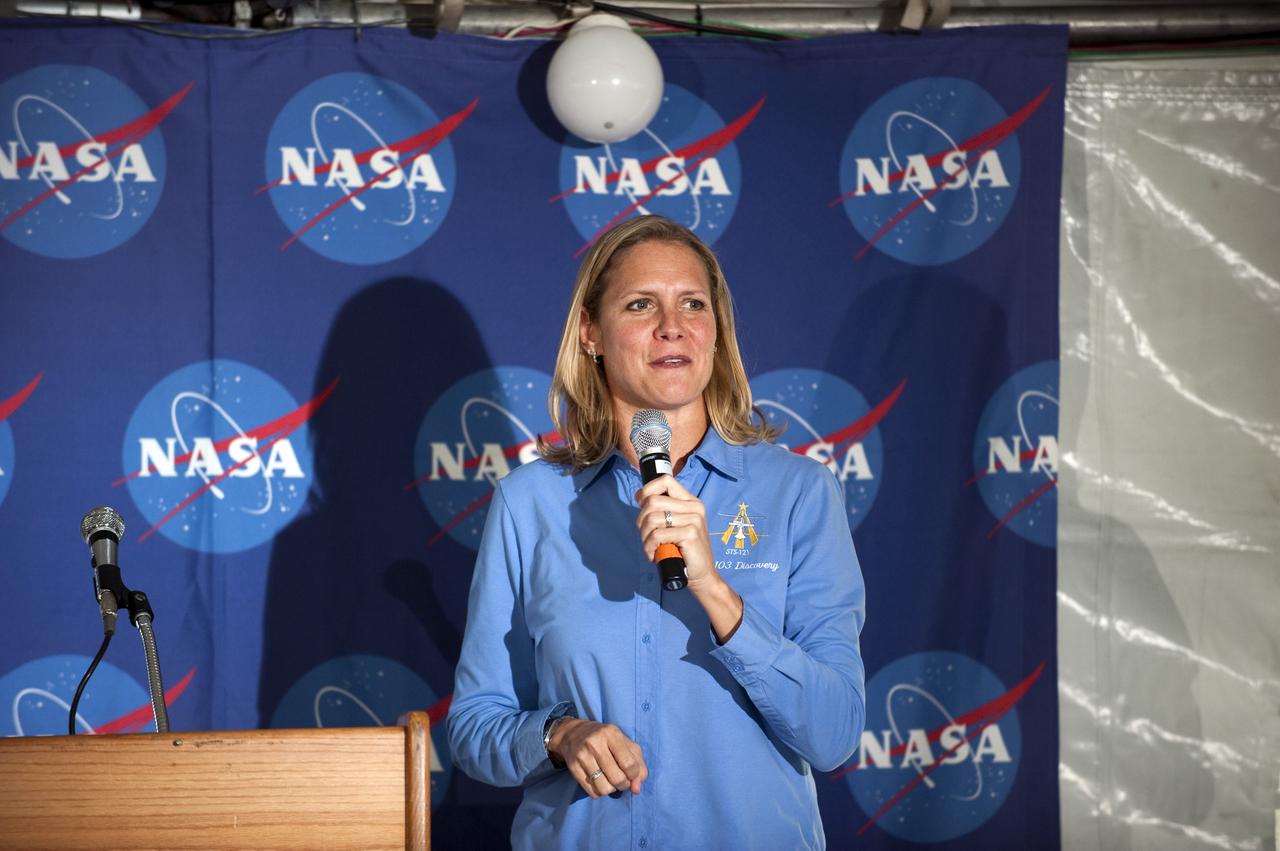
CAPE CANAVERAL, Fla. -- At NASA's Kennedy Space Center in Florida, space shuttle Discovery Flow Director Stephanie Stilson addresses participants of the STS-133 Tweetup. NASA is hosting about 150 of its Twitter followers from around the world and several dozen states and providing them with a behind-the-scenes perspective to share with their own followers on the social networking service. The "Tweeps," as NASA calls them, will have a chance to tour Kennedy and meet with shuttle technicians, managers, engineers and astronauts. They also will receive a demonstration of Robonaut, a human-like robot similar to the one that will be delivered to the International Space Station on the STS-133 mission. Space shuttle Discovery and its STS-133 crew are scheduled to launch Nov. 3 at 3:52 p.m. EDT. For more information on the upcoming mission, visit www.nasa.gov/mission_pages/shuttle/shuttlemissions/sts133/. Photo credit: NASA/Kim Shiflett
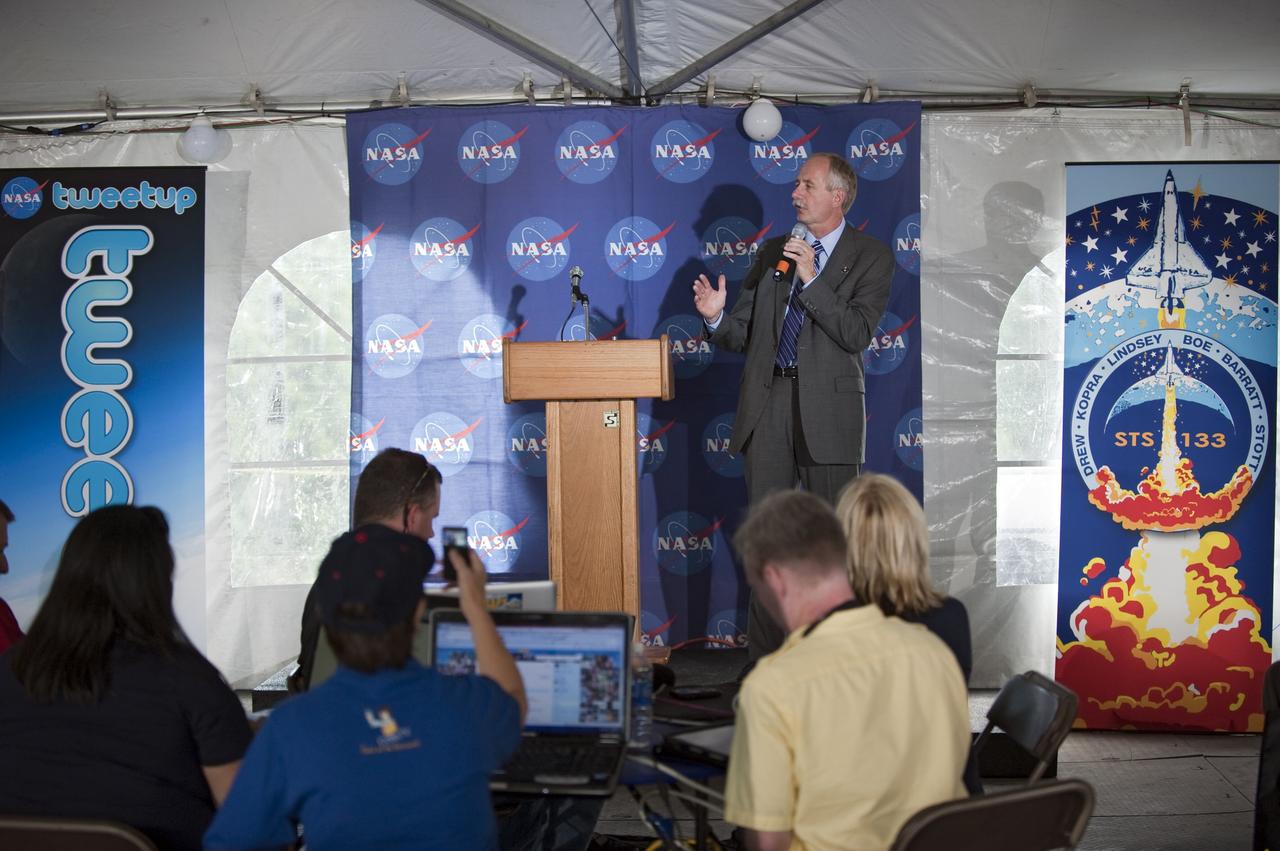
CAPE CANAVERAL, Fla. -- At NASA's Kennedy Space Center in Florida, NASA Associate Administrator for Space Operations Bill Gerstenmaier addresses participants of the STS-133 Tweetup. NASA is hosting about 150 of its Twitter followers from around the world and several dozen states and providing them with a behind-the-scenes perspective to share with their own followers on the social networking service. The "Tweeps," as NASA calls them, will have a chance to tour Kennedy and meet with shuttle technicians, managers, engineers and astronauts. They also will receive a demonstration of Robonaut, a human-like robot similar to the one that will be delivered to the International Space Station on the STS-133 mission. Space shuttle Discovery and its STS-133 crew are scheduled to launch Nov. 3 at 3:52 p.m. EDT. For more information on the upcoming mission, visit www.nasa.gov/mission_pages/shuttle/shuttlemissions/sts133/. Photo credit: NASA/Kim Shiflett
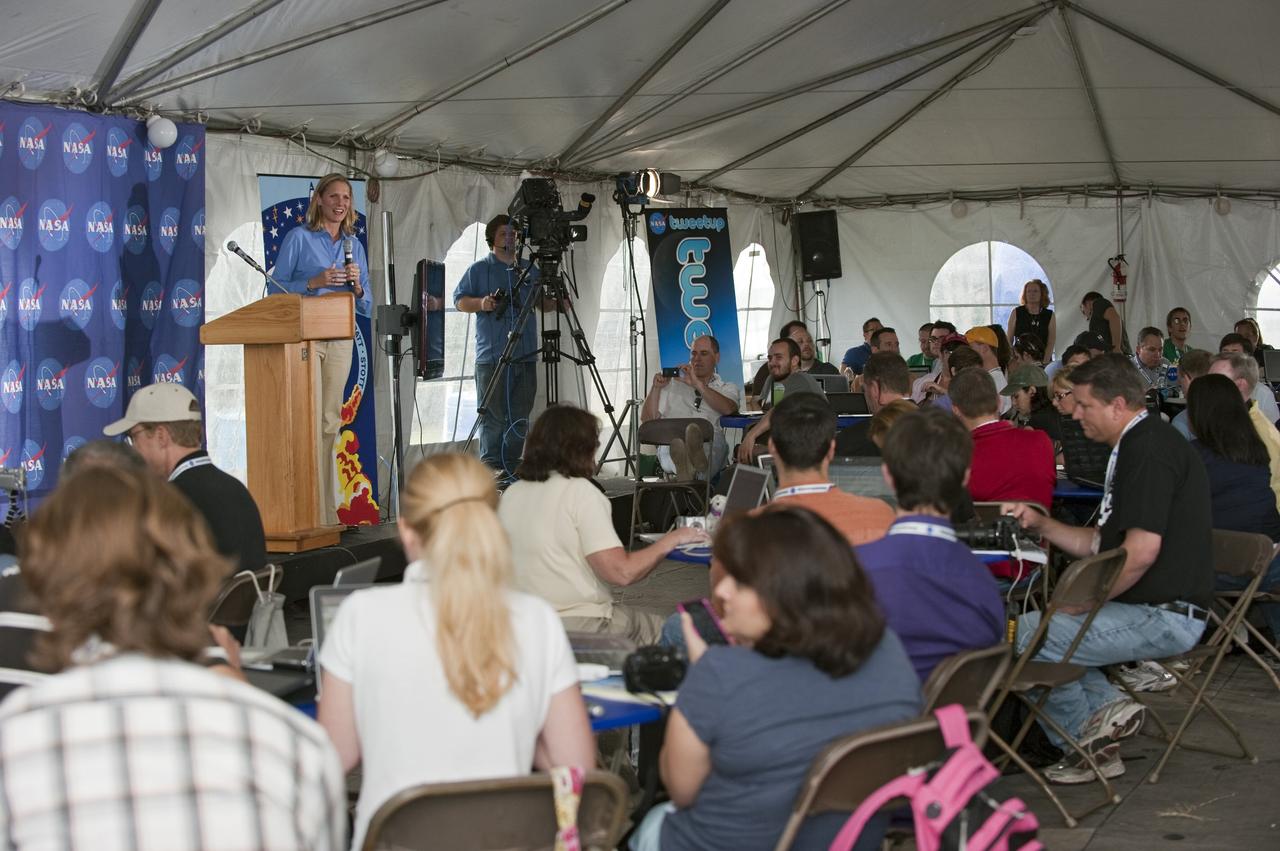
CAPE CANAVERAL, Fla. -- At NASA's Kennedy Space Center in Florida, space shuttle Discovery Flow Director Stephanie Stilson addresses participants of the STS-133 Tweetup. NASA is hosting about 150 of its Twitter followers from around the world and several dozen states and providing them with a behind-the-scenes perspective to share with their own followers on the social networking service. The "Tweeps," as NASA calls them, will have a chance to tour Kennedy and meet with shuttle technicians, managers, engineers and astronauts. They also will receive a demonstration of Robonaut, a human-like robot similar to the one that will be delivered to the International Space Station on the STS-133 mission. Space shuttle Discovery and its STS-133 crew are scheduled to launch Nov. 3 at 3:52 p.m. EDT. For more information on the upcoming mission, visit www.nasa.gov/mission_pages/shuttle/shuttlemissions/sts133/. Photo credit: NASA/Kim Shiflett
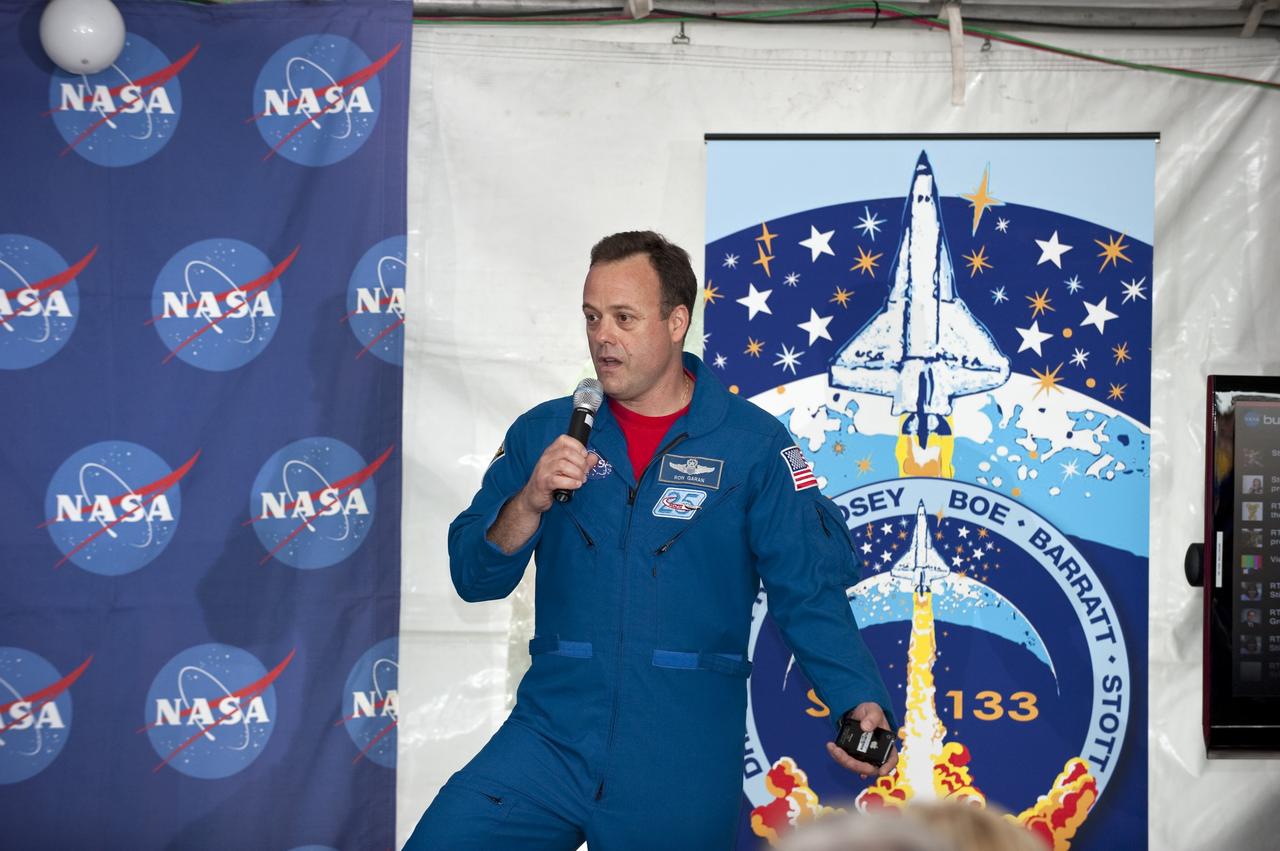
CAPE CANAVERAL, Fla. -- At NASA's Kennedy Space Center in Florida, NASA astronaut Ron Garan addresses participants of the STS-133 Tweetup. NASA is hosting about 150 of its Twitter followers from around the world and several dozen states and providing them with a behind-the-scenes perspective to share with their own followers on the social networking service. The "Tweeps," as NASA calls them, will have a chance to tour Kennedy and meet with shuttle technicians, managers, engineers and astronauts. They also will receive a demonstration of Robonaut, a human-like robot similar to the one that will be delivered to the International Space Station on the STS-133 mission. Space shuttle Discovery and its STS-133 crew are scheduled to launch Nov. 3 at 3:52 p.m. EDT. For more information on the upcoming mission, visit www.nasa.gov/mission_pages/shuttle/shuttlemissions/sts133/. Photo credit: NASA/Kim Shiflett
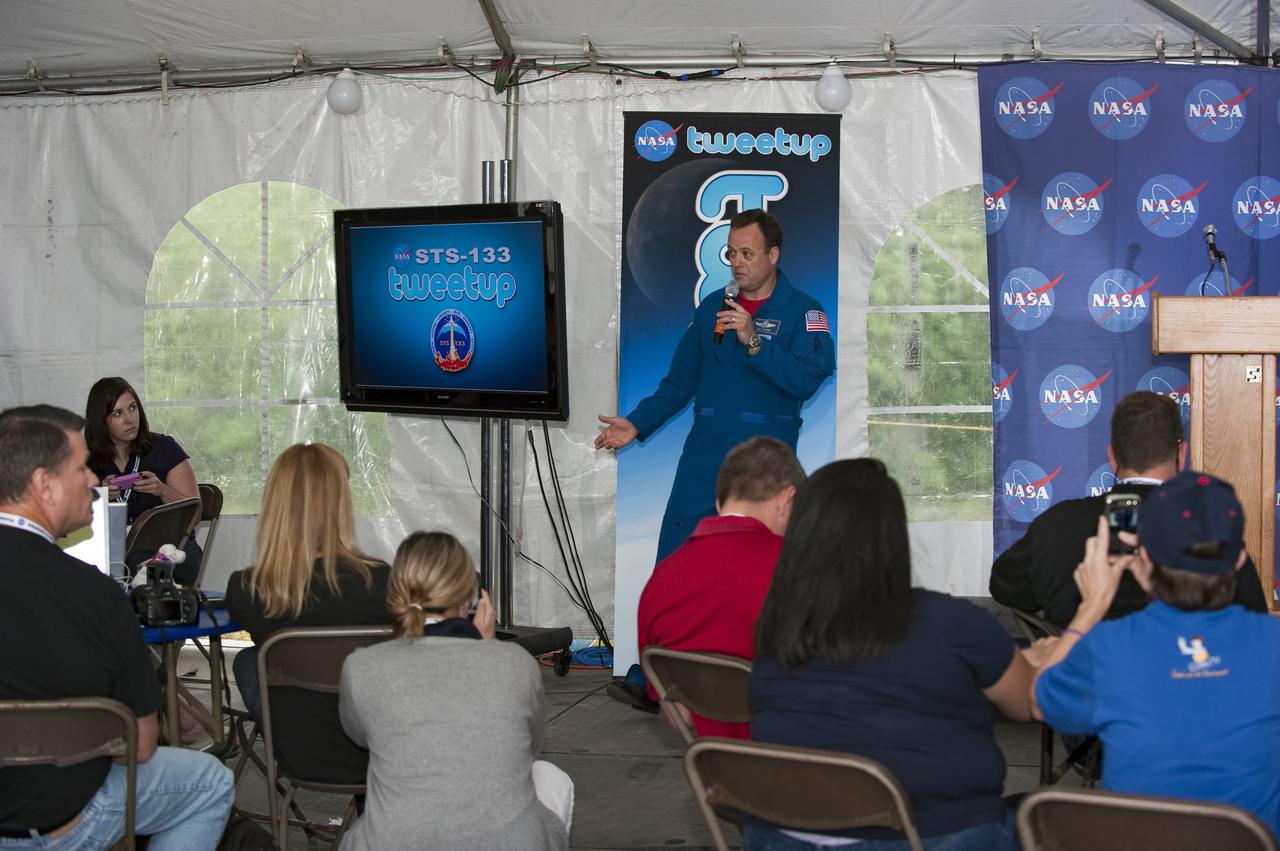
CAPE CANAVERAL, Fla. -- At NASA's Kennedy Space Center in Florida, NASA astronaut Ron Garan addresses participants of the STS-133 Tweetup. NASA is hosting about 150 of its Twitter followers from around the world and several dozen states and providing them with a behind-the-scenes perspective to share with their own followers on the social networking service. The "Tweeps," as NASA calls them, will have a chance to tour Kennedy and meet with shuttle technicians, managers, engineers and astronauts. They also will receive a demonstration of Robonaut, a human-like robot similar to the one that will be delivered to the International Space Station on the STS-133 mission. Space shuttle Discovery and its STS-133 crew are scheduled to launch Nov. 3 at 3:52 p.m. EDT. For more information on the upcoming mission, visit www.nasa.gov/mission_pages/shuttle/shuttlemissions/sts133/. Photo credit: NASA/Kim Shiflett
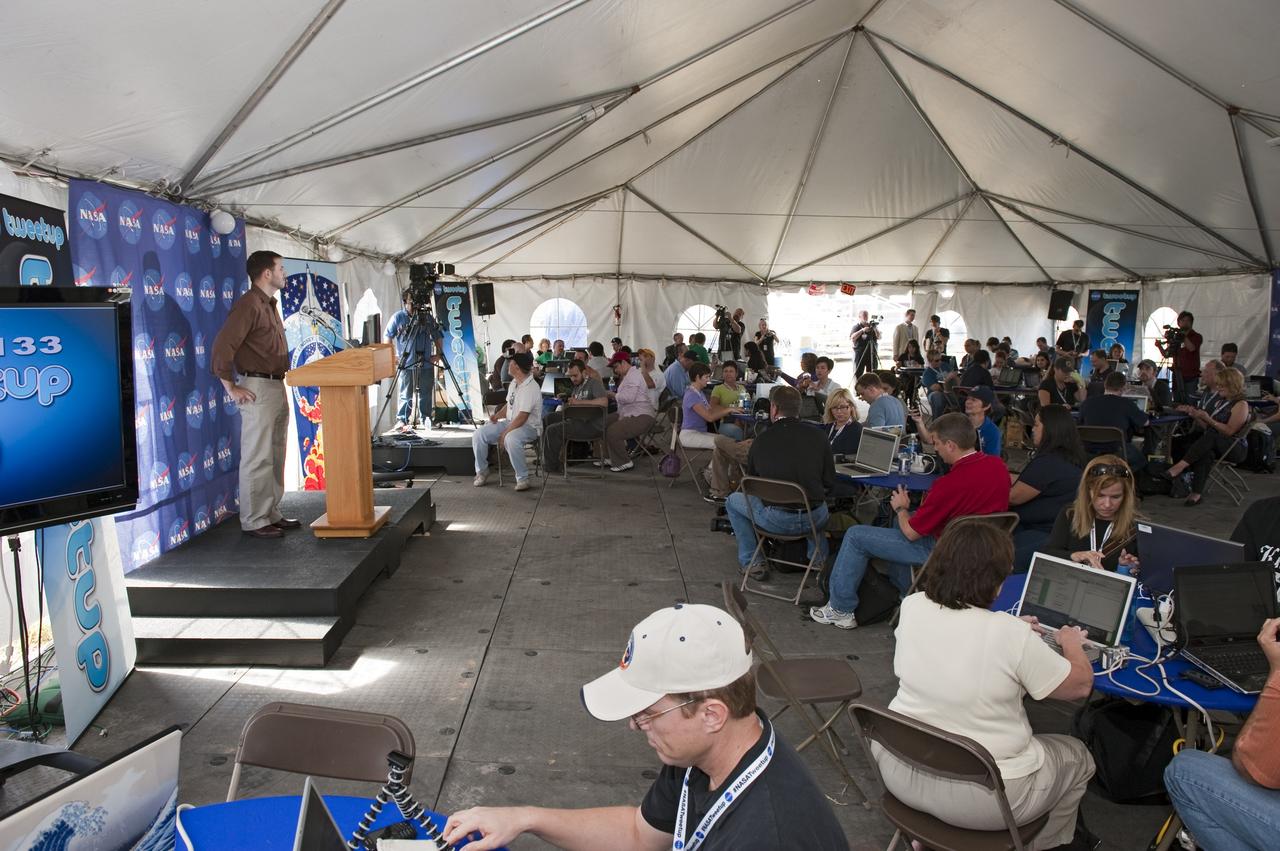
CAPE CANAVERAL, Fla. -- At NASA's Kennedy Space Center in Florida, NASA Public Affairs Officer John Yembrick welcomes participants to the STS-133 Tweetup. NASA is hosting about 150 of its Twitter followers from around the world and several dozen states and providing them with a behind-the-scenes perspective to share with their own followers on the social networking service. The "Tweeps," as NASA calls them, will have a chance to tour Kennedy and meet with shuttle technicians, managers, engineers and astronauts. They also will receive a demonstration of Robonaut, a human-like robot similar to the one that will be delivered to the International Space Station on the STS-133 mission. Space shuttle Discovery and its STS-133 crew are scheduled to launch Nov. 3 at 3:52 p.m. EDT. For more information on the upcoming mission, visit www.nasa.gov/mission_pages/shuttle/shuttlemissions/sts133/. Photo credit: NASA/Kim Shiflett
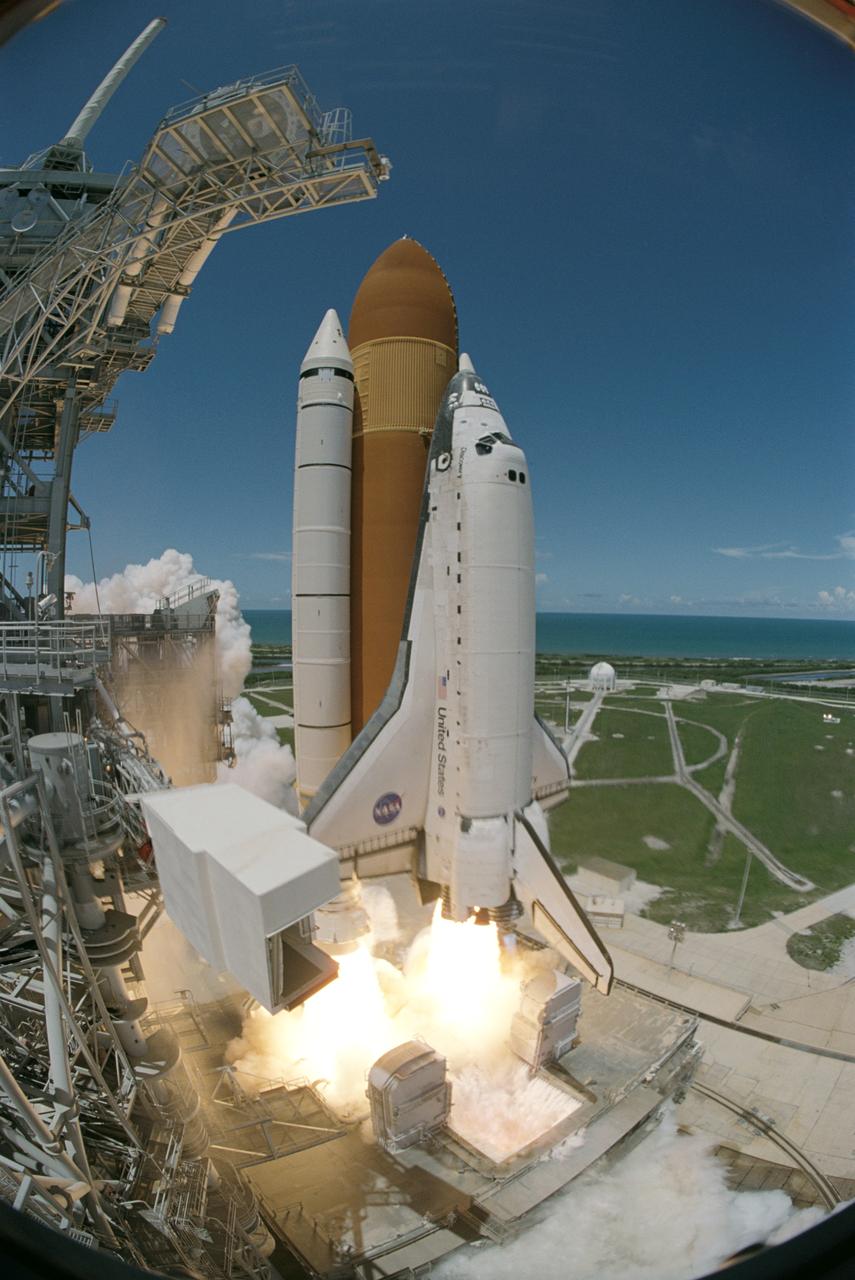
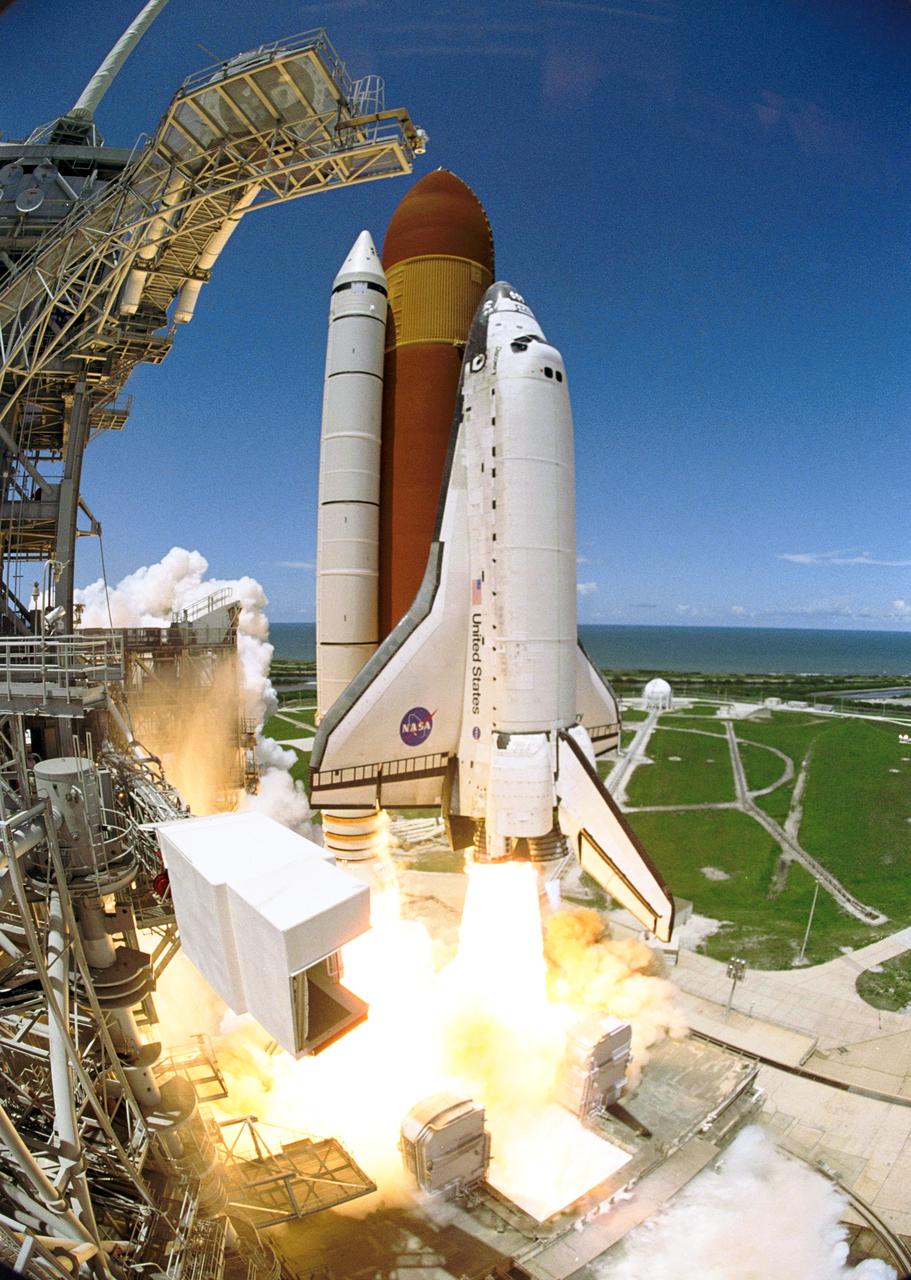
STS121-S-049 (4 July 2006) --- Captured on film by a remote camera equipped with a special "fish-eye" lens, the Space Shuttle Discovery and its seven-member crew launch at 2:38 p.m. (EDT) to begin the two-day journey to the International Space Station on the historic Return to Flight STS-121 mission. Discovery is slated to dock with the station at 10:52 a.m. (EDT) Thursday July 6, 2006. The shuttle made history as it was the first human-occupying spacecraft to launch on Independence Day. During the 12-day mission, the STS-121 crew of seven will test new equipment and procedures to improve shuttle safety, as well as deliver supplies and make repairs to the space station
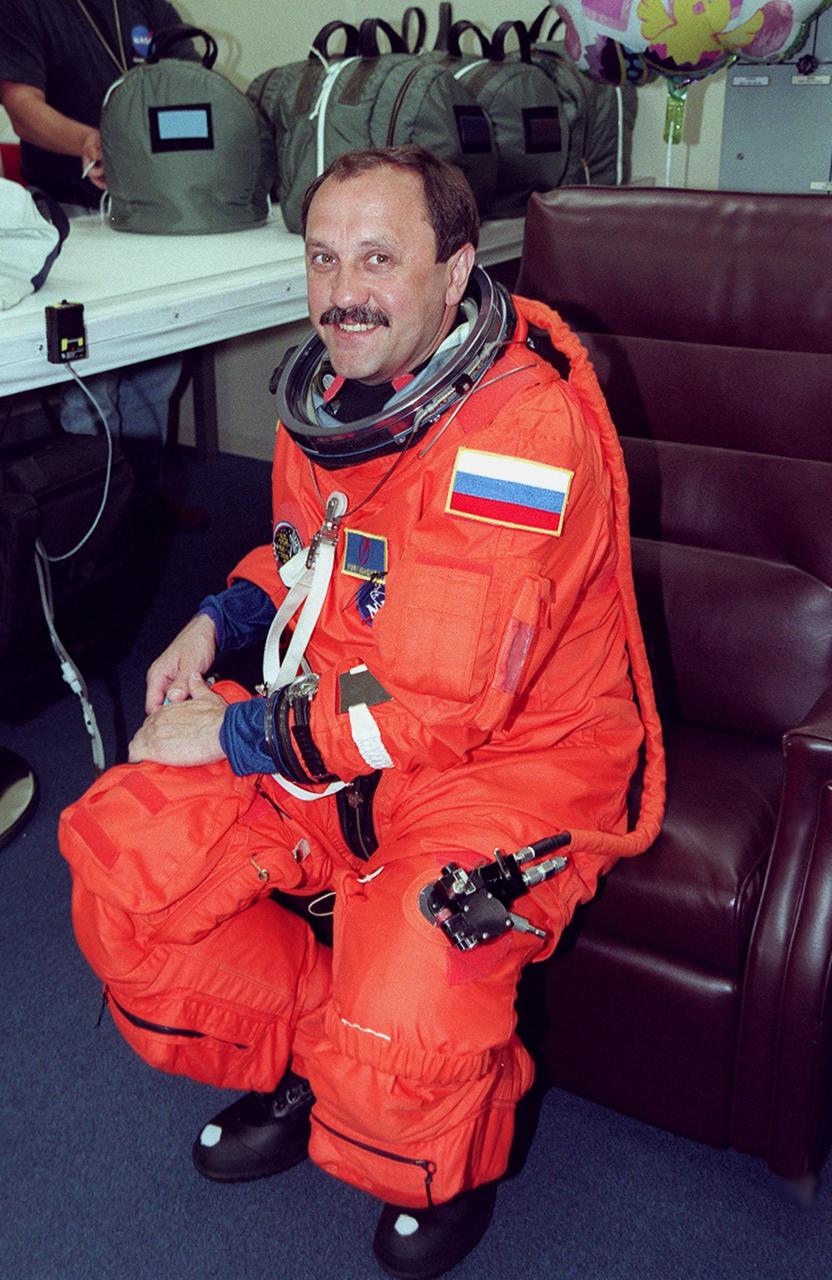
In the Operations and Checkout Building, STS-101 Mission Specialist Yury Usachev waits for final check of his launch and entry suit before heading a second time to Launch Pad 39A and launch of Space Shuttle Atlantis. The previous day's launch attempt was scrubbed due to high cross winds at the Shuttle Landing Facility. The mission will take the crew to the International Space Station to deliver logistics and supplies and to prepare the Station for the arrival of the Zvezda Service Module, expected to be launched by Russia in July 2000. Also, the crew will conduct one space walk. This will be the third assembly flight to the Space Station. Liftoff is targeted for 3:52 p.m. EDT. The mission is expected to last about 10 days, with Atlantis landing at KSC Saturday, May 6, about 11:53 a.m. EDT
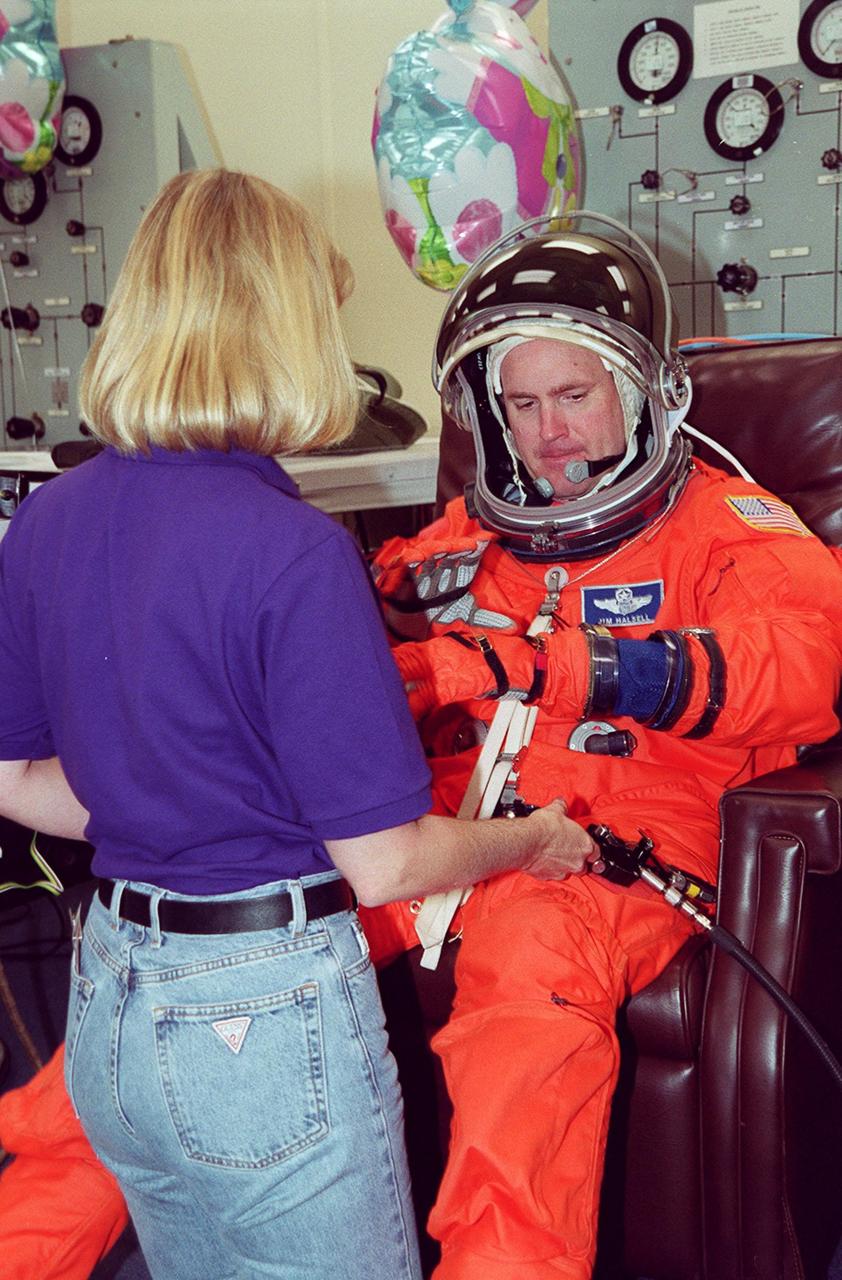
In the Operations and Checkout Building, STS-101 Commander James D. Halsell Jr. gets final check on his launch and entry suit before heading a second time to Launch Pad 39A and launch of Space Shuttle Atlantis. The previous day's launch attempt was scrubbed due to high cross winds at the Shuttle Landing Facility. The mission will take the crew to the International Space Station to deliver logistics and supplies and to prepare the Station for the arrival of the Zvezda Service Module, expected to be launched by Russia in July 2000. Also, the crew will conduct one space walk. This will be the third assembly flight to the Space Station. Liftoff is targeted for 3:52 p.m. EDT. The mission is expected to last about 10 days, with Atlantis landing at KSC Saturday, May 6, about 11:53 a.m. EDT
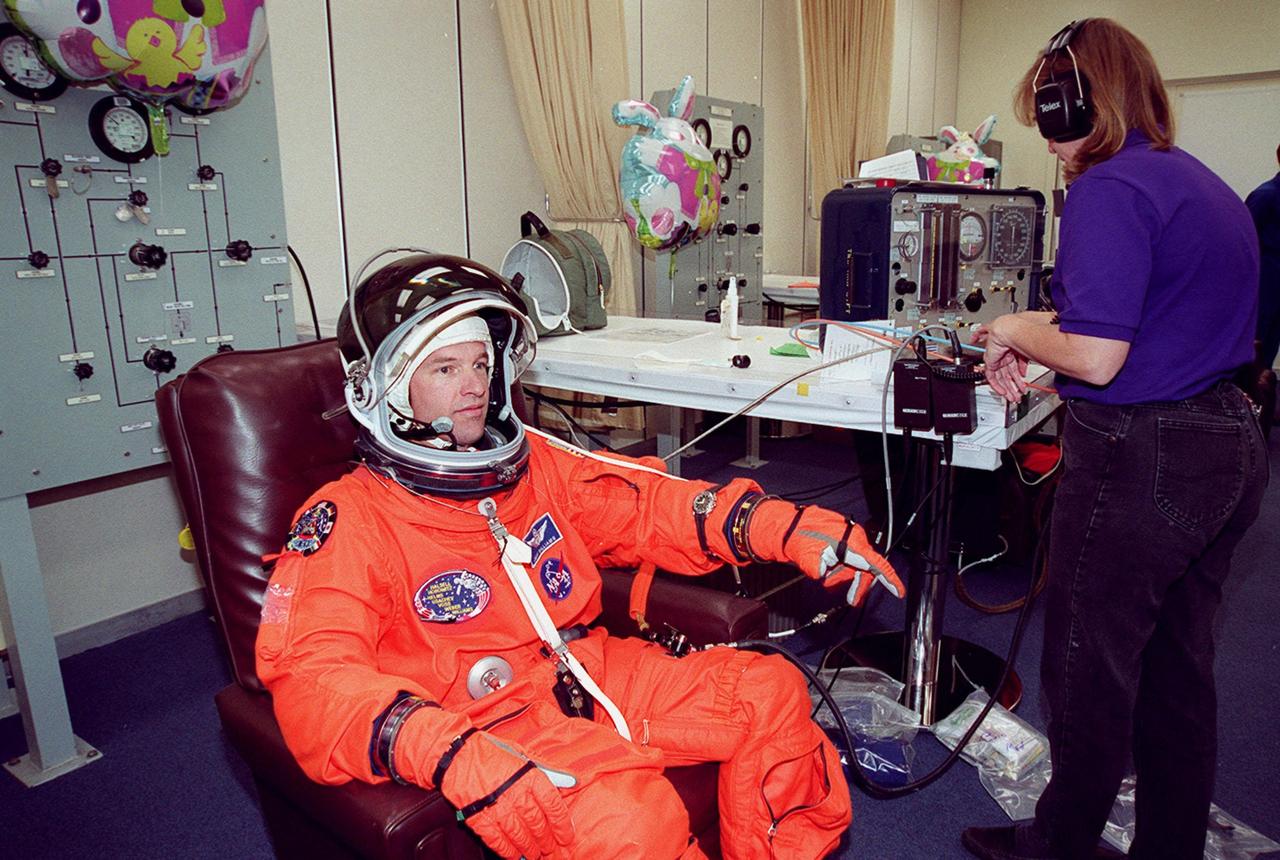
In the Operations and Checkout Building, STS-101 Mission Specialist Jeffrey N. Williams gets final check on his launch and entry suit before heading a second time to Launch Pad 39A and launch of Space Shuttle Atlantis. The previous day's launch attempt was scrubbed due to high cross winds at the Shuttle Landing Facility. The mission will take the crew to the International Space Station to deliver logistics and supplies and to prepare the Station for the arrival of the Zvezda Service Module, expected to be launched by Russia in July 2000. Also, the crew will conduct one space walk. This will be the third assembly flight to the Space Station. Liftoff is targeted for 3:52 p.m. EDT. The mission is expected to last about 10 days, with Atlantis landing at KSC Saturday, May 6, about 11:53 a.m. EDT
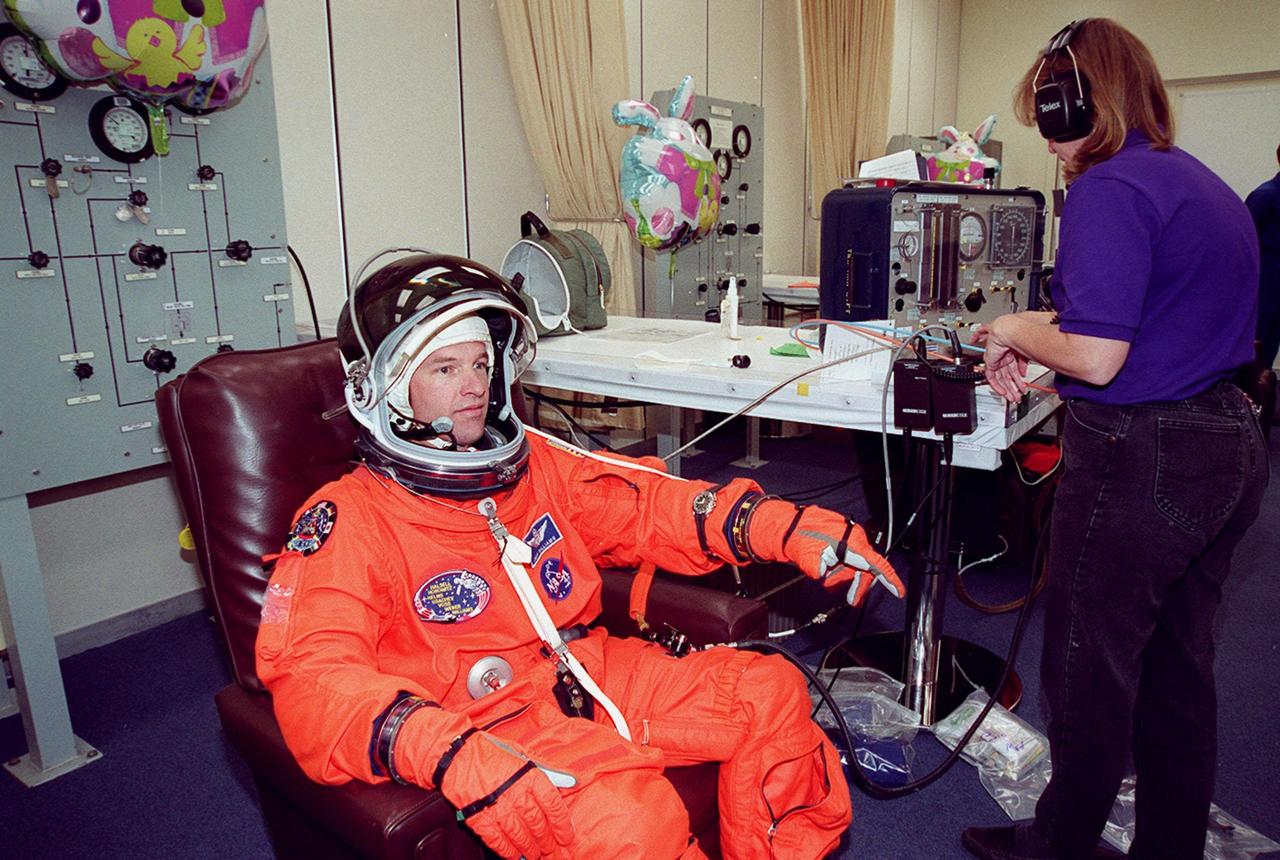
In the Operations and Checkout Building, STS-101 Mission Specialist Jeffrey N. Williams gets final check on his launch and entry suit before heading a second time to Launch Pad 39A and launch of Space Shuttle Atlantis. The previous day's launch attempt was scrubbed due to high cross winds at the Shuttle Landing Facility. The mission will take the crew to the International Space Station to deliver logistics and supplies and to prepare the Station for the arrival of the Zvezda Service Module, expected to be launched by Russia in July 2000. Also, the crew will conduct one space walk. This will be the third assembly flight to the Space Station. Liftoff is targeted for 3:52 p.m. EDT. The mission is expected to last about 10 days, with Atlantis landing at KSC Saturday, May 6, about 11:53 a.m. EDT
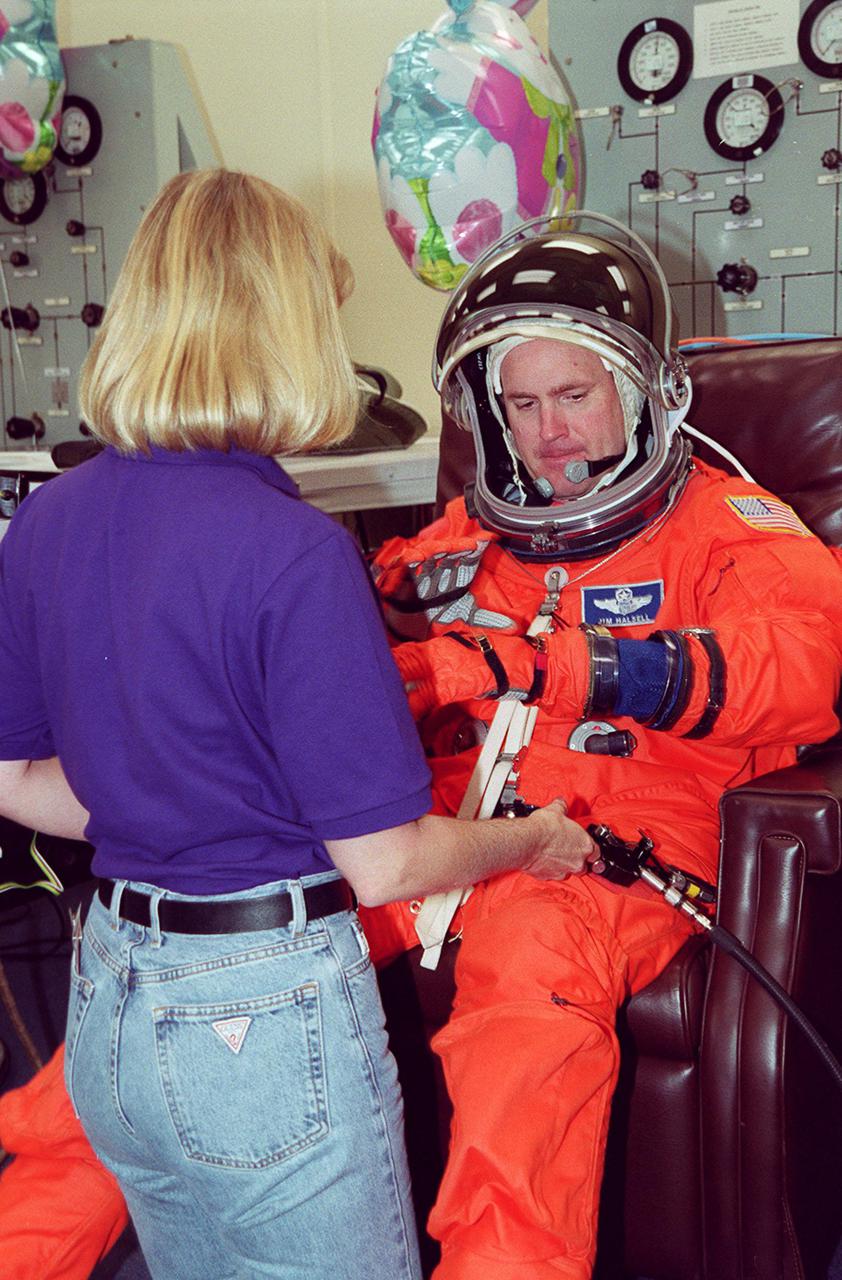
In the Operations and Checkout Building, STS-101 Commander James D. Halsell Jr. gets final check on his launch and entry suit before heading a second time to Launch Pad 39A and launch of Space Shuttle Atlantis. The previous day's launch attempt was scrubbed due to high cross winds at the Shuttle Landing Facility. The mission will take the crew to the International Space Station to deliver logistics and supplies and to prepare the Station for the arrival of the Zvezda Service Module, expected to be launched by Russia in July 2000. Also, the crew will conduct one space walk. This will be the third assembly flight to the Space Station. Liftoff is targeted for 3:52 p.m. EDT. The mission is expected to last about 10 days, with Atlantis landing at KSC Saturday, May 6, about 11:53 a.m. EDT
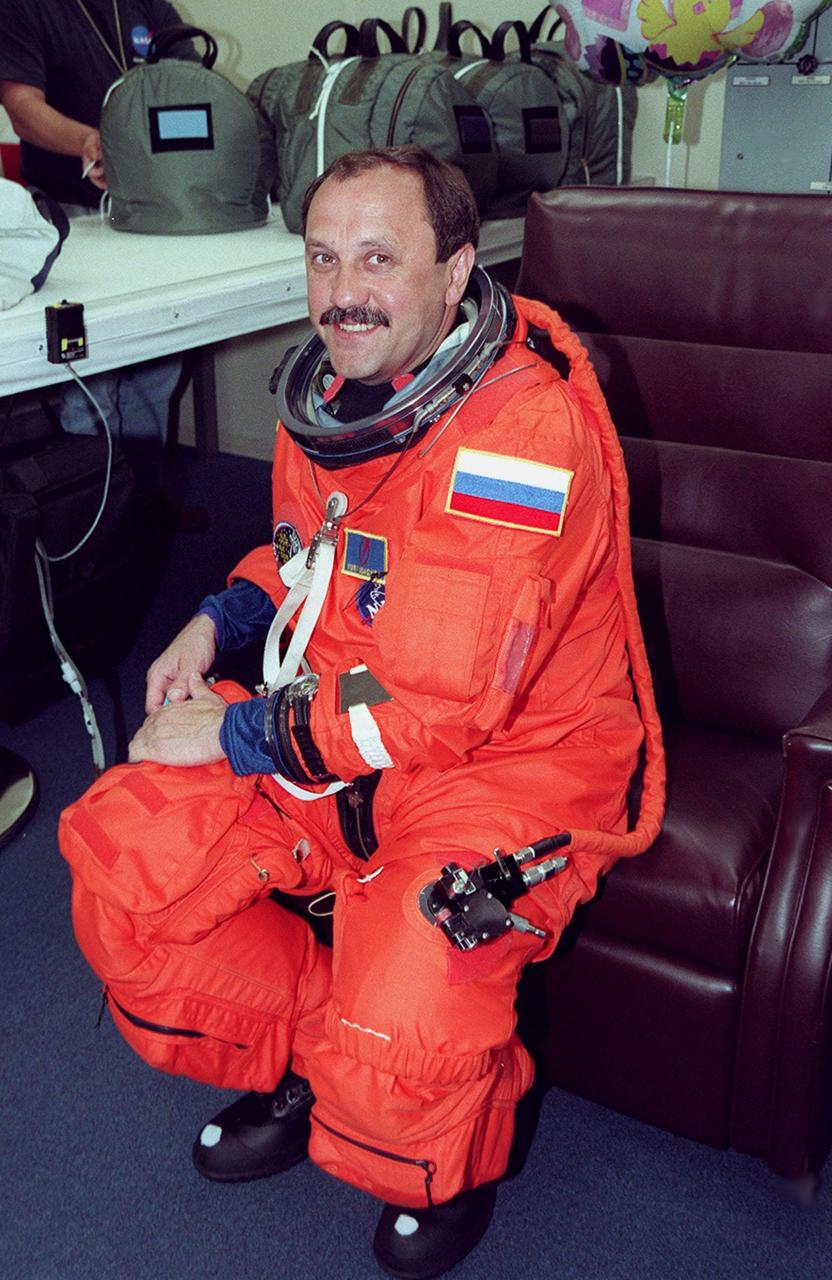
In the Operations and Checkout Building, STS-101 Mission Specialist Yury Usachev waits for final check of his launch and entry suit before heading a second time to Launch Pad 39A and launch of Space Shuttle Atlantis. The previous day's launch attempt was scrubbed due to high cross winds at the Shuttle Landing Facility. The mission will take the crew to the International Space Station to deliver logistics and supplies and to prepare the Station for the arrival of the Zvezda Service Module, expected to be launched by Russia in July 2000. Also, the crew will conduct one space walk. This will be the third assembly flight to the Space Station. Liftoff is targeted for 3:52 p.m. EDT. The mission is expected to last about 10 days, with Atlantis landing at KSC Saturday, May 6, about 11:53 a.m. EDT
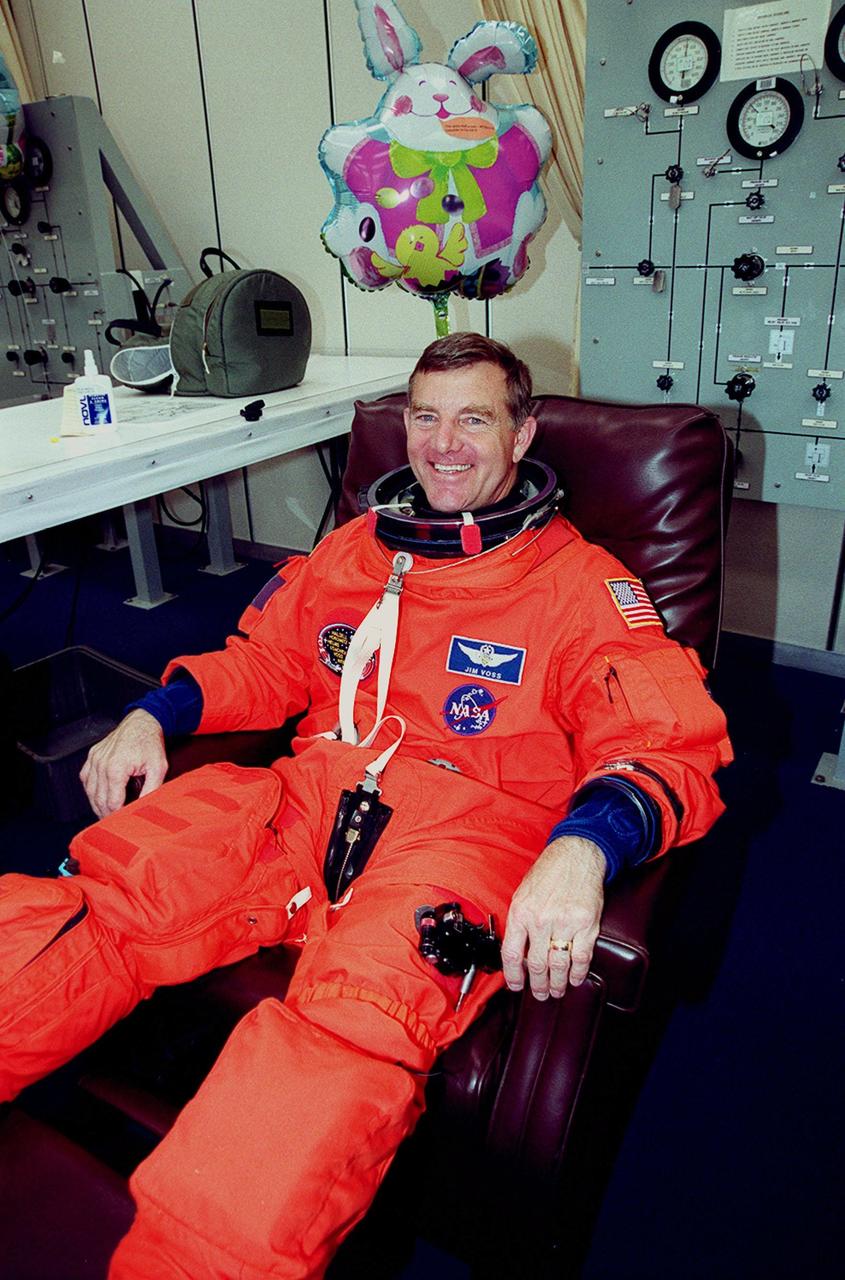
In the Operations and Checkout Building, STS-101 Mission Specialist James S. Voss waits to finish suiting up before heading a second time to Launch Pad 39A and launch of Space Shuttle Atlantis. The previous day's launch attempt was scrubbed due to high cross winds at the Shuttle Landing Facility. The mission will take the crew to the International Space Station to deliver logistics and supplies and to prepare the Station for the arrival of the Zvezda Service Module, expected to be launched by Russia in July 2000. Also, the crew will conduct one space walk. This will be the third assembly flight to the Space Station. Liftoff is targeted for 3:52 p.m. EDT. The mission is expected to last about 10 days, with Atlantis landing at KSC Saturday, May 6, about 11:53 a.m. EDT
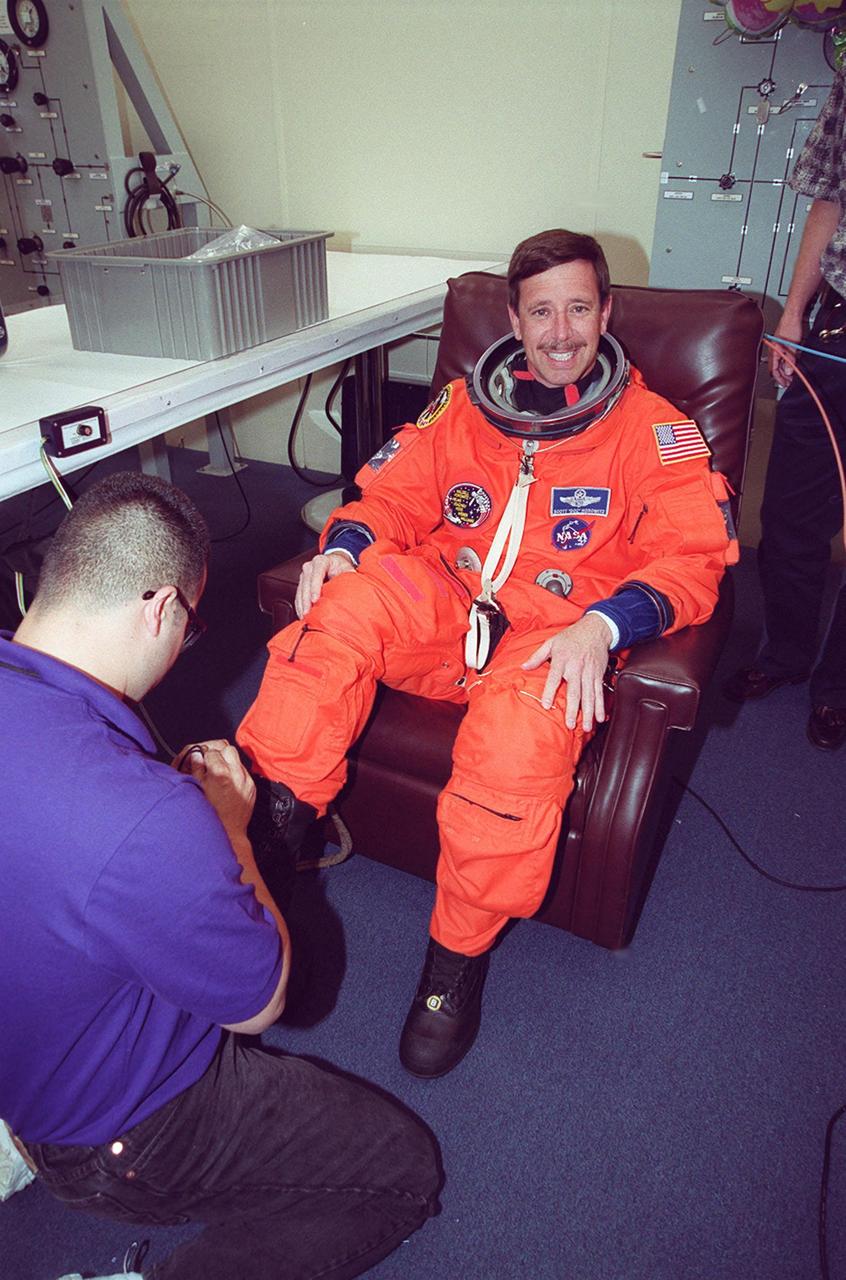
In the Operations and Checkout Building, STS-101 Pilot Scott J. Horowitz smiles while he finishes suiting up before heading a second time to Launch Pad 39A for launch of Space Shuttle Atlantis. The previous day's launch attempt was scrubbed due to high cross winds at the Shuttle Landing Facility. The mission will take the crew to the International Space Station to deliver logistics and supplies and to prepare the Station for the arrival of the Zvezda Service Module, expected to be launched by Russia in July 2000. Also, the crew will conduct one space walk. This will be the third assembly flight to the Space Station. Liftoff is targeted for 3:52 p.m. EDT. The mission is expected to last about 10 days, with Atlantis landing at KSC Saturday, May 6, about 11:53 a.m. EDT
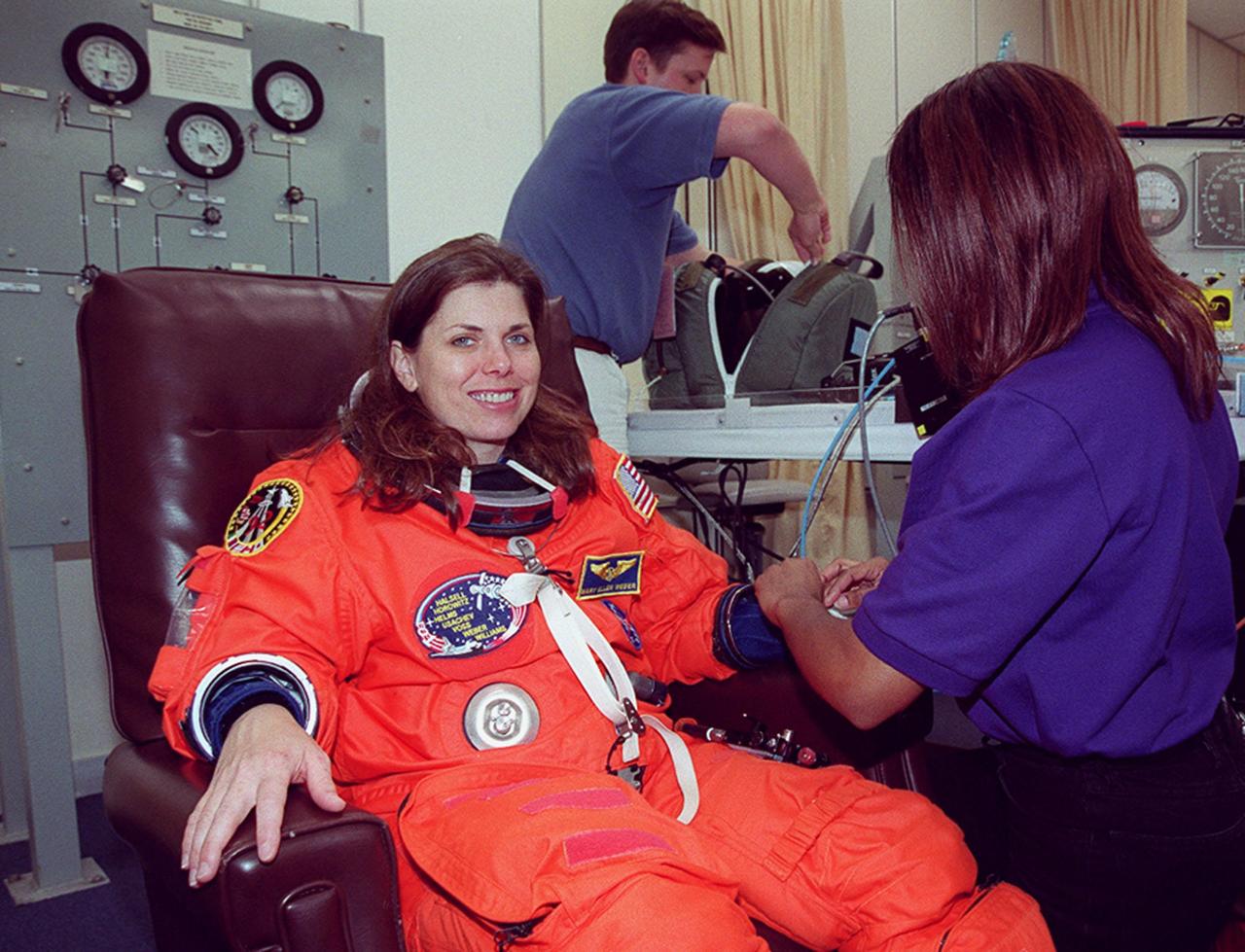
In the Operations and Checkout Building, STS-101 Mission Specialist Mary Ellen Weber is helped to suit up before heading for a second time to Launch Pad 39A and launch of Space Shuttle Atlantis. The previous day's launch attempt was scrubbed due to high cross winds at the Shuttle Landing Facility. The mission will take the crew to the International Space Station to deliver logistics and supplies and to prepare the Station for the arrival of the Zvezda Service Module, expected to be launched by Russia in July 2000. Also, the crew will conduct one space walk. This will be the third assembly flight to the Space Station. Liftoff is targeted for 3:52 p.m. EDT. The mission is expected to last about 10 days, with Atlantis landing at KSC Saturday, May 6, about 11:53 a.m. EDT
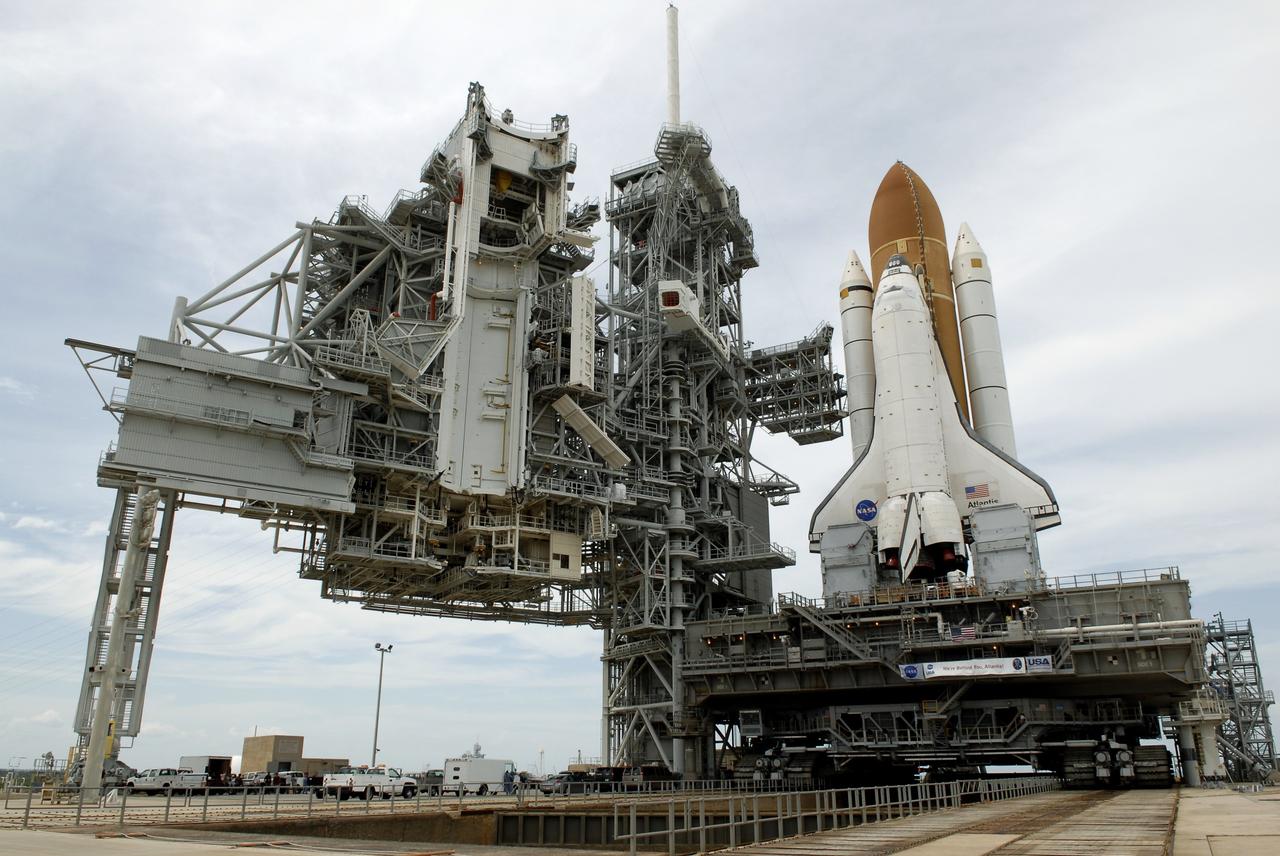
CAPE CANAVERAL, Fla. – Space shuttle Atlantis comes to a stop on the top of Launch Pad 39A at NASA's Kennedy Space Center after more than a 6-hour journey from the Vehicle Assembly Building. First motion occurred at 9:19 a.m. EDT and Atlantis was hard down on the pad at 3:52 p.m. At far left is the rotating service structure that will be rotated to enclose the shuttle for launch preparations. The shuttle stack, with solid rocket boosters and external fuel tank attached to Atlantis, rest on the mobile launcher platform. Movement is provided by the crawler-transporter underneath. The Sept. 2 rollout date was postponed due to Tropical Storm Hanna’s shift to a northern track. Atlantis is scheduled to launch on the STS-125 mission to service NASA’s Hubble Space Telescope. Launch is targeted for Oct. 8. Photo credit: NASA/Kim Shiflett
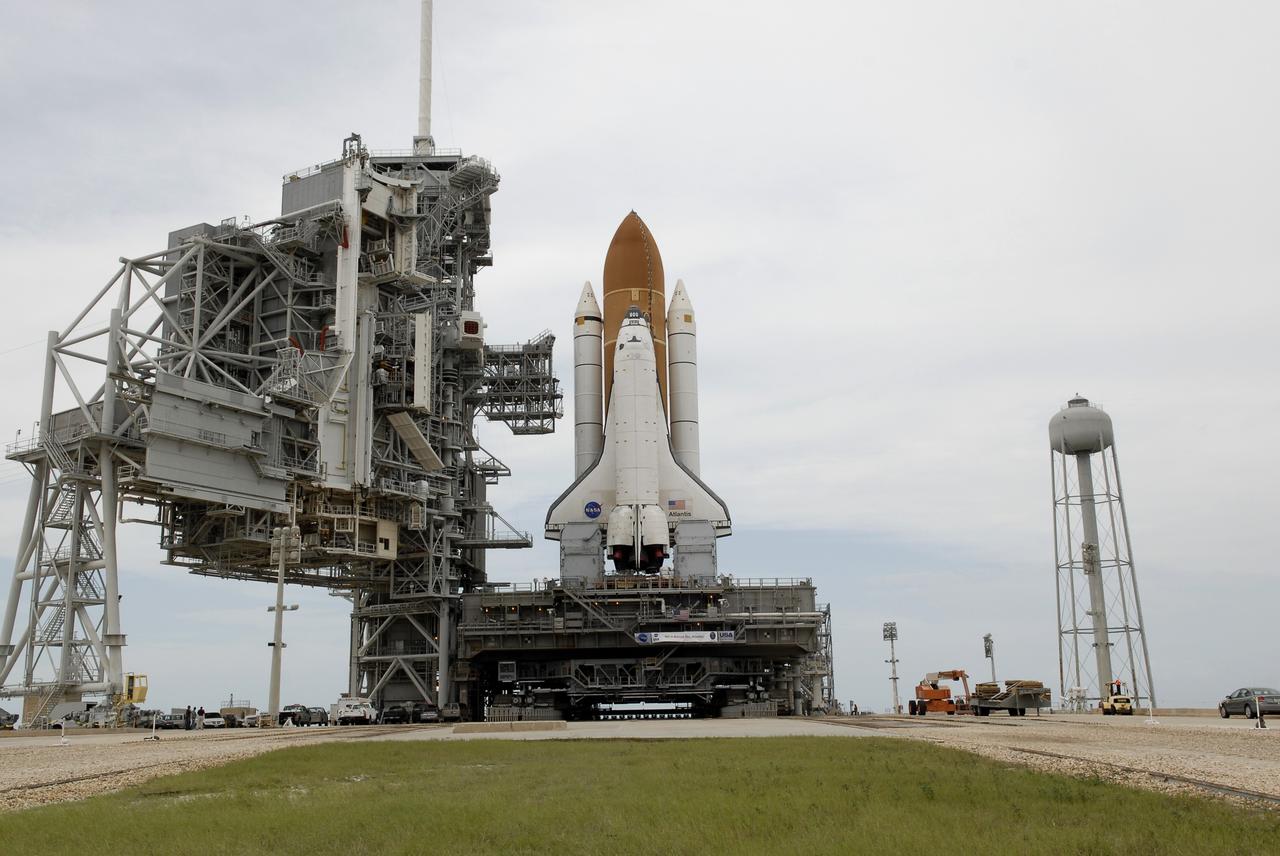
CAPE CANAVERAL, Fla. – Space shuttle Atlantis comes to a stop on the top of Launch Pad 39A at NASA's Kennedy Space Center after more than a 6-hour journey from the Vehicle Assembly Building. First motion occurred at 9:19 a.m. EDT and Atlantis was hard down on the pad at 3:52 p.m. At far left is the rotating service structure that will be rotated to enclose the shuttle for launch preparations. The shuttle stack, with solid rocket boosters and external fuel tank attached to Atlantis, rest on the mobile launcher platform. Movement is provided by the crawler-transporter underneath. The Sept. 2 rollout date was postponed due to Tropical Storm Hanna’s shift to a northern track. Atlantis is scheduled to launch on the STS-125 mission to service NASA’s Hubble Space Telescope. Launch is targeted for Oct. 8. Photo credit: NASA/Kim Shiflett
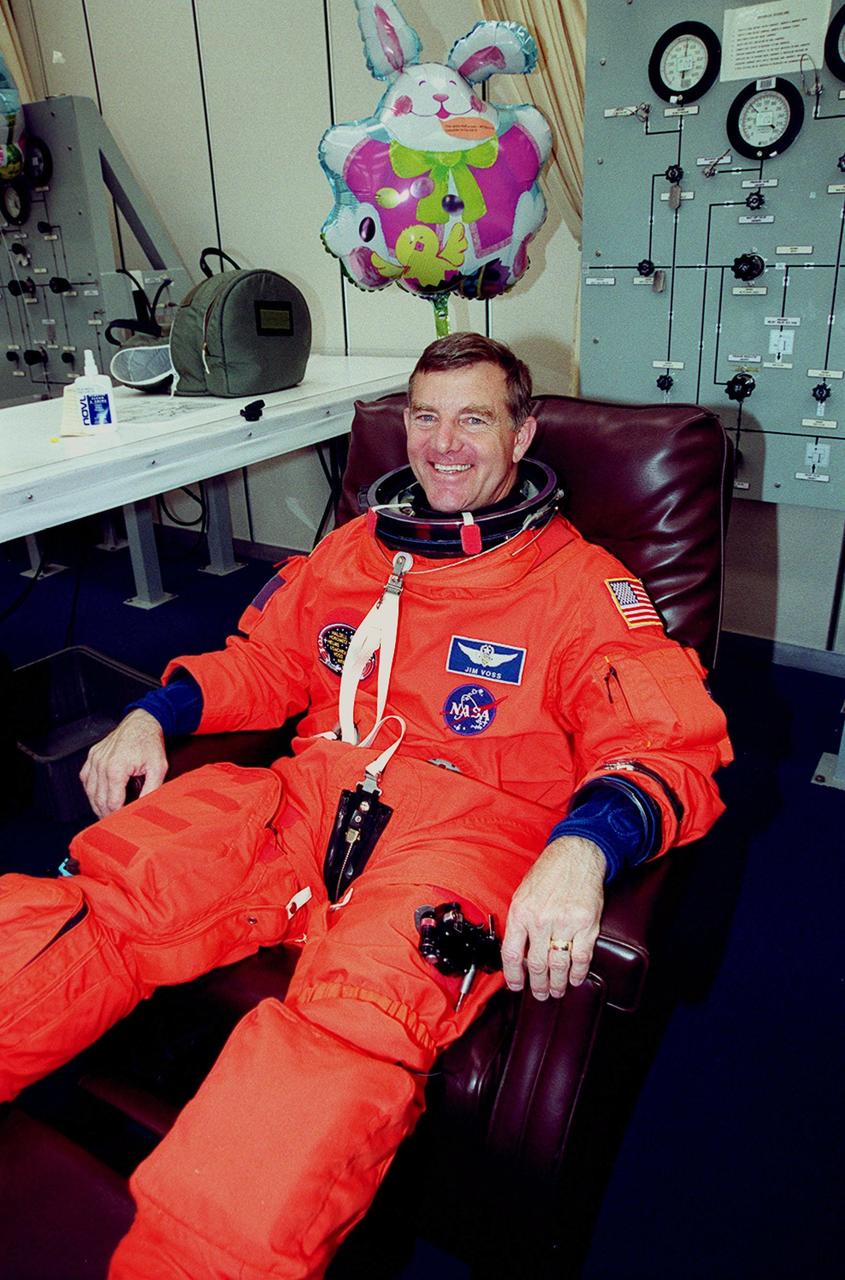
In the Operations and Checkout Building, STS-101 Mission Specialist James S. Voss waits to finish suiting up before heading a second time to Launch Pad 39A and launch of Space Shuttle Atlantis. The previous day's launch attempt was scrubbed due to high cross winds at the Shuttle Landing Facility. The mission will take the crew to the International Space Station to deliver logistics and supplies and to prepare the Station for the arrival of the Zvezda Service Module, expected to be launched by Russia in July 2000. Also, the crew will conduct one space walk. This will be the third assembly flight to the Space Station. Liftoff is targeted for 3:52 p.m. EDT. The mission is expected to last about 10 days, with Atlantis landing at KSC Saturday, May 6, about 11:53 a.m. EDT
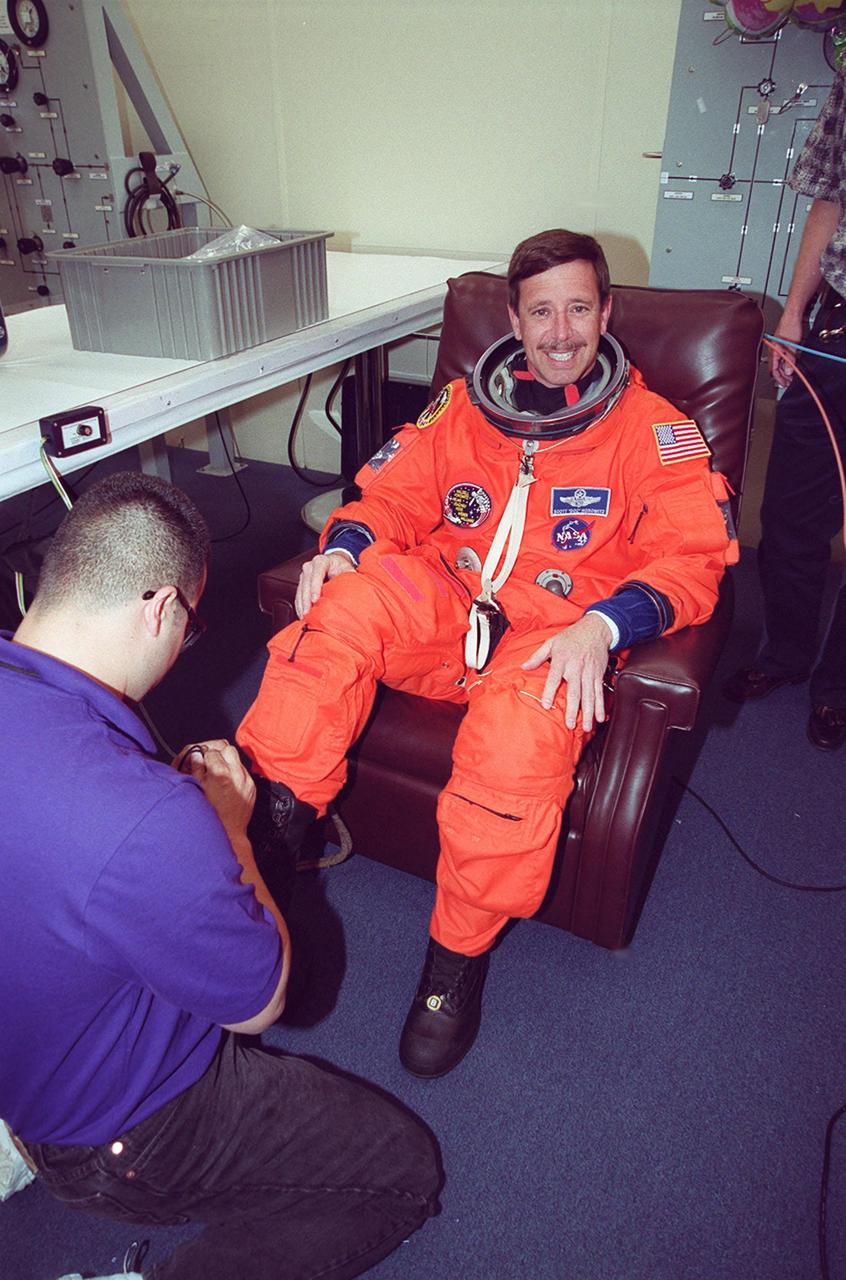
In the Operations and Checkout Building, STS-101 Pilot Scott J. Horowitz smiles while he finishes suiting up before heading a second time to Launch Pad 39A for launch of Space Shuttle Atlantis. The previous day's launch attempt was scrubbed due to high cross winds at the Shuttle Landing Facility. The mission will take the crew to the International Space Station to deliver logistics and supplies and to prepare the Station for the arrival of the Zvezda Service Module, expected to be launched by Russia in July 2000. Also, the crew will conduct one space walk. This will be the third assembly flight to the Space Station. Liftoff is targeted for 3:52 p.m. EDT. The mission is expected to last about 10 days, with Atlantis landing at KSC Saturday, May 6, about 11:53 a.m. EDT
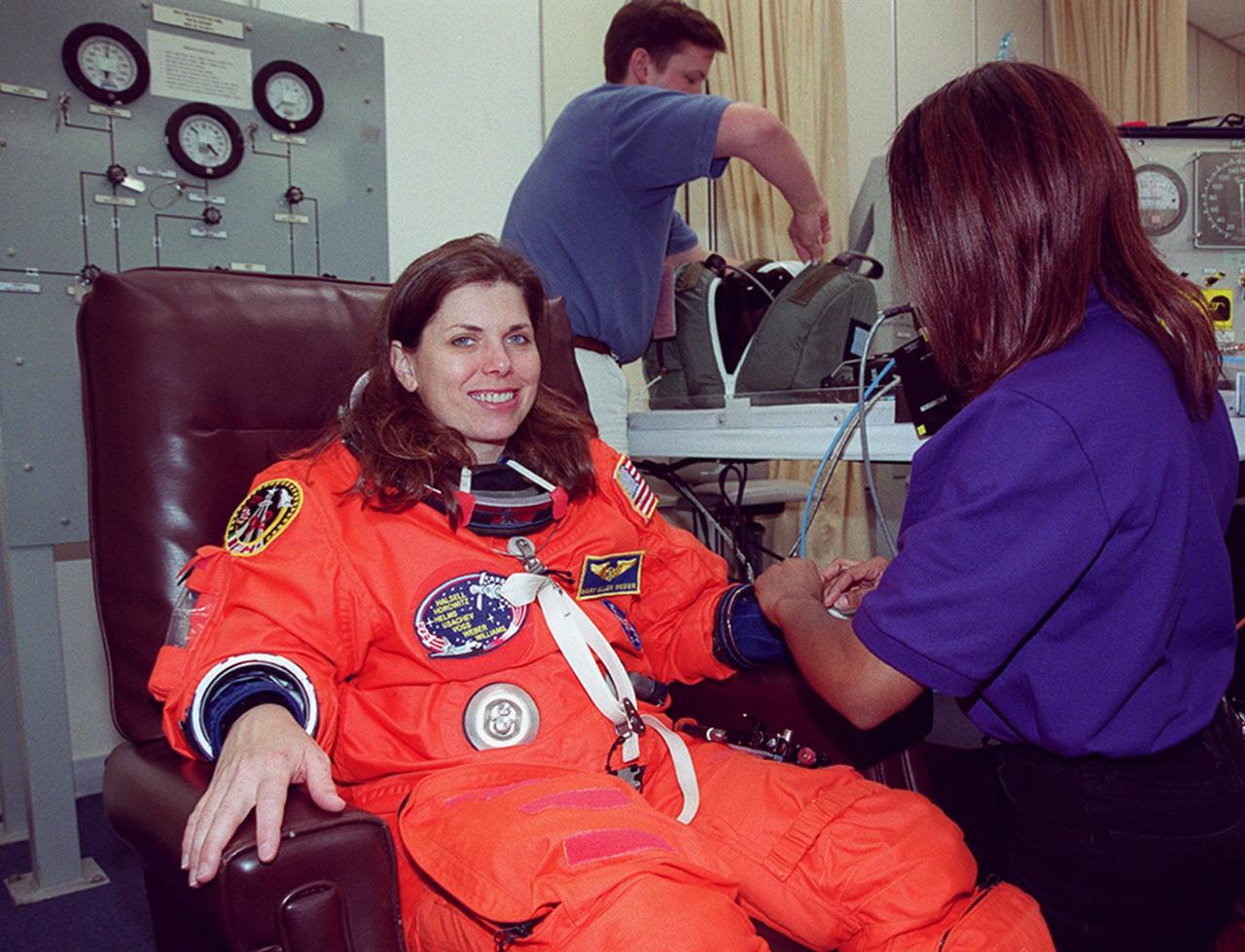
In the Operations and Checkout Building, STS-101 Mission Specialist Mary Ellen Weber is helped to suit up before heading for a second time to Launch Pad 39A and launch of Space Shuttle Atlantis. The previous day's launch attempt was scrubbed due to high cross winds at the Shuttle Landing Facility. The mission will take the crew to the International Space Station to deliver logistics and supplies and to prepare the Station for the arrival of the Zvezda Service Module, expected to be launched by Russia in July 2000. Also, the crew will conduct one space walk. This will be the third assembly flight to the Space Station. Liftoff is targeted for 3:52 p.m. EDT. The mission is expected to last about 10 days, with Atlantis landing at KSC Saturday, May 6, about 11:53 a.m. EDT
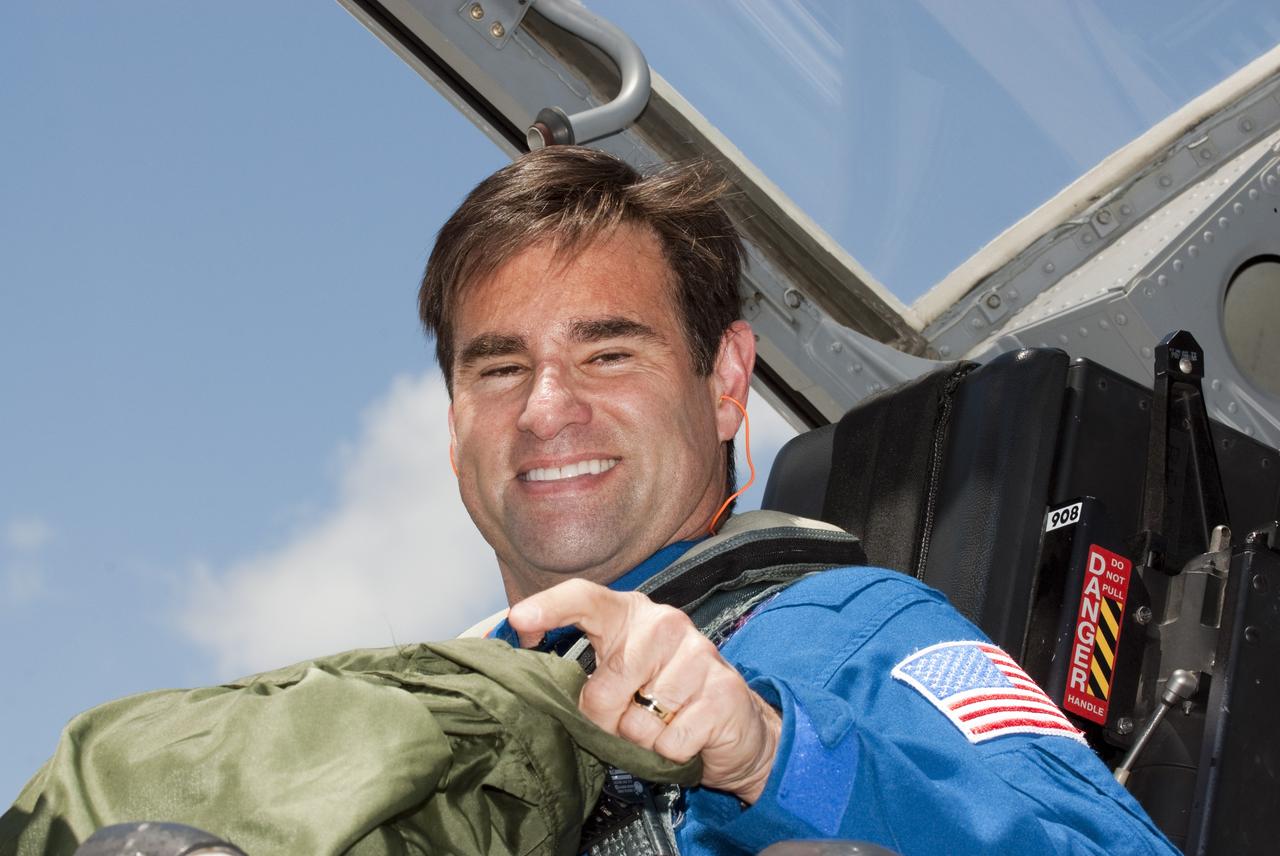
CAPE CANAVERAL, Fla. -- At NASA Kennedy Space Center's Shuttle Landing Facility in Florida, STS-134 Mission Specialist Greg Chamitoff disembarks from his T-38 jet. The STS-134 crew members landed at 12:52 p.m. EDT to get ready for shuttle Endeavour's launch to the International Space Station scheduled for Friday, April 29 at 3:47 p.m. Endeavour and its crew will deliver the Express Logistics Carrier-3, Alpha Magnetic Spectrometer-2 (AMS), a high-pressure gas tank and additional spare parts for the Dextre robotic helper to the station. This will be the final spaceflight for Endeavour. For more information visit, www.nasa.gov/mission_pages/shuttle/shuttlemissions/sts134/index.html. Photo credit: NASA/Kim Shiflett
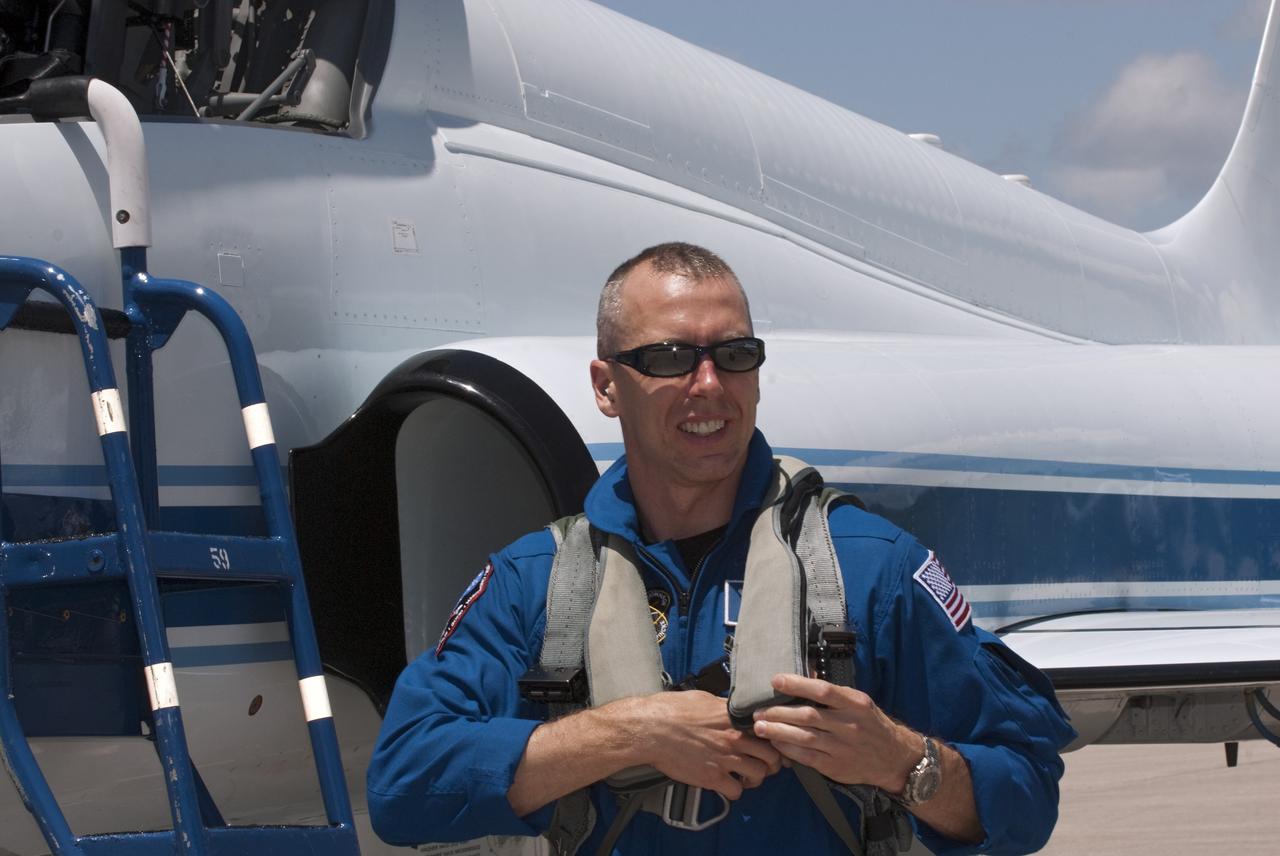
CAPE CANAVERAL, Fla. -- At NASA Kennedy Space Center's Shuttle Landing Facility in Florida, STS-134 Mission Specialist Andrew Feustel disembarks from his T-38 jet. The STS-134 crew members landed at 12:52 p.m. EDT to get ready for shuttle Endeavour's launch to the International Space Station scheduled for Friday, April 29 at 3:47 p.m. Endeavour and its crew will deliver the Express Logistics Carrier-3, Alpha Magnetic Spectrometer-2 (AMS), a high-pressure gas tank and additional spare parts for the Dextre robotic helper to the station. This will be the final spaceflight for Endeavour. For more information visit, www.nasa.gov/mission_pages/shuttle/shuttlemissions/sts134/index.html. Photo credit: NASA/Kim Shiflett
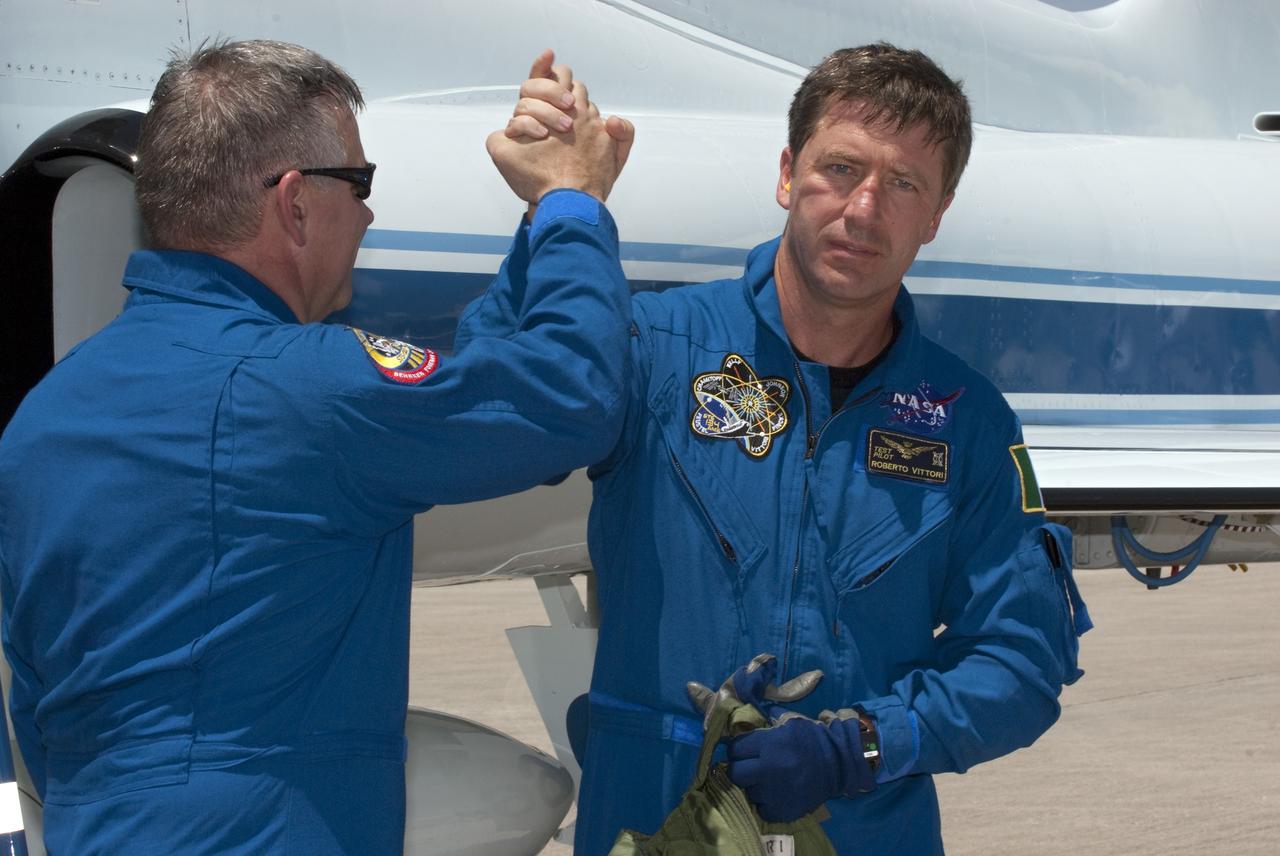
CAPE CANAVERAL, Fla. -- At NASA Kennedy Space Center's Shuttle Landing Facility in Florida, STS-134 crew members, Pilot Greg H. Johnson and European Space Agency astronaut Roberto Vittori greet each other upon arrival. The STS-134 crew landed at 12:52 p.m. EDT to prepare for shuttle Endeavour's launch to the International Space Station scheduled for Friday April 29 at 3:47 p.m. Endeavour and its crew will deliver the Express Logistics Carrier-3, Alpha Magnetic Spectrometer-2 (AMS), a high-pressure gas tank and additional spare parts for the Dextre robotic helper to the station. This will be the final spaceflight for Endeavour. For more information visit, www.nasa.gov/mission_pages/shuttle/shuttlemissions/sts134/index.html. Photo credit: NASA/Kim Shiflett
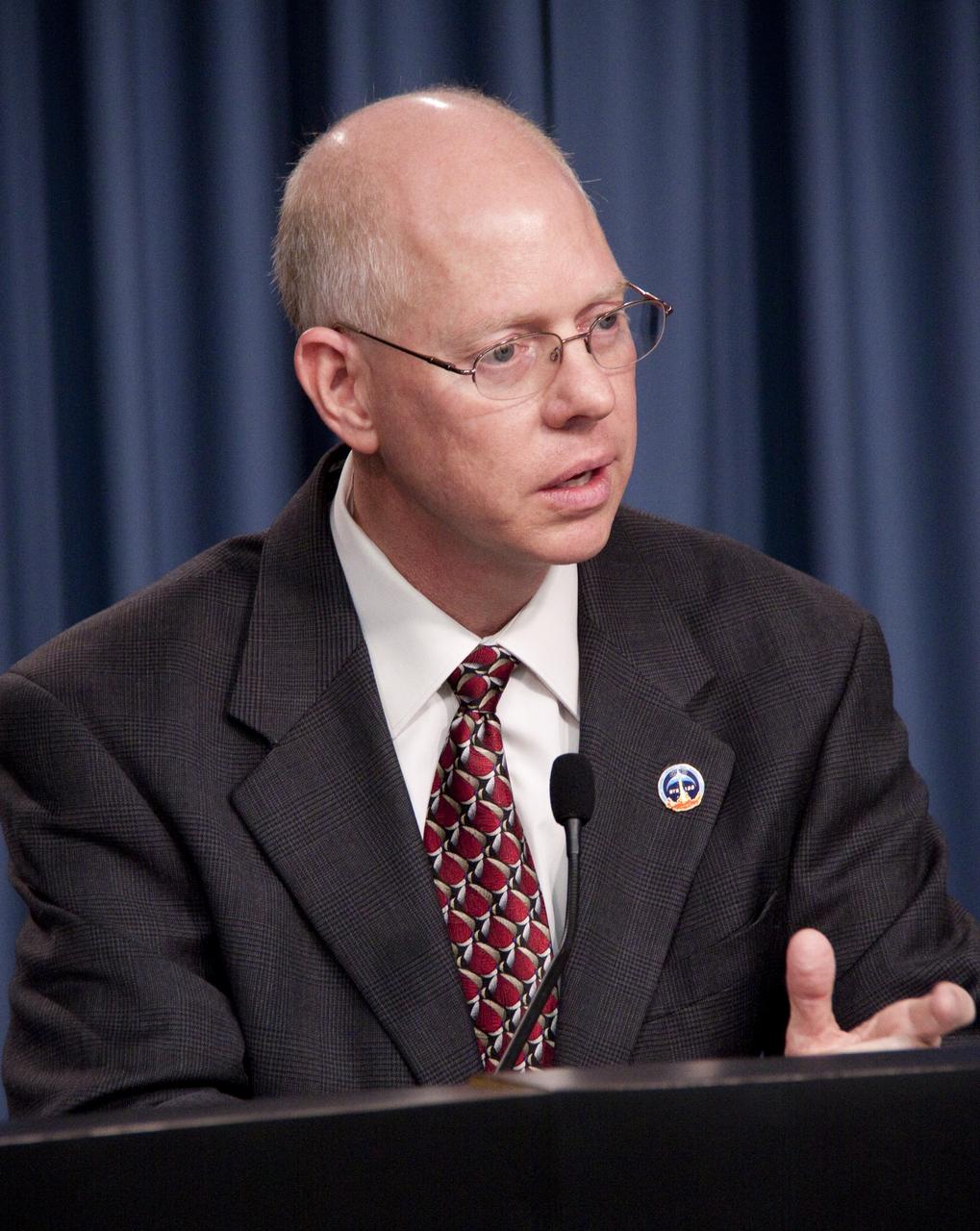
CAPE CANAVERAL, Fla. -- At NASA's Kennedy Space Center in Florida, NASA Test Director Steve Payne talks to media about final operations taking place for space shuttle Discovery's upcoming launch to the International Space Station during a Countdown Status Briefing. The STS-133 mission is Discovery's final planned spaceflight and Payne says there is excitement in the air at Kennedy Scheduled to lift off Nov. 3 at 3:52 p.m. EDT, Discovery and crew will deliver the Permanent Multipurpose Module, packed with supplies and critical spare parts, as well as Robonaut 2, the dexterous humanoid astronaut helper, to the orbiting outpost. For more information on the STS-133 mission, visit www.nasa.gov/mission_pages/shuttle/shuttlemissions/sts133/. Photo credit: NASA/Jack Pfaller
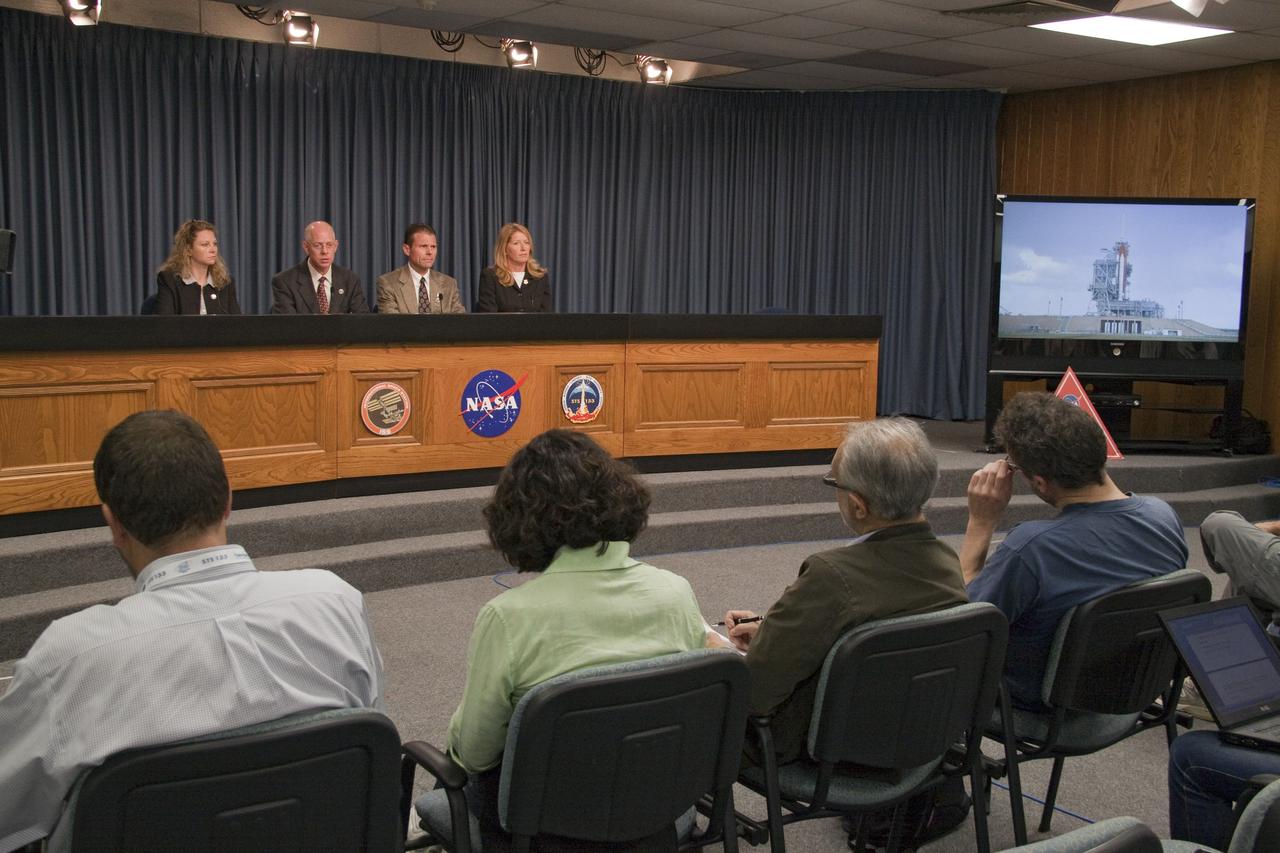
CAPE CANAVERAL, Fla. -- At NASA's Kennedy Space Center in Florida, NASA Public Affairs Officer Candrea Thomas, left, NASA Test Director Steve Payne, STS-133 Payload Manager Scott Higginbotham and Shuttle Weather Officer Kathy Winters participate in a Countdown Status Briefing a day before space shuttle Discovery is scheduled to launch to the International Space Station. Scheduled to lift off Nov. 3 at 3:52 p.m. EDT, Discovery and crew will deliver the Permanent Multipurpose Module, packed with supplies and critical spare parts, as well as Robonaut 2, the dexterous humanoid astronaut helper, to the orbiting outpost. For more information on the STS-133 mission, visit www.nasa.gov/mission_pages/shuttle/shuttlemissions/sts133/. Photo credit: NASA/Jack Pfaller
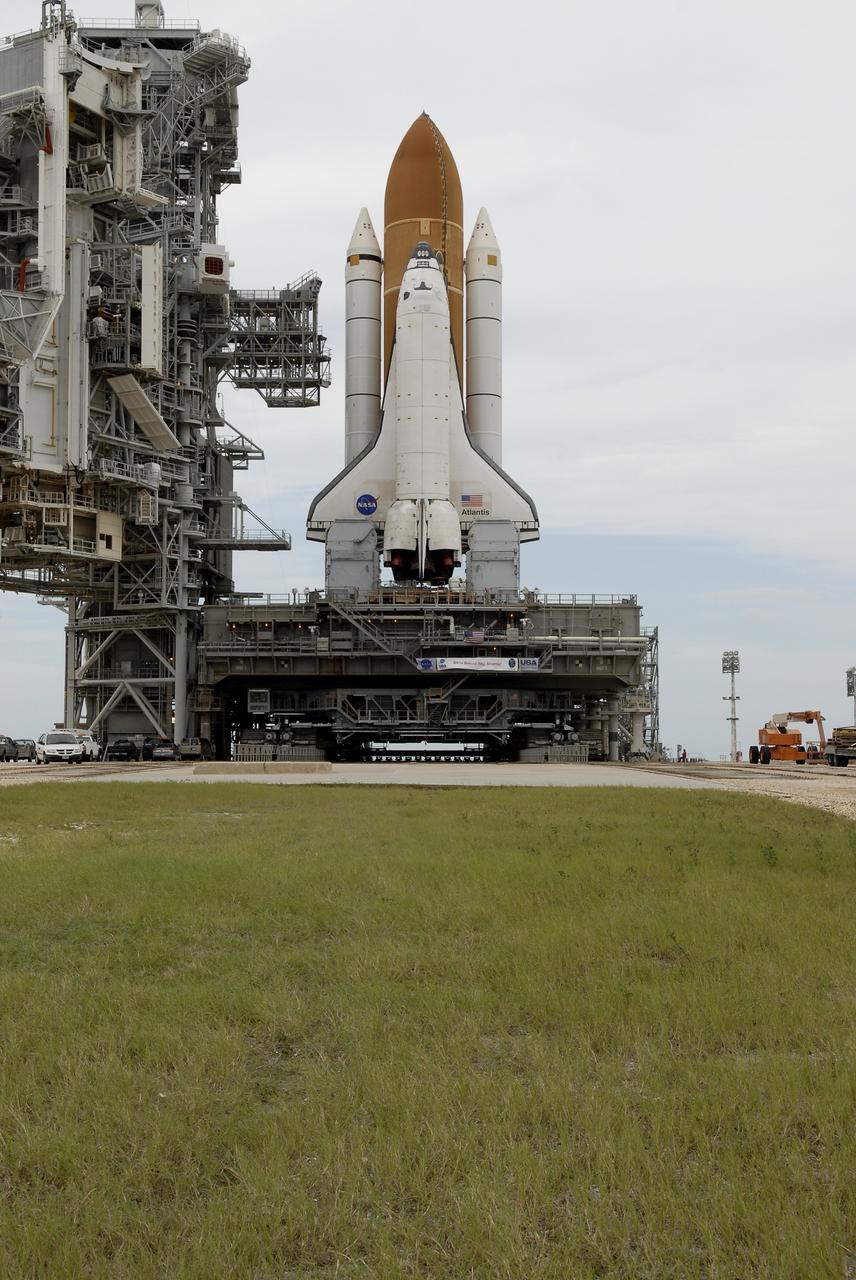
CAPE CANAVERAL, Fla. – Space shuttle Atlantis comes to a stop on the top of Launch Pad 39A at NASA's Kennedy Space Center after more than a 6-hour journey from the Vehicle Assembly Building. First motion occurred at 9:19 a.m. EDT and Atlantis was hard down on the pad at 3:52 p.m. The shuttle stack, with solid rocket boosters and external fuel tank attached to Atlantis, rest on the mobile launcher platform. Movement is provided by the crawler-transporter underneath. The Sept. 2 rollout date was postponed due to Tropical Storm Hanna’s shift to a northern track. Atlantis is scheduled to launch on the STS-125 mission to service NASA’s Hubble Space Telescope. Launch is targeted for Oct. 8. Photo credit: NASA/Kim Shiflett
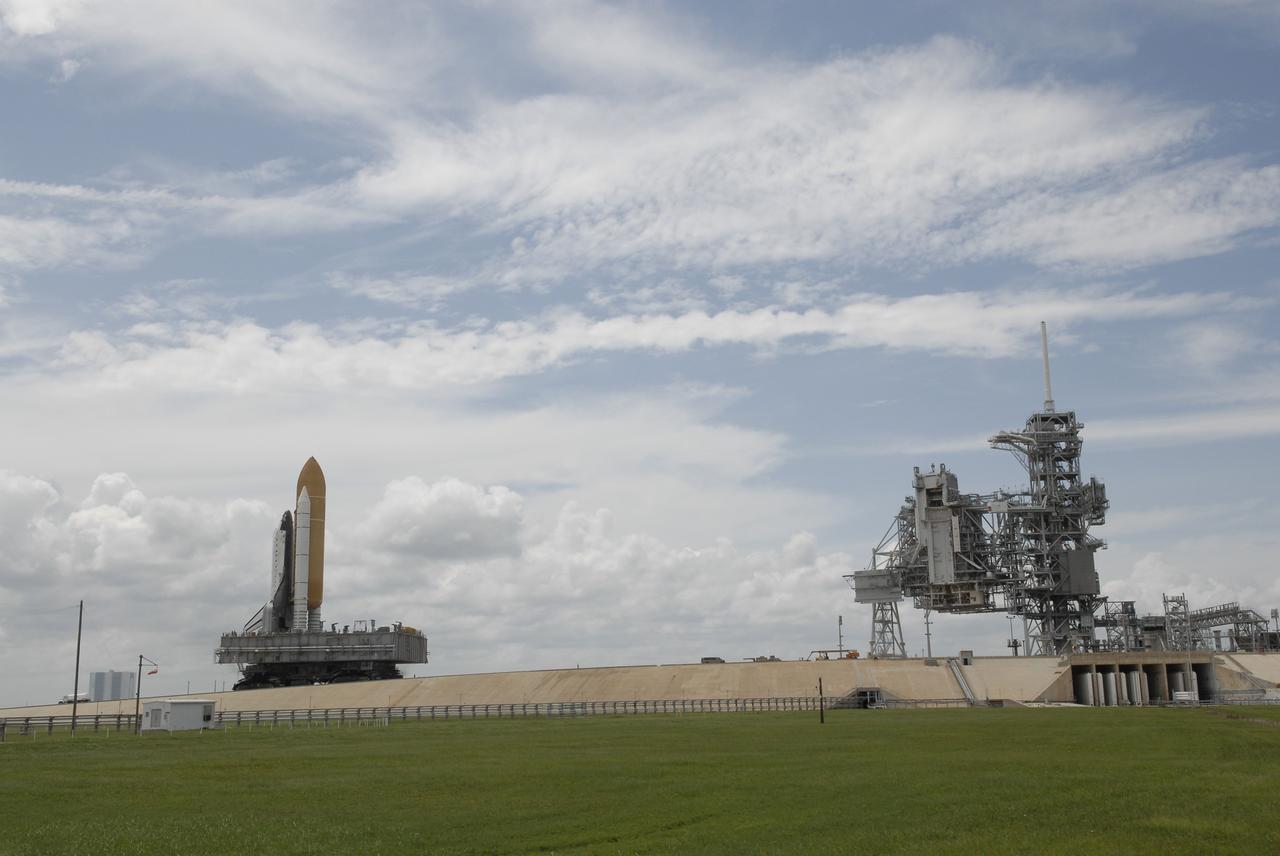
CAPE CANAVERAL, Fla. – Space shuttle Atlantis makes the slow journey up the incline to the top of Launch Pad 39A at NASA's Kennedy Space Center. First motion occurred at 9:19 a.m. EDT and Atlantis was hard down on the pad at 3:52 p.m.. The shuttle stack, with solid rocket boosters and external fuel tank attached to Atlantis, rest on the mobile launcher platform. Movement is provided by the crawler-transporter underneath. The Sept. 2 rollout date was postponed due to Tropical Storm Hanna’s shift to a northern track. Atlantis is scheduled to launch on the STS-125 mission to service NASA’s Hubble Space Telescope. Launch is targeted for Oct. 8. Photo credit: NASA/Kim Shiflett
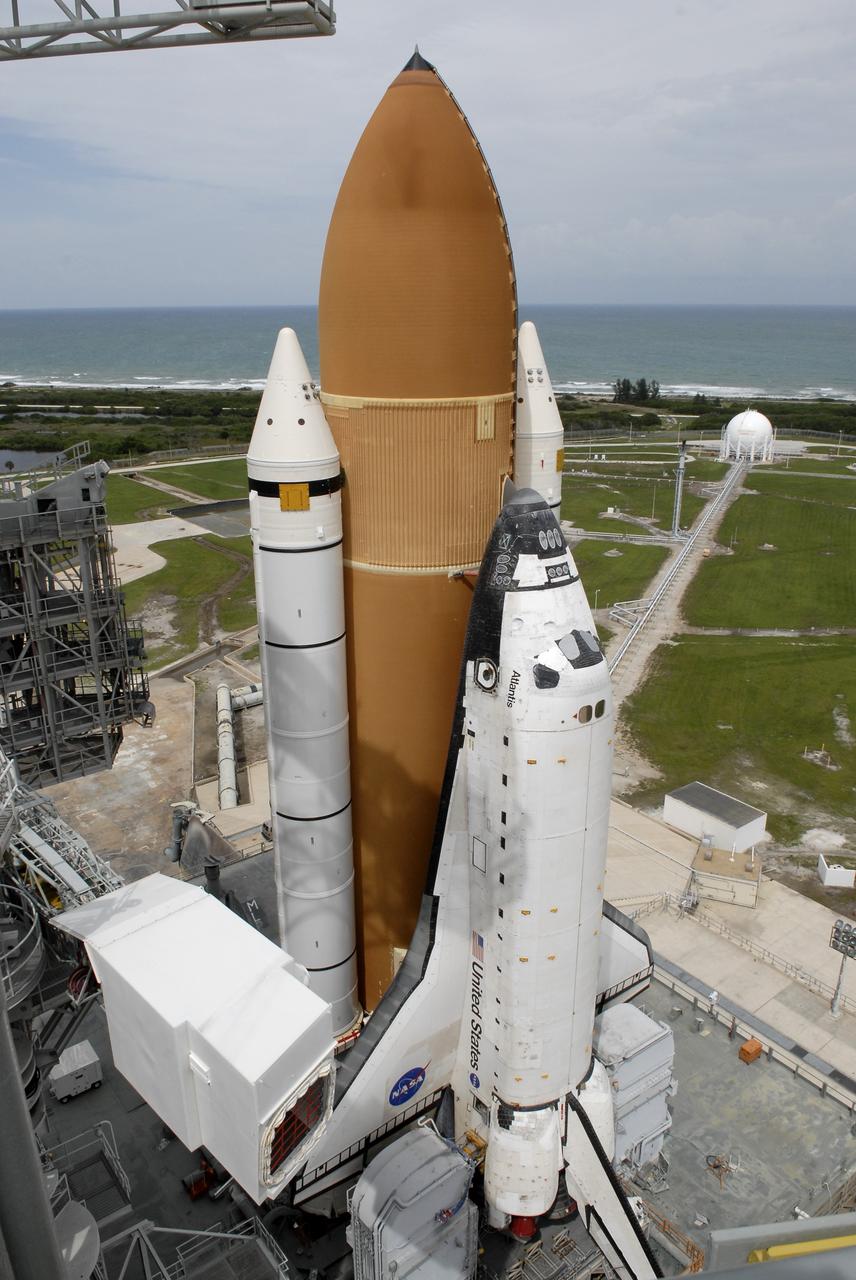
CAPE CANAVERAL, Fla. – Space shuttle Atlantis comes to a stop on the top of Launch Pad 39A at NASA's Kennedy Space Center after more than a 6-hour journey from the Vehicle Assembly Building. First motion occurred at 9:19 a.m. EDT and Atlantis was hard down on the pad at 3:52 p.m. At lower left is the White Room at the end of the orbiter access arm on the fixed service structure. The shuttle stack, with solid rocket boosters and external fuel tank attached to Atlantis, rest on the mobile launcher platform. Movement is provided by the crawler-transporter underneath. The Sept. 2 rollout date was postponed due to Tropical Storm Hanna’s shift to a northern track. Atlantis is scheduled to launch on the STS-125 mission to service NASA’s Hubble Space Telescope. Launch is targeted for Oct. 8. Photo credit: NASA/Kim Shiflett
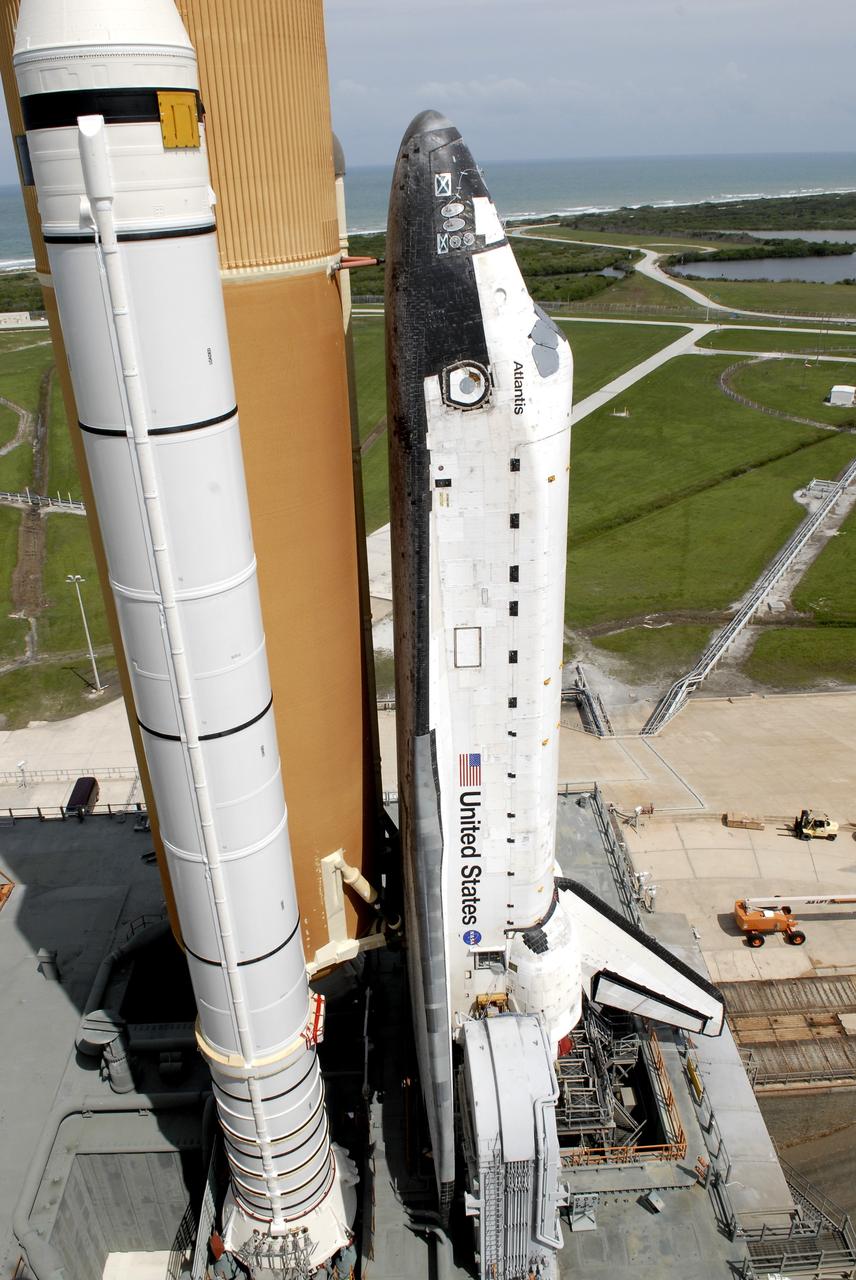
CAPE CANAVERAL, Fla. – Space shuttle Atlantis comes to a stop on the top of Launch Pad 39A at NASA's Kennedy Space Center after more than a 6-hour journey from the Vehicle Assembly Building. First motion occurred at 9:19 a.m. EDT and Atlantis was hard down on the pad at 3:52 p.m.. The shuttle stack, with solid rocket boosters and external fuel tank attached to Atlantis, rest on the mobile launcher platform. Movement is provided by the crawler-transporter underneath. The Sept. 2 rollout date was postponed due to Tropical Storm Hanna’s shift to a northern track. Atlantis is scheduled to launch on the STS-125 mission to service NASA’s Hubble Space Telescope. Launch is targeted for Oct. 8. Photo credit: NASA/Kim Shiflett
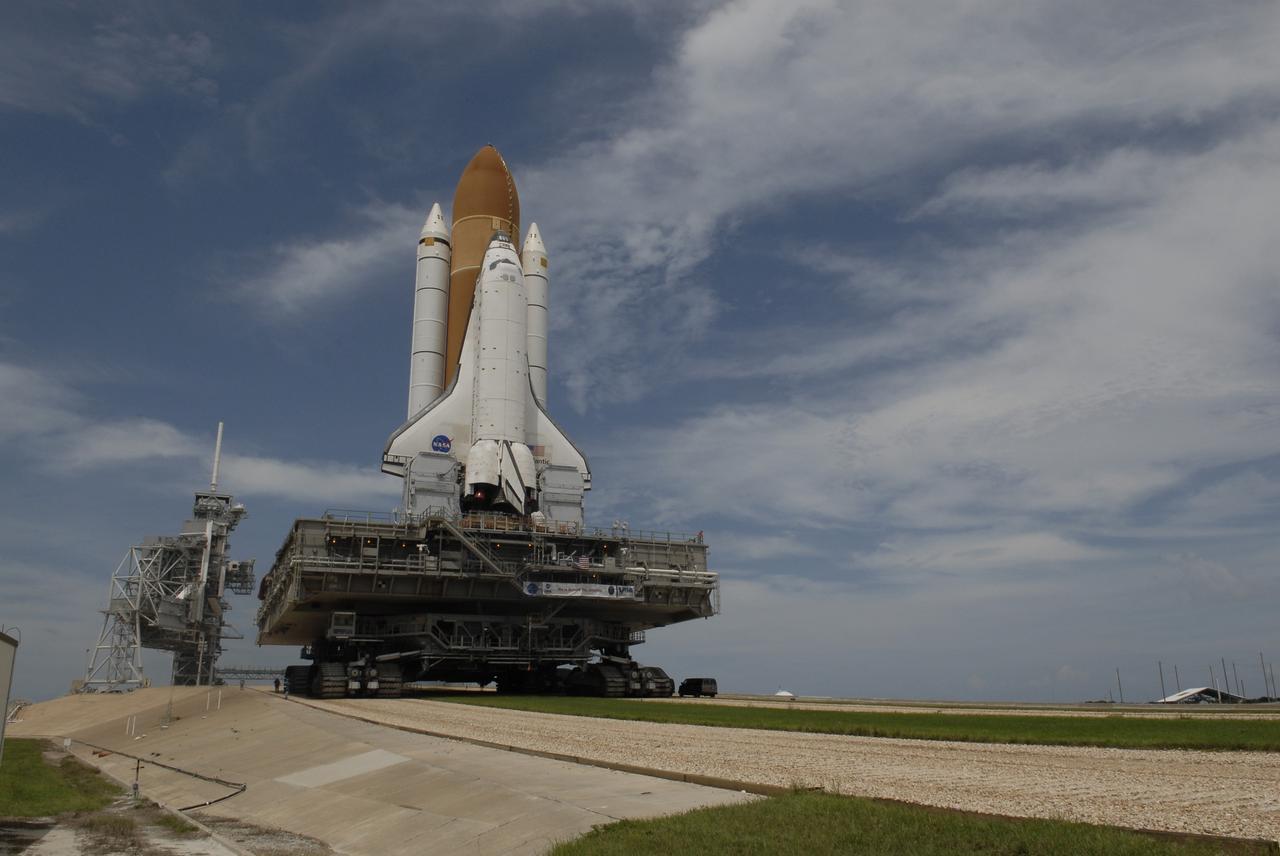
CAPE CANAVERAL, Fla. – Space shuttle Atlantis approaches the top of Launch Pad 39A at NASA's Kennedy Space Center after rolling from the Vehicle Assembly Building. First motion occurred at 9:19 a.m. EDT and Atlantis was hard down on the pad at 3:52 p.m.. The shuttle stack, with solid rocket boosters and external fuel tank attached to Atlantis, rest on the mobile launcher platform. Movement is provided by the crawler-transporter underneath. The Sept. 2 rollout date was postponed due to Tropical Storm Hanna’s shift to a northern track. Atlantis is scheduled to launch on the STS-125 mission to service NASA’s Hubble Space Telescope. Launch is targeted for Oct. 8. Photo credit: NASA/Kim Shiflett

CAPE CANAVERAL, Fla. -- The crew of space shuttle Endeavour's STS-134 mission arrives at the Shuttle Landing Facility at NASA's Kennedy Space Center aboard T-38 jets to get ready for launch. Seen here is Commander Mark Kelly. The crew arrived at Kennedy 12:52 p.m. EDT to prepare for Endeavour's launch to the International Space Station scheduled for Friday, April 29 at 3:47 p.m. Endeavour and its crew will deliver the Express Logistics Carrier-3, Alpha Magnetic Spectrometer-2 (AMS), a high-pressure gas tank and additional spare parts for the Dextre robotic helper to the station. This will be the final spaceflight for Endeavour. For more information visit, www.nasa.gov/mission_pages/shuttle/shuttlemissions/sts134/index.html. Photo credit: NASA/Kim Shiflett
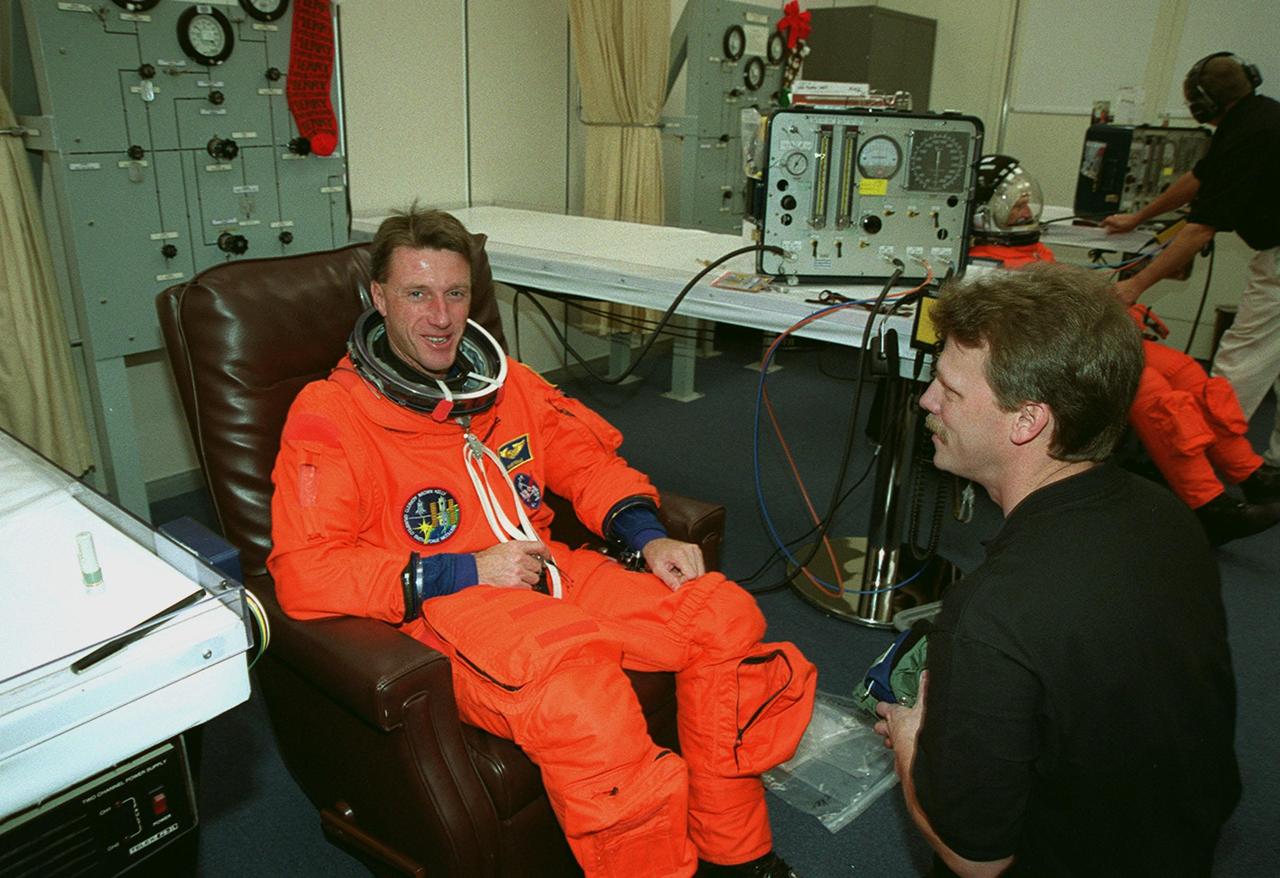
STS-103 Mission Specialist C. Michael Foale (Ph.D.) dons his launch and entry suit for the second time in two days before heading out to Launch Pad 39B and liftoff of Space Shuttle Discovery. The previous launch attempt on Dec. 17 was scrubbed about 8:52 p.m. due to numerous violations of weather launch commit criteria at KSC. Foale and other crew members Commander Curtis L. Brown Jr., Pilot Scott J. Kelly and Mission Specialists Steven L. Smith, John M. Grunsfeld (Ph.D.), Claude Nicollier of Switzerland and Jean-Francois Clervoy of France are scheduled to lift off at 7:50 p.m. EST Dec. 19 on mission STS-103, servicing the Hubble Space Telescope. Objectives for the nearly eight-day mission include replacing gyroscopes and an old computer, installing another solid state recorder, and replacing damaged insulation in the telescope. Discovery is expected to land at KSC Monday, Dec. 27, at about 5:24 p.m. EST
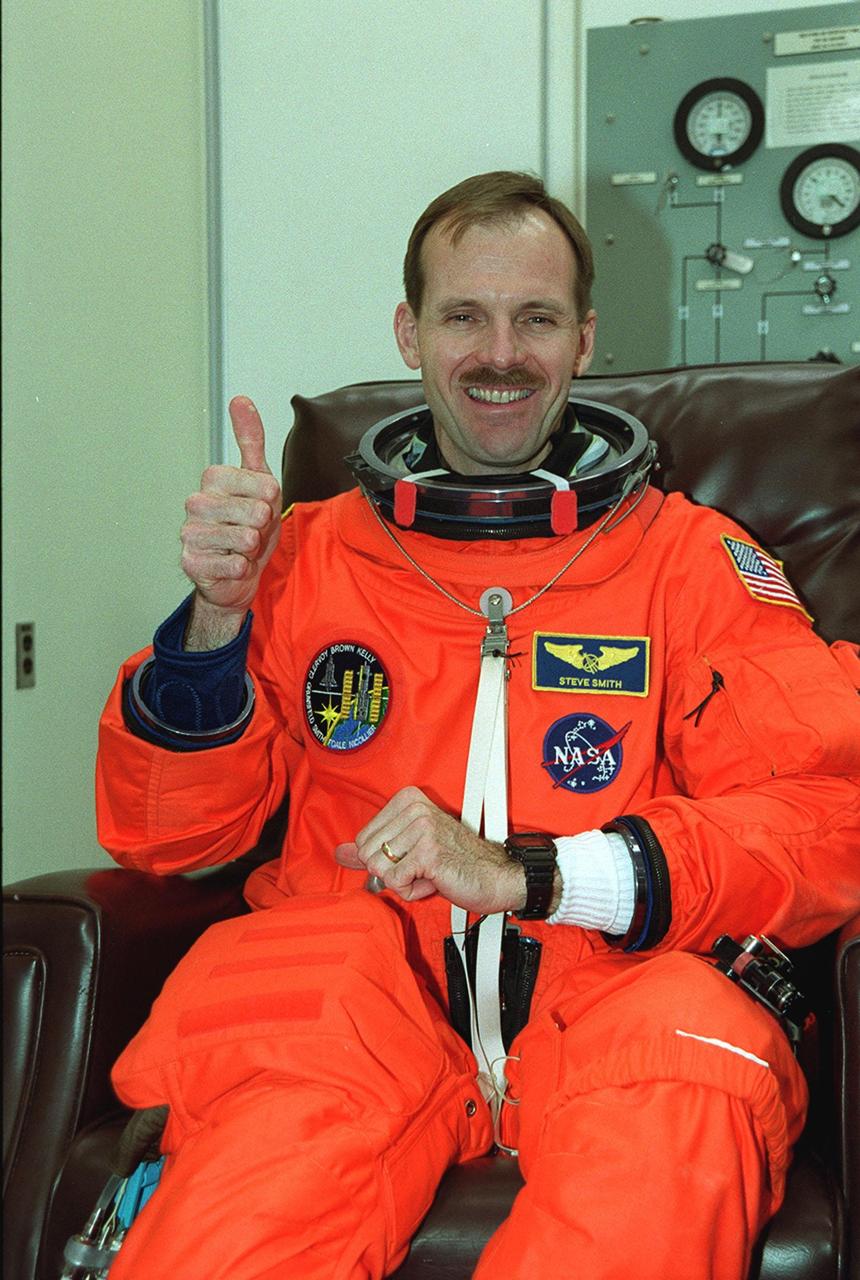
After donning his launch and entry suit, STS-103 Mission Specialist Steven L. Smith shows a positive attitude over the second launch attempt for Space Shuttle Discovery. The previous launch attempt on Dec. 17 was scrubbed about 8:52 p.m. due to numerous violations of weather launch commit criteria at KSC. Smith and other crew members Commander Curtis L. Brown Jr., Pilot Scott J. Kelly and Mission Specialists C. Michael Foale (Ph.D.), John M. Grunsfeld (Ph.D.), Claude Nicollier of Switzerland and Jean-Francois Clervoy of France are scheduled to lift off at 7:50 p.m. EST Dec. 19 on mission STS-103, servicing the Hubble Space Telescope. Objectives for the nearly eight-day mission include replacing gyroscopes and an old computer, installing another solid state recorder, and replacing damaged insulation in the telescope. Discovery is expected to land at KSC Monday, Dec. 27, at about 5:24 p.m. EST
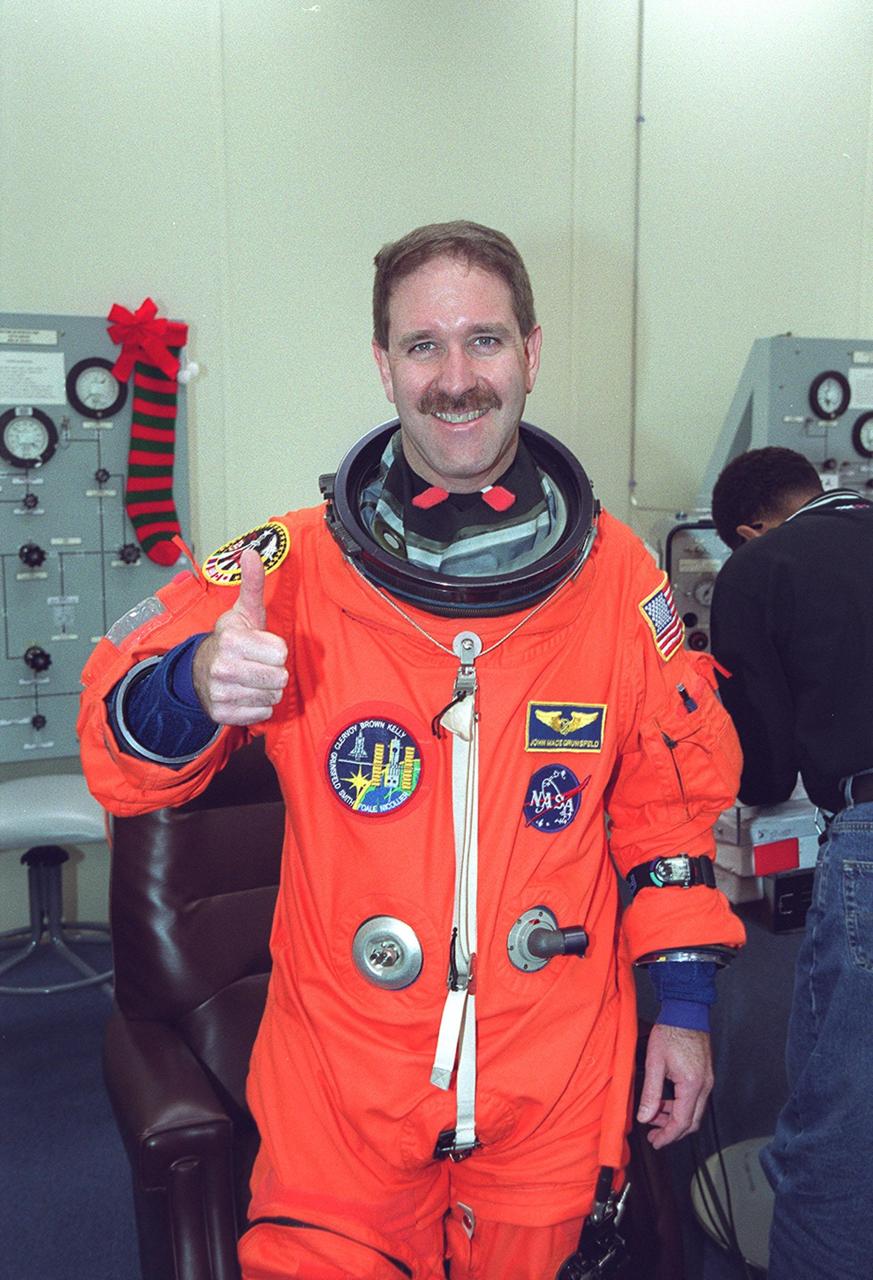
After donning his launch and entry suit, STS-103 Mission Specialist John M. Grunsfeld (Ph.D.) signals he's ready for the second launch attempt of Space Shuttle Discovery. The previous launch attempt on Dec. 17 was scrubbed about 8:52 p.m. due to numerous violations of weather launch commit criteria at KSC. Grunsfeld and other crew members Commander Curtis L. Brown Jr., Pilot Scott J. Kelly and Mission Specialists Steven L. Smith, C. Michael Foale (Ph.D.), Claude Nicollier of Switzerland and Jean-Francois Clervoy of France are scheduled to lift off at 7:50 p.m. EST Dec. 19 on mission STS-103, servicing the Hubble Space Telescope. Objectives for the nearly eight-day mission include replacing gyroscopes and an old computer, installing another solid state recorder, and replacing damaged insulation in the telescope. Discovery is expected to land at KSC Monday, Dec. 27, at about 5:24 p.m. EST
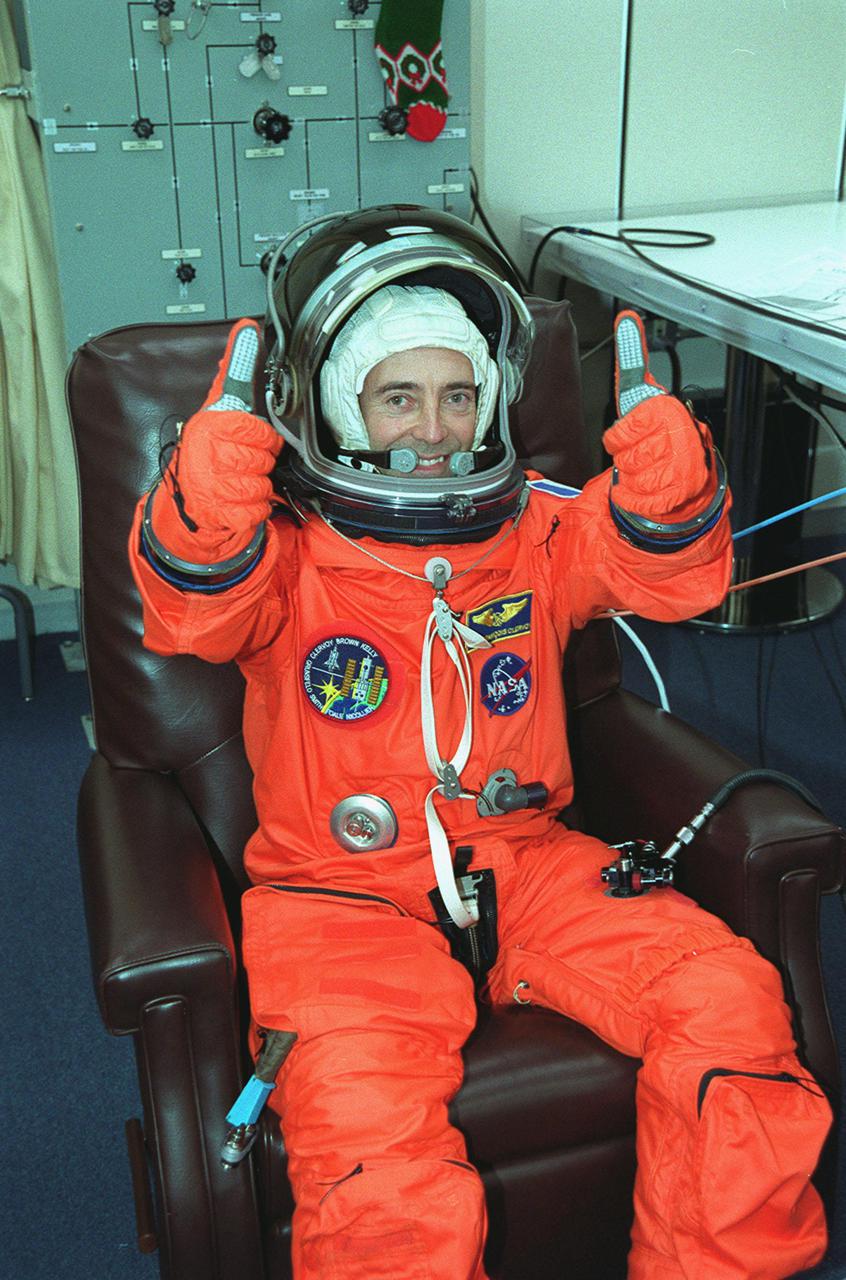
After donning his launch and entry suit, STS-103 Mission Specialist Jean-Francois Clervoy of France gives two thumbs up to show he is ready for the second launch attempt of Space Shuttle Discovery. The previous launch attempt on Dec. 17 was scrubbed about 8:52 p.m. due to numerous violations of weather launch commit criteria at KSC. Clervoy and fellow crew members Commander Curtis L. Brown Jr., Pilot Scott J. Kelly and Mission Specialists Steven L. Smith, C. Michael Foale (Ph.D.), John M. Grunsfeld (Ph.D.) and Claude Nicollier of Switzerland are scheduled to lift off at 7:50 p.m. EST Dec. 19 on mission STS-103, servicing the Hubble Space Telescope. Objectives for the nearly eight-day mission include replacing gyroscopes and an old computer, installing another solid state recorder, and replacing damaged insulation in the telescope. Discovery is expected to land at KSC Monday, Dec. 27, at about 5:24 p.m. EST

After donning his launch and entry suit, a grinning STS-103 Mission Specialist Claude Nicollier of Switzerland signals he is ready for the second launch attempt of Space Shuttle Discovery. The previous launch attempt on Dec. 17 was scrubbed about 8:52 p.m. due to numerous violations of weather launch commit criteria at KSC. Nicollier and fellow crew members Commander Curtis L. Brown Jr., Pilot Scott J. Kelly and Mission Specialists Steven L. Smith, C. Michael Foale (Ph.D.), John M. Grunsfeld (Ph.D.) and Jean-Francois Clervoy of France are scheduled to lift off at 7:50 p.m. EST Dec. 19 on mission STS-103, servicing the Hubble Space Telescope. Objectives for the nearly eight-day mission include replacing gyroscopes and an old computer, installing another solid state recorder, and replacing damaged insulation in the telescope. Discovery is expected to land at KSC Monday, Dec. 27, at about 5:24 p.m. EST
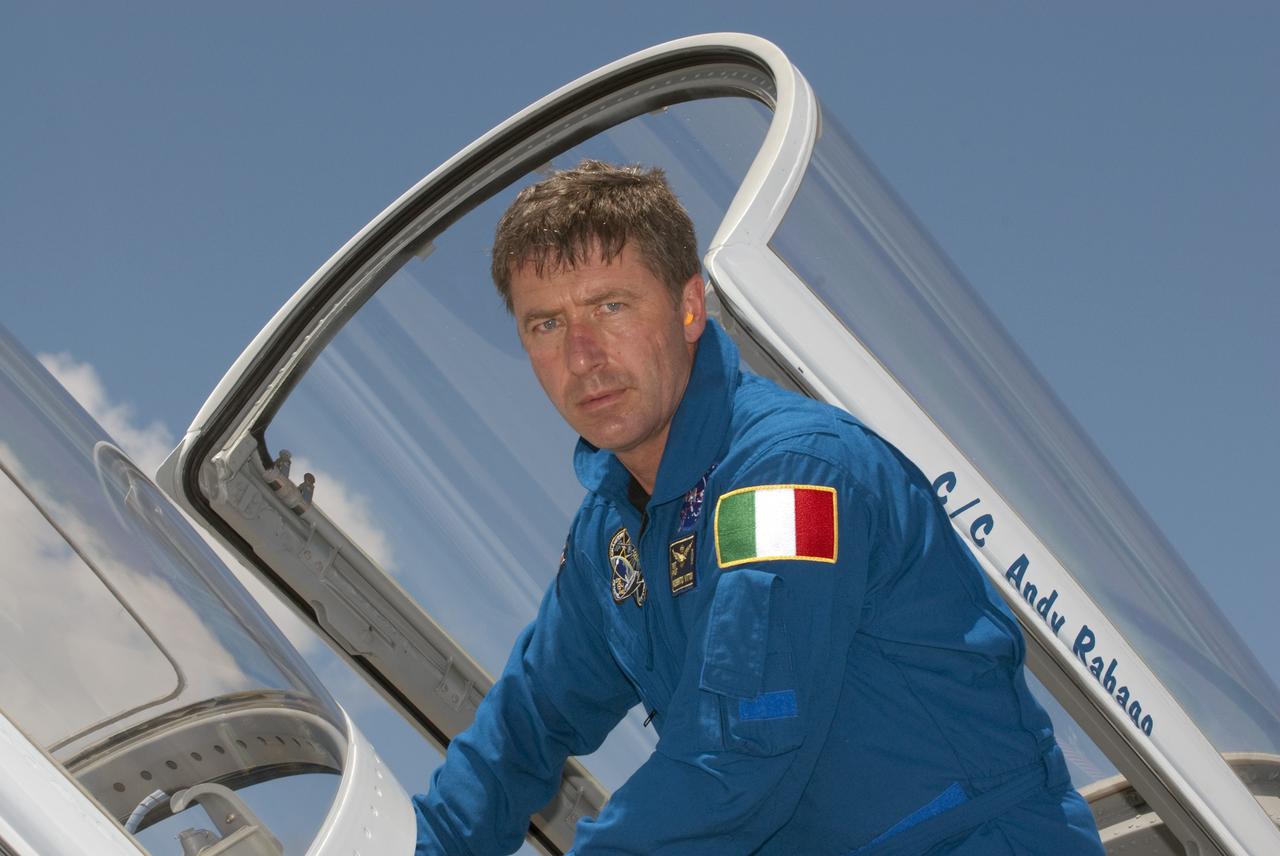
CAPE CANAVERAL, Fla. -- At NASA Kennedy Space Center's Shuttle Landing Facility in Florida, European Space Agency astronaut Roberto Vittori climbs out of a T-38 jet. The STS-134 crew members arrived at Kennedy 12:52 p.m. EDT to prepare for shuttle Endeavour's launch to the International Space Station scheduled for Friday, April 29 at 3:47 p.m. Endeavour and its crew will deliver the Express Logistics Carrier-3, Alpha Magnetic Spectrometer-2 (AMS), a high-pressure gas tank and additional spare parts for the Dextre robotic helper to the station. This will be the final spaceflight for Endeavour. For more information visit, www.nasa.gov/mission_pages/shuttle/shuttlemissions/sts134/index.html. Photo credit: NASA/Kim Shiflett

STS052-152-047 (22 Oct- 1 Nov 1992) --- The Kalahari Desert had not seen any significant rainfall for months before the launch of STS-52. Here, Shuttle astronauts have captured the onset of the (Southern Hemisphere) summer monsoon over the Kalahari Desert, as illustrated by the large thunderstorm towers poking up through the sun's terminator. The summer monsoon, with its associated thunderstorms, generally lasts from November through March. Scientist observers of this area report that the summer monsoon contributes most of the annual rainfall to this environmentally sensitive area. Shuttle nadir position: 28.0 degrees south, 25.1 degrees east. The center of the scene is 22.0 degrees south, 25.0 degrees east, 16:20:04 GMT.
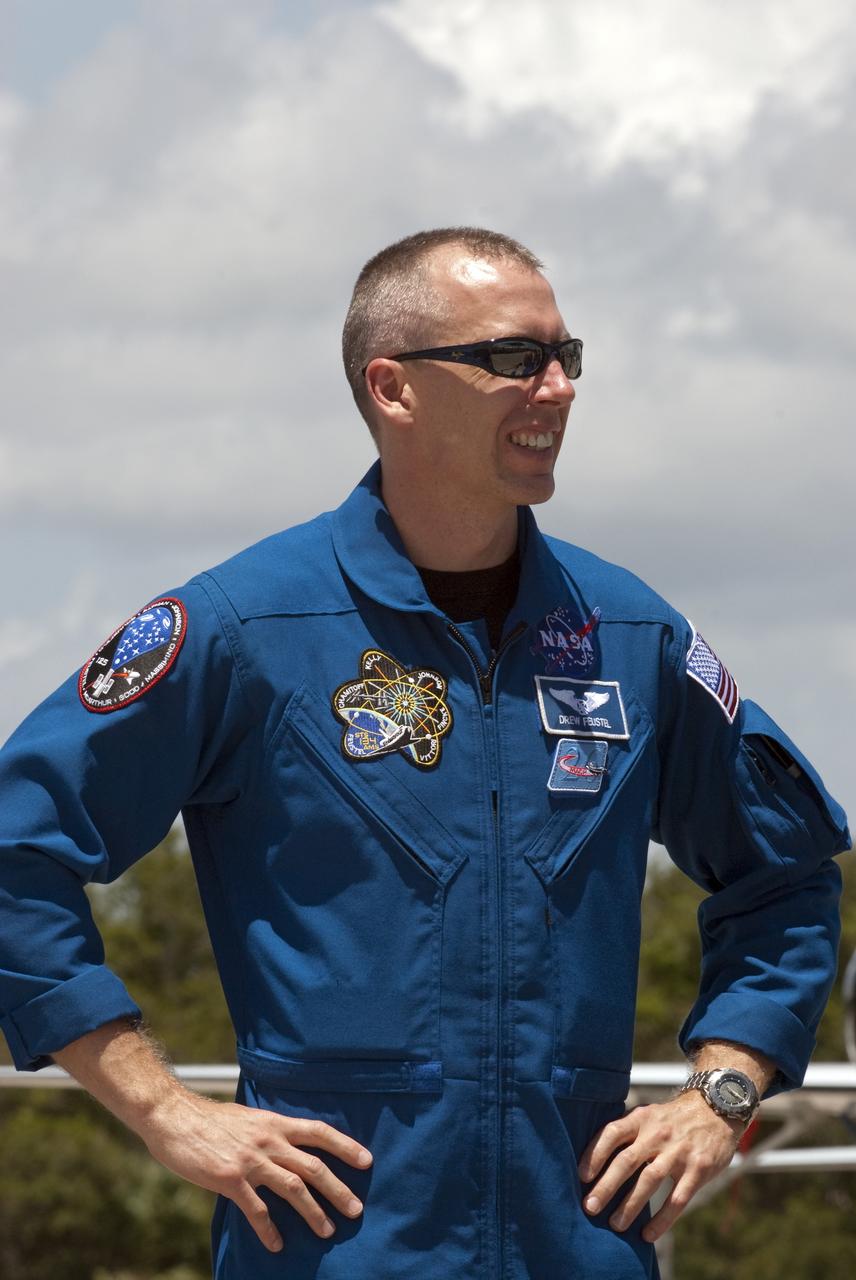
CAPE CANAVERAL, Fla. -- At the Shuttle Landing Facility at NASA's Kennedy Space Center in Florida, Mission Specialist Andrew Fuestel is photographed after his arrival. The STS-134 crew members landed at 12:52 p.m. EDT to get ready for space shuttle Endeavour's launch to the International Space Station scheduled for Friday, April 29 at 3:47 p.m. Endeavour and its crew will deliver the Express Logistics Carrier-3, Alpha Magnetic Spectrometer-2 (AMS), a high-pressure gas tank and additional spare parts for the Dextre robotic helper to the station. This will be the final spaceflight for Endeavour. For more information visit, www.nasa.gov/mission_pages/shuttle/shuttlemissions/sts134/index.html. Photo credit: NASA/Kim Shiflett
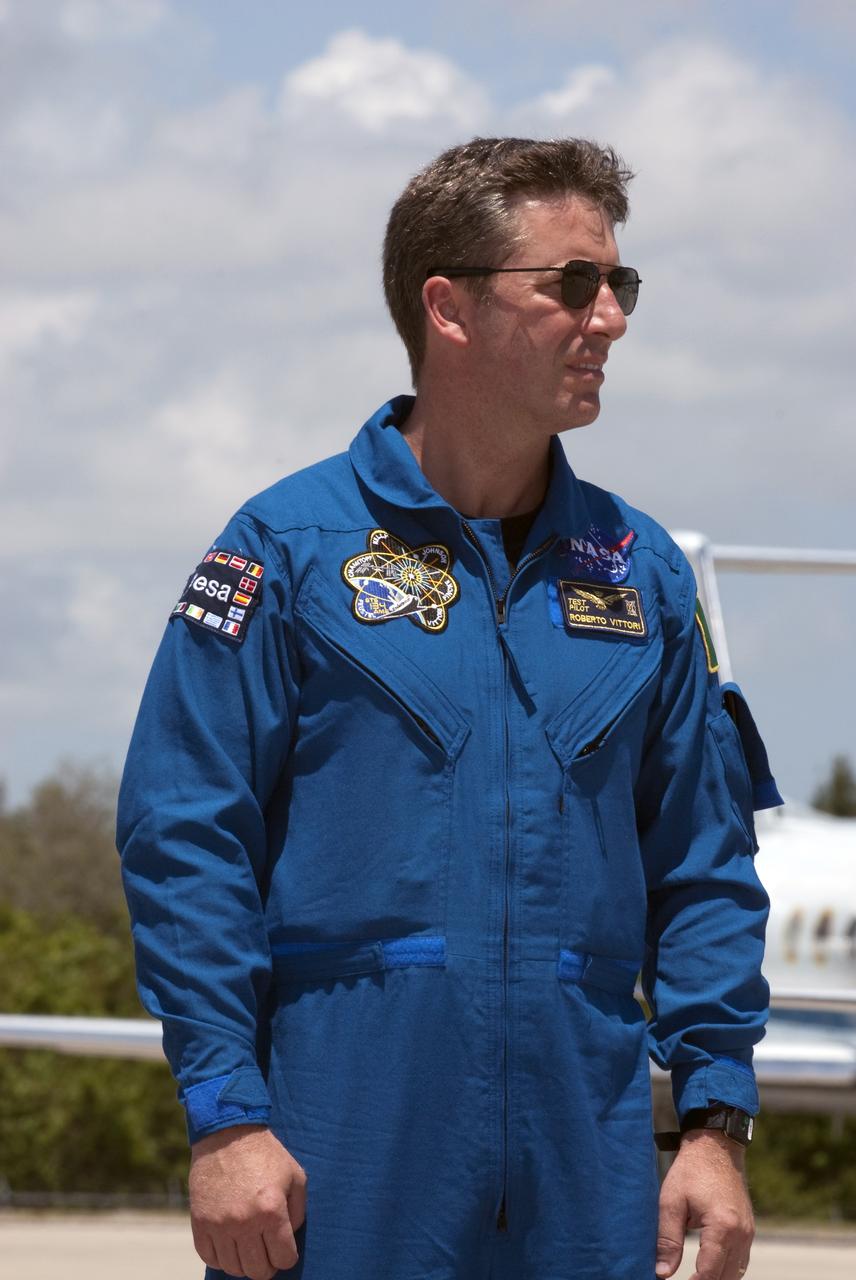
CAPE CANAVERAL, Fla. -- At the Shuttle Landing Facility at NASA's Kennedy Space Center in Florida, European Space Agency astronaut Roberto Vittori is photographed after his arrival. The STS-134 crew members landed at 12:52 p.m. EDT to get ready for space shuttle Endeavour's launch to the International Space Station scheduled for Friday, April 29 at 3:47 p.m. Endeavour and its crew will deliver the Express Logistics Carrier-3, Alpha Magnetic Spectrometer-2 (AMS), a high-pressure gas tank and additional spare parts for the Dextre robotic helper to the station. This will be the final spaceflight for Endeavour. For more information visit, www.nasa.gov/mission_pages/shuttle/shuttlemissions/sts134/index.html. Photo credit: NASA/Kim Shiflett
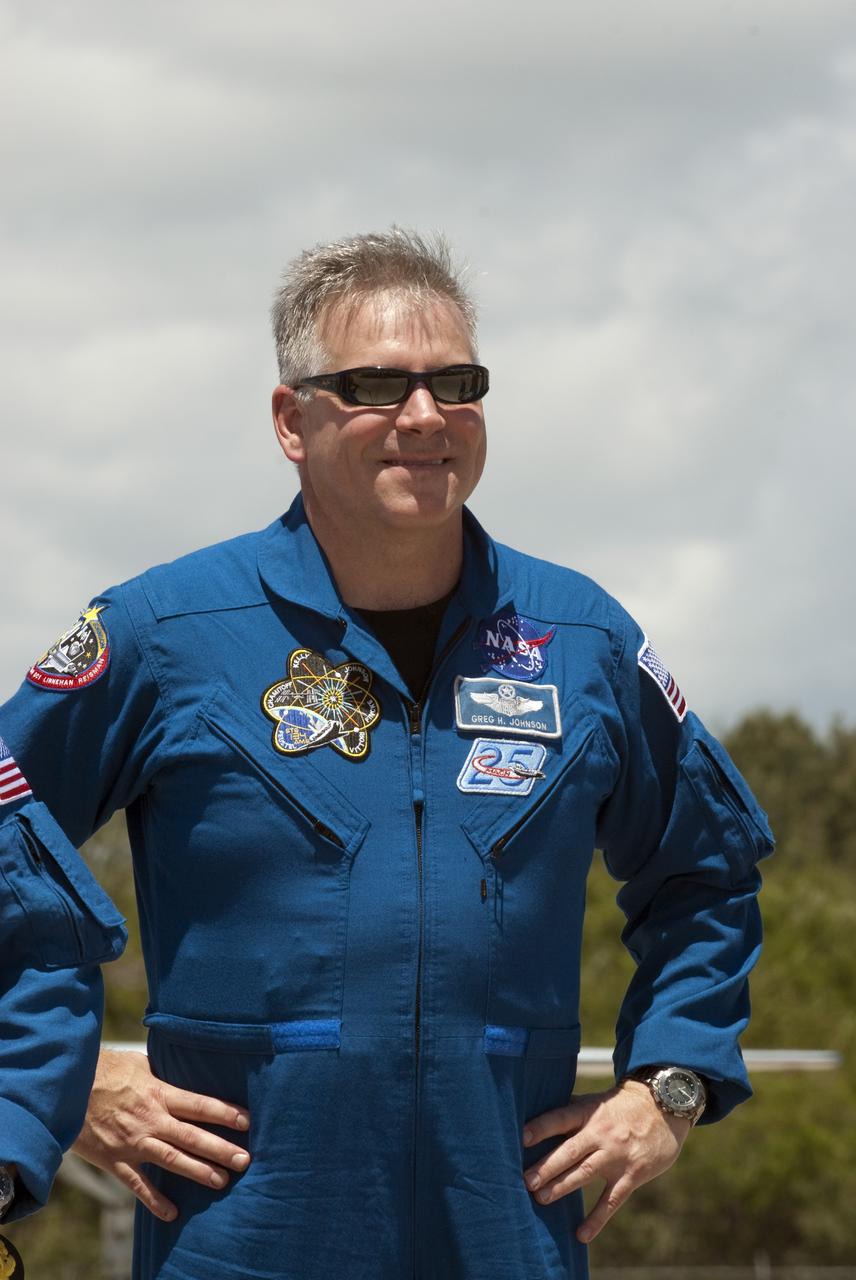
CAPE CANAVERAL, Fla. -- At the Shuttle Landing Facility at NASA's Kennedy Space Center in Florida, Pilot Greg H. Johnson is photographed after his arrival. The STS-134 crew members landed at 12:52 p.m. EDT to get ready for space shuttle Endeavour's launch to the International Space Station scheduled for Friday, April 29 at 3:47 p.m. Endeavour and its crew will deliver the Express Logistics Carrier-3, Alpha Magnetic Spectrometer-2 (AMS), a high-pressure gas tank and additional spare parts for the Dextre robotic helper to the station. This will be the final spaceflight for Endeavour. For more information visit, www.nasa.gov/mission_pages/shuttle/shuttlemissions/sts134/index.html. Photo credit: NASA/Kim Shiflett
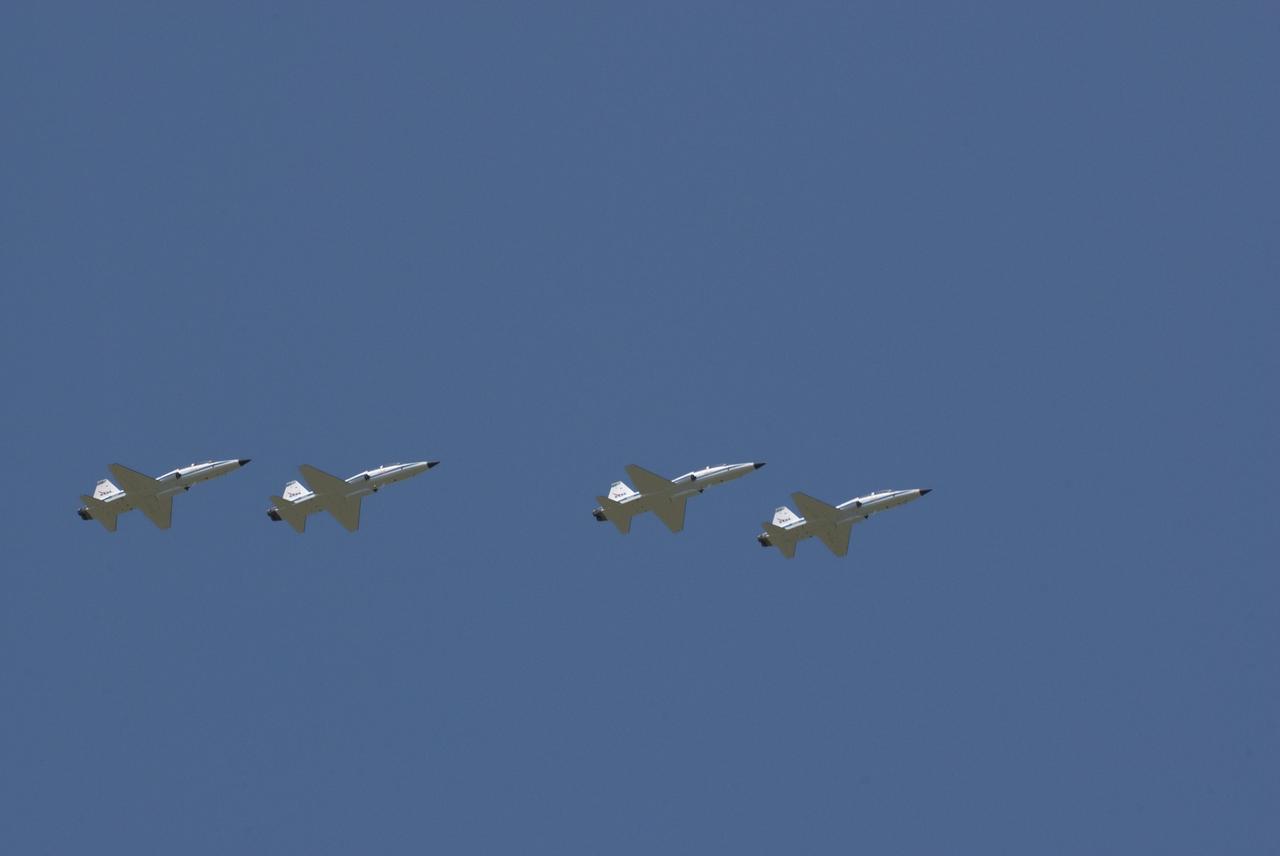
CAPE CANAVERAL, Fla. -- High above NASA's Kennedy Space Center in Florida, space shuttle Endeavour's STS-134 crew members get ready to land their T-38 jets at the Shuttle Landing Facility. The crew arrived at Kennedy 12:52 p.m. EDT to get ready for Endeavour's launch to the International Space Station scheduled for Friday, April 29 at 3:47 p.m. Endeavour and its crew will deliver the Express Logistics Carrier-3, Alpha Magnetic Spectrometer-2 (AMS), a high-pressure gas tank and additional spare parts for the Dextre robotic helper to the station. This will be the final spaceflight for Endeavour. For more information visit, www.nasa.gov/mission_pages/shuttle/shuttlemissions/sts134/index.html. Photo credit: NASA/Kim Shiflett
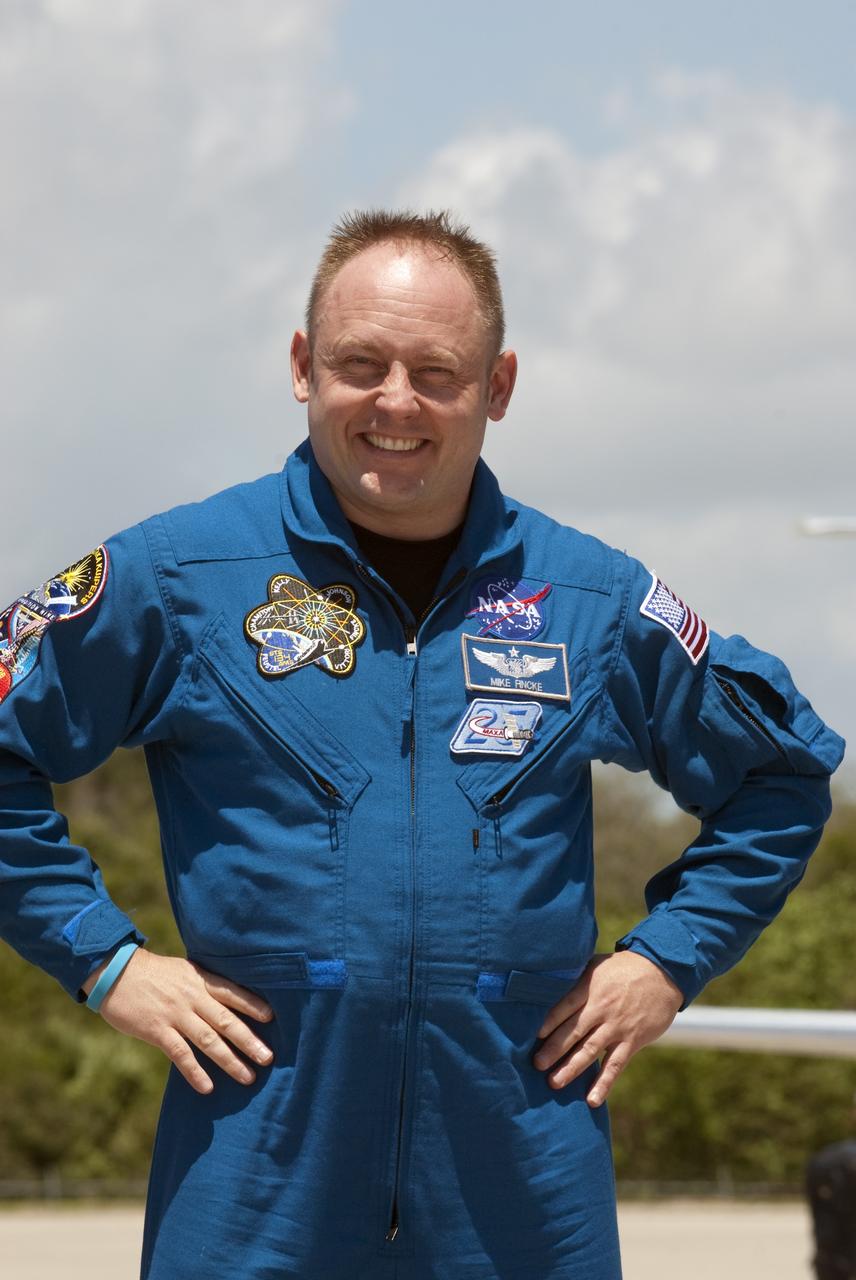
CAPE CANAVERAL, Fla. -- At the Shuttle Landing Facility at NASA's Kennedy Space Center in Florida, Mission Specialist Michael Fincke is photographed after his arrival. The STS-134 crew members landed at 12:52 p.m. EDT to get ready for space shuttle Endeavour's launch to the International Space Station scheduled for Friday, April 29 at 3:47 p.m. Endeavour and its crew will deliver the Express Logistics Carrier-3, Alpha Magnetic Spectrometer-2 (AMS), a high-pressure gas tank and additional spare parts for the Dextre robotic helper to the station. This will be the final spaceflight for Endeavour. For more information visit, www.nasa.gov/mission_pages/shuttle/shuttlemissions/sts134/index.html. Photo credit: NASA/Kim Shiflett
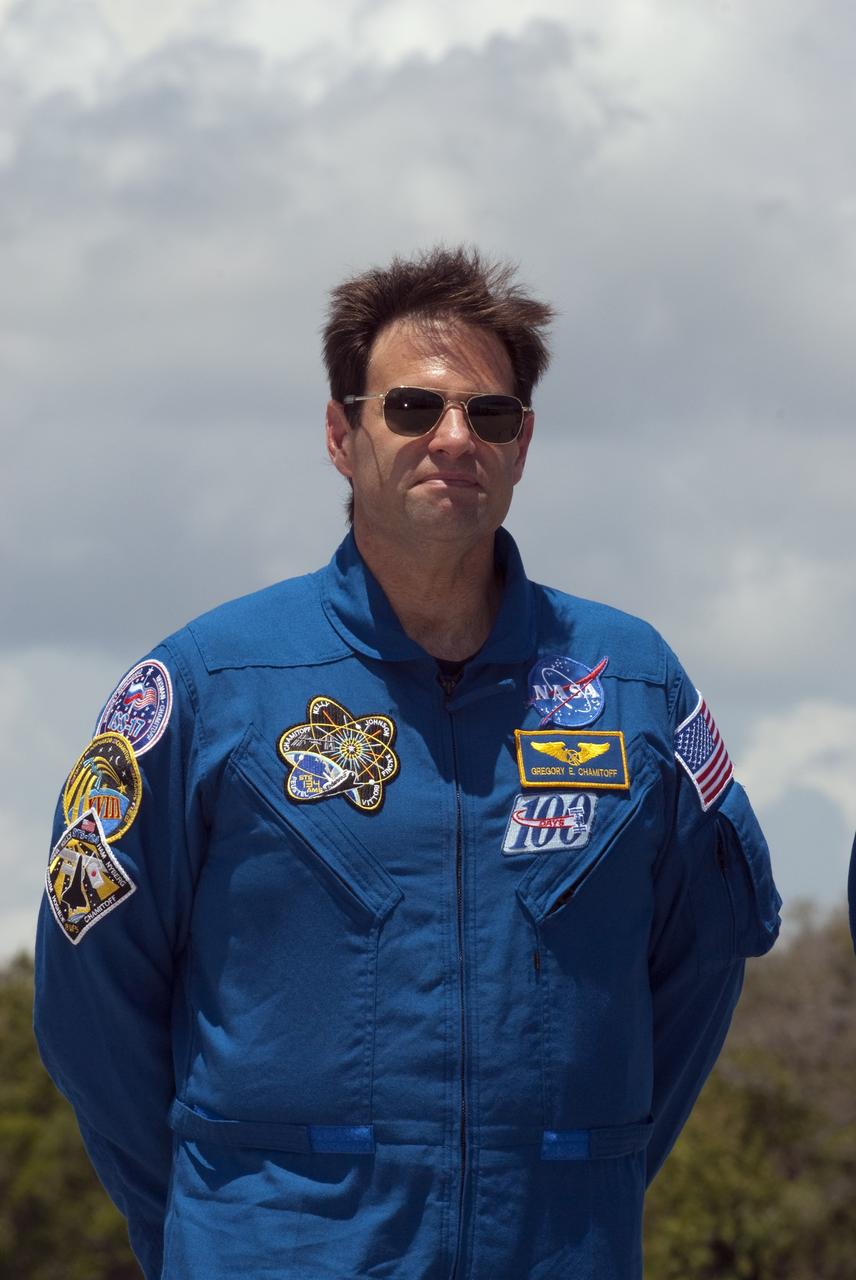
CAPE CANAVERAL, Fla. -- At the Shuttle Landing Facility at NASA's Kennedy Space Center in Florida, Mission Specialist Greg Chamitoff is photographed after his arrival. The STS-134 crew members landed at 12:52 p.m. EDT to get ready for space shuttle Endeavour's launch to the International Space Station scheduled for Friday, April 29 at 3:47 p.m. Endeavour and its crew will deliver the Express Logistics Carrier-3, Alpha Magnetic Spectrometer-2 (AMS), a high-pressure gas tank and additional spare parts for the Dextre robotic helper to the station. This will be the final spaceflight for Endeavour. For more information visit, www.nasa.gov/mission_pages/shuttle/shuttlemissions/sts134/index.html. Photo credit: NASA/Kim Shiflett
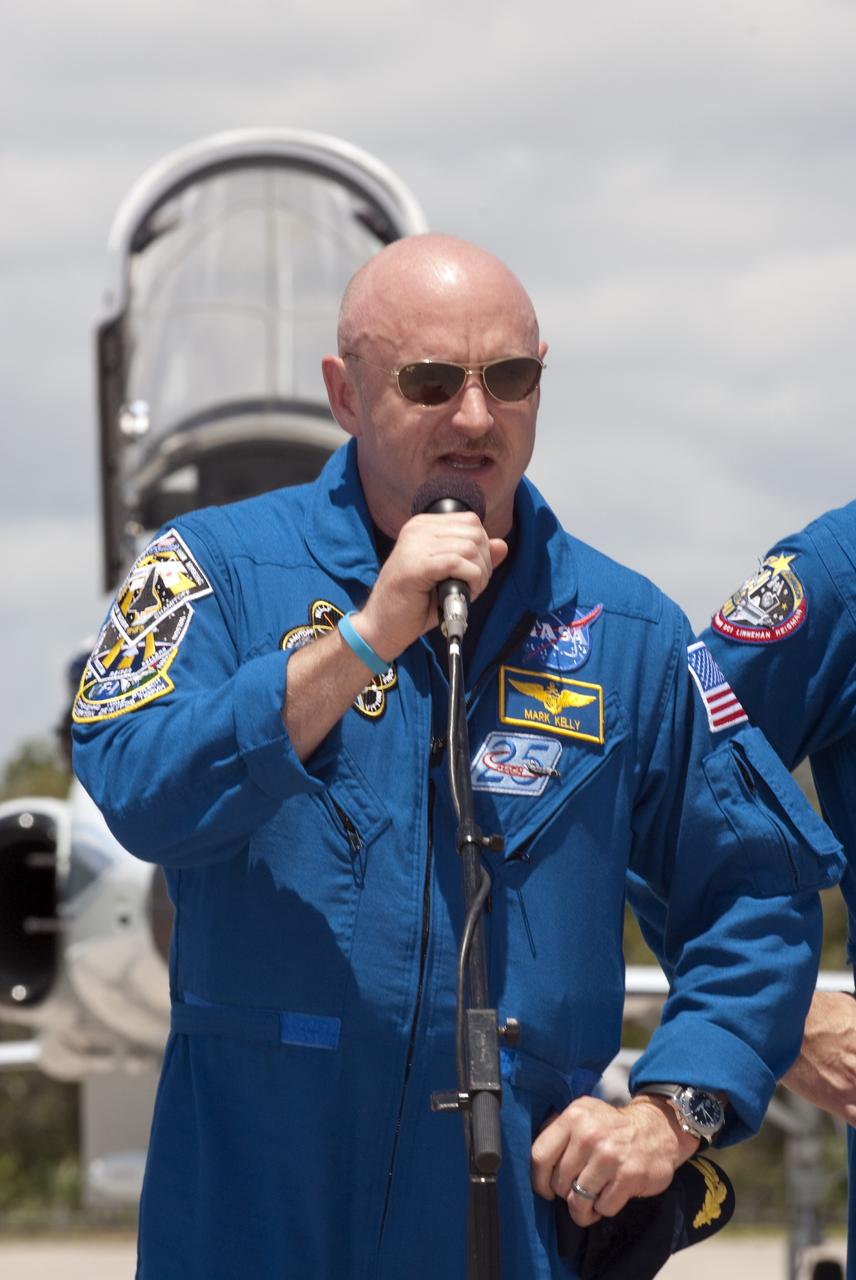
CAPE CANAVERAL, Fla. -- After arrival at the Shuttle Landing Facility at NASA's Kennedy Space Center in Florida, Commander Mark Kelly speaks to the media. The STS-134 crew members landed at 12:52 p.m. EDT to get ready for space shuttle Endeavour's launch to the International Space Station scheduled for Friday, April 29 at 3:47 p.m. Endeavour and its crew will deliver the Express Logistics Carrier-3, Alpha Magnetic Spectrometer-2 (AMS), a high-pressure gas tank and additional spare parts for the Dextre robotic helper to the station. This will be the final spaceflight for Endeavour. For more information visit, www.nasa.gov/mission_pages/shuttle/shuttlemissions/sts134/index.html. Photo credit: NASA/Kim Shiflett
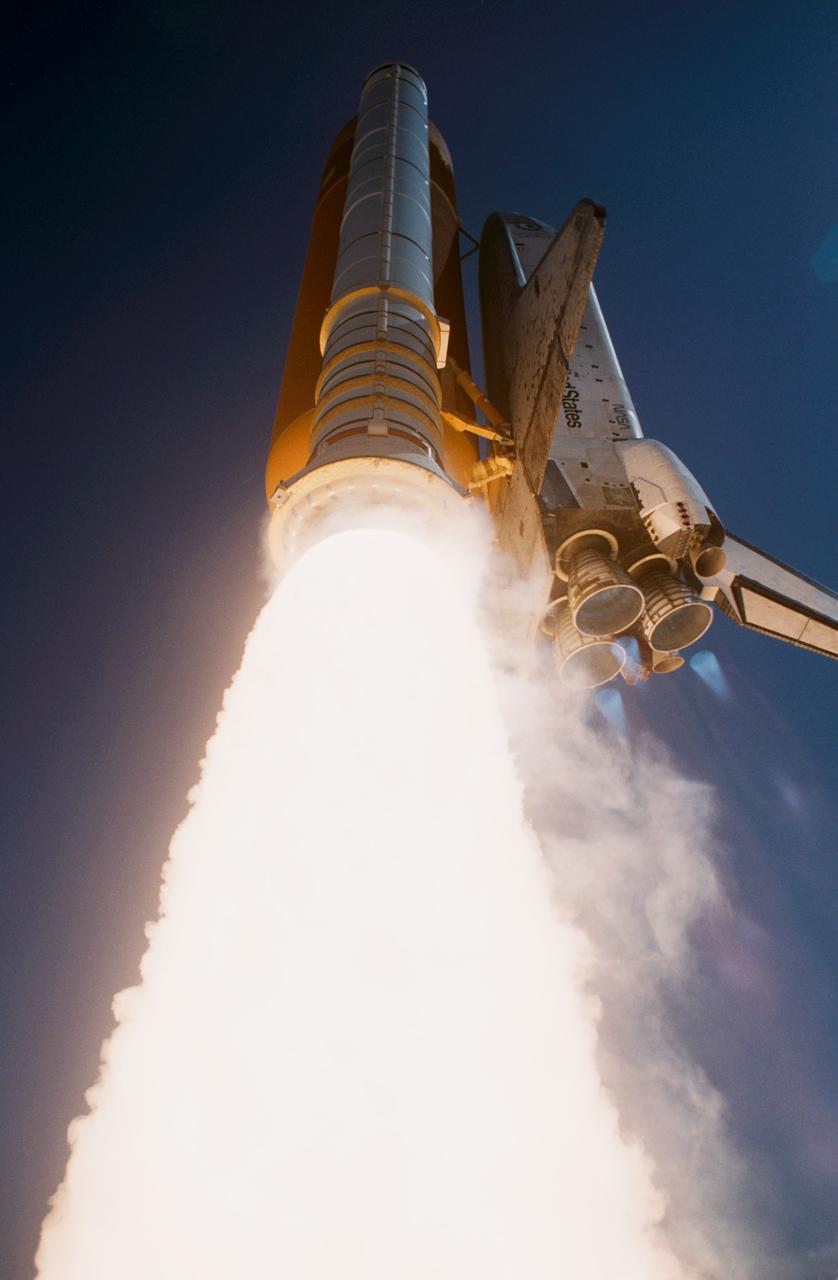
STS052-S-053 (22 Oct. 1992) --- This low-angle 35mm image shows the space shuttle Columbia on its way toward a ten-day Earth-orbital mission with a crew of five NASA astronauts and a Canadian payload specialist. Liftoff occurred at 1:09:39 p.m. (EDT), Oct. 22, from Kennedy Space Center?s (KSC) Launch Pad 39B. Crew members onboard are astronauts James D. Wetherbee, Michael A. Baker, Tamara E. Jernigan, Charles L. (Lacy) Veach and William M. Shepherd, along with payload specialist Steven G. MacLean. Payloads onboard include the Laser Geodynamic Satellite II (LAGEOS II), which will be deployed early in the mission, a series of Canadian experiments, and the United States Microgravity Payload-1 (USMP-1). Photo credit: NASA
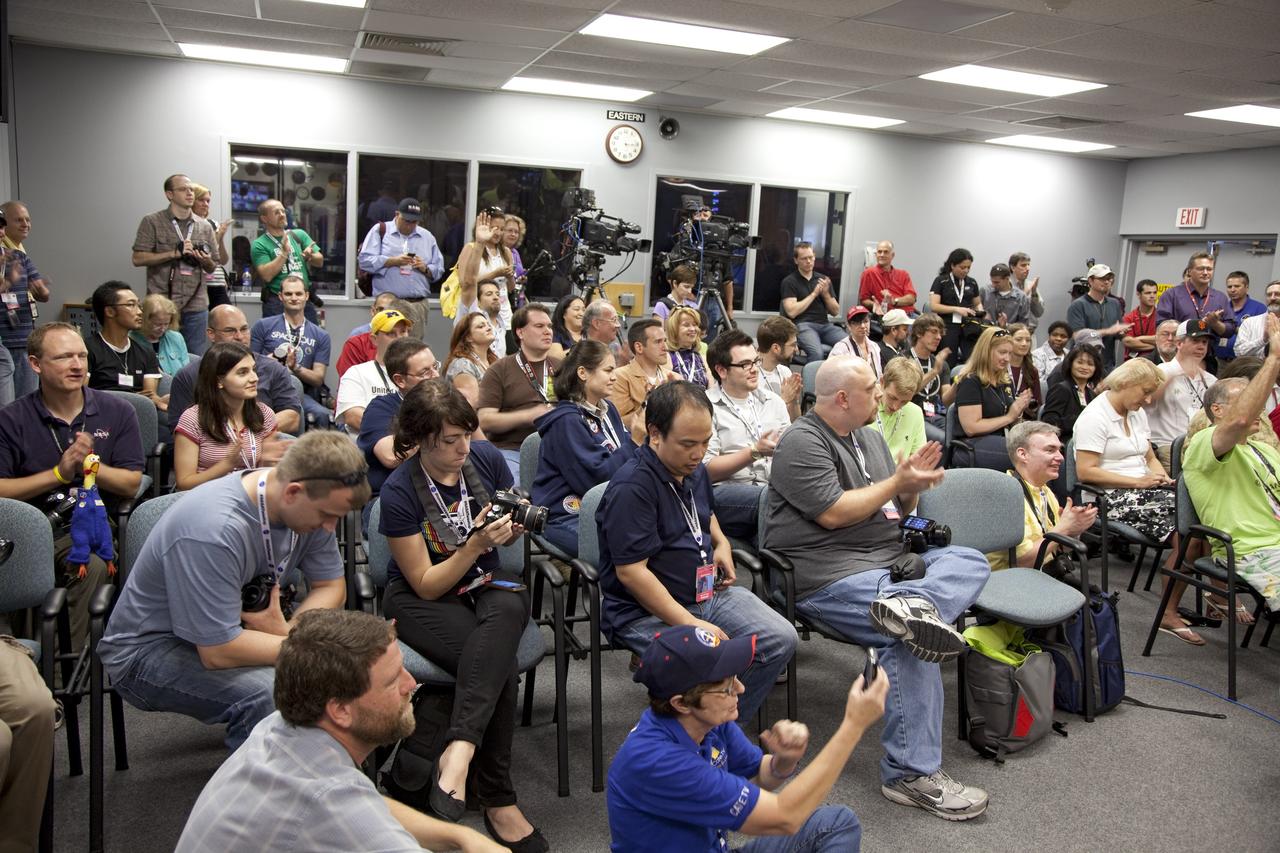
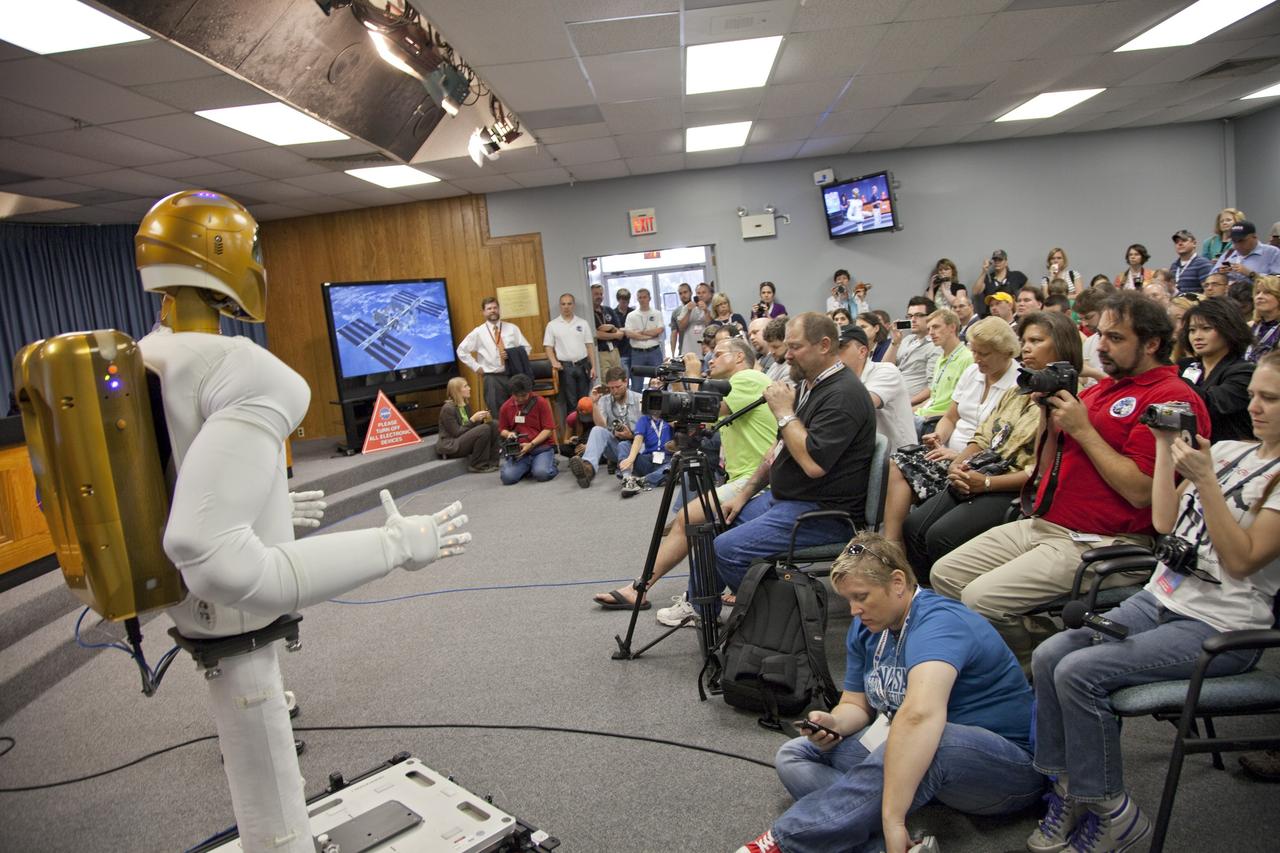
CAPE CANAVERAL, Fla. -- At NASA's Kennedy Space Center in Florida, participants of the STS-133 Tweetup snap photos and watch intently as a dexterous humanoid astronaut helper, known as Robonaut, shows off its talents. Robonaut 2 (R2) will be delivered to the International Space Station on space shuttle Discovery's STS-133 mission. Although R2 will initially only participate in operational tests, upgrades could eventually allow the robot to realize its true purpose -- helping spacewalking astronauts with tasks outside the orbiting laboratory. NASA is hosting about 150 of its Twitter followers from around the world and several dozen states and providing them with a behind-the-scenes perspective to share with their own followers on the social networking service. The "Tweeps," as NASA calls them, will have a chance to tour Kennedy, meet with shuttle technicians, managers, engineers and astronauts, and witness Discovery's launch. Discovery and its STS-133 crew are scheduled to lift off Nov. 3 at 3:52 p.m. EDT. For more information on the upcoming mission, visit www.nasa.gov/mission_pages/shuttle/shuttlemissions/sts133/. Photo credit: NASA/Frank Michaux
CAPE CANAVERAL, Fla. -- At NASA's Kennedy Space Center in Florida, a dexterous humanoid astronaut helper, known as Robonaut, is on display for participants of the STS-133 Tweetup. Robonaut 2 (R2) will be delivered to the International Space Station on space shuttle Discovery's STS-133 mission. Although R2 will initially only participate in operational tests, upgrades could eventually allow the robot to realize its true purpose -- helping spacewalking astronauts with tasks outside the orbiting laboratory. NASA is hosting about 150 of its Twitter followers from around the world and several dozen states and providing them with a behind-the-scenes perspective to share with their own followers on the social networking service. The "Tweeps," as NASA calls them, will have a chance to tour Kennedy, meet with shuttle technicians, managers, engineers and astronauts, and witness Discovery's launch. Discovery and its STS-133 crew are scheduled to lift off Nov. 3 at 3:52 p.m. EDT. For more information on the upcoming mission, visit www.nasa.gov/mission_pages/shuttle/shuttlemissions/sts133/. Photo credit: NASA/Frank Michaux
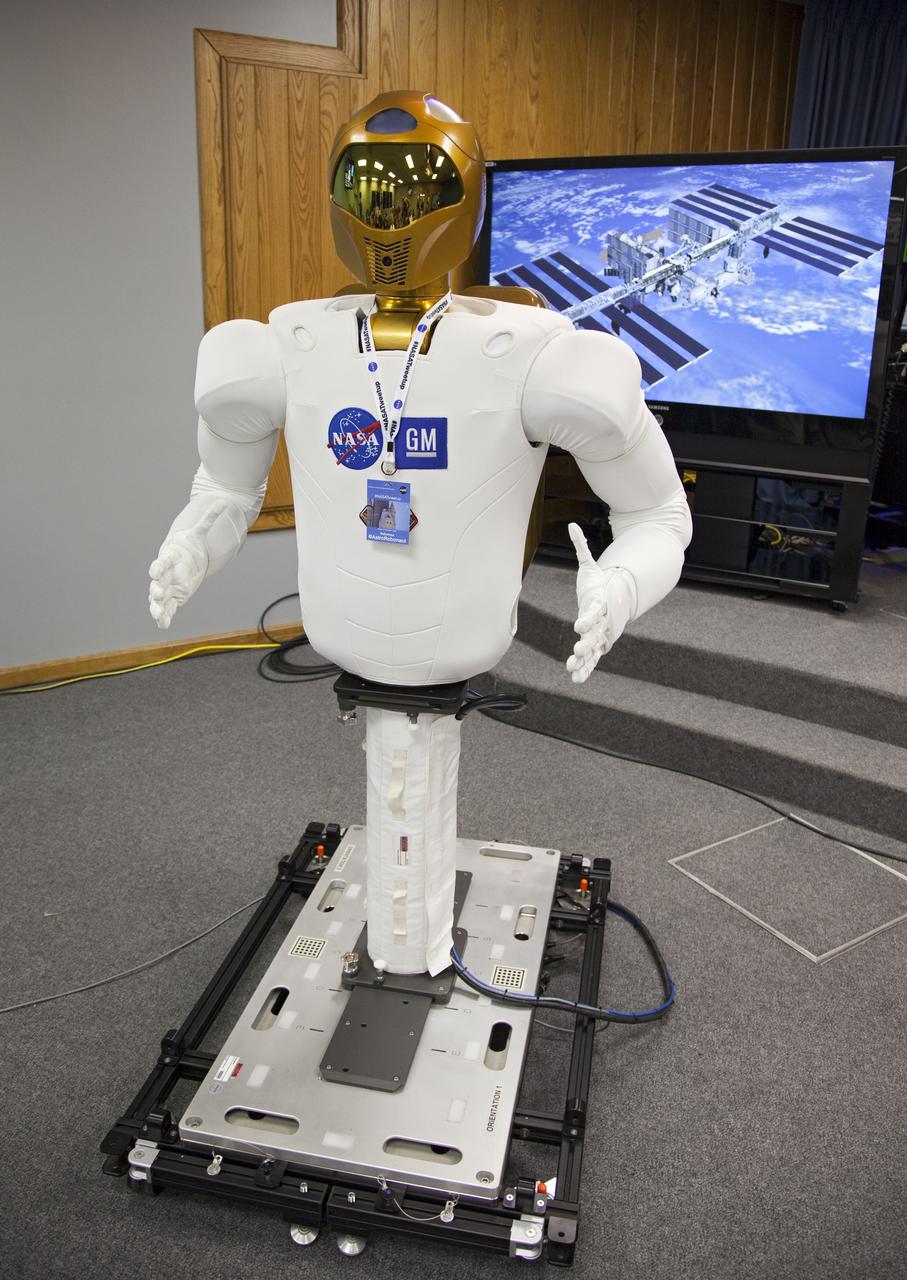
CAPE CANAVERAL, Fla. -- At NASA's Kennedy Space Center in Florida, a dexterous humanoid astronaut helper, known as Robonaut, is on display for participants of the STS-133 Tweetup. Robonaut 2 (R2) will be delivered to the International Space Station on space shuttle Discovery's STS-133 mission. Although R2 will initially only participate in operational tests, upgrades could eventually allow the robot to realize its true purpose -- helping spacewalking astronauts with tasks outside the orbiting laboratory. NASA is hosting about 150 of its Twitter followers from around the world and several dozen states and providing them with a behind-the-scenes perspective to share with their own followers on the social networking service. The "Tweeps," as NASA calls them, will have a chance to tour Kennedy, meet with shuttle technicians, managers, engineers and astronauts, and witness Discovery's launch. Discovery and its STS-133 crew are scheduled to lift off Nov. 3 at 3:52 p.m. EDT. For more information on the upcoming mission, visit www.nasa.gov/mission_pages/shuttle/shuttlemissions/sts133/. Photo credit: NASA/Frank Michaux

CAPE CANAVERAL, Fla. -- At NASA's Kennedy Space Center in Florida, participants of the STS-133 Tweetup snap photos and watch intently as a dexterous humanoid astronaut helper, known as Robonaut, shows off its talents. Robonaut 2 (R2) will be delivered to the International Space Station on space shuttle Discovery's STS-133 mission. Although R2 will initially only participate in operational tests, upgrades could eventually allow the robot to realize its true purpose -- helping spacewalking astronauts with tasks outside the orbiting laboratory. NASA is hosting about 150 of its Twitter followers from around the world and several dozen states and providing them with a behind-the-scenes perspective to share with their own followers on the social networking service. The "Tweeps," as NASA calls them, will have a chance to tour Kennedy, meet with shuttle technicians, managers, engineers and astronauts, and witness Discovery's launch. Discovery and its STS-133 crew are scheduled to lift off Nov. 3 at 3:52 p.m. EDT. For more information on the upcoming mission, visit www.nasa.gov/mission_pages/shuttle/shuttlemissions/sts133/. Photo credit: NASA/Frank Michaux
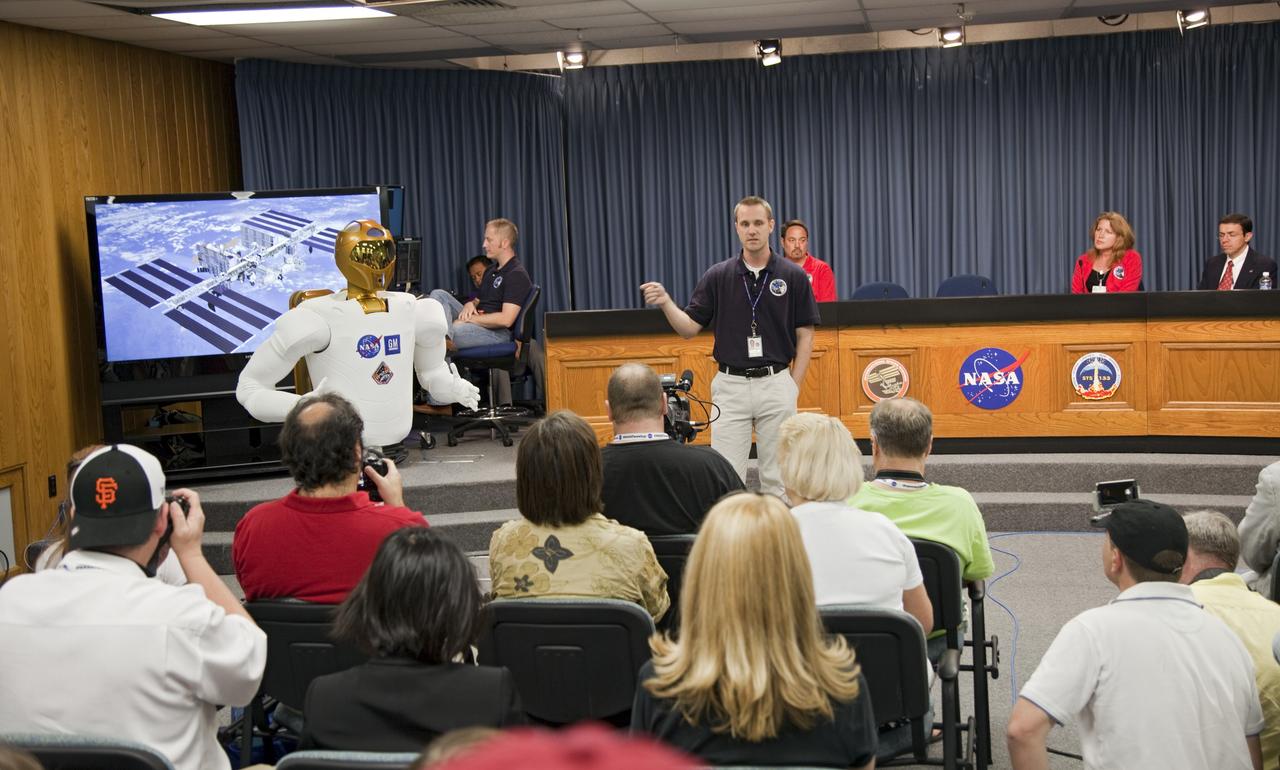
CAPE CANAVERAL, Fla. -- At NASA's Kennedy Space Center in Florida, a dexterous humanoid astronaut helper, known as Robonaut, is on display for participants of the STS-133 Tweetup. Robonaut 2 (R2) will be delivered to the International Space Station on space shuttle Discovery's STS-133 mission. Although R2 will initially only participate in operational tests, upgrades could eventually allow the robot to realize its true purpose -- helping spacewalking astronauts with tasks outside the orbiting laboratory. NASA is hosting about 150 of its Twitter followers from around the world and several dozen states and providing them with a behind-the-scenes perspective to share with their own followers on the social networking service. The "Tweeps," as NASA calls them, will have a chance to tour Kennedy, meet with shuttle technicians, managers, engineers and astronauts, and witness Discovery's launch. Discovery and its STS-133 crew are scheduled to lift off Nov. 3 at 3:52 p.m. EDT. For more information on the upcoming mission, visit www.nasa.gov/mission_pages/shuttle/shuttlemissions/sts133/. Photo credit: NASA/Frank Michaux
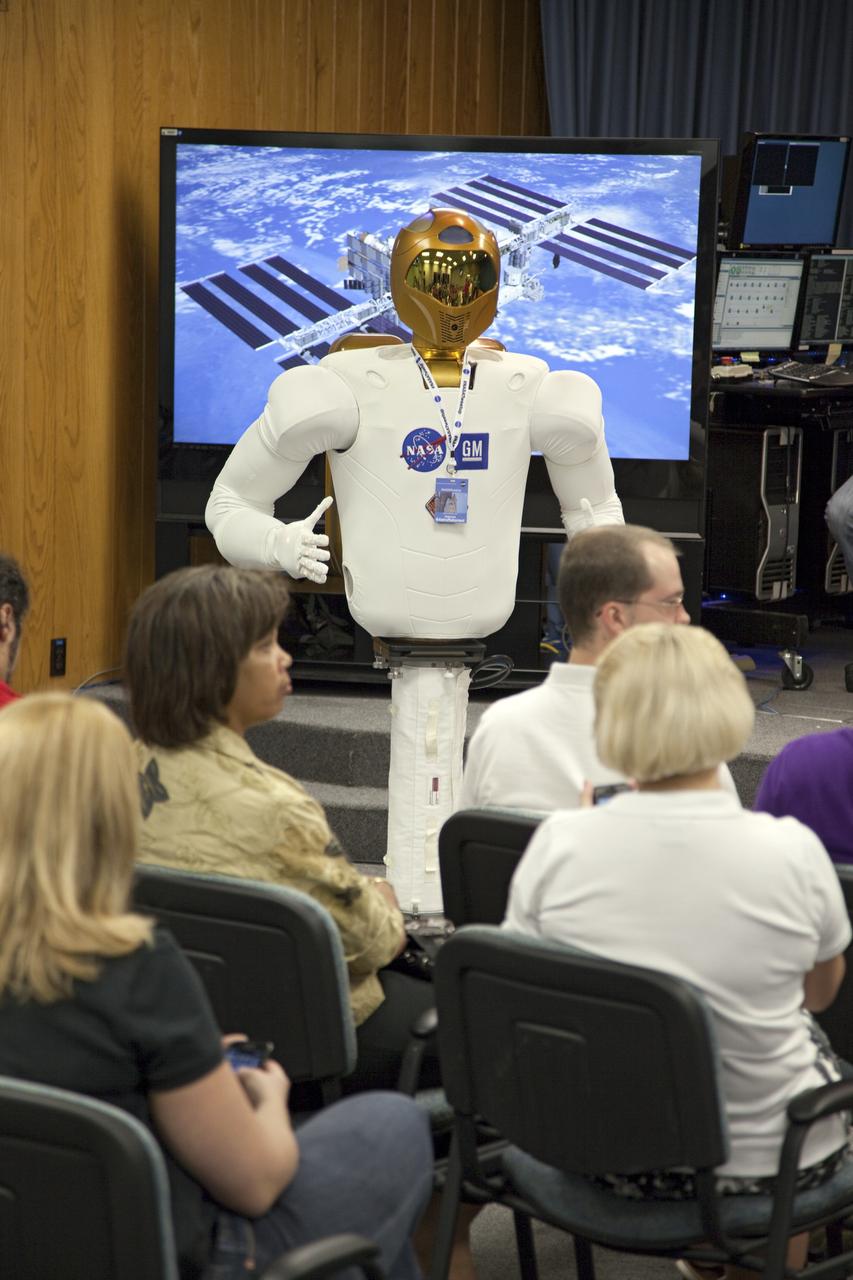
CAPE CANAVERAL, Fla. -- At NASA's Kennedy Space Center in Florida, a dexterous humanoid astronaut helper, known as Robonaut, is on display for participants of the STS-133 Tweetup. Robonaut 2 (R2) will be delivered to the International Space Station on space shuttle Discovery's STS-133 mission. Although R2 will initially only participate in operational tests, upgrades could eventually allow the robot to realize its true purpose -- helping spacewalking astronauts with tasks outside the orbiting laboratory. NASA is hosting about 150 of its Twitter followers from around the world and several dozen states and providing them with a behind-the-scenes perspective to share with their own followers on the social networking service. The "Tweeps," as NASA calls them, will have a chance to tour Kennedy, meet with shuttle technicians, managers, engineers and astronauts, and witness Discovery's launch. Discovery and its STS-133 crew are scheduled to lift off Nov. 3 at 3:52 p.m. EDT. For more information on the upcoming mission, visit www.nasa.gov/mission_pages/shuttle/shuttlemissions/sts133/. Photo credit: NASA/Frank Michaux

CAPE CANAVERAL, Fla. -- At NASA's Kennedy Space Center in Florida, participants of the STS-133 Tweetup snap photos and watch intently as a dexterous humanoid astronaut helper, known as Robonaut, shows off its talents. Robonaut 2 (R2) will be delivered to the International Space Station on space shuttle Discovery's STS-133 mission. Although R2 will initially only participate in operational tests, upgrades could eventually allow the robot to realize its true purpose -- helping spacewalking astronauts with tasks outside the orbiting laboratory. NASA is hosting about 150 of its Twitter followers from around the world and several dozen states and providing them with a behind-the-scenes perspective to share with their own followers on the social networking service. The "Tweeps," as NASA calls them, will have a chance to tour Kennedy, meet with shuttle technicians, managers, engineers and astronauts, and witness Discovery's launch. Discovery and its STS-133 crew are scheduled to lift off Nov. 3 at 3:52 p.m. EDT. For more information on the upcoming mission, visit www.nasa.gov/mission_pages/shuttle/shuttlemissions/sts133/. Photo credit: NASA/Frank Michaux
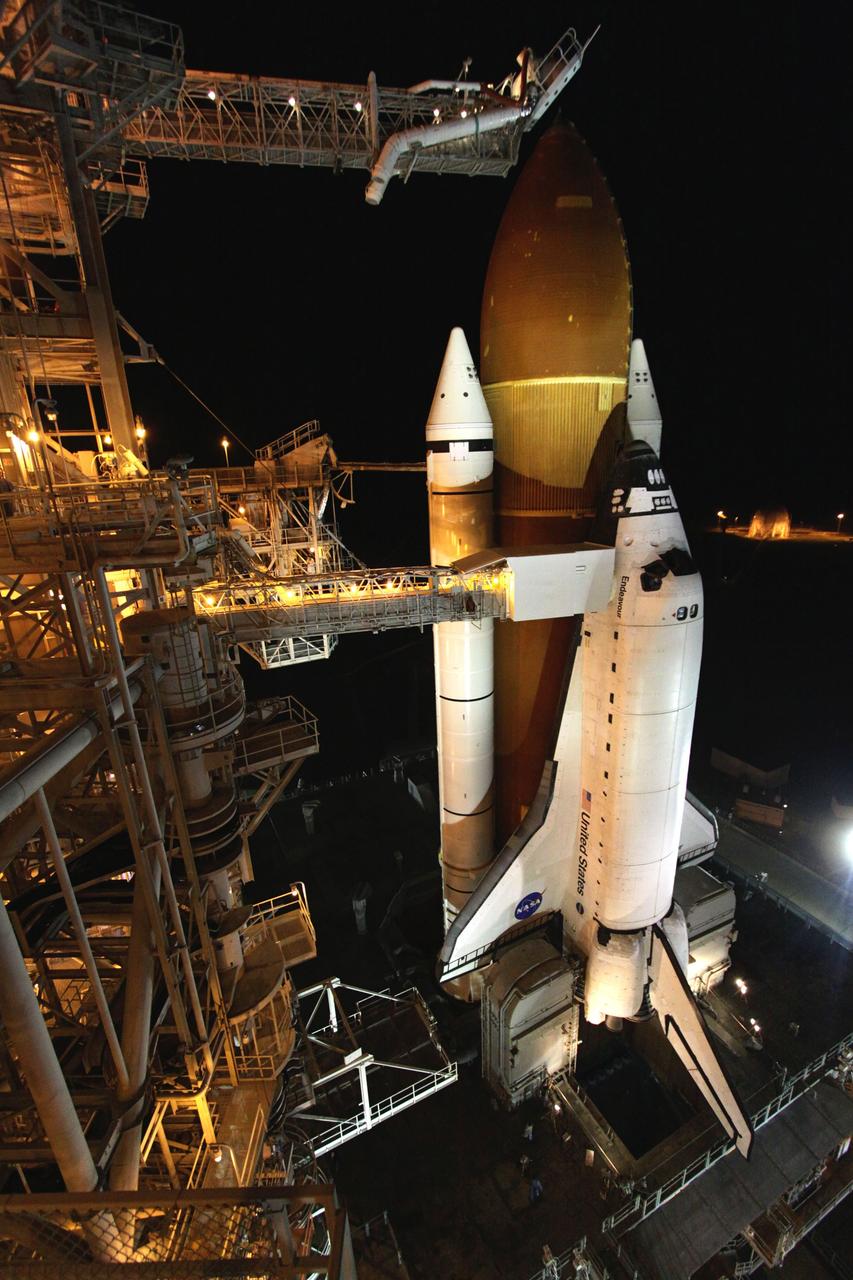
CAPE CANAVERAL, Fla. -- At NASA's Kennedy Space Center in Florida, space shuttle Endeavour is illuminated by bright xenon lights on Launch Pad 39A after the rotating service structure (RSS) was moved away. The structure provides weather protection and access to the shuttle while it awaits lift off on the pad. RSS "rollback," as it's called, began at 11:52 p.m. EDT on April 28. The move was scheduled to begin at 7 p.m., but storms over Kennedy delayed pad operations for a few hours. STS-134 will deliver the Express Logistics Carrier-3, Alpha Magnetic Spectrometer-2 (AMS), a high-pressure gas tank and additional spare parts for the Dextre robotic helper to the International Space Station. Endeavour was scheduled to launch at 3:47 p.m. on April 29, but that attempt was scrubbed for at least 72 hours while engineers assess an issue associated with the shuttle's Auxiliary Power Unit 1. STS-134 will be the final spaceflight for Endeavour. For more information visit, www.nasa.gov/mission_pages/shuttle/shuttlemissions/sts134/index.html. Photo credit: NASA/Ken Thornsley
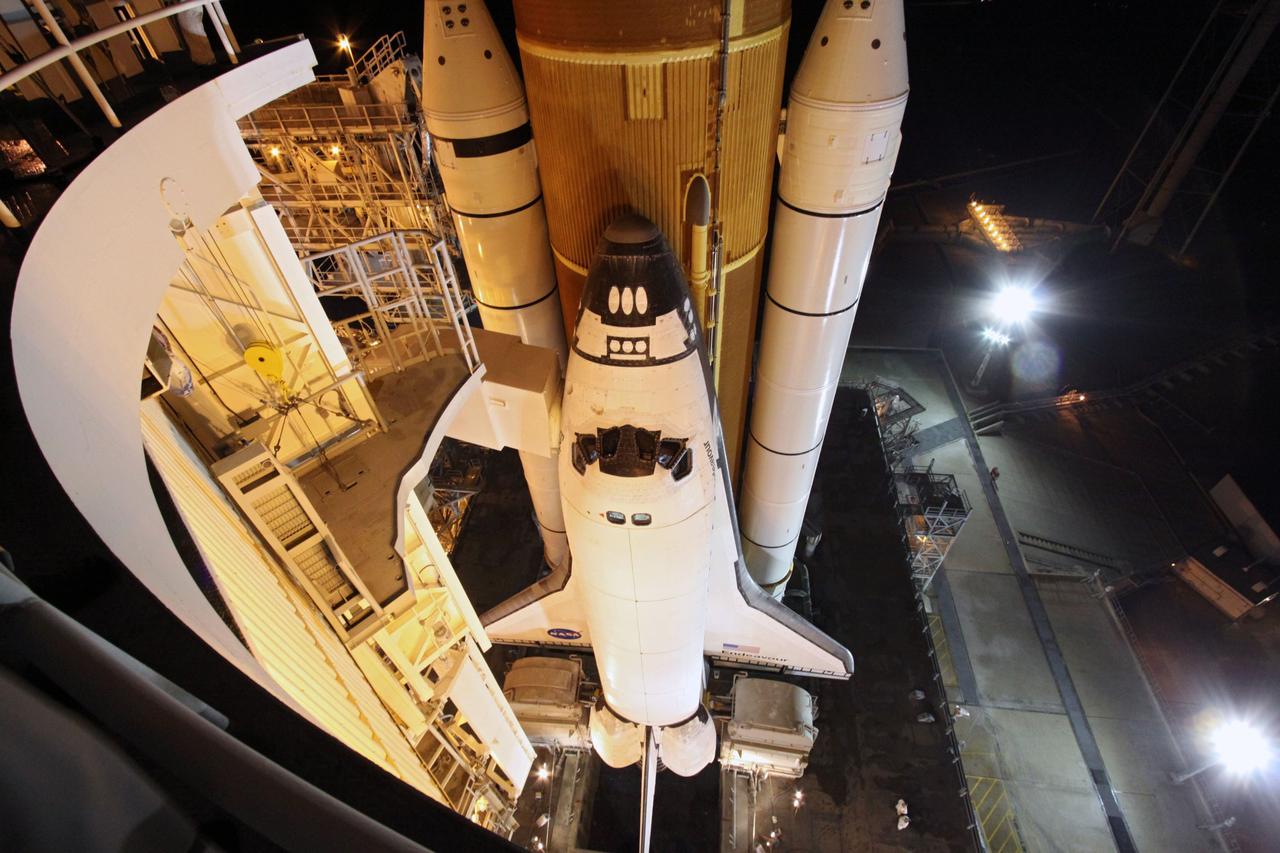
CAPE CANAVERAL, Fla. -- At NASA's Kennedy Space Center in Florida, space shuttle Endeavour is illuminated by bright xenon lights on Launch Pad 39A after the rotating service structure (RSS) was moved away. The structure provides weather protection and access to the shuttle while it awaits lift off on the pad. RSS "rollback," as it's called, began at 11:52 p.m. EDT on April 28. The move was scheduled to begin at 7 p.m., but storms over Kennedy delayed pad operations for a few hours. STS-134 will deliver the Express Logistics Carrier-3, Alpha Magnetic Spectrometer-2 (AMS), a high-pressure gas tank and additional spare parts for the Dextre robotic helper to the International Space Station. Endeavour was scheduled to launch at 3:47 p.m. on April 29, but that attempt was scrubbed for at least 72 hours while engineers assess an issue associated with the shuttle's Auxiliary Power Unit 1. STS-134 will be the final spaceflight for Endeavour. For more information visit, www.nasa.gov/mission_pages/shuttle/shuttlemissions/sts134/index.html. Photo credit: NASA/Ken Thornsley
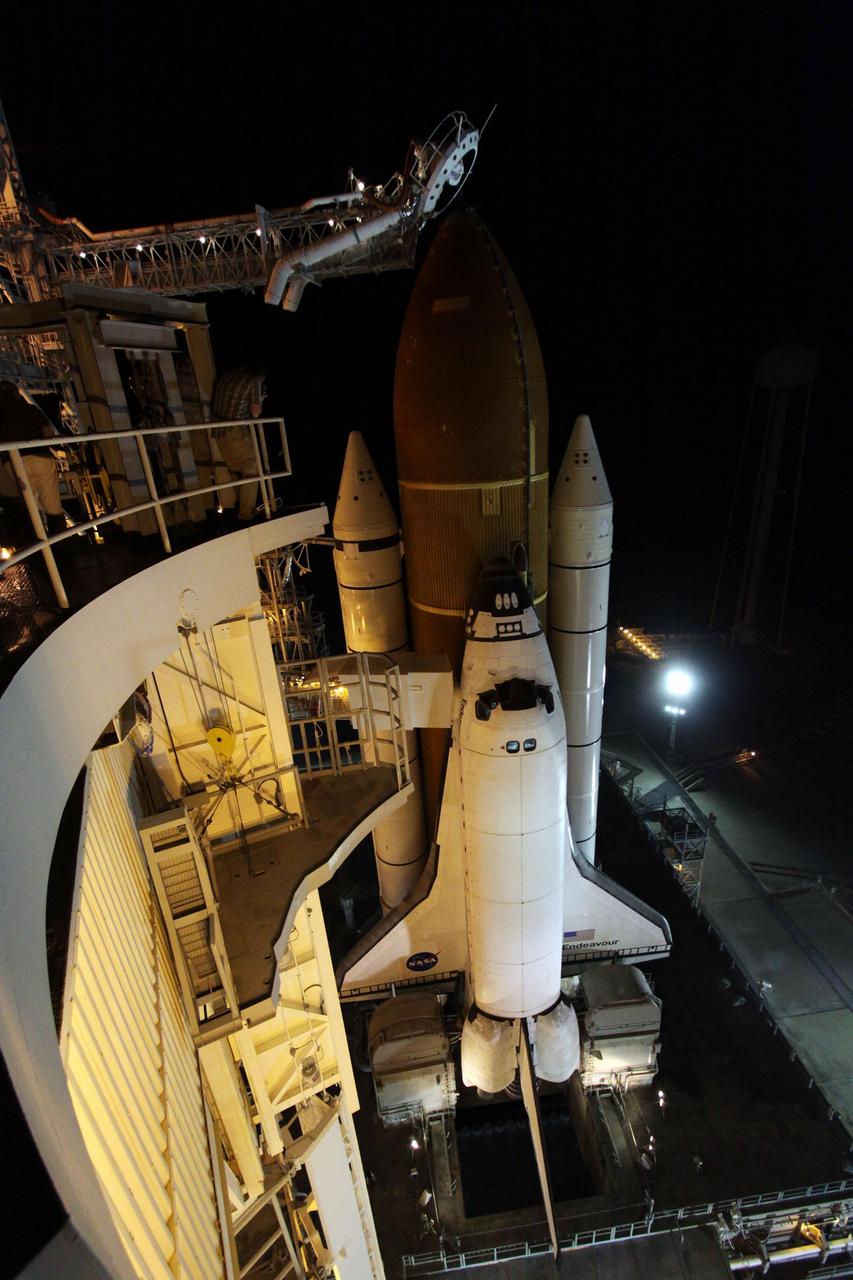
CAPE CANAVERAL, Fla. -- At NASA's Kennedy Space Center in Florida, space shuttle Endeavour is illuminated by bright xenon lights on Launch Pad 39A after the rotating service structure (RSS) was moved away. The structure provides weather protection and access to the shuttle while it awaits lift off on the pad. RSS "rollback," as it's called, began at 11:52 p.m. EDT on April 28. The move was scheduled to begin at 7 p.m., but storms over Kennedy delayed pad operations for a few hours. STS-134 will deliver the Express Logistics Carrier-3, Alpha Magnetic Spectrometer-2 (AMS), a high-pressure gas tank and additional spare parts for the Dextre robotic helper to the International Space Station. Endeavour was scheduled to launch at 3:47 p.m. on April 29, but that attempt was scrubbed for at least 72 hours while engineers assess an issue associated with the shuttle's Auxiliary Power Unit 1. STS-134 will be the final spaceflight for Endeavour. For more information visit, www.nasa.gov/mission_pages/shuttle/shuttlemissions/sts134/index.html. Photo credit: NASA/Ken Thornsley
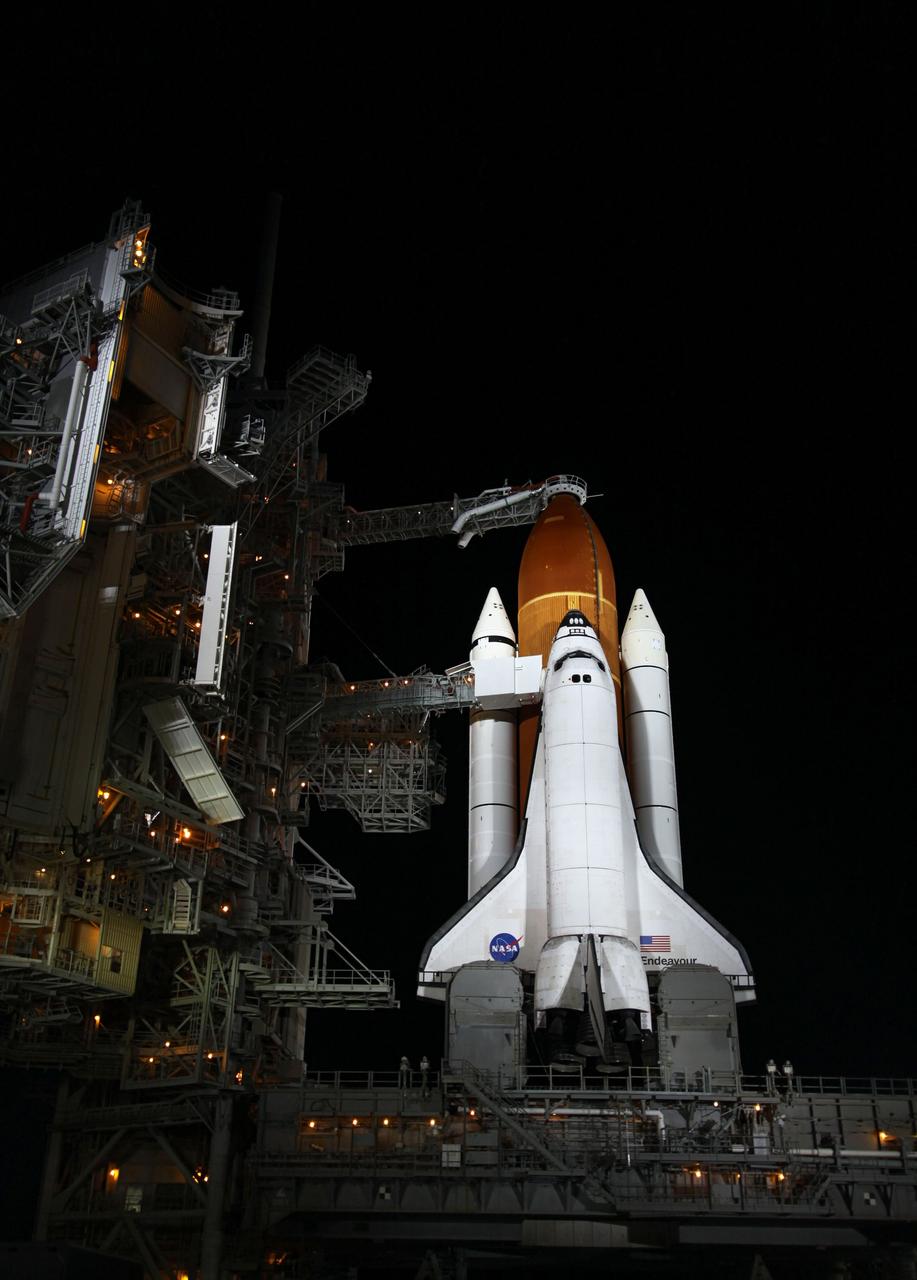
CAPE CANAVERAL, Fla. - At NASA's Kennedy Space Center in Florida, space shuttle Endeavour is illuminated by bright xenon lights on Launch Pad 39A after the rotating service structure (RSS) was moved away. The structure provides weather protection and access to the shuttle while it awaits lift off on the pad. RSS "rollback," as it's called, began at 11:52 p.m. EDT on April 28. The move was scheduled to begin at 7 p.m., but storms over Kennedy delayed pad operations for a few hours. STS-134 will deliver the Express Logistics Carrier-3, Alpha Magnetic Spectrometer-2 (AMS), a high-pressure gas tank and additional spare parts for the Dextre robotic helper to the International Space Station. Endeavour was scheduled to launch at 3:47 p.m. on April 29, but that attempt was scrubbed for at least 72 hours while engineers assess an issue associated with the shuttle's Auxiliary Power Unit 1. STS-134 will be the final spaceflight for Endeavour. For more information visit, www.nasa.gov/mission_pages/shuttle/shuttlemissions/sts134/index.html. Photo credit: NASA/Ken Thornsley
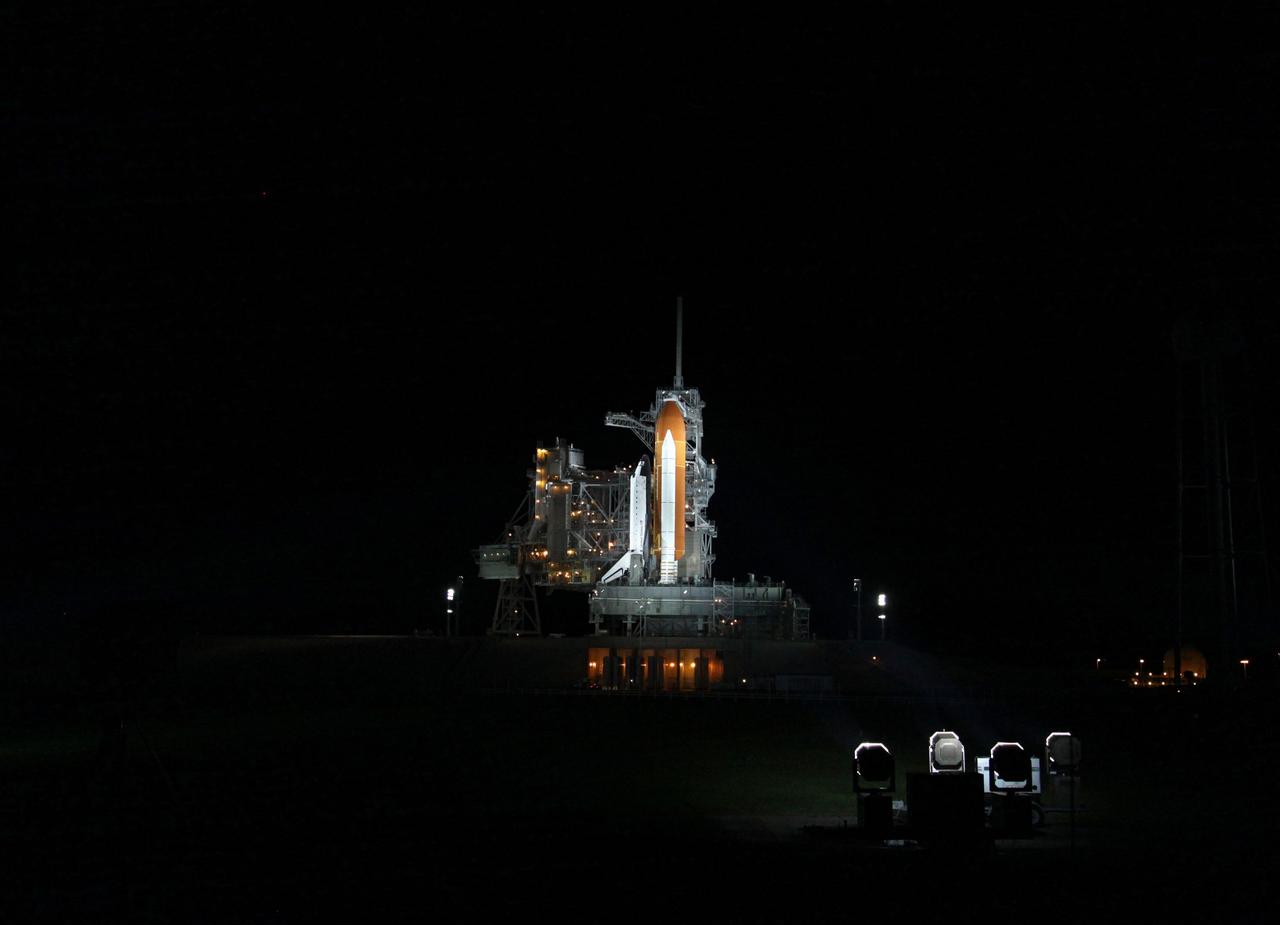
CAPE CANAVERAL, Fla. - At NASA's Kennedy Space Center in Florida, space shuttle Endeavour is illuminated by bright xenon lights on Launch Pad 39A after the rotating service structure (RSS) was moved away. The structure provides weather protection and access to the shuttle while it awaits lift off on the pad. RSS "rollback," as it's called, began at 11:52 p.m. EDT on April 28. The move was scheduled to begin at 7 p.m., but storms over Kennedy delayed pad operations for a few hours. STS-134 will deliver the Express Logistics Carrier-3, Alpha Magnetic Spectrometer-2 (AMS), a high-pressure gas tank and additional spare parts for the Dextre robotic helper to the International Space Station. Endeavour was scheduled to launch at 3:47 p.m. on April 29, but that attempt was scrubbed for at least 72 hours while engineers assess an issue associated with the shuttle's Auxiliary Power Unit 1. STS-134 will be the final spaceflight for Endeavour. For more information visit, www.nasa.gov/mission_pages/shuttle/shuttlemissions/sts134/index.html. Photo credit: NASA/Ken Thornsley
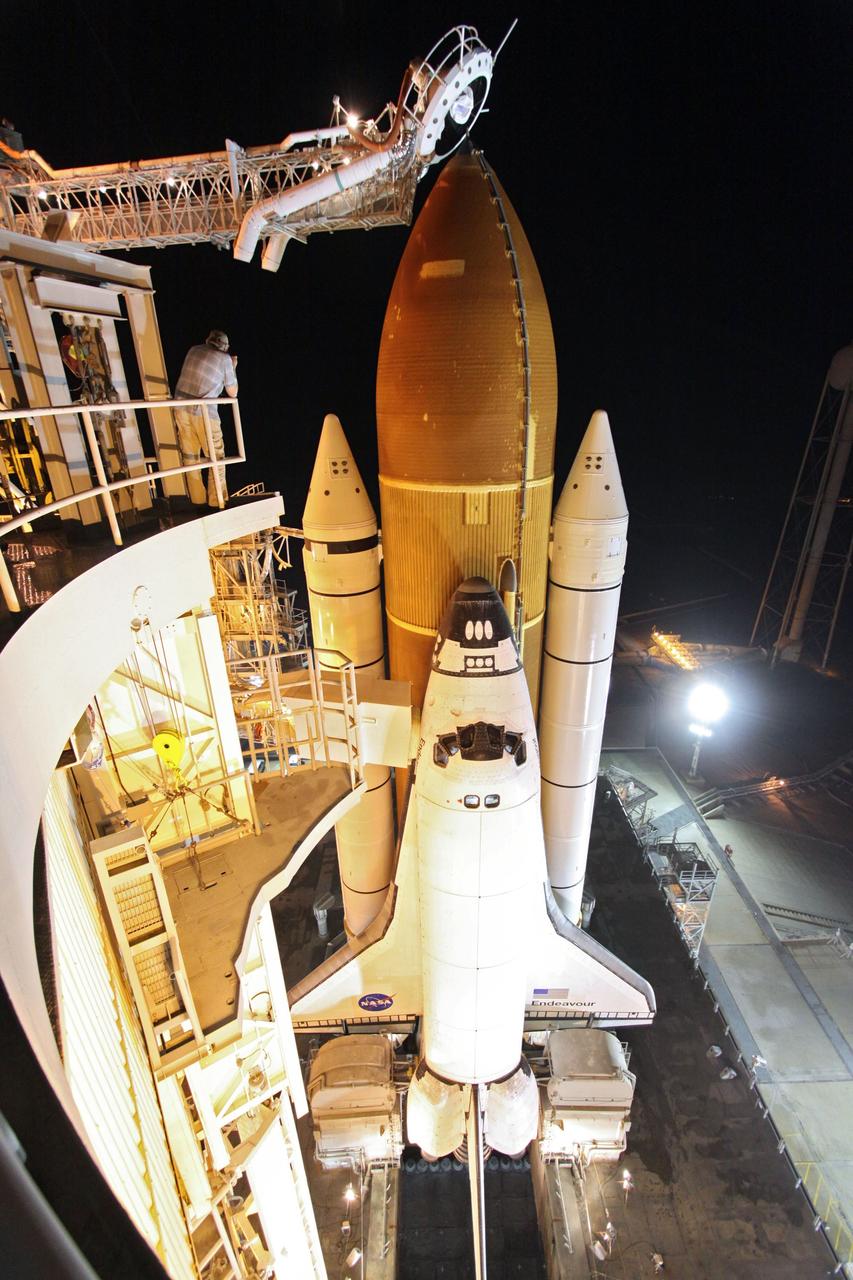
CAPE CANAVERAL, Fla. -- At NASA's Kennedy Space Center in Florida, space shuttle Endeavour is illuminated by bright xenon lights on Launch Pad 39A after the rotating service structure (RSS) was moved away. The structure provides weather protection and access to the shuttle while it awaits lift off on the pad. RSS "rollback," as it's called, began at 11:52 p.m. EDT on April 28. The move was scheduled to begin at 7 p.m., but storms over Kennedy delayed pad operations for a few hours. STS-134 will deliver the Express Logistics Carrier-3, Alpha Magnetic Spectrometer-2 (AMS), a high-pressure gas tank and additional spare parts for the Dextre robotic helper to the International Space Station. Endeavour was scheduled to launch at 3:47 p.m. on April 29, but that attempt was scrubbed for at least 72 hours while engineers assess an issue associated with the shuttle's Auxiliary Power Unit 1. STS-134 will be the final spaceflight for Endeavour. For more information visit, www.nasa.gov/mission_pages/shuttle/shuttlemissions/sts134/index.html. Photo credit: NASA/Ken Thornsley
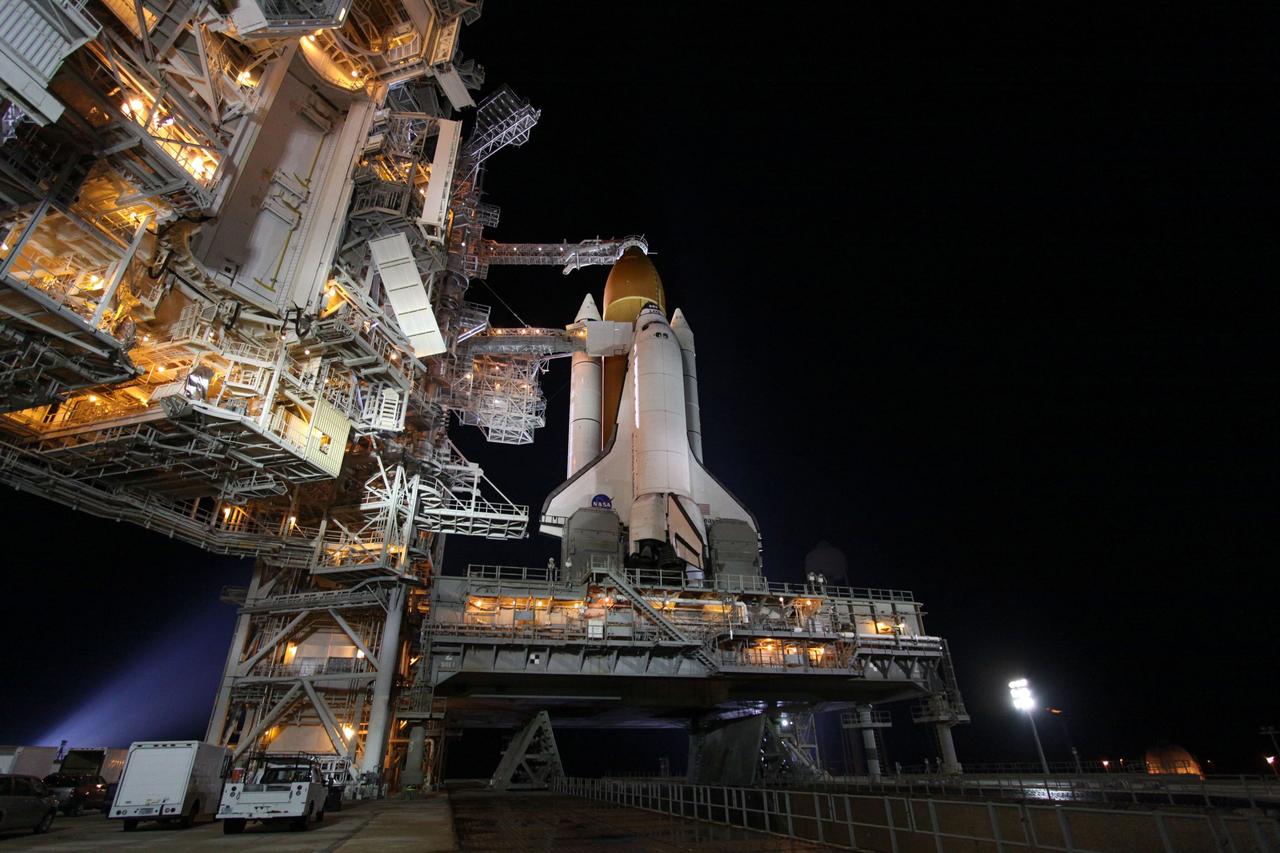
CAPE CANAVERAL, Fla. -- At NASA's Kennedy Space Center in Florida, space shuttle Endeavour is illuminated by bright xenon lights on Launch Pad 39A after the rotating service structure (RSS) was moved away. The structure provides weather protection and access to the shuttle while it awaits lift off on the pad. RSS "rollback," as it's called, began at 11:52 p.m. EDT on April 28. The move was scheduled to begin at 7 p.m., but storms over Kennedy delayed pad operations for a few hours. STS-134 will deliver the Express Logistics Carrier-3, Alpha Magnetic Spectrometer-2 (AMS), a high-pressure gas tank and additional spare parts for the Dextre robotic helper to the International Space Station. Endeavour was scheduled to launch at 3:47 p.m. on April 29, but that attempt was scrubbed for at least 72 hours while engineers assess an issue associated with the shuttle's Auxiliary Power Unit 1. STS-134 will be the final spaceflight for Endeavour. For more information visit, www.nasa.gov/mission_pages/shuttle/shuttlemissions/sts134/index.html. Photo credit: NASA/Ken Thornsley
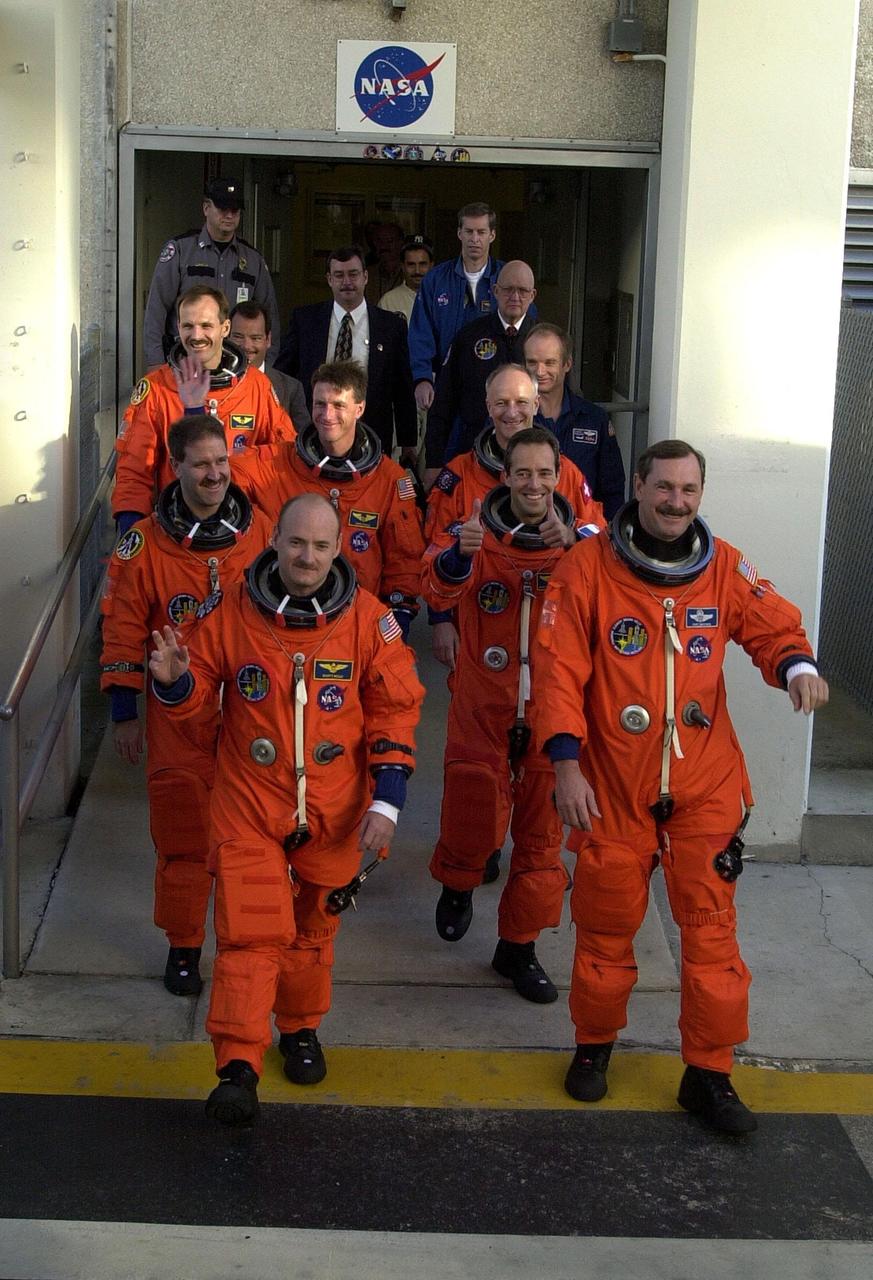
For the second time in two days, the STS-103 crew in their launch and entry suits eagerly head out of the Operations and Checkout Building on their way to Launch Pad 39B and liftoff of Space Shuttle Discovery. From front to back by two's are Pilot Scott J. Kelly and Commander Curtis L. Brown Jr., Mission Specialists John M. Grunsfeld (Ph.D.) and Jean-Francois Clervoy of France, C. Michael Foale (Ph.D.) and Claude Nicollier of Switzerland, and Steven L. Smith taking up the rear. The previous launch attempt on Dec. 17 was scrubbed about 8:52 p.m. due to numerous violations of weather launch commit criteria at KSC. The mission, to service the Hubble Space Telescope, is now scheduled for launch Dec. 19 at 7:50 p.m. EST from Launch Pad 39B. Mission objectives include replacing gyroscopes and an old computer, installing another solid state recorder, and replacing damaged insulation in the telescope. After the 7-day, 21-hour mission, Discovery is expected to land at KSC Monday, Dec. 27, at about 5:24 p.m. EST
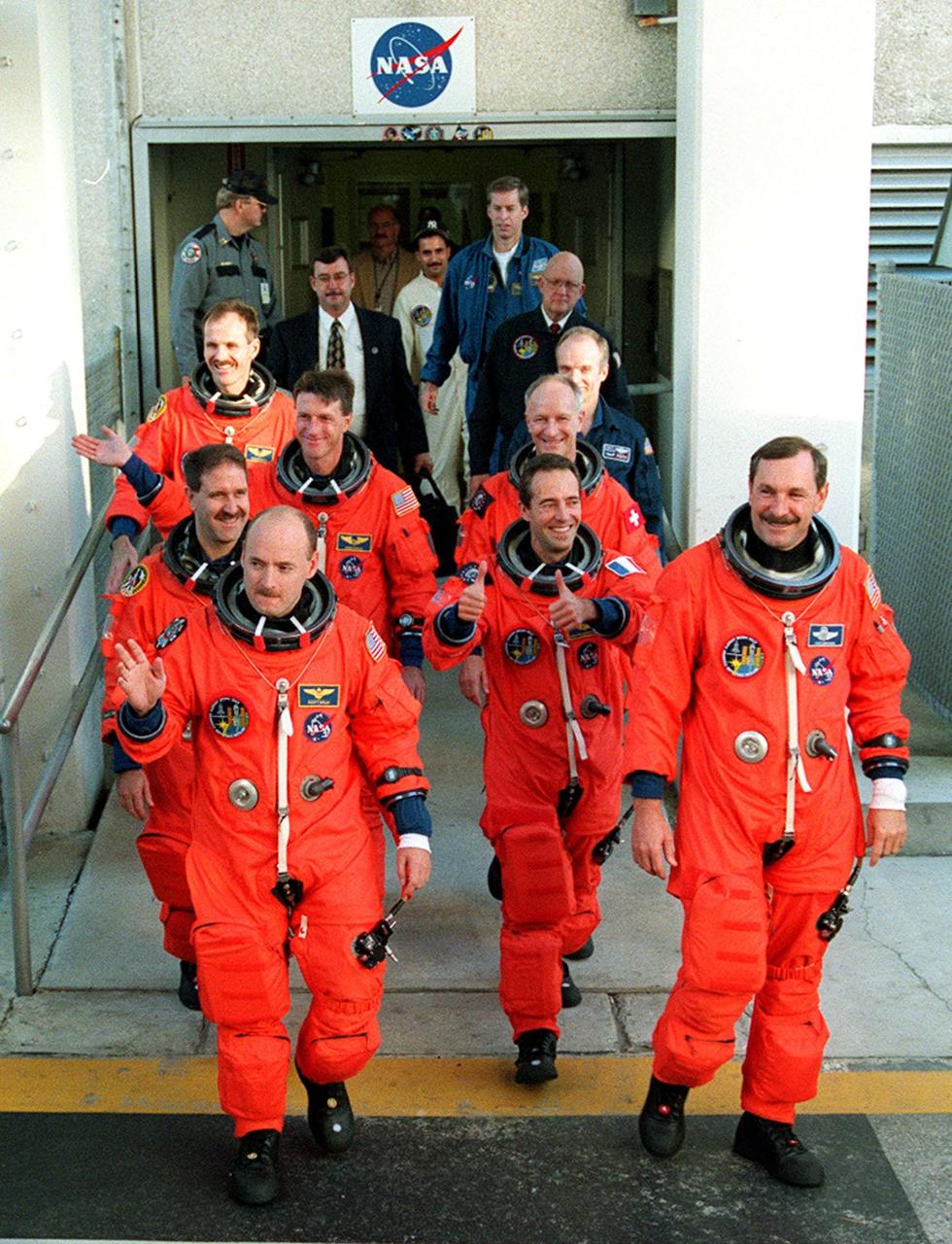
The STS-103 crew in their launch and entry suits signal confidence as they head out of the Operations and Checkout Building, for the second time in two days, on their way to Launch Pad 39B and liftoff of Space Shuttle Discovery. From front to back by two's are Pilot Scott J. Kelly and Commander Curtis L. Brown Jr., Mission Specialists John M. Grunsfeld (Ph.D.) and Jean-Francois Clervoy of France, C. Michael Foale (Ph.D.) and Claude Nicollier of Switzerland, and Steven L. Smith taking up the rear. The previous launch attempt on Dec. 17 was scrubbed about 8:52 p.m. due to numerous violations of weather launch commit criteria at KSC. The mission, to service the Hubble Space Telescope, is now scheduled for launch Dec. 19 at 7:50 p.m. EST from Launch Pad 39B. Mission objectives include replacing gyroscopes and an old computer, installing another solid state recorder, and replacing damaged insulation in the telescope. After the 7-day, 21-hour mission, Discovery is expected to land at KSC Monday, Dec. 27, at about 5:24 p.m. EST
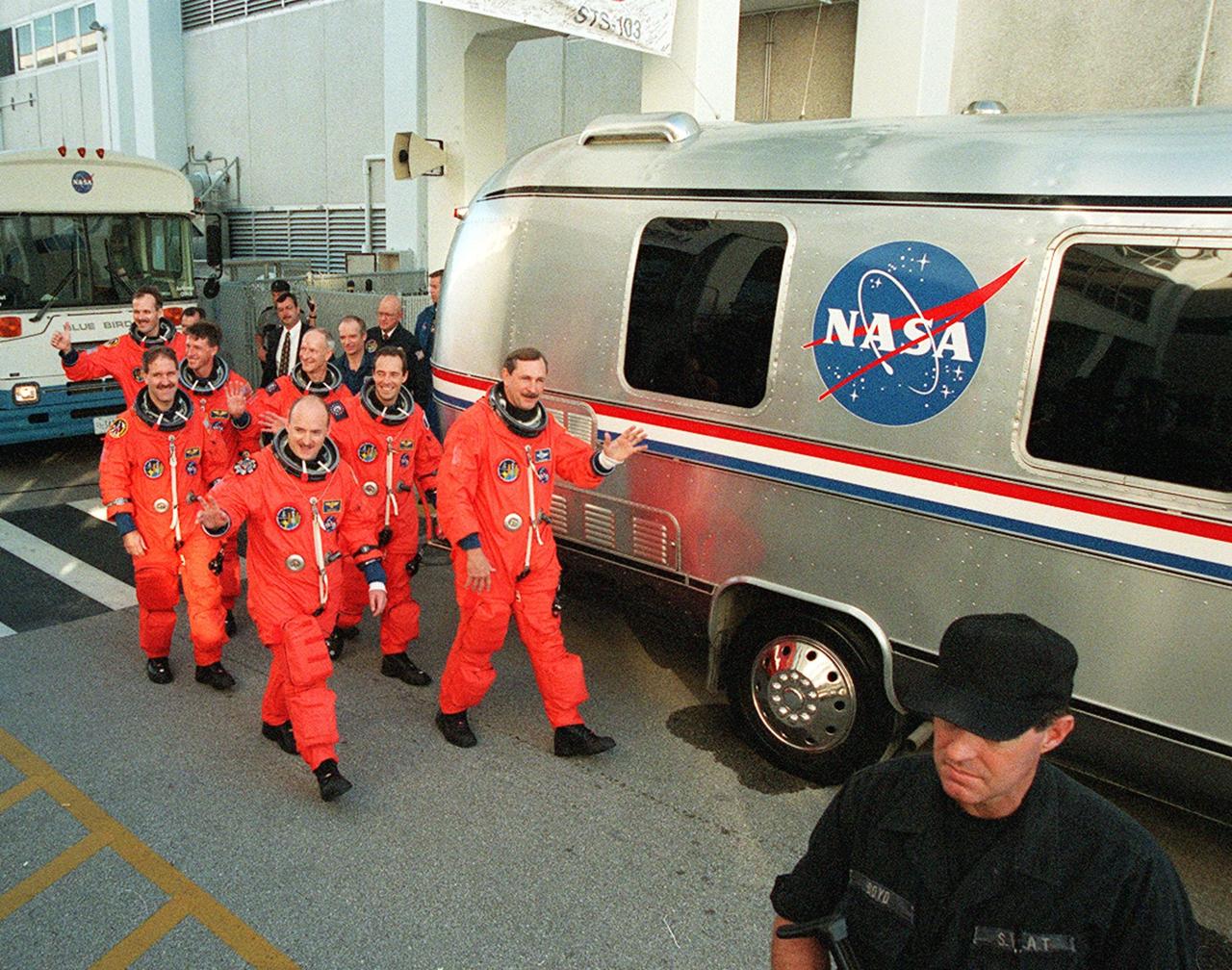
An eager STS-103 crew emerge from behind the "Astrovan" at the Operations and Checkout Building to board the vehicle for transfer to Launch Pad 39B. Walking in pairs (from front to back) are Pilot Scott J. Kelly and Commander Curtis L. Brown Jr., Mission Specialists John M. Grunsfeld (Ph.D.) and Jean-Francois Clervoy of France, C. Michael Foale (Ph.D.) and Claude Nicollier of Switzerland, and Steven L. Smith taking up the rear. A previous launch attempt on Dec. 17 was scrubbed about 8:52 p.m. due to numerous violations of weather launch commit criteria at KSC. The mission, to service the Hubble Space Telescope, is now scheduled for launch Dec. 19 at 7:50 p.m. EST from Launch Pad 39B. Mission objectives include replacing gyroscopes and an old computer, installing another solid state recorder, and replacing damaged insulation in the telescope. After the 7-day, 21-hour mission, Discovery is expected to land at KSC Monday, Dec. 27, at about 5:24 p.m. EST