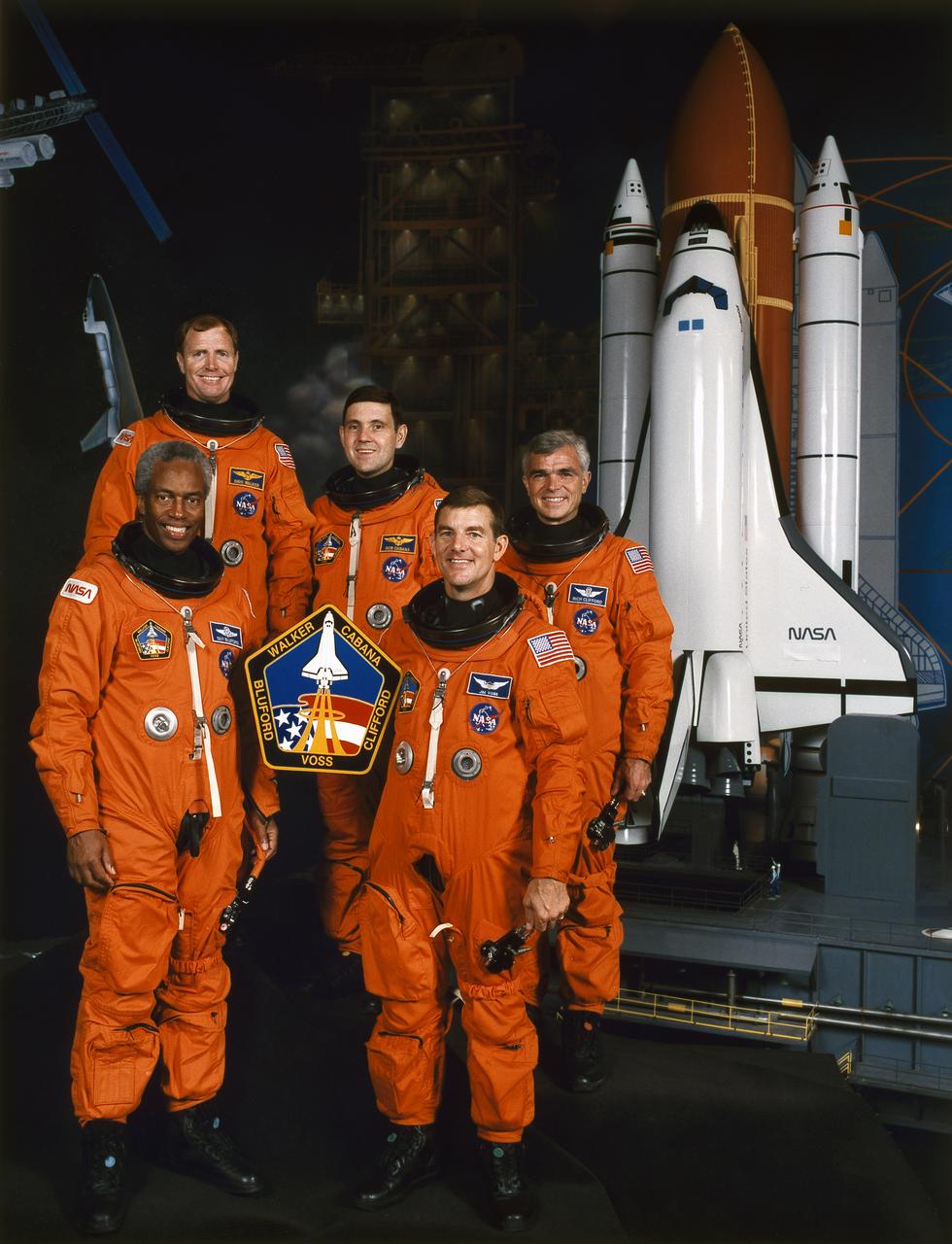
KENNEDY SPACE CENTER, FLA. -- STS053-(S)-002 -- STS-53 Crew Portrait -- These five astronauts have been assigned to fly aboard the Space Shuttle Discovery for the STS-53 mission, scheduled for launch in November of this year. Pictured are, left to right (front), Guion S. Bluford and James S. Voss, mission specialists; and (back row) David M. Walker, mission commander; Robert D. Cabana, pilot; and Michael R.U. (Rich) Clifford, mission specialist. The photograph was made in the new Space Center Houston facility
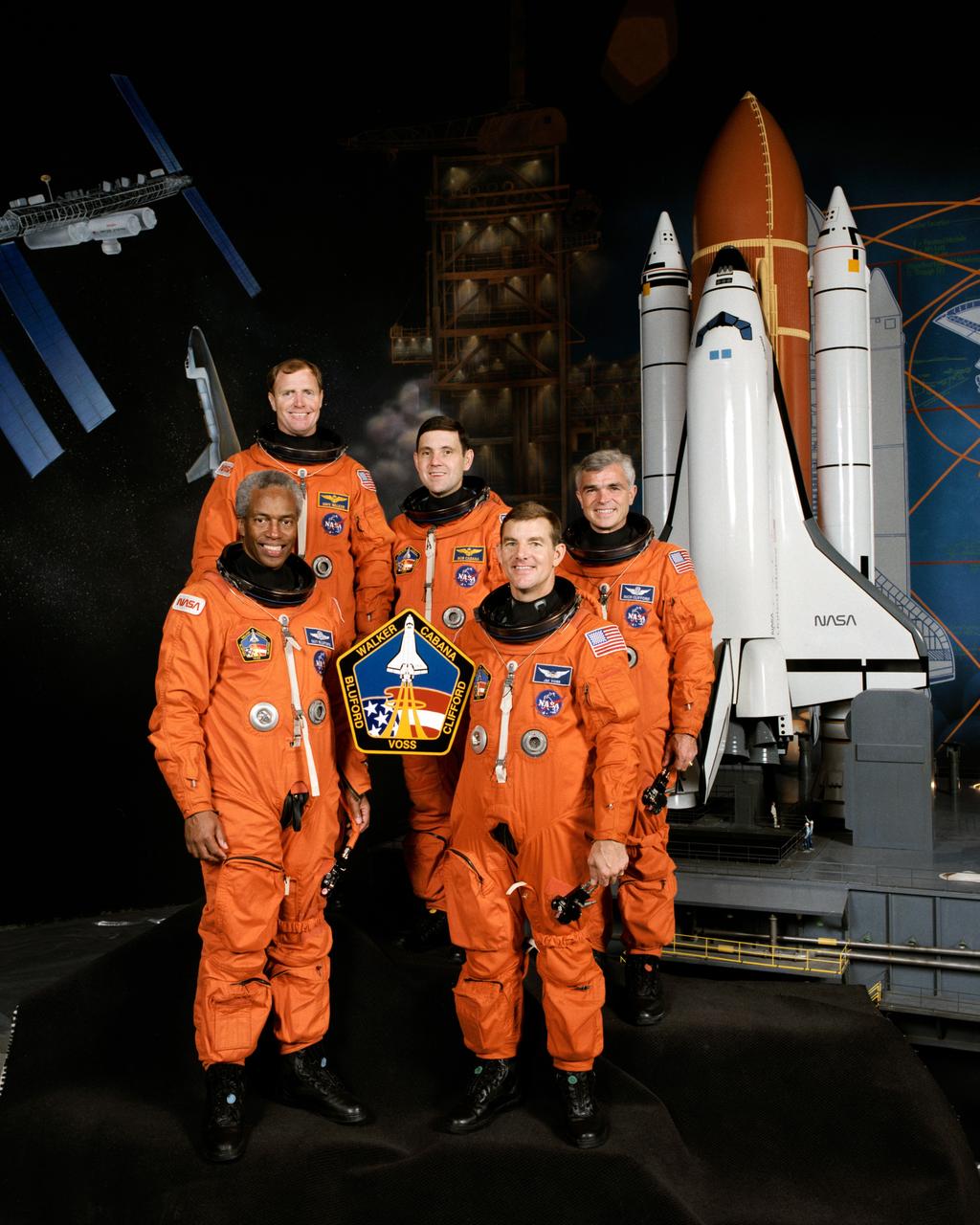
STS053-S-002 (September 1992) --- These five astronauts have been assigned to fly aboard the Space Shuttle Discovery for the mission, scheduled for launch in November of this year. Pictured are, left to right (front), Guion S. Bluford and James S. Voss, mission specialists; and (back row) David M. Walker, mission commander; Robert D. Cabana, pilot and Michael R. U. (Rich) Clifford, mission specialist. The photograph was made in the new Space Center Houston (SCH) facility.
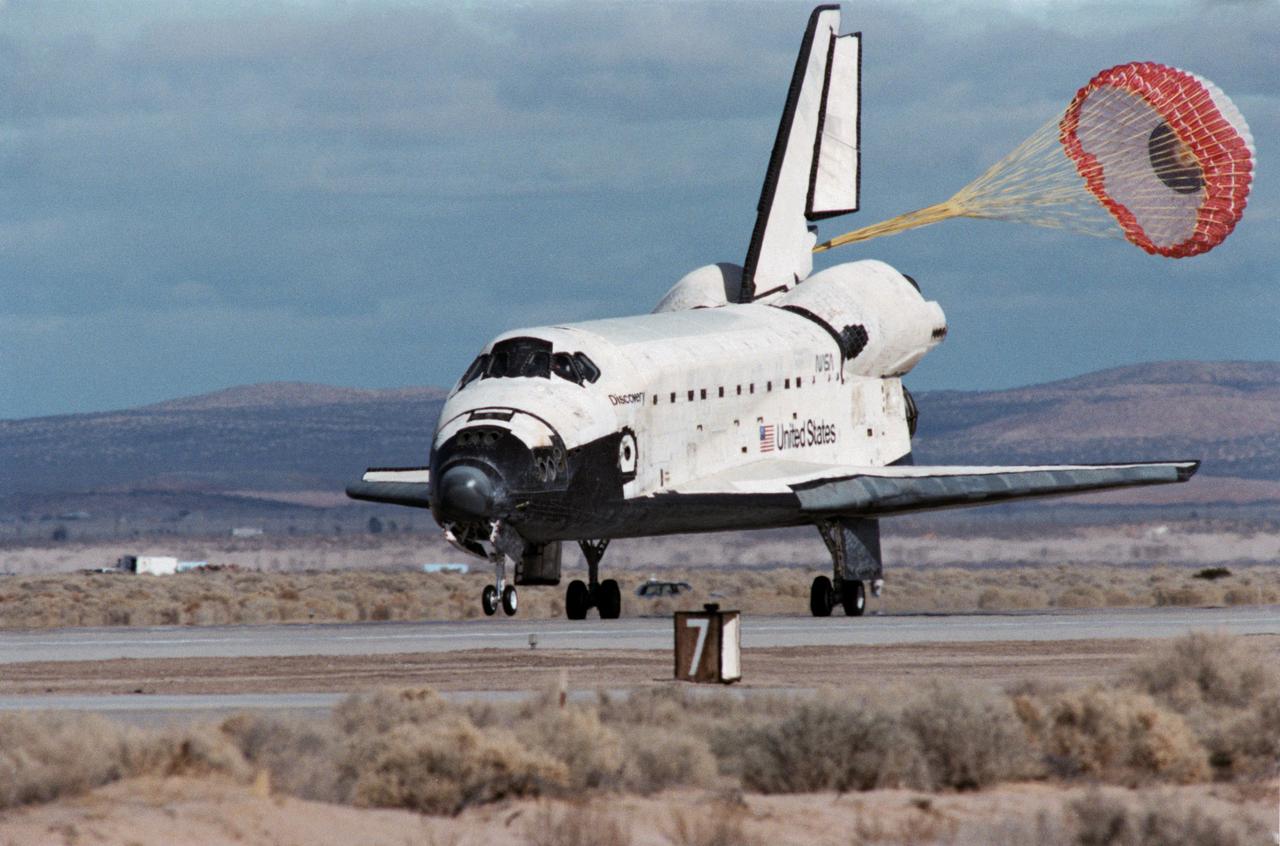
STS053-S-085 (9 Dec. 1992) --- The drag chute on the space shuttle Discovery is partially deployed during landing on Runway 22 at Edwards Air Force Base. The landing ended an eight-day space mission for the STS-53 crew. Main gear touchdown occurred at 12:43:17 p.m. (PST) on Dec. 9, 1992. Onboard were astronauts David M. Walker, Robert D. Cabana, Guion S. Bluford Jr., James S. Voss and Michael R.U. (Rich) Clifford.
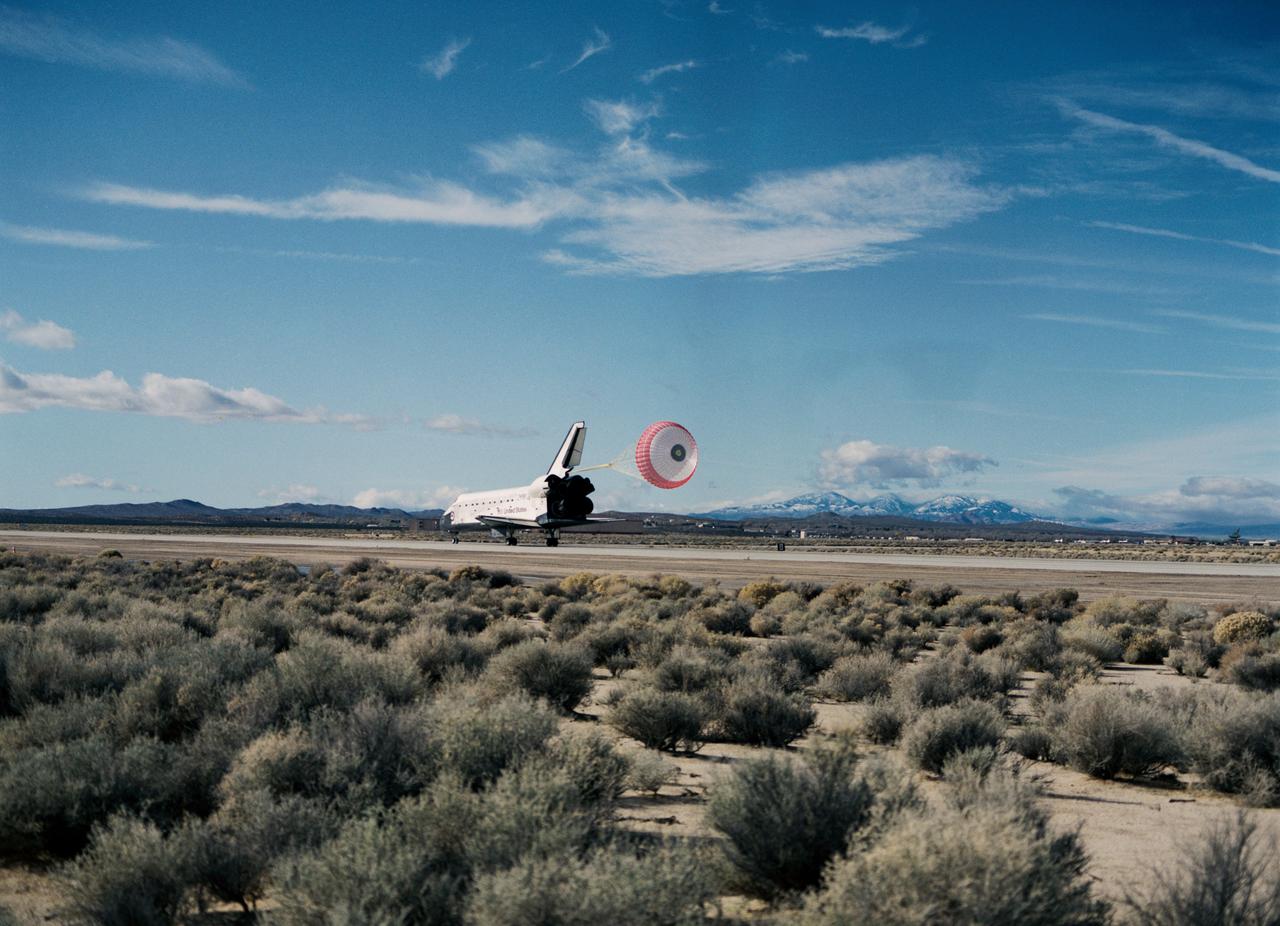
STS-53 Discovery, Orbiter Vehicle (OV) 103, is slowed by a red, white, and blue drag chute during its landing on concrete runway 22 at Edwards Air Force Base (EAFB), California. Main landing gear (MLG) touchdown occurred at 12:43:17 pm (Pacific Standard Time (PST)). This aft view of OV-103 shows the drag chute deployed from its compartment at the base of the vertical tail, the speedbrake/rudder flaps open, and the space shuttle main engines (SSMEs). Both MLG and nose landing gear (NLG) ride along the runway surface. Desert scrub brush appears in the foreground and mountains are seen in the background.
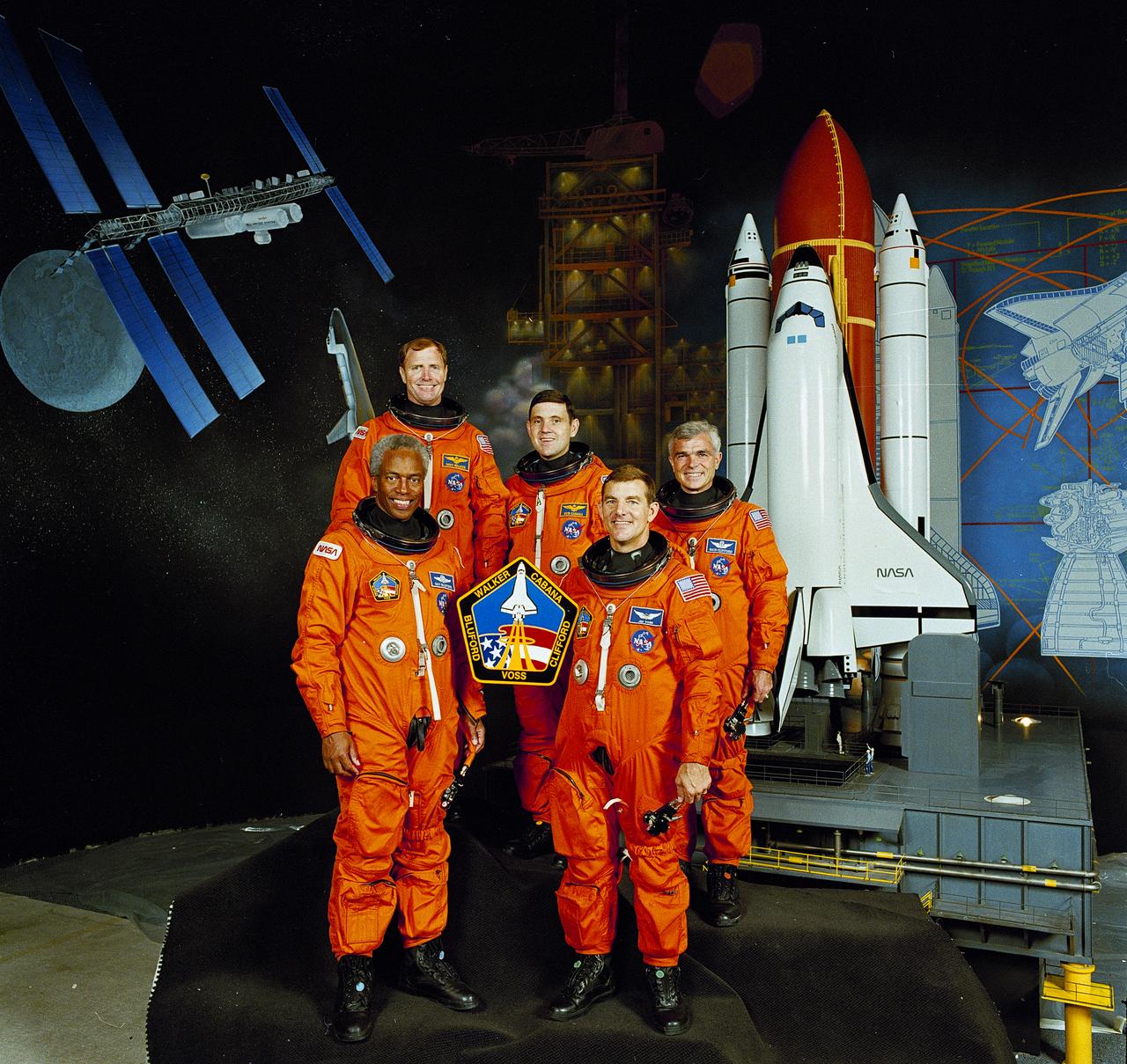
The STS-53 crew portrait included astronauts (front left to right): Guion S. Bluford, and James S. Voss, mission specialists. On the back row, left to right, are David M. Walker, commander; Robert D. Cabana, Pilot; and Michael R. (Rick) Clifford, mission specialist. The crew launched aboard the Space Shuttle Discovery on December 2, 1992 at 8:24:00 am (EST). This mission marked the final classified shuttle flight for the Department of Defense (DOD).
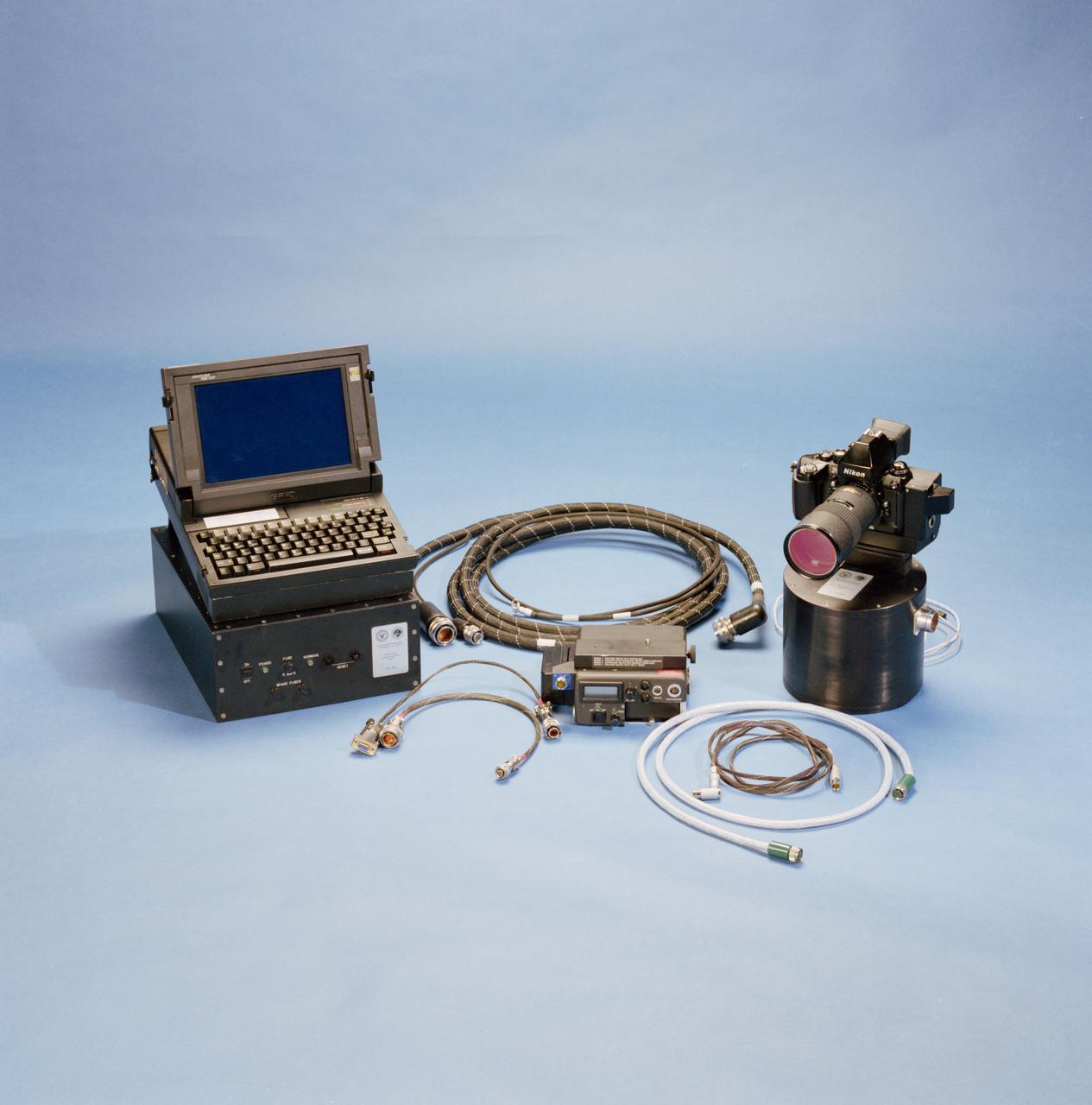
STS-53 Discovery, Orbiter Vehicle (OV) 103, Department of Defense (DOD) mission Hand-held Earth-oriented Real-time Cooperative, User-friendly, Location, targeting, and Environmental System (Hercules) spaceborne experiment equipment is documented in this table top view. HERCULES is a joint NAVY-NASA-ARMY payload designed to provide real-time high resolution digital electronic imagery and geolocation (latitude and longitude determination) of earth surface targets of interest. HERCULES system consists of (from left to right): a specially modified GRID Systems portable computer mounted atop NASA developed Playback-Downlink Unit (PDU) and the Naval Research Laboratory (NRL) developed HERCULES Attitude Processor (HAP); the NASA-developed Electronic Still Camera (ESC) Electronics Box (ESCEB) including removable imagery data storage disks and various connecting cables; the ESC (a NASA modified Nikon F-4 camera) mounted atop the NRL HERCULES Inertial Measurement Unit (HIMU) containing the three-axis ring-laser gyro.
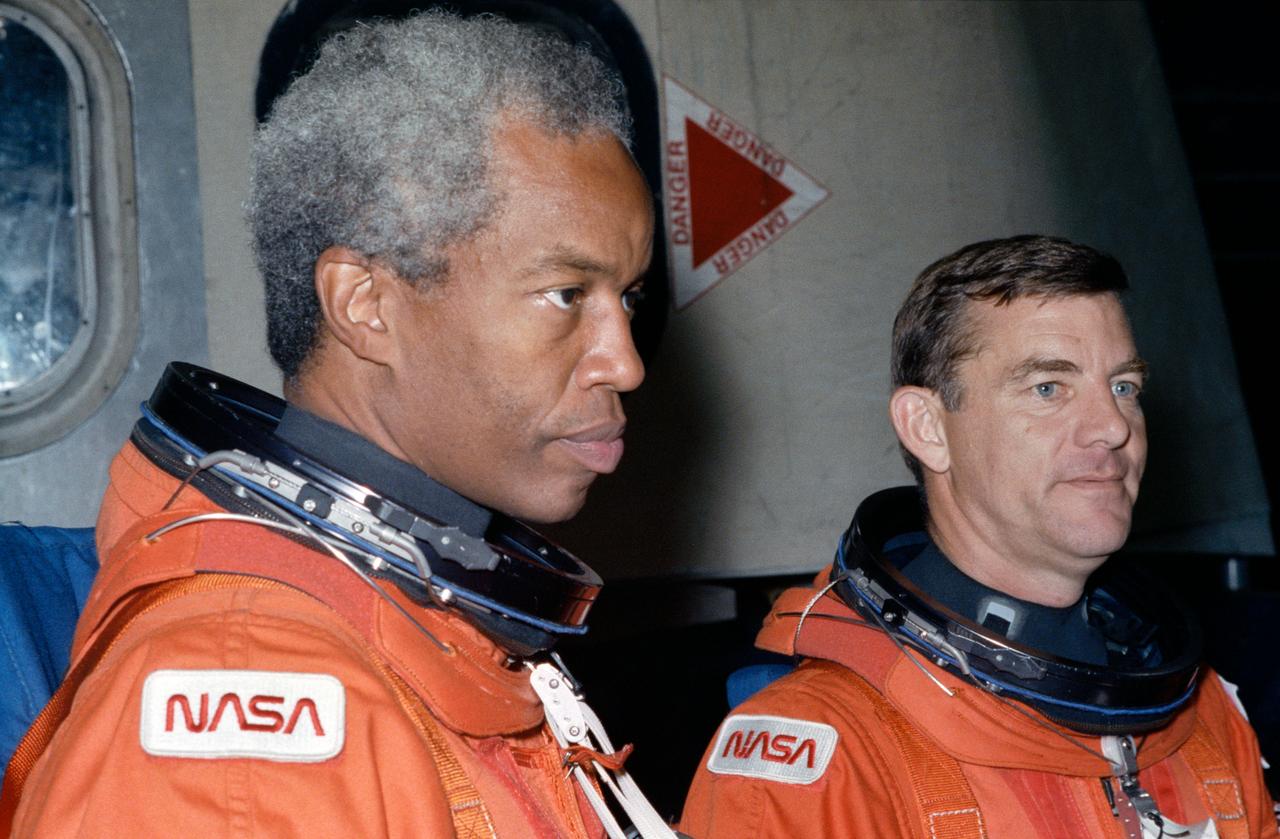
S92-49644 (1994) --- STS-53 Discovery, Orbiter Vehicle (OV) 103, Mission Specialist (MS) Guion S. Bluford (left) and MS James S. Voss, wearing launch and entry suits (LESs), listen to instructions prior to launch emergency egress bailout training. Bluford and Voss, along with the other STS-53 crewmembers, will practice bailout procedures in JSC's crew compartment trainer (CCT) located in the Mockup and Integration Laboratory (MAIL) Bldg 9NE
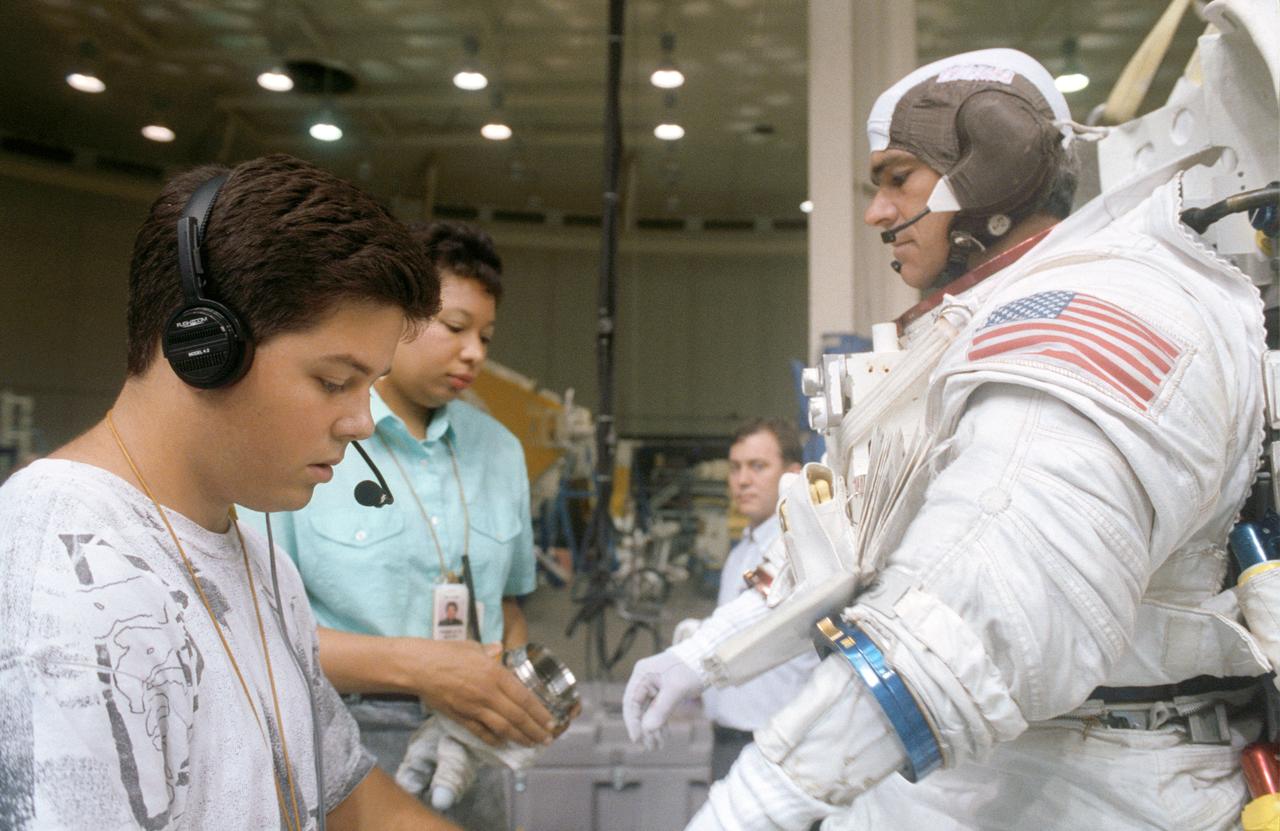
S92-42681 (28 July 1992) --- STS-53 Discovery, Orbiter Vehicle (OV) 103, Mission Specialist (MS) Michael R.U. Clifford, wearing extravehicular mobility unit (EMU) and communications carrier assembly (CCA), dons gloves with assistance from two technicians. Clifford is preparing for an underwater contingency extravehicular activity (EVA) simulation in JSC's Weightless Environment Training Facility (WETF) Bldg 29 pool.
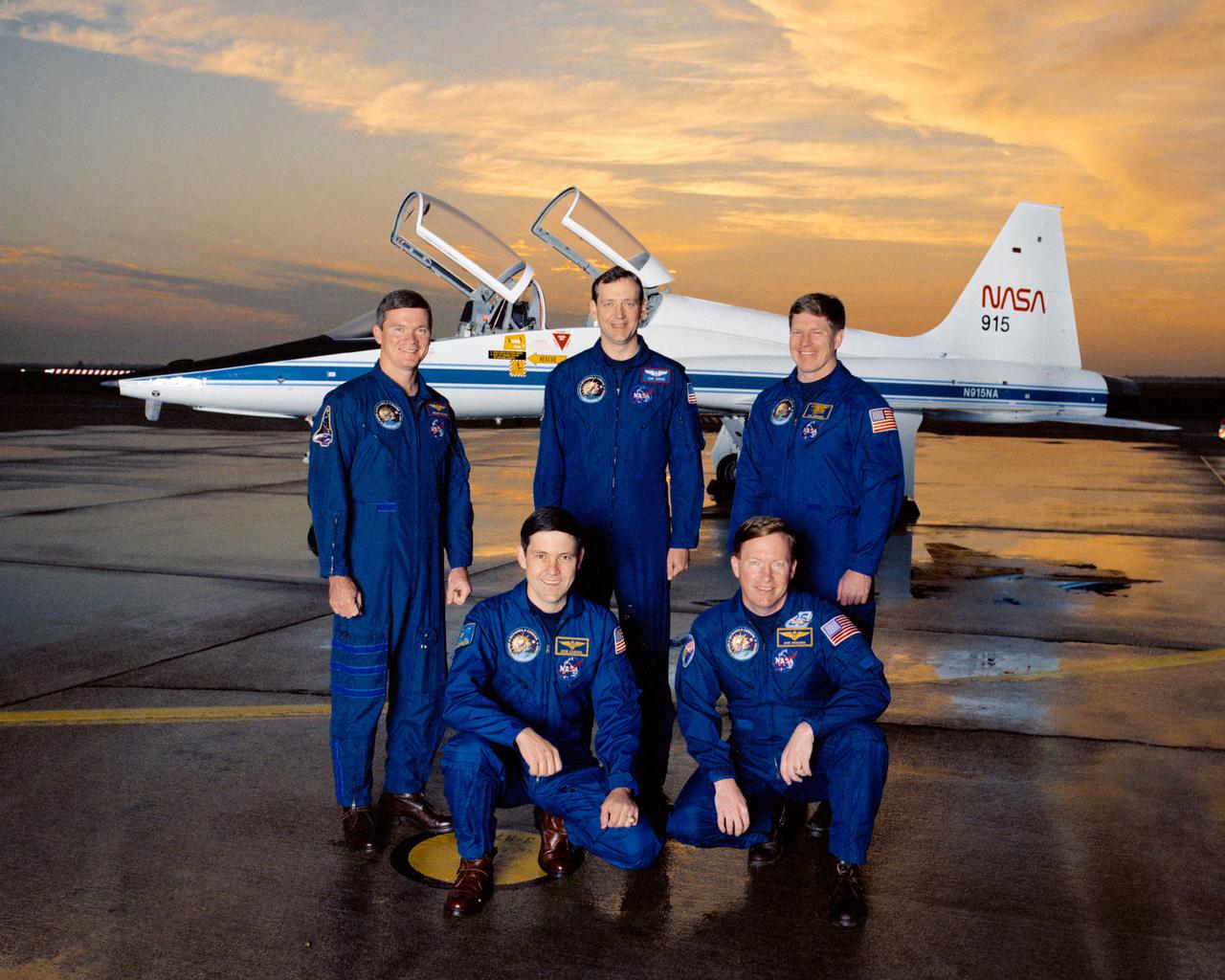
KENNEDY SPACE CENTER, Fla. – STS-41 crewmembers -- These five astronauts have been assigned to fly the STS-41 mission for NASA. Pictured are (kneeling, from the left) Robert D. Cabana, pilot, and Richard N. Richards, mission commander; and (standing from left) Bruce E. Melnick, Thomas D. Akers and William M. Shepard. All three are mission specialists.
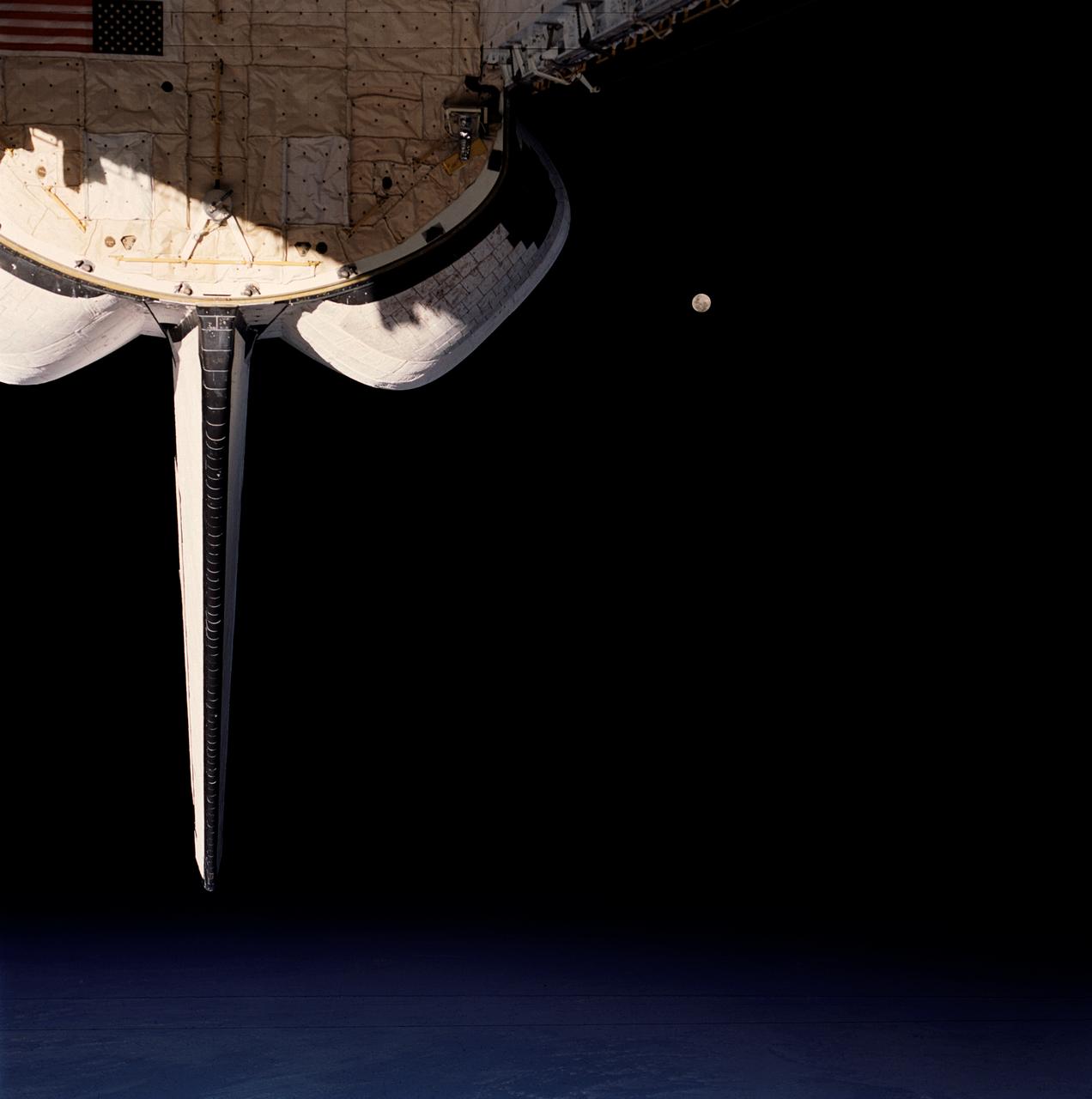
STS053-105-002 (2-9 Dec. 1992) --- A crew member onboard the space shuttle Discovery used a 70mm camera to capture this scene of a full Moon backdropped against the blackness of space. Part of Discovery's aft cargo bay and clouds over an ocean complete the scene.
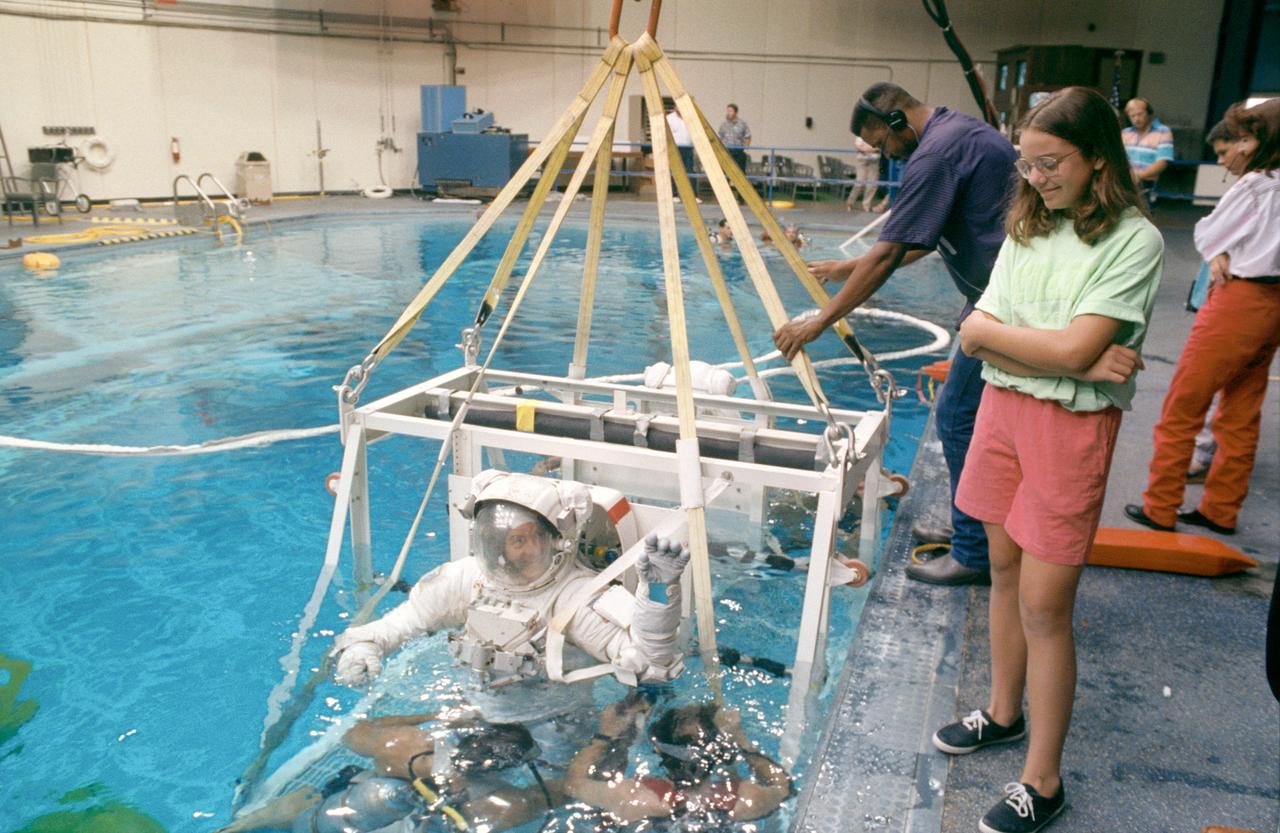
S92-43335 (28 July 1992) --- STS-53 Discovery, Orbiter Vehicle (OV) 103, Mission Specialist James S. Voss, wearing extravehicular mobility unit (EMU), is lowered into JSC?s Weightless Environment Training Facility (WETF) Bldg. 29 pool. Voss waves to his daughter standing on the poolside as the platform he is positioned in is submerged in the pool. Technicians on the poolside and scuba equipped divers in the water monitor activities. Once underwater, Voss will participate in contingency extravehicular activity (EVA) procedures.
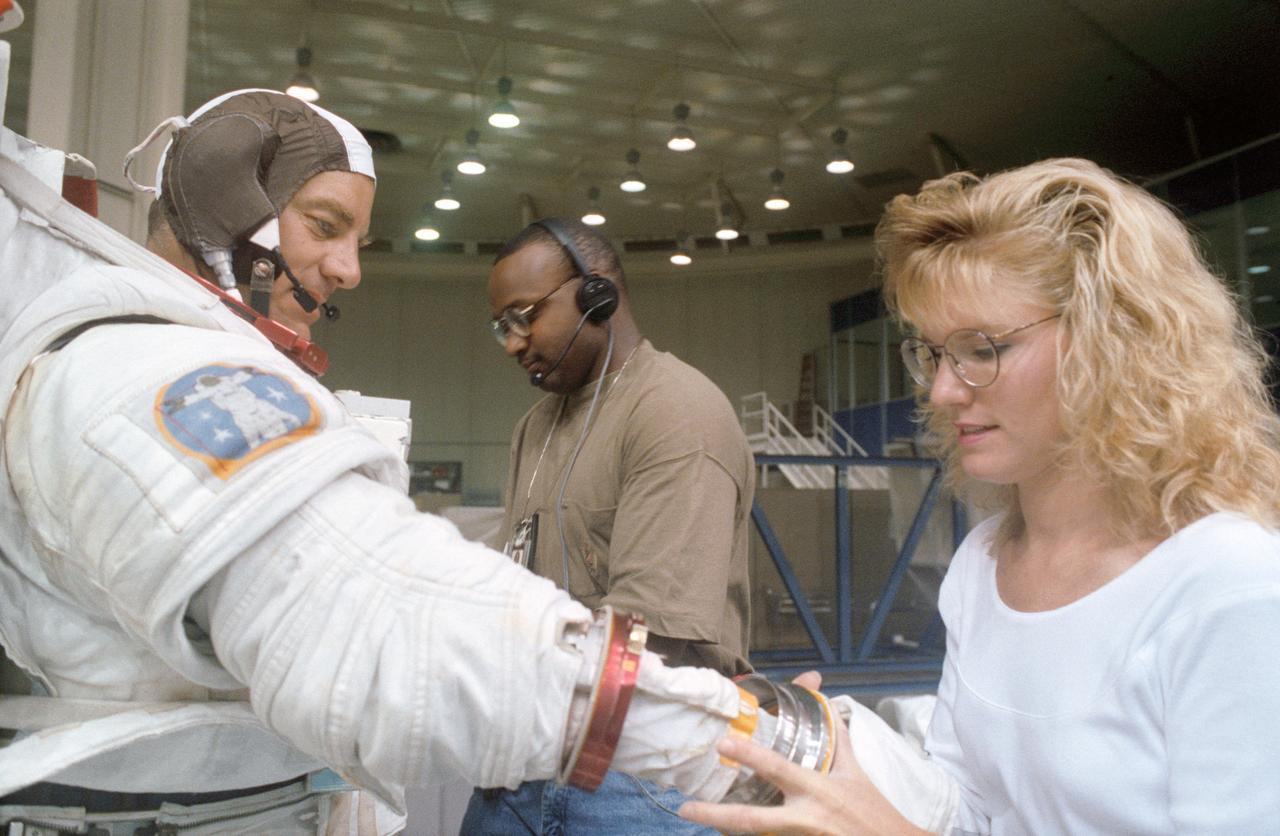
S92-42679 (28 July 1992) --- STS-53 Discovery, Orbiter Vehicle (OV) 103, Mission Specialist James S. Voss, wearing extravehicular mobility unit (EMU) and communications carrier assembly (CCA), dons his gloves with assistance from two technicians. Voss is preparing for an underwater contingency extravehicular activity (EVA) simulation in JSC?s Weightless Environment Training Facility (WETF) Bldg.29 pool.
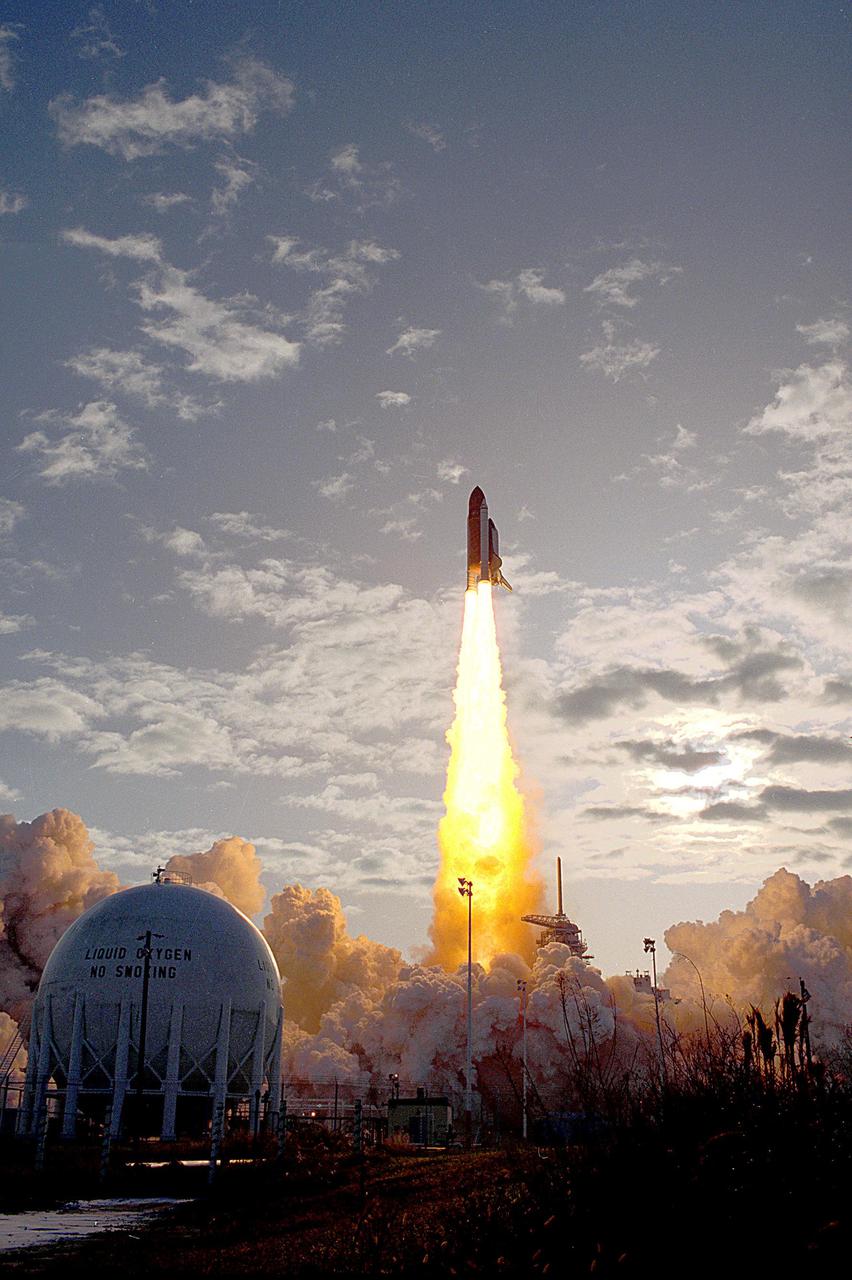
KENNEDY SPACE CENTER, FLA. -- STS-53: Discovery
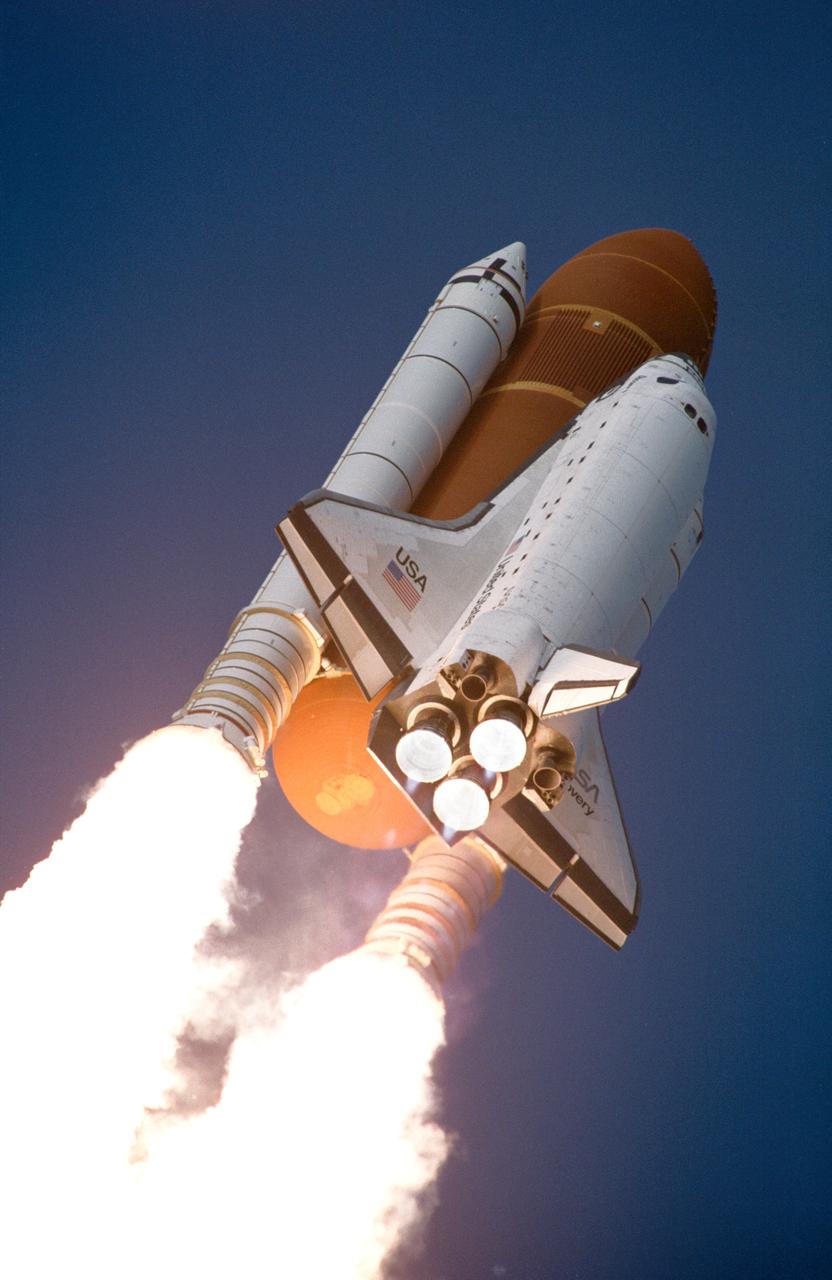
STS053-S-058 (2 Dec. 1992) --- The space shuttle Discovery, with a crew of five astronauts onboard, launches from Kennedy Space Center's (KSC) Pad 39A at 8:24:00 a.m. (EST), Dec. 2, 1992. The all military crew supporting the Department of Defense (DOD) flight included astronauts David M. Walker, Robert D. Cabana, Guion S. Bluford, Jr., James S. Voss and Michael R. U. (Rich) Clifford.
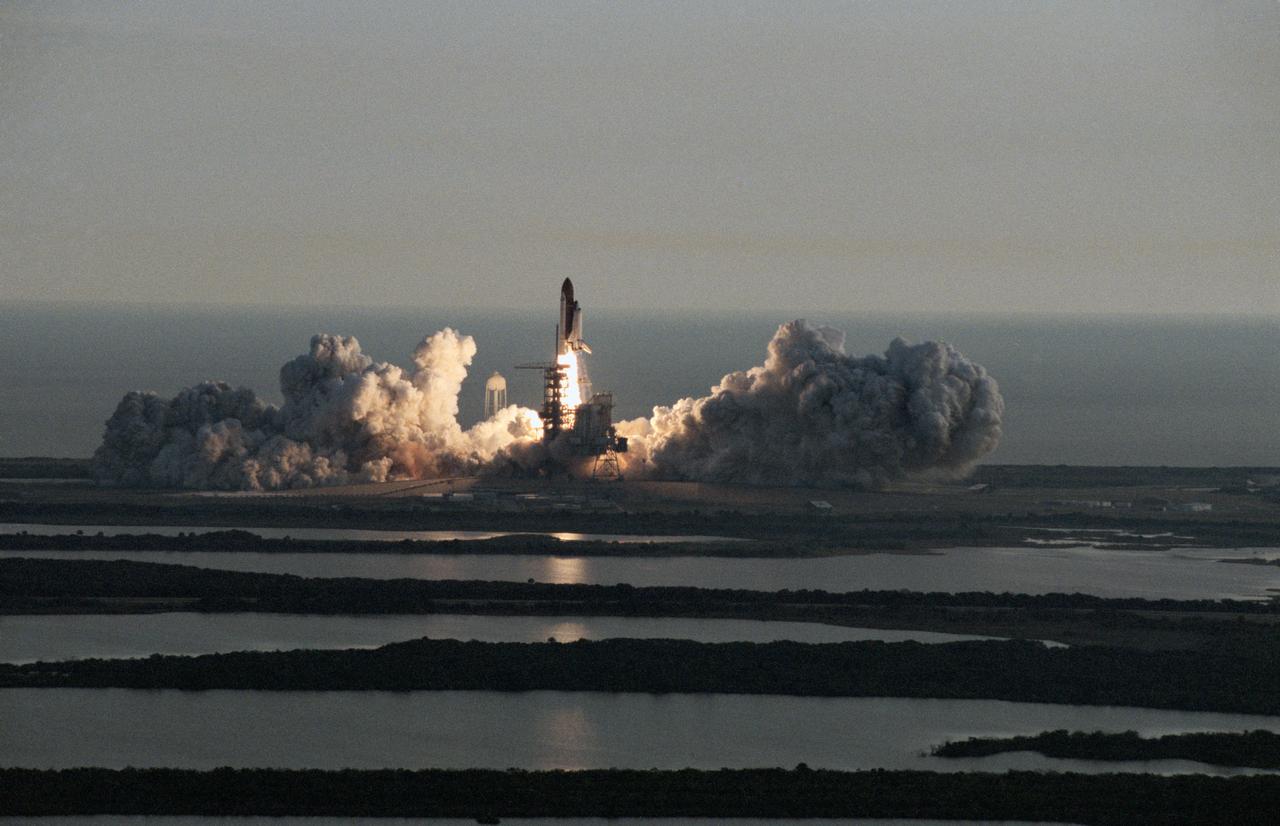
STS053-S-054 (2 Dec 1992) --- The Space Shuttle Discovery, with a crew of five astronauts onboard, launches from Kennedy Space Center?s (KSC) Pad 39A at 8:24:00 a.m. (EST), December 2, 1992. The photograph was taken from the top of the giant Vehicle Assembly Building (VAB). The all-military crew supporting the Department of Defense (DOD) flight included astronauts David M. Walker, Robert D. Cabana, Guion S. Bluford, Jr., James S. Voss and Michael R. U. (Rick) Clifford.
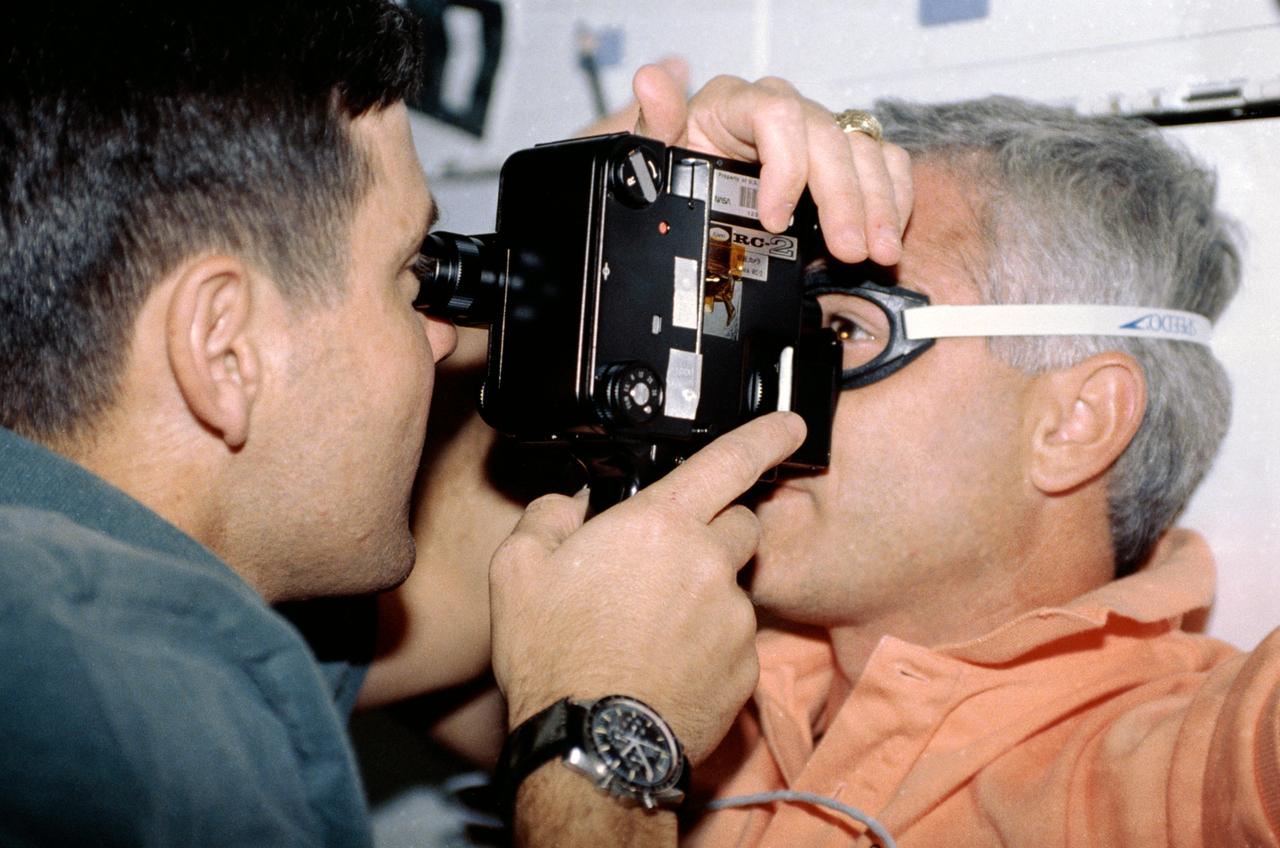
STS053-02-007 (2 - 9 Dec 1992) --- Astronaut Robert D. Cabana, pilot, uses a tonometer to check the intraocular pressure of astronaut Michael R. U. (Rich) Clifford, mission specialist. The two are on the Space Shuttle Discovery's mid-deck. This test is one of the mission's Detailed Supplementary Objectives (DSO) 472. The purpose of this DSO is to establish a data base of changes in intraocular pressures that can be used to evaluate crew health.
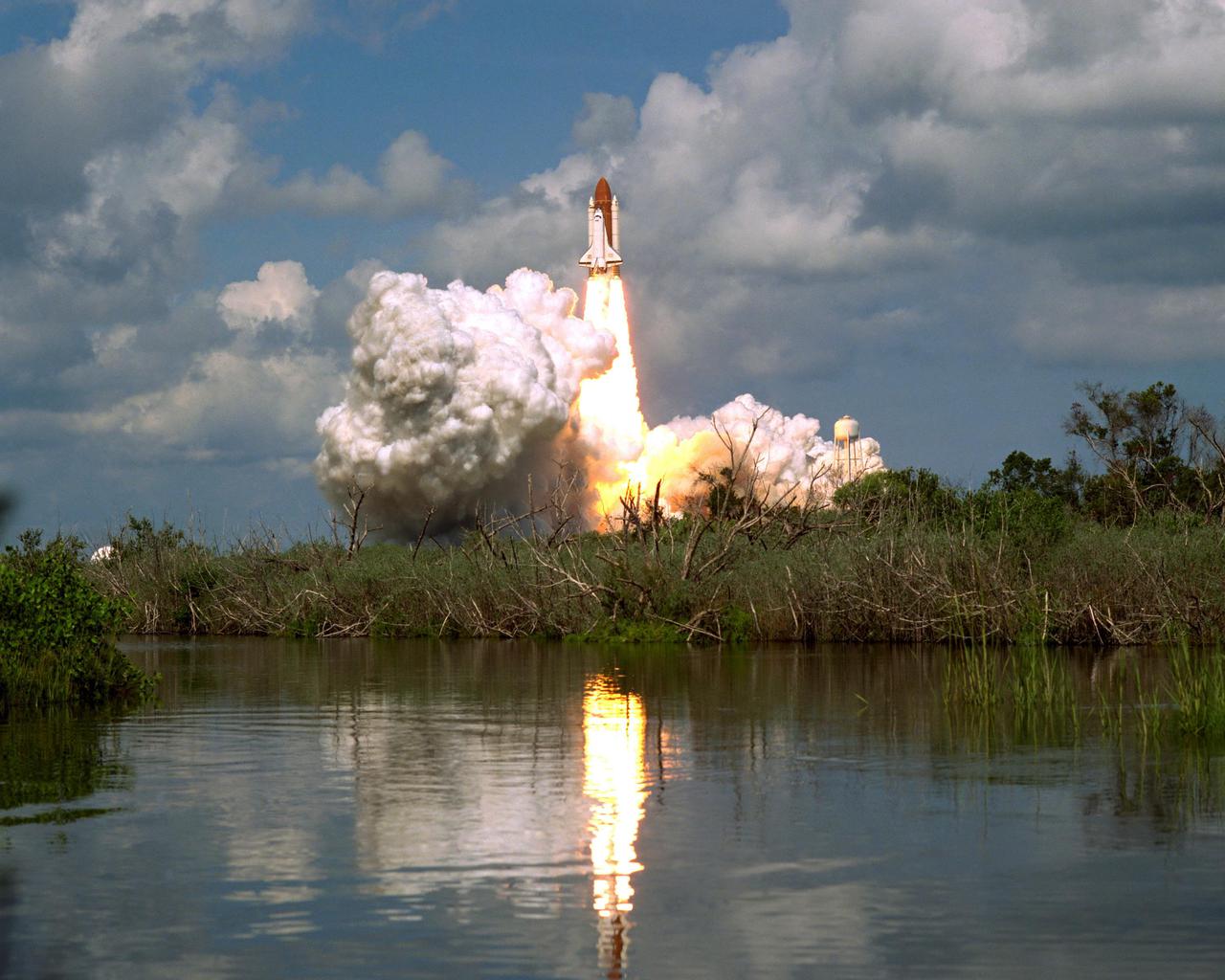
KENNEDY SPACE CENTER, FLA. -- The STS-34 Space Shuttle Atlantis lifts off from pad 39-B at 12:53 p.m. EDT, marking the beginning of a five-day mission in space. Atlantis is carrying a crew of five and the spacecraft Galileo, wich will be making a six-year trip to Jupiter..
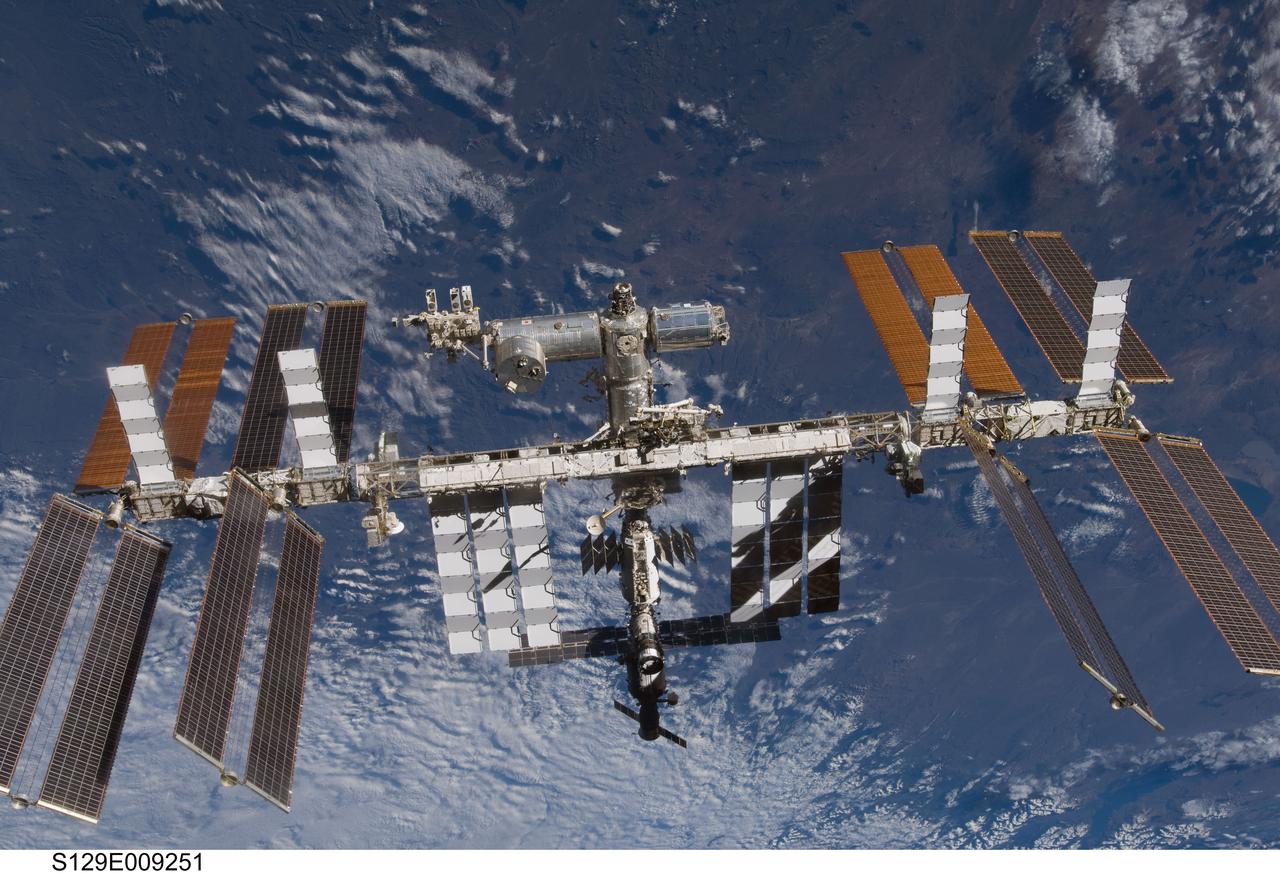
S129-E-009251 (25 Nov. 2009) --- The International Space Station is featured in this image photographed by an STS-129 crew member on Atlantis soon after the station and shuttle began their post-undocking relative separation. Undocking of the two spacecraft occurred at 3:53 a.m. (CST) on Nov. 25, 2009.
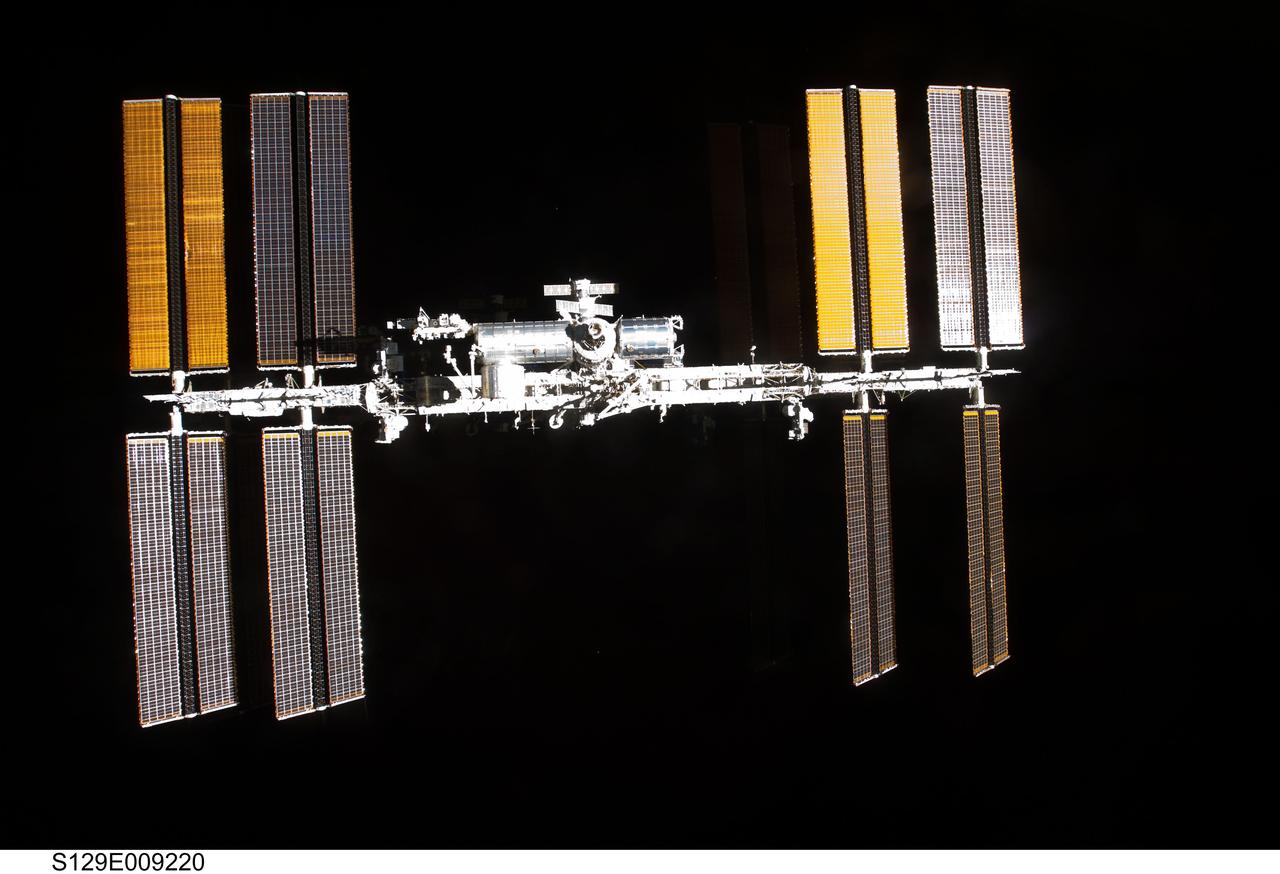
S129-E-009220 (25 Nov. 2009) --- Surrounded by the blackness of space, the International Space Station is featured in this image photographed by an STS-129 crew member on Atlantis soon after the station and shuttle began their post-undocking relative separation. Undocking of the two spacecraft occurred at 3:53 a.m. (CST) on Nov. 25, 2009.
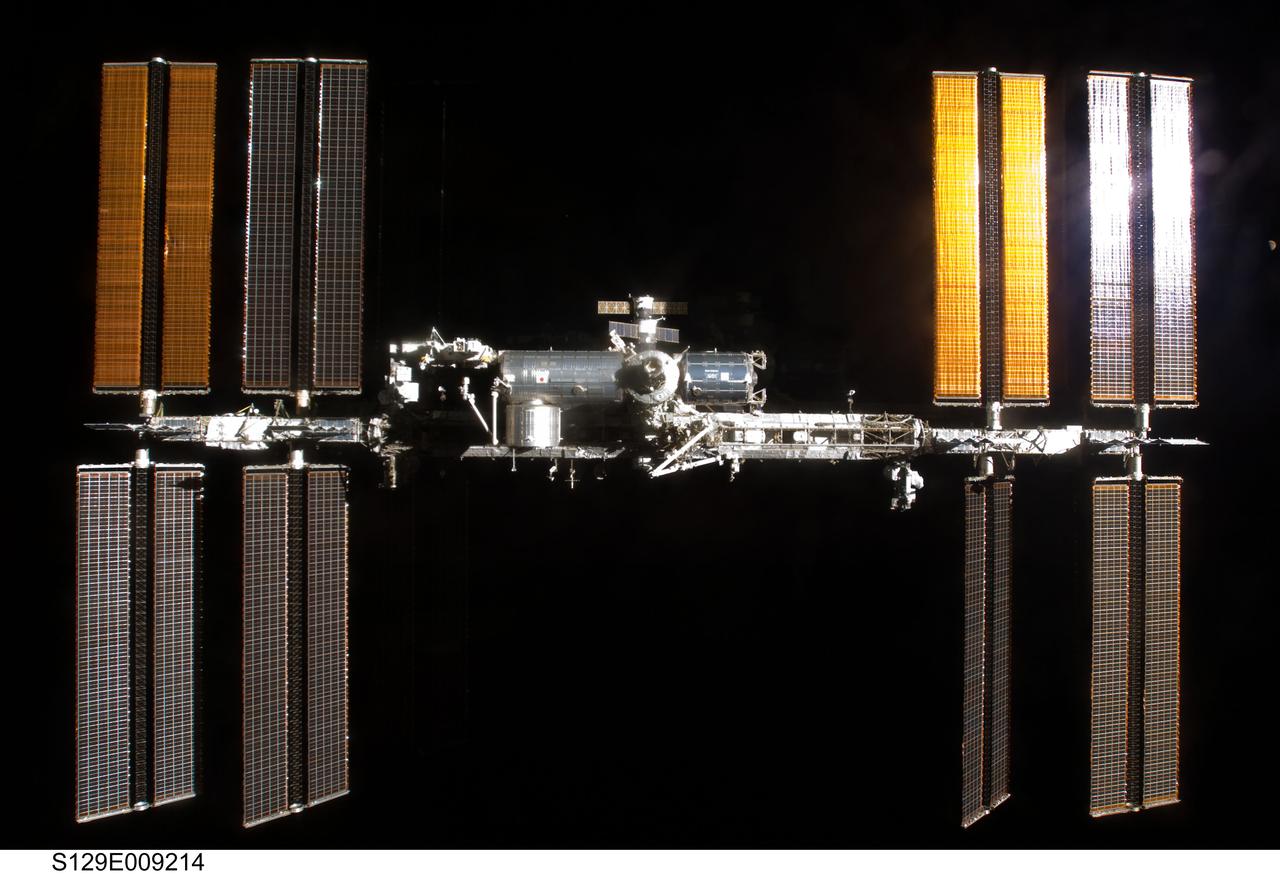
S129-E-009214 (25 Nov. 2009) --- Surrounded by the blackness of space, the International Space Station is featured in this image photographed by an STS-129 crew member on Atlantis soon after the station and shuttle began their post-undocking relative separation. Undocking of the two spacecraft occurred at 3:53 a.m. (CST) on Nov. 25, 2009.
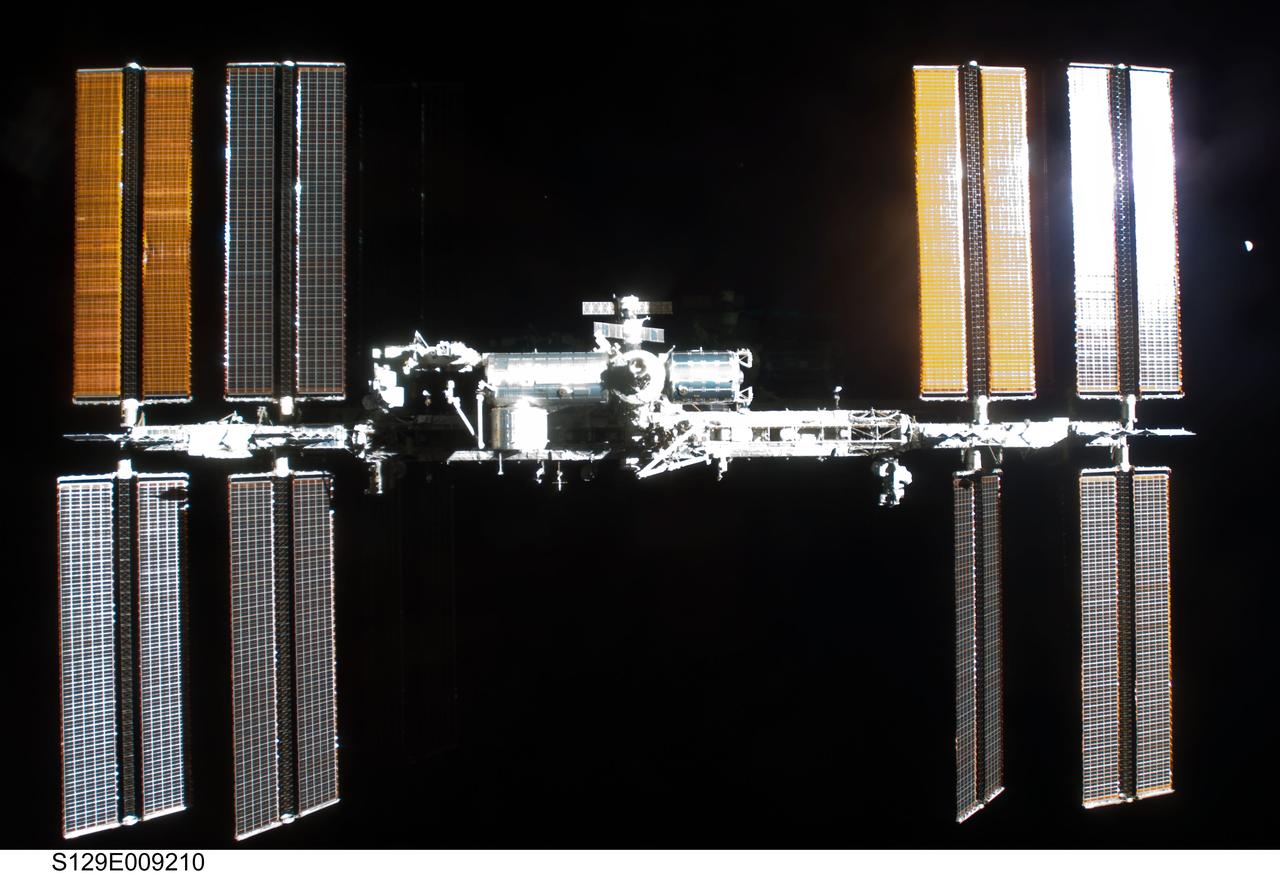
S129-E-009210 (25 Nov. 2009) --- Surrounded by the blackness of space, the International Space Station is featured in this image photographed by an STS-129 crew member on Atlantis soon after the station and shuttle began their post-undocking relative separation. Undocking of the two spacecraft occurred at 3:53 a.m. (CST) on Nov. 25, 2009.
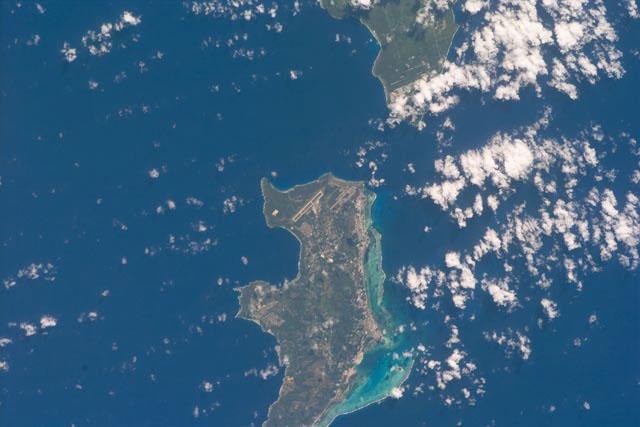
S103-E-5361 (24 December 1999) --- This vertical view from the Space Shuttle Discovery shows two small islands of the Marianas Islands (Saipan and Tinian) in Micronesia in the Pacific Ocean. The STS-103 crew recorded this electronic still image at 28:05:53 GMT, December 24, 1999.
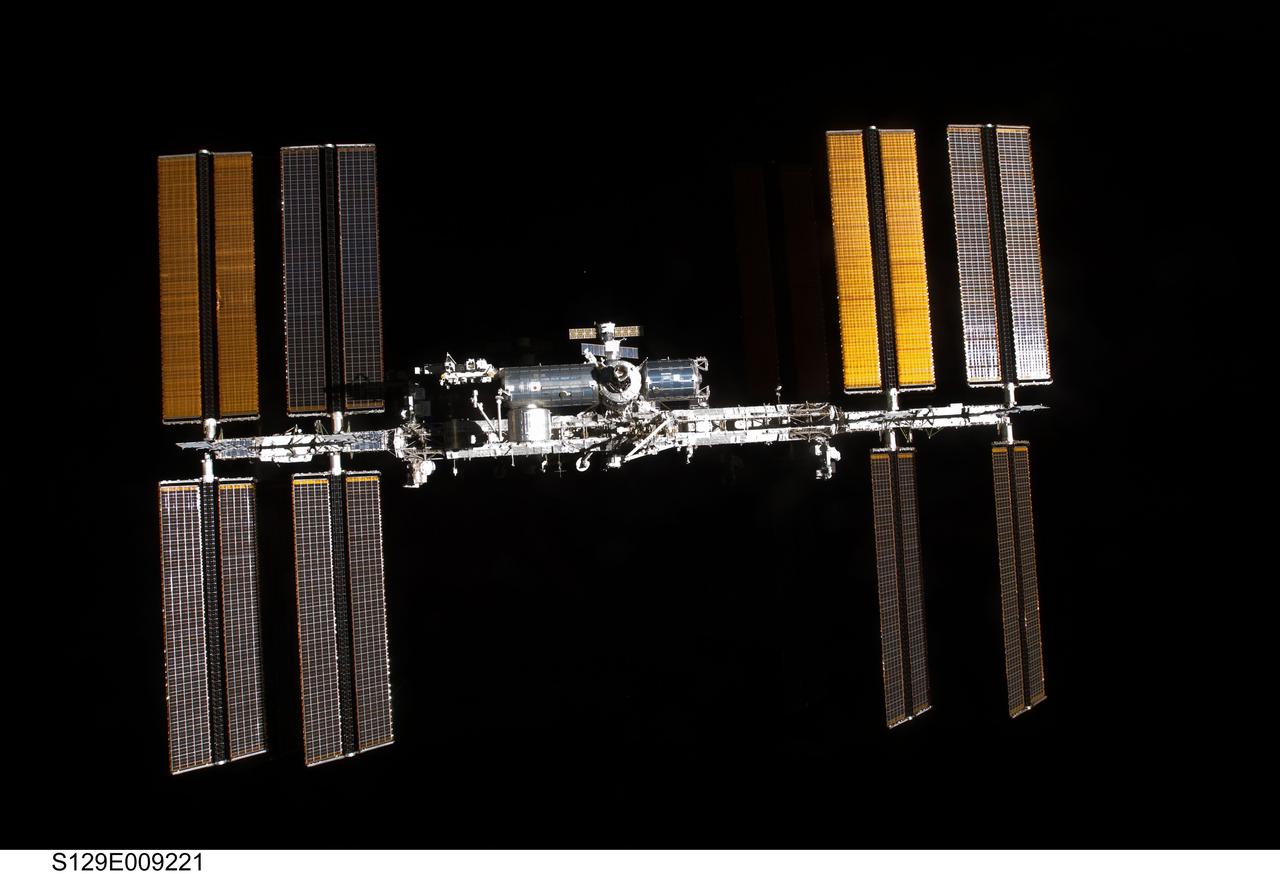
S129-E-009221 (25 Nov. 2009) --- Surrounded by the blackness of space, the International Space Station is featured in this image photographed by an STS-129 crew member on Atlantis soon after the station and shuttle began their post-undocking relative separation. Undocking of the two spacecraft occurred at 3:53 a.m. (CST) on Nov. 25, 2009.
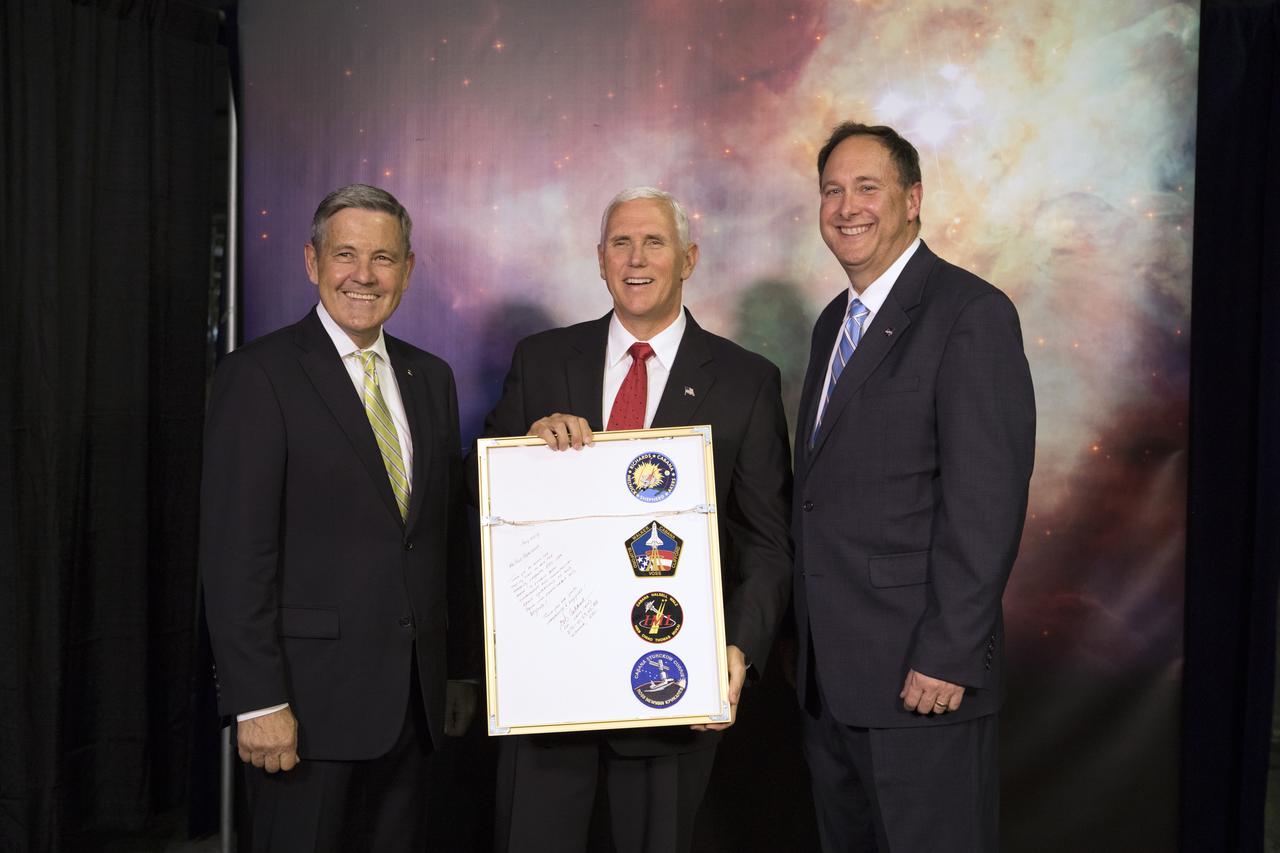
Kennedy Space Center Bob Cabana, left, and NASA's Acting Administrator Robert Lightfoot, right present Vice President Mike Pence with a framed plaque. On the back of the plaque are patches from each of Cabana's four space shuttle mission, STS-88, STS-53, STS-65, STS-41, and an inscription thanking the Vice President for his support of NASA. During his visit to Kennedy, the Vice President spoke inside the iconic Vehicle Assembly Building, where he thanked employees for advancing American leadership in space.
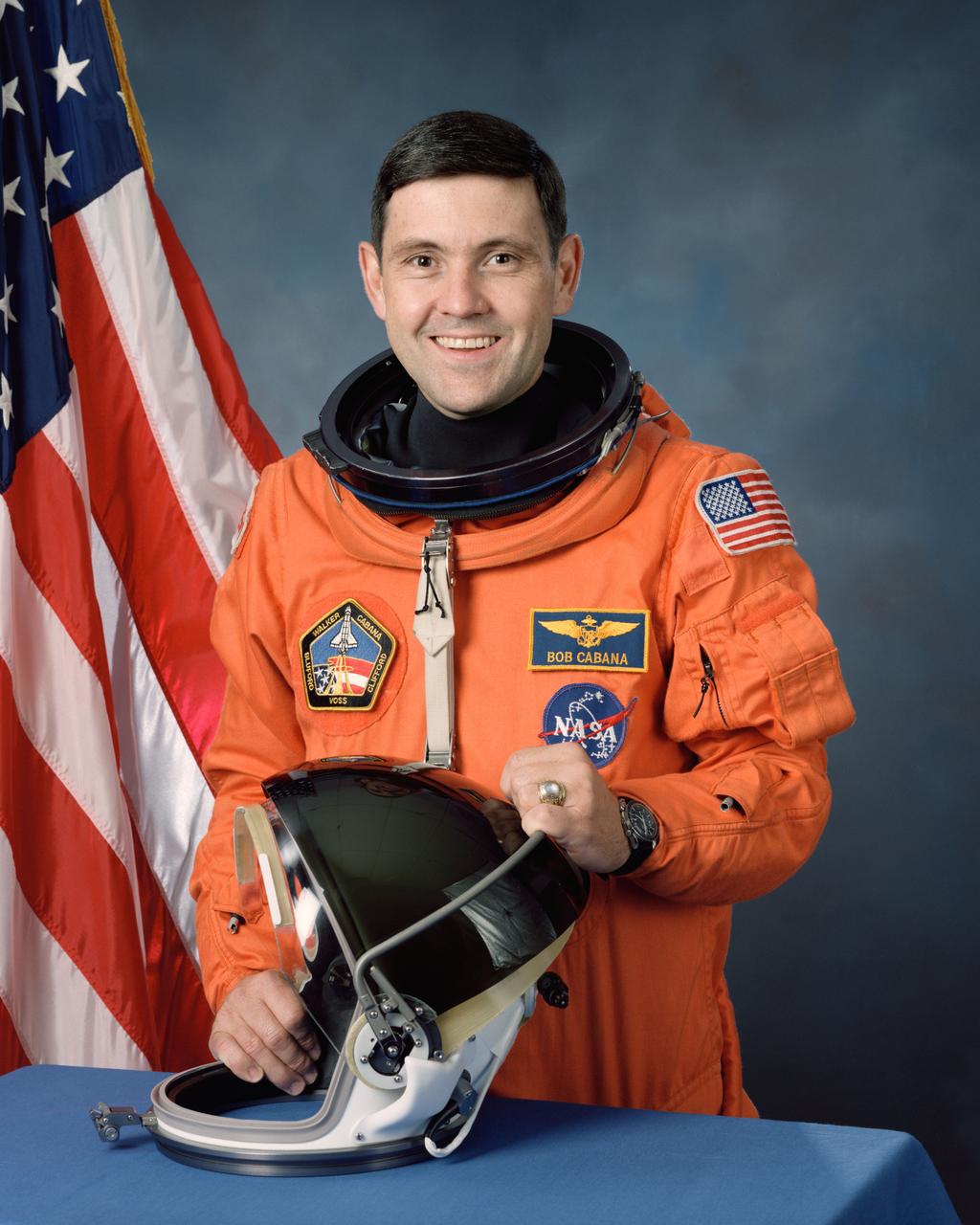
S93-26392 (26 Jan. 1993) --- Astronaut Robert D. Cabana, pilot.
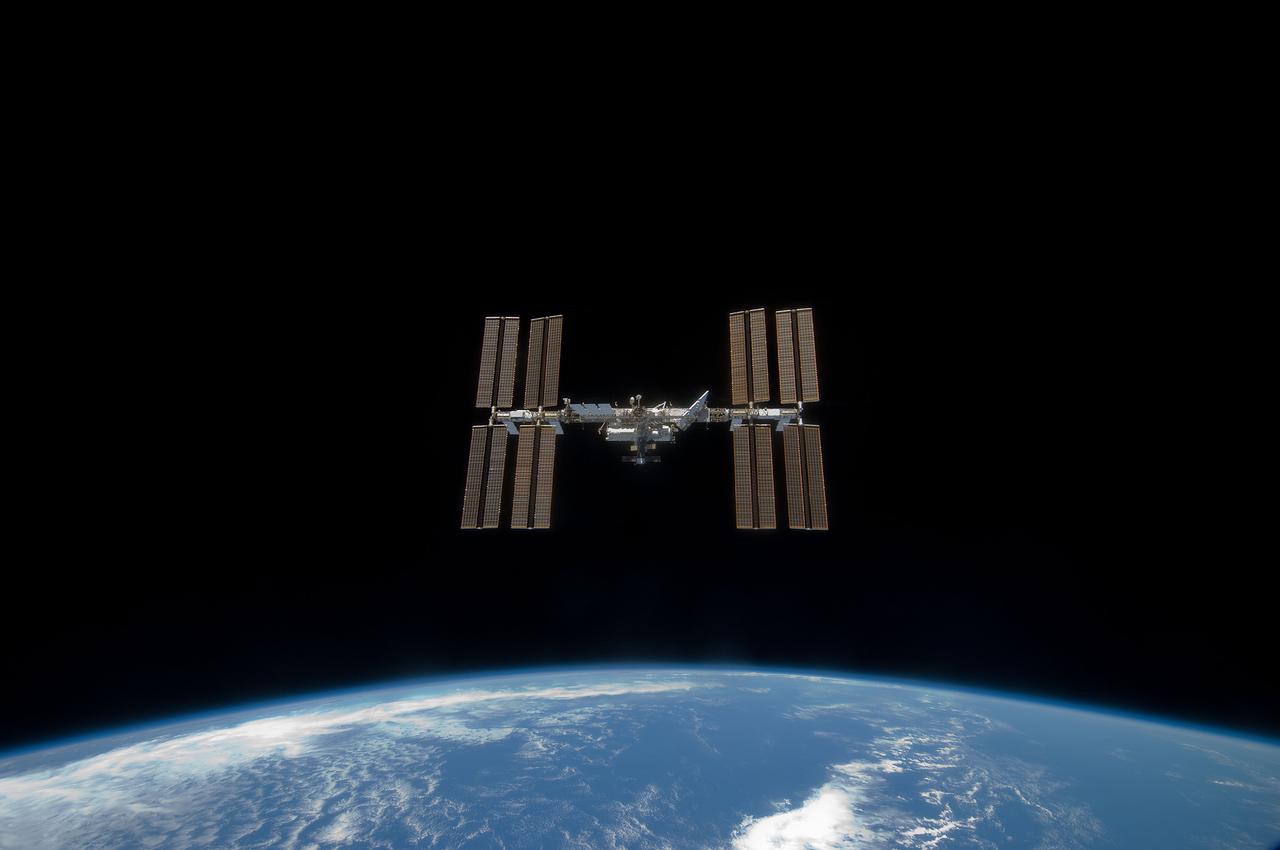
S119-E-010350 (25 March 2009) --- Backdropped by the blackness of space and Earth?s horizon, the International Space Station is seen from Space Shuttle Discovery as the two spacecraft begin their relative separation. Earlier the STS-119 and Expedition 18 crews concluded 9 days, 20 hours and 10 minutes of cooperative work onboard the shuttle and station. Undocking of the two spacecraft occurred at 2:53 p.m. (CDT) on March 25, 2009.
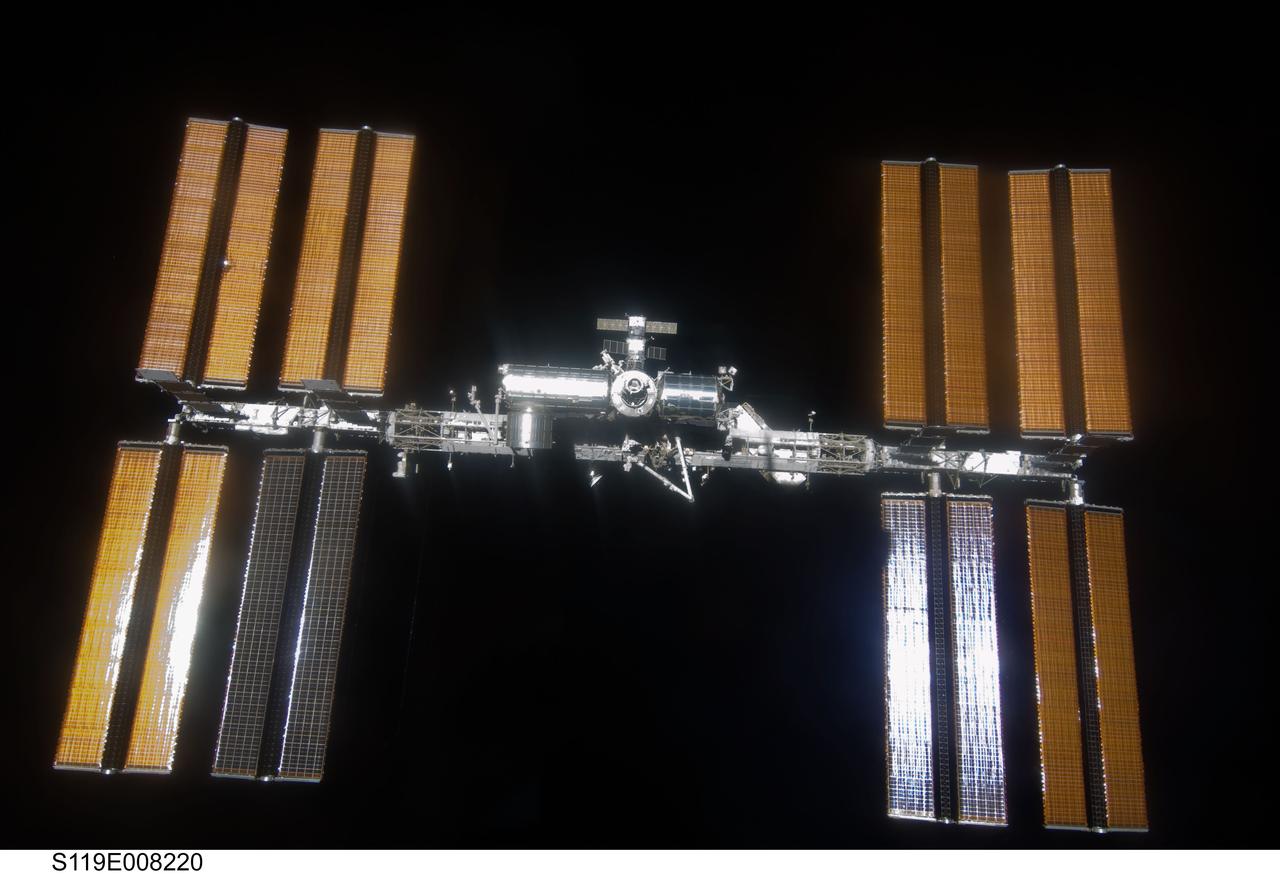
S119-E-008220 (25 March 2009) --- Backdropped by the blackness of space, the International Space Station is seen from Space Shuttle Discovery as the two spacecraft begin their relative separation. Earlier the STS-119 and Expedition 18 crews concluded 9 days, 20 hours and 10 minutes of cooperative work onboard the shuttle and station. Undocking of the two spacecraft occurred at 2:53 p.m. (CDT) on March 25, 2009.
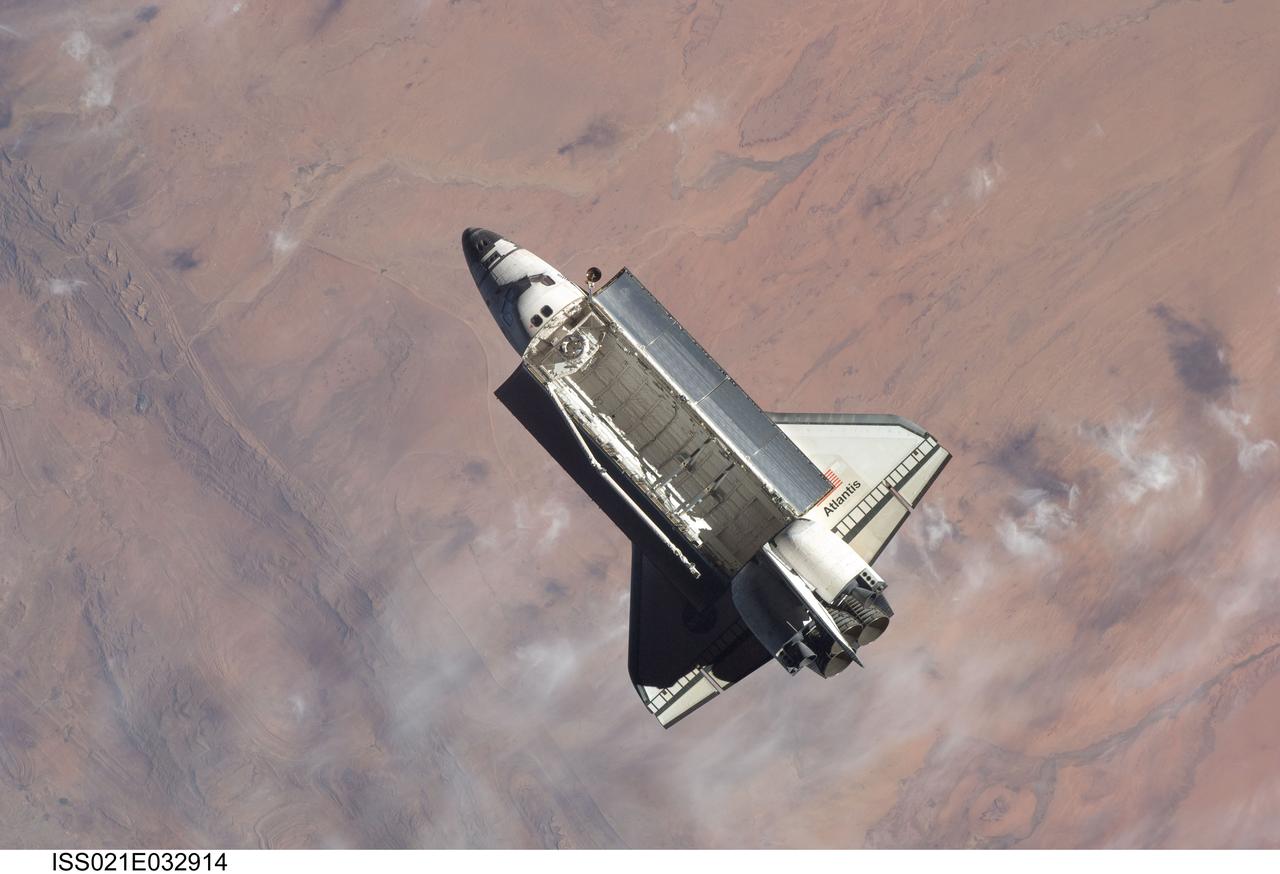
ISS021-E-032914 (25 Nov. 2009) --- Backdropped by a colorful part of Earth, space shuttle Atlantis (STS-129) is featured in this image photographed by an Expedition 21 crew member on the International Space Station soon after the shuttle and station began their post-undocking relative separation. Undocking of the two spacecraft occurred at 3:53 a.m. (CST) on Nov. 25, 2009.
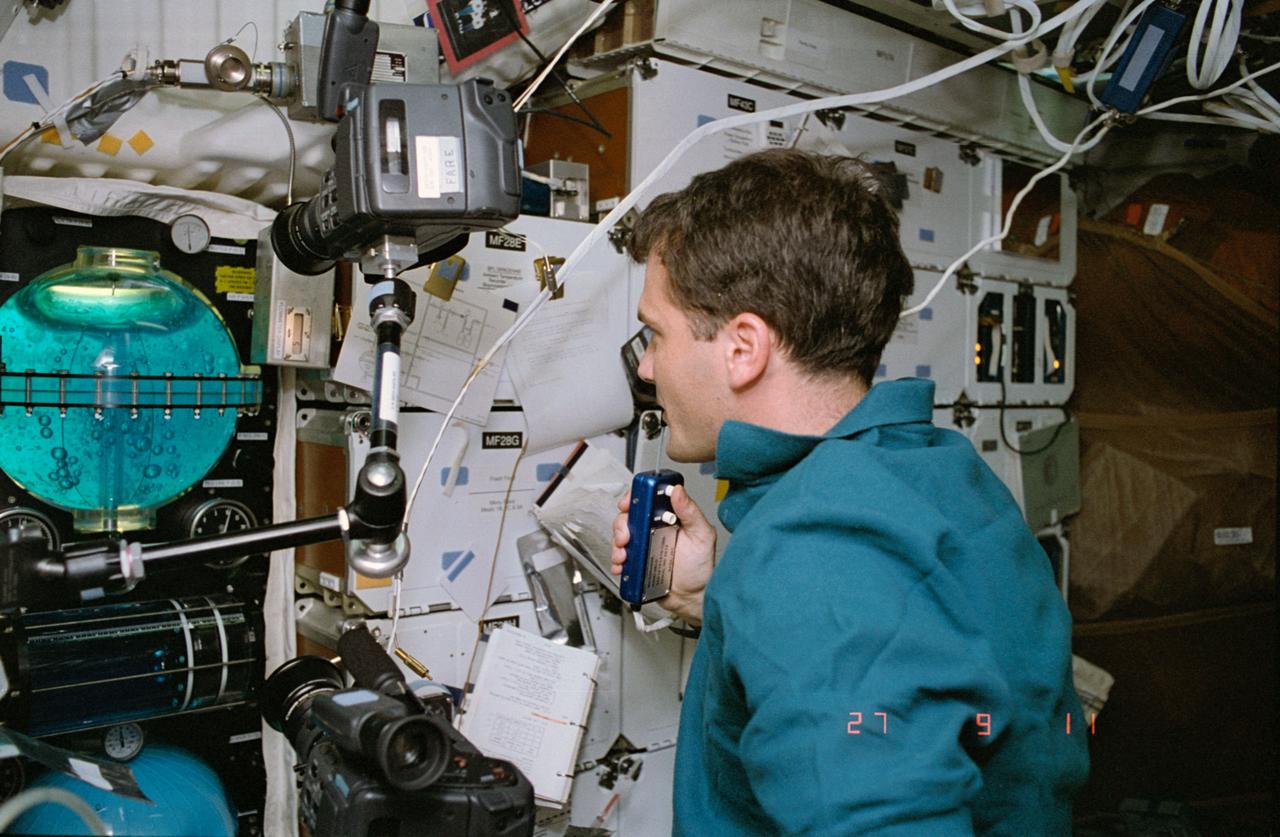
STS057-39-021 (21 June-1 July 1993) --- Astronaut Peter J. K. (Jeff) Wisoff, mission specialist, monitors the Fluid Acquisition and Resupply Experiment (FARE II), housed in four middeck lockers onboard the Space Shuttle Endeavour. The successor to FARE I (STS 53, 1992), FARE II was designed to demonstrate the effectiveness of a device to alleviate the problems associated with vapor-free liquid transfer.
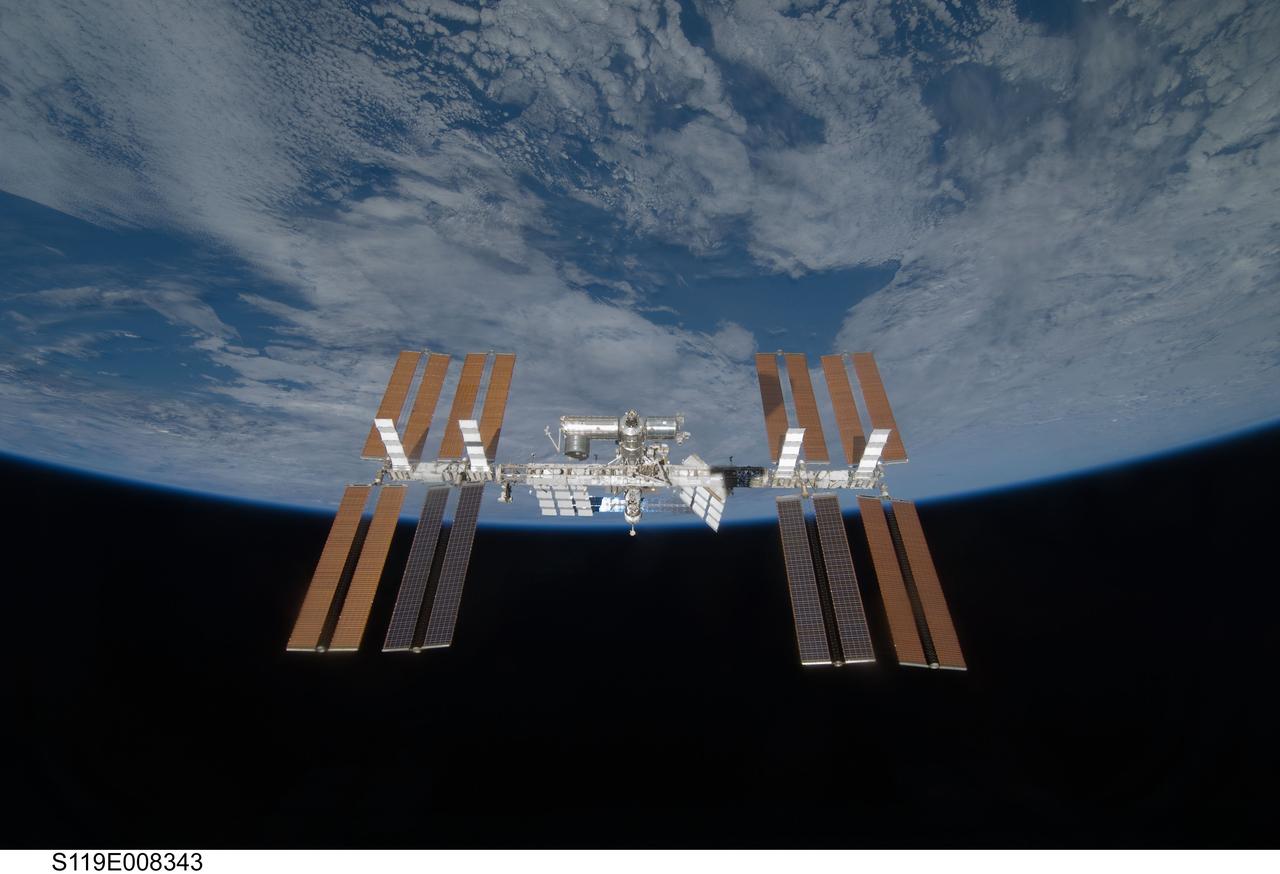
S119-E-008343 (25 March 2009) --- Backdropped by the blackness of space and Earth’s horizon, the International Space Station is seen from Space Shuttle Discovery as the two spacecraft begin their relative separation. Earlier the STS-119 and Expedition 18 crews concluded 9 days, 20 hours and 10 minutes of cooperative work onboard the shuttle and station. Undocking of the two spacecraft occurred at 2:53 p.m. (CDT) on March 25, 2009.
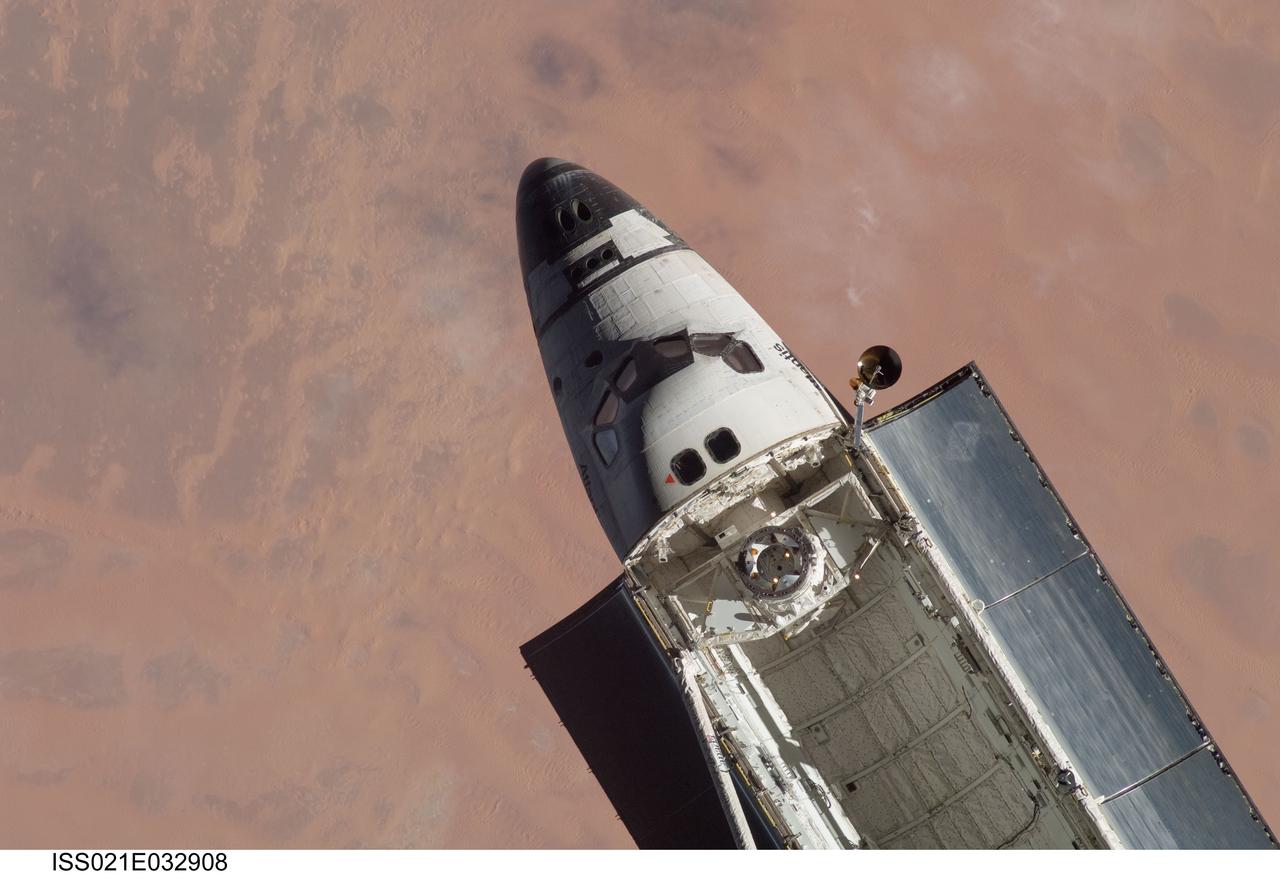
ISS021-E-032908 (25 Nov. 2009) --- A partial view of space shuttle Atlantis (STS-129) is featured in this image photographed by an Expedition 21 crew member on the International Space Station soon after the shuttle and station began their post-undocking relative separation. Undocking of the two spacecraft occurred at 3:53 a.m. (CST) on Nov. 25, 2009.
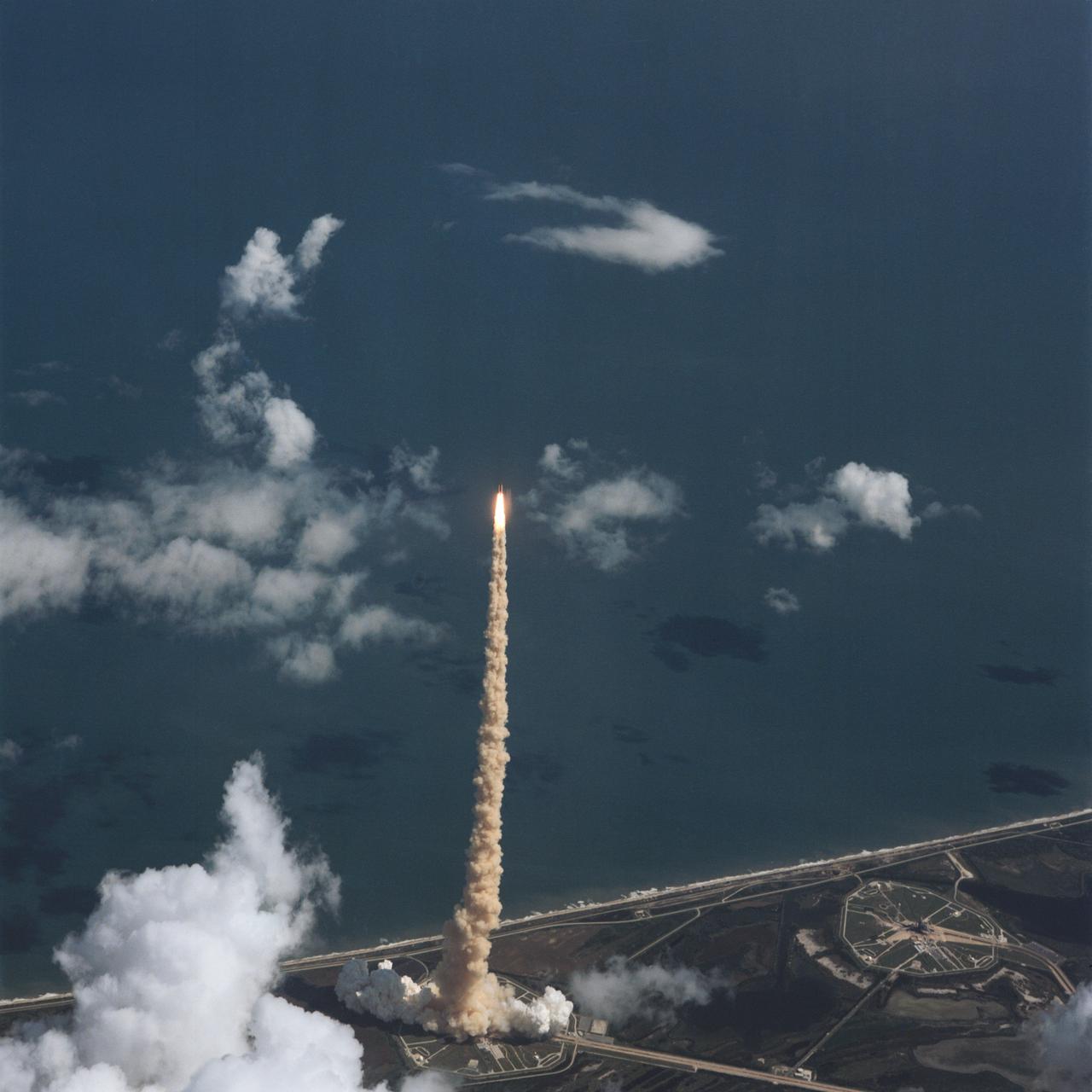
STS-34 Atlantis, Orbiter Vehicle (OV) 104, lifts off from Kennedy Space Center (KSC) Launch Complex (LC) Pad 39B at 12:53:39:983 pm Eastern Daylight Time (EDT). This aerial view shows OV-104, its external tank (ET), and two solid rocket boosters (SRBs) rising high above LC Pad 39B atop a plume of exhaust smoke. Atlantic Ocean is visible in the background. The liftoff marks the beginning of a five-day mission in space.
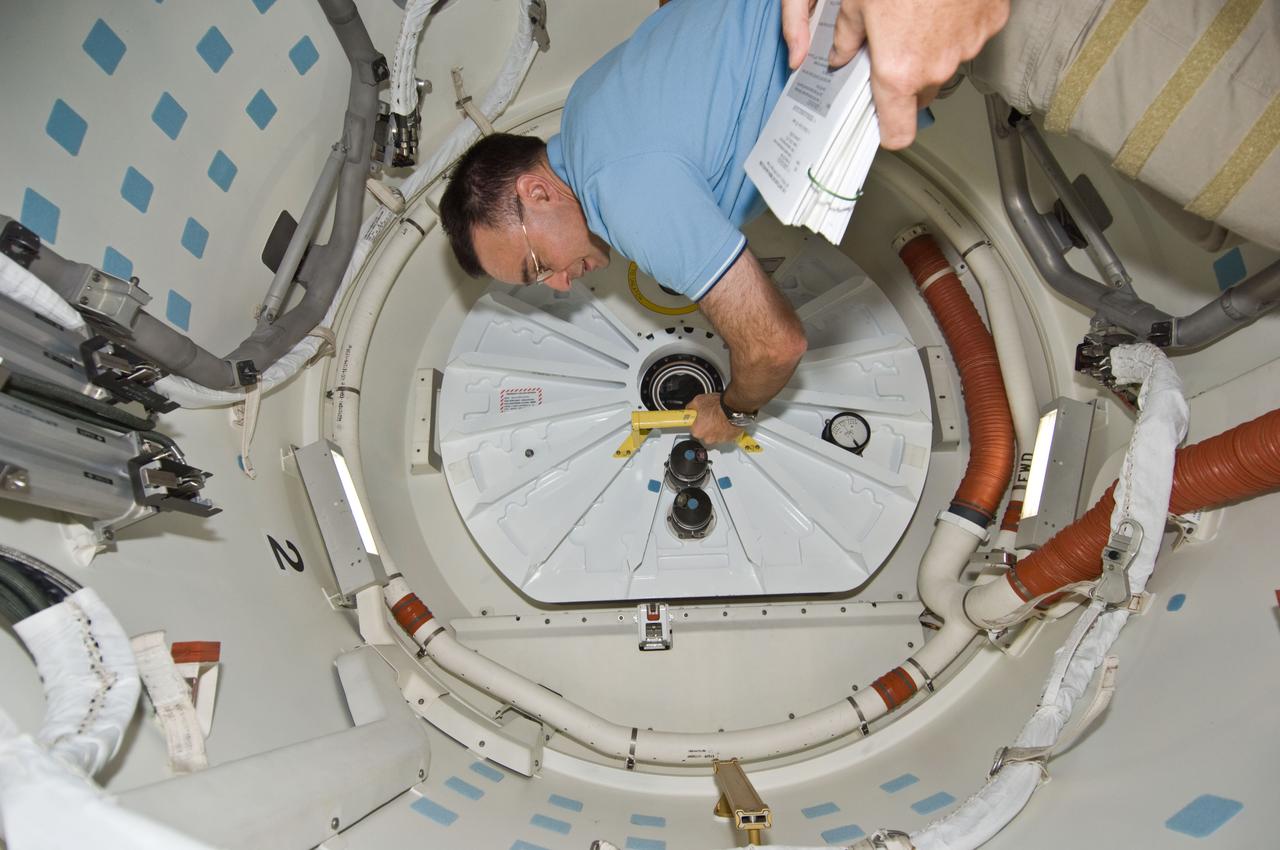
S119-E-008429 (25 March 2009) --- Astronaut Lee Archambault, STS-119 commander, closes the hatch on the middeck of Space Shuttle Discovery prior to undocking from the International Space Station to conclude almost 10 days of cooperative work onboard the shuttle and the station. Undocking of the two spacecraft occurred at 2:53 p.m. (CDT) on March 25, 2009.
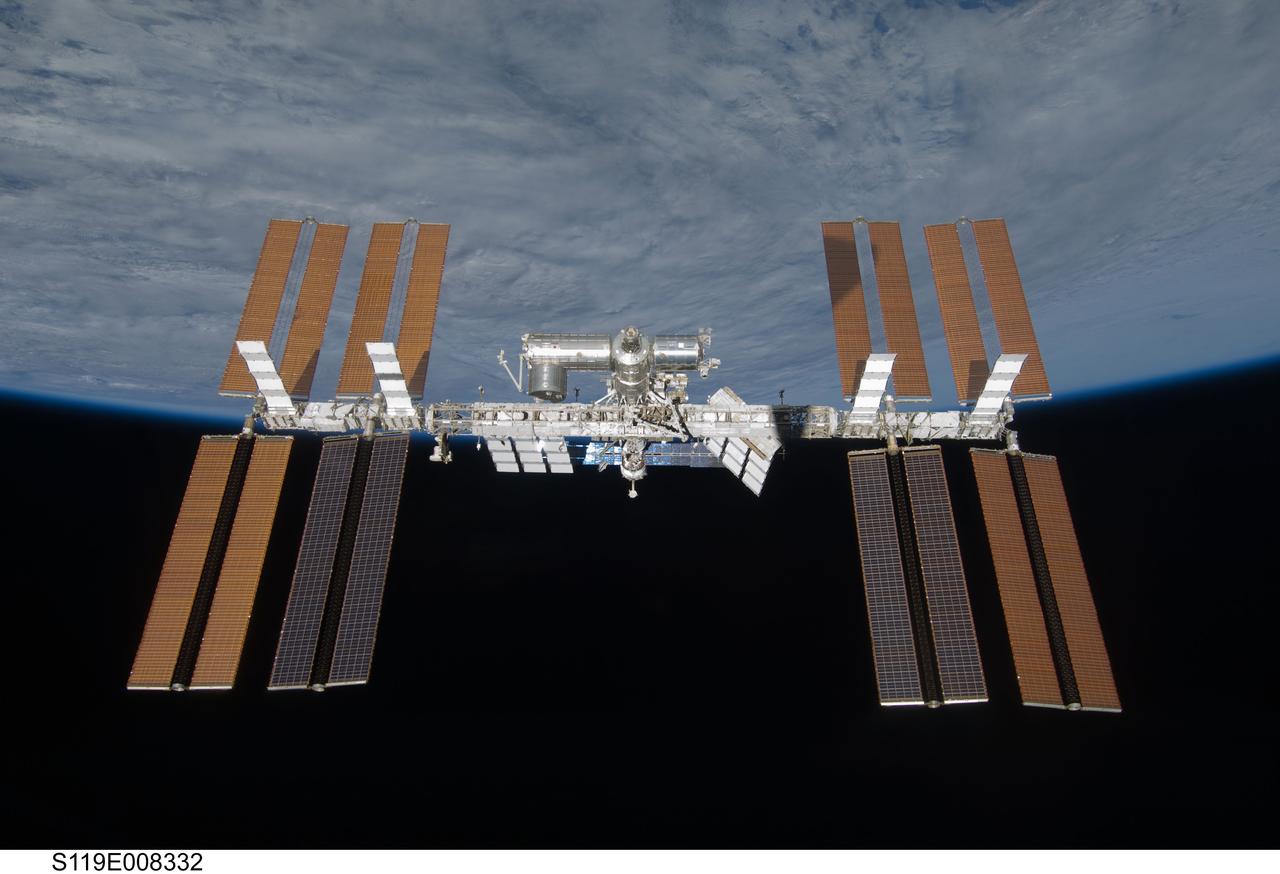
S119-E-008332 (25 March 2009) --- Backdropped by the blackness of space and Earth’s horizon, the International Space Station is seen from Space Shuttle Discovery as the two spacecraft begin their relative separation. Earlier the STS-119 and Expedition 18 crews concluded 9 days, 20 hours and 10 minutes of cooperative work onboard the shuttle and station. Undocking of the two spacecraft occurred at 2:53 p.m. (CDT) on March 25, 2009.
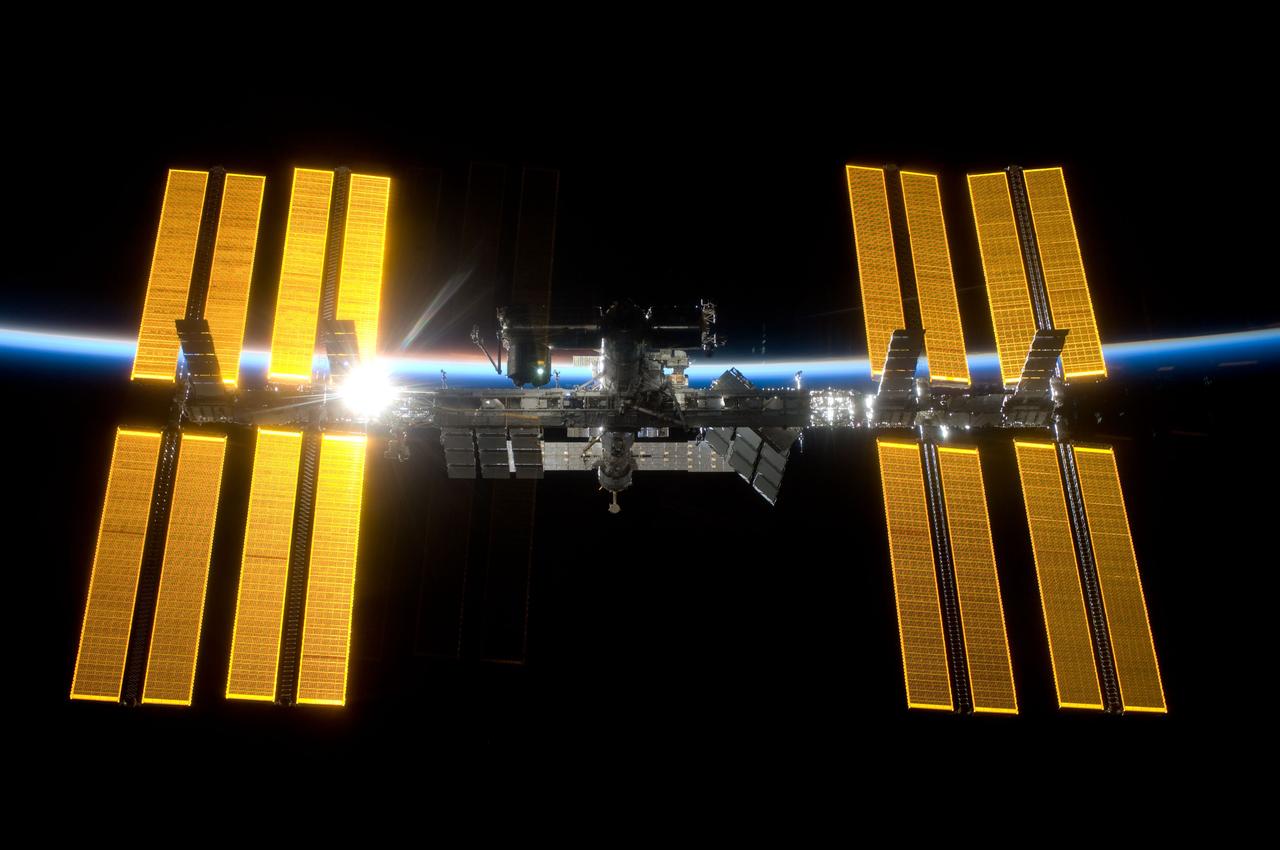
S119-E-010027 (25 March 2009) --- Backdropped by the blackness of space and the thin line of Earth?s atmosphere, the International Space Station is seen from Space Shuttle Discovery as the two spacecraft begin their relative separation. Earlier the STS-119 and Expedition 18 crews concluded 9 days, 20 hours and 10 minutes of cooperative work onboard the shuttle and station. Undocking of the two spacecraft occurred at 2:53 p.m. (CDT) on March 25, 2009.
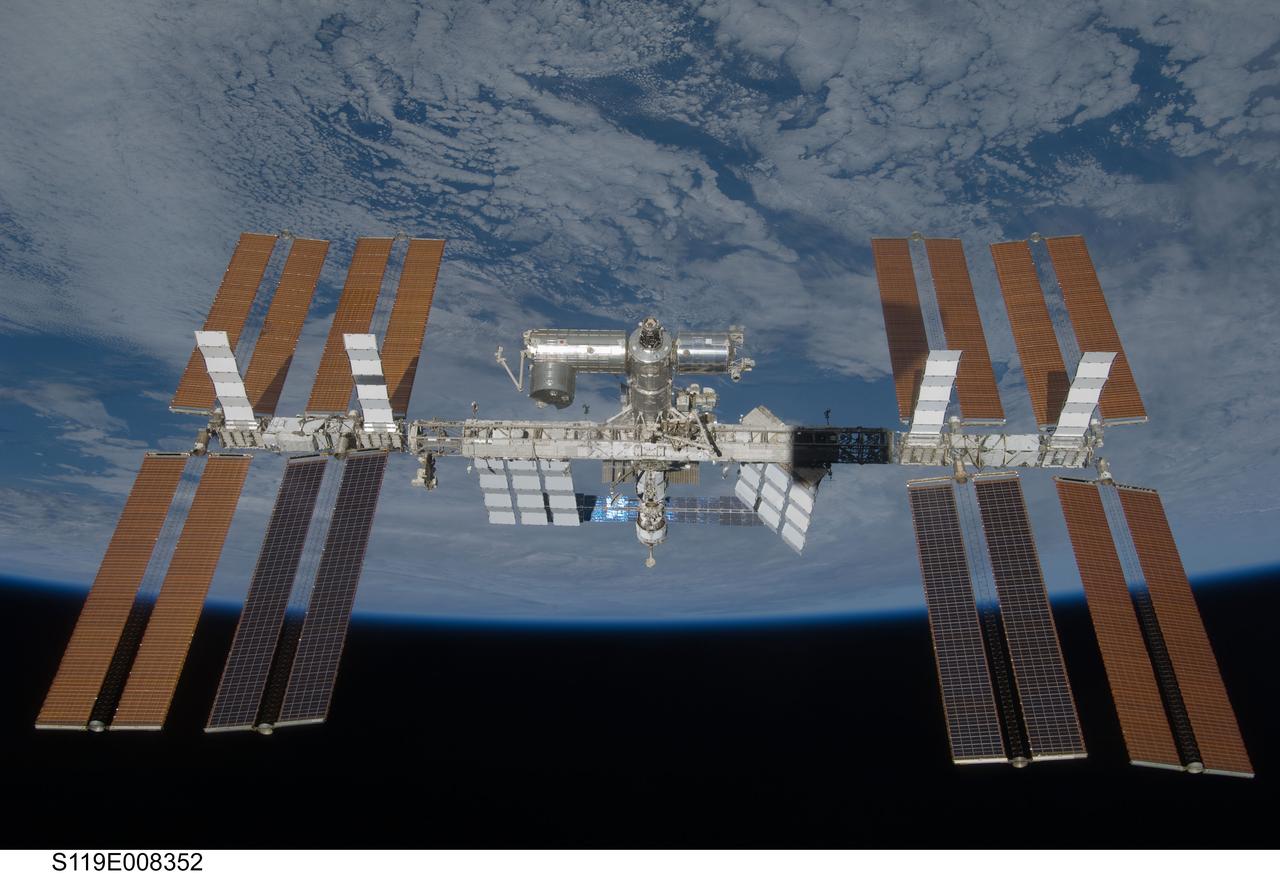
S119-E-008352 (25 March 2009) --- Backdropped by the blackness of space and Earth’s horizon, the International Space Station is seen from Space Shuttle Discovery as the two spacecraft begin their relative separation. Earlier the STS-119 and Expedition 18 crews concluded 9 days, 20 hours and 10 minutes of cooperative work onboard the shuttle and station. Undocking of the two spacecraft occurred at 2:53 p.m. (CDT) on March 25, 2009.
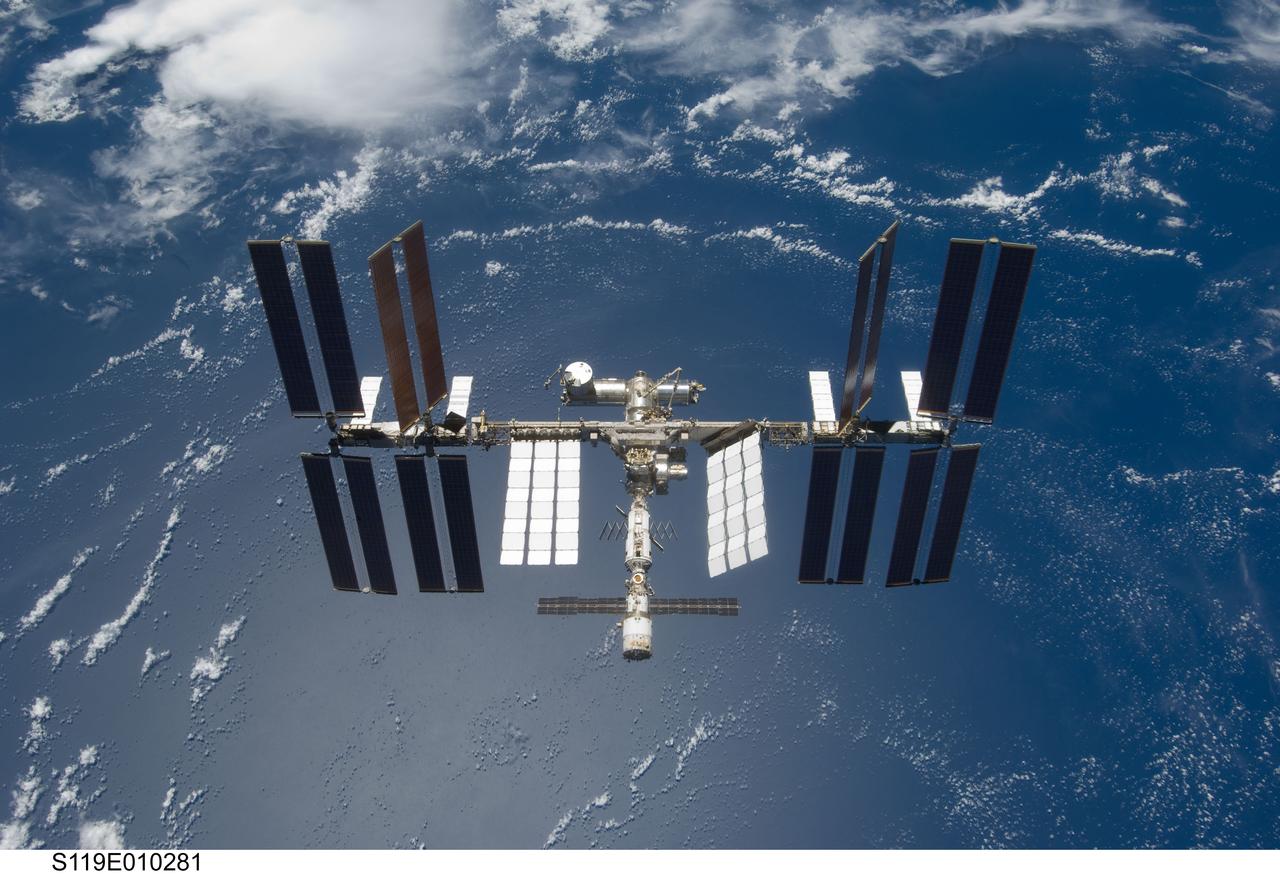
S119-E-010281 (25 March 2009) --- Backdropped by a blue and white Earth, the International Space Station is seen from Space Shuttle Discovery as the two spacecraft begin their relative separation. Earlier the STS-119 and Expedition 18 crews concluded 9 days, 20 hours and 10 minutes of cooperative work onboard the shuttle and station. Undocking of the two spacecraft occurred at 2:53 p.m. (CDT) on March 25, 2009.
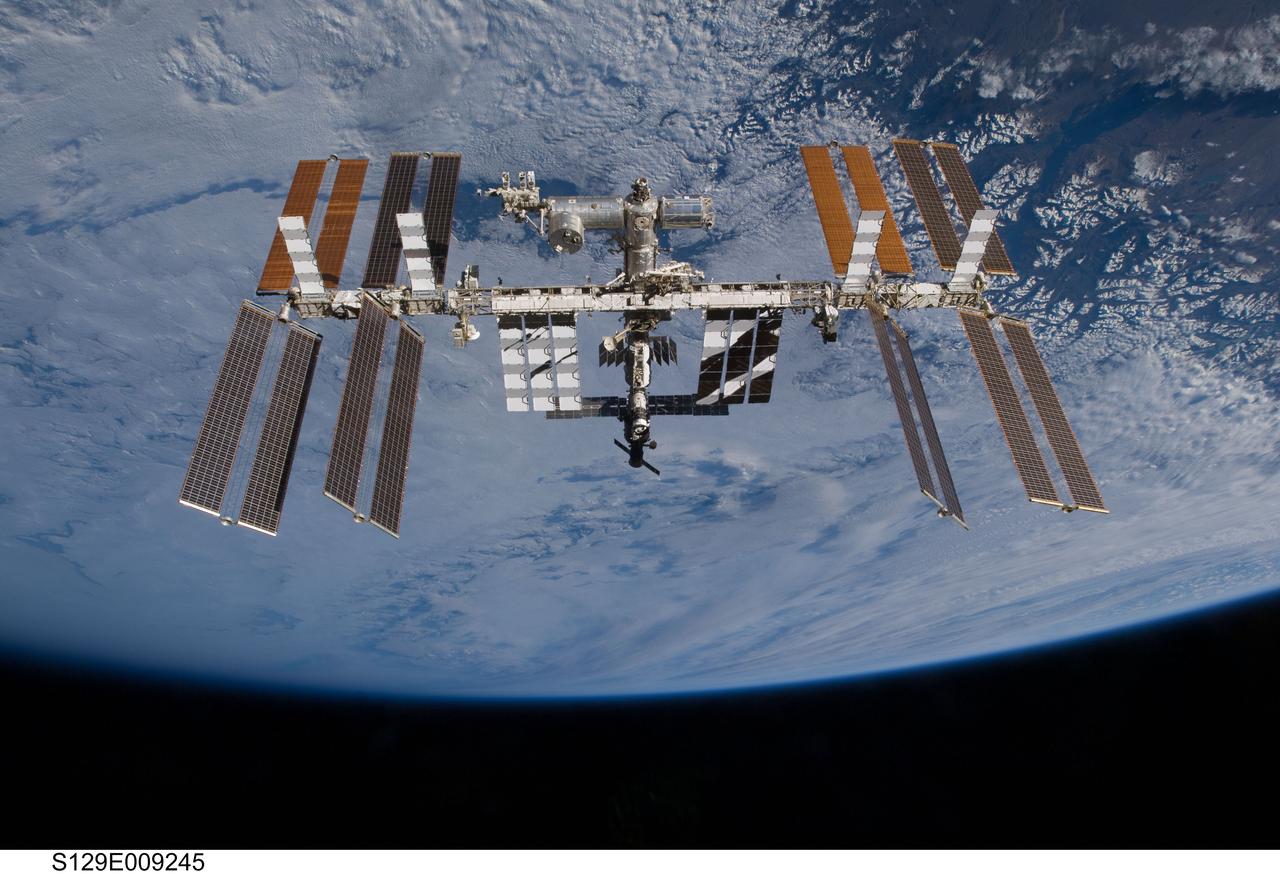
S129-E-009245 (25 Nov. 2009) --- Set against a background of clouds, the International Space Station is featured in this image photographed by an STS-129 crew member on Atlantis soon after the station and shuttle began their post-undocking relative separation. Undocking of the two spacecraft occurred at 3:53 a.m. (CST) on Nov. 25, 2009.
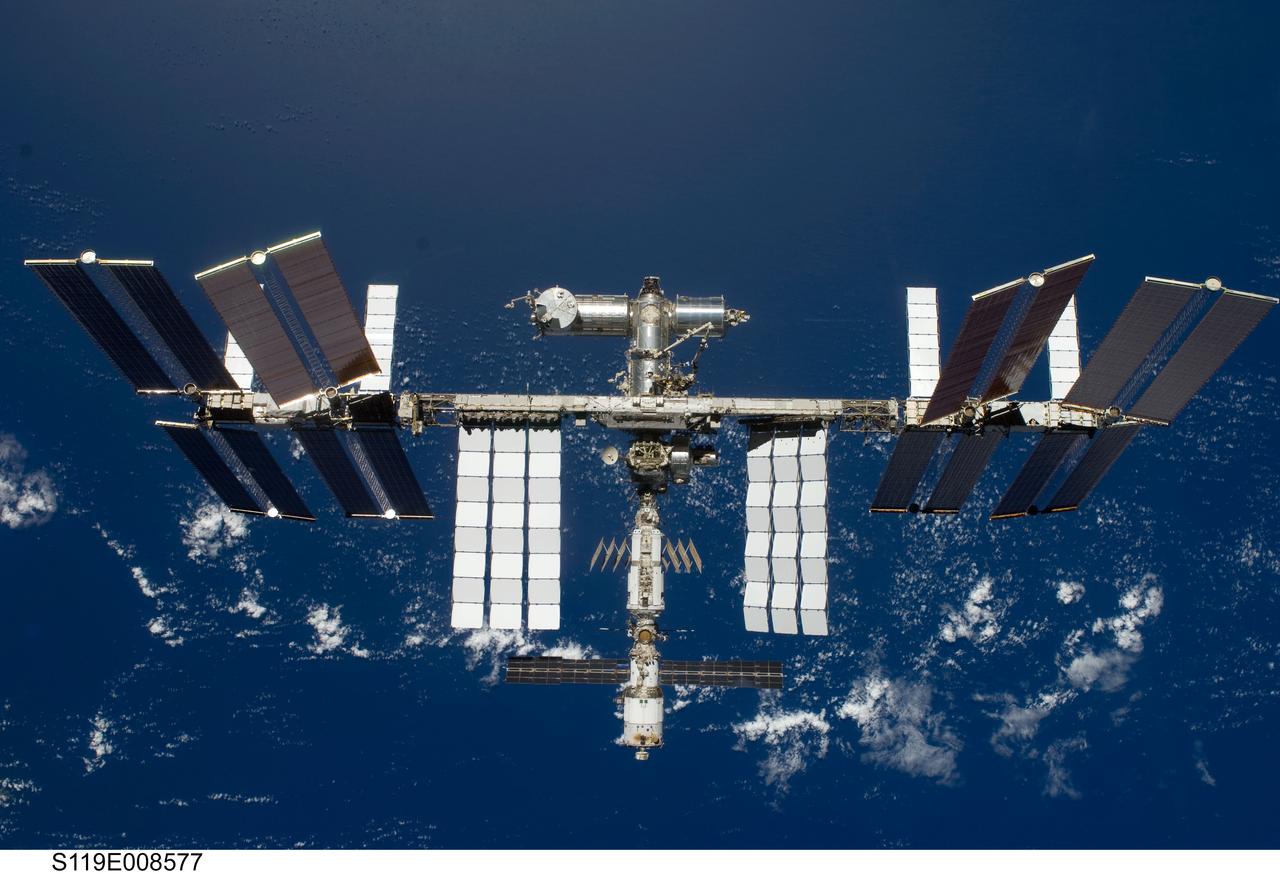
S119-E-008577 (25 March 2009) --- Backdropped by a blue and white Earth, the International Space Station is seen from Space Shuttle Discovery as the two spacecraft begin their relative separation. Earlier the STS-119 and Expedition 18 crews concluded 9 days, 20 hours and 10 minutes of cooperative work onboard the shuttle and station. Undocking of the two spacecraft occurred at 2:53 p.m. (CDT) on March 25, 2009.
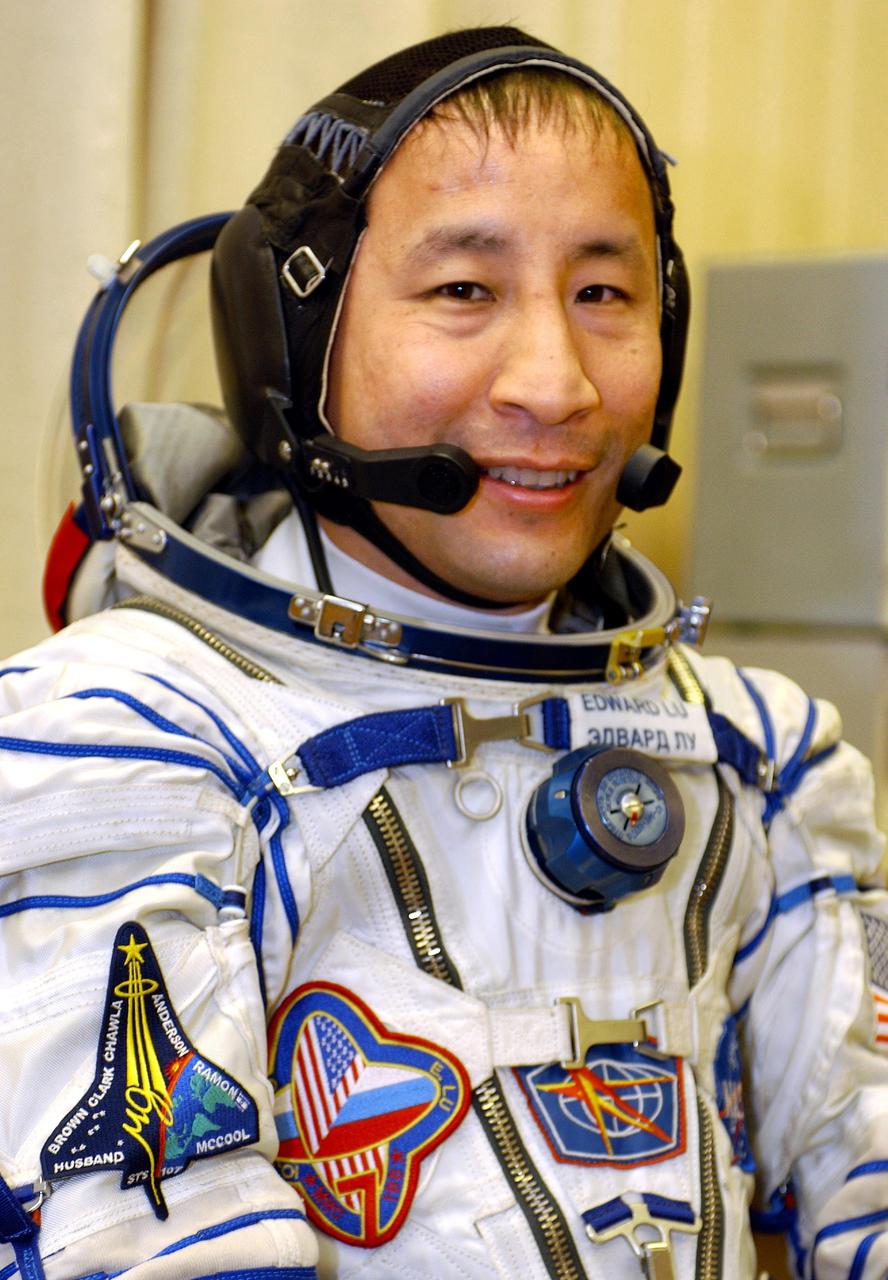
Baikonur Cosmodrome, Kazakhstan. Astronaut Edward T. Lu, NASA ISS science officer and flight engineer for Expedition Seven, smiles for a photo after donning his flight suit. Lu has an STS-107 patch on his suit in honor of the crew members lost on the Space Shuttle Columbia February 2003. Lu and fellow crew member Cosmonaut Yuri I. Malenchenko, Commander, were launched onboard a Soyuz rocket at 9:53 a.m. from Baikonur, Kazakhstan. Photo Credit: NASA/Bill Ingalls
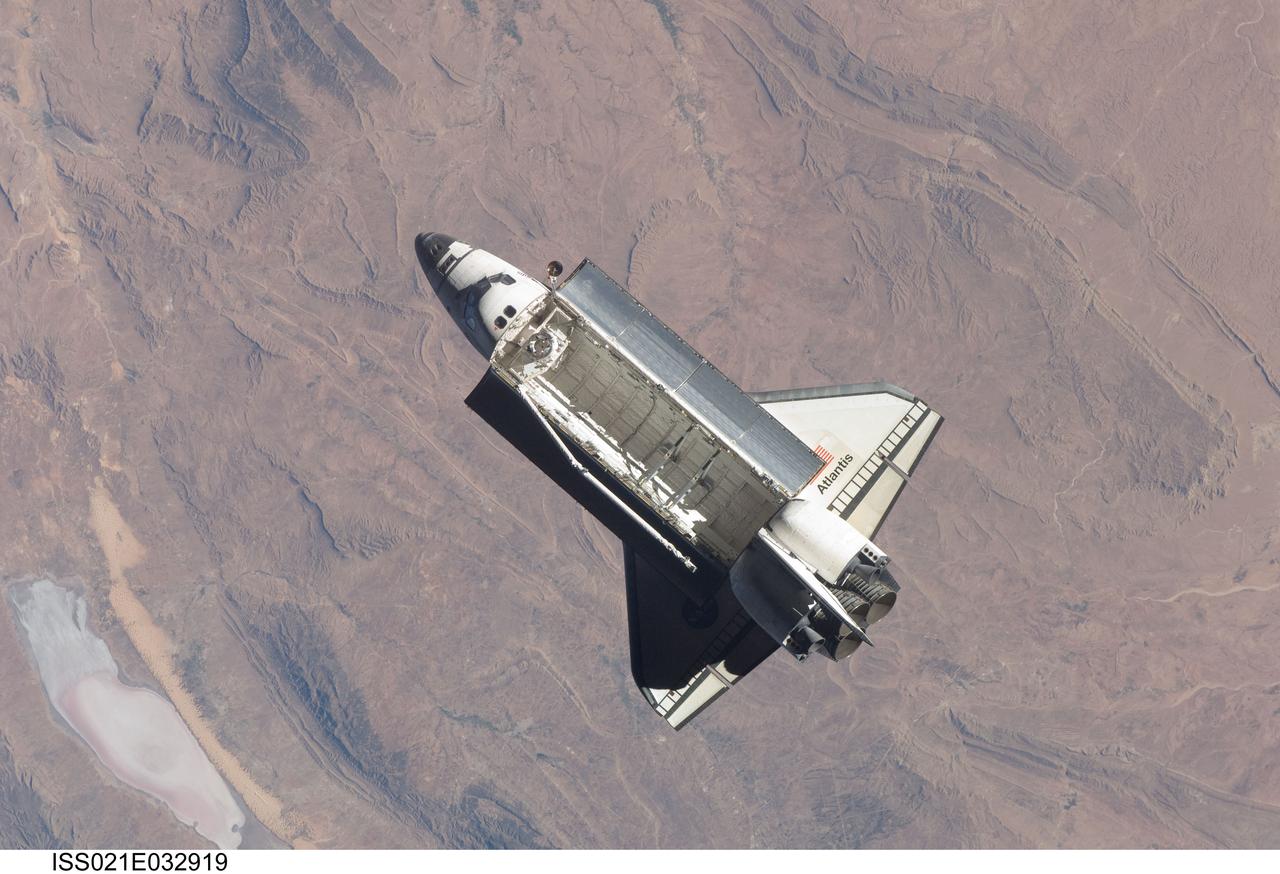
ISS021-E-032919 (25 Nov. 2009) --- Backdropped by rugged Earth terrain, space shuttle Atlantis (STS-129) is featured in this image photographed by an Expedition 21 crew member on the International Space Station soon after the shuttle and station began their post-undocking relative separation. Undocking of the two spacecraft occurred at 3:53 a.m. (CST) on Nov. 25, 2009.
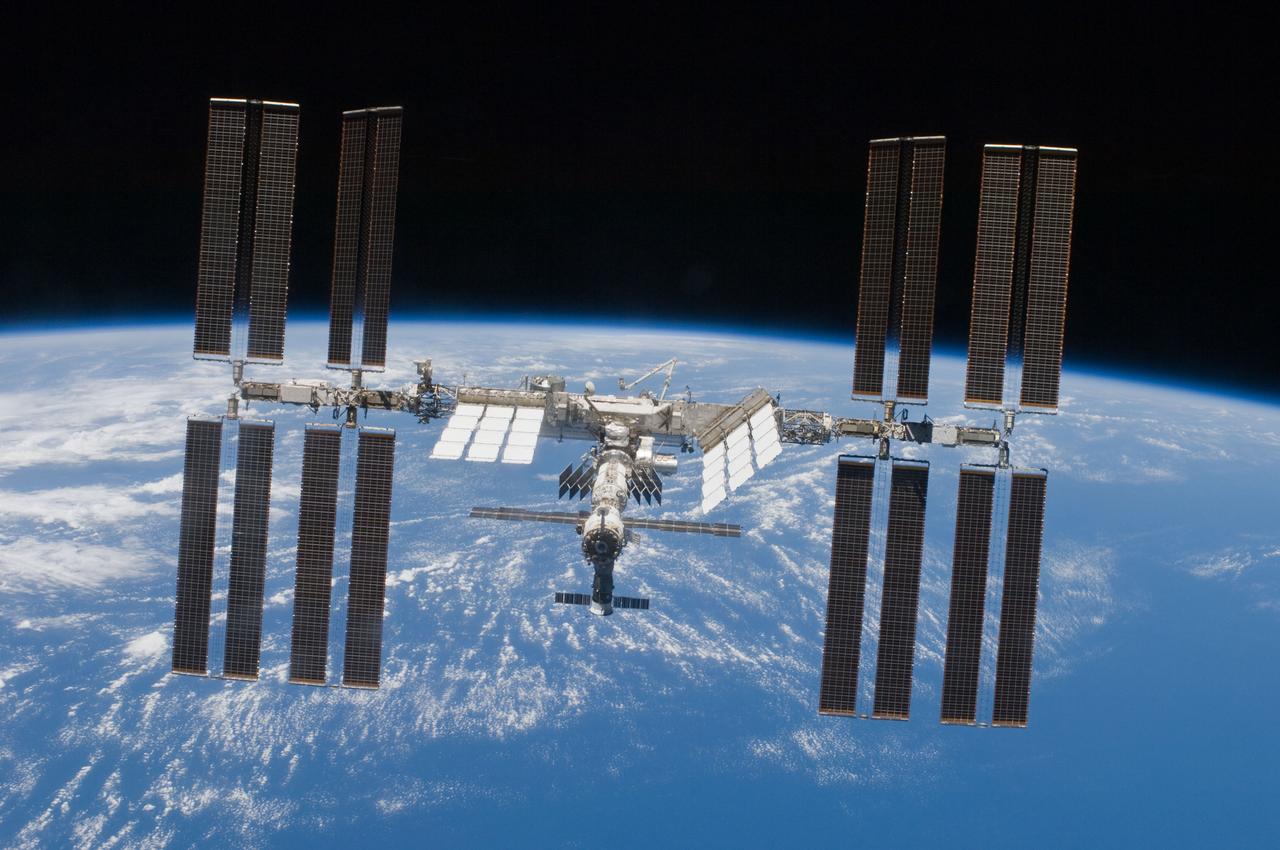
S119-E-009765 (25 March 2009) --- Backdropped by the blackness of space and Earth?s horizon, the International Space Station is seen from Space Shuttle Discovery as the two spacecraft begin their relative separation. Earlier the STS-119 and Expedition 18 crews concluded 9 days, 20 hours and 10 minutes of cooperative work onboard the shuttle and station. Undocking of the two spacecraft occurred at 2:53 p.m. (CDT) on March 25, 2009.
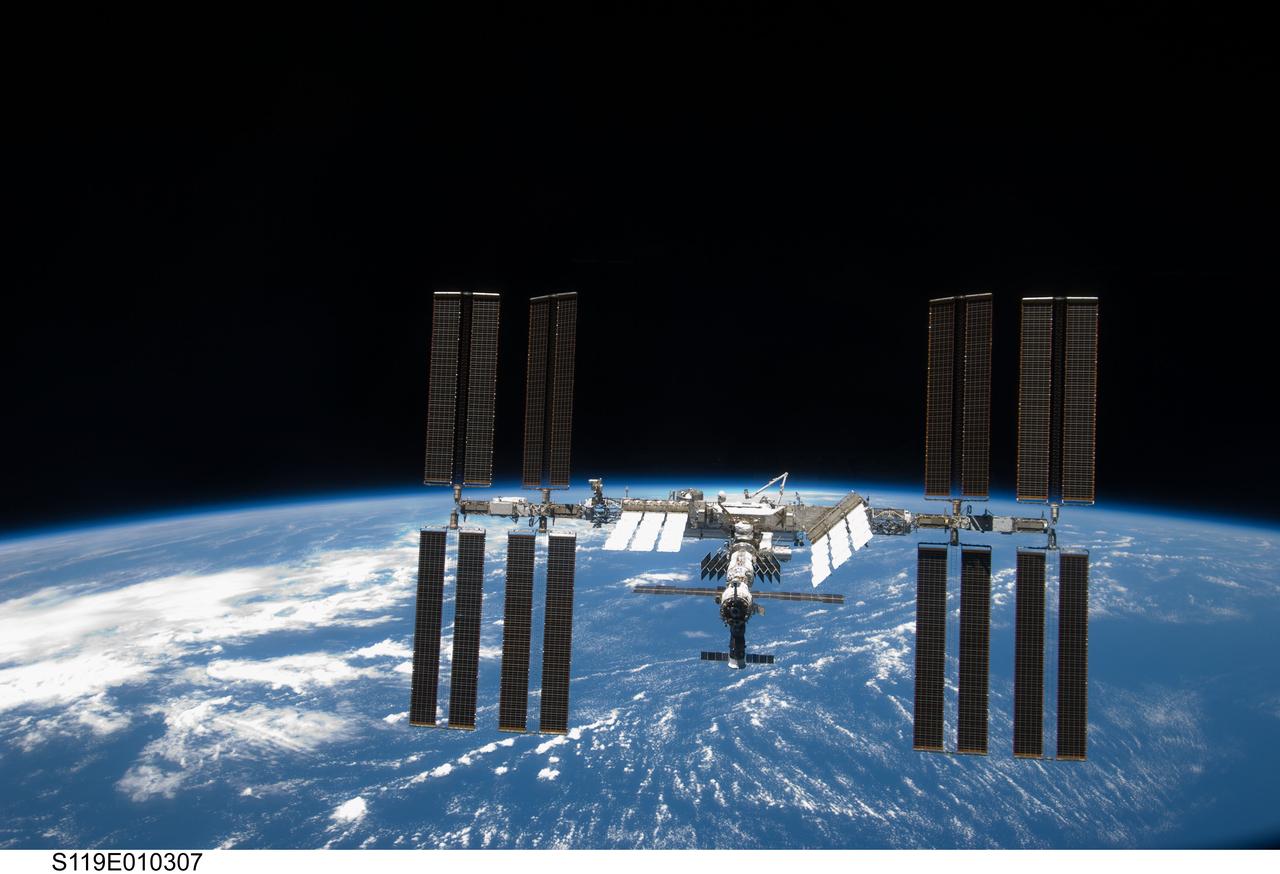
S119-E-010307 (25 March 2009) --- Backdropped by the blackness of space and Earth?s horizon, the International Space Station is seen from Space Shuttle Discovery as the two spacecraft begin their relative separation. Earlier the STS-119 and Expedition 18 crews concluded 9 days, 20 hours and 10 minutes of cooperative work onboard the shuttle and station. Undocking of the two spacecraft occurred at 2:53 p.m. (CDT) on March 25, 2009.
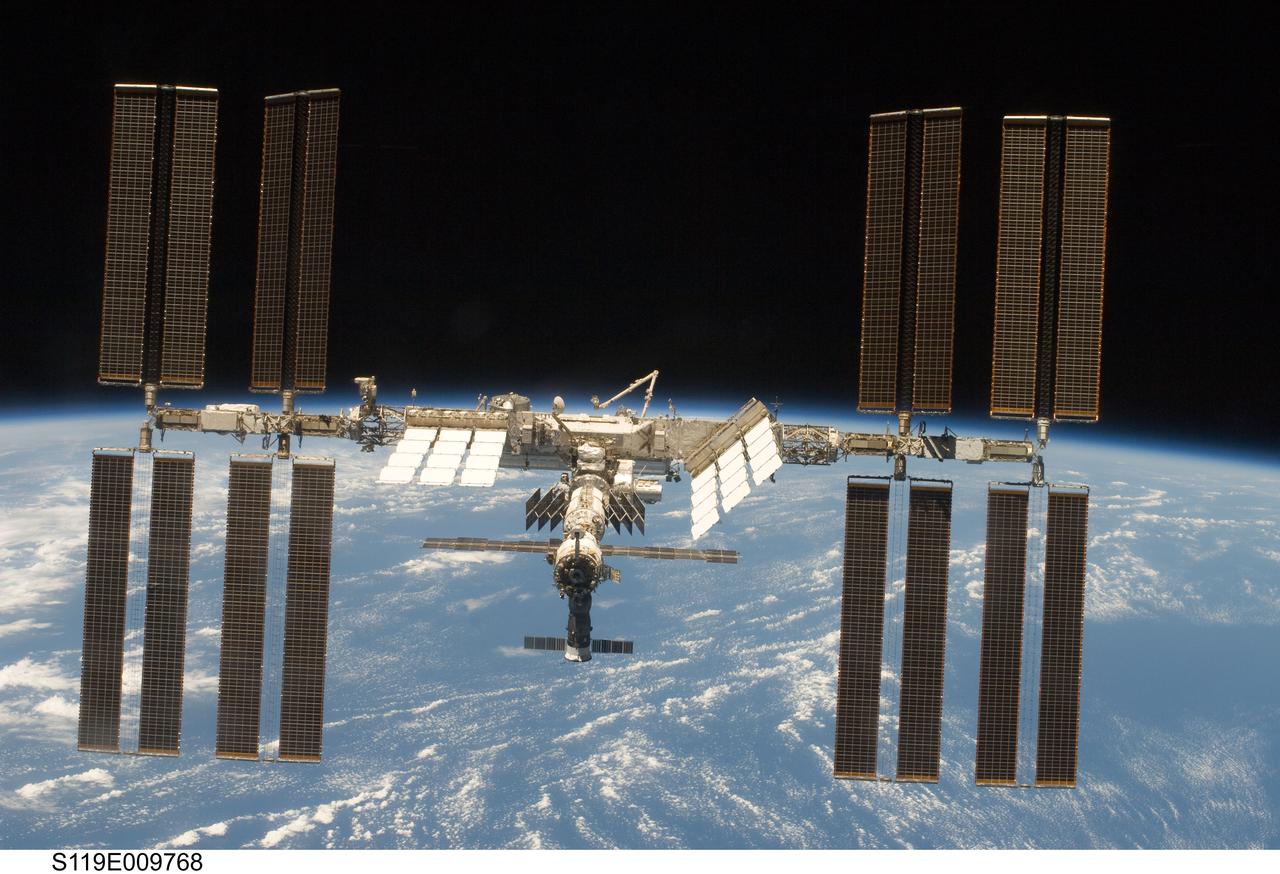
S119-E-009768 (25 March 2009) --- Backdropped by the blackness of space and Earth?s horizon, the International Space Station is seen from Space Shuttle Discovery as the two spacecraft begin their relative separation. Earlier the STS-119 and Expedition 18 crews concluded 9 days, 20 hours and 10 minutes of cooperative work onboard the shuttle and station. Undocking of the two spacecraft occurred at 2:53 p.m. (CDT) on March 25, 2009.
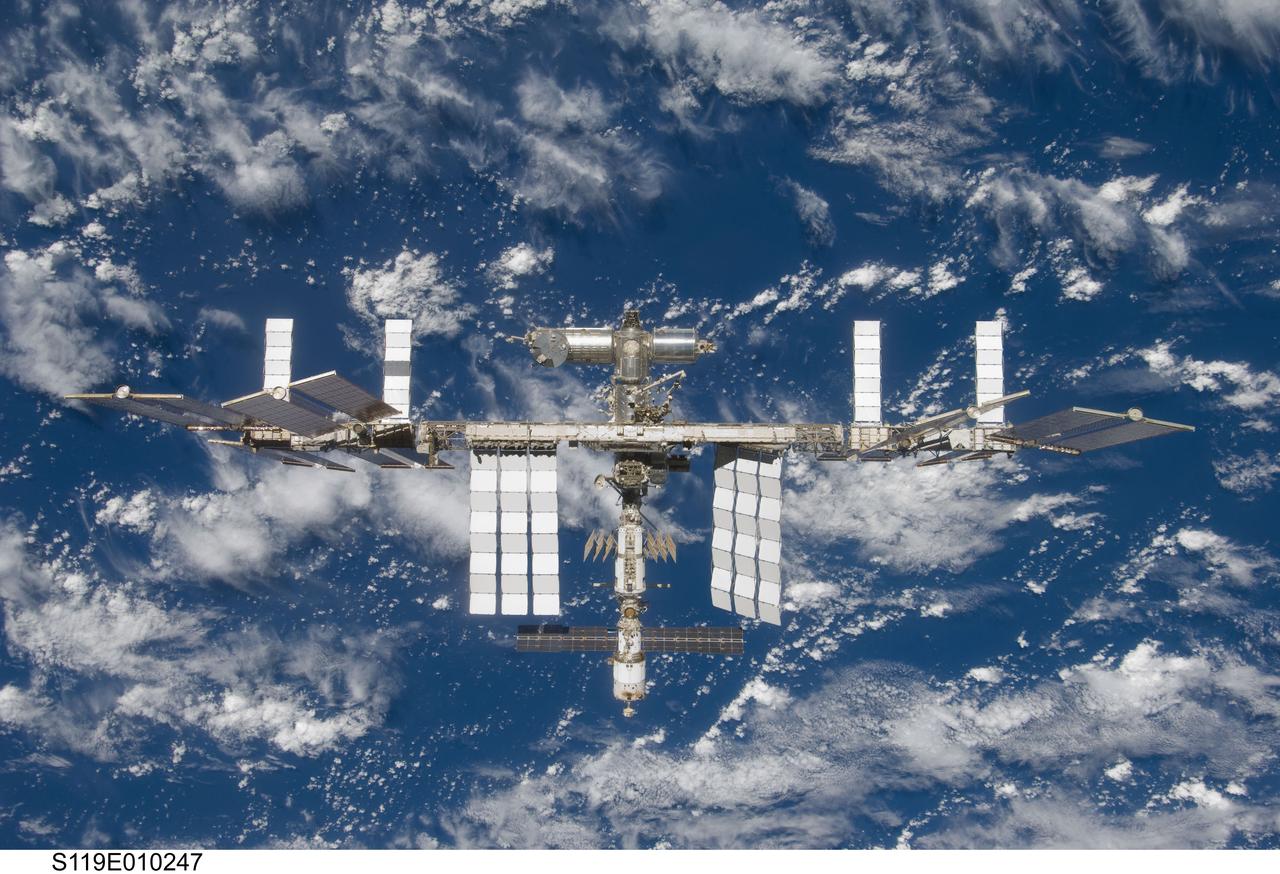
S119-E-010247 (25 March 2009) --- Backdropped by a blue and white Earth, the International Space Station is seen from Space Shuttle Discovery as the two spacecraft begin their relative separation. Earlier the STS-119 and Expedition 18 crews concluded 9 days, 20 hours and 10 minutes of cooperative work onboard the shuttle and station. Undocking of the two spacecraft occurred at 2:53 p.m. (CDT) on March 25, 2009.
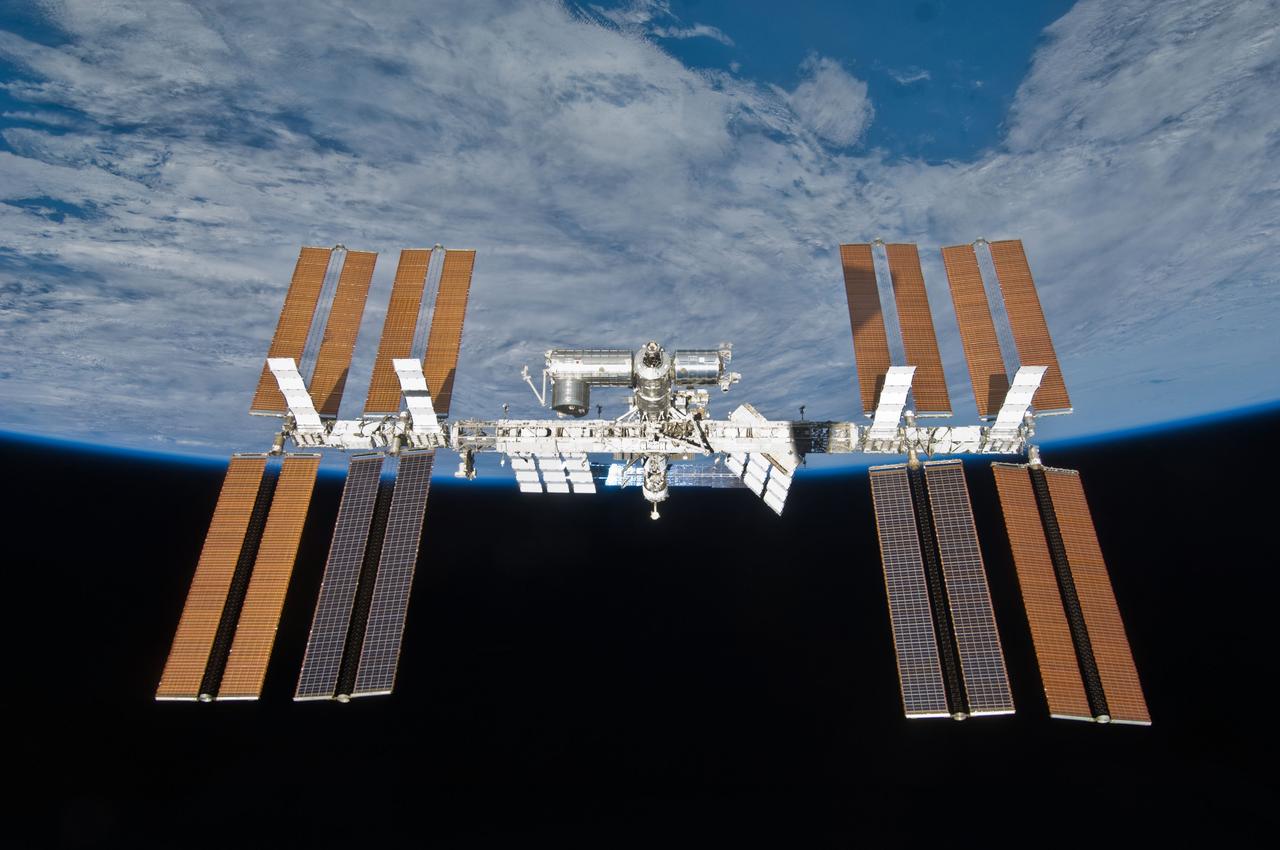
S119-E-008339 (25 March 2009) --- Backdropped by the blackness of space and Earth’s horizon, the International Space Station is seen from Space Shuttle Discovery as the two spacecraft begin their relative separation. Earlier the STS-119 and Expedition 18 crews concluded 9 days, 20 hours and 10 minutes of cooperative work onboard the shuttle and station. Undocking of the two spacecraft occurred at 2:53 p.m. (CDT) on March 25, 2009.
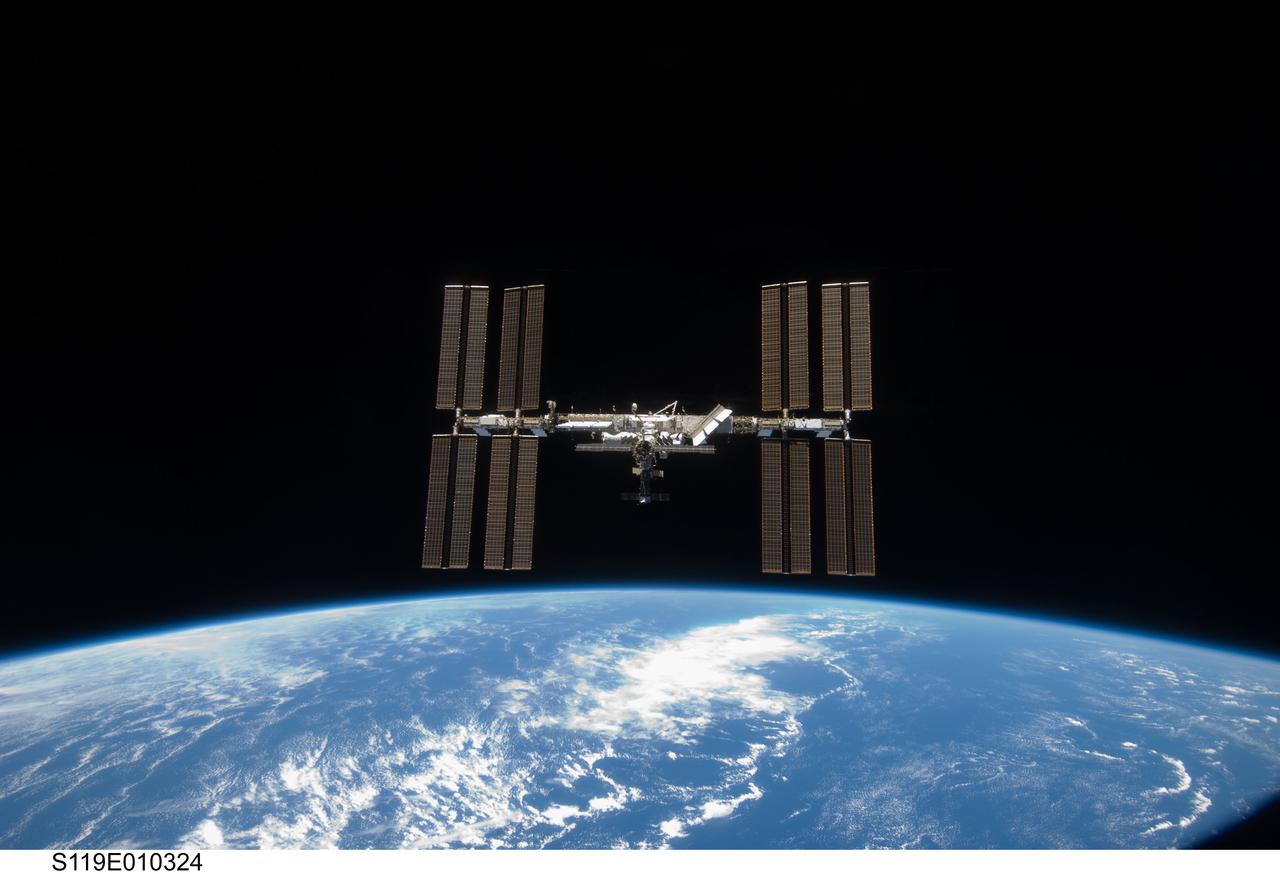
S119-E-010324 (25 March 2009) --- Backdropped by the blackness of space and Earth?s horizon, the International Space Station is seen from Space Shuttle Discovery as the two spacecraft begin their relative separation. Earlier the STS-119 and Expedition 18 crews concluded 9 days, 20 hours and 10 minutes of cooperative work onboard the shuttle and station. Undocking of the two spacecraft occurred at 2:53 p.m. (CDT) on March 25, 2009.
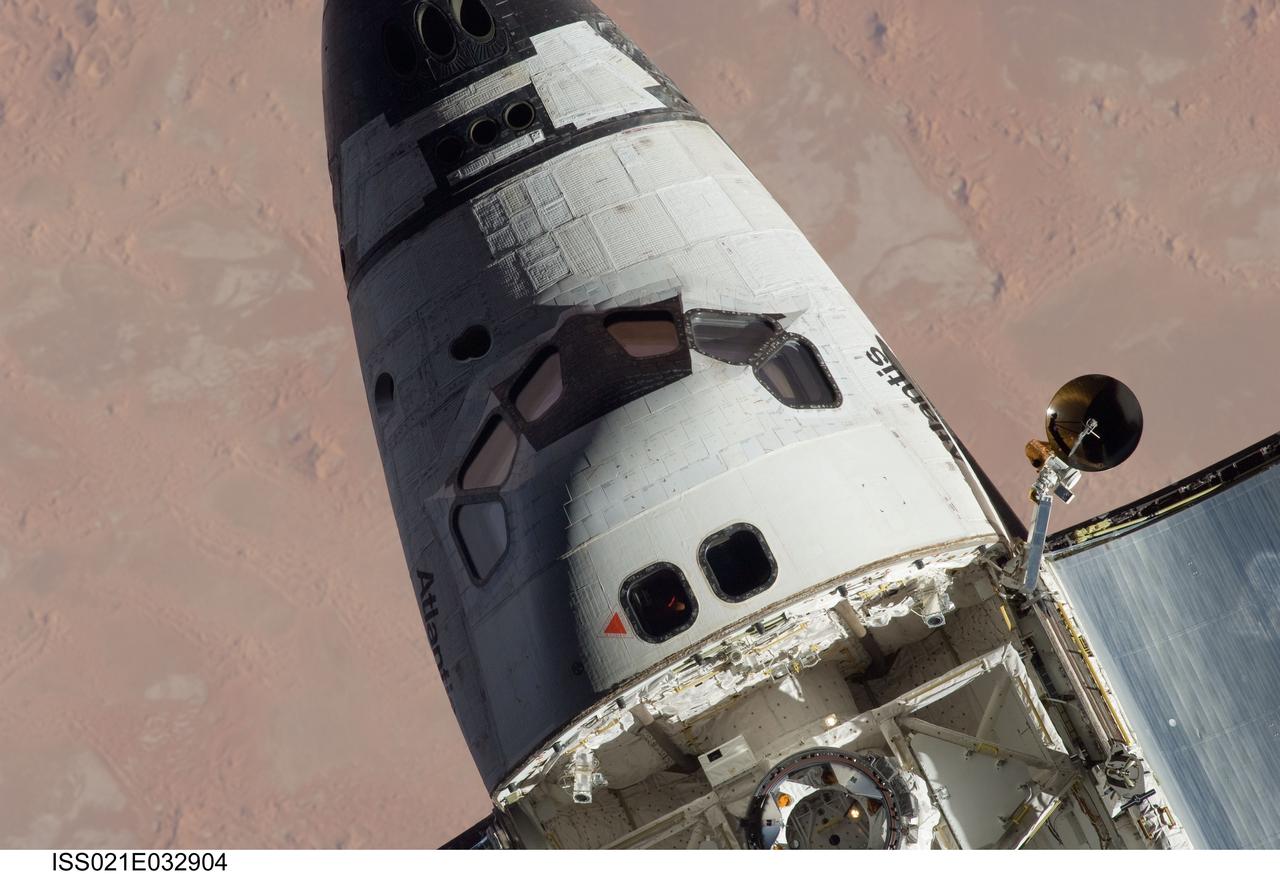
ISS021-E-032904 (25 Nov. 2009) --- The forward section of space shuttle Atlantis (STS-129) is featured in this image photographed by an Expedition 21 crew member on the International Space Station soon after the shuttle and station began their post-undocking relative separation. Undocking of the two spacecraft occurred at 3:53 a.m. (CST) on Nov. 25, 2009.
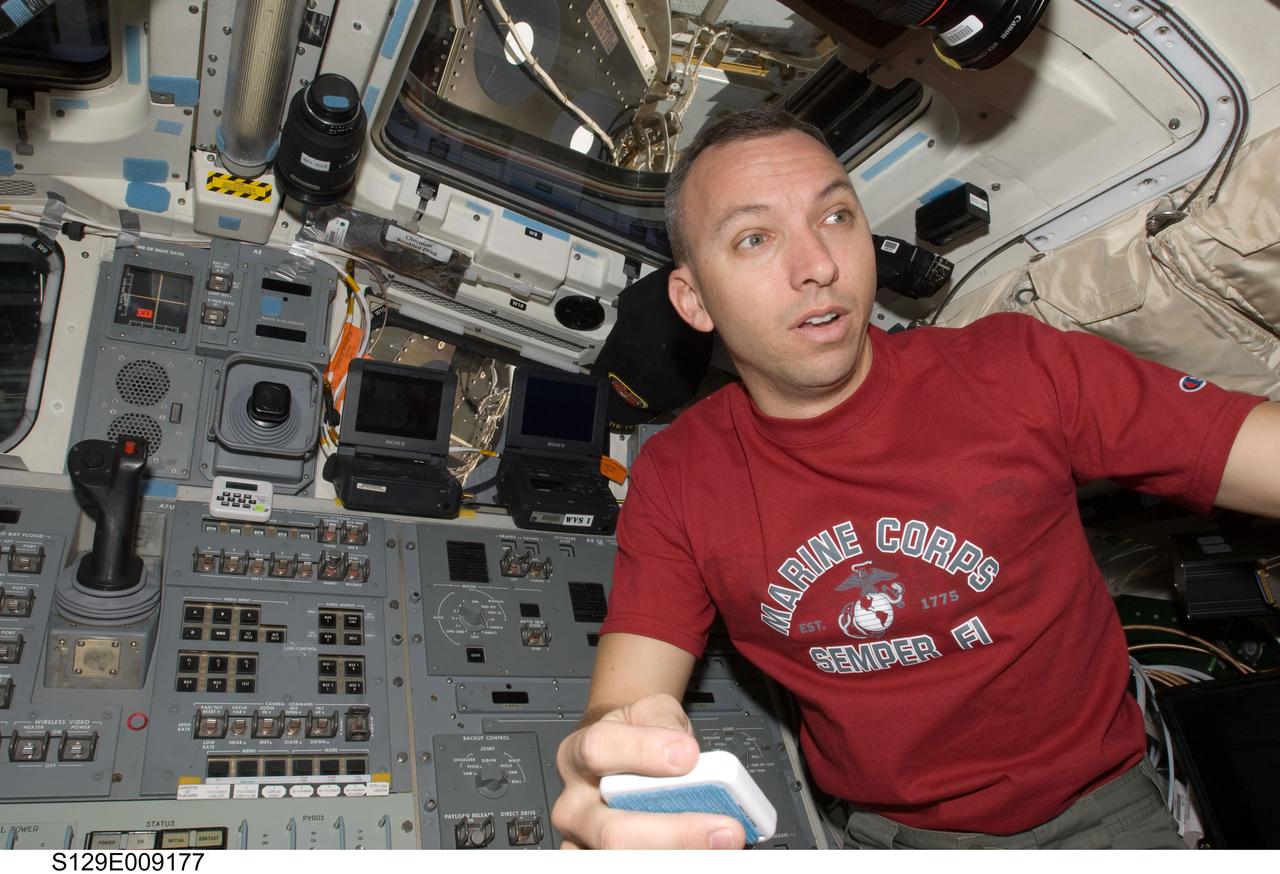
S129-E-009177 (25 Nov. 2009) --- Astronaut Randy Bresnik, STS-129 mission specialist, is pictured onboard the space shuttle Atlantis shortly before the shuttle and the station began their post-undocking relative separation. Undocking of the two spacecraft occurred at 3:53 a.m. (CST) on Nov. 25, 2009. Some scenes in the series show parts of the Mediterranean Sea and Africa and Spain in the background.
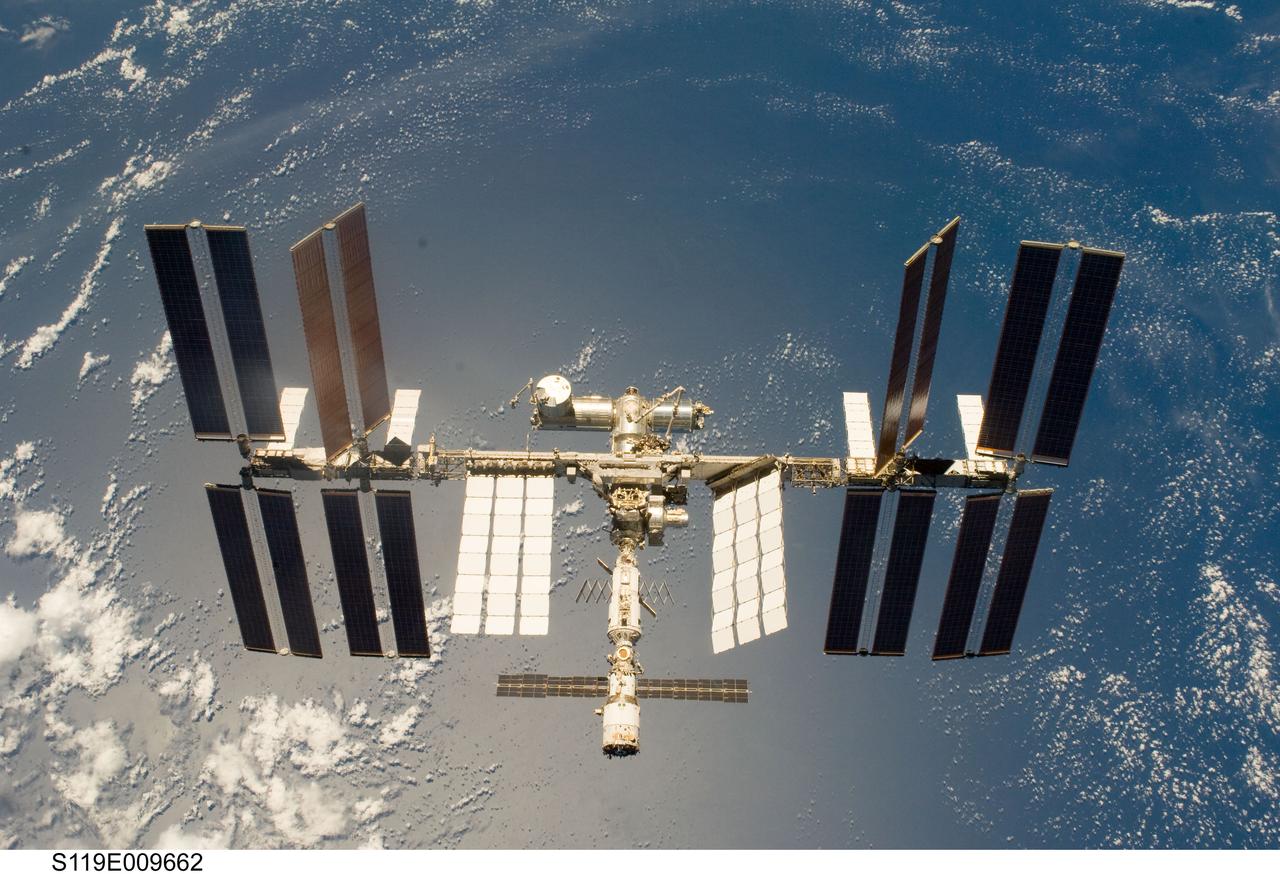
S119-E-009662 (25 March 2009) --- Backdropped by a blue and white Earth, the International Space Station is seen from Space Shuttle Discovery as the two spacecraft begin their relative separation. Earlier the STS-119 and Expedition 18 crews concluded 9 days, 20 hours and 10 minutes of cooperative work onboard the shuttle and station. Undocking of the two spacecraft occurred at 2:53 p.m. (CDT) on March 25, 2009.
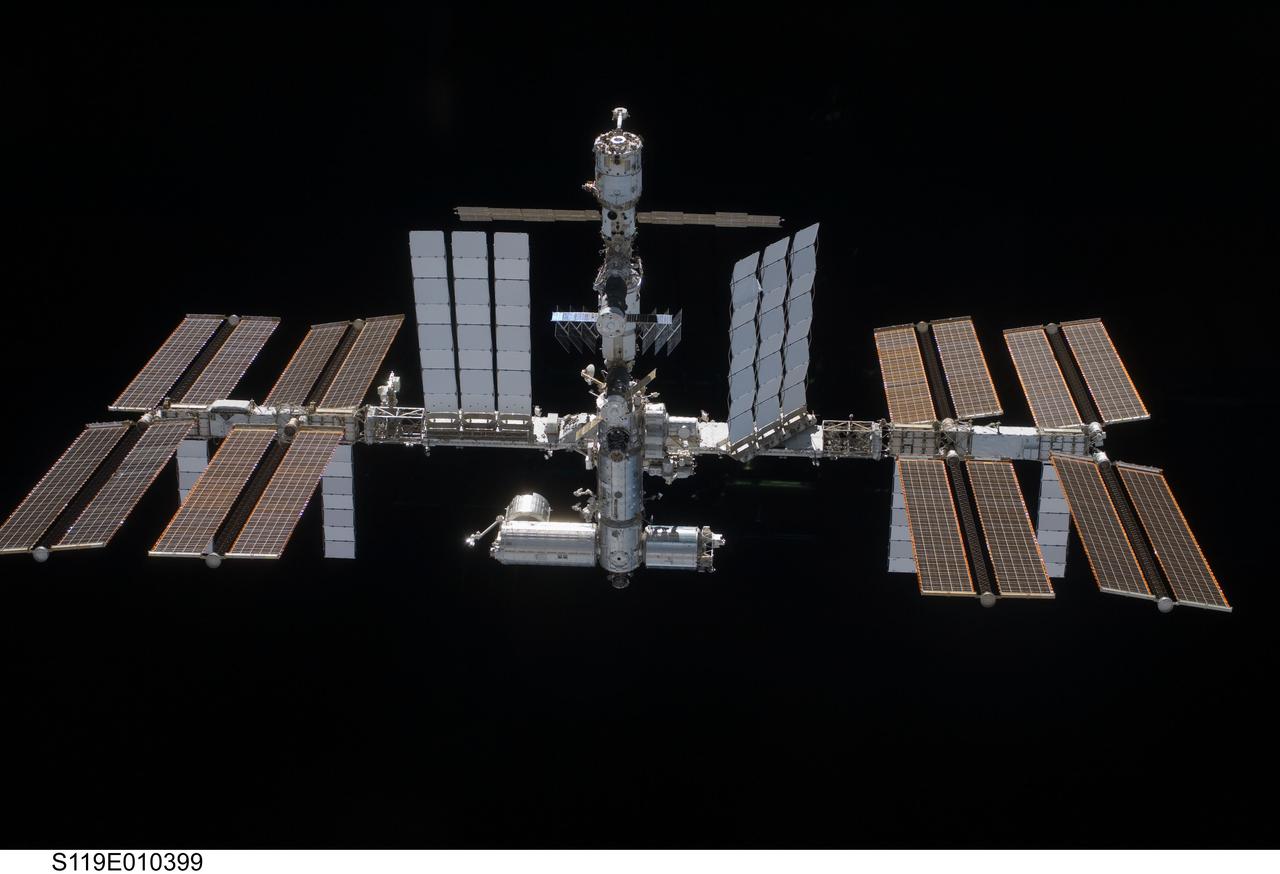
S119-E-010399 (25 March 2009) --- Backdropped by the blackness of space, the International Space Station is seen from Space Shuttle Discovery as the two spacecraft begin their relative separation. Earlier the STS-119 and Expedition 18 crews concluded 9 days, 20 hours and 10 minutes of cooperative work onboard the shuttle and station. Undocking of the two spacecraft occurred at 2:53 p.m. (CDT) on March 25, 2009.
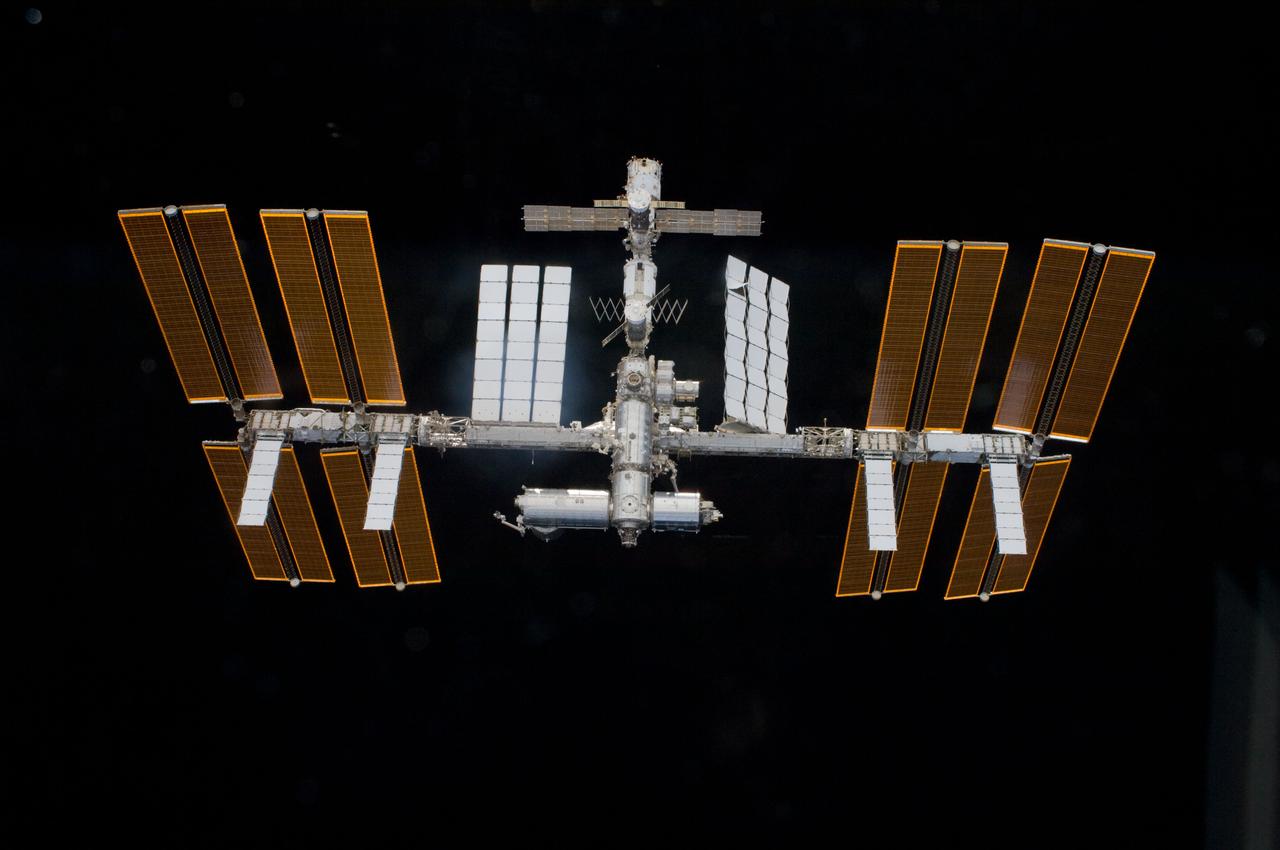
S119-E-009958 (25 March 2009) --- Backdropped by the blackness of space, the International Space Station is seen from Space Shuttle Discovery as the two spacecraft begin their relative separation. Earlier the STS-119 and Expedition 18 crews concluded 9 days, 20 hours and 10 minutes of cooperative work onboard the shuttle and station. Undocking of the two spacecraft occurred at 2:53 p.m. (CDT) on March 25, 2009.
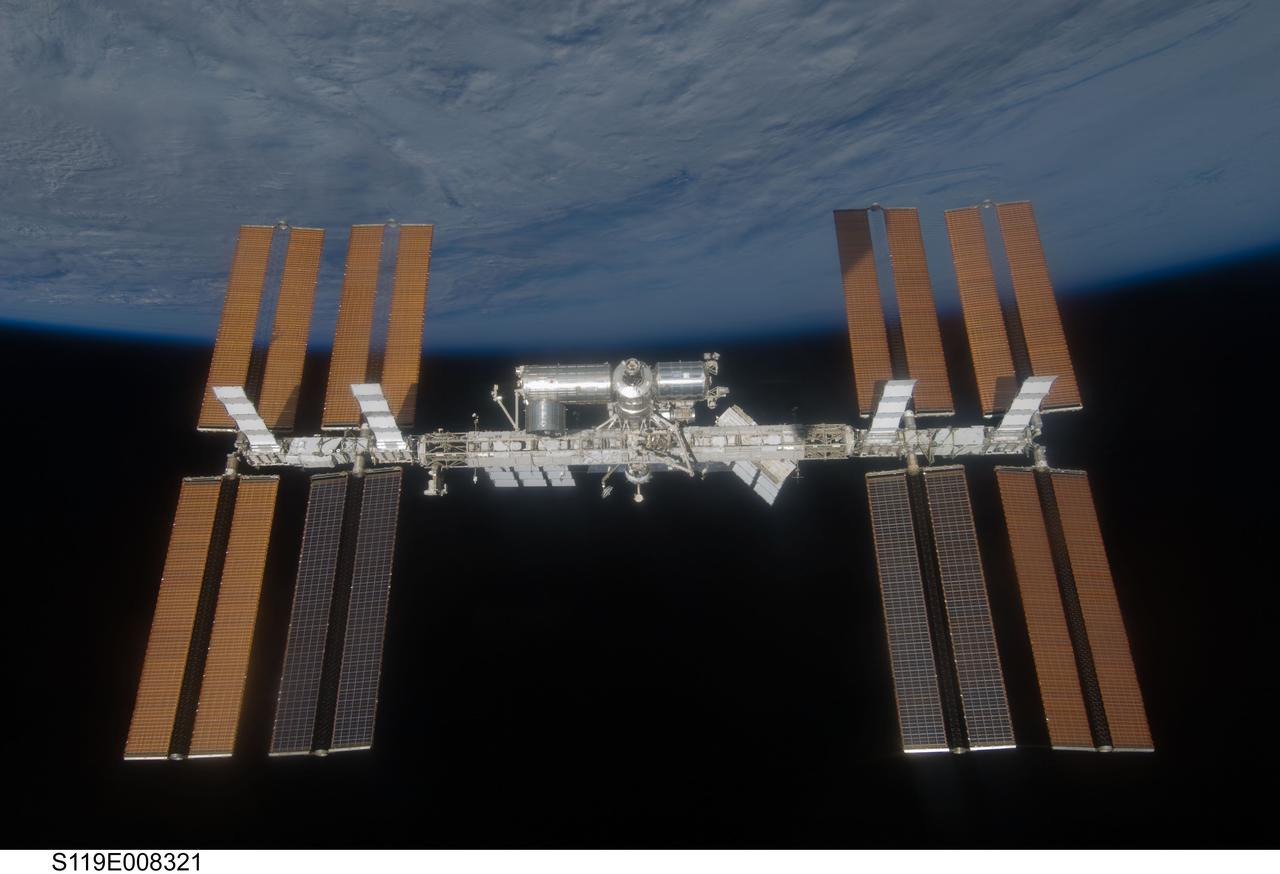
S119-E-008321 (25 March 2009) --- Backdropped by the blackness of space and Earth’s horizon, the International Space Station is seen from Space Shuttle Discovery as the two spacecraft begin their relative separation. Earlier the STS-119 and Expedition 18 crews concluded 9 days, 20 hours and 10 minutes of cooperative work onboard the shuttle and station. Undocking of the two spacecraft occurred at 2:53 p.m. (CDT) on March 25, 2009.
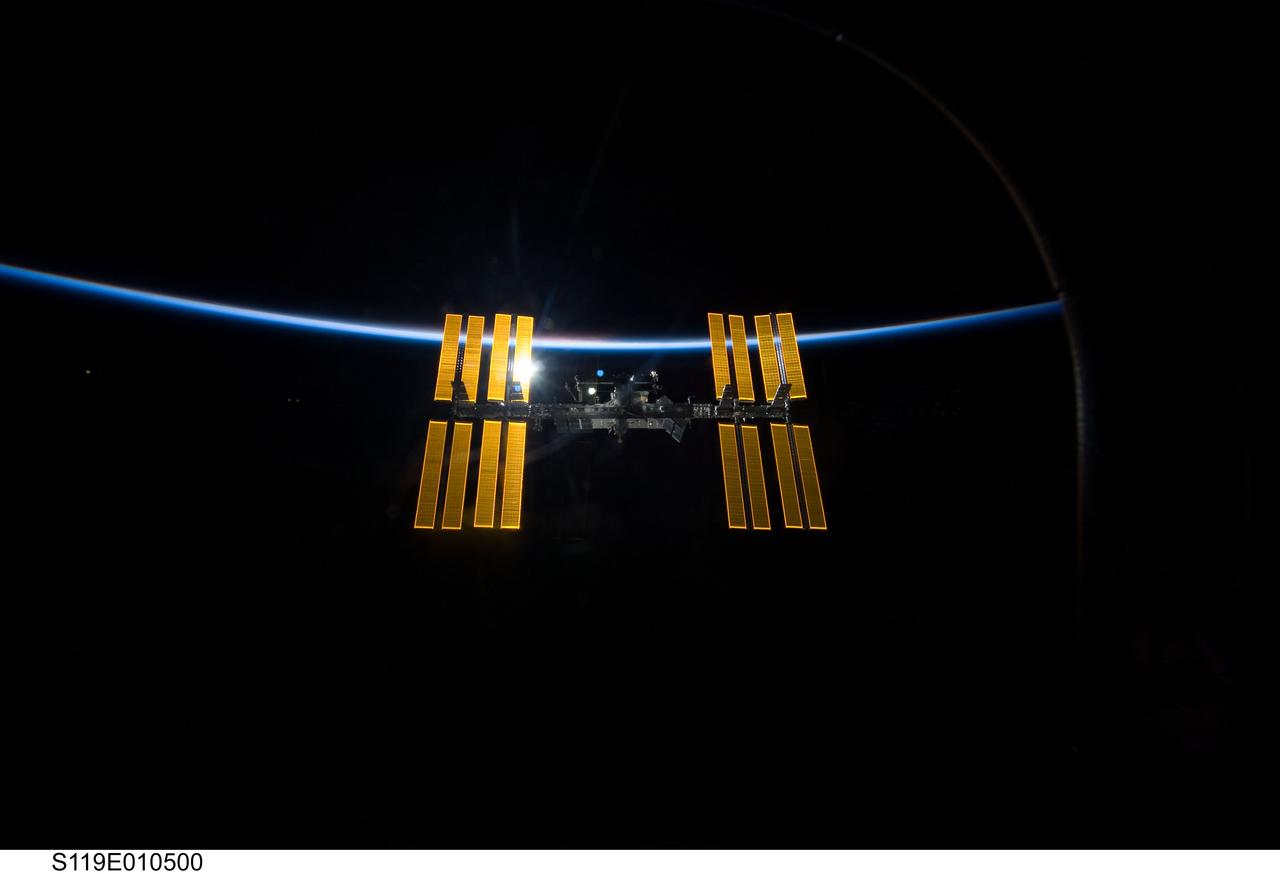
S119-E-010500 (25 March 2009) --- Backdropped by the blackness of space and the thin line of Earth?s atmosphere, the International Space Station is seen from Space Shuttle Discovery as the two spacecraft begin their relative separation. Earlier the STS-119 and Expedition 18 crews concluded 9 days, 20 hours and 10 minutes of cooperative work onboard the shuttle and station. Undocking of the two spacecraft occurred at 2:53 p.m. (CDT) on March 25, 2009.
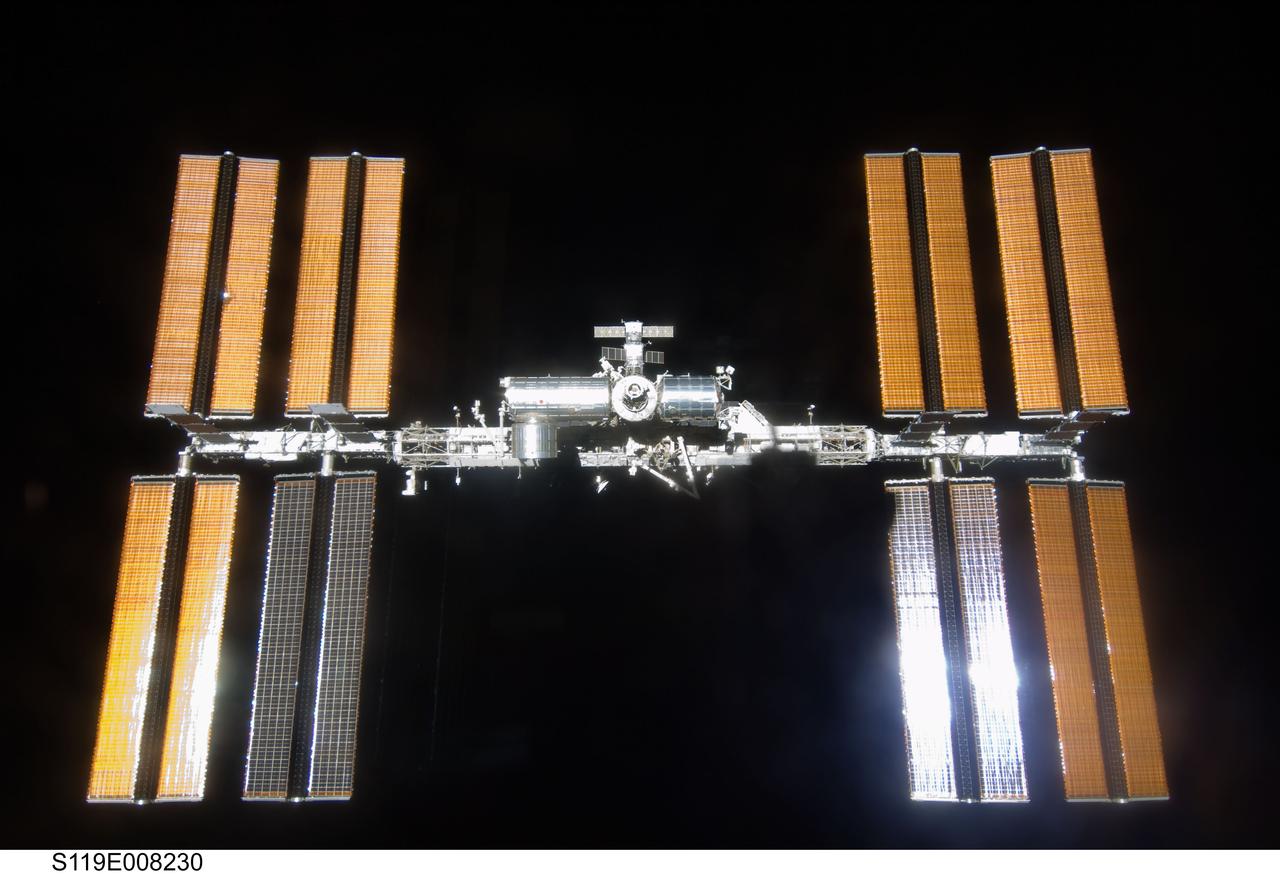
S119-E-008230 (25 March 2009) --- Backdropped by the blackness of space, the International Space Station is seen from Space Shuttle Discovery as the two spacecraft begin their relative separation. Earlier the STS-119 and Expedition 18 crews concluded 9 days, 20 hours and 10 minutes of cooperative work onboard the shuttle and station. Undocking of the two spacecraft occurred at 2:53 p.m. (CDT) on March 25, 2009.
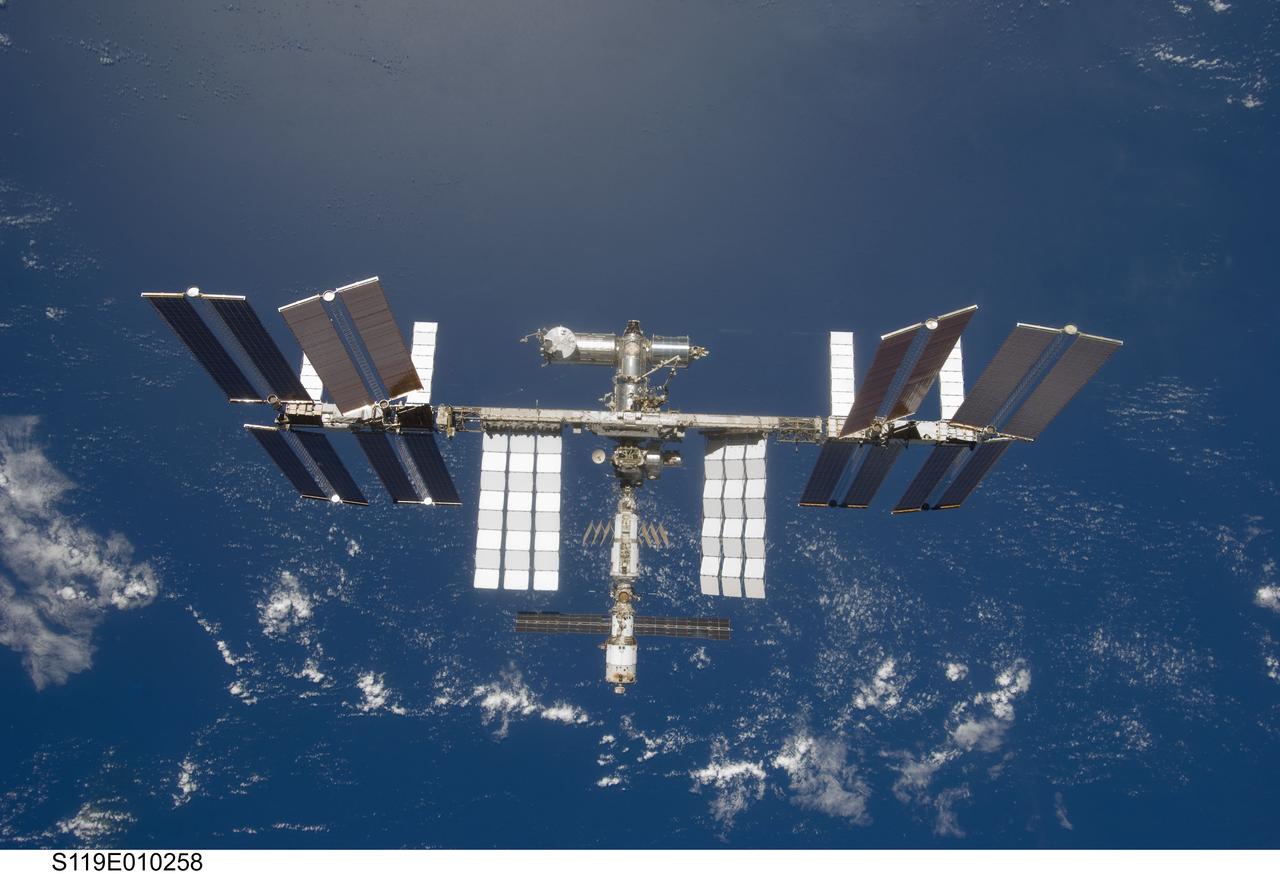
S119-E-010258 (25 March 2009) --- Backdropped by a blue and white Earth, the International Space Station is seen from Space Shuttle Discovery as the two spacecraft begin their relative separation. Earlier the STS-119 and Expedition 18 crews concluded 9 days, 20 hours and 10 minutes of cooperative work onboard the shuttle and station. Undocking of the two spacecraft occurred at 2:53 p.m. (CDT) on March 25, 2009.
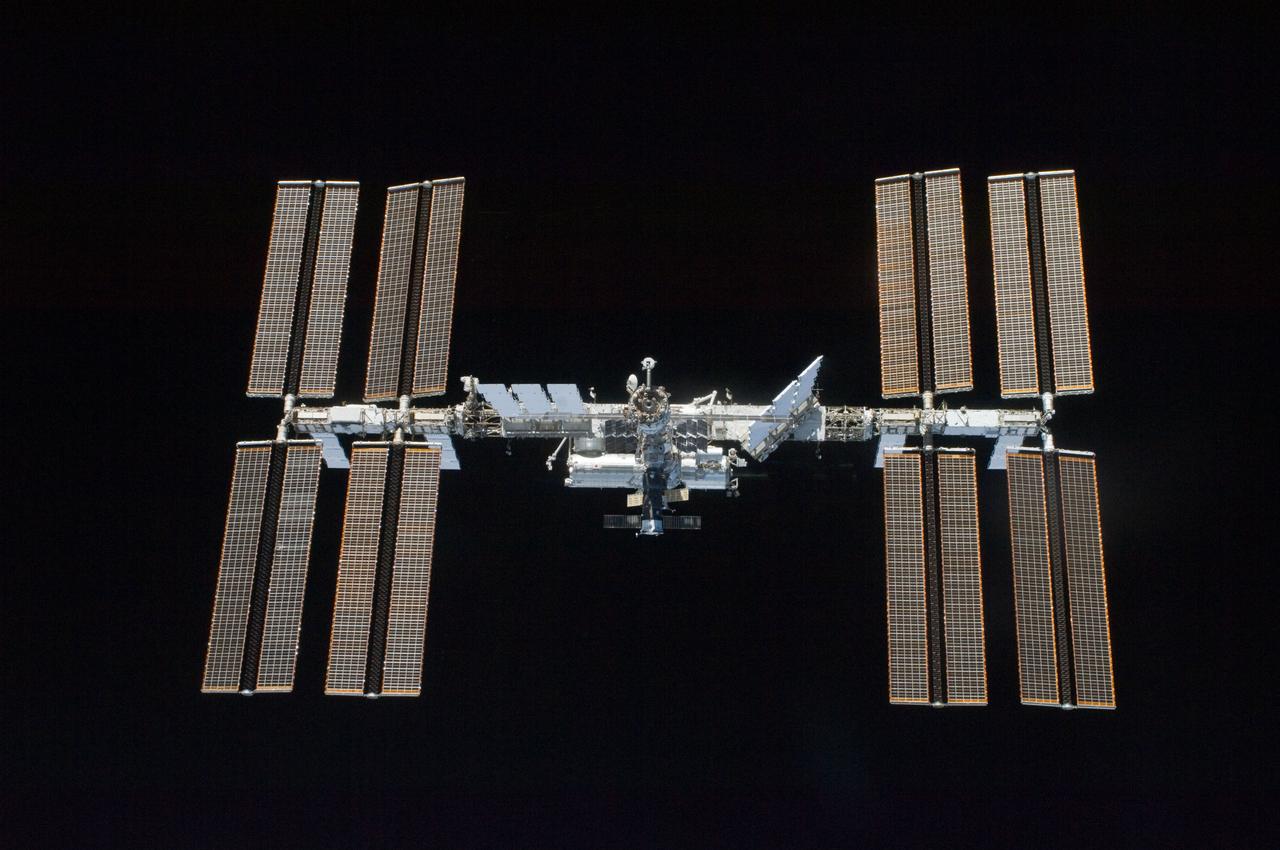
S119-E-009793 (25 March 2009) --- Backdropped by the blackness of space, the International Space Station is seen from Space Shuttle Discovery as the two spacecraft begin their relative separation. Earlier the STS-119 and Expedition 18 crews concluded 9 days, 20 hours and 10 minutes of cooperative work onboard the shuttle and station. Undocking of the two spacecraft occurred at 2:53 p.m. (CDT) on March 25, 2009.
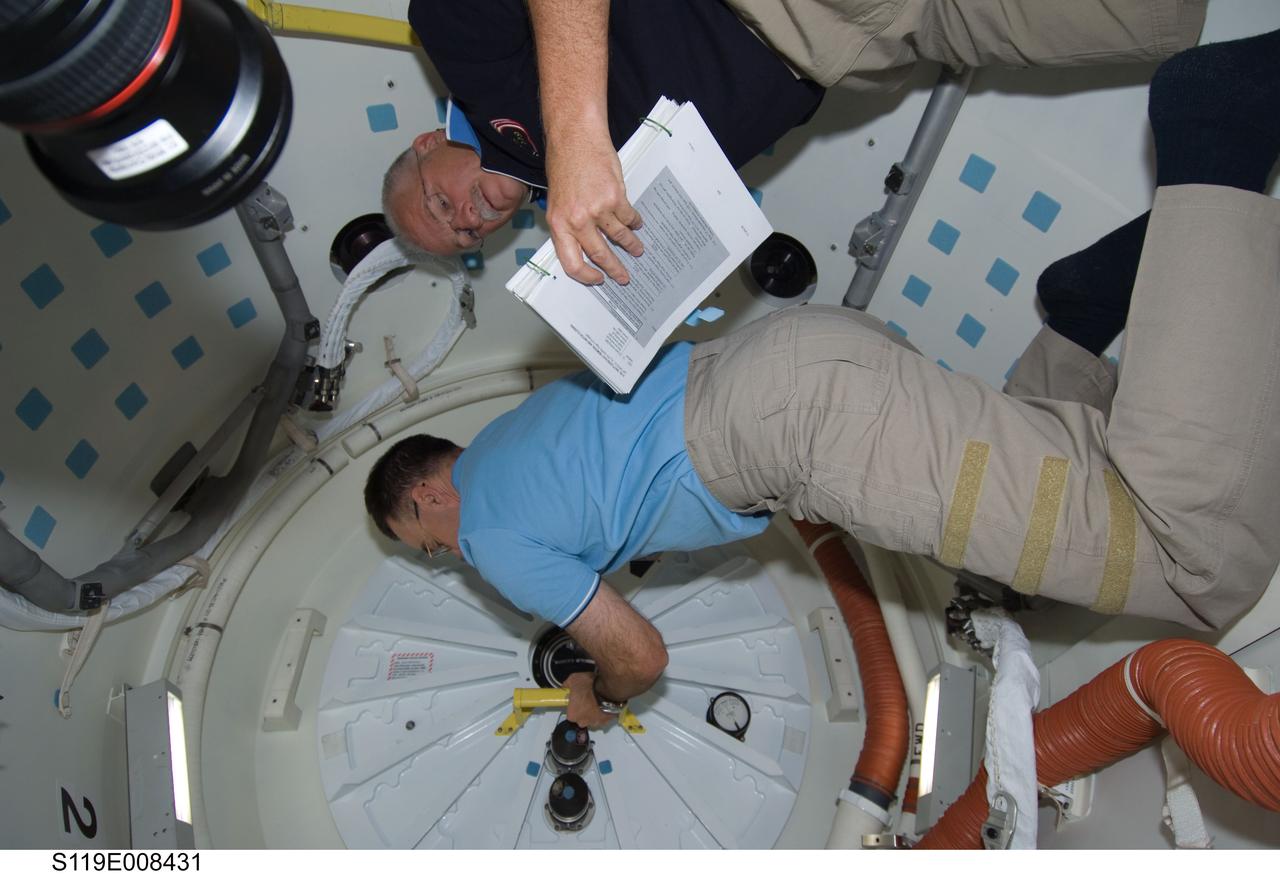
S119-E-008431(25 March 2009) --- Astronaut Lee Archambault, STS-119 commander, closes the hatch on the middeck of Space Shuttle Discovery prior to undocking from the International Space Station to conclude almost 10 days of cooperative work onboard the shuttle and the station. Astronaut John Phillips, mission specialist, looks over a procedures checklist during the activity. Undocking of the two spacecraft occurred at 2:53 p.m. (CDT) on March 25, 2009.
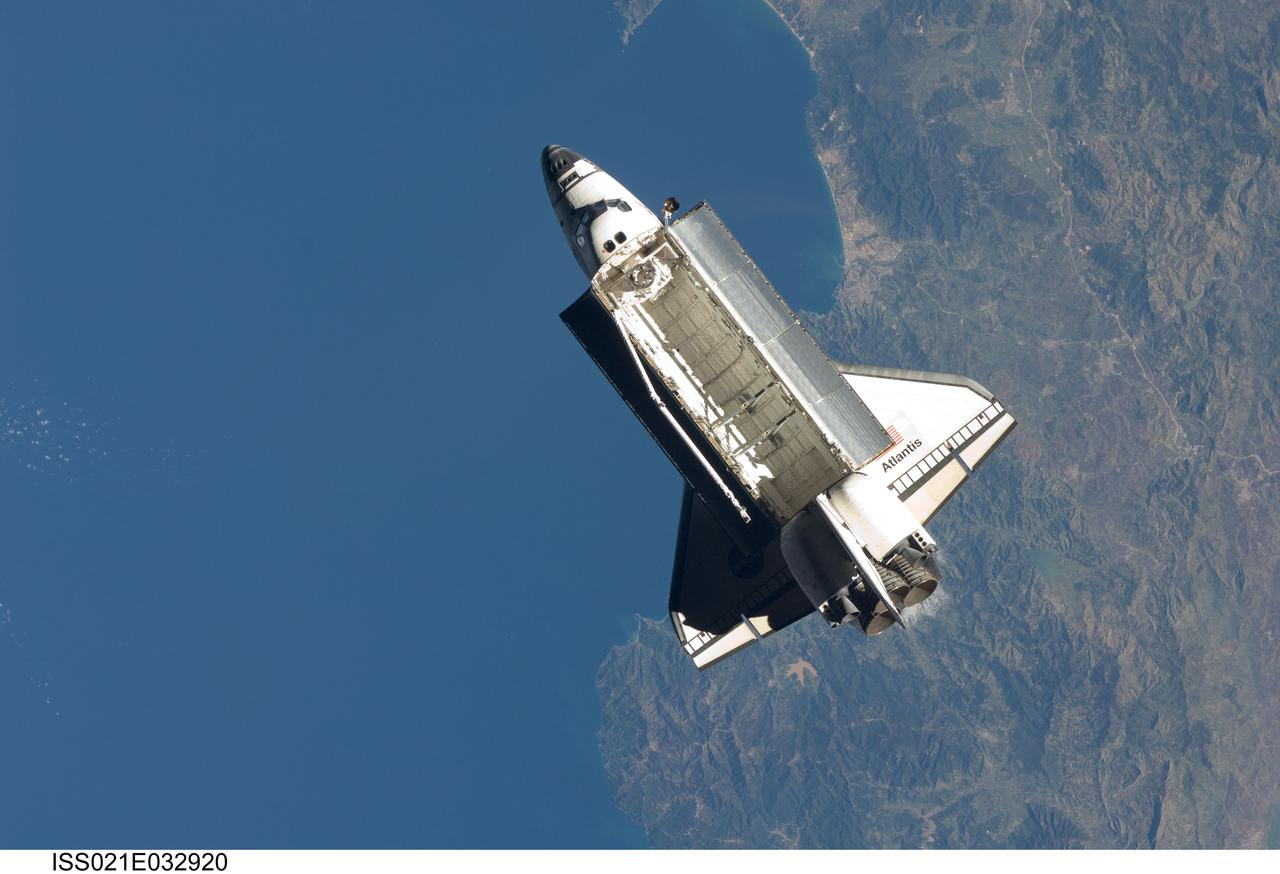
ISS021-E-032920 (25 Nov. 2009) --- Seen over the Mediterranean Sea, near the Algerian coast, the space shuttle Atlantis (STS-129) is featured in this image photographed by an Expedition 21 crew member on the International Space Station soon after the shuttle and station began their post-undocking relative separation. Undocking of the two spacecraft occurred at 3:53 a.m. (CST) on Nov. 25, 2009.

S119-E-010499 (25 March 2009) --- Backdropped by the blackness of space and the thin line of Earth?s atmosphere, the International Space Station is seen from Space Shuttle Discovery as the two spacecraft begin their relative separation. Earlier the STS-119 and Expedition 18 crews concluded 9 days, 20 hours and 10 minutes of cooperative work onboard the shuttle and station. Undocking of the two spacecraft occurred at 2:53 p.m. (CDT) on March 25, 2009.
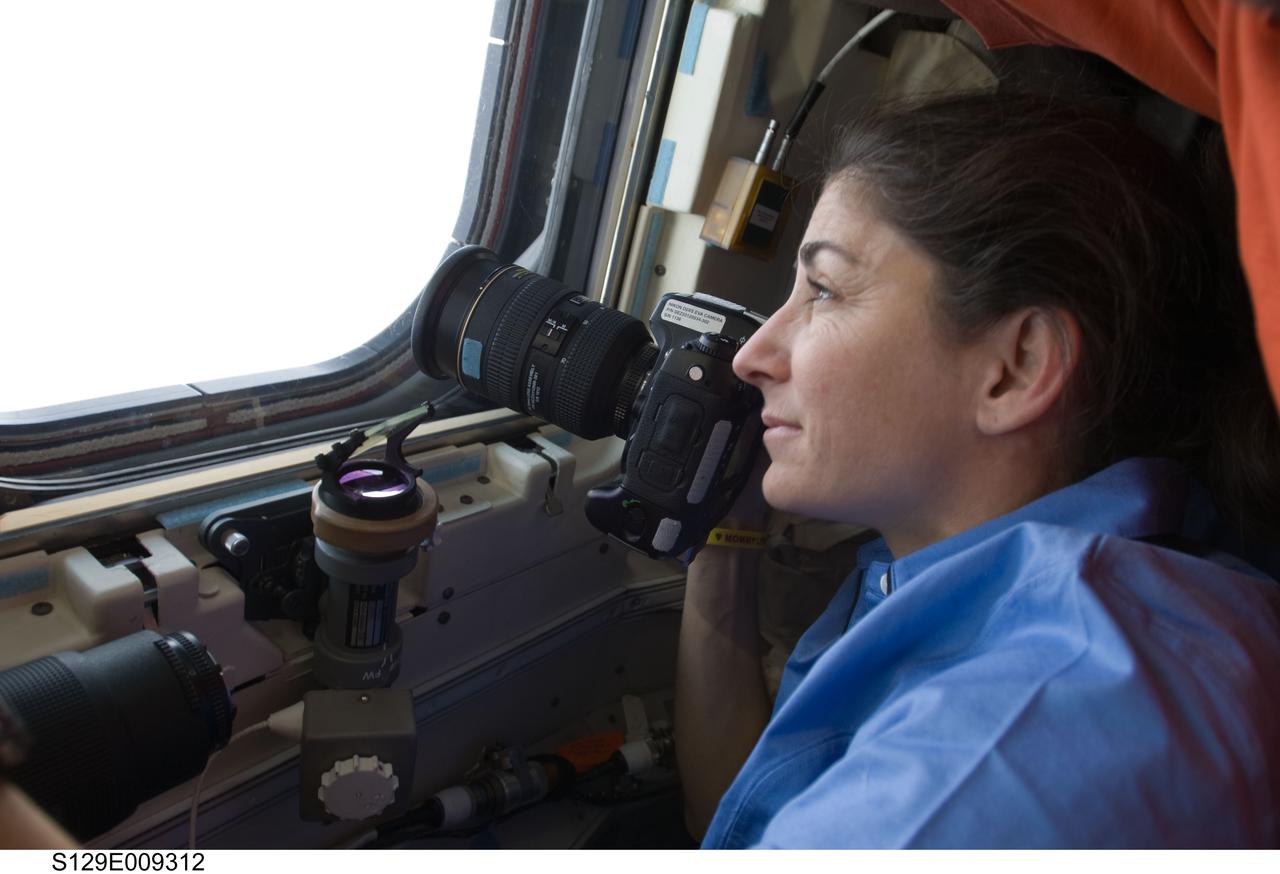
S129-E-009312 (25 Nov. 2009) --- Astronaut Nicole Stott, STS-129 mission specialist, looks through one of Atlantis' aft flight deck windows toward the International Space Station, which she called "home" for almost three months, as the two vehicles continue their relative post-undocking separation. Undocking of the two spacecraft occurred at 3:53 a.m. (CST) on Nov. 25, 2009.
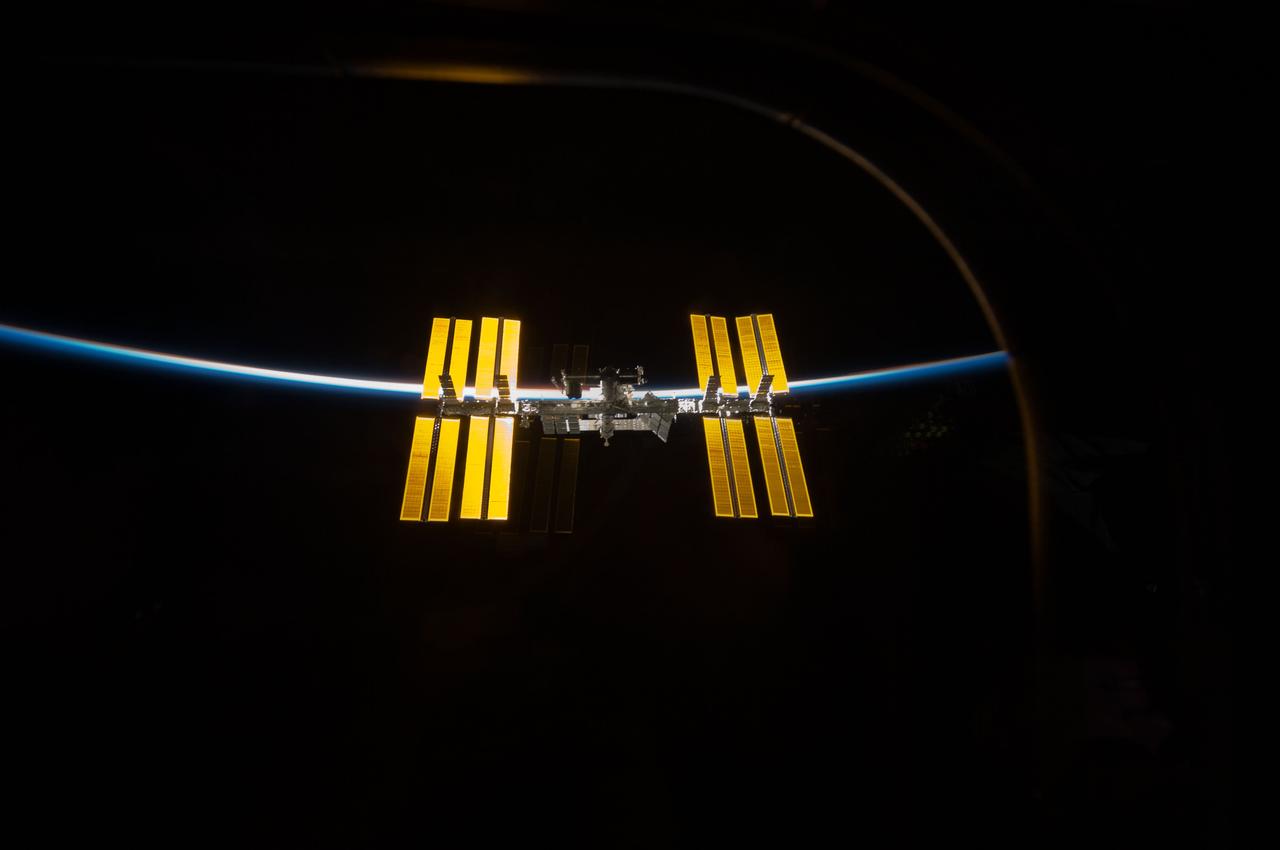
S119-E-010506 (25 March 2009) --- Backdropped by the blackness of space and the thin line of Earth?s atmosphere, the International Space Station is seen from Space Shuttle Discovery as the two spacecraft begin their relative separation. Earlier the STS-119 and Expedition 18 crews concluded 9 days, 20 hours and 10 minutes of cooperative work onboard the shuttle and station. Undocking of the two spacecraft occurred at 2:53 p.m. (CDT) on March 25, 2009.
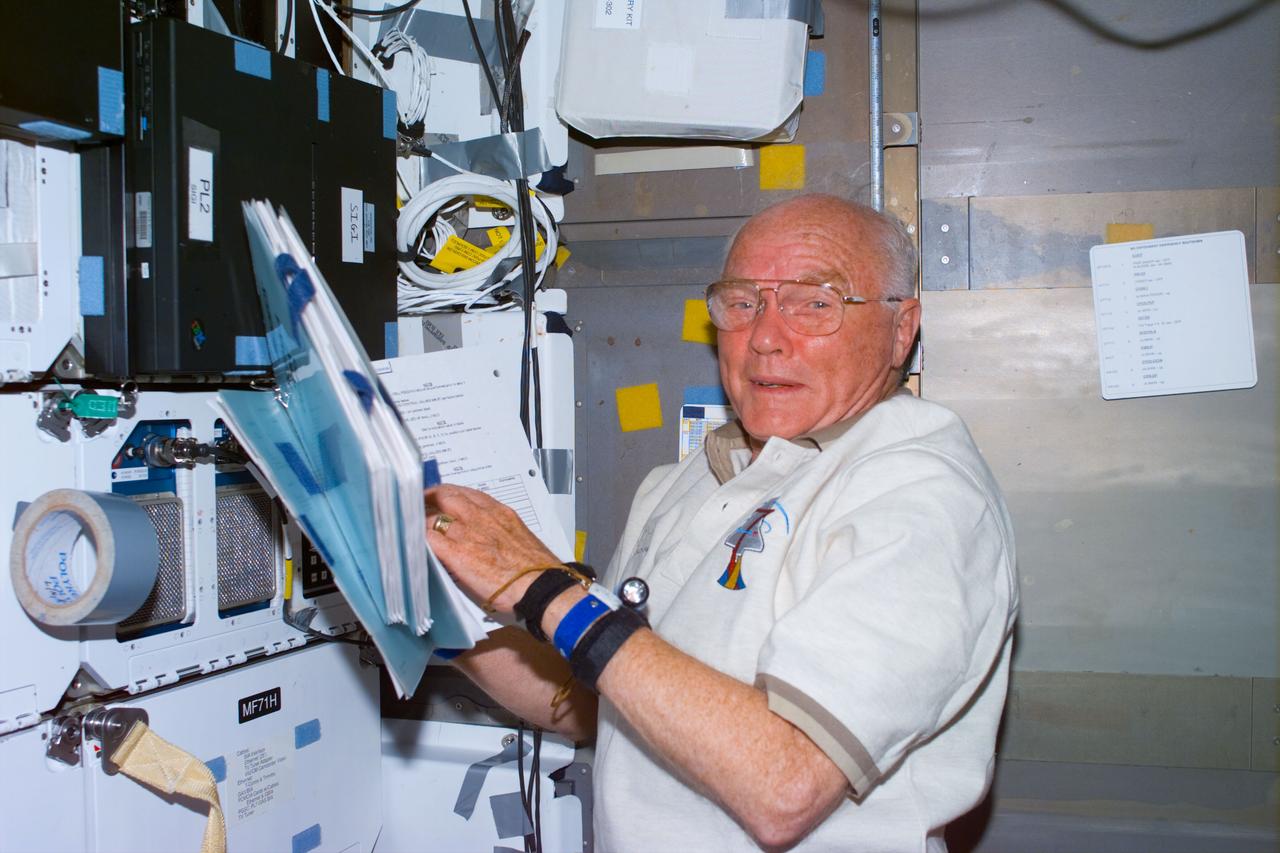
STS095-E-5258 (4 Nov. 1998) --- U.S. Sen. John H. Glenn Jr. (D.-Ohio), STS-95 payload specialist, checks over a notebook during Flight Day 7 activity aboard the Space Shuttle Discovery. The photo was taken with an electronic still camera (ESC) at 22:53:28 GMT, Nov. 4.
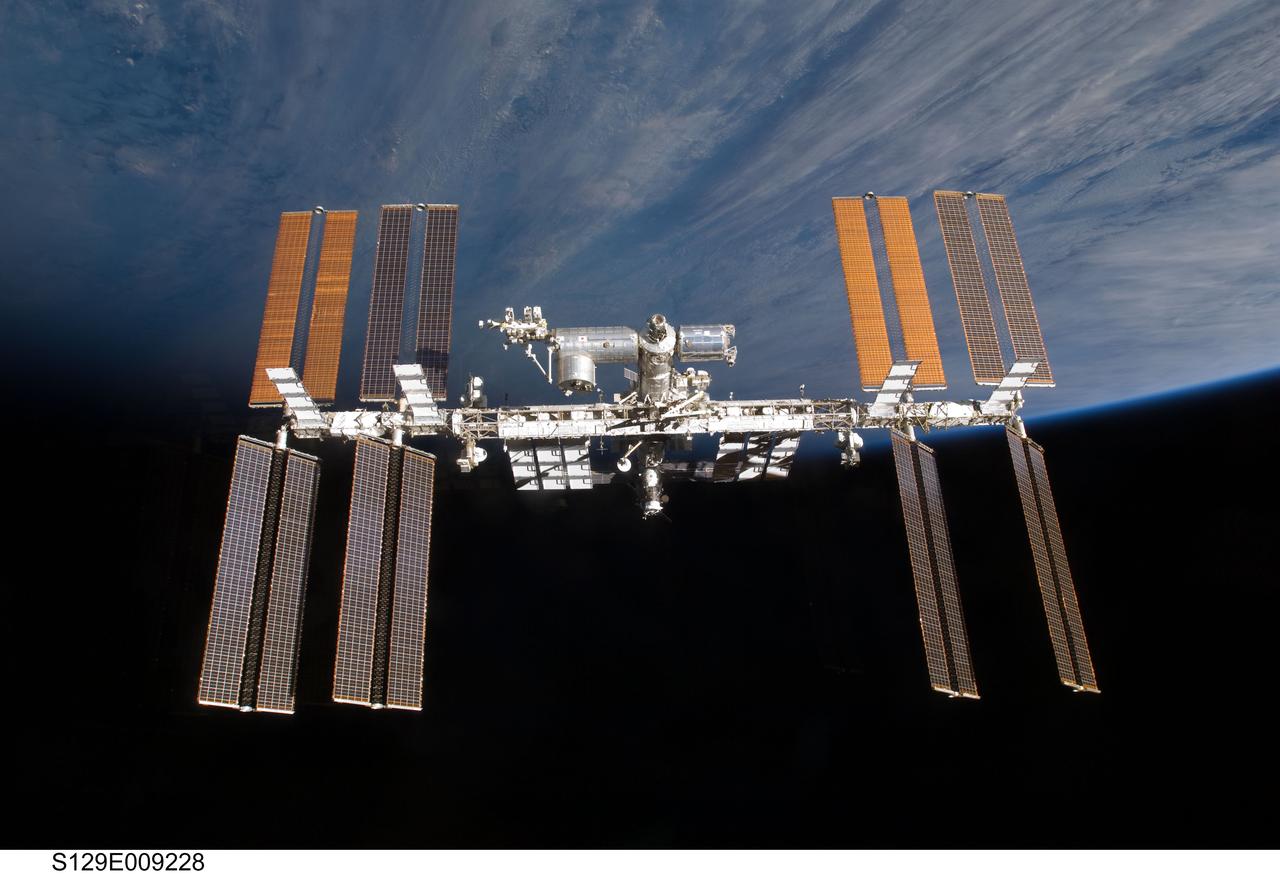
S129-E-009228 (25 Nov. 2009) --- Set against the background of Earth's horizon and the blackness of space, the International Space Station is featured in this image photographed by an STS-129 crew member on Atlantis soon after the station and shuttle began their post-undocking relative separation. Undocking of the two spacecraft occurred at 3:53 a.m. (CST) on Nov. 25, 2009.
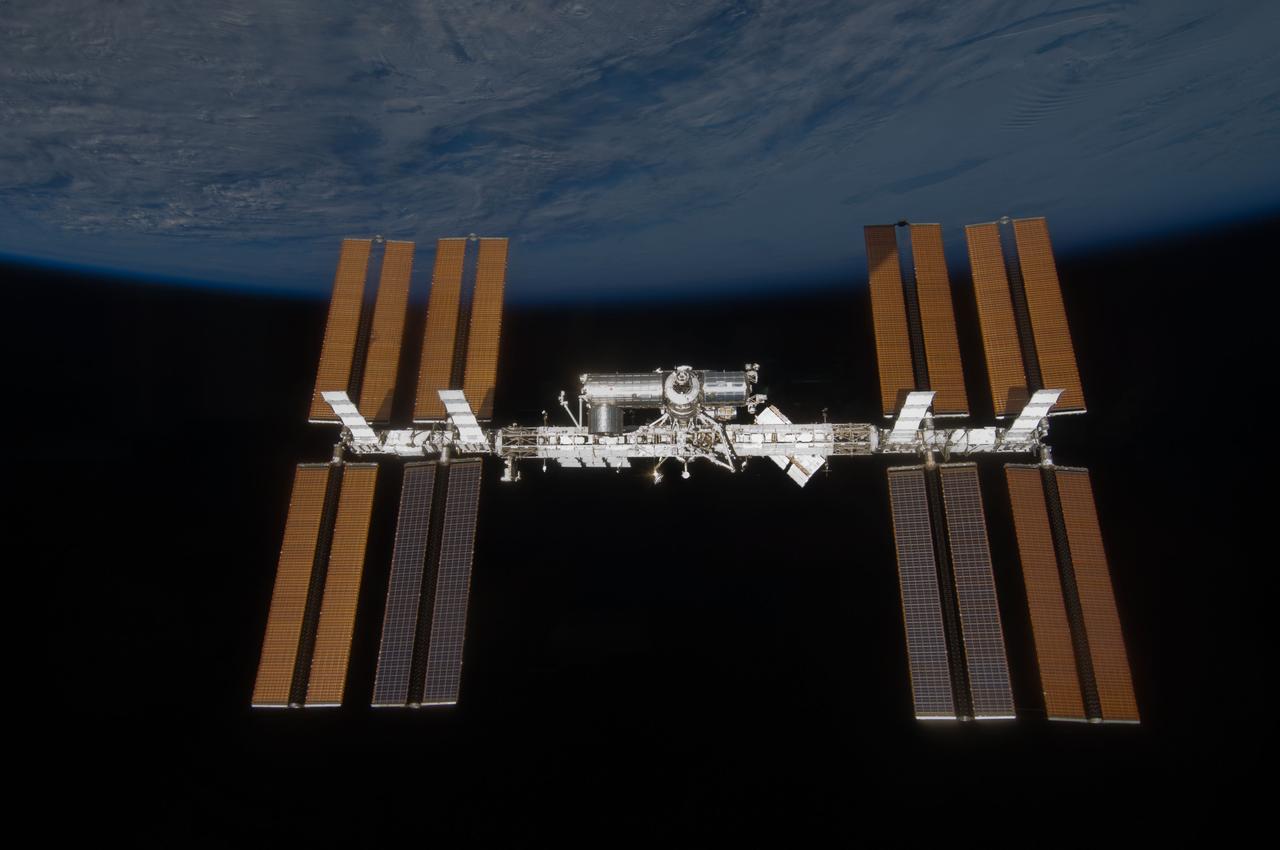
S119-E-008308 (25 March 2009) --- Backdropped by the blackness of space and Earth’s horizon, the International Space Station is seen from Space Shuttle Discovery as the two spacecraft begin their relative separation. Earlier the STS-119 and Expedition 18 crews concluded 9 days, 20 hours and 10 minutes of cooperative work onboard the shuttle and station. Undocking of the two spacecraft occurred at 2:53 p.m. (CDT) on March 25, 2009.
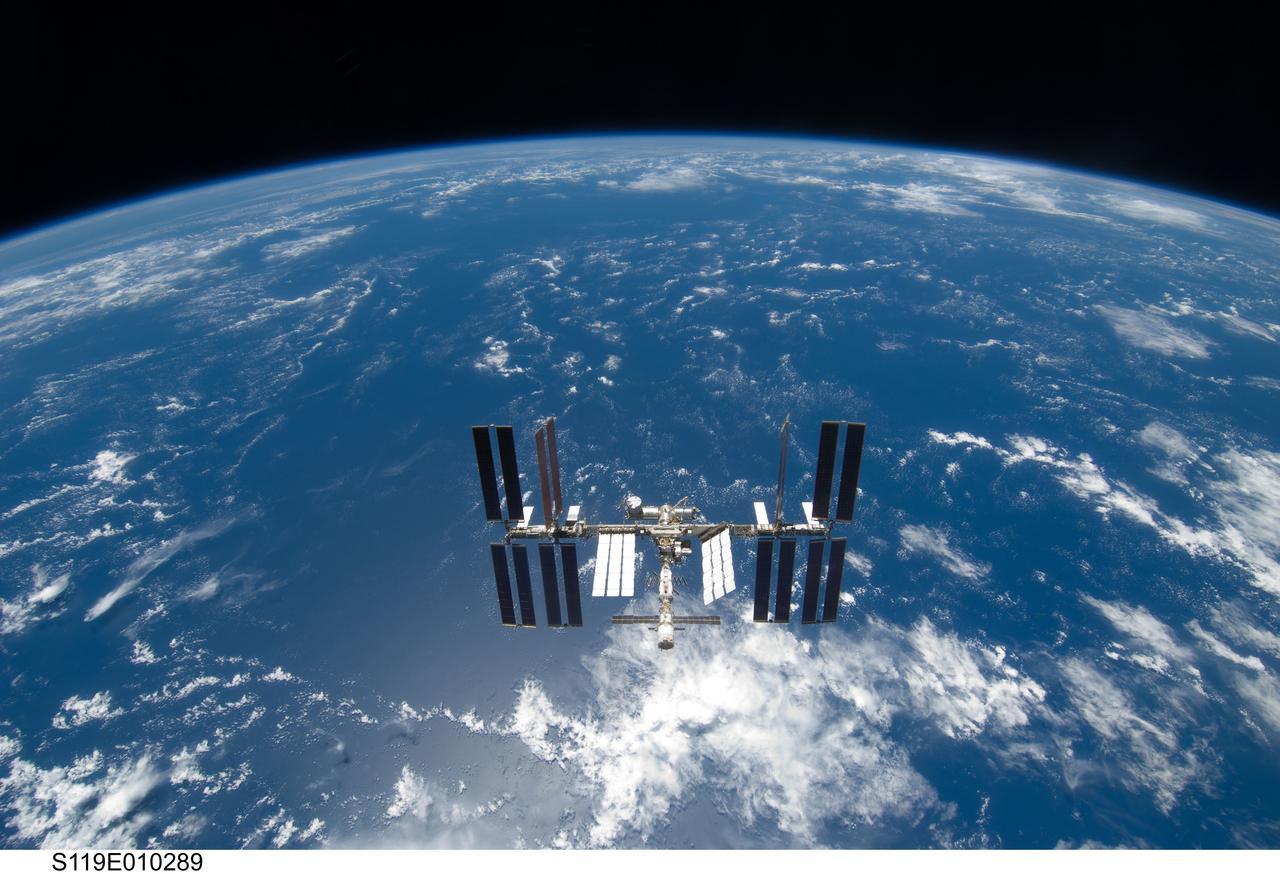
S119-E-010289 (25 March 2009) --- Backdropped by a blue and white Earth, the International Space Station is seen from Space Shuttle Discovery as the two spacecraft begin their relative separation. Earlier the STS-119 and Expedition 18 crews concluded 9 days, 20 hours and 10 minutes of cooperative work onboard the shuttle and station. Undocking of the two spacecraft occurred at 2:53 p.m. (CDT) on March 25, 2009.
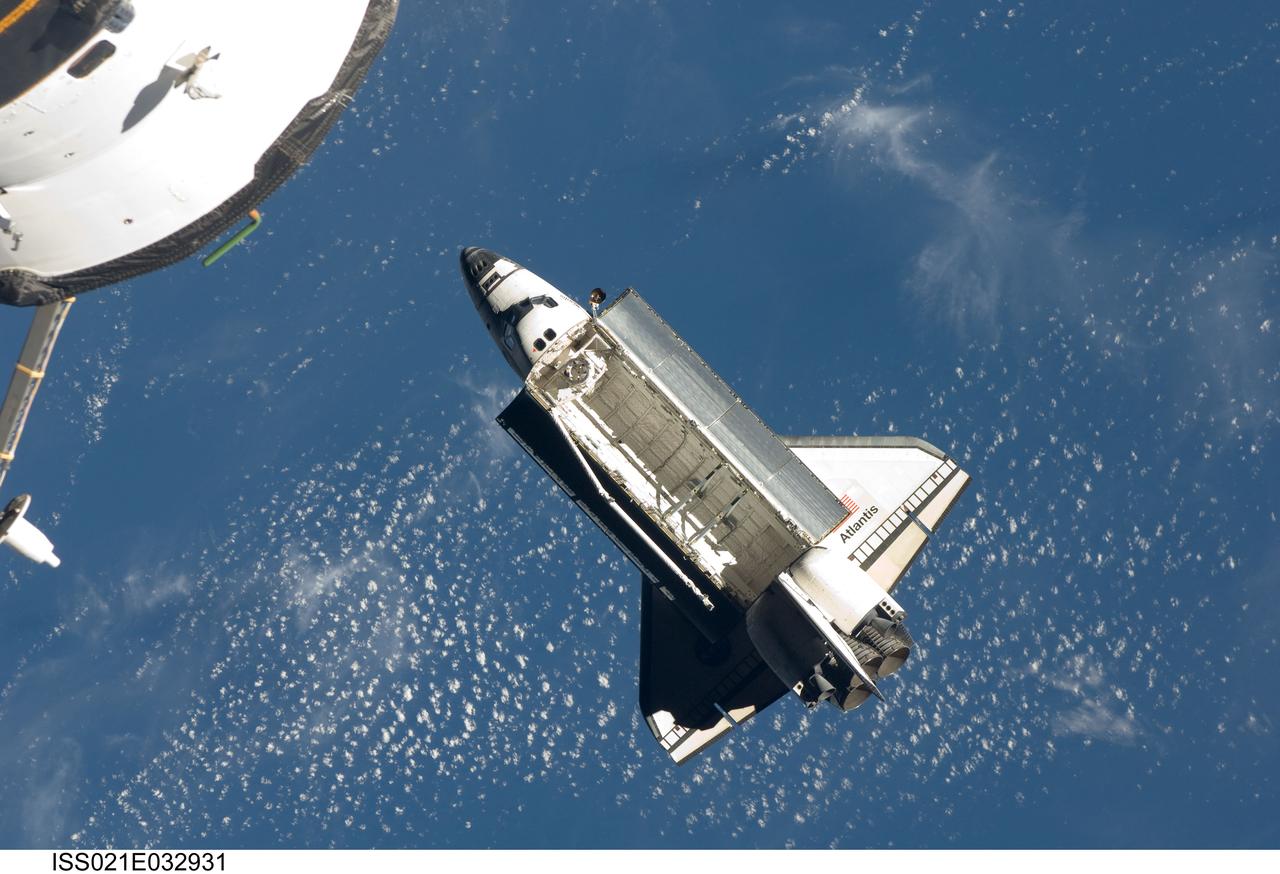
ISS021-E-032931 (25 Nov. 2009) --- Backdropped by a blue and white part of Earth, space shuttle Atlantis (STS-129) is featured in this image photographed by an Expedition 21 crew member on the International Space Station soon after the shuttle and station began their post-undocking relative separation. Undocking of the two spacecraft occurred at 3:53 a.m. (CST) on Nov. 25, 2009.
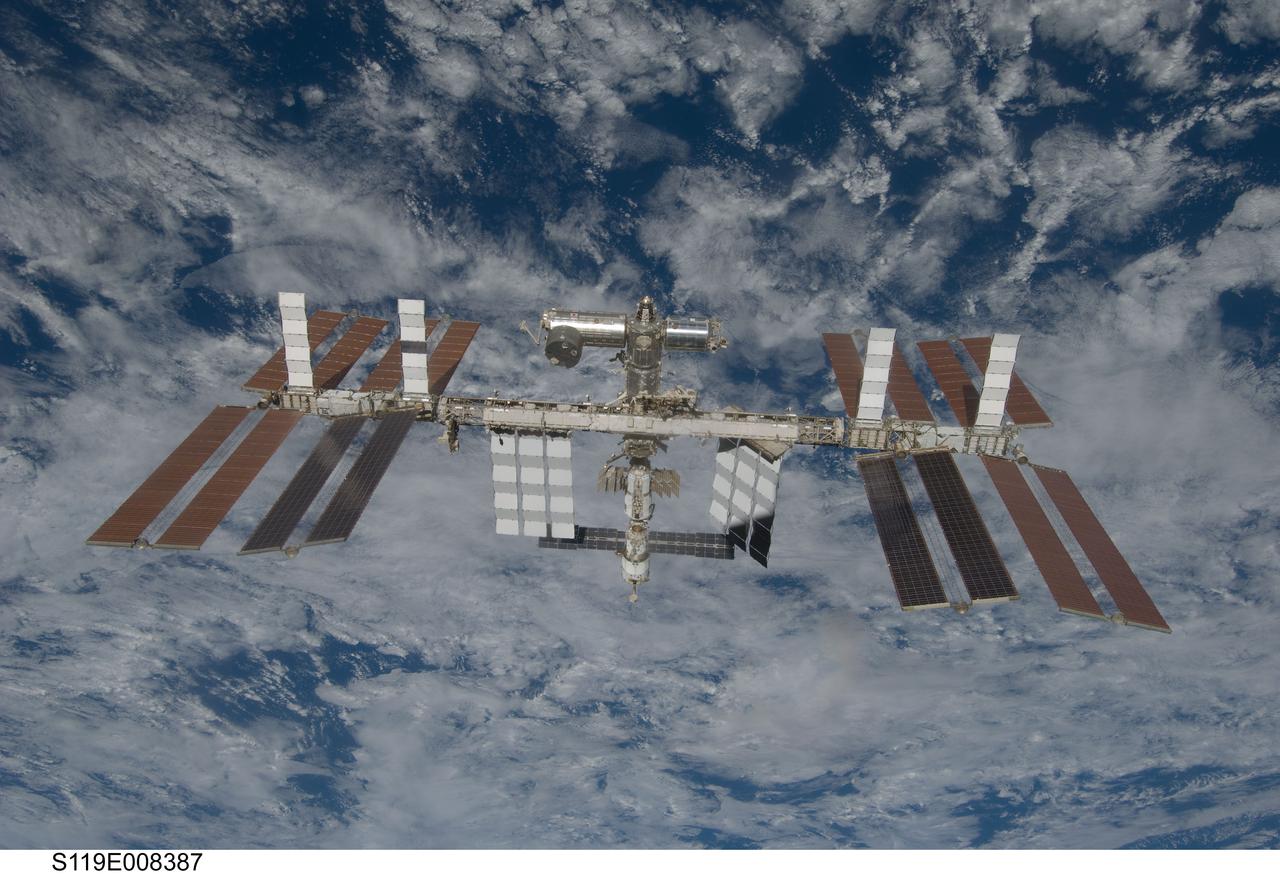
S119-E-008387 (25 March 2009) --- Backdropped by a blue and white Earth, the International Space Station is seen from Space Shuttle Discovery as the two spacecraft begin their relative separation. Earlier the STS-119 and Expedition 18 crews concluded 9 days, 20 hours and 10 minutes of cooperative work onboard the shuttle and station. Undocking of the two spacecraft occurred at 2:53 p.m. (CDT) on March 25, 2009.
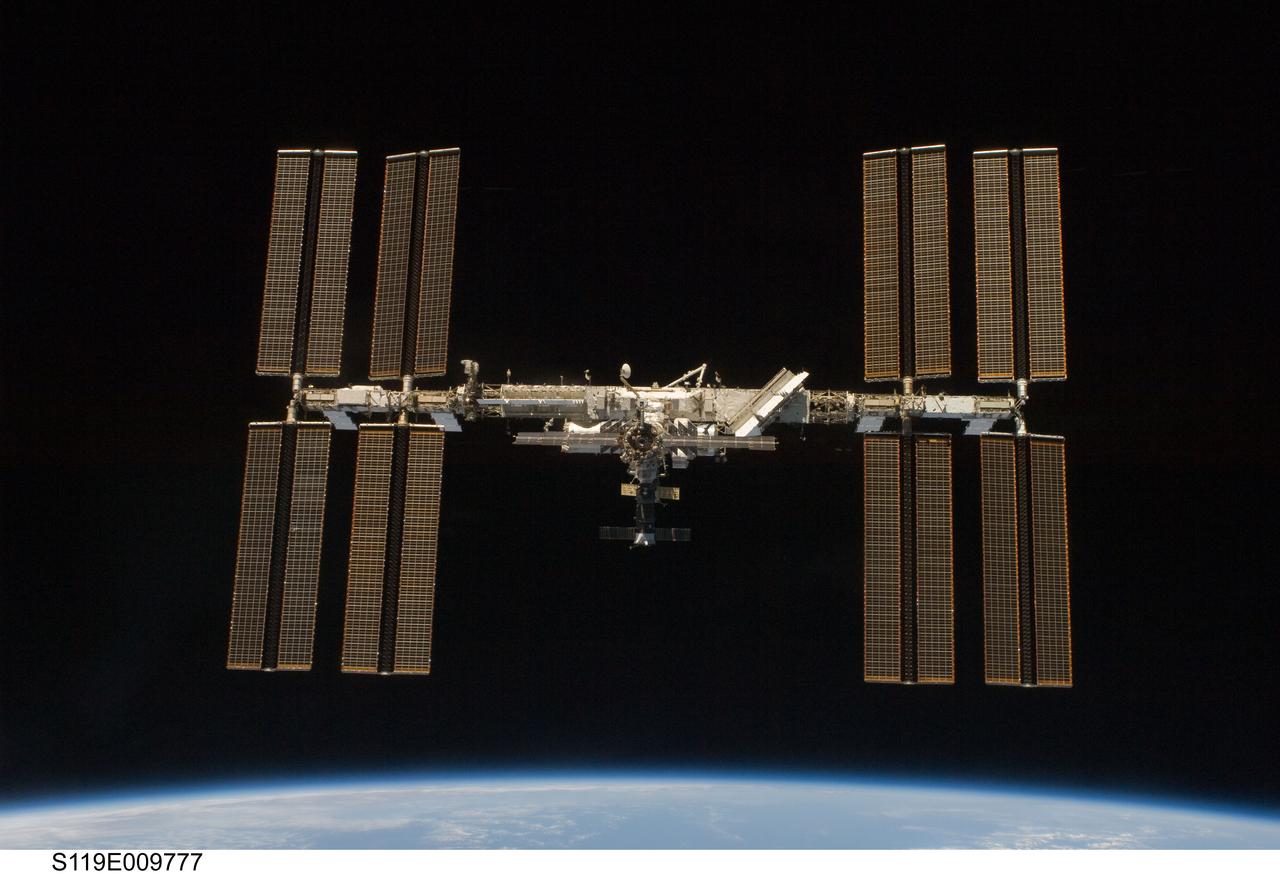
S119-E-009777 (25 March 2009) --- Backdropped by the blackness of space and Earth?s horizon, the International Space Station is seen from Space Shuttle Discovery as the two spacecraft begin their relative separation. Earlier the STS-119 and Expedition 18 crews concluded 9 days, 20 hours and 10 minutes of cooperative work onboard the shuttle and station. Undocking of the two spacecraft occurred at 2:53 p.m. (CDT) on March 25, 2009.
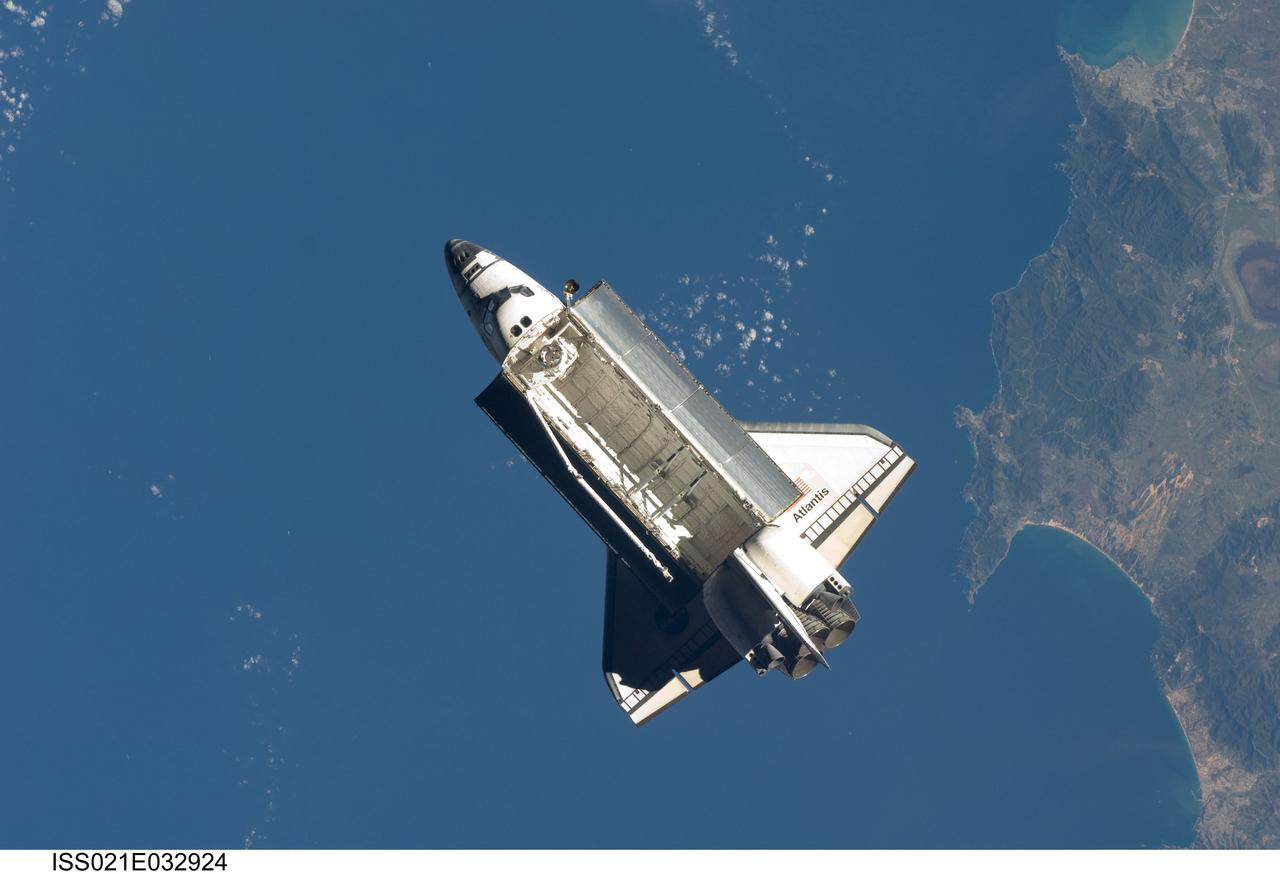
ISS021-E-032924 (25 Nov. 2009) --- Seen over the Mediterranean Sea, near the Algerian coast, the space shuttle Atlantis (STS-129) is featured in this image photographed by an Expedition 21 crew member on the International Space Station soon after the shuttle and station began their post-undocking relative separation. Undocking of the two spacecraft occurred at 3:53 a.m. (CST) on Nov. 25, 2009.
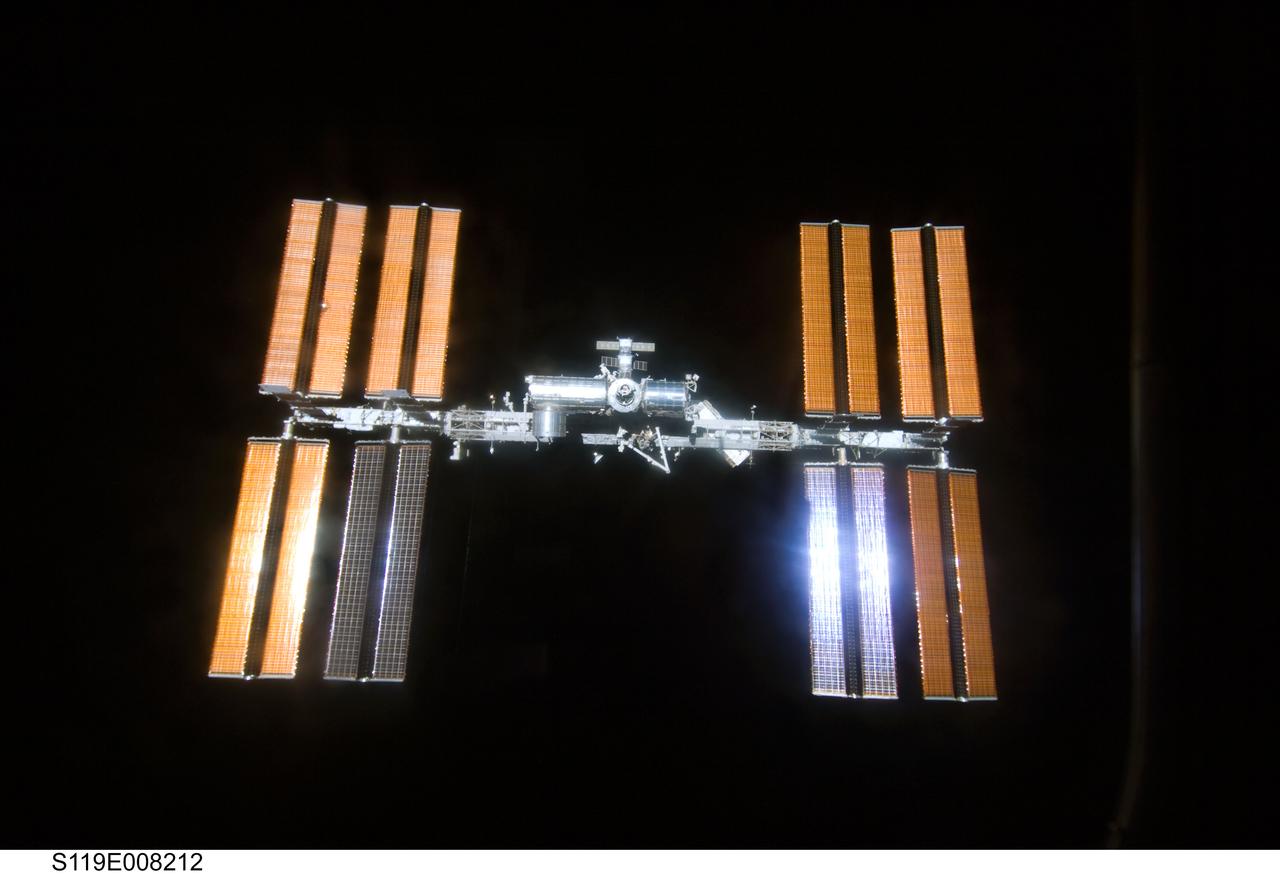
S119-E-008212 (25 March 2009) --- Backdropped by the blackness of space, the International Space Station is seen from Space Shuttle Discovery as the two spacecraft begin their relative separation. Earlier the STS-119 and Expedition 18 crews concluded 9 days, 20 hours and 10 minutes of cooperative work onboard the shuttle and station. Undocking of the two spacecraft occurred at 2:53 p.m. (CDT) on March 25, 2009.
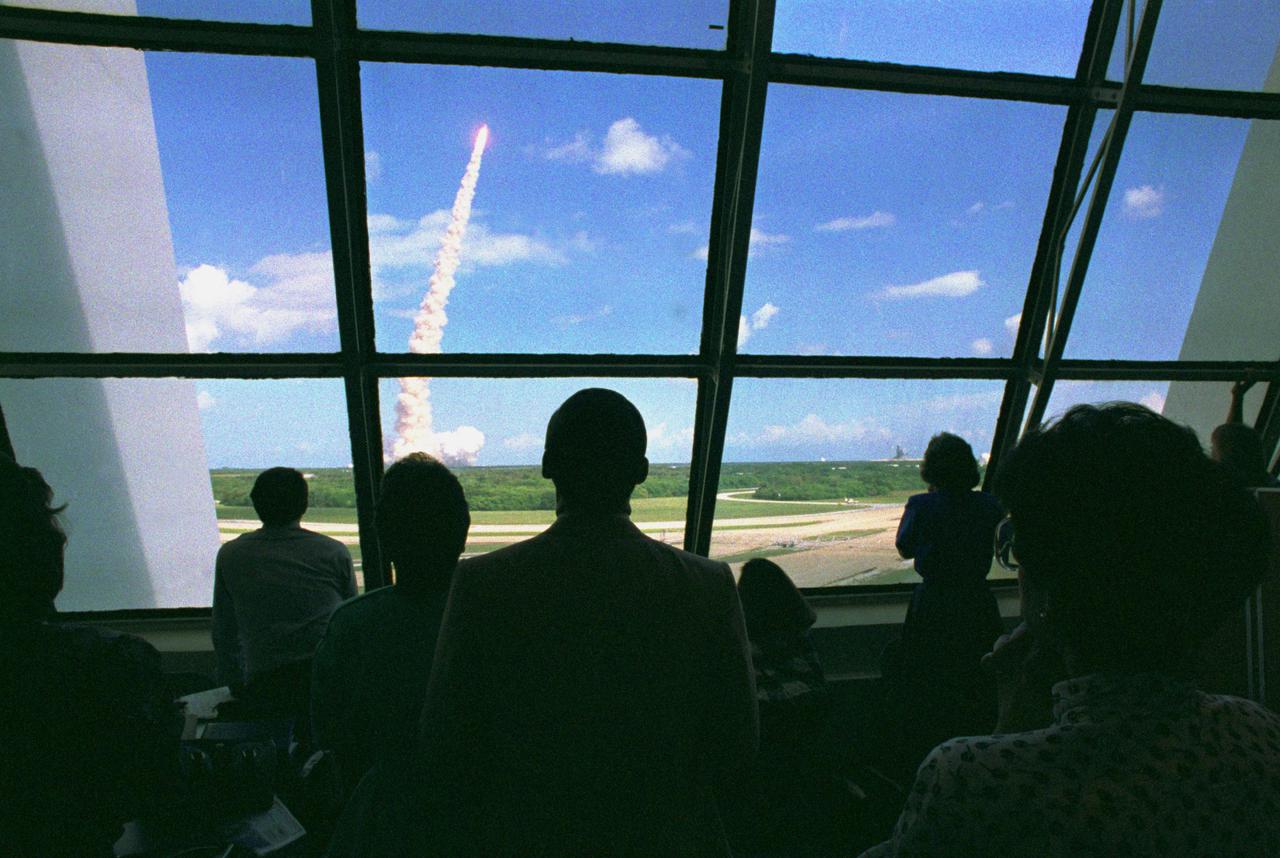
KENNEDY SPACE CENTER, Fla. -- As viewed from Firing Room One in the Launch Control Center, the STS-34 space shuttle Atlantis lifts off from Pad 39-B at 12:53 p.m. EDT, marking the beginning of a five-day mission in space. Atlantis is carrying a crew of five and the spacecraft Galileo, which will be deployed on a six-year trip to Jupiter.
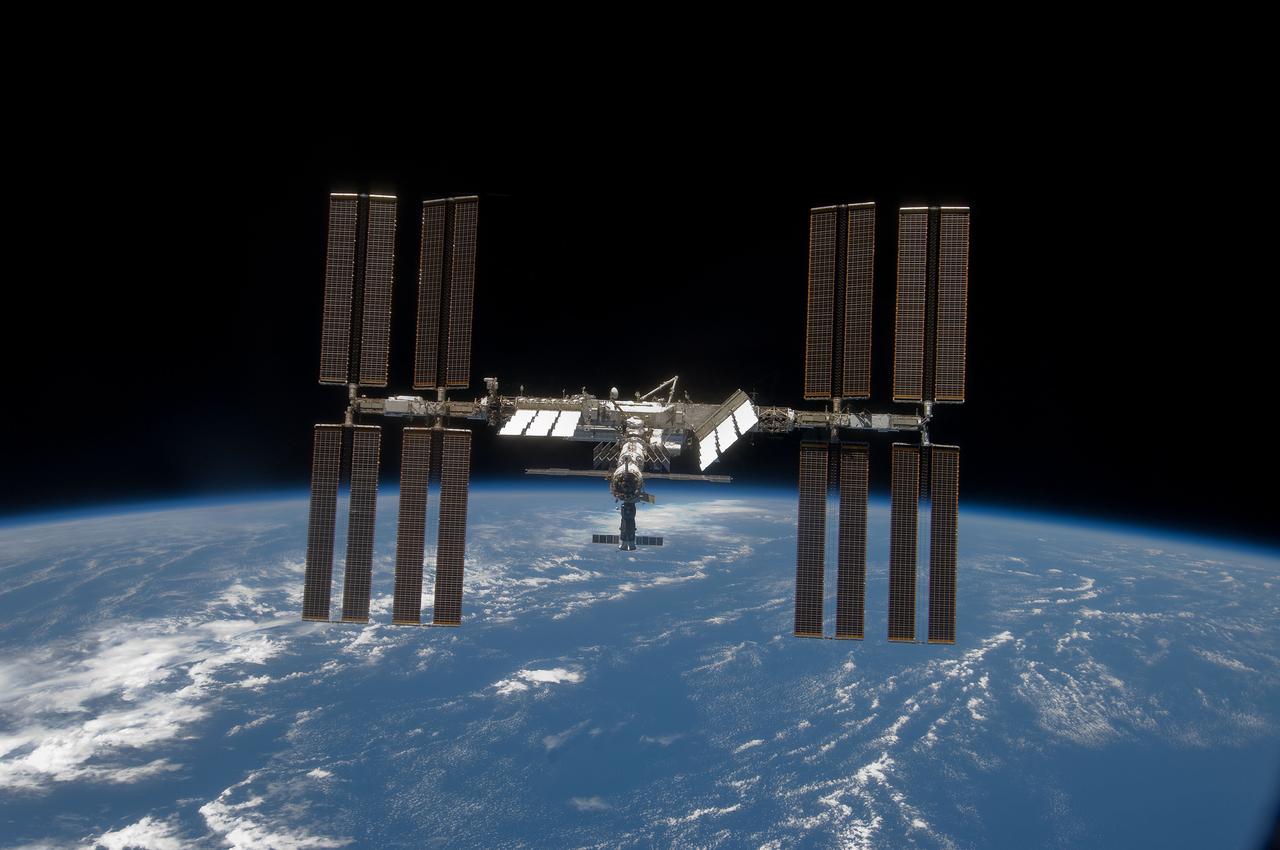
S119-E-010316 (25 March 2009) --- Backdropped by the blackness of space and Earth?s horizon, the International Space Station is seen from Space Shuttle Discovery as the two spacecraft begin their relative separation. Earlier the STS-119 and Expedition 18 crews concluded 9 days, 20 hours and 10 minutes of cooperative work onboard the shuttle and station. Undocking of the two spacecraft occurred at 2:53 p.m. (CDT) on March 25, 2009.
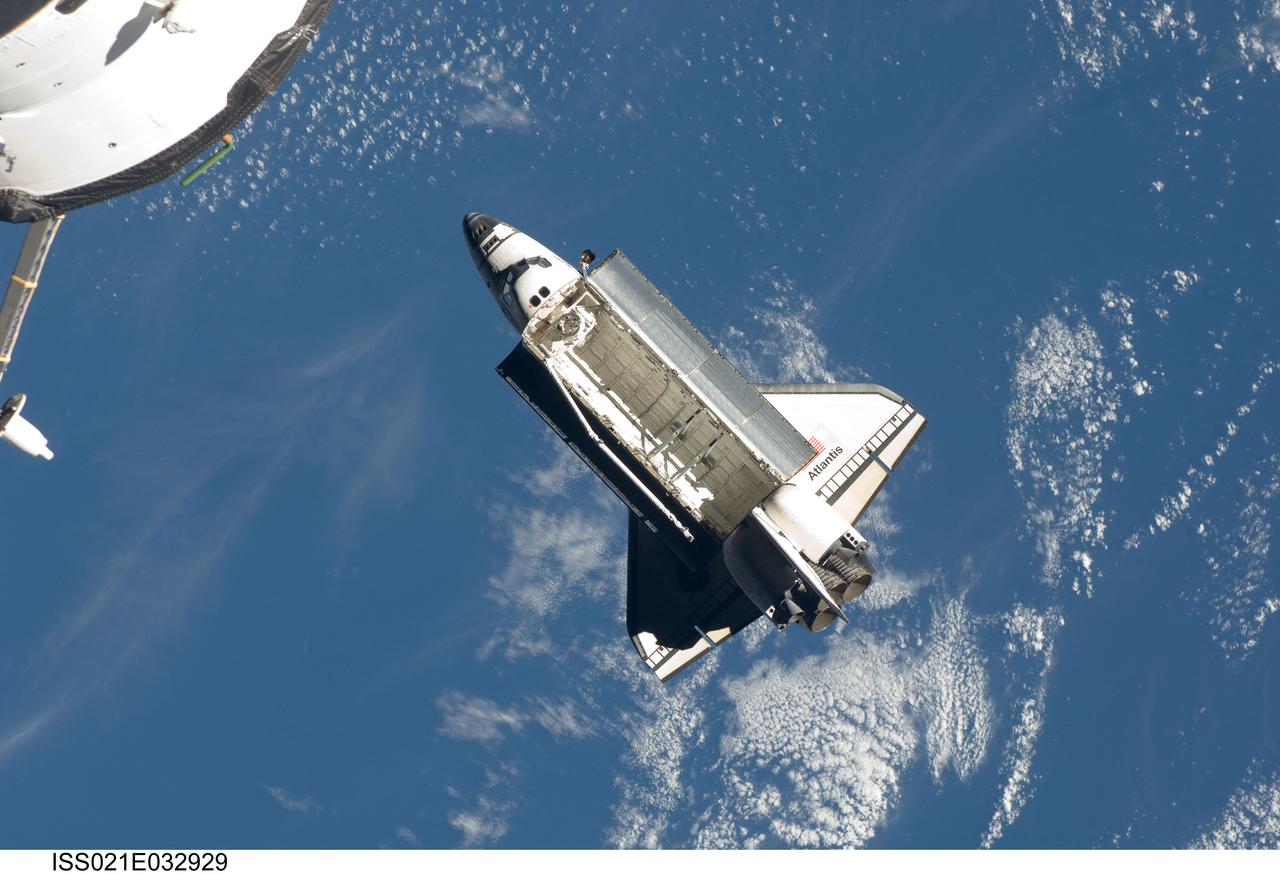
ISS021-E-032929 (25 Nov. 2009) --- Backdropped by a blue and white part of Earth, space shuttle Atlantis (STS-129) is featured in this image photographed by an Expedition 21 crew member on the International Space Station soon after the shuttle and station began their post-undocking relative separation. Undocking of the two spacecraft occurred at 3:53 a.m. (CST) on Nov. 25, 2009.
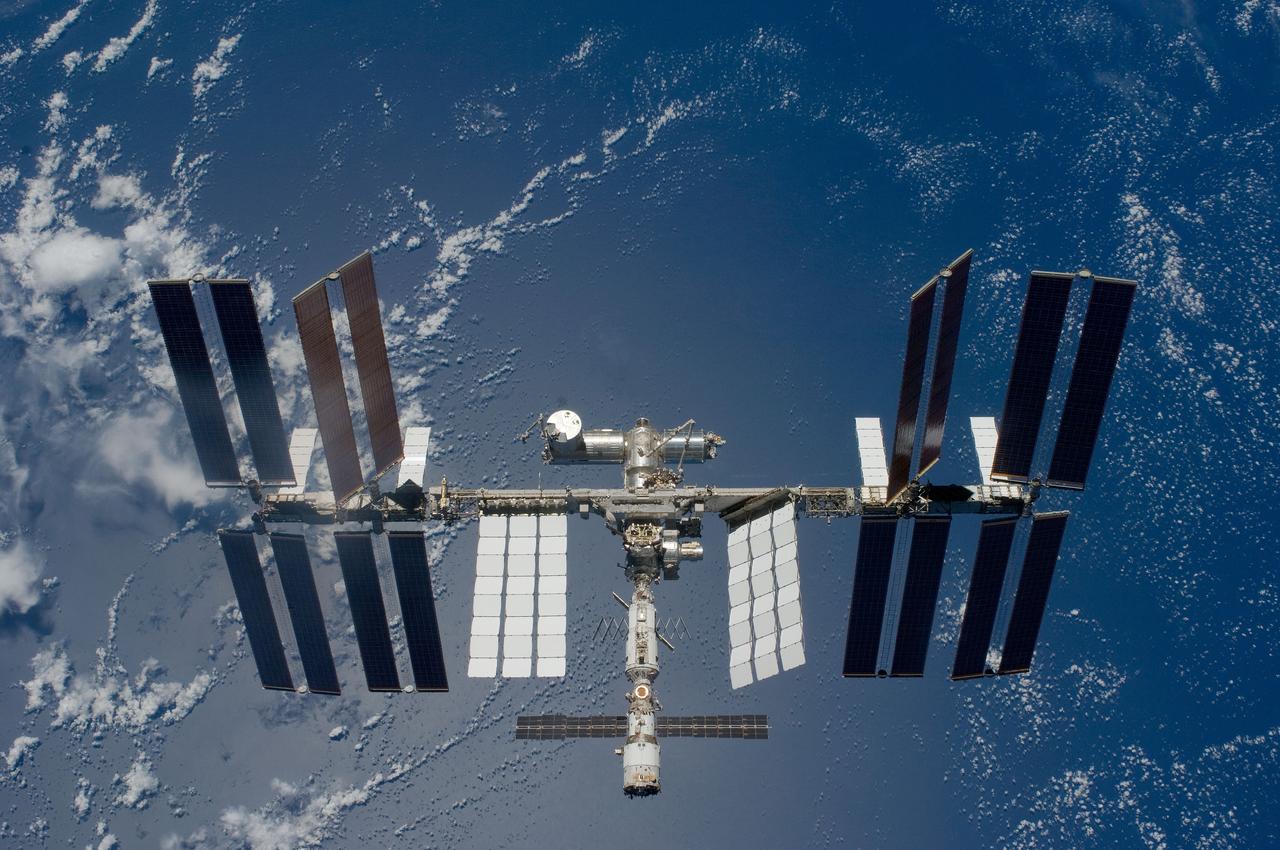
S119-E-008594 (25 March 2009) --- Backdropped by a blue and white Earth, the International Space Station is seen from Space Shuttle Discovery as the two spacecraft begin their relative separation. Earlier the STS-119 and Expedition 18 crews concluded 9 days, 20 hours and 10 minutes of cooperative work onboard the shuttle and station. Undocking of the two spacecraft occurred at 2:53 p.m. (CDT) on March 25, 2009.
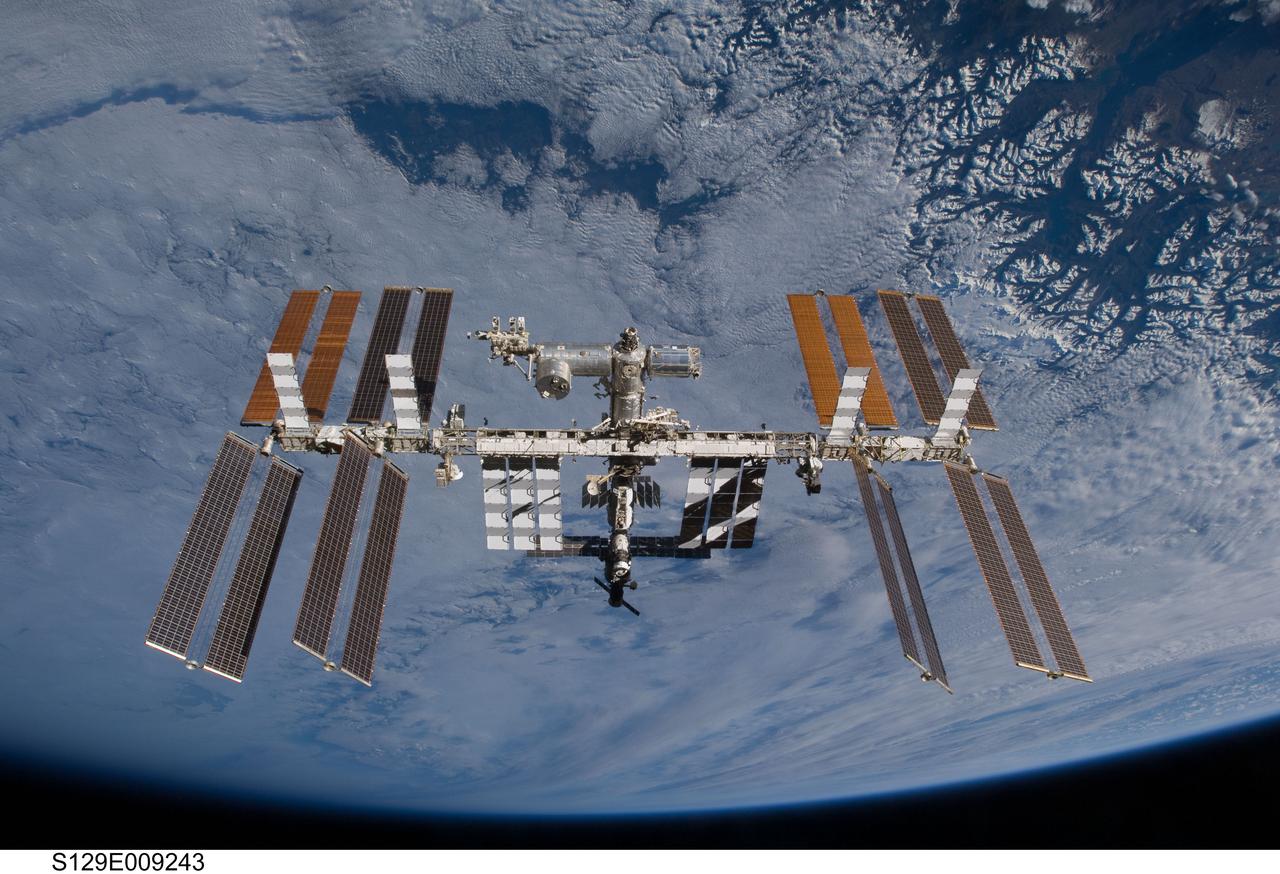
S129-E-009243 (25 Nov. 2009) --- Set against the background of a cloud covered Earth, the International Space Station is featured in this image photographed by an STS-129 crew member on Atlantis soon after the station and shuttle began their post-undocking relative separation. Undocking of the two spacecraft occurred at 3:53 a.m. (CST) on Nov. 25, 2009.

S96-E-5146 (03 June 1999) --- The International Space Station (ISS) is seen from the Space Shuttle Discovery shortly after the two spacecraft began their relative separation. The seven STS-96 crew members had spent the previous few days working on the station. The photo was taken with an electronic still camera (ESC) at 22:53:18 GMT, June 3, 1999.
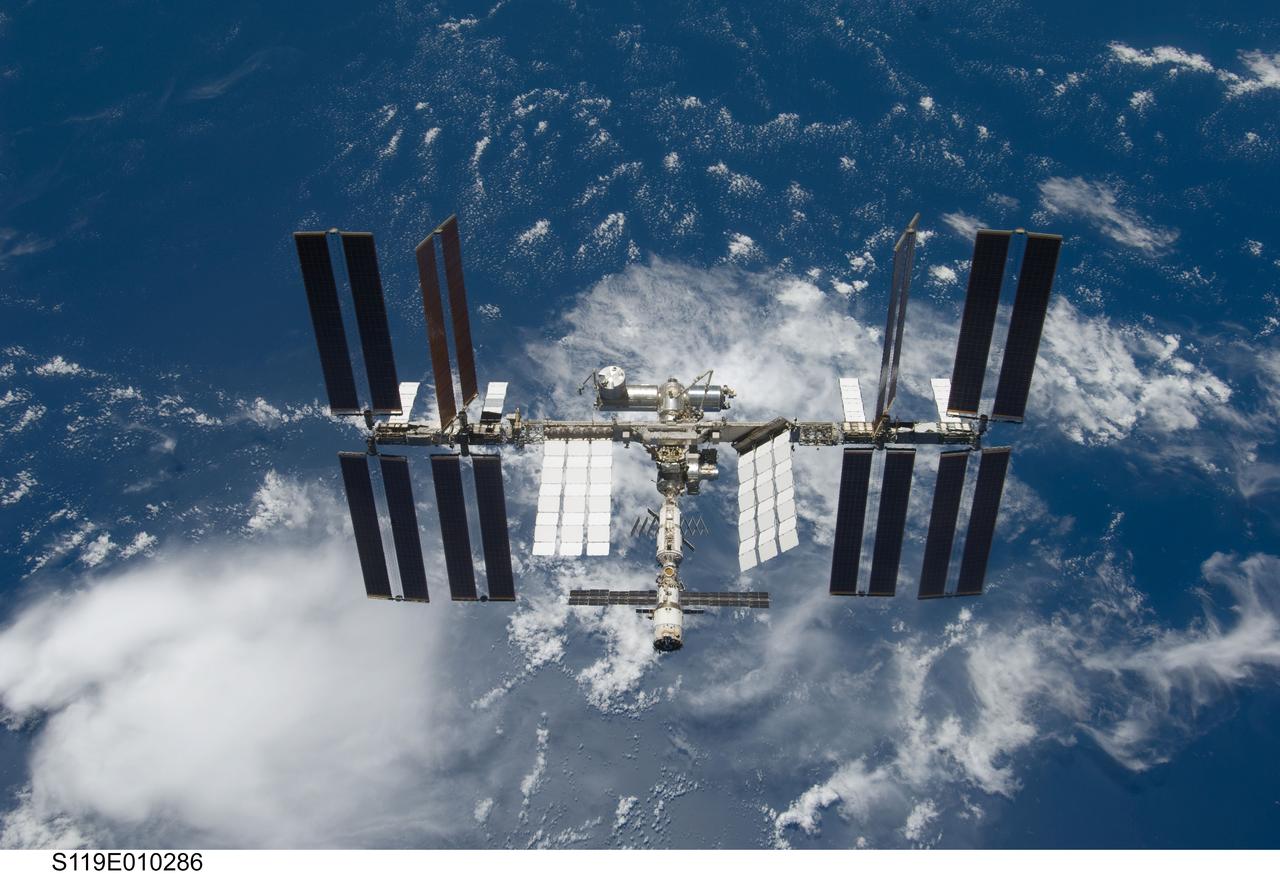
S119-E-010286 (25 March 2009) --- Backdropped by a blue and white Earth, the International Space Station is seen from Space Shuttle Discovery as the two spacecraft begin their relative separation. Earlier the STS-119 and Expedition 18 crews concluded 9 days, 20 hours and 10 minutes of cooperative work onboard the shuttle and station. Undocking of the two spacecraft occurred at 2:53 p.m. (CDT) on March 25, 2009.
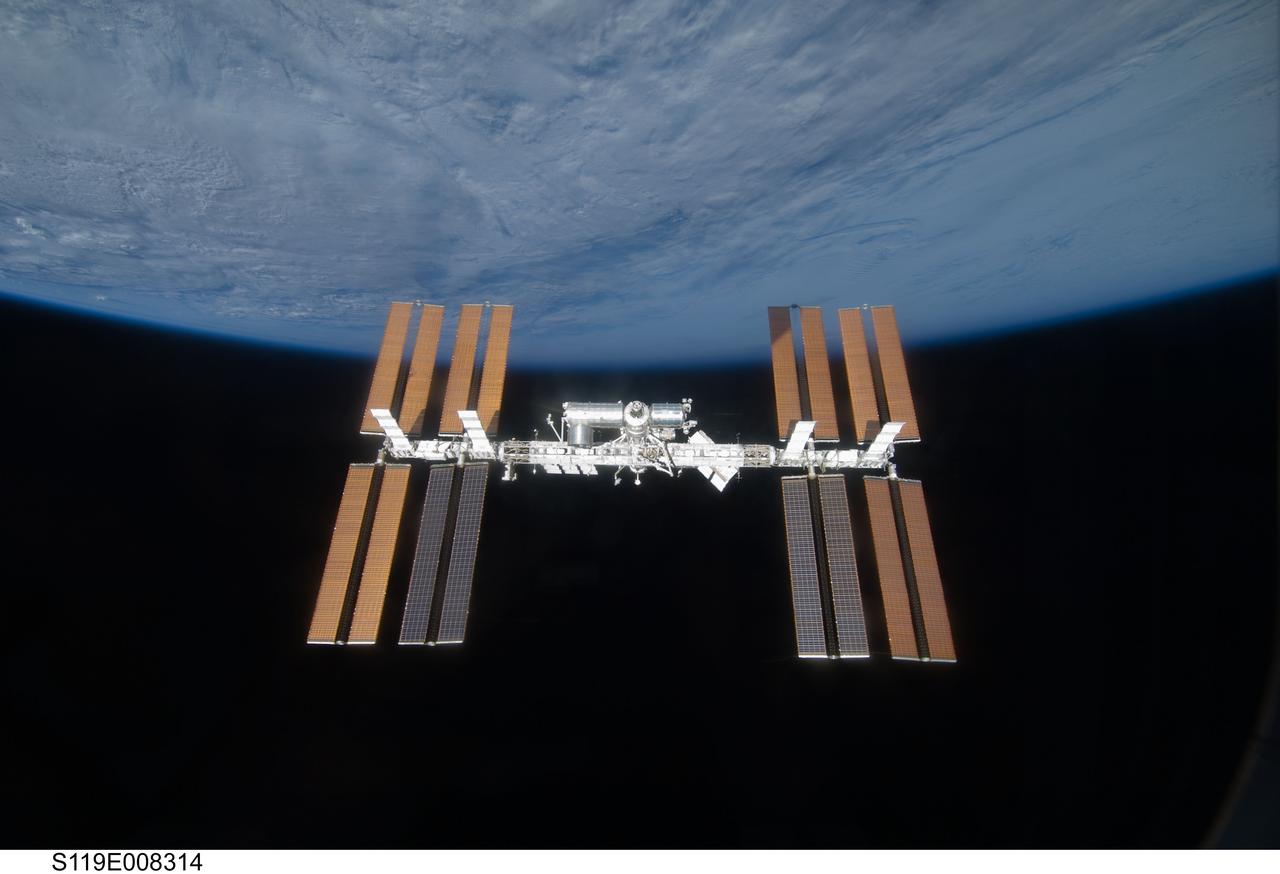
S119-E-008314 (25 March 2009) --- Backdropped by the blackness of space and Earth’s horizon, the International Space Station is seen from Space Shuttle Discovery as the two spacecraft begin their relative separation. Earlier the STS-119 and Expedition 18 crews concluded 9 days, 20 hours and 10 minutes of cooperative work onboard the shuttle and station. Undocking of the two spacecraft occurred at 2:53 p.m. (CDT) on March 25, 2009.
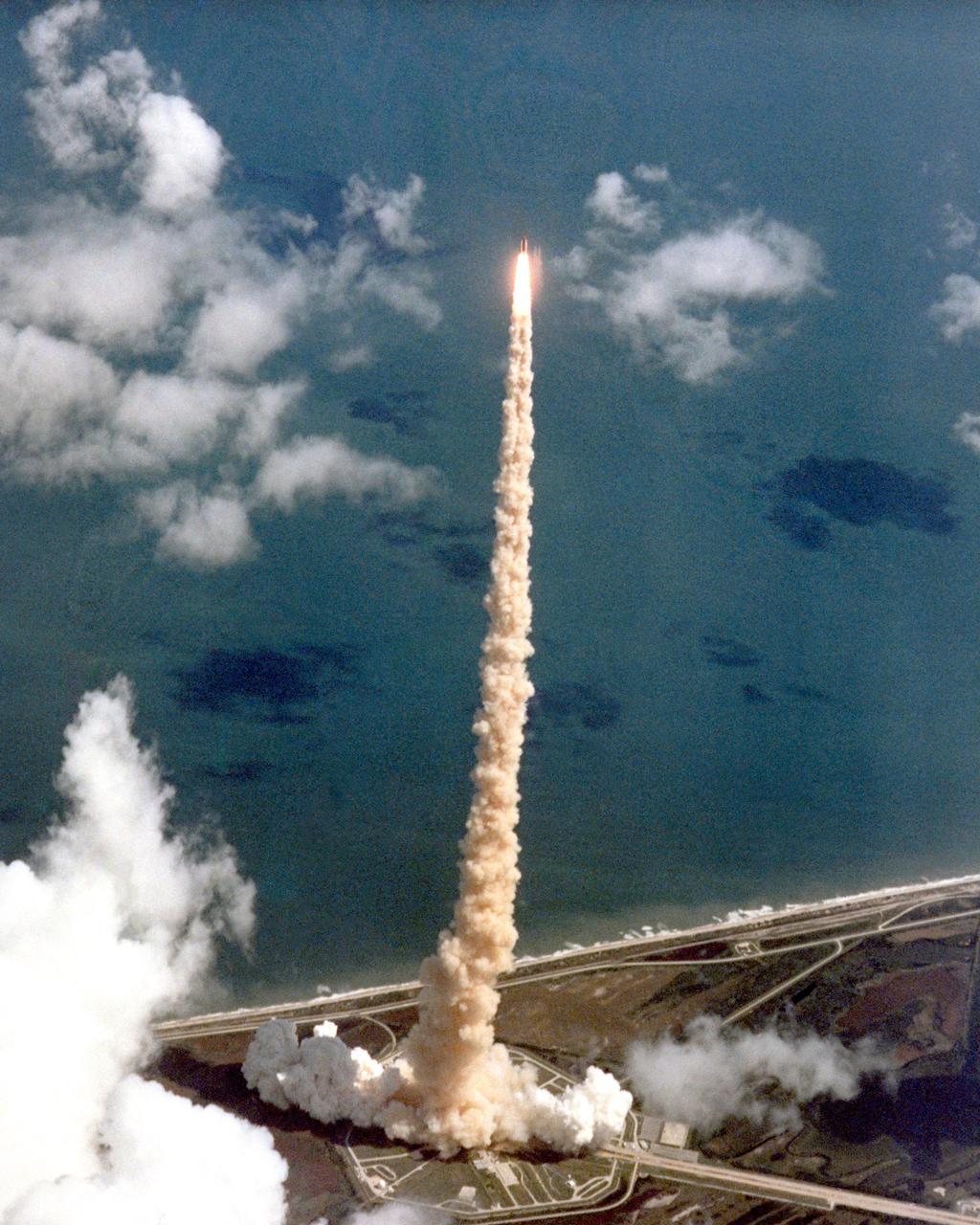
KENNEDY SPACE CENTER, FLA. -- The STS-34 Space Shuttle Atlantis lifts off from Launch Pad 39-B at 12:53 p.m. EDT, marking the beginning of a five-day mission in space. Atlantis carries a crew of five and the spacecraft Galileo, to be deployed on a six-year trip to Jupiter. The scene was recorded with a 70mm camera by astronaut Daniel Brandenstein.
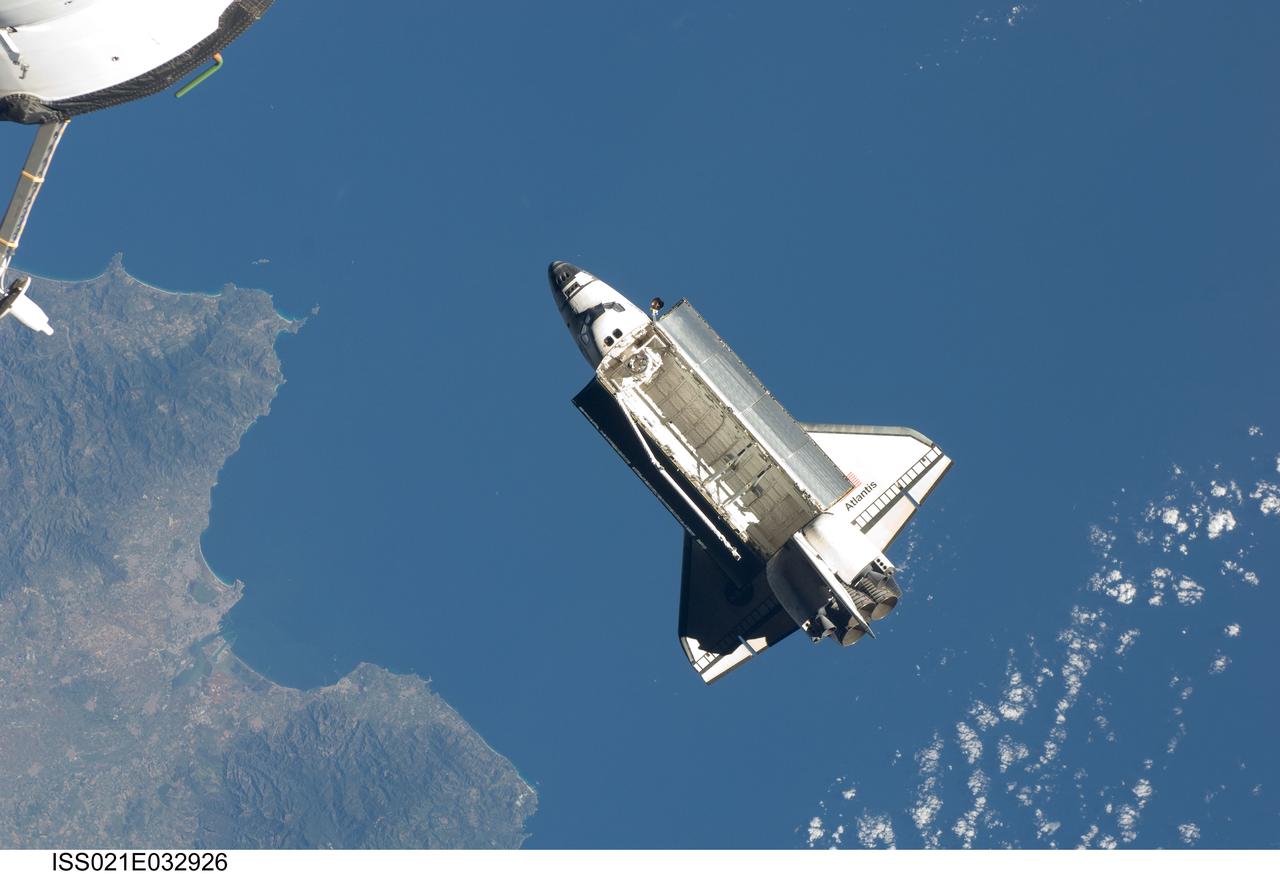
ISS021-E-032926 (25 Nov. 2009) --- Seen over the Mediterranean Sea, the space shuttle Atlantis (STS-129) is featured in this image photographed by an Expedition 21 crew member on the International Space Station soon after the shuttle and station began their post-undocking relative separation. Undocking of the two spacecraft occurred at 3:53 a.m. (CST) on Nov. 25, 2009.
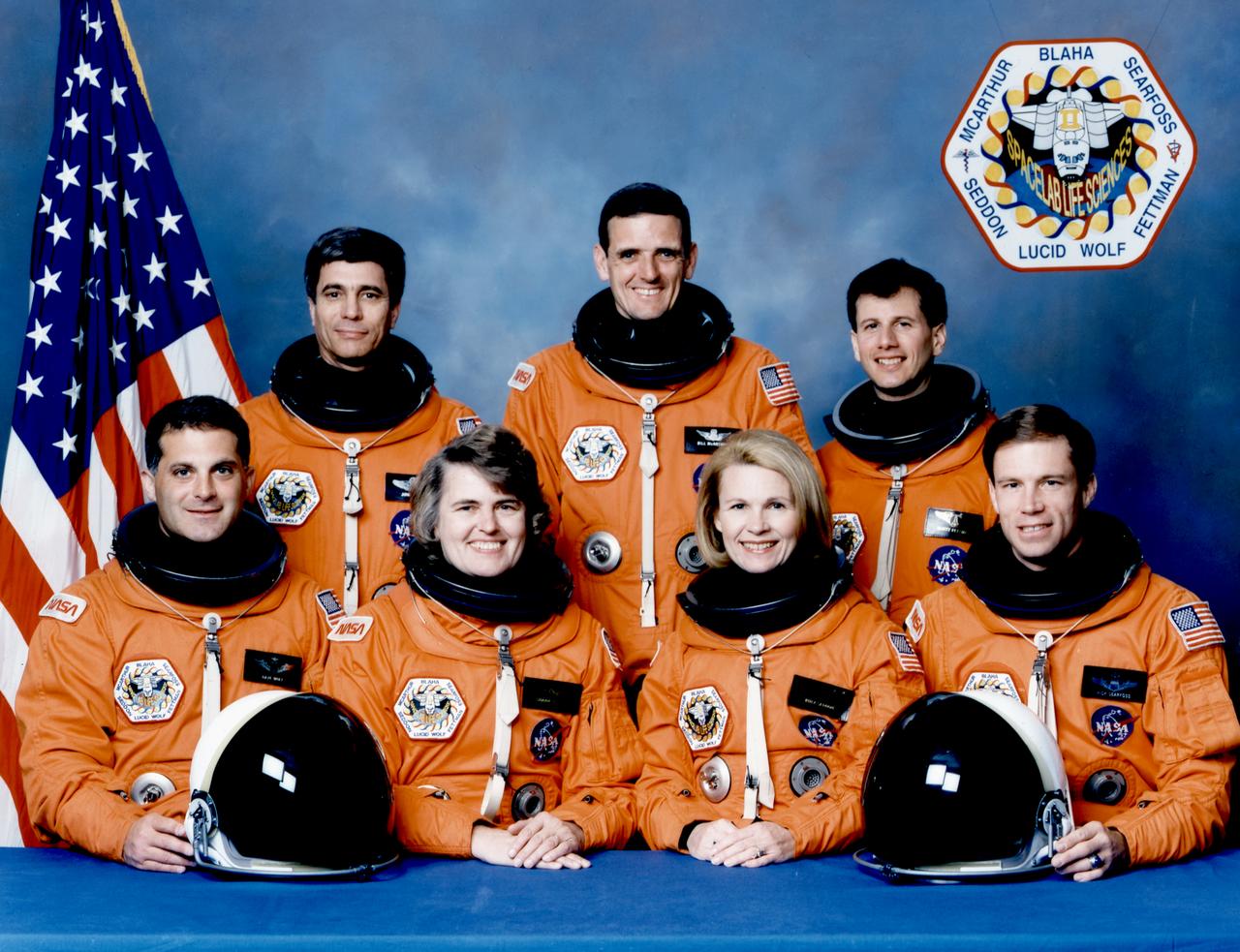
The STS-58 crew portrait includes astronauts (seated left to right) David A. Wolf, Shannon W. Lucid, and Rhea Seddon, all mission specialists; and Richard A. Searfoss, pilot. Standing in the rear, left to right, are John E. Blaha, commander; William S. McArthur, Jr., mission specialist; and Martin J. Fettmen, payload specialist. Launched aboard the Space Shuttle Columbia on October 18, 1993 at 10:53:10 a.m. (EDT), STS-58 served as the second dedicated Spacelab Life Sciences (SLS-2) mission.

jsc2019e060008 (Oct. 18, 2019) --- From the Mission Control Center in Houston, veteran NASA astronauts Stephanie Wilson and Mark Vande Hei are on the CAPCOM (capsule communicator) console monitoring the spacewalk being conducted by Expedition 61 Flight Engineers Christina Koch and Jessica Meir. Wilson provided robotic arm support maneuvering spacewalkers during the STS-120 and STS-131 space shuttle missions to the International Space Station. Vande Hei conducted four spacewalks totaling 26 hours and 42 minutes during his stay aboard the orbiting lab as an Expedition 53-54 Flight Engineer.
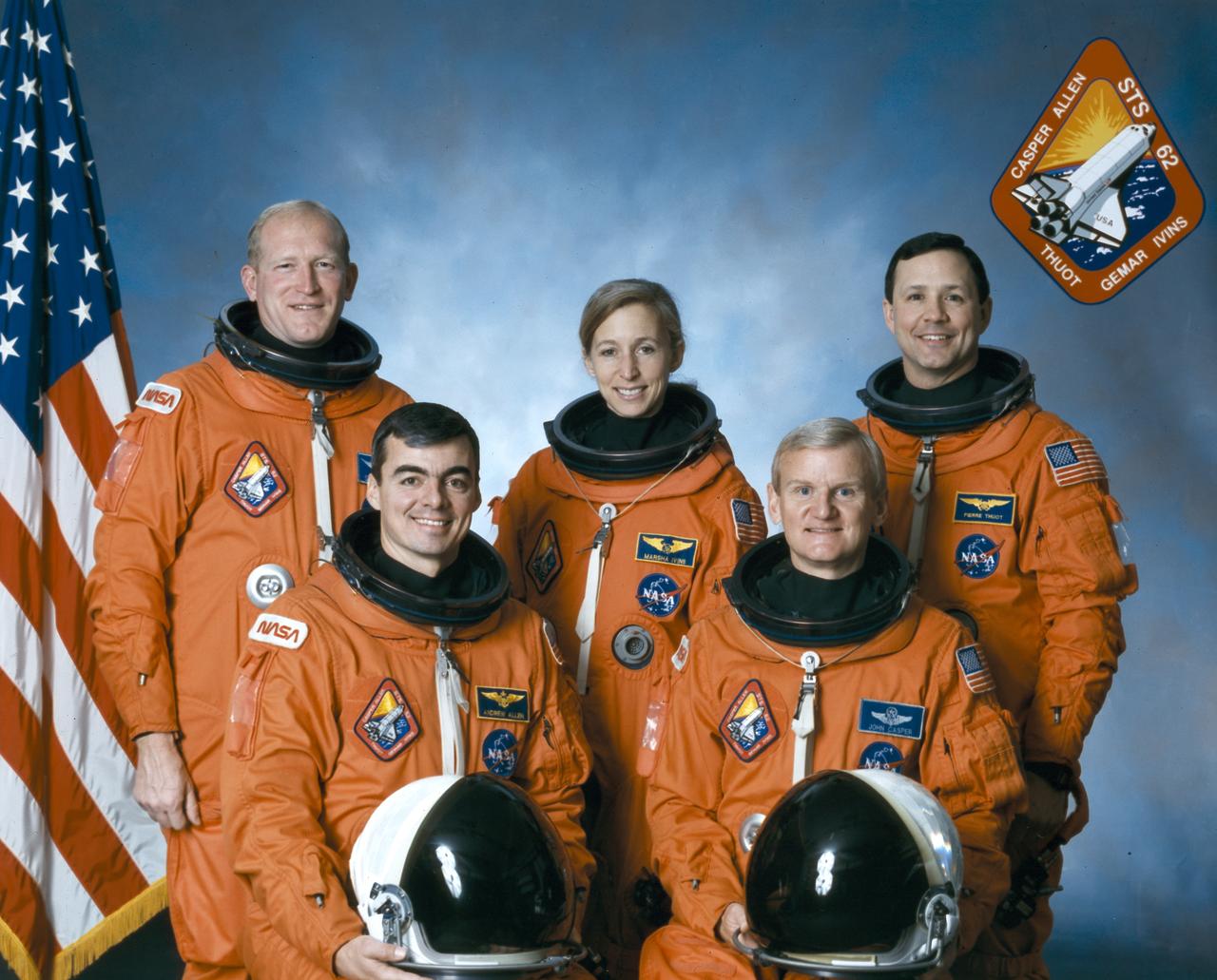
Astronauts included in the STS-62 crew portrait include (standing left to right) mission specialists Charles D. Gemar, Marsha S. Ivins, and Pierre J. Thuot. Seated left to right are Andrew M. Allen, pilot; and John H. Casper, commander. Launched aboard the Space Shuttle Columbia on March 4, 1994 at 8:53:00 am (EST), the STS-62 mission carried two primary payloads; the U.S Microgravity Payload-2 (USMP-2) and the Office of Aeronautics and Space Technology-2 (OAST-2).

CAPE CANAVERAL, Fla. -- Space shuttle Discovery heads to space after lifting off from Launch Pad 39A at NASA's Kennedy Space Center in Florida to begin its final flight to the International Space Station on the STS-133 mission. Launch was at 4:53 p.m. EST. The six-member crew will deliver the Permanent Multipurpose Module, packed with supplies and critical spare parts, as well as Robonaut 2, the dexterous humanoid astronaut helper, to the orbiting outpost. Discovery is flying on its 39th and final mission and is scheduled to be retired following STS-133. This is the 133rd Space Shuttle Program mission and the 35th shuttle voyage to the space station. For more information on the STS-133 mission, visit www.nasa.gov/mission_pages/shuttle/shuttlemissions/sts133/. Photo credit: NASA/Kenny Allen and Mike Gayle
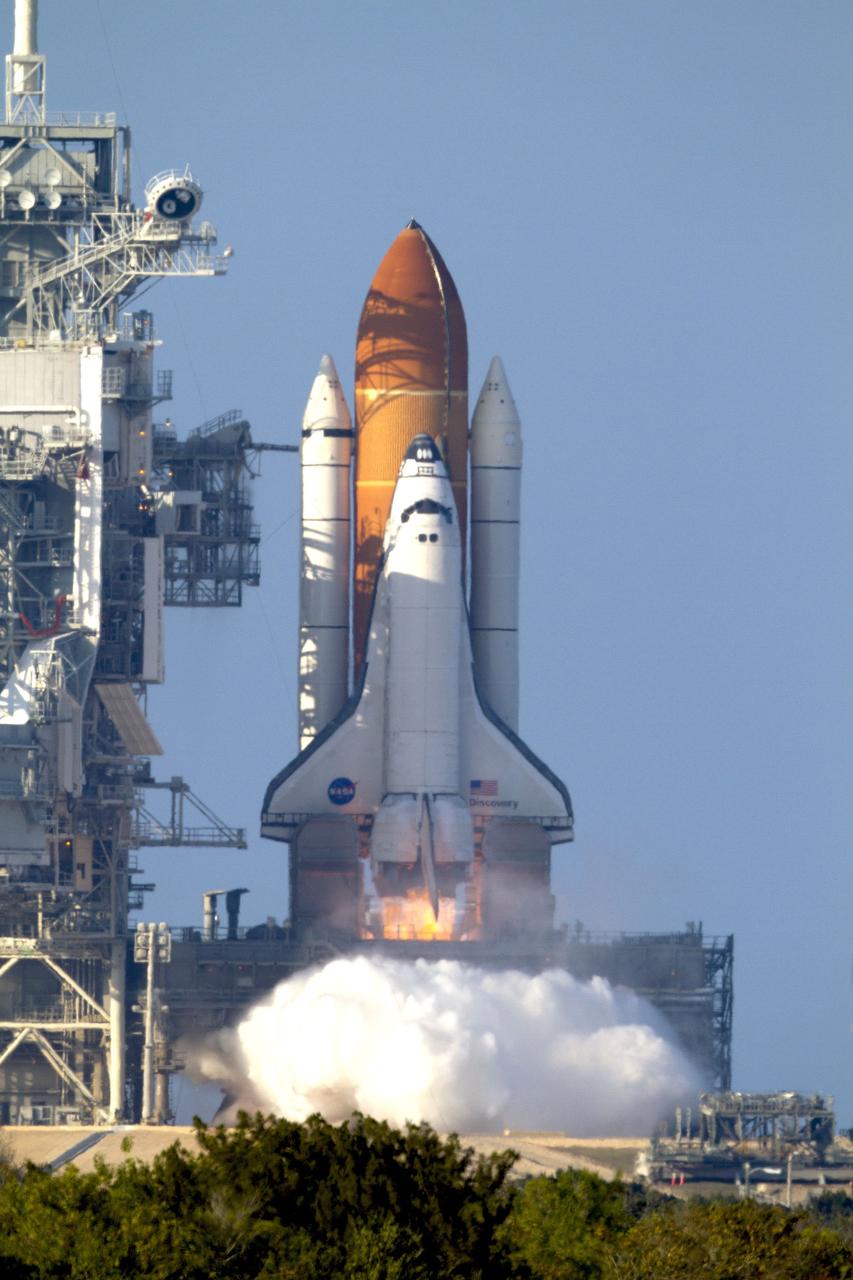
CAPE CANAVERAL, Fla. -- Space shuttle Discovery's boosters ignite and main engines start beginning its final scheduled mission, STS-133, to the International Space Station. Liftoff from launch Pad 39A at NASA's Kennedy Space Center in Florida occurred at 4:53 p.m. EST on Feb. 24. Discovery and its six-member crew are on a mission to deliver the Permanent Multipurpose Module, packed with supplies and critical spare parts, as well as Robonaut 2, the dexterous humanoid astronaut helper, to the International Space Station. Discovery is making its 39th mission and is scheduled to be retired following STS-133. This is the 133rd Space Shuttle Program mission, the 35th shuttle voyage to the space station and Discovery's final mission. For more information on the STS-133 mission, visit www.nasa.gov/mission_pages/shuttle/shuttlemissions/sts133/. Photo credit: NASA/Kenny Allen
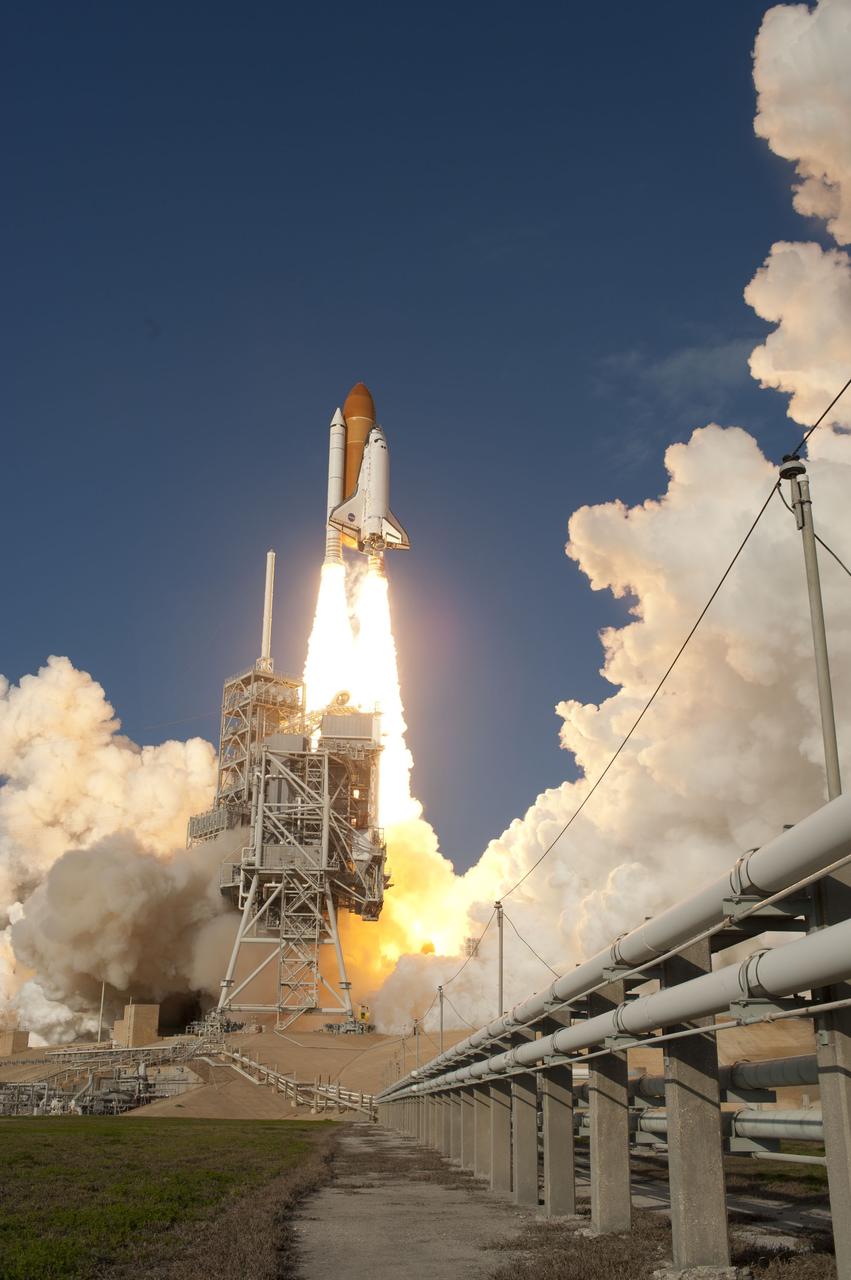
CAPE CANAVERAL, Fla. -- Space shuttle Discovery ignites for liftoff from Launch Pad 39A at NASA's Kennedy Space Center in Florida, beginning its final flight, the STS-133 mission. Launch to the International Space Station was at 4:53 p.m. EST. Discovery and its six-member crew will deliver the Permanent Multipurpose Module, packed with supplies and critical spare parts, as well as Robonaut 2, the dexterous humanoid astronaut helper, to the orbiting outpost. Discovery is flying on its 39th mission and is scheduled to be retired following STS-133. This is the 133rd Space Shuttle Program mission and the 35th shuttle voyage to the space station. For more information on the STS-133 mission, visit www.nasa.gov/mission_pages/shuttle/shuttlemissions/sts133/. Photo credit: NASA/Sandra Joseph and Kevin O'Connell
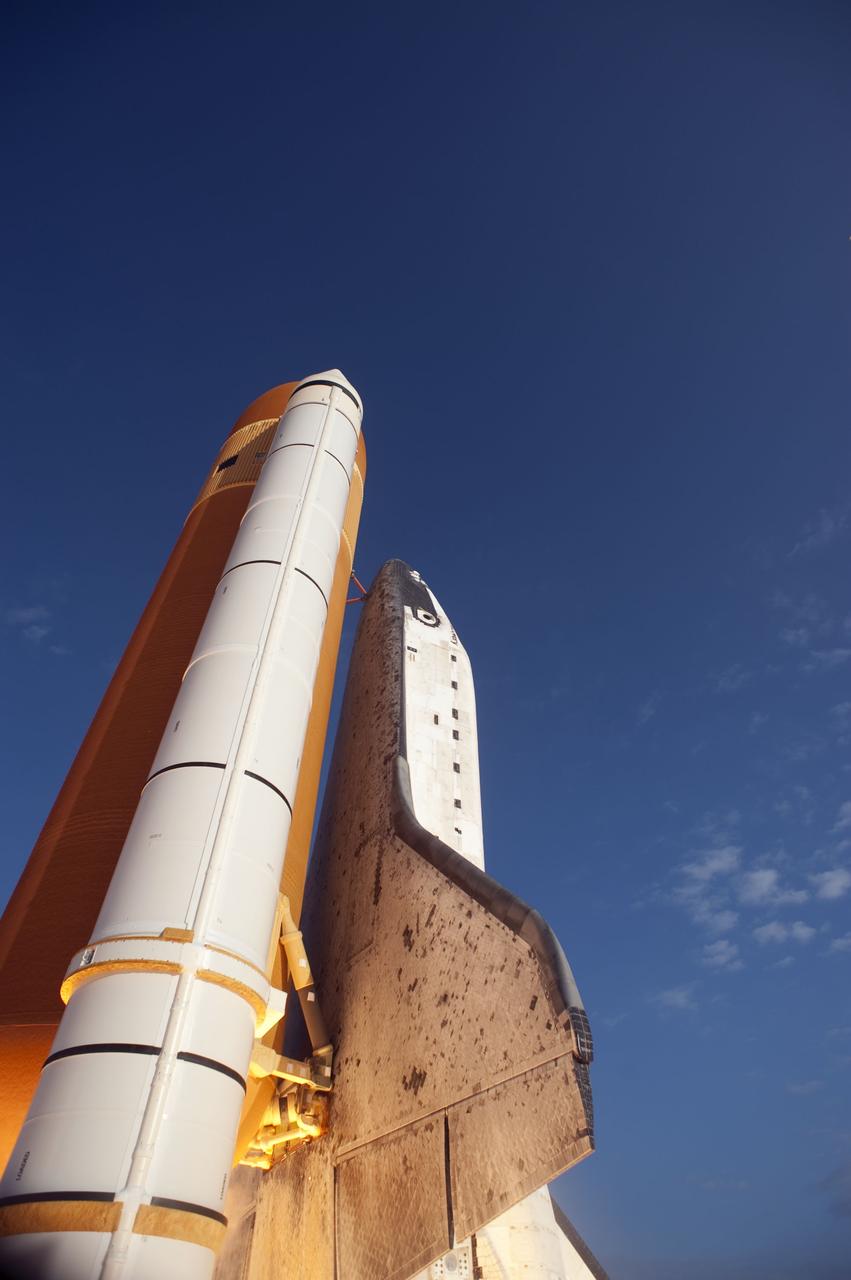
CAPE CANAVERAL, Fla. -- Space shuttle Discovery ignites for liftoff on Launch Pad 39A at NASA's Kennedy Space Center in Florida beginning its final flight to the International Space Station on the STS-133 mission. Launch was at 4:53 p.m. EST. Discovery and its six-member crew will deliver the Permanent Multipurpose Module, packed with supplies and critical spare parts, as well as Robonaut 2, the dexterous humanoid astronaut helper, to the orbiting outpost. Discovery is flying on its 39th mission and is scheduled to be retired following STS-133. This is the 133rd Space Shuttle Program mission and the 35th shuttle voyage to the space station. For more information on the STS-133 mission, visit www.nasa.gov/mission_pages/shuttle/shuttlemissions/sts133/. Photo credit: NASA/Tony Gray and Tom Farrar
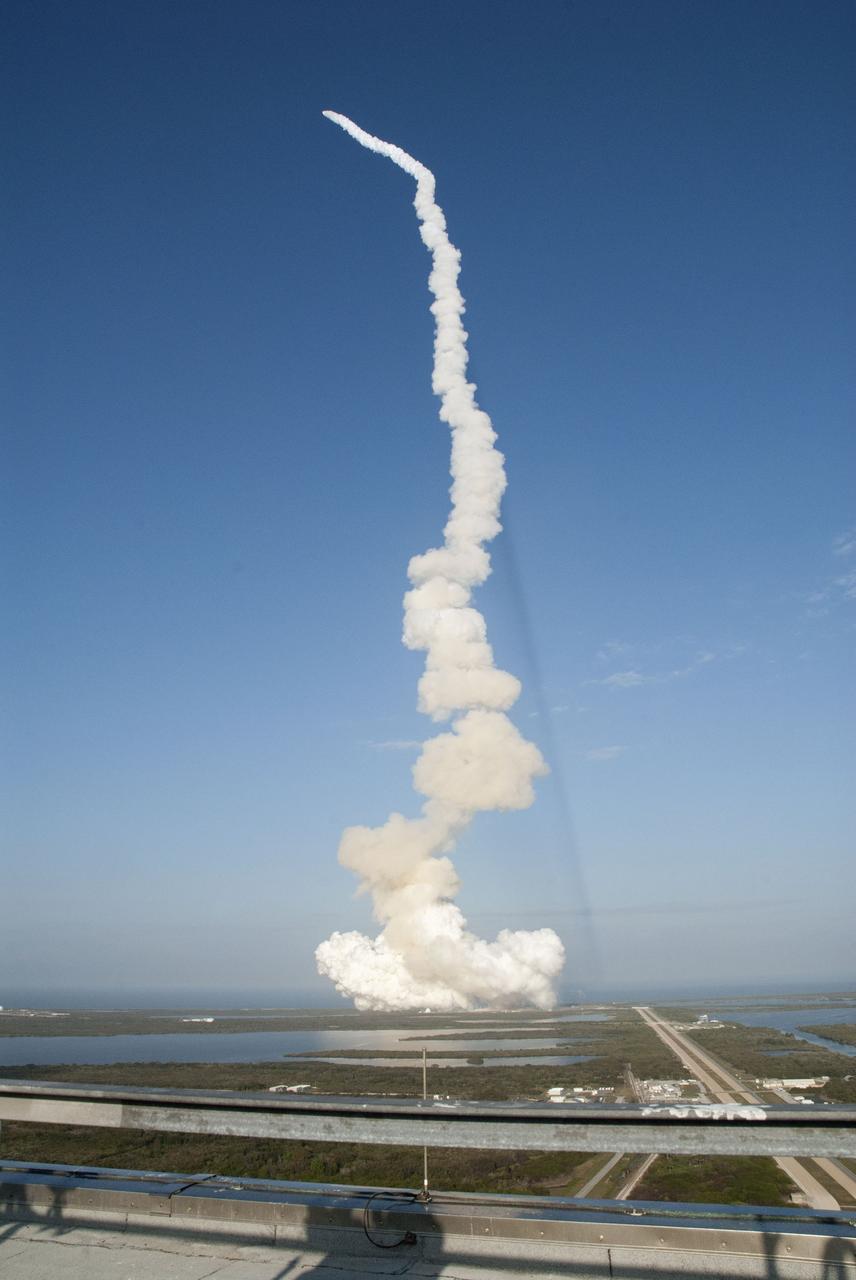
CAPE CANAVERAL, Fla. -- Taken from the roof of the Vehicle Assembly Building at NASA's Kennedy Space Center in Florida, space shuttle Discovery lifts off Launch Pad 39A atop twin columns of fire, creating rolling clouds of smoke and steam in its track. Launch of the STS-133 mission was at 4:53 p.m. EST on Feb. 24. Discovery and its six-member crew are on a mission to deliver the Permanent Multipurpose Module, packed with supplies and critical spare parts, as well as Robonaut 2, the dexterous humanoid astronaut helper, to the International Space Station. Discovery is making its 39th mission and is scheduled to be retired following STS-133. This is the 133rd Space Shuttle Program mission, the 35th shuttle voyage to the space station and Discovery's final mission. For more information on the STS-133 mission, visit www.nasa.gov/mission_pages/shuttle/shuttlemissions/sts133/. Photo credit: NASA/Jeff Marino
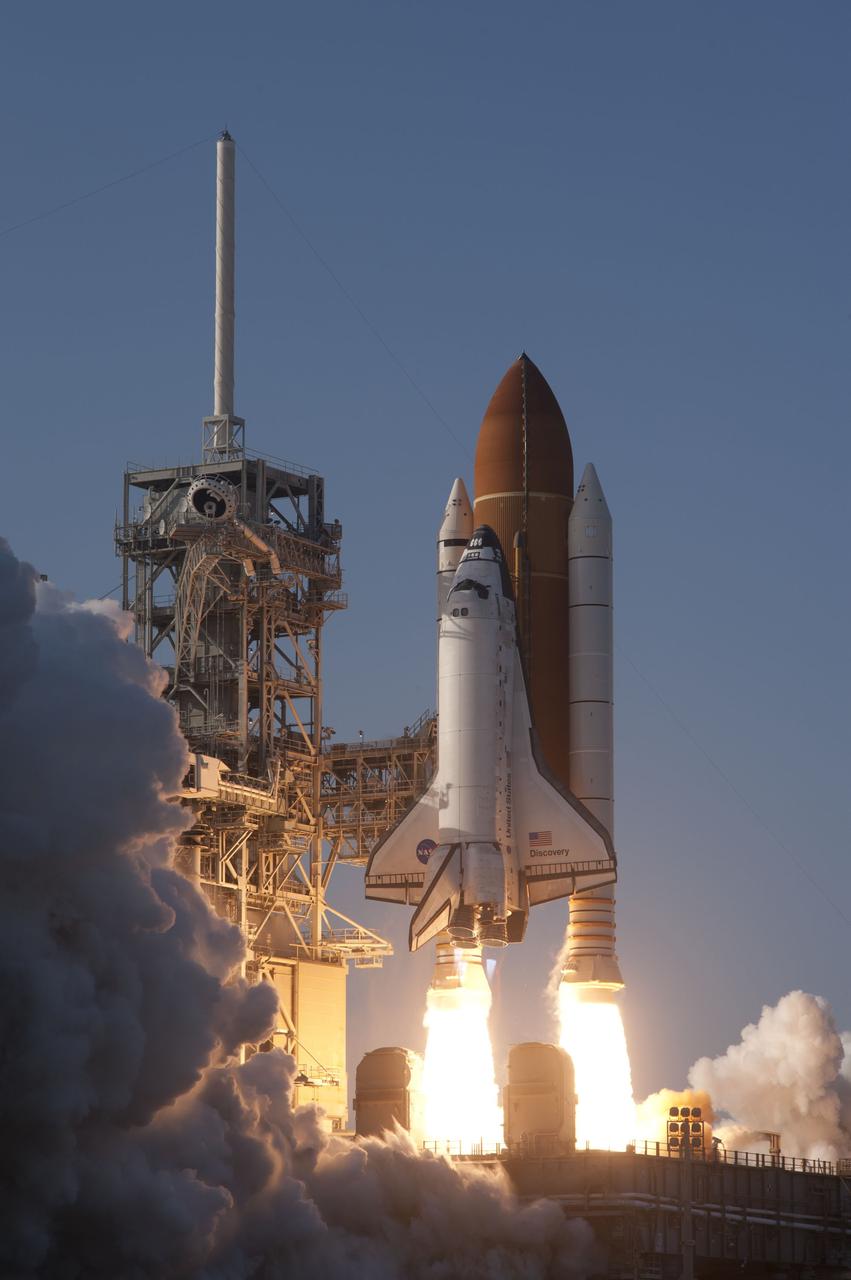
CAPE CANAVERAL, Fla. -- Space shuttle Discovery lifts off Launch Pad 39A in a billowing swirl of smoke and steam at NASA's Kennedy Space Center in Florida to begin its final flight to the International Space Station on the STS-133 mission. Launch was at 4:53 p.m. EST. Discovery and its six-member crew will deliver the Permanent Multipurpose Module, packed with supplies and critical spare parts, as well as Robonaut 2, the dexterous humanoid astronaut helper, to the orbiting outpost. Discovery is flying on its 39th mission and is scheduled to be retired following STS-133. This is the 133rd Space Shuttle Program mission and the 35th shuttle voyage to the space station. For more information on the STS-133 mission, visit www.nasa.gov/mission_pages/shuttle/shuttlemissions/sts133/. Photo credit: NASA/Sandra Joseph and Kevin O'Connell
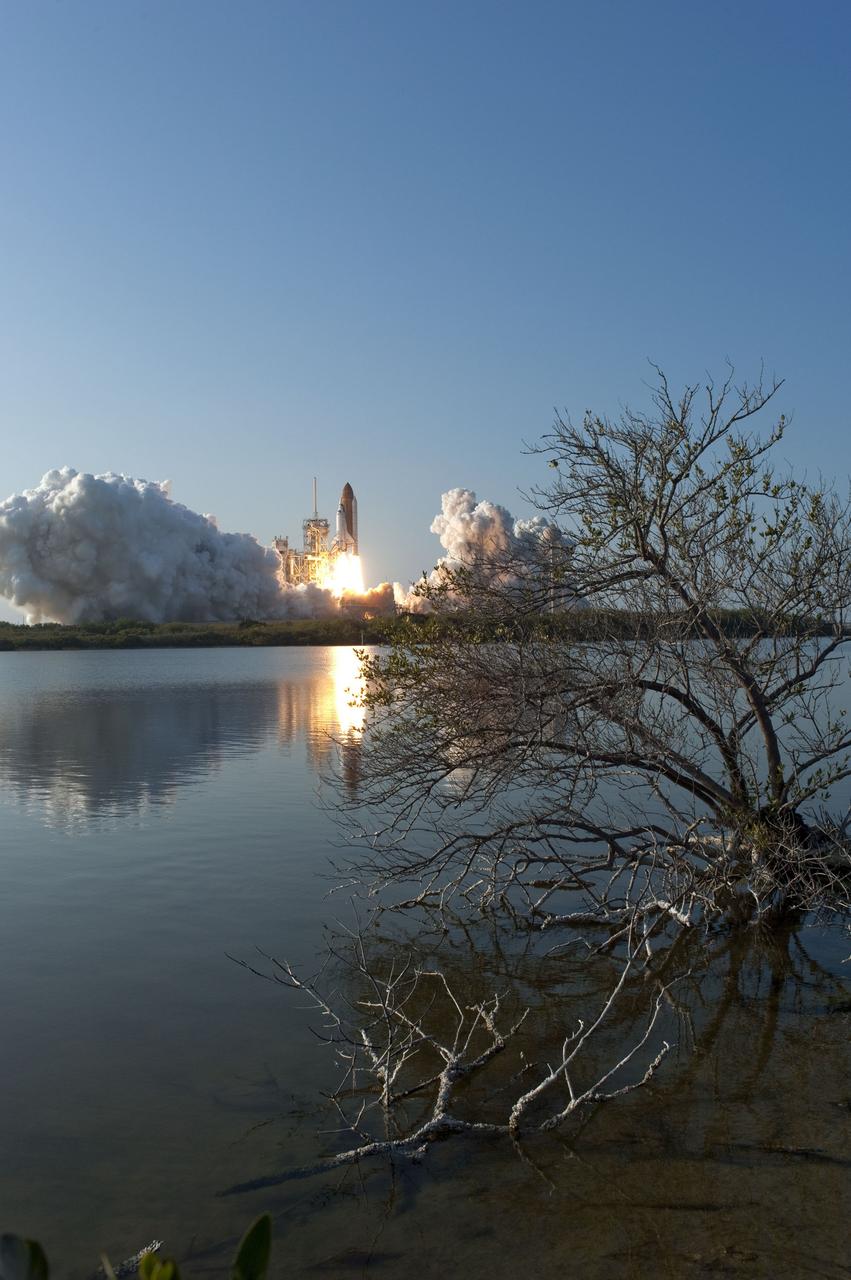
CAPE CANAVERAL, Fla. -- Space shuttle Discovery's liftoff is reflected in the water as it roars off Launch Pad 39A in a swirl of billowing smoke and steam at NASA's Kennedy Space Center in Florida to begin its final flight to the International Space Station on the STS-133 mission. Launch was at 4:53 p.m. EST. Discovery and its six-member crew will deliver the Permanent Multipurpose Module, packed with supplies and critical spare parts, as well as Robonaut 2, the dexterous humanoid astronaut helper, to the orbiting outpost. Discovery is flying on its 39th mission and is scheduled to be retired following STS-133. This is the 133rd Space Shuttle Program mission and the 35th shuttle voyage to the space station. For more information on the STS-133 mission, visit www.nasa.gov/mission_pages/shuttle/shuttlemissions/sts133/. Photo credit: NASA/Sandra Joseph and Kevin O'Connell
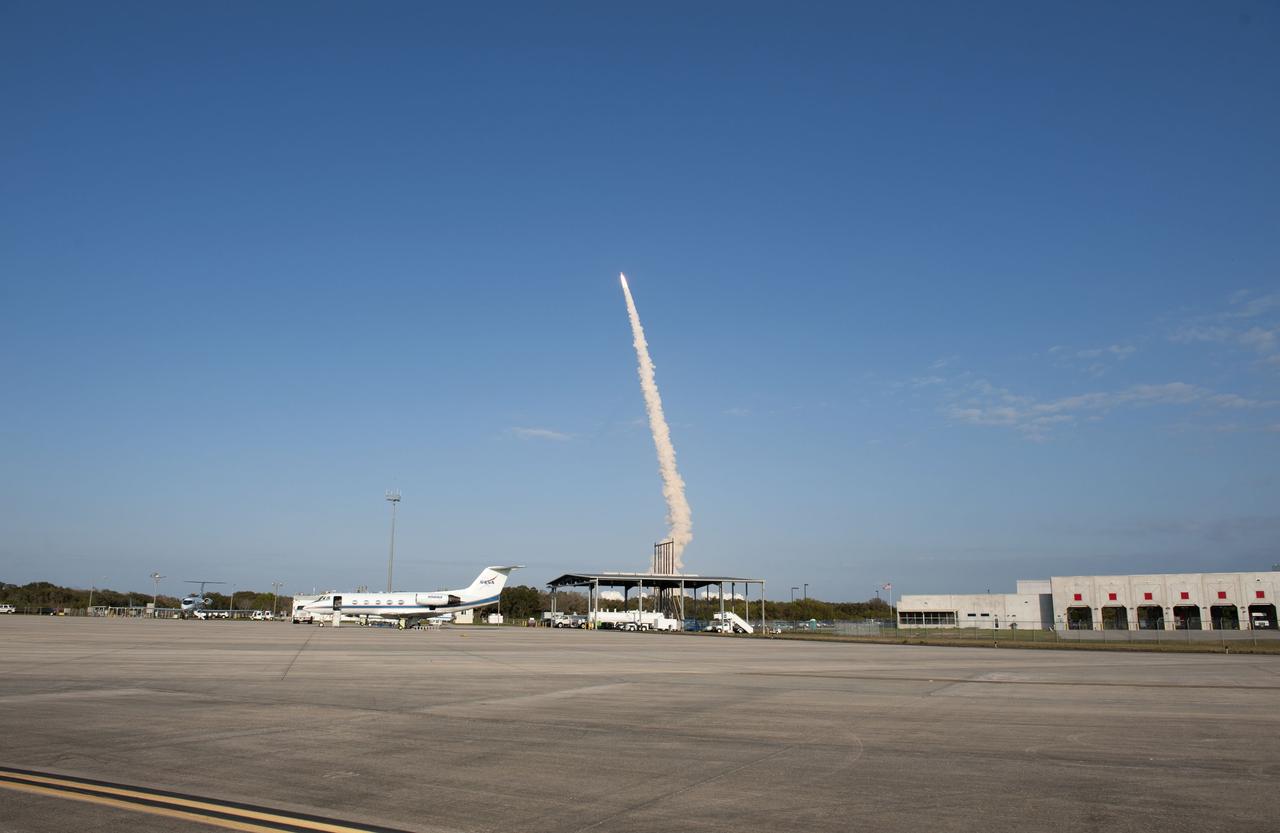
CAPE CANAVERAL, Fla. -- This image taken from the Shuttle Landing Facility at NASA's Kennedy Space Center in Florida, shows space shuttle Discovery lifting off from Launch Pad 39A at NASA's Kennedy Space Center in Florida, beginning its final flight, the STS-133 mission, to the International Space Station. Launch was at 4:53 p.m. EST. Discovery and its six-member crew will deliver the Permanent Multipurpose Module, packed with supplies and critical spare parts, as well as Robonaut 2, the dexterous humanoid astronaut helper, to the orbiting outpost. Discovery is flying on its 39th mission and is scheduled to be retired following STS-133. This is the 133rd Space Shuttle Program mission and the 35th shuttle voyage to the space station. For more information on the STS-133 mission, visit www.nasa.gov/mission_pages/shuttle/shuttlemissions/sts133/. Photo credit: NASA/Carl Winebarger
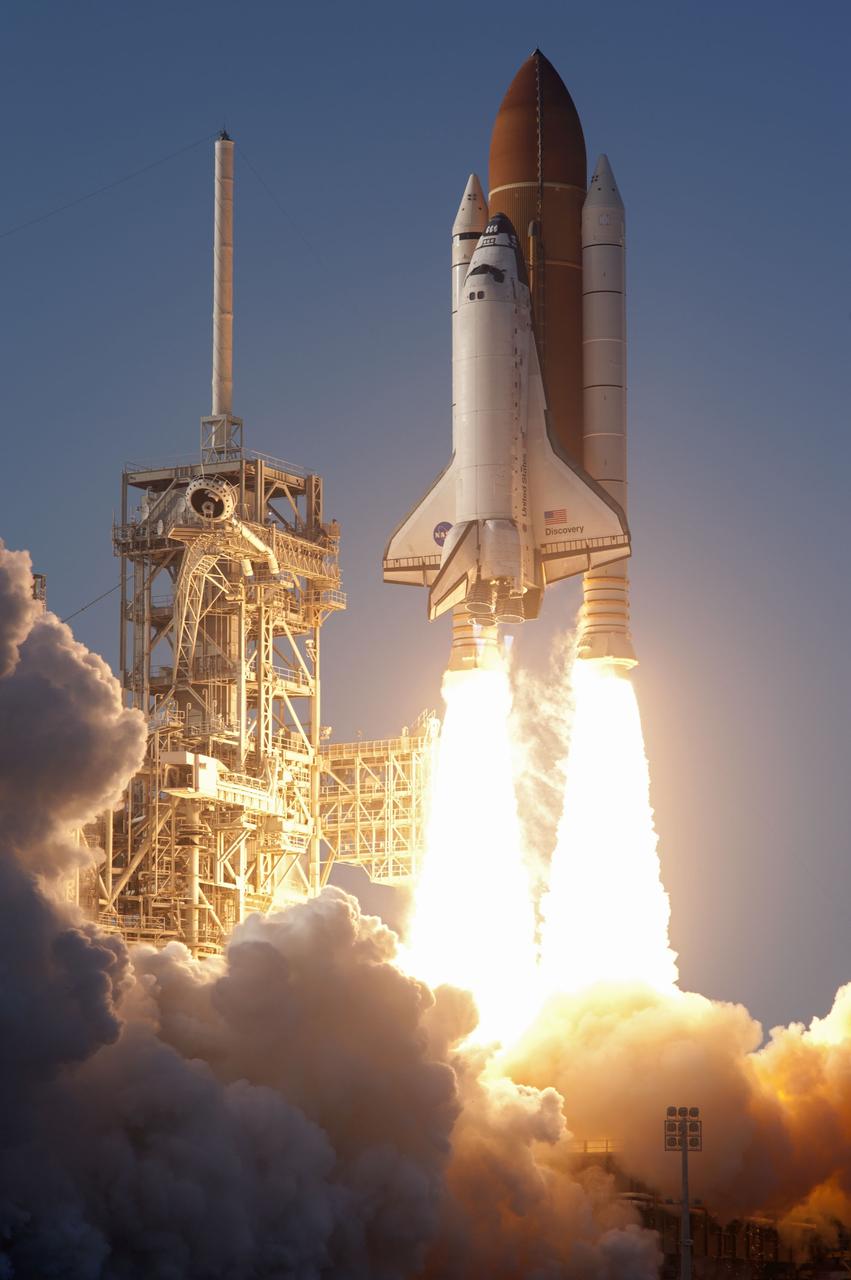
CAPE CANAVERAL, Fla. -- Space shuttle Discovery soars into space from Launch Pad 39A at NASA's Kennedy Space Center in Florida to begin its final flight to the International Space Station on the STS-133 mission. Launch was at 4:53 p.m. EST. Discovery and its six-member crew will deliver the Permanent Multipurpose Module, packed with supplies and critical spare parts, as well as Robonaut 2, the dexterous humanoid astronaut helper, to the orbiting outpost. Discovery is flying on its 39th mission and is scheduled to be retired following STS-133. This is the 133rd Space Shuttle Program mission and the 35th shuttle voyage to the space station. For more information on the STS-133 mission, visit www.nasa.gov/mission_pages/shuttle/shuttlemissions/sts133/. Photo credit: NASA/Sandra Joseph and Kevin O'Connell
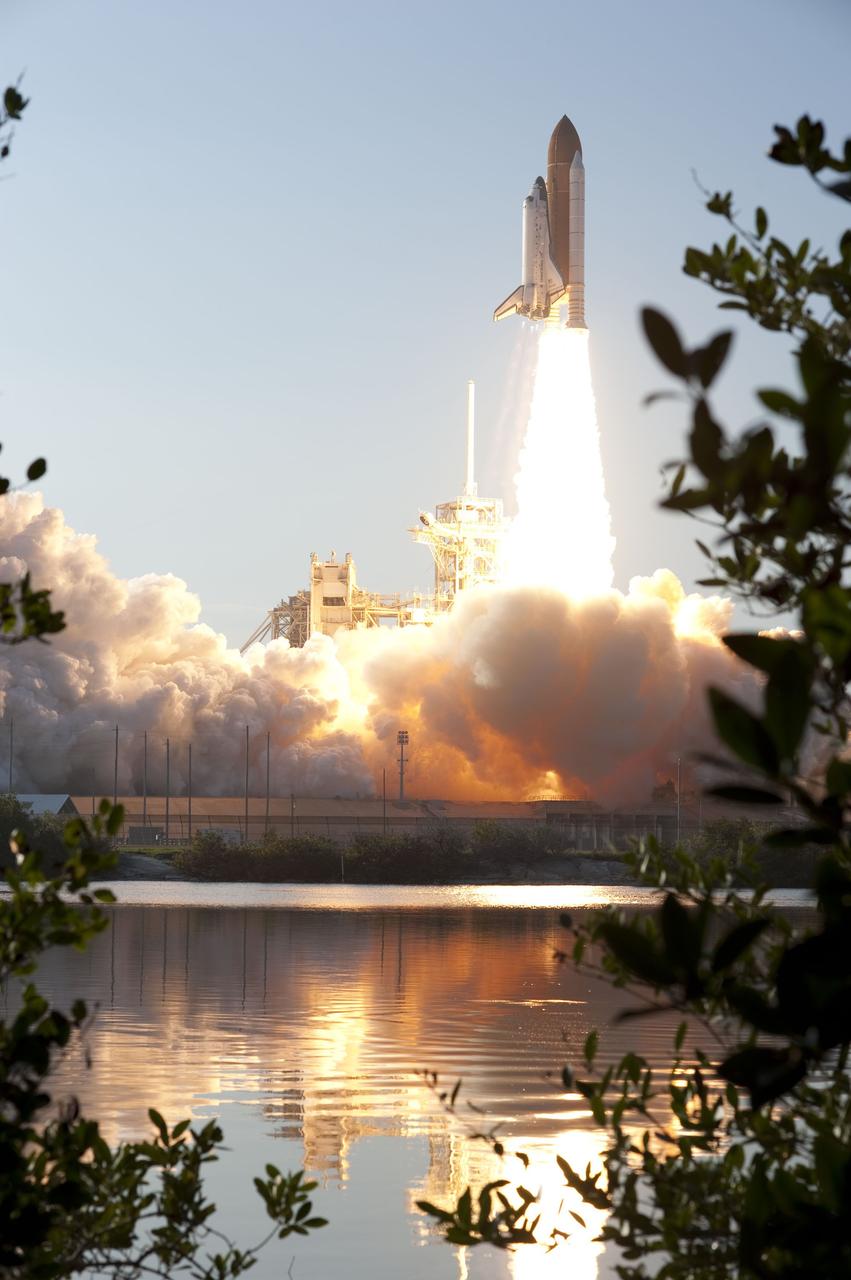
CAPE CANAVERAL, Fla. -- An exhaust cloud billows around Launch Pad 39A at NASA's Kennedy Space Center in Florida as space shuttle Discovery lifts off at 4:53 p.m. EST to begin the STS-133 mission and its final flight to the International Space Station. Discovery and its six-member crew will deliver the Permanent Multipurpose Module, packed with supplies and critical spare parts, as well as Robonaut 2, the dexterous humanoid astronaut helper, to the orbiting outpost. Discovery is flying on its 39th mission and is scheduled to be retired following STS-133. This is the 133rd Space Shuttle Program mission and the 35th shuttle voyage to the space station. For more information on the STS-133 mission, visit www.nasa.gov/mission_pages/shuttle/shuttlemissions/sts133/. Photo credit: NASA/Sandra Joseph and Kevin O'Connell

CAPE CANAVERAL, Fla. -- Rising on twin columns of fire and creating rolling clouds of smoke and steam, space shuttle Discovery lifts off Launch Pad 39A at NASA's Kennedy Space Center in Florida on a picturesque, warm, late February afternoon. Launch of the STS-133 mission was at 4:53 p.m. EST on Feb. 24. Discovery and its six-member crew are on a mission to deliver the Permanent Multipurpose Module, packed with supplies and critical spare parts, as well as Robonaut 2, the dexterous humanoid astronaut helper, to the International Space Station. Discovery is making its 39th mission and is scheduled to be retired following STS-133. This is the 133rd Space Shuttle Program mission and the 35th shuttle voyage to the space station. For more information on the STS-133 mission, visit www.nasa.gov/mission_pages/shuttle/shuttlemissions/sts133/. Photo credit: NASA/Todd S. Prough
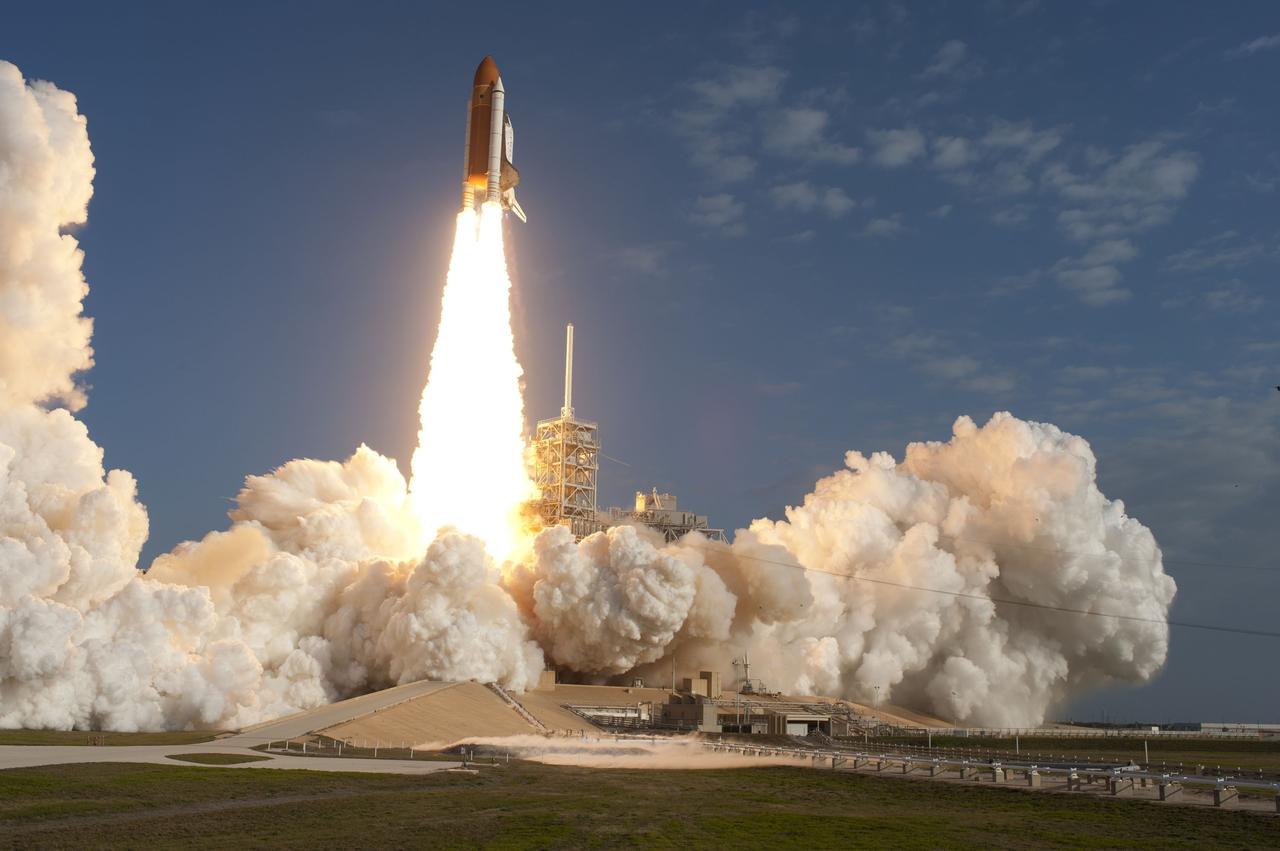
CAPE CANAVERAL, Fla. -- Leaving behind clouds of smoke and steam, space shuttle Discovery lifts off from Launch Pad 39A at NASA's Kennedy Space Center in Florida beginning its final flight, the STS-133 mission, to the International Space Station. Launch was at 4:53 p.m. EST. Discovery and its six-member crew will deliver the Permanent Multipurpose Module, packed with supplies and critical spare parts, as well as Robonaut 2, the dexterous humanoid astronaut helper, to the orbiting outpost. Discovery is flying on its 39th mission and is scheduled to be retired following STS-133. This is the 133rd Space Shuttle Program mission and the 35th shuttle voyage to the space station. For more information on the STS-133 mission, visit www.nasa.gov/mission_pages/shuttle/shuttlemissions/sts133/. Photo credit: NASA/Sandra Joseph and Kevin O'Connell
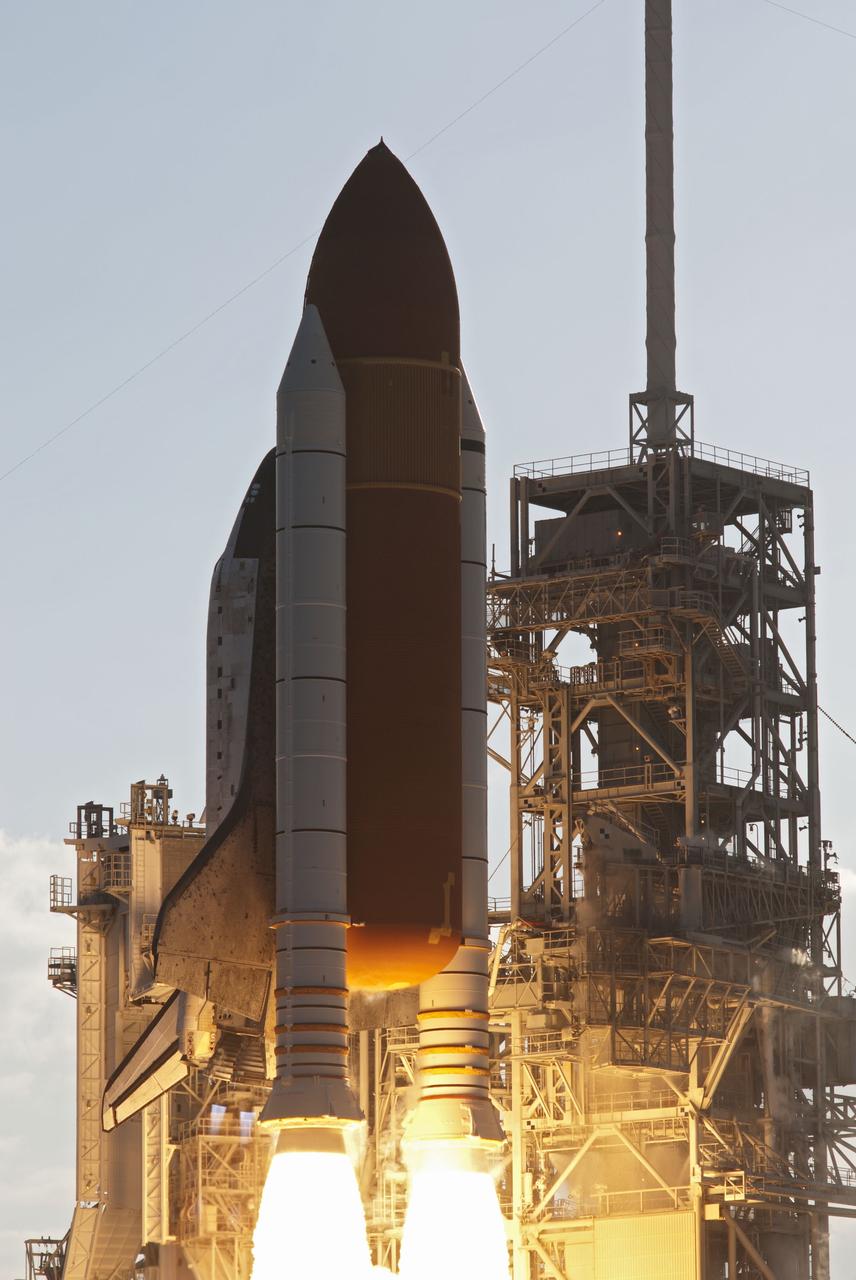
CAPE CANAVERAL, Fla. -- On twin columns of fire, space shuttle Discovery's solid rocket boosters ignite for liftoff on Launch Pad 39A at NASA's Kennedy Space Center in Florida. Discovery's final launch, the STS-133 mission, to the International Space was at 4:53 p.m. EST. Discovery and its six-member crew will deliver the Permanent Multipurpose Module, packed with supplies and critical spare parts, as well as Robonaut 2, the dexterous humanoid astronaut helper, to the orbiting outpost. Discovery is flying on its 39th mission and is scheduled to be retired following STS-133. This is the 133rd Space Shuttle Program mission and the 35th shuttle voyage to the space station. For more information on the STS-133 mission, visit www.nasa.gov/mission_pages/shuttle/shuttlemissions/sts133/. Photo credit: NASA/Rusty Backer and Michael Gayle
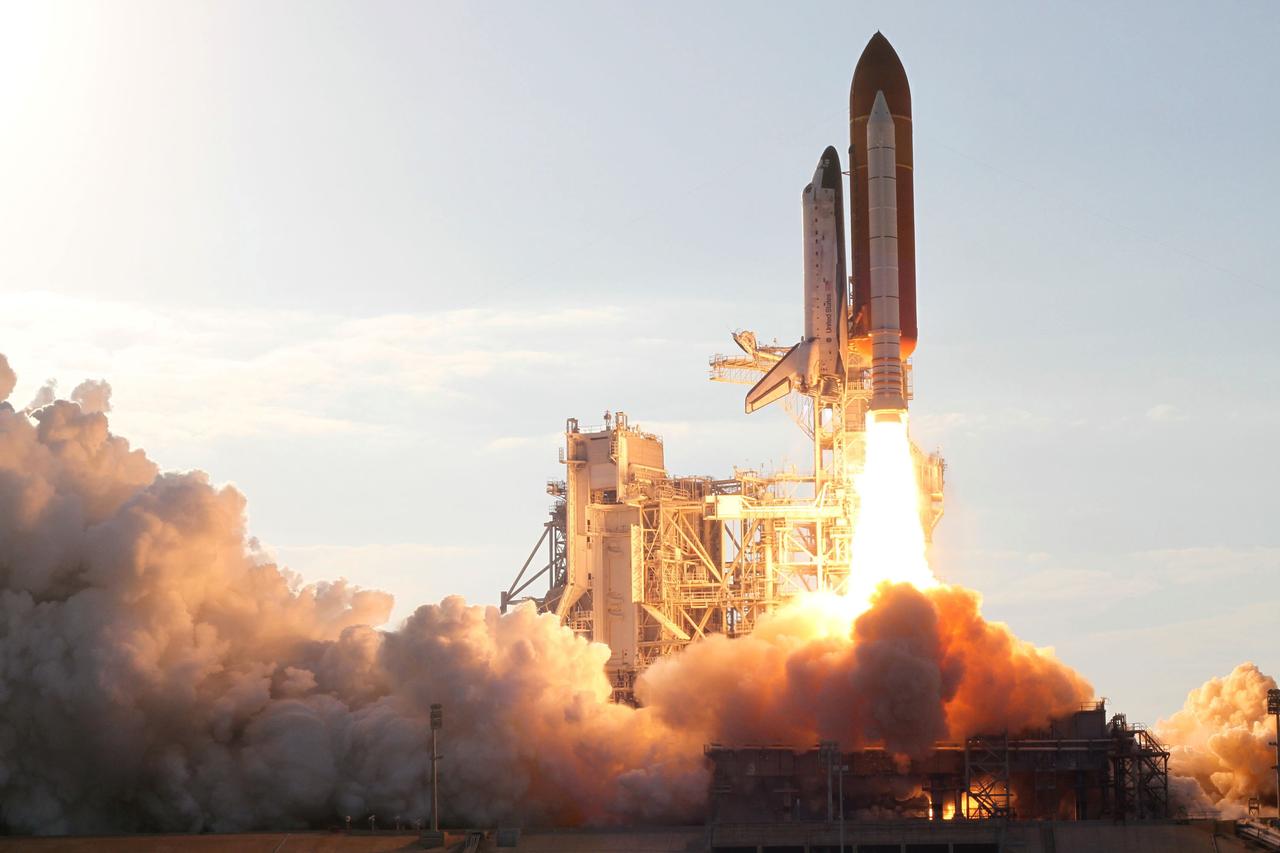
CAPE CANAVERAL, Fla. -- Rising on twin columns of fire and creating rolling clouds of smoke and steam, space shuttle Discovery lifts off Launch Pad 39A at NASA's Kennedy Space Center in Florida on a picturesque, warm, late February afternoon. Launch of the STS-133 mission was at 4:53 p.m. EST on Feb. 24. Discovery and its six-member crew are on a mission to deliver the Permanent Multipurpose Module, packed with supplies and critical spare parts, as well as Robonaut 2, the dexterous humanoid astronaut helper, to the International Space Station. Discovery is making its 39th mission and is scheduled to be retired following STS-133. This is the 133rd Space Shuttle Program mission and the 35th shuttle voyage to the space station. For more information on the STS-133 mission, visit www.nasa.gov/mission_pages/shuttle/shuttlemissions/sts133/. Photo credit: NASA
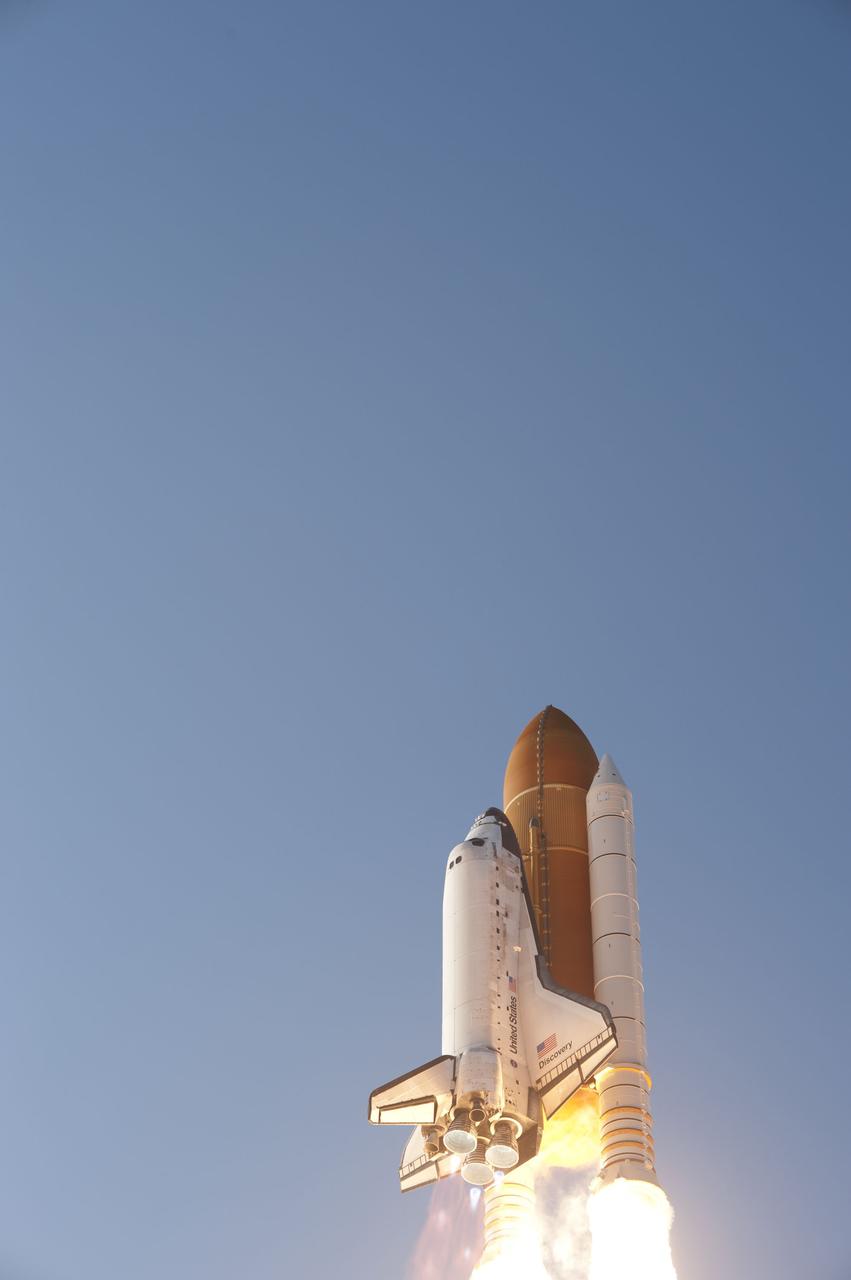
CAPE CANAVERAL, Fla. -- Space shuttle Discovery heads to space after lifting off from Launch Pad 39A at NASA's Kennedy Space Center in Florida to begin its final flight, the STS-133 mission, to the International Space Station. Launch was at 4:53 p.m. EST. Discovery and its six-member crew will deliver the Permanent Multipurpose Module, packed with supplies and critical spare parts, as well as Robonaut 2, the dexterous humanoid astronaut helper, to the orbiting outpost. Discovery is flying on its 39th mission and is scheduled to be retired following STS-133. This is the 133rd Space Shuttle Program mission and the 35th shuttle voyage to the space station. For more information on the STS-133 mission, visit www.nasa.gov/mission_pages/shuttle/shuttlemissions/sts133/. Photo credit: NASA/Tony Gray and Tom Farrar
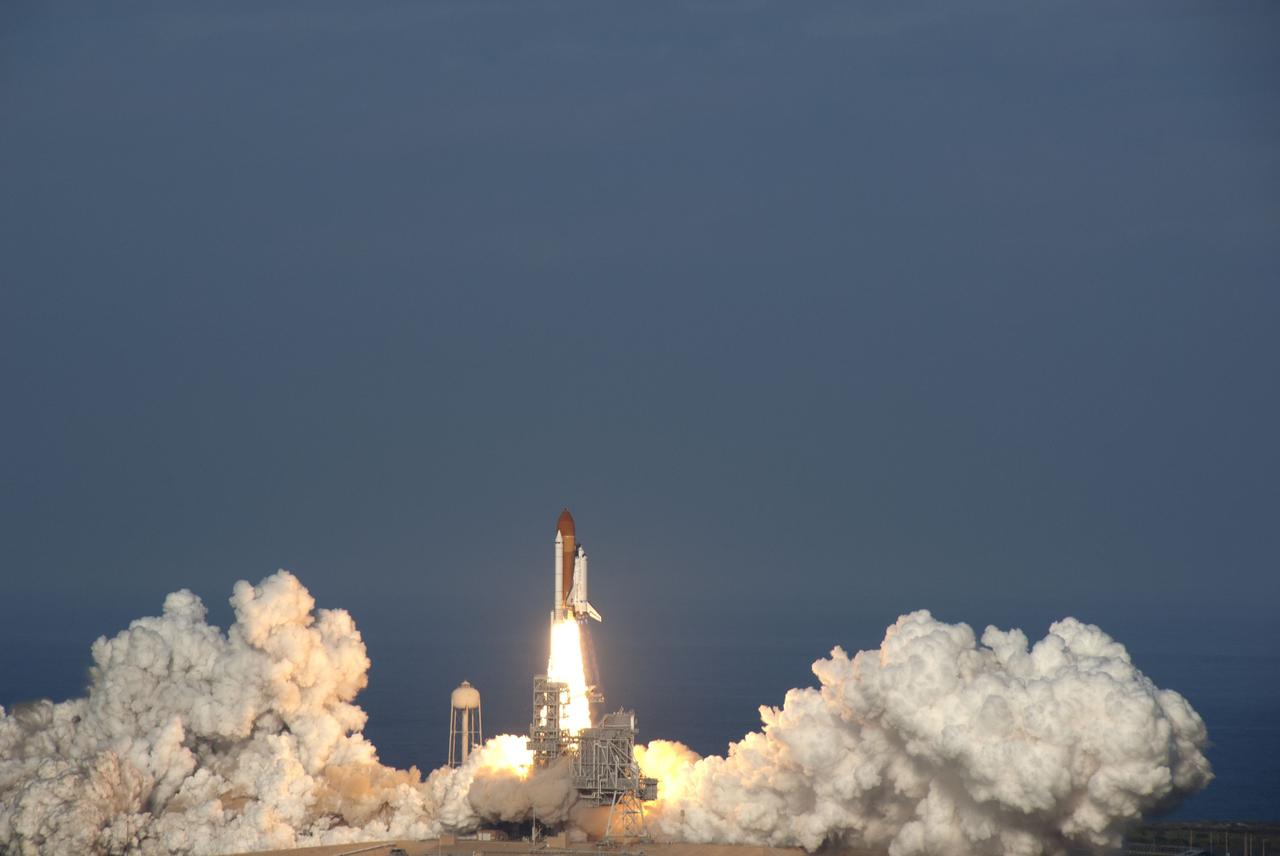
CAPE CANAVERAL, Fla. -- Rising on twin columns of fire and creating rolling clouds of smoke and steam, space shuttle Discovery lifts off Launch Pad 39A at NASA's Kennedy Space Center in Florida on a picturesque, warm, late February afternoon. Launch of the STS-133 mission was at 4:53 p.m. EST on Feb. 24. Discovery and its six-member crew are on a mission to deliver the Permanent Multipurpose Module, packed with supplies and critical spare parts, as well as Robonaut 2, the dexterous humanoid astronaut helper, to the International Space Station. Discovery is making its 39th mission and is scheduled to be retired following STS-133. This is the 133rd Space Shuttle Program mission and the 35th shuttle voyage to the space station. For more information on the STS-133 mission, visit www.nasa.gov/mission_pages/shuttle/shuttlemissions/sts133/. Photo credit: NASA/Todd S. Prough