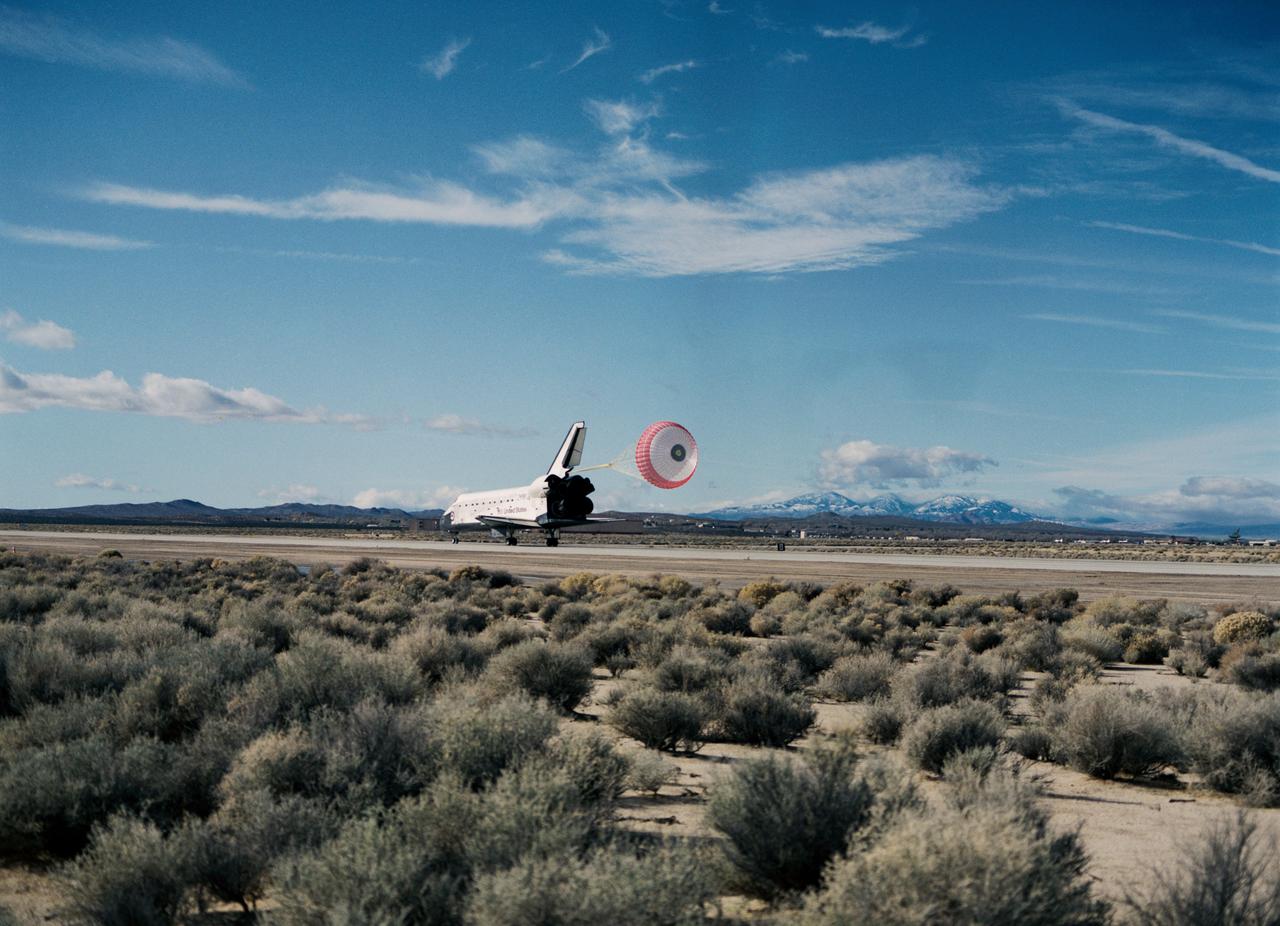
STS-53 Discovery, Orbiter Vehicle (OV) 103, is slowed by a red, white, and blue drag chute during its landing on concrete runway 22 at Edwards Air Force Base (EAFB), California. Main landing gear (MLG) touchdown occurred at 12:43:17 pm (Pacific Standard Time (PST)). This aft view of OV-103 shows the drag chute deployed from its compartment at the base of the vertical tail, the speedbrake/rudder flaps open, and the space shuttle main engines (SSMEs). Both MLG and nose landing gear (NLG) ride along the runway surface. Desert scrub brush appears in the foreground and mountains are seen in the background.
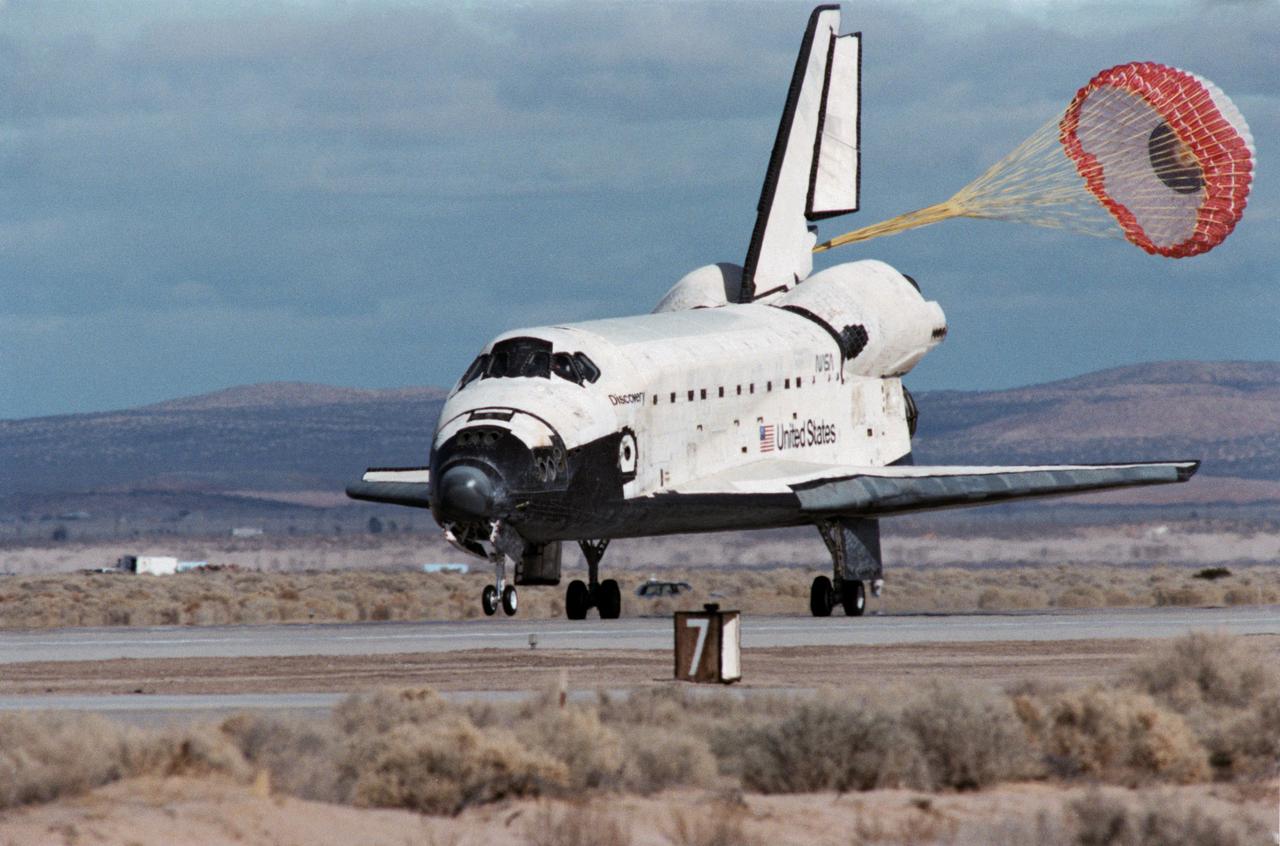
STS053-S-085 (9 Dec. 1992) --- The drag chute on the space shuttle Discovery is partially deployed during landing on Runway 22 at Edwards Air Force Base. The landing ended an eight-day space mission for the STS-53 crew. Main gear touchdown occurred at 12:43:17 p.m. (PST) on Dec. 9, 1992. Onboard were astronauts David M. Walker, Robert D. Cabana, Guion S. Bluford Jr., James S. Voss and Michael R.U. (Rich) Clifford.
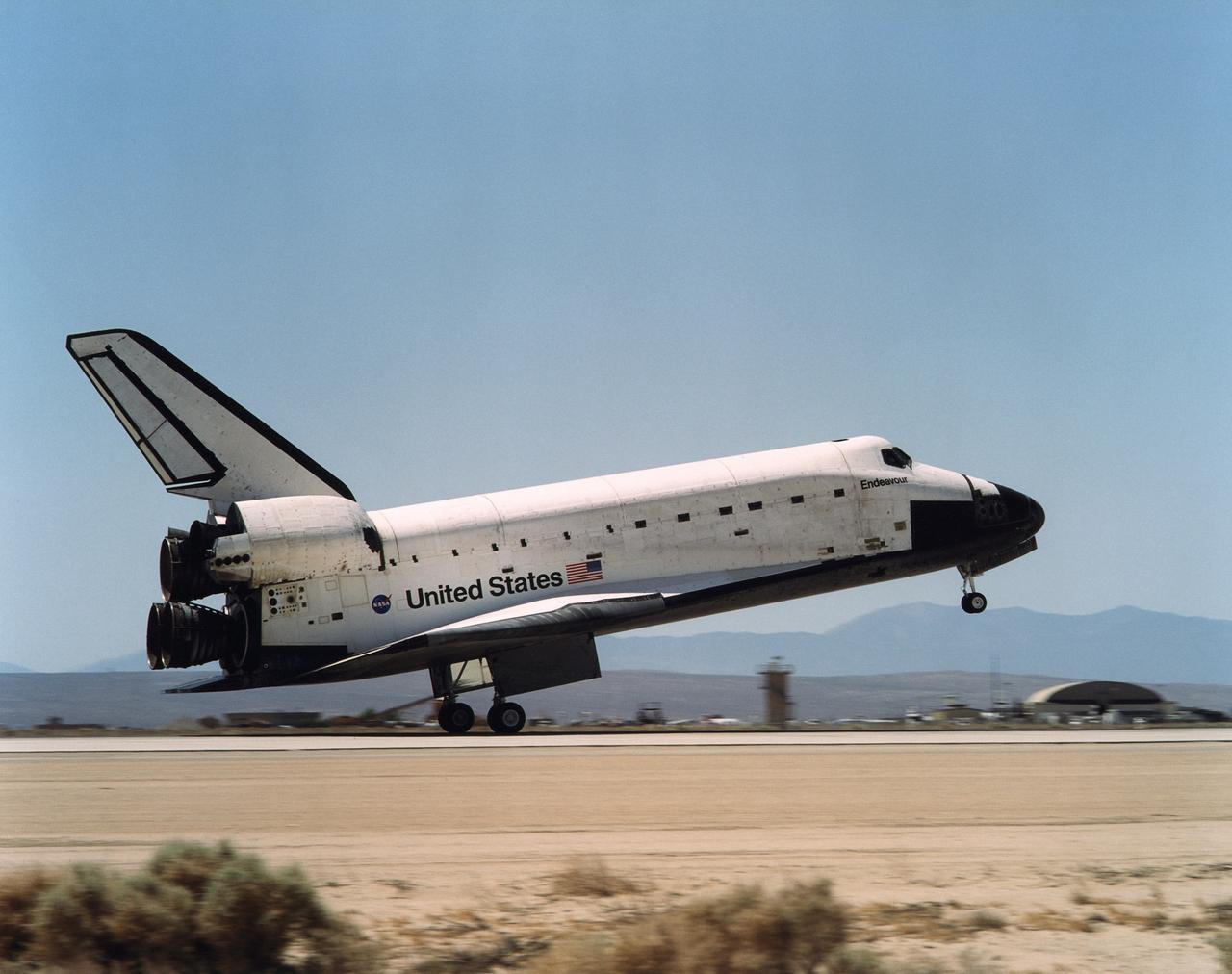
STS111-S-027 (19 June 2002) --- After traveling 5.8 million miles in space during 217 orbits, the Space Shuttle Endeavour is just about to complete NASA's STS-111 mission with a landing on concrete runway 22 at Dryden Flight Research Center, Edwards Air Force Base, Calif. Three days of unfavorable weather conditions at KSC prompted the decision to land at Edwards, which enjoyed pristine, dry conditions. Main gear touchdown occurred at 10:57:41 a.m. (PDT), nose gear touchdown at 10:57:53 a.m. (PDT) and wheel stop at 10:58:45 a.m. (PDT).
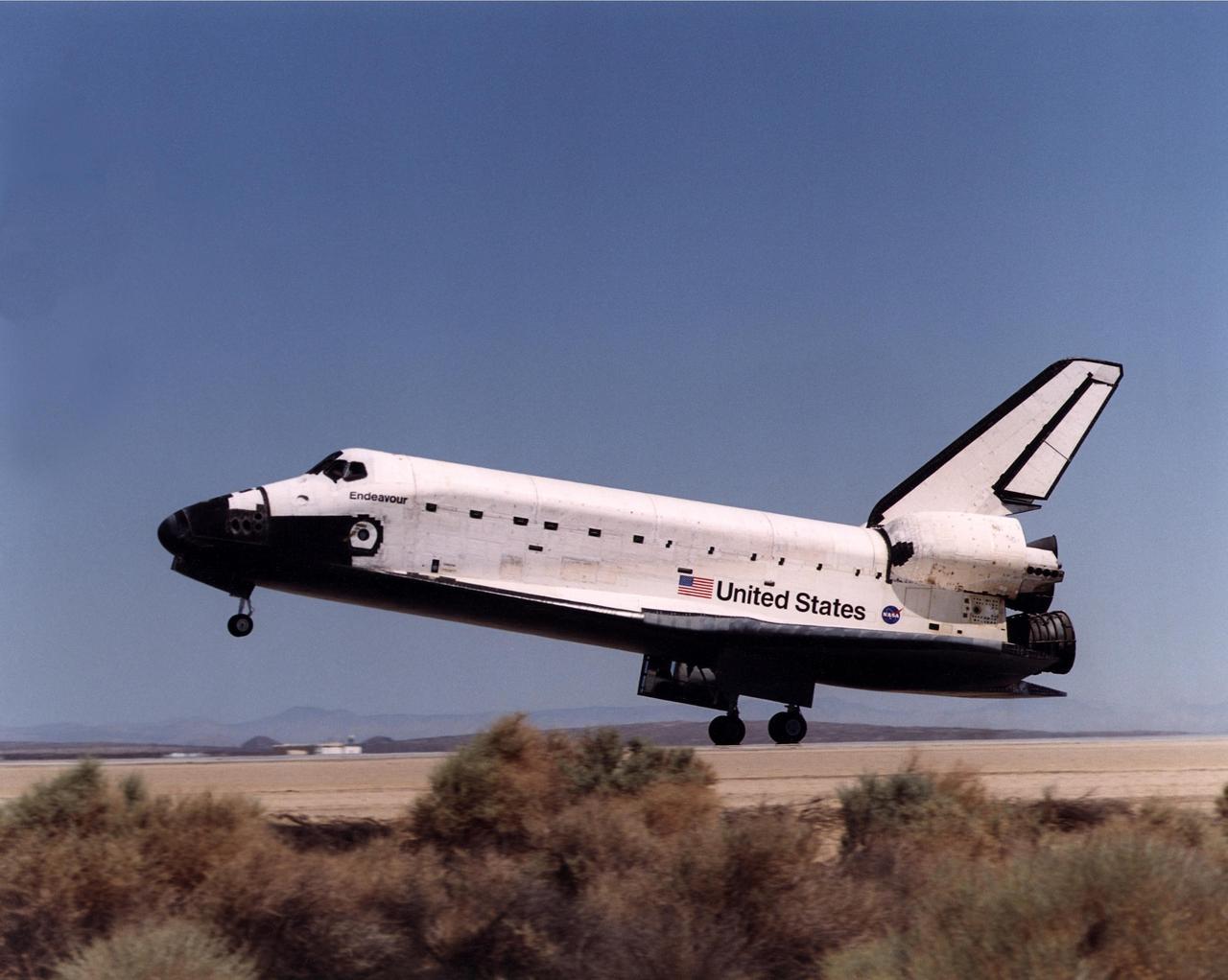
EDWARDS AFB, CALIF. -- After traveling 5.8 million miles in space during 217 orbits, Endeavour completes mission STS-111 with a landing on concrete runway 22 at Dryden Flight Research Center, Edwards Air Force Base, Calif. Three days of unfavorable weather conditions at KSC prompted the decision to land at Edwards, which enjoyed pristine, dry conditions.. Main gear touchdown occurred at 1:57:41 p.m EDT, nose gear touchdown at 1:57:53 p.m. EDT and wheel stop at 1:58:45 p.m. EDT. [Photo by Tom Tschida
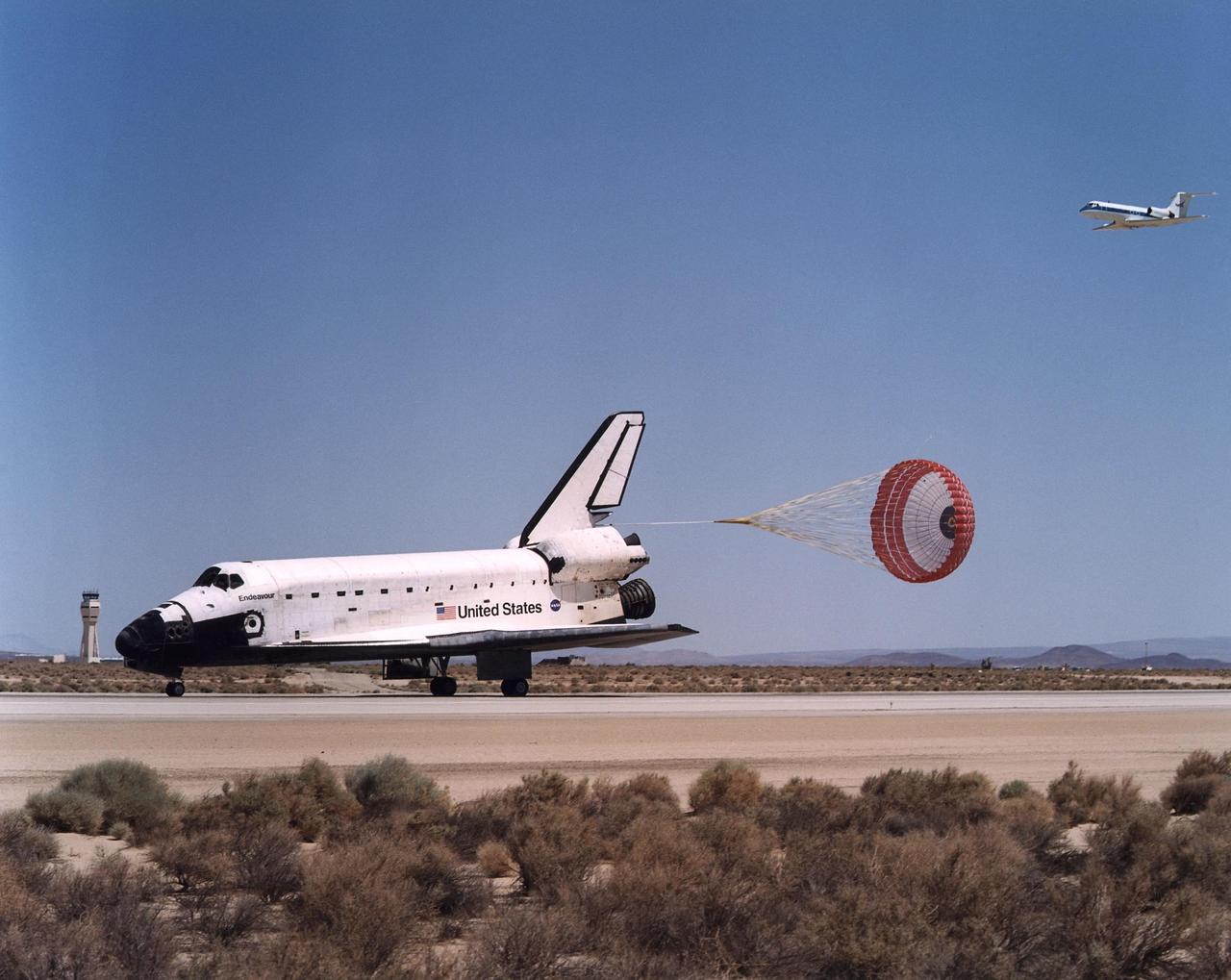
EDWARDS AFB, CALIF. -- A chase plane follows behind Endeavour as it lands on concrete runway 22 at Dryden Flight Research Center, Edwards Air Force Base, Calif., completing mission STS-111. Endeavour traveled 5.8 million miles in space during 217 orbits. Three days of unfavorable weather conditions at KSC prompted the decision to land at Edwards, which enjoyed pristine, dry conditions.. Main gear touchdown occurred at 1:57:41 p.m EDT, nose gear touchdown at 1:57:53 p.m. EDT and wheel stop at 1:58:45 p.m. EDT. [Photo by Jim Ross
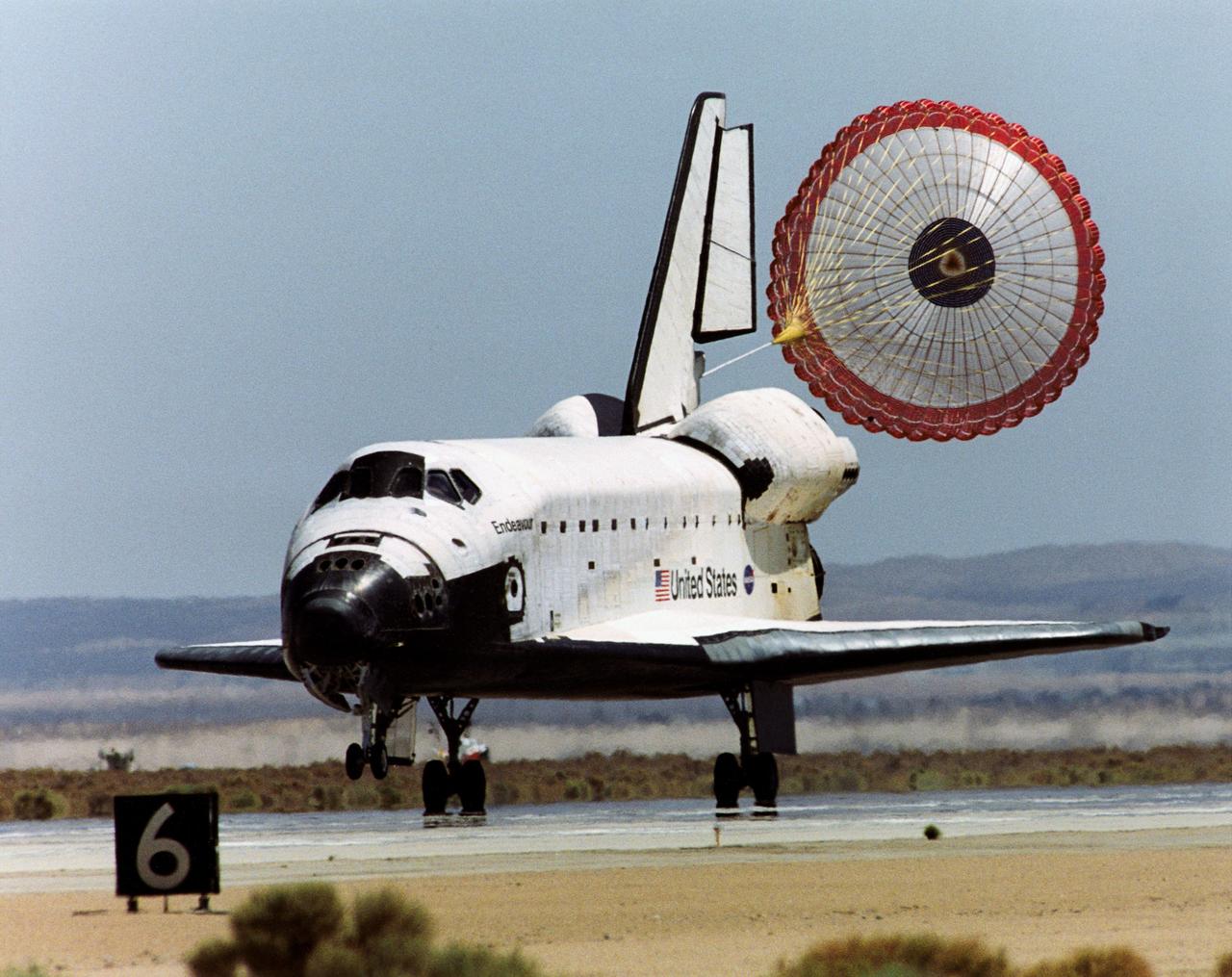
STS111-S-028 (19 June 2002) --- The drag chute on the Space Shuttle Endeavour deploys to slow down the spacecraft during landing on runway 22 at Dryden Flight Research Center. After traveling 5.8 million miles in space during 217 orbits, the shuttle ended NASA's STS-111 mission with complete wheel stop on the concrete runway at 10:58:45 a.m. (PDT), June 19, 2002. Three days of unfavorable weather conditions at KSC prompted the decision to land at Edwards, which enjoyed pristine, dry conditions. Main gear touchdown occurred at 10:57:41 a.m. (PDT) and nose gear touchdown at 10:57:53 a.m. (PDT).
![EDWARDS AFB, CALIF. -- After traveling 5.8 million miles in space during 217 orbits, and with drag chute deployed, Endeavour lands on concrete runway 22 at Dryden Flight Research Center, Edwards Air Force Base, Calif., completing mission STS-111. Three days of unfavorable weather conditions at KSC prompted the decision to land at Edwards, which enjoyed pristine, dry conditions.. Main gear touchdown occurred at 1:57:41 p.m. EDT, nose gear touchdown at 1:57:53 p.m. EDT and wheel stop at 1:58:45 p.m. EDT. [Photo by Jim Ross]](https://images-assets.nasa.gov/image/KSC-02pp1114/KSC-02pp1114~medium.jpg)
EDWARDS AFB, CALIF. -- After traveling 5.8 million miles in space during 217 orbits, and with drag chute deployed, Endeavour lands on concrete runway 22 at Dryden Flight Research Center, Edwards Air Force Base, Calif., completing mission STS-111. Three days of unfavorable weather conditions at KSC prompted the decision to land at Edwards, which enjoyed pristine, dry conditions.. Main gear touchdown occurred at 1:57:41 p.m. EDT, nose gear touchdown at 1:57:53 p.m. EDT and wheel stop at 1:58:45 p.m. EDT. [Photo by Jim Ross]
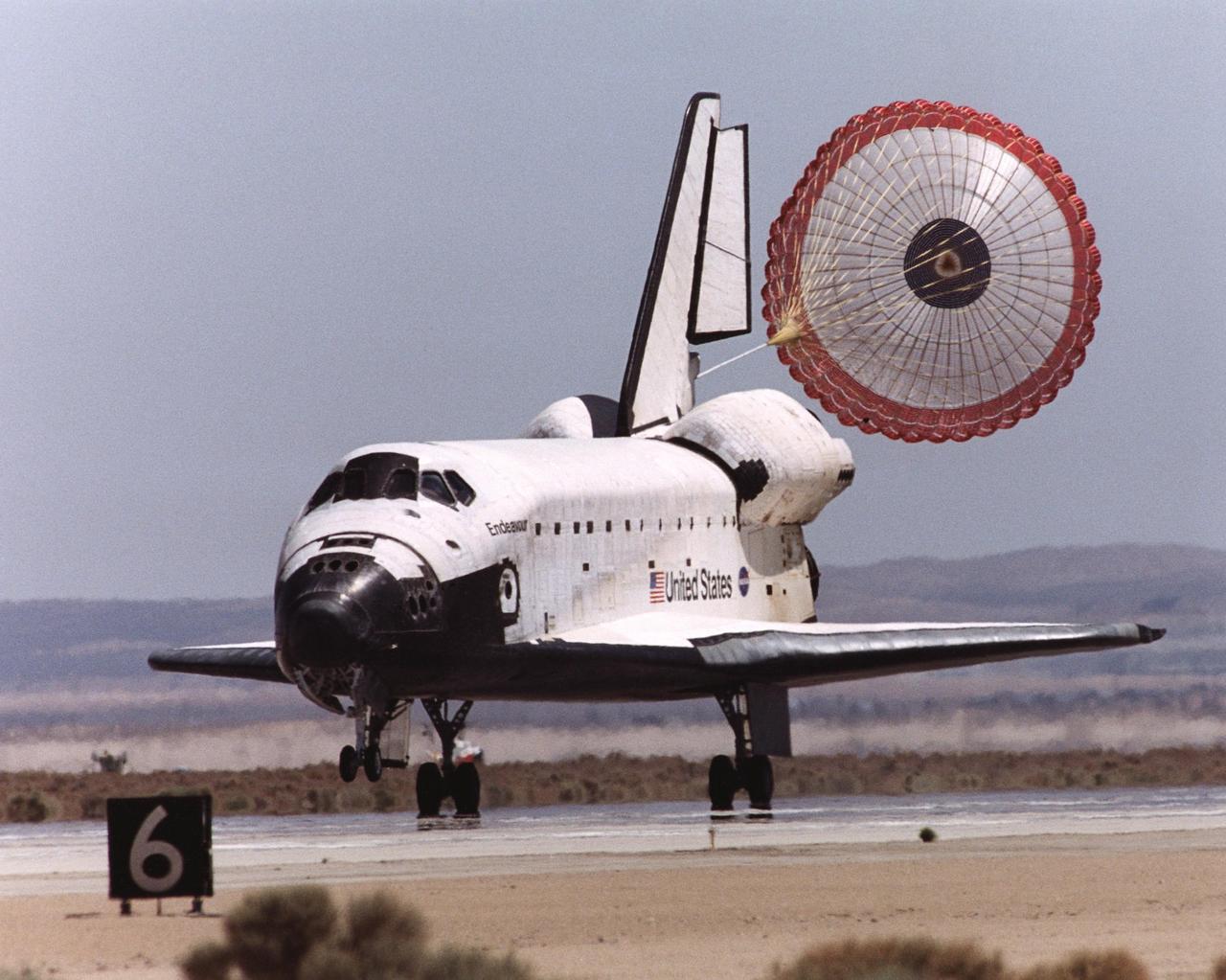
EDWARDS AFB, CALIF. -- After traveling 5.8 million miles in space during 217 orbits, and with drag chute deployed, Endeavour lands on concrete runway 22 at Dryden Flight Research Center, Edwards Air Force Base, Calif., completing mission STS-111. Three days of unfavorable weather conditions at KSC prompted the decision to land at Edwards, which enjoyed pristine, dry conditions.. Main gear touchdown occurred at 1:57:41 p.m EDT, nose gear touchdown at 1:57:53 p.m. EDT and wheel stop at 1:58:45 p.m. EDT. [Photo by Jim Ross
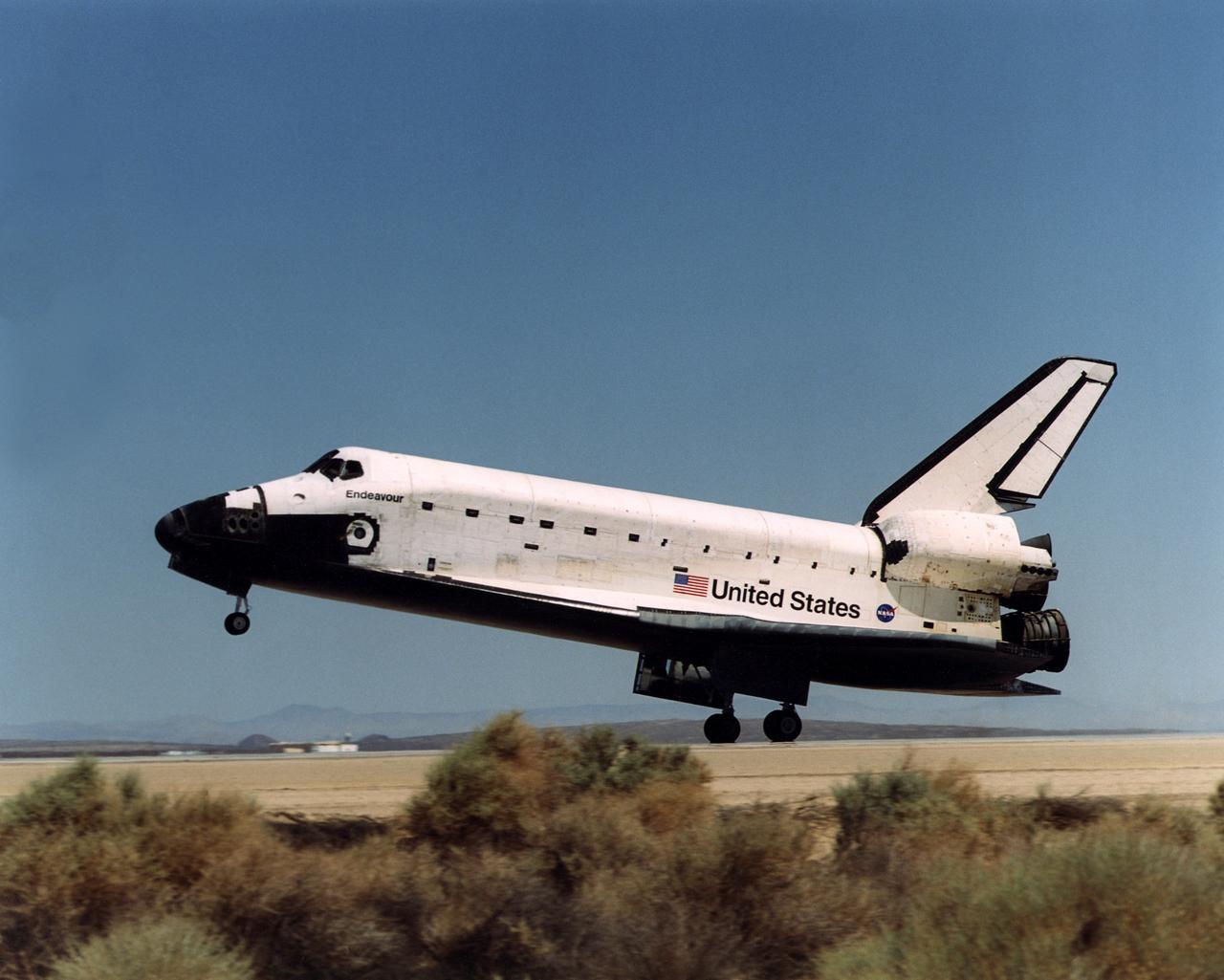
STS111-S-026 (19 June 2002) --- After traveling 5.8 million miles in space during 217 orbits, the Space Shuttle Endeavour is just about to complete NASA's STS-111 mission with a landing on concrete runway 22 at Dryden Flight Research Center, Edwards Air Force Base, Calif. Three days of unfavorable weather conditions at KSC prompted the decision to land at Edwards, which enjoyed pristine, dry conditions. Main gear touchdown occurred at 10:57:41 a.m. (PDT), nose gear touchdown at 10:57:53 a.m. (PDT) and wheel stop at 10:58:45 a.m. (PDT).
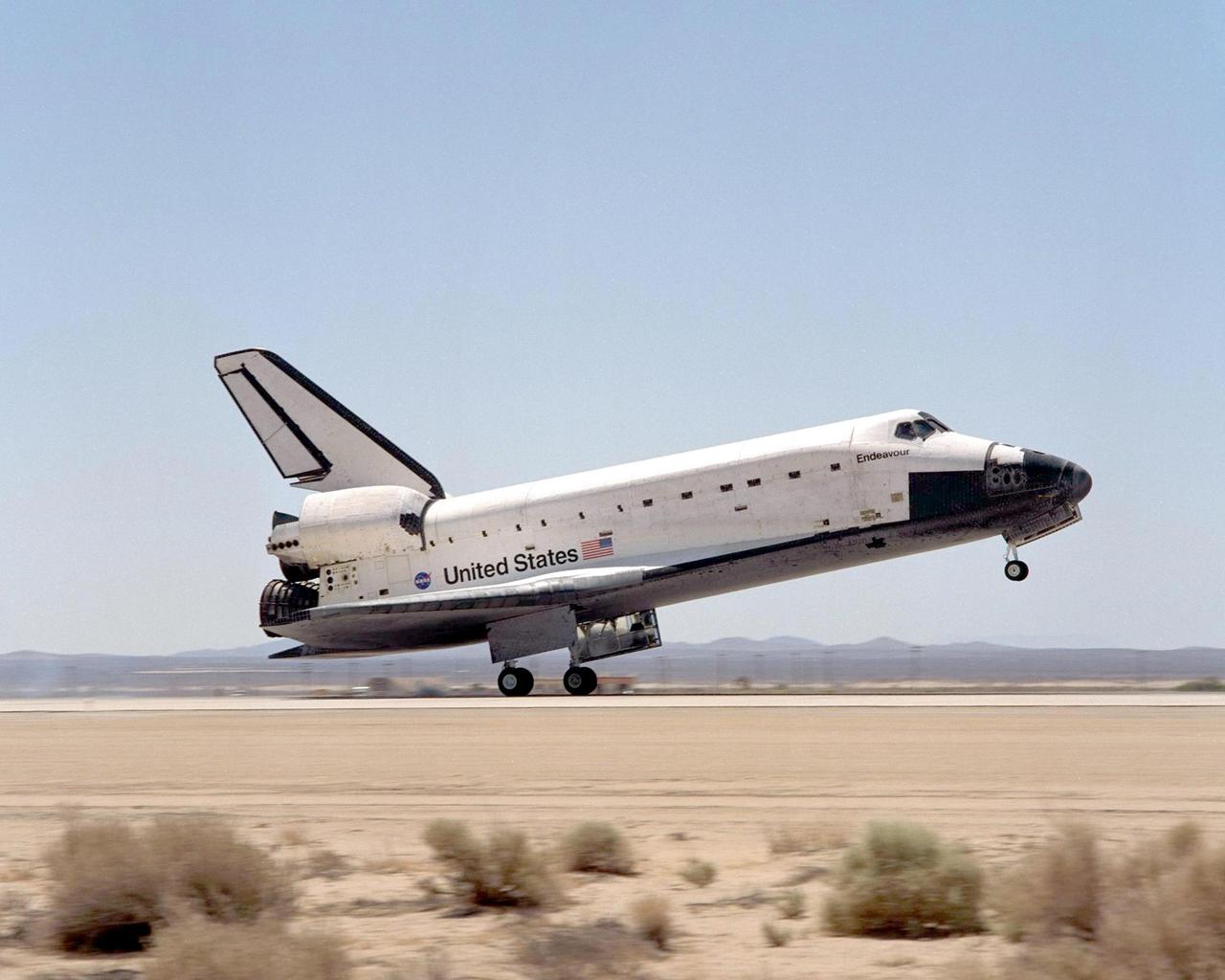
EDWARDS AFB, CALIF. -- After traveling 5.8 million miles in space during 217 orbits, Endeavour touches down on concrete runway 22 at Dryden Flight Research Center, Edwards Air Force Base, Calif., completing mission STS-111. Three days of unfavorable weather conditions at KSC prompted the decision to land at Edwards, which enjoyed pristine, dry conditions.. Main gear touchdown occurred at 1:57:41 p.m. EDT, nose gear touchdown at 1:57:53 p.m. EDT and wheel stop at 1:58:45 p.m. EDT.
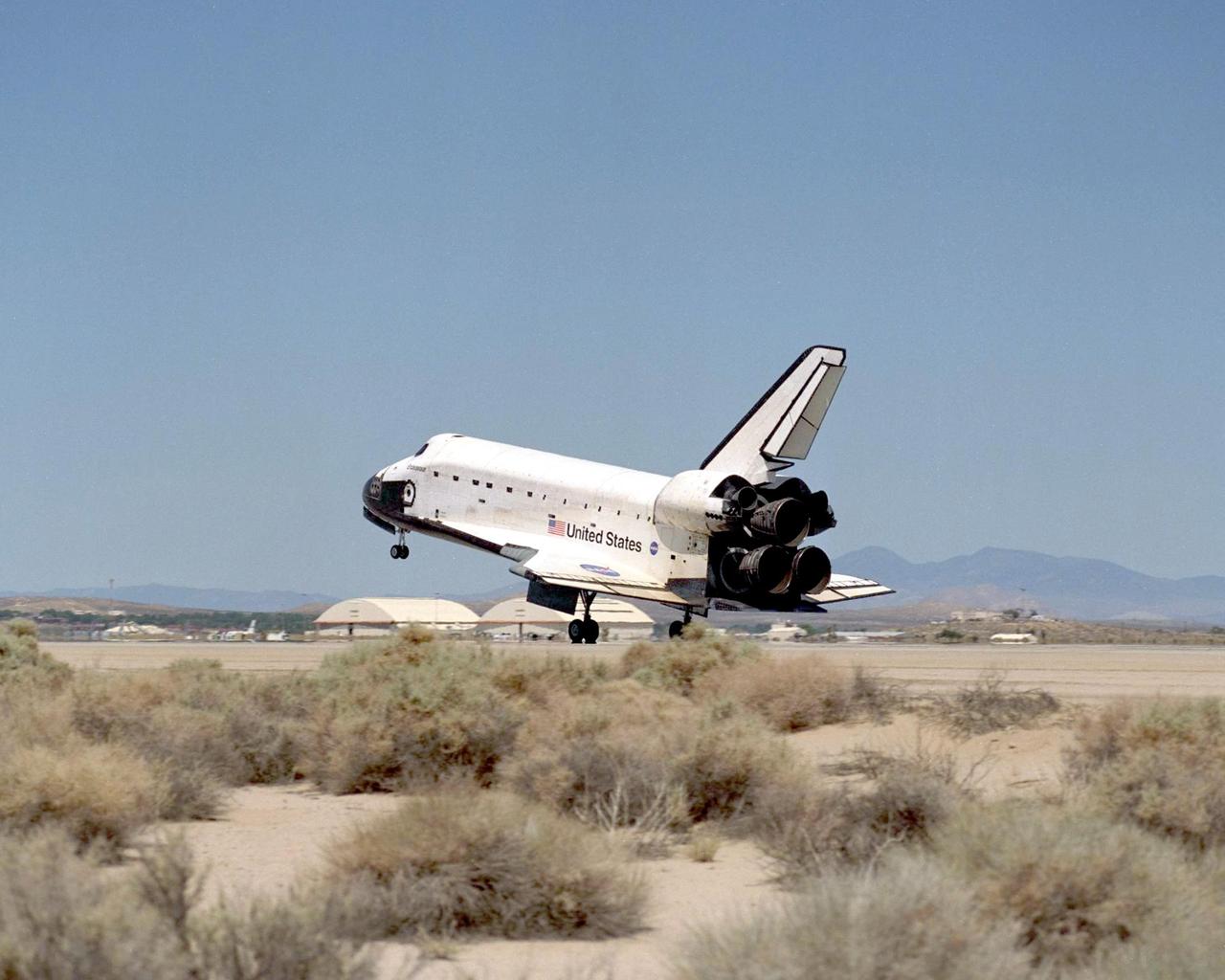
EDWARDS AFB, CALIF. -- After traveling 5.8 million miles in space during 217 orbits, Endeavour touches down on concrete runway 22 at Dryden Flight Research Center, Edwards Air Force Base, Calif., completing mission STS-111. Three days of unfavorable weather conditions at KSC prompted the decision to land at Edwards, which enjoyed pristine, dry conditions.. Main gear touchdown occurred at 1:57:41 p.m. EDT, nose gear touchdown at 1:57:53 p.m. EDT and wheel stop at 1:58:45 p.m. EDT.
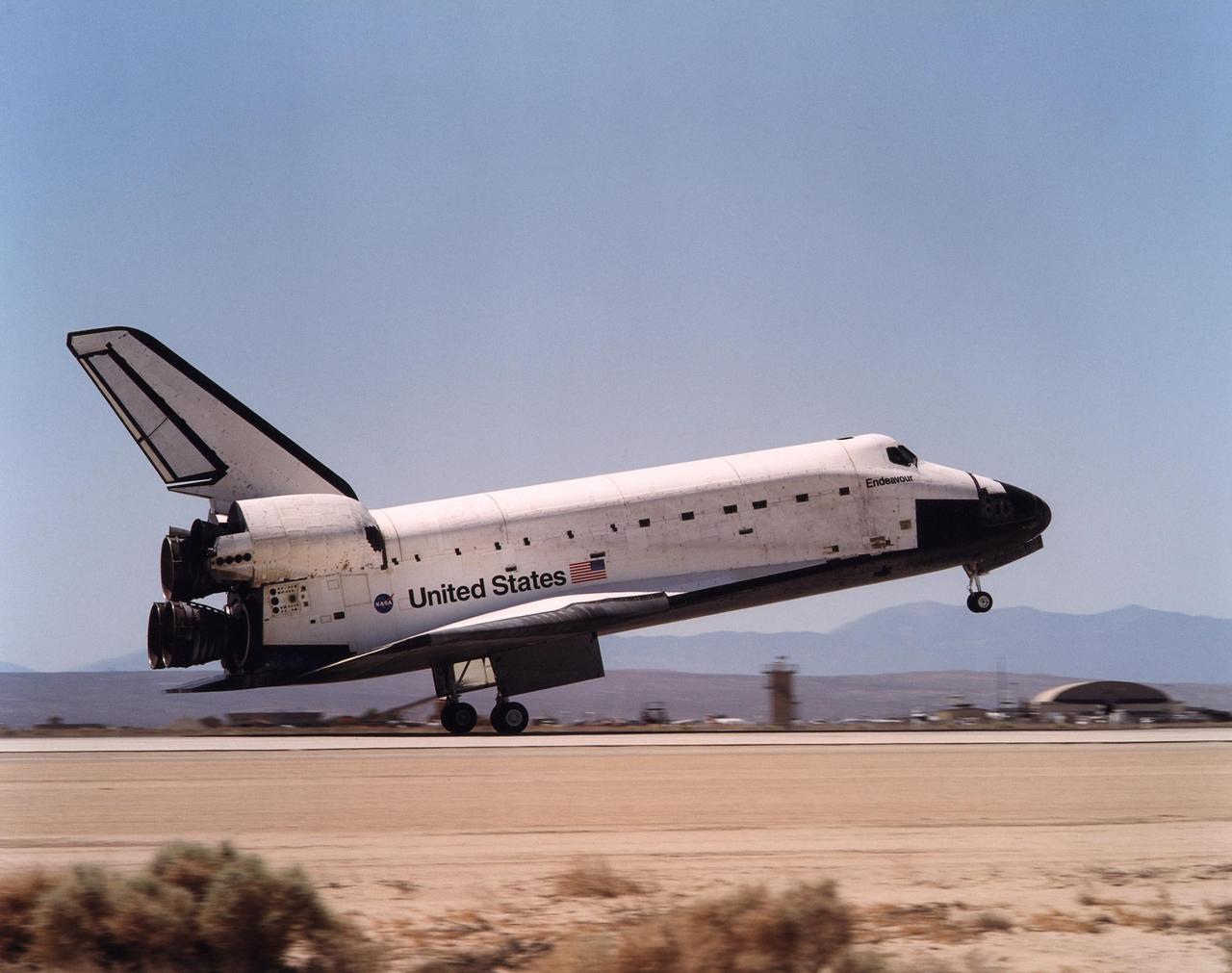
EDWARDS AFB, CALIF. -- After traveling 5.8 million miles in space during 217 orbits, Endeavour touches down on concrete runway 22 at Dryden Flight Research Center, Edwards Air Force Base, Calif., completing mission STS-111. Three days of unfavorable weather conditions at KSC prompted the decision to land at Edwards, which enjoyed pristine, dry conditions.. Main gear touchdown occurred at 1:57:41 p.m EDT, nose gear touchdown at 1:57:53 p.m. EDT and wheel stop at 1:58:45 p.m. EDT. [Photo by Tom Tschida
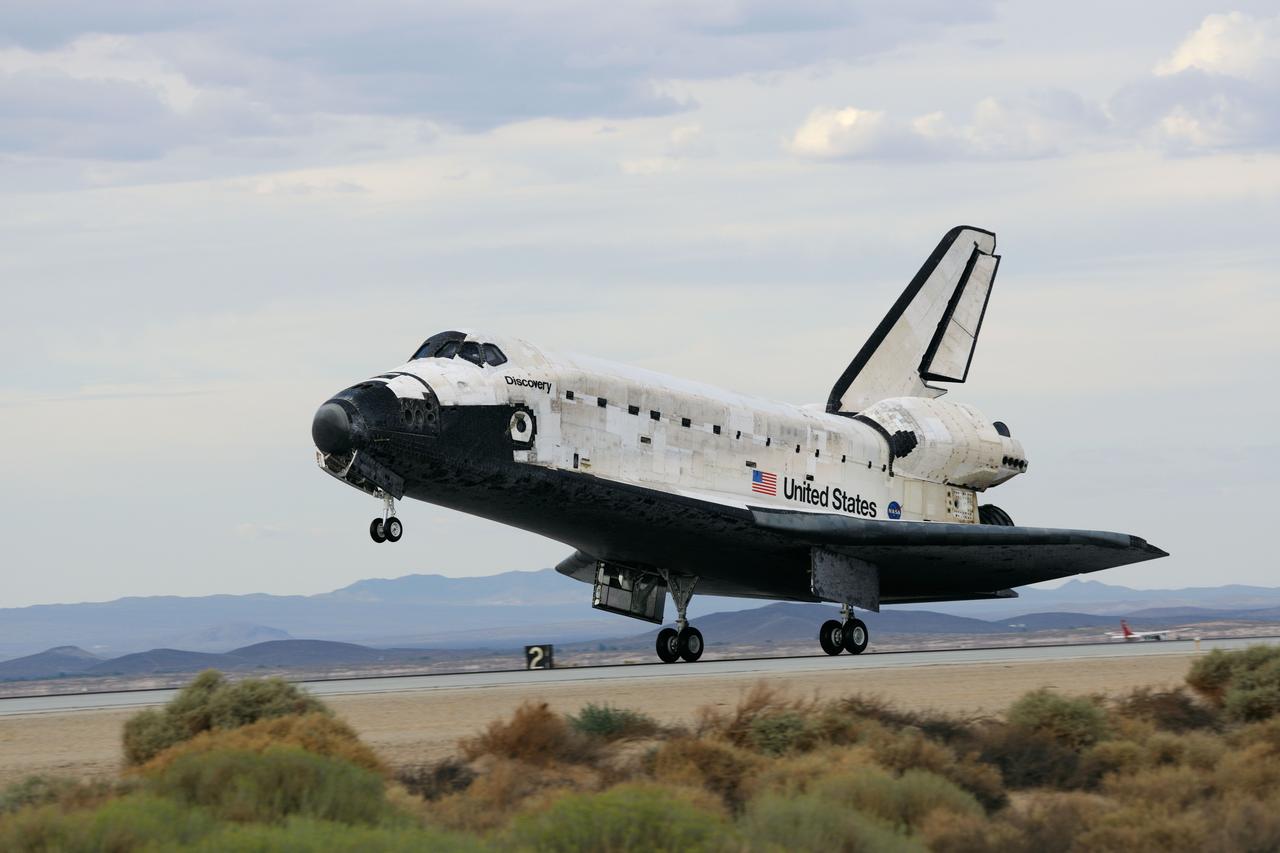
STS128-S-046 (11 Sept. 2009) --- Space Shuttle Discovery?s main landing gear touches down at NASA's Dryden Flight Research Center at Edwards Air Force Base in California, concluding a successful mission to the International Space Station. Onboard are NASA astronauts Rick Sturckow, commander; Kevin Ford, pilot; John ?Danny? Olivas, Patrick Forrester, Jose Hernandez and Tim Kopra, all mission specialists; along with European Space Agency astronaut Christer Fuglesang, mission specialist. Discovery landed at 5:53 p.m. (PDT) on Sept. 11, 2009 to end the STS-128 mission, completing its almost 14-day journey of more than 5.7 million miles in space. The landing was diverted to California due to marginal weather at the Kennedy Space Center. Discovery?s mission featured three spacewalks and the delivery of two refrigerator-sized science racks to the space station. One rack will be used to conduct experiments on materials such as metals, glasses and ceramics. The results from these experiments could lead to the development of better materials on Earth. The other rack will be used for fluid physics research. Understanding how fluids react in microgravity could lead to improved designs for fuel tanks, water systems and other fluid-based systems.
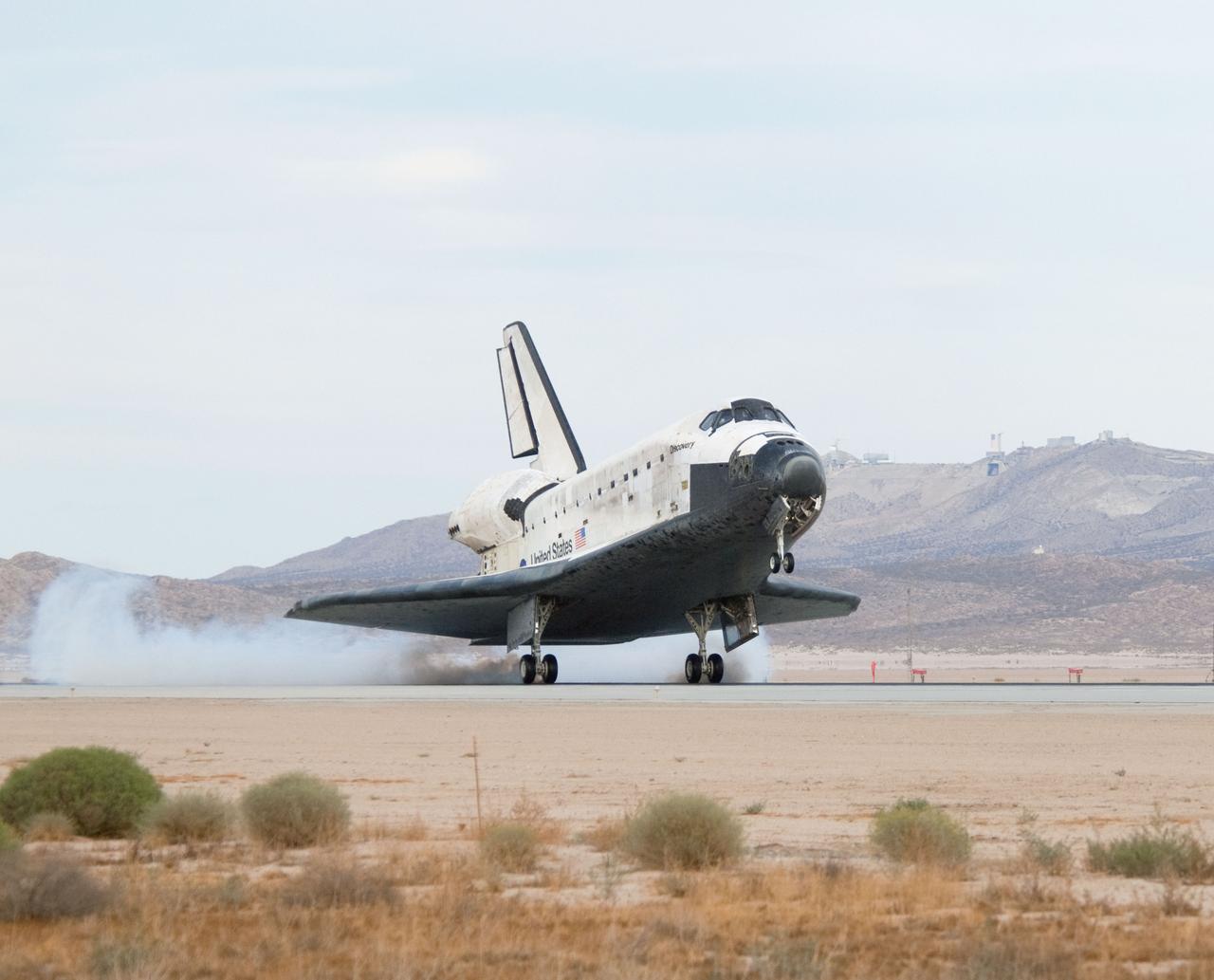
STS128-S-045 (11 Sept. 2009) --- Space Shuttle Discovery?s main landing gear touches down at NASA's Dryden Flight Research Center at Edwards Air Force Base in California, concluding a successful mission to the International Space Station. Onboard are NASA astronauts Rick Sturckow, commander; Kevin Ford, pilot; John ?Danny? Olivas, Patrick Forrester, Jose Hernandez and Tim Kopra, all mission specialists; along with European Space Agency astronaut Christer Fuglesang, mission specialist. Discovery landed at 5:53 p.m. (PDT) on Sept. 11, 2009 to end the STS-128 mission, completing its almost 14-day journey of more than 5.7 million miles in space. The landing was diverted to California due to marginal weather at the Kennedy Space Center. Discovery?s mission featured three spacewalks and the delivery of two refrigerator-sized science racks to the space station. One rack will be used to conduct experiments on materials such as metals, glasses and ceramics. The results from these experiments could lead to the development of better materials on Earth. The other rack will be used for fluid physics research. Understanding how fluids react in microgravity could lead to improved designs for fuel tanks, water systems and other fluid-based systems.
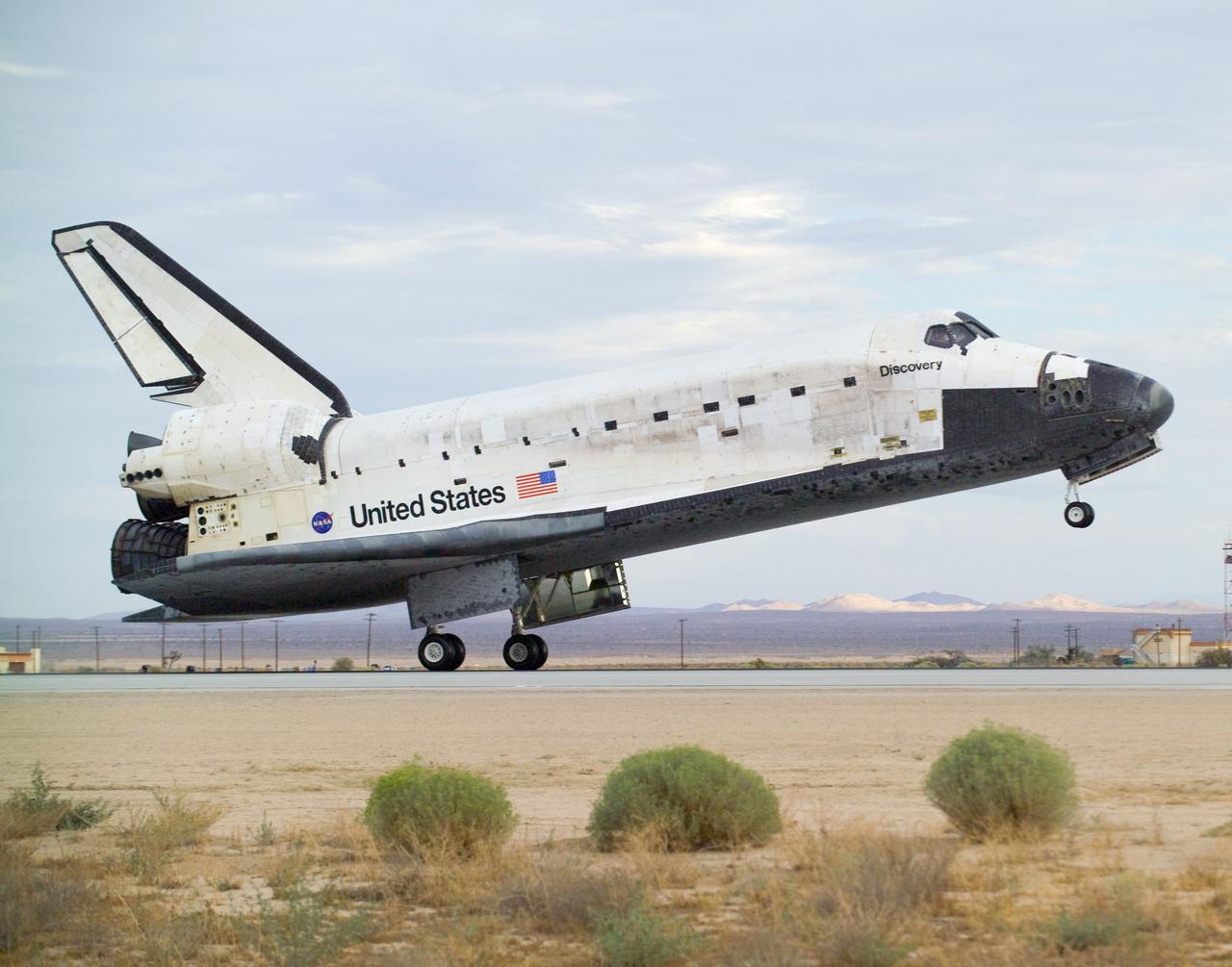
STS128-S-047 (11 Sept. 2009) --- Space Shuttle Discovery?s main landing gear touches down at NASA's Dryden Flight Research Center at Edwards Air Force Base in California, concluding a successful mission to the International Space Station. Onboard are NASA astronauts Rick Sturckow, commander; Kevin Ford, pilot; John ?Danny? Olivas, Patrick Forrester, Jose Hernandez and Tim Kopra, all mission specialists; along with European Space Agency astronaut Christer Fuglesang, mission specialist. Discovery landed at 5:53 p.m. (PDT) on Sept. 11, 2009 to end the STS-128 mission, completing its almost 14-day journey of more than 5.7 million miles in space. The landing was diverted to California due to marginal weather at the Kennedy Space Center. Discovery?s mission featured three spacewalks and the delivery of two refrigerator-sized science racks to the space station. One rack will be used to conduct experiments on materials such as metals, glasses and ceramics. The results from these experiments could lead to the development of better materials on Earth. The other rack will be used for fluid physics research. Understanding how fluids react in microgravity could lead to improved designs for fuel tanks, water systems and other fluid-based systems.
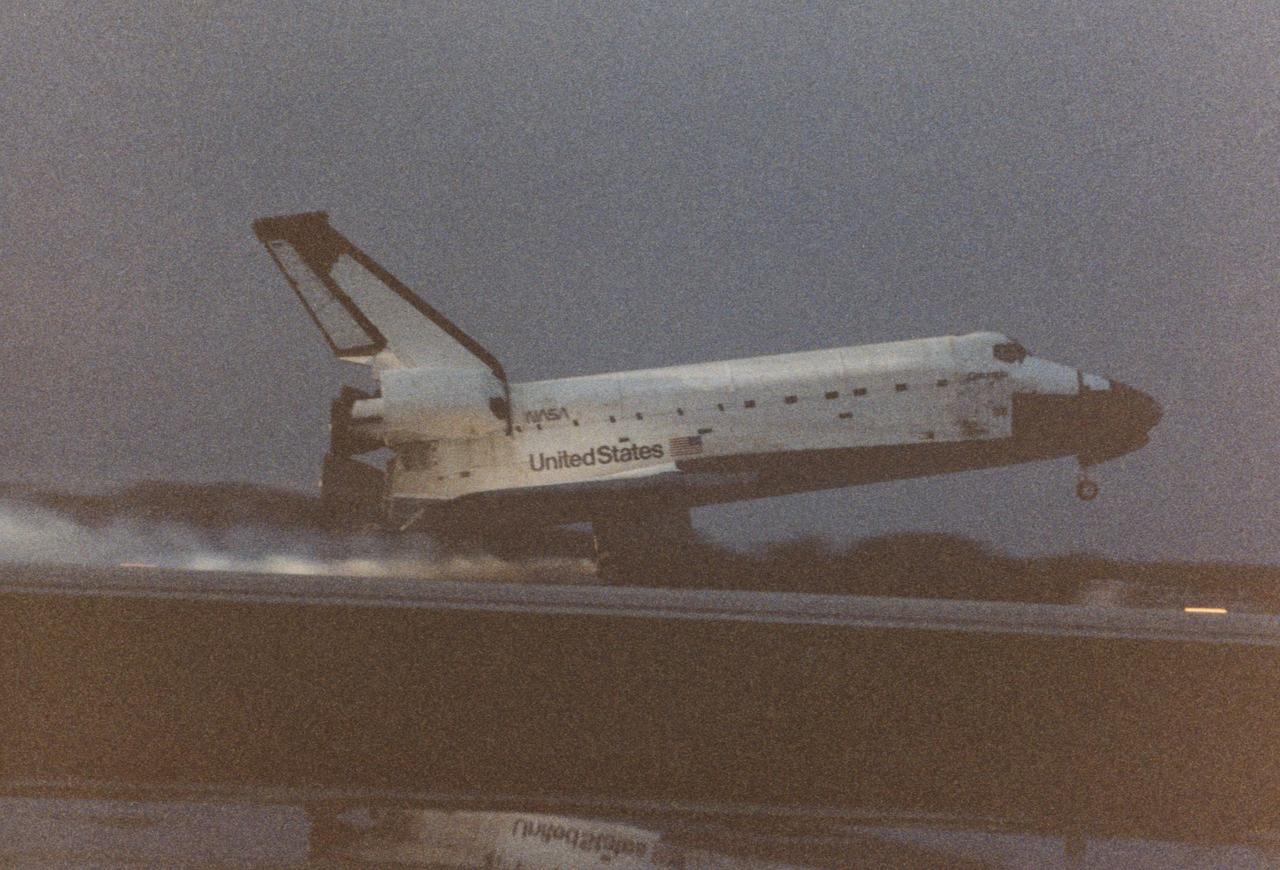
KENNEDY SPACE CENTER, FLA. -- The final Space Shuttle flight of 1996 comes to a successful close as the orbiter Columbia touches down on Runway 33 of KSC’s Shuttle Landing Facility. Main gear touchdown occurred at 6:49:05 a.m. EST, Dec. 7. The mission duration of 17 days, 15 hours and 53 minutes establishes a new record for extended Shuttle flight. The five- member STS-80 crew is led by Commander Kenneth D. Cockrell and Pilot Kent V. Rominger. The three mission specialists on board are Tamara E. Jernigan, Thomas D. Jones and Story Musgrave. At age 61, Musgrave is the oldest person ever to fly in space; he also becomes the first person to fly six times on the Shuttle. The two primary payloads of the 80th Shuttle flight are the Orbiting and Retrievable Far and Extreme Ultraviolet Spectrometer-Shuttle Pallet Satellite II (ORFEUS-SPAS II) and the Wake Shield Facility-3 (WSF-3).