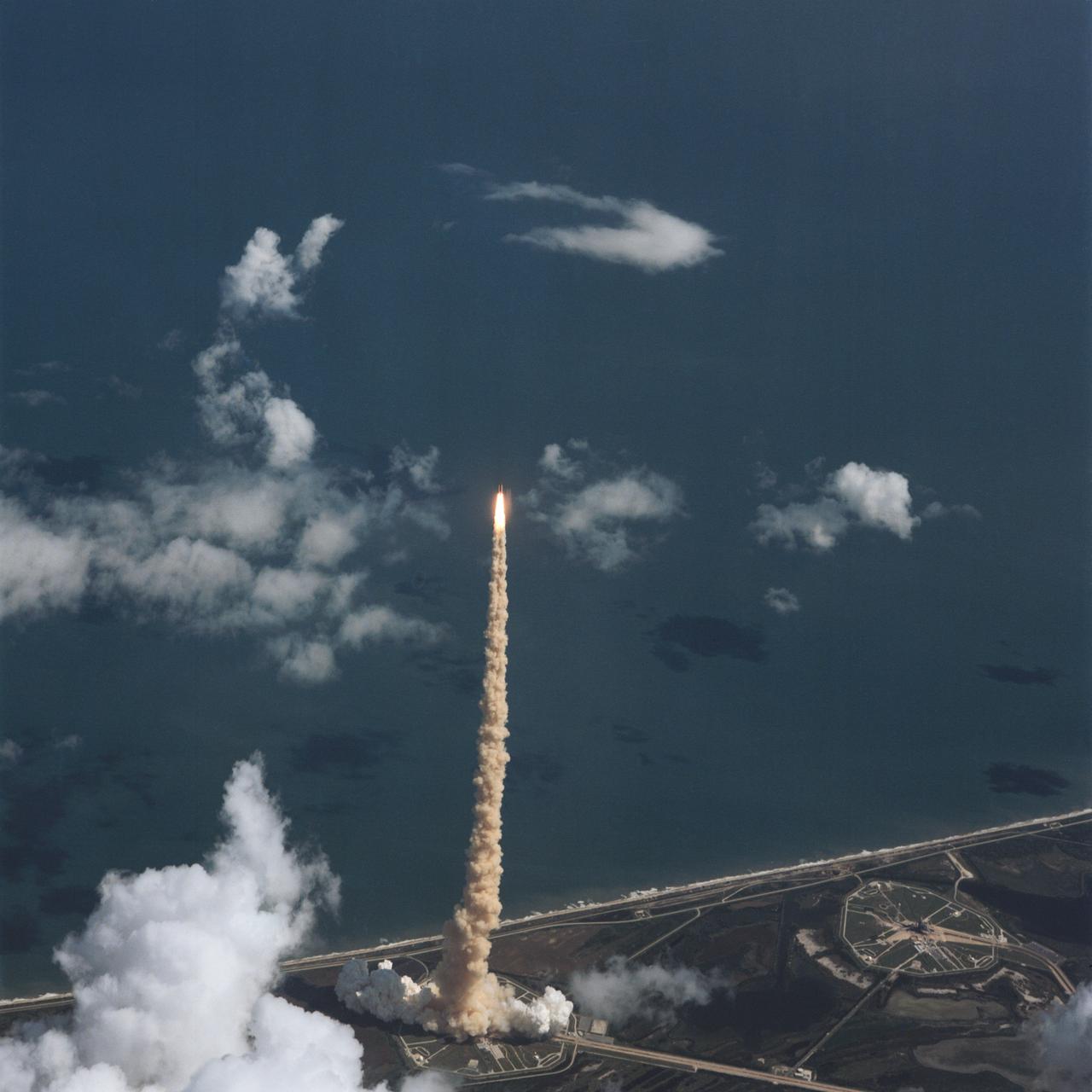
STS-34 Atlantis, Orbiter Vehicle (OV) 104, lifts off from Kennedy Space Center (KSC) Launch Complex (LC) Pad 39B at 12:53:39:983 pm Eastern Daylight Time (EDT). This aerial view shows OV-104, its external tank (ET), and two solid rocket boosters (SRBs) rising high above LC Pad 39B atop a plume of exhaust smoke. Atlantic Ocean is visible in the background. The liftoff marks the beginning of a five-day mission in space.
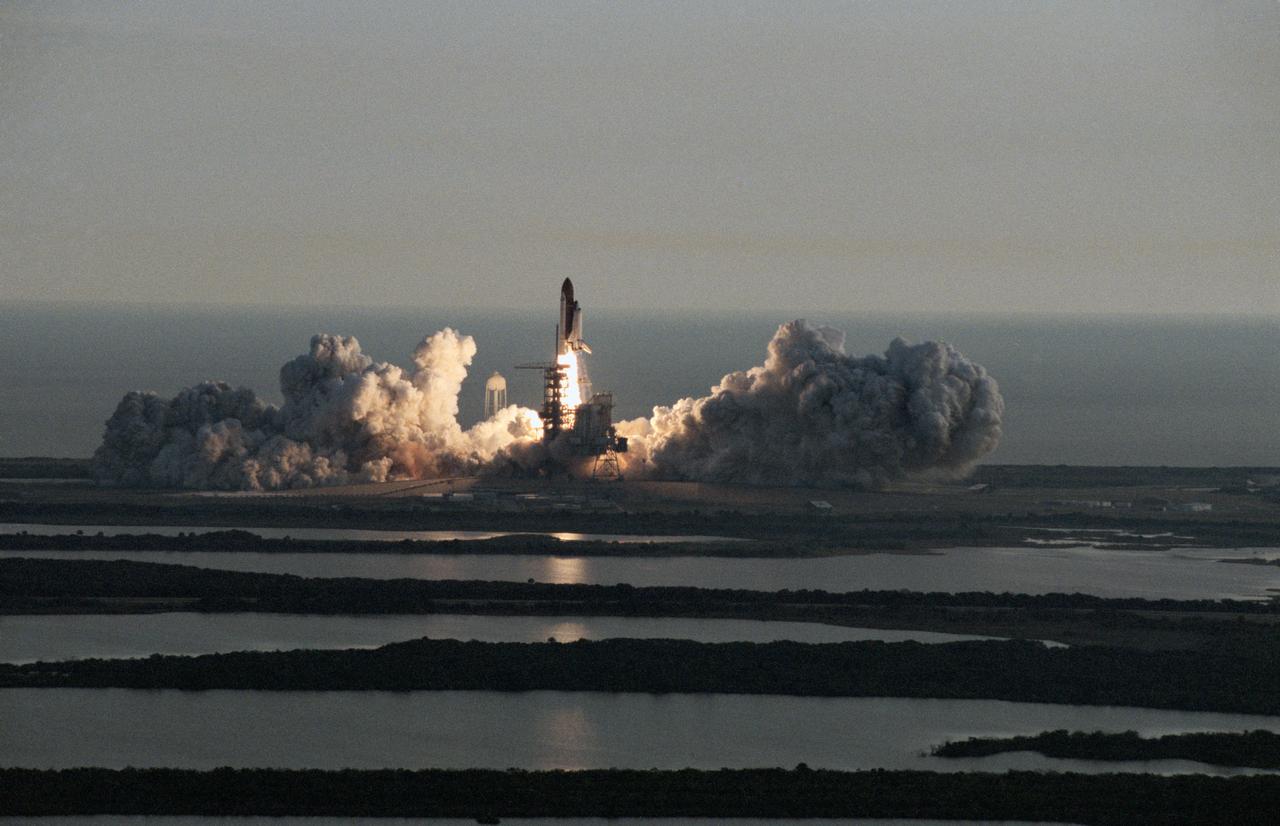
STS053-S-054 (2 Dec 1992) --- The Space Shuttle Discovery, with a crew of five astronauts onboard, launches from Kennedy Space Center?s (KSC) Pad 39A at 8:24:00 a.m. (EST), December 2, 1992. The photograph was taken from the top of the giant Vehicle Assembly Building (VAB). The all-military crew supporting the Department of Defense (DOD) flight included astronauts David M. Walker, Robert D. Cabana, Guion S. Bluford, Jr., James S. Voss and Michael R. U. (Rick) Clifford.
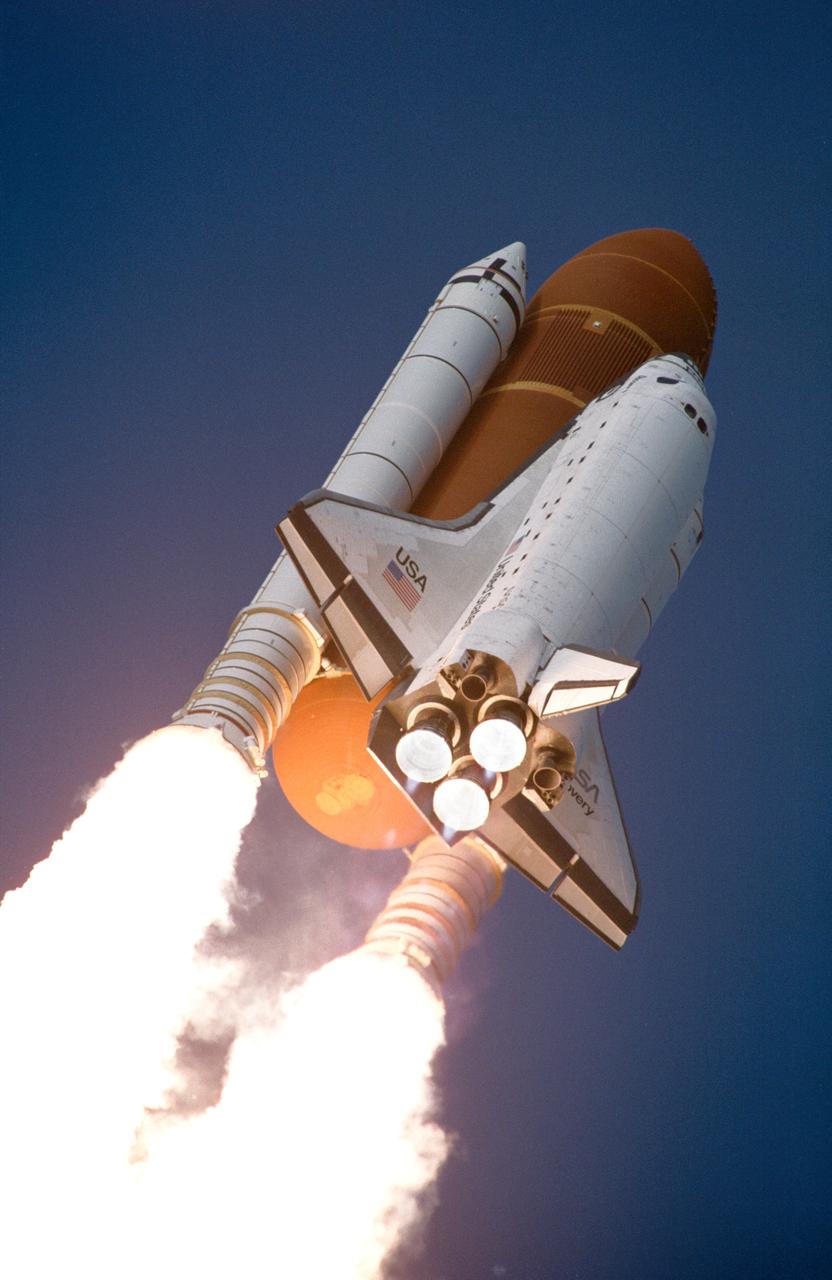
STS053-S-058 (2 Dec. 1992) --- The space shuttle Discovery, with a crew of five astronauts onboard, launches from Kennedy Space Center's (KSC) Pad 39A at 8:24:00 a.m. (EST), Dec. 2, 1992. The all military crew supporting the Department of Defense (DOD) flight included astronauts David M. Walker, Robert D. Cabana, Guion S. Bluford, Jr., James S. Voss and Michael R. U. (Rich) Clifford.
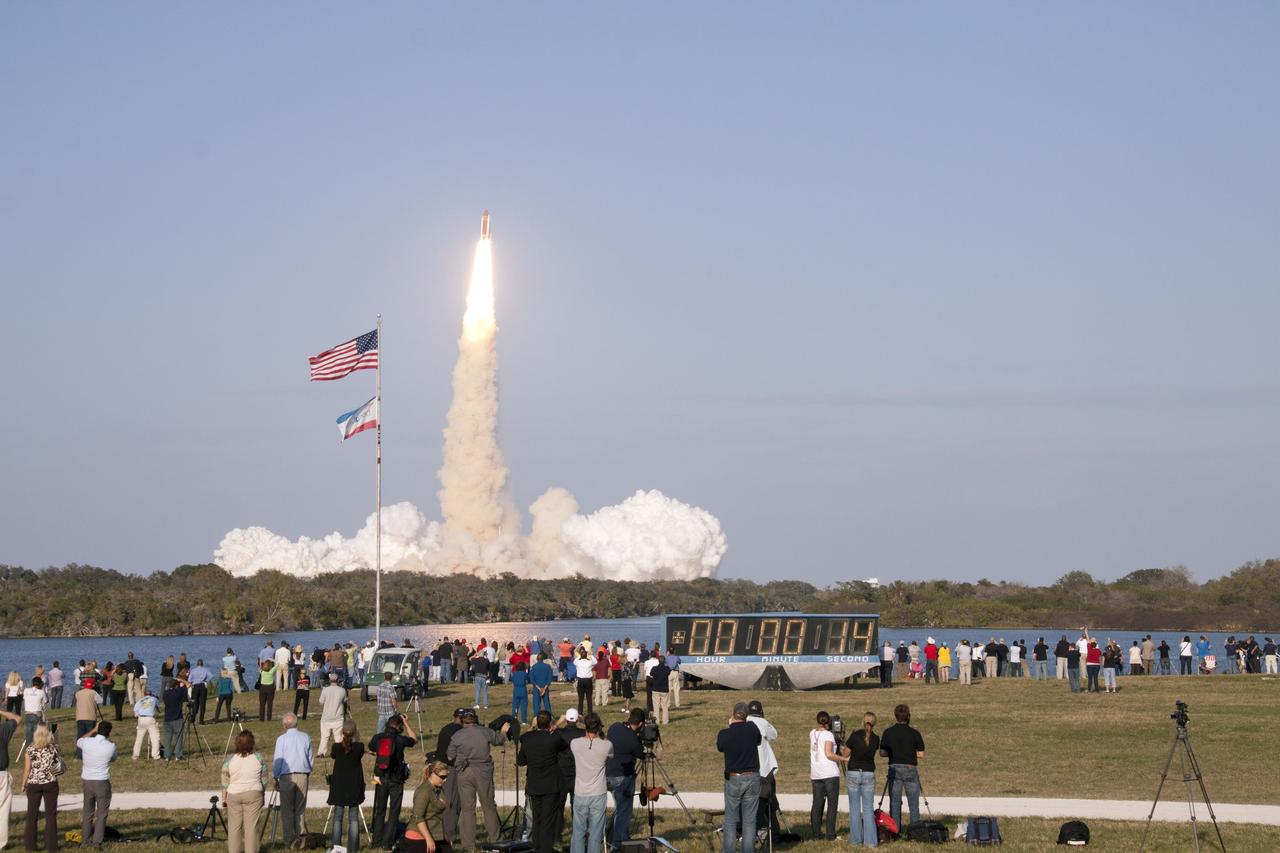
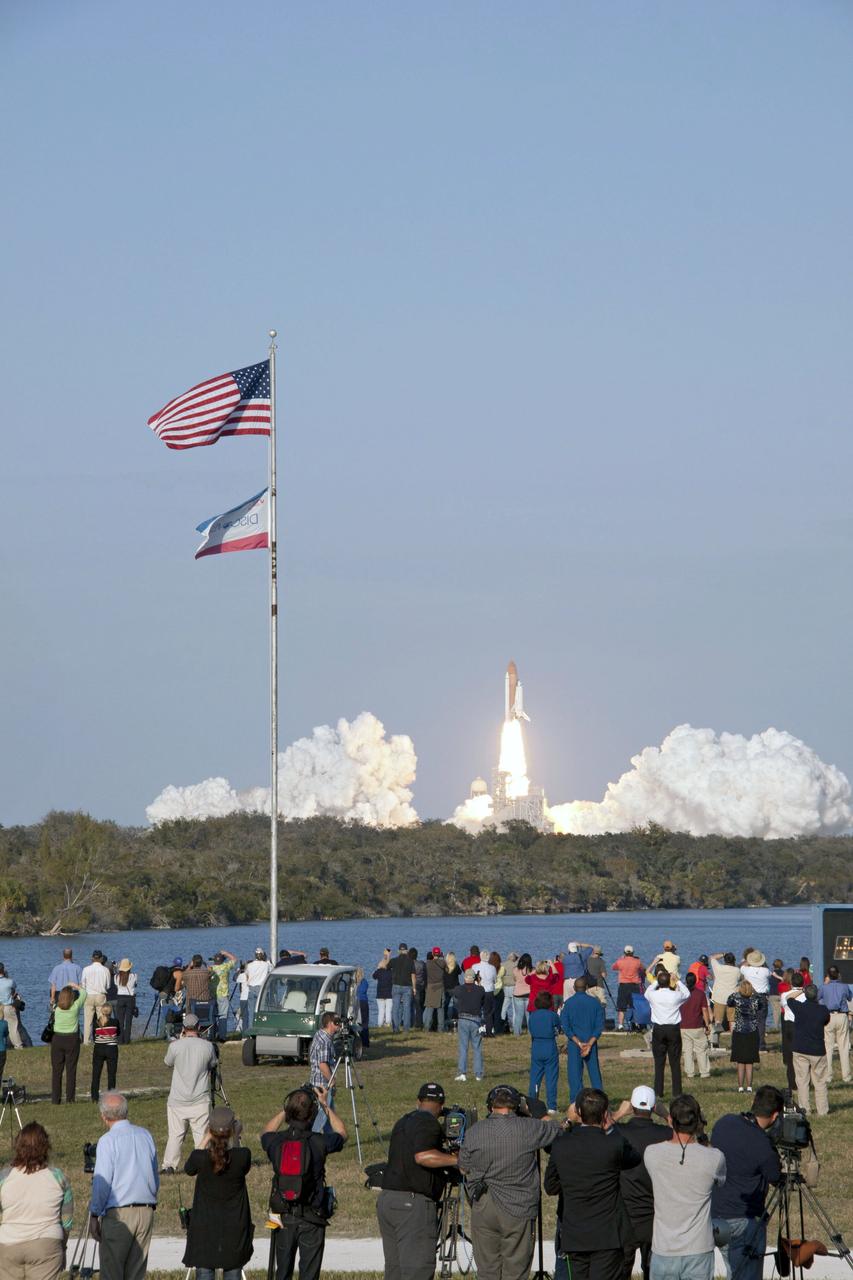
CAPE CANAVERAL, Fla. - Space shuttle Discovery's liftoff from Launch Pad 39A at NASA's Kennedy Space Center in Florida on a picturesque, warm, late February afternoon is witnessed by news media representatives near the countdown clock at the Press Site. Launch of the STS-133 mission was at 4:53 p.m. EST on Feb. 24. Discovery and its six-member crew are on a mission to deliver the Permanent Multipurpose Module, packed with supplies and critical spare parts, as well as Robonaut 2, the dexterous humanoid astronaut helper, to the International Space Station. Discovery is making its 39th mission and is scheduled to be retired following STS-133. This is the 133rd Space Shuttle Program mission and the 35th shuttle voyage to the space station. For more information on the STS-133 mission, visit www.nasa.gov/mission_pages/shuttle/shuttlemissions/sts133/. Photo credit: NASA/Troy Cryder
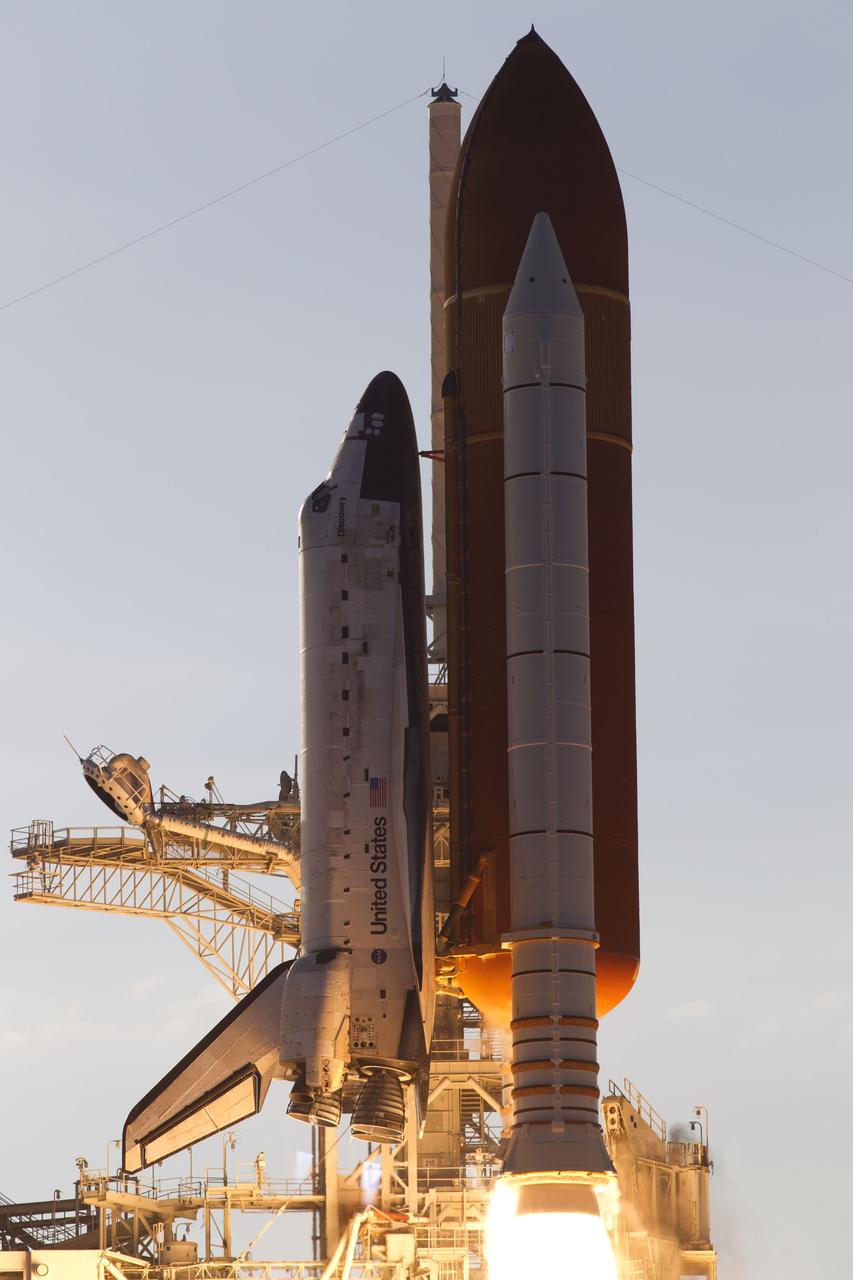
CAPE CANAVERAL, Fla. -- Space shuttle Discovery ignites for liftoff from Launch Pad 39A at NASA's Kennedy Space Center in Florida, beginning its final flight, the STS-133 mission, to the International Space Station. Launch was at 4:53 p.m. EST. Discovery and its six-member crew will deliver the Permanent Multipurpose Module, packed with supplies and critical spare parts, as well as Robonaut 2, the dexterous humanoid astronaut helper, to the orbiting outpost. Discovery is flying on its 39th mission and is scheduled to be retired following STS-133. This is the 133rd Space Shuttle Program mission and the 35th shuttle voyage to the space station. For more information on the STS-133 mission, visit www.nasa.gov/mission_pages/shuttle/shuttlemissions/sts133/. Photo credit: NASA/Rusty Backer and Michael Gayle
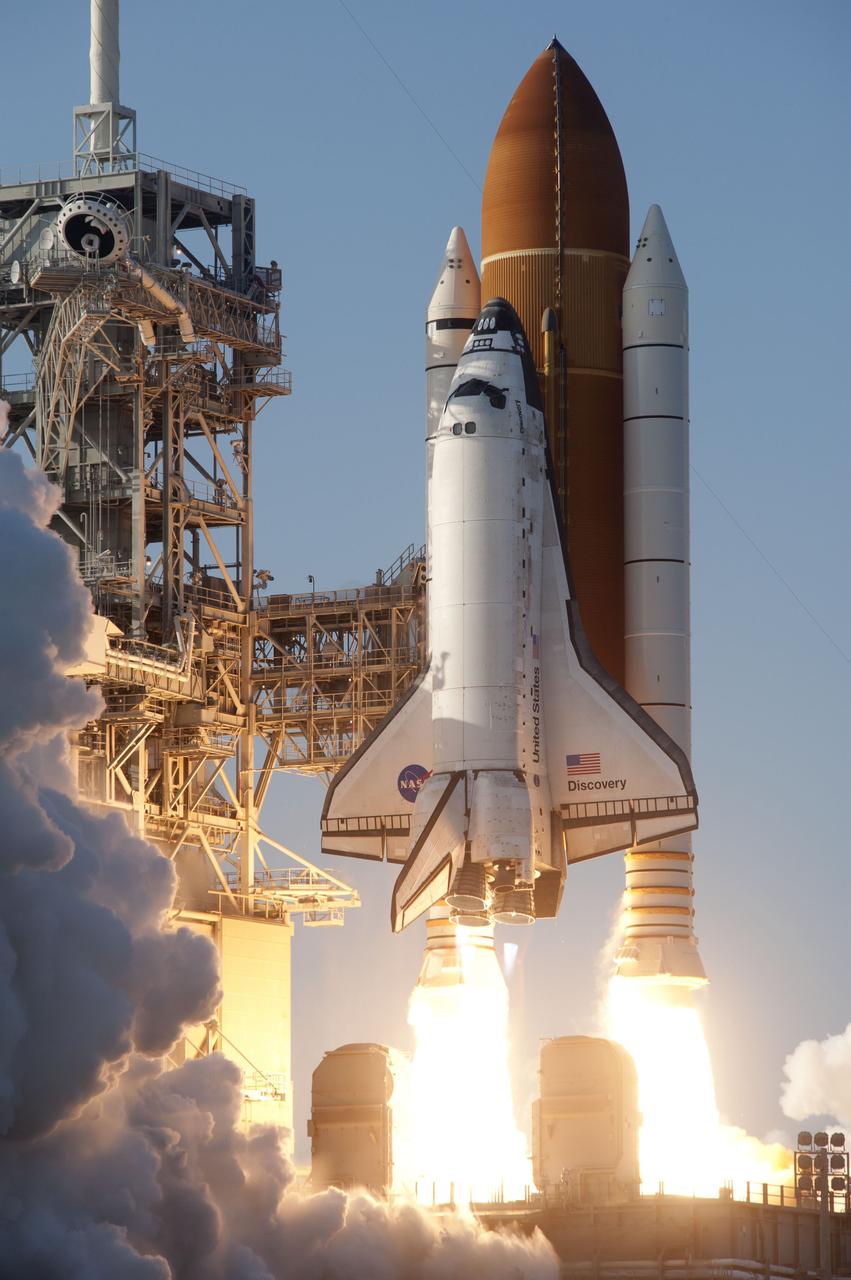
CAPE CANAVERAL, Fla. -- Space shuttle Discovery ignites for liftoff from Launch Pad 39A at NASA's Kennedy Space Center in Florida, beginning its final flight, the STS-133 mission. Launch to the International Space Station was at 4:53 p.m. EST. Discovery and its six-member crew will deliver the Permanent Multipurpose Module, packed with supplies and critical spare parts, as well as Robonaut 2, the dexterous humanoid astronaut helper, to the orbiting outpost. Discovery is flying on its 39th mission and is scheduled to be retired following STS-133. This is the 133rd Space Shuttle Program mission and the 35th shuttle voyage to the space station. For more information on the STS-133 mission, visit www.nasa.gov/mission_pages/shuttle/shuttlemissions/sts133/. Photo credit: NASA/Sandra Joseph and Kevin O'Connell
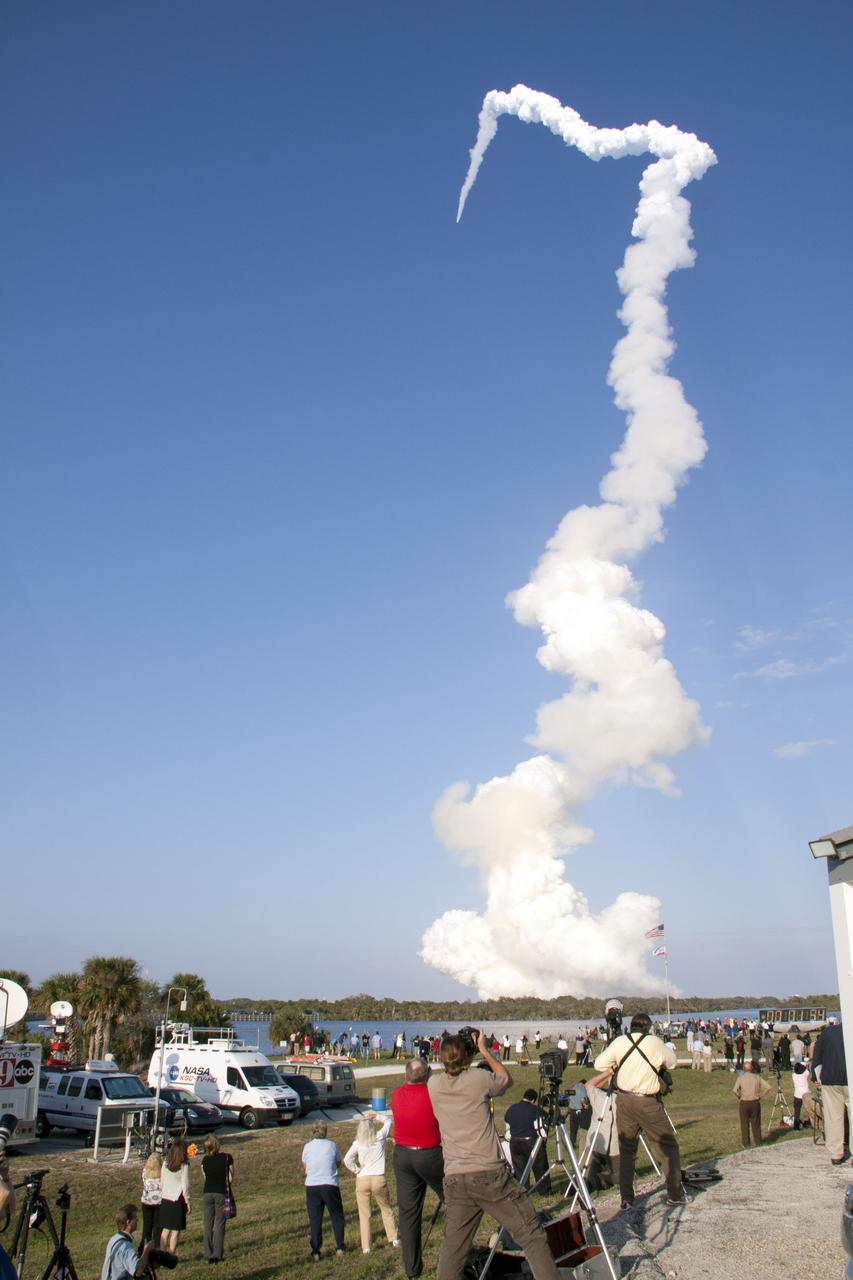
CAPE CANAVERAL, Fla. - Space shuttle Discovery's liftoff from Launch Pad 39A at NASA's Kennedy Space Center in Florida on a picturesque, warm, late February afternoon is witnessed by news media representatives near the countdown clock at the Press Site. Launch of the STS-133 mission was at 4:53 p.m. EST on Feb. 24. Discovery and its six-member crew are on a mission to deliver the Permanent Multipurpose Module, packed with supplies and critical spare parts, as well as Robonaut 2, the dexterous humanoid astronaut helper, to the International Space Station. Discovery is making its 39th mission and is scheduled to be retired following STS-133. This is the 133rd Space Shuttle Program mission and the 35th shuttle voyage to the space station. For more information on the STS-133 mission, visit www.nasa.gov/mission_pages/shuttle/shuttlemissions/sts133/. Photo credit: NASA/Troy Cryder
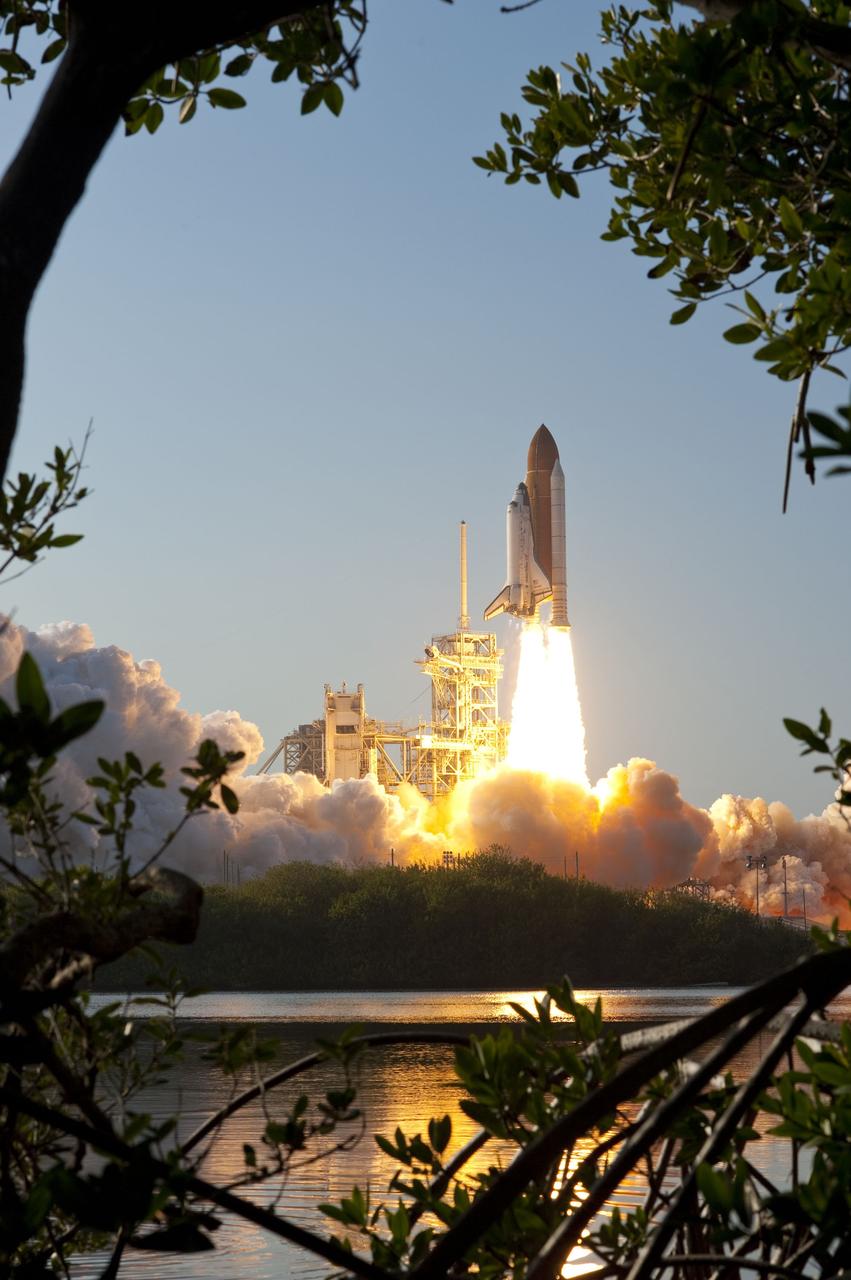
CAPE CANAVERAL, Fla. -- In a swirl of billowing smoke and steam, Space shuttle Discovery's liftoff is reflected in the water as it roars off Launch Pad 39A at NASA's Kennedy Space Center in Florida beginning its final flight to the International Space Station on the STS-133 mission. Launch was at 4:53 p.m. EST. Discovery and its six-member crew will deliver the Permanent Multipurpose Module, packed with supplies and critical spare parts, as well as Robonaut 2, the dexterous humanoid astronaut helper, to the orbiting outpost. Discovery is flying on its 39th mission and is scheduled to be retired following STS-133. This is the 133rd Space Shuttle Program mission and the 35th shuttle voyage to the space station. For more information on the STS-133 mission, visit www.nasa.gov/mission_pages/shuttle/shuttlemissions/sts133/. Photo credit: NASA/Sandra Joseph and Kevin O'Connell
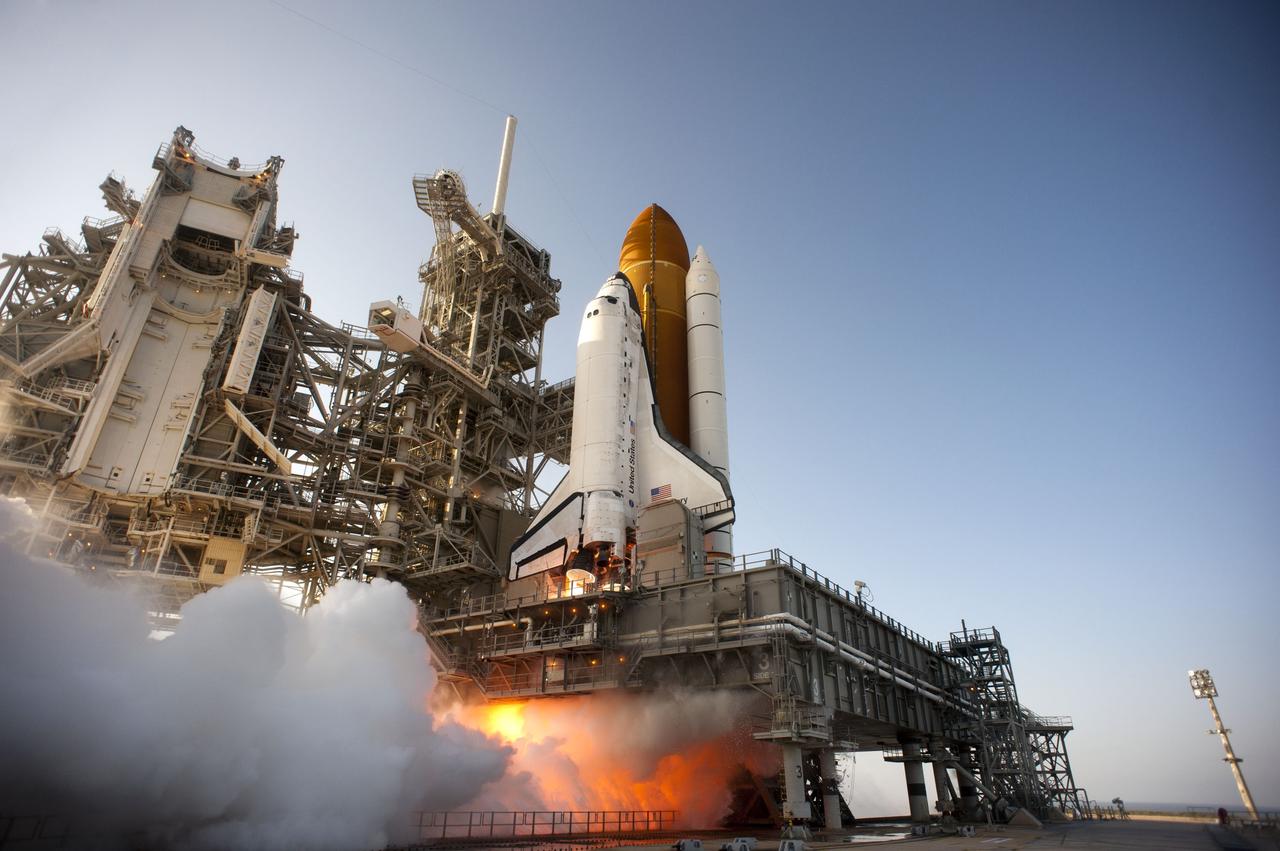
CAPE CANAVERAL, Fla. -- Space shuttle Discovery ignites for liftoff on Launch Pad 39A at NASA's Kennedy Space Center in Florida beginning its final flight, the STS-133 mission, to the International Space Station. Launch was at 4:53 p.m. EST. Discovery and its six-member crew will deliver the Permanent Multipurpose Module, packed with supplies and critical spare parts, as well as Robonaut 2, the dexterous humanoid astronaut helper, to the orbiting outpost. Discovery is flying on its 39th mission and is scheduled to be retired following STS-133. This is the 133rd Space Shuttle Program mission and the 35th shuttle voyage to the space station. For more information on the STS-133 mission, visit www.nasa.gov/mission_pages/shuttle/shuttlemissions/sts133/. Photo credit: NASA/Tony Gray and Tom Farrar
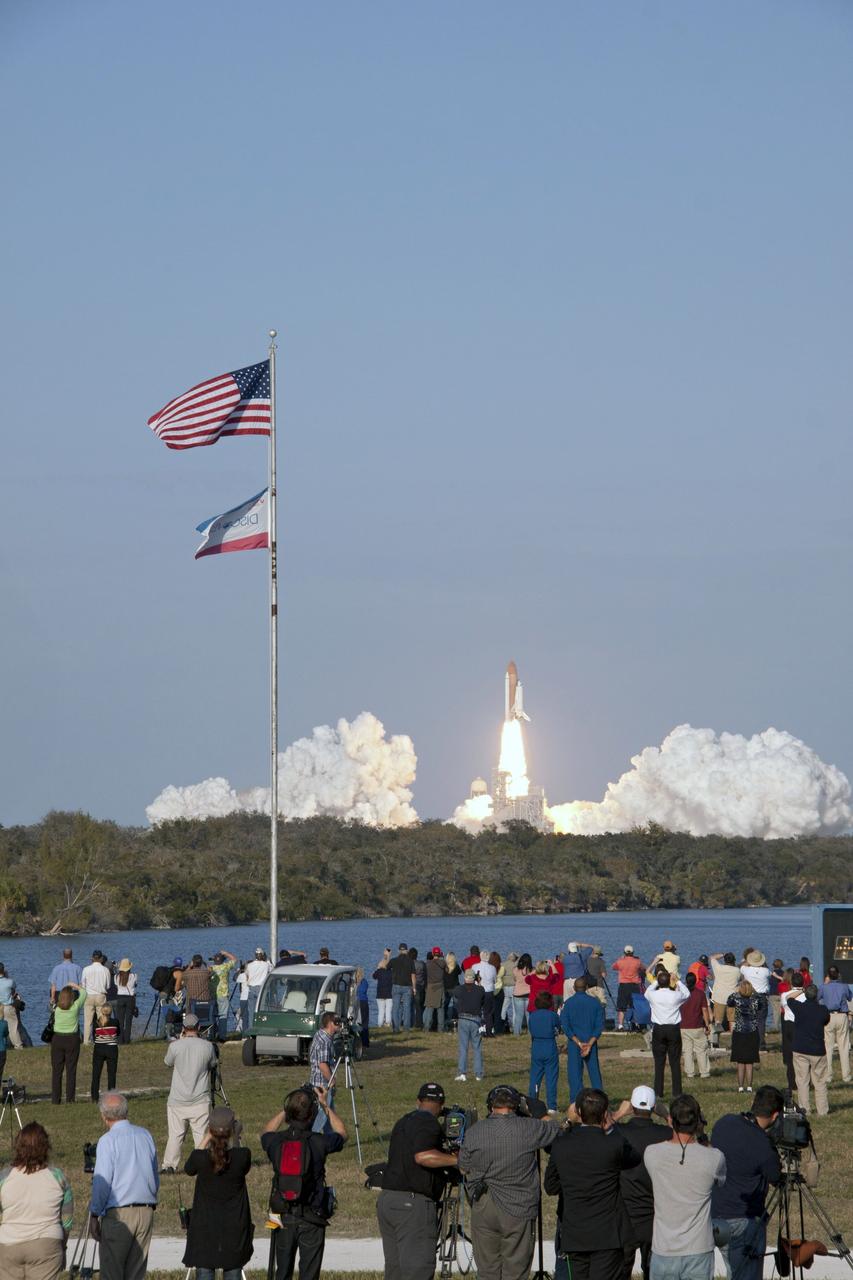
CAPE CANAVERAL, Fla. - Space shuttle Discovery's liftoff from Launch Pad 39A at NASA's Kennedy Space Center in Florida on a picturesque, warm, late February afternoon is witnessed by news media representatives near the countdown clock at the Press Site. Launch of the STS-133 mission was at 4:53 p.m. EST on Feb. 24. Discovery and its six-member crew are on a mission to deliver the Permanent Multipurpose Module, packed with supplies and critical spare parts, as well as Robonaut 2, the dexterous humanoid astronaut helper, to the International Space Station. Discovery is making its 39th mission and is scheduled to be retired following STS-133. This is the 133rd Space Shuttle Program mission and the 35th shuttle voyage to the space station. For more information on the STS-133 mission, visit www.nasa.gov/mission_pages/shuttle/shuttlemissions/sts133/. Photo credit: NASA/Troy Cryder
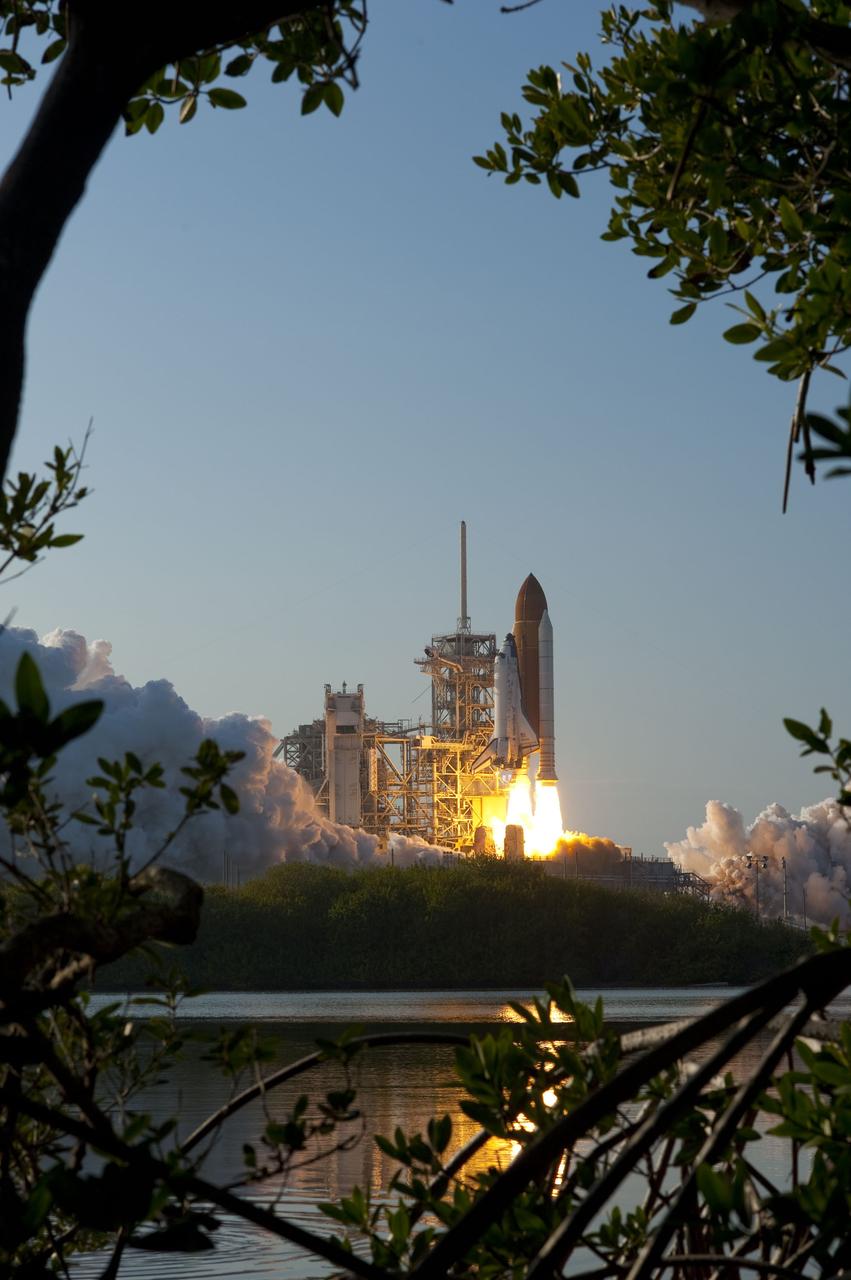
CAPE CANAVERAL, Fla. -- Space shuttle Discovery ignites for liftoff off Launch Pad 39A at NASA's Kennedy Space Center in Florida beginning its final flight to the International Space Station on the STS-133 mission. Launch was at 4:53 p.m. EST. Discovery and its six-member crew will deliver the Permanent Multipurpose Module, packed with supplies and critical spare parts, as well as Robonaut 2, the dexterous humanoid astronaut helper, to the orbiting outpost. Discovery is flying on its 39th mission and is scheduled to be retired following STS-133. This is the 133rd Space Shuttle Program mission and the 35th shuttle voyage to the space station. For more information on the STS-133 mission, visit www.nasa.gov/mission_pages/shuttle/shuttlemissions/sts133/. Photo credit: NASA/Sandra Joseph and Kevin O'Connell
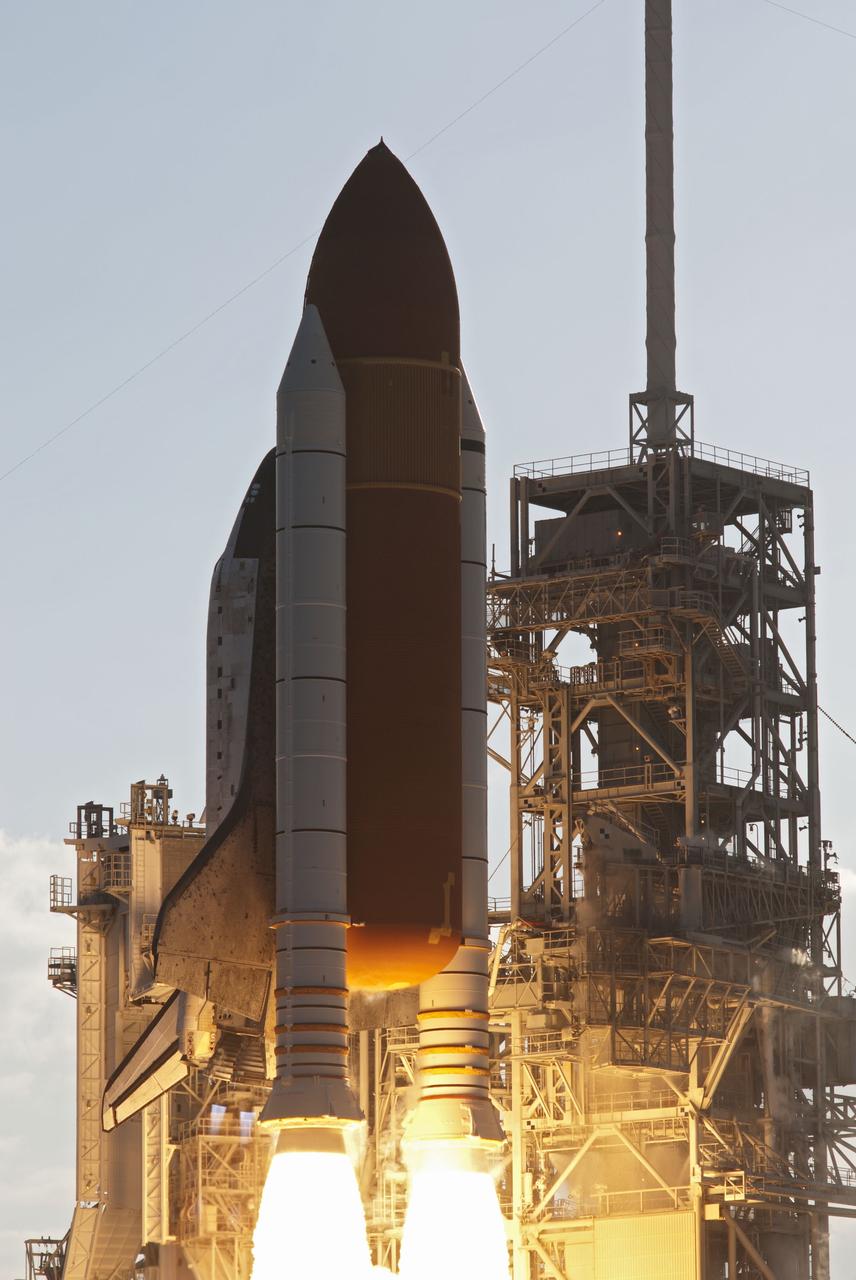
CAPE CANAVERAL, Fla. -- On twin columns of fire, space shuttle Discovery's solid rocket boosters ignite for liftoff on Launch Pad 39A at NASA's Kennedy Space Center in Florida. Discovery's final launch, the STS-133 mission, to the International Space was at 4:53 p.m. EST. Discovery and its six-member crew will deliver the Permanent Multipurpose Module, packed with supplies and critical spare parts, as well as Robonaut 2, the dexterous humanoid astronaut helper, to the orbiting outpost. Discovery is flying on its 39th mission and is scheduled to be retired following STS-133. This is the 133rd Space Shuttle Program mission and the 35th shuttle voyage to the space station. For more information on the STS-133 mission, visit www.nasa.gov/mission_pages/shuttle/shuttlemissions/sts133/. Photo credit: NASA/Rusty Backer and Michael Gayle
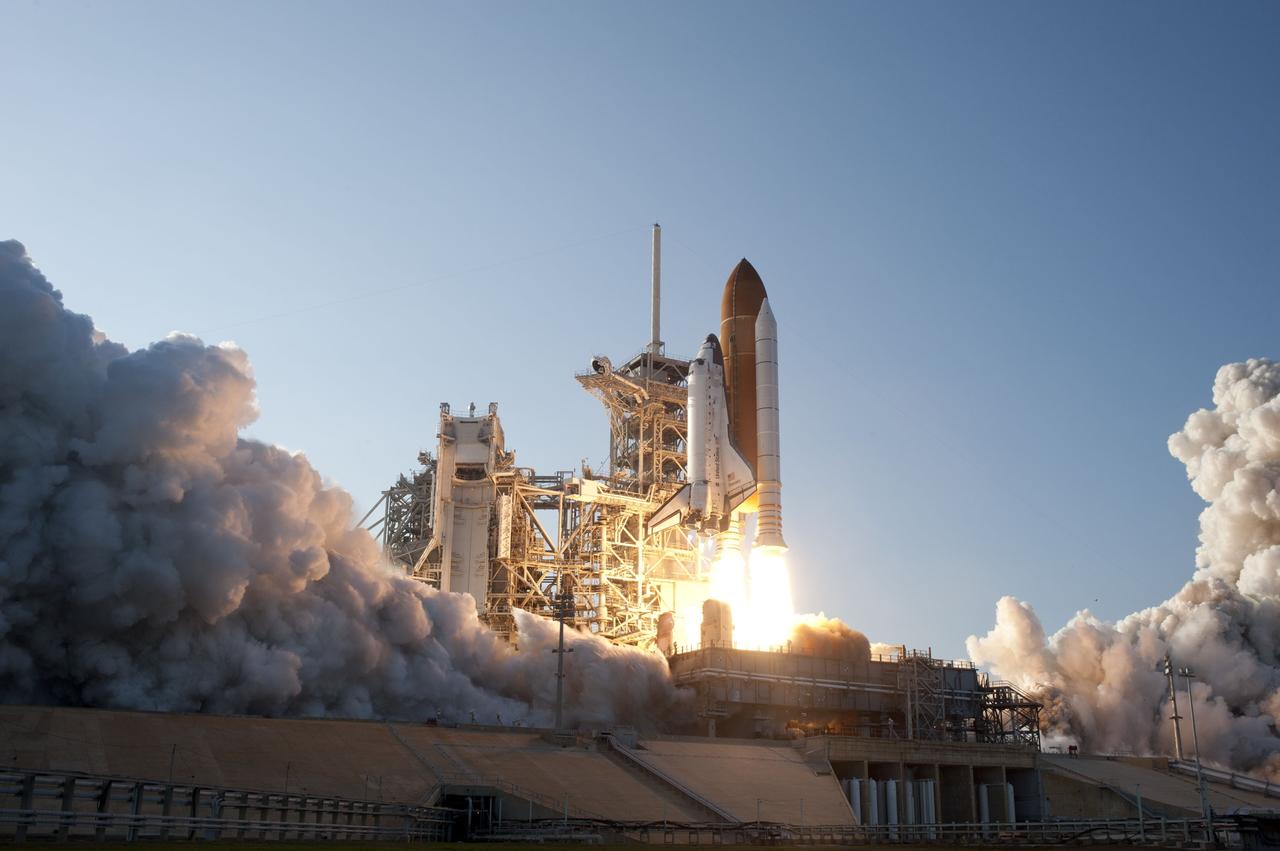
CAPE CANAVERAL, Fla. -- Space shuttle Discovery ignites for liftoff off from Launch Pad 39A at NASA's Kennedy Space Center in Florida beginning its final flight, the STS-133 mission. Launch to the International Space Station was at 4:53 p.m. EST. Discovery and its six-member crew will deliver the Permanent Multipurpose Module, packed with supplies and critical spare parts, as well as Robonaut 2, the dexterous humanoid astronaut helper, to the orbiting outpost. Discovery is flying on its 39th mission and is scheduled to be retired following STS-133. This is the 133rd Space Shuttle Program mission and the 35th shuttle voyage to the space station. For more information on the STS-133 mission, visit www.nasa.gov/mission_pages/shuttle/shuttlemissions/sts133/. Photo credit: NASA/Sandra Joseph and Kevin O'Connell
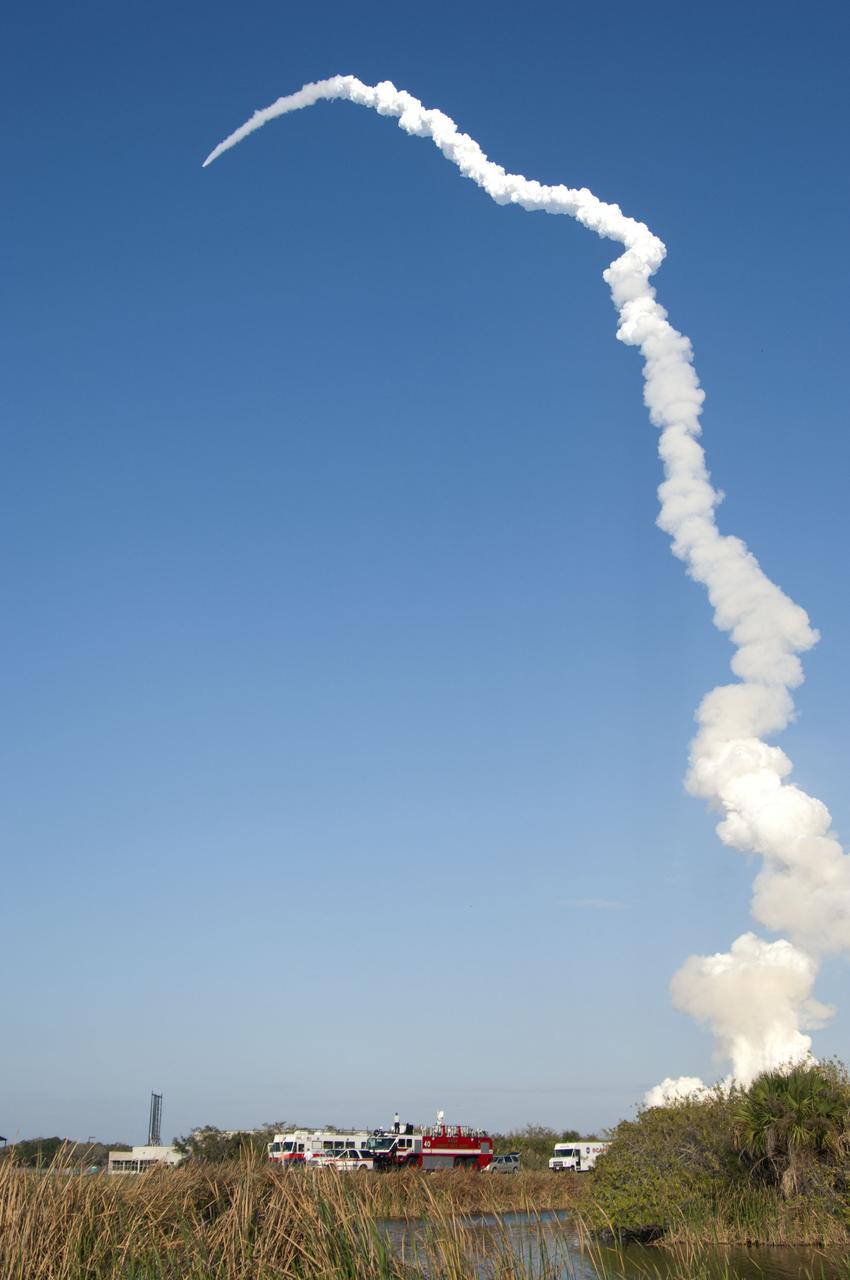
CAPE CANAVERAL, Fla. -- Space shuttle Discovery soars toward space after liftoff from Launch Pad 39A at NASA's Kennedy Space Center in Florida beginning its final flight, the STS-133 mission, to the International Space Station. Launch was at 4:53 p.m. EST. Discovery and its six-member crew will deliver the Permanent Multipurpose Module, packed with supplies and critical spare parts, as well as Robonaut 2, the dexterous humanoid astronaut helper, to the orbiting outpost. Discovery is flying on its 39th mission and is scheduled to be retired following STS-133. This is the 133rd Space Shuttle Program mission and the 35th shuttle voyage to the space station. For more information on the STS-133 mission, visit www.nasa.gov/mission_pages/shuttle/shuttlemissions/sts133/. Photo credit: NASA/Linda Perry
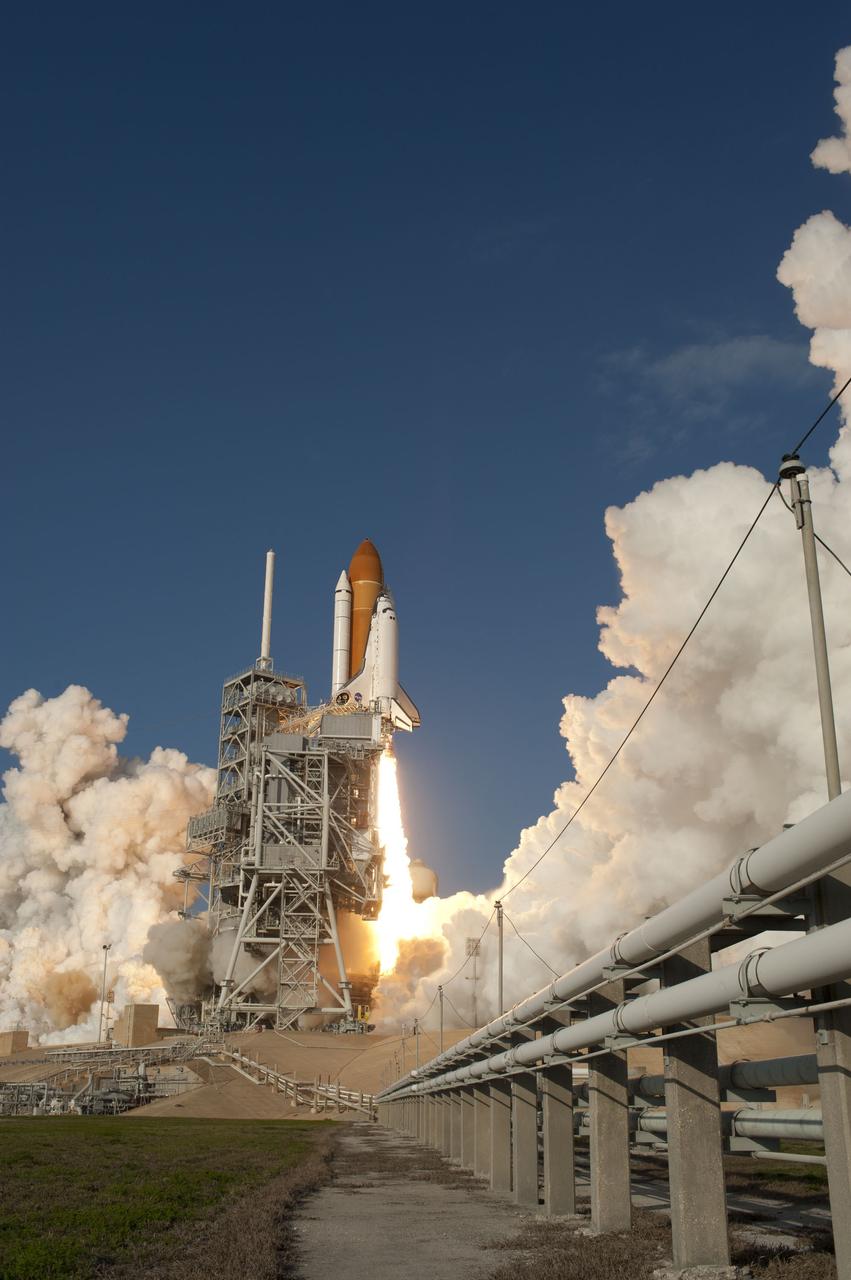
CAPE CANAVERAL, Fla. -- Space shuttle Discovery ignites for liftoff from Launch Pad 39A at NASA's Kennedy Space Center in Florida, beginning its final flight, the STS-133 mission. Launch to the International Space Station was at 4:53 p.m. EST. Discovery and its six-member crew will deliver the Permanent Multipurpose Module, packed with supplies and critical spare parts, as well as Robonaut 2, the dexterous humanoid astronaut helper, to the orbiting outpost. Discovery is flying on its 39th mission and is scheduled to be retired following STS-133. This is the 133rd Space Shuttle Program mission and the 35th shuttle voyage to the space station. For more information on the STS-133 mission, visit www.nasa.gov/mission_pages/shuttle/shuttlemissions/sts133/. Photo credit: NASA/Sandra Joseph and Kevin O'Connell
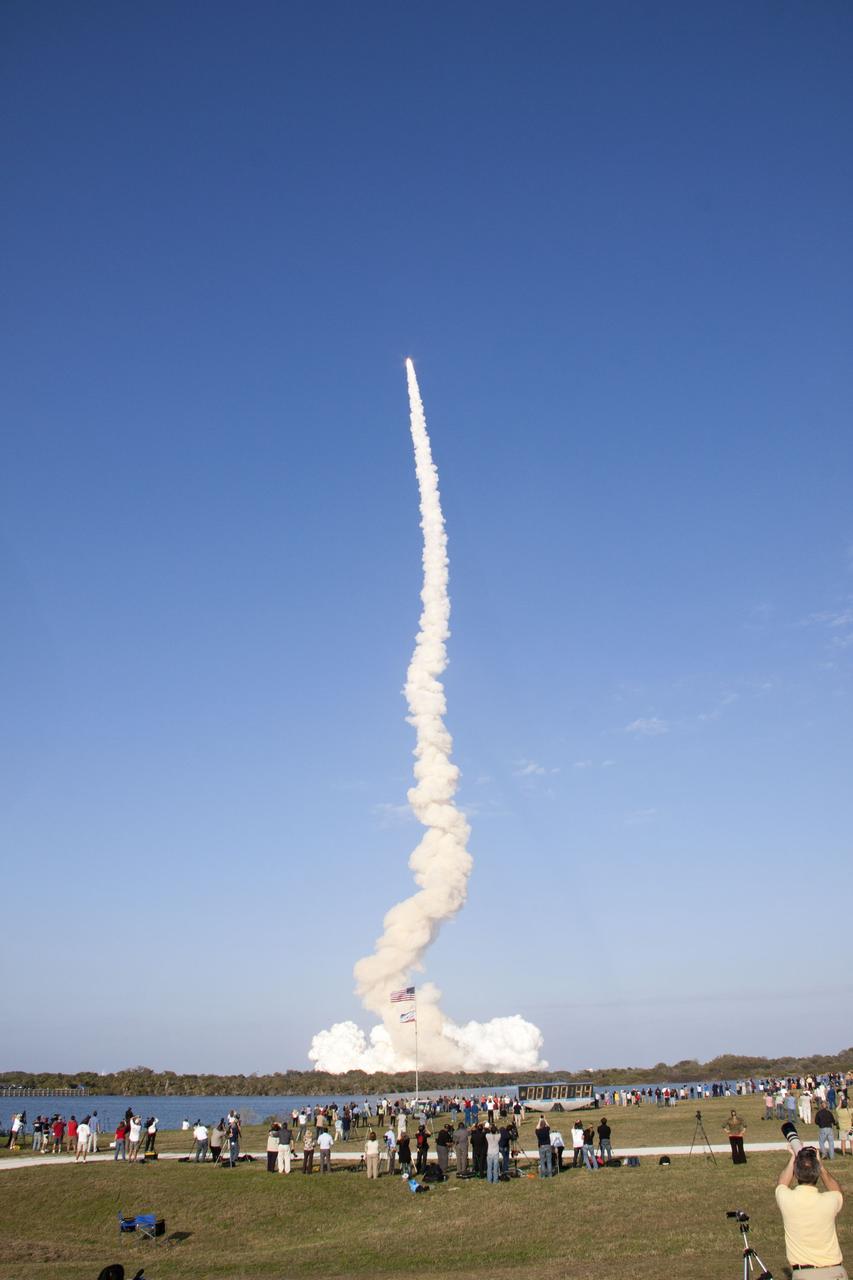
CAPE CANAVERAL, Fla. - Space shuttle Discovery's liftoff from Launch Pad 39A at NASA's Kennedy Space Center in Florida on a picturesque, warm, late February afternoon is witnessed by news media representatives near the countdown clock at the Press Site. Launch of the STS-133 mission was at 4:53 p.m. EST on Feb. 24. Discovery and its six-member crew are on a mission to deliver the Permanent Multipurpose Module, packed with supplies and critical spare parts, as well as Robonaut 2, the dexterous humanoid astronaut helper, to the International Space Station. Discovery is making its 39th mission and is scheduled to be retired following STS-133. This is the 133rd Space Shuttle Program mission and the 35th shuttle voyage to the space station. For more information on the STS-133 mission, visit www.nasa.gov/mission_pages/shuttle/shuttlemissions/sts133/. Photo credit: NASA/Troy Cryder
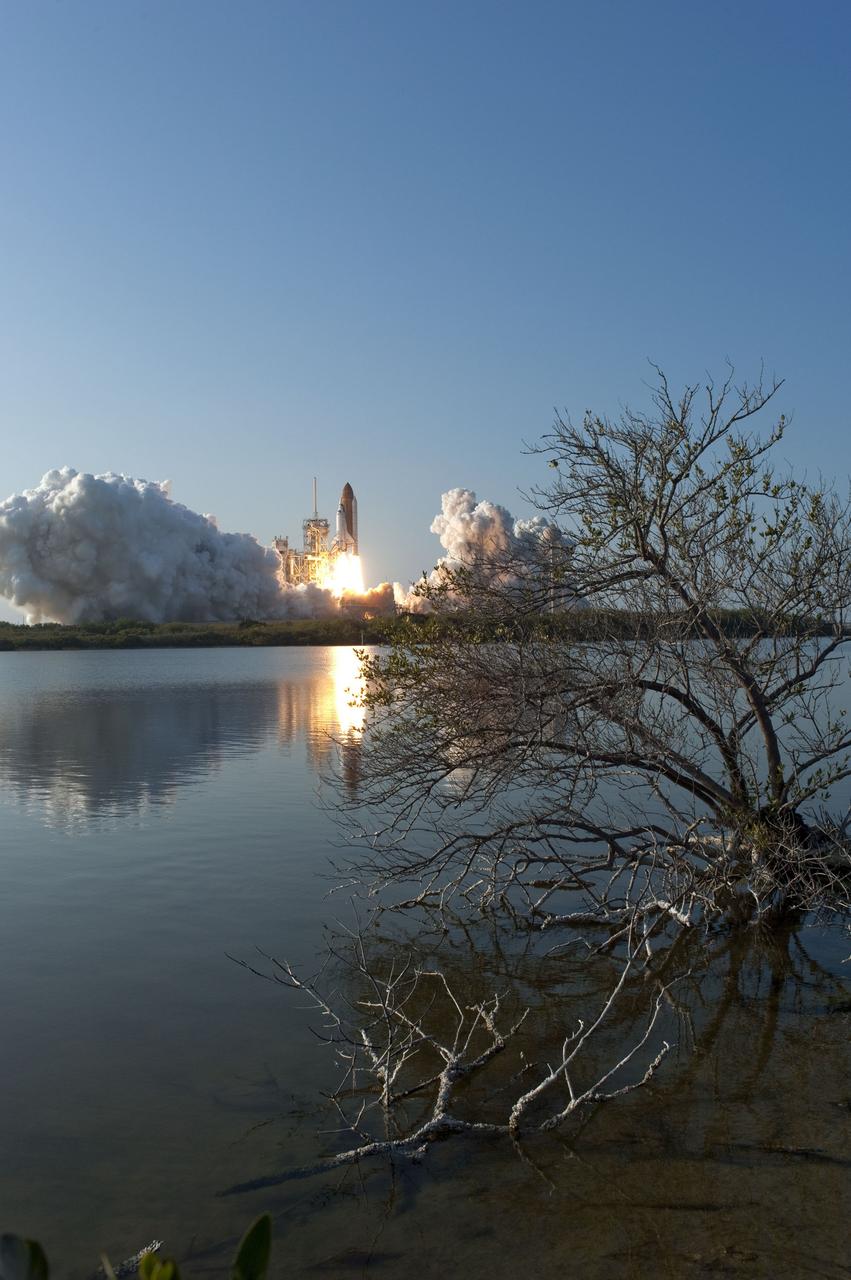
CAPE CANAVERAL, Fla. -- Space shuttle Discovery's liftoff is reflected in the water as it roars off Launch Pad 39A in a swirl of billowing smoke and steam at NASA's Kennedy Space Center in Florida to begin its final flight to the International Space Station on the STS-133 mission. Launch was at 4:53 p.m. EST. Discovery and its six-member crew will deliver the Permanent Multipurpose Module, packed with supplies and critical spare parts, as well as Robonaut 2, the dexterous humanoid astronaut helper, to the orbiting outpost. Discovery is flying on its 39th mission and is scheduled to be retired following STS-133. This is the 133rd Space Shuttle Program mission and the 35th shuttle voyage to the space station. For more information on the STS-133 mission, visit www.nasa.gov/mission_pages/shuttle/shuttlemissions/sts133/. Photo credit: NASA/Sandra Joseph and Kevin O'Connell
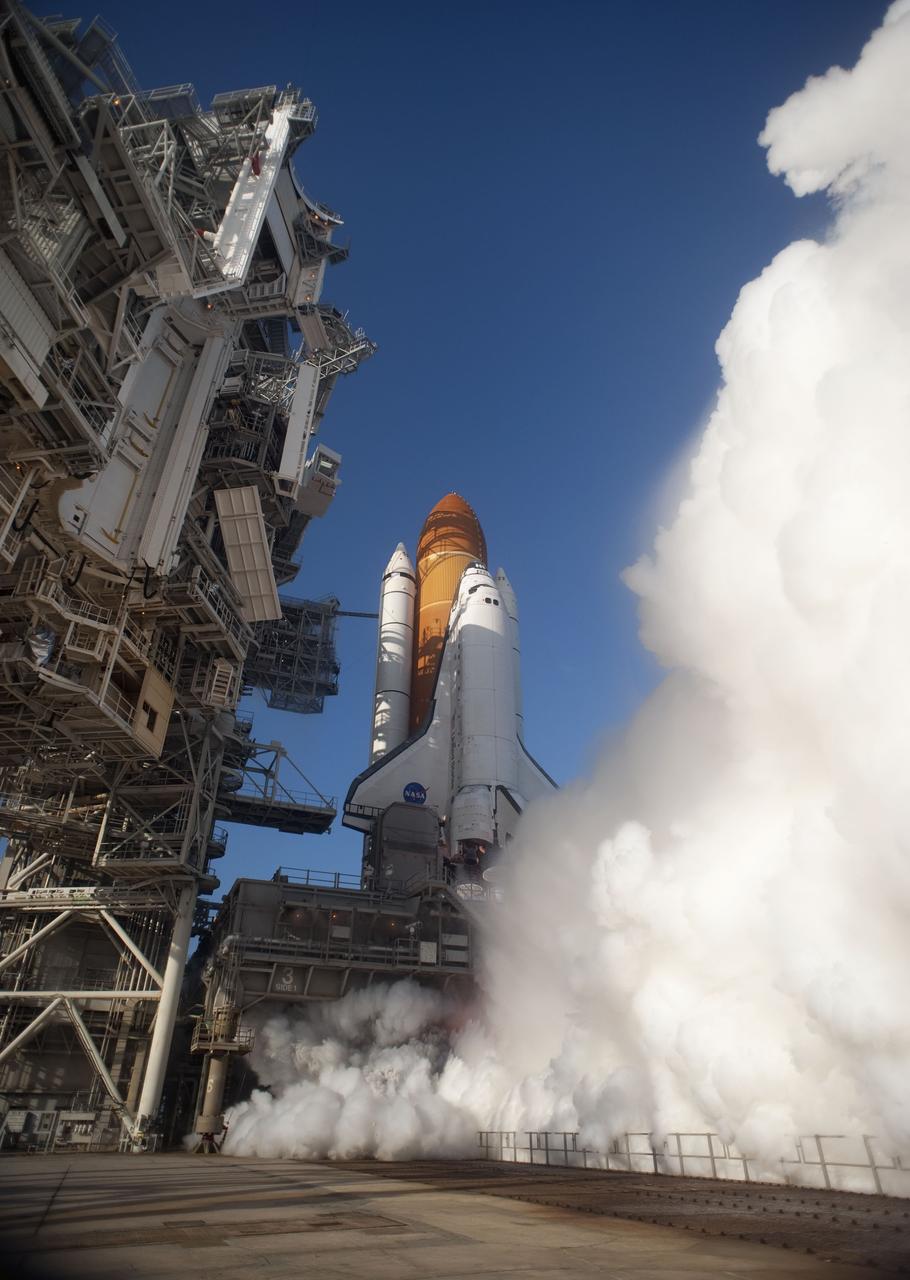
CAPE CANAVERAL, Fla. -- In a swirl of billowing steam, space shuttle Discovery ignites for liftoff on Launch Pad 39A at NASA's Kennedy Space Center in Florida beginning its final flight, the STS-133 mission, to the International Space Station. Launch was at 4:53 p.m. EST. Discovery and its six-member crew will deliver the Permanent Multipurpose Module, packed with supplies and critical spare parts, as well as Robonaut 2, the dexterous humanoid astronaut helper, to the orbiting outpost. Discovery is flying on its 39th mission and is scheduled to be retired following STS-133. This is the 133rd Space Shuttle Program mission and the 35th shuttle voyage to the space station. For more information on the STS-133 mission, visit www.nasa.gov/mission_pages/shuttle/shuttlemissions/sts133/. Photo credit: NASA/Tony Gray and Tom Farrar
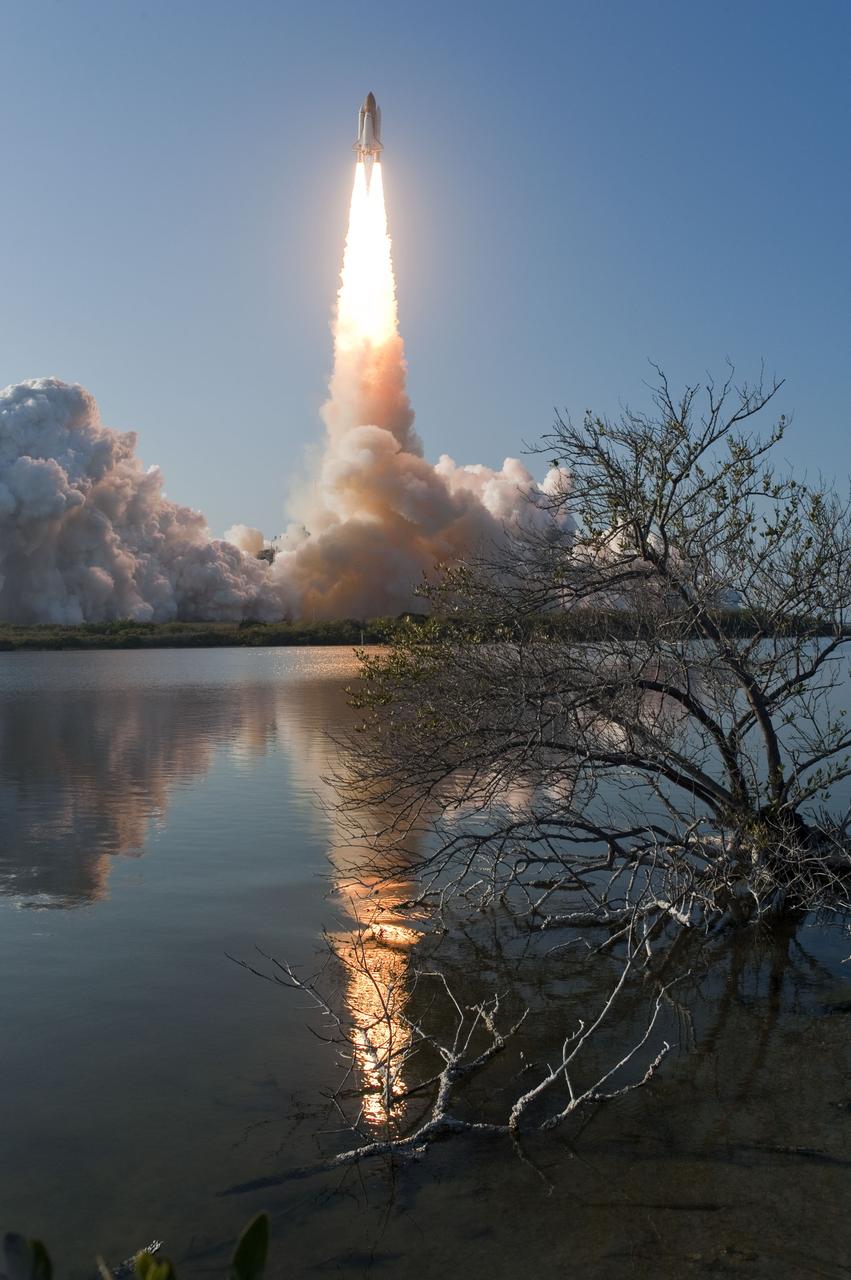
CAPE CANAVERAL, Fla. -- Space shuttle Discovery's liftoff is reflected in the water as it roars off Launch Pad 39A in a swirl of billowing smoke and steam at NASA's Kennedy Space Center in Florida to begin its final flight to the International Space Station on the STS-133 mission. Launch was at 4:53 p.m. EST. Discovery and its six-member crew will deliver the Permanent Multipurpose Module, packed with supplies and critical spare parts, as well as Robonaut 2, the dexterous humanoid astronaut helper, to the orbiting outpost. Discovery is flying on its 39th mission and is scheduled to be retired following STS-133. This is the 133rd Space Shuttle Program mission and the 35th shuttle voyage to the space station. For more information on the STS-133 mission, visit www.nasa.gov/mission_pages/shuttle/shuttlemissions/sts133/. Photo credit: NASA/Sandra Joseph and Kevin O'Connell
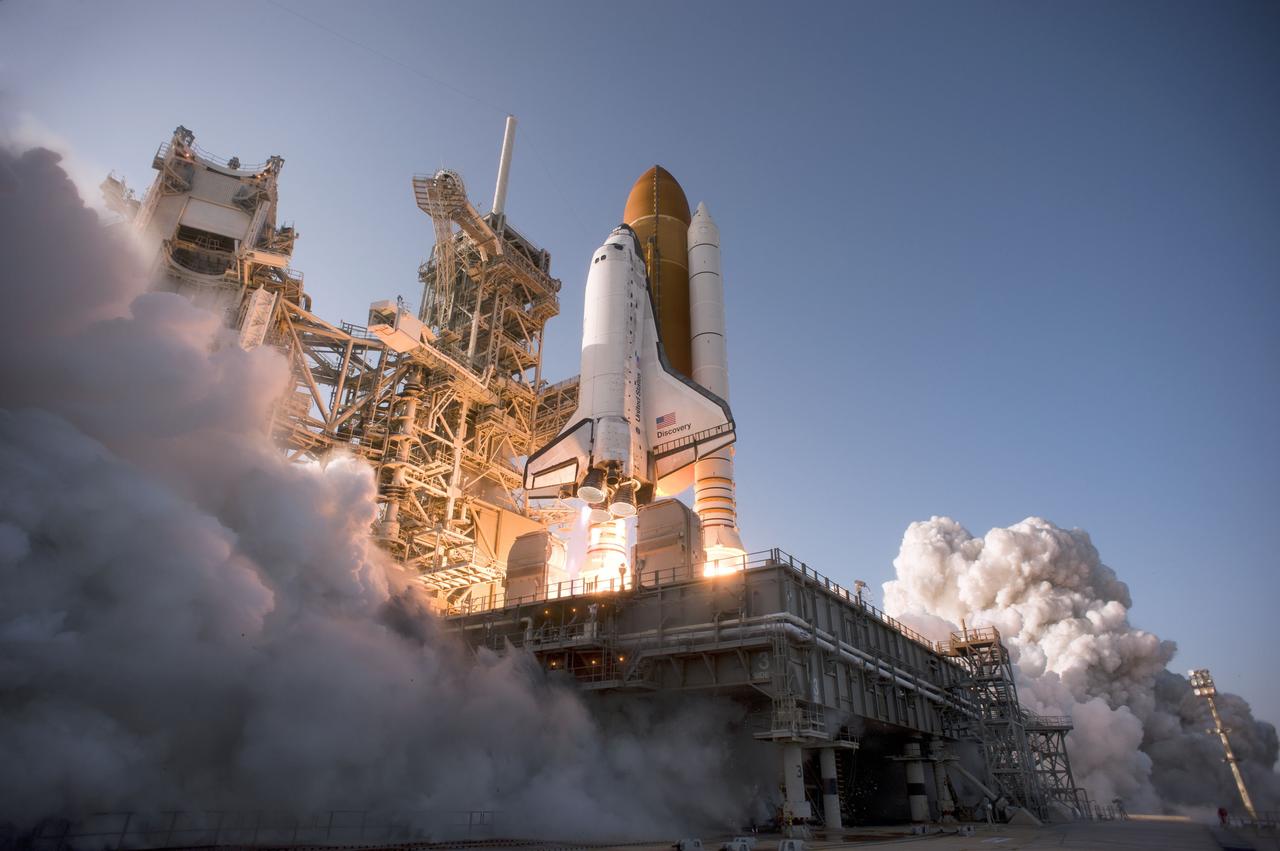
CAPE CANAVERAL, Fla. -- Space shuttle Discovery ignites for liftoff on Launch Pad 39A at NASA's Kennedy Space Center in Florida beginning its final flight, the STS-133 mission, to the International Space Station. Launch was at 4:53 p.m. EST. Discovery and its six-member crew will deliver the Permanent Multipurpose Module, packed with supplies and critical spare parts, as well as Robonaut 2, the dexterous humanoid astronaut helper, to the orbiting outpost. Discovery is flying on its 39th mission and is scheduled to be retired following STS-133. This is the 133rd Space Shuttle Program mission and the 35th shuttle voyage to the space station. For more information on the STS-133 mission, visit www.nasa.gov/mission_pages/shuttle/shuttlemissions/sts133/. Photo credit: NASA/Tony Gray and Tom Farrar
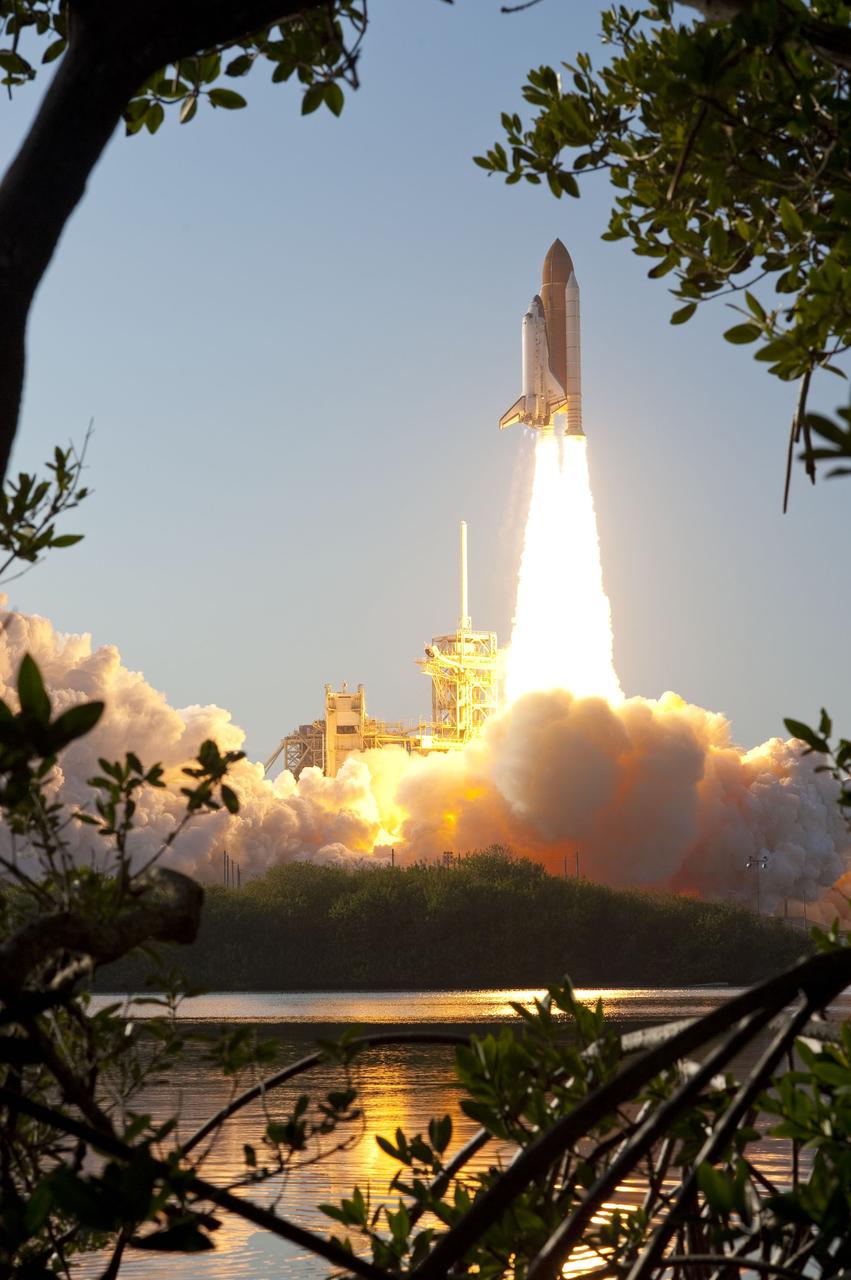
CAPE CANAVERAL, Fla. -- On pillars of fire, Space shuttle Discovery's liftoff is reflected in the water as it roars off Launch Pad 39A at NASA's Kennedy Space Center in Florida beginning its final flight to the International Space Station on the STS-133 mission. Launch was at 4:53 p.m. EST. Discovery and its six-member crew will deliver the Permanent Multipurpose Module, packed with supplies and critical spare parts, as well as Robonaut 2, the dexterous humanoid astronaut helper, to the orbiting outpost. Discovery is flying on its 39th mission and is scheduled to be retired following STS-133. This is the 133rd Space Shuttle Program mission and the 35th shuttle voyage to the space station. For more information on the STS-133 mission, visit www.nasa.gov/mission_pages/shuttle/shuttlemissions/sts133/. Photo credit: NASA/Sandra Joseph and Kevin O'Connell
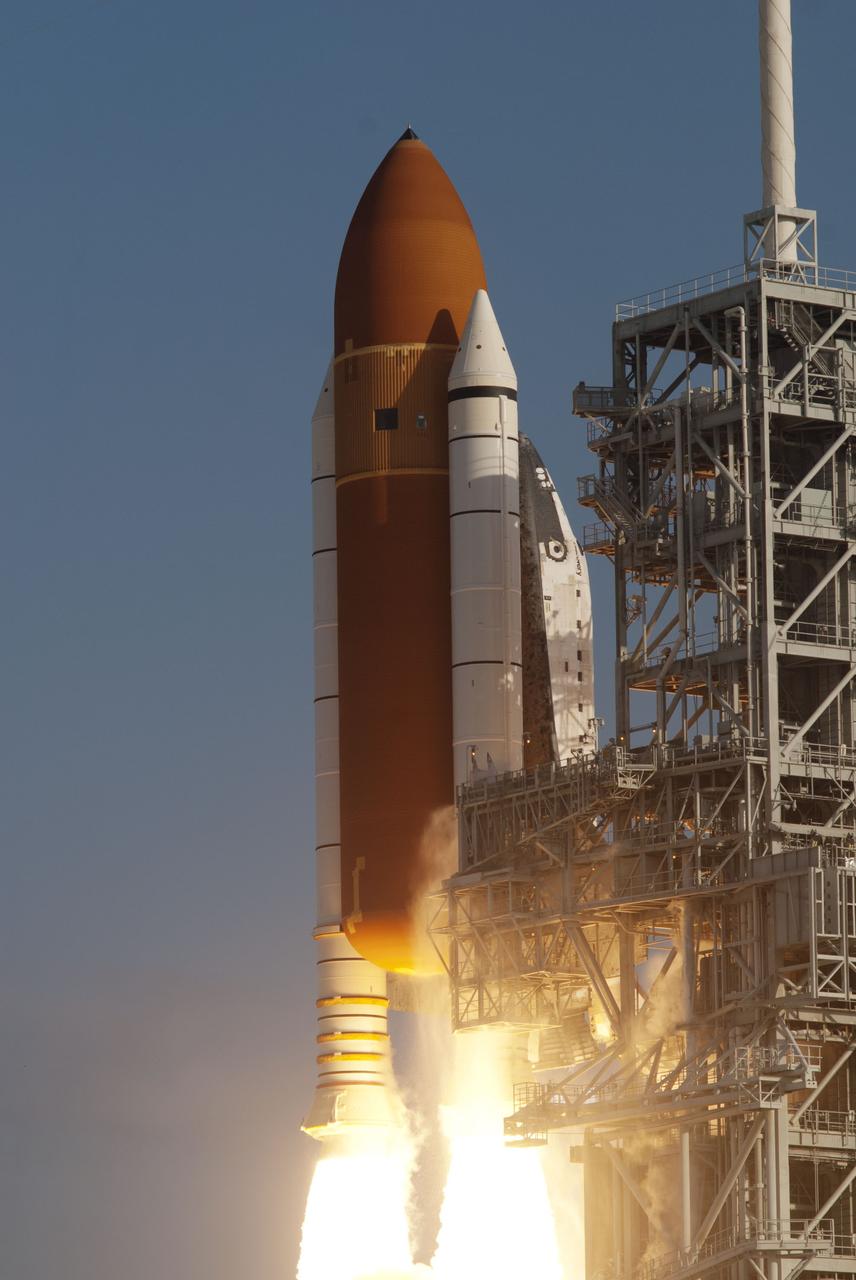
CAPE CANAVERAL, Fla. -- Space shuttle Discovery ignites for liftoff from Launch Pad 39A at NASA's Kennedy Space Center in Florida, beginning its final flight, the STS-133 mission. Launch to the International Space Station was at 4:53 p.m. EST. Discovery and its six-member crew will deliver the Permanent Multipurpose Module, packed with supplies and critical spare parts, as well as Robonaut 2, the dexterous humanoid astronaut helper, to the orbiting outpost. Discovery is flying on its 39th mission and is scheduled to be retired following STS-133. This is the 133rd Space Shuttle Program mission and the 35th shuttle voyage to the space station. For more information on the STS-133 mission, visit www.nasa.gov/mission_pages/shuttle/shuttlemissions/sts133/. Photo credit: NASA/Rusty Backer and Michael Gayle
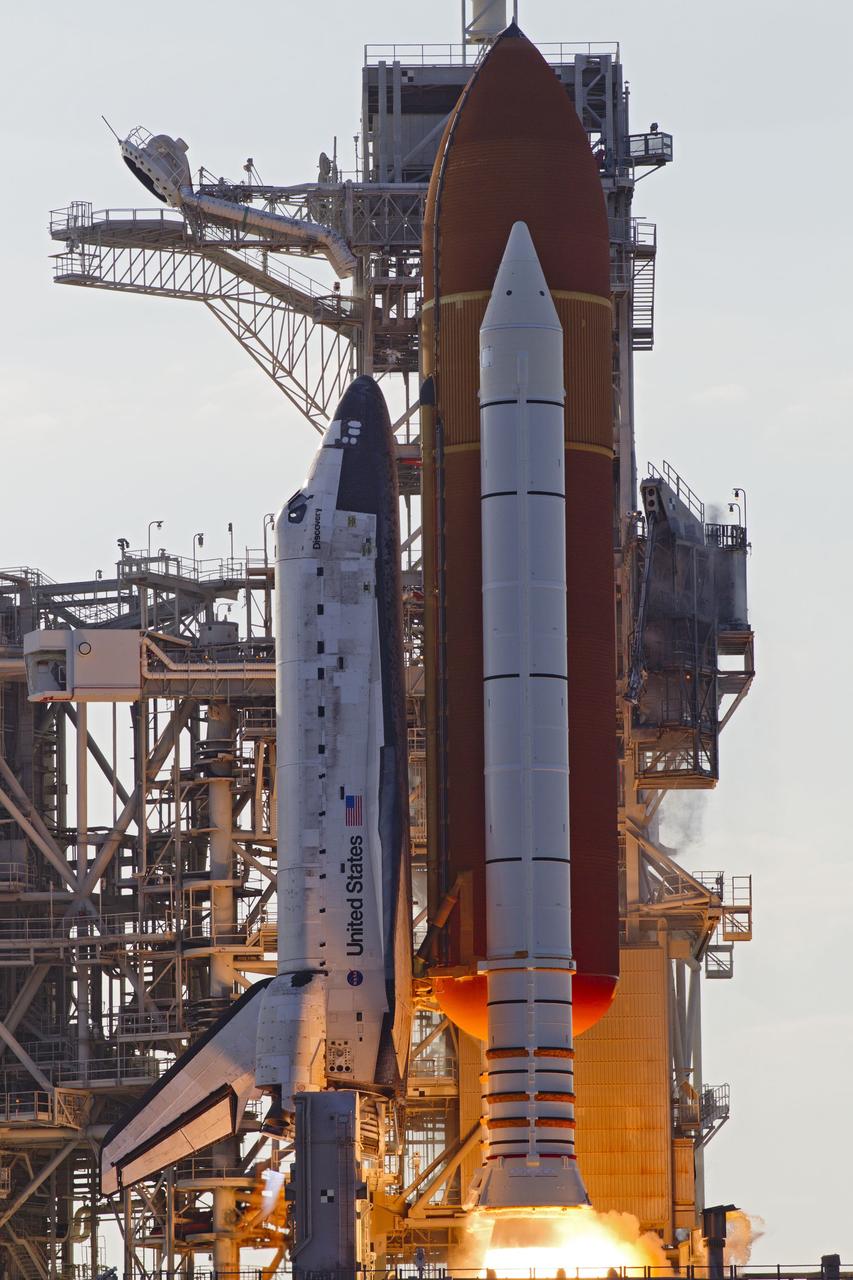
CAPE CANAVERAL, Fla. -- Space shuttle Discovery ignites for liftoff from Launch Pad 39A at NASA's Kennedy Space Center in Florida, beginning its final flight, the STS-133 mission, to the International Space Station. Launch was at 4:53 p.m. EST. Discovery and its six-member crew will deliver the Permanent Multipurpose Module, packed with supplies and critical spare parts, as well as Robonaut 2, the dexterous humanoid astronaut helper, to the orbiting outpost. Discovery is flying on its 39th mission and is scheduled to be retired following STS-133. This is the 133rd Space Shuttle Program mission and the 35th shuttle voyage to the space station. For more information on the STS-133 mission, visit www.nasa.gov/mission_pages/shuttle/shuttlemissions/sts133/. Photo credit: NASA/Rusty Backer and Michael Gayle
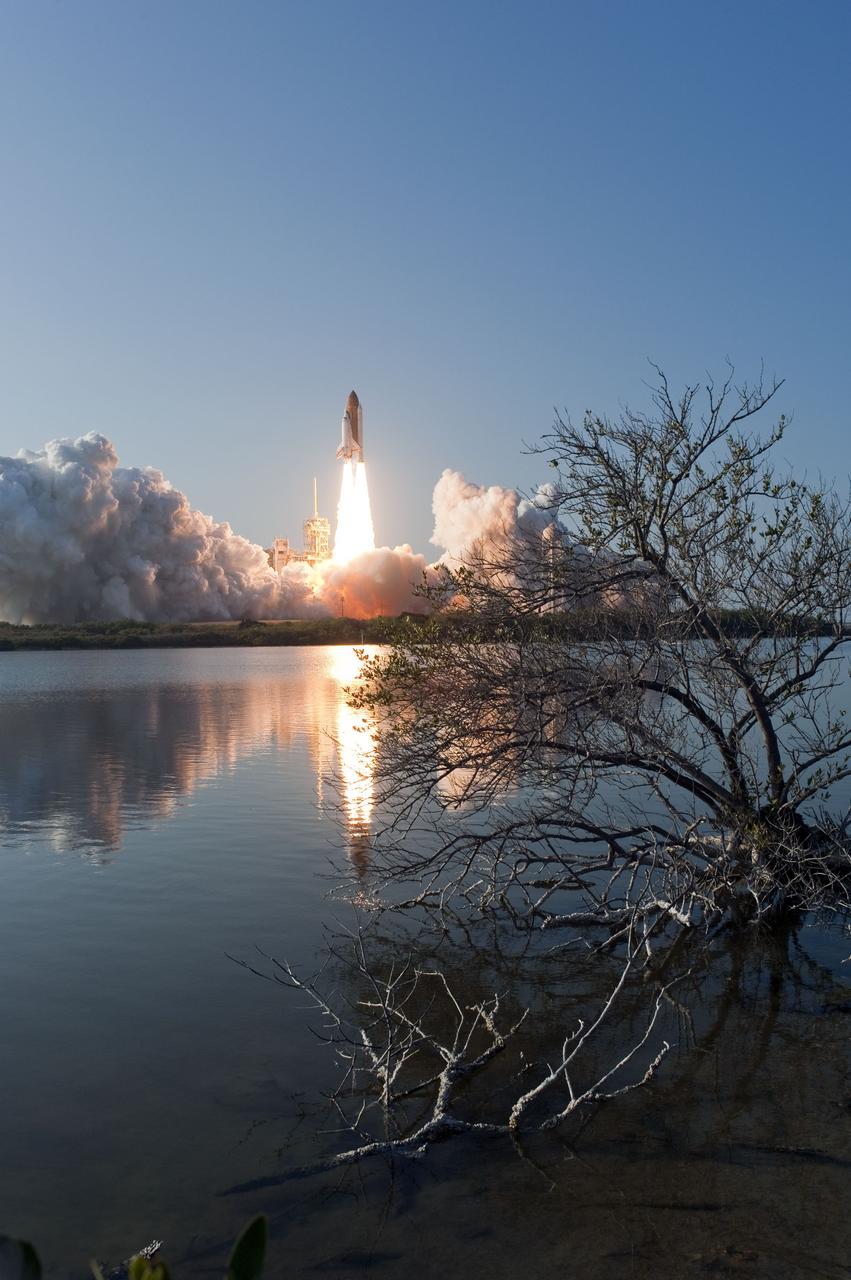
CAPE CANAVERAL, Fla. -- Space shuttle Discovery's liftoff is reflected in the water as it roars off Launch Pad 39A in a swirl of billowing smoke and steam at NASA's Kennedy Space Center in Florida to begin its final flight to the International Space Station on the STS-133 mission. Launch was at 4:53 p.m. EST. Discovery and its six-member crew will deliver the Permanent Multipurpose Module, packed with supplies and critical spare parts, as well as Robonaut 2, the dexterous humanoid astronaut helper, to the orbiting outpost. Discovery is flying on its 39th mission and is scheduled to be retired following STS-133. This is the 133rd Space Shuttle Program mission and the 35th shuttle voyage to the space station. For more information on the STS-133 mission, visit www.nasa.gov/mission_pages/shuttle/shuttlemissions/sts133/. Photo credit: NASA/Sandra Joseph and Kevin O'Connell
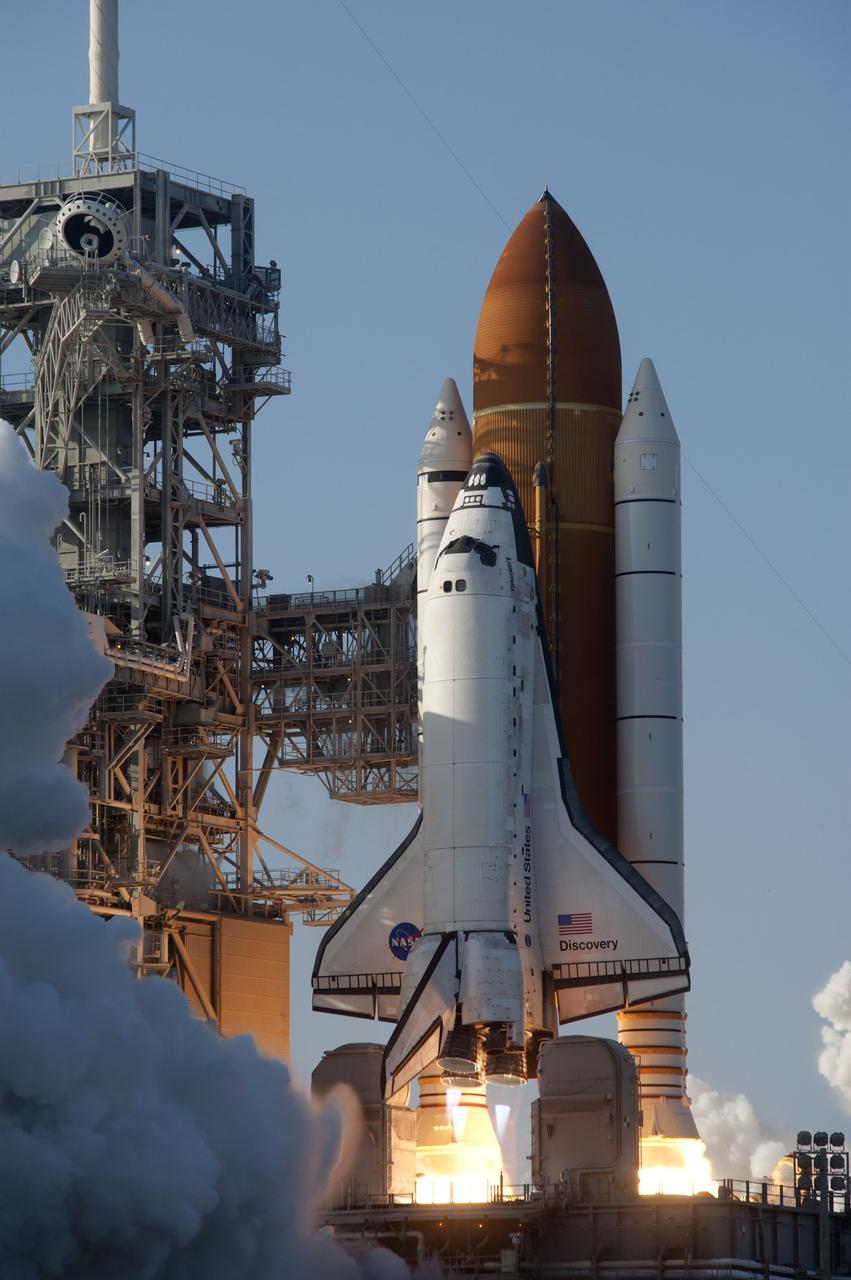
CAPE CANAVERAL, Fla. -- Space shuttle Discovery ignites for liftoff from Launch Pad 39A at NASA's Kennedy Space Center in Florida, beginning its final flight, the STS-133 mission. Launch to the International Space Station was at 4:53 p.m. EST. Discovery and its six-member crew will deliver the Permanent Multipurpose Module, packed with supplies and critical spare parts, as well as Robonaut 2, the dexterous humanoid astronaut helper, to the orbiting outpost. Discovery is flying on its 39th mission and is scheduled to be retired following STS-133. This is the 133rd Space Shuttle Program mission and the 35th shuttle voyage to the space station. For more information on the STS-133 mission, visit www.nasa.gov/mission_pages/shuttle/shuttlemissions/sts133/. Photo credit: NASA/Sandra Joseph and Kevin O'Connell
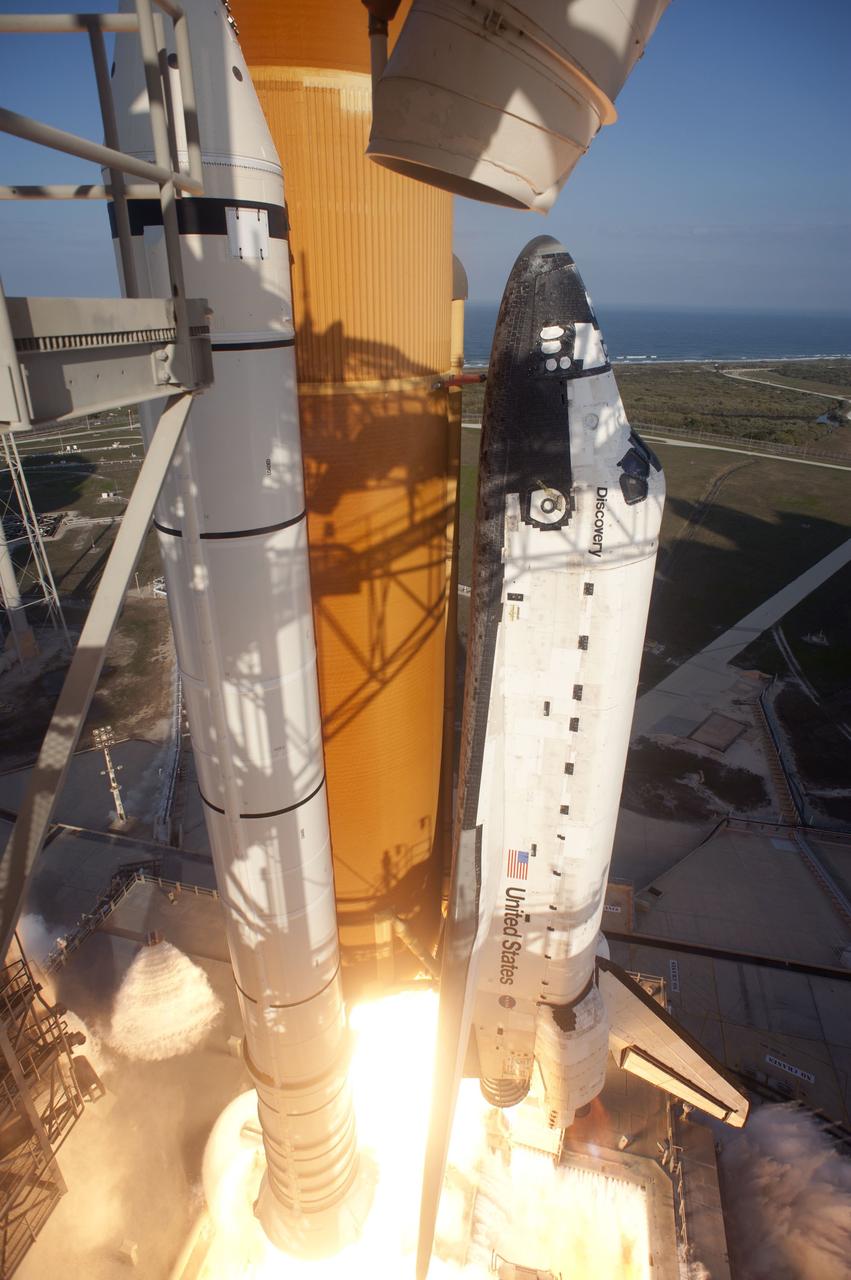
CAPE CANAVERAL, Fla. -- Space shuttle Discovery ignites for liftoff on Launch Pad 39A at NASA's Kennedy Space Center in Florida beginning its final flight to the International Space Station on the STS-133 mission. Launch was at 4:53 p.m. EST. Discovery and its six-member crew will deliver the Permanent Multipurpose Module, packed with supplies and critical spare parts, as well as Robonaut 2, the dexterous humanoid astronaut helper, to the orbiting outpost. Discovery is flying on its 39th mission and is scheduled to be retired following STS-133. This is the 133rd Space Shuttle Program mission and the 35th shuttle voyage to the space station. For more information on the STS-133 mission, visit www.nasa.gov/mission_pages/shuttle/shuttlemissions/sts133/. Photo credit: NASA/Tony Gray and Tom Farrar
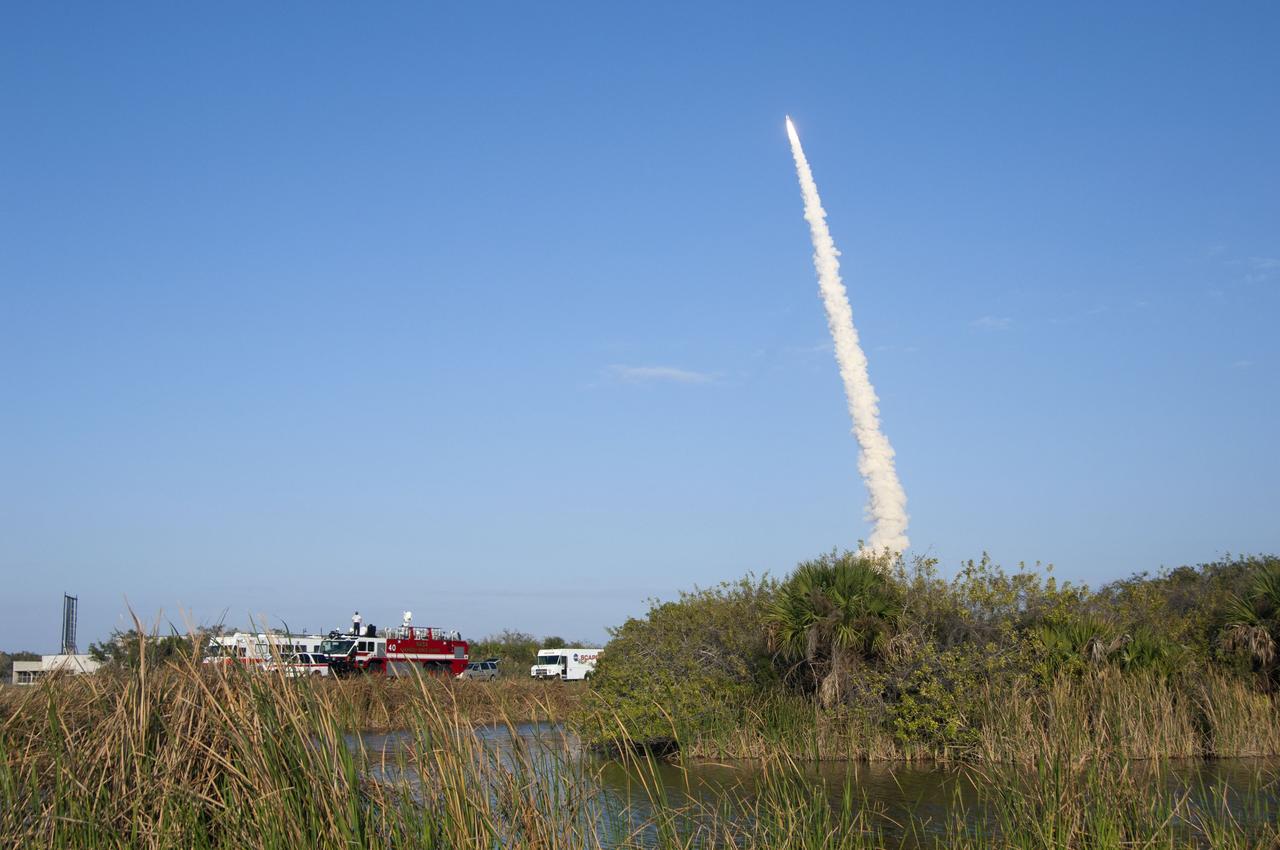
CAPE CANAVERAL, Fla. -- Space shuttle Discovery soars toward space after liftoff from Launch Pad 39A at NASA's Kennedy Space Center in Florida beginning its final flight, the STS-133 mission, to the International Space Station. Launch was at 4:53 p.m. EST. Discovery and its six-member crew will deliver the Permanent Multipurpose Module, packed with supplies and critical spare parts, as well as Robonaut 2, the dexterous humanoid astronaut helper, to the orbiting outpost. Discovery is flying on its 39th mission and is scheduled to be retired following STS-133. This is the 133rd Space Shuttle Program mission and the 35th shuttle voyage to the space station. For more information on the STS-133 mission, visit www.nasa.gov/mission_pages/shuttle/shuttlemissions/sts133/. Photo credit: NASA/Linda Perry
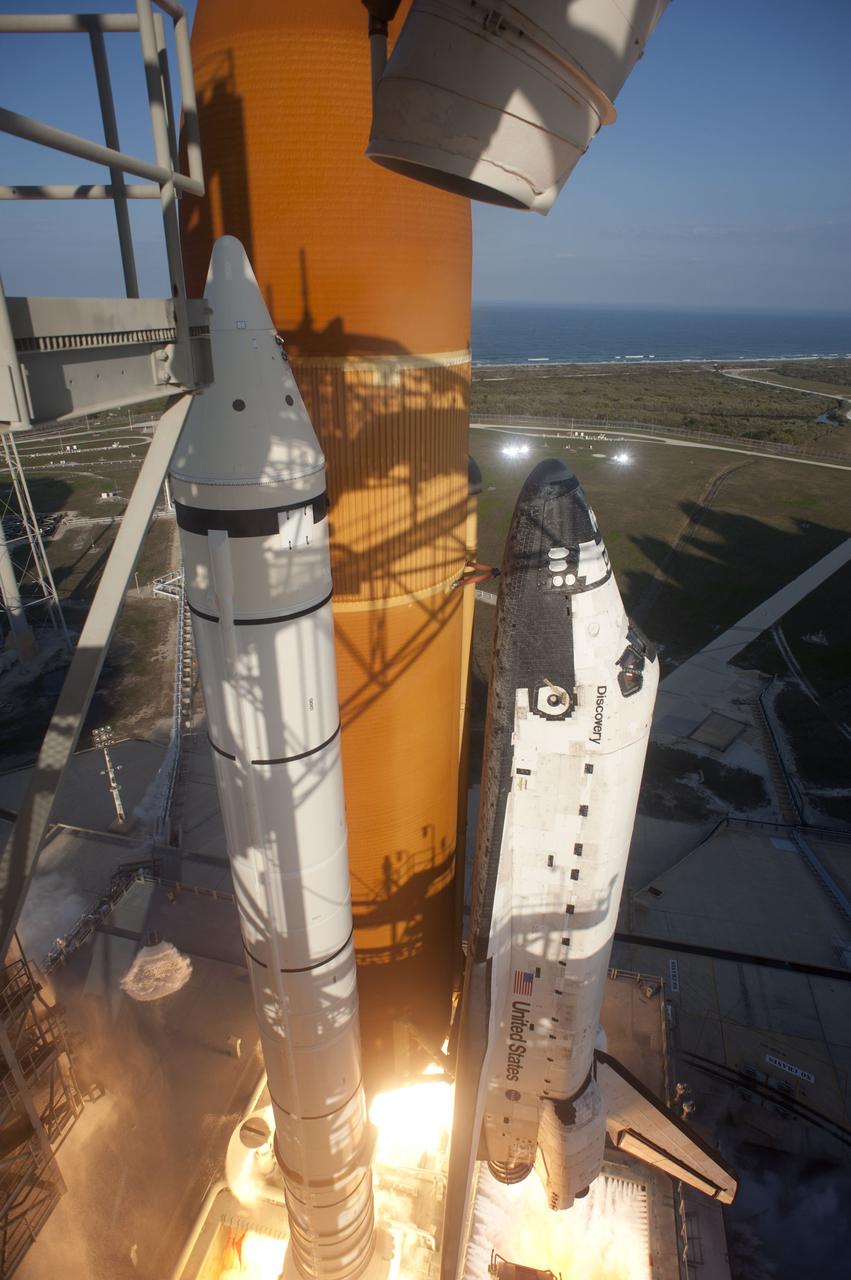
CAPE CANAVERAL, Fla. -- Space shuttle Discovery ignites for liftoff on Launch Pad 39A at NASA's Kennedy Space Center in Florida beginning its final flight to the International Space Station on the STS-133 mission. Launch was at 4:53 p.m. EST. Discovery and its six-member crew will deliver the Permanent Multipurpose Module, packed with supplies and critical spare parts, as well as Robonaut 2, the dexterous humanoid astronaut helper, to the orbiting outpost. Discovery is flying on its 39th mission and is scheduled to be retired following STS-133. This is the 133rd Space Shuttle Program mission and the 35th shuttle voyage to the space station. For more information on the STS-133 mission, visit www.nasa.gov/mission_pages/shuttle/shuttlemissions/sts133/. Photo credit: NASA/Tony Gray and Tom Farrar
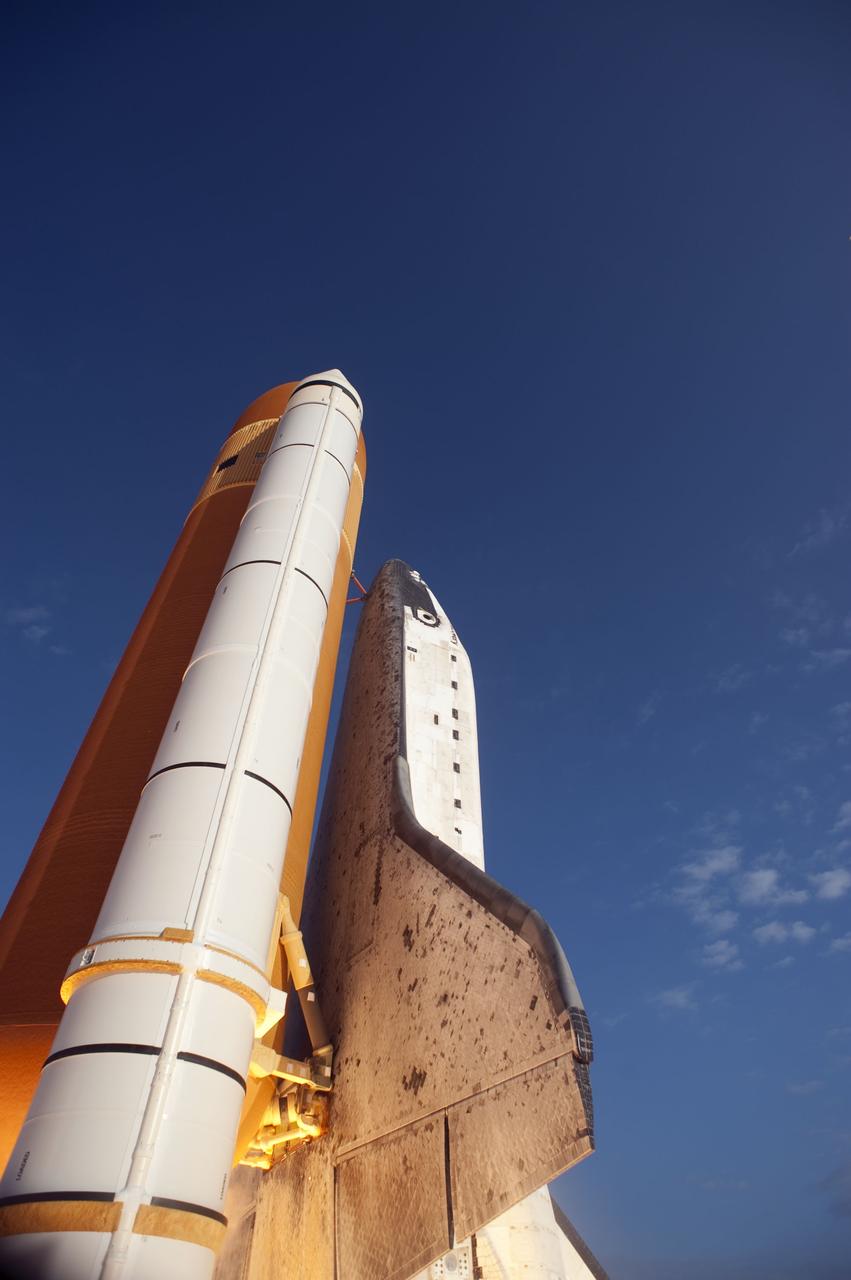
CAPE CANAVERAL, Fla. -- Space shuttle Discovery ignites for liftoff on Launch Pad 39A at NASA's Kennedy Space Center in Florida beginning its final flight to the International Space Station on the STS-133 mission. Launch was at 4:53 p.m. EST. Discovery and its six-member crew will deliver the Permanent Multipurpose Module, packed with supplies and critical spare parts, as well as Robonaut 2, the dexterous humanoid astronaut helper, to the orbiting outpost. Discovery is flying on its 39th mission and is scheduled to be retired following STS-133. This is the 133rd Space Shuttle Program mission and the 35th shuttle voyage to the space station. For more information on the STS-133 mission, visit www.nasa.gov/mission_pages/shuttle/shuttlemissions/sts133/. Photo credit: NASA/Tony Gray and Tom Farrar
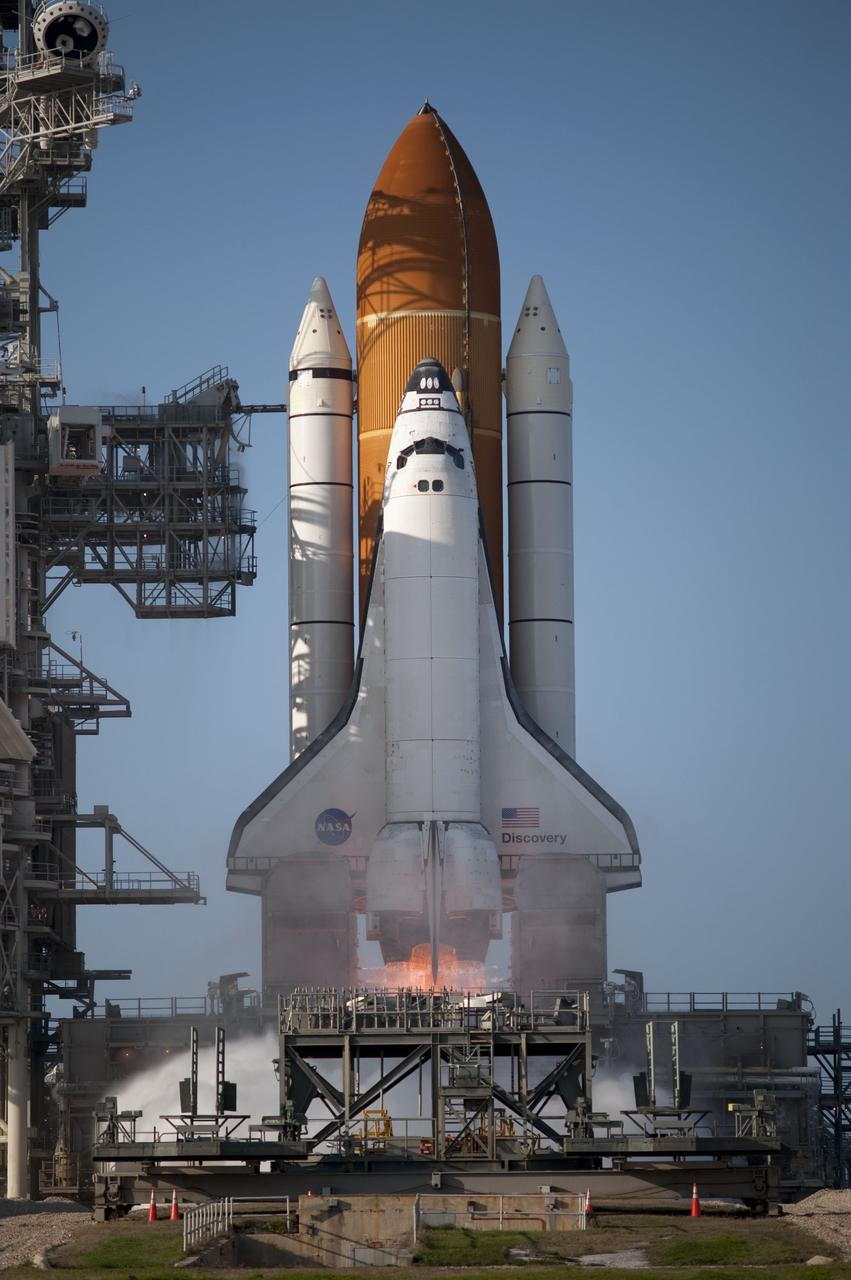
CAPE CANAVERAL, Fla. -- Space shuttle Discovery ignites for liftoff from Launch Pad 39A at NASA's Kennedy Space Center in Florida, beginning its final flight, the STS-133 mission. Launch to the International Space Station was at 4:53 p.m. EST. Discovery and its six-member crew will deliver the Permanent Multipurpose Module, packed with supplies and critical spare parts, as well as Robonaut 2, the dexterous humanoid astronaut helper, to the orbiting outpost. Discovery is flying on its 39th mission and is scheduled to be retired following STS-133. This is the 133rd Space Shuttle Program mission and the 35th shuttle voyage to the space station. For more information on the STS-133 mission, visit www.nasa.gov/mission_pages/shuttle/shuttlemissions/sts133/. Photo credit: NASA/Tony Gray and Tom Farrar
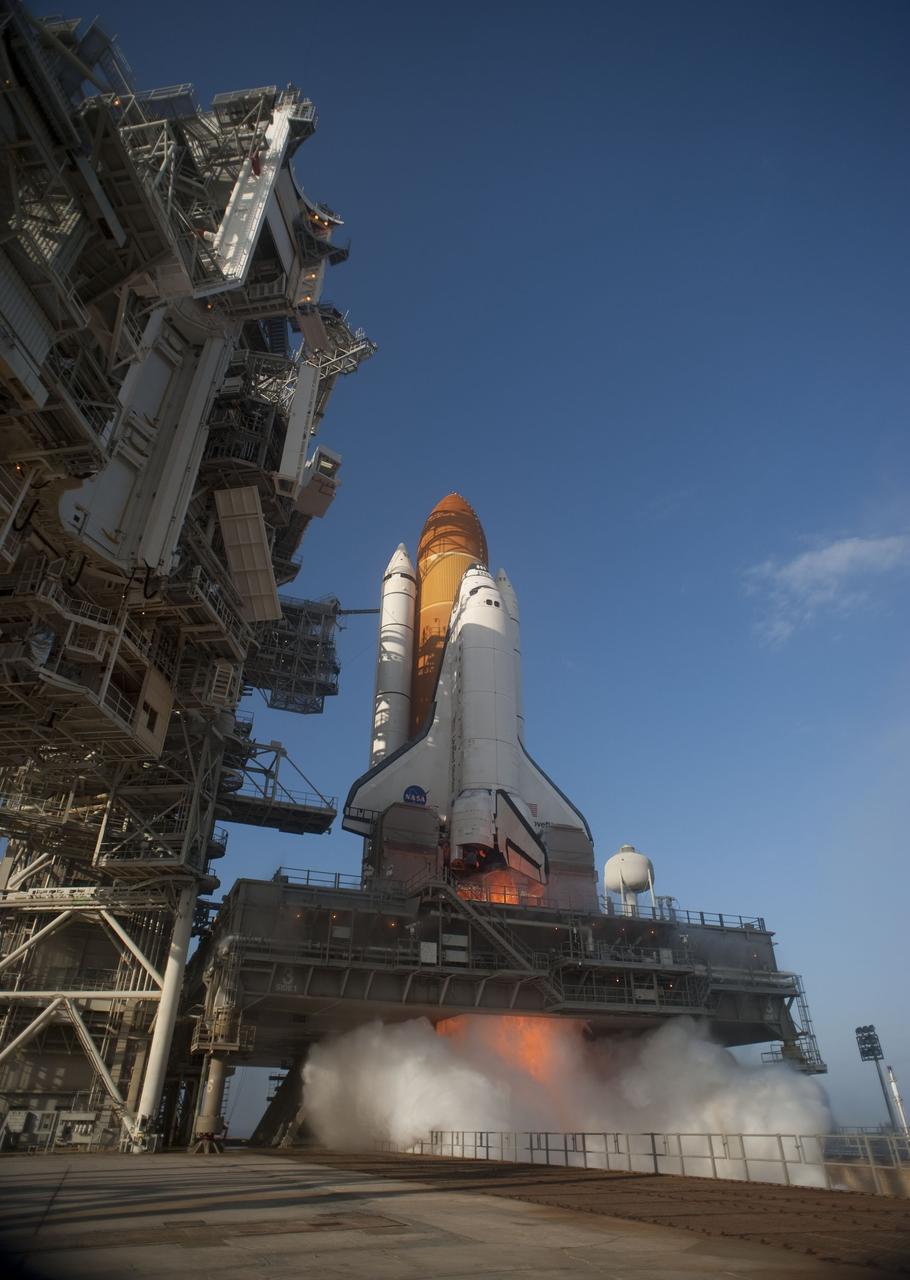
CAPE CANAVERAL, Fla. -- Space shuttle Discovery ignites for liftoff from Launch Pad 39A at NASA's Kennedy Space Center in Florida beginning its final flight, the STS-133 mission, to the International Space Station. Launch was at 4:53 p.m. EST. Discovery and its six-member crew will deliver the Permanent Multipurpose Module, packed with supplies and critical spare parts, as well as Robonaut 2, the dexterous humanoid astronaut helper, to the orbiting outpost. Discovery is flying on its 39th mission and is scheduled to be retired following STS-133. This is the 133rd Space Shuttle Program mission and the 35th shuttle voyage to the space station. For more information on the STS-133 mission, visit www.nasa.gov/mission_pages/shuttle/shuttlemissions/sts133/. Photo credit: NASA/Tony Gray and Tom Farrar
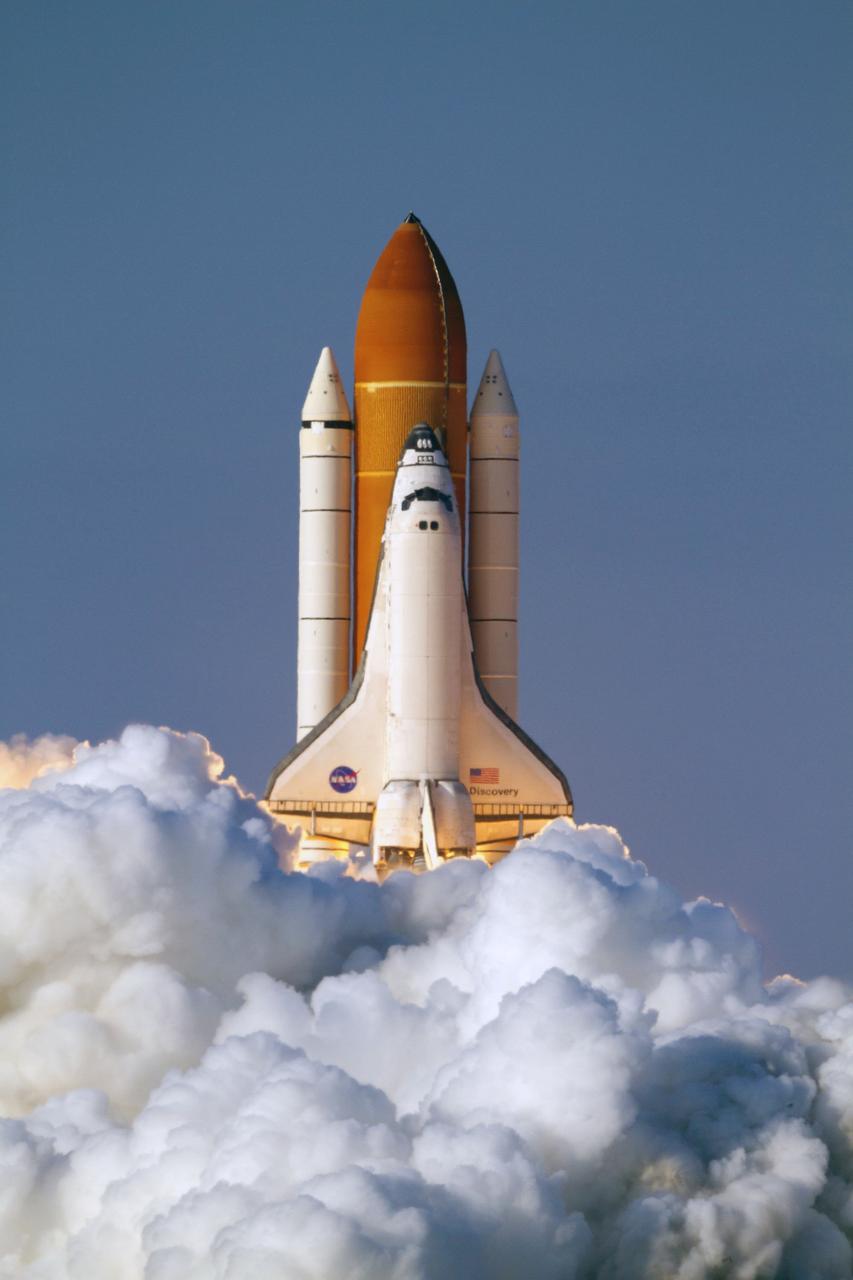
CAPE CANAVERAL, Fla. -- As if soaring through the heavens, space shuttle Discovery launches through rolling clouds of smoke and steam, embarking on its final scheduled mission, STS-133, to the International Space Station. Liftoff from launch Pad 39A at NASA's Kennedy Space Center in Florida occurred at 4:53 p.m. EST on Feb. 24. Discovery and its six-member crew are on a mission to deliver the Permanent Multipurpose Module, packed with supplies and critical spare parts, as well as Robonaut 2, the dexterous humanoid astronaut helper, to the International Space Station. Discovery is making its 39th mission and is scheduled to be retired following STS-133. This is the 133rd Space Shuttle Program mission, the 35th shuttle voyage to the space station and Discovery's final mission. For more information on the STS-133 mission, visit www.nasa.gov/mission_pages/shuttle/shuttlemissions/sts133/. Photo credit: NASA/Kenny Allen
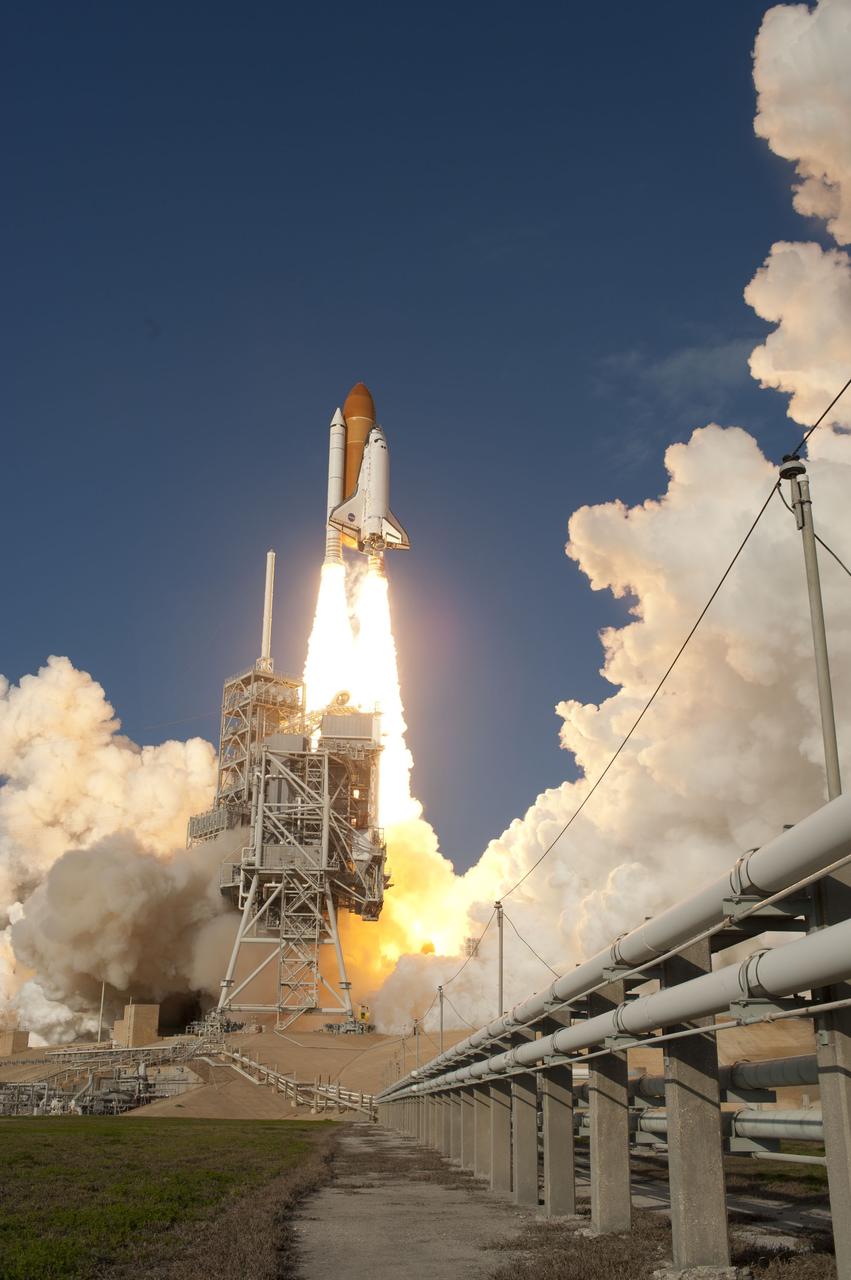
CAPE CANAVERAL, Fla. -- Space shuttle Discovery ignites for liftoff from Launch Pad 39A at NASA's Kennedy Space Center in Florida, beginning its final flight, the STS-133 mission. Launch to the International Space Station was at 4:53 p.m. EST. Discovery and its six-member crew will deliver the Permanent Multipurpose Module, packed with supplies and critical spare parts, as well as Robonaut 2, the dexterous humanoid astronaut helper, to the orbiting outpost. Discovery is flying on its 39th mission and is scheduled to be retired following STS-133. This is the 133rd Space Shuttle Program mission and the 35th shuttle voyage to the space station. For more information on the STS-133 mission, visit www.nasa.gov/mission_pages/shuttle/shuttlemissions/sts133/. Photo credit: NASA/Sandra Joseph and Kevin O'Connell
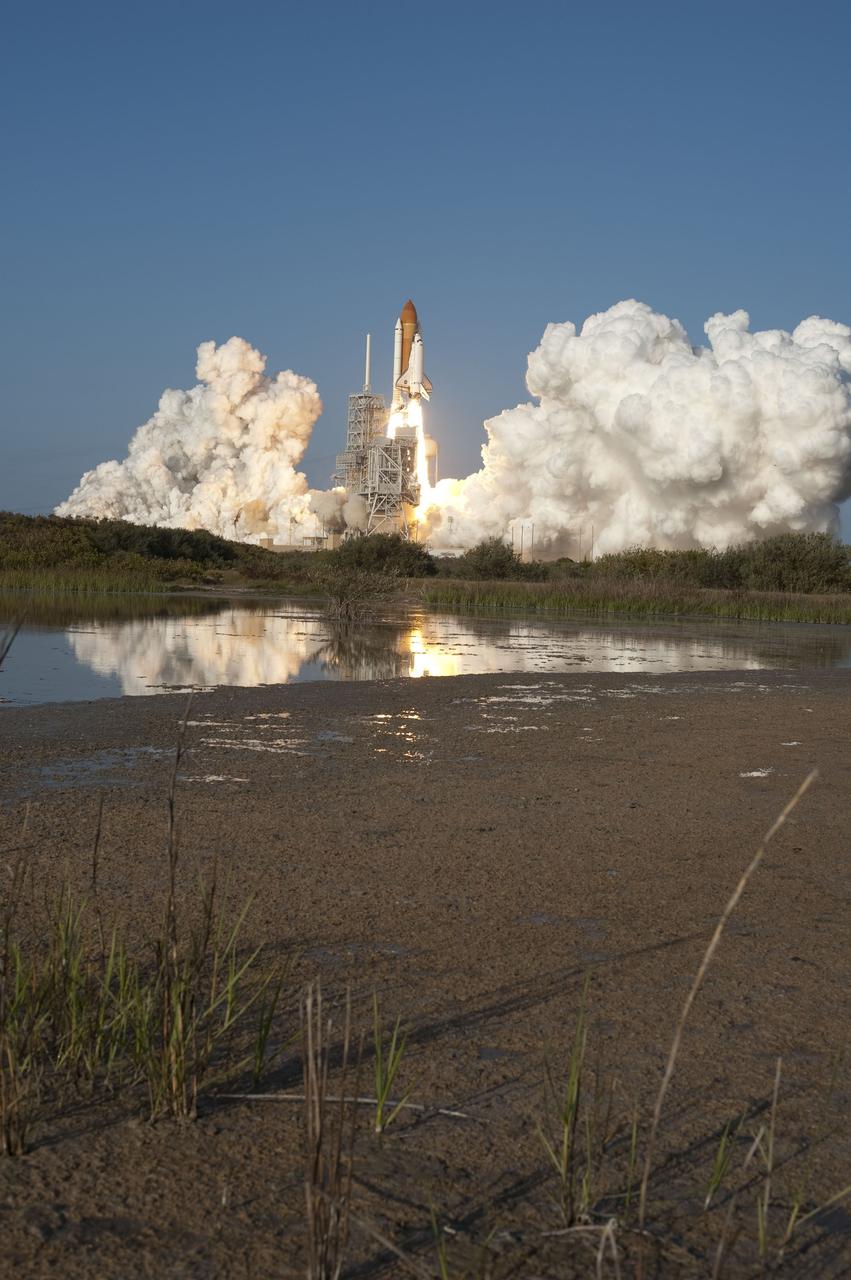
CAPE CANAVERAL, Fla. -- Space shuttle Discovery ignites for liftoff from Launch Pad 39A at NASA's Kennedy Space Center in Florida, beginning its final flight, the STS-133 mission, to the International Space Station. Launch was at 4:53 p.m. EST. Discovery and its six-member crew will deliver the Permanent Multipurpose Module, packed with supplies and critical spare parts, as well as Robonaut 2, the dexterous humanoid astronaut helper, to the orbiting outpost. Discovery is flying on its 39th mission and is scheduled to be retired following STS-133. This is the 133rd Space Shuttle Program mission and the 35th shuttle voyage to the space station. For more information on the STS-133 mission, visit www.nasa.gov/mission_pages/shuttle/shuttlemissions/sts133/. Photo credit: NASA/Tony Gray and Tom Farrar
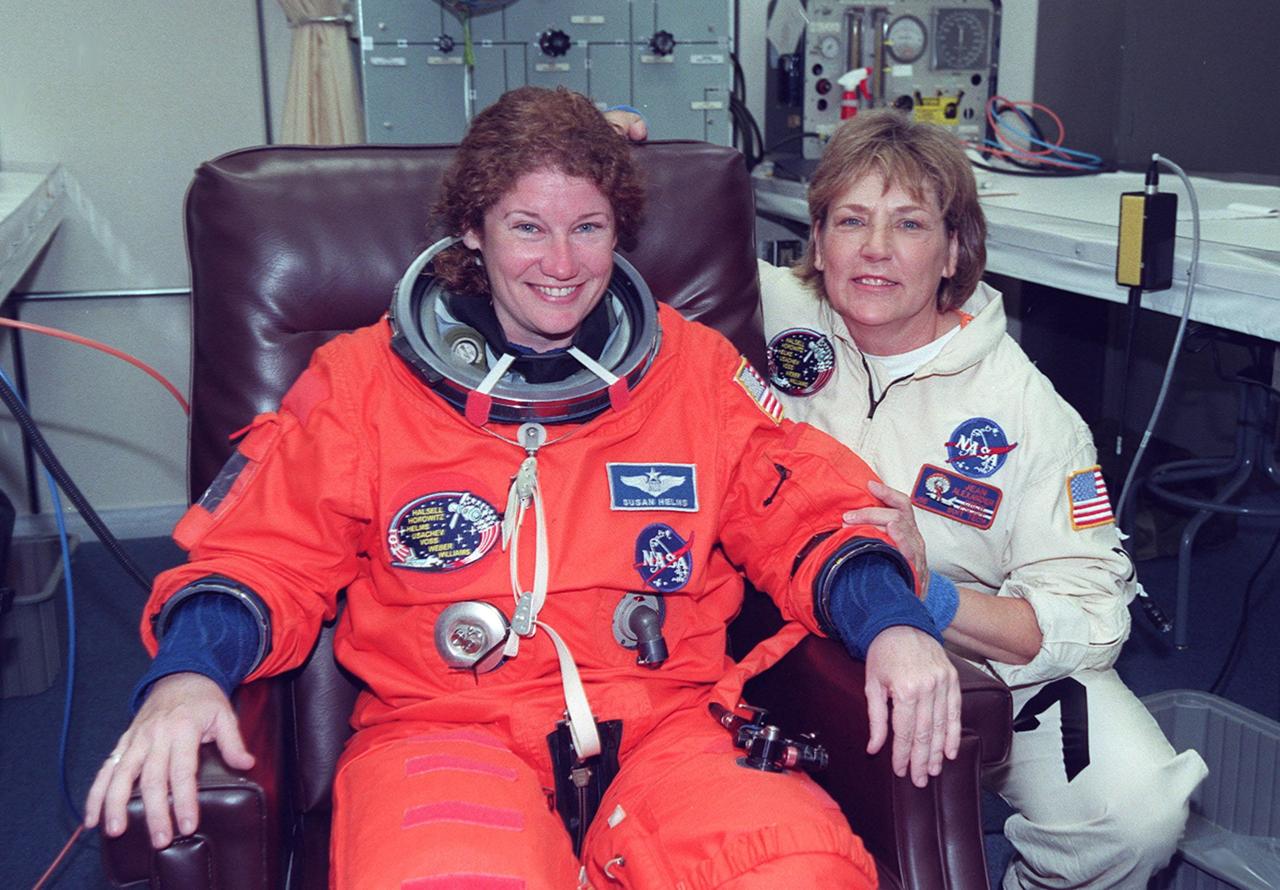
In the Operations and Checkout Building, STS-101 Mission Specialist Susan J. Helms (left) and a suit technician grin with anticipation for a successful second attempt at launch of Space Shuttle Atlantis on mission STS-101. The previous day's launch attempt was scrubbed due to high cross winds at the Shuttle Landing Facility. The mission will take the crew to the International Space Station to deliver logistics and supplies and to prepare the Station for the arrival of the Zvezda Service Module, expected to be launched by Russia in July 2000. Also, the crew will conduct one space walk. This will be the third assembly flight to the Space Station. Liftoff is targeted for 3:52 p.m. EDT. The mission is expected to last about 10 days, with Atlantis landing at KSC Saturday, May 6, about 11:53 a.m. EDT
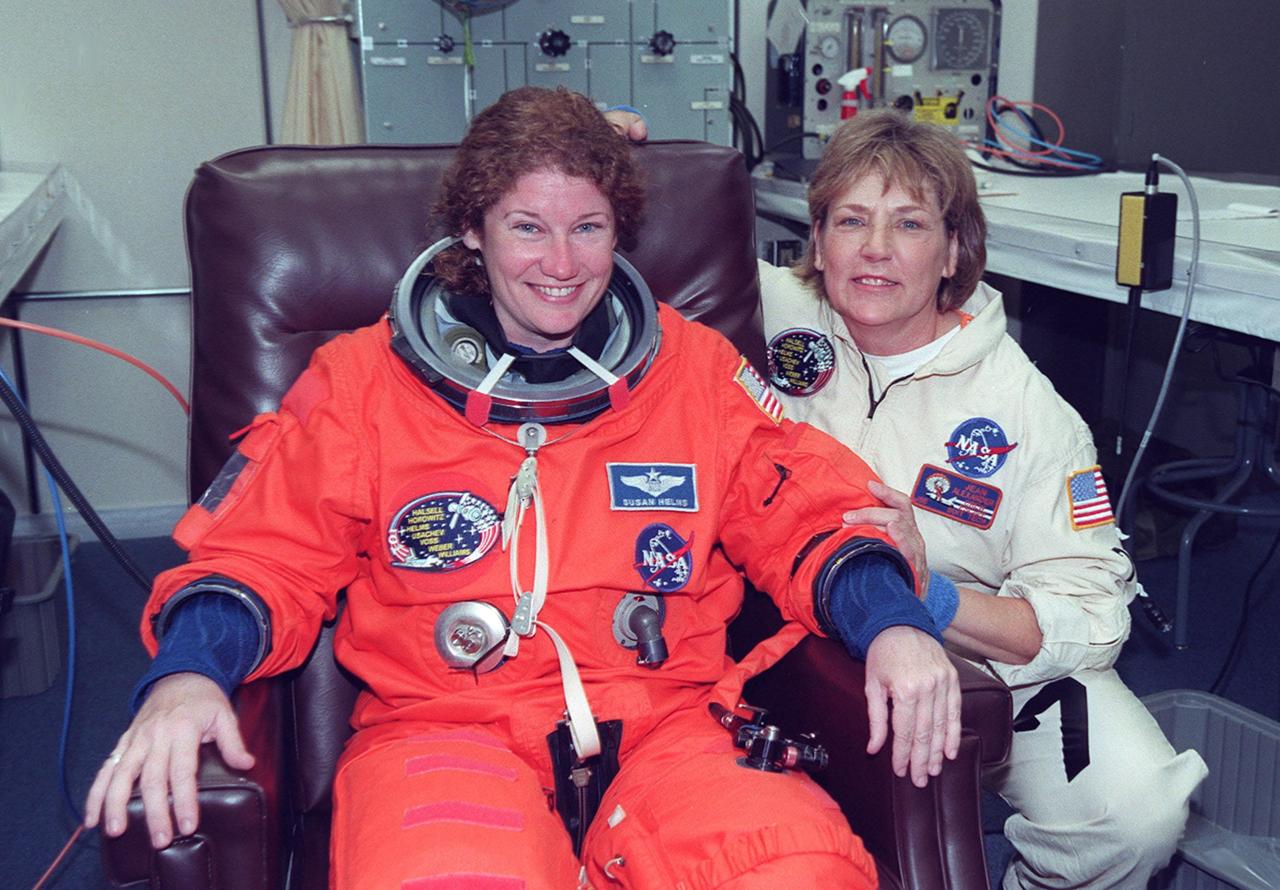
In the Operations and Checkout Building, STS-101 Mission Specialist Susan J. Helms (left) and a suit technician grin with anticipation for a successful second attempt at launch of Space Shuttle Atlantis on mission STS-101. The previous day's launch attempt was scrubbed due to high cross winds at the Shuttle Landing Facility. The mission will take the crew to the International Space Station to deliver logistics and supplies and to prepare the Station for the arrival of the Zvezda Service Module, expected to be launched by Russia in July 2000. Also, the crew will conduct one space walk. This will be the third assembly flight to the Space Station. Liftoff is targeted for 3:52 p.m. EDT. The mission is expected to last about 10 days, with Atlantis landing at KSC Saturday, May 6, about 11:53 a.m. EDT
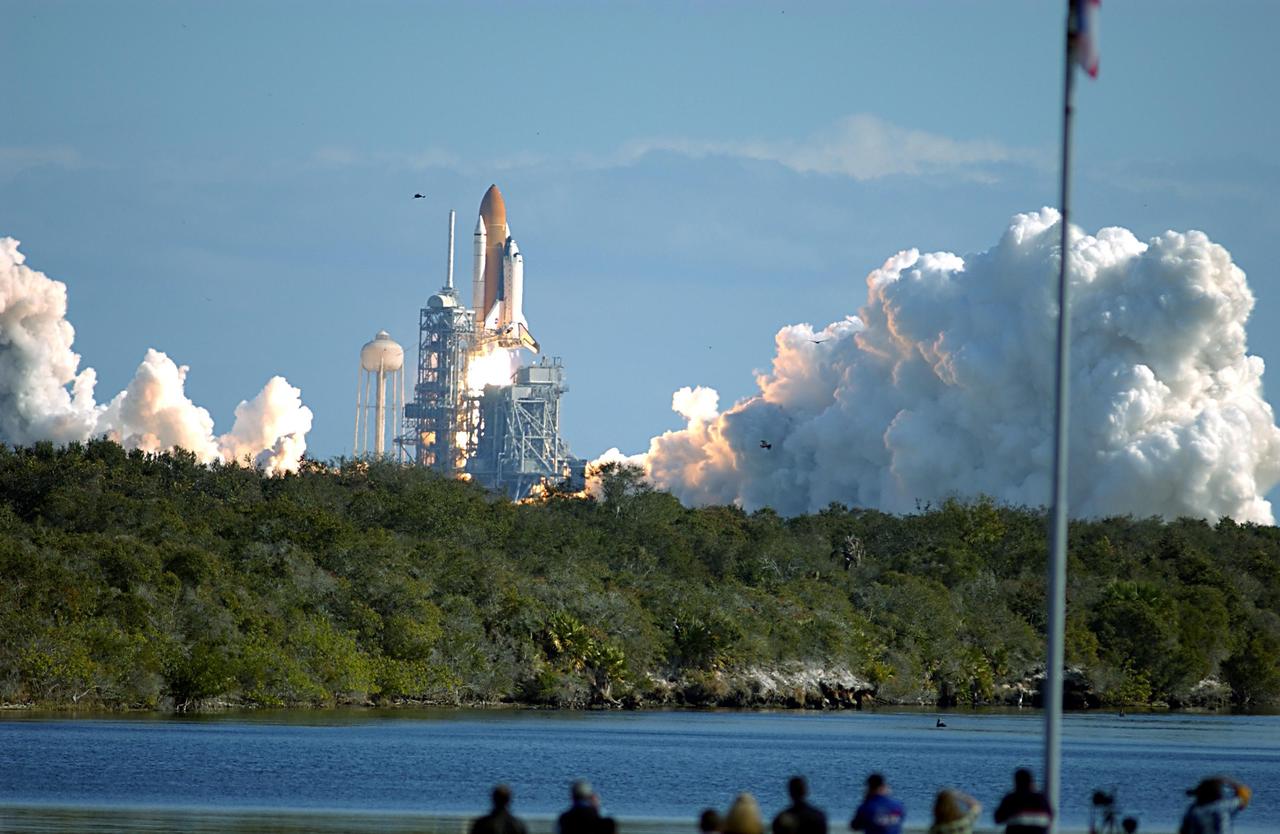
KENNEDY SPACE CENTER, FLA. -- Billows of white clouds of steam and smoke frame Space Shuttle Columbia as it rises above the launch tower on Launch Pad 39A on mission STS-107. Following a flawless and uneventful countdown, liftoff occurred on-time at 10:39 a.m. EST. The 16-day research mission will include FREESTAR (Fast Reaction Experiments Enabling Science, Technology, Applications and Research) and the SHI Research Double Module (SHI/RDM), known as SPACEHAB. Experiments on the module range from material sciences to life sciences. Landing is scheduled at about 8:53 a.m. EST on Saturday, Feb. 1. This mission is the first Shuttle mission of 2003. Mission STS-107 is the 28th flight of the orbiter Columbia and the 113th flight overall in NASA's Space Shuttle program.
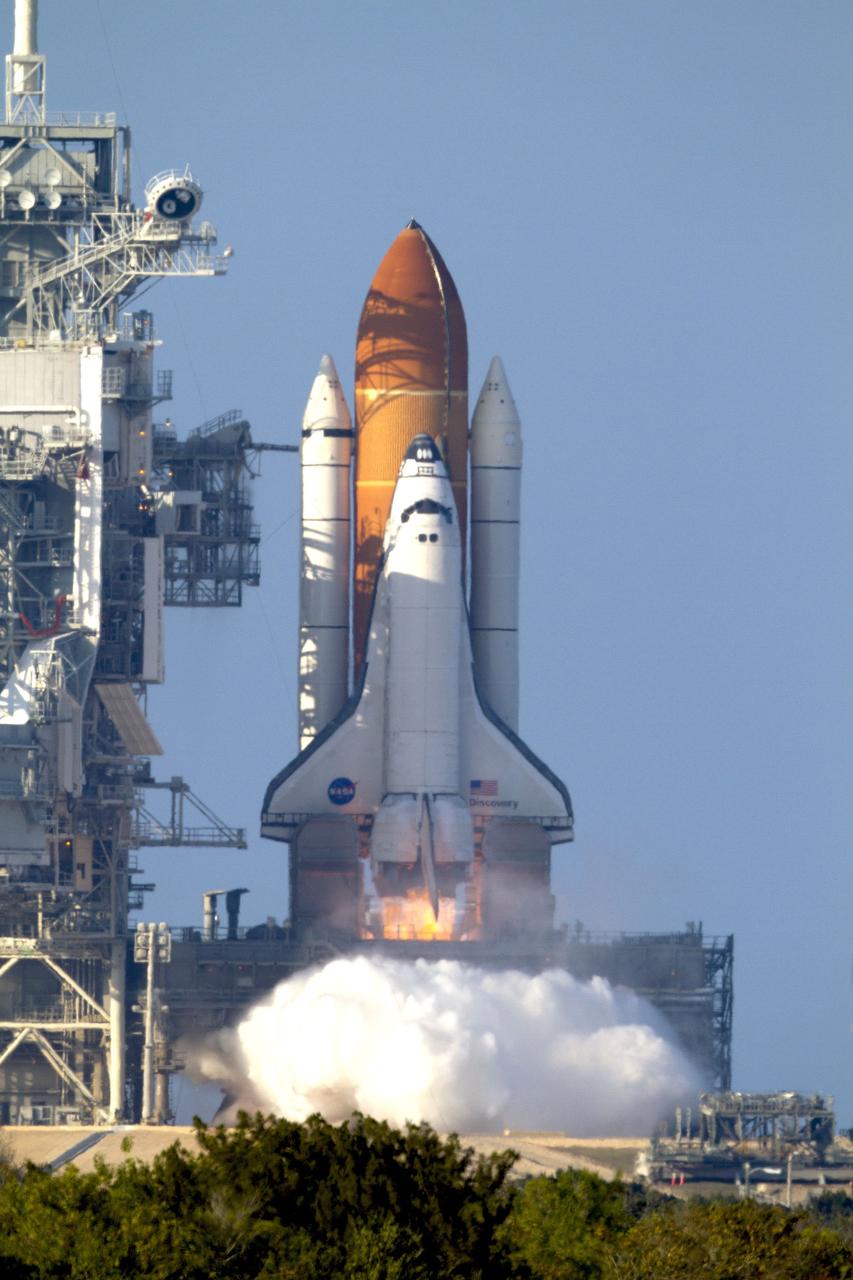
CAPE CANAVERAL, Fla. -- Space shuttle Discovery's boosters ignite and main engines start beginning its final scheduled mission, STS-133, to the International Space Station. Liftoff from launch Pad 39A at NASA's Kennedy Space Center in Florida occurred at 4:53 p.m. EST on Feb. 24. Discovery and its six-member crew are on a mission to deliver the Permanent Multipurpose Module, packed with supplies and critical spare parts, as well as Robonaut 2, the dexterous humanoid astronaut helper, to the International Space Station. Discovery is making its 39th mission and is scheduled to be retired following STS-133. This is the 133rd Space Shuttle Program mission, the 35th shuttle voyage to the space station and Discovery's final mission. For more information on the STS-133 mission, visit www.nasa.gov/mission_pages/shuttle/shuttlemissions/sts133/. Photo credit: NASA/Kenny Allen
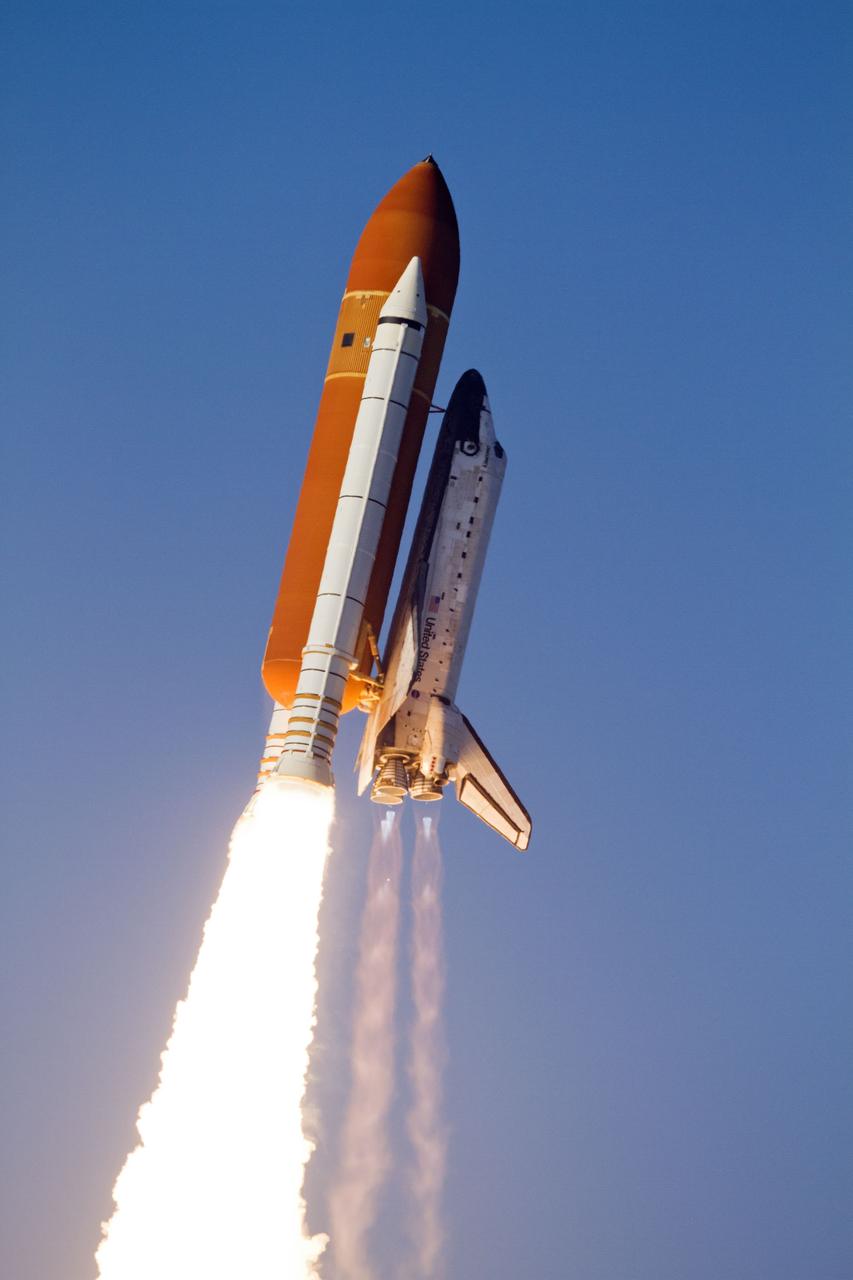
CAPE CANAVERAL, Fla. -- Space shuttle Discovery soars into orbit at 17,500 miles per hour atop twin columns of fire, embarking on its final scheduled mission, STS-133, to the International Space Station. Liftoff from launch Pad 39A at NASA's Kennedy Space Center in Florida occurred at 4:53 p.m. EST on Feb. 24. Discovery and its six-member crew are on a mission to deliver the Permanent Multipurpose Module, packed with supplies and critical spare parts, as well as Robonaut 2, the dexterous humanoid astronaut helper, to the International Space Station. Discovery is making its 39th mission and is scheduled to be retired following STS-133. This is the 133rd Space Shuttle Program mission, the 35th shuttle voyage to the space station and Discovery's final mission. For more information on the STS-133 mission, visit www.nasa.gov/mission_pages/shuttle/shuttlemissions/sts133/. Photo credit: NASA/Kenny Allen
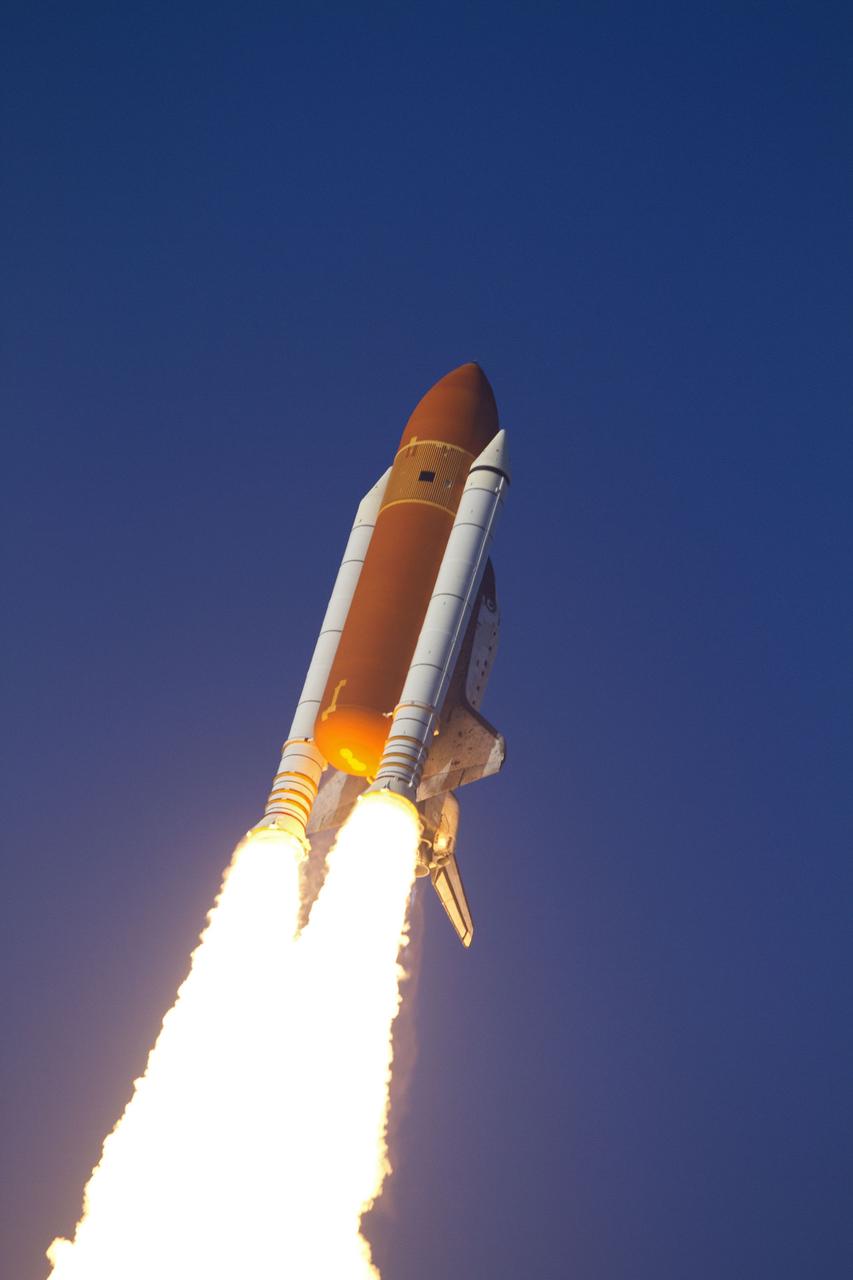
CAPE CANAVERAL, Fla. -- Space shuttle Discovery soars into orbit at 17,500 miles per hour atop twin columns of fire, embarking on its final scheduled mission, STS-133, to the International Space Station. Liftoff from launch Pad 39A at NASA's Kennedy Space Center in Florida occurred at 4:53 p.m. EST on Feb. 24. Discovery and its six-member crew are on a mission to deliver the Permanent Multipurpose Module, packed with supplies and critical spare parts, as well as Robonaut 2, the dexterous humanoid astronaut helper, to the International Space Station. Discovery is making its 39th mission and is scheduled to be retired following STS-133. This is the 133rd Space Shuttle Program mission, the 35th shuttle voyage to the space station and Discovery's final mission. For more information on the STS-133 mission, visit www.nasa.gov/mission_pages/shuttle/shuttlemissions/sts133/. Photo credit: NASA/Kenny Allen
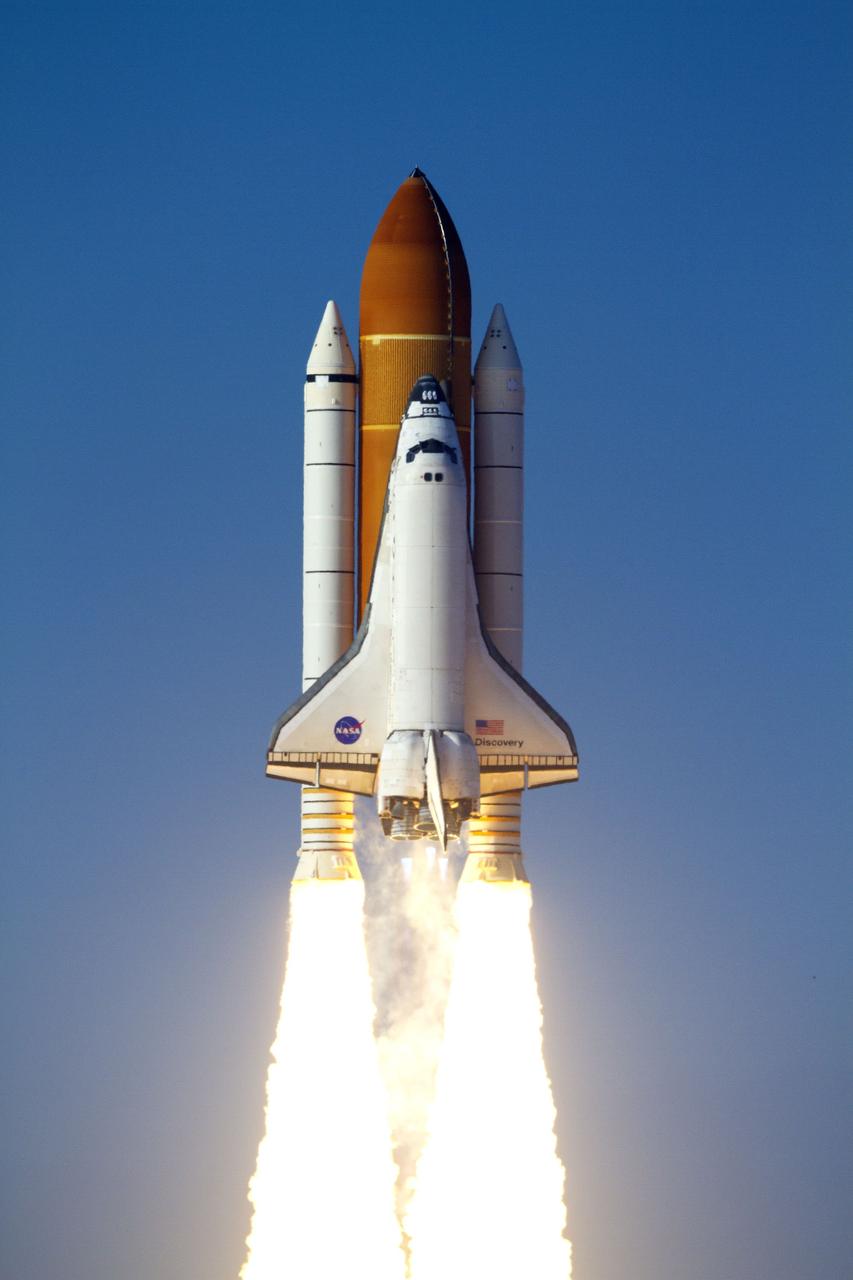
CAPE CANAVERAL, Fla. -- Space shuttle Discovery soars into orbit at 17,500 miles per hour atop twin columns of fire, embarking on its final scheduled mission, STS-133, to the International Space Station. Liftoff from launch Pad 39A at NASA's Kennedy Space Center in Florida occurred at 4:53 p.m. EST on Feb. 24. Discovery and its six-member crew are on a mission to deliver the Permanent Multipurpose Module, packed with supplies and critical spare parts, as well as Robonaut 2, the dexterous humanoid astronaut helper, to the International Space Station. Discovery is making its 39th mission and is scheduled to be retired following STS-133. This is the 133rd Space Shuttle Program mission, the 35th shuttle voyage to the space station and Discovery's final mission. For more information on the STS-133 mission, visit www.nasa.gov/mission_pages/shuttle/shuttlemissions/sts133/. Photo credit: NASA/Kenny Allen
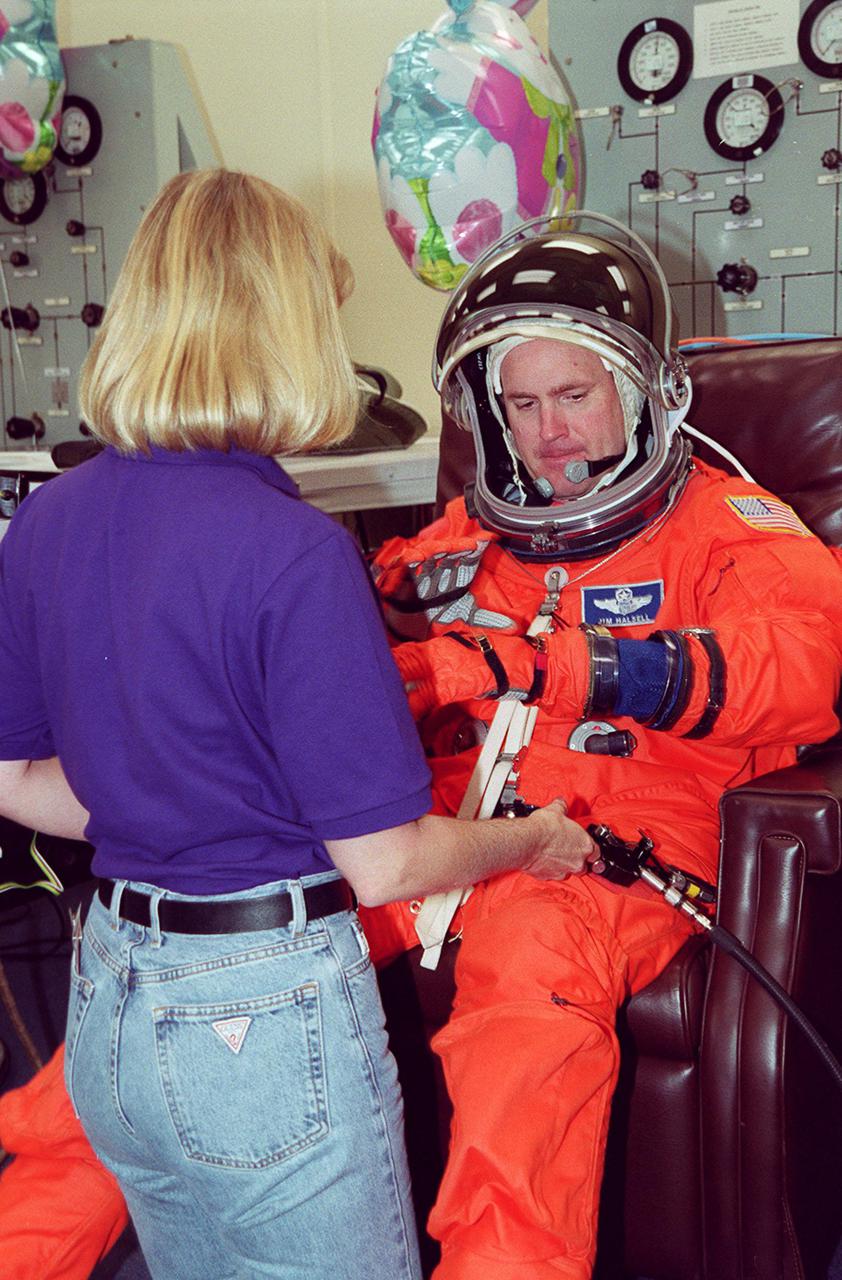
In the Operations and Checkout Building, STS-101 Commander James D. Halsell Jr. gets final check on his launch and entry suit before heading a second time to Launch Pad 39A and launch of Space Shuttle Atlantis. The previous day's launch attempt was scrubbed due to high cross winds at the Shuttle Landing Facility. The mission will take the crew to the International Space Station to deliver logistics and supplies and to prepare the Station for the arrival of the Zvezda Service Module, expected to be launched by Russia in July 2000. Also, the crew will conduct one space walk. This will be the third assembly flight to the Space Station. Liftoff is targeted for 3:52 p.m. EDT. The mission is expected to last about 10 days, with Atlantis landing at KSC Saturday, May 6, about 11:53 a.m. EDT
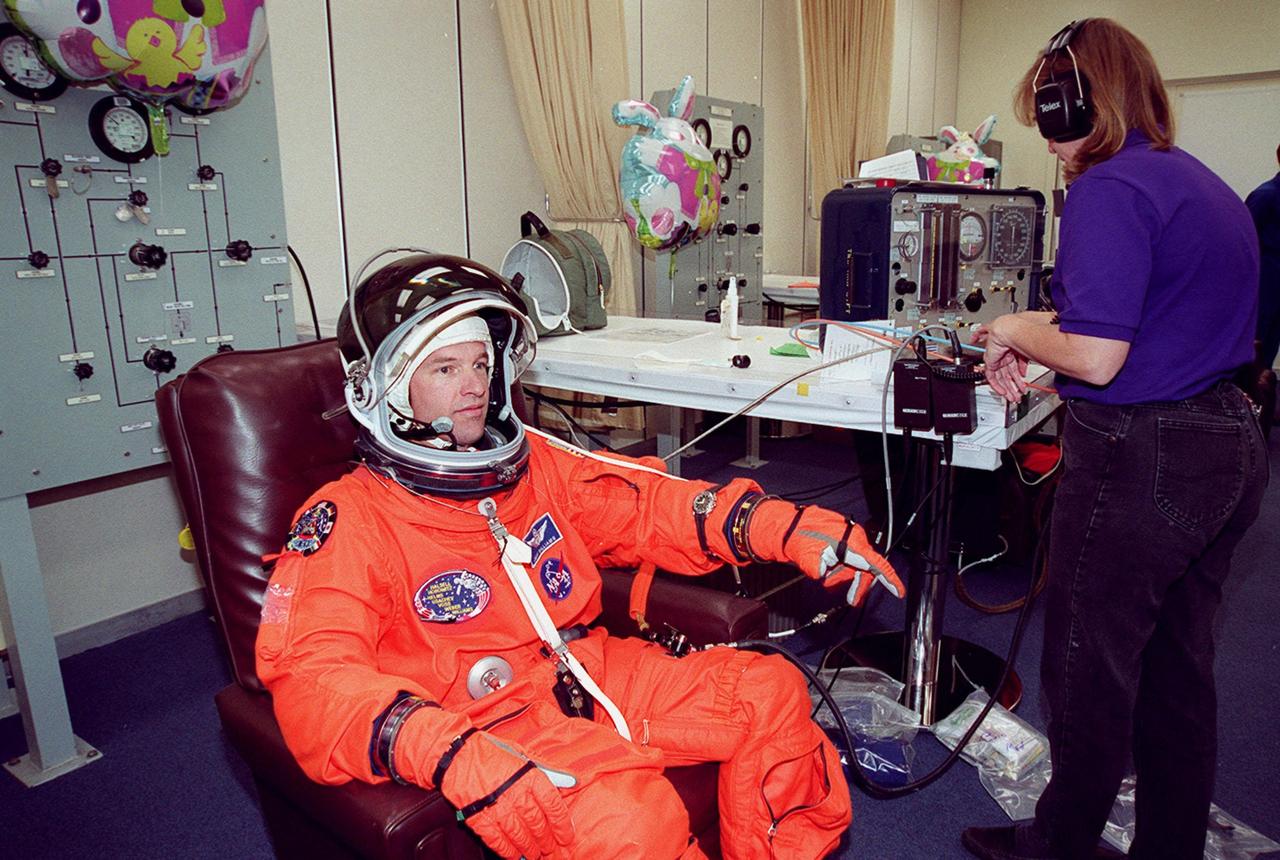
In the Operations and Checkout Building, STS-101 Mission Specialist Jeffrey N. Williams gets final check on his launch and entry suit before heading a second time to Launch Pad 39A and launch of Space Shuttle Atlantis. The previous day's launch attempt was scrubbed due to high cross winds at the Shuttle Landing Facility. The mission will take the crew to the International Space Station to deliver logistics and supplies and to prepare the Station for the arrival of the Zvezda Service Module, expected to be launched by Russia in July 2000. Also, the crew will conduct one space walk. This will be the third assembly flight to the Space Station. Liftoff is targeted for 3:52 p.m. EDT. The mission is expected to last about 10 days, with Atlantis landing at KSC Saturday, May 6, about 11:53 a.m. EDT
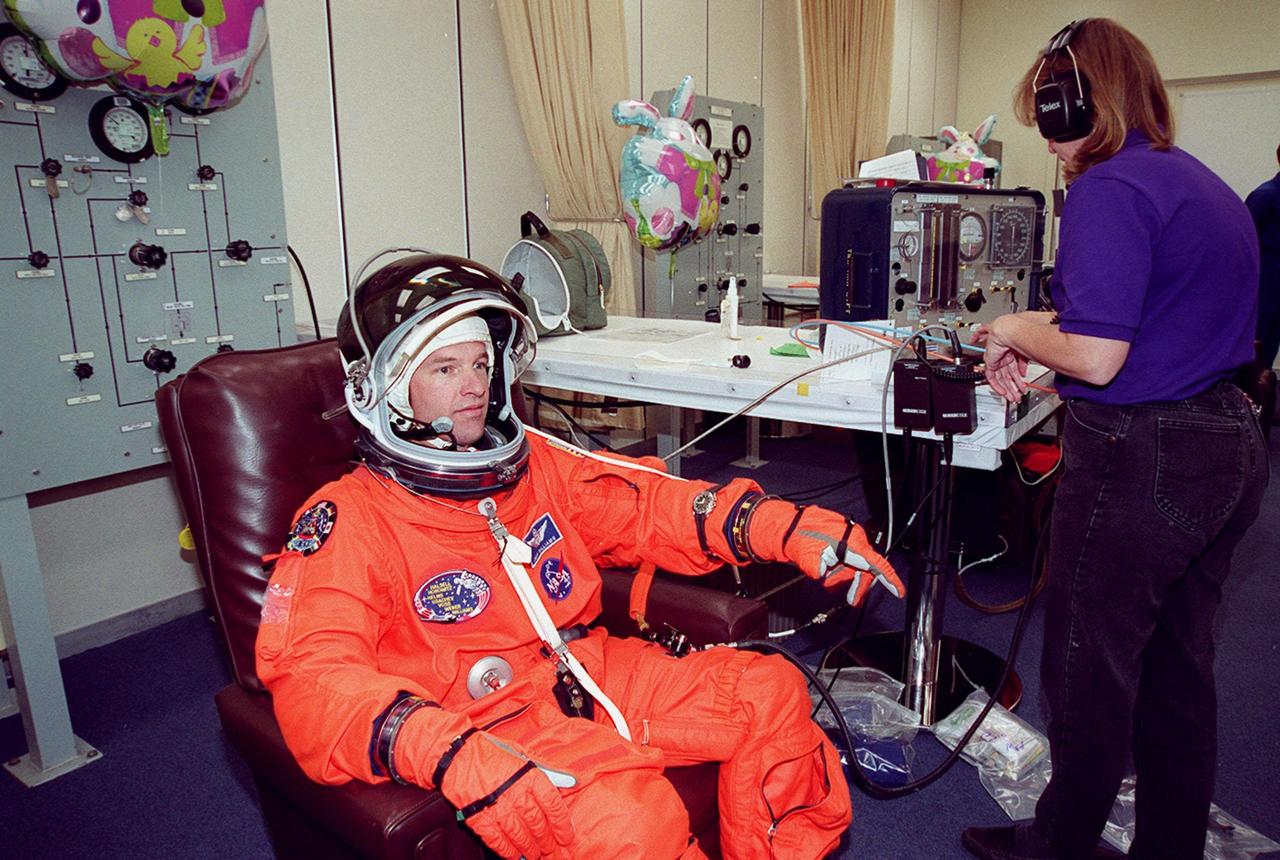
In the Operations and Checkout Building, STS-101 Mission Specialist Jeffrey N. Williams gets final check on his launch and entry suit before heading a second time to Launch Pad 39A and launch of Space Shuttle Atlantis. The previous day's launch attempt was scrubbed due to high cross winds at the Shuttle Landing Facility. The mission will take the crew to the International Space Station to deliver logistics and supplies and to prepare the Station for the arrival of the Zvezda Service Module, expected to be launched by Russia in July 2000. Also, the crew will conduct one space walk. This will be the third assembly flight to the Space Station. Liftoff is targeted for 3:52 p.m. EDT. The mission is expected to last about 10 days, with Atlantis landing at KSC Saturday, May 6, about 11:53 a.m. EDT
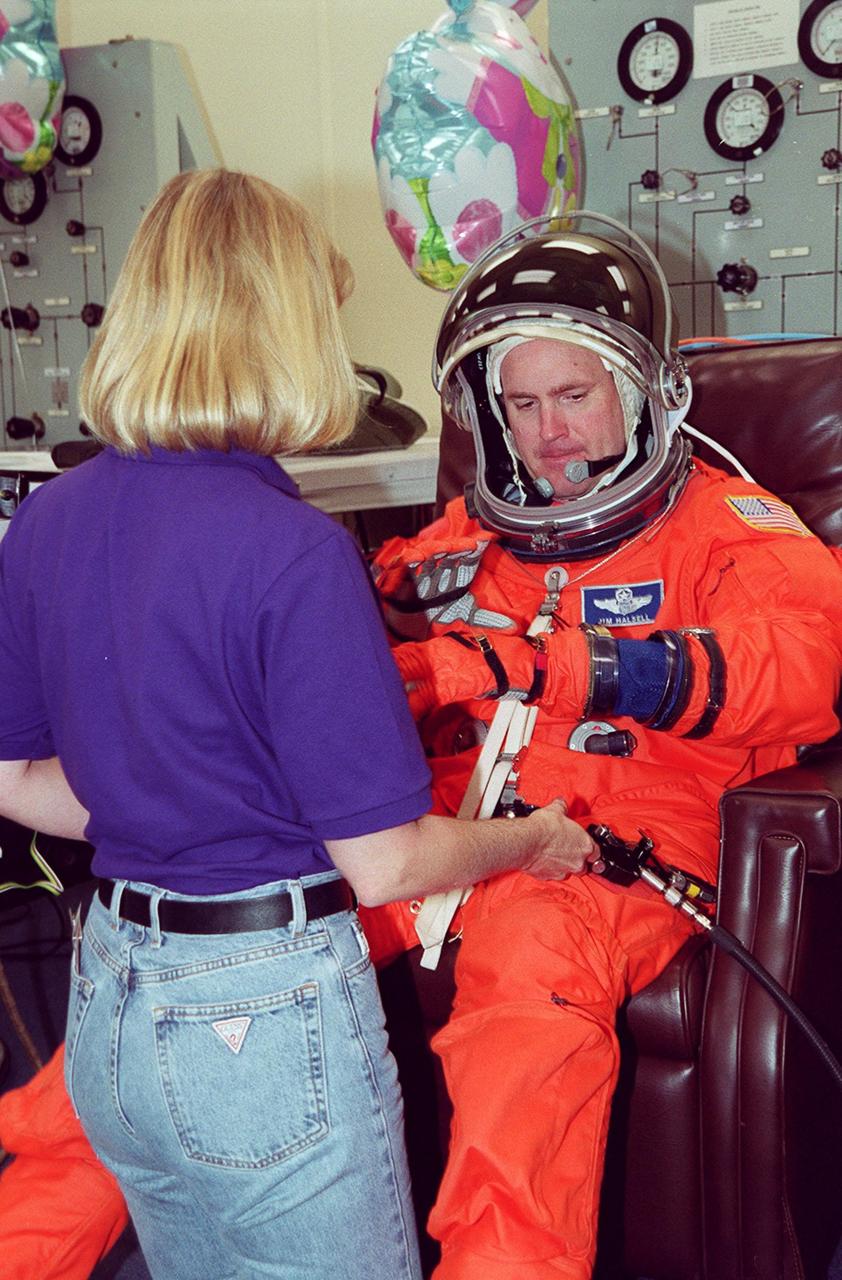
In the Operations and Checkout Building, STS-101 Commander James D. Halsell Jr. gets final check on his launch and entry suit before heading a second time to Launch Pad 39A and launch of Space Shuttle Atlantis. The previous day's launch attempt was scrubbed due to high cross winds at the Shuttle Landing Facility. The mission will take the crew to the International Space Station to deliver logistics and supplies and to prepare the Station for the arrival of the Zvezda Service Module, expected to be launched by Russia in July 2000. Also, the crew will conduct one space walk. This will be the third assembly flight to the Space Station. Liftoff is targeted for 3:52 p.m. EDT. The mission is expected to last about 10 days, with Atlantis landing at KSC Saturday, May 6, about 11:53 a.m. EDT
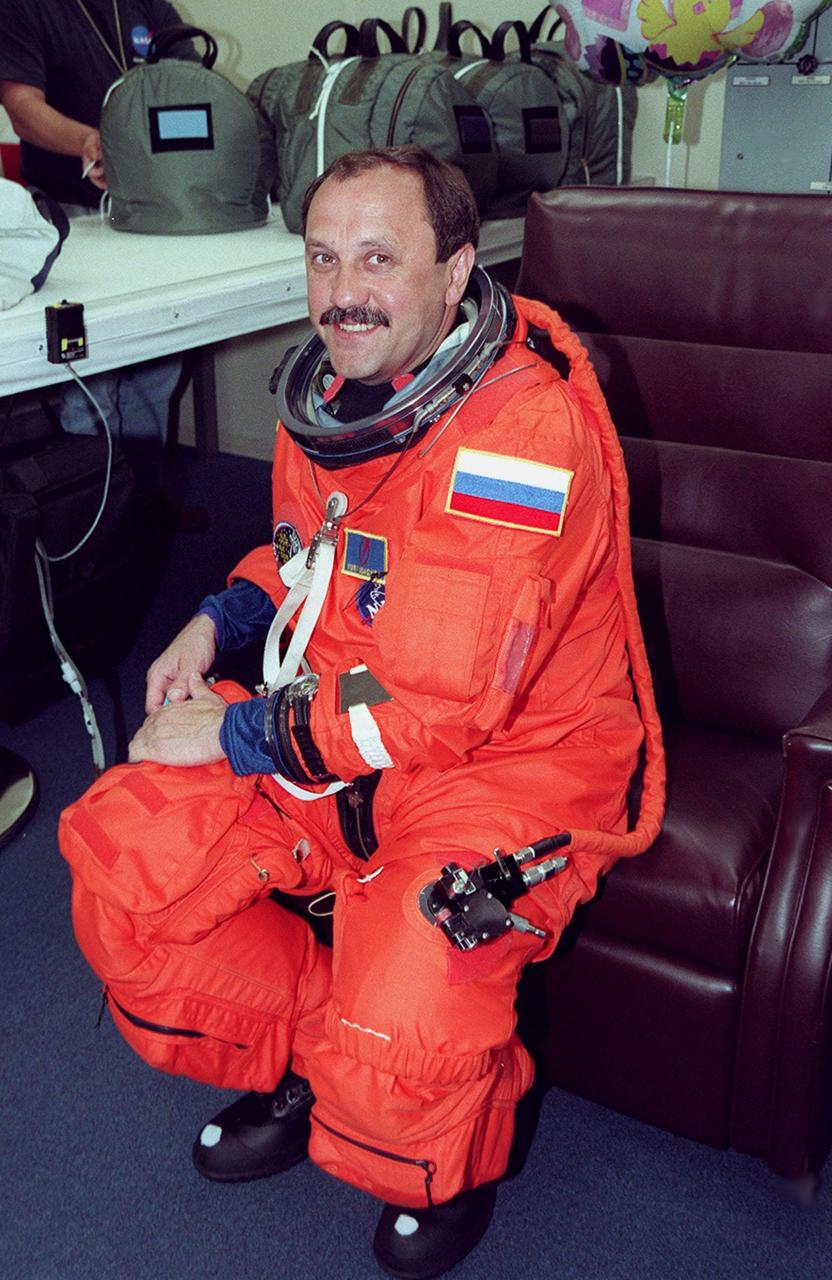
In the Operations and Checkout Building, STS-101 Mission Specialist Yury Usachev waits for final check of his launch and entry suit before heading a second time to Launch Pad 39A and launch of Space Shuttle Atlantis. The previous day's launch attempt was scrubbed due to high cross winds at the Shuttle Landing Facility. The mission will take the crew to the International Space Station to deliver logistics and supplies and to prepare the Station for the arrival of the Zvezda Service Module, expected to be launched by Russia in July 2000. Also, the crew will conduct one space walk. This will be the third assembly flight to the Space Station. Liftoff is targeted for 3:52 p.m. EDT. The mission is expected to last about 10 days, with Atlantis landing at KSC Saturday, May 6, about 11:53 a.m. EDT
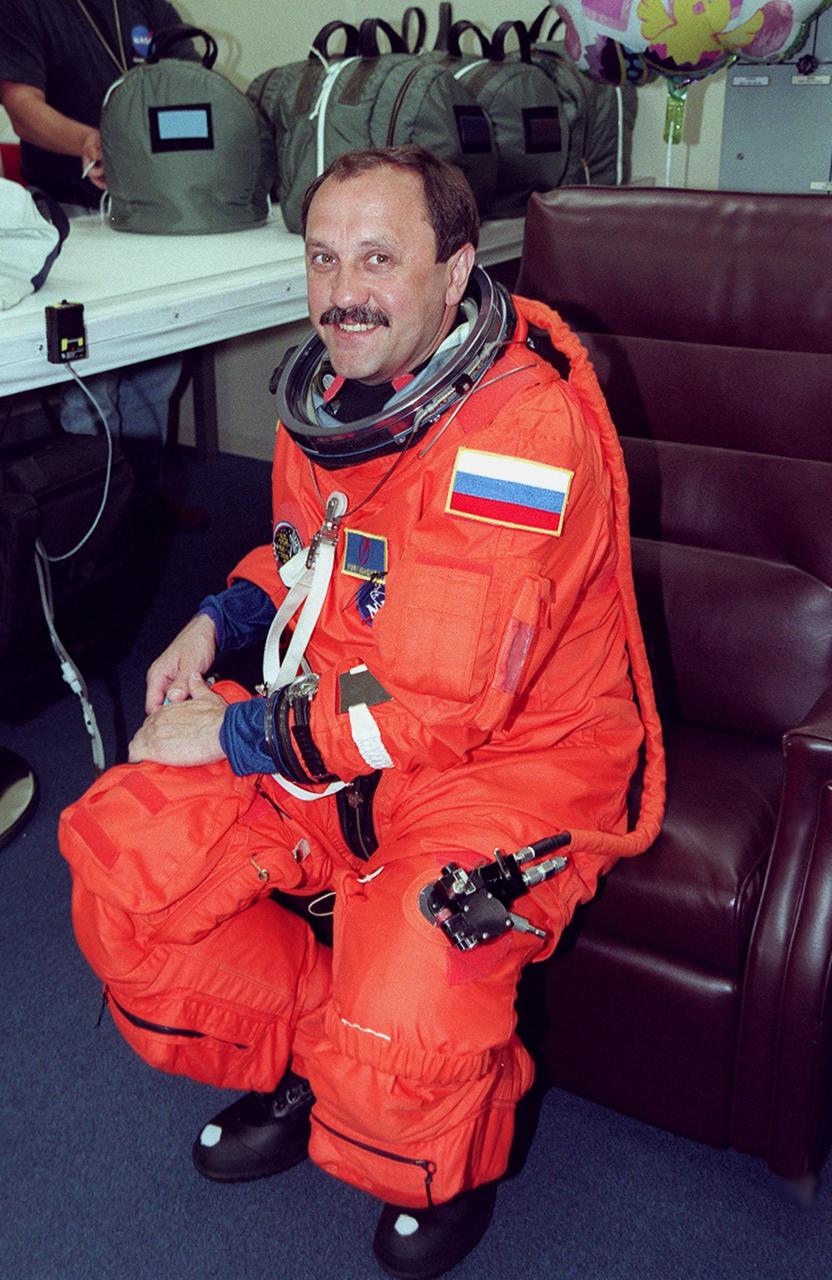
In the Operations and Checkout Building, STS-101 Mission Specialist Yury Usachev waits for final check of his launch and entry suit before heading a second time to Launch Pad 39A and launch of Space Shuttle Atlantis. The previous day's launch attempt was scrubbed due to high cross winds at the Shuttle Landing Facility. The mission will take the crew to the International Space Station to deliver logistics and supplies and to prepare the Station for the arrival of the Zvezda Service Module, expected to be launched by Russia in July 2000. Also, the crew will conduct one space walk. This will be the third assembly flight to the Space Station. Liftoff is targeted for 3:52 p.m. EDT. The mission is expected to last about 10 days, with Atlantis landing at KSC Saturday, May 6, about 11:53 a.m. EDT
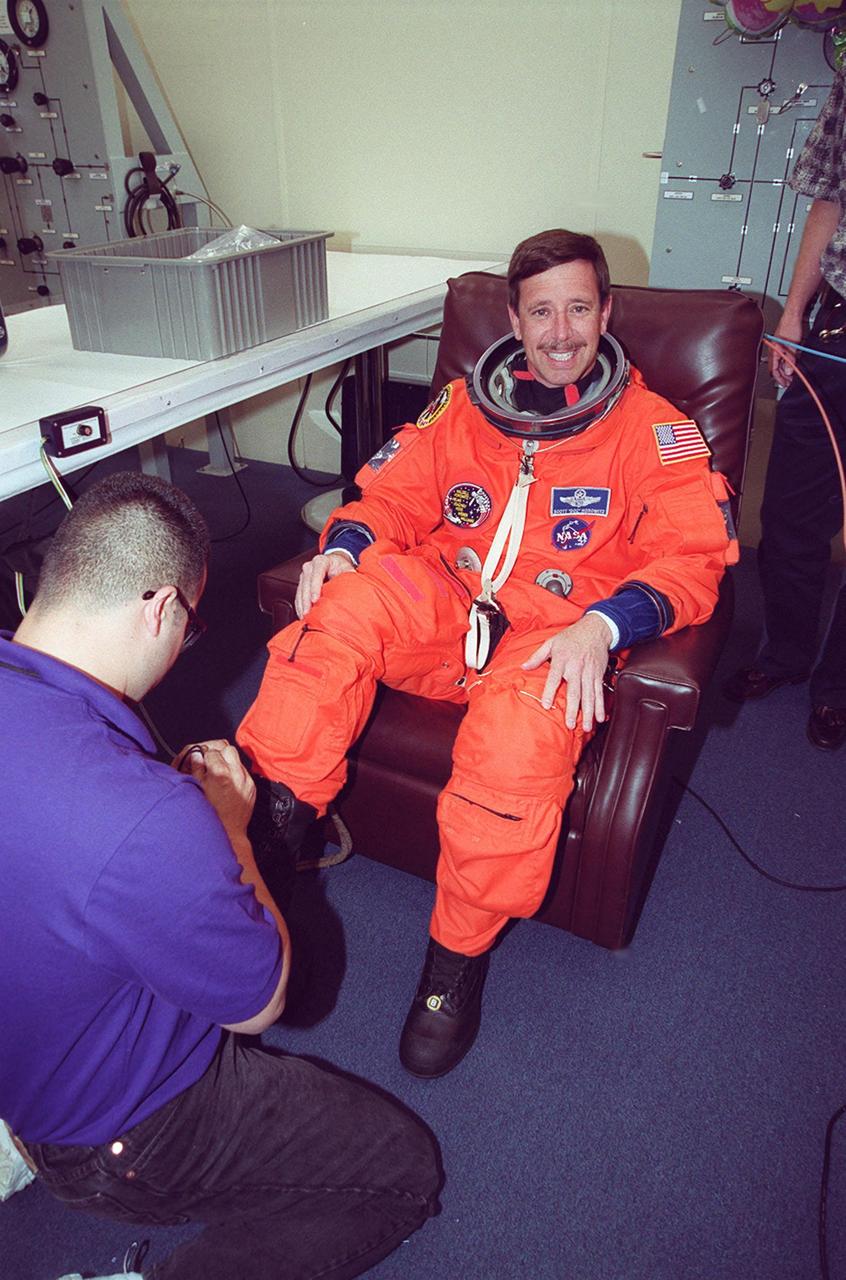
In the Operations and Checkout Building, STS-101 Pilot Scott J. Horowitz smiles while he finishes suiting up before heading a second time to Launch Pad 39A for launch of Space Shuttle Atlantis. The previous day's launch attempt was scrubbed due to high cross winds at the Shuttle Landing Facility. The mission will take the crew to the International Space Station to deliver logistics and supplies and to prepare the Station for the arrival of the Zvezda Service Module, expected to be launched by Russia in July 2000. Also, the crew will conduct one space walk. This will be the third assembly flight to the Space Station. Liftoff is targeted for 3:52 p.m. EDT. The mission is expected to last about 10 days, with Atlantis landing at KSC Saturday, May 6, about 11:53 a.m. EDT
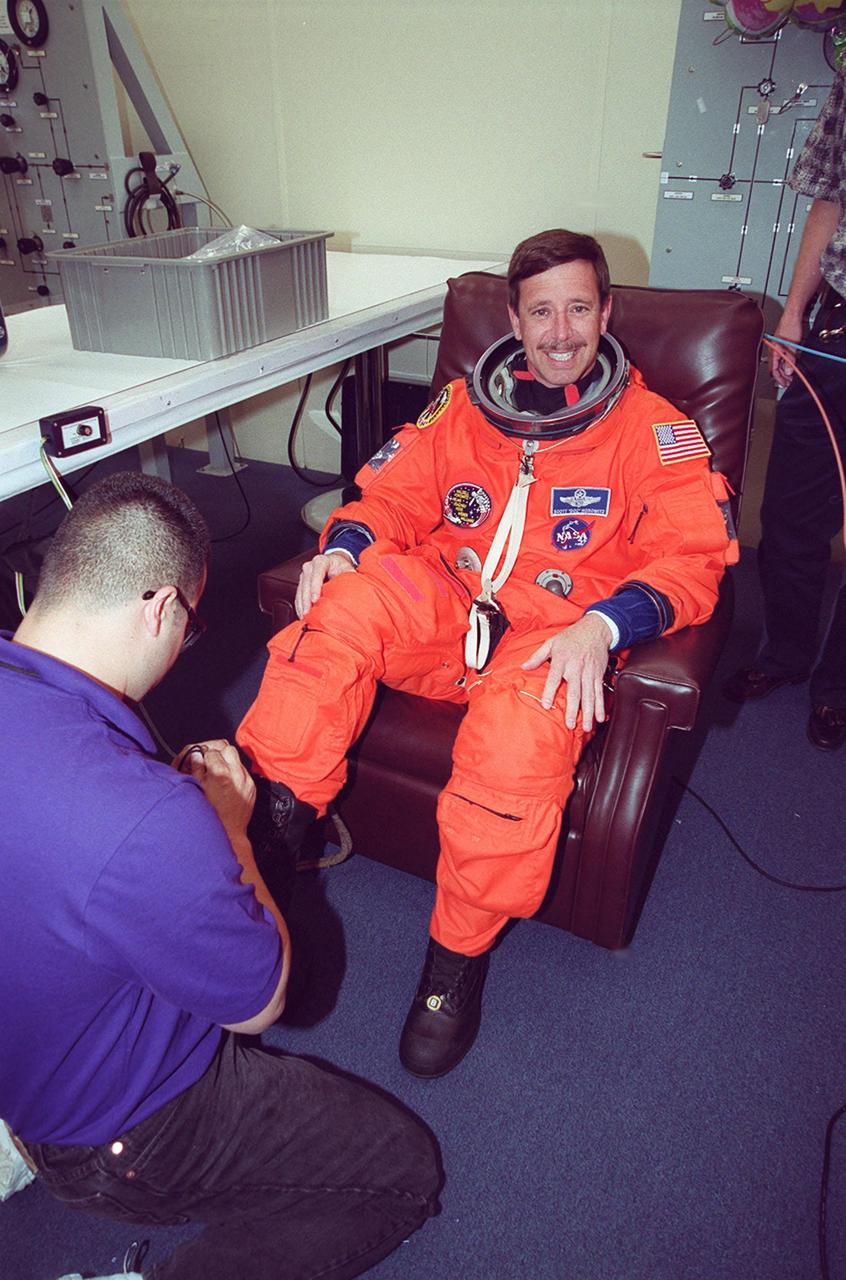
In the Operations and Checkout Building, STS-101 Pilot Scott J. Horowitz smiles while he finishes suiting up before heading a second time to Launch Pad 39A for launch of Space Shuttle Atlantis. The previous day's launch attempt was scrubbed due to high cross winds at the Shuttle Landing Facility. The mission will take the crew to the International Space Station to deliver logistics and supplies and to prepare the Station for the arrival of the Zvezda Service Module, expected to be launched by Russia in July 2000. Also, the crew will conduct one space walk. This will be the third assembly flight to the Space Station. Liftoff is targeted for 3:52 p.m. EDT. The mission is expected to last about 10 days, with Atlantis landing at KSC Saturday, May 6, about 11:53 a.m. EDT
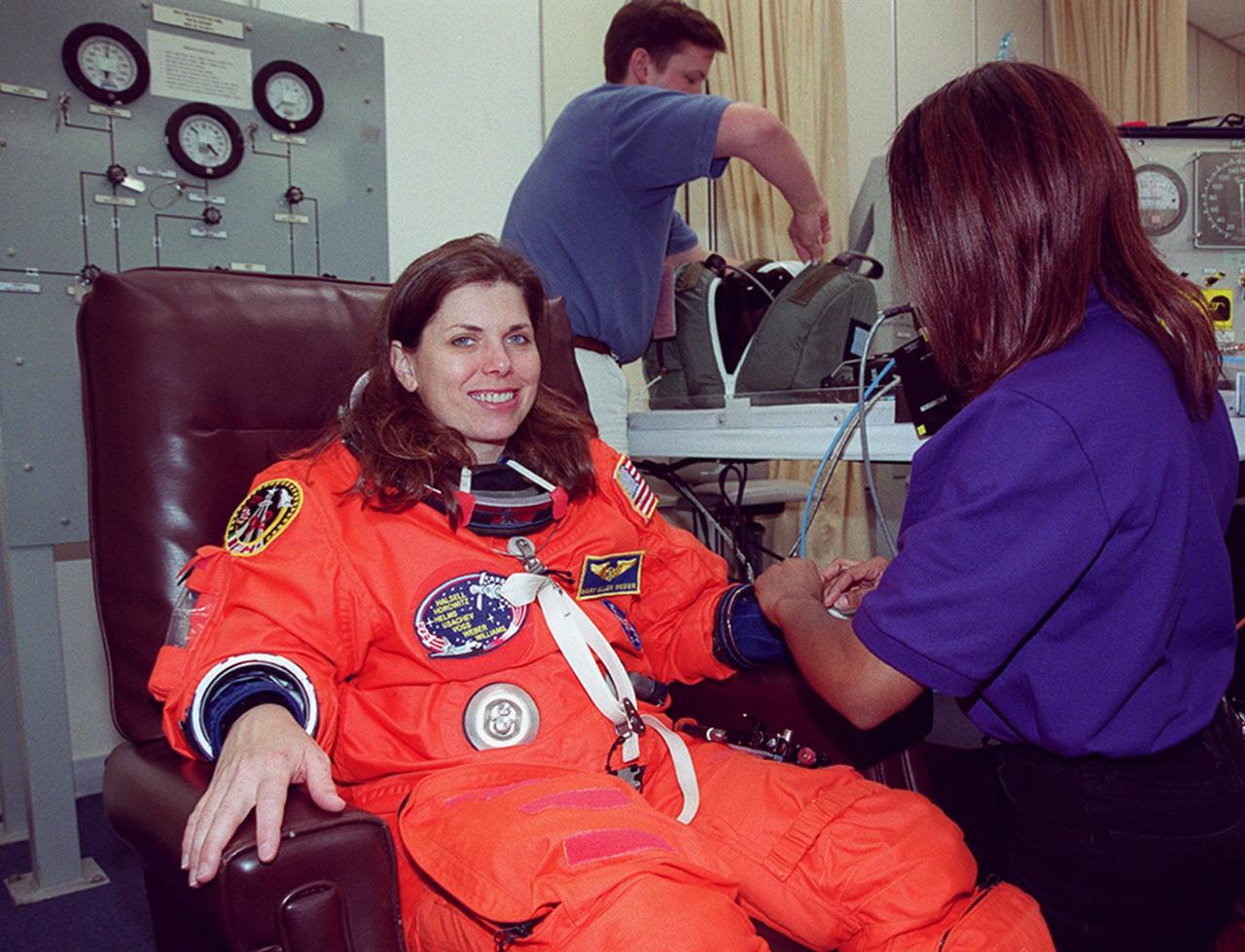
In the Operations and Checkout Building, STS-101 Mission Specialist Mary Ellen Weber is helped to suit up before heading for a second time to Launch Pad 39A and launch of Space Shuttle Atlantis. The previous day's launch attempt was scrubbed due to high cross winds at the Shuttle Landing Facility. The mission will take the crew to the International Space Station to deliver logistics and supplies and to prepare the Station for the arrival of the Zvezda Service Module, expected to be launched by Russia in July 2000. Also, the crew will conduct one space walk. This will be the third assembly flight to the Space Station. Liftoff is targeted for 3:52 p.m. EDT. The mission is expected to last about 10 days, with Atlantis landing at KSC Saturday, May 6, about 11:53 a.m. EDT
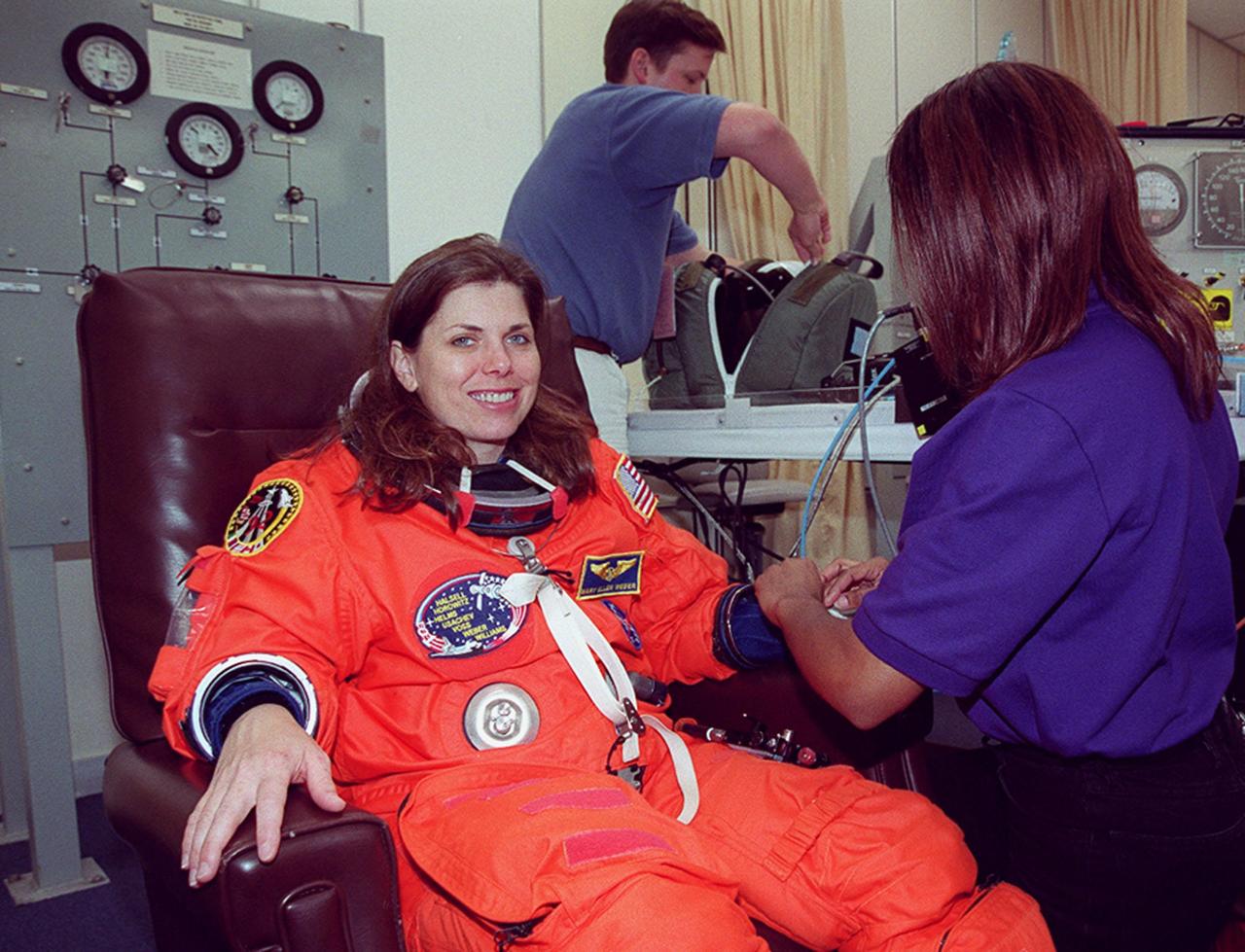
In the Operations and Checkout Building, STS-101 Mission Specialist Mary Ellen Weber is helped to suit up before heading for a second time to Launch Pad 39A and launch of Space Shuttle Atlantis. The previous day's launch attempt was scrubbed due to high cross winds at the Shuttle Landing Facility. The mission will take the crew to the International Space Station to deliver logistics and supplies and to prepare the Station for the arrival of the Zvezda Service Module, expected to be launched by Russia in July 2000. Also, the crew will conduct one space walk. This will be the third assembly flight to the Space Station. Liftoff is targeted for 3:52 p.m. EDT. The mission is expected to last about 10 days, with Atlantis landing at KSC Saturday, May 6, about 11:53 a.m. EDT
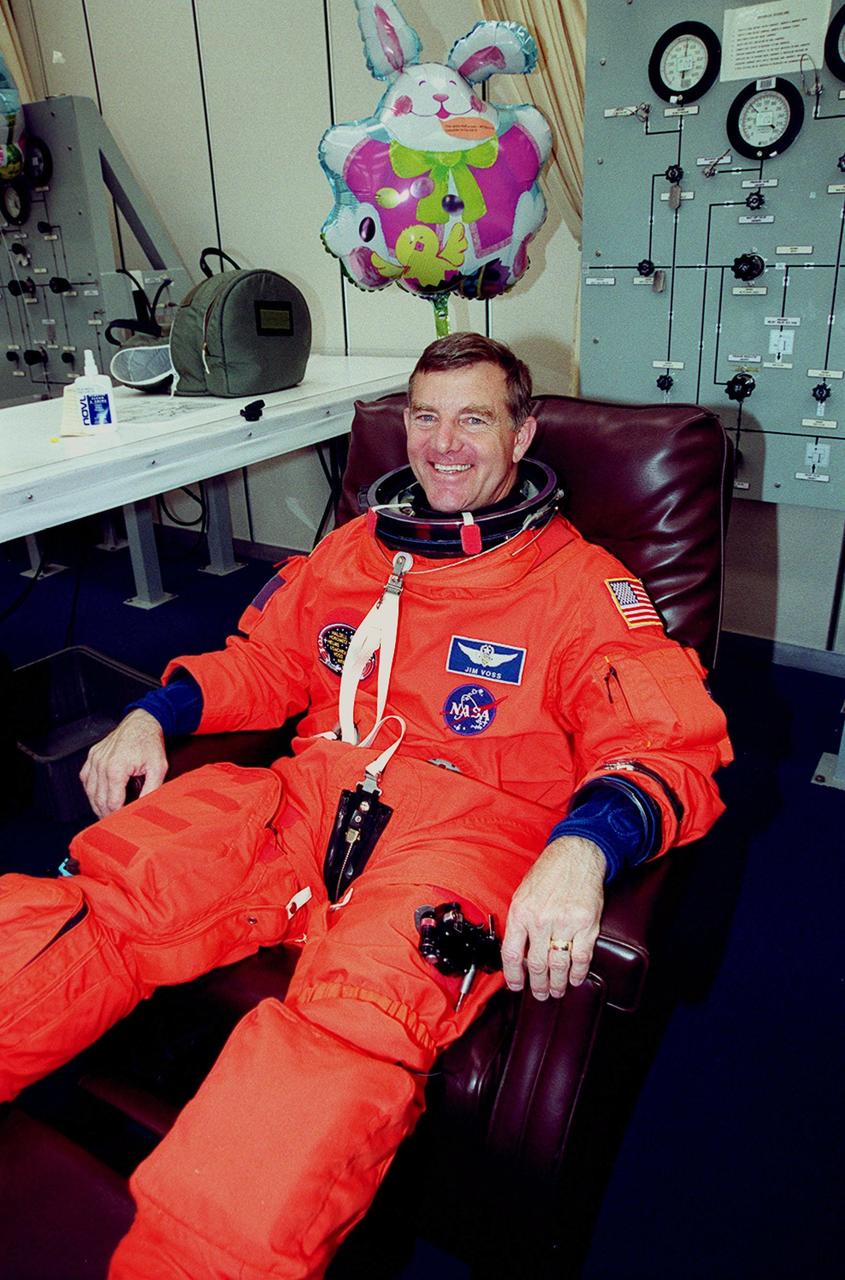
In the Operations and Checkout Building, STS-101 Mission Specialist James S. Voss waits to finish suiting up before heading a second time to Launch Pad 39A and launch of Space Shuttle Atlantis. The previous day's launch attempt was scrubbed due to high cross winds at the Shuttle Landing Facility. The mission will take the crew to the International Space Station to deliver logistics and supplies and to prepare the Station for the arrival of the Zvezda Service Module, expected to be launched by Russia in July 2000. Also, the crew will conduct one space walk. This will be the third assembly flight to the Space Station. Liftoff is targeted for 3:52 p.m. EDT. The mission is expected to last about 10 days, with Atlantis landing at KSC Saturday, May 6, about 11:53 a.m. EDT
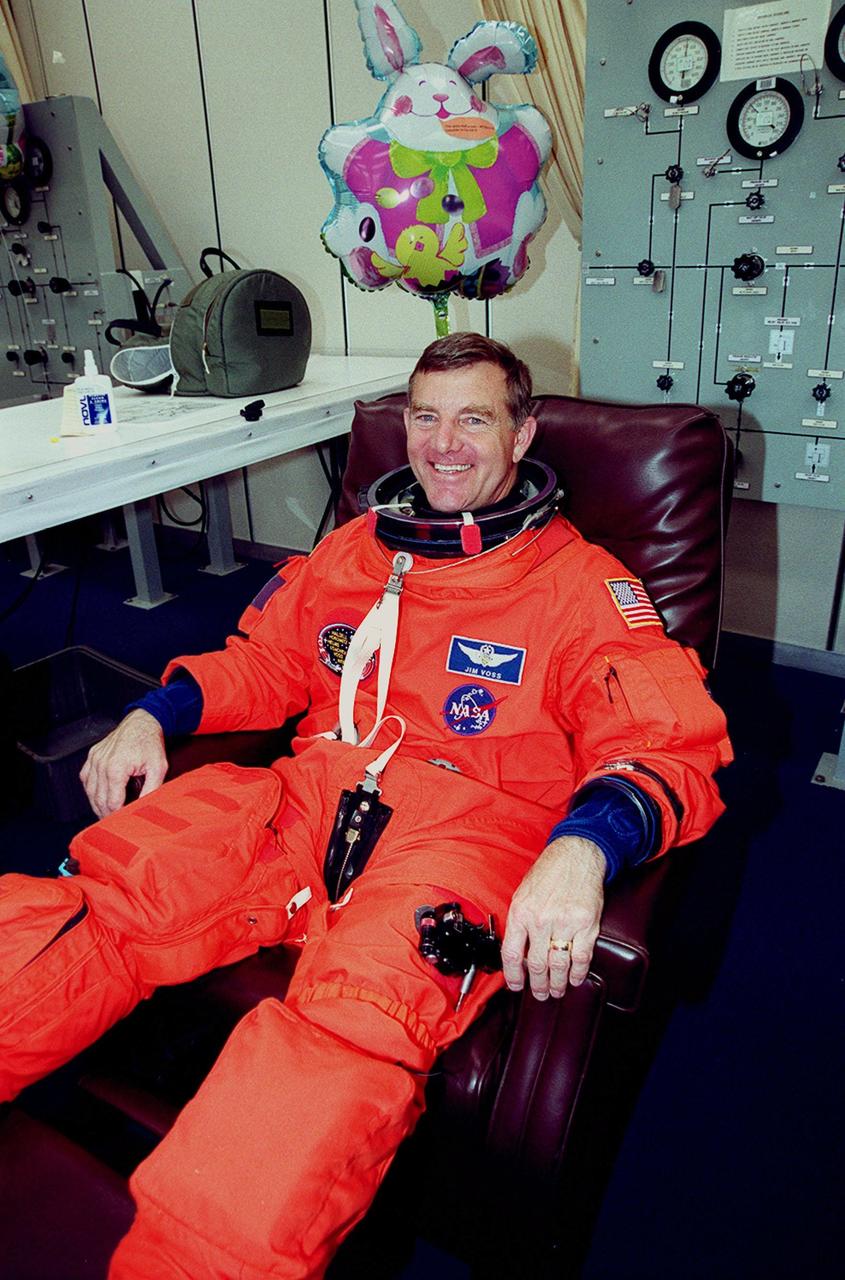
In the Operations and Checkout Building, STS-101 Mission Specialist James S. Voss waits to finish suiting up before heading a second time to Launch Pad 39A and launch of Space Shuttle Atlantis. The previous day's launch attempt was scrubbed due to high cross winds at the Shuttle Landing Facility. The mission will take the crew to the International Space Station to deliver logistics and supplies and to prepare the Station for the arrival of the Zvezda Service Module, expected to be launched by Russia in July 2000. Also, the crew will conduct one space walk. This will be the third assembly flight to the Space Station. Liftoff is targeted for 3:52 p.m. EDT. The mission is expected to last about 10 days, with Atlantis landing at KSC Saturday, May 6, about 11:53 a.m. EDT
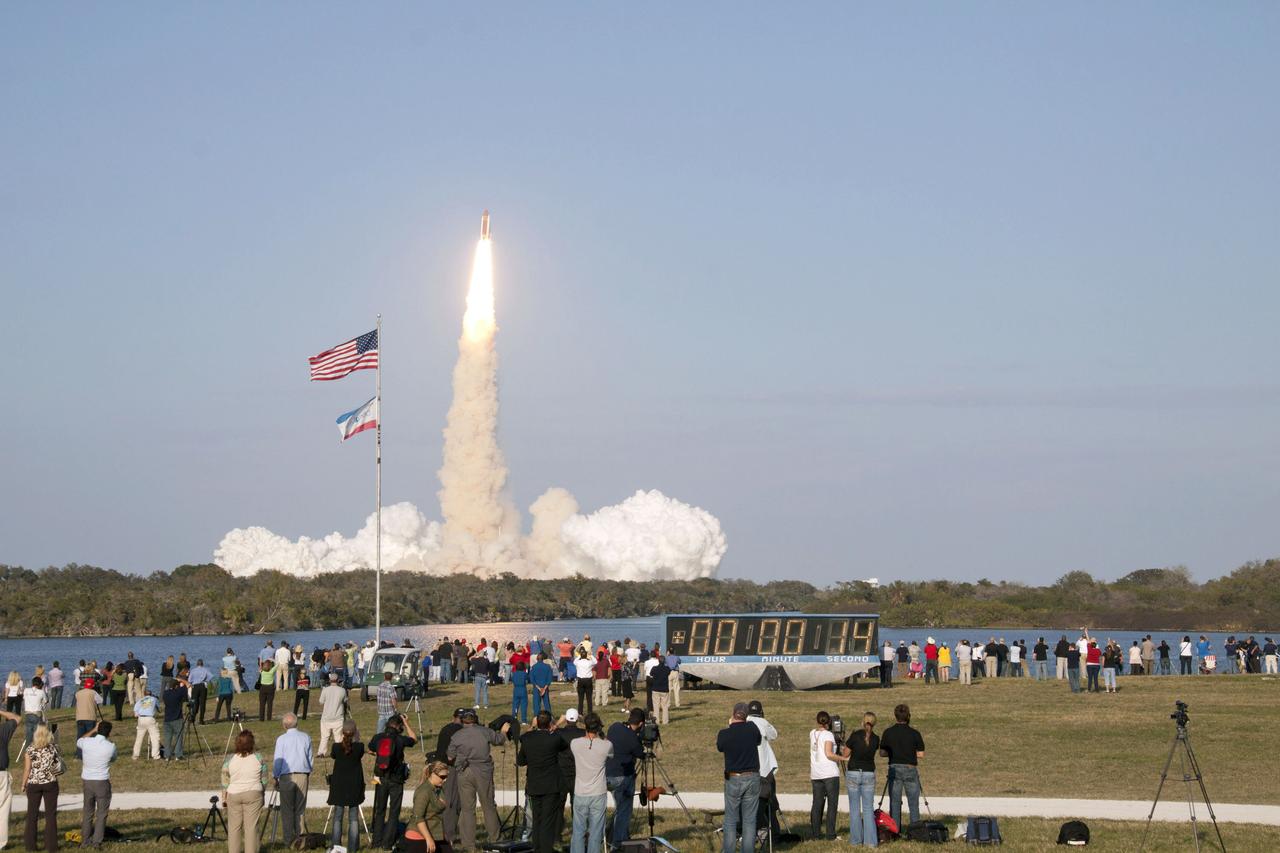
STS133-S-033 (24 Feb. 2011) --- Space shuttle Discovery and its six-member STS-133 crew head toward Earth orbit and rendezvous with the International Space Station. Liftoff was at 4:53 p.m. (EST) on Feb. 24, 2011, from Launch Pad 39A at NASA’s Kennedy Space Center. Onboard are NASA astronauts Steve Lindsey, commander; Eric Boe, pilot; Steve Bowen, Alvin Drew, Michael Barratt and Nicole Stott, all mission specialists. Discovery and its six-member crew are on a mission to deliver the Permanent Multipurpose Module, packed with supplies and critical spare parts, as well as Robonaut 2, the dexterous humanoid astronaut helper, to the International Space Station. Discovery is making its 39th mission and is scheduled to be retired following STS-133. This is the 133rd Space Shuttle Program mission and the 35th shuttle voyage to the space station. Photo credit: NASA or National Aeronautics and Space Administration
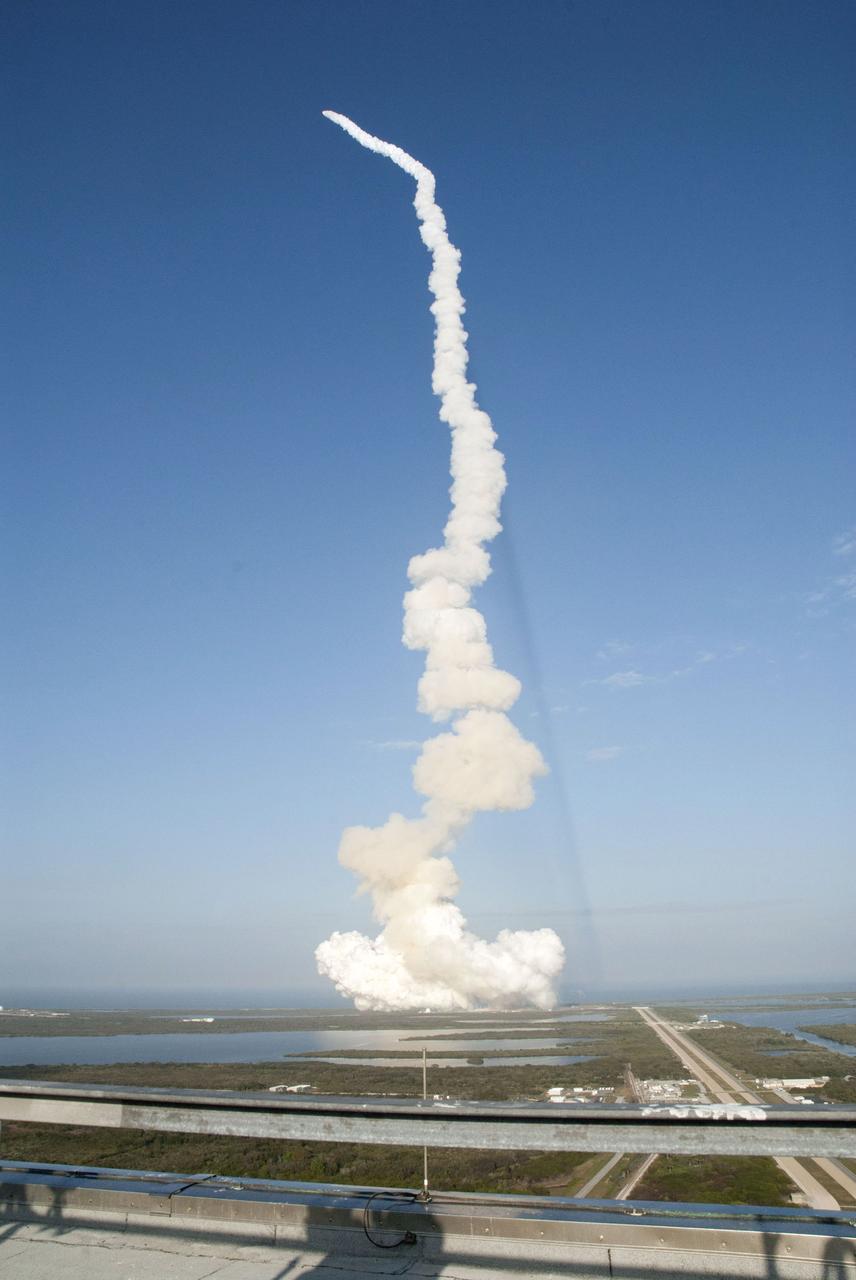
STS133-S-056 (24 Feb. 2011) --- Space shuttle Discovery and its six-member STS-133 crew head toward Earth orbit and rendezvous with the International Space Station. Liftoff was at 4:53 p.m. (EST) on Feb. 24, 2011, from Launch Pad 39A at NASA’s Kennedy Space Center. Onboard are NASA astronauts Steve Lindsey, commander; Eric Boe, pilot; Steve Bowen, Alvin Drew, Michael Barratt and Nicole Stott, all mission specialists. Discovery and its six-member crew are on a mission to deliver the Permanent Multipurpose Module, packed with supplies and critical spare parts, as well as Robonaut 2, the dexterous humanoid astronaut helper, to the International Space Station. Discovery is making its 39th mission and is scheduled to be retired following STS-133. This is the 133rd Space Shuttle Program mission and the 35th shuttle voyage to the space station. Photo credit: NASA or National Aeronautics and Space Administration
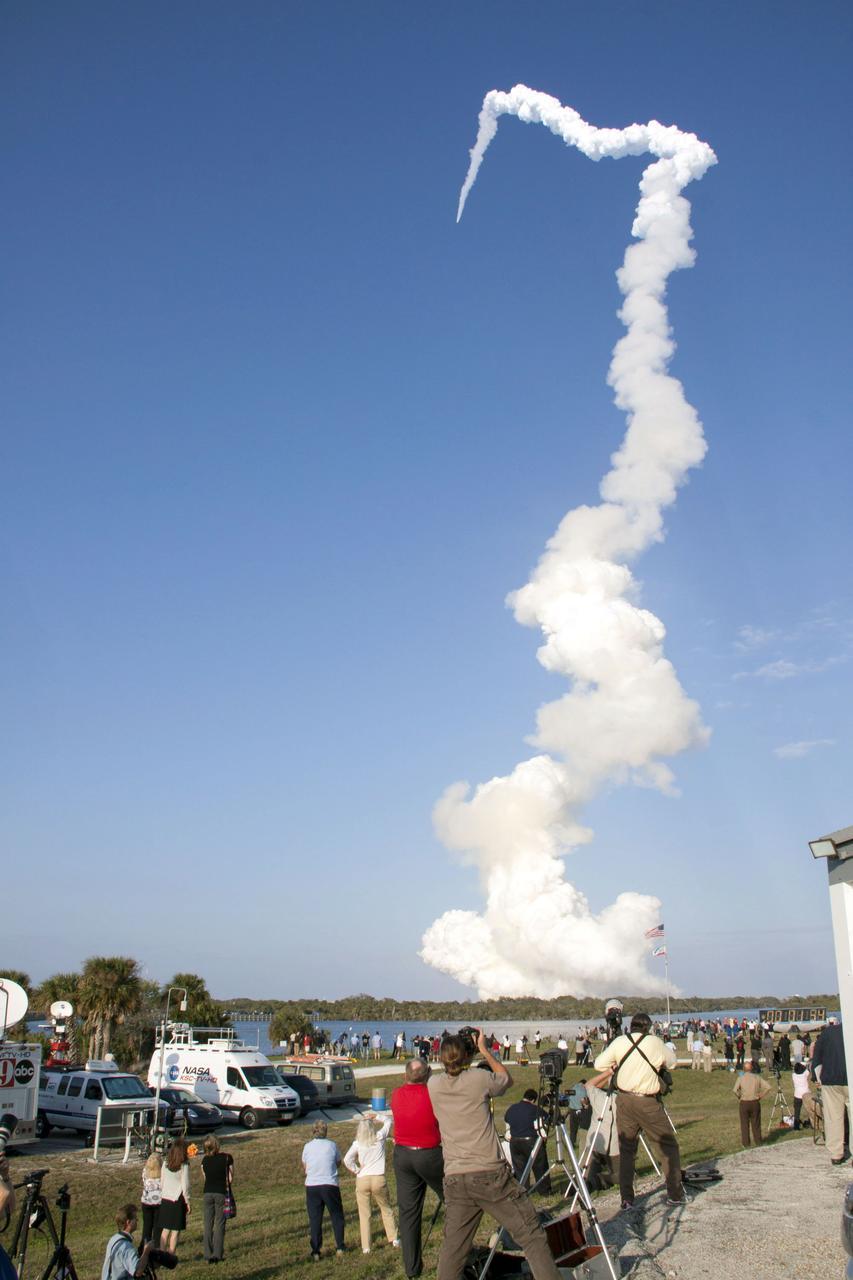
STS133-S-035 (24 Feb. 2011) --- Space shuttle Discovery and its six-member STS-133 crew head toward Earth orbit and rendezvous with the International Space Station. Liftoff was at 4:53 p.m. (EST) on Feb. 24, 2011, from Launch Pad 39A at NASA’s Kennedy Space Center. Onboard are NASA astronauts Steve Lindsey, commander; Eric Boe, pilot; Steve Bowen, Alvin Drew, Michael Barratt and Nicole Stott, all mission specialists. Discovery and its six-member crew are on a mission to deliver the Permanent Multipurpose Module, packed with supplies and critical spare parts, as well as Robonaut 2, the dexterous humanoid astronaut helper, to the International Space Station. Discovery is making its 39th mission and is scheduled to be retired following STS-133. This is the 133rd Space Shuttle Program mission and the 35th shuttle voyage to the space station. Photo credit: NASA or National Aeronautics and Space Administration
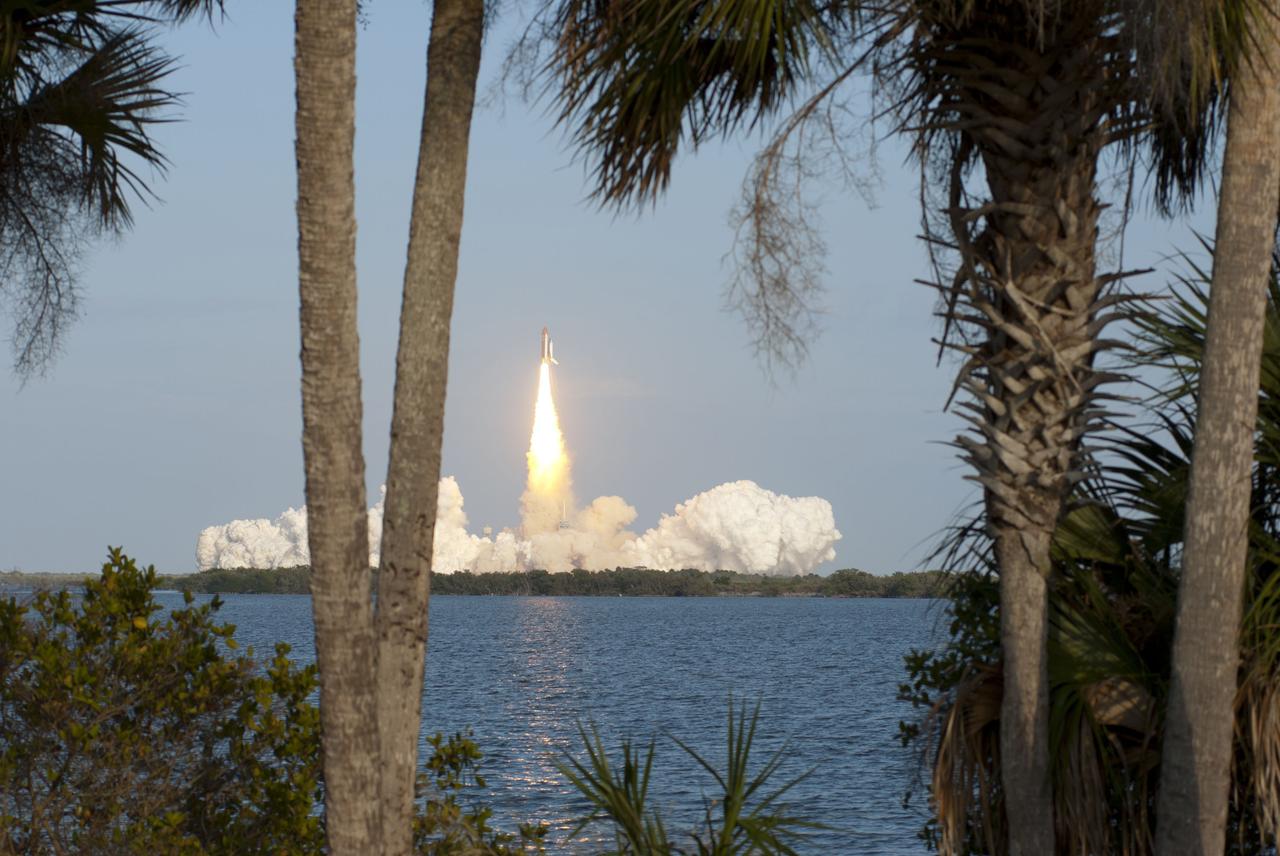
STS133-S-045 (24 Feb. 2011) --- Space shuttle Discovery and its six-member STS-133 crew head toward Earth orbit and rendezvous with the International Space Station. Liftoff was at 4:53 p.m. (EST) on Feb. 24, 2011, from Launch Pad 39A at NASA’s Kennedy Space Center. Onboard are NASA astronauts Steve Lindsey, commander; Eric Boe, pilot; Steve Bowen, Alvin Drew, Michael Barratt and Nicole Stott, all mission specialists. Discovery and its six-member crew are on a mission to deliver the Permanent Multipurpose Module, packed with supplies and critical spare parts, as well as Robonaut 2, the dexterous humanoid astronaut helper, to the International Space Station. Discovery is making its 39th mission and is scheduled to be retired following STS-133. This is the 133rd Space Shuttle Program mission and the 35th shuttle voyage to the space station. Photo credit: NASA or National Aeronautics and Space Administration
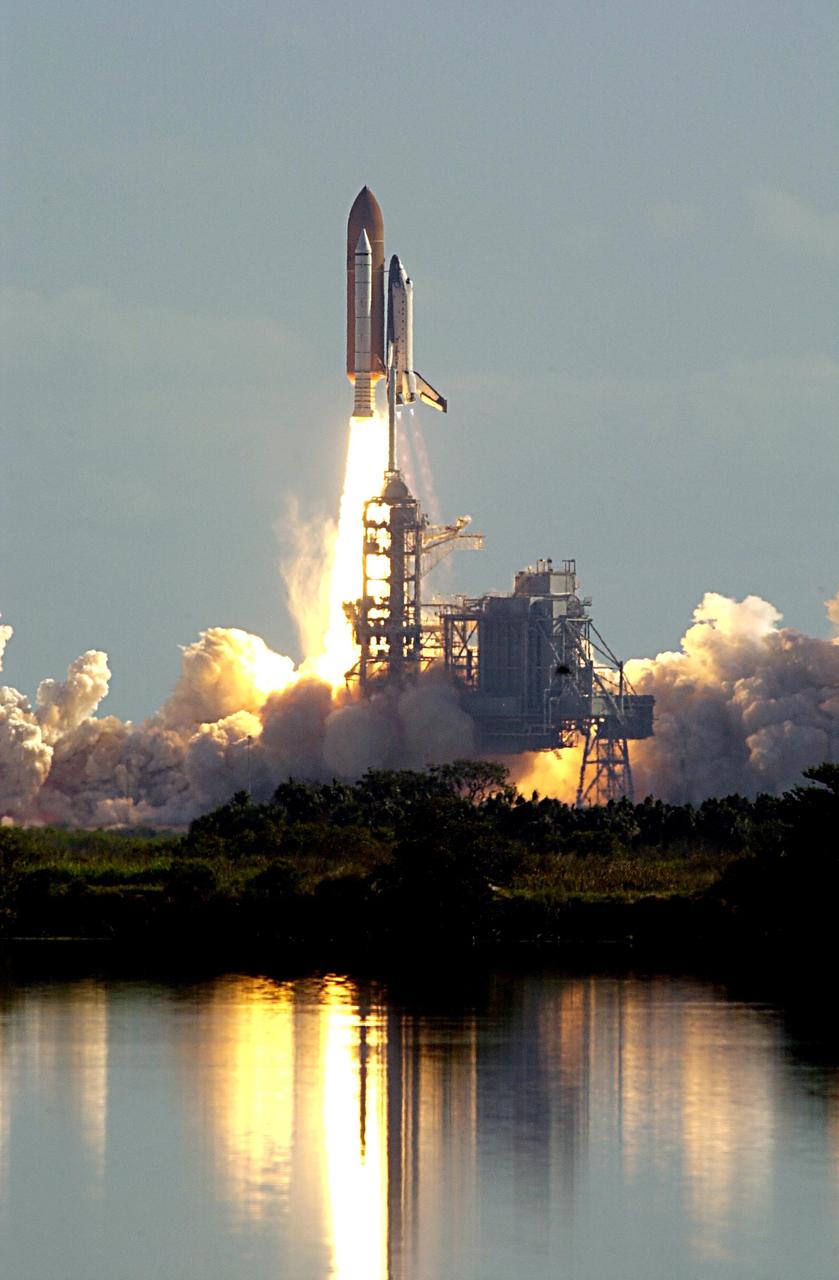
KENNEDY SPACE CENTER, FLA. -- As billows of smoke and steam roll across the landscape, the fiery launch of Space Shuttle Columbia on mission STS-107 is reflected in nearby water. Following a flawless and uneventful countdown, liftoff occurred on-time at 10:39 a.m. EST. The 16-day research mission will include FREESTAR (Fast Reaction Experiments Enabling Science, Technology, Applications and Research) and the SHI Research Double Module (SHI/RDM), known as SPACEHAB. Experiments on the module range from material sciences to life sciences. Landing is scheduled at about 8:53 a.m. EST on Saturday, Feb. 1. This mission is the first Shuttle mission of 2003. Mission STS-107 is the 28th flight of the orbiter Columbia and the 113th flight overall in NASA's Space Shuttle program.
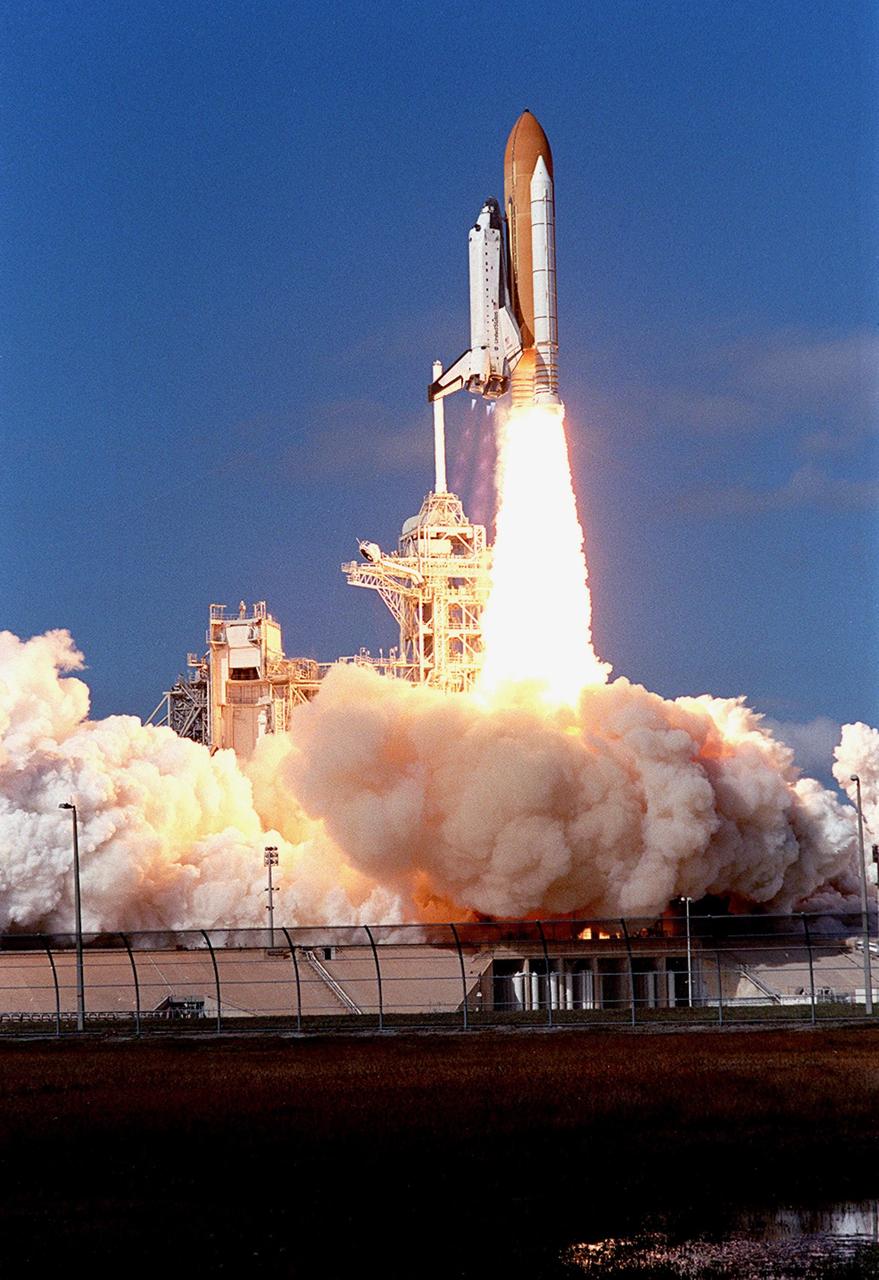
KENNEDY SPACE CENTER, FLA. - Space Shuttle Columbia leaps off Launch Pad 39A and the clouds of smoke and steam as it races toward space on mission STS-107. Following a flawless and uneventful countdown, liftoff occurred on-time at 10:39 a.m. EST. The 16-day research mission includes FREESTAR (Fast Reaction Experiments Enabling Science, Technology, Applications and Research) and the SHI Research Double Module (SHI/RDM), known as SPACEHAB. Experiments on the module range from material sciences to life sciences.. Landing of Columbia is scheduled at about 8:53 a.m. EST on Saturday, Feb. 1. This mission is the first Shuttle mission of 2003. Mission STS-107 is the 28th flight of the orbiter Columbia and the 113th flight overall in NASA's Space Shuttle program.
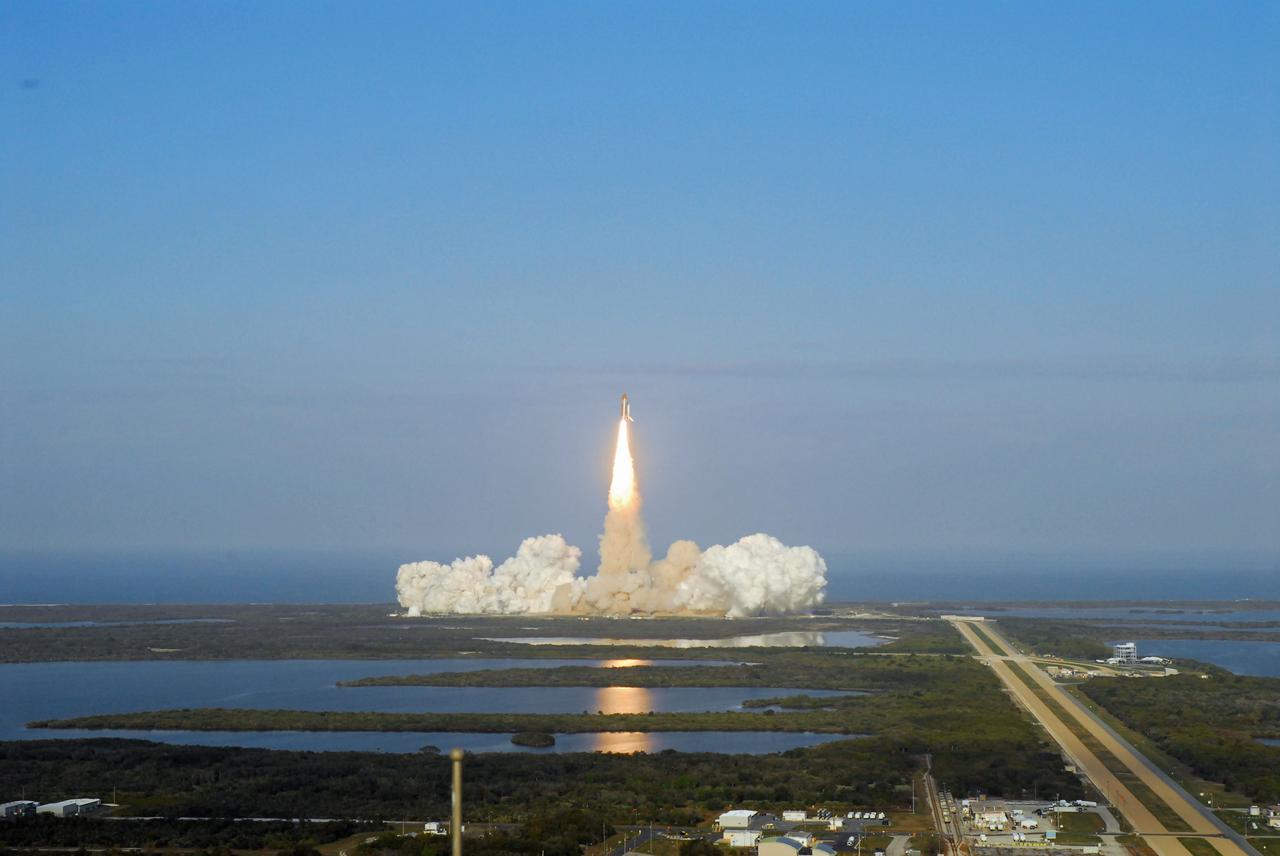
STS133-S-054 (24 Feb. 2011) --- Space shuttle Discovery and its six-member STS-133 crew head toward Earth orbit and rendezvous with the International Space Station. Liftoff was at 4:53 p.m. (EST) on Feb. 24, 2011, from Launch Pad 39A at NASA’s Kennedy Space Center. Onboard are NASA astronauts Steve Lindsey, commander; Eric Boe, pilot; Steve Bowen, Alvin Drew, Michael Barratt and Nicole Stott, all mission specialists. Discovery and its six-member crew are on a mission to deliver the Permanent Multipurpose Module, packed with supplies and critical spare parts, as well as Robonaut 2, the dexterous humanoid astronaut helper, to the International Space Station. Discovery is making its 39th mission and is scheduled to be retired following STS-133. This is the 133rd Space Shuttle Program mission and the 35th shuttle voyage to the space station. Photo credit: NASA or National Aeronautics and Space Administration
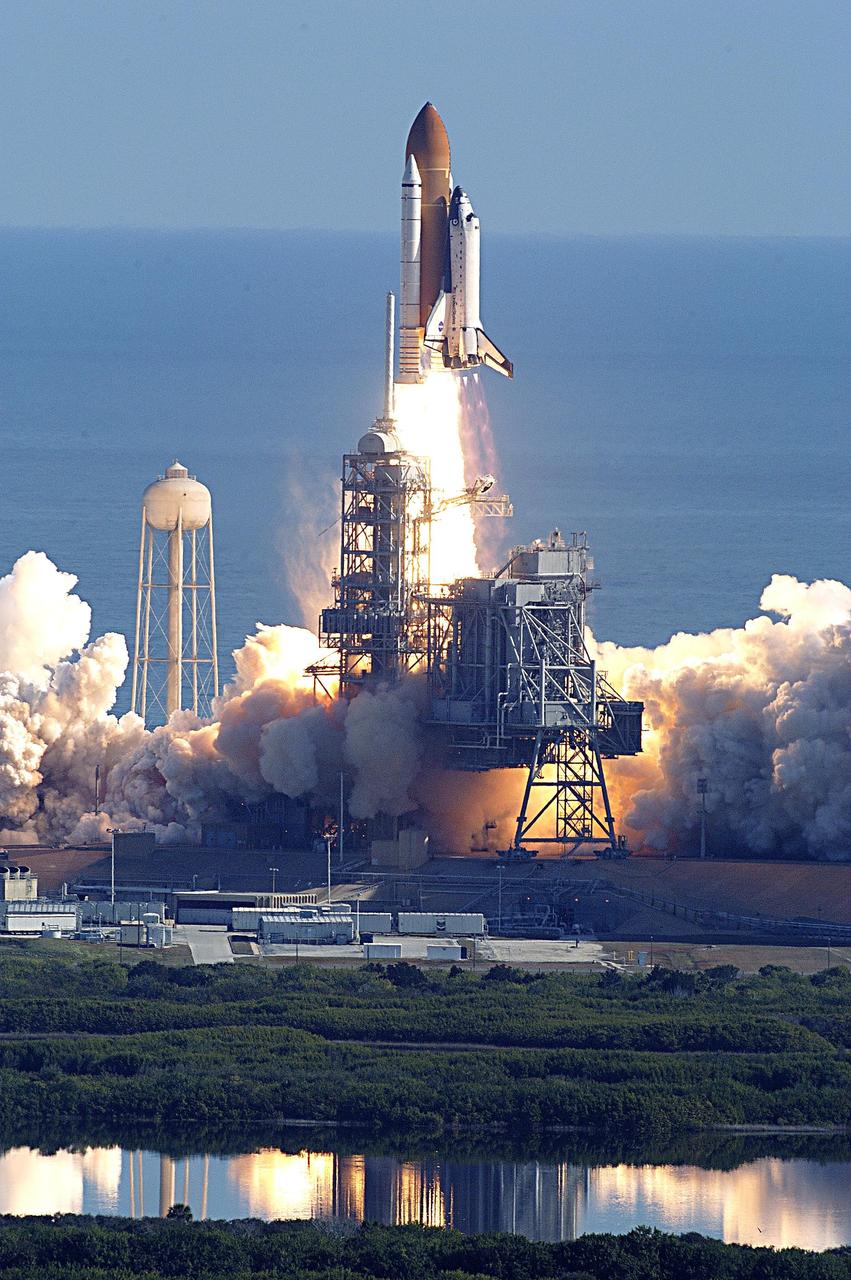
KENNEDY SPACE CENTER, FLA. -- Silhouetted against the blue Atlantic Ocean, Space Shuttle Columbia breaks free of the launch pad as it roars toward space on mission STS-107. Following a flawless and uneventful countdown, liftoff occurred on-time at 10:39 a.m. EST. The 16-day research mission will include FREESTAR (Fast Reaction Experiments Enabling Science, Technology, Applications and Research) and the SHI Research Double Module (SHI/RDM), known as SPACEHAB. Experiments on the module range from material sciences to life sciences. Landing is scheduled at about 8:53 a.m. EST on Saturday, Feb. 1. This mission is the first Shuttle mission of 2003. Mission STS-107 is the 28th flight of the orbiter Columbia and the 113th flight overall in NASA's Space Shuttle program.
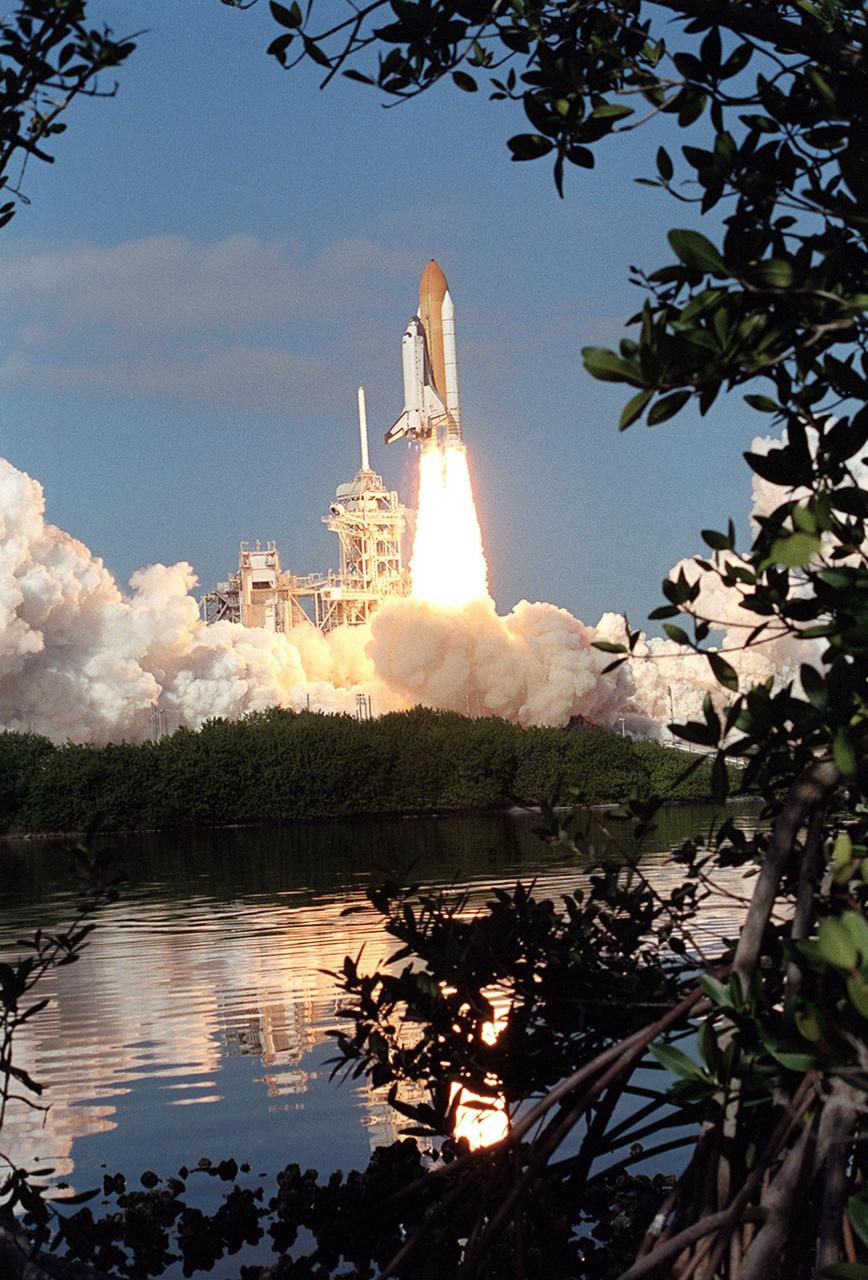
KENNEDY SPACE CENTER, FLA. - Viewed from among branches across from Launch Pad 39A, Space Shuttle Columbia leaps toward space on mission STS-107. Following a flawless and uneventful countdown, liftoff occurred on-time at 10:39 a.m. EST. The 16-day research mission includes FREESTAR (Fast Reaction Experiments Enabling Science, Technology, Applications and Research) and the SHI Research Double Module (SHI/RDM), known as SPACEHAB. Experiments on the module range from material sciences to life sciences.. Landing of Columbia is scheduled at about 8:53 a.m. EST on Saturday, Feb. 1. This mission is the first Shuttle mission of 2003. Mission STS-107 is the 28th flight of the orbiter Columbia and the 113th flight overall in NASA's Space Shuttle program.
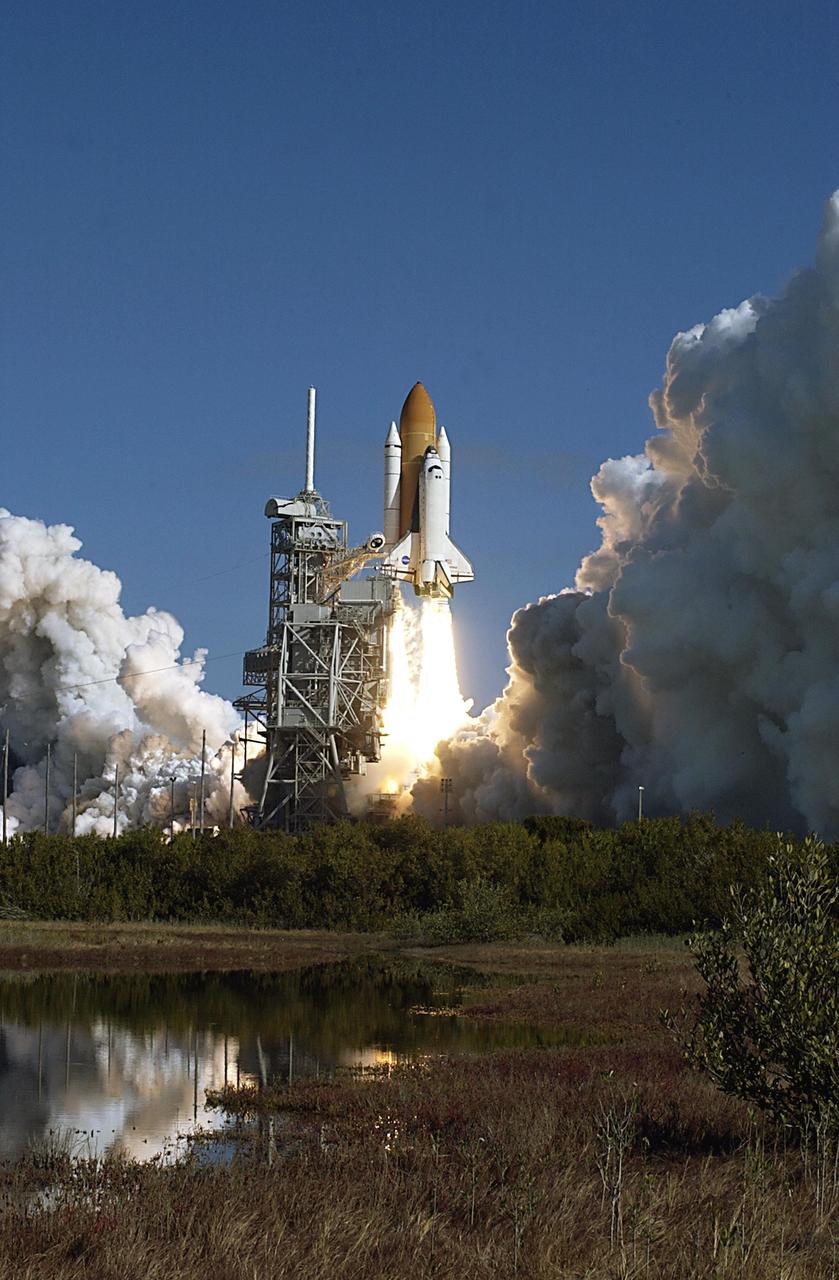
KENNEDY SPACE CENTER, FLA. -- A mirror image in nearby water reflects the perfect launch of Space Shuttle Columbia on a perfect Florida day. Following a flawless and uneventful countdown, liftoff of the Shuttle on mission STS-107 occurred on-time at 10:39 a.m. EST. The 16-day research mission will include FREESTAR (Fast Reaction Experiments Enabling Science, Technology, Applications and Research) and the SHI Research Double Module (SHI/RDM), known as SPACEHAB. Experiments on the module range from material sciences to life sciences.. Landing of Columbia is scheduled at about 8:53 a.m. EST on Saturday, Feb. 1. This mission is the first Shuttle mission of 2003. Mission STS-107 is the 28th flight of the orbiter Columbia and the 113th flight overall in NASA's Space Shuttle program.

STS133-S-055 (24 Feb. 2011) --- Space shuttle Discovery and its six-member STS-133 crew head toward Earth orbit and rendezvous with the International Space Station. Liftoff was at 4:53 p.m. (EST) on Feb. 24, 2011, from Launch Pad 39A at NASA’s Kennedy Space Center. Onboard are NASA astronauts Steve Lindsey, commander; Eric Boe, pilot; Steve Bowen, Alvin Drew, Michael Barratt and Nicole Stott, all mission specialists. Discovery and its six-member crew are on a mission to deliver the Permanent Multipurpose Module, packed with supplies and critical spare parts, as well as Robonaut 2, the dexterous humanoid astronaut helper, to the International Space Station. Discovery is making its 39th mission and is scheduled to be retired following STS-133. This is the 133rd Space Shuttle Program mission and the 35th shuttle voyage to the space station. Photo credit: NASA or National Aeronautics and Space Administration
![KENNEDY SPACE CENTER, FLA. - Seeming to be perched on twin columns of fire, Space Shuttle Columbia leaps off Launch Pad 39A and races toward space on missions STS-107. Following a flawless and uneventful countdown, liftoff occurred on-time at 10:39 a.m. EST. The 16-day research mission will include FREESTAR (Fast Reaction Experiments Enabling Science, Technology, Applications and Research) and the SHI Research Double Module (SHI/RDM), known as SPACEHAB. Experiments on the module range from material sciences to life sciences.. Landing of Columbia is scheduled at about 8:53 a.m. EST on Saturday, Feb. 1. This mission is the first Shuttle mission of 2003. Mission STS-107 is the 28th flight of the orbiter Columbia and the 113th flight overall in NASA's Space Shuttle program. [Photo courtesy of Scott Andrews]](https://images-assets.nasa.gov/image/KSC-03pd0138/KSC-03pd0138~medium.jpg)
KENNEDY SPACE CENTER, FLA. - Seeming to be perched on twin columns of fire, Space Shuttle Columbia leaps off Launch Pad 39A and races toward space on missions STS-107. Following a flawless and uneventful countdown, liftoff occurred on-time at 10:39 a.m. EST. The 16-day research mission will include FREESTAR (Fast Reaction Experiments Enabling Science, Technology, Applications and Research) and the SHI Research Double Module (SHI/RDM), known as SPACEHAB. Experiments on the module range from material sciences to life sciences.. Landing of Columbia is scheduled at about 8:53 a.m. EST on Saturday, Feb. 1. This mission is the first Shuttle mission of 2003. Mission STS-107 is the 28th flight of the orbiter Columbia and the 113th flight overall in NASA's Space Shuttle program. [Photo courtesy of Scott Andrews]
![KENNEDY SPACE CENTER, FLA. -- As billows of smoke and steam roll across the landscape, the fiery launch of Space Shuttle Columbia on mission STS-107 is reflected in nearby water. Following a flawless and uneventful countdown, liftoff occurred on-time at 10:39 a.m. EST. The 16-day research mission will include FREESTAR (Fast Reaction Experiments Enabling Science, Technology, Applications and Research) and the SHI Research Double Module (SHI/RDM), known as SPACEHAB. Experiments on the module range from material sciences to life sciences. Landing is scheduled at about 8:53 a.m. EST on Saturday, Feb. 1. This mission is the first Shuttle mission of 2003. Mission STS-107 is the 28th flight of the orbiter Columbia and the 113th flight overall in NASA's Space Shuttle program. [Photo courtesy of Scott Andrews]](https://images-assets.nasa.gov/image/KSC-03pd0133/KSC-03pd0133~medium.jpg)
KENNEDY SPACE CENTER, FLA. -- As billows of smoke and steam roll across the landscape, the fiery launch of Space Shuttle Columbia on mission STS-107 is reflected in nearby water. Following a flawless and uneventful countdown, liftoff occurred on-time at 10:39 a.m. EST. The 16-day research mission will include FREESTAR (Fast Reaction Experiments Enabling Science, Technology, Applications and Research) and the SHI Research Double Module (SHI/RDM), known as SPACEHAB. Experiments on the module range from material sciences to life sciences. Landing is scheduled at about 8:53 a.m. EST on Saturday, Feb. 1. This mission is the first Shuttle mission of 2003. Mission STS-107 is the 28th flight of the orbiter Columbia and the 113th flight overall in NASA's Space Shuttle program. [Photo courtesy of Scott Andrews]
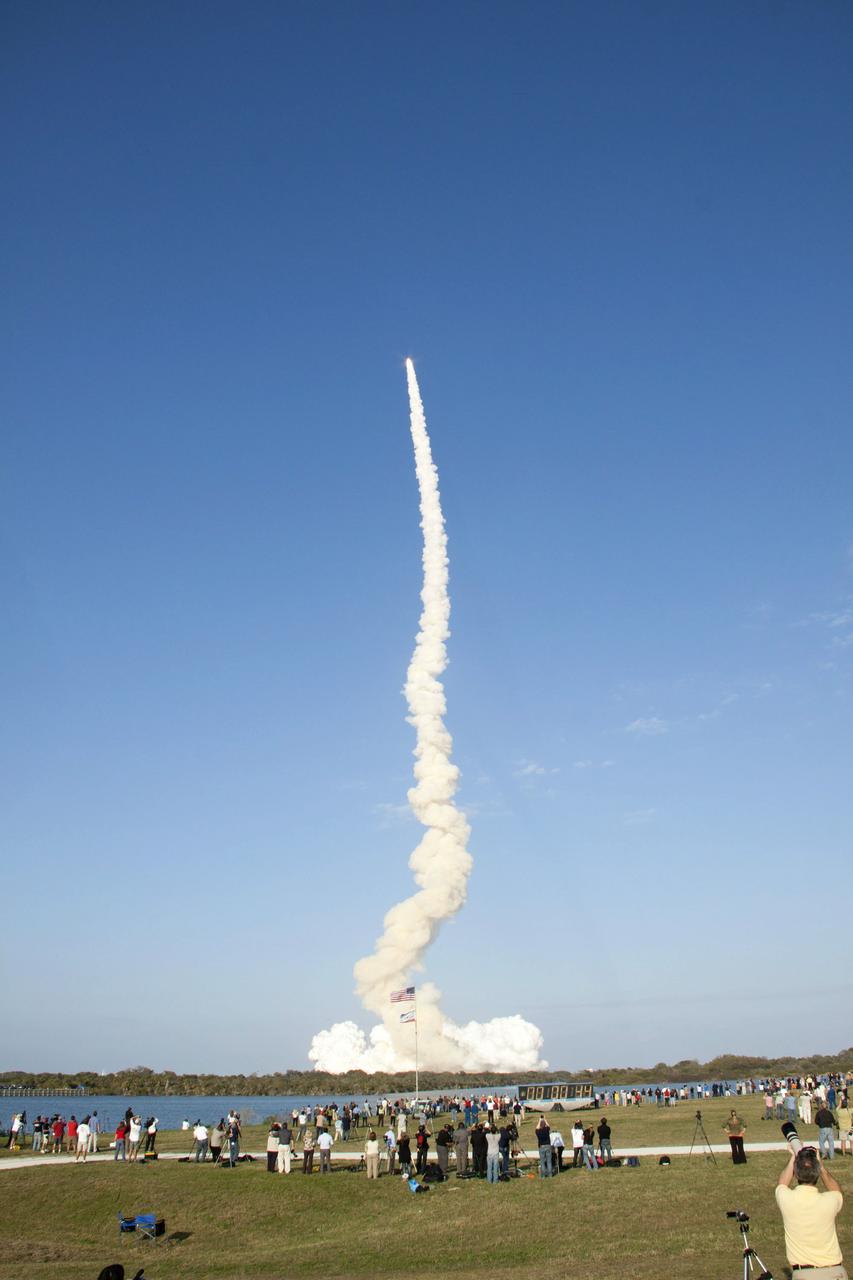
STS133-S-034 (24 Feb. 2011) --- Space shuttle Discovery and its six-member STS-133 crew head toward Earth orbit and rendezvous with the International Space Station. Liftoff was at 4:53 p.m. (EST) on Feb. 24, 2011, from Launch Pad 39A at NASA’s Kennedy Space Center. Onboard are NASA astronauts Steve Lindsey, commander; Eric Boe, pilot; Steve Bowen, Alvin Drew, Michael Barratt and Nicole Stott, all mission specialists. Discovery and its six-member crew are on a mission to deliver the Permanent Multipurpose Module, packed with supplies and critical spare parts, as well as Robonaut 2, the dexterous humanoid astronaut helper, to the International Space Station. Discovery is making its 39th mission and is scheduled to be retired following STS-133. This is the 133rd Space Shuttle Program mission and the 35th shuttle voyage to the space station. Photo credit: NASA or National Aeronautics and Space Administration
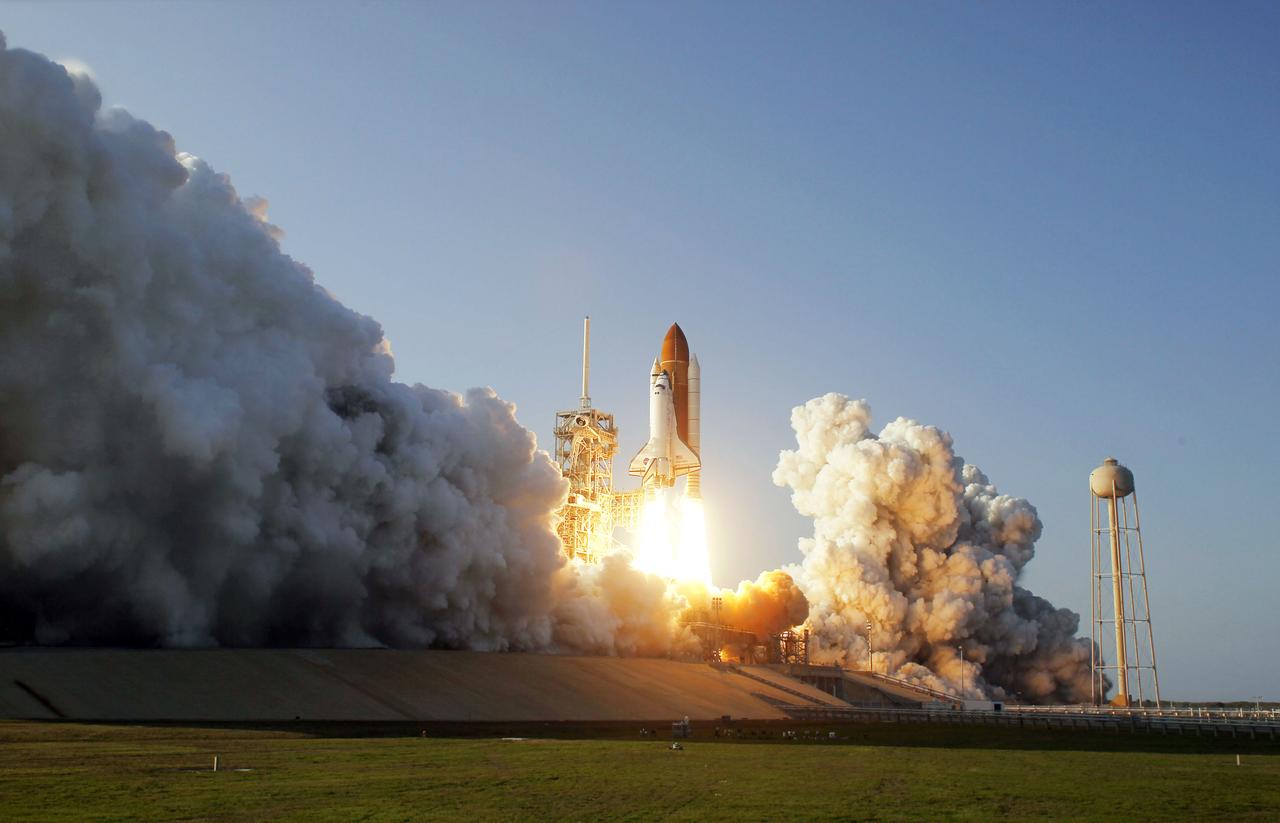
STS133-S-032 (24 Feb. 2011) --- Space shuttle Discovery and its six-member STS-133 crew head toward Earth orbit and rendezvous with the International Space Station. Liftoff was at 4:53 p.m. (EST) on Feb. 24, 2011, from Launch Pad 39A at NASA’s Kennedy Space Center. Onboard are NASA astronauts Steve Lindsey, commander; Eric Boe, pilot; Steve Bowen, Alvin Drew, Michael Barratt and Nicole Stott, all mission specialists. Discovery and its six-member crew are on a mission to deliver the Permanent Multipurpose Module, packed with supplies and critical spare parts, as well as Robonaut 2, the dexterous humanoid astronaut helper, to the International Space Station. Discovery is making its 39th mission and is scheduled to be retired following STS-133. This is the 133rd Space Shuttle Program mission and the 35th shuttle voyage to the space station. Photo credit: NASA or National Aeronautics and Space Administration
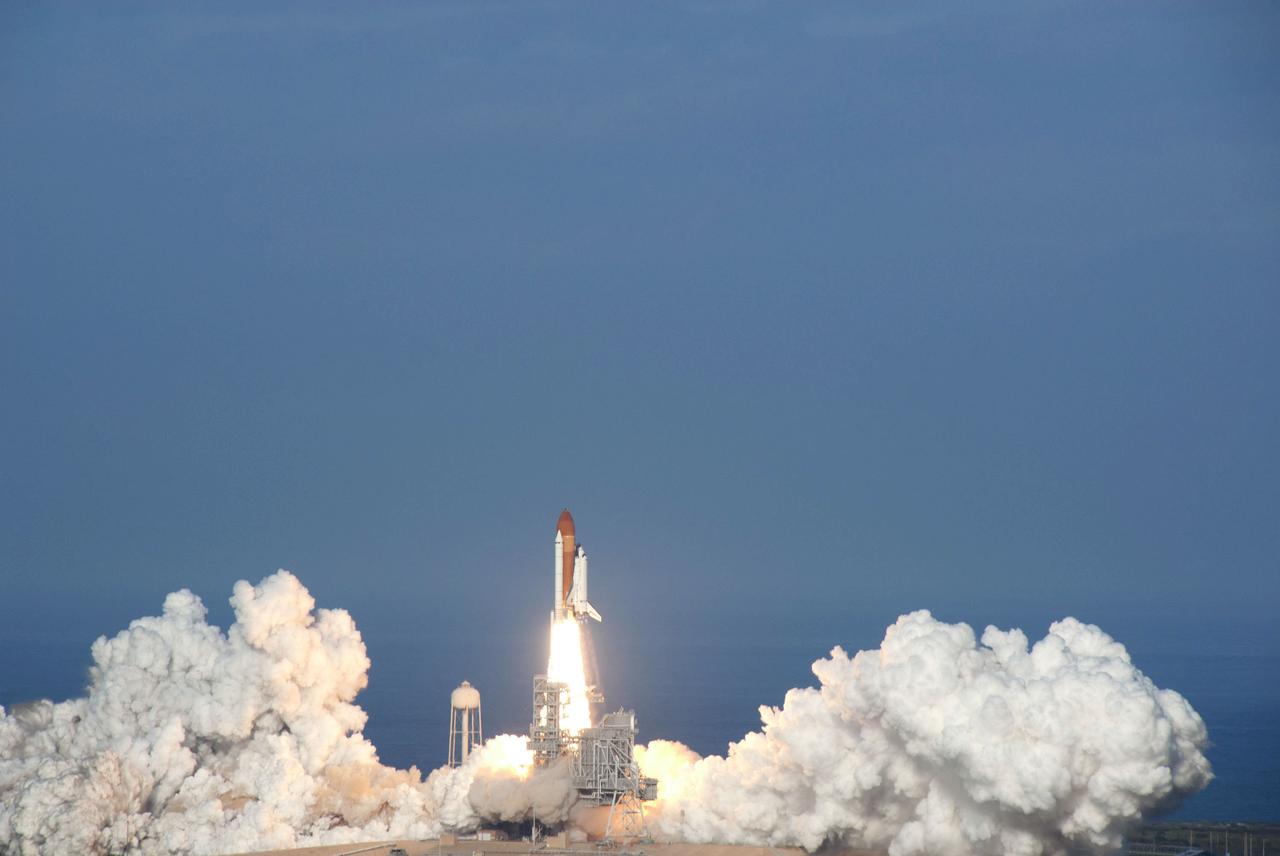
STS133-S-036 (24 Feb. 2011) --- Space shuttle Discovery and its six-member STS-133 crew head toward Earth orbit and rendezvous with the International Space Station. Liftoff was at 4:53 p.m. (EST) on Feb. 24, 2011, from Launch Pad 39A at NASA’s Kennedy Space Center. Onboard are NASA astronauts Steve Lindsey, commander; Eric Boe, pilot; Steve Bowen, Alvin Drew, Michael Barratt and Nicole Stott, all mission specialists. Discovery and its six-member crew are on a mission to deliver the Permanent Multipurpose Module, packed with supplies and critical spare parts, as well as Robonaut 2, the dexterous humanoid astronaut helper, to the International Space Station. Discovery is making its 39th mission and is scheduled to be retired following STS-133. This is the 133rd Space Shuttle Program mission and the 35th shuttle voyage to the space station. Photo credit: NASA or National Aeronautics and Space Administration
STS133-S-052 (24 Feb. 2011) --- Space shuttle Discovery and its six-member STS-133 crew head toward Earth orbit and rendezvous with the International Space Station. Liftoff was at 4:53 p.m. (EST) on Feb. 24, 2011, from Launch Pad 39A at NASA’s Kennedy Space Center. Onboard are NASA astronauts Steve Lindsey, commander; Eric Boe, pilot; Steve Bowen, Alvin Drew, Michael Barratt and Nicole Stott, all mission specialists. Discovery and its six-member crew are on a mission to deliver the Permanent Multipurpose Module, packed with supplies and critical spare parts, as well as Robonaut 2, the dexterous humanoid astronaut helper, to the International Space Station. Discovery is making its 39th mission and is scheduled to be retired following STS-133. This is the 133rd Space Shuttle Program mission and the 35th shuttle voyage to the space station. Photo credit: NASA or National Aeronautics and Space Administration
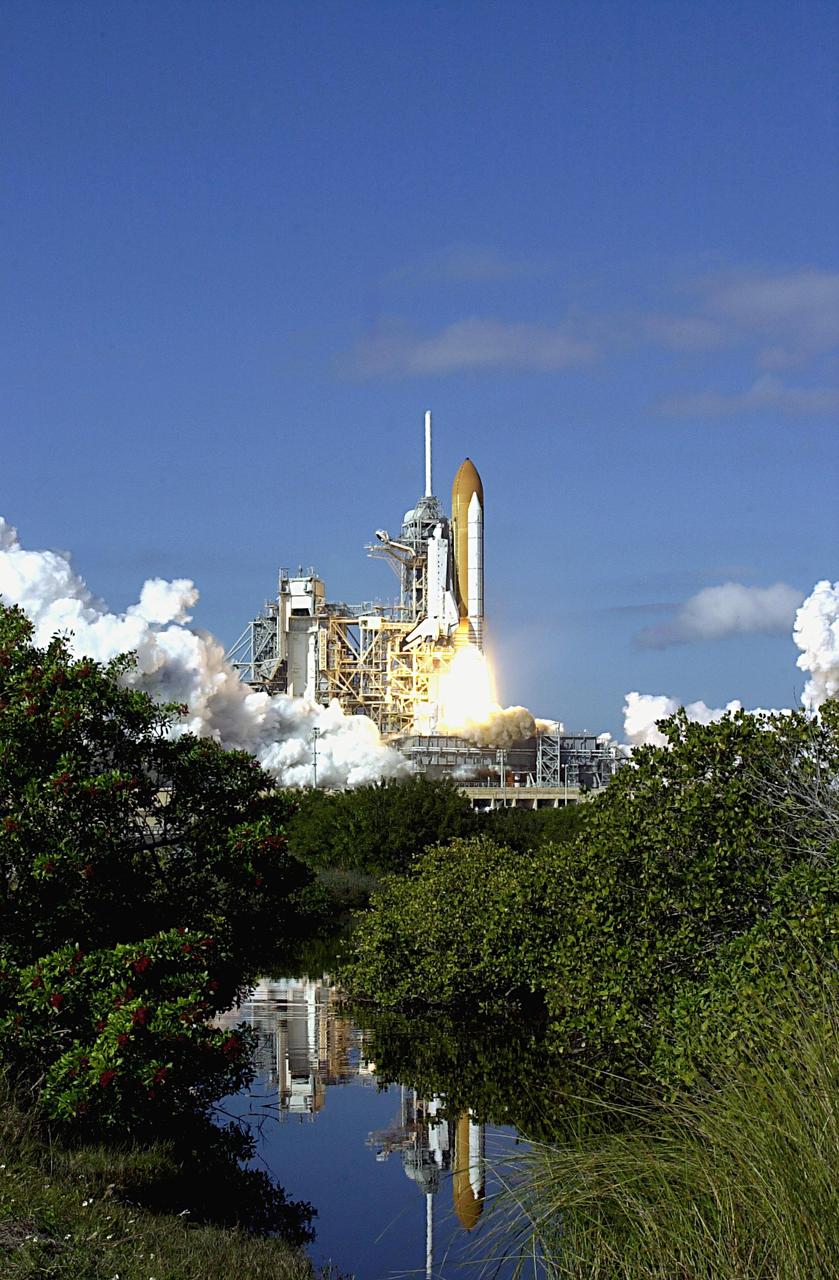
KENNEDY SPACE CENTER, FLA. -- A mirror image in nearby water reflects the perfect launch of Space Shuttle Columbia on a perfect Florida day. Following a flawless and uneventful countdown, liftoff of the Shuttle on mission STS-107 occurred on-time at 10:39 a.m. EST. The 16-day research mission will include FREESTAR (Fast Reaction Experiments Enabling Science, Technology, Applications and Research) and the SHI Research Double Module (SHI/RDM), known as SPACEHAB. Experiments on the module range from material sciences to life sciences.. Landing of Columbia is scheduled at about 8:53 a.m. EST on Saturday, Feb. 1. This mission is the first Shuttle mission of 2003. Mission STS-107 is the 28th flight of the orbiter Columbia and the 113th flight overall in NASA's Space Shuttle program.
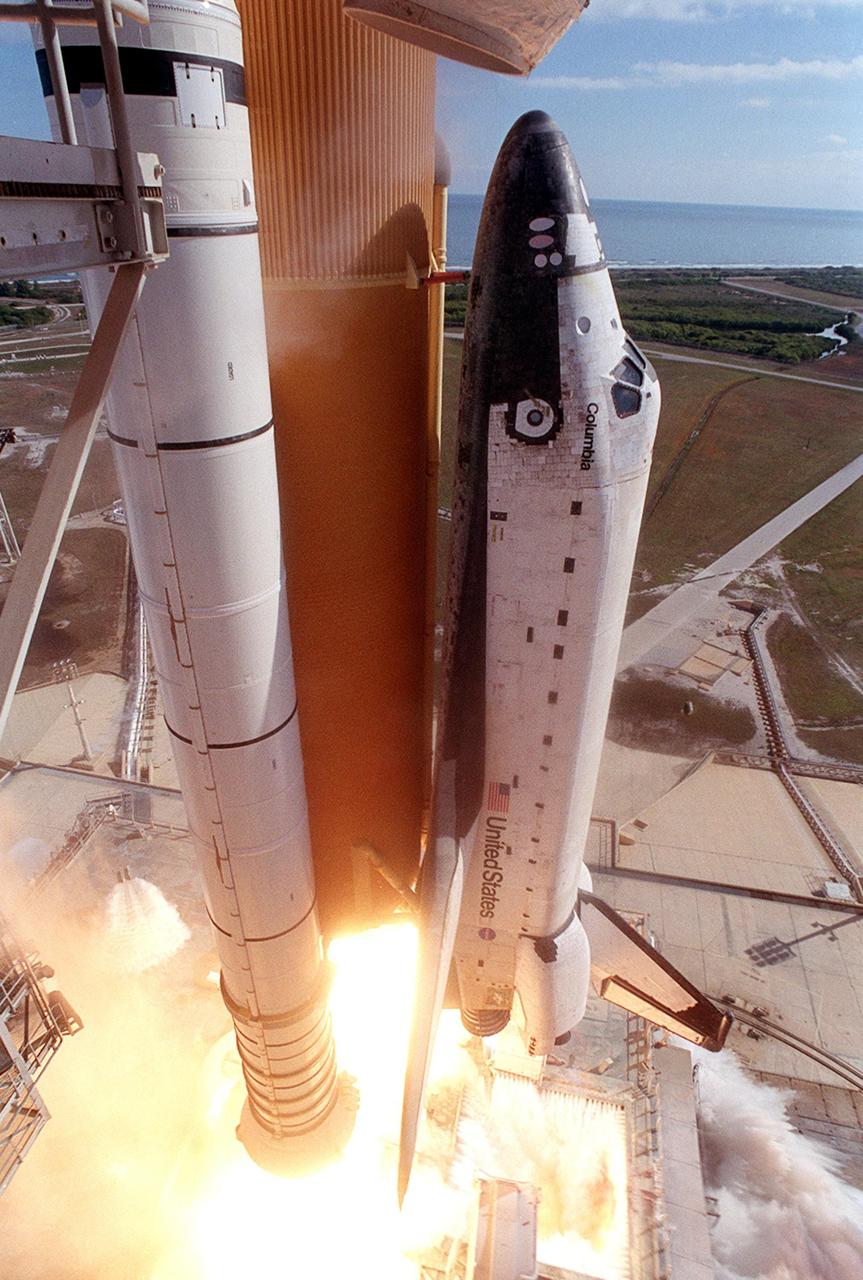
KENNEDY SPACE CENTER, FLA. - A closeup camera view shows Space Shuttle Columbia as it lifts off from Launch Pad 39A on mission STS-107. Following a flawless and uneventful countdown, liftoff occurred on-time at 10:39 a.m. EST. The 16-day research mission includes FREESTAR (Fast Reaction Experiments Enabling Science, Technology, Applications and Research) and the SHI Research Double Module (SHI/RDM), known as SPACEHAB. Experiments on the module range from material sciences to life sciences.. Landing of Columbia is scheduled at about 8:53 a.m. EST on Saturday, Feb. 1. This mission is the first Shuttle mission of 2003. Mission STS-107 is the 28th flight of the orbiter Columbia and the 113th flight overall in NASA's Space Shuttle program.
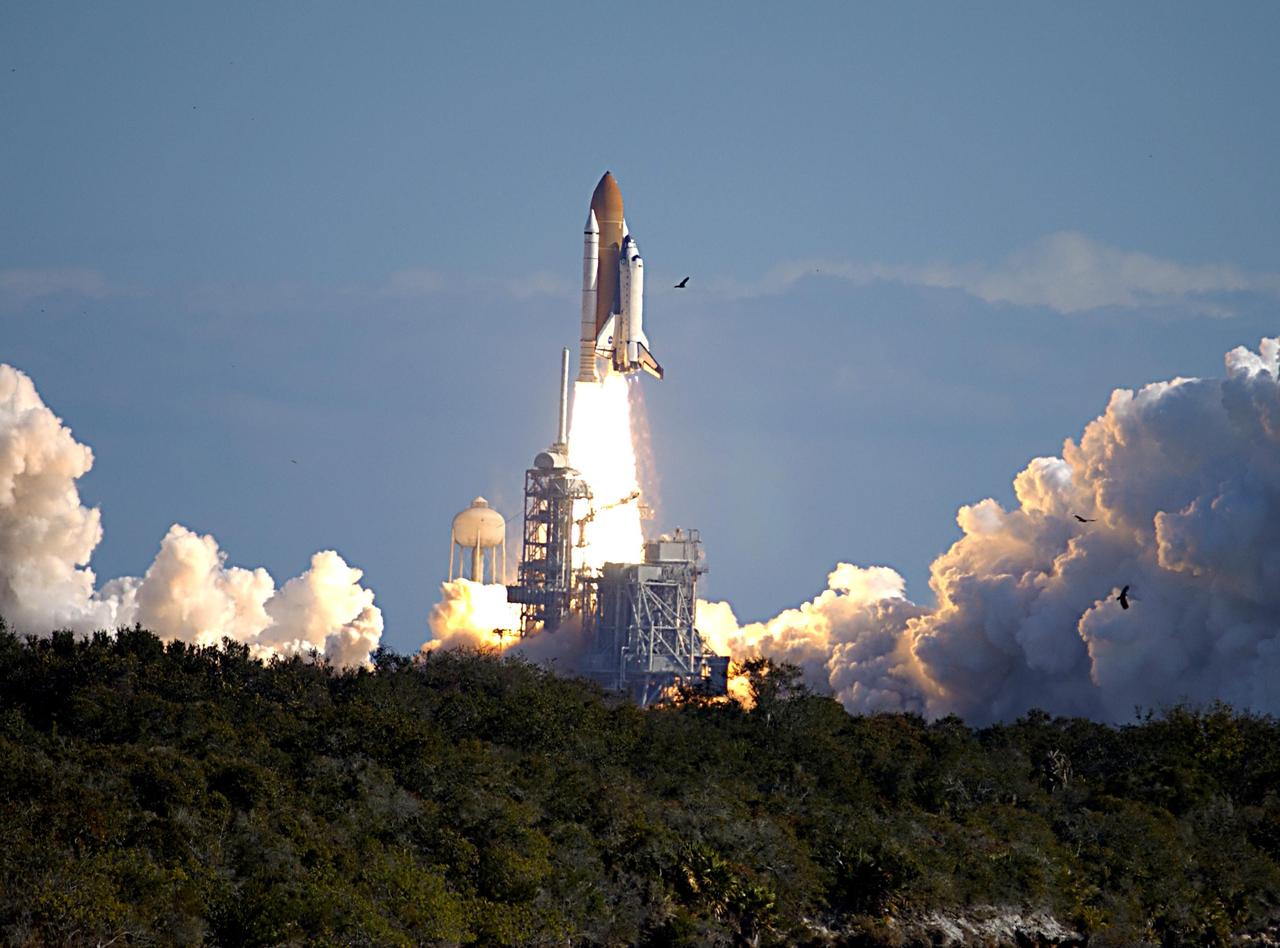
KENNEDY SPACE CENTER, FLA. - Through a cloud-washed blue sky above Launch Pad 39A, Space Shuttle Columbia hurtles toward space on mission STS-107. Following a flawless and uneventful countdown, liftoff occurred on-time at 10:39 a.m. EST. The 16-day research mission will include FREESTAR (Fast Reaction Experiments Enabling Science, Technology, Applications and Research) and the SHI Research Double Module (SHI/RDM), known as SPACEHAB. Experiments on the module range from material sciences to life sciences. Landing is scheduled at about 8:53 a.m. EST on Saturday, Feb. 1. This mission is the first Shuttle mission of 2003. Mission STS-107 is the 28th flight of the orbiter Columbia and the 113th flight overall in NASA's Space Shuttle program.
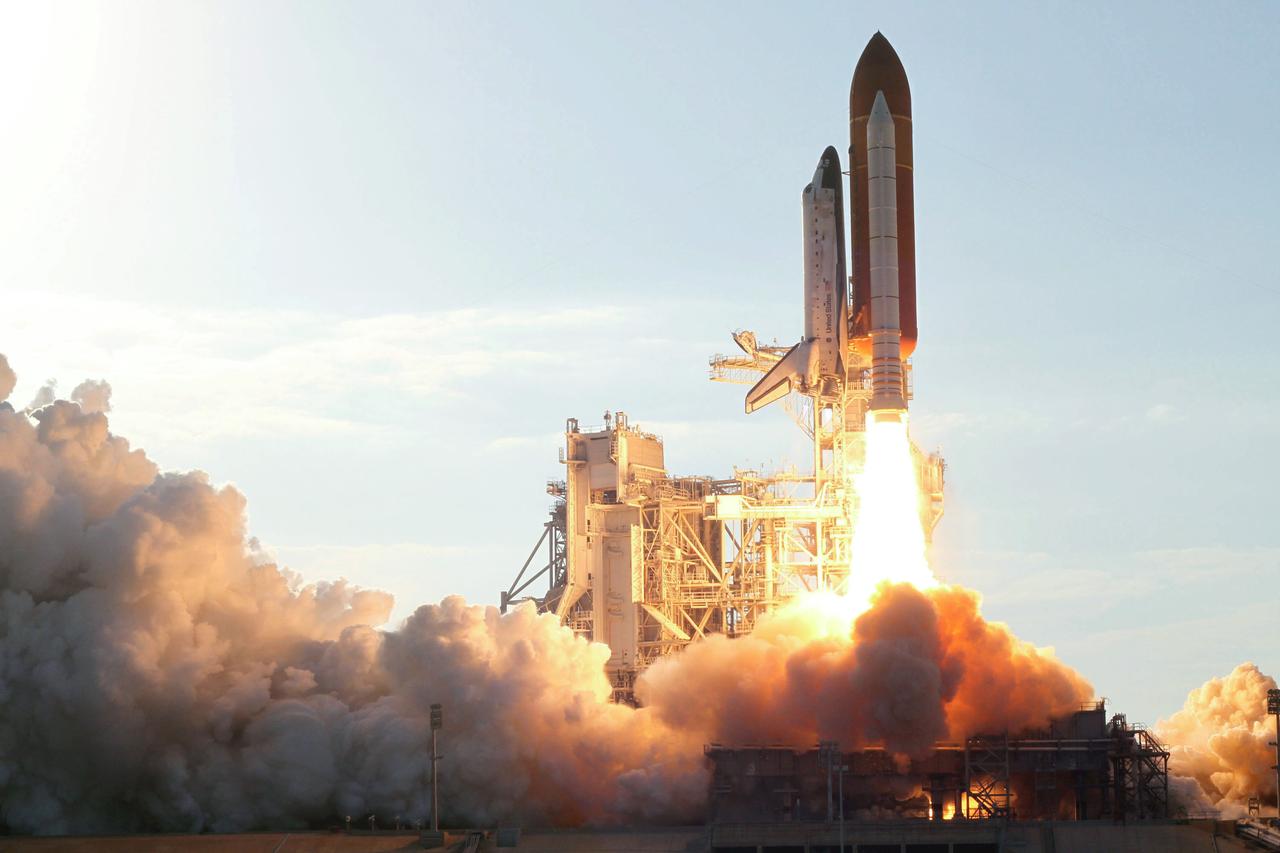
STS133-S-039 (24 Feb. 2011) --- Space shuttle Discovery and its six-member STS-133 crew head toward Earth orbit and rendezvous with the International Space Station. Liftoff was at 4:53 p.m. (EST) on Feb. 24, 2011, from Launch Pad 39A at NASA’s Kennedy Space Center. Onboard are NASA astronauts Steve Lindsey, commander; Eric Boe, pilot; Steve Bowen, Alvin Drew, Michael Barratt and Nicole Stott, all mission specialists. Discovery and its six-member crew are on a mission to deliver the Permanent Multipurpose Module, packed with supplies and critical spare parts, as well as Robonaut 2, the dexterous humanoid astronaut helper, to the International Space Station. Discovery is making its 39th mission and is scheduled to be retired following STS-133. This is the 133rd Space Shuttle Program mission and the 35th shuttle voyage to the space station. Photo credit: NASA or National Aeronautics and Space Administration
![KENNEDY SPACE CENTER, FLA. -- Spewing flames and billowing clouds of smoke across Launch Pad 39A, Space Shuttle Columbia roars toward space on mission STS-107. Following a flawless and uneventful countdown, liftoff occurred on-time at 10:39 a.m. EST. The 16-day research mission will include FREESTAR (Fast Reaction Experiments Enabling Science, Technology, Applications and Research) and the SHI Research Double Module (SHI/RDM), known as SPACEHAB. Experiments on the module range from material sciences to life sciences.. Landing of Columbia is scheduled at about 8:53 a.m. EST on Saturday, Feb. 1. This mission is the first Shuttle mission of 2003. Mission STS-107 is the 28th flight of the orbiter Columbia and the 113th flight overall in NASA's Space Shuttle program. [Photo courtesy of Scott Andrews]](https://images-assets.nasa.gov/image/KSC-03pd0136/KSC-03pd0136~medium.jpg)
KENNEDY SPACE CENTER, FLA. -- Spewing flames and billowing clouds of smoke across Launch Pad 39A, Space Shuttle Columbia roars toward space on mission STS-107. Following a flawless and uneventful countdown, liftoff occurred on-time at 10:39 a.m. EST. The 16-day research mission will include FREESTAR (Fast Reaction Experiments Enabling Science, Technology, Applications and Research) and the SHI Research Double Module (SHI/RDM), known as SPACEHAB. Experiments on the module range from material sciences to life sciences.. Landing of Columbia is scheduled at about 8:53 a.m. EST on Saturday, Feb. 1. This mission is the first Shuttle mission of 2003. Mission STS-107 is the 28th flight of the orbiter Columbia and the 113th flight overall in NASA's Space Shuttle program. [Photo courtesy of Scott Andrews]
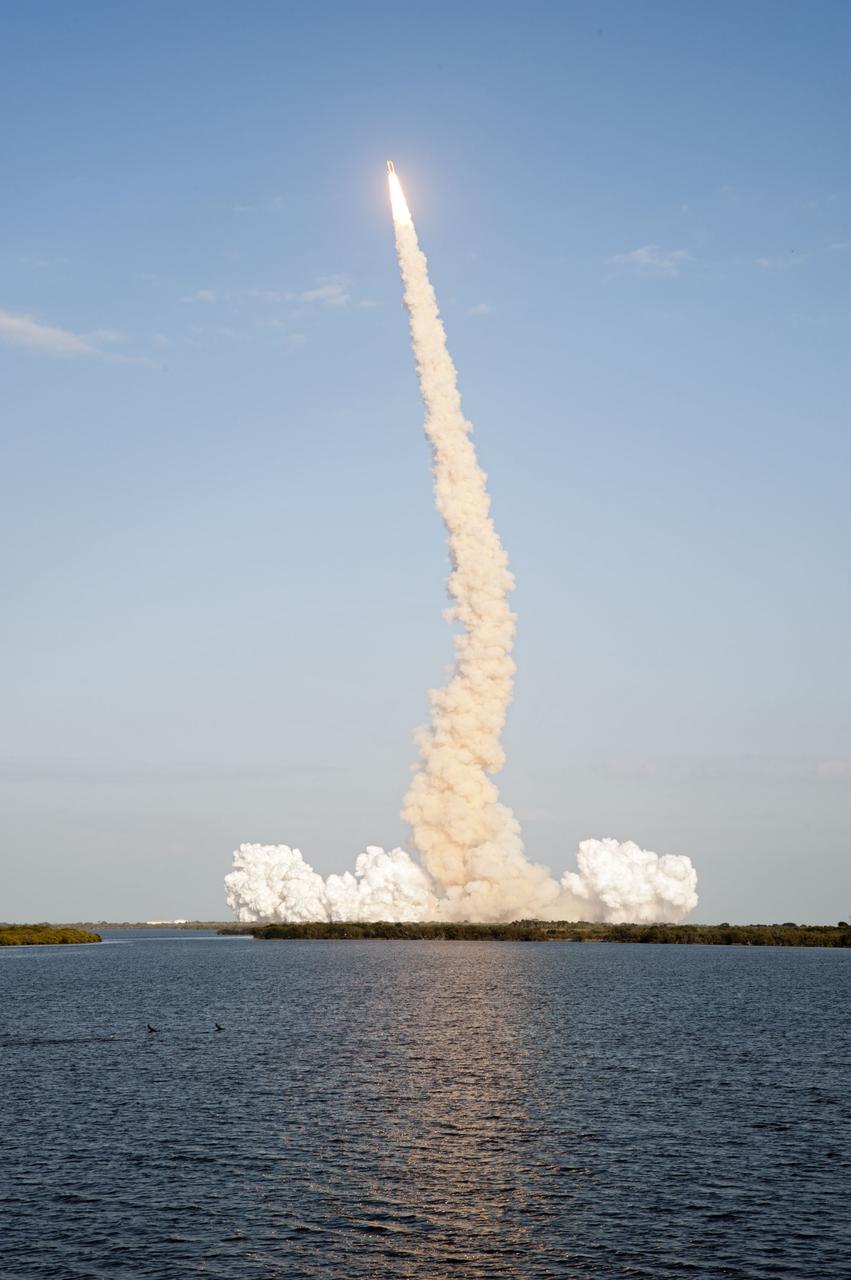
STS133-S-048 (24 Feb. 2011) --- Space shuttle Discovery and its six-member STS-133 crew head toward Earth orbit and rendezvous with the International Space Station. Liftoff was at 4:53 p.m. (EST) on Feb. 24, 2011, from Launch Pad 39A at NASA’s Kennedy Space Center. Onboard are NASA astronauts Steve Lindsey, commander; Eric Boe, pilot; Steve Bowen, Alvin Drew, Michael Barratt and Nicole Stott, all mission specialists. Discovery and its six-member crew are on a mission to deliver the Permanent Multipurpose Module, packed with supplies and critical spare parts, as well as Robonaut 2, the dexterous humanoid astronaut helper, to the International Space Station. Discovery is making its 39th mission and is scheduled to be retired following STS-133. This is the 133rd Space Shuttle Program mission and the 35th shuttle voyage to the space station. Photo credit: NASA or National Aeronautics and Space Administration
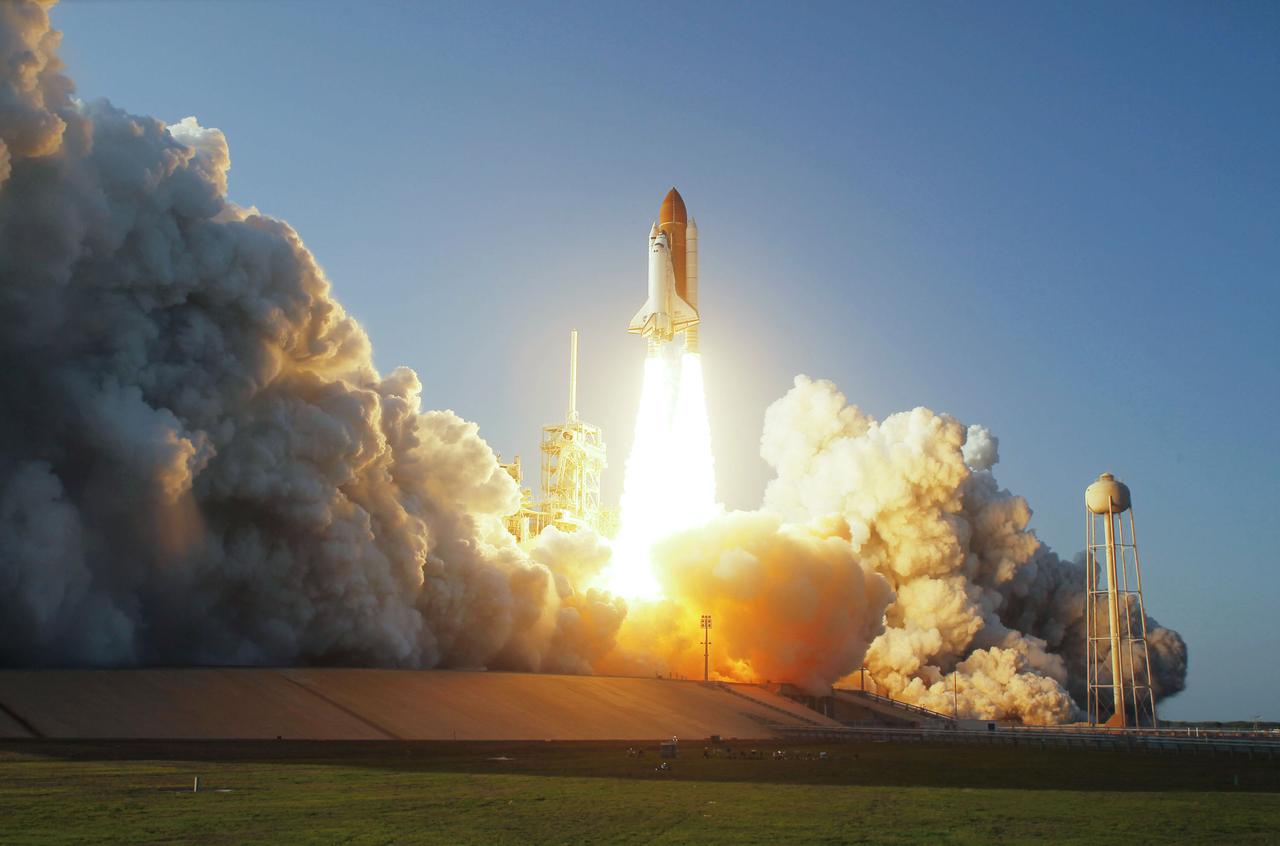
STS133-S-037 (24 Feb. 2011) --- Space shuttle Discovery and its six-member STS-133 crew head toward Earth orbit and rendezvous with the International Space Station. Liftoff was at 4:53 p.m. (EST) on Feb. 24, 2011, from Launch Pad 39A at NASA’s Kennedy Space Center. Onboard are NASA astronauts Steve Lindsey, commander; Eric Boe, pilot; Steve Bowen, Alvin Drew, Michael Barratt and Nicole Stott, all mission specialists. Discovery and its six-member crew are on a mission to deliver the Permanent Multipurpose Module, packed with supplies and critical spare parts, as well as Robonaut 2, the dexterous humanoid astronaut helper, to the International Space Station. Discovery is making its 39th mission and is scheduled to be retired following STS-133. This is the 133rd Space Shuttle Program mission and the 35th shuttle voyage to the space station. Photo credit: NASA or National Aeronautics and Space Administration
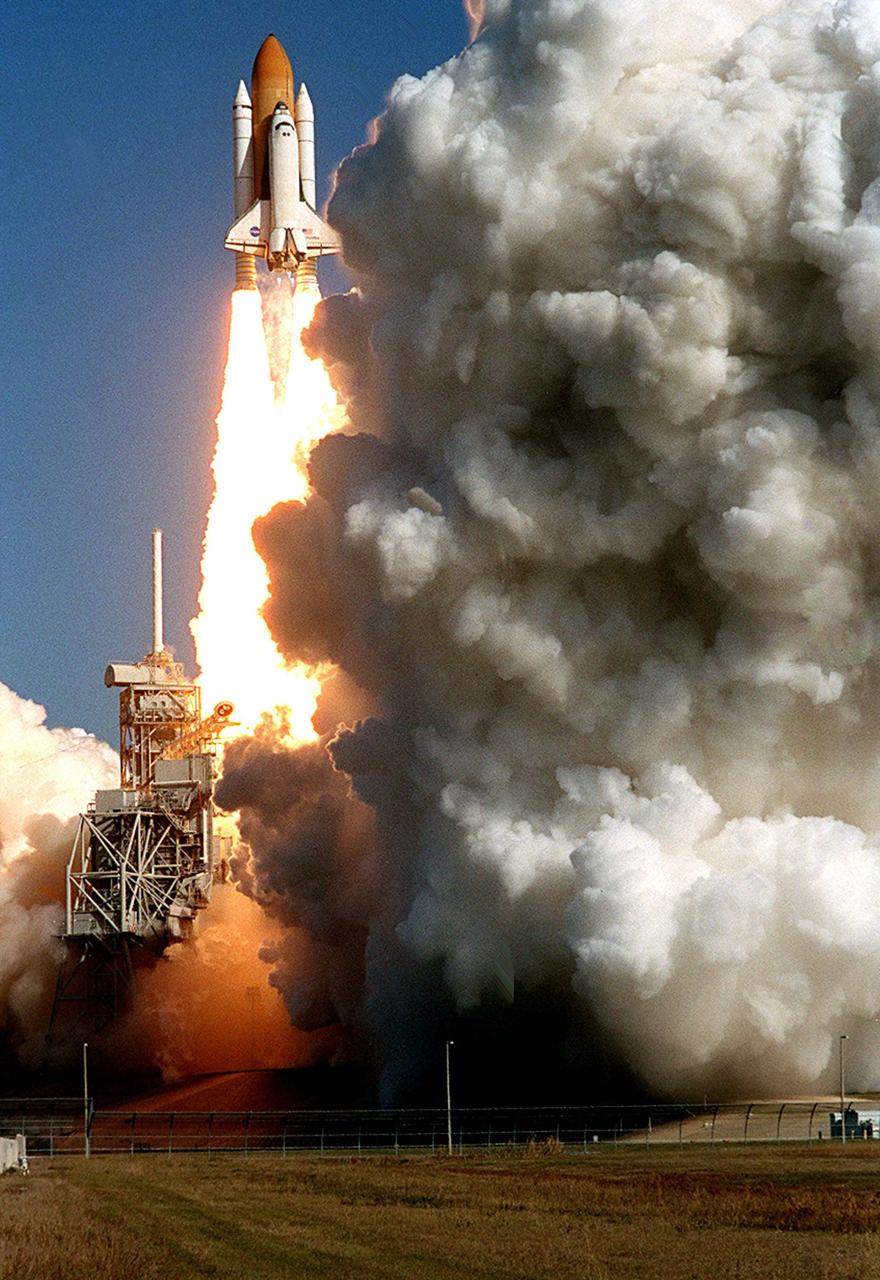
KENNEDY SPACE CENTER, FLA. - Space Shuttle Columbia outraces the multi-colored clouds of smoke and steam rising below it from Launch Pad 39A as it races toward space on mission STS-107. Following a flawless and uneventful countdown, liftoff occurred on-time at 10:39 a.m. EST. The 16-day research mission includes FREESTAR (Fast Reaction Experiments Enabling Science, Technology, Applications and Research) and the SHI Research Double Module (SHI/RDM), known as SPACEHAB. Experiments on the module range from material sciences to life sciences.. Landing of Columbia is scheduled at about 8:53 a.m. EST on Saturday, Feb. 1. This mission is the first Shuttle mission of 2003. Mission STS-107 is the 28th flight of the orbiter Columbia and the 113th flight overall in NASA's Space Shuttle program.
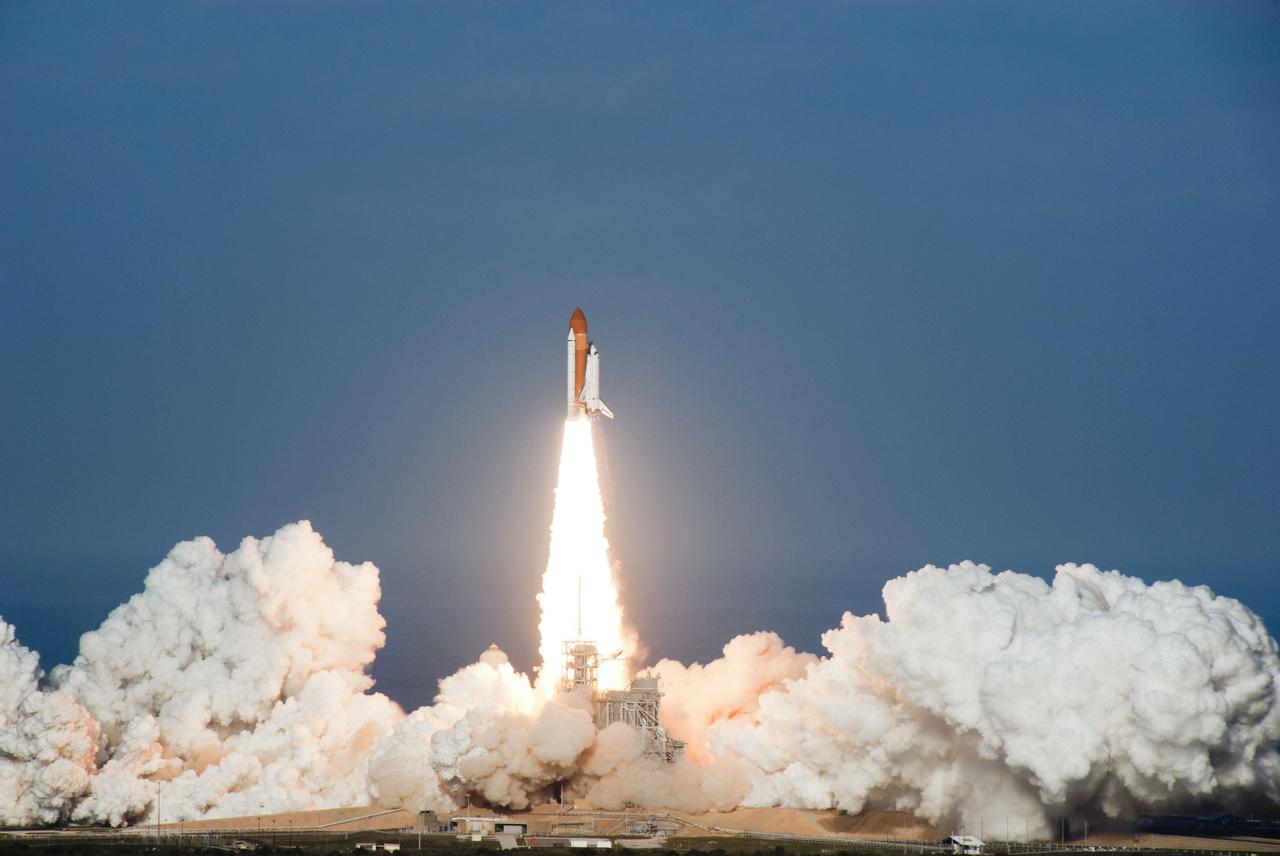
STS133-S-053 (24 Feb. 2011) --- Space shuttle Discovery and its six-member STS-133 crew head toward Earth orbit and rendezvous with the International Space Station. Liftoff was at 4:53 p.m. (EST) on Feb. 24, 2011, from Launch Pad 39A at NASA’s Kennedy Space Center. Onboard are NASA astronauts Steve Lindsey, commander; Eric Boe, pilot; Steve Bowen, Alvin Drew, Michael Barratt and Nicole Stott, all mission specialists. Discovery and its six-member crew are on a mission to deliver the Permanent Multipurpose Module, packed with supplies and critical spare parts, as well as Robonaut 2, the dexterous humanoid astronaut helper, to the International Space Station. Discovery is making its 39th mission and is scheduled to be retired following STS-133. This is the 133rd Space Shuttle Program mission and the 35th shuttle voyage to the space station. Photo credit: NASA or National Aeronautics and Space Administration
![KENNEDY SPACE CENTER, FLA. -- Spewing flames and billowing clouds of smoke across Launch Pad 39A, Space Shuttle Columbia roars toward space on mission STS-107. Following a flawless and uneventful countdown, liftoff occurred on-time at 10:39 a.m. EST. The 16-day research mission will include FREESTAR (Fast Reaction Experiments Enabling Science, Technology, Applications and Research) and the SHI Research Double Module (SHI/RDM), known as SPACEHAB. Experiments on the module range from material sciences to life sciences.. Landing of Columbia is scheduled at about 8:53 a.m. EST on Saturday, Feb. 1. This mission is the first Shuttle mission of 2003. Mission STS-107 is the 28th flight of the orbiter Columbia and the 113th flight overall in NASA's Space Shuttle program. [Photo courtesy of Scott Andrews]](https://images-assets.nasa.gov/image/KSC-03pd0135/KSC-03pd0135~medium.jpg)
KENNEDY SPACE CENTER, FLA. -- Spewing flames and billowing clouds of smoke across Launch Pad 39A, Space Shuttle Columbia roars toward space on mission STS-107. Following a flawless and uneventful countdown, liftoff occurred on-time at 10:39 a.m. EST. The 16-day research mission will include FREESTAR (Fast Reaction Experiments Enabling Science, Technology, Applications and Research) and the SHI Research Double Module (SHI/RDM), known as SPACEHAB. Experiments on the module range from material sciences to life sciences.. Landing of Columbia is scheduled at about 8:53 a.m. EST on Saturday, Feb. 1. This mission is the first Shuttle mission of 2003. Mission STS-107 is the 28th flight of the orbiter Columbia and the 113th flight overall in NASA's Space Shuttle program. [Photo courtesy of Scott Andrews]
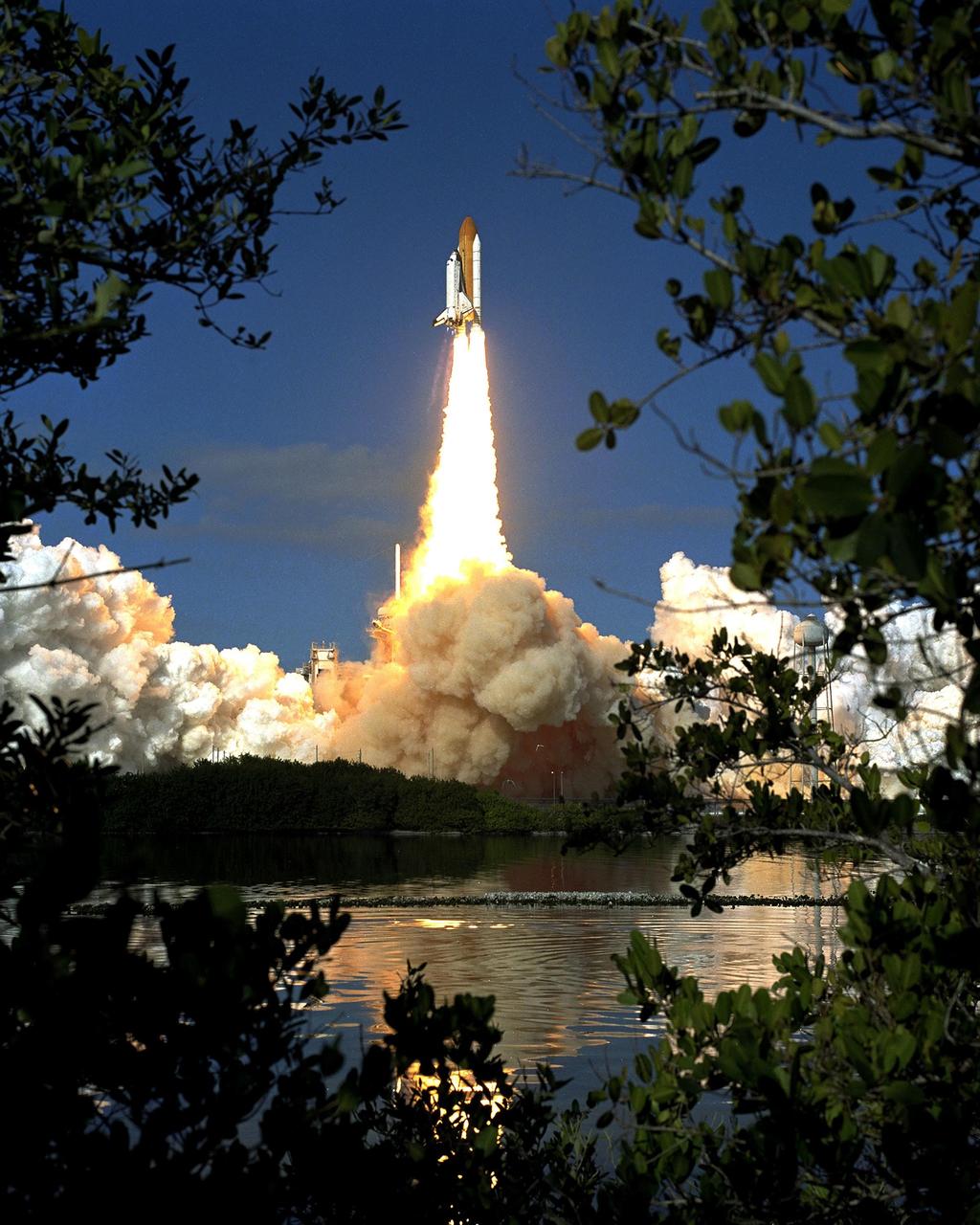
KENNEDY SPACE CENTER, FLA. --Framed by branches across from Launch Pad 39A, Space Shuttle Columbia leaps toward space on mission STS-107. Following a flawless and uneventful countdown, liftoff occurred on-time at 10:39 a.m. EST. The 16-day research mission includes FREESTAR (Fast Reaction Experiments Enabling Science, Technology, Applications and Research) and the SHI Research Double Module (SHI/RDM), known as SPACEHAB. Experiments on the module range from material sciences to life sciences.. Landing of Columbia is scheduled at about 8:53 a.m. EST on Saturday, Feb. 1. This mission is the first Shuttle mission of 2003. Mission STS-107 is the 28th flight of the orbiter Columbia and the 113th flight overall in NASA's Space Shuttle program.
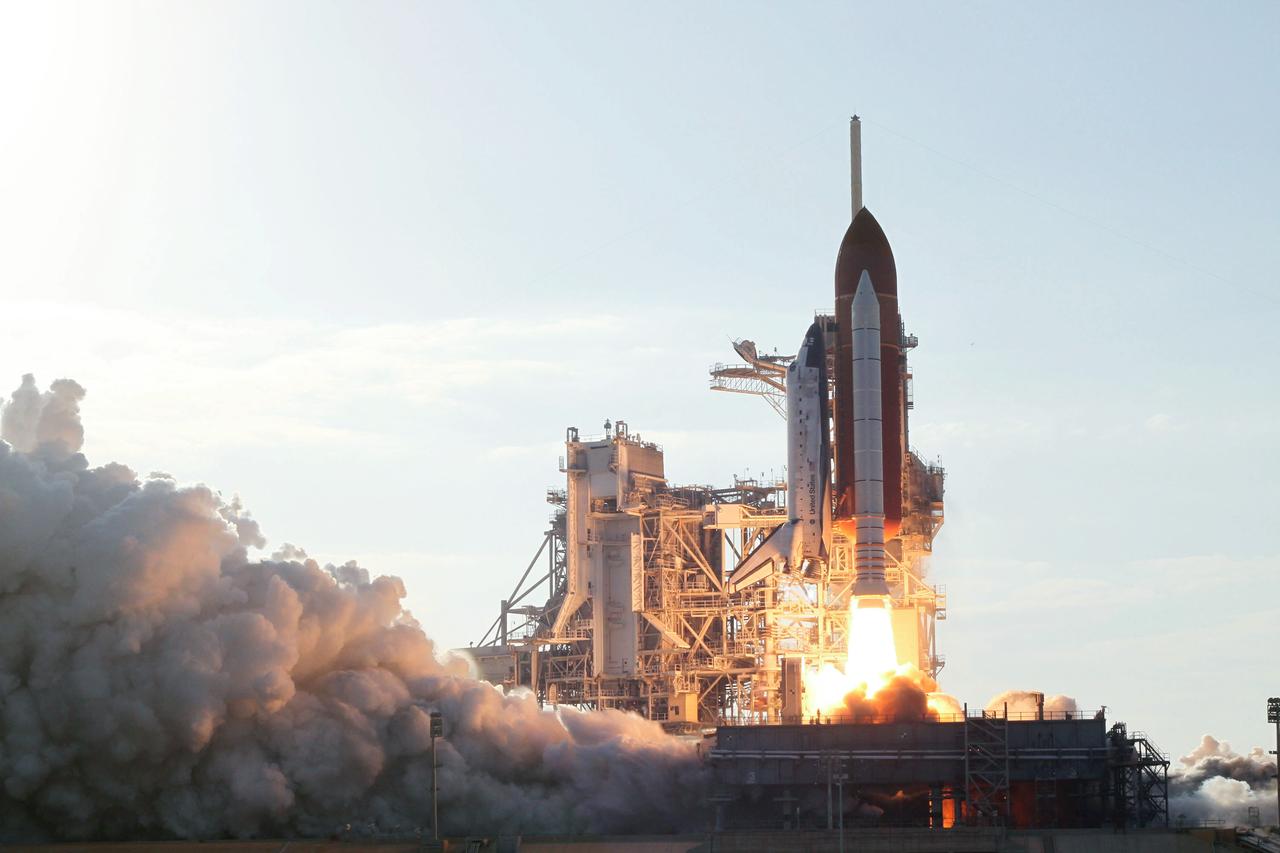
STS133-S-038 (24 Feb. 2011) --- Space shuttle Discovery and its six-member STS-133 crew head toward Earth orbit and rendezvous with the International Space Station. Liftoff was at 4:53 p.m. (EST) on Feb. 24, 2011, from Launch Pad 39A at NASA’s Kennedy Space Center. Onboard are NASA astronauts Steve Lindsey, commander; Eric Boe, pilot; Steve Bowen, Alvin Drew, Michael Barratt and Nicole Stott, all mission specialists. Discovery and its six-member crew are on a mission to deliver the Permanent Multipurpose Module, packed with supplies and critical spare parts, as well as Robonaut 2, the dexterous humanoid astronaut helper, to the International Space Station. Discovery is making its 39th mission and is scheduled to be retired following STS-133. This is the 133rd Space Shuttle Program mission and the 35th shuttle voyage to the space station. Photo credit: NASA or National Aeronautics and Space Administration
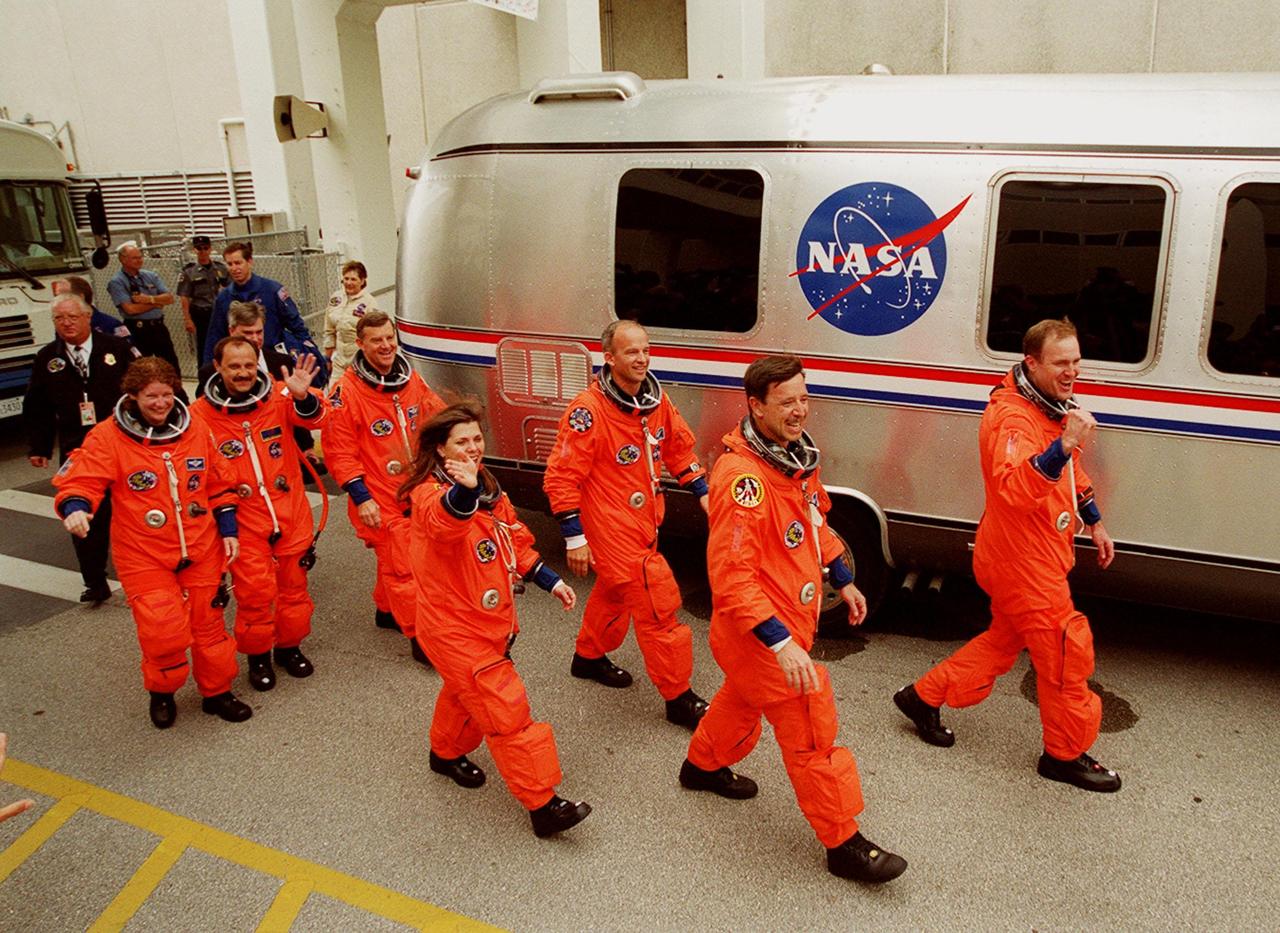
Waving to onlookers, the STS-101 crew eagerly walk to the waiting Astrovan that will take them to Launch Pad 39A and the second attempt at liftoff of Space Shuttle Atlantis. In their orange launch and entry suits, they are (left to right) Mission Specialists Susan J. Helms, Yury Usachev, James S. Voss, Mary Ellen Weber and Jeffrey N. Williams; Pilot Scott J. Horowitz; and Commander James D. Halsell Jr. The first launch attempt on April 24 was scrubbed due to unfavorable weather conditions. The mission will take the crew to the International Space Station to deliver logistics and supplies and to prepare the Station for the arrival of the Zvezda Service Module, expected to be launched by Russia in July 2000. Also, the crew will conduct one space walk. This will be the third assembly flight to the Space Station. Liftoff is targeted for 3:52 p.m. EDT. The mission is expected to last about 10 days, with Atlantis landing at KSC Saturday, May 6, about 11:53 a.m. EDT
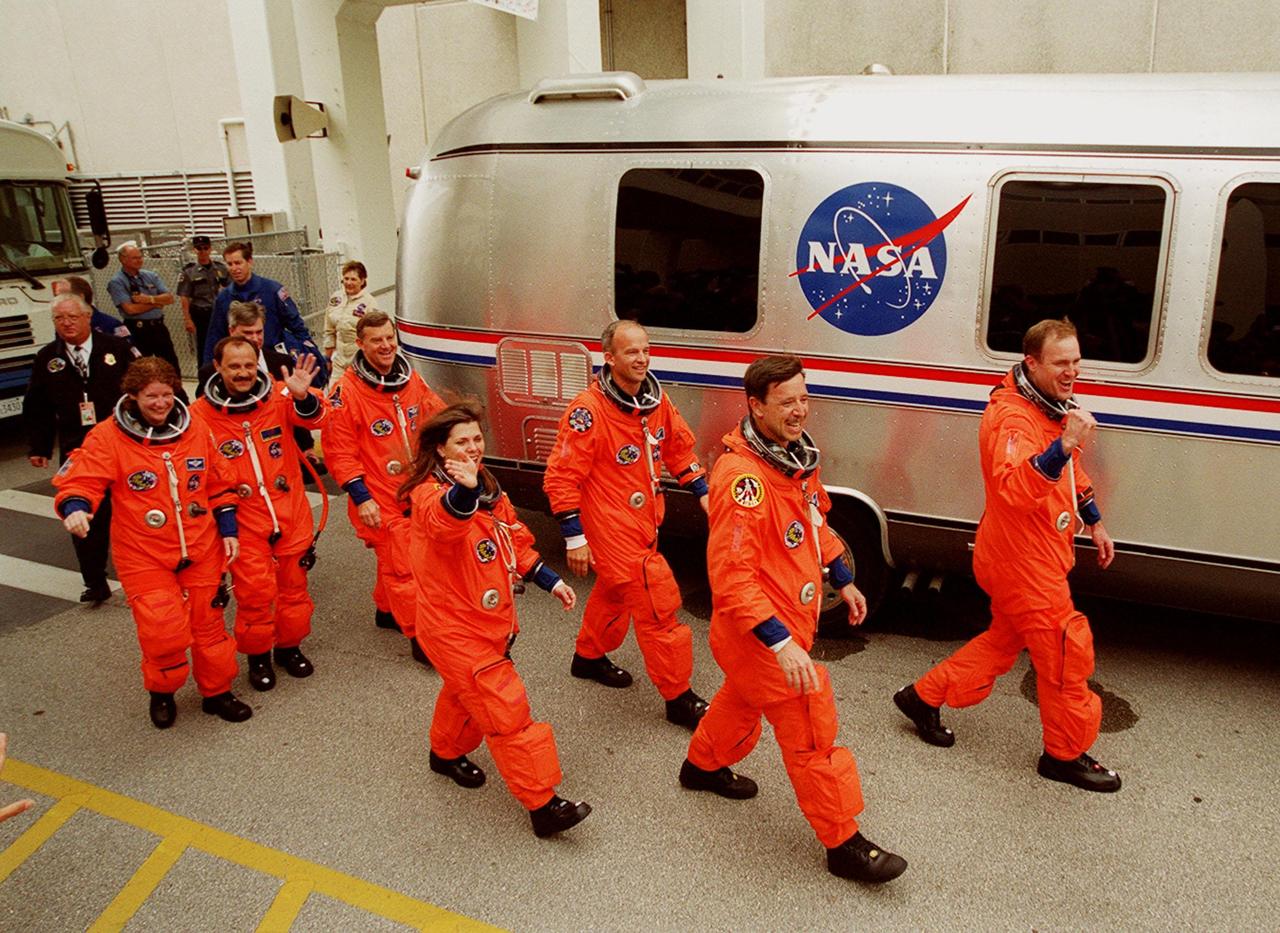
Waving to onlookers, the STS-101 crew eagerly walk to the waiting Astrovan that will take them to Launch Pad 39A and the second attempt at liftoff of Space Shuttle Atlantis. In their orange launch and entry suits, they are (left to right) Mission Specialists Susan J. Helms, Yury Usachev, James S. Voss, Mary Ellen Weber and Jeffrey N. Williams; Pilot Scott J. Horowitz; and Commander James D. Halsell Jr. The first launch attempt on April 24 was scrubbed due to unfavorable weather conditions. The mission will take the crew to the International Space Station to deliver logistics and supplies and to prepare the Station for the arrival of the Zvezda Service Module, expected to be launched by Russia in July 2000. Also, the crew will conduct one space walk. This will be the third assembly flight to the Space Station. Liftoff is targeted for 3:52 p.m. EDT. The mission is expected to last about 10 days, with Atlantis landing at KSC Saturday, May 6, about 11:53 a.m. EDT

KENNEDY SPACE CENTER, FLA. - Seconds after launch, Space Shuttle Columbia appears as a flaming tip of the smoke column it trails. Following a flawless and uneventful countdown, liftoff occurred on-time at 10:39 a.m. EST. The 16-day research mission will include FREESTAR (Fast Reaction Experiments Enabling Science, Technology, Applications and Research) and the SHI Research Double Module (SHI/RDM), known as SPACEHAB. Experiments on the module range from material sciences to life sciences. Landing is scheduled at about 8:53 a.m. EST on Saturday, Feb. 1. This mission is the first Shuttle mission of 2003. Mission STS-107 is the 28th flight of the orbiter Columbia and the 113th flight overall in NASA's Space Shuttle program.
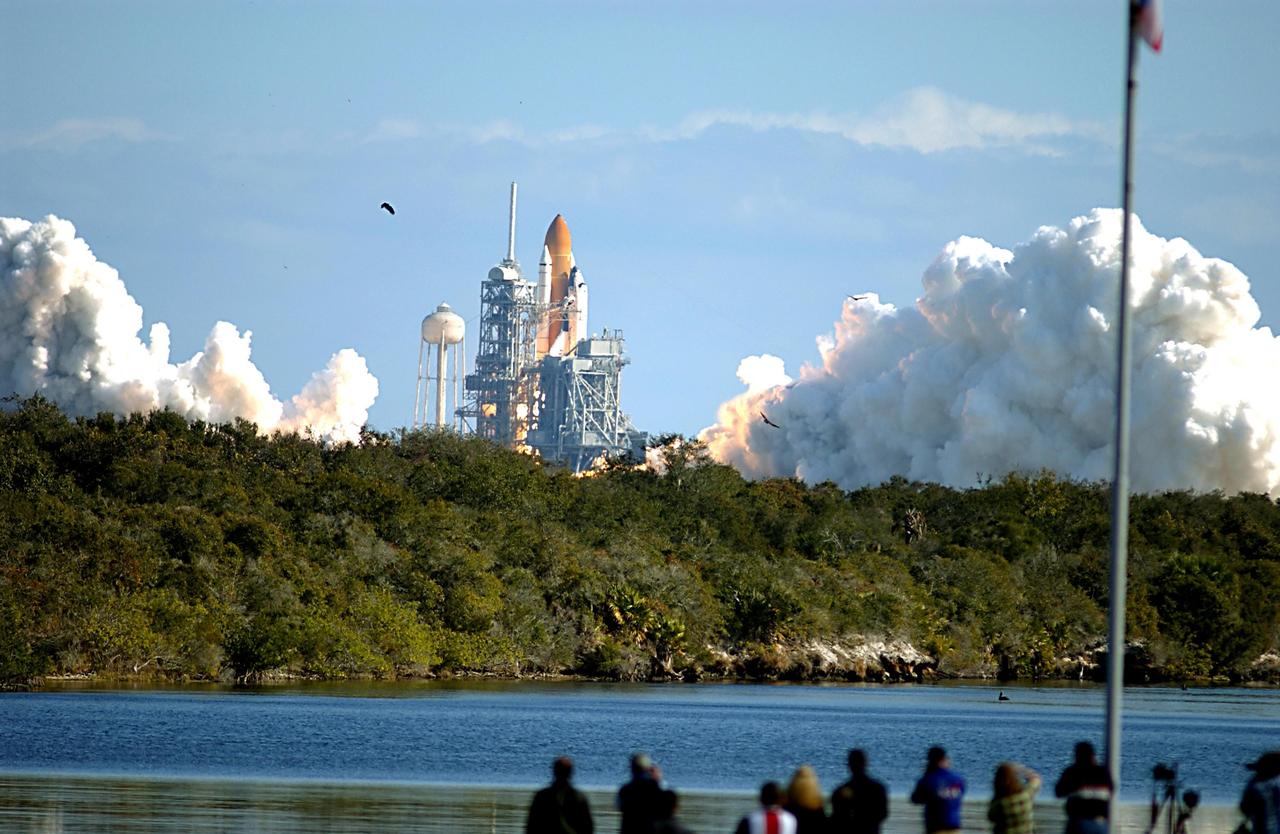
KENNEDY SPACE CENTER, FLA. -- Photographers and spectators watch from across the turn basin as Space Shuttle Columbia begins a perfect launch from Pad 39A following a flawless and uneventful countdown. Liftoff occurred on-time at 10:39 a.m. EST. The 16-day research mission will include FREESTAR (Fast Reaction Experiments Enabling Science, Technology, Applications and Research) and the SHI Research Double Module (SHI/RDM), known as SPACEHAB. Experiments on the module range from material sciences to life sciences. Landing is scheduled at about 8:53 a.m. EST on Saturday, Feb. 1. This mission is the first Shuttle mission of 2003. Mission STS-107 is the 28th flight of the orbiter Columbia and the 113th flight overall in NASA's Space Shuttle program.
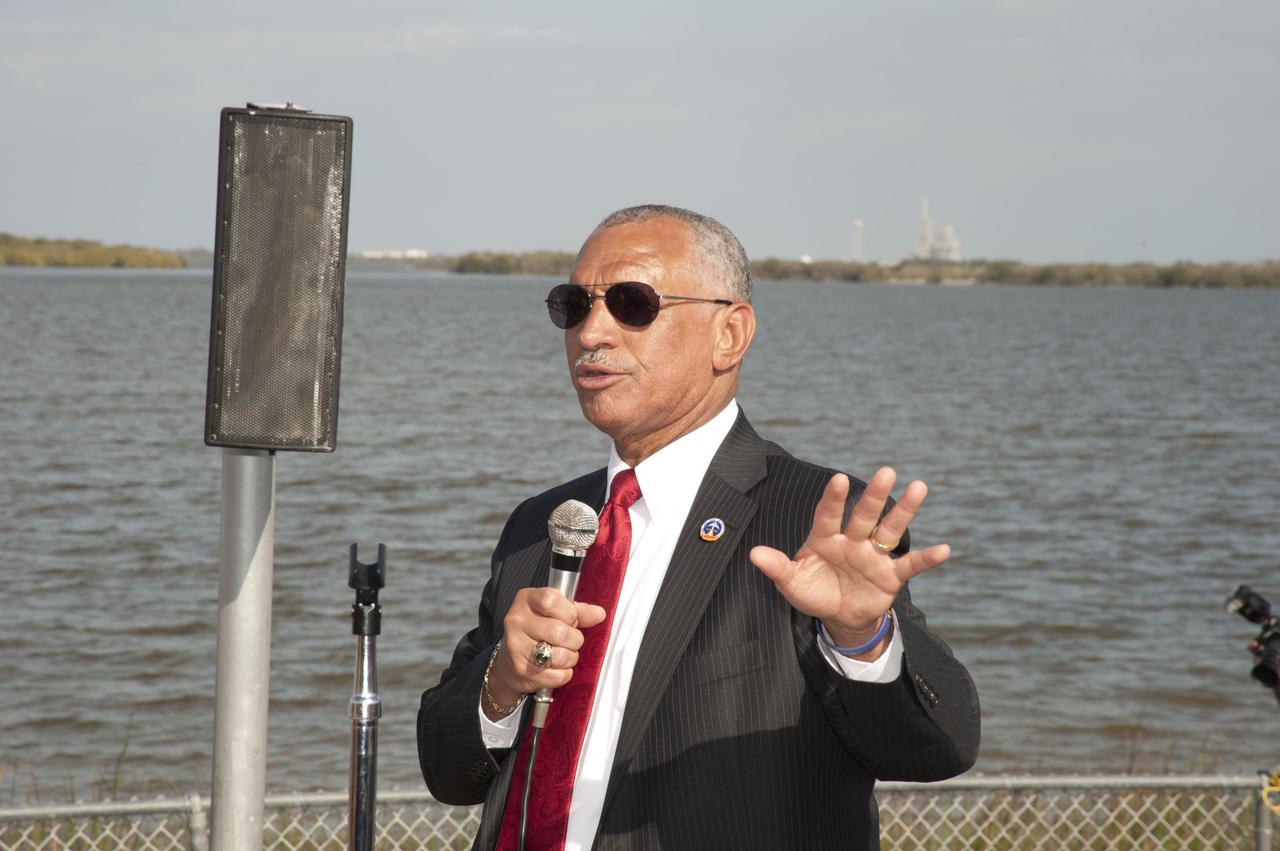
STS133-S-046 (24 Feb. 2011) --- At the Banana River Creek VIP viewing area at NASA's Kennedy Space Center in Florida, NASA Administrator Charlie Bolden addresses the spectators attending space shuttle Discovery's liftoff from Launch Pad 39A on its final mission to the International Space Station. Discovery lifted off at 4:53 p.m. (EST) on Feb. 24, 2011. The six-member STS-133 crew will deliver the Permanent Multipurpose Module, supplies and critical spare parts, as well as Robonaut 2, the dexterous humanoid astronaut helper, to the station. This is the 133rd Space Shuttle Program mission and the 35th shuttle voyage to the space station. Photo credit: NASA or National Aeronautics and Space Administration
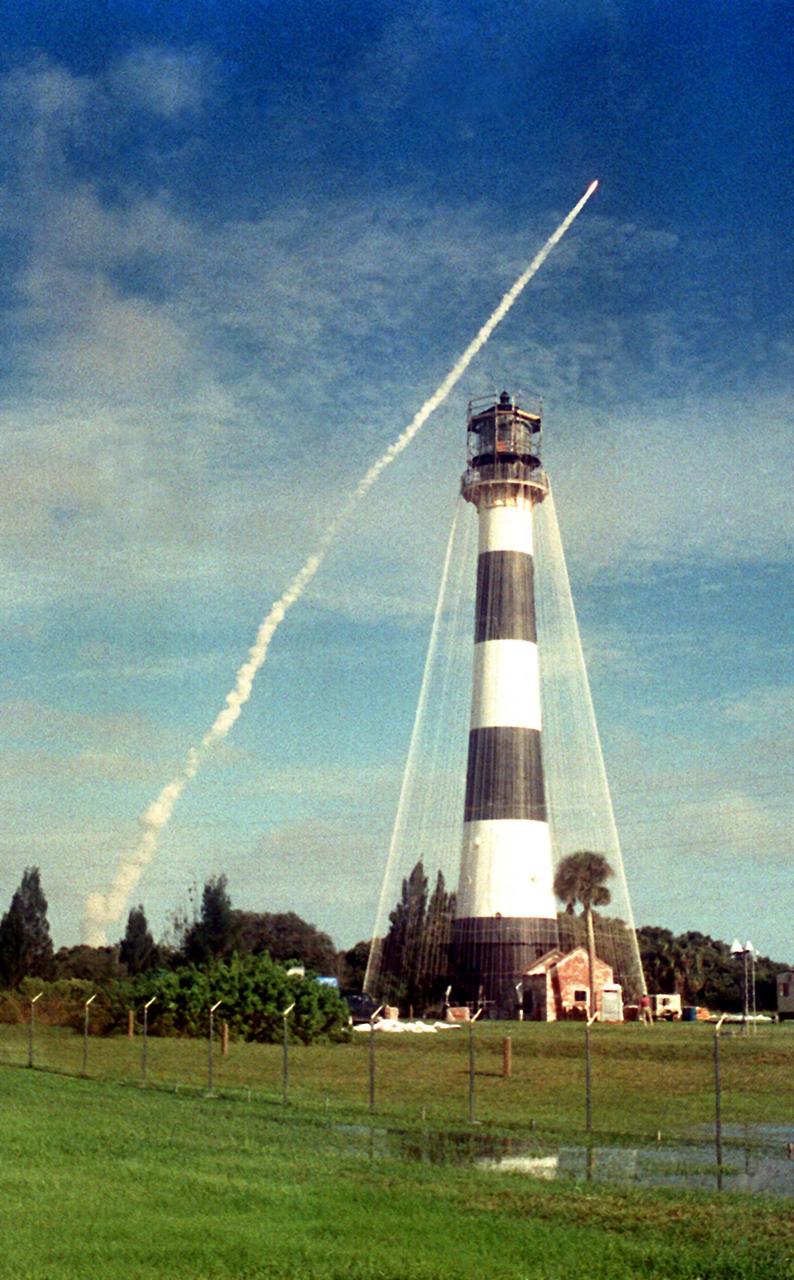
KENNEDY SPACE CENTER, FLA. -- Space Shuttle Columbia soars into the cloud-washed sky above Cape Canaveral Lighthouse. After six scrubs from the original Sept. 25 launch date, liftoff occurred Oct. 20 at 9:53 a.m. EDT. The crew of seven comprises Commander Ken Bowersox, Pilot Kent Rominger, Mission Specialists Kathy Thornton (Payload Commander), Catherine Coleman and Michael Lopez-Alegria, plus Payload Specialists Fred Leslie and Albert Sacco. The 72nd Shuttle mission, STS-73 marks the second flight of the U.S. Microgravity Laboratory. Research is being conducted in five areas: fluid physics, materials science, biotechnology, combustion science, and commercial space processing. The lighthouse, undergoing refurbishment and upgrade, is shown with a network of nylon lines ready for canvas panels to be attached. The canvas shroud will protect the surrounding area during sand-blasting of the lead-based paint.
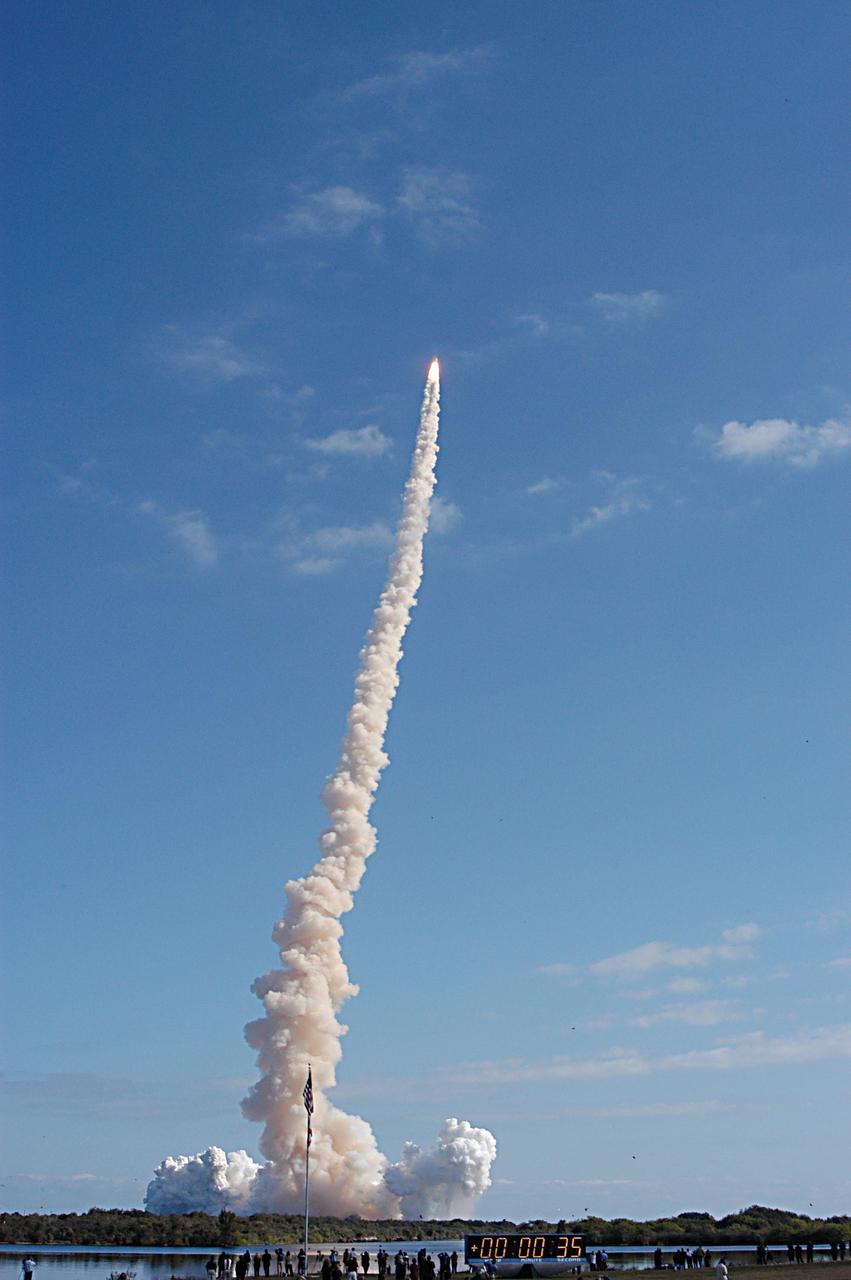
KENNEDY SPACE CENTER, FLA. -- Seconds after launch, Space Shuttle Columbia appears as a flaming tip of the smoke column it trails. Following a flawless and uneventful countdown, liftoff occurred on-time at 10:39 a.m. EST. The 16-day research mission will include FREESTAR (Fast Reaction Experiments Enabling Science, Technology, Applications and Research) and the SHI Research Double Module (SHI/RDM), known as SPACEHAB. Experiments on the module range from material sciences to life sciences. Landing is scheduled at about 8:53 a.m. EST on Saturday, Feb. 1. This mission is the first Shuttle mission of 2003. Mission STS-107 is the 28th flight of the orbiter Columbia and the 113th flight overall in NASA's Space Shuttle program.
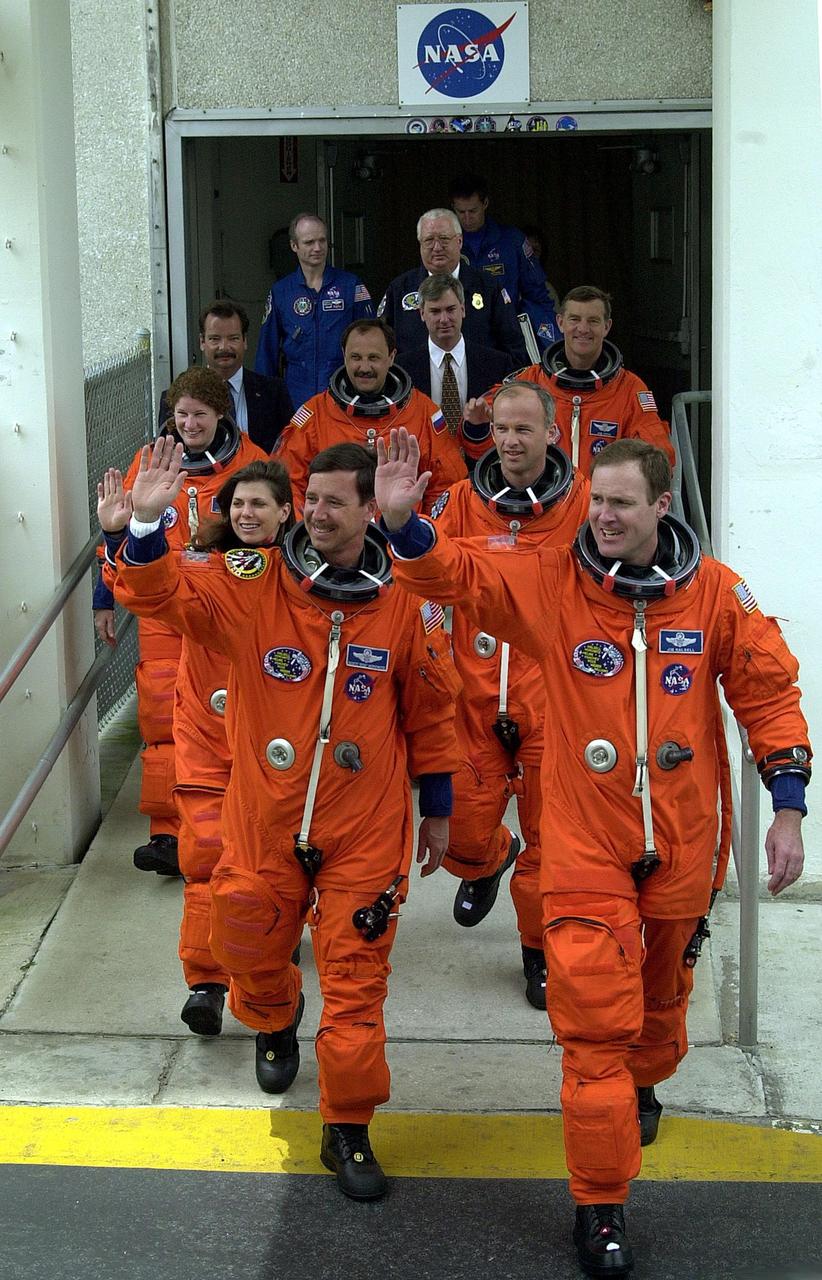
(Nikon D1 Test) The STS-101 crew wave to onlookers as they leave the Operations and Checkout Building enroute for the second time to Launch Pad 39A and another attempt at liftoff of Space Shuttle Atlantis. In their orange launch and entry suits, they are (front line) Pilot Scott J. Horowitz and Commander James D. Halsell Jr.; (second line) Mission Specialists Mary Ellen Weber and Jeffrey N. Williams; and (third line) Mission Specialists Susan J. Helms, Yury Usachev of Russia and James S. Voss The first attempt on April 24 was scrubbed due to unfavorable weather conditions. The mission will take the crew to the International Space Station to deliver logistics and supplies and to prepare the Station for the arrival of the Zvezda Service Module, expected to be launched by Russia in July 2000. Also, the crew will conduct one space walk. This will be the third assembly flight to the Space Station. Liftoff is targeted for 3:52 p.m. EDT. The mission is expected to last about 10 days, with Atlantis landing at KSC Saturday, May 6, about 11:53 a.m. EDT
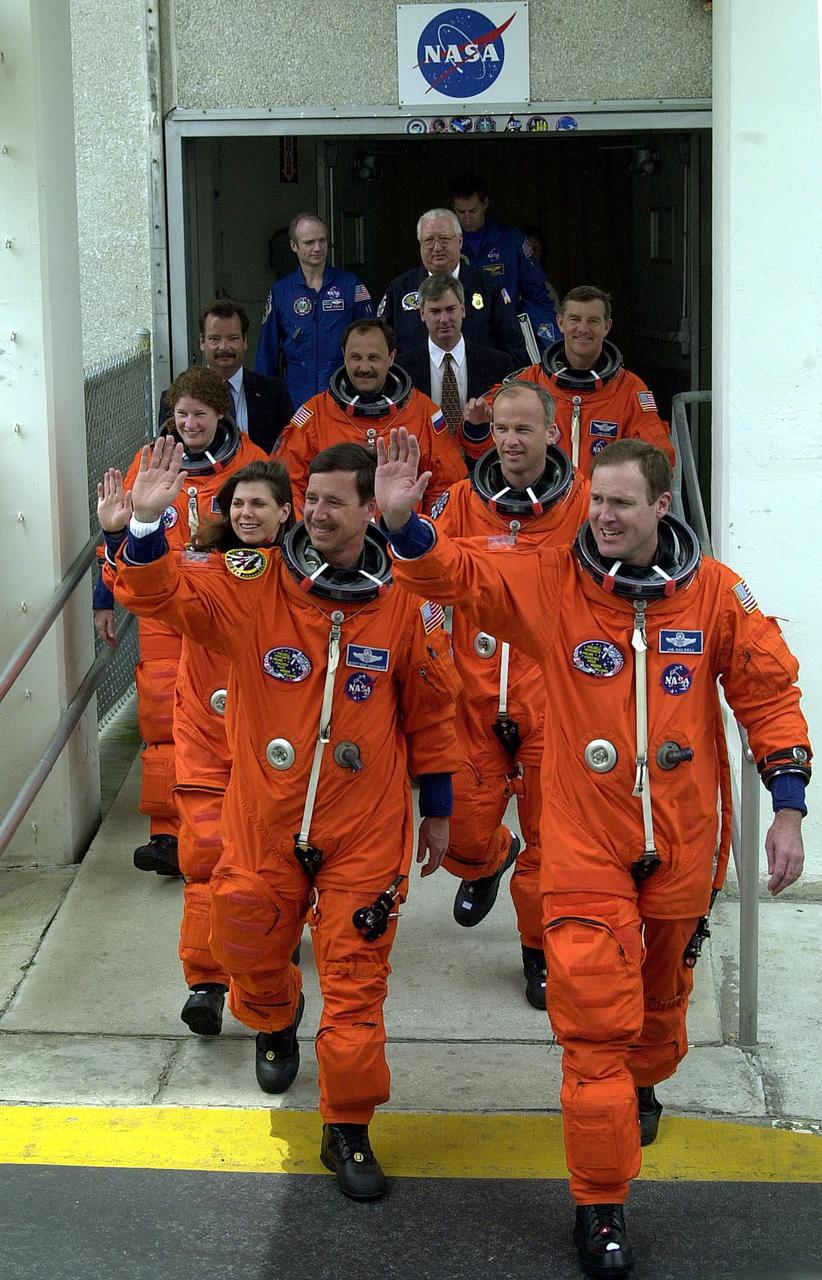
(Nikon D1 Test) The STS-101 crew wave to onlookers as they leave the Operations and Checkout Building enroute for the second time to Launch Pad 39A and another attempt at liftoff of Space Shuttle Atlantis. In their orange launch and entry suits, they are (front line) Pilot Scott J. Horowitz and Commander James D. Halsell Jr.; (second line) Mission Specialists Mary Ellen Weber and Jeffrey N. Williams; and (third line) Mission Specialists Susan J. Helms, Yury Usachev of Russia and James S. Voss The first attempt on April 24 was scrubbed due to unfavorable weather conditions. The mission will take the crew to the International Space Station to deliver logistics and supplies and to prepare the Station for the arrival of the Zvezda Service Module, expected to be launched by Russia in July 2000. Also, the crew will conduct one space walk. This will be the third assembly flight to the Space Station. Liftoff is targeted for 3:52 p.m. EDT. The mission is expected to last about 10 days, with Atlantis landing at KSC Saturday, May 6, about 11:53 a.m. EDT