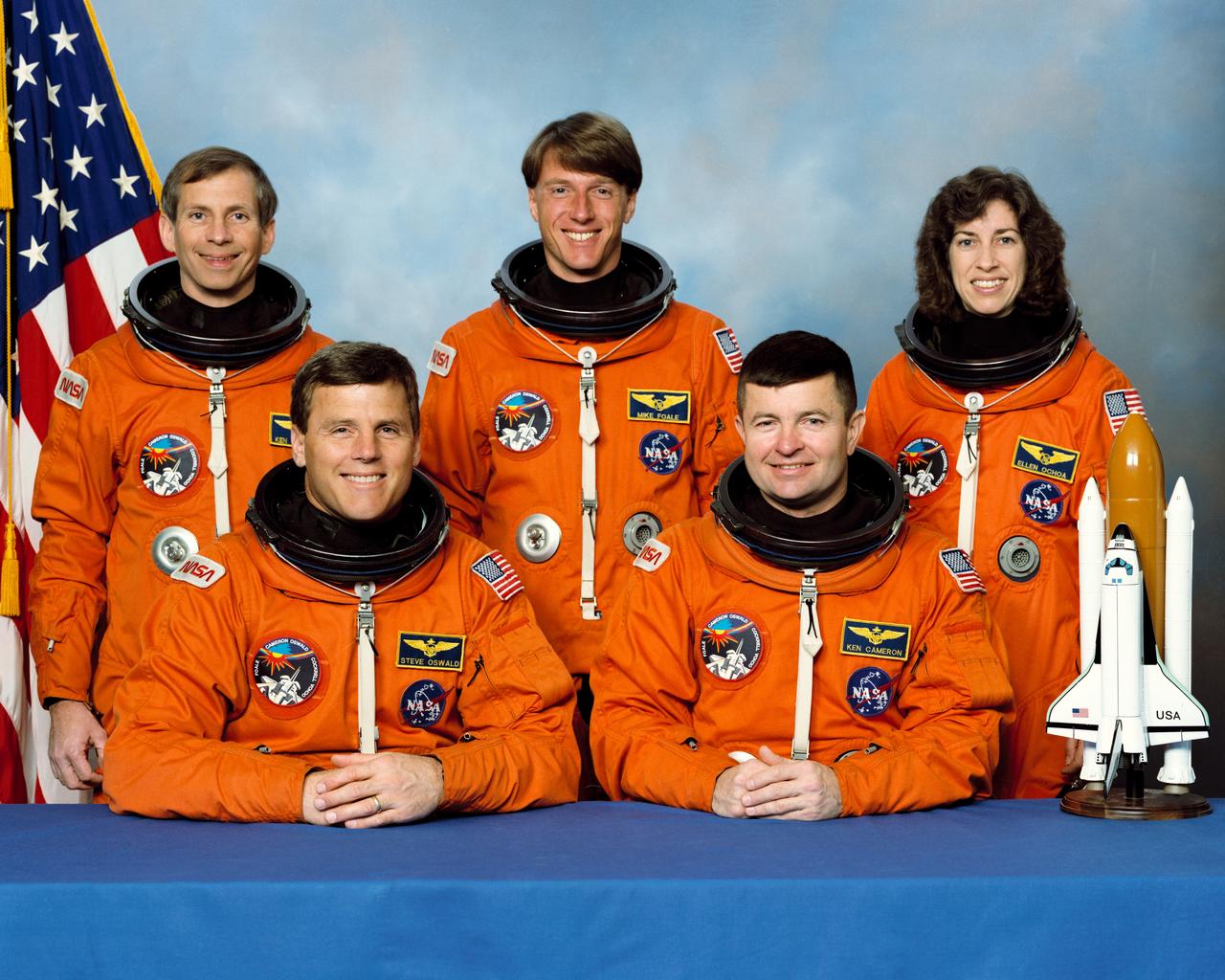
STS056-S-002 (January 1993) --- The five NASA astronauts assigned to fly aboard the Space Shuttle Discovery for the STS-56\Atlas-2 mission are pictured in training versions of their partial-pressure launch and entry garments. Left to right are astronauts Kenneth D. Cockrell, Steven S. Oswald, C. Michael Foale, Kenneth D. Cameron and Ellen Ochoa. Cameron is mission commander; Oswald, pilot; while the other three will serve as mission specialists.
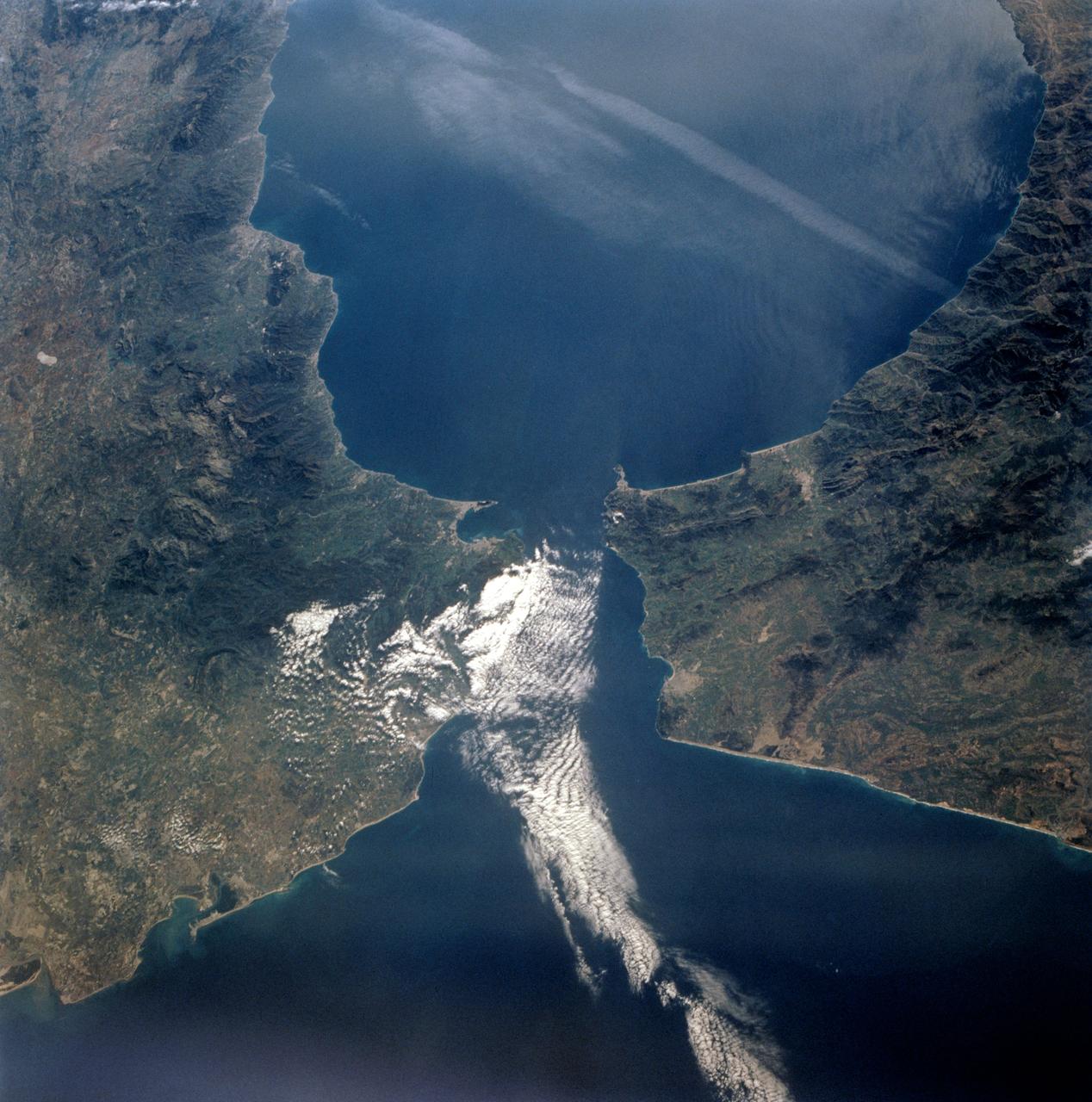
STS-56 Earth observation taken aboard Discovery, Orbiter Vehicle (OV) 103, is of the Strait of Gibraltar. A small bank of clouds marks the passage between Spain and Morocco at the western edge of the Mediterranean Sea. This passage, one of the two Pilars of Hercules of the Ancient Greeks, is now known as the Strait of Gibraltar. The cities of Cadiz on the Atlantic Coast of Spain and Malaga on the Mediterranean coast, as well as Tangier, Morocco (facing the strait), can be seen. According to NASA scientists studying the STS-56 photos, a subtle difference in the water color on the Atlantic side suggests that a pulse of surface water had recently flowed out of the Mediterranean into the Atlantic.
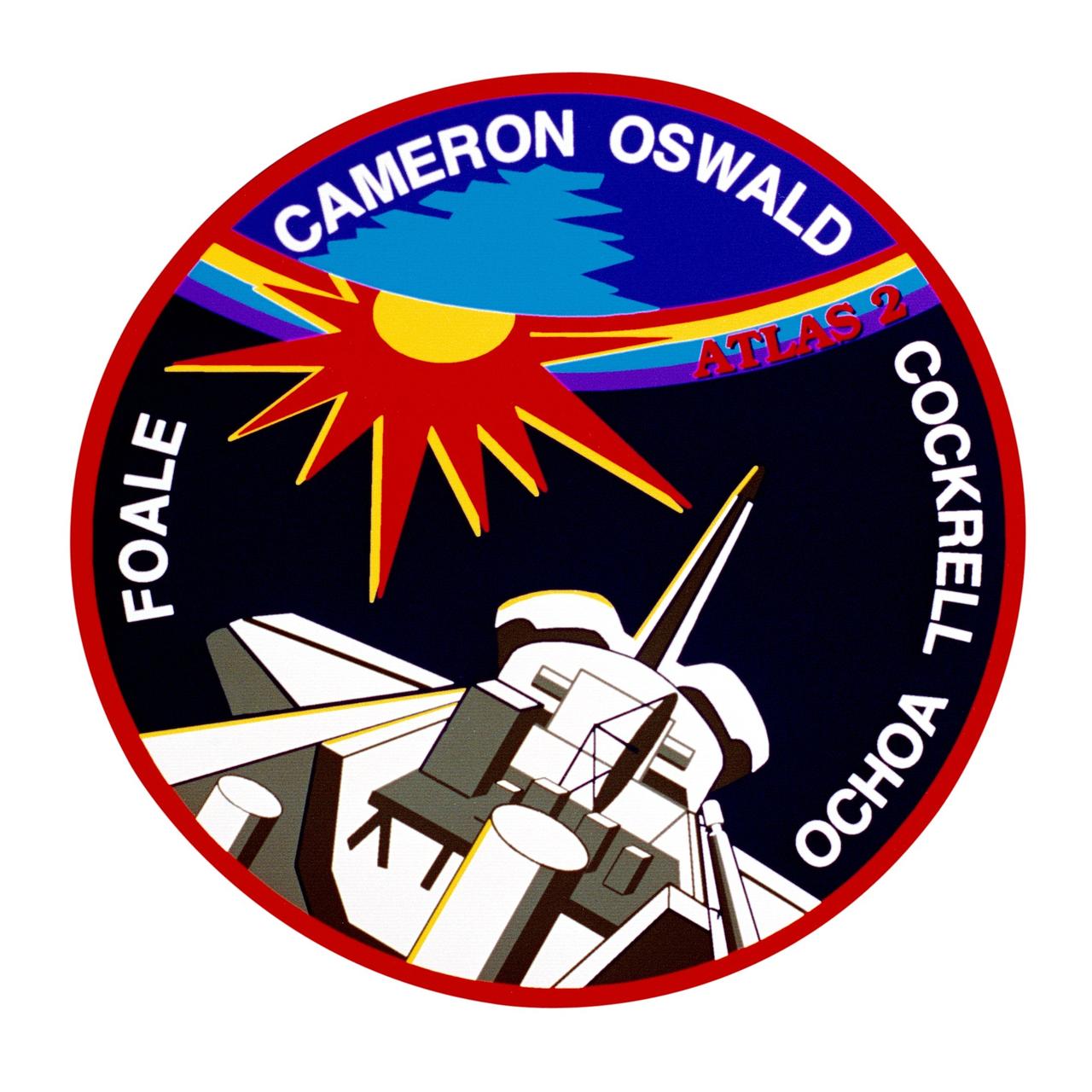
STS056-S-001 (January 1993) --- The patch is a pictorial representation of the STS-56/ATLAS-2 mission as seen from the crew's viewpoint. The payload bay is depicted with the ATLAS-2 pallet, Shuttle Solar Backscatter Ultra Violet (SSBUV) experiment, and Spartan -- the two primary scientific payloads on the flight. With ATLAS-2 serving as part of the "Mission to Planet Earth" (MTPE) project, the crew has depicted the planet prominently in the artwork. Two primary areas of study are the atmosphere and the sun. To highlight this, Earth's atmosphere is depicted as a stylized visible spectrum and the sunrise is represented with an enlarged two-colored corona. Surnames of the commander and pilot are inscribed in the Earth field, with the surnames of the mission specialists appearing in the space background. The NASA insignia design for space shuttle flights is reserved for use by the astronauts and for other official use as the NASA Administrator may authorize. Public availability has been approved only in the form of illustrations by the various news media. When and if there is any change in this policy, which we do not anticipate, it will be publicly announced. Photo credit: NASA
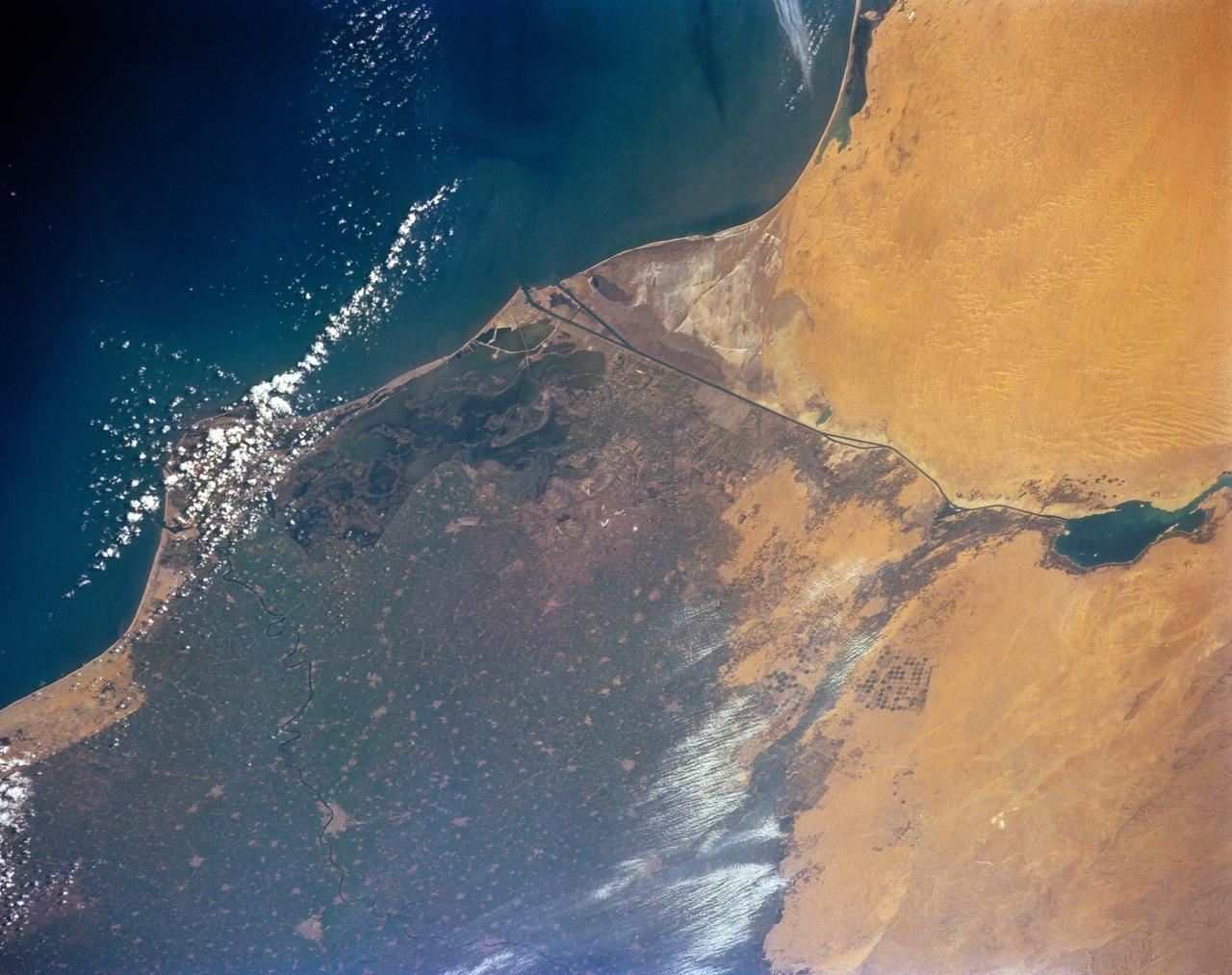
STS-56 Earth observation of the northeastern Nile Delta was photographed from the Earth-orbiting Discovery, Orbiter Vehicle (OV) 103. The branch of the Nile featured in the frame is Daimietta. The Suez Canal marks the boundary of the Nile Delta agriculture and the Sinai Desert to the right. Lake Masada, the dark waterlogged area to the west (left) of Port Said is becoming more saline as the Aswan Dam has reduced sediment downstream. This sediment reduction, according to NASA scientists studying the STS-56 photography, has resulted in increased coastal erosion and the intrusion of a salt-water lens to the ground water, particularly in the northeastern portions of the delta. Center pivot irrigation fields are located along either side of the Ramses Canal, which connects the Daimietta Nile with Great Bitter Lake. This canal has been re-dug three or four times in the past 3,000 years. Historians note that the canal's most famous use was as the departure point of the fleet of Pharaoh Necho. The fleet circumnavigated Africa clockwise from the head of the Red Sea to the Mediterranean coast of the Nile (probably the Rosetta Nile) in a three-year voyage circa 660 BC.
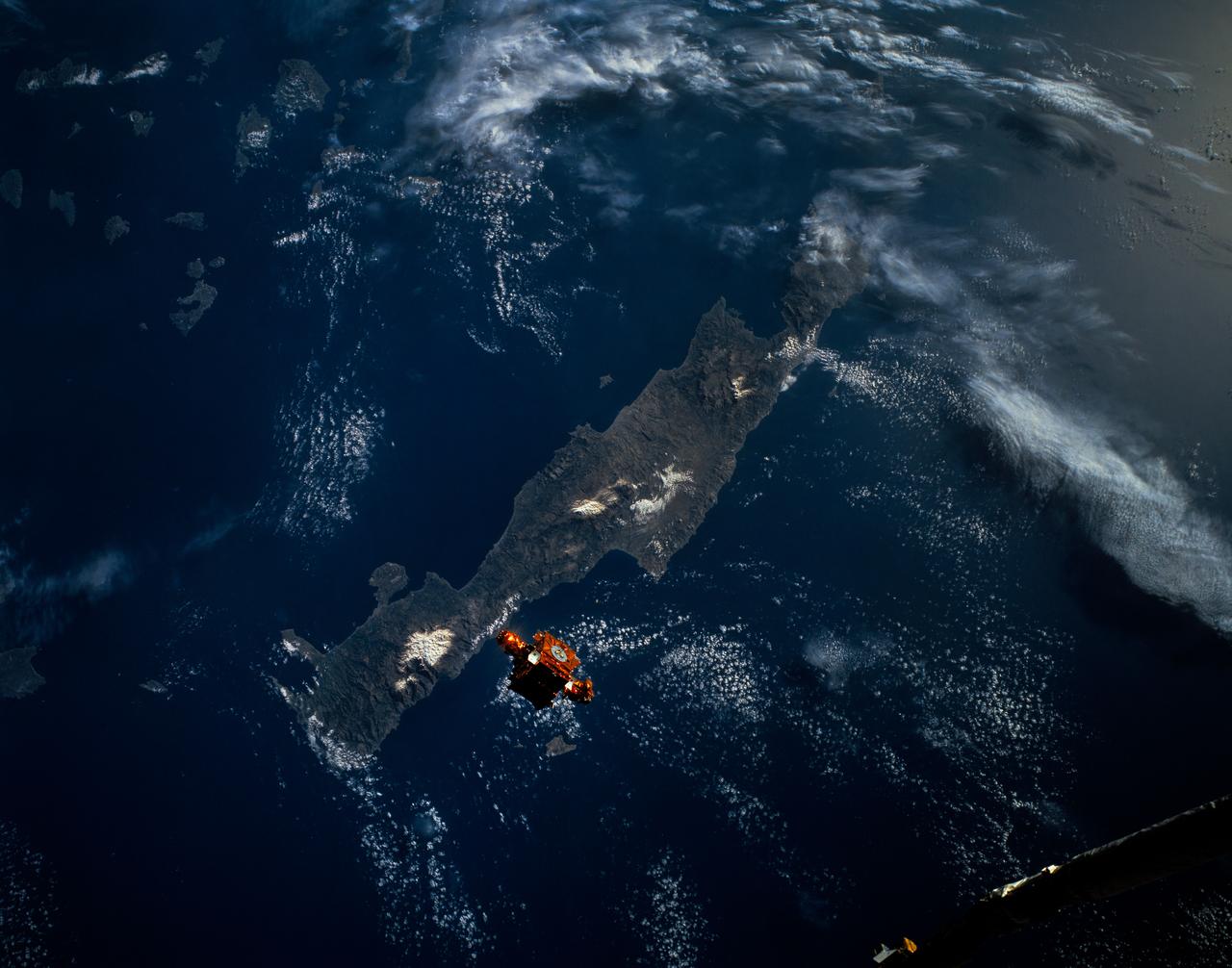
During STS-56, the Shuttle Pointed Autonomous Research Tool for Astronomy 201 (SPARTAN-201), a freeflying payload, was photographed by Discovery's, Orbiter Vehicle (OV) 103's, crewmembers as it drifted above the Mediterranean Sea near the island of Crete. On the mission's third day, the remote manipulator system (RMS) arm was used to lift SPARTAN-201 from its support structure in OV-103's payload bay and release it in space. SPARTAN-201 was later recaptured by OV-103's RMS and returned to Earth with the astronaut crew.
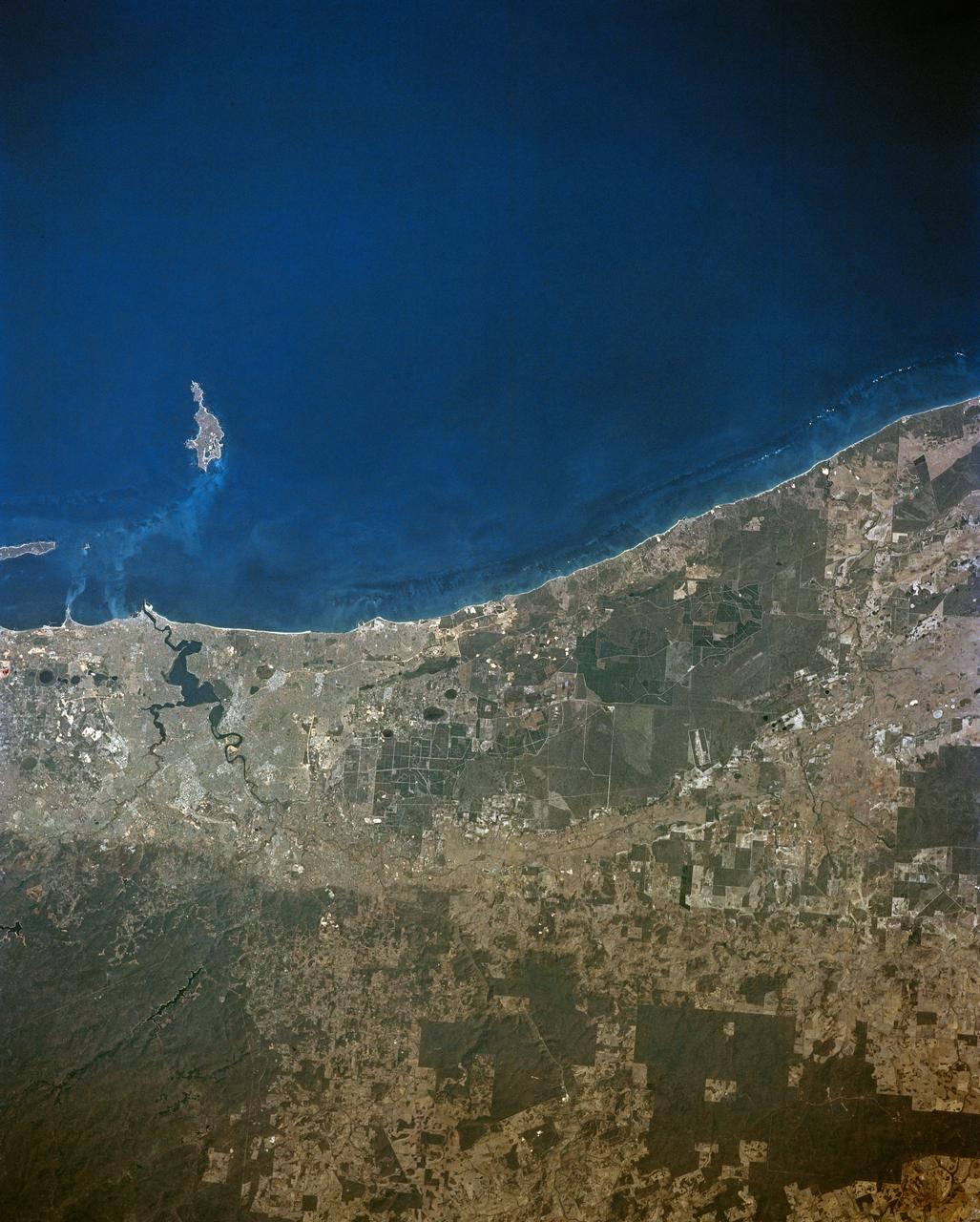
STS-56 Earth observation taken aboard Discovery, Orbiter Vehicle (OV) 103, is probably the best view of Perth in Western Australia. (For orientation purposes, note that the coastline runs north and south). The major feature on the coast is the large estuary of the Swan River. The large port city of Perth is situated on the north bank and the smaller city of Freemantle on the south bank by the sea. Smaller seaside towns trail off north and south of this center of urban life. Inland lies a prominent escarpment, more than 600 feet high, seen running down the middle of the view and dividing the lighter-colored coastal lowlands from the highlands where dark-colored tree savanna and desert scrub dominates the land. The Moore River can be seen entering the sea at the top of the frame. Rottnest Island is visible in the sea and Garden Island near bottom edge of the frame. Perth is the largest economic center in Western Australia. It receives natural gas from an offshore field hundreds of miles to the north. It lies 3,400 kilometers west of Sydney on the opposite side of this island continent.
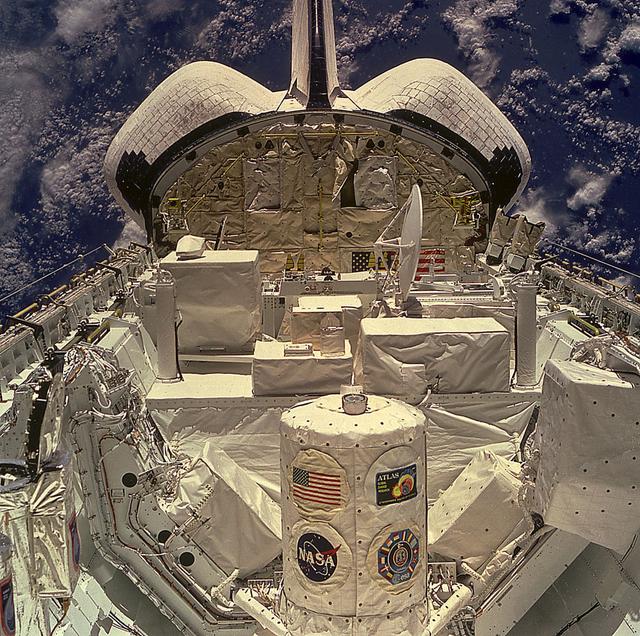
Space Shuttle Discovery (STS-56) onboard photo of the Atmospheric Laboratory for Applications and Science (ATLAS-2) payload on the pallet in the cargo bay of the orbiter.
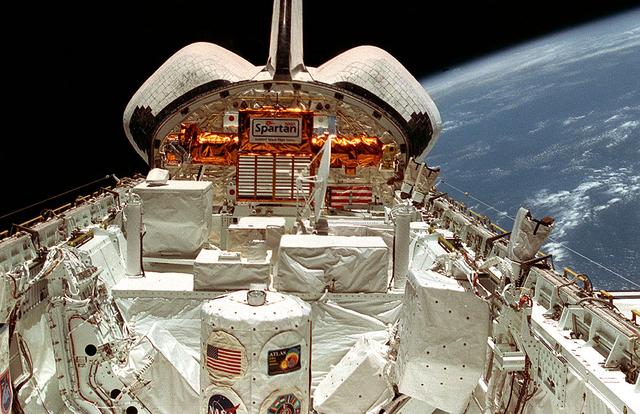
Space Shuttle Discovery (STS-56) onboard photo of the Atmospheric Laboratory for Applications and Science (ATLAS-2) payload on the pallet in the cargo bay of the orbiter.
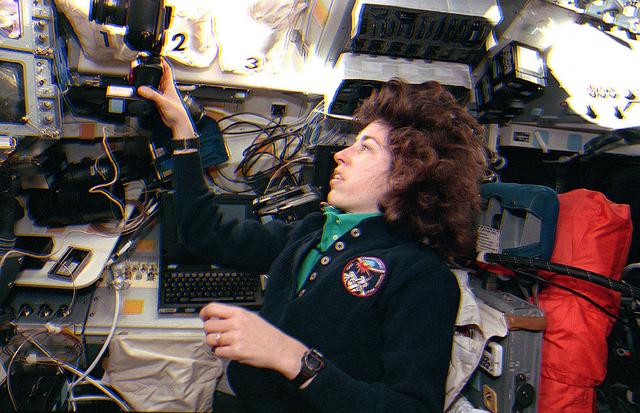
Space Shuttle Discovery (STS-56) Mission Specialist 3 (MS3) Ellen Ochoa handles a 35mm camera on the aft flight deck of the Orbiter. Ochoa is positioned next to the payload station and behind the commander's station.
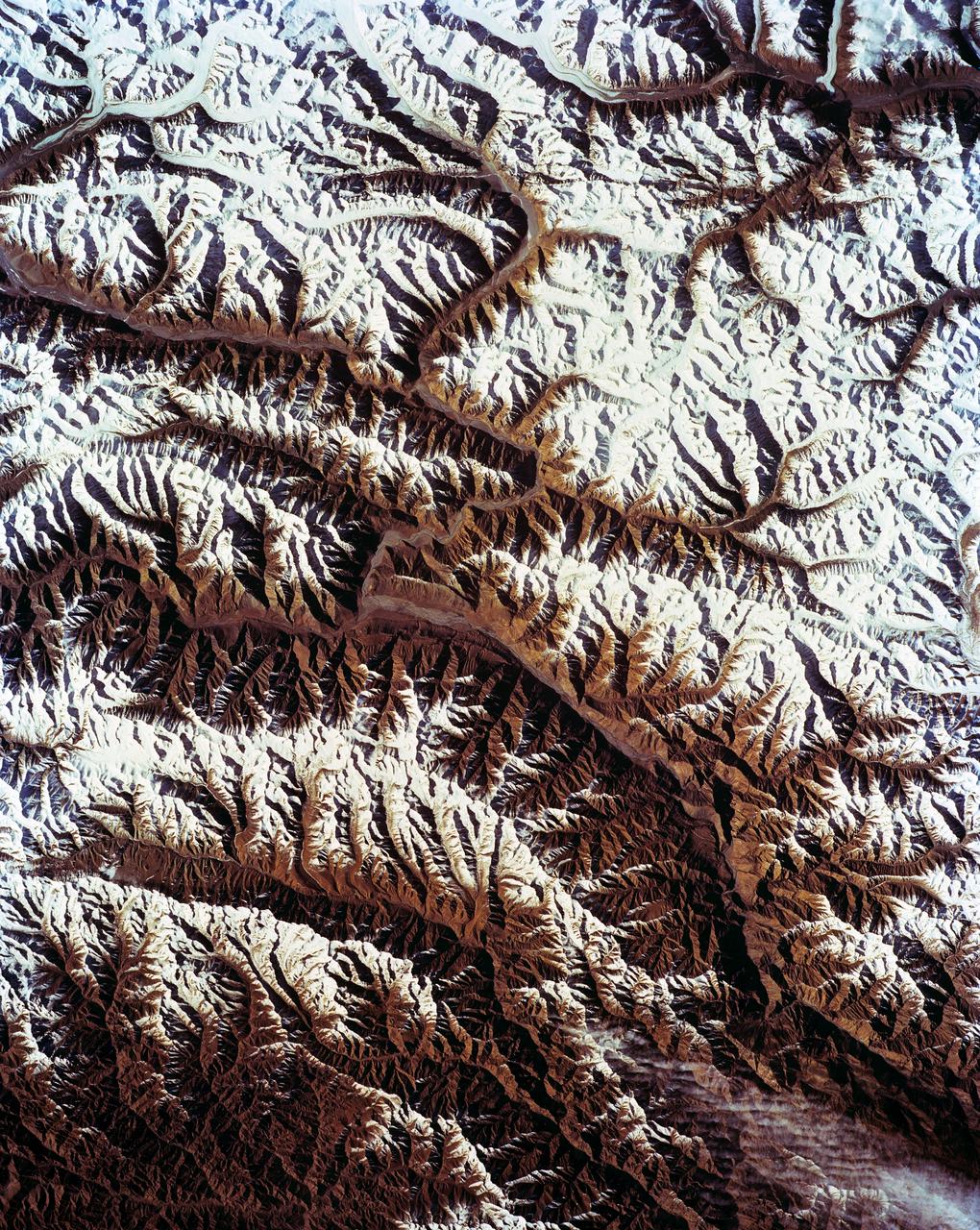
STS-56 Earth observation shows of some of the highest mountain peaks in the world taken from Discovery, Orbiter Vehicle (OV) 103, as it passed over India and China. The top of the view shows one of the snow and ice-covered massifs in the great Karakorum Range of north India. A star-shaped peak at top left reaches 23,850 feet. Glaciers can be seen in valleys at these high elevations. The international border between India to the south (top) and China (bottom) snakes left to right along a river near the top of the scene, then veers into the muntains at top left. Larger valleys, despite their elevation (all in excess of 14,000 feet), are occupied by transport routes joining points in India, China and the southern republics of the CIS. The ancient Silk Route between China and the Middle East lies not far to the north (outside the bottom of the frame).
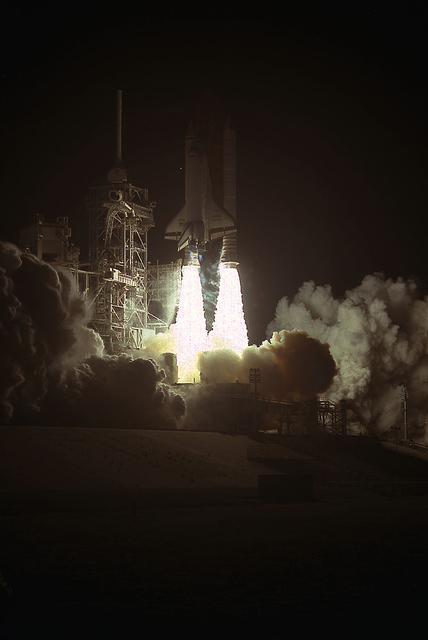
The second try works like a charm as the Space Shuttle Discovery (STS-56) lifts off from Launch Pad 39B. The first attempt to launch was halted at T-11 seconds on April 6th. Aboard for the second shuttle mission of 1993 were a crew of five and the Atmospheric Laboratory for Applications and Science 2 (ATLAS 2), the second in a series of missions to study the sun's energy output and Earth's middle atmosphere chemical make-up, and how these factors affect levels of ozone.
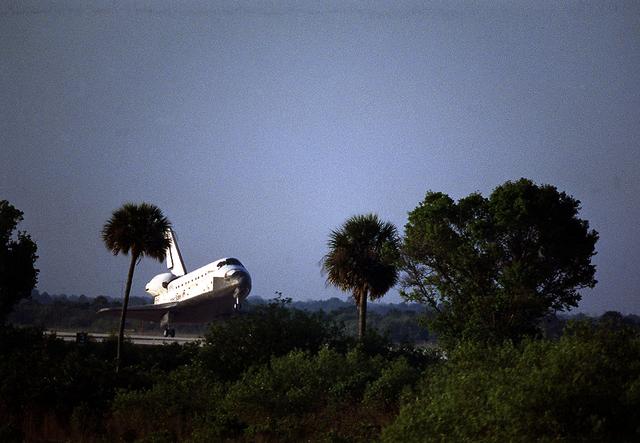
A four-million-mile journey draws to a flawless ending as the orbiter Discovery (STS-56) lands at Kennedy Space Center's (KSC) Shuttle Landing Facility. Aboard for the second shuttle mission of 1993 were a crew of five and the Atmospheric Laboratory for Applications and Science 2 (ATLAS 2), the second in a series of missions to study the sun's energy output and Earth's middle atmosphere chemical make-up, and how these factors affect levels of ozone.
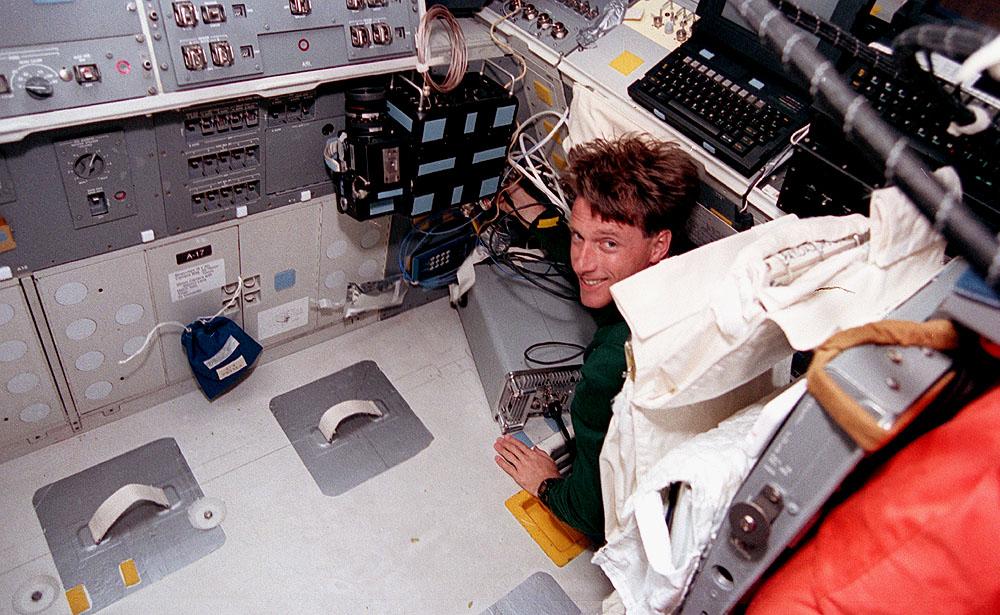
Space Shuttle Discovery (STS-56) onboard photo of Mission Specialist Michael Foale working in the Atmospheric Laboratory for Applications and Science (ATLAS-2). The ATLAS program was designed to measure the long term variability in the total energy radiated by the sun and determine the variability in the solar spectrum.
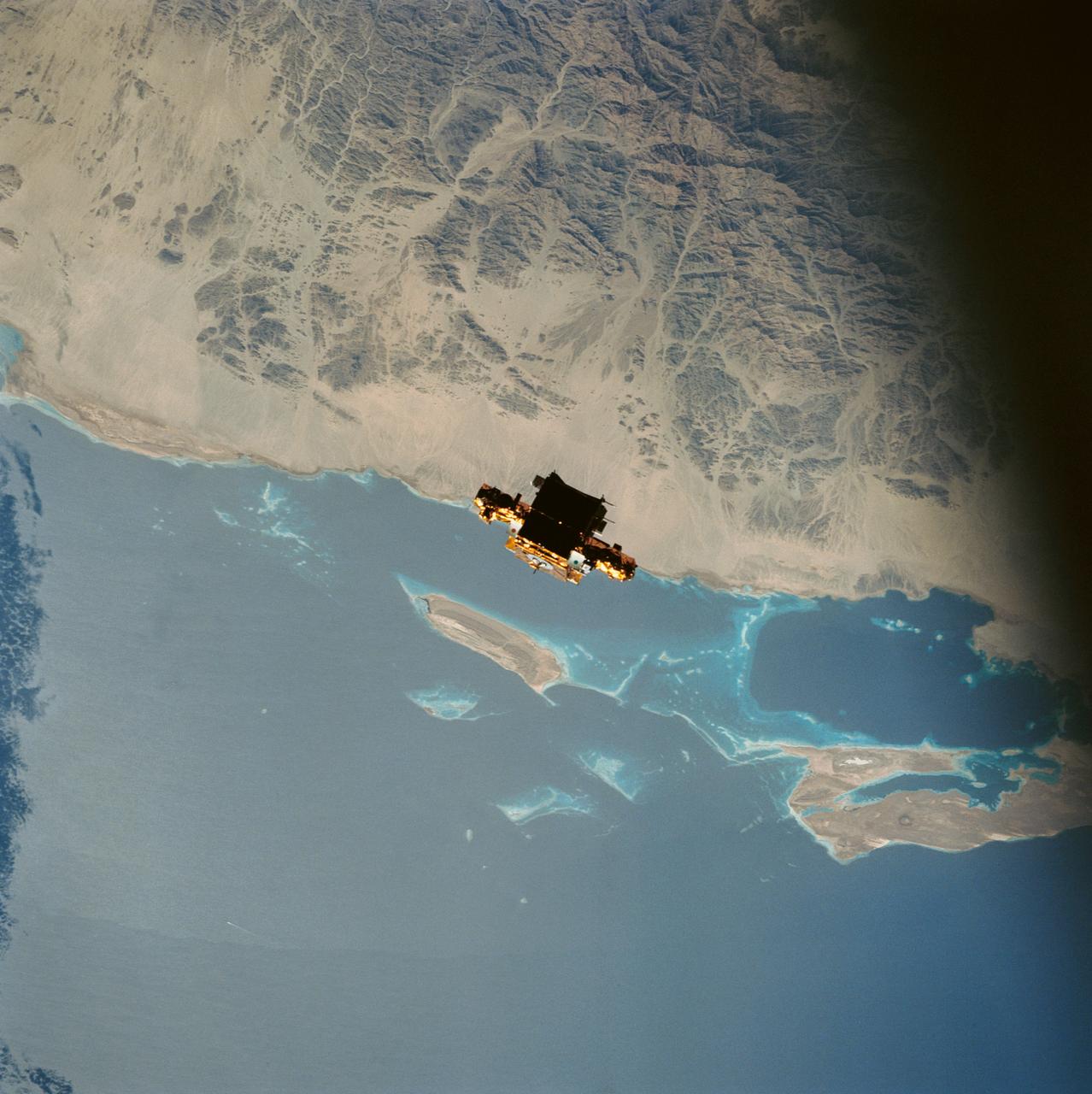
During STS-56, the Shuttle Pointed Autonomous Research Tool for Astronomy 201 (SPARTAN-201), a freeflying payload, was captured on 70mm film as it drifts over the Red Sea coast of Sudan. SPARTAN-201 was photographed by the crewmembers aboard Discovery, Orbiter Vehicle (OV) 103. On the mission's third day, crewmembers used the remote manipulator system (RMS) to lift the satellite from its support structure in OV-103's payload bay (PLB) and release it into space. SPARTAN-201 was later recaptured by OV-103's RMS and returned to Earth with the astronaut crew. The cape structure in the background is Ras abu Shagara, north of Port Sudan.
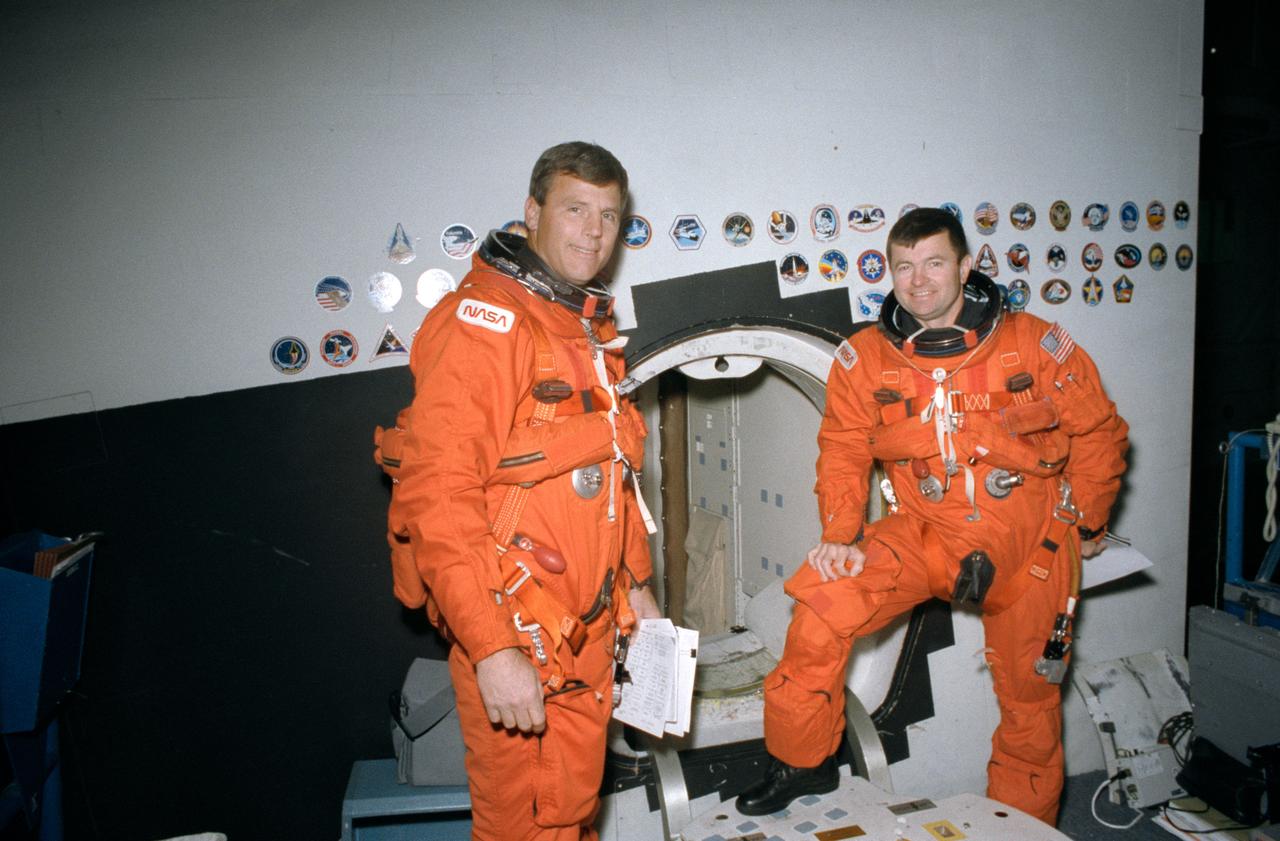
STS-56 Discovery, Orbiter Vehicle (OV) 103, Commander Kenneth Cameron (right) and Pilot Stephen S. Oswald, wearing launch and entry suits (LESs), stand at the side hatch of the crew compartment trainer (CCT), a shuttle mockup, prior to entering the mockup. Once inside the CCT, they will don their launch and entry helmets (LEHs) and participate in emergency egress (bailout) procedures. The CCT is located in JSC's Mockup and Integration Laboratory (MAIL) Bldg 9NE.
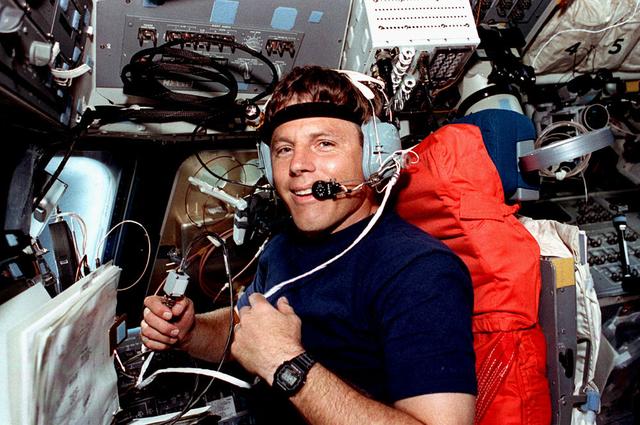
Space Shuttle Discovery (STS-56) onboard photo of Pilot Stephen S. Oswald (wearing a headset) uses the Shuttle Amateur Radio Experiment II (SAREX-II) while sitting at the pilot's station on the forward flight deck. Oswald smiled from behind the microphone as he talks to amateur radio operators on Earth via the SAREX equipment. SAREX cables and the interface module freefloat in front of Oswald. The anterna located in the forward flight deck window is visible in the background. SAREX was established by NASA, the American Radio League/Amateur Radio Satellite Corporation and the Johnson Space Center (JSC) Amateur Radio Club to encourage public participation in the space program through a program to demonstrate the effectiveness of conducting short-wave radio transmissions between the Shuttle and ground-based radio operators at low-cost ground stations with amateur and digital techniques.
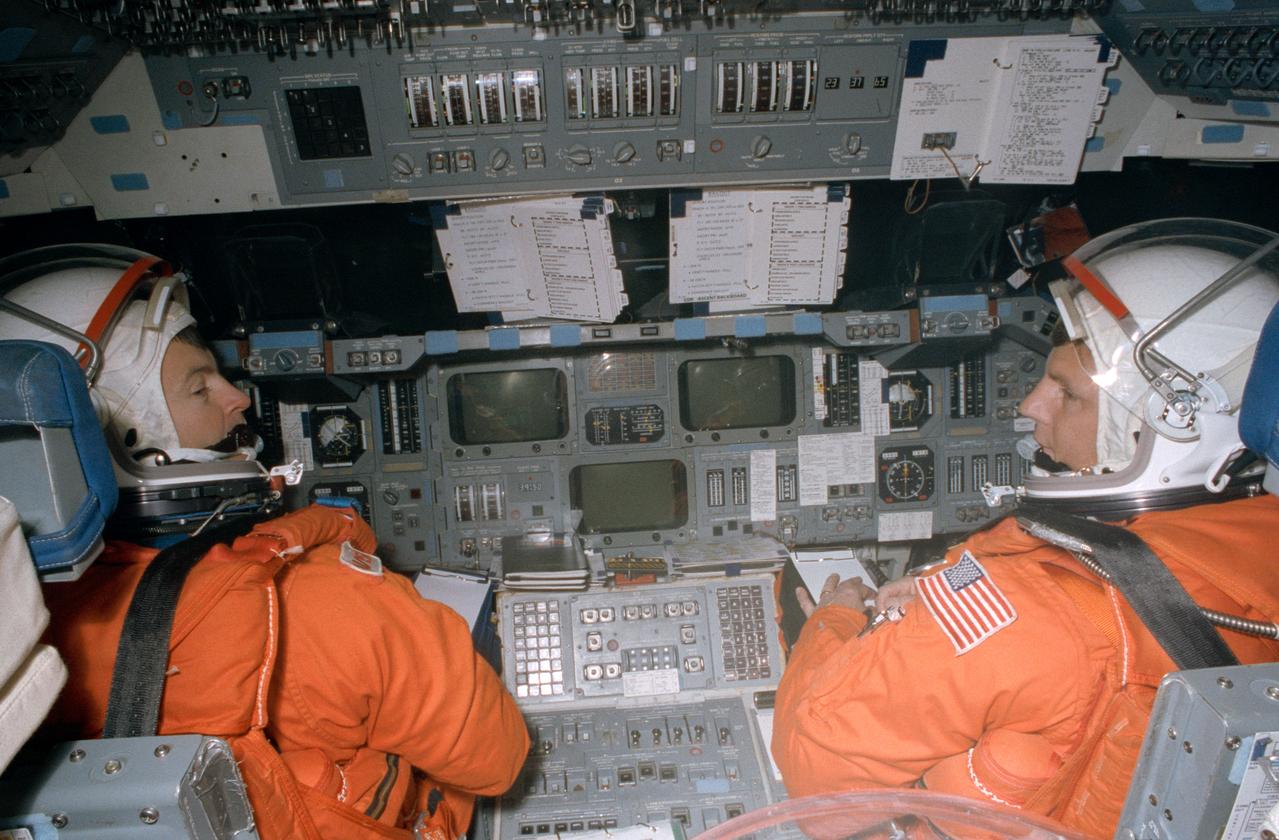
STS-56 Discovery, Orbiter Vehicle (OV) 103, Commander Kenneth Cameron, (left) and Pilot Stephen S. Oswald, wearing launch and entry suits (LESs) and launch and entry helmets (LEHs), are seated on the forward flight deck of the crew compartment trainer (CCT), a shuttle mockup. Cameron mans the commander station controls and Oswald the pilots station controls during an emergency egress (bailout) simulation. The view was taken from the aft flight deck looking forward and includes Cameron's and Oswald's profiles and the forward flight deck controls and checklists. The CCT is located in JSC's Mockup and Integration Laboratory (MAIL) Bldg 9NE.
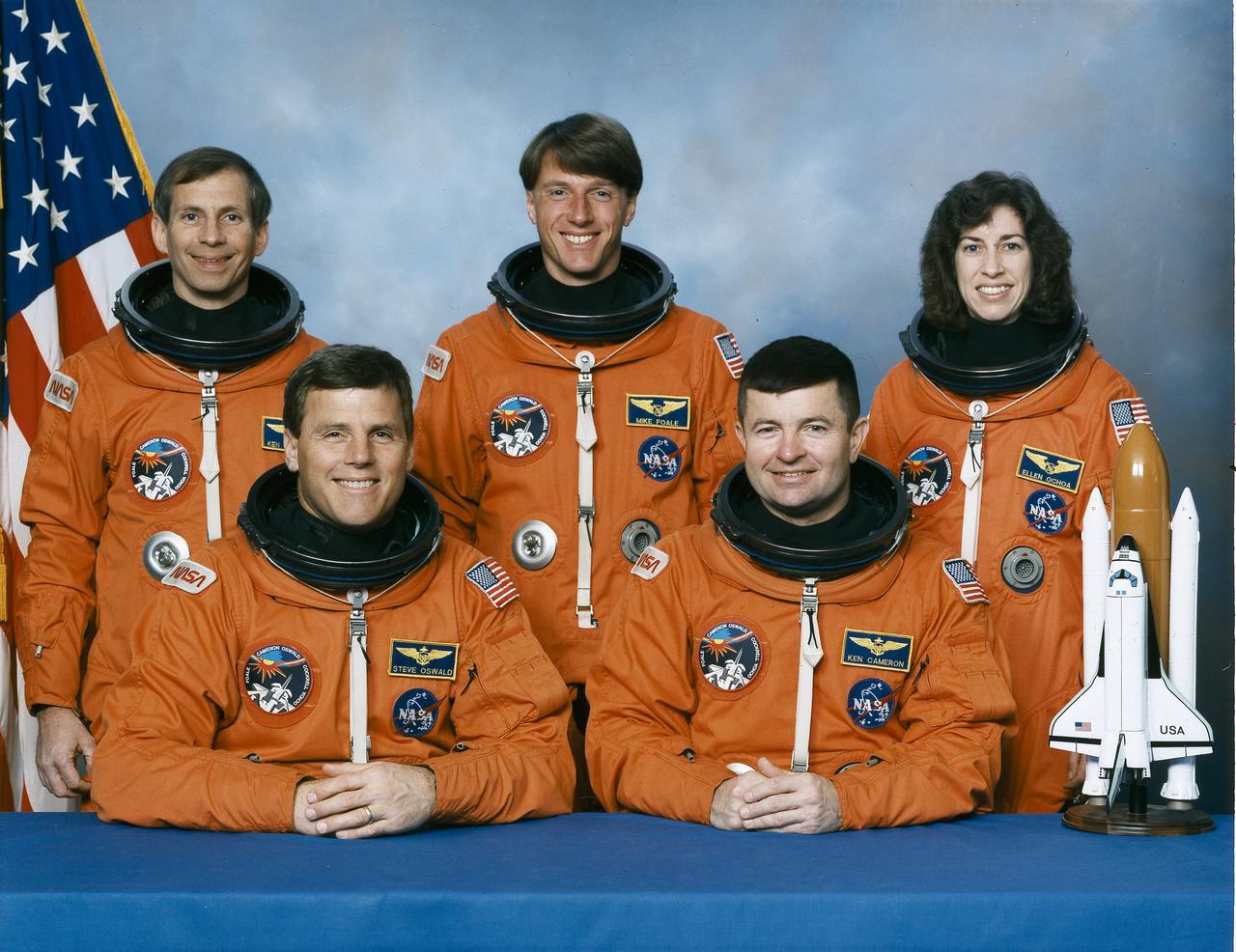
The STS-56 crew portrait includes five astronauts. Seated from the left are Stephen S. Oswald, pilot; and Kenneth D. Cameron, commander. Standing, from the left, are mission specialists Kenneth D. Cockrell, C. Michael Foal, and Ellen Ochoa. The crew launched aboard the Space Shuttle Discovery on April 8, 1993 at 1:29:00 am (EDT) with the Atmospheric Laboratory for Applications and Science-2 (ATLAS-2) as the primary payload.
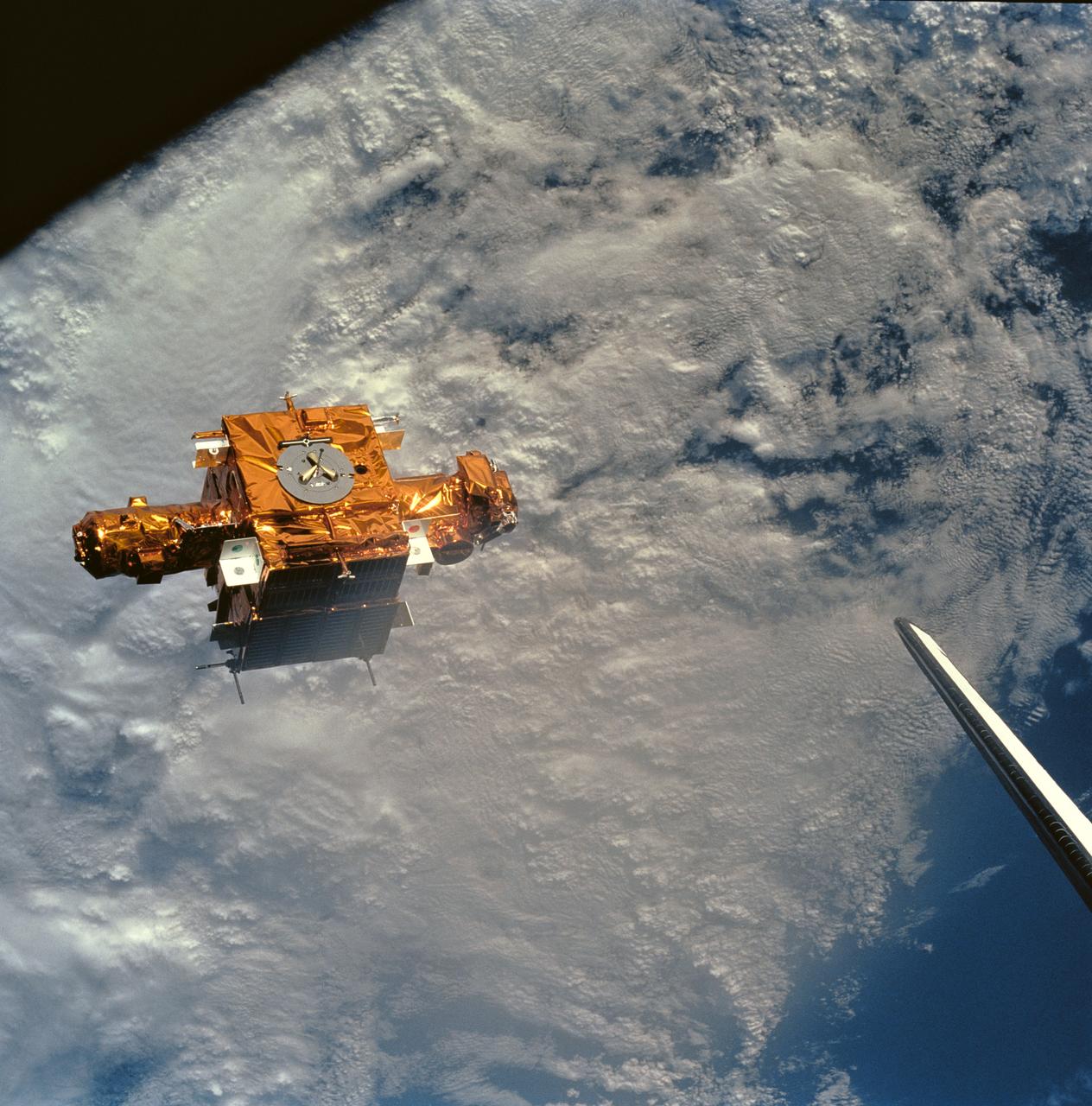
STS056-90-034 (8-17 April 1993) --- Backdropped against heavy cloud cover over the Mediterranean Sea, the SPARTAN-201 satellite was captured on 70mm by crewmembers aboard the Space Shuttle Discovery. SPARTAN is a free-flying payload designed to study the solar wind and part of the sun's corona. The project was conceived in the late 1970s to take advantage of the opportunity offered by the Space Shuttle to provide more observation time for the increasingly more sophisticated experiments than the five to ten minutes provided by sounding rocket flights. On the mission's third day, Astronaut Ellen Ochoa, Mission Specialist, used the remote manipulator system (RMS) to lift the satellite from its support structure on Discovery and release it in space. The reusable craft was later recaptured and returned to Earth with the crew. Note the tip of Discovery's vertical stabilizer at frame's edge.
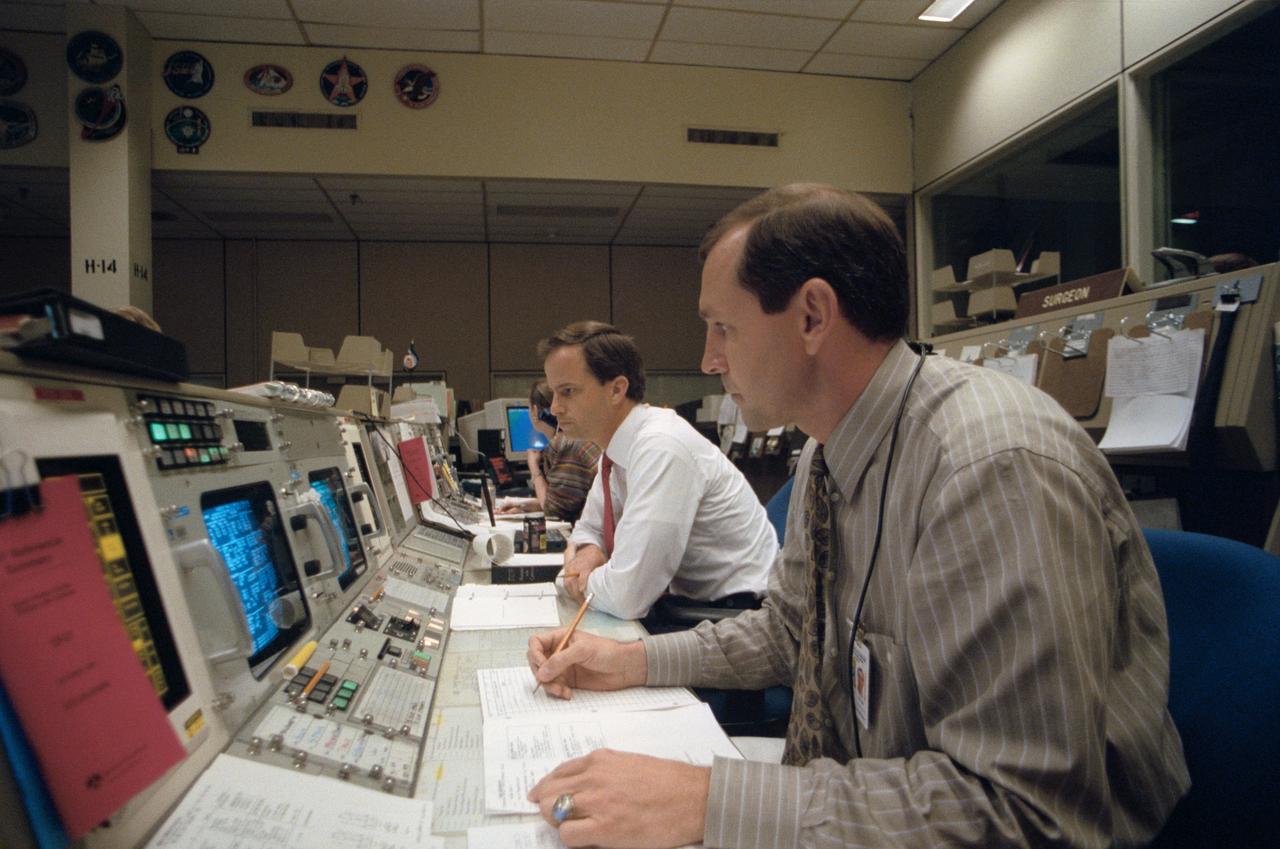
STS056-S-080 (13 April 1993) --- Astronauts Kevin P. Chilton (left) and Curtis L. Brown Jr. are seen at the spacecraft communicator (CAPCOM) console in the flight control room of Houston's Mission Control Center (MCC). The two are part of the CAPCOM team who communicated with the five crewmembers aboard Discovery for the STS-56 mission in Earth orbit.
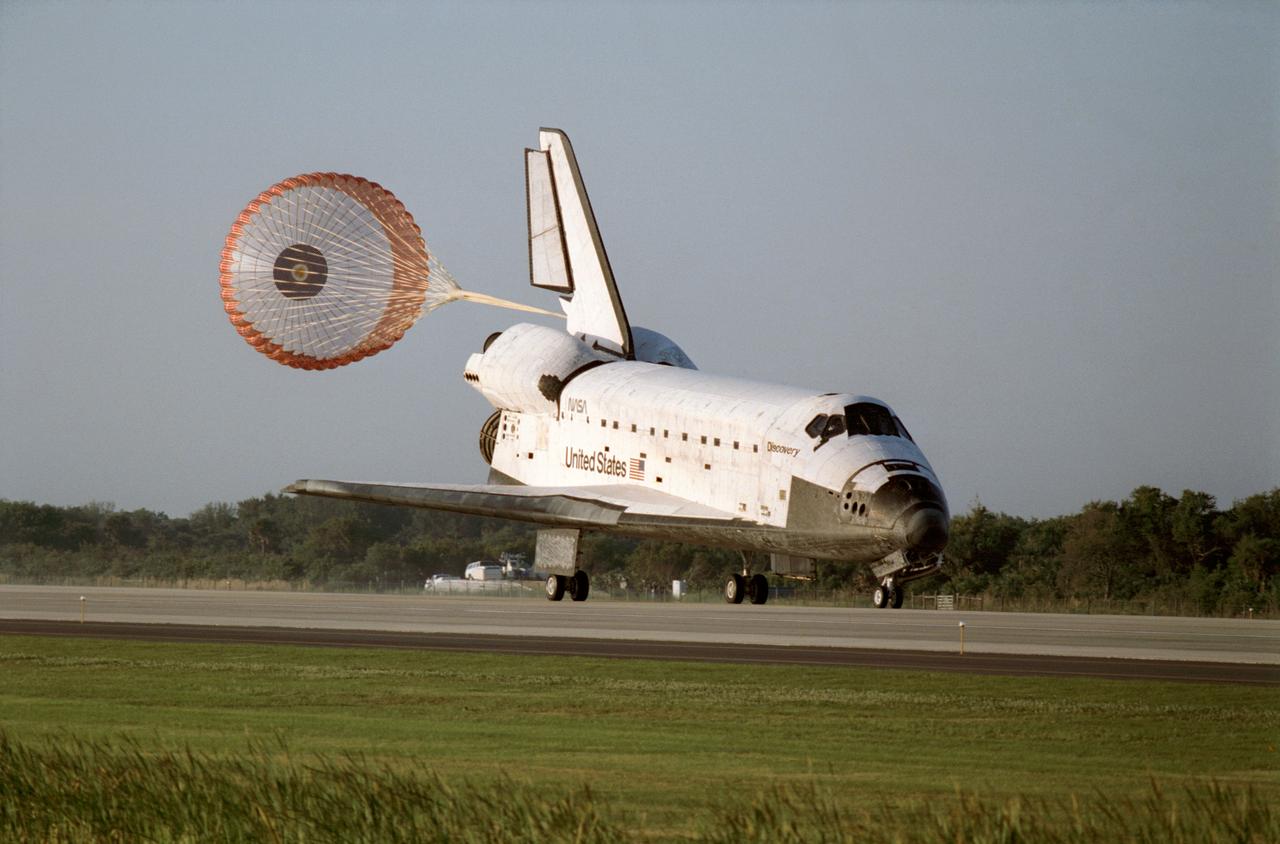
STS056-S-098 (17 April 1993) --- The drag chute is deployed following landing of the Space Shuttle Discovery on the Shuttle landing facility at the Kennedy Space Center to complete the STS-56\Atlas 2 mission. Touchdown occurred at 7:37 a.m. (EDT). Onboard the spacecraft were astronauts Kenneth D. Cameron, commander; Stephen S. Oswald, pilot; and C. Michael Foale, Ellen Ochoa and Kenneth D. Cockrell, mission specialists.

KENNEDY SPACE CENTER, FLA. -- STS-56: Discovery
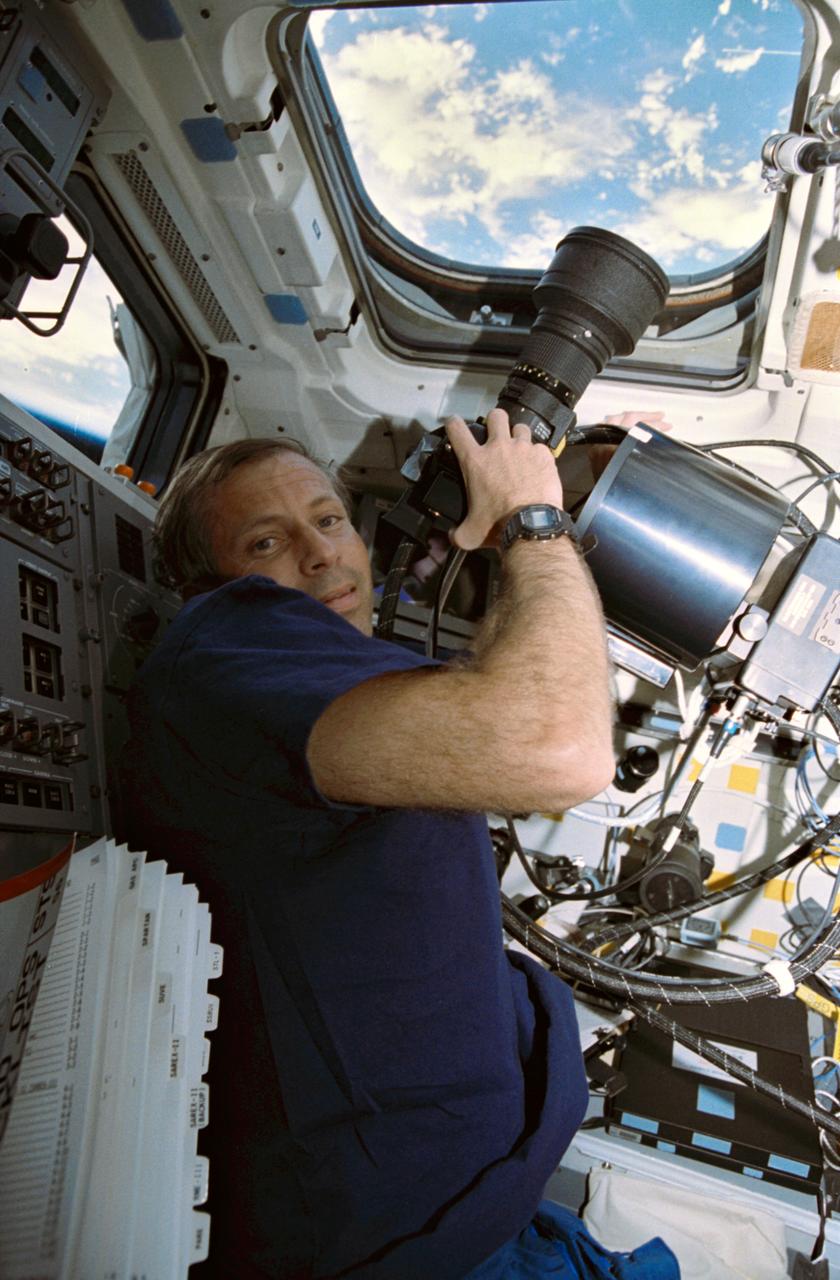
STS056-08-018 (8-17 April 1993) --- Aboard Discovery, astronaut Kenneth D. Cockrell, mission specialist, records Earth imagery with the Hand-Held, Earth-Oriented, Real-Time, Cooperative, User-Friendly, Location-Targeting and Environmental System (HERCULES). HERCULES is a device that makes it simple for Shuttle crew members to take pictures of Earth, as they merely point a modified 35mm camera and shoot any interesting feature, whose latitude and longitude are automatically determined in real-time. The powder-box shaped attachment is the Inertial Measurement Unit (IMU) for the system. The STS-56 crew downlinked a number of the still images during the flight, while others are likely to be stored on disc and returned to Earth with the crew.
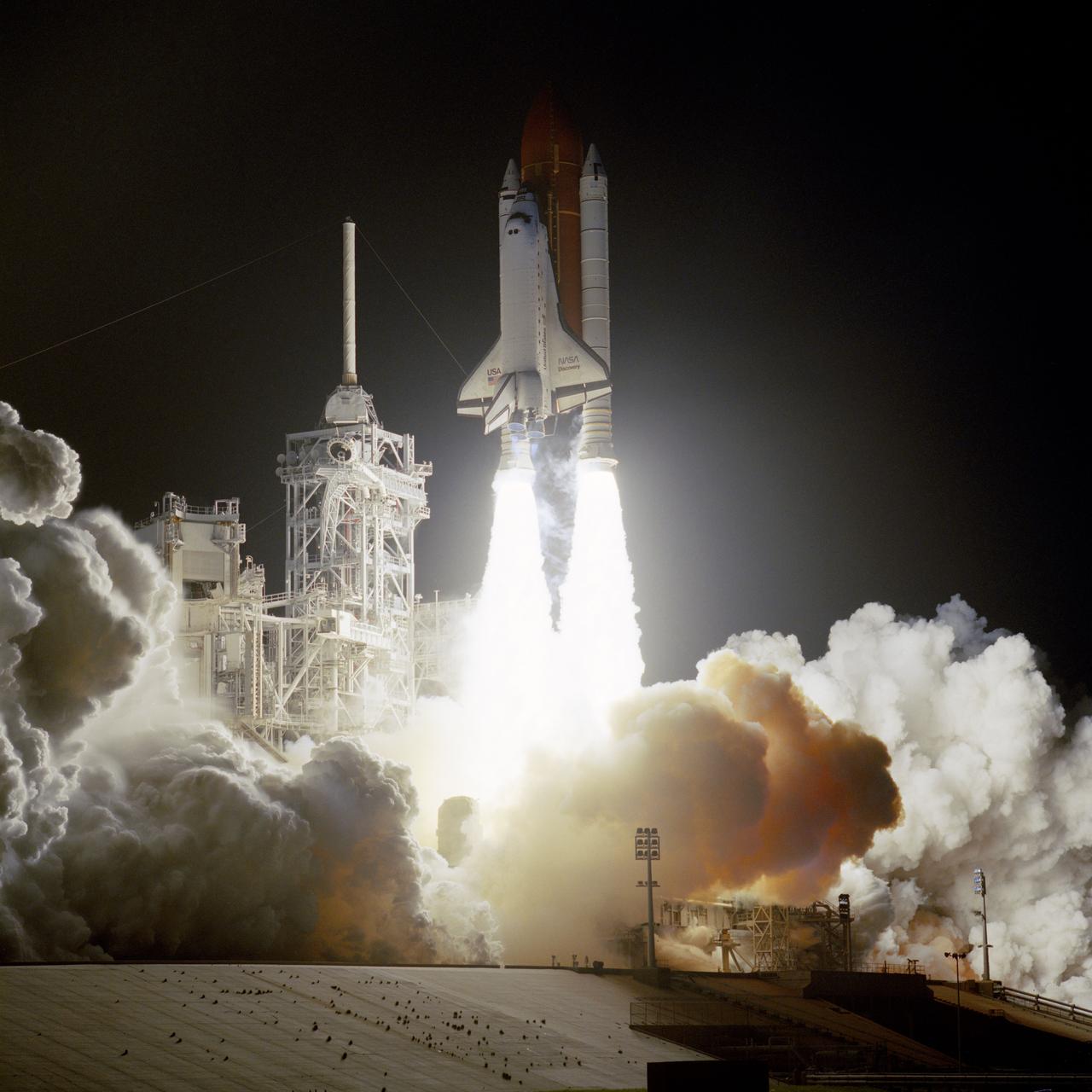
STS-56 Discovery, Orbiter Vehicle (OV) 103, riding atop its external tank (ET) and flanked by two solid rocket boosters (SRBs), lifts off from Kennedy Space Center (KSC) Launch Complex (LC) Pad 39B into the early morning darkness at 1:29 am (Eastern Daylight Time (EDT)). In this nocturnal scene, OV-102's nose section is obscured in the shadowy darkness as it clears the fixed service structure (FSS) tower. Exhaust plumes trail from the SRB skirts and cover the launch pad area in a billowy cloud. The SRB / Space Shuttle Main Engine (SSME) firings illuminate the FSS and the retracted rotating service structure (RSS). Debris is visible on the base of the launch pad.
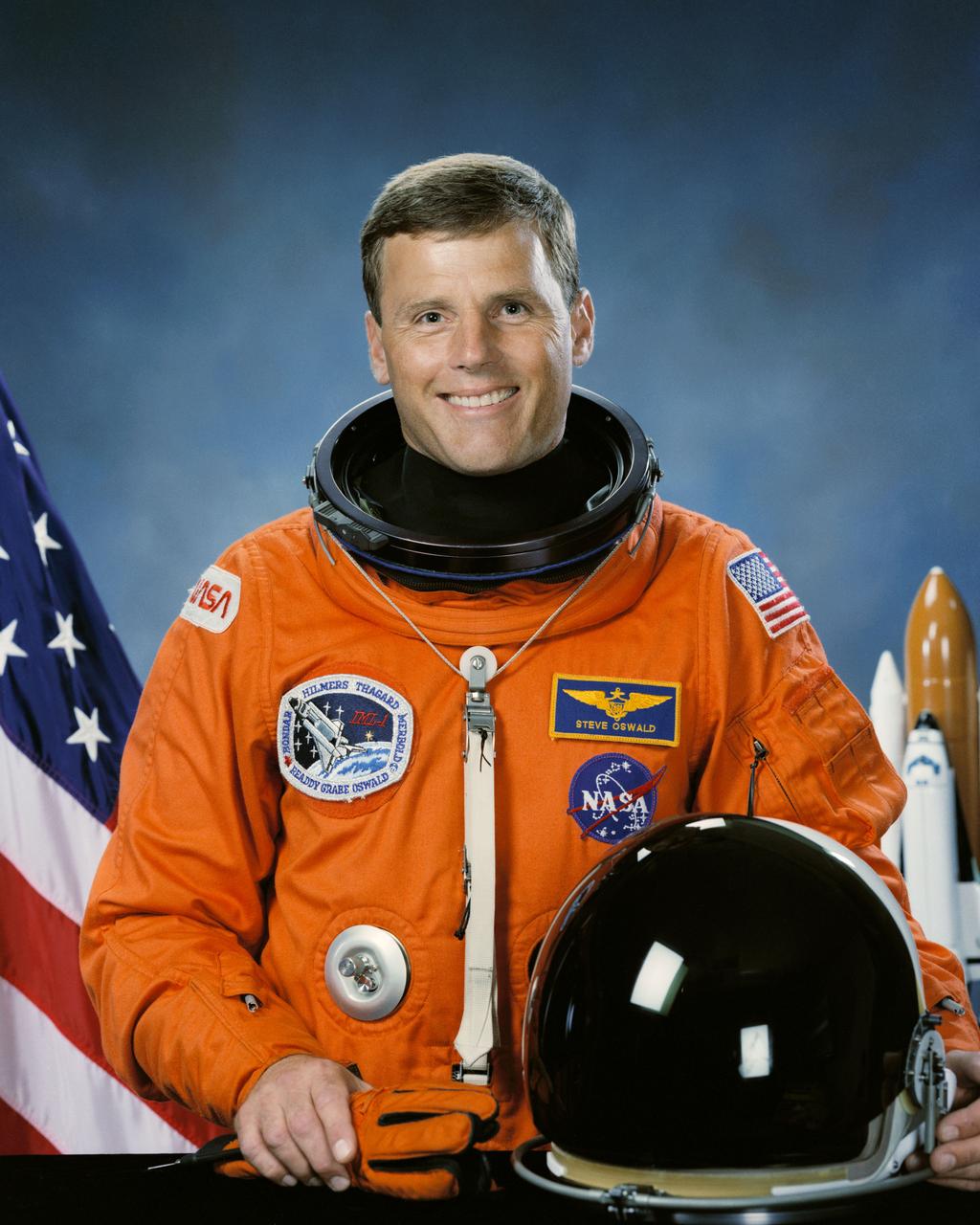
S92-31007 (March 1992) --- Astronaut Stephen S. Oswald.
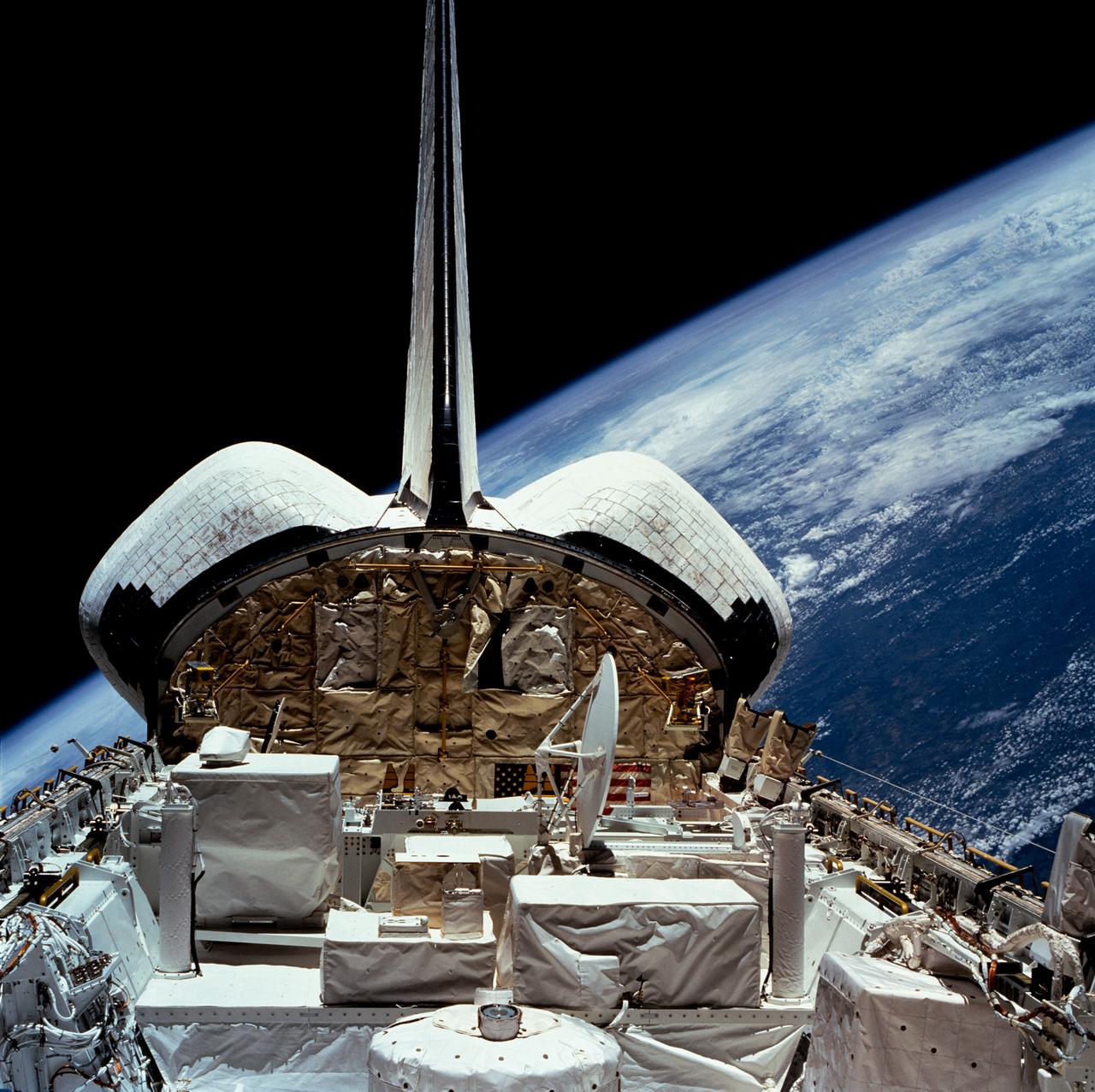
STS056-91-050 (8-17 April 1993) --- This 70mm frame shows the cargo bay of the Earth-orbiting Space Shuttle Discovery backdropped against clouds. Most of the elements of the ATLAS-2 payload can be seen, but missing is the SPARTAN-201 satellite which was in the midst of its separation from Discovery when the photo was made.
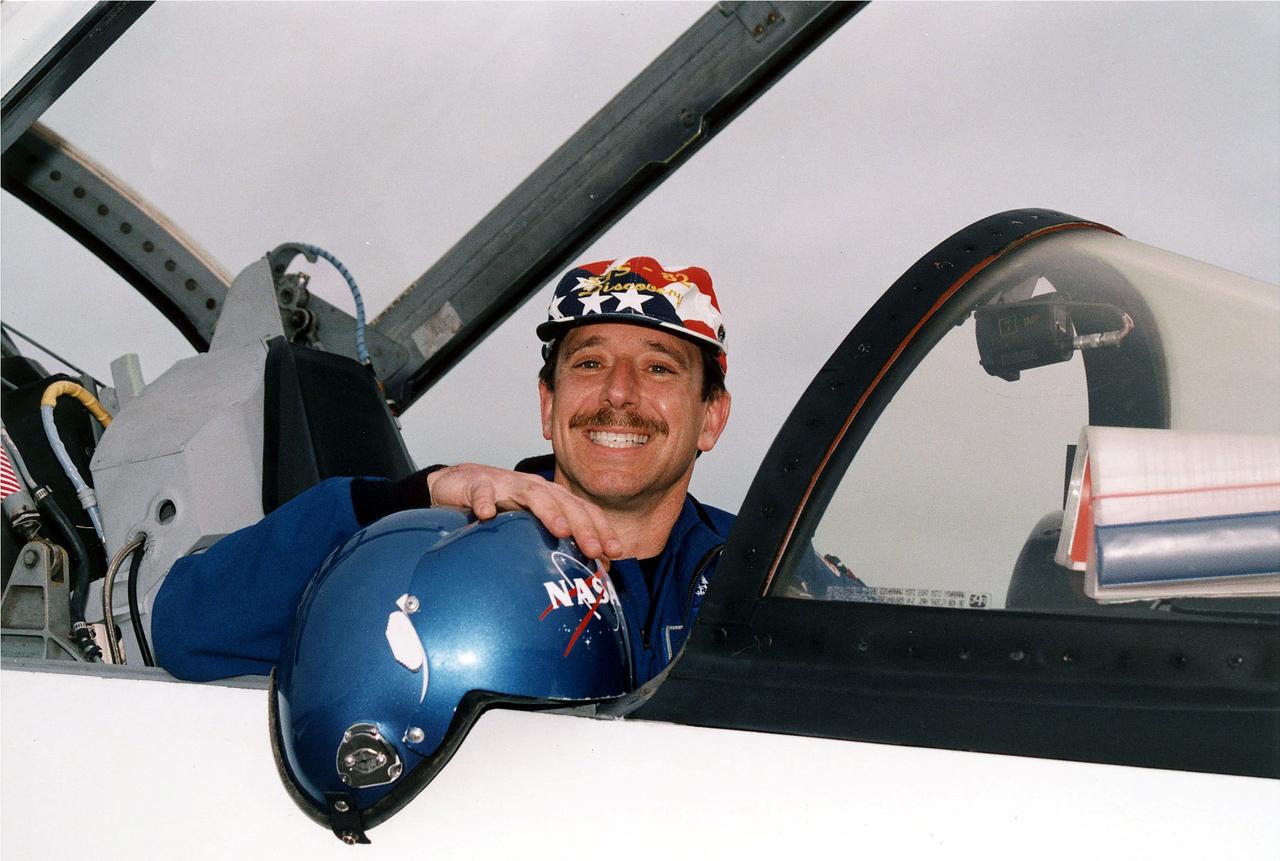
KENNEDY SPACE CENTER, FLA. - STS-82 Pilot Scott J. "Doc" Horowitz flashes a wide grin for photographers after landing his T-38 jet at KSC's Shuttle Landing Facility. Horowitz and the other six members of the STS-82 crew came from their home base at Johnson Space Center in Houston, Texas, to spend the last few days before launch at KSC. STS-82 is scheduled for liftoff on Feb. 11 during a 65-minute launch window that opens at 3:56 a.m. EST. The 10-day flight aboard the Space Shuttle Discovery will be the second Hubble Space Telescope (HST) servicing mission.
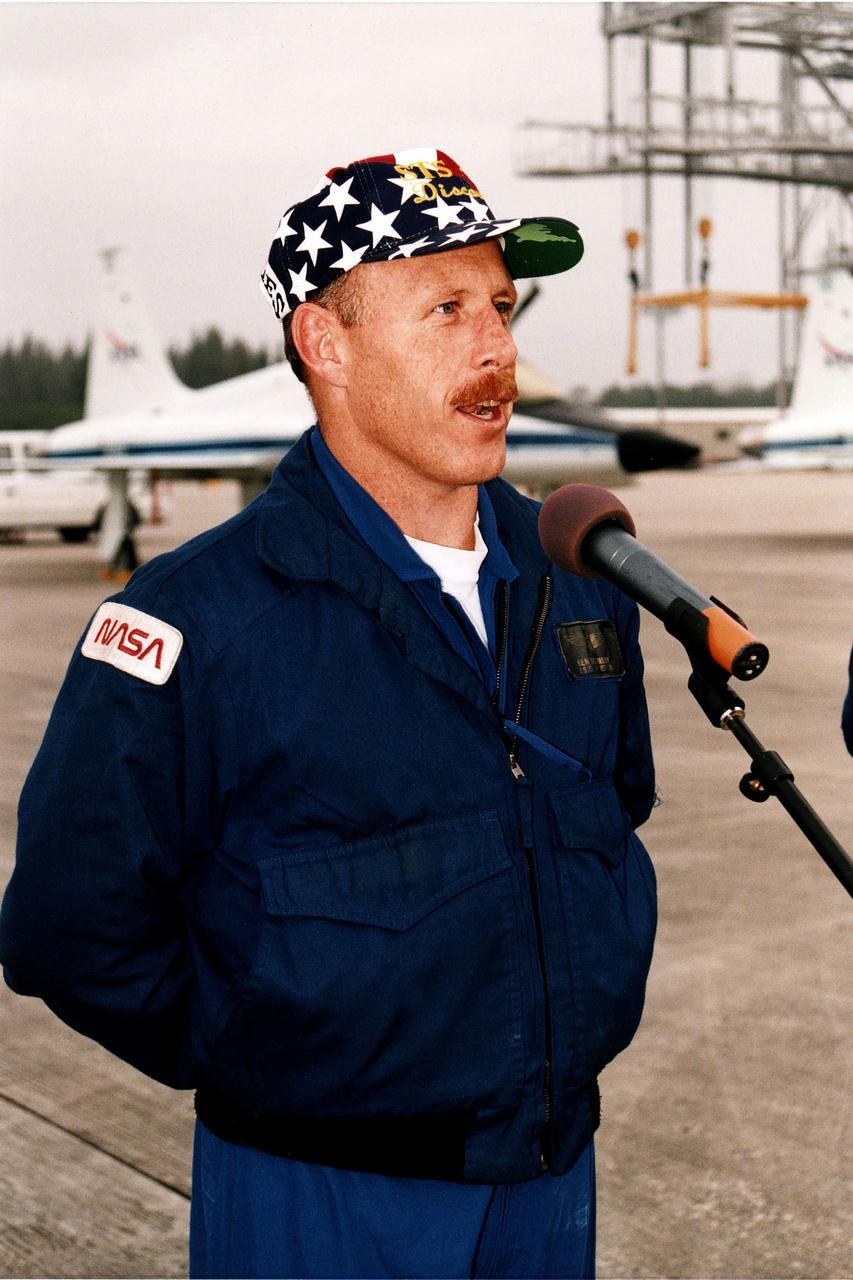
KENNEDY SPACE CENTER, FLA. - STS-82 Mission Commander Kenneth D. Bowersox greets media representatives after arrival at KSC's Shuttle Landing Facility. Bowersox and the other six members of the STS-82 crew came from their home base at Johnson Space Center in Houston, Texas, to spend the last few days before launch at KSC. STS-82 is scheduled for liftoff on Feb. 11 during a 65-minute launch window that opens at 3:56 a.m. EST. The 10-day flight aboard the Space Shuttle Discovery will be the second Hubble Space Telescope (HST) servicing mission.
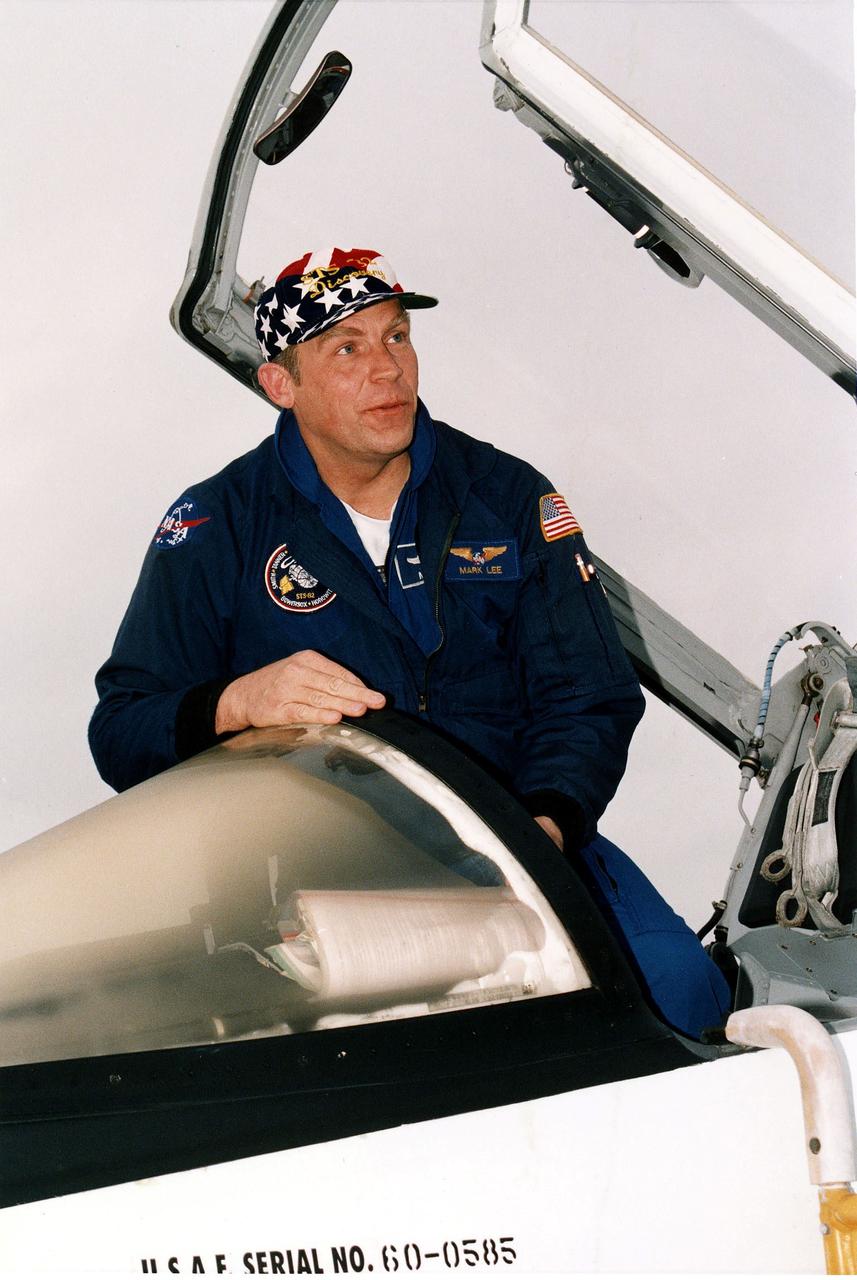
KENNEDY SPACE CENTER, FLA. - STS-82 Payload Commander Mark C. Lee prepares to step down from the T-38 jet he flew from an air field serving the astronauts' home base at Johnson Space Center, Houston, Texas, to KSC's Shuttle Landing Facility. Lee and the other six members of the STS-82 crew will spend the last few days before launch at KSC. STS-82 is scheduled for liftoff on Feb. 11 during a 65-minute launch window that opens at 3:56 a.m. EST. The 10-day flight aboard the Space Shuttle Discovery will be the second Hubble Space Telescope (HST) servicing mission.
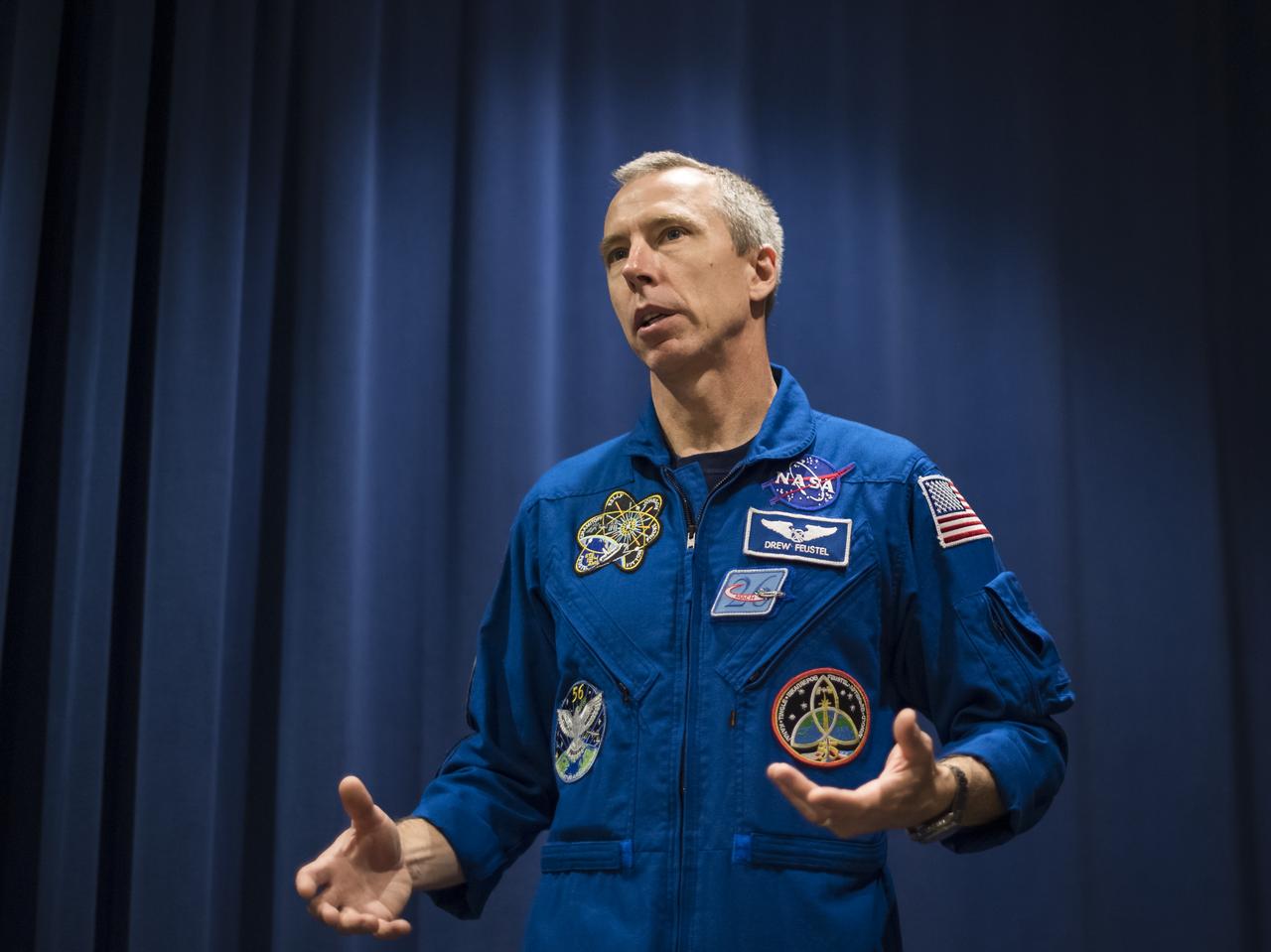
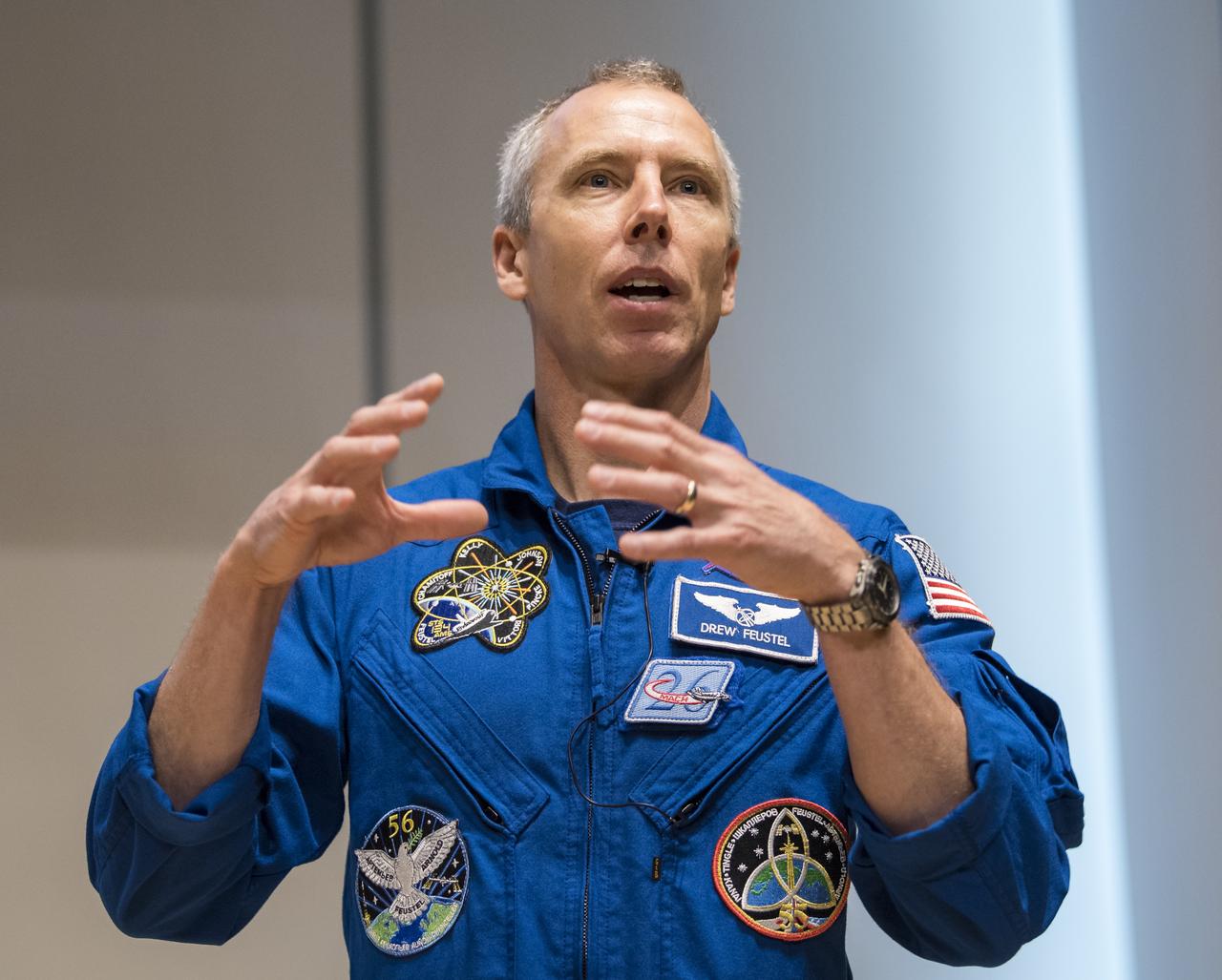
NASA astronaut Drew Feustel speaks about his experience on two shuttle missions, STS-125 and STS-134, as well as Expeditions 55 and 56 on the International Space Station, at the Embassy of Canada, Monday, May 6, 2019 in Washington. Photo Credit: (NASA/Aubrey Gemignani)
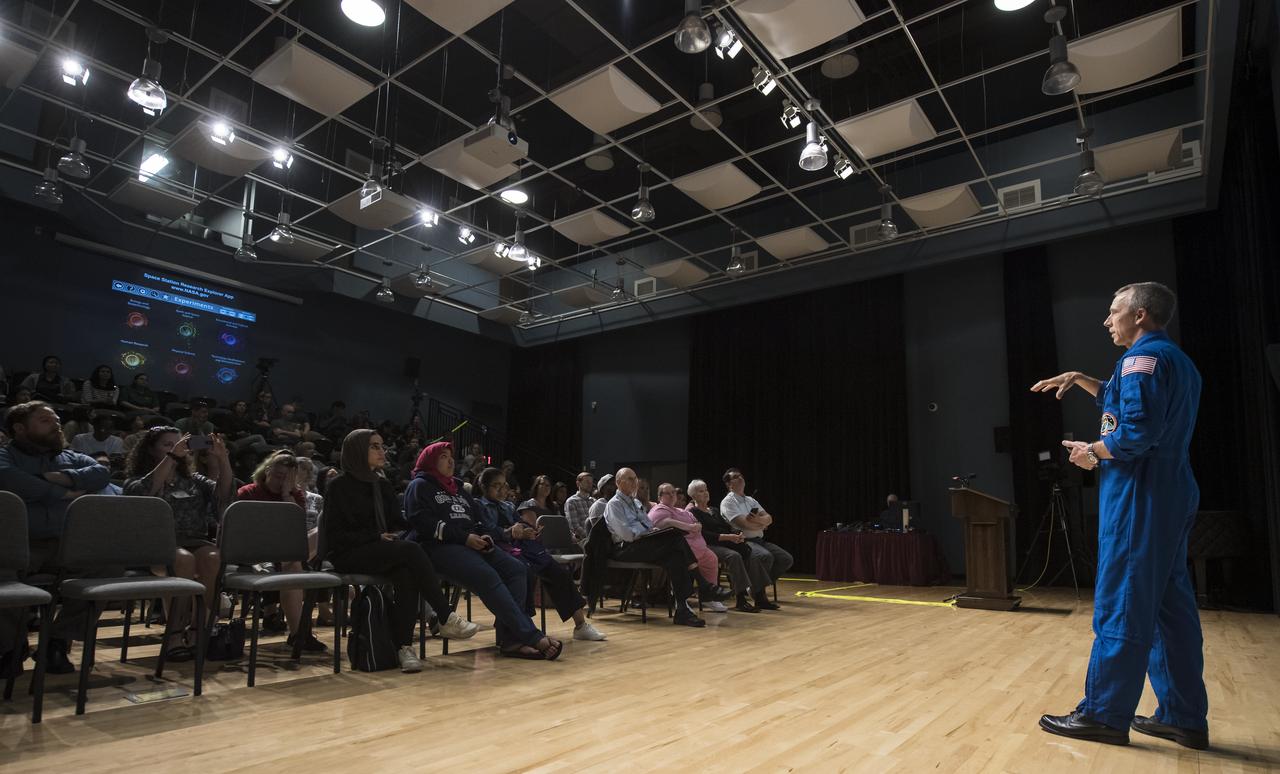
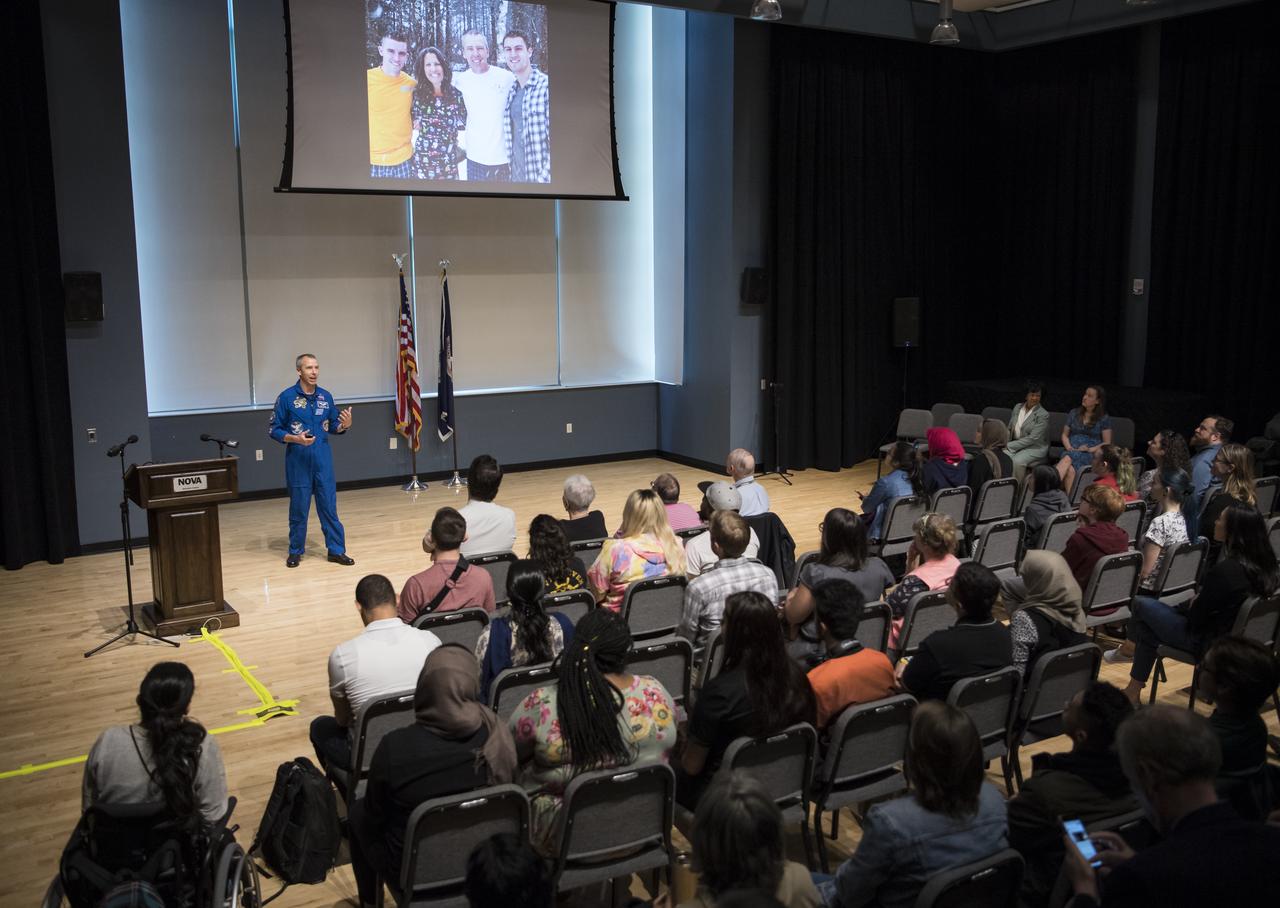
NASA astronaut Drew Feustel speaks about his experience on two shuttle missions, STS-125 and STS-134, as well as Expeditions 55 and 56 on the International Space Station, at Northern Virginia Community College's Alexandria campus, Monday, May 6, 2019 in Virginia. Photo Credit: (NASA/Aubrey Gemignani)
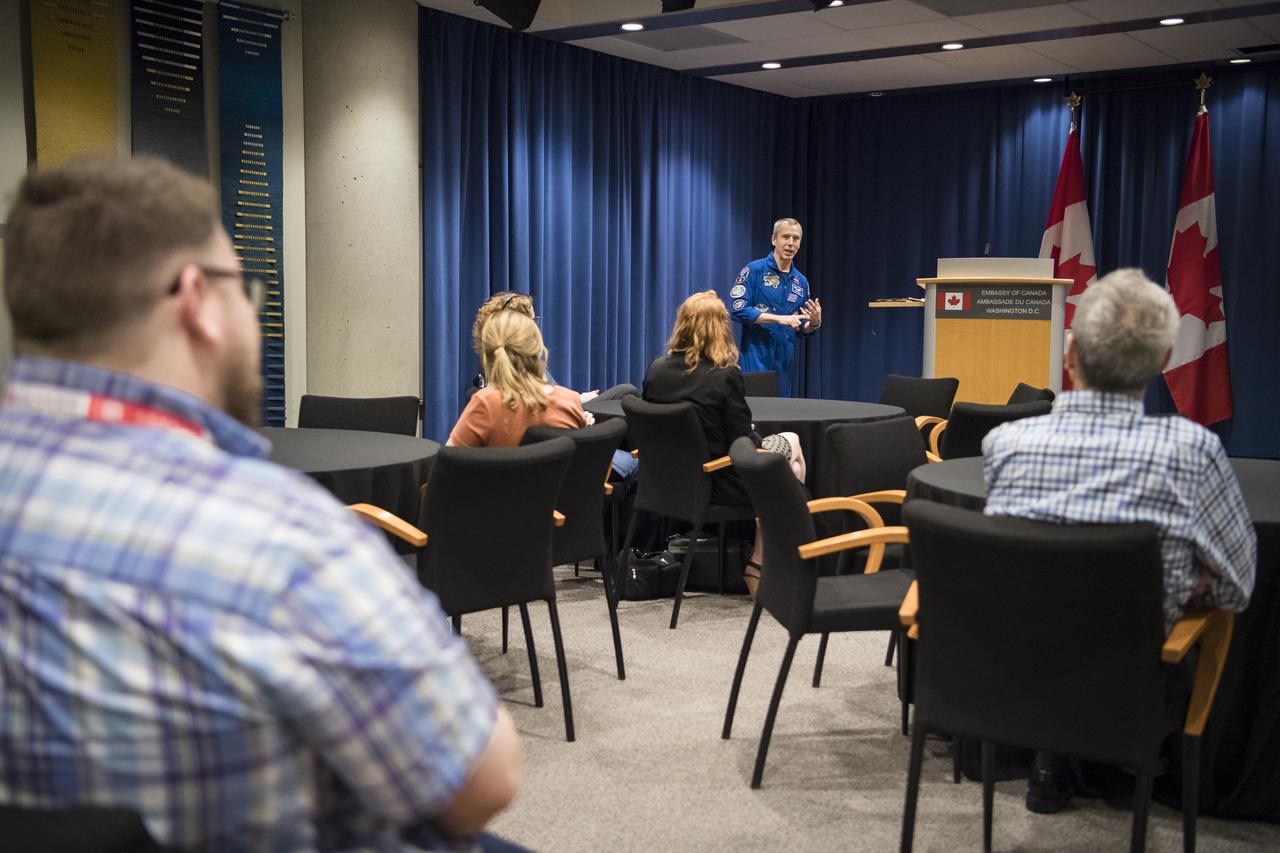
NASA astronaut Drew Feustel speaks about his experience on two shuttle missions, STS-125 and STS-134, as well as Expeditions 55 and 56 on the International Space Station, at the Embassy of Canada, Monday, May 6, 2019 in Washington. Photo Credit: (NASA/Aubrey Gemignani)
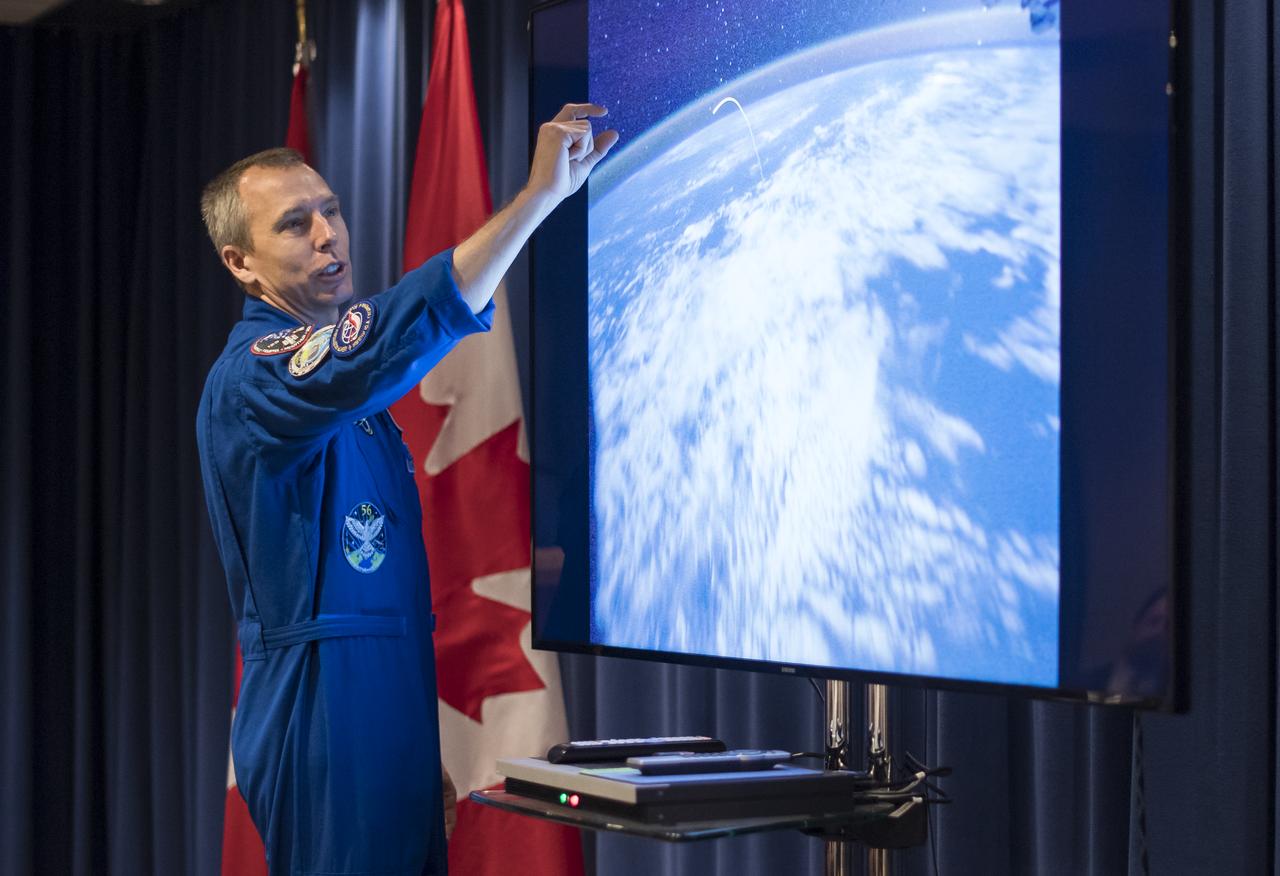
NASA astronaut Drew Feustel speaks about his experience on two shuttle missions, STS-125 and STS-134, as well as Expeditions 55 and 56 on the International Space Station, at the Embassy of Canada, Monday, May 6, 2019 in Washington. Photo Credit: (NASA/Aubrey Gemignani)
NASA astronaut Drew Feustel speaks about his experience on two shuttle missions, STS-125 and STS-134, as well as Expeditions 55 and 56 on the International Space Station, at Northern Virginia Community College's Alexandria campus, Monday, May 6, 2019 in Virginia. Photo Credit: (NASA/Aubrey Gemignani)
NASA astronaut Drew Feustel speaks about his experience on two shuttle missions, STS-125 and STS-134, as well as Expeditions 55 and 56 on the International Space Station, at Northern Virginia Community College's Alexandria campus, Monday, May 6, 2019 in Virginia. Photo Credit: (NASA/Aubrey Gemignani)
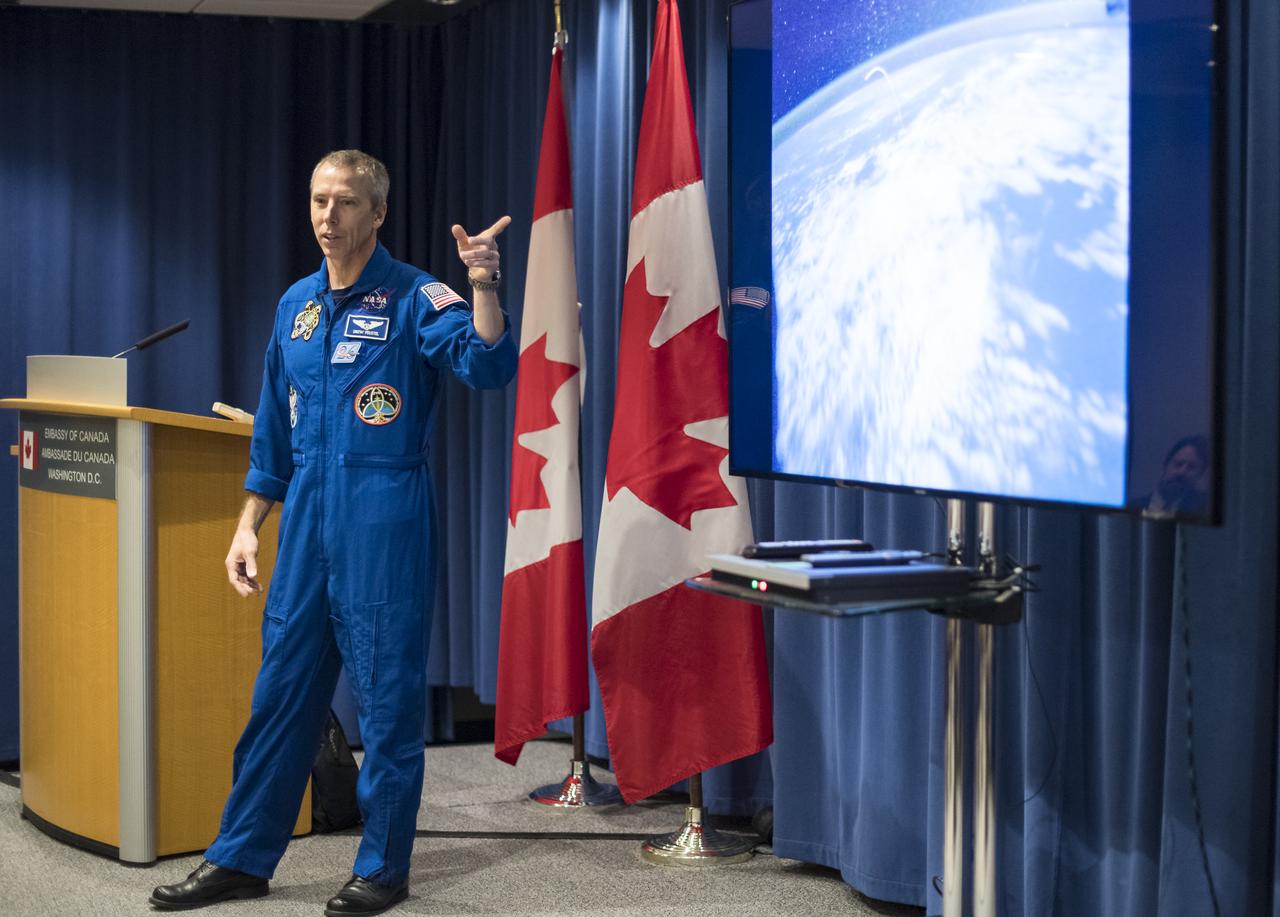
NASA astronaut Drew Feustel speaks about his experience on two shuttle missions, STS-125 and STS-134, as well as Expeditions 55 and 56 on the International Space Station, at the Embassy of Canada, Monday, May 6, 2019 in Washington. Photo Credit: (NASA/Aubrey Gemignani)
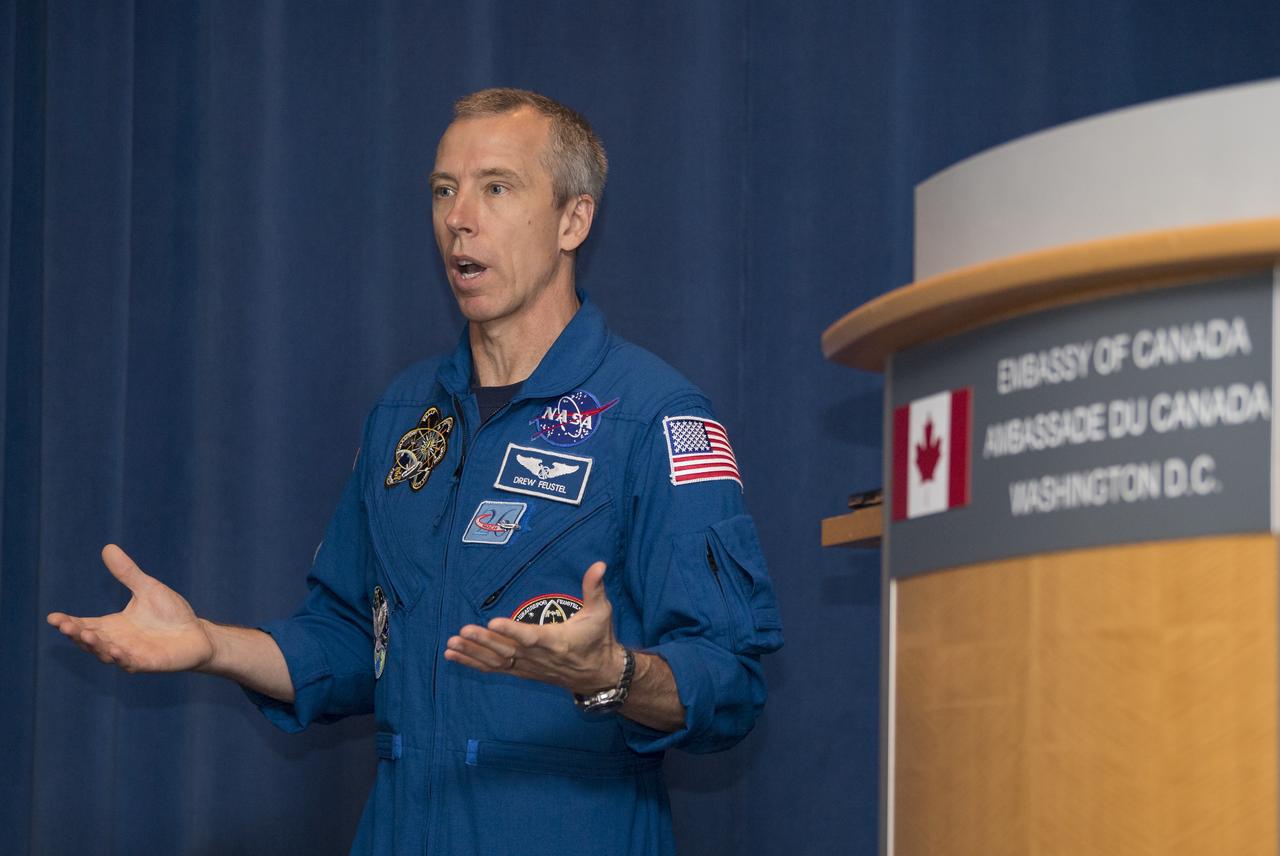
NASA astronaut Drew Feustel speaks about his experience on two shuttle missions, STS-125 and STS-134, as well as Expeditions 55 and 56 on the International Space Station, at the Embassy of Canada, Monday, May 6, 2019 in Washington. Photo Credit: (NASA/Aubrey Gemignani)
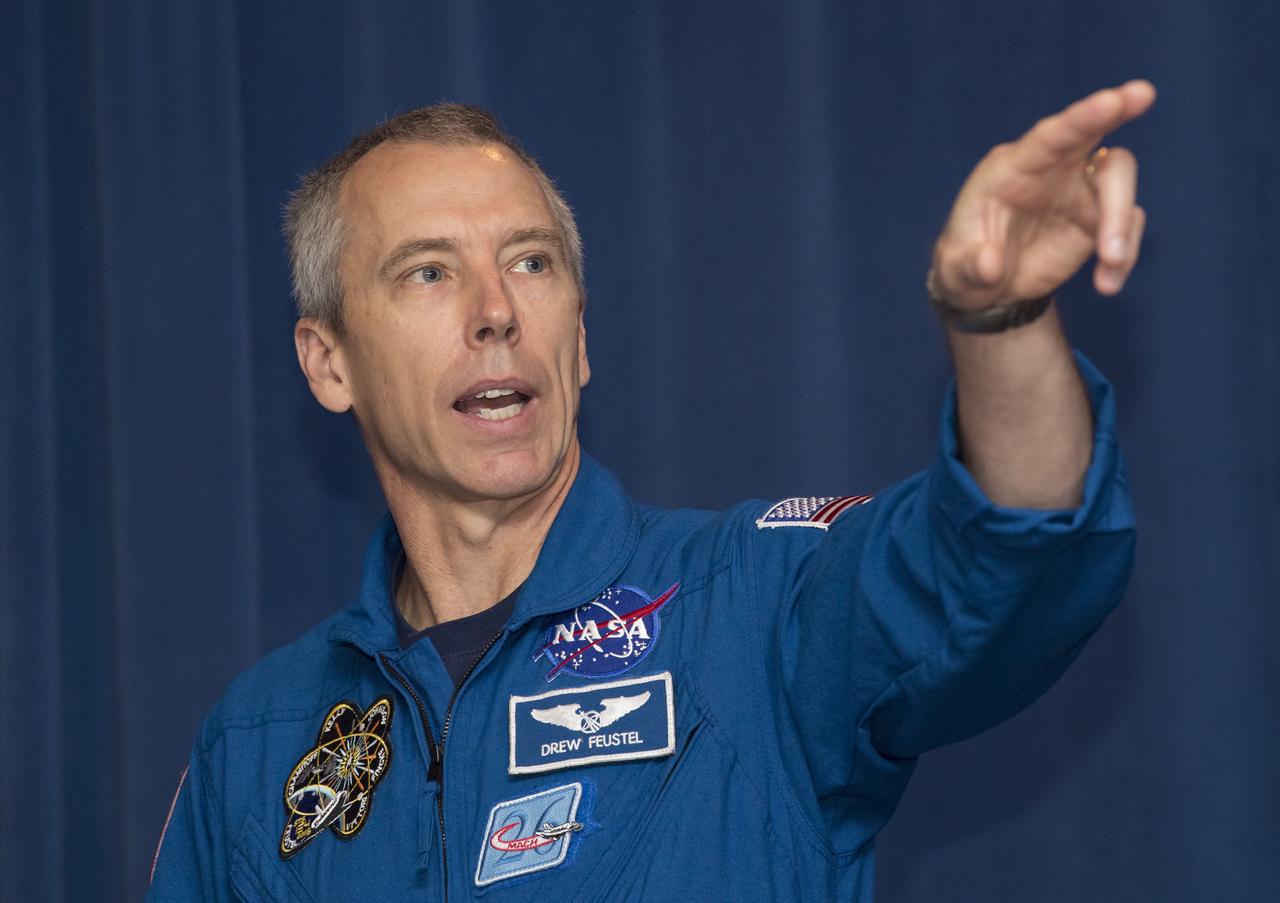
NASA astronaut Drew Feustel speaks about his experience on two shuttle missions, STS-125 and STS-134, as well as Expeditions 55 and 56 on the International Space Station, at the Embassy of Canada, Monday, May 6, 2019 in Washington. Photo Credit: (NASA/Aubrey Gemignani)
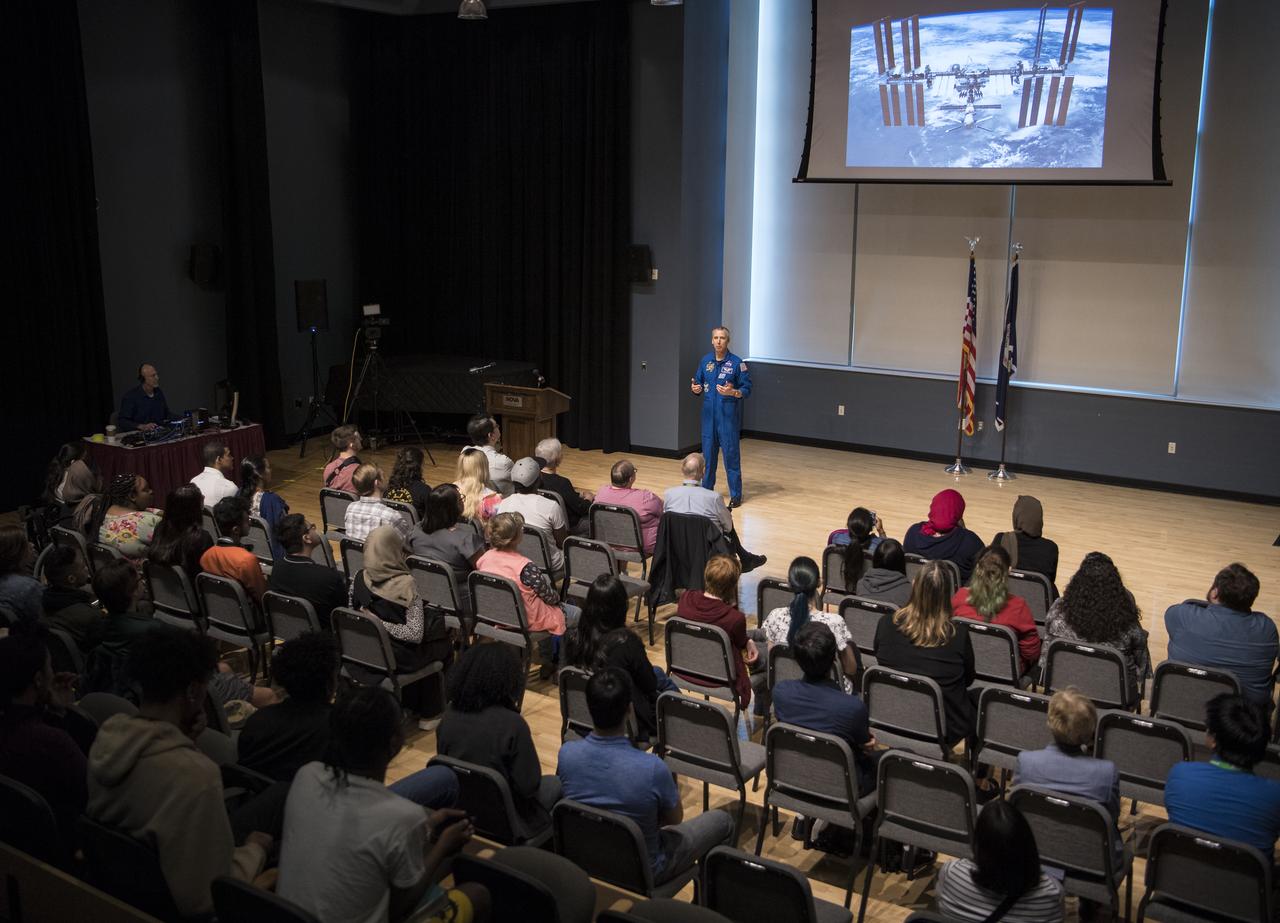
NASA astronaut Drew Feustel speaks about his experience on two shuttle missions, STS-125 and STS-134, as well as Expeditions 55 and 56 on the International Space Station, at Northern Virginia Community College's Alexandria campus, Monday, May 6, 2019 in Virginia. Photo Credit: (NASA/Aubrey Gemignani)
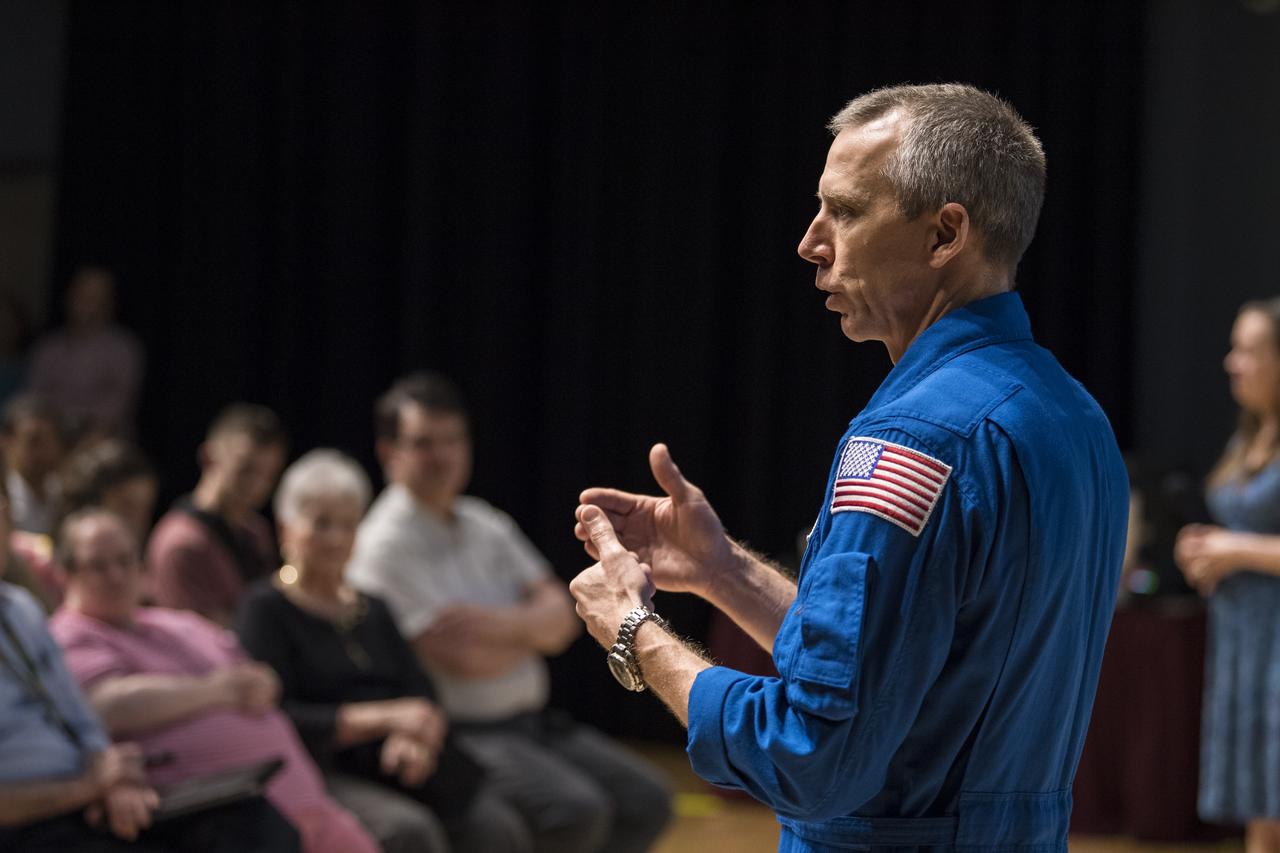
NASA astronaut Drew Feustel speaks about his experience on two shuttle missions, STS-125 and STS-134, as well as Expeditions 55 and 56 on the International Space Station, at Northern Virginia Community College's Alexandria campus, Monday, May 6, 2019 in Virginia. Photo Credit: (NASA/Aubrey Gemignani)
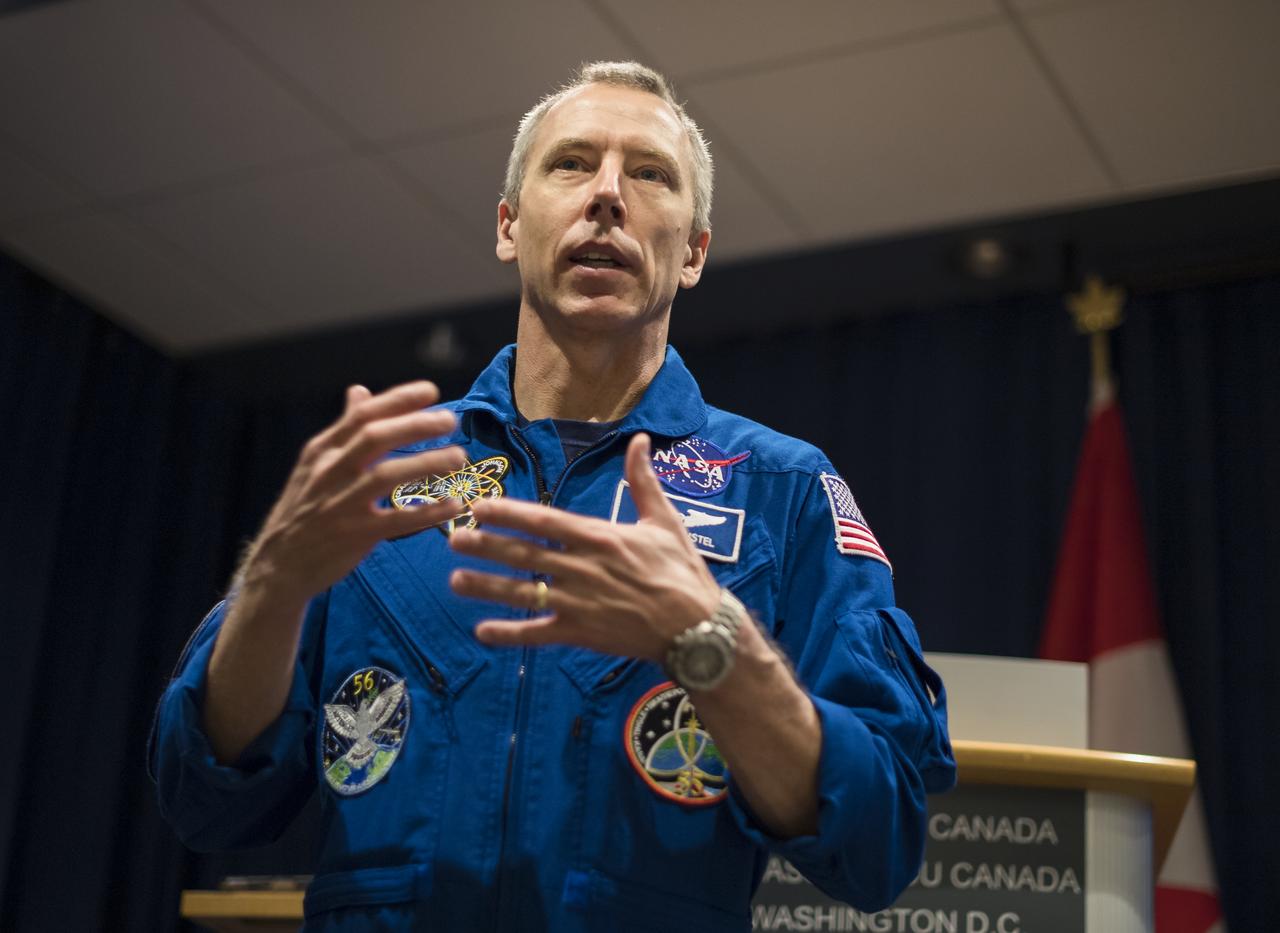
NASA astronaut Drew Feustel speaks about his experience on two shuttle missions, STS-125 and STS-134, as well as Expeditions 55 and 56 on the International Space Station, at the Embassy of Canada, Monday, May 6, 2019 in Washington. Photo Credit: (NASA/Aubrey Gemignani)
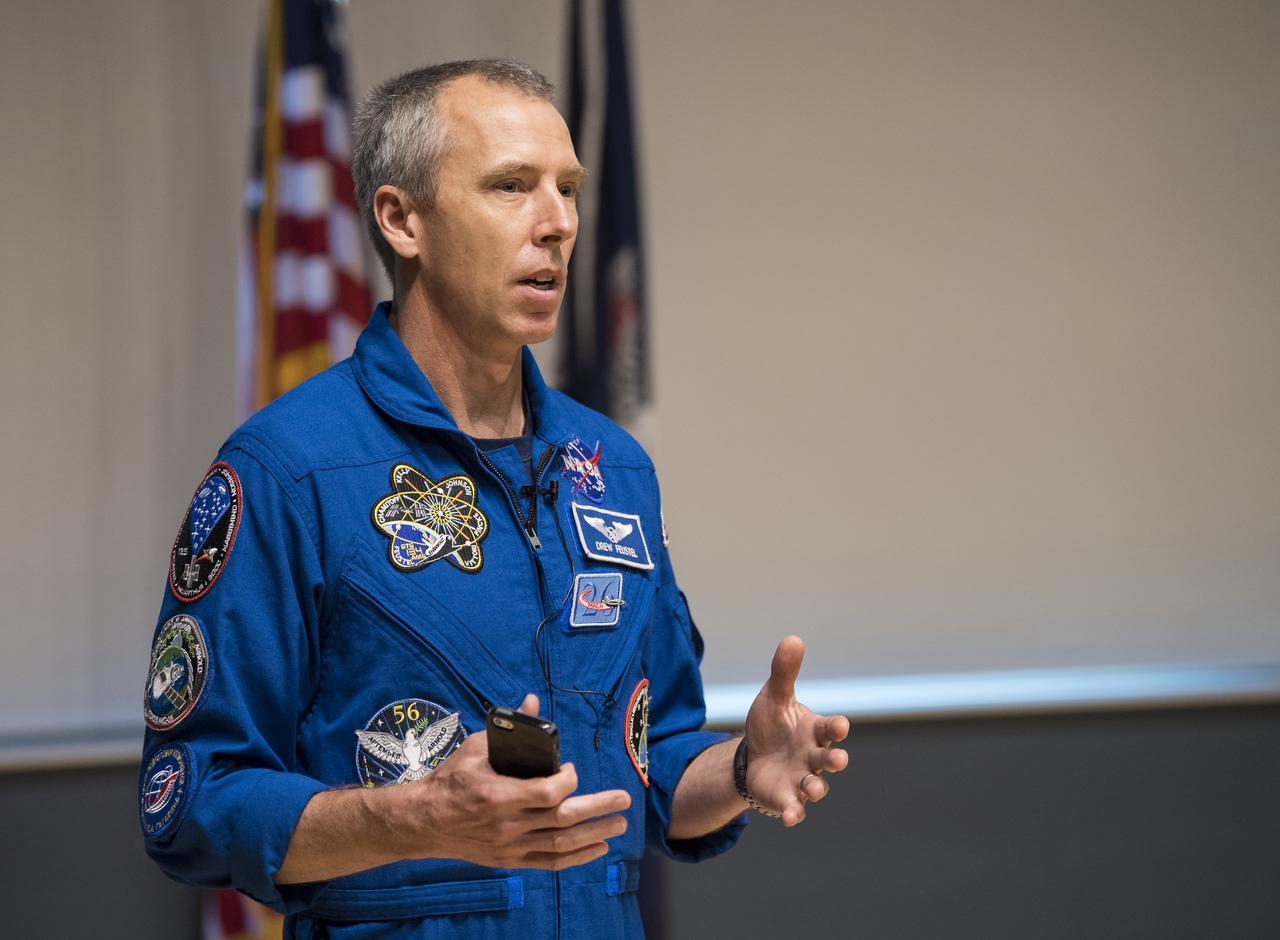
NASA astronaut Drew Feustel speaks about his experience on two shuttle missions, STS-125 and STS-134, as well as Expeditions 55 and 56 on the International Space Station, at Northern Virginia Community College's Alexandria campus, Monday, May 6, 2019 in Virginia. Photo Credit: (NASA/Aubrey Gemignani)
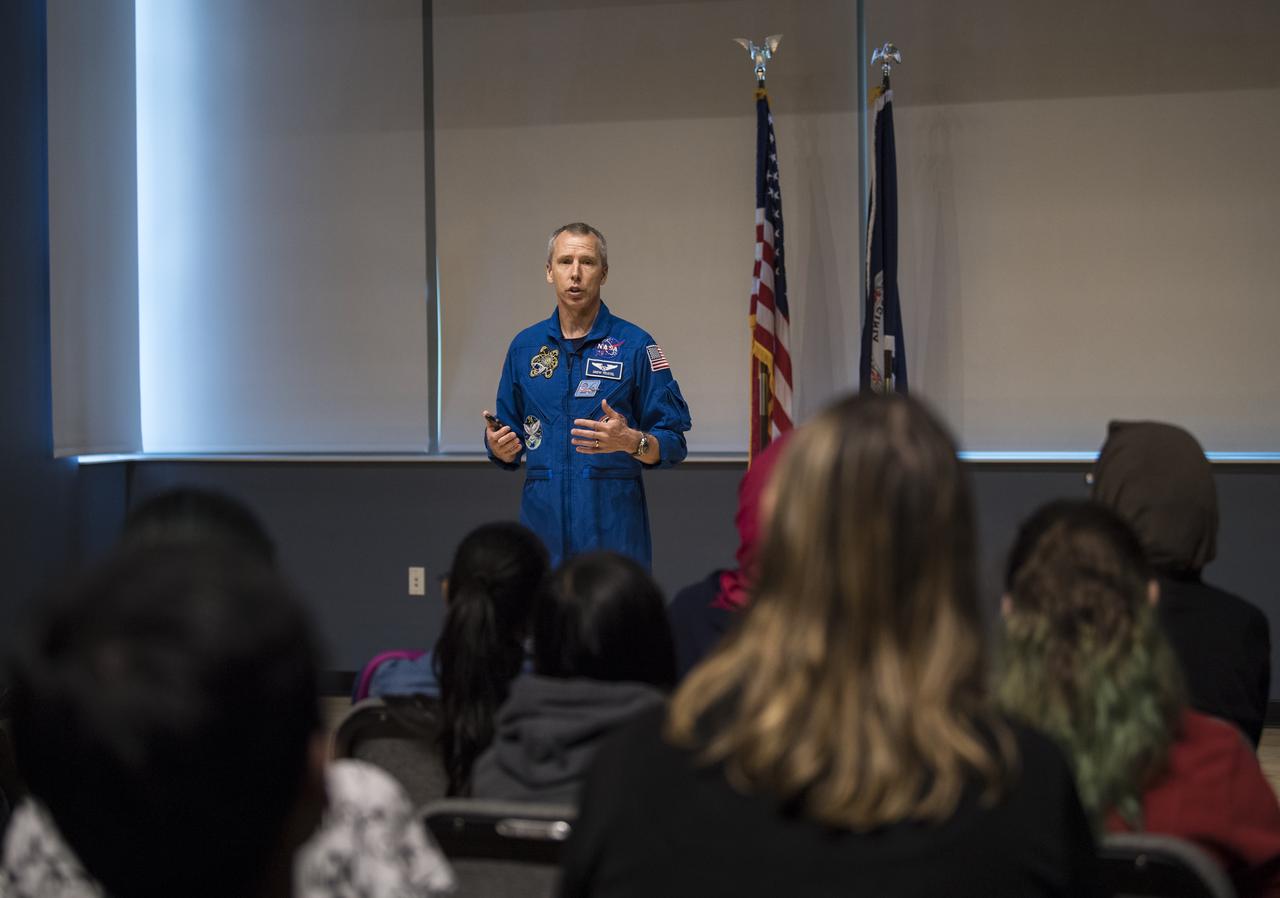
NASA astronaut Drew Feustel speaks about his experience on two shuttle missions, STS-125 and STS-134, as well as Expeditions 55 and 56 on the International Space Station, at Northern Virginia Community College's Alexandria campus, Monday, May 6, 2019 in Virginia. Photo Credit: (NASA/Aubrey Gemignani)
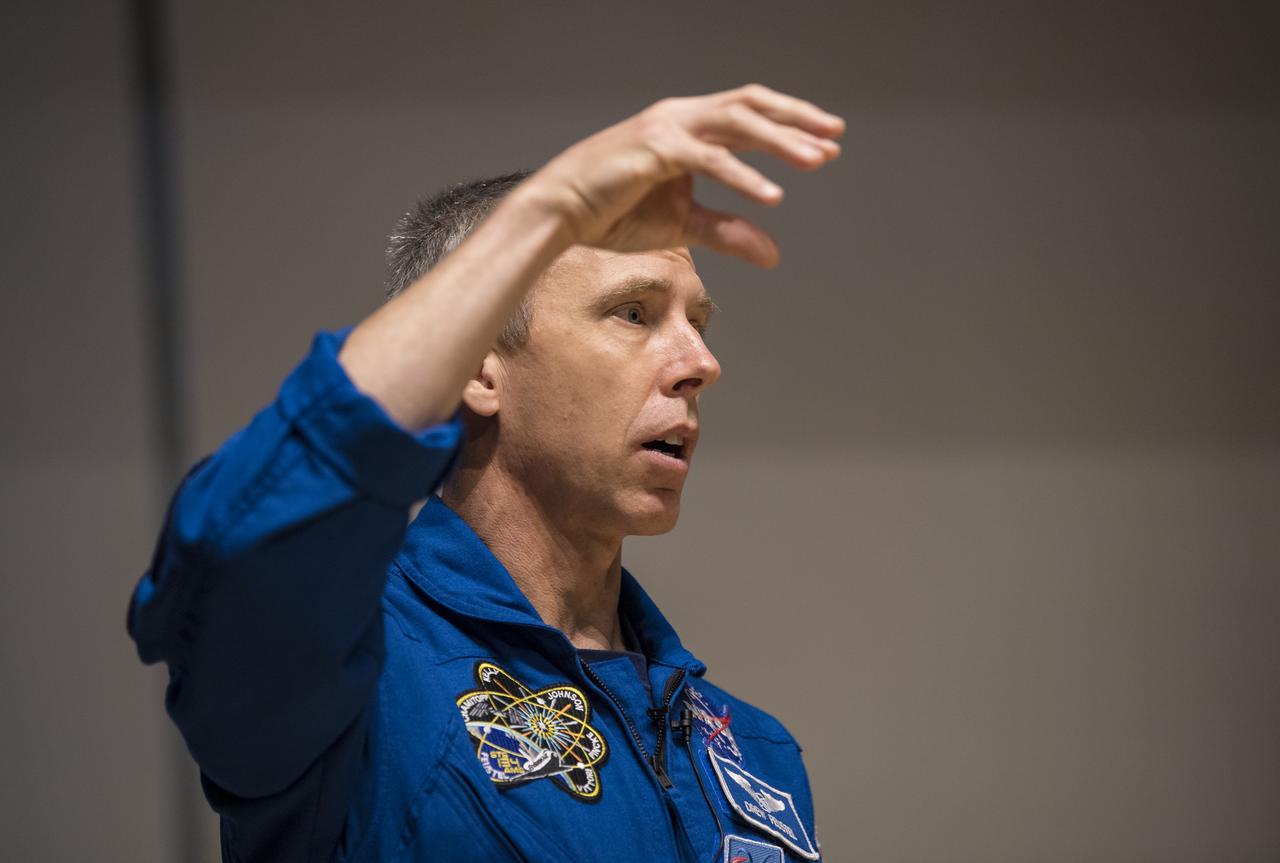
NASA astronaut Drew Feustel speaks about his experience on two shuttle missions, STS-125 and STS-134, as well as Expeditions 55 and 56 on the International Space Station, at Northern Virginia Community College's Alexandria campus, Monday, May 6, 2019 in Virginia. Photo Credit: (NASA/Aubrey Gemignani)
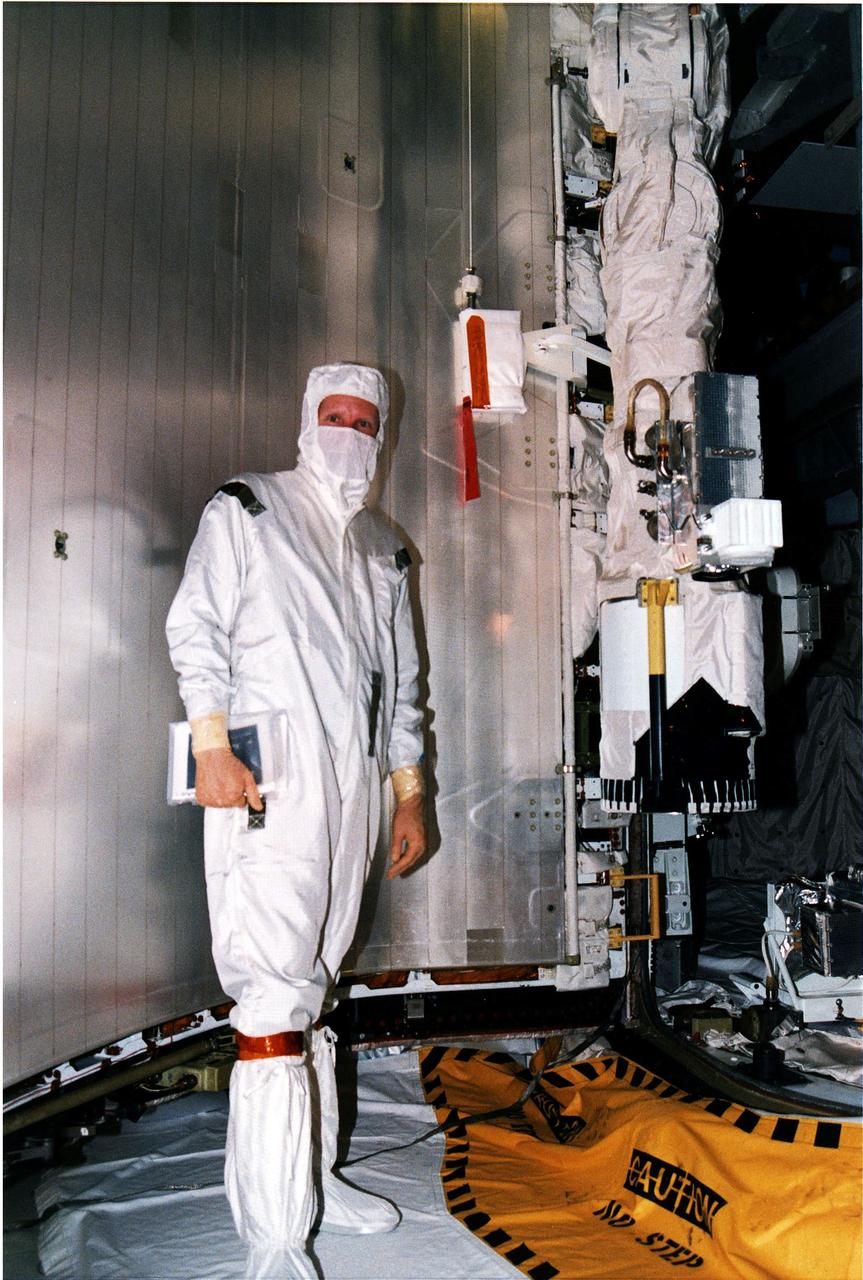
KENNEDY SPACE CENTER, FLA. - STS-82 Mission Specialist Steven A Hawley stands beside part of Discovery's Remote Manipulator System (RMS) arm, at right, which he will operate for the capture, berthing and redeployment of the Hubble Space Telescope (HST). The robotic arm also will be used as work platform for the four spacewalkers. Hawley is the prime RMS operator on the flight, which will be the second HST servicing mission. He and the other six members of the crew are making a final inspection of the payload at Launch Pad 39A before launch. STS-82 is scheduled for liftoff on Feb. 11 during a 65-minute launch window that opens at 3:56 a.m. EST.
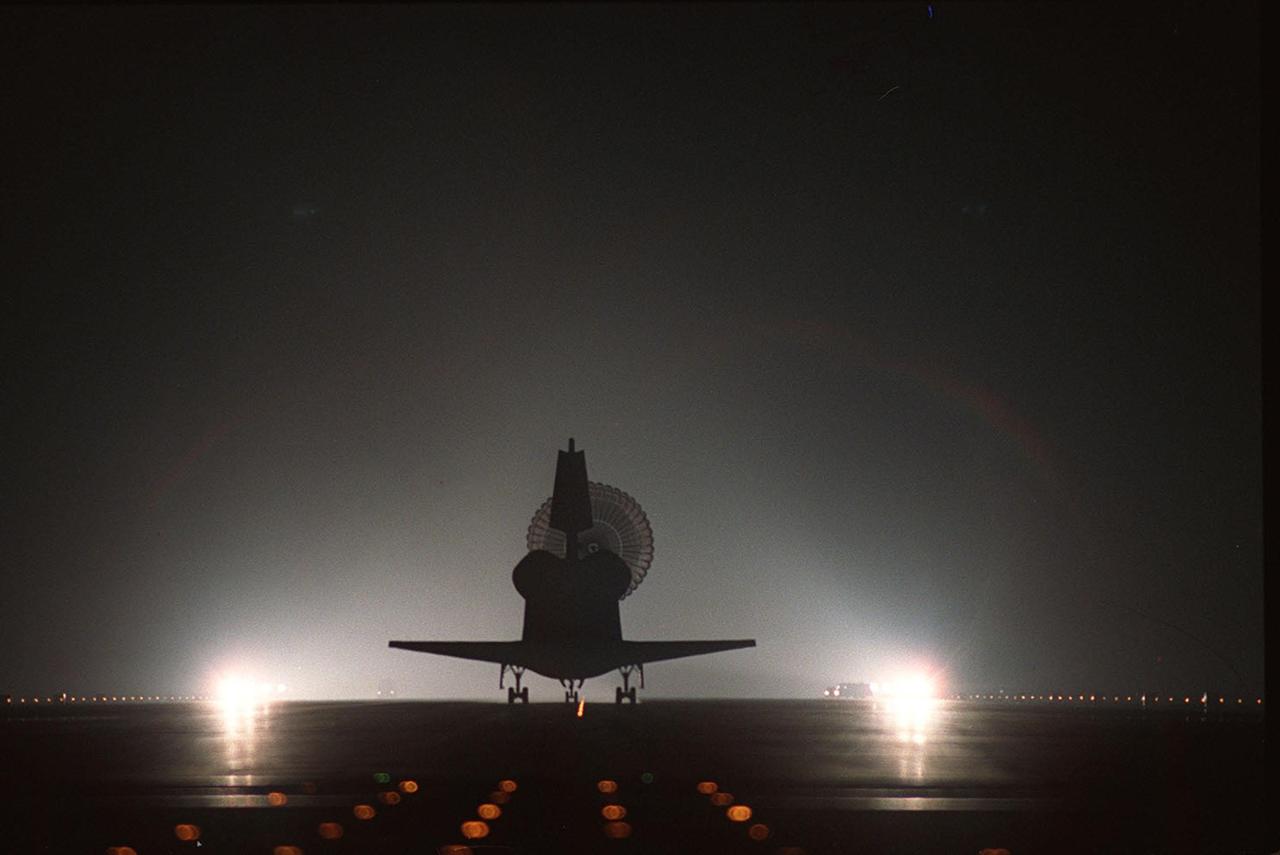
KENNEDY SPACE CENTER, FLA. -- Atlantis is silhouetted by the brilliant runway lights as it lands on Runway 15 of the KSC Shuttle Landing Facility. Main gear touchdown was at 3:56:48 a.m. EDT, landing on orbit 185 of the mission. Nose gear touchdown was at 3:56:57 a.m. EDT and wheel stop at 3:58:01 a.m. EDT.; Atlantis and crew traveled 4.9 million miles on the 11-day, 19-hour, 11-minute mission STS-106. During the mission to the International Space Station, the crew transferred nearly 5,000 pounds of equipment and supplies for use by the first resident crew expected to arrive in November. STS-106 was the 99th flight in the Shuttle program and the 22nd for Atlantis. STS-106 also marked the 15th nighttime landing in Shuttle history and the 23rd consecutive landing at KSC
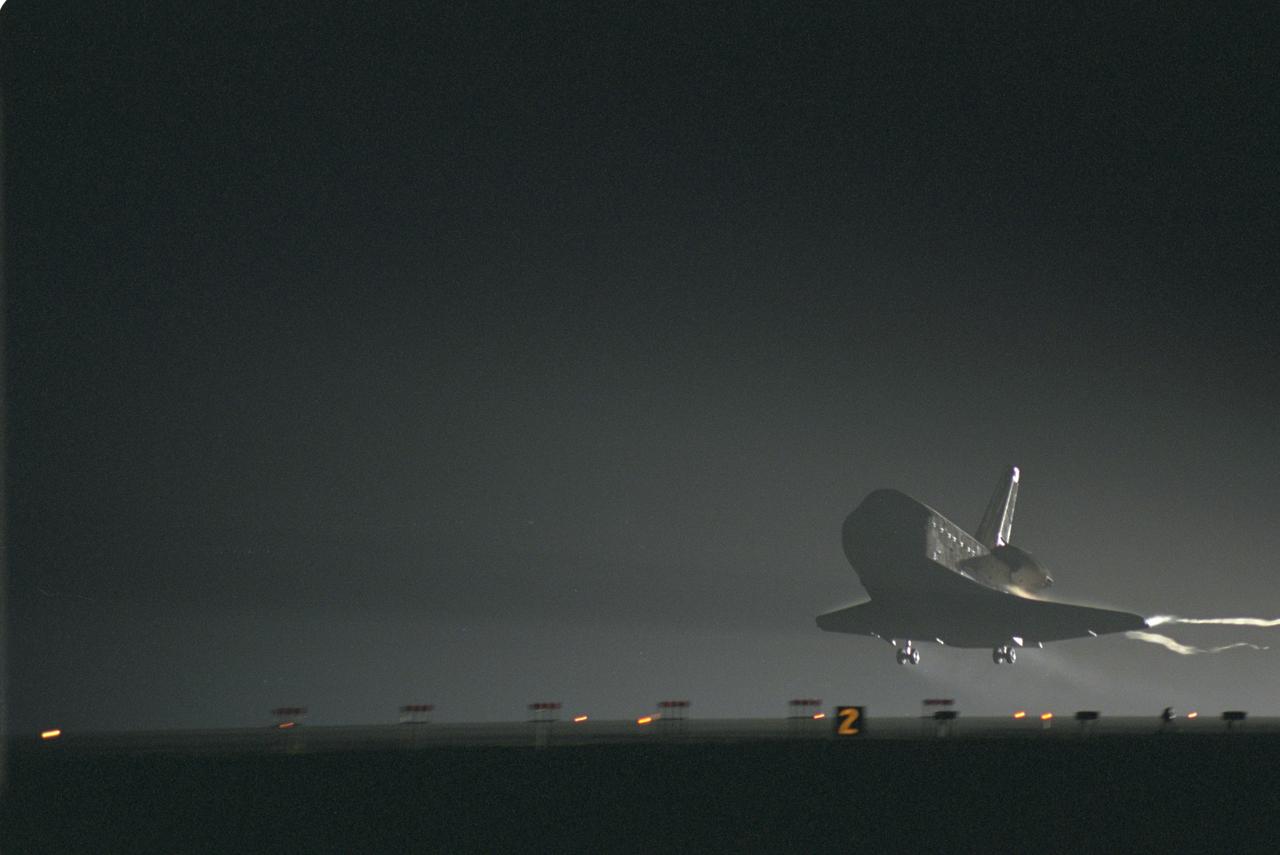
STS106-S-014 (20 September 2000) --- The Space Shuttle Atlantis nears its touchdown point on Runway 33 of the KSC Shuttle Landing Facility. Main gear touchdown was at 3:56:48 a.m. (EDT), September 20, 2000, landing on orbit 185 of the mission. Nose gear touchdown was at 3:56:57 a.m. EDT and wheel stop at 3:58:01 a.m. (EDT). Atlantis and crew traveled 4.9 million miles on the 11-day, 19-hour, 11-minute mission STS-106. During the mission to the International Space Station, the crew transferred nearly 5,000 pounds of equipment and supplies for use by the first resident crew expected to arrive in November. STS-106 was the 99th flight in the Shuttle program and the 22nd for Atlantis. STS-106 also marked the 15th nighttime landing in Shuttle history and the 23rd consecutive landing at KSC.
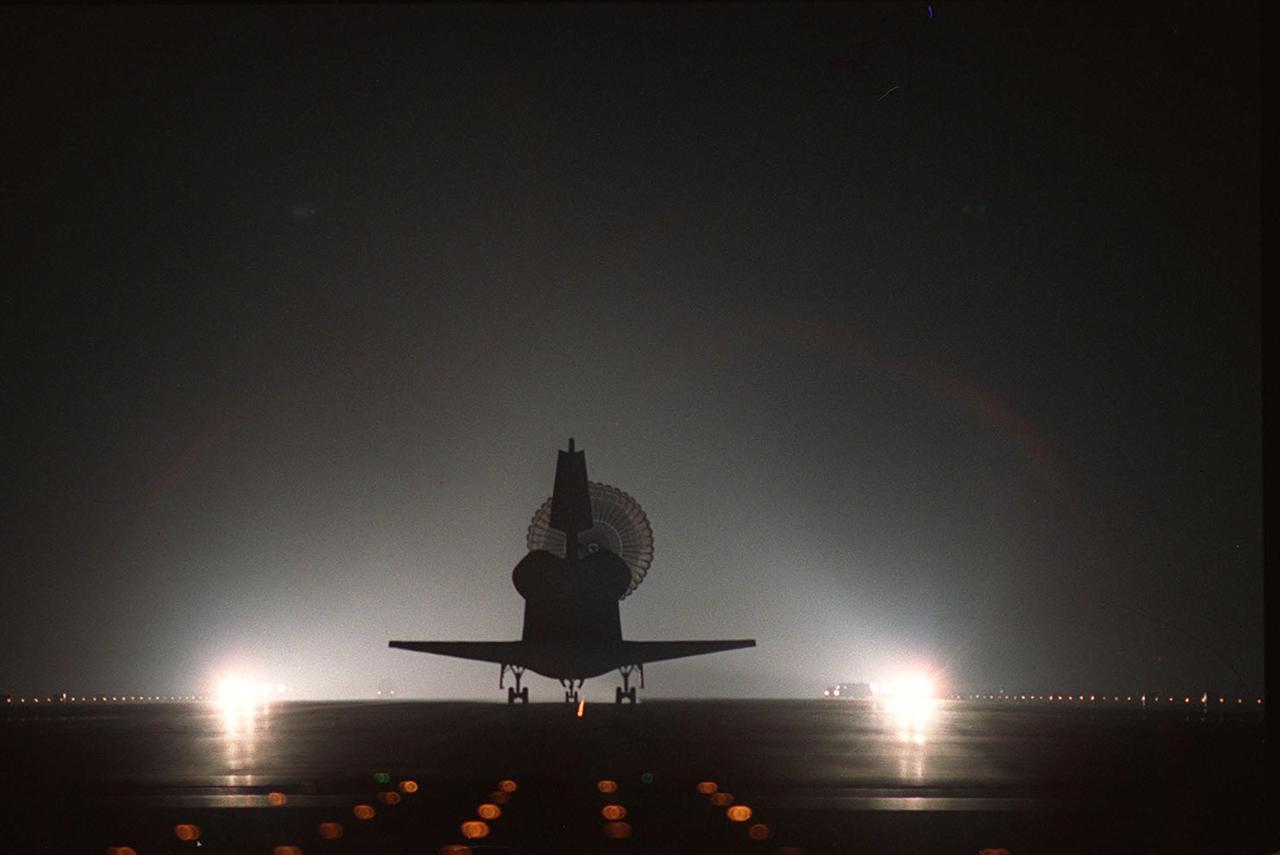
KENNEDY SPACE CENTER, FLA. -- Atlantis is silhouetted by the brilliant runway lights as it lands on Runway 15 of the KSC Shuttle Landing Facility. Main gear touchdown was at 3:56:48 a.m. EDT, landing on orbit 185 of the mission. Nose gear touchdown was at 3:56:57 a.m. EDT and wheel stop at 3:58:01 a.m. EDT.; Atlantis and crew traveled 4.9 million miles on the 11-day, 19-hour, 11-minute mission STS-106. During the mission to the International Space Station, the crew transferred nearly 5,000 pounds of equipment and supplies for use by the first resident crew expected to arrive in November. STS-106 was the 99th flight in the Shuttle program and the 22nd for Atlantis. STS-106 also marked the 15th nighttime landing in Shuttle history and the 23rd consecutive landing at KSC
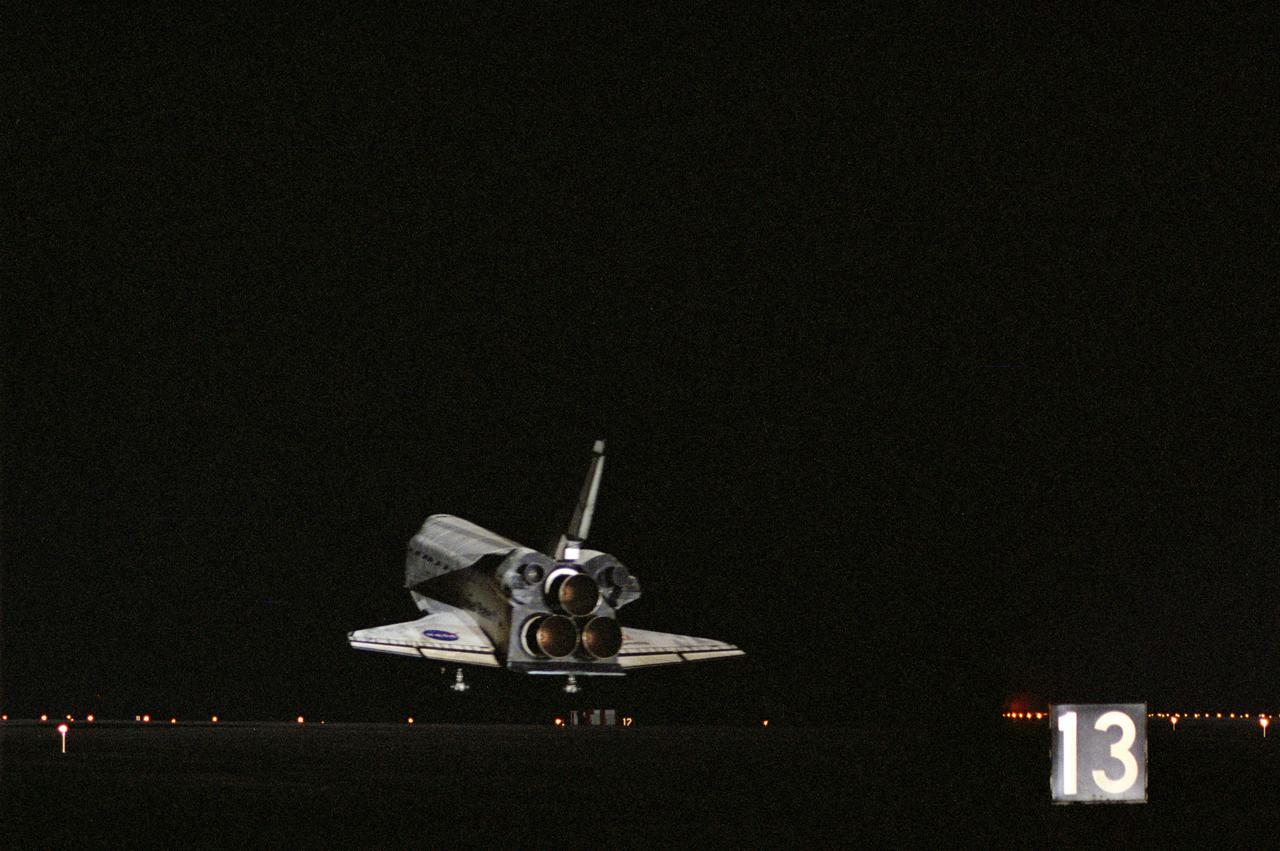
STS106-S-016 (20 September 2000) --- An aft view shows the Space Shuttle Atlantis nears its touchdown point on Runway 33 of the KSC Shuttle Landing Facility. Main gear touchdown was at 3:56:48 a.m. (EDT), September 20, 2000, landing on orbit 185 of the mission. Nose gear touchdown was at 3:56:57 a.m. EDT and wheel stop at 3:58:01 a.m. (EDT). Atlantis and crew traveled 4.9 million miles on the 11-day, 19-hour, 11-minute mission STS-106. During the mission to the International Space Station, the crew transferred nearly 5,000 pounds of equipment and supplies for use by the first resident crew expected to arrive in November. STS-106 was the 99th flight in the Shuttle program and the 22nd for Atlantis. STS-106 also marked the 15th nighttime landing in Shuttle history and the 23rd consecutive landing at KSC.
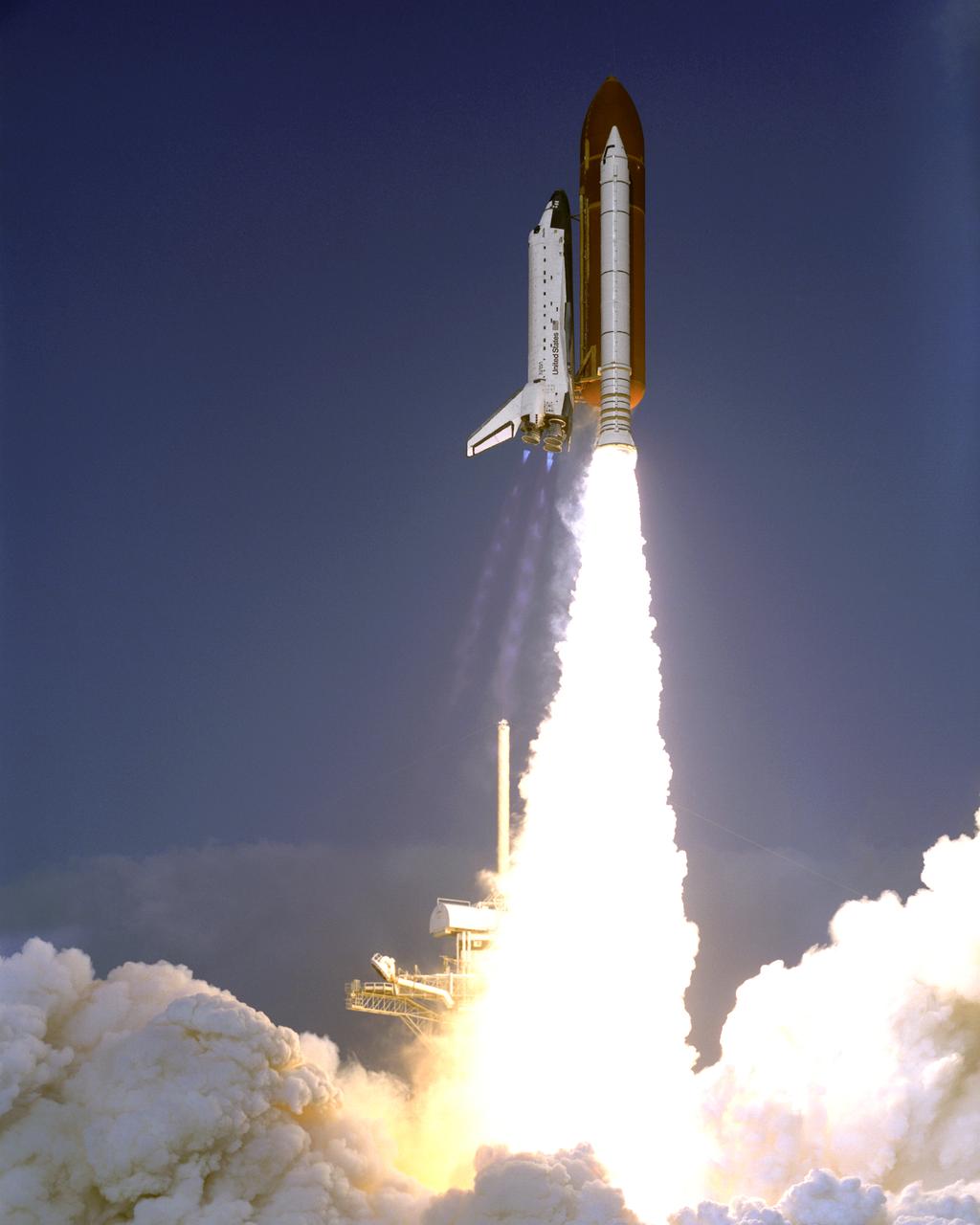
NASA's mission to planet Earth continues as Atlantis and the STS-45 International crew of xeven roars off Pad 39A with theAtmospheric Laboratory for Applications and Science (Atlas-1) onboard. Launch occurred at 8:13 A.M., EST March 24, 1992. (Test D1310)(Item D-56)
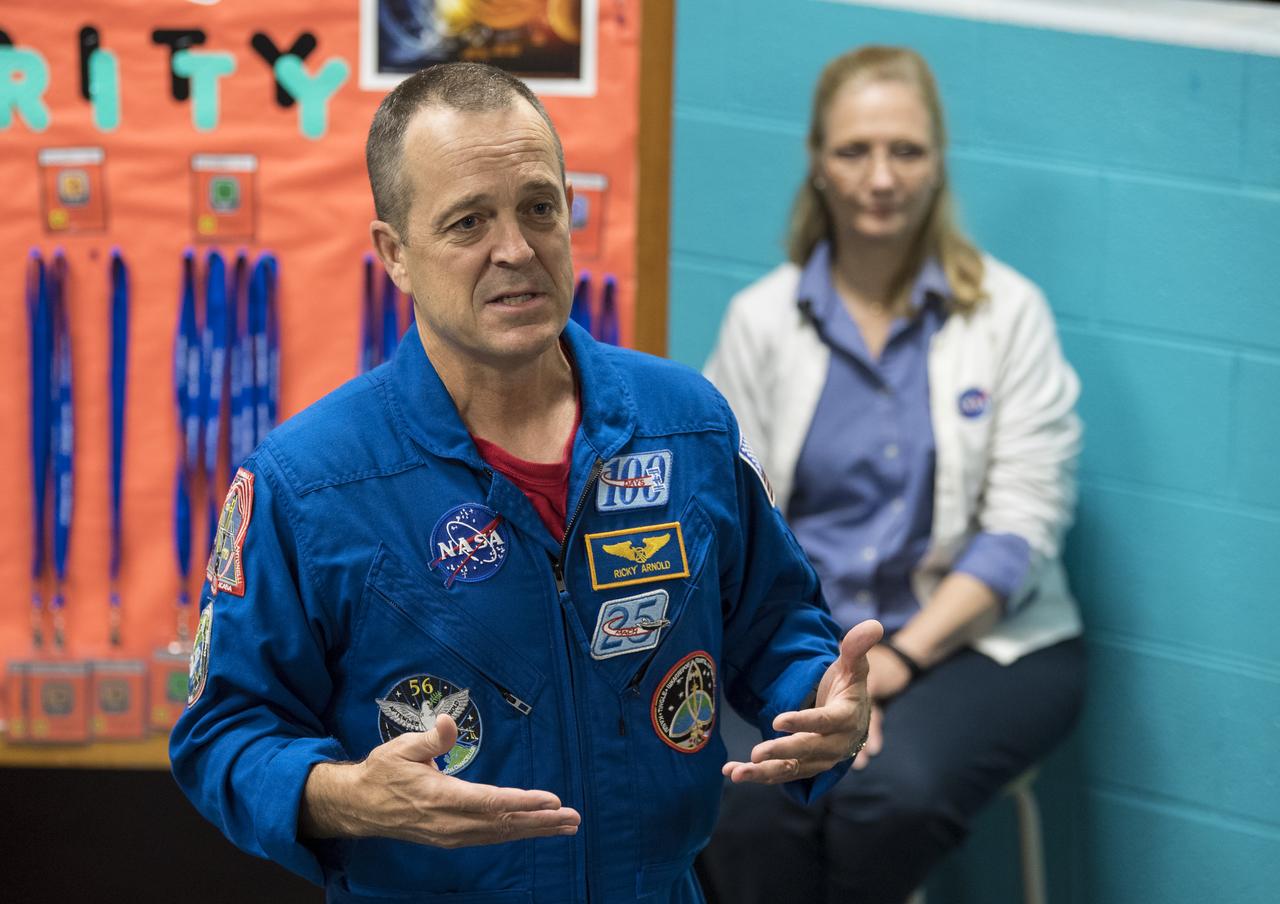
NASA astronaut Ricky Arnold speaks about his time onboard the International Space Station (ISS) during Expeditions 55 and 56, Friday, May 3, 2019 at the Challenger Center in Lanham, MD. During Expedition 55/56, Arnold completed three spacewalks for a total of 19.5 hours outside the space station, and concluded his 197 day mission when he landed in a remote area near the town of Zhezkazgan, Kazakhstan in Oct. 2018. He also flew to the space station on shuttle mission STS-119 to deliver the final pair of power-generating solar array wings. Photo Credit: (NASA/Aubrey Gemignani)
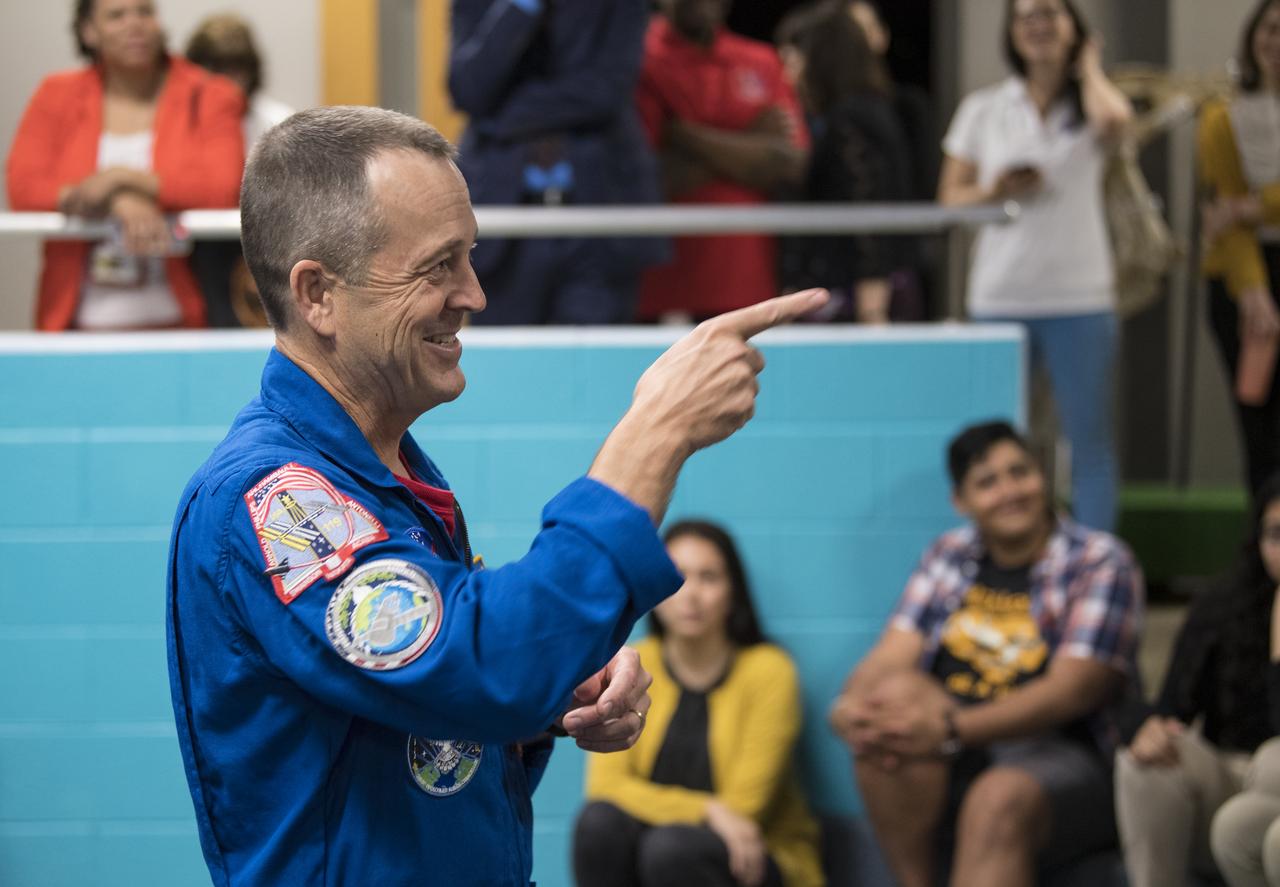
NASA astronaut Ricky Arnold speaks about his time onboard the International Space Station (ISS) during Expeditions 55 and 56, Friday, May 3, 2019 at the Challenger Center in Lanham, MD. During Expedition 55/56, Arnold completed three spacewalks for a total of 19.5 hours outside the space station, and concluded his 197 day mission when he landed in a remote area near the town of Zhezkazgan, Kazakhstan in Oct. 2018. He also flew to the space station on shuttle mission STS-119 to deliver the final pair of power-generating solar array wings. Photo Credit: (NASA/Aubrey Gemignani)
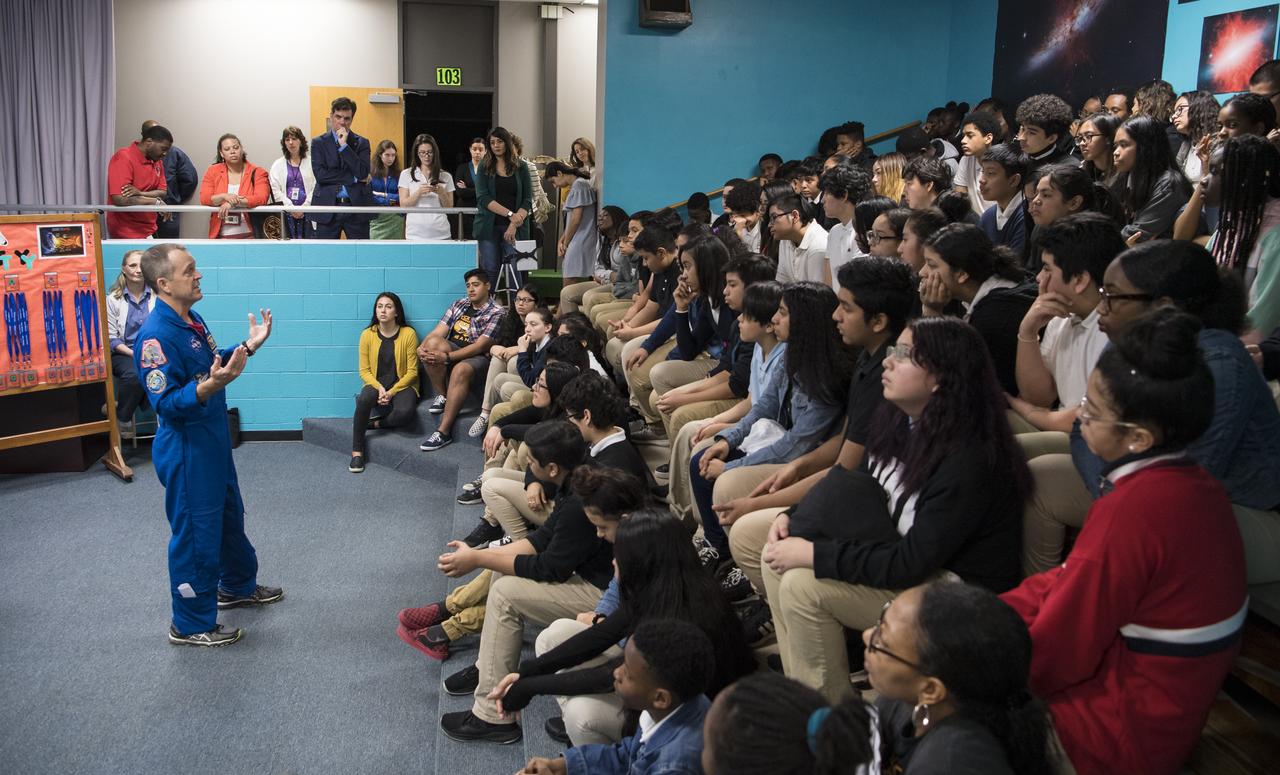
NASA astronaut Ricky Arnold speaks about his time onboard the International Space Station (ISS) during Expeditions 55 and 56, Friday, May 3, 2019 at the Challenger Center in Lanham, MD. During Expedition 55/56, Arnold completed three spacewalks for a total of 19.5 hours outside the space station, and concluded his 197 day mission when he landed in a remote area near the town of Zhezkazgan, Kazakhstan in Oct. 2018. He also flew to the space station on shuttle mission STS-119 to deliver the final pair of power-generating solar array wings. Photo Credit: (NASA/Aubrey Gemignani)
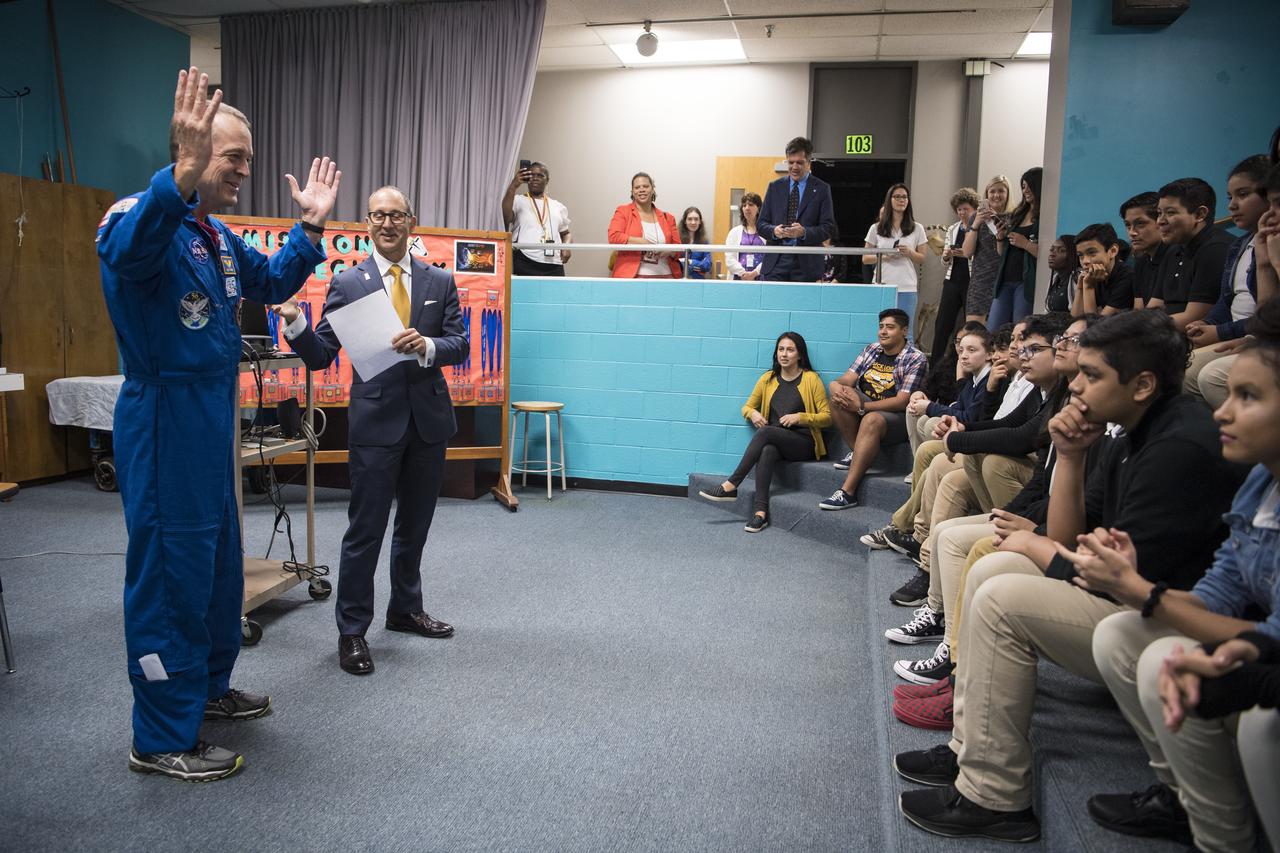
NASA astronaut Ricky Arnold is introduced to speak about his time onboard the International Space Station (ISS) during Expeditions 55 and 56, Friday, May 3, 2019 at the Challenger Center in Lanham, MD. During Expedition 55/56, Arnold completed three spacewalks for a total of 19.5 hours outside the space station, and concluded his 197 day mission when he landed in a remote area near the town of Zhezkazgan, Kazakhstan in Oct. 2018. He also flew to the space station on shuttle mission STS-119 to deliver the final pair of power-generating solar array wings. Photo Credit: (NASA/Aubrey Gemignani)
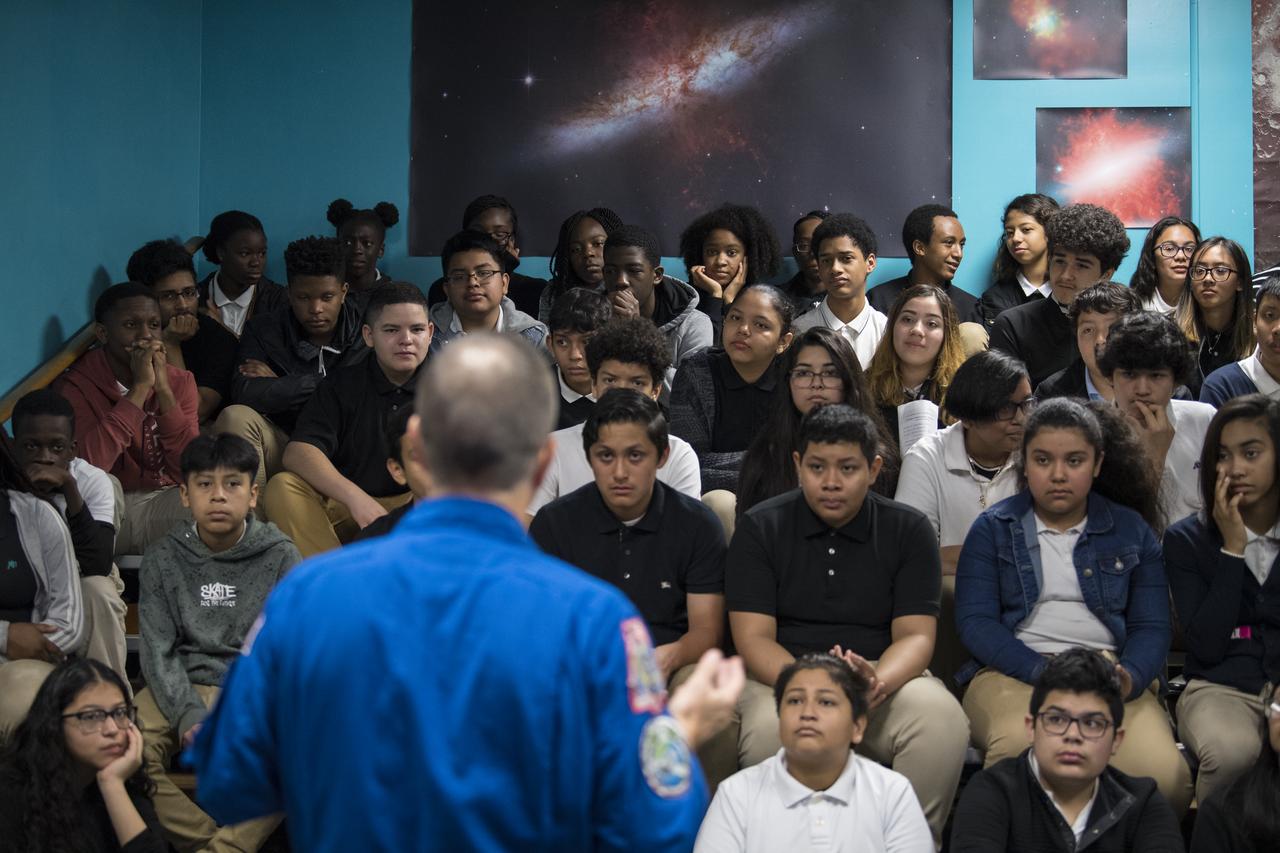
NASA astronaut Ricky Arnold speaks about his time onboard the International Space Station (ISS) during Expeditions 55 and 56, Friday, May 3, 2019 at the Challenger Center in Lanham, MD. During Expedition 55/56, Arnold completed three spacewalks for a total of 19.5 hours outside the space station, and concluded his 197 day mission when he landed in a remote area near the town of Zhezkazgan, Kazakhstan in Oct. 2018. He also flew to the space station on shuttle mission STS-119 to deliver the final pair of power-generating solar array wings. Photo Credit: (NASA/Aubrey Gemignani)
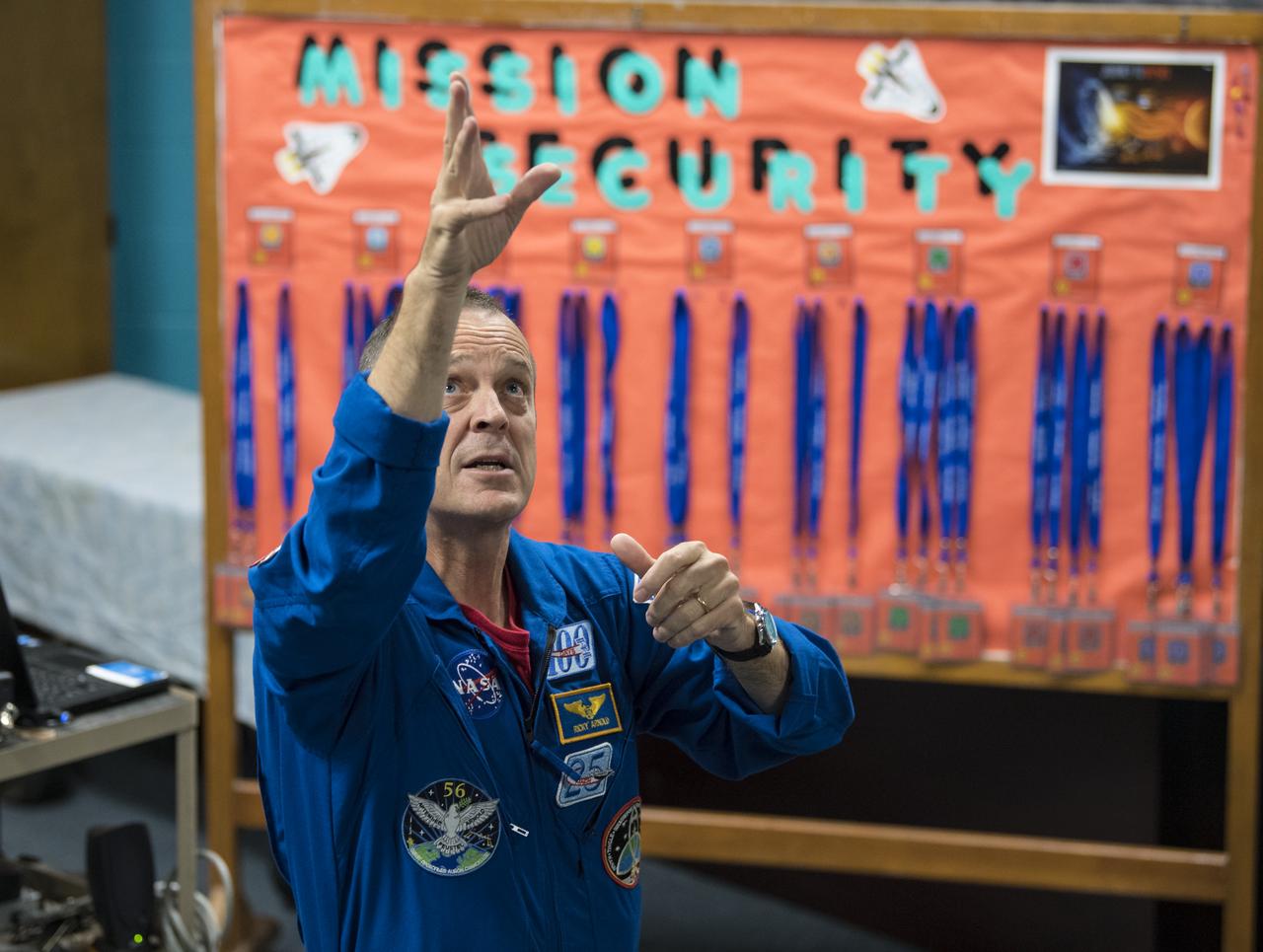
NASA astronaut Ricky Arnold speaks about his time onboard the International Space Station (ISS) during Expeditions 55 and 56, Friday, May 3, 2019 at the Challenger Center in Lanham, MD. During Expedition 55/56, Arnold completed three spacewalks for a total of 19.5 hours outside the space station, and concluded his 197 day mission when he landed in a remote area near the town of Zhezkazgan, Kazakhstan in Oct. 2018. He also flew to the space station on shuttle mission STS-119 to deliver the final pair of power-generating solar array wings. Photo Credit: (NASA/Aubrey Gemignani)
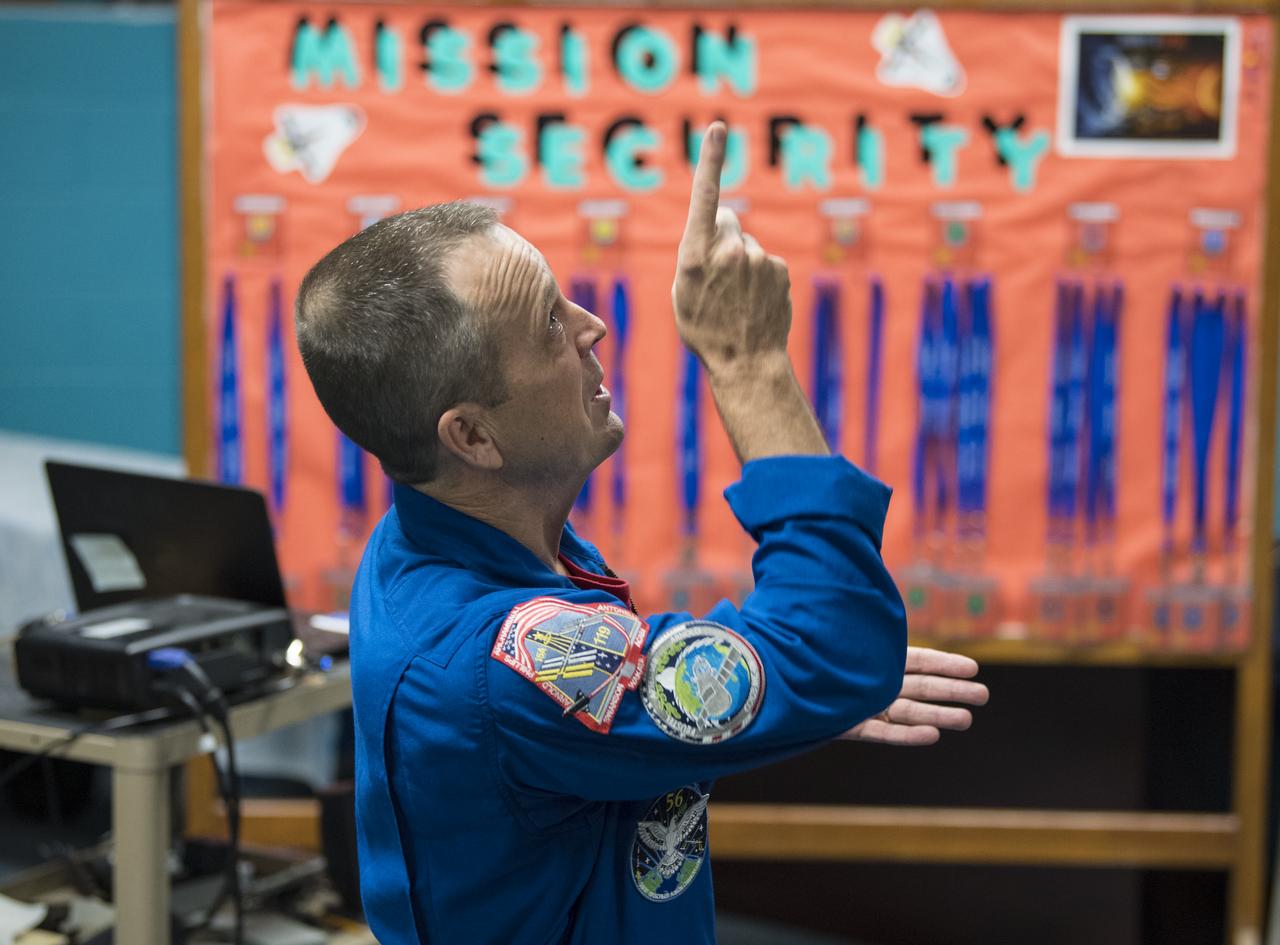
NASA astronaut Ricky Arnold speaks about his time onboard the International Space Station (ISS) during Expeditions 55 and 56, Friday, May 3, 2019 at the Challenger Center in Lanham, MD. During Expedition 55/56, Arnold completed three spacewalks for a total of 19.5 hours outside the space station, and concluded his 197 day mission when he landed in a remote area near the town of Zhezkazgan, Kazakhstan in Oct. 2018. He also flew to the space station on shuttle mission STS-119 to deliver the final pair of power-generating solar array wings. Photo Credit: (NASA/Aubrey Gemignani)
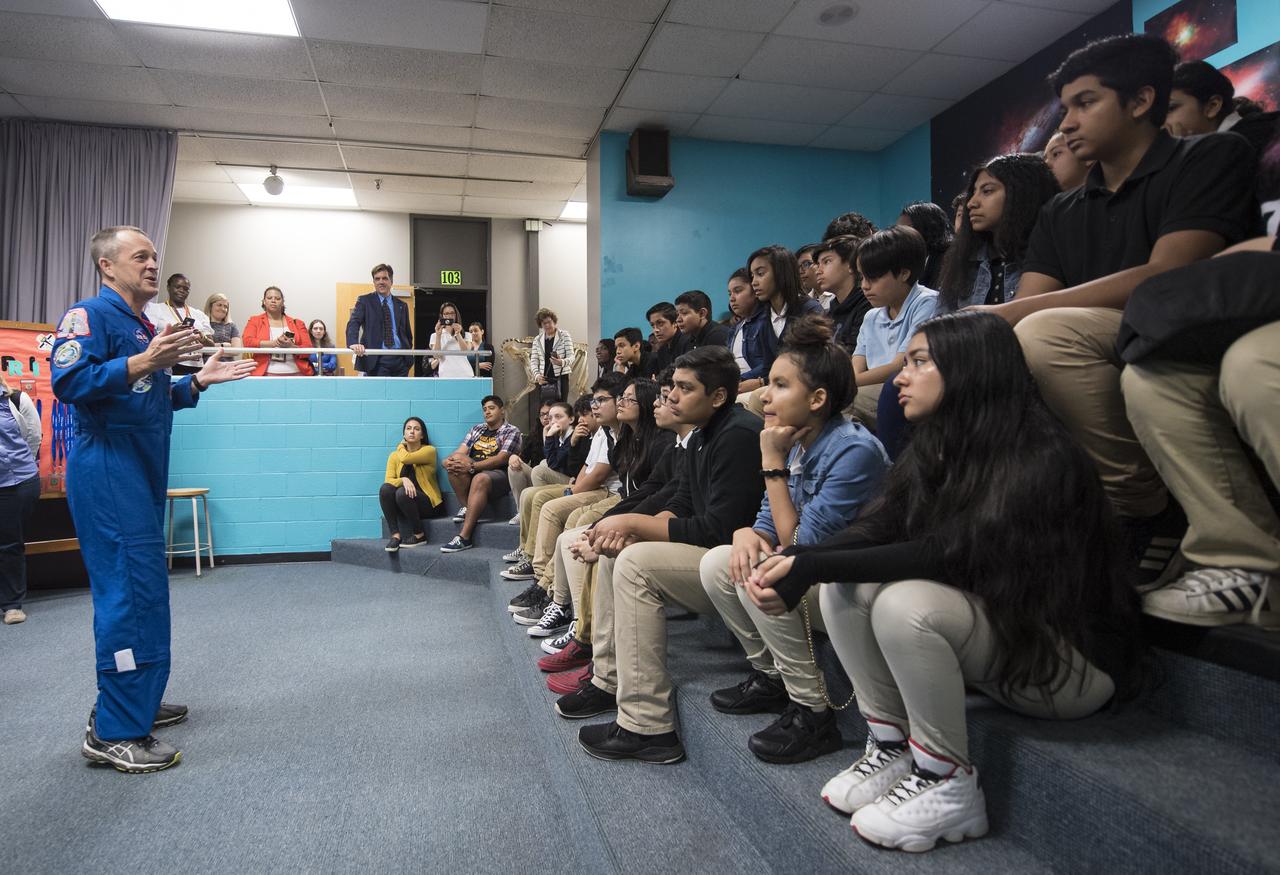
NASA astronaut Ricky Arnold speaks about his time onboard the International Space Station (ISS) during Expeditions 55 and 56, Friday, May 3, 2019 at the Challenger Center in Lanham, MD. During Expedition 55/56, Arnold completed three spacewalks for a total of 19.5 hours outside the space station, and concluded his 197 day mission when he landed in a remote area near the town of Zhezkazgan, Kazakhstan in Oct. 2018. He also flew to the space station on shuttle mission STS-119 to deliver the final pair of power-generating solar array wings. Photo Credit: (NASA/Aubrey Gemignani)
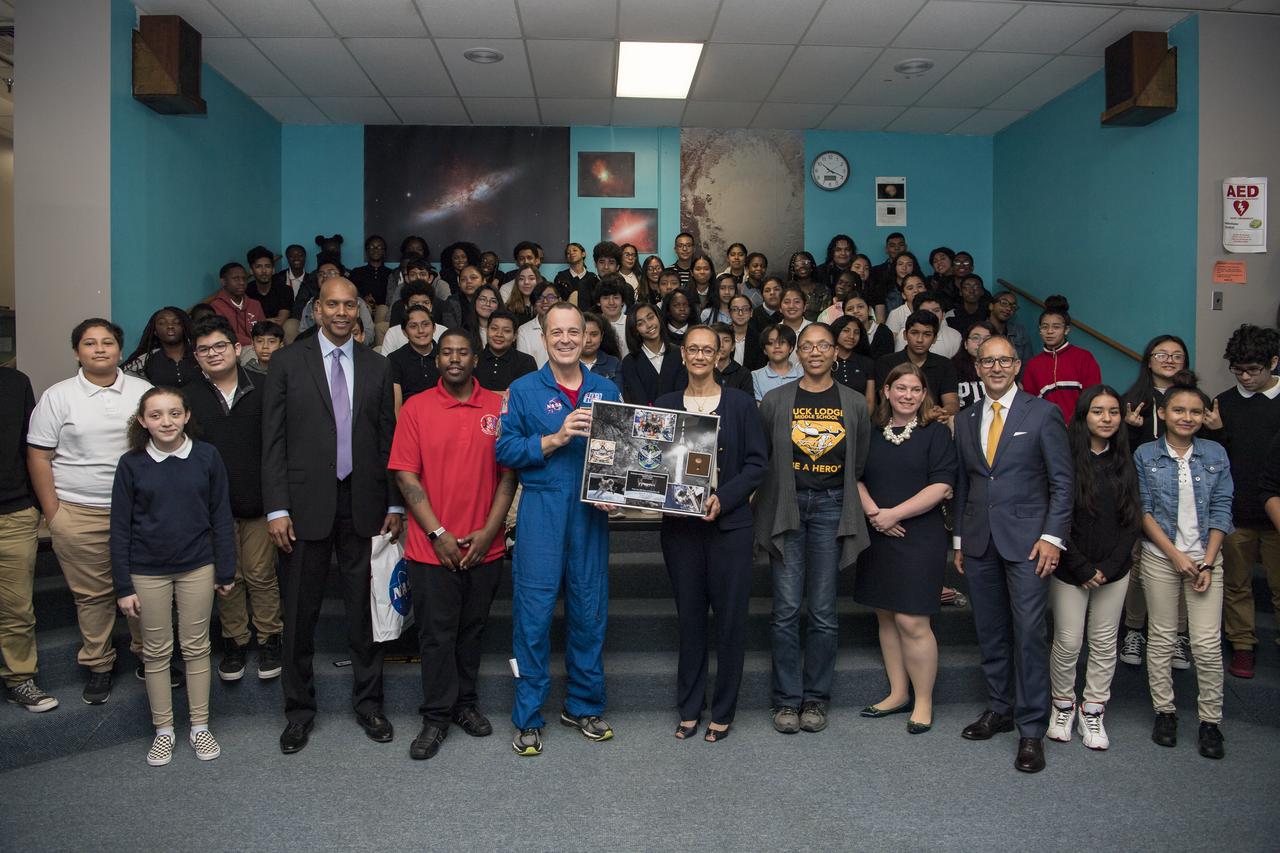
NASA astronaut Ricky Arnold poses for a photo after presenting the Challenger Center with a montage of images from his time onboard the International Space Station (ISS) during Expeditions 55 and 56, Friday, May 3, 2019 in Lanham, MD. During Expedition 55/56, Arnold completed three spacewalks for a total of 19.5 hours outside the space station, and concluded his 197 day mission when he landed in a remote area near the town of Zhezkazgan, Kazakhstan in Oct. 2018. He also flew to the space station on shuttle mission STS-119 to deliver the final pair of power-generating solar array wings. Photo Credit: (NASA/Aubrey Gemignani)
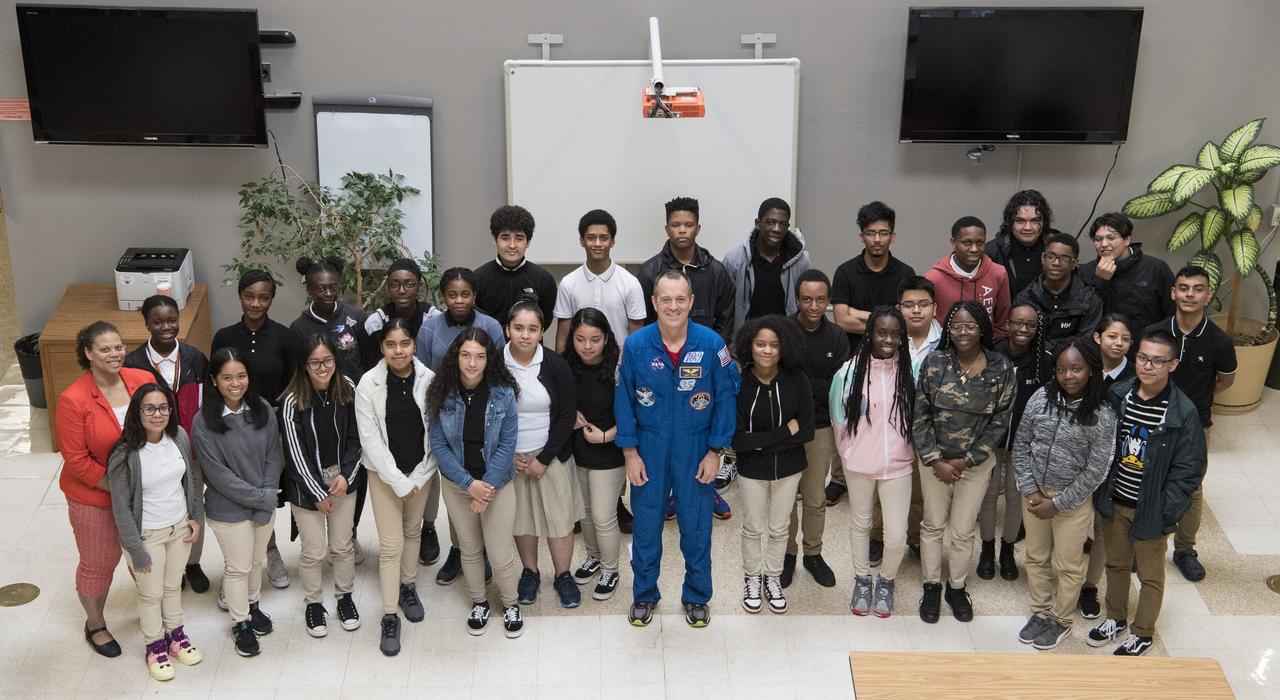
NASA astronaut Ricky Arnold poses for a photo with students after speaking with them about his time onboard the International Space Station (ISS) during Expeditions 55 and 56, Friday, May 3, 2019 in Lanham, MD. During Expedition 55/56, Arnold completed three spacewalks for a total of 19.5 hours outside the space station, and concluded his 197 day mission when he landed in a remote area near the town of Zhezkazgan, Kazakhstan in Oct. 2018. He also flew to the space station on shuttle mission STS-119 to deliver the final pair of power-generating solar array wings. Photo Credit: (NASA/Aubrey Gemignani)
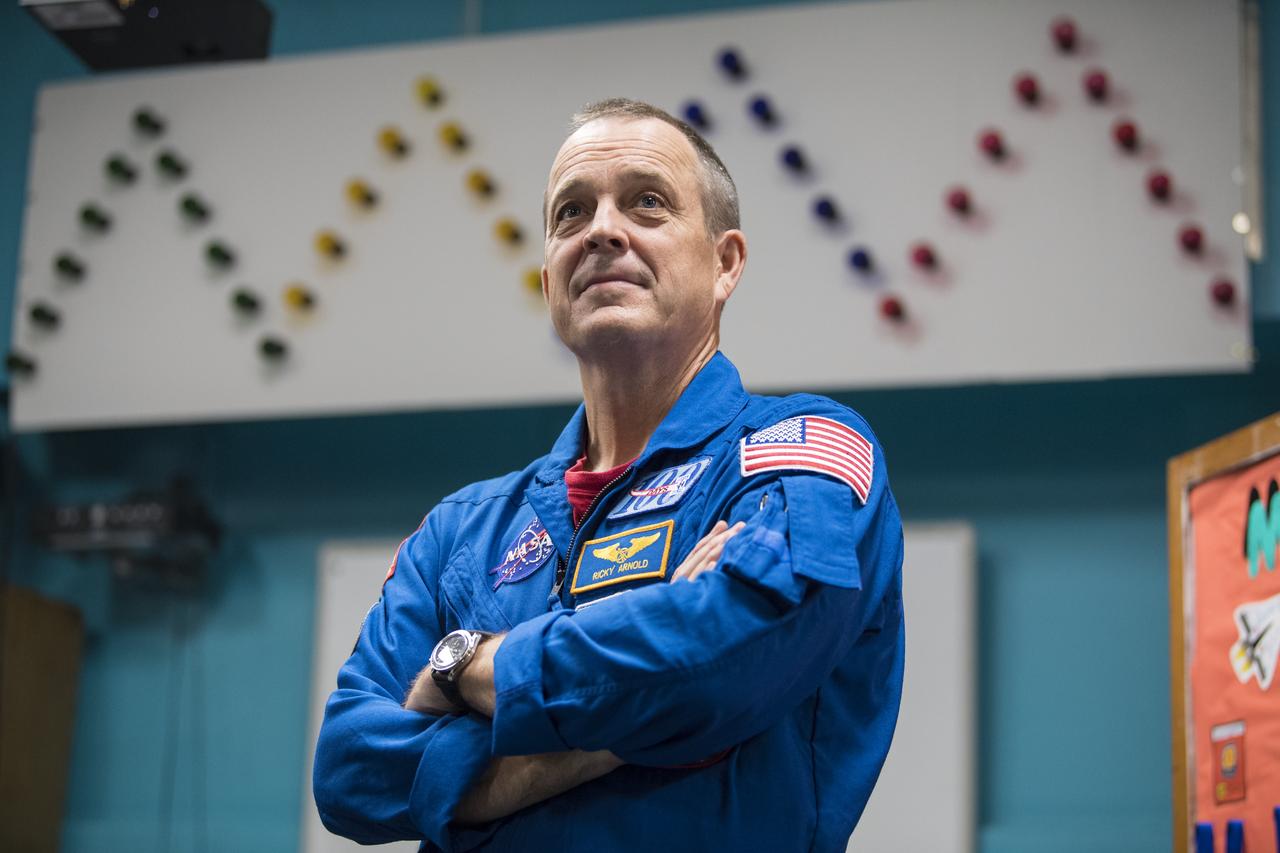
NASA astronaut Ricky Arnold is seen during a talk about his time onboard the International Space Station (ISS) during Expeditions 55 and 56, Friday, May 3, 2019 at the Challenger Center in Lanham, MD. During Expedition 55/56, Arnold completed three spacewalks for a total of 19.5 hours outside the space station, and concluded his 197 day mission when he landed in a remote area near the town of Zhezkazgan, Kazakhstan in Oct. 2018. He also flew to the space station on shuttle mission STS-119 to deliver the final pair of power-generating solar array wings. Photo Credit: (NASA/Aubrey Gemignani)
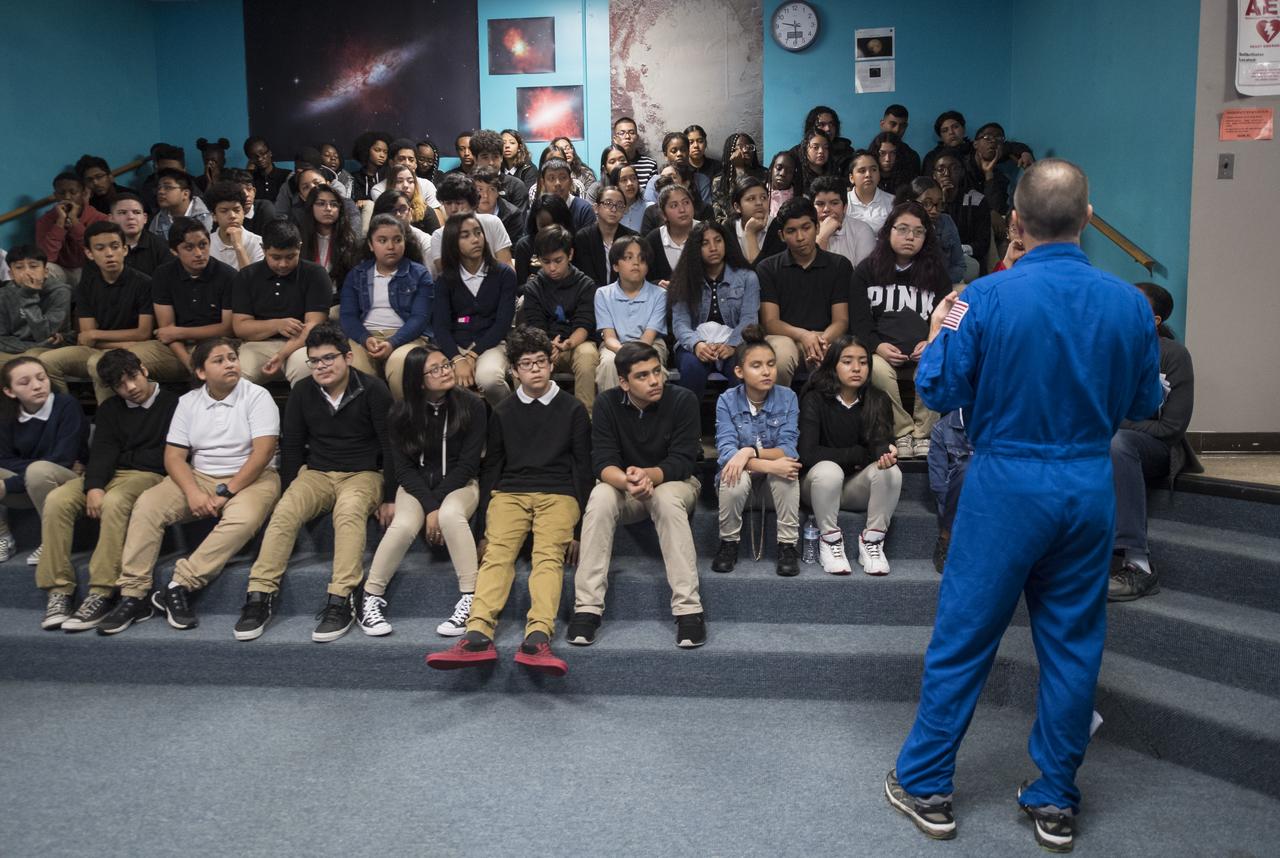
NASA astronaut Ricky Arnold speaks about his time onboard the International Space Station (ISS) during Expeditions 55 and 56, Friday, May 3, 2019 at the Challenger Center in Lanham, MD. During Expedition 55/56, Arnold completed three spacewalks for a total of 19.5 hours outside the space station, and concluded his 197 day mission when he landed in a remote area near the town of Zhezkazgan, Kazakhstan in Oct. 2018. He also flew to the space station on shuttle mission STS-119 to deliver the final pair of power-generating solar array wings. Photo Credit: (NASA/Aubrey Gemignani)
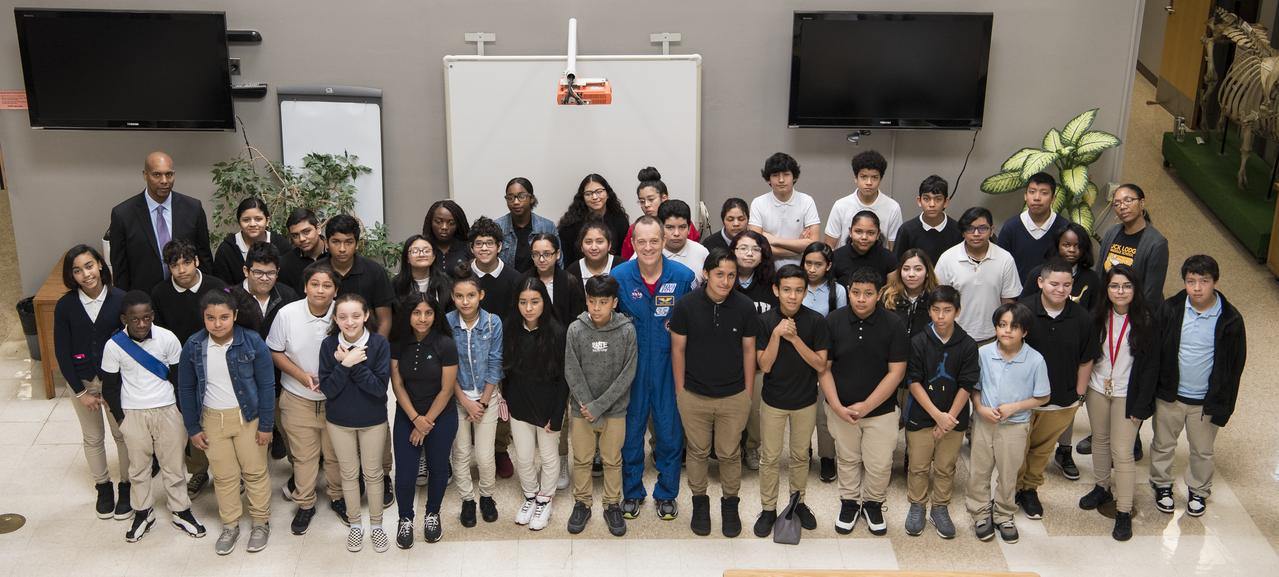
NASA astronaut Ricky Arnold poses for a photo with students after speaking with them about his time onboard the International Space Station (ISS) during Expeditions 55 and 56, Friday, May 3, 2019 in Lanham, MD. During Expedition 55/56, Arnold completed three spacewalks for a total of 19.5 hours outside the space station, and concluded his 197 day mission when he landed in a remote area near the town of Zhezkazgan, Kazakhstan in Oct. 2018. He also flew to the space station on shuttle mission STS-119 to deliver the final pair of power-generating solar array wings. Photo Credit: (NASA/Aubrey Gemignani)
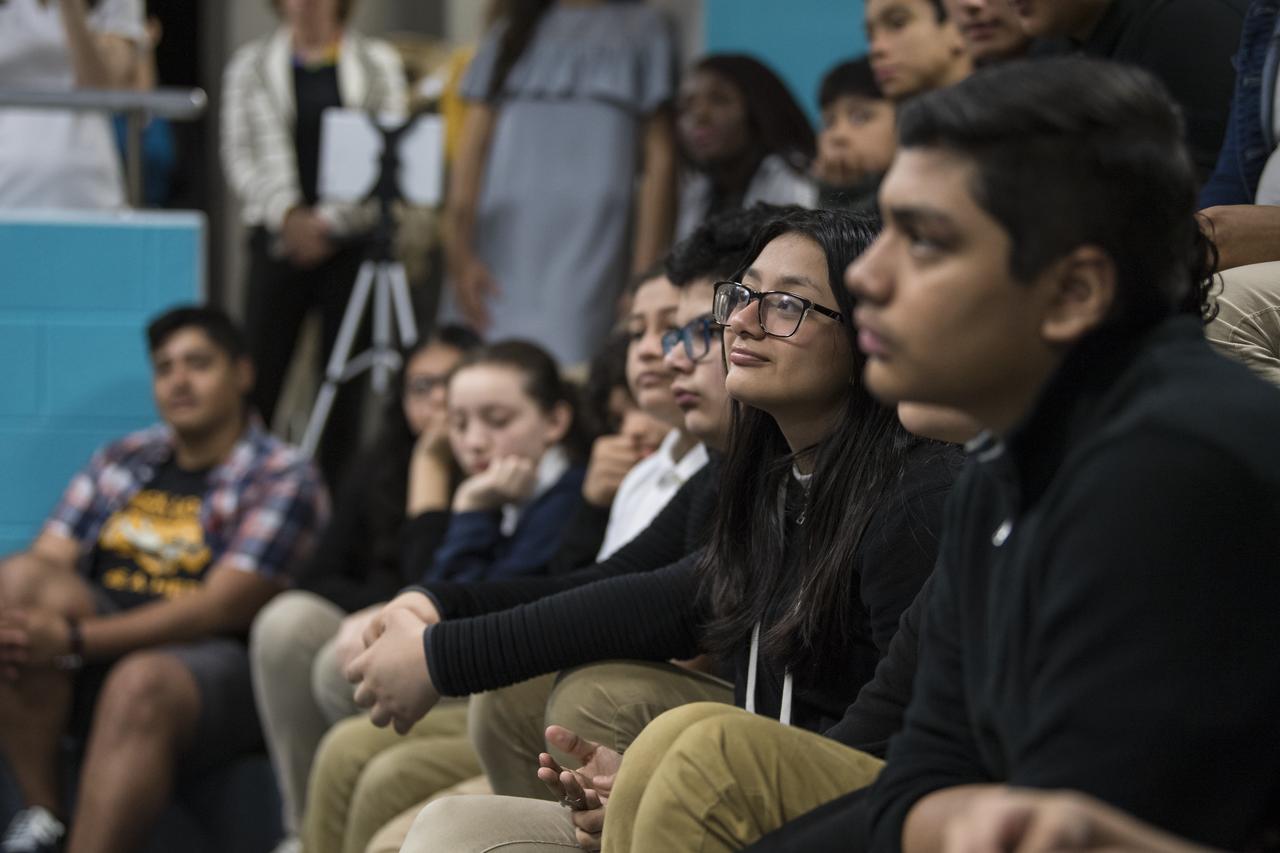
Students are seen in the audience as NASA astronaut Ricky Arnold speaks about his time onboard the International Space Station (ISS) during Expeditions 55 and 56, Friday, May 3, 2019 at the Challenger Center in Lanham, MD. During Expedition 55/56, Arnold completed three spacewalks for a total of 19.5 hours outside the space station, and concluded his 197 day mission when he landed in a remote area near the town of Zhezkazgan, Kazakhstan in Oct. 2018. He also flew to the space station on shuttle mission STS-119 to deliver the final pair of power-generating solar array wings. Photo Credit: (NASA/Aubrey Gemignani)
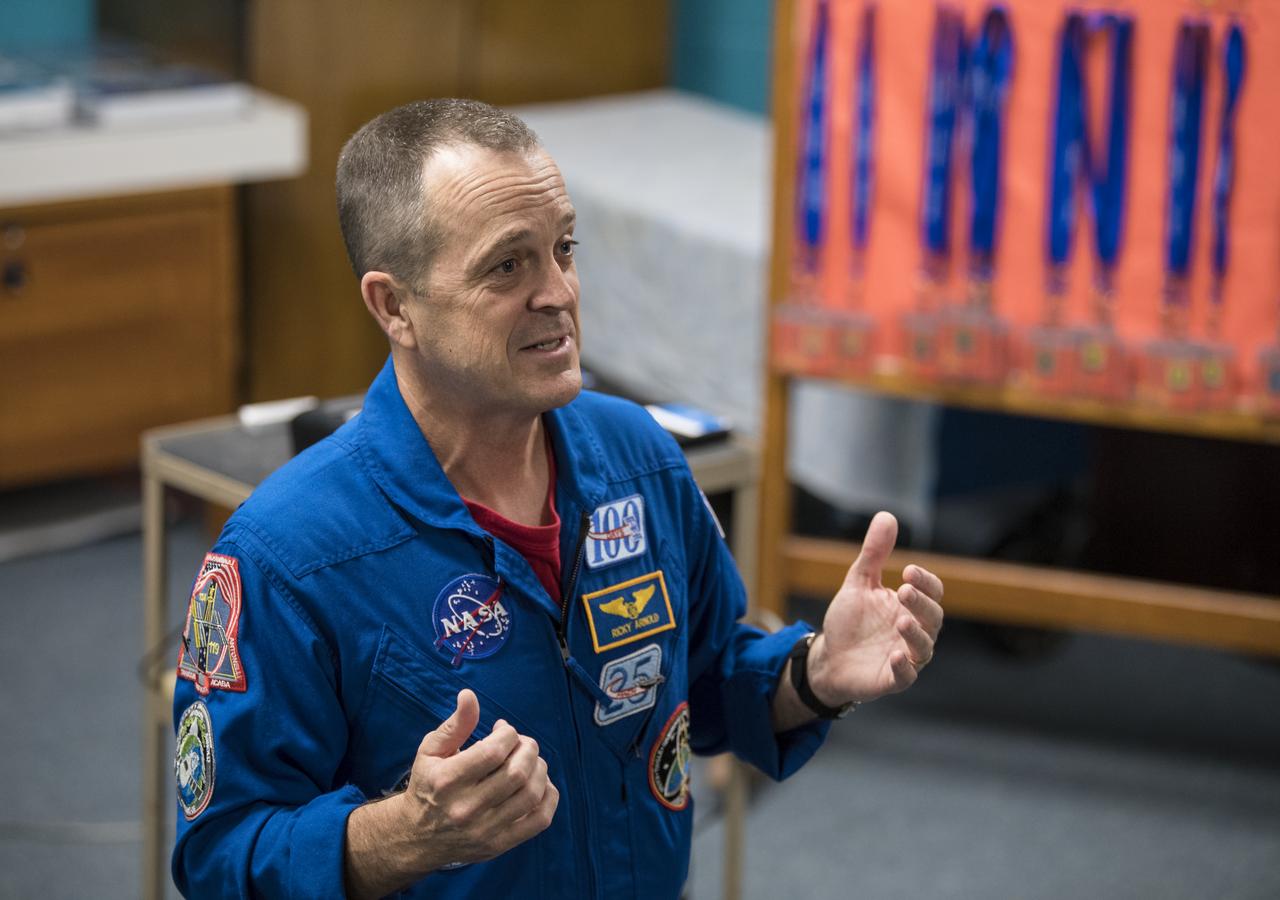
NASA astronaut Ricky Arnold speaks about his time onboard the International Space Station (ISS) during Expeditions 55 and 56, Friday, May 3, 2019 at the Challenger Center in Lanham, MD. During Expedition 55/56, Arnold completed three spacewalks for a total of 19.5 hours outside the space station, and concluded his 197 day mission when he landed in a remote area near the town of Zhezkazgan, Kazakhstan in Oct. 2018. He also flew to the space station on shuttle mission STS-119 to deliver the final pair of power-generating solar array wings. Photo Credit: (NASA/Aubrey Gemignani)
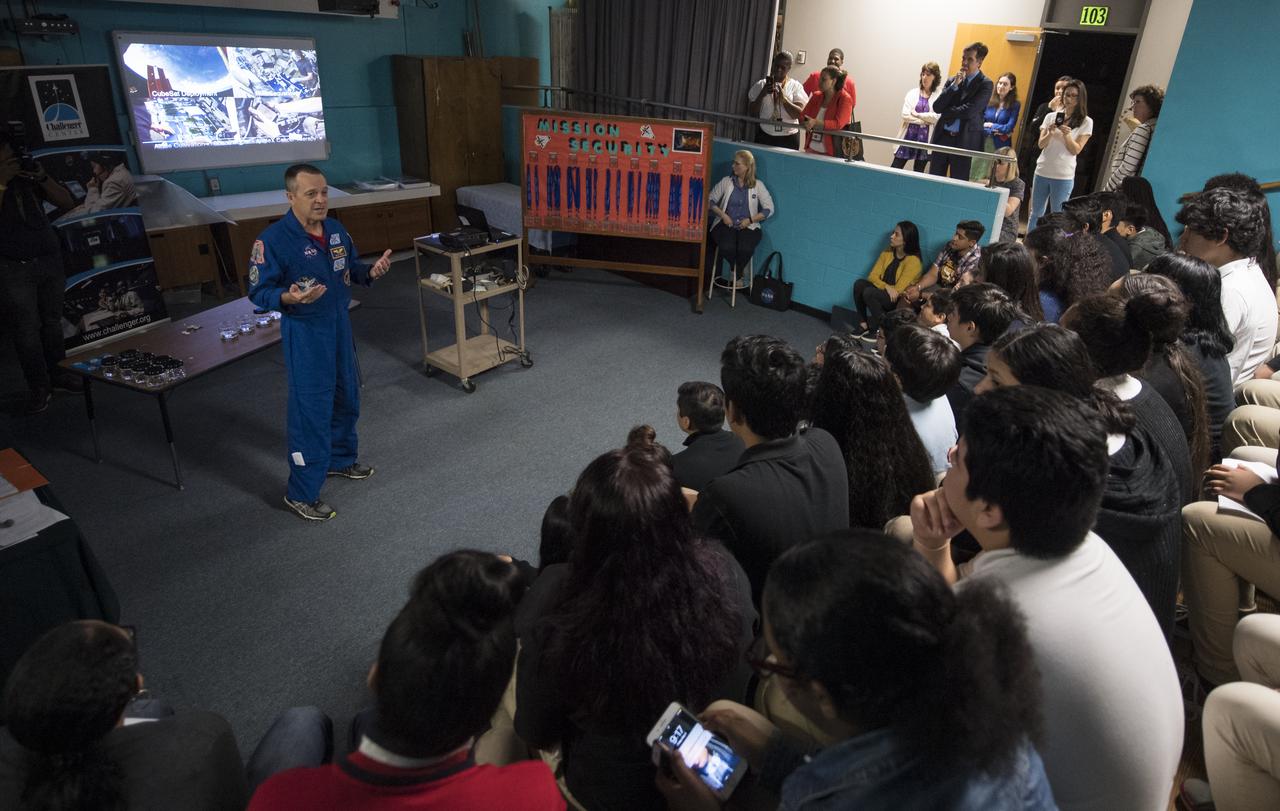
NASA astronaut Ricky Arnold speaks about his time onboard the International Space Station (ISS) during Expeditions 55 and 56, Friday, May 3, 2019 at the Challenger Center in Lanham, MD. During Expedition 55/56, Arnold completed three spacewalks for a total of 19.5 hours outside the space station, and concluded his 197 day mission when he landed in a remote area near the town of Zhezkazgan, Kazakhstan in Oct. 2018. He also flew to the space station on shuttle mission STS-119 to deliver the final pair of power-generating solar array wings. Photo Credit: (NASA/Aubrey Gemignani)
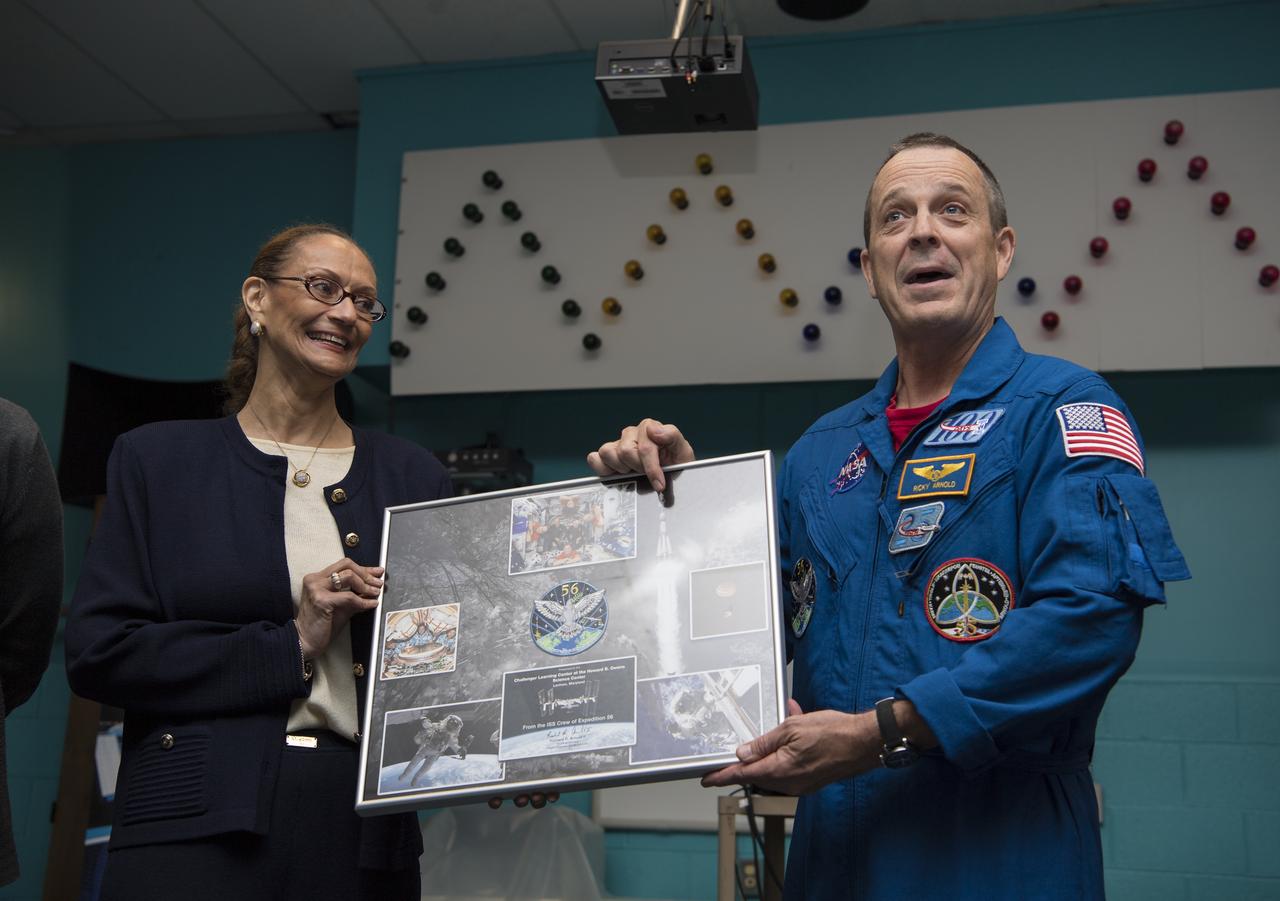
NASA astronaut Ricky Arnold presents the Challenger Center with a montage of images from his time onboard the International Space Station (ISS) during Expeditions 55 and 56, Friday, May 3, 2019 in Lanham, MD. During Expedition 55/56, Arnold completed three spacewalks for a total of 19.5 hours outside the space station, and concluded his 197 day mission when he landed in a remote area near the town of Zhezkazgan, Kazakhstan in Oct. 2018. He also flew to the space station on shuttle mission STS-119 to deliver the final pair of power-generating solar array wings. Photo Credit: (NASA/Aubrey Gemignani)
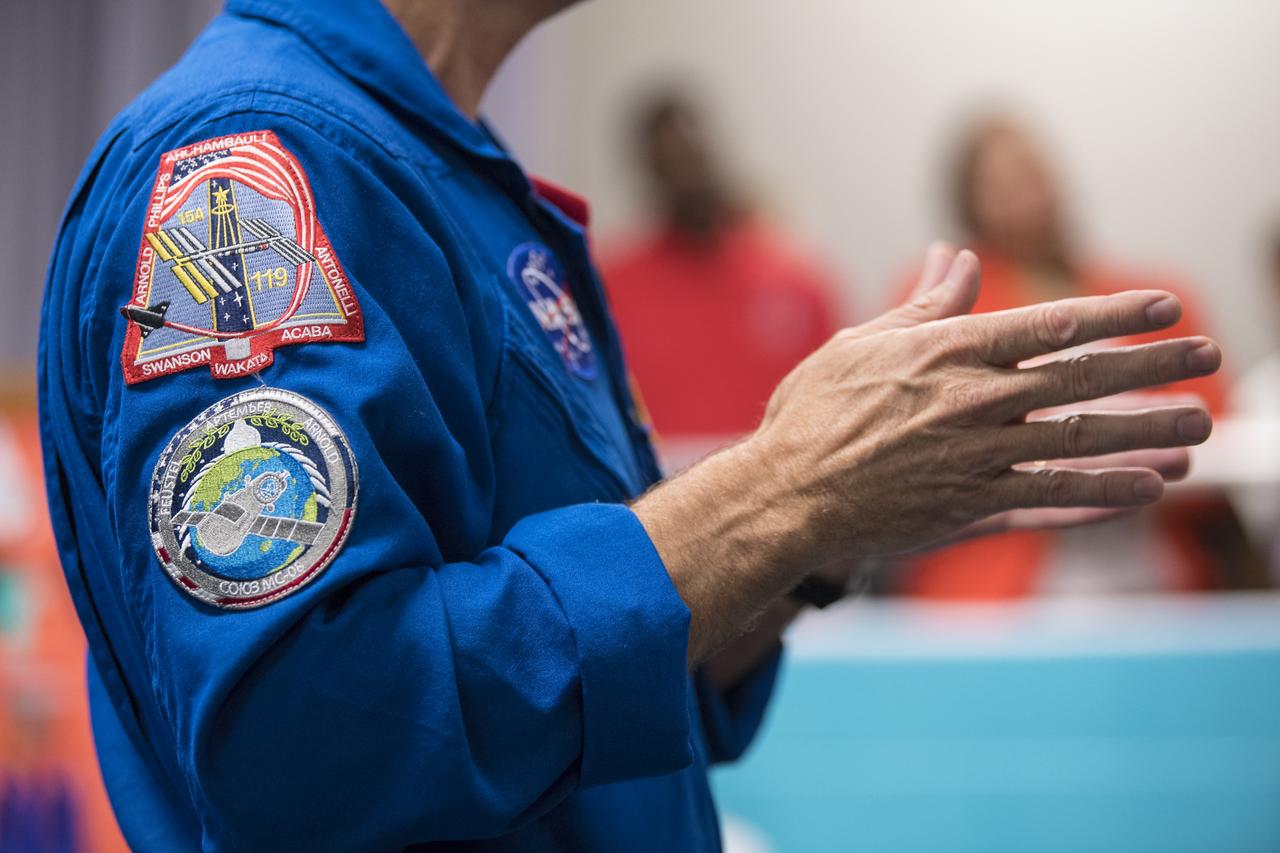
NASA astronaut Ricky Arnold speaks about his time onboard the International Space Station (ISS) during Expeditions 55 and 56, Friday, May 3, 2019 at the Challenger Center in Lanham, MD. During Expedition 55/56, Arnold completed three spacewalks for a total of 19.5 hours outside the space station, and concluded his 197 day mission when he landed in a remote area near the town of Zhezkazgan, Kazakhstan in Oct. 2018. He also flew to the space station on shuttle mission STS-119 to deliver the final pair of power-generating solar array wings. Photo Credit: (NASA/Aubrey Gemignani)
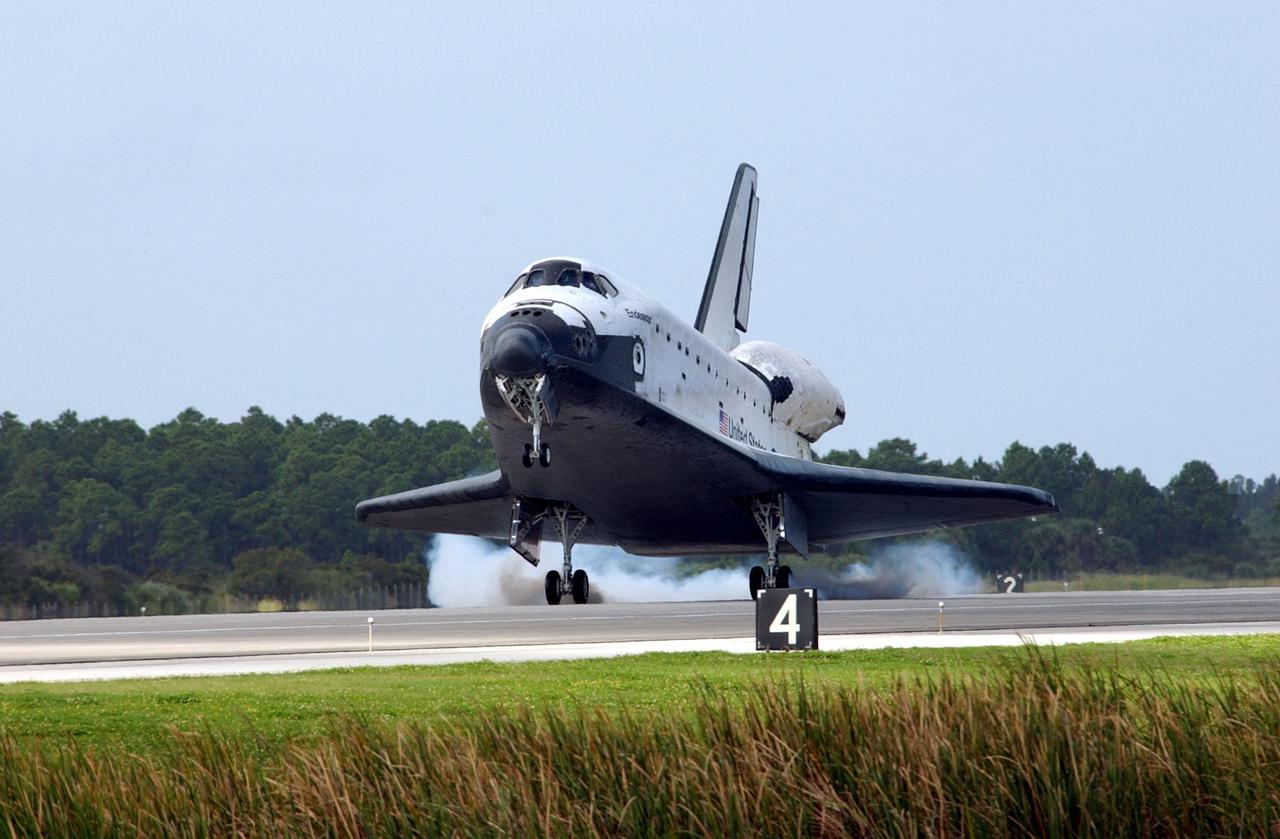
KENNEDY SPACE CENTER, FLA. - Orbiter Endeavour kicks up dust as it touches down on Runway 15 at the KSC Shuttle Landing Facility, completing mission STS-108. After a mission-elapsed time of 11 days, 19 hours and 35 minutes, the landing is the 57th at KSC in the history of the program. Main gear touchdown occurred at 12:55:10 p.m. EST (17:55:10 GMT), nose gear touchdown at 12:55:23 p.m. (17:55:23 GMT) , wheel stop at 12:56:13 p.m. (17:56:13 GMT). STS-108 was the 12th mission to the International Space Station. This mission was the 107th flight in the Shuttle program and the 17th flight for the orbiter. Endeavour carries both the mission crew and the Expedition 3 crew - Commander Frank Culbertson and cosmonauts Vladimir Dezhurov and Mikhail Tyurin - who are returning to Earth after 129 days in space on the Space Station
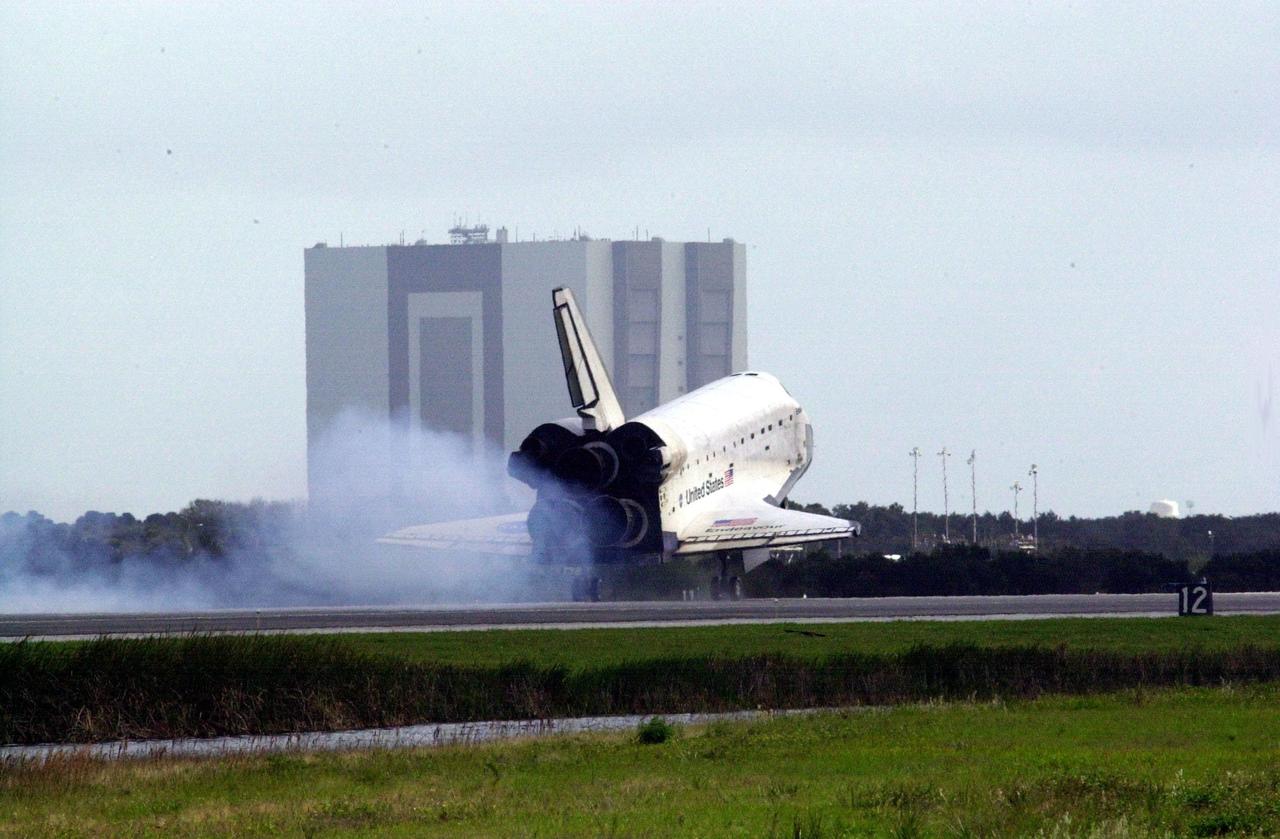
KENNEDY SPACE CENTER, FLA. - Dust streams behind orbiter Endeavour as it touches down on Runway 15 at the Shuttle Landing Facility, completing mission STS-108 after a mission-elapsed time of 11 days, 19 hours and 35 minutes. The landing is the 57th at KSC in the history of the program. Main gear touchdown occurred at 12:55:10 p.m. EST (17:55:10 GMT), nose gear touchdown at 12:55:23 p.m. (17:55:23 GMT) , wheel stop at 12:56:13 p.m. (17:56:13 GMT). STS-108 was the 12th mission to the International Space Station. This mission was the 107th flight in the Shuttle program and the 17th flight for the orbiter. Endeavour carries both the mission crew and the Expedition 3 crew - Commander Frank Culbertson and cosmonauts Vladimir Dezhurov and Mikhail Tyurin - who are returning to Earth after 129 days in space on the Space Station
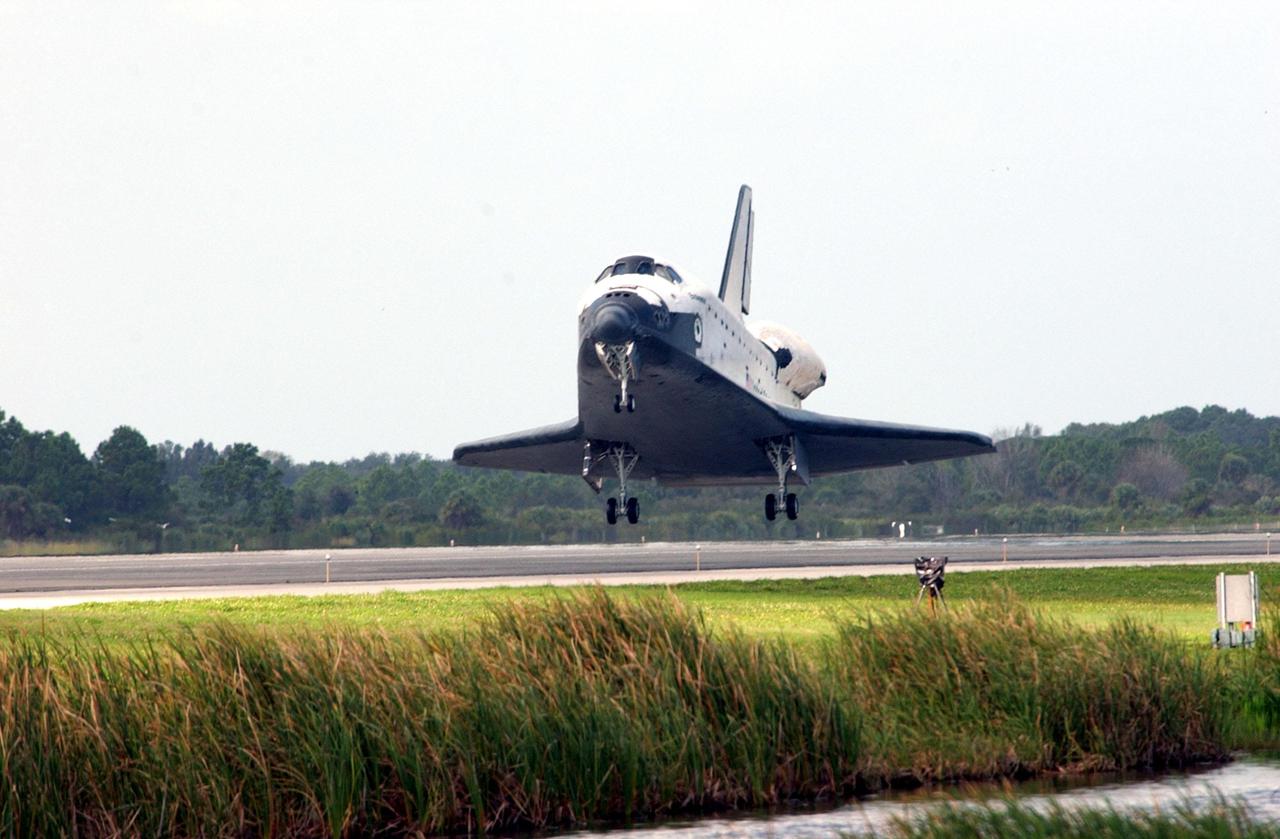
KENNEDY SPACE CENTER, FLA. -- Orbiter Endeavour approaches touchdown on Runway 15 at the KSC Shuttle Landing Facility, completing mission STS-108. After a mission-elapsed time of 11 days, 19 hours and 35 minutes, the landing is the 57th at KSC in the history of the program. Main gear touchdown occurred at 12:55:10 p.m. EST (17:55:10 GMT), nose gear touchdown at 12:55:23 p.m. (17:55:23 GMT) , wheel stop at 12:56:13 p.m. (17:56:13 GMT). STS-108 was the 12th mission to the International Space Station. This mission was the 107th flight in the Shuttle program and the 17th flight for the orbiter. Endeavour carries both the mission crew and the Expedition 3 crew - Commander Frank Culbertson and cosmonauts Vladimir Dezhurov and Mikhail Tyurin - who are returning to Earth after 129 days in space on the Space Station
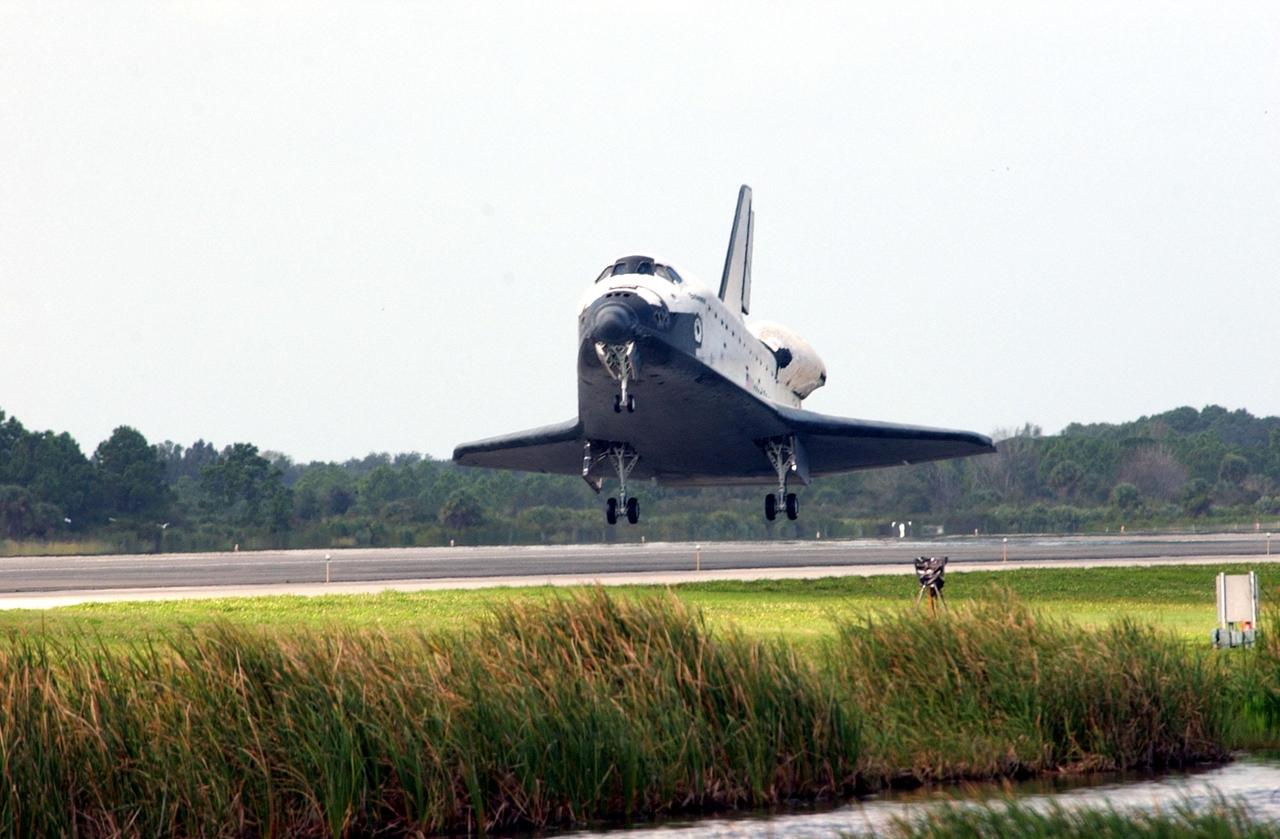
KENNEDY SPACE CENTER, FLA. -- Orbiter Endeavour approaches touchdown on Runway 15 at the KSC Shuttle Landing Facility, completing mission STS-108. After a mission-elapsed time of 11 days, 19 hours and 35 minutes, the landing is the 57th at KSC in the history of the program. Main gear touchdown occurred at 12:55:10 p.m. EST (17:55:10 GMT), nose gear touchdown at 12:55:23 p.m. (17:55:23 GMT) , wheel stop at 12:56:13 p.m. (17:56:13 GMT). STS-108 was the 12th mission to the International Space Station. This mission was the 107th flight in the Shuttle program and the 17th flight for the orbiter. Endeavour carries both the mission crew and the Expedition 3 crew - Commander Frank Culbertson and cosmonauts Vladimir Dezhurov and Mikhail Tyurin - who are returning to Earth after 129 days in space on the Space Station
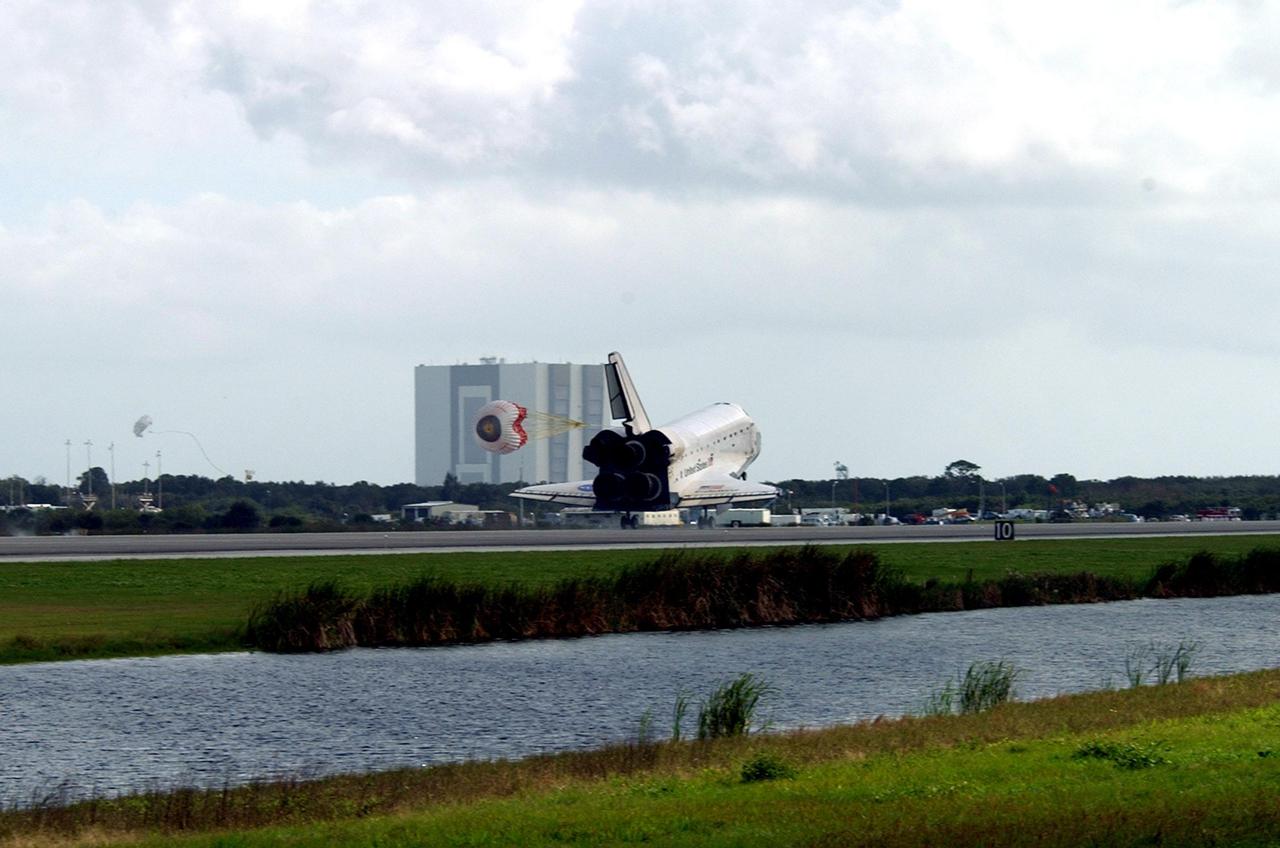
KENNEDY SPACE CENTER, FLA. -- Endeavour's drag chute is deployed as the orbiter touches down on Runway 15 at the KSC Shuttle Landing Facility, completing mission STS-108. After a mission-elapsed time of 11 days, 19 hours and 35 minutes, the landing is the 57th at KSC in the history of the program. Main gear touchdown occurred at 12:55:10 p.m. EST (17:55:10 GMT), nose gear touchdown at 12:55:23 p.m. (17:55:23 GMT) , wheel stop at 12:56:13 p.m. (17:56:13 GMT). STS-108 was the 12th mission to the International Space Station. This mission was the 107th flight in the Shuttle program and the 17th flight for the orbiter. Endeavour carries both the mission crew and the Expedition 3 crew - Commander Frank Culbertson and cosmonauts Vladimir Dezhurov and Mikhail Tyurin - who are returning to Earth after 129 days in space on the Space Station
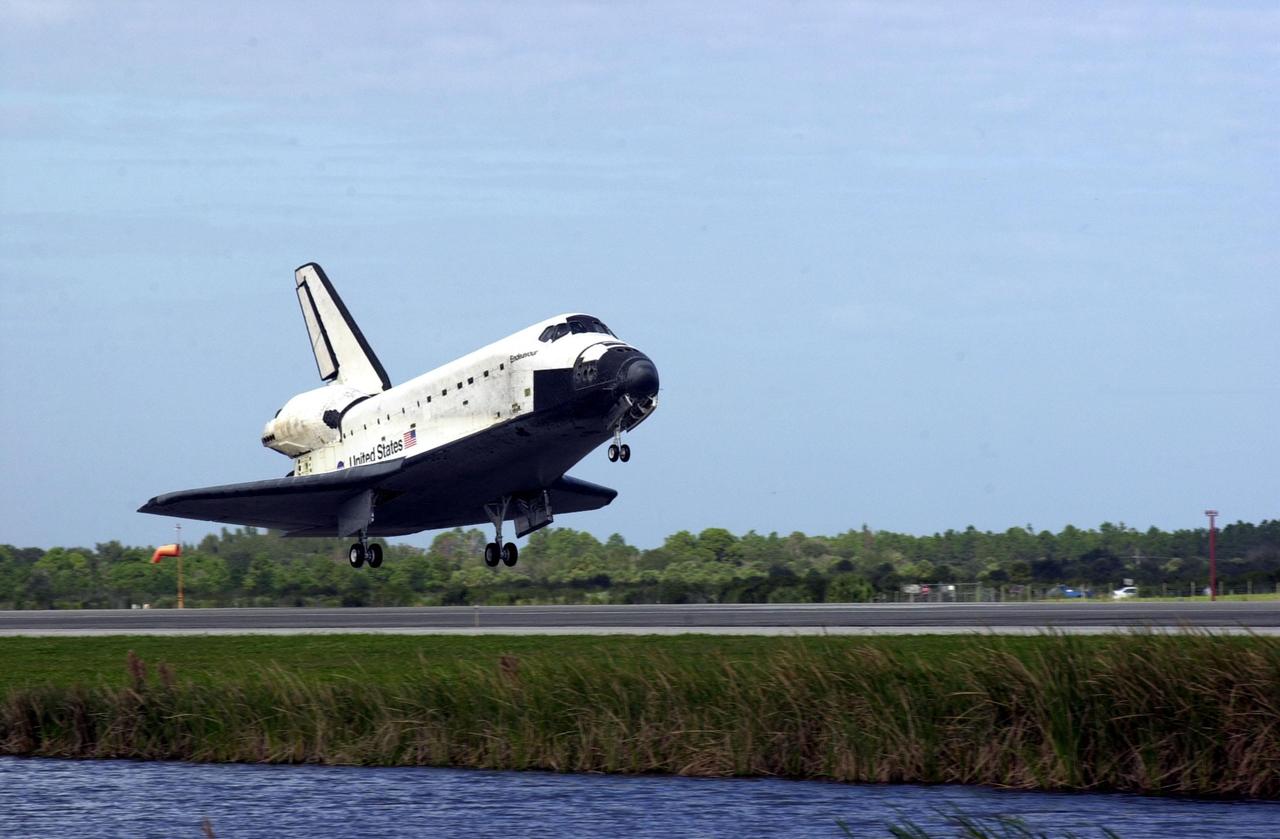
KENNEDY SPACE CENTER, FLA. -- Orbiter Endeavour drops through scattered clouds to land on Runway 15 at the KSC Shuttle Landing Facility, completing mission STS-108. After a mission-elapsed time of 11 days, 19 hours and 35 minutes, the landing is the 57th at KSC in the history of the program. Main gear touchdown occurred at 12:55:10 p.m. EST (17:55:10 GMT), nose gear touchdown at 12:55:23 p.m. (17:55:23 GMT) , wheel stop at 12:56:13 p.m. (17:56:13 GMT). STS-108 was the 12th mission to the International Space Station. This mission was the 107th flight in the Shuttle program and the 17th flight for the orbiter. Endeavour carries both the mission crew and the Expedition 3 crew - Commander Frank Culbertson and cosmonauts Vladimir Dezhurov and Mikhail Tyurin - who are returning to Earth after 129 days in space on the Space Station
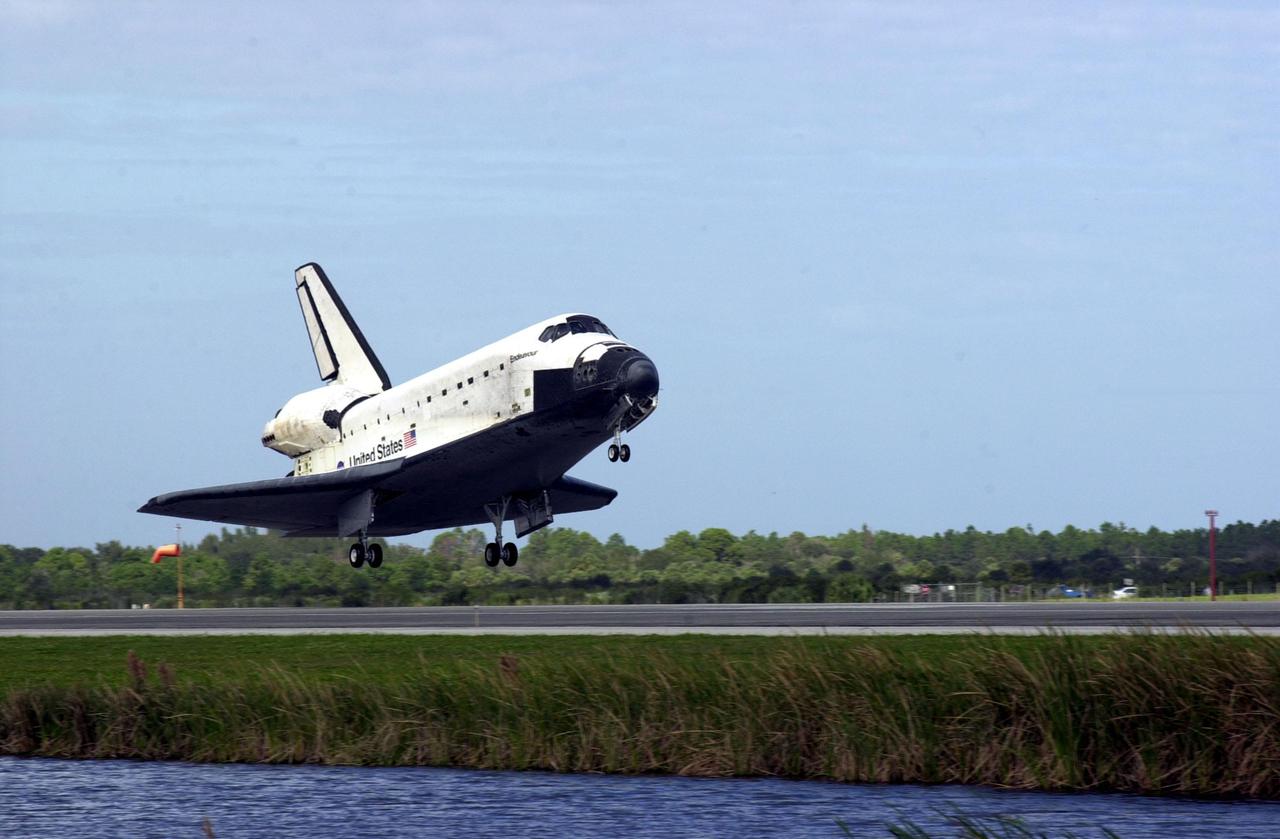
KENNEDY SPACE CENTER, FLA. -- Orbiter Endeavour drops through scattered clouds to land on Runway 15 at the KSC Shuttle Landing Facility, completing mission STS-108. After a mission-elapsed time of 11 days, 19 hours and 35 minutes, the landing is the 57th at KSC in the history of the program. Main gear touchdown occurred at 12:55:10 p.m. EST (17:55:10 GMT), nose gear touchdown at 12:55:23 p.m. (17:55:23 GMT) , wheel stop at 12:56:13 p.m. (17:56:13 GMT). STS-108 was the 12th mission to the International Space Station. This mission was the 107th flight in the Shuttle program and the 17th flight for the orbiter. Endeavour carries both the mission crew and the Expedition 3 crew - Commander Frank Culbertson and cosmonauts Vladimir Dezhurov and Mikhail Tyurin - who are returning to Earth after 129 days in space on the Space Station
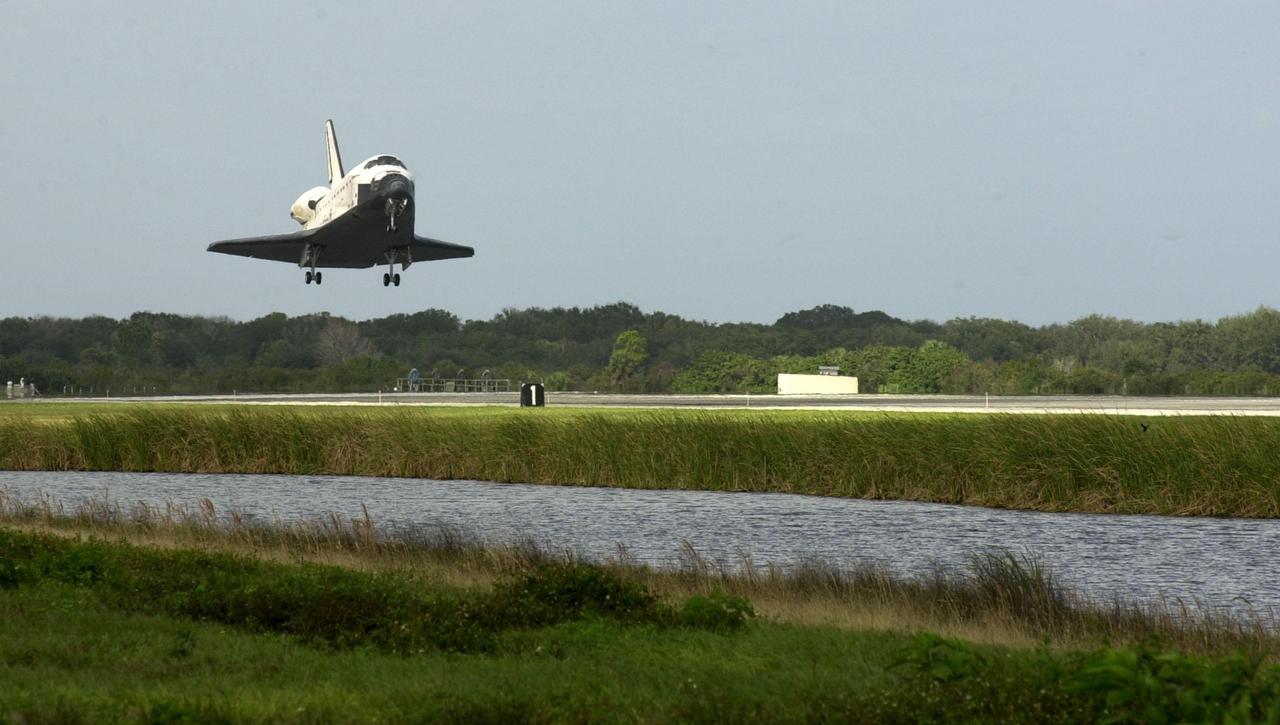
KENNEDY SPACE CENTER, FLA. -- Orbiter Endeavour glides toward touchdown on Runway 15 at the KSC Shuttle Landing Facility, completing mission STS-108. After a mission-elapsed time of 11 days, 19 hours and 35 minutes, the landing is the 57th at KSC in the history of the program. Main gear touchdown occurred at 12:55:10 p.m. EST (17:55:10 GMT), nose gear touchdown at 12:55:23 p.m. (17:55:23 GMT) , wheel stop at 12:56:13 p.m. (17:56:13 GMT). STS-108 was the 12th mission to the International Space Station. This mission was the 107th flight in the Shuttle program and the 17th flight for the orbiter. Endeavour carries both the mission crew and the Expedition 3 crew - Commander Frank Culbertson and cosmonauts Vladimir Dezhurov and Mikhail Tyurin - who are returning to Earth after 129 days in space on the Space Station
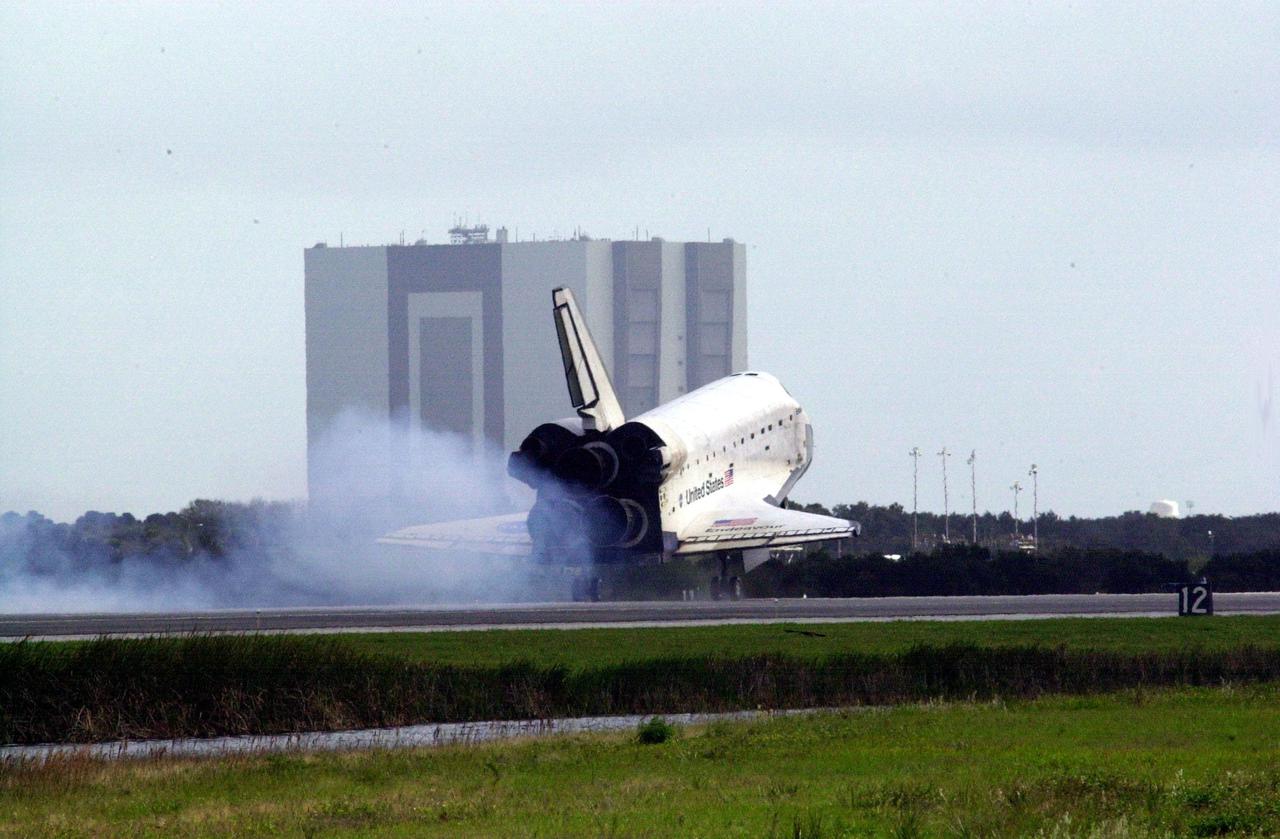
KENNEDY SPACE CENTER, FLA. - Dust streams behind orbiter Endeavour as it touches down on Runway 15 at the Shuttle Landing Facility, completing mission STS-108 after a mission-elapsed time of 11 days, 19 hours and 35 minutes. The landing is the 57th at KSC in the history of the program. Main gear touchdown occurred at 12:55:10 p.m. EST (17:55:10 GMT), nose gear touchdown at 12:55:23 p.m. (17:55:23 GMT) , wheel stop at 12:56:13 p.m. (17:56:13 GMT). STS-108 was the 12th mission to the International Space Station. This mission was the 107th flight in the Shuttle program and the 17th flight for the orbiter. Endeavour carries both the mission crew and the Expedition 3 crew - Commander Frank Culbertson and cosmonauts Vladimir Dezhurov and Mikhail Tyurin - who are returning to Earth after 129 days in space on the Space Station
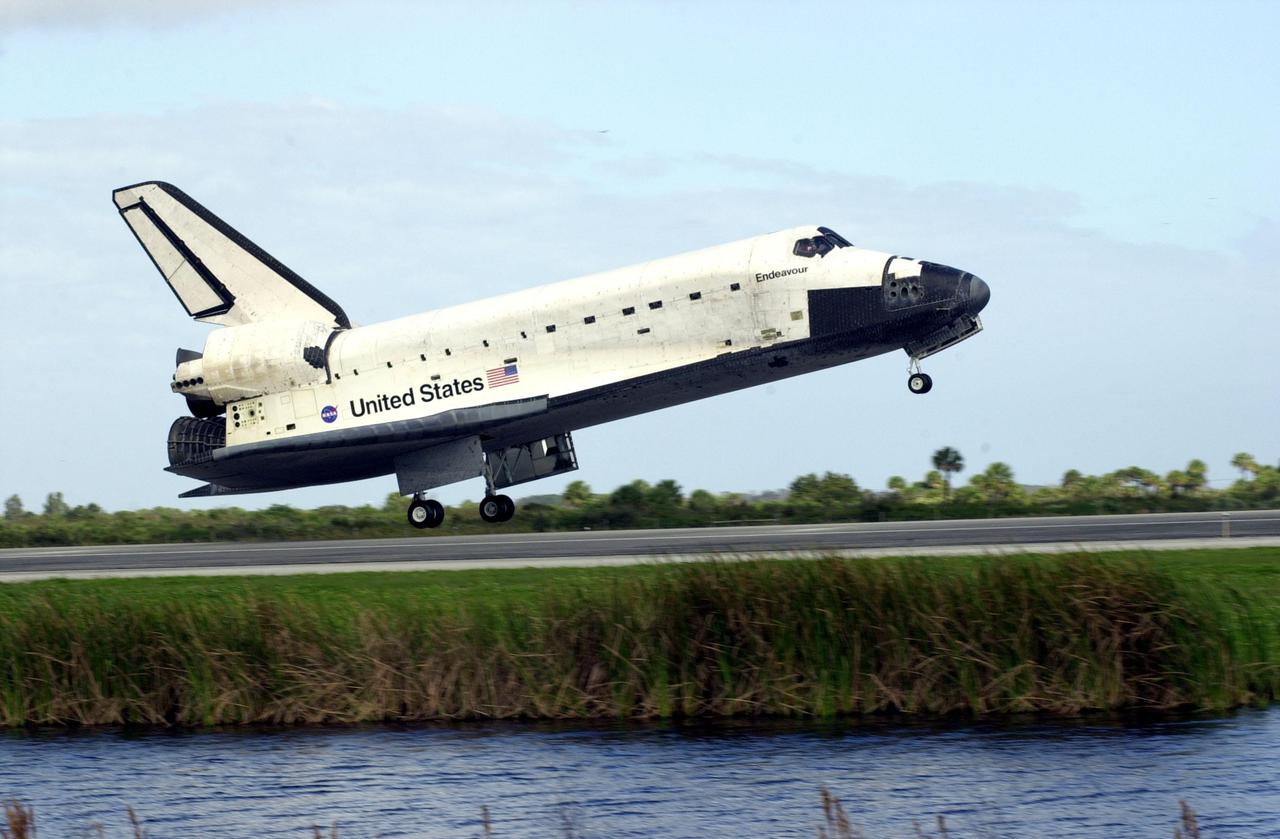
KENNEDY SPACE CENTER, FLA. -- Orbiter Endeavour approaches touchdown on Runway 15 at the KSC Shuttle Landing Facility, completing mission STS-108. After a mission-elapsed time of 11 days, 19 hours and 35 minutes, the landing is the 57th at KSC in the history of the program. Main gear touchdown occurred at 12:55:10 p.m. EST (17:55:10 GMT), nose gear touchdown at 12:55:23 p.m. (17:55:23 GMT) , wheel stop at 12:56:13 p.m. (17:56:13 GMT). STS-108 was the 12th mission to the International Space Station. This mission was the 107th flight in the Shuttle program and the 17th flight for the orbiter. Endeavour carries both the mission crew and the Expedition 3 crew - Commander Frank Culbertson and cosmonauts Vladimir Dezhurov and Mikhail Tyurin - who are returning to Earth after 129 days in space on the Space Station
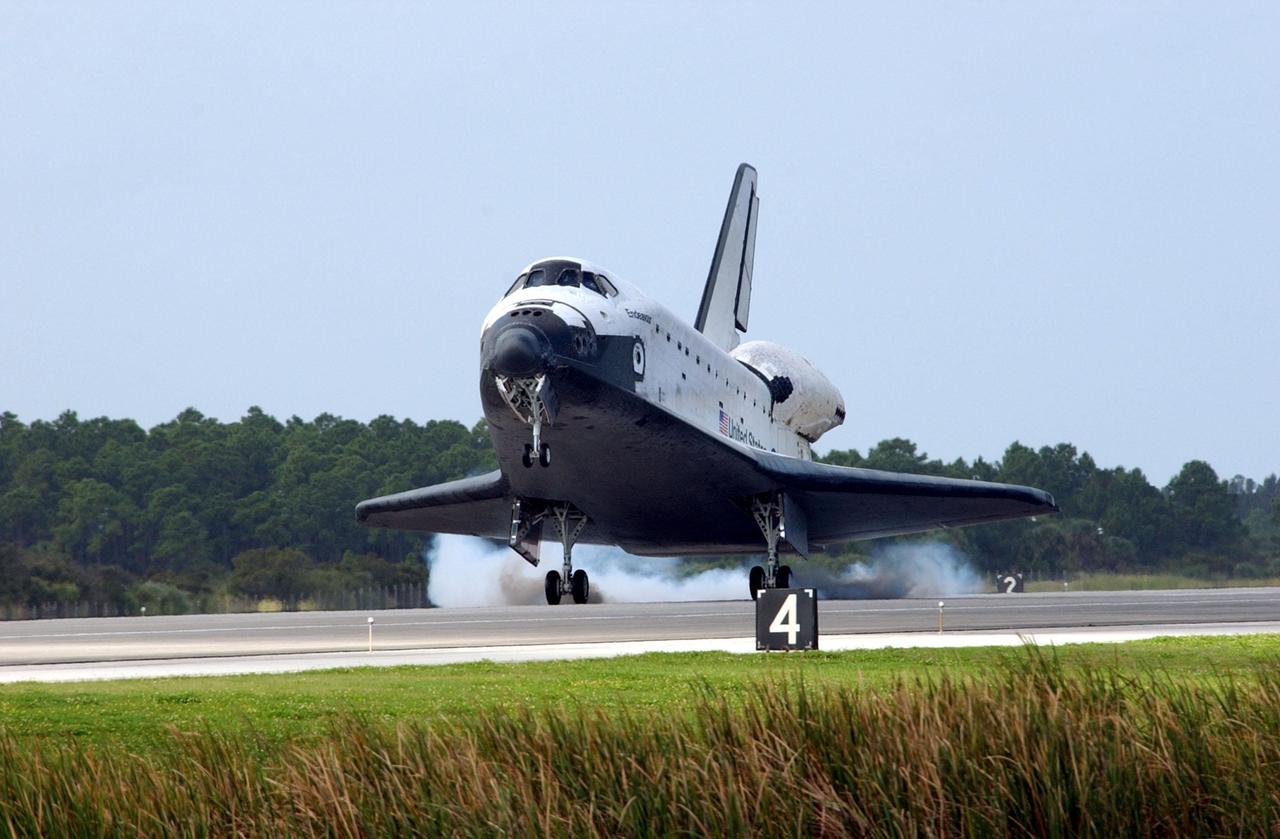
KENNEDY SPACE CENTER, FLA. - Orbiter Endeavour kicks up dust as it touches down on Runway 15 at the KSC Shuttle Landing Facility, completing mission STS-108. After a mission-elapsed time of 11 days, 19 hours and 35 minutes, the landing is the 57th at KSC in the history of the program. Main gear touchdown occurred at 12:55:10 p.m. EST (17:55:10 GMT), nose gear touchdown at 12:55:23 p.m. (17:55:23 GMT) , wheel stop at 12:56:13 p.m. (17:56:13 GMT). STS-108 was the 12th mission to the International Space Station. This mission was the 107th flight in the Shuttle program and the 17th flight for the orbiter. Endeavour carries both the mission crew and the Expedition 3 crew - Commander Frank Culbertson and cosmonauts Vladimir Dezhurov and Mikhail Tyurin - who are returning to Earth after 129 days in space on the Space Station
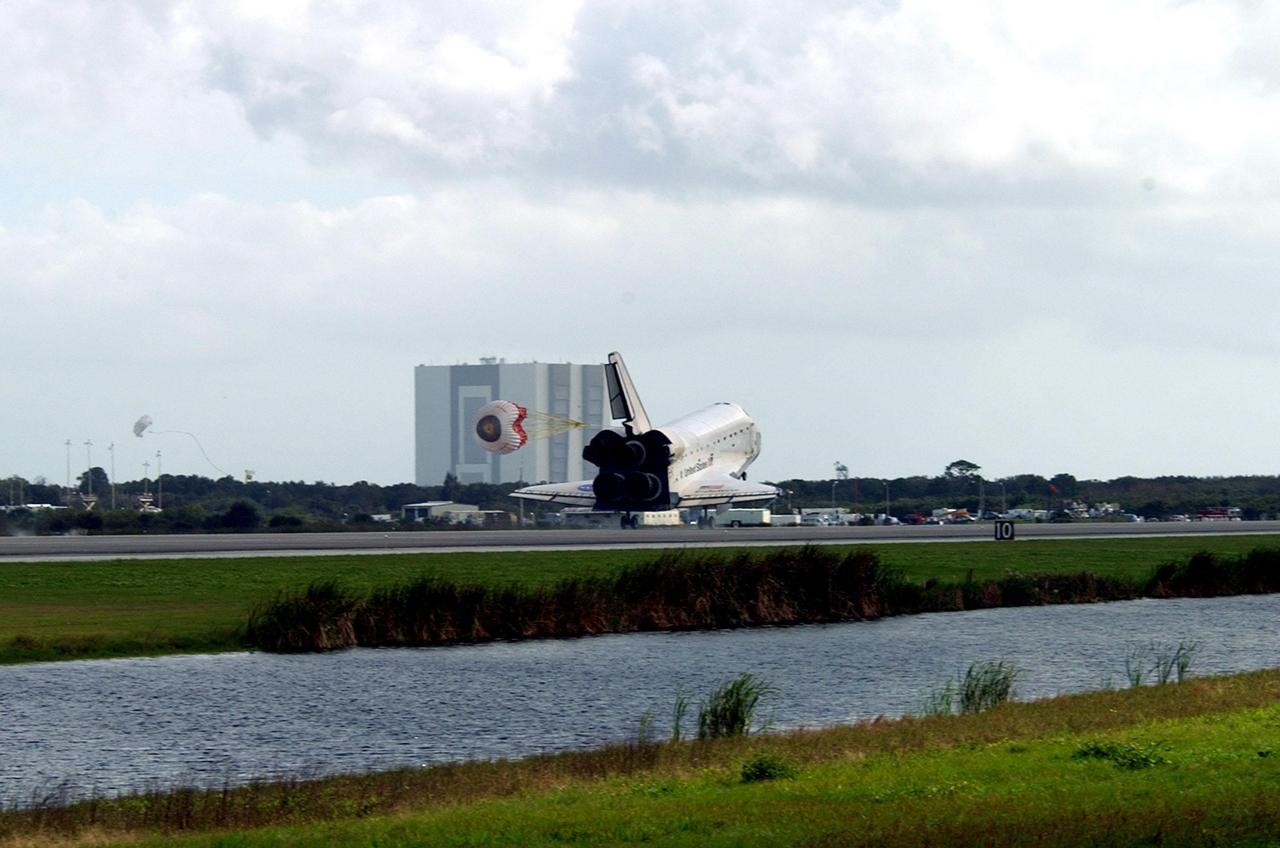
KENNEDY SPACE CENTER, FLA. -- Endeavour's drag chute is deployed as the orbiter touches down on Runway 15 at the KSC Shuttle Landing Facility, completing mission STS-108. After a mission-elapsed time of 11 days, 19 hours and 35 minutes, the landing is the 57th at KSC in the history of the program. Main gear touchdown occurred at 12:55:10 p.m. EST (17:55:10 GMT), nose gear touchdown at 12:55:23 p.m. (17:55:23 GMT) , wheel stop at 12:56:13 p.m. (17:56:13 GMT). STS-108 was the 12th mission to the International Space Station. This mission was the 107th flight in the Shuttle program and the 17th flight for the orbiter. Endeavour carries both the mission crew and the Expedition 3 crew - Commander Frank Culbertson and cosmonauts Vladimir Dezhurov and Mikhail Tyurin - who are returning to Earth after 129 days in space on the Space Station
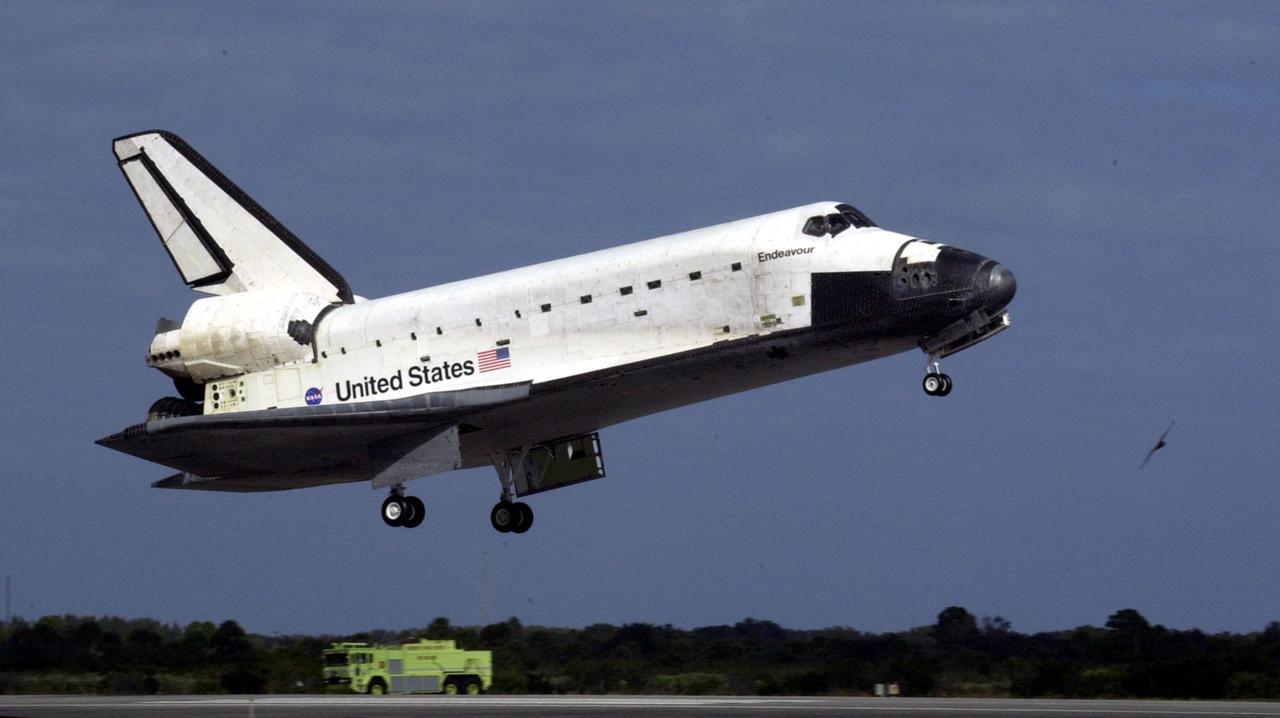
KENNEDY SPACE CENTER, FLA. -- A safety vehicle waits near Runway 15 at the Shuttle Landing Facility as orbiter Endeavour approaches for a landing, completing mission STS-108 after a mission-elapsed time of 11 days, 19 hours and 35 minutes. The landing is the 57th at KSC in the history of the program. Main gear touchdown occurred at 12:55:10 p.m. EST (17:55:10 GMT), nose gear touchdown at 12:55:23 p.m. (17:55:23 GMT) , wheel stop at 12:56:13 p.m. (17:56:13 GMT). STS-108 was the 12th mission to the International Space Station. This mission was the 107th flight in the Shuttle program and the 17th flight for the orbiter. Endeavour carries both the mission crew and the Expedition 3 crew - Commander Frank Culbertson and cosmonauts Vladimir Dezhurov and Mikhail Tyurin - who are returning to Earth after 129 days in space on the Space Station
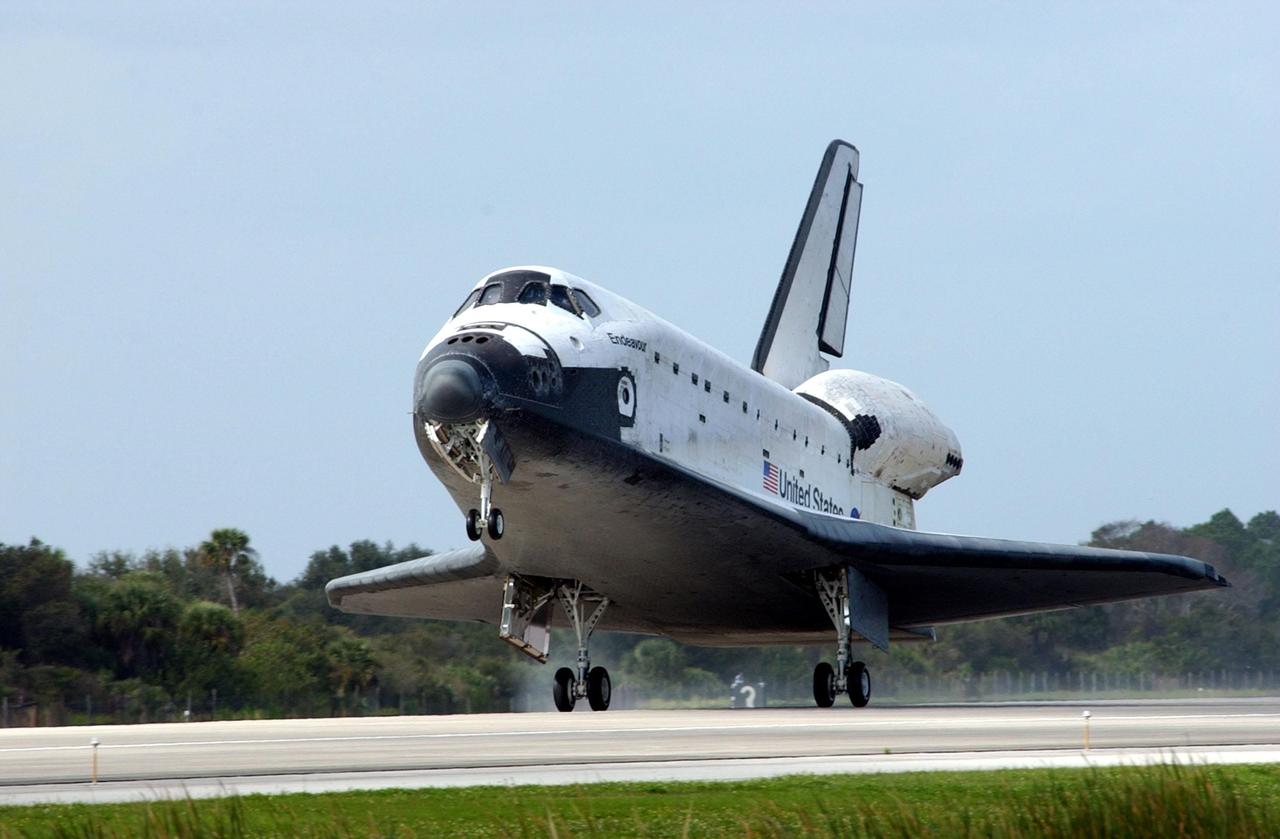
KENNEDY SPACE CENTER, FLA. -- Orbiter Endeavour touches down on Runway 15 at the KSC Shuttle Landing Facility, completing mission STS-108. After a mission-elapsed time of 11 days, 19 hours and 35 minutes, the landing is the 57th at KSC in the history of the program. Main gear touchdown occurred at 12:55:10 p.m. EST (17:55:10 GMT), nose gear touchdown at 12:55:23 p.m. (17:55:23 GMT) , wheel stop at 12:56:13 p.m. (17:56:13 GMT). STS-108 was the 12th mission to the International Space Station. This mission was the 107th flight in the Shuttle program and the 17th flight for the orbiter. Endeavour carries both the mission crew and the Expedition 3 crew - Commander Frank Culbertson and cosmonauts Vladimir Dezhurov and Mikhail Tyurin - who are returning to Earth after 129 days in space on the Space Station
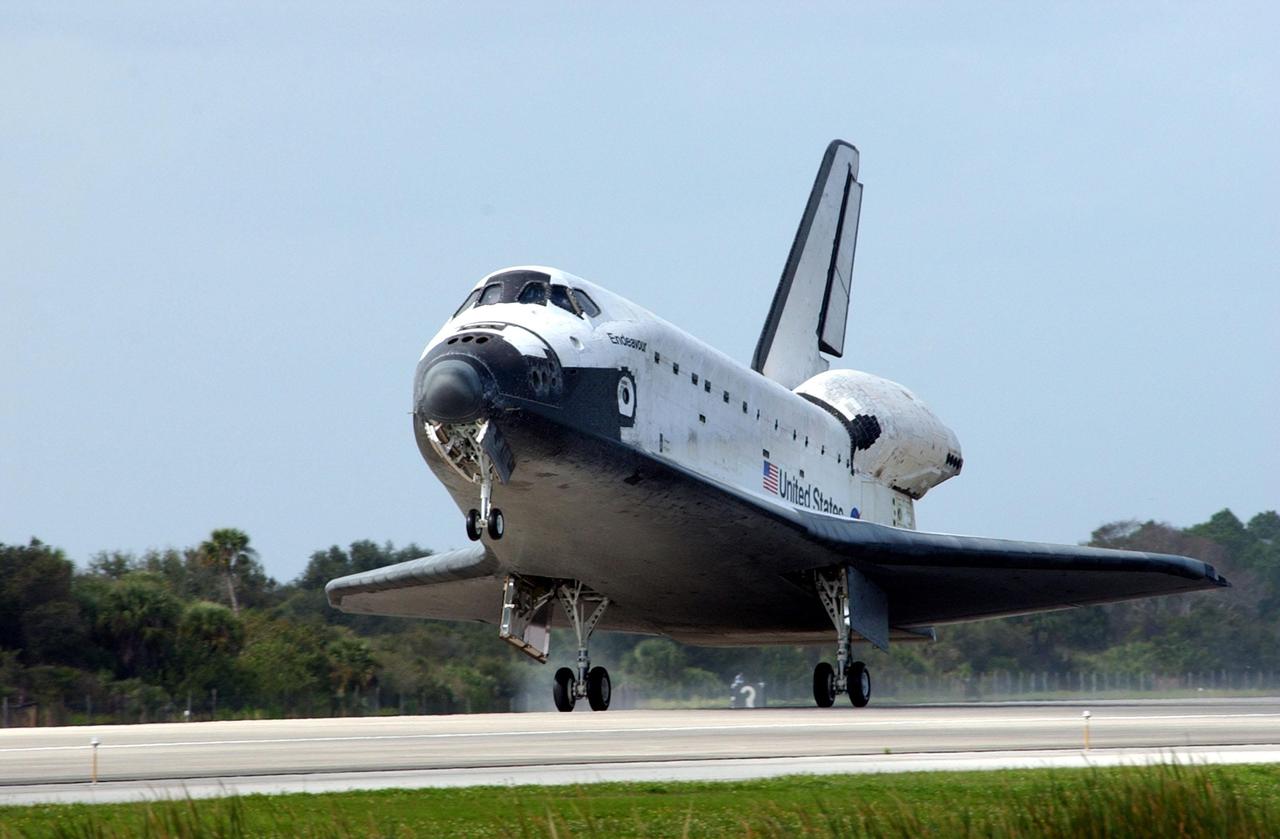
KENNEDY SPACE CENTER, FLA. -- Orbiter Endeavour touches down on Runway 15 at the KSC Shuttle Landing Facility, completing mission STS-108. After a mission-elapsed time of 11 days, 19 hours and 35 minutes, the landing is the 57th at KSC in the history of the program. Main gear touchdown occurred at 12:55:10 p.m. EST (17:55:10 GMT), nose gear touchdown at 12:55:23 p.m. (17:55:23 GMT) , wheel stop at 12:56:13 p.m. (17:56:13 GMT). STS-108 was the 12th mission to the International Space Station. This mission was the 107th flight in the Shuttle program and the 17th flight for the orbiter. Endeavour carries both the mission crew and the Expedition 3 crew - Commander Frank Culbertson and cosmonauts Vladimir Dezhurov and Mikhail Tyurin - who are returning to Earth after 129 days in space on the Space Station
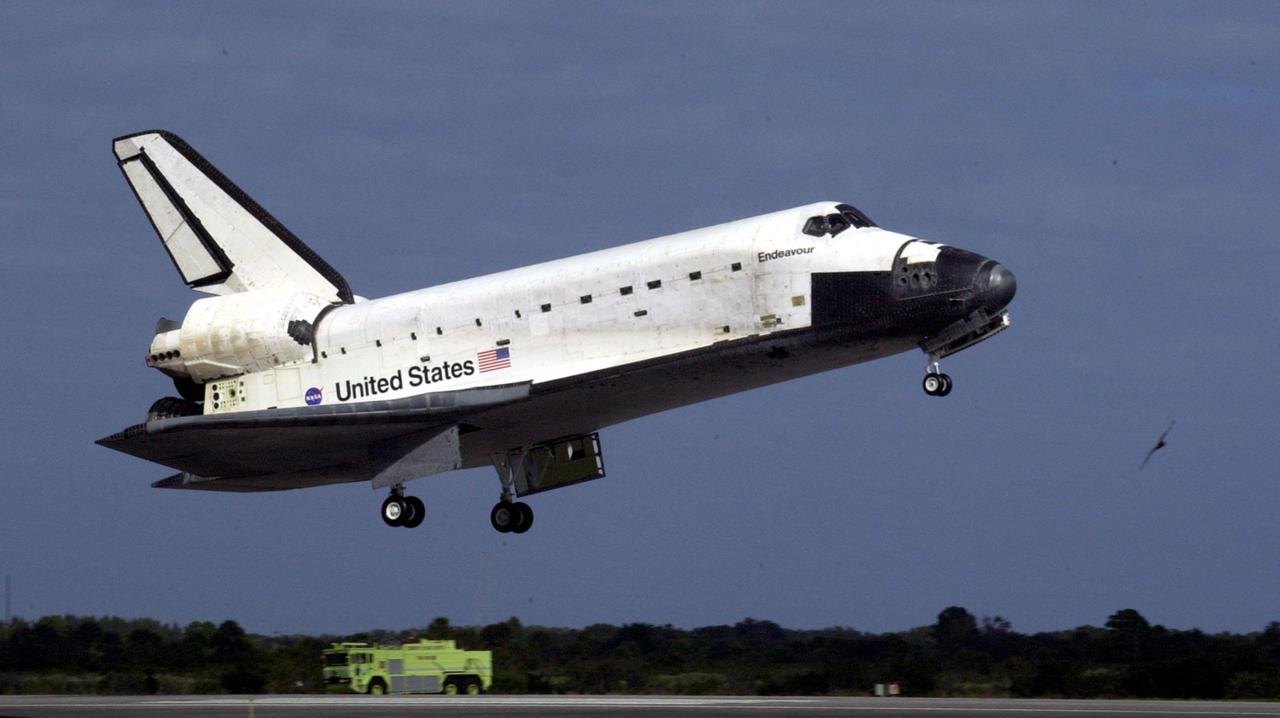
KENNEDY SPACE CENTER, FLA. -- A safety vehicle waits near Runway 15 at the Shuttle Landing Facility as orbiter Endeavour approaches for a landing, completing mission STS-108 after a mission-elapsed time of 11 days, 19 hours and 35 minutes. The landing is the 57th at KSC in the history of the program. Main gear touchdown occurred at 12:55:10 p.m. EST (17:55:10 GMT), nose gear touchdown at 12:55:23 p.m. (17:55:23 GMT) , wheel stop at 12:56:13 p.m. (17:56:13 GMT). STS-108 was the 12th mission to the International Space Station. This mission was the 107th flight in the Shuttle program and the 17th flight for the orbiter. Endeavour carries both the mission crew and the Expedition 3 crew - Commander Frank Culbertson and cosmonauts Vladimir Dezhurov and Mikhail Tyurin - who are returning to Earth after 129 days in space on the Space Station
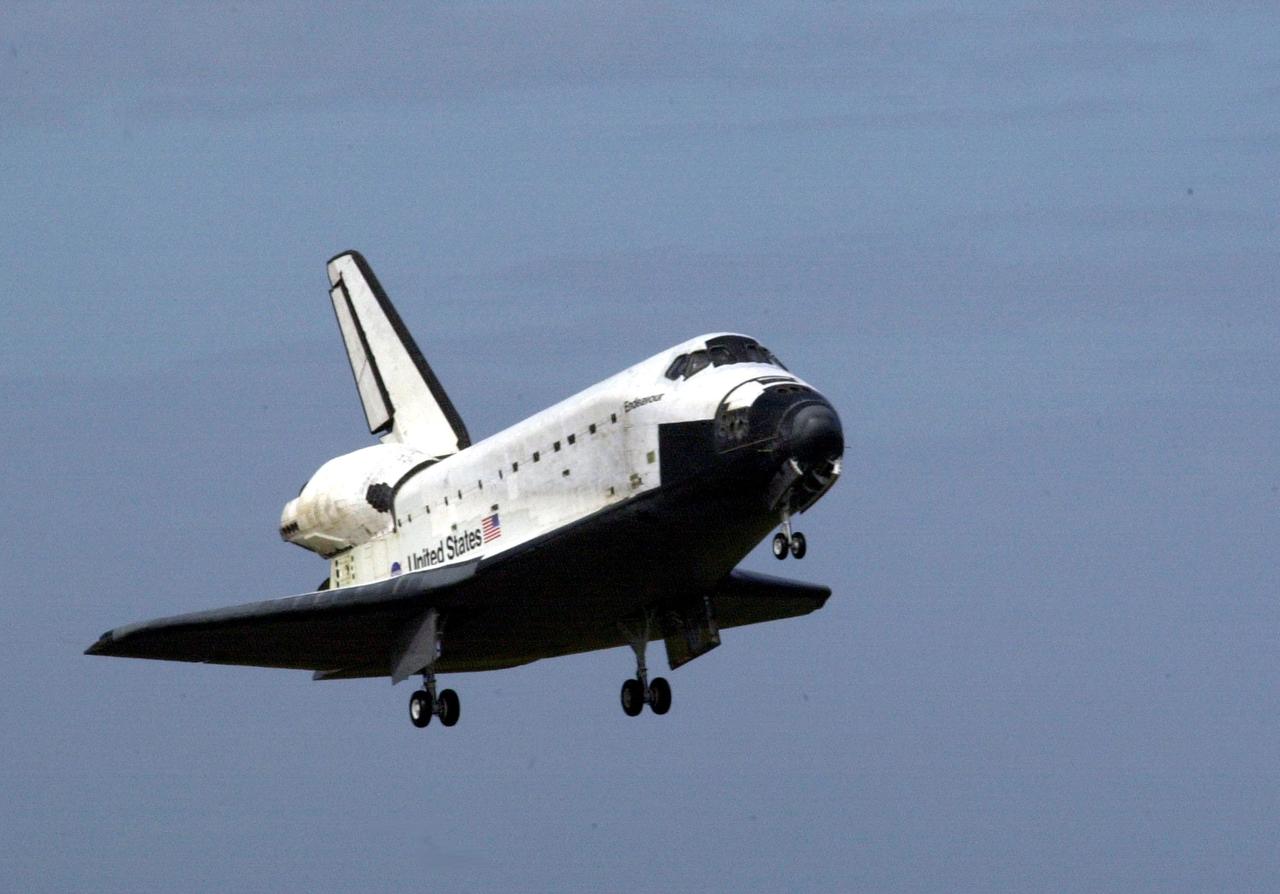
KENNEDY SPACE CENTER, FLA. -- Orbiter Endeavour glides smoothly through the air towards touchdown on Runway 15 at the KSC Shuttle Landing Facility, completing mission STS-108. After a mission-elapsed time of 11 days, 19 hours and 35 minutes, the landing is the 57th at KSC in the history of the program. Main gear touchdown occurred at 12:55:10 p.m. EST (17:55:10 GMT), nose gear touchdown at 12:55:23 p.m. (17:55:23 GMT) , wheel stop at 12:56:13 p.m. (17:56:13 GMT). STS-108 was the 12th mission to the International Space Station. This mission was the 107th flight in the Shuttle program and the 17th flight for the orbiter. Endeavour carries both the mission crew and the Expedition 3 crew - Commander Frank Culbertson and cosmonauts Vladimir Dezhurov and Mikhail Tyurin - who are returning to Earth after 129 days in space on the Space Station
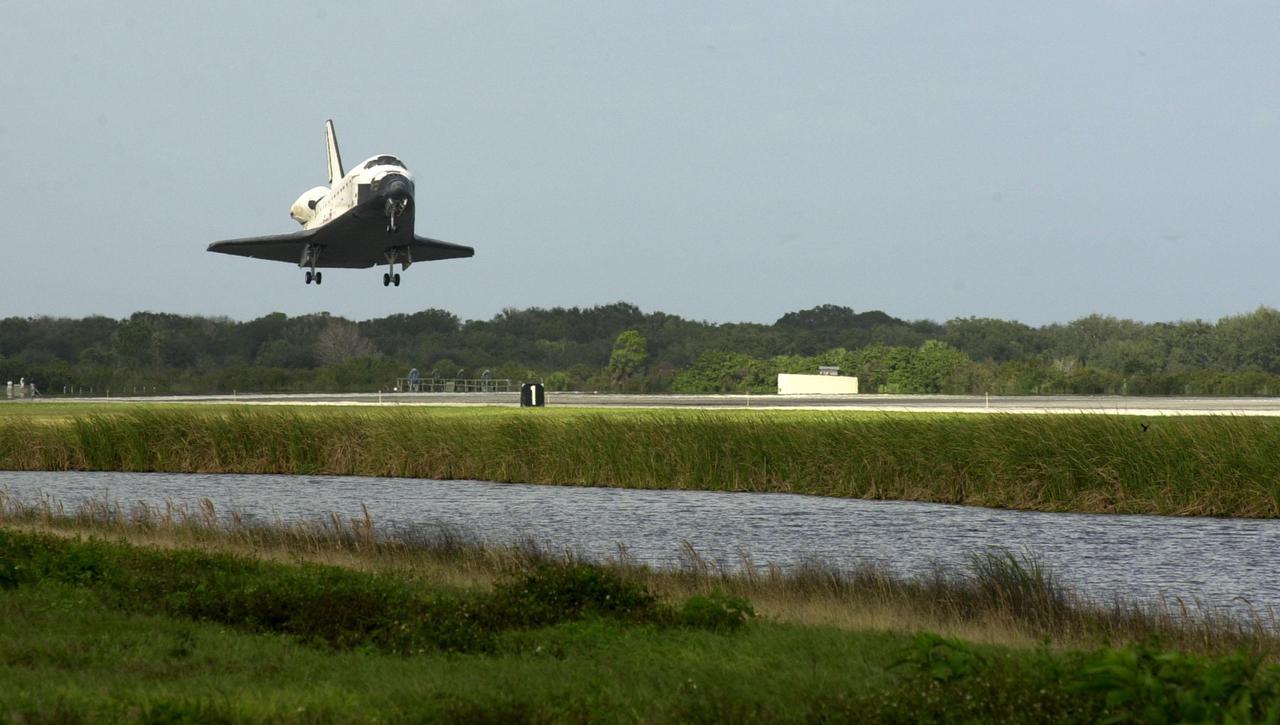
KENNEDY SPACE CENTER, FLA. -- Orbiter Endeavour glides toward touchdown on Runway 15 at the KSC Shuttle Landing Facility, completing mission STS-108. After a mission-elapsed time of 11 days, 19 hours and 35 minutes, the landing is the 57th at KSC in the history of the program. Main gear touchdown occurred at 12:55:10 p.m. EST (17:55:10 GMT), nose gear touchdown at 12:55:23 p.m. (17:55:23 GMT) , wheel stop at 12:56:13 p.m. (17:56:13 GMT). STS-108 was the 12th mission to the International Space Station. This mission was the 107th flight in the Shuttle program and the 17th flight for the orbiter. Endeavour carries both the mission crew and the Expedition 3 crew - Commander Frank Culbertson and cosmonauts Vladimir Dezhurov and Mikhail Tyurin - who are returning to Earth after 129 days in space on the Space Station
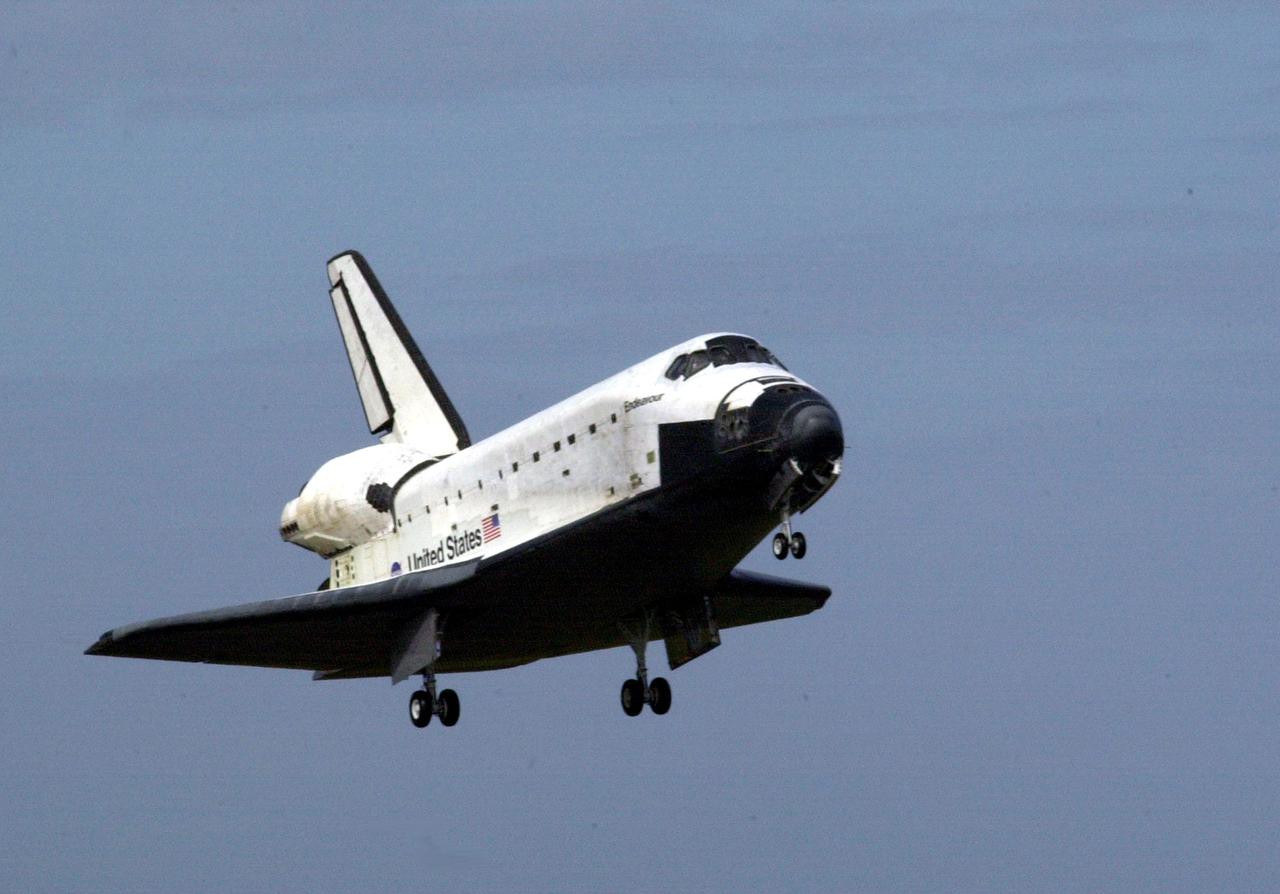
KENNEDY SPACE CENTER, FLA. -- Orbiter Endeavour glides smoothly through the air towards touchdown on Runway 15 at the KSC Shuttle Landing Facility, completing mission STS-108. After a mission-elapsed time of 11 days, 19 hours and 35 minutes, the landing is the 57th at KSC in the history of the program. Main gear touchdown occurred at 12:55:10 p.m. EST (17:55:10 GMT), nose gear touchdown at 12:55:23 p.m. (17:55:23 GMT) , wheel stop at 12:56:13 p.m. (17:56:13 GMT). STS-108 was the 12th mission to the International Space Station. This mission was the 107th flight in the Shuttle program and the 17th flight for the orbiter. Endeavour carries both the mission crew and the Expedition 3 crew - Commander Frank Culbertson and cosmonauts Vladimir Dezhurov and Mikhail Tyurin - who are returning to Earth after 129 days in space on the Space Station
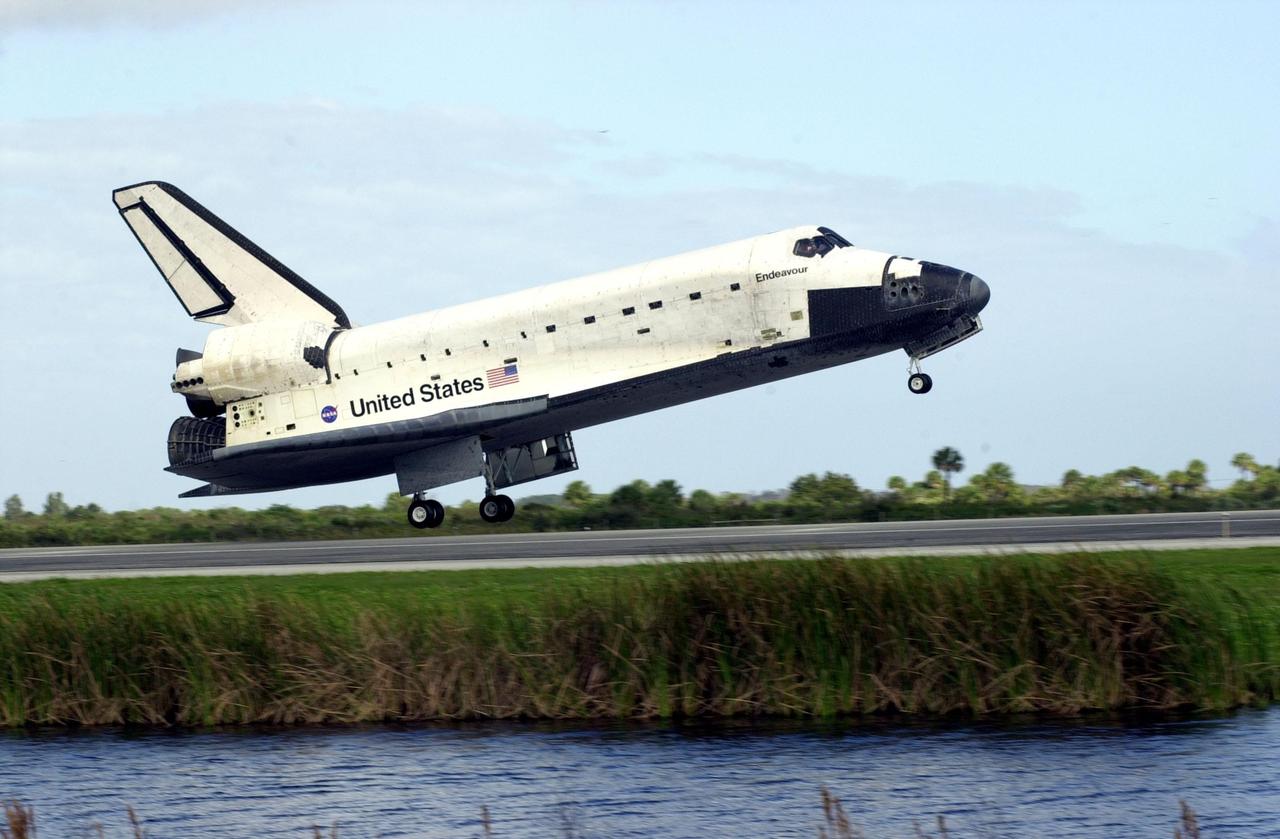
KENNEDY SPACE CENTER, FLA. -- Orbiter Endeavour approaches touchdown on Runway 15 at the KSC Shuttle Landing Facility, completing mission STS-108. After a mission-elapsed time of 11 days, 19 hours and 35 minutes, the landing is the 57th at KSC in the history of the program. Main gear touchdown occurred at 12:55:10 p.m. EST (17:55:10 GMT), nose gear touchdown at 12:55:23 p.m. (17:55:23 GMT) , wheel stop at 12:56:13 p.m. (17:56:13 GMT). STS-108 was the 12th mission to the International Space Station. This mission was the 107th flight in the Shuttle program and the 17th flight for the orbiter. Endeavour carries both the mission crew and the Expedition 3 crew - Commander Frank Culbertson and cosmonauts Vladimir Dezhurov and Mikhail Tyurin - who are returning to Earth after 129 days in space on the Space Station
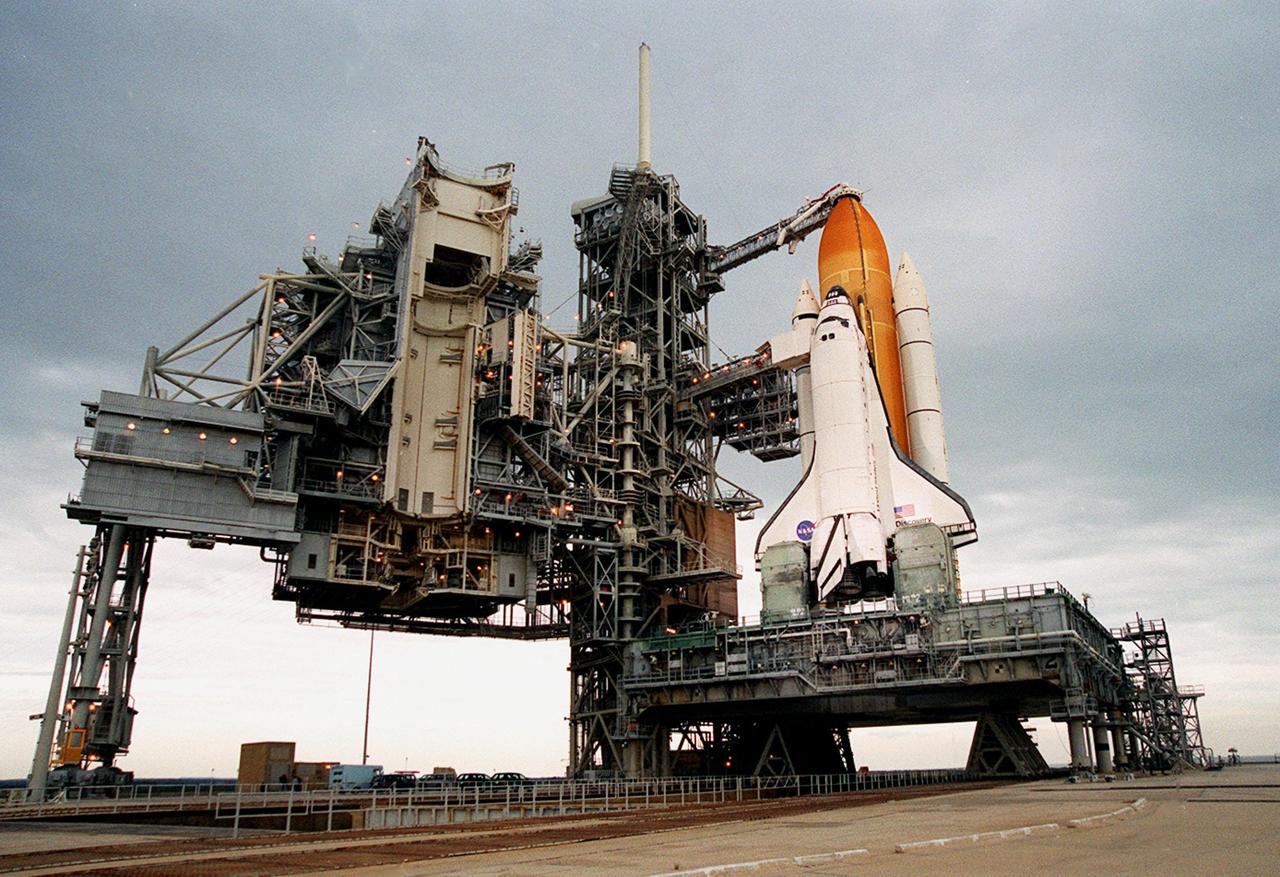
After rollback of the Rotating Service Structure at Launch Pad 39B (left) before dawn, the Space Shuttle Discovery is revealed poised for flight on mission STS-103. The rollback of the structure was complete at 4:46 a.m. EST. STS-103 is scheduled for launch Dec. 16 at 9:18 p.m. EST. The mission is expected to last about 9 days and 21 hours with a landing at KSC Sunday, Dec. 26, at 6:56 p.m. EST
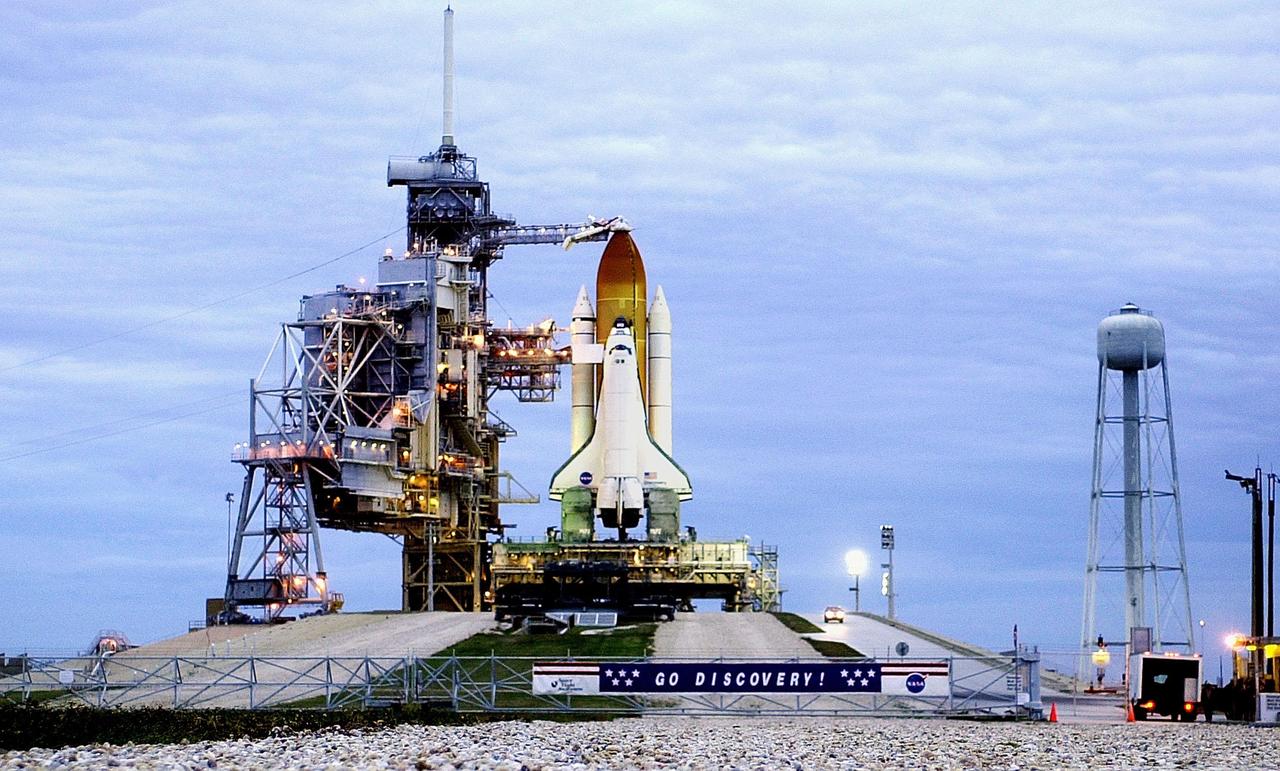
In the pre-dawn hours at Launch Pad 39B under a cloud-filled sky on the east coast of Florida, the Rotating Service Structure is rolled back to reveal the Space Shuttle Discovery poised for flight on mission STS-103. The rollback of the structure was complete at 4:46 a.m. EST. STS-103 is scheduled for launch Dec. 16 at 9:18 p.m. EST. The mission is expected to last about 9 days and 21 hours with a landing at KSC Sunday, Dec. 26, at 6:56 p.m. EST
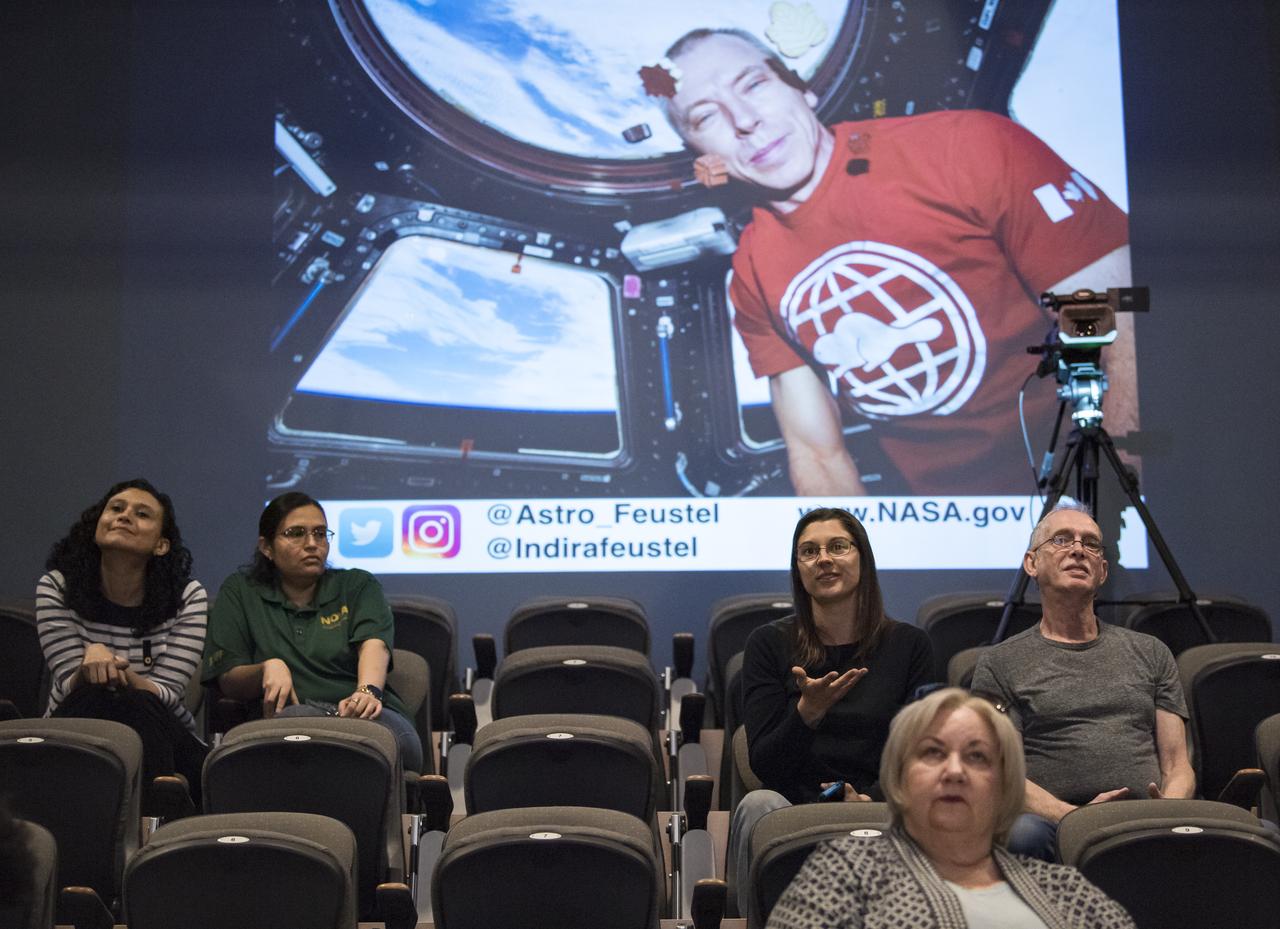
An audience member asks a question after NASA astronaut Drew Feustel gave a presentation about his experience on two shuttle missions, STS-125 and STS-134, as well as Expeditions 55 and 56 on the International Space Station, at Northern Virginia Community College's Alexandria campus, Monday, May 6, 2019 in Virginia. Photo Credit: (NASA/Aubrey Gemignani)
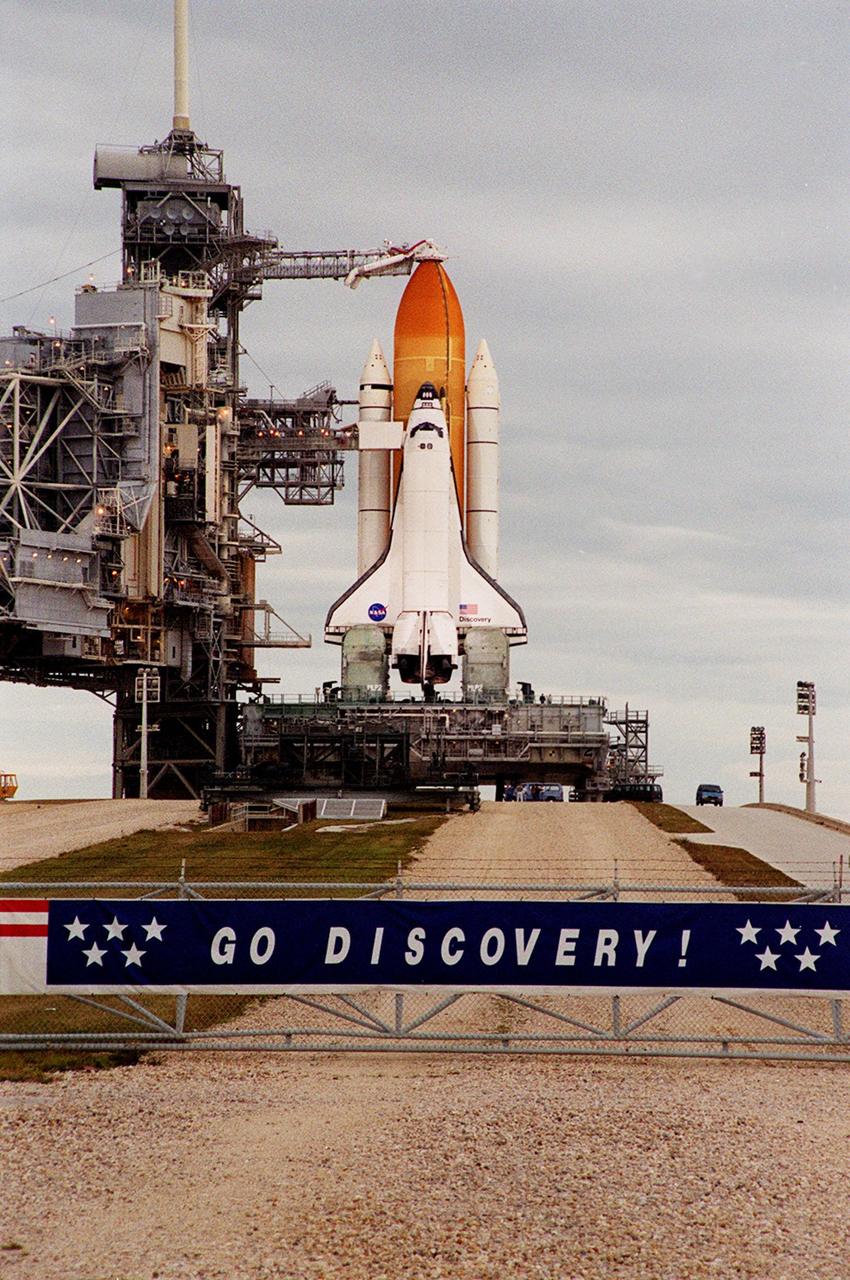
As dawn breaks at Launch Pad 39B on the east coast of Florida, the Space Shuttle Discovery is revealed poised for flight on mission STS-103. The rollback of the Rotating Service Structure (left) was complete at 4:46 a.m. EST. STS-103 is scheduled for launch Dec. 16 at 9:18 p.m. EST. The mission is expected to last about 9 days and 21 hours with a landing at KSC Sunday, Dec. 26, at 6:56 p.m. EST
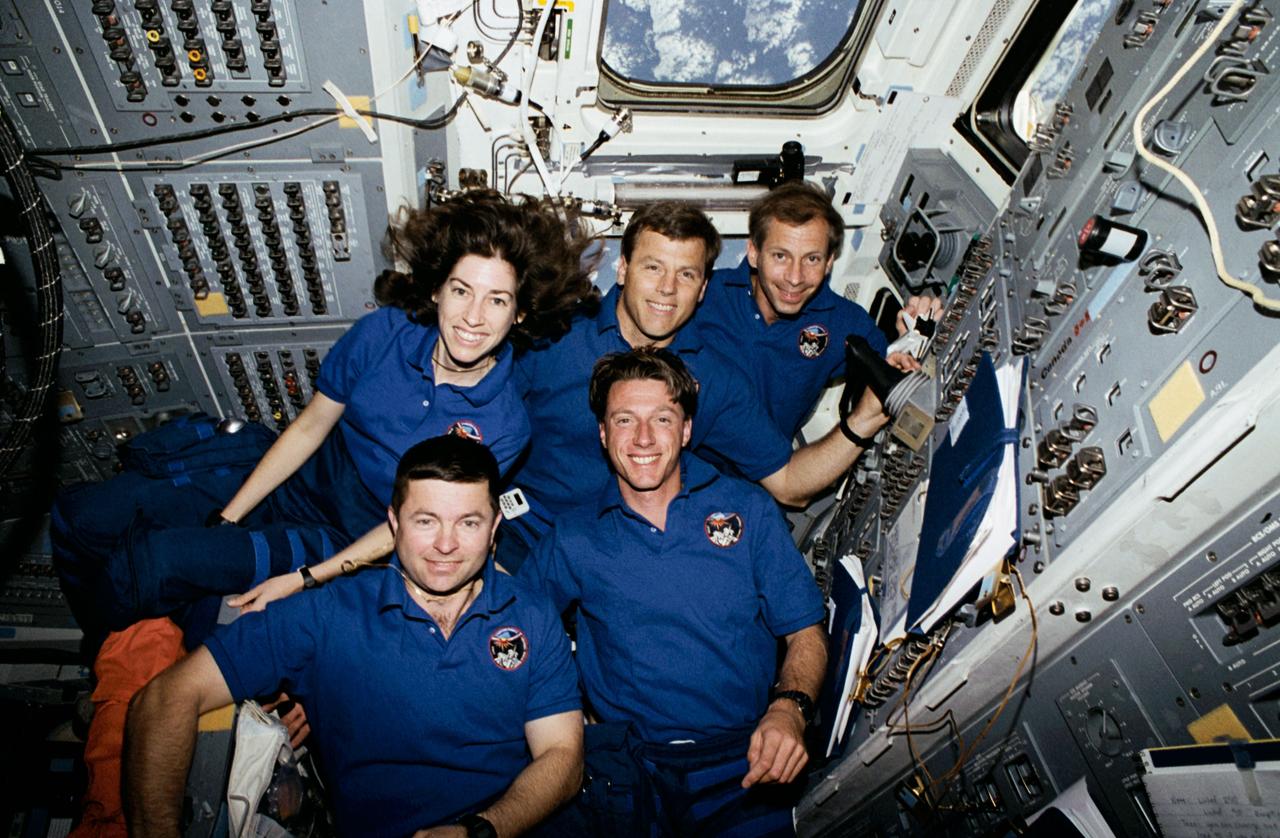
STS056-31-020 (8-17 April 1993) --- The five astronaut crew members assemble on the Space Shuttle Discovery's aft flight deck for the traditional inflight crew portrait. In front are astronauts Kenneth D. Cameron, mission commander; and C. Michael Foale, mission specialist. In back are (left to right) astronauts Ellen Ochoa, mission specialist; Stephen S. Oswald, pilot; and Kenneth D. Cockrell, mission specialist. The five went on to spend nine days in Earth-orbit in support of the Atlas-2 mission. A 35mm camera with a 20mm lens was used to expose this frame.
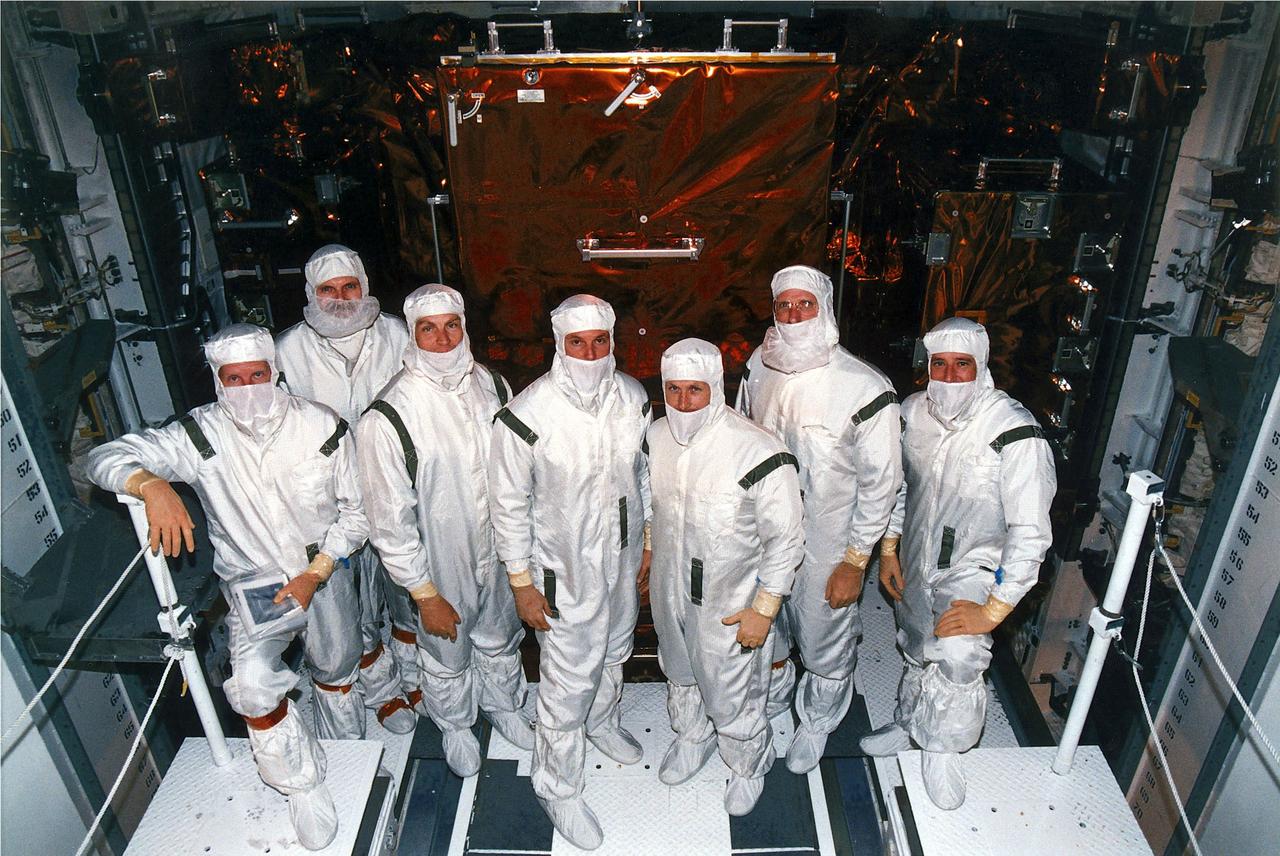
KENNEDY SPACE CENTER, FLA. - STS-82 crew members pose in their clean room suits at Launch Pad 39A where the Space Shuttle Discovery is undergoing final preparations for liftoff on the second Hubble Space Telescope (HST) servicing mission. They are making a final inspection of the payload before payload bay closure. From left are Mission Specialists Steven A. Hawley and Steven L. Smith, Payload Commander Mark C. Lee, Mission Specialist GregoryJ. Harbaugh, Mission Commander Kenneth D. Bowersox, Mission Specialist Joseph R. "Joe" Tanner and Pilot Scott J. "Doc" Horowitz. STS-82 is scheduled for liftoff on Feb. 11 during a 65-minute launch window that opens at 3:56 a.m. EST.
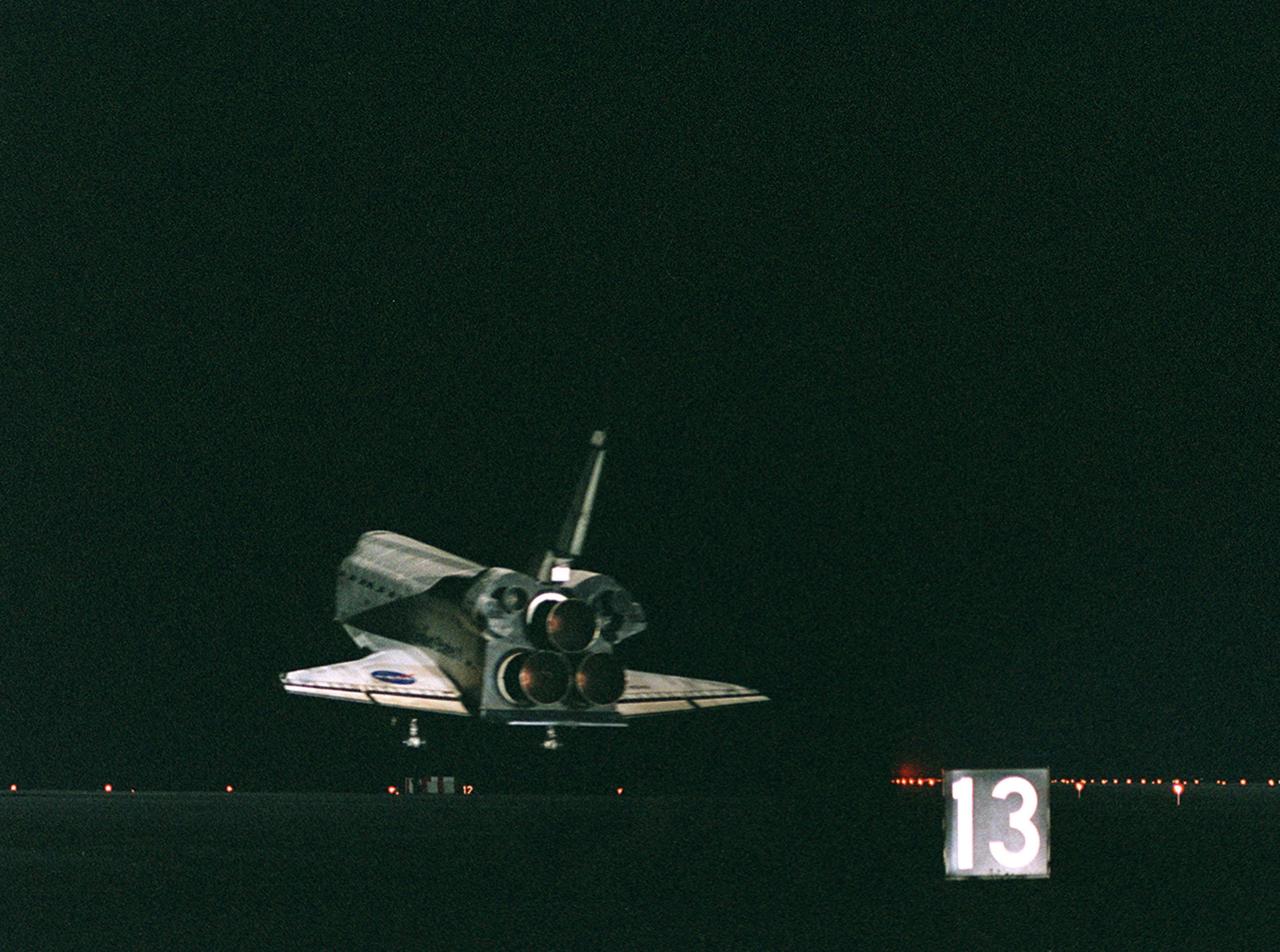
KENNEDY SPACE CENTER, Fla. -- The orbiter Atlantis nears touchdown on Runway 15 of the KSC Shuttle Landing Facility. Atlantis and crew traveled 4.9 million miles on the 11-day, 19-hour, 11-minute mission STS-106. Main gear touchdown occurred on-time at 3:56:48 a.m. EDT. During the mission to the International Space Station, the crew transferred nearly 5,000 pounds of equipment and supplies for use by the first resident crew expected to arrive in November. STS-106 was the 99th flight in the Shuttle program and the 22nd for Atlantis. STS-106 also marked the 15th nighttime landing in Shuttle history and the 23rd consecutive landing at KSC
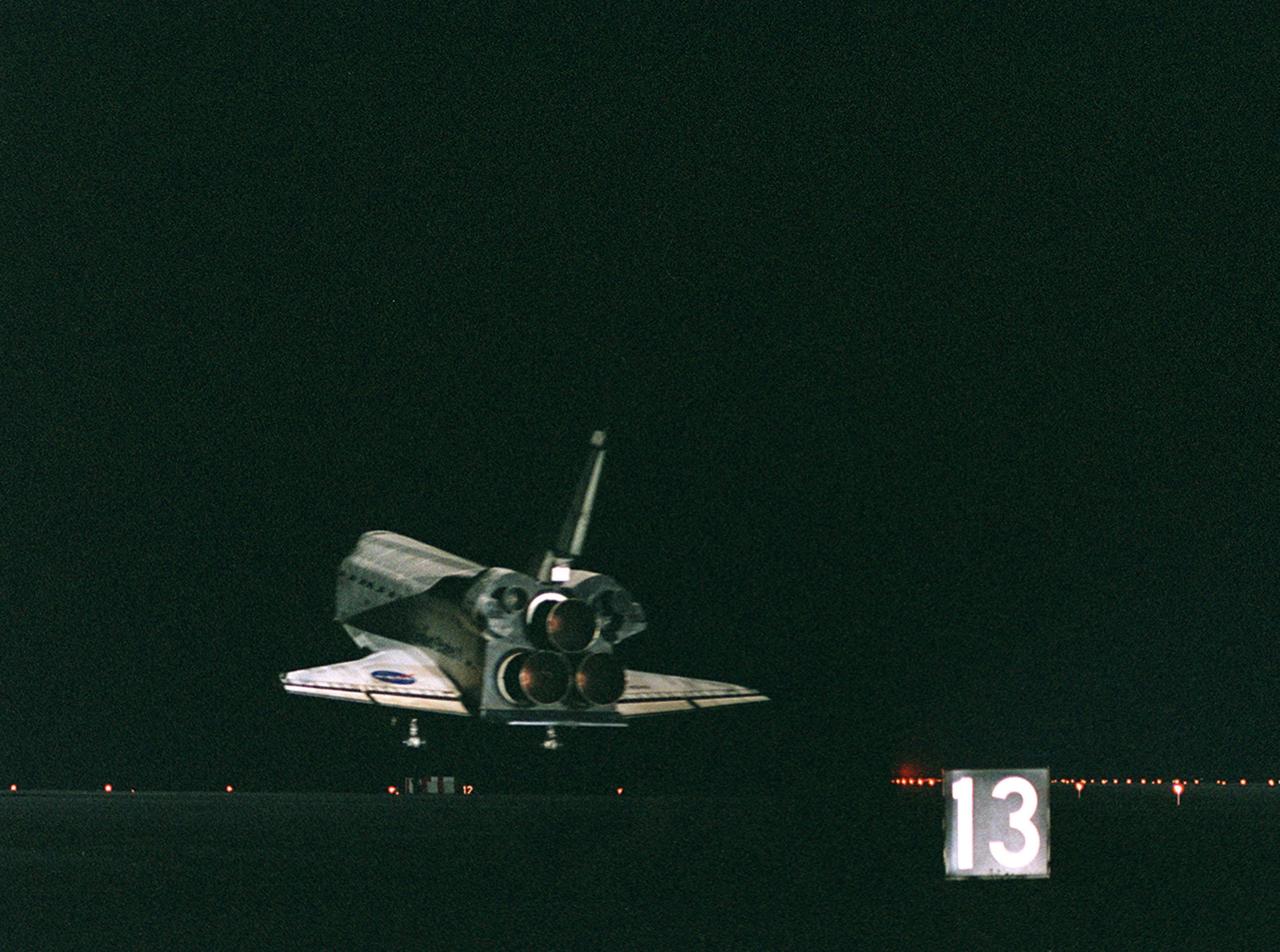
KENNEDY SPACE CENTER, Fla. -- The orbiter Atlantis nears touchdown on Runway 15 of the KSC Shuttle Landing Facility. Atlantis and crew traveled 4.9 million miles on the 11-day, 19-hour, 11-minute mission STS-106. Main gear touchdown occurred on-time at 3:56:48 a.m. EDT. During the mission to the International Space Station, the crew transferred nearly 5,000 pounds of equipment and supplies for use by the first resident crew expected to arrive in November. STS-106 was the 99th flight in the Shuttle program and the 22nd for Atlantis. STS-106 also marked the 15th nighttime landing in Shuttle history and the 23rd consecutive landing at KSC

jsc2018e004965 (February 7, 2018) --- Expedition 56-57 crew member Serena Auñón-Chancellor of NASA trains inside the Space Station Airlock Test Article wearing an Extravehicular Mobility Unit, or U.S. spacesuit.
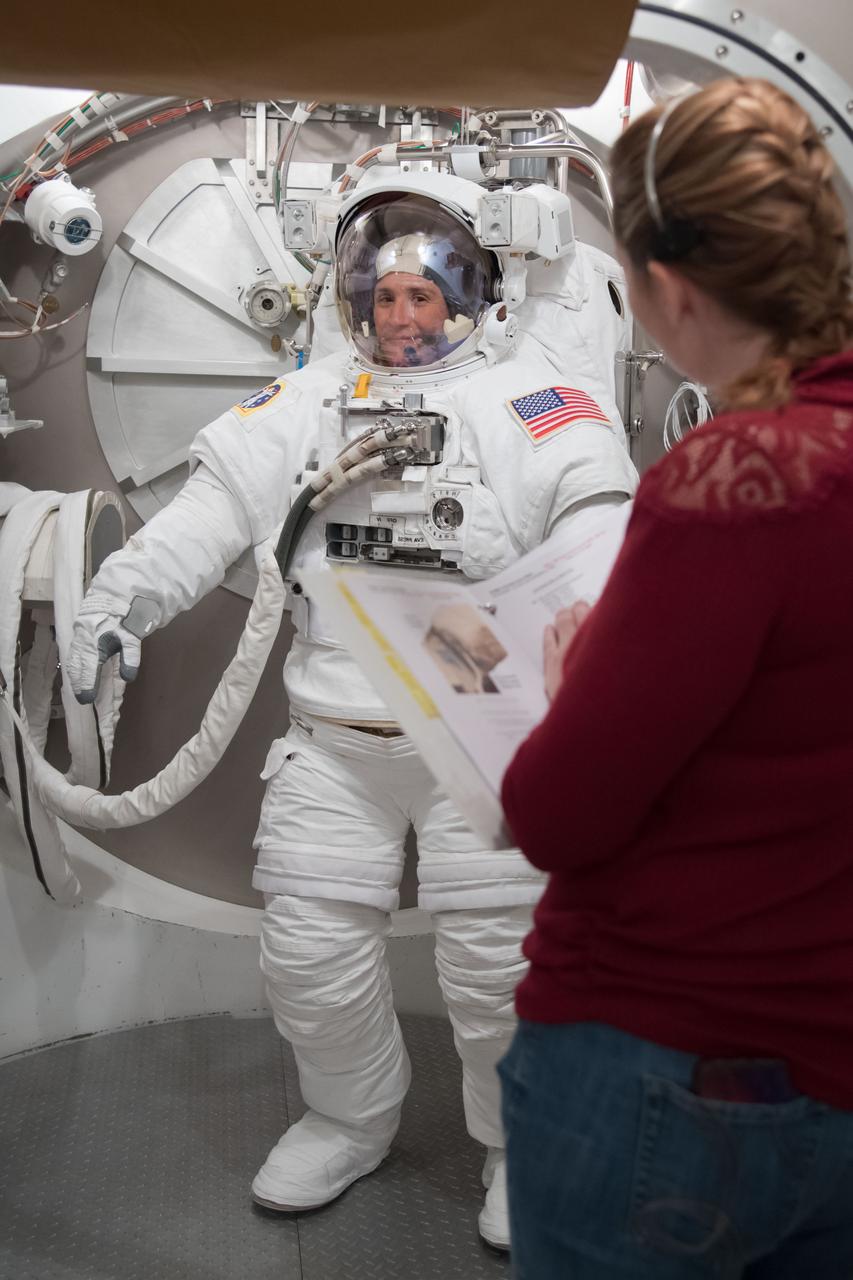
jsc2018e004976 (February 7, 2018) --- Expedition 56-57 crew member Serena Auñón-Chancellor of NASA trains inside the Space Station Airlock Test Article wearing an Extravehicular Mobility Unit, or U.S. spacesuit.
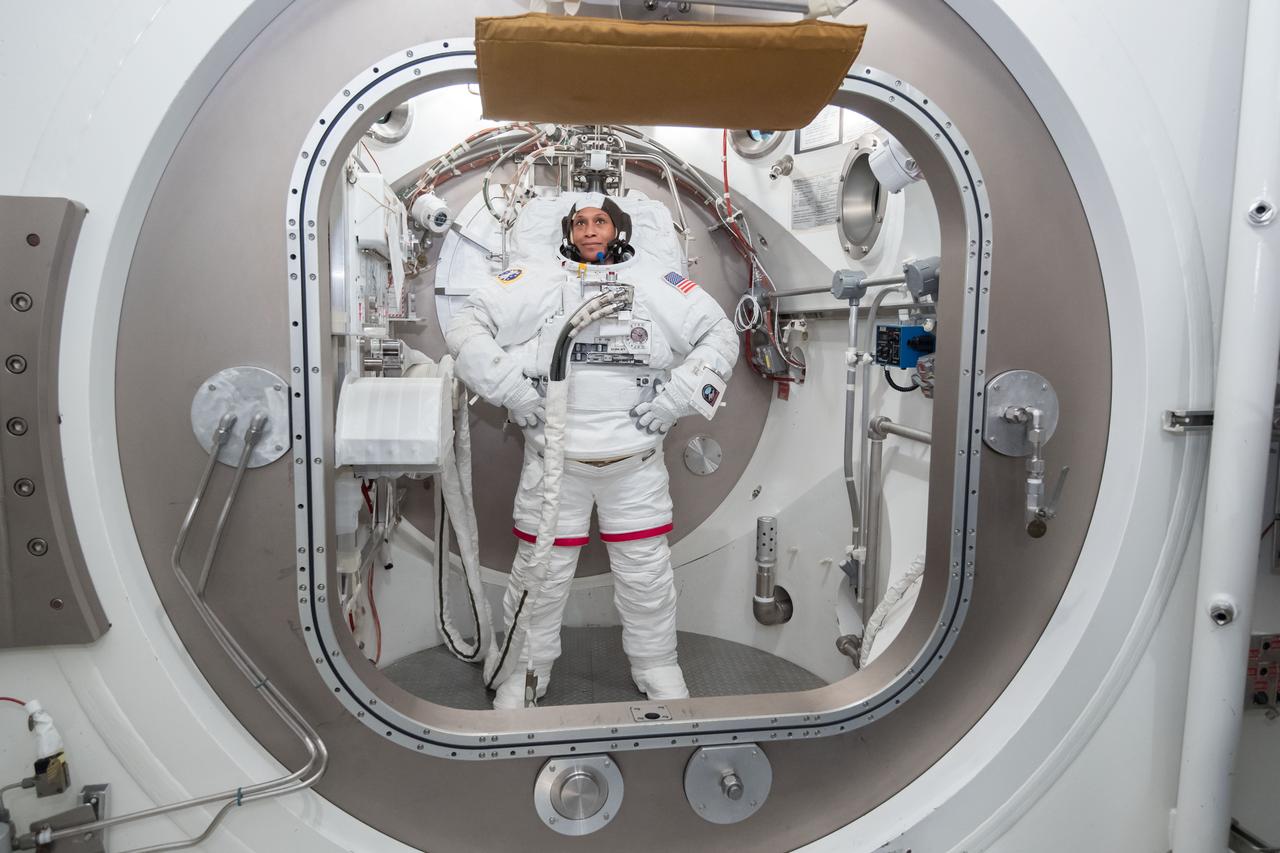
jsc2017e126052 (Oct. 17, 2017) --- NASA astronaut Jeanette Epps trains in a U.S. spacesuit at NASA's Johnson Space Center.
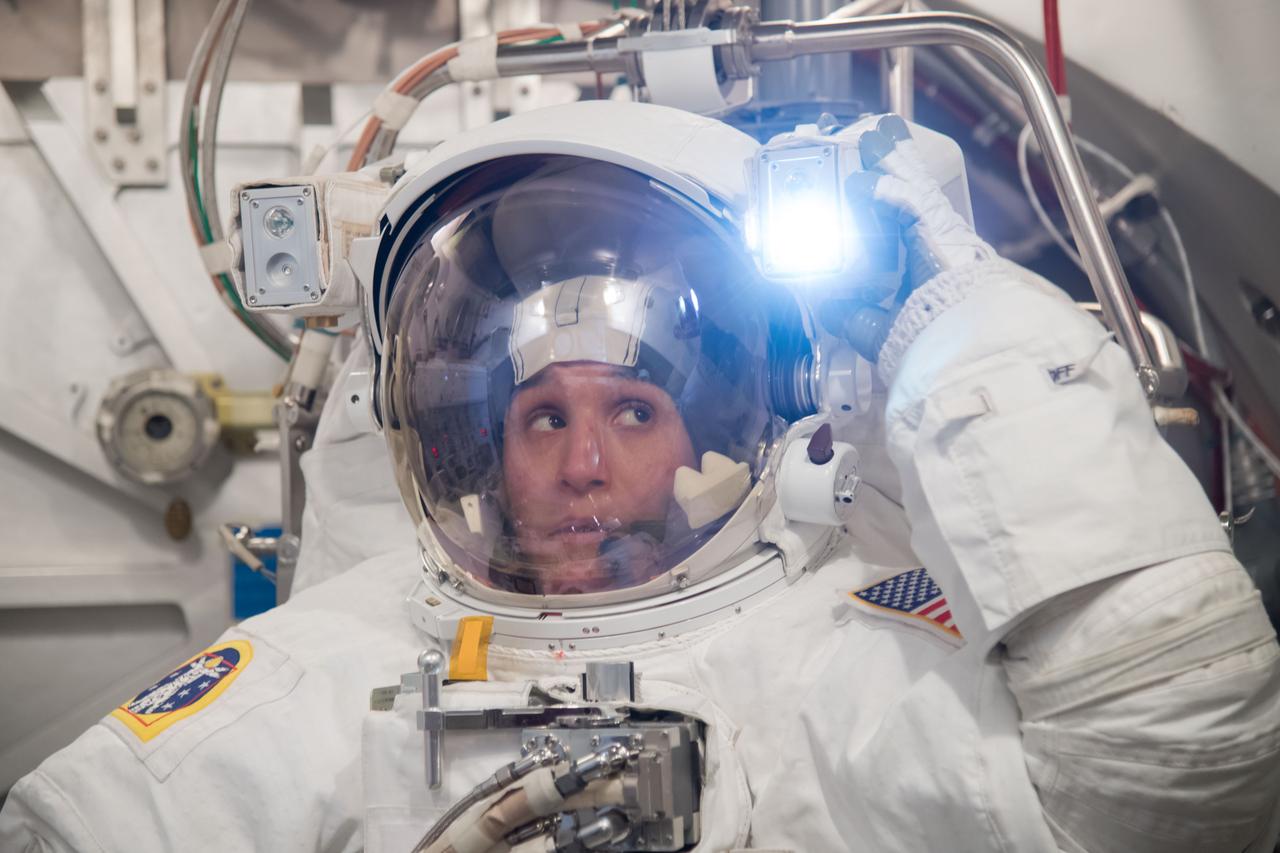
jsc2018e004977 (February 7, 2018) --- Expedition 56-57 crew member Serena Auñón-Chancellor of NASA trains inside the Space Station Airlock Test Article wearing an Extravehicular Mobility Unit, or U.S. spacesuit.