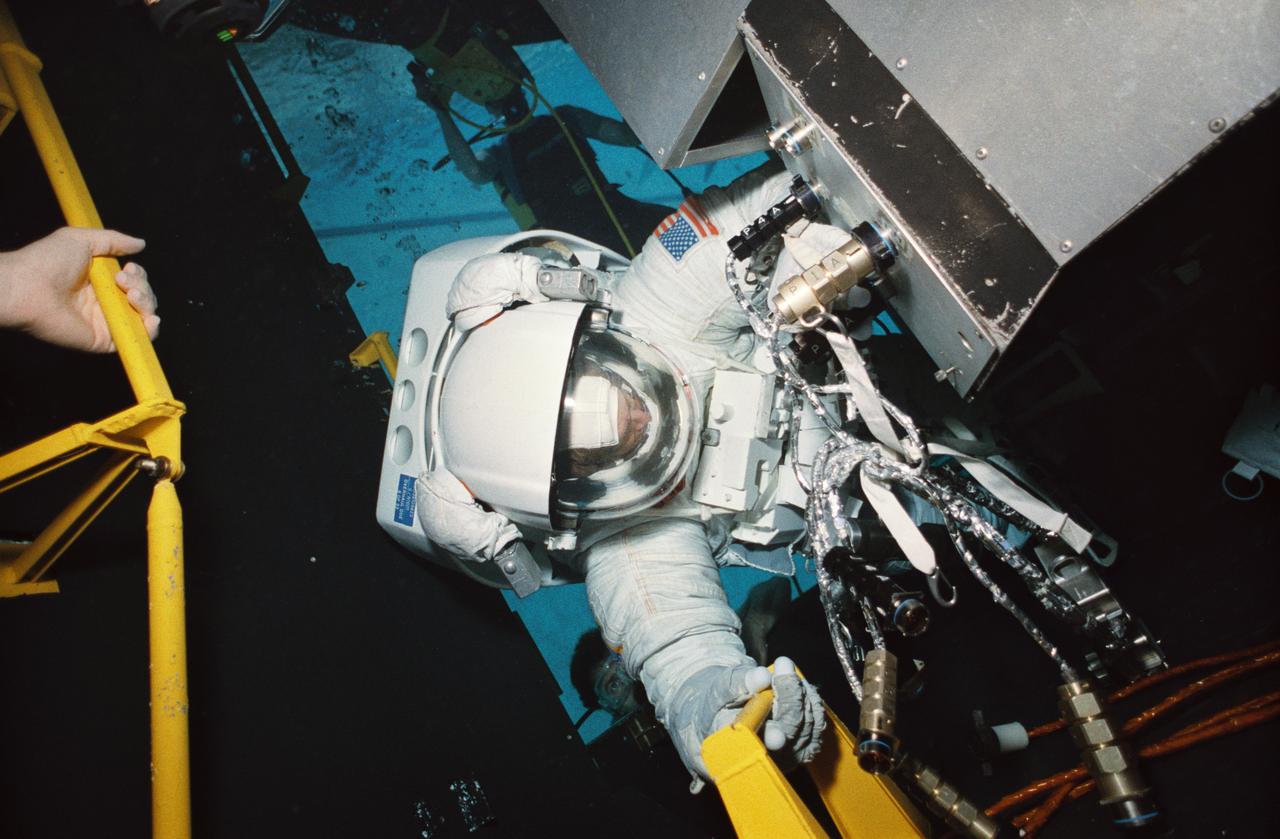
S93-33104 (7 Apr 1993) --- Wearing a training version of Space Shuttle Extravehicular Mobility Unit (EMU), astronaut Jeffrey A. Hoffman uses the giant pool of the Johnson Space Center's (JSC) Weightless Environment Training Facility (WET-F) to rehearse for the Hubble Space Telescope (HST) repair mission. Out of frame is astronaut F. Story Musgrave, who will join Hoffman in STS-61 EVA. The hand at top frame belongs to a SCUBA-equipped diver. A number of divers are on hand for all training sessions in the WET-F. A total of five extravehicular activity (EVA) sessions will be conducted during the scheduled December mission of the Endeavour.
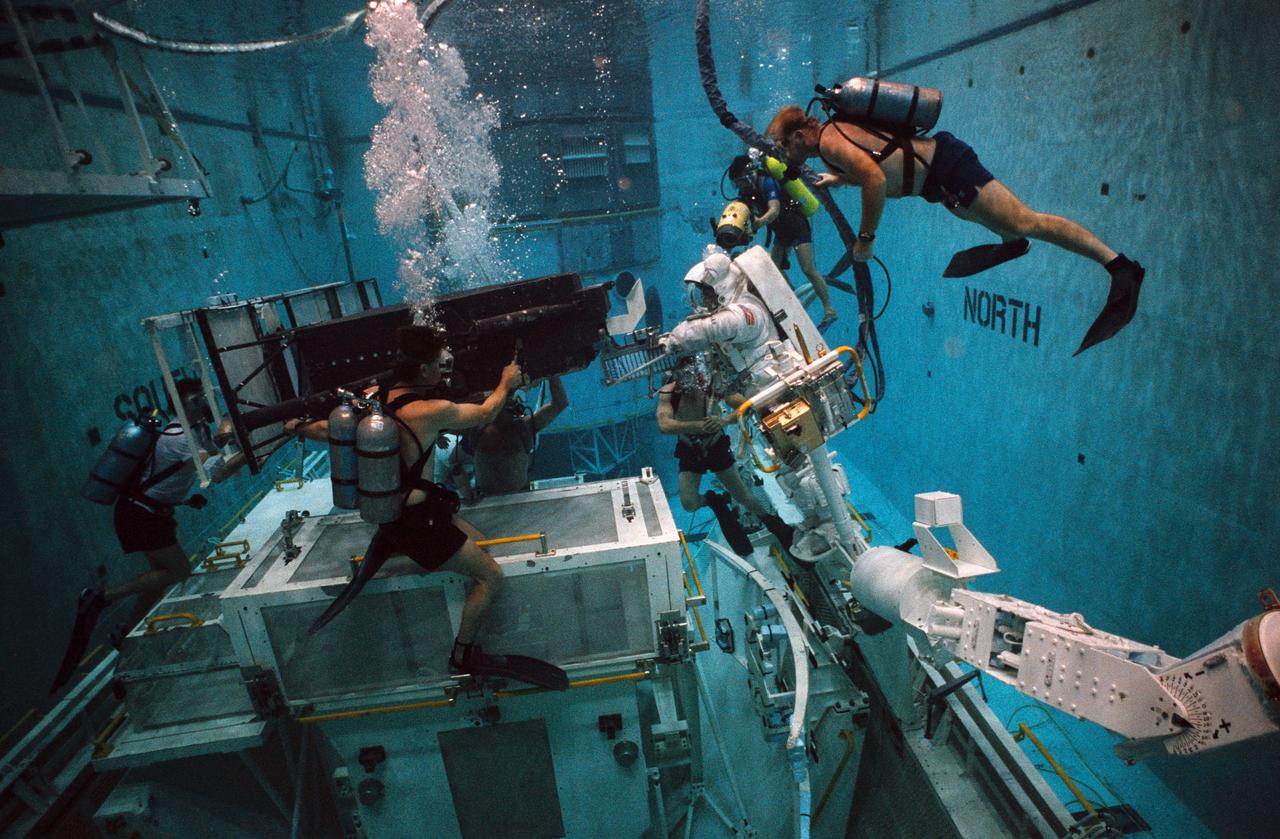
S93-33102 (5 Apr 1993) --- Wearing a training version of Space Shuttle Extravehicular Mobility Unit (EMU), astronaut Thomas D. Akers uses the giant pool of the Johnson Space Center's (JSC) Weightless Environment Training Facility (WET-F) to rehearse for the Hubble Space Telescope (HST) repair mission. Standing on a mobile foot restraint connected to the Shuttle's robot arm, Akers works with a full-scale training version of the Wide Field/Planetary Camera (WF/PC). The current WF/PC on the HST will be replaced with WF/PC-2. The giant box is a stowage area for both WF/PC facilities. Out of frame is astronaut Kathryn C. Thornton, who will join Akers in STS-61 EVA. Several SCUBA-equipped divers assist in the rehearsal. A total of five extravehicular activity (EVA) sessions will be conducted during the scheduled December mission of the Endeavour.
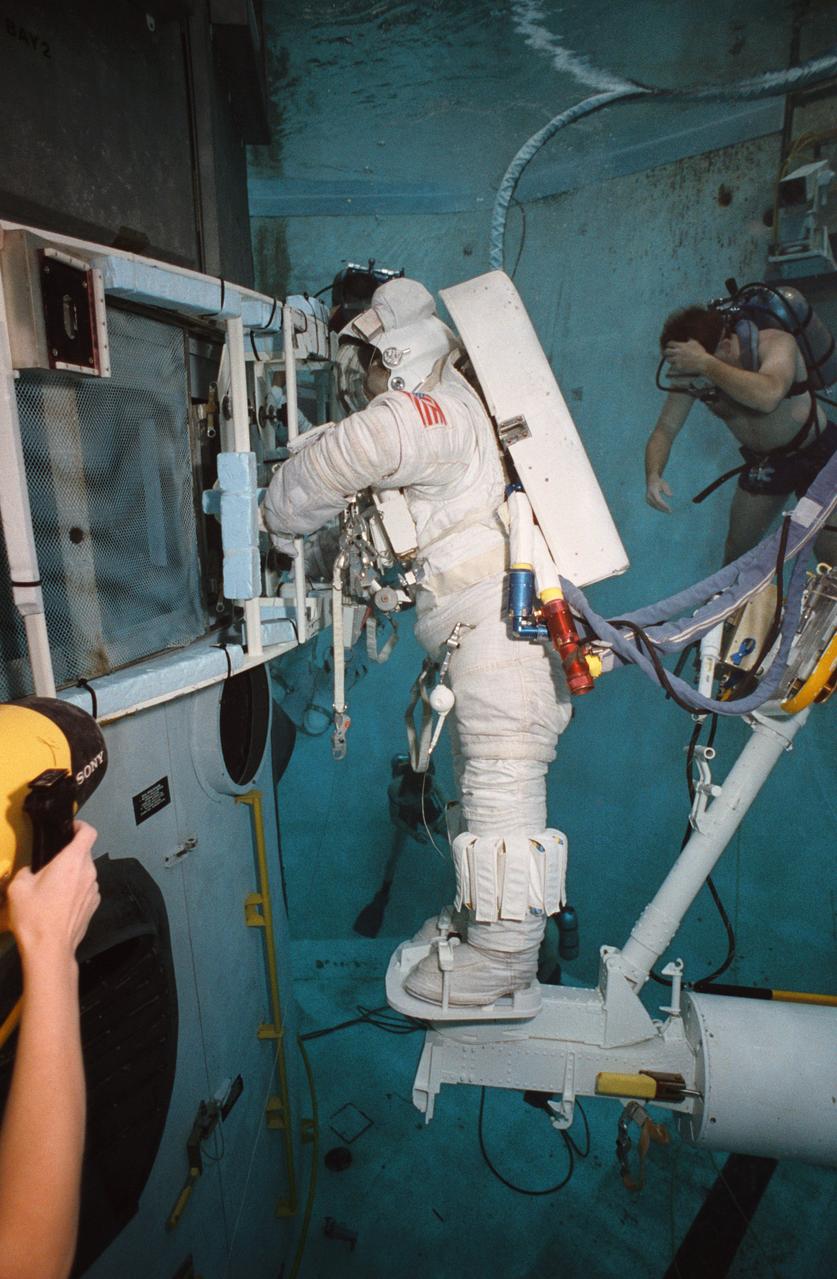
S93-33101 (5 Apr 1993) --- Wearing a training version of Space Shuttle Extravehicular Mobility Unit (EMU), astronaut Kathryn C. Thornton uses the giant pool of the Johnson Space Center's (JSC) Weightless Environment Training Facility (WET-F) to rehearse for the Hubble Space Telescope (HST) repair mission. Standing on a mobile foot restraint connected to the Shuttle's robot arm, Thornton grasps a large structure which attaches to the Wide Field/Planetary Camera (WF/PC). The current WF/PC on the HST will be replaced with WF/PC-2. Out of frame is astronaut Thomas D. Akers, who will join Thornton in STS-61 EVA. A SCUBA-equipped diver can be seen in the background. A number of divers are on hand for all training sessions in the WET-F. A total of five extravehicular activity (EVA) sessions will be conducted during the scheduled December mission of the Endeavour.
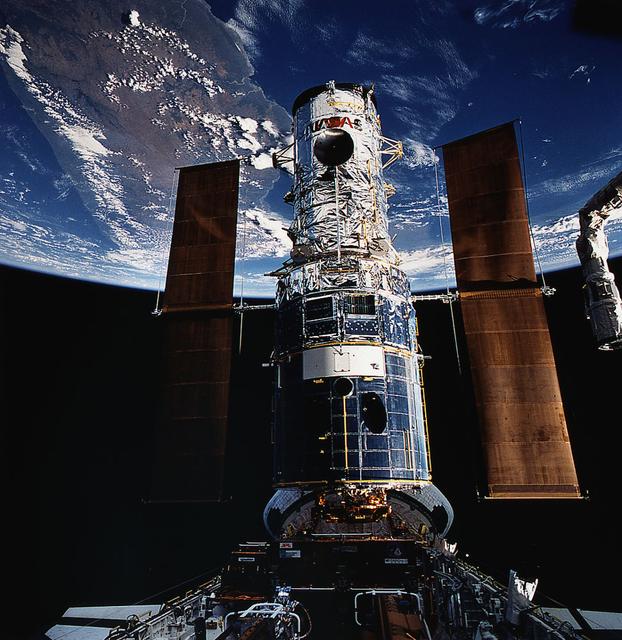
The Hubble Space Telescope (HST), backdropped over Madagascar, is berthed in Endeavour's cargo bay following its capture for repair by the STS-61 astronauts.
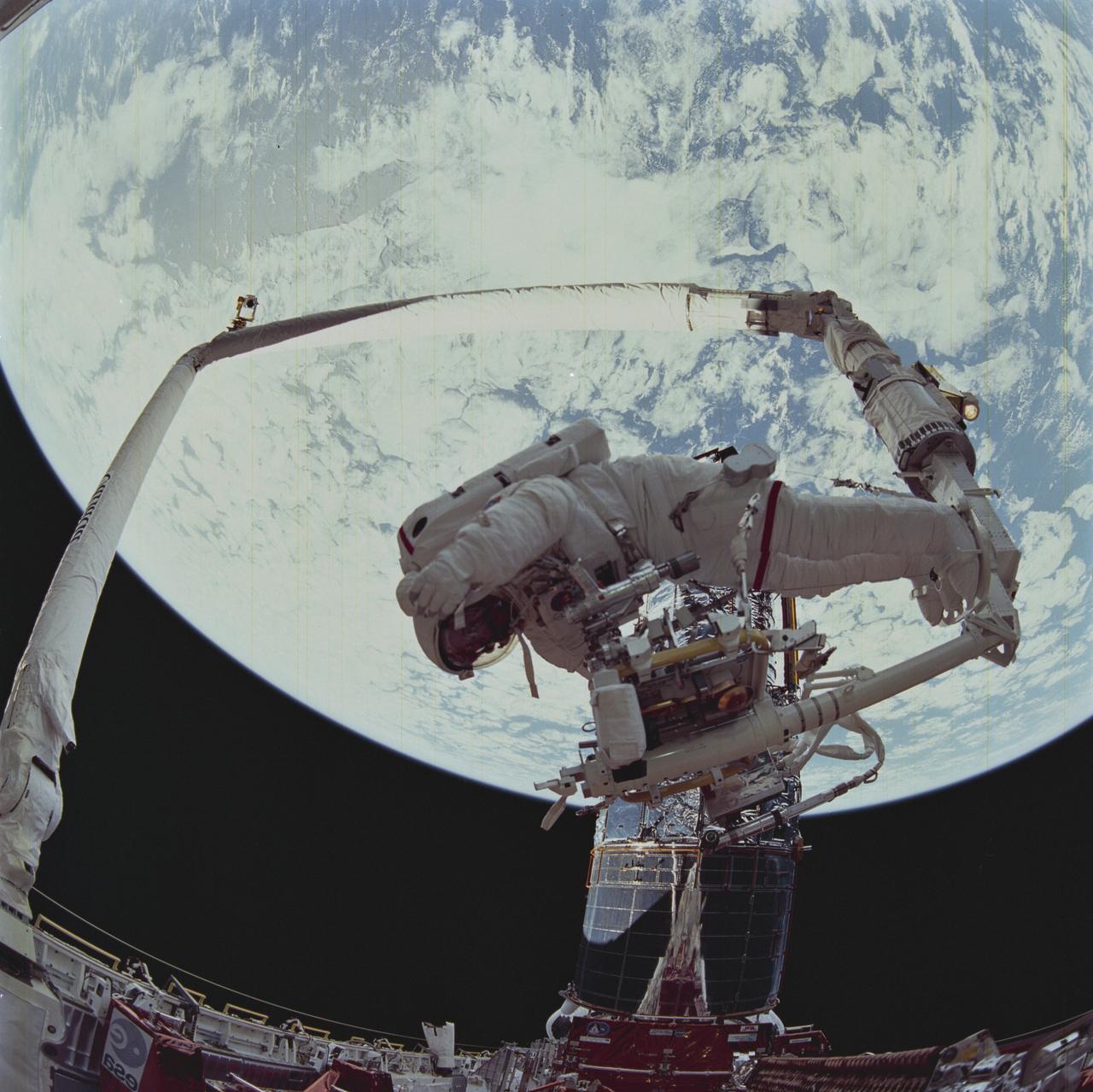
Space Shuttle mission STS-61 onboard view taken by a fish-eyed camera lens showing astronauts Story Musgrave and Jeffrey Hoffman's Extra Vehicular Activity (EVA) to repair the Hubble Space Telescope (HST).
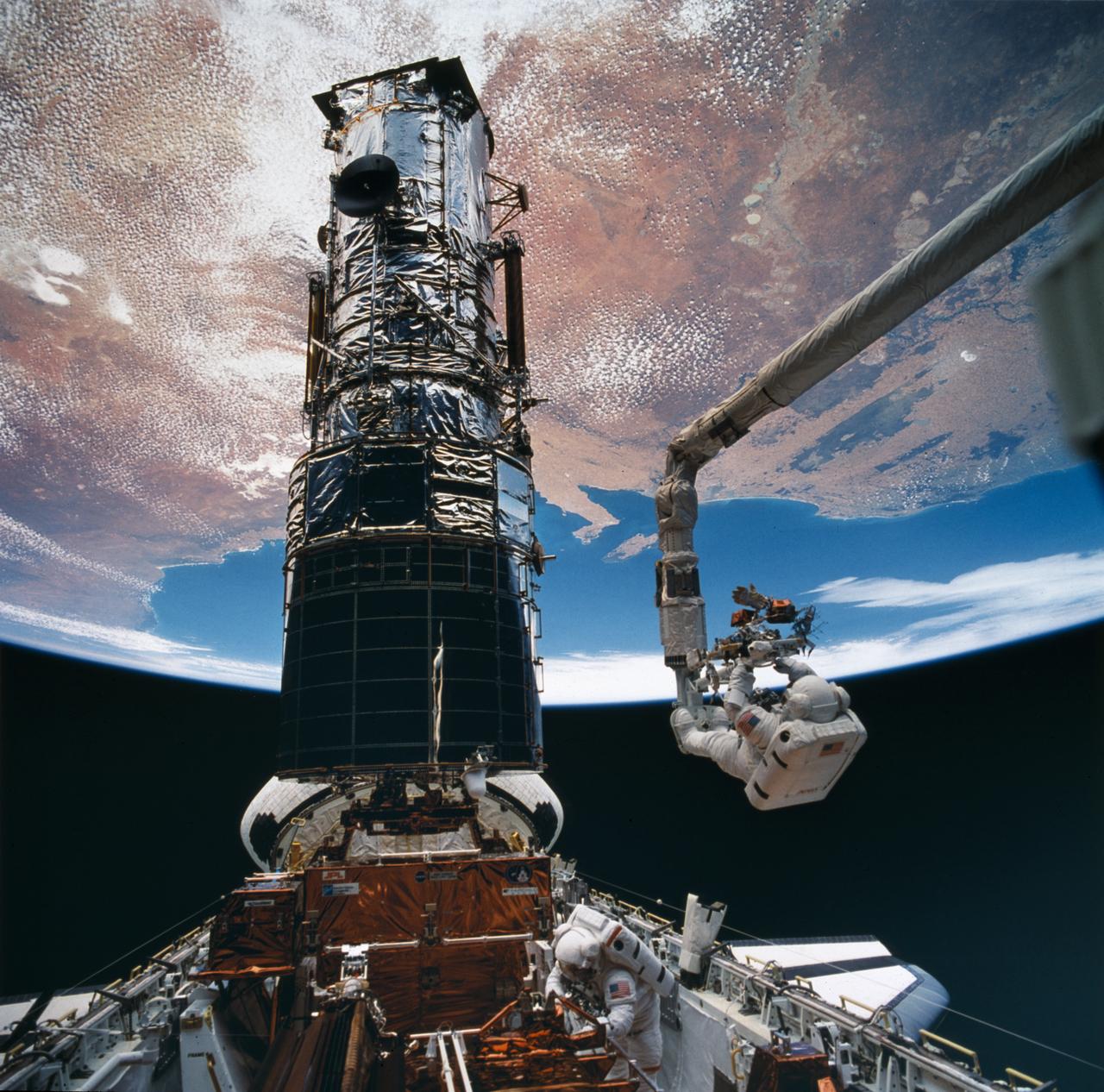
Astronaut Story Musgrave, anchored to the end of the remote manipulator arm, prepares to be elevated to the top of the towering Hubble Space Telescope (HST) to install protective covers on magnetometers. Astornaut Jeffrey Hoffman assisted Musgrave with the final servicing tasks.
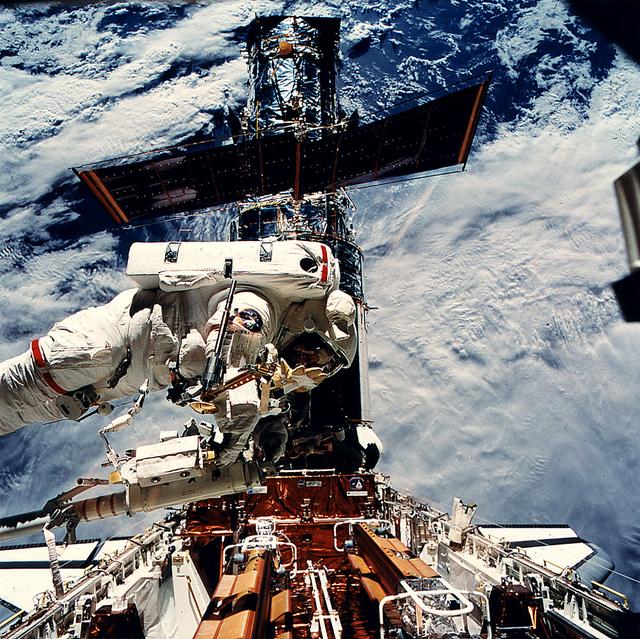
Extra vehicular activity - Astronaut Kathy Thornton on the end of orbiter Endeavour's remote manipulator system arm, hovers over equipment associated with servicing chores on the Hubble Space Telescope (HST).
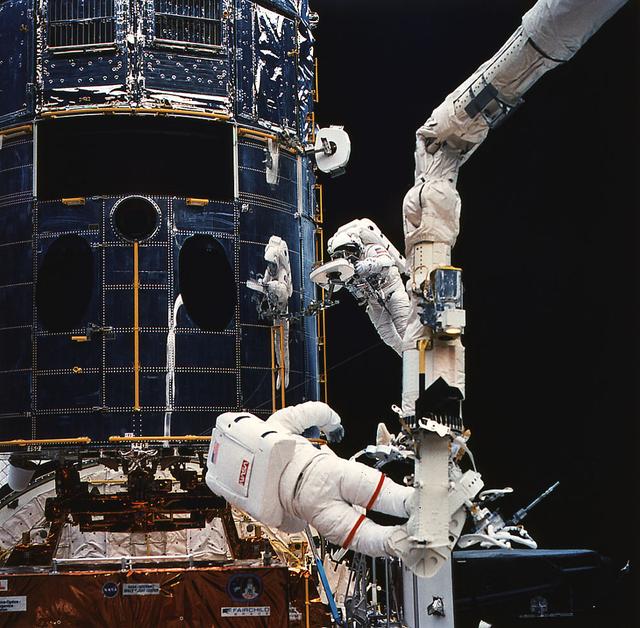
Anchored on the end of orbiter Endeavour's remote manipulator system arm, astronaut Jeffrey Hoffman (foreground) prepares to install the new wide field planetary camera into the empty cavity of the Hubble Space Telescope (HST). Astronaut Story Musgrave works with a portable foot restraint.
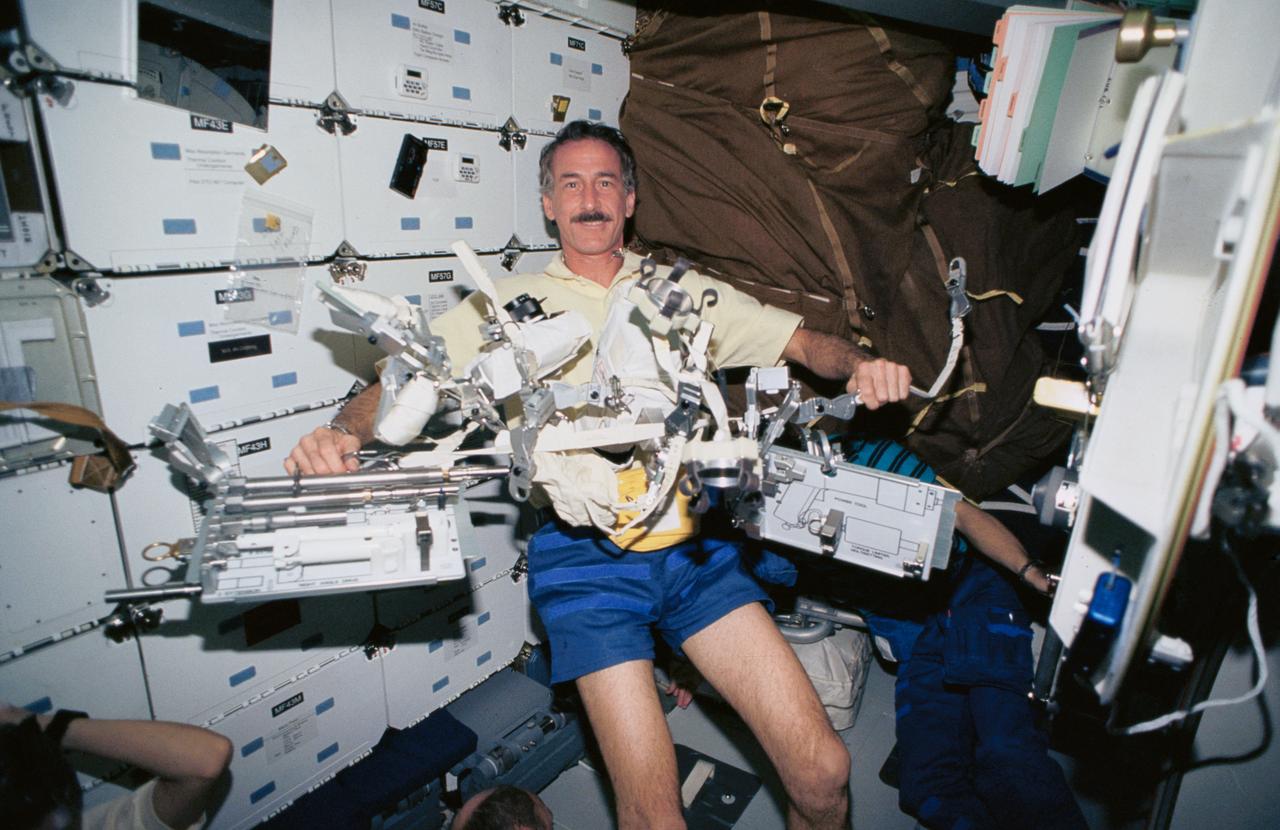
STS061-03-029 (2013 Dec 1993) --- Astronaut Jeffrey A. Hoffman displays tools used in the five space walks on the STS-61 Hubble Space Telescope (HST) repair mission. Hoffman was one of four space walkers making use of the variegated gear.
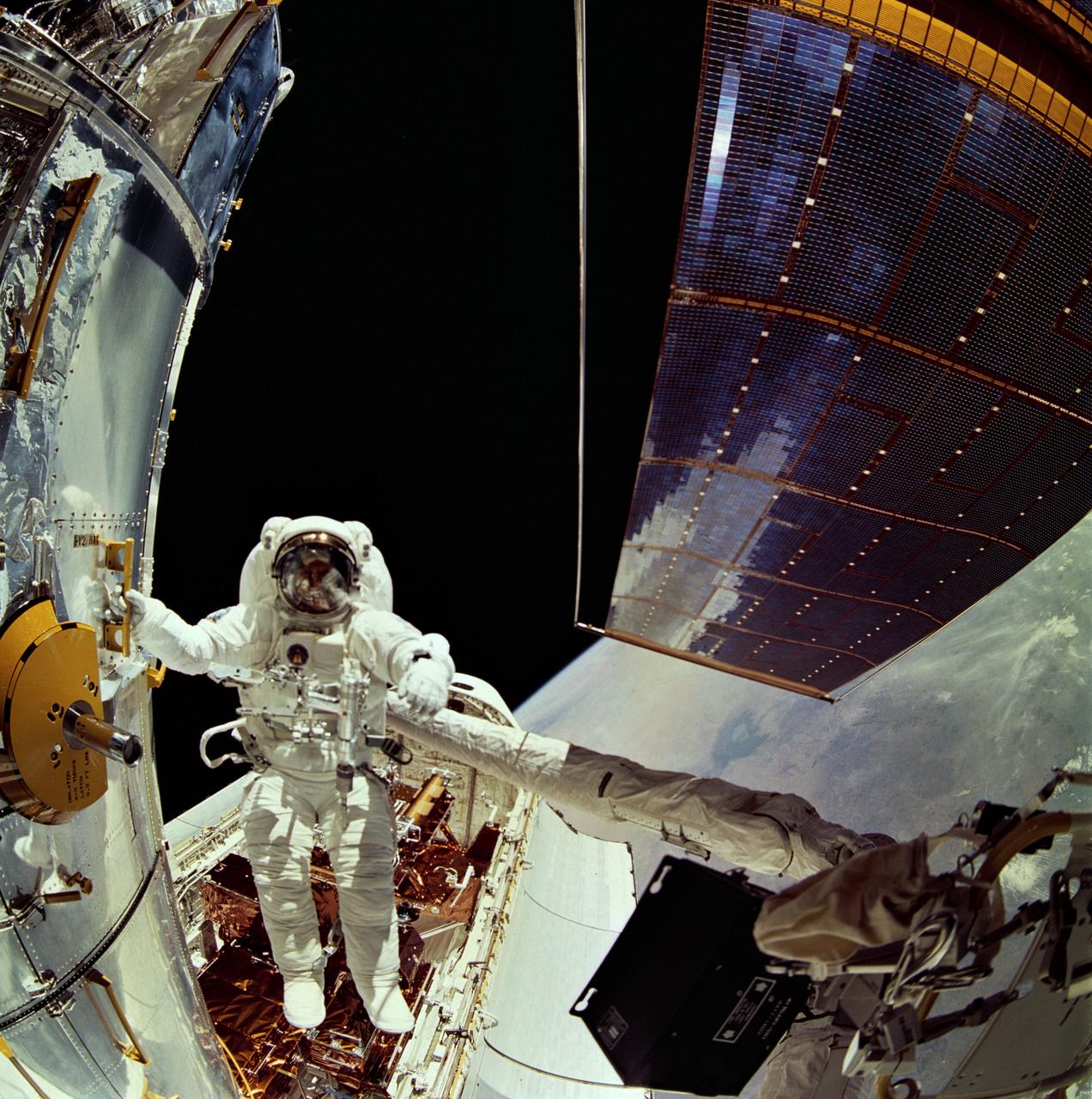
This is a Space Shuttle mission STS-61 onboard view showing astronauts Story Musgrave and Jeffrey Hoffman preforming repairs to the Hubble Space Telescope (HST) during their Extra Vehicular Activity (EVA). Astronauts' work was made easier by the HST's many crew aids. Astronaut Musgrave makes use of one of the spacecraft's handholds. Launched on December 1, 1993, the Space Shuttle Orbiter Endeavor STS-061 mission was the 59th Shuttle flight.
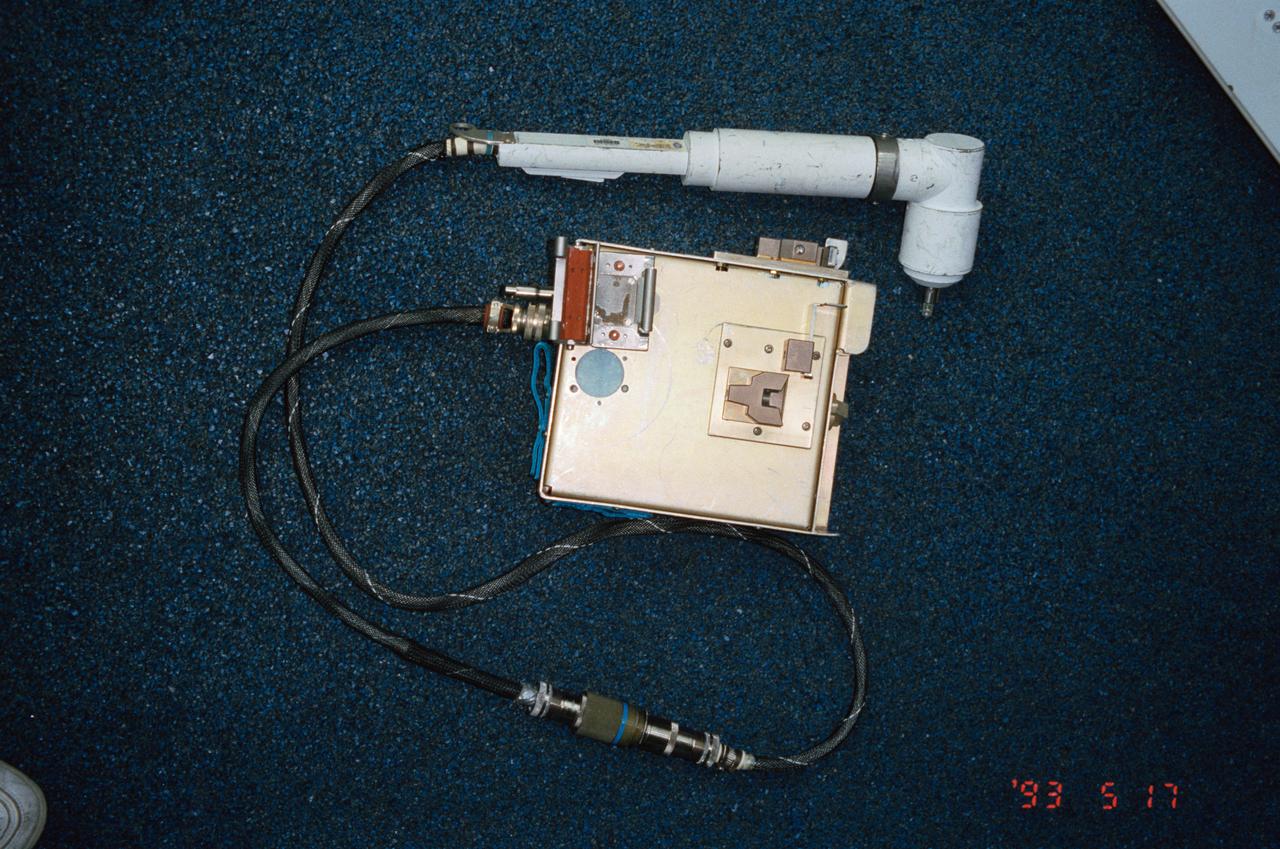
S93-35367 (Nov 1993) --- A close-up view of the special ratchet tool to be used by the STS-61 astronauts assigned to perform servicing of the Hubble Space Telescope (HST) in December of this year. Four astronauts will perform a total of five sessions of extravehicular activity (EVA) during the flight.
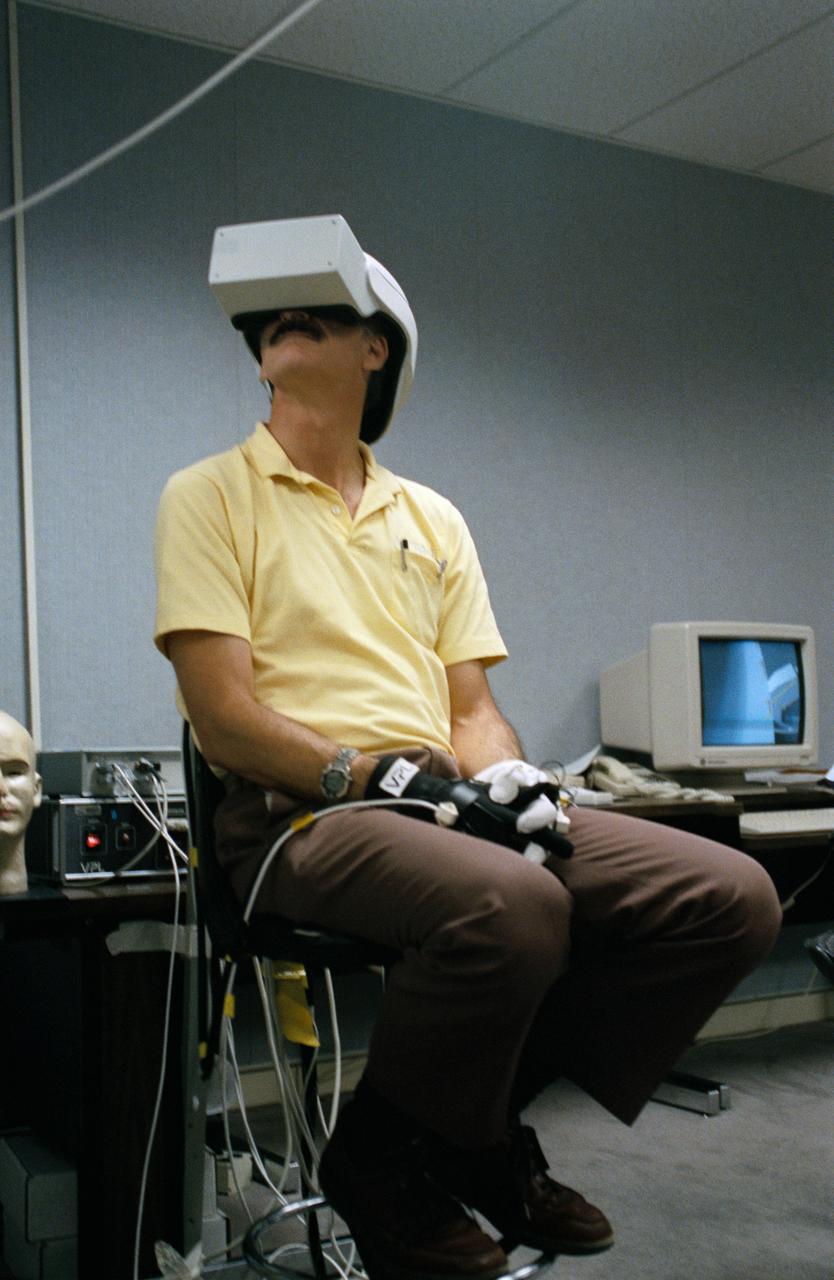
Astronaut Jeffrey A. Hoffman, one of four crewmembers for STS-61 that will conduct scheduled spacewalks during the flight, wears a special helmet and gloves designed to assist in proper positioning near the telescope while on the end of the robot arm. Crewmembers are utilizing a new virtual reality training aid which assists in refining positioning patterns for Space Shuttle Endeavour's Remote Manipulator System (RMS) (36890); Astronaut Claude Nicollier looks at a computer display of the Shuttle's robot arm movements as Thomas D. Akers and Kathryn C. Thornton, mission specialists look on. Nicollier will be responsible for maneuvering the astronauts while they stand in a foot restraint on the end of the RMS arm (36891,36894); Hoffman wears a special helmet and gloves designed to assist in proper positioning near the telescope while on the end of the robot arm (35892); Nicollier looks at a computer display of the Shuttle's robot arm movements as Akers looks on (36893); While (l-r) Astronauts Kenneth Bowersox, Kathryn Thornton, Richard O. Covey and Thomas D. Akers watch, Nicollier moves the Robot arm to desired locations in the Shuttle's payload bay using the Virtual Reality program (36895); Bowersox takes his turn maneuvering the RMS while mission specialist Hoffman, wearing the Virtual Reality helmet, follows his own progress on the end of the robot arm. Crewmembers participating during the training session are (l-r) Astronauts Akers, Hoffman, Bowersox, Nicollier, Covey, and Thornton. In the background, David Homan, an engineer in the JSC Engineering Directorate's Automation and Robotics Division, looks on (36896).
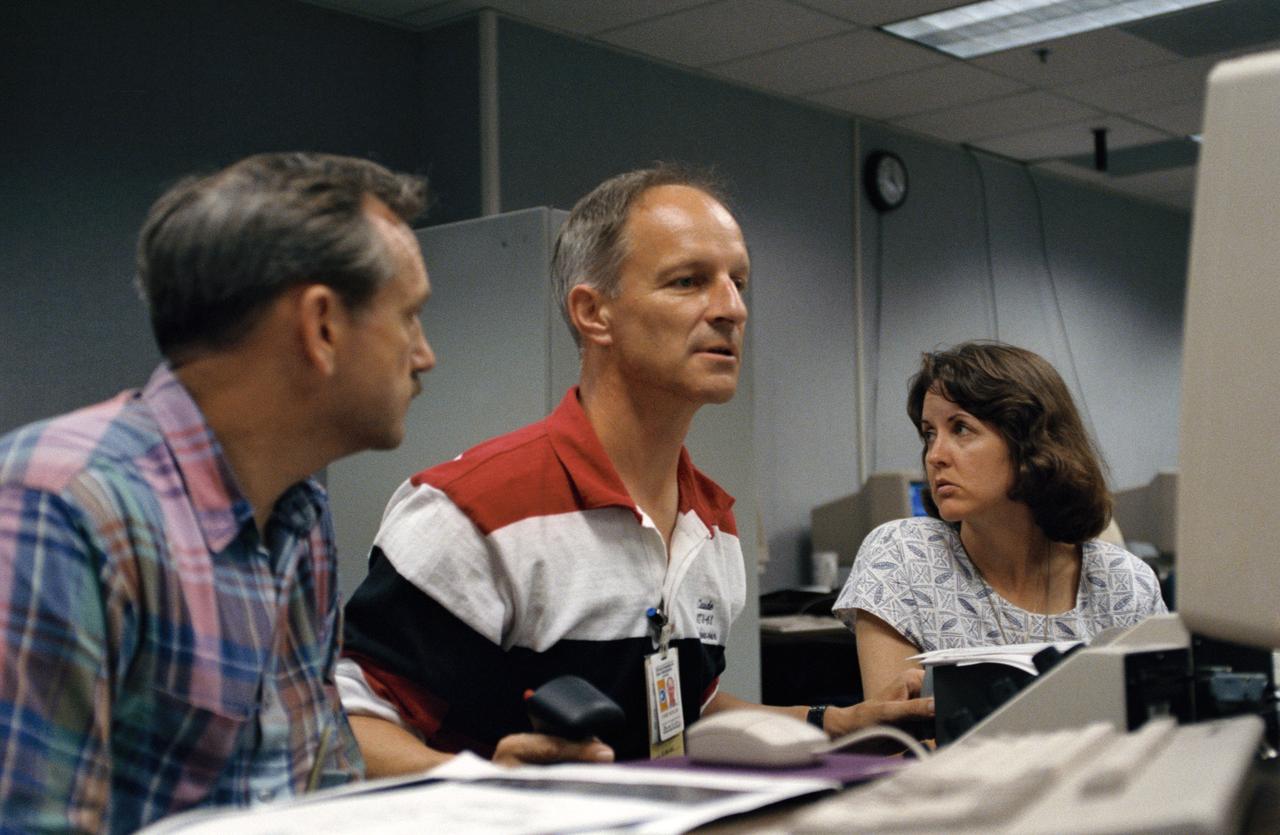
Astronaut Jeffrey A. Hoffman, one of four crewmembers for STS-61 that will conduct scheduled spacewalks during the flight, wears a special helmet and gloves designed to assist in proper positioning near the telescope while on the end of the robot arm. Crewmembers are utilizing a new virtual reality training aid which assists in refining positioning patterns for Space Shuttle Endeavour's Remote Manipulator System (RMS) (36890); Astronaut Claude Nicollier looks at a computer display of the Shuttle's robot arm movements as Thomas D. Akers and Kathryn C. Thornton, mission specialists look on. Nicollier will be responsible for maneuvering the astronauts while they stand in a foot restraint on the end of the RMS arm (36891,36894); Hoffman wears a special helmet and gloves designed to assist in proper positioning near the telescope while on the end of the robot arm (35892); Nicollier looks at a computer display of the Shuttle's robot arm movements as Akers looks on (36893); While (l-r) Astronauts Kenneth Bowersox, Kathryn Thornton, Richard O. Covey and Thomas D. Akers watch, Nicollier moves the Robot arm to desired locations in the Shuttle's payload bay using the Virtual Reality program (36895); Bowersox takes his turn maneuvering the RMS while mission specialist Hoffman, wearing the Virtual Reality helmet, follows his own progress on the end of the robot arm. Crewmembers participating during the training session are (l-r) Astronauts Akers, Hoffman, Bowersox, Nicollier, Covey, and Thornton. In the background, David Homan, an engineer in the JSC Engineering Directorate's Automation and Robotics Division, looks on (36896).
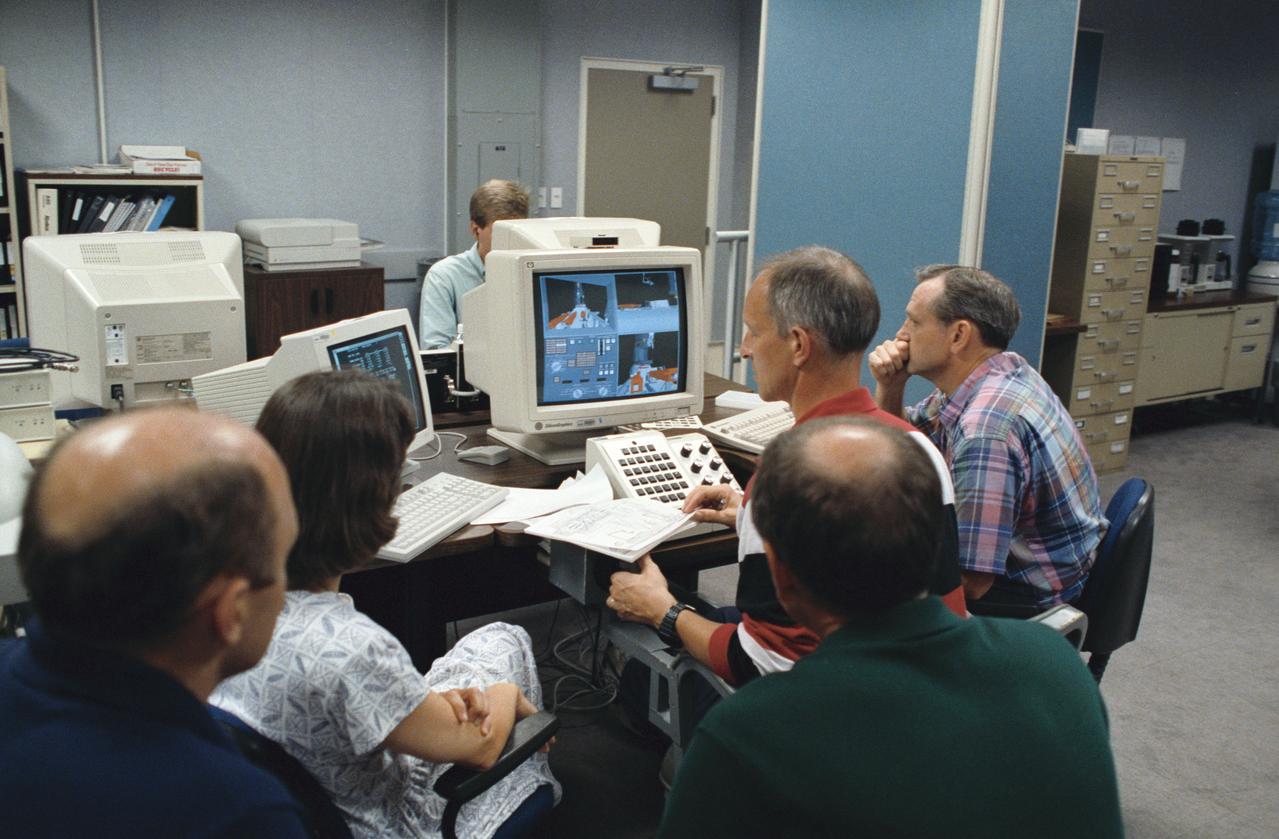
Astronaut Jeffrey A. Hoffman, one of four crewmembers for STS-61 that will conduct scheduled spacewalks during the flight, wears a special helmet and gloves designed to assist in proper positioning near the telescope while on the end of the robot arm. Crewmembers are utilizing a new virtual reality training aid which assists in refining positioning patterns for Space Shuttle Endeavour's Remote Manipulator System (RMS) (36890); Astronaut Claude Nicollier looks at a computer display of the Shuttle's robot arm movements as Thomas D. Akers and Kathryn C. Thornton, mission specialists look on. Nicollier will be responsible for maneuvering the astronauts while they stand in a foot restraint on the end of the RMS arm (36891,36894); Hoffman wears a special helmet and gloves designed to assist in proper positioning near the telescope while on the end of the robot arm (35892); Nicollier looks at a computer display of the Shuttle's robot arm movements as Akers looks on (36893); While (l-r) Astronauts Kenneth Bowersox, Kathryn Thornton, Richard O. Covey and Thomas D. Akers watch, Nicollier moves the Robot arm to desired locations in the Shuttle's payload bay using the Virtual Reality program (36895); Bowersox takes his turn maneuvering the RMS while mission specialist Hoffman, wearing the Virtual Reality helmet, follows his own progress on the end of the robot arm. Crewmembers participating during the training session are (l-r) Astronauts Akers, Hoffman, Bowersox, Nicollier, Covey, and Thornton. In the background, David Homan, an engineer in the JSC Engineering Directorate's Automation and Robotics Division, looks on (36896).
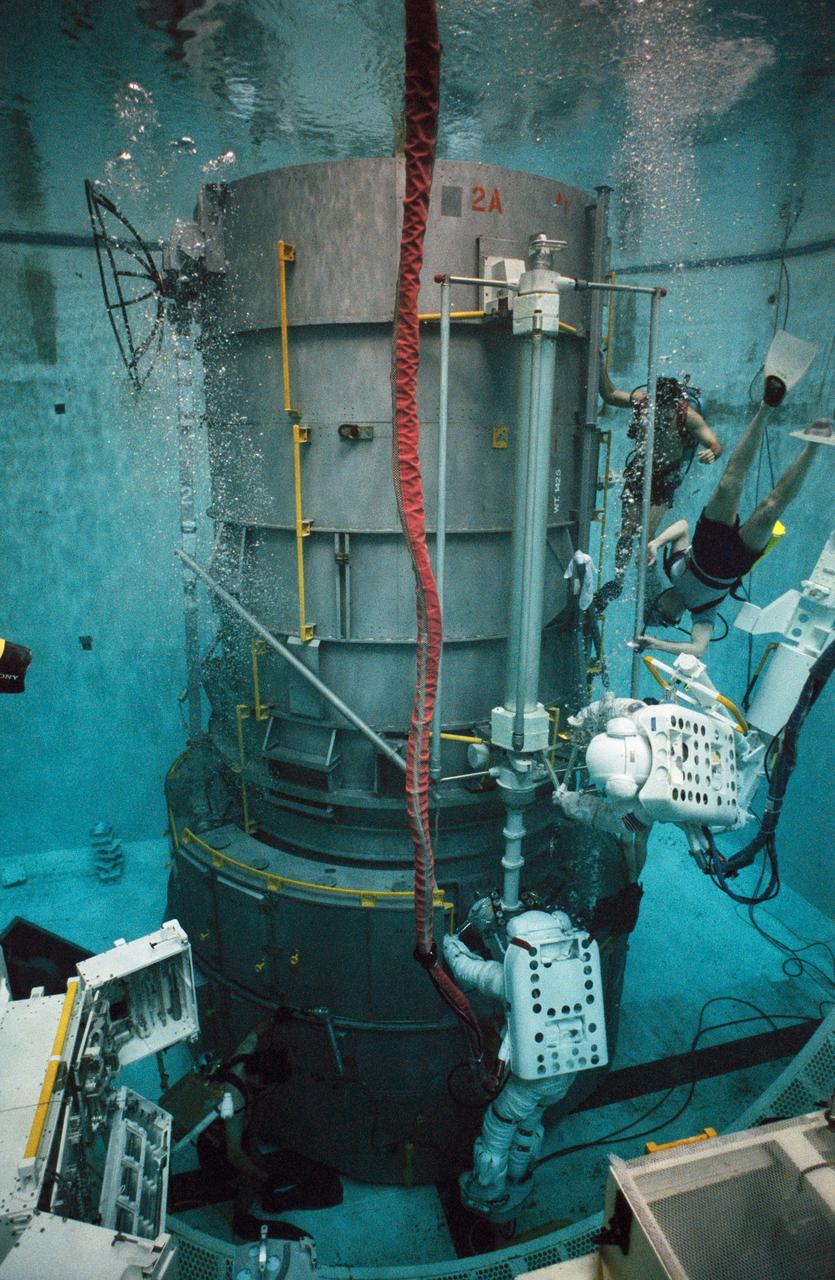
S93-30237 (5 Mar 1993) --- Wearing training versions of Space Shuttle Extravehicular Mobility Units (EMU), astronauts Thomas D. Akers (red stripe) and Kathryn C. Thornton use the spacious pool of the Johnson Space Center's (JSC) Weightless Environment Training Facility (WET-F) to rehearse for the Hubble Space Telescope (HST) servicing mission. They are working with part of a full-scale mockup of HST.
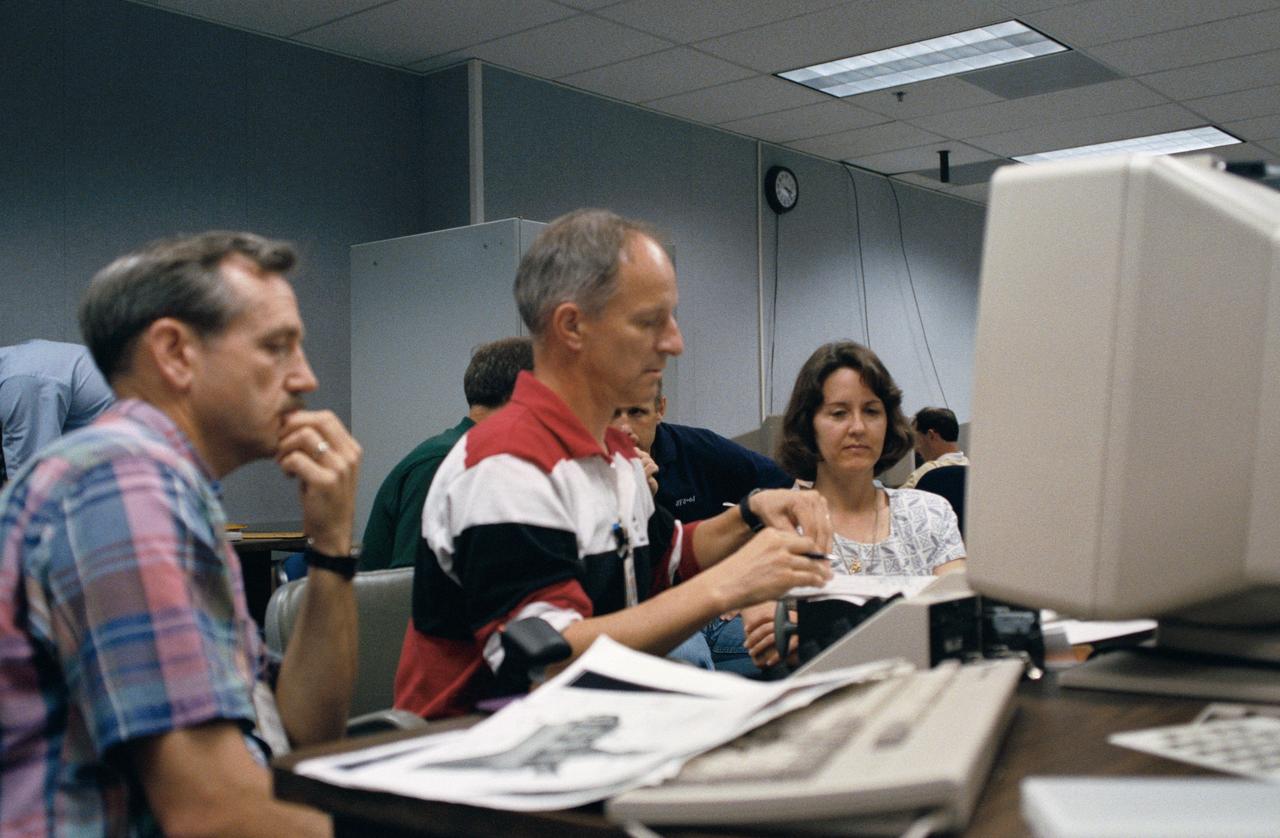
Astronaut Jeffrey A. Hoffman, one of four crewmembers for STS-61 that will conduct scheduled spacewalks during the flight, wears a special helmet and gloves designed to assist in proper positioning near the telescope while on the end of the robot arm. Crewmembers are utilizing a new virtual reality training aid which assists in refining positioning patterns for Space Shuttle Endeavour's Remote Manipulator System (RMS) (36890); Astronaut Claude Nicollier looks at a computer display of the Shuttle's robot arm movements as Thomas D. Akers and Kathryn C. Thornton, mission specialists look on. Nicollier will be responsible for maneuvering the astronauts while they stand in a foot restraint on the end of the RMS arm (36891,36894); Hoffman wears a special helmet and gloves designed to assist in proper positioning near the telescope while on the end of the robot arm (35892); Nicollier looks at a computer display of the Shuttle's robot arm movements as Akers looks on (36893); While (l-r) Astronauts Kenneth Bowersox, Kathryn Thornton, Richard O. Covey and Thomas D. Akers watch, Nicollier moves the Robot arm to desired locations in the Shuttle's payload bay using the Virtual Reality program (36895); Bowersox takes his turn maneuvering the RMS while mission specialist Hoffman, wearing the Virtual Reality helmet, follows his own progress on the end of the robot arm. Crewmembers participating during the training session are (l-r) Astronauts Akers, Hoffman, Bowersox, Nicollier, Covey, and Thornton. In the background, David Homan, an engineer in the JSC Engineering Directorate's Automation and Robotics Division, looks on (36896).
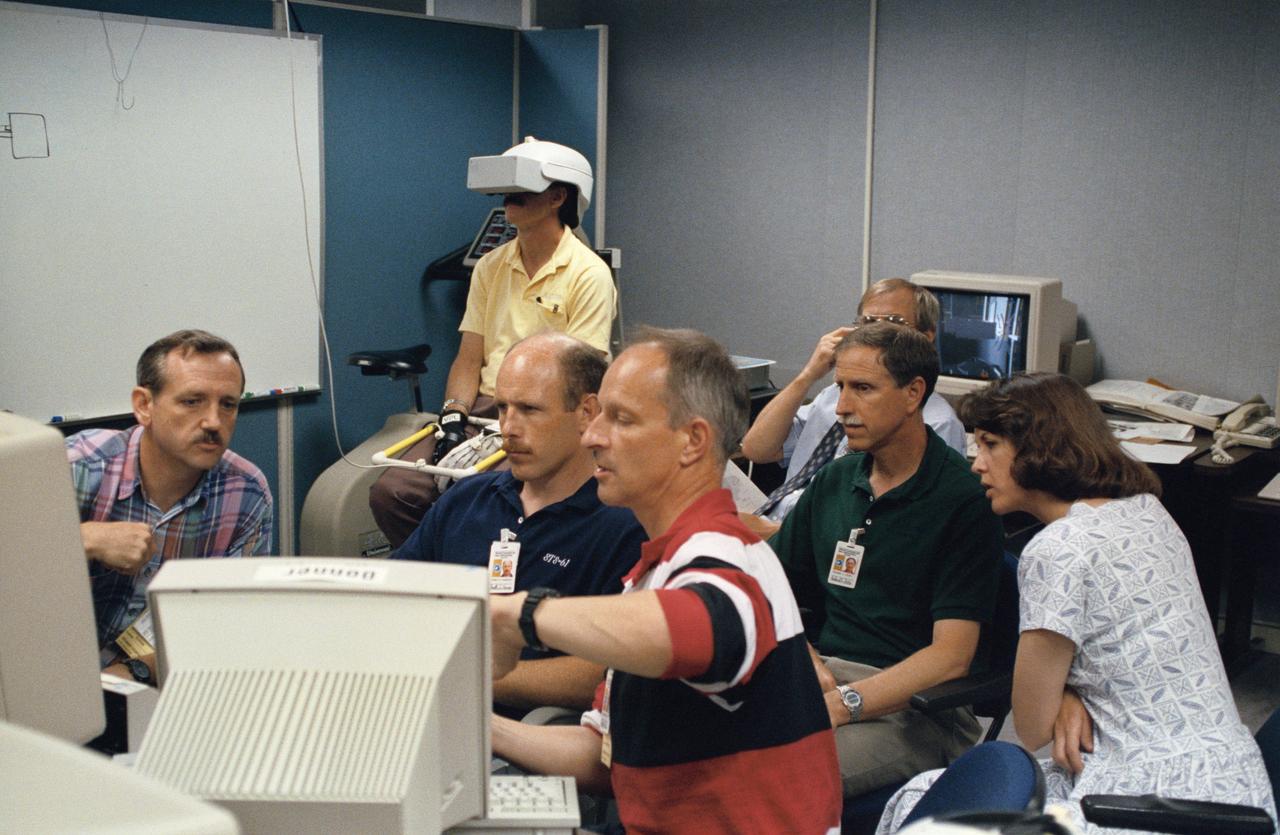
Astronaut Jeffrey A. Hoffman, one of four crewmembers for STS-61 that will conduct scheduled spacewalks during the flight, wears a special helmet and gloves designed to assist in proper positioning near the telescope while on the end of the robot arm. Crewmembers are utilizing a new virtual reality training aid which assists in refining positioning patterns for Space Shuttle Endeavour's Remote Manipulator System (RMS) (36890); Astronaut Claude Nicollier looks at a computer display of the Shuttle's robot arm movements as Thomas D. Akers and Kathryn C. Thornton, mission specialists look on. Nicollier will be responsible for maneuvering the astronauts while they stand in a foot restraint on the end of the RMS arm (36891,36894); Hoffman wears a special helmet and gloves designed to assist in proper positioning near the telescope while on the end of the robot arm (35892); Nicollier looks at a computer display of the Shuttle's robot arm movements as Akers looks on (36893); While (l-r) Astronauts Kenneth Bowersox, Kathryn Thornton, Richard O. Covey and Thomas D. Akers watch, Nicollier moves the Robot arm to desired locations in the Shuttle's payload bay using the Virtual Reality program (36895); Bowersox takes his turn maneuvering the RMS while mission specialist Hoffman, wearing the Virtual Reality helmet, follows his own progress on the end of the robot arm. Crewmembers participating during the training session are (l-r) Astronauts Akers, Hoffman, Bowersox, Nicollier, Covey, and Thornton. In the background, David Homan, an engineer in the JSC Engineering Directorate's Automation and Robotics Division, looks on (36896).
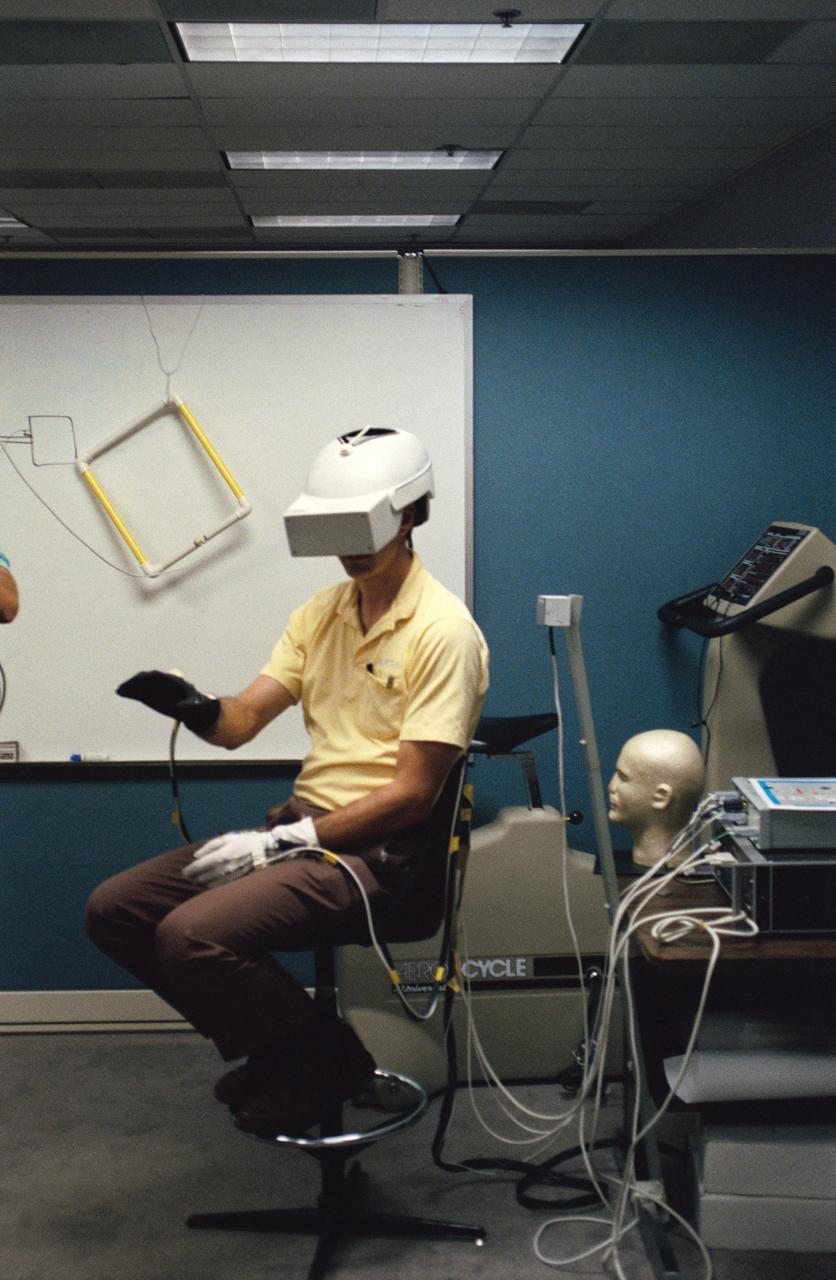
Astronaut Jeffrey A. Hoffman, one of four crewmembers for STS-61 that will conduct scheduled spacewalks during the flight, wears a special helmet and gloves designed to assist in proper positioning near the telescope while on the end of the robot arm. Crewmembers are utilizing a new virtual reality training aid which assists in refining positioning patterns for Space Shuttle Endeavour's Remote Manipulator System (RMS) (36890); Astronaut Claude Nicollier looks at a computer display of the Shuttle's robot arm movements as Thomas D. Akers and Kathryn C. Thornton, mission specialists look on. Nicollier will be responsible for maneuvering the astronauts while they stand in a foot restraint on the end of the RMS arm (36891,36894); Hoffman wears a special helmet and gloves designed to assist in proper positioning near the telescope while on the end of the robot arm (35892); Nicollier looks at a computer display of the Shuttle's robot arm movements as Akers looks on (36893); While (l-r) Astronauts Kenneth Bowersox, Kathryn Thornton, Richard O. Covey and Thomas D. Akers watch, Nicollier moves the Robot arm to desired locations in the Shuttle's payload bay using the Virtual Reality program (36895); Bowersox takes his turn maneuvering the RMS while mission specialist Hoffman, wearing the Virtual Reality helmet, follows his own progress on the end of the robot arm. Crewmembers participating during the training session are (l-r) Astronauts Akers, Hoffman, Bowersox, Nicollier, Covey, and Thornton. In the background, David Homan, an engineer in the JSC Engineering Directorate's Automation and Robotics Division, looks on (36896).
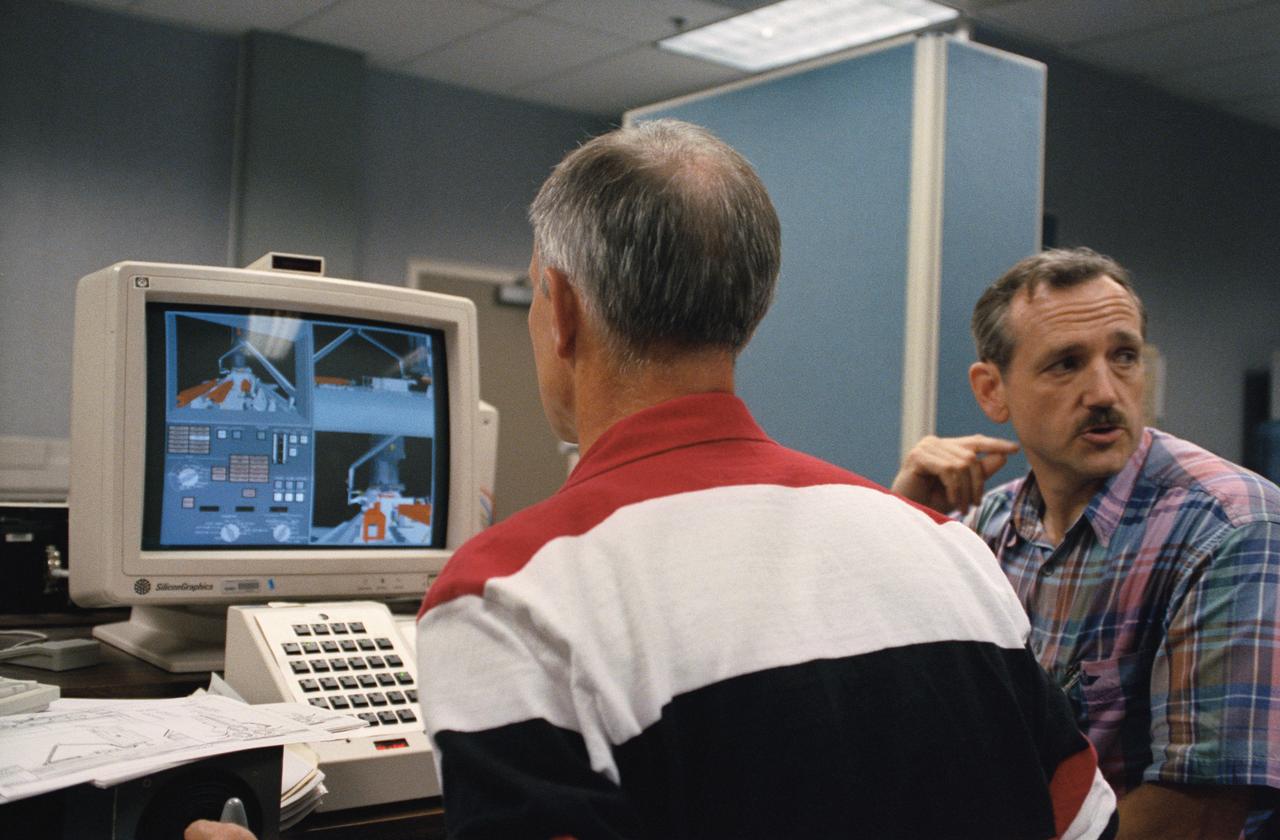
Astronaut Jeffrey A. Hoffman, one of four crewmembers for STS-61 that will conduct scheduled spacewalks during the flight, wears a special helmet and gloves designed to assist in proper positioning near the telescope while on the end of the robot arm. Crewmembers are utilizing a new virtual reality training aid which assists in refining positioning patterns for Space Shuttle Endeavour's Remote Manipulator System (RMS) (36890); Astronaut Claude Nicollier looks at a computer display of the Shuttle's robot arm movements as Thomas D. Akers and Kathryn C. Thornton, mission specialists look on. Nicollier will be responsible for maneuvering the astronauts while they stand in a foot restraint on the end of the RMS arm (36891,36894); Hoffman wears a special helmet and gloves designed to assist in proper positioning near the telescope while on the end of the robot arm (35892); Nicollier looks at a computer display of the Shuttle's robot arm movements as Akers looks on (36893); While (l-r) Astronauts Kenneth Bowersox, Kathryn Thornton, Richard O. Covey and Thomas D. Akers watch, Nicollier moves the Robot arm to desired locations in the Shuttle's payload bay using the Virtual Reality program (36895); Bowersox takes his turn maneuvering the RMS while mission specialist Hoffman, wearing the Virtual Reality helmet, follows his own progress on the end of the robot arm. Crewmembers participating during the training session are (l-r) Astronauts Akers, Hoffman, Bowersox, Nicollier, Covey, and Thornton. In the background, David Homan, an engineer in the JSC Engineering Directorate's Automation and Robotics Division, looks on (36896).
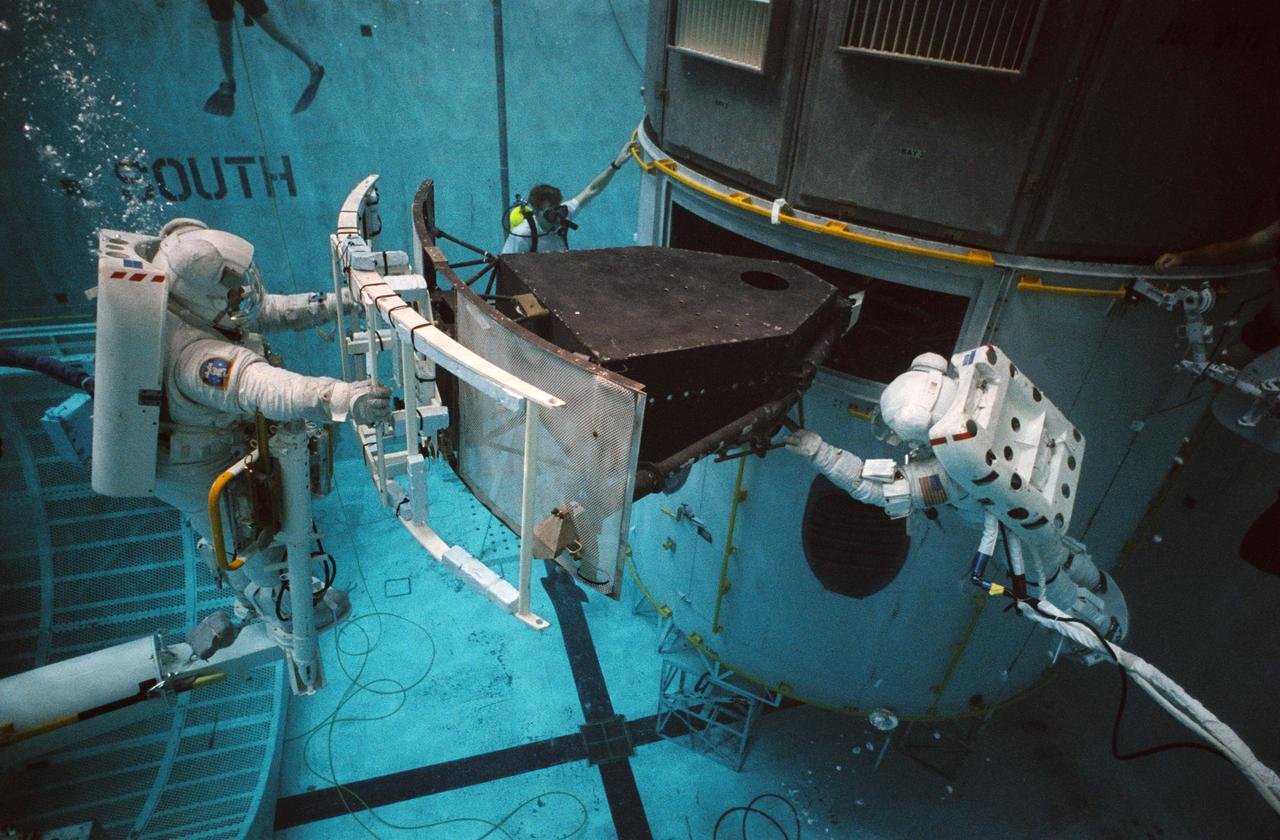
S93-33103 (2 Apr 1993) --- Wearing training versions of Space Shuttle Extravehicular Mobility Units (EMU), astronauts F. Story Musgrave and Jeffrey A. Hoffman use the giant pool of the Johnson Space Center's (JSC) Weightless Environment Training Facility (WET-F) to rehearse for the Hubble Space Telescope (HST) repair mission. The two are working with a full-scale training version of the Wide Field/Planetary Camera (WF/PC). The current WF/PC will be replaced with WF/PC-2. A total of five extravehicular activity (EVA) sessions will be conducted during the scheduled December mission of the Endeavour.