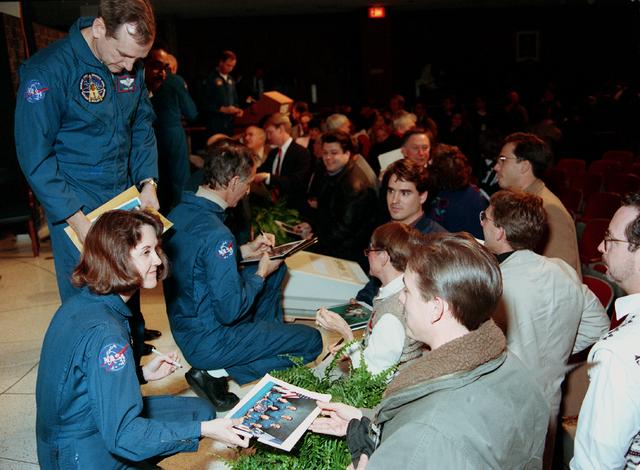
STS-61 astronauts Kathryn Thornton, Jeffrey Hoffman and Thomas Akers (standing) sign autographs in Marshall Space Flight Center's Morris Auditorium, January 19, 1994. Space Shuttle crews traditionally visited NASA field centers following each mission to present mission highlights and recognize employees who made contributions to the Shuttle program. Many of the techniques used during the STS-61 Hubble Space Telescope Servicing mission were rehearsed at the Center's Neutral Buoyancy Simulator.
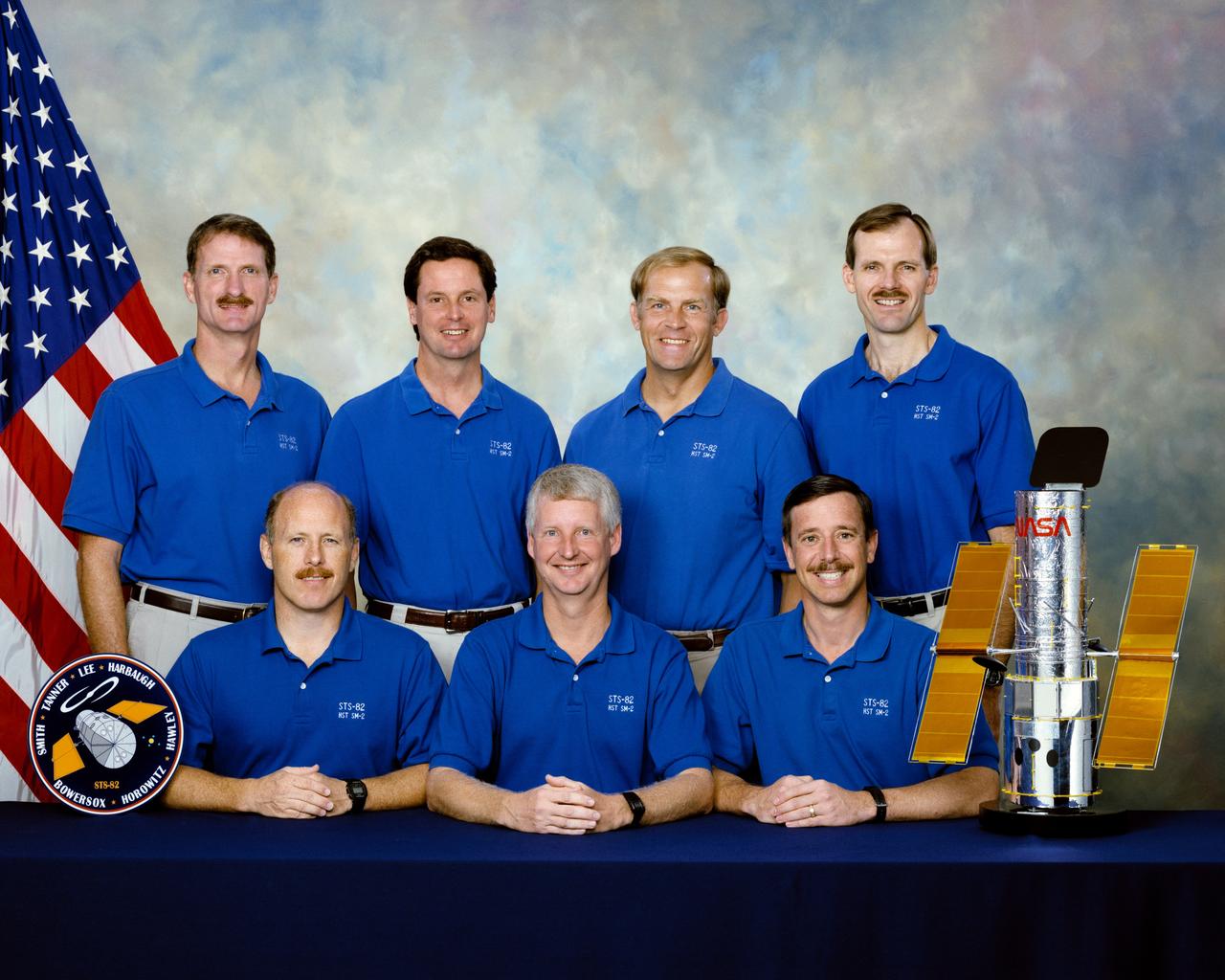
STS082-S-002 (December 1996) --- These seven astronauts are prime crew members for NASA’s STS-82 mission. They are, on the front row, from the left, Kenneth D. Bowersox, Steven A. Hawley and Scott J. Horowitz. On the back row are Joseph R. Tanner, Gregory J. Harbaugh; Mark C. Lee and Steven L. Smith. Bowersox and Horowitz are commander and pilot, respectively, with Lee assigned as payload commander. Hawley, Harbaugh, Smith and Tanner are mission specialists. The seven are pictured with a small model of the Hubble Space Telescope (HST), which they will be paying a visit representing the second HST maintenance mission. Bowersox was pilot for the STS-61 mission, which performed the first maintenance on HST. Hawley was a mission specialist on STS-31, the mission whose astronauts originally deployed the HST.
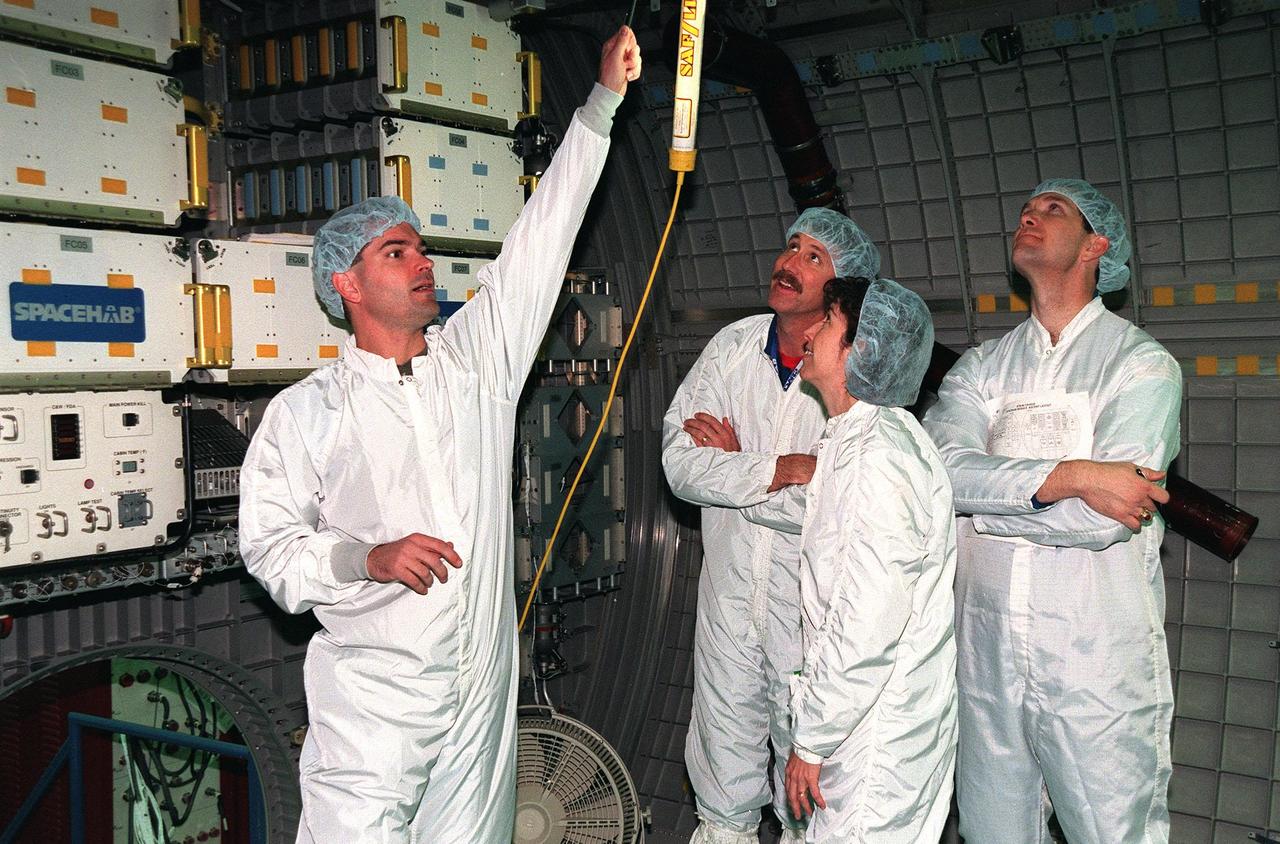
KENNEDY SPACE CENTER, FLA. -- During a payload Interface Verification Test (IVT) for the upcoming mission to the International Space Station , Chris Jaskolka of Boeing points out a piece of equipment in the SPACEHAB module to STS-96 Commander Kent Rominger, Mission Specialist Ellen Ochoa and Pilot Rick Husband. Other crew members visiting KSC for the IVT are Mission Specialists Tamara Jernigan, Dan Barry, Julie Payette and Valery Tokarev of Russia. Mission STS-96 carries the SPACEHAB Logistics Double Module, which will have equipment to further outfit the International Space Station service module and equipment that can be off-loaded from the early U.S. assembly flights. It carries internal logistics and resupply cargo for station outfitting, plus an external Russian cargo crane to be mounted to the exterior of the Russian station segment and used to perform space walking maintenance activities. The double module stowage provides capacity of up to 10,000 lbs. with the ability to accommodate powered payloads, four external rooftop stowage locations, four double-rack locations (two powered), up to 61 bulkhead-mounted middeck locker locations, and floor storage for large unique items and Soft Stowage. STS-96 is targeted to launch May 20 about 9:32 a.m. EDT