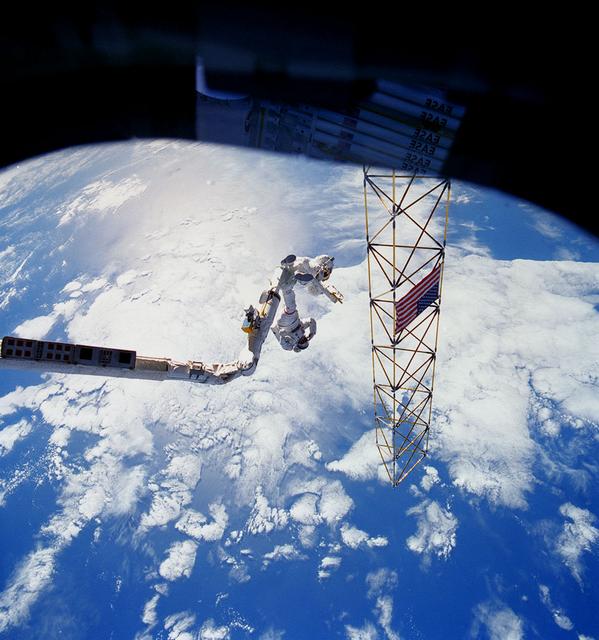
This is an STS-61B onboard photo of astronauts Ross and Spring on the Remote Manipulator System (RMS) as they approach the erected Assembly Concept for Construction of Erectable Space Structure (ACCESS).

Views of the STS-31/61B Crew during Emergency Egress Training, Bldg. 9A, 10/28/1985; and, the Crew Preflight Press Conference, Bldg. 2, 10/24/1985. 1. STS-31/61B - CREW TRAINING (EMERGENCY EGRESS) JSC, HOUSTON, TX
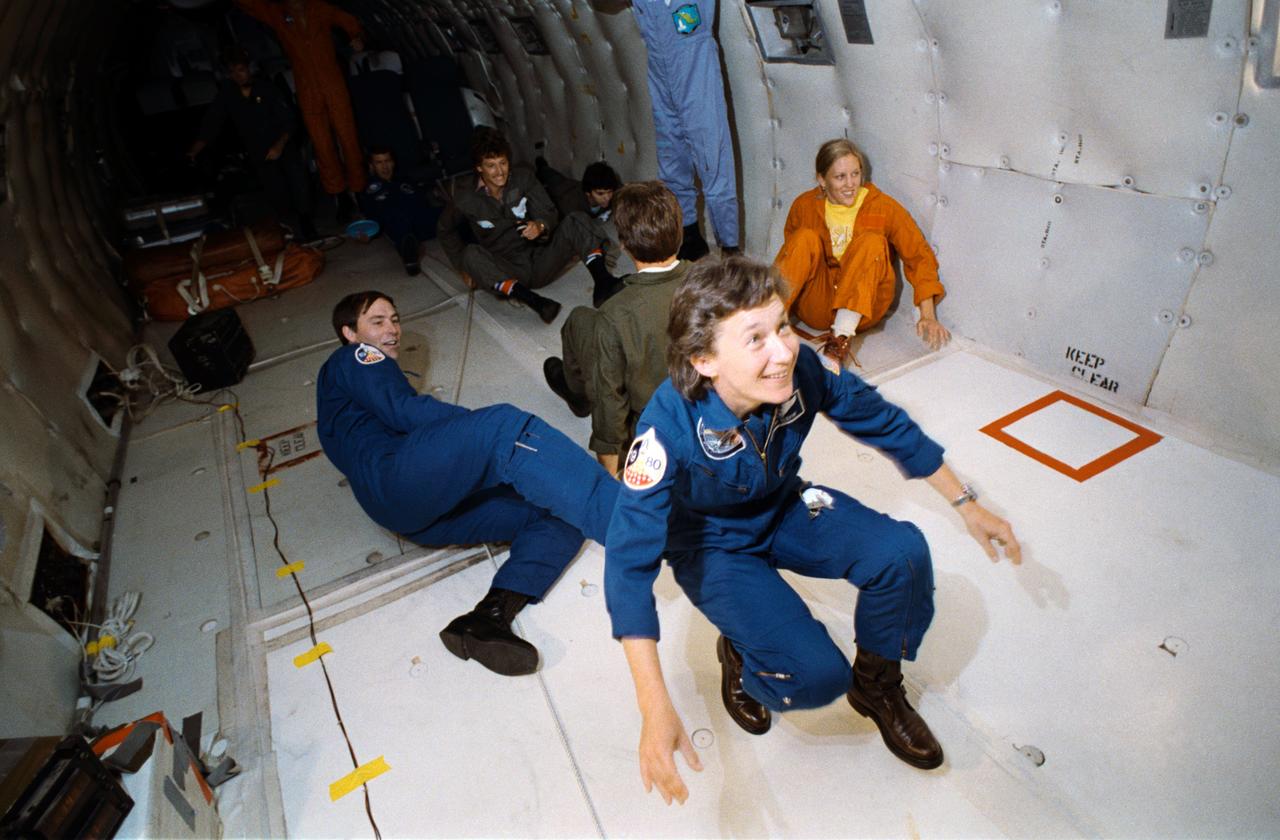
KC-135 inflight training of the STS-30/61B Crew for suit donning doffing and Zero-G orientation for Rudolfo Neri, Astronaut Mary Cleave, and Ricardo Peralta, Backup Neri. 1. Astronaut Cleave, Mary - Zero-G 2. Neri, Rodolfo - Zero-G 3. Peralta, Ricard - Zero-G
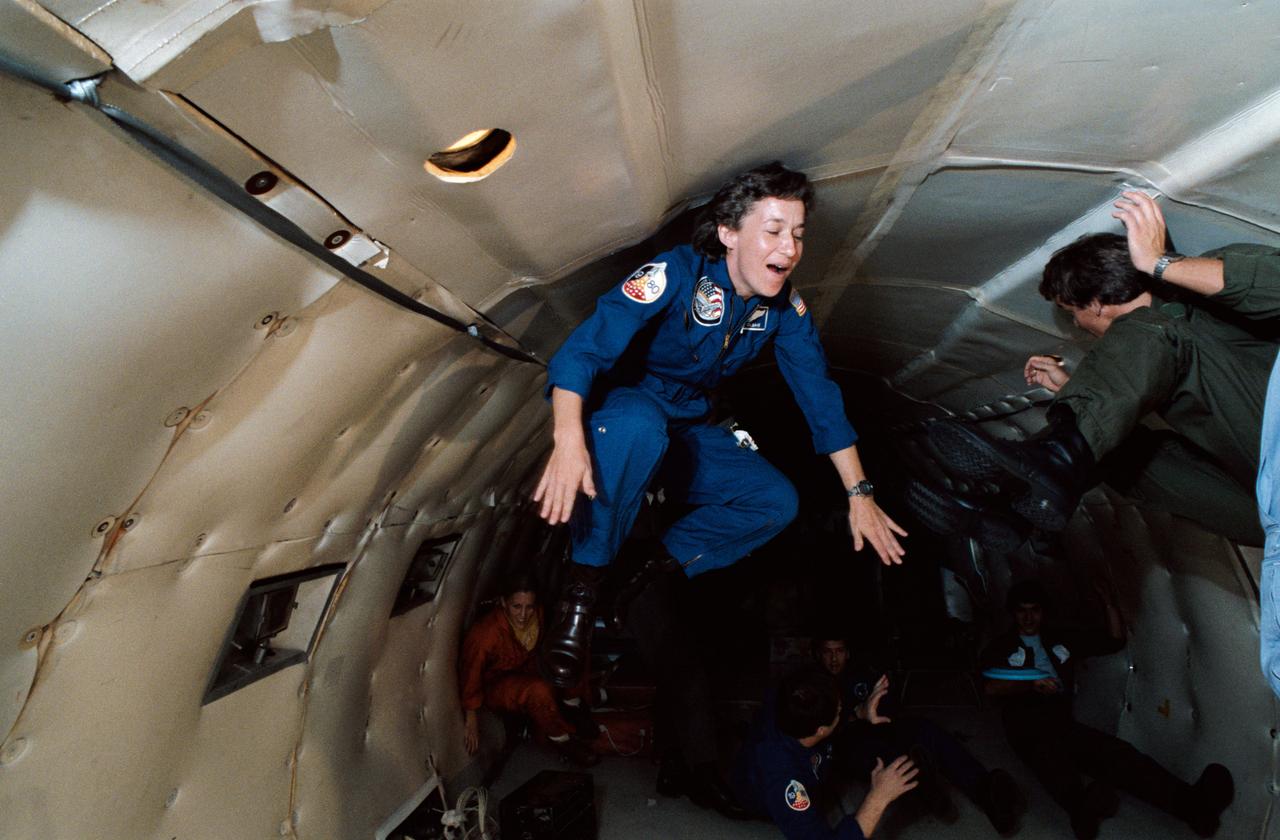
KC-135 inflight training of the STS-30/61B Crew for suit donning doffing and Zero-G orientation for Rudolfo Neri, Astronaut Mary Cleave, and Ricardo Peralta, Backup Neri. 1. Astronaut Cleave, Mary - Zero-G 2. Neri, Rodolfo - Zero-G 3. Peralta, Ricard - Zero-G
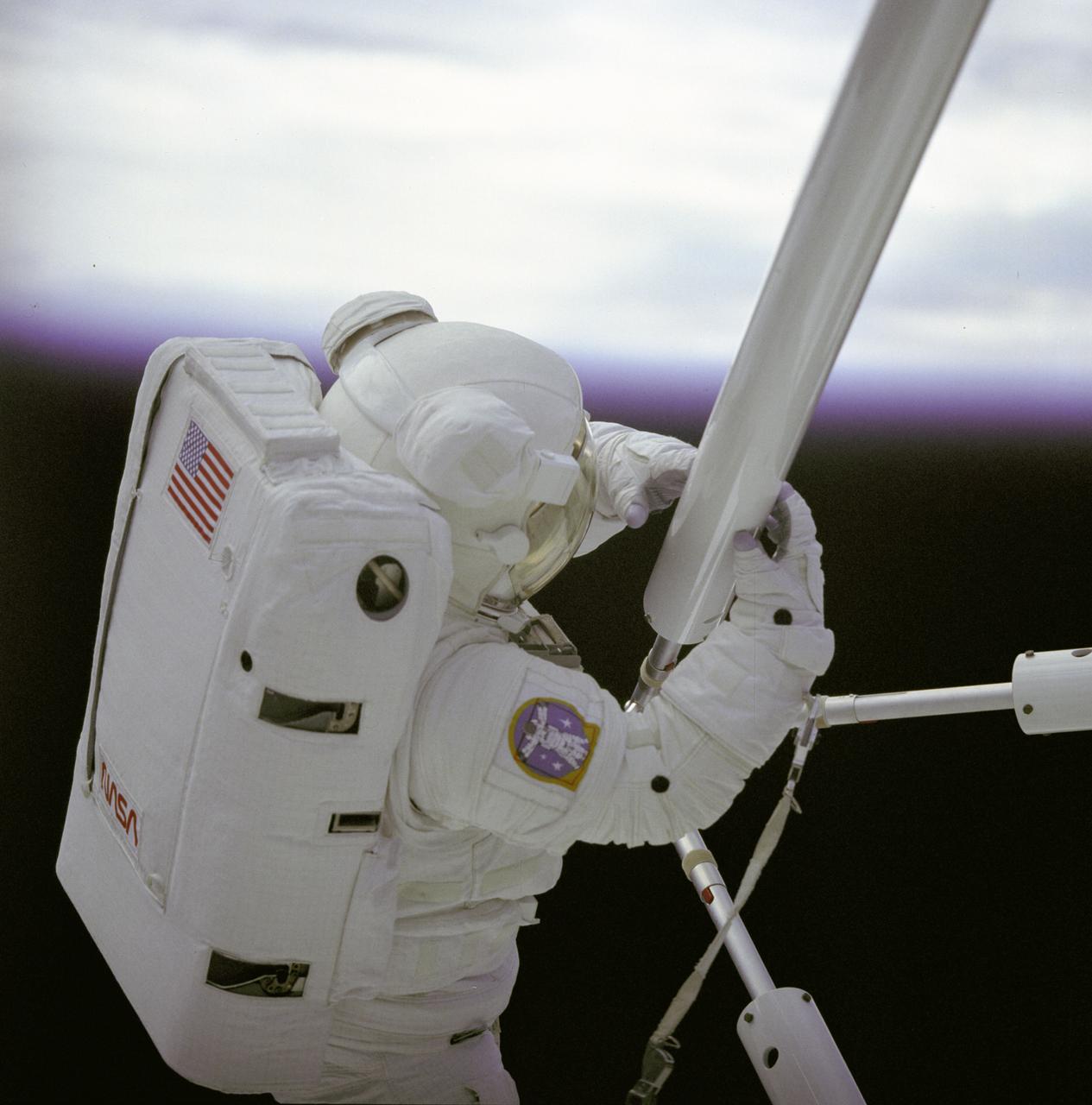
The crew assigned to the STS-61B mission included Bryan D. O’Conner, pilot; Brewster H. Shaw, commander; Charles D. Walker, payload specialist; mission specialists Jerry L. Ross, Mary L. Cleave, and Sherwood C. Spring; and Rodolpho Neri Vela, payload specialist. Launched aboard the Space Shuttle Atlantis November 28, 1985 at 7:29:00 pm (EST), the STS-61B mission’s primary payload included three communications satellites: MORELOS-B (Mexico); AUSSAT-2 (Australia); and SATCOM KU-2 (RCA Americom). Two experiments were conducted to test assembling erectable structures in space: EASE (Experimental Assembly of Structures in Extravehicular Activity), and ACCESS (Assembly Concept for Construction of Erectable Space Structure). In a joint venture between NASA/Langley Research Center in Hampton, Virginia, and the Marshall Space Flight Center (MSFC), the EASE and ACCESS were developed and demonstrated at MSFC's Neutral Buoyancy Simulator (NBS). In this STS-61B onboard photo, astronaut Spring was working on the EASE during an Extravehicular Activity (EVA). The primary objective of this experiment was to test the structural assembly concepts for suitability as the framework for larger space structures and to identify ways to improve the productivity of space construction.
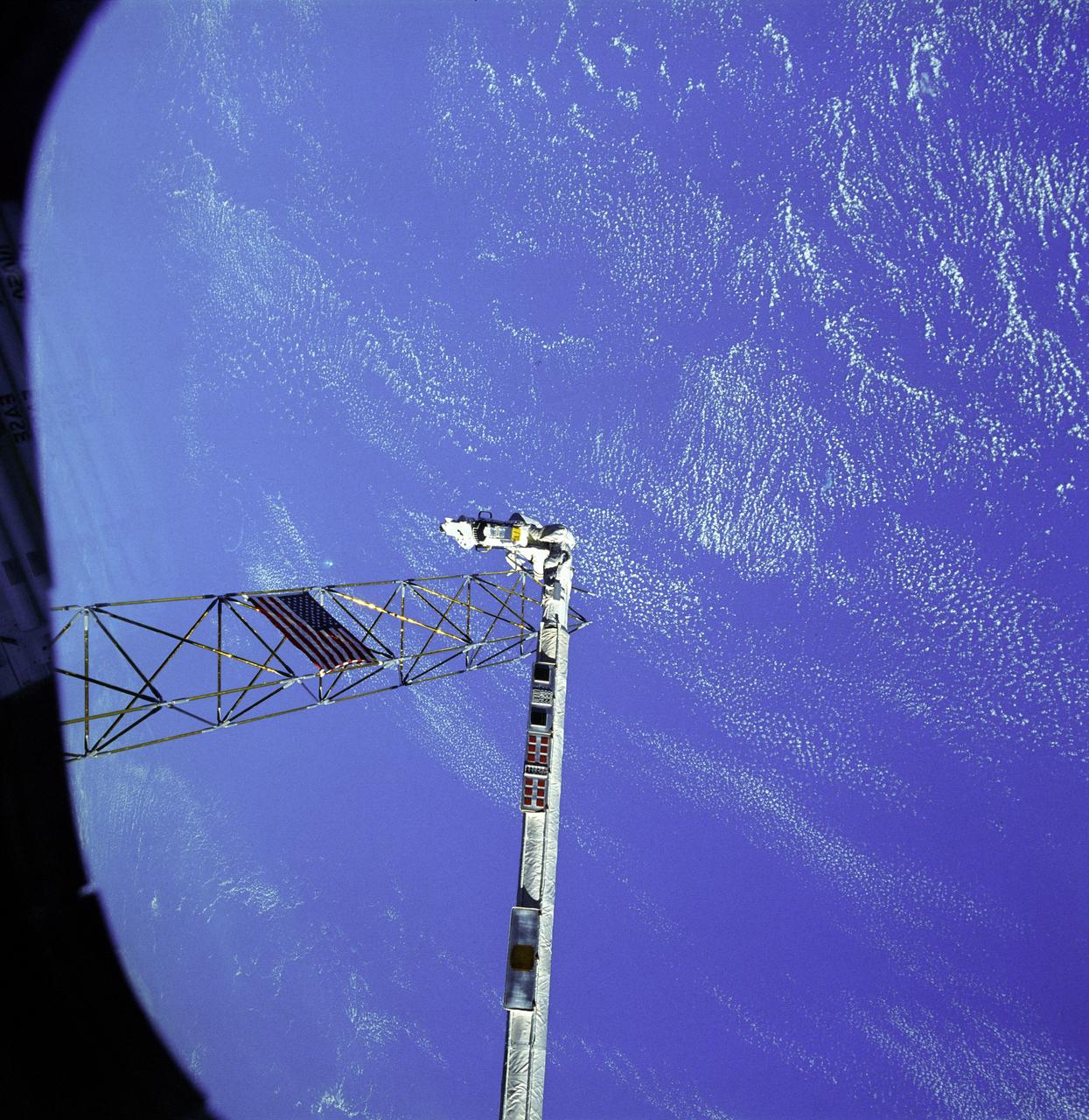
The crew assigned to the STS-61B mission included Bryan D. O’Conner, pilot; Brewster H. Shaw, commander; Charles D. Walker, payload specialist; mission specialists Jerry L. Ross, Mary L. Cleave, and Sherwood C. Spring; and Rodolpho Neri Vela, payload specialist. Launched aboard the Space Shuttle Atlantis November 28, 1985 at 7:29:00 pm (EST), the STS-61B mission’s primary payload included three communications satellites: MORELOS-B (Mexico); AUSSAT-2 (Australia); and SATCOM KU-2 (RCA Americom). Two experiments were conducted to test assembling erectable structures in space: EASE (Experimental Assembly of Structures in Extravehicular Activity), and ACCESS (Assembly Concept for Construction of Erectable Space Structure). In a joint venture between NASA/Langley Research Center in Hampton, Virginia, and the Marshall Space Flight Center (MSFC), EASE and ACCESS were developed and demonstrated at MSFC's Neutral Buoyancy Simulator (NBS). In this STS-61B onboard photo, astronaut Ross works on ACCESS high above the orbiter. The primary objective of these experiments was to test the structural assembly concepts for suitability as the framework for larger space structures and to identify ways to improve the productivity of space construction.
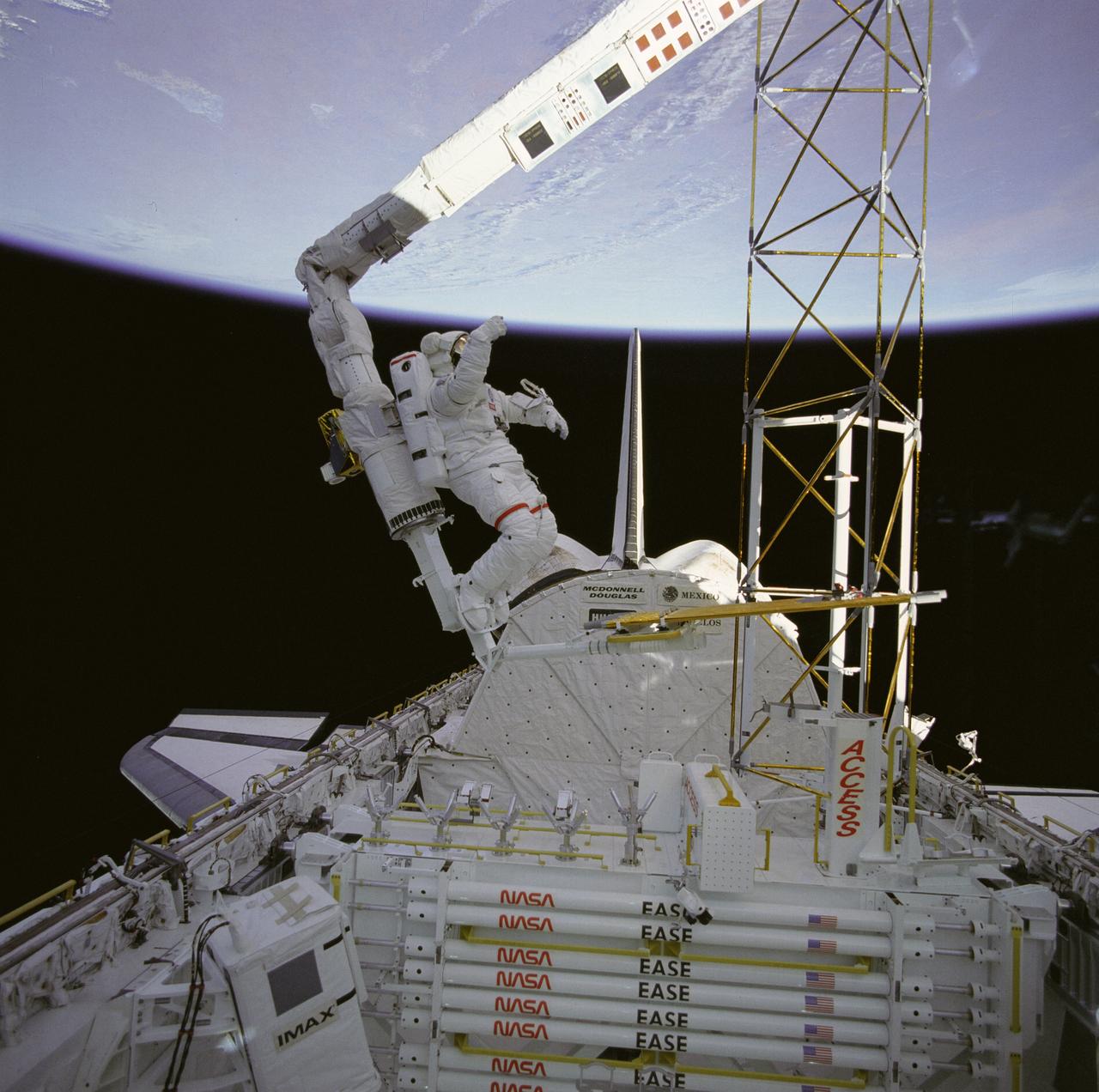
The crew assigned to the STS-61B mission included Bryan D. O’Conner, pilot; Brewster H. Shaw, commander; Charles D. Walker, payload specialist; mission specialists Jerry L. Ross, Mary L. Cleave, and Sherwood C. Spring; and Rodolpho Neri Vela, payload specialist. Launched aboard the Space Shuttle Atlantis November 28, 1985 at 7:29:00 pm (EST), the STS-61B mission’s primary payload included three communications satellites: MORELOS-B (Mexico); AUSSAT-2 (Australia); and SATCOM KU-2 (RCA Americom). Two experiments were conducted to test assembling erectable structures in space: EASE (Experimental Assembly of Structures in Extravehicular Activity), and ACCESS (Assembly Concept for Construction of Erectable Space Structure). In a joint venture between NASA/Langley Research Center in Hampton, Virginia and the Marshall Space Flight Center (MSFC), EASE and ACCESS were developed and demonstrated at MSFC's Neutral Buoyancy Simulator (NBS). In this STS-61B onboard photo astronaut Ross, located on the Manipulator Foot Restraint (MFR) over the cargo bay, erects ACCESS. The primary objective of this experiment was to test the structural assembly concepts for suitability as the framework for larger space structures and to identify ways to improve the productivity of space construction.
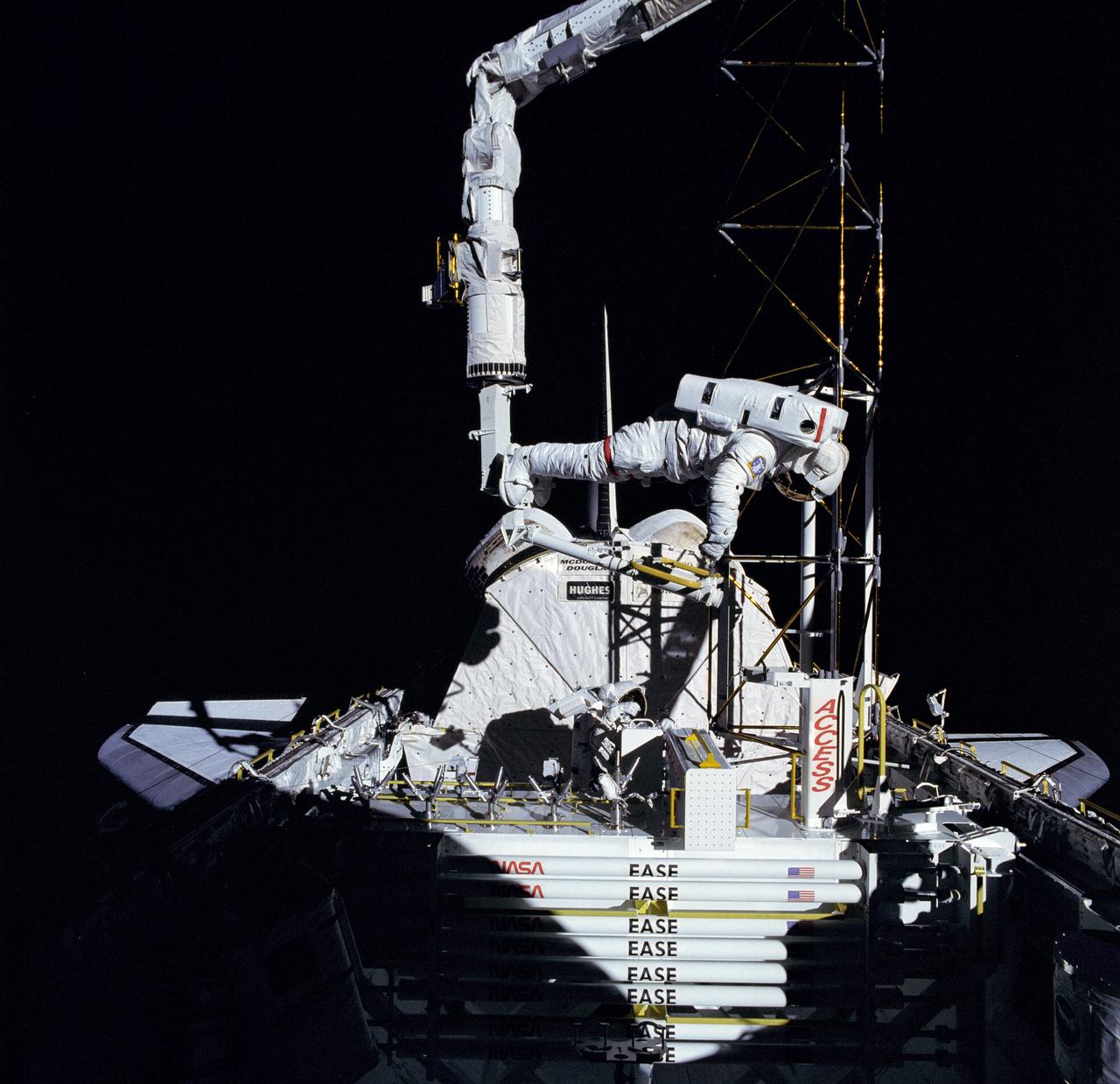
The crew assigned to the STS-61B mission included Bryan D. O’Conner, pilot; Brewster H. Shaw, commander; Charles D. Walker, payload specialist; mission specialists Jerry L. Ross, Mary L. Cleave, and Sherwood C. Spring; and Rodolpho Neri Vela, payload specialist. Launched aboard the Space Shuttle Atlantis November 28, 1985 at 7:29:00 pm (EST), the STS-61B mission’s primary payload included three communications satellites: MORELOS-B (Mexico); AUSSAT-2 (Australia); and SATCOM KU-2 (RCA Americom). Two experiments were conducted to test assembling erectable structures in space: EASE (Experimental Assembly of Structures in Extravehicular Activity), and ACCESS (Assembly Concept for Construction of Erectable Space Structure). In a joint venture between NASA/Langley Research Center in Hampton, Virginia and the Marshall Space Flight Center (MSFC), EASE and ACCESS were developed and demonstrated at MSFC's Neutral Buoyancy Simulator (NBS). The primary objective of this experiment was to test the structural assembly concepts for suitability as the framework for larger space structures and to identify ways to improve the productivity of space construction. In this STS-61B onboard photo, astronaut Ross was working on the ACCESS experiment during an Extravehicular Activity (EVA).
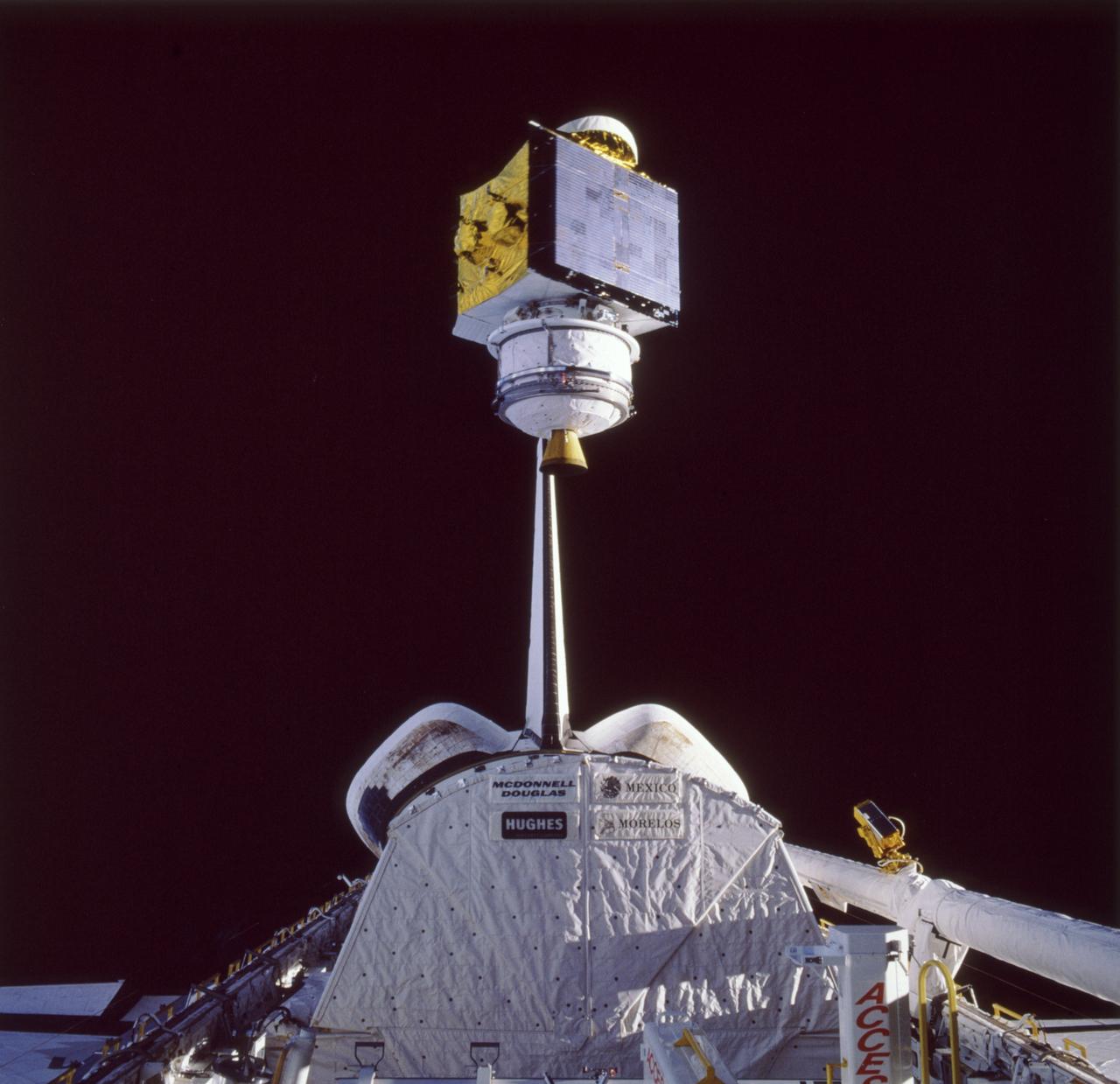
In this photograph the SATCOM KU-2 satellite attached to a Payload Assist Module-D (PAM-D) is being released from the cargo bay of the Space Shuttle Orbiter Atlantis during STS-61B, the 23rd Shuttle Mission. The PAM-D is an upper stage system used to deploy payloads to a required orbit unattainable by the spacecraft. SATCOM KU-2 is an RCA communication satellite and was launched on November 26, 1985.
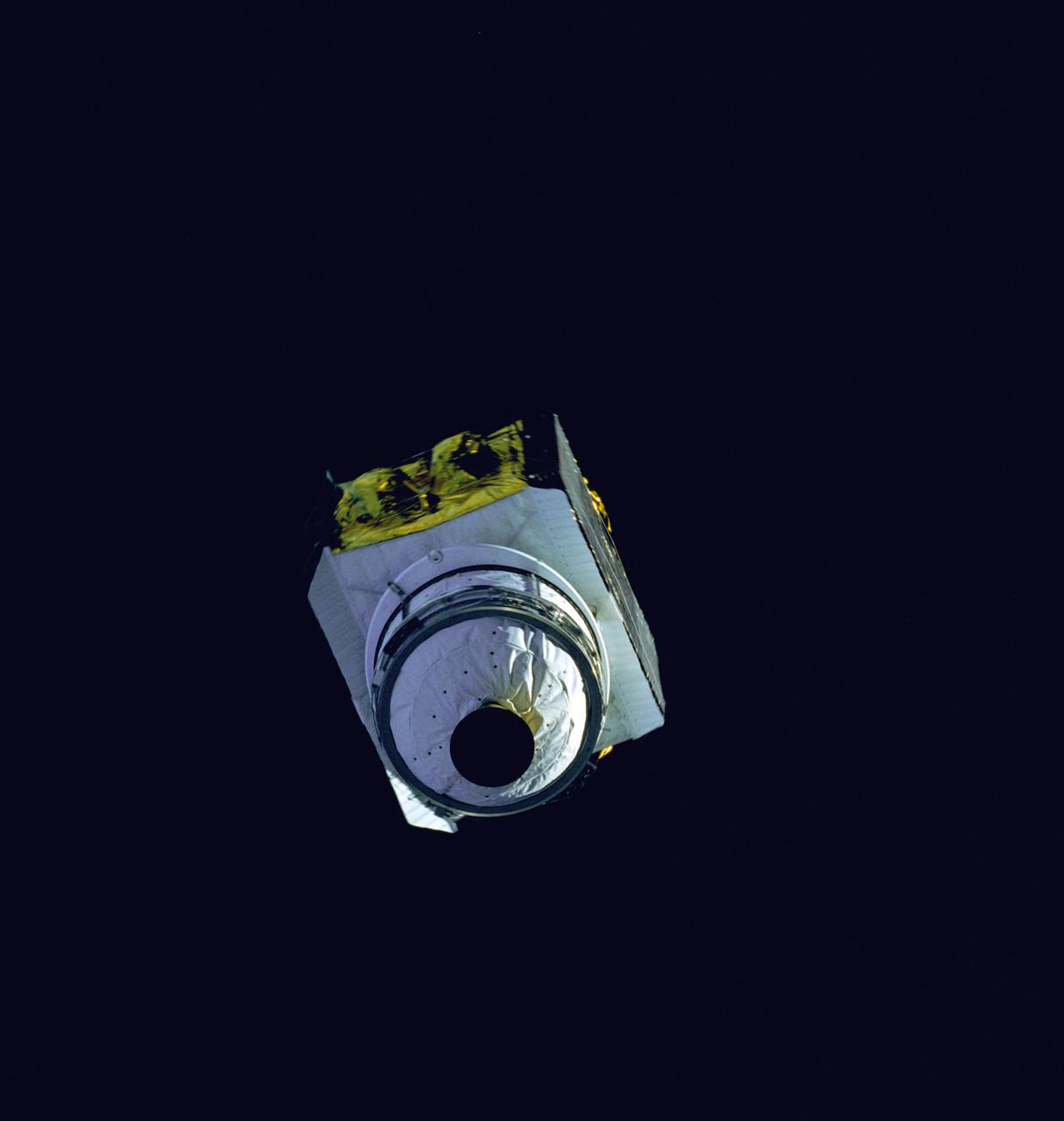
This image of the free-flying SATCOM KU-2 satellite, still attached to a Payload Assist Module-D (PAM-D), was photographed during STS-61B, the 23rd Space Shuttle mission. The SATCOM KU-2 is an RCA communication satellite and was launched on November 26, 1985, aboard the Space Shuttle Orbiter Atlantis. The PAM-D is an upper stage system used to deploy payloads to a required orbit unattainable by the launch vehicle.
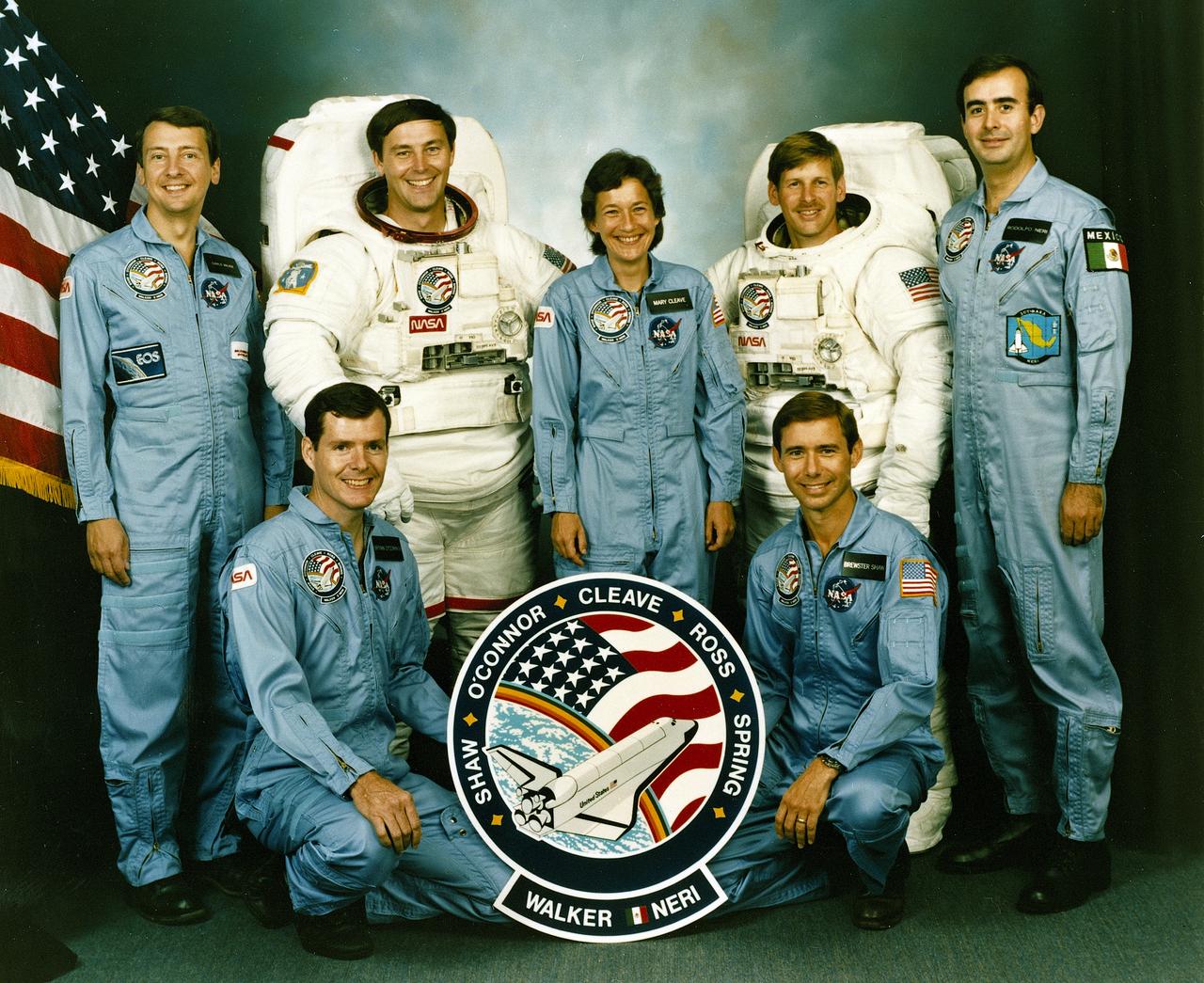
The crew assigned to the STS-61B mission included (kneeling left to right) Bryan D. O’conner, pilot; and Brewster H. Shaw, commander. On the back row, left to right, are Charles D. Walker, payload specialist; mission specialists Jerry L. Ross, Mary L. Cleave, and Sherwood C. Spring; and Rodolpho Neri Vela, payload specialist. Launched aboard the Space Shuttle Atlantis November 28, 1985 at 7:29:00 pm (EST), the STS-61B mission’s primary payload included three communications satellites: MORELOS-B (Mexico); AUSSAT-2 (Autralia); and SATCOM KU-2 (RCA Americom. Two experiments were conducted to test assembling erectable structures in space: EASE (Experimental Assembly of Structures in Extravehicular Activity), and ACCESS (Assembly Concept for Construction of Erectable Space Structure). In a joint venture between NASA/Langley Research Center in Hampton, VA and Marshall Space Flight Center (MSFC), the Assembly Concept for Construction of Erectable Space Structures (ACCESS) was developed and demonstrated at MSFC's Neutral Buoyancy Simulator (NBS). The primary objective of this experiment was to test the ACCESS structural assembly concept for suitability as the framework for larger space structures and to identify ways to improve the productivity of space construction.
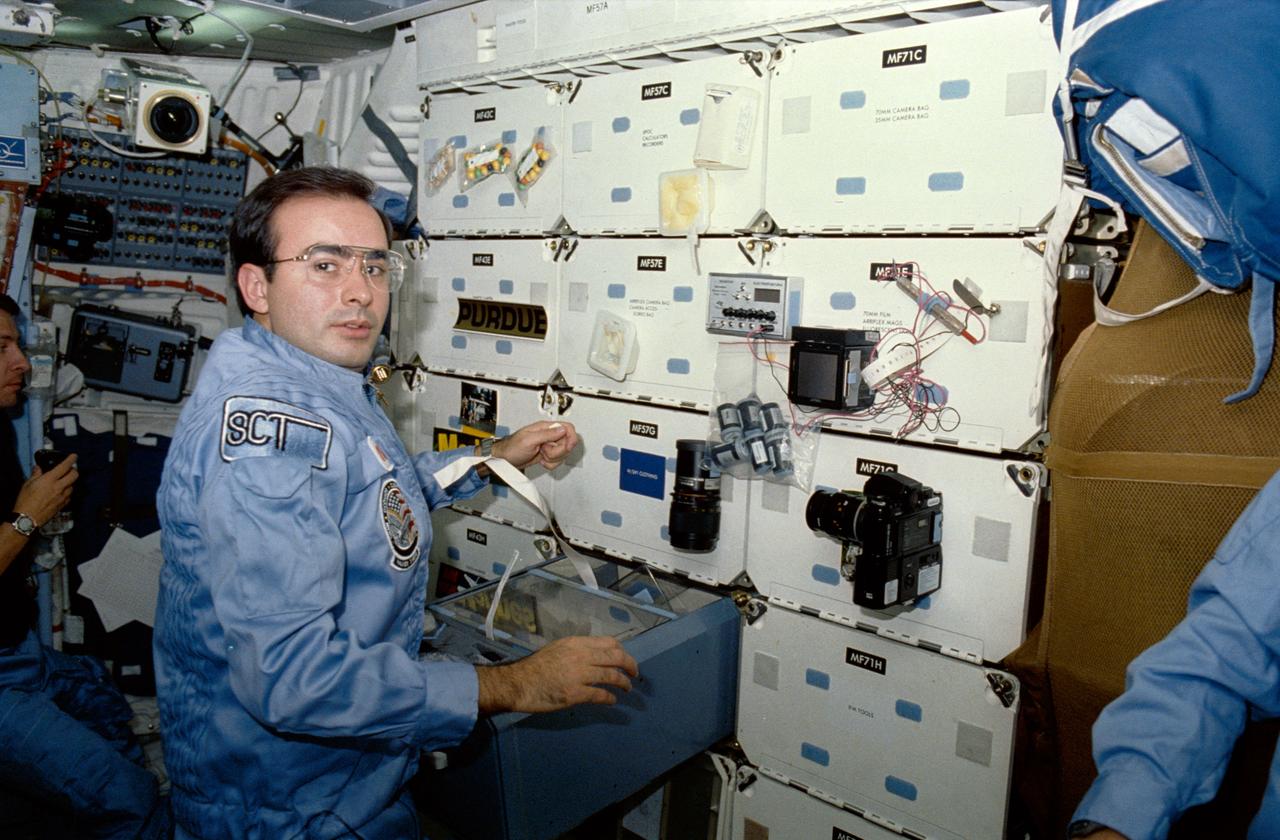
61B-05-021 (26 Nov-3 Dec 1985) --- Payload Specialist Rodolfo Neri, representing Mexico on the STS-61B space mission aboard the Atlantis, prepares to begin one of the experiments for Mexico. Neri used a nearby 35mm camera to record plants and bacteria for various prescribed testing. Here the payload specialist has opened a stowage drawer to retrieve components of one of the tests.
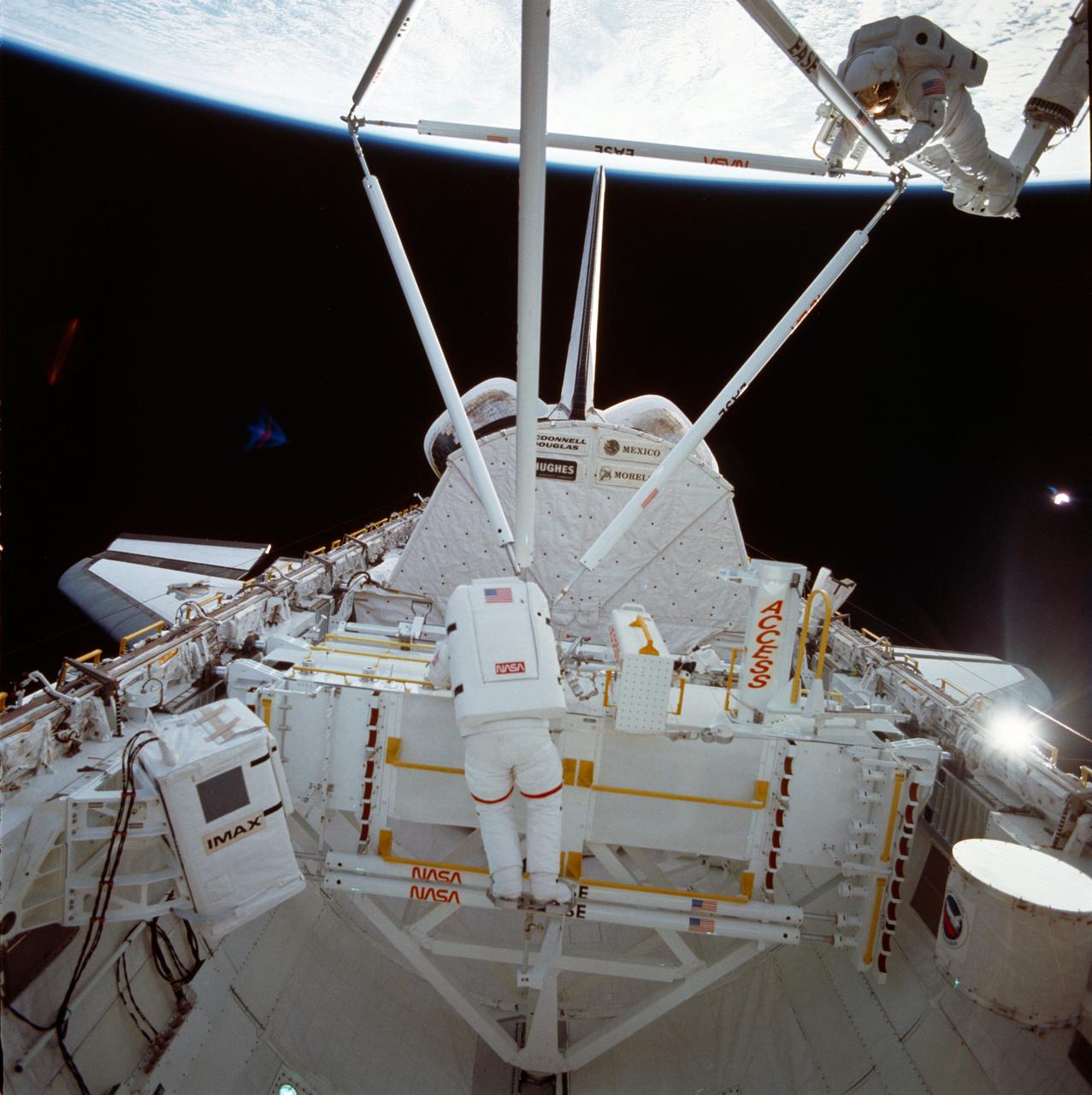
61B-41-047 (1 Dec 1985) --- Astronauts Jerry L. Ross (left) and Sherwood C. (Woody) Spring are photographed by Astronaut Bryan D. O'Connor as they continue to assemble more pieces of the EASE (Experimental Assembly of Structures in Extravehicular Activities) device during the week-long STS 61-B mission. This frame is one of a series covering the structure's build-up.
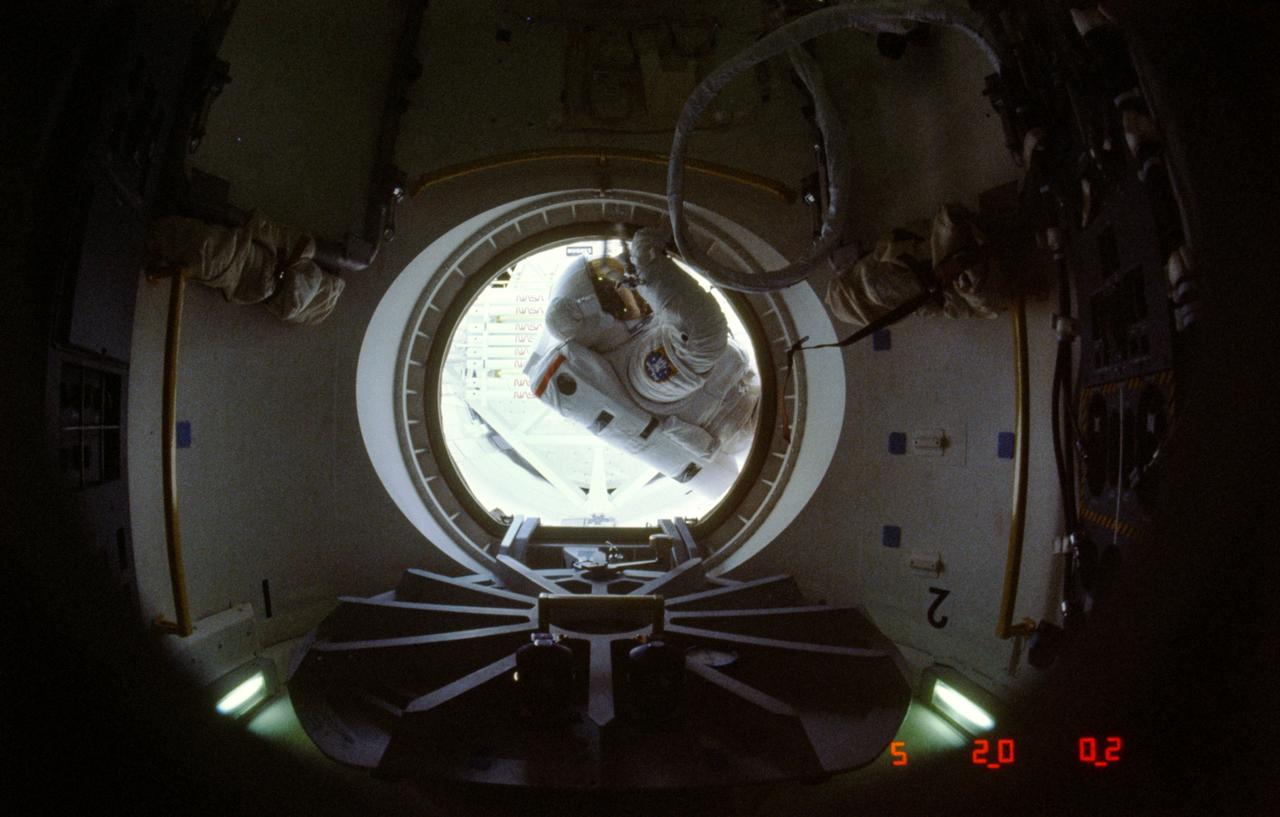
61B-08-026 (1 Dec 1985) --- Astronaut Jerry L. Ross was photographed by astronaut Bryan D. O'Connor through Atlantis's airlock as the mission specialist, fully equipped with his red-striped, white extravehicular mobility unit (EMU), moved out into the cargo bay to begin one of two lengthy extravehicular activities (EVA) on the week-long STS 61-B mission.
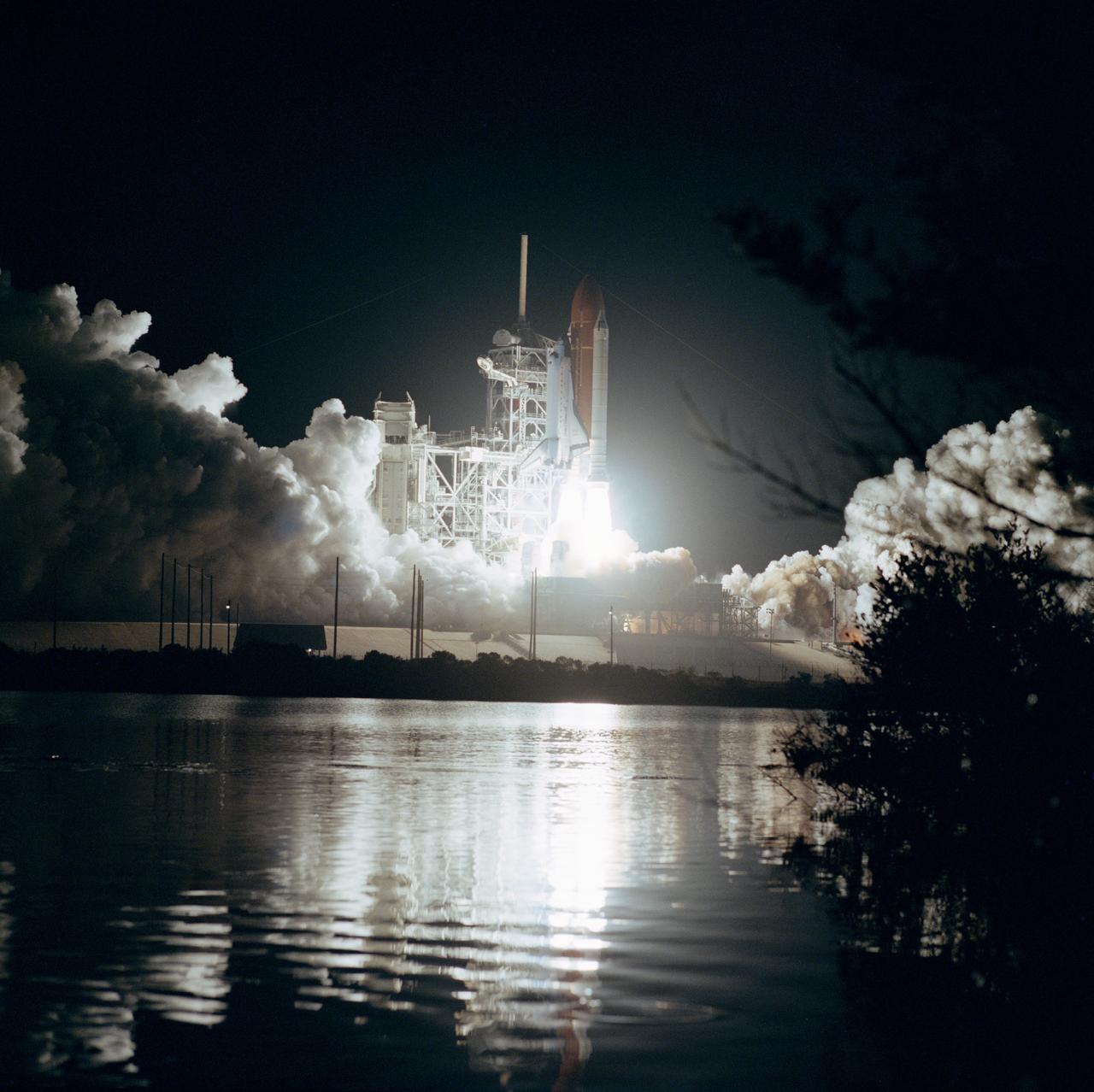
61B-S-067 (26 Nov 1985) --- Space Shuttle Atlantis ascends into the night sky at 7:29 p.m. (EST), November 26, with a seven member crew and three communications satellites aboard. The STS 61-B crewmembers are Brewster Shaw Jr., Bryan D. O?Connor, Mary L. Cleave, Sherwood C. Spring, Jerry L. Ross and Payload Specialists Rodolfo Neri of Mexico (Morelos) and Charles D. Walker of McDonnell Douglas.
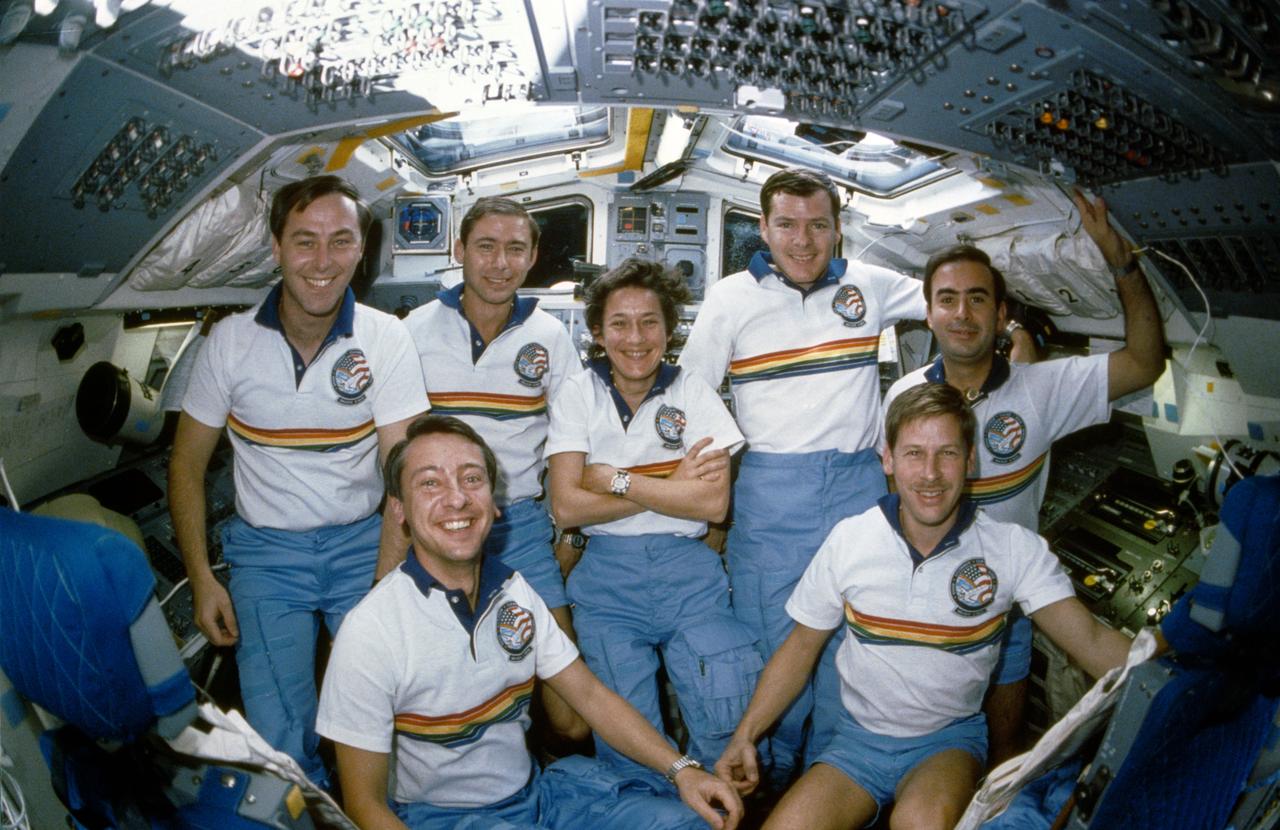
61B-21-008 (26 Nov-1 Dec 1985) --- A fish-eye lens allows for the seven-member STS 61-B crew to be photographed on the flight deck of the earth-orbiting Atlantis. Left to right, back row, are astronauts Jerry L. Ross, Brewster Shaw Jr., Mary L. Cleave, and Bryan D. O'Connor; and payload specialist Rodolfo Neri. Front row, left to right, payload specialist Charles D. Walker and astronaut Sherwood C. Spring.
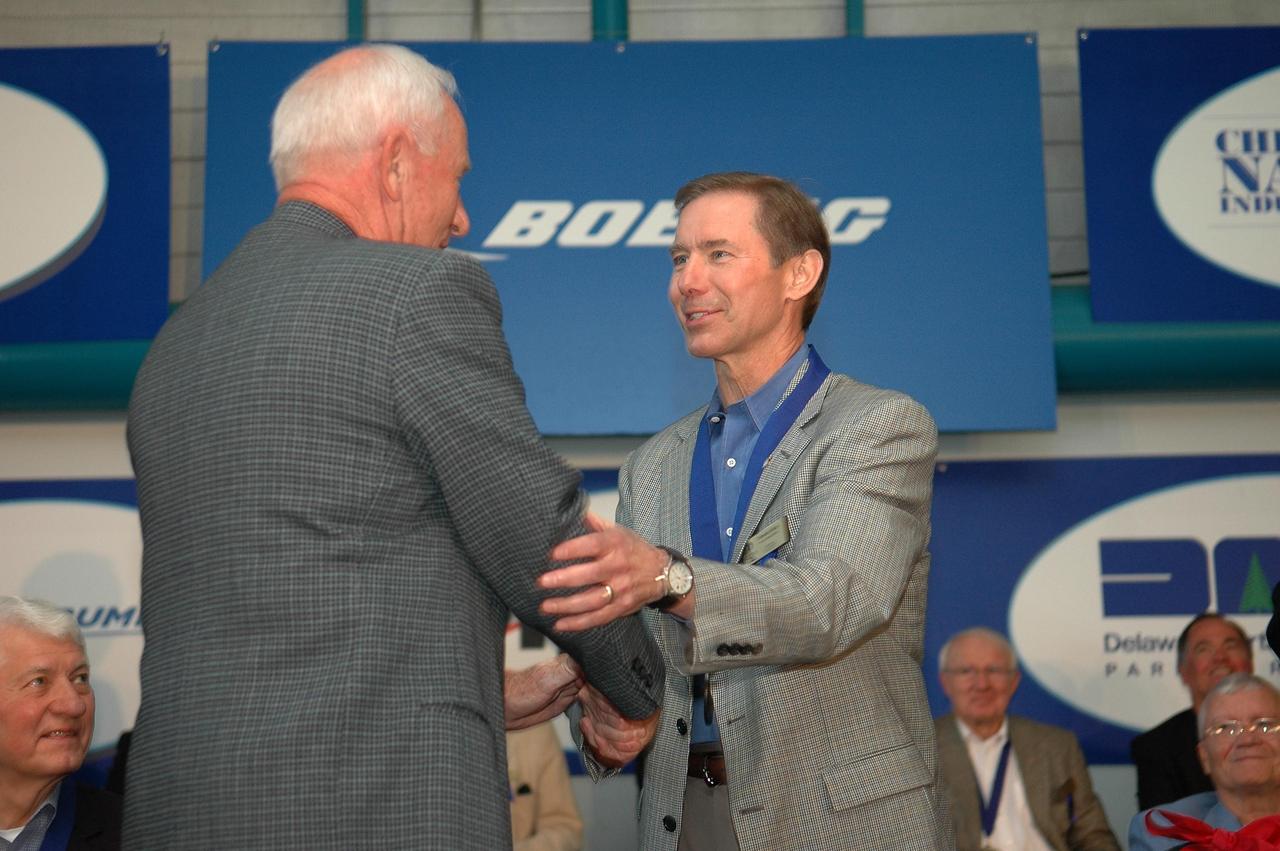
KENNEDY SPACE CENTER, FLA. - Brewster H. Shaw Jr. (right) accepts congratulations from Al Worden, U.S. Astronaut Hall of Fame member and chairman of the Astronaut Scholarship Foundation. The occasion is the 2006 induction ceremony for the U.S. Astronaut Hall of Fame, held in the Apollo/Saturn V Center. The inductees for 2006 are former NASA astronauts Shaw, Henry "Hank" Hartsfield Jr., and Charles F. Bolden Jr. Shaw flew on three space shuttle missions including STS-9, STS-61B, STS-28, logging 533 hours in space. The U.S. Astronaut Hall of Fame now includes 63 space explorers. Photo credit: NASA/Kim Shiflett
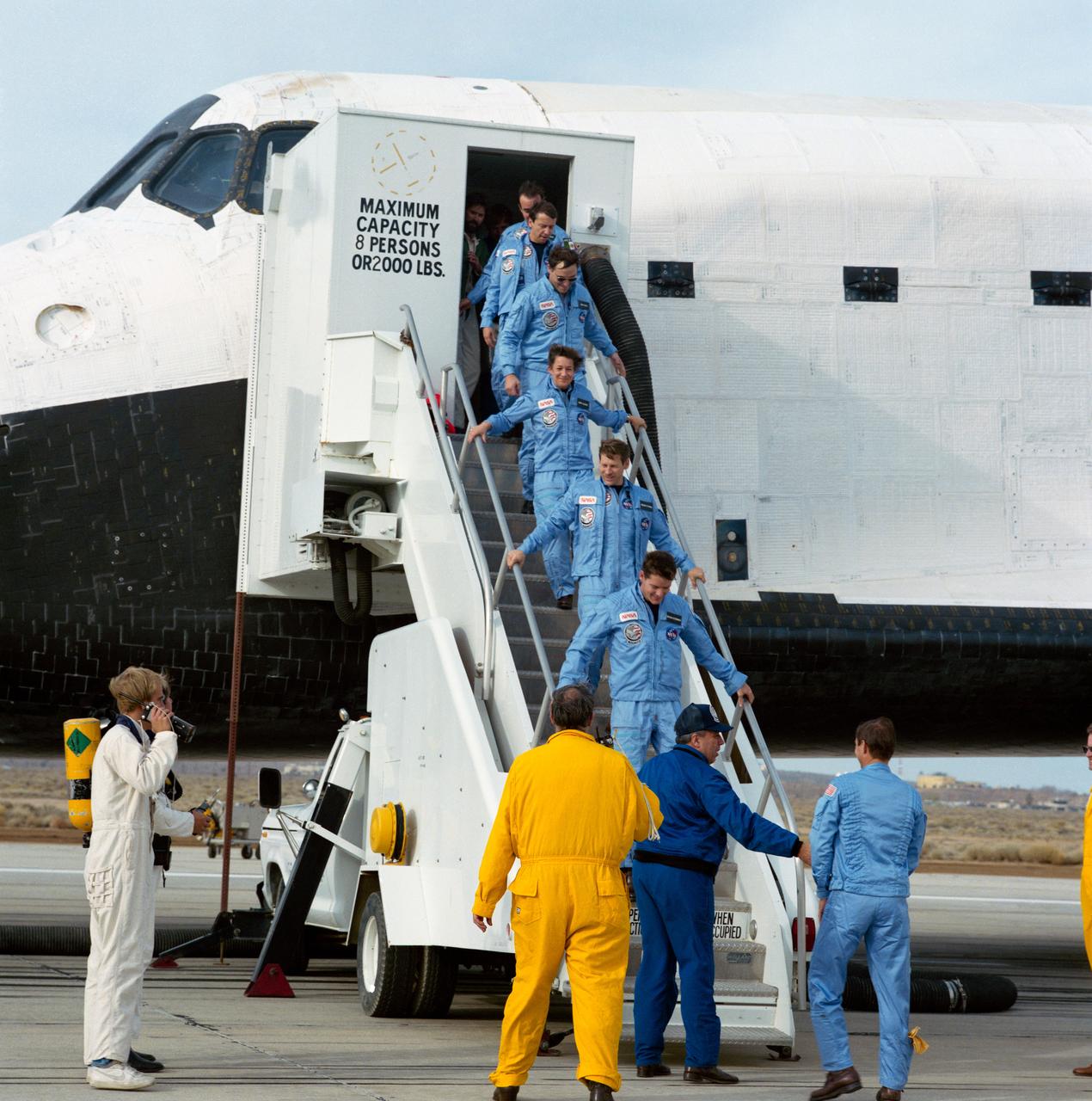
61B-S-071 (3 Dec 1985) --- George W.S. Abbey, director of flight crew operations at the Johnson Space Center (JSC), shakes hands with astronaut Brewster Shaw Jr., STS 61-B mission commander, as the seven-member crew descends the steps from its space-bound "home" for the last week. Following Shaw down the steps (bottom to top) were astronauts Bryan D. O'Connor, Sherwood C. Spring, Mary L. Cleave, Jerry L. Ross and Payload Specialists Charles D. Walker and Rodolfo Neri.
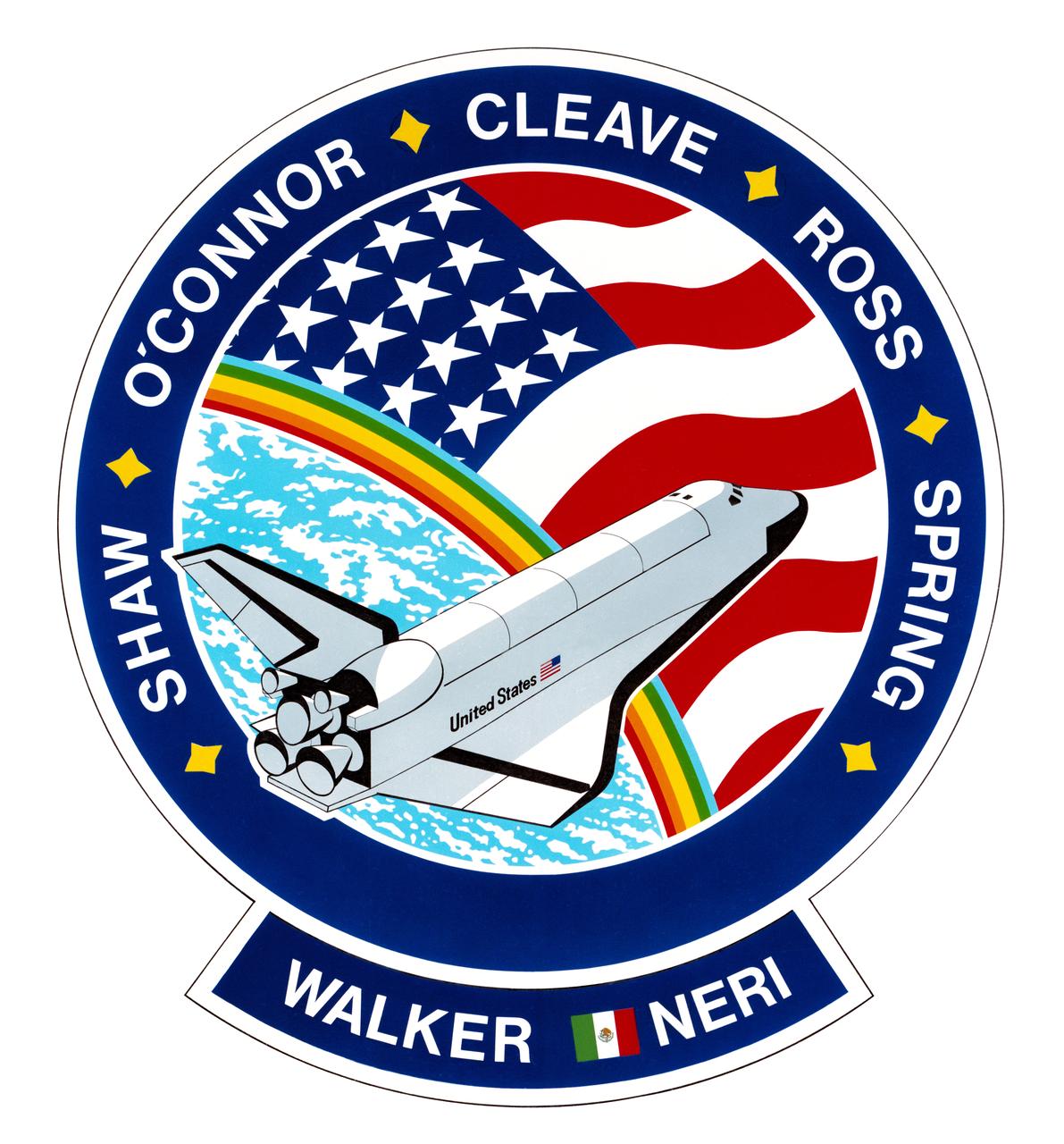
S85-36635 (October 1985) --- This is the insignia designed by the STS-61B crew members to represent their November 1985 mission aboard the space shuttle Atlantis, depicted here in Earth orbit, making only its second spaceflight. The design is surrounded by the surnames of the seven crew members. They are astronauts Brewster Shaw Jr., commander; Bryan D. O'Conner, pilot; Mary L. Cleave, Jerry L. Ross and Sherwood C. Spring, all mission specialists; and payload specialists Charles D. Walker, representing McDonnell Douglas, and Rodolfo Neri, representing Morelos of Mexico (note flag). The NASA insignia design for space shuttle flights is reserved for use by the astronauts and for other official use as the NASA Administrator may authorize. Public availability has been approved only in the forms of illustrations by the various news media. When and if there is any change in this policy, which is not anticipated, the change will be publicly announced. Photo credit: NASA