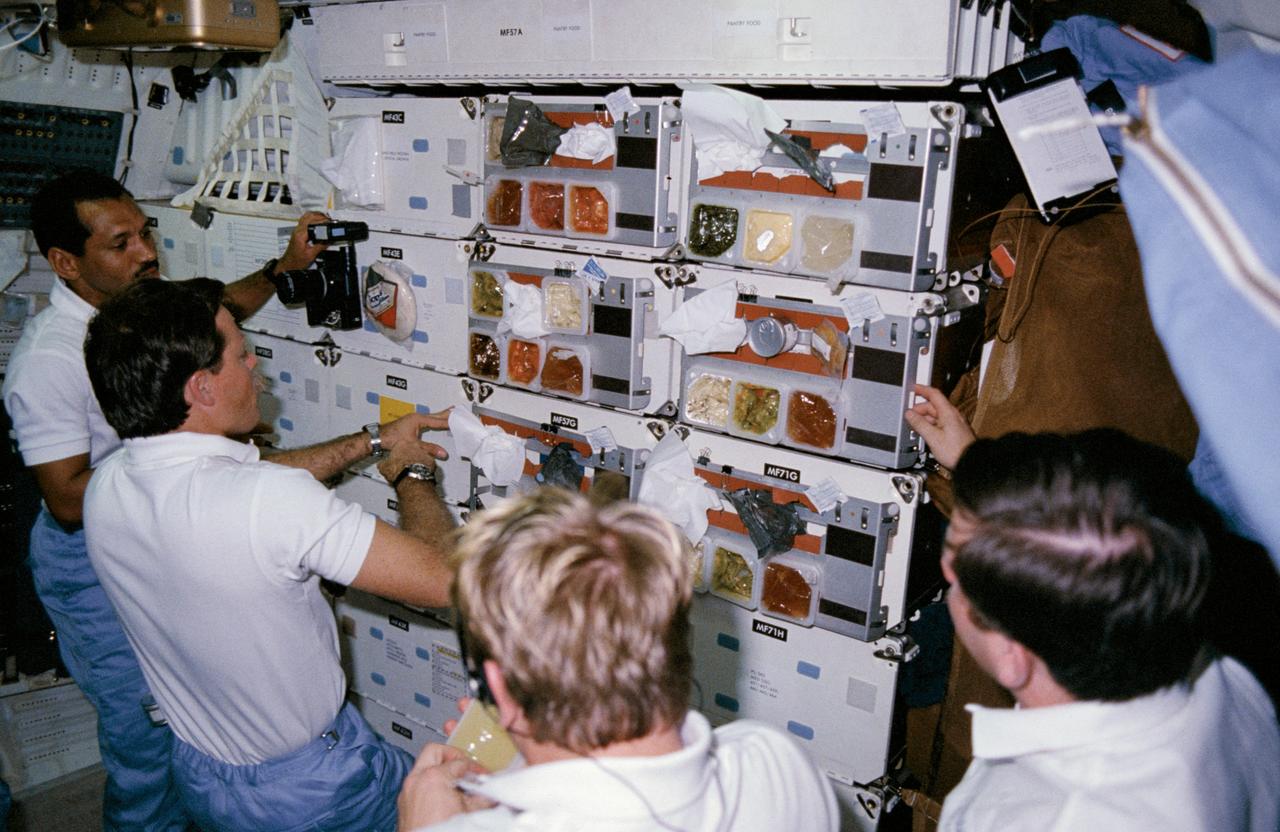
61C-14-015 (12-18 Jan. 1986) --- Astronauts Charles F. Bolden, STS-61C pilot; Robert L. Gibson, commander; George D. Nelson, mission specialist, and payload specialist Robert J. Cenker (RCA) queue at "chow line" on middeck of the space shuttle Columbia. Others onboard for the week-long mission were astronauts Steven A. Hawley and Franklin R. Chang-Diaz, mission specialists; and U.S. Representative Bill Nelson (Democrat - Florida). This photo was used as one of the visual aids at the crew's press conference on Jan. 23, 1986.
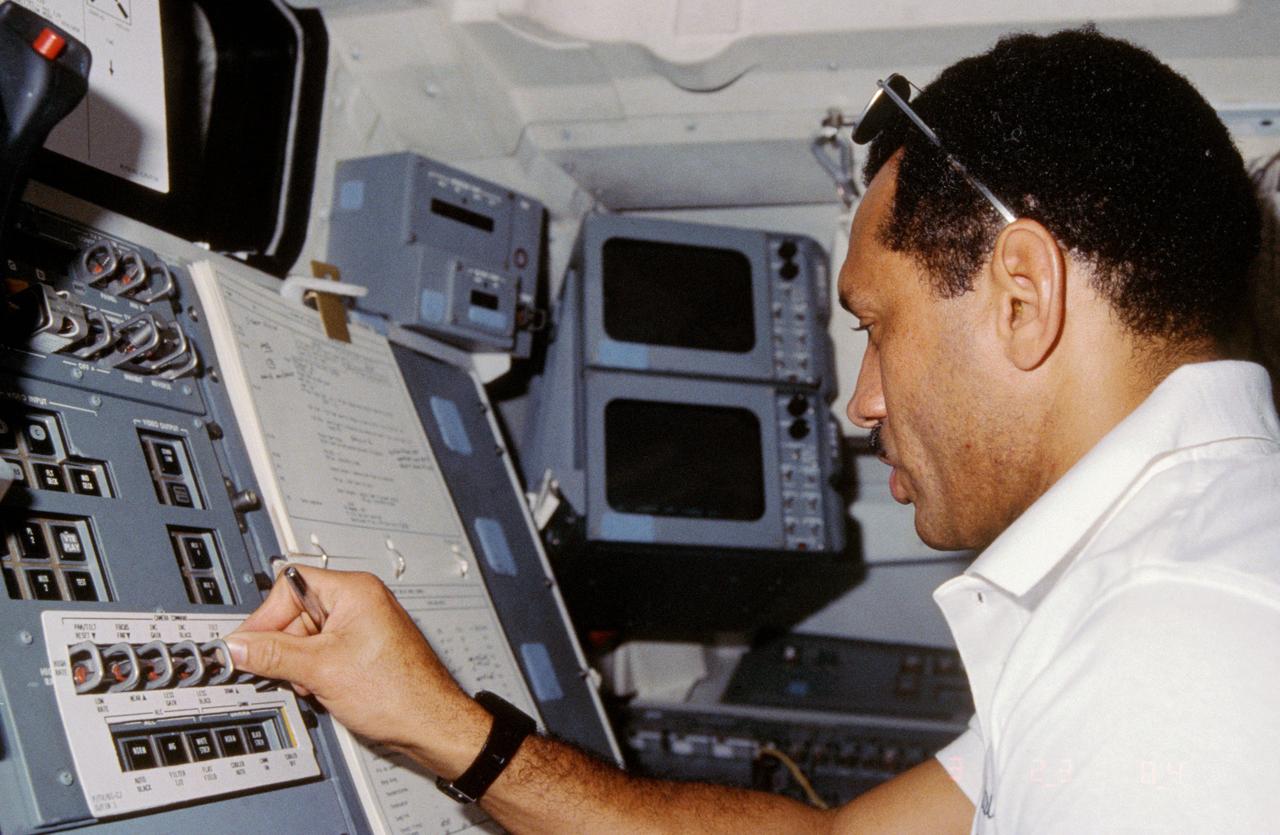
61C-09-035 (12-18 Jan. 1986) --- STS-61C pilot Charles F. Bolden is seen at controls on the aft flight deck of the Earth-orbiting space shuttle Columbia. Bolden was making his first spaceflight. Photo credit: NASA
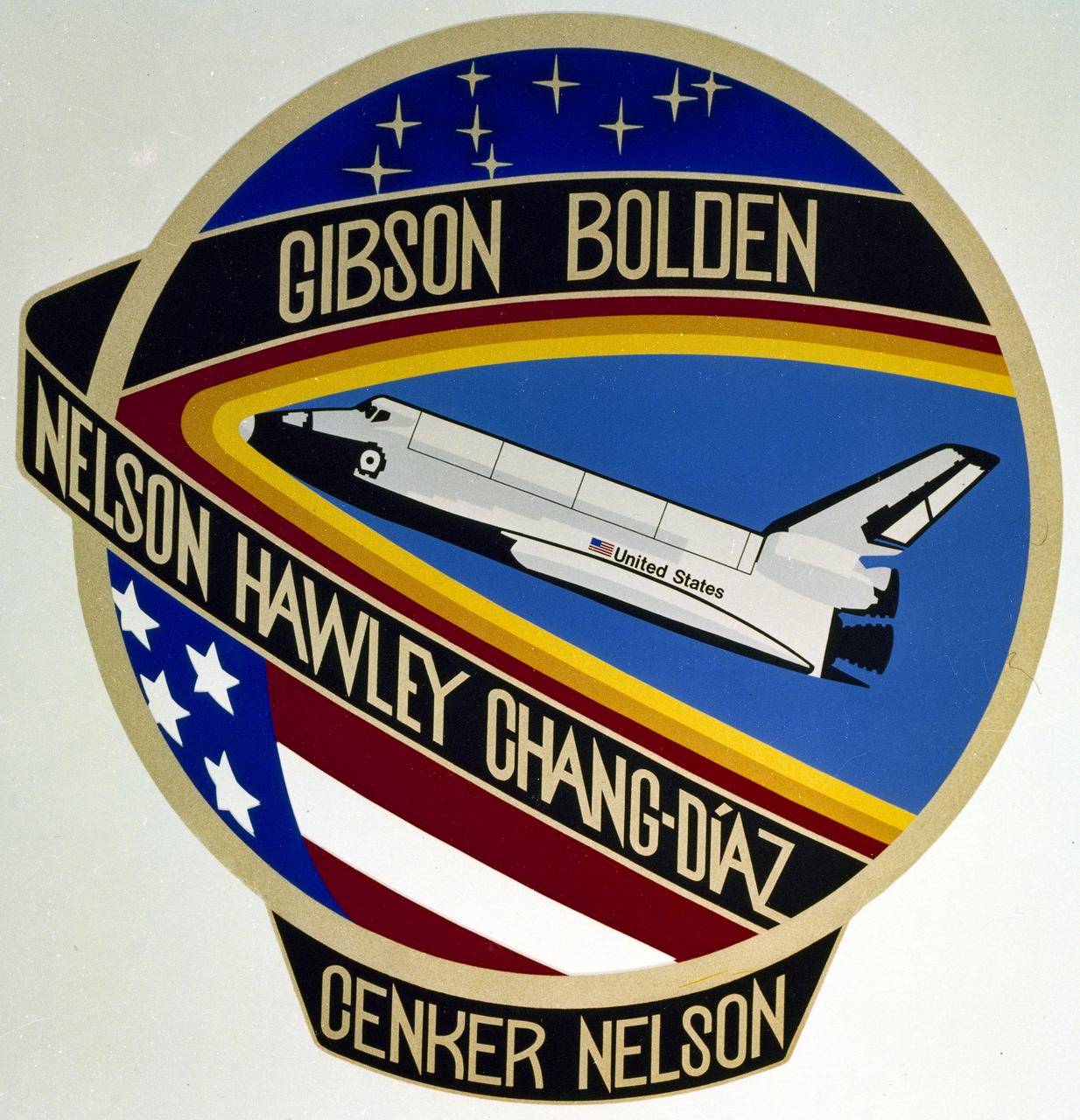
Columbia, which opened the era of the Space Transportation System with four orbital flight tests, is featured in re-entry in the emblem designed by the STS-61C crew representing the seven team members who manned the vehicle for its seventh STS mission. Gold lettering against black background honors the astronaut crewmembers on the delta pattern surrounding colorful re-entry shock waves, and the payload specialists are honored similarly below the sphere
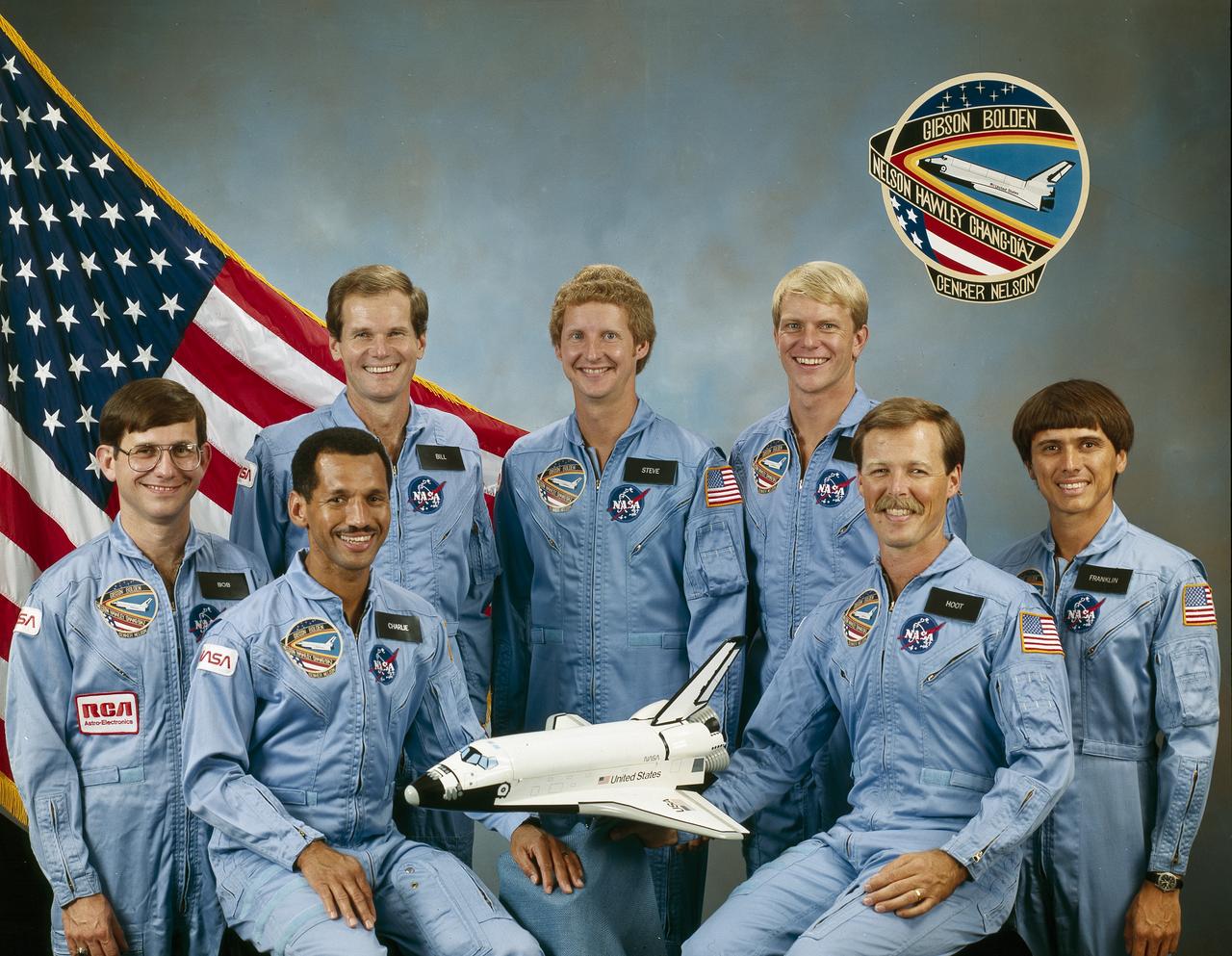
The crew assigned to the STS-61C mission included (seated left to right) Charles F. Bolden, Jr., pilot; and Robert L. (Hoot) Gibson, commander. On the back row, left to right, are payload specialists Robert J. Cenker, and Congressman Bill Nelson. To the right of Nelson are mission specialists Steven A. Hawley, George D. Nelson, and Franklin R. Chang-Diaz. Launched aboard the Space Shuttle Columbia on January 12, 1986 at 6:55:00 am (EST), the STS-61C mission’s primary payload was the communications satellite SATCOM KU-1 (RCA Americom).
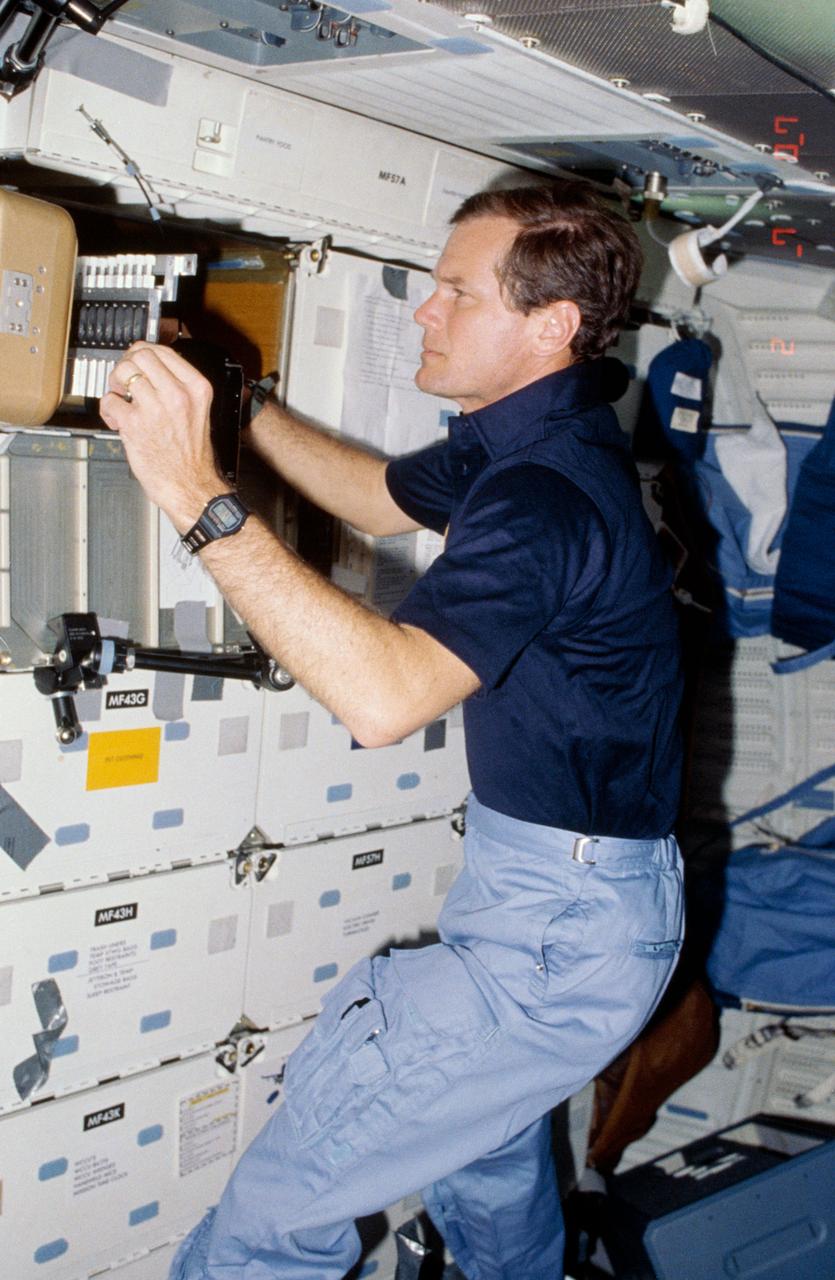
61C-05-036 (12-18 Jan. 1986) --- U.S. Representative Bill Nelson (Democrat - Florida), STS-61C payload specialist, prepares to photograph individual samples in the Handheld Protein Crystal Growth Experiment (HPCG) on Columbia's middeck. The operations involve the use of four pieces of equipment to attempt the growth of 60 different types of crystals -- 12 by means of dialysis and 48 via the vapor diffusion method. The photo was used by members of the STS-61C crew at their Jan. 23, 1986, Post-Flight Press Conference.
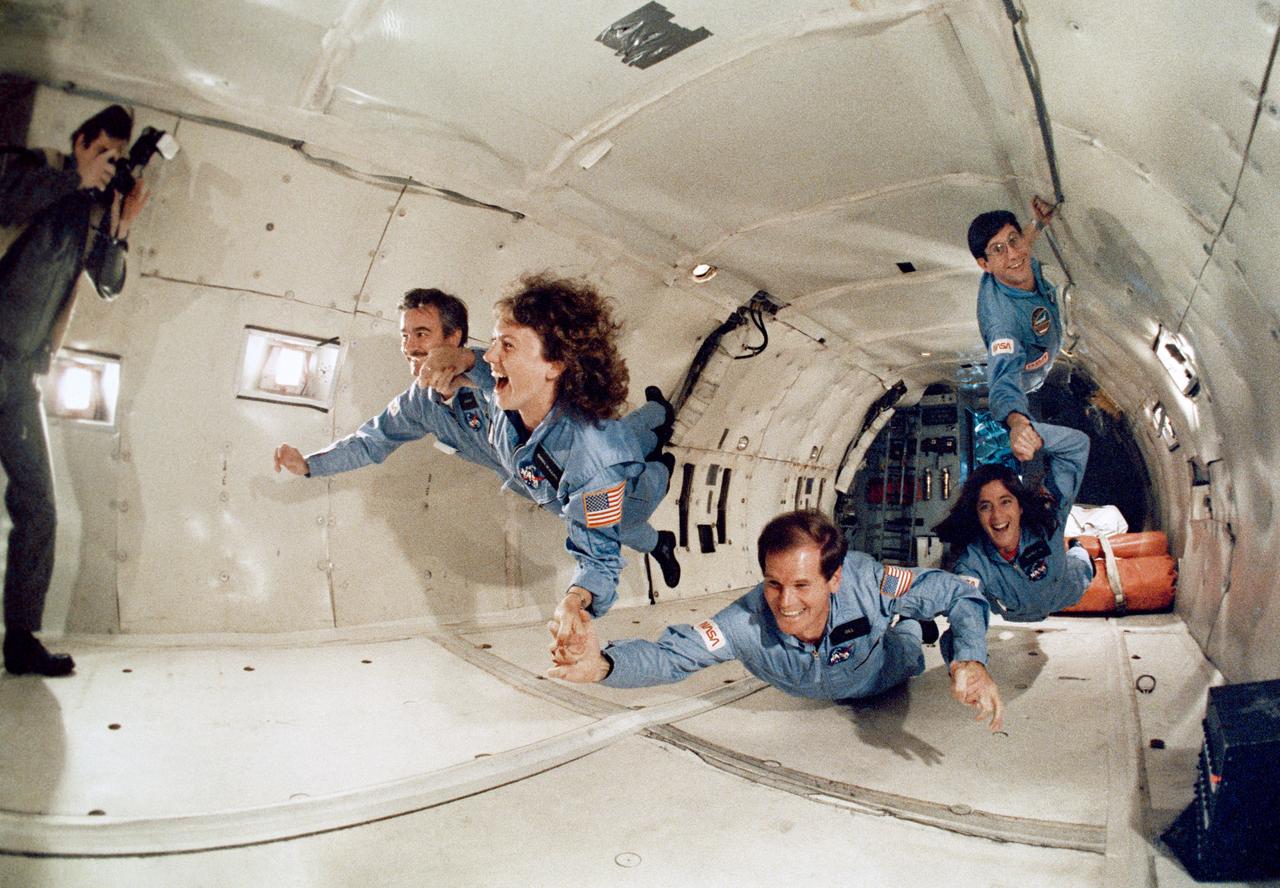
S85-44834 (20 Nov. 1985) --- This flying human chain represents prime and backup payload specialists for two upcoming STS missions. The group, representing trainees for STS-61C later this year and STS-51L early next year, shared some 40 parabolas in NASA?s KC-135, ?Zero-G? aircraft on Nov. 20, 1985. Left to right are Gerard Magilton, RCA backup payload specialist for STS-61C; Sharon Christa McAuliffe, payload specialist/teacher citizen observer for STS-51L; U.S. Representative Bill Nelson (D., Florida), scheduled for 61C; Barbara R. Morgan, backup to McAuliffe; and Robert J. Cenker, RCA payload specialist for 61C. The photo was taken by Otis Imboden. Photo credit: NASA
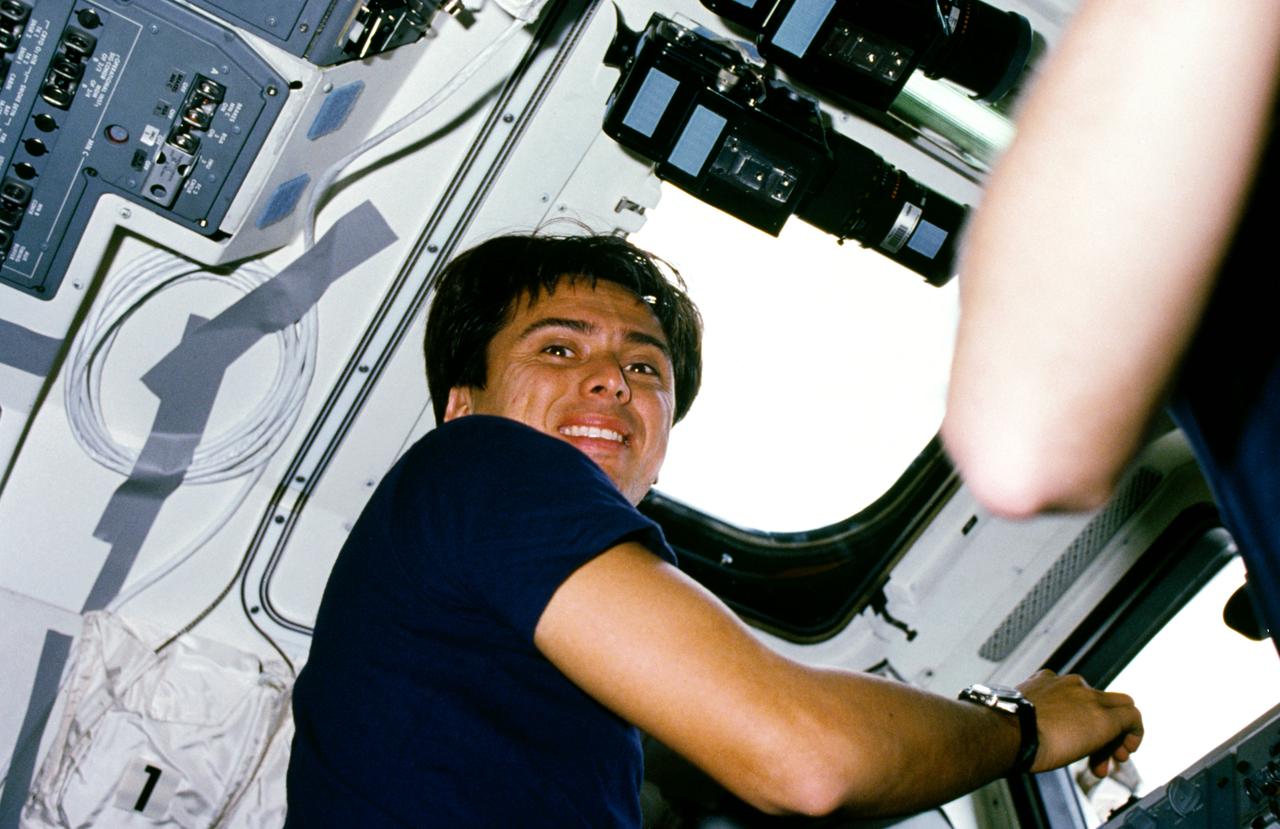
61C-02-032 (12-18 Jan. 1986) --- Astronaut Franklin R. Chang-Diaz, STS-61C mission specialist, while checking cargo in the space shuttle Columbia's payload bay, turns to smile at a fellow crew member using a 35mm camera. Some of the prolific camera gear onboard the spacecraft is affixed above the mission specialist's right shoulder.
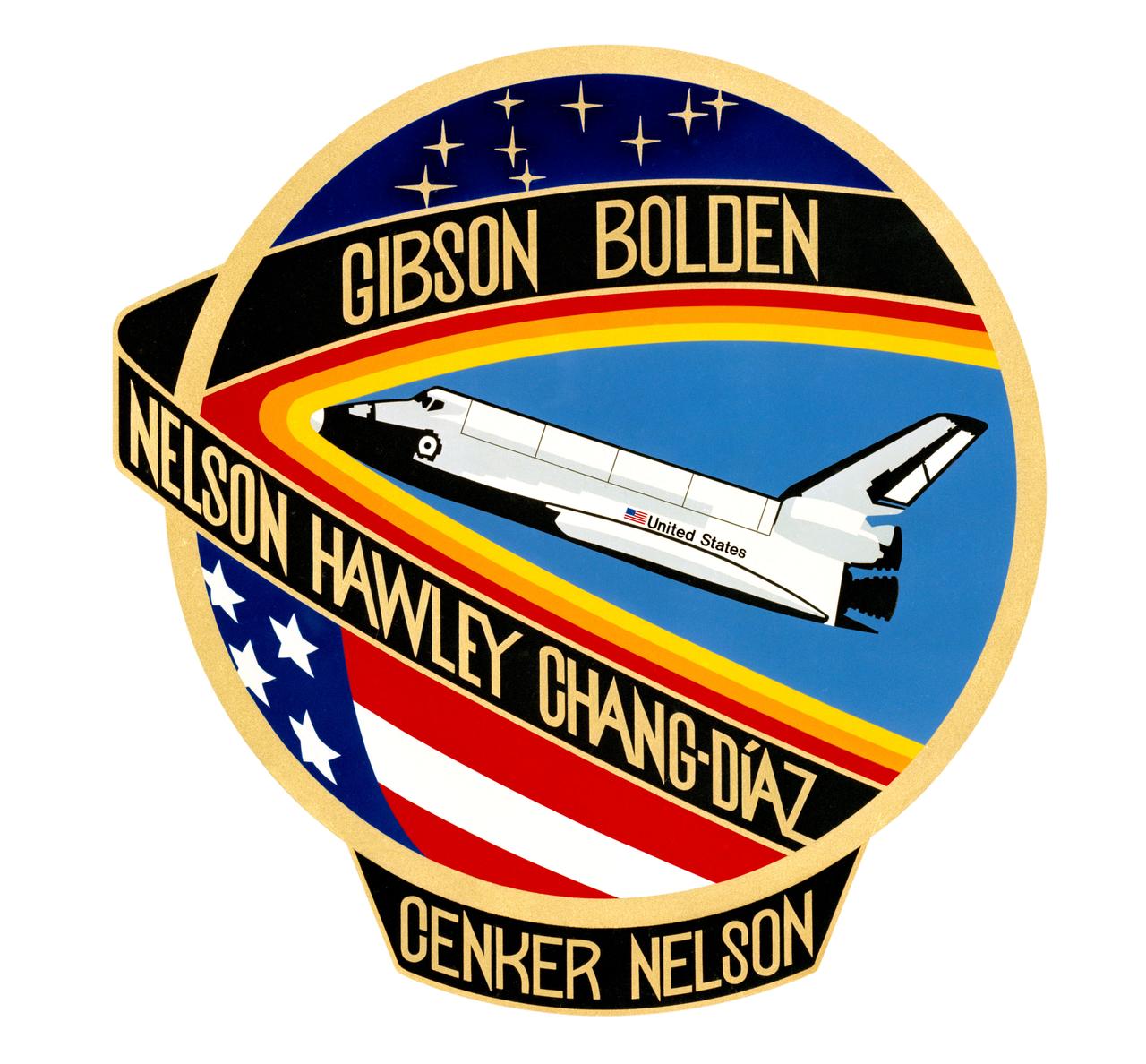
S85-41917 (October 1985) --- Columbia, which opened the era of the Space Transportation System with four orbital flight tests, is featured in re-entry in the emblem designed by the STS61-C crew to represent the seven team members who will man the vehicle for its seventh STS mission later this year. Gold lettering against black background honors the astronaut crew members on the delta pattern surrounding colorful re-entry shock waves, and the payload specialists are honored similarly below the sphere. Robert L. Gibson is mission commander; Charles F. Bolden, pilot; and mission specialists are George D. Nelson, Steven A. Hawley and Franklin R. Chang-Diaz. Payload specialists are Robert J. Cenker of RCA and Bill Nelson, U.S. Representative (D., Florida). Representations of the U.S. flag and the constellation Draco flank the emblem's core. The NASA insignia design for space shuttle flights is reserved for use by the astronauts and for other official use as the NASA Administrator may authorize. Public availability has been approved only in the forms of illustrations by the various news media. When and if there is any change in this policy, which is not anticipated, the change will be publicly announced. Photo credit: NASA
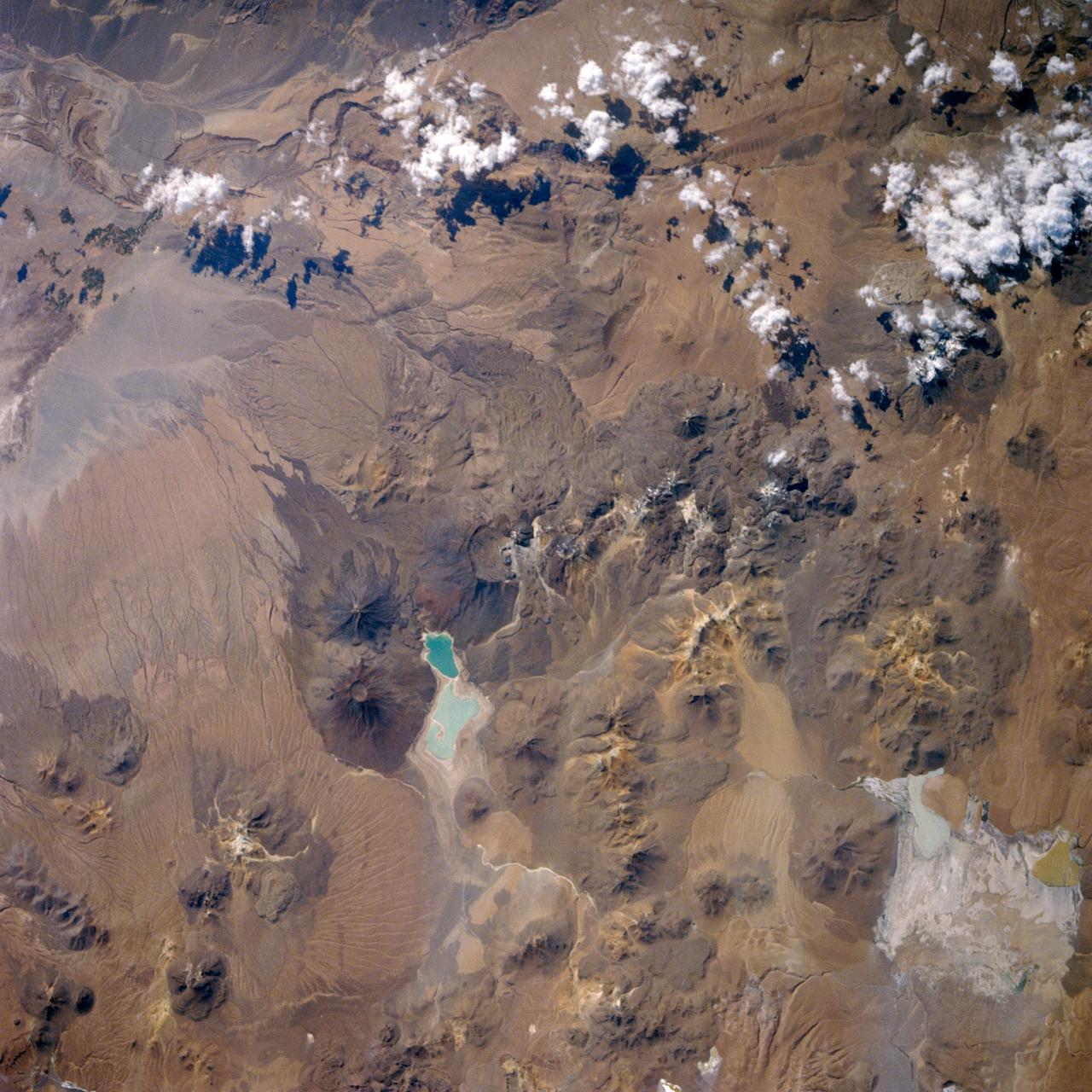
61C-32-089 (12 Jan. 1986) --- This nearly-vertical handheld Hasselblad image over Chile was photographed from an altitude of 176 nautical miles during the sixth orbit of the space shuttle Columbia on Jan. 12, 1986. Many of the noted Andes volcanoes can be seen in the frame. Laguna Verde (Green Lake) is near the center of the frame. Center coordinates are located at 22.5 degrees south latitude and 68 degrees west longitude. The shuttle was 176 nautical miles above a point centered at 21.8 degrees south latitude and 67.3 degrees west longitude.
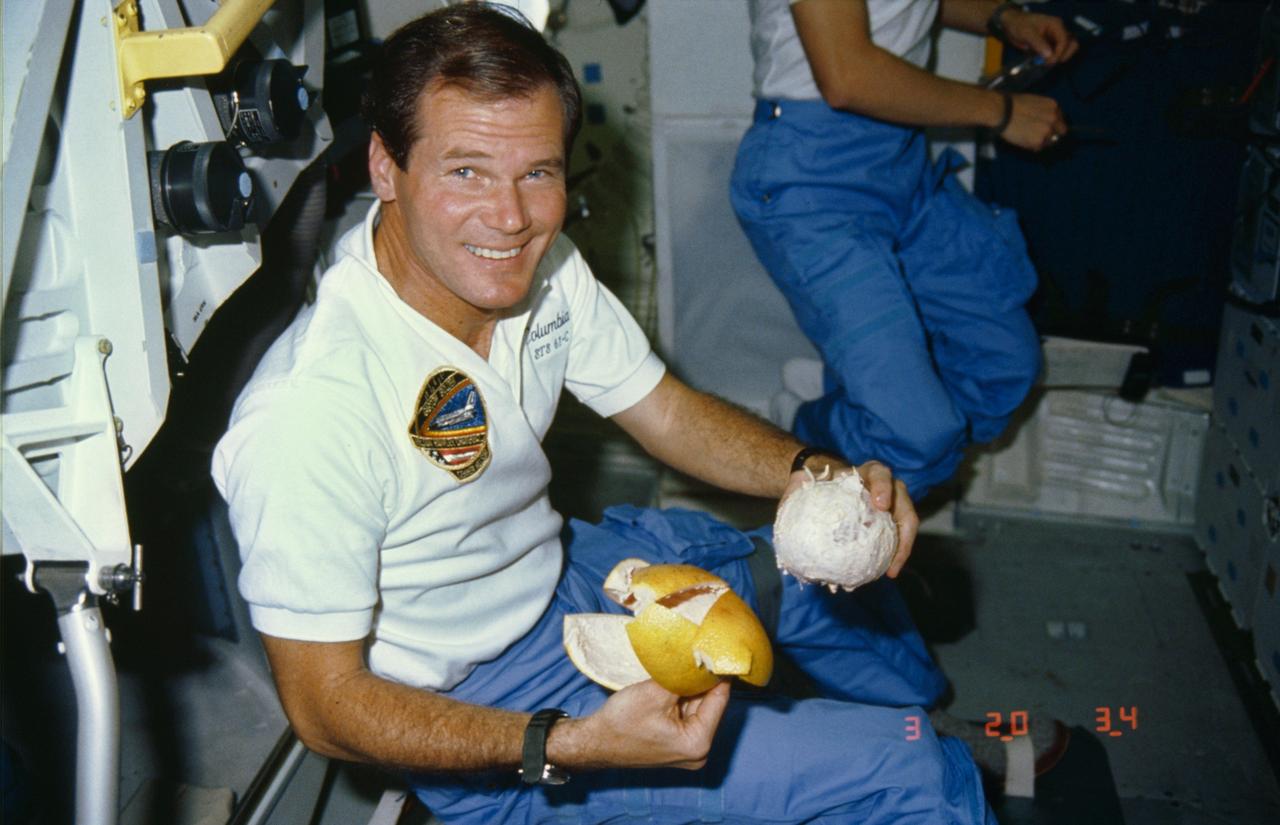
61C-09-005 (15 Jan 1986) --- U.S. Representative Bill Nelson, (D. Florida), STS 61-C payload specialist, prepares to enjoy a freshly peeled grapefruit on the middeck of the earth-orbiting Space Shuttle Columbia.
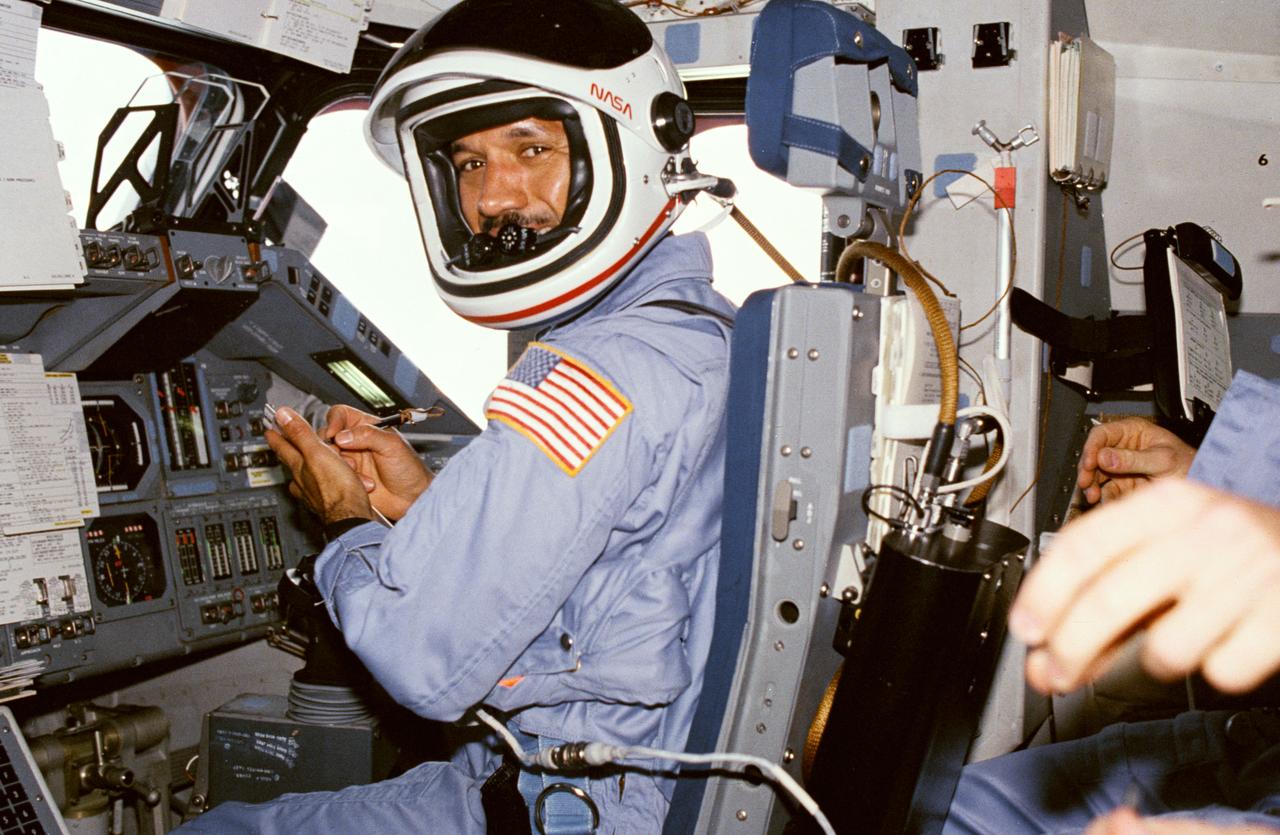
61C-01-007 (12-17 Jan 1986)--- Astronaut Charles F. Bolden STS 61-C pilot, mans the pilot's station on Columbia's flight deck prior to re-entry.
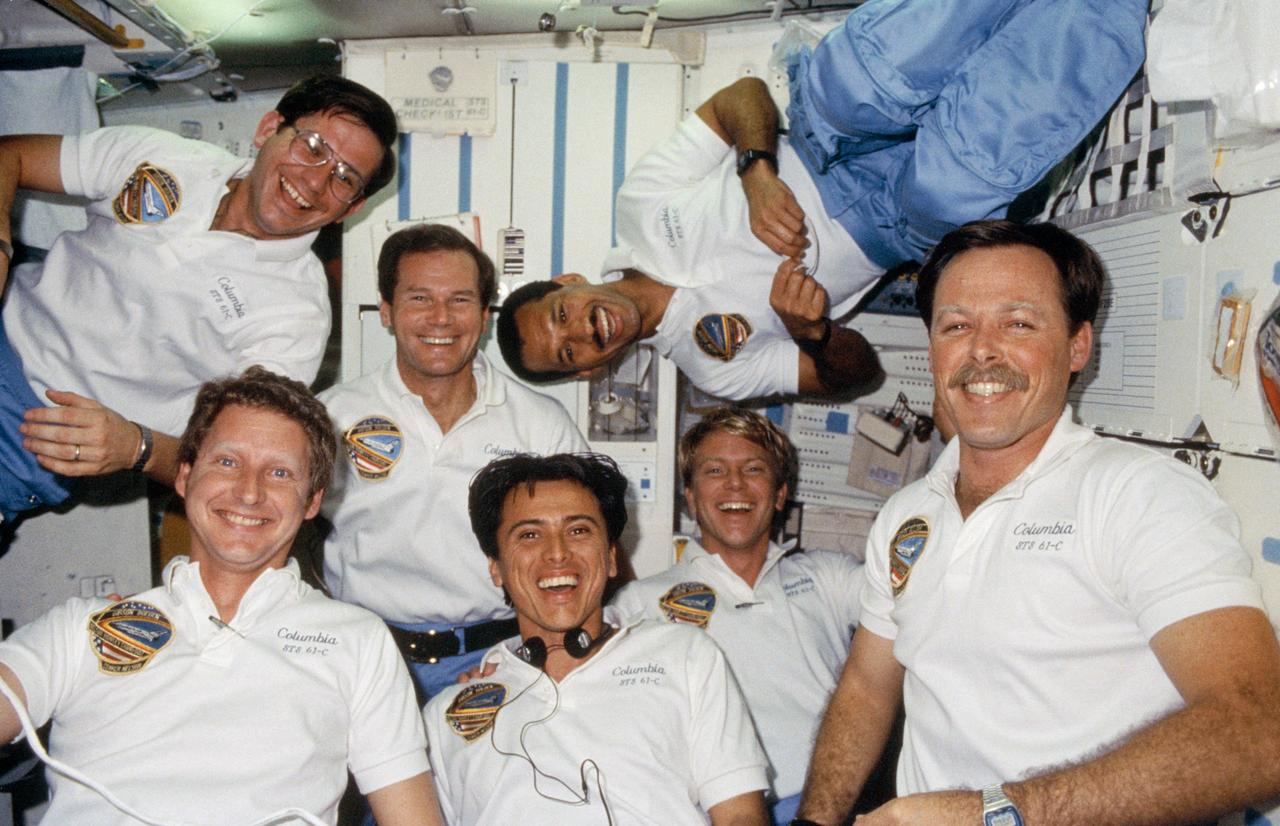
61C-14-008 (12-18 Jan. 1986) --- The seven crew members for STS-61C mission use the space shuttle Columbia's middeck for the traditional in-flight group portrait. Astronaut Robert L. Gibson (lower right corner), commander, is surrounded by fellow crew members, counter-clockwise from upper right: astronaut Charles F. Bolden, pilot; U.S. Representative Bill Nelson (D., Florida), payload specialist; Robert J. Cenker, RCA payload specialist; and astronauts Steven A. Hawley, Franklin R. Chang-Diaz and George D. Nelson, all mission specialists. Photo credit: NASA
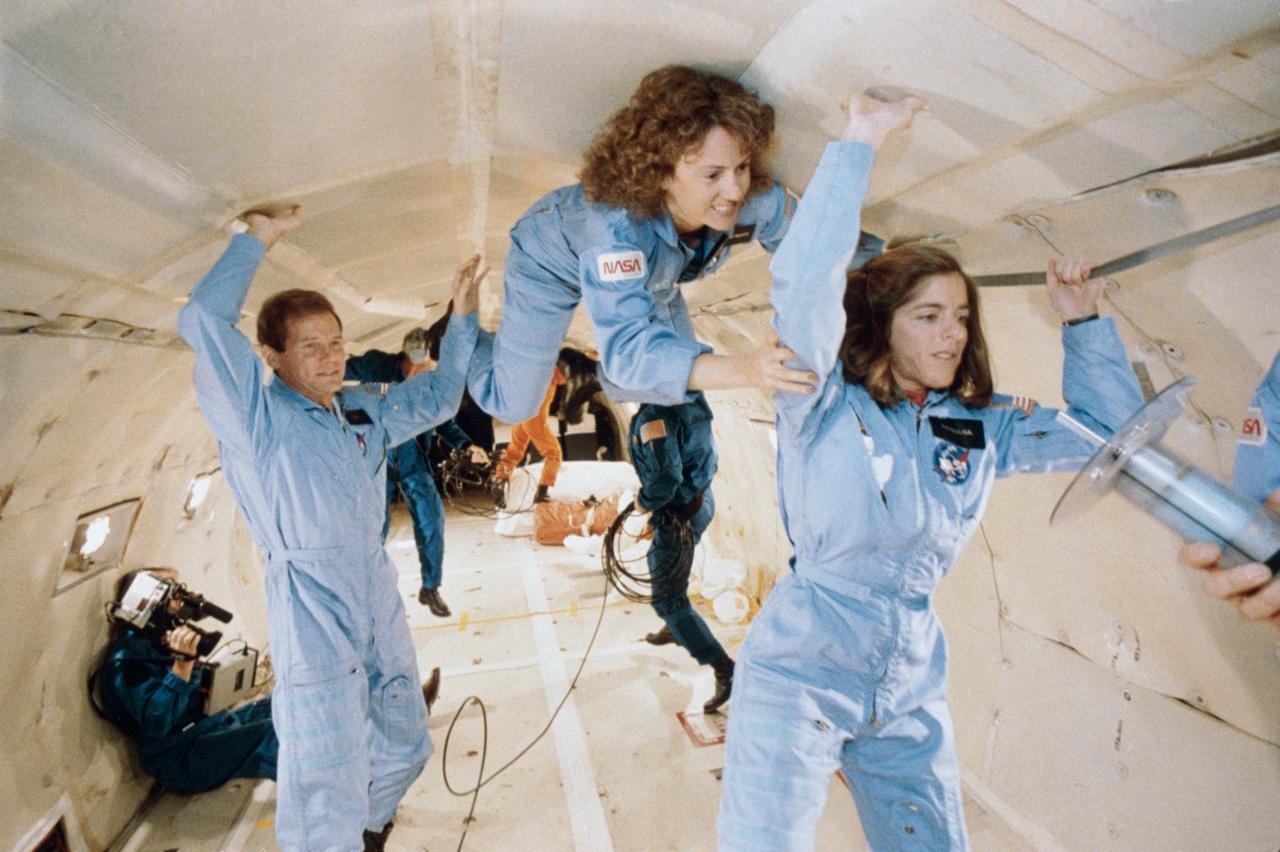
S86-25192 (January 1986) --- Two payload specialists in training for the STS-51L mission, and a payload specialist from STS-61C share a ?zero-gravity? flight aboard a KC-135 aircraft over the Gulf of Mexico. Left to right are United States Representative Bill Nelson (Democrat, Florida), Sharon Christa McAuliffe, and Barbara R. Morgan. The congressman is a payload specialist for the STS-61C mission. McAuliffe is the prime payload specialist for the Teacher-in-Space Project aboard the STS-51L mission; and Morgan is her backup. The photo was taken by Keith meyers of the New York Times. EDITOR?S NOTE: The STS-51L crew members lost their lives in the space shuttle Challenger accident moments after launch on Jan. 28, 1986 from the Kennedy Space Center (KSC). Photo credit: NASA
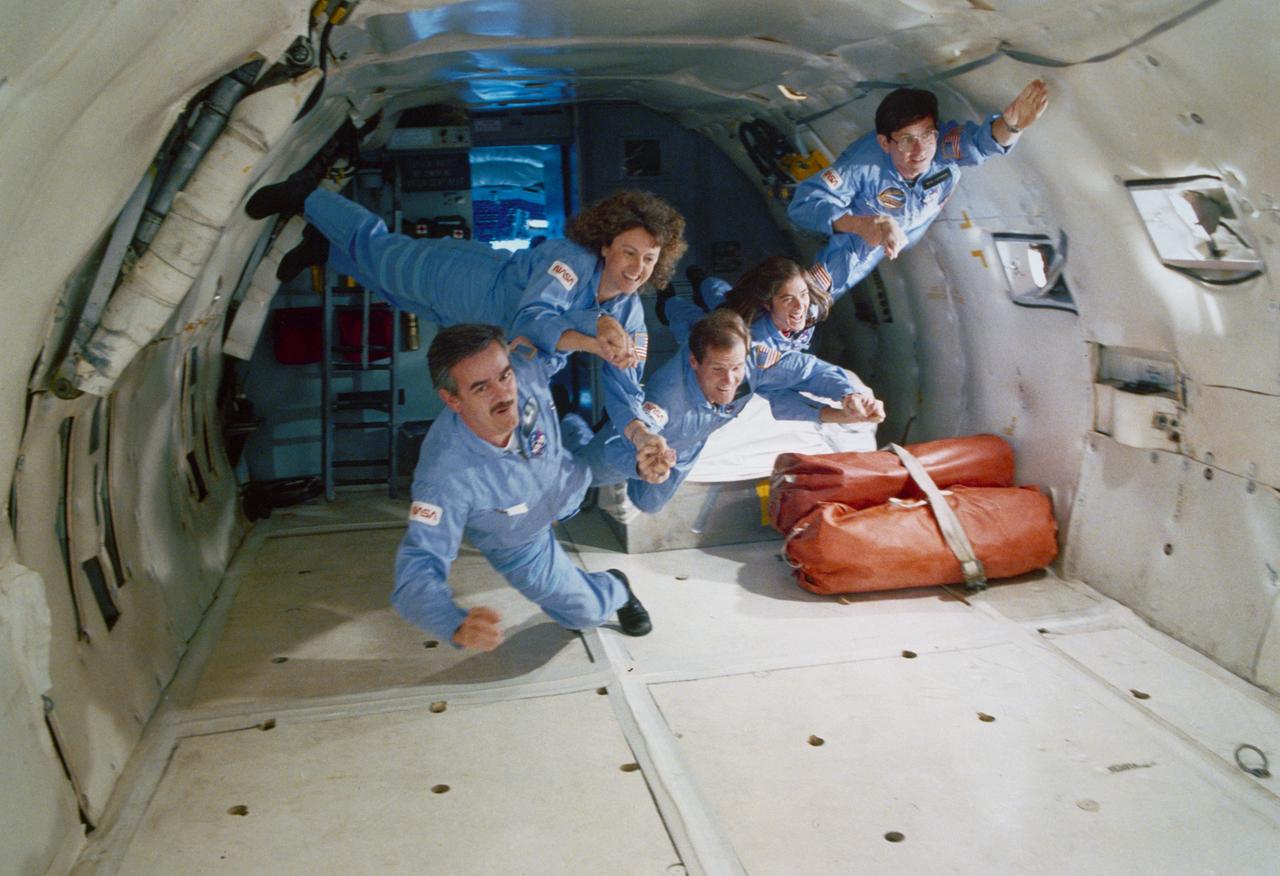
S85-44835 (20 Nov. 1985) --- This flying human chain represents prime and backup payload specialists for two upcoming STS missions. The group, representing trainees for STS-61C later this year and STS-51L early next year, shared some 40 parabolas in NASA?s KSC-135, ?Zero-G? aircraft on Nov. 20. Left to right are Gerard Magilton, RCA backup payload specialist for STS-61C; Sharon Christa McAuliffe, payload specialist/teacher citizen observer for STS-51L; U.S. Rep. Bill Nelson (D., Florida), scheduled for 61-C; Barbara R. Morgan, backup to McAuliffe; and Robert J. Cenker, RCA payload specialist for 61-C. The photo was taken by Keith Meyers, New York Times. Photo credit: NASA
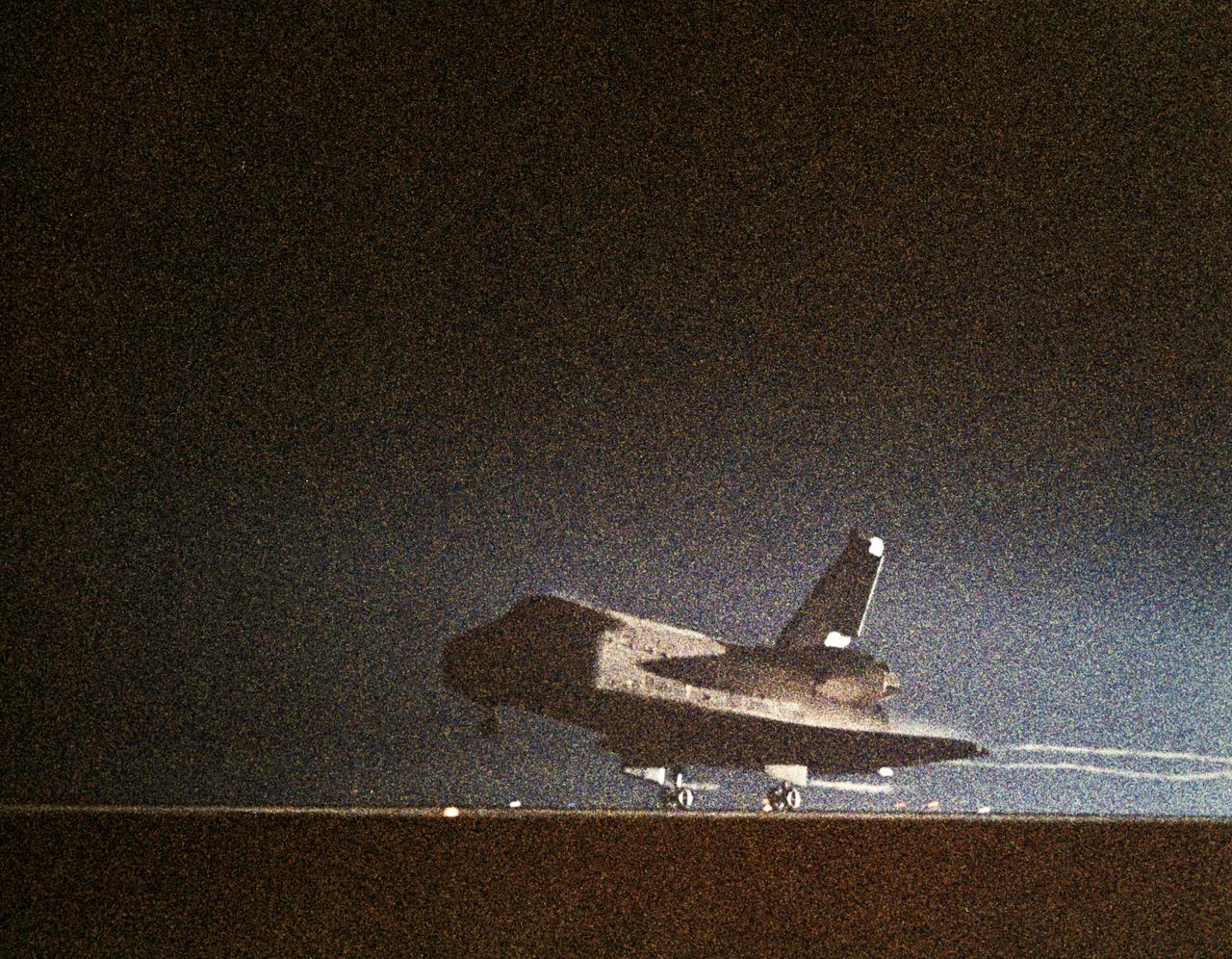
61C-S-050 (18 Jan 1986) --- This NASA photo records the night landing of space shuttle Columbia at Edwards Air Force Base and end of the STS 61-C mission. View is of the shuttle's main landing gear touching down, with streams of light trailing behind the orbiter. Photo credit: NASA
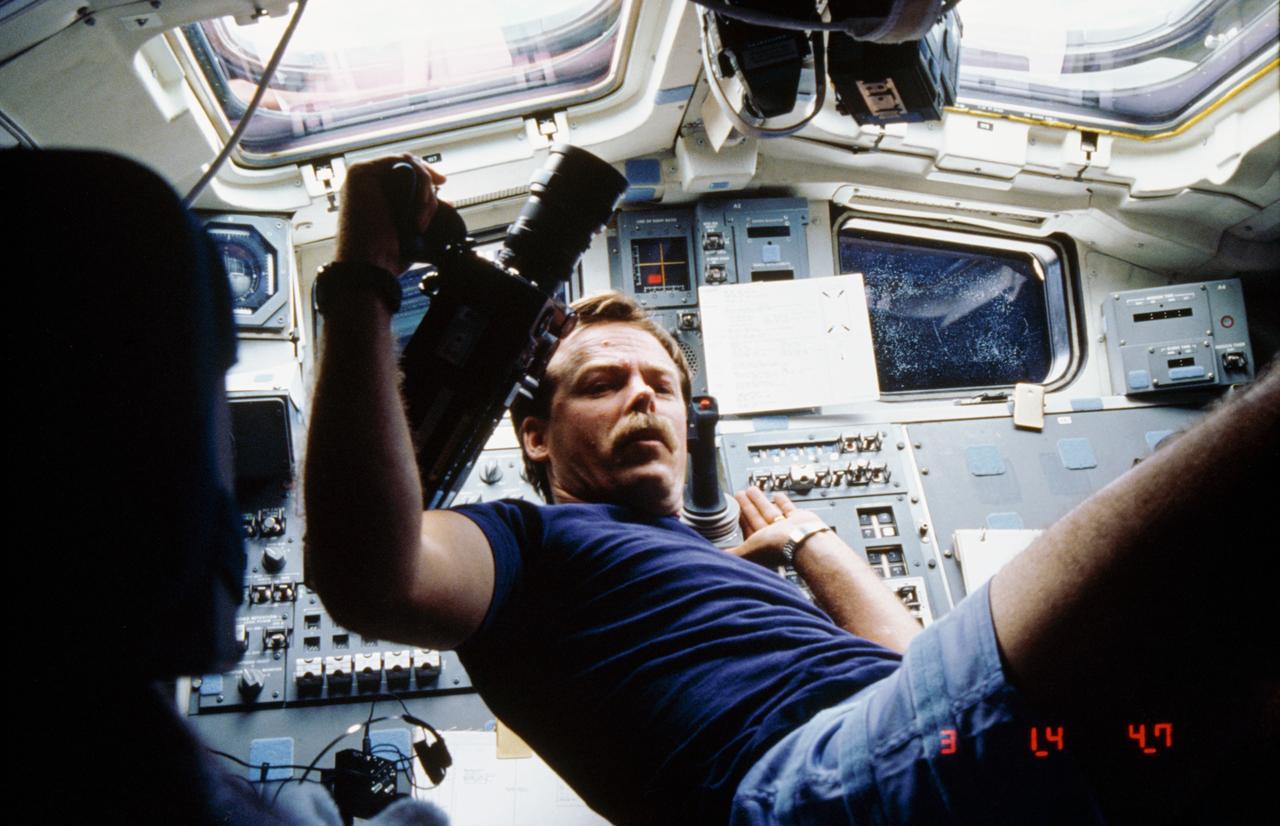
61C-07-030 (15 Jan 1986) --- Astronaut Robert L. Gibson, STS 61-C mission commander, partially floats on the aft flight deck of the earth-orbiting Space Shuttle Columbia while preparing to use a motion picture camera. The windows overlooking the cargo bay are visible in the background.
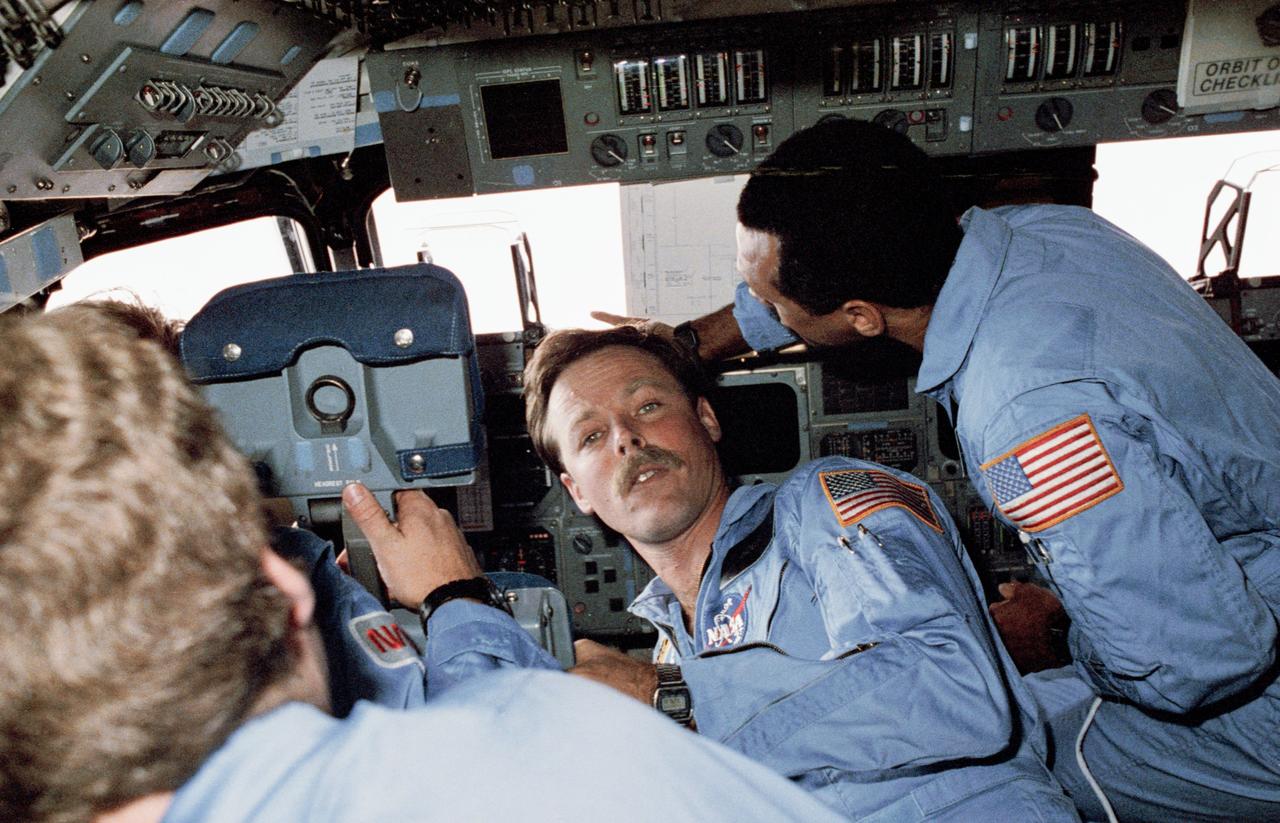
61C-21-009 (12-17 Jan 1986) --- Four members of the seven-man STS 61-C crew aboard the Columbia convene at the commander's station during the five-day mission which kicks off a busy 1986 for the Space Transportation System (STS). Astronaut Robert L. Gibson (center frame), mission commander, is surrounded by (l.-r.). Astronaut Steven A. Hawley, mission specialist, an unidentified crewmember (only partially visible) and astronaut Charles F. Bolden, pilot.
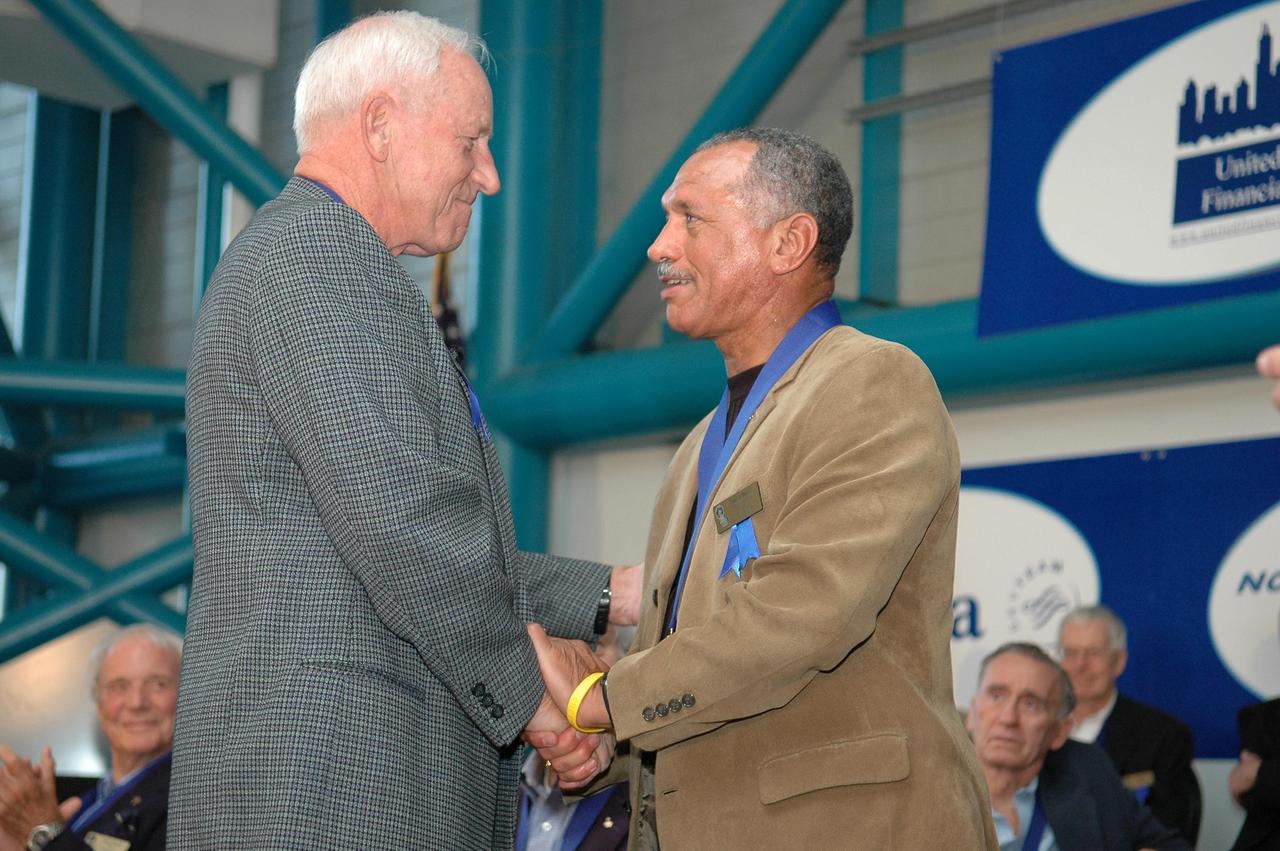
KENNEDY SPACE CENTER, FLA. - Charles F. Bolden Jr. (right) accepts congratulations from Al Worden, U.S. Astronaut Hall of Fame member and chairman of the Astronaut Scholarship Foundation. The occasion is the 2006 induction ceremony for the U.S. Astronaut Hall of Fame, held in the Apollo/Saturn V Center. The inductees for 2006 are former NASA astronauts Bolden, Henry "Hank" Hartsfield Jr. and Brewster H. Shaw Jr. Bolden flew on four space shuttle missions including STS-61C, STS-31, STS-45 and STS-60, logging 680 hours in space. The U.S. Astronaut Hall of Fame now includes 63 space explorers. Photo credit: NASA/Kim Shiflett
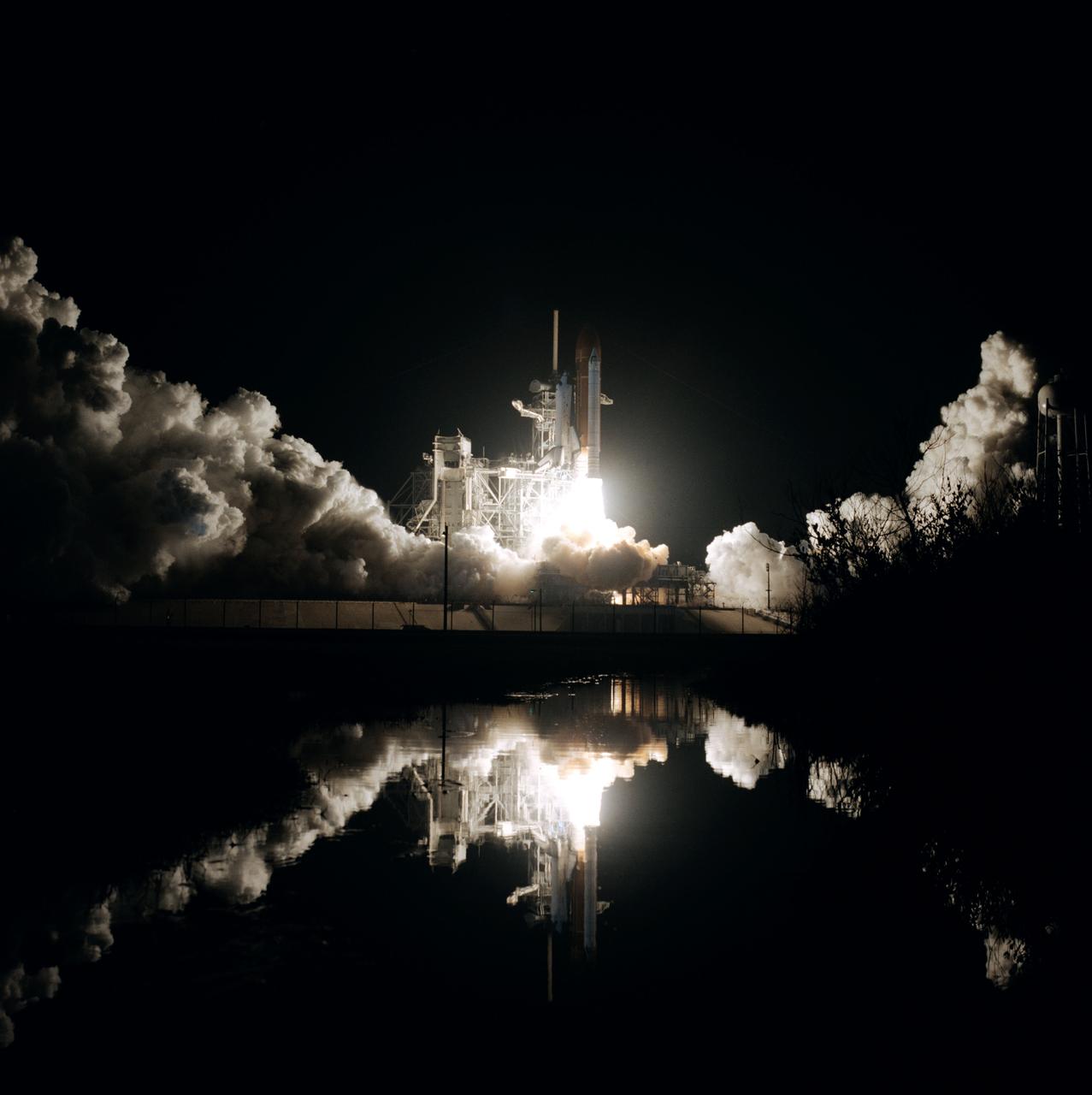
STS61C-S-048 (12 Jan. 1986) --- This is a wide shot of the early morning launch at Florida?s Kennedy Space Center of the space shuttle Columbia and the STS-61C crew on Jan. 12, 1986. Onboard were the following crew members -- Mission Commander Robert L. Gibson and Pilot Charles F. Bolden, along with Mission Specialists Franklin R. Chang-Diaz, Steven A. Hawley and George D. Nelson and Payload Specialists Robert J. Cenker of RCA and U.S. Rep. Bill Nelson. Photo credit: NASA
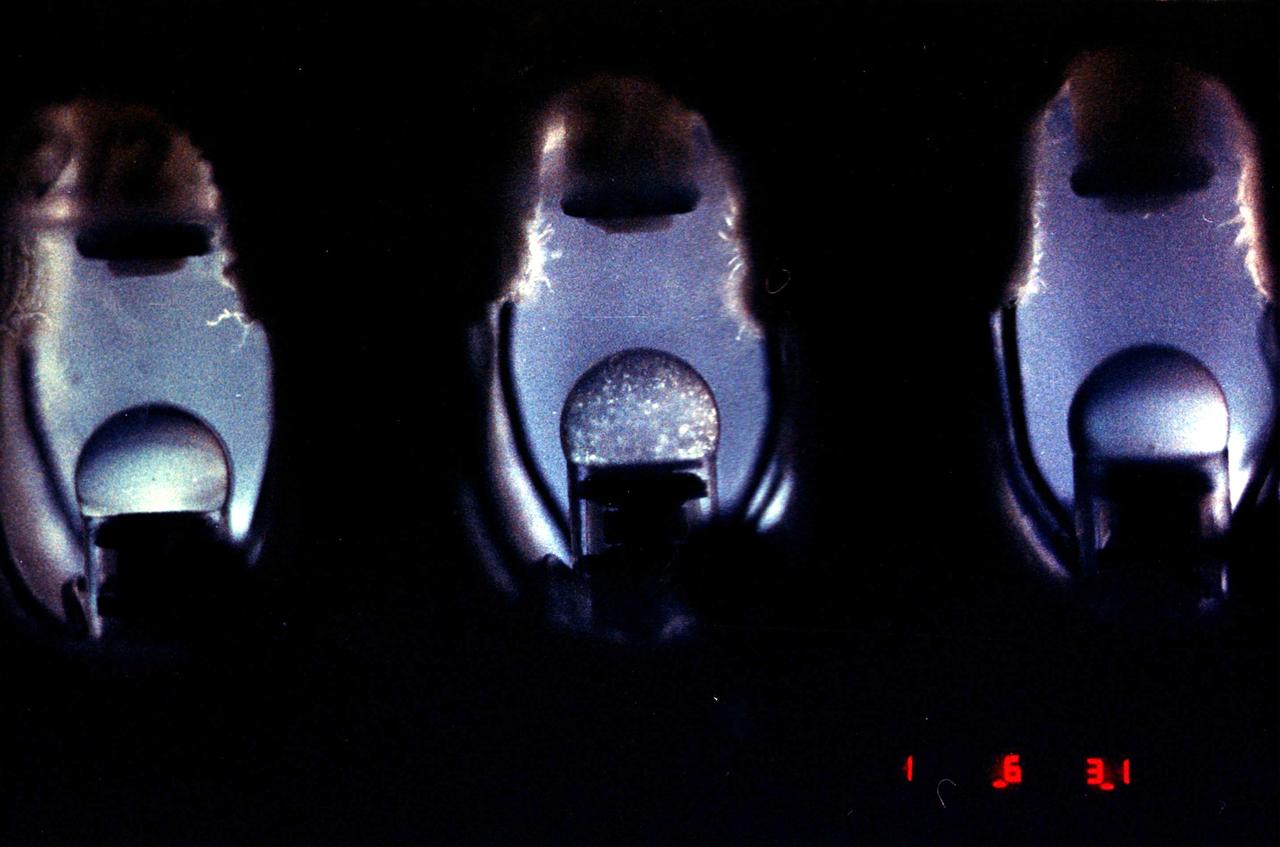
Crystals grown in the hand-held Protein Crystallization Apparatus for Microgravity (PCAM) onboard STS-61C. The PCAM has a pedestal in the center of a circular chamber, the surrounding chamber holds an absorbent reservoir that contains a solution of the precipitant. Vapor pressure differences between the protein solution and the reservoir solution force water to move from the protein solution to the reservoir. As protein concentrations increase, protein crystals begin to nucleate and grow.
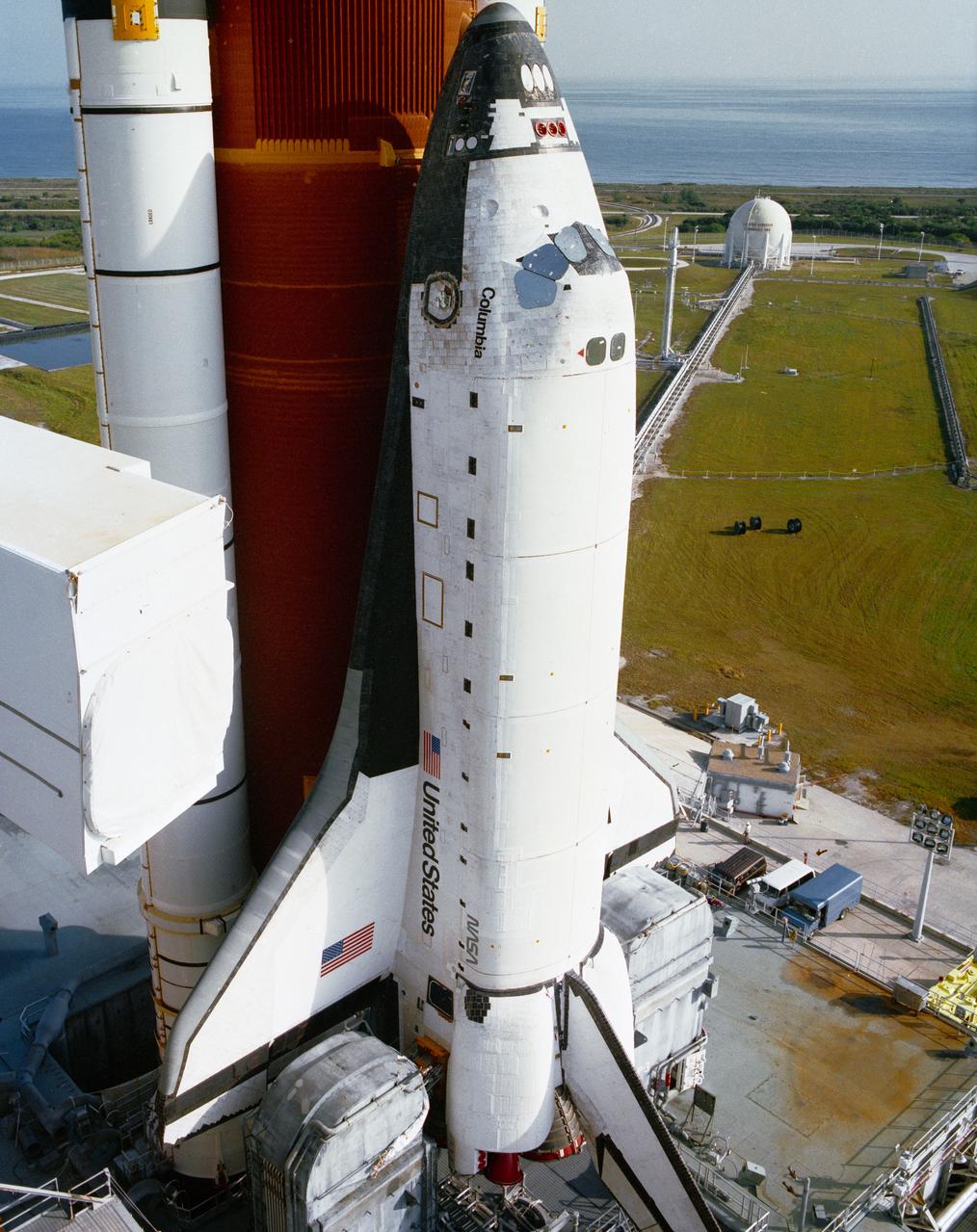
S89-51983 (18 Nov 1989) --- Roll-out of the Space Shuttle Columbia is completed as the vehicle, atop the Mobile Launcher Platform, is positioned on the hard stand at Pad 39A. The approximately eight-hour journey from the Vehicle Assembly Building began at 2:32 a.m. EST. This marks the first time a Space Shuttle has been at Pad A at Launch Complex 39 since January 12, 1986, when Columbia was launched on mission 61C. Pad A will next be used for the launch of Columbia and a five person crew on the STS-32 mission, presently scheduled for no earlier than December 18, 1989.
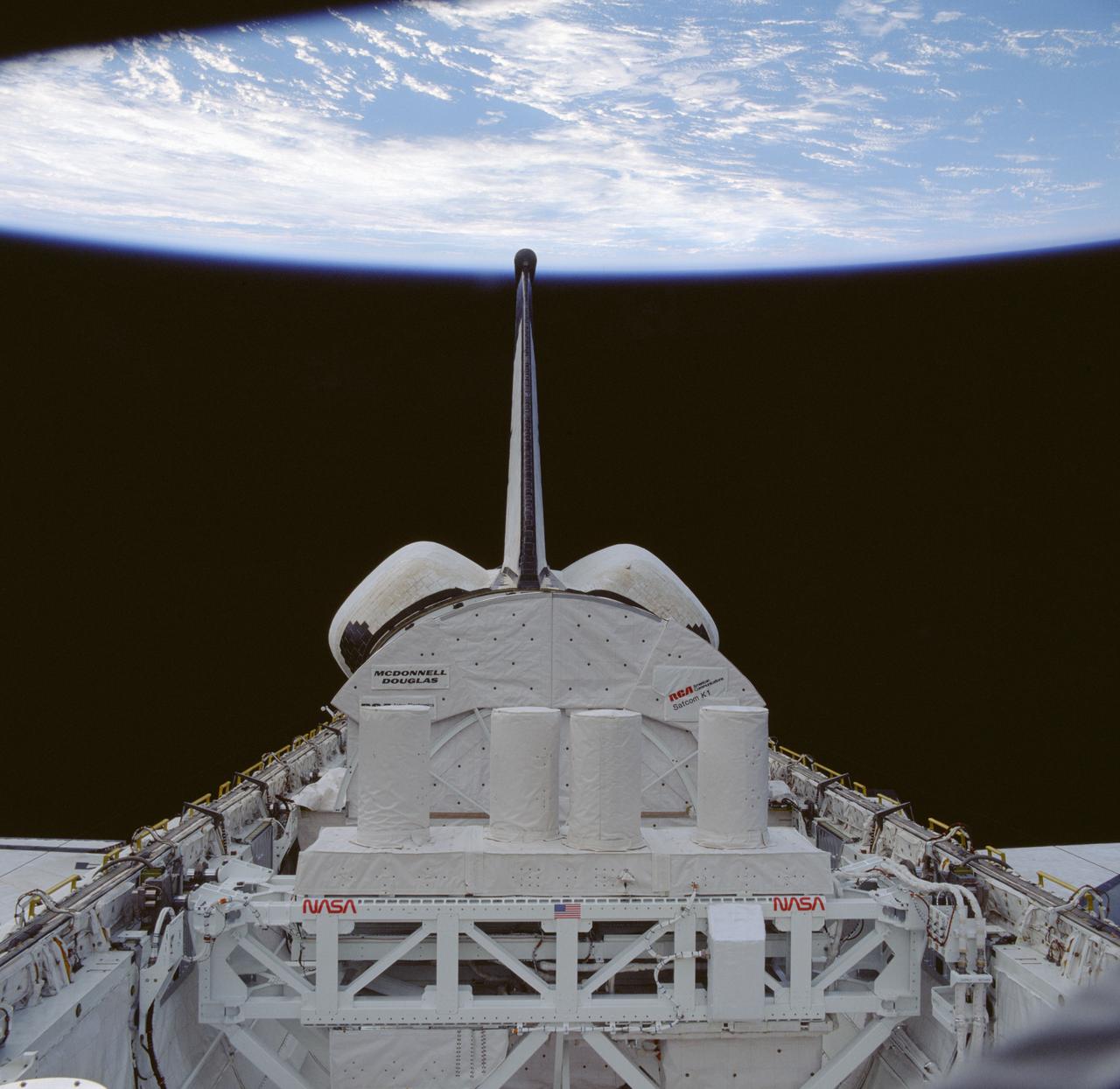
61C-39-002 (12-17 Jan 1986) --- This view of the cargo bay of the Earth-orbiting Space Shuttle Columbia reveals some of the STS 61-C mission payloads. The materials science laboratory (MSL-2), sponsored by the Marshall Space Flight Center (MSFC), is in the foreground. A small portion of the first Hitchhiker payload, sponsored by the Goddard Space Flight Center (GSFC), is in the immediate foreground, mounted to the spacecraft's starboard side. The closed sun shield for the now-vacated RCA SATCOM K-1 communications satellite is behind the MSL. Completely out of view, behind the shield, are 13 getaway specials in canisters. Clouds over ocean and the blackness of space share the backdrop for the 70mm camera's frame.
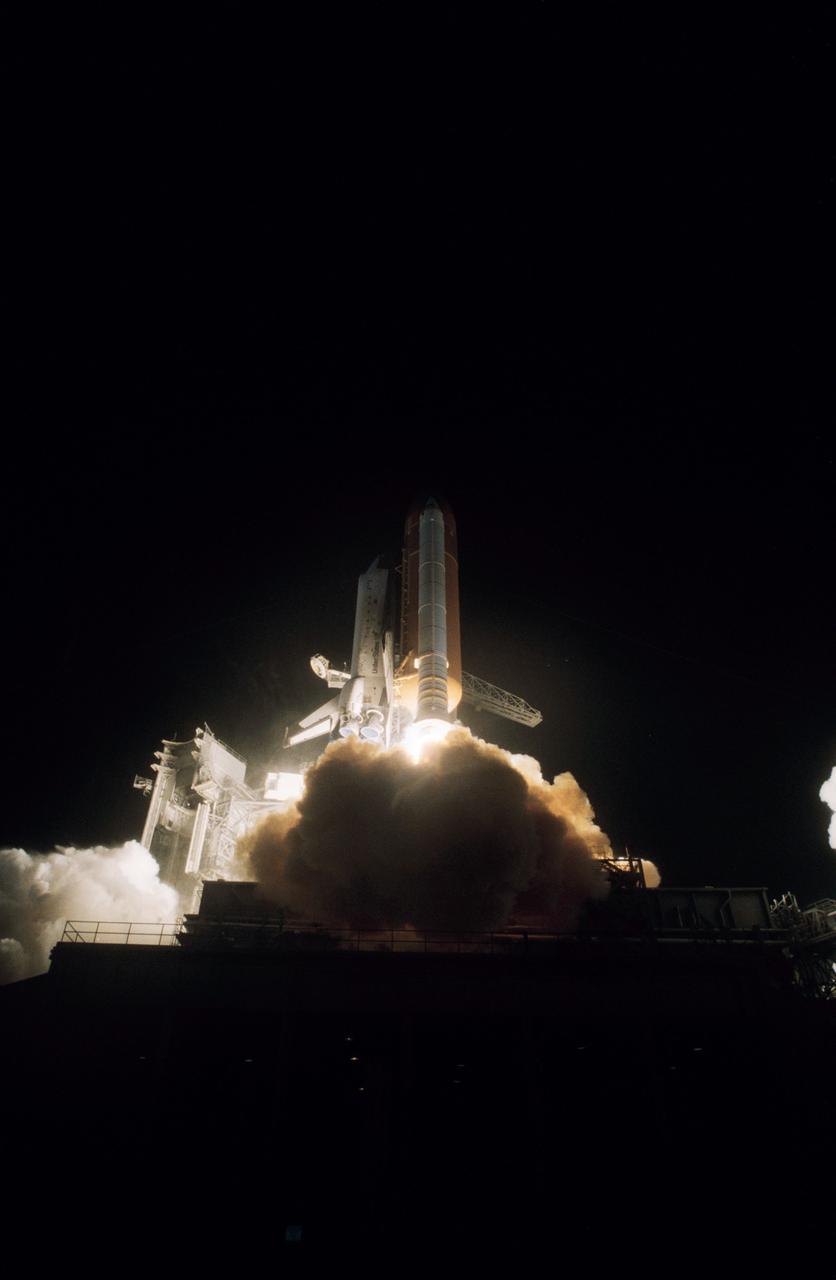
STS61C-S-047 (12 Jan. 1986) --- A remote camera records the early morning launch at Florida?s Kennedy Space Center of the space shuttle Columbia and the STS-61C crew on Jan. 12, 1986. Onboard were the following crew members -- Mission Commander Robert L. Gibson and Pilot Charles F. Bolden, along with Mission Specialists Franklin R. Chang-Diaz, Steven A. Hawley and George D. Nelson and Payload Specialists Robert J. Cenker of RCA and U.S. Rep. Bill Nelson. Photo credit: NASA
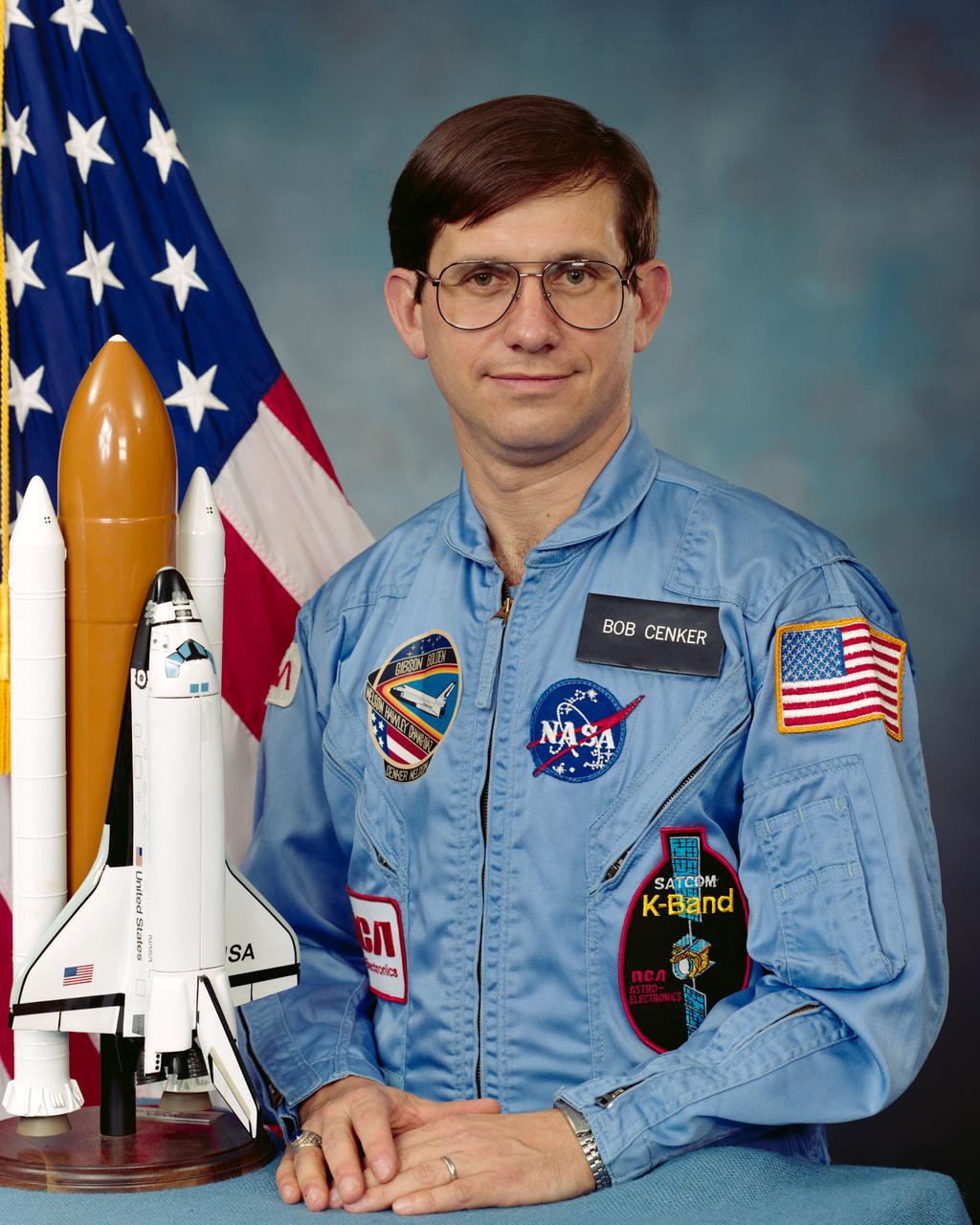
S85-45499 (2 Dec 1985) --- Payload specialist Robert J. Cenker.
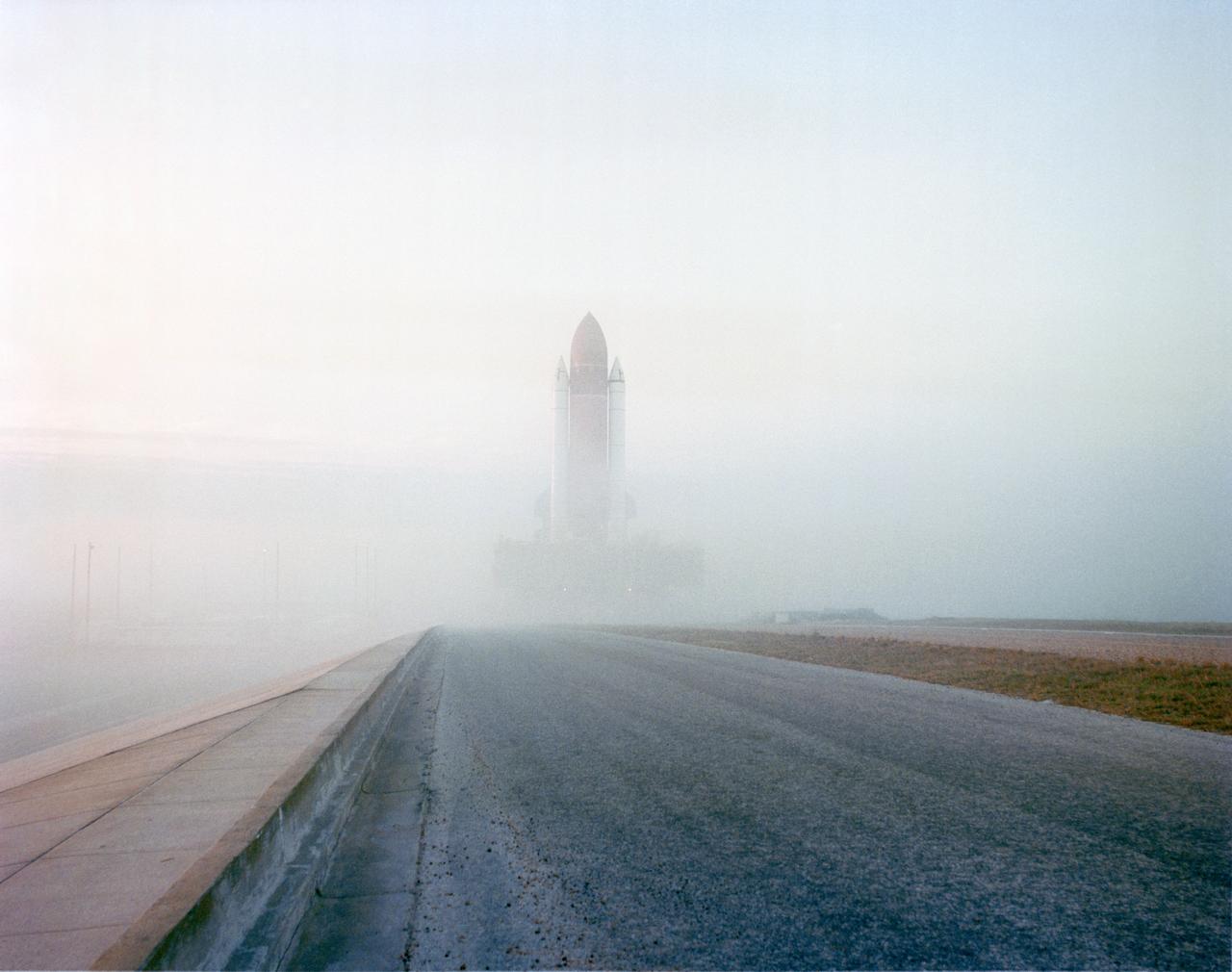
STS-32 Columbia, Orbiter Vehicle (OV) 102, rolls through the morning's foggy mist atop the mobile launcher platform and crawler transporter to Kennedy Space Center (KSC) Launch Complex (LC) Pad 39A. OV-102's wings appear on either side of the two solid rocket boosters (SRBs) and external tank (ET). Rollout from the Vehicle Assembly Building (VAB) began at 2:32 am Eastern Standard Time (EST), and OV-102 was on the pad pedestals about 8 hours later. This marks the first time a Space Shuttle has been at LC Pad 39A since 01-12-85 when OV-102 was launched on mission 61C. View provided by KSC with alternate number KSC-89PC-1259.