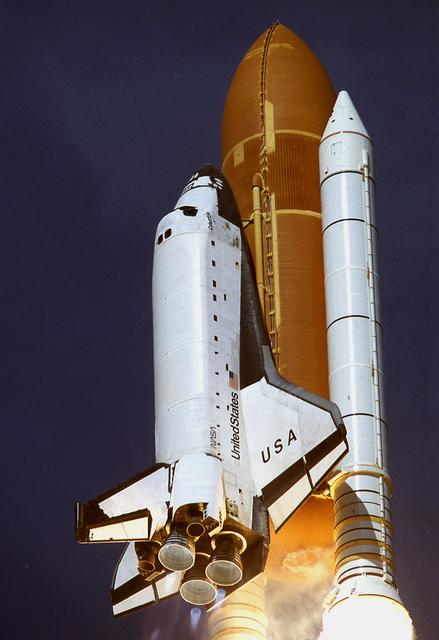
With a veteran crew aboard, the Space Shuttle Columbia (STS-62) roars off Launch Pad 39B to begin a 14-day extended duration stay in space. The two primary payloads for Columbia's 16th spaceflight are the US Microgravity Payload 2 (USMP-2) and the Office of Aeronautics and Space Technology 2 (OAST-2). A diversified variety of secondary payloads are located in the payload bay as well as the middeck.
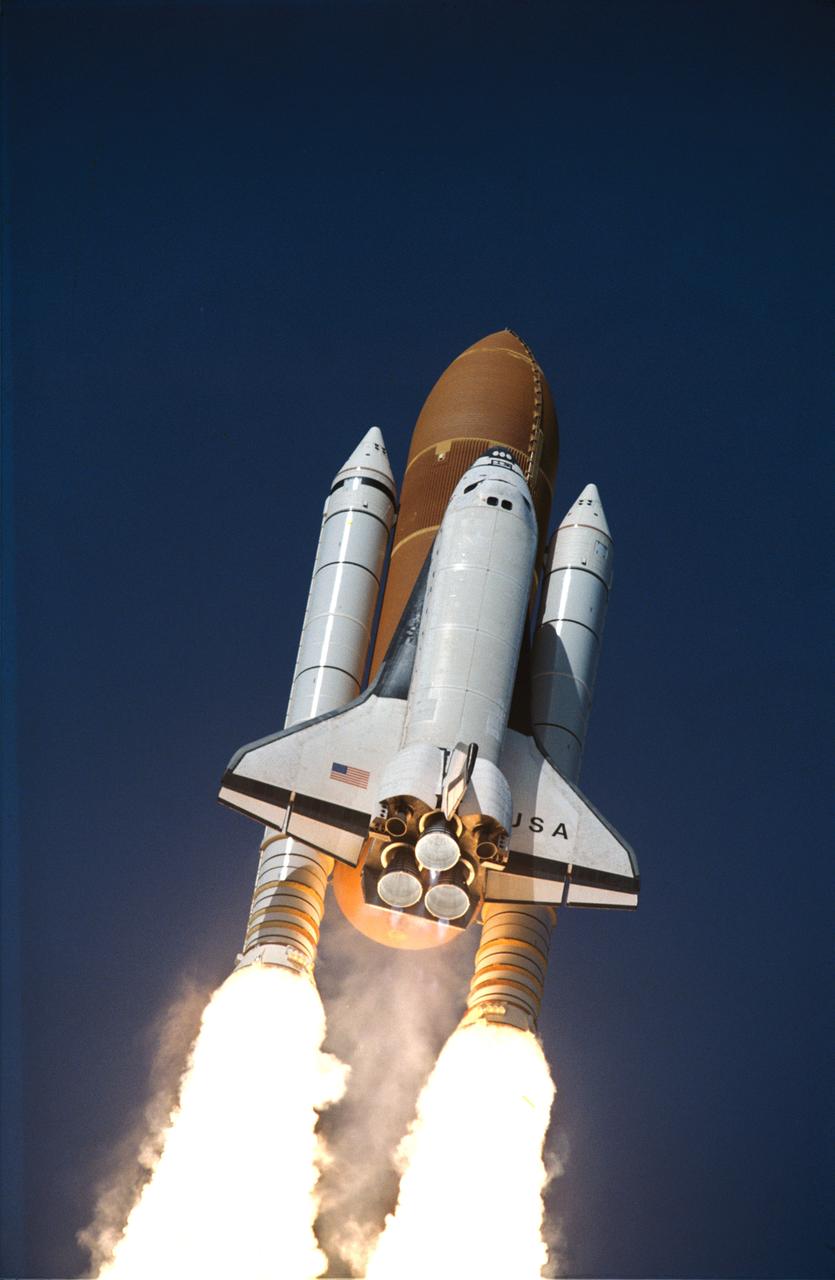
STS062-S-055 (4 March 1994) --- A low-angle view captures early stages of the sixteenth launch of Space Shuttle Columbia. Launch occurred at 8:53 a.m. (EST), March 4, 1994. Onboard were astronauts John H. Casper, Andrew M. Allen, Marsha S. Ivins, Charles D. (Sam) Gemar and Pierre J. Thuot.
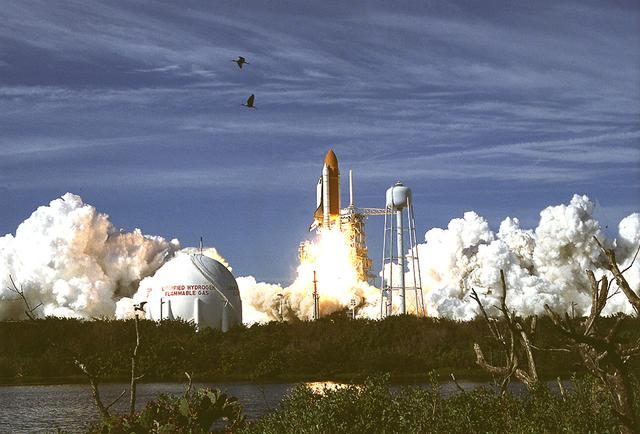
Clear skies, tranquil winds, and a brilliant morning sun mark the ontime liftoff of Space Shuttle Columbia (STS-62) from Launch Pad 39B. Columbia began the 61st Space Shuttle flight, which was a 14-day extended duration flight. On board, five veteran crew members performed materials processing experiments on the United States Microgravity Payload 2 (USMP-2), and also conducted experiments designed to enable or extend space flight technology aboard the Office of Aeornautics and Space Technology 2 payload (OAST-2).
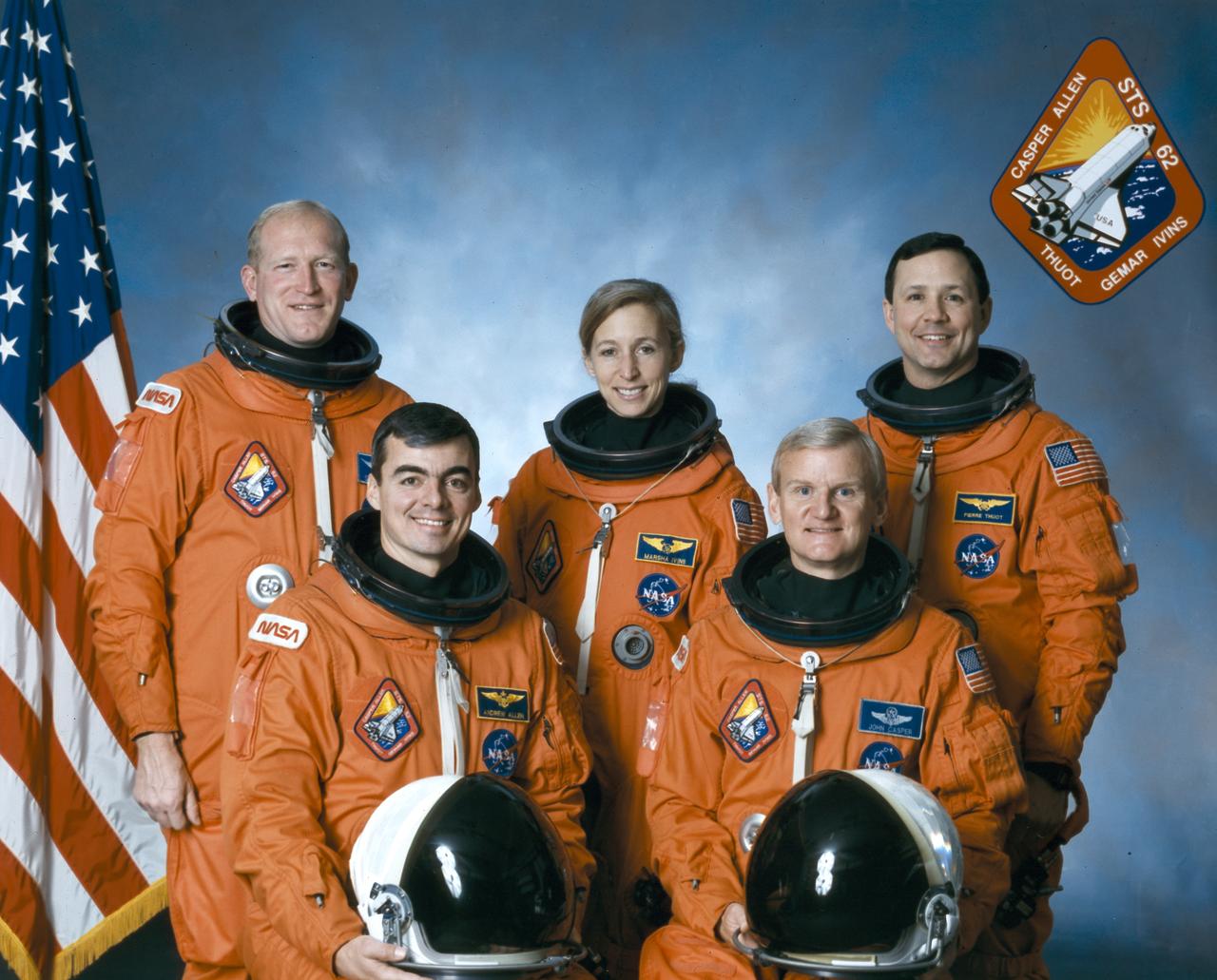
Astronauts included in the STS-62 crew portrait include (standing left to right) mission specialists Charles D. Gemar, Marsha S. Ivins, and Pierre J. Thuot. Seated left to right are Andrew M. Allen, pilot; and John H. Casper, commander. Launched aboard the Space Shuttle Columbia on March 4, 1994 at 8:53:00 am (EST), the STS-62 mission carried two primary payloads; the U.S Microgravity Payload-2 (USMP-2) and the Office of Aeronautics and Space Technology-2 (OAST-2).
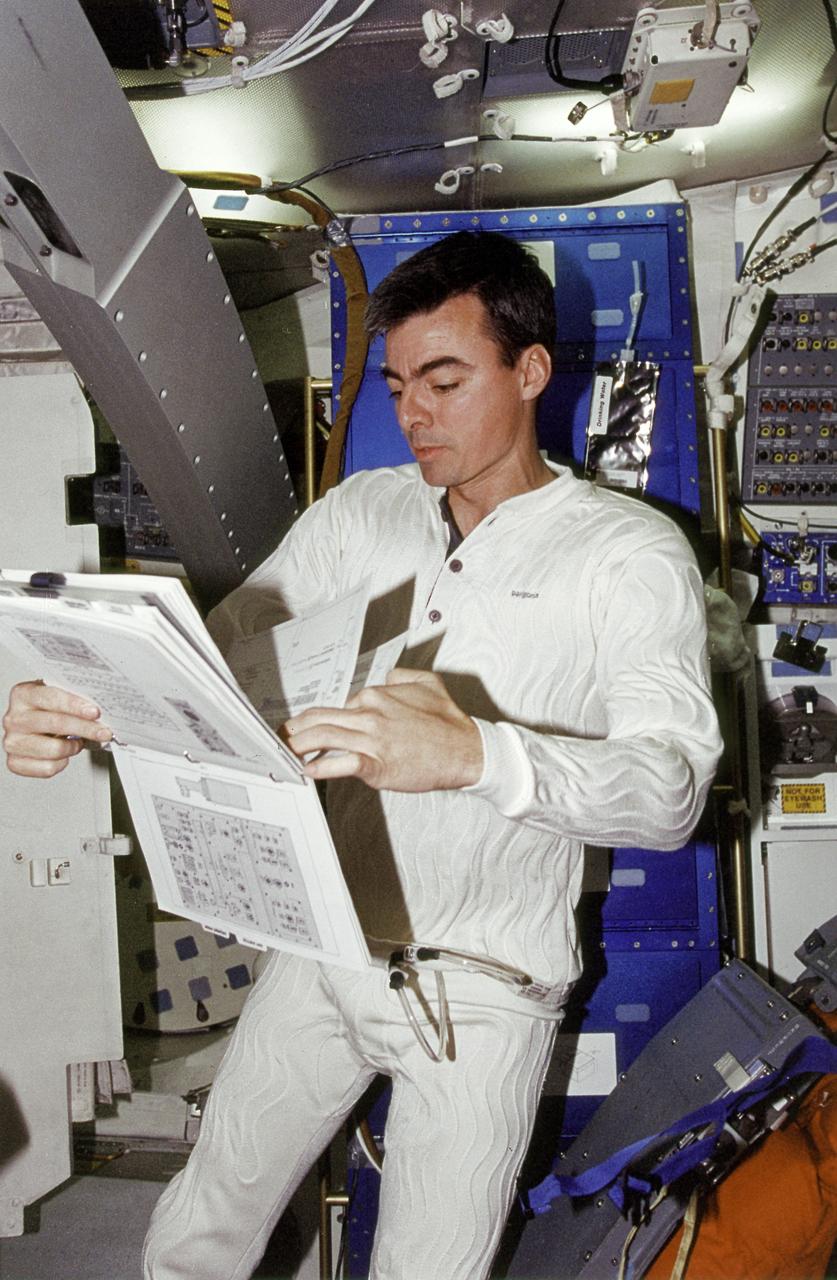
Onboard Space Shuttle Columbia (STS-62) Pilot Andrew M. Allen looks over a procedures book in the midst of a 14-day mission. Allen is attired in a new thermally controlled undergarment. Allen wore the garment during the launch and entry phases of the flight.
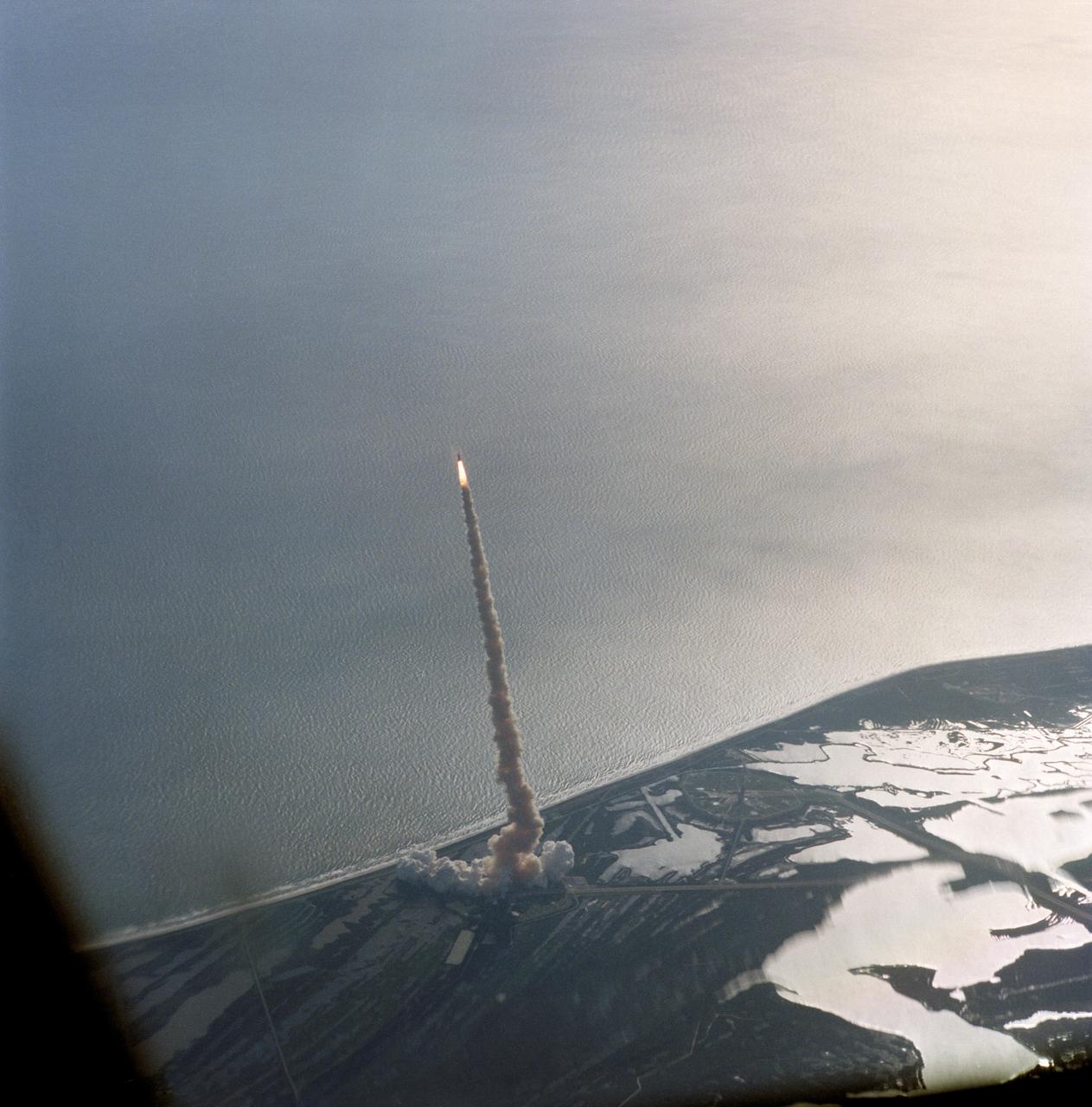
STS062-S-061 (4 March 1994) --- An aerial view of early stages of the sixteenth launch of Space Shuttle Columbia was provided by a 70mm camera aboard the Shuttle Training Aircraft (STA). Launch occurred at 8:53 a.m. (EST), March 4, 1994. Onboard were astronauts John H. Casper, Andrew M. Allen, Marsha S. Ivins, Charles D. (Sam) Gemar and Pierre J. Thuot.
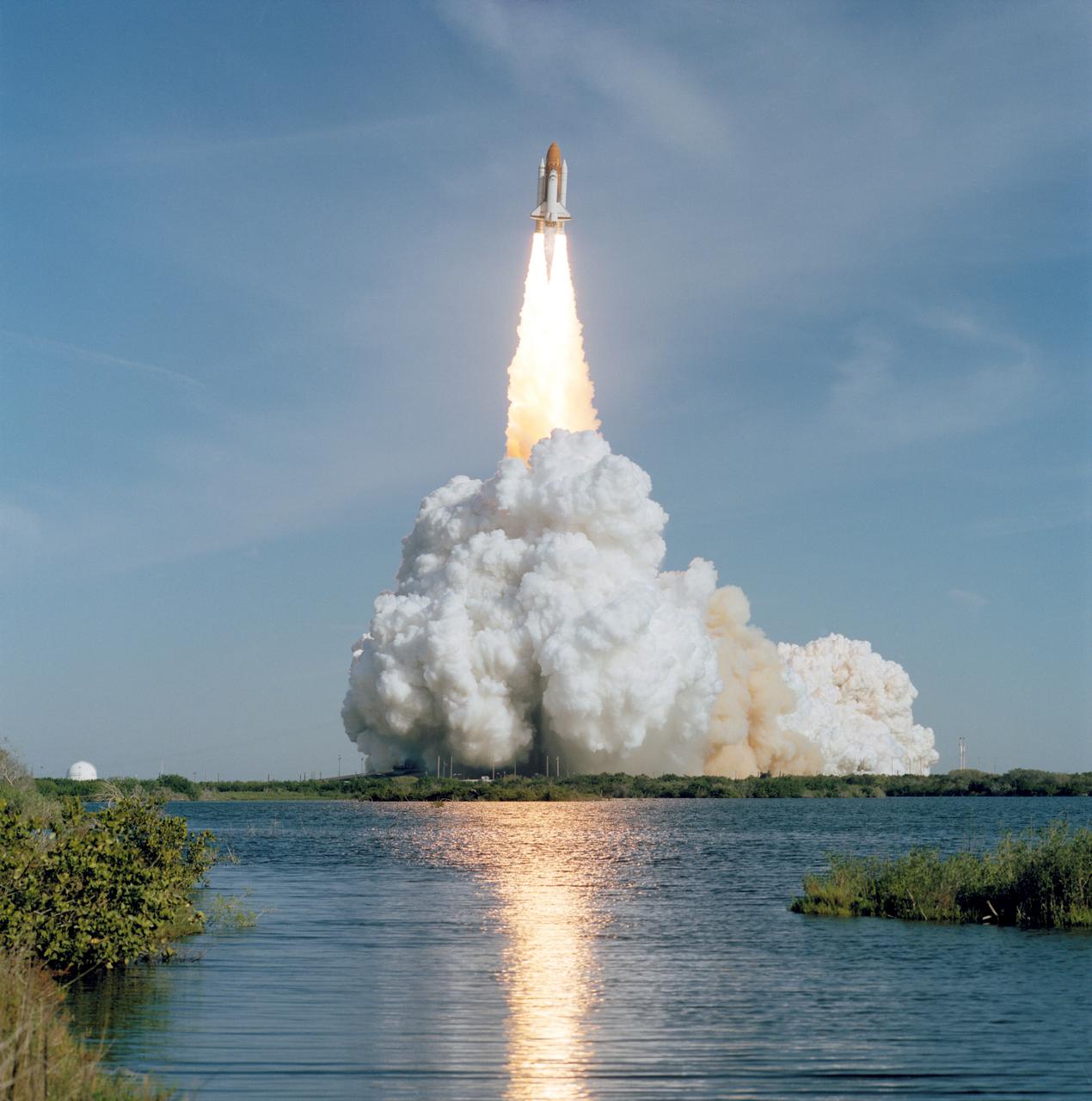
STS062-S-053 (4 March 1994) --- Carrying a crew of five veteran NASA astronauts and the United States Microgravity Payload (USMP), the Space Shuttle Columbia heads toward its sixteenth mission in Earth-orbit. Launch occurred at 8:53 a.m. (EST), March 4, 1994. Onboard were astronauts John H. Casper, Andrew M. Allen, Marsha S. Ivins, Charles D. (Sam) Gemar and Pierre J. Thuot.
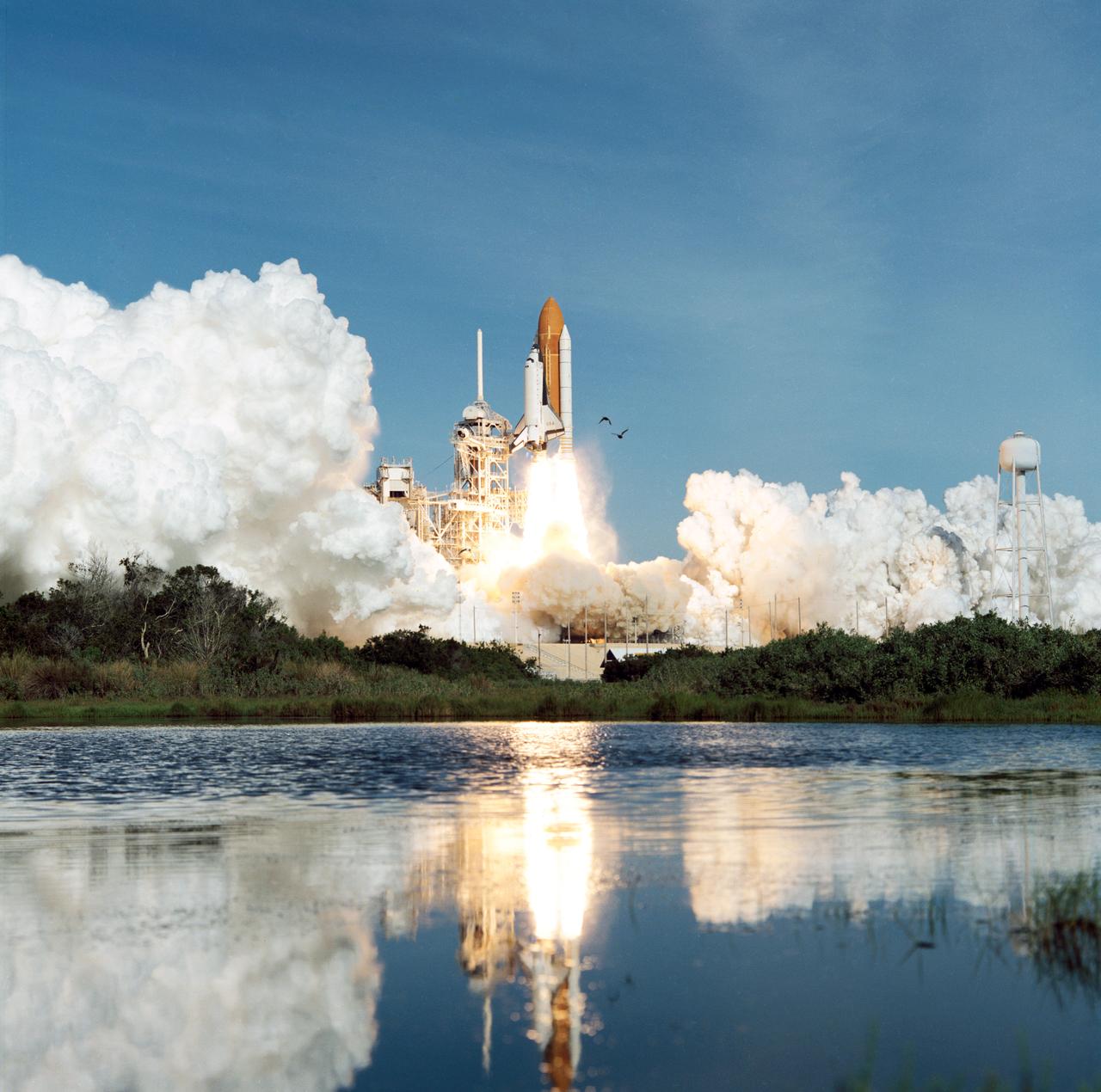
STS062-S-051 (4 March 1994) --- Five veteran astronauts and the United States Microgravity Payload (USMP) are ushered into space via the sixteenth launch of Space Shuttle Columbia. Launch occurred at 8:53 a.m. (EST), March 4, 1994. Onboard were astronauts John H. Casper, Andrew M. Allen, Marsha S. Ivins, Charles D. (Sam) Gemar and Pierre J. Thuot.
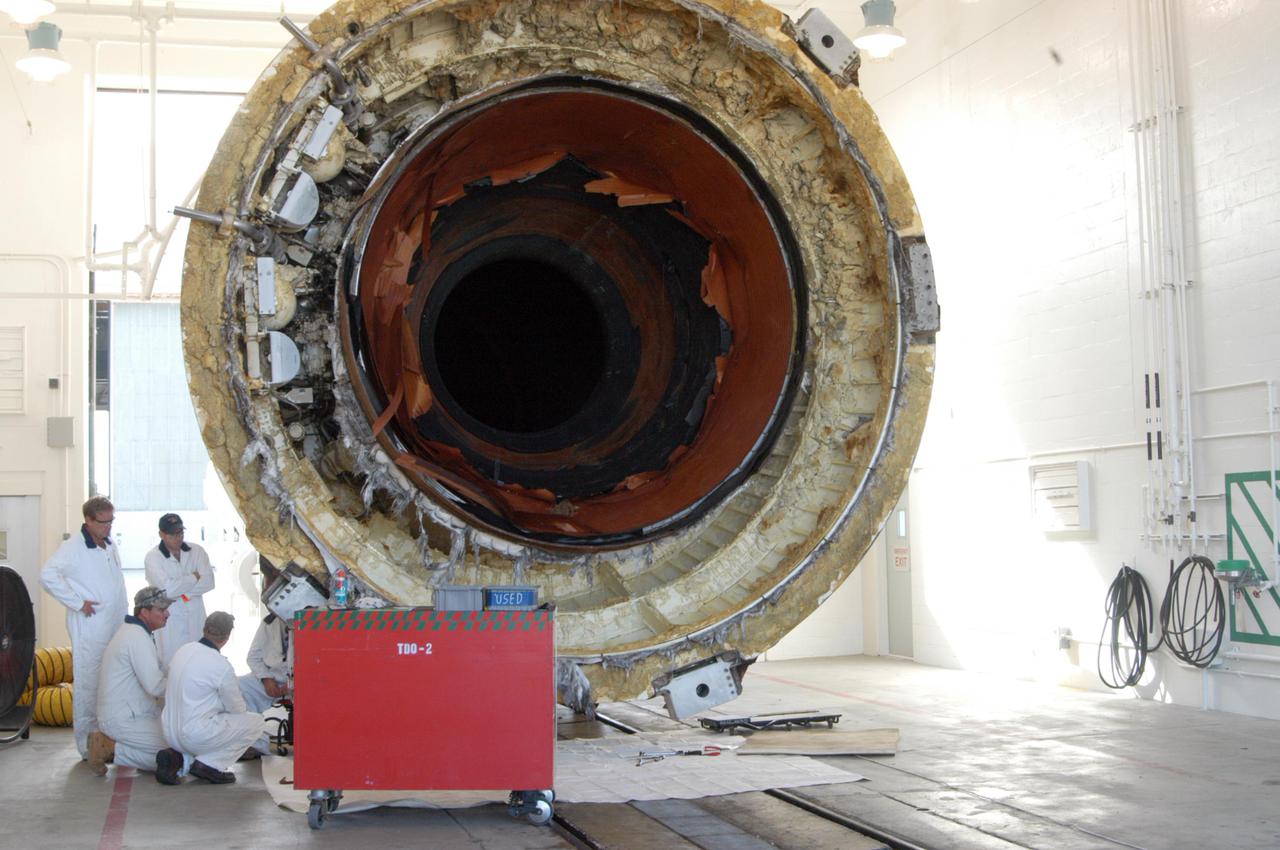
KENNEDY SPACE CENTER, FLA. - One of the spent Solid Rocket Boosters (SRBs) from the launch of Space Shuttle Discovery July 26 on Return to Flight mission STS-114 is moved into Hangar AF at Cape Canaveral Air Force Station. The SRBs are the largest solid propellant motors ever flown and the first designed for reuse. After a Shuttle is launched, the SRBs are jettisoned at two minutes, seven seconds into the flight. At six minutes and 44 seconds after liftoff, the spent SRBs, weighing about 165,000 lb., have slowed their descent speed to about 62 mph and splashdown takes place in a predetermined area. They are retrieved from the Atlantic Ocean by special recovery vessels and returned for refurbishment and eventual reuse on future Shuttle flights. Once at Hangar AF, the SRBs are unloaded onto a hoisting slip and mobile gantry cranes lift them onto tracked dollies where they are safed and undergo their first washing.
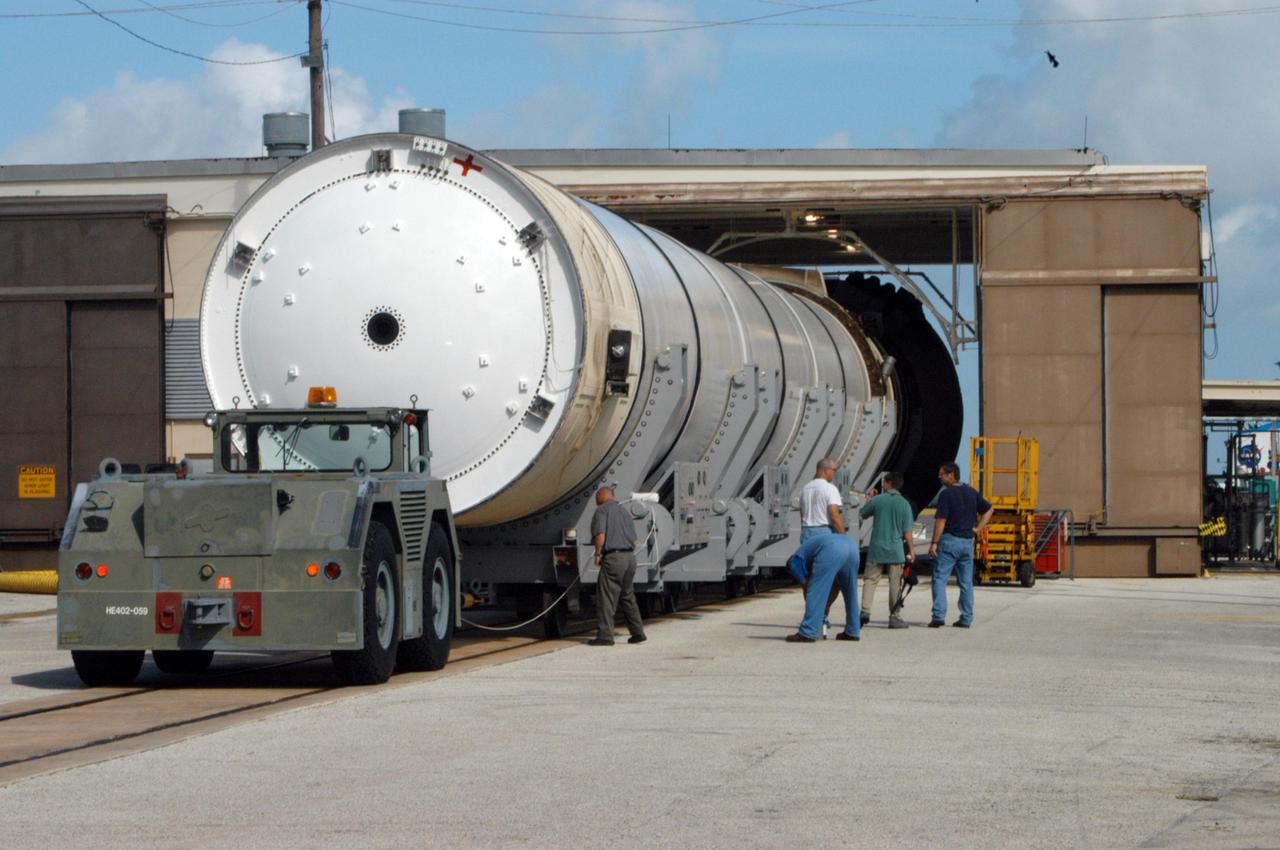
KENNEDY SPACE CENTER, FLA. - Workers in Hangar AF at Cape Canaveral Air Force Station take a look at one of the spent Solid Rocket Boosters (SRBs) from the launch of Space Shuttle Discovery July 26 on Return to Flight mission STS-114. The SRBs are the largest solid propellant motors ever flown and the first designed for reuse. After a Shuttle is launched, the SRBs are jettisoned at two minutes, seven seconds into the flight. At six minutes and 44 seconds after liftoff, the spent SRBs, weighing about 165,000 lb., have slowed their descent speed to about 62 mph and splashdown takes place in a predetermined area. They are retrieved from the Atlantic Ocean by special recovery vessels and returned for refurbishment and eventual reuse on future Shuttle flights. Once at Hangar AF, the SRBs are unloaded onto a hoisting slip and mobile gantry cranes lift them onto tracked dollies where they are safed and undergo their first washing.
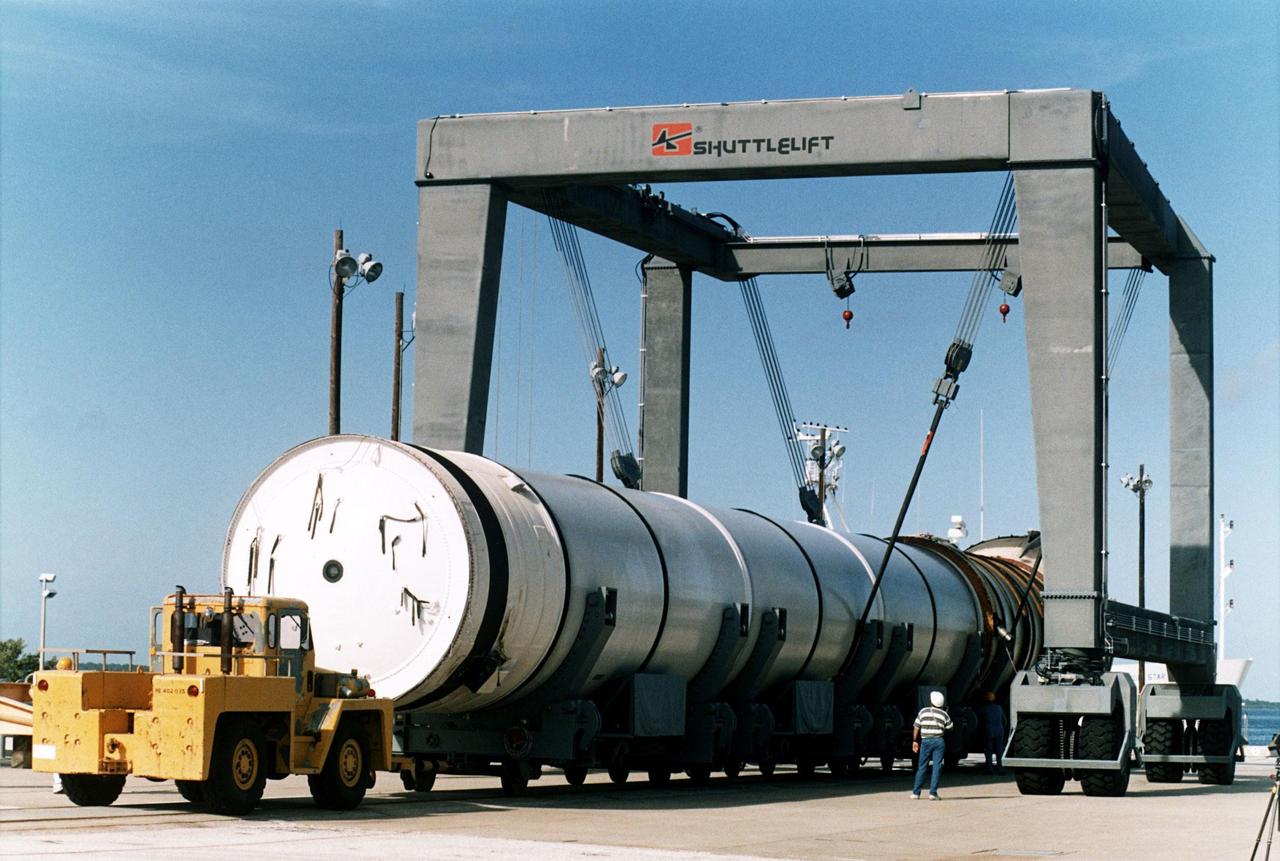
A spent solid rocket booster (SRB) from the STS-87 launch on Nov. 19 is lifted in a hoisting slip in the Hangar AF area at Cape Canaveral Air Station. Hangar AF is a building originally used for Project Mercury, the first U.S. manned space program. The SRBs are the largest solid propellant motors ever flown and the first designed for reuse. After a Shuttle is launched, the SRBs are jettisoned at two minutes, seven seconds into the flight. At six minutes and 44 seconds after liftoff, the spent SRBs, weighing about 165,000 lb., have slowed their descent speed to about 62 mph and splashdown takes place in a predetermined area. They are retrieved from the Atlantic Ocean by special recovery vessels and returned for refurbishment and eventual reuse on future Shuttle flights. Once at Hangar AF, the SRBs are unloaded onto a hoisting slip and mobile gantry cranes lift them onto tracked dollies where they are safed and undergo their first washing
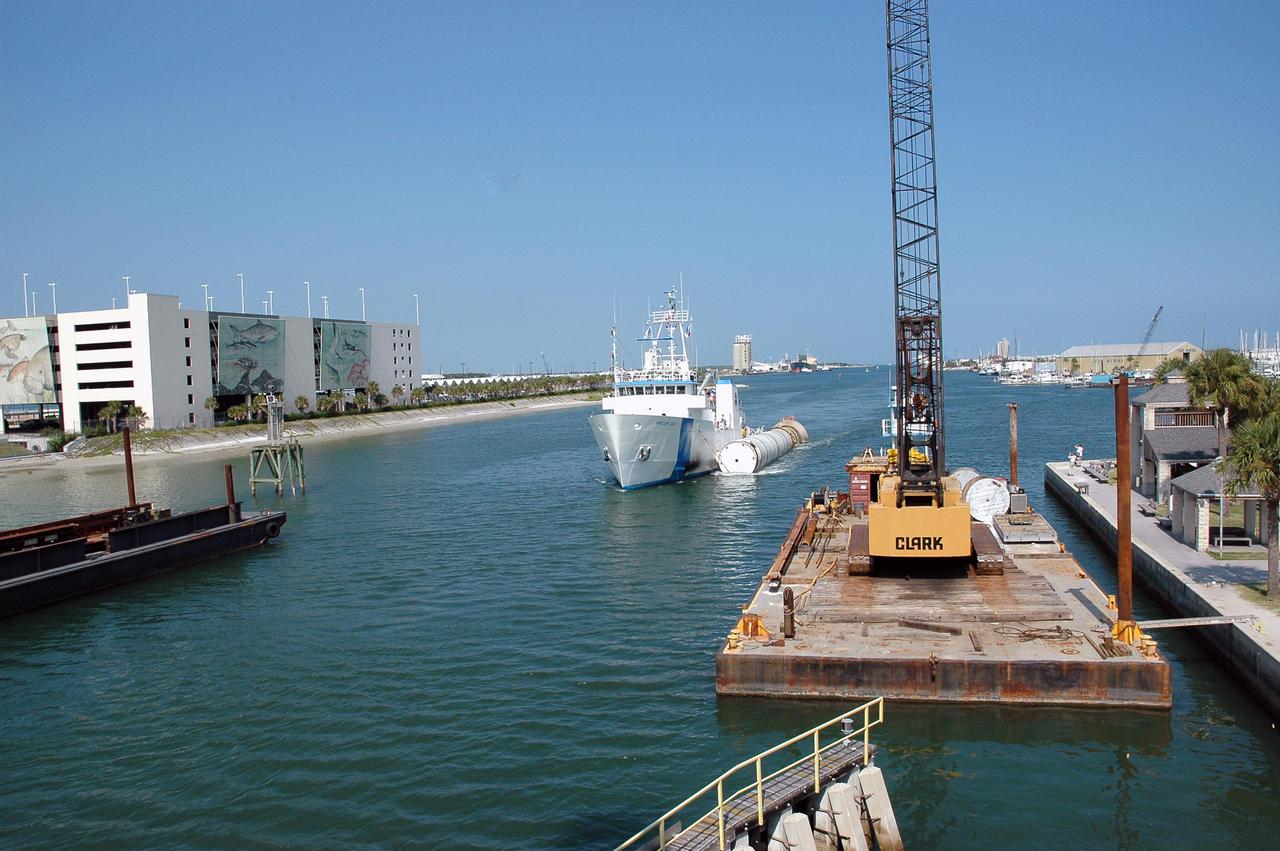
KENNEDY SPACE CENTER, FLA. - The solid rocket booster recovery ship Freedom Star makes its way through Port Canaveral with a spent solid rocket booster (SRB) from the STS-114 launch on July 26 in tow. The SRBs are the largest solid propellant motors ever flown and the first designed for reuse. After a Shuttle is launched, the SRBs are jettisoned at two minutes, seven seconds into the flight. At six minutes and 44 seconds after liftoff, the spent SRBs, weighing about 165,000 lb., have slowed their descent speed to about 62 mph and splashdown takes place in a predetermined area. They are retrieved from the Atlantic Ocean by special recovery vessels and returned for refurbishment and eventual reuse on future Shuttle flights. Once at Hangar AF, the SRBs are unloaded onto a hoisting slip and mobile gantry cranes lift them onto tracked dollies where they are safed and undergo their first washing.
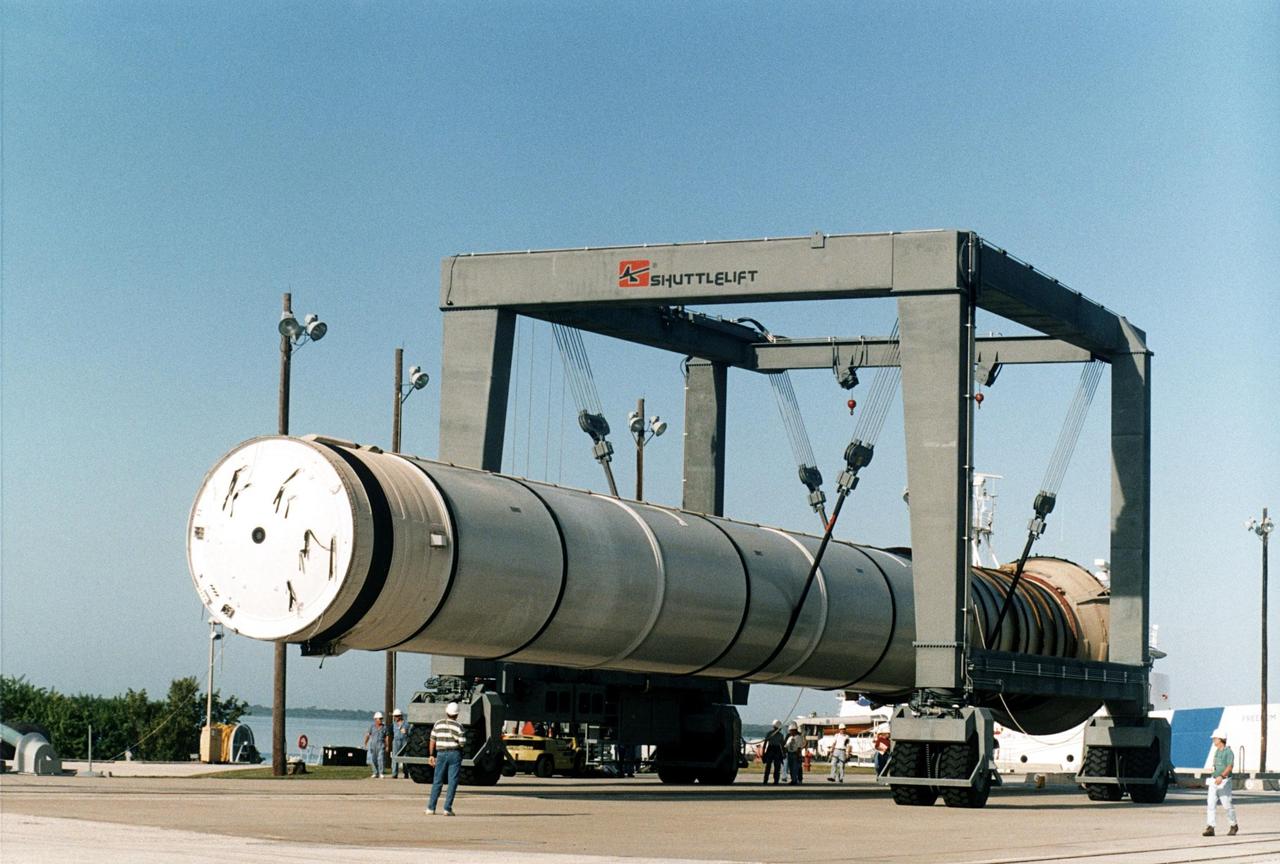
A spent solid rocket booster (SRB) from the STS-87 launch on Nov. 19 is lifted in a hoisting slip in the Hangar AF area at Cape Canaveral Air Station. Hangar AF is a building originally used for Project Mercury, the first U.S. manned space program. The SRBs are the largest solid propellant motors ever flown and the first designed for reuse. After a Shuttle is launched, the SRBs are jettisoned at two minutes, seven seconds into the flight. At six minutes and 44 seconds after liftoff, the spent SRBs, weighing about 165,000 lb., have slowed their descent speed to about 62 mph and splashdown takes place in a predetermined area. They are retrieved from the Atlantic Ocean by special recovery vessels and returned for refurbishment and eventual reuse on future Shuttle flights. Once at Hangar AF, the SRBs are unloaded onto a hoisting slip and mobile gantry cranes lift them onto tracked dollies where they are safed and undergo their first washing
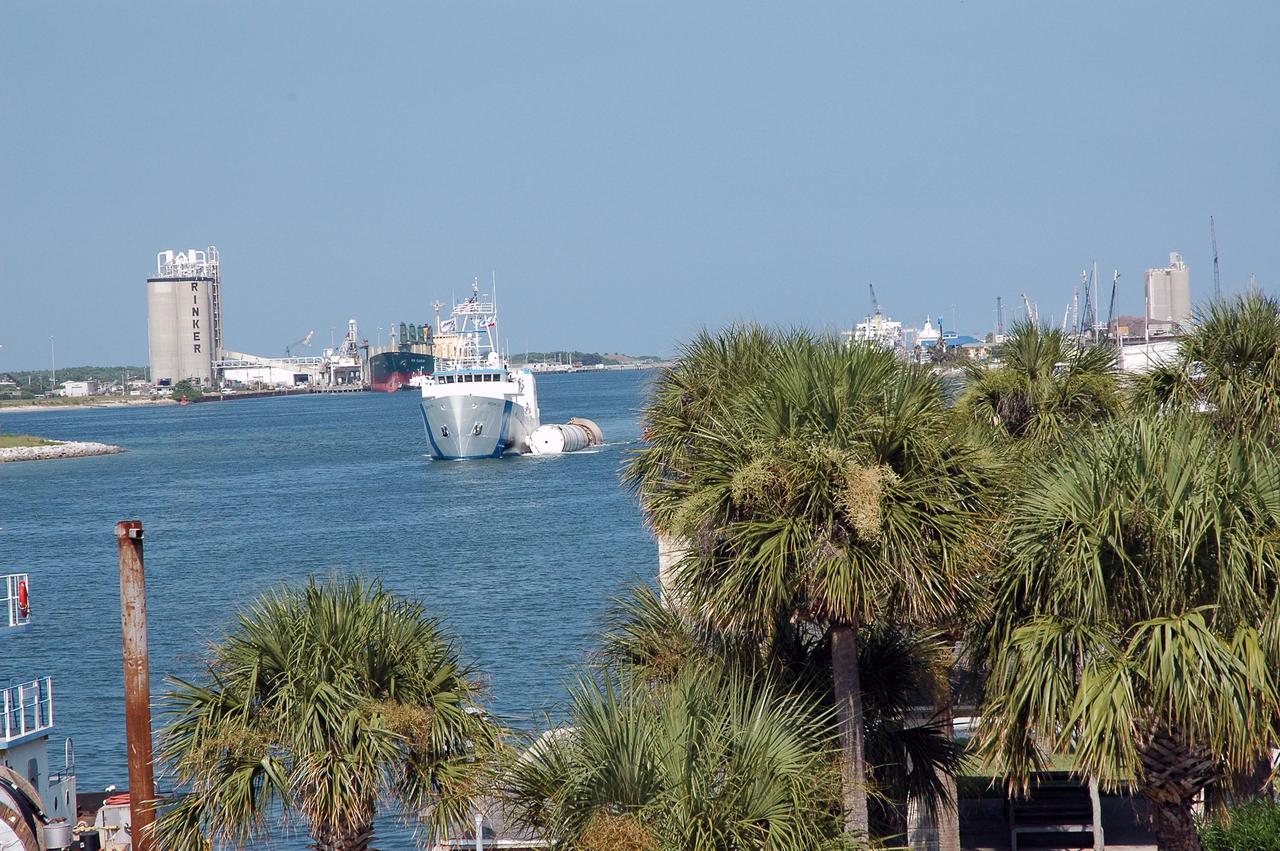
KENNEDY SPACE CENTER, FLA. - The solid rocket booster recovery ship Freedom Star enters Port Canaveral with a spent solid rocket booster (SRB) from the STS-114 launch on July 26 in tow. The SRBs are the largest solid propellant motors ever flown and the first designed for reuse. After a Shuttle is launched, the SRBs are jettisoned at two minutes, seven seconds into the flight. At six minutes and 44 seconds after liftoff, the spent SRBs, weighing about 165,000 lb., have slowed their descent speed to about 62 mph and splashdown takes place in a predetermined area. They are retrieved from the Atlantic Ocean by special recovery vessels and returned for refurbishment and eventual reuse on future Shuttle flights. Once at Hangar AF, the SRBs are unloaded onto a hoisting slip and mobile gantry cranes lift them onto tracked dollies where they are safed and undergo their first washing.
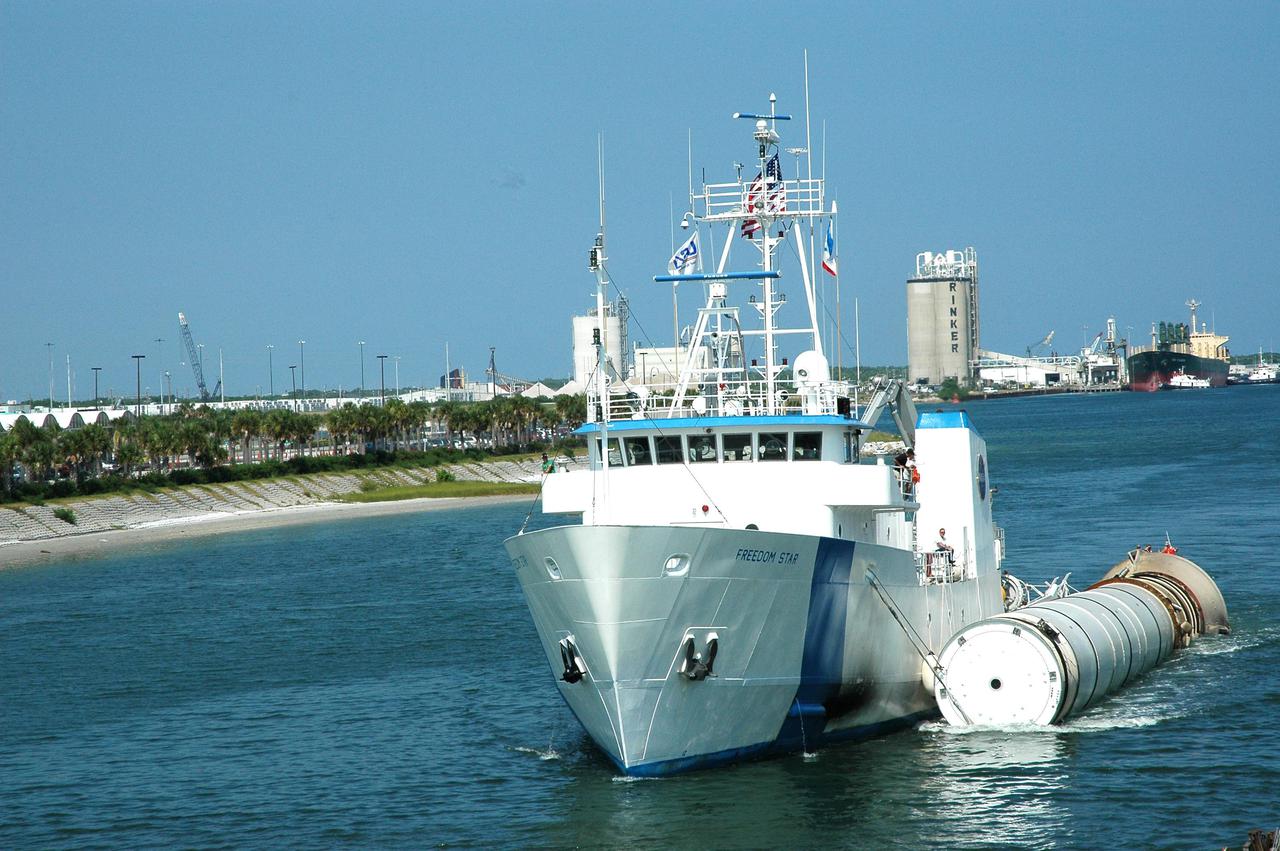
KENNEDY SPACE CENTER, FLA. - The solid rocket booster recovery ship Freedom Star travels through Port Canaveral with a spent solid rocket booster (SRB) from the STS-114 launch on July 26 in tow. The SRBs are the largest solid propellant motors ever flown and the first designed for reuse. After a Shuttle is launched, the SRBs are jettisoned at two minutes, seven seconds into the flight. At six minutes and 44 seconds after liftoff, the spent SRBs, weighing about 165,000 lb., have slowed their descent speed to about 62 mph and splashdown takes place in a predetermined area. They are retrieved from the Atlantic Ocean by special recovery vessels and returned for refurbishment and eventual reuse on future Shuttle flights. Once at Hangar AF, the SRBs are unloaded onto a hoisting slip and mobile gantry cranes lift them onto tracked dollies where they are safed and undergo their first washing.

KENNEDY SPACE CENTER, FLA. -- The frustum of a forward skirt assembly of a spent solid rocket booster (SRB) from the STS-87 launch on Nov. 19 is transported into the Hangar AF area at Cape Canaveral Air Station. Hangar AF is a building originally used for Project Mercury, the first U.S. manned space program. The SRBs are the largest solid propellant motors ever flown and the first designed for reuse. After a Shuttle is launched, the SRBs are jettisoned at two minutes, seven seconds into the flight. At six minutes and 44 seconds after liftoff, the spent SRBs, weighing about 165,000 lb., have slowed their descent speed to about 62 mph and splashdown takes place in a predetermined area. They are retrieved from the Atlantic Ocean by special recovery vessels and returned for refurbishment and eventual reuse on future Shuttle flights. Once at Hangar AF, the SRBs are unloaded onto a hoisting slip and mobile gantry cranes lift them onto tracked dollies where they are safed and undergo their first washing
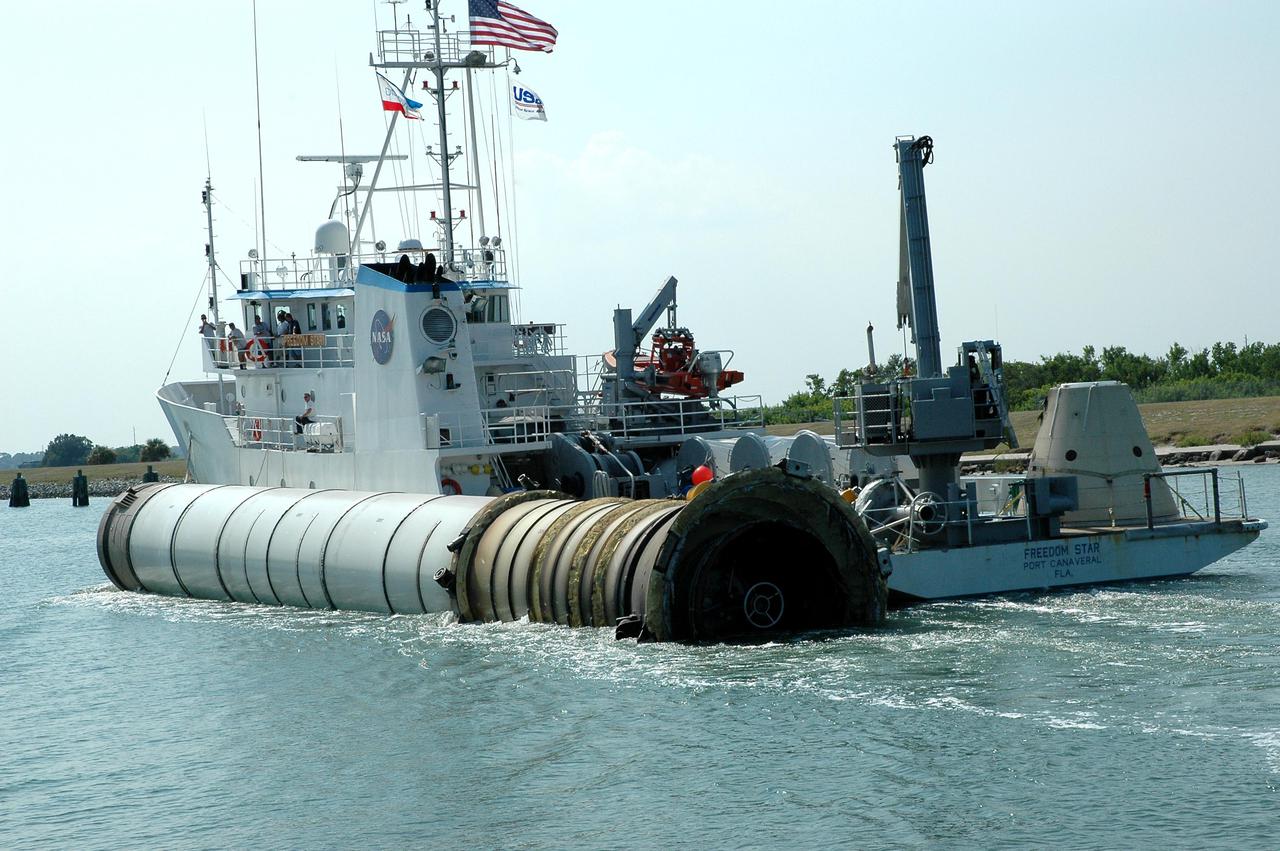
KENNEDY SPACE CENTER, FLA. - Kennedy Space Center employees on the solid rocket booster recovery ship Freedom Star acknowledge photographers awaiting their arrival at Port Canaveral. The ship, with a spent solid rocket booster (SRB) from the STS-114 launch on July 26 in tow, is headed for Hangar AF on Cape Canaveral Air Force Station. The SRBs are the largest solid propellant motors ever flown and the first designed for reuse. After a Shuttle is launched, the SRBs are jettisoned at two minutes, seven seconds into the flight. At six minutes and 44 seconds after liftoff, the spent SRBs, weighing about 165,000 lb., have slowed their descent speed to about 62 mph and splashdown takes place in a predetermined area. They are retrieved from the Atlantic Ocean by special recovery vessels and returned for refurbishment and eventual reuse on future Shuttle flights. Once at Hangar AF, the SRBs are unloaded onto a hoisting slip and mobile gantry cranes lift them onto tracked dollies where they are safed and undergo their first washing.
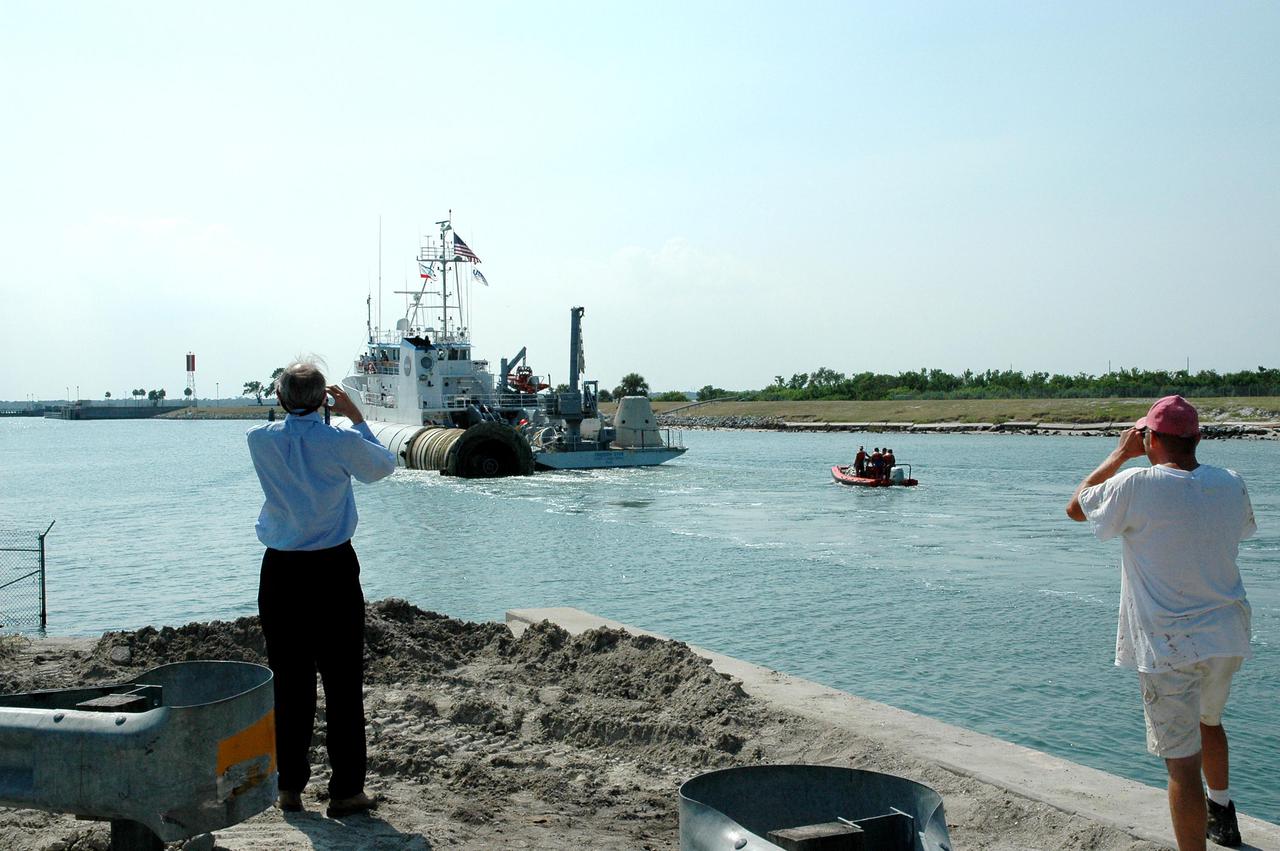
KENNEDY SPACE CENTER, FLA. - Photographers capture the solid rocket booster recovery ship Freedom Star, with a spent solid rocket booster (SRB) from the STS-114 launch on July 26 in tow, as it makes it way through Port Canaveral to Hangar AF on the Cape Canaveral Air Force Station. The SRBs are the largest solid propellant motors ever flown and the first designed for reuse. After a Shuttle is launched, the SRBs are jettisoned at two minutes, seven seconds into the flight. At six minutes and 44 seconds after liftoff, the spent SRBs, weighing about 165,000 lb., have slowed their descent speed to about 62 mph and splashdown takes place in a predetermined area. They are retrieved from the Atlantic Ocean by special recovery vessels and returned for refurbishment and eventual reuse on future Shuttle flights. Once at Hangar AF, the SRBs are unloaded onto a hoisting slip and mobile gantry cranes lift them onto tracked dollies where they are safed and undergo their first washing.
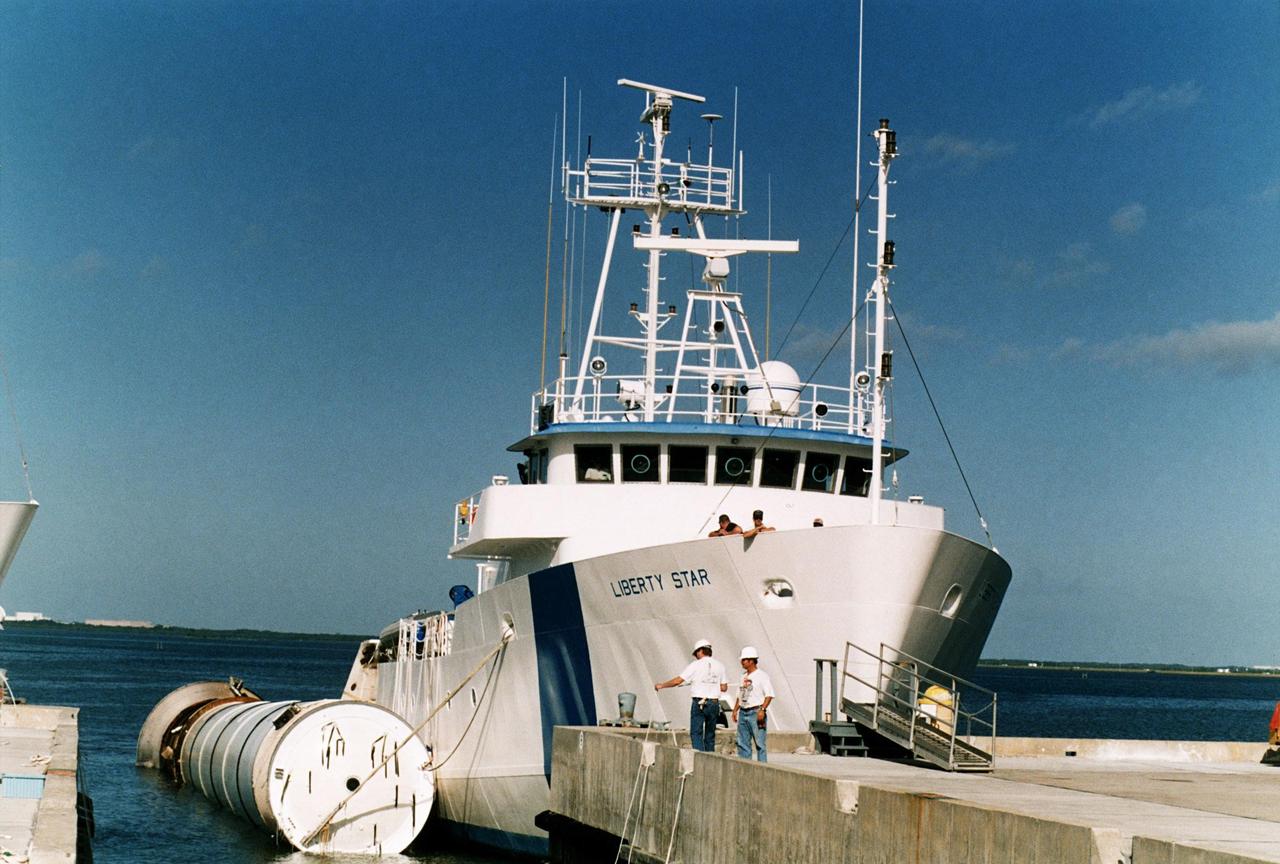
KENNEDY SPACE CENTER, FLA. -- Seen carrying a spent solid rocket booster (SRB) from the STS-87 launch on Nov. 19 is the solid rocket booster recovery ship Liberty Star as it reenters the Hangar AF area at Cape Canaveral Air Station. Hangar AF is a building originally used for Project Mercury, the first U.S. manned space program. The SRBs are the largest solid propellant motors ever flown and the first designed for reuse. After a Shuttle is launched, the SRBs are jettisoned at two minutes, seven seconds into the flight. At six minutes and 44 seconds after liftoff, the spent SRBs, weighing about 165,000 lb., have slowed their descent speed to about 62 mph and splashdown takes place in a predetermined area. They are retrieved from the Atlantic Ocean by special recovery vessels and returned for refurbishment and eventual reuse on future Shuttle flights. Once at Hangar AF, the SRBs are unloaded onto a hoisting slip and mobile gantry cranes lift them onto tracked dollies where they are safed and undergo their first washing
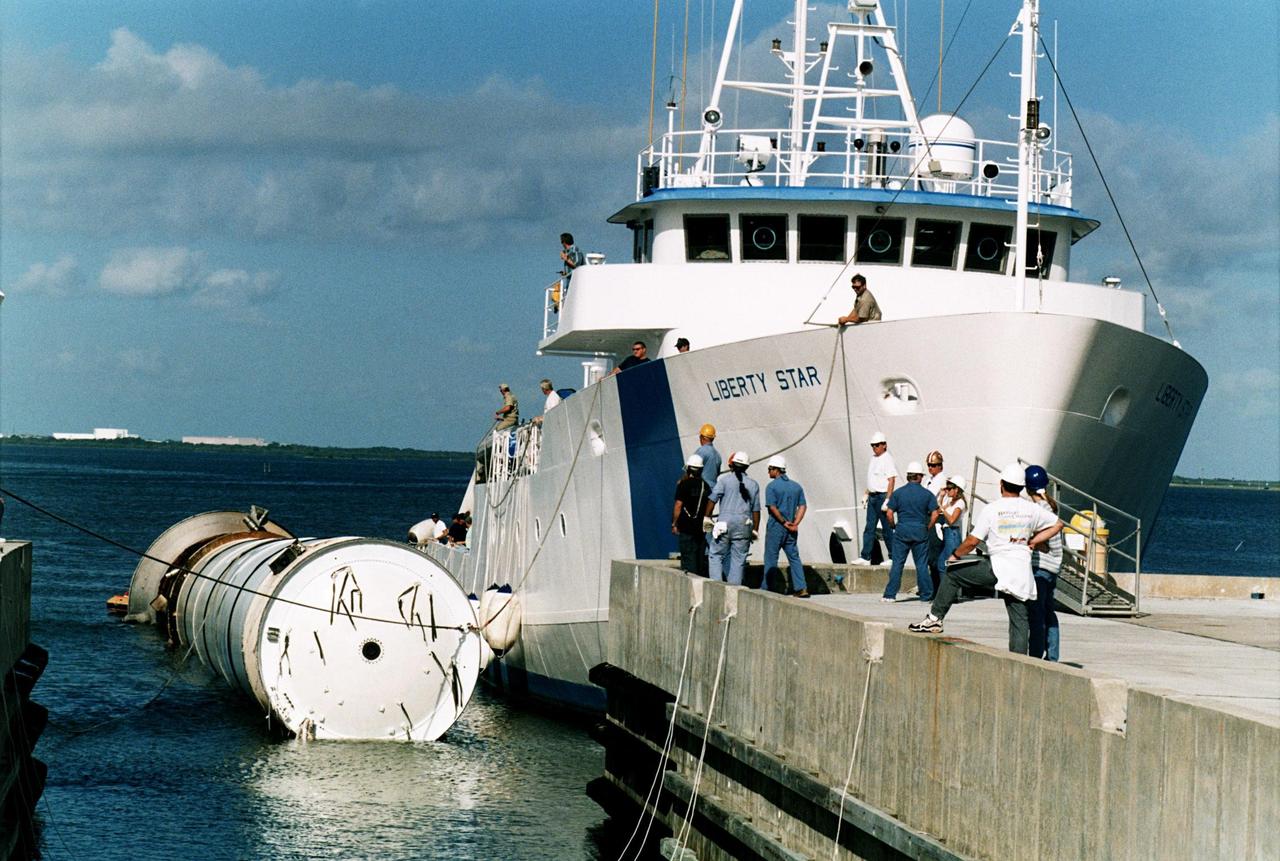
KENNEDY SPACE CENTER, FLA. -- Seen carrying a spent solid rocket booster (SRB) from the STS-87 launch on Nov. 19 is the solid rocket booster recovery ship Liberty Star as it reenters the Hangar AF area at Cape Canaveral Air Station. Hangar AF is a building originally used for Project Mercury, the first U.S. manned space program. The SRBs are the largest solid propellant motors ever flown and the first designed for reuse. After a Shuttle is launched, the SRBs are jettisoned at two minutes, seven seconds into the flight. At six minutes and 44 seconds after liftoff, the spent SRBs, weighing about 165,000 lb., have slowed their descent speed to about 62 mph and splashdown takes place in a predetermined area. They are retrieved from the Atlantic Ocean by special recovery vessels and returned for refurbishment and eventual reuse on future Shuttle flights. Once at Hangar AF, the SRBs are unloaded onto a hoisting slip and mobile gantry cranes lift them onto tracked dollies where they are safed and undergo their first washing