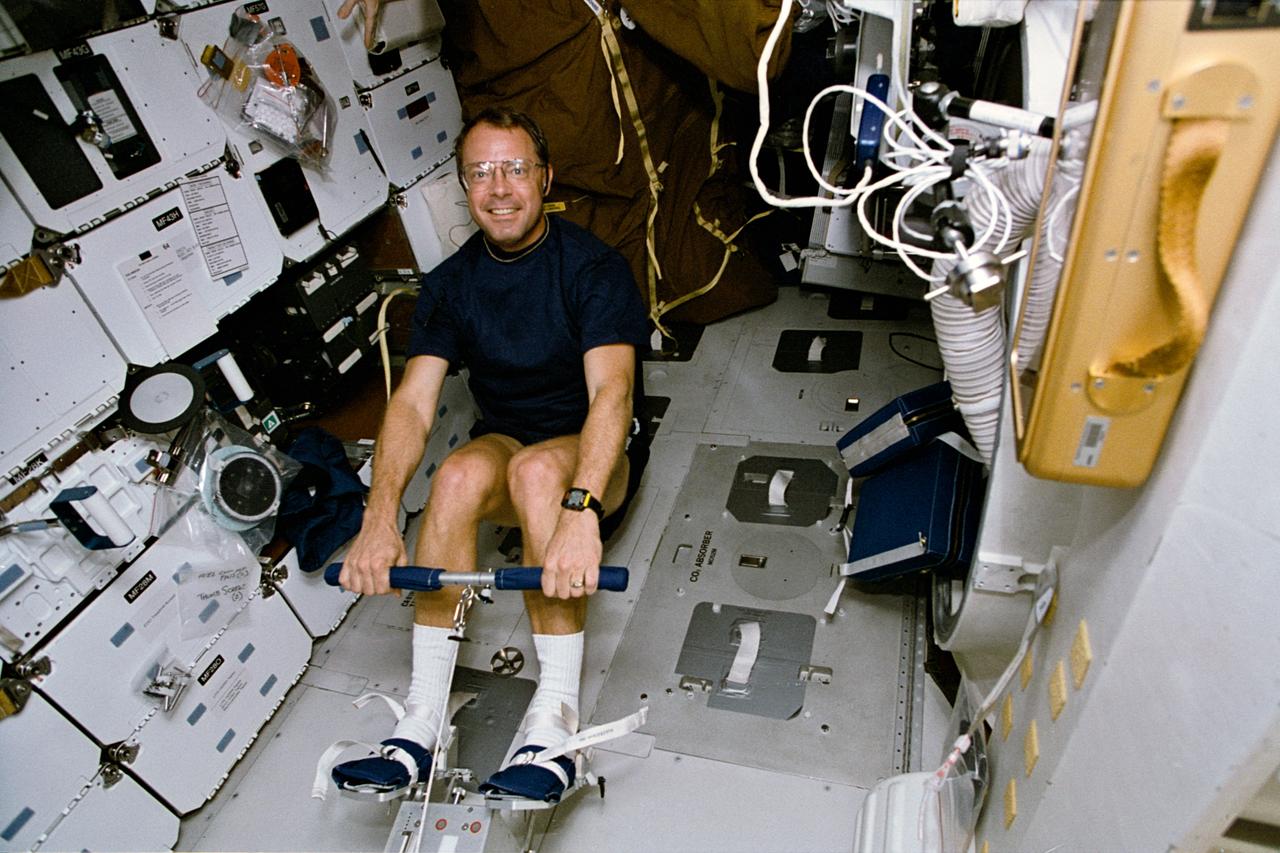
STS064-09-026 (9-20 Sept. 1994) --- Astronaut L. Blaine Hammond, STS-64 pilot, gets microgravity exercise on the rowing machine. This area of the space shuttle Discovery's middeck was also used for the treadmill exercising device. Blaine and five other NASA astronauts spent almost 11 days in Earth orbit in support of the mission. Photo credit: NASA or National Aeronautics and Space Administration
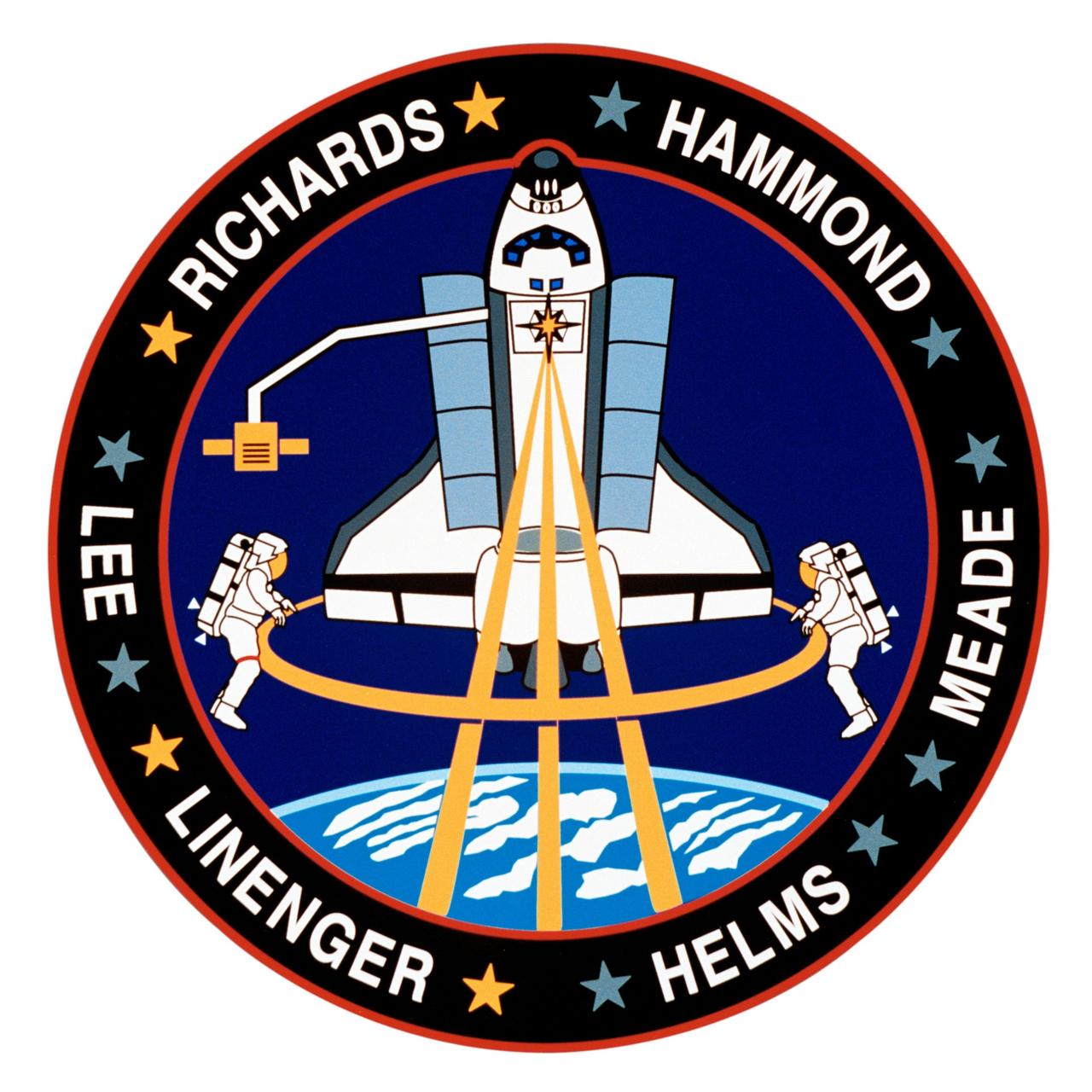
STS064-S-001 (July 1994) --- The patch depicts the space shuttle Discovery in a payload-bay-to-Earth attitude with its primary payload, Lidar In-Space Technology Experiment (LITE-1) operating in support of Mission to Planet Earth. LITE-1 is a lidar (light detection and ranging) system that uses a three-wavelength laser, symbolized by the three gold rays emanating from the star in the payload bay that form part of the astronaut symbol. The major objective of this first flight of LITE-1 is to validate its design and operating characteristics by gathering data about the Earth's troposphere and stratosphere, represented by the clouds and dual-colored Earth limb. A secondary payload on STS-64 is the free-flier SPARTAN-201 satellite shown on the Remote Manipulator System (RMS) arm post-retrieval. The objective of SPARTAN-201 is to investigate the physics of the solar wind and complement data being obtained from the ULYSSES satellite launched on STS-41. The RMS will also operate another secondary payload, Shuttle Plume Impingement Flight Experiment (SPIFEX), which will assess the plume effects from the Orbiter's Reaction Control System thrusters. Additionally, STS-64 will test a new extravehicular activity (EVA) maneuvering device, Simplified Aid for EVA Rescue (SAFER), represented symbolically by the two small nozzles on the backpacks of the two untethered EVA crew men. The names of the crew members encircle the patch: astronauts Richard N. Richards, commander; L. Blaine Hammond Jr., pilot; Jerry M. Linenger; Susan J. Helms, Carl J. Meade and Mark C. Lee, all mission specialists. The gold or silver stars by each name represent that person's parent service. The NASA insignia design for space shuttle flights is reserved for use by the astronauts and for other official use as the NASA Administrator may authorize. Public availability has been approved only in the forms of illustrations by the various news media. When and if there is any change in this policy, which is not anticipated, the change will be publicly announced. Photo credit: NASA
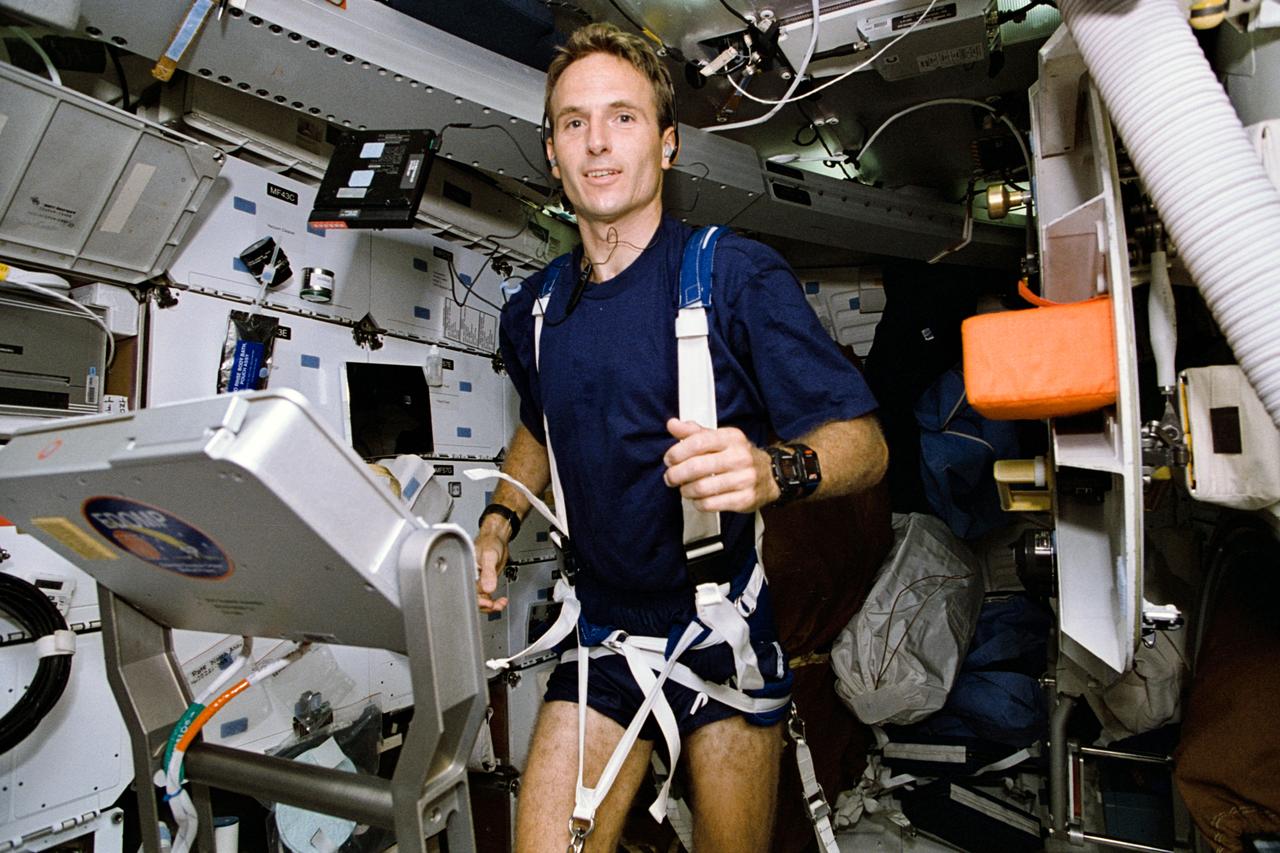
STS064-41-006 (9-20 Sept. 1994) --- Astronaut Jerry M. Linenger, STS-64 mission specialist, works out on the treadmill device on the space shuttle Discovery's middeck. "Running was a pleasure...just like being back on Earth," Linenger told a large audience of Johnson Space Center employees at the Crew Employee Presentation on Sept. 29, 1994. Linenger joined five other NASA astronauts for almost 11 days in Earth orbit aboard Discovery. Photo credit: NASA or National Aeronautics and Space Administration
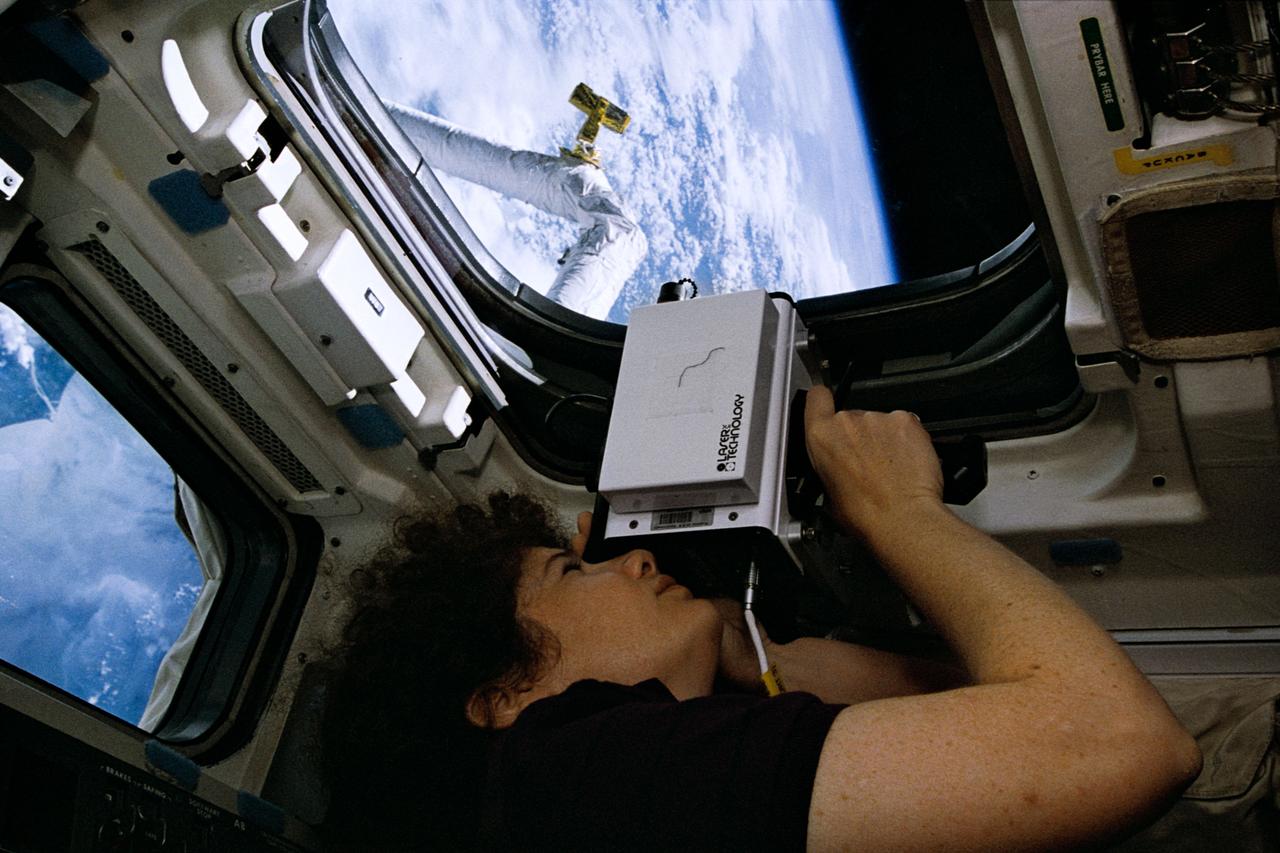
STS064-33-003 (9-20 Sept. 1994) --- Astronaut Susan J. Helms, STS-64 mission specialist, uses a laser instrument during operations with the Shuttle Pointed Autonomous Research Tool for Astronomy 201 (SPARTAN 201). Helms, who spent many mission hours at the controls of the Remote Manipulator System (RMS), joined five other NASA astronauts for almost 11 days in Earth orbit aboard the space shuttle Discovery. Photo credit: NASA or National Aeronautics and Space Administration
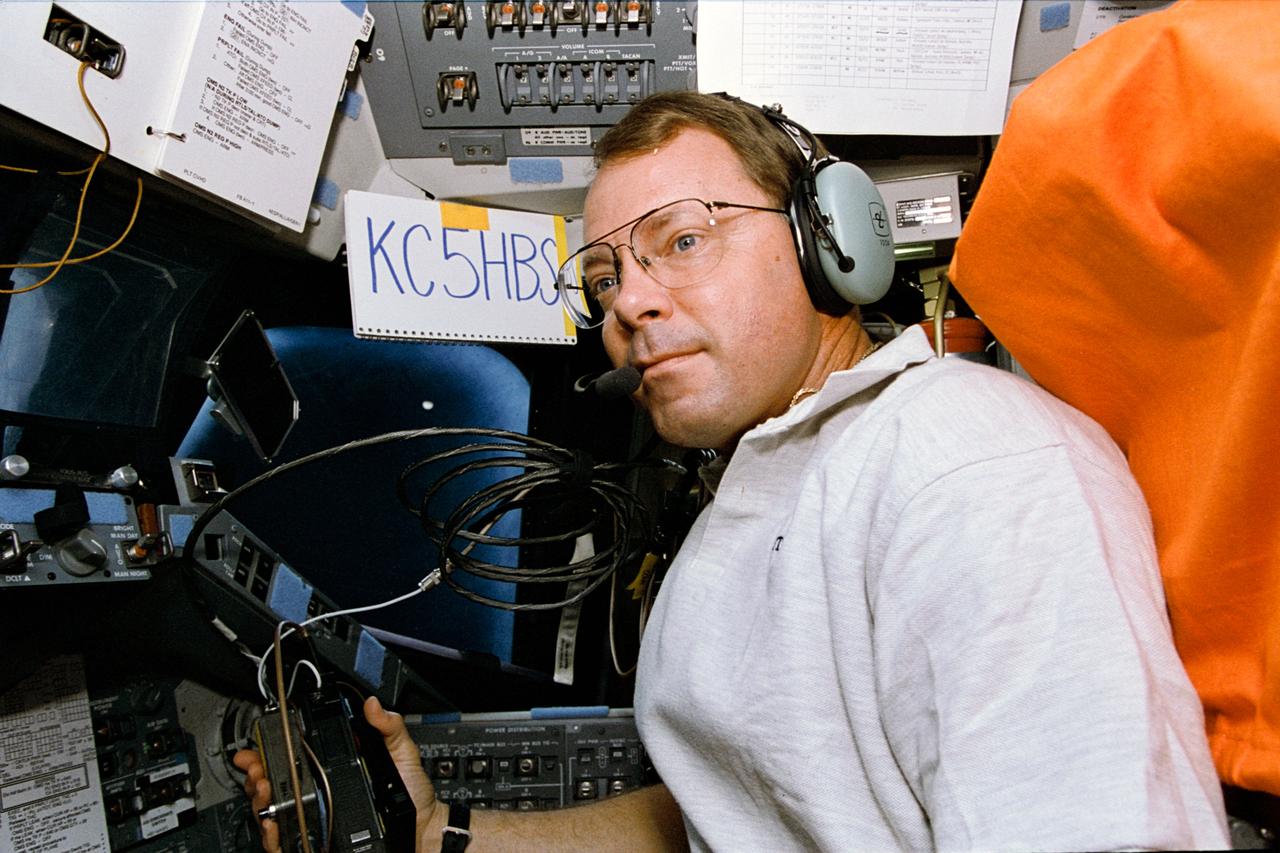
STS064-04-009 (9-20 Sept. 1994) --- Astronaut L. Blaine Hammond, STS-64 pilot, talks to students on Earth via the Shuttle Amateur Radio Experiment (SAREX) on the space shuttle Discovery's flight deck. The recently licensed "Ham" operator and several other crew members throughout the mission were connected with schools around the world with the aid of a number of amateur radio operators. Hammond joined five other NASA astronauts for almost 11 days in Earth orbit aboard Discovery. Photo credit: NASA or National Aeronautics and Space Administration
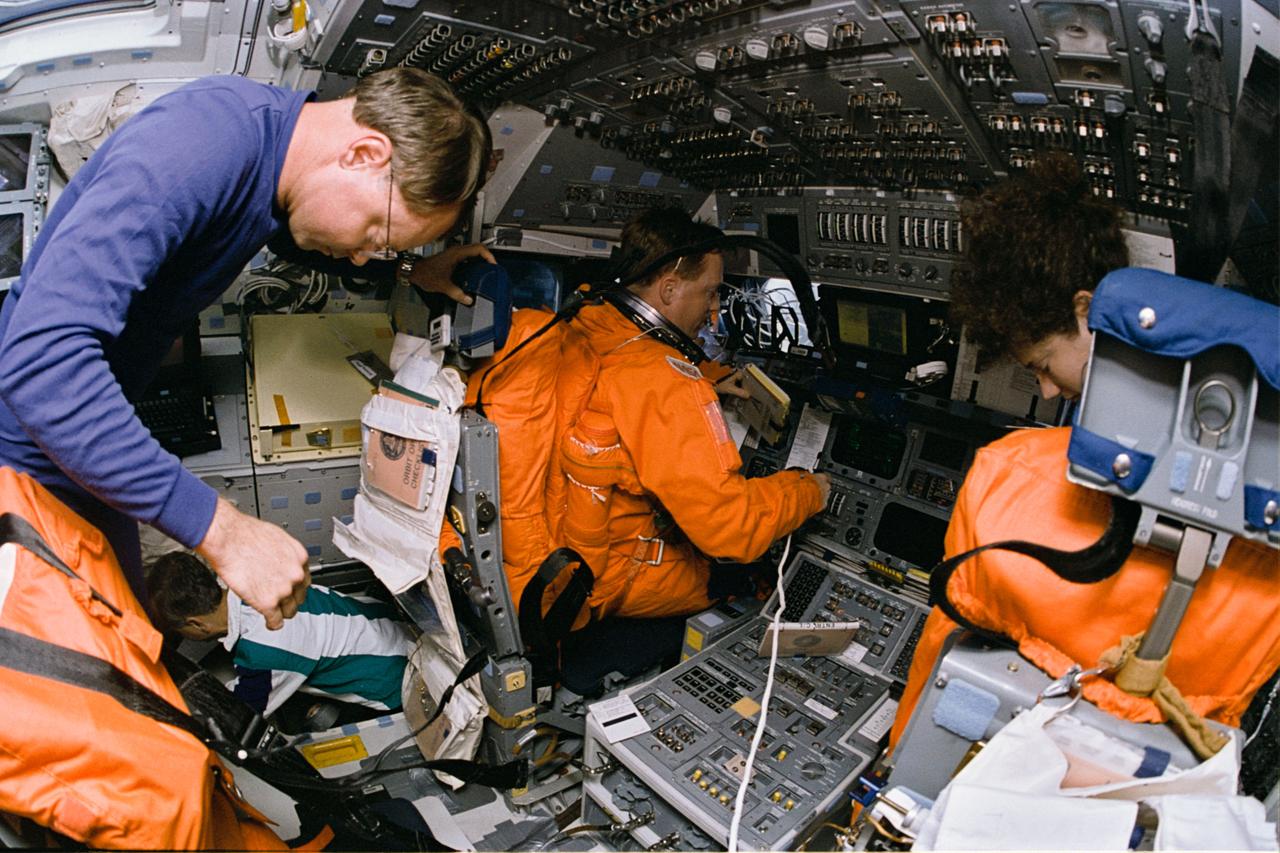
STS064-06-028 (9-20 Sept. 1994) --- On the space shuttle Discovery's flight deck, two thirds of the crew prepare for one of four hard efforts (in a two-day period) to de-orbit and complete the extended spaceflight. Manning the commander's station and wearing one of the launch and entry suits is astronaut Richard N. Richards, STS-64 mission commander. At the pilot's station is astronaut Susan J. Helms, mission specialist. Astronaut L. Blaine Hammond, pilot, is at left foreground, and astronaut Carl J. Meade, mission specialist, is at left background in the hatch leading to the middeck. Photo credit: NASA or National Aeronautics and Space Administration
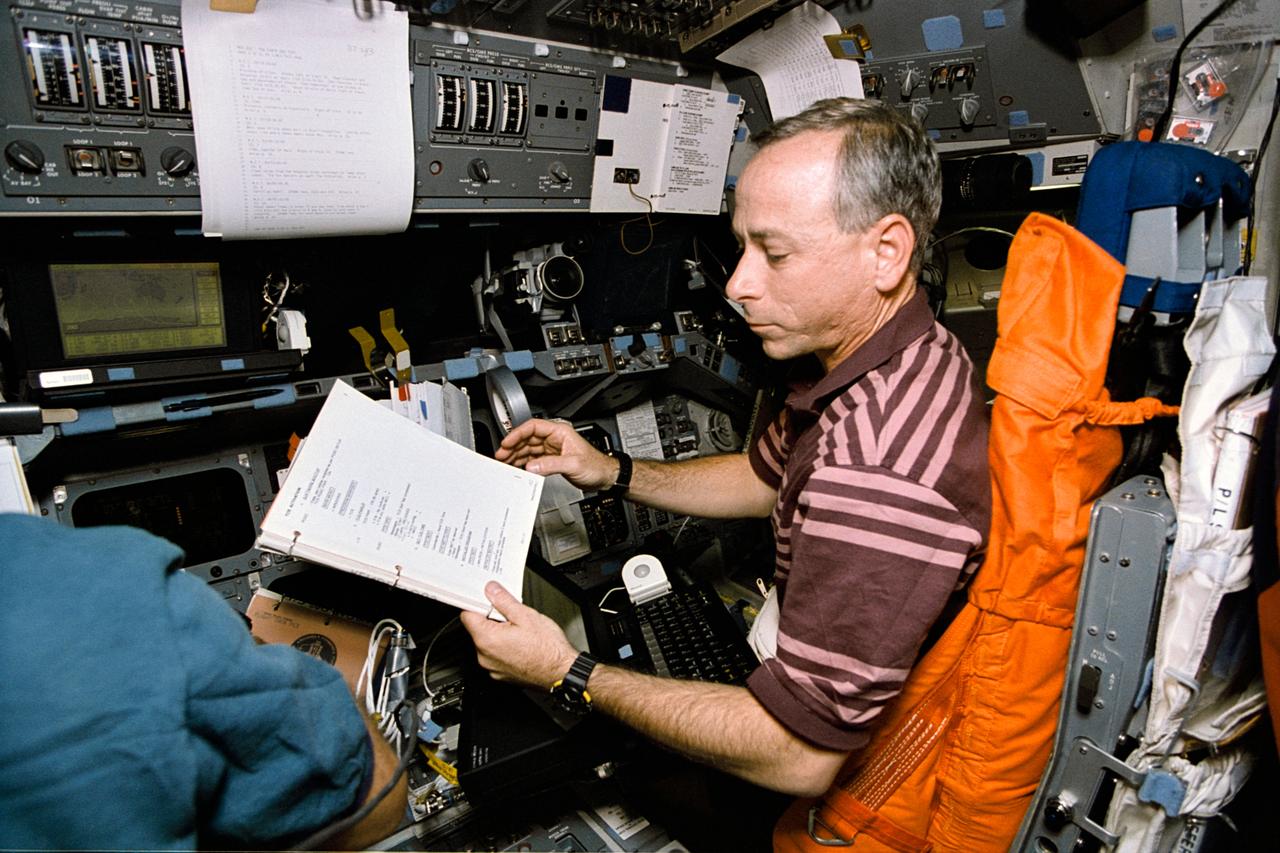
STS064-22-024 (9-20 Sept. 1994) --- With a manual and lap top computer in front of him, astronaut Carl J. Meade, STS-64 mission specialist, supports operations with the Trajectory Control Sensor (TCS) aboard the Earth-orbiting space shuttle Discovery. For this exercise, Meade temporarily mans the pilot's station on the forward flight deck. The TCS is the work of a team of workers at NASA's Johnson Space Center. Data gathered during this flight was expected to prove valuable in designing and developing a sensor for use during the rendezvous and mating phases of orbiter missions to the space station. For this demonstration, the Shuttle Pointed Autonomous Research Tool for Astronomy 201 (SPARTAN 201) was used as the target vehicle during release and retrieval operations. Photo credit: NASA or National Aeronautics and Space Administration

STS064-S-002 (June 1994) --- These six NASA astronauts have been assigned as crew members to fly aboard the space shuttle Discovery for the mission scheduled for September 1994. Astronaut Richard N. Richards (center front) is mission commander, while L. Blaine Hammond Jr. (front left) has been assigned as pilot. The other crew members are Susan J. Helms and (left to right, back row) Mark C. Lee, Jerry M. Linenger and Carl J. Meade, all mission specialists. Photo credit: NASA or National Aeronautics and Space Administration

STS064-30-006 (9-20 Sept. 1994) --- In the microgravity of space, 130 nautical miles above Earth, the six STS-64 crew members found a unique setting for the traditional inflight crew portrait. Astronaut Richard N. Richards (upper right), commander, found stability with his back against the overhead in upper right corner. Others, clockwise from the commander, are astronauts Carl J. Meade and Susan J. Helms, mission specialists; L. Blaine Hammond, pilot; and Mark C. Lee and Jerry M. Linenger, both mission specialists. Photo credit: NASA or National Aeronautics and Space Administration

STS064-23-025 (9-20 Sept. 1994) --- With scissors in hand, astronaut Jerry M. Linenger, STS-64 mission specialist, prepares to cut off a lengthy sheet of correspondence from ground controllers. Called the Thermal Imaging Printing System (TIPS), the message center occupies a stowage locker on the space shuttle Discovery's middeck. Astronaut L. Blaine Hammond, pilot, retrieves a clothing item from a nearby locker. Photo credit: NASA or National Aeronautics and Space Administration
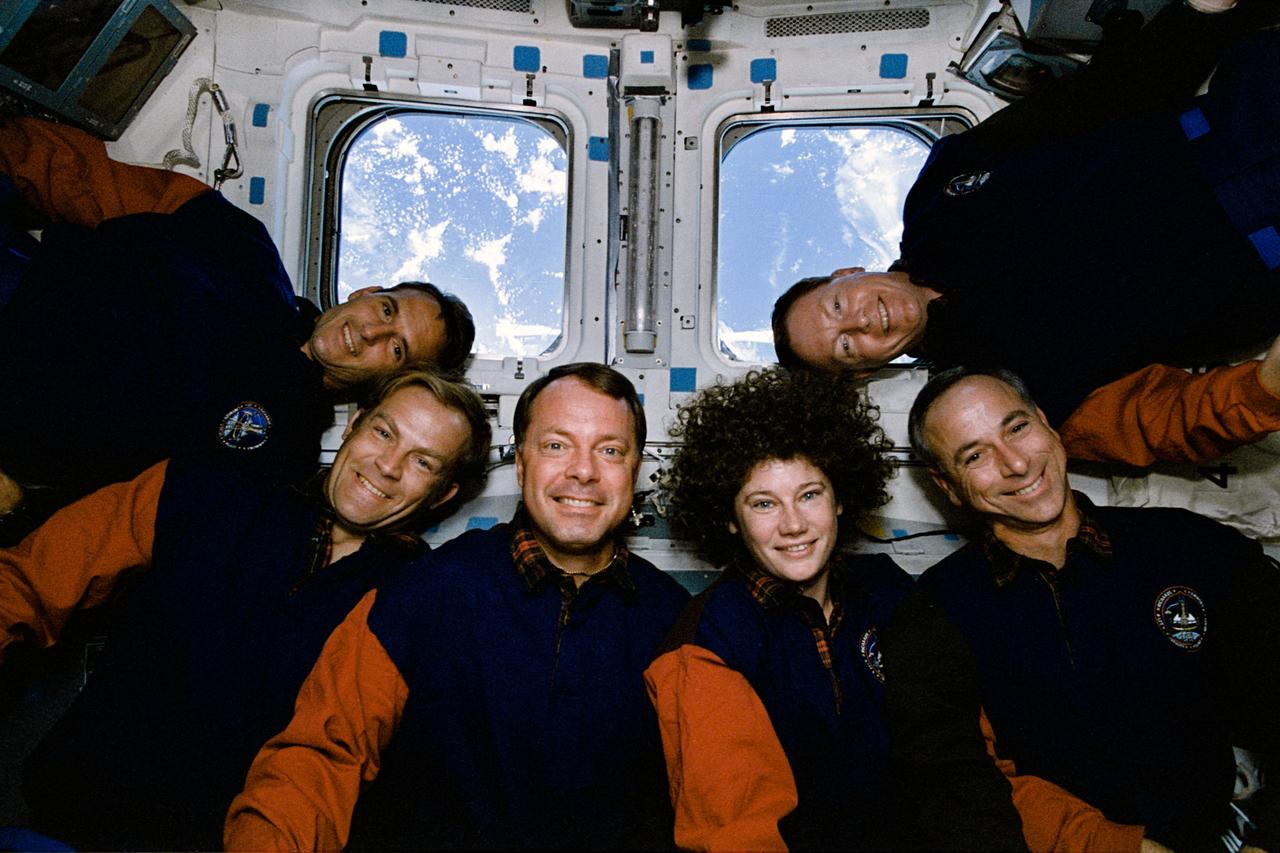
STS064-24-029 (9-20 Sept. 1994) --- In the microgravity of space, 130 nautical miles above Earth, the six STS-64 crew members found a unique setting for the traditional inflight crew portrait. Astronaut Richard N. Richards (upper right), commander, found stability with his back against the overhead in upper right corner. Others, clockwise from the commander, are astronauts Carl J. Meade and Susan J. Helms, mission specialists; L. Blaine Hammond, pilot; and Mark C. Lee and Jerry M. Linenger, both mission specialists. Photo credit: NASA or National Aeronautics and Space Administration
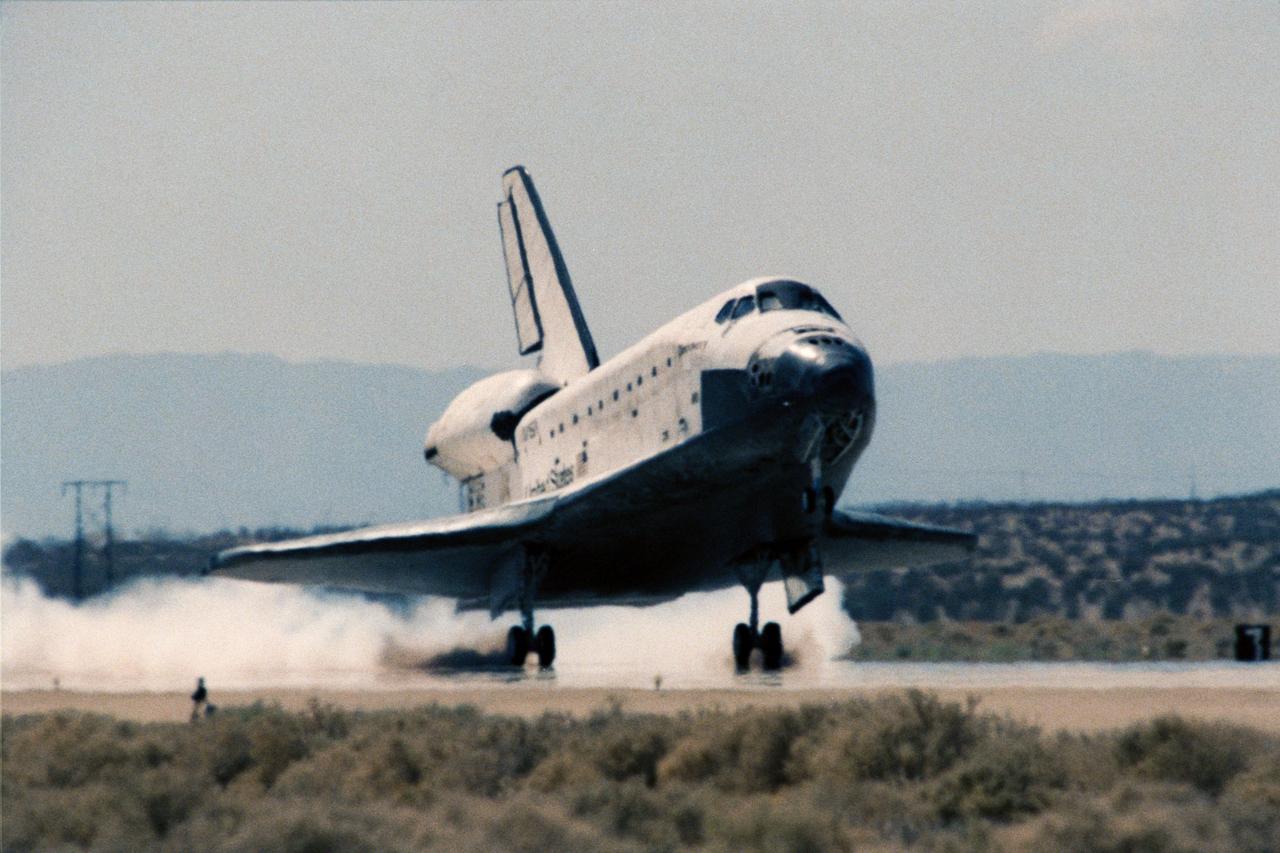
STS64-S-094 (20 Sept. 1994) --- The space shuttle Discovery, with a crew of six NASA astronauts aboard, touches down on Runway 04 at Edwards Air Force Base (EAFB), completing a 10-day, 22-hour and 50-minute mission. Following a de-orbit engine firing at 1:14 p.m. (PDT), Sept. 20, 1994. Touchdown was at 2:12:59 p.m., and the nose wheel touched down at 2:13:03 p.m., with wheel stop at 2:13:52 p.m. Bad weather in Florida called for an "eleventh hour" shift to the California landing site. Onboard for the flight, whose mission was to study Earth's atmosphere and to test tools and procedures for the International Space Station, were astronauts Richard N. Richards, L. Blaine Hammond Jr., Mark C. Lee, Carl J. Meade, Susan J. Helms and Jerry M. Linenger. Photo credit: NASA or National Aeronautics and Space Administration
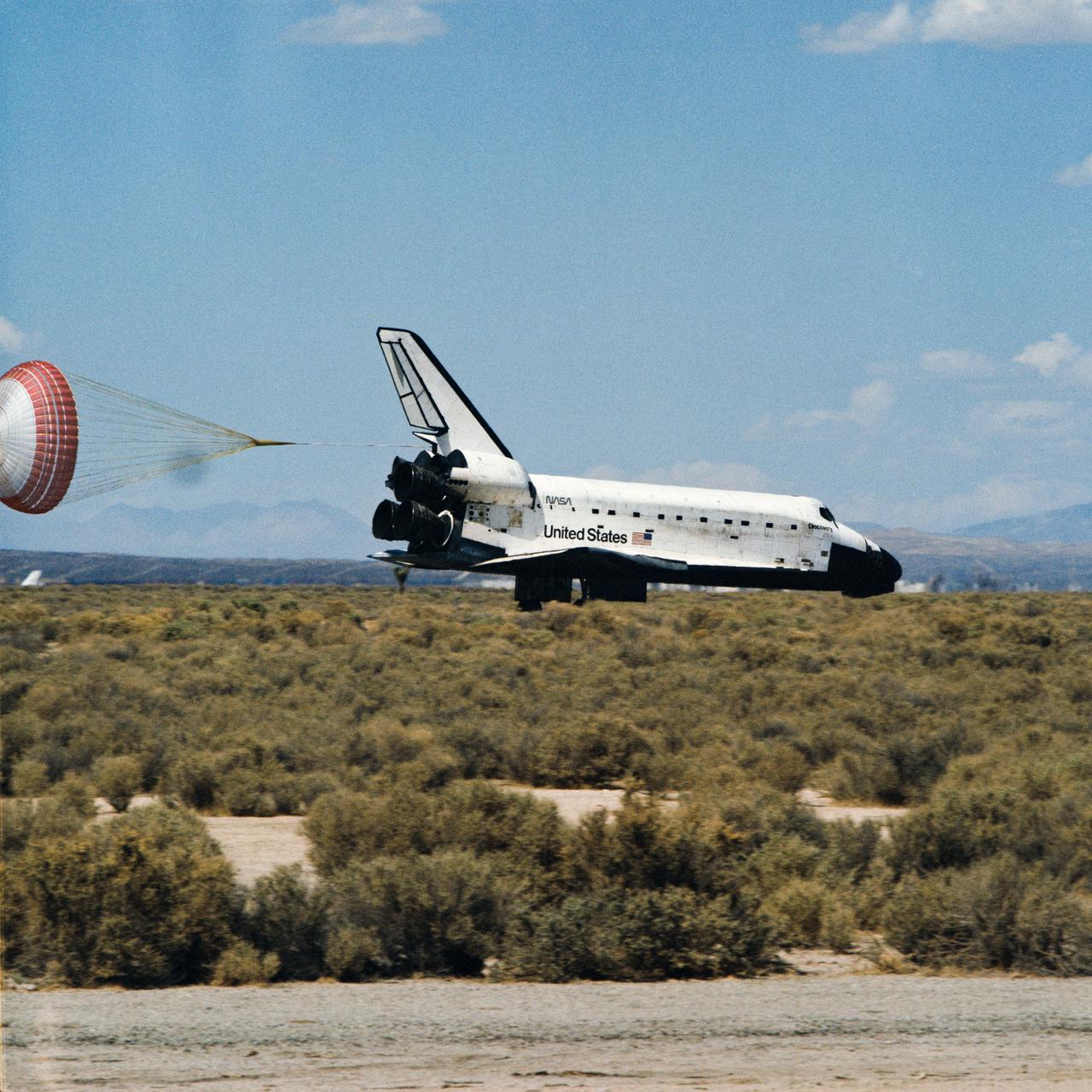
STS64-S-073 (20 Sept. 1994) --- The drag chute for the space shuttle Discovery is deployed as NASA's most-heavily flown spacecraft completes a 10-day, 22-hour and 50-minute mission. Discovery, with a crew of six NASA astronauts aboard, fired its de-orbit engine at 1:14 p.m. (PDT), Sept. 20, 1994. Touchdown was at 2:12:59 p.m. and the nose wheel touched down at 2:13:03 p.m., with wheel stop at 2:13:52 p.m. Bad weather in Florida called for an "eleventh hour" shift to the California landing site. Onboard for the flight, whose mission was to study Earth's atmosphere and to test tools and procedures for the International Space Station (ISS), were astronauts Richard N. Richards, L. Blaine Hammond, Mark C. Lee, Carl J. Meade, Susan J. Helms and Jerry M. Linenger. Photo credit: NASA or National Aeronautics and Space Administration
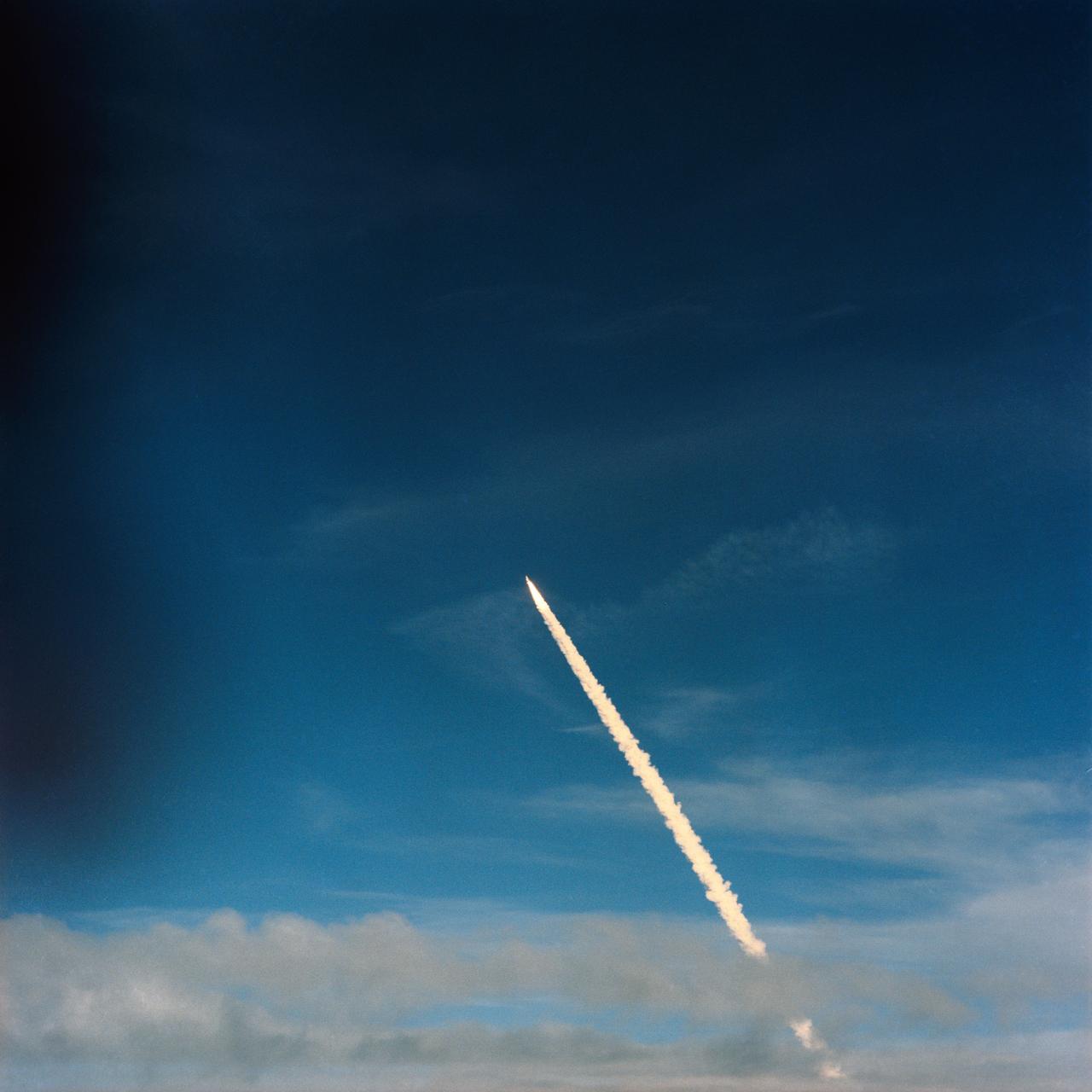
STS064-S-044 (9 Sept. 1994) --- Passing through some of the trailer clouds of an overcast sky which temporarily postponed its launch, the space shuttle Discovery heads for its 19th Earth-orbital flight. Several kilometers away, astronaut John H. Casper Jr., who took this picture, was piloting the Shuttle Training Aircraft (STA) from which the launch and landing area weather was being monitored. Onboard Discovery were astronauts Richard N. Richards, L. Blaine Hammond Jr., Mark C. Lee, Carl J. Meade, Susan J. Helms and Jerry M. Linenger. Photo credit: NASA or National Aeronautics and Space Administration
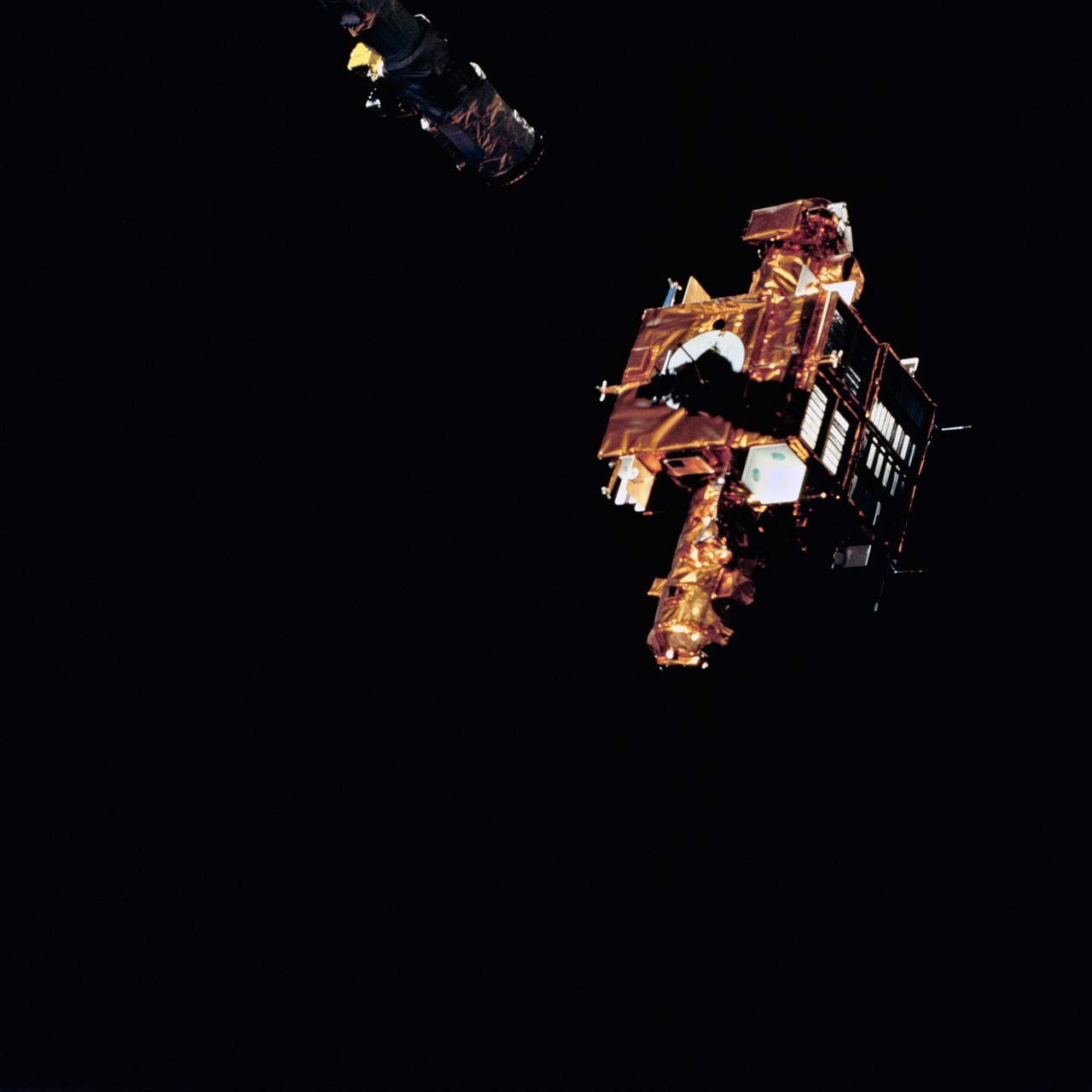
STS064-76-035 (15 Sept. 1994) --- Backdropped against the darkness of space, the Shuttle Pointed Autonomous Research Tool for Astronomy 201 (SPARTAN-201) satellite is lined up with the space shuttle Discovery's Remote Manipulator System (RMS) arm for re-capture. The free-flying spacecraft had remained some 40 miles away from Discovery for over two days. Photo credit: NASA or National Aeronautics and Space Administration
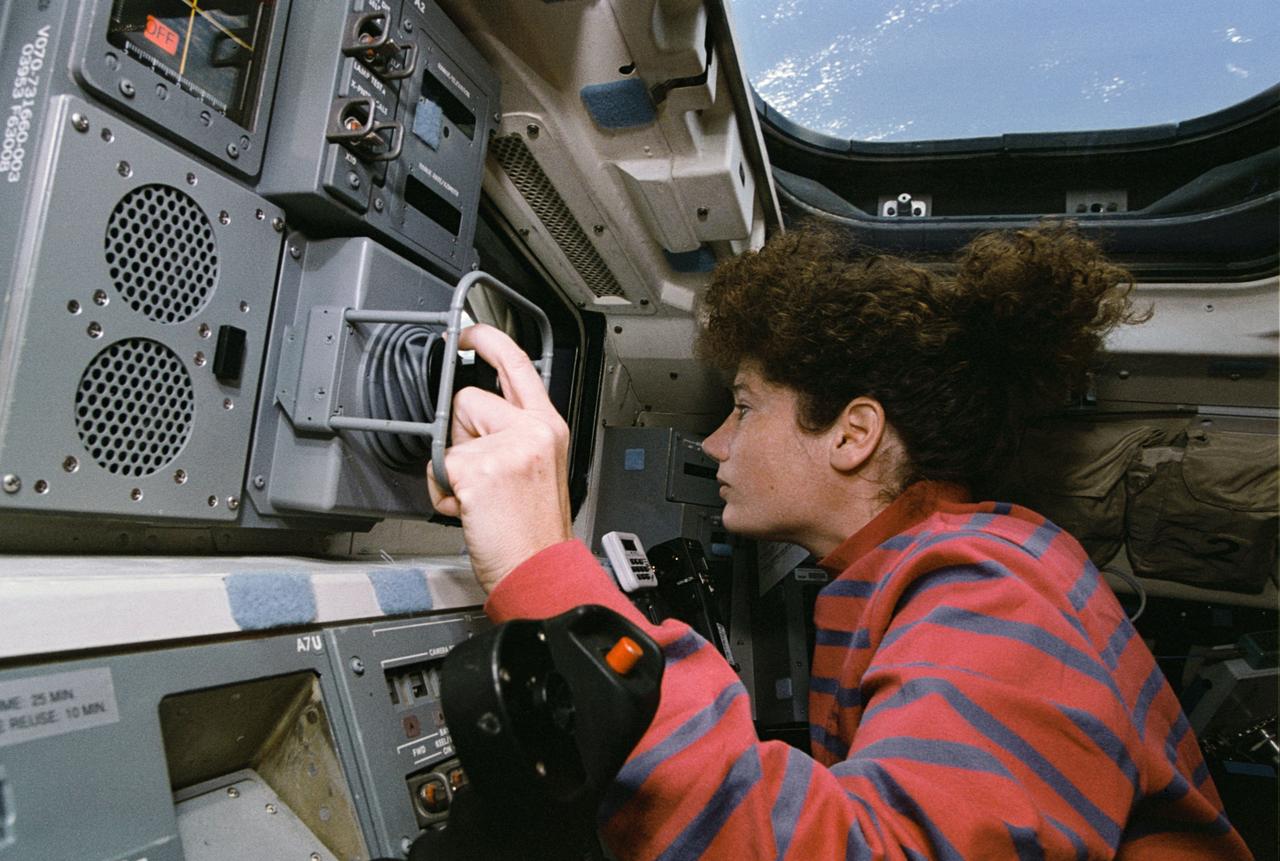
STS064-05-028 (9-20 Sept. 1994) --- On the space shuttle Discovery's aft flight deck, astronaut Susan J. Helms handles controls for the Remote Manipulator System (RMS). The robot arm operated by Helms, who remained inside the cabin, was used to support several tasks performed by the crew during the almost 11-day mission. Those tasks included the release and retrieval of the free-flying Shuttle Pointed Autonomous Research Tool For Astronomy 201 (SPARTAN 201), a six-hour spacewalk and the Shuttle Plume Impingement Flight Experiment (SPIFEX). Photo credit: NASA or National Aeronautics and Space Administration
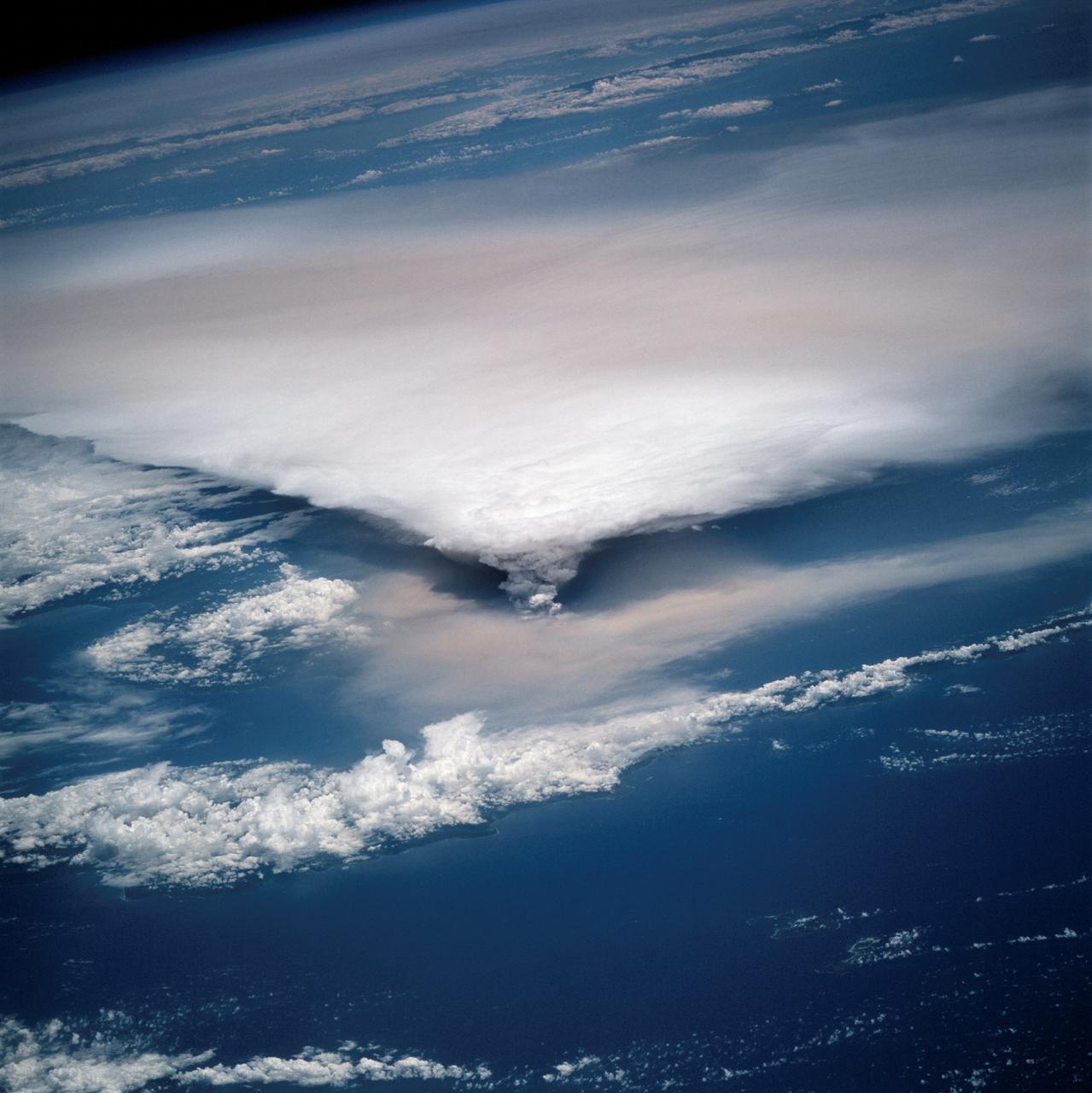
STS064-116-064 (20 Sept. 1994) --- Near the end of the mission, the crew aboard space shuttle Discovery was able to document the beginning of the second day of activity of the Rabaul volcano, on the east end of New Britain. On the morning of Sept. 19, 1994, two volcanic cones on the opposite sides of the 6-kilometer sea crater had begun to erupt with very little warning. Discovery flew just east of the eruption roughly 24 hours after it started and near the peak of its activity. New Ireland, the cloud-covered area in the foreground, lies just east of Rabaul harbor. The eruption, which sent a plume up to over 60,000 feet into the atmosphere, caused over 50,000 people to evacuate the area. Because winds were light at the time of the eruption, most of the ash was deposited in a region within 20 kilometers of the eruption zone. This photo shows the large white billowing eruption plume is carried in a westerly direction by the weak prevailing winds. At the base of the eruption column is a layer of yellow-brown ash being distributed by lower level winds. A sharp boundary moving outward from the center of the eruption in the lower cloud is a pulse of laterally-moving ash which results from a volcanic explosion. Geologists theorize that the large white column and the lower gray cloud are likely from the two main vents on each side of the harbor. The bay and harbor of Rabaul are covered with a layer of ash, possibly partly infilled with volcanic material. Matupit Island and the airport runway have disappeared into the bay. More than a meter of ash has fallen upon the city of Rabaul. Up to five vents were reported to have erupted at once, including the two cones Vulcan and Tavurvur, which are opposites of the harbor as well as new vents below the bay. Half of the Vulcan cone has collapsed into the sea. The extra day in space due to bad weather at the landing site afforded the crew the opportunity for both still and video coverage of the event. Photo credit: NASA or National Aeronautics and Space Administration

STS064-16-031 (19-20 Sept. 1994) --- On the space shuttle Discovery's middeck, astronaut Carl J. Meade checks a hose associated with the new Simplified Aid for EVA Rescue (SAFER) system prior to a Extravehicular Activity (EVA) that tested SAFER. On the Sept. 16, 1994 EVA, astronauts Meade and Mark C. Lee took turns using the SAFER hardware. The test of SAFER is the first phase of a larger SAFER program whose objectives are to establish a common set of requirements for both space shuttle and space station program needs, develop a flight demonstration of SAFER, validate system performance and, finally, develop a production version of SAFER for the shuttle and station programs. Photo credit: NASA or National Aeronautics and Space Administration
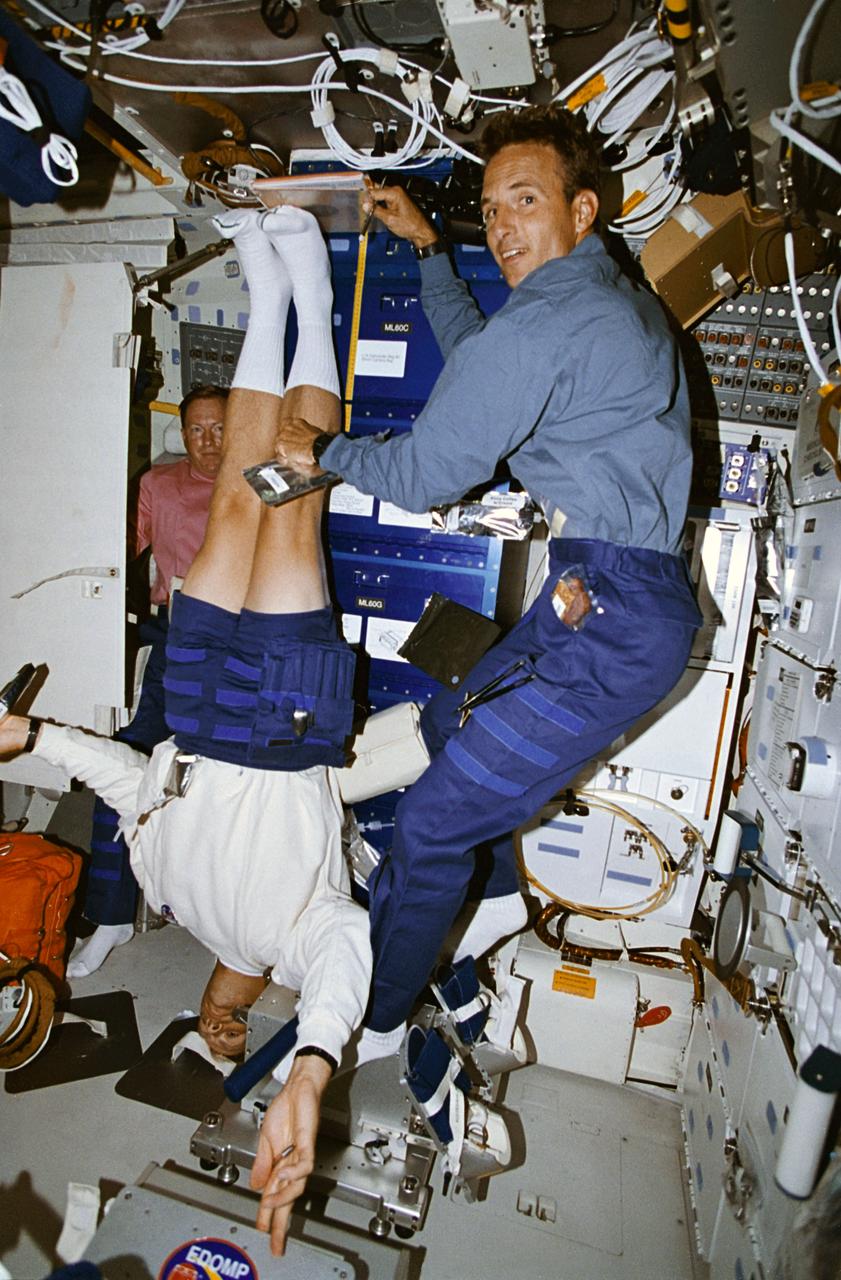
STS064-05-020 (9-20 Sept. 1994) --- Astronaut Mark C. Lee gets his height measured by astronaut Jerry M. Linenger as part of a daily in-flight routine supporting a medical Detailed Supplementary Objective (DSO). Astronaut Richard N. Richards, STS-64 mission commander, looks on in the background. This study was designed to collect information about back pain and height changes experienced by astronauts during flight. Crew members participating in this DSO are required to record height measurements and long back-pain symptoms daily. As an ongoing program, this DSO will gather data from 30 astronauts who spend more than eight consecutive days in space. Photo credit: NASA or National Aeronautics and Space Administration

STS064-23-037 (16 Sept. 1994) --- Astronauts Mark C. Lee (left) and Carl J. Meade were photographed in the midst of 15-minute pre-breathe exercise in preparation for their Extravehicular Activity (EVA) of Sept. 16, 1994. On that day the two performed an in-space rehearsal or demonstration of a contingency rescue using the never-before flown Simplified Aid for EVA Rescue (SAFER) system some 130 nautical miles above Earth. During the EVA the two STS-64 mission specialists took turns using the SAFER hardware. The test was the first phase of a larger SAFER program leading finally to the development of a production version for future shuttle and space station applications. Photo credit: NASA or National Aeronautics and Space Administration
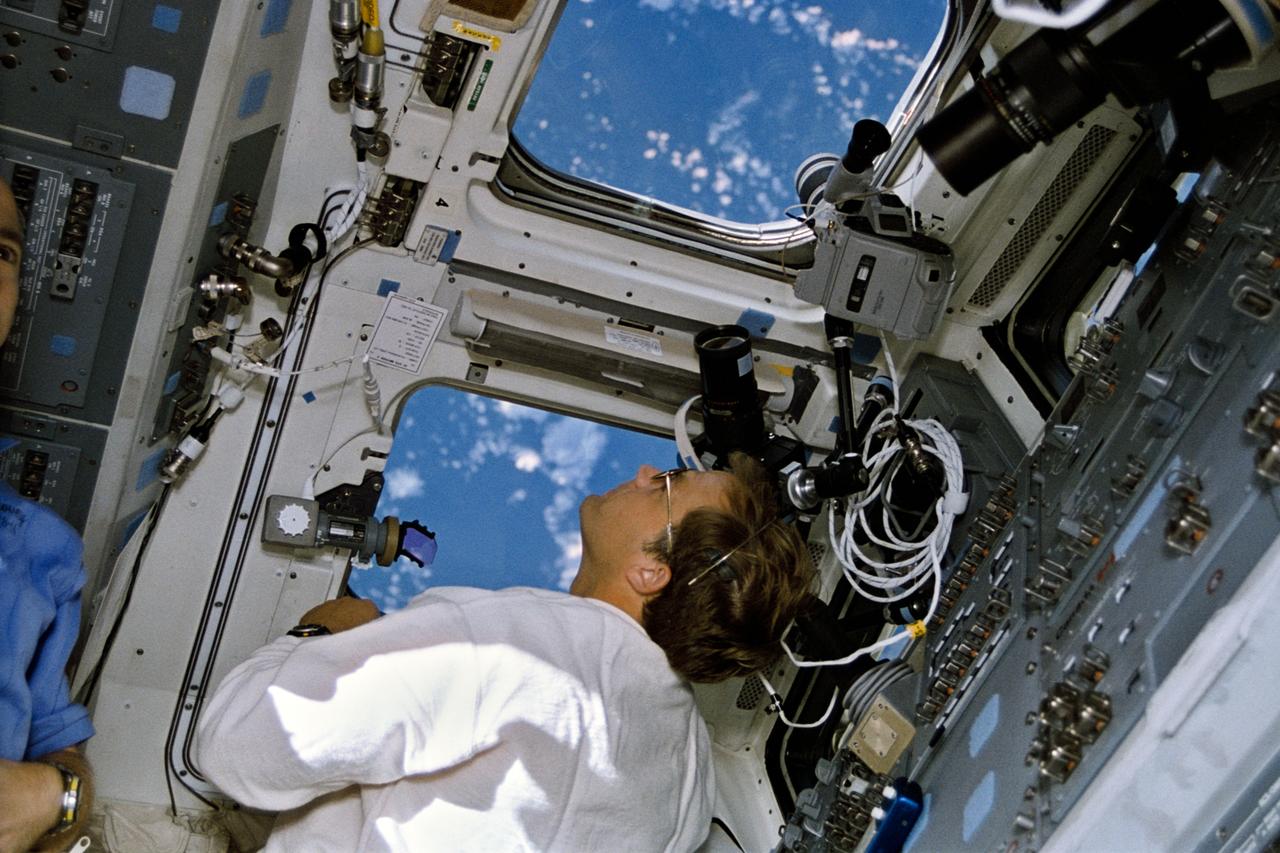
STS064-08-016 (9-20 Sept. 1994) --- Astronaut Mark C. Lee monitors the Lidar In-Space Technology Experiment (LITE) at work in the space shuttle Discovery's cargo bay. The mission specialist is surrounded by cameras which were used by the six NASA astronauts onboard for the almost 11-day mission. Near Lee's head is a 100mm lens which he used to collect data on a myriad of cloud formations which he observed on Earth, 130 nautical miles away. Photo credit: NASA or National Aeronautics and Space Administration EDITOR'S NOTE: In uncropped versions of this picture, astronaut Carl J. Meade is partially in frame at left.

STS064-10-011 (12 Sept. 1994) --- The Solid Surface Combustion Experiment (SSCE), designed to supply information on flame spread over solid fuel surfaces in the reduced-gravity environment of space, is pictured during flight day four operations. The middeck experiment measured the rate of spreading, the solid-phase temperature, and the gas-phase temperature of flames spreading over rectangular fuel beds. STS-64 marked the seventh trip into space for the Lewis Research Center experiment. Photo credit: NASA or National Aeronautics and Space Administration
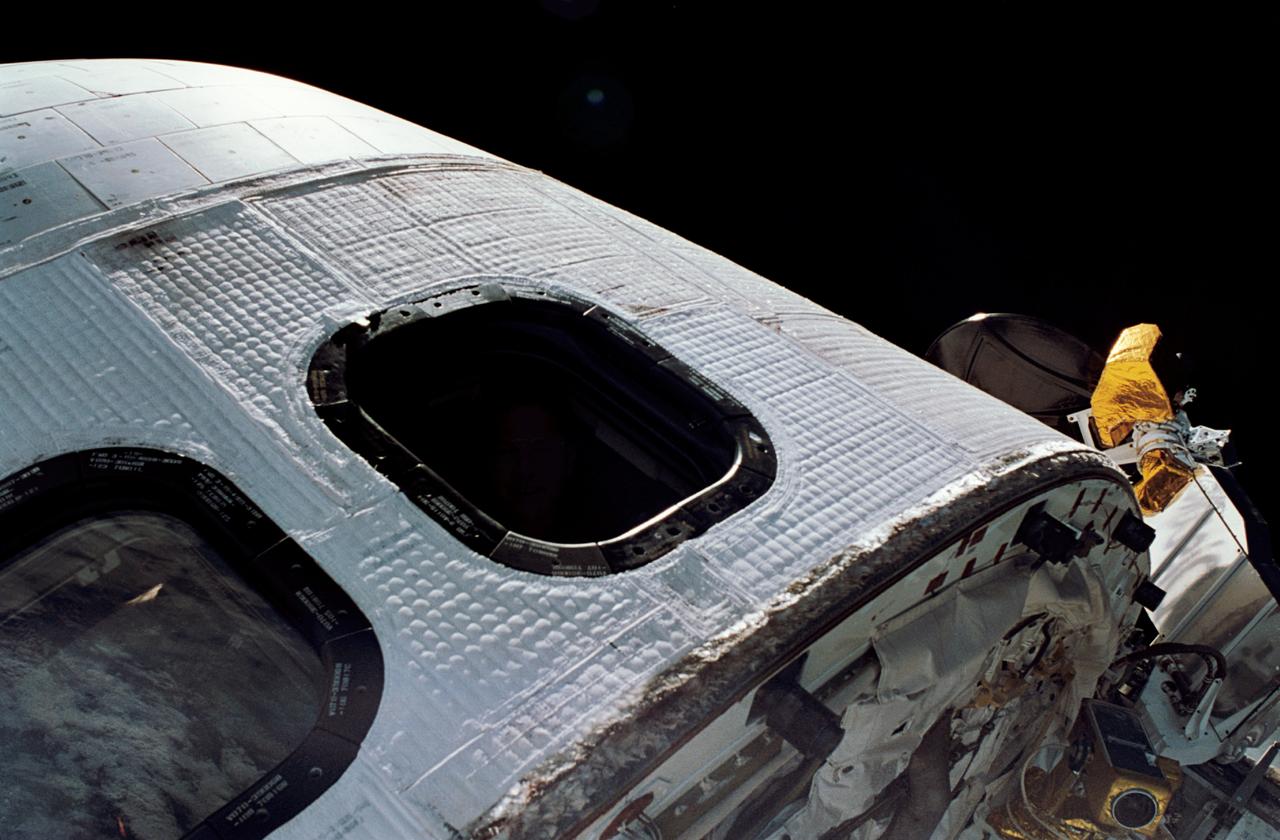
STS064-310-005 (16 Sept. 1994) --- Astronaut Richard N. Richards, STS-64 commander, looks through one of the space shuttle Discovery's overhead flight deck windows to view the Extravehicular Activity (EVA) activities of astronauts Carl J. Meade, who took this picture, and Mark C. Lee. Wearing spacesuits in and around the space shuttle Discovery's cargo bay, astronauts Meade and Lee took turns trying out the new EVA test hardware called Simplified Aid for EVA Rescue (SAFER). Photo credit: NASA or National Aeronautics and Space Administration

STS064-S-051 (9 Sept. 1994) --- With a crew of six NASA astronauts aboard, the space shuttle Discovery heads for its nineteenth Earth-orbital mission. Launch was delayed because of weather, but all systems were "go," and the spacecraft left the launch pad at 6:23 p.m. (EDT) on Sept. 9, 1994. Onboard were astronauts Richard N. Richards, L. Blaine Hammond, Carl J. Meade, Mark C. Lee, Susan J. Helms and Jerry M. Linenger. Photo credit: NASA or National Aeronautics and Space Administration
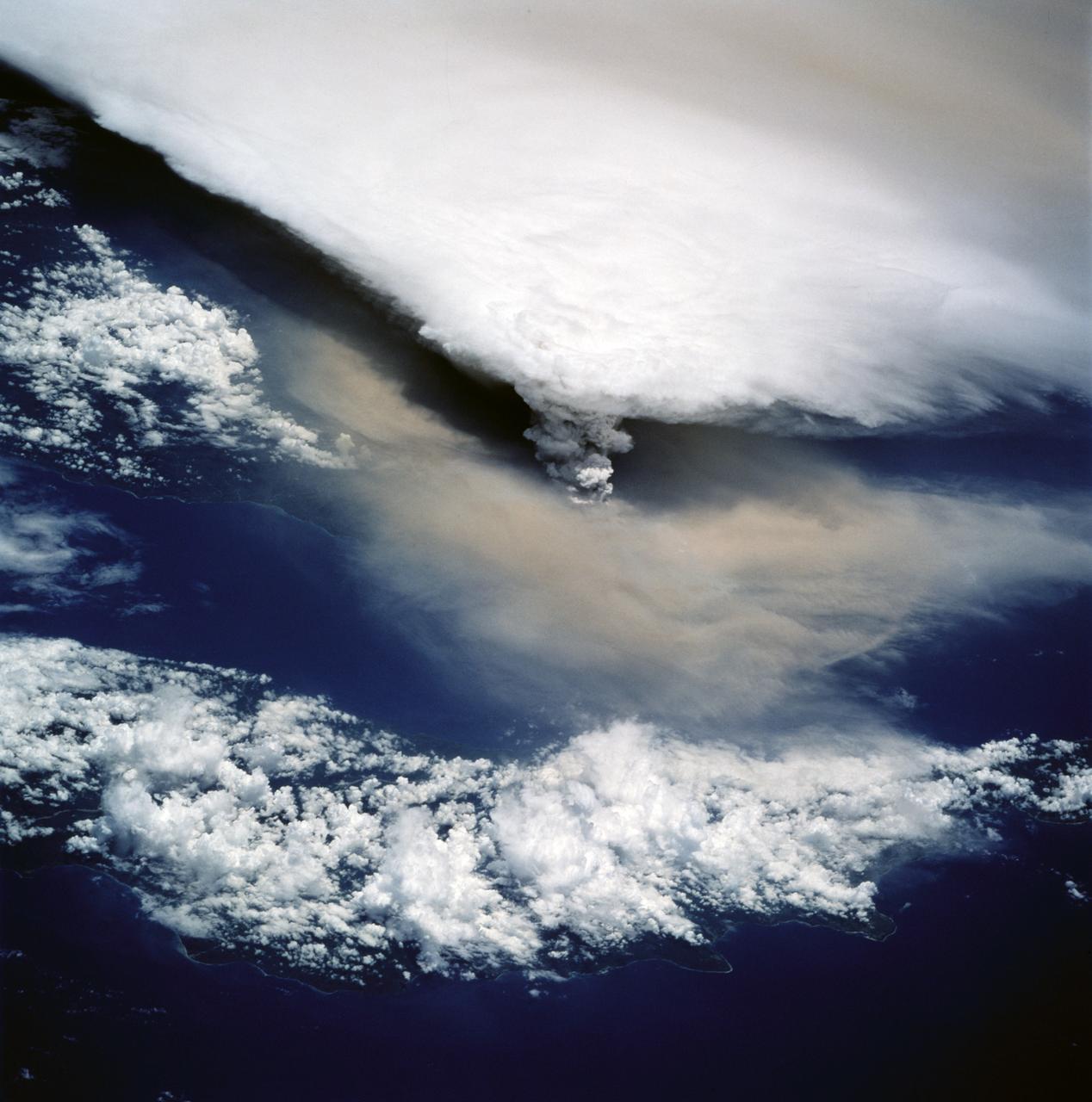
STS064-116-055 (20 Sept. 1994) --- Near the end of its mission, the crew aboard space shuttle Discovery was able to document the beginning of the second day of activity of the Rabaul volcano, on the east end of New Britain. On the morning of Sept. 19, 1994, two volcanic cones on the opposite sides of the 6-kilometer sea crater had begun to erupt with very little warning. Discovery flew just east of the eruption roughly 24 hours after it started and near the peak of its activity. The eruption, which sent a plume up to over 60,000 feet into the atmosphere, caused over 50,000 people to evacuate the area. Because winds were light at the time of the eruption, most of the ash was deposited in a region within 20 kilometers of the eruption zone. This photo shows the large white billowing eruption plume is carried in a westerly direction by the weak prevailing winds. At the base of the eruption column is a layer of yellow-brown ash being distributed by lower level winds. A sharp boundary moving outward from the center of the eruption in the lower cloud is a pulse of laterally-moving ash which results from a volcanic explosion. Geologists theorize that the large white column and the lower gray cloud are likely from the two main vents on each side of the harbor. The cloud-covered island in the foreground is New Ireland. The bay and harbor of Rabaul are covered with a layer of ash, possibly partly infilled with volcanic material. Matupit Island and the airport runway have disappeared into the bay. More than a meter of ash has fallen upon the city of Rabaul. Up to five vents were reported to have erupted at once, including the cones Vulcan and Tavurvur, which are opposites of the harbor as well as new vents below the bay. Half of the Vulcan cone has collapsed into the sea. The extra day in space due to bad weather at the landing site afforded the crew the opportunity for both still and video coverage of the event. Photo credit: NASA or National Aeronautics and Space Administration
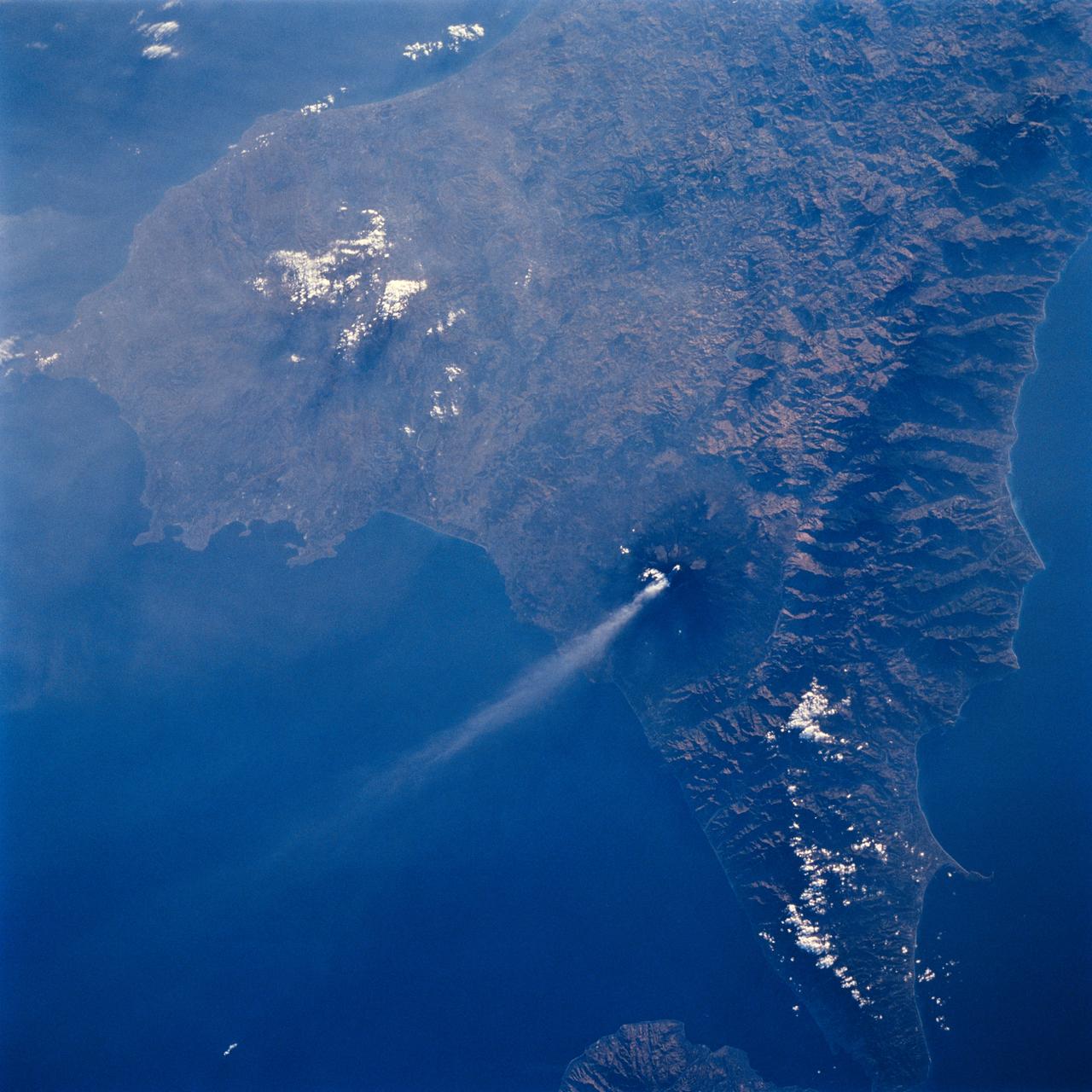
STS064-71-037 (9-20 Sept. 1994) --- Mt. Etna on Sicily displays a steam plume from its summit. Geologists attribute the volcano's existence to the collision of tectonic plates. Unlike the sudden, explosive eruption at Rabaul, Mt. Etna's activity is ongoing and is generally not explosive - Etna's slopes have been settled with villages and cultivated land for centuries. Other Mediterranean volcanoes (like Santorini) have experienced large catastrophic eruptions. Etna recently finished a two-year eruption (ending in 1993), marked by relatively gentle lava flows down the eastern flank. It has been continually degassing since then, according to the geologists, producing an omnipresent steam plume, as seen here. The 1993 flow is difficult to identify in this image because it lies within shadows on the eastern flank, but small cinder cones on the western flank mark earlier episodes of volcanic activity. Photo credit: NASA or National Aeronautics and Space Administration
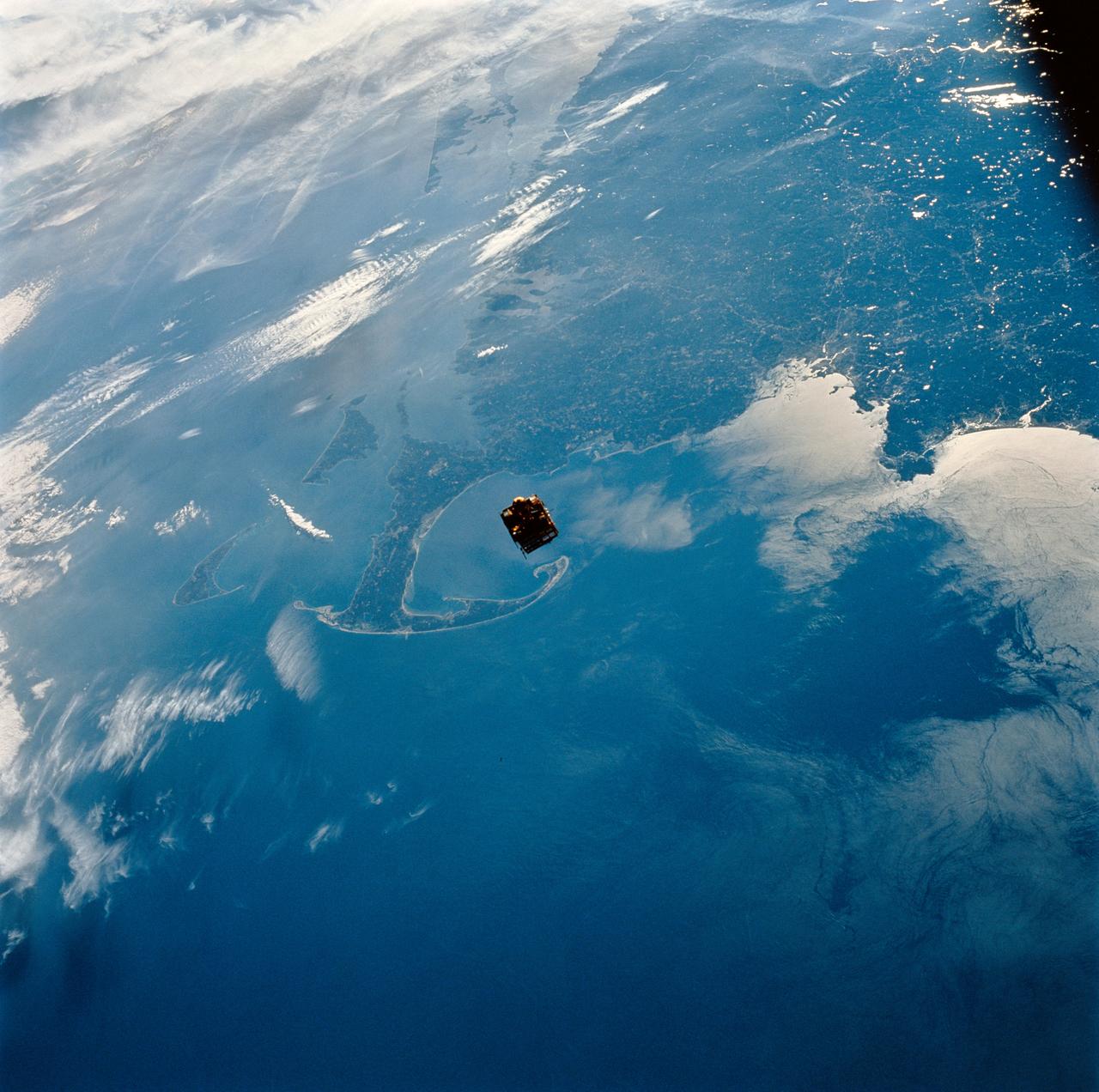
STS064-111-041 (12 Sept. 1994) ---- Backdropped against New England's coast, the Shuttle Pointed Autonomous Research Tool for Astronomy (SPARTAN-201) satellite begins its separation from the space shuttle Discovery. The free-flying spacecraft, 130 nautical miles above Cape Cod at frame center, remained some 40 miles away from Discovery until the crew retrieved it two days later. Photo credit: NASA or National Aeronautics and Space Administration
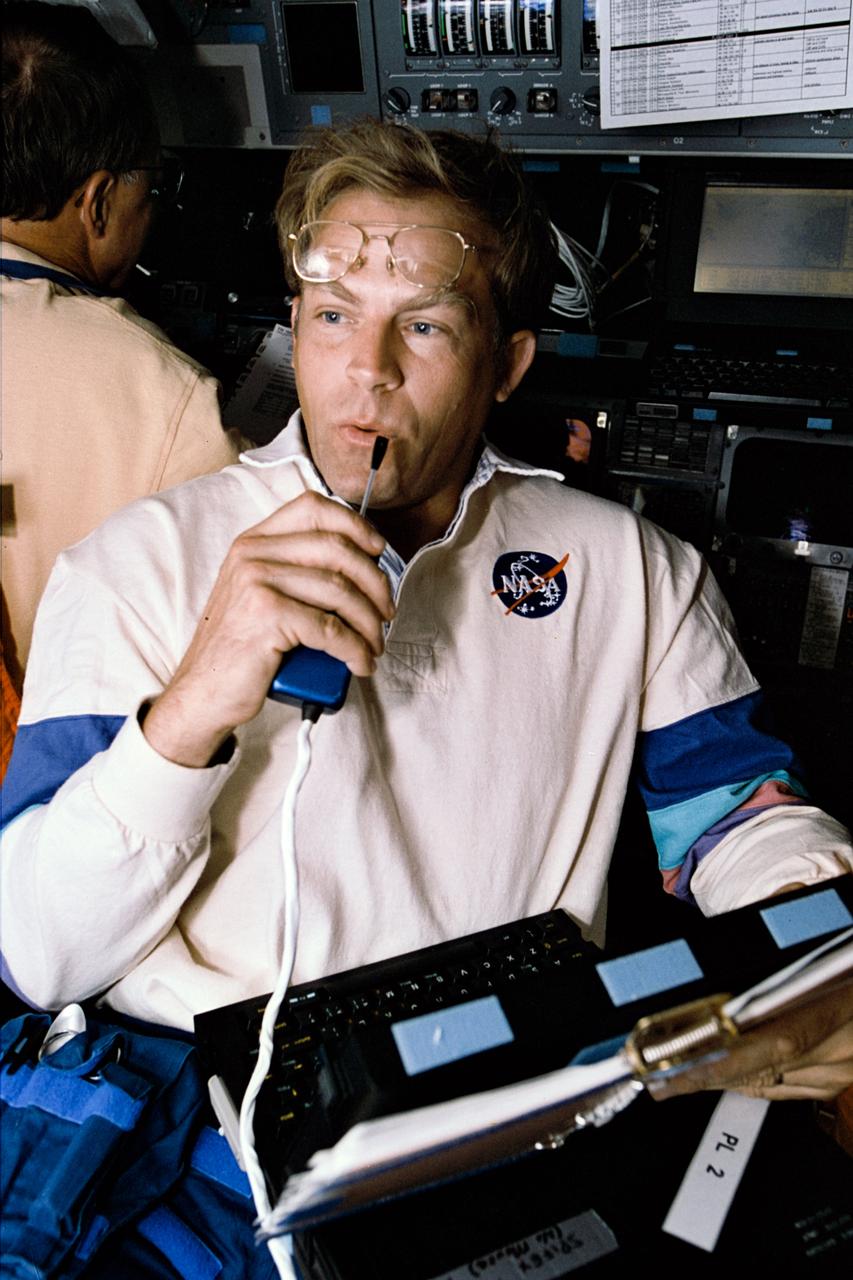
STS064-311-031 (10 Sept. 1994) --- Astronaut Mark C. Lee, STS-64 mission specialist, at a Payload General Support Computer (PGSC) on the space shuttle Discovery's flight deck, talks to ground controllers about the Shuttle Plume Impingement Flight Experiment (SPIFEX). Astronaut L. Blaine Hammond, pilot, is partially visible in the background. Photo credit: NASA or National Aeronautics and Space Administration
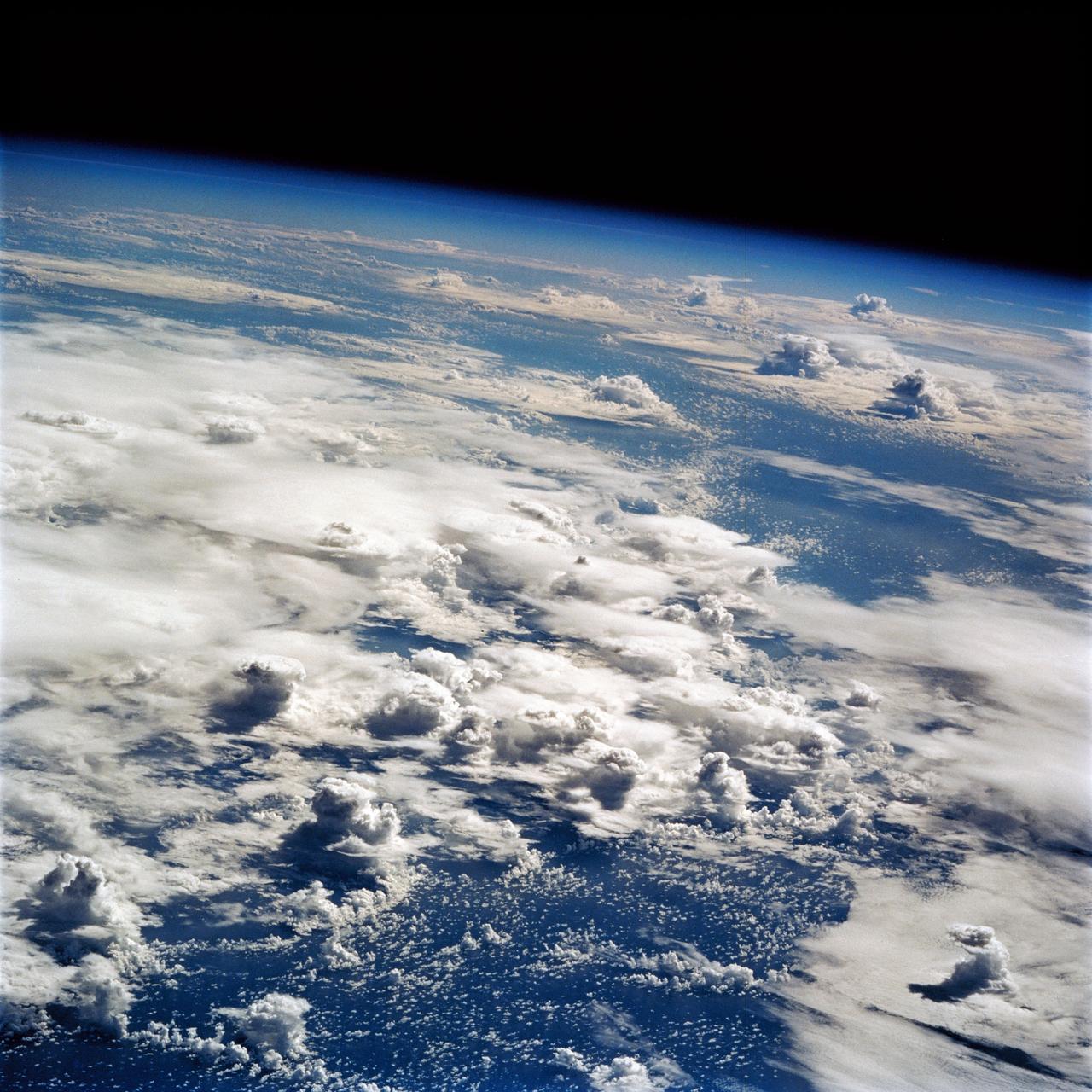
STS064-83-099 (9-20 Sept. 1994) --- Multiple thunderstorm cells leading to Earth's atmosphere were photographed on 70mm by the astronauts, orbiting aboard the space shuttle Discovery 130 nautical miles away. These thunderstorms are located about 16 degrees southeast of Hawaii in the Pacific Ocean. Every stage of a developing thunderstorm is documented in this photo; from the building cauliflower tops to the mature anvil phase. The anvil or the tops of the clouds being blown off are at about 50,000 feet. The light line in the blue atmosphere is either clouds in the distance or an atmospheric layer which is defined but different particle sizes. Photo credit: NASA or National Aeronautics and Space Administration
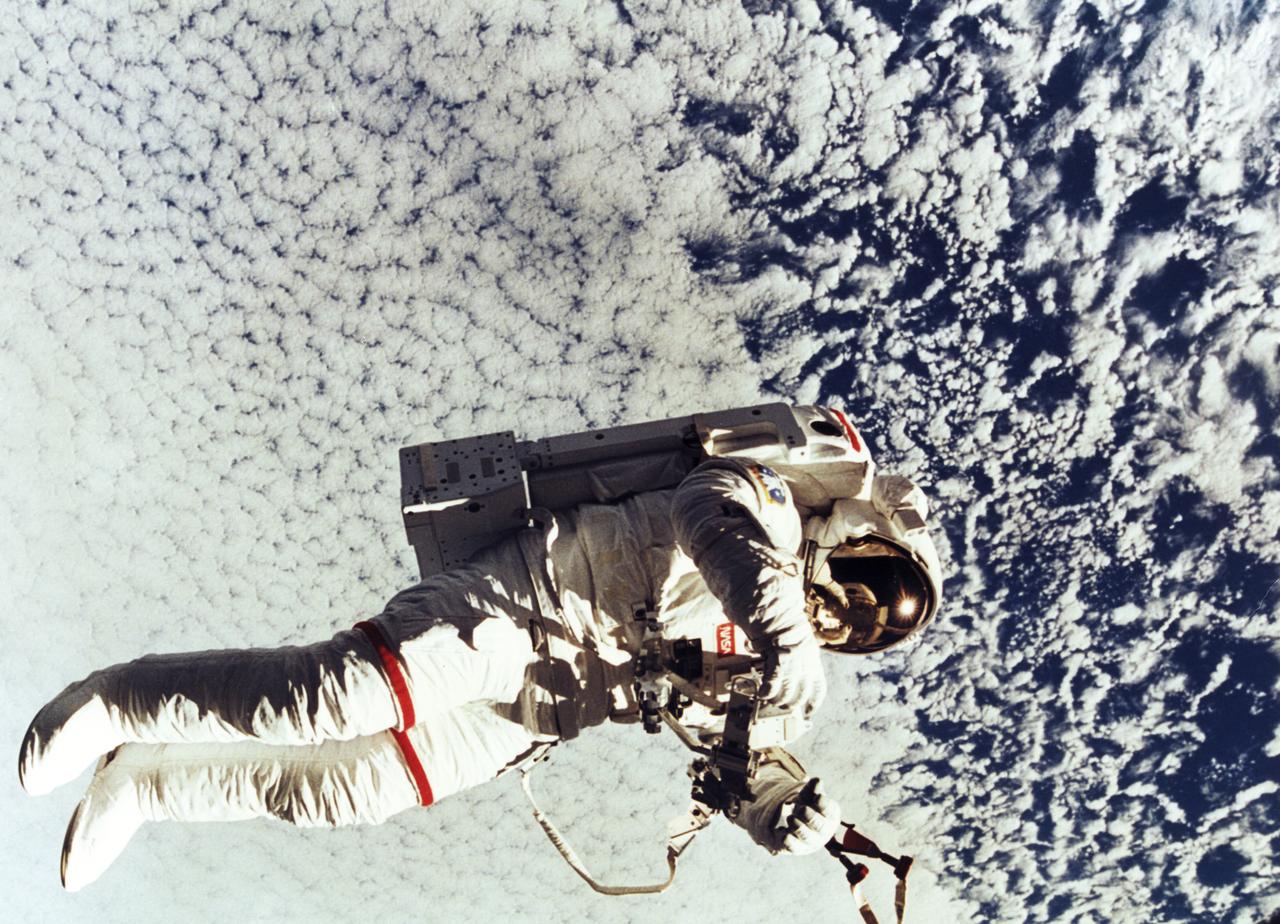
Astronaut Mark Lee floats freely as he tests the new backpack called the Simplified Aid for EVA Rescue (SAFER) system. SAFER is designed for use in the event a crew member becomes untethered while conducting an EVA. The STS-64 mission marked the first untethered U.S. EVA in 10 years, and was launched on September 9, 1994, aboard the Space Shuttle Orbiter Discovery.
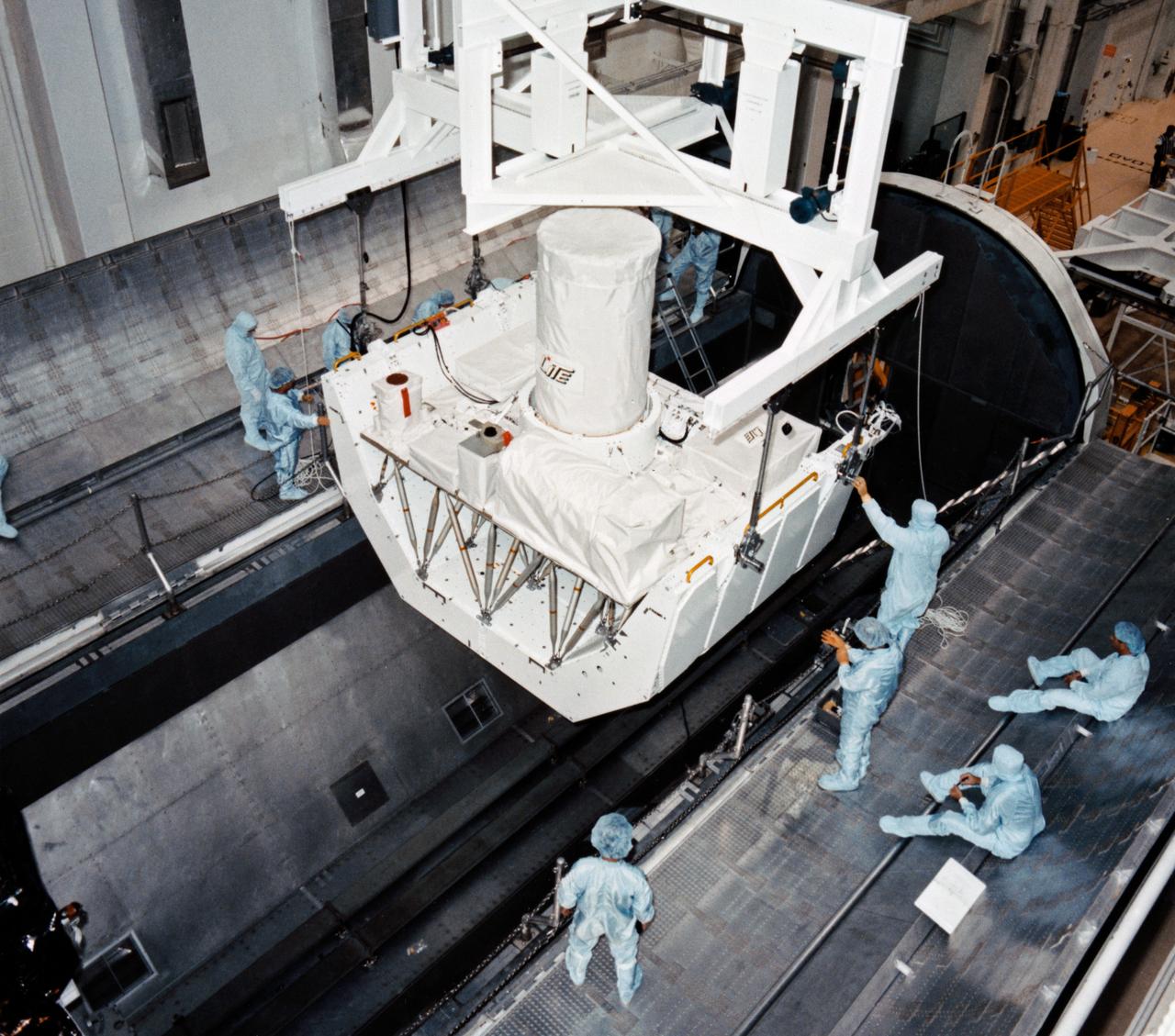
S94-40916 (5 July 1994) --- Workers in the Operations and Checkout Building are transporting the Lidar In-Space Technology Experiment (LITE-1) into the payload canister transporter for transfer to the Orbiter Processing Facility, where it will be installed into the cargo bay of the space shuttle Discovery. LITE-1, which will demonstrate the technology of a spaceborne Lidar instrument, is scheduled to fly on STS-64 later this year. Photo credit: NASA or National Aeronautics and Space Administration
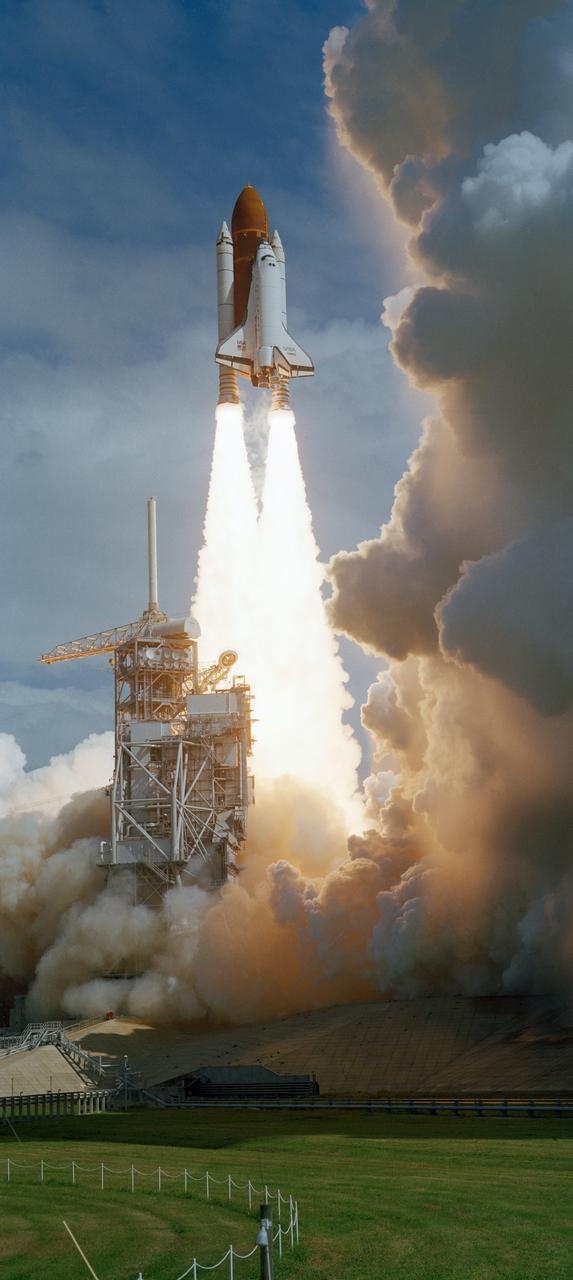
S26-S-032 (29 Sept. 1988) --- The STS-26 launch of space shuttle Discovery begins the first flight to be flown after the Challenger accident. The flight crew included astronauts Rick Hauck, commander; Dick Covey, pilot; and three mission specialists, Dave Hilmers, Mike Lounge, and George (Pinky) Nelson. During the four-day mission, the crew deployed the Tracking and Data Relay Satellite (TDRS-C) and operated eleven mid-deck experiments. Discovery completed 64 orbits of the earth before landing at Edwards Air Force Base, California, on October 3, 1988. Photo credit: NASA or National Aeronautics and Space Administration
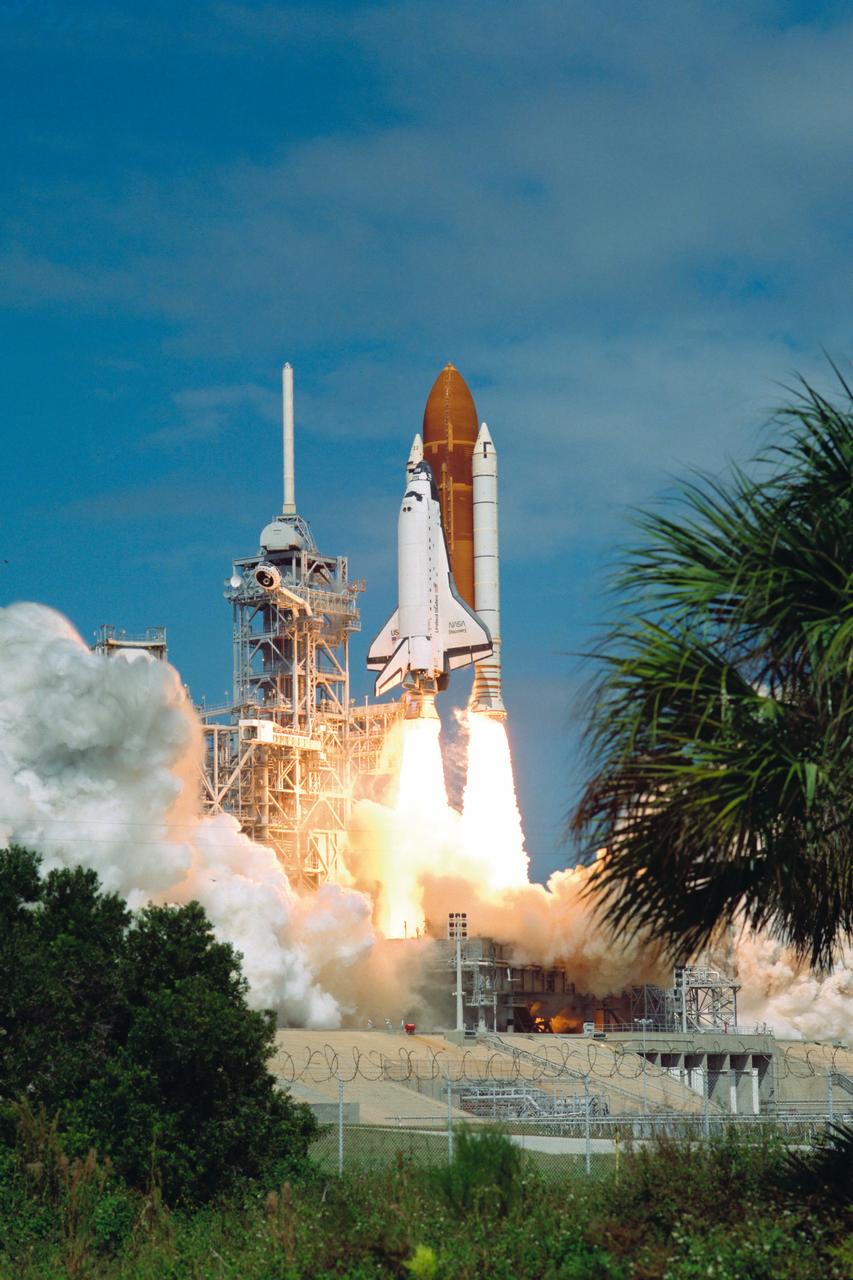
S26-S-187 (29 Sept. 1988) --- The STS-26 launch of space shuttle Discovery begins the first flight to be flown after the Challenger accident. The flight crew included astronauts Rick Hauck, commander; Dick Covey, pilot; and three mission specialists, Dave Hilmers, Mike Lounge, and George (Pinky) Nelson. During the four-day mission, the crew deployed the Tracking and Data Relay Satellite (TDRS-C) and operated eleven mid-deck experiments. Discovery completed 64 orbits of the earth before landing at Edwards Air Force Base, California, on October 3, 1988. Photo credit: NASA or National Aeronautics and Space Administration
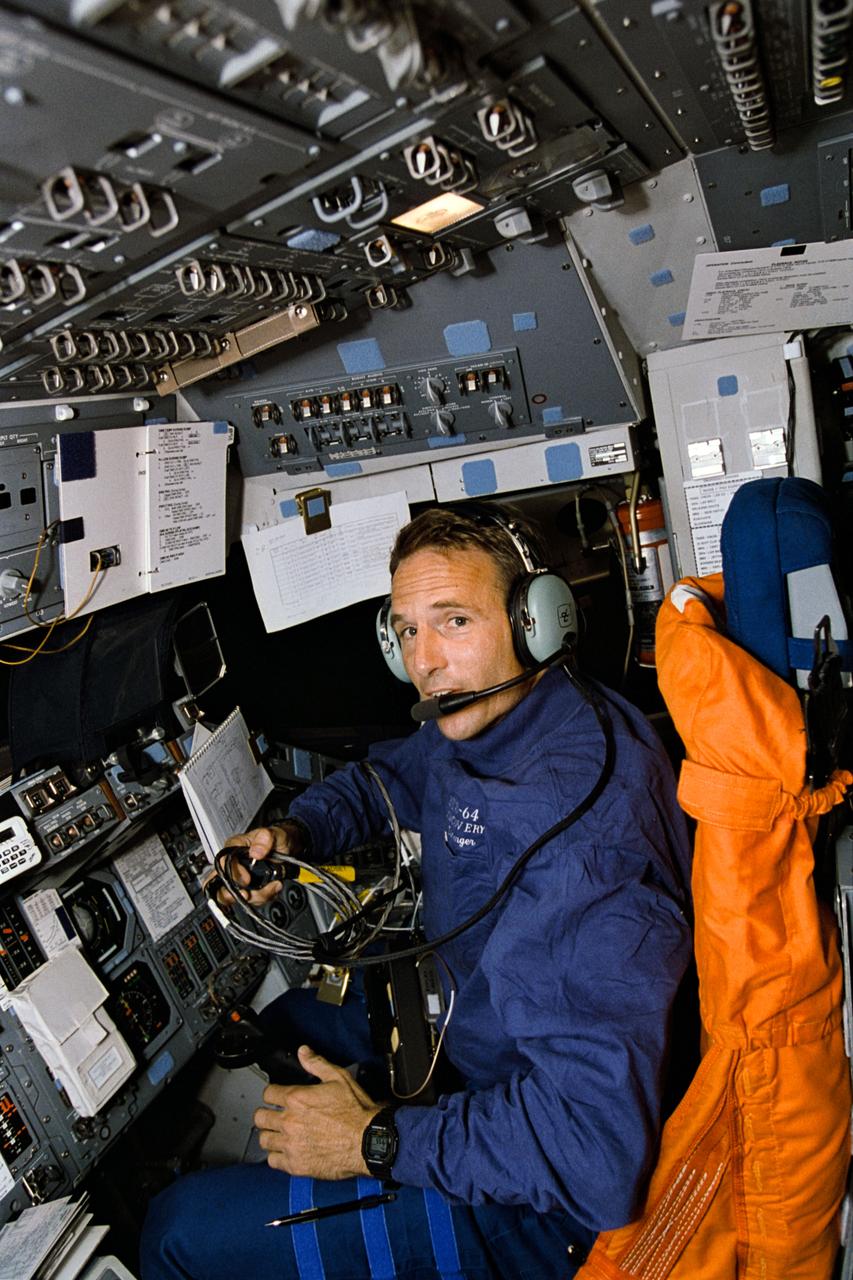
STS064-20-026 (9-20 Sept. 1994) --- Astronaut Jerry M. Linenger, STS-64 mission specialist, uses the Shuttle Amateur Radio Experiment (SAREX) to communicate with students on Earth. Various members of the crew made contact with a number of other "hams" around the world during the almost 11-day mission in Earth orbit. Photo credit: NASA or National Aeronautics and Space Administration
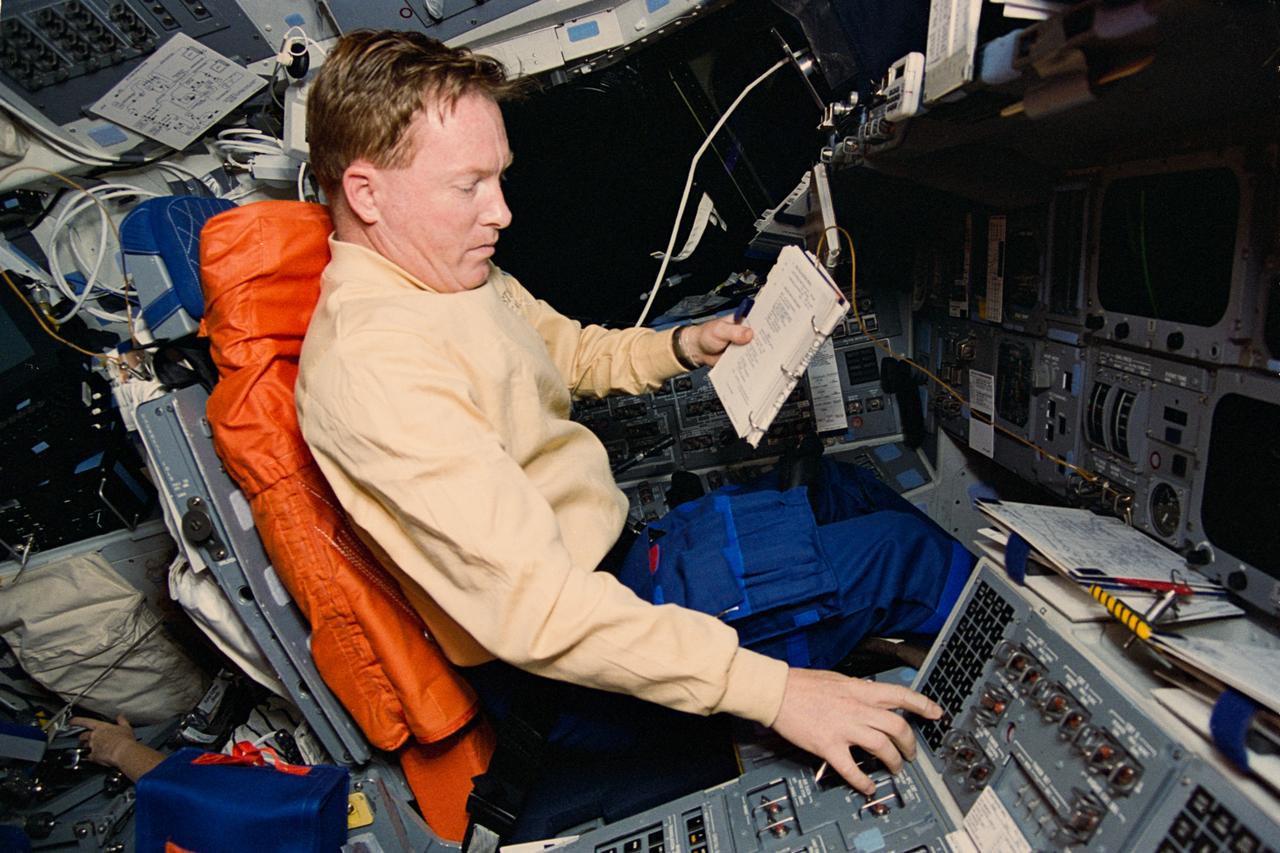
STS064-08-032 (10 Sept. 1994) --- At the commander's station on the space shuttle Discovery's forward flight deck, astronaut Richard N. Richards, STS-64 mission commander, initiates a thruster firing of the spacecraft during operations with the Shuttle Plume Impingement Flight Experiment (SPIFEX). Photo credit: NASA or National Aeronautics and Space Administration
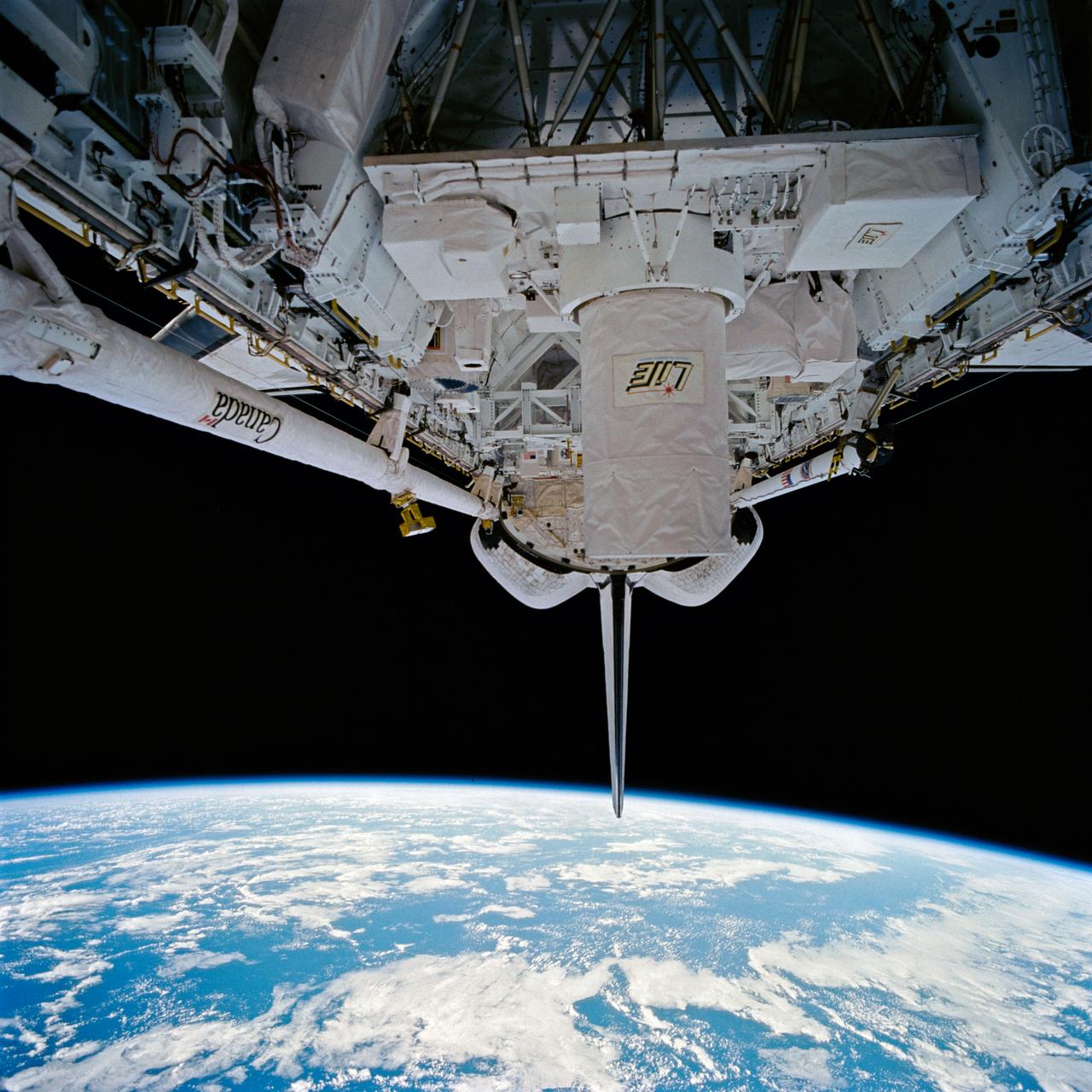
STS064-90-031 (9-20 Sept. 1994) --- Backdropped against the darkness of space beneath Earth's horizon 130 nautical miles away, the cargo bay of the space shuttle Discovery and its related payloads were captured on 70mm film by one of the six cabin-bound astronauts. In the foreground is the Lidar In-space Technology Experiment (LITE). The robot arm portion of the Remote Manipulator System (RMS), busy throughout much of the almost 11-day mission, is in a stowed position on Discovery's port side. Photo credit: NASA or National Aeronautics and Space Administration
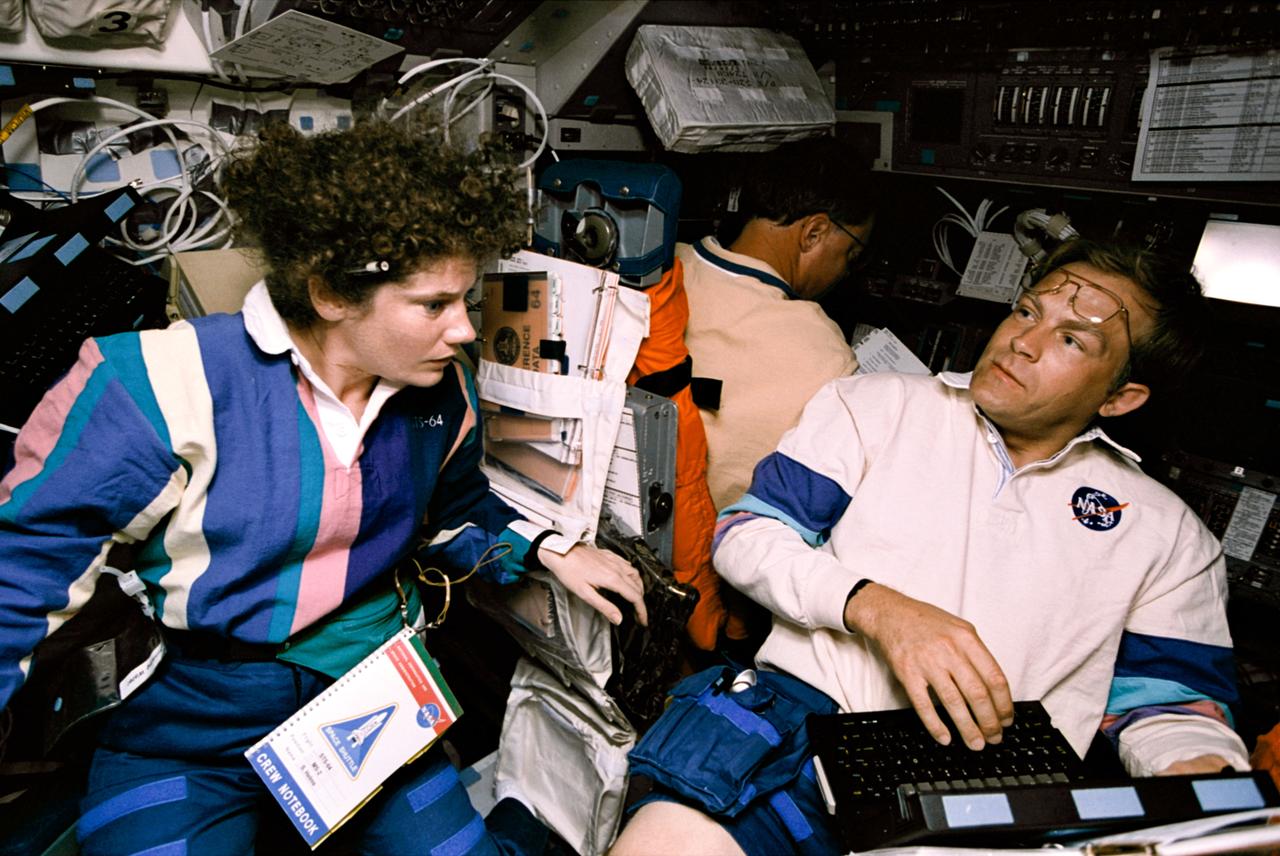
STS064-311-033 (10 Sept. 1994) --- Half of the crew members share support of the Shuttle Plume Impingement Flight Experiment (SPIFEX) in this 35mm frame. Astronauts Susan J. Helms and Mark C. Lee (foreground) share a pertinent bit of data while astronaut L. Blaine Hammond in the background controls Reaction Control System (RCS) thrusters on the space shuttle Discovery. Helms' role was to control the Remote Manipulator System (RMS) arm, to which 30-feet of SPIFEX hardware were appended in order to measure the RCS plume induced loads in the far field region. Lee records data on a lap top Payload General Support Computer (PGSC). SPIFEX was developed to help understand the thruster effects on approaching spacecraft. Photo credit: NASA or National Aeronautics and Space Administration
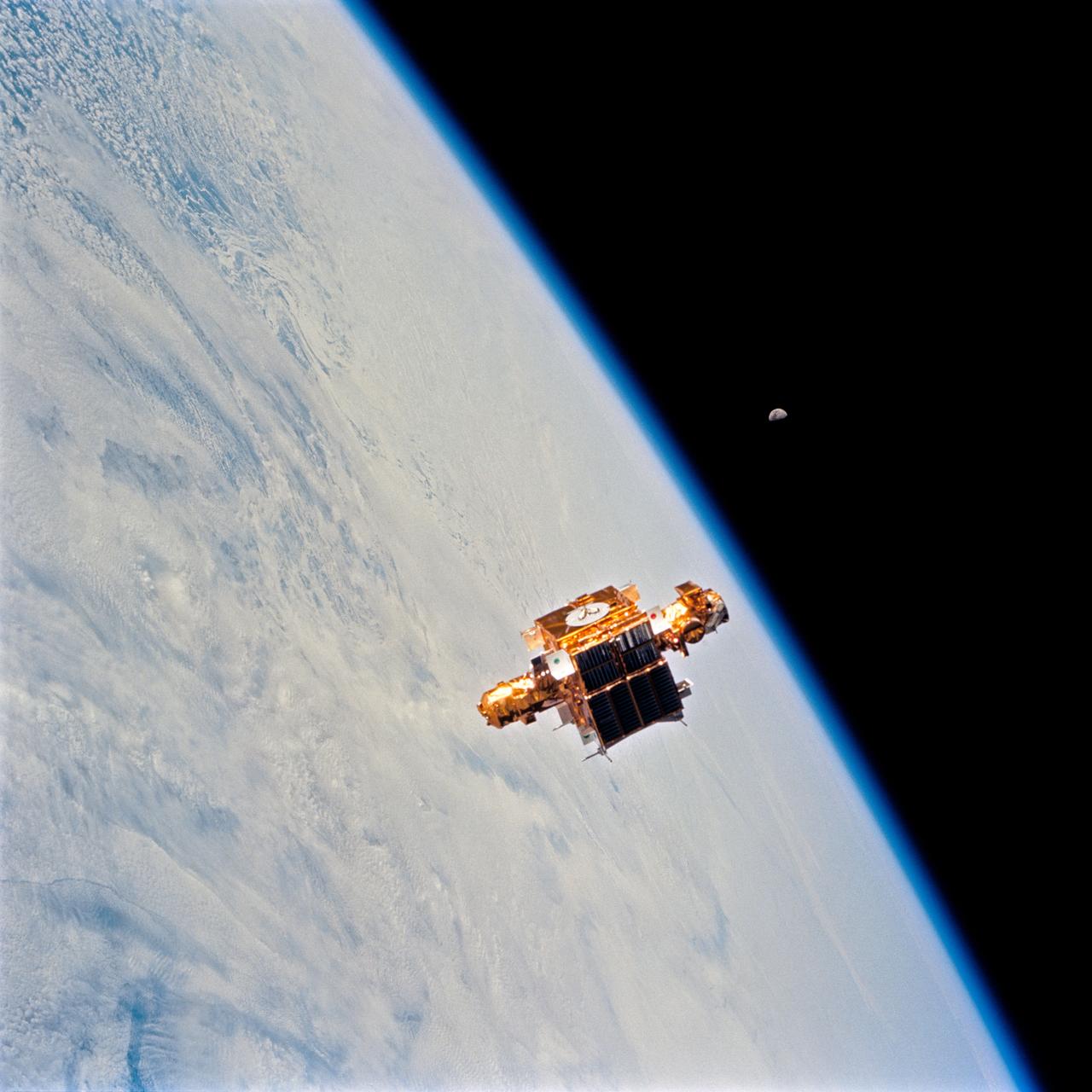
STS064-74-052 (9-20 Sept. 1994) --- Astronauts onboard the space shuttle Discovery used a 70mm camera to capture this photograph of the retrieval operations with the Shuttle Pointed Autonomous Research Tool for Astronomy 201 (SPARTAN 201). A gibbous moon can be seen in the background. Photo credit: NASA or National Aeronautics and Space Administration

STS064-72-093 (10 Sept. 1994) --- With the blue and white Earth as a backdrop 130 miles below, the Shuttle Plume Impingement Flight Experiment (SPIFEX) is at work on the end of the Remote Manipulator System (RMS) arm. The 50-feet-long arm is extended to 80 feet with the temporary addition of the SPIFEX hardware. The image was exposed with a 70mm handheld Hasselblad camera from inside the space shuttle Discovery's crew cabin. Photo credit: NASA or National Aeronautics and Space Administration
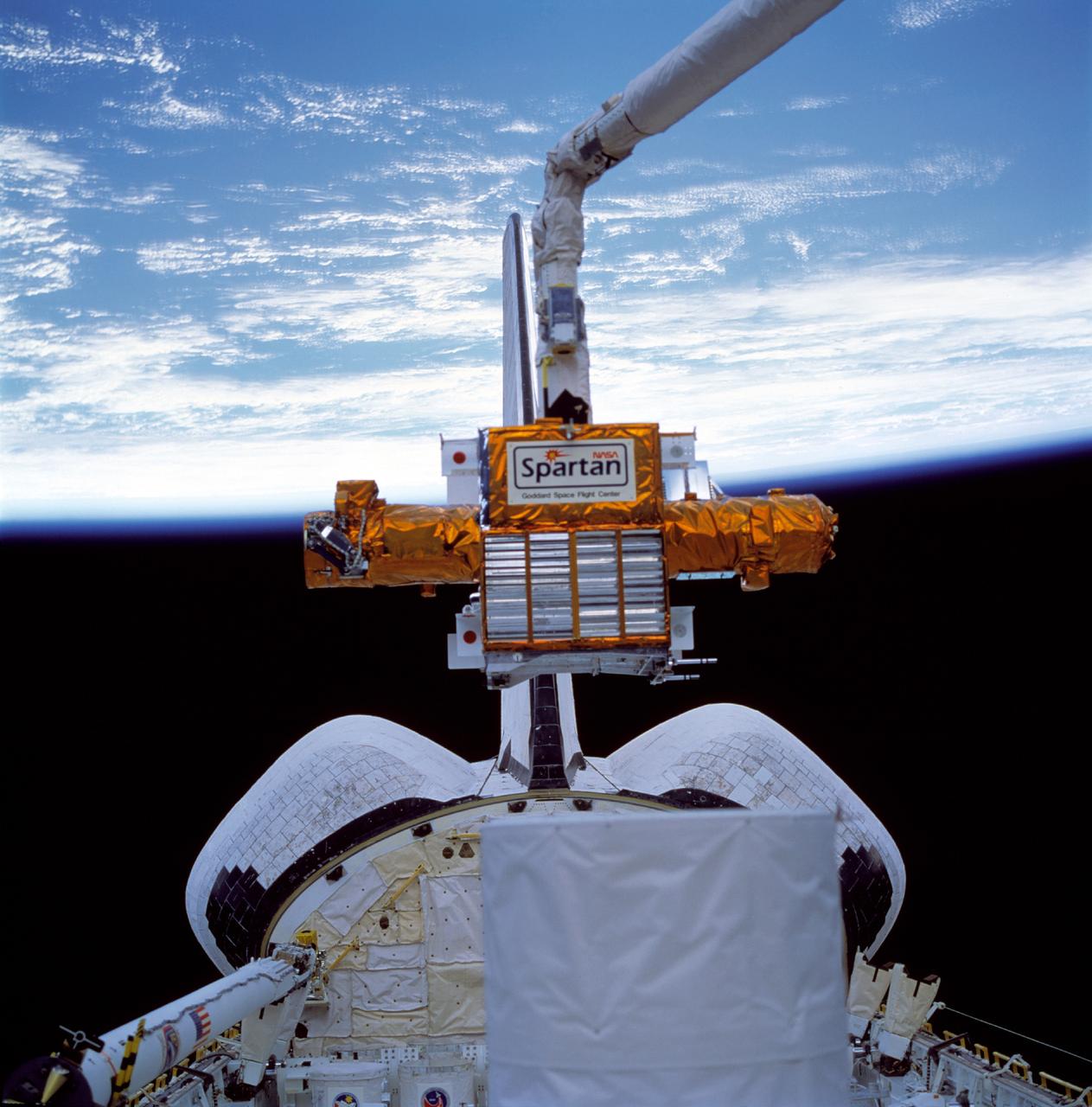
STS064-111-070 (9-20 Sept. 1994) --- The astronauts onboard the space shuttle Discovery used a 70mm camera to capture this view of the pre-deploy operations with the Shuttle Pointed Autonomous Research Tool for Astronomy (SPARTAN-201) 201. In the grasp of the robot arm device of the Remote Manipulator System (RMS), SPARTAN 201 hovers above Discovery's cargo bay prior to its two days of free-flight, some 40 miles away from the parent spacecraft. Photo credit: NASA or National Aeronautics and Space Administration
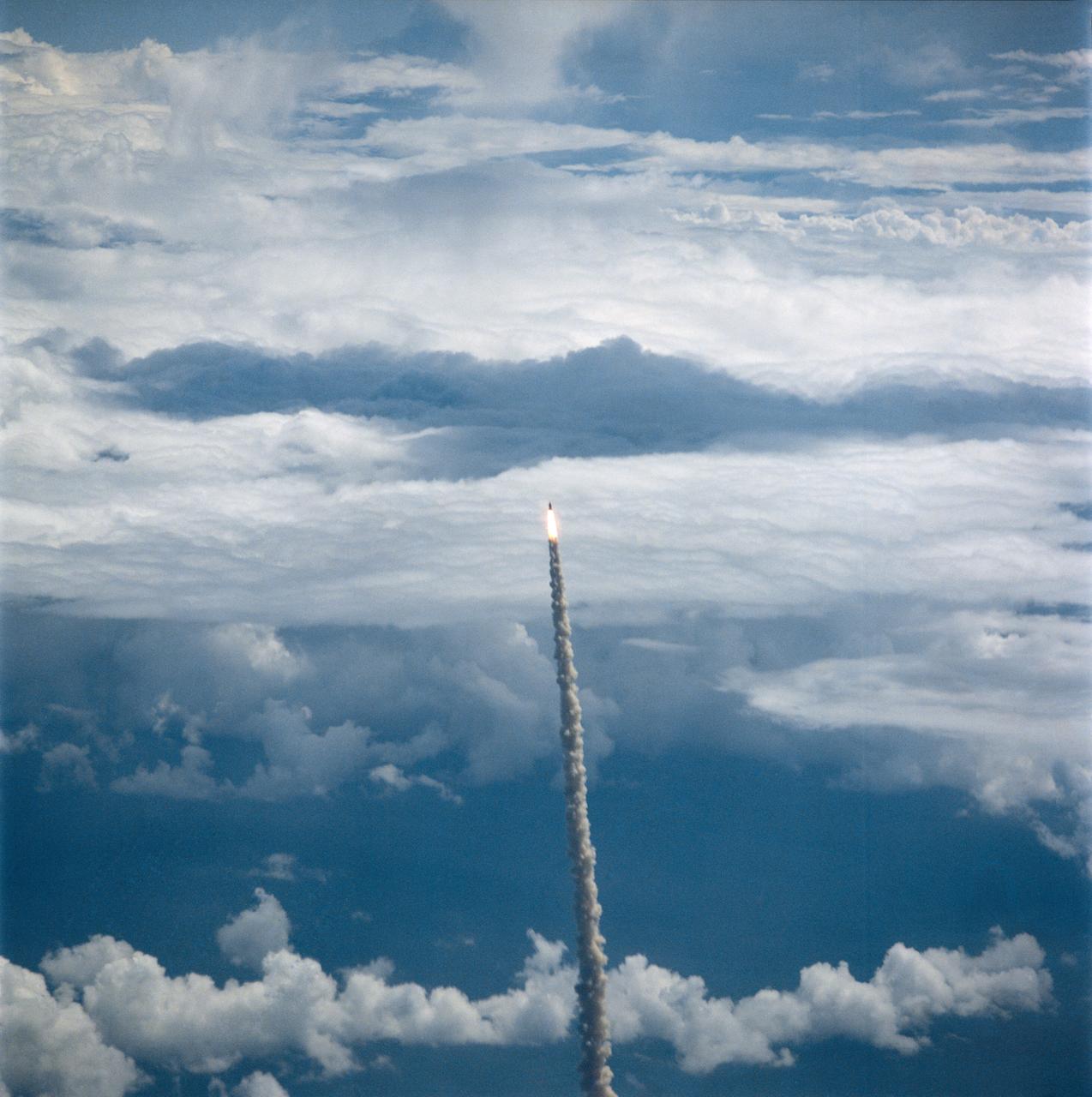
S26-S-026 (29 Sept. 1988) --- The STS-26 launch was captured on film from the NASA Shuttle Training Aircraft, piloted by astronaut Daniel C. Brandenstein, chief of JSC's Astronaut Office. Discovery?s mission was the first flight to be flown after the Challenger accident. The flight crew included astronauts Rick Hauck, commander; Dick Covey, pilot; and three mission specialists, Dave Hilmers, Mike Lounge, and George (Pinky) Nelson. During the four-day mission, the crew deployed the Tracking and Data Relay Satellite (TDRS-C) and operated eleven mid-deck experiments. Discovery completed 64 orbits of the earth before landing at Edwards Air Force Base, California, on October 3, 1988. Photo credit: NASA or National Aeronautics and Space Administration
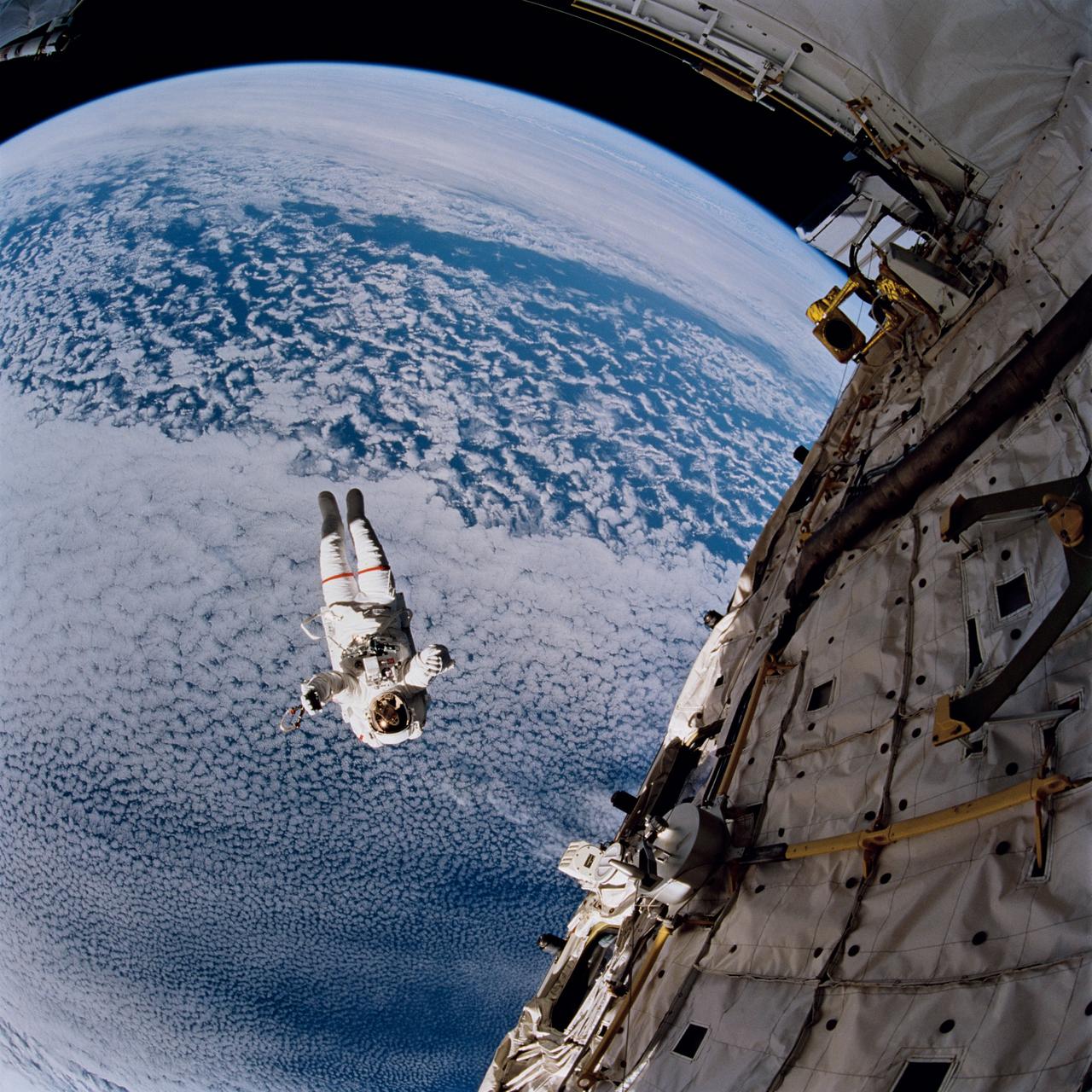
STS064-217-008 (16 Sept. 1994) --- Backdropped against the blue and white Earth, 130 nautical miles below, astronaut Mark C. Lee tests the new Simplified Aid for EVA Rescue (SAFER) system. The scene was captured with a 70mm handheld Hasselblad camera with a 30mm lens attached. Astronauts Lee and Carl J. Meade took turns using the SAFER hardware during their shared Extravehicular Activity (EVA) of Sept. 16, 1994. The test of SAFER is the first phase of a larger SAFER program whose objectives are to establish a common set of requirements for both space shuttle and space station program needs, develop a flight demonstration of SAFER, validate system performance and, finally, develop a production version of SAFER for the shuttle and station programs. Photo credit: NASA or National Aeronautics and Space Administration
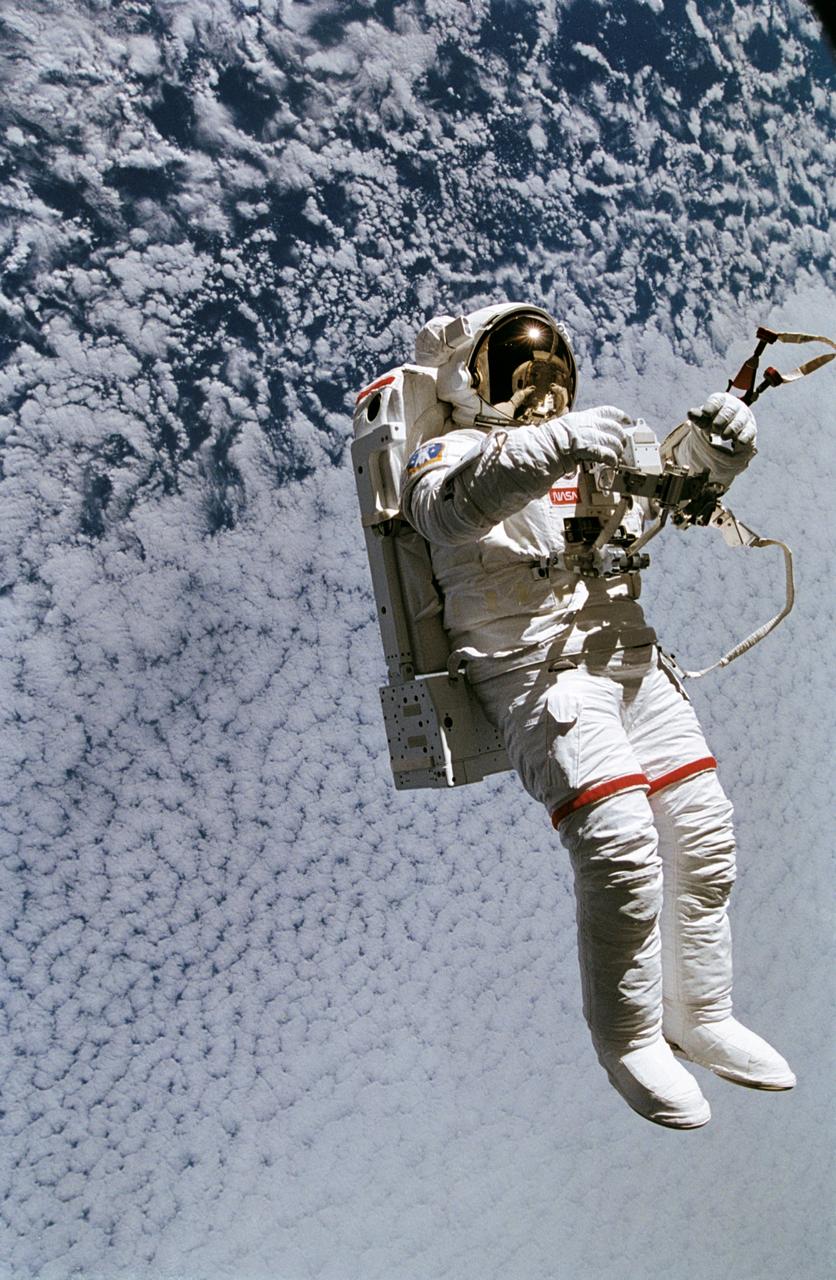
STS064-45-014 (16 Sept. 1994) --- Backdropped against a massive wall of white clouds 130 nautical miles below, astronaut Mark C. Lee floats freely as he tests the new Simplified Aid for EVA Rescue (SAFER) system. The image was exposed with a 35mm camera from the shirt-sleeve environment of the space shuttle Discovery. Astronauts Lee and Carl J. Meade took turns using the SAFER hardware during their shared Extravehicular Activity (EVA) on Sept. 16, 1994. The test of SAFER is the first phase of a larger SAFER program whose objectives are to establish a common set of requirements for both space shuttle and space station program needs, develop a flight demonstration of SAFER, validate system performance and, finally, develop a production version of SAFER for the shuttle and station programs. Photo credit: NASA or National Aeronautics and Space Administration
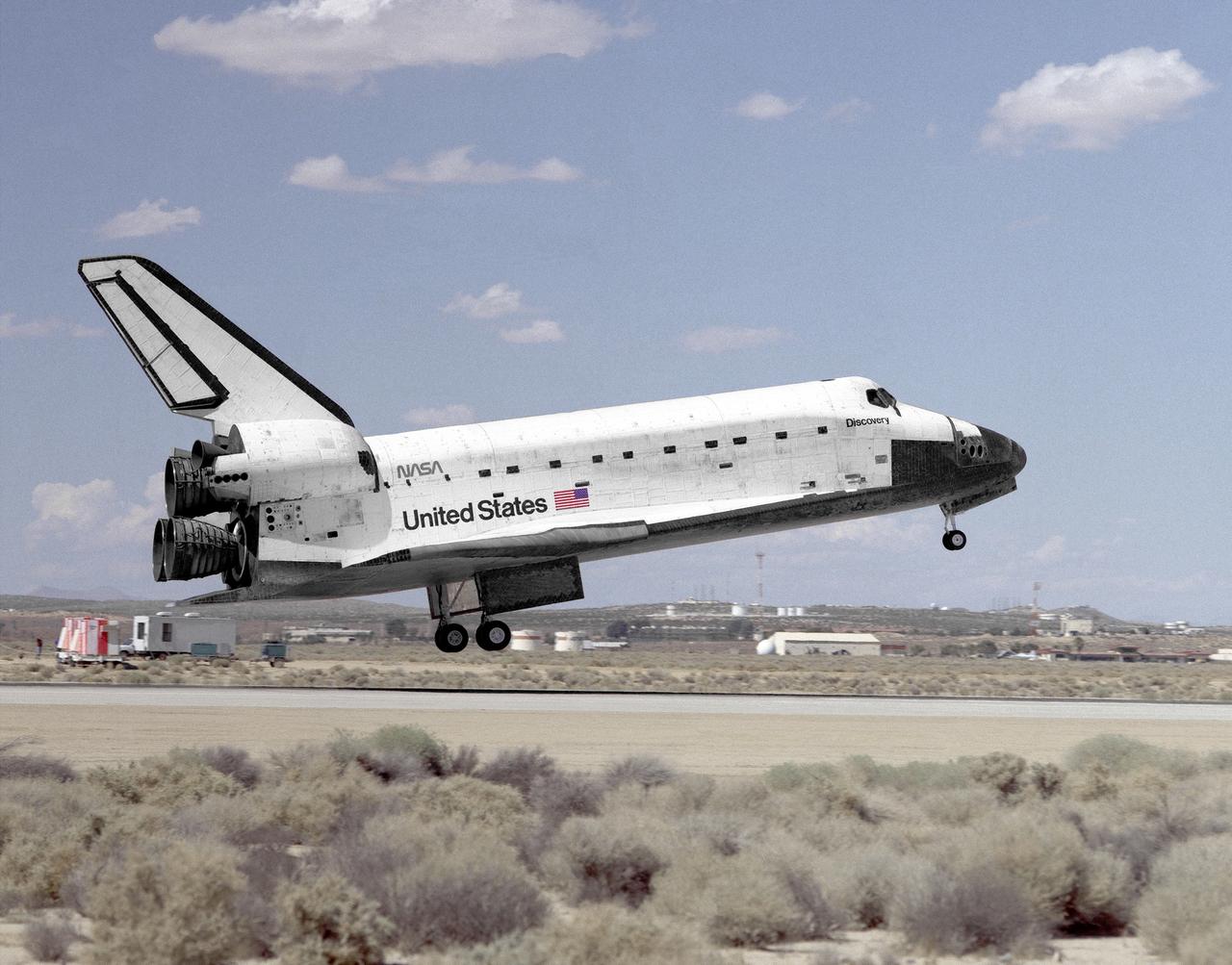
The Space Shuttle Discovery settles to the main runway at Edwards, California, at 2:13 p.m. (PDT) 20 September 1994, to conclude mission STS-64. The spacecraft, with a crew of six, was launched into a 57-degree high inclination orbit from the Kennedy Space Center, Florida, at 3:23 p.m. (PDT), 9 September 1994. The mission featured the study of clouds and the atmosphere with a laser beaming system called Lidar In-Space Technology Experiment (LITE), and the first untethered space walk in over ten years. A Spartan satellite was also deployed and later retrieved in the study of the sun's corona and the solar wind. The mission was scheduled to end Sunday, 18 September, but was extended one day to continue science work. Bad weather at the Kennedy Space Center on September 19, forced a one-day delay to September 20, with a weather divert that day to Edwards. Mission commander was Richard Richards, the pilot Blaine Hammond, while mission specialists were Jerry Linenger, Susan Helms, Carl Meade, and Mark Lee.