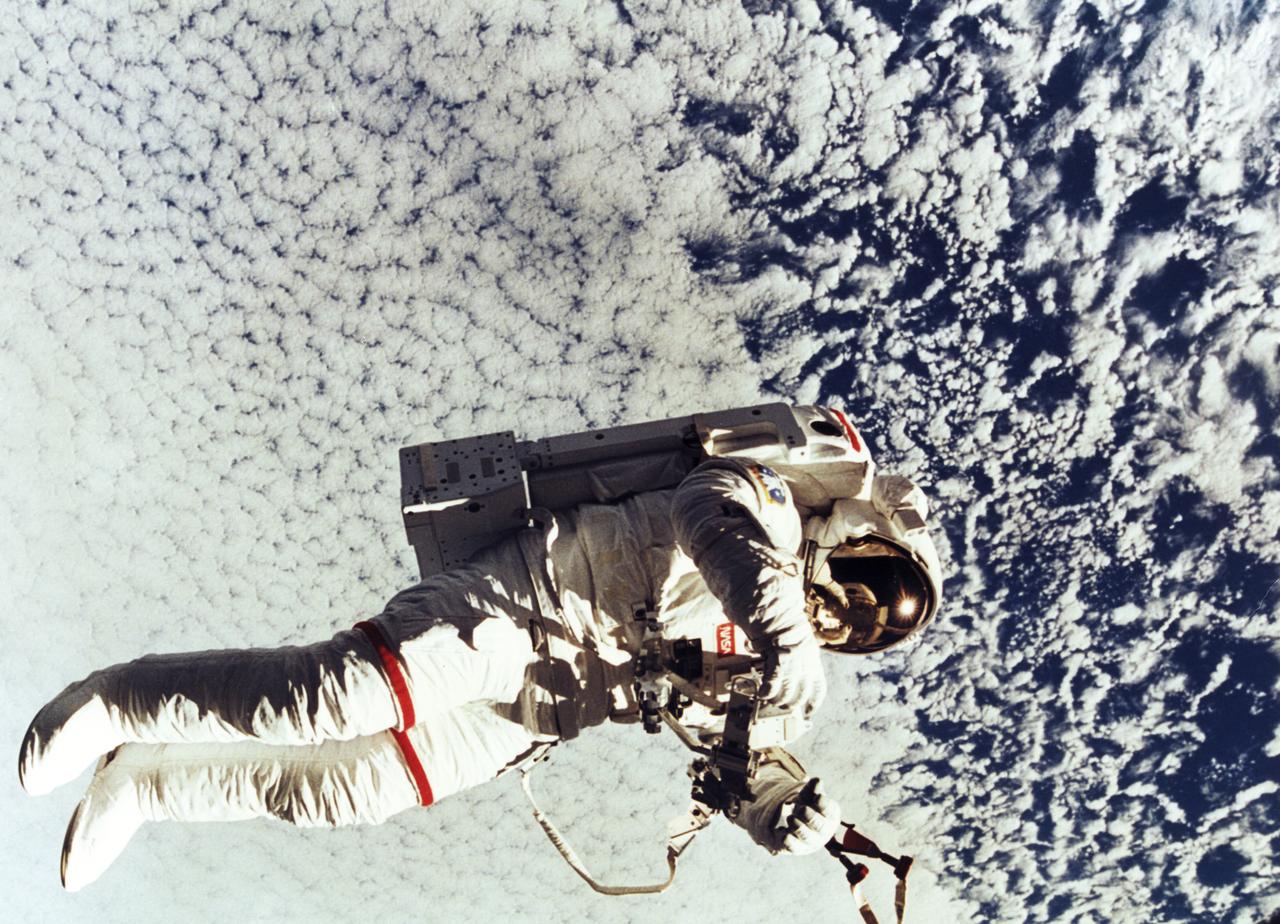
Astronaut Mark Lee floats freely as he tests the new backpack called the Simplified Aid for EVA Rescue (SAFER) system. SAFER is designed for use in the event a crew member becomes untethered while conducting an EVA. The STS-64 mission marked the first untethered U.S. EVA in 10 years, and was launched on September 9, 1994, aboard the Space Shuttle Orbiter Discovery.
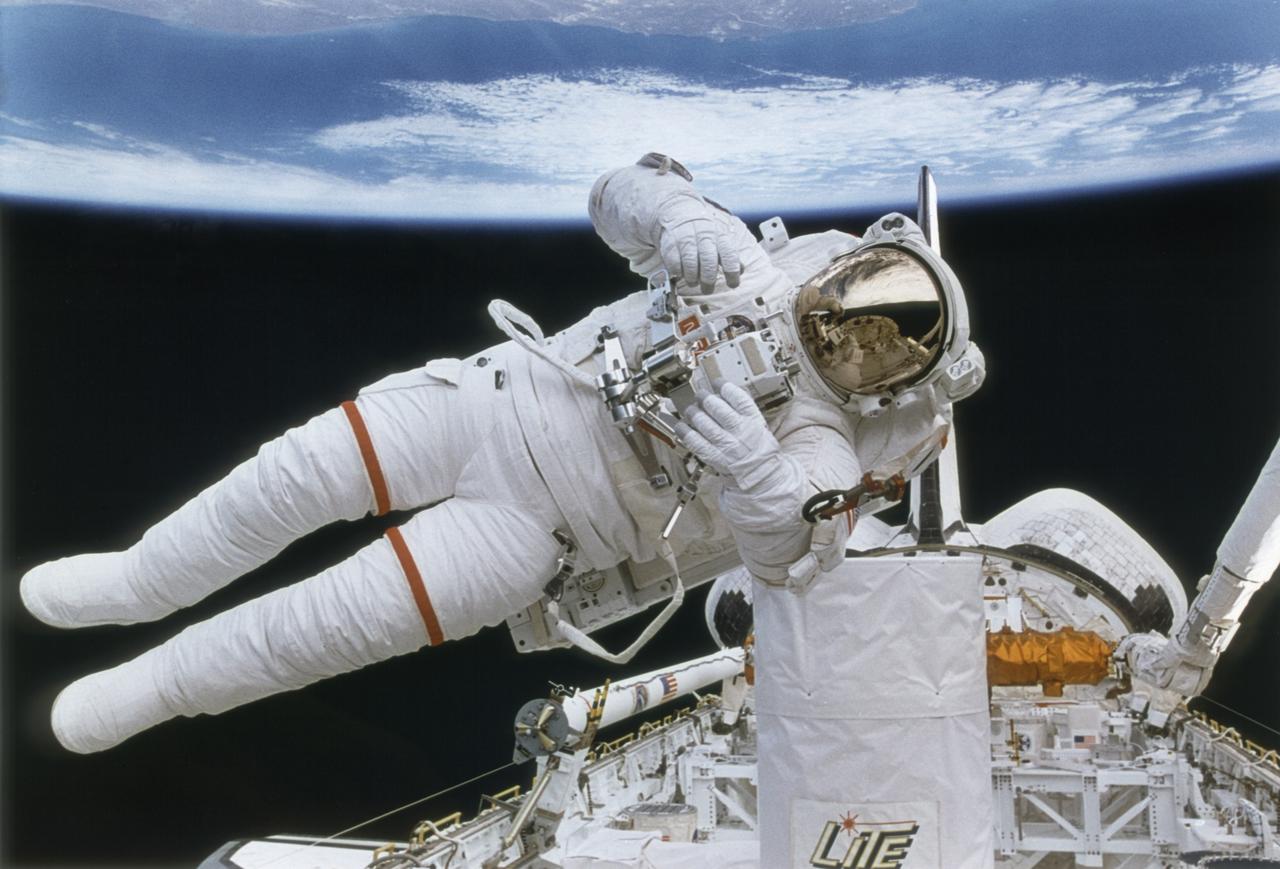
STS-64, Astronaut Marc Lee tests the (SAFER) Simplified Aid for Eva Rescue system 130 nautical miles above earth.
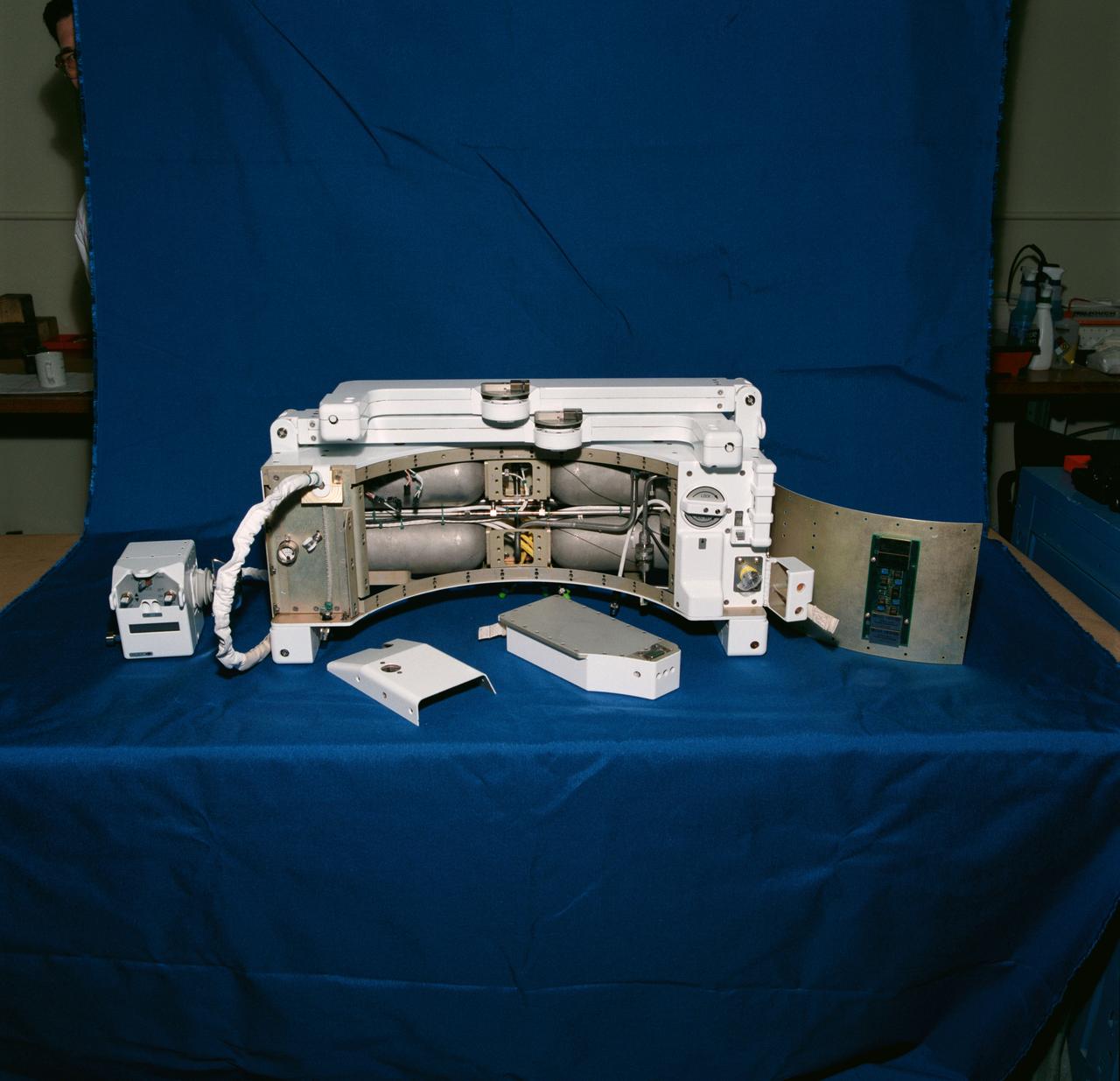
S93-50137 (December 1993) --- This small mobility-aiding back harness, complemented in extravehicular activity (EVA) with a hand controller unit and called the Simplified Aid for EVA Rescue (SAFER) system, will get extensive in-space evaluation and testing during the STS-64 mission. In this view the SAFER is open to reveal the gas supply and thrusters. SAFER is to fly on STS-76 as well.
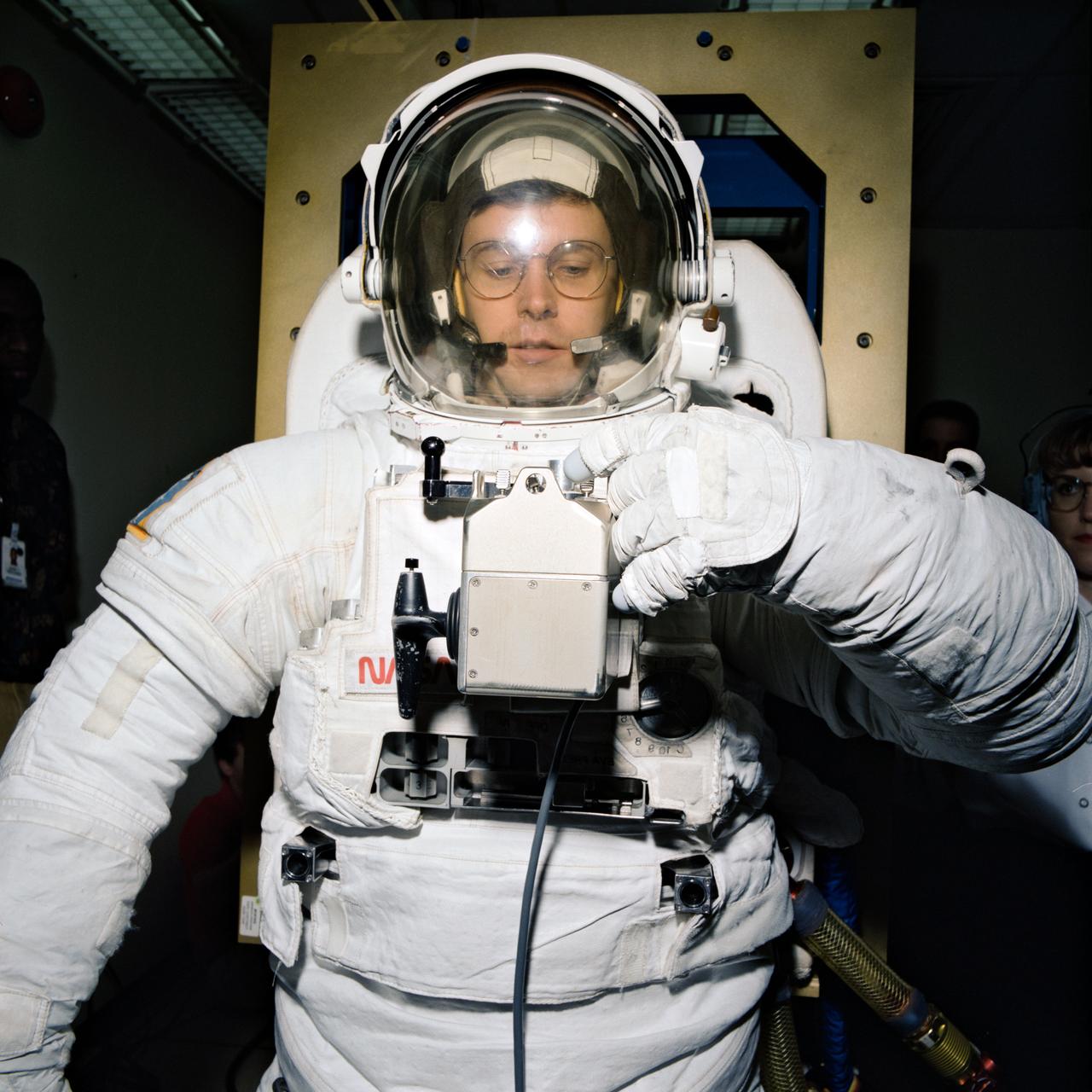
S93-26920 (8 Sept. 1994) --- Scott Bleisath, an extravehicular activity (EVA) engineer, demonstrates the hand control module for the Simplified Aid for EVA Rescue (SAFER) system making its first flight on the scheduled September STS-64 mission. Astronauts Mark C. Lee and Carl J. Meade are the spacewalkers assigned to test the system in space. Photo credit: NASA or National Aeronautics and Space Administration
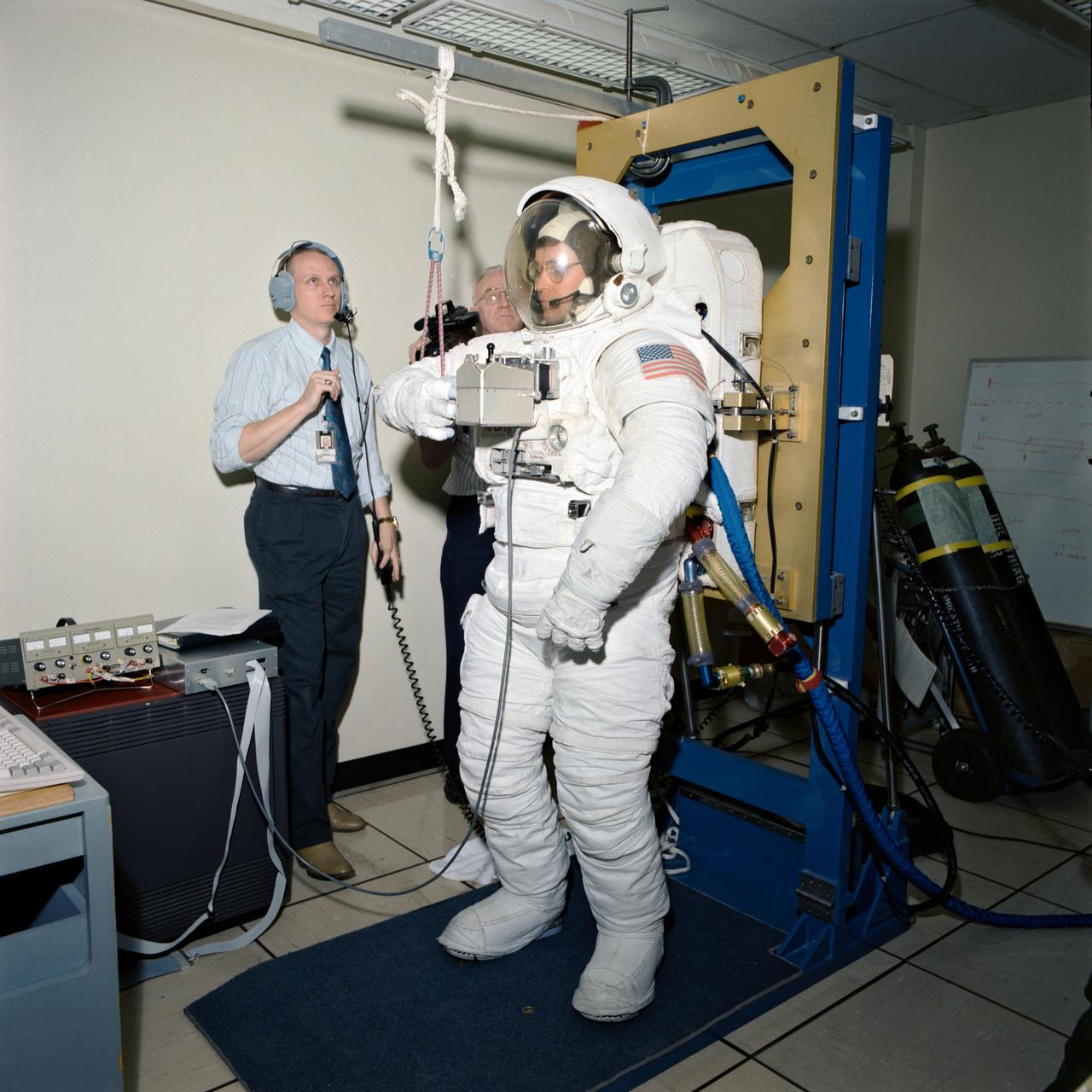
S93-26918 (8 Sept. 1994) --- Scott Bleisath, an extravehicular activity (EVA) engineer, demonstrates the hand control module for the Simplified Aid for EVA Rescue (SAFER) system making its first flight on the scheduled September STS-64 mission. Astronauts Mark C. Lee and Carl J. Meade are the spacewalkers assigned to test the system in space. Unidentified technicians and engineers look on. Photo credit: NASA or National Aeronautics and Space Administration
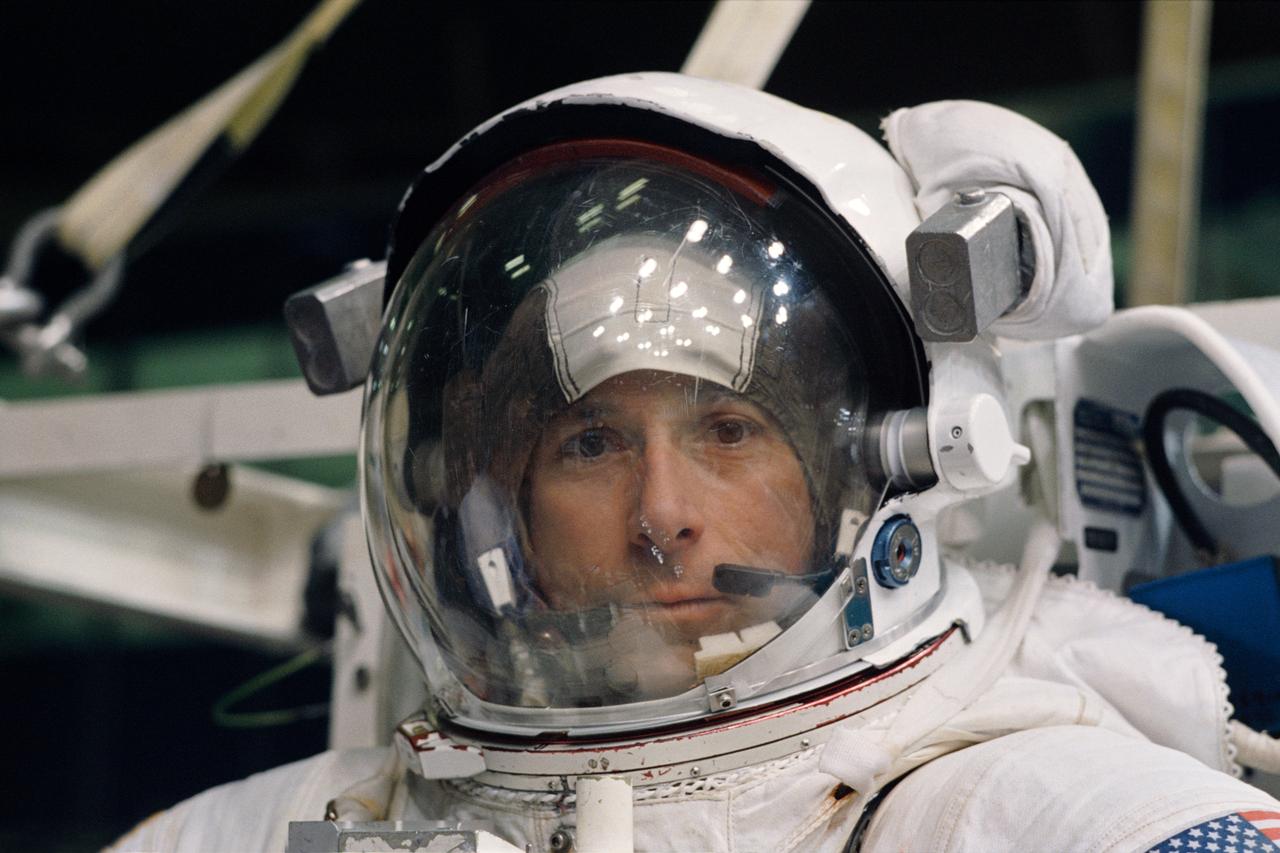
S94-39762 (August 1994) --- Astronaut Carl J. Meade, STS-64 mission specialist, listens to ground monitors prior to a simulation of a spacewalk scheduled for his September mission. Meade, who shared the rehearsal in Johnson Space Center's (JSC) Weightless Environment Training Facility (WET-F) pool with crewmate astronaut Mark C. Lee (out of frame), is equipped with a training version of new extravehicular activity (EVA) hardware called the Simplified Aid for EVA Rescue (SAFER) system. The hardware includes a mobility-aiding back harness and a chest-mounted hand control module. Photo credit: NASA or National Aeronautics and Space Administration
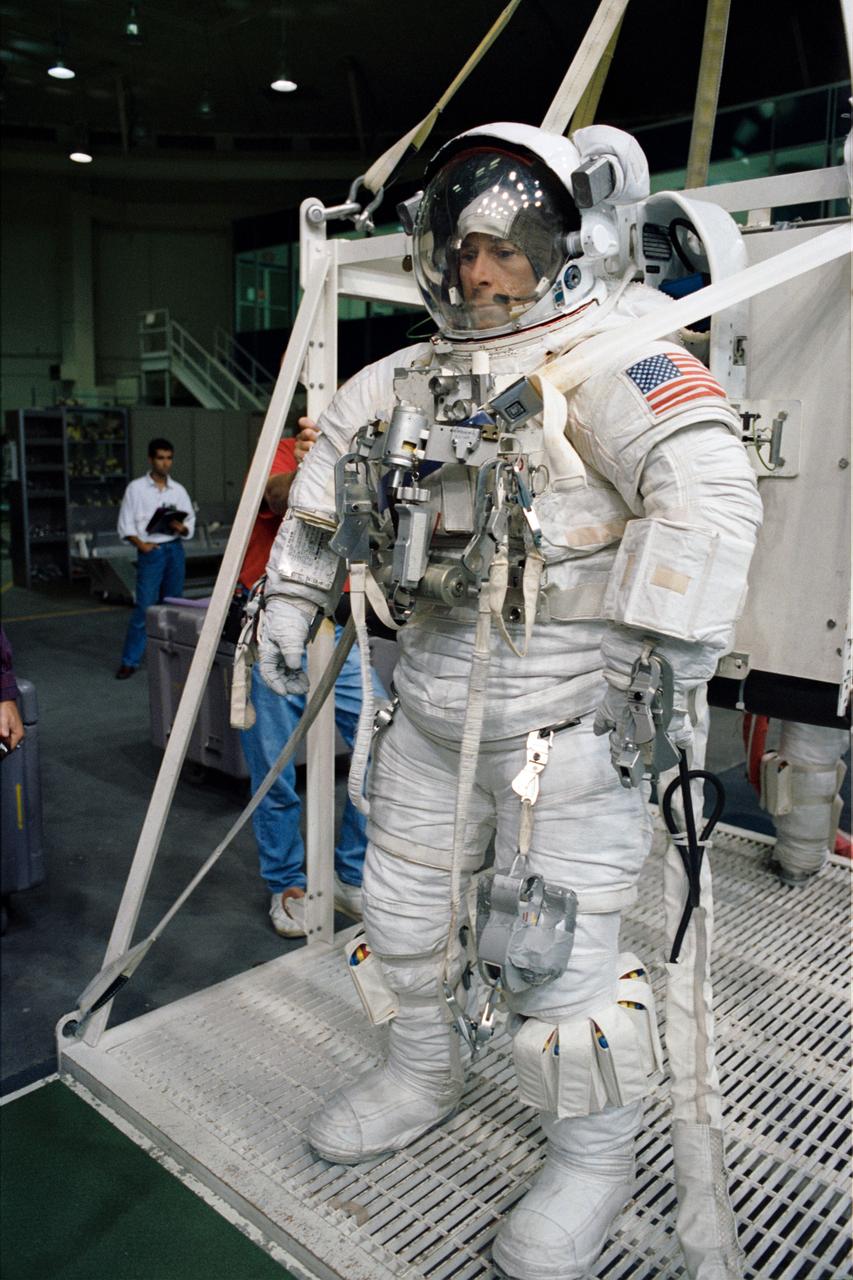
S94-39775 (August 1994) --- Astronaut Carl J. Meade, STS-64 mission specialist, listens to ground monitors during a simulation of a spacewalk scheduled for his September mission. Meade, who shared the rehearsal in the Johnson Space Center's (JSC) Weightless Environment Training Facility (WET-F) pool with crewmate astronaut Mark C. Lee, is equipped with a training version of new extravehicular activity (EVA) hardware called the Simplified Aid for EVA Rescue (SAFER) system. The hardware includes a mobility-aiding back harness and a chest-mounted hand control module. Photo credit: NASA or National Aeronautics and Space Administration
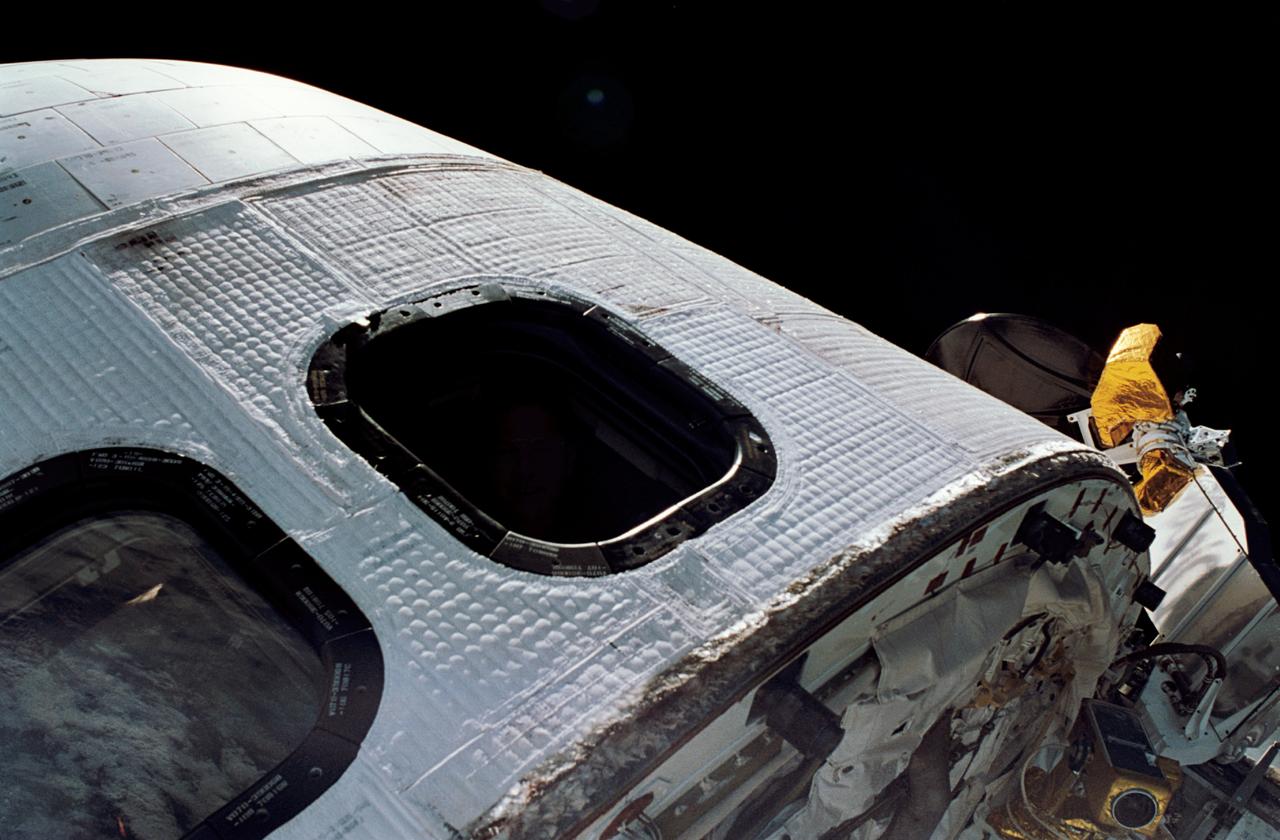
STS064-310-005 (16 Sept. 1994) --- Astronaut Richard N. Richards, STS-64 commander, looks through one of the space shuttle Discovery's overhead flight deck windows to view the Extravehicular Activity (EVA) activities of astronauts Carl J. Meade, who took this picture, and Mark C. Lee. Wearing spacesuits in and around the space shuttle Discovery's cargo bay, astronauts Meade and Lee took turns trying out the new EVA test hardware called Simplified Aid for EVA Rescue (SAFER). Photo credit: NASA or National Aeronautics and Space Administration
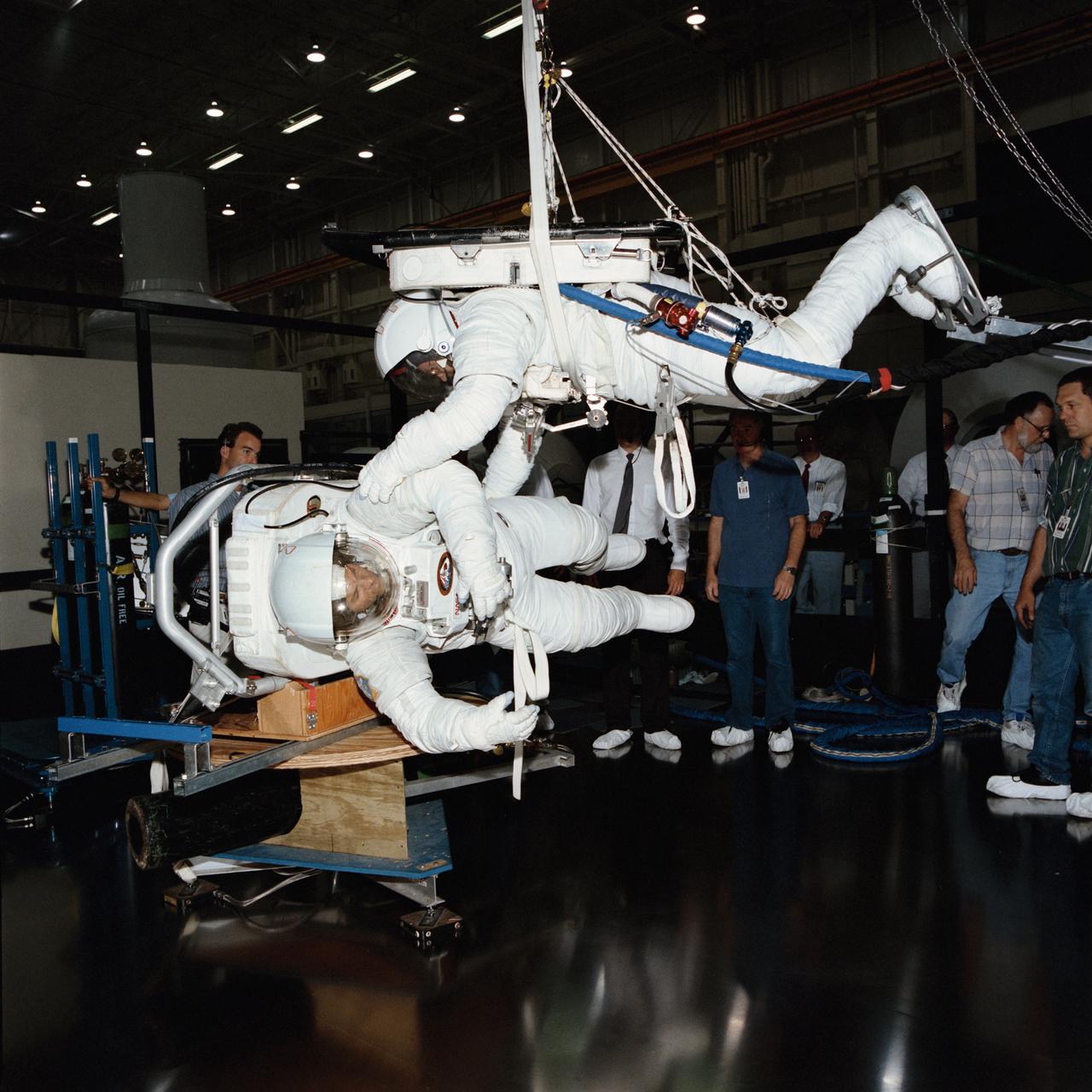
S94-33357 (1994) --- Scott Bleiseth, top, prepares to spin Mike Hess, a fellow EVA engineer, during a test on the air-bearing floor in the Shuttle Mock-up and Integration Laboratory at NASA's Johnson Space Center. The hardware being tested is part of the Simplified Aid for EVA Rescue (SAFER). The pair was developing techniques by which the non-SAFER equipped spacewalker will impart a rotation to the SAFER-using spacewalker during the STS-64 mission. Once the SAFER astronaut is spinning, the device will be activated and its automatic attitude hold capability will be tested. SAFER is to fly on STS-76 as well. Photo credit: NASA or National Aeronautics and Space Administration
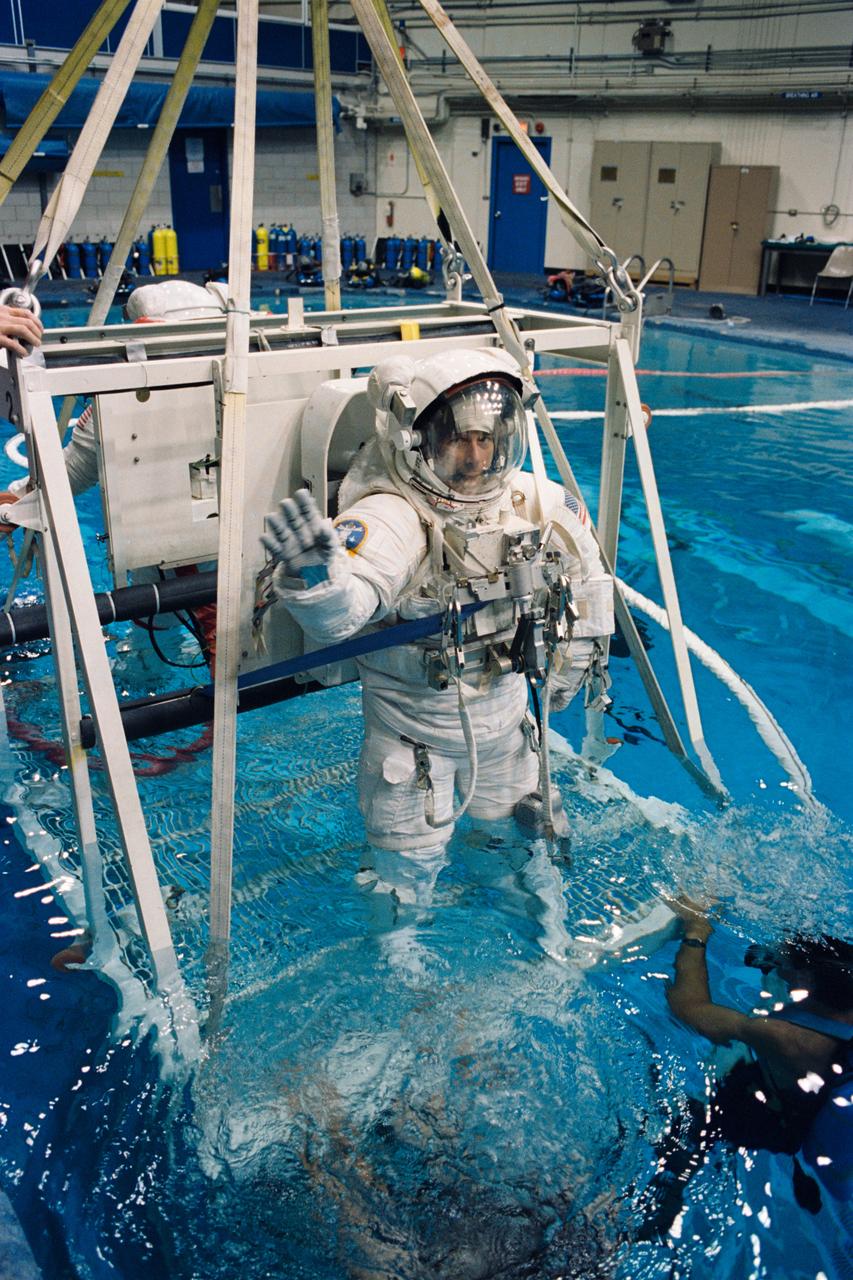
S94-39770 (August 1994) --- Astronaut Carl J. Meade, STS-64 mission specialist, is being submerged prior to an underwater simulation of a spacewalk scheduled for his September mission. Meade, who shared the rehearsal in the Johnson Space Center's (JSC) Weightless Environment Training Facility (WET-F) pool with crewmate astronaut Mark C. Lee (partially visible at left), is equipped with a training version of new extravehicular activity (EVA) hardware called the Simplified Aid for EVA Rescue (SAFER) system. Photo credit: NASA or National Aeronautics and Space Administration

STS064-23-037 (16 Sept. 1994) --- Astronauts Mark C. Lee (left) and Carl J. Meade were photographed in the midst of 15-minute pre-breathe exercise in preparation for their Extravehicular Activity (EVA) of Sept. 16, 1994. On that day the two performed an in-space rehearsal or demonstration of a contingency rescue using the never-before flown Simplified Aid for EVA Rescue (SAFER) system some 130 nautical miles above Earth. During the EVA the two STS-64 mission specialists took turns using the SAFER hardware. The test was the first phase of a larger SAFER program leading finally to the development of a production version for future shuttle and space station applications. Photo credit: NASA or National Aeronautics and Space Administration
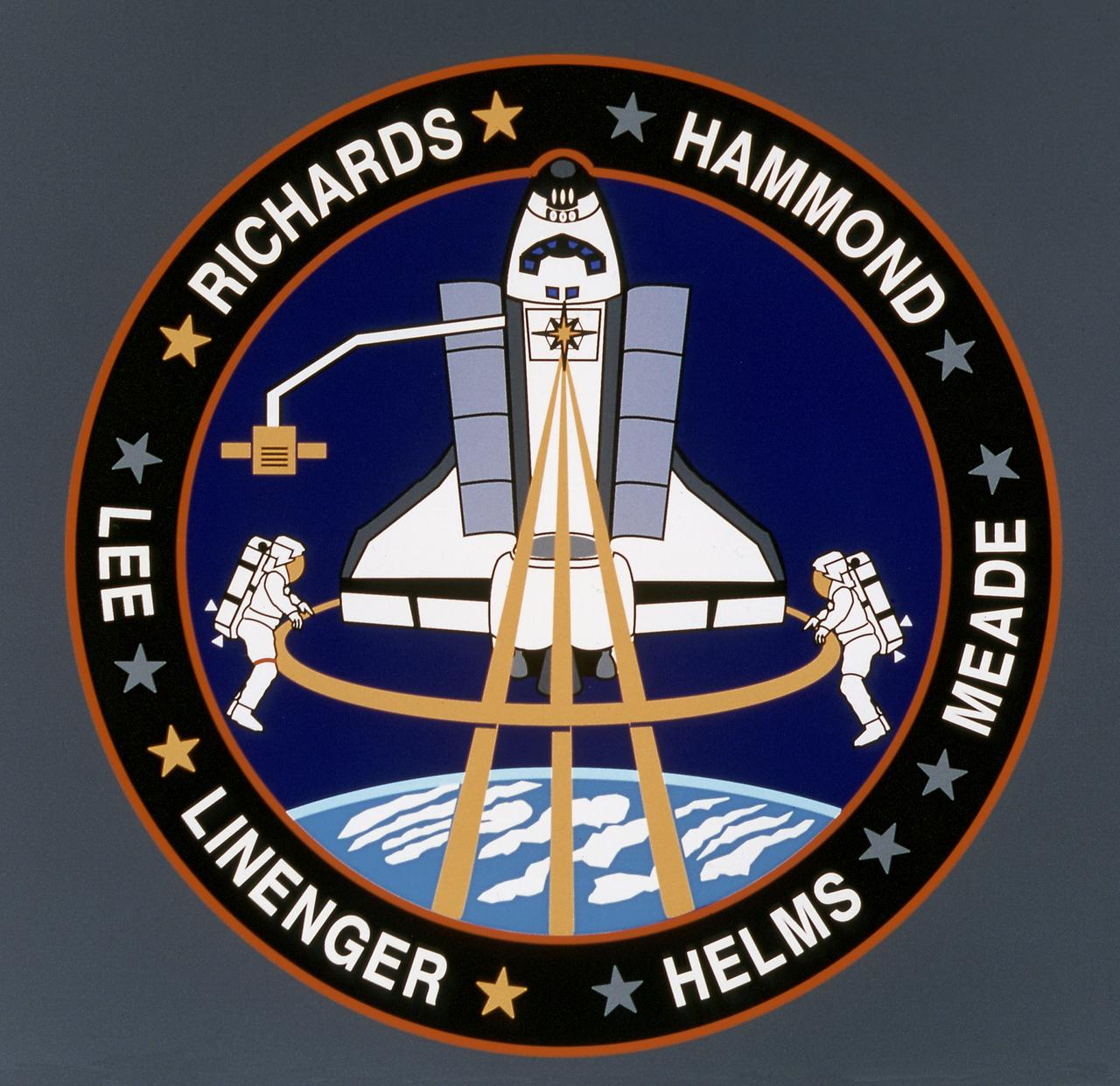
The STS-64 patch depicts the Space Shuttle Discovery in a payload-bay-to-Earth attitude with its primary payload, Lidar In-Space Technology Experiment (LITE-1) operating in support of Mission to Planet Earth. LITE-1 is a lidar system that uses a three-wavelength laser, symbolized by the three gold rays emanating from the star in the payload bay that form part of the astronaut symbol. The major objective of the LITE-1 is to gather data about the Earth's troposphere and stratosphere, represented by the clouds and dual-colored Earth limb. A secondary payload on STS-64 is the free-flier SPARTAN 201 satellite shown on the Remote Manipulator System (RMS) arm post-retrieval. The RMS also operated another payload, Shuttle Plume Impingement Flight Experiment (SPIFEX). A newly tested extravehicular activity (EVA) maneuvering device, Simplified Aid for EVA Rescue (SAFER), represented symbolically by the two small nozzles on the backpacks of the two untethered EVA crew men. The names of the crew members encircle the patch: Astronauts Richard N. Richards, L. Blaine Hammond, Jr., Jerry M. Linenger, Susan J. Helms, Carl J. Meade and Mark C. Lee. The gold or silver stars by each name represent that person's parent service.
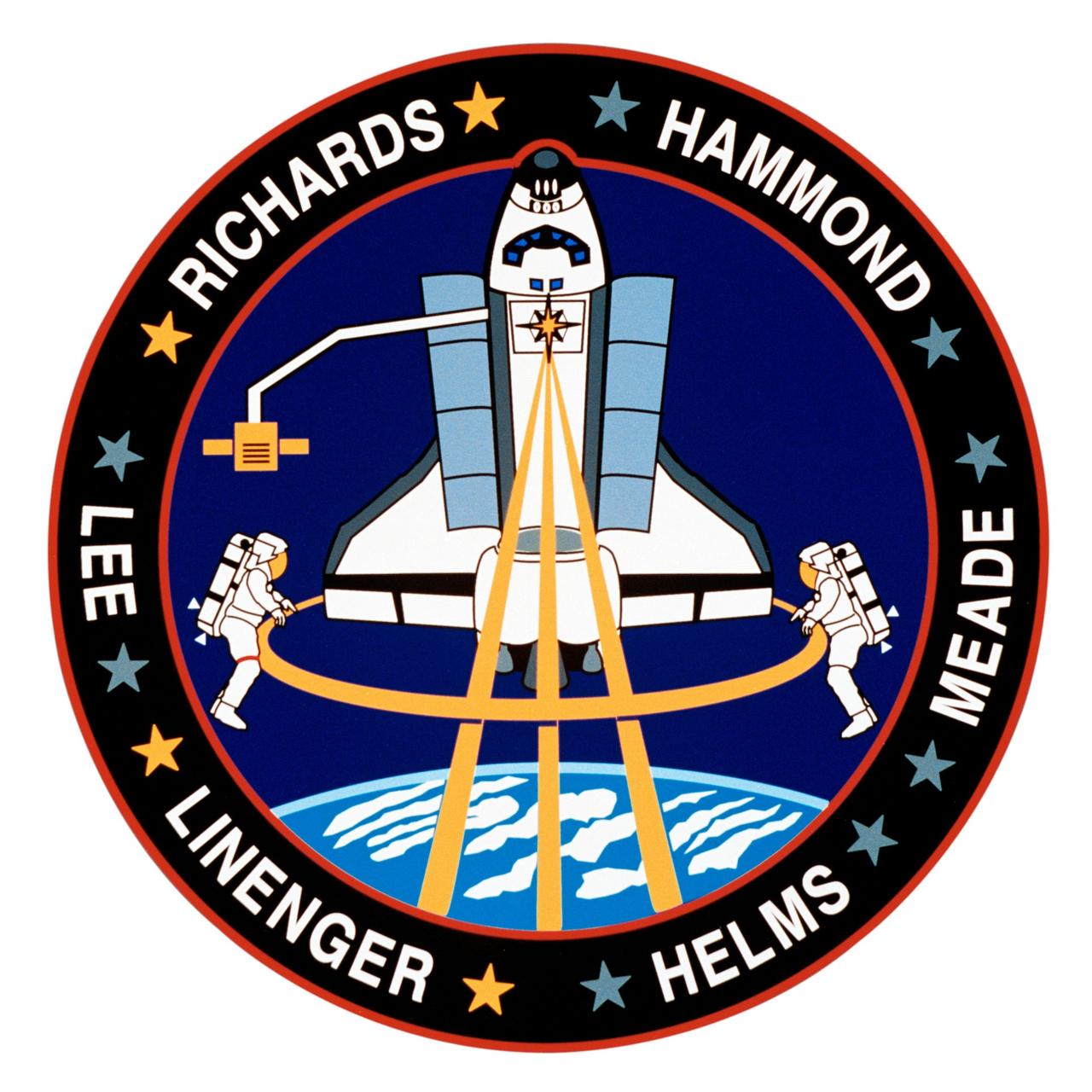
STS064-S-001 (July 1994) --- The patch depicts the space shuttle Discovery in a payload-bay-to-Earth attitude with its primary payload, Lidar In-Space Technology Experiment (LITE-1) operating in support of Mission to Planet Earth. LITE-1 is a lidar (light detection and ranging) system that uses a three-wavelength laser, symbolized by the three gold rays emanating from the star in the payload bay that form part of the astronaut symbol. The major objective of this first flight of LITE-1 is to validate its design and operating characteristics by gathering data about the Earth's troposphere and stratosphere, represented by the clouds and dual-colored Earth limb. A secondary payload on STS-64 is the free-flier SPARTAN-201 satellite shown on the Remote Manipulator System (RMS) arm post-retrieval. The objective of SPARTAN-201 is to investigate the physics of the solar wind and complement data being obtained from the ULYSSES satellite launched on STS-41. The RMS will also operate another secondary payload, Shuttle Plume Impingement Flight Experiment (SPIFEX), which will assess the plume effects from the Orbiter's Reaction Control System thrusters. Additionally, STS-64 will test a new extravehicular activity (EVA) maneuvering device, Simplified Aid for EVA Rescue (SAFER), represented symbolically by the two small nozzles on the backpacks of the two untethered EVA crew men. The names of the crew members encircle the patch: astronauts Richard N. Richards, commander; L. Blaine Hammond Jr., pilot; Jerry M. Linenger; Susan J. Helms, Carl J. Meade and Mark C. Lee, all mission specialists. The gold or silver stars by each name represent that person's parent service. The NASA insignia design for space shuttle flights is reserved for use by the astronauts and for other official use as the NASA Administrator may authorize. Public availability has been approved only in the forms of illustrations by the various news media. When and if there is any change in this policy, which is not anticipated, the change will be publicly announced. Photo credit: NASA