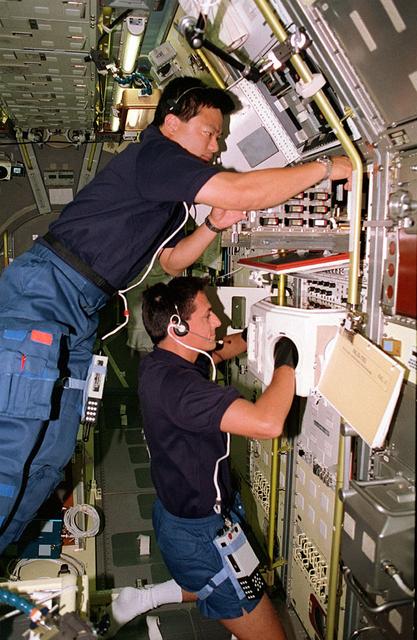
Onboard Space Shuttle Columbia (STS-65) Mission Specialist Leroy Chiao (top) and Mission Specialist Donald A. Thomas are seen at work in the International Microgravity Laboratory 2 (IML-2) spacelab science module. The two crewmembers are conducting experiments at the IML-2 Rack 5 Biorack (BR). Chiao places a sample in the BR incubator as Thomas handles another sample inside the BR glovebox. The glovebox is used to prepare samples for BR and slow rotating centrifuge microscope (NIZEMI) experiments.
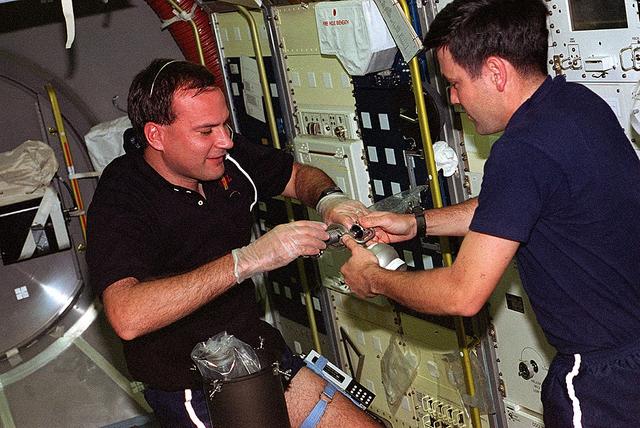
Space Shuttle Columbia (STS-65) onboard photo of Payload specialist Richard J. Hieb (right) and Shuttle Pilot James D. Halsell Jr. working on experiments in the Spacelab in the International Microgravity Laboratory (IML-2).
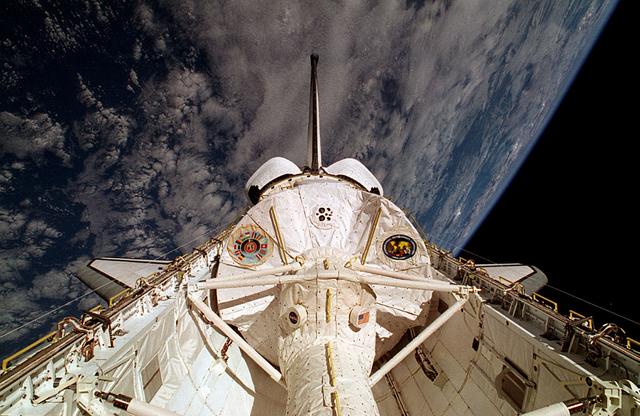
This is a Space Shuttle Columbia (STS-65) onboard photo of the second International Microgravity Laboratory (IML-2) in the cargo bay with Earth in the background. Mission objectives of IML-2 were to conduct science and technology investigations that required the low-gravity environment of space, with emphasis on experiments that studied the effects of microgravity on materials processes and living organisms. Materials science and life sciences are two of the most exciting areas of microgravity research because discoveries in these fields could greatly enhance the quality of life on Earth. If the structure of certain proteins can be determined by examining high-quality protein crystals grown in microgravity, advances can be made to improve the treatment of many human diseases. Electronic materials research in space may help us refine processes and make better products, such as computers, lasers, and other high-tech devices. The 14-nation European Space Agency (ESA), the Canadian Space Agency (SCA), the French National Center for Space Studies (CNES), the German Space Agency and the German Aerospace Research Establishment (DARA/DLR), and the National Space Development Agency of Japan (NASDA) participated in developing hardware and experiments for the IML missions. The missions were managed by NASA's Marshall Space Flight Center. The Orbiter Columbia was launched from the Kennedy Space Center on July 8, 1994 for the IML-2 mission.
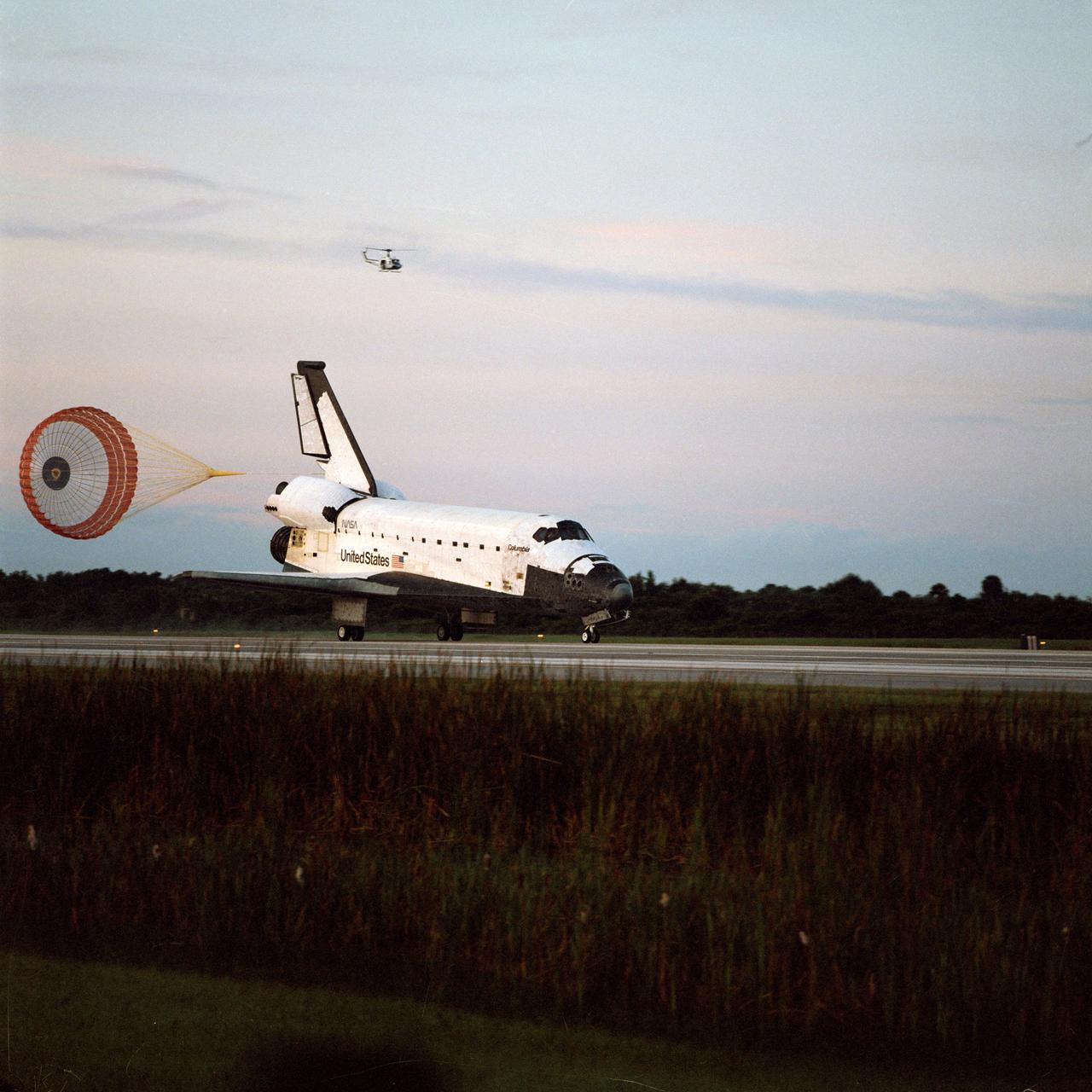
The Space Shuttle Columbia, Orbiter Vehicle (OV) 102, its drag chute fully deployed, completes a record duration mission as it lands on Runway 33 at the Kennedy Space Center (KSC) Shuttle Landing Facility (SLF). A helicopter flying overhead observes as OV-102's nose landing gear (NLG) and main landing gear (MLG) roll along the runway. Landing occurred at 6:38 am (Eastern Daylight Time (EDT)). STS-65 mission duration was 14 days 17 hours and 56 minutes. Onboard were six NASA astronauts and a Japanese payload specialist who conducted experiments in support of the International Microgravity Laboratory 2 (IML-2) during the mission.
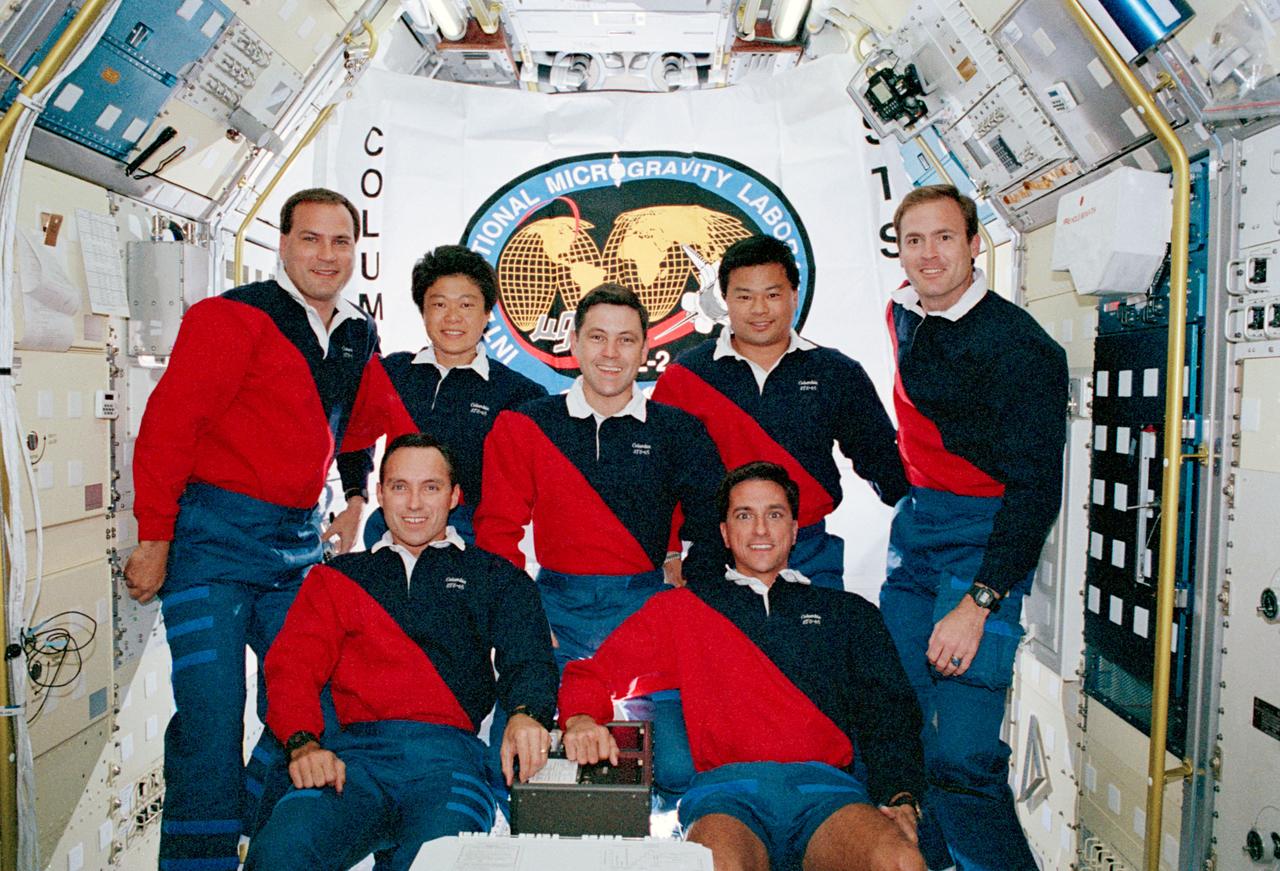
In the spacelab science module aboard the Space Shuttle Columbia, Orbiter Vehicle (OV) 102, the seven crewmembers pose for the traditional onboard (inflight) crew portrait. Displayed in the background is a flag with the International Microgravity Laboratory 2 (IML-2) insignia and Columbia inscribed along the edge. In the front row (left to right) are Mission Specialist (MS) Carl E. Walz and MS Donald A. Thomas. Behind them (left to right) are Payload Commander (PLC) Richard J. Hieb, Payload Specialist Chiaki Mukai, Commander Robert D. Cabana, MS Leroy Chiao, and Pilot James D. Halsell, Jr. Mukai represents the National Space Development Agency (NASDA) of Japan. Crewmembers are wearing their mission polo shirts for the portrait. Inside this module, the crew conducted experiments in support of the IML-2 mission.
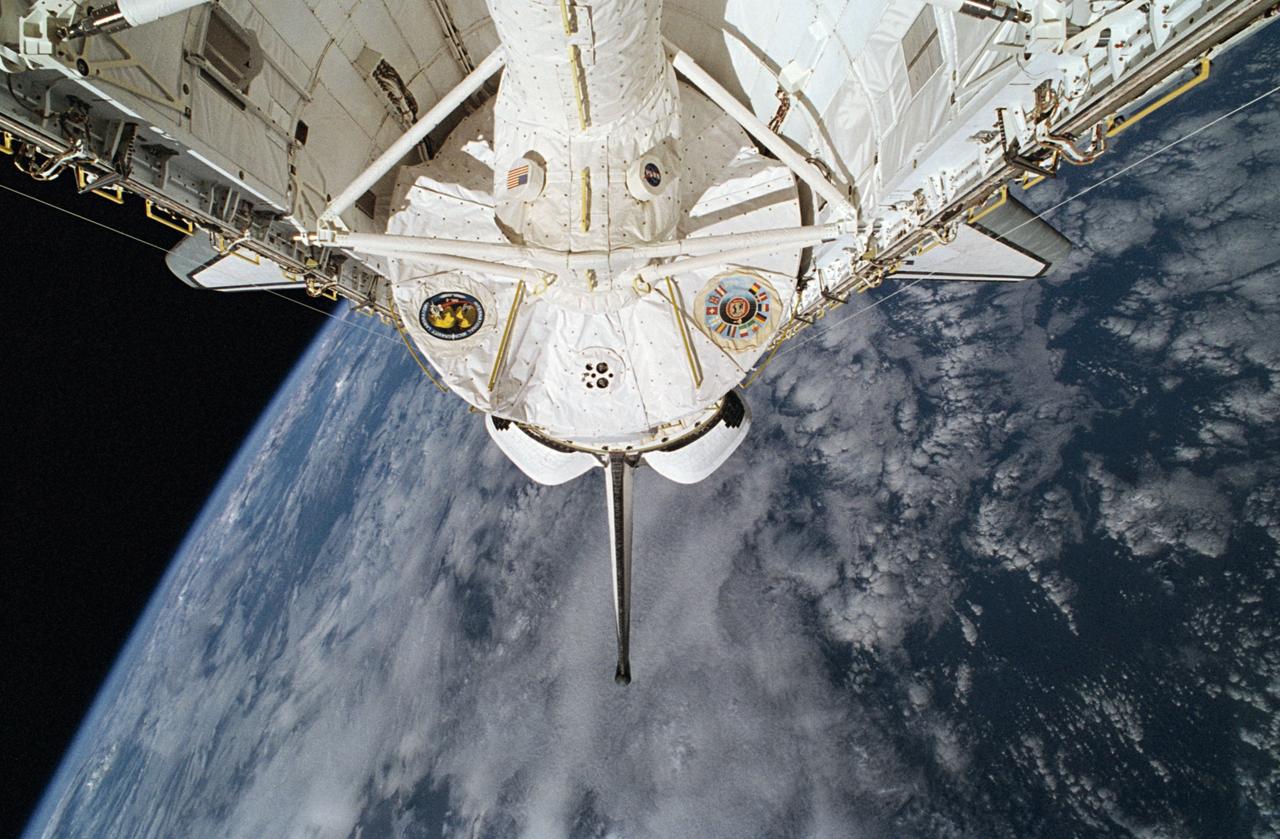
STS065-34-016 (8-23 July 1994) --- Clouds over the ocean form the backdrop for this scene of the International Microgravity Laboratory (IML-2) science module in the Space Shuttle Columbia's cargo bay during the two-week mission. Part of the tunnel that served as passageway for the seven crew members to and from the lab is seen in center foreground. Onboard Columbia were astronauts Robert D. Cabana, James D. Halsell, Jr., Richard J. Hieb, Carl E. Walz, Donald A. Thomas and Leroy Chiao, along with (NASDA) Japanese payload specialist Dr. Chiaki Naito-Mukai.