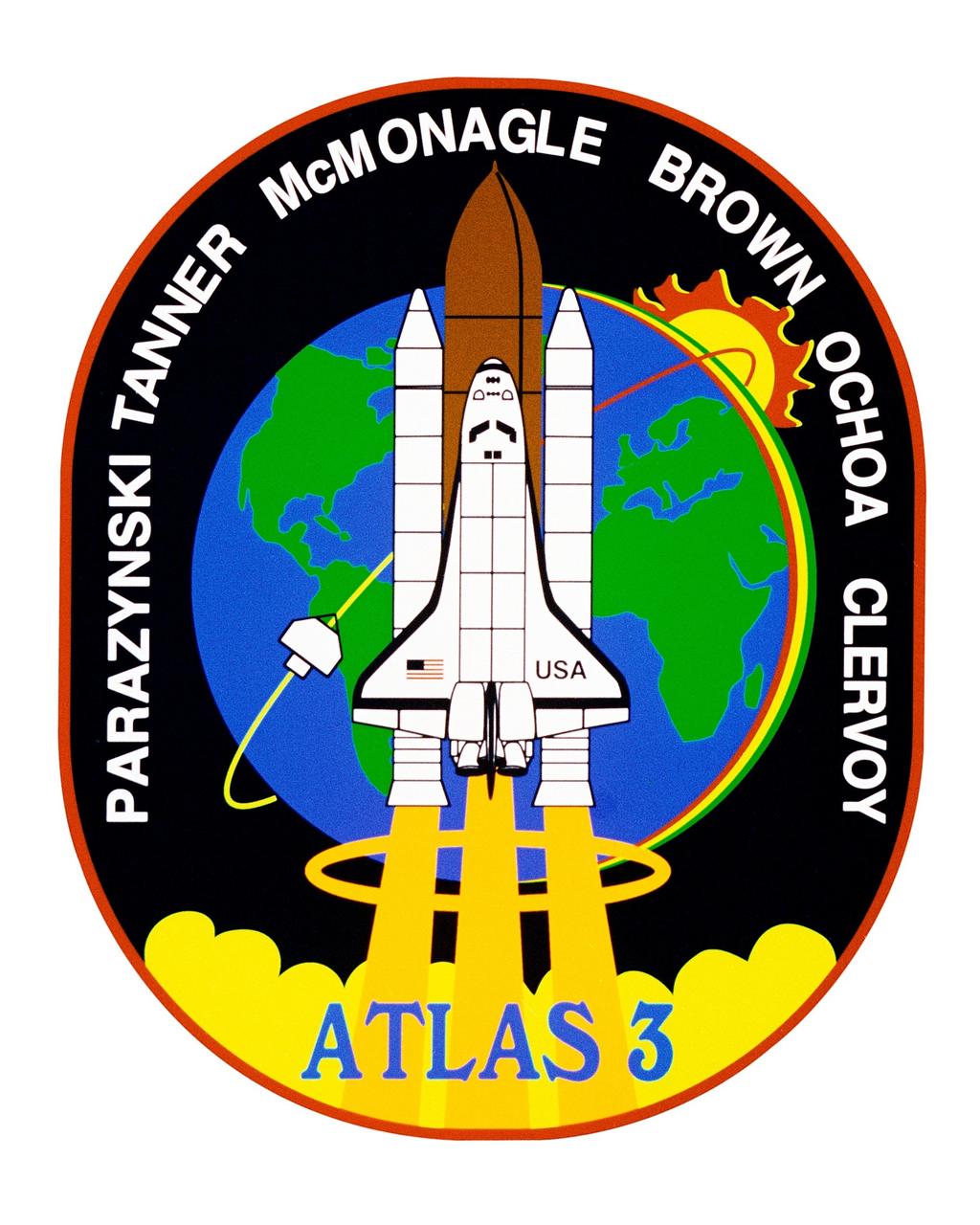
STS066-S-001 (October 1994) --- Designed by the crew members, the STS-66 insignia depicts the space shuttle Atlantis launching into Earth orbit to study global environmental change. The payload for the Atmospheric Laboratory for Applications and Science (ATLAS-3) and complementary experiments are part of a continuing study of the atmosphere and the sun's influence on it. The space shuttle is trailed by gold plumes representing the astronaut symbol and is superimposed over Earth, much of which is visible from the flight's high inclination orbit. Sensitive instruments aboard the ATLAS pallet in the shuttle payload bay and on the free-flying Cryogenic Infrared Spectrometers and Telescopes for the Atmospheric-Shuttle Pallet Satellite (CHRISTA-SPAS) will gaze down on Earth and toward the sun, illustrated by the stylized sunrise and visible spectrum. The NASA insignia design for space shuttle flights is reserved for use by the astronauts and for other official use as the NASA Administrator may authorize. Public availability has been approved only in the forms of illustrations by the various news media. When and if there is any change in this policy, which is not anticipated, the change will be publicly announced. Photo credit: NASA
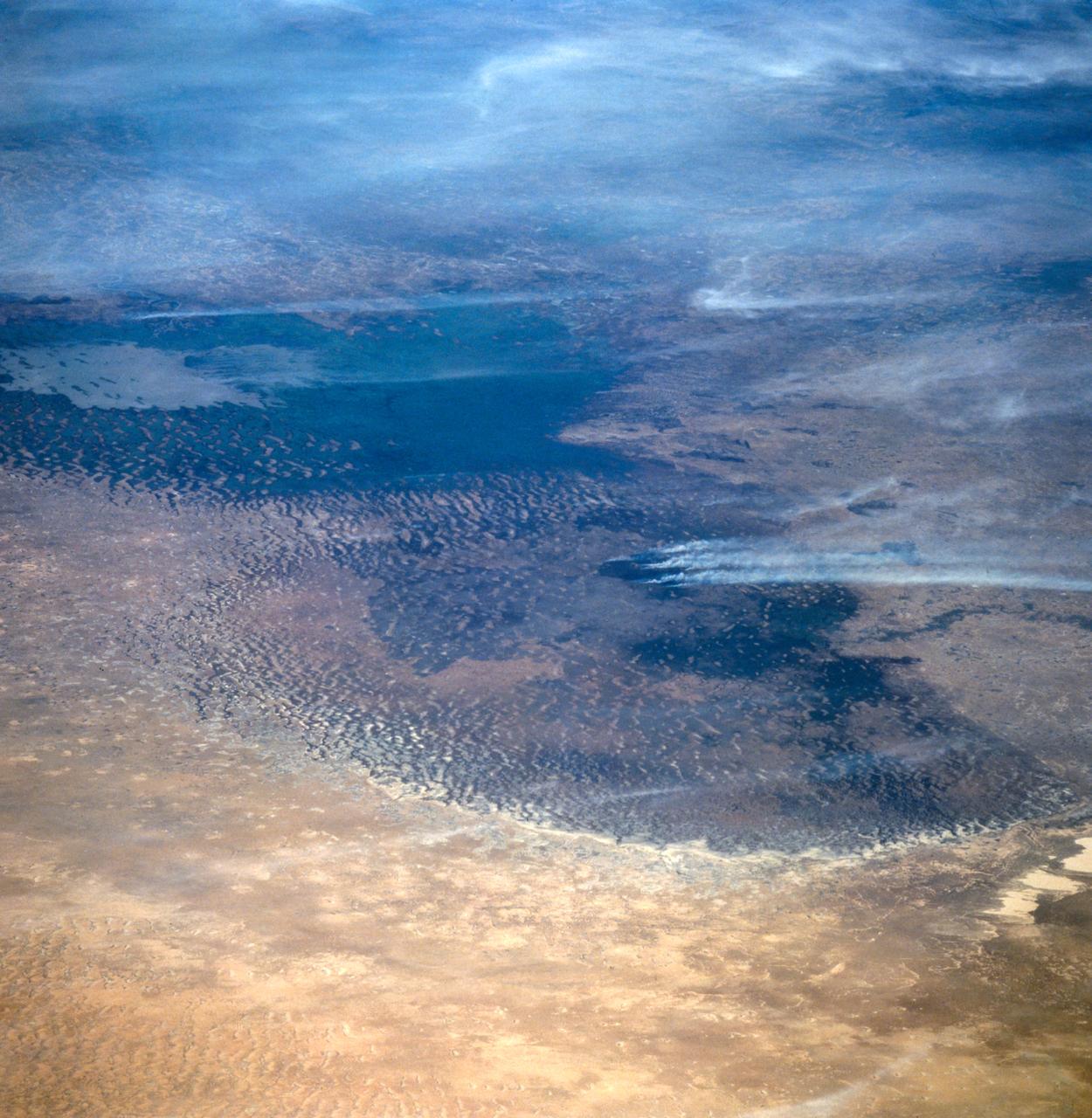
This oblique view of Lake Chad was taken by the STS-66 crew in November 1994. This lake lies mainly in the Republic of Chad and partly in Nigeria, Cameroon and Niger. The size of Lake Chad varies seasonally and is actually divided into north and south basins; neither of which is generally more than 25 feet (7.6 meters) deep. In this photograph, all the water appears to be located in the southern basin with the northern and eastern edges of both basins covered with sand dunes which have invaded the area where the water once stood. The prevailing wind direction can be seen from the agriculture burning in both basins to be from the east.
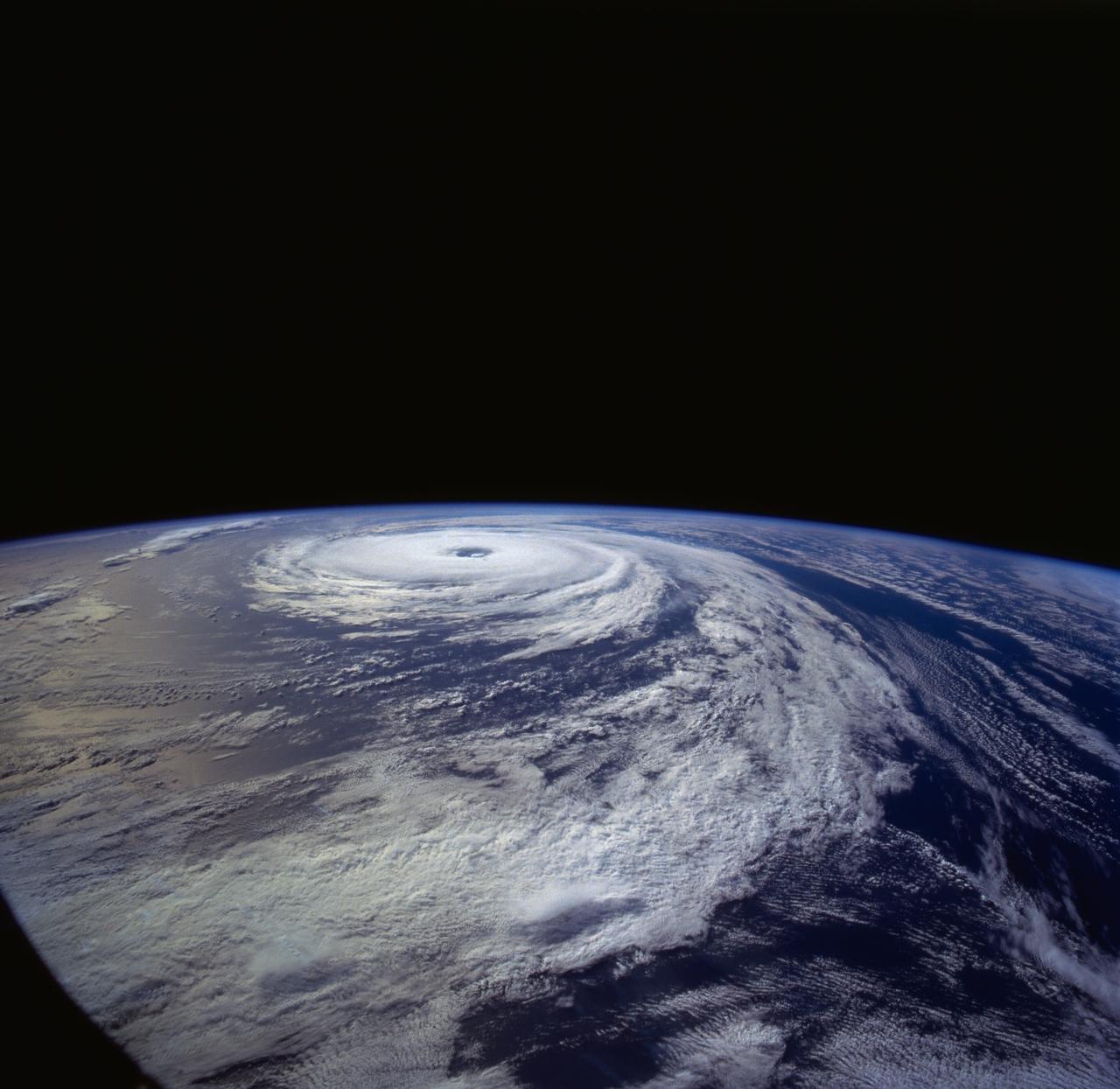
From 165 nautical miles above the earth, the STS-66 astronauts were able to capture detail in a number of storm systems around the globe during their 11-day stay in space aboard the Space Shuttle Atlantis. A 70mm handheld Hasselblad was used to photograph Hurricane Florence in the Atlantic Ocean, about 400 miles from Bermuda.
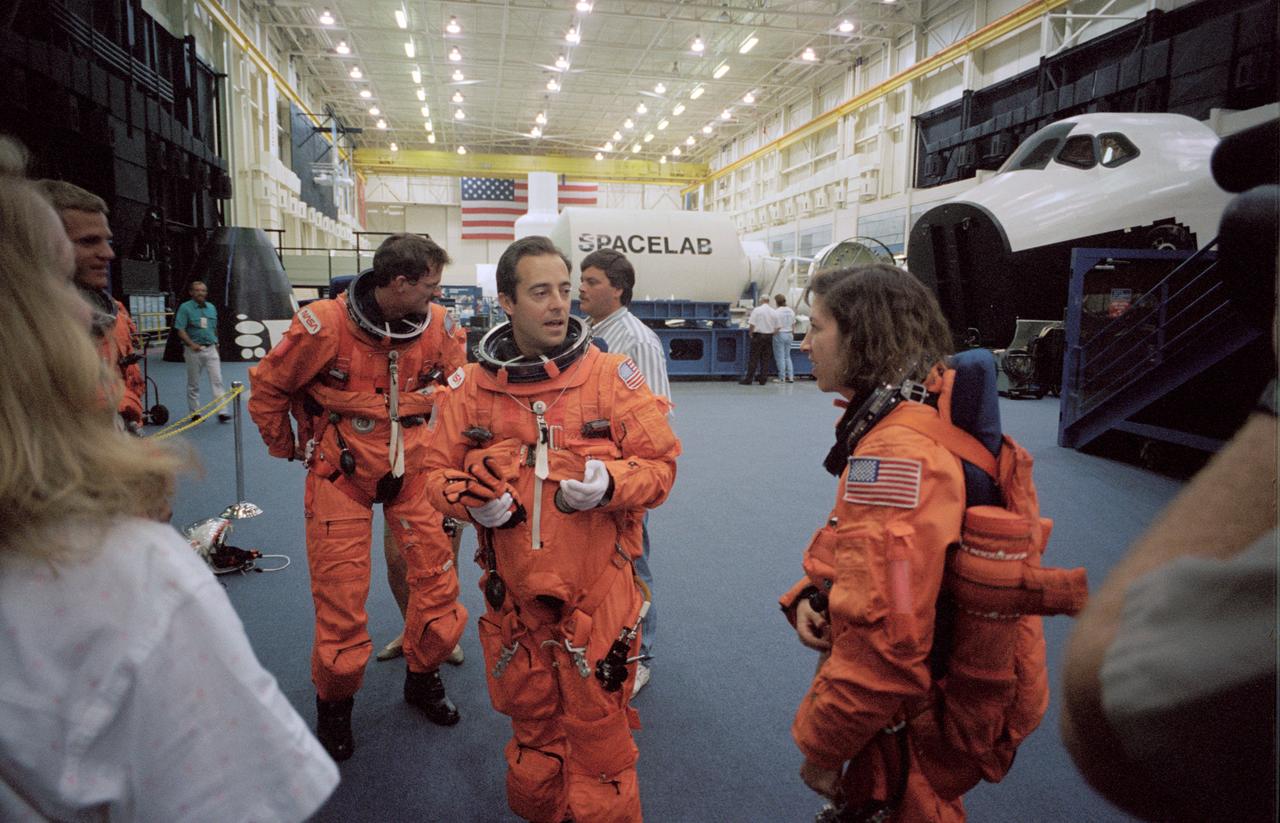
S94-40095 (23 June 1994) --- Jean-Francois Clervoy (center), STS-66 international mission specialist, chats with payload crew mates during a training session on emergency egress procedures. Wearing training versions of the launch and entry suits (LES), the crew members are, left to right, Scott E. Parazynski, Joseph P. Tanner, Clervoy and Ellen Ochoa. Ochoa is payload commander; Tanner and Parazynski are NASA mission specialists and Clervoy represents the European Space Agency (ESA) as a mission specialist. Six astronauts will spend a week and a half aboard the Space Shuttle Atlantis in Earth-orbit in support of the Atmospheric Laboratory for Applications and Science (ATLAS-3).
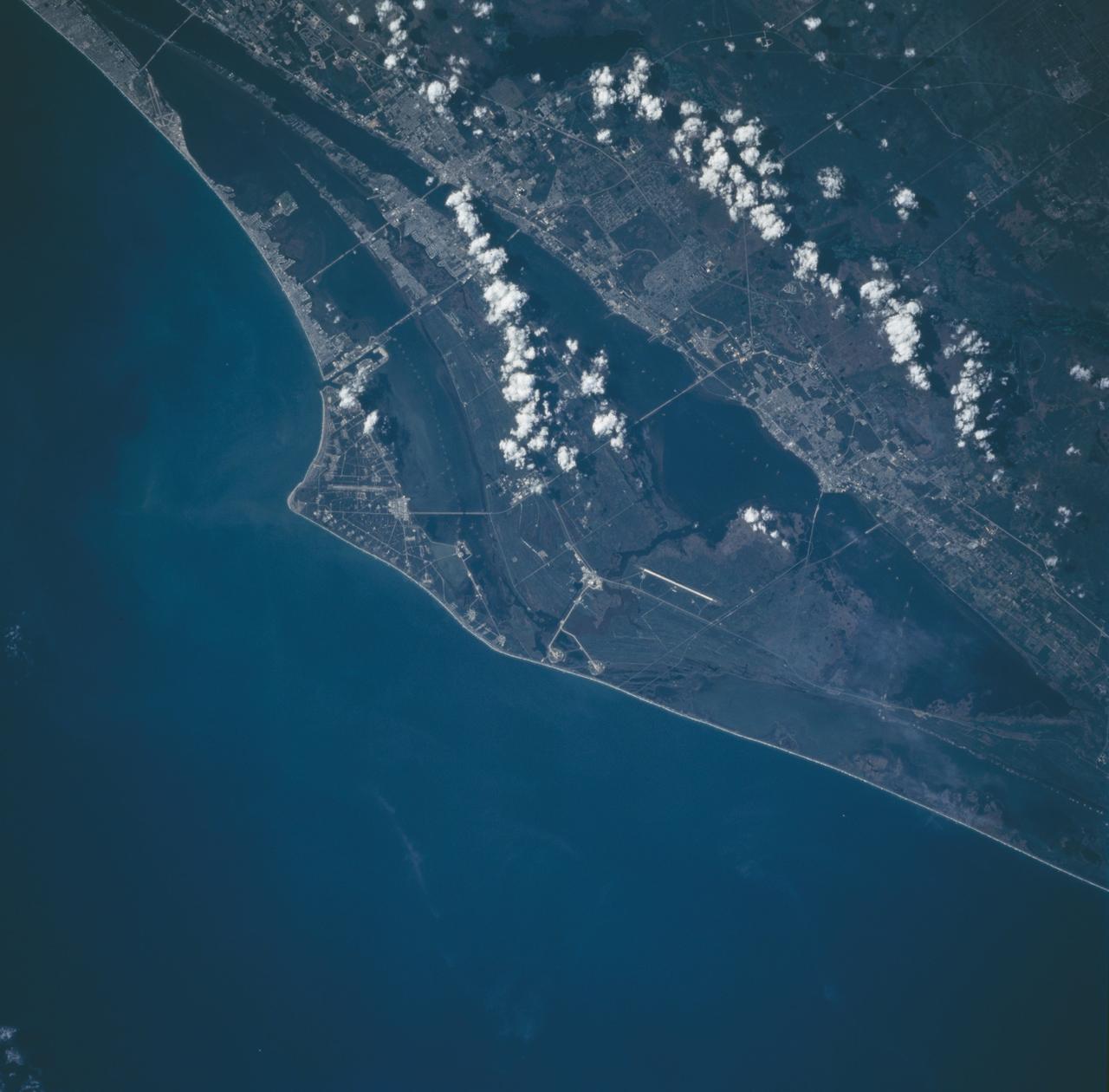
This nadir photograph of the Cape Canaveral area on Florida's eastern coast was taken by the STS-66 crew in November, 1994. The Space Shuttle Vehicle Assembly area and the runways used by the returning Shuttles can be seen near the center of this photograph as part of the John F. Kennedy Space Center (KSC). Launch Pads A and B as well as many other launch pads and a runway can be seen on Cape Canaveral. Cape Canaveral is located to the east of KSC. South of the launch area is Port Canaveral and Cocoa Beach on the Atlantic coast with the towns of Cocoa, Merrit Island and Titusville situated along the Intercoastal Waterway.
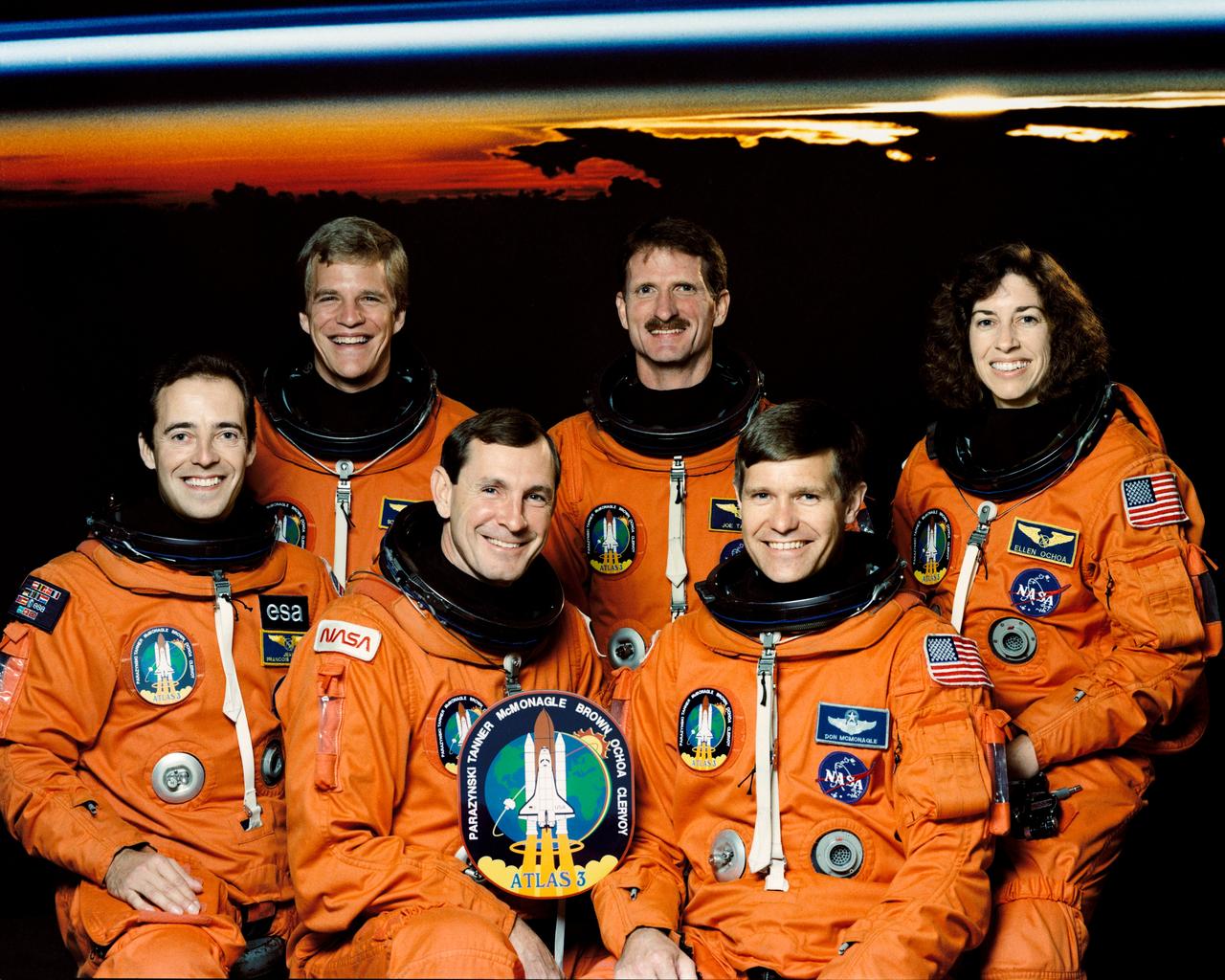
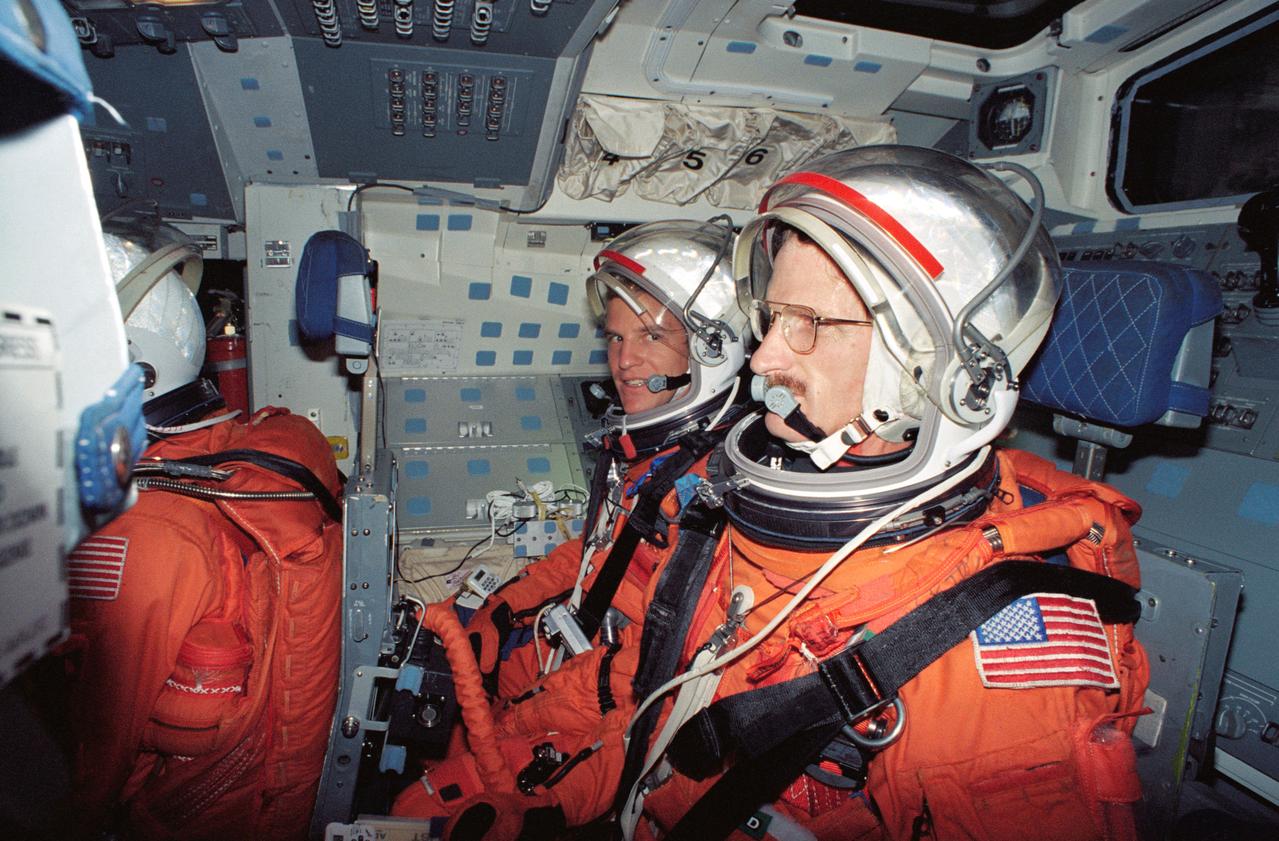
STS066-S-002 (September 1994) --- These five NASA astronauts and one European Space Agency (ESA) crew member are in training for the 13th flight of the Space Shuttle Atlantis. Donald R. McMonagle (front right) is mission commander, and Curtis L. Brown, Jr. (front center) is pilot. The other crew members are Ellen S. Ochoa, payload commander; Scott E. Parazynski, (rear left) and Joseph R. Tanner (rear center), mission specialists, along with ESA astronaut Jean-François Clervoy (front left), mission specialist. Clervoy, Parazynski and Tanner, members of the 1992 astronaut class, are making their initial flights in space.
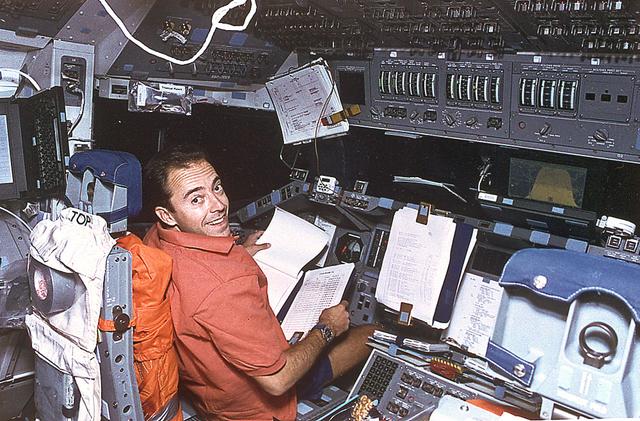
This is an onboard photo of space shuttle Atlantis (STS-66) crew member, French scientist Jean-Francois Clervoy working on the Atmospheric Laboratory for Applied Sciences (ATLAS-3) project. The ATLAS-3 measures the variances of the sun's solar radiation and the variability in the solar spectrum.
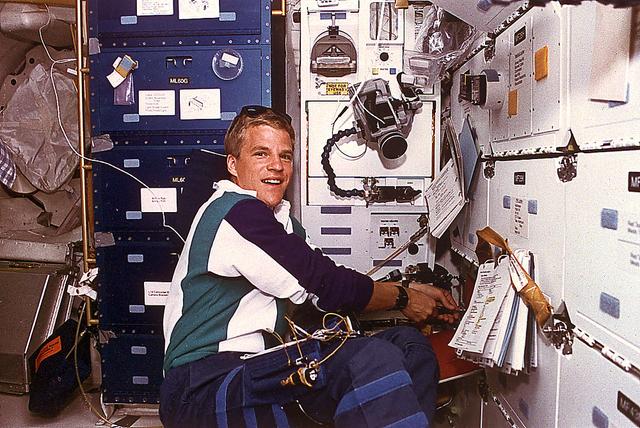
This is an onboard photo of space shuttle Atlantis (STS-66) astronaut Scott E. Parazynski, in the International Microgravity Laboratory (IML), performing a series of experiments devoted to material and life sciences studies using the Spacelab Long Module (SLM). STS-066 was launched on November 3, 1994.

The space shuttle Atlantis lands with its drag chute deployed on runway 22 at Edwards, California, to complete the STS-66 mission dedicated to the third flight of the Atmospheric Laboratory for Applications and Science-3 (ATLAS-3), part of NASA's Mission to Planet Earth program. The astronauts also deployed and retrieved a free-flying satellite designed to study the middle and lower thermospheres and perform a series of experiments covering life sciences research and microgravity processing. The landing was at 7:34 a.m. (PST) 14 November 1994, after being waved off from the Kennedy Space Center, Florida, due to adverse weather.
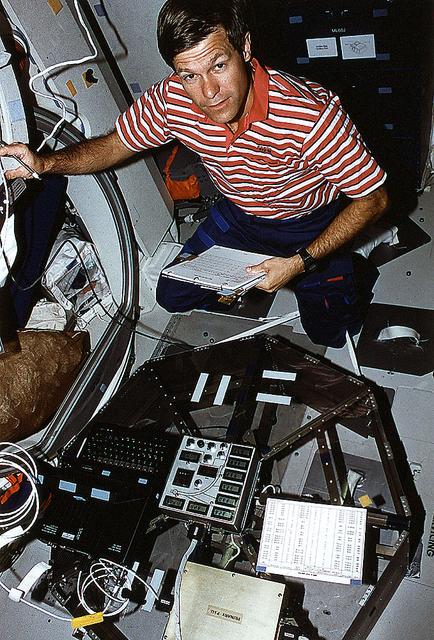
On the Space Shuttle Orbiter Atlantis' middeck, Astronaut Donald R. McMonagle, mission commander, works with the Heat Pipe Performance (HPP-2) experiment during STS-66 mission. HPP-2 was flown to investigate the thermal performance and fluid dynamics of heat pipes operating with asymmetric and multiple heating zones under microgravity condition.
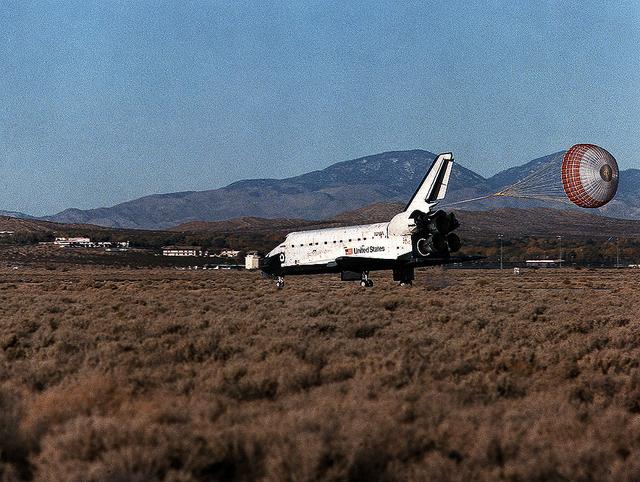
The drag-chute is fully deployed as the Space Shuttle Atlantis (STS-66) heads toward a stop at Edwards Air Force Base in southern California, ending a successful mission. The crew supported the Atmospheric Laboratory for Applications and Science (ATLAS-3), conducting approximately 80 experiments. The Cryogenic Infrared Spectrometer and Telescopes for the Atmosphere-Shuttle Pallet Satellite (CRISTA-SPAS), which was developed by German engineers, was successfully deployed and retrieved during this space mission.
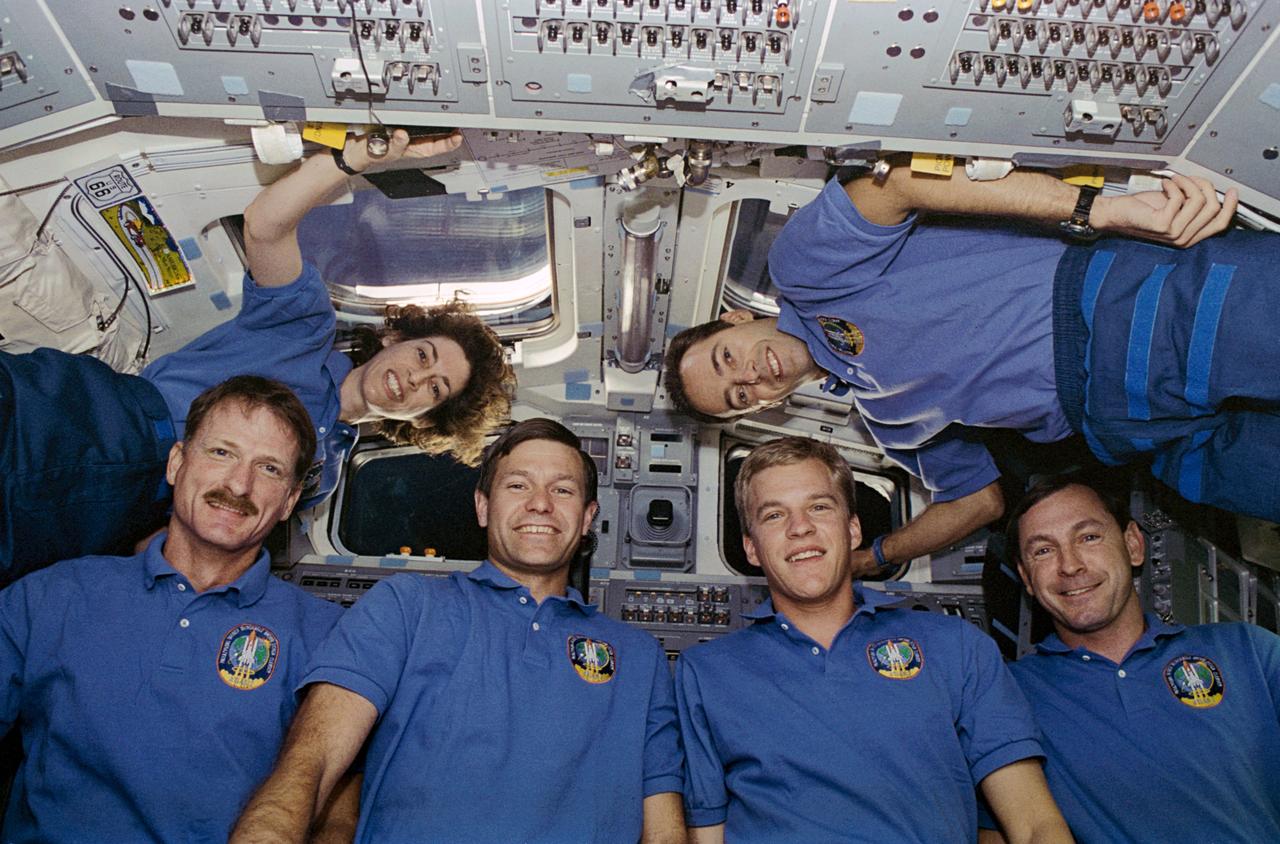
STS066-56-015 (3-14 Nov 1994) --- On the Space Shuttle Atlantis' flight deck, the six crew members pose for the traditional in-flight crew portrait. They include, left to right in lower frame, astronauts Joseph R. Tanner, mission specialist; Donald R. McMonagle, mission commander; Scott E. Parazynski, mission specialist; and Curtis L. Brown, pilot. Floating at top frame are Ellen Ochoa, payload commander; and Jean-François Clervoy, mission specialist, representing the European Space Agency (ESA).
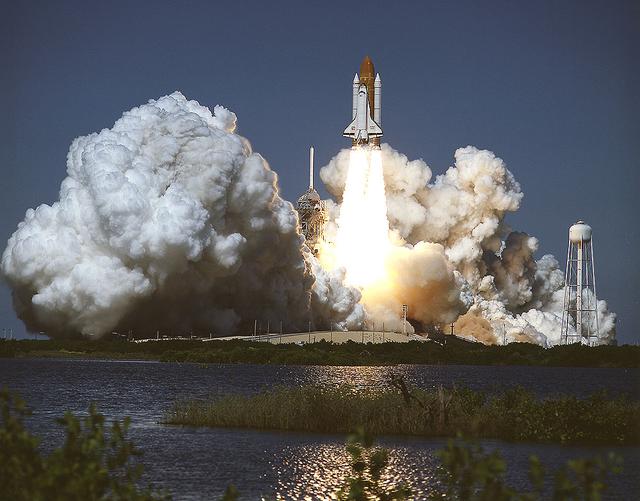
The 66th Space Shuttle flight began with a nearly on-time liftoff of the Orbiter Atlantis (STS-66) into the clear Florida skies. Atlantis returned to space after a nearly two year absence. The plarned 11-day flight will continue NASA's Mission to Planet Earth, a comprehensive international collaboration to study how Earth's environment is changing and how human beings affect that change. Primary payloads on this flight included the Atmospheric Laboratory for Applications and Science (ATLAS-3), making its third flight, and the German-built Cryogenic Infrared Spectrometers and Telescopes for the Atmosphere-Shuttle Pallet Satellite (CRISTA-SPAS), which was deployed and retrieved during the mission.
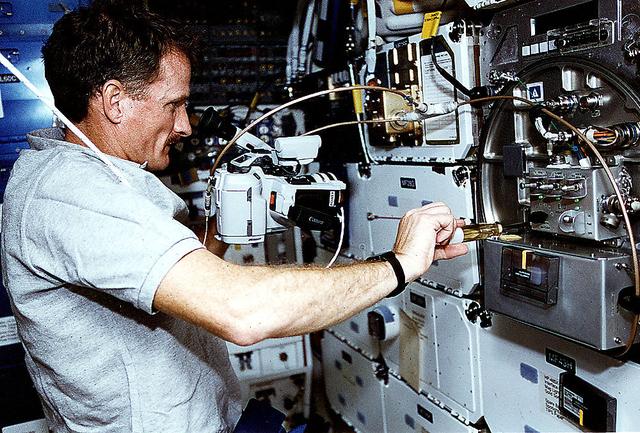
On the Space Shuttle Orbiter Atlantis' middeck, Astronaut Joseph R. Tarner, mission specialist, works at an area amidst several lockers which support the Protein Crystal Growth (PCG) experiment during the STS-66 mission. This particular section is called the Crystal Observation System, housed in the Thermal Enclosure System (COS/TES). Together with the Vapor Diffusion Apparatus (VDA), housed in Single Locker Thermal Enclosure (SLTES), the COS/TES represents the continuing research into the structure of proteins and other macromolecules such as viruses.
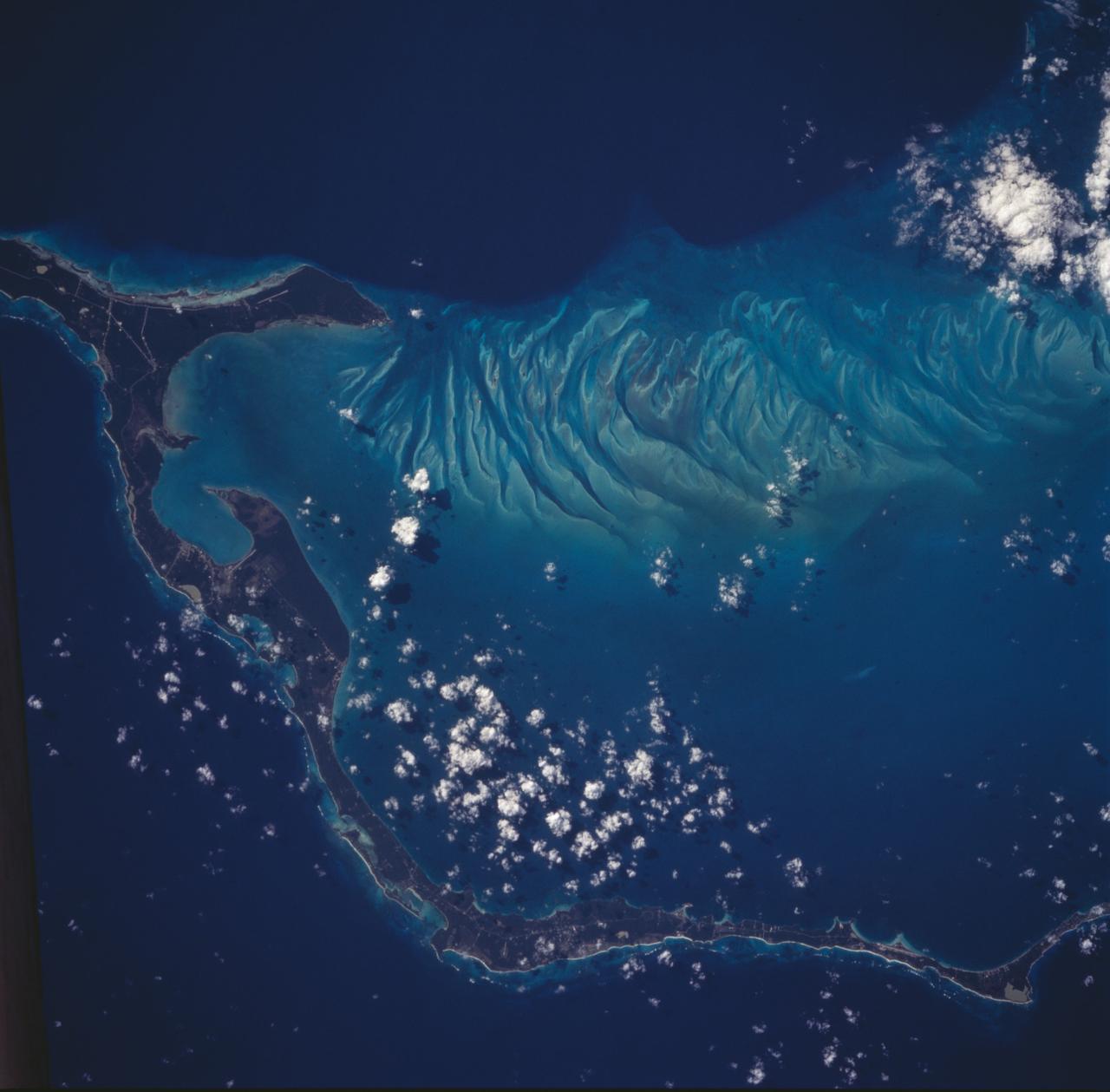
The striking views provided by the Bahama Islands lend insights into the important problems of limestone (CaCO3) production and transport. This photograph includes the southern part of Eleuthera Island in the northern Bahamas. The hook-shaped island encloses a relatively shallow platform (light blue) which is surrounded by deep water (dark blue). The feathery pattern along the western edge of Eleuthera's platform are sand bars and sand channels created by tidal currents sweeping on and off the platform. The channels serve to funnel large amounts of CaCO3 off the platform and into the deeper water.
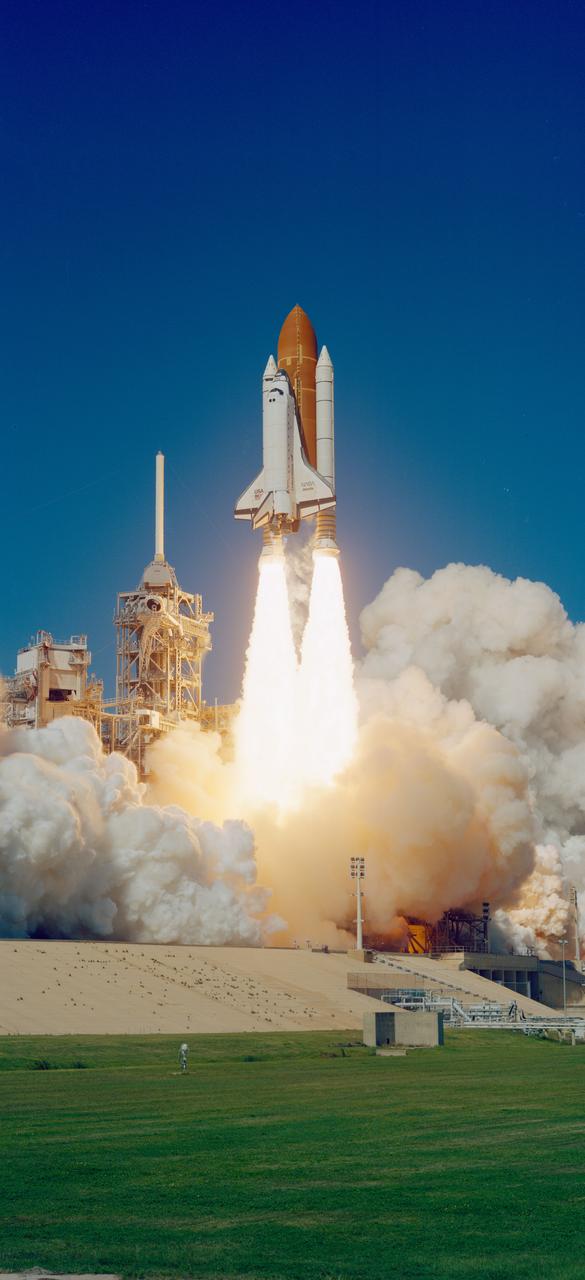
STS066-S-013 (3 November 1994) --- The Space Shuttle Atlantis returns to work after a refurbishing and a two-year layoff, as liftoff for the mission occurs at noon (EDT), November 3, 1994. Five NASA astronauts and a European mission specialist are onboard for the Atmospheric Laboratory for Applications and Science (ATLAS-3) mission. A 35mm camera was used to record the image. Onboard were astronauts Donald R. McMonagle, mission commander; Curtis L. Brown, Jr., pilot; Ellen Ochoa, payload commander; and Scott E. Parazynski, Joseph R. Tanner and Jean-Francois-Clervoy, all mission specialists. Clervoy represents the European Space Agency (ESA).
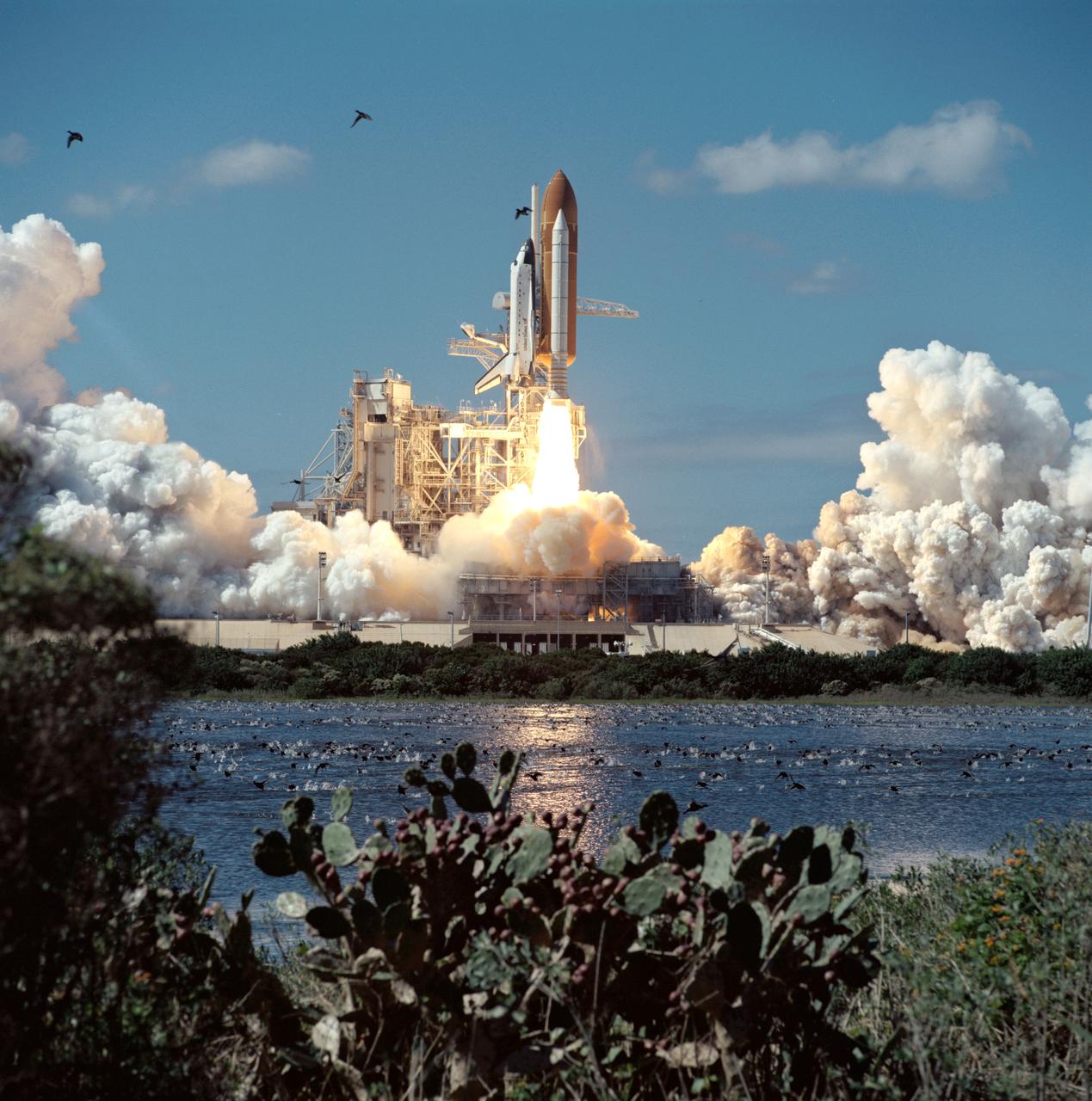
STS066-S-011 (3 November 1994) --- The Space Shuttle Atlantis returns to work after a refurbishing and a two-year layoff, as liftoff for the mission occurs at noon (EDT), November 3, 1994. Five NASA astronauts and a European mission specialist are onboard for the Atmospheric Laboratory for Applications and Science (ATLAS-3) mission. A 70mm camera was used to record this image. Onboard were astronauts Donald R. McMonagle, mission commander; Curtis L. Brown, Jr., pilot; Ellen S. Ochoa, payload commander; and Scott E. Parazynski, Joseph R. Tanner and Jean-Francois-Clervoy, all mission specialists. Clervoy represents the European Space Agency (ESA).
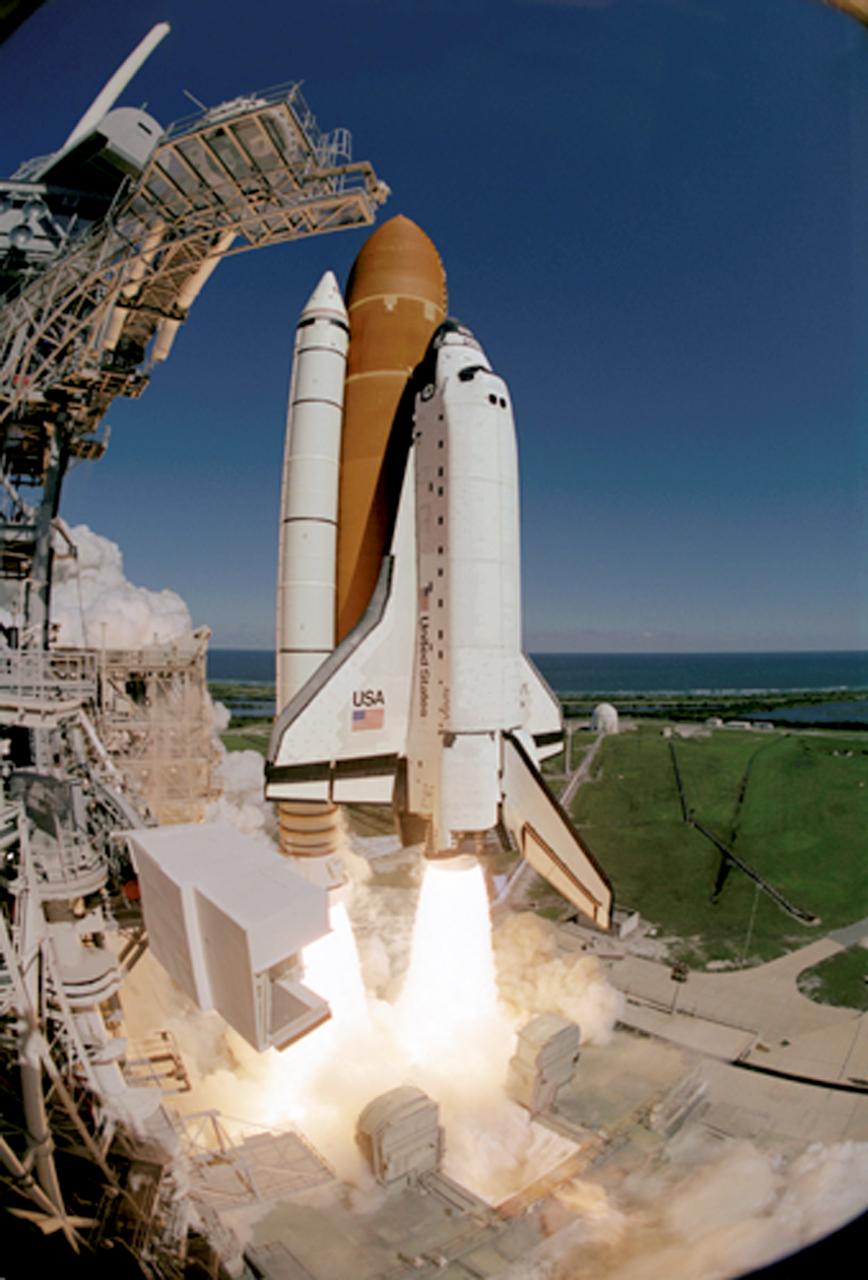
STS066-S-009 (3 Nov. 1994) --- The Space Shuttle Atlantis returns to work after a refurbishing and a two-year layoff, as liftoff for the mission occurs at noon (EDT), November 3, 1994. Five NASA astronauts and a European mission specialist are onboard for the Atmospheric Laboratory for Applications and Science (ATLAS-3) mission. A "fish-eye" lens was used to record the image. Onboard were astronauts Donald R. McMonagle, mission commander; Curtis L. Brown, Jr., pilot; Ellen Ochoa, payload commander; and Scott E. Parazynski, Joseph R. Tanner and Jean-François-Clervoy, all mission specialists. Clervoy represents the European Space Agency (ESA).
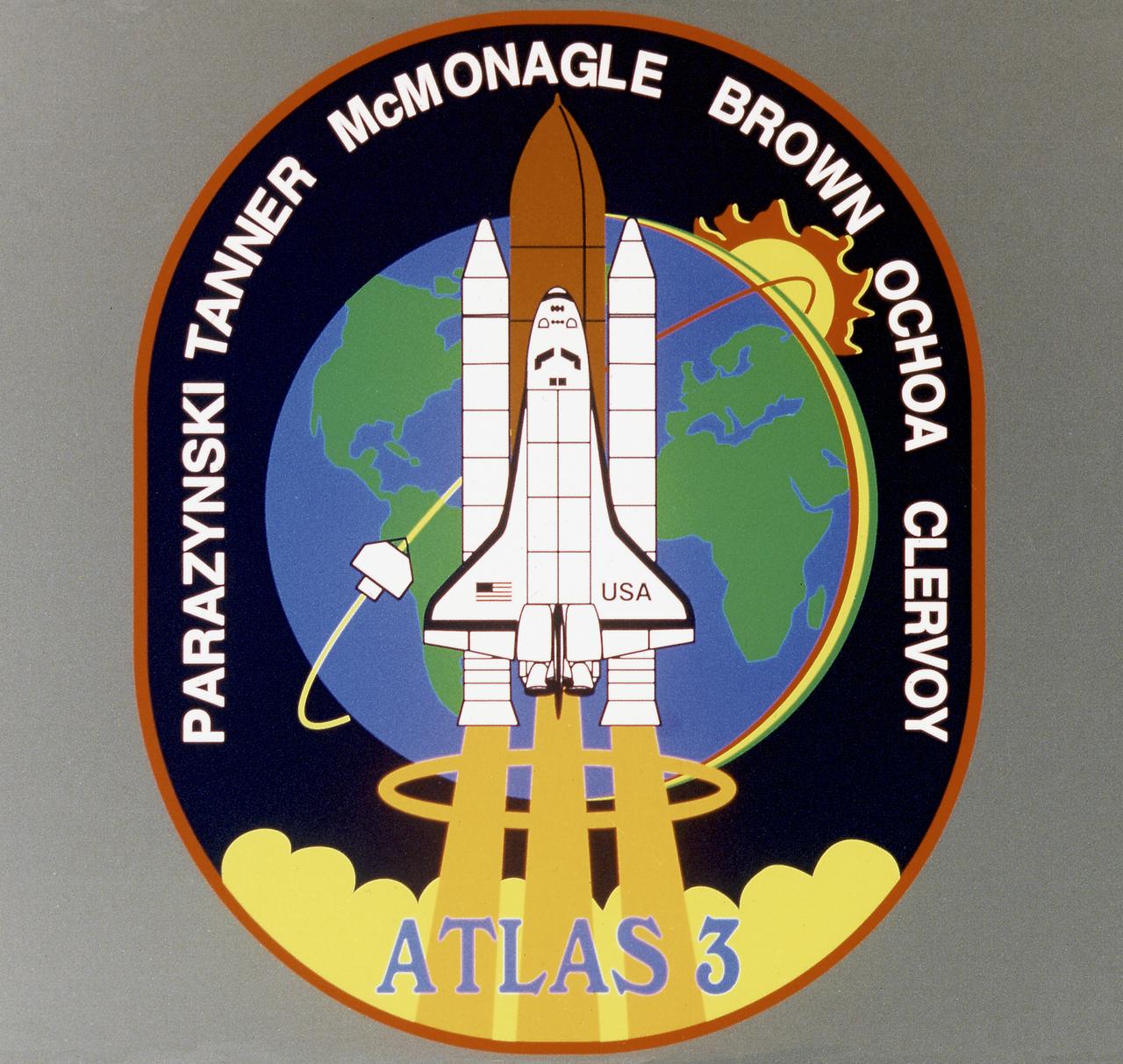
Designed by the mission crew members, the STS-66 emblem depicts the Space Shuttle Atlantis launching into Earth orbit to study global environmental change. The payload for the Atmospheric Laboratory for Applications and Science (ATLAS-3) and complementary experiments were part of a continuing study of the atmosphere and the Sun's influence on it. The Space Shuttle is trailed by gold plumes representing the astronaut symbol and is superimposed over Earth, much of which is visible from the flight's high inclination orbit. Sensitive instruments aboard the ATLAS pallet in the Shuttle payload bay and on the free-flying Cryogenic Infrared Spectrometers and Telescopes for the Atmospheric-Shuttle Pallet Satellite (CHRISTA-SPAS) that gazed down on Earth and toward the Sun, are illustrated by the stylized sunrise and visible spectrum.
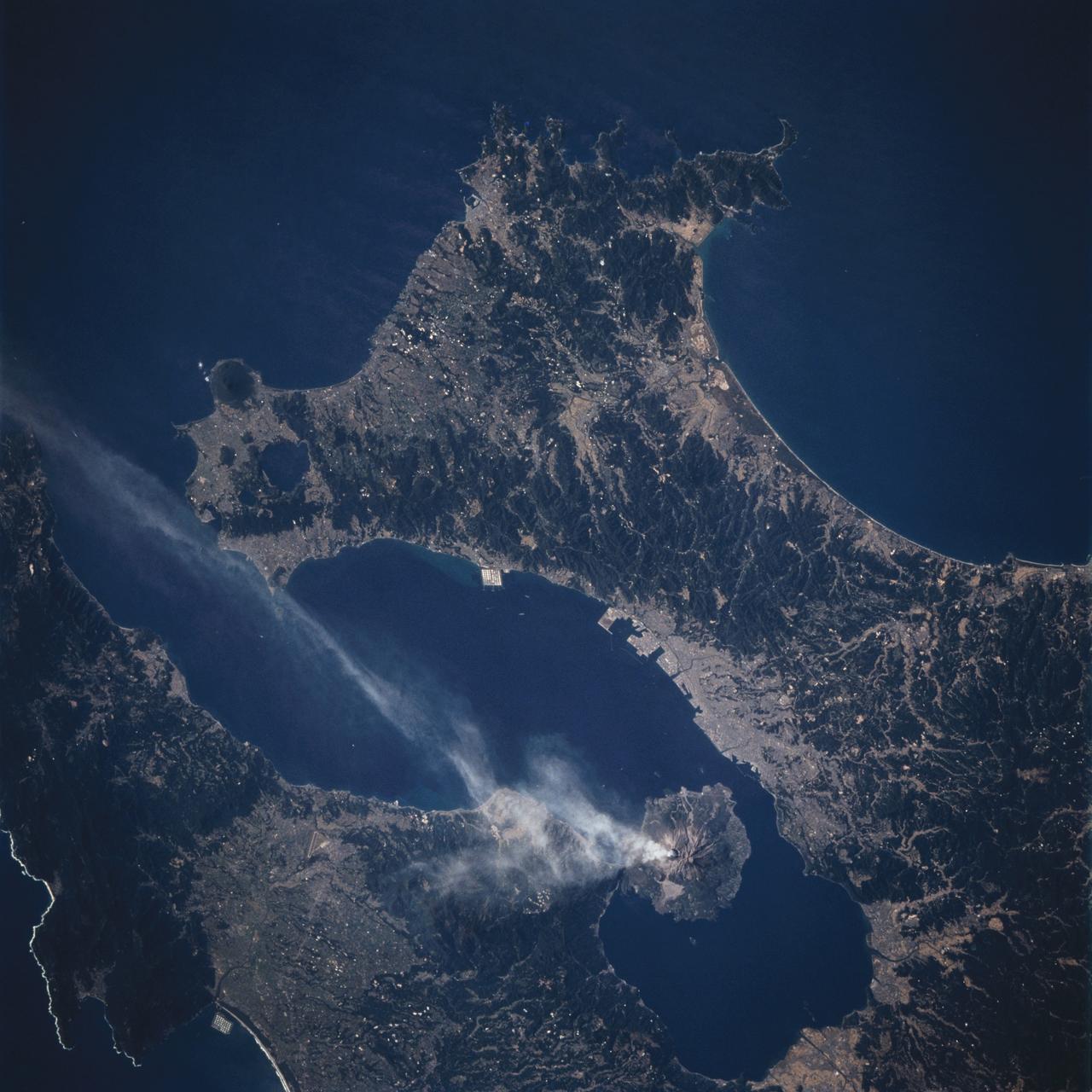
One of the world's most active volcanoes, Sakura-jima in southern-most Kyushu, Japan, erupts dozens of times a year. Volcanic eruptions are so much a part of of daily life in the city of Kagoshima (across the bay and west of Sakura-jima), that school children wear hard hats to school. This photo provides a nice clear view of Sakura-jima on a quiet day - only a plume of steam rises from the summit crater. The summit region is covered with gray ash from the frequent eruptions, and some of the rivers cutting down the mountain (especially the western drainages) appear to be filled with volcanic debris.
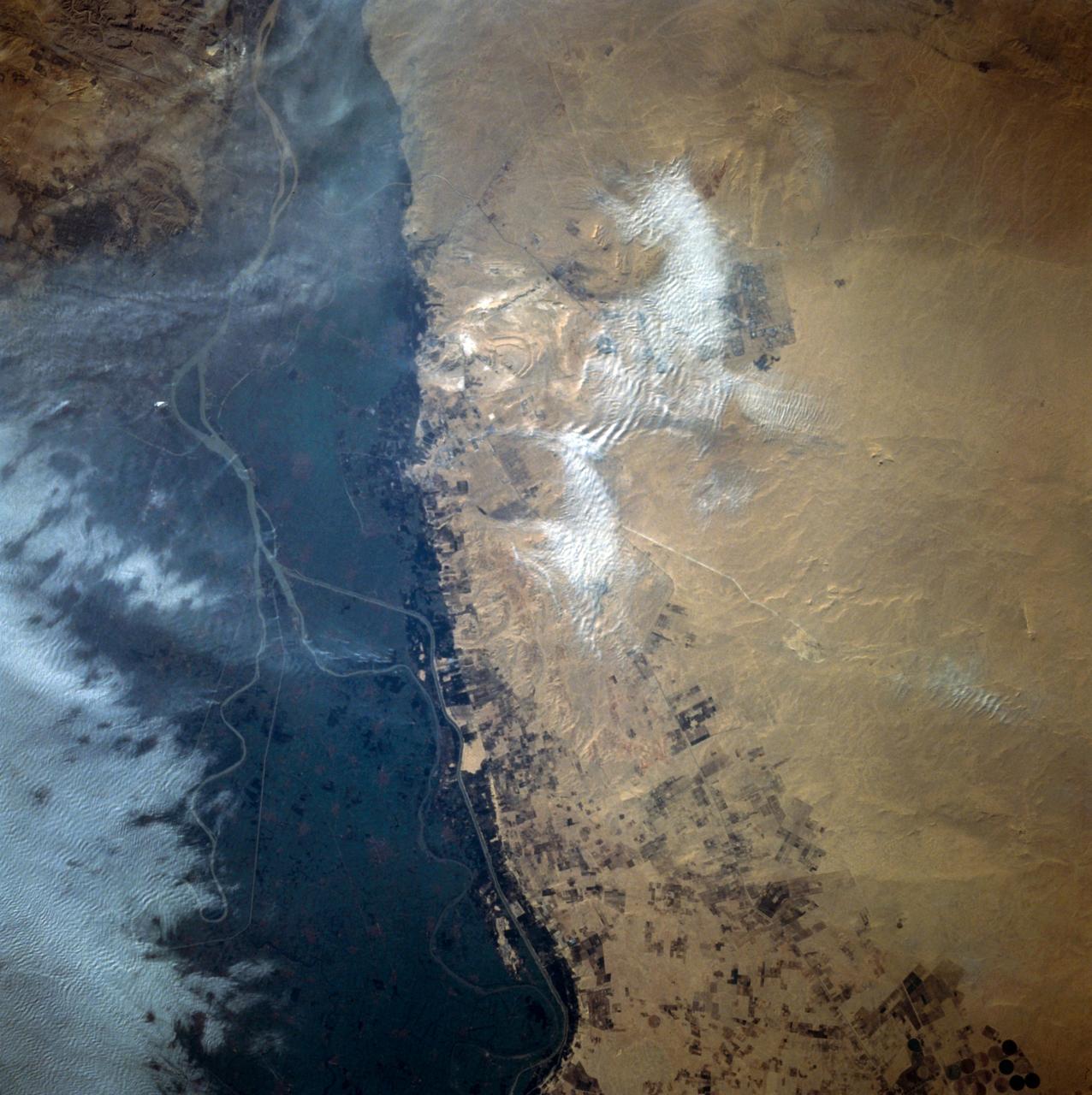
This close-up view of the intensively cultivated Nile River flood plain near Cairo presents a sharp color contrast to the virtually non-vegetated, sandy desert, located to the west of the vegetated area. Some rectangular cultivated field patterns, as well as circular center pivot irrigation patterns, can be observed northwest of the Nile River flood plain. The world famous Giza Pyramids are located near the center of this photography (see highly reflective sand surfaces).
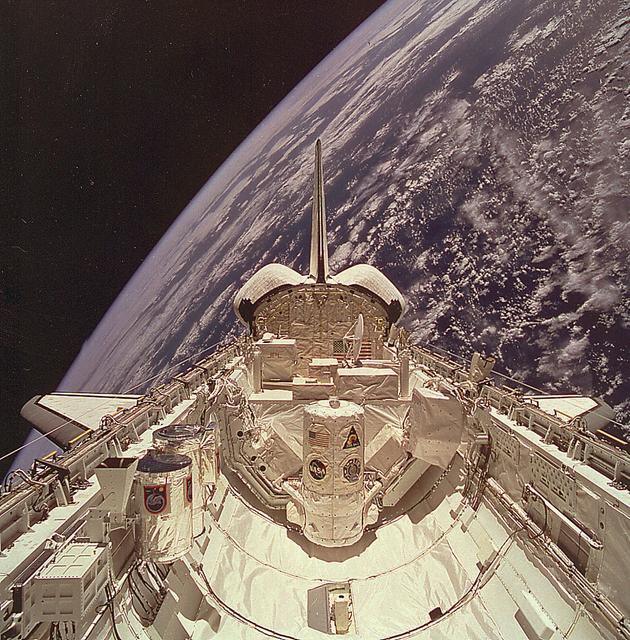
This is an STS-66 mission onboard photo of the Space Shuttle Orbiter Atlantis showing the payload of the third Atmospheric Laboratory for Applications and Science (ATLAS-3) mission. During the ATLAS missions, international teams of scientists representing many disciplines combined their expertise to seek answers to complex questions about the atmospheric and solar conditions that sustain life on Earth. The ATLAS program specifically investigated how Earth's middle and upper atmospheres and climate are affected by by the sun and by products of industrial and agricultural activities on Earth. Thirteen ATLAS instruments supported experiments in atmospheric sciences, solar physics, space plasma physics, and astronomy. The instruments were mounted on two Spacelab pallets in the Space Shuttle payload bay. The ATLAS-3 mission continued a variety of atmospheric and solar studies to improve understanding of the Earth's atmosphere and its energy input from the sun. A key scientific objective was to refine existing data on variations in the fragile ozone layer of the atmosphere. The Orbiter Atlantis was launched on November 3, 1994 for the ATLAS-3 mission (STS-66).
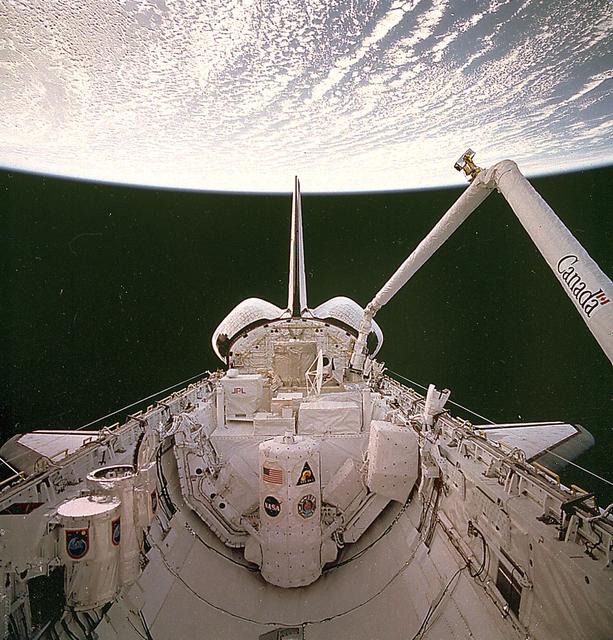
This is an STS-66 mission onboard photo showing the Remote Manipulator System (RMS) moving toward one of the solar science instruments for the third Atmospheric Laboratory for Applications and Science (ATLAS-3) mission in the cargo bay of the Orbiter Atlantis. During the ATLAS missions, international teams of scientists representing many disciplines combined their expertise to seek answers to complex questions about the atmospheric and solar conditions that sustain life on Earth. The ATLAS program specifically investigated how Earth's middle and upper atmospheres and climate are affected by by the sun and by products of industrial and agricultural activities on Earth. Thirteen ATLAS instruments supported experiments in atmospheric sciences, solar physics, space plasma physics, and astronomy. The instruments were mounted on two Spacelab pallets in the Space Shuttle payload bay. The ATLAS-3 mission continued a variety of atmospheric and solar studies, to improve understanding of the Earth's atmosphere and its energy input from the sun. A key scientific objective was to refine existing data on variations in the fragile ozone layer of the atmosphere. The Shuttle Orbiter Atlantis was launched on November 3, 1994 for the ATLAS-3 mission (STS-66). The ATLAS program was managed by the Marshall Space Flight Center.

The space shuttle Atlantis atop NASA's 747 Shuttle Carrier Aircraft (SCA) during takeoff for a return ferry flight to the Kennedy Space Center from Edwards, California. The STS-66 mission was dedicated to the third flight of the Atmospheric Laboratory for Applications and Science-3 (ATLAS-3), part of NASA's Mission to Planet Earth program. The astronauts also deployed and retrieved a free-flying satellite designed to study the middle and lower thermospheres and perform a series of experiments covering life sciences research and microgravity processing. The landing was at 7:34 a.m. (PST) 14 November 1994, after being waved off from the Kennedy Space Center, Florida, due to adverse weather.
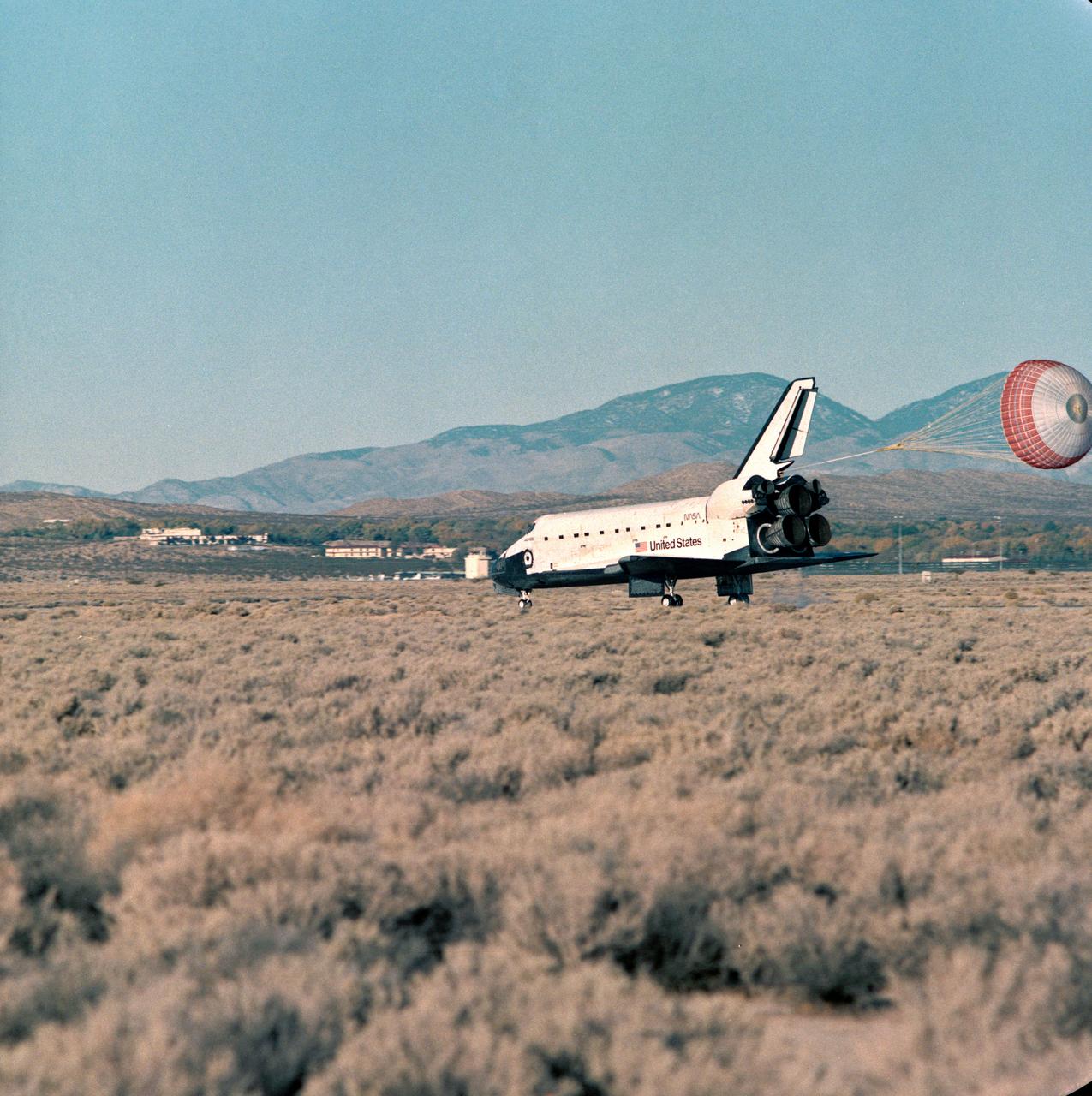
STS066-S-039 (14 November 1994) --- The drag chute is fully deployed as the Space Shuttle Atlantis heads toward a stop at Edwards Air Force Base in southern California, ending a successful 10 day, 22 hour and 34 minute space mission. Landing occurred at 7:34 a.m. (PST), November 14, 1994. Onboard were astronauts Donald R. McMonagle, commander; Curtis L. Brown, Jr., pilot; Ellen S. Ochoa, payload commander; Scott E. Parazynski and Joseph R. Tanner, both mission specialists, along with European Space Agency (ESA) mission specialist Jean-Francois Clervoy. The crew supported the Atmospheric Laboratory for Applications and Science (ATLAS-3) mission.

STS066-S-040 (14 November 1994) --- The main landing gear is on the ground and the nose gear is about to touch down as the Space Shuttle Atlantis heads toward a stop at Edwards Air Force Base in southern California, ending a successful 10 day, 22 hour and 34 minute space mission. Landing occurred at 7:34 a.m. (PST), November 14, 1994. Onboard were astronauts Donald R. McMonagle, commander; Curtis L. Brown, Jr., pilot; Ellen S. Ochoa, payload commander; Scott E. Parazynski and Joseph R. Tanner, both mission specialists, along with European Space Agency (ESA) mission specialist Jean-Francois Clervoy. The crew supported the Atmospheric Laboratory for Applications and Science (ATLAS-3) mission.
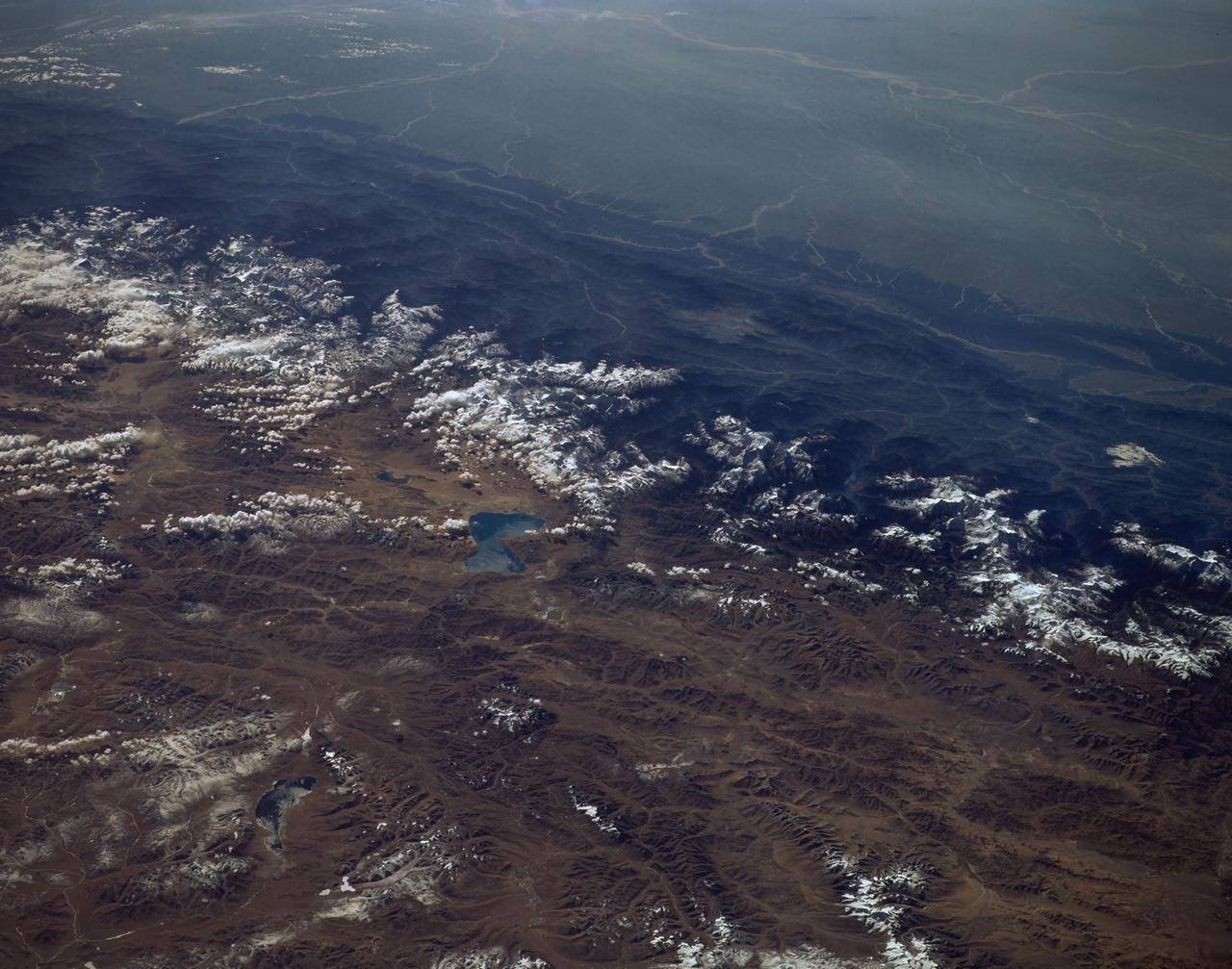
View is southeastward across China (Tibet), half of Nepal and India. The partly frozen lake near the center of the frame is Pei-Ku T'so ("Bos-tie Lake"). The central Himalaya stretches from Mount Everest on the left past Annapurna on the right. Large tributaries converge to form the Ganges River, flowing through the lowland basin south of the Himalaya. This photograph illustrates the rain shadow effect of the Himalaya Chain; wet, warm air from the Indian Ocean is driven against the mountains, lifted, and drained of water that forms ice caps, the abundant rivers, and forests of the foothills. In contrast the high plateau of Tibet is arid, composed largely of topographically-closed basins because stream flow is inadequate to form integrated drainage networks.
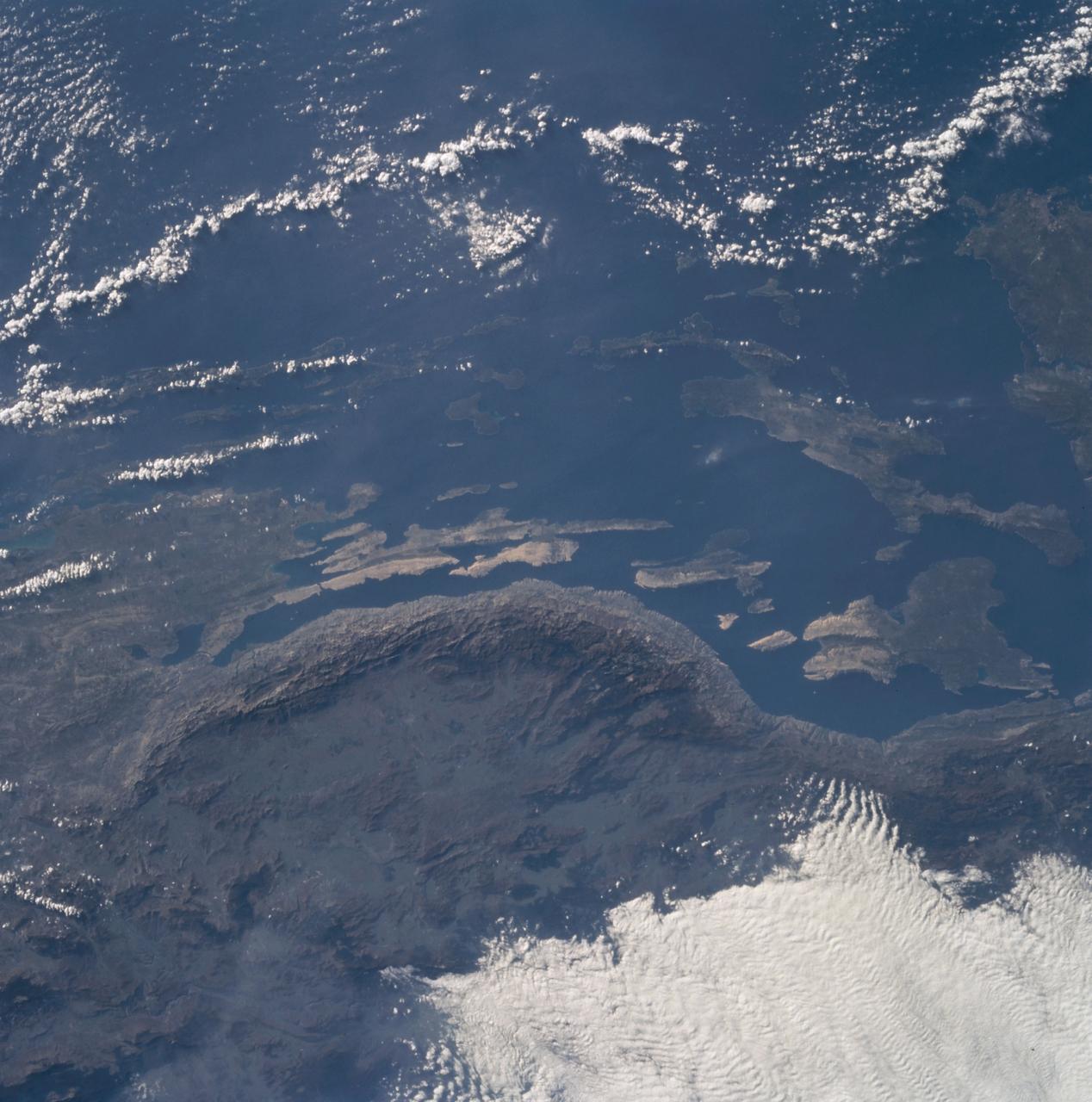
The Adriatic coast of Bosnia-Herzegovina and Croatia is centered at approximately 44.5 degrees north and 15.0 degrees east. North is at the bottom of the frame. The town of Bihac is located under the cloud layer in the center left of the frame. The terrain is composed of limestone and the geomorphic term "karst" is named after the city in the area. The Velebit Mountains form the ruggedd coast in the center of the frame.
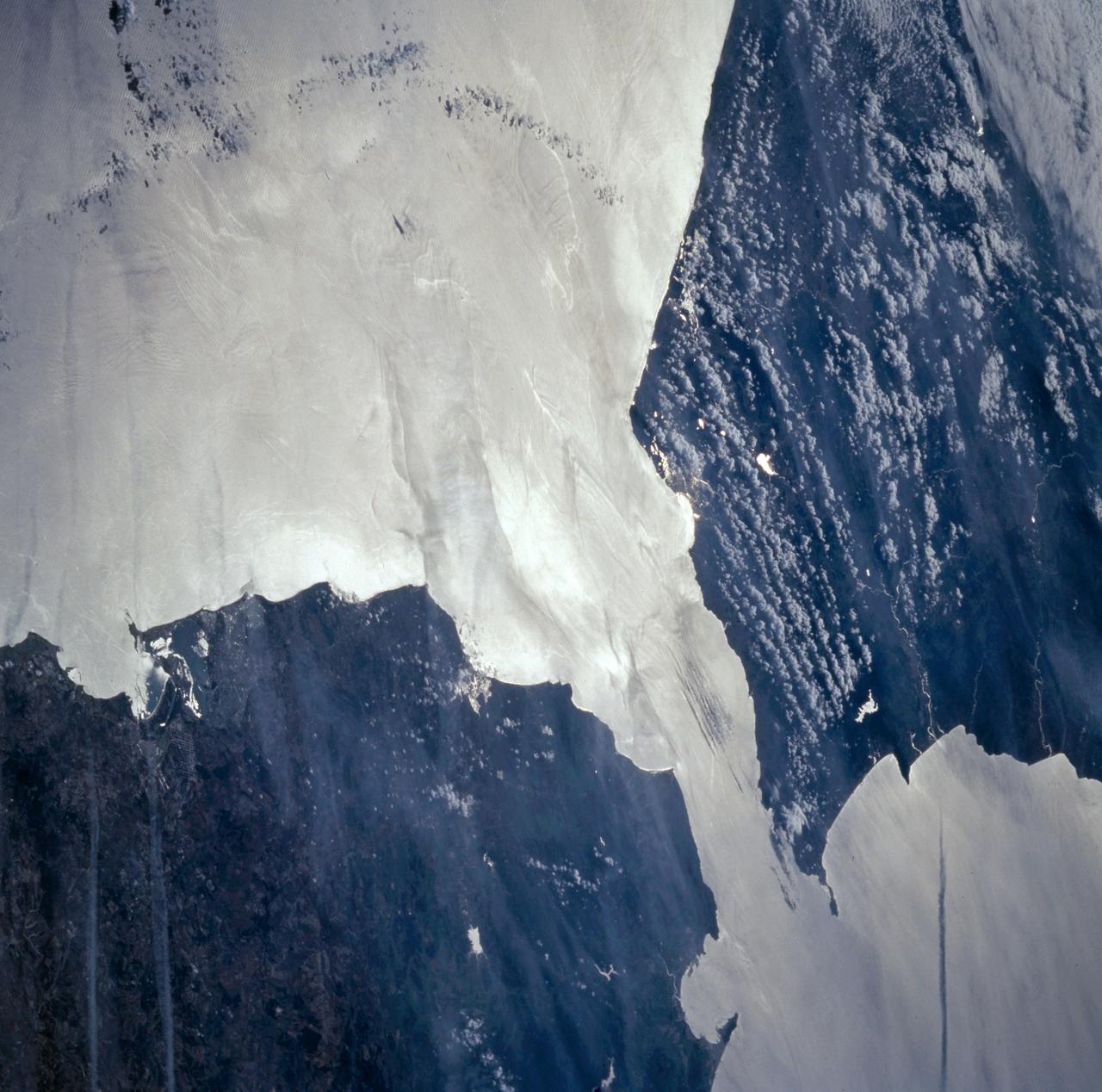
Swift currents flow through the Strait of Gibraltar, producing complicated patterns in the surface waters. Some of those patterns are highlighted in the sunglint in this photograph. The Mediterranian Sea is on the upper right, the Atlantic Ocean in in the lower left. Few features can be seen on the Mediterranian side, but current shears (straight lines coming off Spain), several sets of internal waves (impinging on the Spanish continental shelf) and ship wakes can be seen on the Atlantic side, west of Cadiz. Both Tangier and Cadiz show up in the sunglint as well.
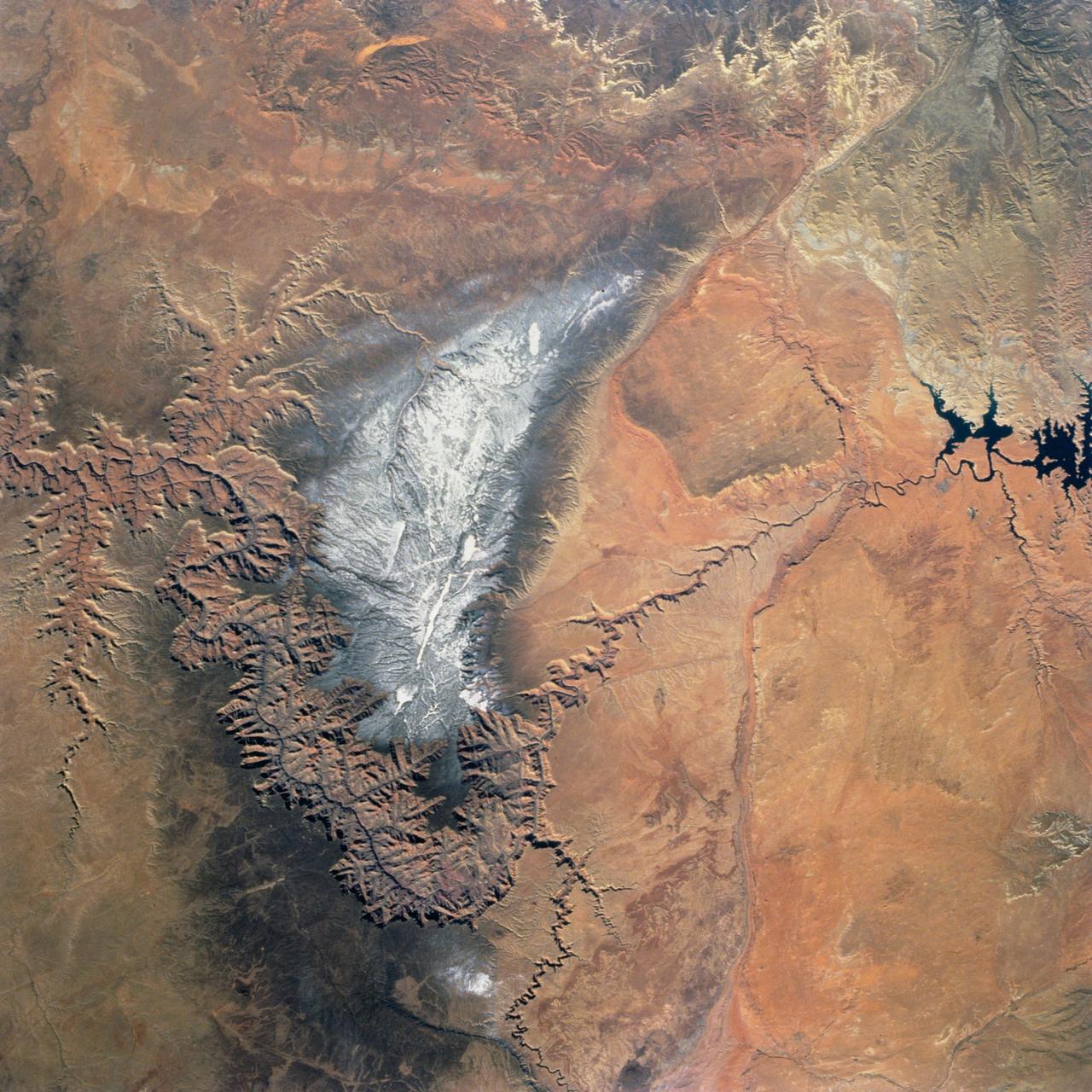
Snow covers the Kaibab Plateau on the northern side of the Colorado River in this November, 1994 view of the Grand Canyon. North is to the bottom of this view. The Colorado River has created a canyon which cuts through billions of years of geologic time. The Grand Canyon is 446 kilometers (277 miles) long, averages 16 kilometers (10 miles) wide, and is approximately 1.6 kilometers (1 mile) deep. The Coconino Plateau is located on the upper left side of the view, or to the south of the Colorado River. The direction of the flow of the Colorado River is from the east to the west. Eventually the river turns south and empties into the Gulf of California. The southern portion of Lake Powell in Utah can be seen at the bottom center of the view.
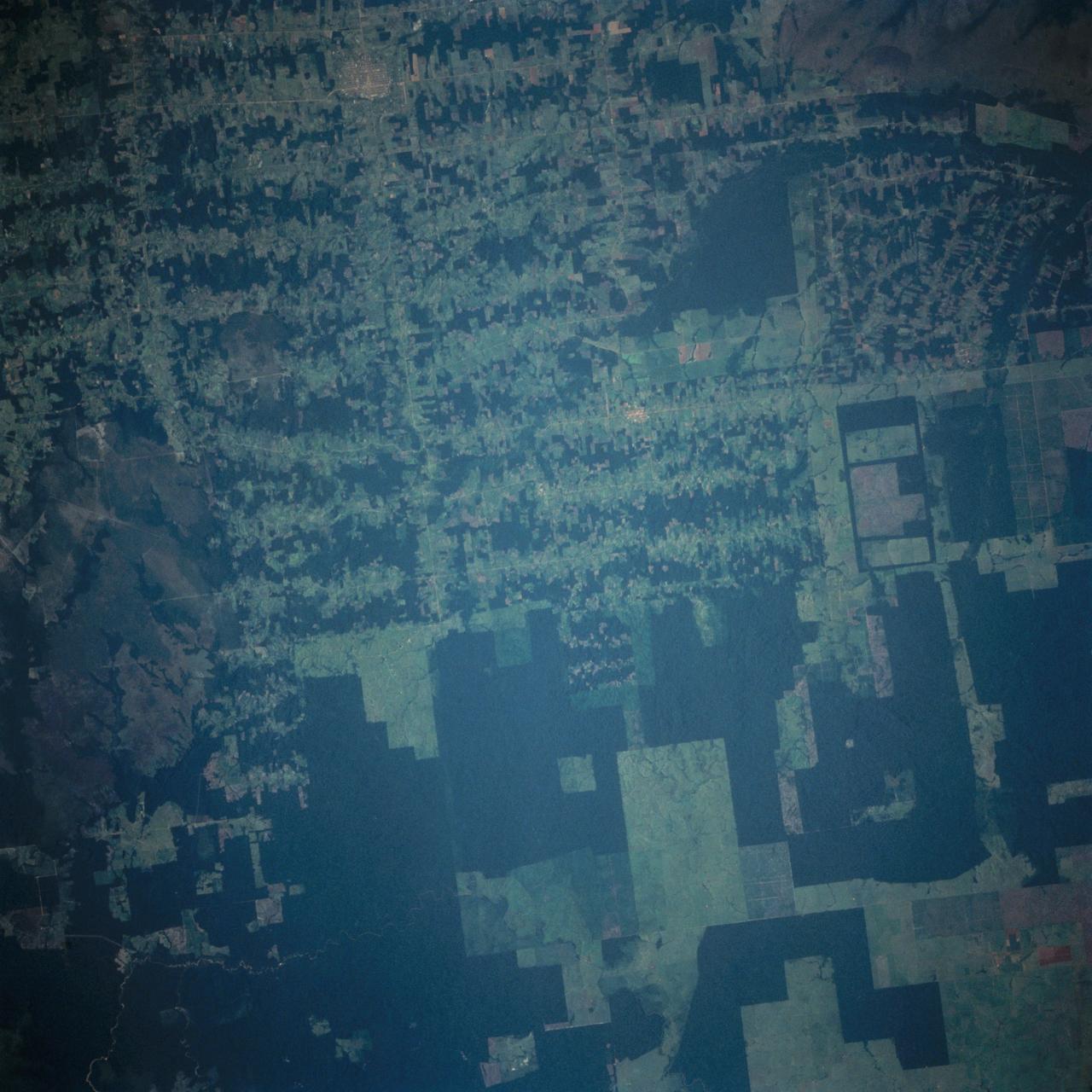
This near vertical photograph illustrates the differences in agricultural land patterns typically seen in many parts of southwestern Brazil, near the Bolivian border. The larger rectangular field patterns reflect a mature, fully developed agricultural environment. The smaller areas are less well defined and indicate new agricultural development.
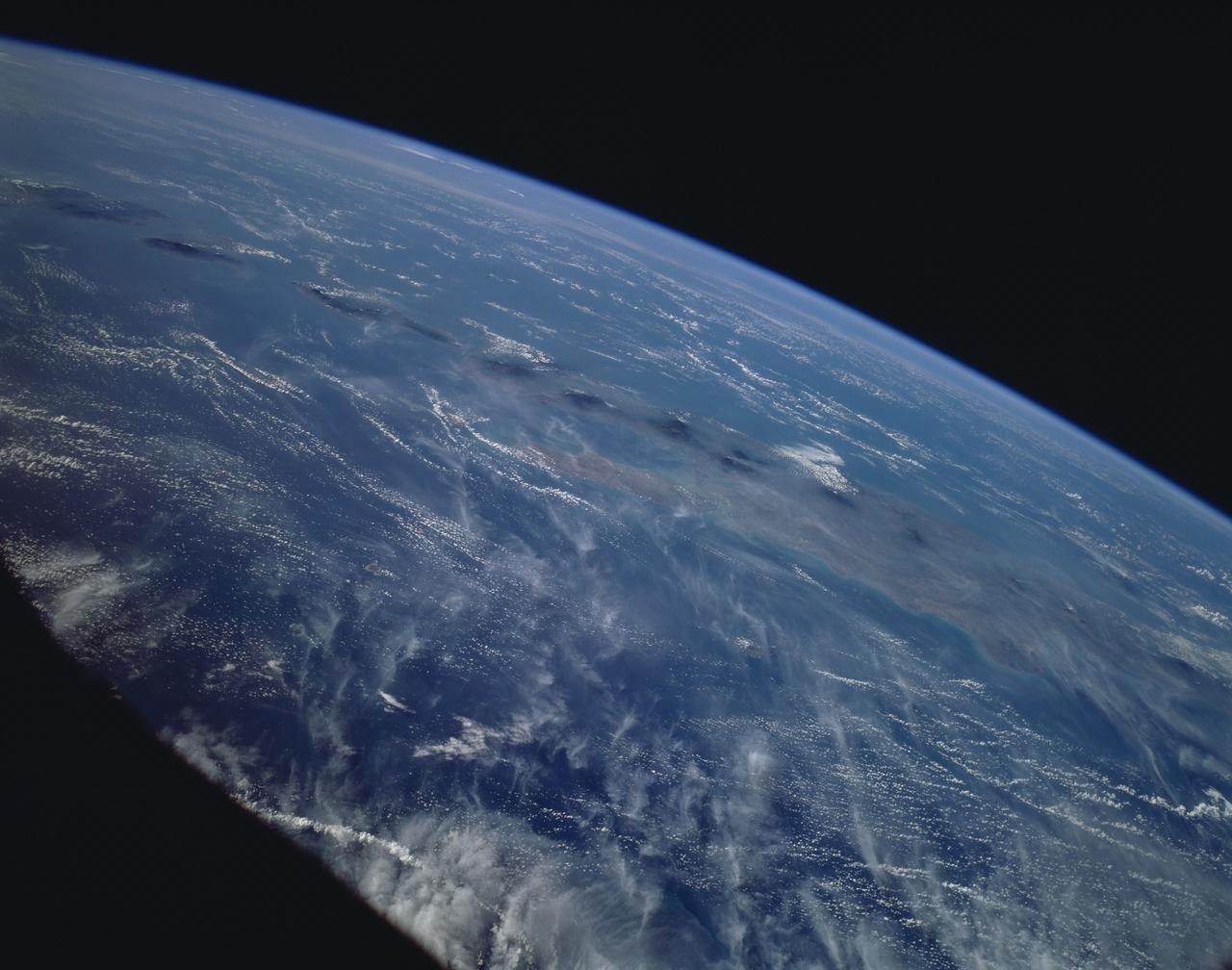
This is a striking, oblique view to the south of the Indonesian islands of Java (right), Bali and Lombok (upper left). The linear array of dark regions across the photo is a chain of volcanoes which make up the back bone of this part of the Indonesian Islands. This chain has been quite active over the past six months. Plumes of steam can be seen rising from the summits of Arjuno (west-central Java) and Merapi (central Java, near the right side of this photo). The region appears hazy due to an extended drought over Indonesia and Australia. Because of drought conditions, huge fires continue to burn over other regions of Indonesia, New Guinea and norther Australia, producing a regional smoke pall.
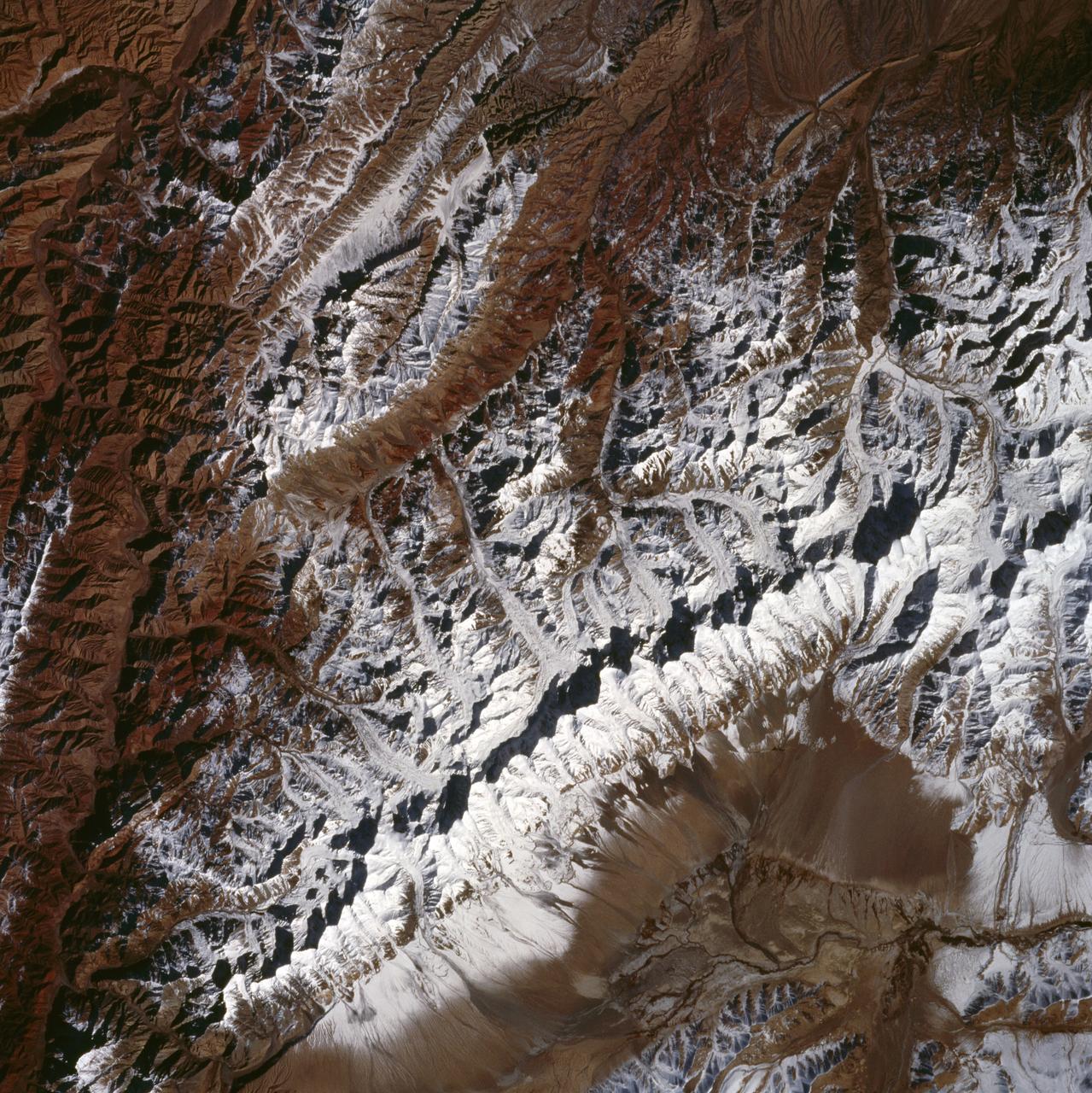
The northwest-southeast trending, snow-covered, linear mountain range is the King Ata Tag Mountain, located in extreme western most China. Highest peaks are just over 20,100 feet above sea level. The town or village of Muji is located in the largest river valley that is south of this range of mountains. This area includes part of the country of Tajikistan. The center point of the photo is approximately 39.30 degrees north and 74.30 degrees easth.
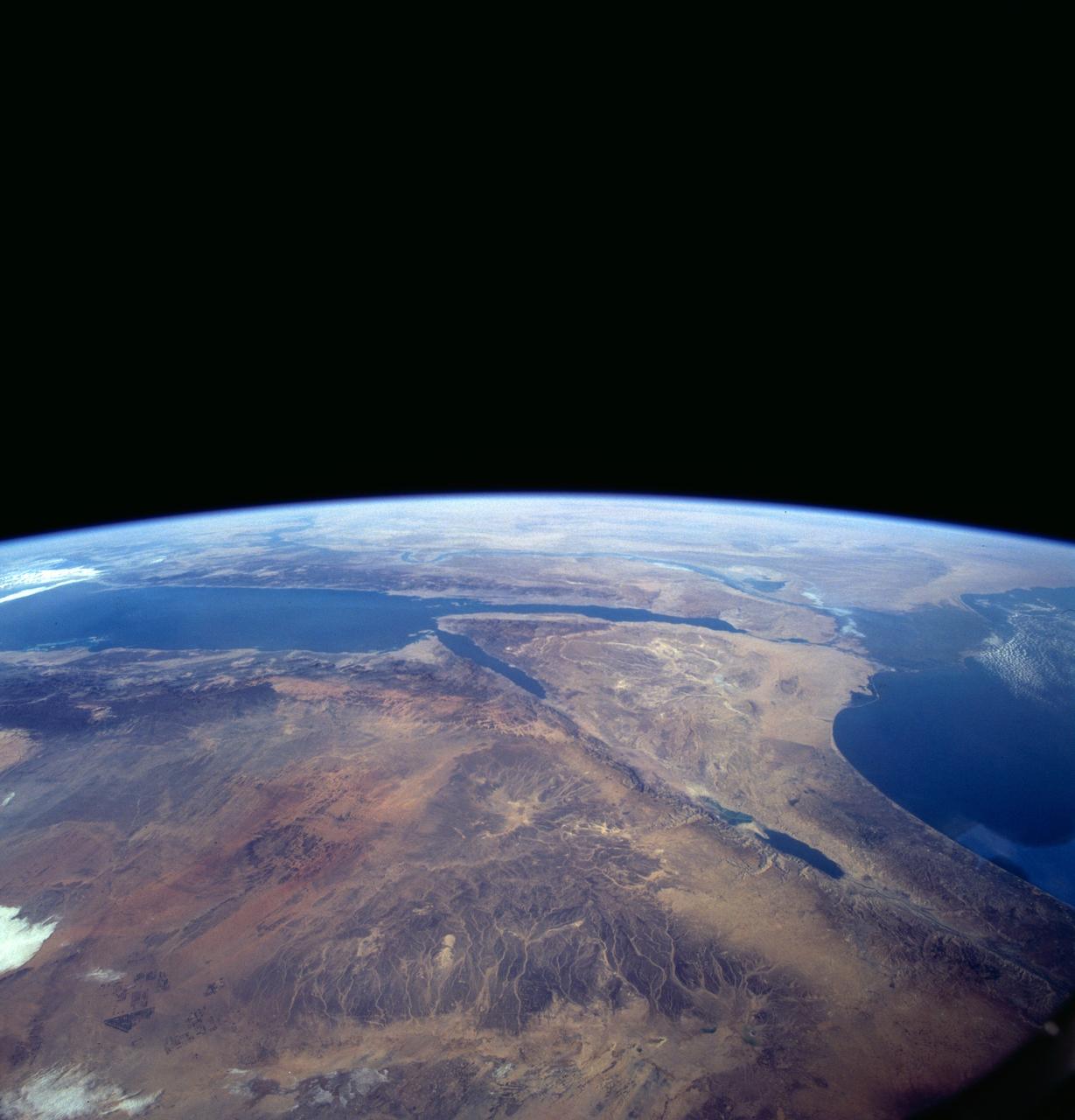
A high oblique view of the Middle East centered at approximately 28.0 degrees north and 34.0 degrees east. Portions of the countries of Egypt, Israel, Jordan and Saudi Arabia are visible. The Dead Sea Rift Valley continuing into the Gulf of Aqaba marks the boundary between Israel and Jordan. The vegetation change in the Sinai Peninsula is the border between the Gaza Strip and Egypt. In Egypt, the Suez Canal connects the Gulf of Suez with the Mediterranean Sea and forms the western boundary of the Sinai Peninsula. The green ribbon of the Nile River is in marked contrast to this arid region. Even the Jordan River does not support large scale agriculture.
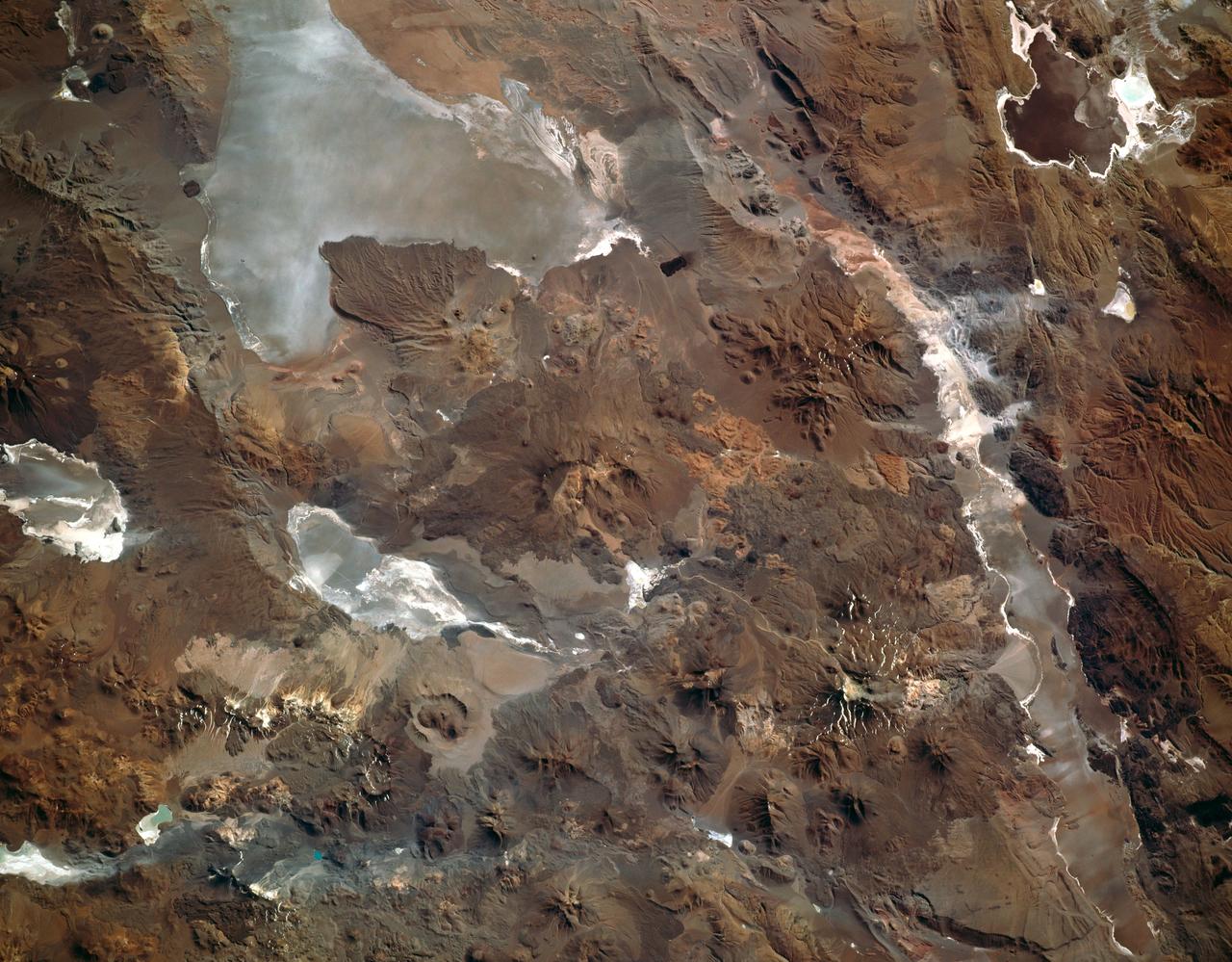
This photograph captures the exotic volcanic terrain of the Altiplano of the Central Andes. Some of the remarkable details include the west-pointing wind streaks, resulting from fine dust being transported across the Andes by high winds; paleto (old) shorelines along the margins of the salars (or dry lake beds), recording the changes in water levels on the high Altiplano; beautiful alluvial fans emptying onto some of the salars; and the hundreds of volcanic land forms which can be mapped and interpreted to help decipher the volcanic history of the region.
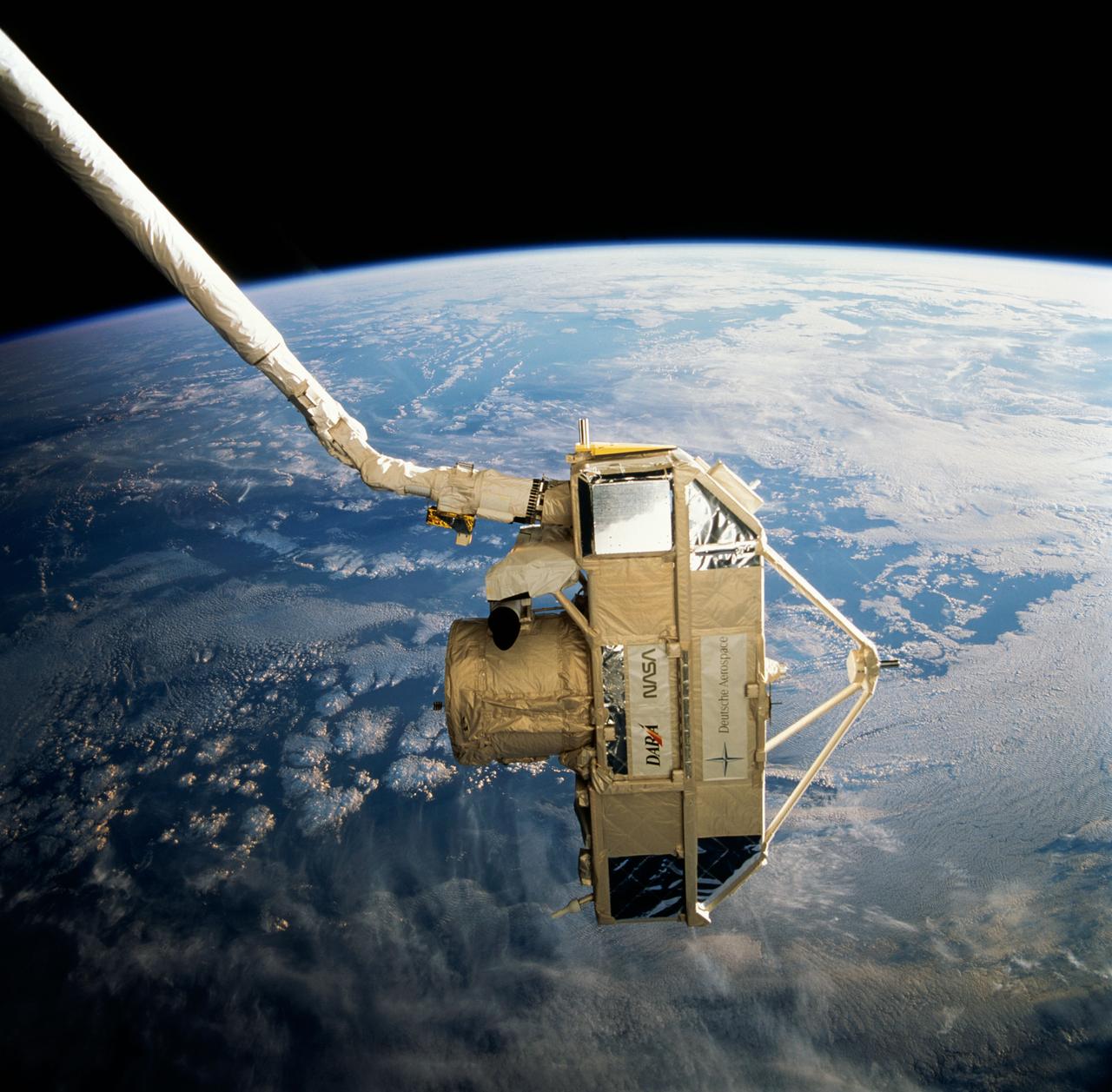
STS066-129-043 (3-14 Nov 1994) --- Clouds over the Atlantic Ocean serve as the backdrop for this 70mm scene of the Cryogenic Infrared Spectrometers and Telescopes for the Atmosphere (CRISTA), attached to the Shuttle Pallet System (SPAS). CRISTA-SPAS was in the grasp of the Space Shuttle Atlantis' Remote Manipulator System (RMS) arm. The crew deployed the CRISTA-SPAS on November 4, 1994 and the tandem remained in free-flight until November 12, 1994 when it was retrieved by the Canadian-built RMS, controlled by payload commander Ellen Ochoa. Other crew members onboard Atlantis were astronauts Donald R. McMonagle, Curtis L. Brown, Jr., Scott E. Parazynski and Joseph R. Tanner, along with Jean-François Clervoy of the European Space Agency (ESA). The six astronauts spent 11-days in Earth-orbit in support of the Atmospheric Laboratory for Applications and Science (ATLAS-3) mission.
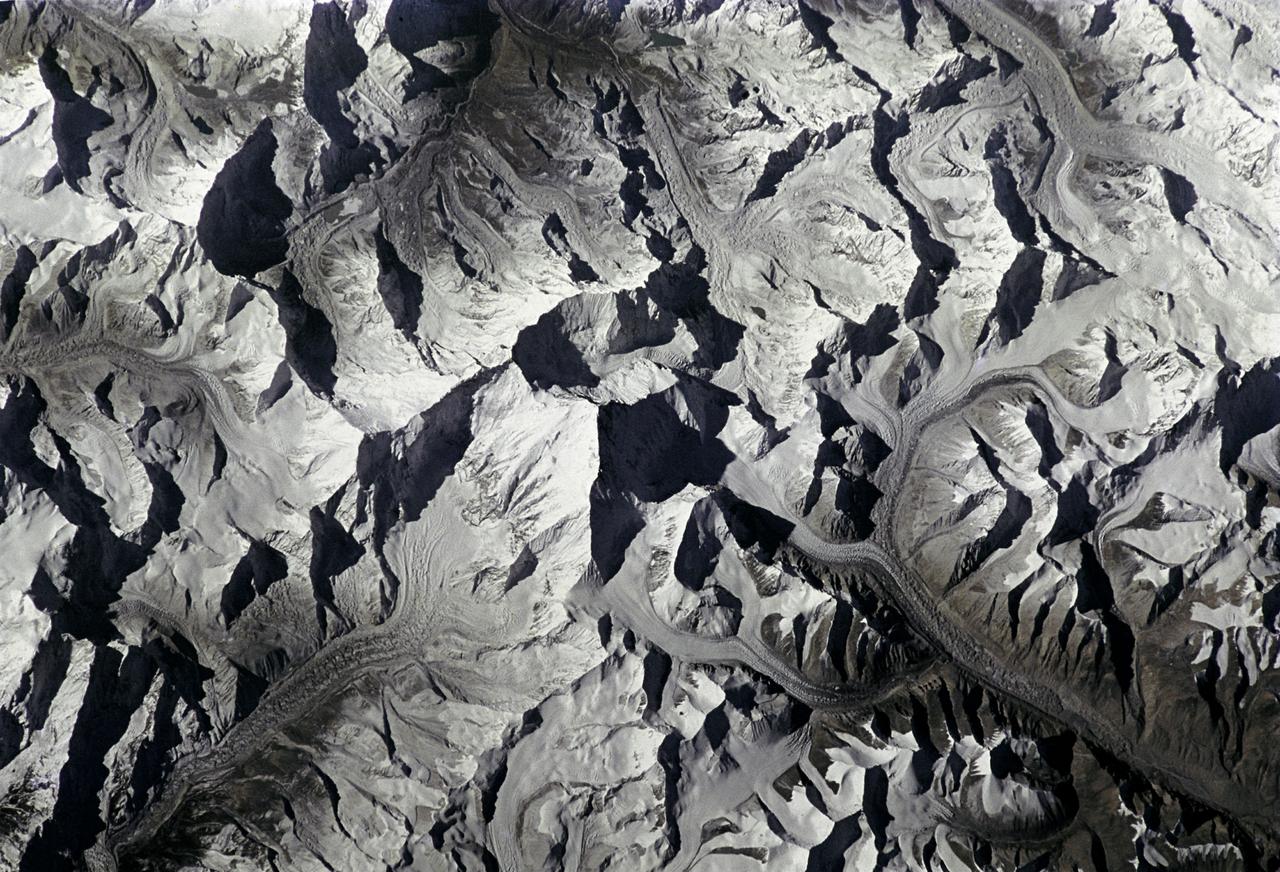
STS066-208-025 (3-14 Nov. 1994) --- Mount Everest, the highest mountain in the world at 8,848 meters, was photographed by the crew members aboard the Space Shuttle Atlantis from 165 nautical miles above Earth. Also seen are Cho Oyu (8,153 meters) northwest of Everest, and other peaks in what has been called the "Roof of the World". Abundant details of glacier surfaces, including moraines, crevasse fields and ice falls are displayed for study. Crew members onboard Atlantis were astronauts Donald R. McMonagle, Curtis L. Brown, Jr., Ellen Ochoa, Scott E. Parazynski and Joseph R. Tanner, along with Jean-François Clervoy of the European Space Agency (ESA). The six astronauts spent 11-days in Earth-orbit in support of the Atmospheric Laboratory for Applications and Science (ATLAS-3) mission.
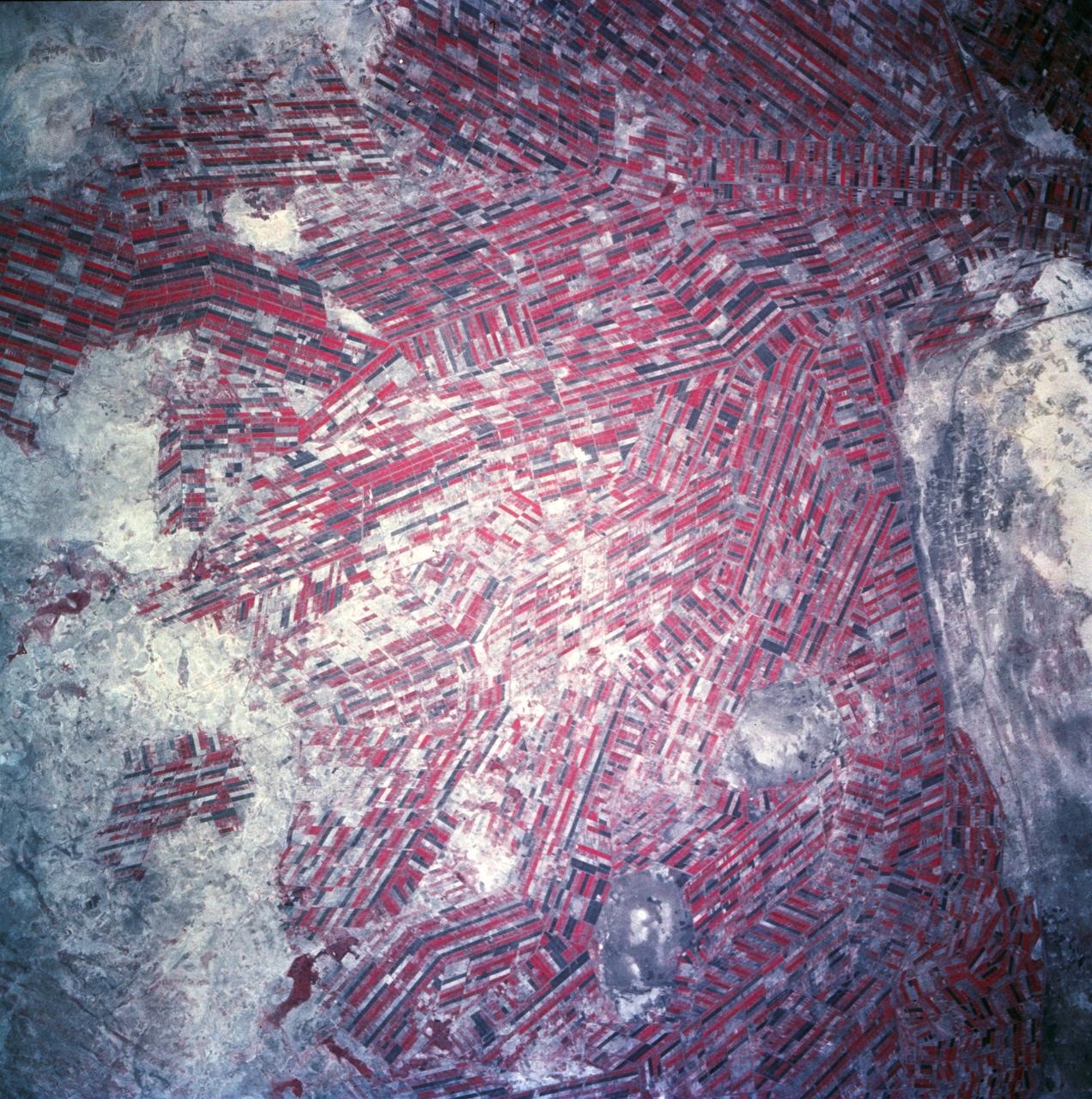
Agricultural patterns are distinctly visible in this near-vertical false color infrared photography taken in November 1994. The area depicted on the photograph is south of Khartoum between the White and Blue Nile Rivers. By far the most important irrigation project in sub-Saharan Africa, both large and small scale agricultural enterprises have been developed using water transported from the perennial Nile Rivers. Hundreds of small rectangular fields and water-filled canals can be seen in this photograph.
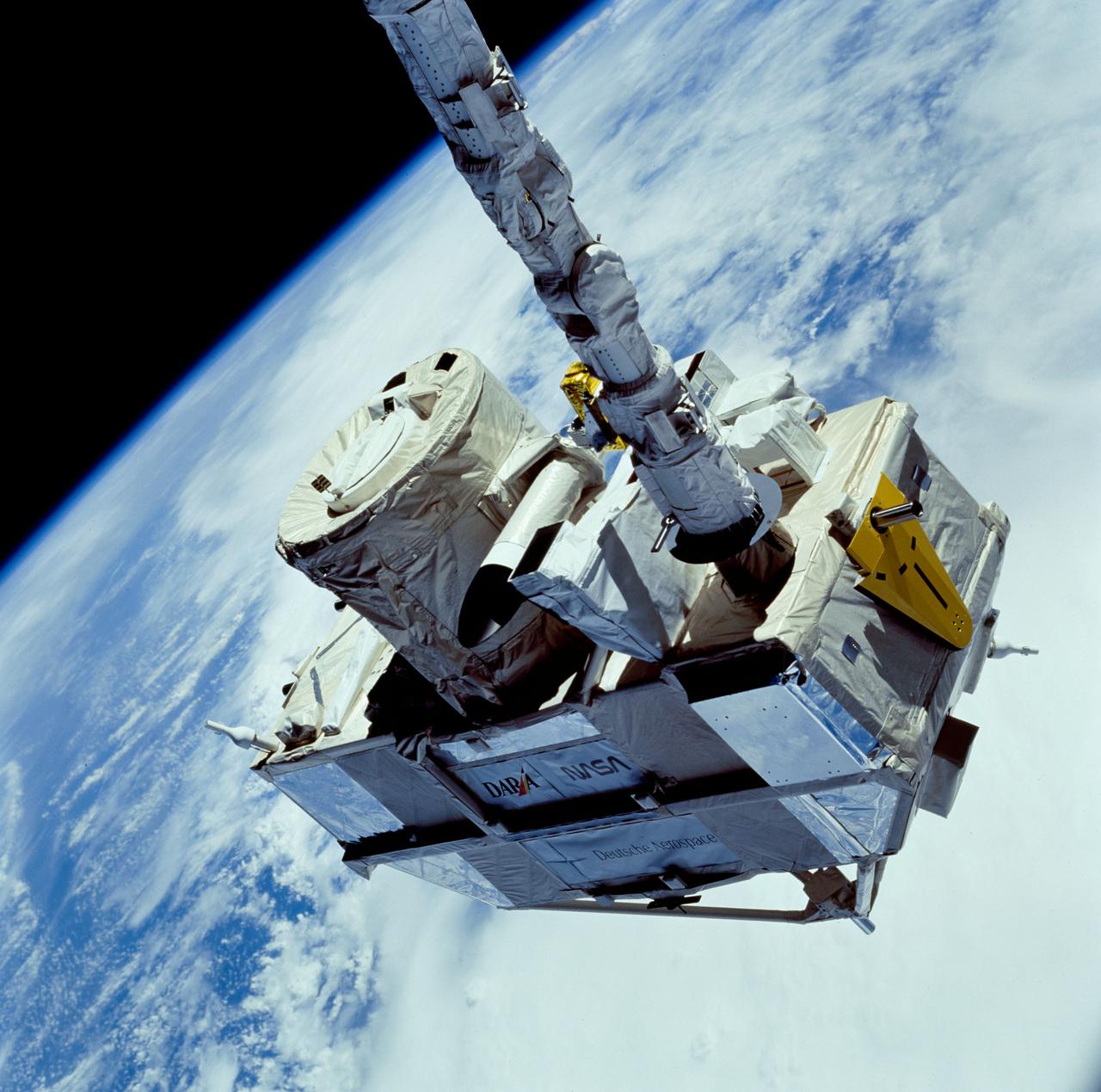
STS066-96-030 (3-14 Nov 1994) --- Masses of clouds serve as the backdrop for this close-up 70mm scene of the Cryogenic Infrared Spectrometers and Telescopes for the Atmosphere (CRISTA), attached to the Shuttle Pallet Satellite (SPAS). CRISTA-SPAS was in the grasp of the Space Shuttle Atlantis' Remote Manipulator System (RMS) arm. The crew deployed the CRISTA-SPAS on November 4, 1994 and the spacecraft remained in free-flight until November 12, 1994 when it was retrieved by the Canadian-built RMS, controlled by payload commander Ellen Ochoa. Other crew members onboard Atlantis were astronauts Donald R. McMonagle, Curtis L. Brown, Jr., Scott E. Parazynski and Joseph R. Tanner, along with Jean-Francois Clervoy of ESA. The six astronauts spent 11-days in Earth-orbit in support of the Atmospheric Laboratory for Applications and Science (ATLAS-3) mission.
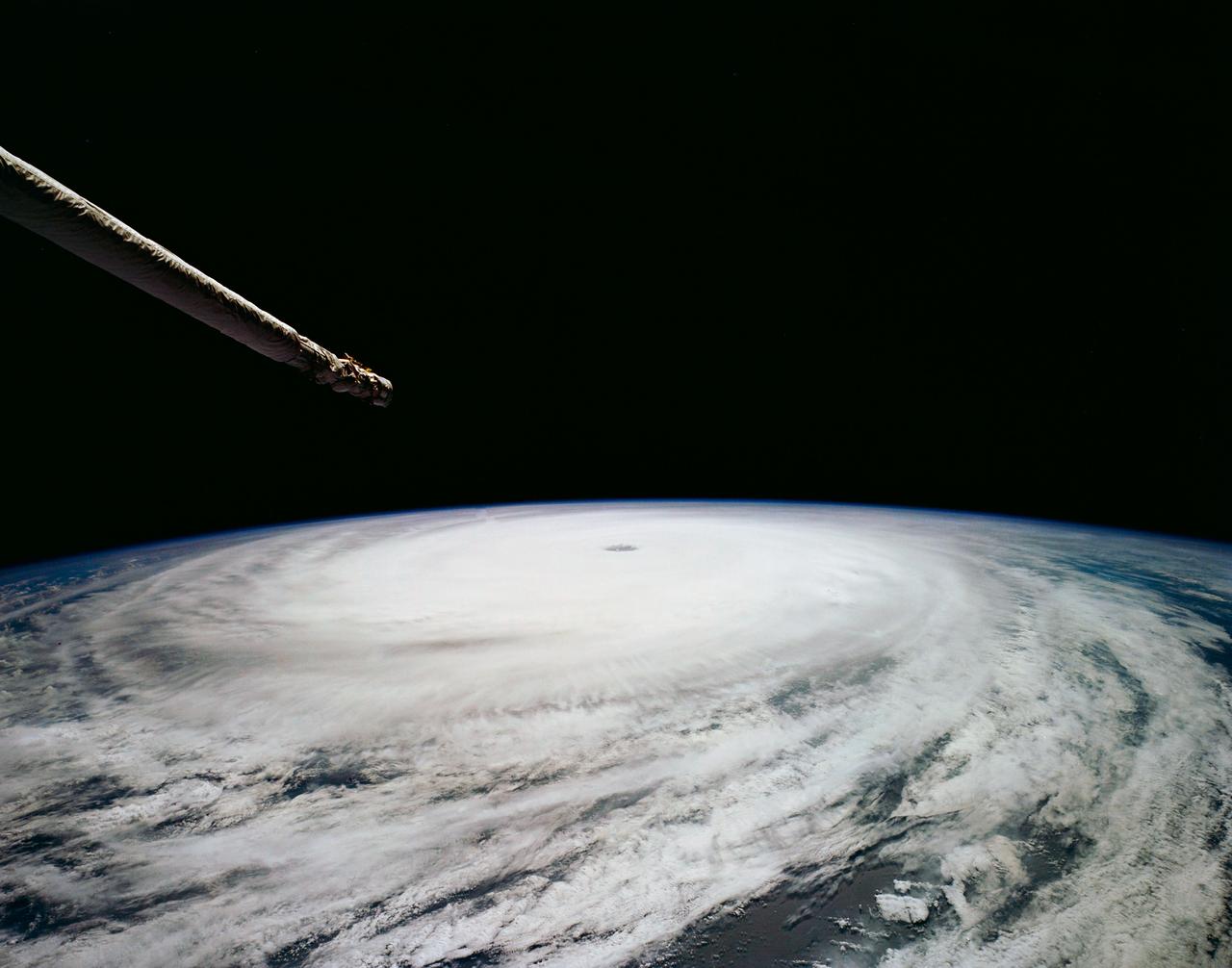
This is a picture of Hurricane Florence at its peak, over the open waters of the North Atlantic. This hurricane never made landfall over the United States, however after the storm became extra-tropical, it's moisture combined with a storm system over parts of Europe and caused large amounts of flooding across Spain and France.
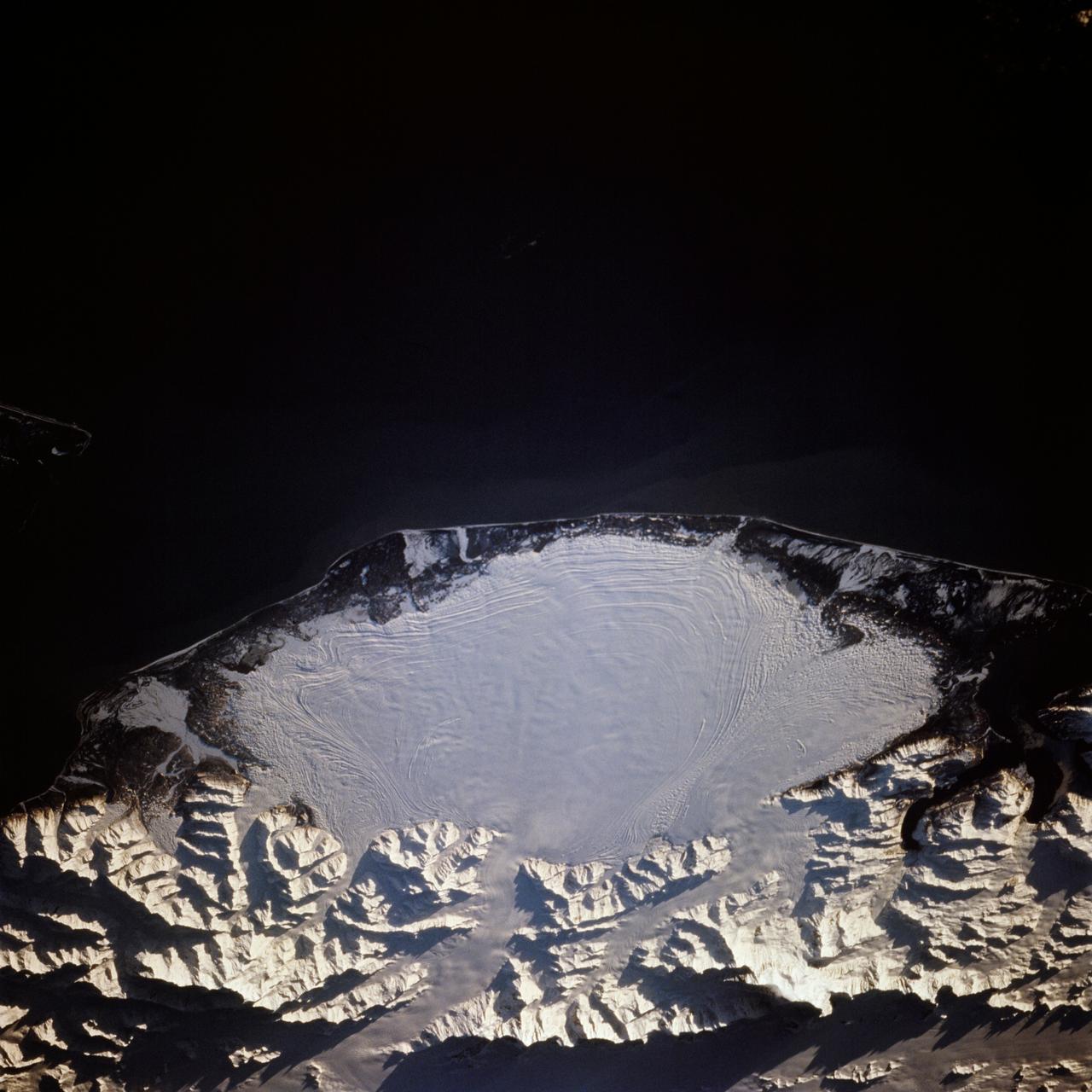
STS066-117-014 (3-14 Nov. 1994) --- Malaspina Glacier can be seen in this north-northeastern photograph taken in November, 1994. The glacier, located in the south shore of Alaska is a classic example of a piedmont glacier lying along the foot of a mountain range. The principal source of ice for the glacier is provided by the Seward Ice Field to the north (top portion of the view) which flows through three narrow outlets onto the coastal plain. The glacier moves in surges that rush earlier-formed moraines outward into the expanding concentric patterns along the flanks of the ice mass.
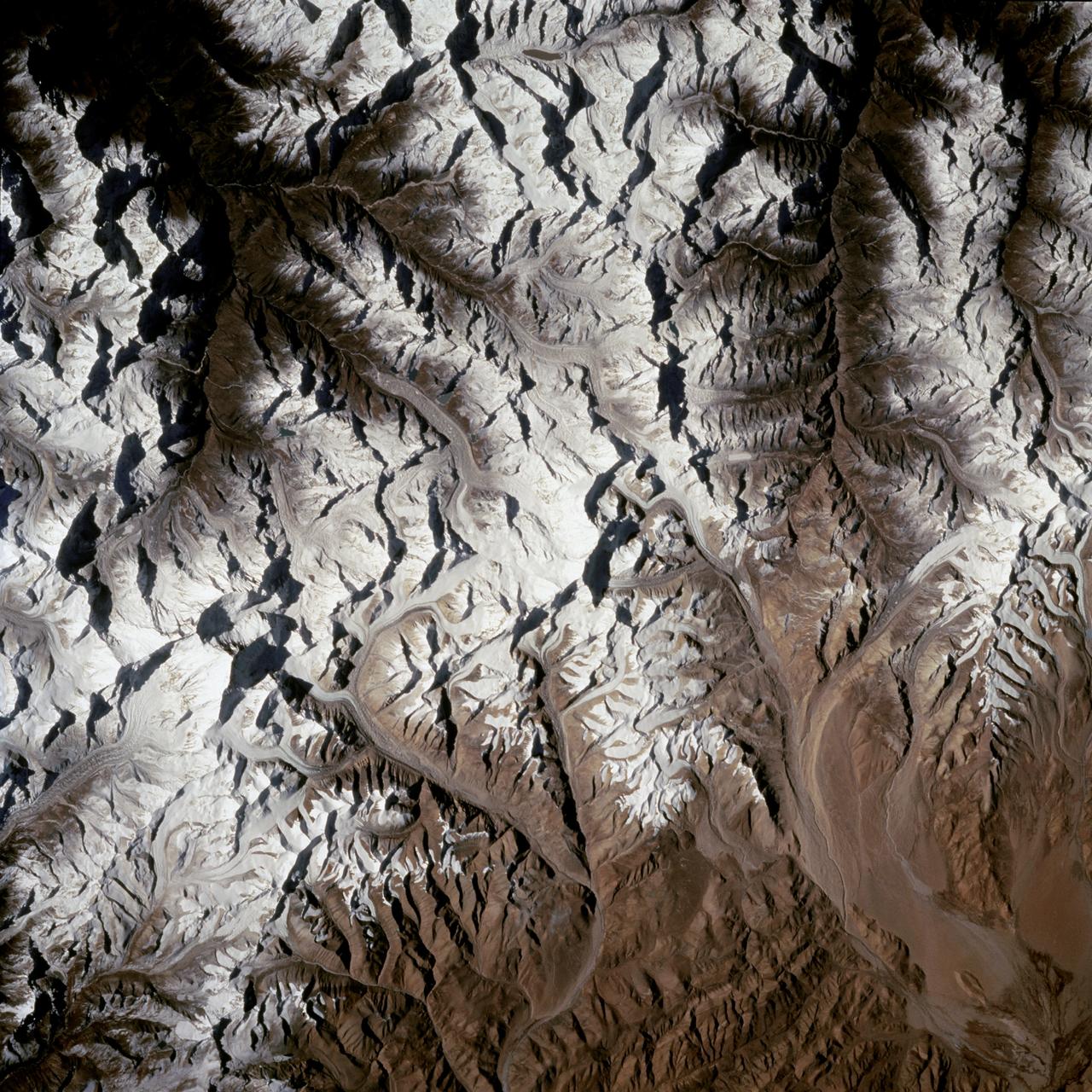
STS066-124-059 (3-14 Nov. 1994) --- Mount Everest region, Nepal and China. Low morning Sun highlights Mount Everest (the highest mountain in the world at 8,848 meters), Cho Oyu (8,153 meters) to the northwest, and other peaks of "The Roof of the World". New snow seems to be confined to the highest peaks. Abundant details of glacier surfaces, including moraines, crevasse fields, and ice falls are displayed for study.

STS066-129-005 (3-14 Nov 1994) --- Clouds over the Atlantic Ocean serve as the backdrop for this 70mm scene of the Atmospheric Laboratory for Applications and Science (ATLAS-3) payload in the cargo bay of the Earth-orbiting Space Shuttle Atlantis. Crew members onboard Atlantis were astronauts Donald R. McMonagle, Curtis L. Brown, Jr., Ellen Ochoa, Scott E. Parazynski and Joseph R. Tanner, along with Jean-François Clervoy of the European Space Agency (ESA). The six astronauts spent 11-days in Earth-orbit in support of the Atmospheric Laboratory for Applications and Science (ATLAS-3) mission.
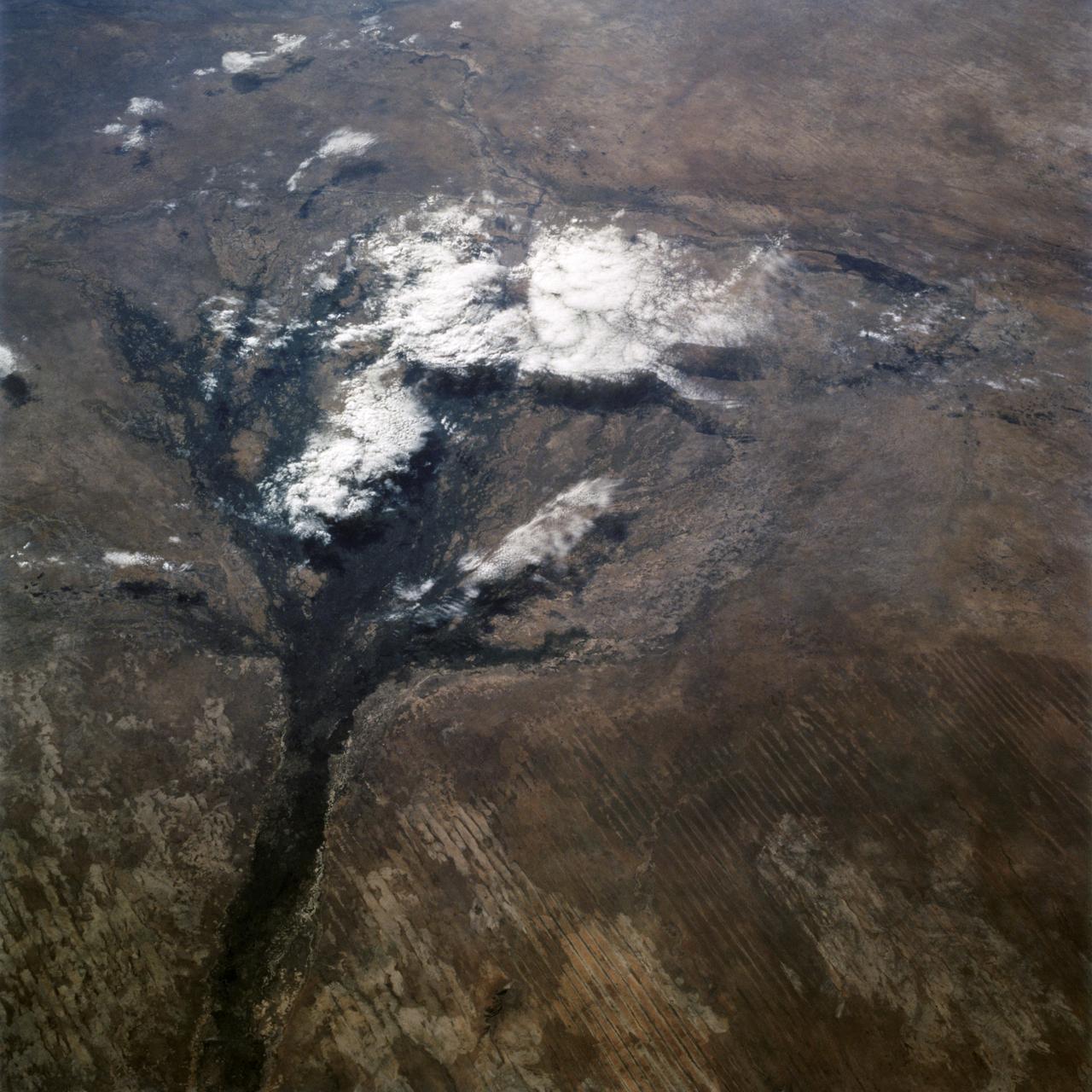
STS066-122-091 (3-14 Nov. 1994) --- This November 1994 view looking south-southeast shows clouds over the Okavango Delta area of northern Botswana. The Okavango is one of the wilder, less spoiled regions of Africa. The area still supports great herds of wild animals such as elephant, zebra and the cape buffalo. Despite conservation efforts from the stable government of Botswana, delta habitats are pressured. The Okavango River (lower left of view) brings water from the high, wet plateaus of Angola into the Kalahari Desert, and enormous inland basin. As a result of a series of small faults (upper center of the view) related to the African Rift System, the river is dammed up in the form of swampy inland delta. Here, water is consumed by evaporation, infiltration, and the swamp forests. Late summer floods take six months to slowly penetrate the 160 kilometer (95 miles) to the other end of the Delta. The visual patterns of the area are strongly linear: straight sand dunes occur in many places and can be seen across the bottom portion of the photograph. Numerous brush-fire scars produce a complex, straight-edged pattern over much of the lower portion of this view. Lake Ngami (upper right of view) was once permanently full as late as the middle 1800's. Changes in the climate of the area over the last 100 years has changed the size and shape of the inland delta.
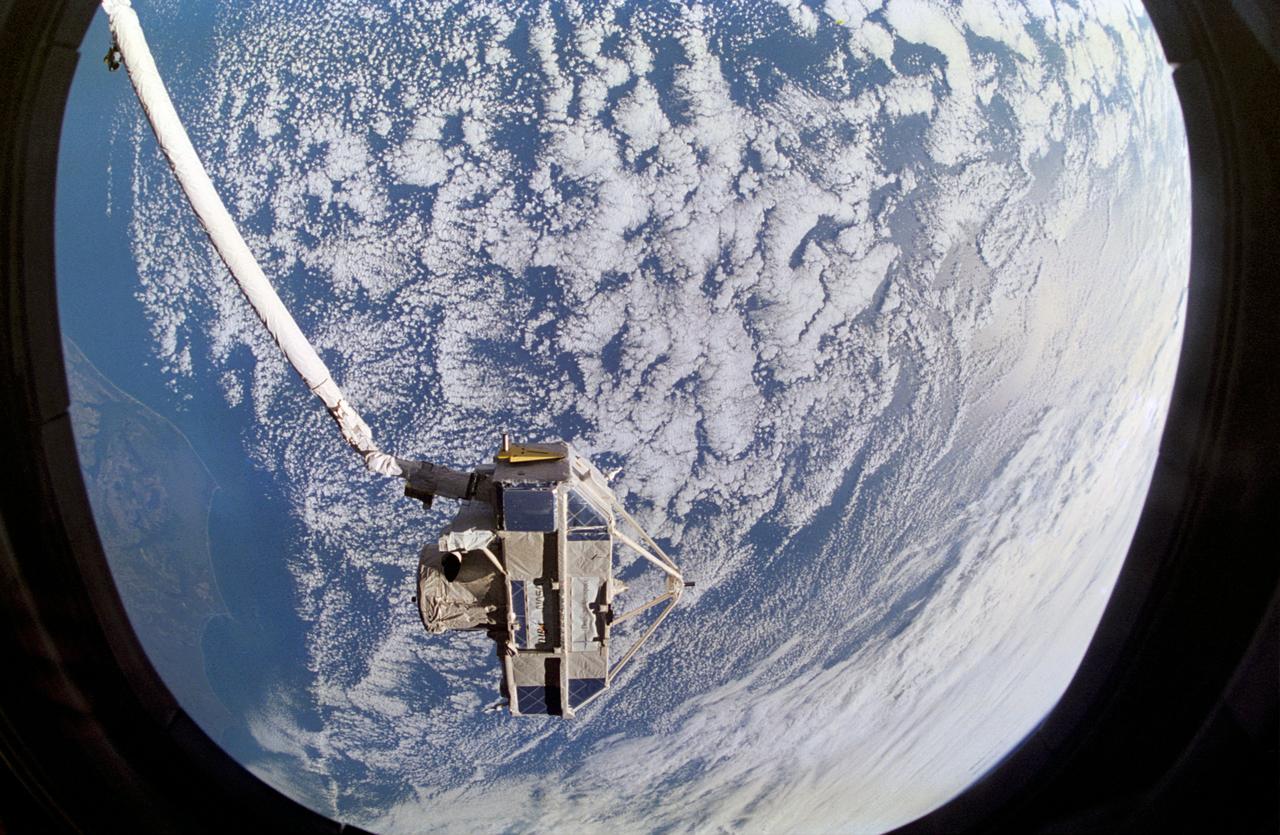
Clouds over the Atlantic Ocean serve as the backdrop for this 70mm scene of the Cryogenic Infrared Spectrometers and Telescopes for the Atmosphere (CRISTA), attached to the Shuttle Pallet System (SPAS). CRISTA-SPAS was in the grasp of the Space Shuttle Atlantis Remote Manipulator System (RMS) arm. The crew deployed the Crista-SPAS on November 4, 1994 and the tandem remained in free-flight until November 12, 1994 when it was retrieved by the Canadian-built RMS, controlled by payload commander Ellen Ochoa.
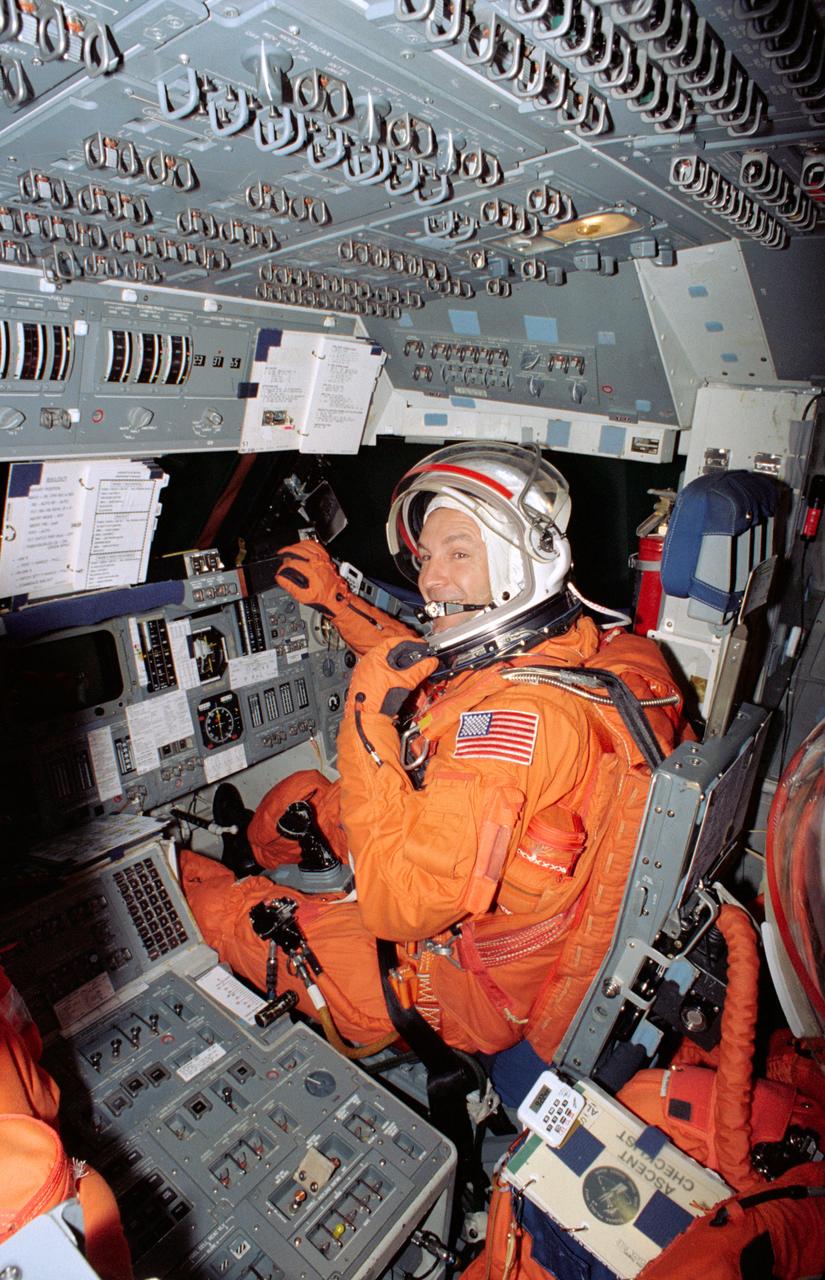
S94-40091 (23 June 1994) --- Astronaut Curtis L. Brown mans the pilot's station of a Shuttle trainer during a rehearsal of procedures to be followed during launch and entry phases of the scheduled November flight of STS-66. This rehearsal, held in the Crew Compartment Trainer (CCT) of the Johnson Space Center's (JSC) Shuttle Mockup and Integration Laboratory, was followed by a training session on emergency egress procedures. Making his second flight in space, Brown will join four other NASA astronauts and a European mission specialist for a week and a half aboard the Space Shuttle Atlantis in Earth-orbit in support of the Atmospheric Laboratory for Applications and Science (ATLAS-3).
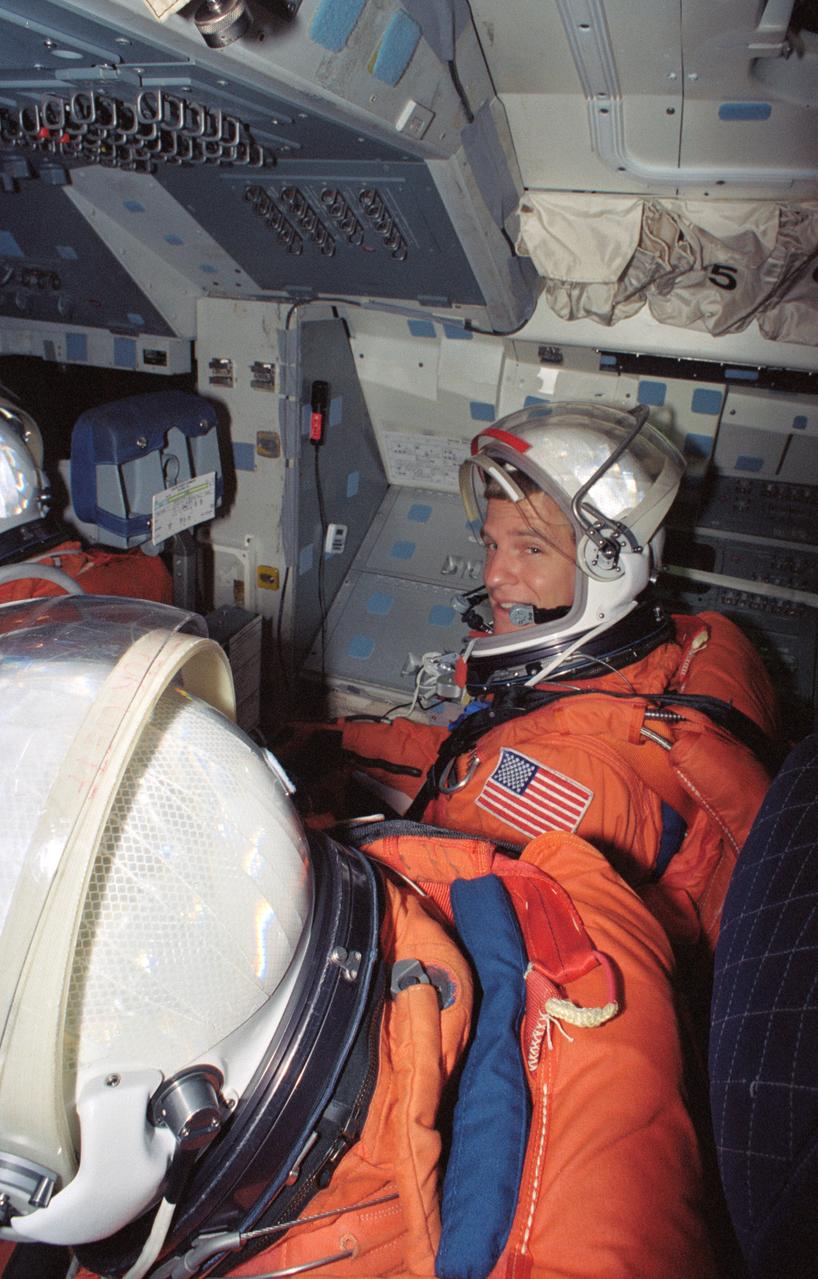
S94-40079 (23 June 1994) --- Astronaut Scott E. Parazynski looks at fellow STS-66 mission specialist Joseph R. Tanner, (partially visible in foreground) during a rehearsal of procedures to be followed during launch and entry phases of the their scheduled November flight. This rehearsal, held in the Crew Compartment Trainer (CCT) of the Johnson Space Center's (JSC) Shuttle Mockup and Integration Laboratory, was followed by a training session on emergency egress procedures. In November, Parazynski and Tanner will join three other NASA astronauts and a European mission specialist for a week and a half aboard the Space Shuttle Atlantis in Earth-orbit in support of the Atmospheric Laboratory for Applications and Science (ATLAS-3).
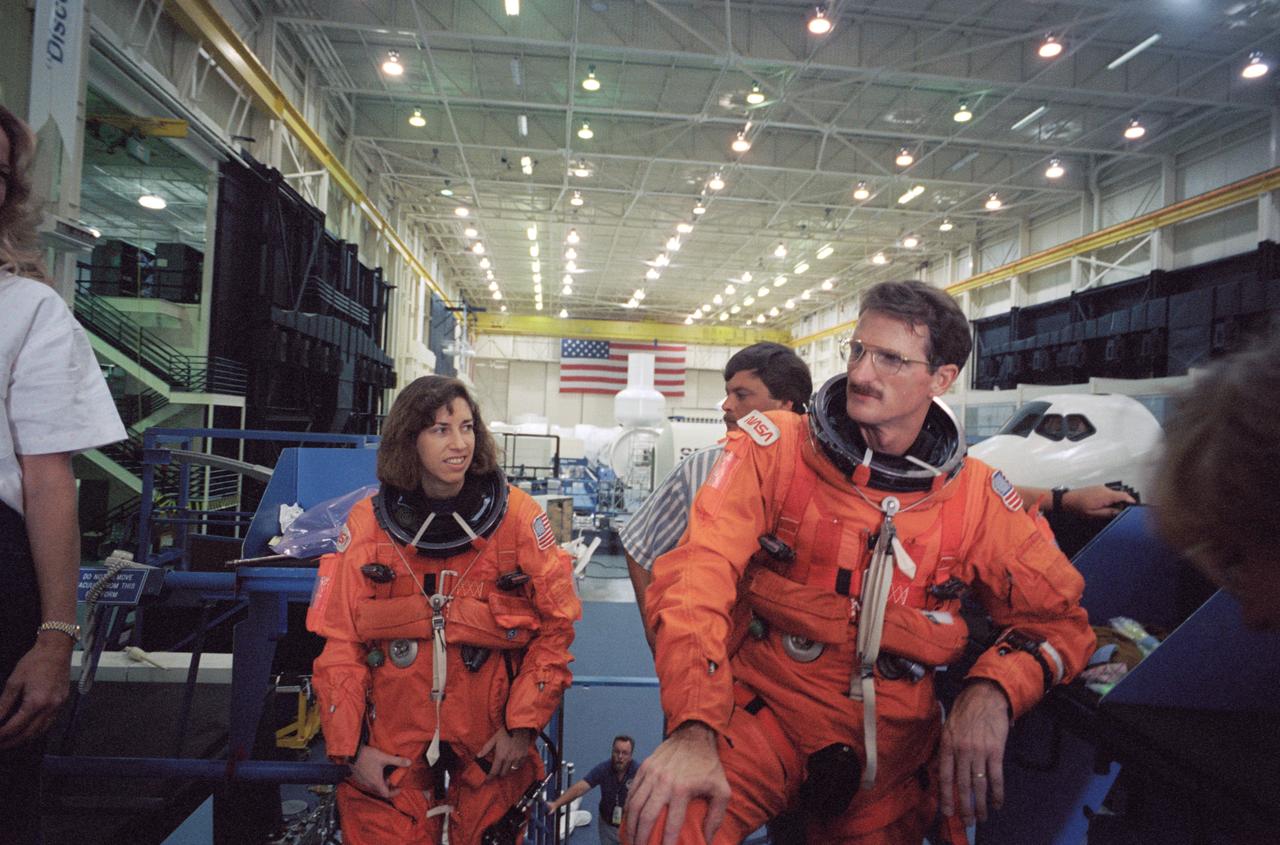
S94-40073 (23 June 1994) --- Wearing training versions of the launch and entry suits (LES), astronauts Ellen Ochoa, payload commander, and Joseph P. Tanner, mission specialist, await the beginning of a training session on emergency egress procedures. The STS-66 crew participated in the training, held in the Johnson Space Center's (JSC) Shuttle Mockup and Integration Laboratory. Ochoa and Tanner will join three other NASA astronauts and one international mission specialist aboard the Space Shuttle Atlantis in support of the Atmospheric Laboratory for Applications and Science (ATLAS-3) flight scheduled for November of this year.
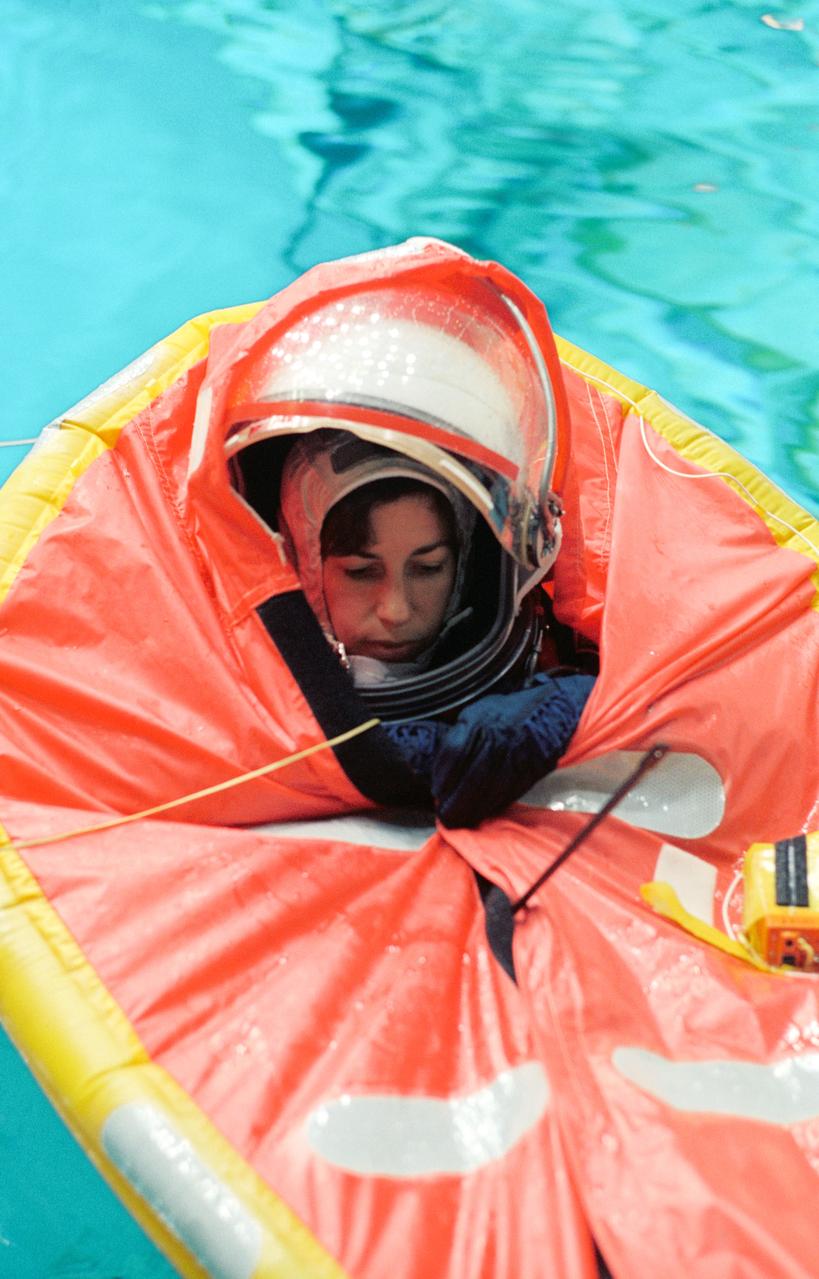
S94-37520 (28 June 1994) --- Astronaut Ellen Ochoa, STS-66 payload commander, secures herself in a small life raft during an emergency bailout training exercise in the Johnson Space Center's (JSC) Weightless Environment Training Facility (WET-F). Making her second flight in space, Ochoa will join four other NASA astronauts and a European mission specialist for a week and a half in space aboard the Space Shuttle Atlantis in support of the Atmospheric Laboratory for Applications and Science (ATLAS-3) mission. Ochoa was a mission specialist on the ATLAS-2 mission in April of 1993.
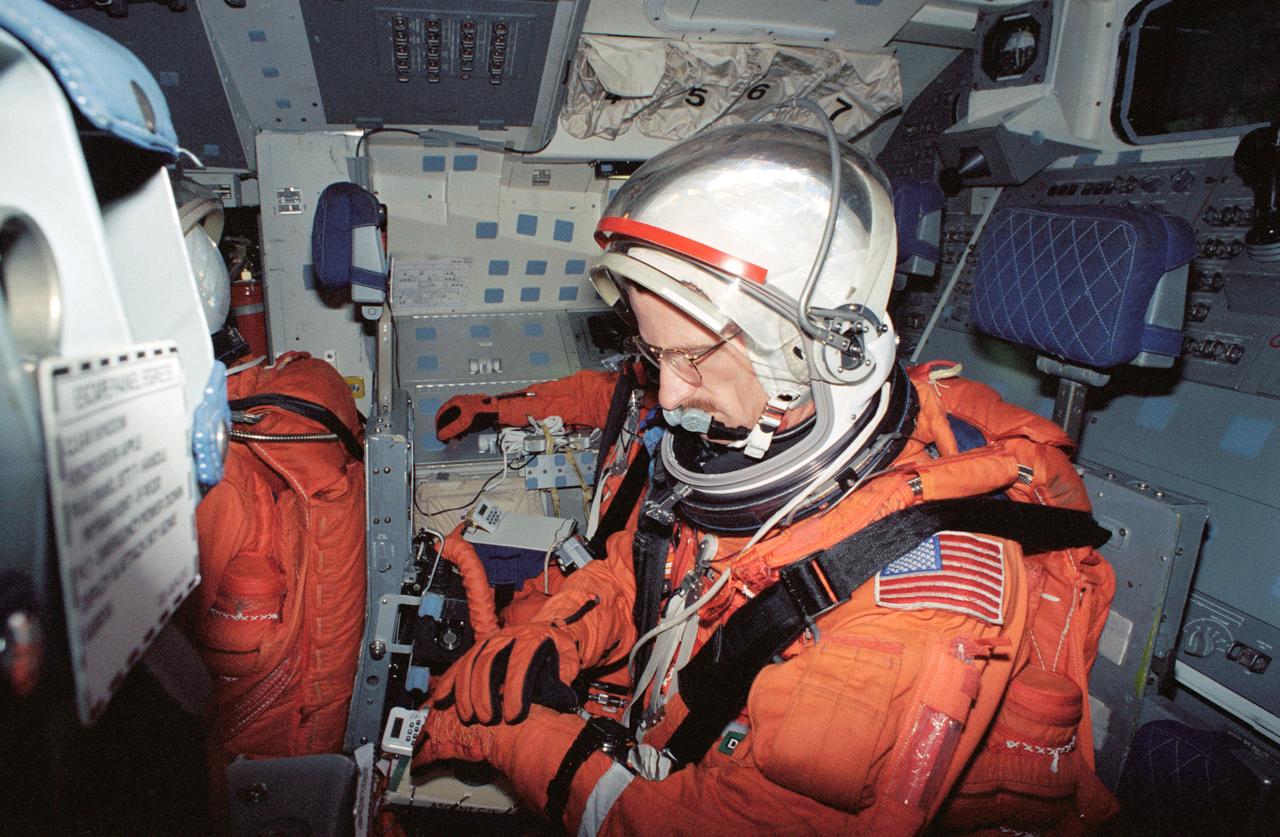
S94-40082 (23 June 1994) --- Astronaut Joseph R. Tanner, mission specialist, checks his glove during a rehearsal for launch and entry phases of the scheduled November flight of STS-66. This rehearsal, held in the Crew Compartment Trainer (CCT) of the Johnson Space Center's (JSC) Shuttle Mockup and Integration Laboratory, was followed by a training session on emergency egress procedures. In November, Tanner will join four other NASA astronauts and a European mission specialist for a week and a half aboard the Space Shuttle Atlantis in Earth-orbit in support of the Atmospheric Laboratory for Applications and Science (ATLAS-3).
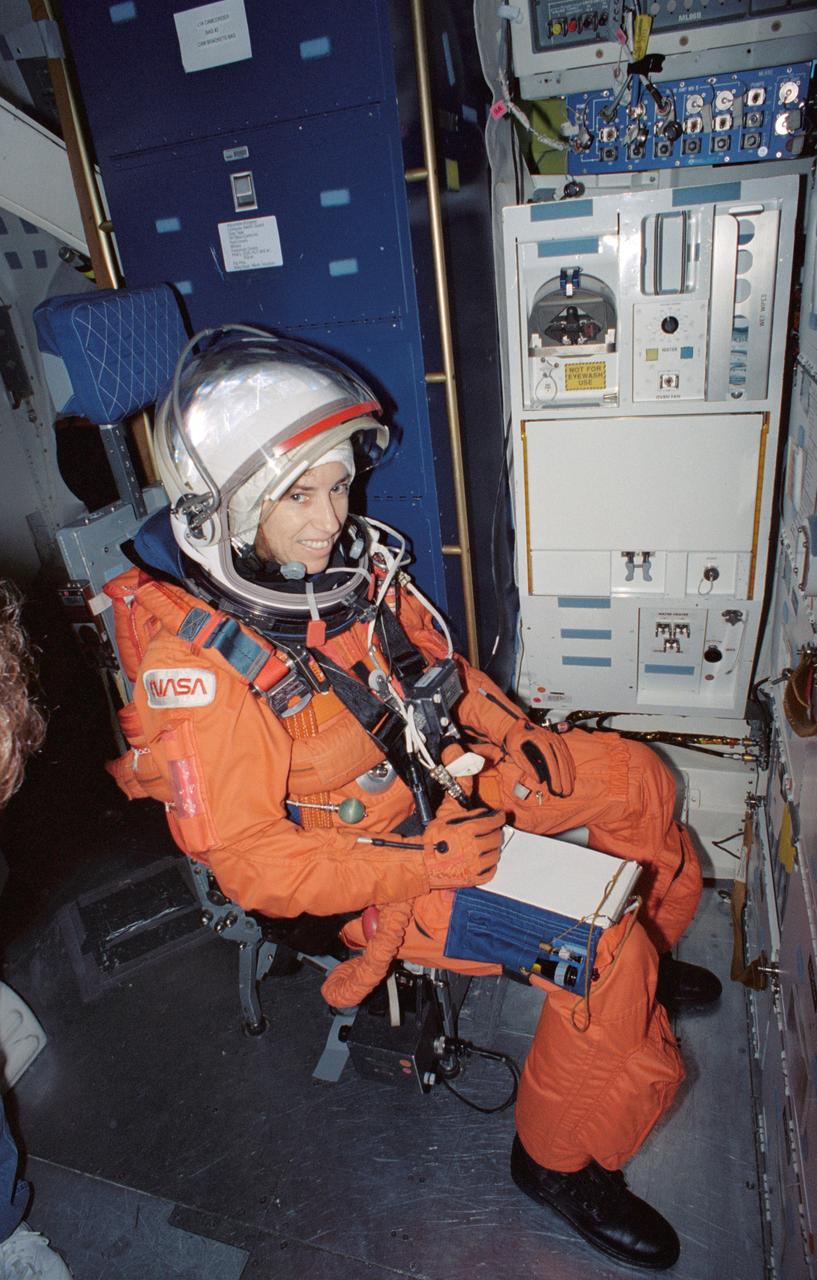
S94-40061 (23 June 1994) --- Secured in a collapsible seat on the middeck of a Shuttle trainer, astronaut Ellen Ochoa, payload commander, participates in a rehearsal of procedures to be followed during launch and entry phases of the scheduled November flight of STS-66. This rehearsal, held in the crew compartment trainer of the Johnson Space Center's (JSC) Shuttle Mockup and Integration Laboratory, was followed by a training session on emergency egress procedures. In November Ochoa will join four other NASA astronauts and a European mission specialist for a week and a half aboard the Space Shuttle Atlantis in Earth-orbit in support of the Atmospheric Laboratory for Applications and Science (ATLAS-3).
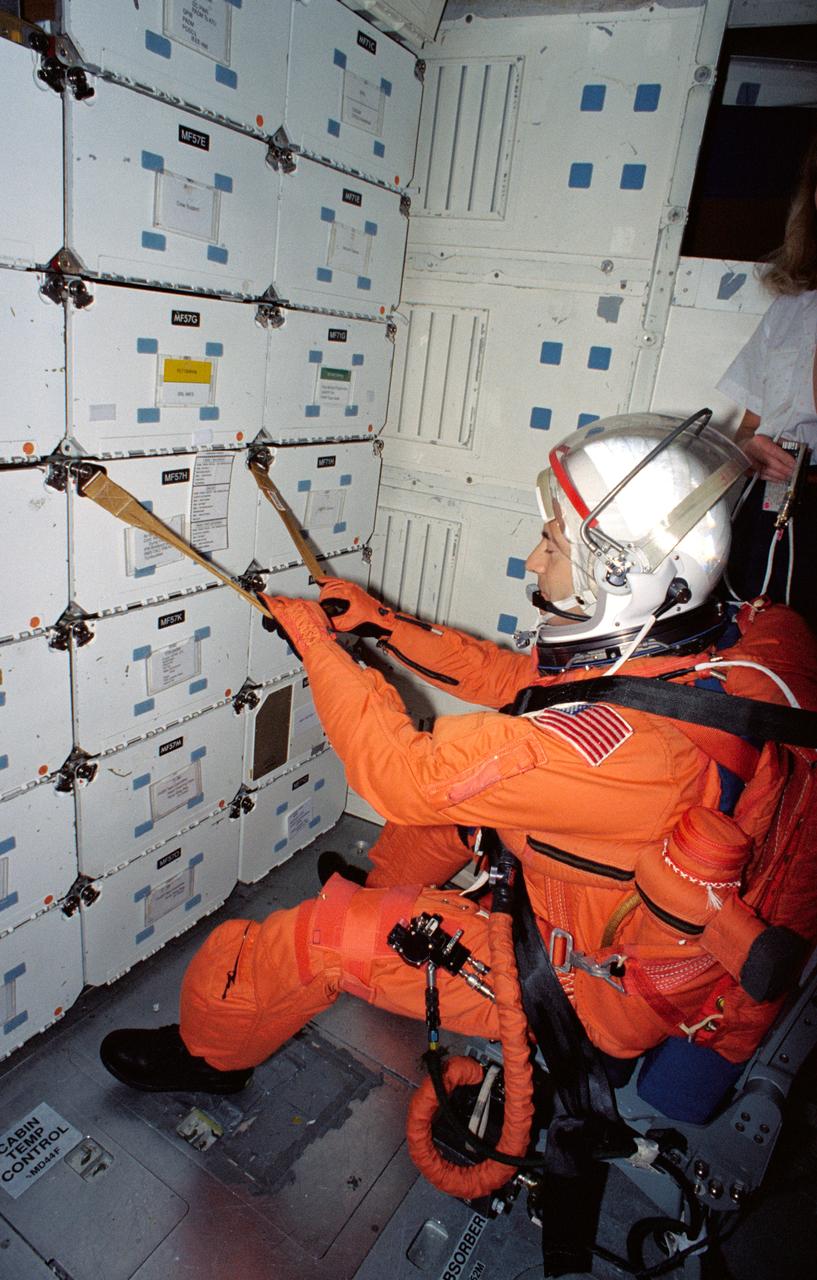
S94-40074 (23 June 1994) --- Astronaut Jean-Francois Clervoy, STS-66 international mission specialist, sits securely on a collapsible seat on the middeck of a Shuttle trainer during a rehearsal of procedures to be followed during launch and entry phases of his scheduled November flight. This rehearsal, held in the crew compartment trainer of the Johnson Space Center's (JSC) Shuttle Mockup and Integration Laboratory, was followed by a training session on emergency egress procedures. Clervoy, a European astronaut, will join five NASA astronauts for a week and a half aboard the Space Shuttle Atlantis in Earth-orbit in support of the Atmospheric Laboratory for Applications and Science (ATLAS-3).
S94-40083 (23 June 1994) --- Astronaut Scott E. Parazynski looks at fellow STS-66 mission specialist Joseph R. Tanner, (foreground) during a rehearsal of procedures to be followed during launch and entry phases of the their scheduled November flight. This rehearsal, held in the Crew Compartment Trainer (CCT) of the Johnson Space Center's (JSC) Shuttle Mockup and Integration Laboratory, was followed by a training session on emergency egress procedures. In November, Parazynski and Tanner will join three other NASA astronauts and a European mission specialist for a week and a half aboard the Space Shuttle Atlantis in Earth-orbit in support of the Atmospheric Laboratory for Applications and Science (ATLAS-3).
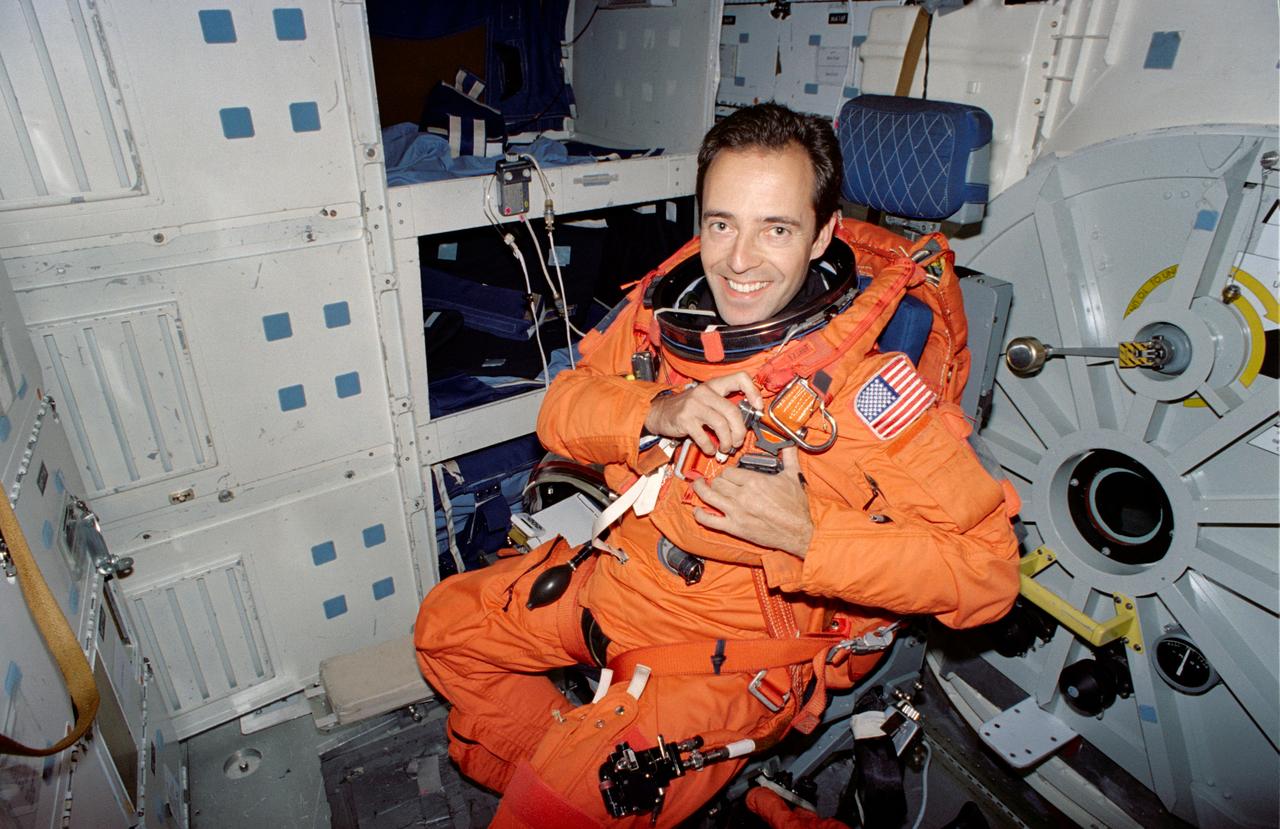
S94-40081 (23 June 1994) --- Wearing a training version of a partial pressure suit, Jean-Francois Clervoy, STS-66 international mission specialist, secures himself on a collapsible seat on the middeck of a Shuttle trainer during a rehearsal of procedures to be followed during launch and entry phases of his scheduled November flight. This rehearsal, held in the Crew Compartment Trainer (CCT) of the Johnson Space Center's (JSC) Shuttle Mockup and Integration Laboratory, was followed by a training session on emergency egress procedures. Clervoy, a European astronaut, will join five NASA astronauts for a week and a half aboard the Space Shuttle Atlantis in Earth-orbit in support of the Atmospheric Laboratory for Applications and Science (ATLAS-3).
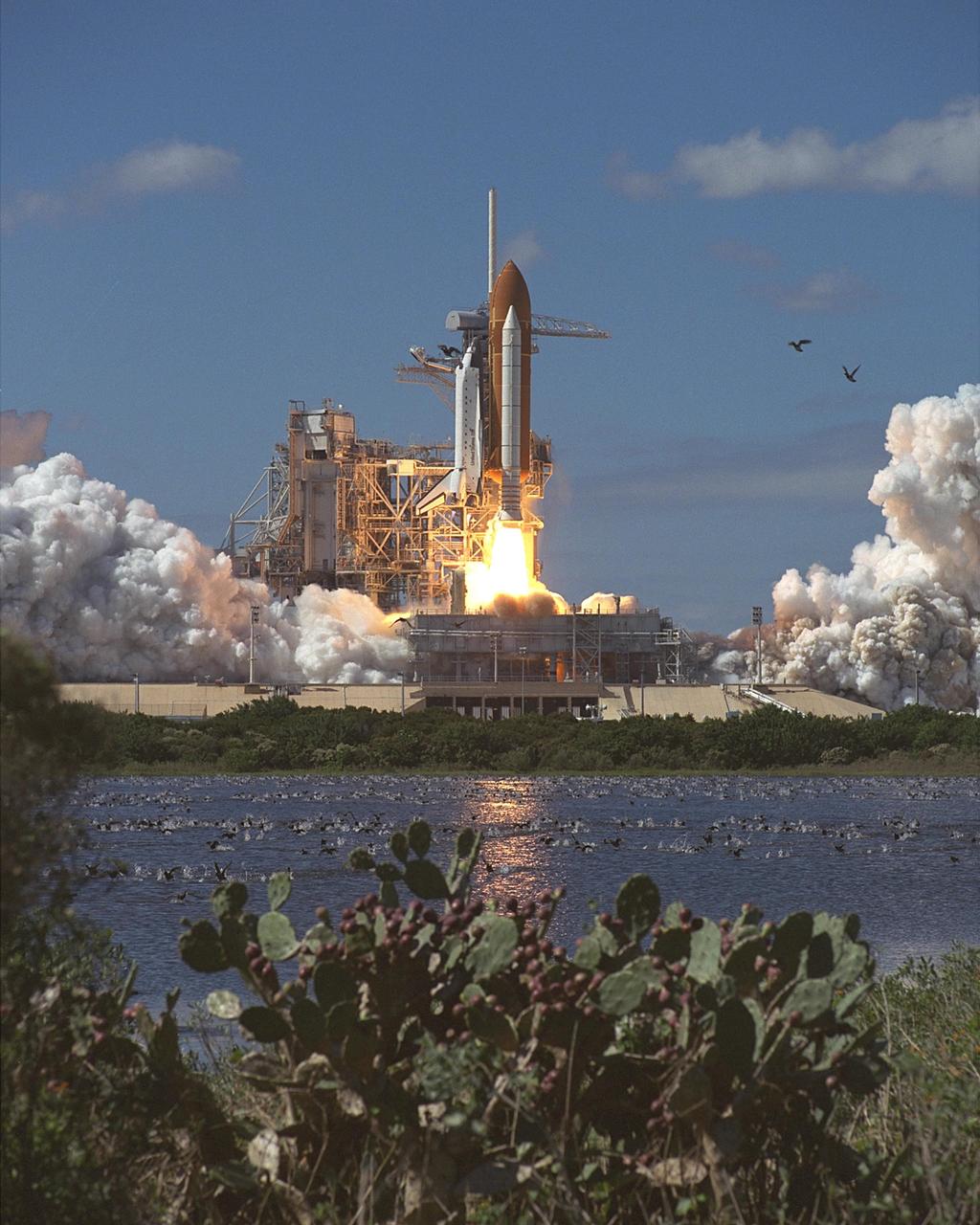
KENNEDY SPACE CENTER, FLA. -- STS-66: Atlantis
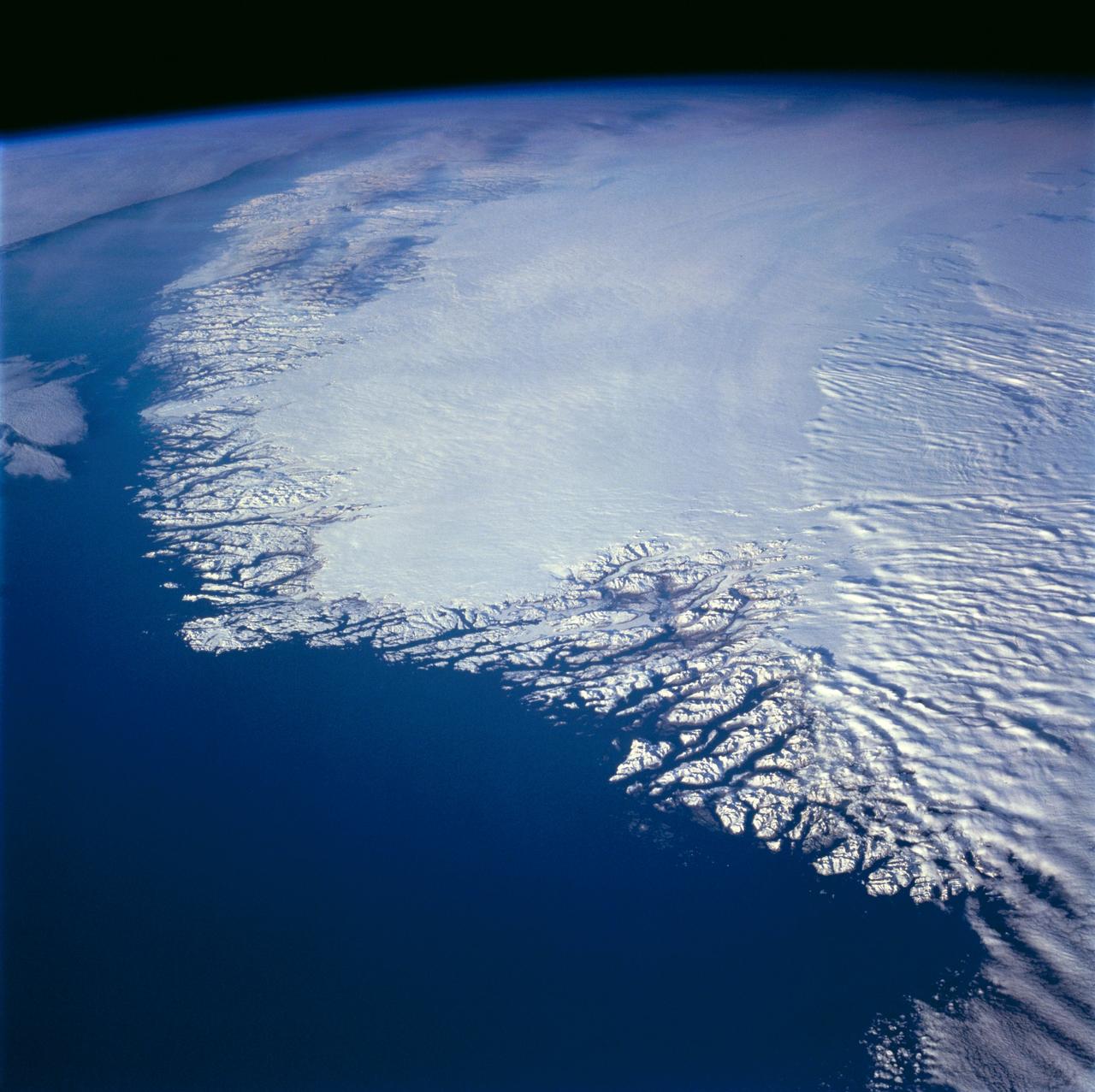
This north-looking view of southwestern Greenland was taken in November, 1994, and shows numerous indentations, many of which contain small settlements. These fjords were carved by the glaciers of the last ice age 10,000 years ago. Even today, the ice in the center of Greenland is nearly 3,500 meters (11,000 feet) thick and great rivers of ice continuously flow down toward the sea, where they melt or break off as icebergs. Some Icebergs exceed the size of small islands, weigh several million tons, and rise several hundred feet above the sea surface. Cape Farewell is visible toward the bottom right of the view. Julianehab Bay and the Bredev fjord can be seen toward the center of the photograph. Godthab, the main settlement on Greenland, is barely visible to the north of the Frederikeshabs Icefield near the left center of the view.
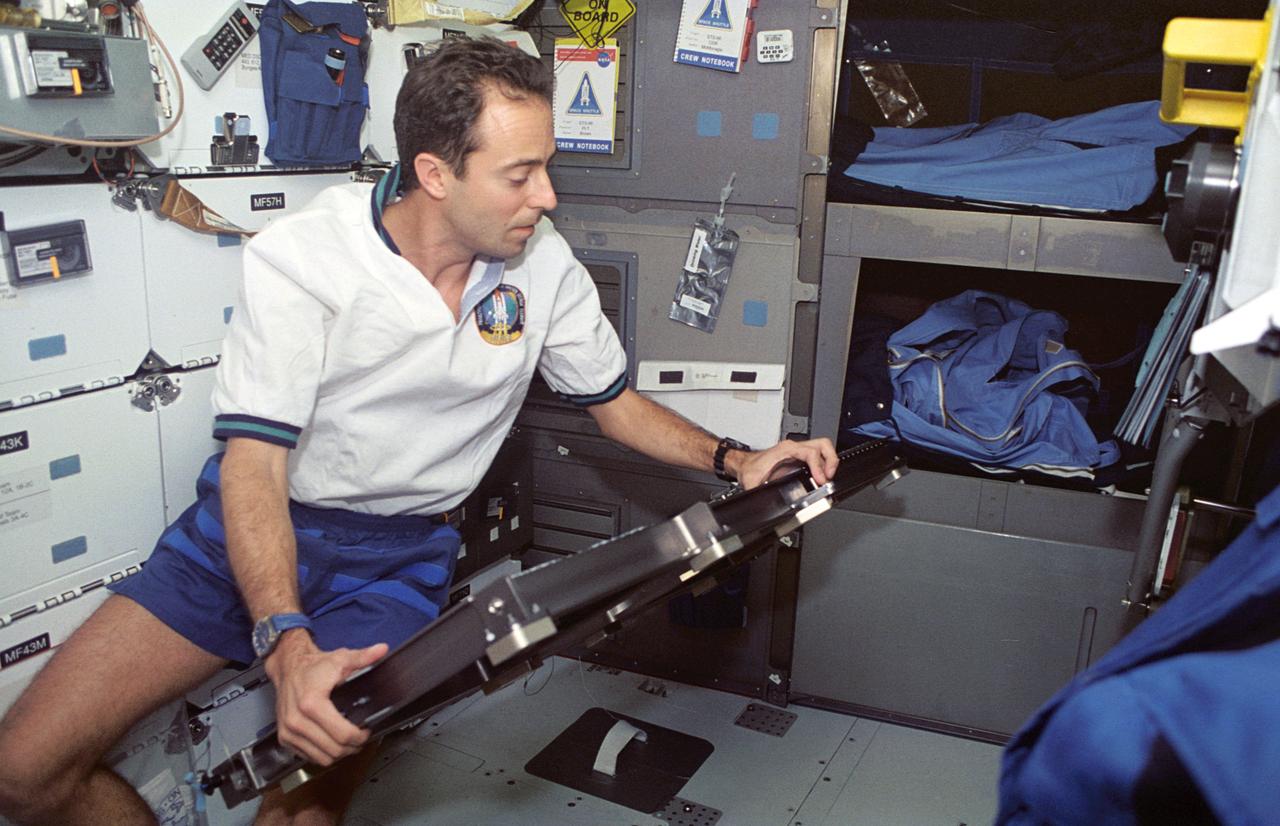
STS066-66-005 (3-14 Nov 1994) --- On the Space Shuttle Atlantis' flight deck, Jean-François Clervoy, mission specialist representing the European Space Agency (ESA), moves a platform for the recumbent seat device which was being evaluated for a future Space Shuttle flight. The platform is just part of the mid-deck arrangement designed to accommodate crew members when the Space Shuttle docks with Russia's Mir Space Station next year. Other crew members onboard Atlantis for the 11-day day Atmospheric Laboratory for Applications and Science (ATLAS-3) mission were astronauts Donald R. McMonagle, Curtis L. Brown, Jr., Ellen Ochoa, Scott E. Parazynski and Joseph R. Tanner.
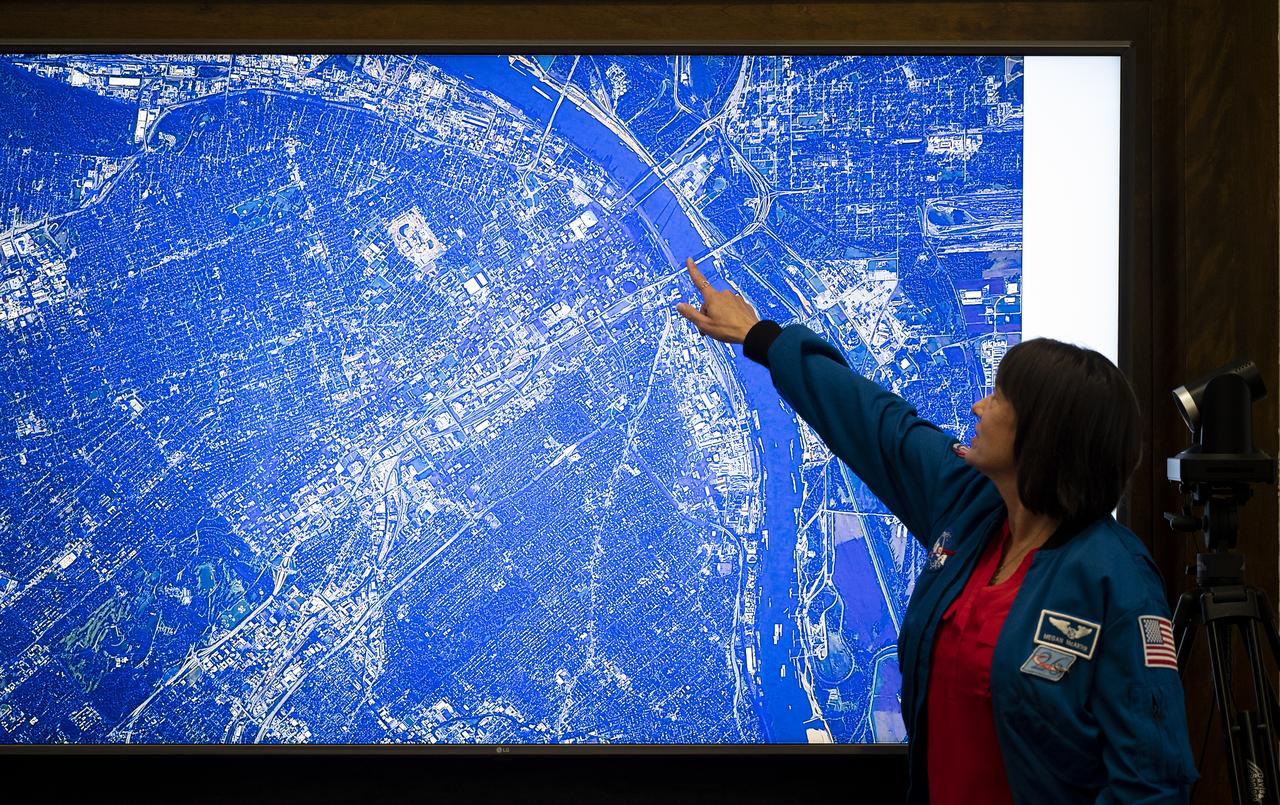
NASA astronaut Megan McArthur points to the shadow of the Gateway Arch on the Mississippi River in St. Louis while showing images of National Parks taken from the International Space Station during Expeditions 65 and 66 during a presentation to leadership and rangers who participate in the National Park Service’s astronomy and dark sky programs, Thursday, June 9, 2022 at the U.S. Department of the Interior in Washington, DC. McArthur, NASA astronaut Shane Kimbrough, Japan Aerospace Exploration Agency (JAXA) astronaut Akihiko Hoshide, and ESA (European Space Agency) astronaut Thomas Pesquet, flew on NASA’s SpaceX Crew-2 mission, the second crew rotation mission to the International Space Station as part of the agency’s Commercial Crew Program, and spent 198 days aboard the orbiting laboratory as part of Expeditions 65 and 66. Photo Credit: (NASA/Joel Kowsky)
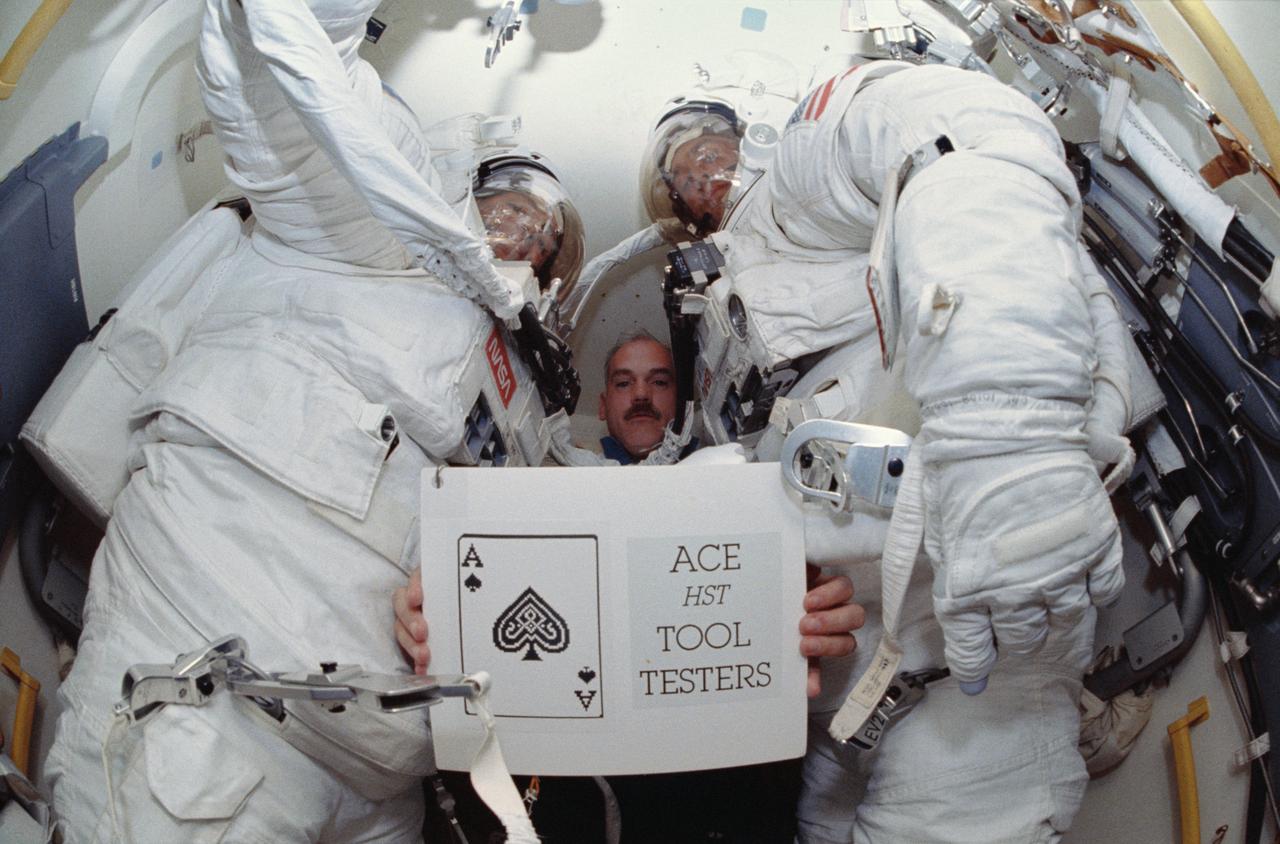
STS051-66-009 (16 Sept 1993) --- In Discovery's airlock, astronaut William F. Readdy, pilot, holds up a STS-51 slogan -- "Ace HST Tool Testers" -- for still and video cameras to record. Readdy is flanked by astronauts Carl E. Walz (left) and James H. Newman, who had just shared a lengthy period of extravehicular activity (EVA) in and around Discovery's cargo bay. Not pictured are astronauts Frank L. Culbertson Jr., mission commander, and Daniel W. Bursch, mission specialist.
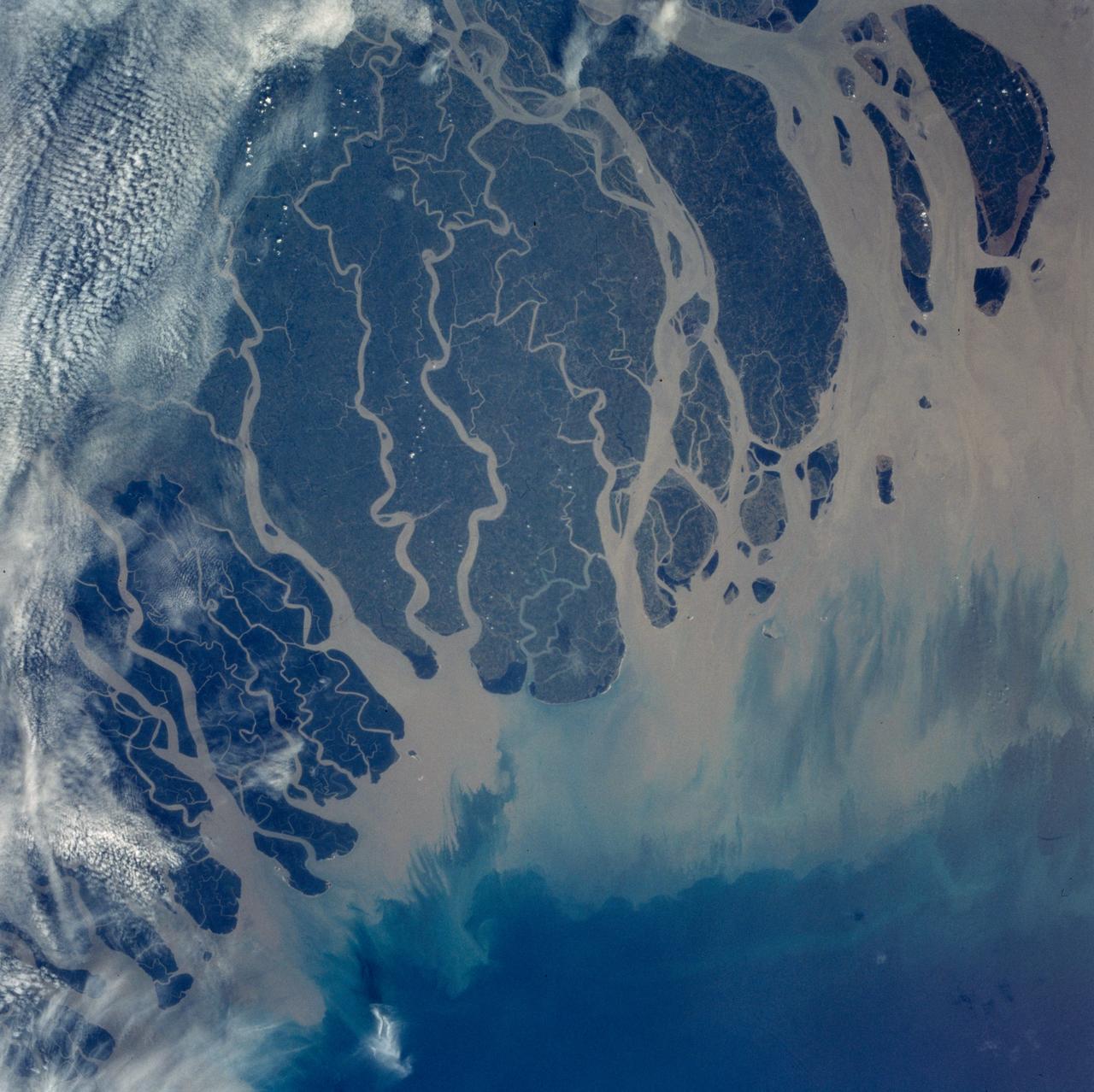
The Ganges River Delta is the largest inter-tidal delta in the world. With its extensive mangrove mud flats, swamp vegetation and sand dunes, it is characteristic of many tropical and subtropical coasts. As seen in this photograph, the tributaries and distributaries of the Ganges and Brahmaputra Rivers deposit huge amounts of silt and clay that create a shifting maze of waterways and islands in the Bay of Bengal.
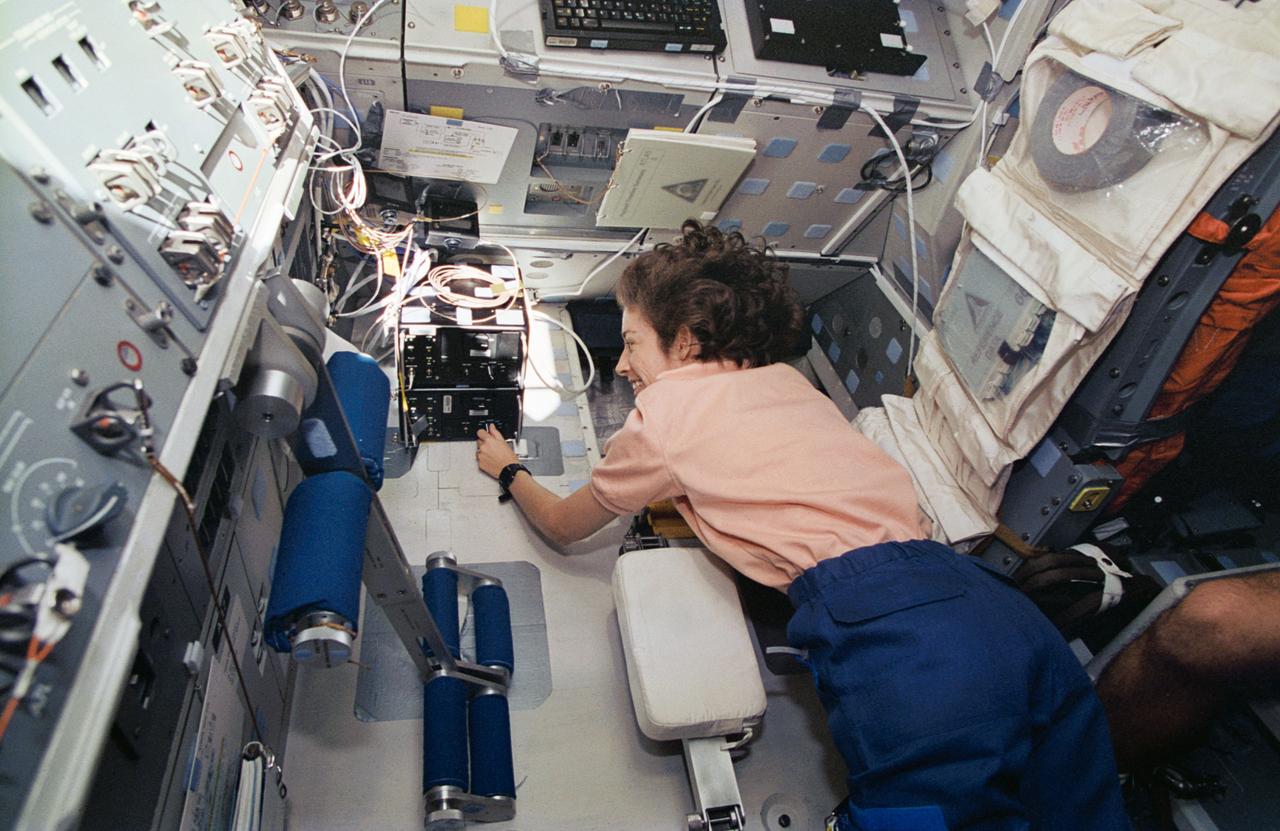
STS066-21-029 (3-14 Nov. 1994) --- On the space shuttle Atlantis' aft flight deck, astronaut Ellen Ochoa, payload commander, supports the Atmospheric Trace Molecule Spectroscopy (ATMOS) experiment with a checkout of a pair of 8mm video tape recorders. Note Atlantis' addition of the lower body restraint device (left) used to support crew members spending long periods of stationary time at the aft flight deck. Ochoa joined four other NASA astronauts and a European mission specialist for 11-days in space in support of the Atmospheric Laboratory for Applications and Science (ATLAS-3) mission. Photo credit: NASA
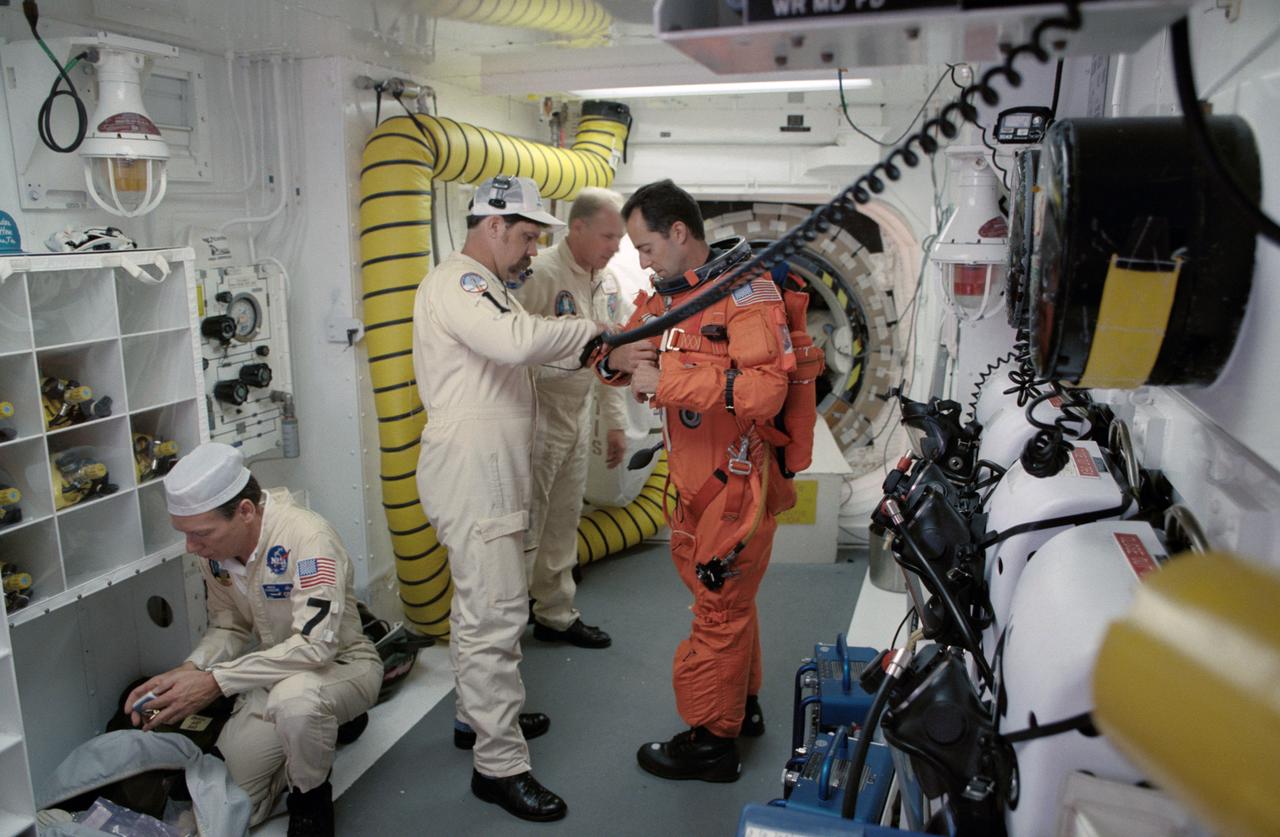
STS066-S-003 (3 November 1994) --- In the white room at Launch Pad 39B, Jean-Francois Clervoy, mission specialist representing European Space Agency (ESA), is assisted with his partial pressure launch/entry suit (LES) by close-out crew members Travis Thompson and Danny Wyatt (background). At noon on November 3, 1994, the ESA astronaut joined five NASA astronauts for launch aboard the Space Shuttle Atlantis. The six astronauts went on to spend 11-days in Earth-orbit in support of the Atmospheric Laboratory for Applications and Science (ATLAS-3) mission.
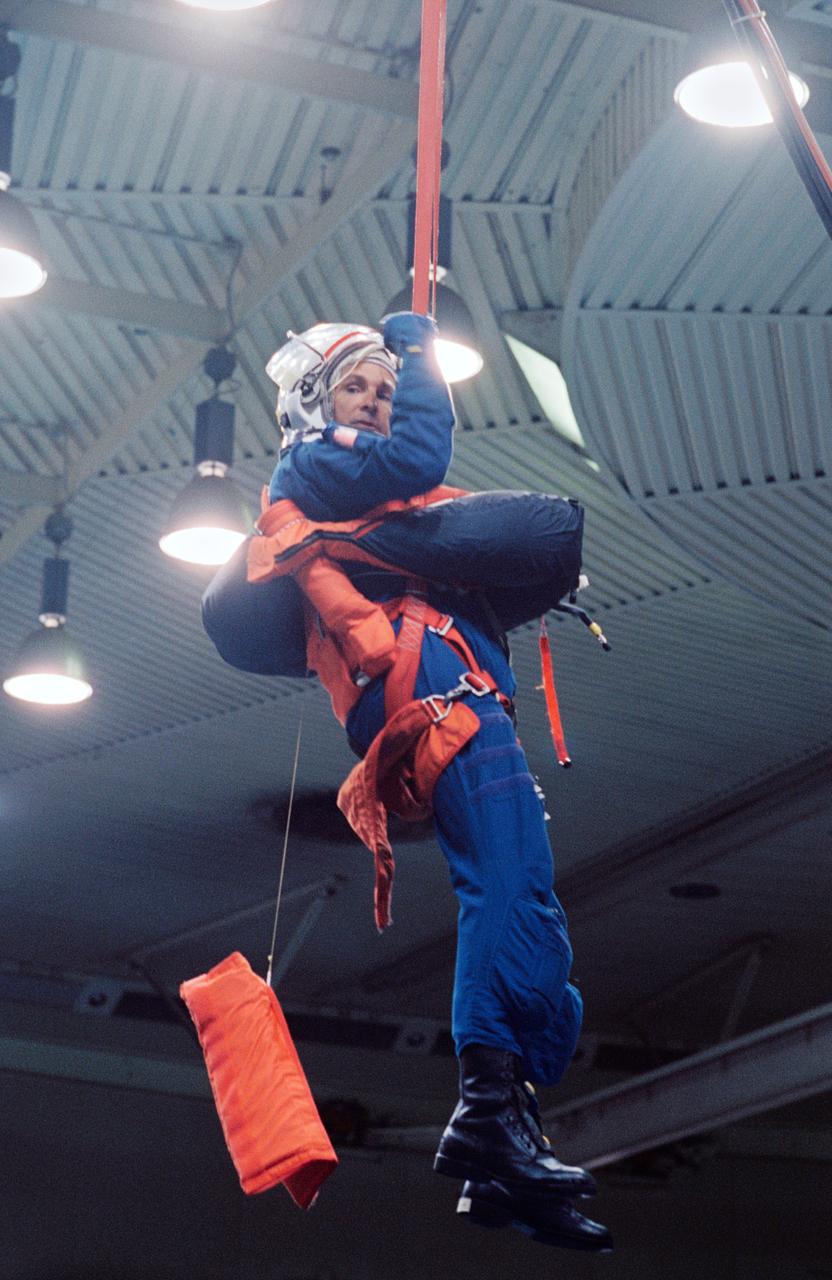
S94-37516 (28 June 1994) --- Astronaut Curtis L. Brown is suspended by a simulated parachute gear during an emergency bailout training exercise in the Johnson Space Center's (JSC) Weightless Environment Training Facility (WET-F). Making his second flight in space, Brown will join four other NASA astronauts and a European mission specialist for a week and a half in space aboard the Space Shuttle Atlantis in support of the Atmospheric Laboratory for Applications and Science (ATLAS-3) mission.
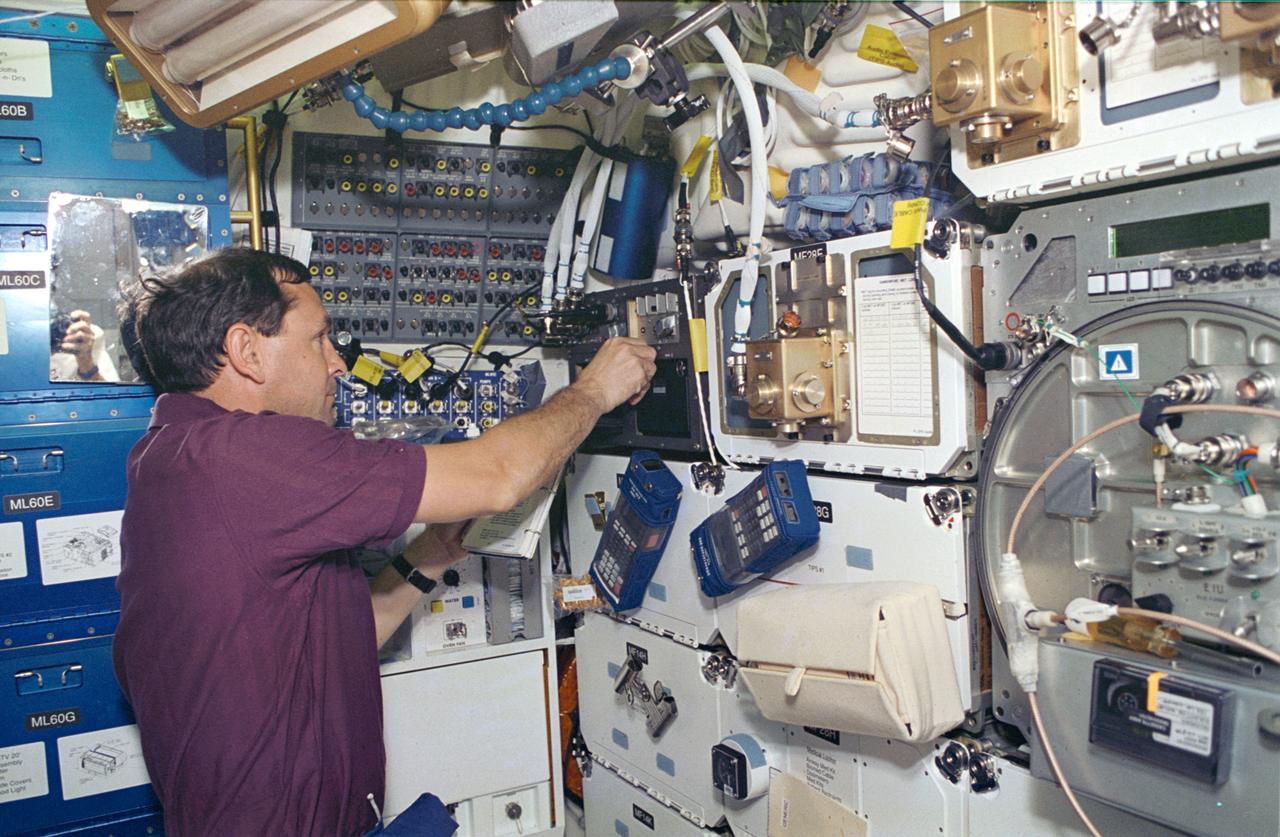
STS066-14-021 (3-14 Nov 1994) --- On the Space Shuttle Atlantis' mid-deck, astronaut Curtis L. Brown, Jr., pilot, works with the Space Acceleration Measurement System (SAMS), which is making its eleventh Shuttle flight. This system supports the Protein Crystal Growth (PCG) experiments onboard by collecting and recording data characterizing the microgravity environment in the Shuttle mid-deck. Brown joined four other NASA astronauts and a European Space Agency (ESA) astronaut for 11-days aboard Atlantis in support of the Atmospheric Laboratory for Applications and Science (ATLAS-3) mission.
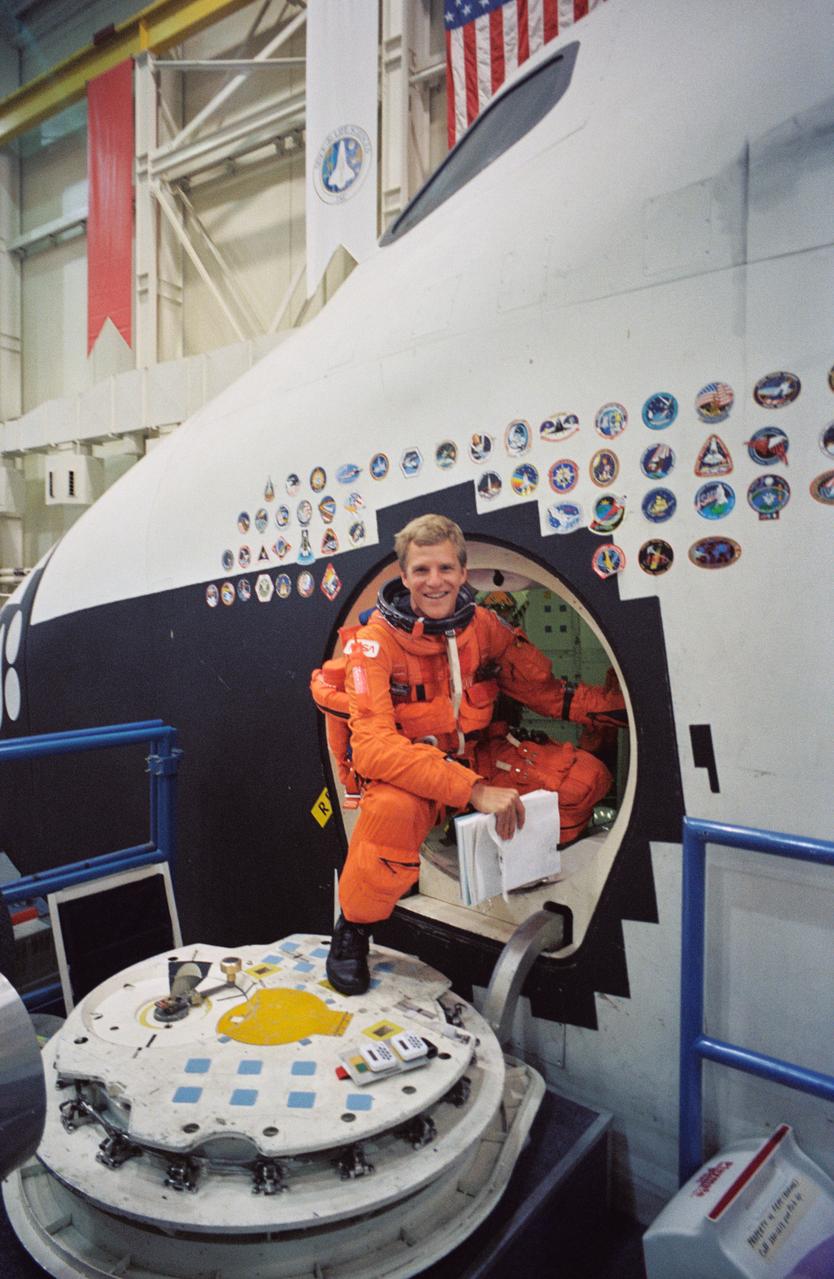
S94-36628 (23 June 1994) --- Astronaut Scott E. Parazynski poses at the hatch of the crew compartment trainer prior to a rehearsal of launch and entry procedures for a November 1994 flight aboard the Space Shuttle Atlantis. Four other NASA astronauts and a European mission specialist joined the mission specialist for this training exercise in the crew compartment trainer at the Johnson Space Center's (JSC) Shuttle Mockup and Integration Laboratory and will join him aboard Atlantis in November. The flight is manifest to support the Atmospheric Laboratory for Applications and Science (ATLAS-3) mission.
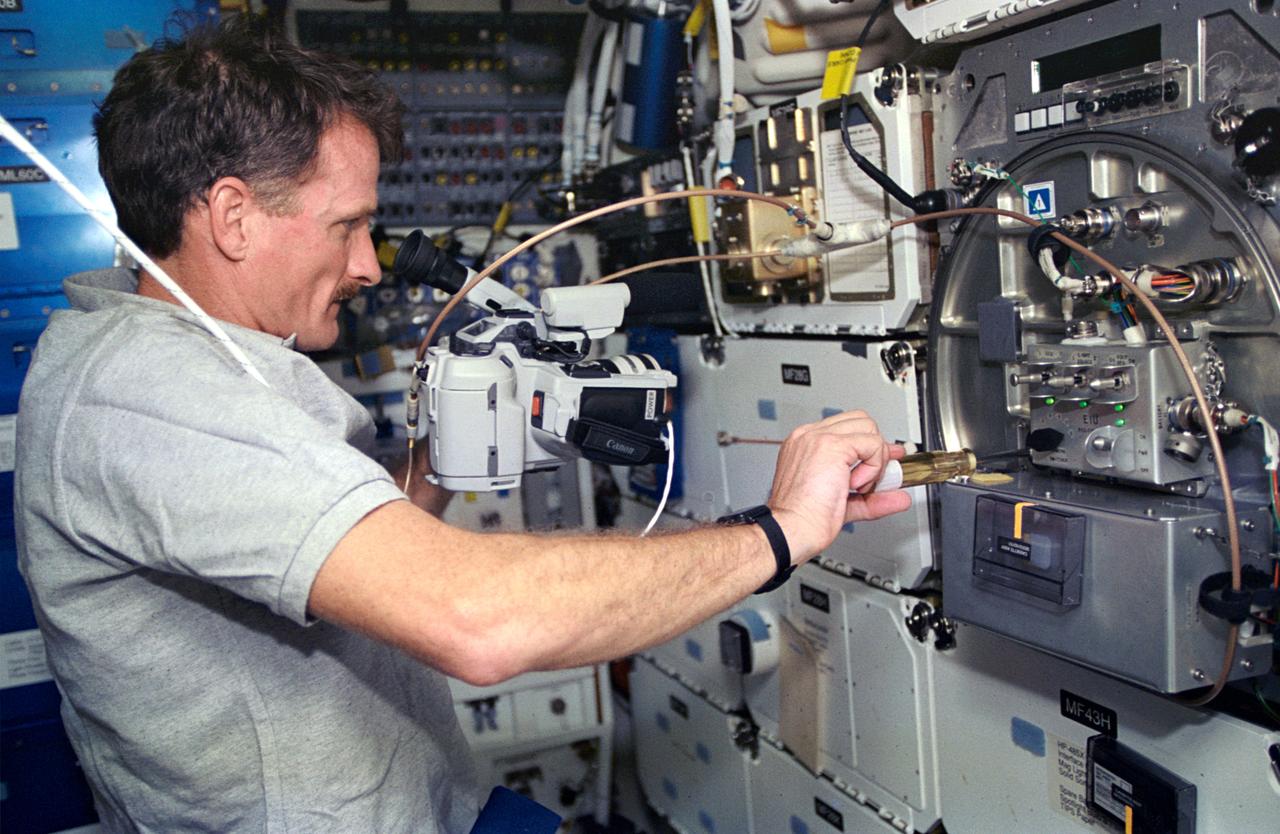
On the Space Shuttle Atlantis' mid-deck, astronaut Joseph R. Tanner, mission specialist, works at area amidst several lockers onboard the Shuttle which support the Protein Crystal Growth (PCG) experiment. This particular section is called the Crystal Observation System, housed in the Thermal Enclosure System (COS/TES). Together with the Vapor Diffusion Apparatus (VDA), housed in a Single Locker Thermal Enclosure (SLTES) which is out of frame, the Cos/TES represents the continuing research into the structures of proteins and other macromolecules such as viruses.
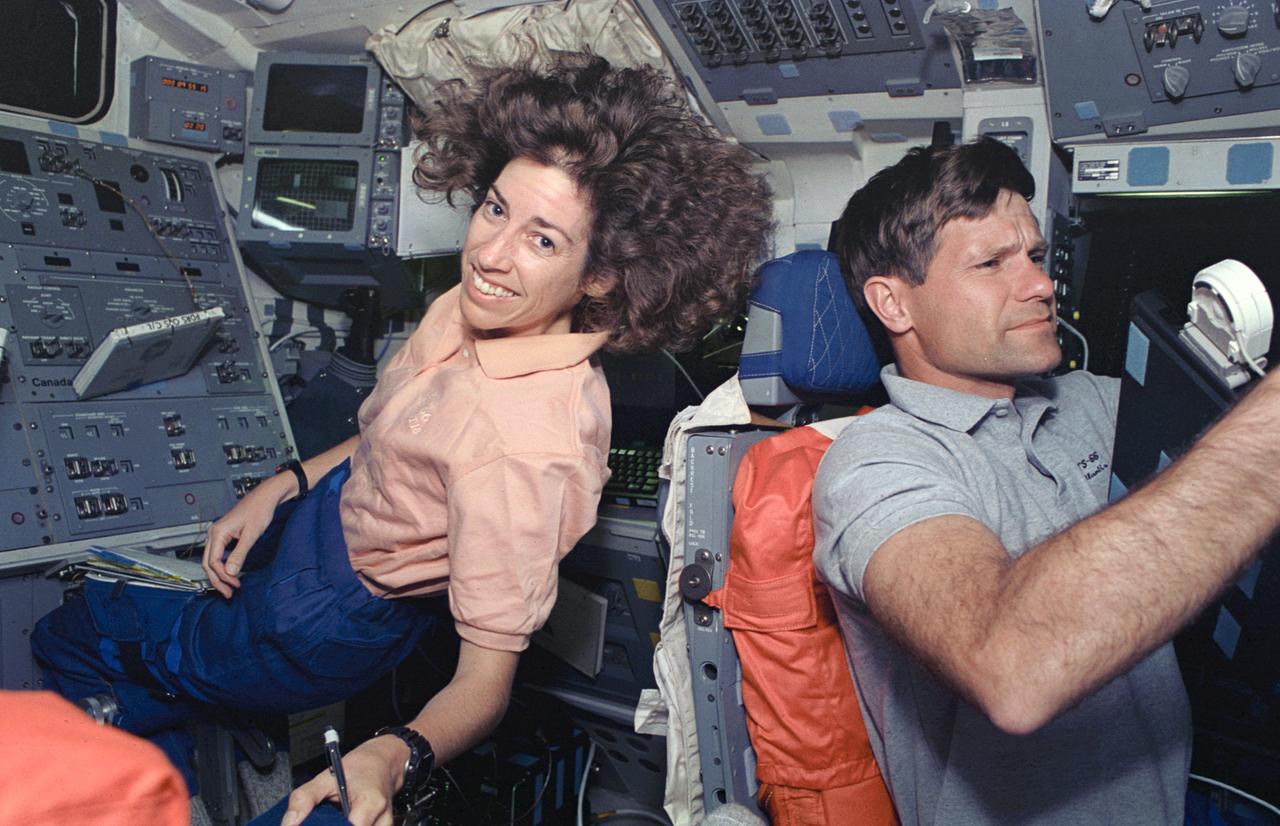
STS066-13-014 (3-14 Nov. 1994) --- On the space shuttle Atlantis' aft flight deck, astronaut Ellen Ochoa, payload commander, has just completed an operation at the controls for the Remote Manipulator System (RMS) arm while working in chorus with astronaut Donald R. McMonagle. McMonagle, mission commander, is seen here at his station on the forward flight deck. An RMS operations checklist floats in front of Ochoa. Photo credit: NASA
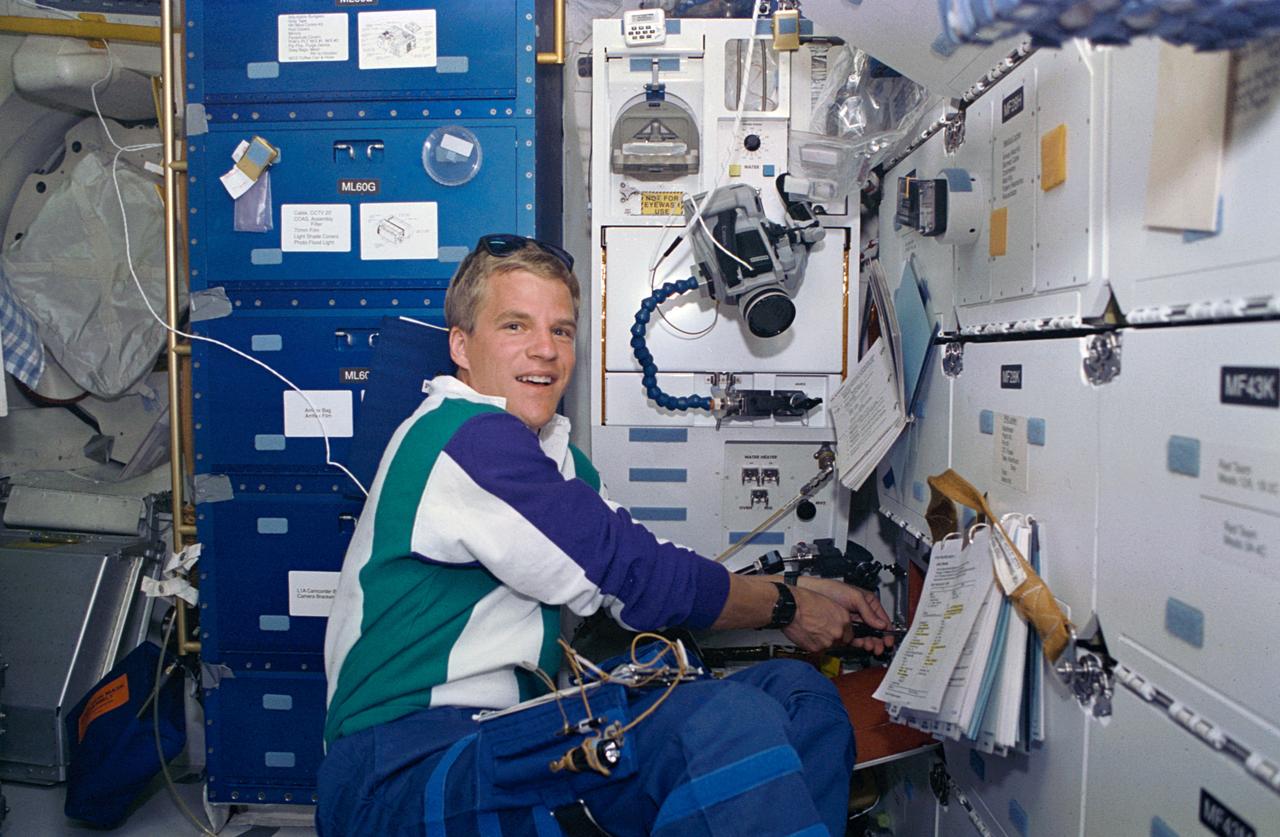
STS066-13-029 (3-14 Nov 1994) --- On the Space Shuttle Atlantis' mid-deck, astronaut Scott E. Parazynski, mission specialist, works at one of two areas onboard the Shuttle which support the Protein Crystal Growth (PCG) experiment. This particular section is called the Vapor Diffusion Apparatus (VDA), housed in a Single Locker Thermal Enclosure (STES). Together with the Crystal Observation System, housed in the Thermal Enclosure System (COS/TES) the VDA represents the continuing research into the structures of proteins and other macromolecules such as viruses. In addition to using the microgravity of space to grow high-quality protein crystals for structural analyses, the experiments are expected to help develop technologies and methods to improve the protein crystallization process on Earth as well as in space.
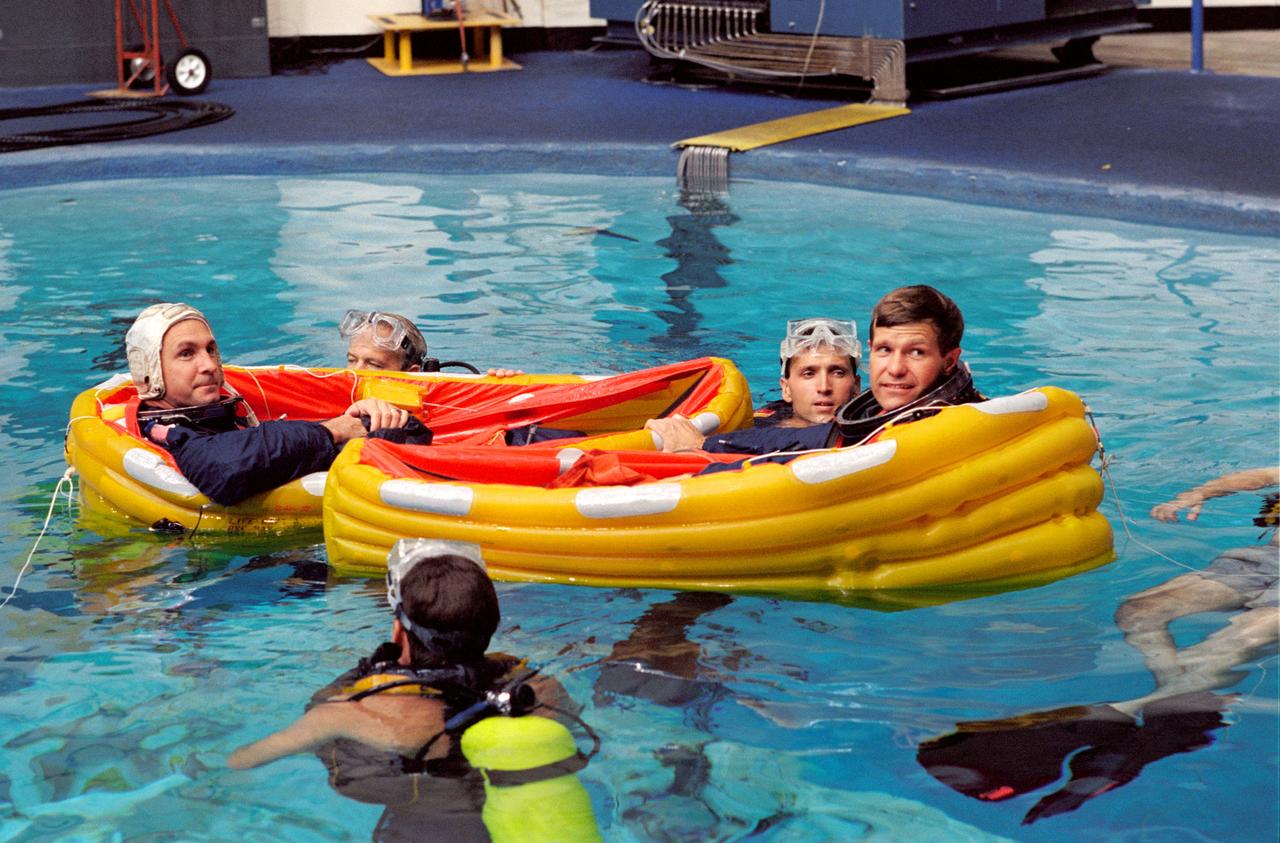
S94-37526 (28 June 1994) --- In separate life rafts, astronauts Donald R. McMonagle (right), mission commander, and Curtis L. Brown, pilot, are assisted by several SCUBA-equipped divers during an emergency bailout training exercise in the Johnson Space Center's (JSC) Weightless Environment Training Facility (WET-F). Making their third and second flights in space, respectively, McMonagle and Brown will be joined by three other NASA astronauts and a European mission specialist for a week and a half in space aboard the Space Shuttle Atlantis. The flight will support the Atmospheric Laboratory for Applications and Science (ATLAS-3) mission.
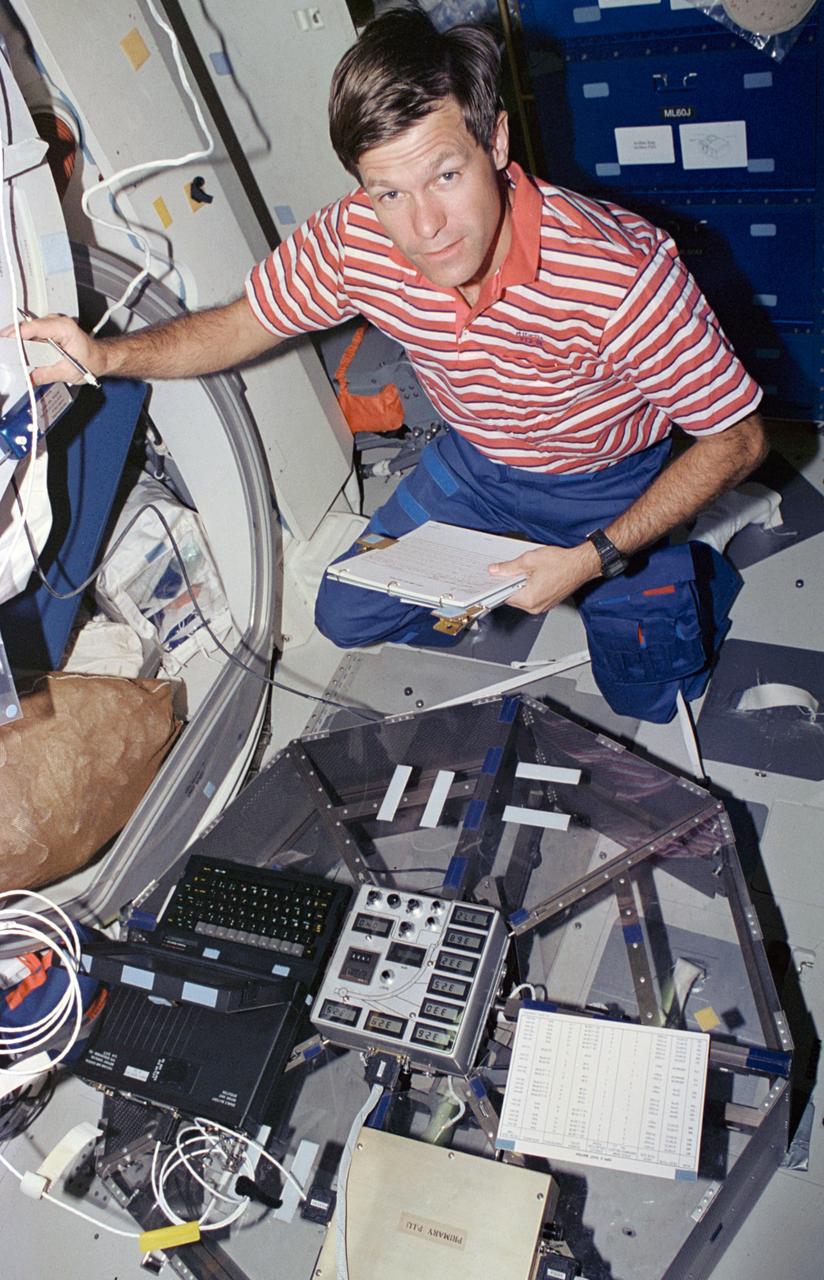
STS066-22-012 (3-14 Nov 1994) --- On the Space Shuttle Atlantis' mid-deck, astronaut Donald R. McMonagle, mission commander, works with the Heat Pipe Performance (HPP-2) experiment. HPP-2 was flown to investigate the thermal performance and fluid dynamics of heat pipes operating with asymmetric and multiple heating zones under microgravity conditions. McMonagle was joined by four other NASA astronauts and a European Space Agency (ESA) astronaut for 11-days aboard Atlantis in Earth-orbit in support of the Atmospheric Laboratory for Applications and Science (ATLAS-3) mission.
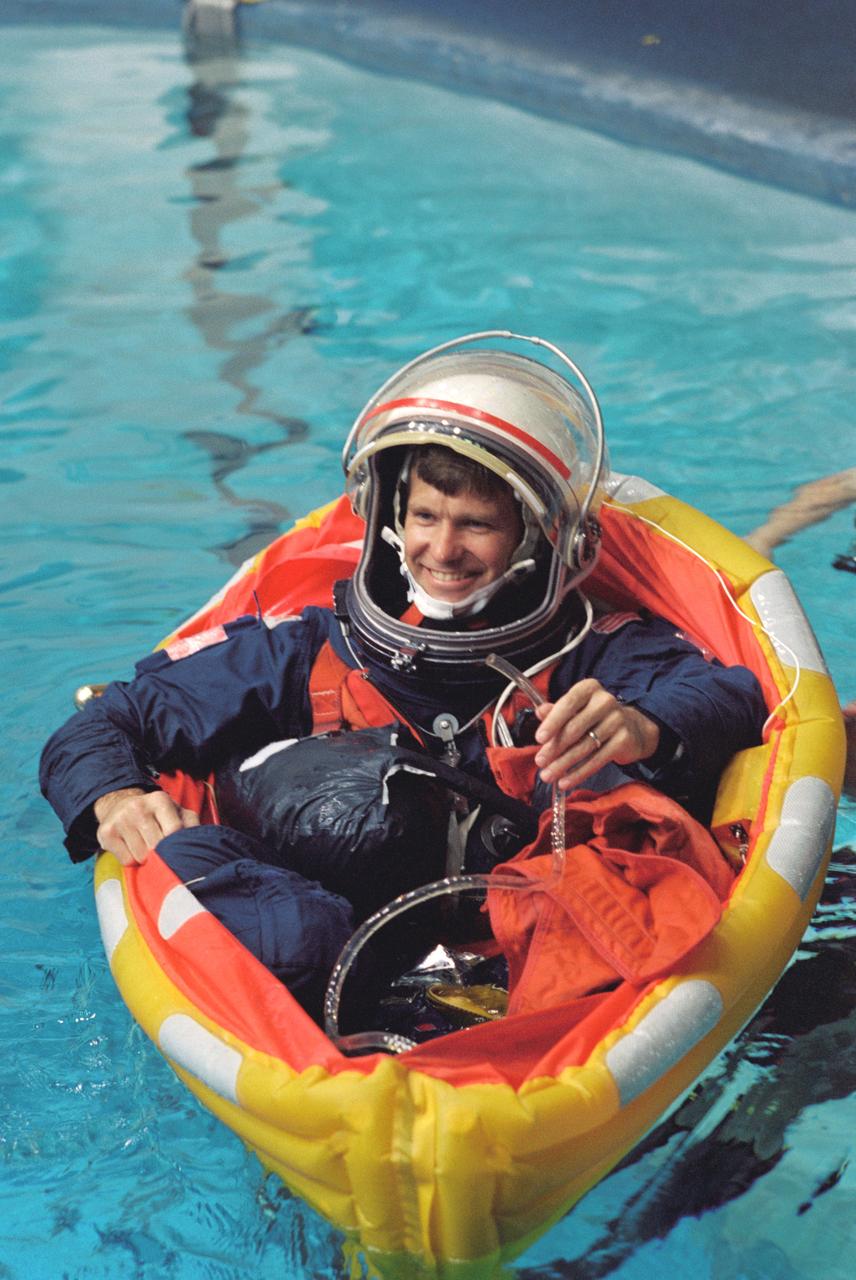
S94-37521 (28 June 1994) --- Astronaut Donald R. McMonagle, mission commander, checks the drainage hose on his rapidly fashioned life raft during an emergency bailout training exercise in the Johnson Space Center's (JSC) Weightless Environment Training Facility (WET-F). Making his third flight in space covering 343 hours, McMonagle will be joined by four other NASA astronauts and a European mission specialist for a week and a half in space aboard the Space Shuttle Atlantis. The flight will support the Atmospheric Laboratory for Applications and Science (ATLAS-3) mission.
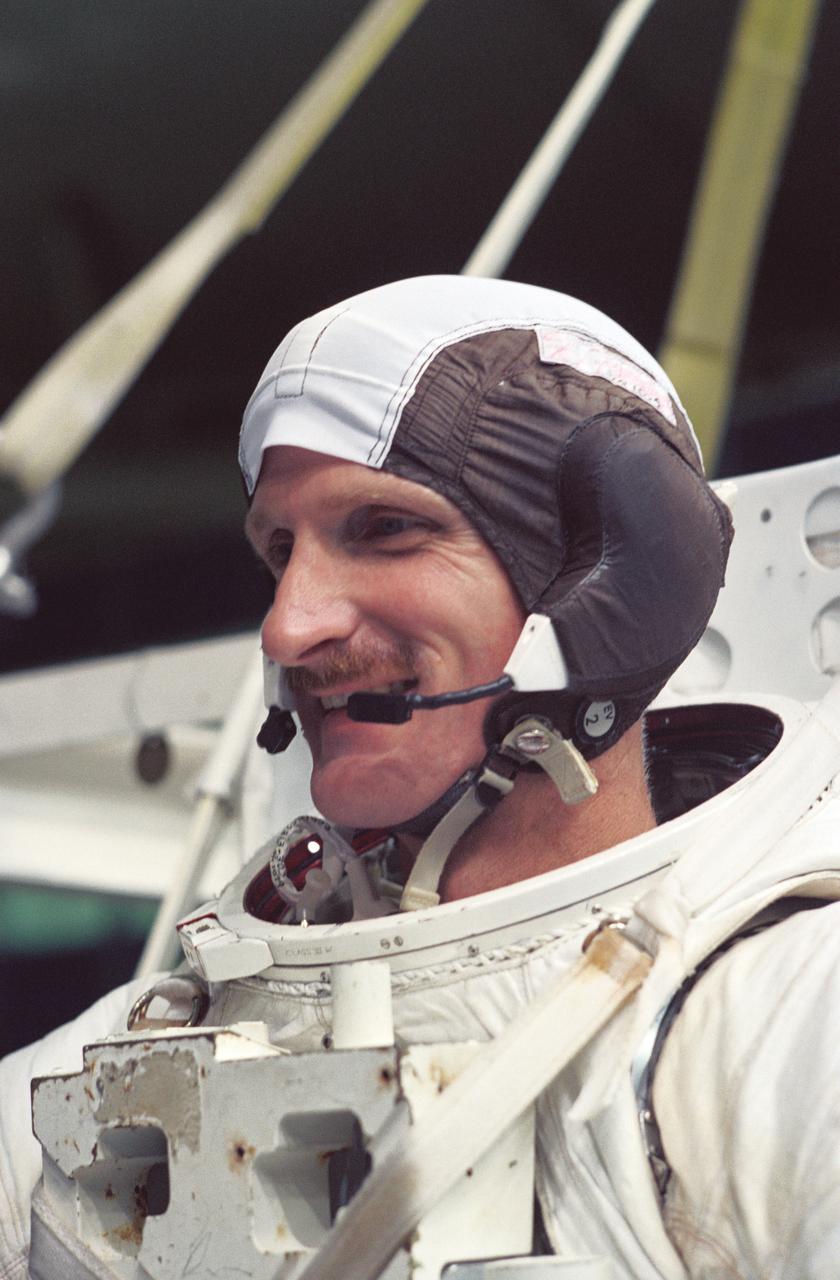
S94-40049 (1 August 1994) --- Attired in a training version of the Extravehicular Mobility Unit (EMU), astronaut Joseph R. Tanner, mission specialist, prepares to be submerged in a 25-feet deep pool at the Johnson Space Center's (JSC) Weightless Environment Training Facility (WET-F). Though no extravehicular activity (EVA) is planned for the mission, at least two astronauts are trained to perform tasks that would require a space walk in the event of failure of remote systems. In November, Tanner will join four other NASA astronauts and a European mission specialist for a week and a half in space aboard the Space Shuttle Atlantis. The flight will support the Atmospheric Laboratory for Applications and Science (ATLAS-3) mission.
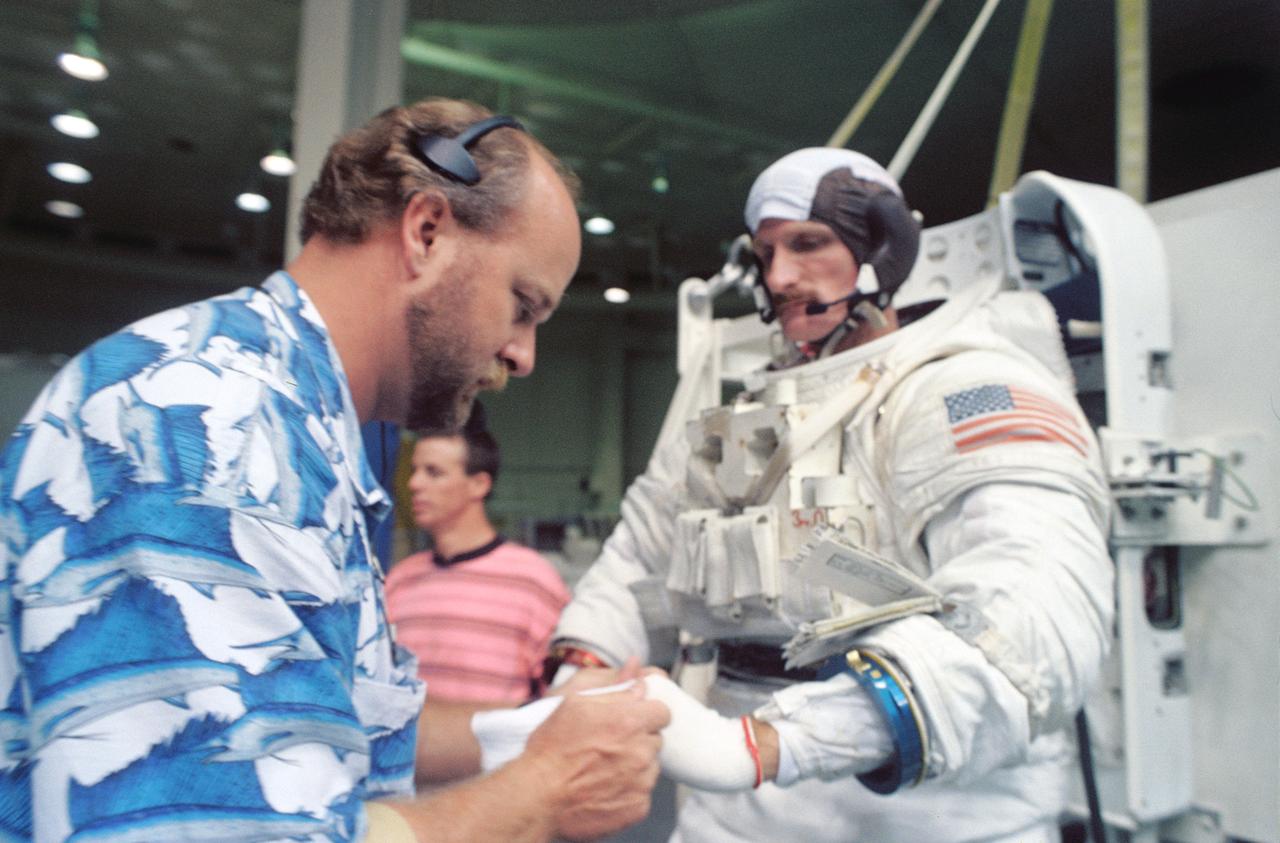
S94-40048 (1 August 1994) --- Astronaut Joseph R. Tanner, mission specialist, is assisted by Boeing suit expert Steve Voyles as he prepares to be submerged in a 25-feet deep pool at the Johnson Space Center's (JSC) Weightless Environment Training Facility (WET-F). Though no extravehicular activity (EVA) is planned for the mission, at least two astronauts are trained to perform tasks that would require a space walk in the event of failure of remote systems. In November, Tanner will join four other NASA astronauts and a European mission specialist for a week and a half in space aboard the Space Shuttle Atlantis. The flight will support the Atmospheric Laboratory for Applications and Science (ATLAS-3) mission.
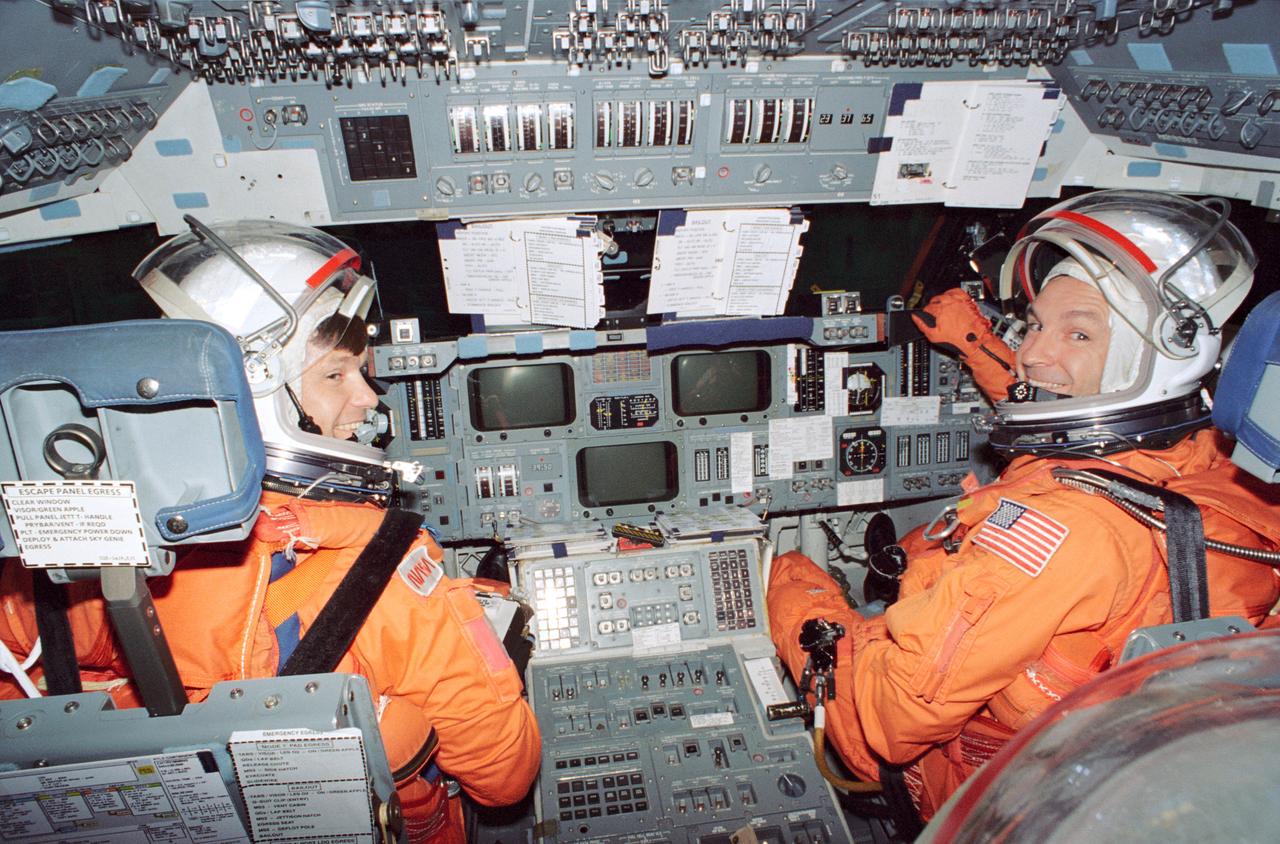
S94-40090 (23 June 1994) --- Astronauts Donald R. McMonagle, left, and Curtis L. Brown man the commander's and pilot's stations, respectively, during a rehearsal of ascent and entry phases of their scheduled November 1994 flight aboard Atlantis. Three other NASA astronauts and a European mission specialist joined the two for this training exercise in the Crew Compartment Trainer (CCT) at the Johnson Space Center's (JSC) Shuttle Mockup and Integration Laboratory and will join them aboard the Space Shuttle Atlantis in November. The flight is manifest to support the Atmospheric Laboratory for Applications and Science (ATLAS-3) mission.
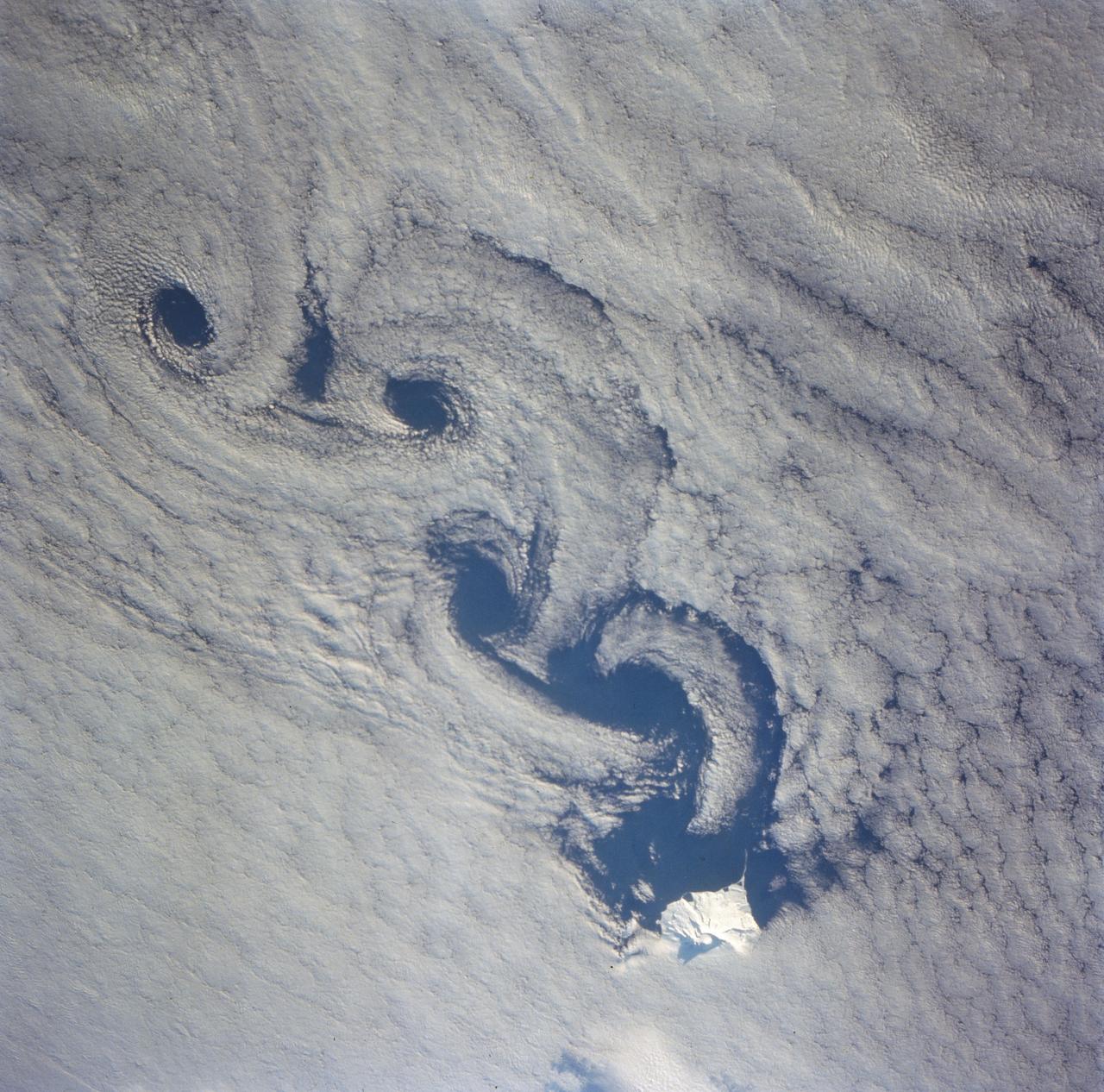
As the air blows over the tops of the mountain peaks, seen here in the clear region, the direction of the air flow is disturbed. These disturbances in the flow pattern are generally small circular eddies with one circulating in a clockwise direction and the next in the reverse direction. The wind here has caused the shallow cloud cover to change accordingly. These eddies are commonly called von Karmen Vortices.
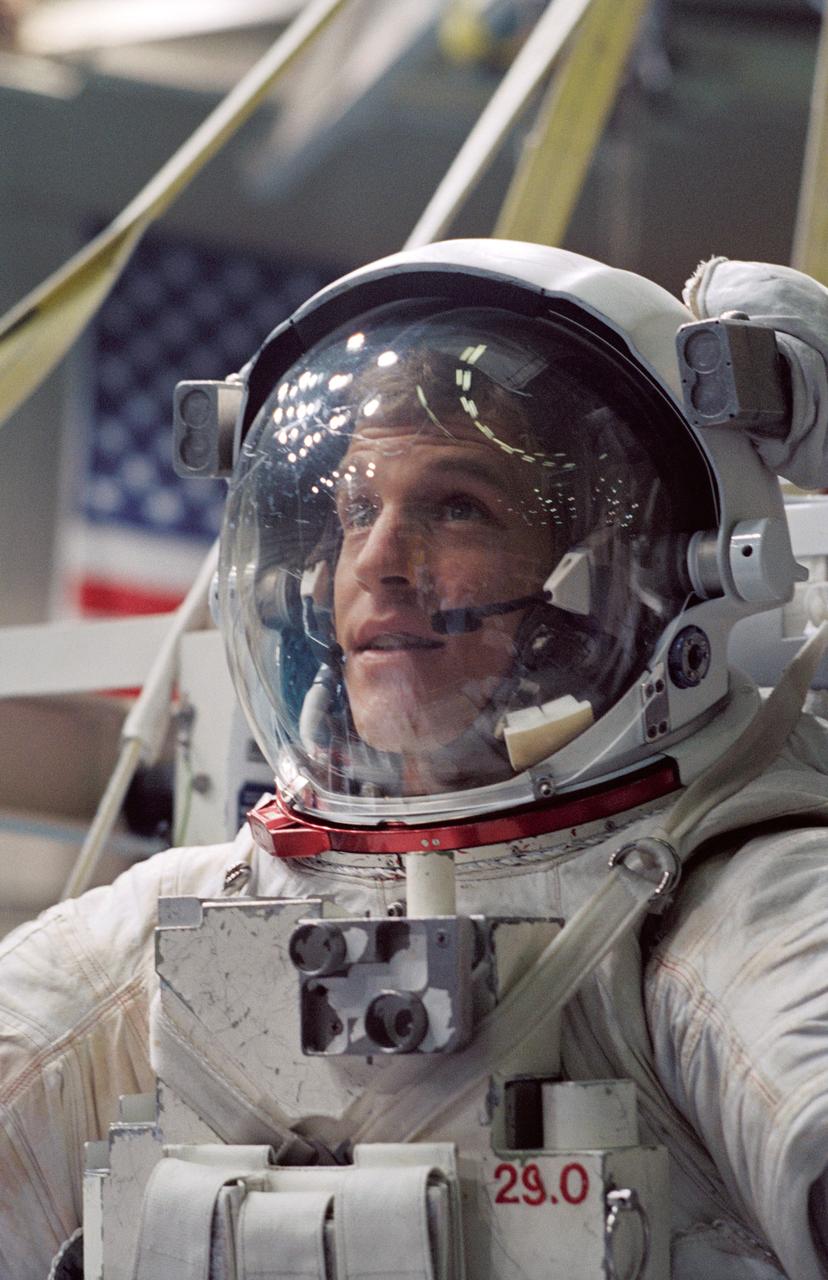
S94-40051 (1 August 1994) --- Attired in a training version of the Extravehicular Mobility Unit (EMU), astronaut Scott E. Parazynski, mission specialist, prepares to be submerged in a 25-feet deep pool at the Johnson Space Center's (JSC) Weightless Environment Training Facility (WET-F). Though no extravehicular activity (EVA) is planned for the mission, at least two astronauts are trained to perform tasks that would require a space walk in the event of failure of remote systems. In November, Parazynski will join four other NASA astronauts and a European mission specialist for a week and a half in space aboard the Space Shuttle Atlantis. The flight will support the Atmospheric Laboratory for Applications and Science (ATLAS-3) mission.
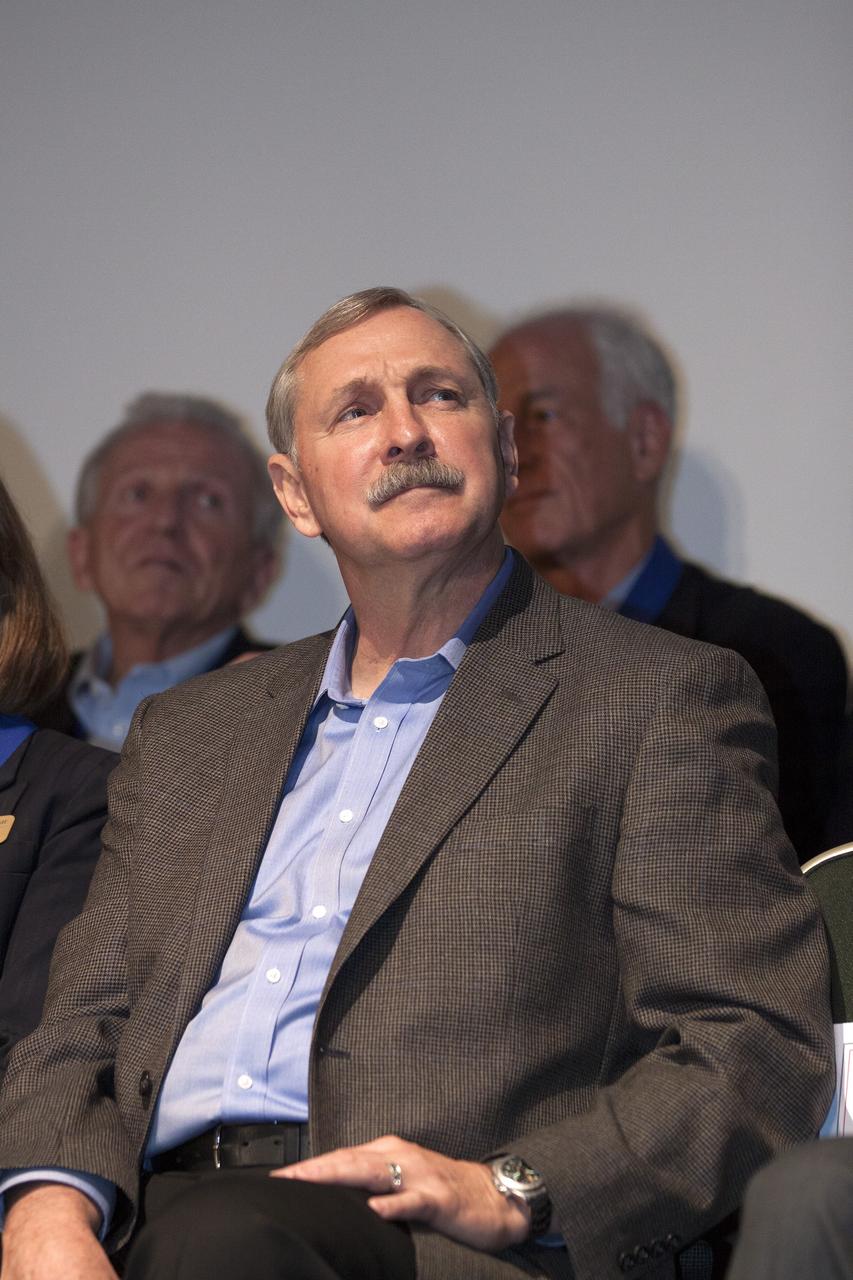
CAPE CANAVERAL, Fla. – At NASA’s Kennedy Space Center Visitor Complex in Florida, shuttle astronaut Curt Brown listens as he is being introduced for induction into the U.S. Astronaut Hall of Fame AHOF. Brown, a veteran of six spaceflights, began his career with NASA in 1987 as a pilot and has logged more than 1,383 hours in space. Brown’s missions aboard the space shuttle include STS-47, STS-66, STS-77, STS-85, STS-95 and STS-103. Shuttle astronauts Eileen Collins and Bonnie Dunbar also were inducted into the AHOF. This induction is the twelfth group of space shuttle astronauts named to the AHOF, and the first time two women are inducted at the same time. The year’s inductees were selected by a committee of current Hall of Fame astronauts, former NASA officials, historians and journalists. The selection process is administered by the Astronaut Scholarship Foundation. For more on the U.S. Astronaut Hall of Fame, go to http://www.kennedyspacecenter.com/astronaut-hall-of-fame.aspx For more on the Astronaut Scholarship Foundation, go to http://astronautscholarship.org/ Photo credit: NASA/ Kim Shiflett
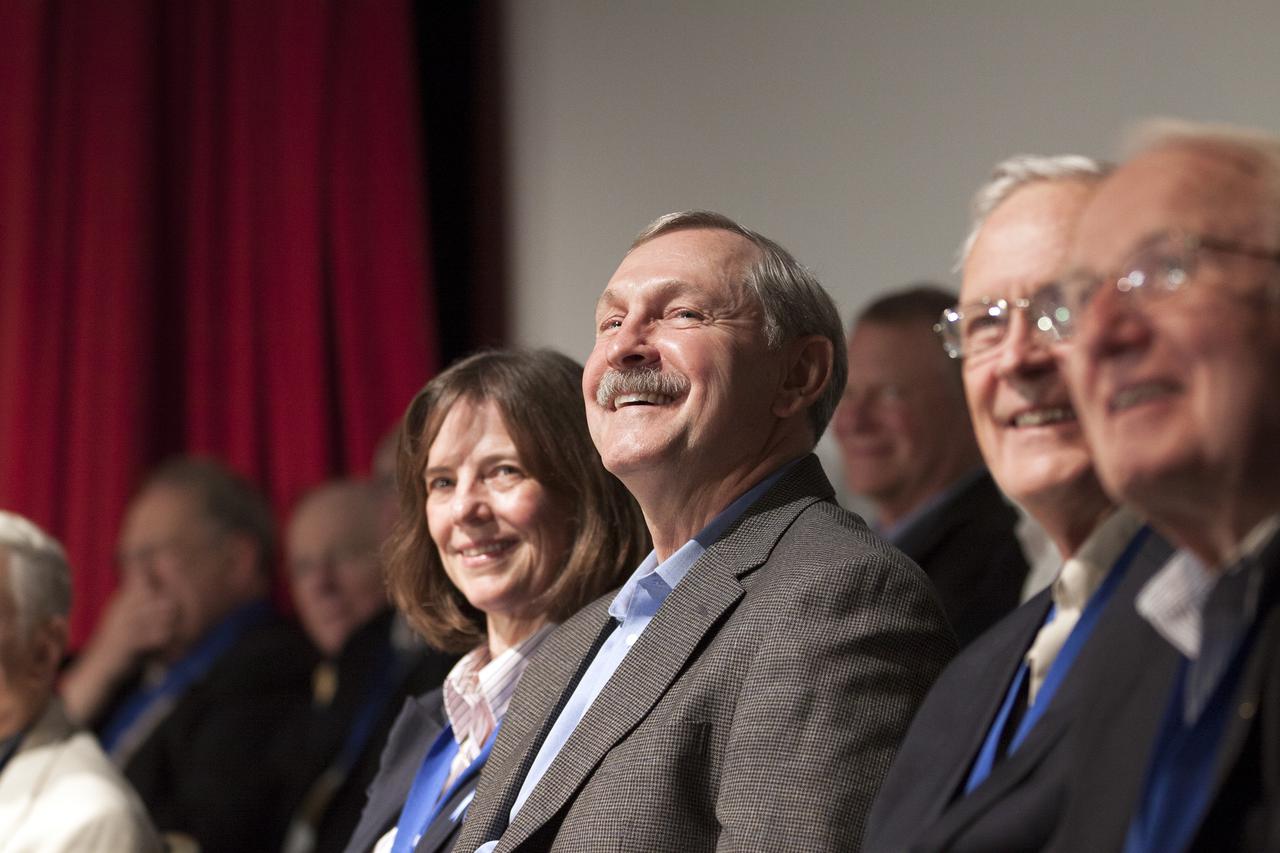
CAPE CANAVERAL, Fla. – At NASA’s Kennedy Space Center Visitor Complex in Florida, shuttle astronaut Curt Brown listens as he is being introduced for induction into the U.S. Astronaut Hall of Fame AHOF. Brown, a veteran of six spaceflights, began his career with NASA in 1987 as a pilot and has logged more than 1,383 hours in space. Brown’s missions aboard the space shuttle include STS-47, STS-66, STS-77, STS-85, STS-95 and STS-103. Shuttle astronauts Eileen Collins and Bonnie Dunbar also were inducted into the AHOF. This induction is the twelfth group of space shuttle astronauts named to the AHOF, and the first time two women are inducted at the same time. The year’s inductees were selected by a committee of current Hall of Fame astronauts, former NASA officials, historians and journalists. The selection process is administered by the Astronaut Scholarship Foundation. For more on the U.S. Astronaut Hall of Fame, go to http:__www.kennedyspacecenter.com_astronaut-hall-of-fame.aspx For more on the Astronaut Scholarship Foundation, go to http:__astronautscholarship.org_ Photo credit: NASA_ Kim Shiflett
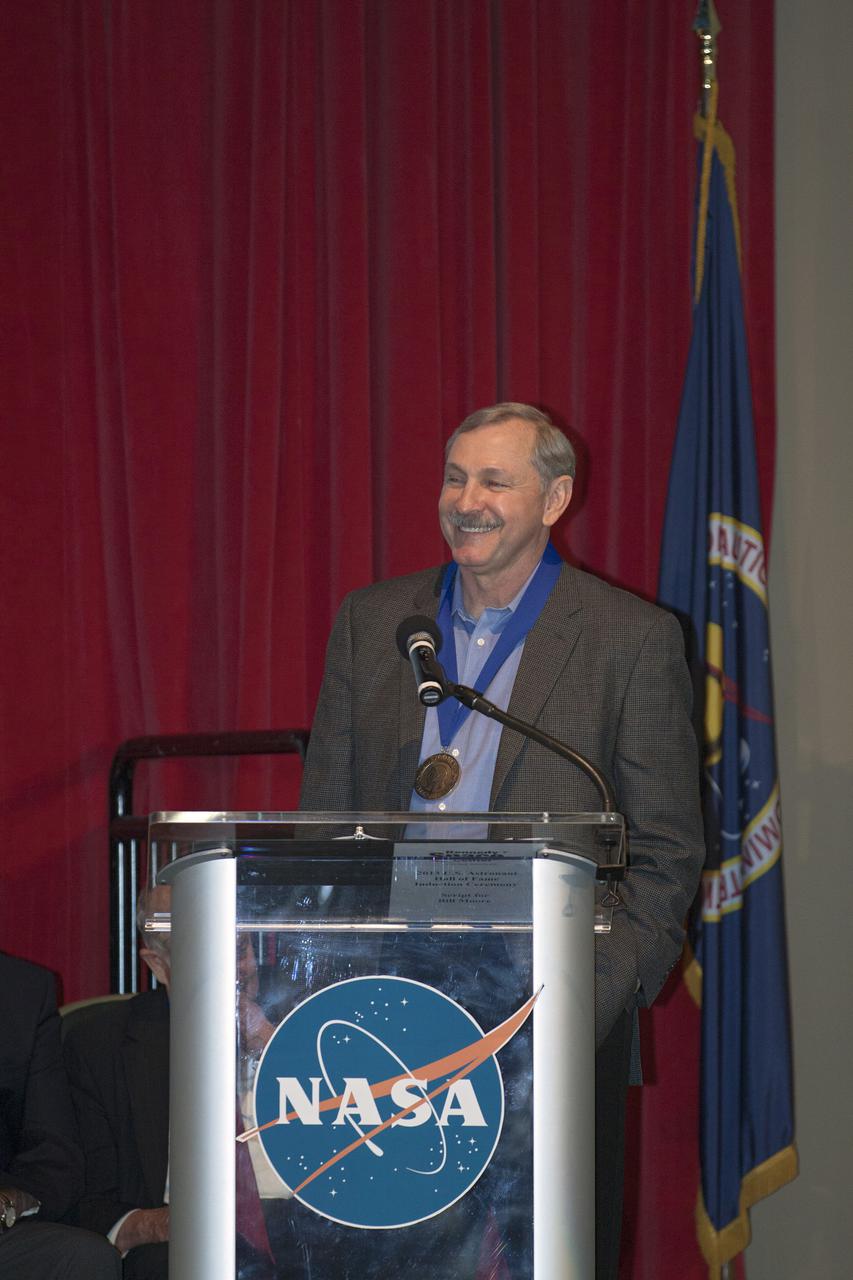
CAPE CANAVERAL, Fla. – At NASA’s Kennedy Space Center Visitor Complex in Florida, shuttle astronaut Curt Brown speaks after being inducted into the U.S. Astronaut Hall of Fame AHOF. Brown, a veteran of six spaceflights, began his career with NASA in 1987 as a pilot and has logged more than 1,383 hours in space. Brown’s missions aboard the space shuttle include STS-47, STS-66, STS-77, STS-85, STS-95 and STS-103. Shuttle astronauts Eileen Collins and Bonnie Dunbar also were inducted into the AHOF. This induction is the twelfth group of space shuttle astronauts named to the AHOF, and the first time two women are inducted at the same time. The year’s inductees were selected by a committee of current Hall of Fame astronauts, former NASA officials, historians and journalists. The selection process is administered by the Astronaut Scholarship Foundation. For more on the U.S. Astronaut Hall of Fame, go to http:__www.kennedyspacecenter.com_astronaut-hall-of-fame.aspx For more on the Astronaut Scholarship Foundation, go to http:__astronautscholarship.org_ Photo credit: NASA_ Kim Shiflett
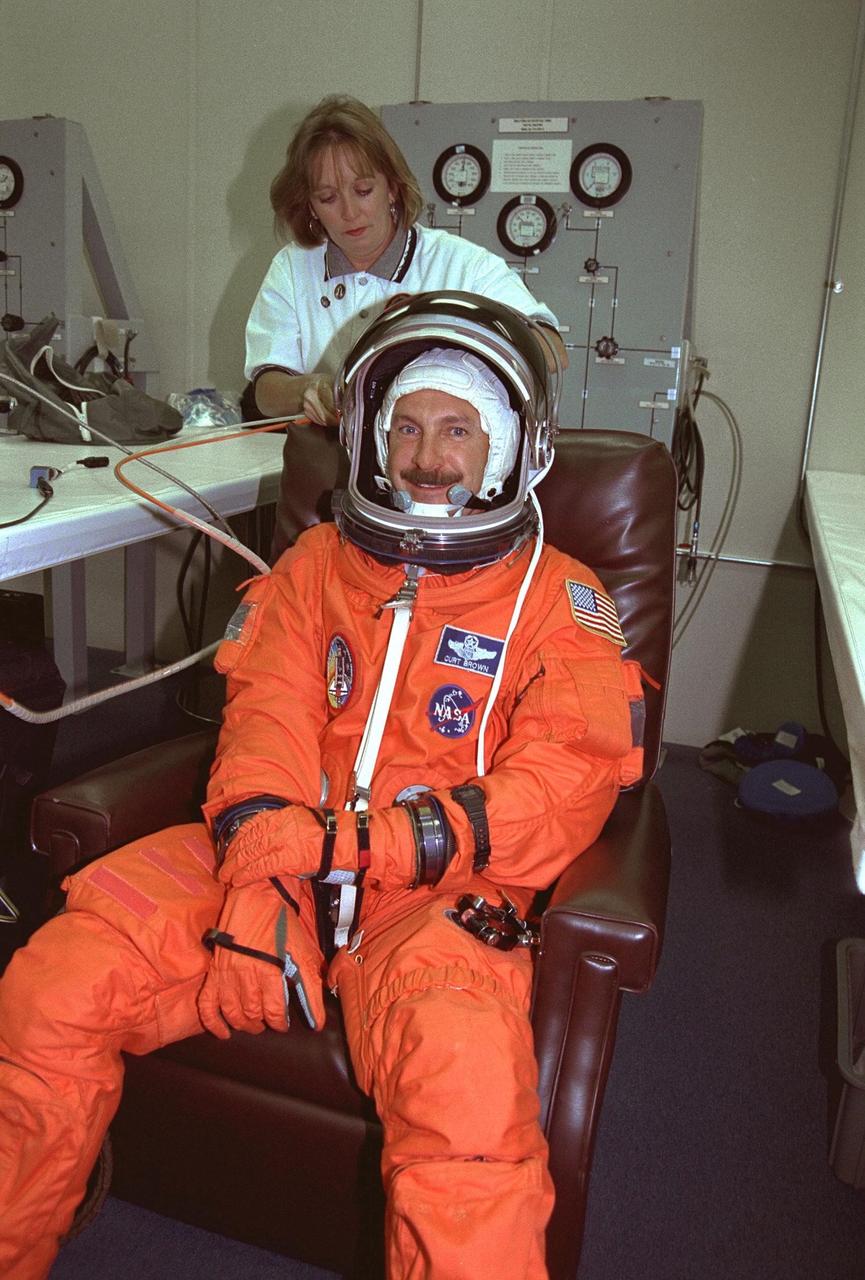
STS-85 Commander Curtis L. Brown, Jr. smiles as he is assisted with his ascent/reentry flight suit by a suit technician in the Operations and Checkout (O&C) Building. He is a lieutenant colonel in the Air Force and is on his fourth space flight. Brown has served as the pilot of STS-47, STS-66 and STS-77. A test pilot, he has more than 5,000 hours of flight time in jet aircraft. Brown will have responsibility for the overall success of this space flight and will operate and maintain Discovery throughout the mission. This will include the performance of station-keeping with the Cryogenic Infrared Spectrometers and Telescopes for the Atmosphere-Shuttle Pallet Satellite-2 (CRISTA-SPAS-2) free-flyer payload and many different maneuvers required by different payloads. The primary payload aboard the Space Shuttle orbiter Discovery is the CRISTA-SPAS-2. Other payloads on the 11-day mission include the Manipulator Flight Demonstration (MFD), and Technology Applications and Science-1 (TAS-1) and International Extreme Ultraviolet Hitchhiker-2 (IEH-2) experiments