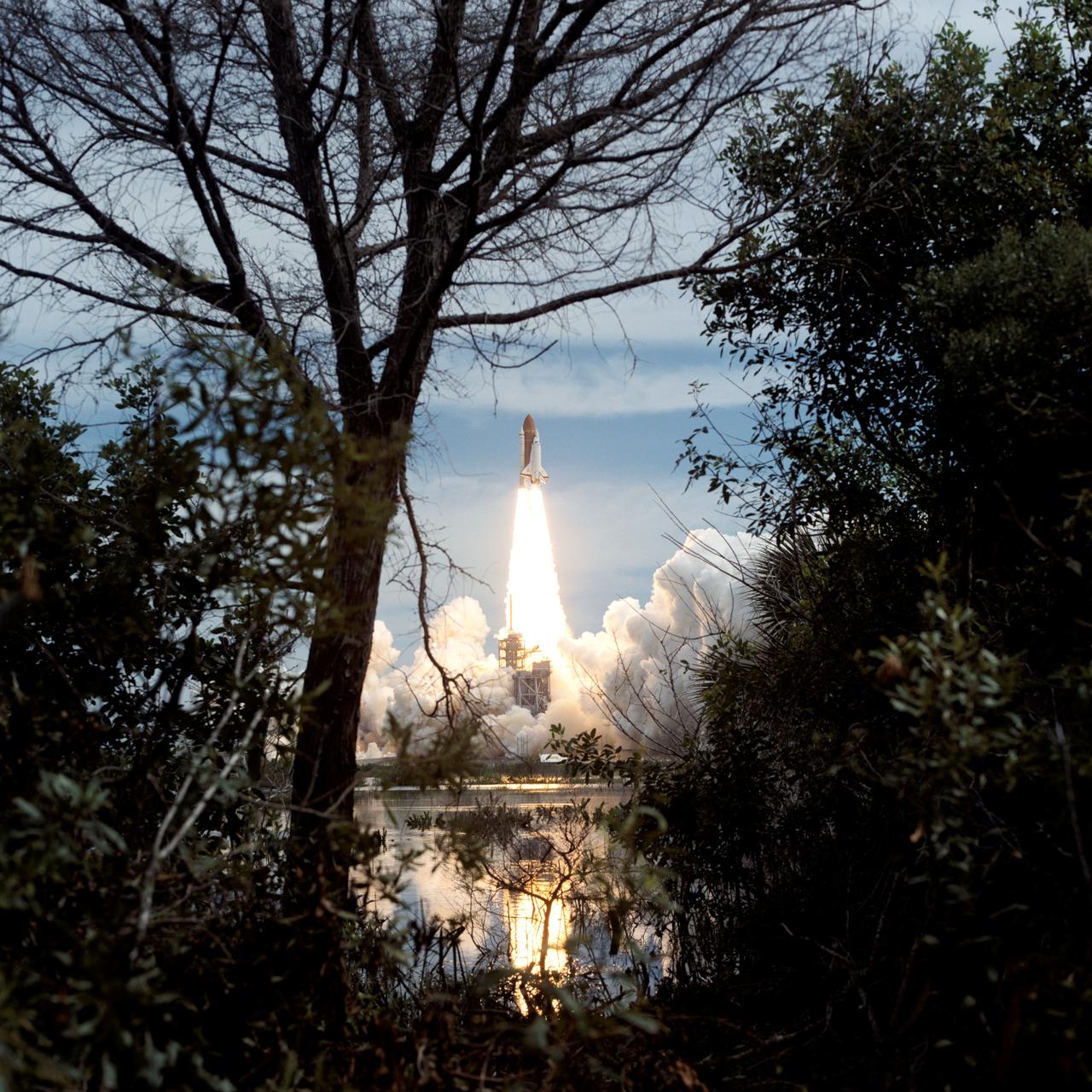
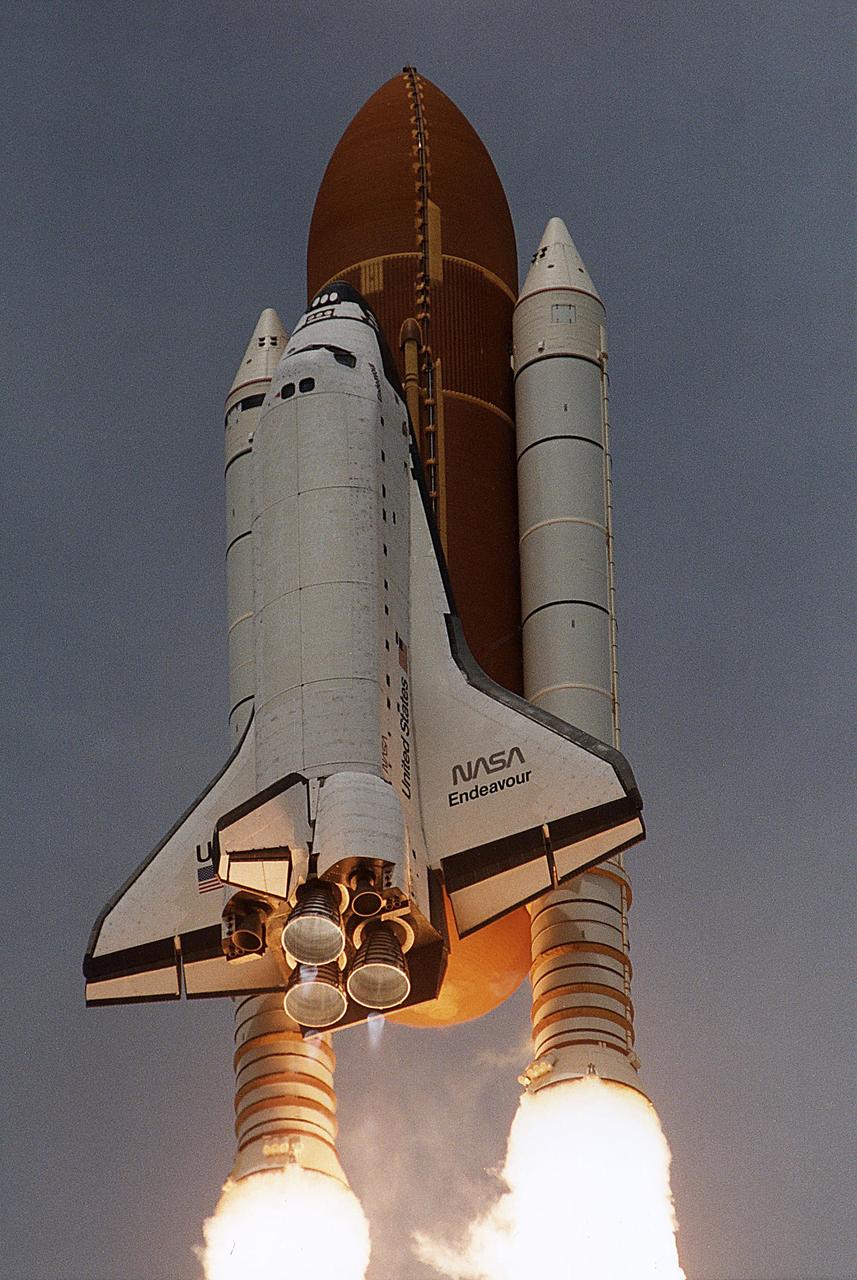
STS069-S-024 (7 September 1995) --- Trees and shrubs frame the liftoff phase of the Space Shuttle Endeavour as it begins the STS-69 mission. Liftoff from Launch Pad 39A occurred at 11:09:00:52 a.m. (EDT), September 7, 1995. The crew of five NASA astronauts is embarking on an 11-day multifaceted mission featuring two free-flying scientific research spacecraft, a spacewalk and a host of experiments in both the cargo bay and the middeck. Onboard were astronauts David M. Walker, Kenneth D. Cockrell, James S. Voss, James H. Newman and Michael L. Gernhardt.
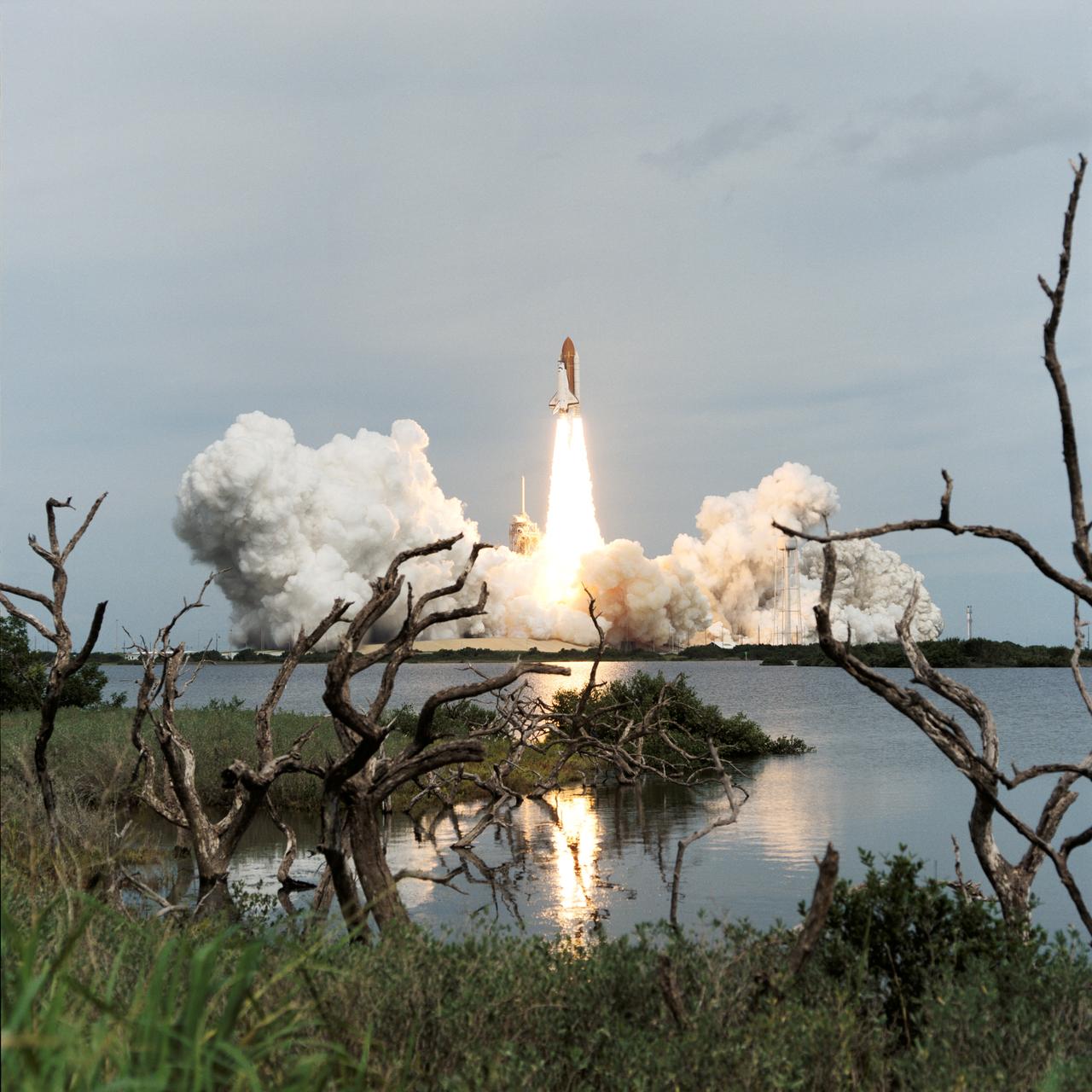
STS069-S-022 (7 September 1995) --- Marsh driftwood and Florida shrubbery frame the liftoff phase of the Space Shuttle Endeavour as it begins the STS-69 mission. Liftoff from Launch Pad 39A occurred at 11:09:00:52 a.m. (EDT), September 7, 1995. The crew of five NASA astronauts is embarking on an 11-day multifaceted mission featuring two free-flying scientific research spacecraft, a spacewalk and a host of experiments in both the cargo bay and the middeck. Onboard were astronauts David M. Walker, Kenneth D. Cockrell, James S. Voss, James H. Newman and Michael L. Gernhardt.
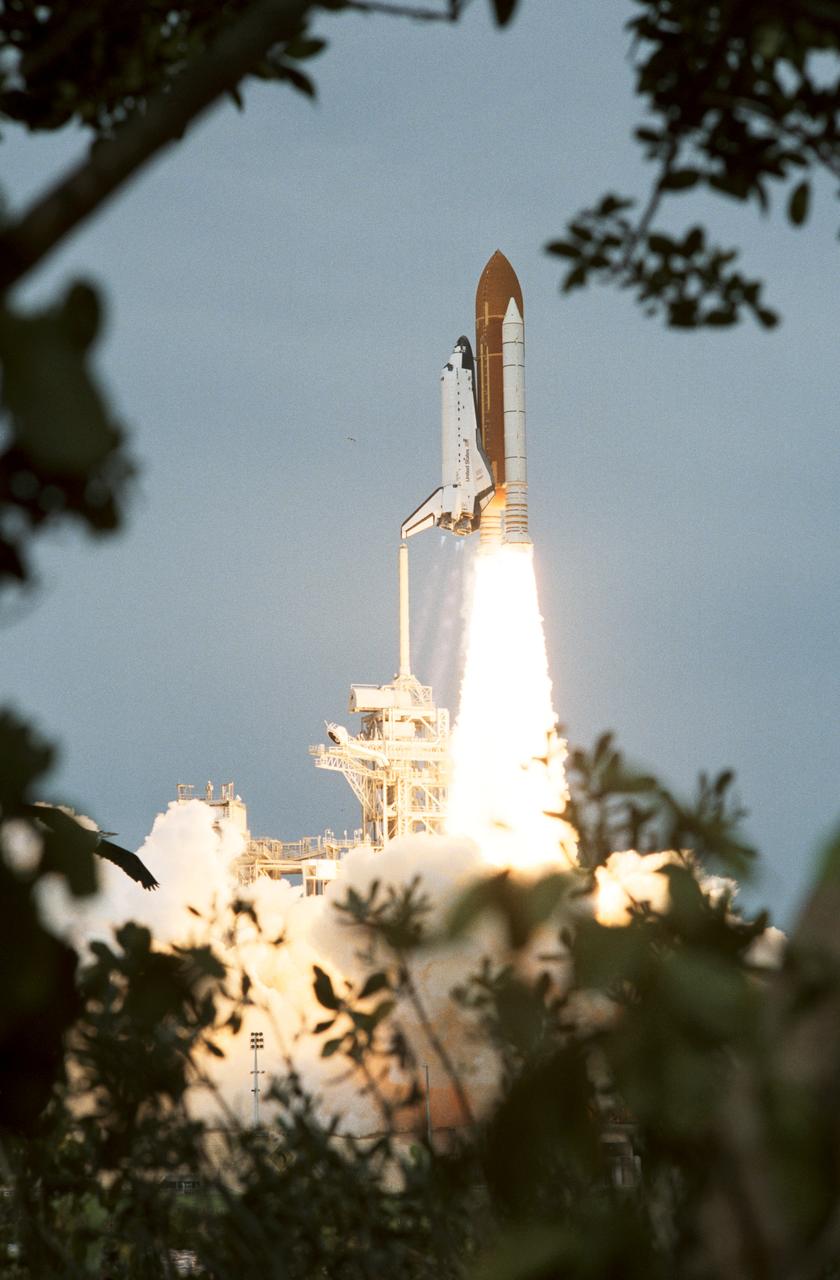
STS069-S-019 (7 September 1995) --- Florida shrubbery frames the liftoff phase of the Space Shuttle Endeavour as it begins the STS-69 mission. Liftoff from Launch Pad 39A occurred at 11:09:00:52 a.m. (EDT), September 7, 1995. The crew of five NASA astronauts is embarking on an 11-day multifaceted mission featuring two free-flying scientific research spacecraft, a spacewalk and a host of experiments in both the cargo bay and the middeck. Onboard were astronauts David M. Walker, Kenneth D. Cockrell, James S. Voss, James H. Newman and Michael L. Gernhardt.
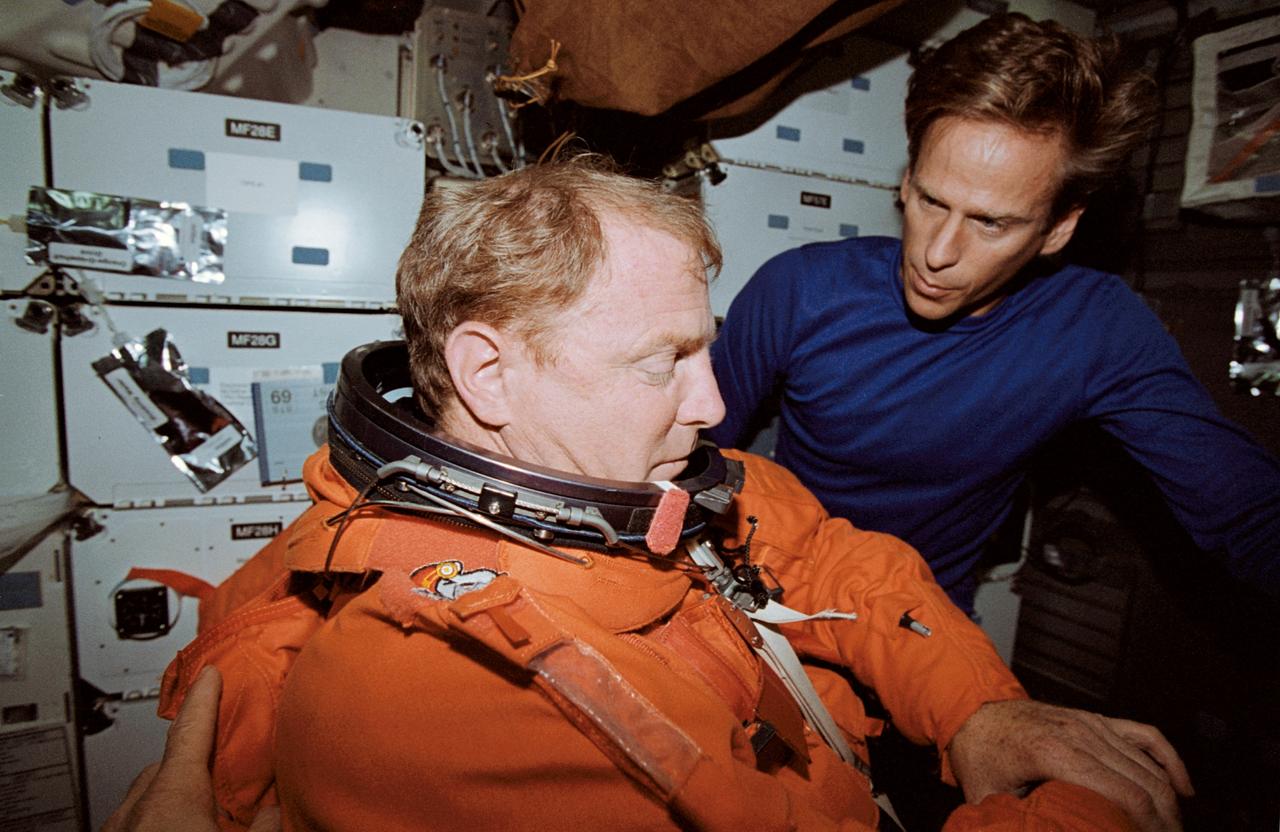
STS069-343-014 (18 September 1995) --- Astronaut David M. Walker, mission commander, gets a hand from astronaut Michael L. Gernhardt as he gets into the partial-pressure launch and entry suit in preparation for landing. STS-69 and the Space Shuttle Endeavour, with a five-member crew, launched on September 7, 1995, from the Kennedy Space Center (KSC). The multifaceted mission ended September 18, 1995, with a successful landing on Runway 33 at KSC.
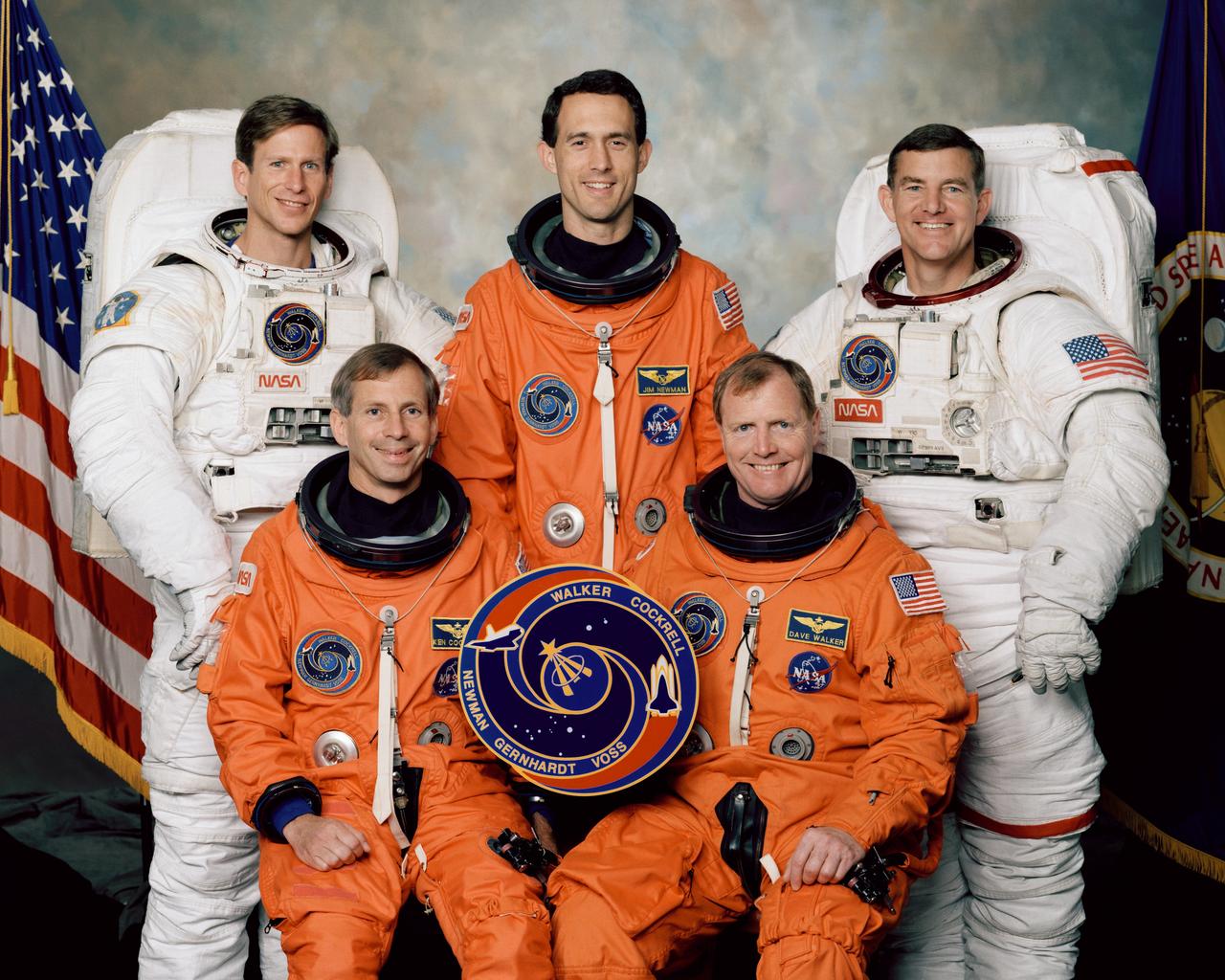
STS069-S-002 (June 1995) --- These five NASA astronauts have been named as crewmembers for the STS-69 mission, scheduled onboard the Space Shuttle Endeavour in late July of 1995. David M. Walker (right front) is mission commander; with Kenneth D. Cockrell (left front) scheduled to serve as pilot. On the back row are (left to right) Michael L. Gernhardt and James H. Newman, both mission specialists; and James S. Voss, payload commander.
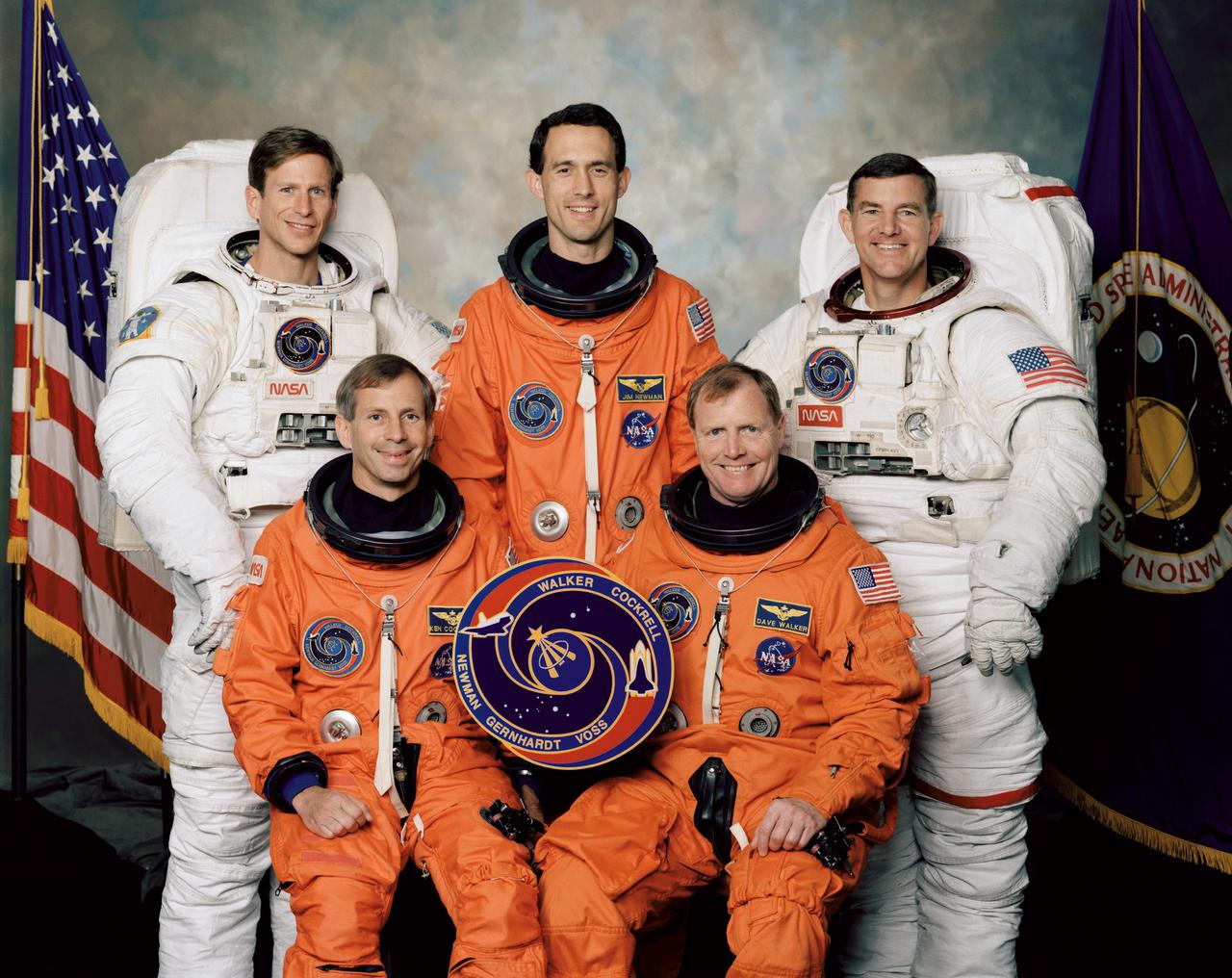
These five NASA astronauts were the crew members for the STS-69 mission that launched aboard the Space Shuttle Endeavour September 7, 1995. Pictured on the front row (left to right) are David M. Walker, mission commander; and Kenneth D. Cockrell, pilot. On the back row (left to right) are Michael L. Gernhardt and James H. Newman, both mission specialists; and James S. Voss, payload commander. The mission’s two primary payloads included the Spartan 201-3 and Wake Shield Facility-2 (WSF-2).
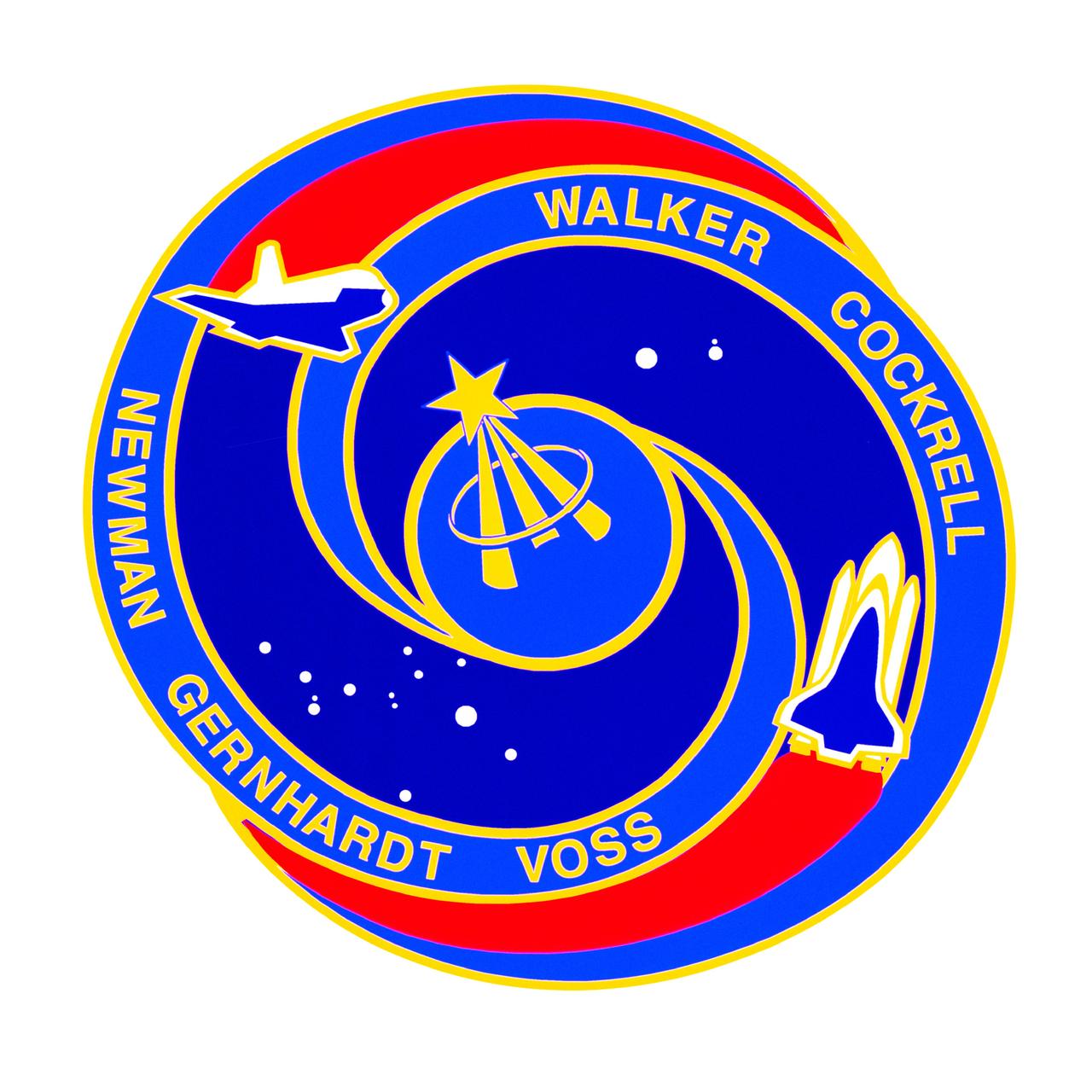
Designed by the mission crew members, the patch for STS-69 symbolizes the multifaceted nature of the flight's mission. The primary payload, the Wake Shield Facility (WSF), is represented in the center by the astronaut emblem against a flat disk. The astronaut emblem also signifies the importance of human beings in space exploration, reflected by the planned space walk to practice for International Space Station (ISS) activities and to evaluate space suit design modifications. The two stylized Space Shuttles highlight the ascent and entry phases of the mission. Along with the two spiral plumes, the stylized Space Shuttles symbolize a NASA first, the deployment and recovery on the same mission of two spacecraft (both the Wake Shield Facility and the Spartan). The constellations Canis Major and Canis Minor represent the astronomy objectives of the Spartan and International Extreme Ultraviolet Hitchhiker (IEH) payload. The two constellations also symbolize the talents and dedication of the support personnel who make Space Shuttle missions possible.
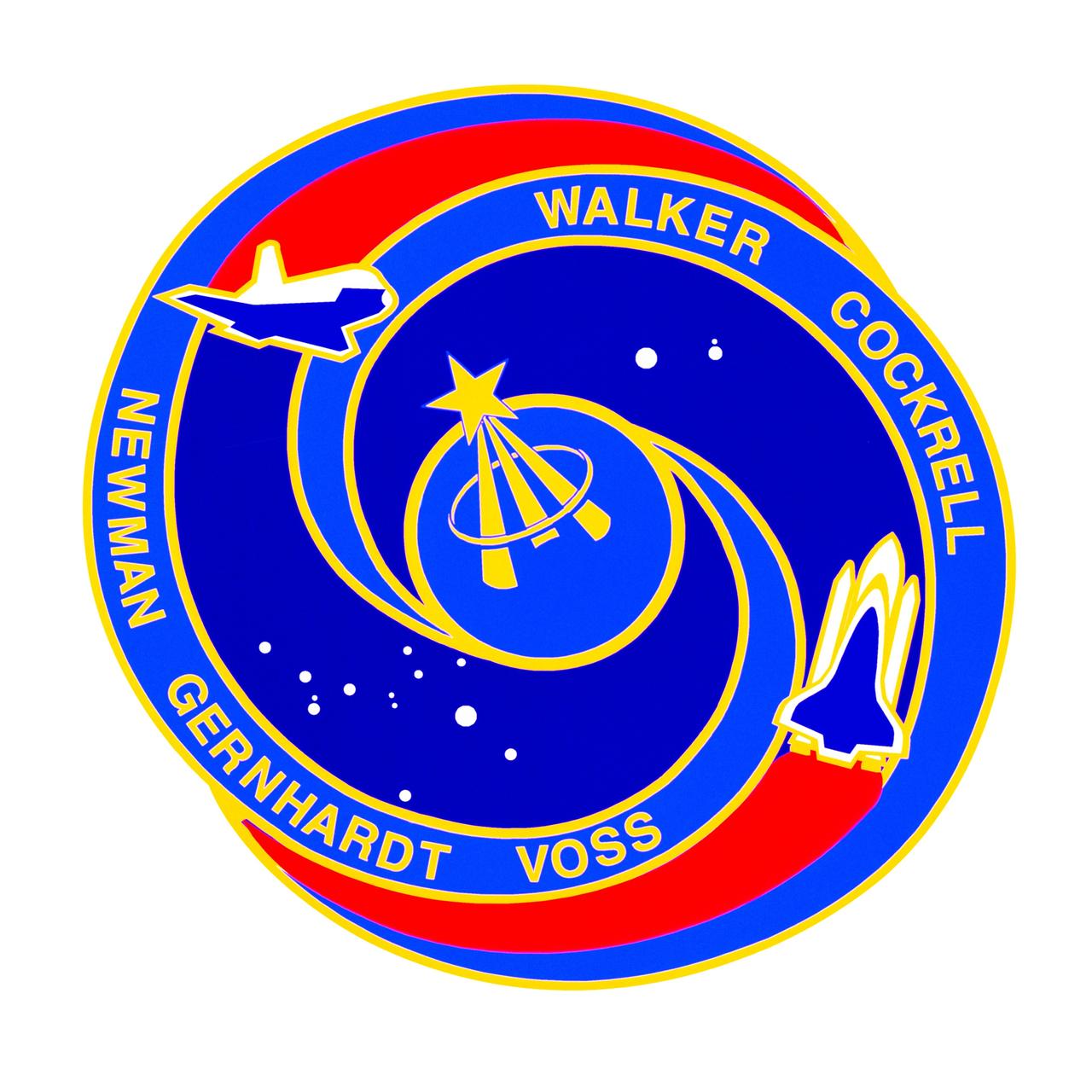
STS069-S-001 (May 1995) --- Designed by the crew members, the patch for STS-69 symbolizes the multifaceted nature of the flight's mission. The primary payload, Wake Shield Facility (WSF), is represented in the center by the astronaut emblem against a flat disk. The astronaut emblem also signifies the importance of human beings in space exploration, reflected by the planned spacewalk supporting space station assembly. The two stylized space shuttles highlight the ascent and entry phases of the mission. Along with the two spiral plumes, the stylized space shuttles symbolize a NASA first - the deployment and recovery on the same mission of two spacecraft (both the Wake Shield Facility and the Spartan). The constellations Canis Major and Canis Minor represent the astronomy objectives of the Spartan and International Extreme Ultraviolet Hitchhiker (IEH) payload. The two constellations also symbolize the talents and dedication of the support personnel who make space shuttle missions possible. The NASA insignia design for space shuttle flights is reserved for use by the astronauts and for other official use as the NASA Administrator may authorize. Public availability has been approved only in the forms of illustrations by the various news media. When and if there is any change in this policy, which is not anticipated, the change will be publicly announced. Photo credit: NASA
KENNEDY SPACE CENTER, FLA. -- STS-69: Endeavour
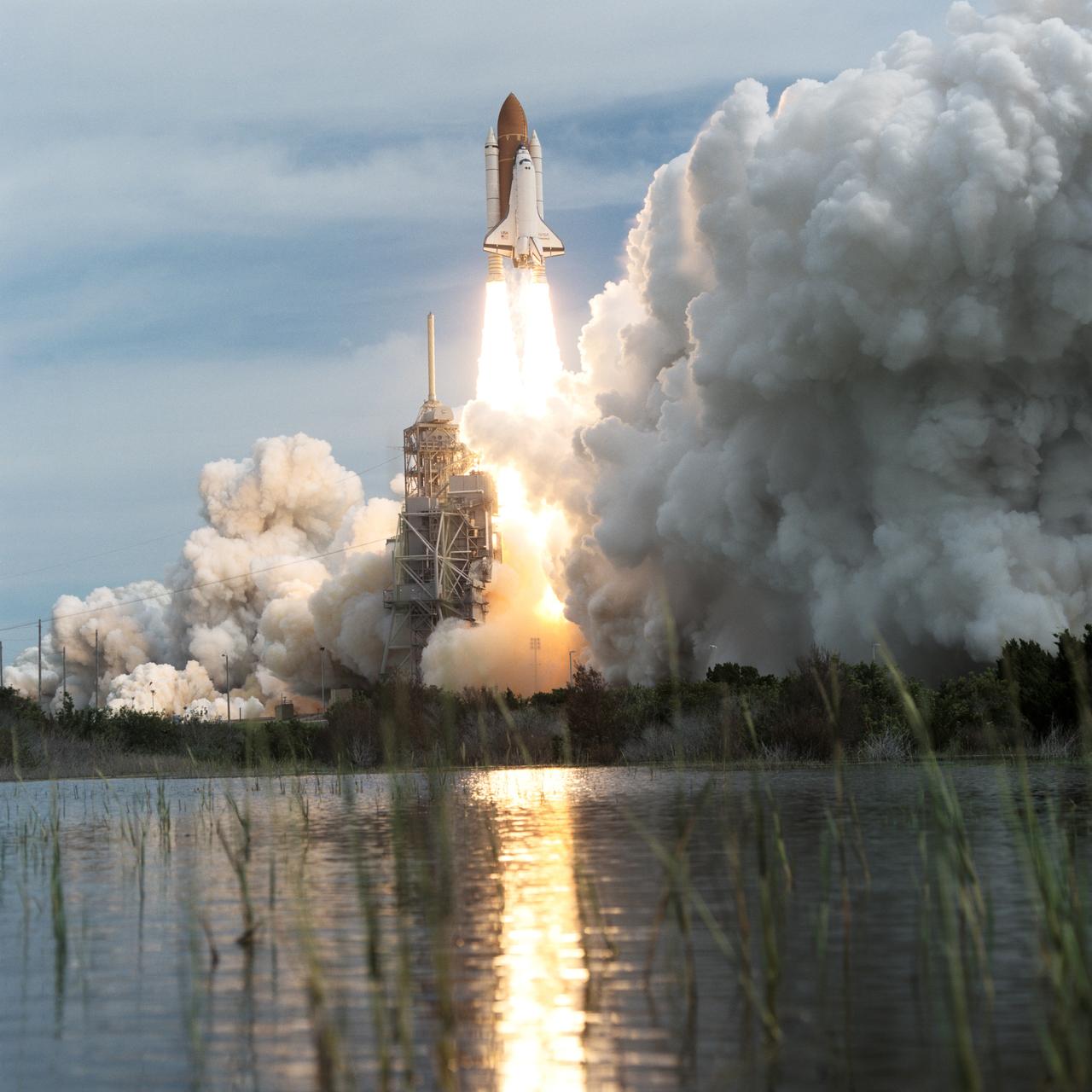
STS069-S-023 (7 September 1995) --- Liftoff of the Space Shuttle Endeavour from Launch Pad 39A occurred at 11:09:00:52 a.m. (EDT), September 7, 1995. The crew of five NASA astronauts was embarking on an 11-day multifaceted mission featuring two free-flying scientific research spacecraft, a spacewalk and a host of experiments in both the cargo bay and the middeck. Onboard were astronauts David M. Walker, Kenneth D. Cockrell, James S. Voss, James H. Newman and Michael L. Gernhardt.
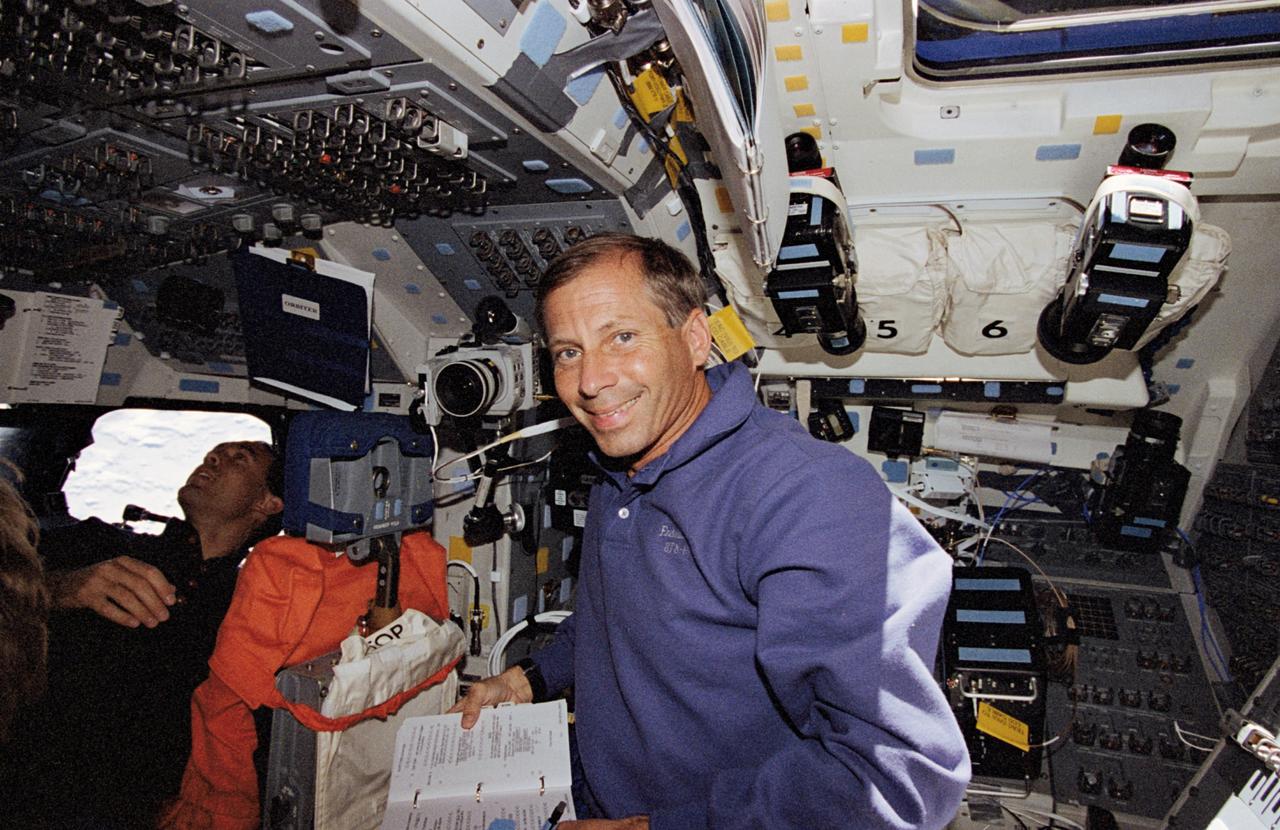
STS069-363-010 (7-18 September 1995) --- Astronaut Kenneth D. Cockrell, pilot, looks over a logbook on Space Shuttle Endeavour’s flight deck during rendezvous operations involving one of two temporarily free-flying craft. Astronaut James H. Newman (background), mission specialist, eyeballs the target. Endeavour, with a five-member crew, launched on September 7, 1995, from the Kennedy Space Center (KSC). The multifaceted mission ended September 18, 1995, with a successful landing on Runway 33 at KSC.
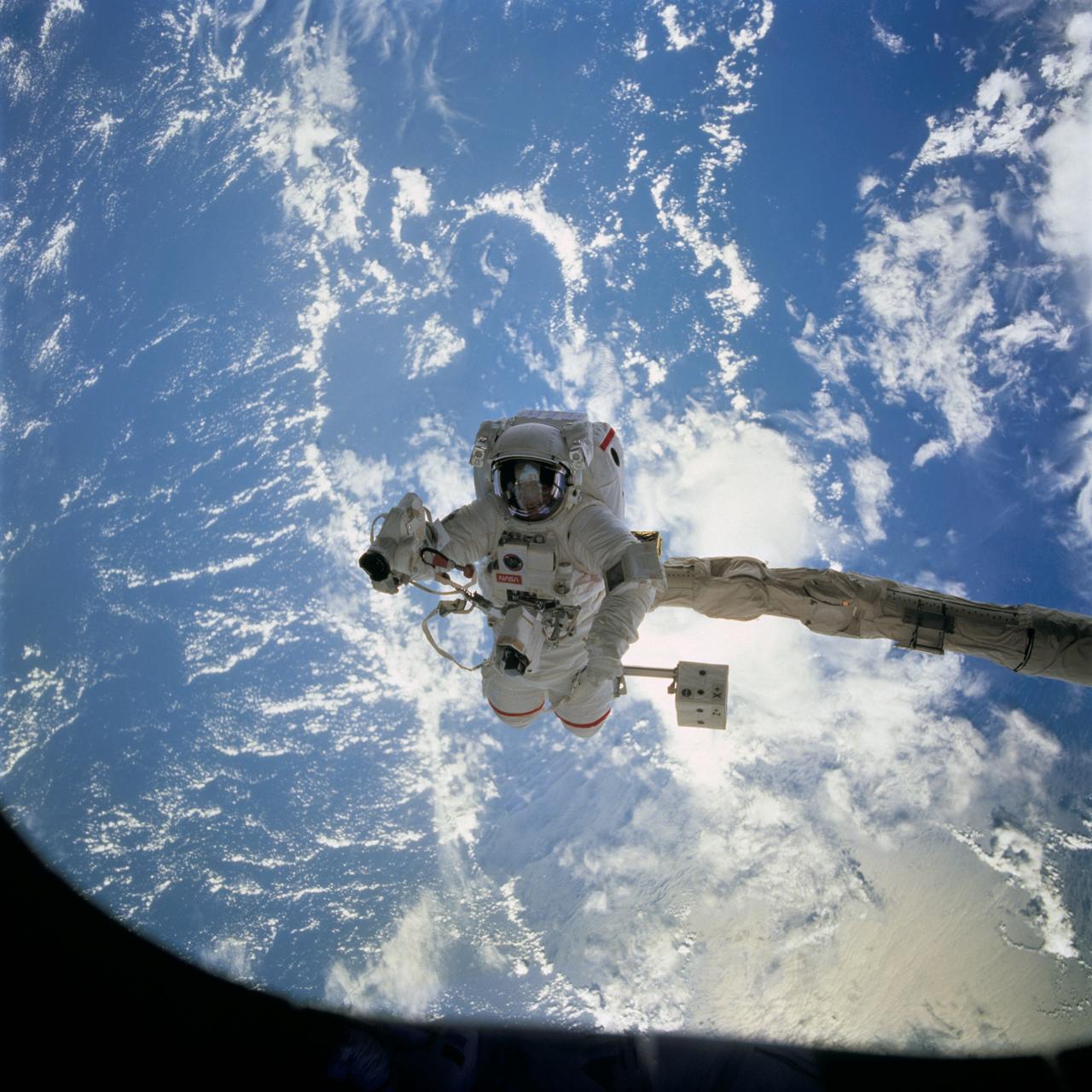
STS069-715-086 (16 September 1995) --- Astronaut James S. Voss, payload commander, is pictured during the September 16, 1995, Extravehicular Activity (EVA) which was conducted in and around Space Shuttle Endeavour's cargo bay. Voss, whose visor reflects Endeavour's forward section, was standing on a mobile foot restraint attached to the arm of the Remote Manipulator System (RMS). Voss is holding a camera, which he used to record some of the EVA, as well as snapshots of Endeavour's cabin. Evaluations for Space Station-era tools and various elements of the space suits were performed by Voss and his space walking crewmate, astronaut Michael L. Gernhardt, mission specialist.
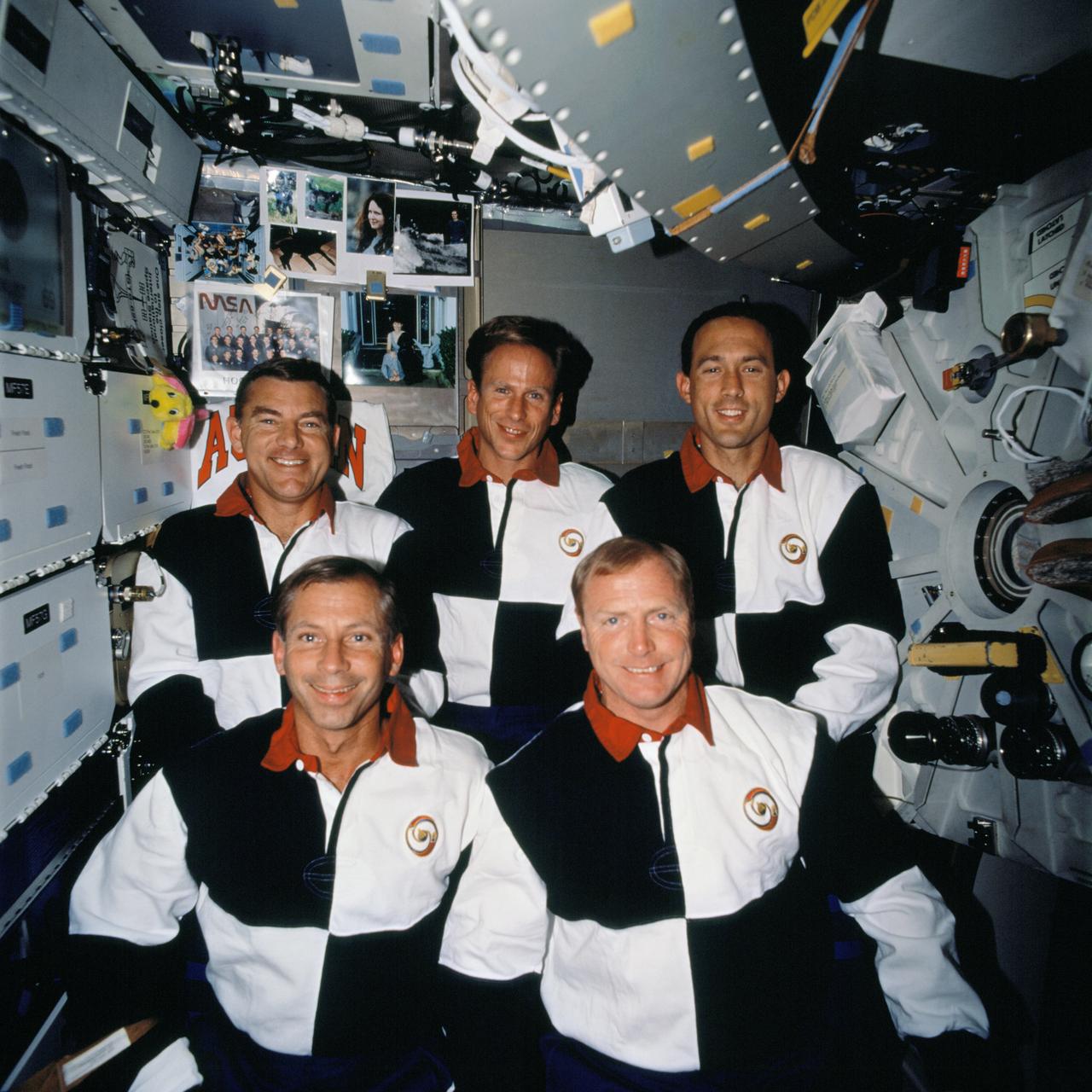
STS069-715-050 (7-18 September 1995) --- The STS-69 crewmembers take a moment from a busy flight to pose for the traditional in-flight crew portrait on the middeck of the Earth-orbiting Space Shuttle Endeavour. Left to right on the front row are astronauts Kenneth D. Cockrell, pilot; and David M. Walker, mission commander. Left to right on the back row are astronauts James S. Voss (payload commander), Michael L. Gernhardt and James H. Newman, all mission specialists. Endeavour with a five-member crew, launched on September 7, 1995, from the Kennedy Space Center (KSC). The mission ended September 18, 1995, with a successful landing on Runway 33 at KSC.
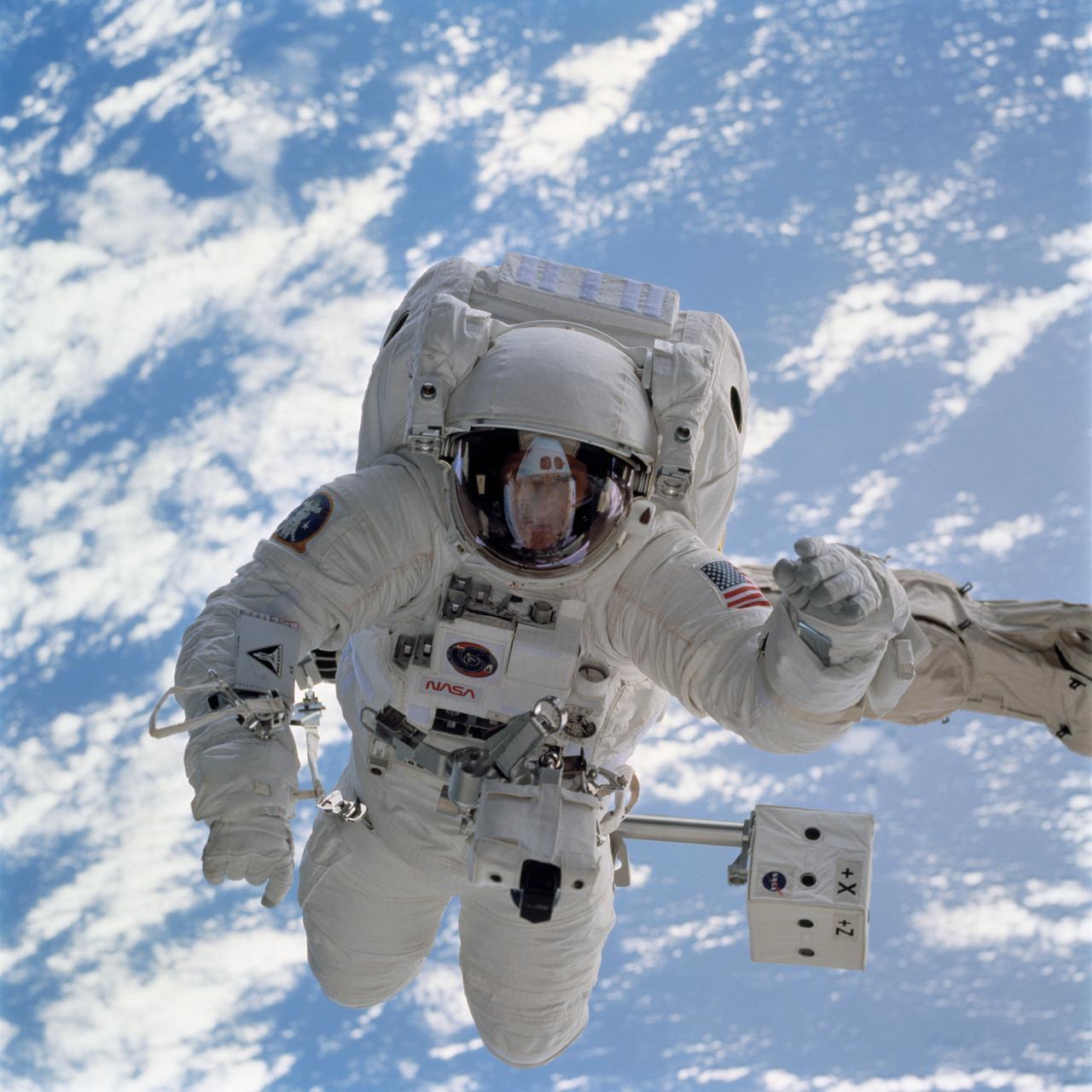
STS069-714-046 (16 Sept. 1995) --- Astronaut Michael L. Gernhardt, STS-69 mission specialist, is pictured during the Sept. 16, 1995, Extravehicular Activity (EVA) which was conducted in and around space shuttle Endeavour's cargo bay. Gernhardt, whose visor reflects Endeavour's forward section, was standing on a mobile foot restraint attached to the arm of the Remote Manipulator System (RMS). Unlike earlier spacewalking astronauts, Gernhardt was able to use an Electronic Cuff Checklist (ECC), forerunner for Space Station. Evaluations for Space Station-era tools and various elements of the spacesuits were performed by Gernhardt and his spacewalking crewmate, astronaut James S. Voss, payload commander.

S95-00355 (12-14 September 1992) --- Astronaut candidate Koichi Wakata prepares to jump off a box during a parachute landing demonstration at Vance Air Force Base. This portion of the training is designed to familiarize the trainees with the proper way to hit the ground following a parachute jump. Looking on are astronaut candidates Michael L. Gernhardt (left) and Andrew W. S. Thomas (second left), along with a United States Air Force (USAF) instructor. Wakata, representing Japan's National Space Development Agency (NASDA), is one of seven international mission specialist candidates who joined 19 United States astronaut candidates, including Gernhardt and Thomas, for the three-day parachute/survival training school at the Oklahoma Base. EDITORS NOTE: Since this photograph was taken, Gernhardt, Wakata and Thomas have been named as mission specialists for the STS-69, STS-72 and STS-77 missions, respectively.
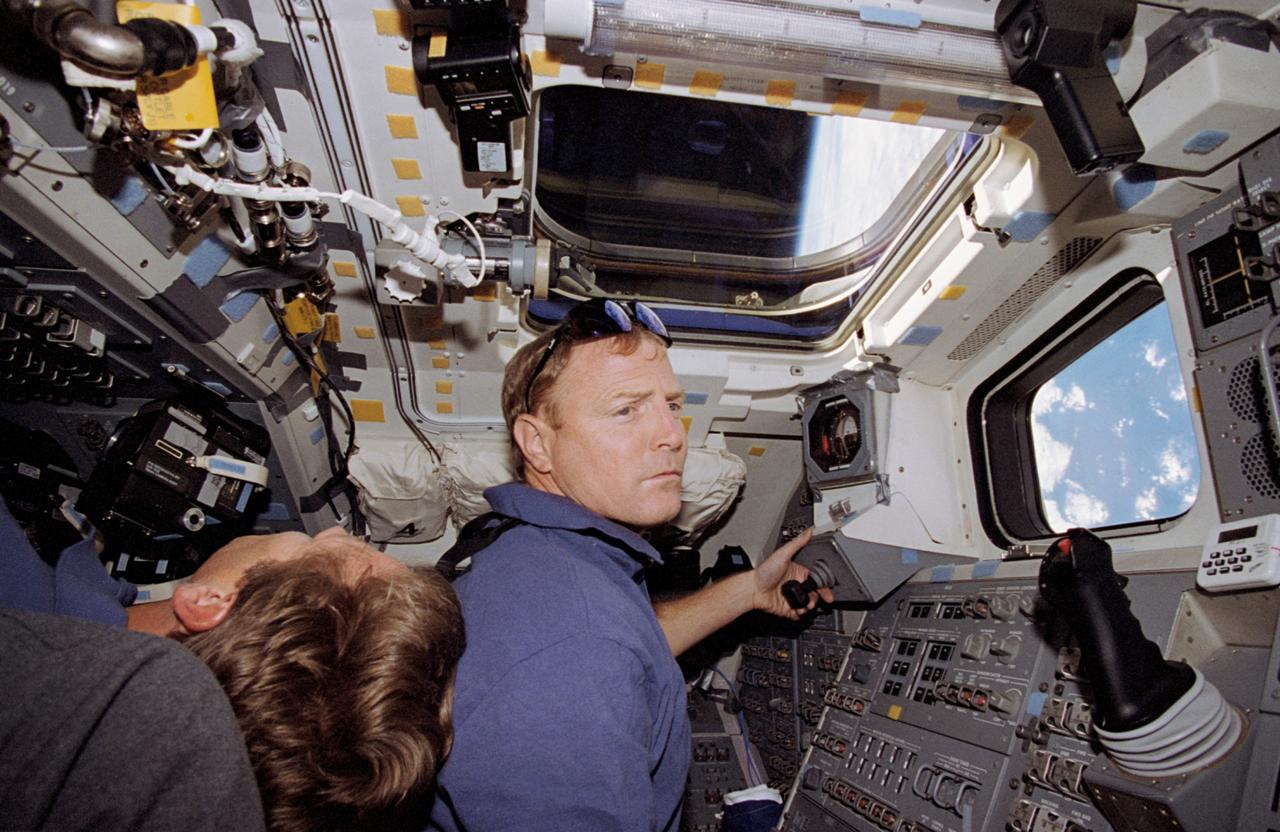
STS069-355-023 (7-18 September 1995) --- Astronauts David M. Walker (right), mission commander, and Michael L. Gernhardt, mission specialist, busy themselves on Space Shuttle Endeavour’s flight deck during rendezvous operations involving one of two temporarily free-flying craft. Endeavour, with a five-member crew, launched on September 7, 1995, from the Kennedy Space Center (KSC). The multifaceted mission ended September 18, 1995, with a successful landing on Runway 33 at KSC.
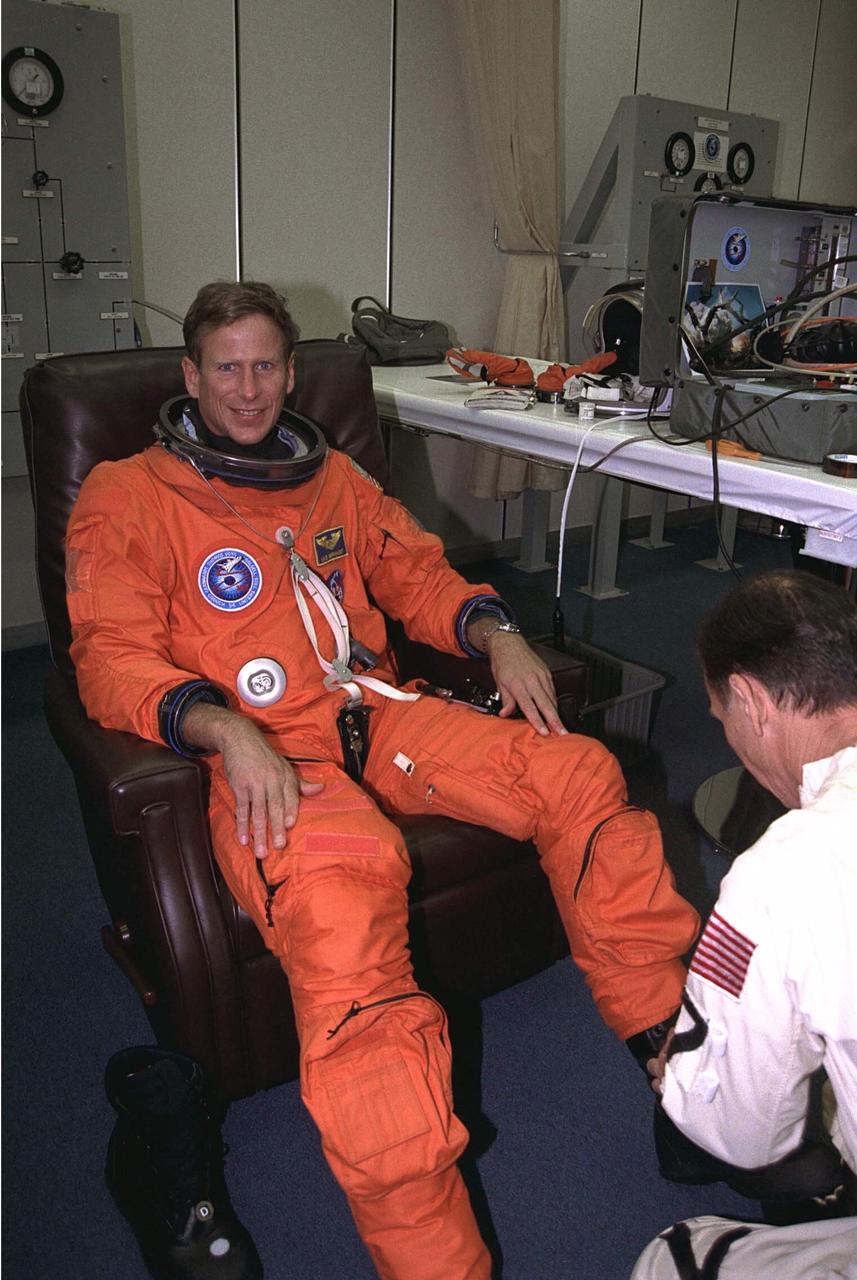
STS-94 Mission Specialist Michael L. Gernhardt is assisted into his launch/entry suit by a suit technician in the Operations and Checkout (O&C) Building. He first flew in this capacity on STS-69. He has been a professional deep sea diver and engineer and holds a doctorate in bioengineering. Gernhardt will be in charge of the Blue shift and as flight engineer will operate and maintain the orbiter while Halsell and Still are asleep as members of the Red shift. He will also back them up on the flight deck during the ascent and re-entry phases of the mission. Gernhardt and six fellow crew members will shortly depart the O&C and head for Launch Pad 39A, where the Space Shuttle Columbia will lift off during a launch window that opens at 1:50 p.m. EDT, July 1. The launch window was opened 47 minutes early to improve the opportunity to lift off before Florida summer rain showers reached the space center
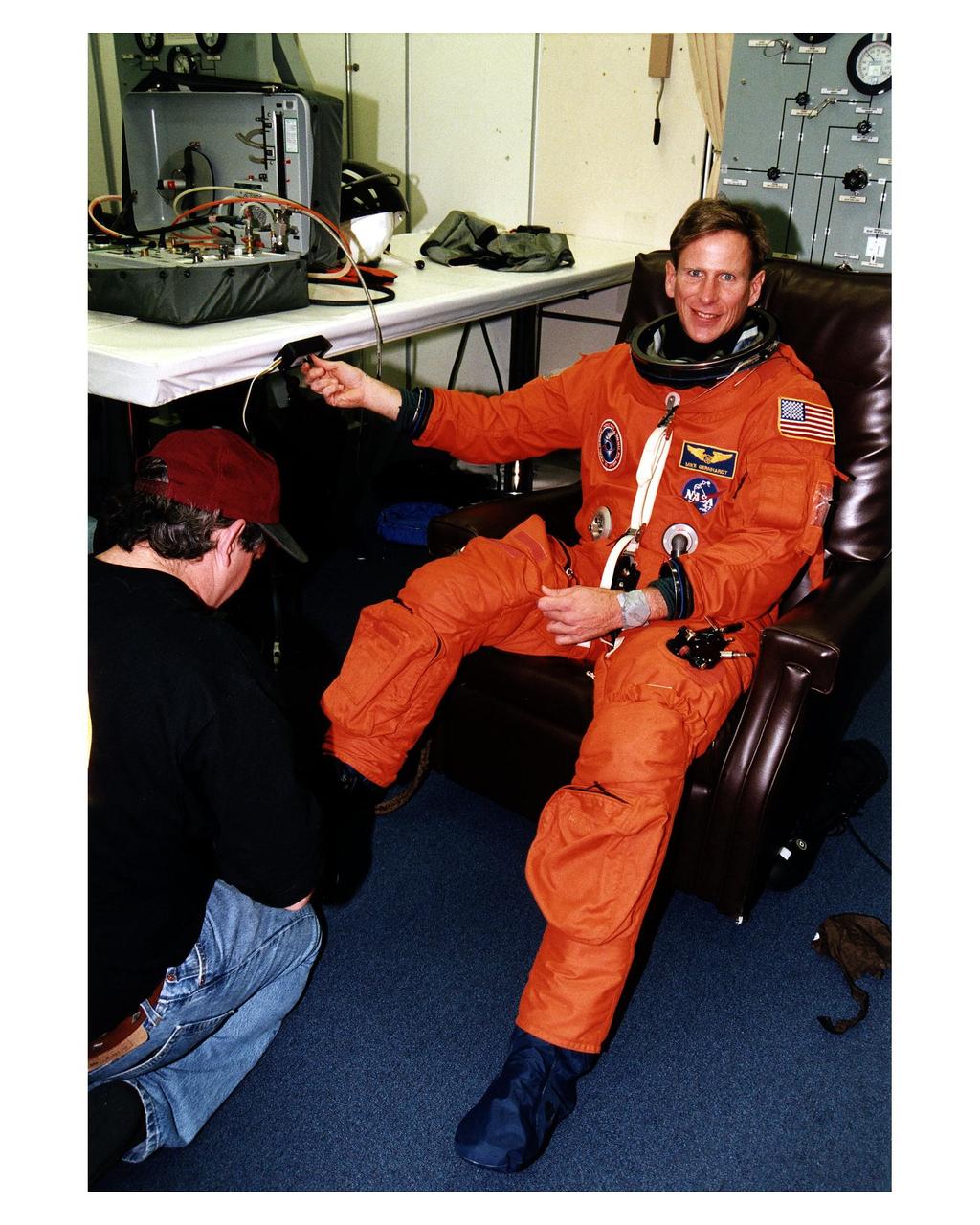
STS-83 Mission Specialist Michael L. Gernhardt is assisted into his launch/entry suit in the Operations and Checkout (O&C) Building. He first flew in this capacity on STS-69. He has been a professional deep sea diver and engineer and holds a doctorate in bioengineering. Gernhardt will be in charge of the Blue shift and as flight engineer will operate and maintain the orbiter while Halsell and Still are asleep as members of the Red shift. He will also back them up on the flight deck during the ascent and re-entry phases of the mission. Gernhardt and six fellow crew members will shortly depart the O&C and head for Launch Pad 39A, where the Space Shuttle Columbia will lift off during a launch window that opens at 2:00 p.m. EST, April 4
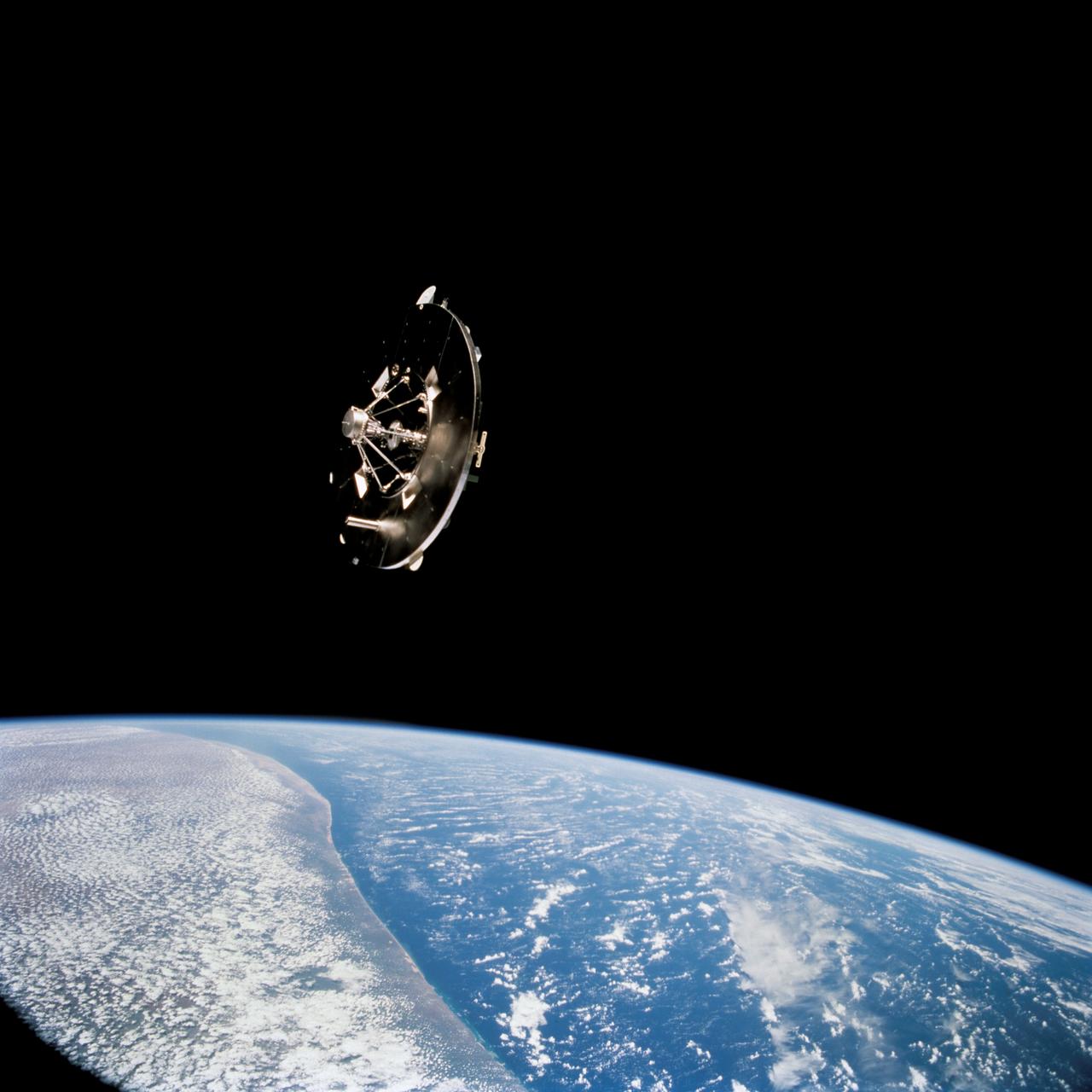
STS069-732-048 (11 September 1995) --- Having earlier been released by the Space Shuttle Endeavour's Remote Manipulator System (RMS), the Wake Shield Facility (WSF) moves away from the Space Shuttle. The coast of Somalia can be seen in the lower left quadrant of the frame. STS-69 and the Space Shuttle Endeavour, with a five-member crew, launched on September 7, 1995, from the Kennedy Space Center (KSC) and ended its mission there on September 18, 1995, with a successful landing on Runway 33. The multifaceted mission carried a crew of astronauts David M. Walker, mission commander; Kenneth D. Cockrell, pilot; and James S. Voss (payload commander), James H. Newman and Michael L. Gernhardt, all mission specialists.