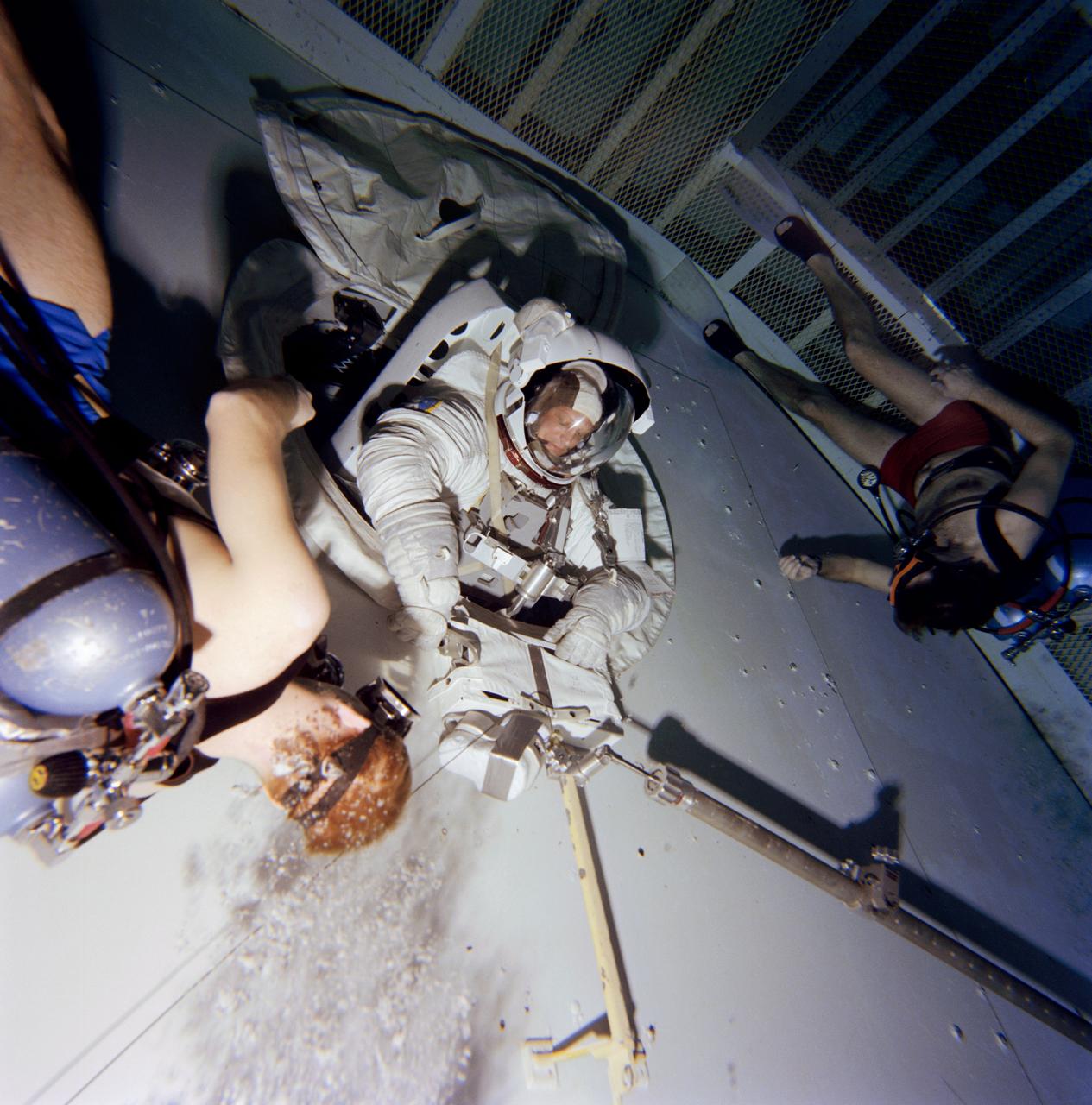
Dr. Norman E. Thagard, mission specialist for STS-7, moves through the hatchway of the mockup of the Space Shuttle orbiter which is part of JSC's weightless environment training facility (WETF). Thagard is wearing an extravehicular mobility unit and is practicing procedures used when performing an extravehicular activity (EVA) during a flight.
![STS-7, Orbiter Challenger in orbit, taken from camera aboard Shuttle Pallet Satellite (SPAS) [Germany]](https://images-assets.nasa.gov/image/335891/335891~medium.jpg)
STS-7, Orbiter Challenger in orbit, taken from camera aboard Shuttle Pallet Satellite (SPAS) [Germany]
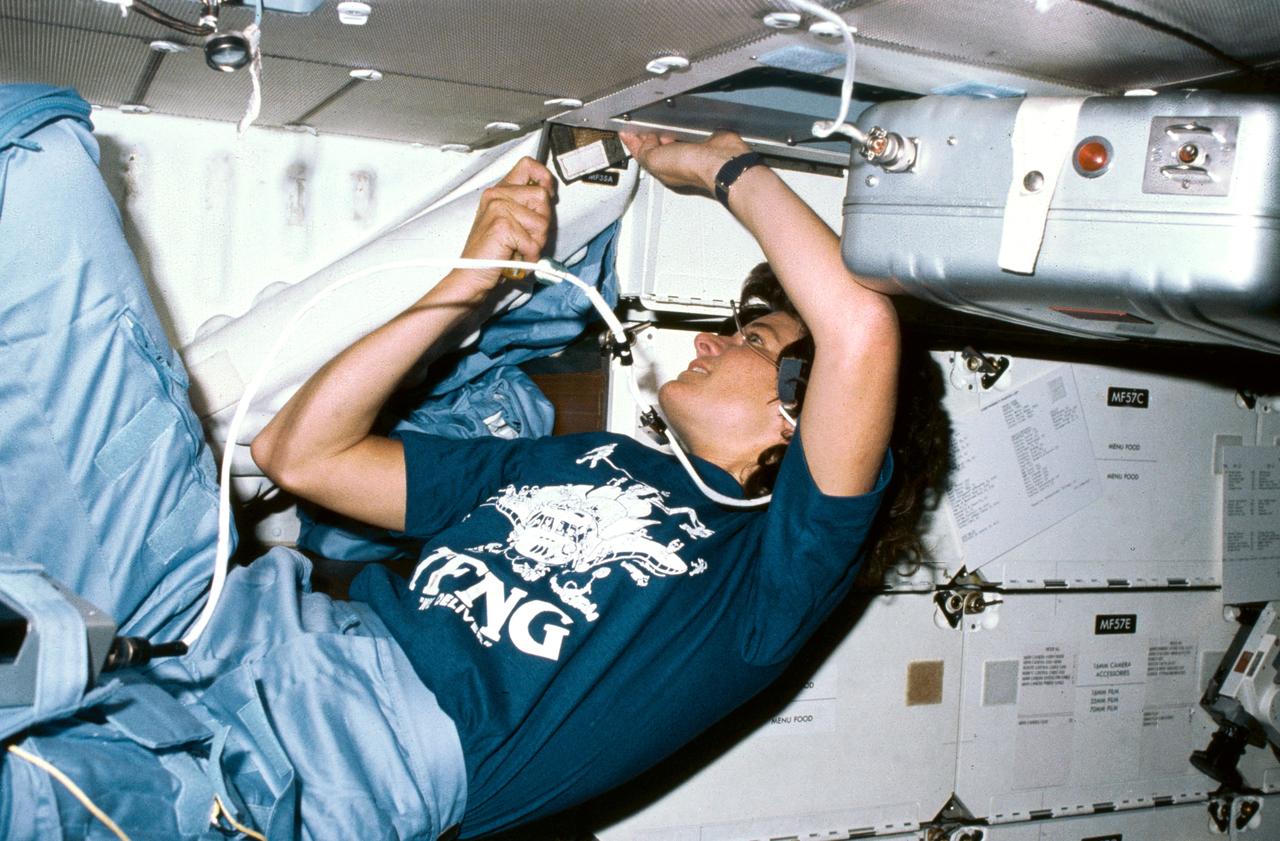
S83-35768 (18-24 June 1983) --- Astronaut Sally K. Ride, mission specialist for STS-7, uses a screw driver in order to clean out an air filtering system in the mid-deck of the Earth-orbiting Space Shuttle Challenger. Dr. Ride's constant wear garment bears some extras -- a cartoon of 35 busy astronauts around a Space Shuttle and the acronym TFNG, below which is written, "We deliver!" TFNG stands for thirty-five new guys, referring to the 1978 class of astronaut candidates (ASCAN) from which Dr. Ride and three of her crew members hail. The tiny two-word declarative in white lettering refers to the successful deployment of two communications satellites. This photograph was made with a 35mm camera.
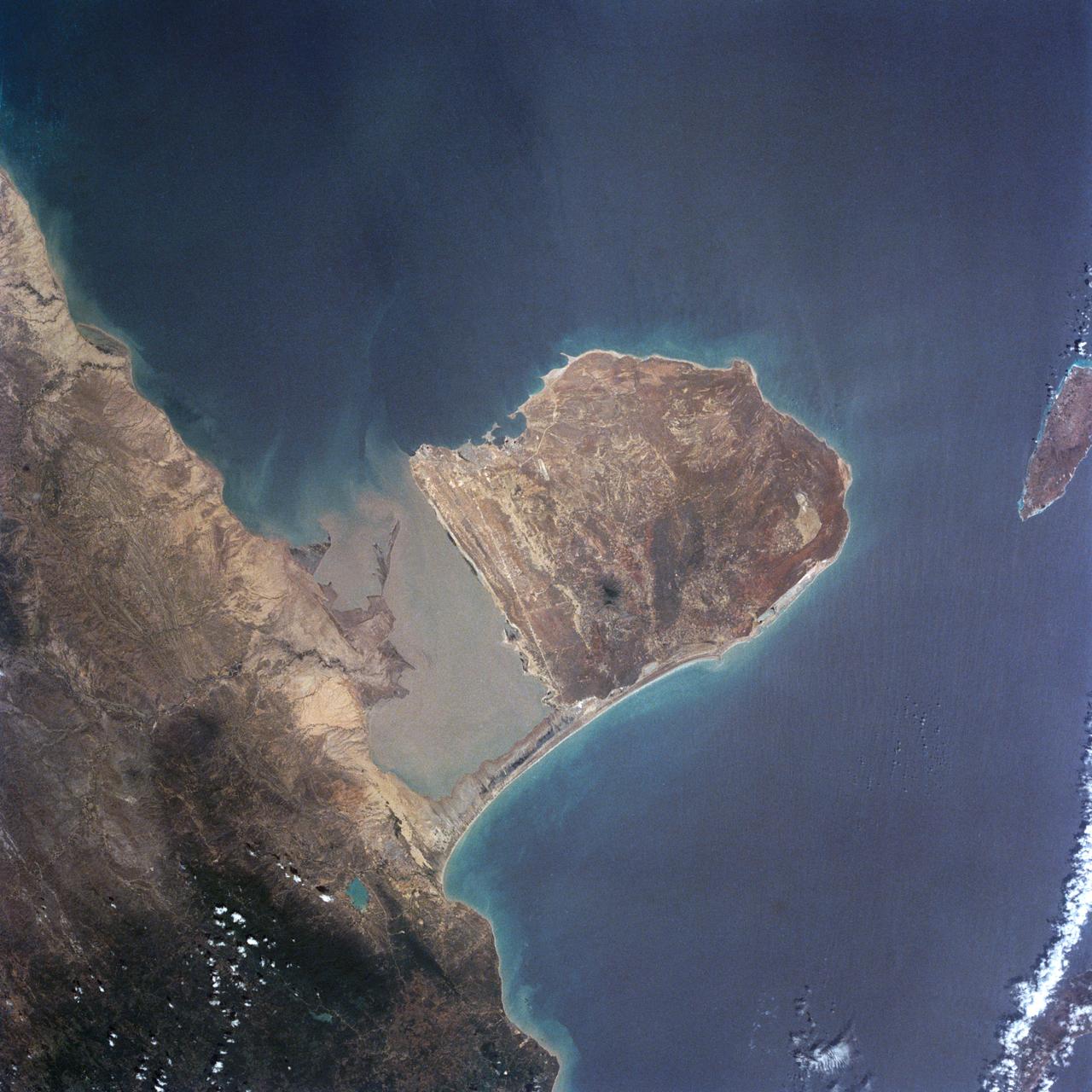
Various views of Earth taken on STS-7 for news release.
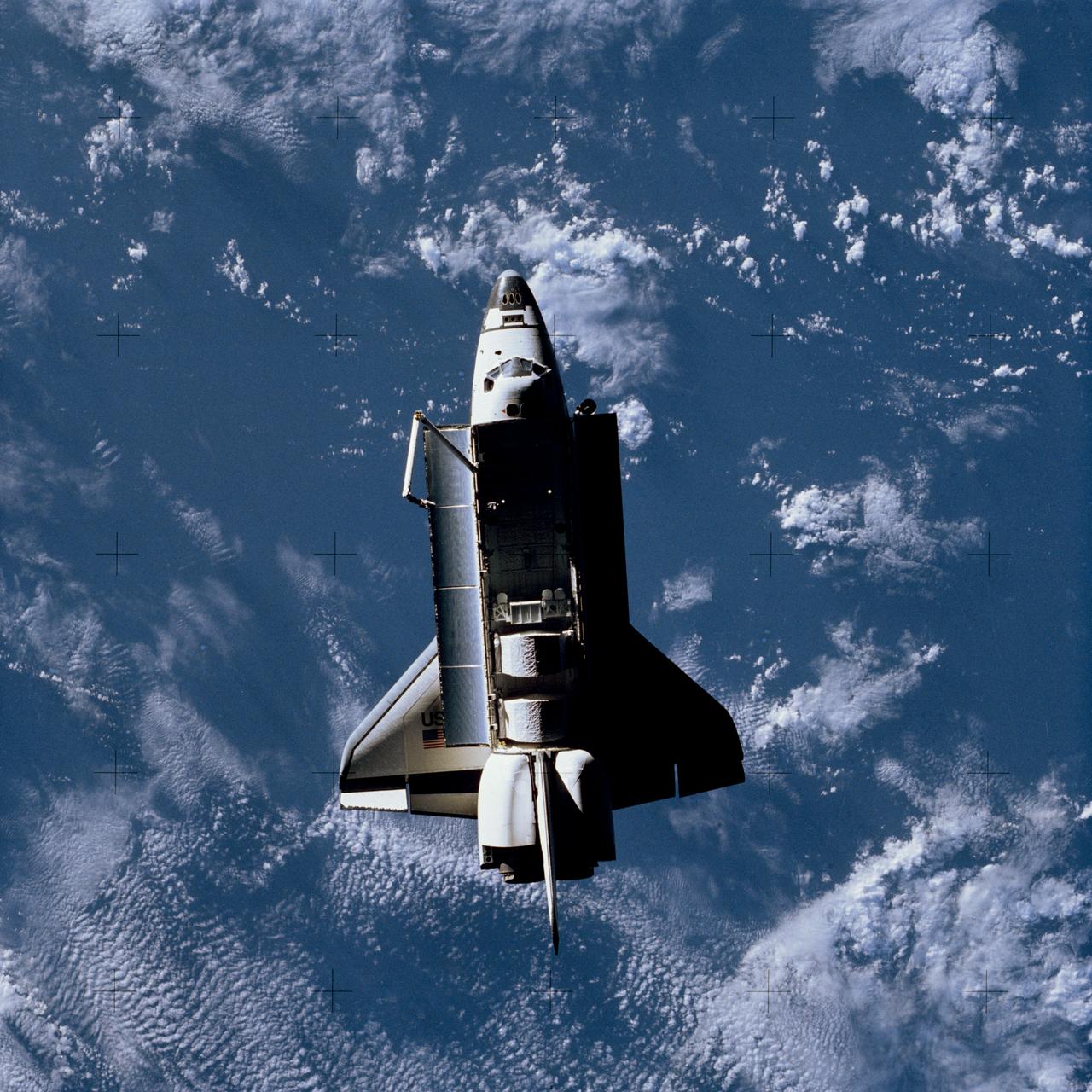
Full views of "Challenger" in Space, taken by the Shuttle Pallet Satellite (SPAS), also views of Cargo Bay and Remote Manipulator System (RMS) extended. 1. SHUTTLE - RMS (STS-7) Also available in 4x5 CN
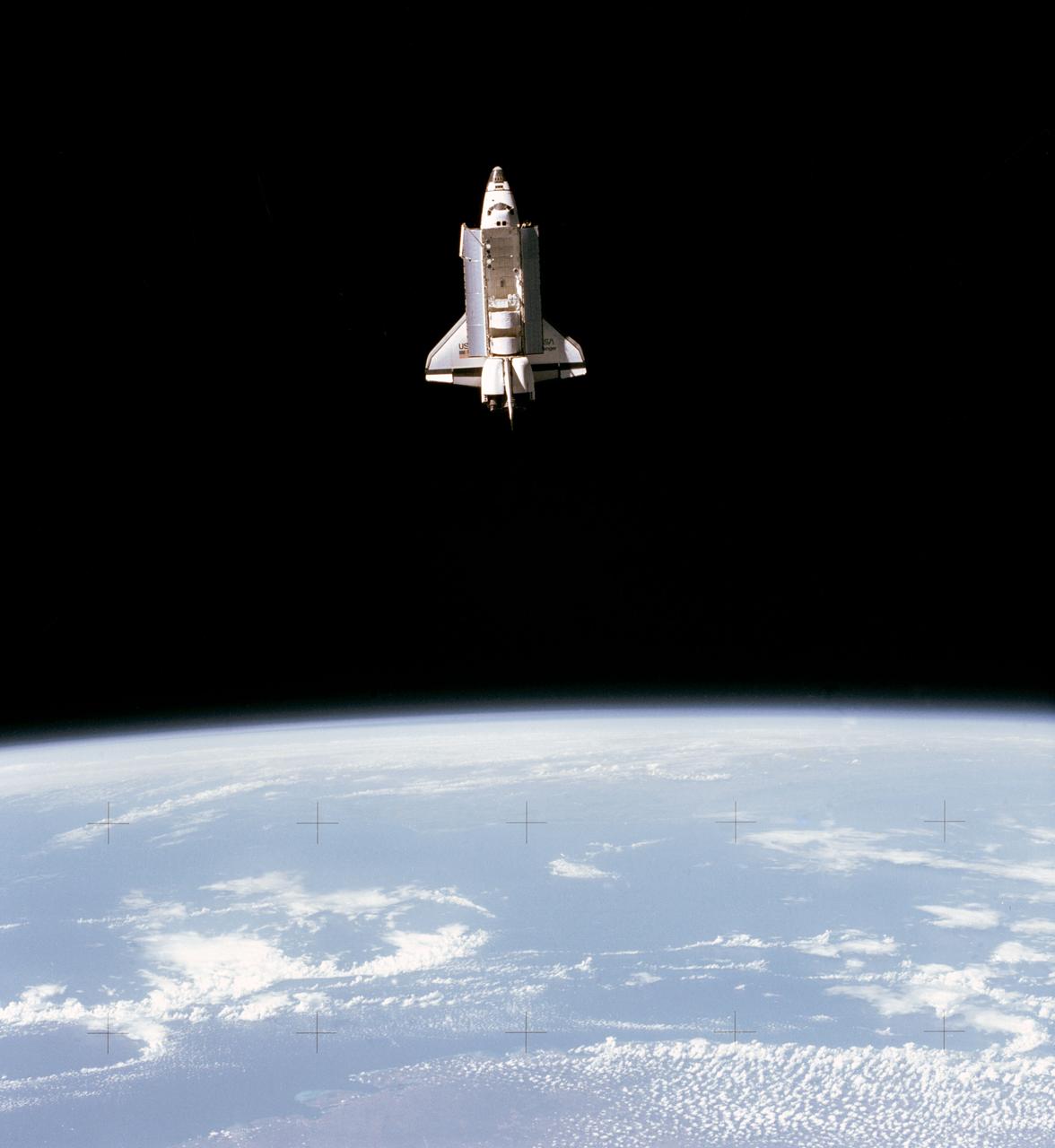
Full views of "Challenger" in Space, taken by the Shuttle Pallet Satellite (SPAS), also views of Cargo Bay and Remote Manipulator System (RMS) extended. 1. SHUTTLE - RMS (STS-7) Also available in 4x5 CN
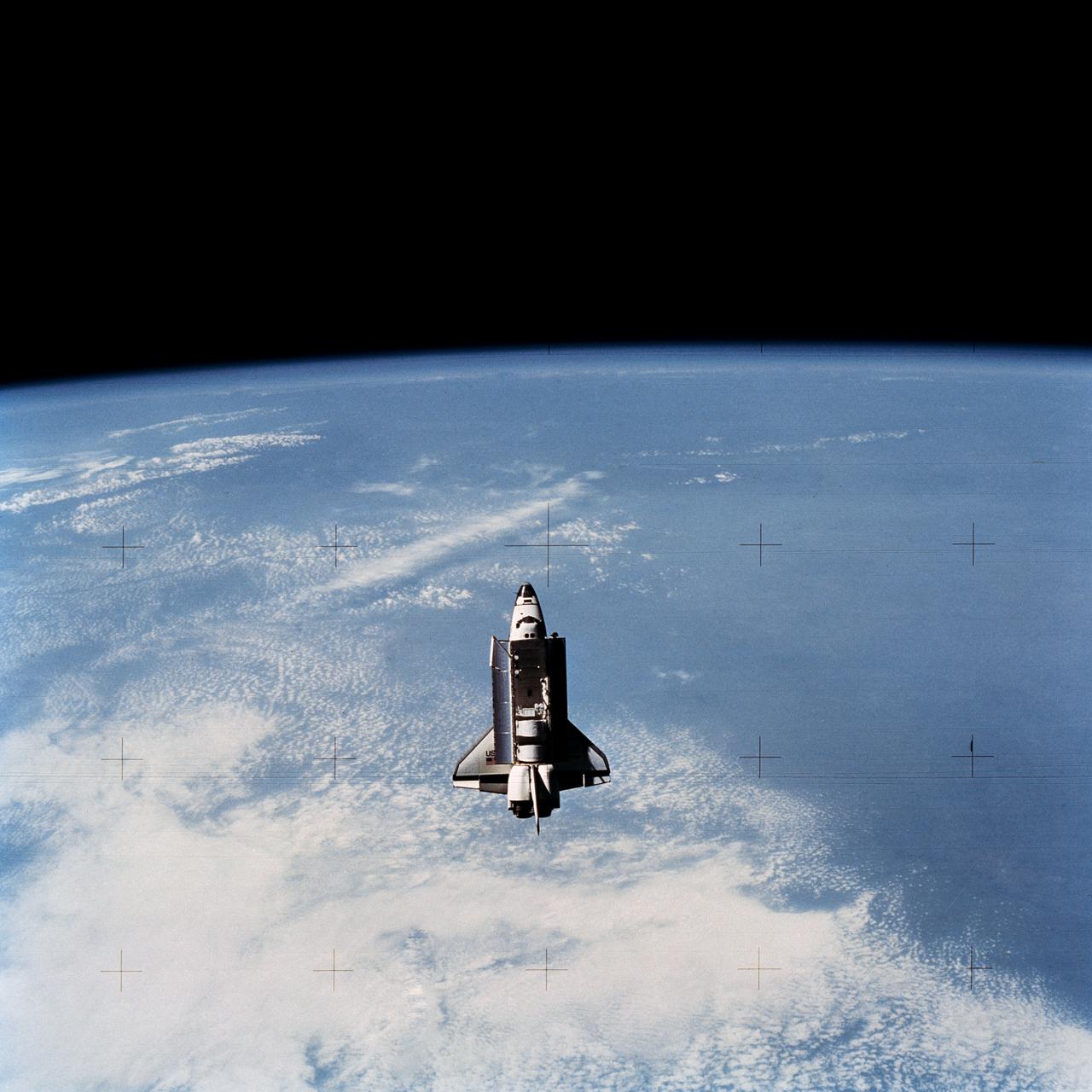
Full views of "Challenger" in Space, taken by the Shuttle Pallet Satellite (SPAS), also views of Cargo Bay and Remote Manipulator System (RMS) extended. 1. SHUTTLE - RMS (STS-7) Also available in 4x5 CN
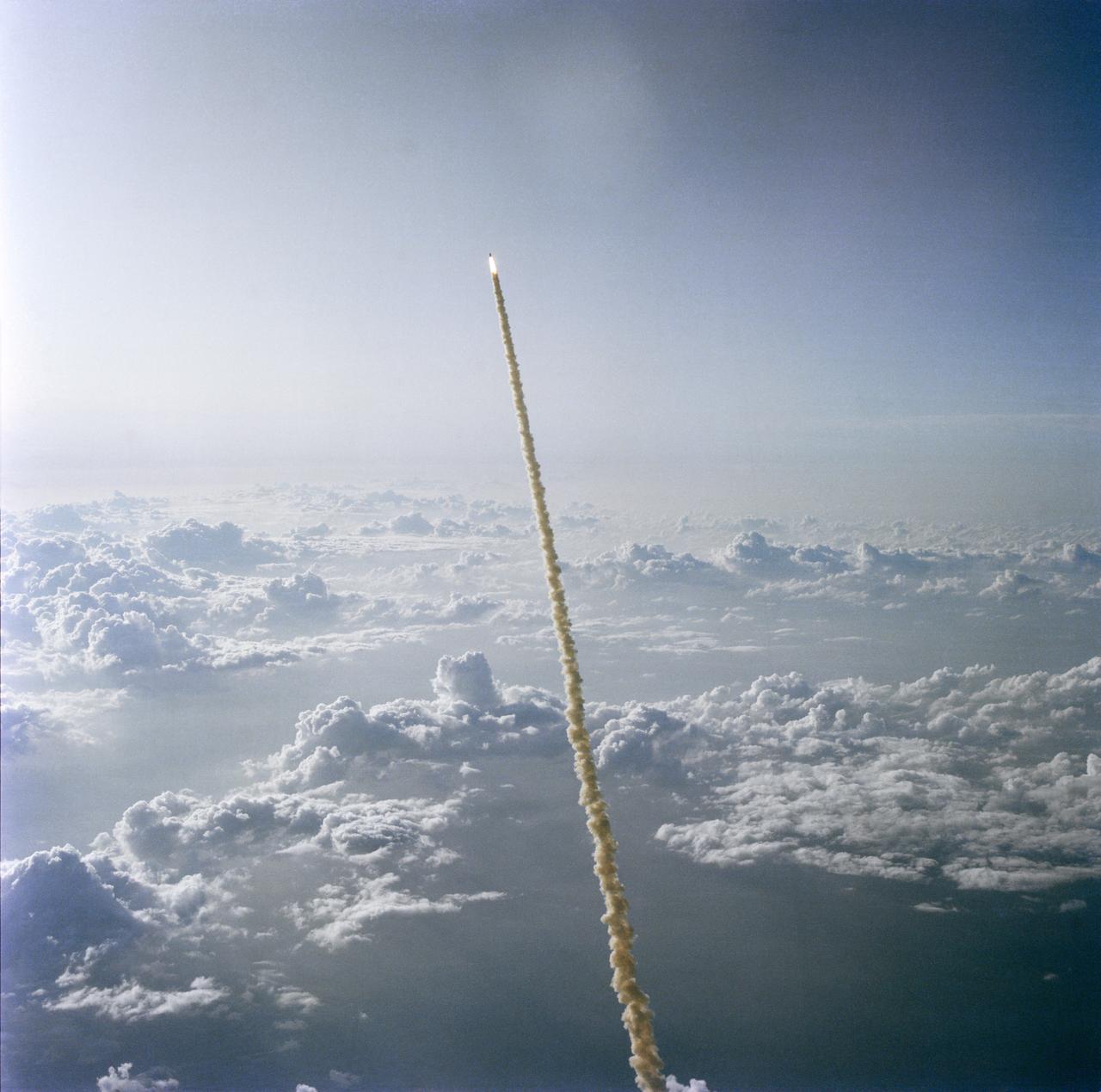
S83-35620 (18 June 1983) --- The space shuttle Challenger, its two solid rocket boosters and an external fuel tank carry the five-member STS-7 astronaut crew toward a six-day mission in Earth orbit. This high-angle view of the liftoff, a lengthy stretch of Florida Atlantic coastline and a number of large cumulus clouds was photographed with a handheld 70mm camera by astronaut John W. Young. Young usually pilots the Shuttle Training Aircraft (STA) for weather monitoring at launch and landing sites for STS missions. The Challenger?s second launch occurred at 7:33 a.m. (EDT) on 18 June 1983. Photo credit: NASA
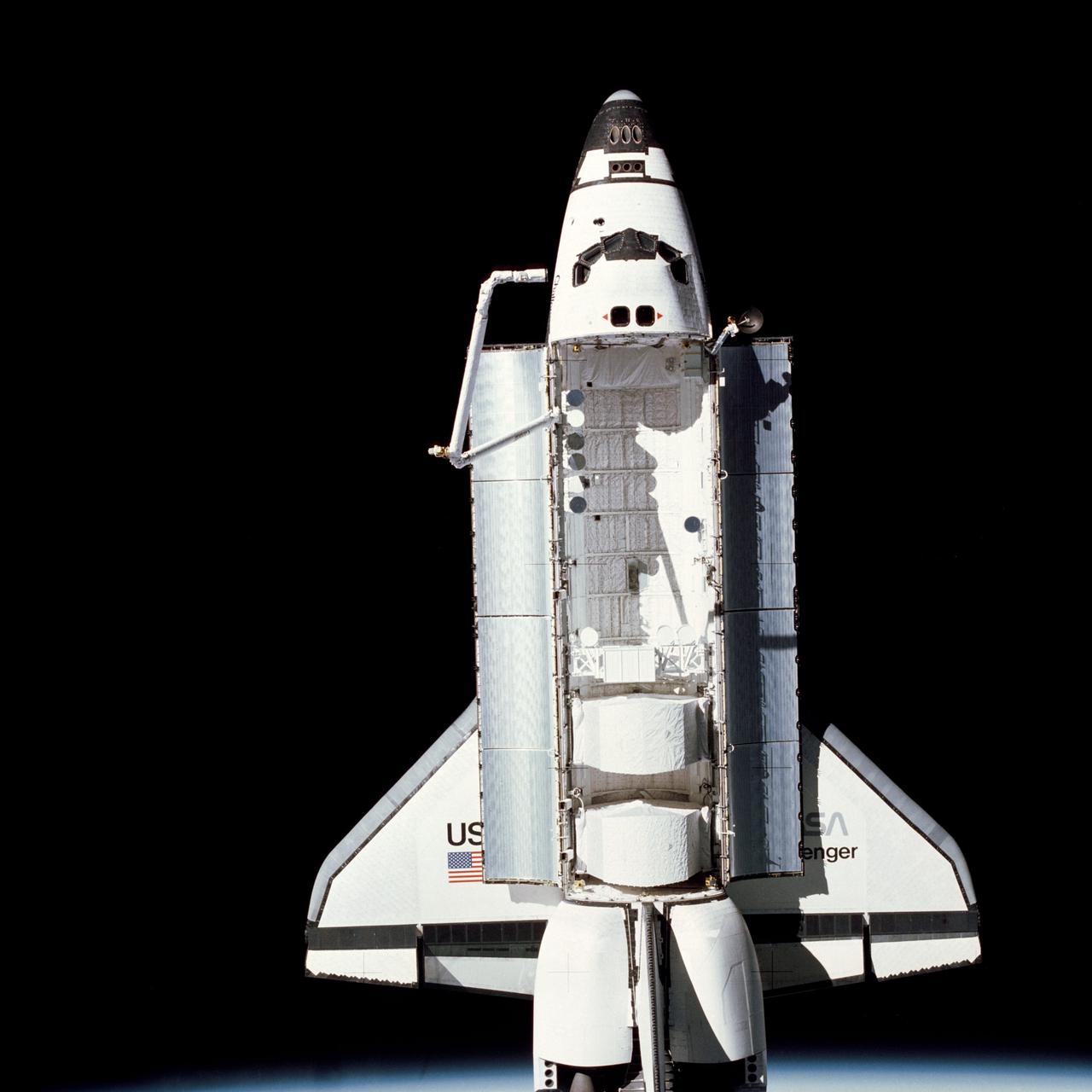
S83-35803 (22 June 1983) --- The Earth-orbiting space shuttle Challenger against the blackness of space was captured by a 70mm camera onboard the temporarily free-flying Shuttle Pallet Satellite (SPAS-01) during a busy Day 5 on the STS-7 mission. Visible in the cargo bay are the protective cradles for the now vacated Telesat Anik C2 and Palapa B communications satellites, the pallet for the NASA Office of Space and Terrestrial Applications (OSTA-2); the Remote Manipulator System (RMS) and the KU-Band antenna. The STS-7 astronaut crew with the RMS arm later retrieved the SPAS and returned it to a stowed position in the cargo bay for the return to Earth. Photo credit: NASA
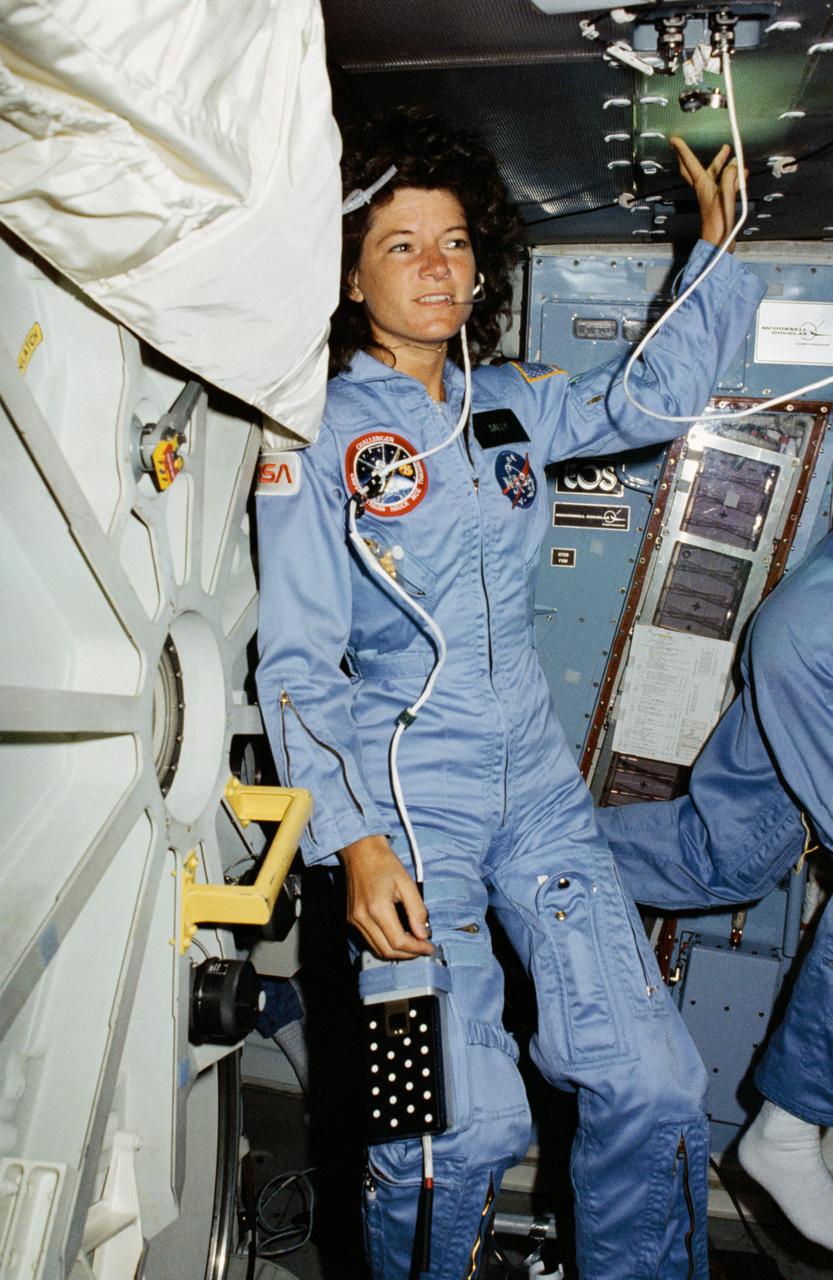
STS007-02-020 (21 June 1983) --- Astronaut Sally K. Ride, STS-7 mission specialist, STS-7 mission specialist, stands in the mid deck of the orbiting Space Shuttle Challenger near one of the experiment with which she has devoted a great deal of time. The continuous flow electrophoresis system (CFES) experiment, about the size of a household refrigerator, stands nearby. One of her fellow crewmembers moves partially out of frame in the background. The tube on her face is part of a communications system linking Dr. Ride to ground controllers in Houston.
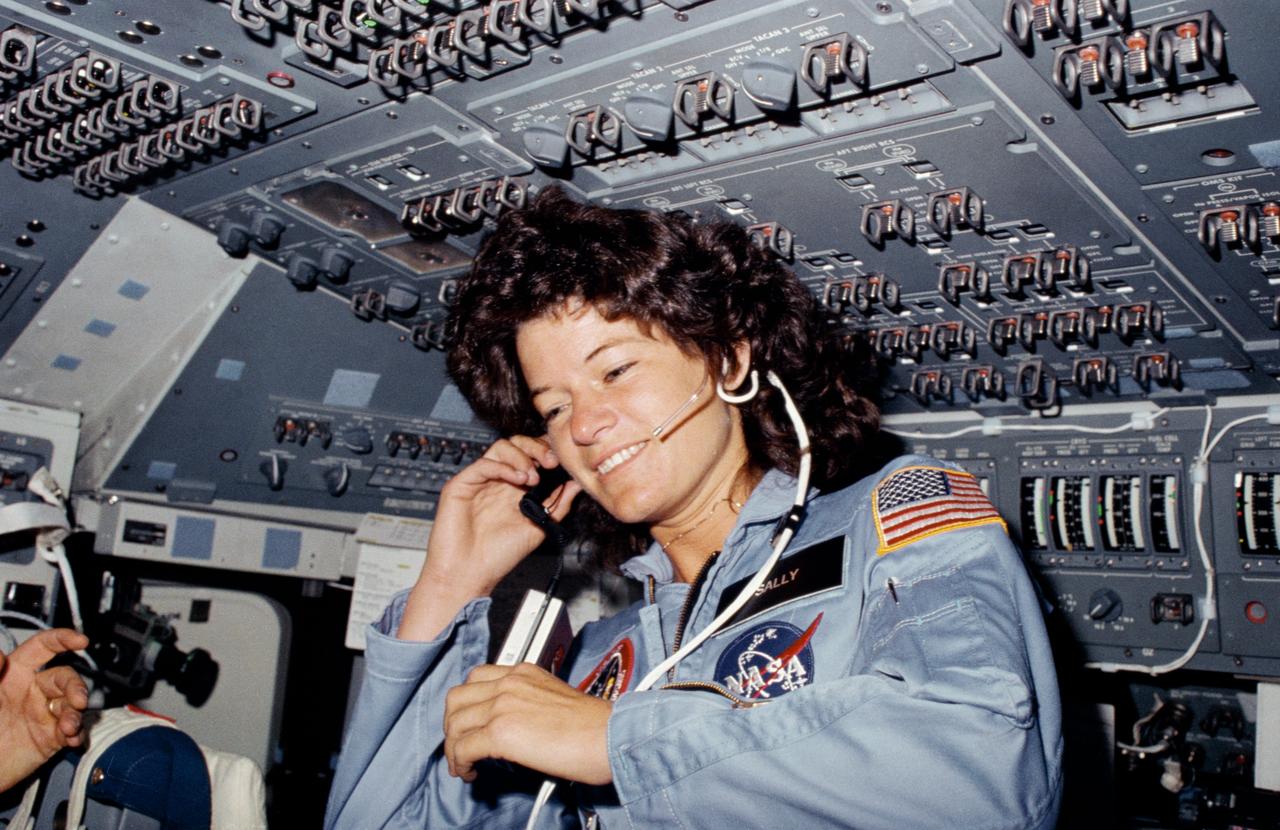
S83-35763 / STS007-02-027 (18 June 1983) --- Seen on the flight deck of the space shuttle Challenger, astronaut Sally K. Ride, STS-7 mission specialist, became the first American woman in space on June 18, 1983. Photo credit: NASA
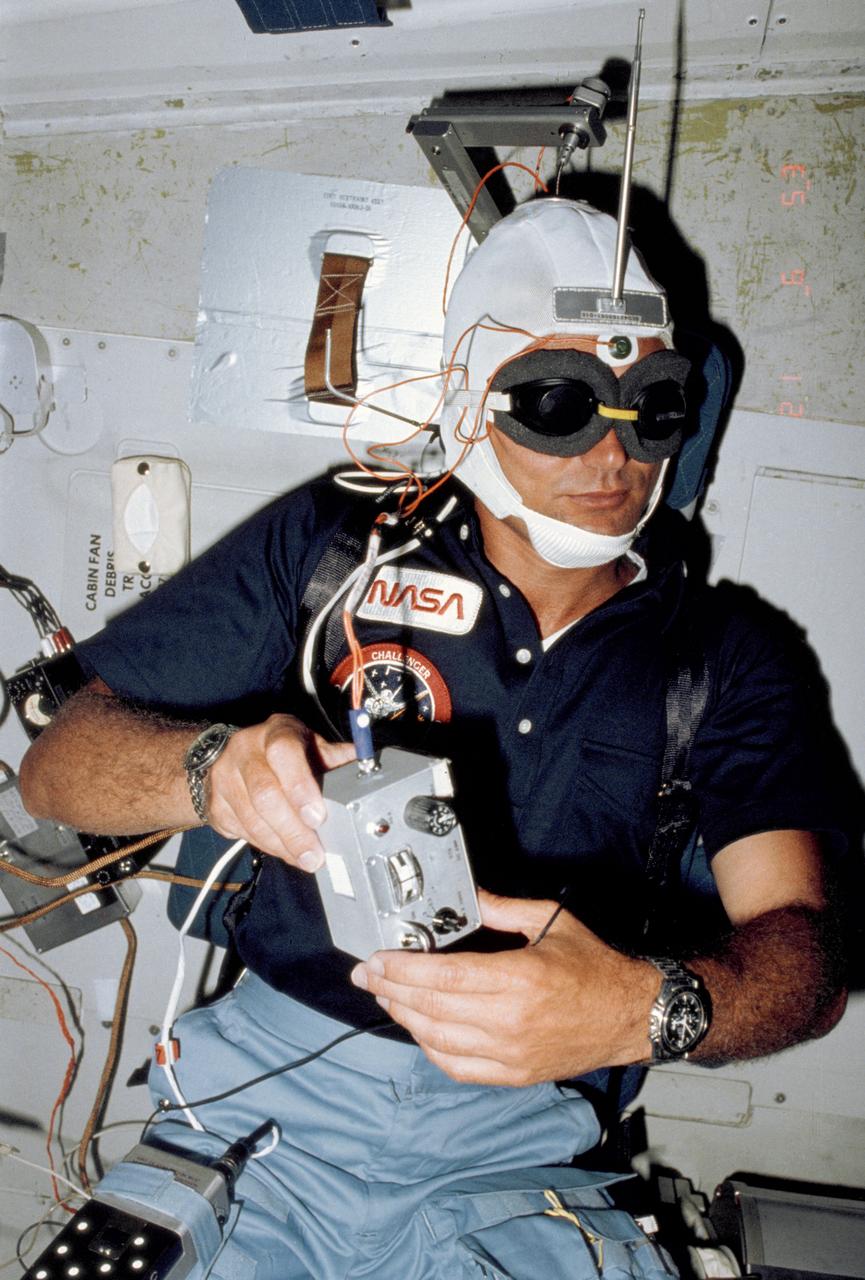
S83-35770 (18?24 June 1983)--- Astronaut Norman E. Thagard, STS-7 mission specialist, is actually performing a medical experiment though his appearance resembles popular depictions of an invading alien. Thagard, a medical doctor, has been assigned a busy project of evaluating physiological reactions of astronauts in space travel. He is on the middeck of the Earth-orbiting space shuttle Challenger. Photo credit: NASA

S83-32822 (5 May 1983) --- Astronaut Sally K. Ride (left) participates in a mission sequence test in preparation for STS-7, in the Kennedy Space Center?s (KSC) vertical processing facility (VPF). Dr. Ride is a mission specialist for the flight. She is joined here by Anna L. Fisher, a physician and astronaut from the 1978 group of 35, which also included Dr. Ride. Photo credit: NASA
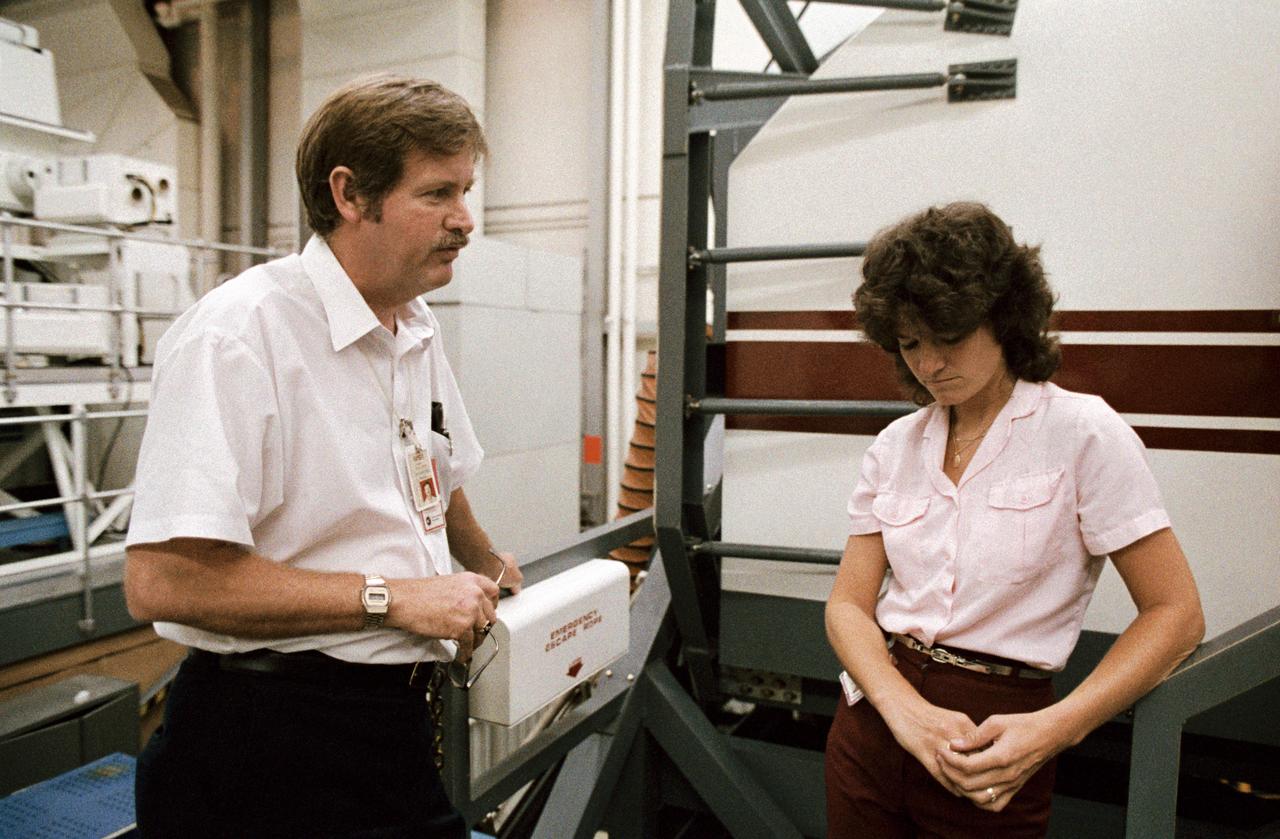
S83-32890 (23 May 1983) --- Astronaut Sally K. Ride, STS-7 mission specialist, stands near the Shuttle Mission Simulator (SMS) in Johnson Space Center's (JSC) Mission Simulation and Training Facility with suit specialist Alan M. Rochford after simulation of various phases of the upcoming STS-7 flight. Photo credit: NASA
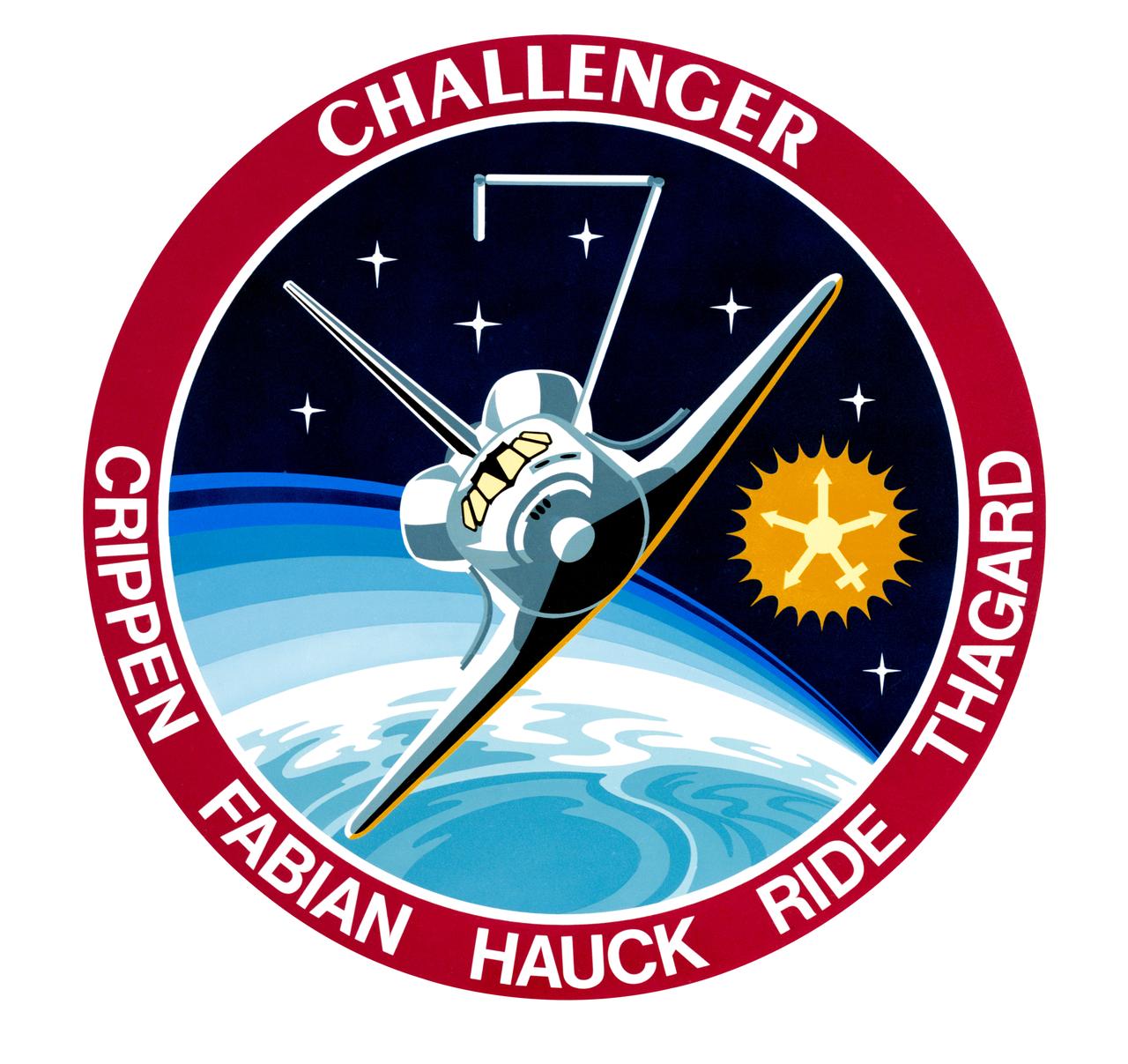
S83-28355 (March 1983) --- The space shuttle Challenger, making its second flight into space on STS-7, is featured in the art for the insignia for that NASA flight. The remote manipulator arm is positioned such that, the number 7 is formed. Likewise, seven stars are visible against the black sky. Within the sun?s center are representations for the five crew members, including, for the first time in NASA?s space program, a woman ? Dr. Sally K. Ride, mission specialist. The crew member?s surnames are listed along the outside edge of the sphere. They are astronauts Robert L. Crippen, commander; Frederick H. Hauck, pilot; John M. Fabian, Sally K. Ride and Norman E. Thagard, mission specialists. The flight is scheduled for the first week of June 1983. The NASA insignia design for space shuttle flights is reserved for use by the astronauts and for other official use as the NASA Administrator may authorize. Public availability has been approved only in the forms of illustrations by the various news media. When and if there is any change in this policy, which is not anticipated, the change will be publicly announced. Photo credit: NASA
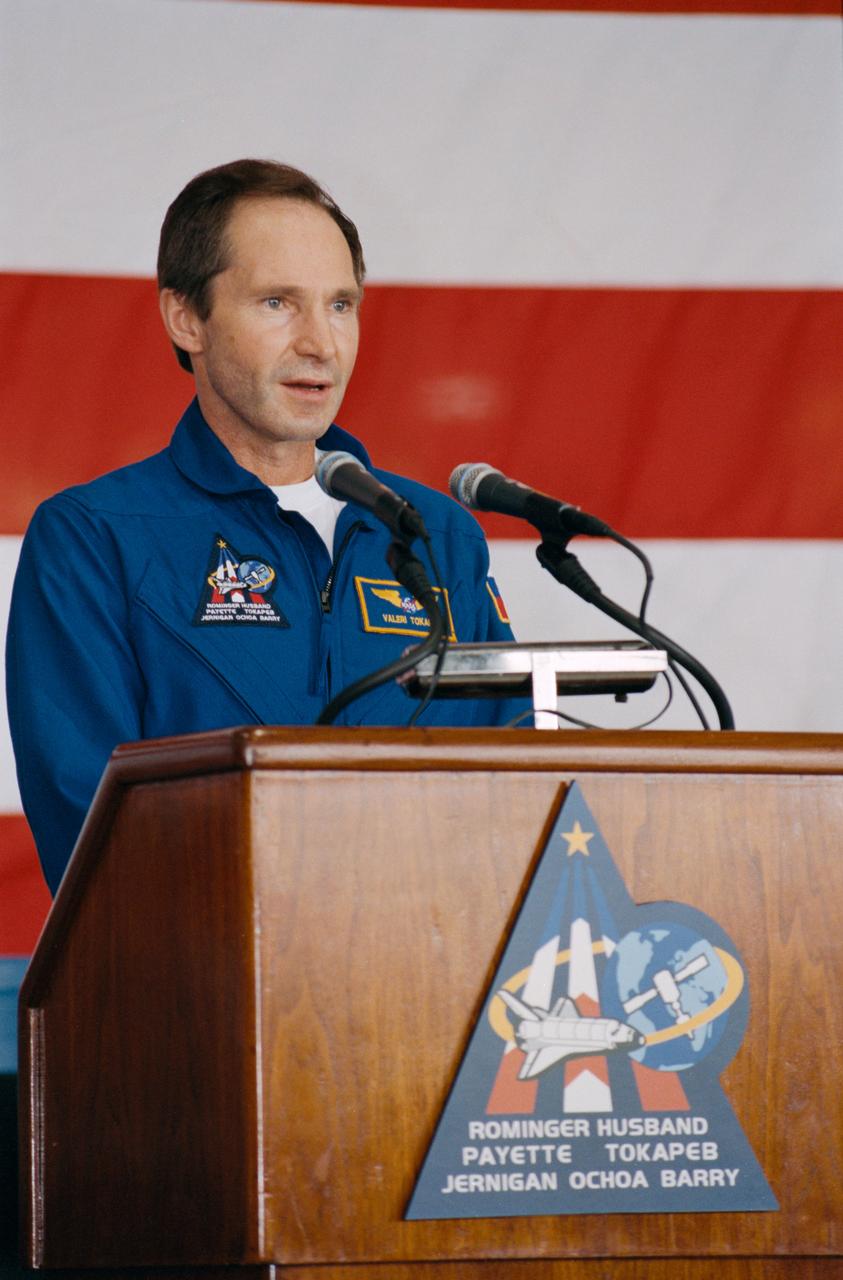
S99-05970 (7 June 1999) --- Cosmonaut Valery I. Tokarev, mission specialist representing the Russian Space Agency (RSA), speaks to the crowd that turned out for STS-96 welcome home ceremonies at Ellington Field.

STS007-06-0314 (18-24 June 1983) --- Astronaut John M. Fabian, STS-7 mission specialist, sleeps in a zip-up blue sleep restraint device in the locker area of the Earth-orbiting space shuttle Challenger's middeck. The frame was exposed with a 35mm camera. Photo credit: NASA
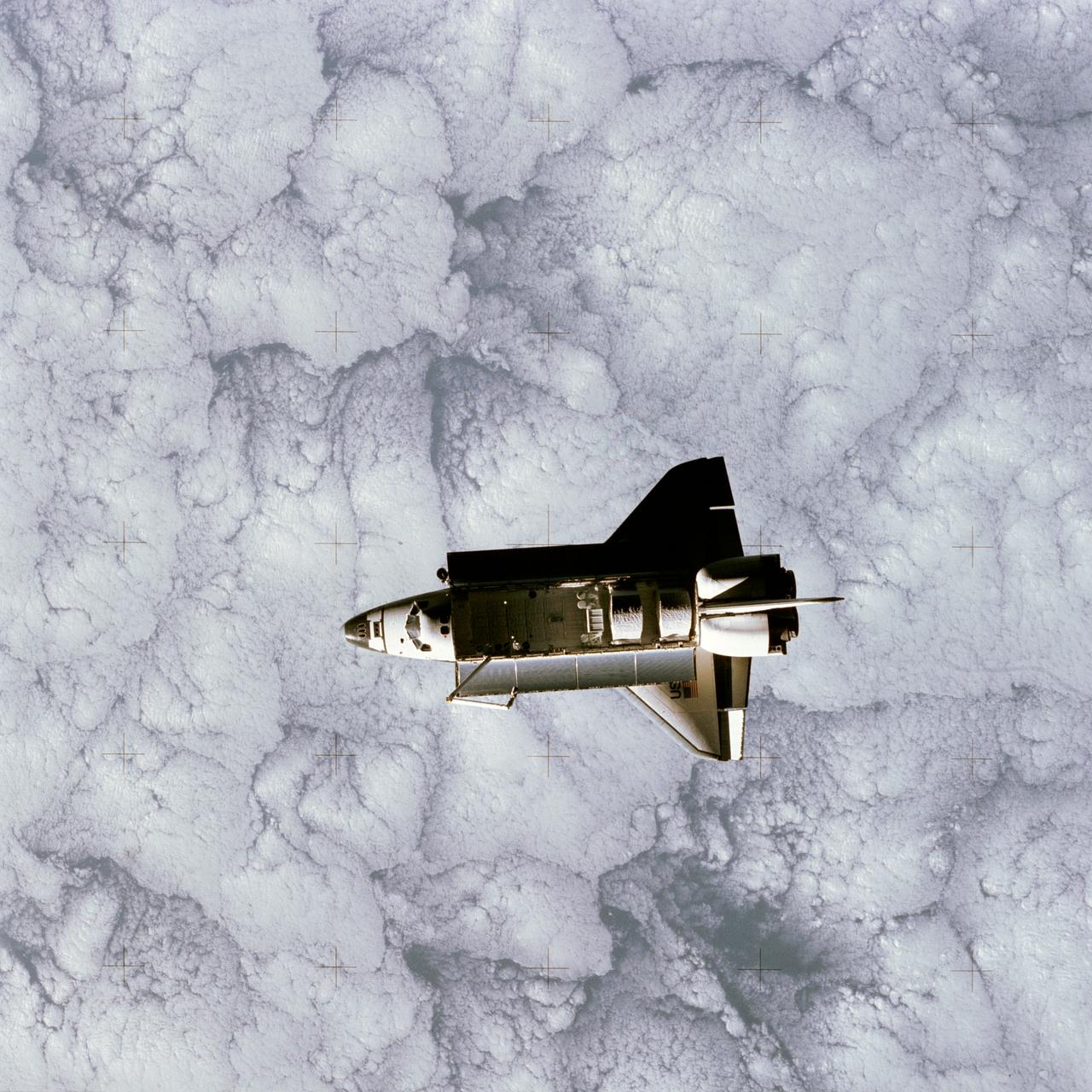
STS007-32-1667 (22 June 1983) --- The Earth-orbiting Space Shuttle Challenger over a heavily cloud-covered portion of the Earth was captured by a 70mm camera onboard the temporarily free-flying Shuttle Pallet Satellite (SPAS-01) during a busy Day 5 on the STS-7 mission. Visible in the cargo bay are the protective cradles for the now vacated Telesat Anik C2 and Palapa-B communications satellites, the pallet for the NASA Office of Space and Terrestrial Applications (OSTA-2); the Remote Manipulator System (RMS) and the KU-Band antenna. The STS-7 astronaut crew and the RMS arm later retrieved the SPAS and returned it to a stowed position in the cargo bay of the Space Shuttle Challenger for the return to Earth.
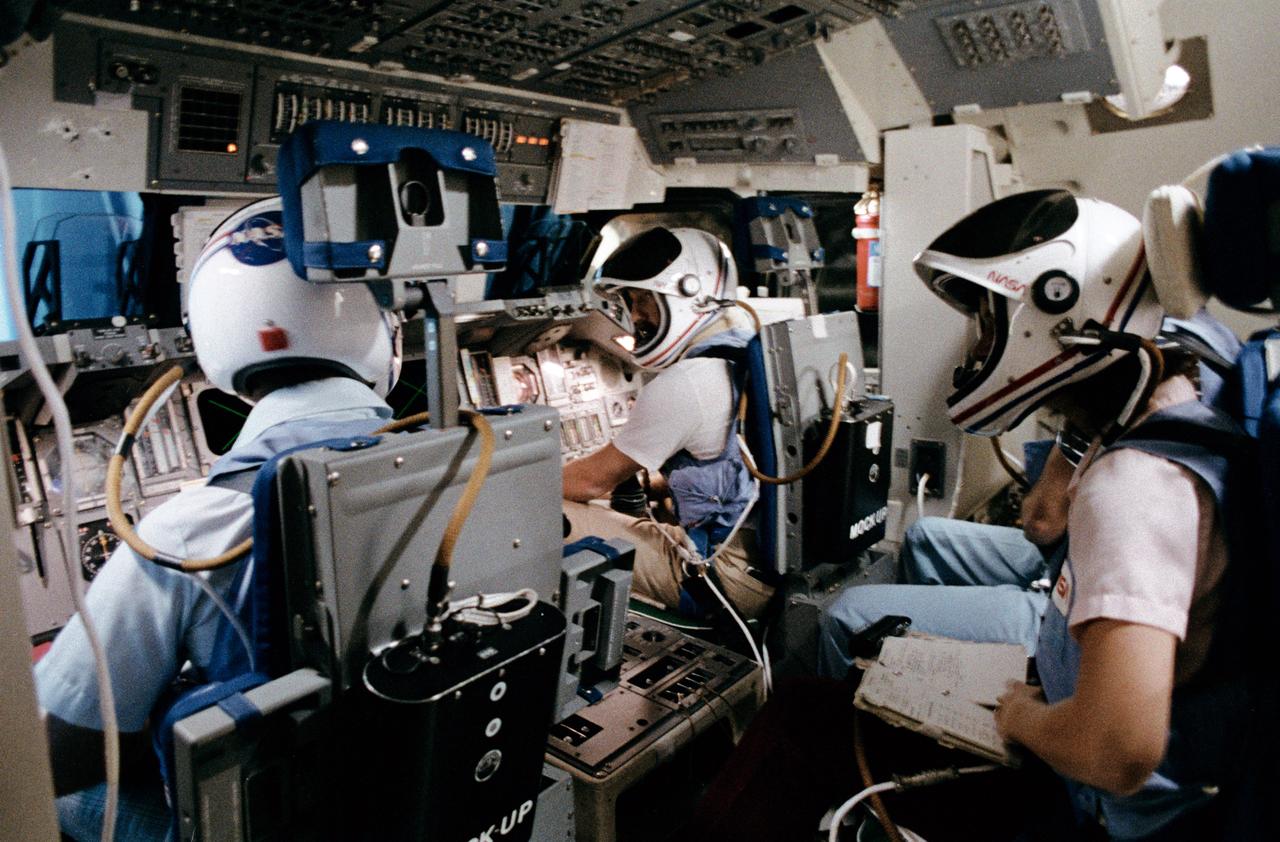
S83-32723 (23 May 1983) --- This scene in the Shuttle Mission Simulator (SMS) previews next month?s STS-7 flight in the space shuttle Challenger. Taken during a simulation session, the photo illustrates the seating arrangement for launch and landing phases of the Challenger?s second spaceflight and its first with five crew members. Pictured, left to right, are astronauts Robert L. Crippen, commander; Frederick H. Hauck, pilot; Sally K. Ride and John M. Fabian (almost totally obscured), mission specialists. Dr. Norman E. Thagard, a third mission specialist, will be seated in the middeck for launch and landing phases. Photo credit: NASA/Otis Imboden/National Geographic Society.

STS007-08-396 (18-24 June 1983) --- Astronaut Robert L. Crippen, STS-7 commander, used a 35mm camera to expose this frame of the four representatives of the "thirty five new guys" onboard the Earth-orbiting Space Shuttle Challenger. The TFNG (notice Frederick H. Hauck's T-shirt at left) pays tribute to the 1978 astronaut candidate (ASCAN) class of NASA astronauts. Others in the photograph are Astronauts Norman E. Thagard, Sally K. Ride and John M. Fabian. Hauck is the crew's pilot and the other three are mission specialist. The crew members are in the process of preparing a snack of meal. The tall experiment in the background is the Continuous Flow Electrophoresis System (CFES).
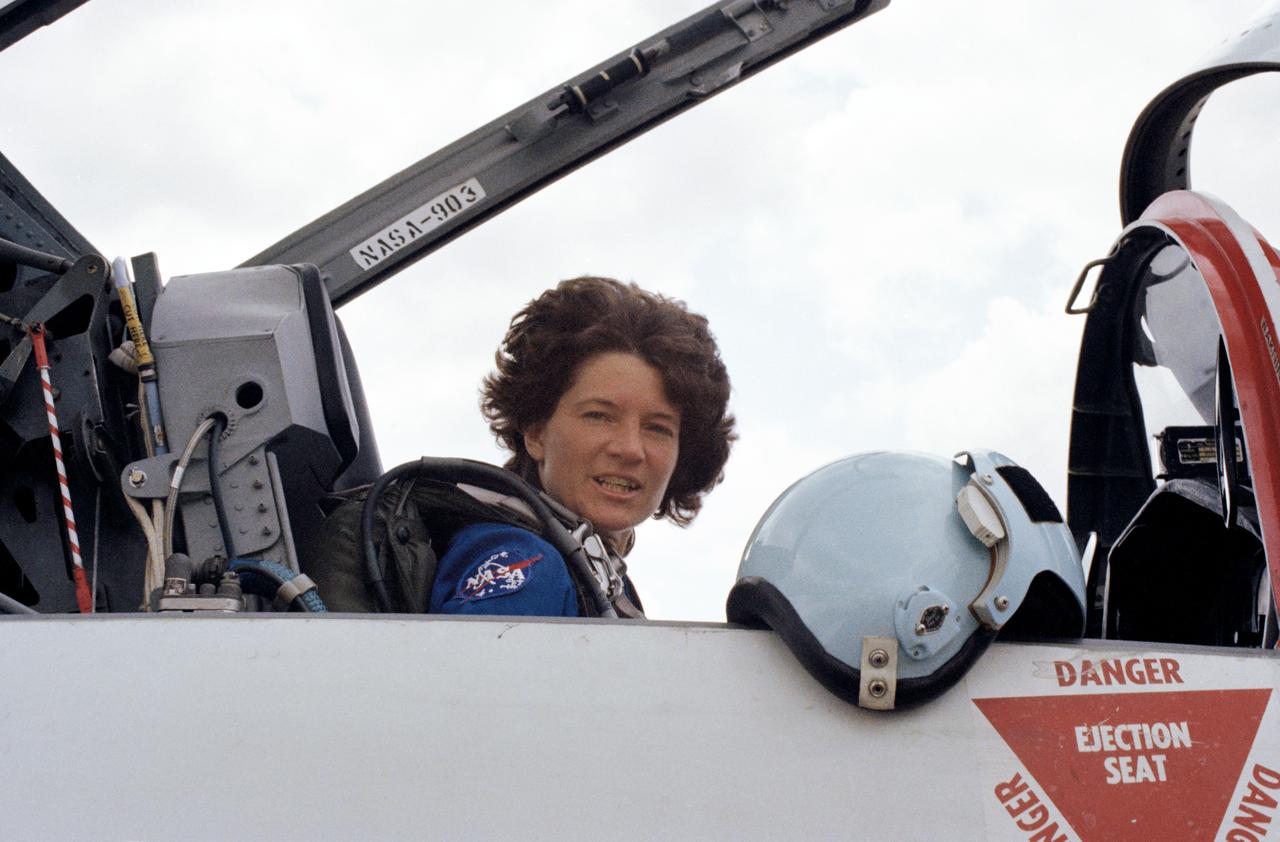
S83-34151 (15 June 1983) --- Astronaut Sally K. Ride, STS-7 mission specialist, takes one last look at familiar training environs before taking off from NASA’s Houston facility in a T-38 jet aircraft, destination: Florida and the Kennedy Space Center (KSC). After a few days of preparation at KSC, Dr. Ride and four other astronauts will be the first NASA five-member crew to fly in space as they liftoff in the Challenger from Launch Pad 39A. The mission specialist is positioned in the rear station of the jet, piloted by astronaut Robert L. Crippen, STS-7 commander. The T-38 fleet is kept at Ellington Base near the Johnson Space Center (JSC).
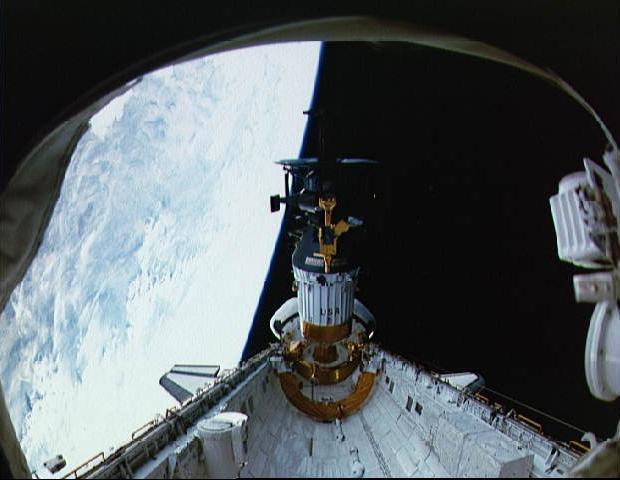
Deployment of NASA Galileo and the IUS from the cargo bay of STS-34 Atlantis at 7:15 p.m. EDT on October 18, 1989. P-35213

STS007-26-1439 (18-24 June 1983) --- Astronaut John M. Fabian, STS-7 mission specialist, is captured with a 35mm camera at his sleep station in the middeck of the Earth-orbiting space shuttle Challenger. This scene was selected by the five-member astronaut crew for showing at its July 1, 1983 Post Flight Press Conference (PFPC) at the Johnson Space Center's (JSC) main auditorium. Photo credit: NASA
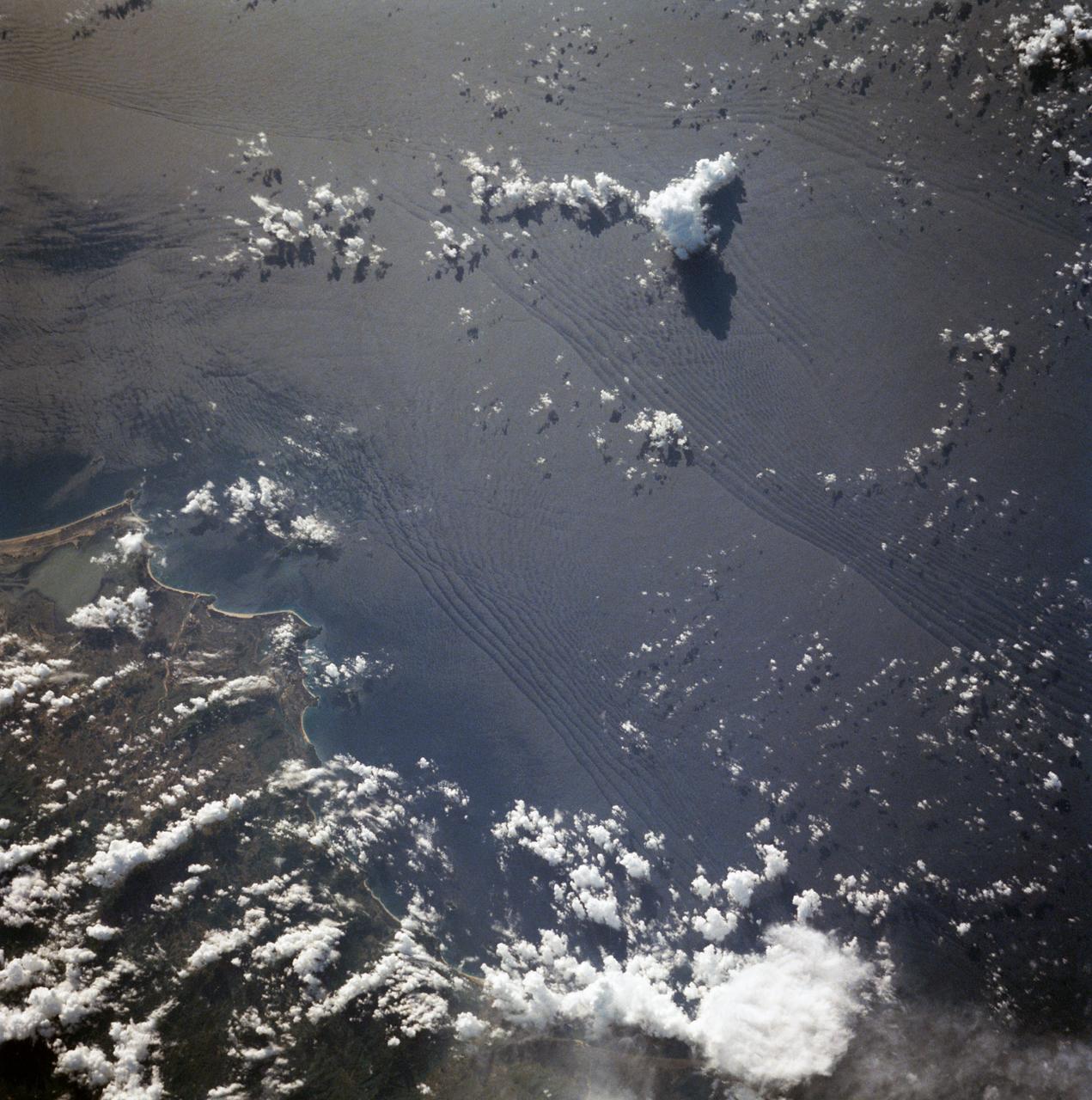
STS007-05-245 (18-24 June 1983) --- A rare view of internal waves in the South China Sea. Several different series of internal waves are represented in the 70mm frame, exposed with a handheld camera by members of the STS-7 astronaut crew aboard the Earth-orbiting Challenger. The land area visible in the lower left is part of the large island of Hainan, China.
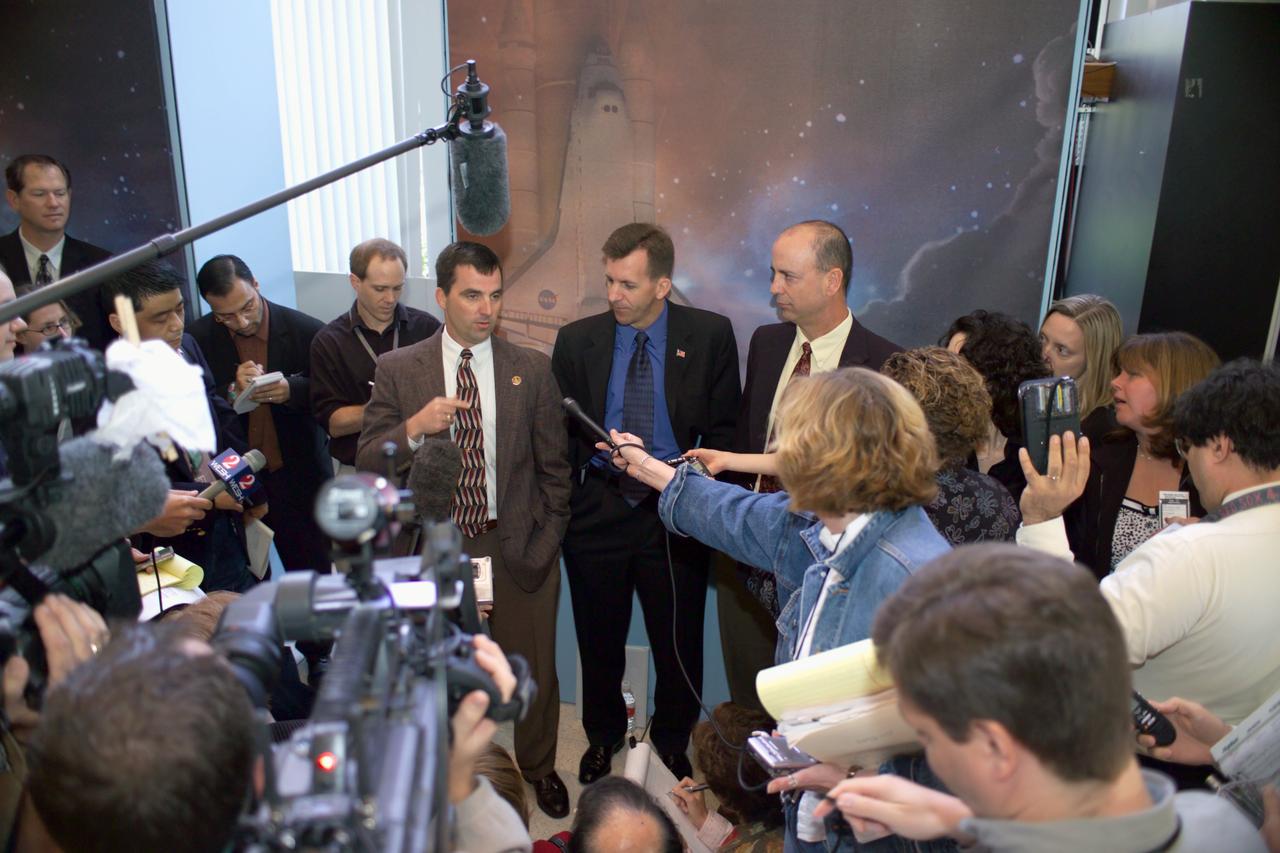
JSC2005-E-14182 (7 April 2005) --- Paul Hill (left center), STS-114 Lead Shuttle Flight Director; LeRoy Cain, Ascent/Entry Flight Director; and Mark Ferring, Lead ISS Flight Director, speak with various news media representatives following an STS-114 preflight press briefing in the Teague Auditorium at the Johnson Space Center (JSC).
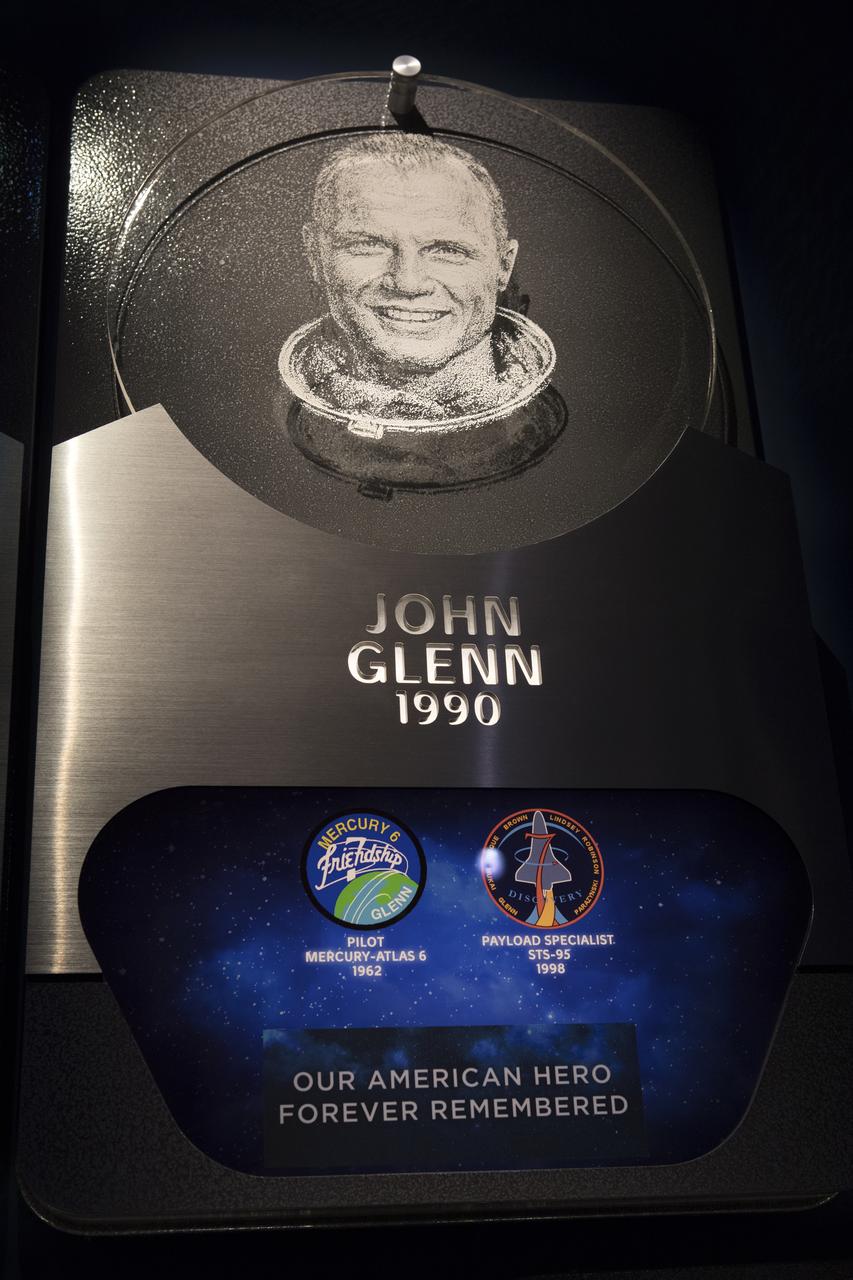
A plaque inside the Heroes and Legends exhibit hall at the Kennedy Space Center Visitor Complex shows astronaut Sen. John Glenn, along with his mission insignias for Friendship 7 and STS-95, the two flights he made into space. Glenn, who passed away Dec. 8, 2016 at age 95, was the last surviving member of NASA's original astronaut class. He gained worldwide acclaim during his Mercury mission that made him the first American to orbit the Earth. He flew again in 1998 aboard space shuttle Discovery at age 77.
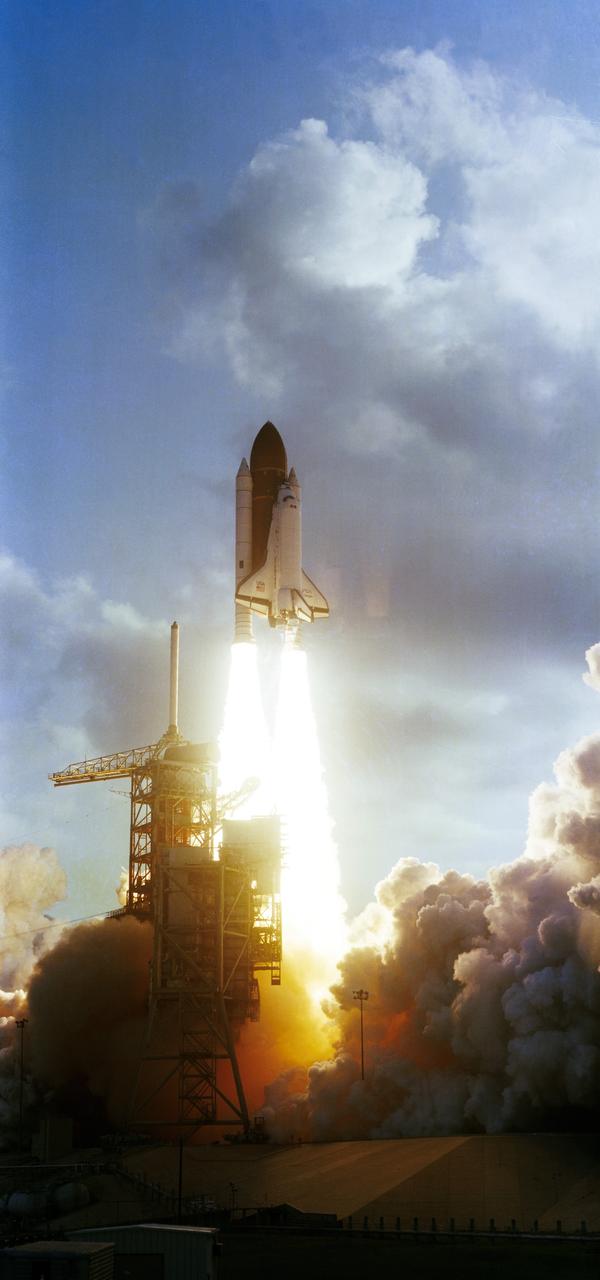
S83-35702 (18 June 1983) --- The seventh launch of the NASA Space Transportation System and the second lift-off of the space shuttle Challenger occurred at 7:33 a.m. (EDT) today from the Pad 39A launch site, at the Kennedy Space Center (KSC). The six-day mission will be highlighted by the first direct landing from space by an orbiter to the Shuttle Landing Facility (SLF). The crew consists of astronauts Robert Crippen, commander, the first two-time space shuttle astronaut; Frederick H. Hauck, pilot; and three mission specialists -- Sally K. Ride, John M. Fabian and Norman E. Thagard. During the mission the crew will deploy the Indonesian PALAPA-B and the Canadian ANIK-C communications satellites. They will also use the Remote Manipulator System (RMS) arm to deploy and retrieve a platform for space experiments called the Shuttle Pallet Satellite (SPAS), and serve as a spaceborne laboratory for OSTA-2, a scientific payload. Getaway Special canisters and materials processing experiments will fill out the complement of payloads on the mission. Photo credit: NASA

S83-29016 (4 March 1983) --- These five astronauts represent the Space Transportation System's (STS) first five-member crew. They will be aboard the Space Shuttle Challenger for the mission, scheduled for June of this year. Astronaut Robert L. Crippen (center, first row) is crew commander. Other crew members are astronauts Frederick H. Hauck, right, pilot; and Sally K. Ride, John M. Fabian and Norman E. Thagard, mission specialists. Seven stars and the Challenger provide the backdrop for the crew's portrait.
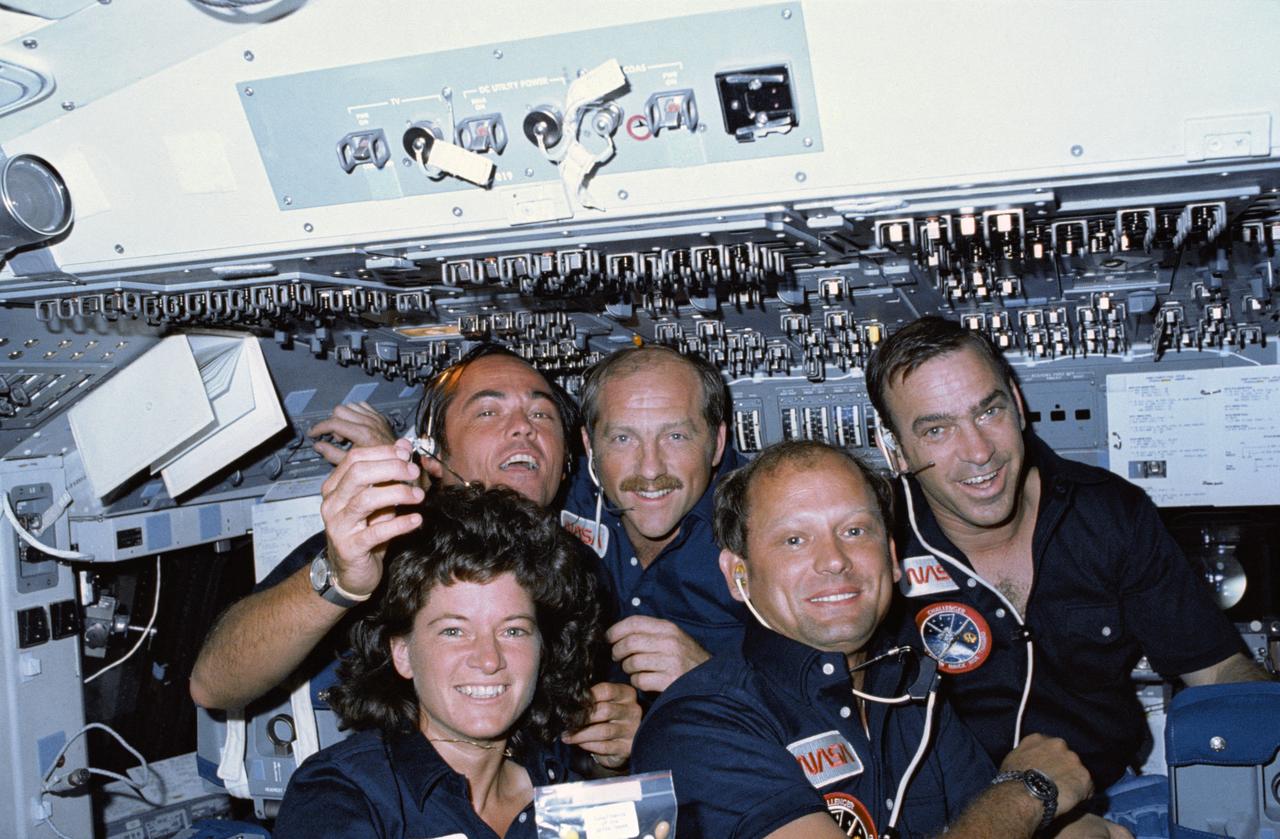
S83-35774 / STS007-30-1574 (21 June 1983) --- The five "passengers" onboard the Earth-orbiting Space Shuttle Challenger display some jelly beans discovered among their food supplies during their six-day mission. The label on the candy reads, "Compliments of the White House." In the rear are (left to right) astronauts Robert L. Crippen, crew commander, Frederick H. Hauck, pilot; and John M. Fabian, mission specialist. In front are Drs. Sally K. Ride and Norman E. Thagard, mission specialists. The scene was exposed by a pre-set 35mm camera.

STS007-15-671 / S83-35767 (21 June 1983) --- Among the "firsts" on the mission is this unprecedented scene of a crew of five astronauts aboard the Space Shuttle Challenger in space. A pre-set 35mm camera exposed the frame. Left to right on the flight deck are Norman E. Thagard, mission specialist; Robert L. Crippen, commander; Frederick H. Hauck, pilot; Sally K. Ride, mission specialist; and John M. Fabian, mission specialist. Crippen the crew commander, is making his second Space Shuttle trip; pilot Hauck and mission specialist Dr. Ride, Dr. Thagard and Fabian are members of the 1978 class of astronaut candidates (ASCAN).
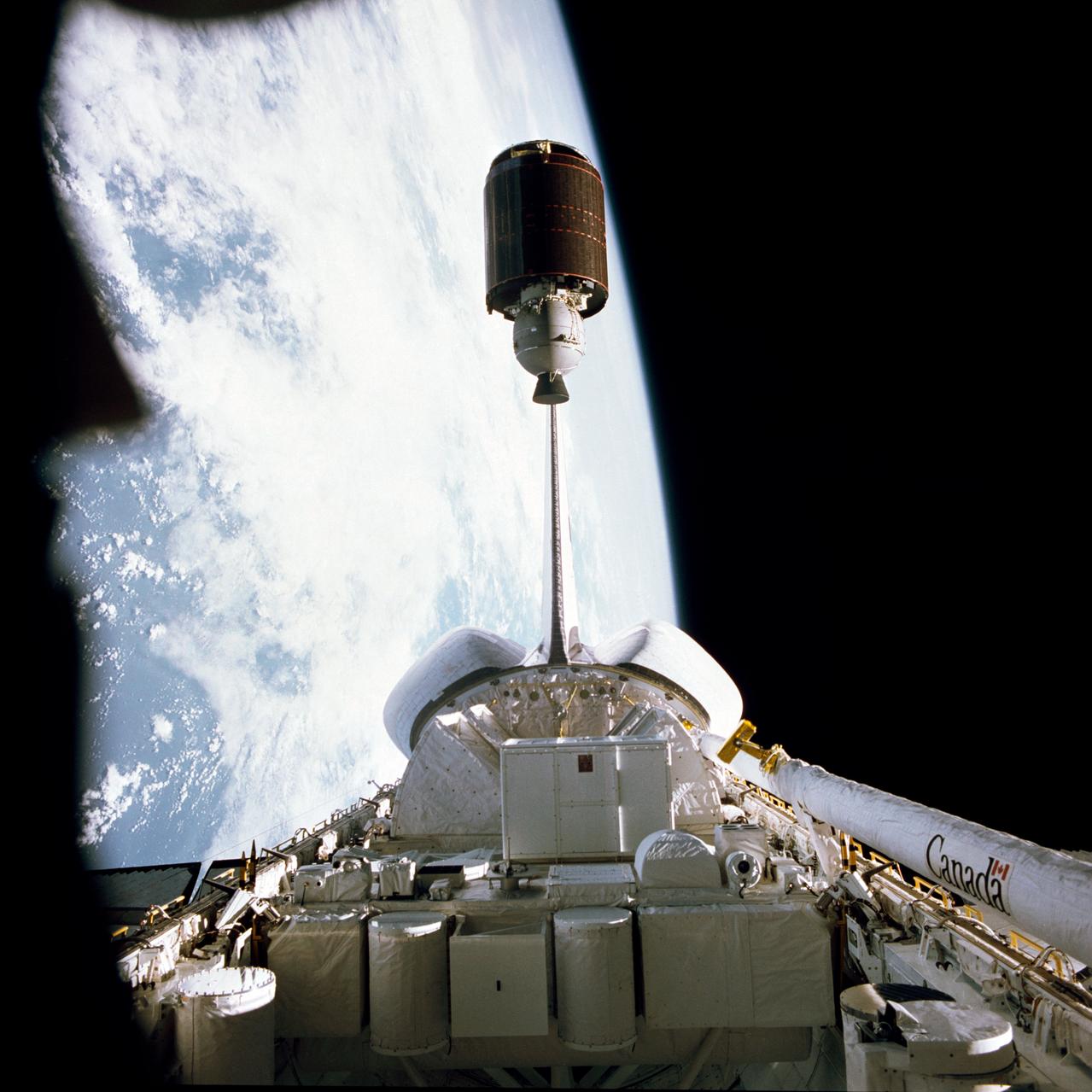
S83-35764 (19 June 1983) --- The Indonesian Palapa B communications satellite is just about to clear the vertical stabilizer of the Earth-orbiting Space Shuttle Challenger to begin its way toward its Earth-orbital destination. Also visible in this 70mm exposure, photographed through the flight deck?s aft windows, are the Shuttle pallet satellite, the experiment package for NASA?s office of space and terrestrial applications (OSTA-2), the now vacated protective cradles for Palapa and Telesat Canada?s Anik C2 satellites, some getaway special (GAS) canisters and the Canadian-built remote manipulator system (RMS) arm.
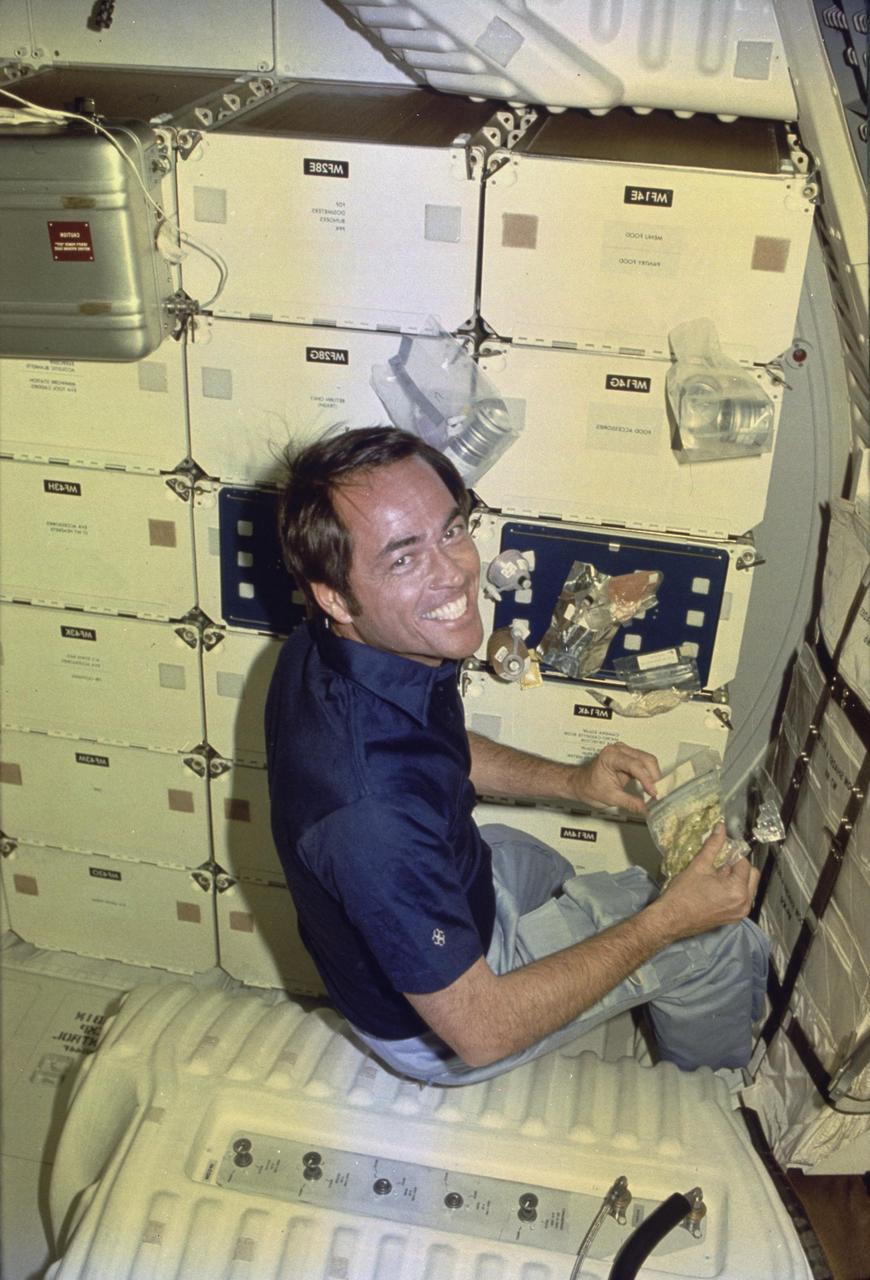
STS-1 ONBOARD PHOTOGRAPHY - STS-1-7-0502: STS-1 Pilot Robert Crippen at lunch.
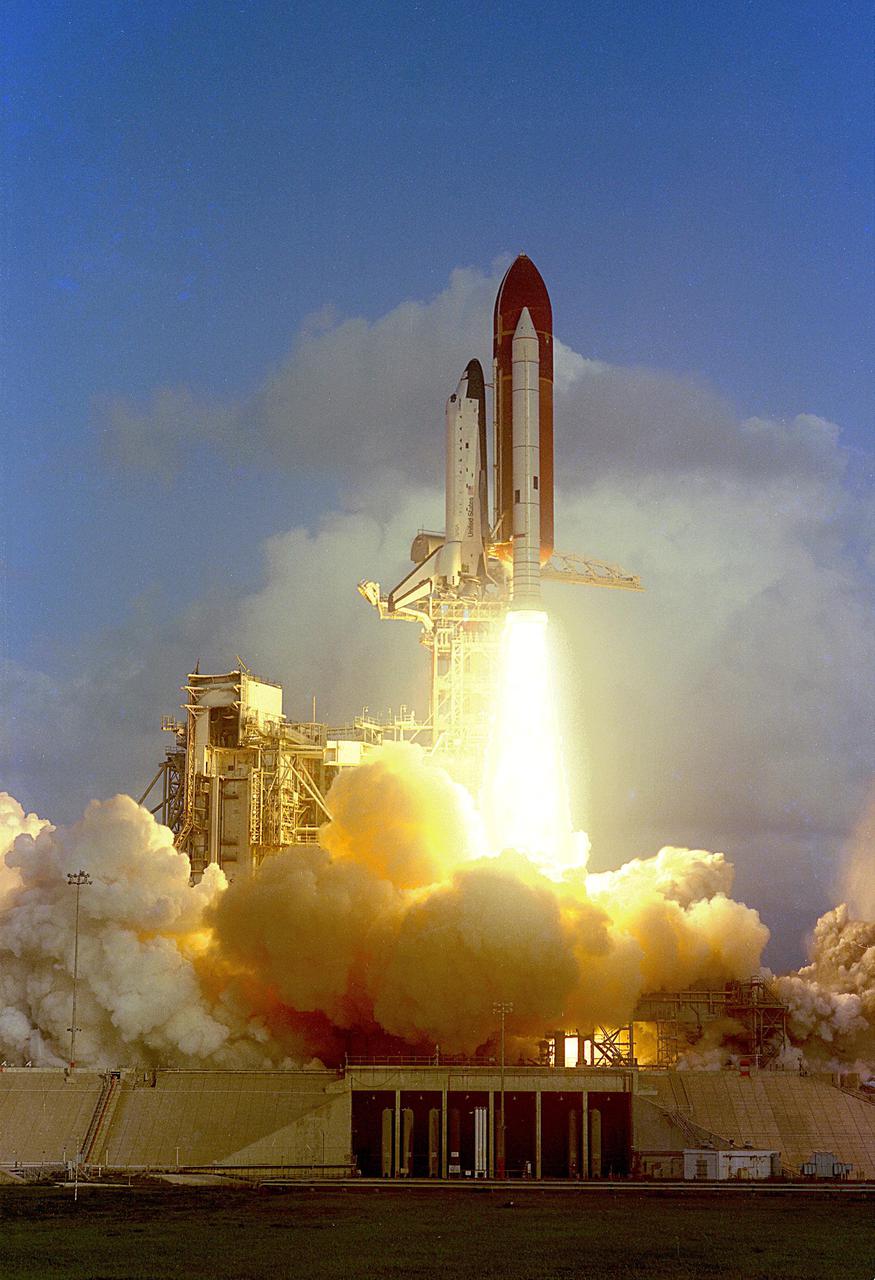
KENNEDY SPACE CENTER, FLA. -- STS-7: Challenger
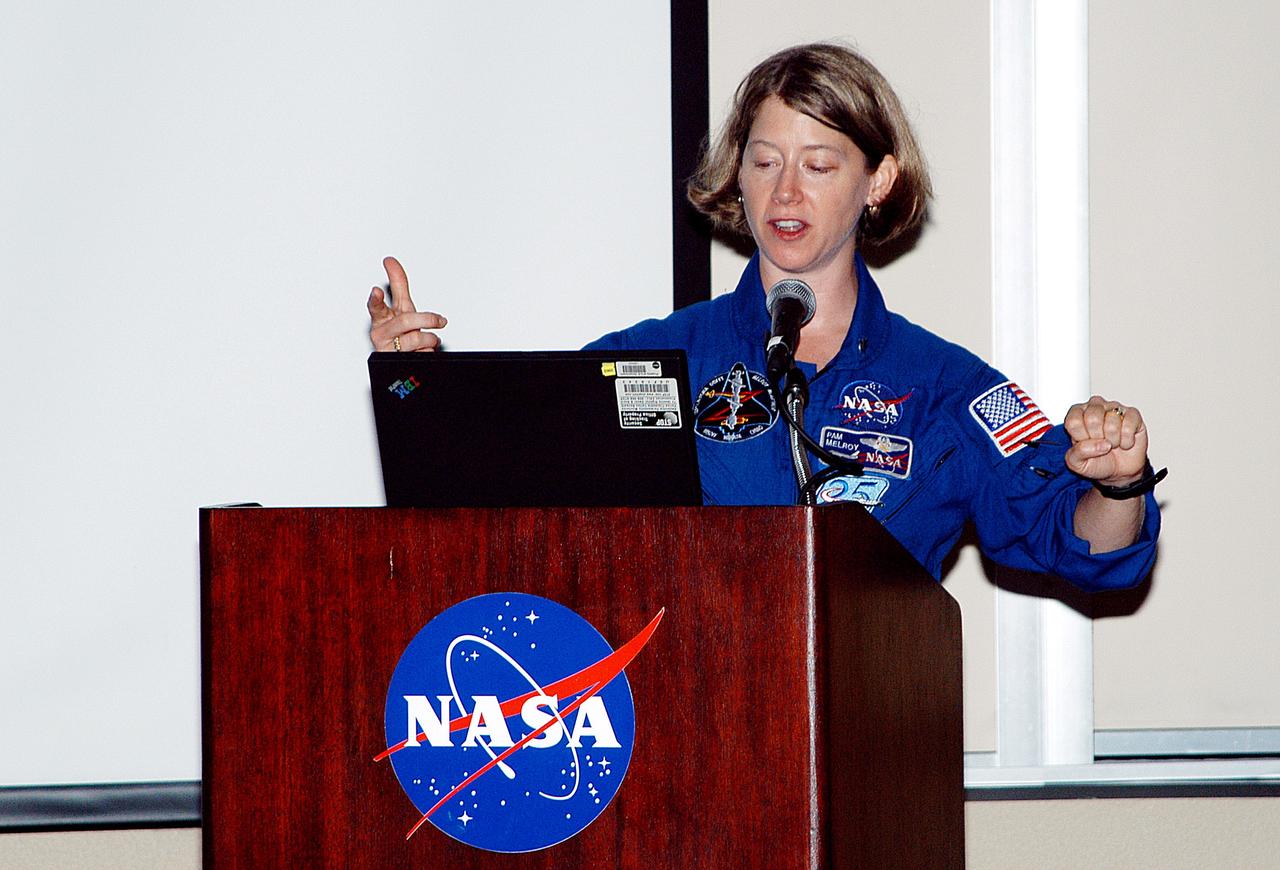
KENNEDY SPACE CENTER, FLA. - At the Florida Commission on the Status of Women held June 7 at the Debus Conference Facility, astronaut Pamela Melroy speaks to attendees. Melroy has served as pilot on two Shuttle flights (STS-92 in 2000 and STS-112 in 2002), and has logged more than 562 hours in space. The commission, through coordinating, researching, communicating, and encouraging legislation, is dedicated to empowering women from all walks of life in achieving their fullest potential, to eliminating barriers to that achievement, and to recognizing women’s accomplishments.
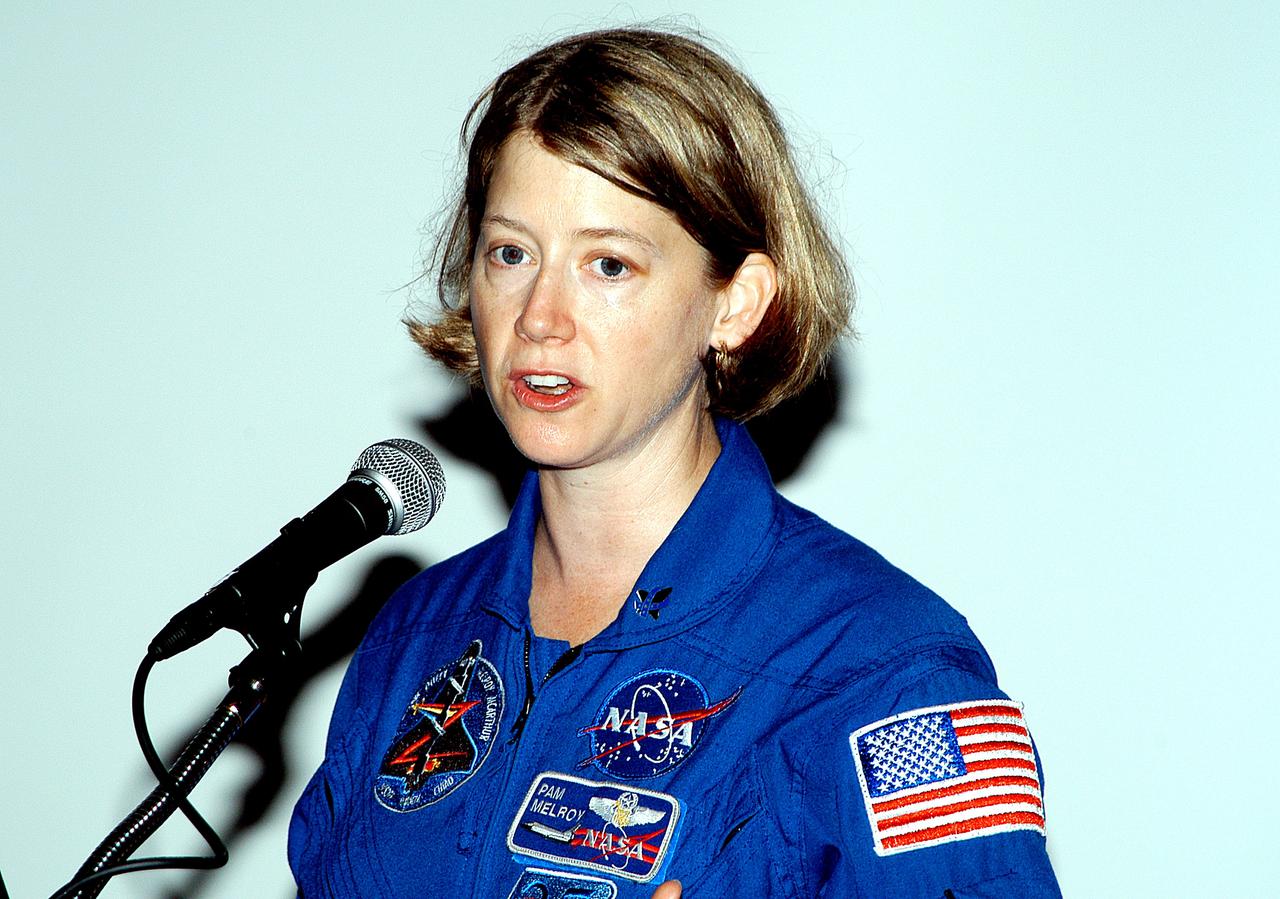
KENNEDY SPACE CENTER, FLA. - At the Florida Commission on the Status of Women held June 7 at the Debus Conference Facility, astronaut Pamela Melroy speaks to attendees. Melroy has served as pilot on two Shuttle flights (STS-92 in 2000 and STS-112 in 2002), and has logged more than 562 hours in space. The commission, through coordinating, researching, communicating, and encouraging legislation, is dedicated to empowering women from all walks of life in achieving their fullest potential, to eliminating barriers to that achievement, and to recognizing women’s accomplishments.

S83-32823 (26 May 1983) --- Astronauts Sally K. Ride and John M. Fabian, attired in clean suits, participate in a STS-7 crew mission test in the Kennedy Space Center's vertical processing facility (VPF). They are two of three STS-7 mission specialists preparing for the June mission. Photo credit: NASA
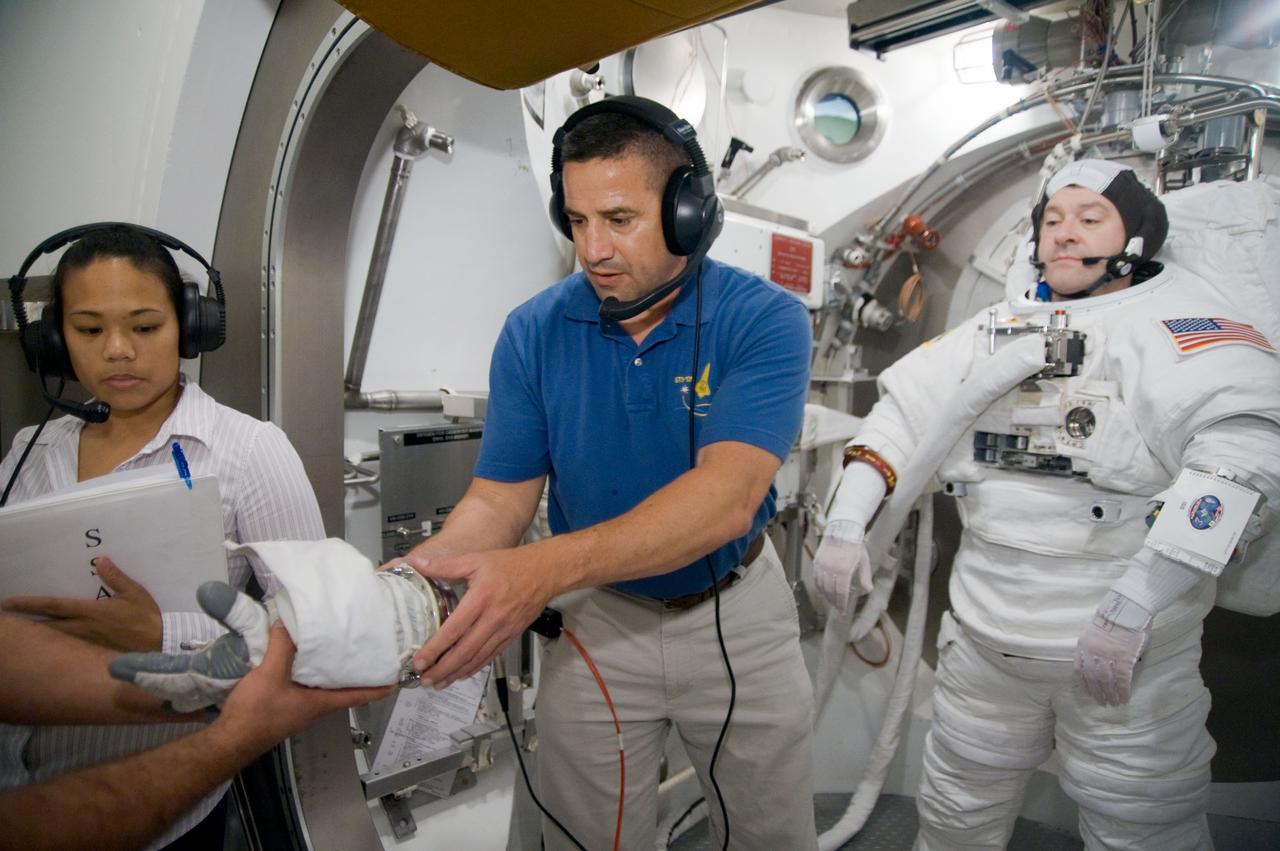
STS-130 astronaut Nick Patrick during dry run for SSATA Crew Training and EMU Verification for STS-130. Photo Date: October 29, 2009. Location: Building 7 - SSATA Chamber. Photographer: Robert Markowitz.

PHOTO DATE: 7-15-09 LOCATION: Bldg. 30 south - WFCR and Backroom SUBJECT: STS-127 Flight Controllers on Console - Acent - STS 127 Launch PHOTOGRAPHER: Lauren Harnett
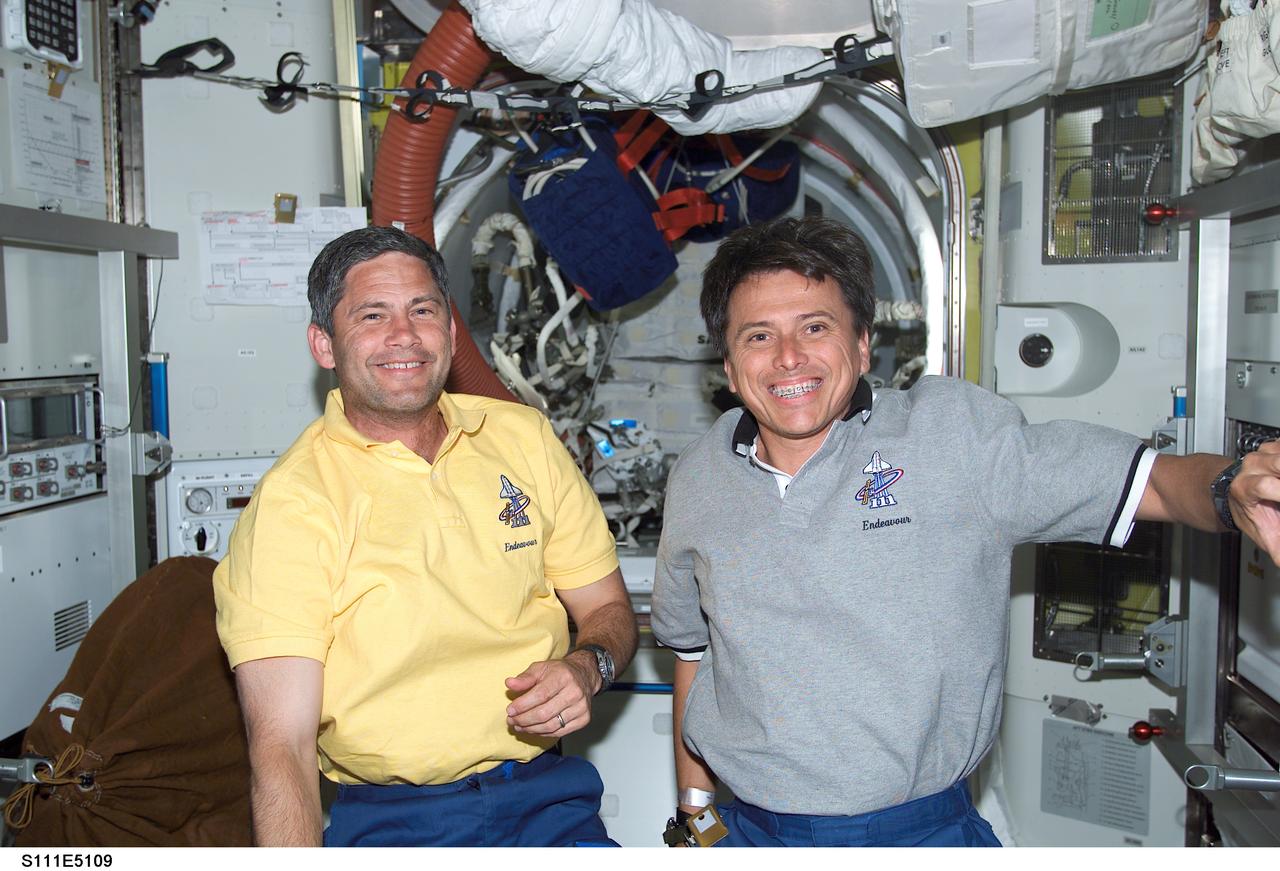
STS111-E-5109 (7 June 2002) --- Astronauts Paul S. Lockhart (left), STS-111 pilot, and Franklin R. Chang-Diaz, mission specialist, greet Expedition Four members (out of frame) with smiles during a brief reunion not long after hatch-opening on June 7, 2002.
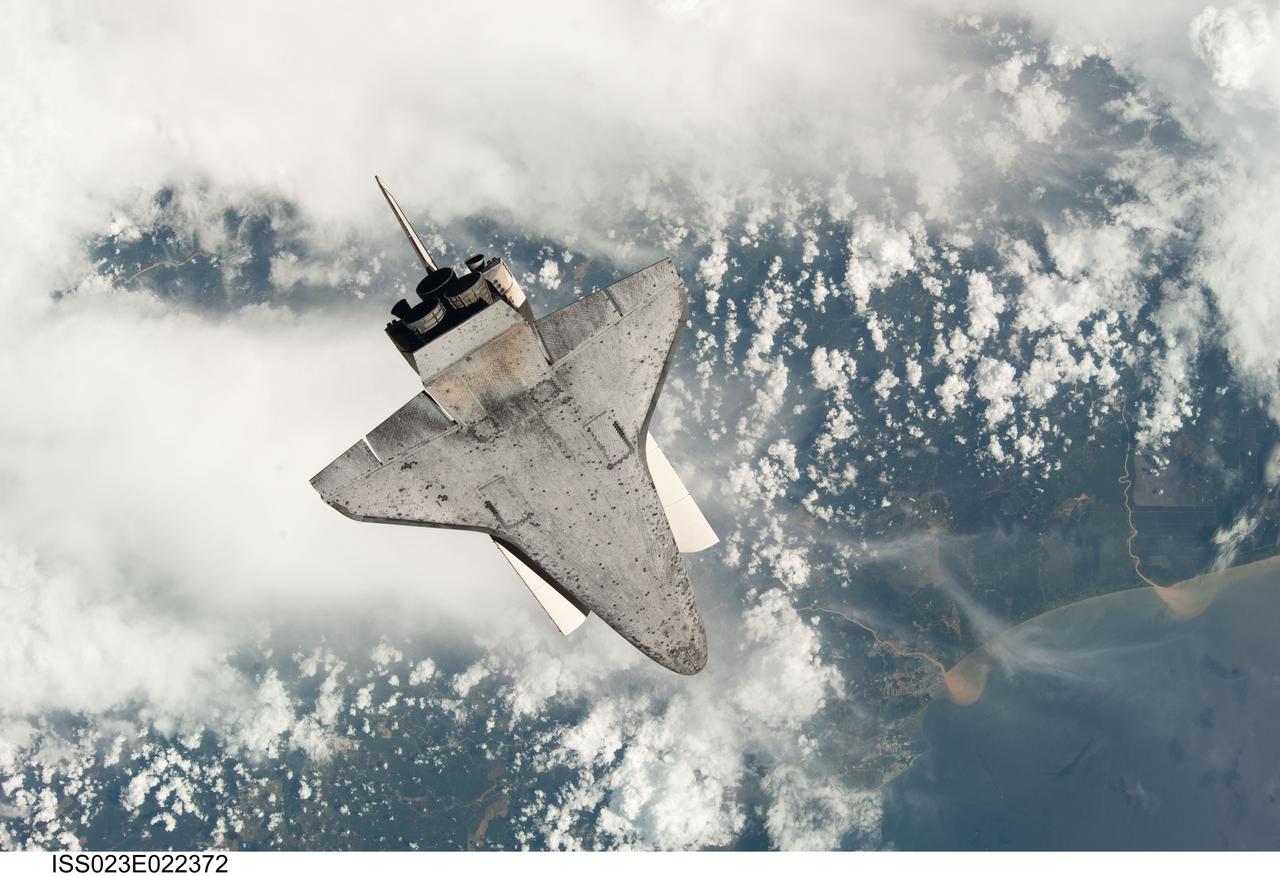
ISS023-E-022372 (7 April 2010) --- The underside of space shuttle Discovery is featured in this image photographed by an Expedition 23 crew member as the shuttle approaches the International Space Station during STS-131 rendezvous and docking operations. Docking occurred at 2:44 a.m. (CDT) on April 7, 2010.
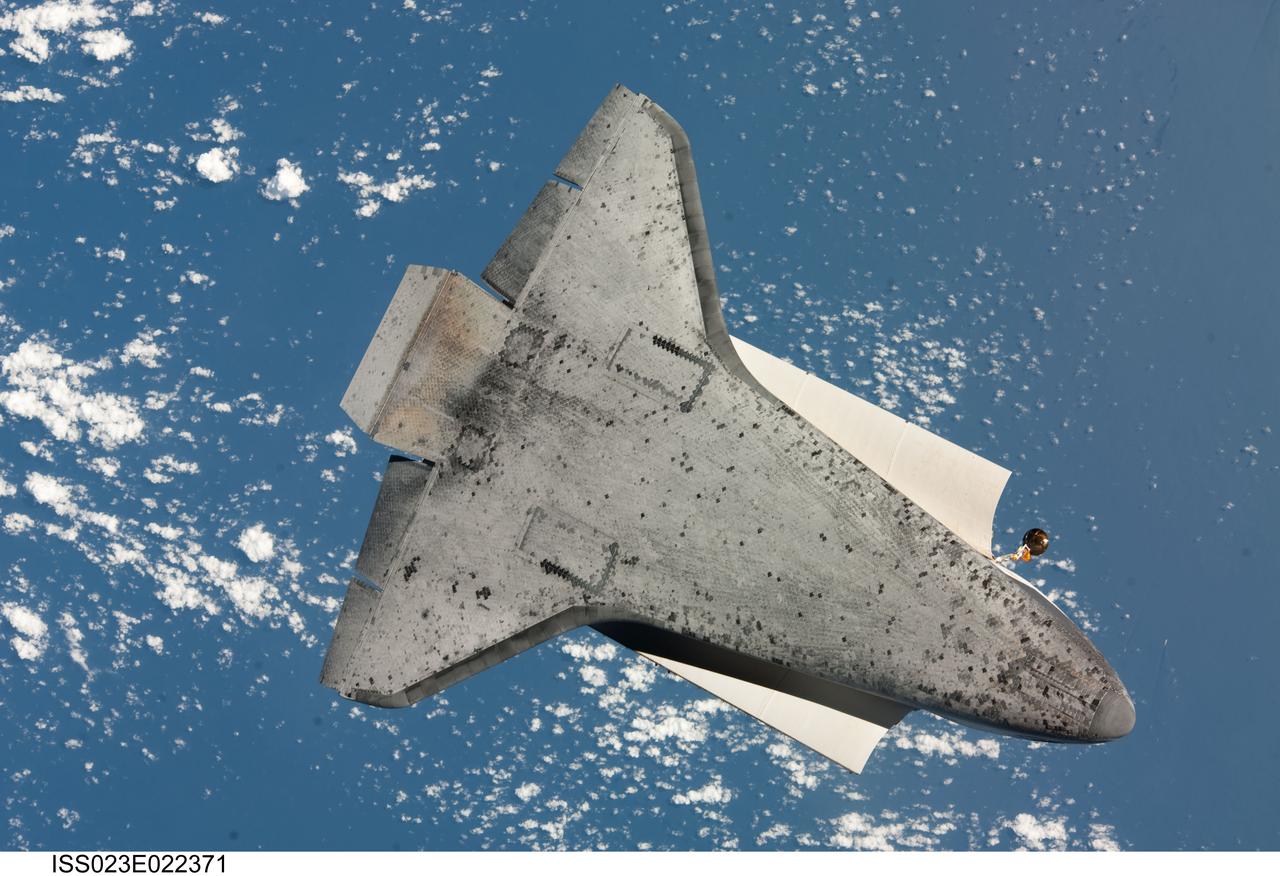
ISS023-E-022371 (7 April 2010) --- The underside of space shuttle Discovery is featured in this image photographed by an Expedition 23 crew member as the shuttle approaches the International Space Station during STS-131 rendezvous and docking operations. Docking occurred at 2:44 a.m. (CDT) on April 7, 2010.
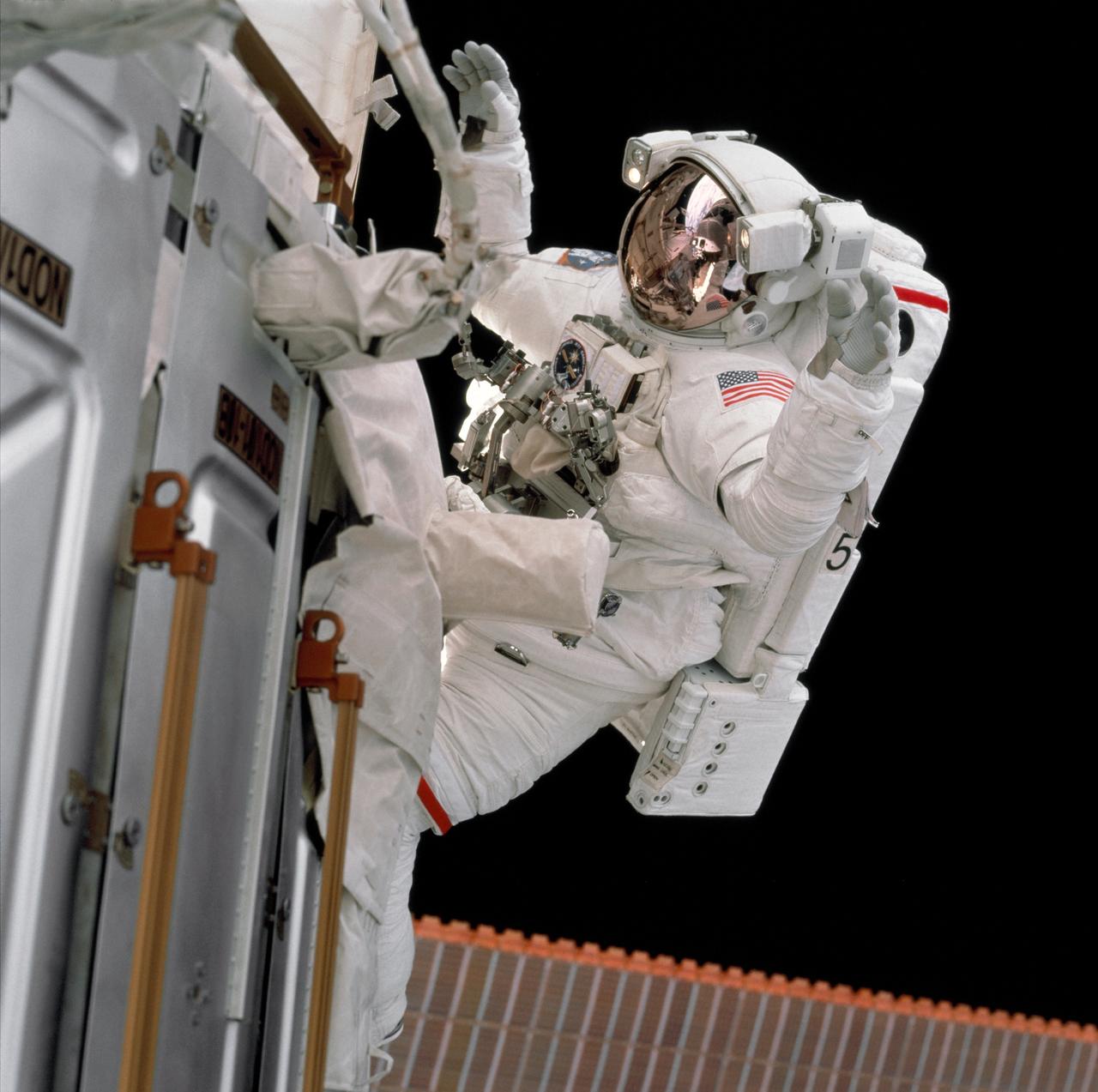
STS097-703-001 (7 December 2000) --- Astronaut Joseph R. Tanner participates in the December 7 extravehicular activity (EVA), one of three space walks involving him and astronaut Carlos I. Noriega. The photograph was taken by one of the non-EVA STS-97 crew members, using a 70mm camera.
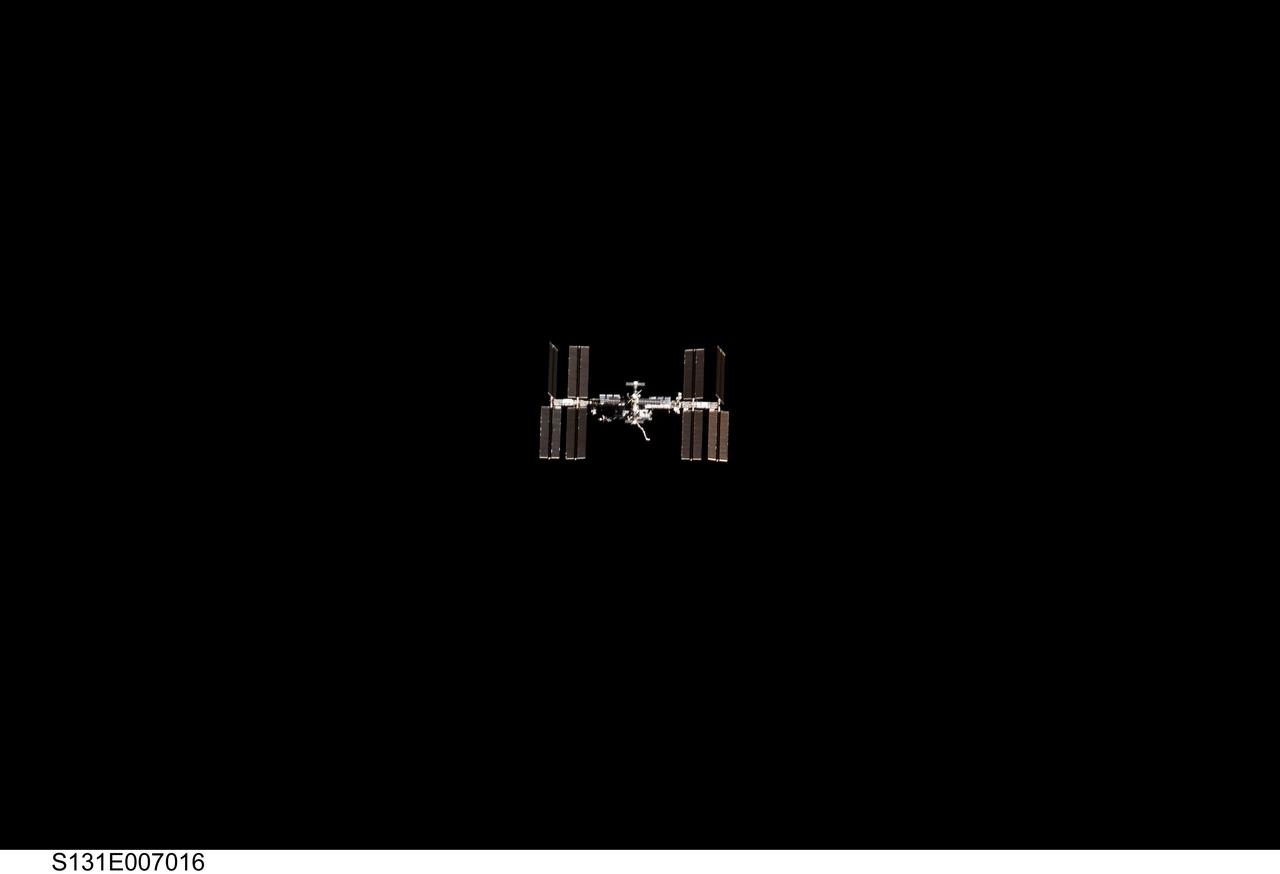
S131-E-007016 (7 April 2010) --- Surrounded by the blackness of space, the International Space Station appears to be very small from the point of view of space shuttle Discovery as the shuttle approaches the station during STS-131 rendezvous and docking operations. Docking occurred at 2:44 a.m. (CDT) on April 7, 2010.
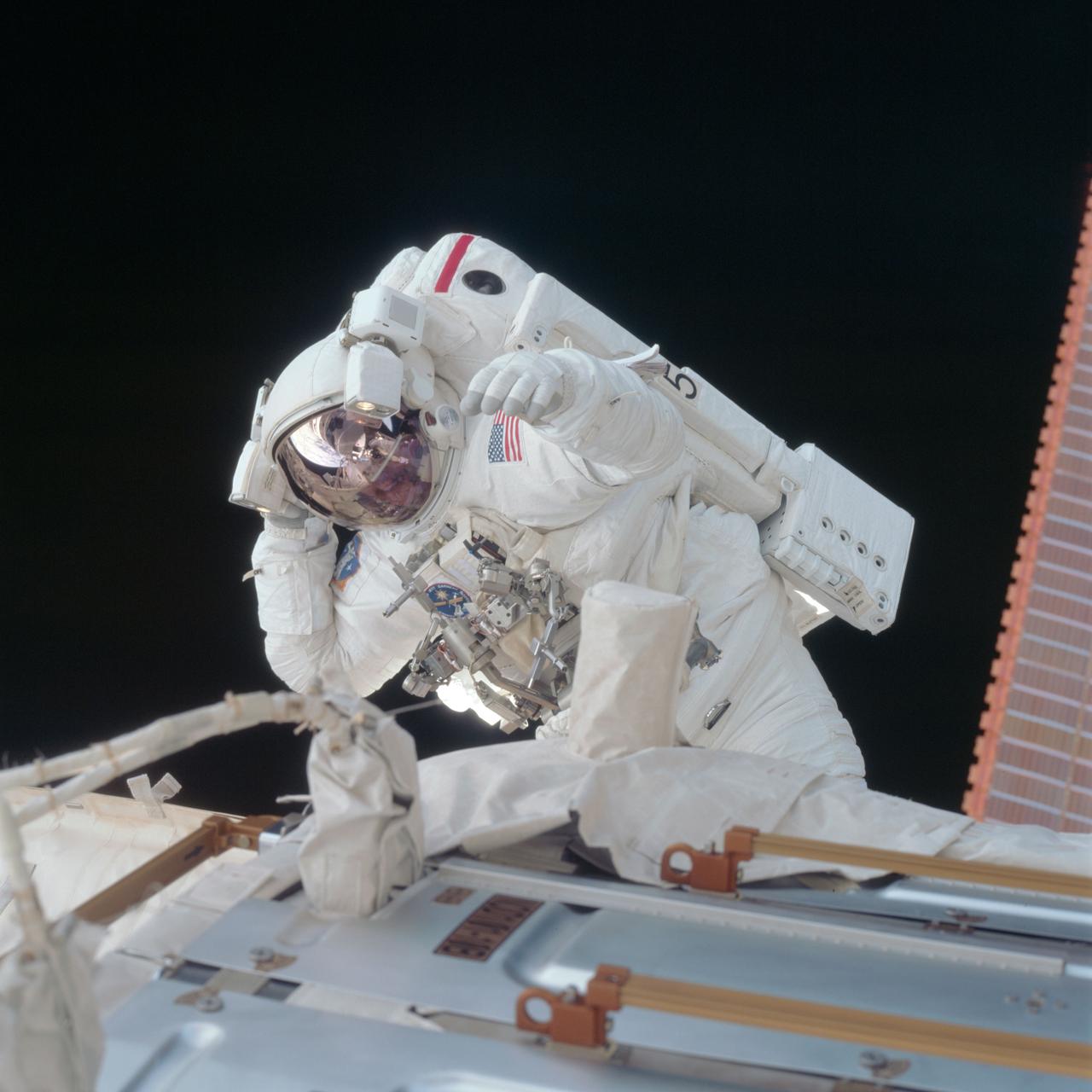
STS097-703-004 (7 December 2000) --- Astronaut Joseph R. Tanner participates in the December 7 extravehicular activity (EVA), one of three space walks involving him and astronaut Carlos I. Noriega. The photograph was taken by one of the non-EVA STS-97 crew members, using a 70mm camera.

ISS023-E-020654 (7 April 2010) --- Japan Aerospace Exploration Agency astronaut Naoko Yamazaki, STS-131 mission specialist, enjoys her first in-space experience of weightlessness as she floats in the Kibo laboratory aboard the International Space Station shortly after arriving at the orbital complex on April 7.
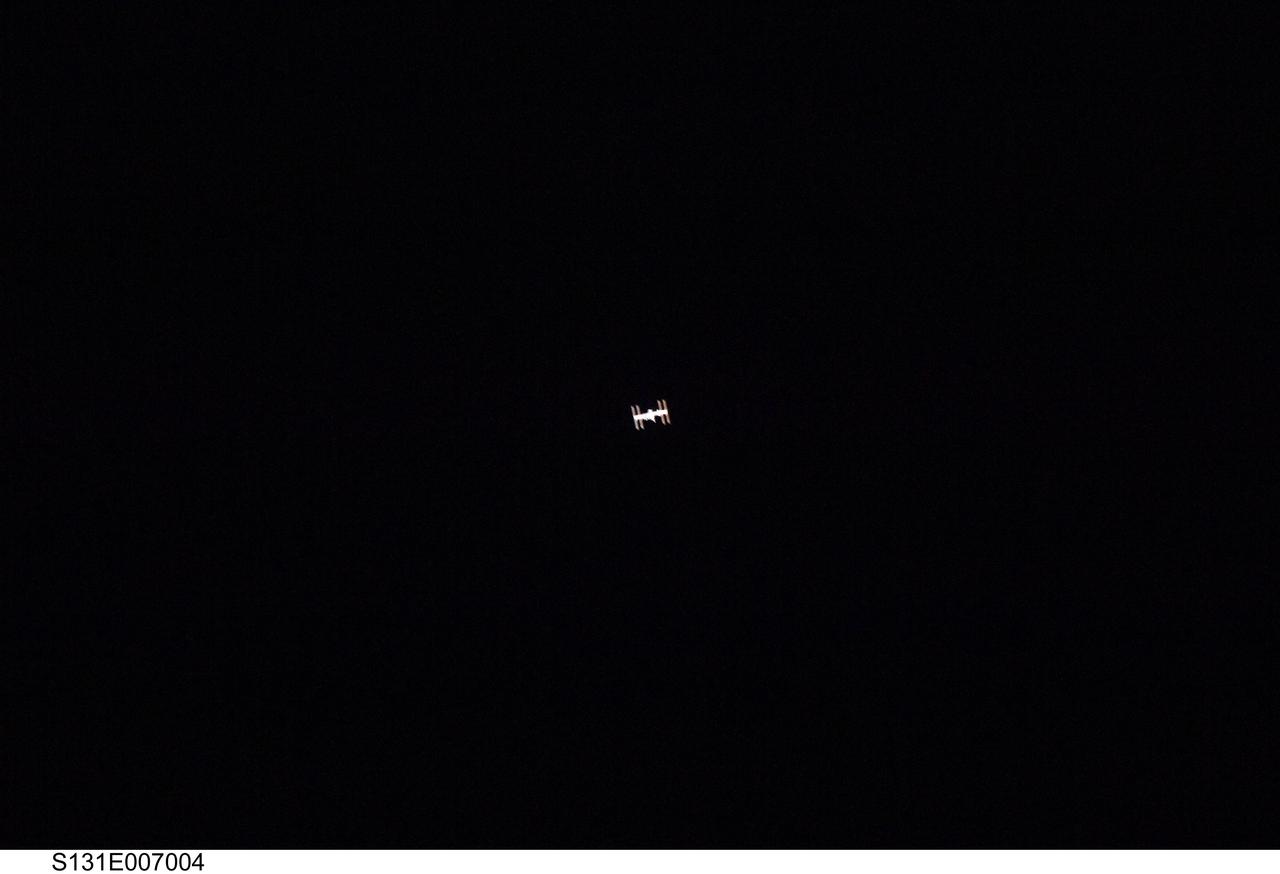
S131-E-007004 (7 April 2010) --- Surrounded by the blackness of space, the International Space Station appears to be very small from the point of view of space shuttle Discovery as the shuttle approaches the station during STS-131 rendezvous and docking operations. Docking occurred at 2:44 a.m. (CDT) on April 7, 2010.
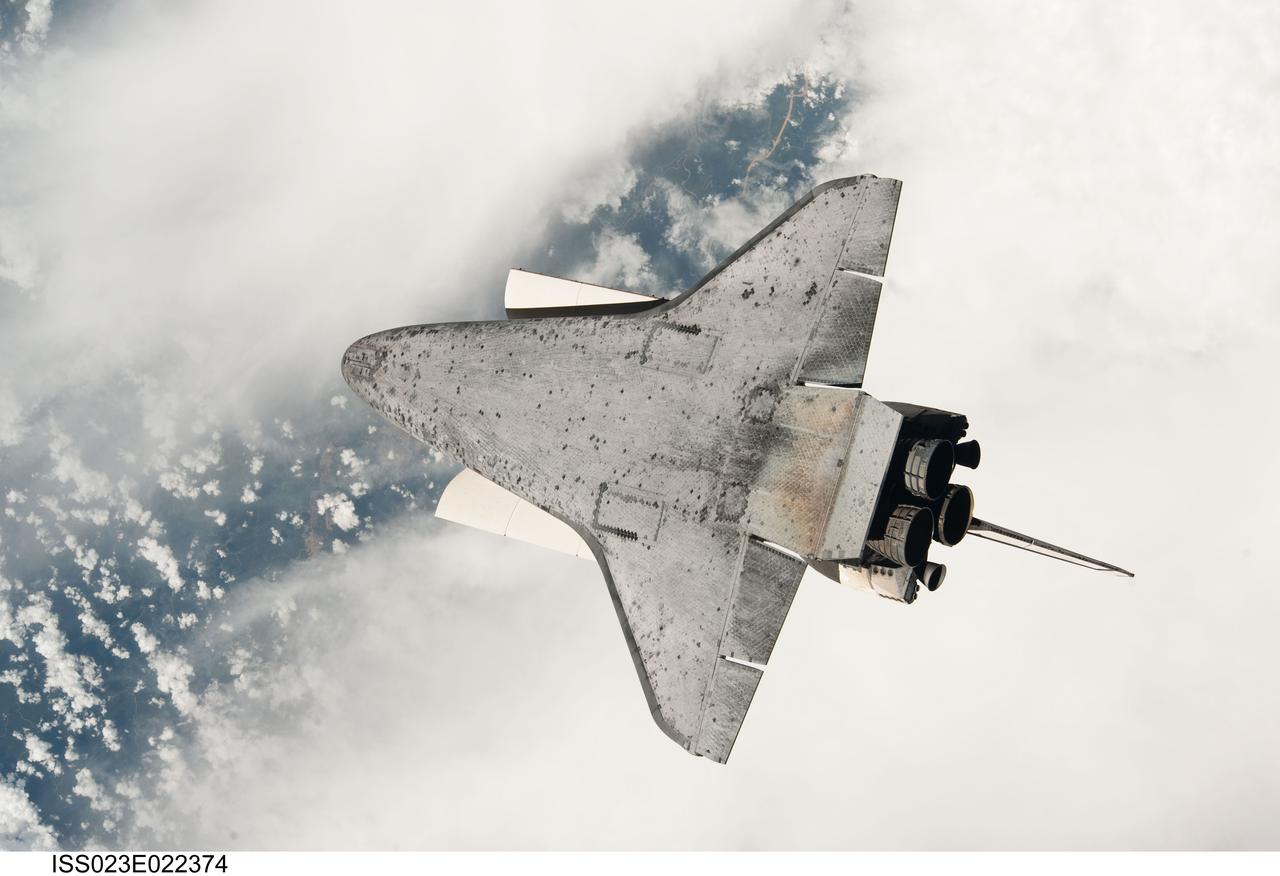
ISS023-E-022374 (7 April 2010) --- The underside of space shuttle Discovery is featured in this image photographed by an Expedition 23 crew member as the shuttle approaches the International Space Station during STS-131 rendezvous and docking operations. Docking occurred at 2:44 a.m. (CDT) on April 7, 2010.
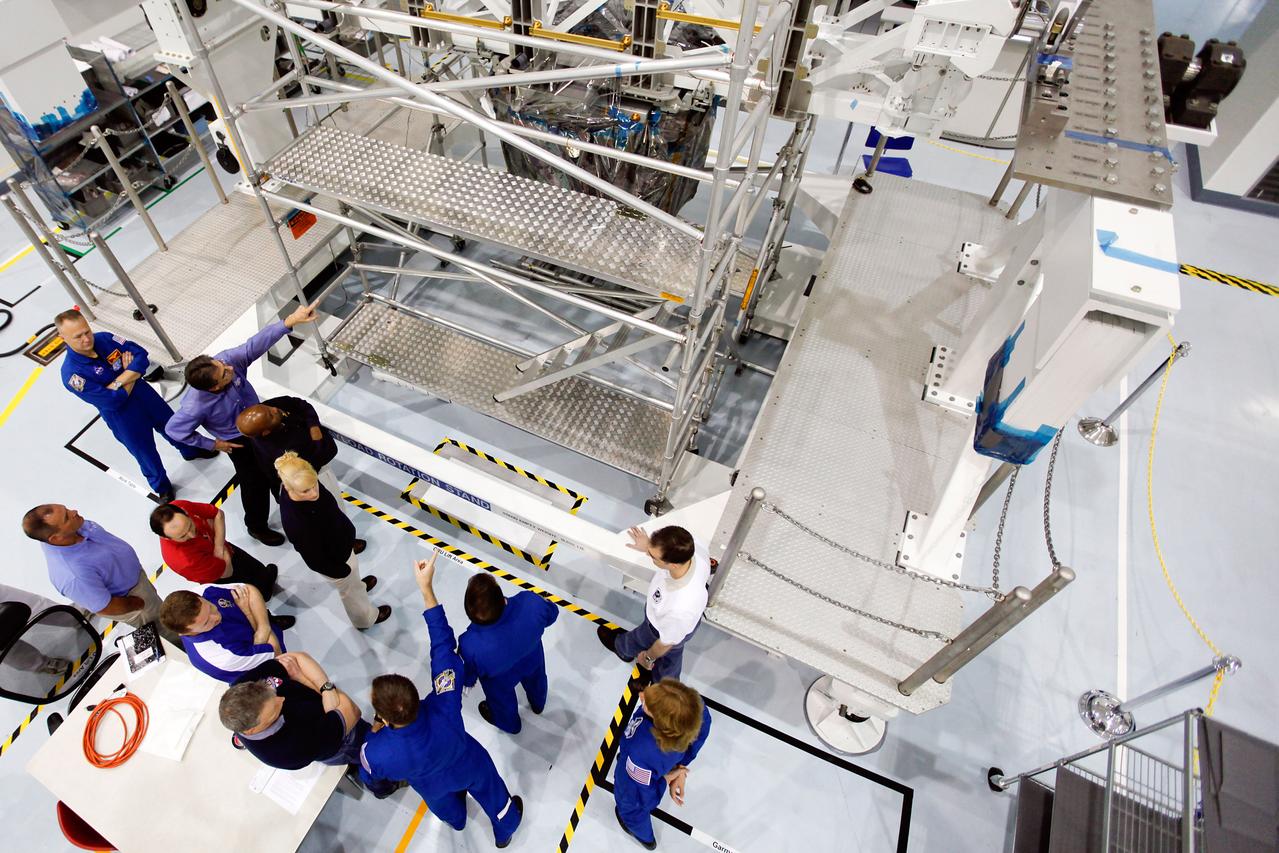
JSC2011-E-040337 (7 April 2011) --- The STS-135 crew members participate in the Crew Equipment Interface Test (CEIT) in the Space Station Processing Facility at NASA?s Kennedy Space Center, Florida on April 7, 2011. Photo credit: NASA Photo/Houston Chronicle, Smiley N. Pool
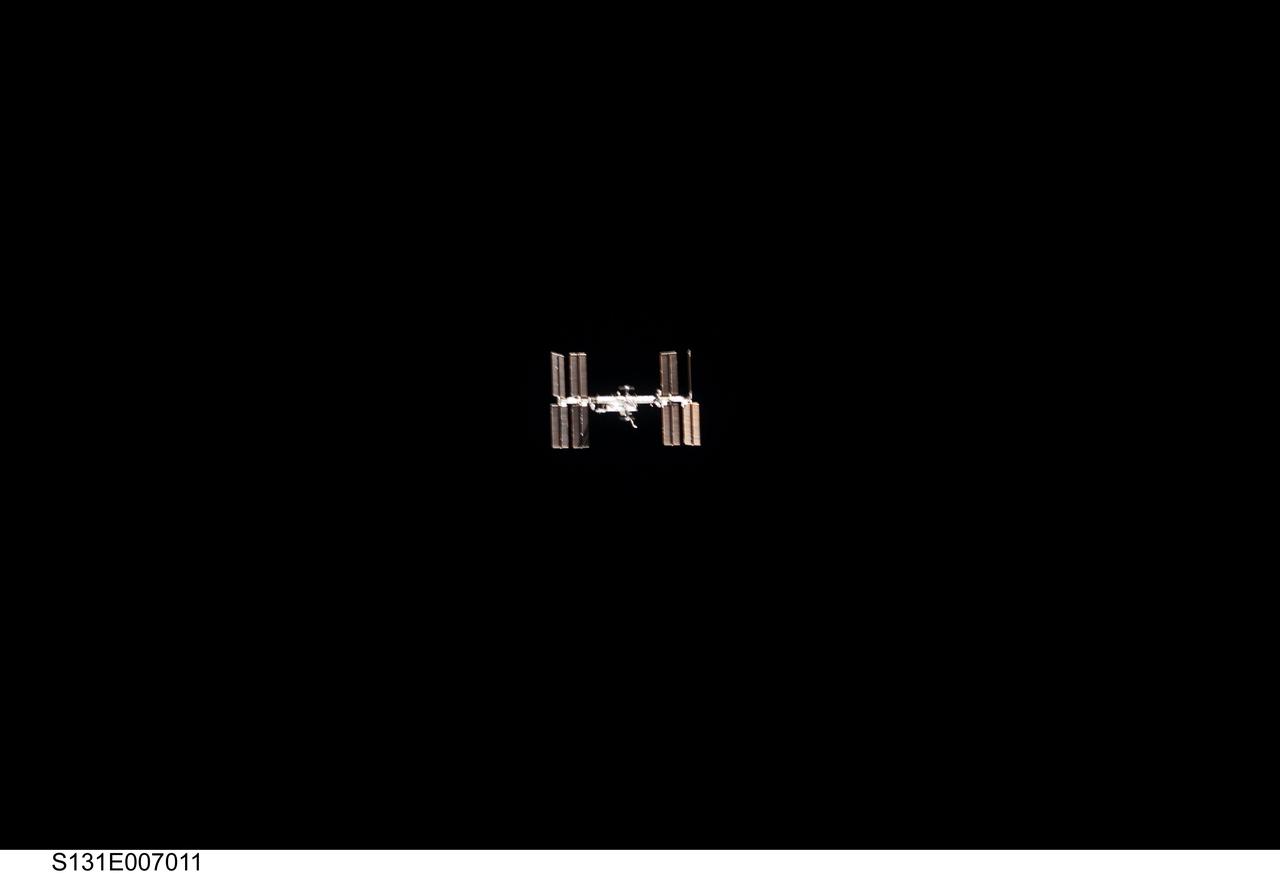
S131-E-007011 (7 April 2010) --- Surrounded by the blackness of space, the International Space Station appears to be very small from the point of view of space shuttle Discovery as the shuttle approaches the station during STS-131 rendezvous and docking operations. Docking occurred at 2:44 a.m. (CDT) on April 7, 2010.
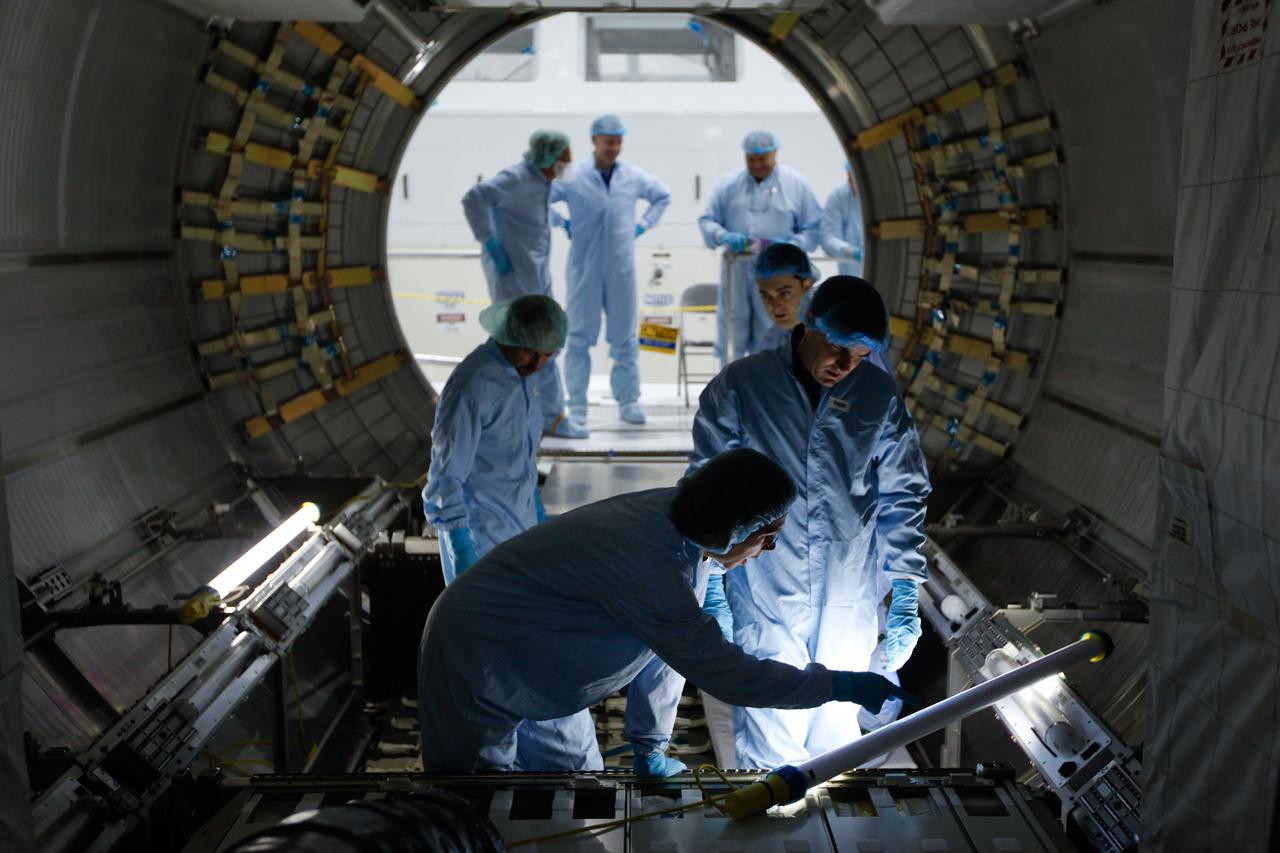
JSC2011-E-040338 (7 April 2011) --- NASA astronauts Sandy Magnus and Rex Walheim, both STS-135 mission specialists, work in the Multi-Purpose Logistics Module in the Space Station Processing Facility during the STS-135 Crew Equipment Interface Test (CEIT) at the Kennedy Space Center in Florida on April 7, 2011. Photo credit: NASA Photo/Houston Chronicle, Smiley N. Pool

JSC2011-E-040346 (7 April 2011) --- NASA astronauts Chris Ferguson, STS-135 commander; and Doug Hurley, pilot, inspect the front landing gear of the space shuttle Atlantis during the STS-135 Crew Equipment Interface Test (CEIT) at NASA?s Kennedy Space Center, Florida on April 7, 2011. Photo credit: NASA Photo/Houston Chronicle, Smiley N. Pool
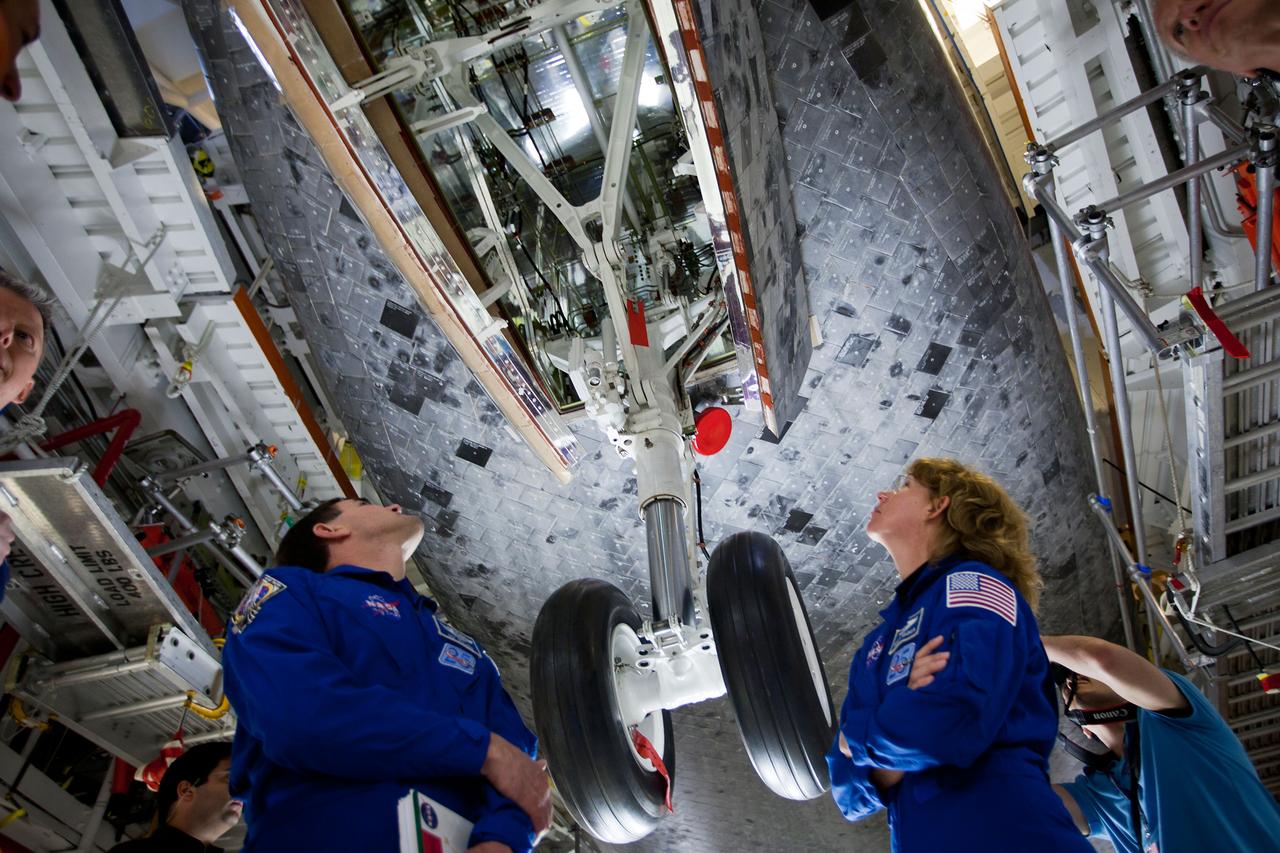
JSC2011-E-040345 (7 April 2011) --- NASA astronauts Rex Walheim and Sandy Magnus, STS-135 mission specialists, inspect the front landing gear of the space shuttle Atlantis during the STS-135 Crew Equipment Interface Test (CEIT) at NASA?s Kennedy Space Center, Florida on April 7, 2011. Photo credit: NASA Photo/Houston Chronicle, Smiley N. Pool
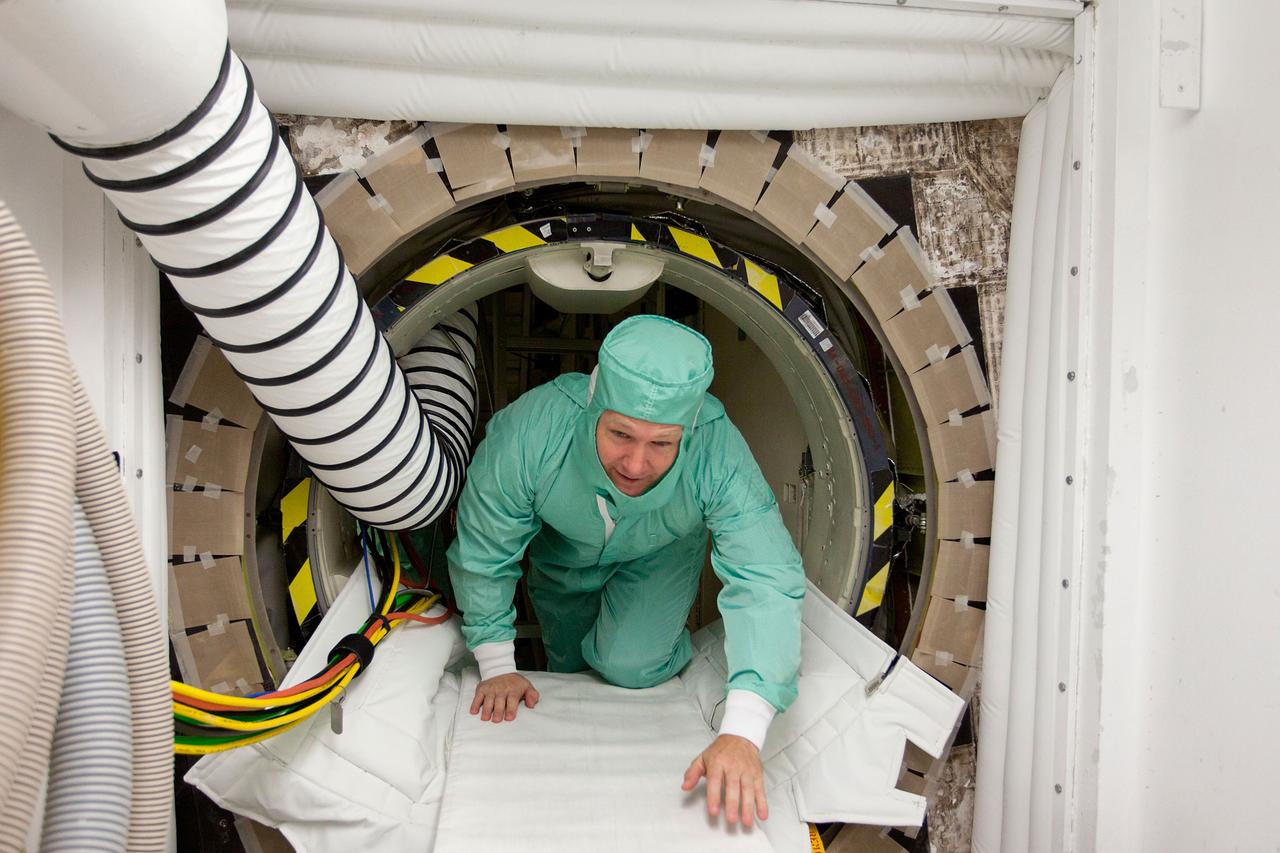
JSC2011-E-040358 (7 April 2011) --- NASA astronaut Doug Hurley, STS-135 pilot, exits the hatch of the space shuttle Atlantis during the STS-135 Crew Equipment Interface Test (CEIT) in the Orbiter Processing Facility at NASA?s Kennedy Space Center, Florida on April 7, 2011. Photo credit: NASA Photo/Houston Chronicle, Smiley N. Pool
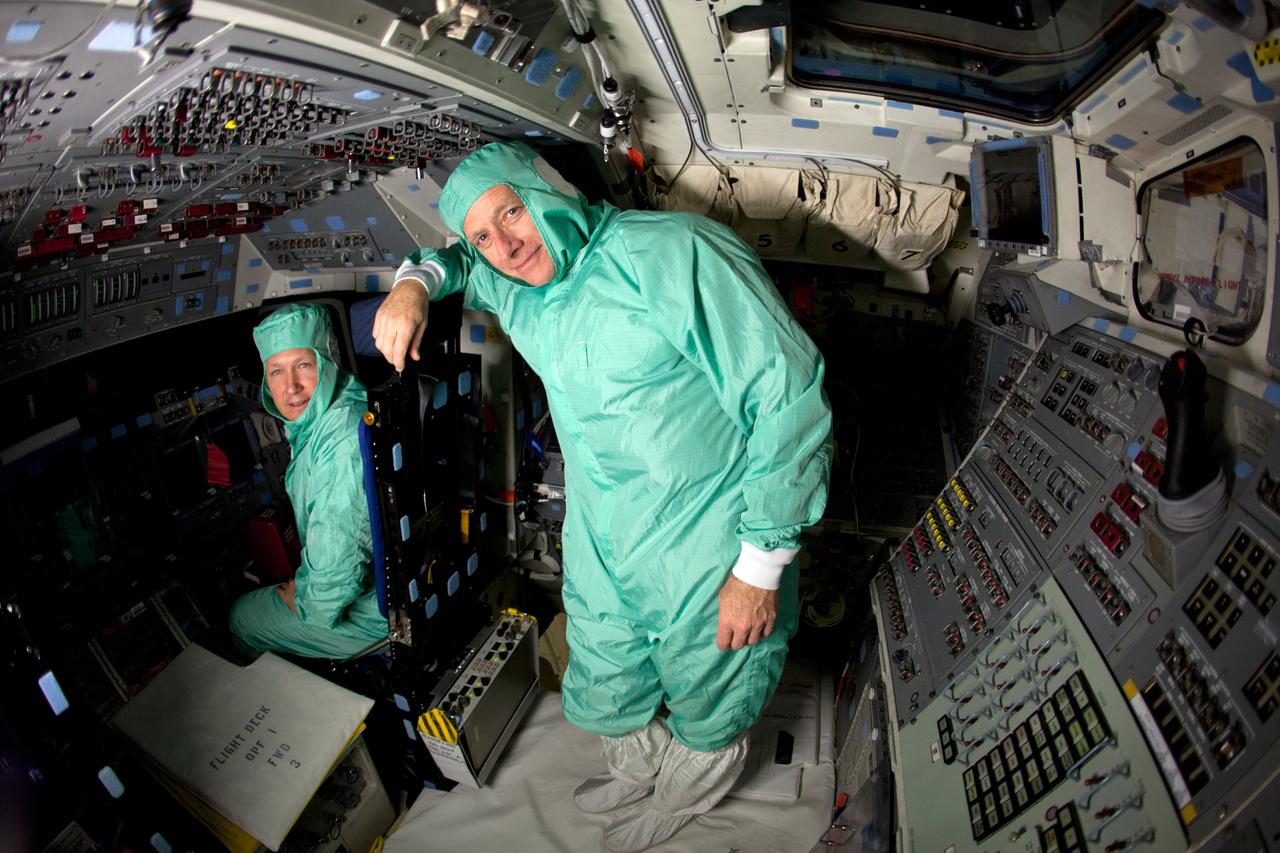
JSC2011-E-040357 (7 April 2011) --- NASA astronauts Chris Ferguson (right), STS-135 commander; and Doug Hurley, pilot, pose for a photo on the cockpit of the space shuttle Atlantis during the STS-135 Crew Equipment Interface Test (CEIT) in the Orbiter Processing Facility at NASA?s Kennedy Space Center, Florida on April 7, 2011. Photo credit: NASA Photo/Houston Chronicle, Smiley N. Pool
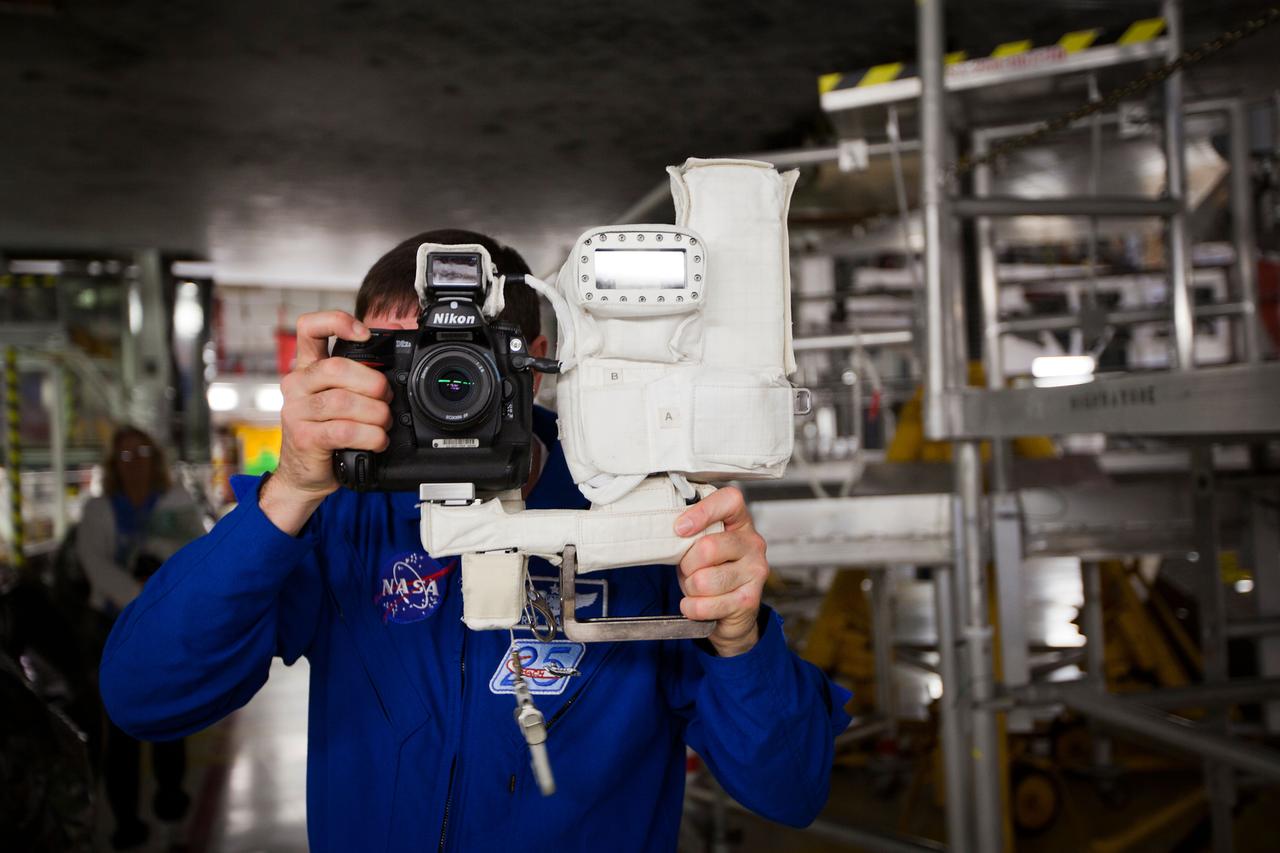
JSC2011-E-040349 (7 April 2011) --- NASA astronaut Rex Walheim, STS-135 mission specialist, familiarizes himself with a camera he will use in space during the STS-135 Crew Equipment Interface Test (CEIT) in the Orbiter Processing Facility at NASA?s Kennedy Space Center, Florida on April 7, 2011. Photo credit: NASA Photo/Houston Chronicle, Smiley N. Pool
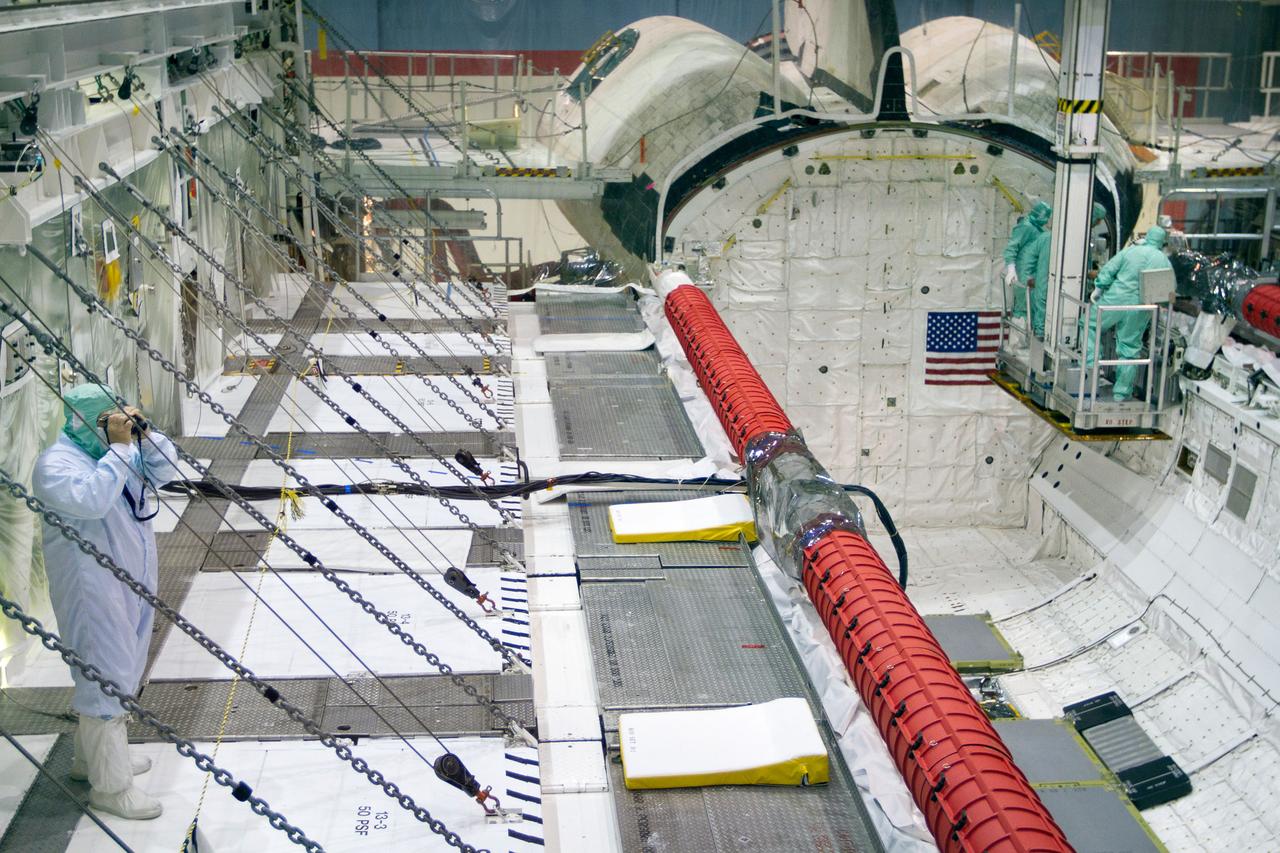
JSC2011-E-040348 (7 April 2011) --- A technician uses binoculars to look over the space shuttle Atlantis as the crew of STS-135 uses a basket/carrier to inspect Atlantis' payload bay during the STS-135 Crew Equipment Interface Test (CEIT) at NASA?s Kennedy Space Center, Florida on April 7, 2011. Photo credit: NASA Photo/Houston Chronicle, Smiley N. Pool
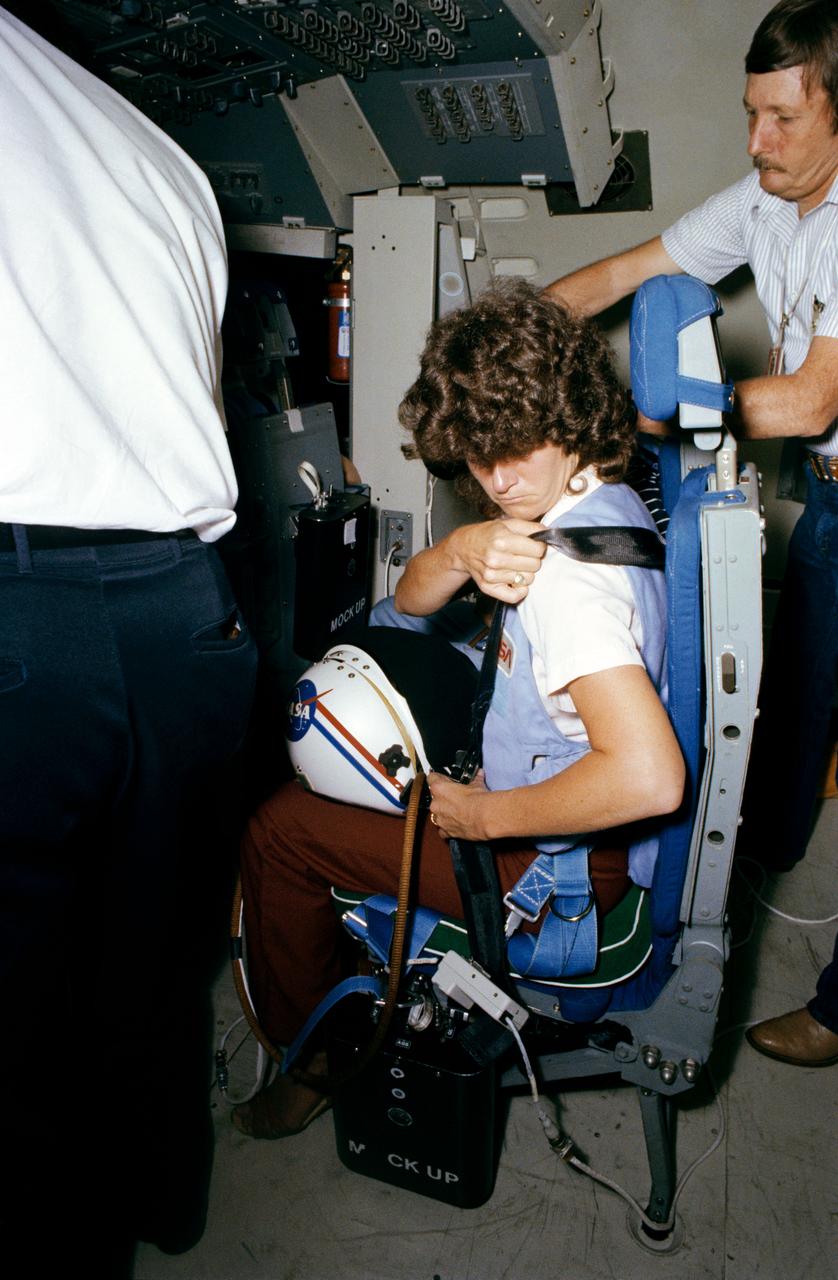
S83-32568 (23 May 1983) --- Astronaut Sally K. Ride, STS-7 mission specialist, straps herself into a seat in the Shuttle Mission Simulator (SMS) in Johnson Space Center?s Mission Simulation and Training Facility. Dr. Ride and the other STS-7 crew members continue their simulations in the motion base simulator in preparation for their flight in the space shuttle Challenger. Launch is scheduled for June 18. Troy Stewart, suit technician, assisted Dr. Ride. Photo credit: NASA
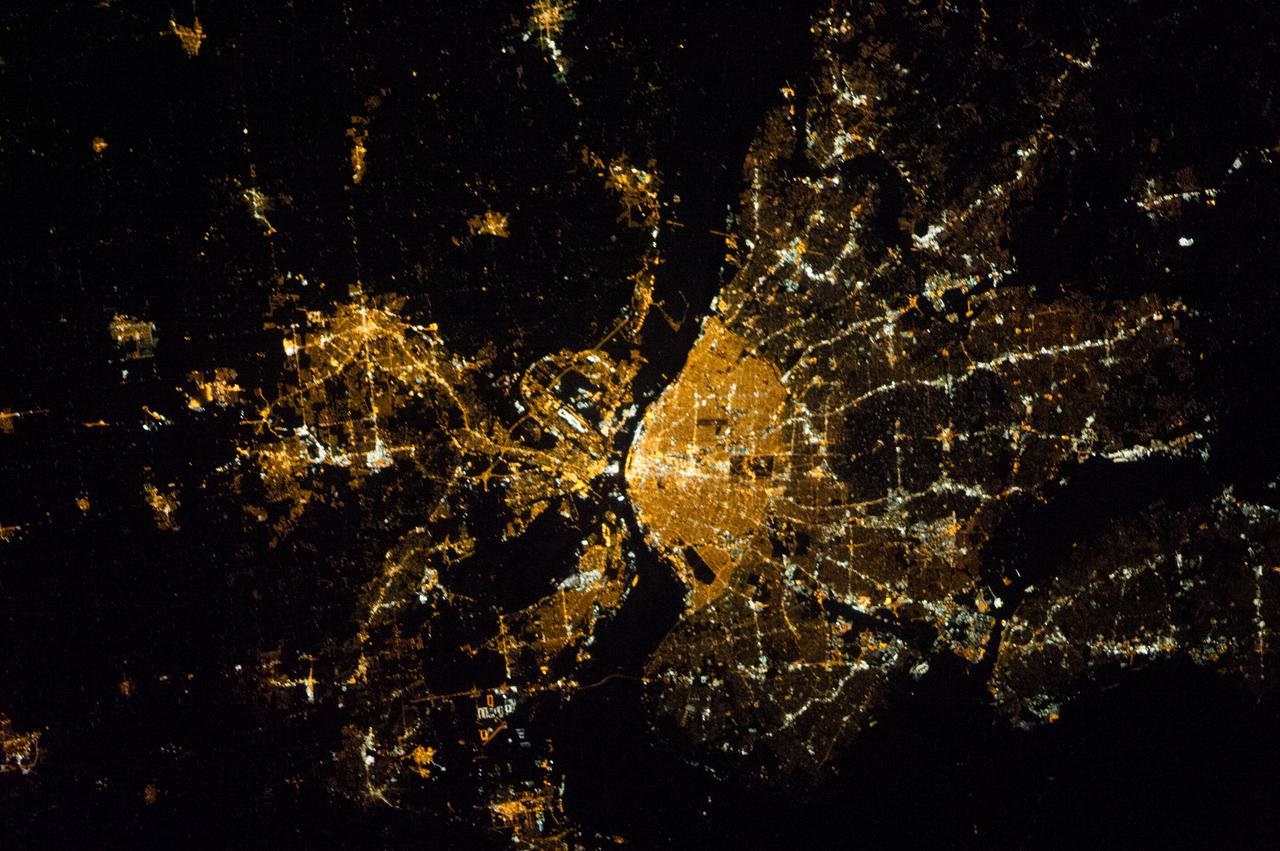
ISS038-E-024442 (7 Dec. 2013) --- One of the Expedition 38 crew members aboard the Earth-orbiting International Space Station photographed this night image of St. Louis, Missouri and East St. Louis, Illinois and surrounding area on Dec. 7, 2013. North is at the bottom of the picture, with the Mississippi River separating Missouri on the right (west) and Illinois on the east (left). Belleville, Illinois is also visible.
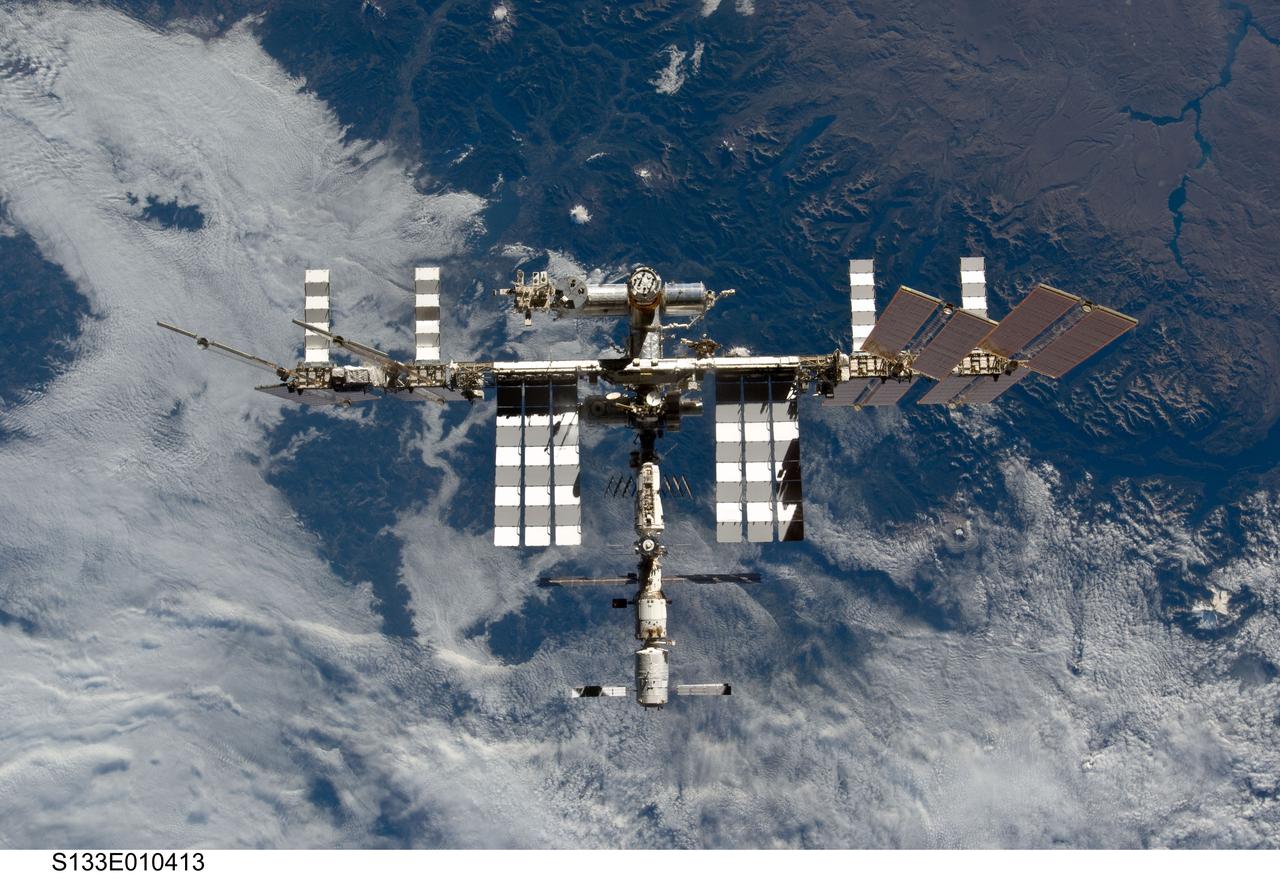
S133-E-010413 (7 March 2011) --- The International Space Station is featured in this image photographed by an STS-133 crew member on space shuttle Discovery after the station and shuttle began their post-undocking relative separation. Undocking of the two spacecraft occurred at 7 a.m. (EST) on March 7, 2011. Discovery spent eight days, 16 hours, and 46 minutes attached to the orbiting laboratory. Photo credit: NASA or National Aeronautics and Space Administration

S133-E-010350 (7 March 2011) --- The International Space Station is featured in this image photographed by an STS-133 crew member on space shuttle Discovery after the station and shuttle began their post-undocking relative separation. Undocking of the two spacecraft occurred at 7 a.m. (EST) on March 7, 2011. Discovery spent eight days, 16 hours, and 46 minutes attached to the orbiting laboratory. Photo credit: NASA or National Aeronautics and Space Administration
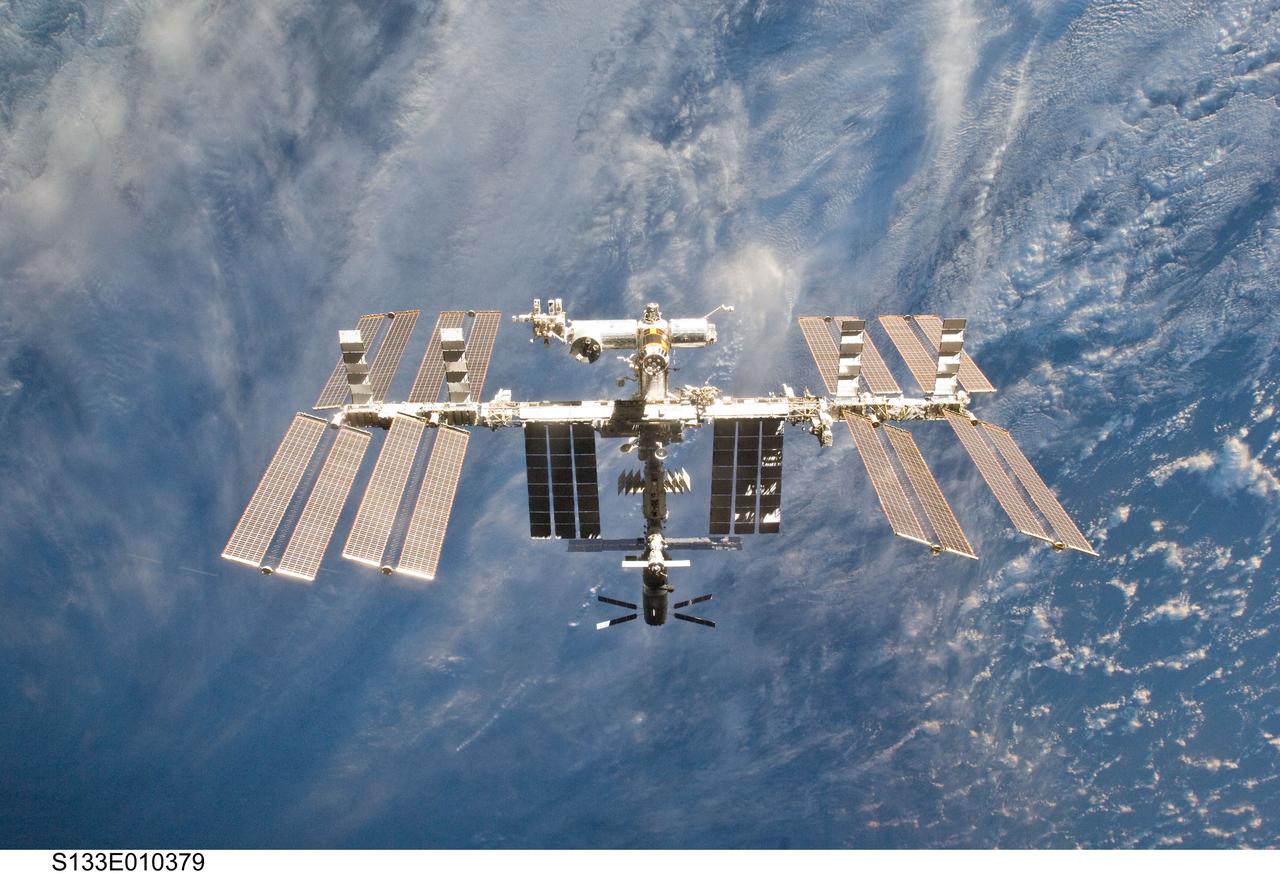
S133-E-010379 (7 March 2011) --- The International Space Station is featured in this image photographed by an STS-133 crew member on space shuttle Discovery after the station and shuttle began their post-undocking relative separation. Undocking of the two spacecraft occurred at 7 a.m. (EST) on March 7, 2011. Discovery spent eight days, 16 hours, and 46 minutes attached to the orbiting laboratory. Photo credit: NASA or National Aeronautics and Space Administration
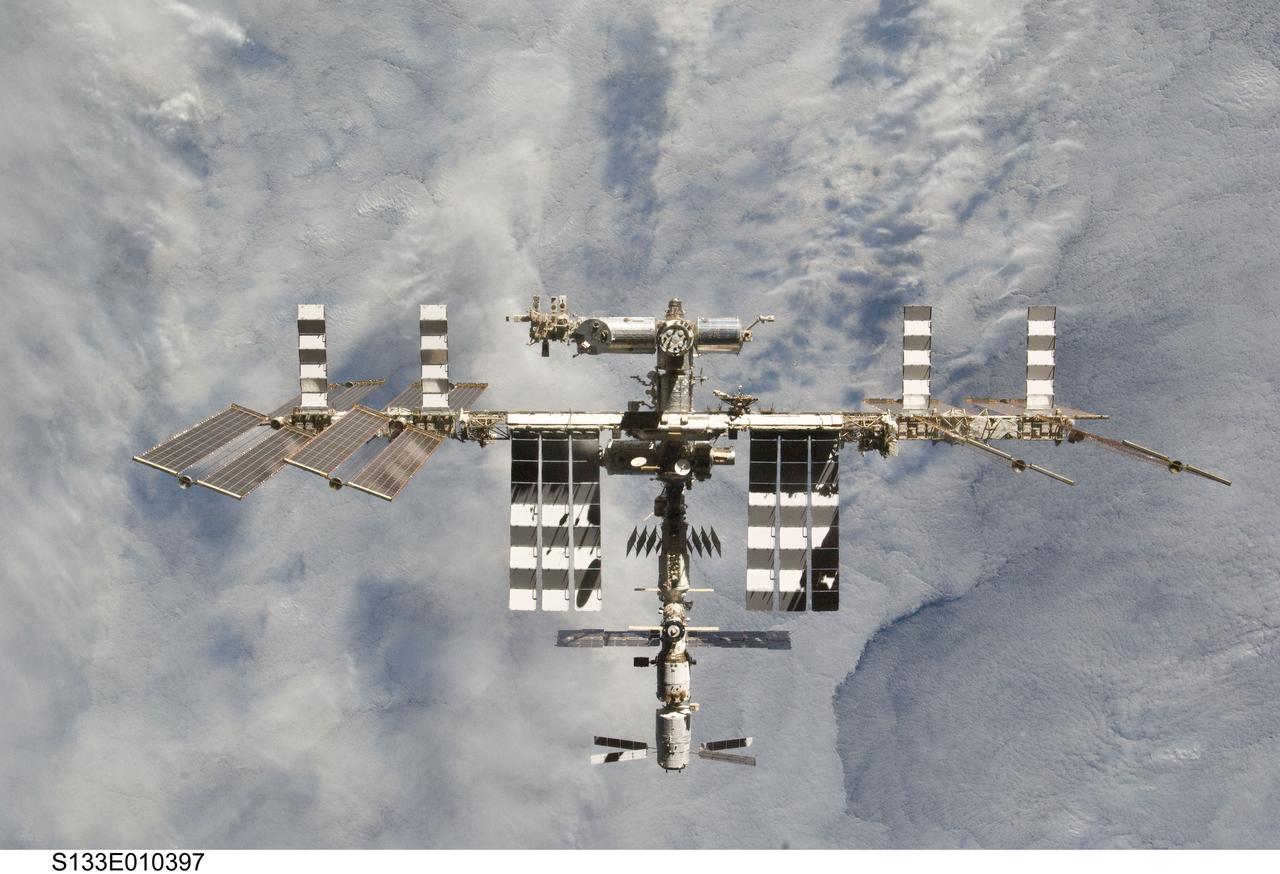
S133-E-010397 (7 March 2011) --- The International Space Station is featured in this image photographed by an STS-133 crew member on space shuttle Discovery after the station and shuttle began their post-undocking relative separation. Undocking of the two spacecraft occurred at 7 a.m. (EST) on March 7, 2011. Discovery spent eight days, 16 hours, and 46 minutes attached to the orbiting laboratory. Photo credit: NASA or National Aeronautics and Space Administration
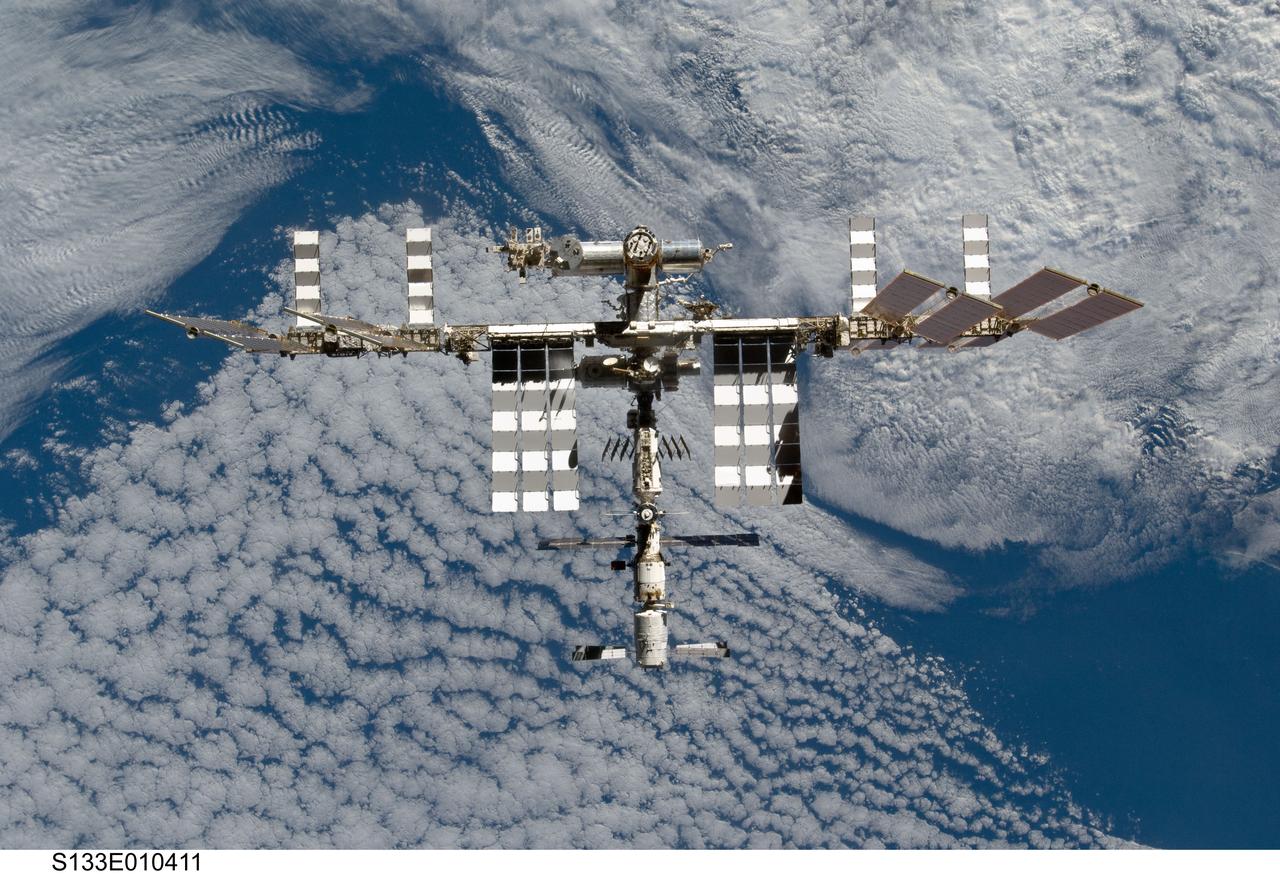
S133-E-010411 (7 March 2011) --- The International Space Station is featured in this image photographed by an STS-133 crew member on space shuttle Discovery after the station and shuttle began their post-undocking relative separation. Undocking of the two spacecraft occurred at 7 a.m. (EST) on March 7, 2011. Discovery spent eight days, 16 hours, and 46 minutes attached to the orbiting laboratory. Photo credit: NASA or National Aeronautics and Space Administration
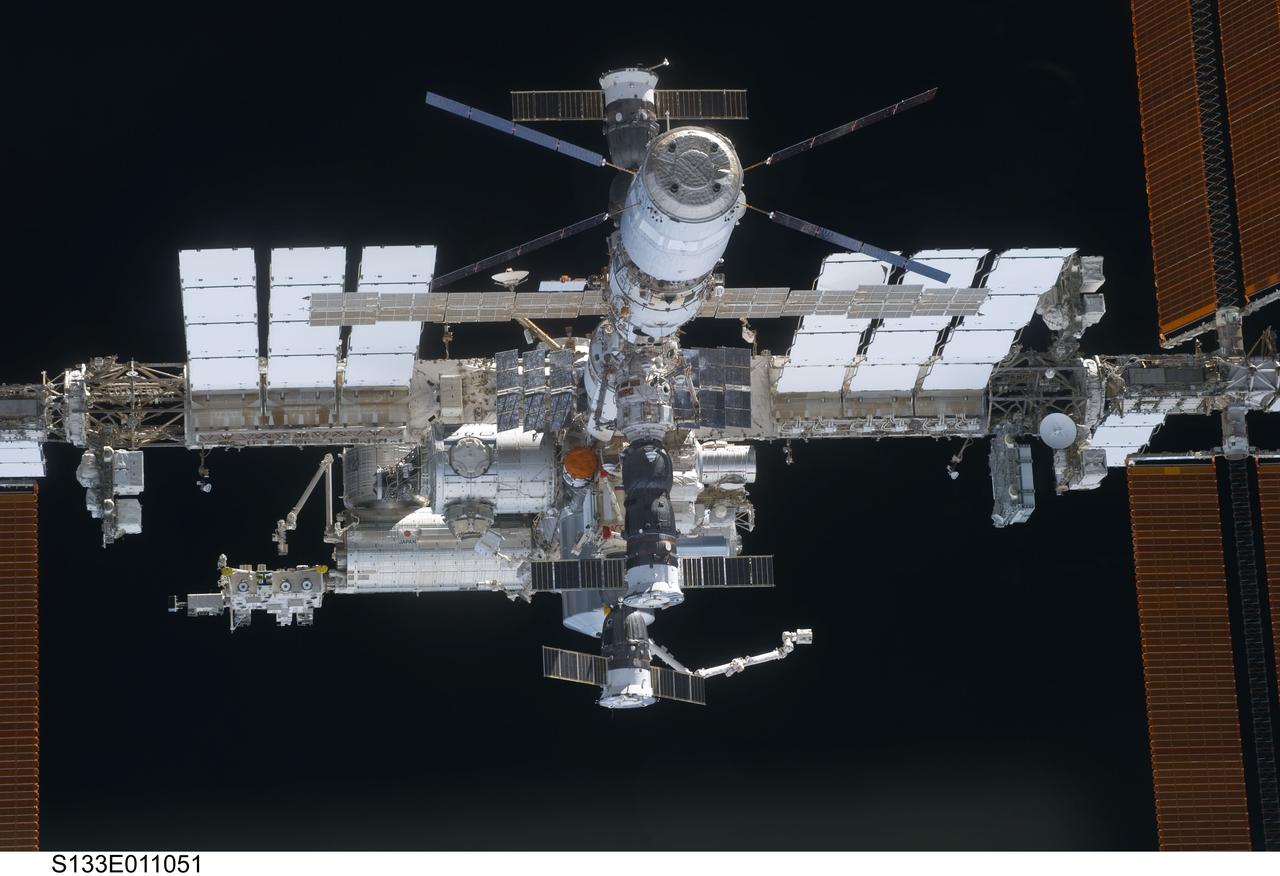
S133-E-011051 (7 March 2011) --- A close-up view of the International Space Station is featured in this image photographed by an STS-133 crew member on space shuttle Discovery after the station and shuttle began their post-undocking relative separation. Undocking of the two spacecraft occurred at 7 a.m. (EST) on March 7, 2011. Discovery spent eight days, 16 hours, and 46 minutes attached to the orbiting laboratory. Photo credit: NASA or National Aeronautics and Space Administration

S133-E-010467 (7 March 2011) --- The International Space Station is featured in this image photographed by an STS-133 crew member on space shuttle Discovery after the station and shuttle began their post-undocking relative separation. Undocking of the two spacecraft occurred at 7 a.m. (EST) on March 7, 2011. Discovery spent eight days, 16 hours, and 46 minutes attached to the orbiting laboratory. Photo credit: NASA or National Aeronautics and Space Administration

S133-E-010426 (7 March 2011) --- The International Space Station is featured in this image photographed by an STS-133 crew member on space shuttle Discovery after the station and shuttle began their post-undocking relative separation. Undocking of the two spacecraft occurred at 7 a.m. (EST) on March 7, 2011. Discovery spent eight days, 16 hours, and 46 minutes attached to the orbiting laboratory. Photo credit: NASA or National Aeronautics and Space Administration

S133-E-010451 (7 March 2011) --- The International Space Station is featured in this image photographed by an STS-133 crew member on space shuttle Discovery after the station and shuttle began their post-undocking relative separation. Undocking of the two spacecraft occurred at 7 a.m. (EST) on March 7, 2011. Discovery spent eight days, 16 hours, and 46 minutes attached to the orbiting laboratory. Photo credit: NASA or National Aeronautics and Space Administration
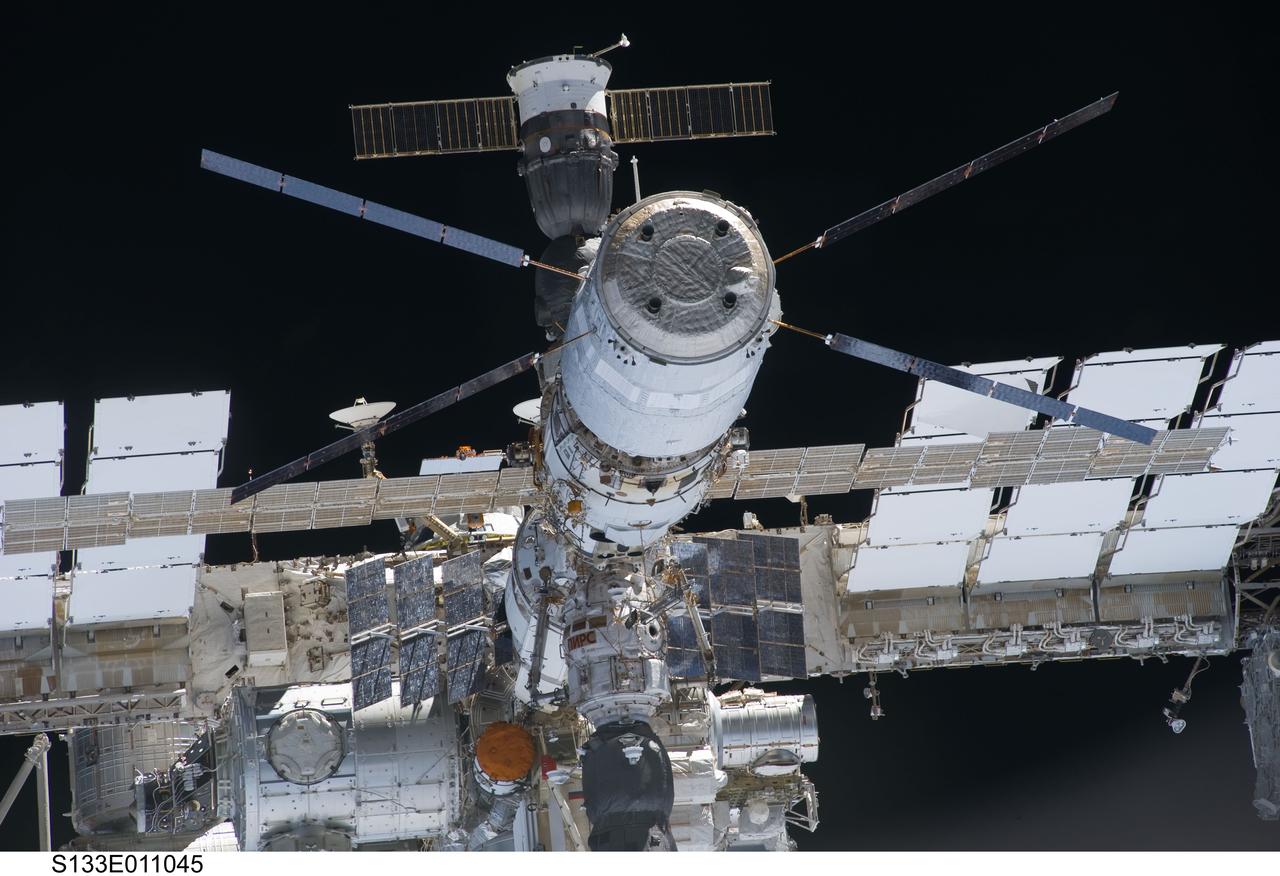
S133-E-011045 (7 March 2011) --- A close-up view of the aft section of the International Space Station is featured in this image photographed by an STS-133 crew member on space shuttle Discovery after the station and shuttle began their post-undocking relative separation. Undocking of the two spacecraft occurred at 7 a.m. (EST) on March 7, 2011. Discovery spent eight days, 16 hours, and 46 minutes attached to the orbiting laboratory. Photo credit: NASA or National Aeronautics and Space Administration
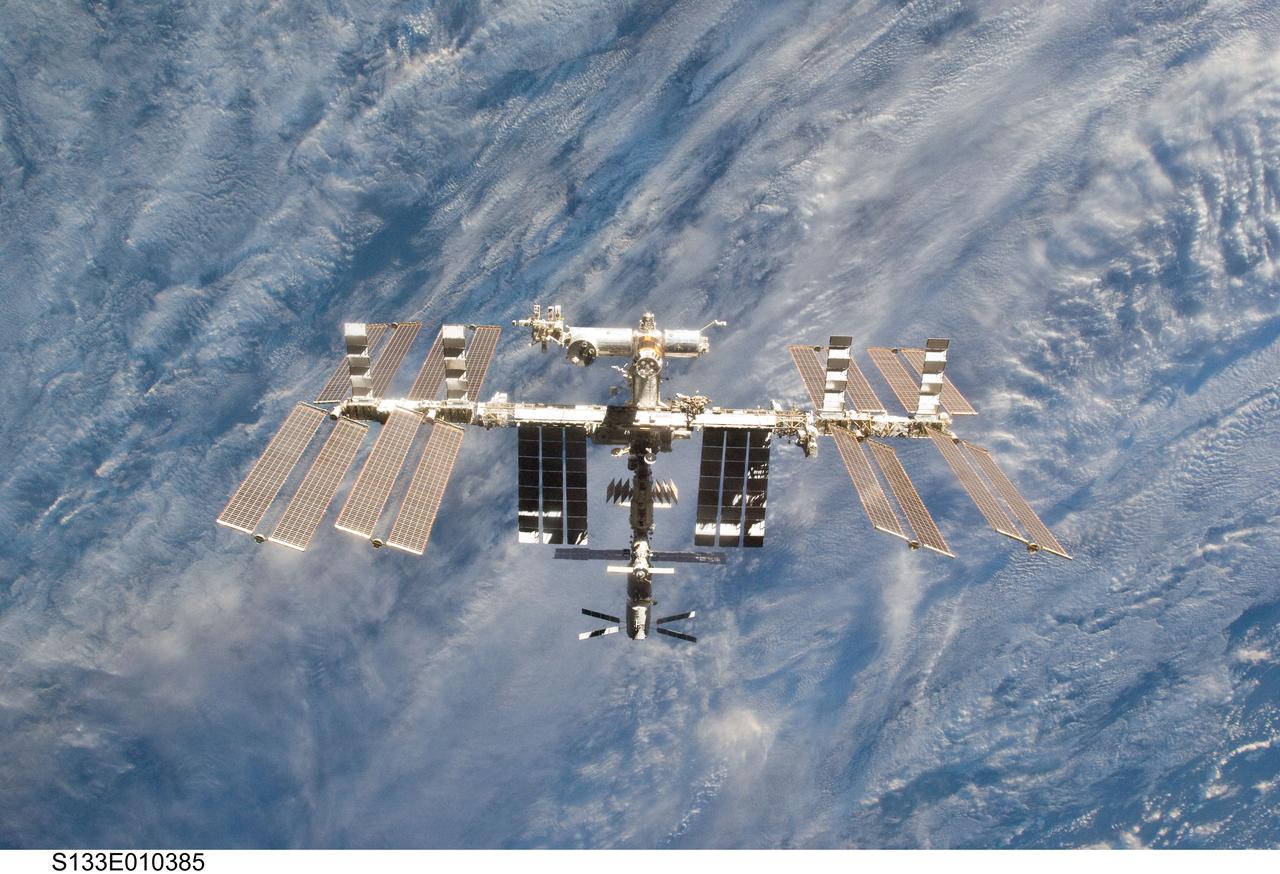
S133-E-010385 (7 March 2011) --- The International Space Station is featured in this image photographed by an STS-133 crew member on space shuttle Discovery after the station and shuttle began their post-undocking relative separation. Undocking of the two spacecraft occurred at 7 a.m. (EST) on March 7, 2011. Discovery spent eight days, 16 hours, and 46 minutes attached to the orbiting laboratory. Photo credit: NASA or National Aeronautics and Space Administration

S133-E-010422 (7 March 2011) --- The International Space Station is featured in this image photographed by an STS-133 crew member on space shuttle Discovery after the station and shuttle began their post-undocking relative separation. Undocking of the two spacecraft occurred at 7 a.m. (EST) on March 7, 2011. Discovery spent eight days, 16 hours, and 46 minutes attached to the orbiting laboratory. Photo credit: NASA or National Aeronautics and Space Administration
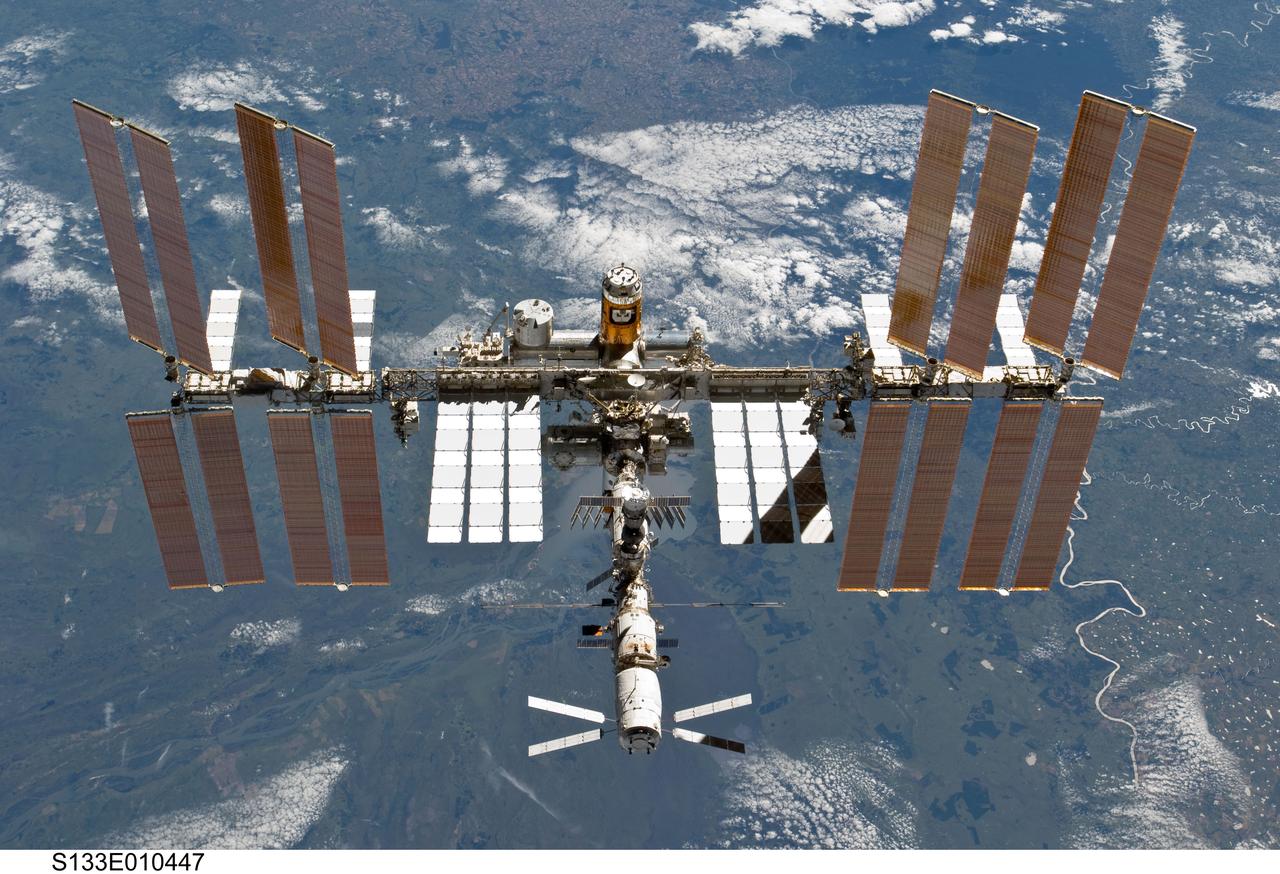
S133-E-010447 (7 March 2011) --- The International Space Station is featured in this image photographed by an STS-133 crew member on space shuttle Discovery after the station and shuttle began their post-undocking relative separation. Undocking of the two spacecraft occurred at 7 a.m. (EST) on March 7, 2011. Discovery spent eight days, 16 hours, and 46 minutes attached to the orbiting laboratory. Photo credit: NASA or National Aeronautics and Space Administration
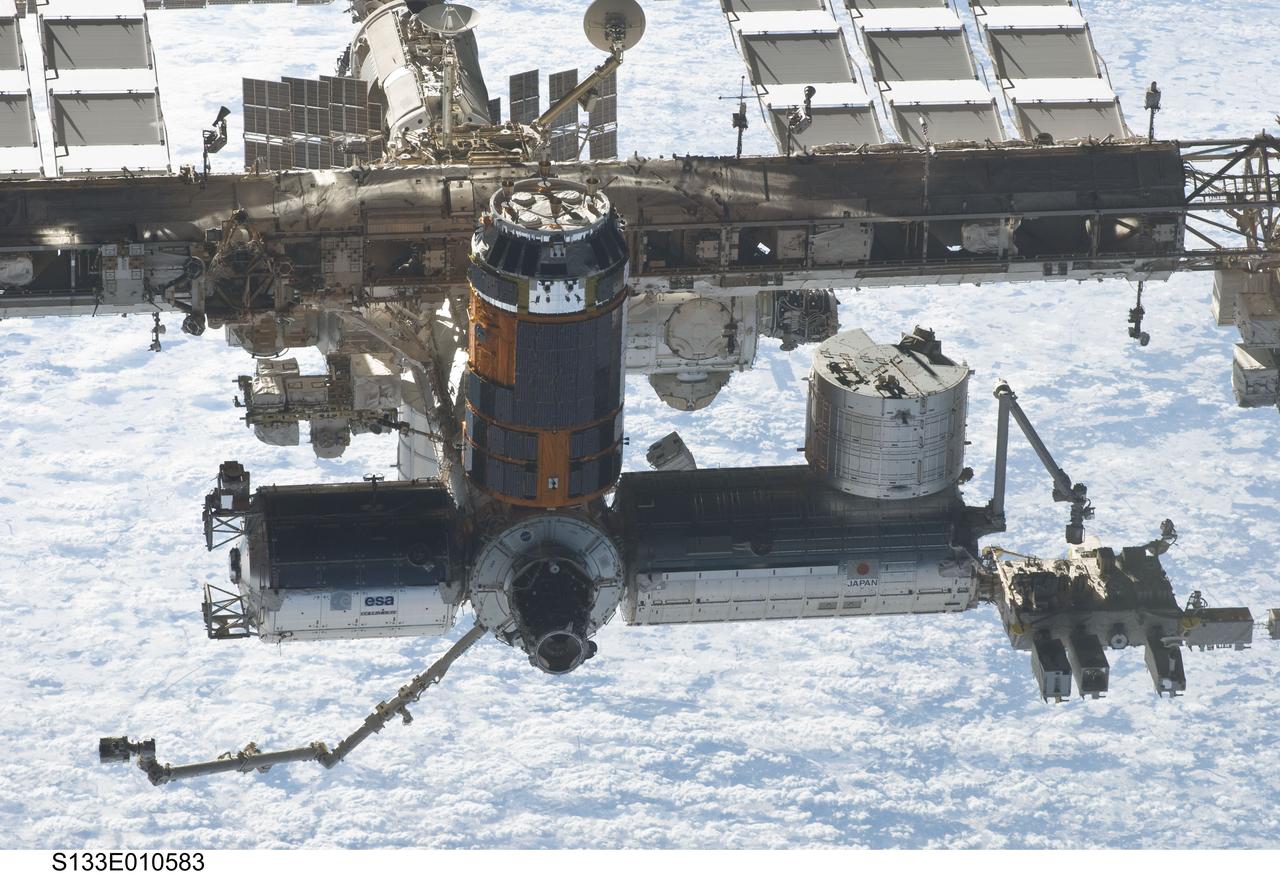
S133-E-010583 (7 March 2011) --- A close-up view of the International Space Station is featured in this image photographed by an STS-133 crew member on space shuttle Discovery after the station and shuttle began their post-undocking relative separation. Undocking of the two spacecraft occurred at 7 a.m. (EST) on March 7, 2011. Discovery spent eight days, 16 hours, and 46 minutes attached to the orbiting laboratory. Photo credit: NASA or National Aeronautics and Space Administration
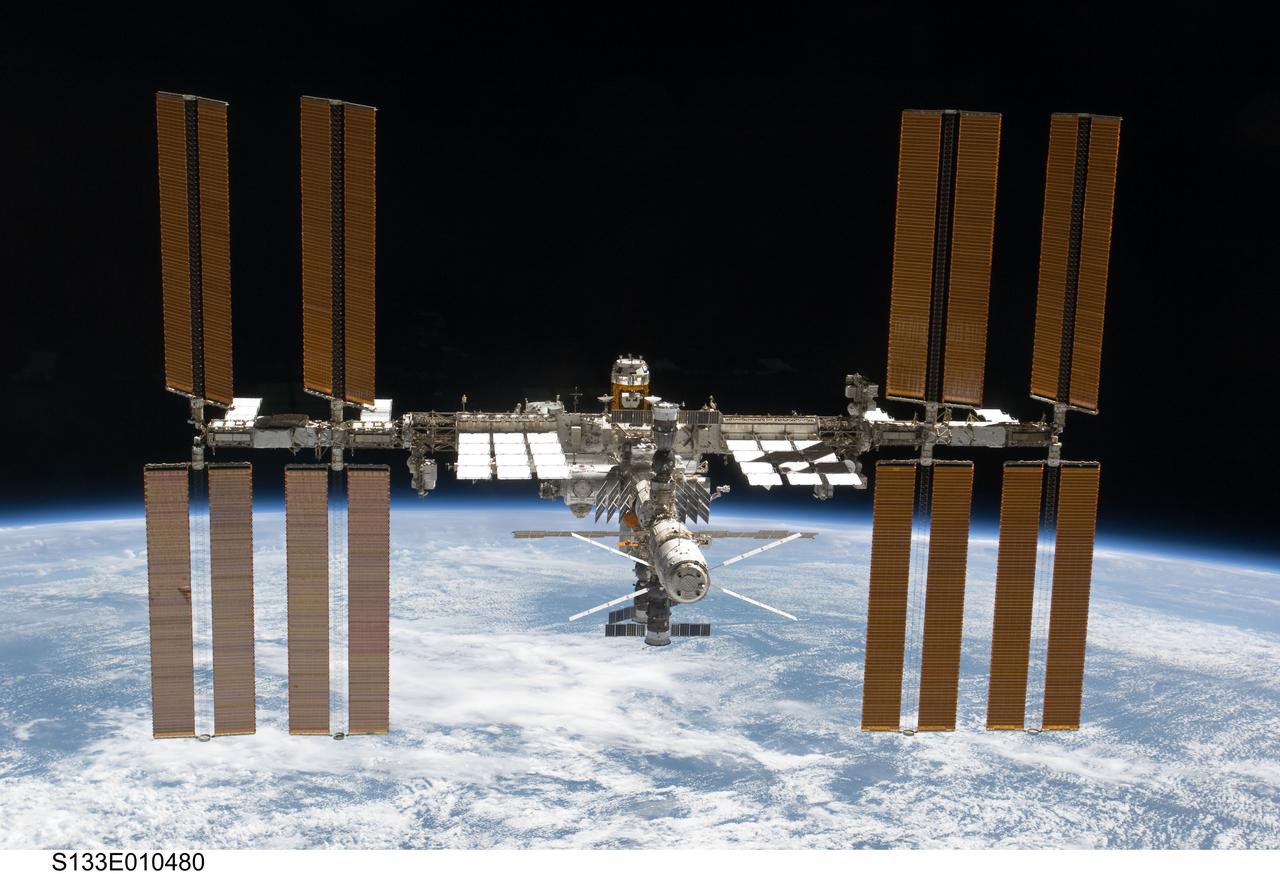
S133-E-010480 (7 March 2011) --- The International Space Station is featured in this image photographed by an STS-133 crew member on space shuttle Discovery after the station and shuttle began their post-undocking relative separation. Undocking of the two spacecraft occurred at 7 a.m. (EST) on March 7, 2011. Discovery spent eight days, 16 hours, and 46 minutes attached to the orbiting laboratory. Photo credit: NASA or National Aeronautics and Space Administration
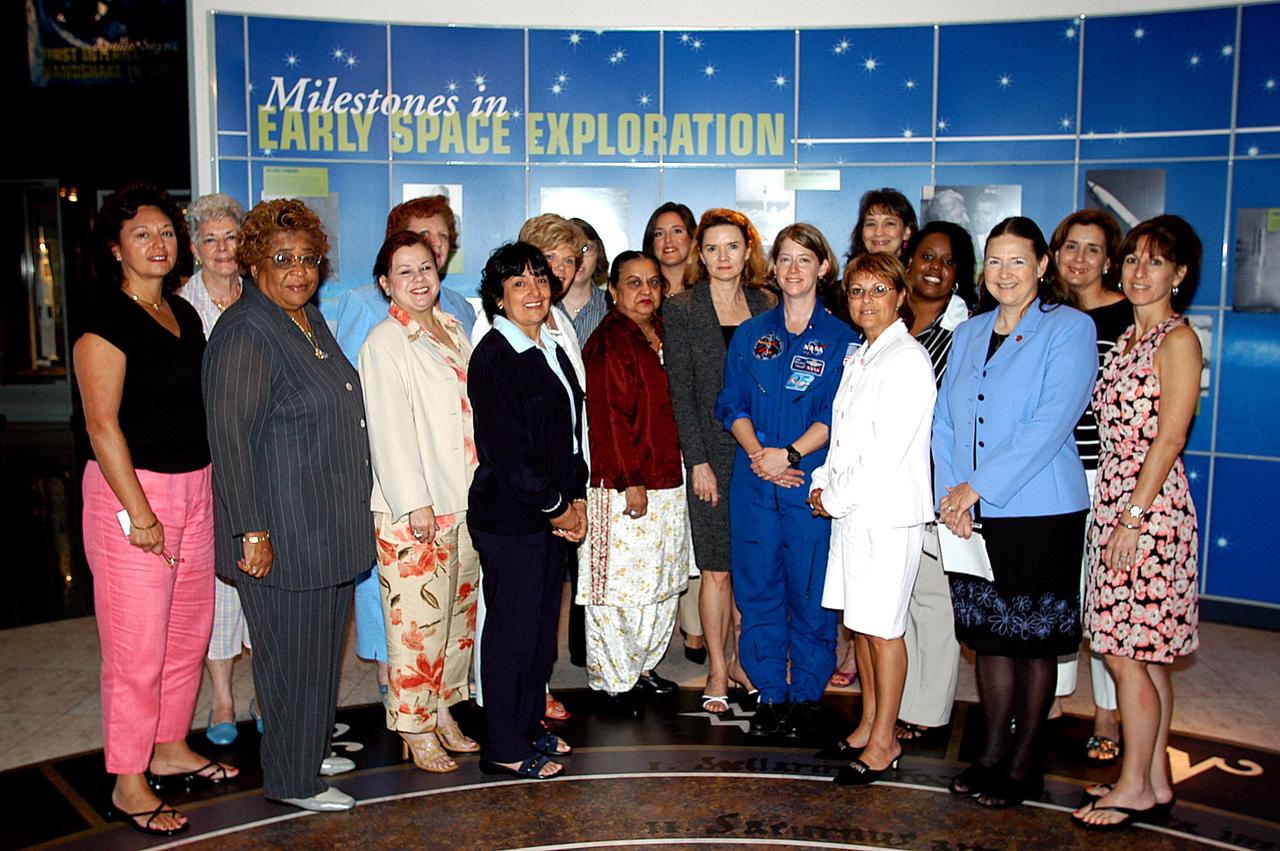
KENNEDY SPACE CENTER, FLA. - Astronaut Pamela Melroy (fourth from right in front) joins other attendees at the Florida Commission on the Status of Women held June 7 at the Debus Conference Facility. Melroy was a speaker. Her accomplishments include serving as pilot on two Shuttle flights (STS-92 in 2000 and STS-112 in 2002), and logging more than 562 hours in space. The commission, through coordinating, researching, communicating, and encouraging legislation, is dedicated to empowering women from all walks of life in achieving their fullest potential, to eliminating barriers to that achievement, and to recognizing women’s accomplishments.
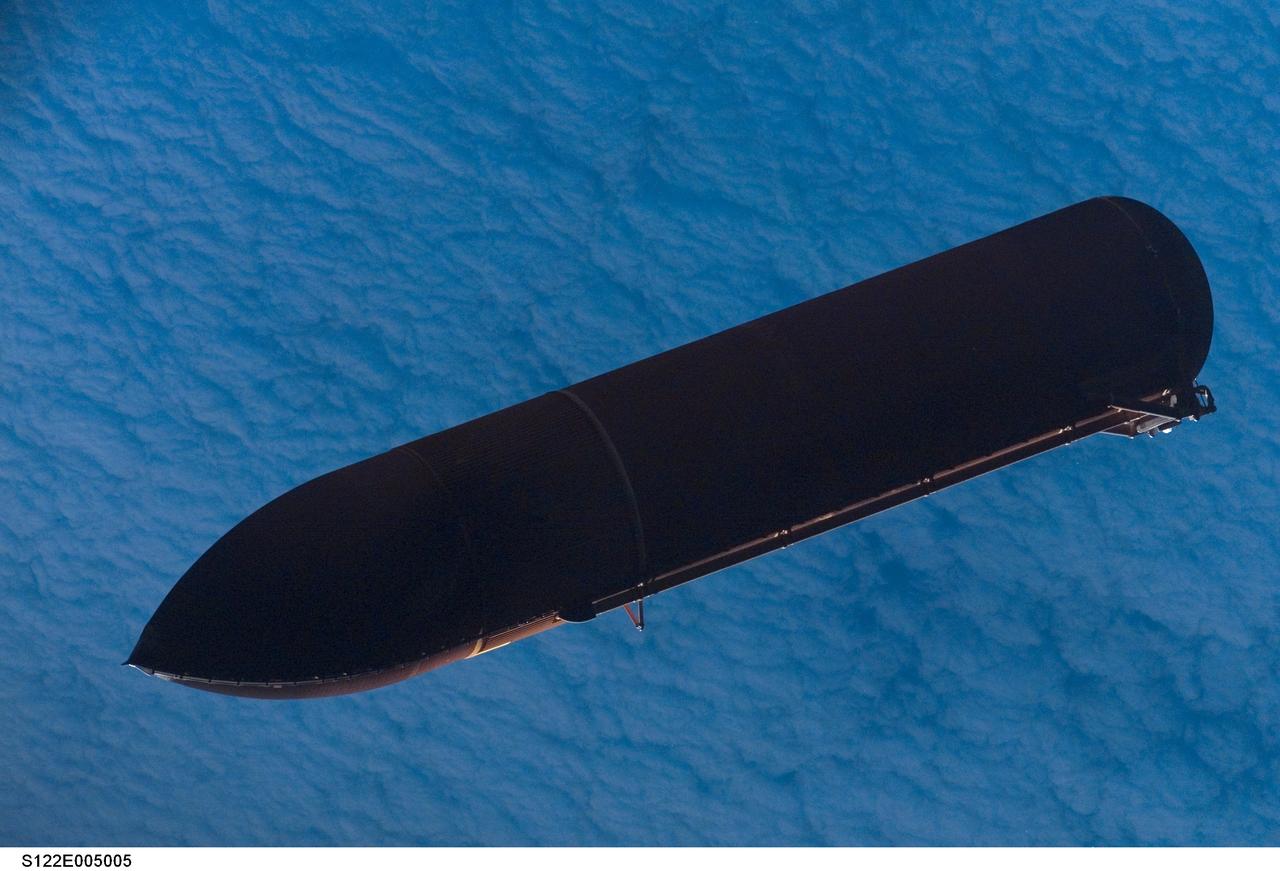
S122-E-005005 (7 Feb. 2008) --- Backdropped against a blanket of clouds, the STS-122 external fuel tank (ET) begins its relative separation from the Space Shuttle Atlantis. An STS-122 crewmember recorded the scene with a digital still camera.
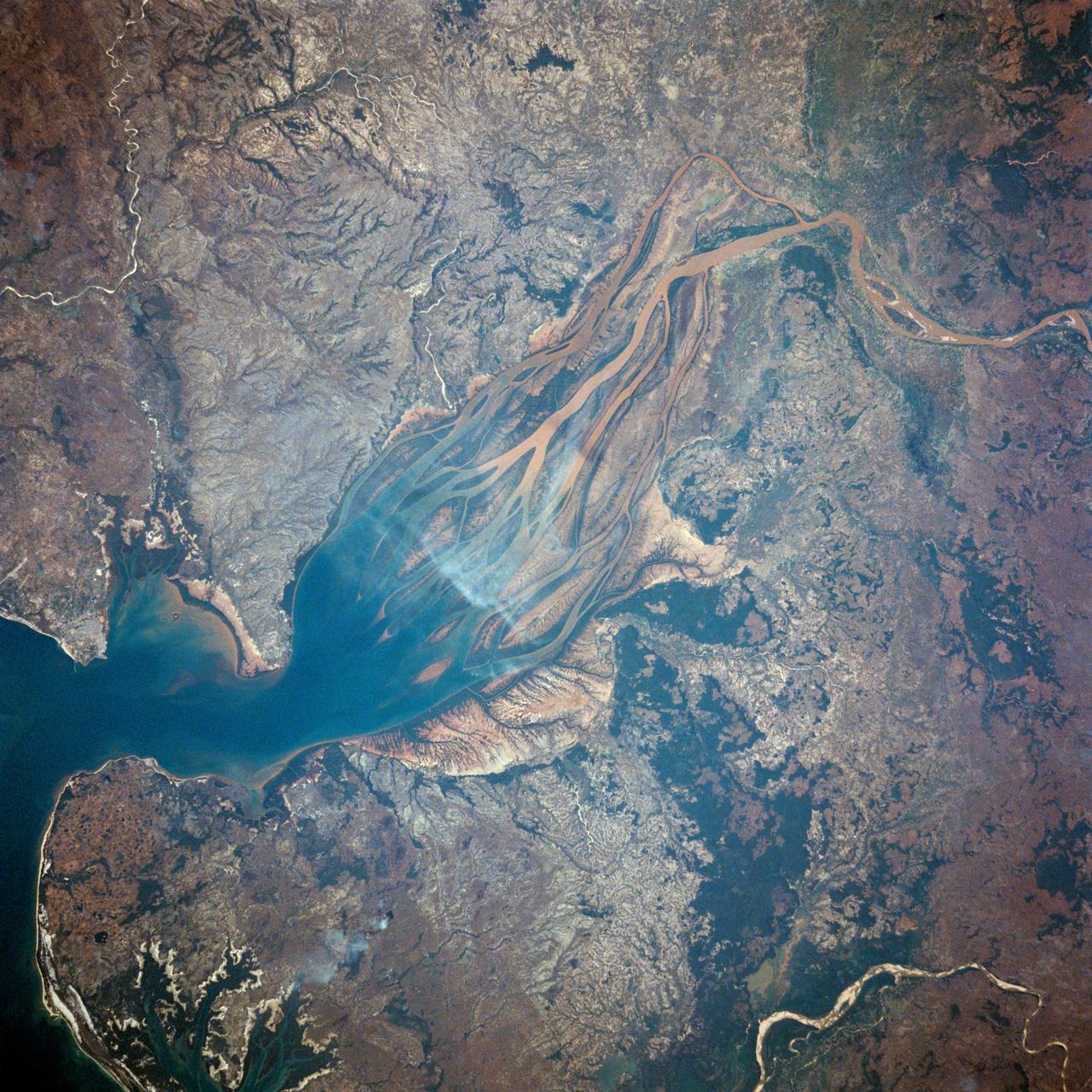
STS007-03-058 (18-24 June 1983) --- The Island of Madagascar in the Indian Ocean off the coast of Africa. The colorful area is the mouth of the Betsiboka River near the city of Majunga. The photograph was taken with a 70mm handheld camera aimed through the aft flight deck?s overhead windows on the Earth-orbiting Space Shuttle Challenger.
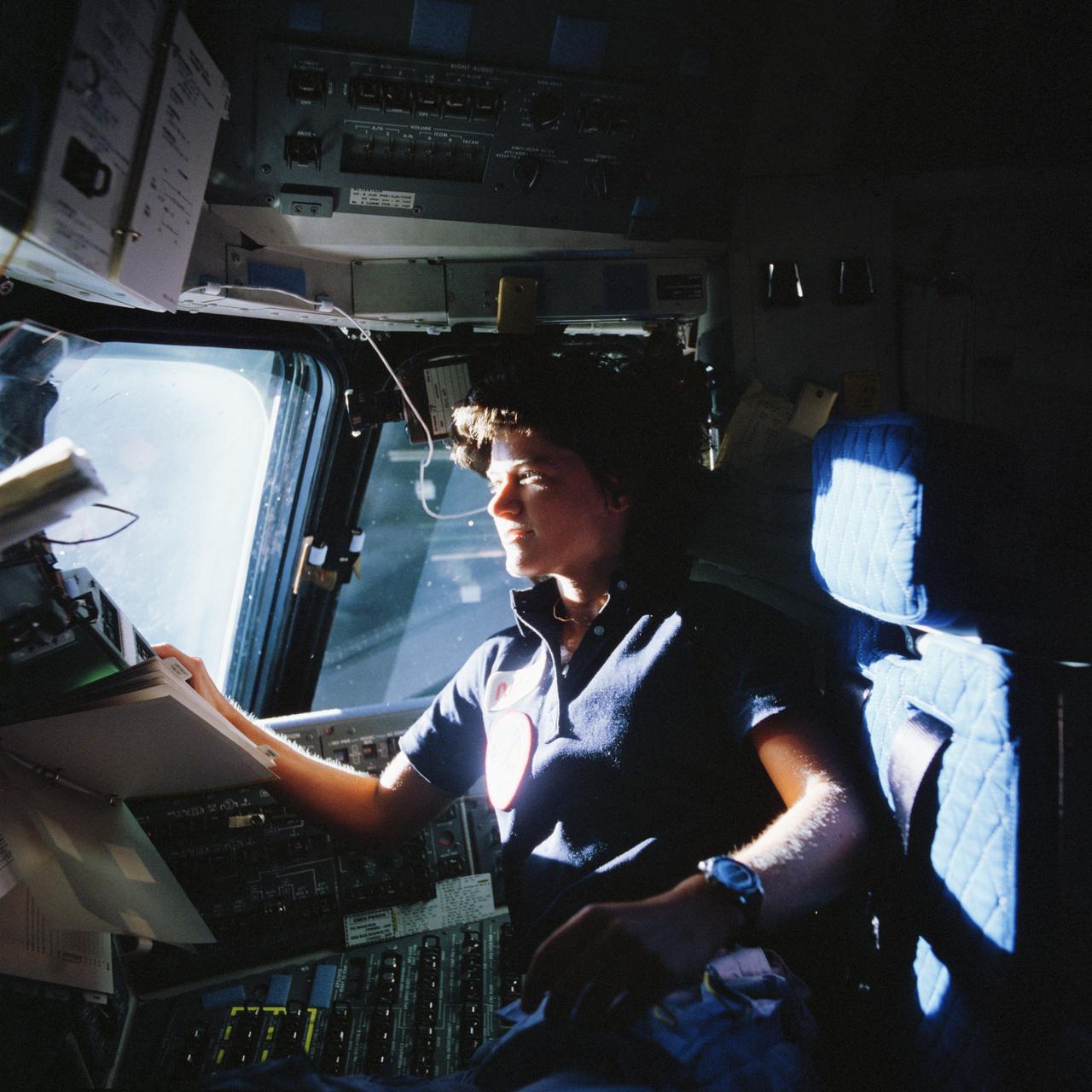
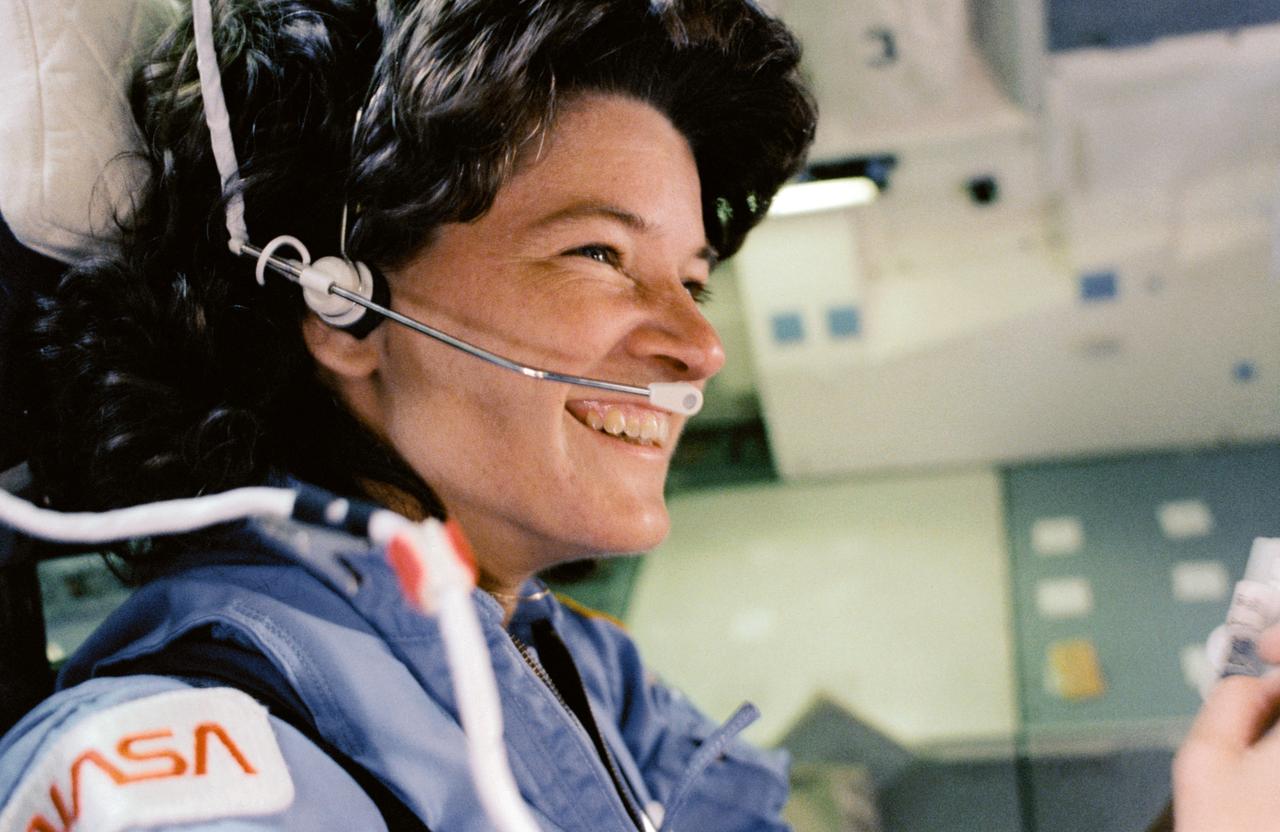
S83-35783 / STS007-05-029 (18-24 June 1983) --- Astronaut Sally K. Ride, mission specialist, is shown here sitting in the front seat and looking out the windows of the Earth-orbiting Space Shuttle Challenger. Ride and four other crew members are onboard the Challenger.
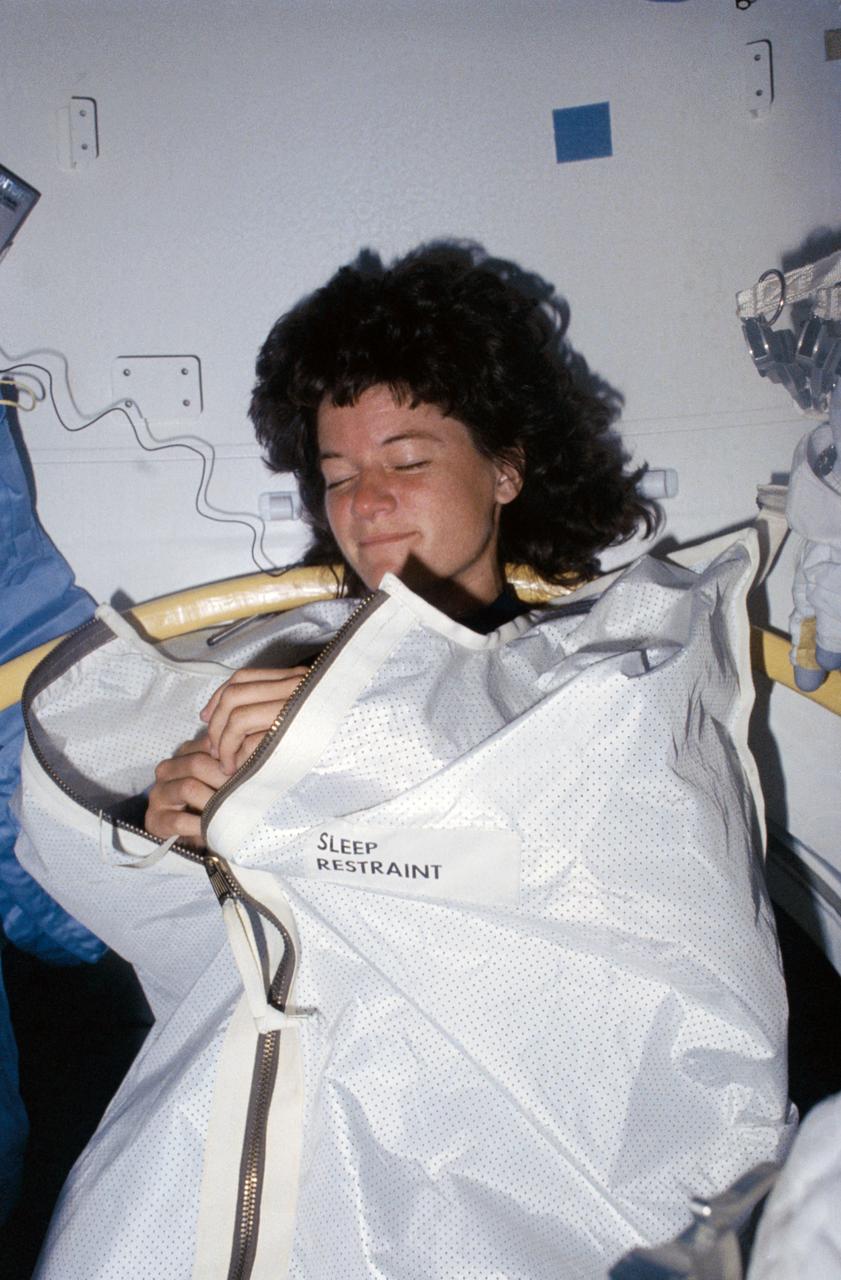
STS007-26-1438 (18-24 June 1983) --- Astronaut Sally K. Ride, mission specialist, was captured at her sleep station in the Space Shuttle Challenger's middeck by a fellow crew member using a 35mm camera. This method of sleep is just one used by the 20 astronauts who have now flown aboard NASA's first two Space Shuttle Orbiters. Some astronauts choose to sleep in various positions with either their feet or upper bodies or both anchored and others elect to use the sleep restraint device demonstrated here by Dr. Ride.
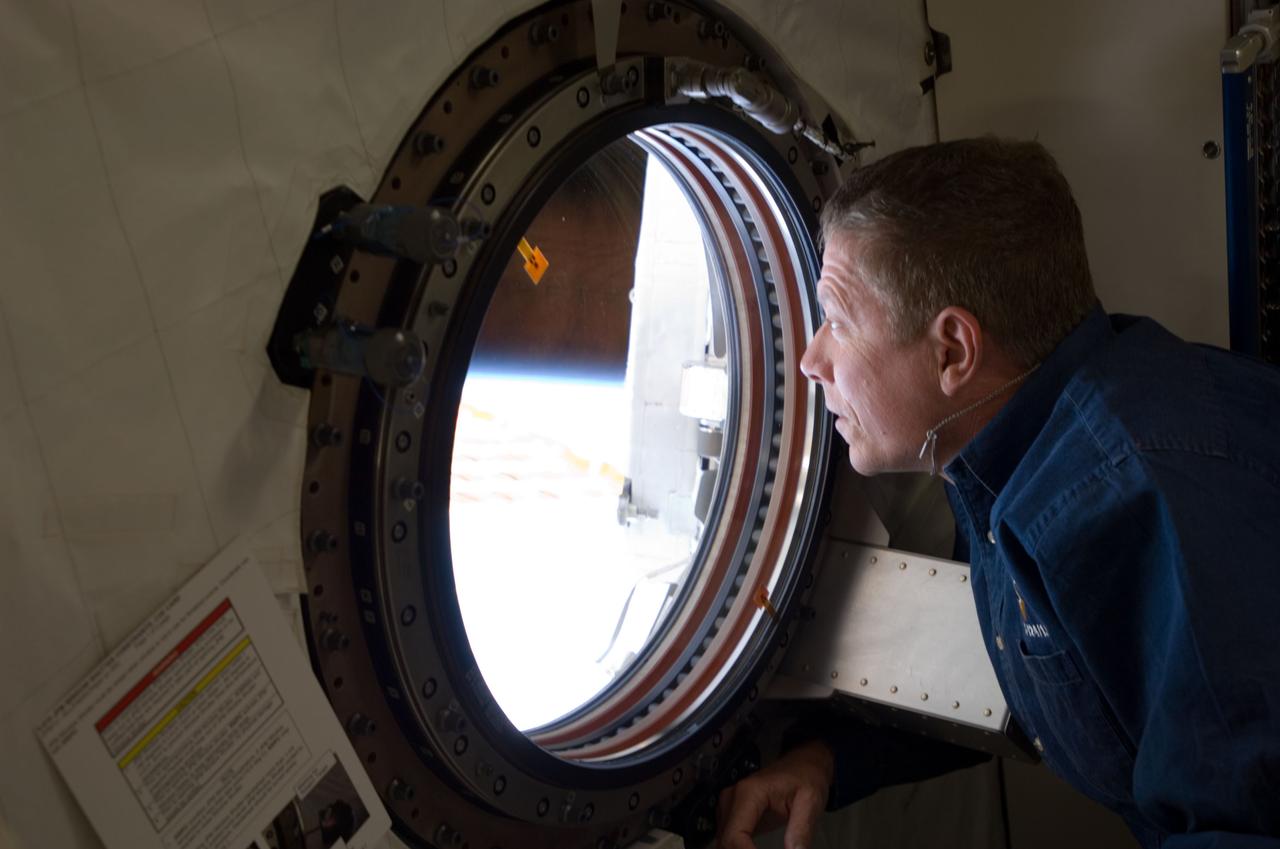
S124-E-007690 (7 June 2008) --- Astronaut Mike Fossum, STS-124 mission specialist, looks through the forward window in the new Japanese Experiment Module on the International Space Station.
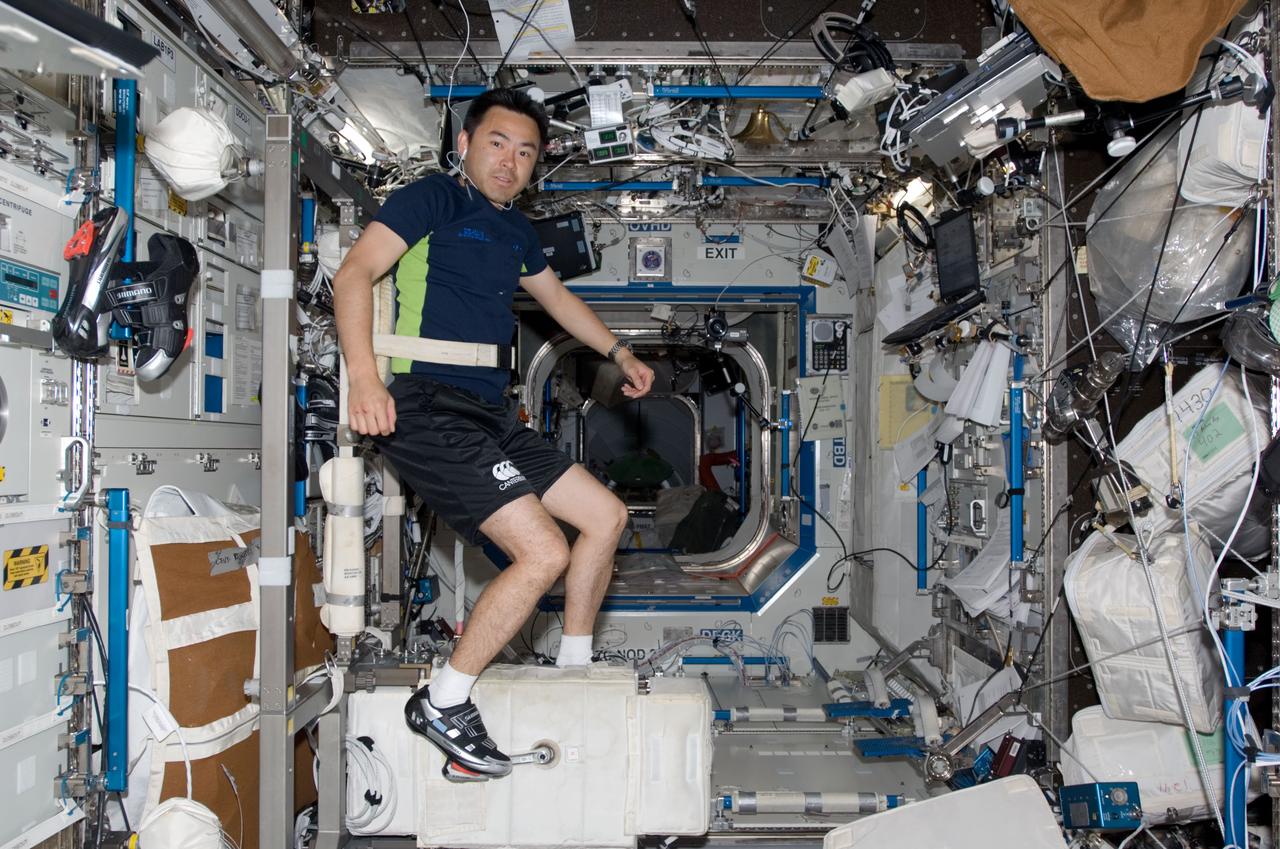
S124-E-007613 (7 June 2008) --- JAXA astronaut Akihiko Hoshide, STS-124 mission specialist, exercises on the Cycle Ergometer in the Destiny laboratory of the International Space Station.
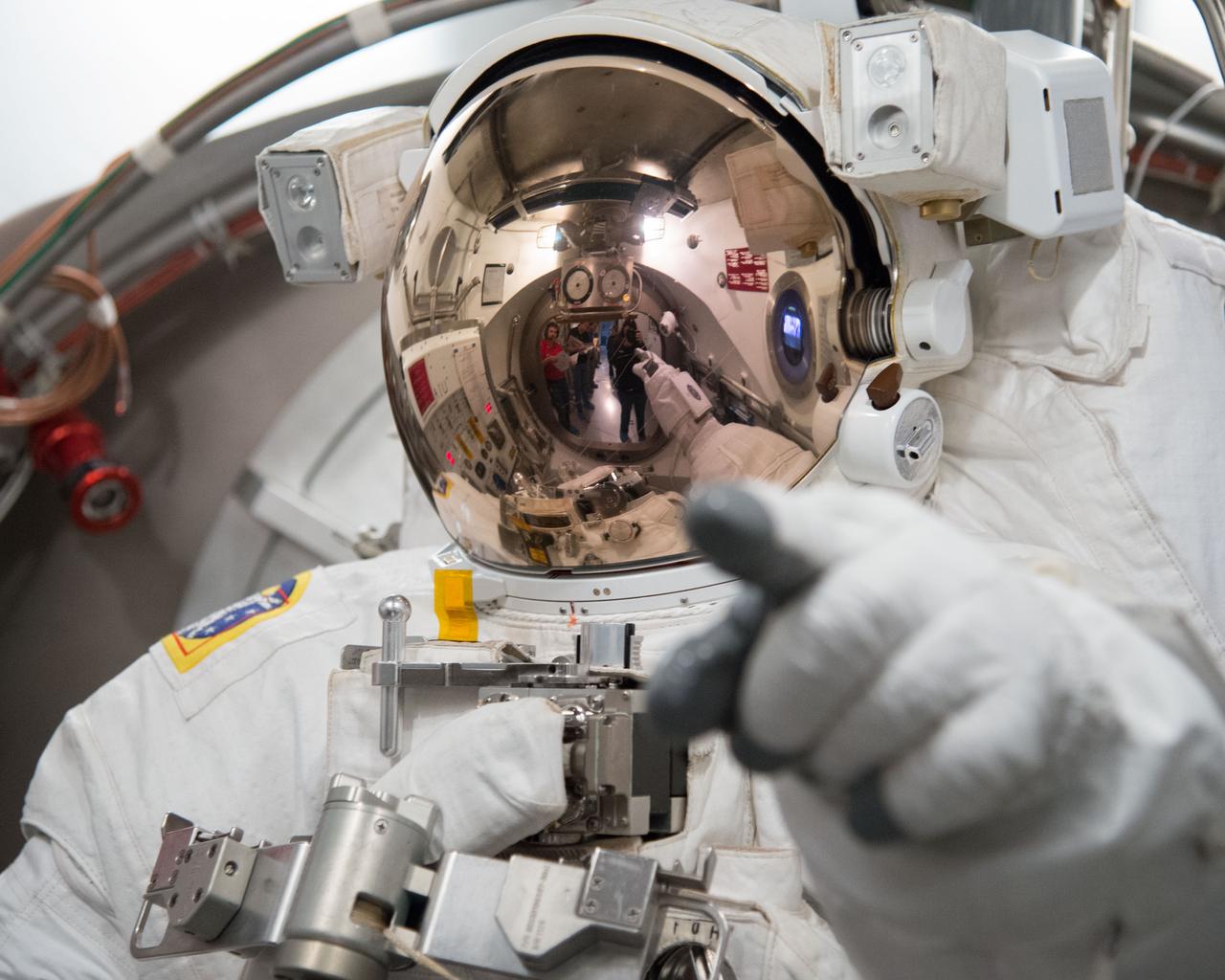
DATE: 3-4-13 LOCATION: Bldg. 7, SSATA Chamber SUBJECT: STB-ST-990 - Crew Training, SSATA ISS Increment 36 EMU Dry Run (Crewmember Luca Parmitano). PHOTOGRAPHER: Lauren Harnett
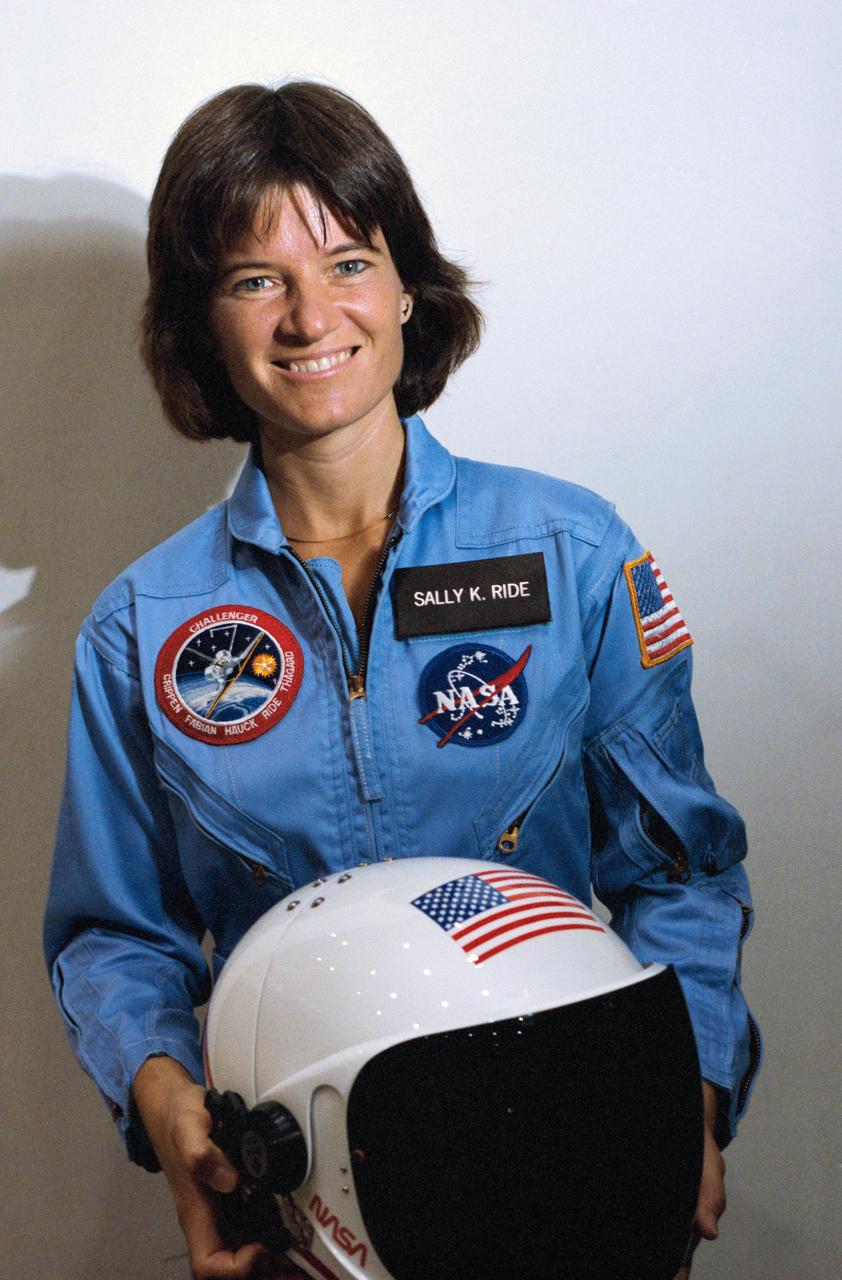
S85-41007 (9 May 1983) --- At NASA's Johnson Space Center, astronaut Sally K. Ride takes a break from training as a mission specialist for NASA's STS-7 spaceflight in Earth orbit. Photo credit: NASA
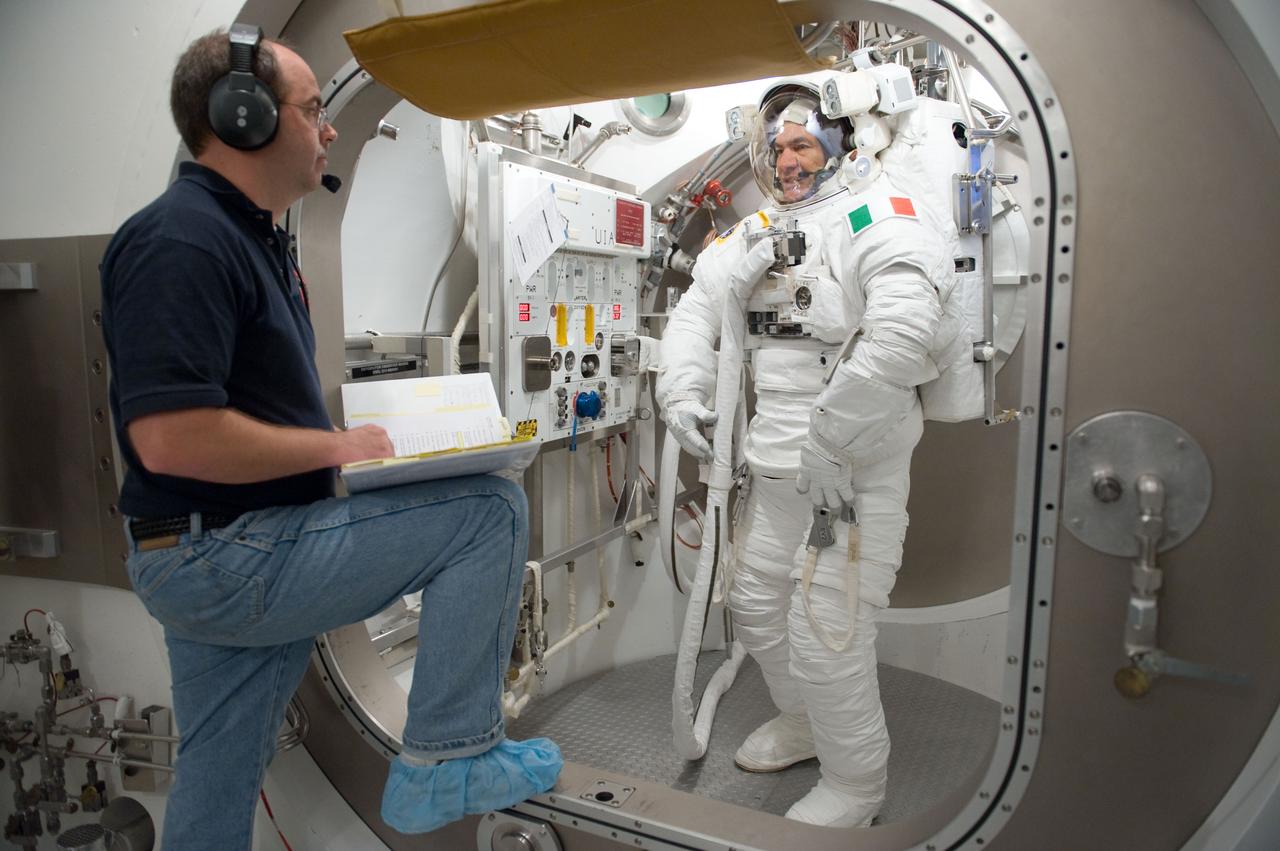
PHOTO DATE: 4/5/10, Time: 1000 LOCATION: Bldg 7/SSATA Chamber SUBJECT: STB-ST-903 - INC 26 SSATA Crew Training: Paolo Nespoli Photographer: James Blair
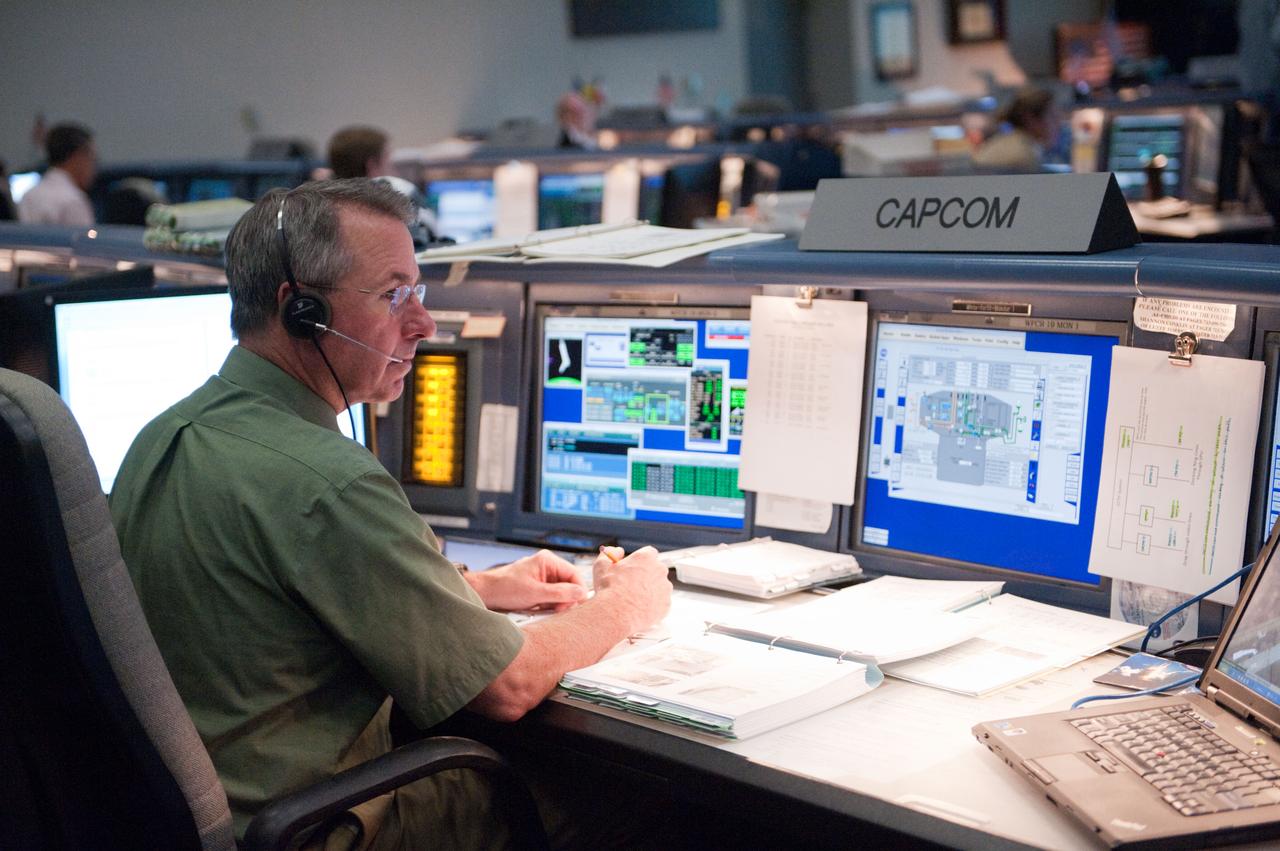
PHOTO DATE: 12 July 2011 LOCATION: Bldg. 30 FCR-1, EVA, WFCR & Bldg. 7 EVA Center. SUBJECT: STS-135 flight controllers on console for EVA. PHOTOGRAPHER: Mark Sowa
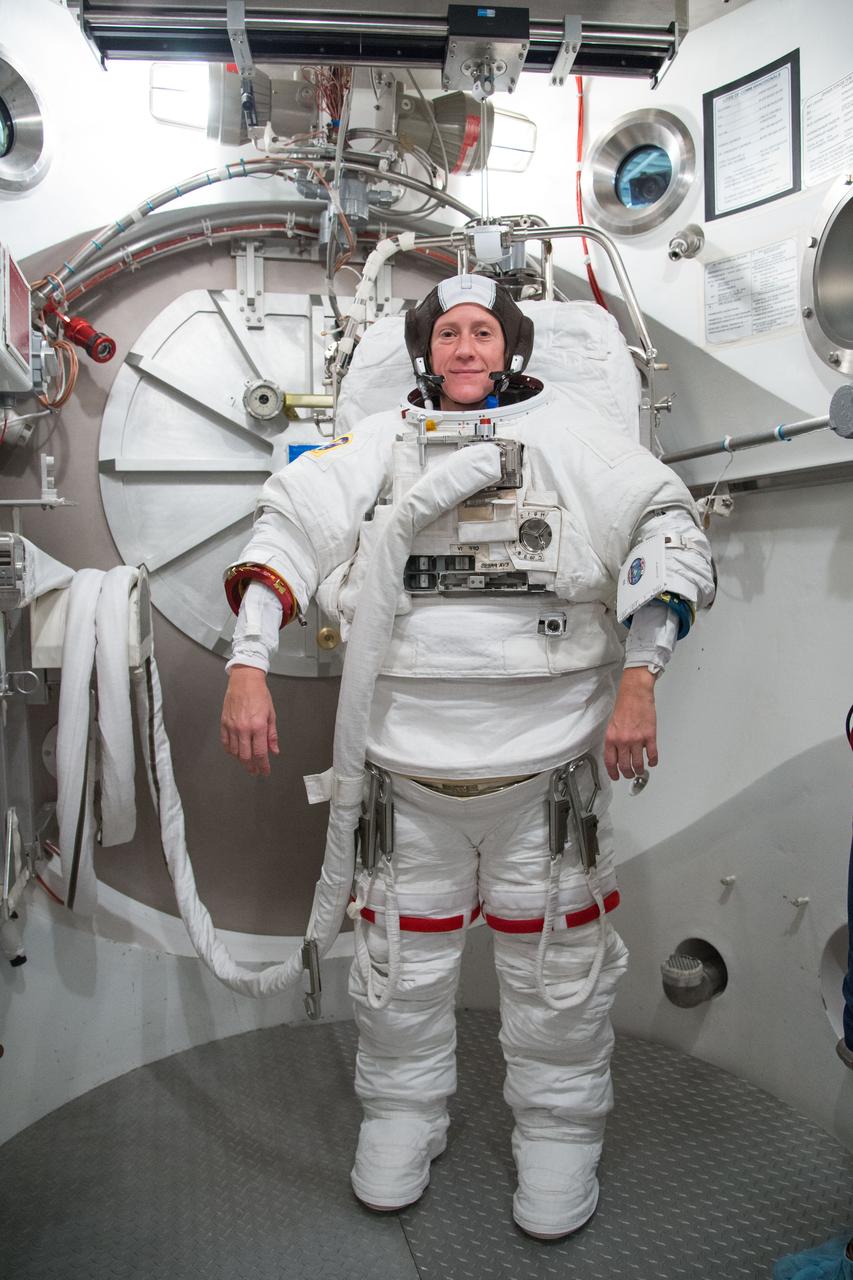
Date: 01-10-13 Location: Bldg 7, SSATA Subject: Expedition 36 astronaut Karen Nyberg during SSATA Chamber - EMU Training & Certification - DRY RUN - STB-ST-989 Photographer: James Blair
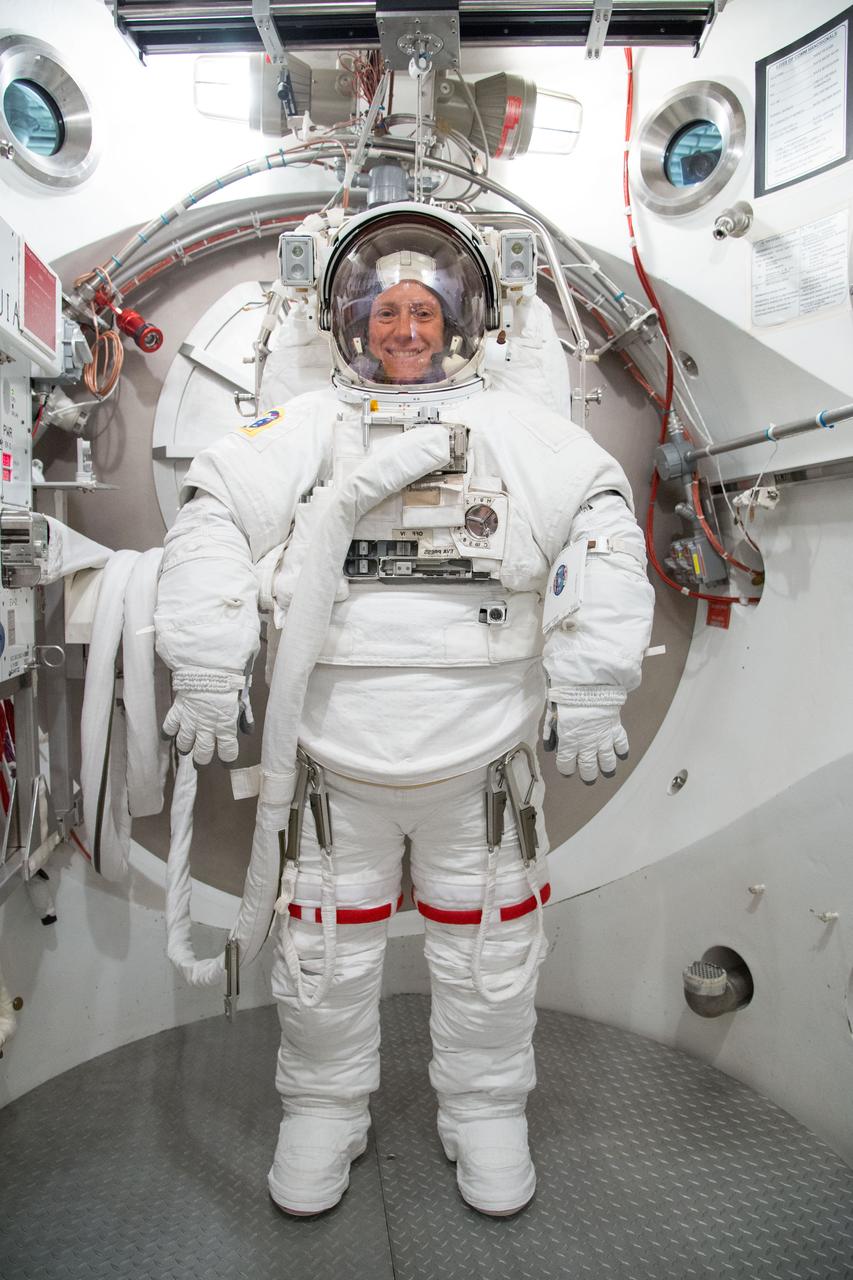
Date: 01-10-13 Location: Bldg 7, SSATA Subject: Expedition 36 astronaut Karen Nyberg during SSATA Chamber - EMU Training & Certification - DRY RUN - STB-ST-989 Photographer: James Blair
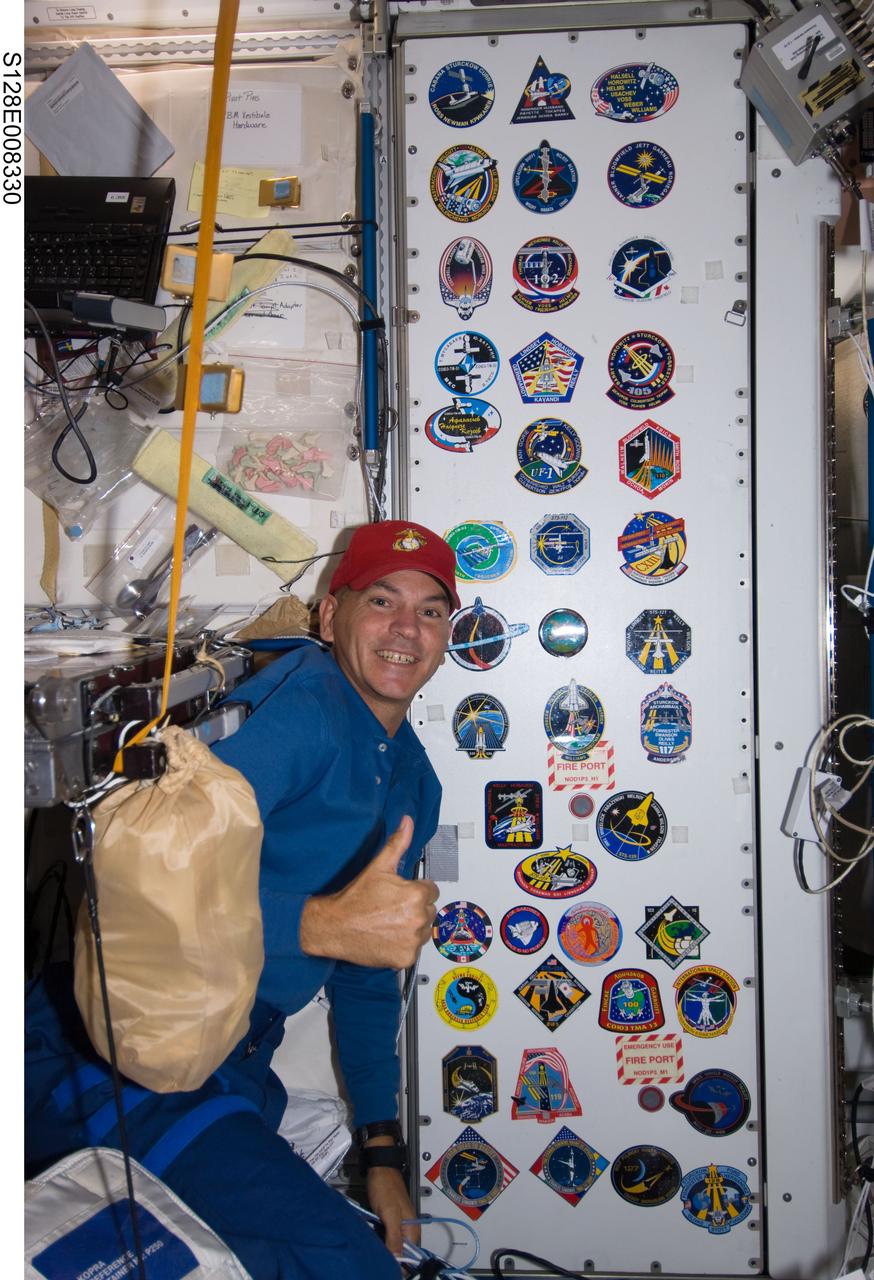
S128-E-008330 (7 Sept. 2009) --- NASA astronaut Rick Sturckow, STS-128 commander, poses for a photo with the growing collection, in the Unity node, of insignias representing crews who have worked on the International Space Station.
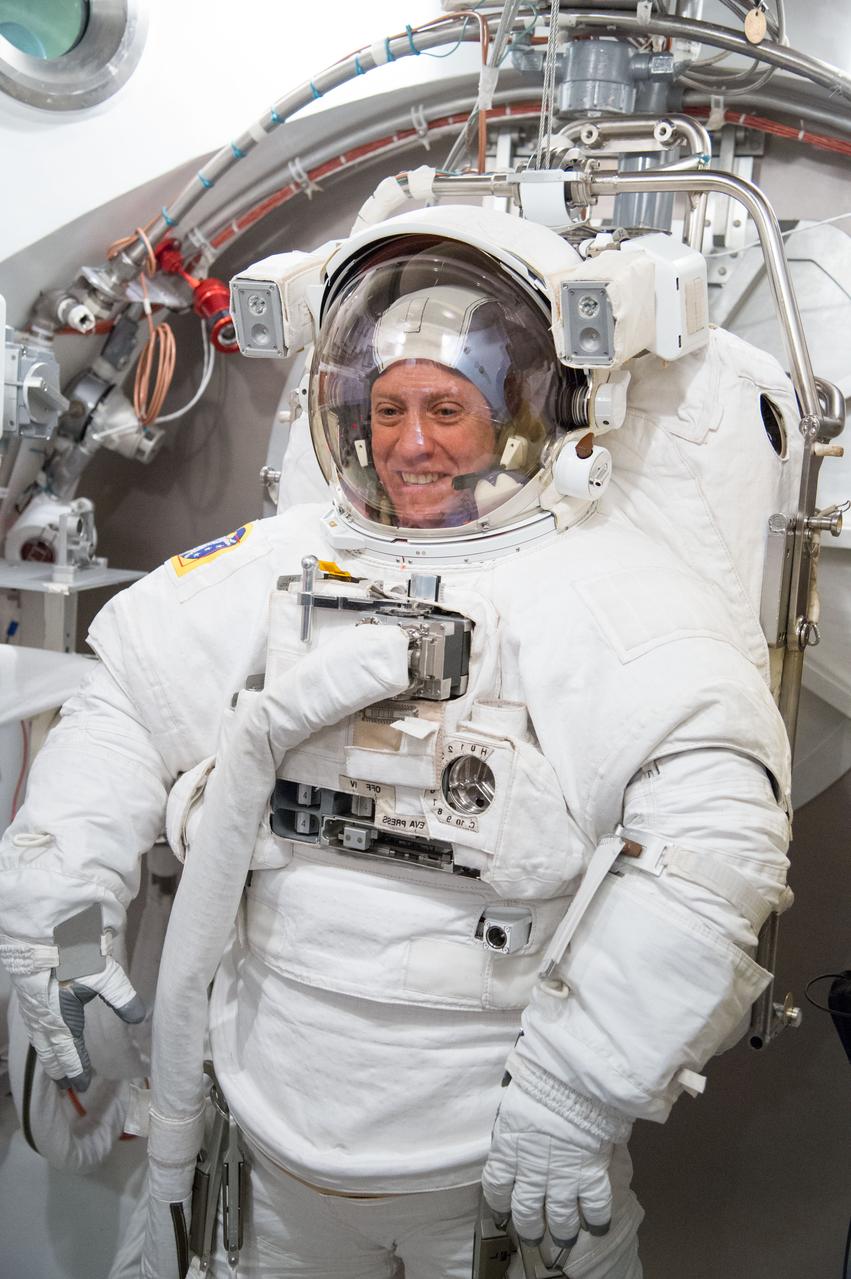
Date: 01-10-13 Location: Bldg 7, SSATA Subject: Expedition 36 astronaut Karen Nyberg during SSATA Chamber - EMU Training & Certification - DRY RUN - STB-ST-989 Photographer: James Blair
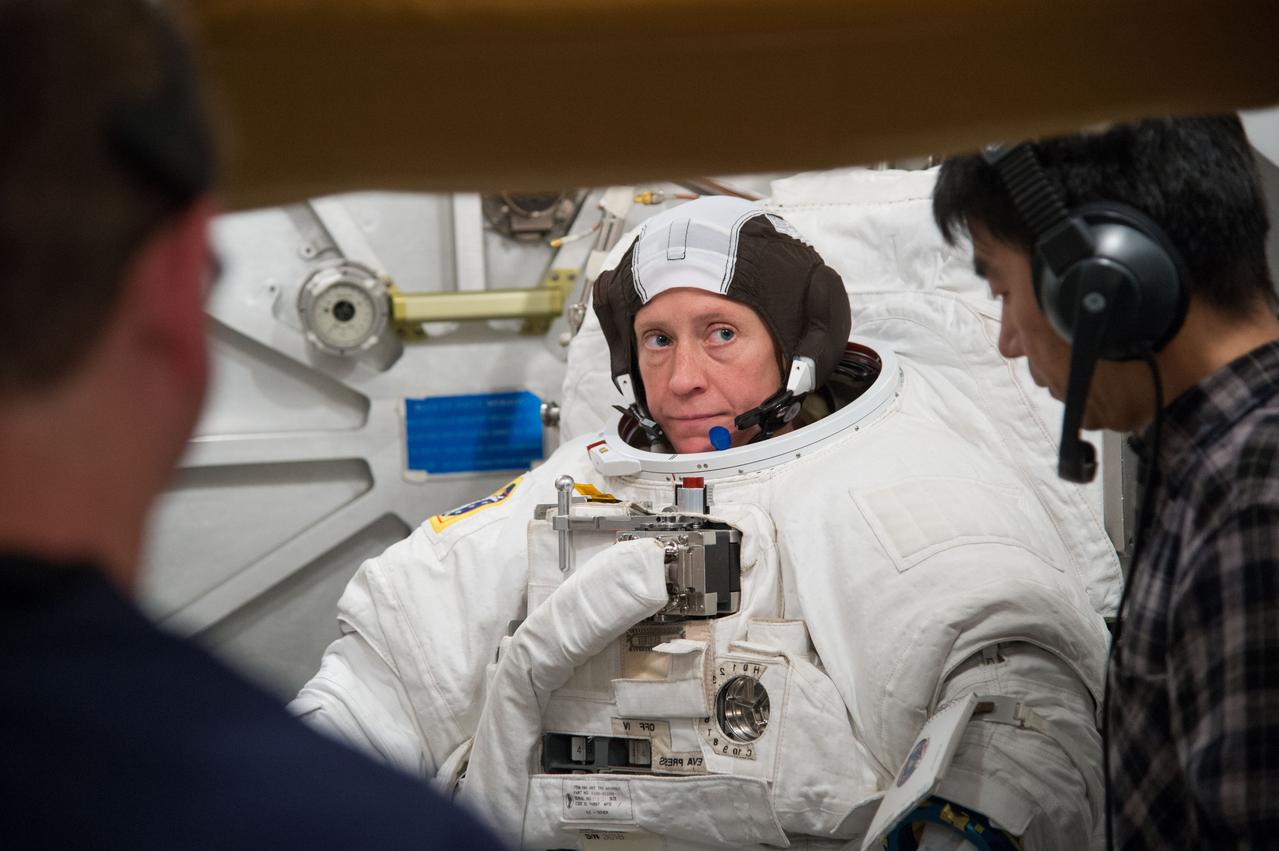
Date: 01-10-13 Location: Bldg 7, SSATA Subject: Expedition 36 astronaut Karen Nyberg during SSATA Chamber - EMU Training & Certification - DRY RUN - STB-ST-989 Photographer: James Blair
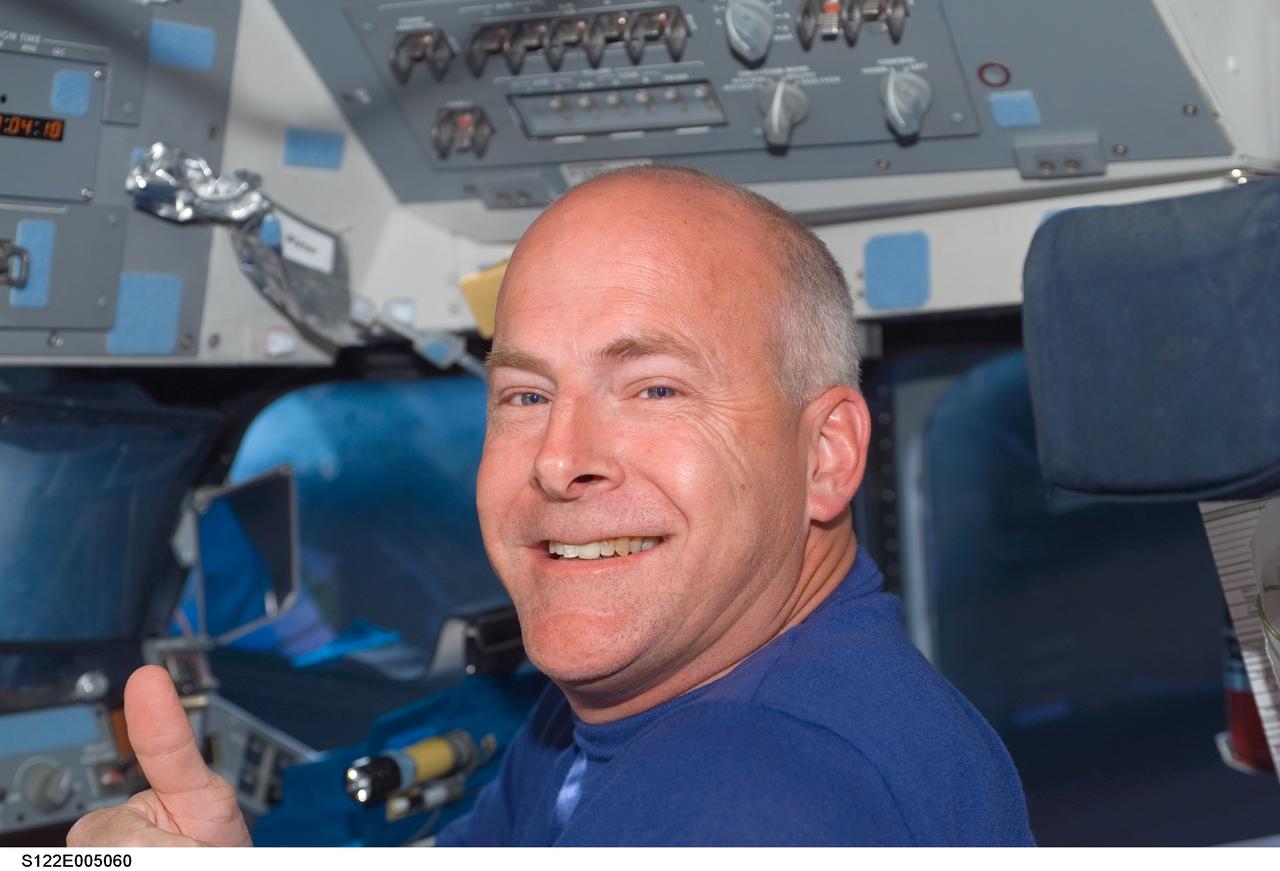
S122-E-005060 (7 Feb. 2008) --- Astronaut Alan Poindexter, STS-122 pilot, gives a "thumbs-up" signal on the flight deck of Space Shuttle Atlantis during flight day one activities.
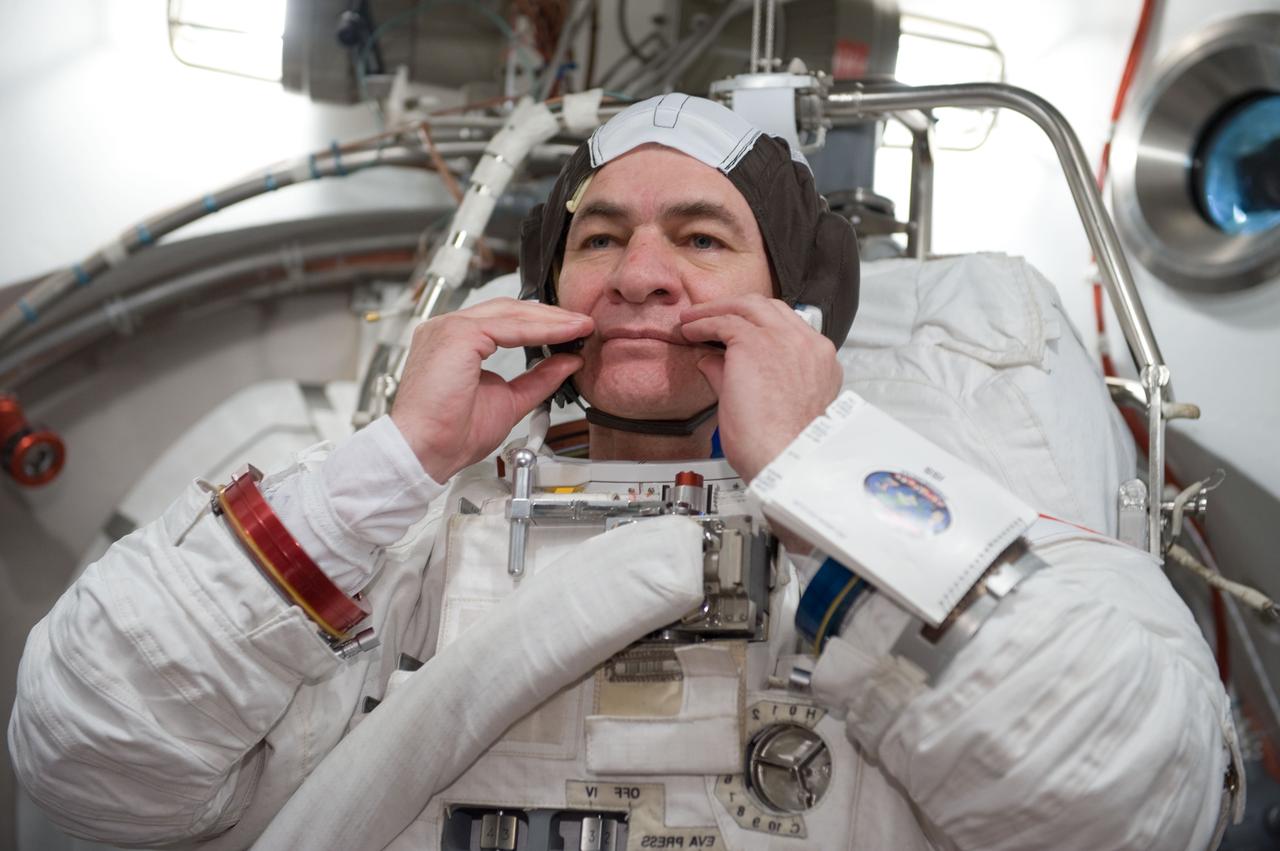
PHOTO DATE: 4/5/10, Time: 1000 LOCATION: Bldg 7/SSATA Chamber SUBJECT: STB-ST-903 - INC 26 SSATA Crew Training: Paolo Nespoli Photographer: James Blair
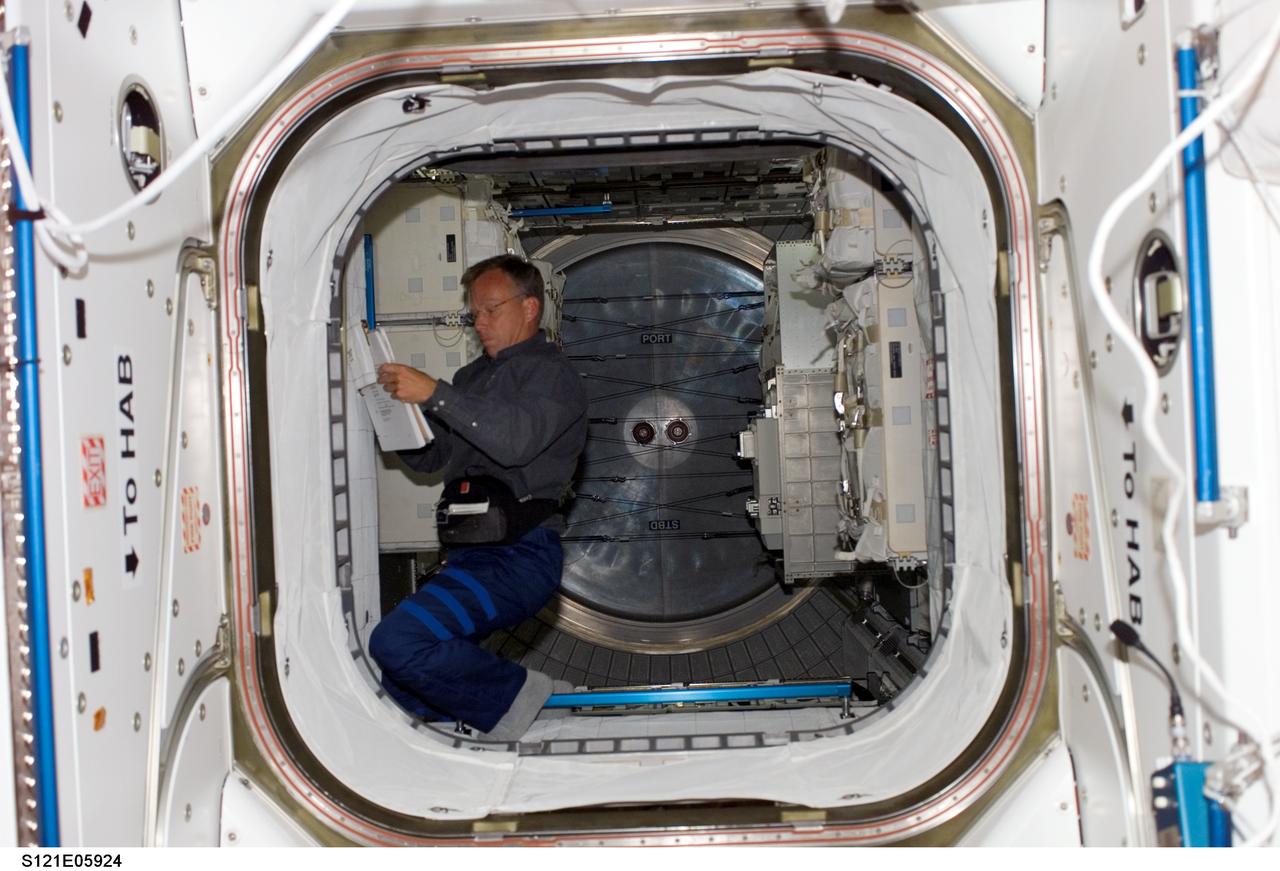
S121-E-05924 (7 July 2006) --- Astronaut Steven W. Lindsey, STS-121 commander, looks over a procedures checklist in a hatchway of the International Space Station while Space Shuttle Discovery was docked to the station.
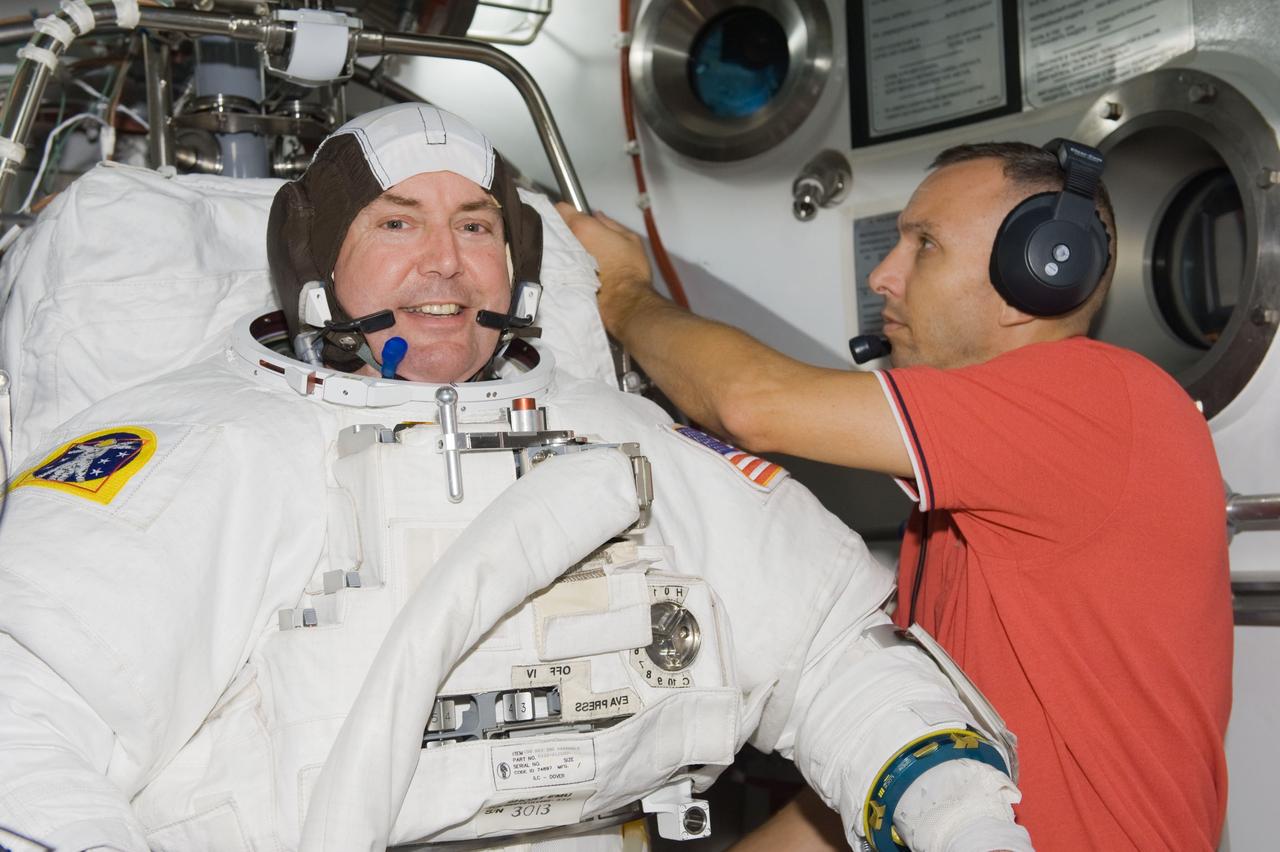
DATE: 08/19/09 LOCATION: Bldg 7/SSATA Chamber SUBJECT: SSATA Crew Training and EMU Verification for STS-129 crew member Mike Foreman during suited dry run PHOTOGRAPHER: Lauren Harnett
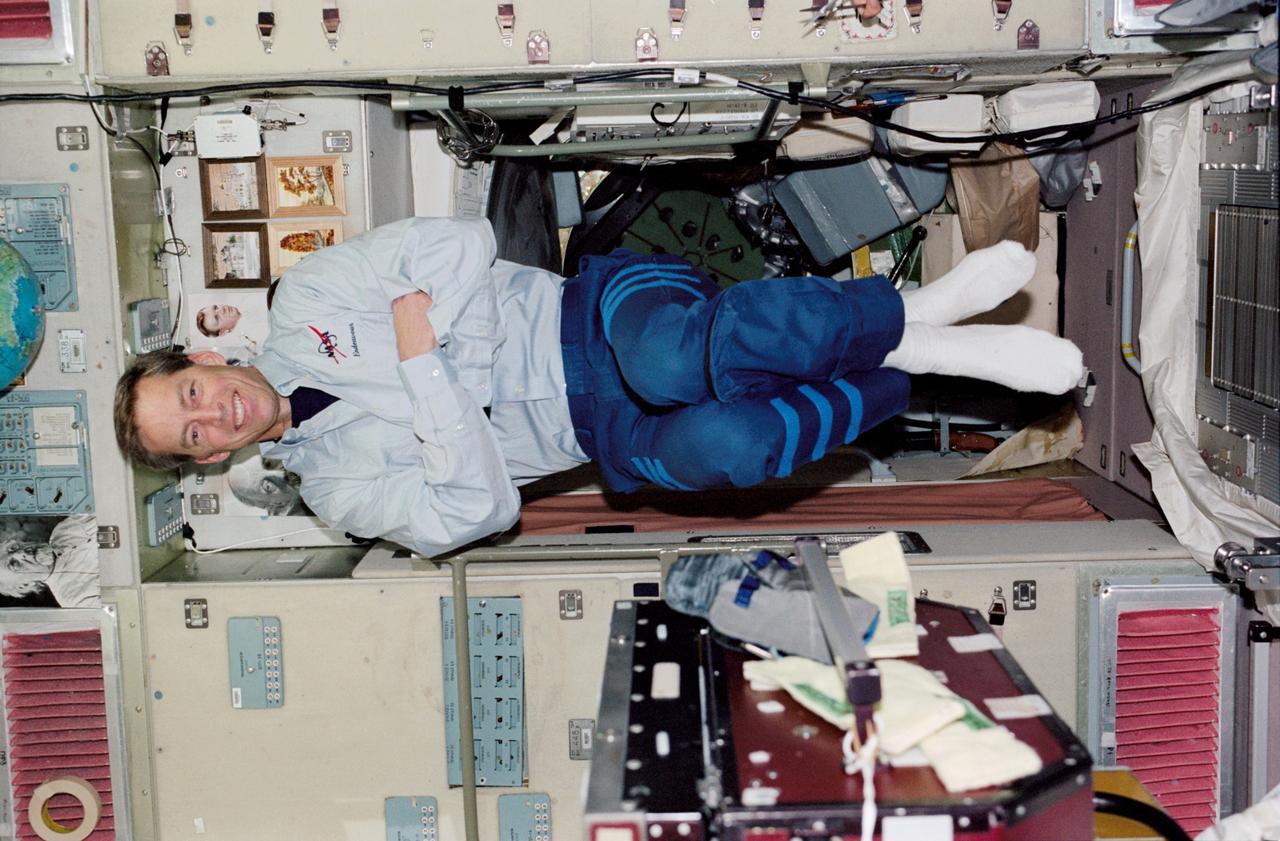
STS113-339-005 (23 November – 7 December 2002) --- Astronaut James D. Wetherbee, STS-113 mission commander, floats in the Zvezda Service Module on the International Space Station (ISS).

S128-E-008352 (7 Sept. 2009) --- NASA astronaut Kevin Ford, STS-128 pilot, is pictured in the Destiny laboratory of the International Space Station while Space Shuttle Discovery remains docked with the station.
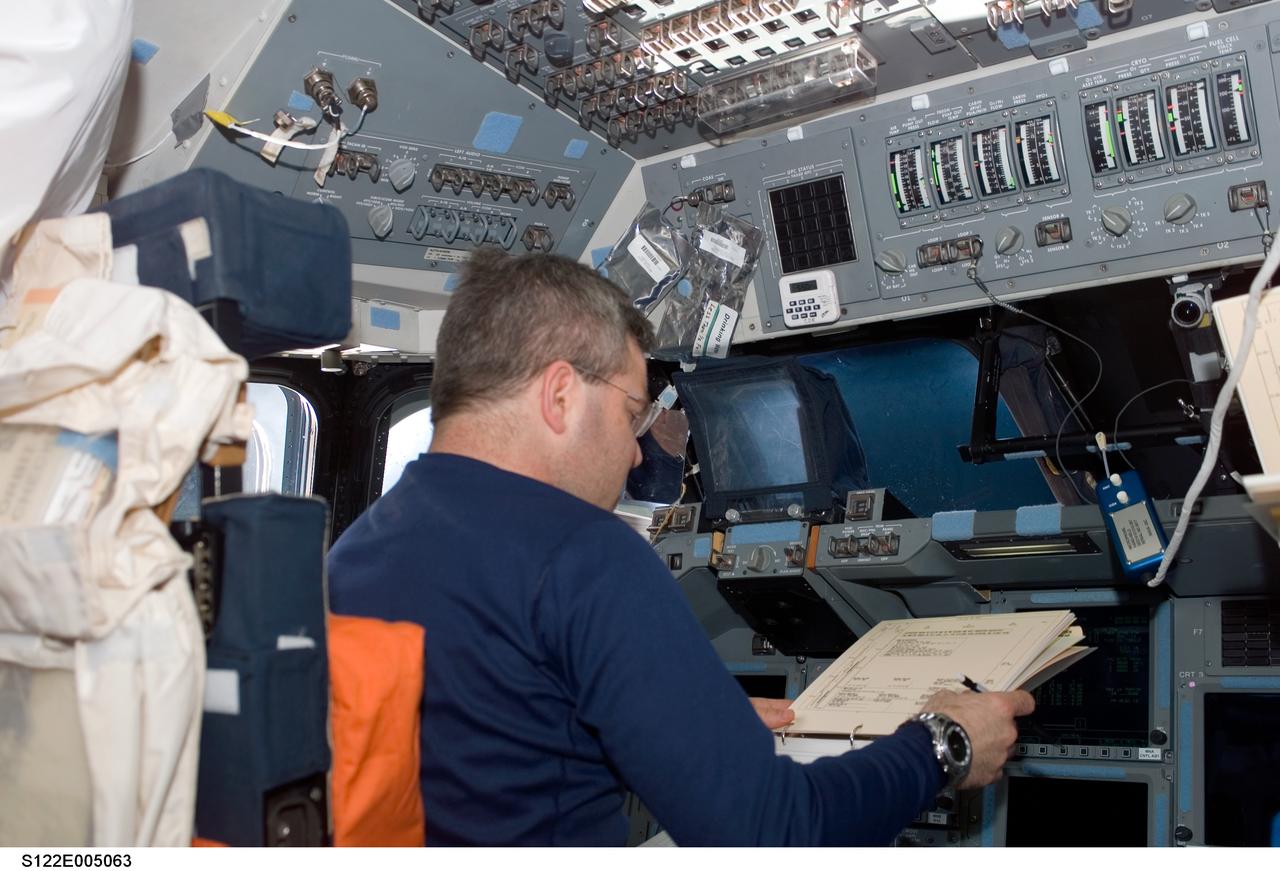
S122-E-005063 (7 Feb. 2008) --- Astronaut Steve Frick, STS-122 commander, looks over procedures checklists on the flight deck of Space Shuttle Atlantis during flight day one activities.
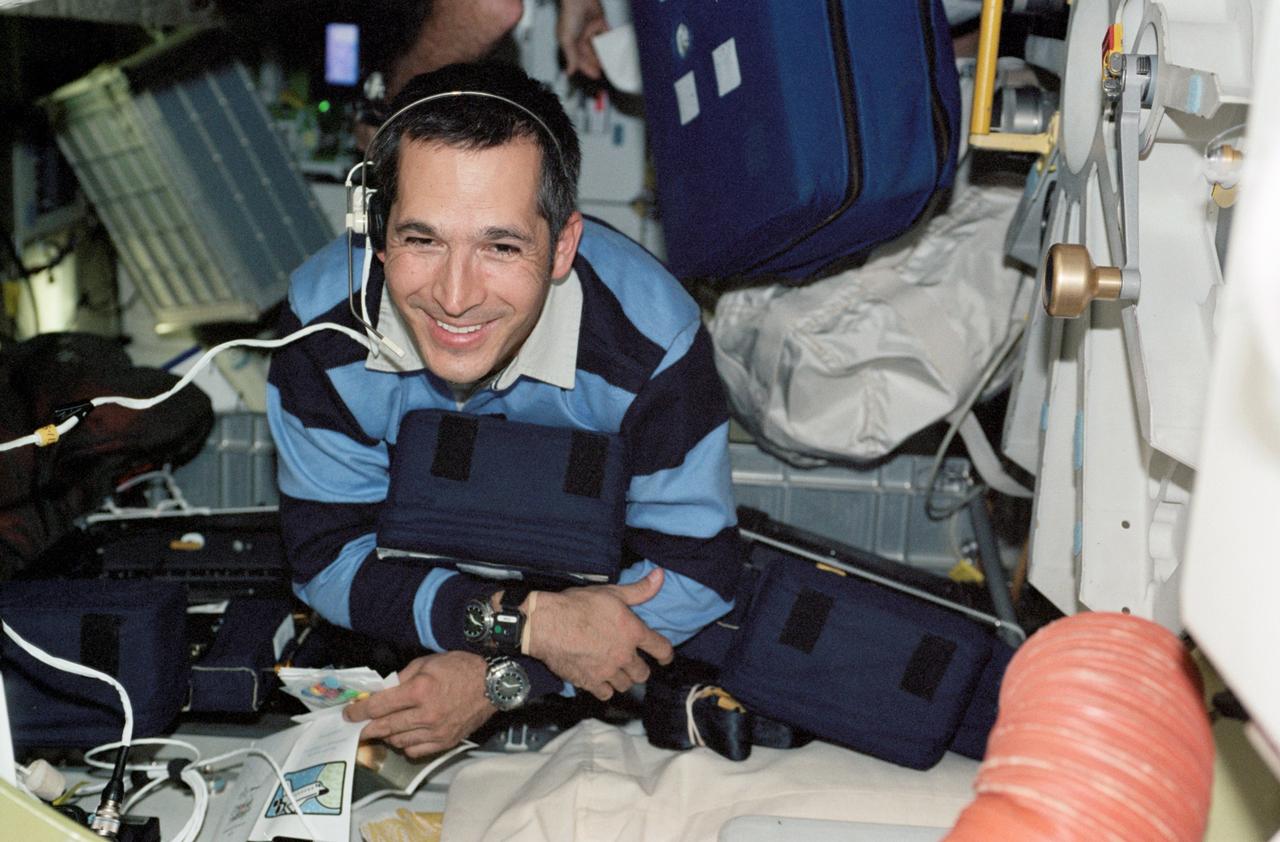
STS113-339-007 (23 November – 7 December 2002) --- Astronaut John B. Herrington, STS-113 mission specialist, pictured on the middeck of the Space Shuttle Endeavour.
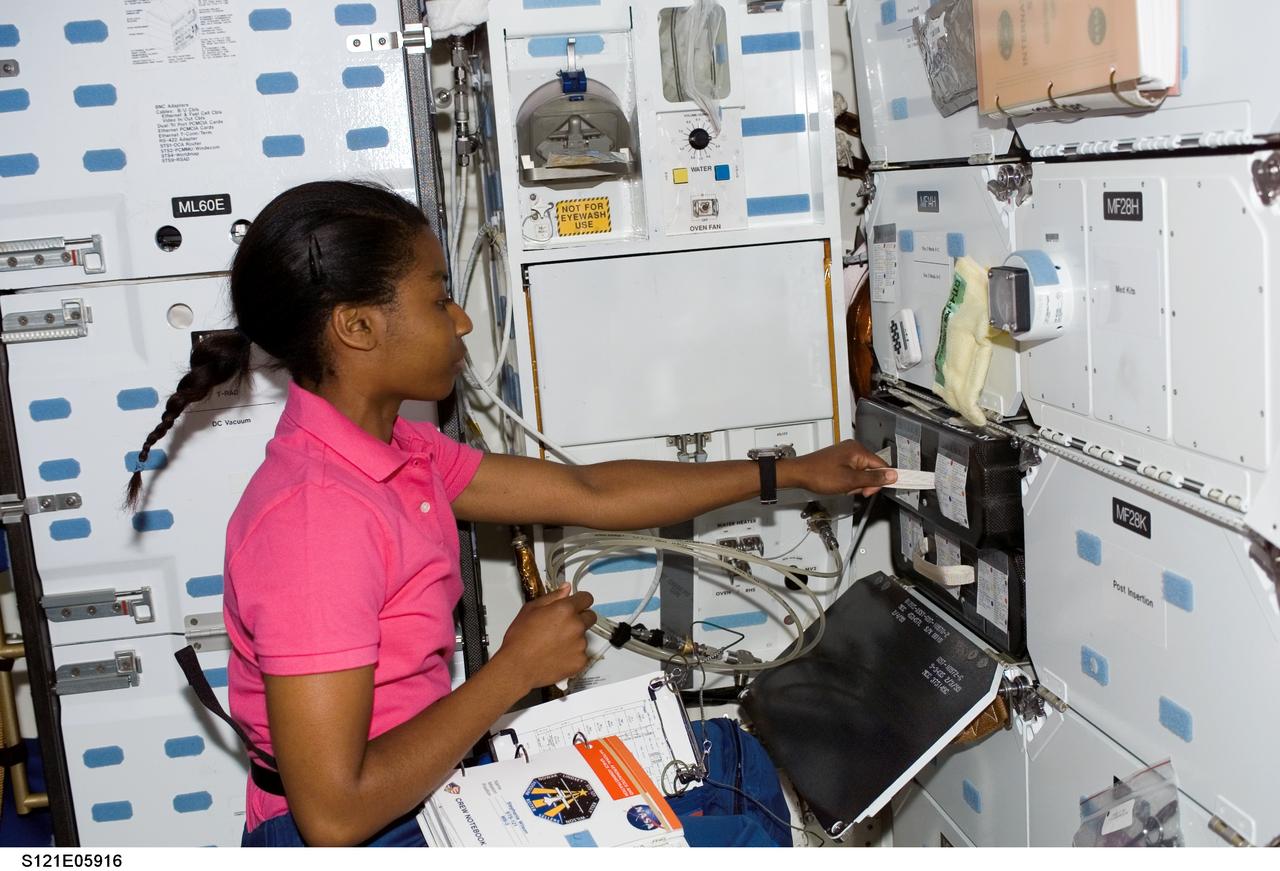
S121-E-05916 (7 July 2006) --- Astronaut Stephanie D. Wilson, STS-121 mission specialist, works with equipment on the middeck of the Space Shuttle Discovery while docked with the International Space Station.
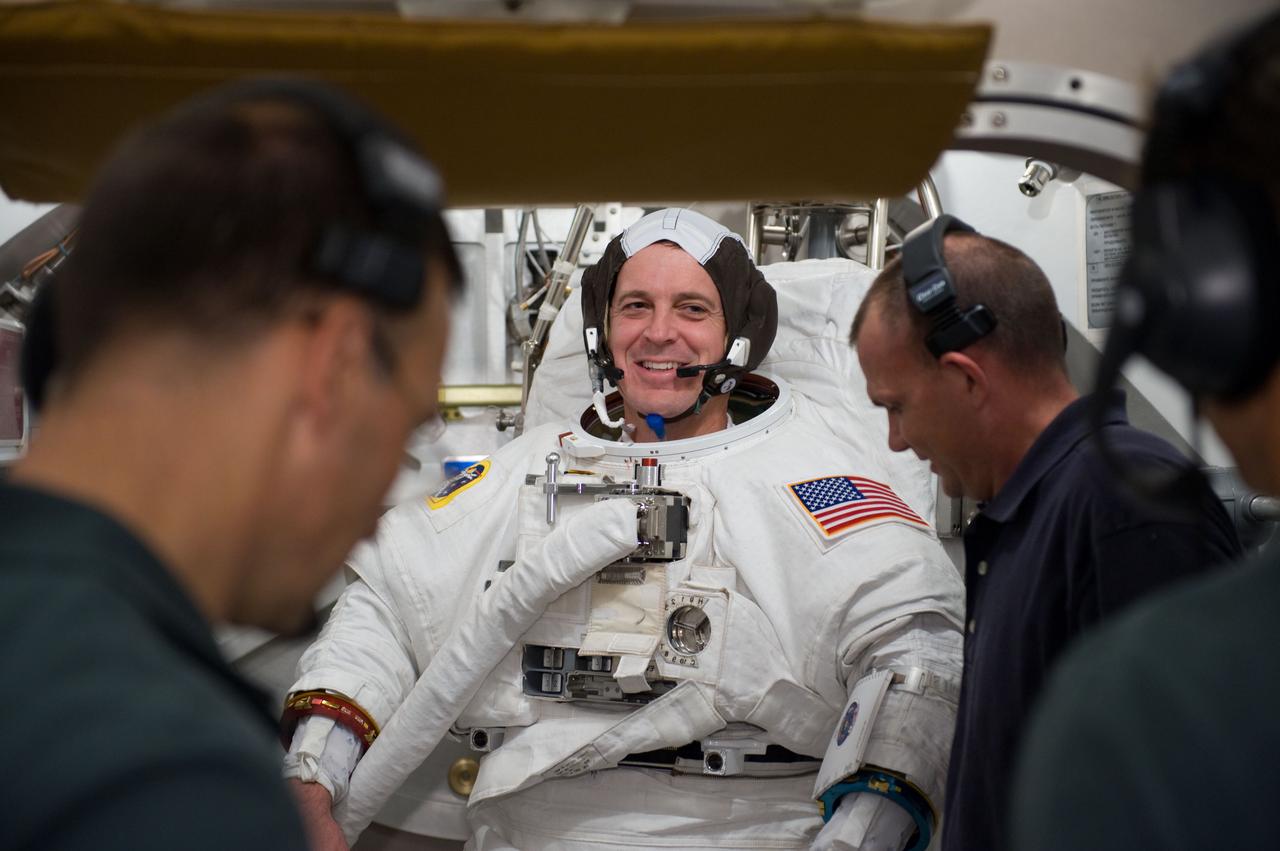
Date: 11-04-08 Location: Bldg 7, SSATA Subject: SSATA crew training and EMU verification for STS-119 crew member Ricky Arnold. STB-SS-1862 Photographer: Blair