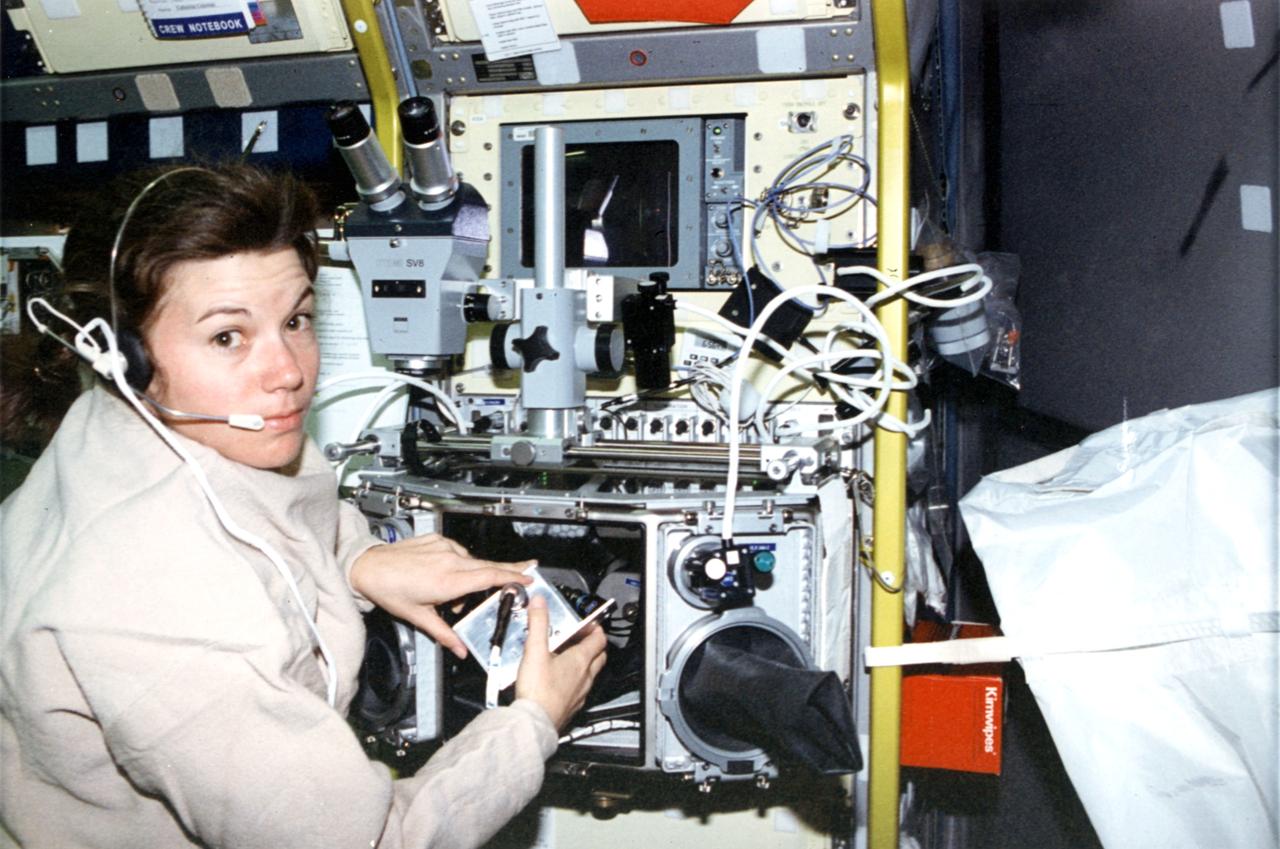
STS-73 crewmember with the Glovebox
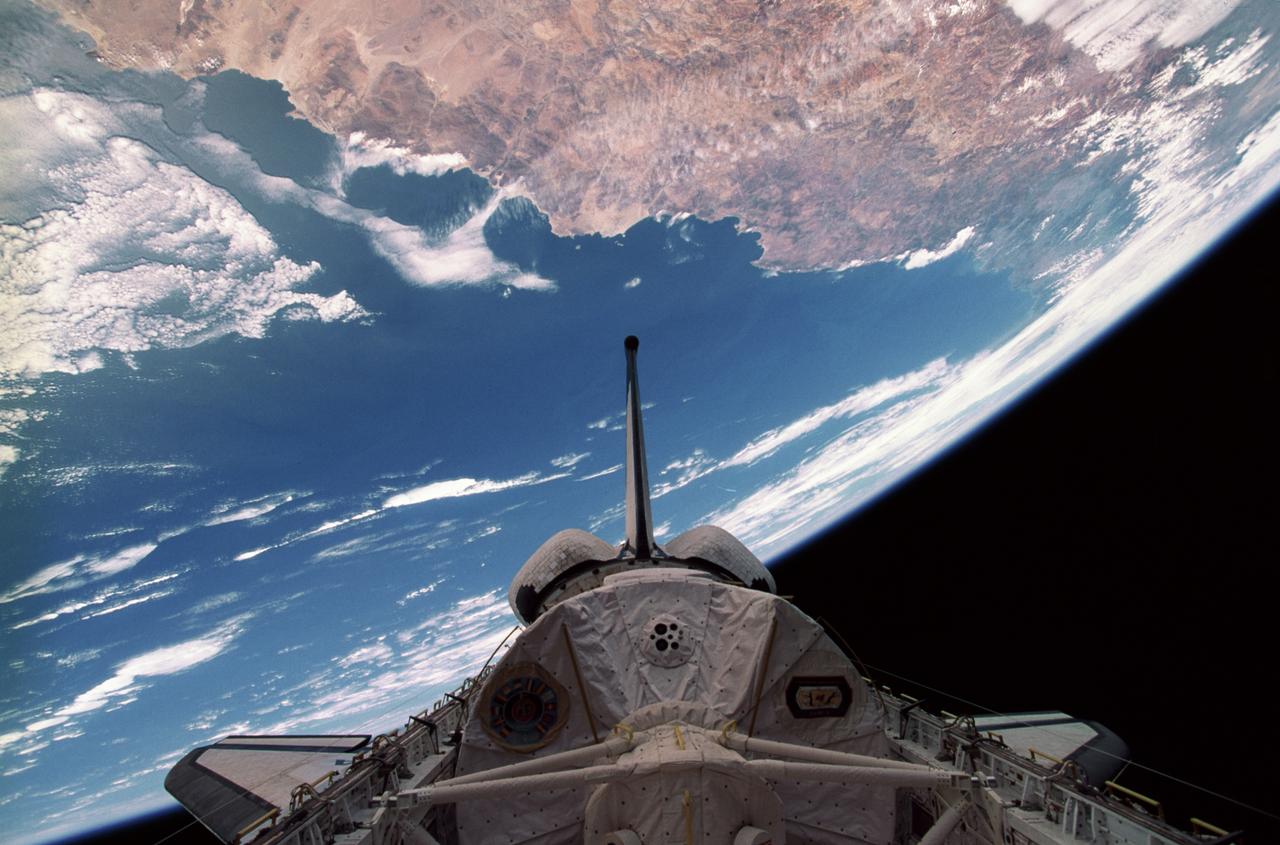
View of earth from STS-73, USML-2.
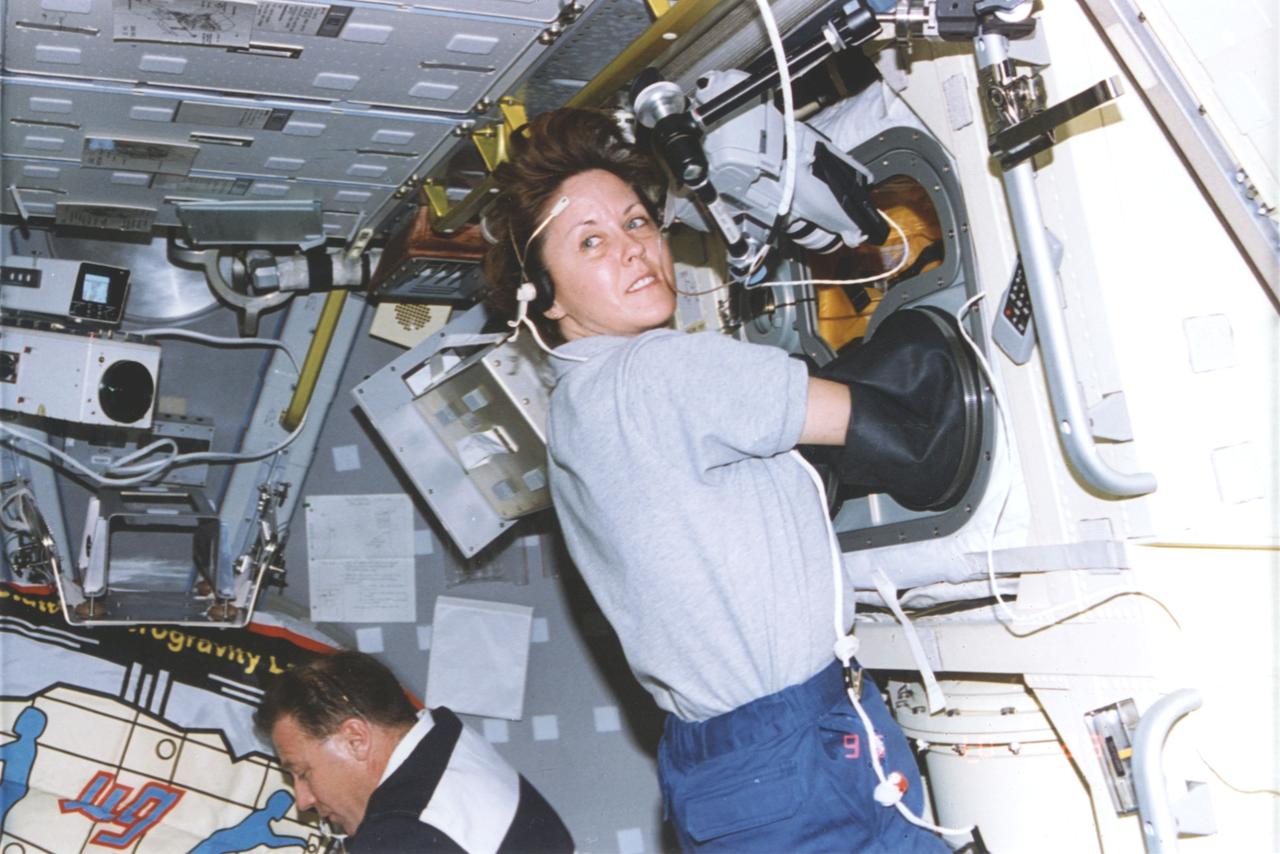
Onboard STS-73, USML-2: Mission Specialist, Payload Commander, Kathryn Thorton with (CGF) Crystal Growth Furnace
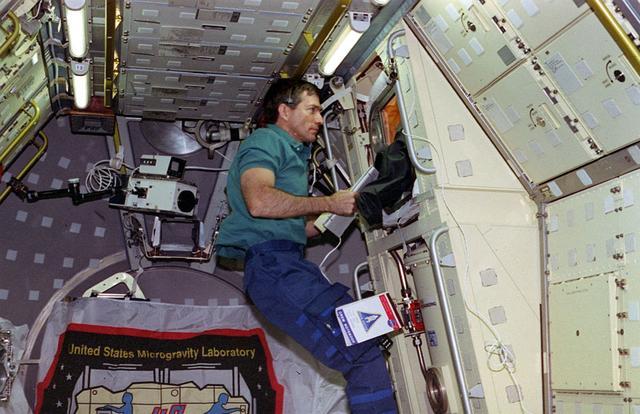
Payload Specialist, Fred Leslie changing samples in (CGF) Crystal Growth Furnace onboard STS-73, USML-2.
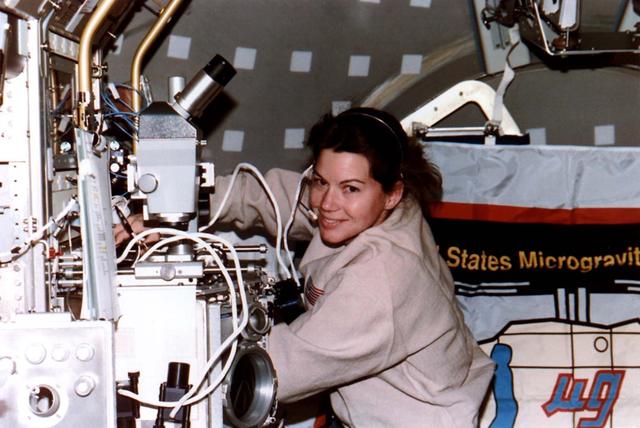
Astronaut Catherine G. Coleman, mission specialist for STS-73, works in the glovebox on the portside of the science module aboard the Space Shuttle Columbia in earth-orbit.
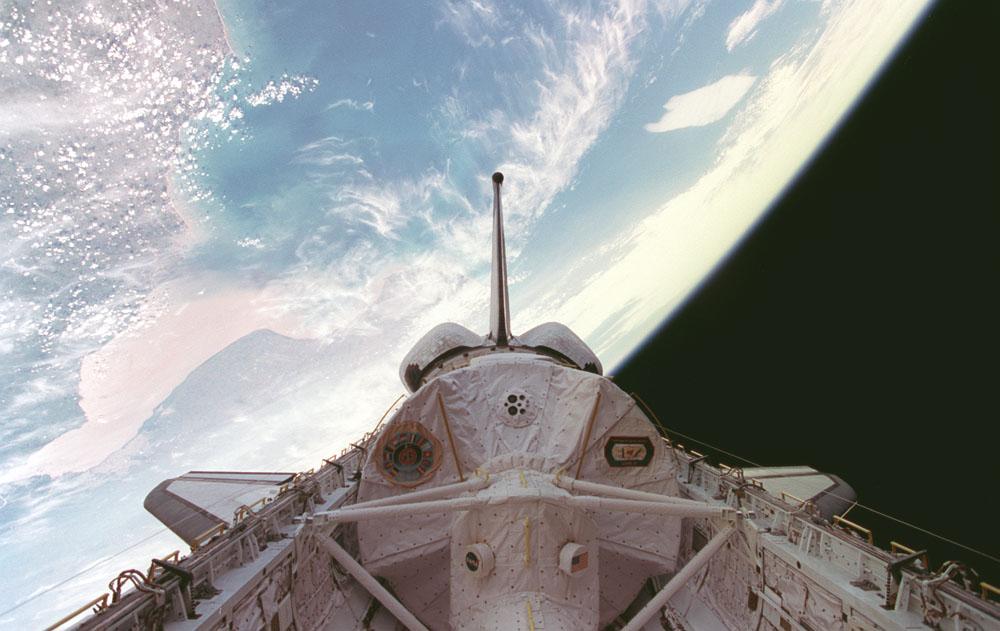
Onboard photo of space shuttle Columbia (STS-73) cargo bay payload - the United States Microgravity Laboratory-2 (USML-2) with an earthview.
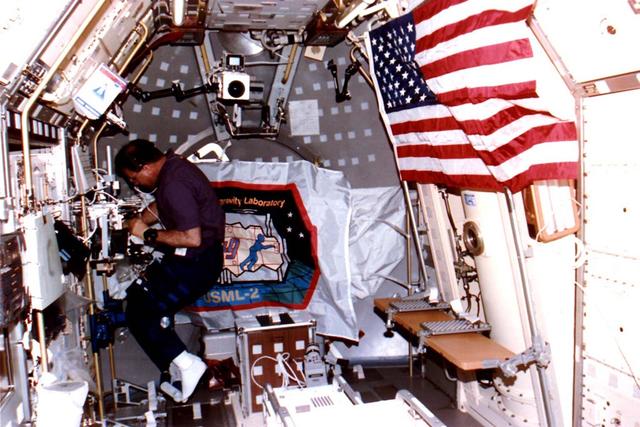
Albert Sacco Jr., payload specialist for STS-73, works in the glovebox on the portside of the science module aboard the Space Shuttle Columbia in earth orbit.
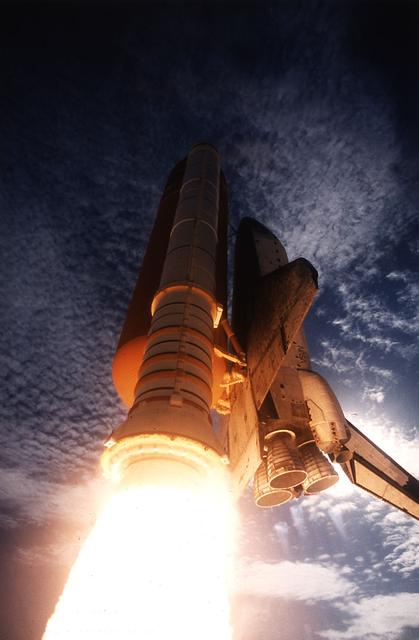
A unique view of the Space Shuttle Columbia (STS-73) moments after bursting into Earth's atmosphere on its way toward space. Onboard the orbiter is the United States Microgravity Laboratory 2 (USML-2), a Marshall managed payload, where Columbia's seven member crew will perform experiments while in orbit.
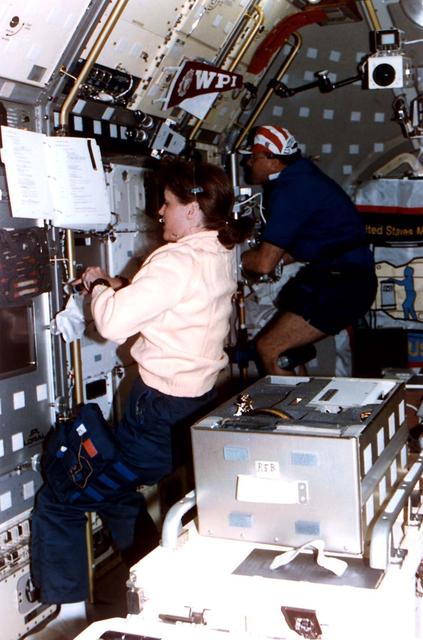
Astronaut Kathryn C. Thornton, payload commander for STS-73, works at the drop physics module (DPM) on the portside of the science module aboard the Space Shuttle Columbia in Earth orbit.
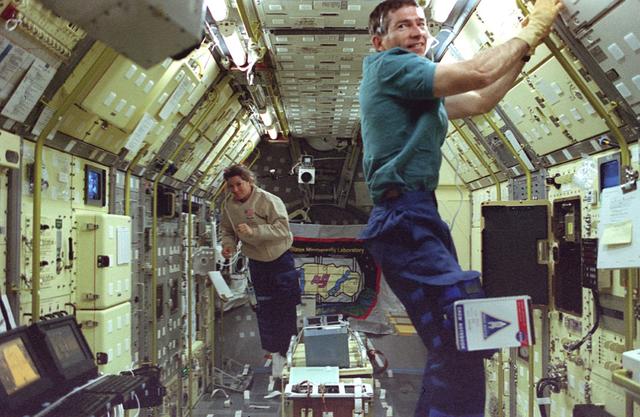
Onboard photo of space shuttle Columbia (STS-73) crewmembers Fred Leslie (foreground) and Catherine Coleman aboard the United States Microgravity Laboratory (USML) conducting experiments in a microgravitational environment available in the Orbiter's cargo bay while in low earth orbit.
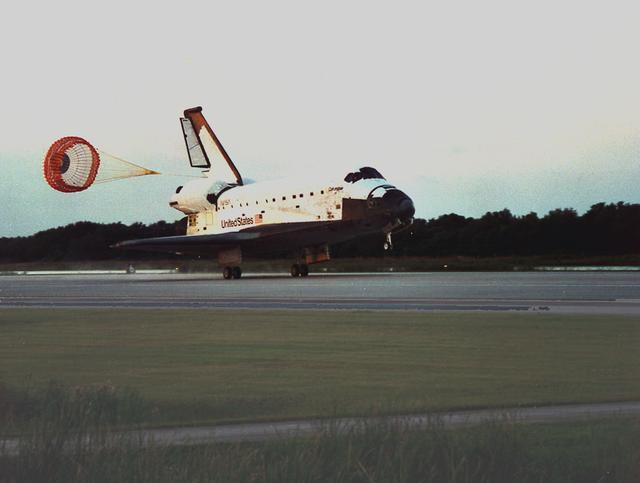
After completion of another United States Microgravity Laboratory (USML-2) mission, Space Shuttle Columbia (STS-73) and her seven member crew return to Earth on a clear November morning. Pictured is Columbia with her landing parachute deployed on final touchdown. Results from the mission's USML-2 will be sent to Marshall Space Flight Center who managed the mission.
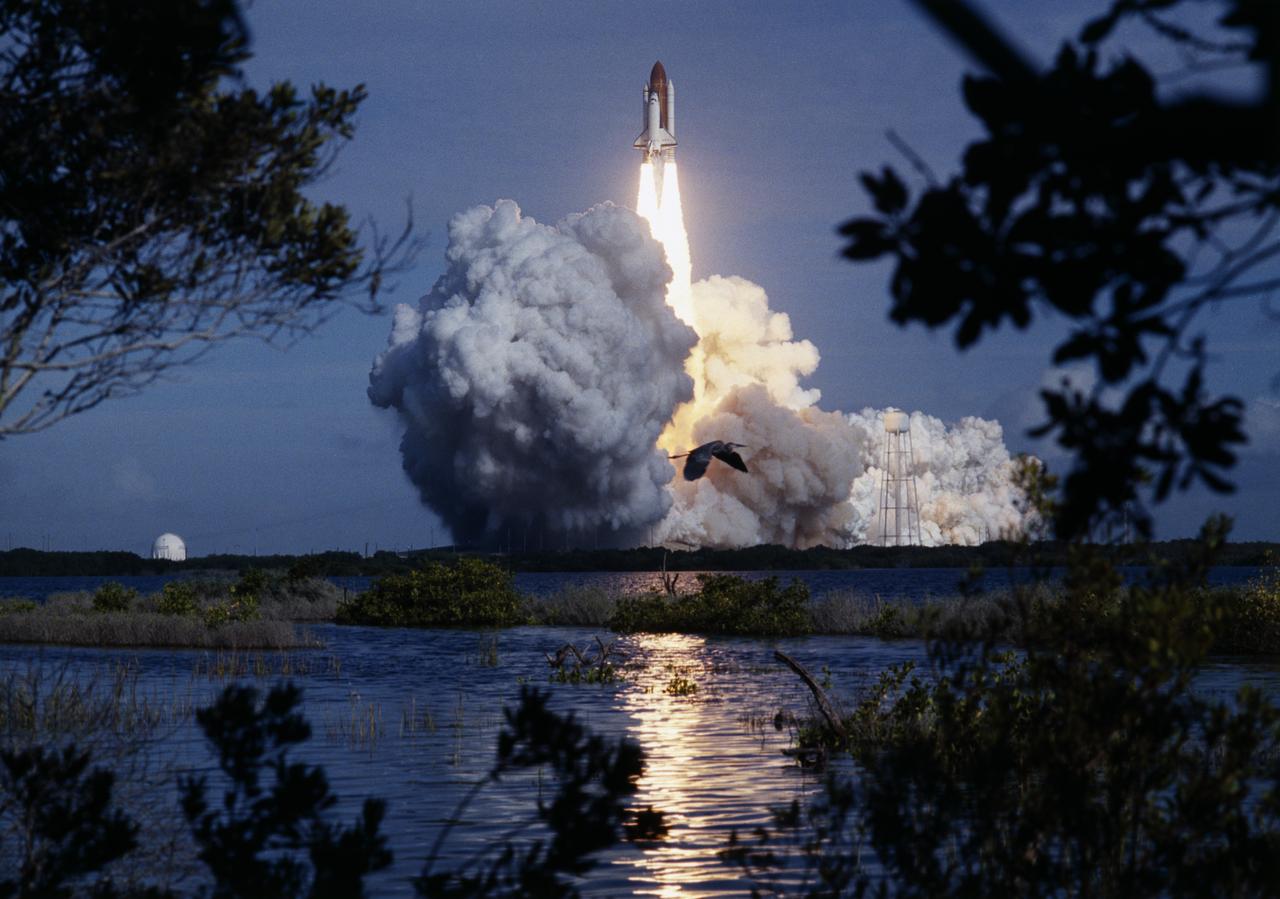
A Great Blue Heron seems oblivious to the tremendous spectacle of light and sound generated by a Shuttle liftoff, as the Space Shuttle Columbia (STS-73) soars skyward from Launch Pad 39B. Columbia's seven member crew's mission included continuing experimentation in the Marshall managed payloads including the United States Microgravity Laboratory 2 (USML-2) and the keel-mounted accelerometer that characterizes the very low frequency acceleration environment of the orbiter payload bay during space flight, known as the Orbital Acceleration Research Experiment (OARE).
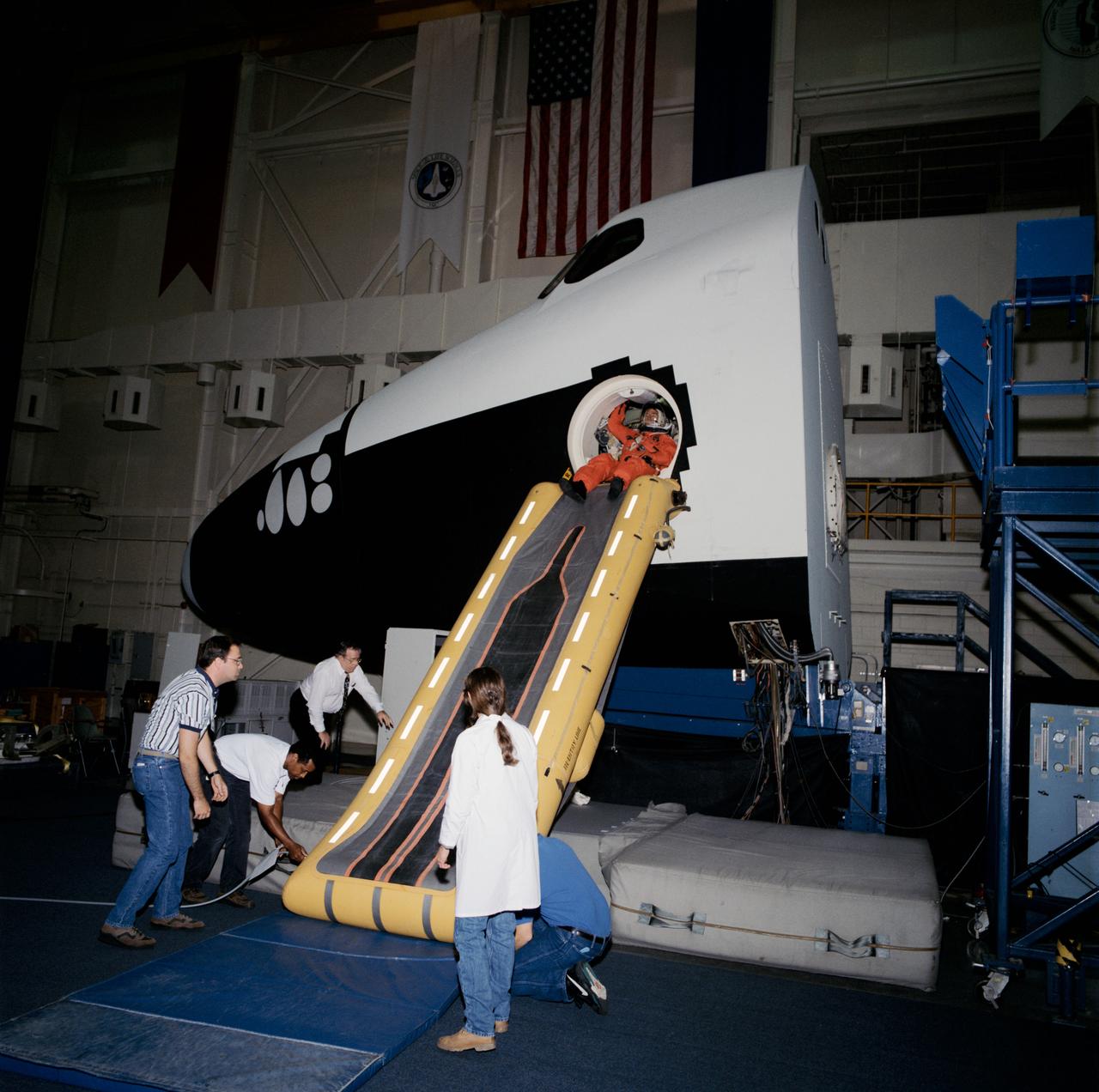
View of the STS-73 crew using the escape slide in the Crew Compartment Trainer (CCT) at bldg 9A. The crew is seen in their launch and entry suits at the top of the slide with trainers at the bottom.
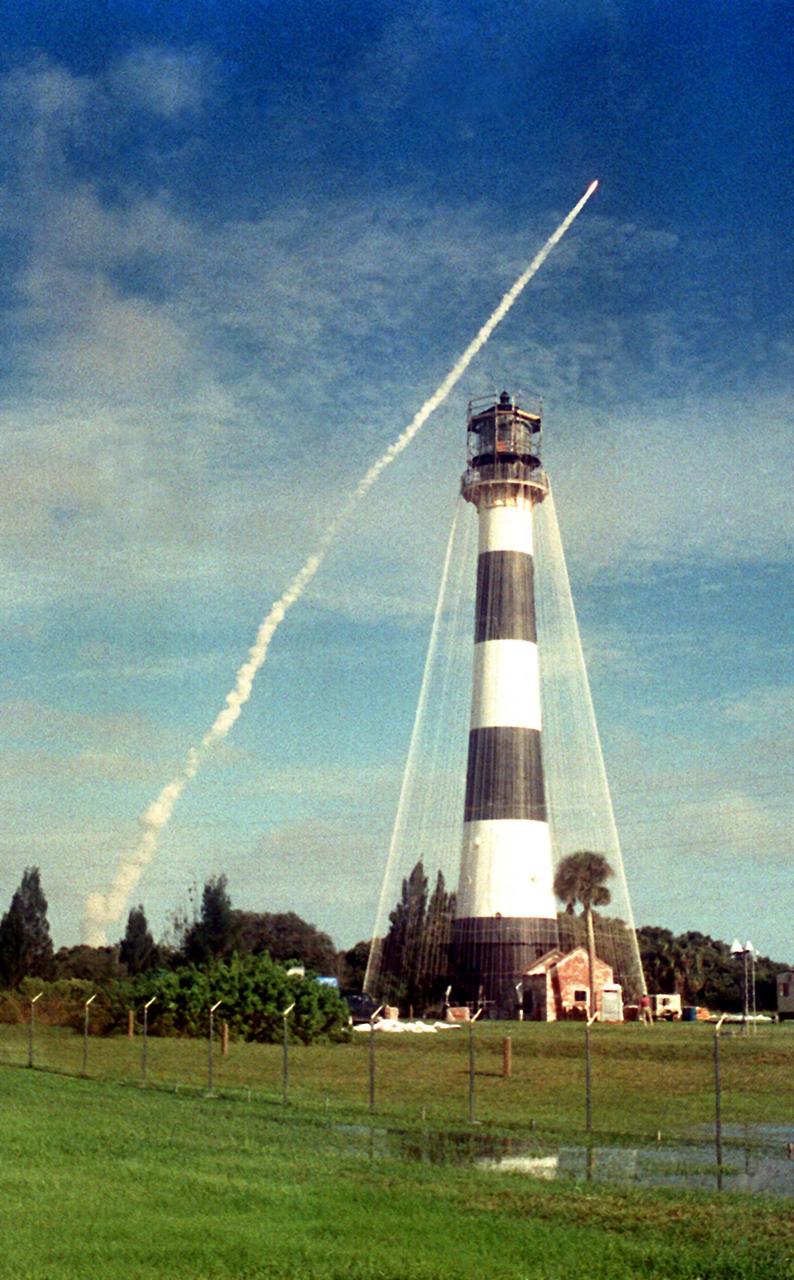
KENNEDY SPACE CENTER, FLA. -- Space Shuttle Columbia soars into the cloud-washed sky above Cape Canaveral Lighthouse. After six scrubs from the original Sept. 25 launch date, liftoff occurred Oct. 20 at 9:53 a.m. EDT. The crew of seven comprises Commander Ken Bowersox, Pilot Kent Rominger, Mission Specialists Kathy Thornton (Payload Commander), Catherine Coleman and Michael Lopez-Alegria, plus Payload Specialists Fred Leslie and Albert Sacco. The 72nd Shuttle mission, STS-73 marks the second flight of the U.S. Microgravity Laboratory. Research is being conducted in five areas: fluid physics, materials science, biotechnology, combustion science, and commercial space processing. The lighthouse, undergoing refurbishment and upgrade, is shown with a network of nylon lines ready for canvas panels to be attached. The canvas shroud will protect the surrounding area during sand-blasting of the lead-based paint.
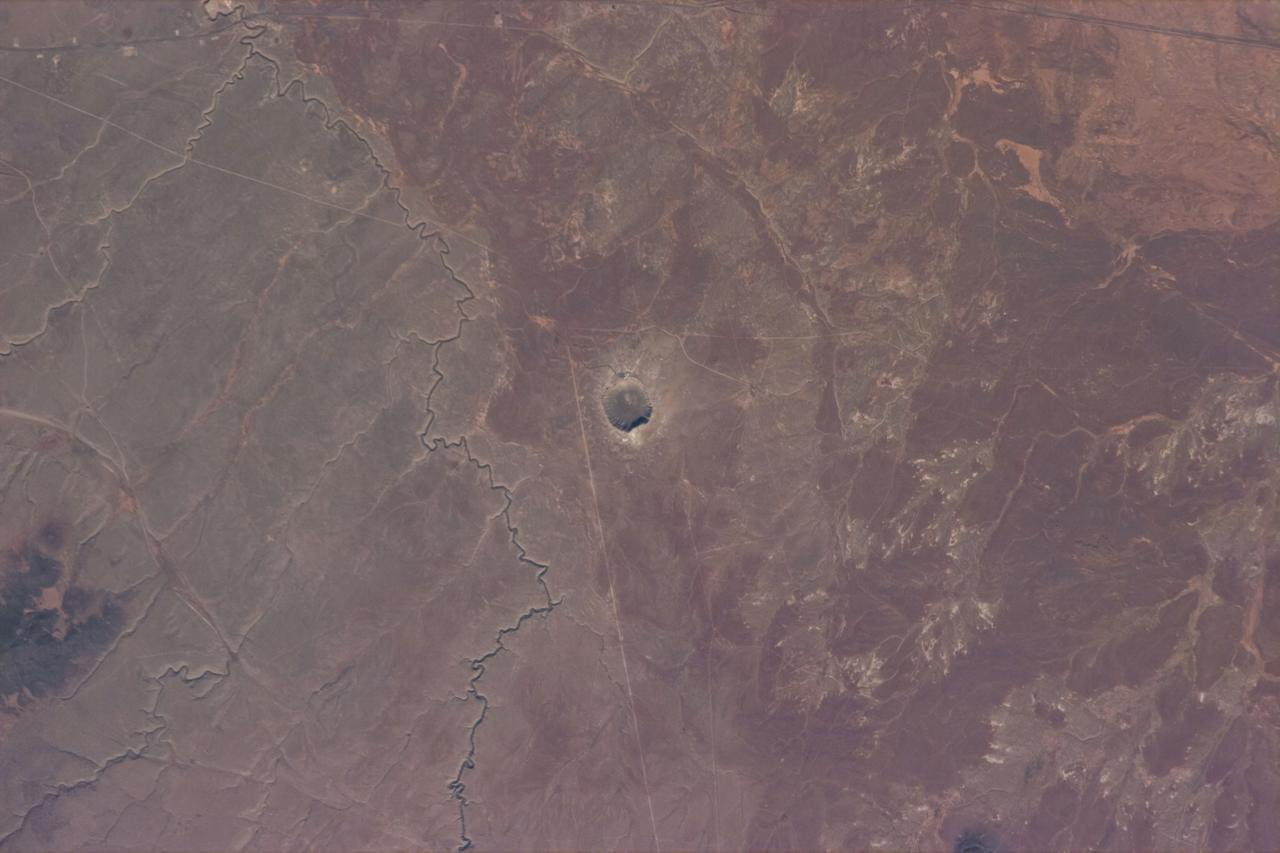
Earth observations taken from shuttle Columbia during STS-73 mission. Views were taken using an electronic still camera.
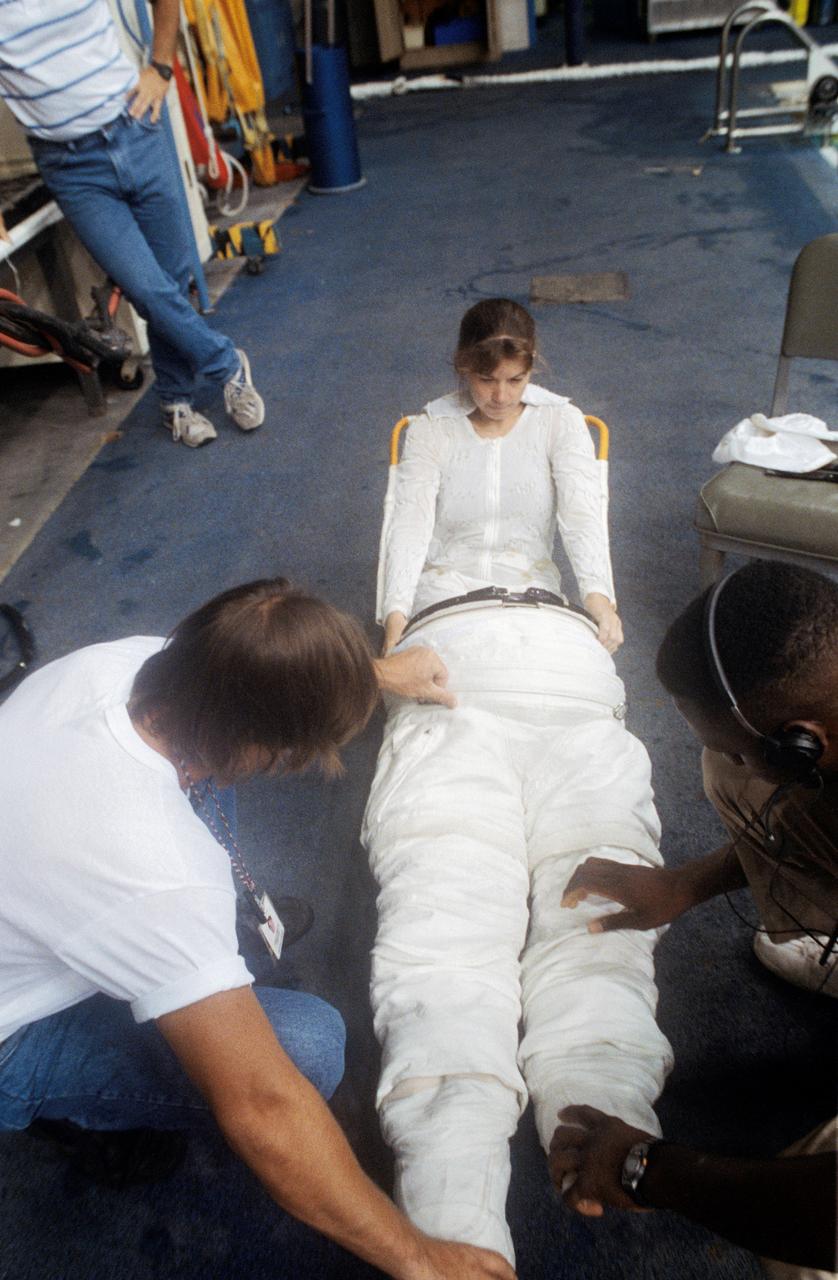
Astronaut and mission specialist for STS-73, Catherine G. Coleman, dons a high fidelity training version of the Extravehicular Mobility Unit (EMU) space suit at the Johnson Space Center’s (JSC) Weightless Environment Training Facility (WET-F) in preparation for the mission. The STS-73 mission was the second flight of the United States Microgravity Laboratory (USML-2), managed by scientists and engineers from the Marshall Space Flight Center.
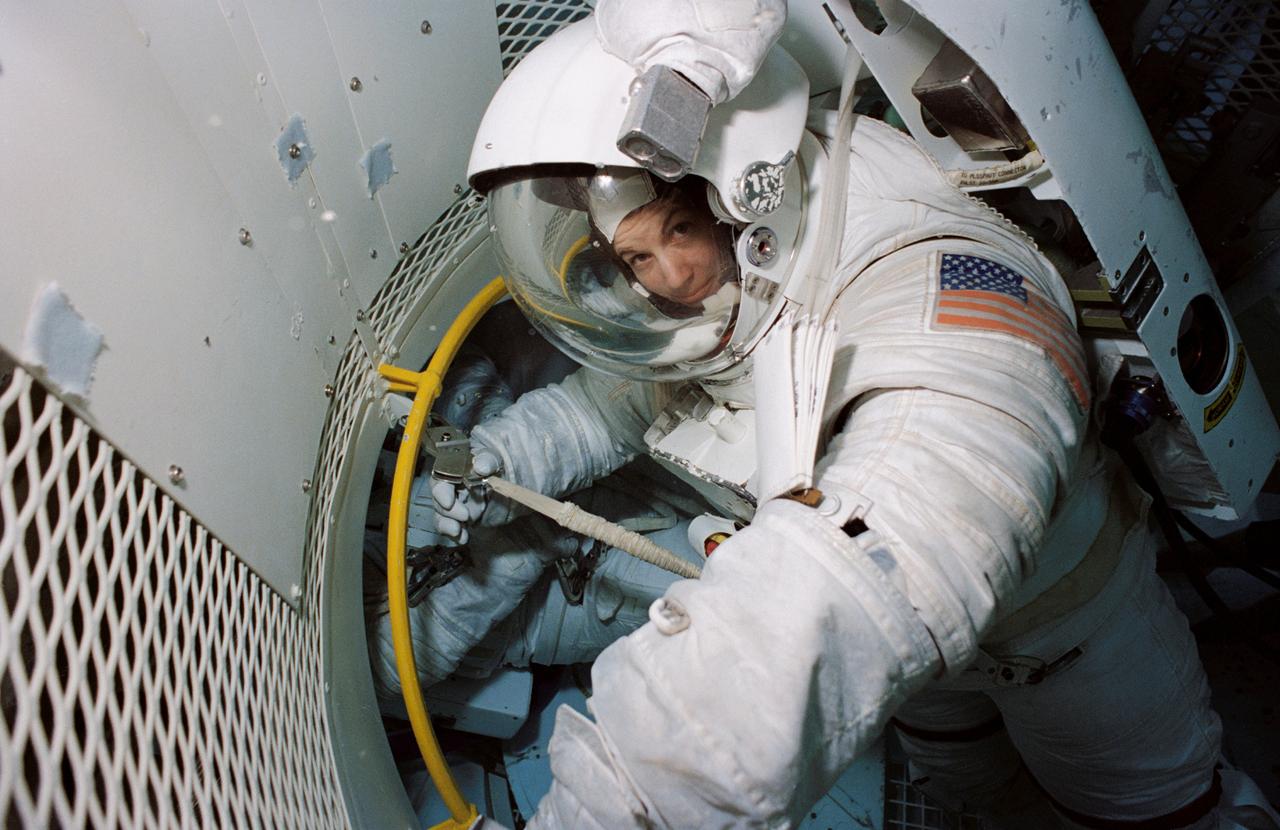
Astronaut and mission specialist Catherine G. Coleman,attired in a high fidelity training version of the Extravehicular Mobility Unit (EMU) space suit, trains for a contingency space walk at the Johnson Space Center’s (JSC) Weightless Environment Training Facility (WET-F). This particular training was in preparation for the STS-73 mission. The STS-73 mission was the second flight of the United States Microgravity Laboratory (USML-2), managed by scientists and engineers from the Marshall Space Flight Center.
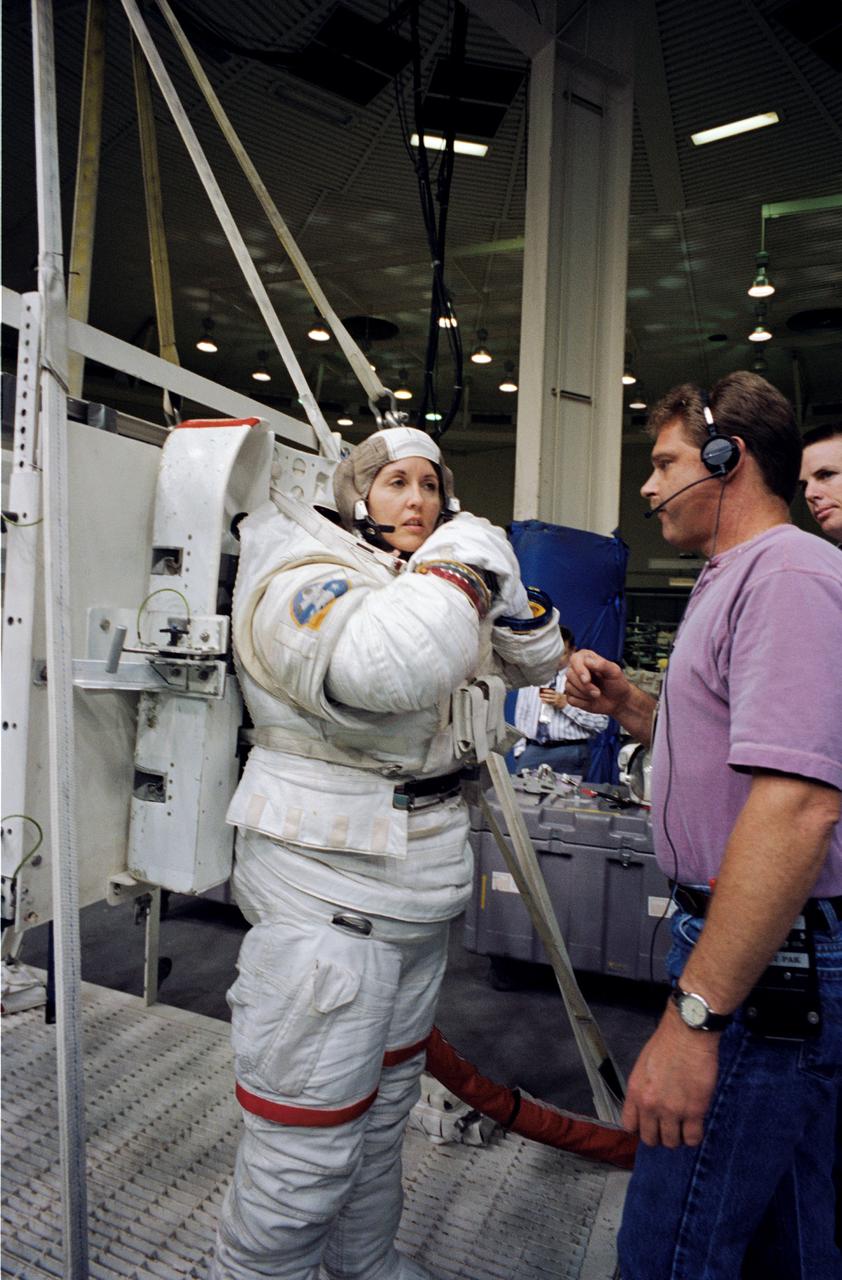
Astronaut Kathryn Thornton, payload commander for the STS-73 mission, attired in a high fidelity training version of the Extravehicular Mobility Unit (EMU) space suit, prepares to go underwater in the Johnson Space Center’s (JSC) Weightless Environment Training Facility (WET-F). The STS-73 mission was the second flight of the United States Microgravity Laboratory (USML-2), managed by scientists and engineers from the Marshall Space Flight Center.
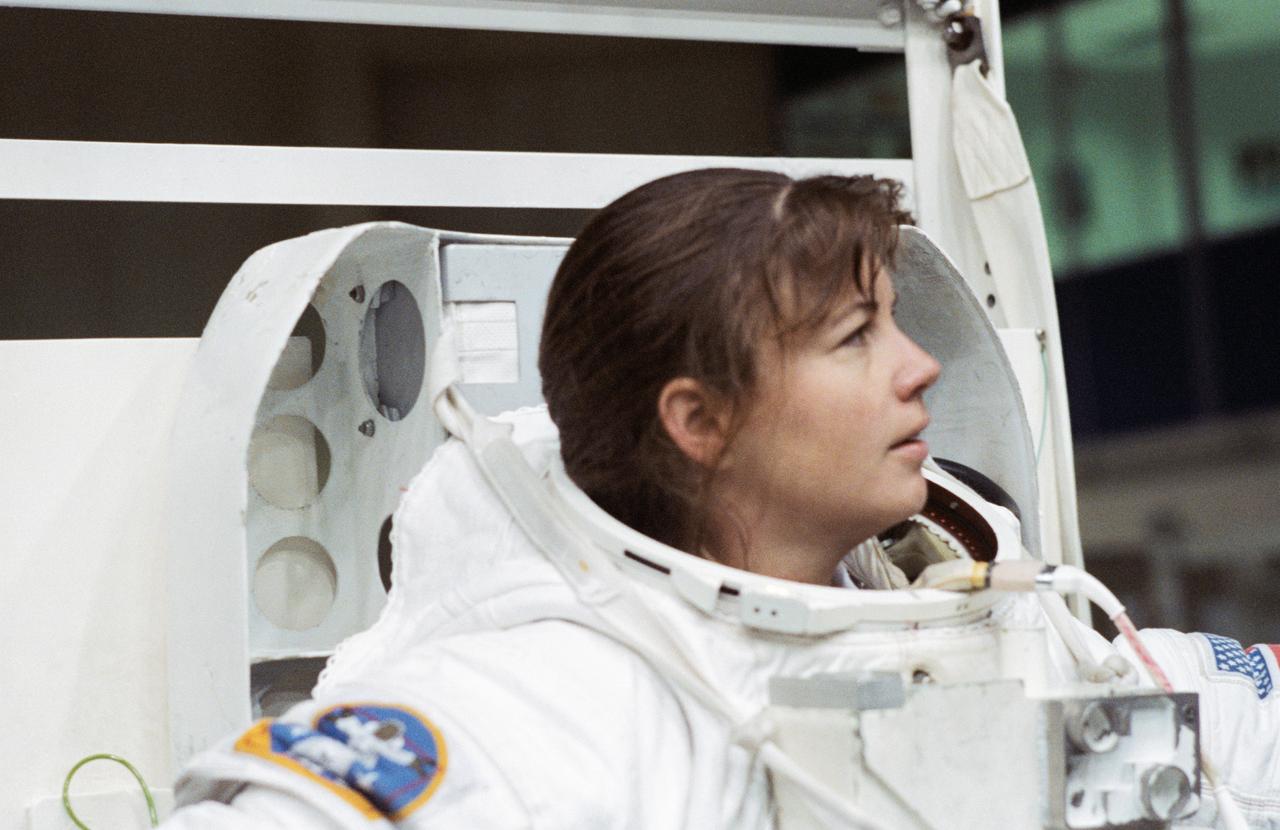
Astronaut and mission specialist Catherine G. Coleman is about to don the helmet portion of a high fidelity training version of the Extravehicular Mobility Unit (EMU) space suit at the Johnson Space Center’s (JSC) Weightless Environment Training Facility (WET-F). This particular training was in preparation for the STS-73 mission. The STS-73 mission was the second flight of the United States Microgravity Laboratory (USML-2), managed by scientists and engineers from the Marshall Space Flight Center.

STS073-S-002 (July 1995) --- These five astronauts and two United States Microgravity Laboratory (USML) payload specialists pause from a rigid training schedule for the STS-73 crew portrait. On the front row, left to right, are Albert Sacco Jr., payload specialist; Kent V. Rominger, pilot; Michael E. Lopez-Alegria, mission specialist. On the back row are, left to right, Catherine G. Coleman, mission specialist; Kenneth D. Bowersox, commander; Fred W. Leslie, payload specialist; and Kathryn C. Thornton, payload commander.
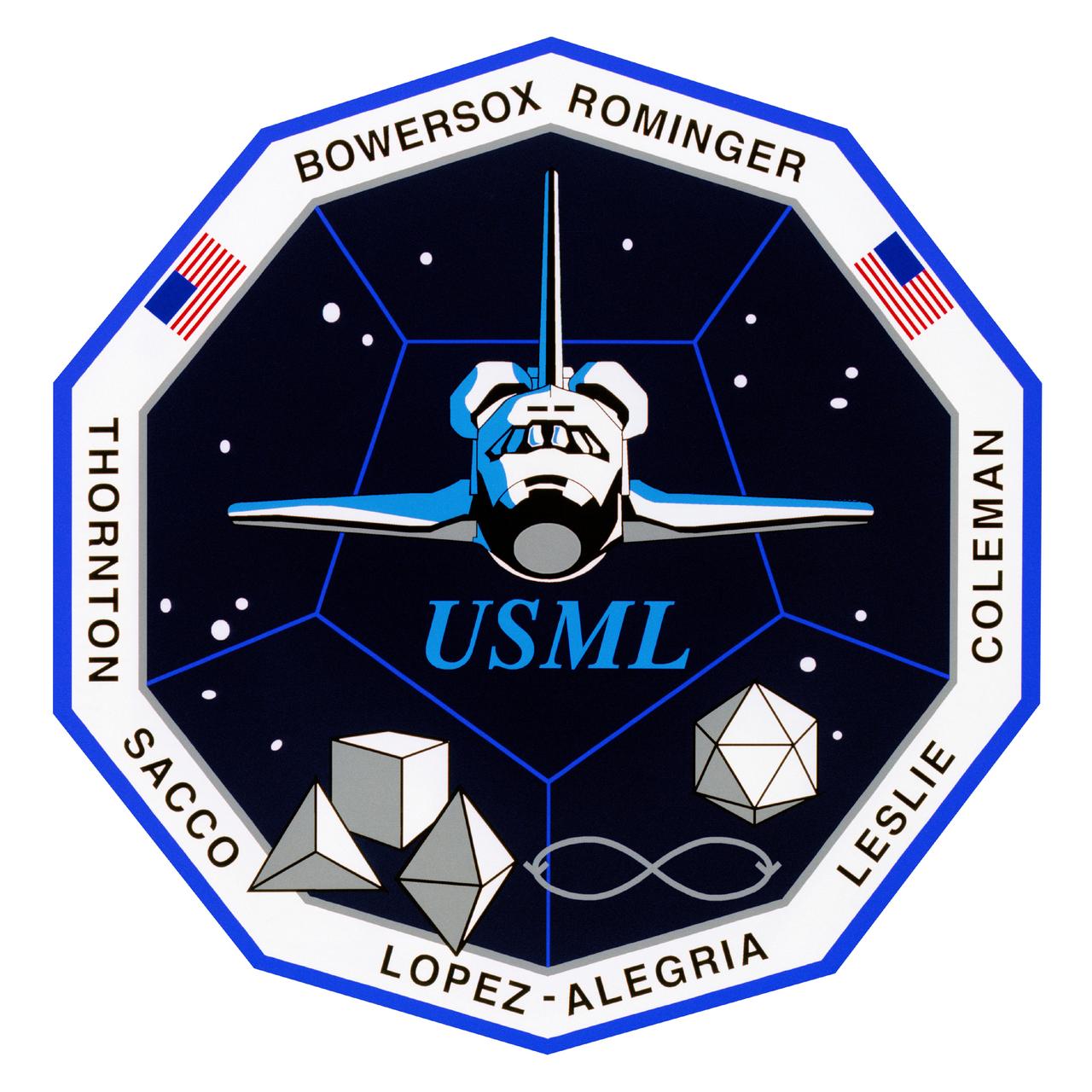
The crew patch of STS-73, the second flight of the United States Microgravity Laboratory (USML-2), depicts the Space Shuttle Columbia in the vastness of space. In the foreground are the classic regular polyhedrons that were investigated by Plato and later Euclid. The Pythagoreans were also fascinated by the symmetrical three-dimensional objects whose sides are the same regular polygon. The tetrahedron, the cube, the octahedron, and the icosahedron were each associated with the Natural Elements of that time: fire (on this mission represented as combustion science); Earth (crystallography), air and water (fluid physics). An additional icon shown as the infinity symbol was added to further convey the discipline of fluid mechanics. The shape of the emblem represents a fifth polyhedron, a dodecahedron, which the Pythagoreans thought corresponded to a fifth element that represented the cosmos.
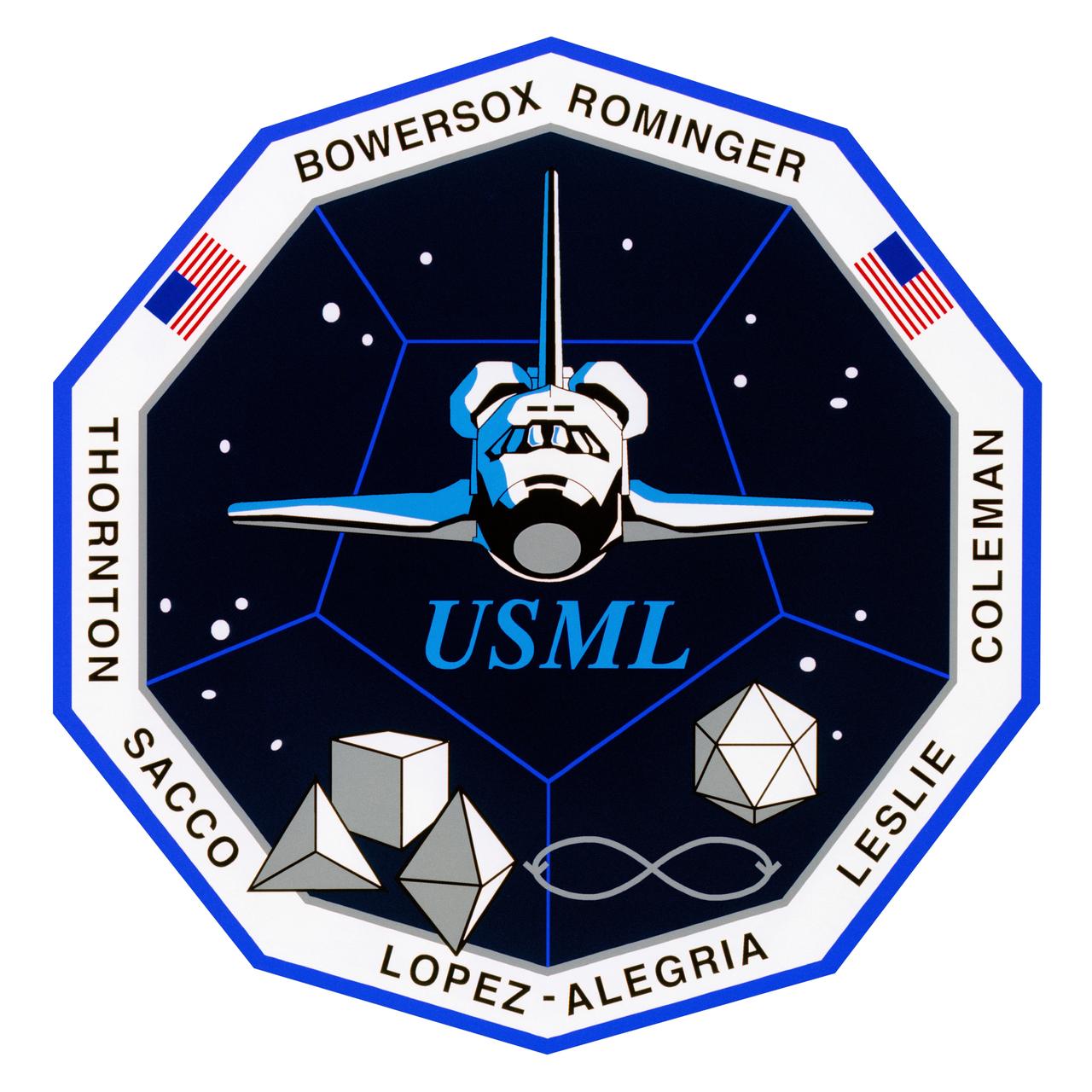
STS073-S-001 (May 1995) --- The crew patch of STS-73, the second flight of the United States Microgravity Laboratory (USML-2), depicts the space shuttle Columbia in the vastness of space. In the foreground are the classic regular polyhedrons that were investigated by Plato and later Euclid. The Pythagoreans were also fascinated by the symmetrical three-dimensional objects whose sides are the same regular polygon. The tetrahedron, the cube, the octahedron, and the icosahedron were each associated with the "Natural Elements" of that time: fire (on this mission represented as combustion science); Earth (crystallography), air and water (fluid physics). An additional icon shown as the infinity symbol was added to further convey the discipline of fluid mechanics. The shape of the emblem represents a fifth polyhedron, a dodecahedron, which the Pythagoreans thought corresponded to a fifth element that represented the cosmos. The NASA insignia design for space shuttle flights is reserved for use by the astronauts and for other official use as the NASA Administrator may authorize. Public availability has been approved only in the forms of illustrations by the various news media. When and if there is any change in this policy, which is not anticipated, the change will be publicly announced. Photo credit: NASA

These five astronauts and two United States Microgravity Laboratory (USML) payload specialists pause from a rigid training schedule for the STS-73 crew portrait. On the front row, left to right, are Albert Sacco Jr., payload specialist; Kent V. Rominger, pilot; and Michael E. Lopez-Alegria, mission specialist. On the back row are, left to right, Catherine G. Coleman, mission specialist; Kenneth D. Bowersox, commander; Fred W. Leslie, payload specialist; and Kathryn C. Thornton, payload commander. The STS-073 crew launched aboard the Space Shuttle Columbia on October 20, 1995 at 9:53:00.069 am (EDT). The mission served as the second flight of the Microgravity Laboratory (USML-2).
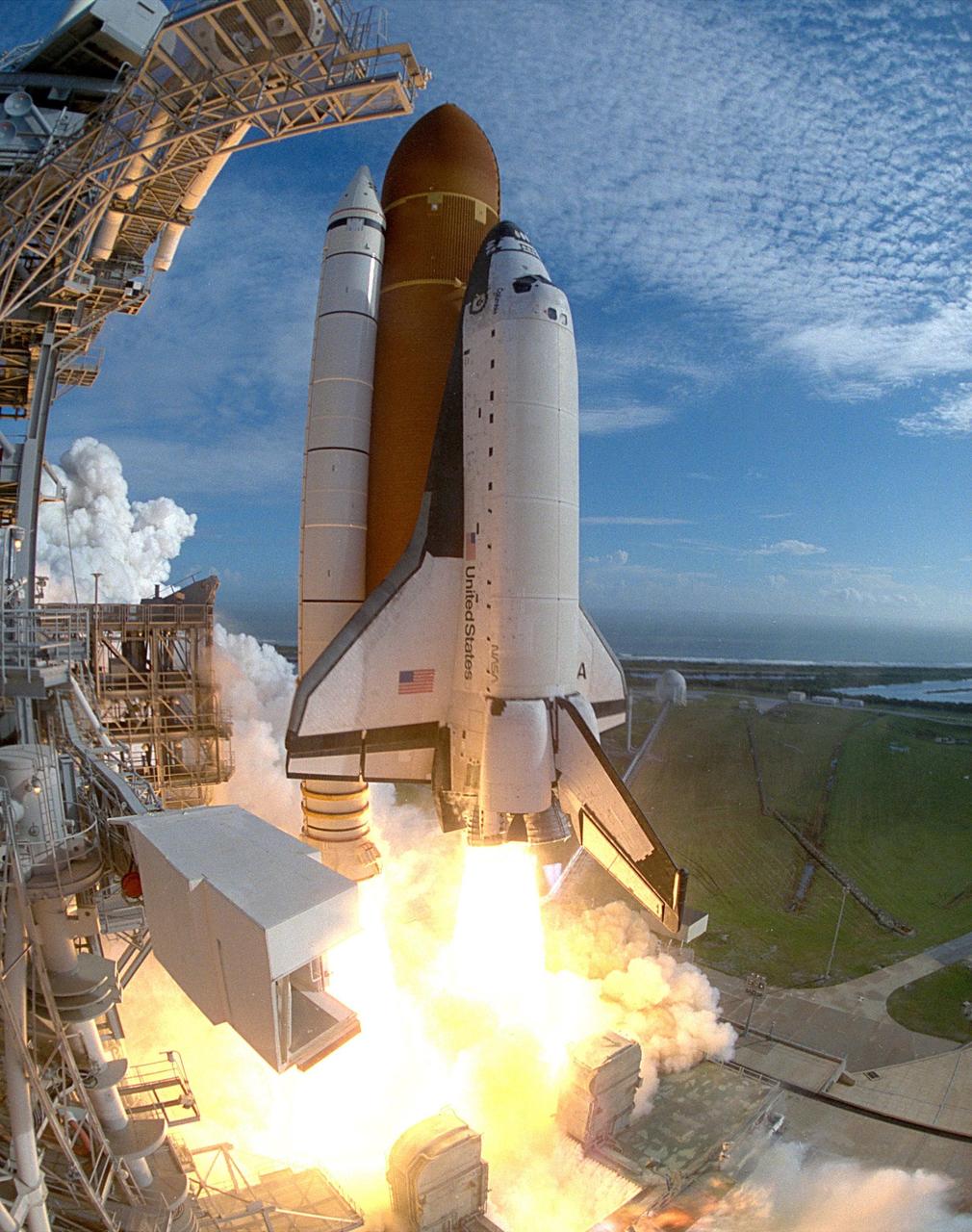
KENNEDY SPACE CENTER, FLA. -- STS-73: Columbia
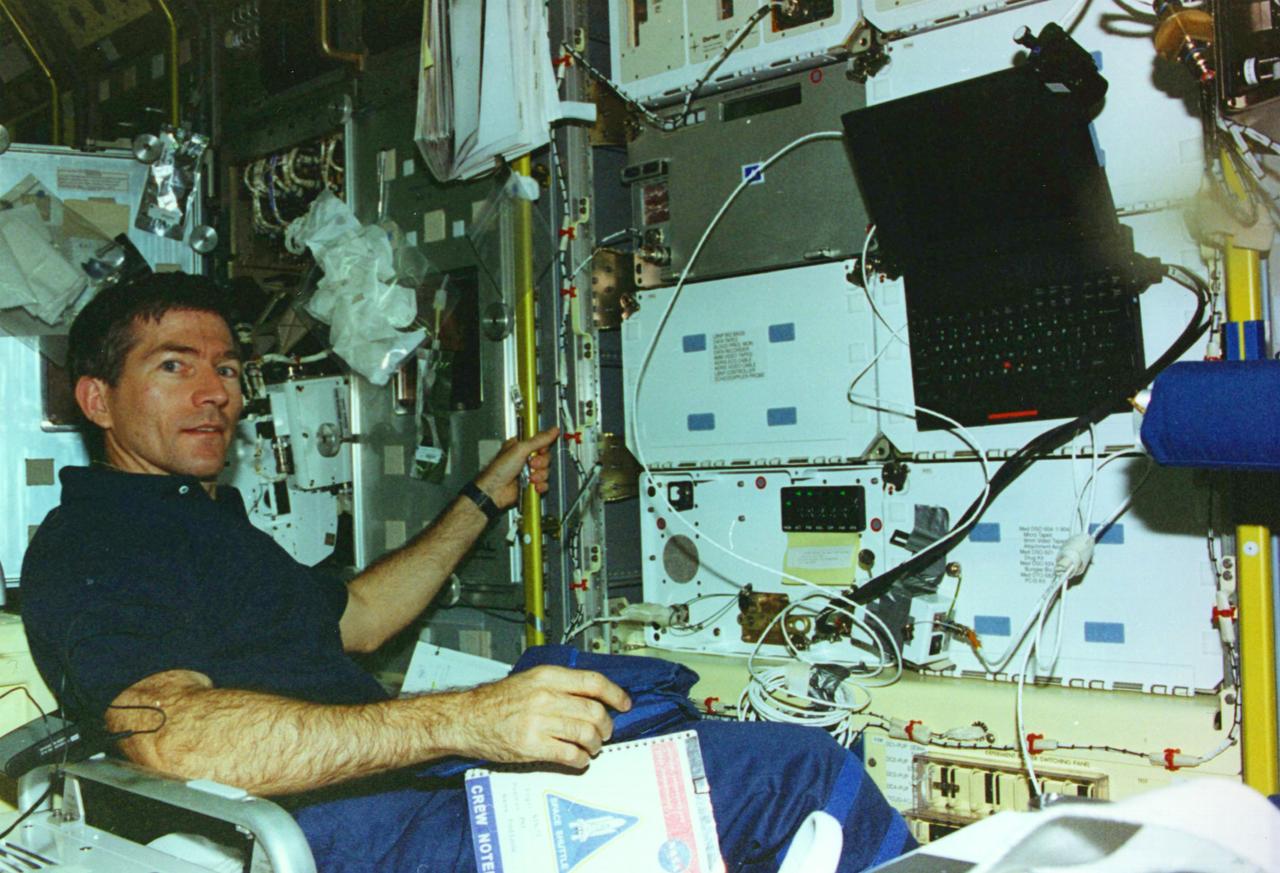
Paylaod Specialist, Fred Leslie working on experiment.
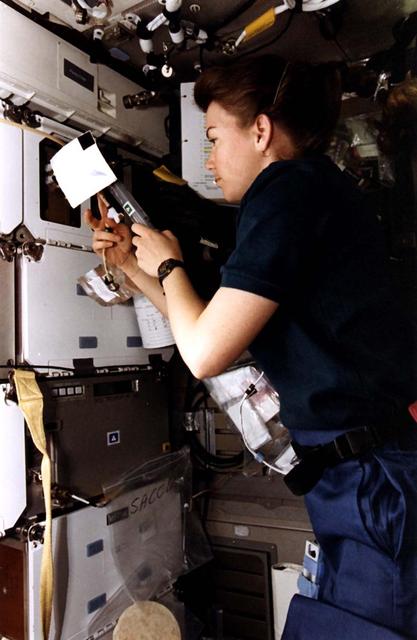
Astronaut Catherine G. Coleman, mission specialist, checks out an Astroculture sample on the mid-deck of the Earth-orbiting Space Shuttle Columbia. Coleman was joined by four other NASA astronauts and two guest researchers for 16 full days of in-space research in support of the United States Microgravity Laboratory (USML-2) mission.
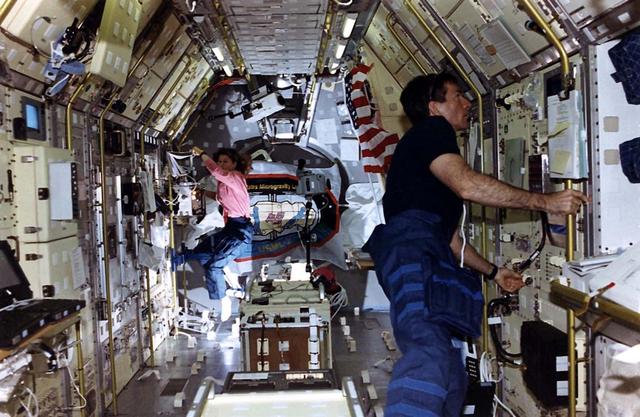
This wide view gives an overall perspective of the working environment of five astronauts and two guest researchers for 16 days in Earth-orbit. At work in support of the U.S. Microgravity Laboratory (USML-2) mission in this particular scene are astronaut Catherine G. Coleman, who busies herself at the glovebox, and payload specialist Fred. W. Leslie, monitoring the Surface-Tension-Driven Convection Experiment (STDCE).
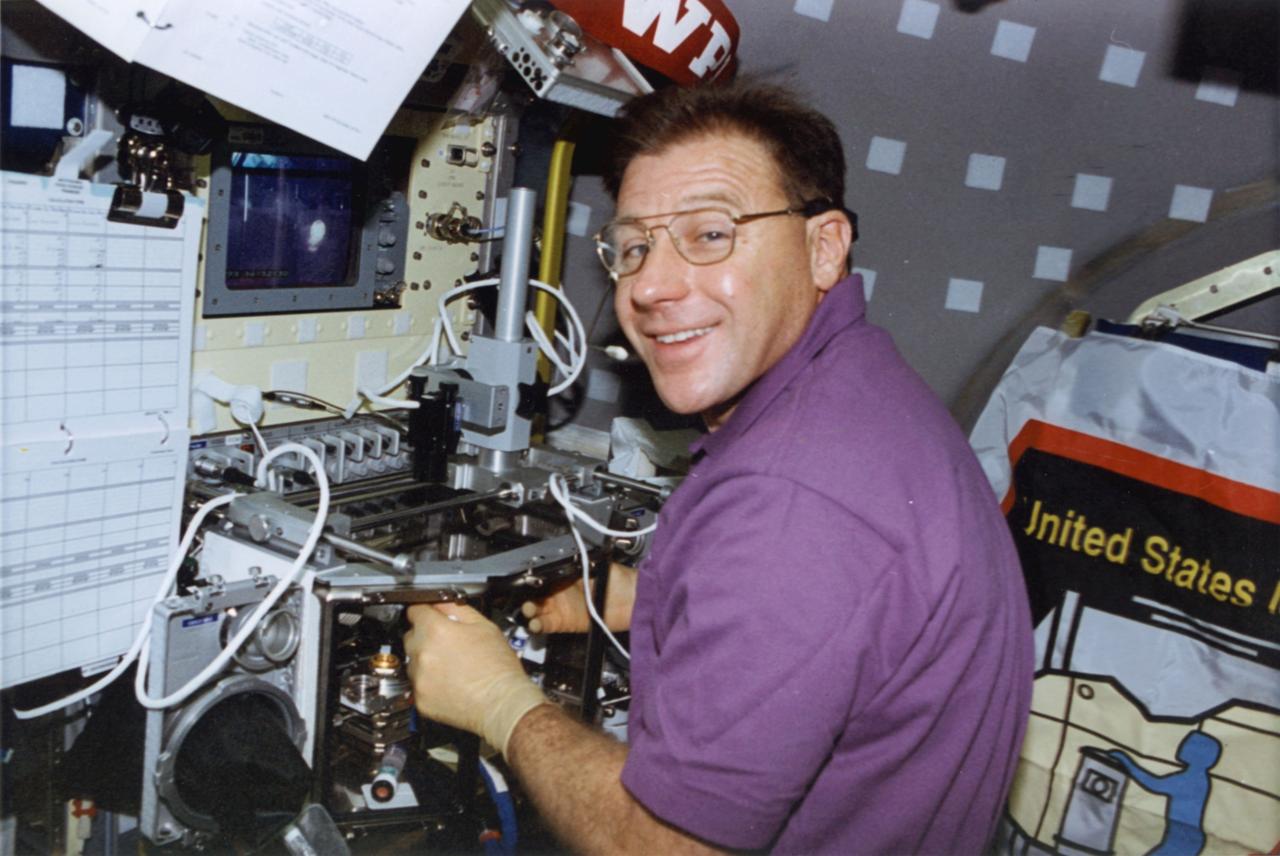
Dr. Albert Sacco with Glovebox
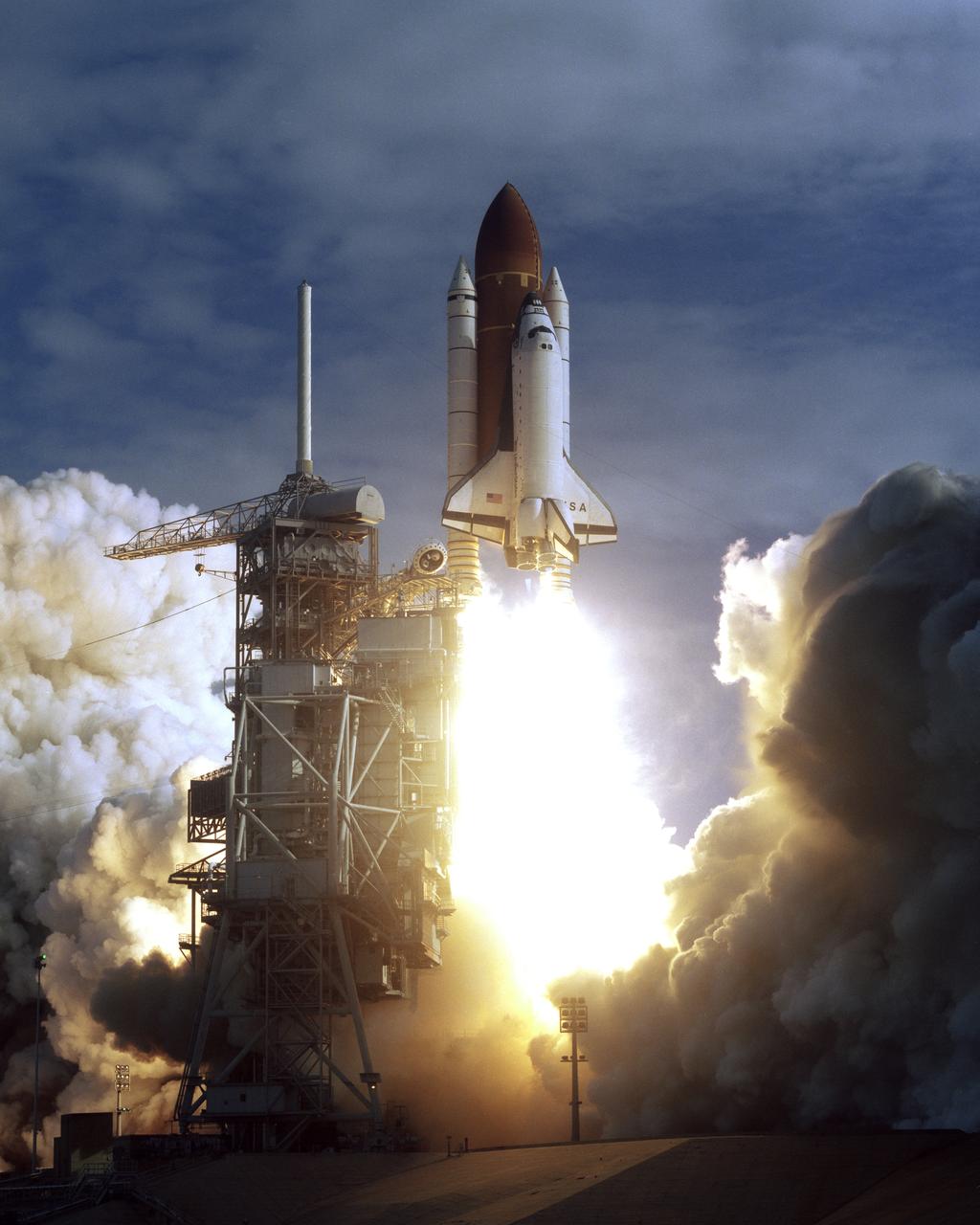
STS073-S-030 (20 Oct. 1995) --- The space shuttle Columbia lifts off from Launch Pad 39B, at the Kennedy Space Center (KSC), to begin a scheduled 16-day mission in Earth orbit in support of the United States Microgravity Laboratory (USML-2). Five NASA astronauts and two scientists from the private sector were onboard. Liftoff occurred at 9:53:00 a.m. (EDT) on Oct. 20, 1995. The mission represents the 72nd space shuttle flight for NASA. The crew will be working around the clock on a diverse assortment of USML-2 experiments located in a science module in Columbia's cargo bay. Fields of study include fluid physics, materials science, biotechnology, combustion science and commercial space processing technologies. The crew is made up of astronauts Kenneth D. Bowersox, commander; Kent V. Rominger, pilot; Kathryn C. Thornton, payload commander; Michael E. Lopez-Alegria and Catherine G. Coleman, both mission specialists; along with Fred W. Leslie and Albert Sacco Jr., payload specialists. Photo credit: NASA
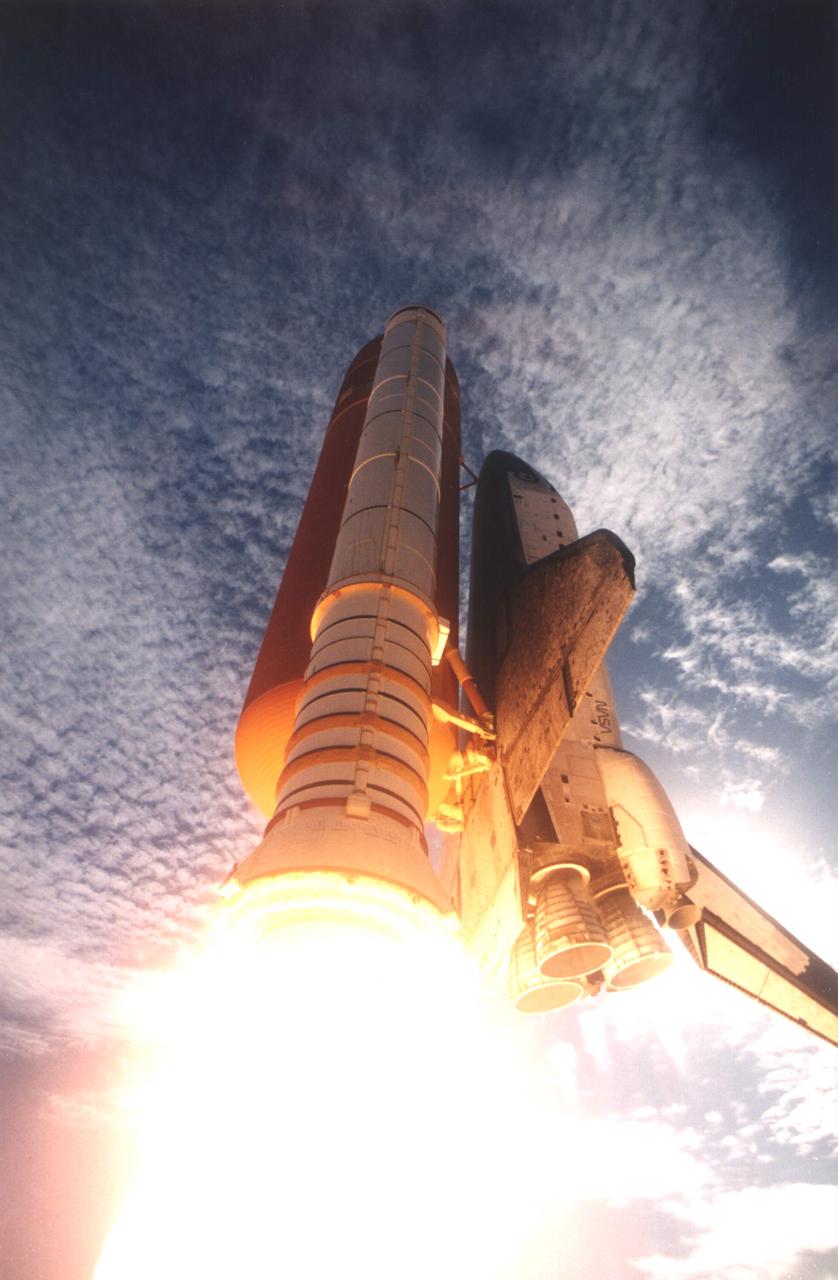
STS073-S-027 (20 October 1995) --- A 35mm camera captured this low-angle view of the Space Shuttle Columbia as it lifted off from Launch Pad 39B, at the Kennedy Space Center (KSC), to begin a scheduled 16-day mission in Earth-orbit in support of the United States Microgravity Laboratory (USML-2). Five NASA astronauts and two scientists from the private sector were onboard. Liftoff occurred at 9:53:00 a.m. (EDT) on October 20, 1995. The mission represents the 72nd Space Shuttle flight for NASA. The crew will be working around the clock on a diverse assortment of USML-2 experiments located in a science module in Columbia's cargo bay. Fields of study include fluid physics, materials science, biotechnology, combustion science and commercial space processing technologies. The crew is made up of astronauts Kenneth D. Bowersox, commander; Kent V. Rominger, pilot; Kathryn C. Thornton, payload commander; Michael E. Lopez-Alegria and Catherine G. Coleman, mission specialists; along with Fred W. Leslie and Albert Sacco Jr., payload specialists.
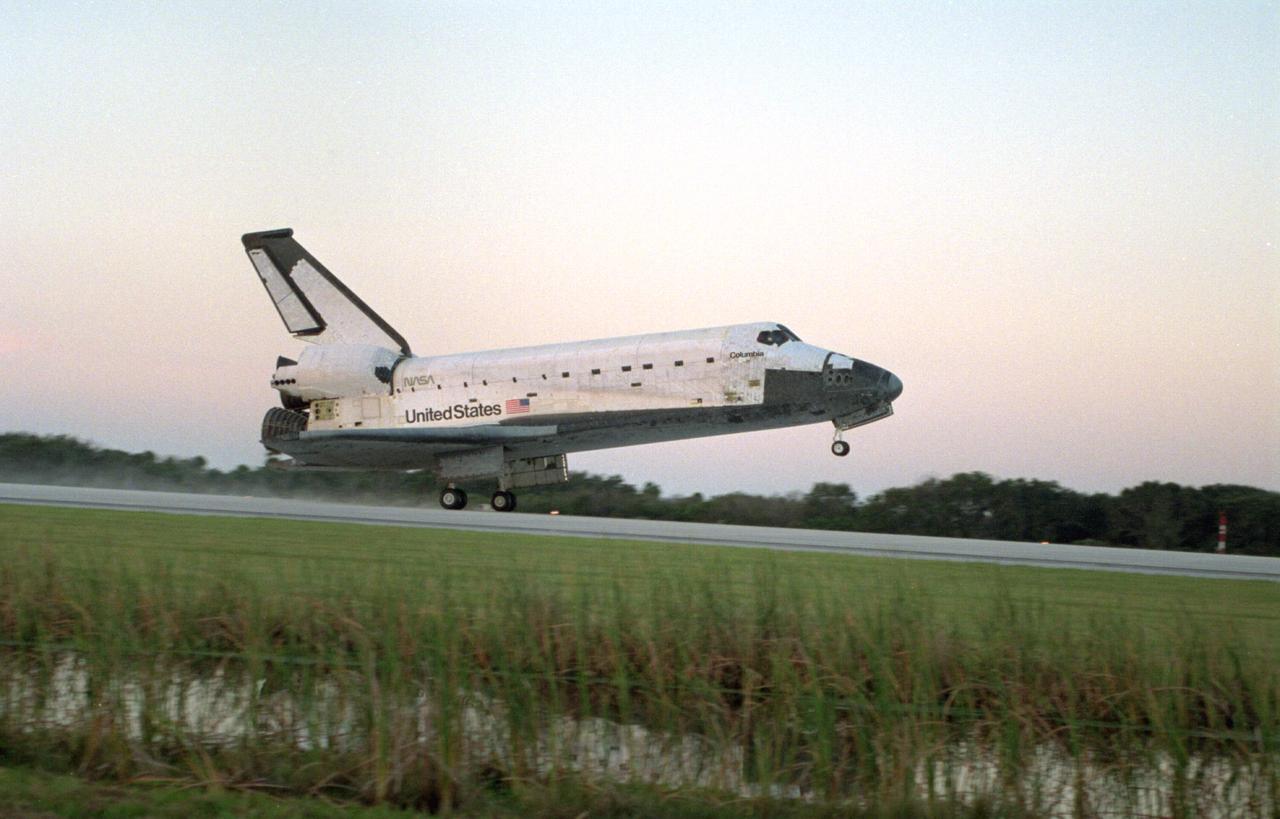
STS073-S-047 (5 November 1995) --- The Space Shuttle Columbia makes its 18th landing, this time at the Shuttle Landing Facility in Florida - site of the majority of its more recent finishes. Landing occurred at 6:48 a.m. (EST), November 5, 1995. Onboard were five NASA astronauts and two guest researchers who had spent almost 16 full days in space in support of the U.S. Microgravity Laboratory (USML-2) mission.
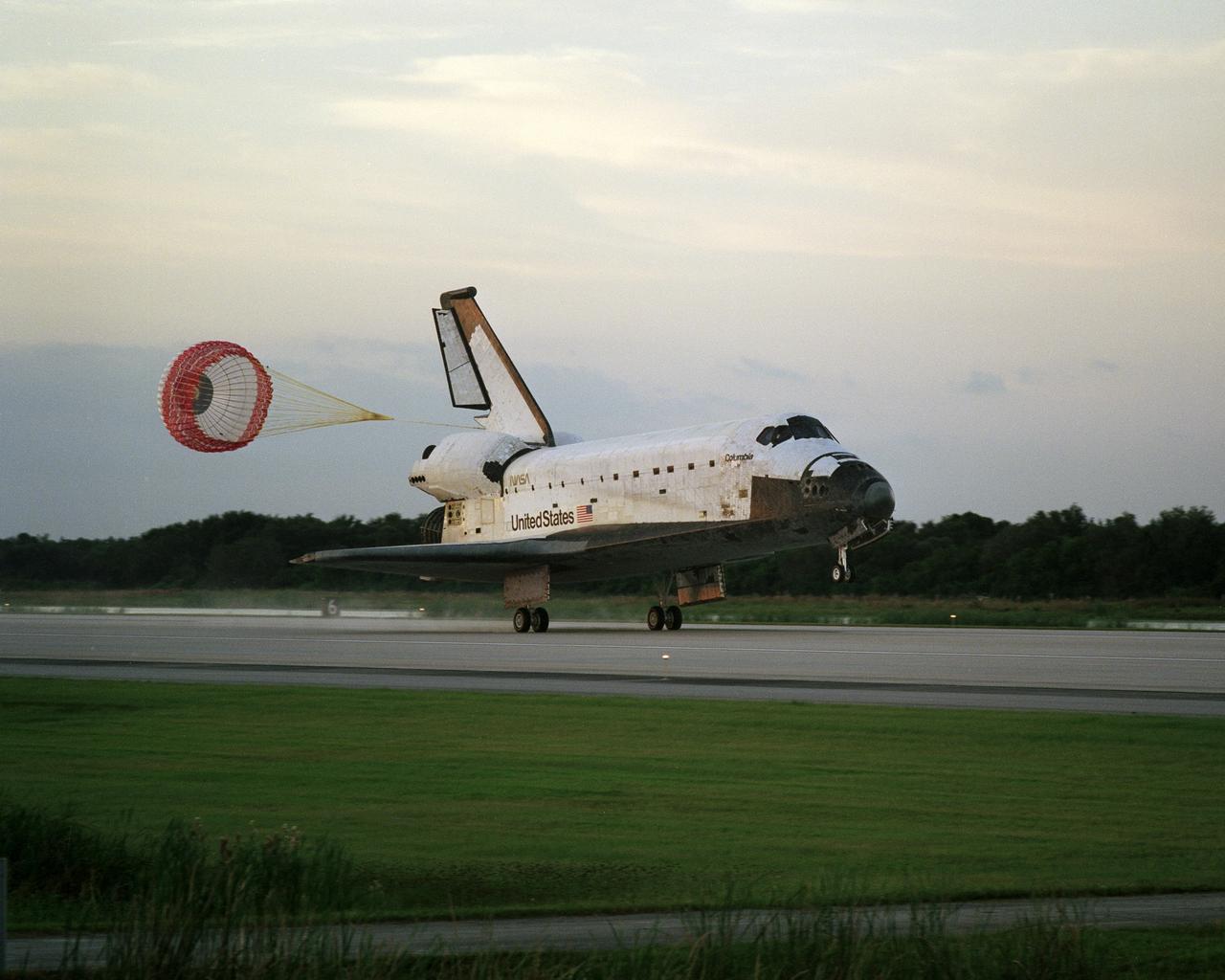
STS073-S-048 (5 November 1995) --- The drag chute on the Space Shuttle Columbia is deployed, marking the completion of its 18th Earth-orbital mission. Landing on the runway of the Shuttle Landing Facility occurred at 6:48 a.m. (EST), November 5, 1995. Onboard were five NASA astronauts and two guest researchers who had spent almost 16 full days in space in support of the U.S. Microgravity Laboratory (USML-2) mission.

STS073-S-029 (20 October 1995) --- A stationary 70mm camera captured this wide view of the Space Shuttle Columbia as it lifted off from Launch Pad 39B, at the Kennedy Space Center (KSC), to begin a scheduled 16-day mission in Earth-orbit in support of the United States Microgravity Laboratory (USML-2). Five NASA astronauts and two scientists from the private sector were onboard. Liftoff occurred at 9:53:00 a.m. (EDT) on October 20, 1995. The mission represents the 72nd Space Shuttle flight for NASA. The crew will be working around the clock on a diverse assortment of USML-2 experiments located in a science module in Columbia's cargo bay. Fields of study include fluid physics, materials science, biotechnology, combustion science and commercial space processing technologies. The crew is made up of astronauts Kenneth D. Bowersox, commander; Kent V. Rominger, pilot; Kathryn C. Thornton, payload commander; Michael E. Lopez-Alegria and Catherine G. Coleman, mission specialists; along with Fred W. Leslie and Albert Sacco Jr., payload specialists.
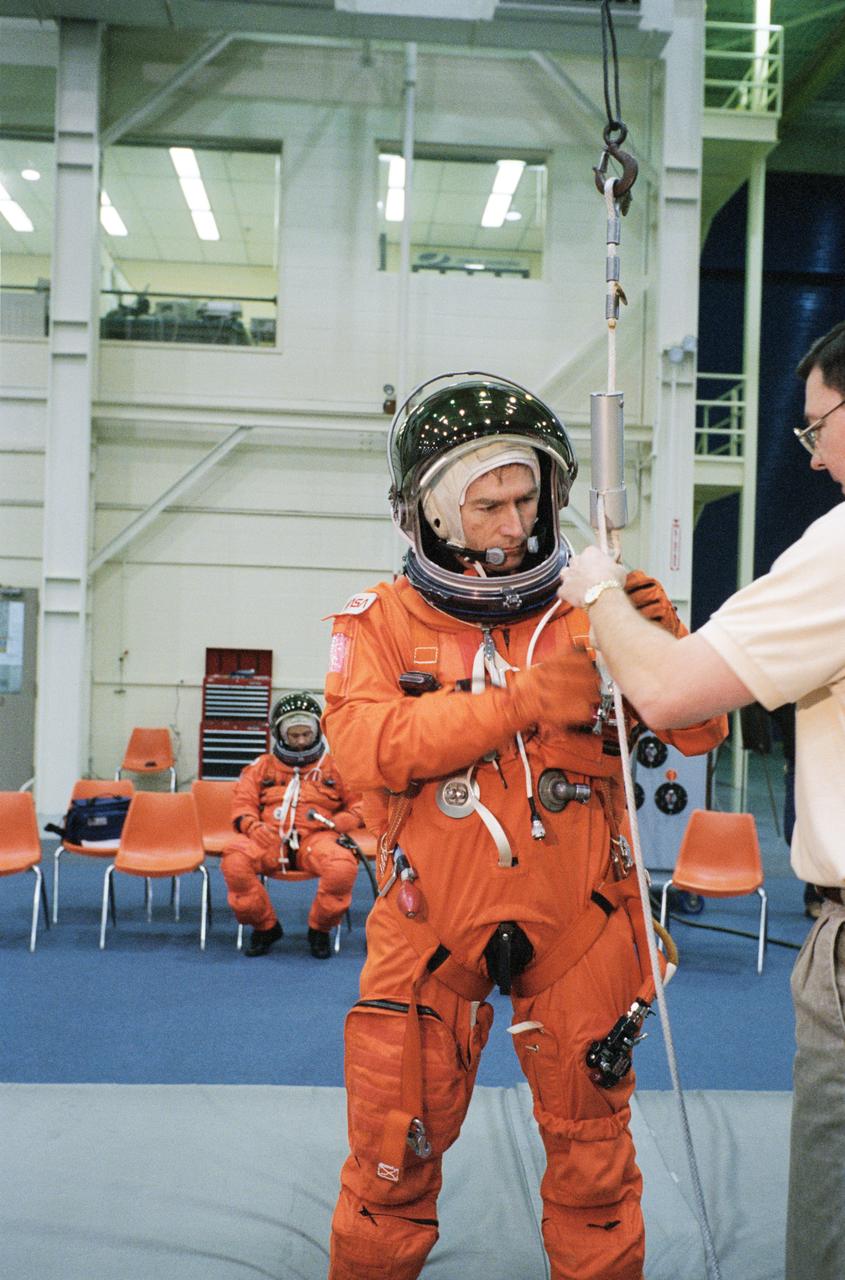
S95-09157 (27 Apr. 1995) --- Payload specialist Fred W. Leslie has just translated from the top of a Shuttle mockup-trainer using a Sky-genie device during emergency egress training with his six STS-73 crew mates. He is assisted here by Scott Gill, a member of the STS-73 training staff. The seven will fly aboard the Space Shuttle Columbia later this year to support the United States Microgravity Laboratory (USML-2) mission.
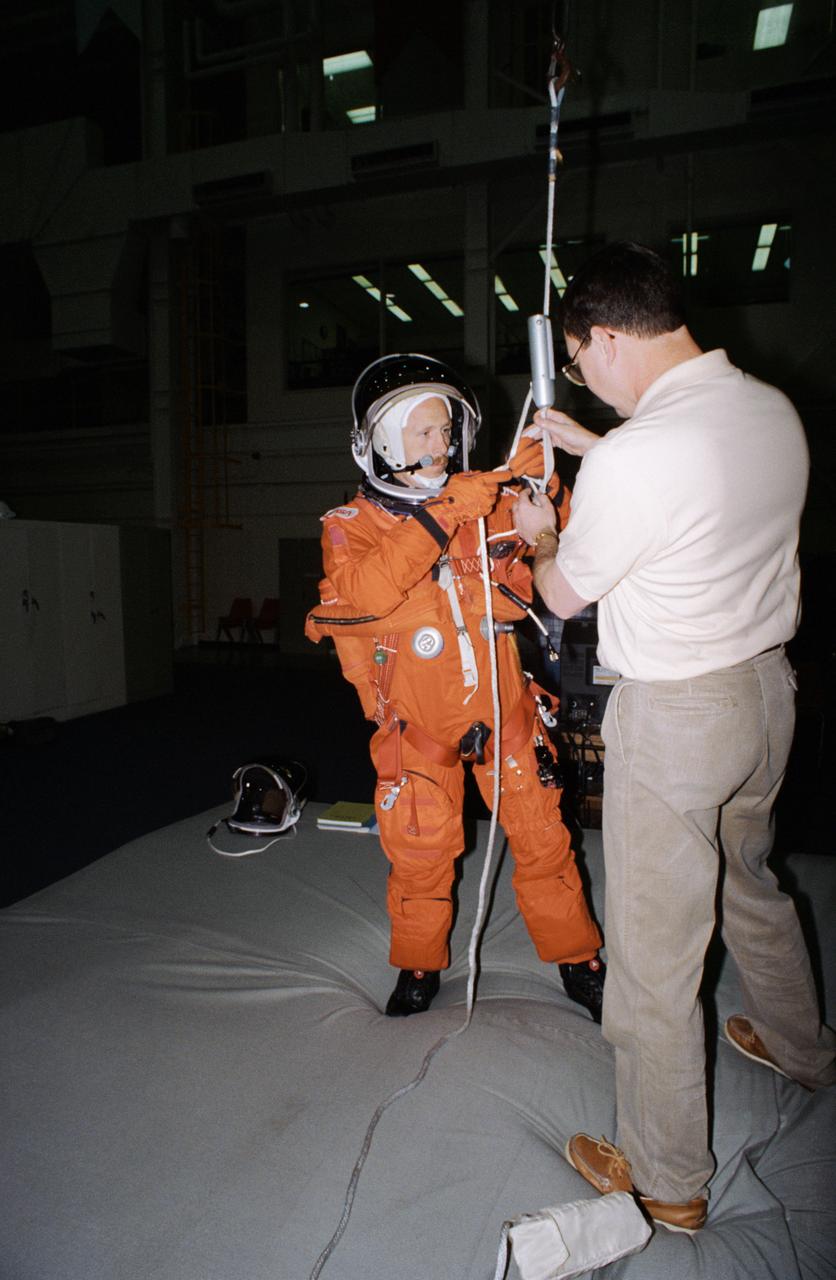
S95-09153 (27 Apr. 1995) --- Astronaut Kenneth D. Bowersox has just translated from the top of a Shuttle mockup-trainer using a Sky-genie device during emergency egress training with his six STS-73 crew mates. He is assisted here by Scott Gill, a member of the STS-73 training staff. The seven will fly aboard the Space Shuttle Columbia later this year to support the United States Microgravity Laboratory (USML-2) mission.
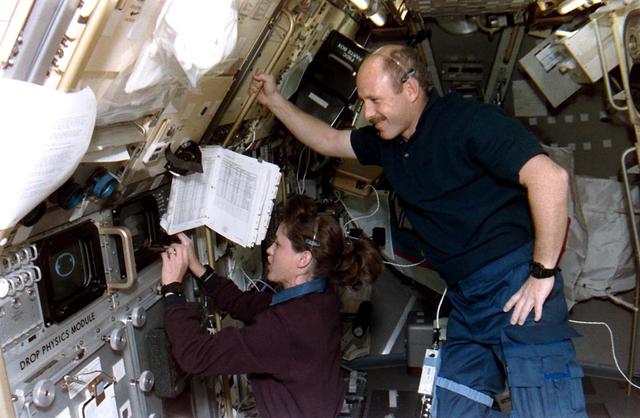
Astronaut Kathryn C. Thornton, payload commander, works at the Drop Physics Module (DPM) on the portside of the science module supporting the U.S. Microgravity Laboratory (USML-2). Astronaut Kerneth D. Bowersox, mission commander, looks on.
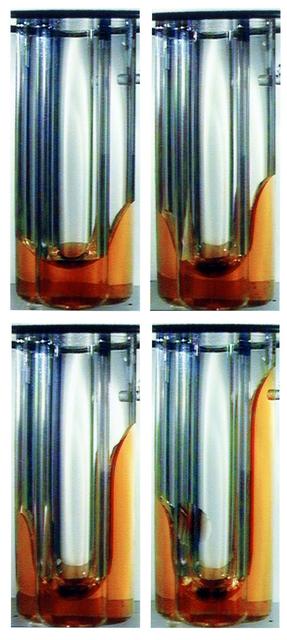
Interface Configuration Experiment on the Second United States Microgravity Laboratory (USML-2). Over time the photos show a change in the shape of the interface between a liquid and a gas in a sealed, slightly asymmetrical container. Under the force of Earth's gravity, the interface would remain nearly flat, but in microgravity, the interface shape and location changes significantly in the container, resulting in major shifts of liquid arising from small asymmetries in the container shape.
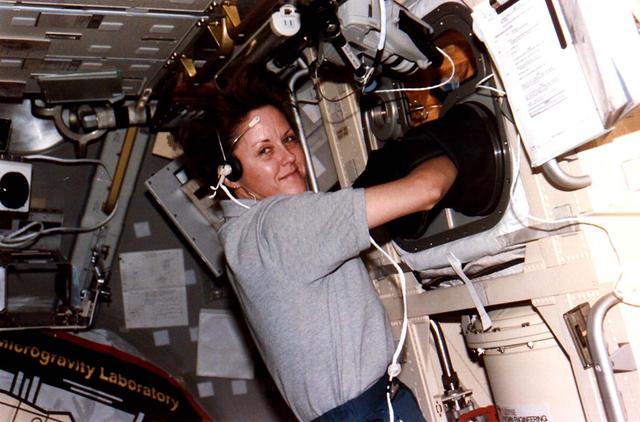
Astronaut Kathryn C. Thornton, payload commander, works in the glovebox of the science module supporting the U.S. Microgravity Laboratory (USML-2) mission. Five NASA astronauts and two payload specialists are in the last few days of a scheduled 16 day mission.
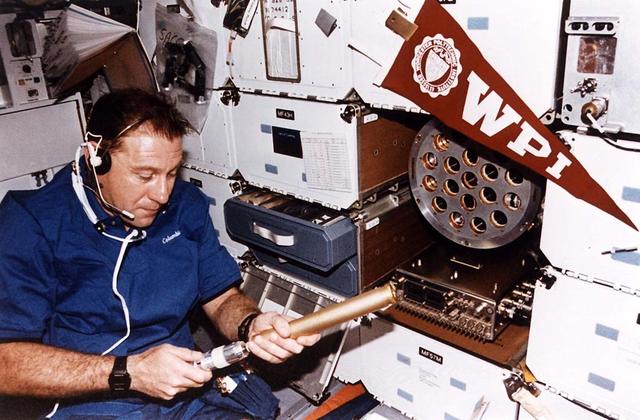
Payload specialist Albert Sacco Jr. inspects a crystal in a cylindrical autoclave on the mid-deck of the earth-orbiting space shuttle Columbia. This Zeolite Crystal Growth (ZCG) experiment was one of a few U.S. Microgravity Laboratory (USML-2) experiments that were conducted in both the Shuttle proper and its primary cargo's science module in the payload bay. Most of the experiments were conducted solely in the science module. Sacco was one of two guest researchers who joined five NASA astronauts for 16 days of Earth-orbit.
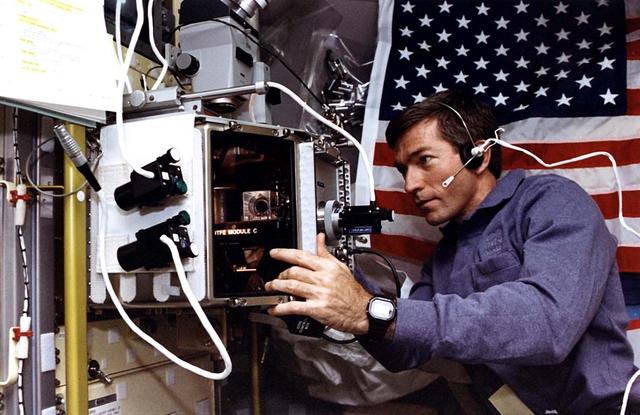
Payload specialist Fred Leslie makes use of the versatile U.S. Microgravity Laboratory (USML-2) glovebox to conduct an investigation with the Oscillatory Thermocapillary Flow Experiment (OTFE). This complement of the Surface-Tension-Driven Convection Experiment (STDCE) studies the shapes that fluid surfaces in weightless environments assume within specific containers. Leslie was one of two guest researchers who joined five NASA astronauts for 16 days of on Earth-orbit research in support of USML-2.
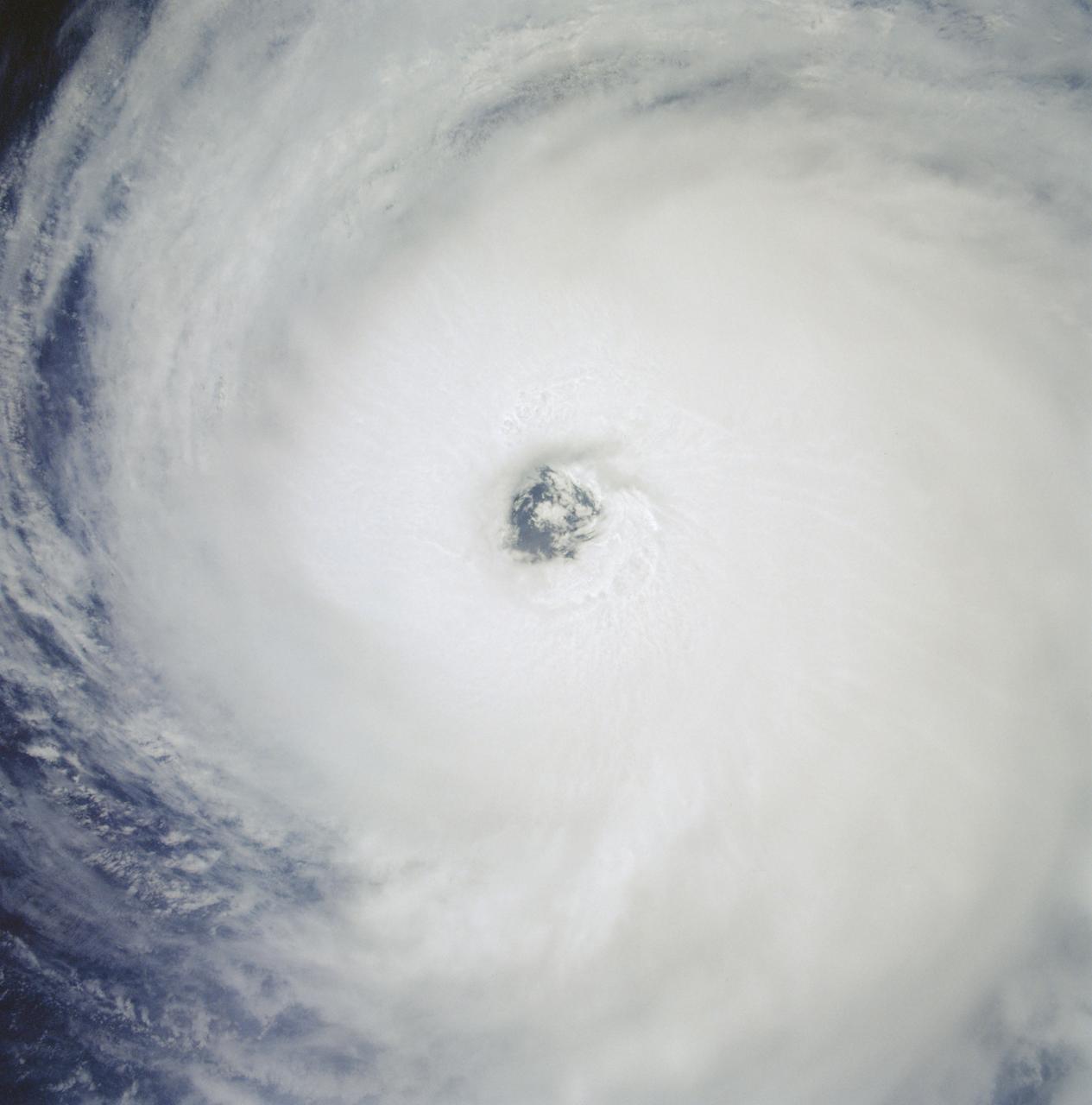
STS043-73-099 (2-11 Aug 1991) --- This view featuring the eye of Hurricane Fefa in the Pacific Ocean was captured on film by one of the STS 43 crewmembers using a 70mm handheld camera.
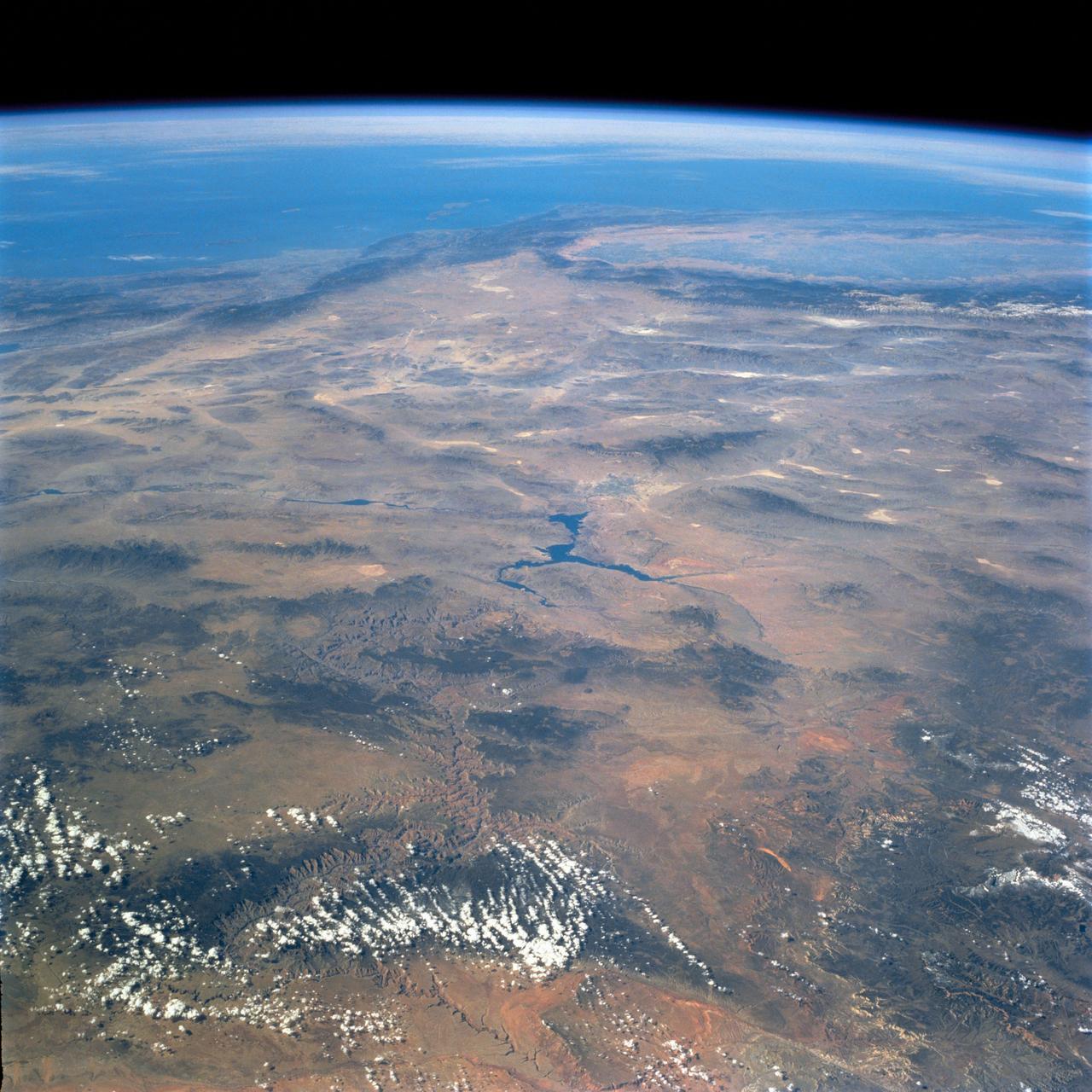
STS058-74-000R (18 Oct-1 Nov 1993) --- A broad view westward along the Colorado River from just below Glen Canyon Dam (out of picture), through the entire Grand Canyon to Lake Mead and Las Vegas, and westward to include southern Nevada and much of California. The Salton Sea, Los Angeles Basin, and Great Valley rim the Pacific Coast in the distance. Photo credit: NASA
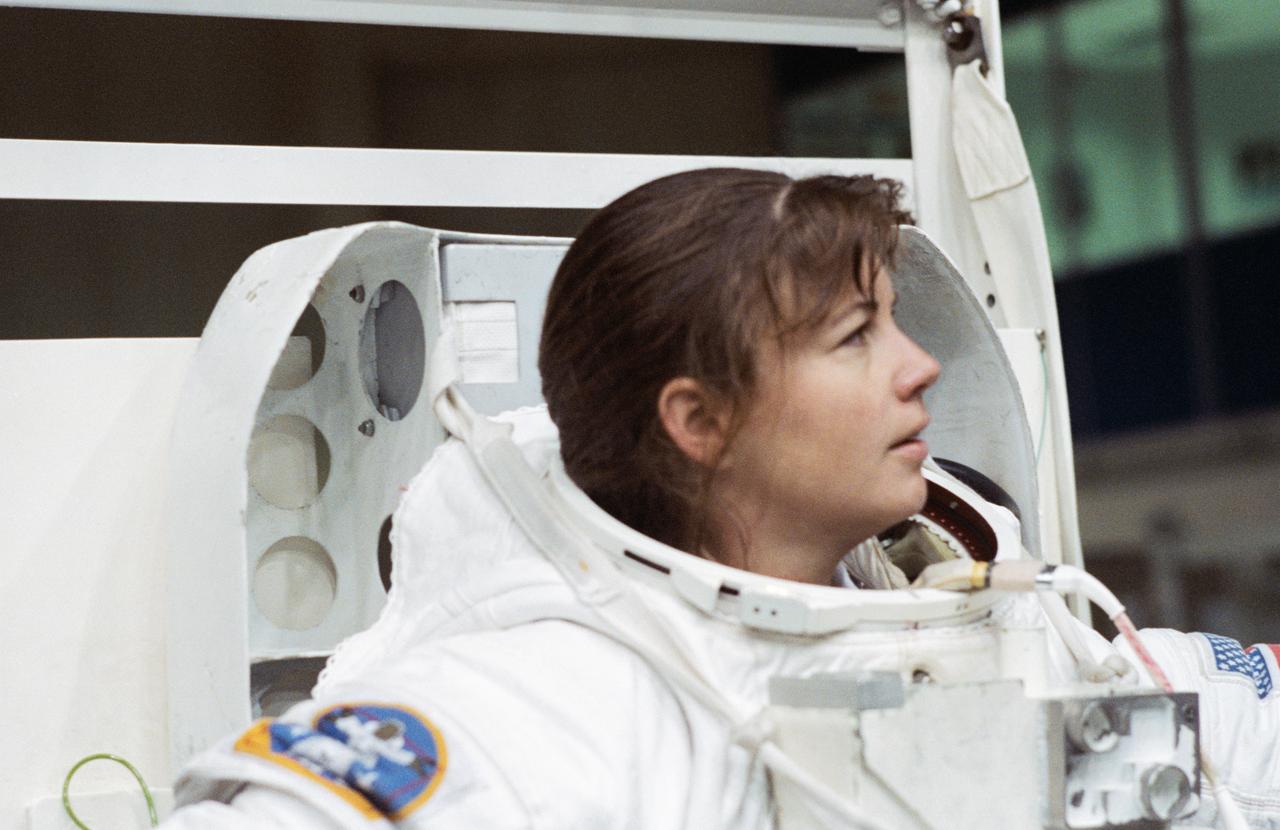
S93-42453 (September 1993) --- Astronaut Catherine G. Coleman, mission specialist for STS-73, is about to don the helmet portion of a high-fidelity training version of an Extravehicular Mobility Unit (EMU) space suit at the Johnson Space Center?s (JSC) Weightless Environment Training Facility (WET-F). Coleman, who has recently been named as one of seven crew members for the U.S. Microgravity Laboratory (USML-2) mission, was about to go underwater in a 25-feet deep pool. The pool is used to train astronauts for mission specific space walk chores as well as for contingency Extravehicular Activity (EVA) tasks. There is no space walk planned for STS-73.
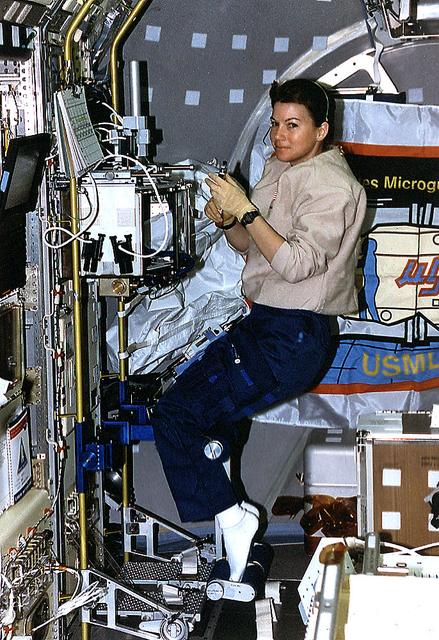
Onboard Space Shuttle Columbia (STS-73) Mission Specialists Catherine Cady Coleman works at the glovebox facility in support of the Protein Crystal Growth Glovebox (PCG-GBX) experiment in the United States Microgravity Laboratory 2 (USML-2) Spacelab science module.
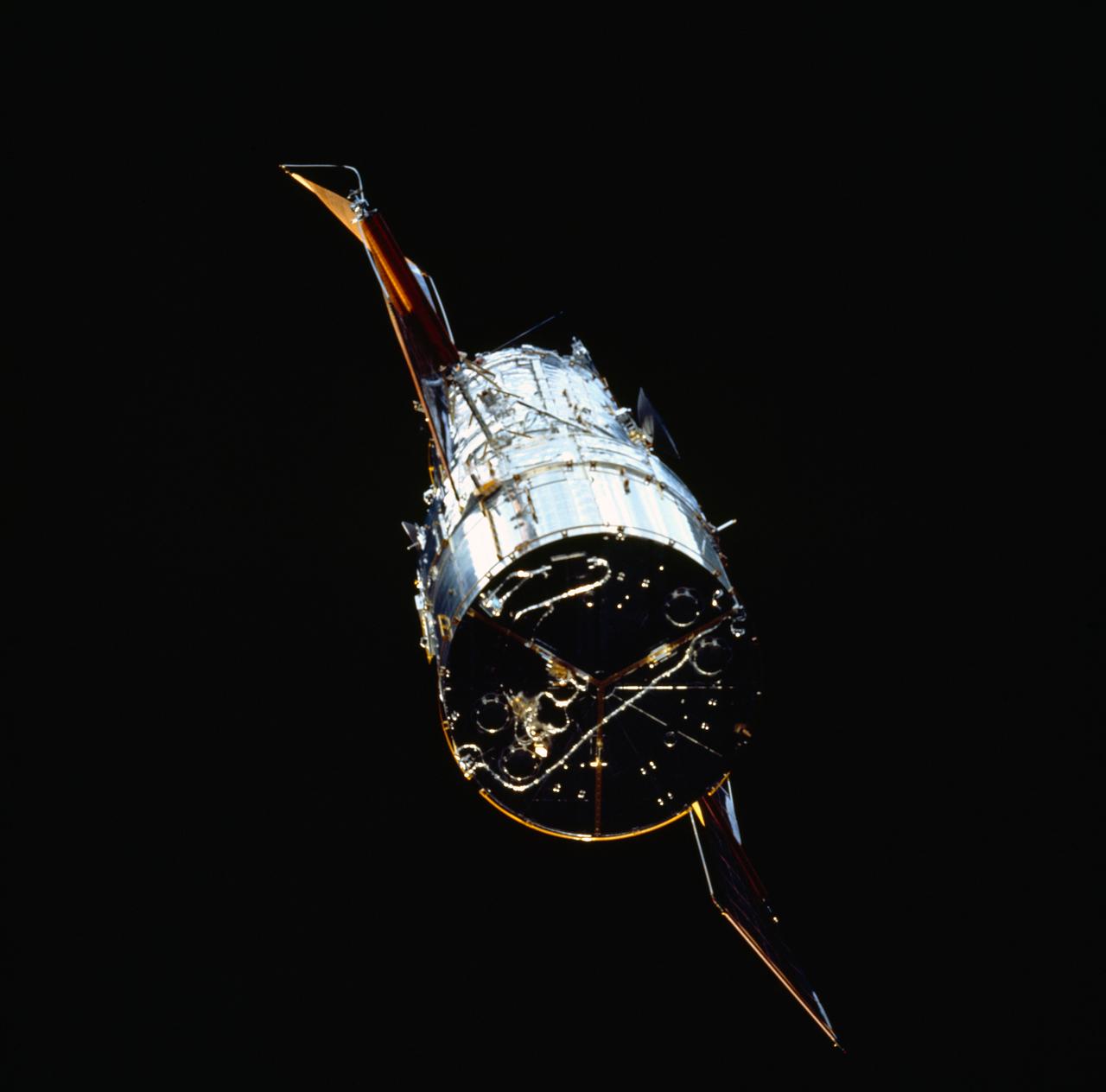
STS061-73-040 (4 Dec 1993) --- Backdropped against the blackness of space, the Hubble Space Telescope (HST) nears the Space Shuttle Endeavour. With the aid of the Remote Manipulator System (RMS), the STS-61 crew members later grappled the spacecraft and berthed it in the cargo bay for five-days of servicing chores by four space walkers.
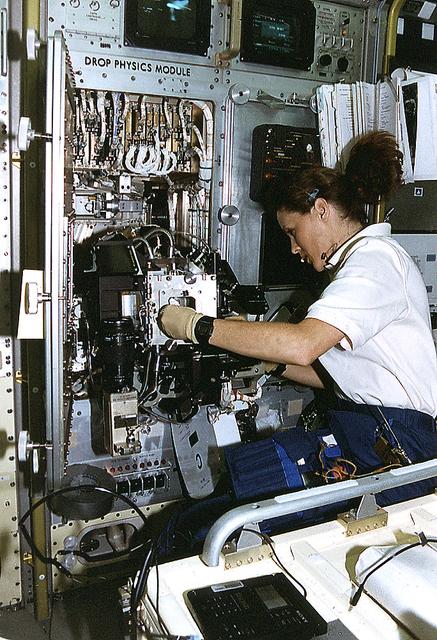
Onboard Space Shuttle Columbia (STS-73) Payload Commander Kathryn Thornton works with the Drop Physics Module (DPM) in the United States Microgravity Laboratory 2 (USML-2) Spacelab Science Module cleaning the experiment chamber of the DPM.
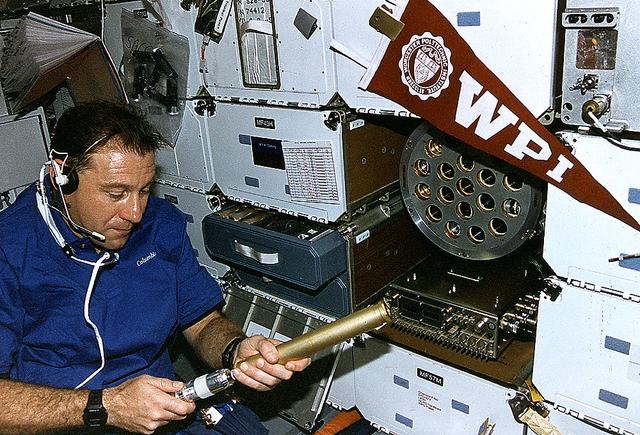
Onboard Space Shuttle Columbia (STS-73) Payload Specialist Albert Sacco loads autoclaves using a power screwdriver into the Zeolite Crystal Growth (ZCG) experiment in the middeck for the United States Microgravity Laboratory 2 (USML-2) Spacelab mission.
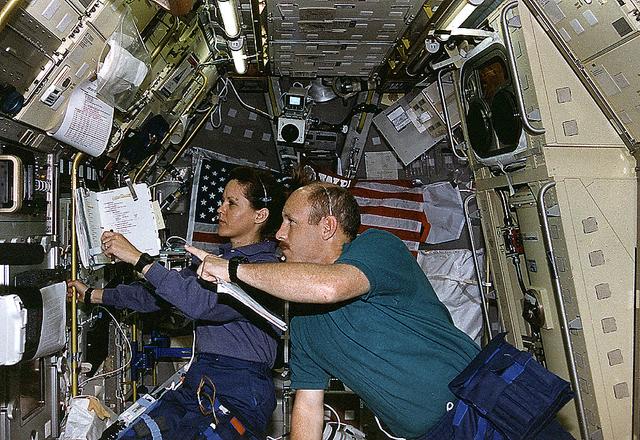
Onboard Space Shuttle Columbia (STS-73) Payload Commander Kathryn Thornton and Commander Ken Bowersox discuss the Drop Physics Module (DPM) experiment in the United States Microgravity Laboratory 2 (USML-2) spacelab science module.
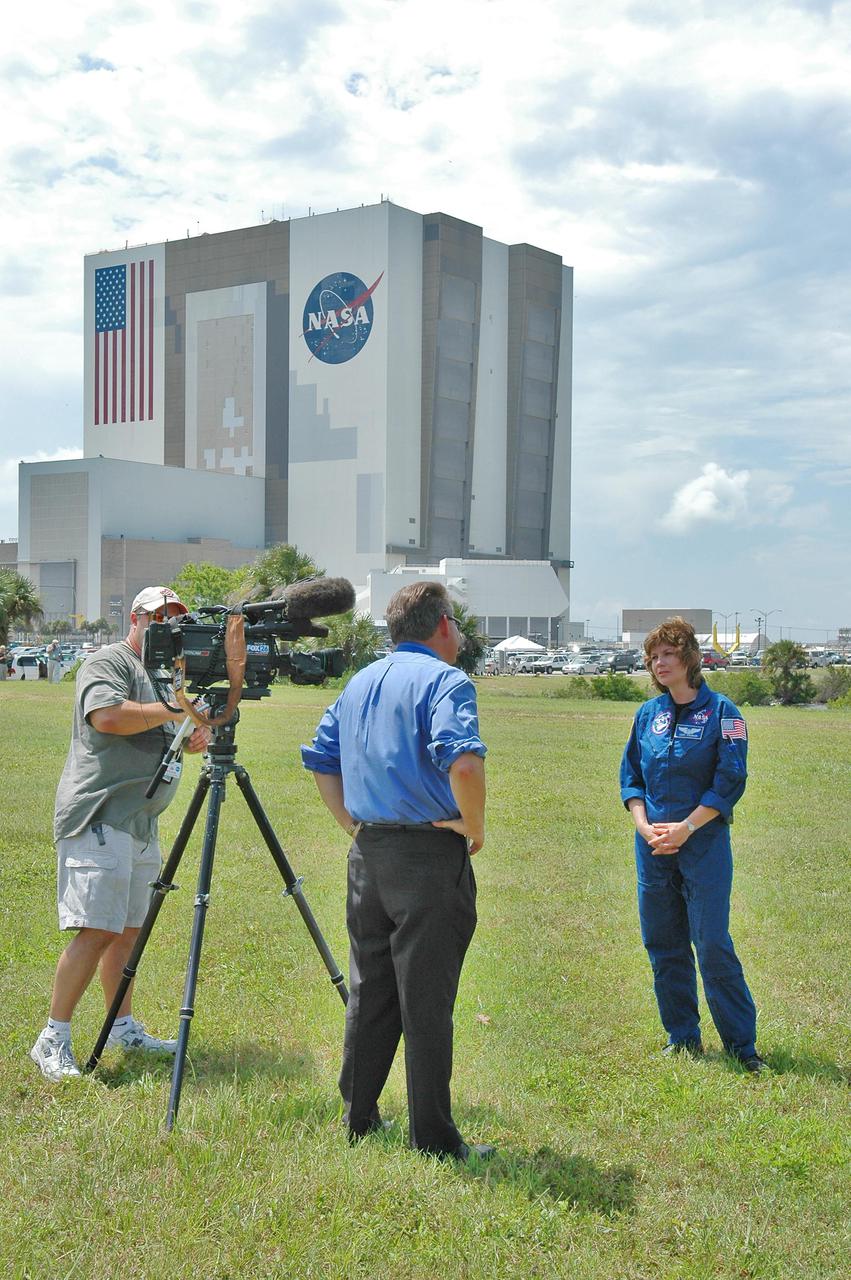
KENNEDY SPACE CENTER, FLA. - Astronaut Catherine “Cady” Coleman is interviewed in the NASA News Center at NASA Kennedy Space Center by a television reporter during launch activities for Return to Flight mission STS-114. Coleman has flown on two Shuttle missions, STS-73 and STS-93. More than a thousand media representatives from 36 states, the District of Columbia and 32 countries converged on the News Center for the historic launch.
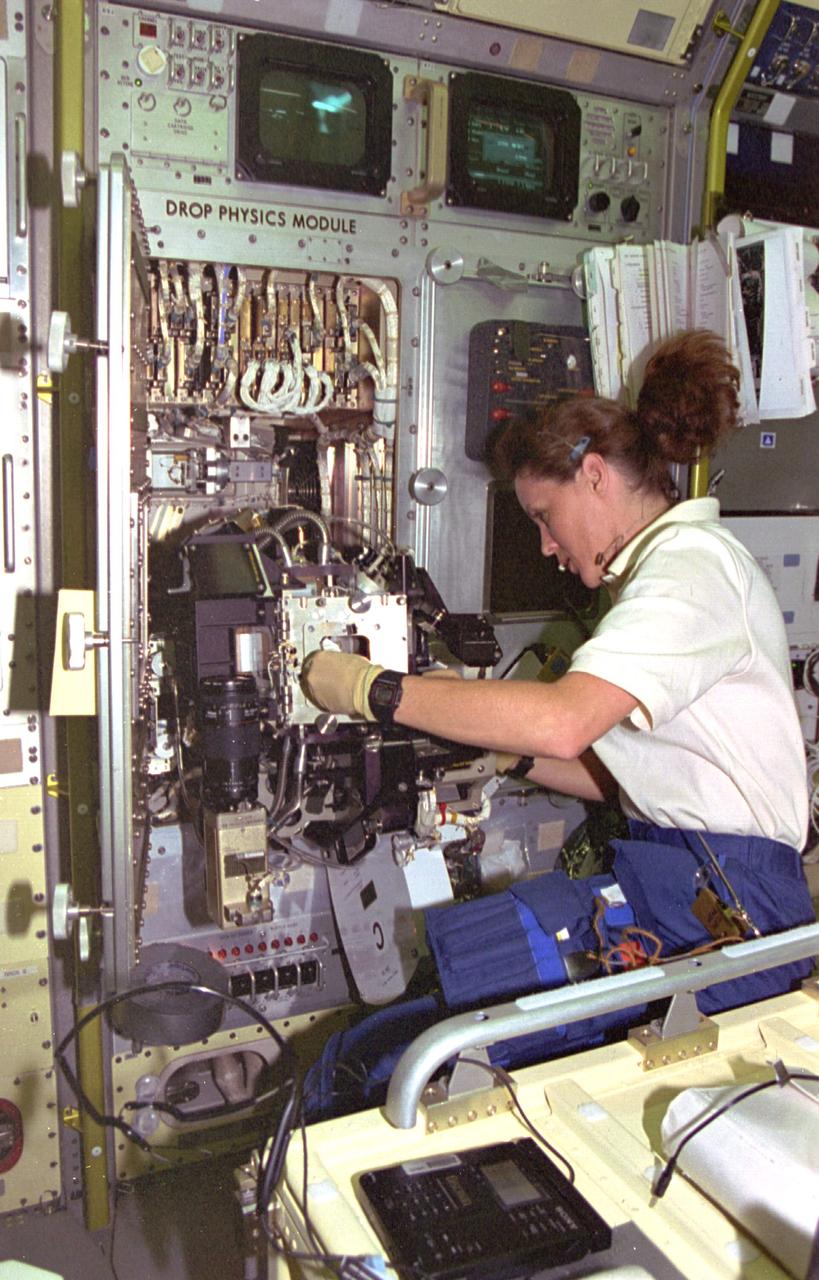
STS073-143-026 (20 October-5 November 1995) --- Astronaut Kathryn C. Thornton, STS-73 payload commander for the United States Microgravity Laboratory (USML-2), explores the inner workings of the Drop Physics Module (DPM). Thornton was joined by four other NASA astronauts and two guest researchers for almost 16 days of research aboard the Space Shuttle Columbia in Earth-orbit.
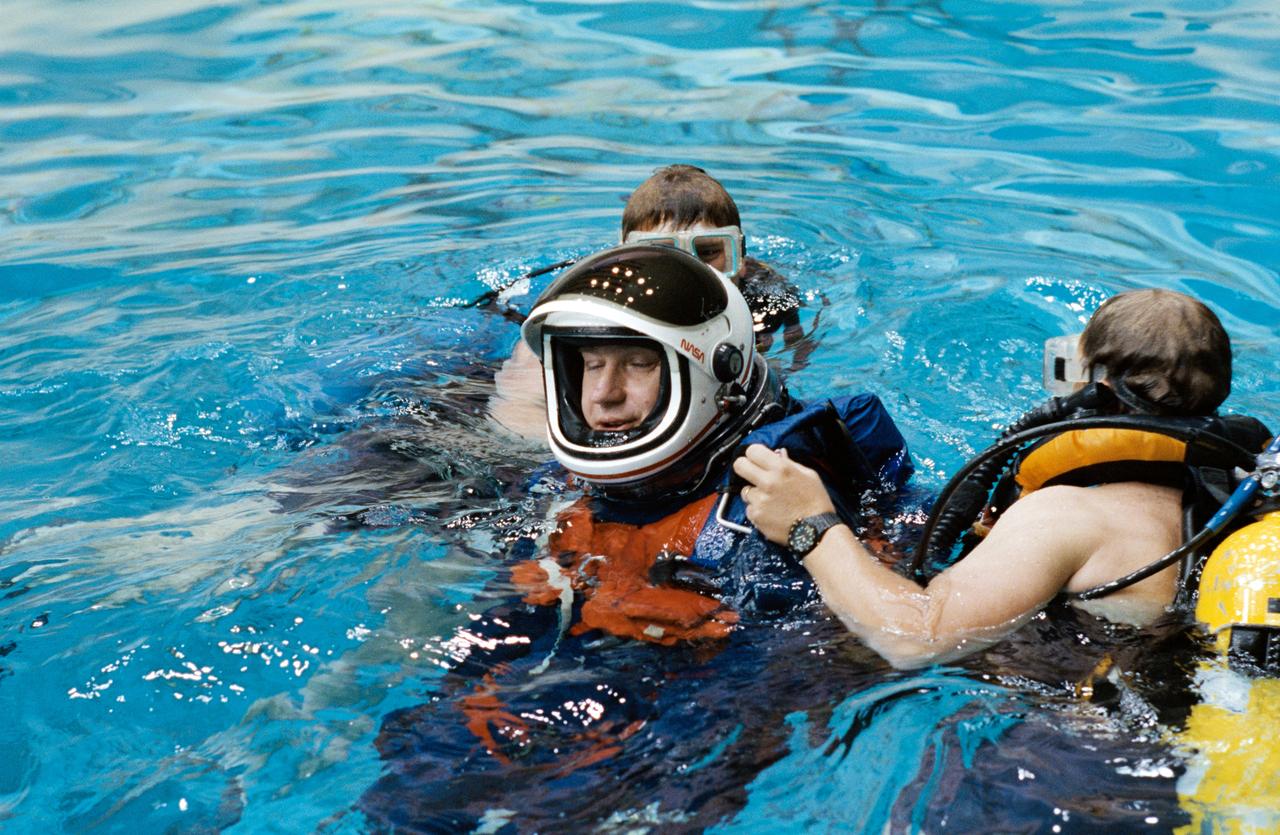
S92-32108 (May 1992) --- Payload specialist Albert Sacco Jr. uses a one-person life raft during emergency bailout training exercises in the Johnson Space Center?s (JSC) Weightless Environment Training Facility (WET-F). Sacco is an alternate payload specialist for the United States Microgravity Laboratory (USML-1) mission, scheduled for launch later this year. EDITOR?S NOTE: Sacco was later named as prime crew payload specialist for the USML-2 mission (STS-73), scheduled for 1995.
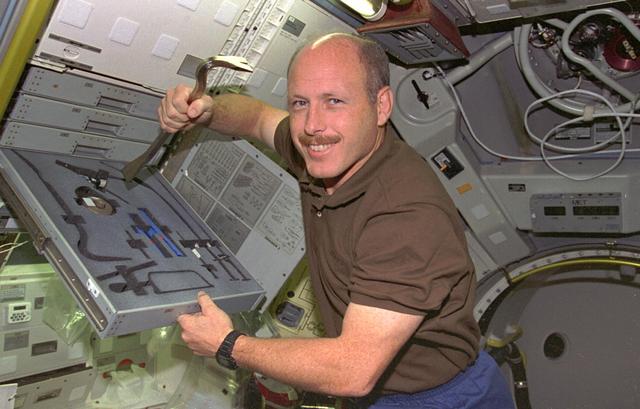
STS073-351-024 (20 October - 5 November 1995) --- Astronaut Kenneth D. Bowersox, STS-73 mission commander, retrieves a crow bar from a tool set onboard the science module in the cargo bay of the Earth-orbiting Space Shuttle Columbia. Various tools were available for a variety of in-flight maintenance tasks for the crew to carry out during the 16-day United States Microgravity Laboratory (USML-2) mission.
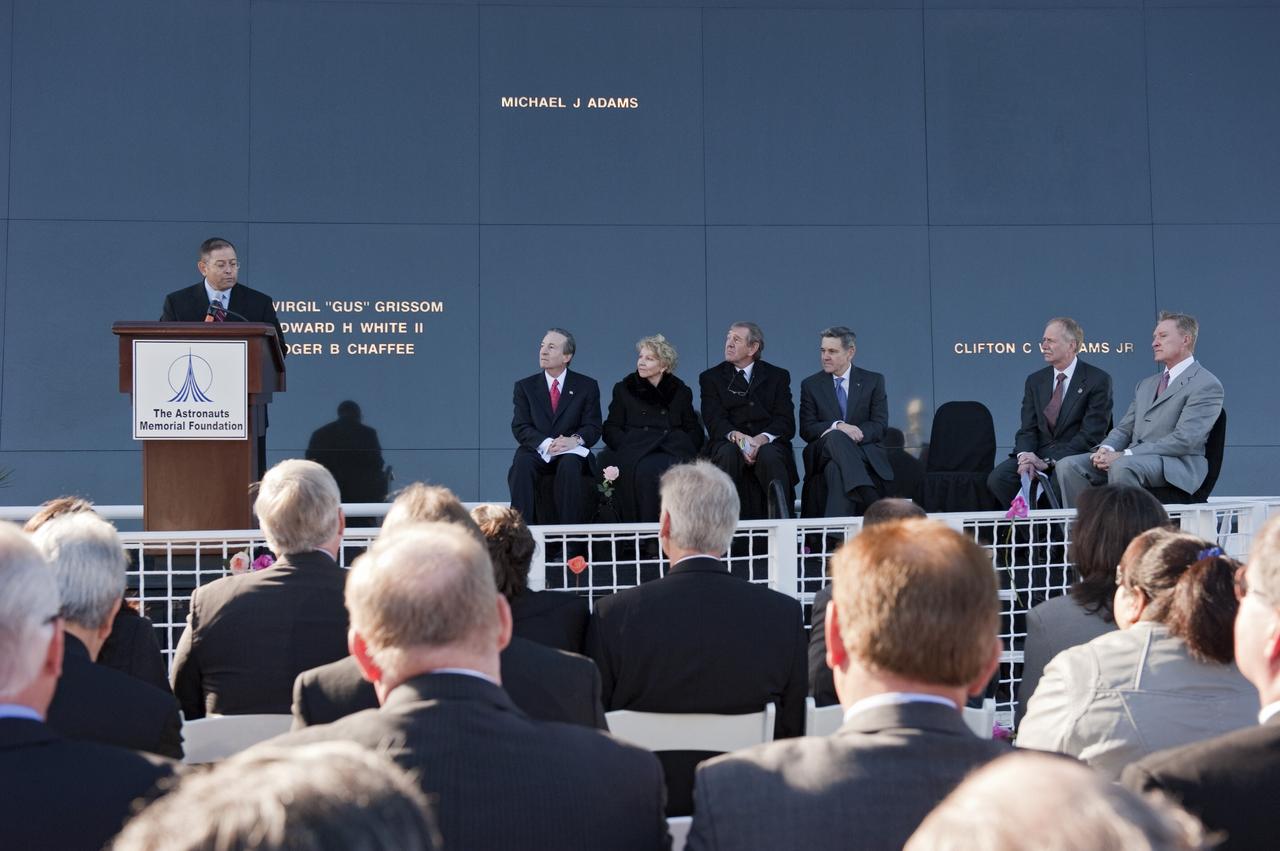
CAPE CANAVERAL, Fla. -- Rick Soria, the 2009 Alan Shepard Technology in Education Award winner, speaks to a crowd gathered in front of the Space Mirror Memorial at the Kennedy Space Center Visitor Complex in Florida to honor space shuttle Challenger's STS-51L crew members who gave their lives for while furthering the cause of exploration and discovery. 2011 marks the 25th anniversary of the loss of Challenger, which broke apart over the Atlantic Ocean 73 seconds into flight on Jan. 28, 1986. Photo credit: NASA/Kim Shiflett
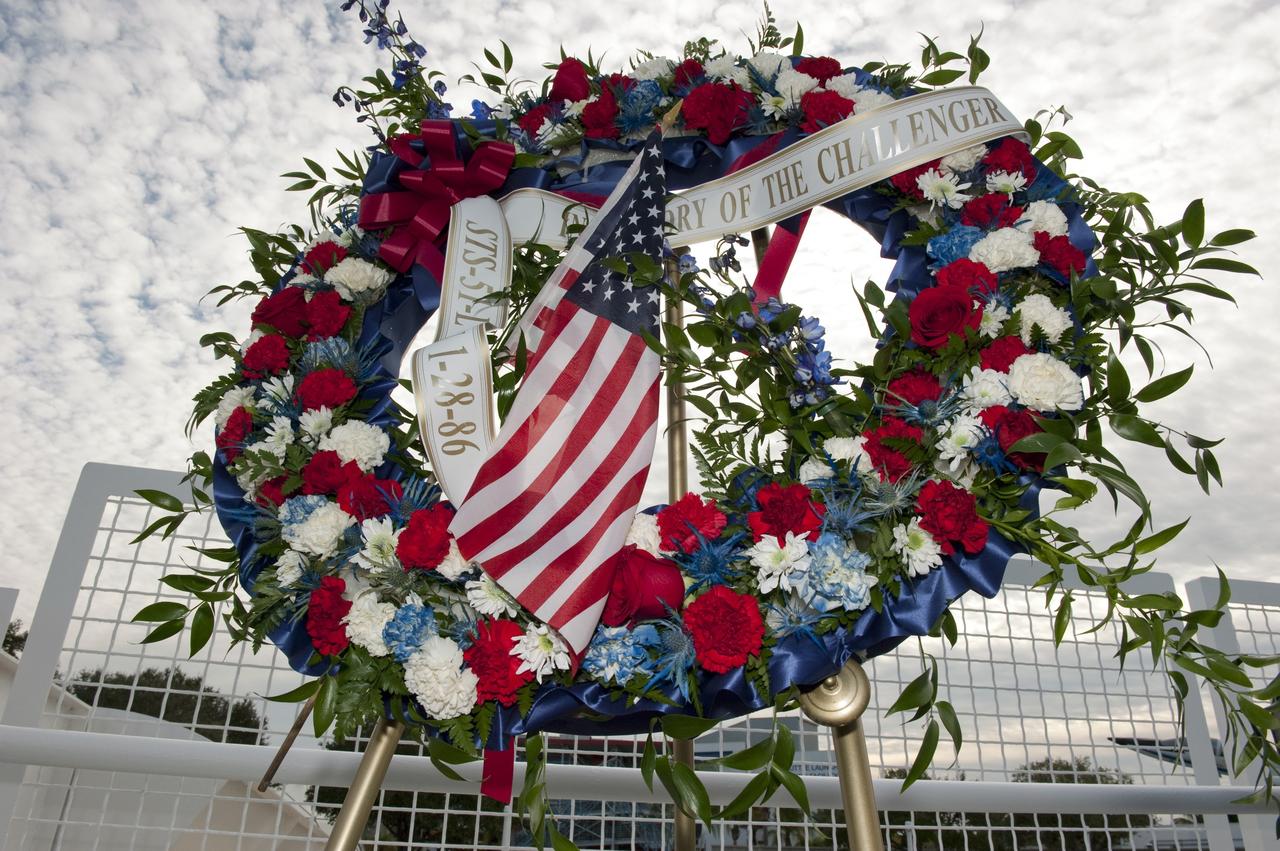
CAPE CANAVERAL, Fla. -- A wreath is displayed at the foot of the Space Mirror Memorial at the Kennedy Space Center Visitor Complex in Florida during a ceremony to honor space shuttle Challenger's STS-51L crew members who gave their lives for while furthering the cause of exploration and discovery. 2011 marks the 25th anniversary of the loss of Challenger, which broke apart over the Atlantic Ocean 73 seconds into flight on Jan. 28, 1986. Photo credit: NASA/Kim Shiflett
CAPE CANAVERAL, Fla. -- A crowd gathers in front of the Space Mirror Memorial at the Kennedy Space Center Visitor Complex in Florida to honor space shuttle Challenger's STS-51L crew members who gave their lives for while furthering the cause of exploration and discovery. 2011 marks the 25th anniversary of the loss of Challenger, which broke apart over the Atlantic Ocean 73 seconds into flight on Jan. 28, 1986. NASA/Jack Pfaller
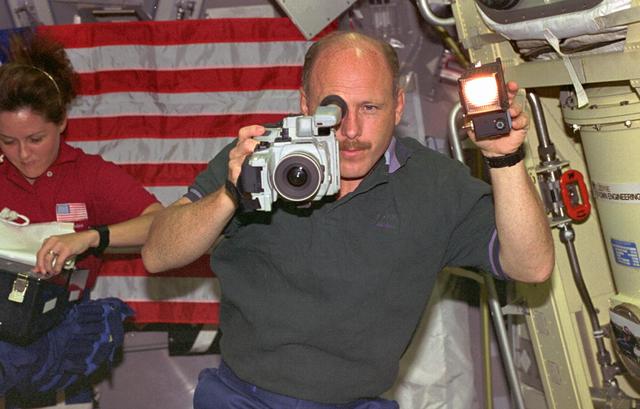
STS073-230-014 (20 October - 5 November 1995) --- Astronaut Kenneth D. Bowersox, STS-73 mission commander, uses a camcorder to record United States Microgravity Laboratory 2 (USML-2) activities onboard the Space Shuttle Columbia. Nearby, astronaut Kathryn C. Thornton, payload commander, prepares to open a supply chest to support one of many science experiments conducted by the seven-member crew during the 16-day USML-2 flight.
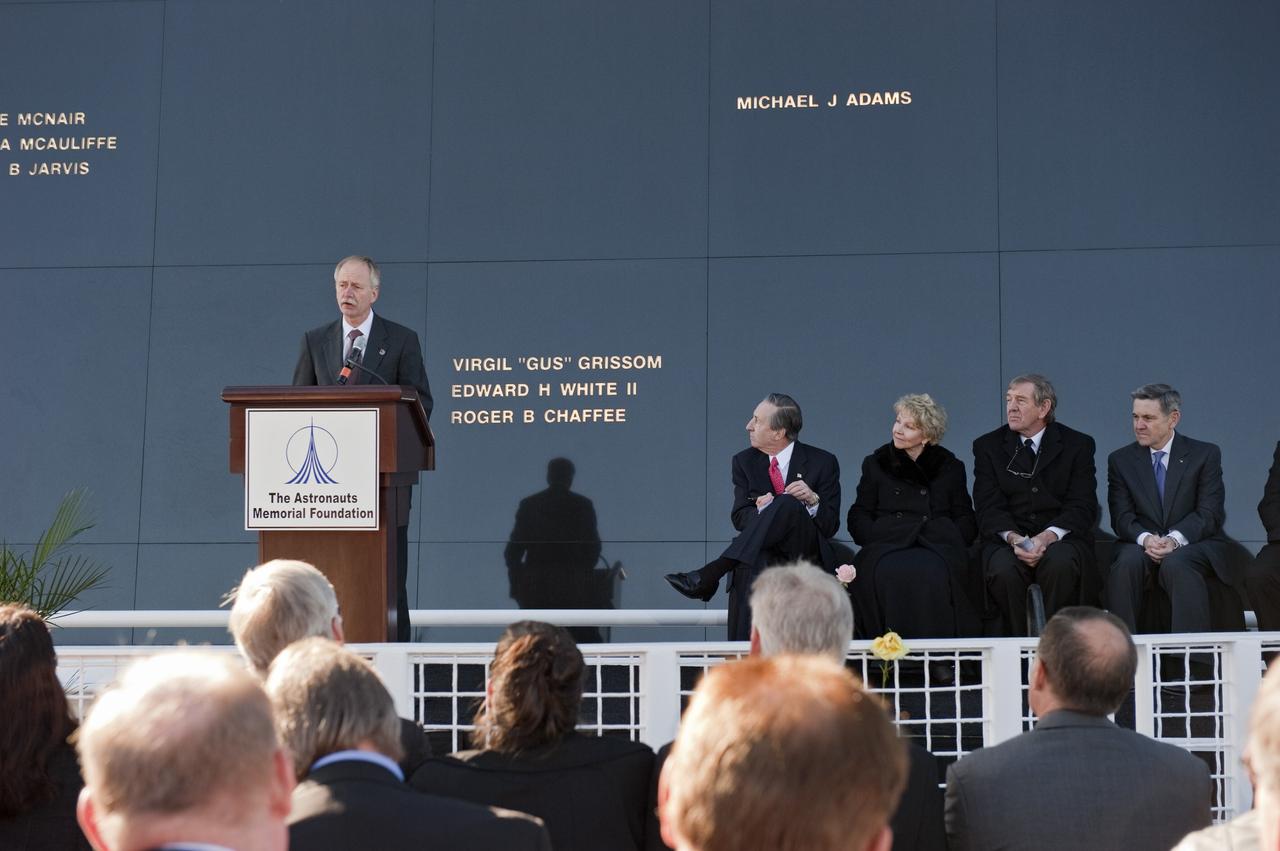
CAPE CANAVERAL, Fla. -- NASA Associate Administrator for Space Operations William Gerstenmaier speaks to a crowd gathered in front of the Space Mirror Memorial at the Kennedy Space Center Visitor Complex in Florida to honor space shuttle Challenger's STS-51L crew members who gave their lives for while furthering the cause of exploration and discovery. 2011 marks the 25th anniversary of the loss of Challenger, which broke apart over the Atlantic Ocean 73 seconds into flight on Jan. 28, 1986. Photo credit: NASA/Kim Shiflett
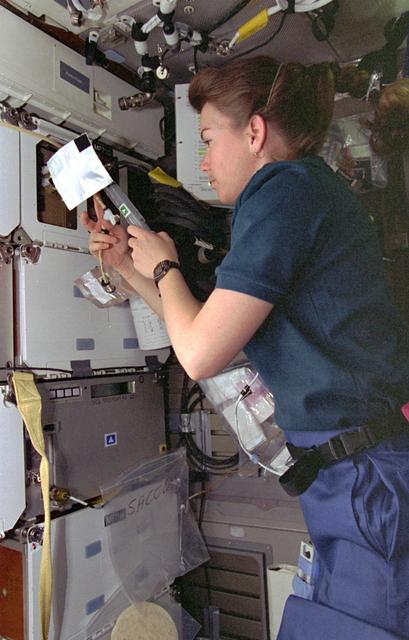
STS073-356-029 (20 October - 5 November 1995) --- Astronaut Catherine G. Coleman, STS-73 mission specialist, checks out an Astroculture sample on the middeck of the Earth-orbiting Space Shuttle Columbia. Coleman was joined by four other NASA astronauts and two guest researchers for 16 full days of in-space research in support of the United States Microgravity Laboratory (USML-2) mission.
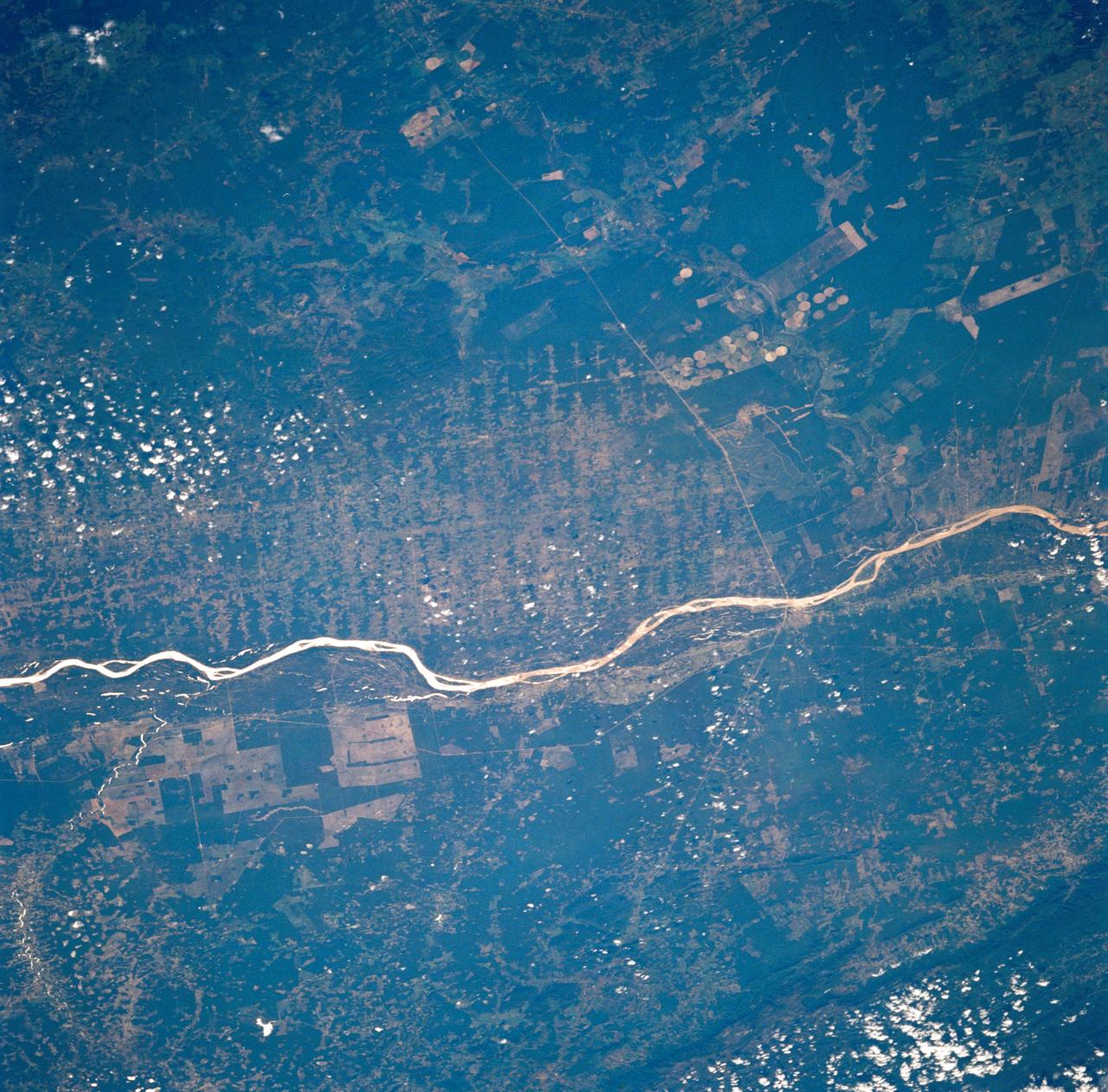
STS035-73-082 (2-10 Dec 1990) --- This agricultural and ranching area, Rio Sao Francisco, Brazil (13.0S, 43.5W) has been under study for several years. See scene STS-31-92-045 for comparison. This area has many small single family subsistence farms, large square and rectangular commercial farms and pastures for livestock grazing. Over the several years of observation, the number and size of farms has increased and center-pivot, swing-arm irrigation systems have been installed.
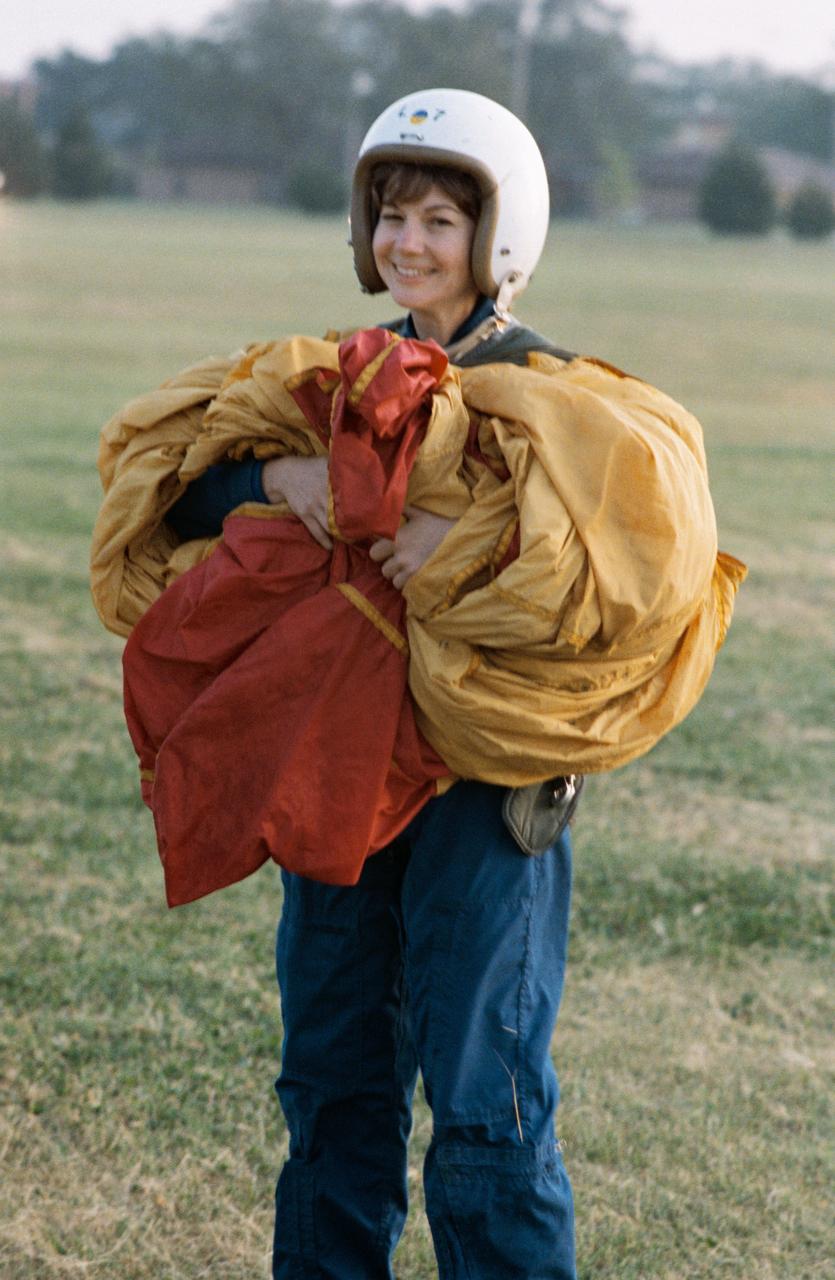
S93-38725 (12-14 Sept. 1992) --- Catherine G. Coleman, a member of the 1992 class of astronaut candidates at the Johnson Space Center (JSC), gathers up a parachute. The chute had just been used in one of many exercises experienced by the trainees at a three-day parachute/survival course hosted by Vance Air Force Base near Enid, Oklahoma. EDITOR?S NOTE: Coleman was later named as mission specialist for the United States Microgravity Laboratory (USML-2) mission, scheduled to fly as STS-73 in 1995.
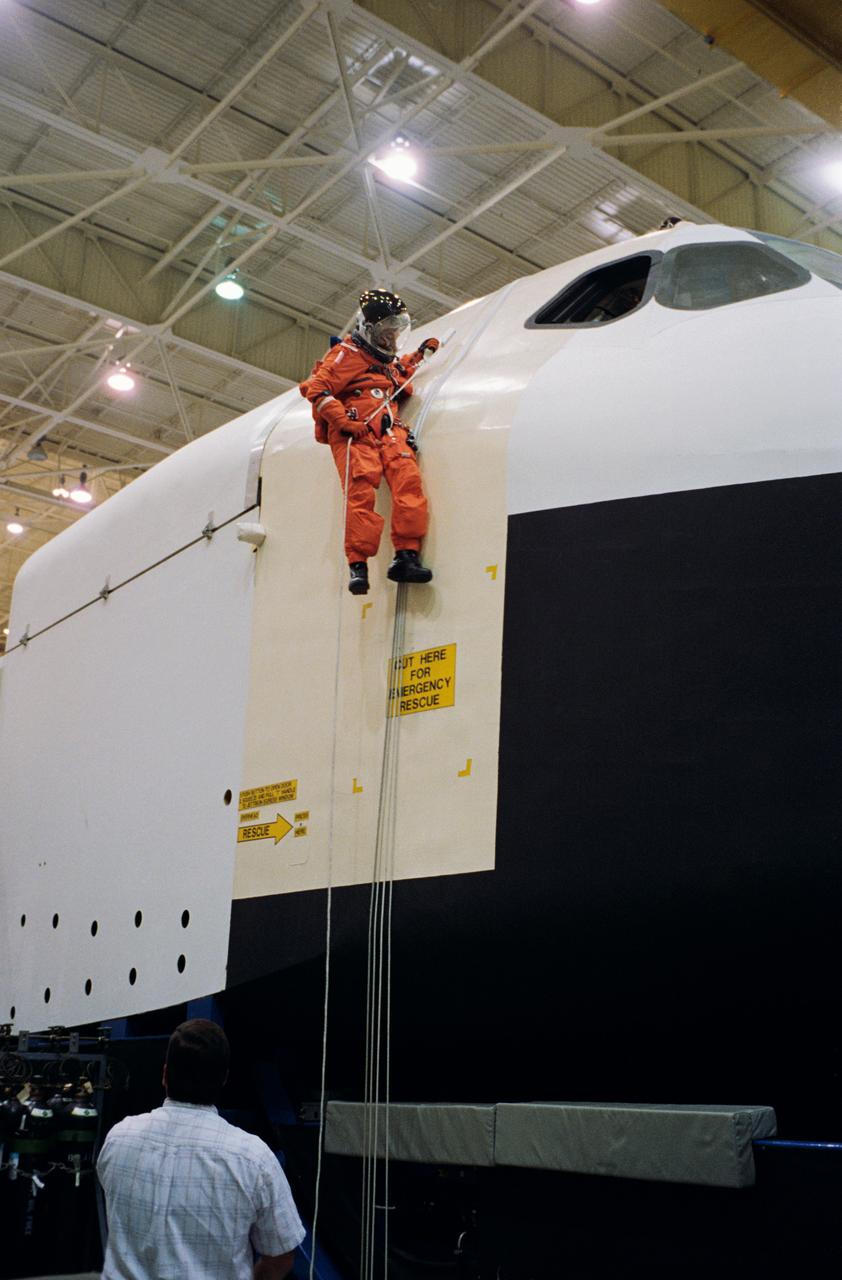
S95-09163 (27 Apr. 1995) --- Payload specialist Albert Sacco Jr. rappels from the top of a Shuttle mockup-trainer using a Sky-genie device during emergency egress training with his six STS-73 crew mates. The seven will fly aboard the Space Shuttle Columbia later this year to support the United States Microgravity Laboratory (USML-2) mission.
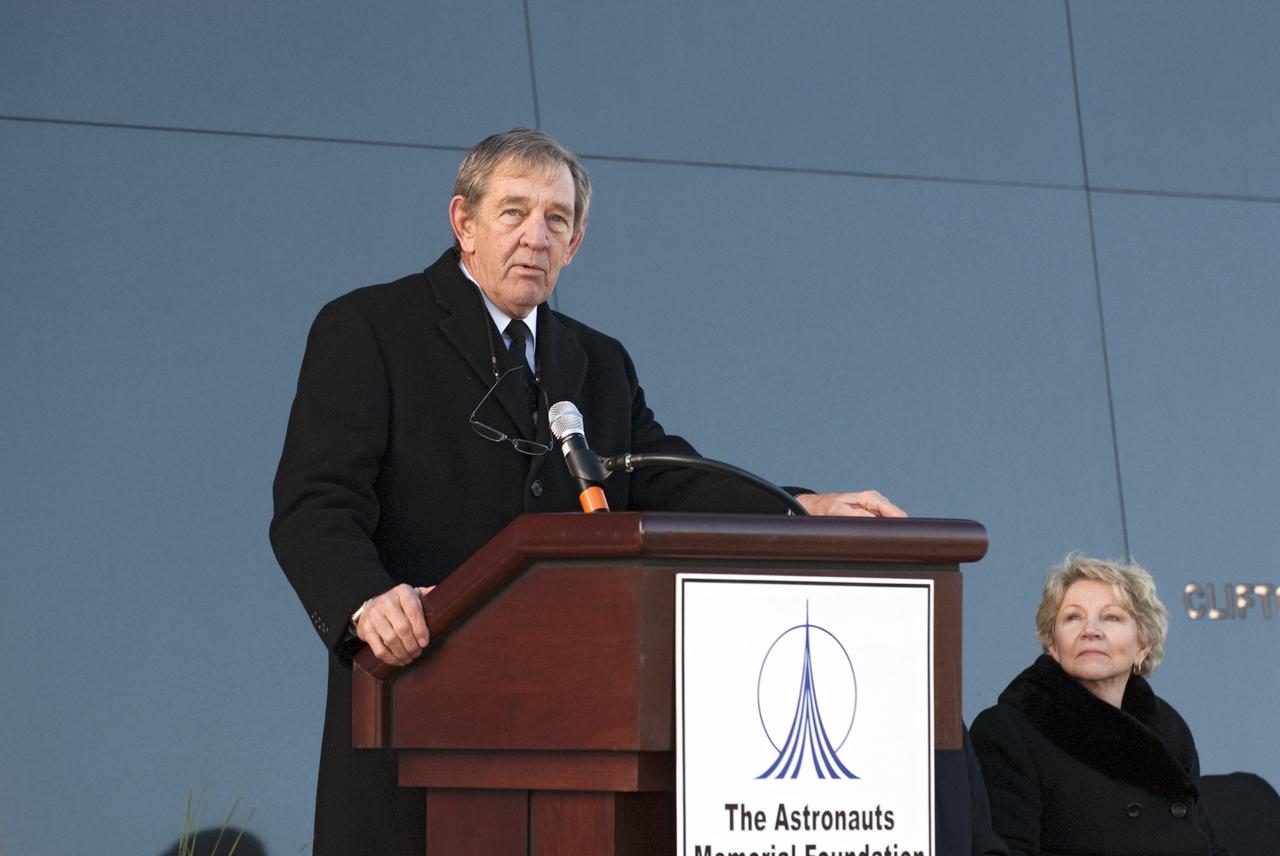
CAPE CANAVERAL, Fla. -- Former astronaut and Chairman of The Astronauts Memorial Foundation Michael McCulley speaks to a crowd gathered in front of the Space Mirror Memorial at the Kennedy Space Center Visitor Complex in Florida to honor space shuttle Challenger's STS-51L crew members who gave their lives for while furthering the cause of exploration and discovery. 2011 marks the 25th anniversary of the loss of Challenger, which broke apart over the Atlantic Ocean 73 seconds into flight on Jan. 28, 1986. Photo credit: NASA/Kim Shiflett
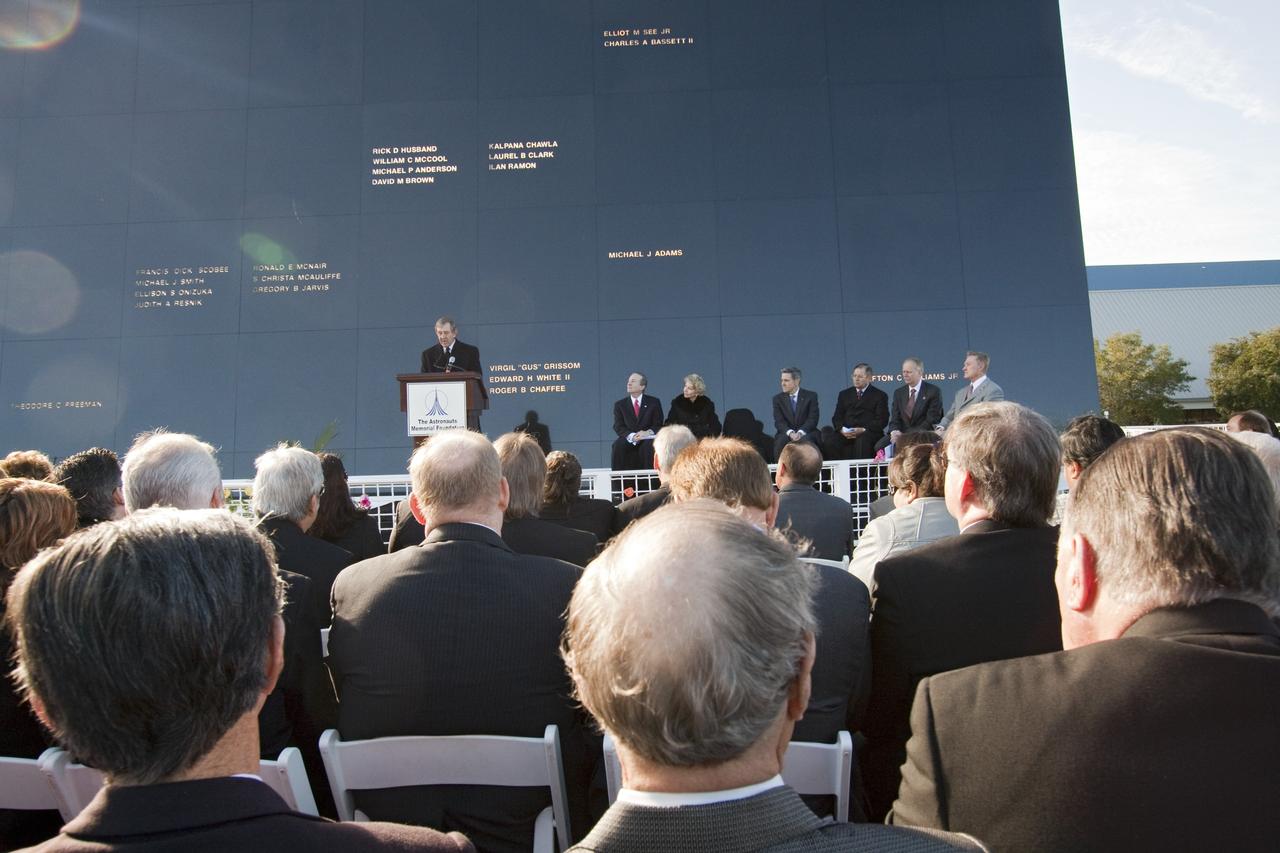
CAPE CANAVERAL, Fla. -- Michael McCulley, former astronaut and chairman of the Astronauts Memorial Foundation, speaks to a crowd gathered in front of the Space Mirror Memorial at the Kennedy Space Center Visitor Complex in Florida to honor space shuttle Challenger's STS-51L crew members who gave their lives for while furthering the cause of exploration and discovery. 2011 marks the 25th anniversary of the loss of Challenger, which broke apart over the Atlantic Ocean 73 seconds into flight on Jan. 28, 1986. NASA/Jack Pfaller
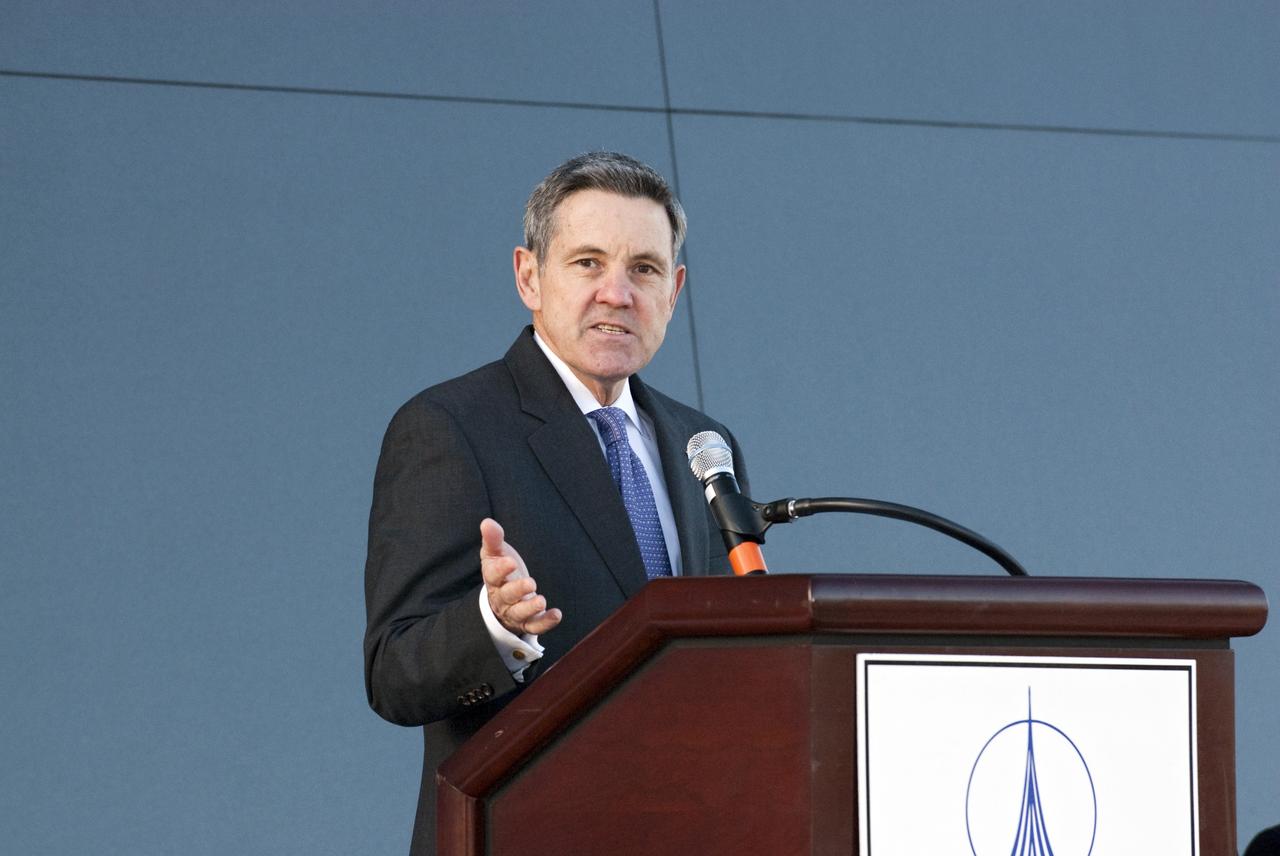
CAPE CANAVERAL, Fla. -- Former astronaut and NASA Kennedy Space Center Director Bob Cabana speaks to a crowd gathered in front of the Space Mirror Memorial at the Kennedy Space Center Visitor Complex in Florida to honor space shuttle Challenger's STS-51L crew members who gave their lives for while furthering the cause of exploration and discovery. 2011 marks the 25th anniversary of the loss of Challenger, which broke apart over the Atlantic Ocean 73 seconds into flight on Jan. 28, 1986. Photo credit: NASA/Kim Shiflett
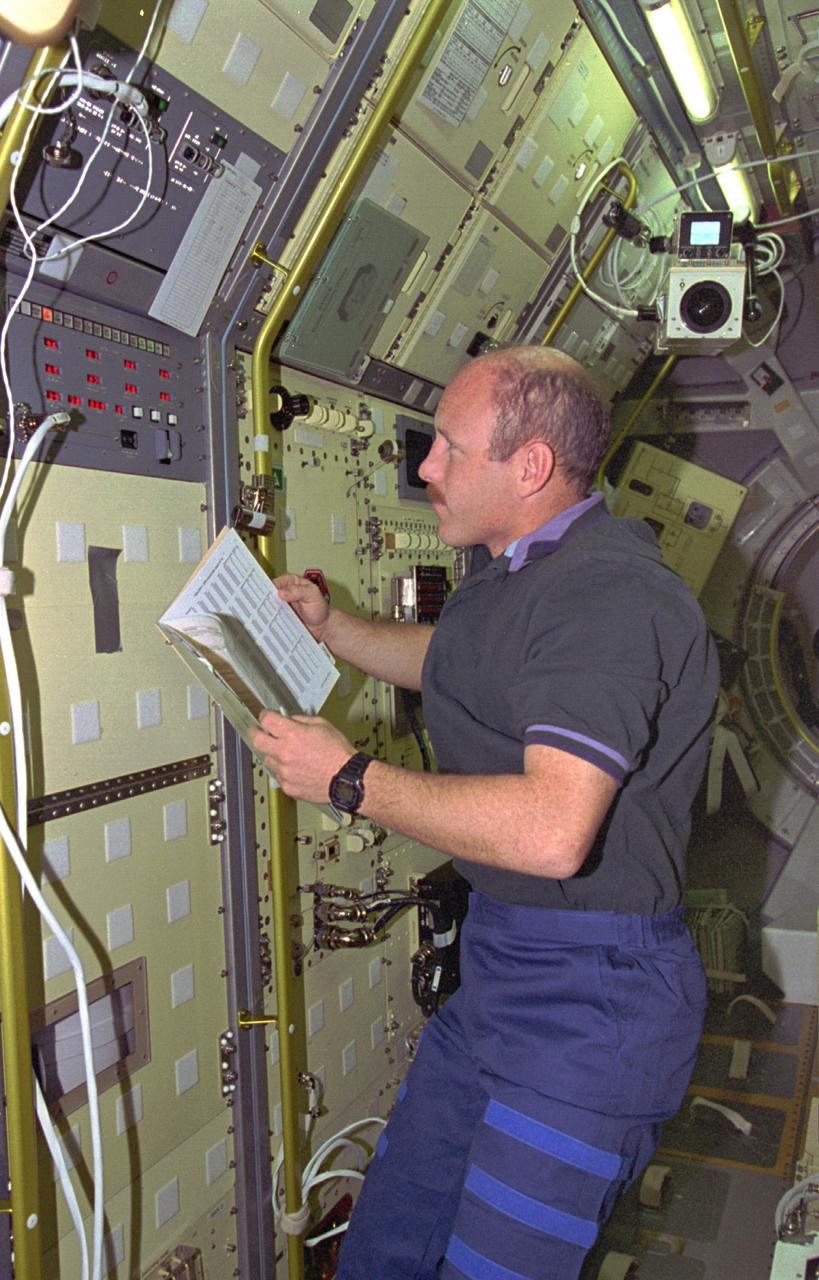
STS073-363-032 (20 October - 5 November 1995) --- Astronaut Kenneth D. Bowersox, STS-73 mission commander, studies the movement of fluids in microgravity at the Geophysical Fluid Flow Cell (GFFC) workstation in the science module of the Earth-orbiting Space Shuttle Columbia. Bowersox was joined by four other NASA astronauts and two guest researchers for almost 16-days of Earth-orbit research in support of the U.S. Microgravity Laboratory (USML-2) mission.
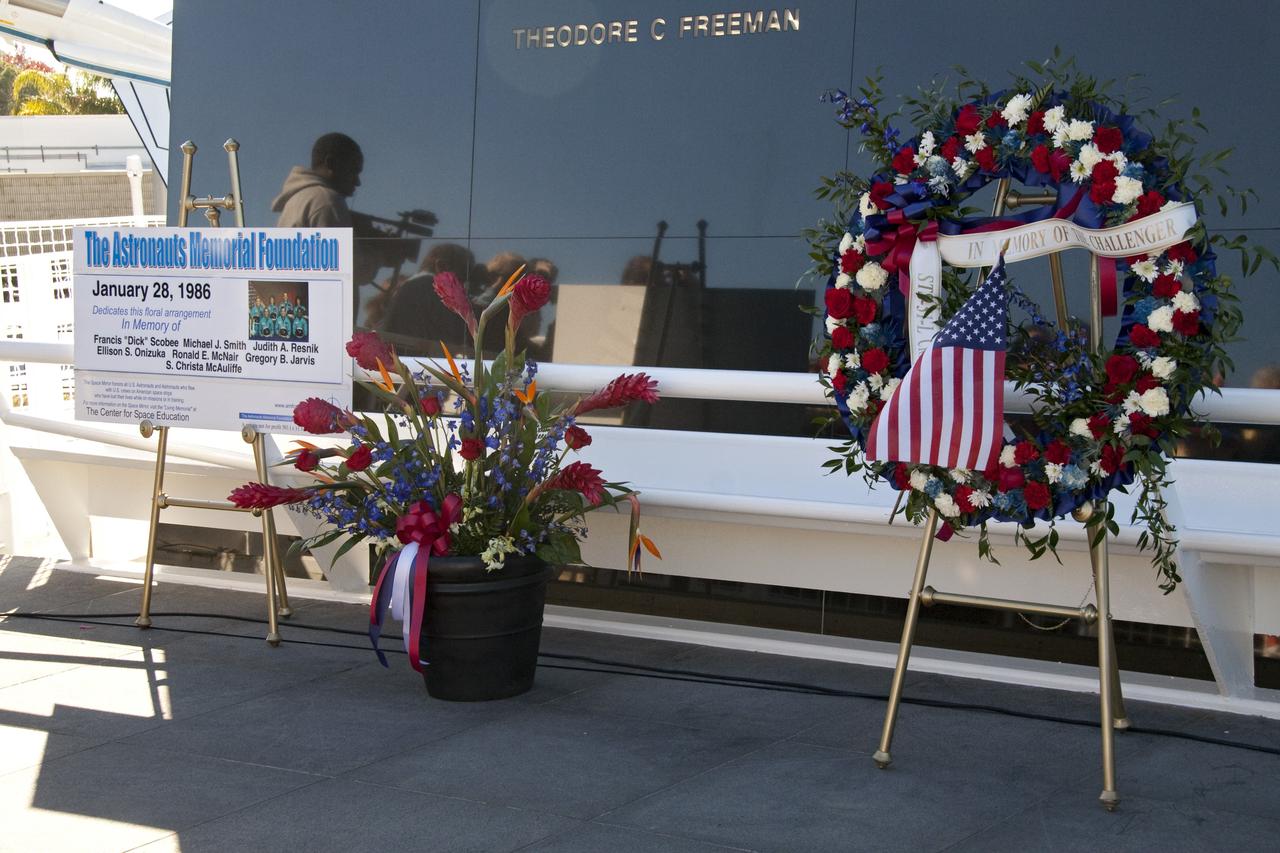
CAPE CANAVERAL, Fla. -- A wreath is displayed at the foot of the Space Mirror Memorial at the Kennedy Space Center Visitor Complex in Florida during a ceremony to honor space shuttle Challenger's STS-51L crew members who gave their lives for while furthering the cause of exploration and discovery. 2011 marks the 25th anniversary of the loss of Challenger, which broke apart over the Atlantic Ocean 73 seconds into flight on Jan. 28, 1986. NASA/Jack Pfaller
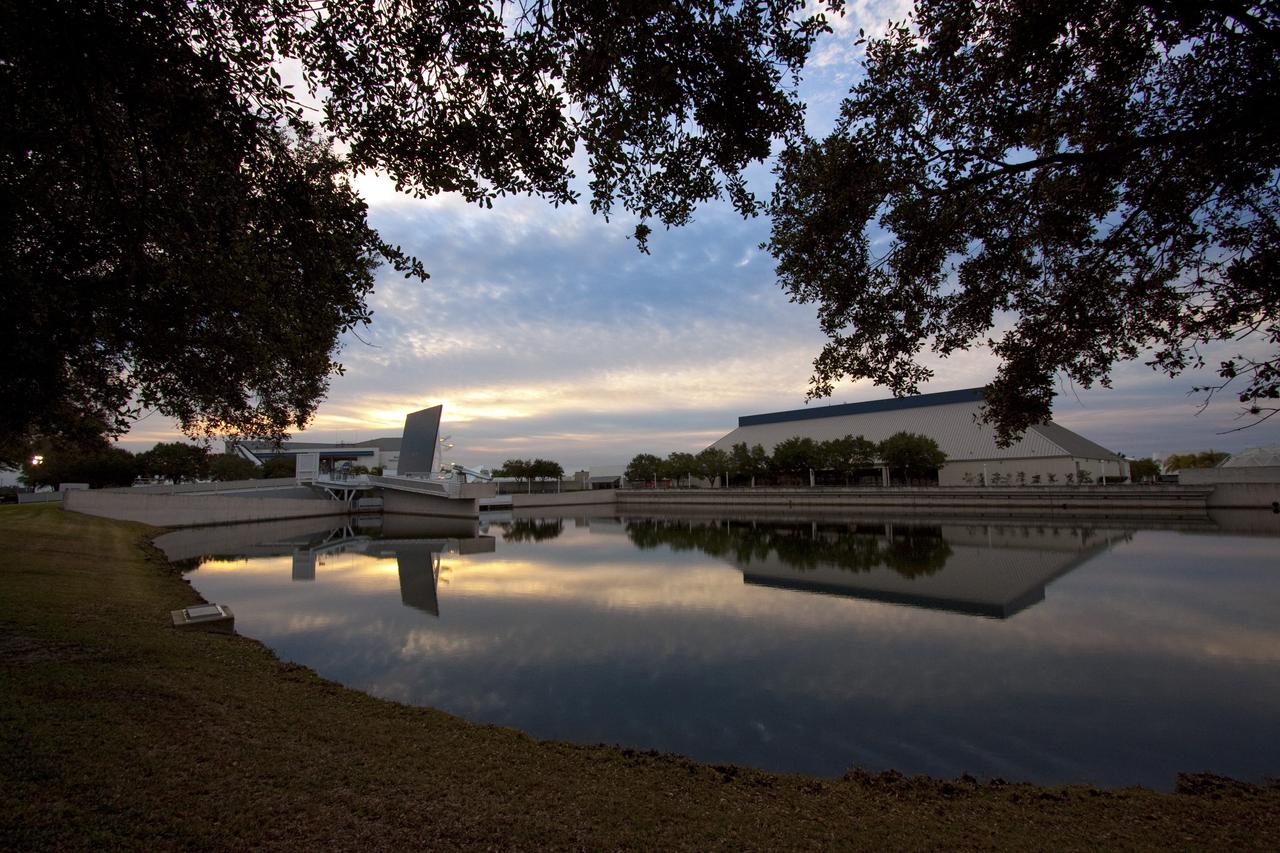
CAPE CANAVERAL, Fla. -- The Space Mirror Memorial at the Kennedy Space Center Visitor Complex in Florida will be the site of a memorial ceremony to honor space shuttle Challenger's STS-51L crew members who gave their lives for while furthering the cause of exploration and discovery. 2011 marks the 25th anniversary of the loss of Challenger, which broke apart over the Atlantic Ocean 73 seconds into flight on Jan. 28, 1986. NASA/Jack Pfaller
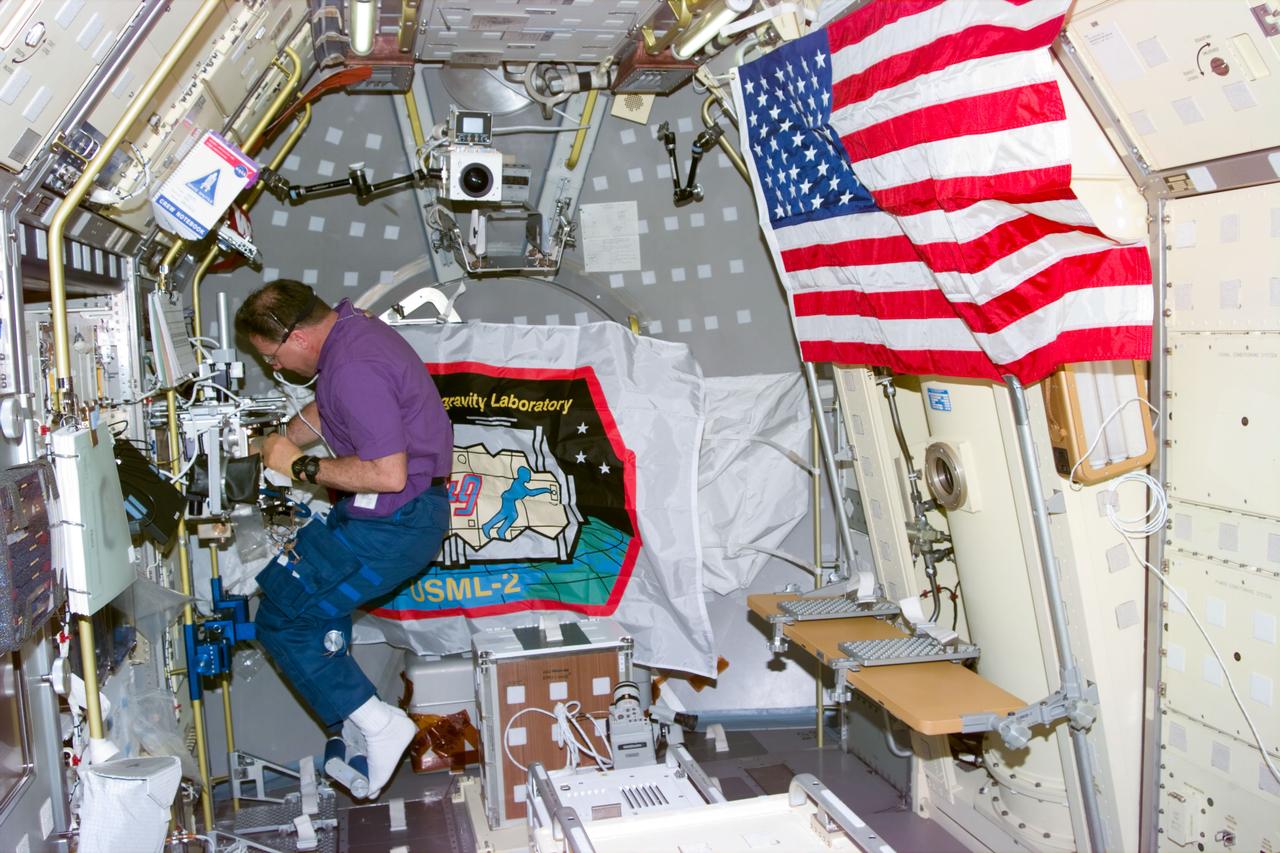
STS073-E-5024 (23 Oct. 1995)--- Albert Sacco Jr., STS-73 payload specialist, works in the Glovebox on the portside of the science module aboard the space shuttle Columbia in Earth orbit. This frame was exposed with the color Electronic Still Camera (ESC) assigned to the scheduled 16-day United States Microgravity Laboratory (USML-2) mission.
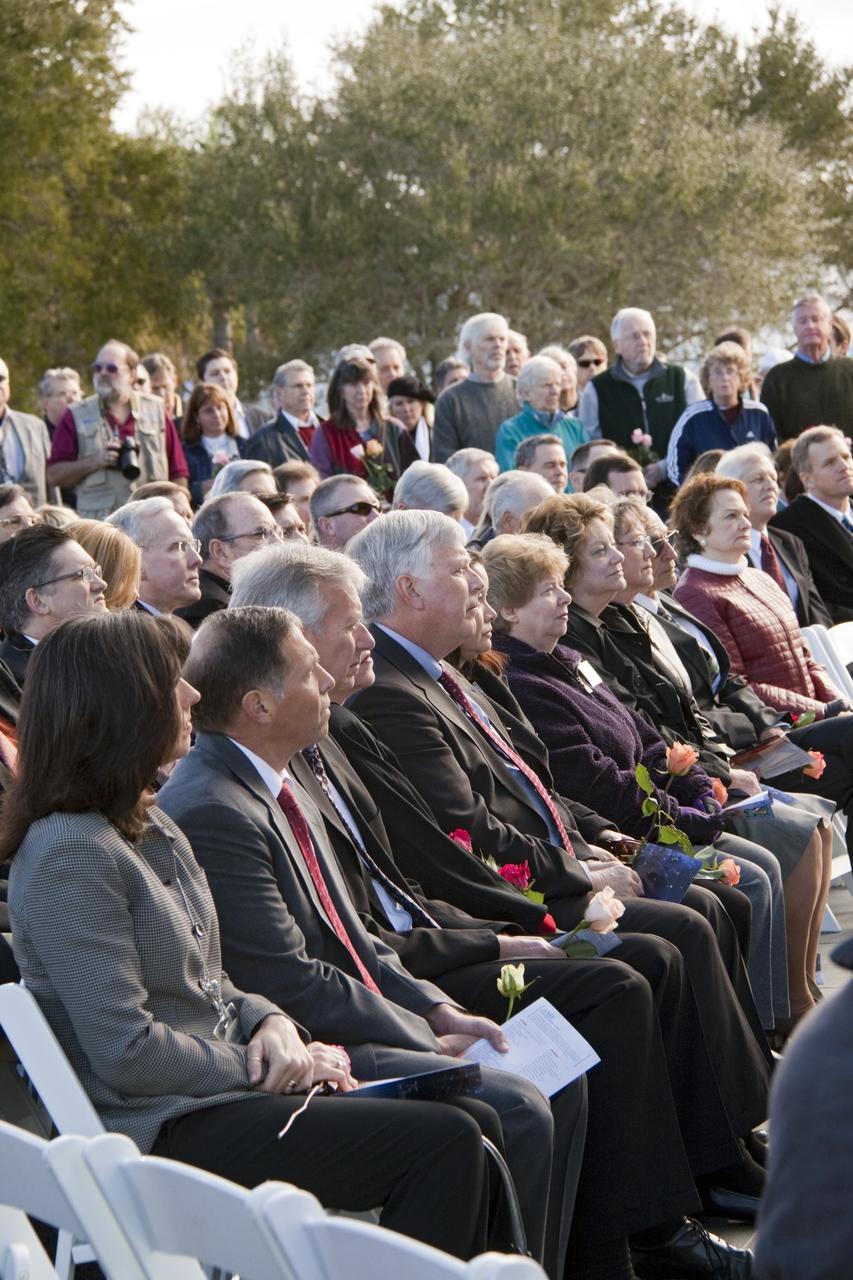
CAPE CANAVERAL, Fla. -- A crowd gathers in front of the Space Mirror Memorial at the Kennedy Space Center Visitor Complex in Florida to honor space shuttle Challenger's STS-51L crew members who gave their lives for while furthering the cause of exploration and discovery. 2011 marks the 25th anniversary of the loss of Challenger, which broke apart over the Atlantic Ocean 73 seconds into flight on Jan. 28, 1986. NASA/Jack Pfaller
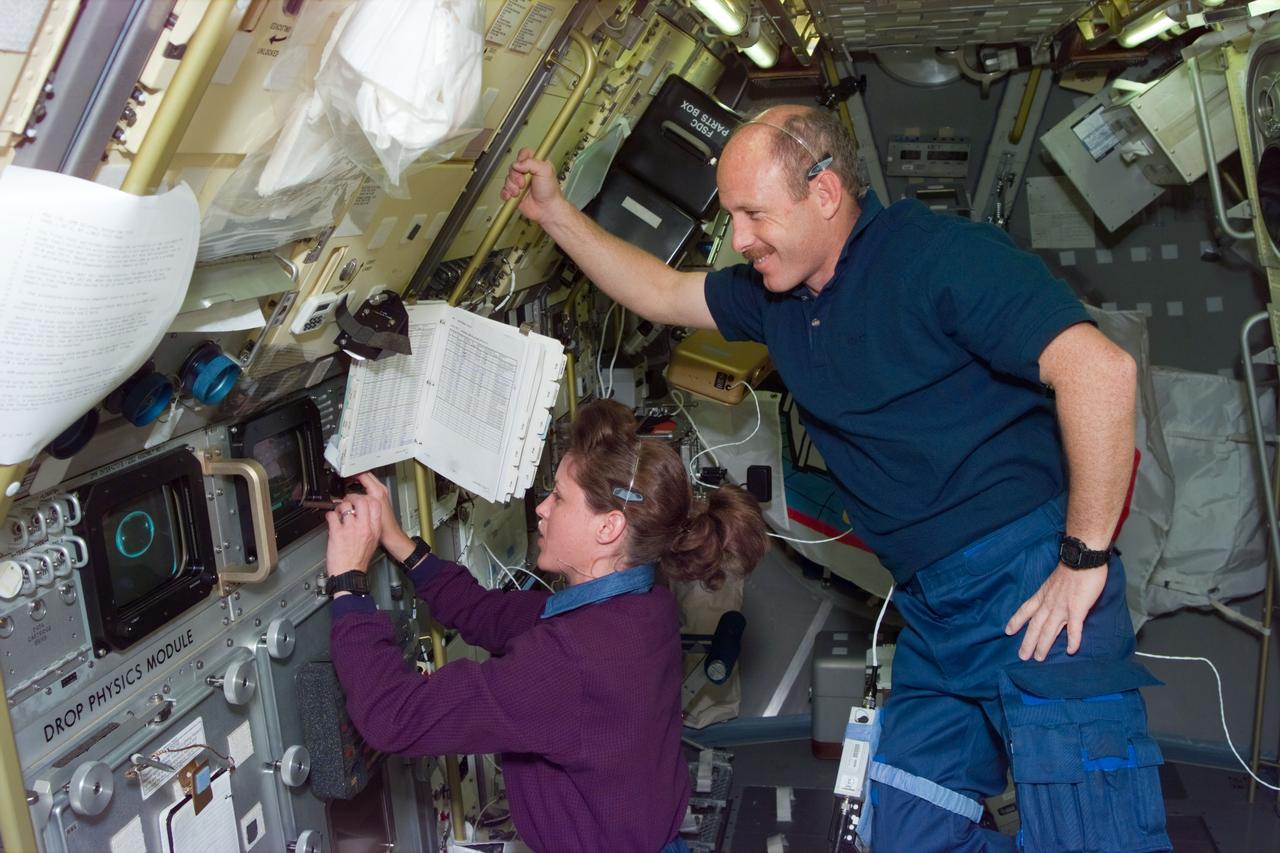
STS073-E-5311 (3 Nov. 1995) --- Astronaut Kathryn C. Thornton, STS-73 payload commander, works at the Drop Physics Module (DPM) on the portside of the science module supporting the U.S. Microgravity Laboratory (USML-2). Astronaut Kenneth D. Bowersox, mission commander, looks on. Five NASA astronauts and two payload specialists are in the last few days of a scheduled 16-day mission. This frame was exposed with the Electronic Still Camera (ESC).
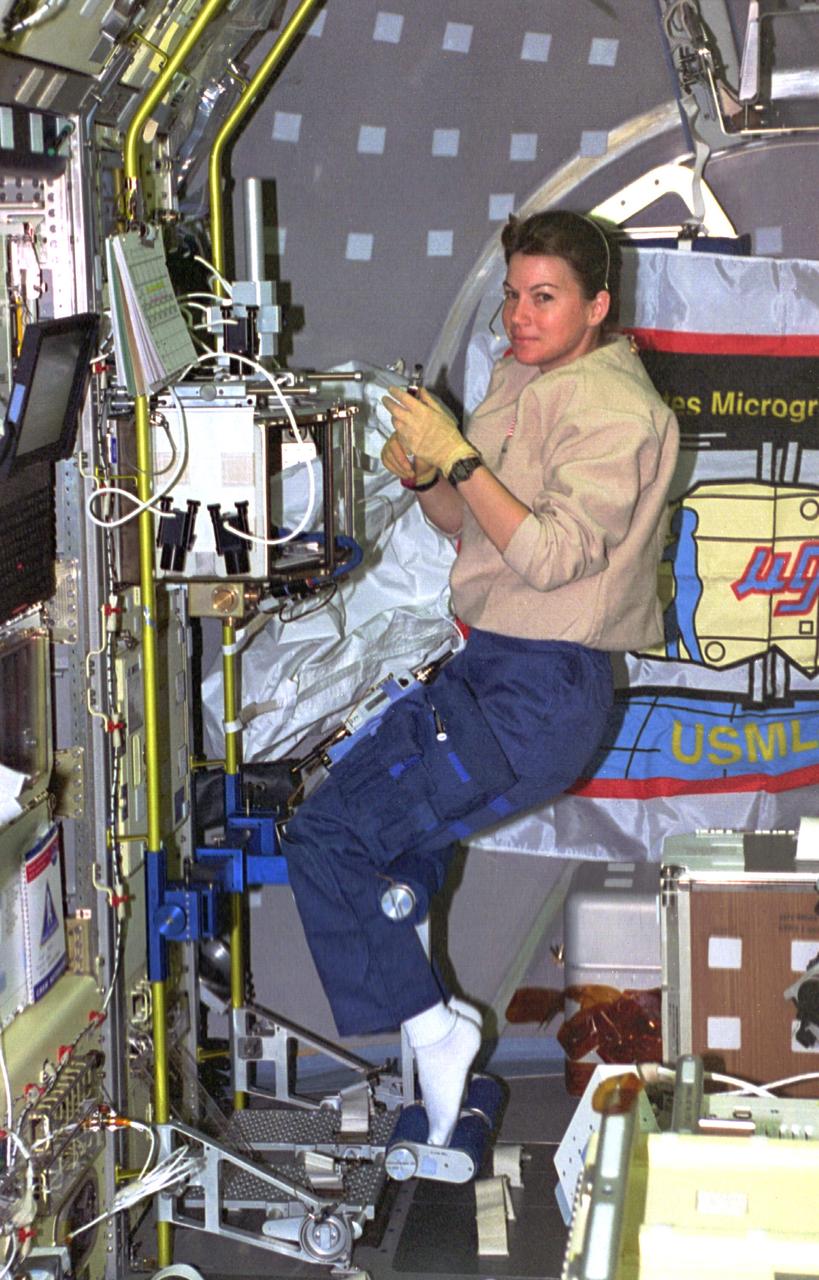
STS073-105-011 (20 October-5 November 1995) --- Astronaut Catherine G. Coleman, STS-73 mission specialist, settles in for a session of work at the glovebox on the starboard side of the United States Microgravity Laboratory (USML-2) module. Coleman was joined by four other NASA astronauts and two guest researchers for almost 16 days of research aboard the Space Shuttle Columbia in Earth-orbit.
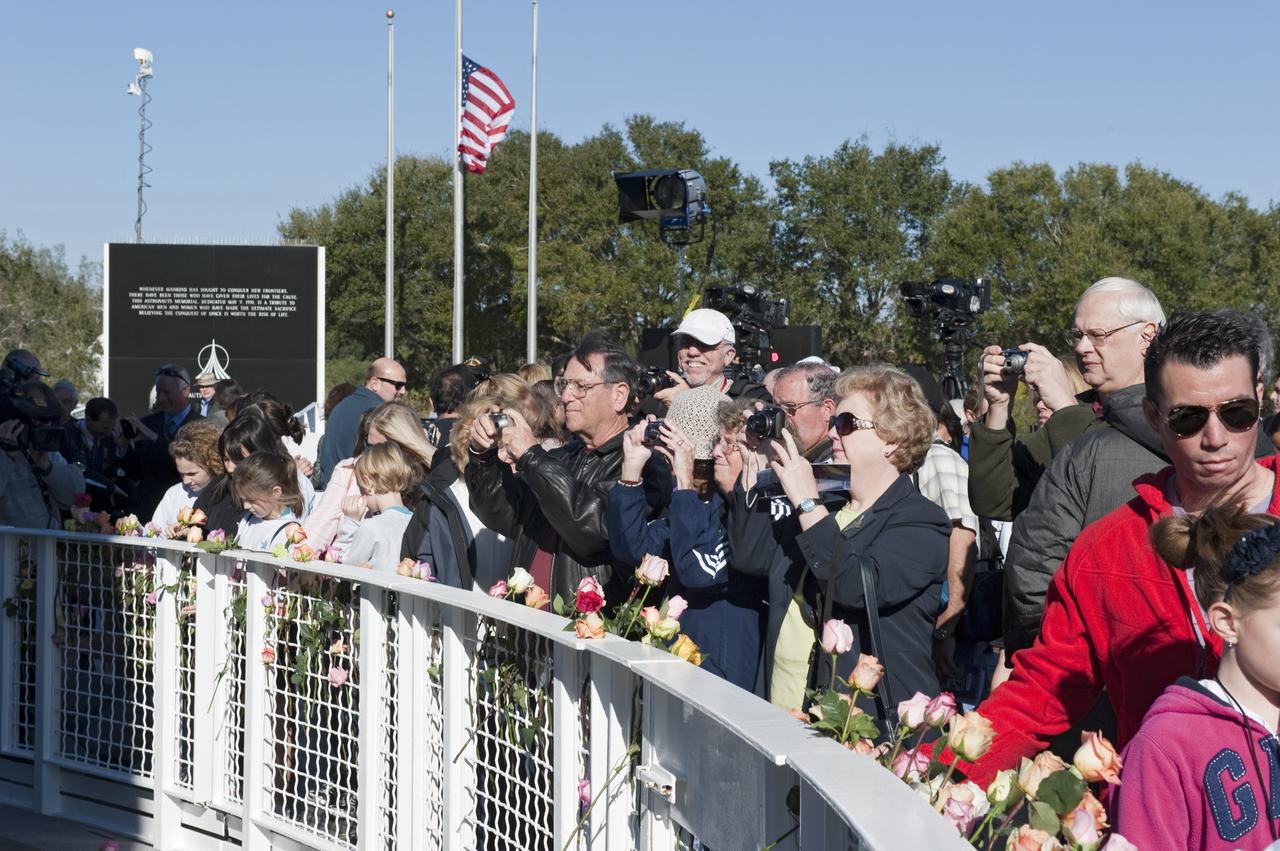
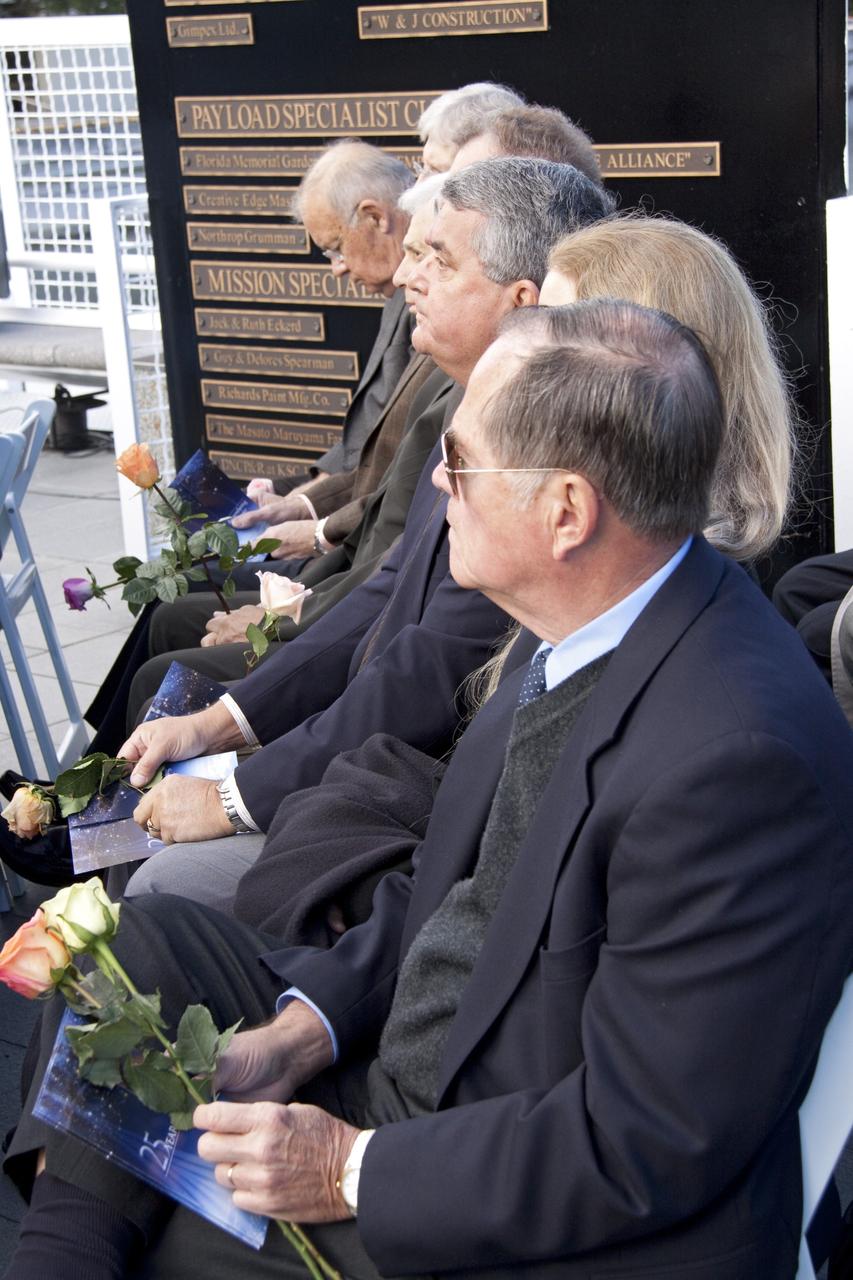
CAPE CANAVERAL, Fla. -- A crowd lays roses and pays their respects space shuttle Challenger's STS-51L crew members who gave their lives for while furthering the cause of exploration and discovery. They gathered for a memorial ceremony in front of the Space Mirror Memorial at the Kennedy Space Center Visitor Complex in Florida. 2011 marks the 25th anniversary of the loss of Challenger, which broke apart over the Atlantic Ocean 73 seconds into flight on Jan. 28, 1986. Photo credit: NASA/Kim Shiflett
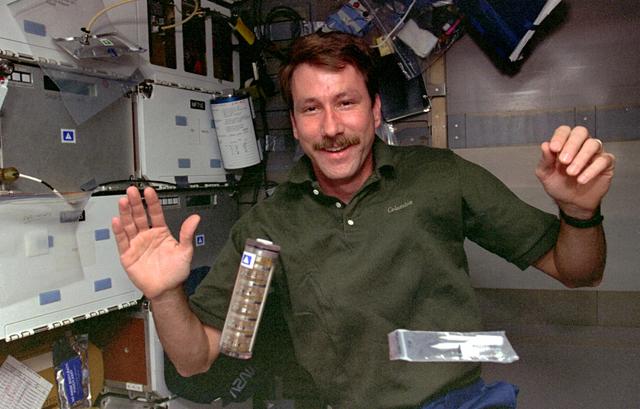
STS073-351-009 (20 October - 5 November 1995) --- Astronaut Kent V. Rominger, STS-73 pilot, retrieves a protein sample on the middeck of the Earth-orbiting Space Shuttle Columbia. Rominger, along with four other NASA astronauts and two guest researchers, spent 16 full days in space in support of the United States Microgravity Laboratory (USML-2) mission.
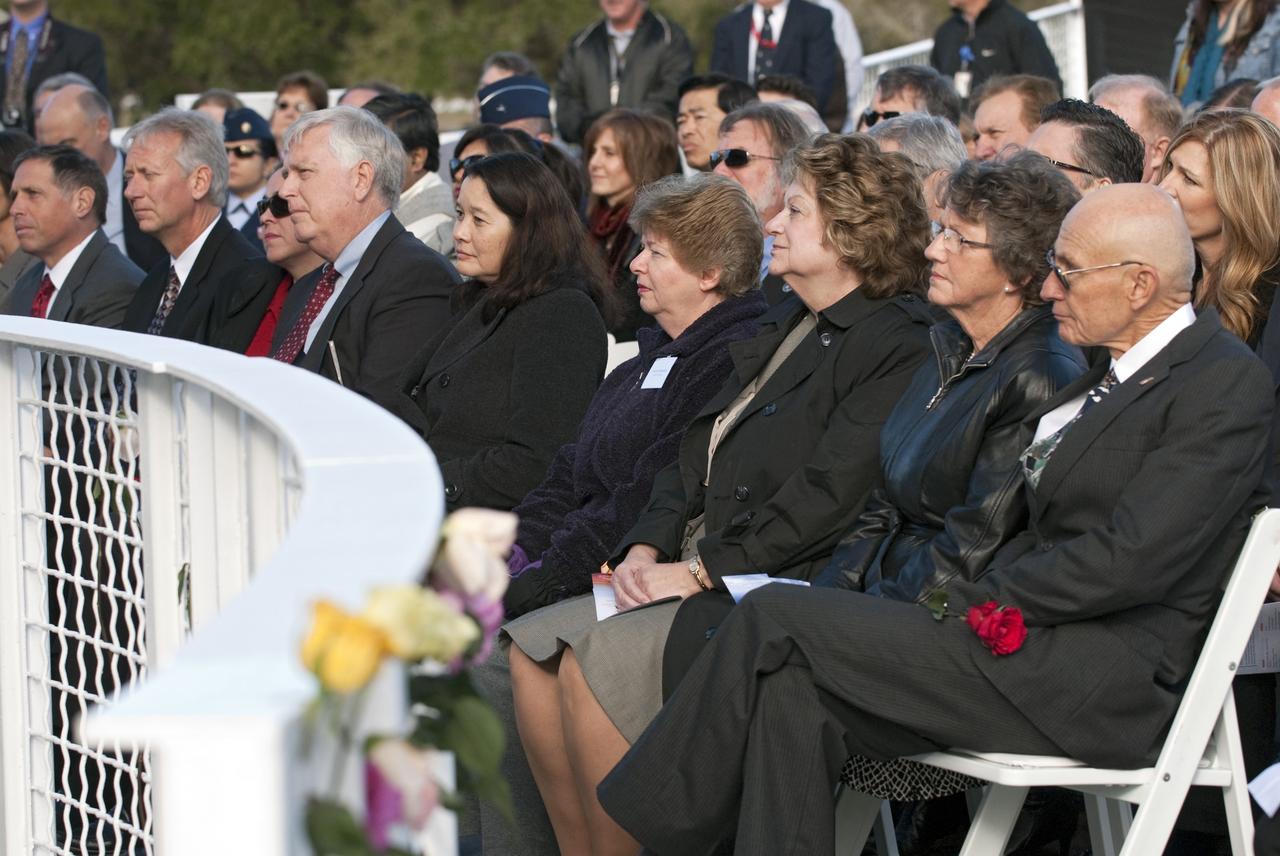
CAPE CANAVERAL, Fla. -- A crowd gathers in front of the Space Mirror Memorial at the Kennedy Space Center Visitor Complex in Florida to honor space shuttle Challenger's STS-51L crew members who gave their lives for while furthering the cause of exploration and discovery. 2011 marks the 25th anniversary of the loss of Challenger, which broke apart over the Atlantic Ocean 73 seconds into flight on Jan. 28, 1986. Photo credit: NASA/Kim Shiflett
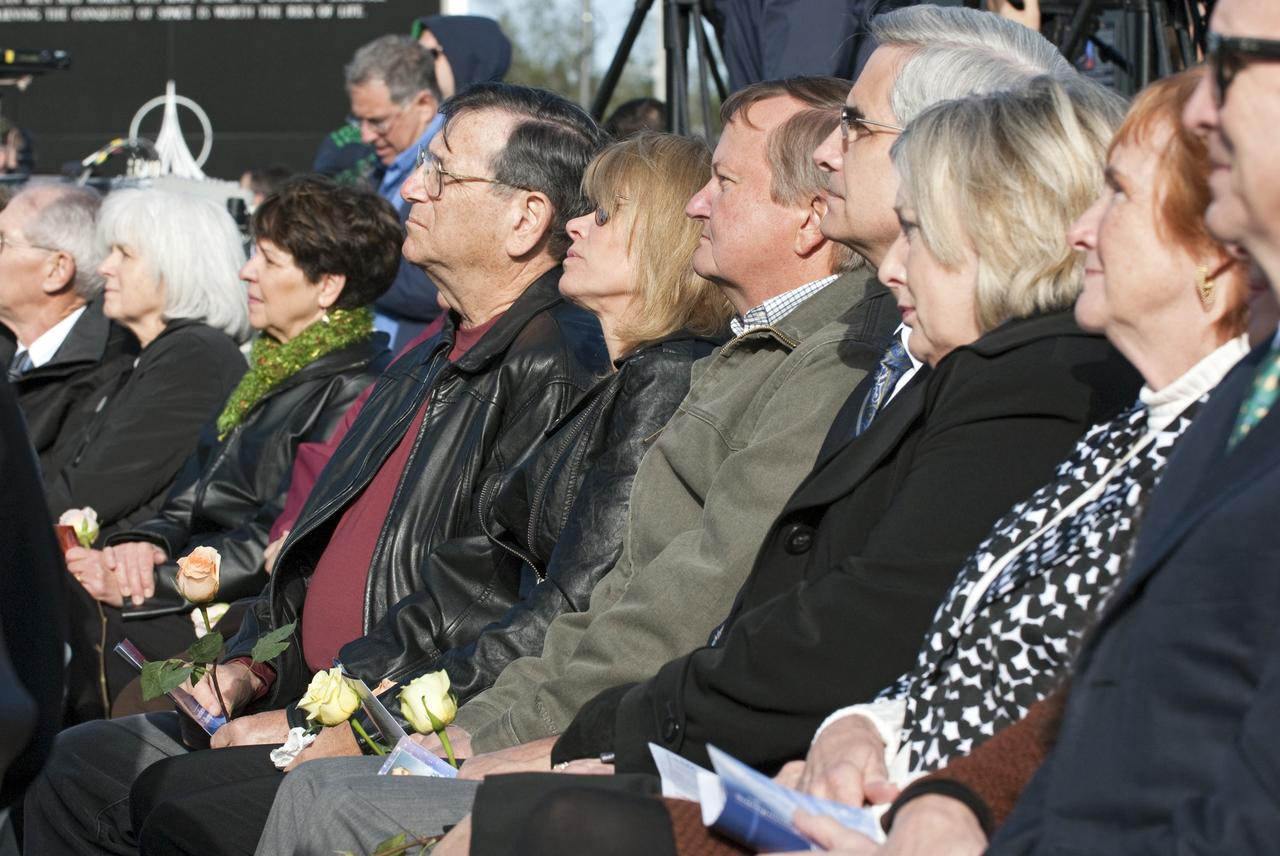
CAPE CANAVERAL, Fla. -- A crowd gathers in front of the Space Mirror Memorial at the Kennedy Space Center Visitor Complex in Florida to honor space shuttle Challenger's STS-51L crew members who gave their lives for while furthering the cause of exploration and discovery. 2011 marks the 25th anniversary of the loss of Challenger, which broke apart over the Atlantic Ocean 73 seconds into flight on Jan. 28, 1986. Photo credit: NASA/Kim Shiflett
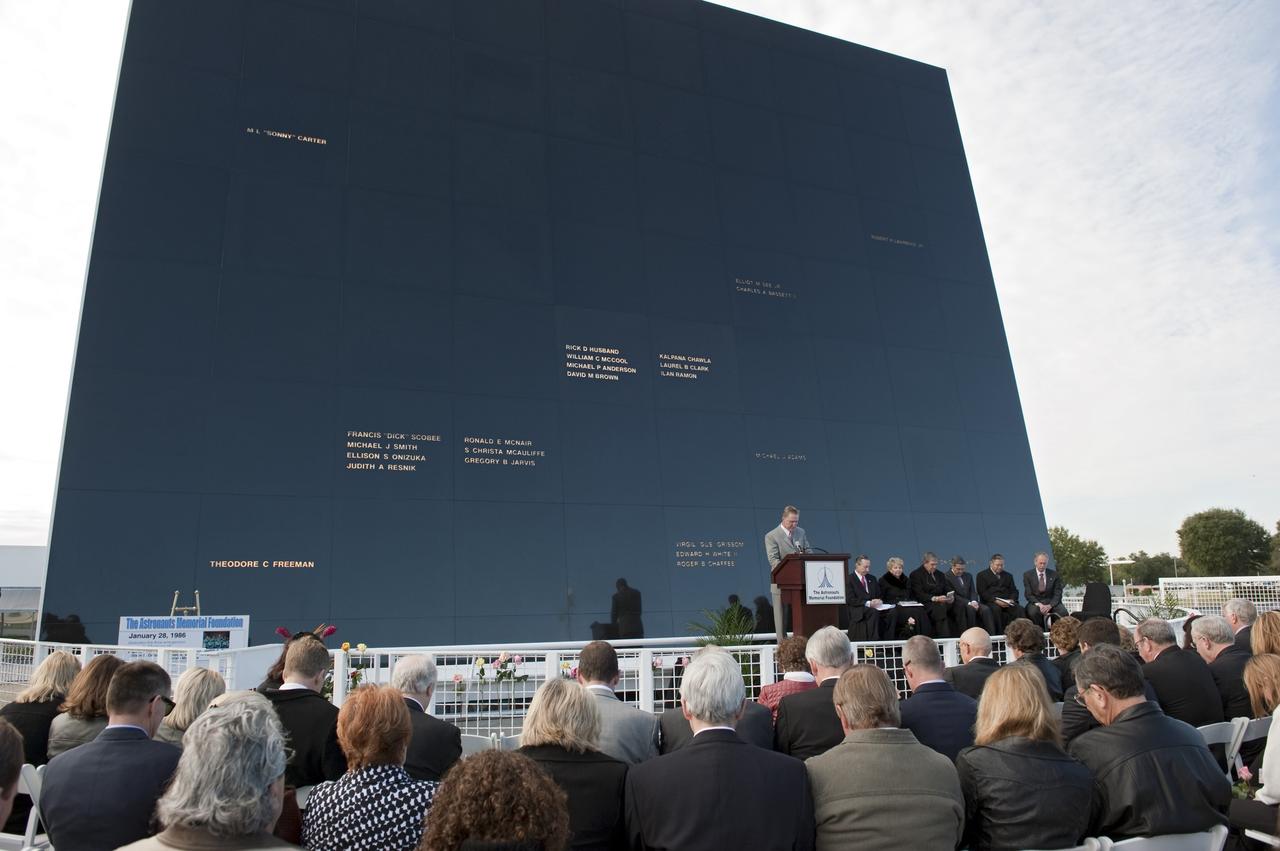
CAPE CANAVERAL, Fla. -- Mick Ukleja, from The Astronauts Memorial Foundation, provides the invocation in front of the Space Mirror Memorial at the Kennedy Space Center Visitor Complex in Florida to honor space shuttle Challenger's STS-51L crew members who gave their lives for while furthering the cause of exploration and discovery. 2011 marks the 25th anniversary of the loss of Challenger, which broke apart over the Atlantic Ocean 73 seconds into flight on Jan. 28, 1986. Photo credit: NASA/Kim Shiflett
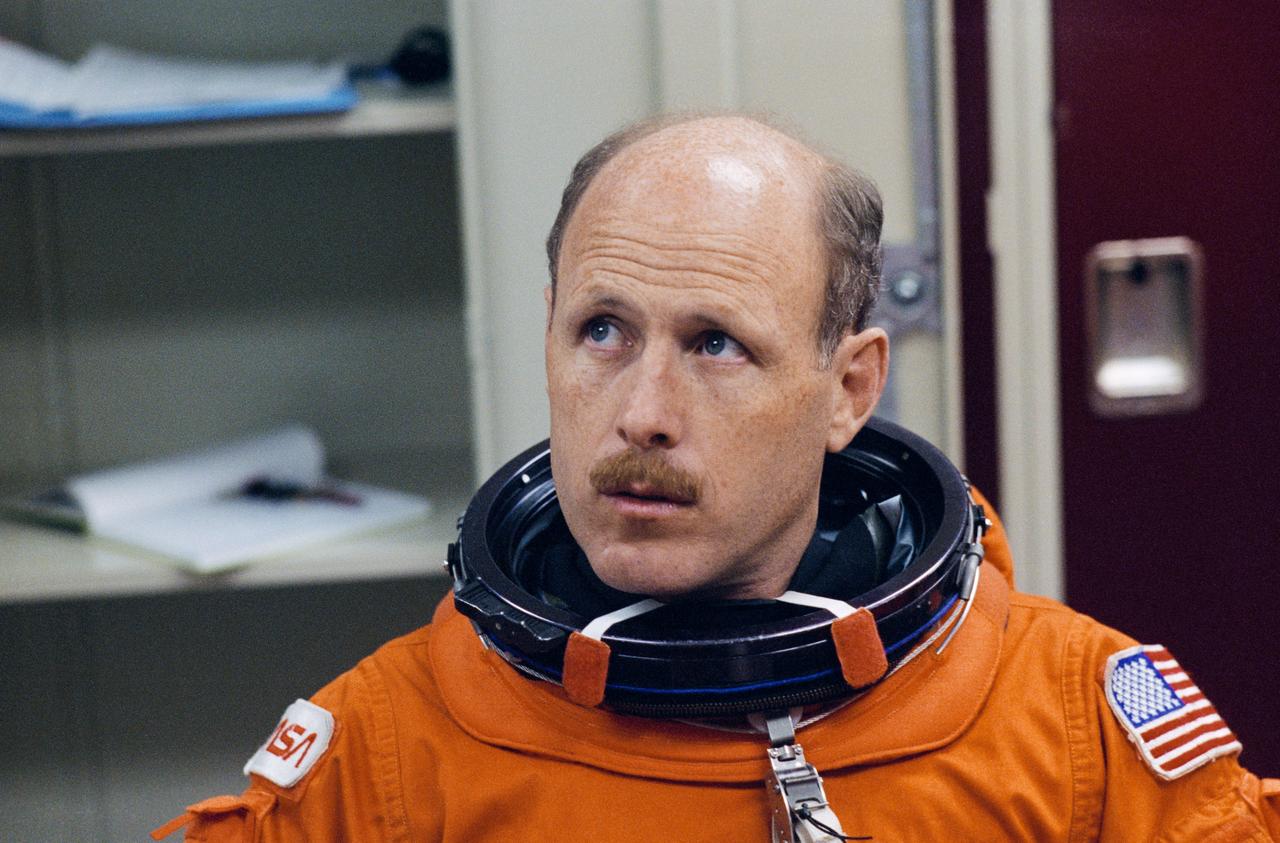
S95-09132 (27 Apr. 1995) --- As he watches one his STS-73 crew mates rappel from the top of a ?troubled Shuttle,? astronaut Kenneth D. Bowersox, mission commander, prepares to participate in an emergency egress training session in the Johnson Space Center?s (JSC) Systems Integration Facility. Five astronauts and two payload specialists from the private sector will fly aboard the Space Shuttle Columbia later this year to support the United States Microgravity Laboratory (USML-2) mission.
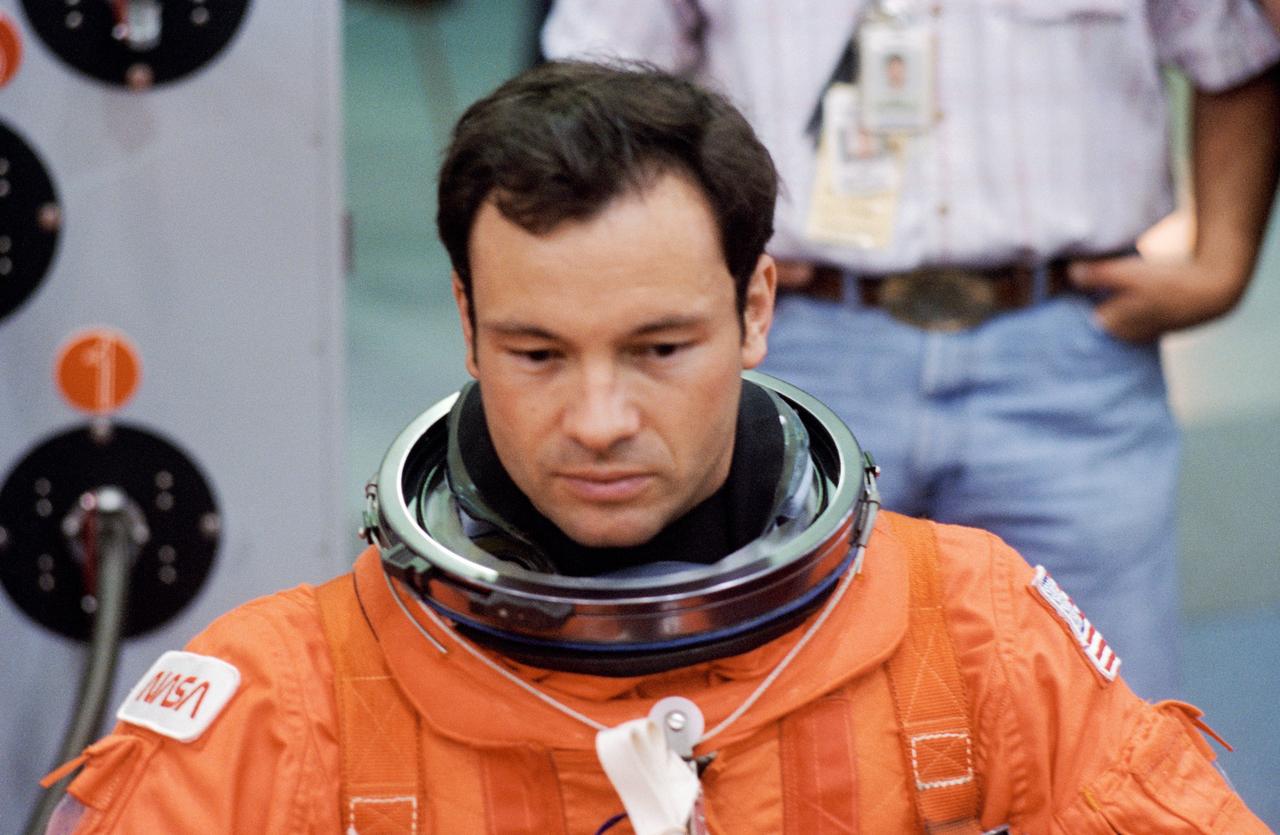
S95-09131 (27 Apr. 1995) --- Astronaut Michael E. Lopez-Alegria, mission specialist, watches as one his seven STS-73 crew mates (out of frame) rehearses action necessary in the case of an emergency with the Space Shuttle. The crew mate uses (and Lopez-Alegria later used) a Sky-genie device to rappel from the top of a ?troubled Shuttle? during emergency egress training exercises in the Systems Integration Facility at the Johnson Space Center (JSC).
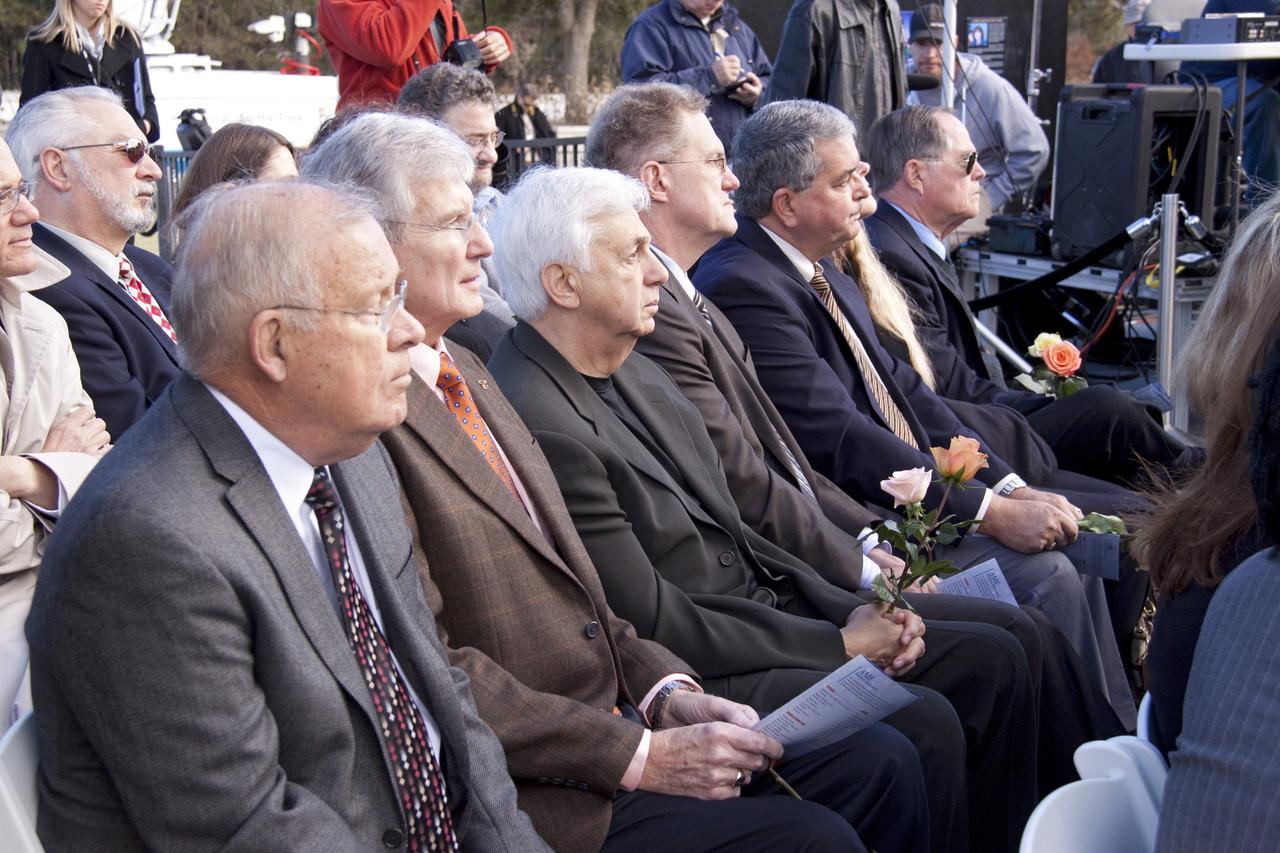
CAPE CANAVERAL, Fla. -- A crowd gathers in front of the Space Mirror Memorial at the Kennedy Space Center Visitor Complex in Florida to honor space shuttle Challenger's STS-51L crew members who gave their lives for while furthering the cause of exploration and discovery. 2011 marks the 25th anniversary of the loss of Challenger, which broke apart over the Atlantic Ocean 73 seconds into flight on Jan. 28, 1986. NASA/Jack Pfaller
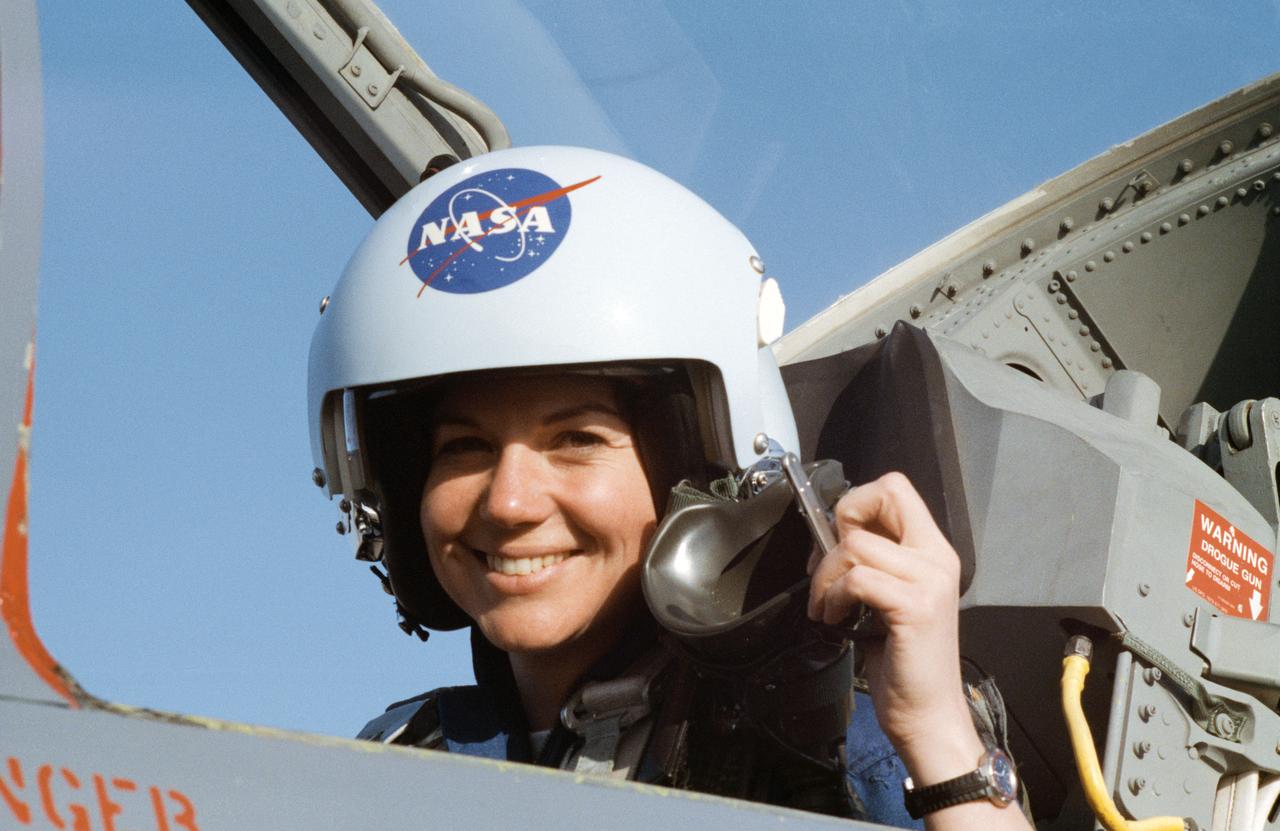
S93-30754 (September 1992) --- Astronaut Catherine G. Coleman, who had recently begun a year?s training and evaluation program at the Johnson Space Center (JSC), sits in the rear station of a T-38 jet trainer. She was about to take a familiarization flight in the jet. Coleman was later named mission specialist for NASA?s STS-73/United States Microgravity Laboratory (USML-2) mission.

STS073-355-003 (20 October - 5 November 1995) --- Doing her version of "Look, Ma, no hands" is astronaut Catherine G. Coleman. The STS-73 mission specialist works out on the bicycle ergometer on the flight deck of the Earth-orbiting Space Shuttle Columbia. Coleman was one of five NASA astronauts who were joined by two guest researchers for 16 days of in-space research in support of the United States Microgravity Laboratory (USML-2) mission.

STS073-E-5003 (23 Oct. 1995) --- Astronaut Kathryn C. Thornton, STS-73 payload commander, works at the Drop Physics Module (DPM) on the portside of the science module aboard the Space Shuttle Columbia in Earth orbit. Payload specialist Albert Sacco Jr. conducts an experiment at the Glovebox. This frame was exposed with the color Electronic Still Camera (ESC) assigned to the 16-day United States Microgravity Laboratory (USML-2) mission.
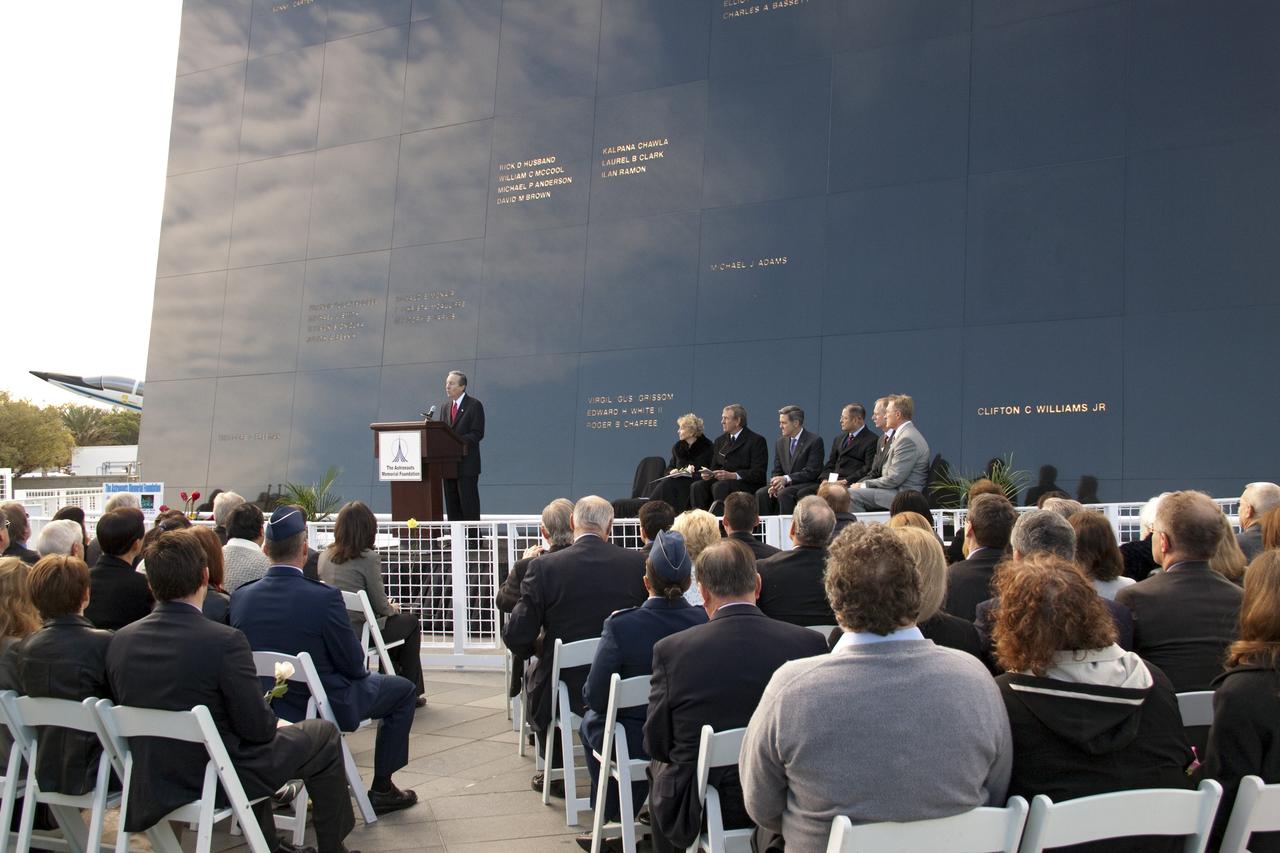
CAPE CANAVERAL, Fla. -- Stephen Feldman, president of the Astronauts Memorial Foundation, speaks to a crowd gathered in front of the Space Mirror Memorial at the Kennedy Space Center Visitor Complex in Florida to honor space shuttle Challenger's STS-51L crew members who gave their lives for while furthering the cause of exploration and discovery. 2011 marks the 25th anniversary of the loss of Challenger, which broke apart over the Atlantic Ocean 73 seconds into flight on Jan. 28, 1986. NASA/Jack Pfaller
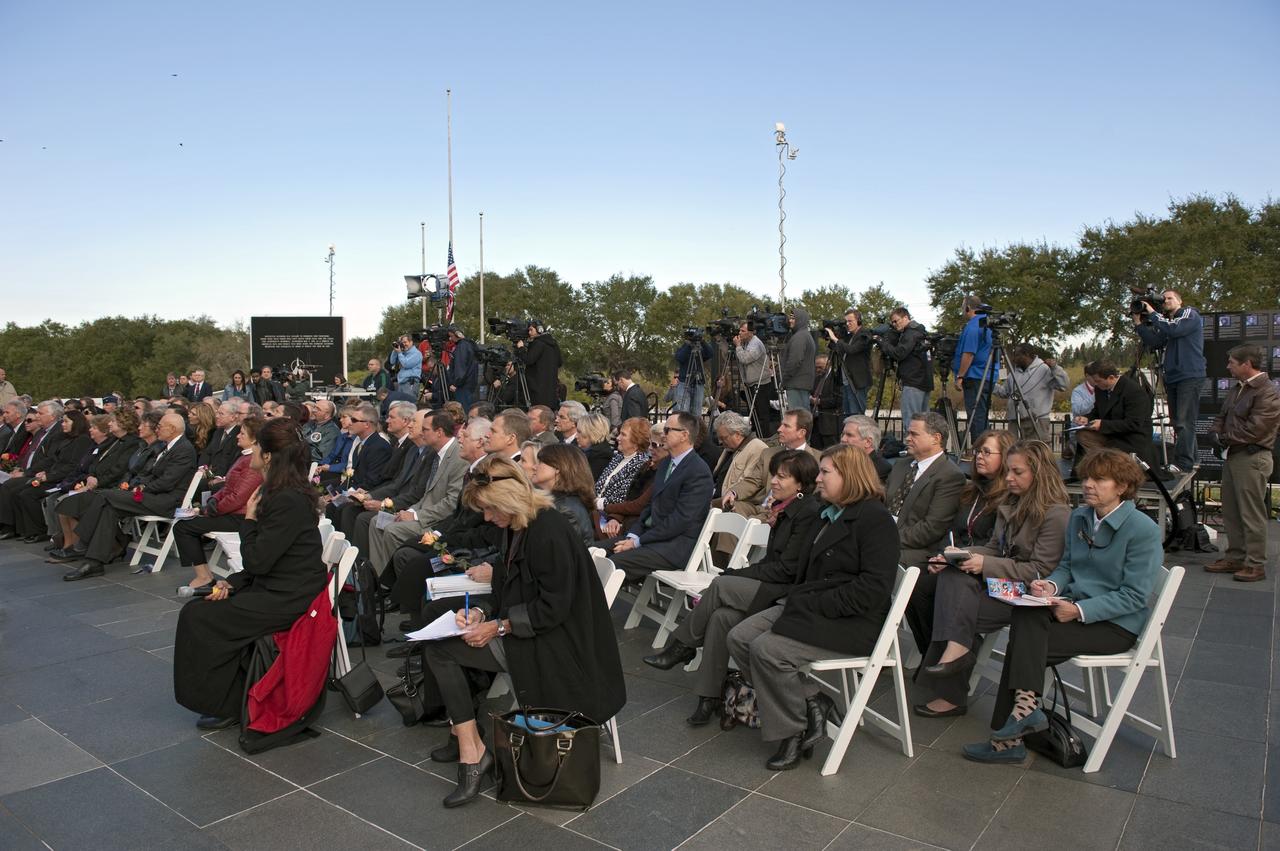
CAPE CANAVERAL, Fla. -- A crowd gathers in front of the Space Mirror Memorial at the Kennedy Space Center Visitor Complex in Florida to honor space shuttle Challenger's STS-51L crew members who gave their lives for while furthering the cause of exploration and discovery. 2011 marks the 25th anniversary of the loss of Challenger, which broke apart over the Atlantic Ocean 73 seconds into flight on Jan. 28, 1986. Photo credit: NASA/Kim Shiflett
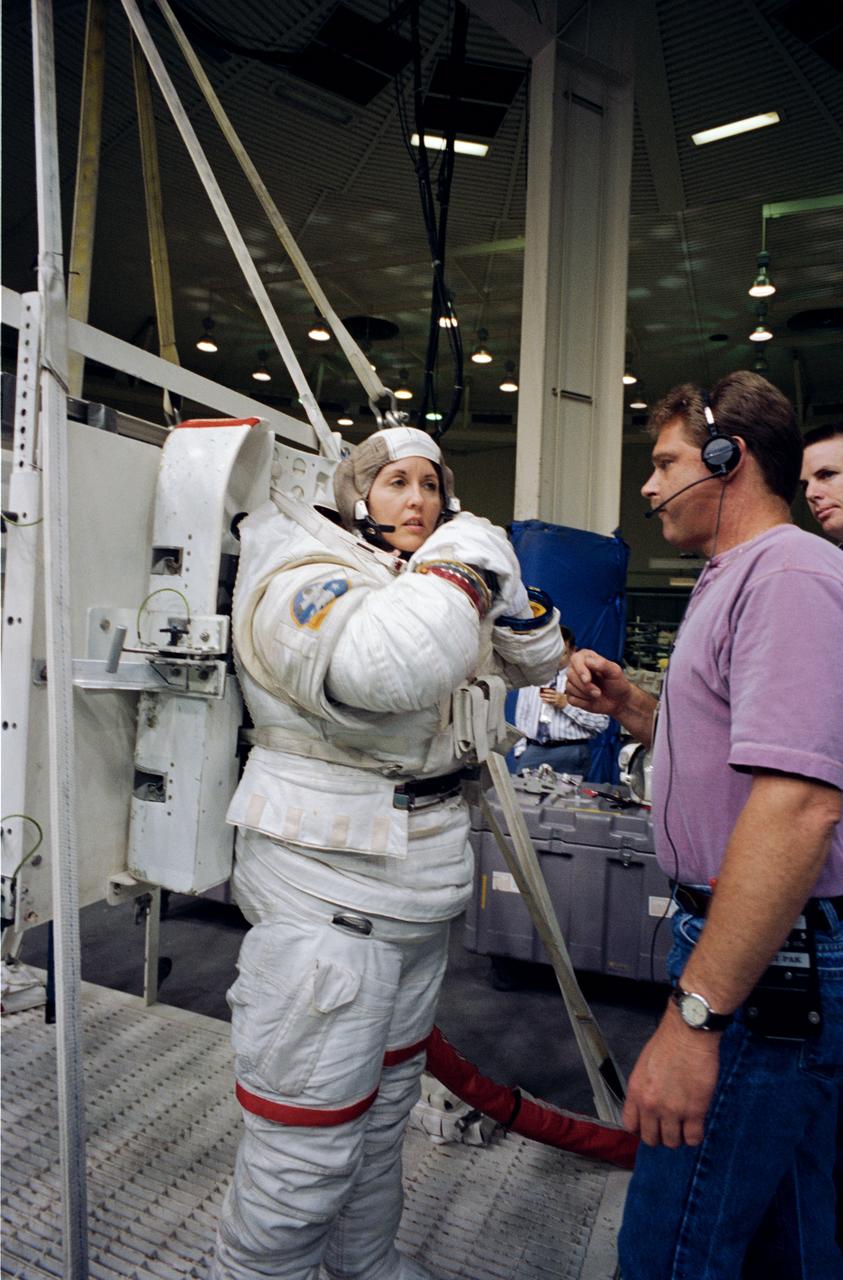
S95-08375 (August 1995) --- Astronaut Kathryn C. Thornton, payload commander for the U.S. Microgravity Laboratory (USML-2) mission, prepares to go underwater in the Johnson Space Center?s (JSC) Weightless Environment Training Facility (WET-F) pool. Thornton was about to rehearse contingency space walk tasks; there is no Extravehicular Activity (EVA) planned for the STS-73 mission.
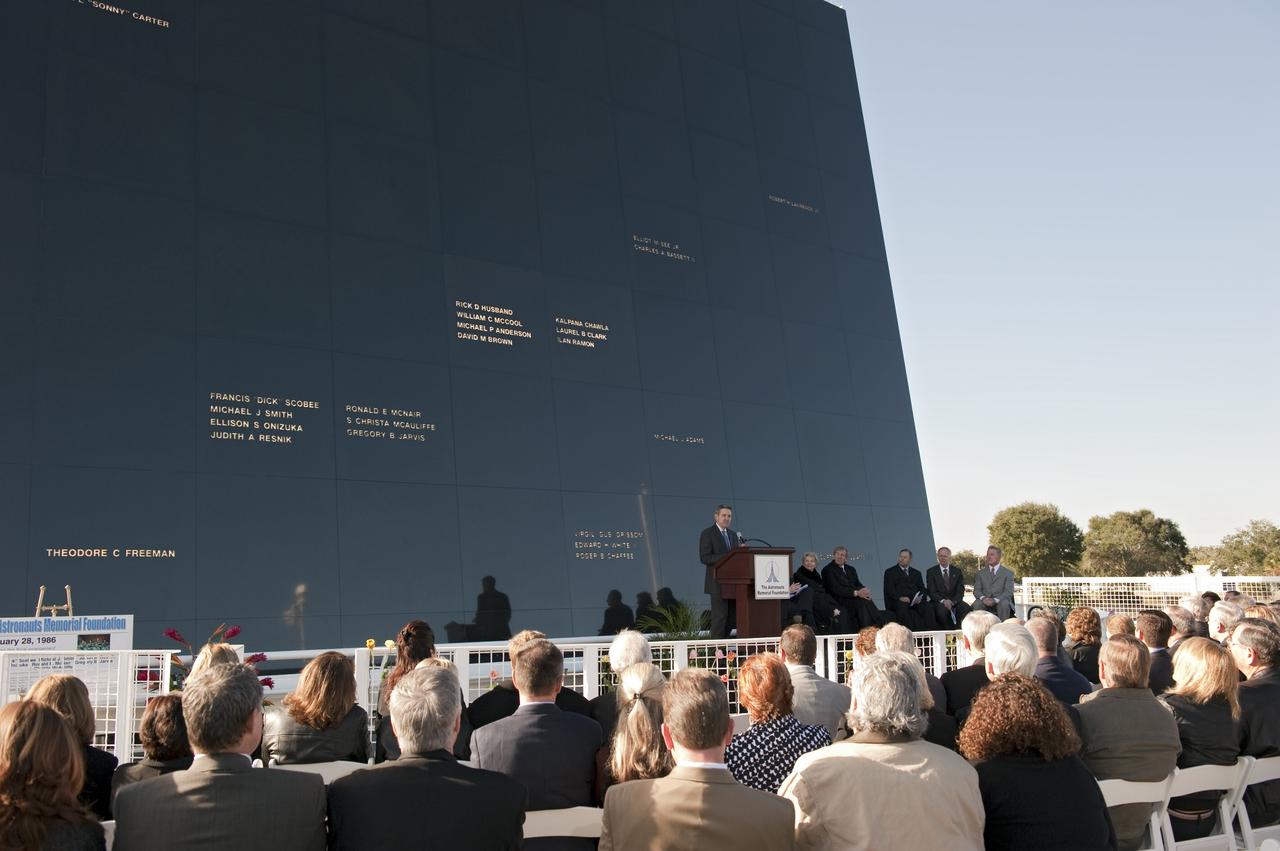
CAPE CANAVERAL, Fla. -- Former astronaut and NASA Kennedy Space Center Director Bob Cabana speaks to a crowd gathered in front of the Space Mirror Memorial at the Kennedy Space Center Visitor Complex in Florida to honor space shuttle Challenger's STS-51L crew members who gave their lives for while furthering the cause of exploration and discovery. 2011 marks the 25th anniversary of the loss of Challenger, which broke apart over the Atlantic Ocean 73 seconds into flight on Jan. 28, 1986. Photo credit: NASA/Kim Shiflett
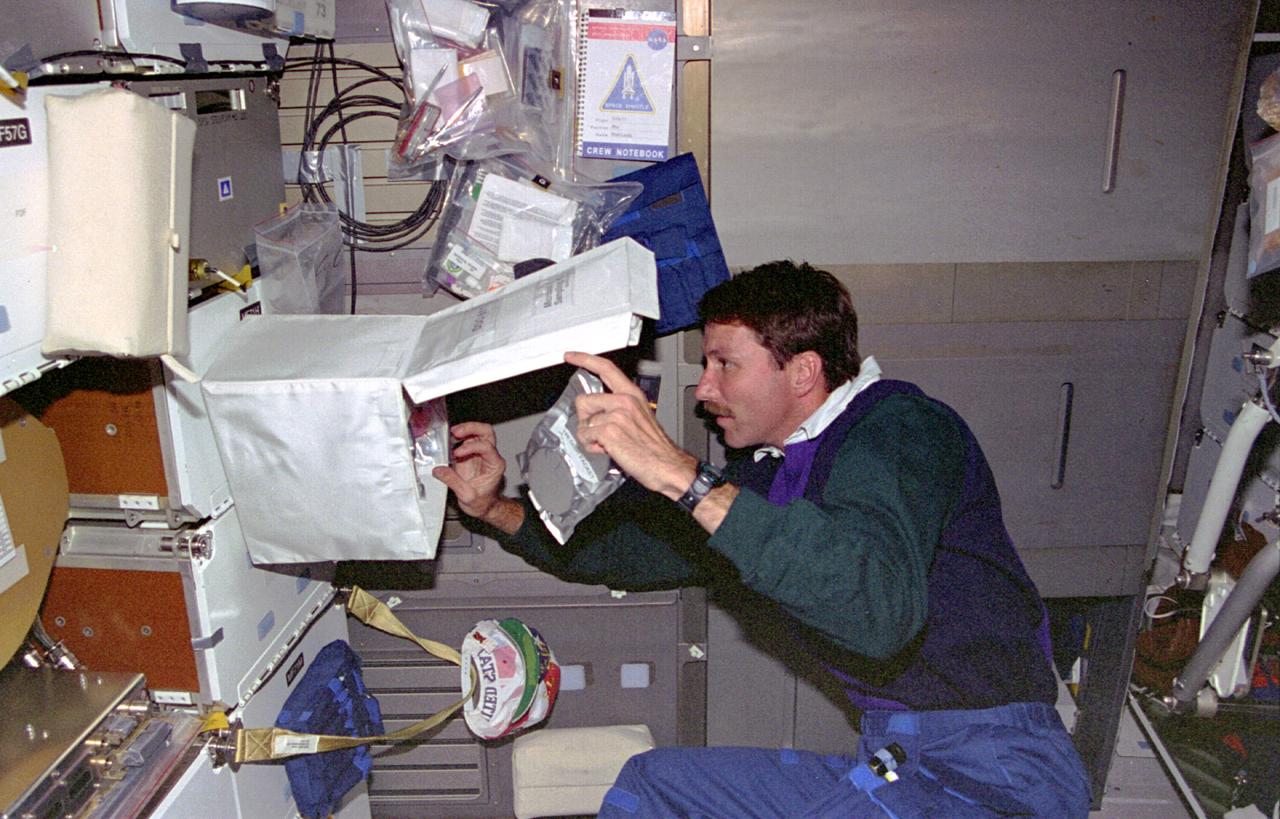
STS073-352-008 (20 October - 5 November 1995) --- On the middeck of the Earth-orbiting Space Shuttle Columbia, astronaut Kent V. Rominger, STS-73 pilot, retrieves gear necessary for sampling of the air. In addition to his pilot duties and the performance of tasks in support of the U.S. Microgravity Laboratory (USML-2) mission, Rominger and other crew members pitched in with housekeeping chores as part of their 16-days of Earth-orbit activity.
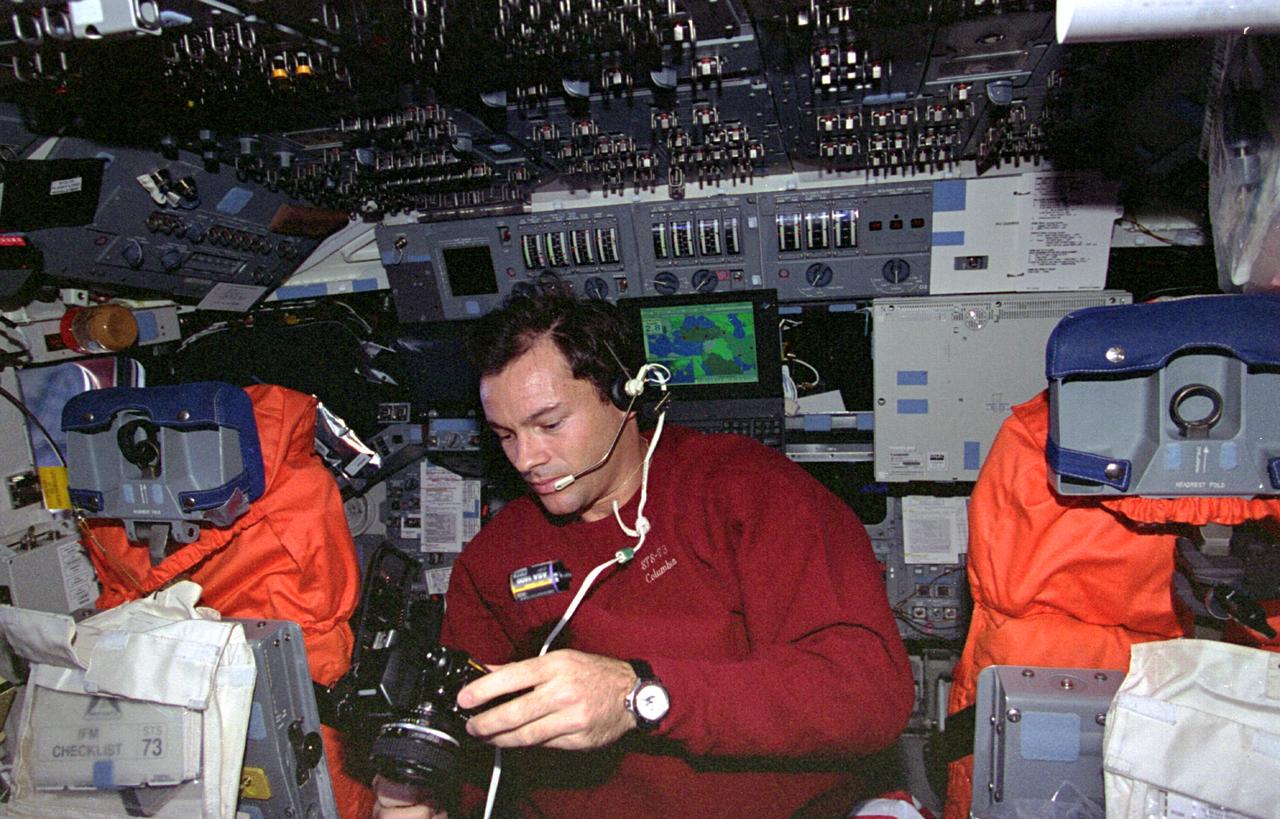
STS073-335-009 (20 October-5 November 1995) --- Astronaut Michael E. Lopez-Alegria, STS-73 mission specialist, changes the film in a 35mm camera on the flight deck of the Earth-orbiting Space Shuttle Columbia. Alegria joined four other NASA astronauts and two guest researchers for almost 16-days of Earth-orbit research in support of the U.S. Microgravity Laboratory (USML-2) mission.
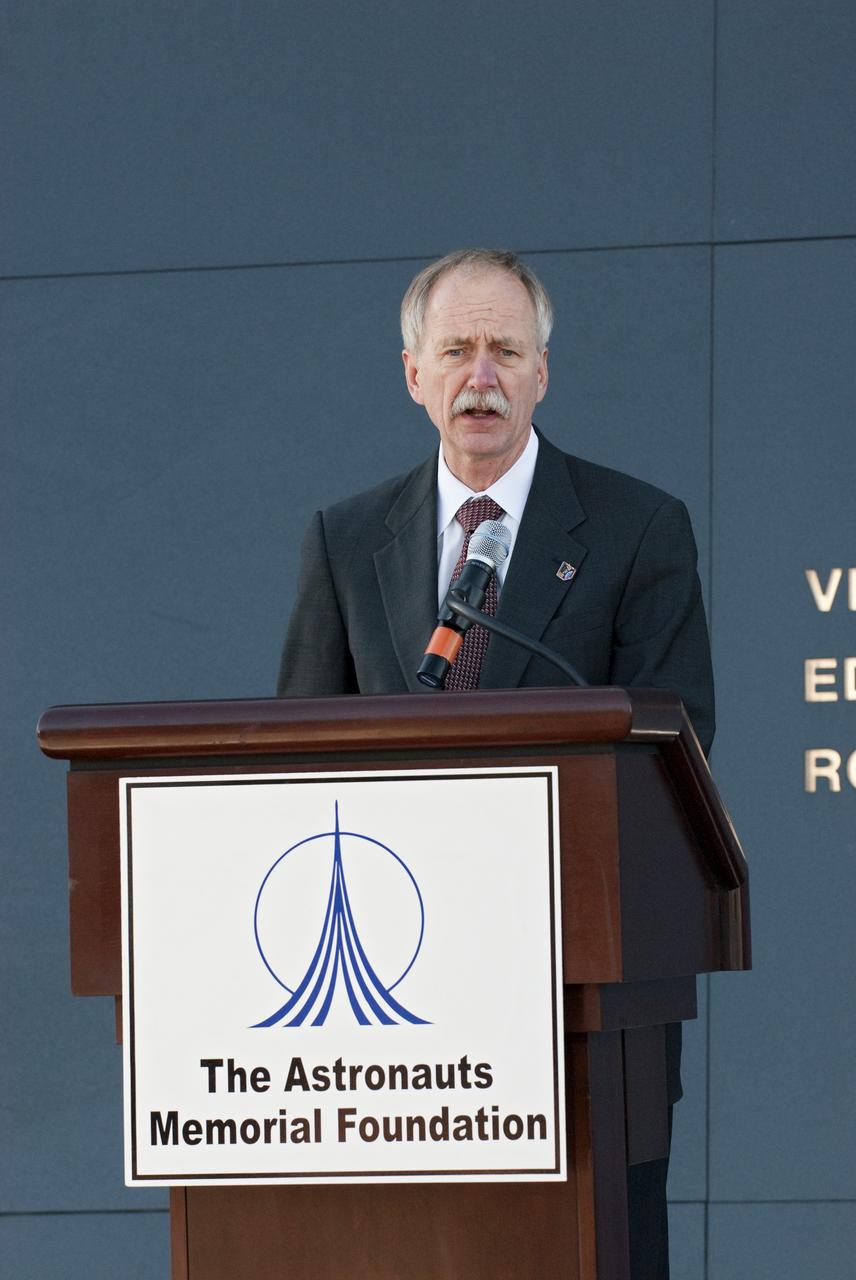
CAPE CANAVERAL, Fla. -- NASA Associate Administrator for Space Operations William Gerstenmaier speaks to a crowd gathered in front of the Space Mirror Memorial at the Kennedy Space Center Visitor Complex in Florida to honor space shuttle Challenger's STS-51L crew members who gave their lives for while furthering the cause of exploration and discovery. 2011 marks the 25th anniversary of the loss of Challenger, which broke apart over the Atlantic Ocean 73 seconds into flight on Jan. 28, 1986. Photo credit: NASA/Kim Shiflett
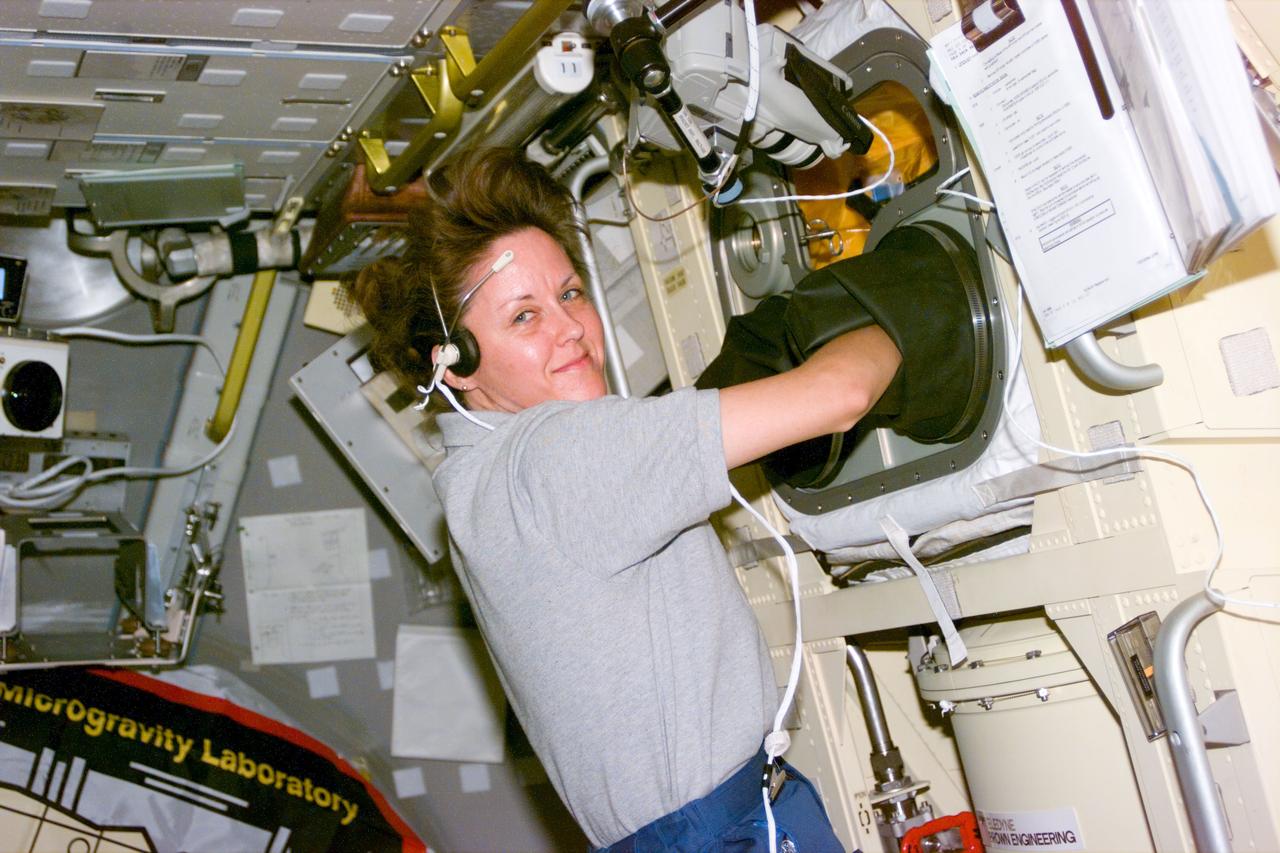
STS073-E-5246 (3 Nov. 1995) --- Astronaut Kathryn C. Thornton, STS-73 payload commander, works in the Glovebox of the science module supporting the U.S. Microgravity Laboratory (USML-2) mission. Five NASA astronauts and two payload specialists are in the last few days of a scheduled 16-day mission. This frame was exposed with the Electronic Still Camera (ESC).

STS073-E-5000 (23 Oct. 1995) --- Astronaut Catherine G. Coleman, STS-73 mission specialist, works in the Glovebox on the portside of the science module aboard the space shuttle Columbia in Earth orbit. This Electronic Still Camera (ESC) frame was the first downlinked from the spacecraft during the scheduled 16-day United States Microgravity Laboratory (USML-2) mission.
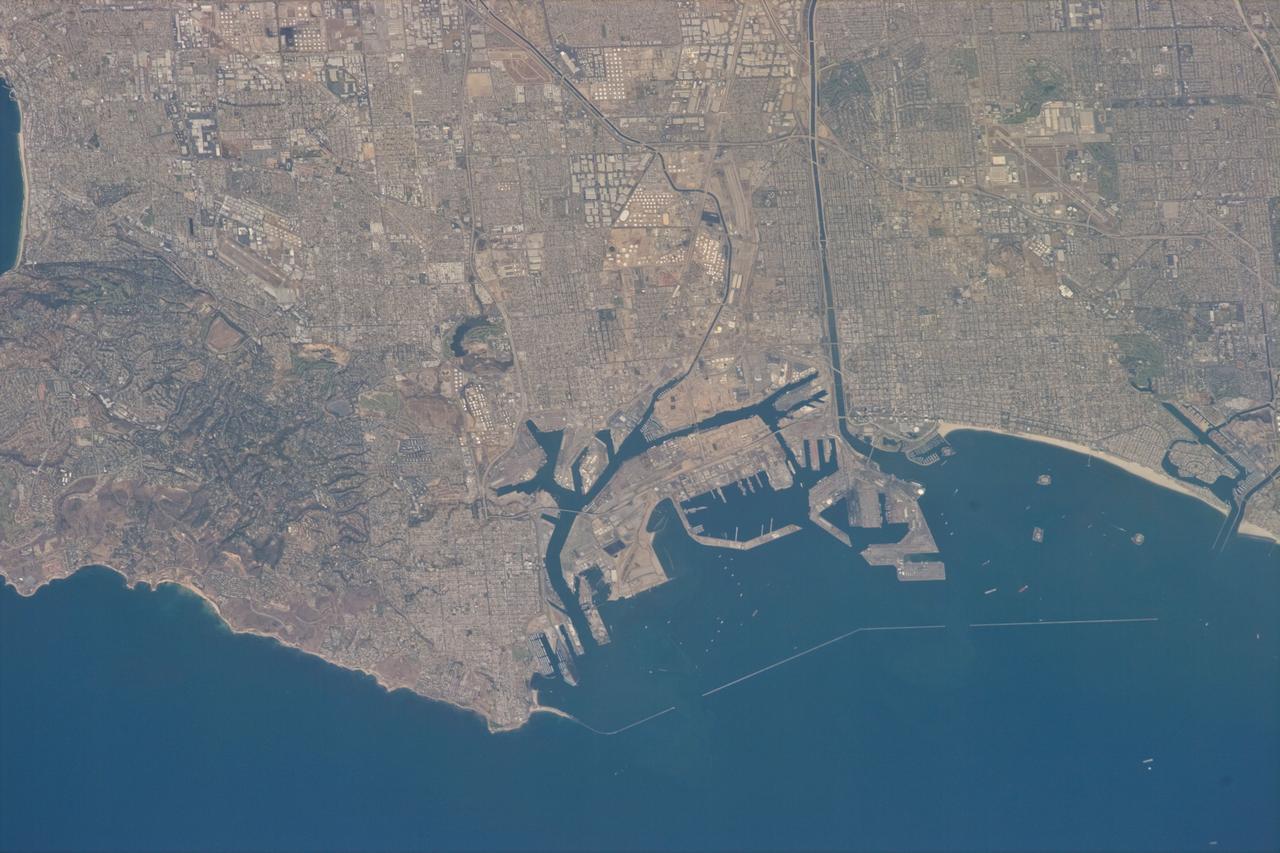
STS073-E-5081 (30 Oct. 1995) --- The port of the Queen Mary ocean liner is near bottom right center in this Electronic Still Camera (ESC) view. The scene covers from Redondo Beach on the left to Seal Beach on the right; from San Pedro at bottom to the Torrance-Gardena area at top.
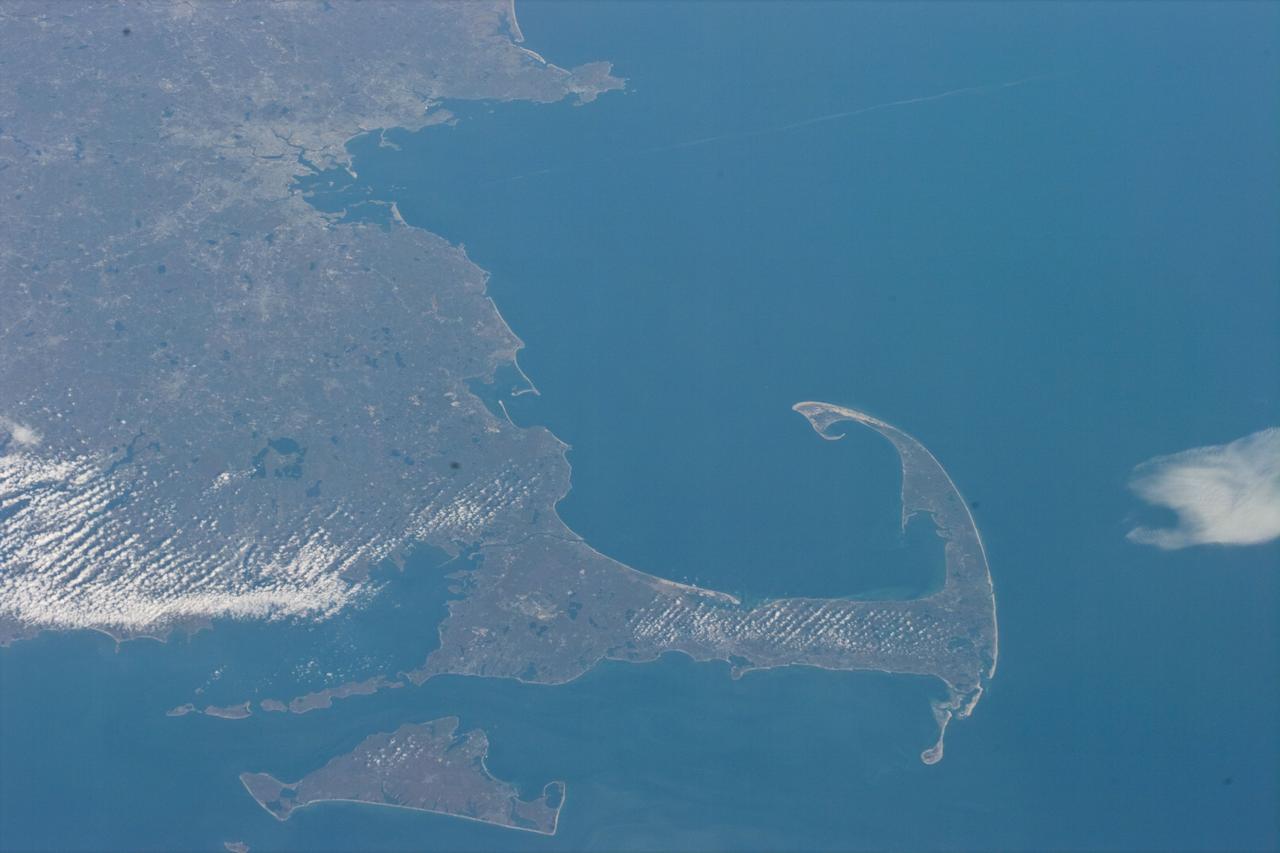
STS073-E-5099 (30 Oct. 1995) --- The entire coast of Massachusetts can be seen, from Martha's Vineyard and Buzzard's Bay in the foreground past the Boston metropolitan region. The frame was exposed with the Electronic Still Camera (ESC).
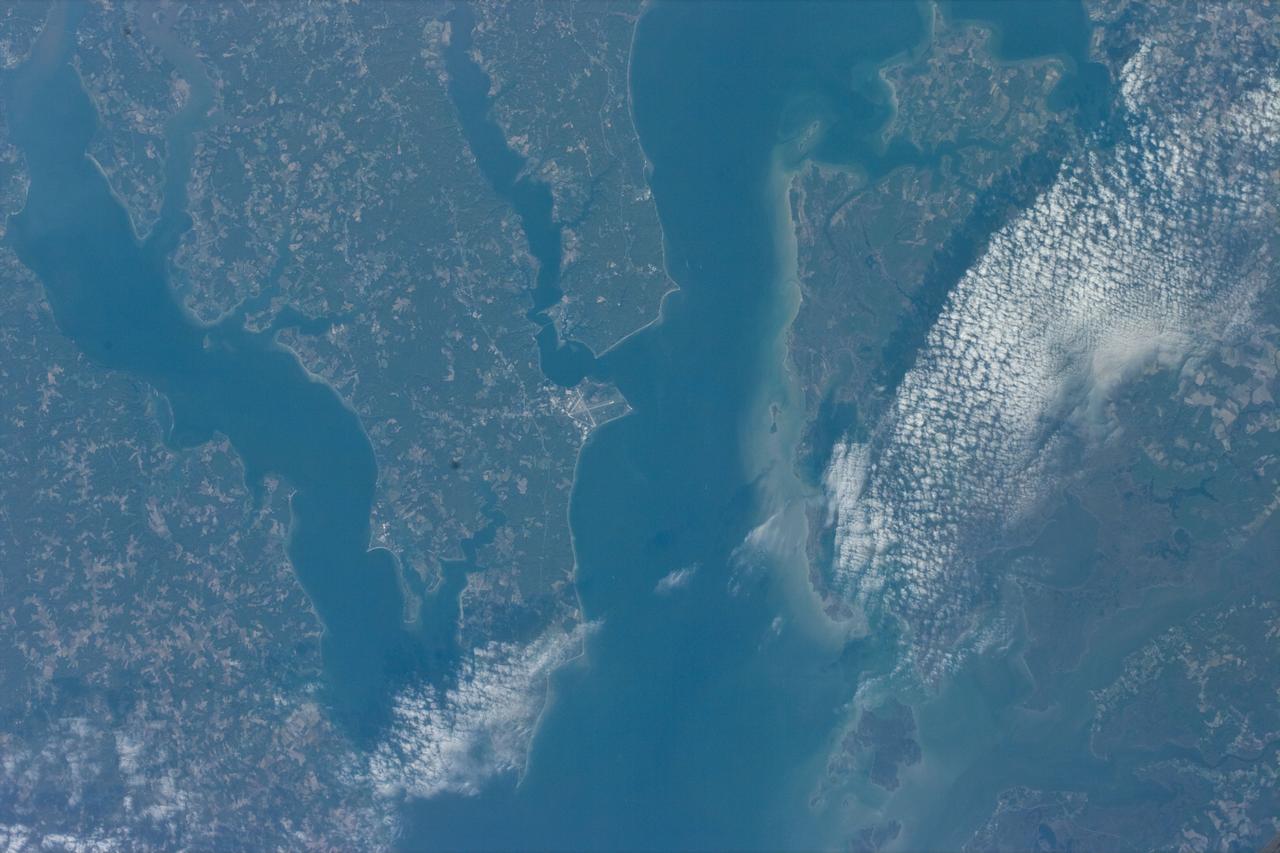
STS073-E-5096 (30 Oct. 1995) --- Central Chesapeake Bay. The lower Potomac River and Patuxent River join the Bay, whose eastern side is muddy from sediment eroded from the shoreline. The image is centered on the Patuxent River Naval Air Station. The frame was exposed with the Electronic Still Camera (ESC).
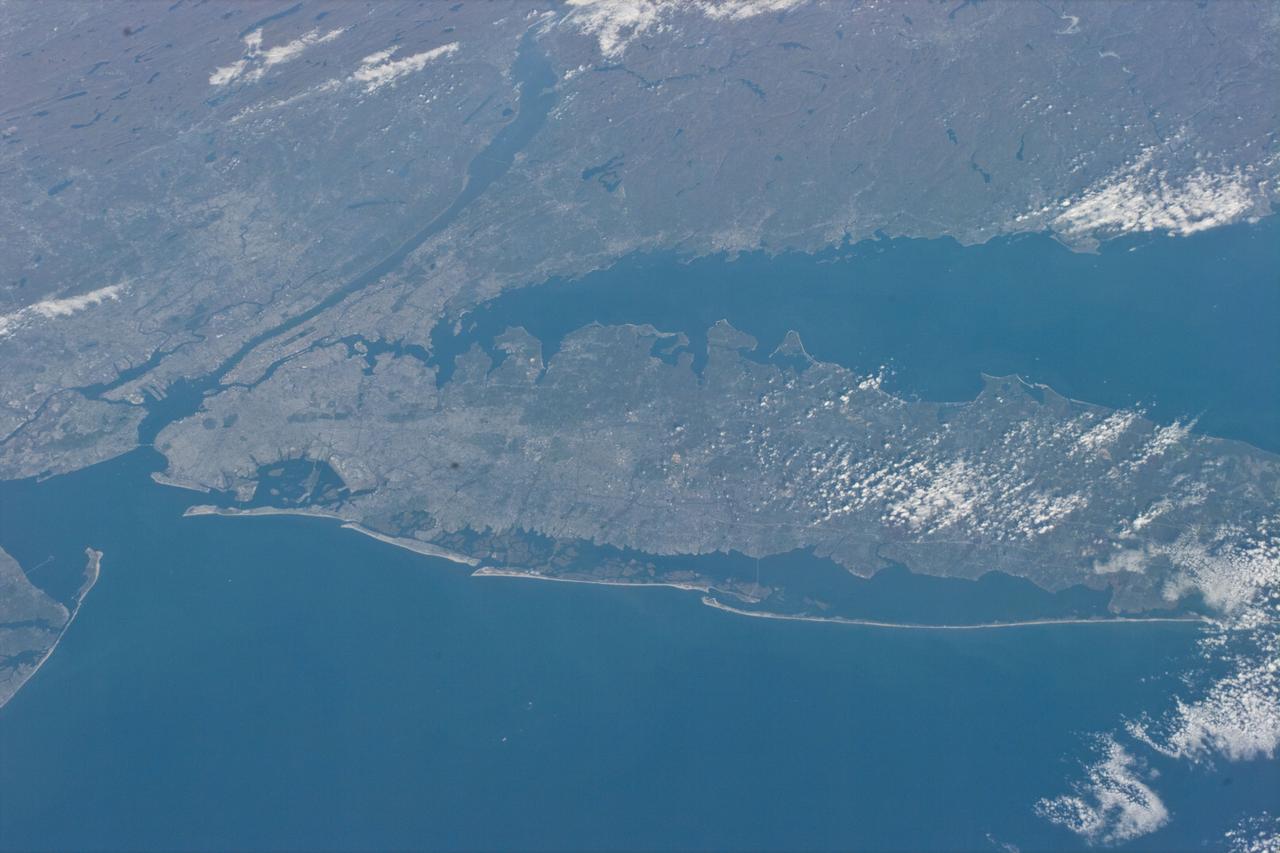
STS073-E-5098 (30 Oct. 1995) --- Long Island, New York stretches across the scene. The New York City metropolitan complex is at the left; Central Park can be seen as a dark rectangle between the Hudson and East Rivers. Sandy beaches of the Long Island barrier islands mark the boundary between Atlantic Ocean and quiet lagoons and marshes. The frame was exposed with the Electronic Still Camera (ESC).
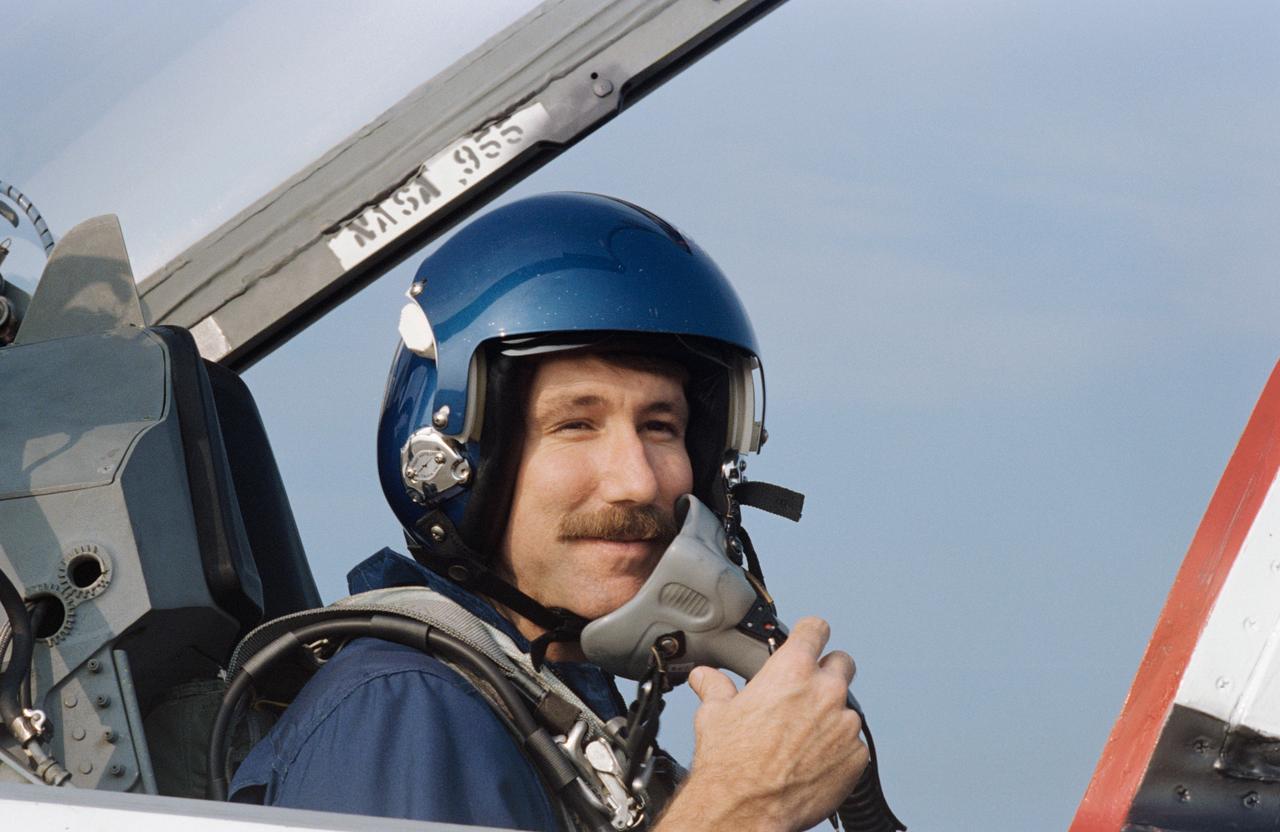
S95-17155 (24 Aug. 1995) --- Astronaut Kent V. Rominger sits in the forward station of a NASA T-38 jet trainer. Rominger was named last year as pilot for the U.S. Microgravity Laboratory (USML-2) mission, scheduled for next year.
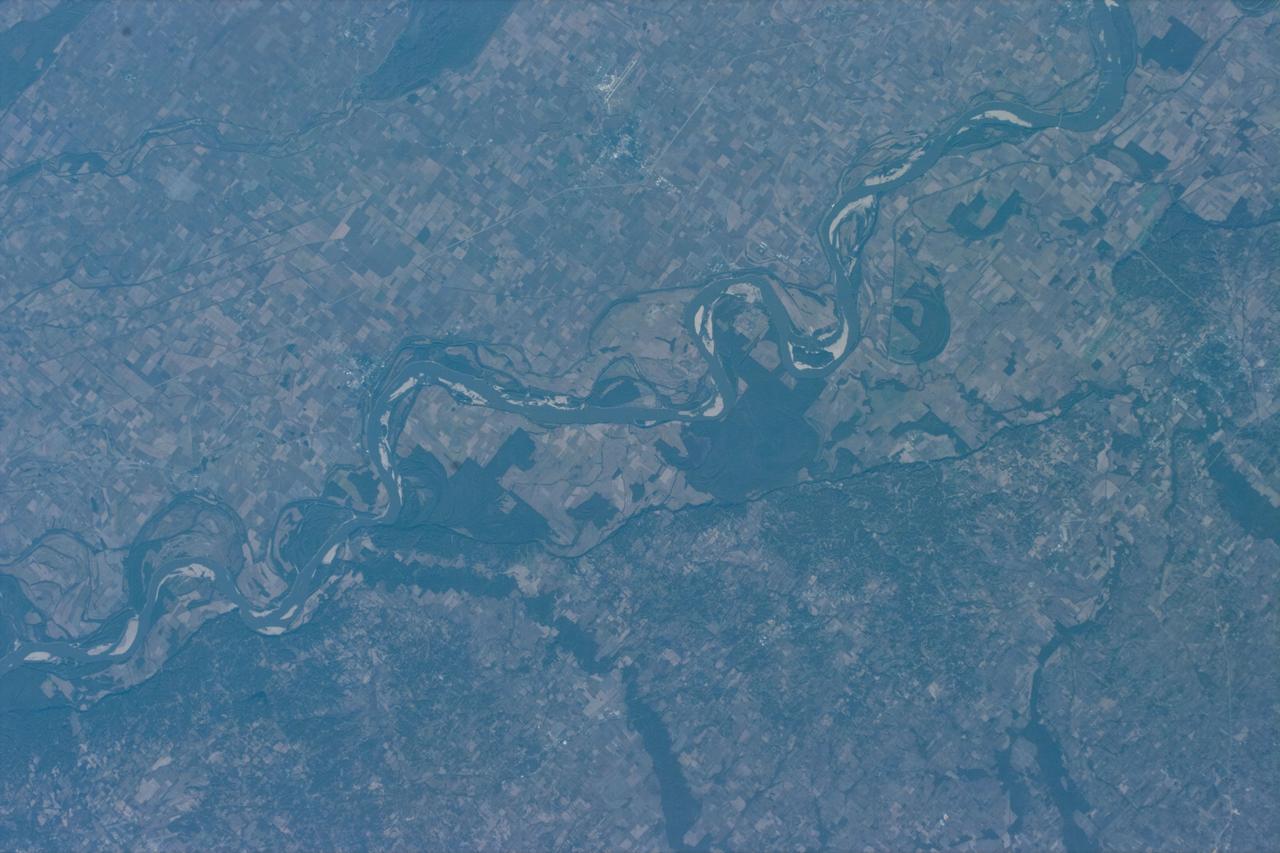
STS073-E-5091 (30 Oct. 1995) --- The Mississippi River meanders through its floodplain between the northeastern corner of Arkansas and the northwestern corner of Tennessee. Blytheville, Arkansas and the former Eaker Air Force Base can be seen near the top of the image. The frame was exposed with the Electronic Still Camera (ESC).
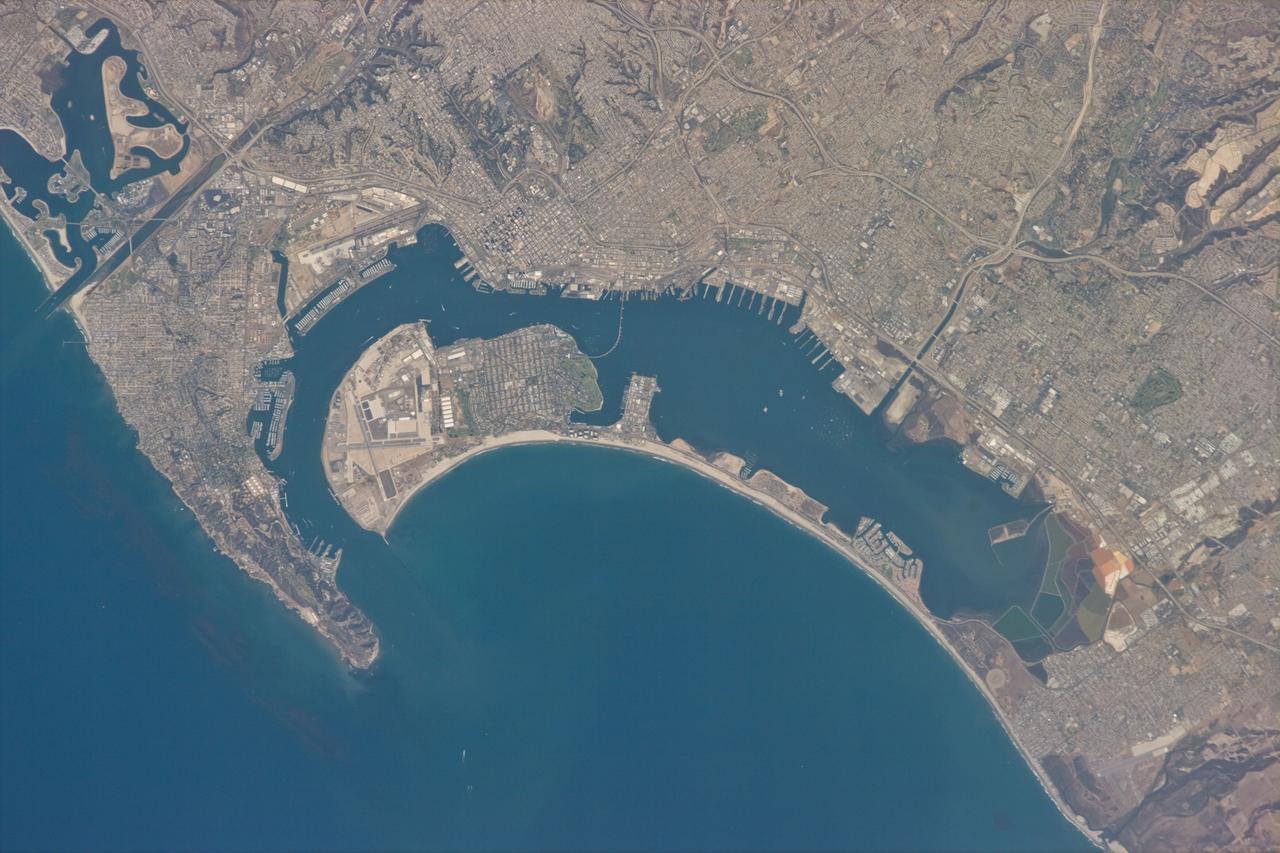
STS073-E-5082 (30 Oct. 1995) --- The United States Naval Air Station at San Diego is near left center in this Electronic Still Camera (ESC) view. Also seen are the nearby United States Naval Reservation and the Coronado Amphibious Base. The United States - Mexico border is just out of view at bottom right edge of the frame.
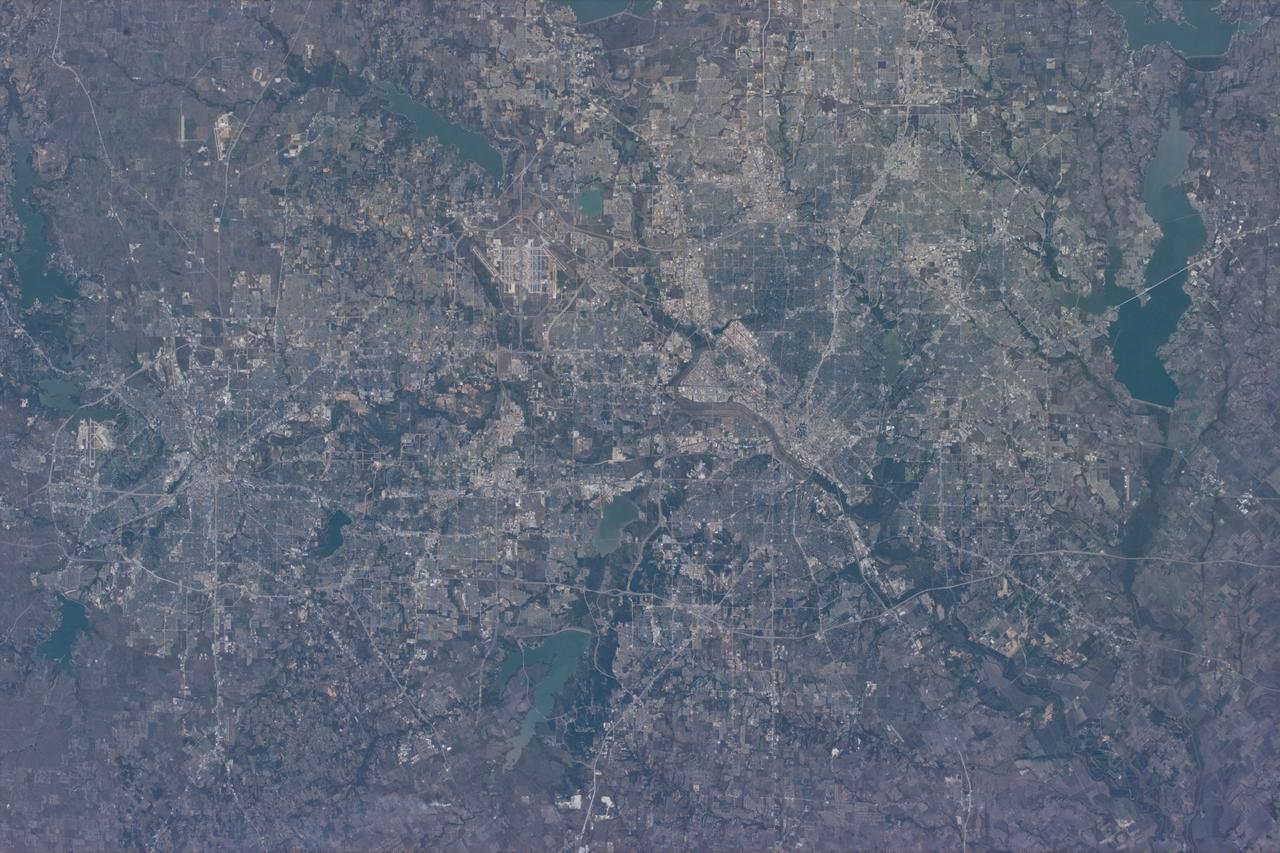
STS073-E-5071 (30 Oct. 1995) --- The Dallas-Ft. Worth metroplex is featured in this vertical view provided by an Electronic Still Camera (ESC) aboard the Earth-orbiting space shuttle Columbia. The area covers a range from Lake Benbrook on the left to Rockwall County (the state's smallest of 254 counties) on the right; and from a point just above Waxahachie on the south to Carrollton, north.
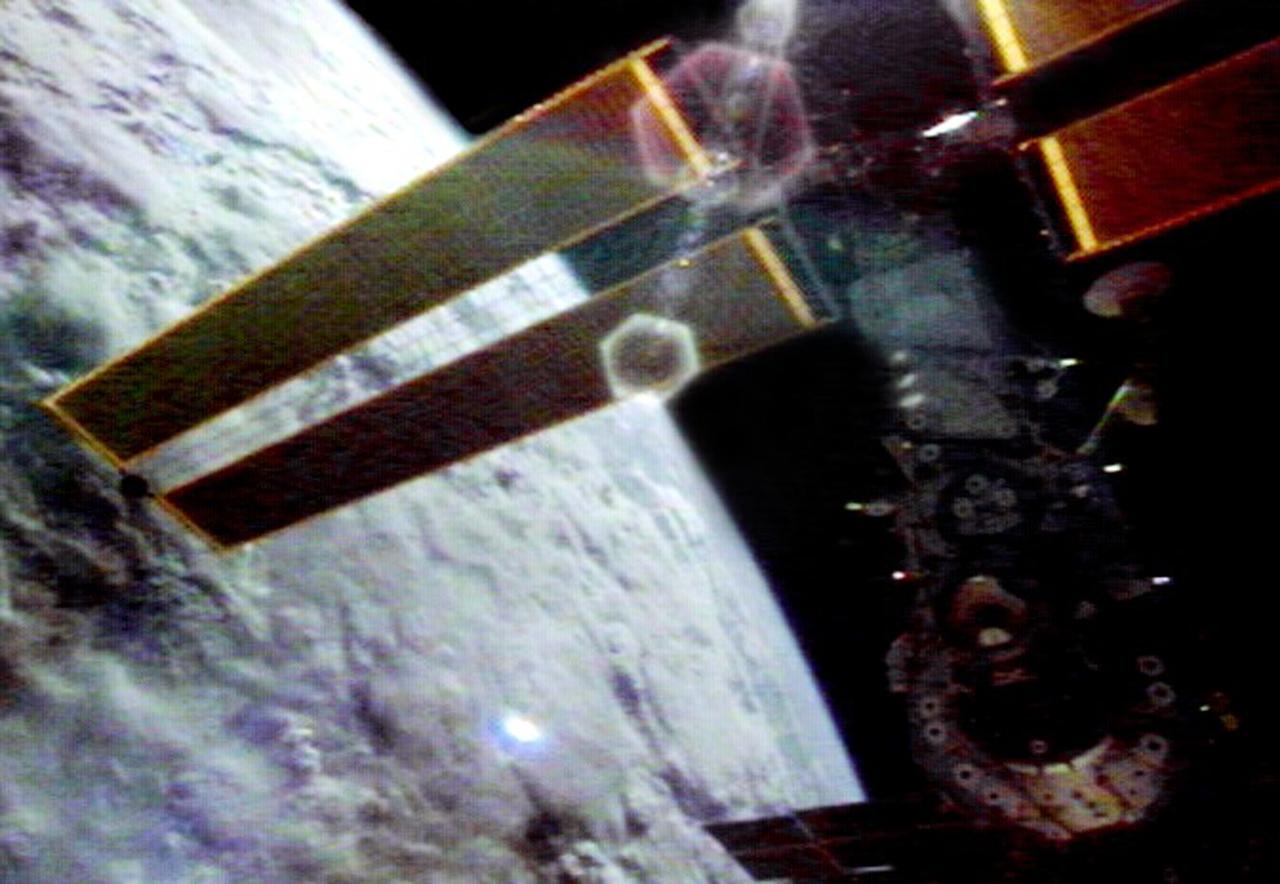
This video still depicts the recently deployed starboard and port solar arrays towering over the International Space Station (ISS). The video was recorded on STS-97's 65th orbit. Delivery, assembly, and activation of the solar arrays was the main mission objective of STS-97. The electrical power system, which is built into a 73-meter (240-foot) long solar array structure consists of solar arrays, radiators, batteries, and electronics, and will provide the power necessary for the first ISS crews to live and work in the U.S. segment. The entire 15.4-metric ton (17-ton) package is called the P6 Integrated Truss Segment, and is the heaviest and largest element yet delivered to the station aboard a space shuttle. The STS-97 crew of five launched aboard the Space Shuttle Orbiter Endeavor on November 30, 2000 for an 11 day mission.