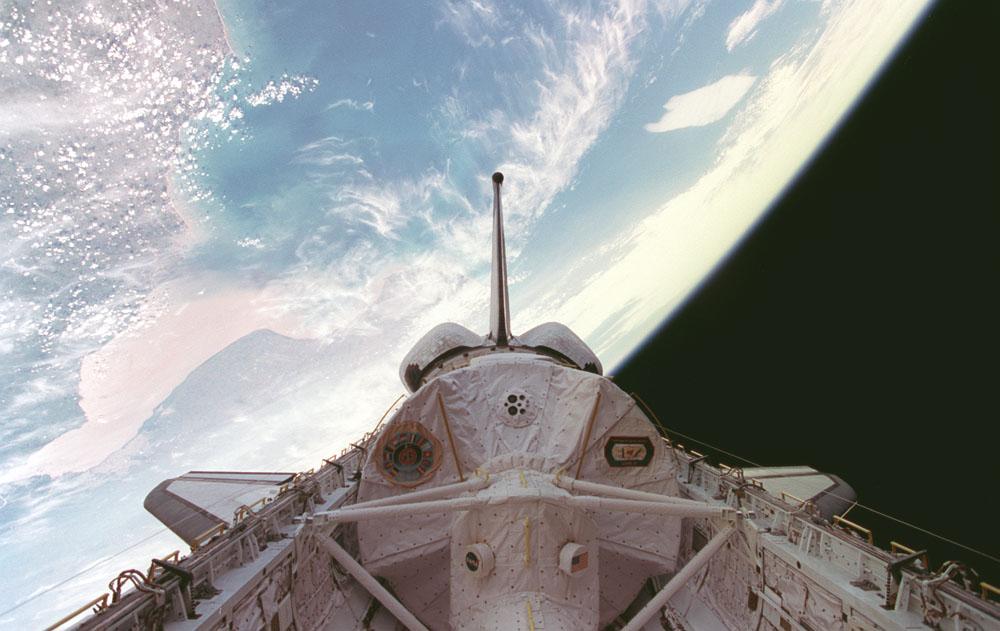
Onboard photo of space shuttle Columbia (STS-73) cargo bay payload - the United States Microgravity Laboratory-2 (USML-2) with an earthview.
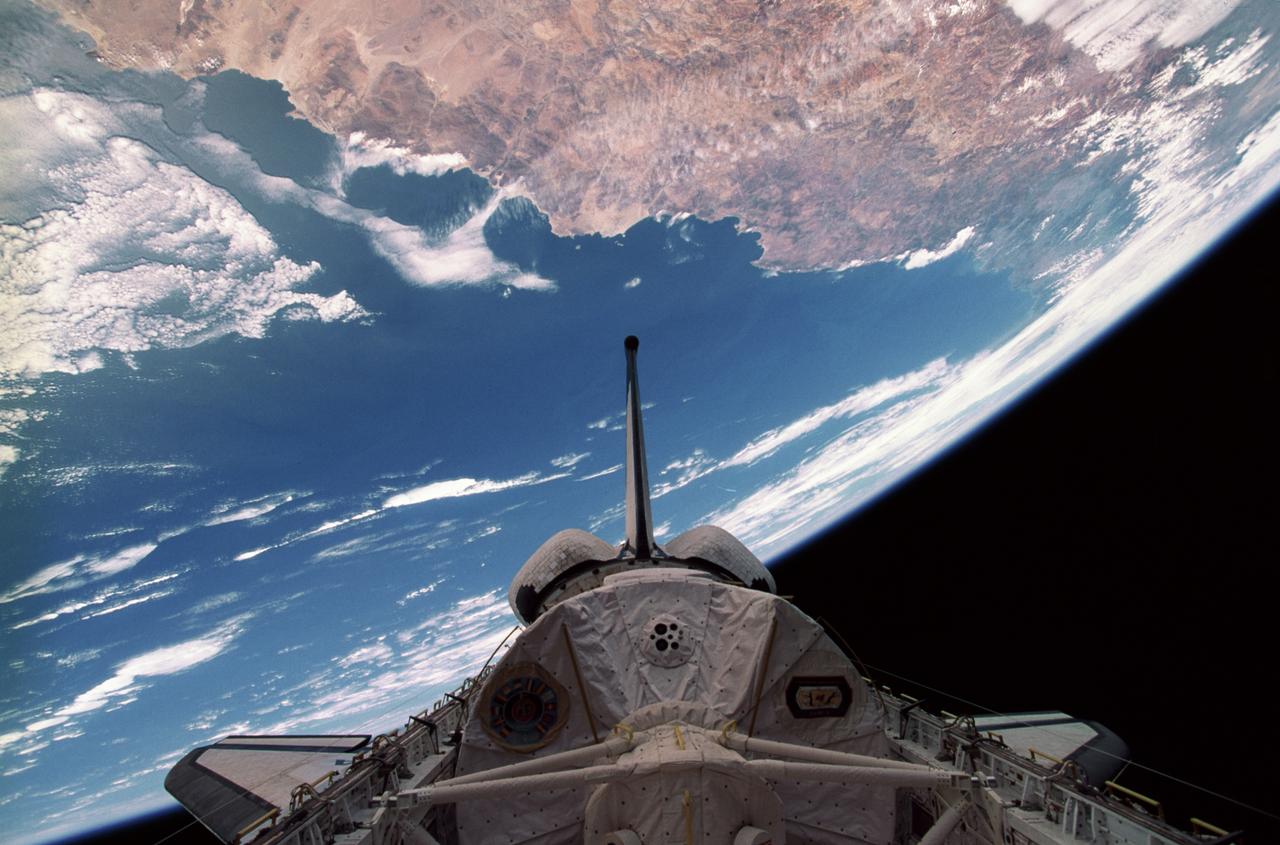
View of earth from STS-73, USML-2.
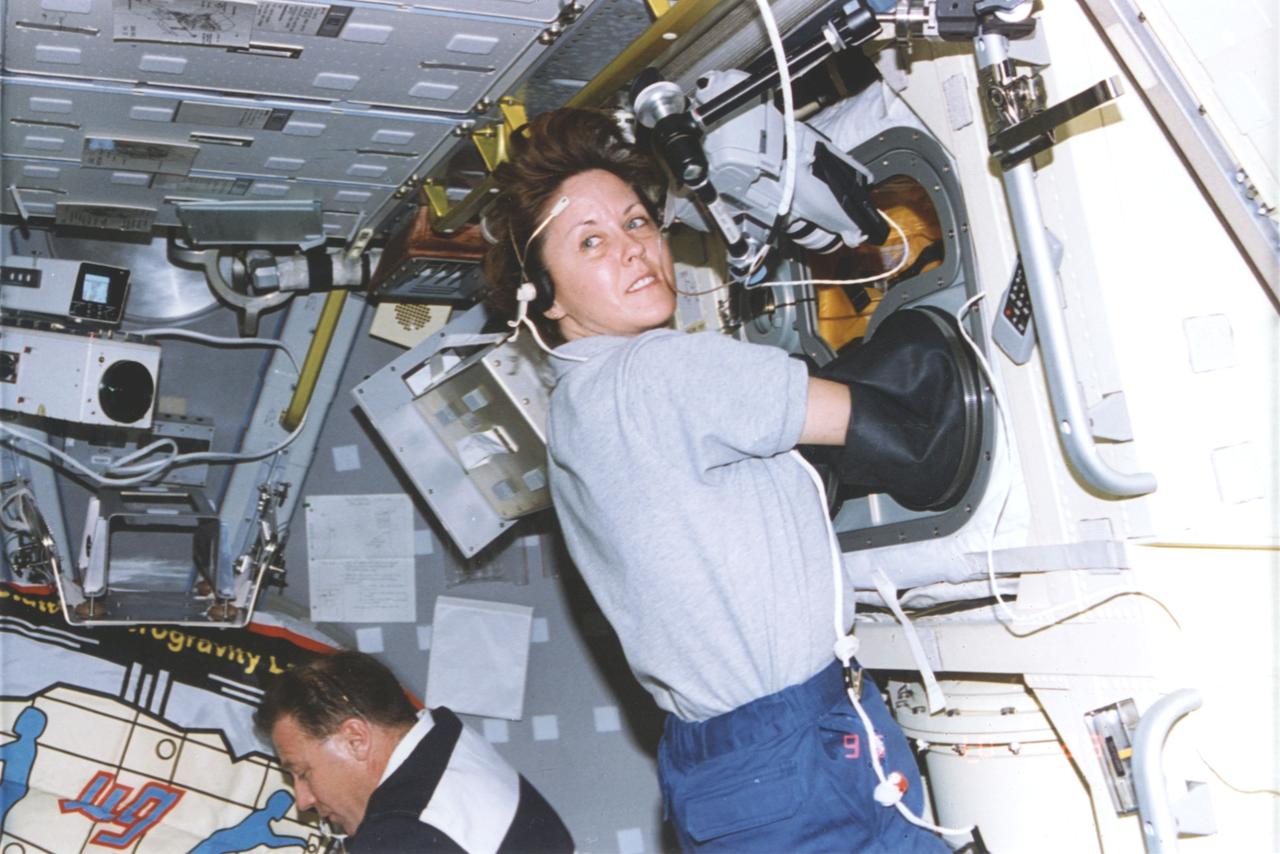
Onboard STS-73, USML-2: Mission Specialist, Payload Commander, Kathryn Thorton with (CGF) Crystal Growth Furnace
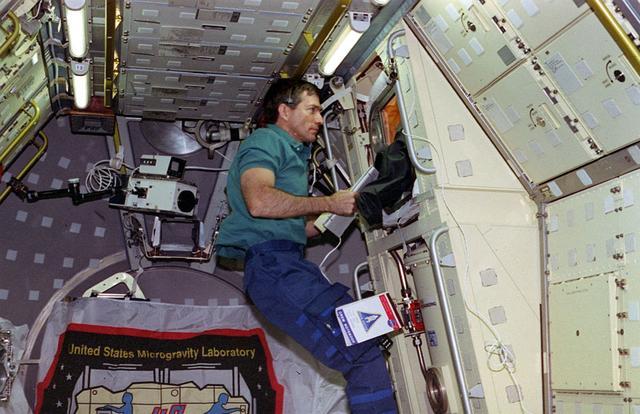
Payload Specialist, Fred Leslie changing samples in (CGF) Crystal Growth Furnace onboard STS-73, USML-2.
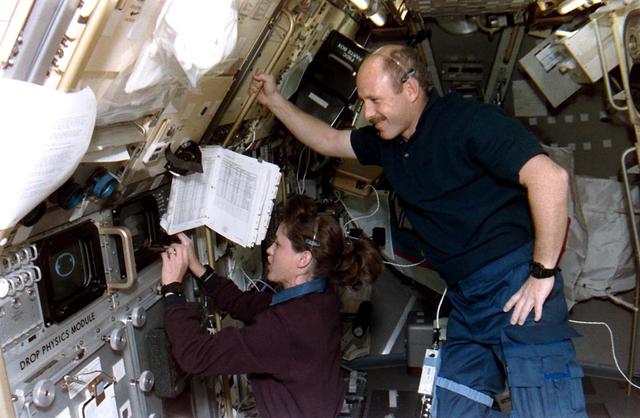
Astronaut Kathryn C. Thornton, payload commander, works at the Drop Physics Module (DPM) on the portside of the science module supporting the U.S. Microgravity Laboratory (USML-2). Astronaut Kerneth D. Bowersox, mission commander, looks on.
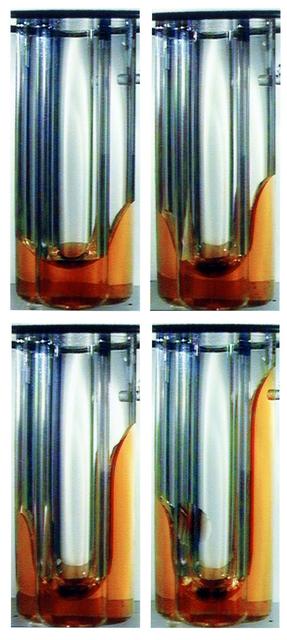
Interface Configuration Experiment on the Second United States Microgravity Laboratory (USML-2). Over time the photos show a change in the shape of the interface between a liquid and a gas in a sealed, slightly asymmetrical container. Under the force of Earth's gravity, the interface would remain nearly flat, but in microgravity, the interface shape and location changes significantly in the container, resulting in major shifts of liquid arising from small asymmetries in the container shape.
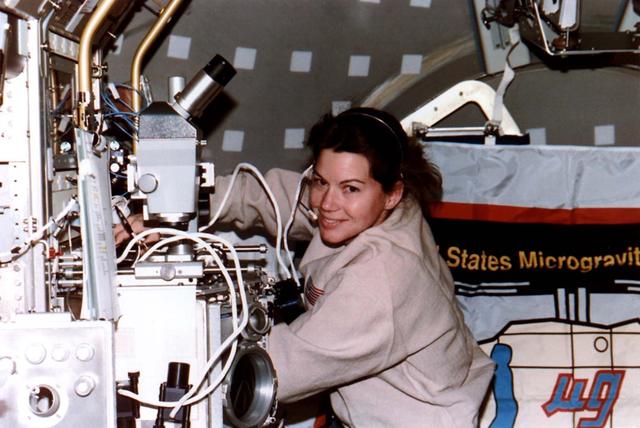
Astronaut Catherine G. Coleman, mission specialist for STS-73, works in the glovebox on the portside of the science module aboard the Space Shuttle Columbia in earth-orbit.
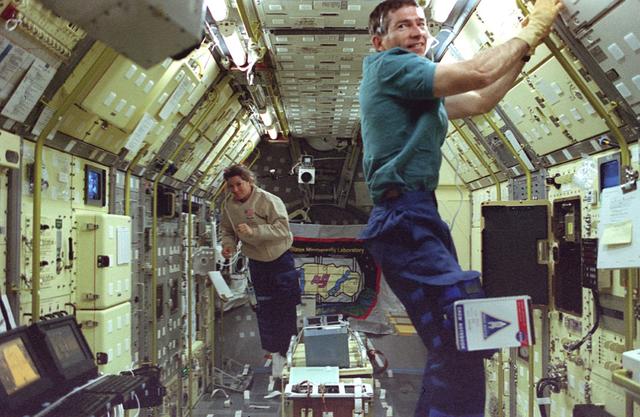
Onboard photo of space shuttle Columbia (STS-73) crewmembers Fred Leslie (foreground) and Catherine Coleman aboard the United States Microgravity Laboratory (USML) conducting experiments in a microgravitational environment available in the Orbiter's cargo bay while in low earth orbit.
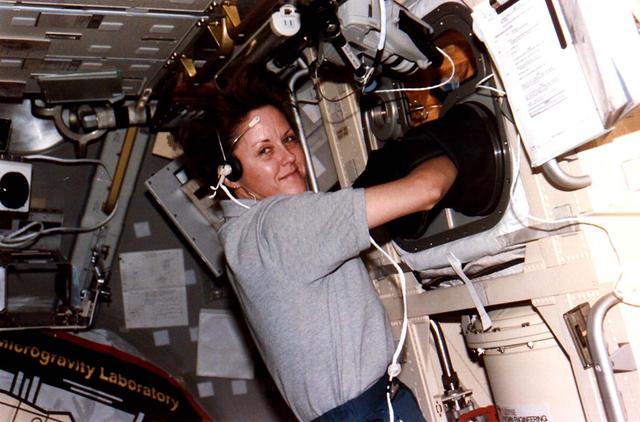
Astronaut Kathryn C. Thornton, payload commander, works in the glovebox of the science module supporting the U.S. Microgravity Laboratory (USML-2) mission. Five NASA astronauts and two payload specialists are in the last few days of a scheduled 16 day mission.
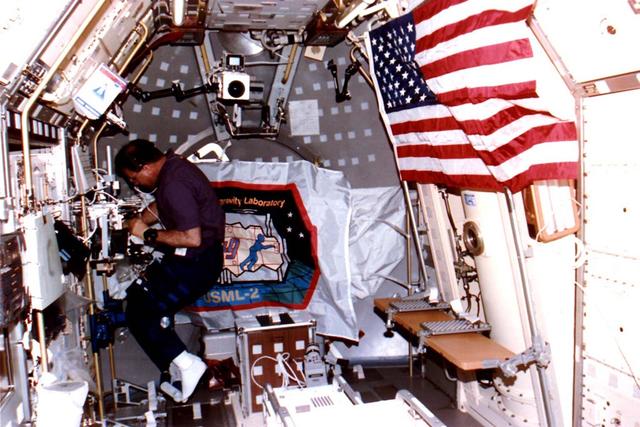
Albert Sacco Jr., payload specialist for STS-73, works in the glovebox on the portside of the science module aboard the Space Shuttle Columbia in earth orbit.
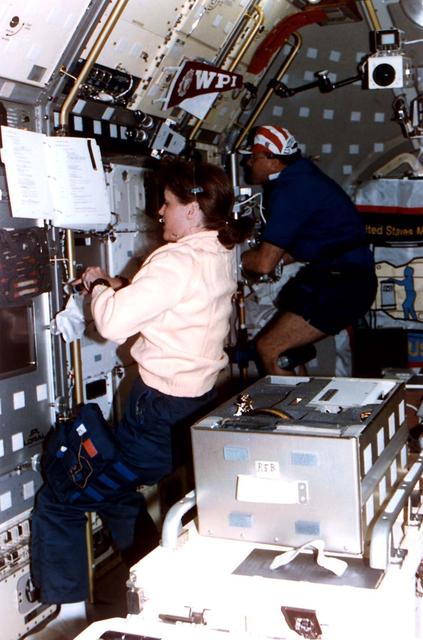
Astronaut Kathryn C. Thornton, payload commander for STS-73, works at the drop physics module (DPM) on the portside of the science module aboard the Space Shuttle Columbia in Earth orbit.
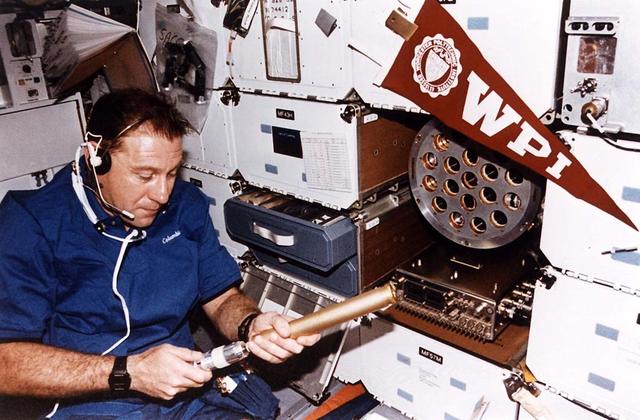
Payload specialist Albert Sacco Jr. inspects a crystal in a cylindrical autoclave on the mid-deck of the earth-orbiting space shuttle Columbia. This Zeolite Crystal Growth (ZCG) experiment was one of a few U.S. Microgravity Laboratory (USML-2) experiments that were conducted in both the Shuttle proper and its primary cargo's science module in the payload bay. Most of the experiments were conducted solely in the science module. Sacco was one of two guest researchers who joined five NASA astronauts for 16 days of Earth-orbit.
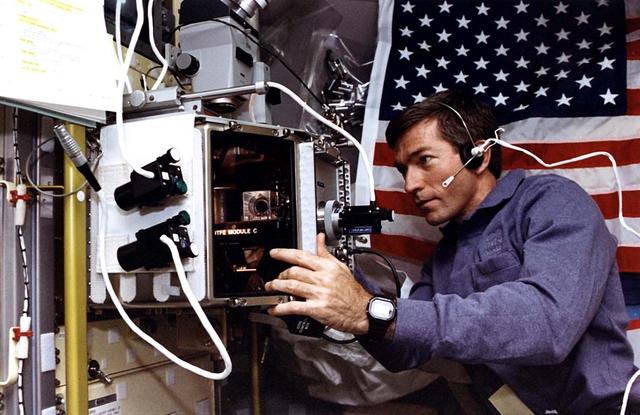
Payload specialist Fred Leslie makes use of the versatile U.S. Microgravity Laboratory (USML-2) glovebox to conduct an investigation with the Oscillatory Thermocapillary Flow Experiment (OTFE). This complement of the Surface-Tension-Driven Convection Experiment (STDCE) studies the shapes that fluid surfaces in weightless environments assume within specific containers. Leslie was one of two guest researchers who joined five NASA astronauts for 16 days of on Earth-orbit research in support of USML-2.
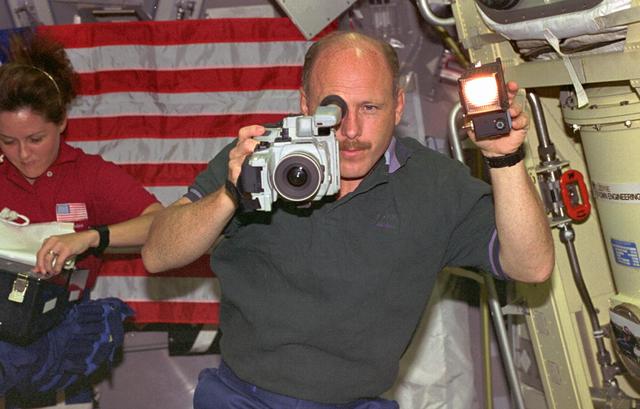
STS073-230-014 (20 October - 5 November 1995) --- Astronaut Kenneth D. Bowersox, STS-73 mission commander, uses a camcorder to record United States Microgravity Laboratory 2 (USML-2) activities onboard the Space Shuttle Columbia. Nearby, astronaut Kathryn C. Thornton, payload commander, prepares to open a supply chest to support one of many science experiments conducted by the seven-member crew during the 16-day USML-2 flight.
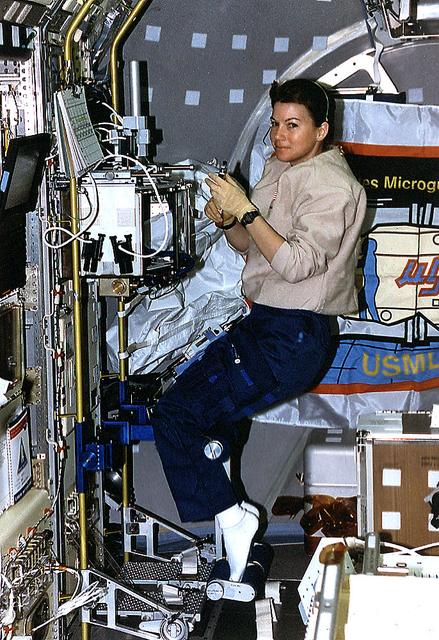
Onboard Space Shuttle Columbia (STS-73) Mission Specialists Catherine Cady Coleman works at the glovebox facility in support of the Protein Crystal Growth Glovebox (PCG-GBX) experiment in the United States Microgravity Laboratory 2 (USML-2) Spacelab science module.
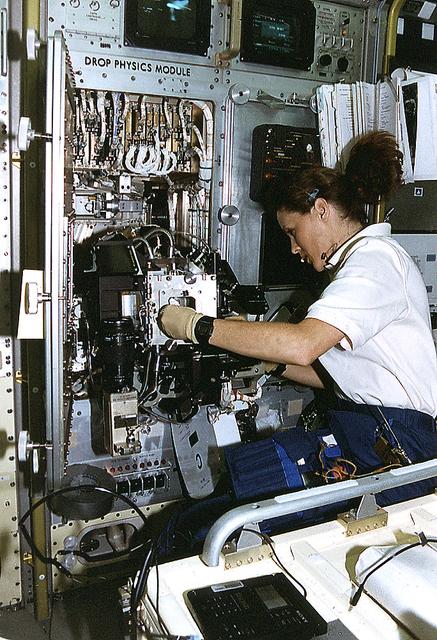
Onboard Space Shuttle Columbia (STS-73) Payload Commander Kathryn Thornton works with the Drop Physics Module (DPM) in the United States Microgravity Laboratory 2 (USML-2) Spacelab Science Module cleaning the experiment chamber of the DPM.
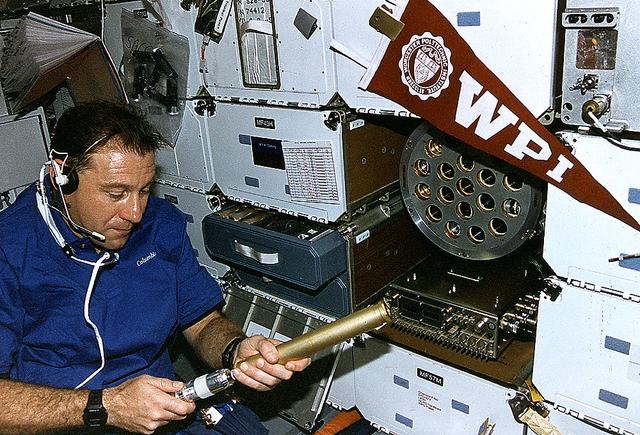
Onboard Space Shuttle Columbia (STS-73) Payload Specialist Albert Sacco loads autoclaves using a power screwdriver into the Zeolite Crystal Growth (ZCG) experiment in the middeck for the United States Microgravity Laboratory 2 (USML-2) Spacelab mission.
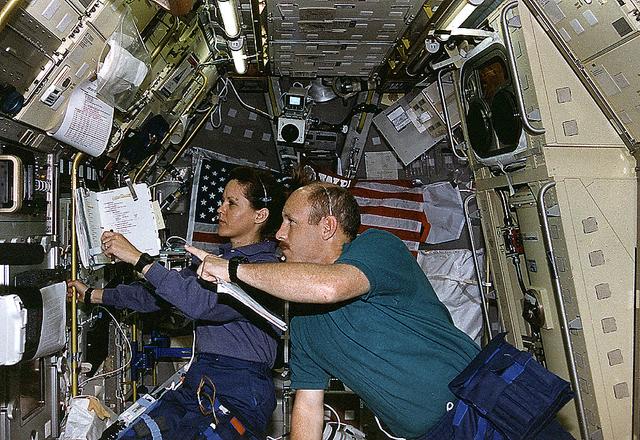
Onboard Space Shuttle Columbia (STS-73) Payload Commander Kathryn Thornton and Commander Ken Bowersox discuss the Drop Physics Module (DPM) experiment in the United States Microgravity Laboratory 2 (USML-2) spacelab science module.
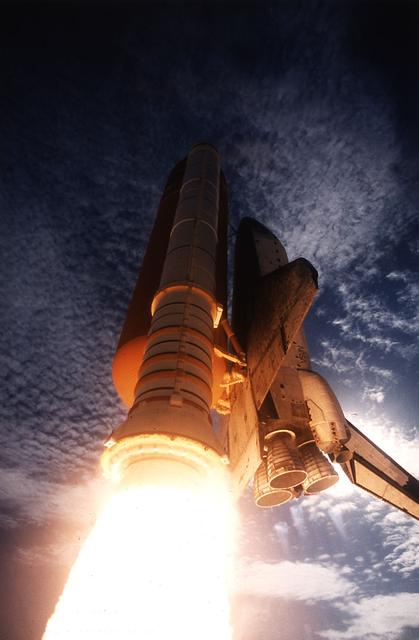
A unique view of the Space Shuttle Columbia (STS-73) moments after bursting into Earth's atmosphere on its way toward space. Onboard the orbiter is the United States Microgravity Laboratory 2 (USML-2), a Marshall managed payload, where Columbia's seven member crew will perform experiments while in orbit.
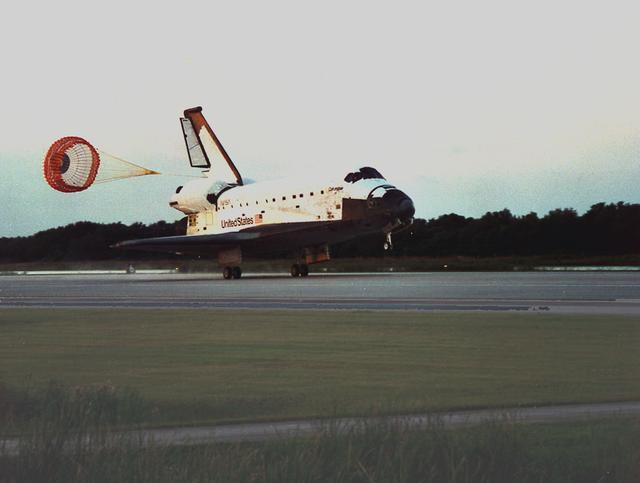
After completion of another United States Microgravity Laboratory (USML-2) mission, Space Shuttle Columbia (STS-73) and her seven member crew return to Earth on a clear November morning. Pictured is Columbia with her landing parachute deployed on final touchdown. Results from the mission's USML-2 will be sent to Marshall Space Flight Center who managed the mission.
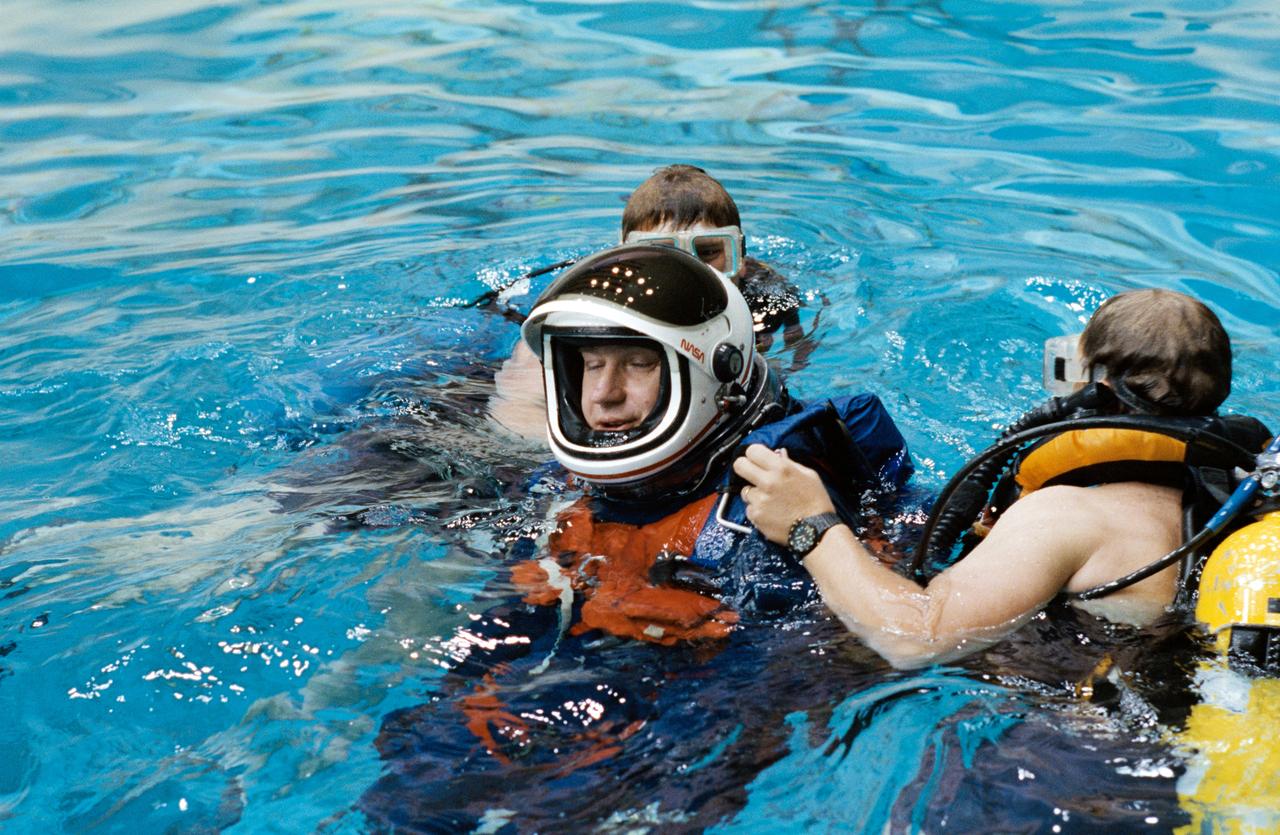
S92-32108 (May 1992) --- Payload specialist Albert Sacco Jr. uses a one-person life raft during emergency bailout training exercises in the Johnson Space Center?s (JSC) Weightless Environment Training Facility (WET-F). Sacco is an alternate payload specialist for the United States Microgravity Laboratory (USML-1) mission, scheduled for launch later this year. EDITOR?S NOTE: Sacco was later named as prime crew payload specialist for the USML-2 mission (STS-73), scheduled for 1995.
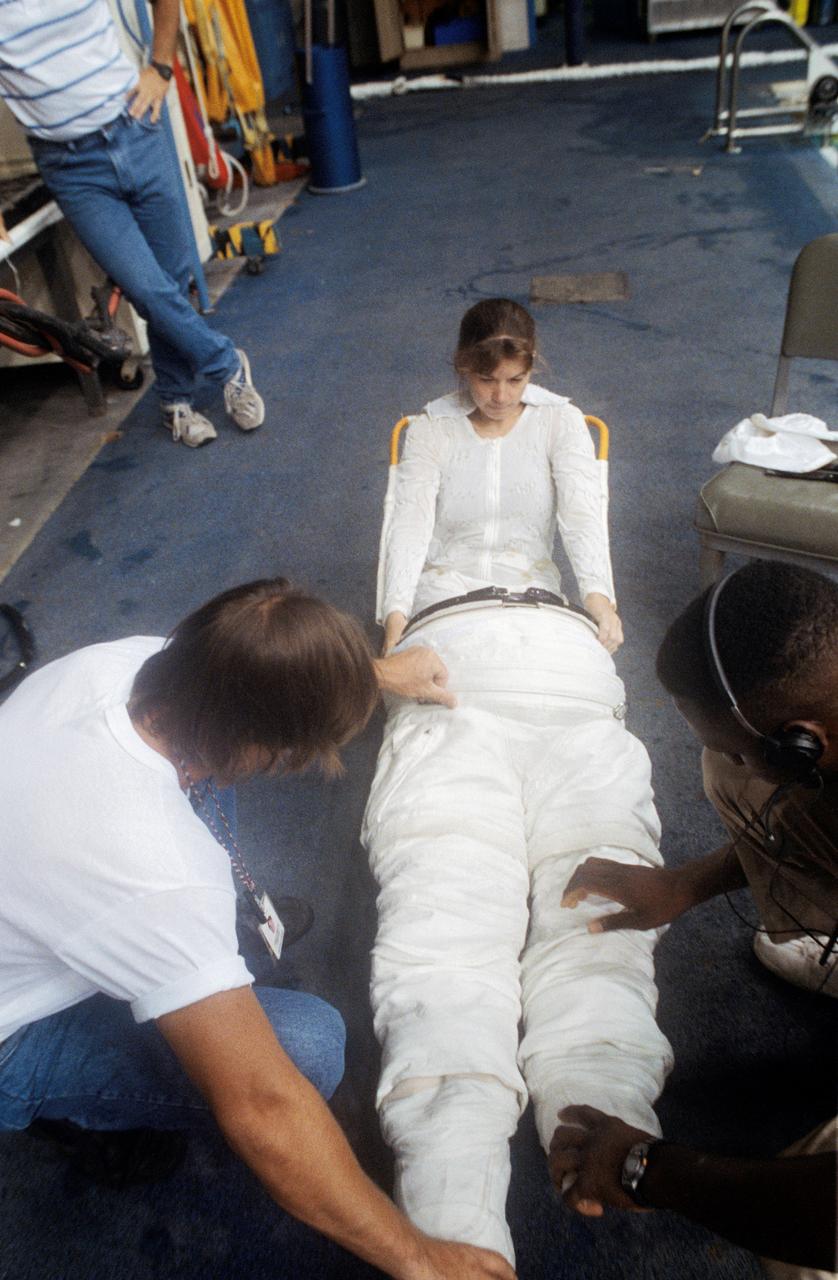
Astronaut and mission specialist for STS-73, Catherine G. Coleman, dons a high fidelity training version of the Extravehicular Mobility Unit (EMU) space suit at the Johnson Space Center’s (JSC) Weightless Environment Training Facility (WET-F) in preparation for the mission. The STS-73 mission was the second flight of the United States Microgravity Laboratory (USML-2), managed by scientists and engineers from the Marshall Space Flight Center.
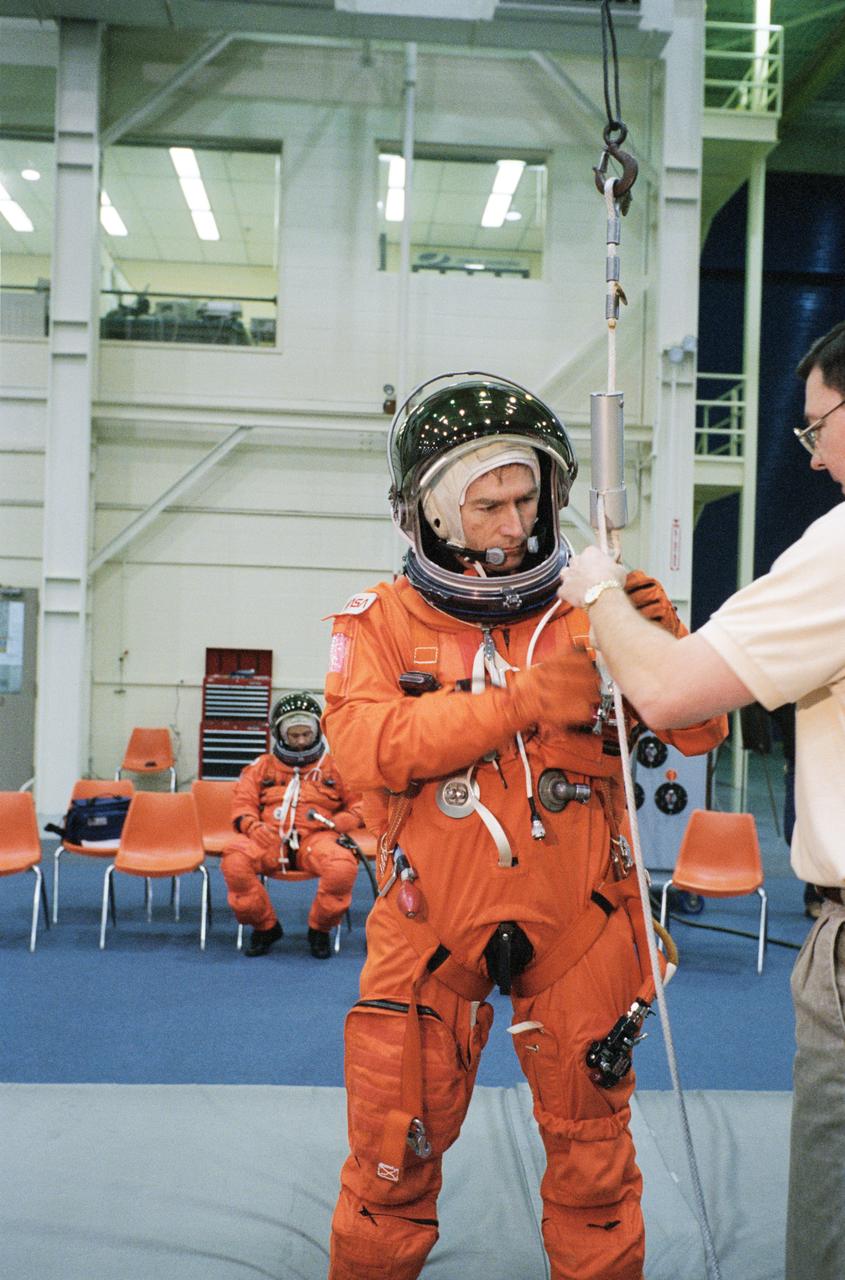
S95-09157 (27 Apr. 1995) --- Payload specialist Fred W. Leslie has just translated from the top of a Shuttle mockup-trainer using a Sky-genie device during emergency egress training with his six STS-73 crew mates. He is assisted here by Scott Gill, a member of the STS-73 training staff. The seven will fly aboard the Space Shuttle Columbia later this year to support the United States Microgravity Laboratory (USML-2) mission.
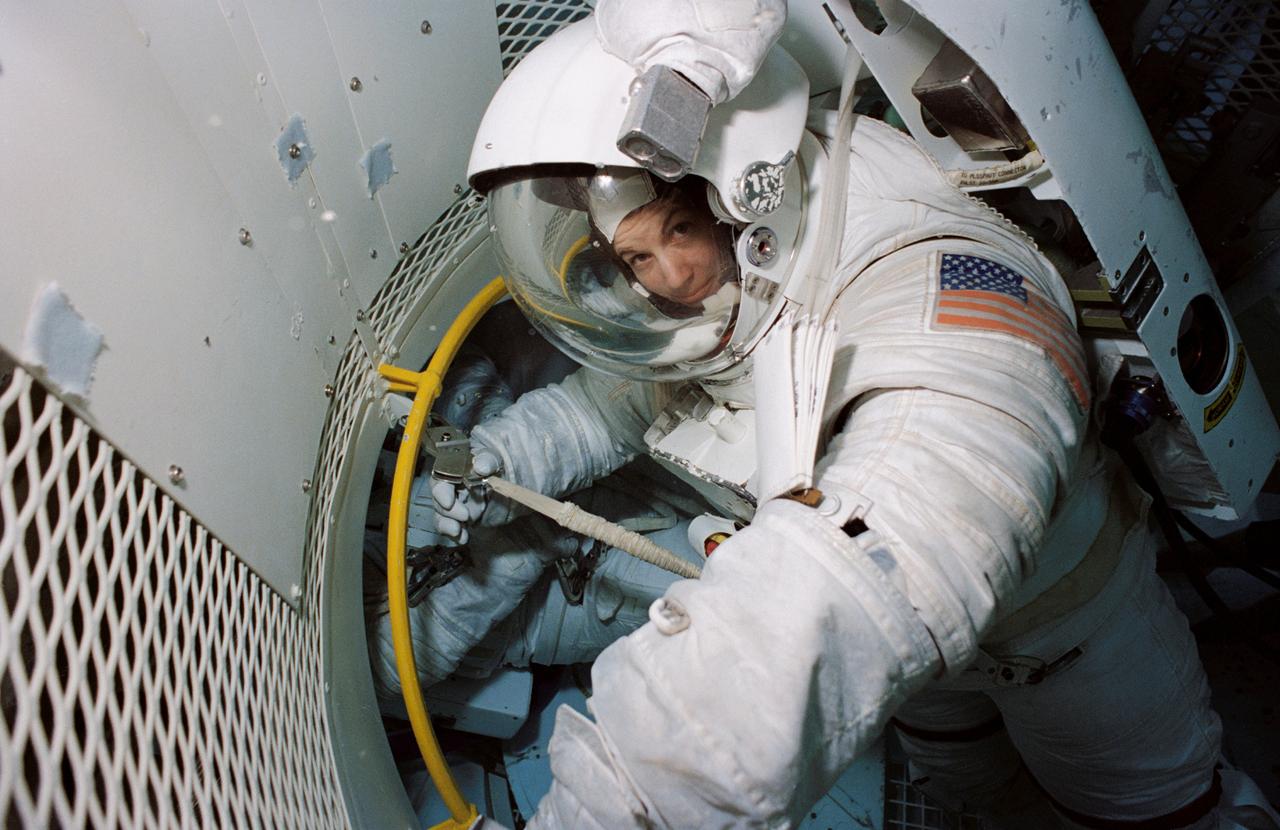
Astronaut and mission specialist Catherine G. Coleman,attired in a high fidelity training version of the Extravehicular Mobility Unit (EMU) space suit, trains for a contingency space walk at the Johnson Space Center’s (JSC) Weightless Environment Training Facility (WET-F). This particular training was in preparation for the STS-73 mission. The STS-73 mission was the second flight of the United States Microgravity Laboratory (USML-2), managed by scientists and engineers from the Marshall Space Flight Center.
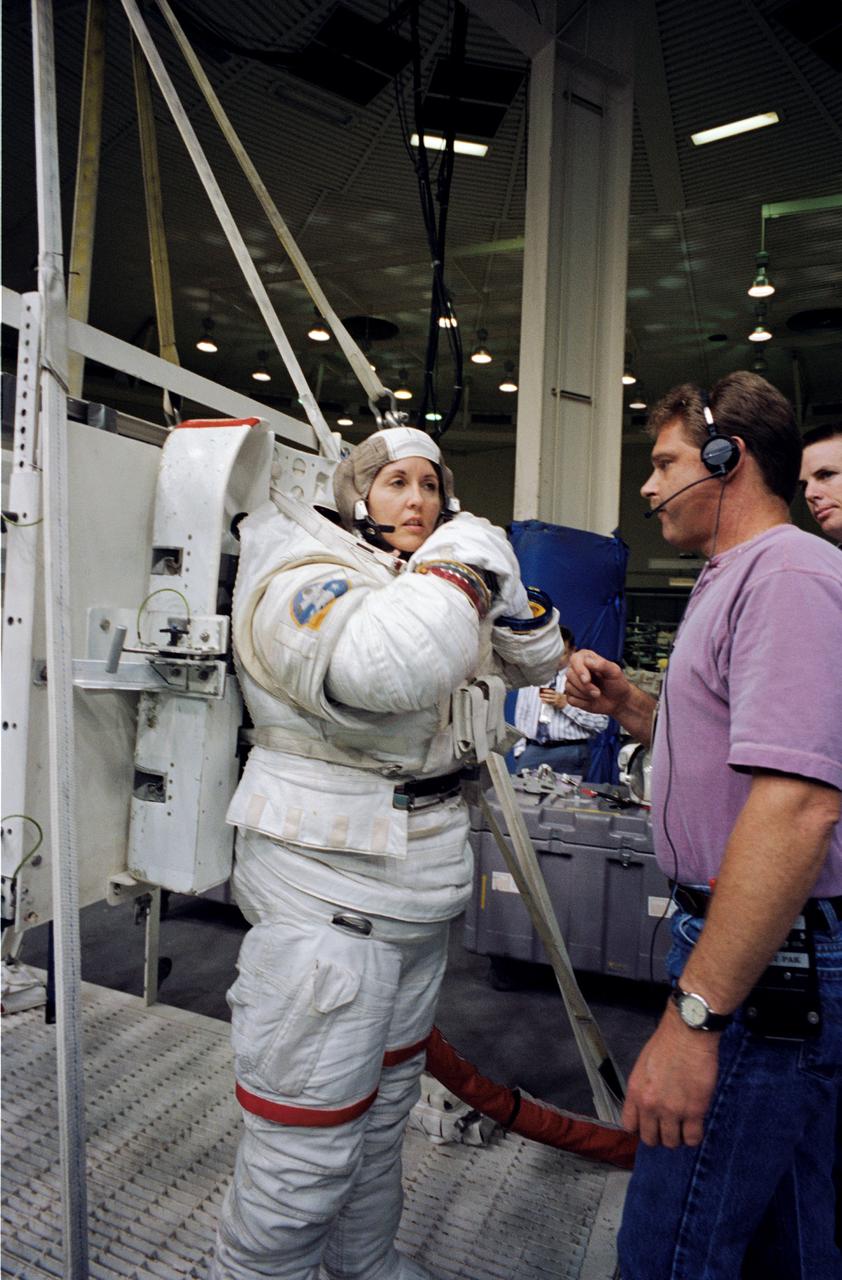
Astronaut Kathryn Thornton, payload commander for the STS-73 mission, attired in a high fidelity training version of the Extravehicular Mobility Unit (EMU) space suit, prepares to go underwater in the Johnson Space Center’s (JSC) Weightless Environment Training Facility (WET-F). The STS-73 mission was the second flight of the United States Microgravity Laboratory (USML-2), managed by scientists and engineers from the Marshall Space Flight Center.
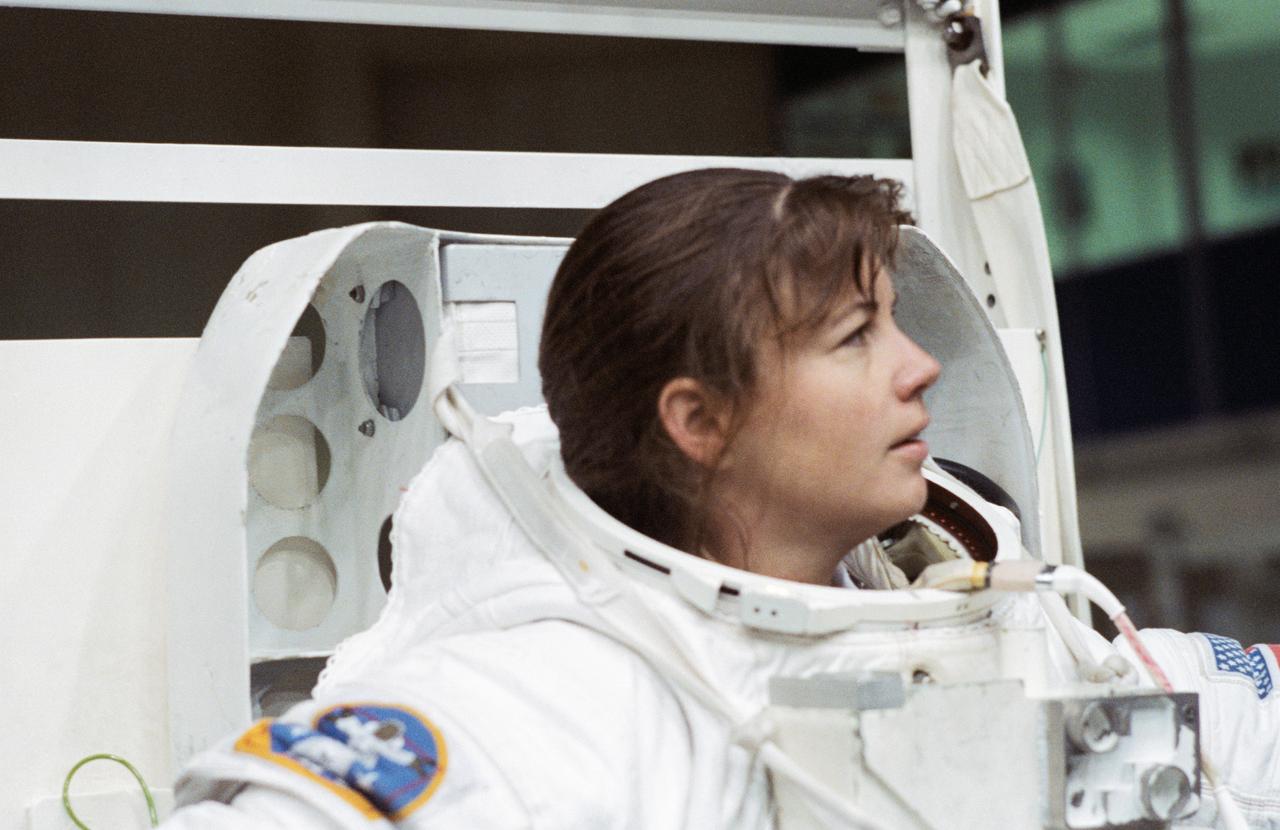
Astronaut and mission specialist Catherine G. Coleman is about to don the helmet portion of a high fidelity training version of the Extravehicular Mobility Unit (EMU) space suit at the Johnson Space Center’s (JSC) Weightless Environment Training Facility (WET-F). This particular training was in preparation for the STS-73 mission. The STS-73 mission was the second flight of the United States Microgravity Laboratory (USML-2), managed by scientists and engineers from the Marshall Space Flight Center.
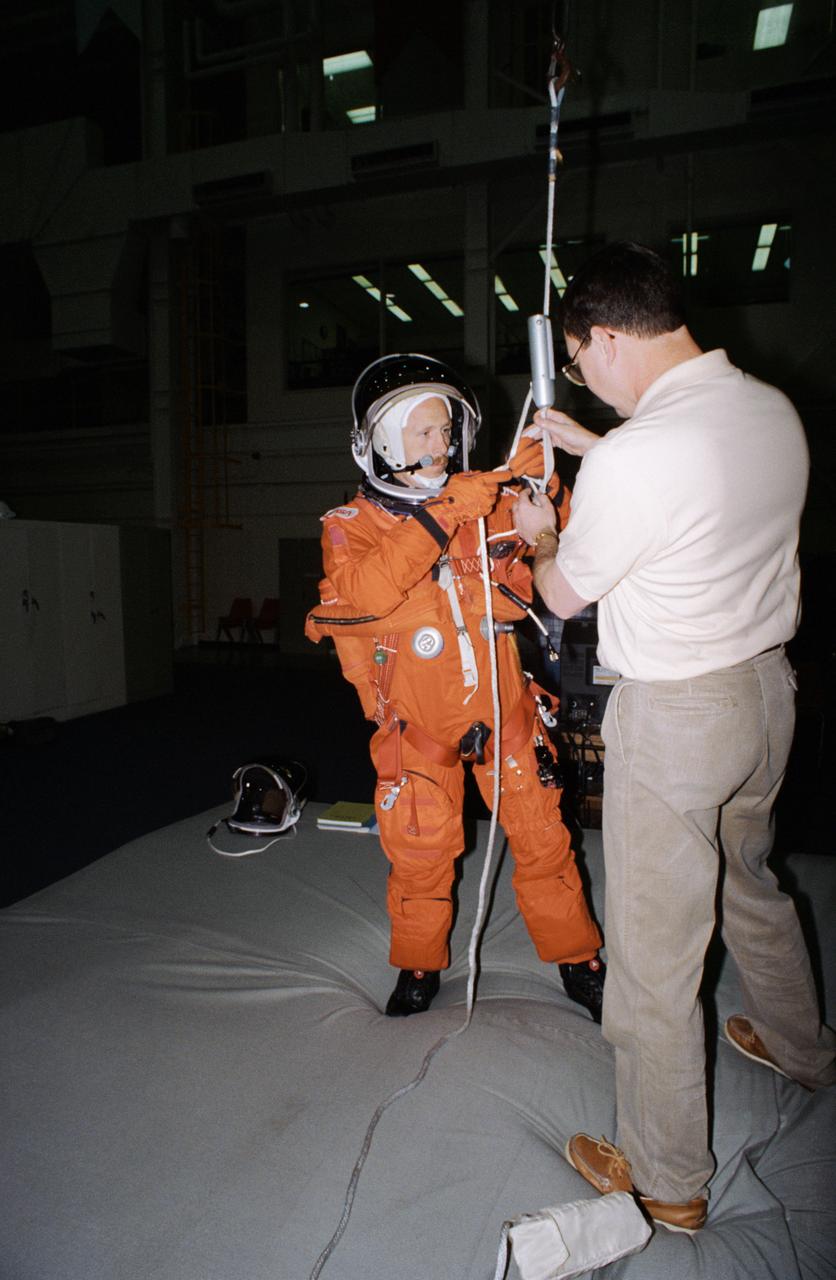
S95-09153 (27 Apr. 1995) --- Astronaut Kenneth D. Bowersox has just translated from the top of a Shuttle mockup-trainer using a Sky-genie device during emergency egress training with his six STS-73 crew mates. He is assisted here by Scott Gill, a member of the STS-73 training staff. The seven will fly aboard the Space Shuttle Columbia later this year to support the United States Microgravity Laboratory (USML-2) mission.
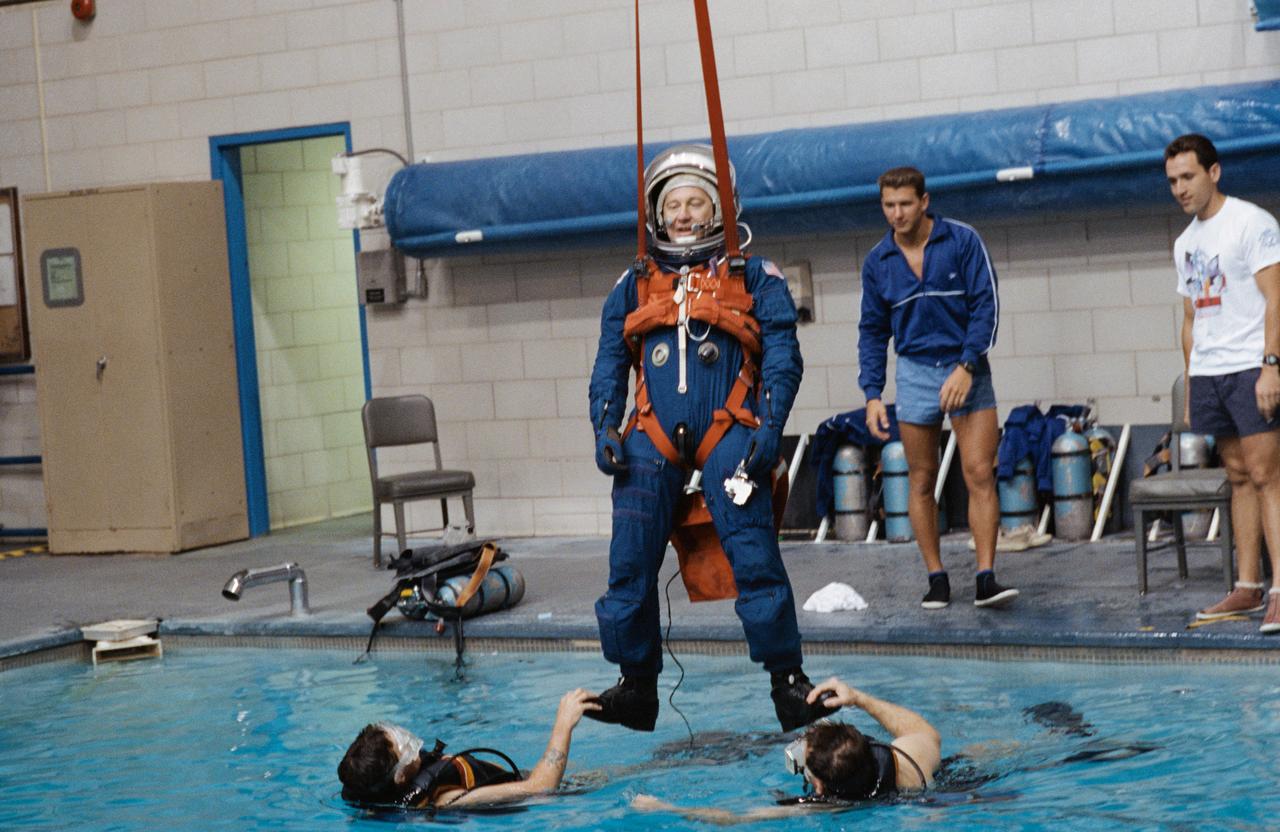
S92-32111 (May 1992) --- Payload specialist Albert Sacco Jr. is assisted by two SCUBA-equipped divers as he hangs by his parachute harness during emergency bailout training exercises in the Johnson Space Center?s (JSC) Weightless Environment Training Facility (WET-F). Sacco is an alternate payload specialist for the United States Microgravity Laboratory (USML-1) mission, scheduled for launch later this year. EDITOR?S NOTE: Sacco was later named as prime crew payload specialist for the USML-2 mission (STS-73), scheduled for 1995.
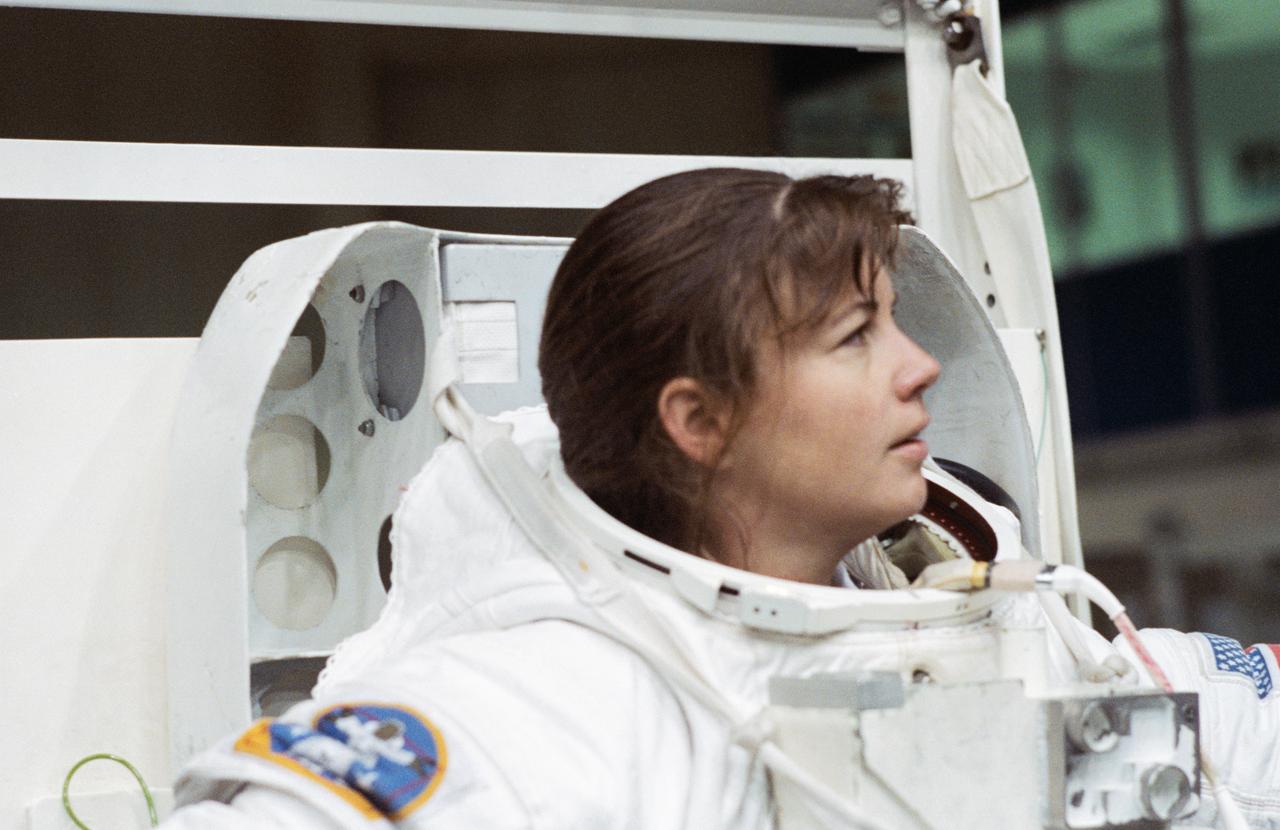
S93-42453 (September 1993) --- Astronaut Catherine G. Coleman, mission specialist for STS-73, is about to don the helmet portion of a high-fidelity training version of an Extravehicular Mobility Unit (EMU) space suit at the Johnson Space Center?s (JSC) Weightless Environment Training Facility (WET-F). Coleman, who has recently been named as one of seven crew members for the U.S. Microgravity Laboratory (USML-2) mission, was about to go underwater in a 25-feet deep pool. The pool is used to train astronauts for mission specific space walk chores as well as for contingency Extravehicular Activity (EVA) tasks. There is no space walk planned for STS-73.
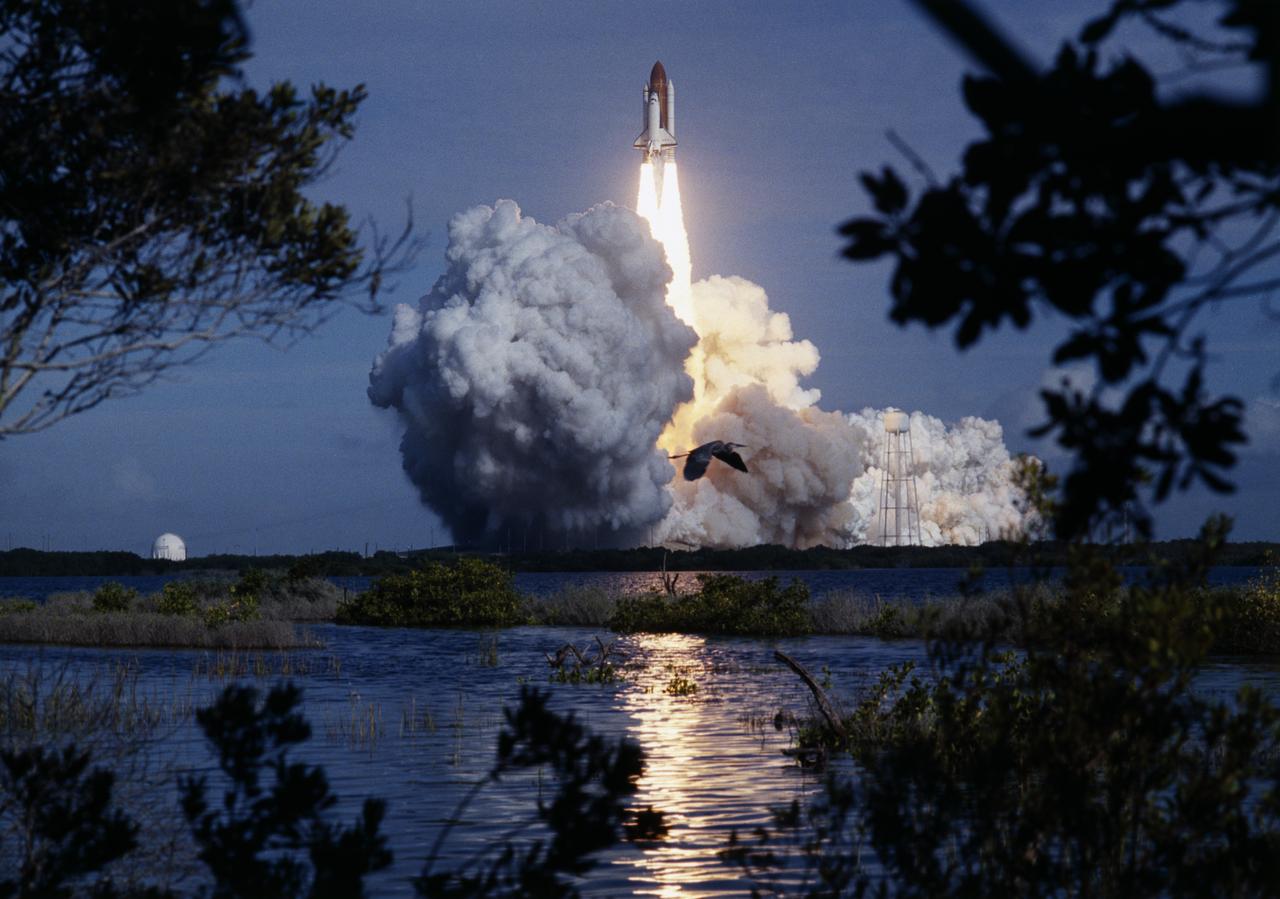
A Great Blue Heron seems oblivious to the tremendous spectacle of light and sound generated by a Shuttle liftoff, as the Space Shuttle Columbia (STS-73) soars skyward from Launch Pad 39B. Columbia's seven member crew's mission included continuing experimentation in the Marshall managed payloads including the United States Microgravity Laboratory 2 (USML-2) and the keel-mounted accelerometer that characterizes the very low frequency acceleration environment of the orbiter payload bay during space flight, known as the Orbital Acceleration Research Experiment (OARE).
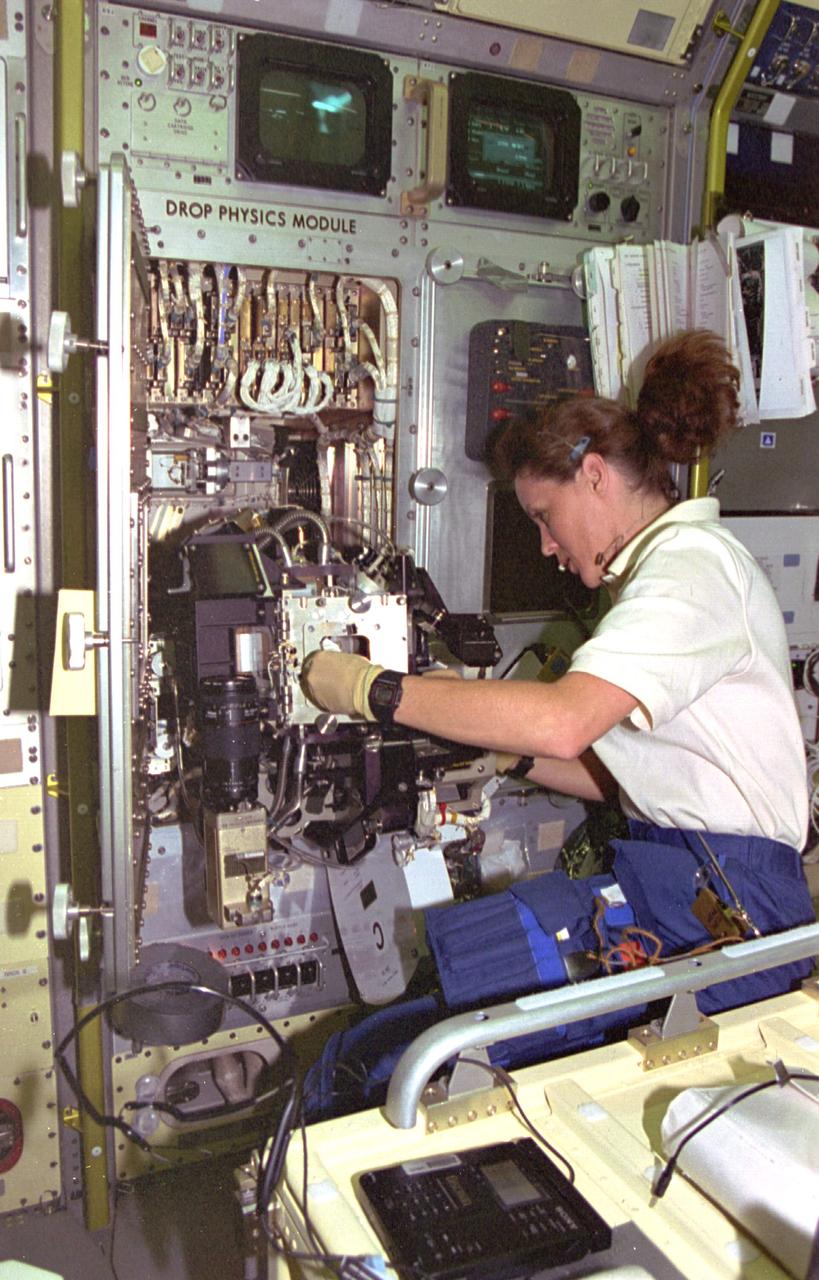
STS073-143-026 (20 October-5 November 1995) --- Astronaut Kathryn C. Thornton, STS-73 payload commander for the United States Microgravity Laboratory (USML-2), explores the inner workings of the Drop Physics Module (DPM). Thornton was joined by four other NASA astronauts and two guest researchers for almost 16 days of research aboard the Space Shuttle Columbia in Earth-orbit.
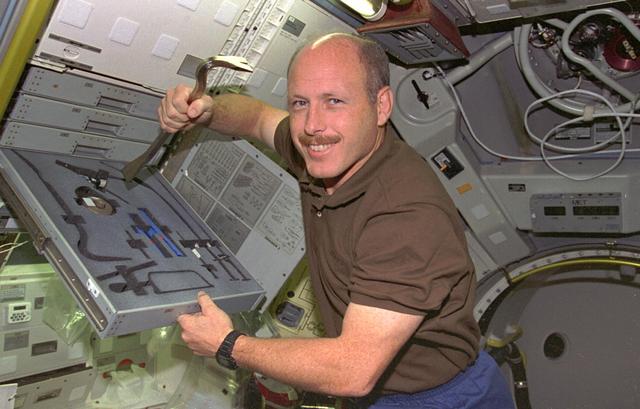
STS073-351-024 (20 October - 5 November 1995) --- Astronaut Kenneth D. Bowersox, STS-73 mission commander, retrieves a crow bar from a tool set onboard the science module in the cargo bay of the Earth-orbiting Space Shuttle Columbia. Various tools were available for a variety of in-flight maintenance tasks for the crew to carry out during the 16-day United States Microgravity Laboratory (USML-2) mission.
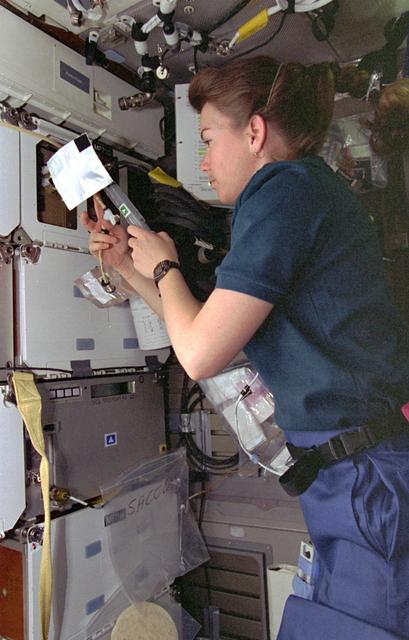
STS073-356-029 (20 October - 5 November 1995) --- Astronaut Catherine G. Coleman, STS-73 mission specialist, checks out an Astroculture sample on the middeck of the Earth-orbiting Space Shuttle Columbia. Coleman was joined by four other NASA astronauts and two guest researchers for 16 full days of in-space research in support of the United States Microgravity Laboratory (USML-2) mission.
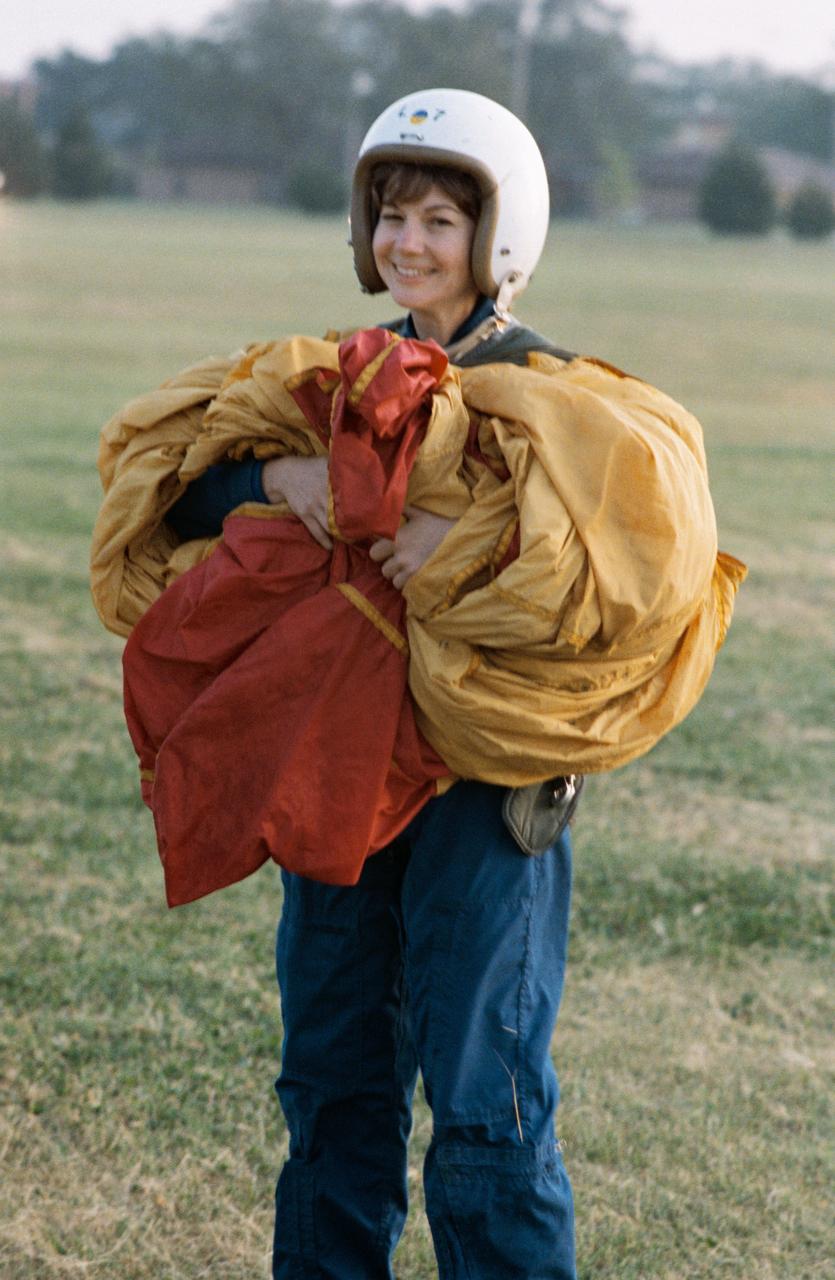
S93-38725 (12-14 Sept. 1992) --- Catherine G. Coleman, a member of the 1992 class of astronaut candidates at the Johnson Space Center (JSC), gathers up a parachute. The chute had just been used in one of many exercises experienced by the trainees at a three-day parachute/survival course hosted by Vance Air Force Base near Enid, Oklahoma. EDITOR?S NOTE: Coleman was later named as mission specialist for the United States Microgravity Laboratory (USML-2) mission, scheduled to fly as STS-73 in 1995.
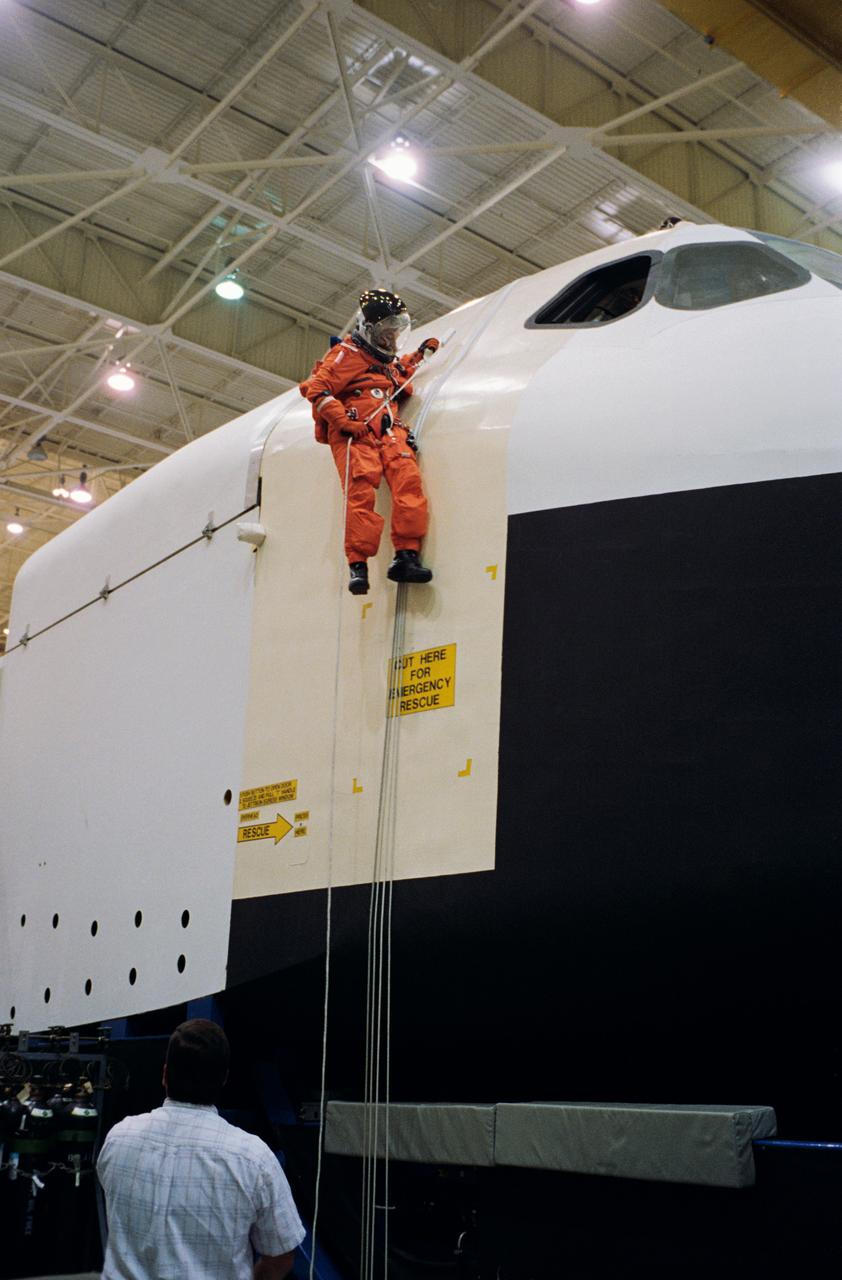
S95-09163 (27 Apr. 1995) --- Payload specialist Albert Sacco Jr. rappels from the top of a Shuttle mockup-trainer using a Sky-genie device during emergency egress training with his six STS-73 crew mates. The seven will fly aboard the Space Shuttle Columbia later this year to support the United States Microgravity Laboratory (USML-2) mission.
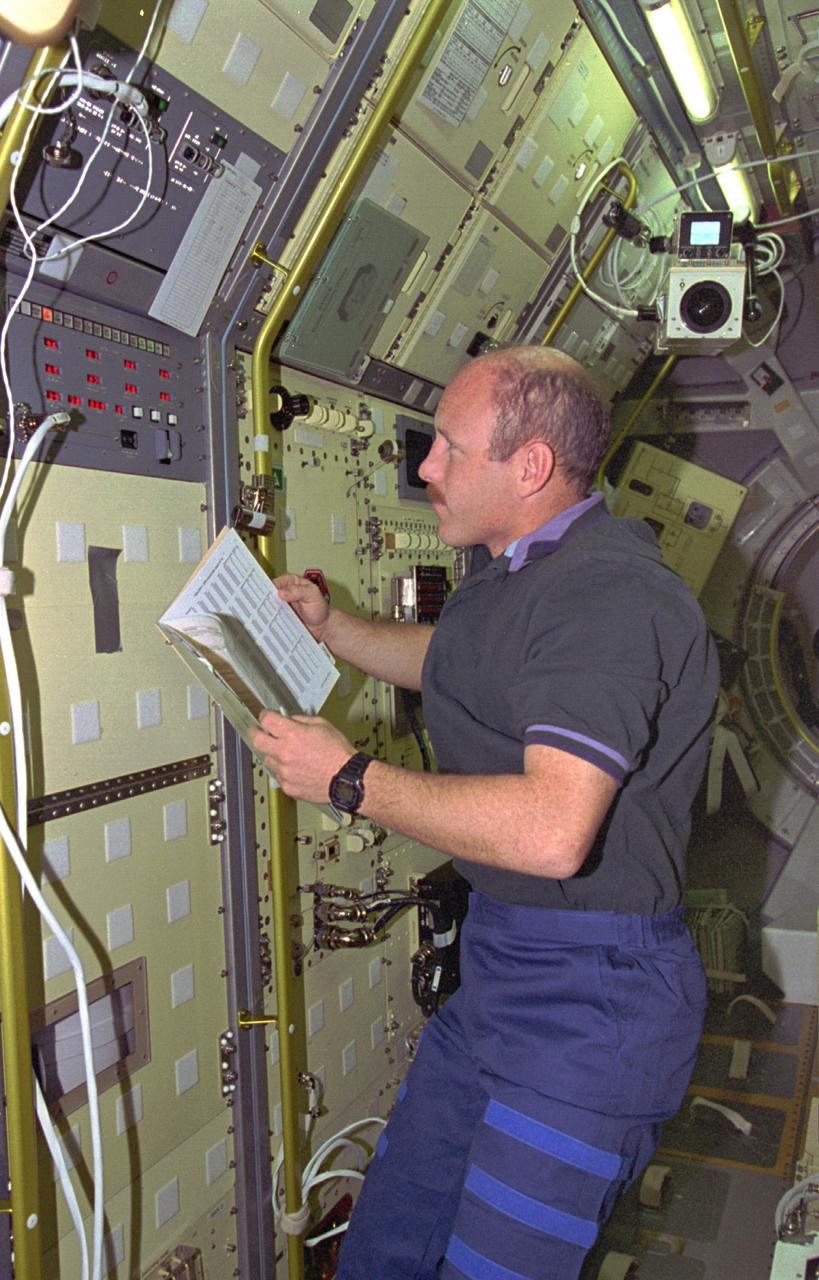
STS073-363-032 (20 October - 5 November 1995) --- Astronaut Kenneth D. Bowersox, STS-73 mission commander, studies the movement of fluids in microgravity at the Geophysical Fluid Flow Cell (GFFC) workstation in the science module of the Earth-orbiting Space Shuttle Columbia. Bowersox was joined by four other NASA astronauts and two guest researchers for almost 16-days of Earth-orbit research in support of the U.S. Microgravity Laboratory (USML-2) mission.
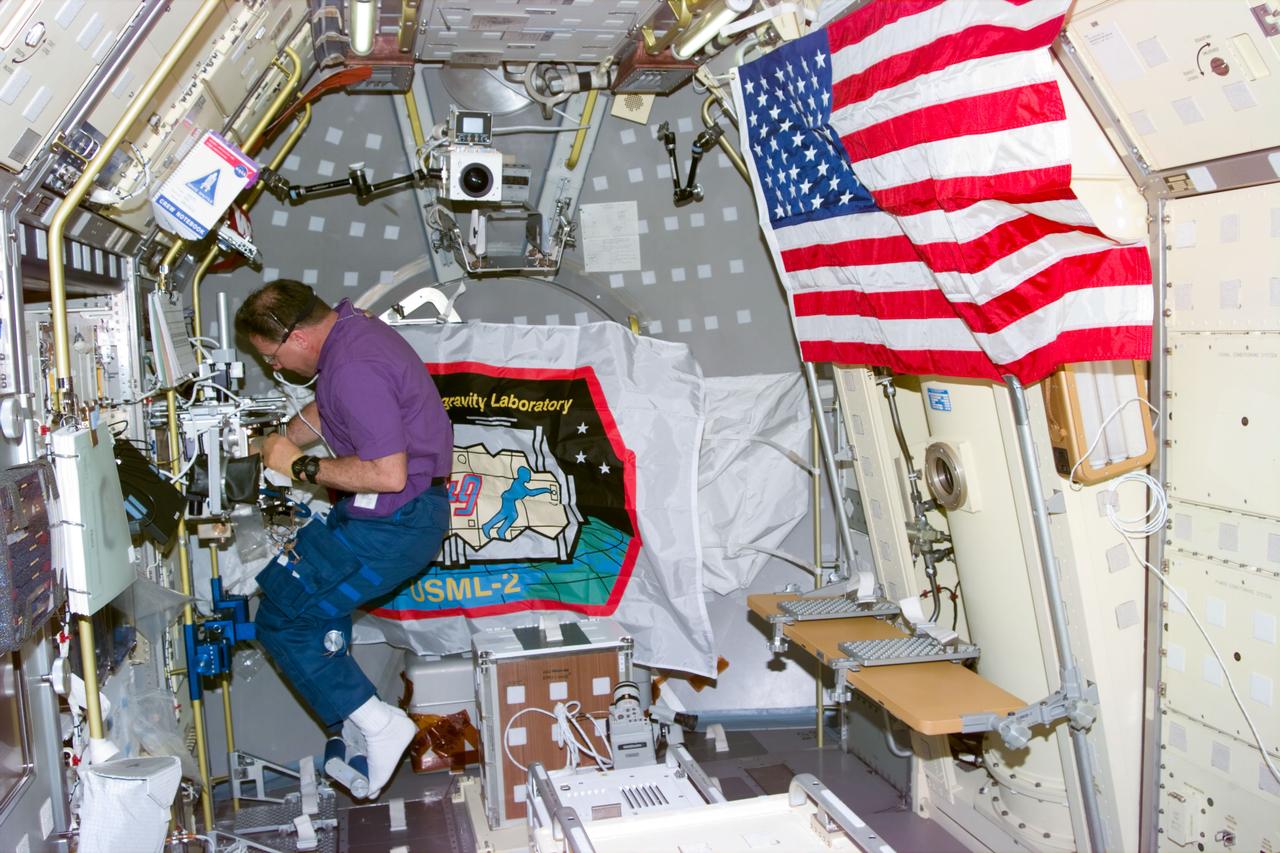
STS073-E-5024 (23 Oct. 1995)--- Albert Sacco Jr., STS-73 payload specialist, works in the Glovebox on the portside of the science module aboard the space shuttle Columbia in Earth orbit. This frame was exposed with the color Electronic Still Camera (ESC) assigned to the scheduled 16-day United States Microgravity Laboratory (USML-2) mission.
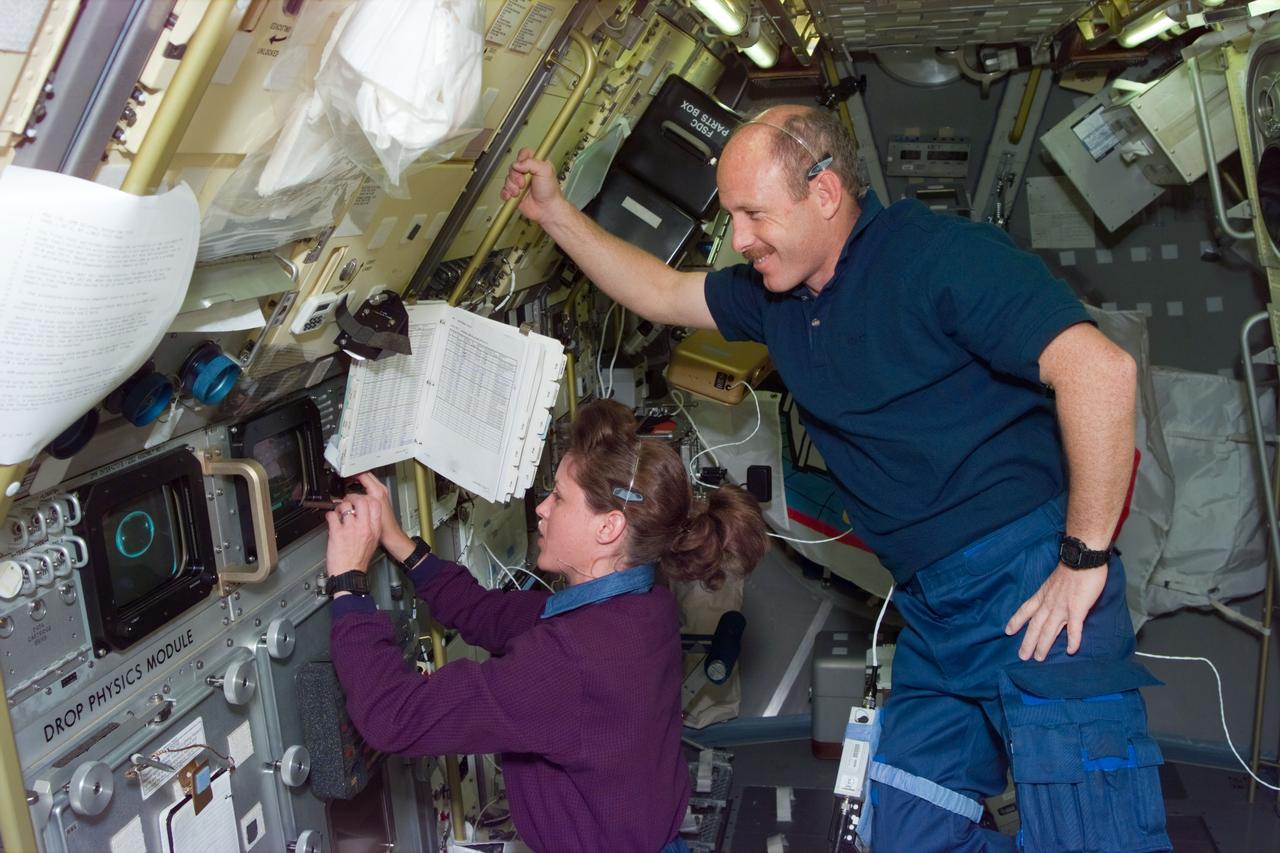
STS073-E-5311 (3 Nov. 1995) --- Astronaut Kathryn C. Thornton, STS-73 payload commander, works at the Drop Physics Module (DPM) on the portside of the science module supporting the U.S. Microgravity Laboratory (USML-2). Astronaut Kenneth D. Bowersox, mission commander, looks on. Five NASA astronauts and two payload specialists are in the last few days of a scheduled 16-day mission. This frame was exposed with the Electronic Still Camera (ESC).
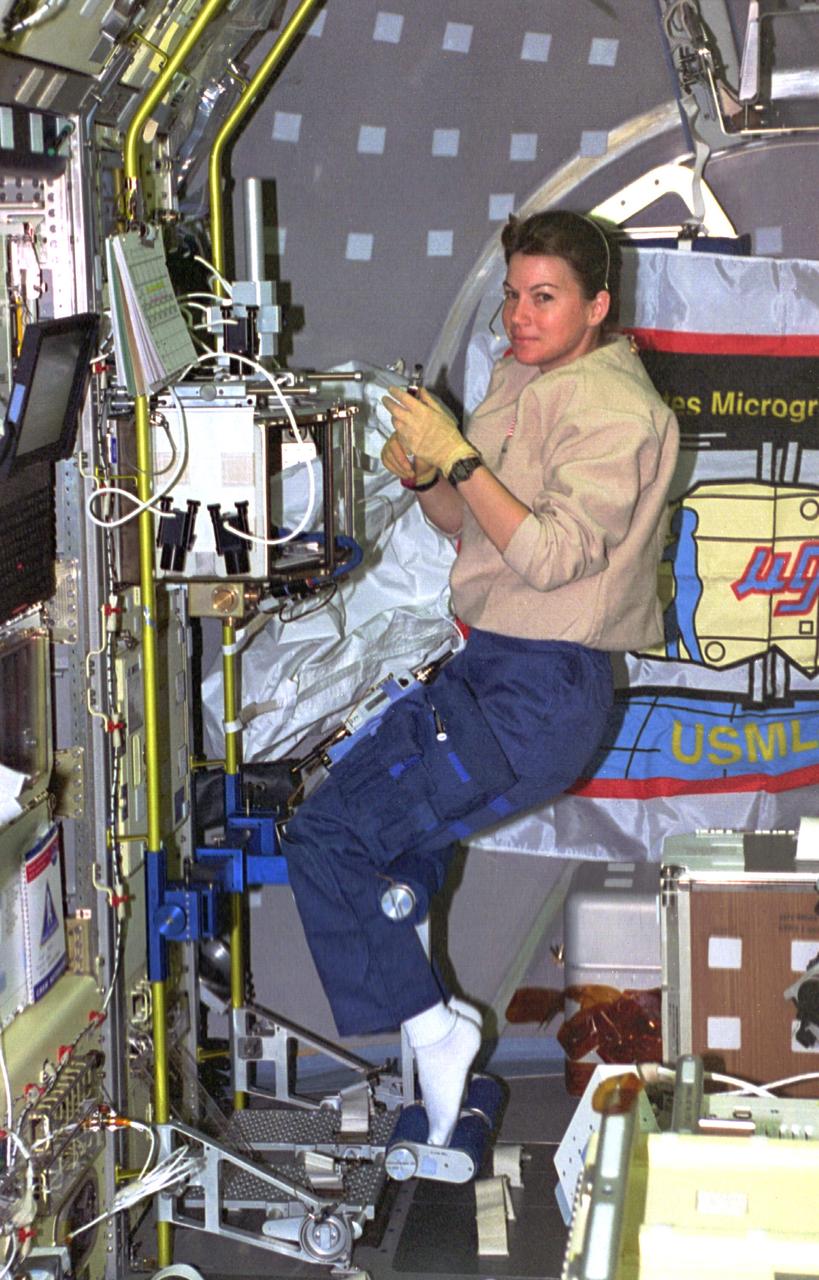
STS073-105-011 (20 October-5 November 1995) --- Astronaut Catherine G. Coleman, STS-73 mission specialist, settles in for a session of work at the glovebox on the starboard side of the United States Microgravity Laboratory (USML-2) module. Coleman was joined by four other NASA astronauts and two guest researchers for almost 16 days of research aboard the Space Shuttle Columbia in Earth-orbit.
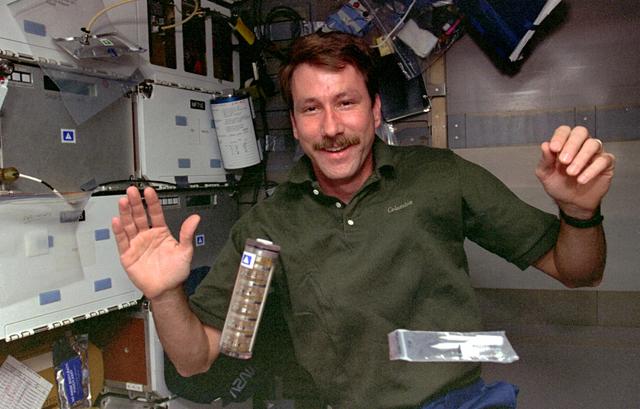
STS073-351-009 (20 October - 5 November 1995) --- Astronaut Kent V. Rominger, STS-73 pilot, retrieves a protein sample on the middeck of the Earth-orbiting Space Shuttle Columbia. Rominger, along with four other NASA astronauts and two guest researchers, spent 16 full days in space in support of the United States Microgravity Laboratory (USML-2) mission.
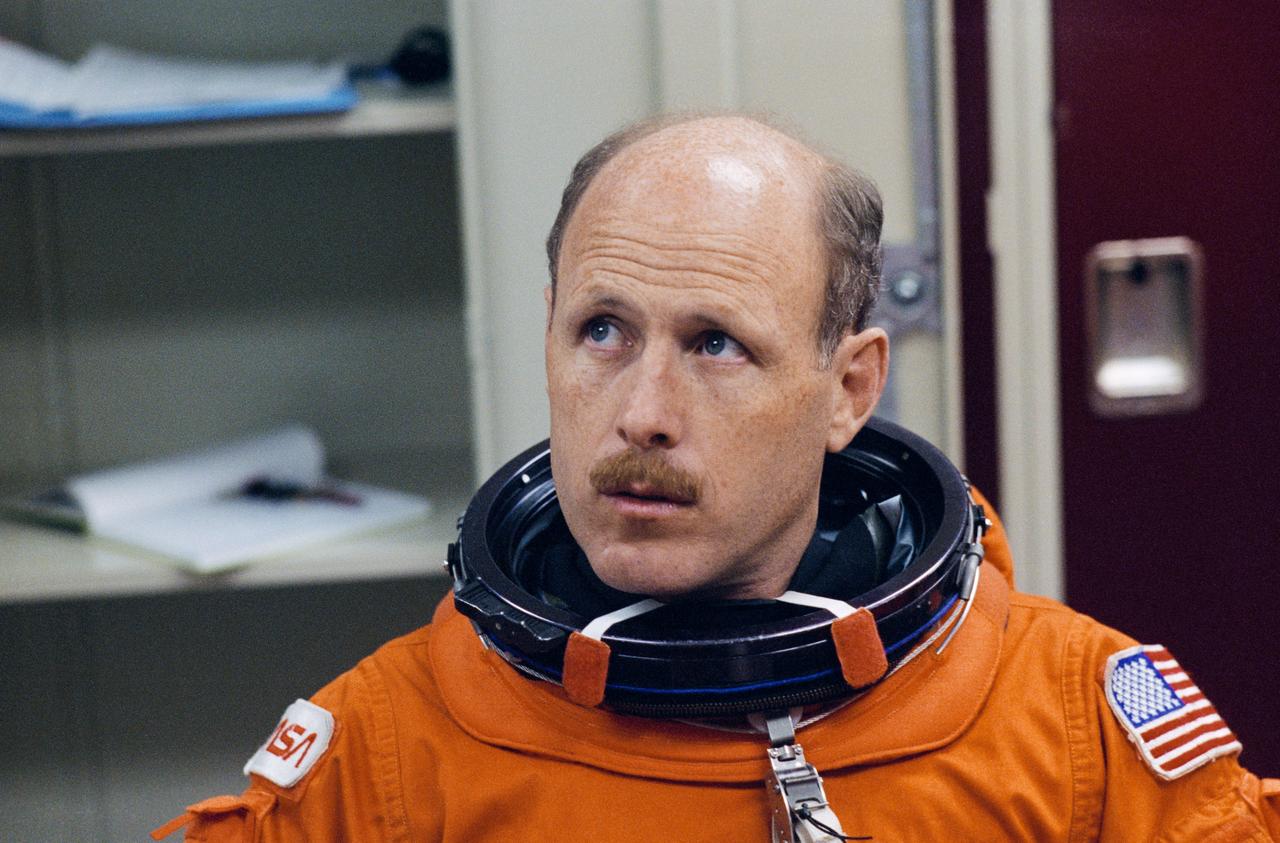
S95-09132 (27 Apr. 1995) --- As he watches one his STS-73 crew mates rappel from the top of a ?troubled Shuttle,? astronaut Kenneth D. Bowersox, mission commander, prepares to participate in an emergency egress training session in the Johnson Space Center?s (JSC) Systems Integration Facility. Five astronauts and two payload specialists from the private sector will fly aboard the Space Shuttle Columbia later this year to support the United States Microgravity Laboratory (USML-2) mission.
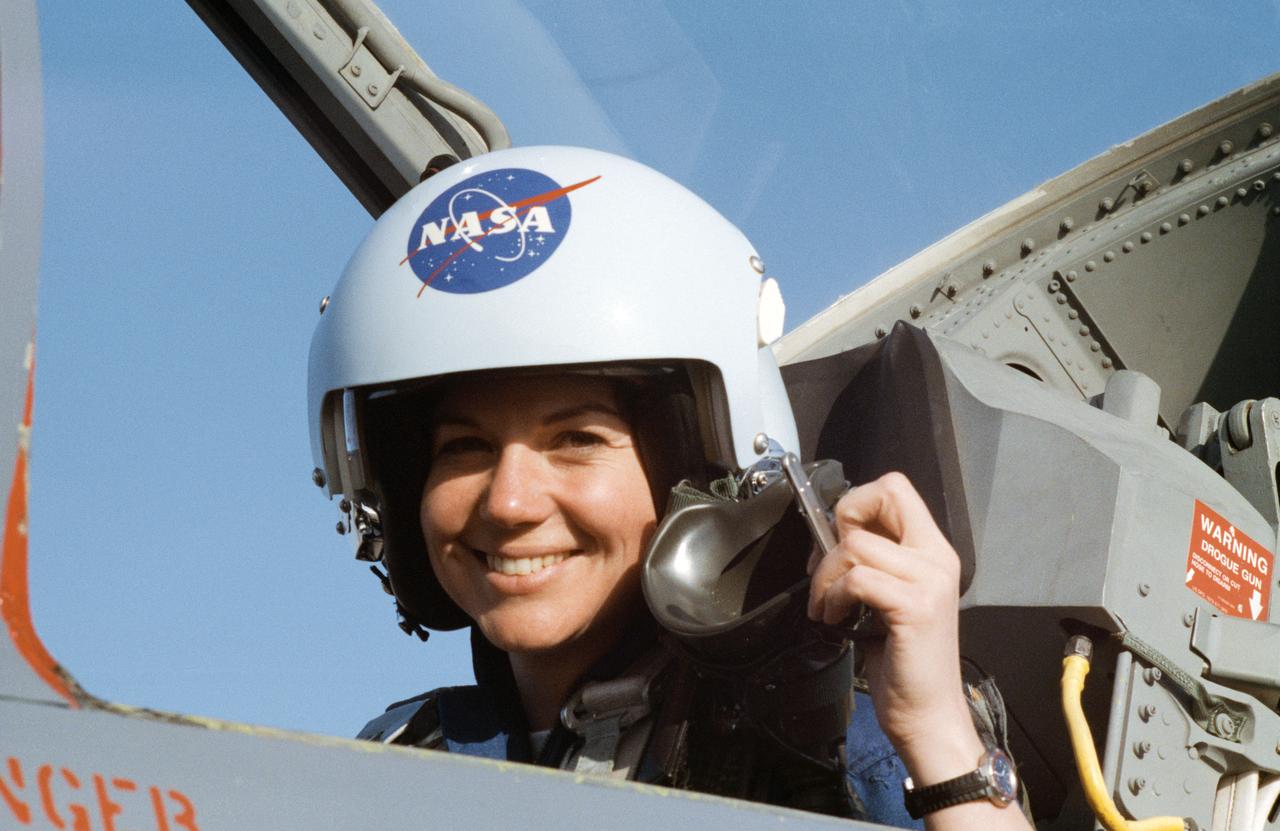
S93-30754 (September 1992) --- Astronaut Catherine G. Coleman, who had recently begun a year?s training and evaluation program at the Johnson Space Center (JSC), sits in the rear station of a T-38 jet trainer. She was about to take a familiarization flight in the jet. Coleman was later named mission specialist for NASA?s STS-73/United States Microgravity Laboratory (USML-2) mission.

STS073-355-003 (20 October - 5 November 1995) --- Doing her version of "Look, Ma, no hands" is astronaut Catherine G. Coleman. The STS-73 mission specialist works out on the bicycle ergometer on the flight deck of the Earth-orbiting Space Shuttle Columbia. Coleman was one of five NASA astronauts who were joined by two guest researchers for 16 days of in-space research in support of the United States Microgravity Laboratory (USML-2) mission.

STS073-E-5003 (23 Oct. 1995) --- Astronaut Kathryn C. Thornton, STS-73 payload commander, works at the Drop Physics Module (DPM) on the portside of the science module aboard the Space Shuttle Columbia in Earth orbit. Payload specialist Albert Sacco Jr. conducts an experiment at the Glovebox. This frame was exposed with the color Electronic Still Camera (ESC) assigned to the 16-day United States Microgravity Laboratory (USML-2) mission.
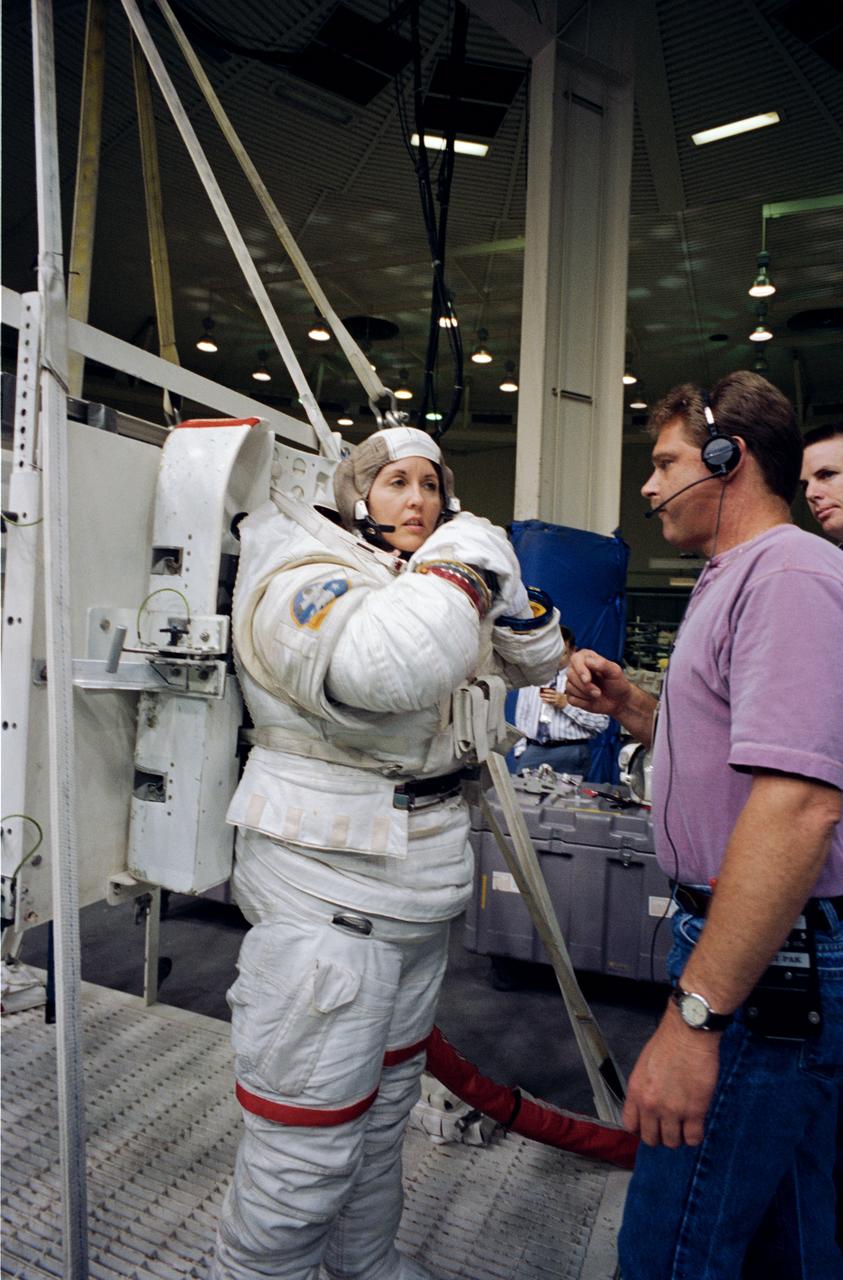
S95-08375 (August 1995) --- Astronaut Kathryn C. Thornton, payload commander for the U.S. Microgravity Laboratory (USML-2) mission, prepares to go underwater in the Johnson Space Center?s (JSC) Weightless Environment Training Facility (WET-F) pool. Thornton was about to rehearse contingency space walk tasks; there is no Extravehicular Activity (EVA) planned for the STS-73 mission.
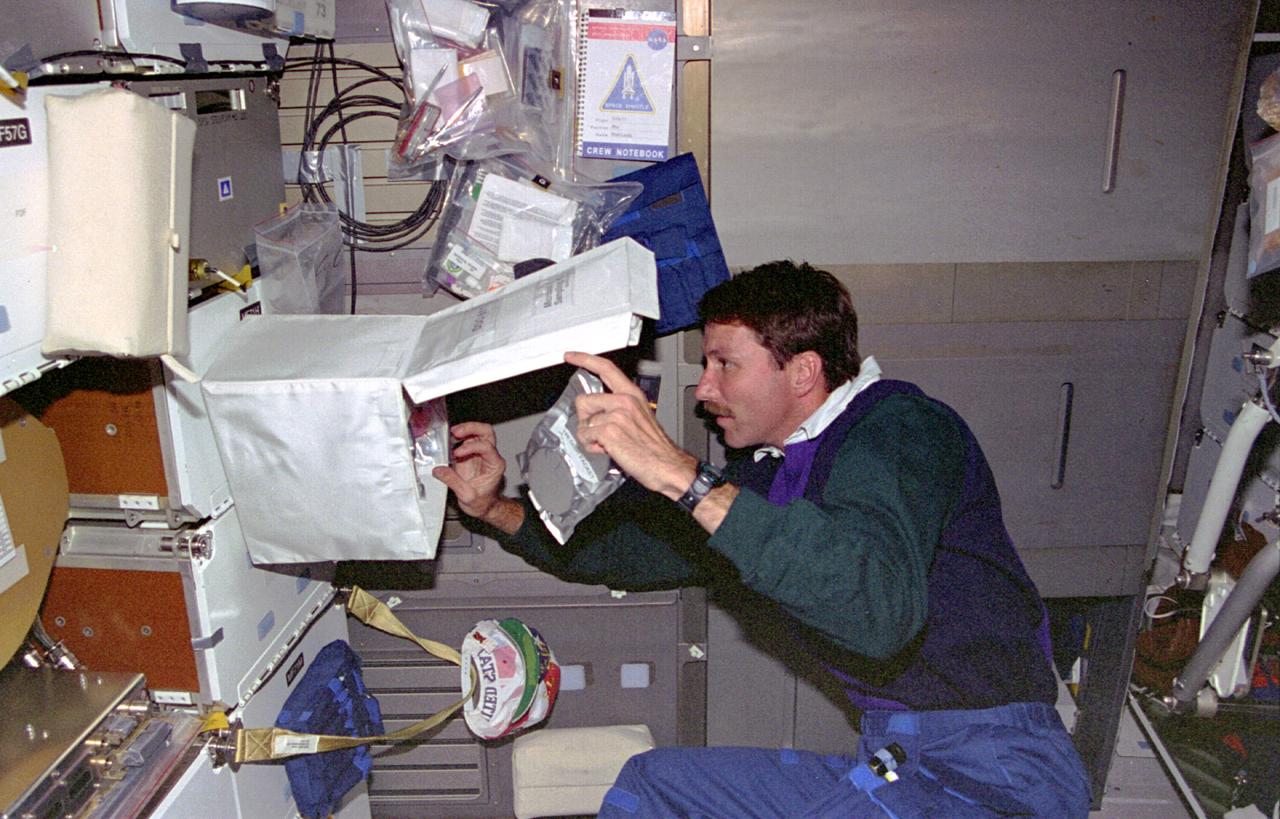
STS073-352-008 (20 October - 5 November 1995) --- On the middeck of the Earth-orbiting Space Shuttle Columbia, astronaut Kent V. Rominger, STS-73 pilot, retrieves gear necessary for sampling of the air. In addition to his pilot duties and the performance of tasks in support of the U.S. Microgravity Laboratory (USML-2) mission, Rominger and other crew members pitched in with housekeeping chores as part of their 16-days of Earth-orbit activity.
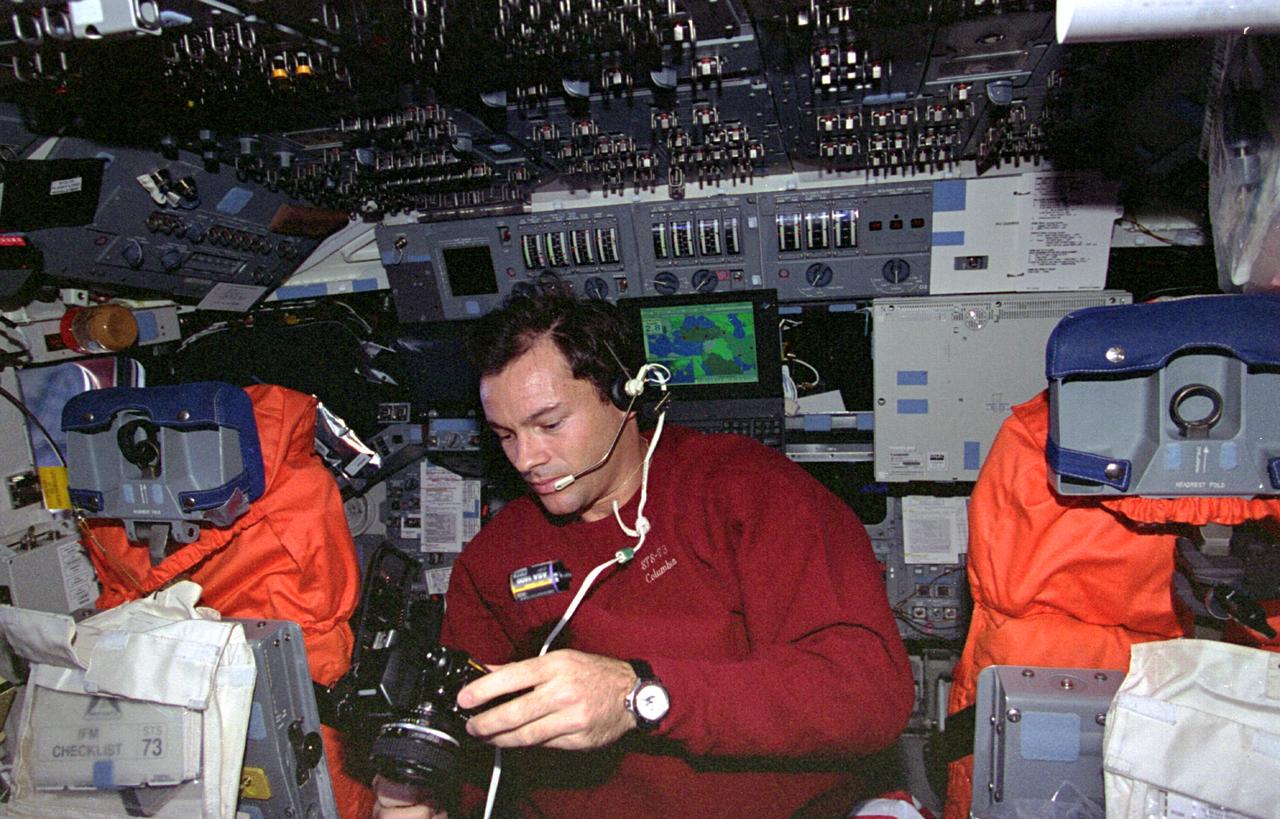
STS073-335-009 (20 October-5 November 1995) --- Astronaut Michael E. Lopez-Alegria, STS-73 mission specialist, changes the film in a 35mm camera on the flight deck of the Earth-orbiting Space Shuttle Columbia. Alegria joined four other NASA astronauts and two guest researchers for almost 16-days of Earth-orbit research in support of the U.S. Microgravity Laboratory (USML-2) mission.
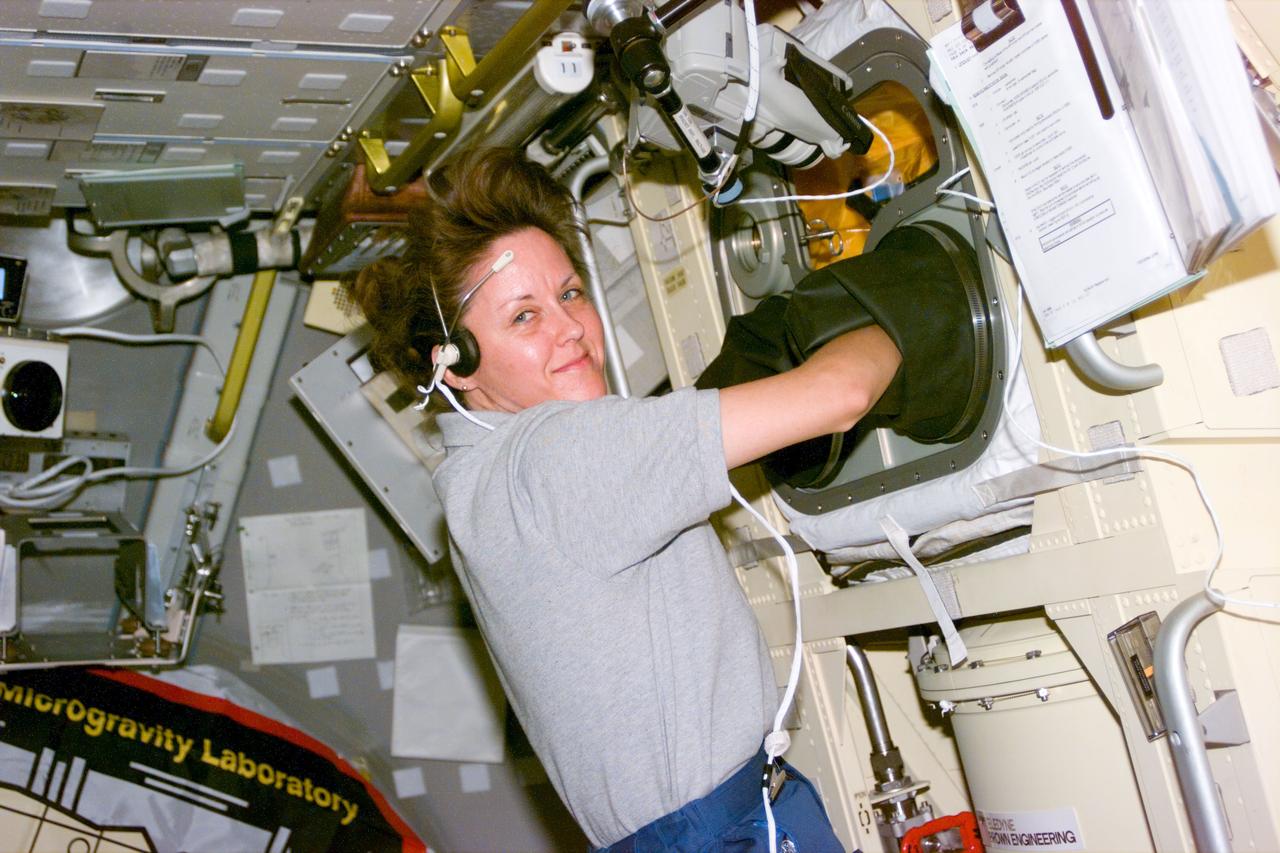
STS073-E-5246 (3 Nov. 1995) --- Astronaut Kathryn C. Thornton, STS-73 payload commander, works in the Glovebox of the science module supporting the U.S. Microgravity Laboratory (USML-2) mission. Five NASA astronauts and two payload specialists are in the last few days of a scheduled 16-day mission. This frame was exposed with the Electronic Still Camera (ESC).

STS073-E-5000 (23 Oct. 1995) --- Astronaut Catherine G. Coleman, STS-73 mission specialist, works in the Glovebox on the portside of the science module aboard the space shuttle Columbia in Earth orbit. This Electronic Still Camera (ESC) frame was the first downlinked from the spacecraft during the scheduled 16-day United States Microgravity Laboratory (USML-2) mission.

These five astronauts and two United States Microgravity Laboratory (USML) payload specialists pause from a rigid training schedule for the STS-73 crew portrait. On the front row, left to right, are Albert Sacco Jr., payload specialist; Kent V. Rominger, pilot; and Michael E. Lopez-Alegria, mission specialist. On the back row are, left to right, Catherine G. Coleman, mission specialist; Kenneth D. Bowersox, commander; Fred W. Leslie, payload specialist; and Kathryn C. Thornton, payload commander. The STS-073 crew launched aboard the Space Shuttle Columbia on October 20, 1995 at 9:53:00.069 am (EDT). The mission served as the second flight of the Microgravity Laboratory (USML-2).
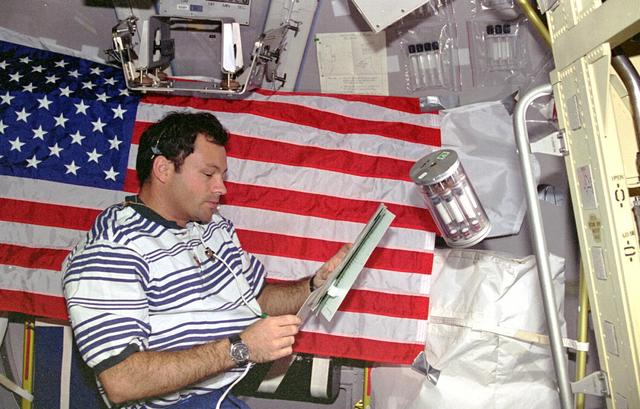
STS073-232-013 (20 October - 5 November 1995) --- Astronaut Michael E. Lopez-Alegria, STS-73 mission specialist, checks notes related to the Commercial Generic Bioprocessing Apparatus (CGBA) aboard the Earth-orbiting Space Shuttle Columbia. CGBA supported over one hundred individual experiments on small quantities of samples ranging from molecules to small organisms. Lopez-Alegria joined four other NASA astronauts and two guest researchers for 16-days of United States Microgravity Laboratory 2 (USML-2) research aboard the Space Shuttle Columbia.
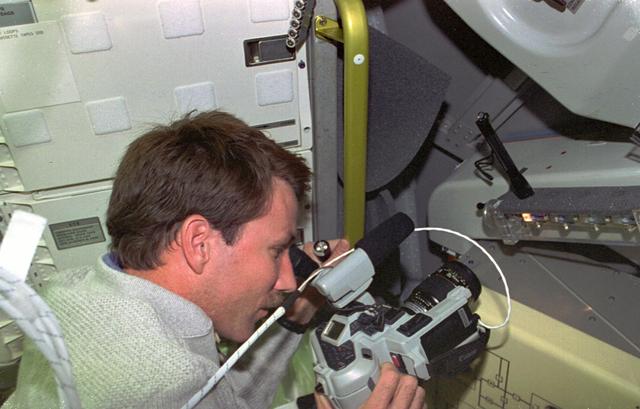
STS073-131-014 (20 October-5 November 1995) --- Astronaut Kent V. Rominger, STS-73 pilot, uses a camcorder to record progress in the Hand-Held Diffusion Test Cell (HHDTC) experiment. This test dealt with crystal growth by liquid-to-liquid diffusion. Four HHDTC units containing four test cells each produced protein crystals by diffusing one liquid to another. Rominger joined four other NASA astronauts and two guest researchers for 16 days of in-space United States Microgravity Laboratory 2 (USML-2) research aboard the Space Shuttle Columbia.
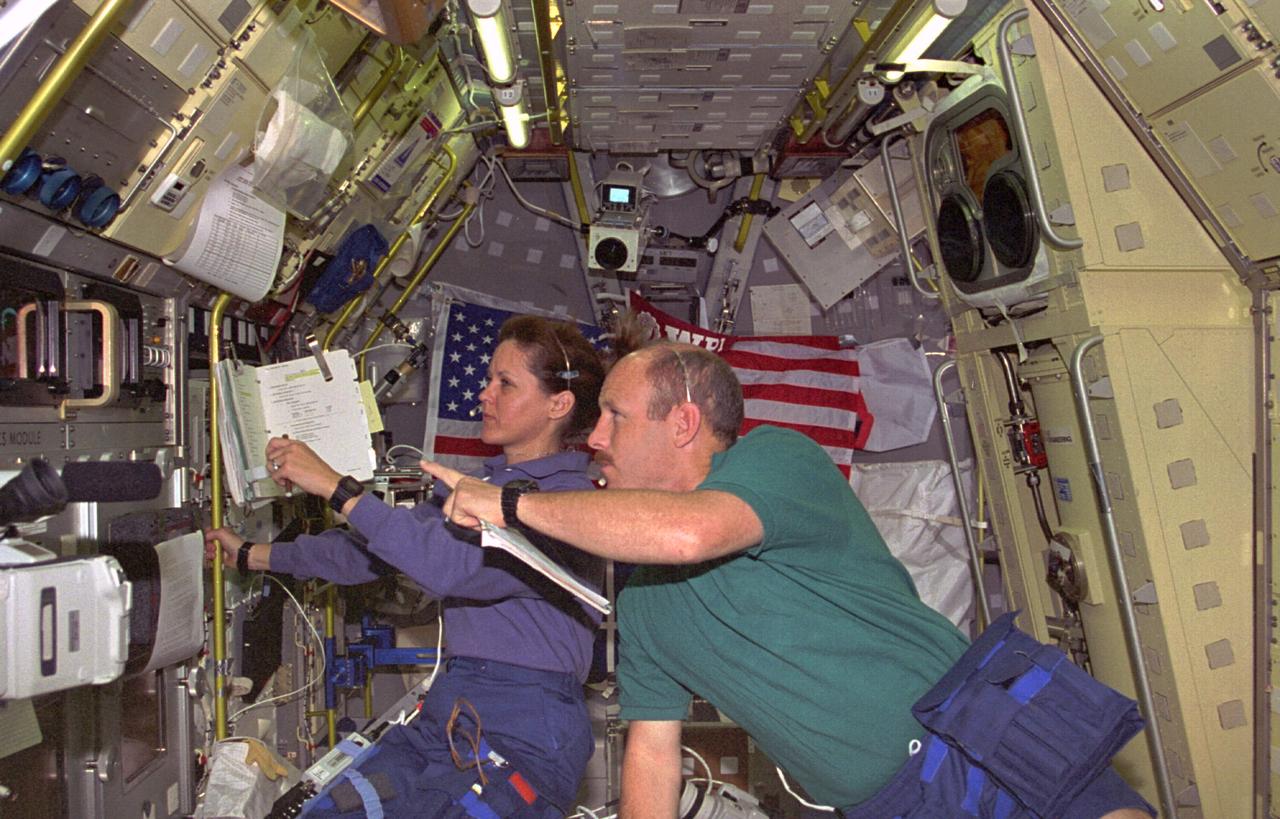
STS073-229-014 (20 October - 5 November 1995) --- Astronauts Kathryn C. Thornton, STS-73 payload commander, and Kenneth D. Bowersox, mission commander, observe a liquid drop's activity at the Drop Physics Module (DPM) in the science module aboard the Earth-orbiting Space Shuttle Columbia. The drop is partially visible at the center of the left edge of the frame. The two were joined by three other NASA astronauts and two guest researchers for almost 16-days of in-orbit research in support of the U.S. Microgravity Laboratory (USML-2) mission.
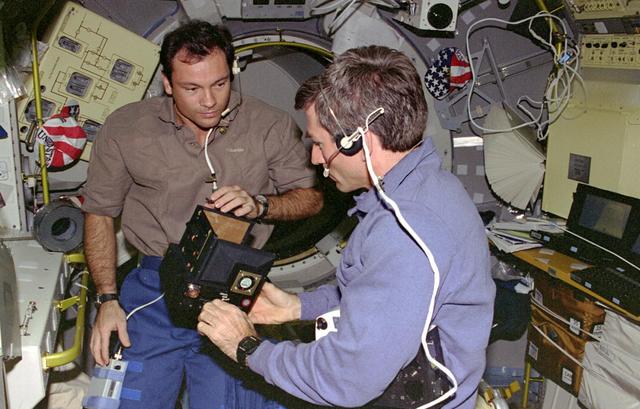
STS073-233-032 (20 October - 5 November 1995) --- Astronaut Michael E. Lopez-Alegria (left), STS-73 mission specialist, assists payload specialist Fred W. Leslie in an in-flight maintenance task involving the Fiber Support Droplet Combustion (FSDC) experiment. This new Glovebox investigation tests a technique for studying combustion in the weightless environment of space. The two joined five other crew members onboard the Space Shuttle Columbia for 16 days of in-space research in support of the United States Microgravity Laboratory (USML-2) mission.
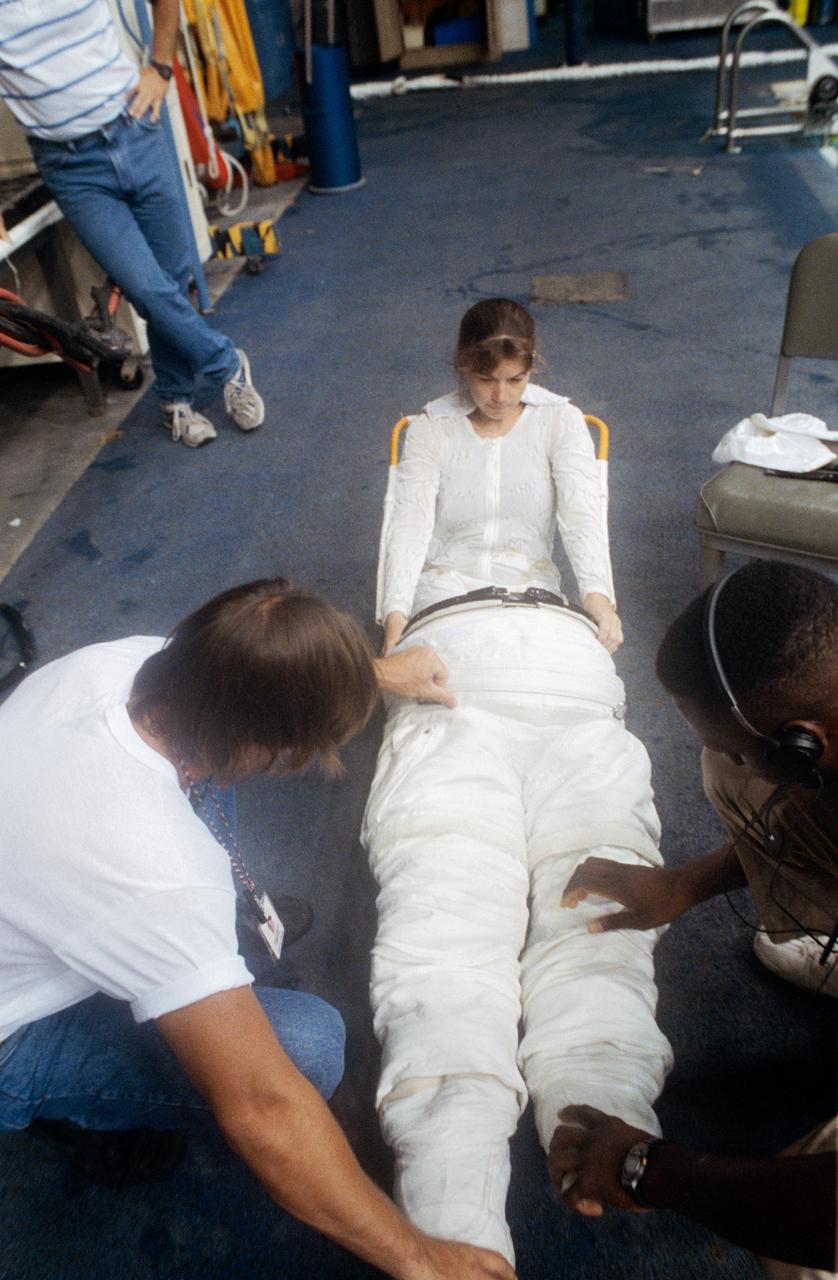
S93-42464 (September 1993) --- Astronaut Catherine G. Coleman, mission specialist for STS-73, dons a high-fidelity training version of an Extravehicular Mobility Unit (EMU) spacesuit at the Johnson Space Center?s (JSC) Weightless Environment Training Facility (WET-F). Coleman, who has recently been named as one of seven crew members for the U.S. Microgravity Laboratory (USML-2) mission, was about to go underwater in a 25-feet deep pool. The pool is used to train astronauts for mission specific space walk chores as well as for contingency extravehicular activity (EVA) tasks.
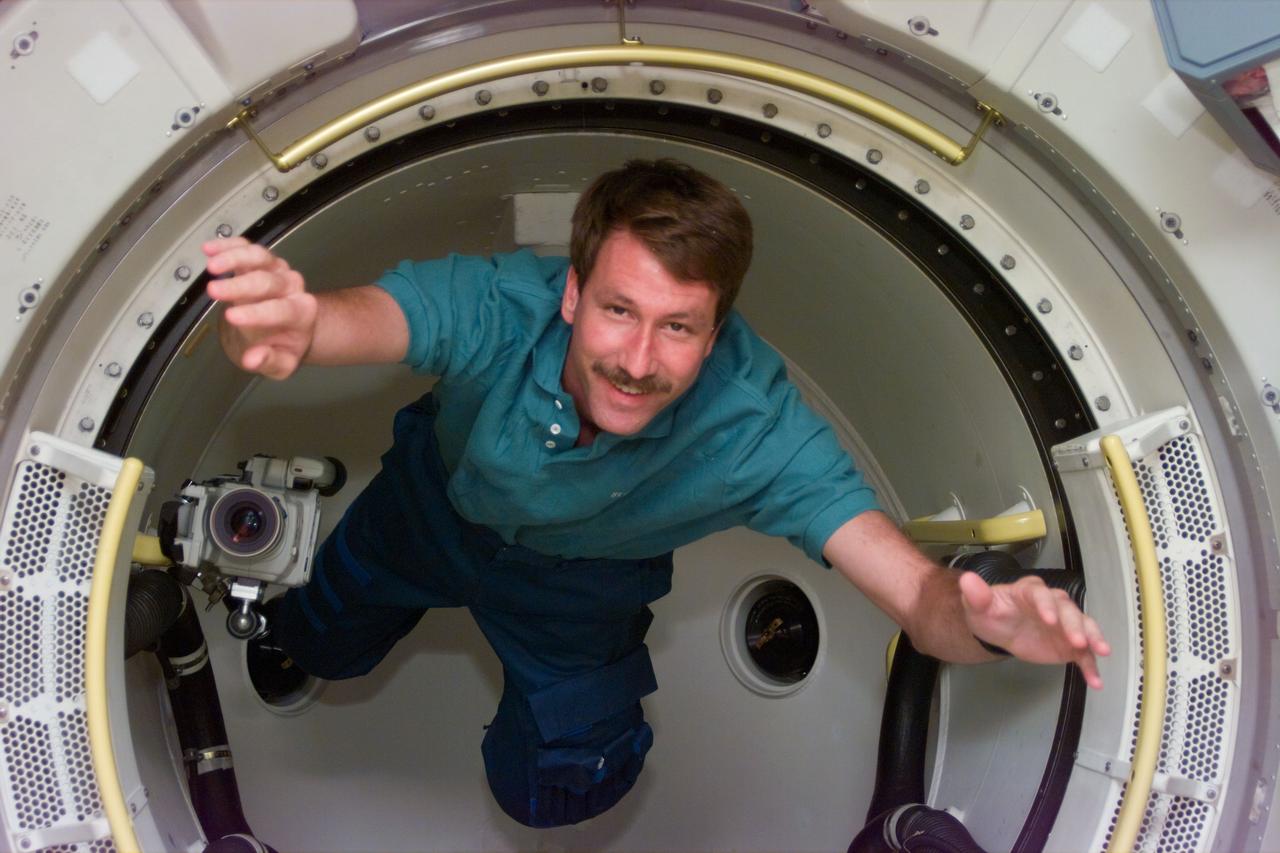
STS073-E-5053 (26 Oct. 1995) --- Astronaut Kent V. Rominger, STS-73 pilot, floats through a tunnel connecting the space shuttle Columbia's cabin and its science module. Rominger is one of seven crewmembers in the midst of a 16-day multi-faceted mission aboard Columbia. For the next week and a half, the crew will continue working in shifts around the clock on a diverse assortment of United States Microgravity Laboratory (USML-2) experiments located in the science module. Fields of study include fluid physics, materials science, biotechnology, combustion science and commercial space processing technologies. The frame was exposed with an Electronic Still Camera (ESC).
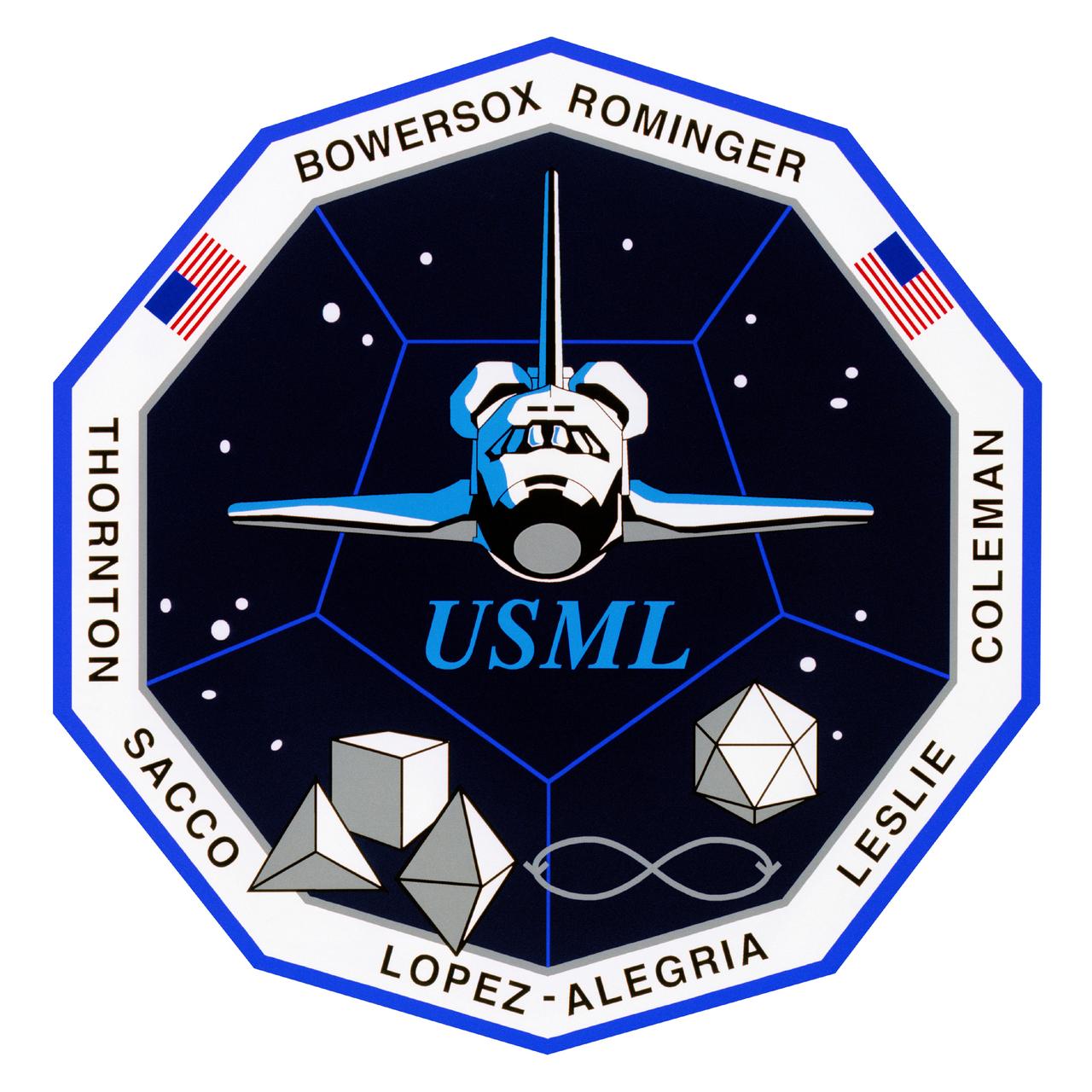
The crew patch of STS-73, the second flight of the United States Microgravity Laboratory (USML-2), depicts the Space Shuttle Columbia in the vastness of space. In the foreground are the classic regular polyhedrons that were investigated by Plato and later Euclid. The Pythagoreans were also fascinated by the symmetrical three-dimensional objects whose sides are the same regular polygon. The tetrahedron, the cube, the octahedron, and the icosahedron were each associated with the Natural Elements of that time: fire (on this mission represented as combustion science); Earth (crystallography), air and water (fluid physics). An additional icon shown as the infinity symbol was added to further convey the discipline of fluid mechanics. The shape of the emblem represents a fifth polyhedron, a dodecahedron, which the Pythagoreans thought corresponded to a fifth element that represented the cosmos.
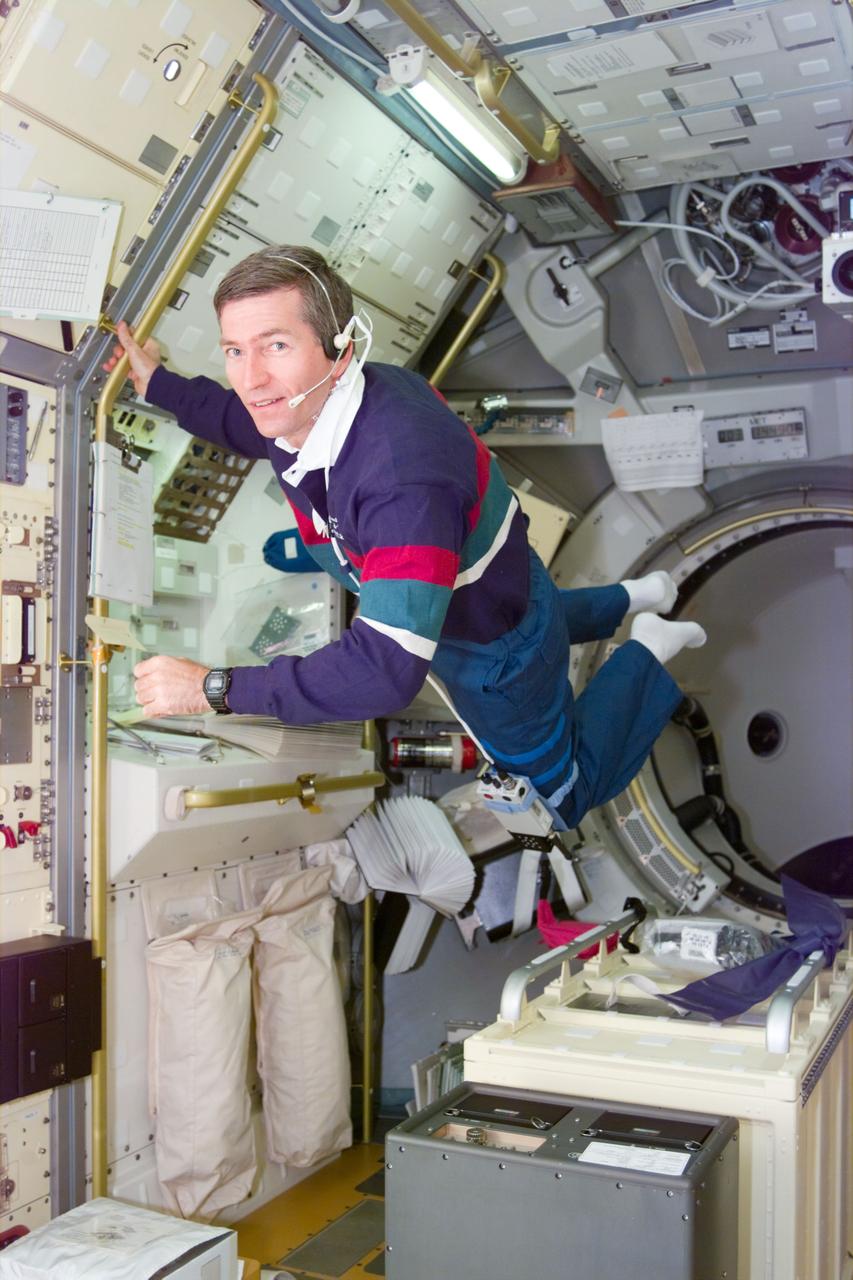
STS073-E-5041 (26 Oct. 1995) --- Fred W. Leslie, STS-73 payload specialist, working out of NASA's Marshall Space Flight Center (MSFC), in Alabama, grabs a support bar on a science workstation rack after floating from the space shuttle Columbia's cabin into the science module. Leslie is one of seven crewmembers in the midst of a 16-day multi-faceted mission aboard Columbia. For the next week and a half, Leslie and the rest of the crew will continue working in shifts around the clock on a diverse assortment of United States Microgravity Laboratory (USML-2) experiments located in the science module. Fields of study include fluid physics, materials science, biotechnology, combustion science and commercial space processing technologies. The frame was exposed with an Electronic Still Camera (ESC).
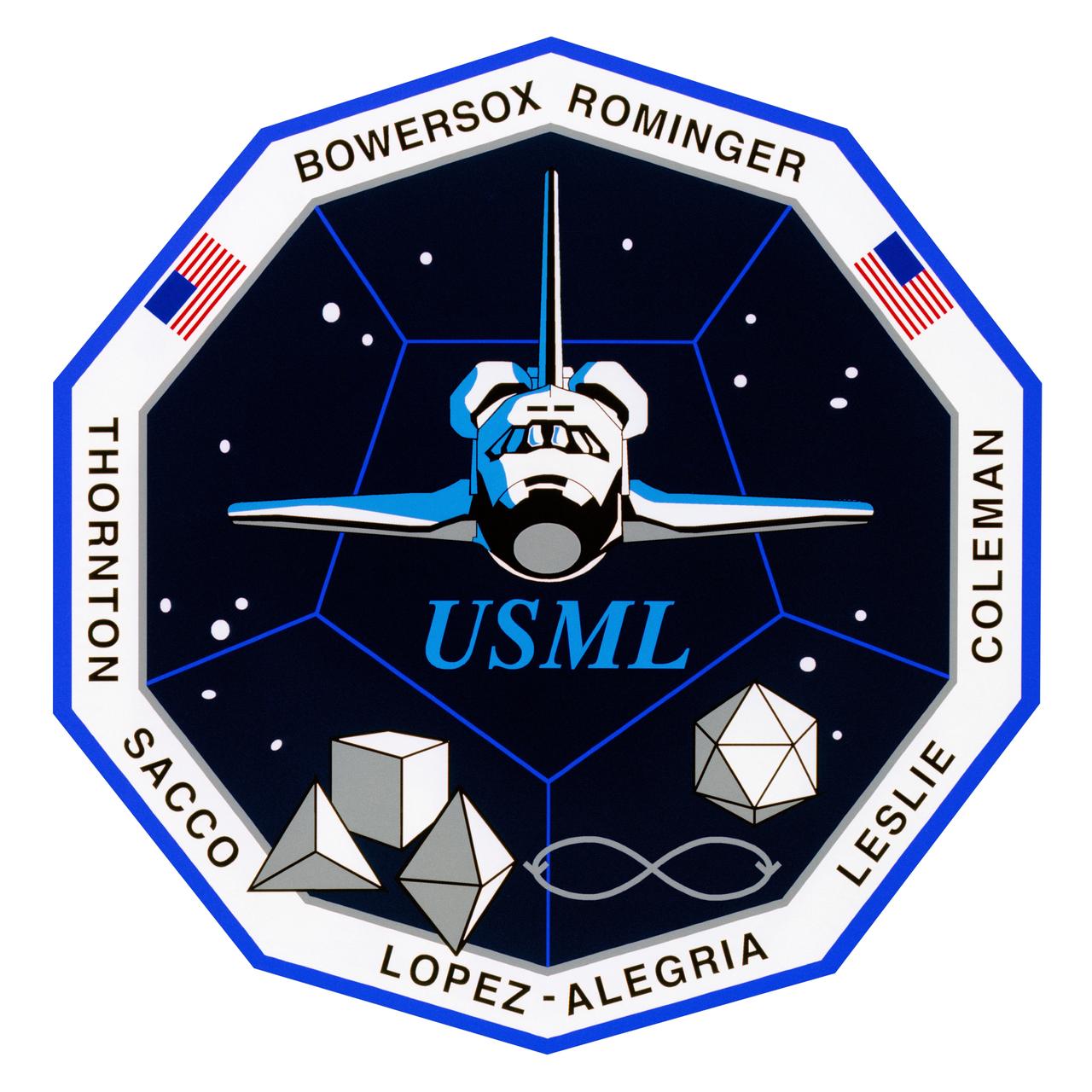
STS073-S-001 (May 1995) --- The crew patch of STS-73, the second flight of the United States Microgravity Laboratory (USML-2), depicts the space shuttle Columbia in the vastness of space. In the foreground are the classic regular polyhedrons that were investigated by Plato and later Euclid. The Pythagoreans were also fascinated by the symmetrical three-dimensional objects whose sides are the same regular polygon. The tetrahedron, the cube, the octahedron, and the icosahedron were each associated with the "Natural Elements" of that time: fire (on this mission represented as combustion science); Earth (crystallography), air and water (fluid physics). An additional icon shown as the infinity symbol was added to further convey the discipline of fluid mechanics. The shape of the emblem represents a fifth polyhedron, a dodecahedron, which the Pythagoreans thought corresponded to a fifth element that represented the cosmos. The NASA insignia design for space shuttle flights is reserved for use by the astronauts and for other official use as the NASA Administrator may authorize. Public availability has been approved only in the forms of illustrations by the various news media. When and if there is any change in this policy, which is not anticipated, the change will be publicly announced. Photo credit: NASA