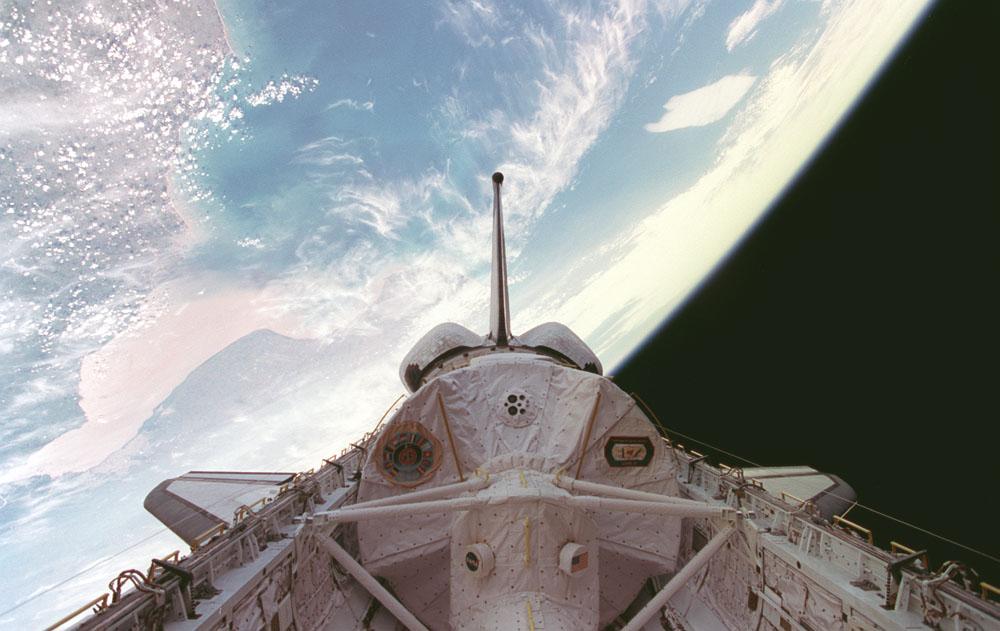
Onboard photo of space shuttle Columbia (STS-73) cargo bay payload - the United States Microgravity Laboratory-2 (USML-2) with an earthview.
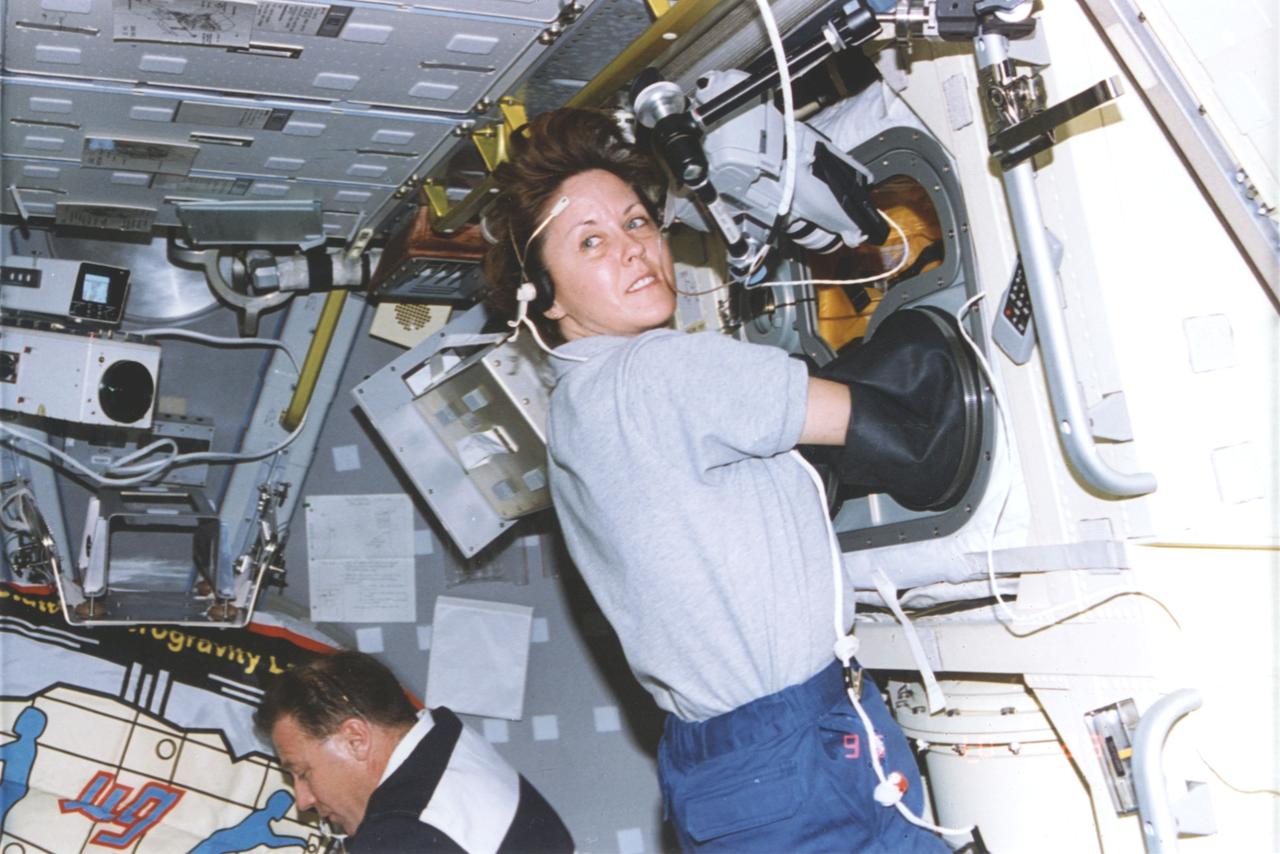
Onboard STS-73, USML-2: Mission Specialist, Payload Commander, Kathryn Thorton with (CGF) Crystal Growth Furnace
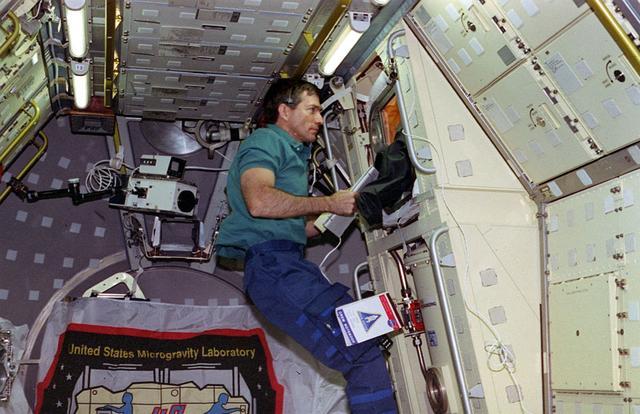
Payload Specialist, Fred Leslie changing samples in (CGF) Crystal Growth Furnace onboard STS-73, USML-2.
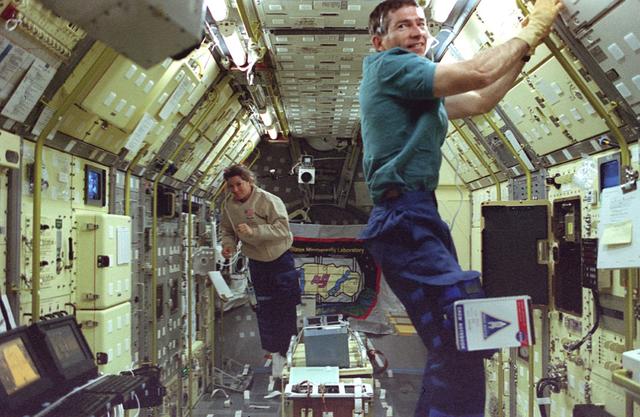
Onboard photo of space shuttle Columbia (STS-73) crewmembers Fred Leslie (foreground) and Catherine Coleman aboard the United States Microgravity Laboratory (USML) conducting experiments in a microgravitational environment available in the Orbiter's cargo bay while in low earth orbit.
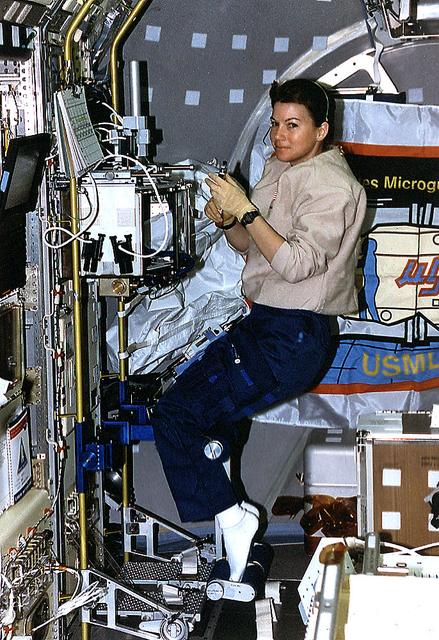
Onboard Space Shuttle Columbia (STS-73) Mission Specialists Catherine Cady Coleman works at the glovebox facility in support of the Protein Crystal Growth Glovebox (PCG-GBX) experiment in the United States Microgravity Laboratory 2 (USML-2) Spacelab science module.
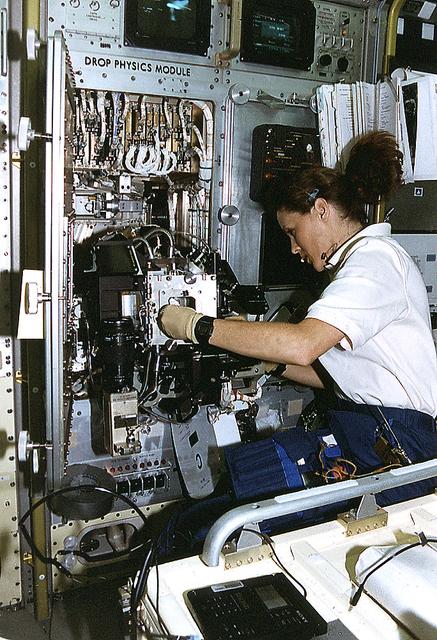
Onboard Space Shuttle Columbia (STS-73) Payload Commander Kathryn Thornton works with the Drop Physics Module (DPM) in the United States Microgravity Laboratory 2 (USML-2) Spacelab Science Module cleaning the experiment chamber of the DPM.
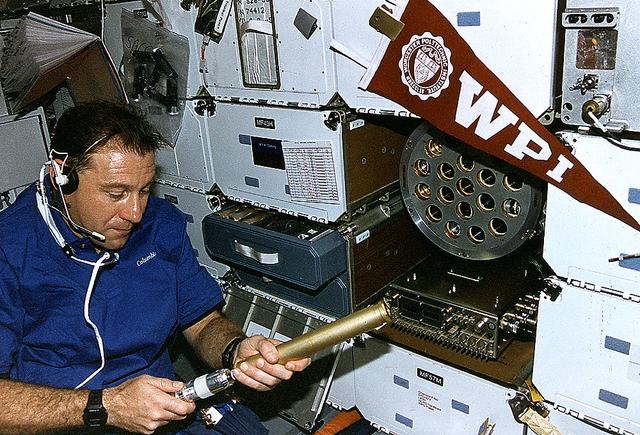
Onboard Space Shuttle Columbia (STS-73) Payload Specialist Albert Sacco loads autoclaves using a power screwdriver into the Zeolite Crystal Growth (ZCG) experiment in the middeck for the United States Microgravity Laboratory 2 (USML-2) Spacelab mission.
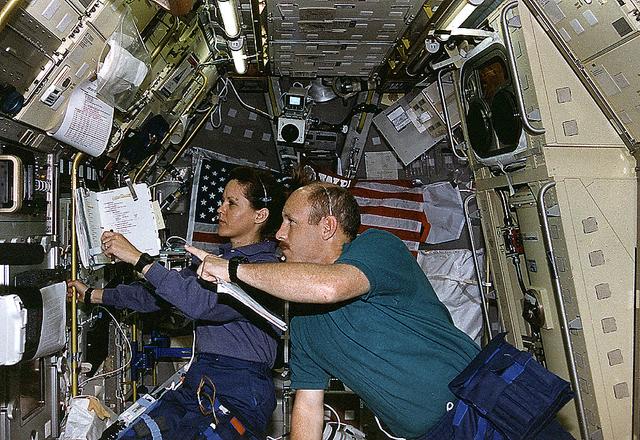
Onboard Space Shuttle Columbia (STS-73) Payload Commander Kathryn Thornton and Commander Ken Bowersox discuss the Drop Physics Module (DPM) experiment in the United States Microgravity Laboratory 2 (USML-2) spacelab science module.
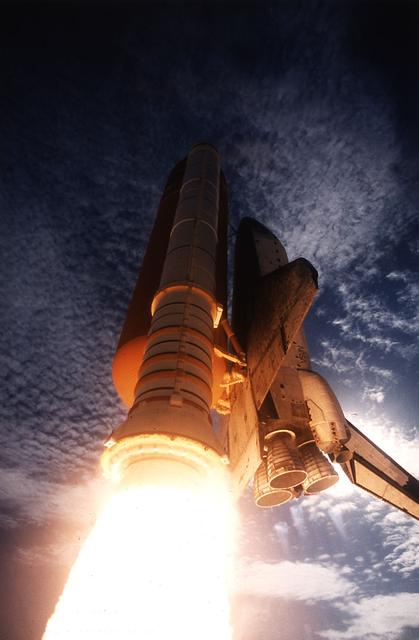
A unique view of the Space Shuttle Columbia (STS-73) moments after bursting into Earth's atmosphere on its way toward space. Onboard the orbiter is the United States Microgravity Laboratory 2 (USML-2), a Marshall managed payload, where Columbia's seven member crew will perform experiments while in orbit.
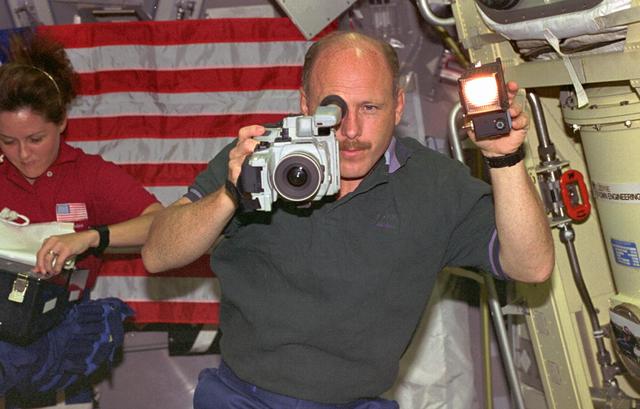
STS073-230-014 (20 October - 5 November 1995) --- Astronaut Kenneth D. Bowersox, STS-73 mission commander, uses a camcorder to record United States Microgravity Laboratory 2 (USML-2) activities onboard the Space Shuttle Columbia. Nearby, astronaut Kathryn C. Thornton, payload commander, prepares to open a supply chest to support one of many science experiments conducted by the seven-member crew during the 16-day USML-2 flight.
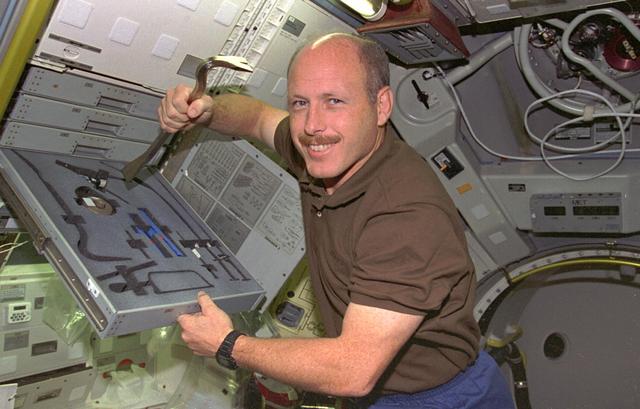
STS073-351-024 (20 October - 5 November 1995) --- Astronaut Kenneth D. Bowersox, STS-73 mission commander, retrieves a crow bar from a tool set onboard the science module in the cargo bay of the Earth-orbiting Space Shuttle Columbia. Various tools were available for a variety of in-flight maintenance tasks for the crew to carry out during the 16-day United States Microgravity Laboratory (USML-2) mission.
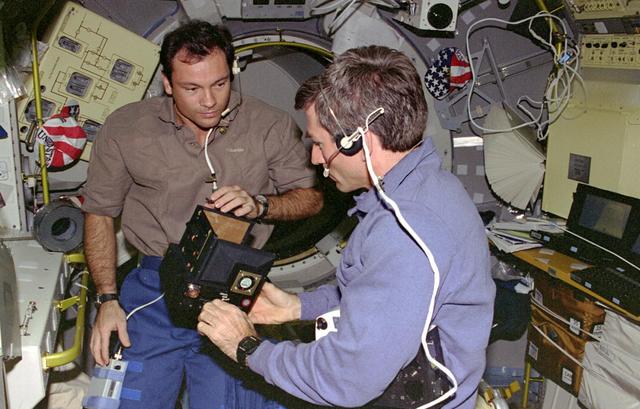
STS073-233-032 (20 October - 5 November 1995) --- Astronaut Michael E. Lopez-Alegria (left), STS-73 mission specialist, assists payload specialist Fred W. Leslie in an in-flight maintenance task involving the Fiber Support Droplet Combustion (FSDC) experiment. This new Glovebox investigation tests a technique for studying combustion in the weightless environment of space. The two joined five other crew members onboard the Space Shuttle Columbia for 16 days of in-space research in support of the United States Microgravity Laboratory (USML-2) mission.