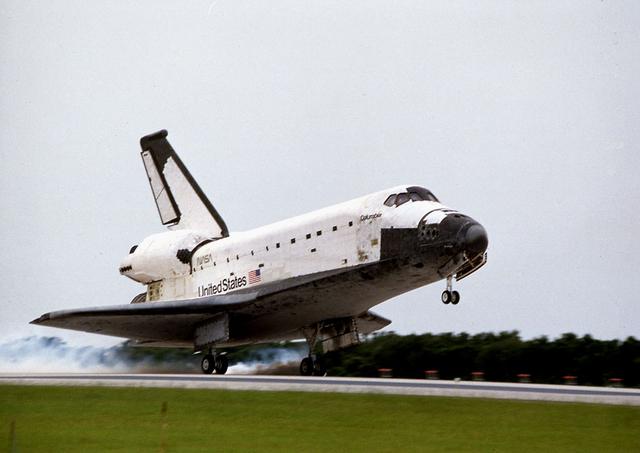
The longest Shuttle flight to date came to a successful close as the orbiter Columbia (STS-78) touched down on Runway 33 of the Kennedy Space Center's Shuttle Landing Facility. During the nearly 17-day flight, the seven crew members on board for the 78th Shuttle mission conducted extensive research in the primary payload, the Life and Microgravity Spacelab (LMS). The results from this Marshall managed payload will be sent to Marshall Space Flight Center for futher review.
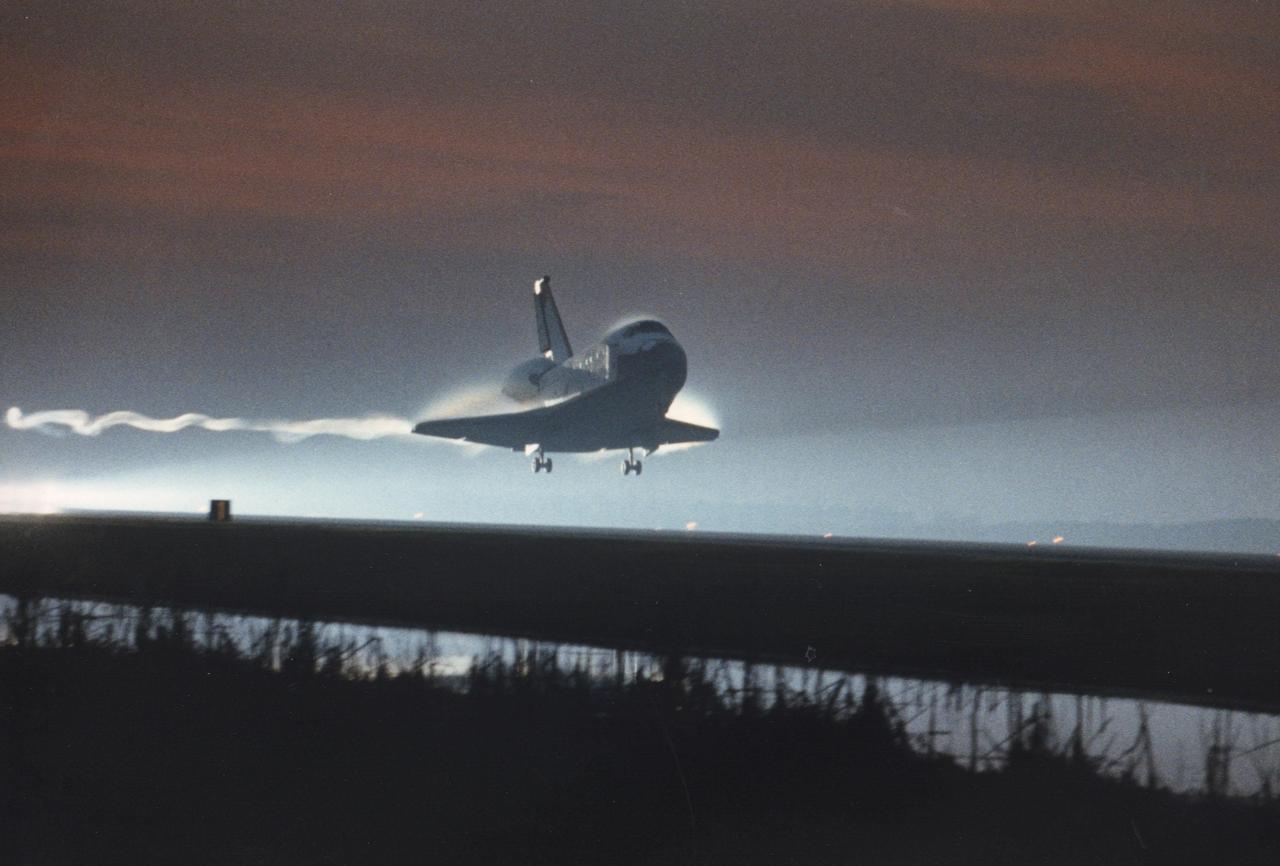
KENNEDY SPACE CENTER, FLA. -- With sunrise just minutes away, the orbiter Columbia swoops down on KSC’s Shuttle Landing Facility, Runway 33. The 33rd KSC landing in Shuttle program history is set to occur on the first opportunity Dec. 7 at 6:49 a.m. EST. Prior landing attempts Dec. 5 and 6 were scrubbed due to weather conditions. The extended time aloft allowed the five- member crew of Mission STS-80 to set a new record for long-duration Shuttle flight. At main gear touchdown, mission duration will be about 17 days, 16 hours, surpassing the 16-day, 21-hour set by the STS-78 crew earlier this year. Guiding Columbia onto the runway is STS-80 Commander Kenneth D. Cockrell; the pilot is Kent V. Rominger. The three mission specialists are Tamara E. Jernigan, Thomas D. Jones and Story Musgrave.
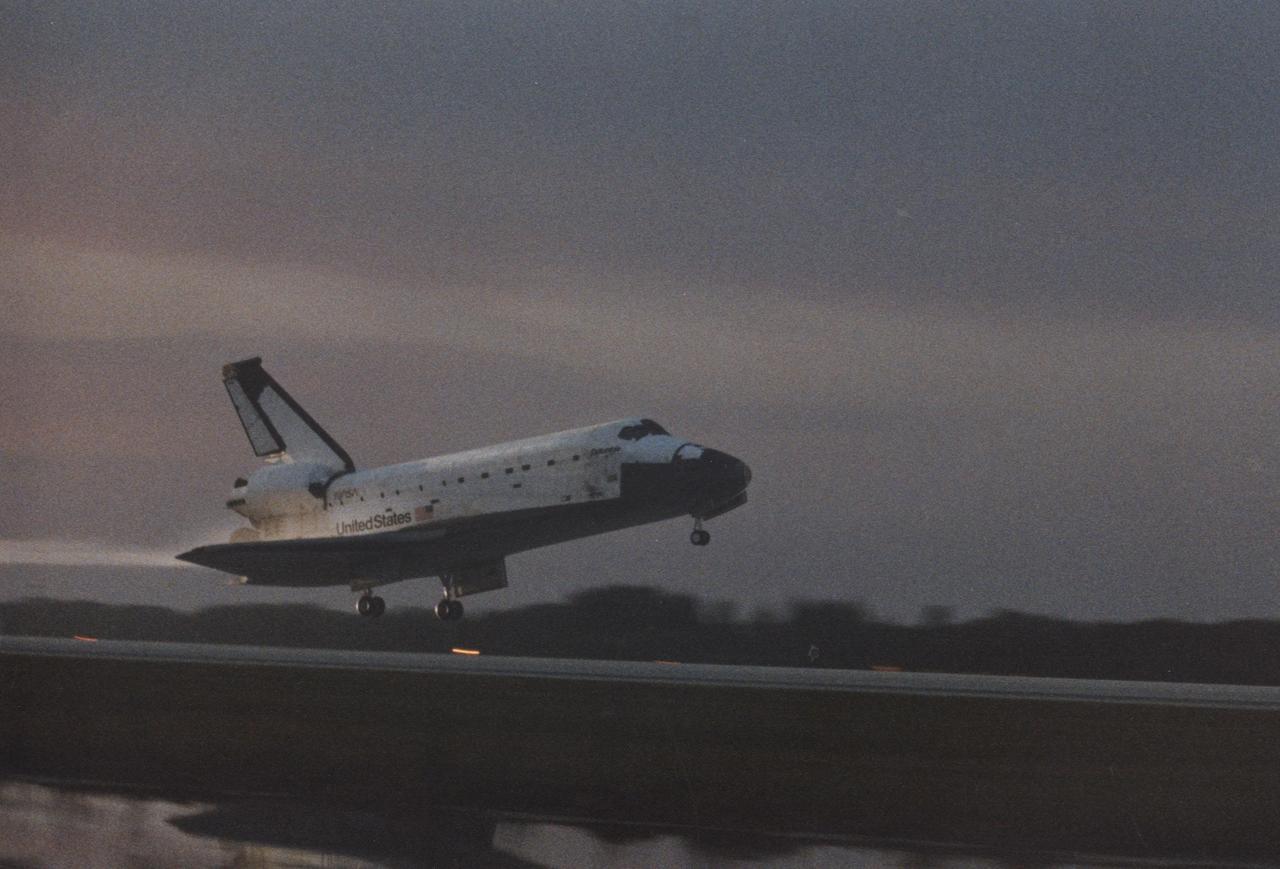
KENNEDY SPACE CENTER, FLA. -- With sunrise just minutes away, the orbiter Columbia swoops down on KSC’s Shuttle Landing Facility, Runway 33. The 33rd KSC landing in Shuttle program history is set to occur on the first opportunity Dec. 7 at 6:49 a.m. EST. Prior landing attempts Dec. 5 and 6 were scrubbed due to weather conditions. The extended time aloft allowed the five- member crew of Mission STS-80 to set a new record for long-duration Shuttle flight. At main gear touchdown, mission duration will be about 17 days, 16 hours, surpassing the 16-day, 21-hour set by the STS-78 crew earlier this year. Guiding Columbia onto the runway is STS-80 Commander Kenneth D. Cockrell; the pilot is Kent V. Rominger. The three mission specialists are Tamara E. Jernigan, Thomas D. Jones and Story Musgrave.
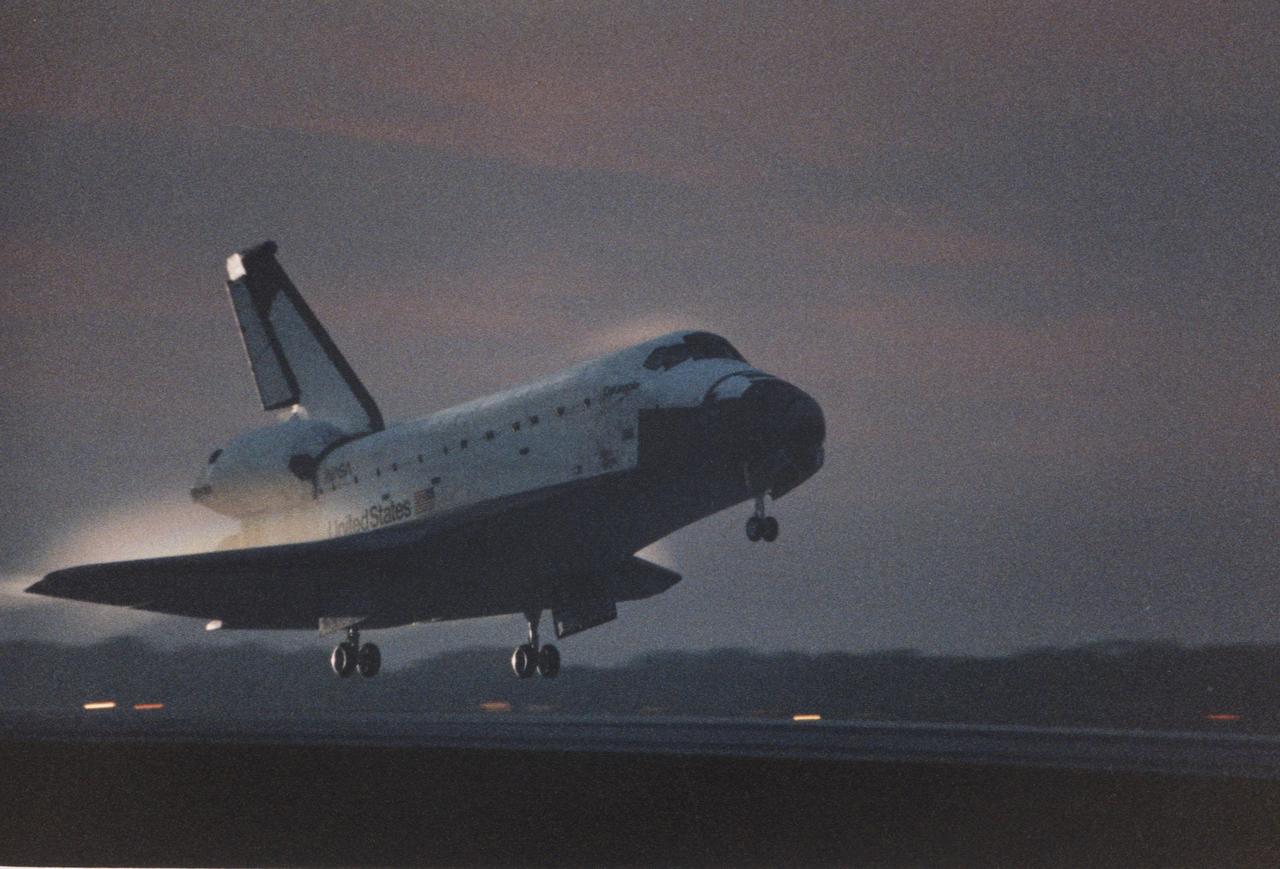
KENNEDY SPACE CENTER, FLA. -- With sunrise just minutes away, the orbiter Columbia swoops down on KSC’s Shuttle Landing Facility, Runway 33. The 33rd KSC landing in Shuttle program history is set to occur on the first opportunity Dec. 7 at 6:49 a.m. EST. Prior landing attempts Dec. 5 and 6 were scrubbed due to weather conditions. The extended time aloft allowed the five- member crew of Mission STS-80 to set a new record for long-duration Shuttle flight. At main gear touchdown, mission duration will be about 17 days, 16 hours, surpassing the 16-day, 21-hour set by the STS-78 crew earlier this year. Guiding Columbia onto the runway is STS-80 Commander Kenneth D. Cockrell; the pilot is Kent V. Rominger. The three mission specialists are Tamara E. Jernigan, Thomas D. Jones and Story Musgrave
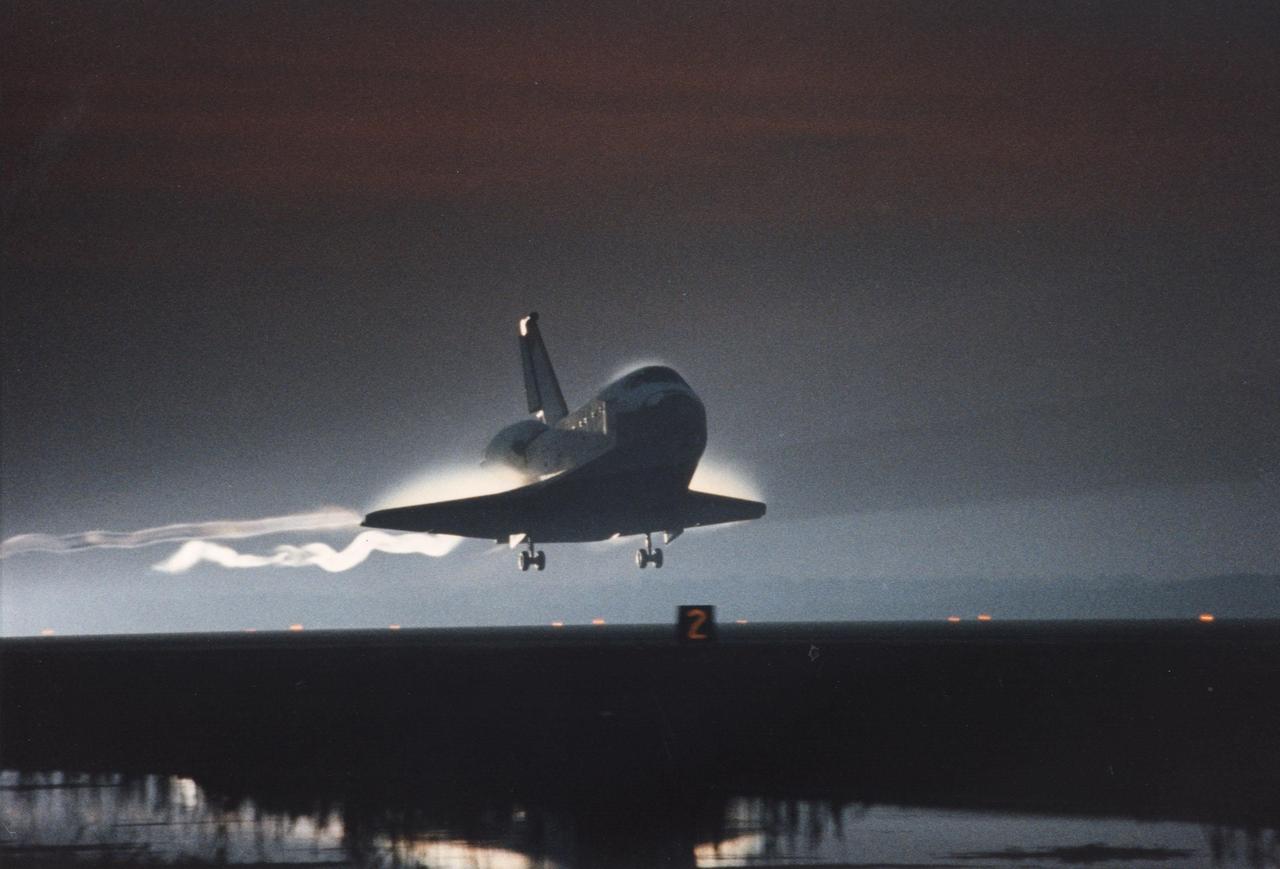
KENNEDY SPACE CENTER, FLA. -- With sunrise just minutes away, the orbiter Columbia swoops down on KSC’s Shuttle Landing Facility, Runway 33. The 33rd KSC landing in Shuttle program history is set to occur on the first opportunity Dec. 7 at 6:49 a.m. EST. Prior landing attempts Dec. 5 and 6 were scrubbed due to weather conditions. The extended time aloft allowed the five- member crew of Mission STS-80 to set a new record for long-duration Shuttle flight. At main gear touchdown, mission duration will be about 17 days, 16 hours, surpassing the 16-day, 21-hour set by the STS-78 crew earlier this year. Guiding Columbia onto the runway is STS-80 Commander Kenneth D. Cockrell; the pilot is Kent V. Rominger. The three mission specialists are Tamara E. Jernigan, Thomas D. Jones and Story Musgrave.
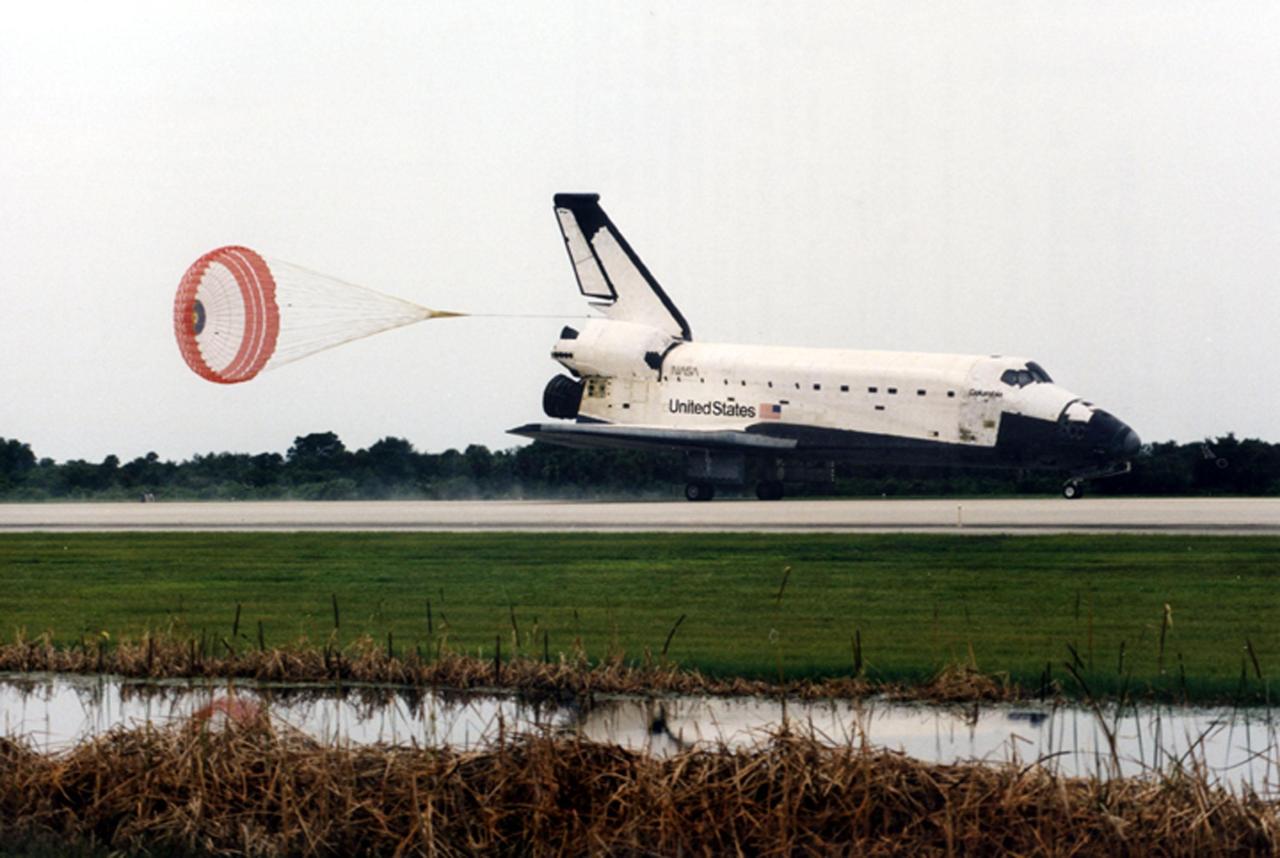
KENNEDY SPACE CENTER, FLA. -- The drag chute pops open as the orbiter Columbia glides down Runway 33 of the Kennedy Space Center's Shuttle Landing Facility. Main gear touchdown occurred at 8:36 a.m. EDT, July 7, 1996. A mission duration of 16 days, 21 hours, and 47 minutes made STS-78 the longest Shuttle flight to date. On board are a crew of seven: mission Commander Terence "Tom" Henricks; Pilot Kevin R. Kregel; Payload Commander Susan J. Helms; Mission Specialists Richard M. Linnehan and Charles E. Brady Jr.; and Payload Specialist Jean-Jacques Favier, representing the French Space Agency (CNES) and Robert Brent Thirsk, of the Canadian Space Agency (CSA) . The primary payload of the 78th Shuttle flight was the Life and Microgravity Spacelab (LMS)
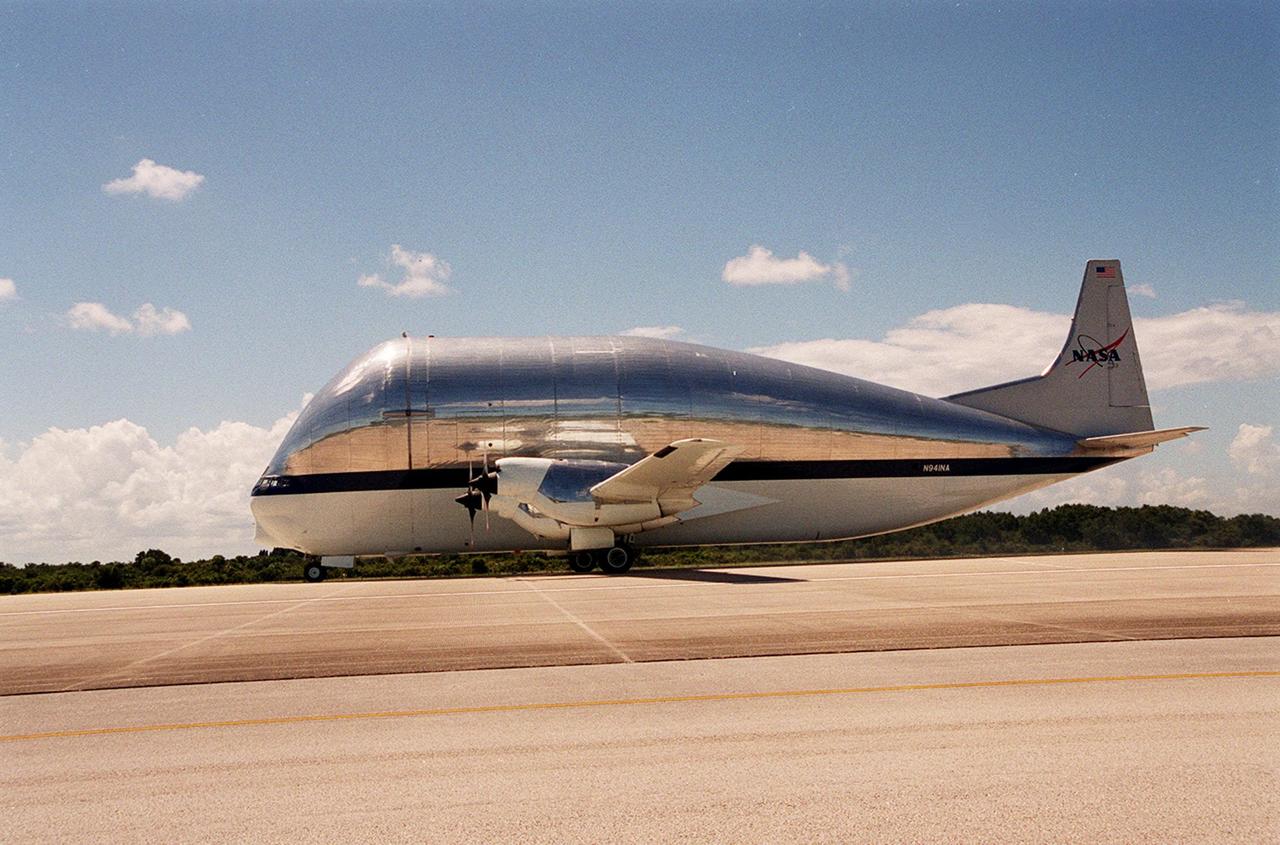
KENNEDY SPACE CENTER, FLA. -- NASA's Super Guppy aircraft lands at the KSC Shuttle Landing Facility with its cargo, the <a href="http://www-pao.ksc.nasa.gov/kscpao/release/2000/78-00.htm"> Joint Airlock Module</a> the gateway from which crew members aboard the International Space Station (ISS) will enter and exit the 470-ton orbiting research facility. The airlock was transported from NASA's Marshall Space Flight Center in Huntsville, Ala. The airlock will be transported to the Operations and Checkout Building in the KSC industrial area where it will undergo vacuum chamber testing. It will then be moved to the Space Station Processing Facility (SSPF) for further prelaunch preparation and checkout. The massive, spindle-shaped airlock is 20 feet long, has a diameter of 13 feet at its widest point, and weighs six and a half tons. It was manufactured at NASA's Marshall Space Flight Center by the Huntsville division of The Boeing Company. The Space Shuttle Atlantis will carry the airlock to orbit on mission STS-104, the tenth International Space Station flight, currently targeted for liftoff in May 2001
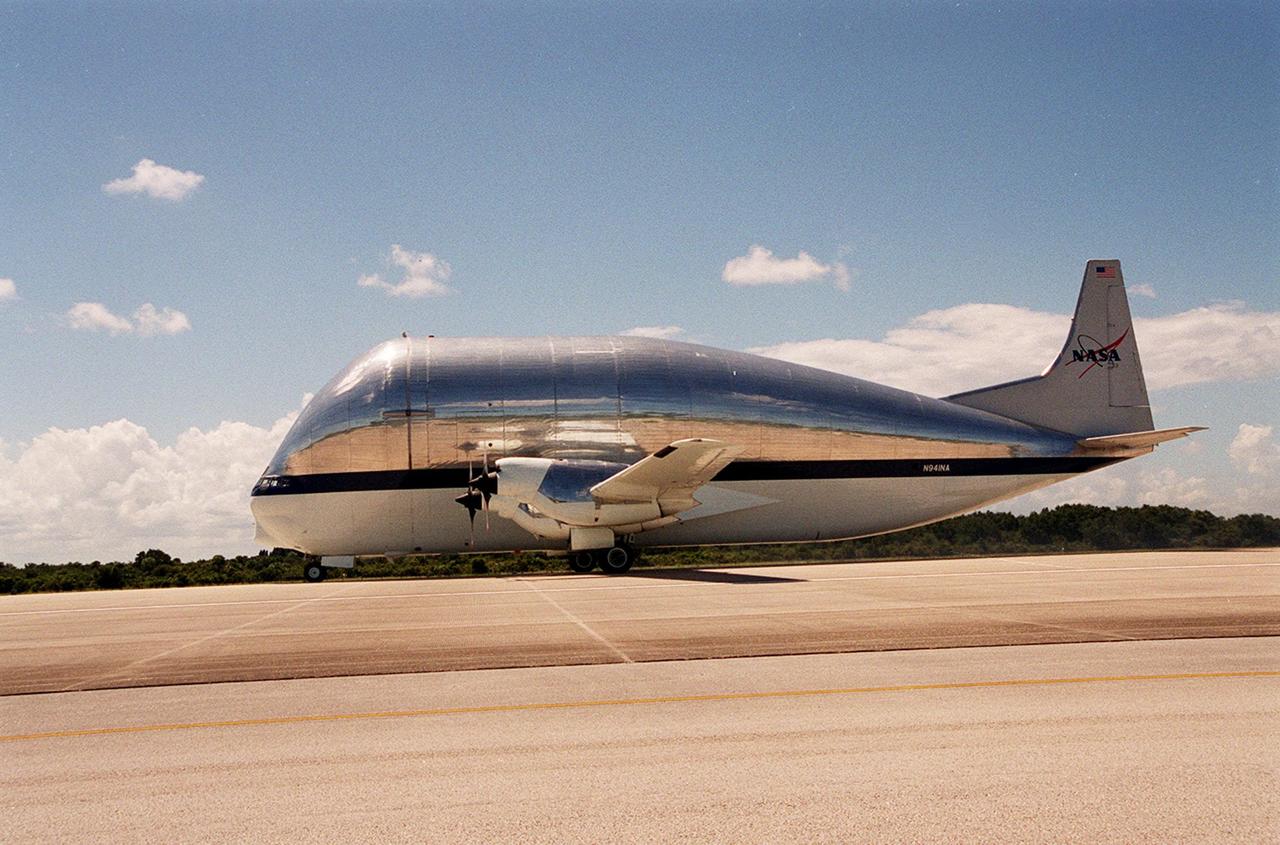
KENNEDY SPACE CENTER, FLA. -- NASA's Super Guppy aircraft lands at the KSC Shuttle Landing Facility with its cargo, the <a href="http://www-pao.ksc.nasa.gov/kscpao/release/2000/78-00.htm"> Joint Airlock Module</a> the gateway from which crew members aboard the International Space Station (ISS) will enter and exit the 470-ton orbiting research facility. The airlock was transported from NASA's Marshall Space Flight Center in Huntsville, Ala. The airlock will be transported to the Operations and Checkout Building in the KSC industrial area where it will undergo vacuum chamber testing. It will then be moved to the Space Station Processing Facility (SSPF) for further prelaunch preparation and checkout. The massive, spindle-shaped airlock is 20 feet long, has a diameter of 13 feet at its widest point, and weighs six and a half tons. It was manufactured at NASA's Marshall Space Flight Center by the Huntsville division of The Boeing Company. The Space Shuttle Atlantis will carry the airlock to orbit on mission STS-104, the tenth International Space Station flight, currently targeted for liftoff in May 2001