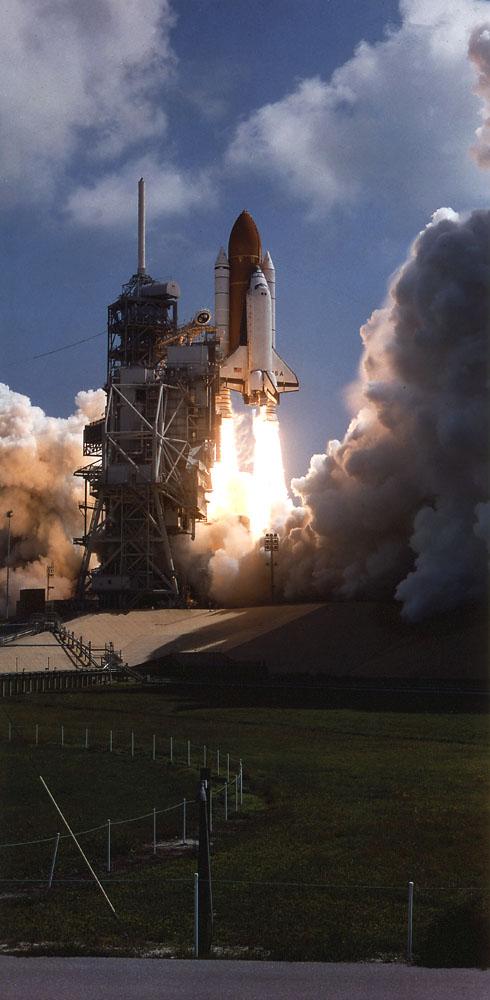
Midmorning proved the perfect time for a Space Shuttle launch as the thunderstorms that characteristically develop later in the day during hot Florida summers held off long enough to allow a flawless liftoff for the Space Shuttle Columbia (STS-78) and her crew of seven and the Life and Microgravity Spacelab (LMS), managed by Marshall Space Flight Center. During the 17 day spaceflight, the crew conducted a diverse slate of experiments divided into a mix of life science and microgravity investigations; and, in a marner very similar to future international space station operations, LMS researchers from the United States and their European counterparts shared resources such as crew time and equipment.
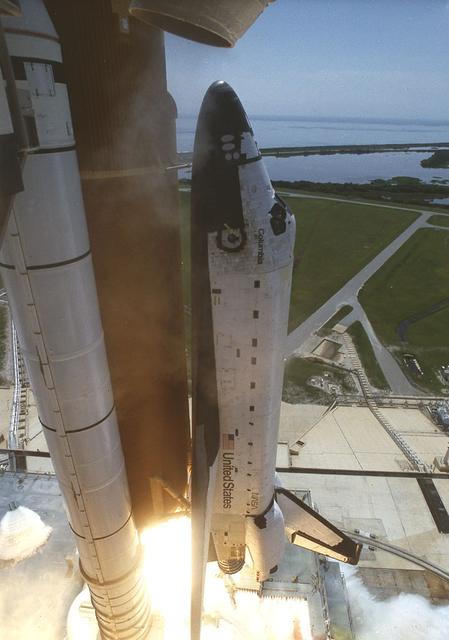
Midmorning proved the perfect time for a Space Shuttle launch as the thunderstorms that characteristically develop later in the day during hot Florida summers held off long enough to allow a flawless liftoff for the Space Shuttle Columbia (STS-78) and her crew of seven and the Life and Microgravity Spacelab (LMS), managed by Marshall Space Flight Center. During the 17 day spaceflight, the crew conducted a diverse slate of experiments divided into a mix of life science and microgravity investigations; and, in a marner very similar to future international space station operations, LMS researchers from the United States and their European counterparts shared resources such as crew time and equipment.
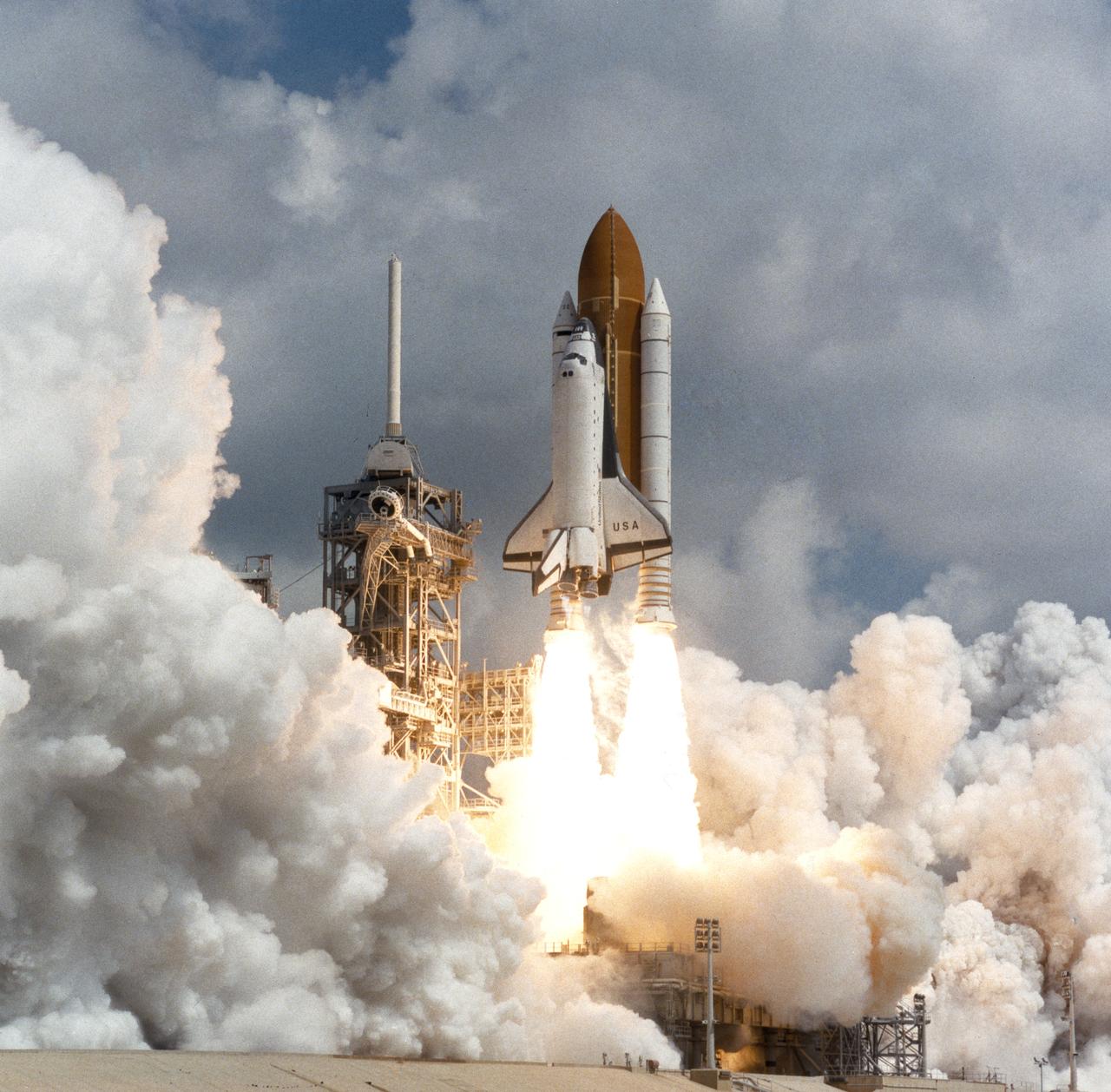
Midmorning proved the perfect time for a Space Shuttle launch as the thunderstorms that characteristically develop later in the day during hot Florida summers held off long enough to allow a flawless liftoff for the Space Shuttle Columbia (STS-78) and her crew of seven and the Life and Microgravity Spacelab (LMS), managed by Marshall Space Flight Center. During the 17 day spaceflight, the crew conducted a diverse slate of experiments divided into a mix of life science and microgravity investigations; and, in a marner very similar to future international space station operations, LMS researchers from the United States and their European counterparts shared resources such as crew time and equipment.
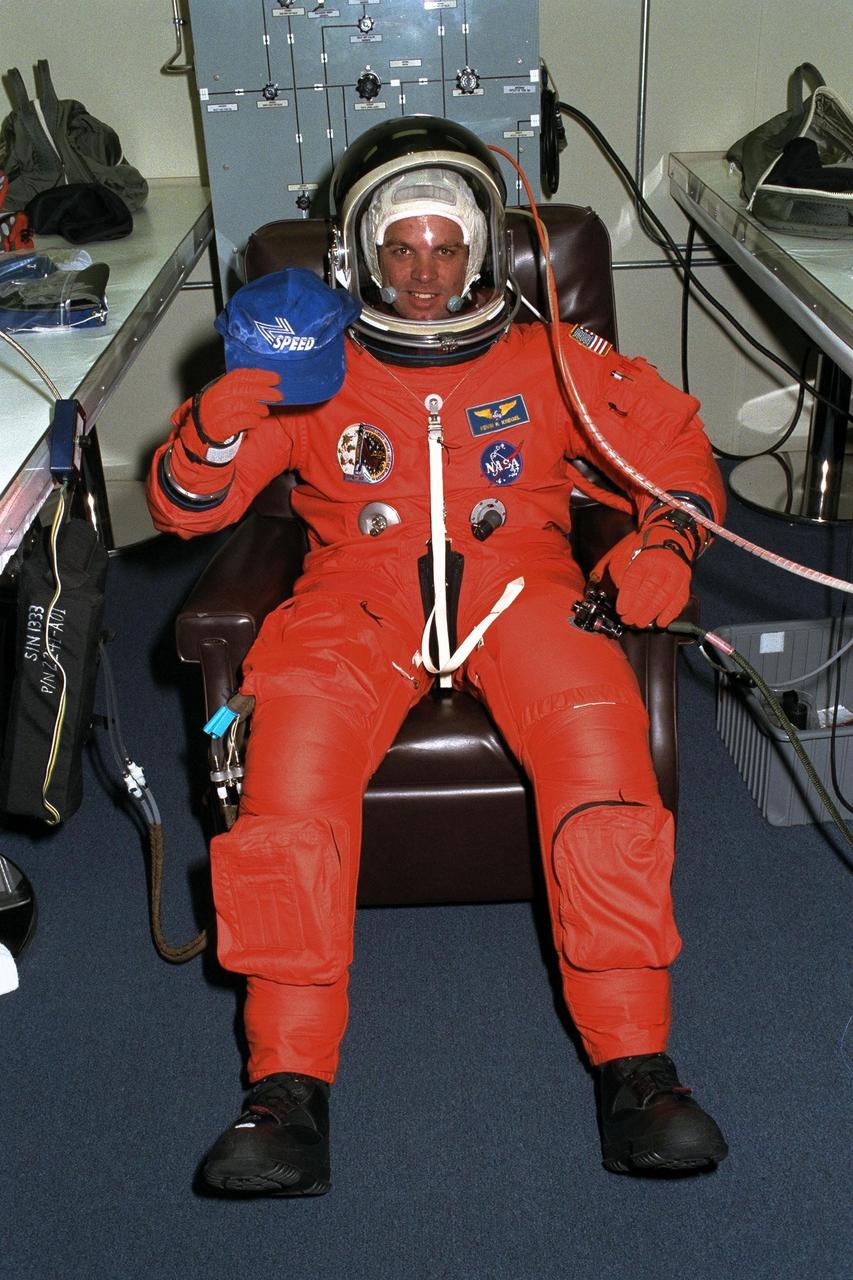
STS-87 Commander Kevin Kregel sits in his launch and entry suit in the Operations and Checkout Building holding a cap of his son’s soccer team of which Kregel is the coach. Shortly, he and the five other crew members of STS-87 will depart for Launch Pad 39B, where the Space Shuttle Columbia awaits liftoff on a 16-day mission to perform microgravity and solar research. A veteran of two space flights (STS-70 and -78), Kregel has logged more than 618 hours in space
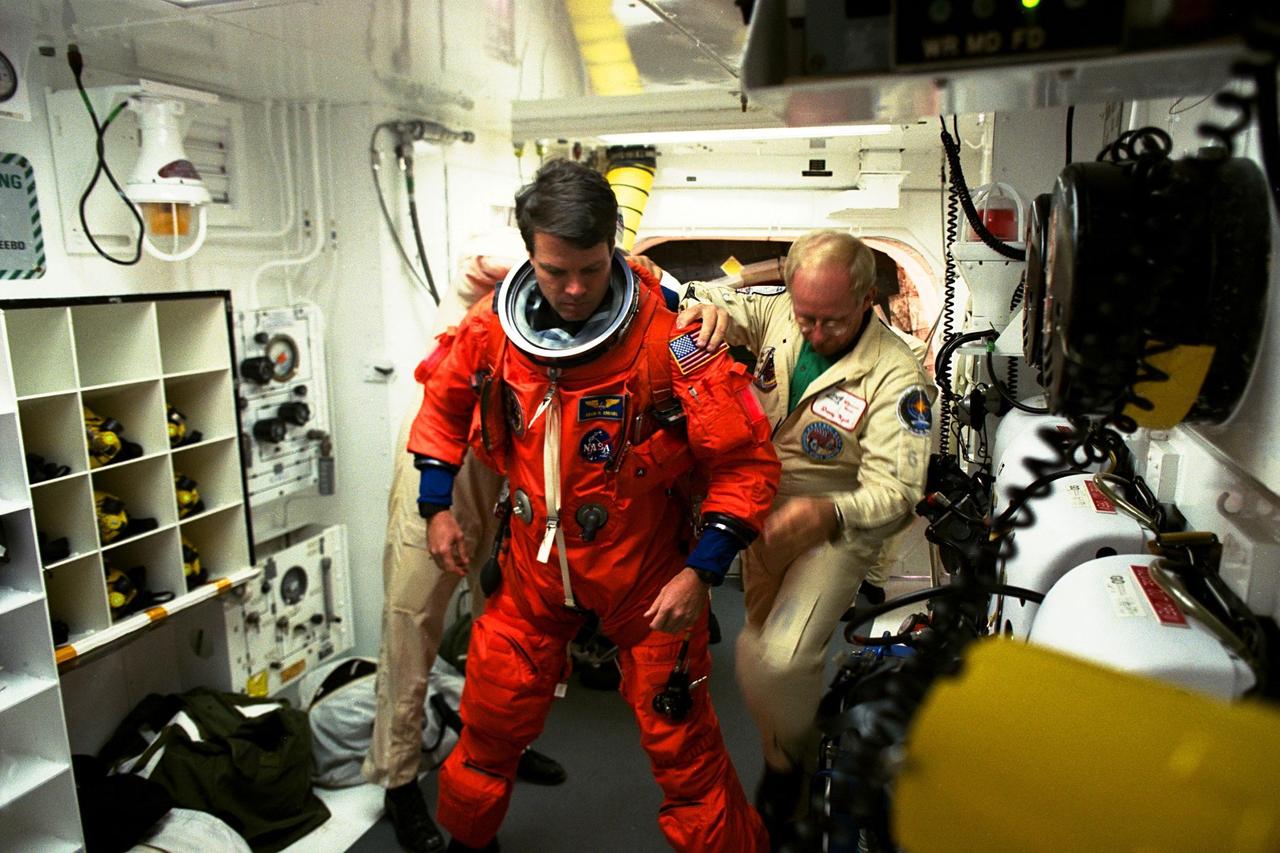
STS-87 Commander Kevin Kregel is assisted with his ascent and re-entry flight suit in the white room at Launch Pad 39B by Danny Wyatt, NASA quality assurance specialist. STS-87 is the fourth flight of the United States Microgravity Payload and Spartan-201. A veteran of two space flights (STS-70 and -78), Kregel has logged more than 618 hours in space
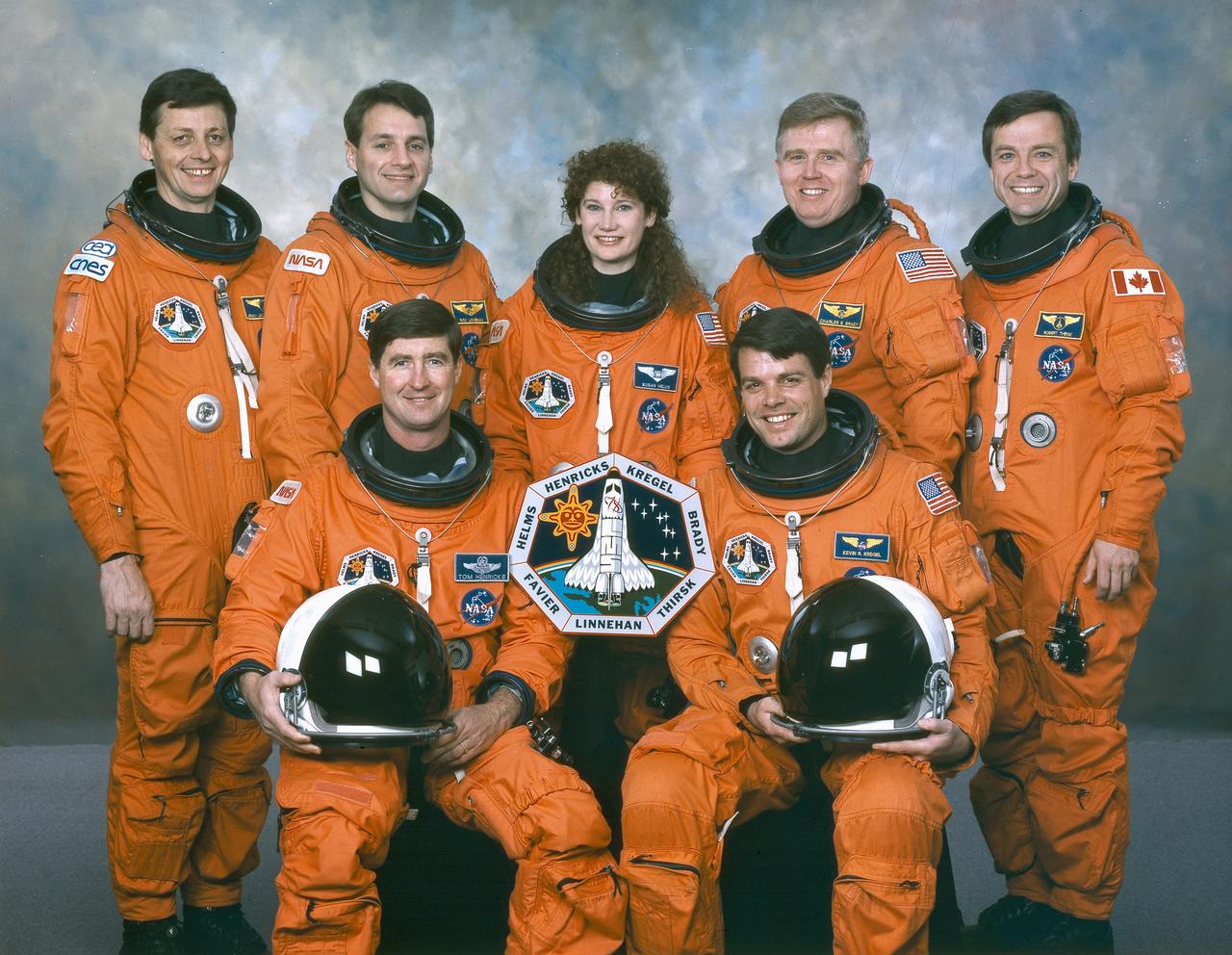
The crew assigned to the STS-78 mission included (seated left to right) Terrence T. (Tom) Henricks, commander; and Kevin R. Kregel, pilot. Standing, left to right, are Jean-Jacques Favier (CNES), payload specialist; Richard M. Linneham, mission specialist; Susan J. Helms, payload commander; Charles E. Brady, mission specialist; and Robert Brent Thirsk (CSA). Launched aboard the Space Shuttle Columbia on June 20, 1996 at 10:49:00 am (EDT), the STS-78 mission’s primary payloads was the Life and Microgravity Spacelab (LMS). Five space agencies (NASA/USA, European Space Agency/Europe (ESA), French Space Agency/France, Canadian Space Agency /Canada, and Italian Space Agency/Italy) along with research scientists from 10 countries worked together on the design, development and construction of the LMS.
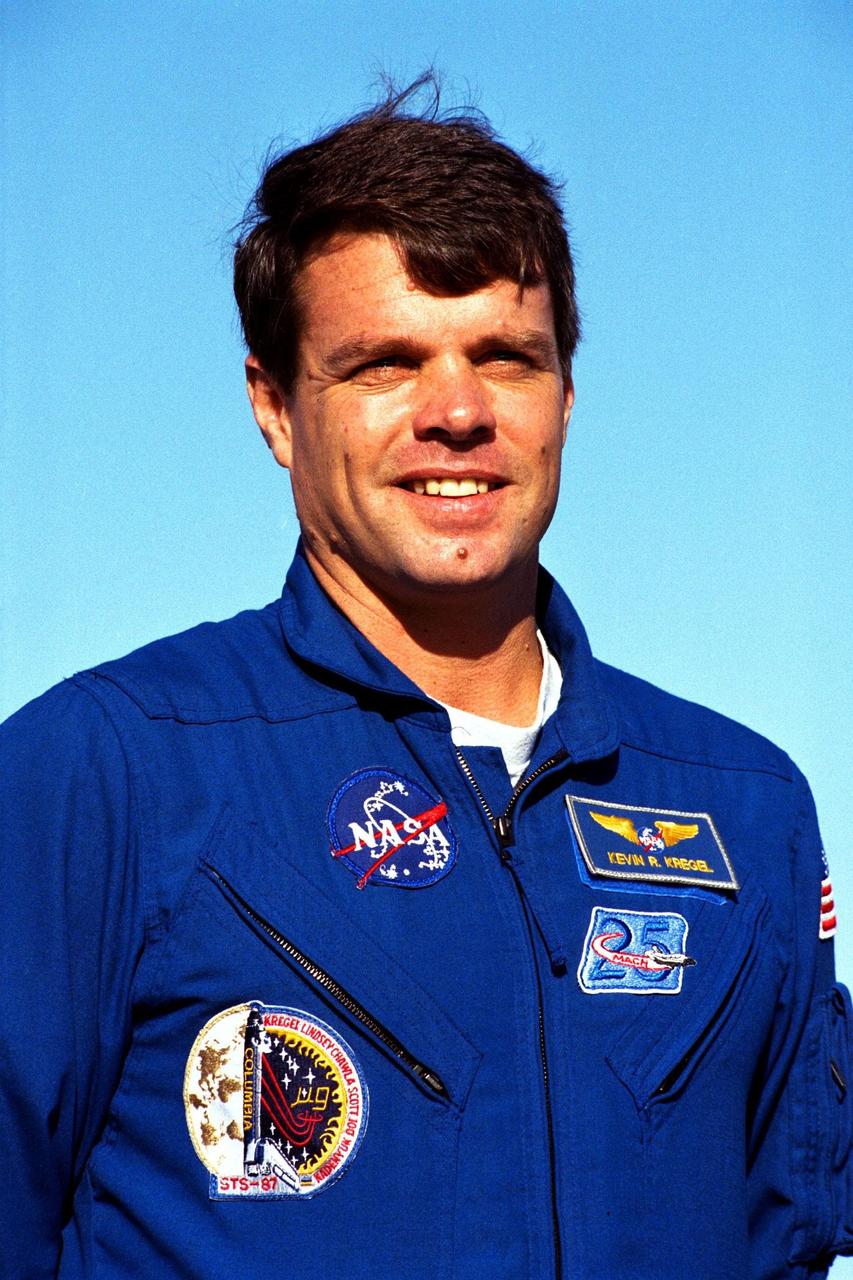
Kevin Kregel, commander of the STS-87 crew, participates in a news briefing at Launch Pad 39B during the Terminal Countdown Demonstration Test (TCDT) at Kennedy Space Center (KSC). Selected by NASA in 1992, Kregel is a veteran of two space flights (STS-70 and 78) and has logged over 618 hours in space. The TCDT is held at KSC prior to each Space Shuttle flight providing the crew of each mission opportunities to participate in simulated countdown activities. The TCDT ends with a mock launch countdown culminating in a simulated main engine cut-off. The crew also spends time undergoing emergency egress training exercises at the pad and has an opportunity to view and inspect the payloads in the orbiter's payload bay. STS-87 is scheduled for launch Nov. 19 aboard the Space Shuttle Columbia from pad 39B at KSC
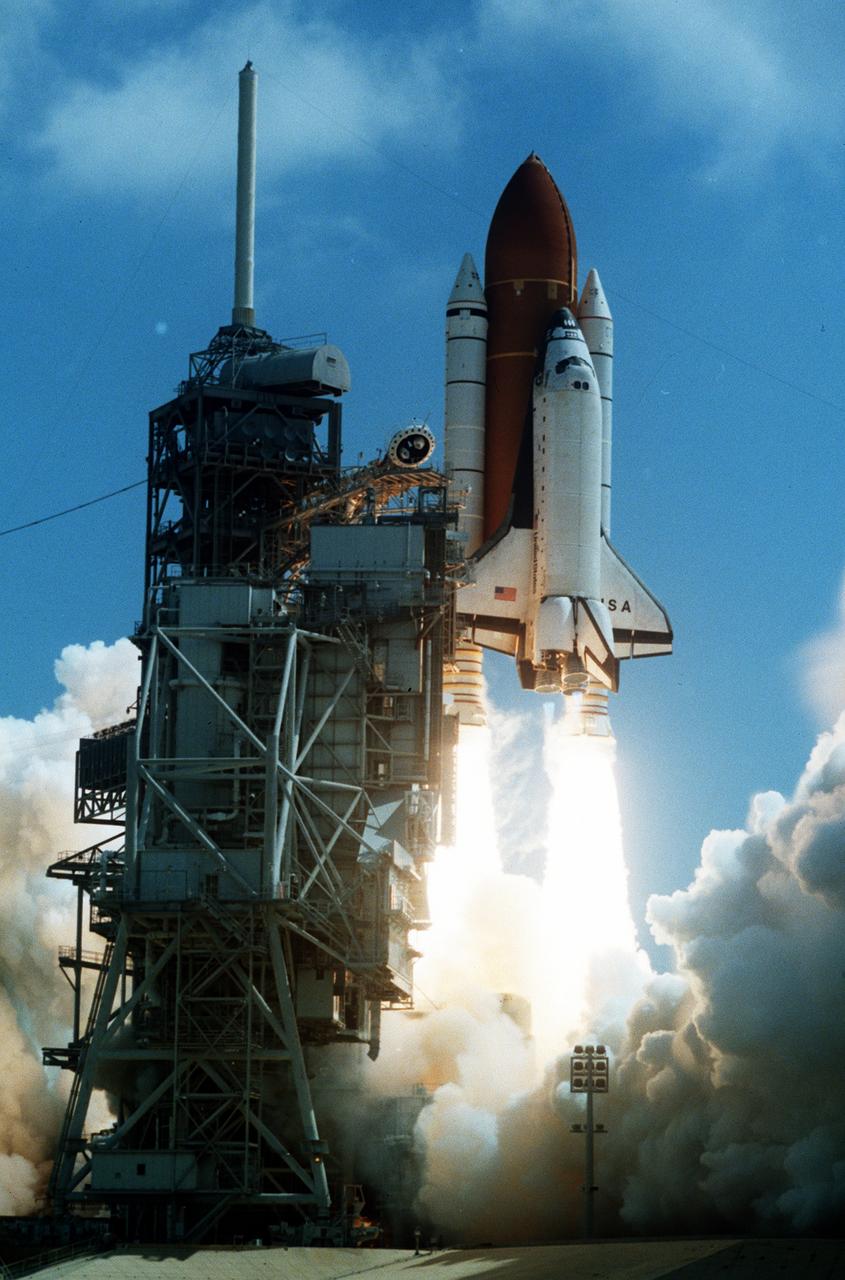
STS078-S-008 (20 June 1996) --- With an international payload and crew aboard, the Space Shuttle Columbia lifts off from Launch Pad 39B, at the Kennedy Space Center (KSC). Possibly expected to be NASA's longest duration Shuttle flight to date, the mission officially began at 10:49:00 a.m. (EDT), June 20, 1996. Onboard for Columbia’s 20th flight were astronauts Terence T. (Tom) Henricks, mission commander; Kevin R. Kregel, pilot; Susan J. Helms, payload commander; and Richard M. Linnehan and Charles E. Brady, Jr., both mission specialists, along with payload specialists Jean-Jacques Favier of the French Space Agency (CNES) and Robert B. Thirsk of the Canadian Space Agency (CSA). Flying in Columbia’s payload bay is the Life and Microgravity Spacelab (LMS), carrying a complement of United States and international experiments.
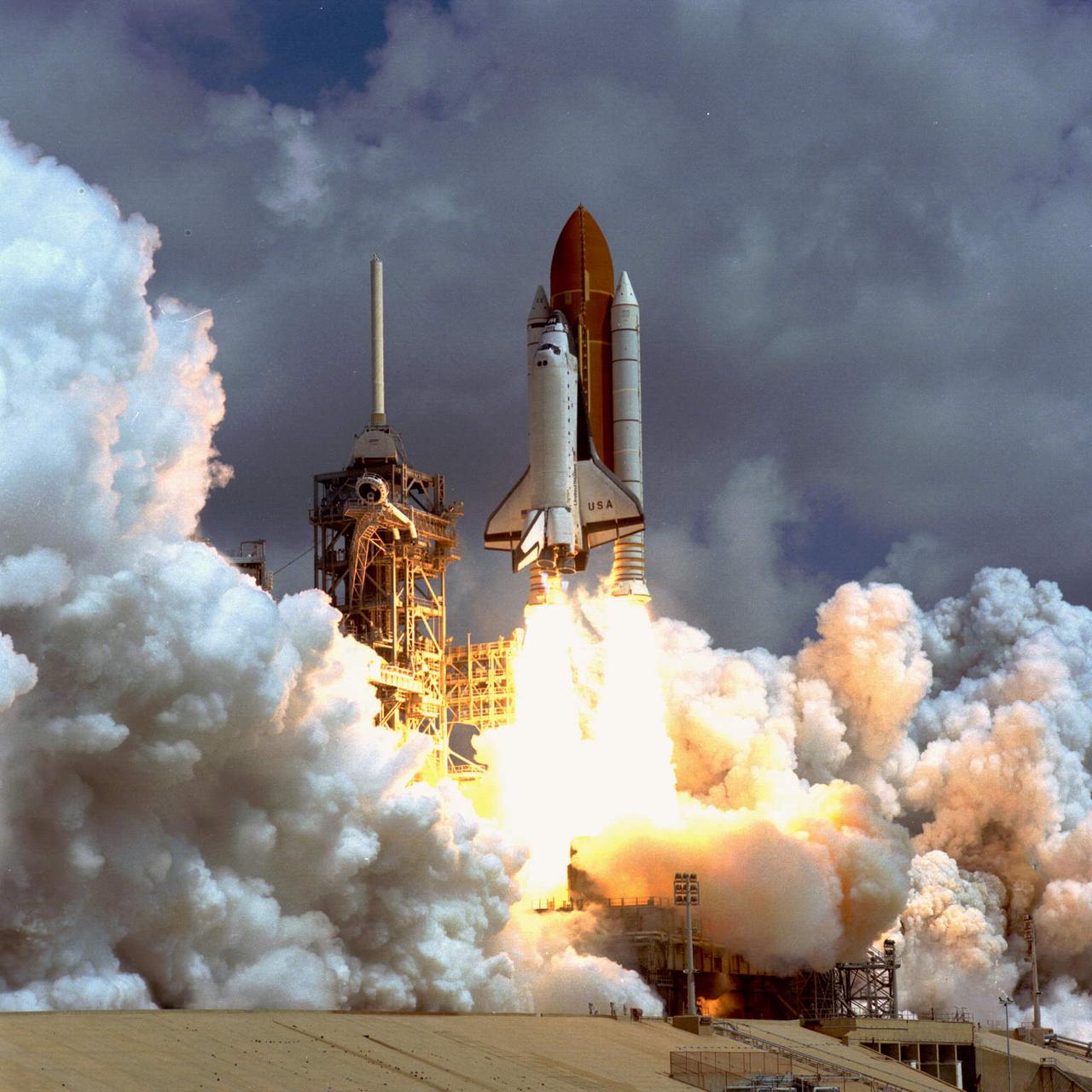
STS078-S-009 (20 June 1996) --- With an international payload and crew aboard, the Space Shuttle Columbia lifts off from Launch Pad 39B, at the Kennedy Space Center (KSC). Possibly expected to be NASA's longest duration Shuttle flight to date, the mission officially began at 10:49:00 a.m. (EDT), June 20, 1996. Onboard for Columbia’s 20th flight were astronauts Terence T. (Tom) Henricks, mission commander; Kevin R. Kregel, pilot; Susan J. Helms, payload commander; and Richard M. Linnehan and Charles E. Brady, Jr., both mission specialists, along with payload specialists Jean-Jacques Favier of the French Space Agency (CNES) and Robert B. Thirsk of the Canadian Space Agency (CSA). Flying in Columbia’s payload bay is the Life and Microgravity Spacelab (LMS), carrying a complement of United States and international experiments.
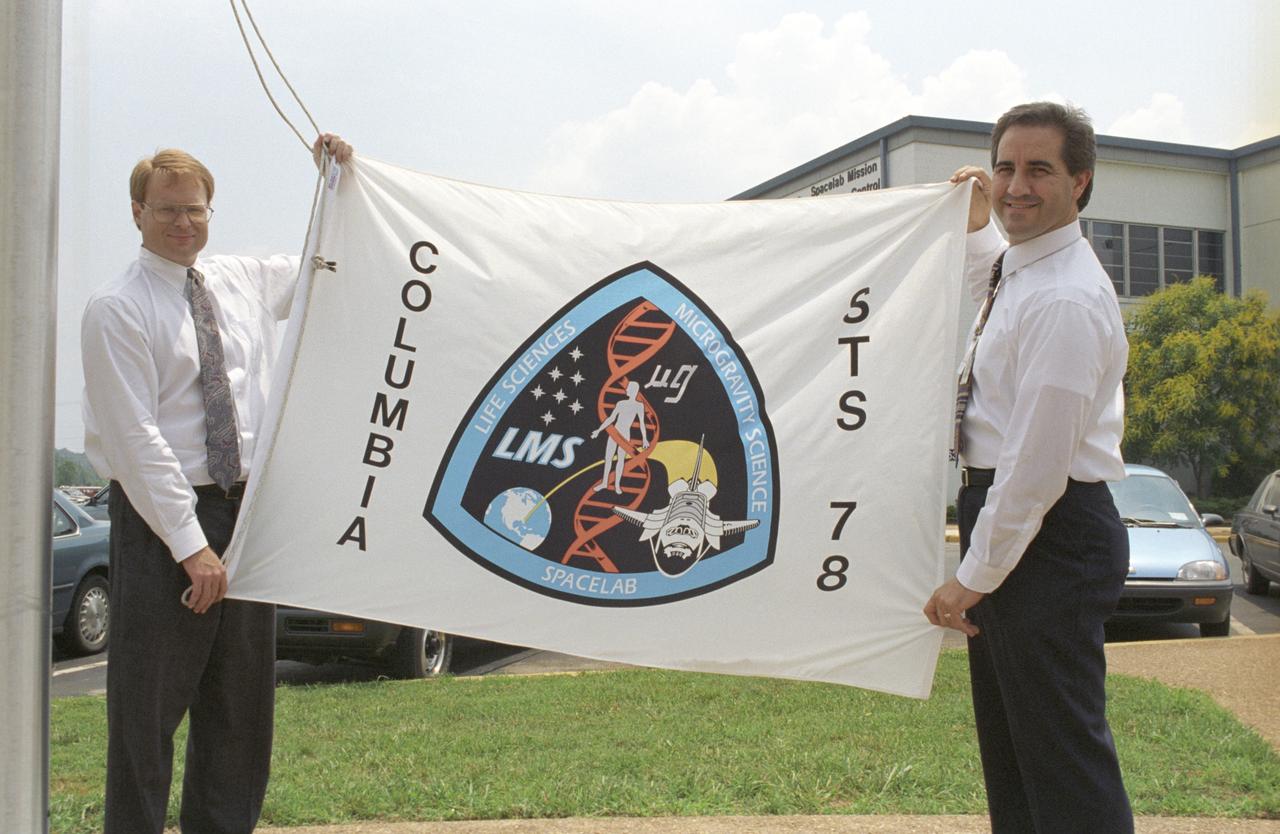
Launched on June 20, 1996, the STS-78 mission’s primary payload was the Life and Microgravity Spacelab (LMS), which was managed by the Marshall Space Flight Center (MSFC). During the 17 day space flight, the crew conducted a diverse slate of experiments divided into a mix of life science and microgravity investigations. In a manner very similar to future International Space Station operations, LMS researchers from the United States and their European counterparts shared resources such as crew time and equipment. Five space agencies (NASA/USA, European Space Agency/Europe (ESA), French Space Agency/France, Canadian Space Agency /Canada, and Italian Space Agency/Italy) along with research scientists from 10 countries worked together on the design, development and construction of the LMS. In this photo, LMS mission scientist Patton Downey and LMS mission manager Mark Boudreaux display the flag that was flown for the mission at MSFC.
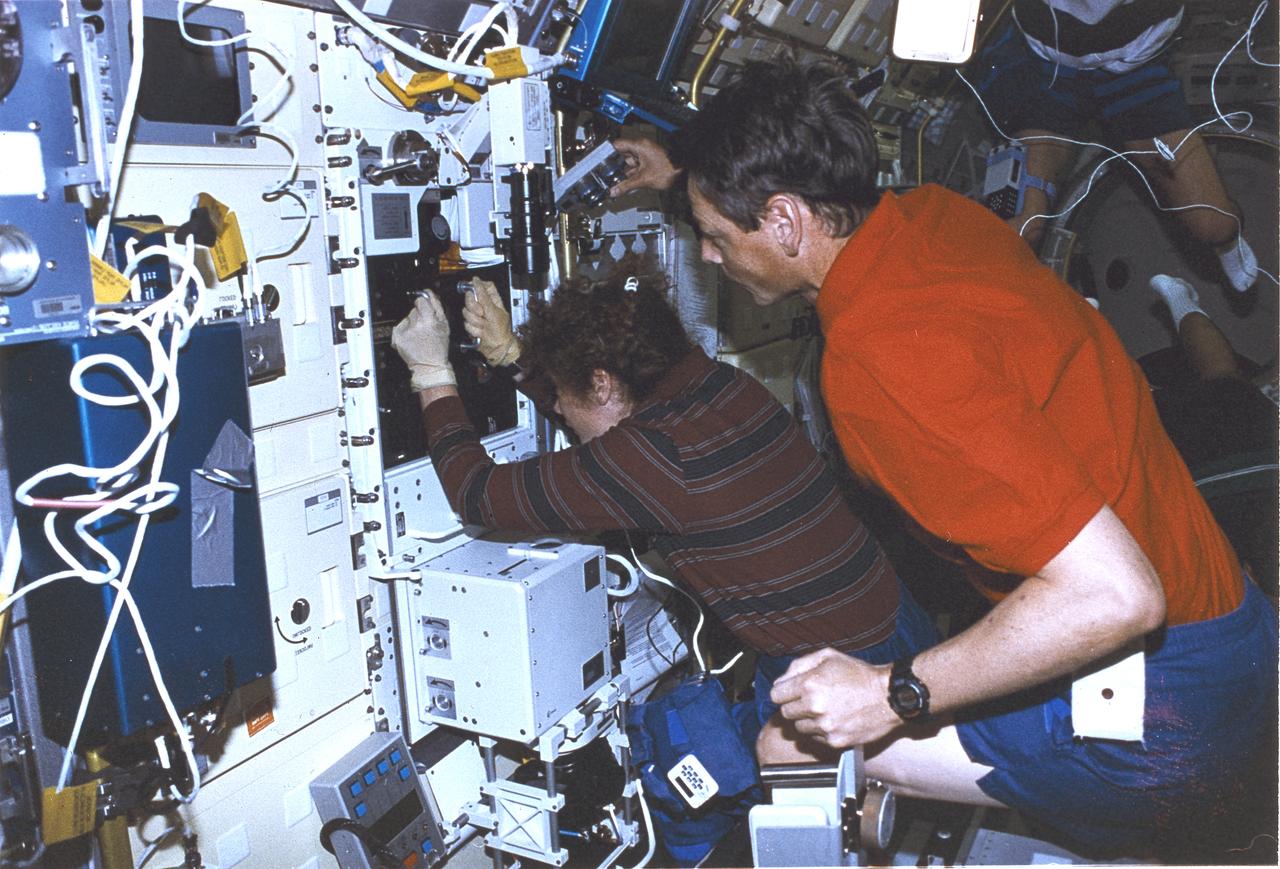
Launched on June 20, 1996, the STS-78 mission’s primary payload was the Life and Microgravity Spacelab (LMS), which was managed by the Marshall Space Flight Center (MSFC). During the 17 day space flight, the crew conducted a diverse slate of experiments divided into a mix of life science and microgravity investigations. In a manner very similar to future International Space Station operations, LMS researchers from the United States and their European counterparts shared resources such as crew time and equipment. Five space agencies (NASA/USA, European Space Agency/Europe (ESA), French Space Agency/France, Canadian Space Agency /Canada, and Italian Space Agency/Italy) along with research scientists from 10 countries worked together on the design, development and construction of the LMS. This onboard photo represents payload commander Susan Helms and fellow astronaut in the LMS.
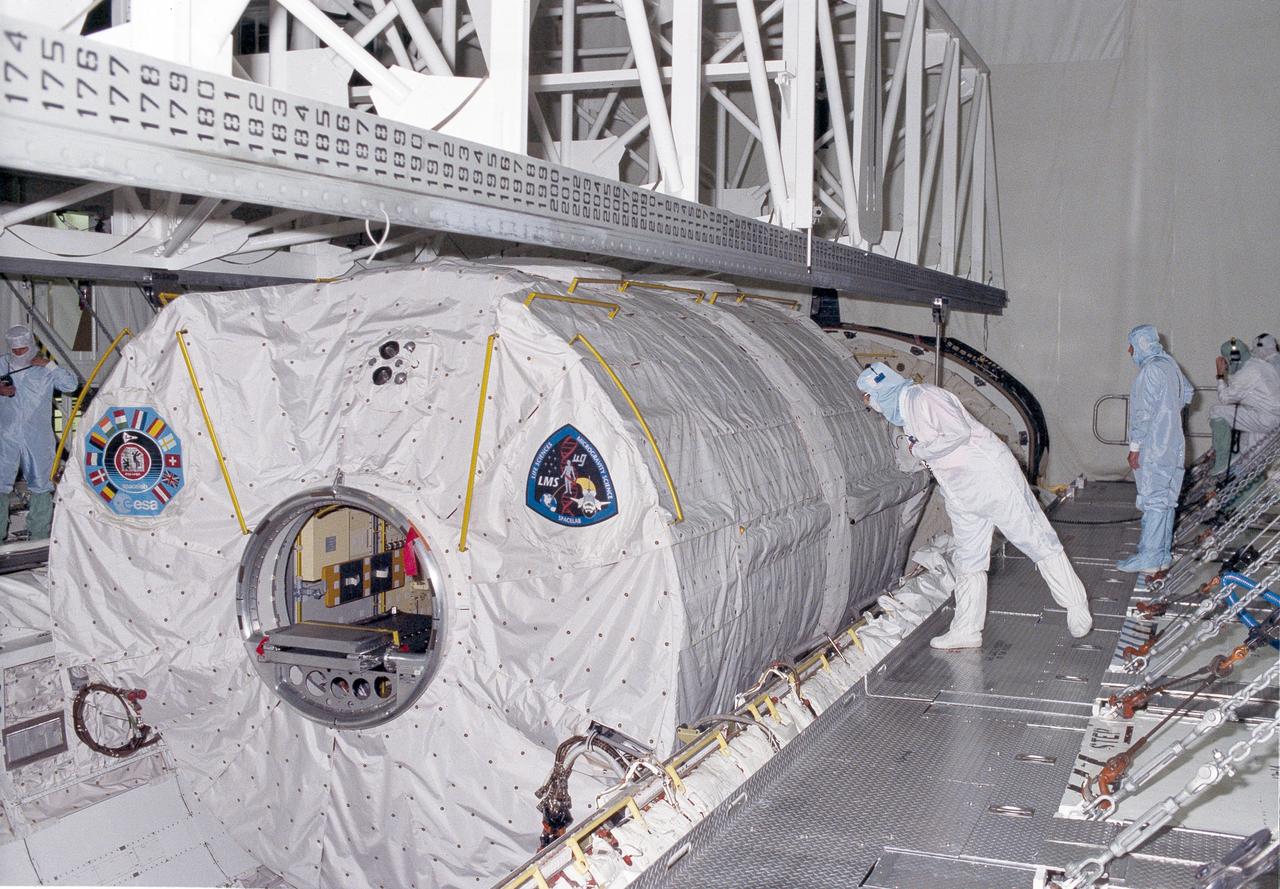
Launched on June 20, 1996, the STS-78 mission’s primary payload was the Life and Microgravity Spacelab (LMS), which was managed by the Marshall Space Flight Center (MSFC). During the 17 day space flight, the crew conducted a diverse slate of experiments divided into a mix of life science and microgravity investigations. In a manner very similar to future International Space Station operations, LMS researchers from the United States and their European counterparts shared resources such as crew time and equipment. Five space agencies (NASA/USA, European Space Agency/Europe (ESA), French Space Agency/France, Canadian Space Agency /Canada, and Italian Space Agency/Italy) along with research scientists from 10 countries worked together on the design, development and construction of the LMS. This photo shows the LMS spacelab being installed in the payload bay of the orbiter Columbia during preflight preparations.
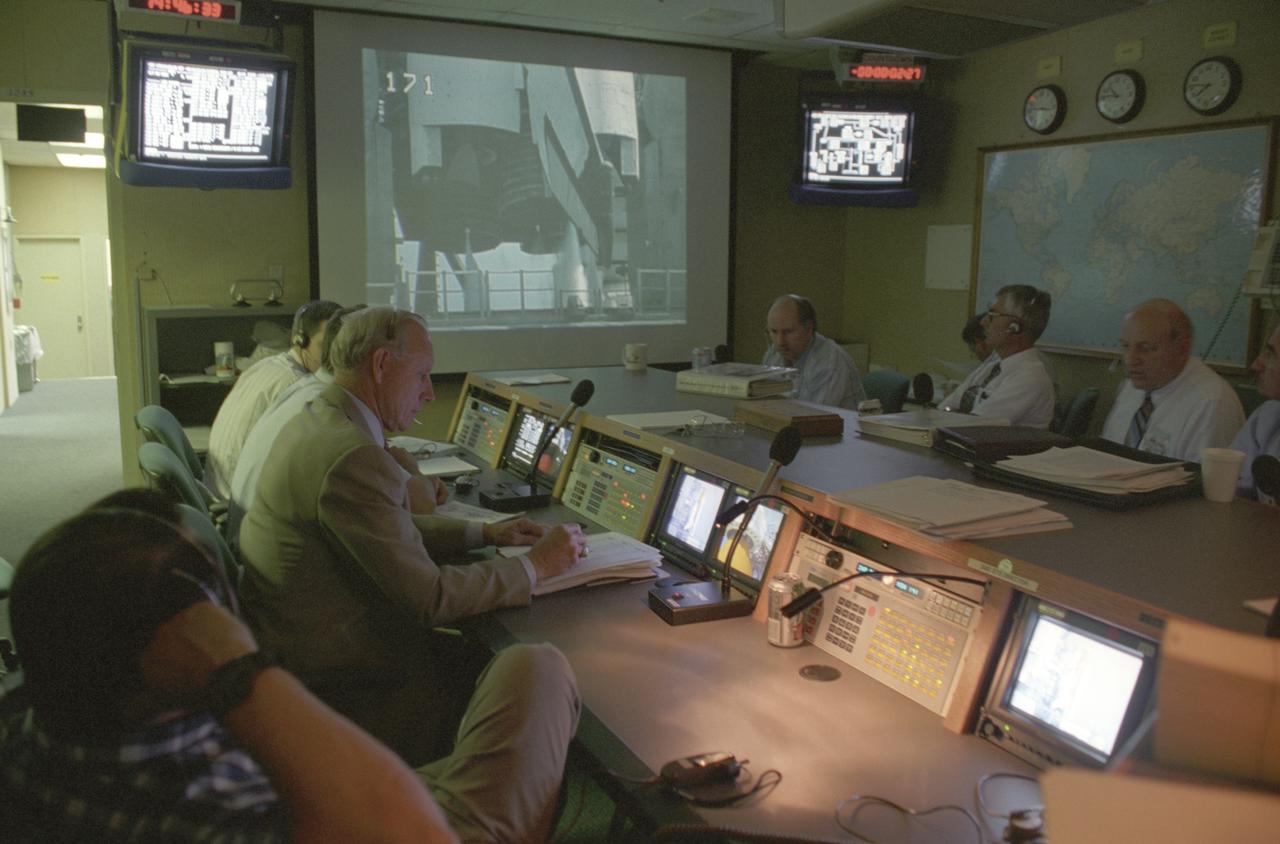
Launched on June 20, 1996, the STS-78 mission’s primary payload was the Life and Microgravity Spacelab (LMS), which was managed by the Marshall Space Flight Center (MSFC). During the 17 day space flight, the crew conducted a diverse slate of experiments divided into a mix of life science and microgravity investigations. In a manner very similar to future International Space Station operations, LMS researchers from the United States and their European counterparts shared resources such as crew time and equipment. Five space agencies (NASA/USA, European Space Agency/Europe (ESA), French Space Agency/France, Canadian Space Agency /Canada, and Italian Space Agency/Italy) along with research scientists from 10 countries worked together on the design, development and construction of the LMS. This photo was taken in the Shuttle Action Center (SAC) of the Huntsville Operations Support Center (HOSC) Spacelab Payload Operations Control Center (SL POCC) at MSFC during the mission.

Launched on June 20, 1996, the STS-78 mission’s primary payload was the Life and Microgravity Spacelab (LMS), which was managed by the Marshall Space Flight Center (MSFC). During the 17 day space flight, the crew conducted a diverse slate of experiments divided into a mix of life science and microgravity investigations. In a manner very similar to future International Space Station operations, LMS researchers from the United States and their European counterparts shared resources such as crew time and equipment. Five space agencies (NASA/USA, European Space Agency/Europe (ESA), French Space Agency/France, Canadian Space Agency /Canada, and Italian Space Agency/Italy) along with research scientists from 10 countries worked together on the design, development and construction of the LMS. This photo represents payload specialist, Robert Thirsk, involved in an onboard experiment.
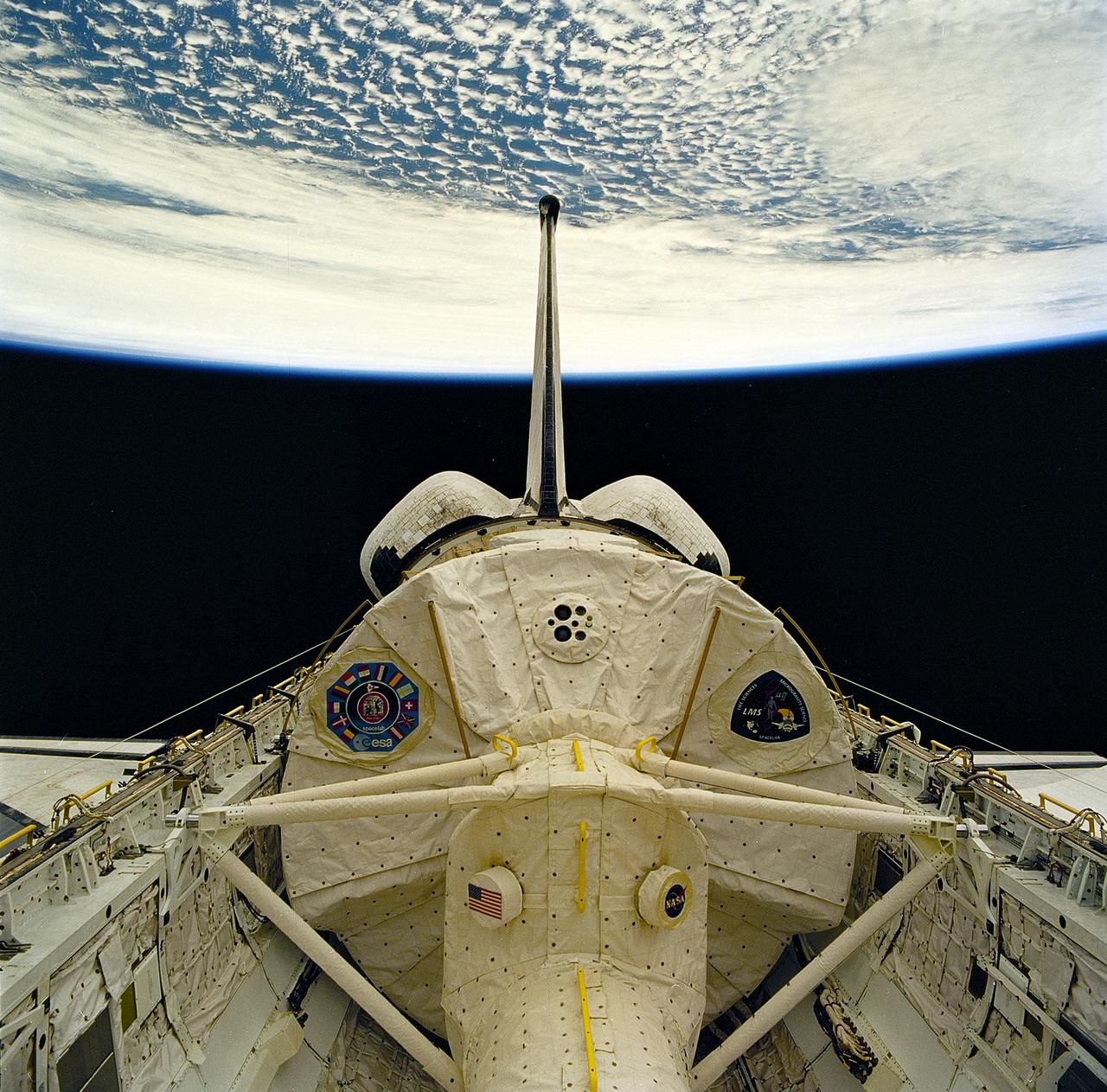
Launched on June 20, 1996, the STS-78 mission’s primary payload was the Life and Microgravity Spacelab (LMS), which was managed by the Marshall Space Flight Center (MSFC). During the 17 day space flight, the crew conducted a diverse slate of experiments divided into a mix of life science and microgravity investigations. In a manner very similar to future International Space Station operations, LMS researchers from the United States and their European counterparts shared resources such as crew time and equipment. Five space agencies (NASA/USA, European Space Agency/Europe (ESA), French Space Agency/France, Canadian Space Agency /Canada, and Italian Space Agency/Italy) along with research scientists from 10 countries worked together on the design, development and construction of the LMS. This onboard photo represents a view of the LMS Module in the Cargo Bay of the Space Shuttle Orbiter Columbia.
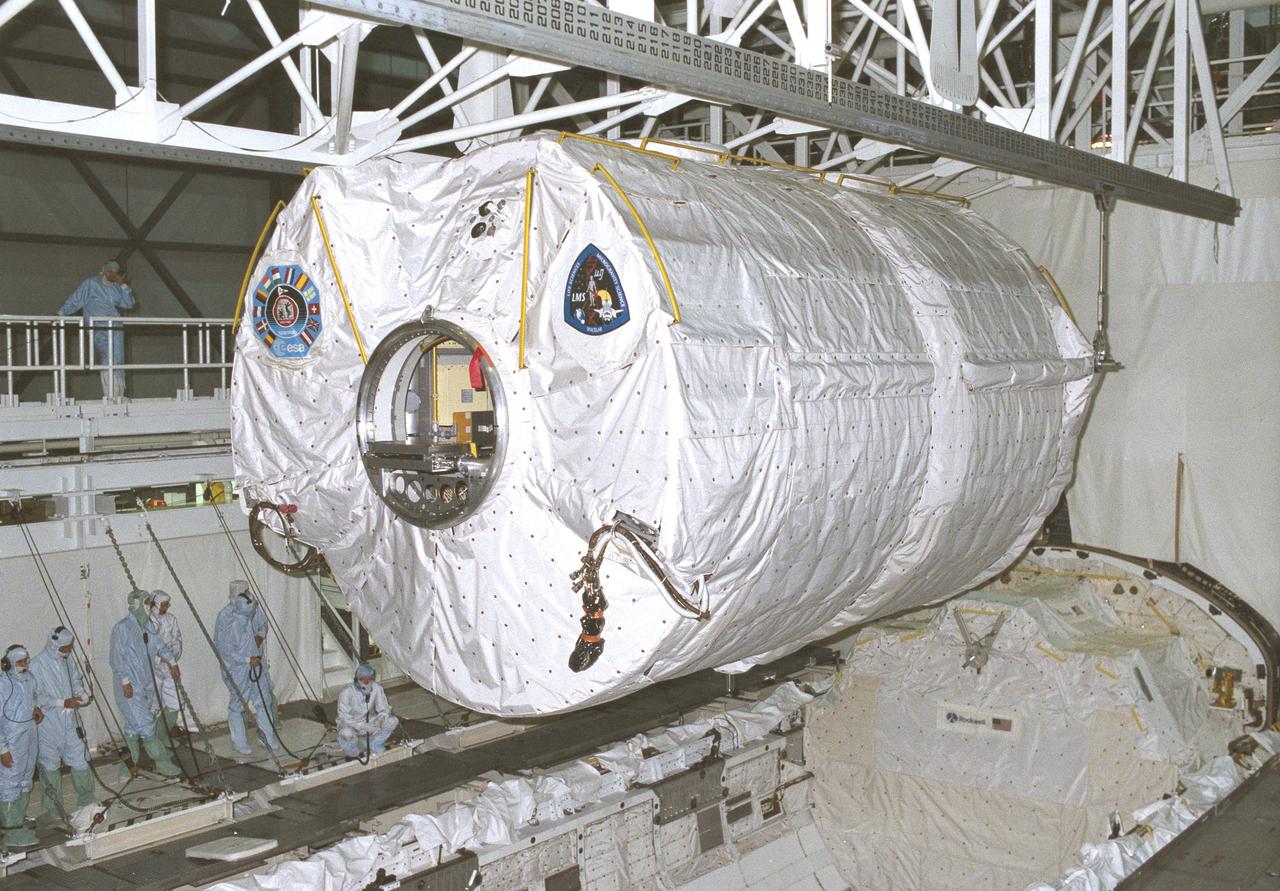
Launched on June 20, 1996, the STS-78 mission’s primary payload was the Life and Microgravity Spacelab (LMS), which was managed by the Marshall Space Flight Center (MSFC). During the 17 day space flight, the crew conducted a diverse slate of experiments divided into a mix of life science and microgravity investigations. In a manner very similar to future International Space Station operations, LMS researchers from the United States and their European counterparts shared resources such as crew time and equipment. Five space agencies (NASA/USA, European Space Agency/Europe (ESA), French Space Agency/France, Canadian Space Agency /Canada, and Italian Space Agency/Italy) along with research scientists from 10 countries worked together on the design, development and construction of the LMS. This photo shows the LMS being installed in the payload bay of the orbiter Columbia during preflight preparations.
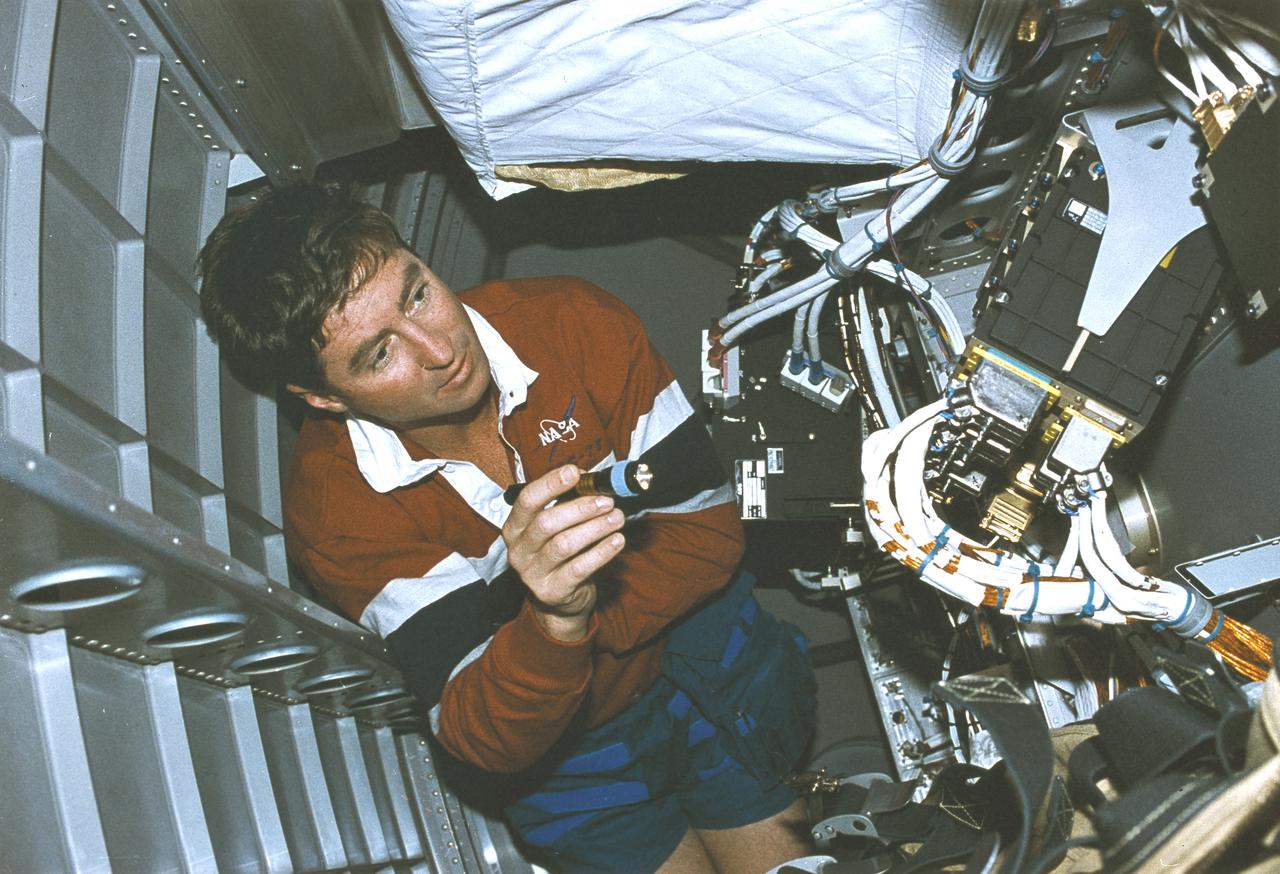
Launched on June 20, 1996, the STS-78 mission’s primary payload was the Life and Microgravity Spacelab (LMS), which was managed by the Marshall Space Flight Center (MSFC). During the 17 day space flight, the crew conducted a diverse slate of experiments divided into a mix of life science and microgravity investigations. In a manner very similar to future International Space Station operations, LMS researchers from the United States and their European counterparts shared resources such as crew time and equipment. Five space agencies (NASA/USA, European Space Agency/Europe (ESA), French Space Agency/France, Canadian Space Agency /Canada, and Italian Space Agency/Italy) along with research scientists from 10 countries worked together on the design, development and construction of the LMS. In this onboard photograph, mission commander Terence Henricks is checking out equipment.
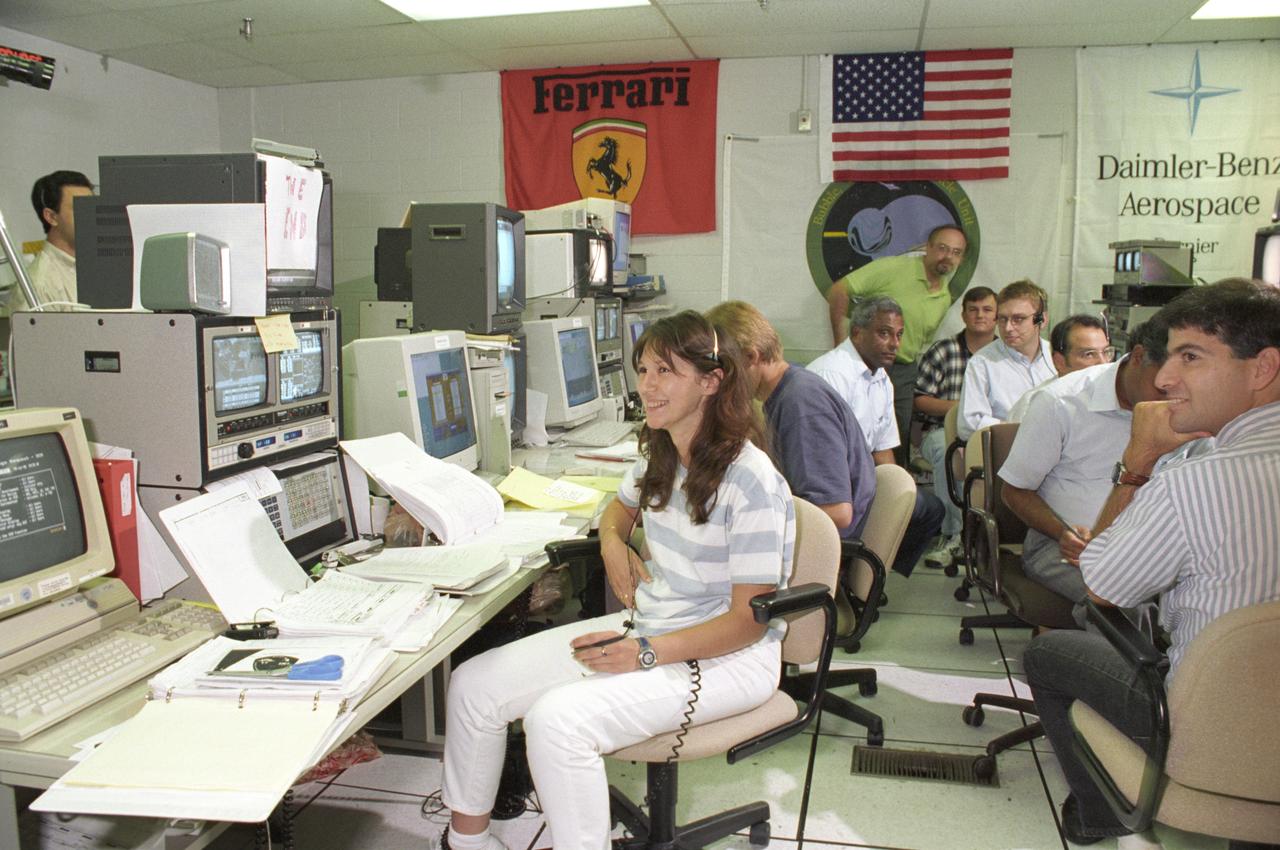
Launched on June 20, 1996, the STS-78 mission’s primary payload was the Life and Microgravity Spacelab (LMS), which was managed by the Marshall Space Flight Center (MSFC). During the 17 day space flight, the crew conducted a diverse slate of experiments divided into a mix of life science and microgravity investigations. In a manner very similar to future International Space Station operations, LMS researchers from the United States and their European counterparts shared resources such as crew time and equipment. Five space agencies (NASA/USA, European Space Agency/Europe (ESA), French Space Agency/France, Canadian Space Agency /Canada, and Italian Space Agency/Italy) along with research scientists from 10 countries worked together on the design, development and construction of the LMS. This photo represents members of the Bubble Drop and Particle Unit team expressing satisfaction with a completed experiment run at the Huntsville Operations Support Center (HOSC) Spacelab Payload Operations Control Center (SL POCC) at MSFC.
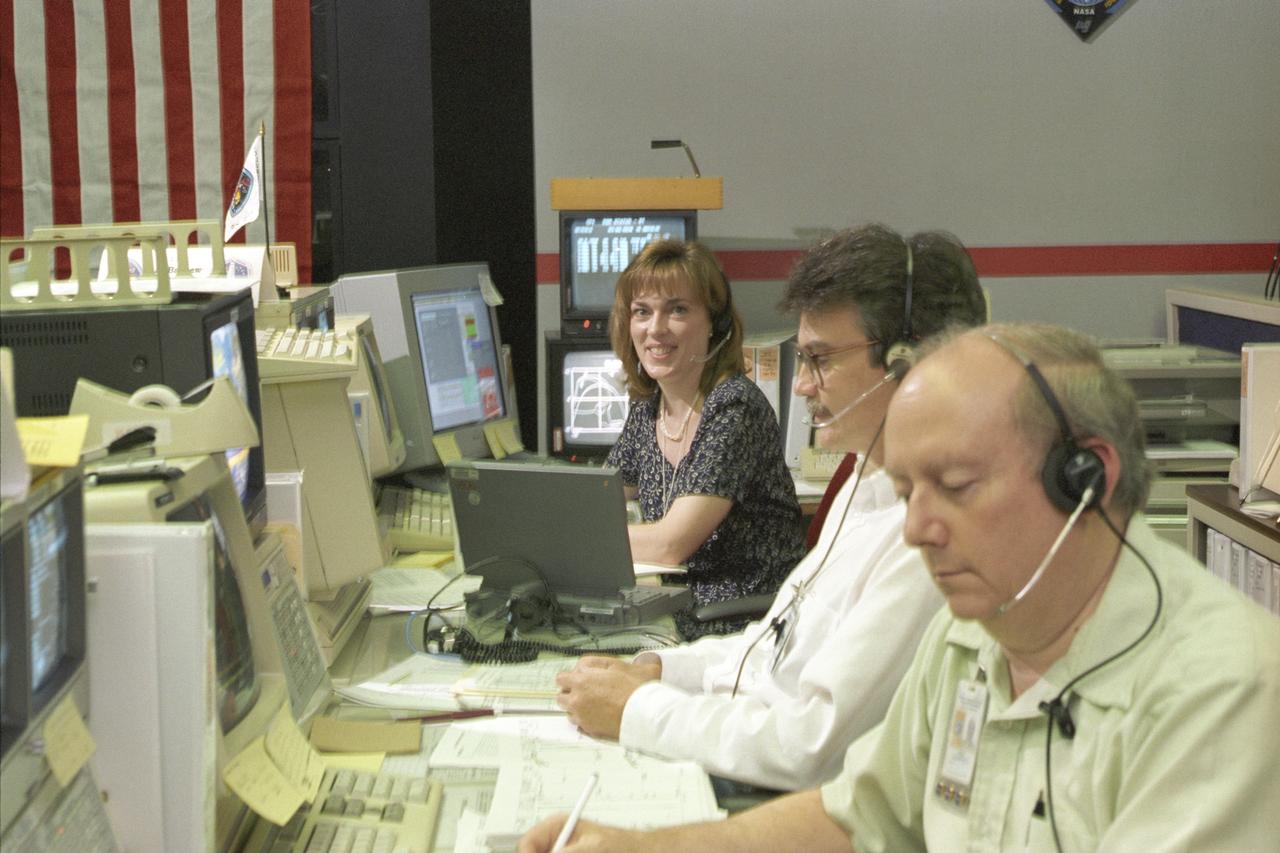
Launched on June 20, 1996, the STS-78 mission’s primary payload was the Life and Microgravity Spacelab (LMS), which was managed by the Marshall Space Flight Center (MSFC). During the 17 day space flight, the crew conducted a diverse slate of experiments divided into a mix of life science and microgravity investigations. In a manner very similar to future International Space Station operations, LMS researchers from the United States and their European counterparts shared resources such as crew time and equipment. Five space agencies (NASA/USA, European Space Agency/Europe (ESA), French Space Agency/France, Canadian Space Agency /Canada, and Italian Space Agency/Italy) along with research scientists from 10 countries worked together on the design, development and construction of the LMS. This photo represents Data Management Coordinators monitoring the progress of the mission at the Huntsville Operations Support Center (HOSC) Spacelab Payload Operations Control Center (SL POCC) at MSFC. Pictured are assistant mission scientist Dr. Dalle Kornfeld, Rick McConnel, and Ann Bathew.
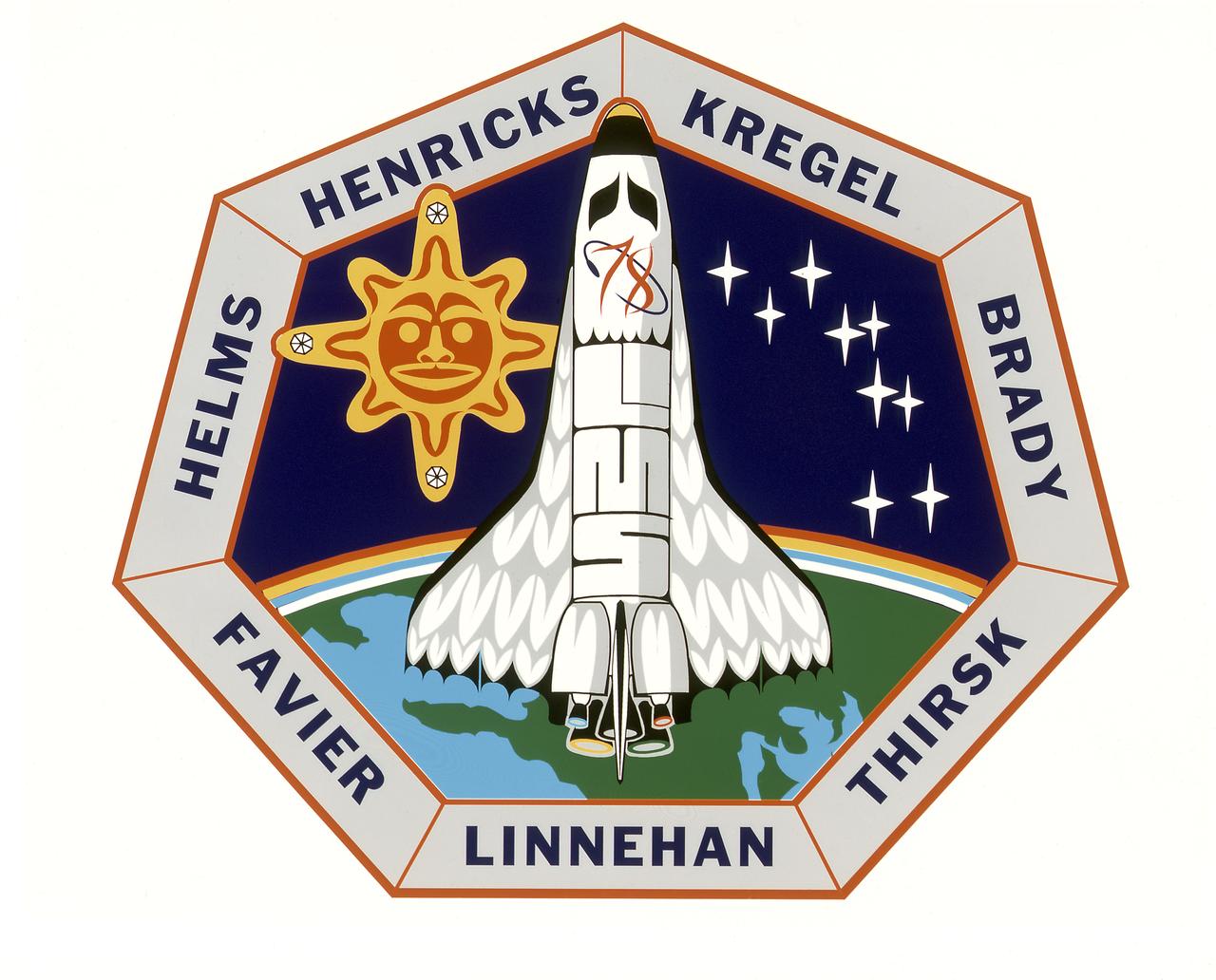
The STS-78 patch links past with present to tell the story of its mission and science through a design imbued with the strength and vitality of the 2-dimensional art of North America's northwest coast Indians. Central to the design is the space Shuttle whose bold lines and curves evoke the Indian image for the eagle, a native American symbol of power and prestige as well as the national symbol of the United States. The wings of the Shuttle suggest the wings of the eagle whose feathers, indicative of peace and friendship in Indian tradition, are captured by the U forms, a characteristic feature of Northwest coast Indian art. The nose of the Shuttle is the strong downward curve of the eagle's beak, and the Shuttle's forward windows, the eagle's eyes, represented through the tapered S forms again typical of this Indian art form. The basic black and red atoms orbiting the mission number recall the original NASA emblem while beneath, utilizing Indian ovoid forms, the major mission scientific experiment package LMS (Life and Materials Sciences) housed in the Shuttle's cargo bay is depicted in a manner reminiscent of totem-pole art. This image of a bird poised for flight, so common to Indian art, is counterpointed by an equally familiar Tsimshian Indian symbol, a pulsating sun with long hyperbolic rays, the symbol of life. Within each of these rays are now encased crystals, the products of this mission's 3 major, high-temperature materials processing furnaces. And as the sky in Indian lore is a lovely open country, home of the Sun Chief and accessible to travelers through a hole in the western horizon, so too, space is a vast and beckoning landscape for explorers launched beyond the horizon. Beneath the Tsimshian sun, the colors of the earth limb are appropriately enclosed by a red border representing life to the Northwest coast Indians. The Indian colors of red, navy blue, white, and black pervade the STS-78 path. To the right of the Shuttle-eagle, the constellation Delphinus recalls the dolphin, friend of ancient sailors and, now perhaps too, of the 9 space voyagers suggested by this constellation's blaze of 9 stars. The patch simultaneously celebrates international unity fostered by the Olympic spirit of sports competition at the 1996 Olympic Games in Atlanta, Georgia, U.S.A. Deliberately poised over the city of Atlanta, the Space Shuttle glows at its base with the 5 official Olympic rings in the 5 Olympic colors which can also be found throughout the patch, rings and colors which signify the 5 continents of the earth. This is an international mission and for the first time in NASA patch history, astronauts have dispensed with identifying country flags beneath their names to celebrate the spirit of international unity so characteristic of this flight.