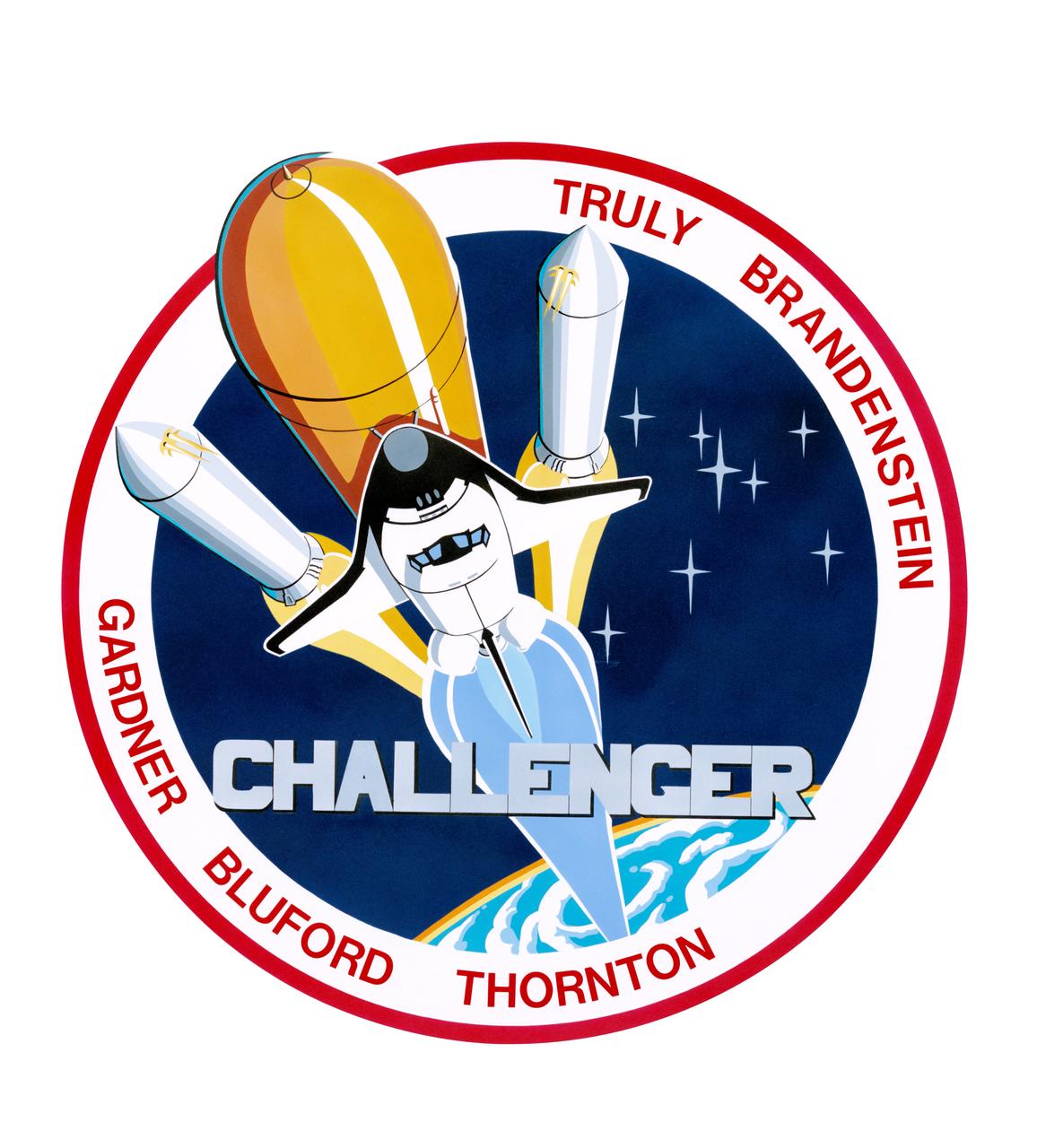
S83-30608 (29 April 1983) --- The night launch of the space shuttle Challenger heading toward its third Earth-orbital mission is featured in the official insignia for STS-8. The eighth flight of the United States Space Transportation System (STS) is represented by eight stars of the constellation Aquila, "The Eagle," astronauts Richard H. Truly, commander; Daniel C. Brandenstein, pilot; Dale A. Gardner, Guion S. Bluford, and William E. Thornton -- all mission specialists -- have their surnames on the border of the insignia. The NASA insignia design for space shuttle flights is reserved for use by the astronauts and for other official use as the NASA Administrator may authorize. Public availability has been approved only in the forms of illustrations by the various news media. When and if there is any change in this policy, which is not anticipated, the change will be publicly announced. Photo credit: NASA

The eighth flight of the United States Space Transportation System (STS) is represented by eight stars of the constellation Aquila, The Eagle.
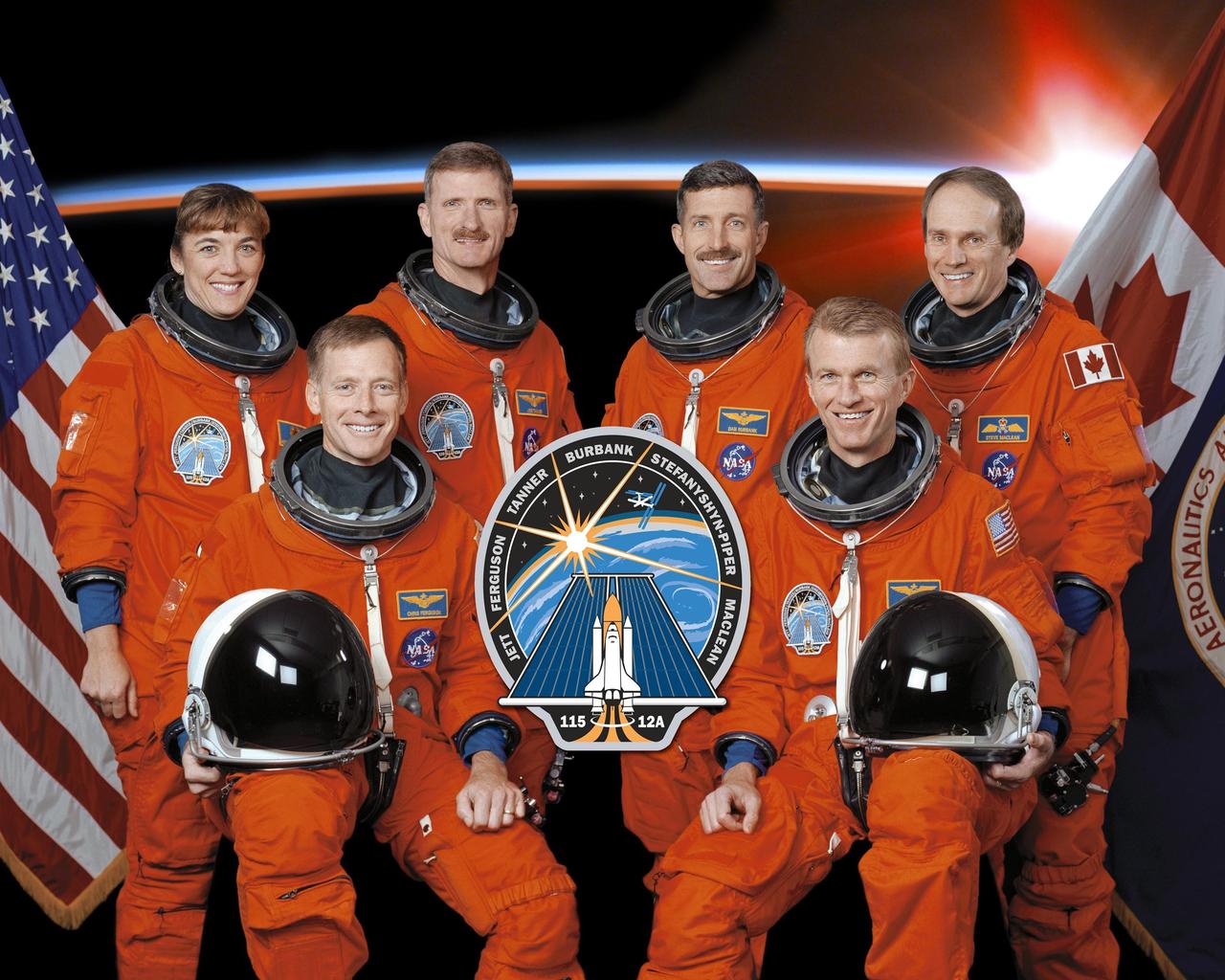
JOHNSON SPACE CENTER, TX - STS115-S-002 (November 8, 2002) -- These six astronauts take a break from training to pose for the STS-115 crew portrait. Astronauts Brent W. Jett Jr. (right) and Christopher J. Ferguson, command and pilot respectively, flank the mission insignia. The mission specialists are, from left to right, astronauts Heidemarie M. Stefanyshyn-Piper, Joseph R. (Joe) Tanner, Daniel C. Burbank, and Steven G. MacLean, who represents the Canadian Space Agency.
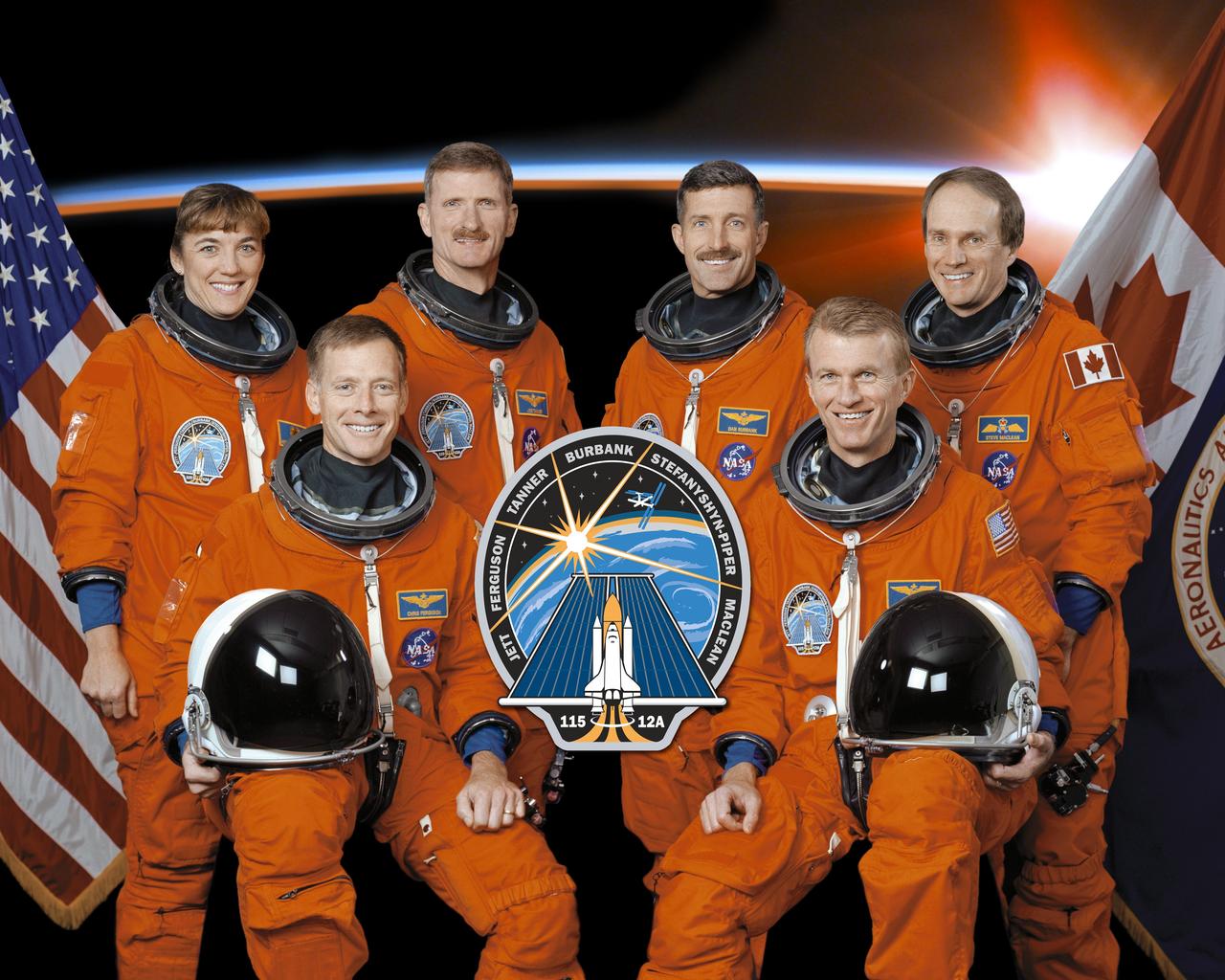
STS115-S-002 (8 November 2002) --- These six astronauts take a break from training to pose for the STS-115 crew portrait. Astronauts Brent W. Jett, Jr. (right) and Christopher J. Ferguson, commander and pilot, respectively, flank the mission insignia. The mission specialists are, from left to right, astronauts Heidemarie M. Stefanyshyn-Piper, Joseph R. (Joe) Tanner, Daniel C. Burbank, and Steven G. MacLean, who represents the Canadian Space Agency.
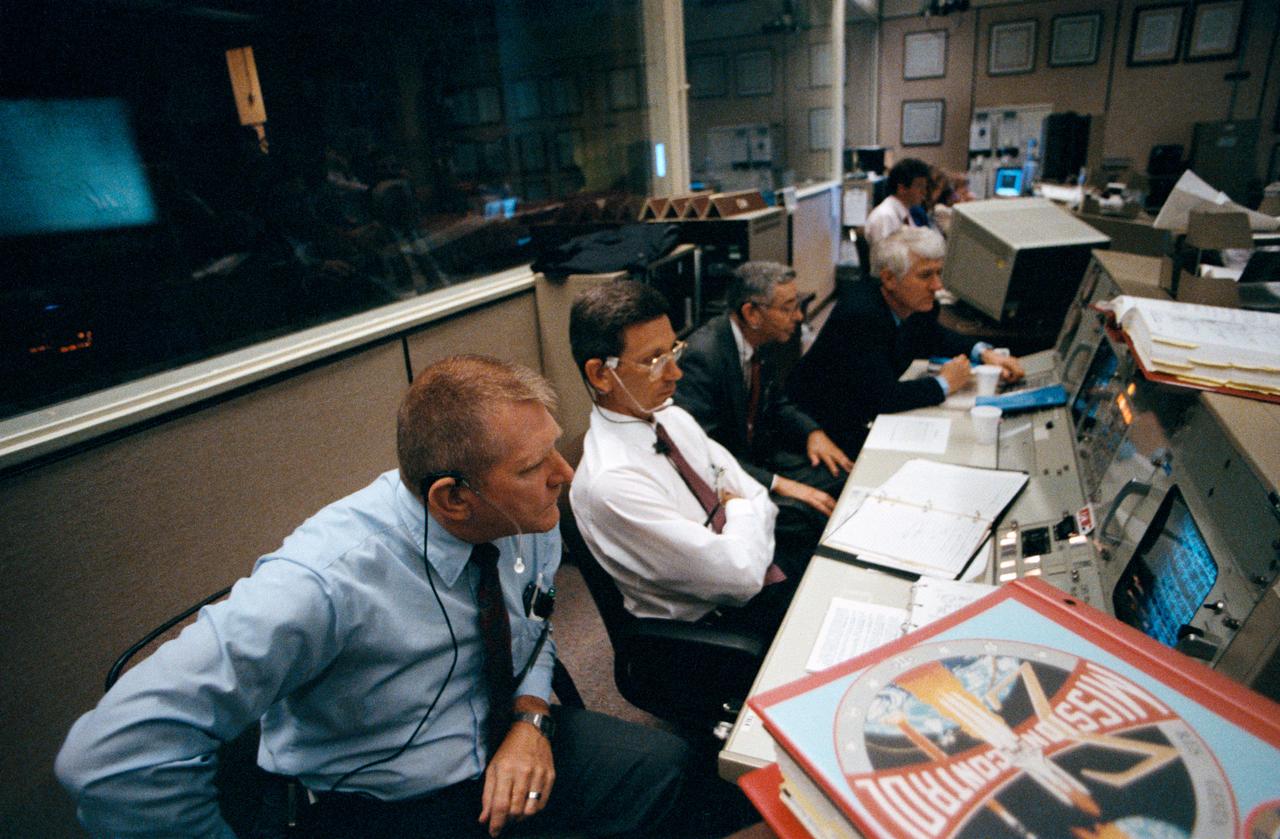
STS030-S-004 (8 May 1989) --- JSC Officials monitor early moments of NASA's STS-30 Atlantis, Orbiter Vehicle (OV) 104, flight in the Flight Control Room (FCR) of JSC's Mission Control Center (MCC) Bldg 30. At the Mission Operations Directorate (MOD) console, MOD Director Eugene F. Kranz (foreground), studiously reviews data on a nearby monitor. Others in the photo are (left to right) Flight Directors Office Deputy Chief Lawrence S. Bourgeois, JSC Director Aaron Cohen, and Flight Crew Operations Deputy Director Henry W. Hartsfield, Jr. Kranz'z replete loose-leaf notebook, bearing the insignia of the flight control team members (MOD insignia), is in the foreground.
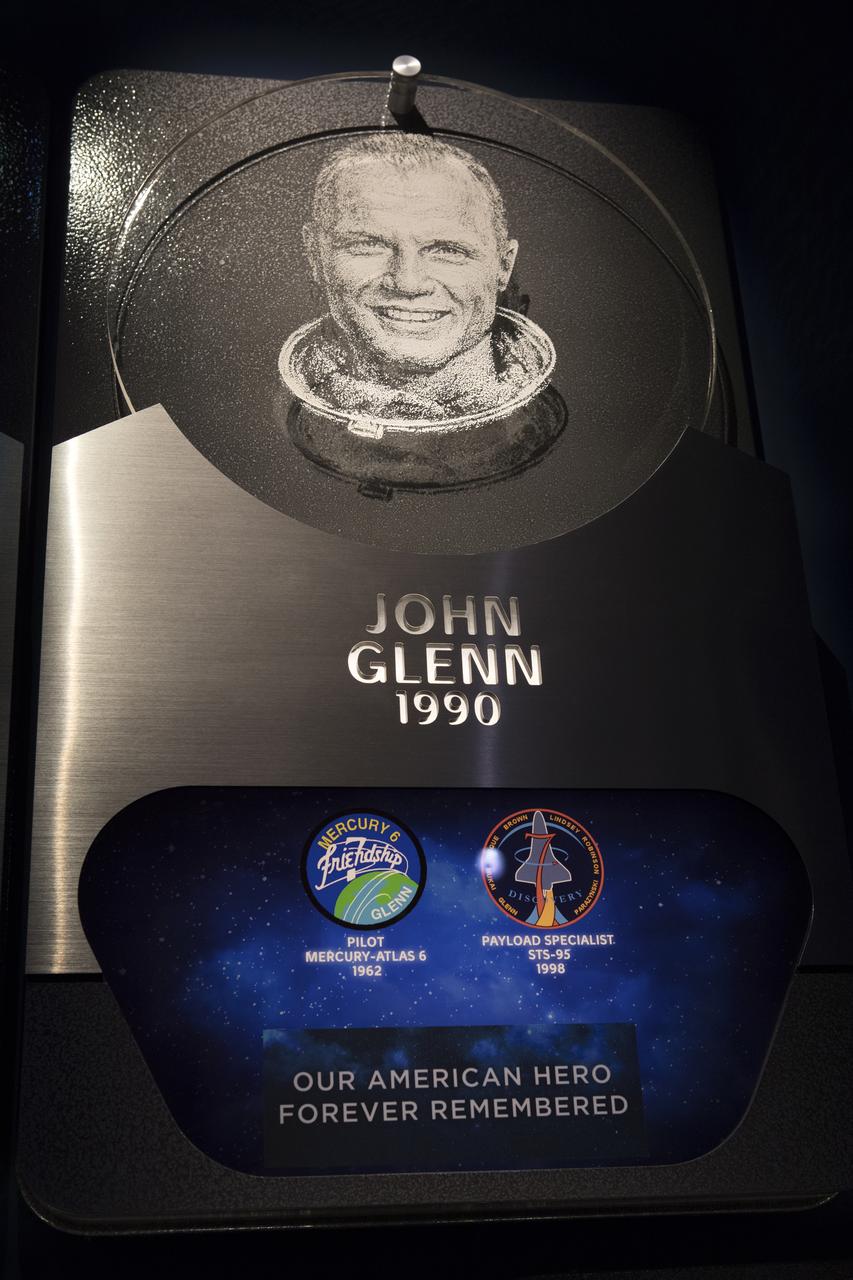
A plaque inside the Heroes and Legends exhibit hall at the Kennedy Space Center Visitor Complex shows astronaut Sen. John Glenn, along with his mission insignias for Friendship 7 and STS-95, the two flights he made into space. Glenn, who passed away Dec. 8, 2016 at age 95, was the last surviving member of NASA's original astronaut class. He gained worldwide acclaim during his Mercury mission that made him the first American to orbit the Earth. He flew again in 1998 aboard space shuttle Discovery at age 77.
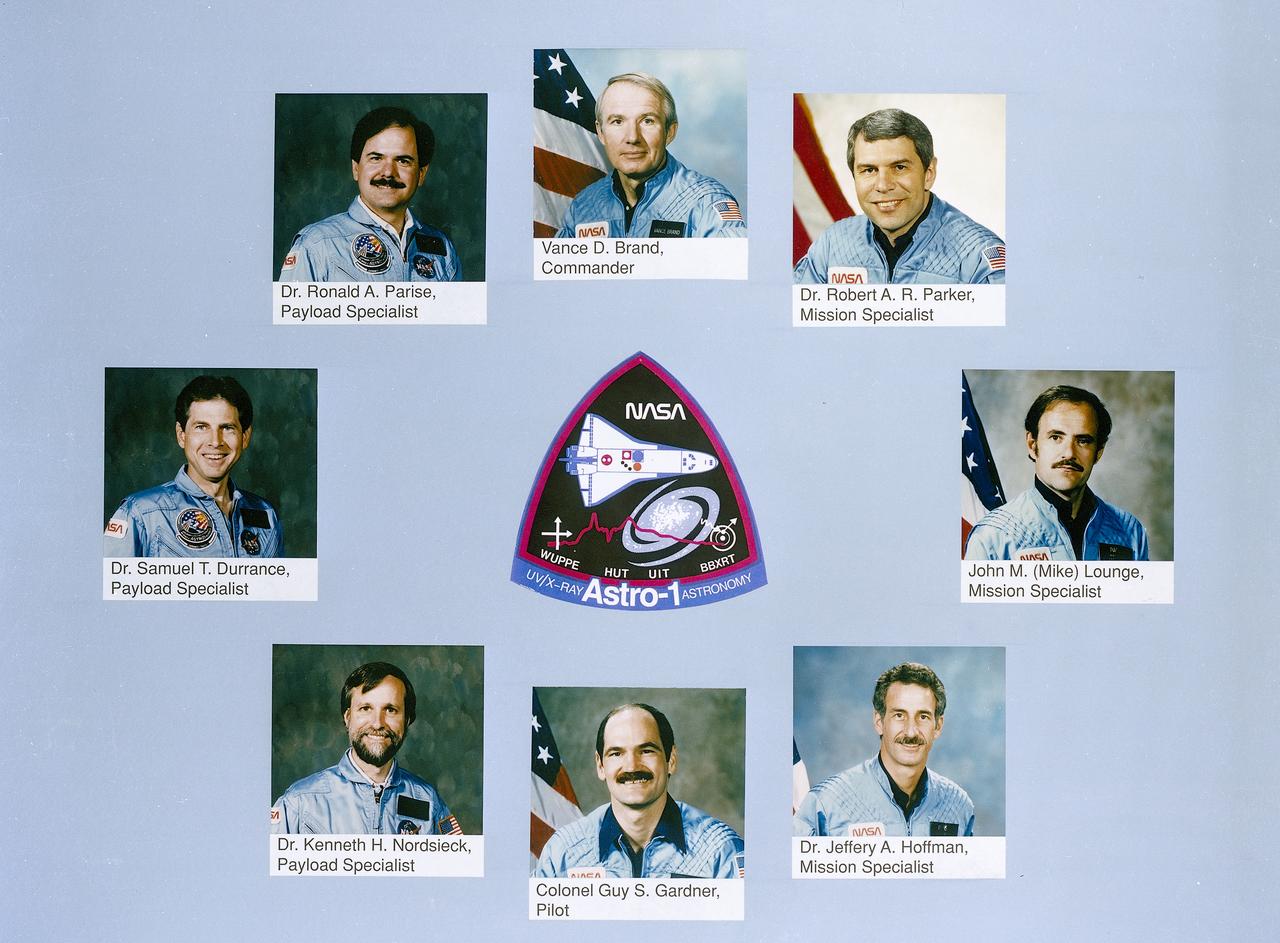
This montage consists of 8 individual STS-35 crew member portraits surrounding the mission’s insignia. Starting from top center, clockwise, are Vance D. Brand, commander; mission specialists Dr. Robert A. R. Parker, John M. (Mike) Lounge, and Dr. Jeffery A. Hoffman; Colonel Guy S. Gardner, pilot; and payload specialists Dr. Kenneth H. Nordsieck, Dr. Samual T. Durrance, and Dr. Ronald A. Parise. The crew of 8 launched aboard the Space Shuttle Orbiter Columbia on December 2, 1990 at 1:19:01am (EST). The primary objective of the mission was round the clock observation of the celestial sphere in ultrviolet and X-Ray astronomy with the Astro-1 observatory which consisted of four telescopes: the Hopkins Ultraviolet Telescope (HUT); the Wisconsin Ultraviolet Photo-Polarimeter Experiment (WUPPE); the Ultraviolet Imaging Telescope (UIT); and the Broad Band X-Ray Telescope (BBXRT). Due to loss of data used for pointing and operating the ultraviolet telescopes, Marshall Space Flight Center ground teams were forced to aim the telescopes with fine tuning by the flight crew.