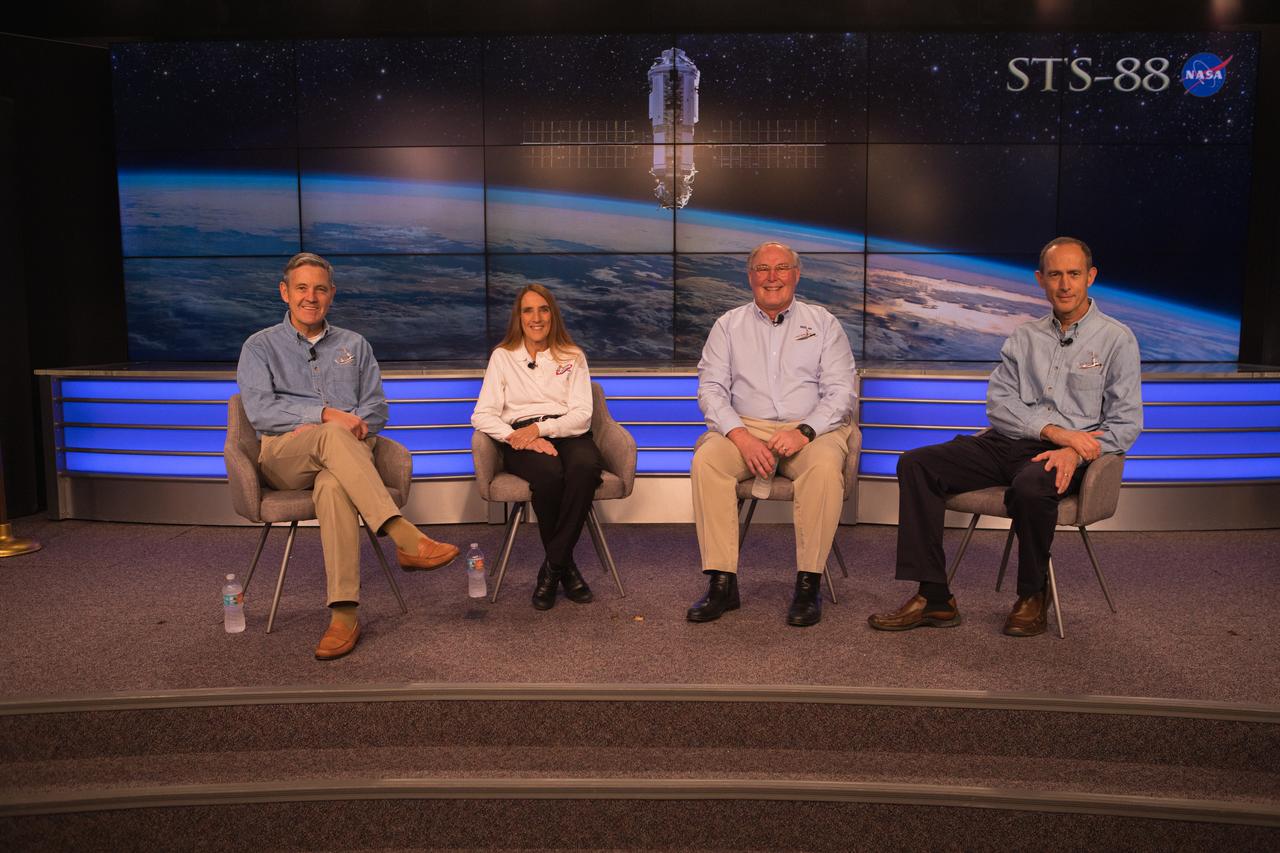
From left, Kennedy Space Center Director and STS-88 commander Bob Cabana, along with STS-88 mission specialists Nancy Currie-Gregg, Jerry Ross and Jim Newman, are recognized Dec. 10, 2018, at Kennedy Space Center in Florida during a 20th anniversary celebration of the first International Space Station assembly mission. The STS-88 mission paved the way for humans to live and work on the space station.
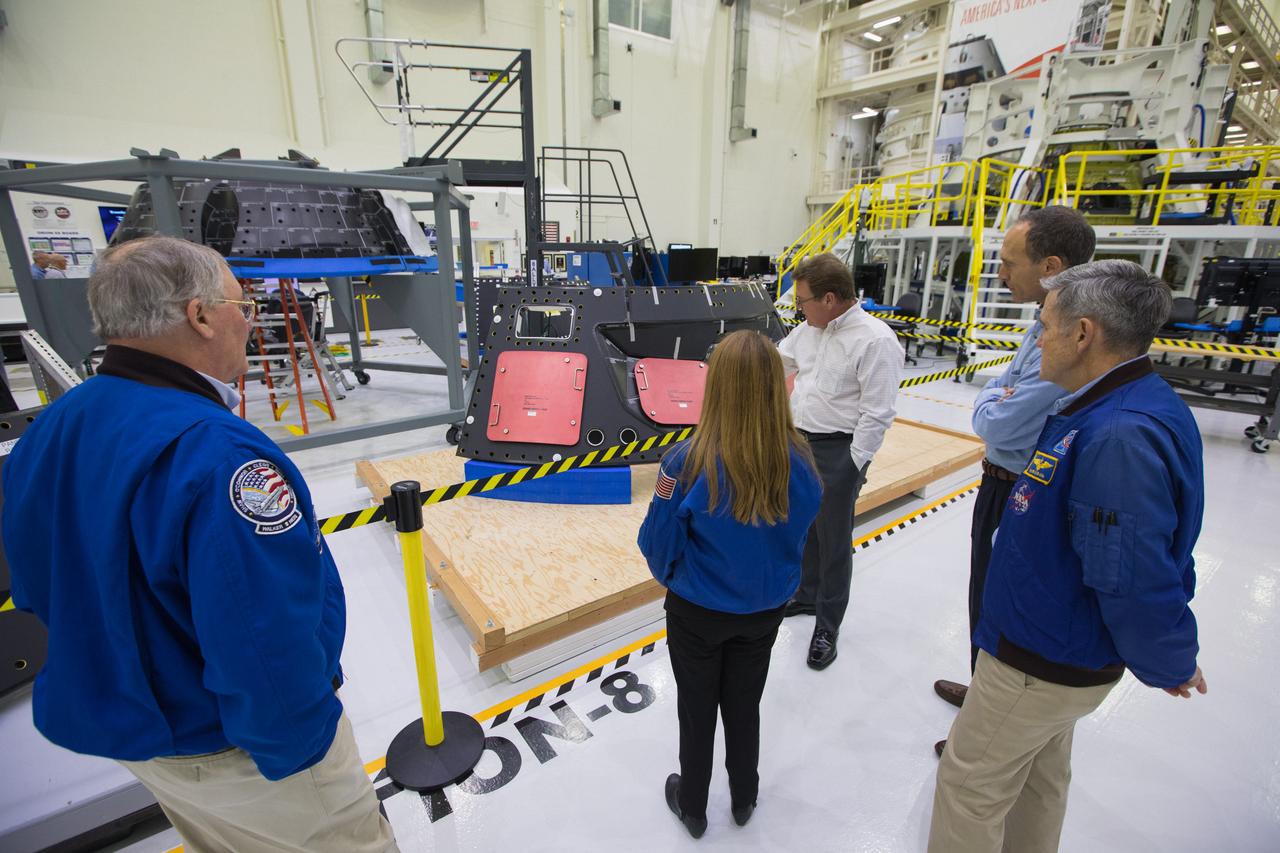
Members of the STS-88 crew tour Kennedy Space Center’s Neil Armstrong Operations & Checkout building on Dec. 10, 2018. Earlier in the day, STS-88 commander Bob Cabana, along with mission specialists Jerry Ross, Nancy Currie-Gregg and Jim Newman, held a panel discussion in recognition of the 20th anniversary of the first International Space Station assembly mission.
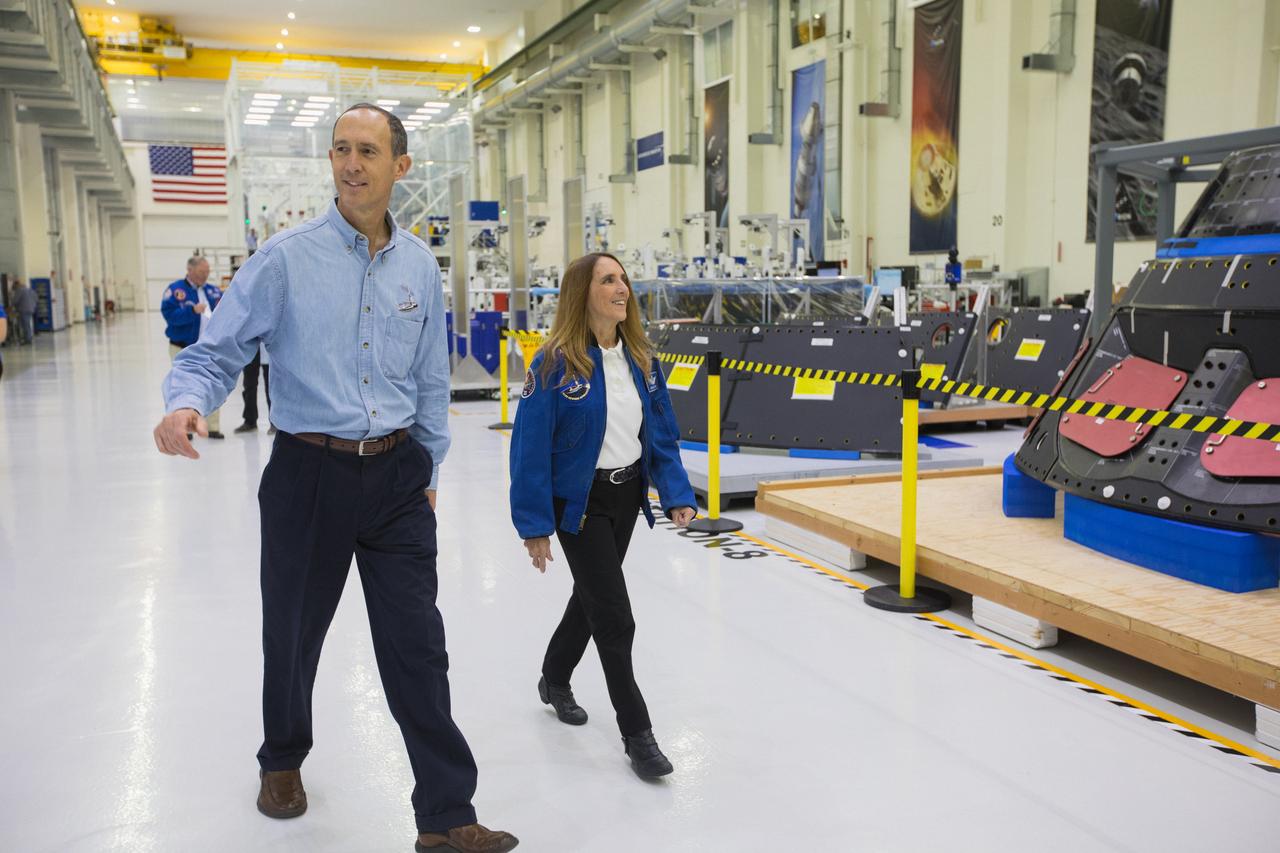
From left, STS-88 mission specialists Jim Newman and Nancie Currie-Gregg tour the Neil Armstrong Operations & Checkout building at Kennedy Space Center on Dec. 10, 2018. Newman and Currie-Gregg were visiting the Florida spaceport as part of a 20th anniversary celebration of STS-88, the first International Space Station assembly mission.
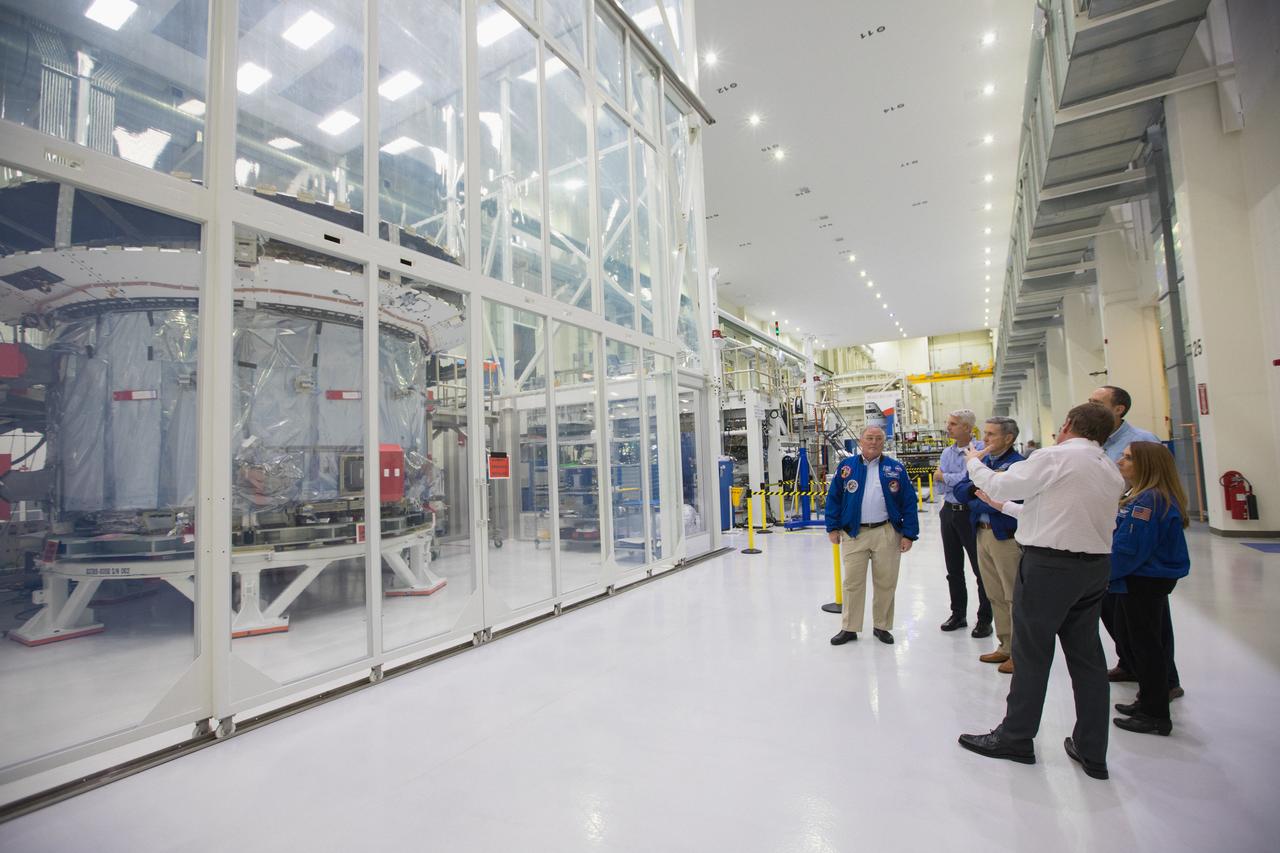
Members of the STS-88 crew tour Kennedy Space Center’s Neil Armstrong Operations & Checkout building on Dec. 10, 2018. Earlier in the day, STS-88 commander Bob Cabana, along with mission specialists Jerry Ross, Nancy Currie-Gregg and Jim Newman, held a panel discussion in recognition of the 20th anniversary of the first International Space Station assembly mission.
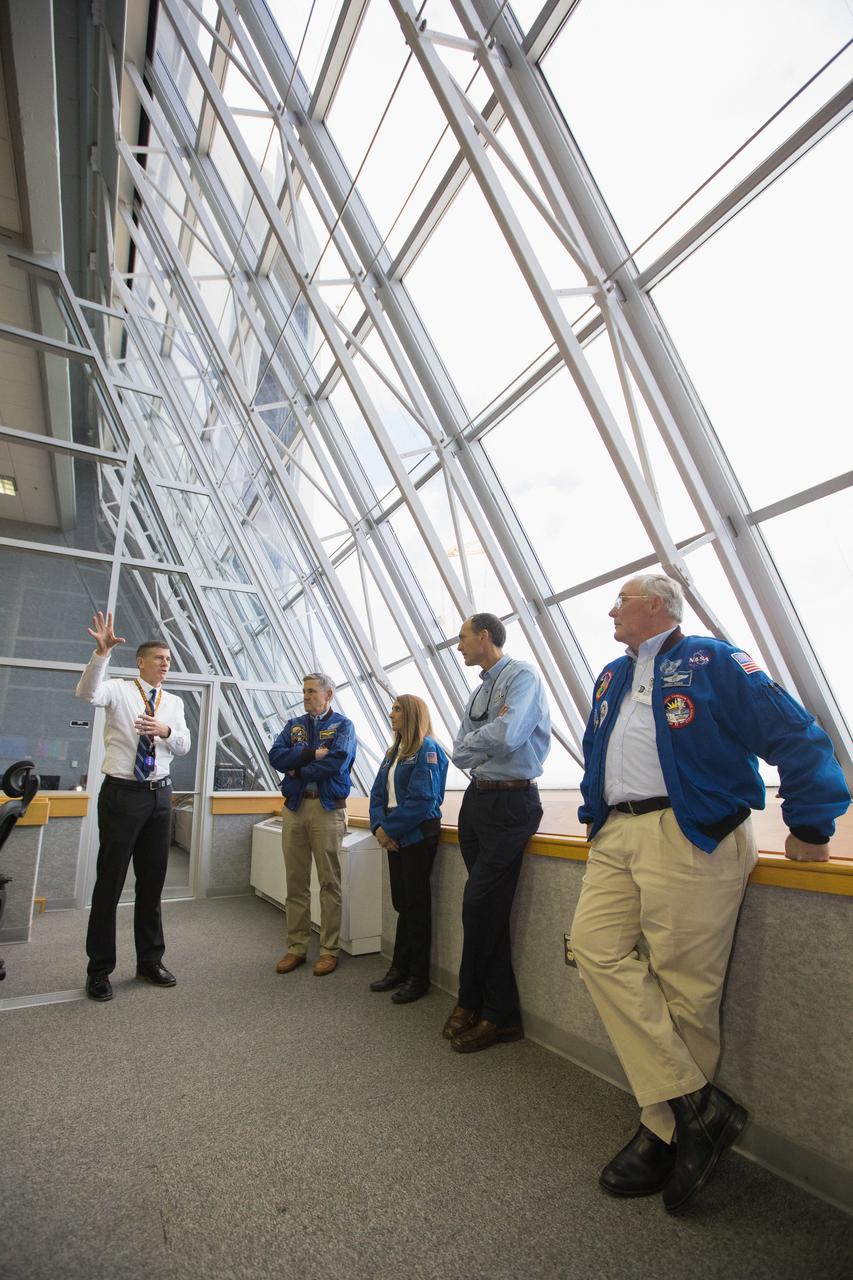
Chief NASA Test Director Jeremy Graeber, left, talks with members of the STS-88 crew inside the Launch Control Center at Kennedy Space Center in Florida on Dec. 10, 2018. They are, from left, Commander Bob Cabana, and mission specialists Nancy Currie-Gregg, Jim Newman and Jerry Ross. Earlier in the day, the group held a panel discussion in recognition of the 20th anniversary of the mission.

Kennedy Space Center Director Bob Cabana, front left, talks with Scott Wilson, manager of production operations for the Orion Program, inside Kennedy’s Neil Armstrong Operations and Checkout building on Dec. 10, 2018. Cabana, who commanded the first International Space Station assembly mission, was accompanied by fellow STS-88 crew members Jim Newman, Nancie Currie-Gregg and Jerry Ross. Earlier in the day, the group held a panel discussion in recognition of the 20th anniversary of the mission.
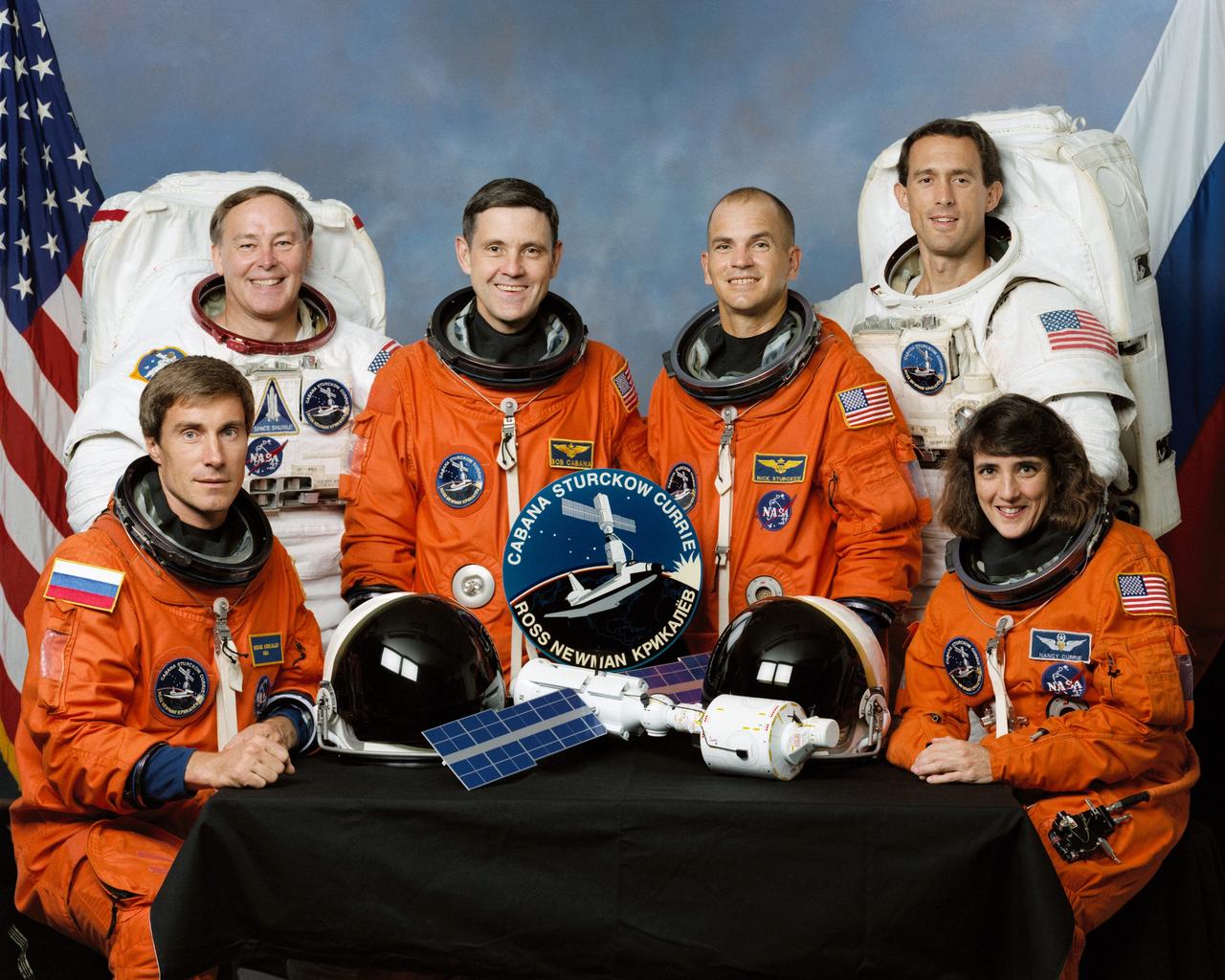
JOHNSON SPACE CENTER, Houston, Texas -- STS088(S)002 -- Five NASA astronauts and a Russian cosmonaut assigned to the STS-88 mission, scheduled for an early December launch, take time out from their busy training agenda for a crew portrait. Seated in front are Sergei K. Krikalev, a mission specialist representing the Russian Space Agency (RSA), and astronaut Nancy J. Currie, mission specialist. In the rear, from the left, are astronauts Jerry L. Ross, mission specialist; Robert D. Cabana, mission commander; Frederick W. Sturckow, pilot; and James H. Newman, mission specialist.
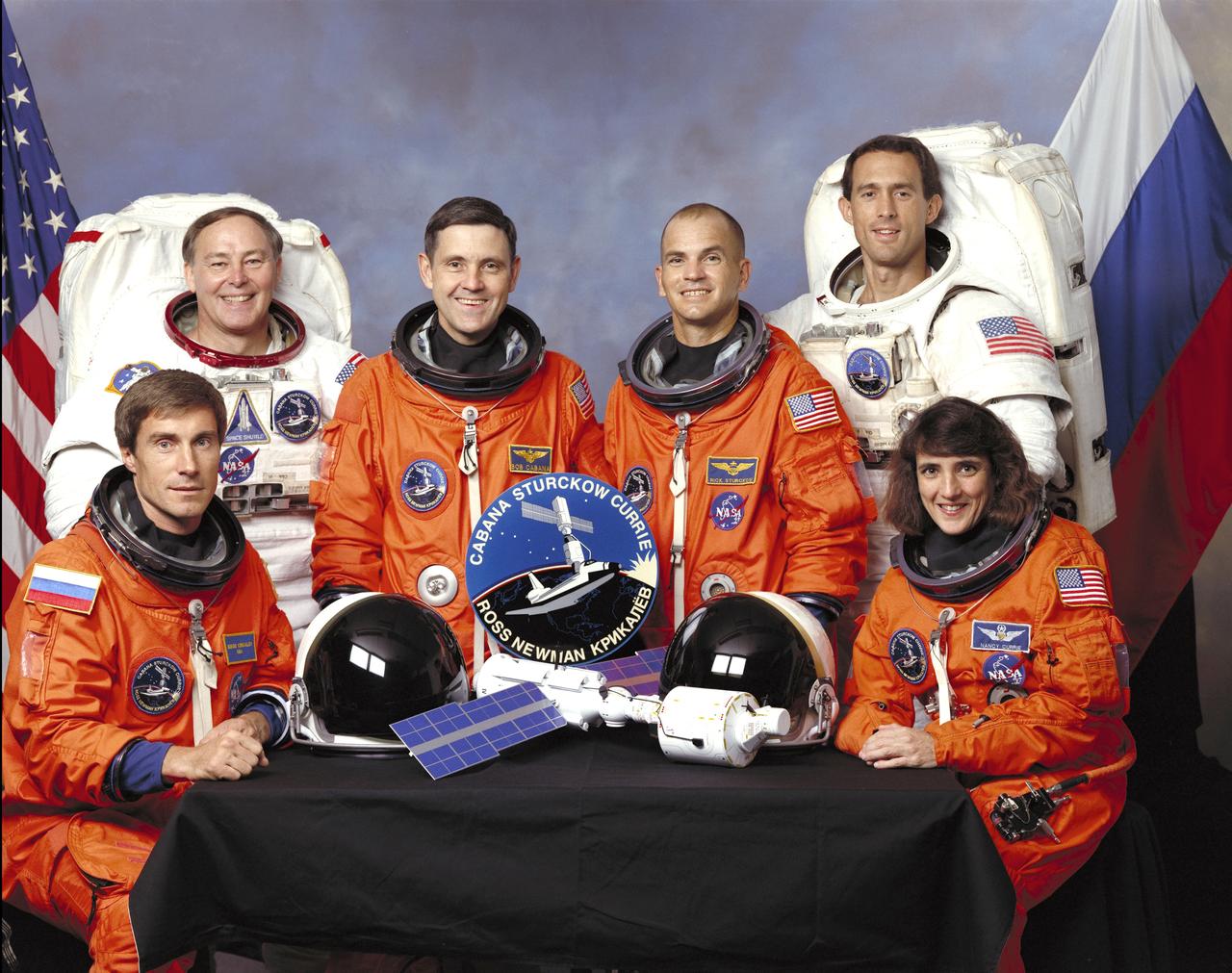
Five NASA astronauts and a Russian cosmonaut assigned to the STS-88 mission pose for a crew portrait. Seated in front (left to right) are mission specialists Sergei K. Krikalev, representing the Russian Space Agency (RSA), and astronaut Nancy J. Currie. In the rear from the left, are astronauts Jerry L. Ross, mission specialist; Robert D. Cabana, mission commander; Frederick W. “Rick” Sturckow, pilot; and James H. Newman, mission specialist. The STS-88 mission launched aboard the Space Shuttle Endeavor on December 4, 1998 at 2:35 a.m. (CST) to deliver the Unity Node to the International Space Station (ISS).

Designed by the STS-88 crew members, this patch commemorates the first assembly flight to carry United States-built hardware for constructing the International Space Station (ISS). This flight's primary task was to assemble the cornerstone of the Space Station: the Node with the Functional Cargo Block (FGB). The rising sun symbolizes the dawning of a new era of international cooperation in space and the beginning of a new program: the International Space Station. The Earth scene outlines the countries of the Station Partners: the United States, Russia, those of the European Space Agency (ESA), Japan, and Canada. Along with the Pressurized Mating Adapters (PMA) and the Functional Cargo Block, the Node is shown in the final mated configuration while berthed to the Space Shuttle during the STS-88/2A mission. The Big Dipper Constellation points the way to the North Star, a guiding light for pioneers and explorers for generations. In the words of the crew, These stars symbolize the efforts of everyone, including all the countries involved in the design and construction of the International Space Station, guiding us into the future.
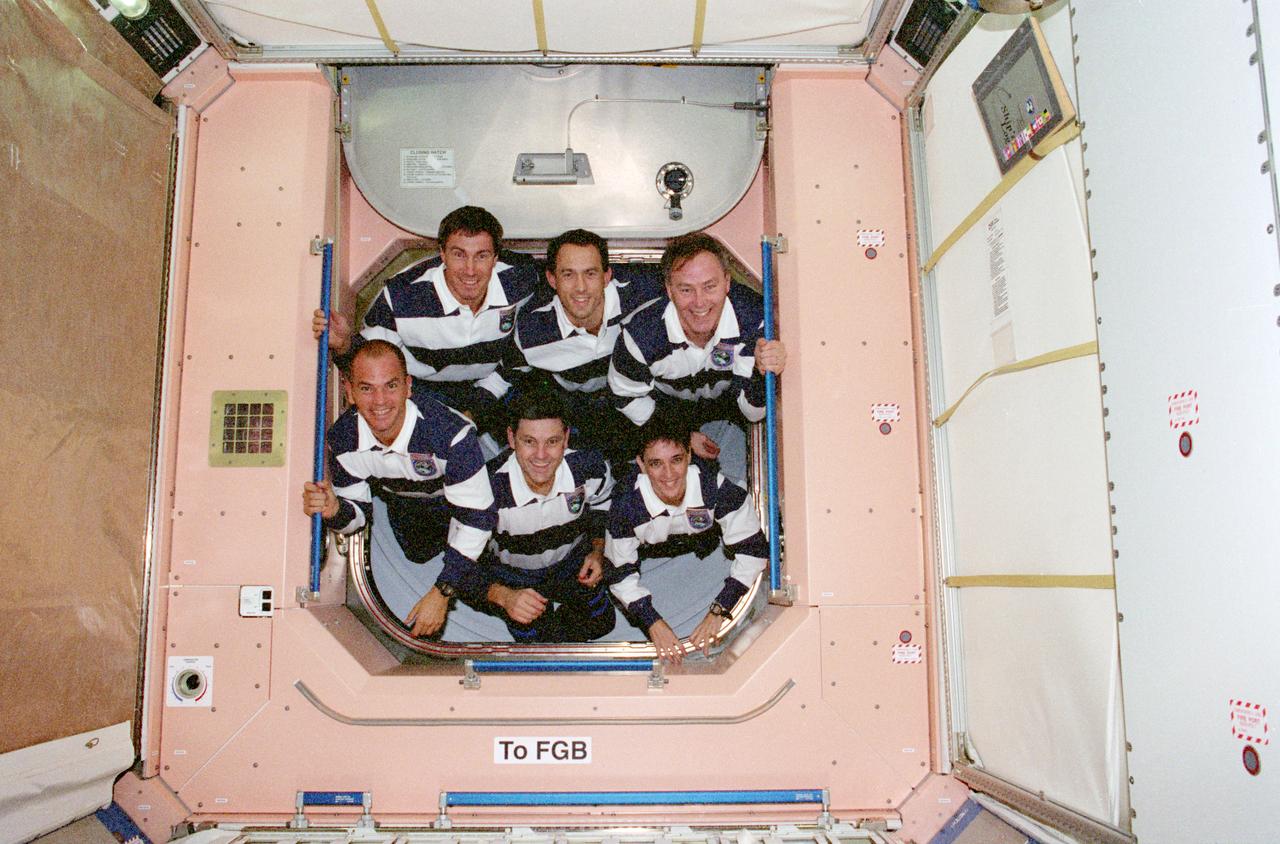
STS088-370-006 (4-15 Dec. 1998) --- The STS-88 crew members pose for the traditional inflight crew portrait in the U.S.-built Unity connecting module. From left to right, bottom, are astronauts Frederick W. (Rick) Sturckow, pilot; Robert D. Cabana, mission commander; and Nancy J. Currie, mission specialist. Top row, cosmonaut Sergei K. Krikalev, representing the Russian Space Agency, along with astronauts James H. Newman and Jerry L. Ross, all mission specialists.
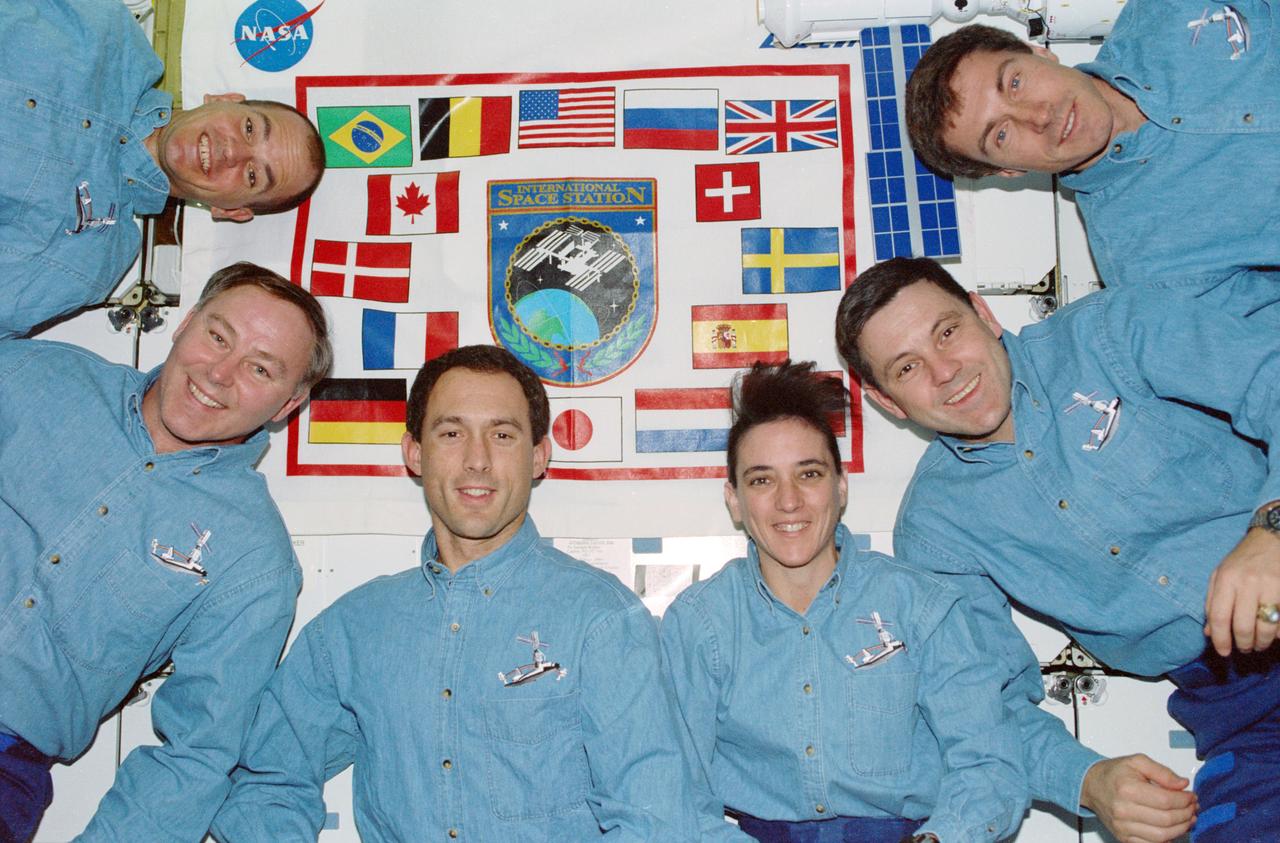
STS088-350-010 (4-15 Dec. 1998) --- STS-88 in-flight crew portrait taken on the Endeavour's middeck with a banner in the background which depicts the flags of all the international partners. From left to right are: Frederick W. "Rick" Sturckow, pilot; Jerry L. Ross, James H. Newman and Nancy J. Currie, all mission specialists; Robert D. Cabana, mission commander; and Sergei K. Krikalev, mission specialist, representing the Russian Aviaiton and Space Agency (Rosaviakosmos).
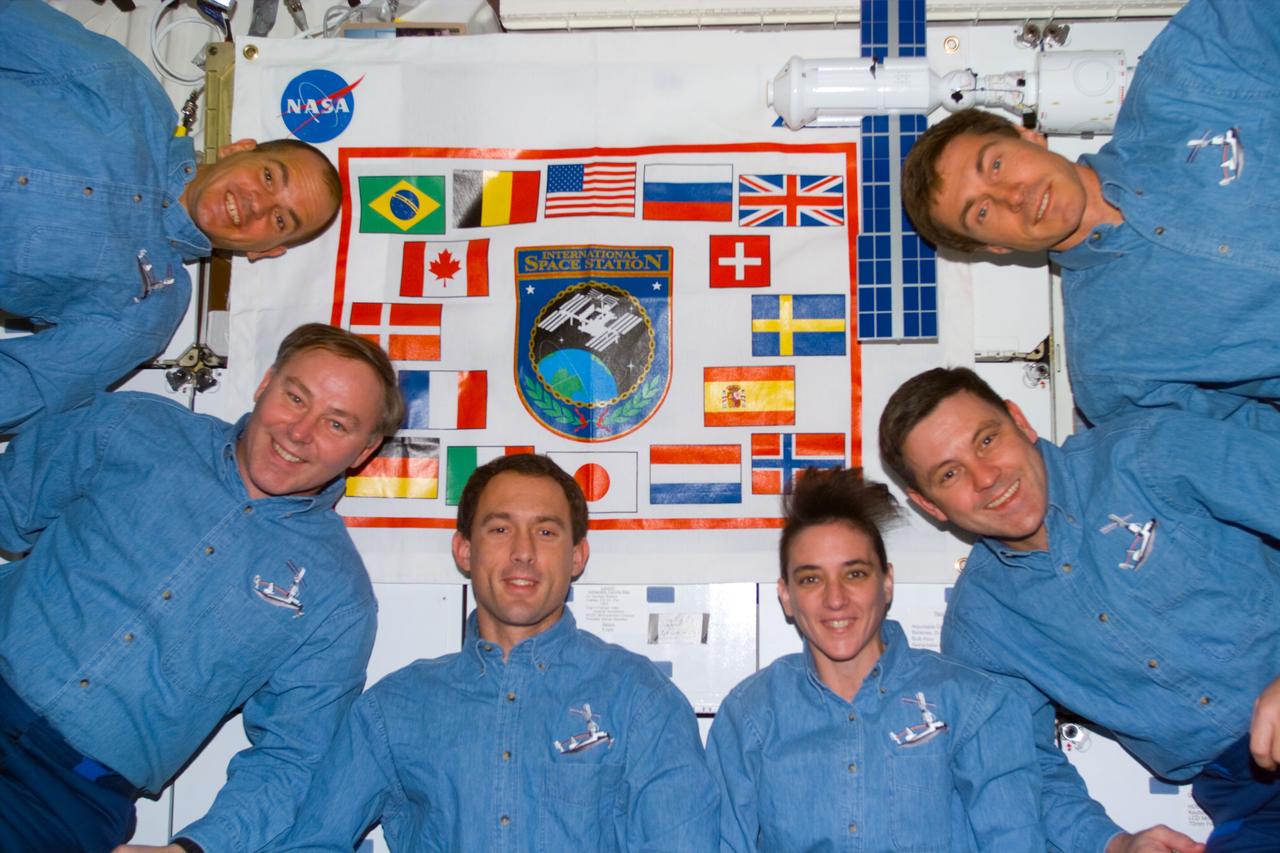
S88-E-5170 (12-15-98) --- A pre-set electronic still camera (ESC) was used to take one of the traditional in-flight crew portraits for the STS-88 members on Endeavour's mid deck. From the left are Frederick W. (Rick) Sturckow, Jerry L. Ross, James H. Newman, Nancy J. Currie, Robert D. Cabana and Sergei K. Krikalev. Krikalev, representing the Russian Space Agency (RSA), has been assigned as one of the crew members for the first ISS crew. A banner representing the participating countries for ISS and a model (near Krikalev) of the connected Unity-Zarya modules are in the background. The photo was taken at 00:12:48 GMT, Dec. 15.
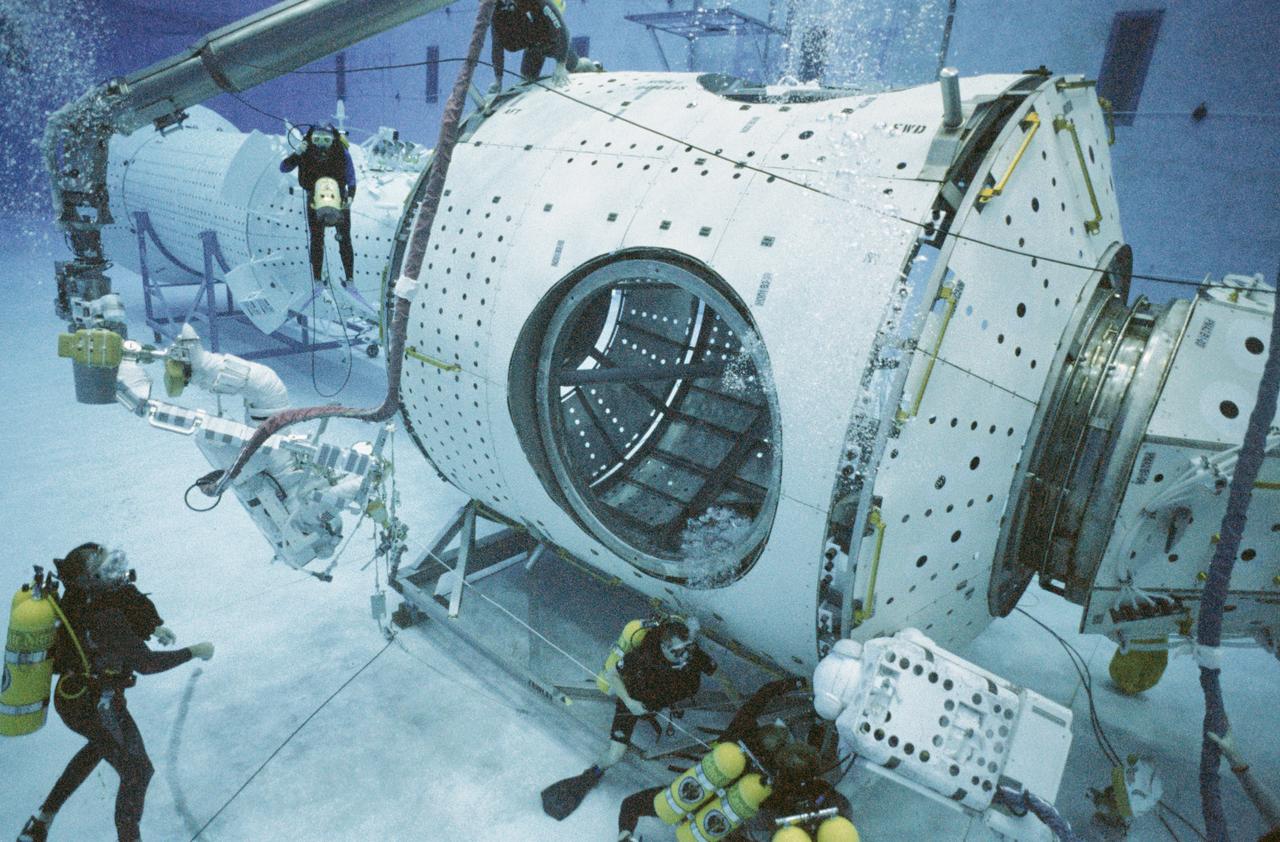
S97-11949 (8 Sept 1997) --- Wearing training versions of the Shuttle Extravehicular Mobility Unit (EMU) space suit, astronauts Jerry L. Ross (left), and James Newman perform the first training session in the Neutral Buoyancy Laboratory (NBL) of the Sonny Carter Training Facility. The training was actually a dress rehearsal of three Extravehicular Activity?s (EVA) the pair will conduct during the July 1998 flight (STS-88) -- the first International Space Station (ISS) assembly mission. During the six-hour training session, the crew practiced hooking up power and data cables between full-scale mockups of the Functional Cargo Block and the United States-built Node 1 (foreground).

S88-E-5169 (12-14-98) --- A pre-set electronic still camera (ESC) was used to take one of the traditional in-flight crew portraits for the STS-88 members on Endeavour's mid deck. From the left are Jerry L. Ross, James H. Newman, Robert D. Cabana, Frederick W. (Rick) Sturckow, Nancy J. Currie and Sergei K. Krikalev. Krikalev, representing the Russian Space Agency (RSA), has been assigned as one of the crew members for the first ISS crew. A banner representing the participating countries for ISS and a model of the connected Unity-Zarya modules are in the background. The photo was taken at 23:41:40, Dec. 14.
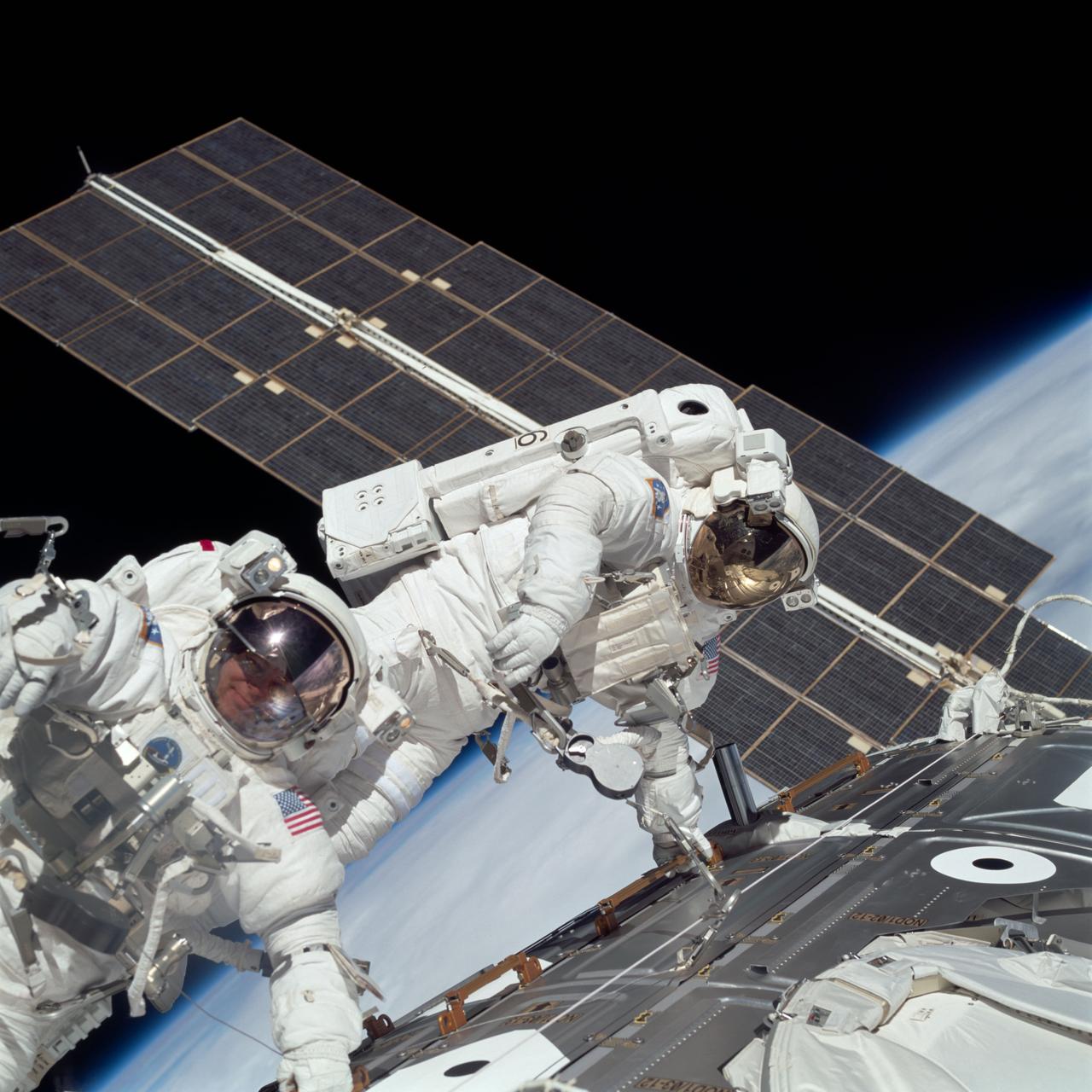
STS088-702-024 (4-15 Dec. 1998) --- Astronauts Jerry L. Ross (left) and James H. Newman, both mission specialists, work together on the final of three space walks of the STS-88 mission. One of the solar panels of the Russian-built Zarya module runs through the frame.
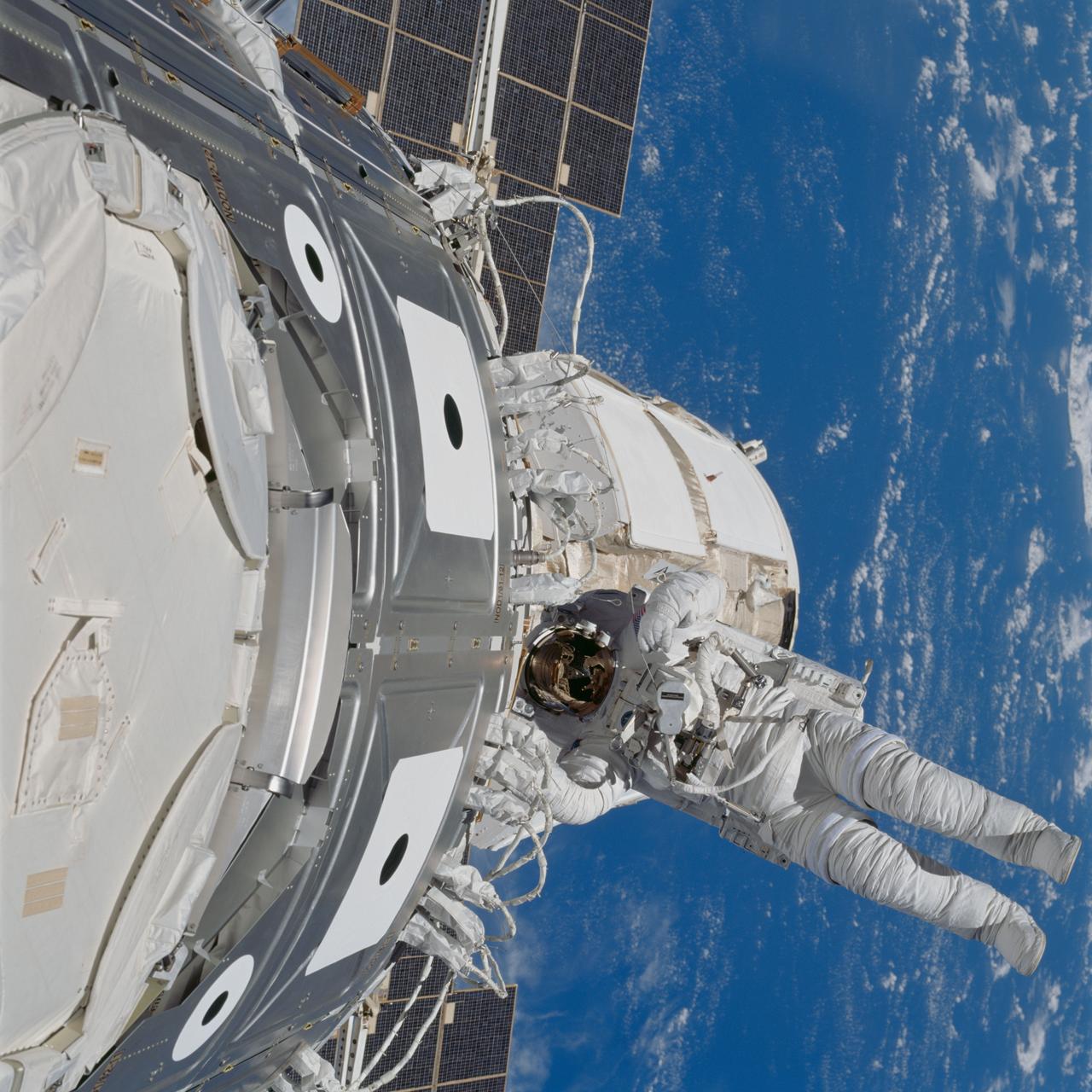
STS088-702-004 (4-15 Dec. 1998) --- Astronaut James H. Newman works on wrap up tasks during the final of three space walks performed by the STS-88 crew during its eleven-day mission in Earth orbit. Astronaut Jerry L. Ross, Newman's partner on all three of the extravehicular activity (EVA) sessions, is out of frame at left.
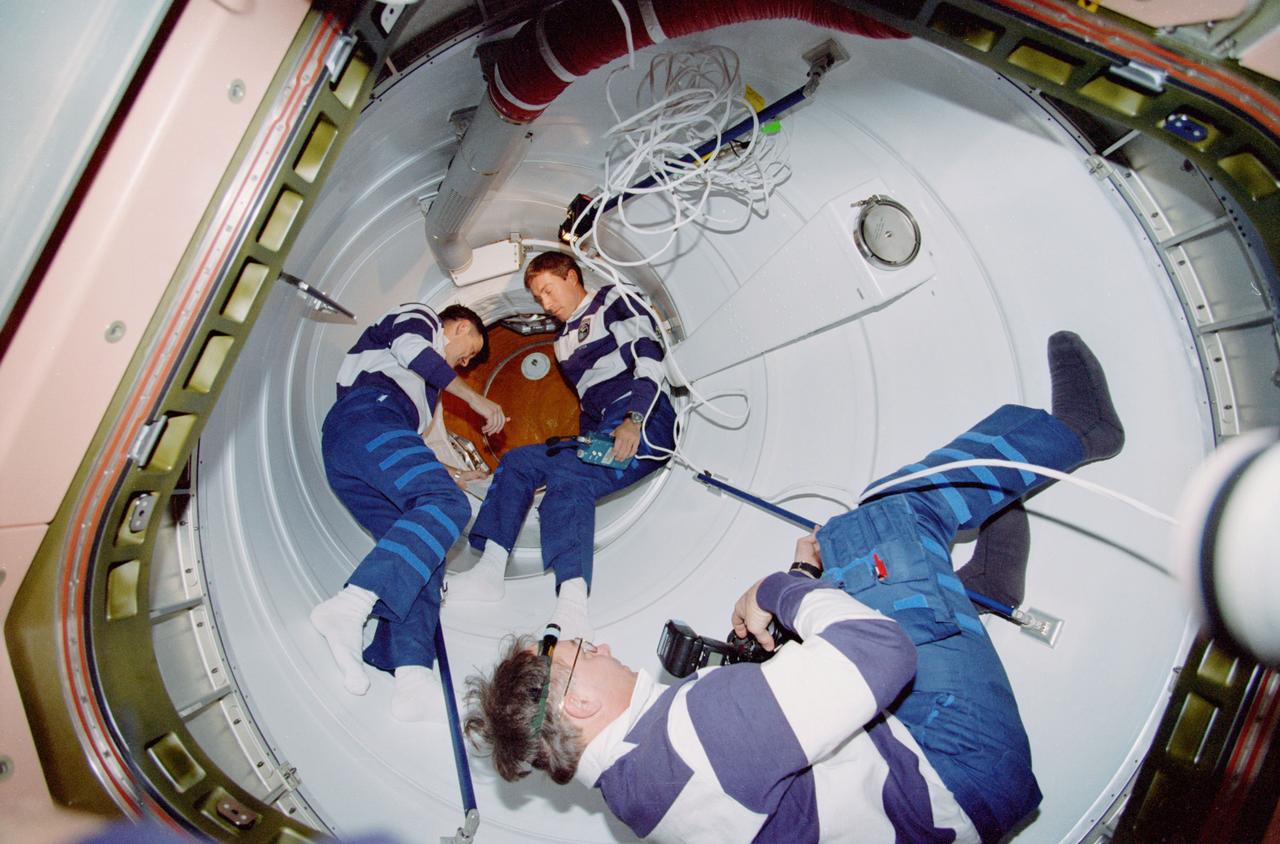
STS088-322-035 (4 - 15 DECEMBER 1998) --- Three STS-88 crew members are pictured in one of two Pressurized Mating Adapters (PMA) connected to the Unity and Zarya modules. Taking pictures in the foreground is astronaut Jerry L. Ross, mission specialist. Others are astronaut Robert D. Cabana (left), mission commander, and cosmonaut Sergei K. Krikalev, mission specialist representing the Russian Space Agency (RSA).
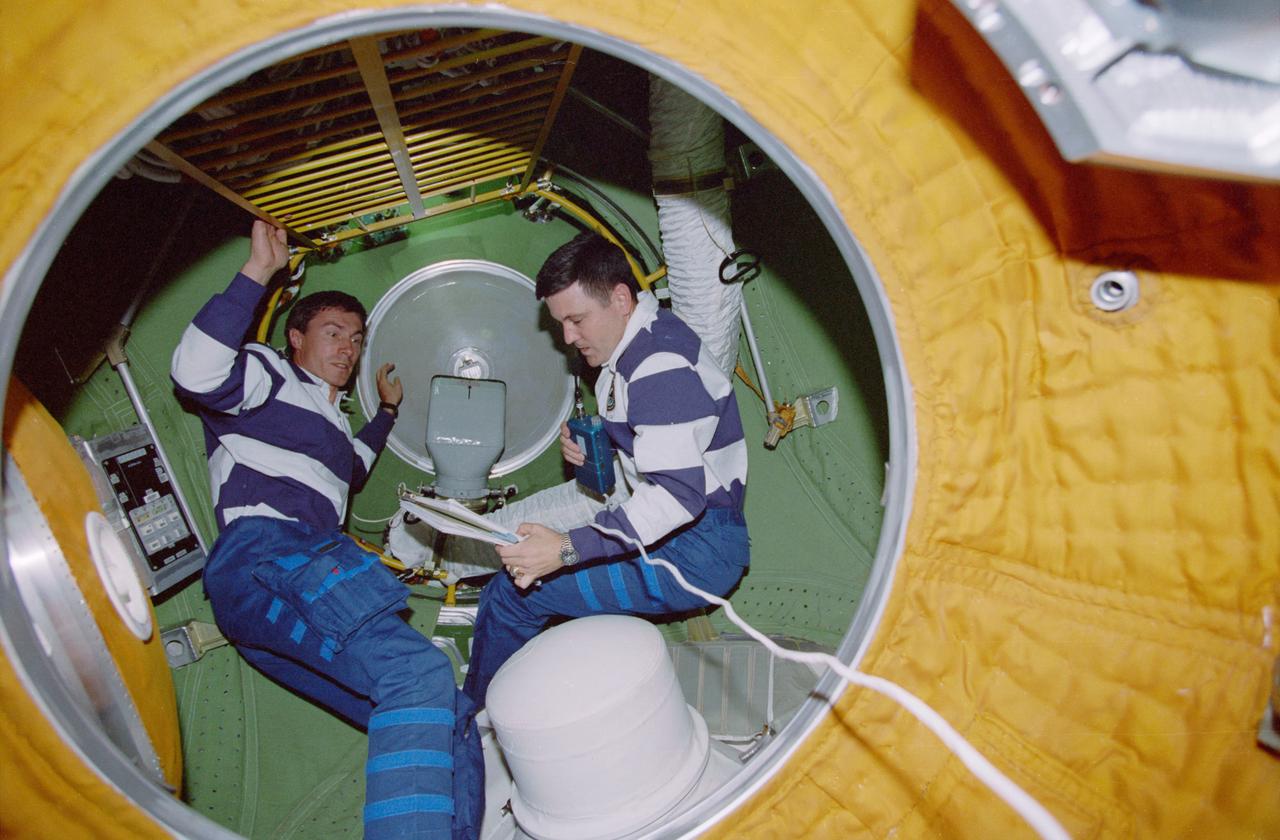
STS088-332-010 (4-15 Dec. 1998) --- Cosmonaut Sergei K. Krikalev (left), mission specialist representing the Russian Space Agency (RSA), and astronaut Robert D. Cabana mission commander, plan their approach to tasks as they huddle at an internal hatch in the Russian built FGB, also called Zarya. All six STS-88 crew members were involved in tasks to ready Zarya and the now-connected U.S. Node 1, also called Unity, for their International Space Station (ISS) roles. Krikalev has been named as a member of the first ISS crew.
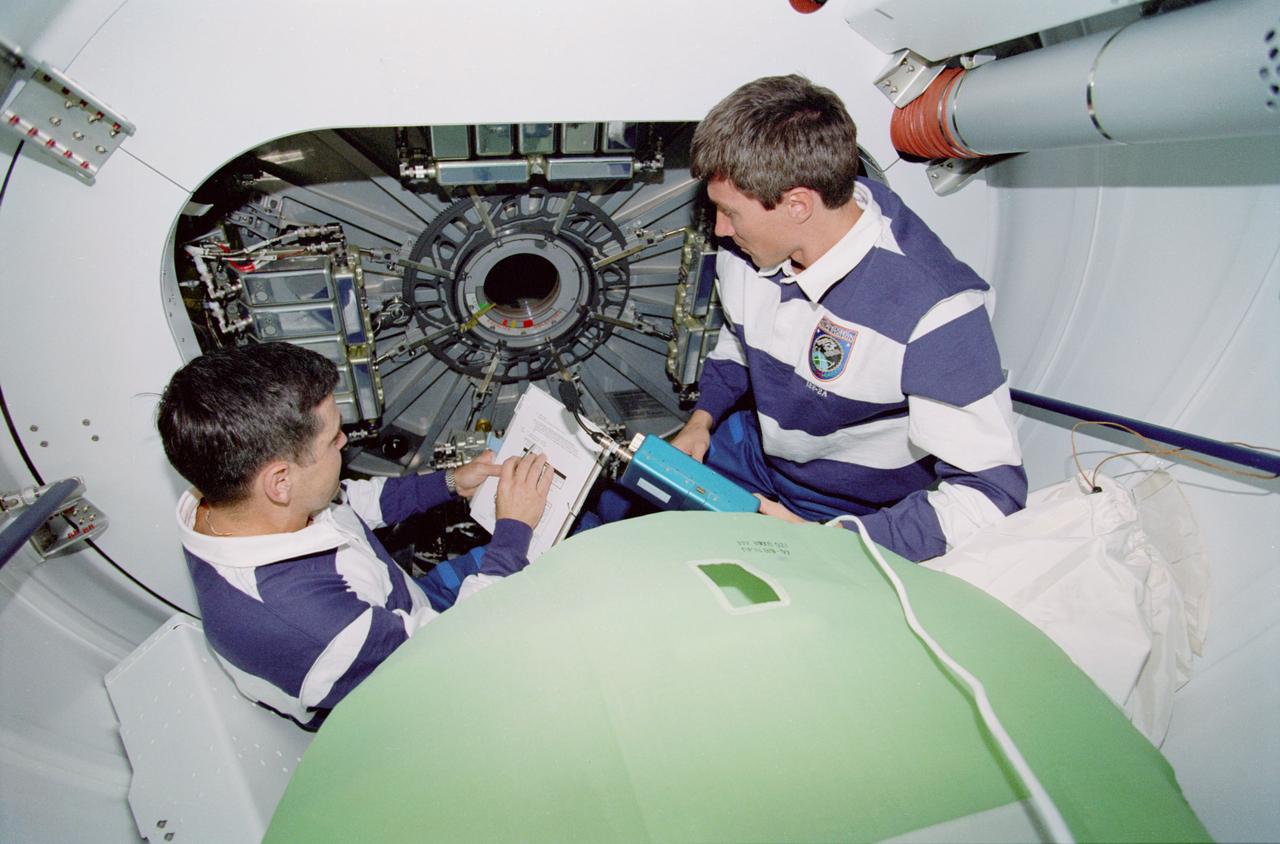
STS088-322-021 (4-15 DECEMBER 1998) --- Astronaut Robert D. Cabana (left), mission commander, and cosmonaut Sergei K. Krikalev, mission specialist representing the Russian Space Agency (RSA), plan their approach to tasks in the U.S.-built Unity module. All six STS-88 crew members were involved in tasks to ready Unity and the now-connected Russian-built FGB module, also called Zarya, for their International Space Station (ISS) roles. Krikalev has been named as a member of the first ISS crew.
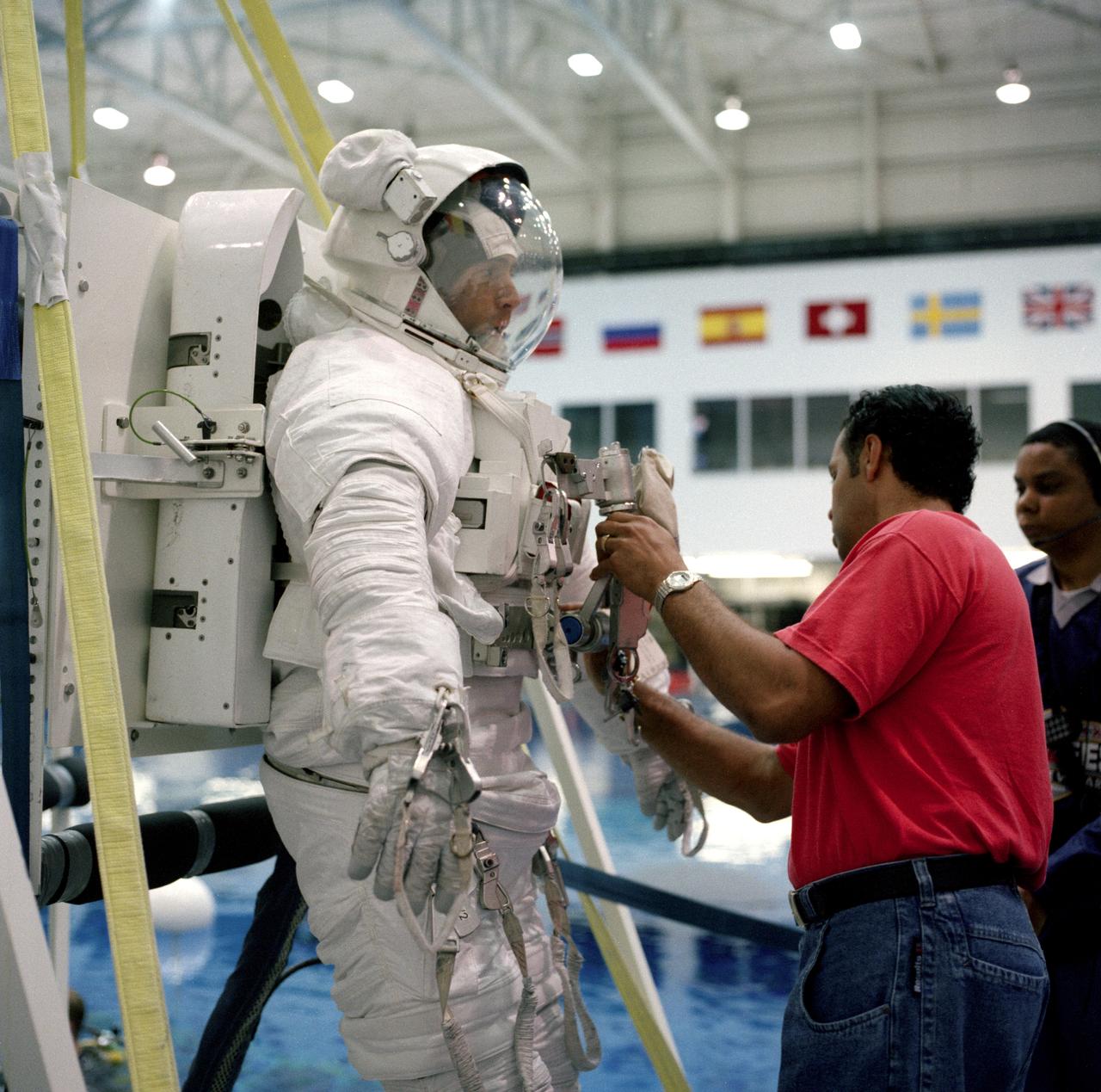
S98-09040 (June 1998) --- Astronaut James H. Newman, mission specialist, gets final touches on the training version of his Extravehicular Mobility Unit (EMU) space suit prior to being submerged in the waters of the Neutral Buoyancy Laboratory (NBL) at the Johnson Space Center (JSC). The two assigned space walkers -- Newman and Jerry L. Ross -- shared the platform as it was lowered into the water where the pair moments later were training with full-scale mockups of the International Space Station (ISS) hardware with which they'll be working in space. One of those elements will be the Functional Cargo Block (FGB), which will have been launched a couple of weeks prior to STS-88. Once the FGB is captured using the Remote Manipulator System (RMS) of the Space Shuttle Endeavour, astronaut Nancy J. Currie, mission specialist, will maneuver the robot arm to dock the FGB to the conical mating adapter at the top of Node 1, to be carried in the Space Shuttle's cargo bay. In ensuing days, three Extravehicular Activity?s (EVA) by Ross and Newman will be performed to make power, data and utility connections between the two modules.
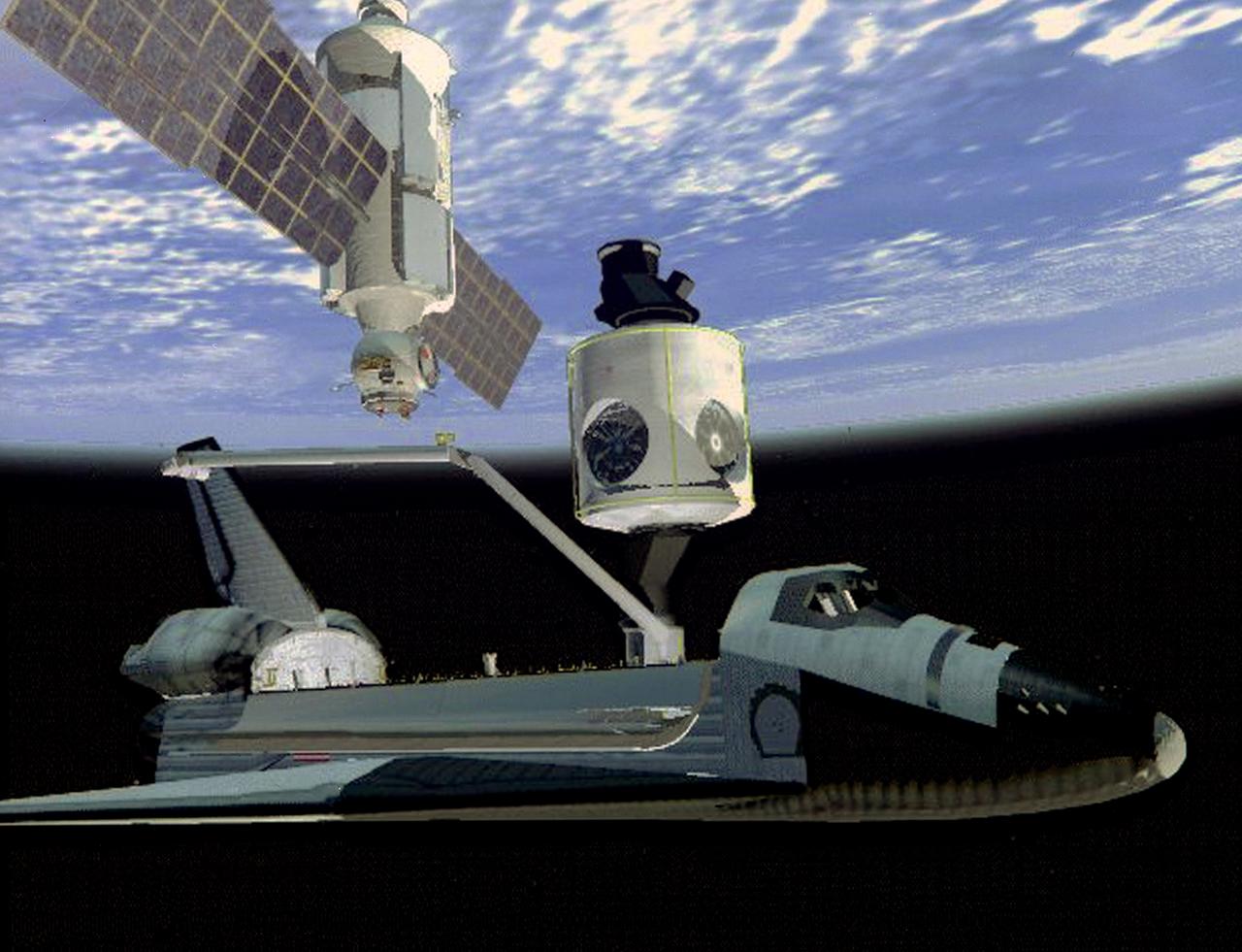
S98-09020 (21 July 1997) --- The Space Shuttle Endeavour prepares to capture the Functional Cargo Block (FGB) using the shuttle's mechanical arm in this artist's depiction of the first Space Shuttle assembly flight for the International Space Station (ISS), mission STS-88 scheduled to launch in July 1998. The shuttle will carry the first United States-built component for the station, a connecting module called Node 1, and attach it to the already orbiting FGB, which supplies early electrical power and propulsion. The FGB will have been launched about two weeks earlier on a Russian Proton rocket from the Baikonur Cosmodrome, Kazahkstan. Once the FGB is captured using the mechanical arm, astronaut Nancy J. Currie will maneuver the arm to dock the FGB to the conical mating adapter at the top of Node 1 in the Shuttle's cargo bay. In ensuing days, three Extravehicular Activity?s (EVA) by astronauts Jerry L. Ross and James H. Newman will be performed to make power, data and utility connections between the two modules.
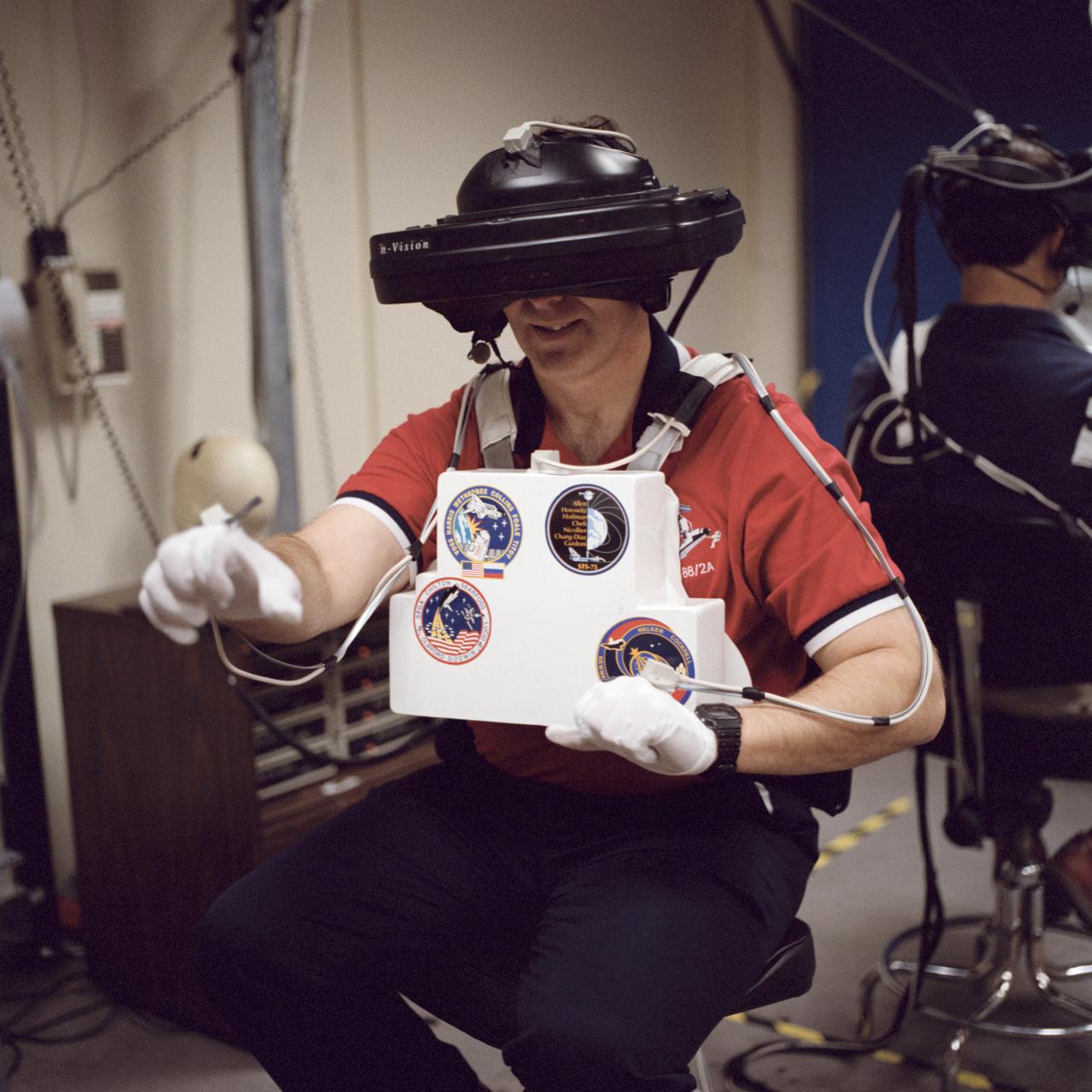
S98-05079 (8 Apr. 1998) --- Astronaut Jerry L. Ross, assigned as a mission specialist for the mission, uses specialized gear to train for his duties aboard the Space Shuttle Endeavour. This type virtual reality training allows each of the assigned Extravehicular Activity (EVA) astronauts -- Ross and James H. Newman -- to wear a helmet and special gloves to look at computer displays simulating actual movements around the various locations on the International Space Station (ISS) hardware with which they'll be working. One of those elements will be the Functional Cargo Block (FGB), which will have been launched a couple of weeks prior to STS-88. Once the FGB is captured using the Remote Manipulator System (RMS) of the Endeavour, astronaut Nancy J. Currie will maneuver the robot arm to dock the FGB to the conical mating adapter at the top of Node 1, to be carried in the Shuttle's cargo bay. In ensuing days, three EVA space walks by Ross and Newman will be performed to make power, data and utility connections between the two modules. Currie also uses this same lab to train for her RMS controlling duties.
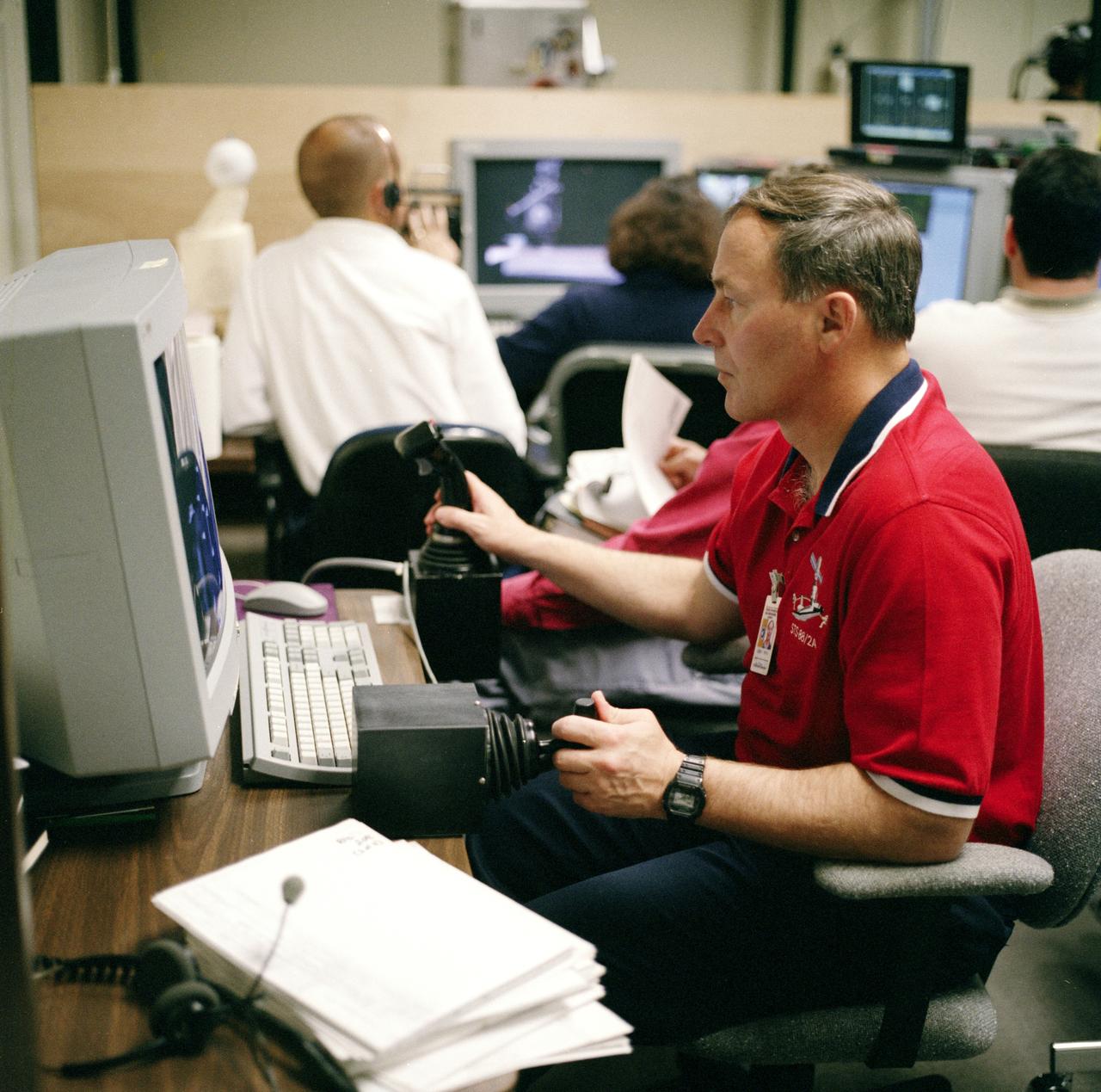
S98-05074 (8 Apr. 1998) --- Astronaut Jerry L. Ross, assigned as a mission specialist for the mission, uses special gear and software to train for his duties aboard the Space Shuttle Endeavour. This type virtual reality training supplements practice for each of the assigned space-walking astronauts -- Ross and James H. Newman -- during which they wear a helmet and special gloves to look at computer displays simulating actual movements around the various locations on the early International Space Station (ISS) hardware with which they'll be working. One of those elements will be the Functional Cargo Block (FGB), which will have been launched a couple of weeks prior to STS-88. Once the FGB is captured using the Remote Manipulator System (RMS) of the Endeavour, astronaut Nancy J. Currie will maneuver the robot arm to dock the FGB to the conical mating adapter at the top of Node 1, to be carried in the Shuttle's cargo bay. In ensuing days, three space walks by Ross and Newman will be performed to make power, data and utility connections between the two modules. Currie also uses this same lab to train for her RMS controlling duties.
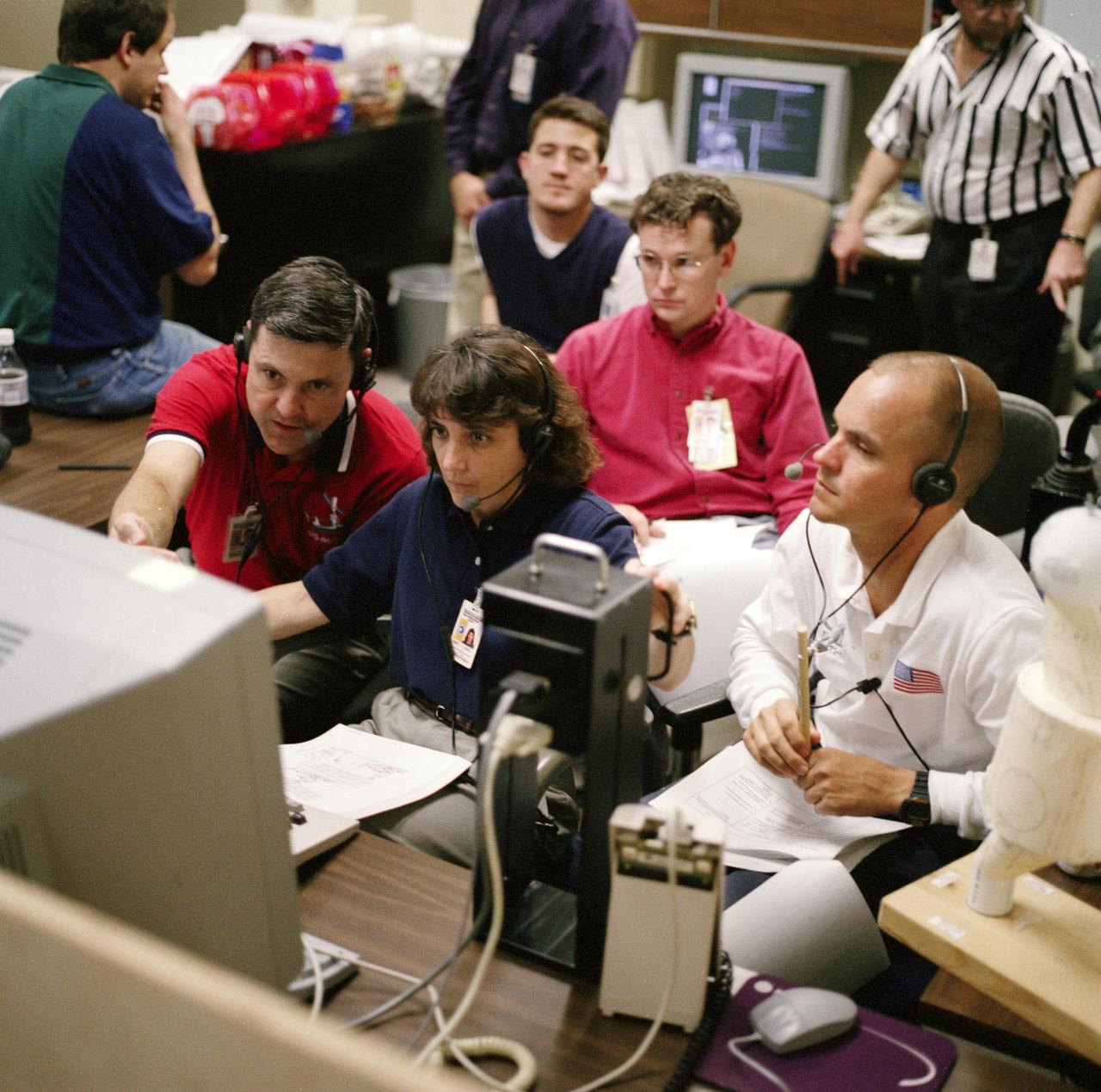
S98-05078 (8 Apr. 1998) --- With crew mates looking on, astronaut Nancy J. Currie, mission specialist, uses hardware in the virtual reality lab at the Johnson Space Center (JSC) to train for her duties aboard the Space Shuttle Endeavour. She is flanked by astronaut Robert Cabana (left), commander; and Frederick W. Sturckow (right), pilot. This type computer interface paired with virtual reality training hardware for the assigned space-walking astronauts -- Jerry L. Ross and James H. Newman -- helps to prepare the entire team for dealing with International Space Station (ISS) elements. One of those elements will be the Functional Cargo Block (FGB), which will have been launched a couple of weeks prior to STS-88. Once the FGB is captured using the Remote Manipulator System (RMS) of the Endeavour, Currie will maneuver the robot arm to dock the FGB to the conical mating adapter at the top of Node 1, to be carried in the Endeavour's cargo bay. In ensuing days, three Extravehicular Activity?s (EVA) by Ross and Newman will be performed to make power, data and utility connections between the two modules. Looking on is Scott A. Bleisath (behind Currie), with the EVA Systems Group at JSC.
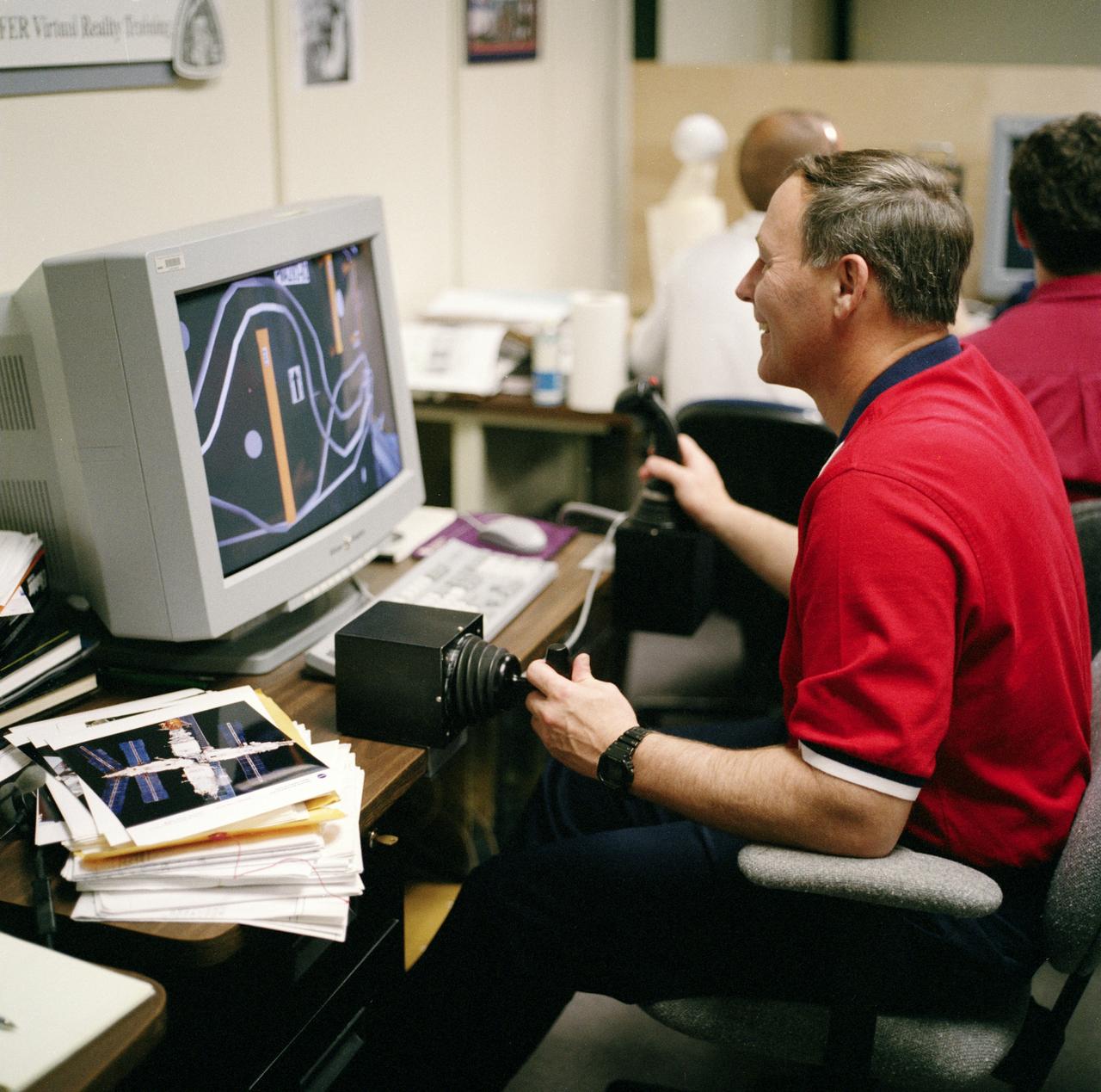
S98-05076 (8 Apr. 1998) --- Astronaut Jerry L. Ross, assigned as a mission specialist for the mission, uses special gear and software to train for his duties aboard the Space Shuttle Endeavour. This type virtual reality training supplements practice for each of the assigned space-walking astronauts -- Ross and James H. Newman -- during which they wear a helmet and special gloves to look at computer displays simulating actual movements around the various locations on the early International Space Station (ISS) hardware with which they'll be working. One of those elements will be the Functional Cargo Block (FGB), which will have been launched a couple of weeks prior to STS-88. Once the FGB is captured using the Remote Manipulator System (RMS) of the Endeavour, astronaut Nancy J. Currie will maneuver the robot arm to dock the FGB to the conical mating adapter at the top of Node 1, to be carried in the Shuttle's cargo bay. In ensuing days, three space walks by Ross and Newman will be performed to make power, data and utility connections between the two modules. Currie also uses this same lab to train for her RMS controlling duties.
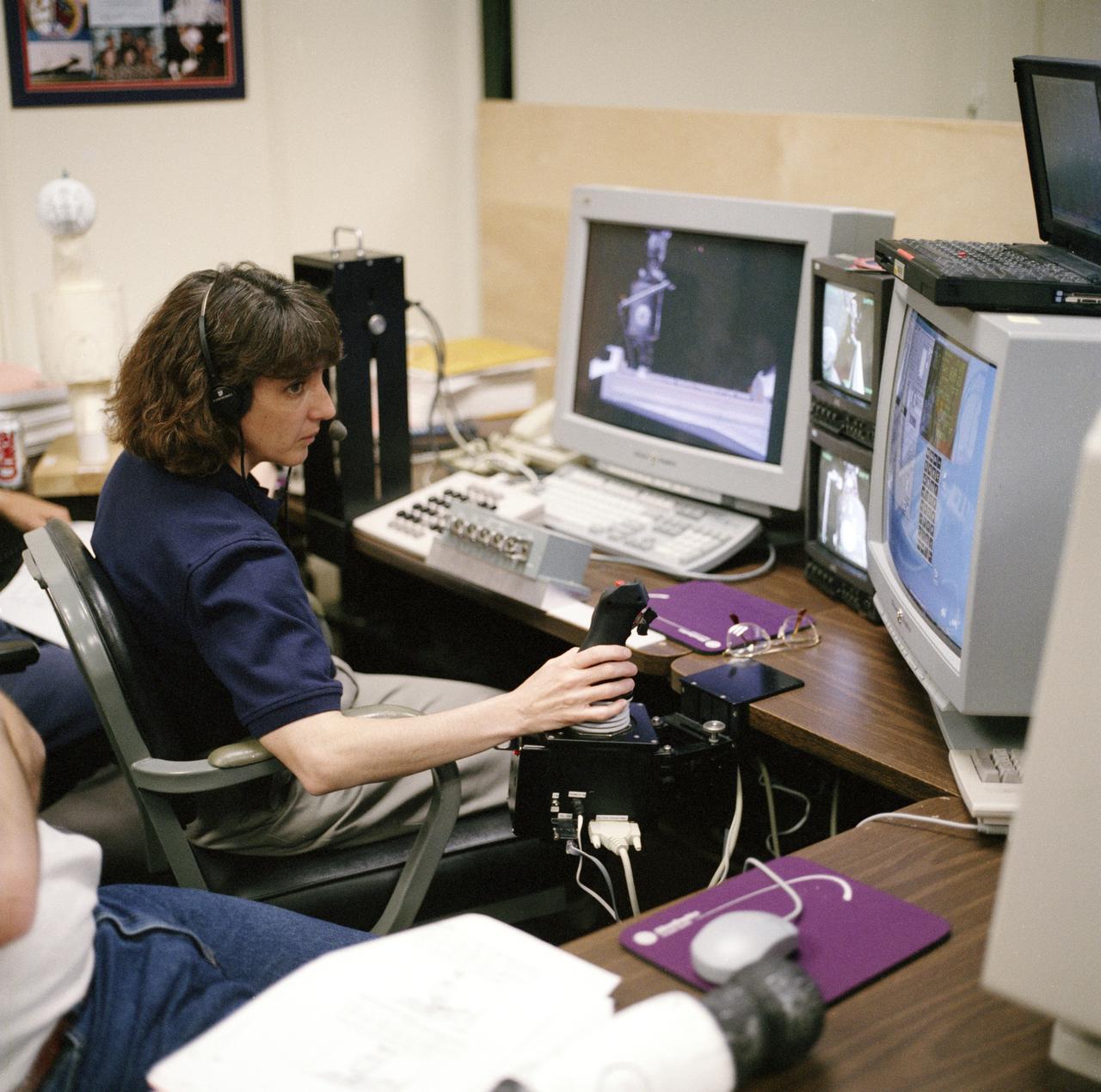
S98-05075 (8 Apr. 1998) --- Astronaut Nancy J. Currie, assigned as a mission specialist for the mission, uses hardware in the virtual reality lab at the Johnson Space Center (JSC) to train for her duties aboard the Space Shuttle Endeavour. This type computer interface paired with virtual reality training hardware for the assigned space-walking astronauts -- in this case, Jerry L. Ross and James H. Newman -- helps to prepare the entire team for dealing with International Space Station (ISS) elements. One of those elements will be the Functional Cargo Block (FGB), which will have been launched a couple of weeks prior to STS-88. Once the FGB is captured using the Remote Manipulator System (RMS) of the Endeavour, Currie will maneuver the robot arm to dock the FGB to the conical mating adapter at the top of Node 1, to be carried in the Endeavour?s cargo bay. In ensuing days, three Extravehicular Activity?s (EVA) by Ross and Newman will be performed to make power, data and utility connections between the two modules.
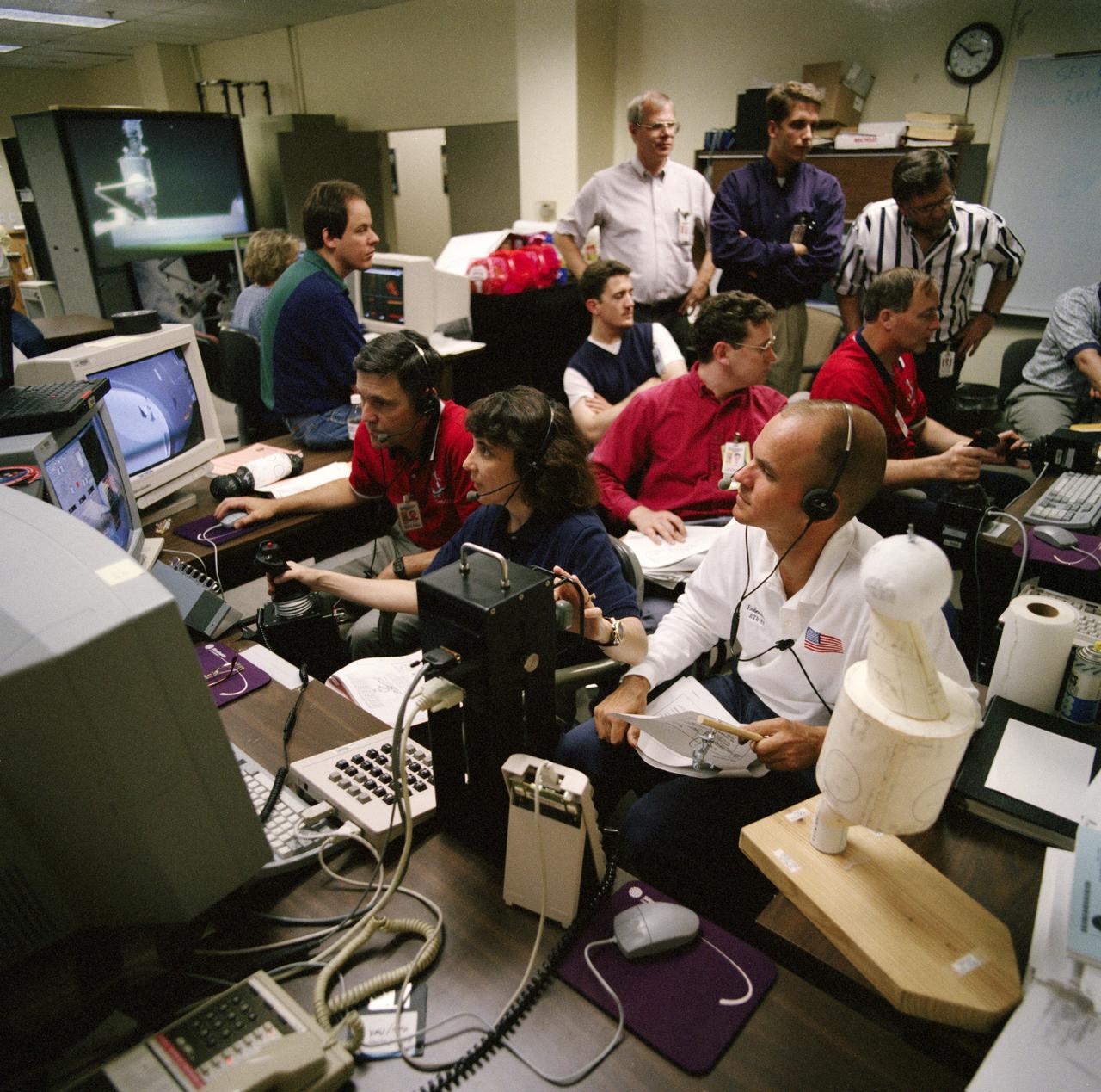
S98-05077 (8 Apr. 1998) --- With crew mates looking on, astronaut Nancy J. Currie, mission specialist, uses hardware in the virtual reality lab at the Johnson Space Center (JSC) to train for her duties aboard the Space Shuttle Endeavour. She is flanked by astronaut Robert Cabana (left), commander; and Frederick W. Sturckow (right), pilot. This type computer interface paired with virtual reality training hardware for the assigned space-walking astronauts -- Jerry L. Ross and James H. Newman -- helps to prepare the entire team for dealing with International Space Station (ISS) elements. One of those elements will be the Functional Cargo Block (FGB), which will have been launched a couple of weeks prior to STS-88. Once the FGB is captured using the Remote Manipulator System (RMS) of the Endeavour, Currie will maneuver the robot arm to dock the FGB to the conical mating adapter at the top of Node 1, to be carried in the Endeavour's cargo bay. In ensuing days, three Extravehicular Activity?s (EVA) by Ross and Newman will be performed to make power, data and utility connections between the two modules. Looking on is Scott A. Bleisath (behind Currie), with the EVA Systems Group at JSC.
STS-88 First Crew at SSP

STS-88 First Crew at SSP
STS-88 First Crew at SSP
STS-88 First Crew at SSP
STS-88 First Crew at SSP
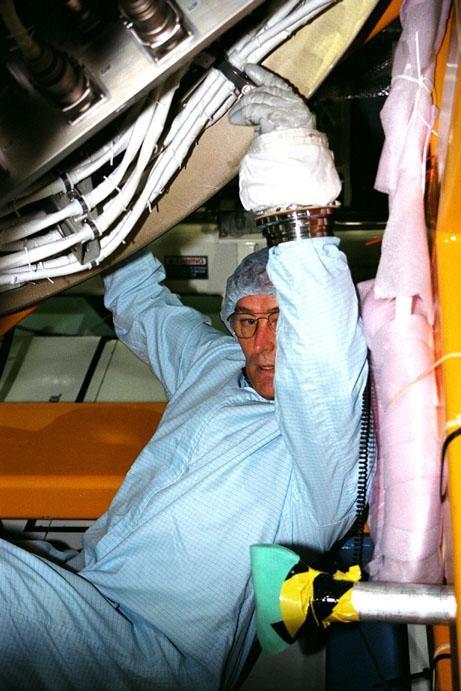
STS-88 First Crew at SSP
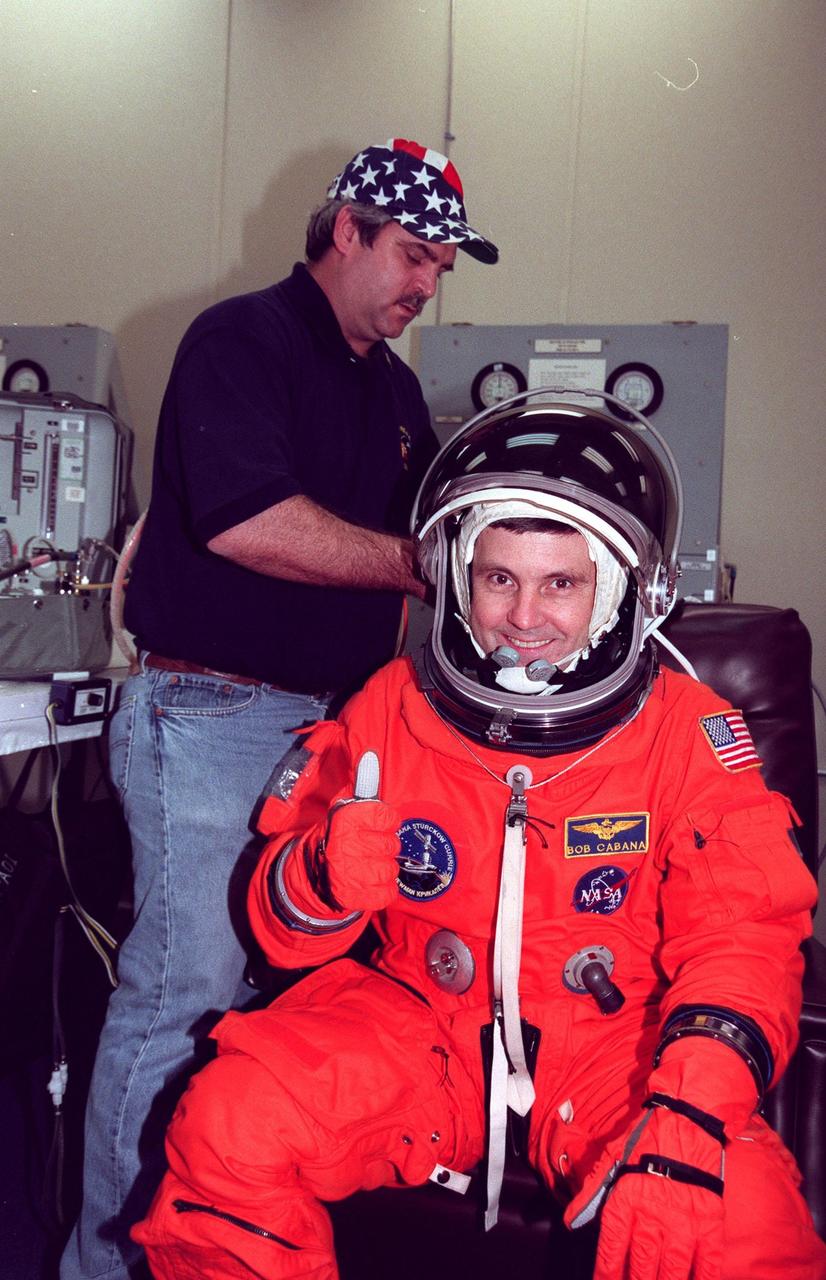
STS-88 Commander Robert D. Cabana gets assistance from a suit technician in donning his orange launch and entry suit in the Operations and Checkout Building. STS-88 will be Cabana’s fourth spaceflight. He and the five other STS-88 crew members will depart shortly for Launch Pad 39A where the Space Shuttle Endeavour is poised for liftoff on the first U.S. mission dedicated to the assembly of the International Space Station
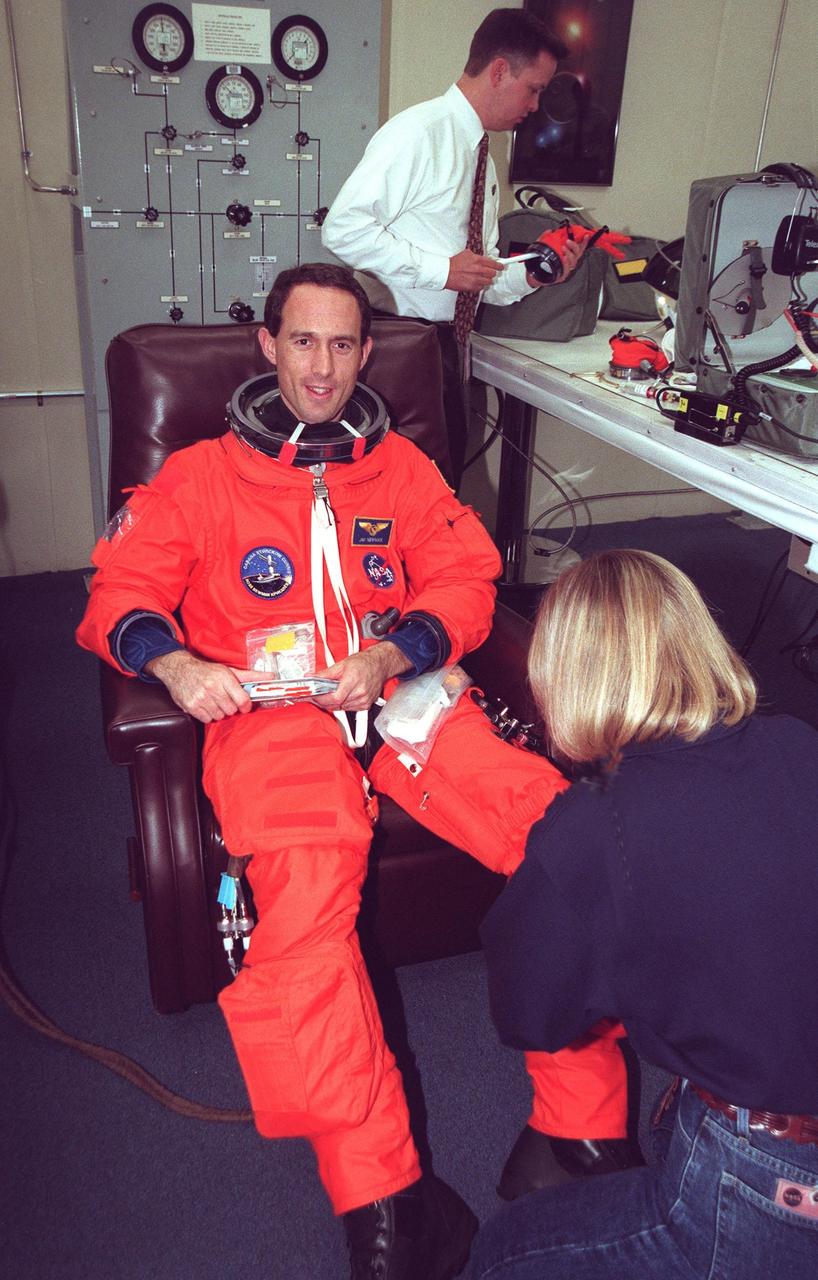
STS-88 Mission Specialist James H. Newman gets assistance from suit technician Terri McKinney while donning his orange launch and entry suit in the Operations and Checkout Building. STS-88 will be Newman’s third spaceflight. He also is scheduled to perform three spacewalks on the mission. He and the five other STS-88 crew members will depart shortly for Launch Pad 39A where the Space Shuttle Endeavour is poised for liftoff on the first U.S. mission dedicated to the assembly of the International Space Station
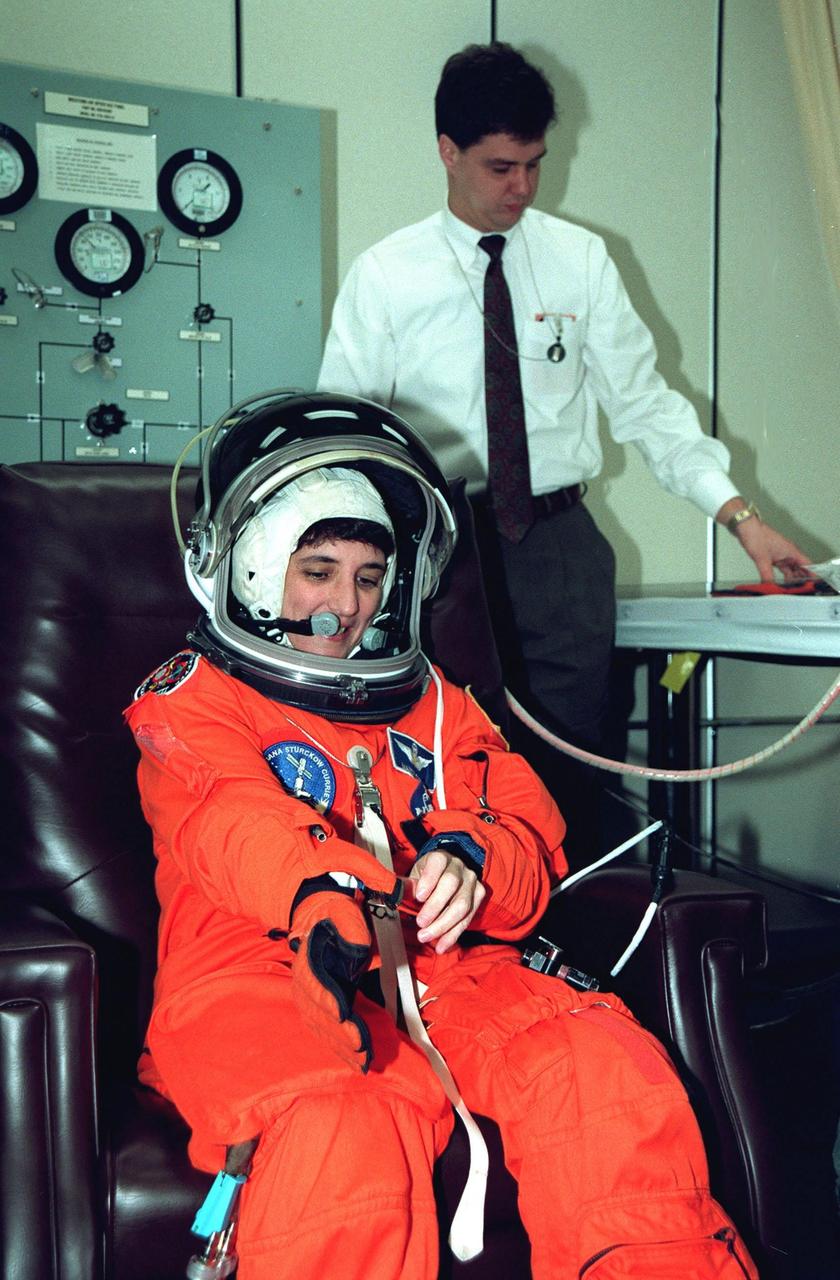
STS-88 Mission Specialist Nancy J. Currie dons her orange launch and entry suit in the Operations and Checkout Building. STS-88 will be Currie’s third spaceflight. She and the five other STS-88 crew members will depart shortly for Launch Pad 39A where the Space Shuttle Endeavour is poised for liftoff on the first U.S. mission dedicated to the assembly of the International Space Station
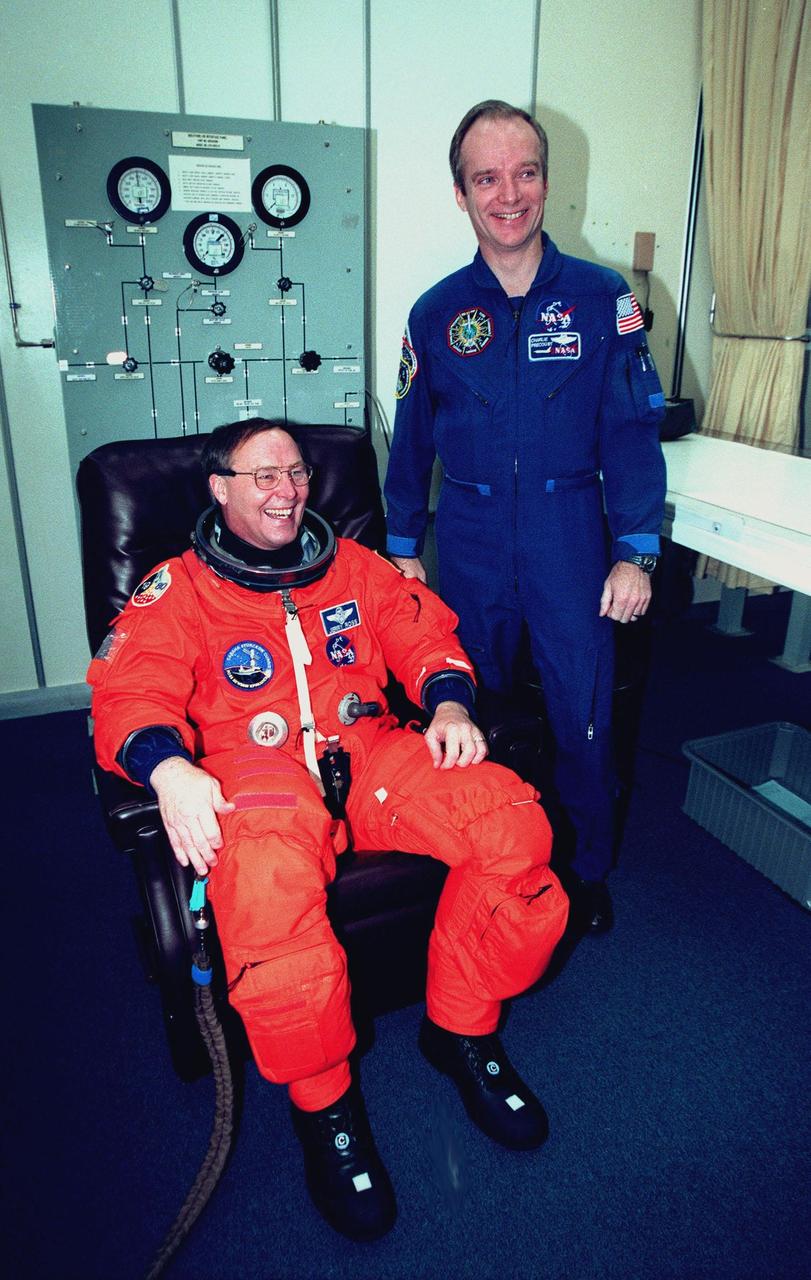
STS-88 Mission Specialist Jerry L. Ross (left) and astronaut Charles Precourt pose for a photo during suiting up activities in the Operations and Checkout Building. STS-88 will be the sixth spaceflight for Ross, who is scheduled to perform three spacewalks on the mission. He and the five other STS-88 crew members will depart shortly for Launch Pad 39A where the Space Shuttle Endeavour is poised for liftoff on the first U.S. mission dedicated to the assembly of the International Space Station
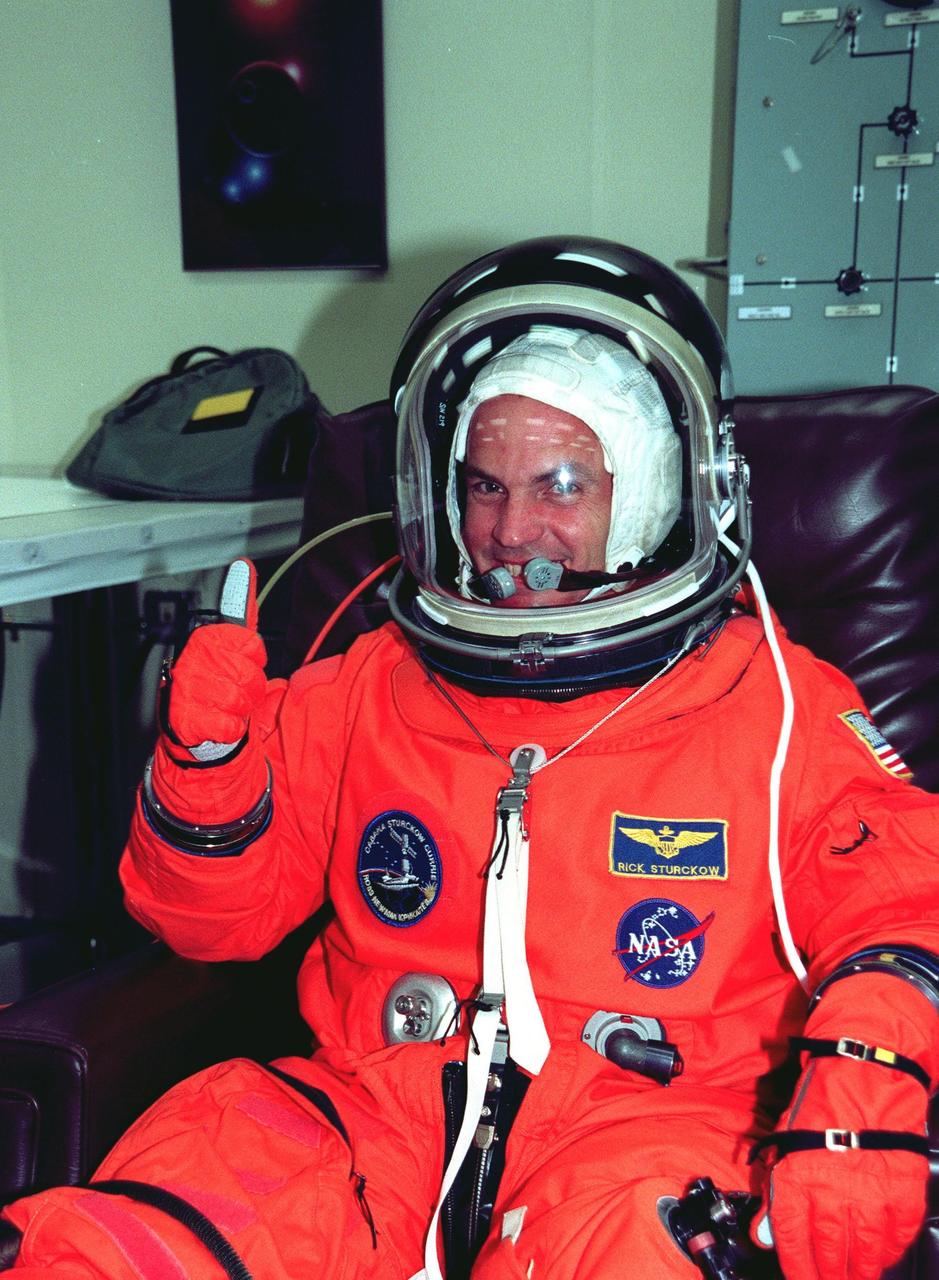
STS-88 Pilot Frederick W. "Rick" Sturckow gives a "thumbs up" after donning his orange launch and entry suit in the Operations and Checkout Building. STS-88 will be Sturckow’s first spaceflight. He and the five other STS-88 crew members will depart shortly for Launch Pad 39A where the Space Shuttle Endeavour is poised for liftoff on the first U.S. mission dedicated to the assembly of the International Space Station
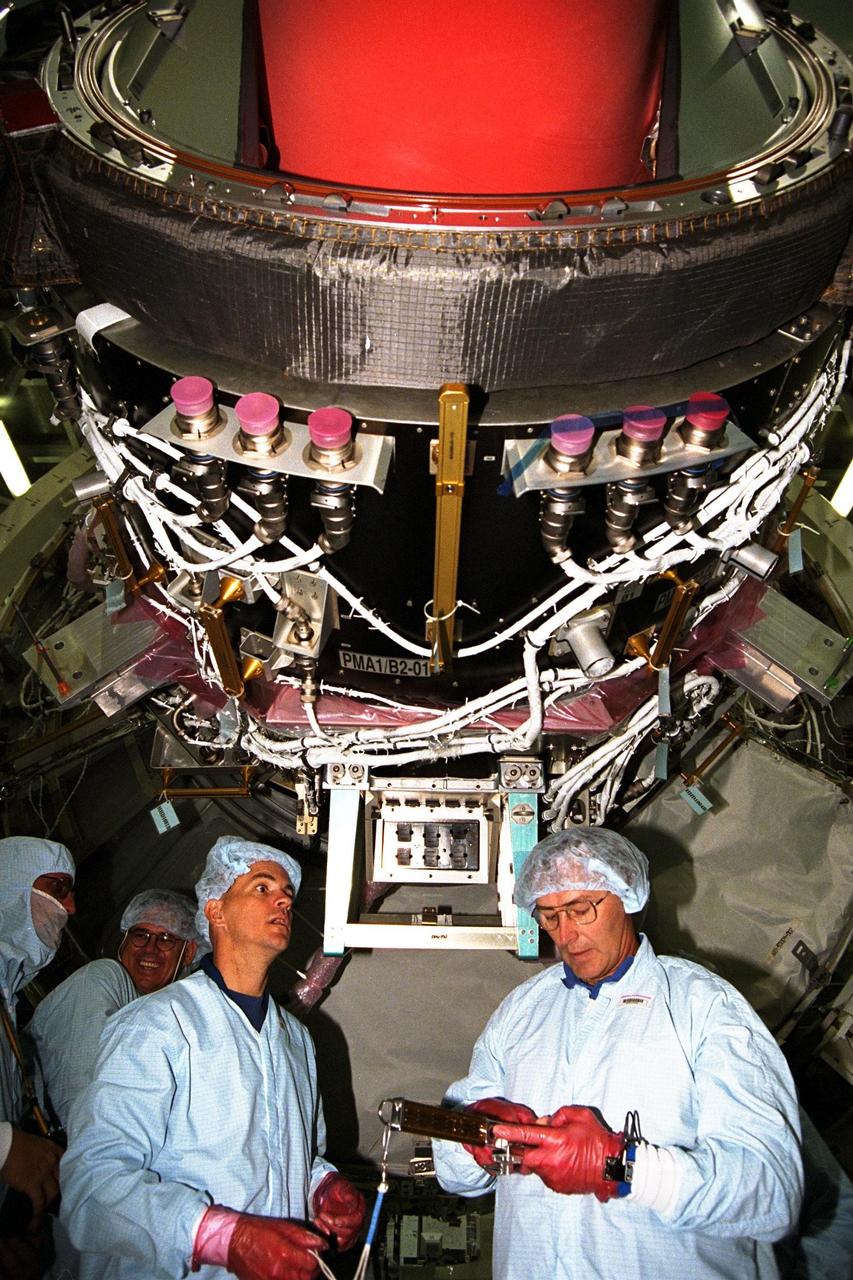
Pilot Rick Sturckow and Mission Specialist Jerry Ross, both members of the STS-88 crew, participate with technicians in the Crew Equipment Interface Test for that mission in KSC's Space Station Processing Facility. STS-88, the first International Space Station assembly flight, is targeted for launch in July 1998 aboard Space Shuttle Endeavour
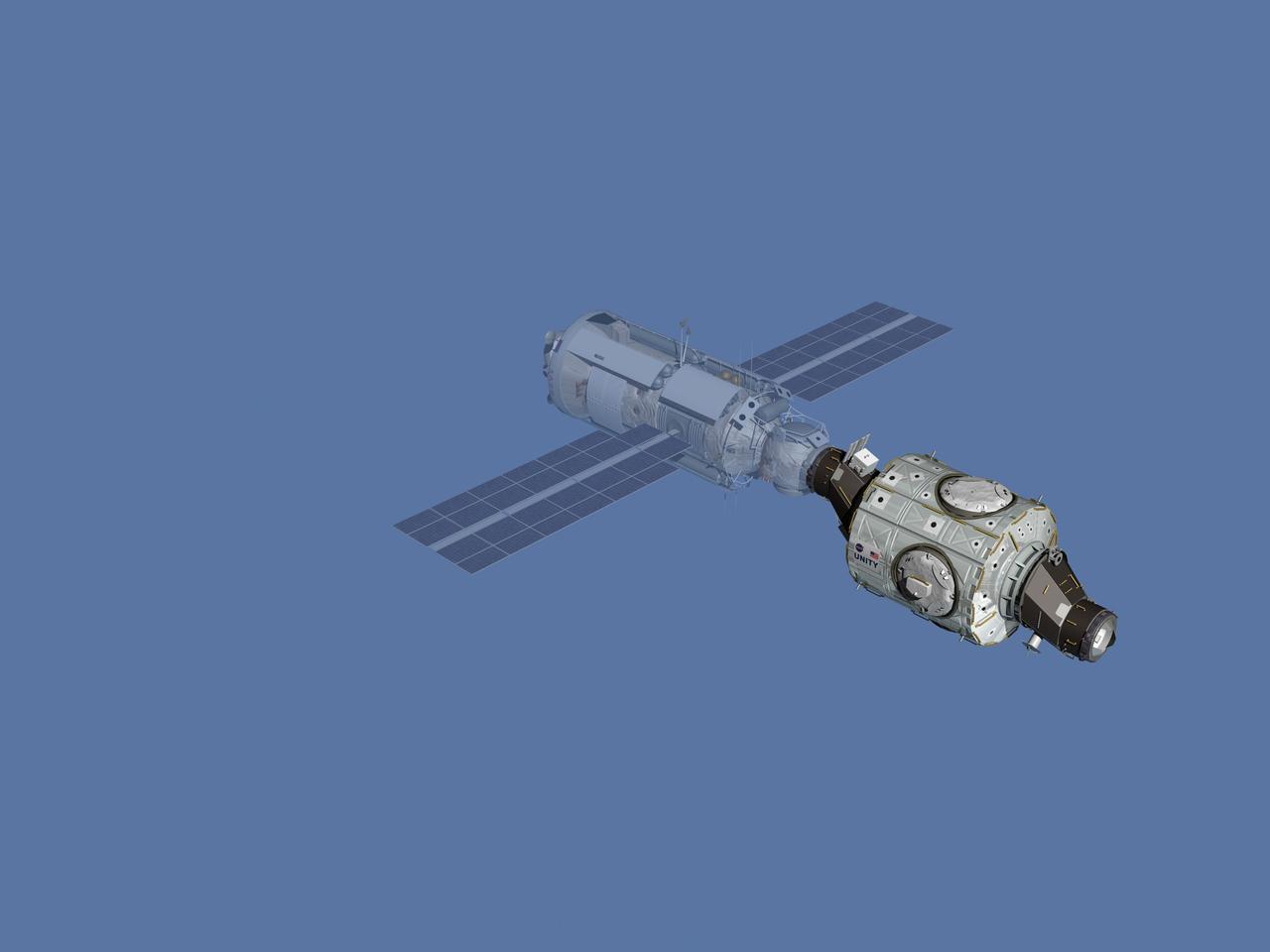
JSC2006-E-43477 (December 1998) --- Computer-generated artist's rendering of the International Space Station after flight STS-88/2A. Space Shuttle Endeavour delivered the Unity node with two pressurized mating adapters. The STS-88 crew captured Zarya and mated it with the Unity node.
KENNEDY SPACE CENTER, FLA. -- STS-88 First Crew at SSP
KENNEDY SPACE CENTER, FLA. -- STS-88 First Crew at SSP
KENNEDY SPACE CENTER, FLA. -- STS-88 First Crew at SSP
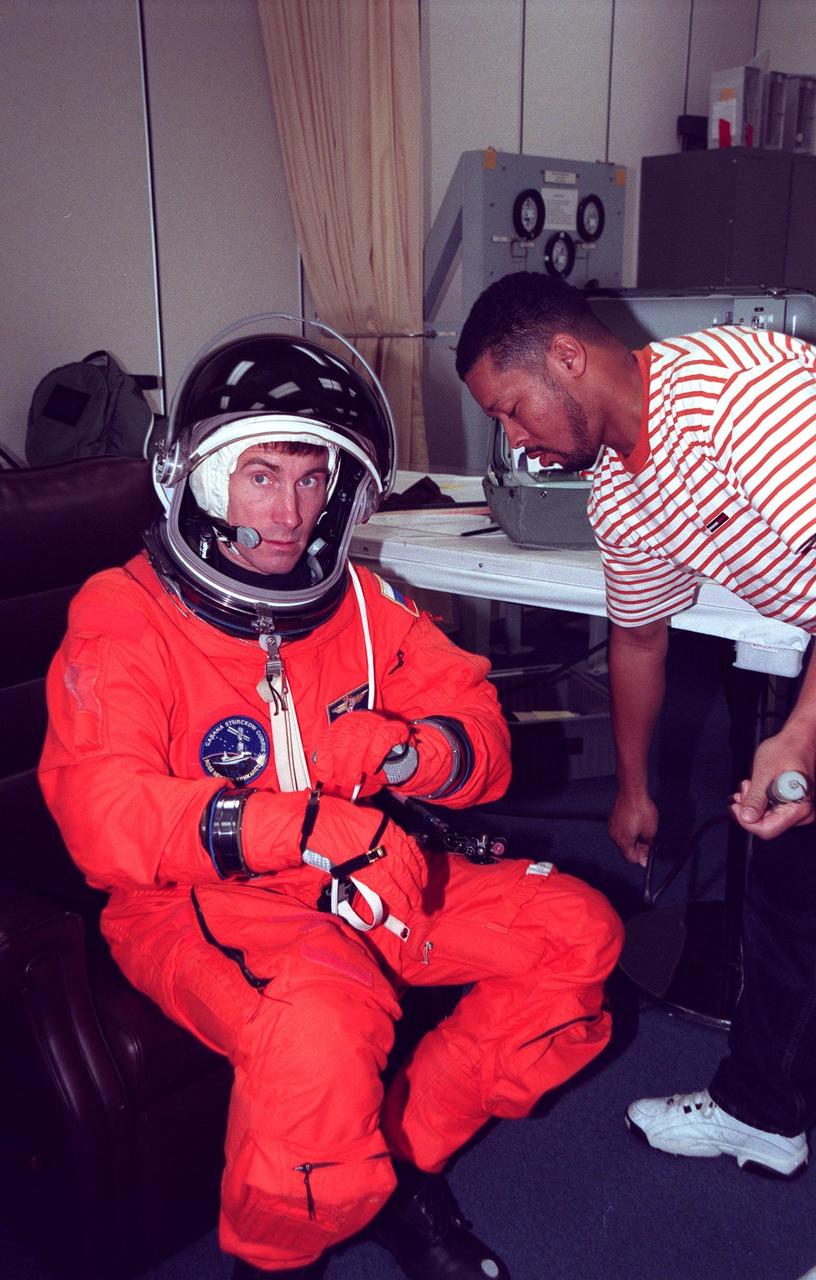
STS-88 Mission Specialist Sergei Konstantinovich Krikalev gets assistance from suit technician George Brittingham while donning his orange launch and entry suit in the Operations and Checkout Building. STS-88 will be Krikalev’s fourth spaceflight, but only his second on the Space Shuttle. He also twice flew on long-duration missions aboard the Russian Space Station Mir. Krikalev and the five other STS-88 crew members will depart shortly for Launch Pad 39A where the Space Shuttle Endeavour is poised for liftoff on the first U.S. mission dedicated to the assembly of the International Space Station
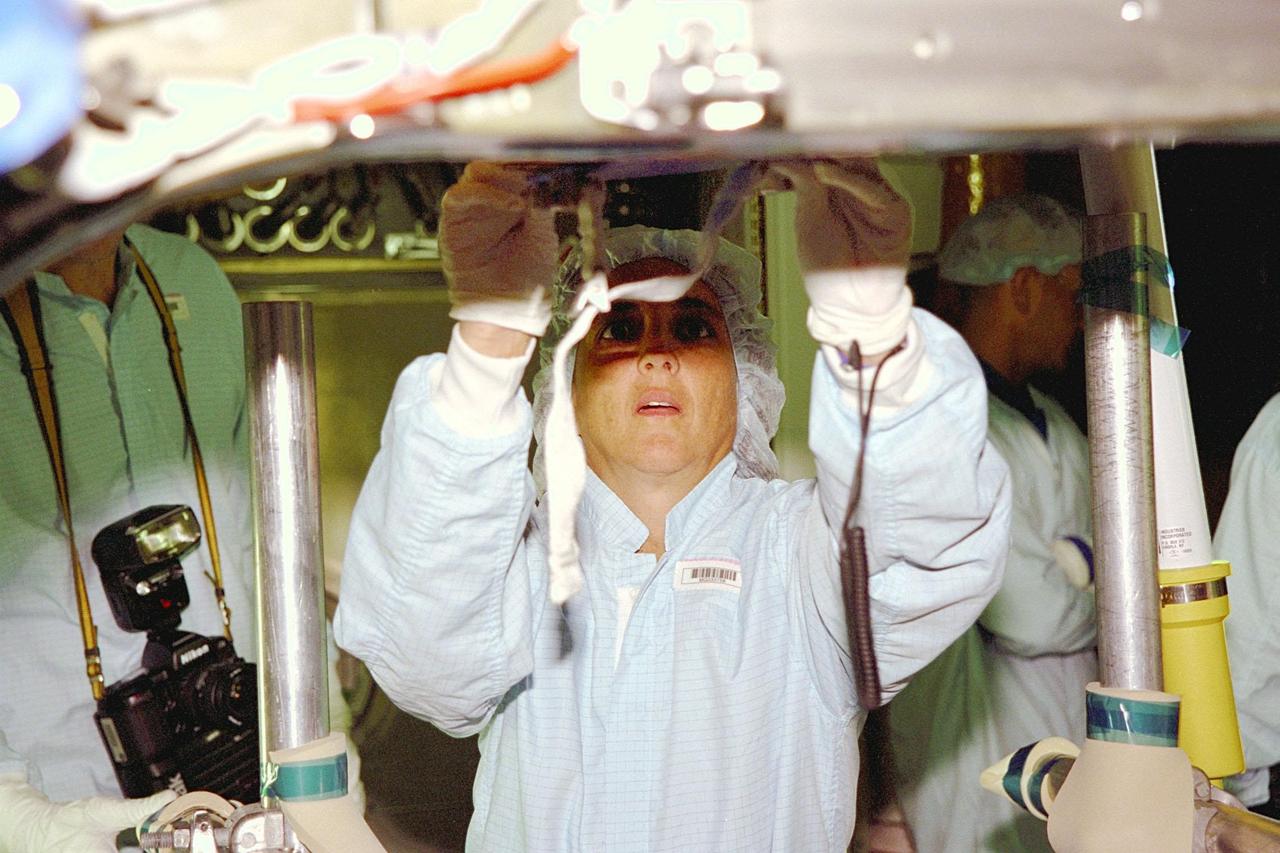
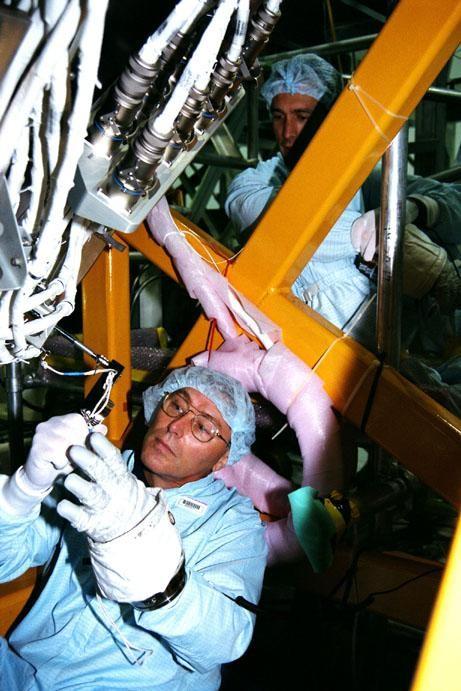
KENNEDY SPACE CENTER, FLA. -- STS-88 Mission Specialist Nancy J. Currie works on a foot restraint attached to the Unity connecting module, part of the International Space Station, in the Space Station Processing Facility at KSC. During the mission, the Unity connecting module will be mated to the Zarya control module, which will already be in orbit. The STS-88 crew is participating in a Crew Equipment Interface Test, which gives astronauts an opportunity for a hands-on look at the payloads on which they will be working while on orbit. STS-88 will be the first Space Shuttle launch for the International Space Station. Launch is scheduled for December 1998
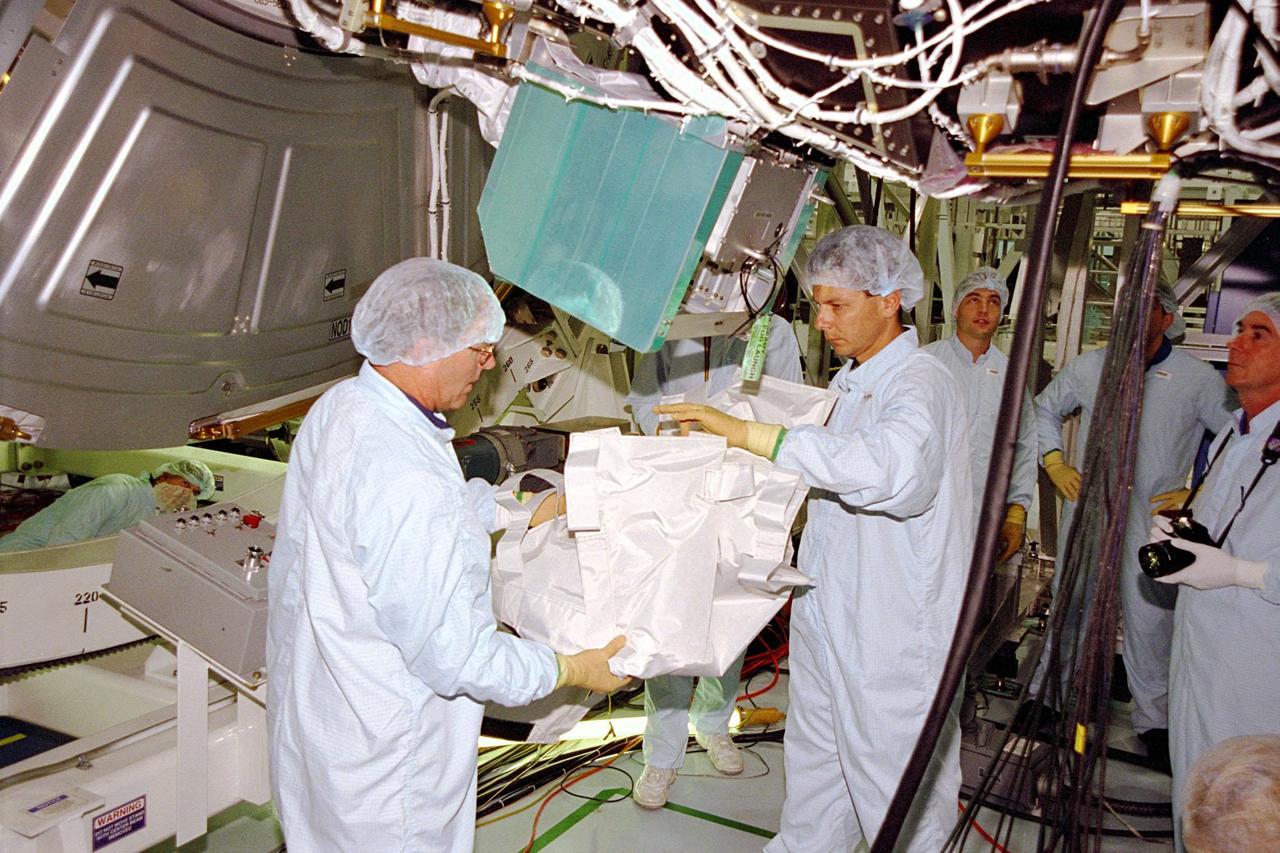
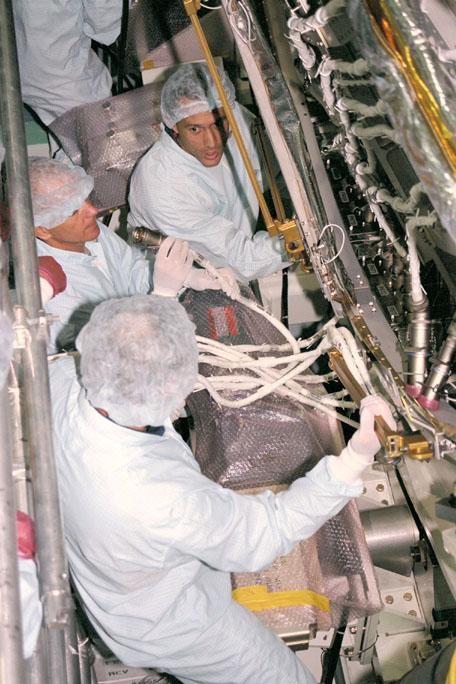
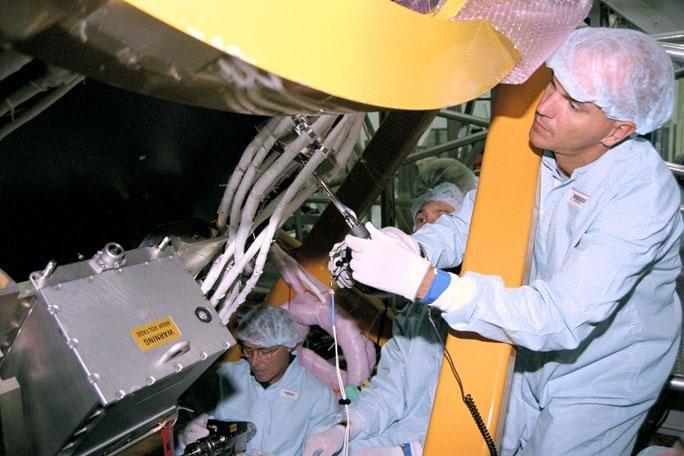
KENNEDY SPACE CENTER, FLA. -- STS-88 Mission Specialist Jerry L. Ross removes a cover from the Unity connecting module, part of the International Space Station, while other crew members and technicians watch. The Unity will be mated to the Zarya control module, which will already be in orbit. The STS-88 crew is participating in the Crew Equipment Interface Test (CEIT) held in the Space Station Processing Facility. The CEIT gives astronauts an opportunity for a hands-on look at the payloads on which they will be working while on orbit. STS-88 will be the first Space Shuttle launch for the International Space Station. Launch is scheduled for December 1998
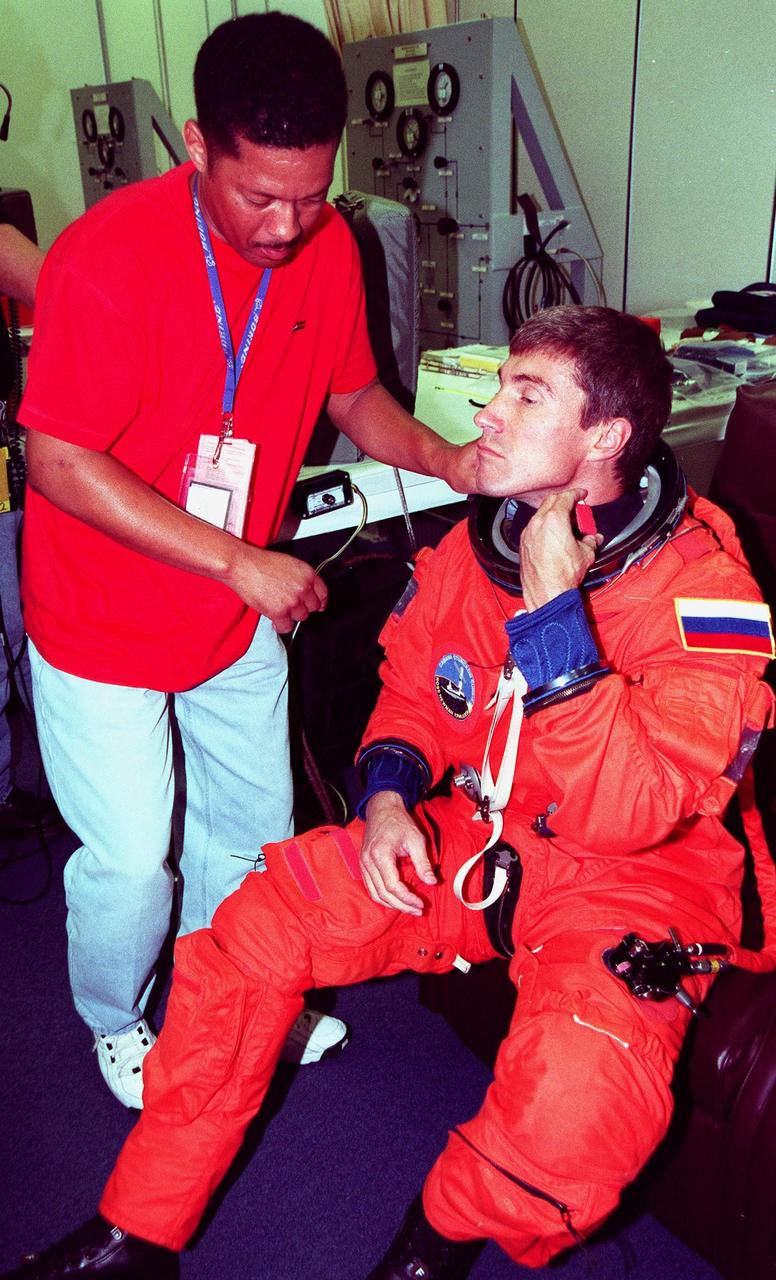
STS-88 Mission Specialist Sergei Konstantinovich Krikalev, a Russian cosmonaut, suits up in the Operations and Checkout Building, as part of a flight crew equipment fit check, prior to his trip to Launch Pad 39A. He is helped by suit tech George Brittingham. The STS-88 crew is at KSC to participate in the Terminal Countdown Demonstration Test (TCDT) which includes mission familiarization activities, emergency egress training, and a simulated launch countdown. This is Krikalev's second flight on the Space Shuttle. Mission STS-88 is targeted for launch on Dec. 3, 1998. It is the first U.S. flight for the assembly of the International Space Station and will carry the Unity connecting module
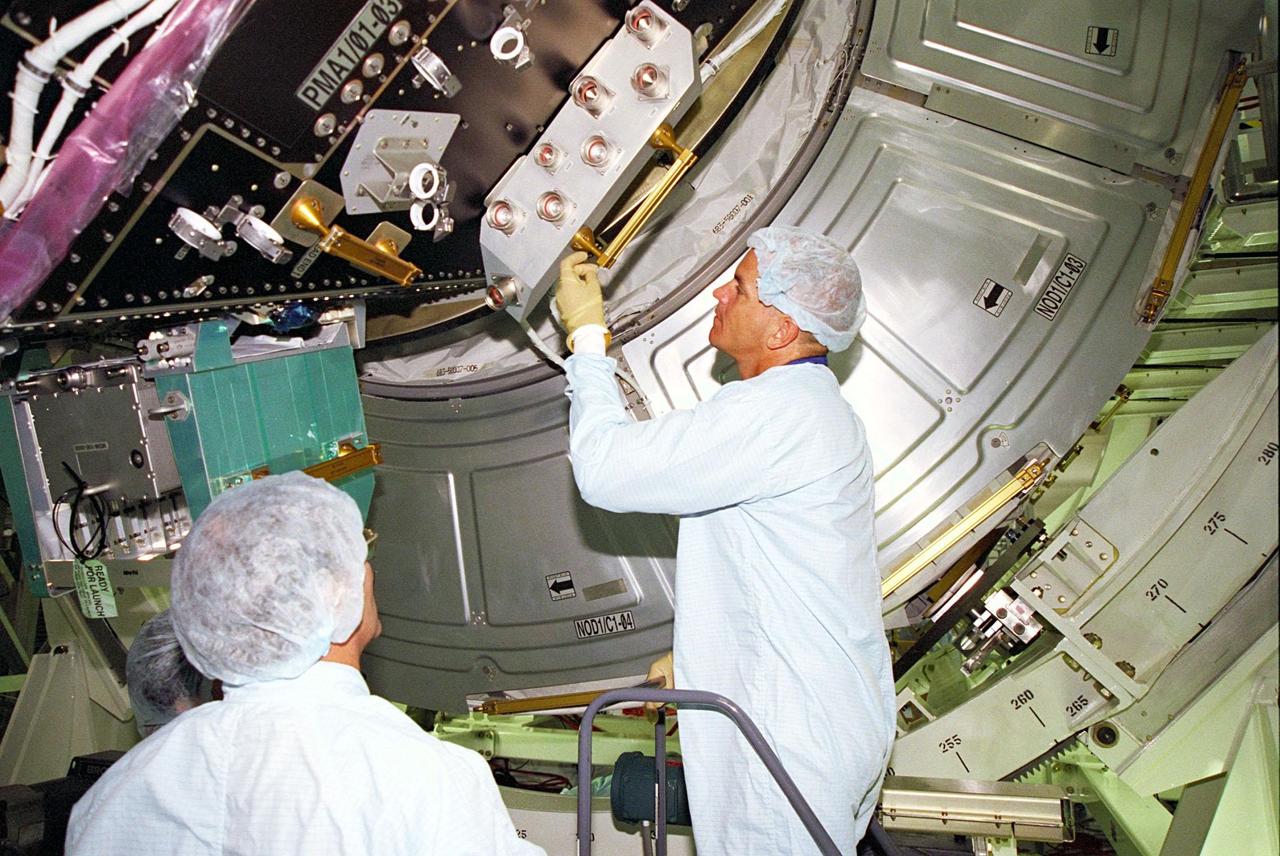
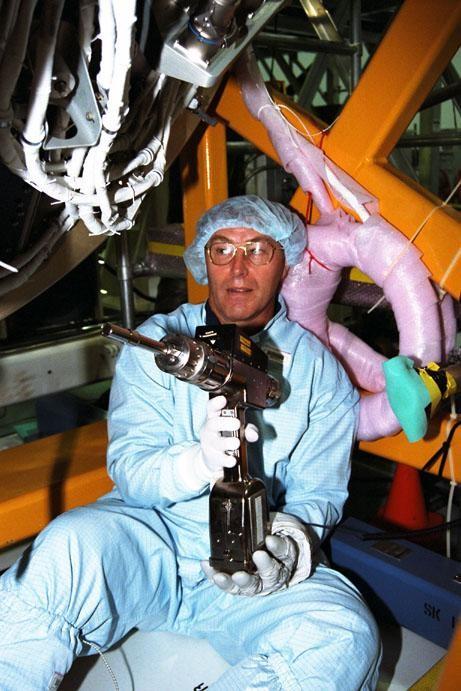
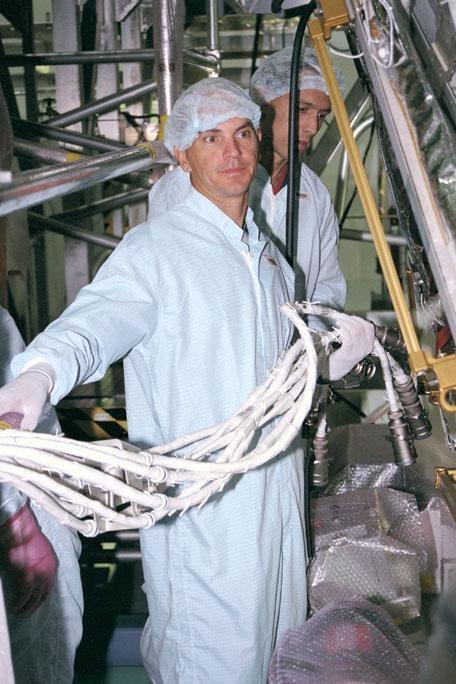
KENNEDY SPACE CENTER, FLA. -- STS-88 Pilot Rick W. Sturckow inspects equipment on the Unity connecting module, part of the International Space Station, in the Space Station Processing Facility at KSC. During the mission, the Unity connecting module will be mated to the Zarya control module, which will already be in orbit. The STS-88 crew is participating in a Crew Equipment Interface Test, which gives astronauts an opportunity for a hands-on look at the payloads on which they will be working while on orbit. STS-88 will be the first Space Shuttle launch for the International Space Station. Launch is scheduled for December 1998
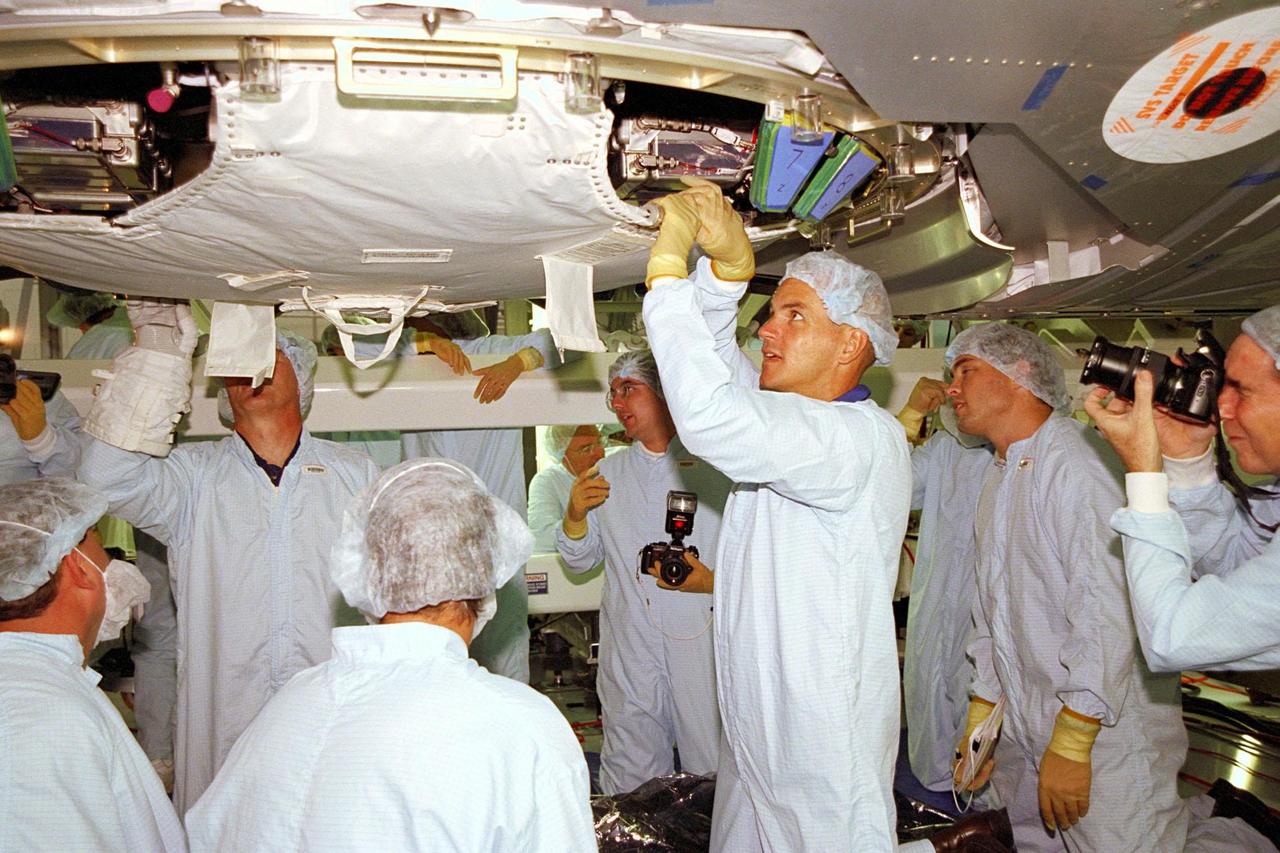
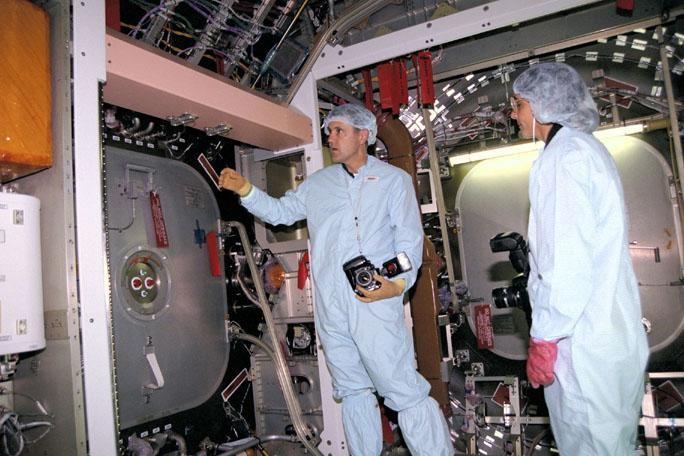
KENNEDY SPACE CENTER, FLA. -- STS-88 crew members and technicians watch as Pilot Rick W. Sturckow inspects equipment on the Unity connecting module, part of the International Space Station, in the Space Station Processing Facility at KSC. During the mission, the Unity connecting module will be mated to the Zarya control module, which will already be in orbit. The STS-88 crew is participating in a Crew Equipment Interface Test, which gives astronauts an opportunity for a hands-on look at the payloads on which they will be working while on orbit. STS-88 will be the first Space Shuttle launch for the International Space Station. Launch is scheduled for December 1998
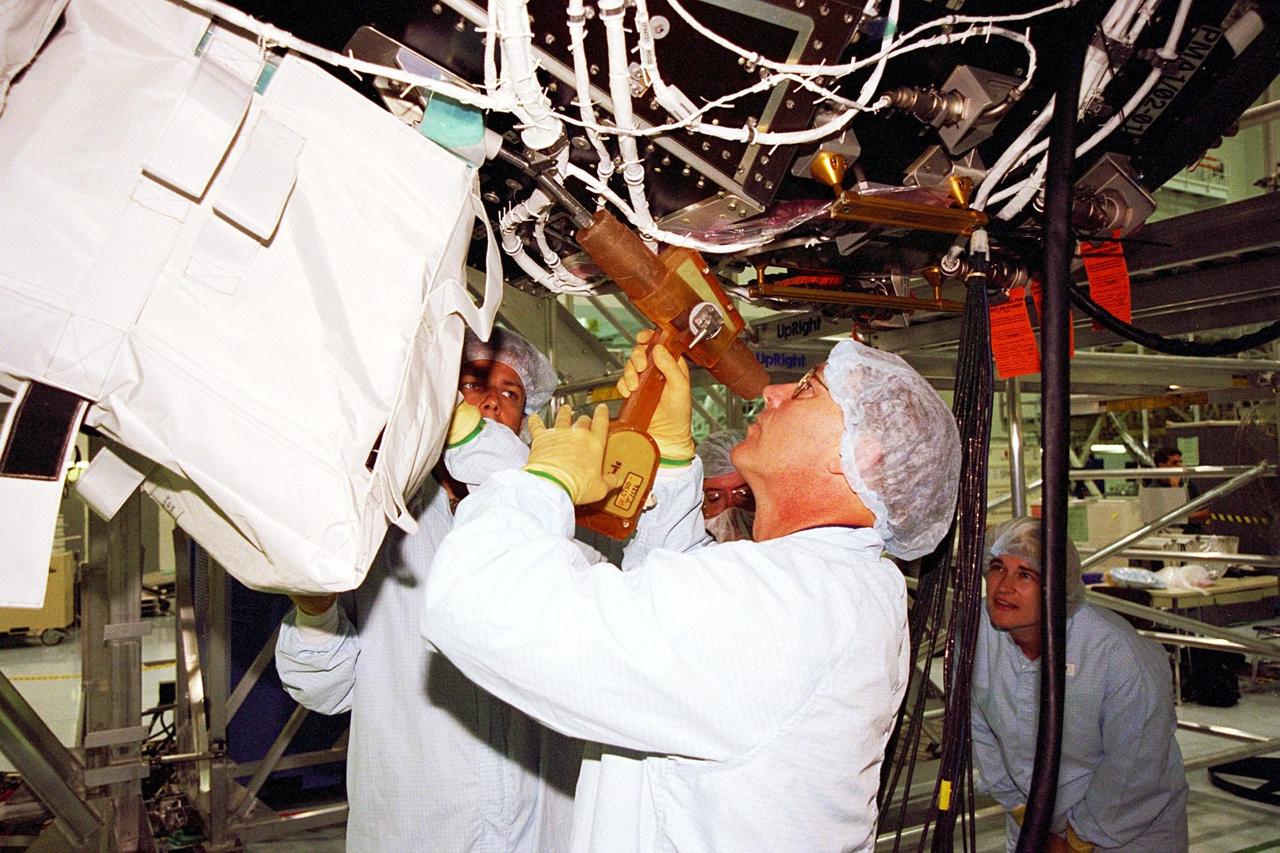
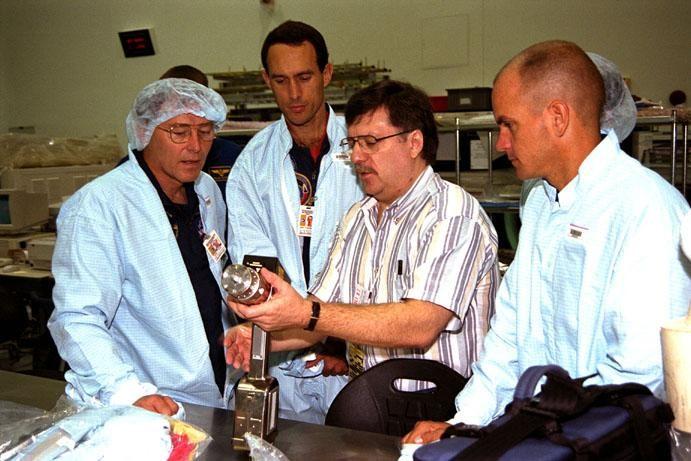
KENNEDY SPACE CENTER, FLA. -- STS-88 Mission Specialist Jerry L. Ross (center) removes the cover from the Unity connecting module, part of the International Space Station, so that he and Boeing Technician Doug Adams (left) can inspect it. Training Technician Glenda Laws (right) watches the procedure. The STS-88 crew is participating in the Crew Equipment Interface Test (CEIT) held in the Space Station Processing Facility. The CEIT gives astronauts an opportunity for a hands-on look at the payloads on which they will be working while on orbit. STS-88 will be the first Space Shuttle launch for the International Space Station. Launch is scheduled for December 1998
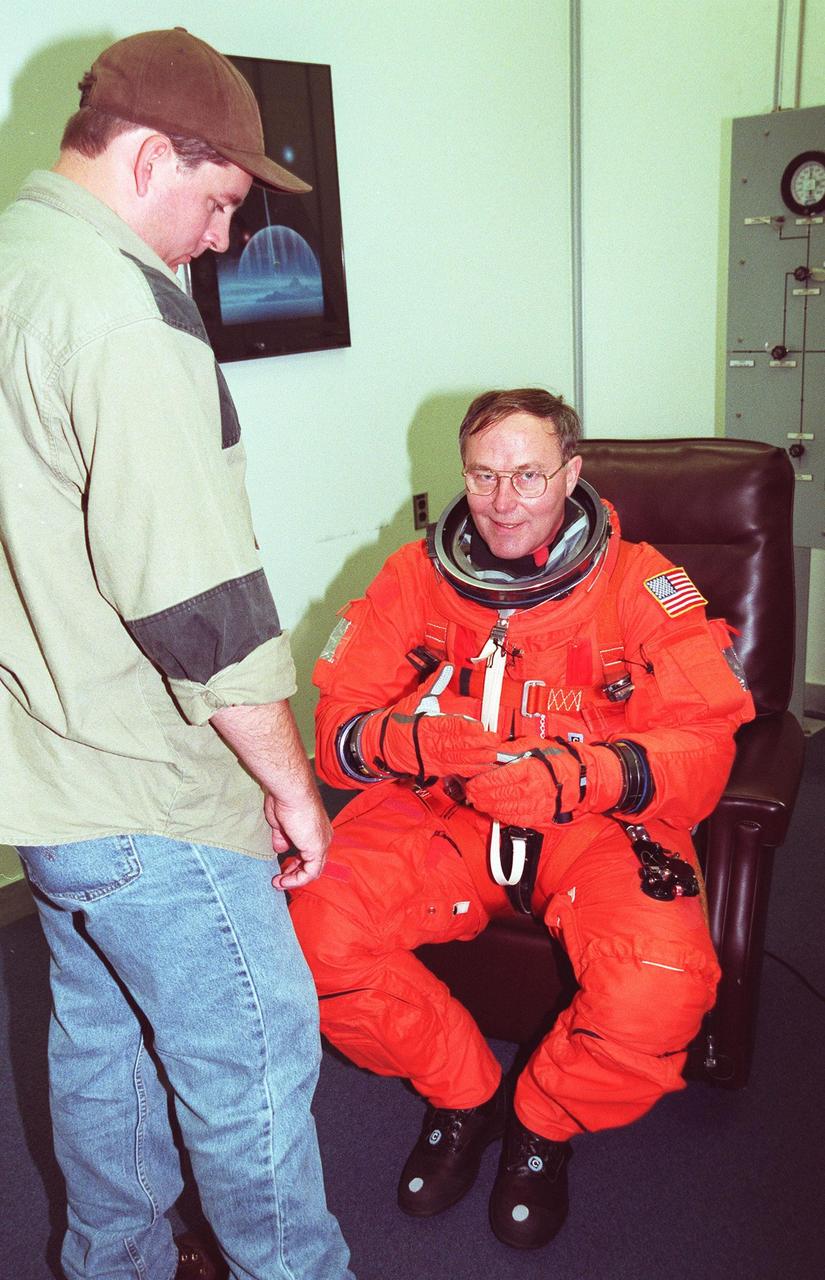
STS-88 Mission Specialist Jerry L. Ross (right) suits up in the Operations and Checkout Building, as part of a flight crew equipment fit check, prior to his trip to Launch Pad 39A. He is helped by suit tech Leonard Groce II. The STS-88 crew is at KSC to participate in the Terminal Countdown Demonstration Test (TCDT) which includes mission familiarization activities, emergency egress training, and a simulated launch countdown. This is Ross' sixth space flight. Mission STS-88 is targeted for launch on Dec. 3, 1998. It is the first U.S. flight for the assembly of the International Space Station and will carry the Unity connecting module
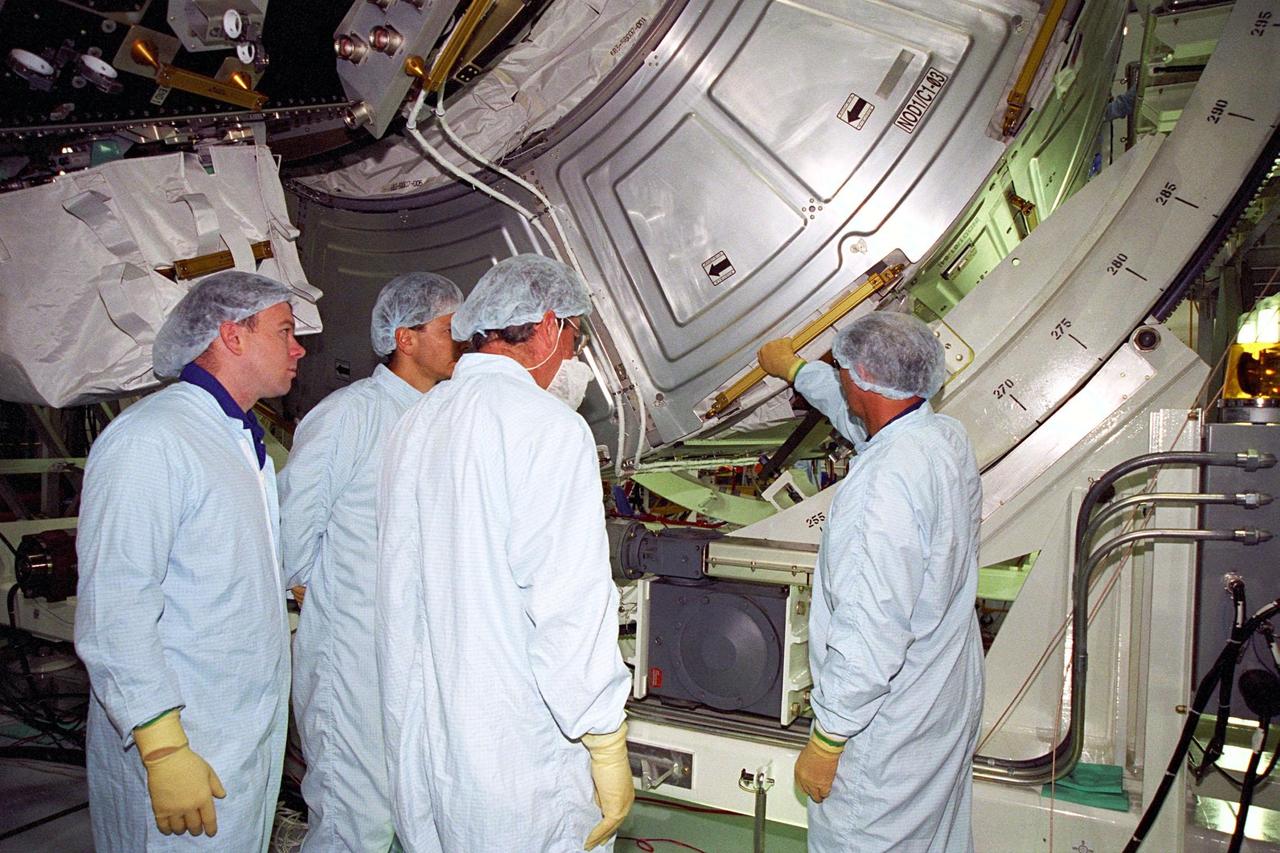
Astronauts Scott J. Kelly and Piers J. Sellers join STS-88 Mission Specialist Jerry L. Ross and a Boeing technician in inspecting the Unity connecting module, part of the International Space Station, at the Space Station Processing Facility at KSC. The Unity connecting module will be mated to the Zarya control module, which will already be in orbit. The STS-88 crew is participating in a Crew Equipment Interface Test (CEIT), which gives astronauts an opportunity for a hands-on look at the payloads on which they will be working while on orbit. STS-88 will be the first Space Shuttle launch for the International Space Station. Launch is scheduled for December 1998
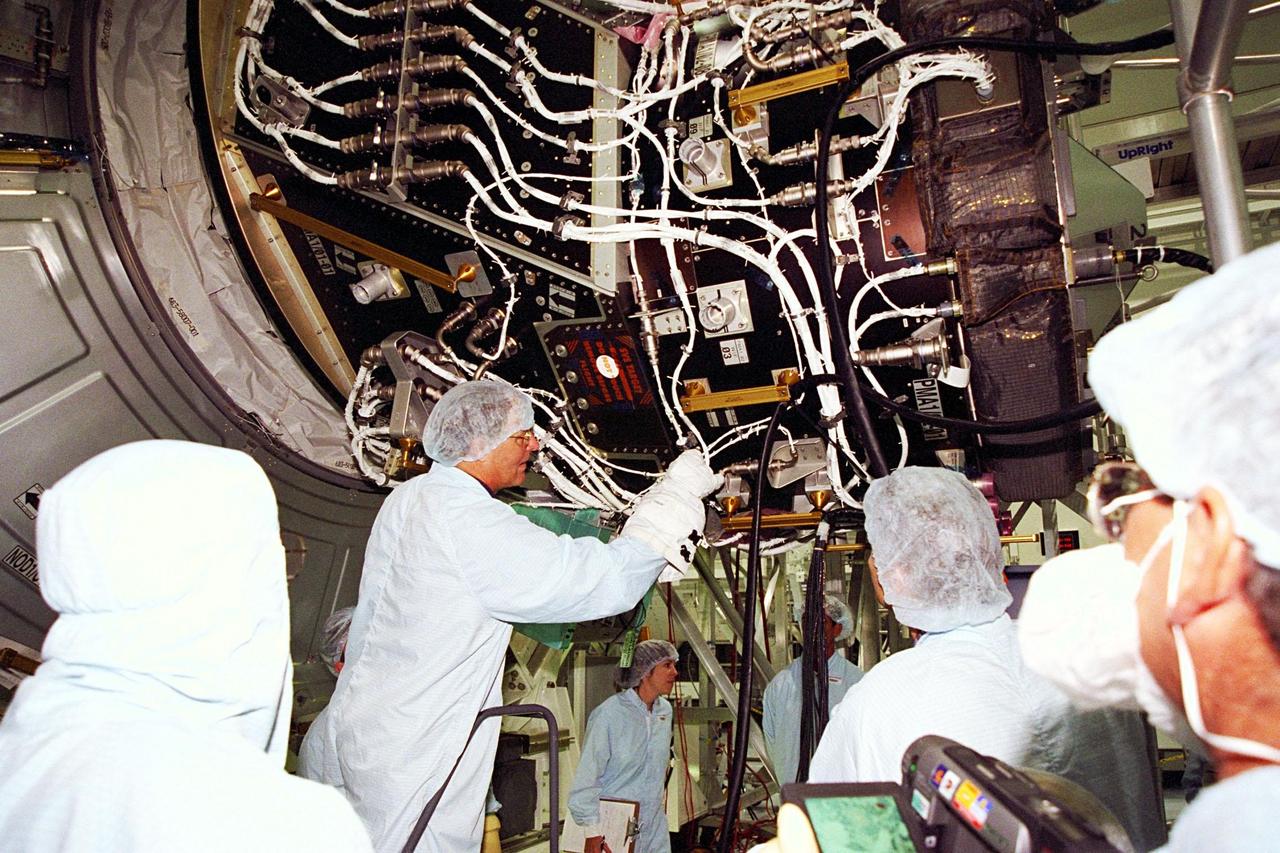
KENNEDY SPACE CENTER, FLA. -- Members of the STS-88 crew watch as Mission Specialist Jerry L. Ross inspects the Unity connecting module, part of the International Space Station, in the Space Station Processing Facility at KSC. During the mission, the Unity connecting module will be mated to the Zarya control module, which will already be in orbit. The STS-88 crew is participating in a Crew Equipment Interface Test, which gives astronauts an opportunity for a hands-on look at the payloads on which they will be working while on orbit. STS-88 will be the first Space Shuttle launch for the International Space Station. Launch is scheduled for December 1998
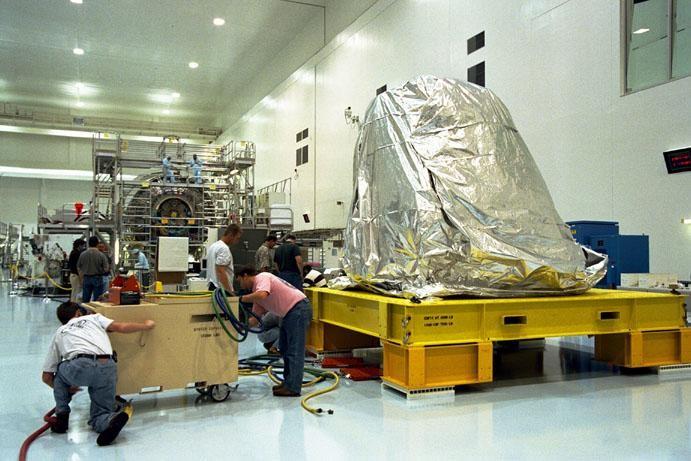
KENNEDY SPACE CENTER, FLA. -- PMA-2 is being moved from the airlock into the high bay. It is the payload on mission STS-88.
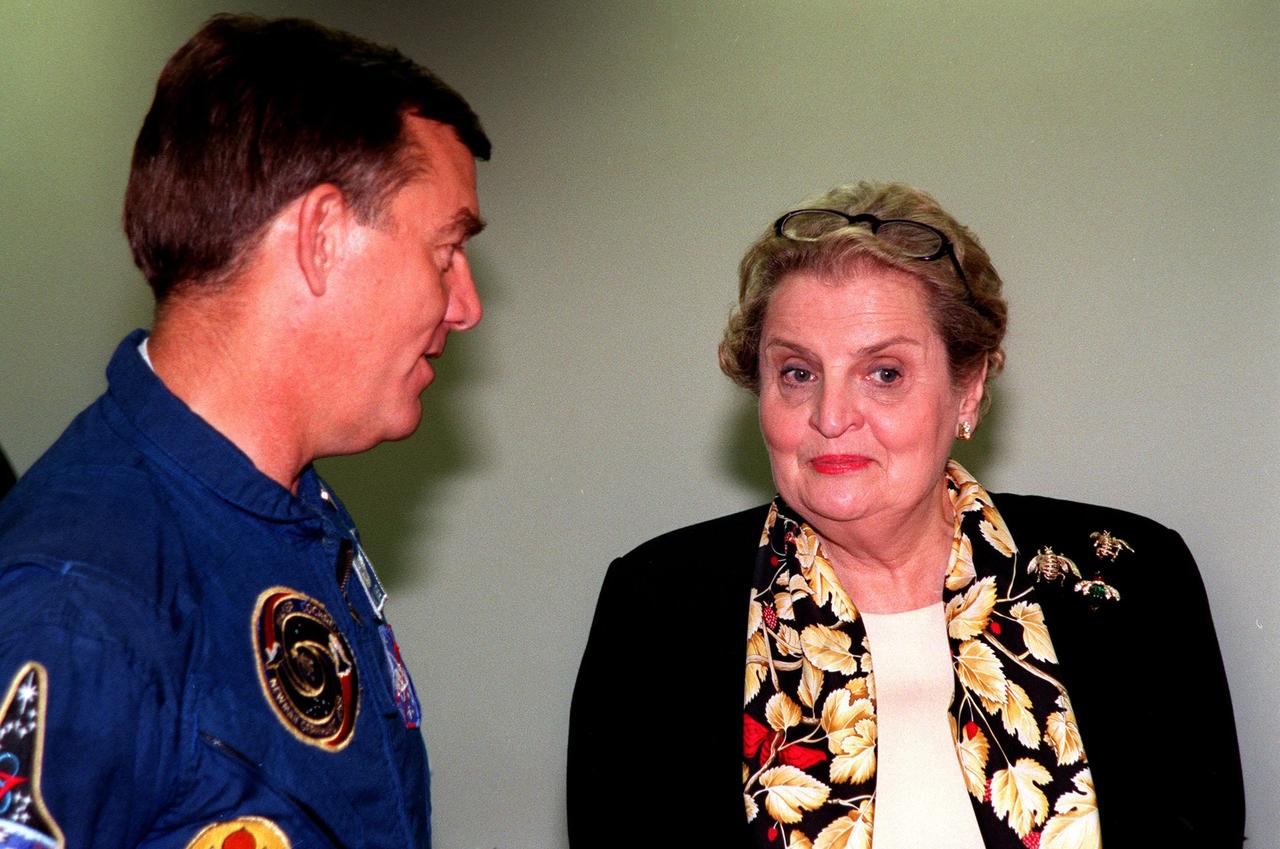
U.S. Secretary of State Madeleine Albright (right) talks with astronaut Jim Voss following the successful launch of Endeavour on Mission STS-88 from Launch Pad 39A at 3:35:34 a.m. EST. STS-88 is the first U.S. mission dedicated to the assembly of the International Space Station (ISS). Voss is a member of the STS-100 crew, the eighth ISS assembly team
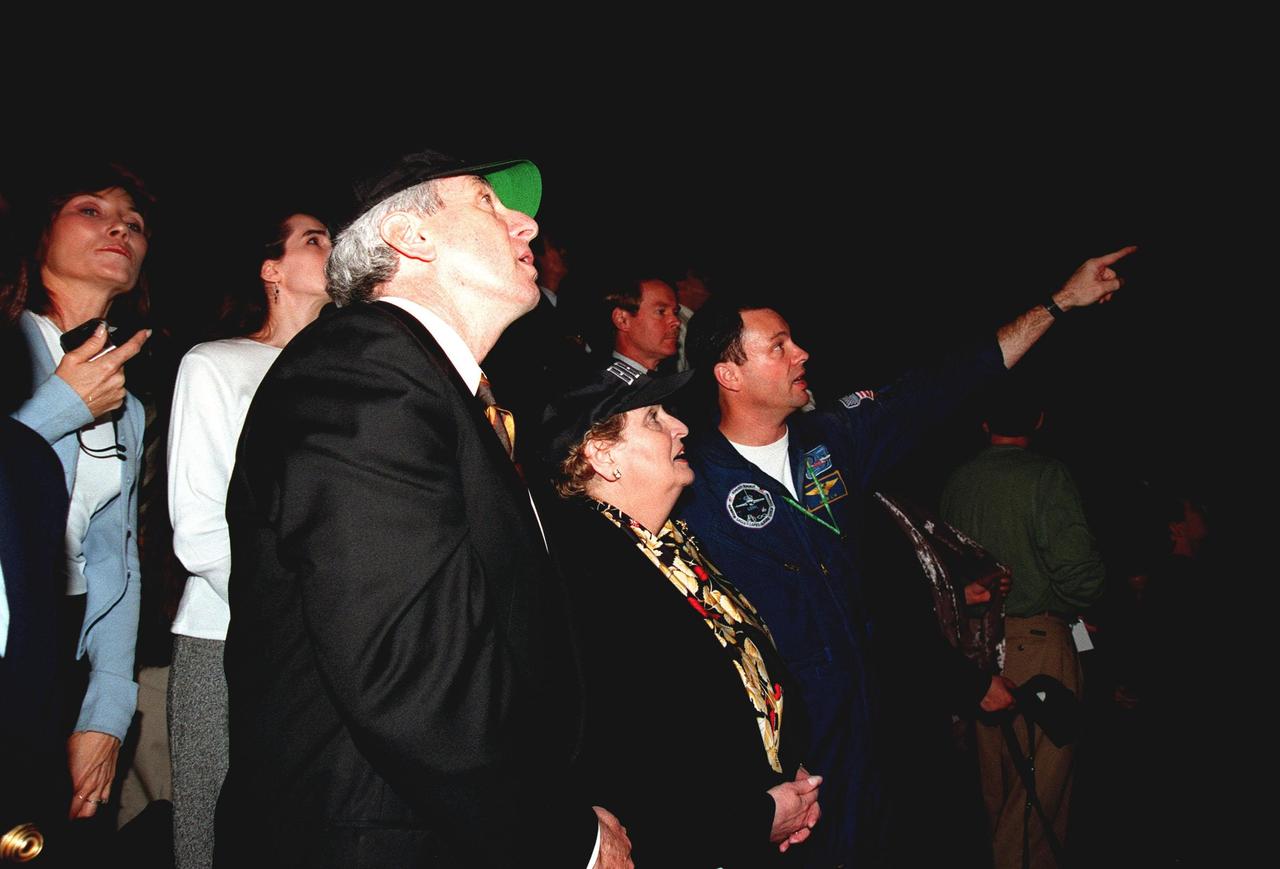
At the Banana Creek Viewing Site, NASA Administrator Daniel Goldin (left), U.S. Secretary of State Madeleine Albright (center) and astronaut Michael Lopez-Alegria watch the launch of STS-88 from Launch Pad 39A at 3:35:34 a.m. EST. STS-88 is the first U.S. mission dedicated to the assembly of the International Space Station (ISS). Lopez-Alegria is part of the STS-92 crew that is assigned to the fourth ISS assembly flight scheduled for launch on Oct. 28, 1999, aboard Discovery
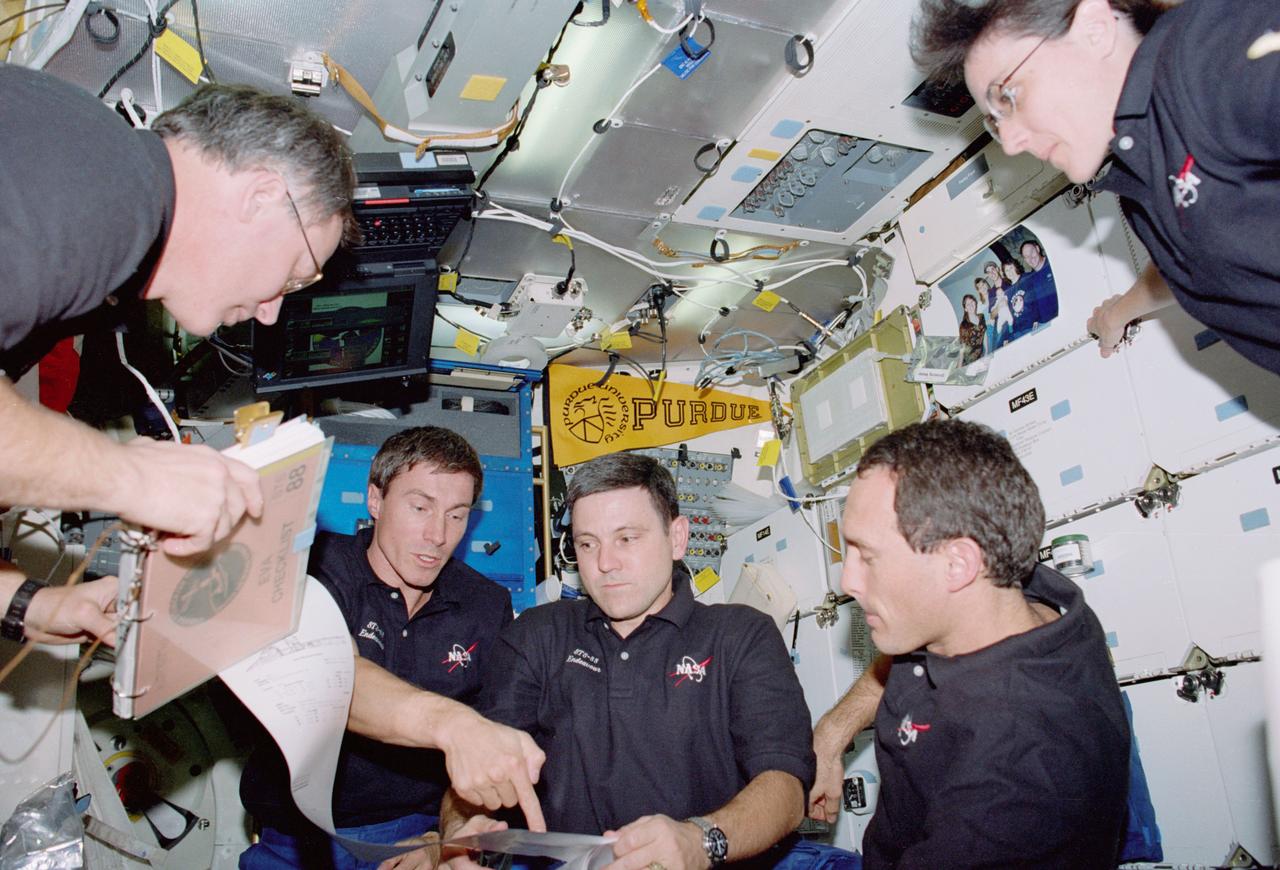
STS088-319-019 (4 - 15 DECEMBER 1998) --- A planning session on Endeavour's middeck includes all but one of the crew members. From the left are astronaut Jerry L. Ross, cosmonaut Sergei K. Krikalev, and astronauts Robert D. Cabana, James H. Newman and Nancy J. Currie. Missing from the scene is astronaut Frederick W. (Rick) Sturckow, who took the photo.
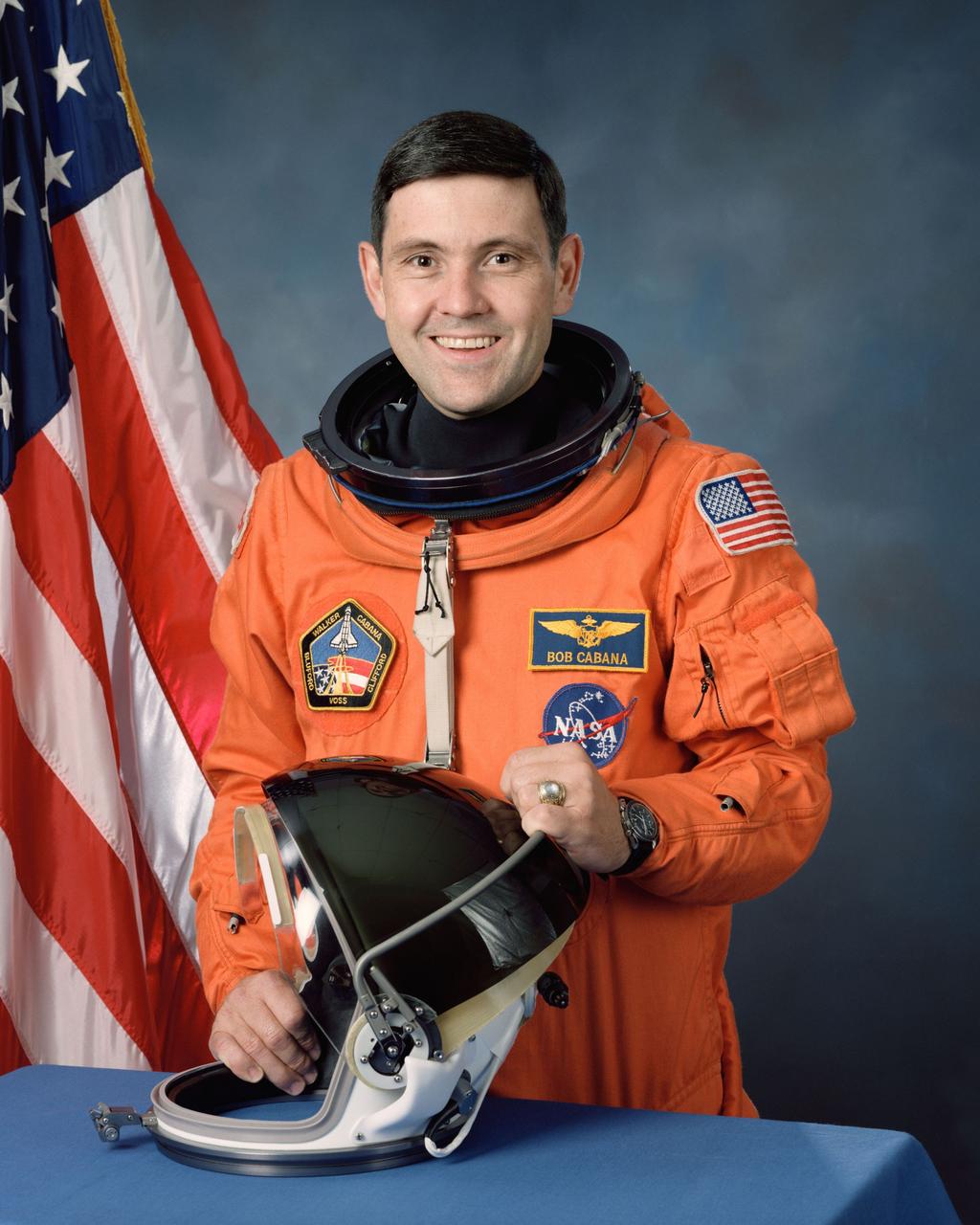
CAPE CANAVERAL, Fla. - Astronaut Robert Cabana, STS-88 mission commander. For more information, visit http://www.nasa.gov. Photo credit: NASA
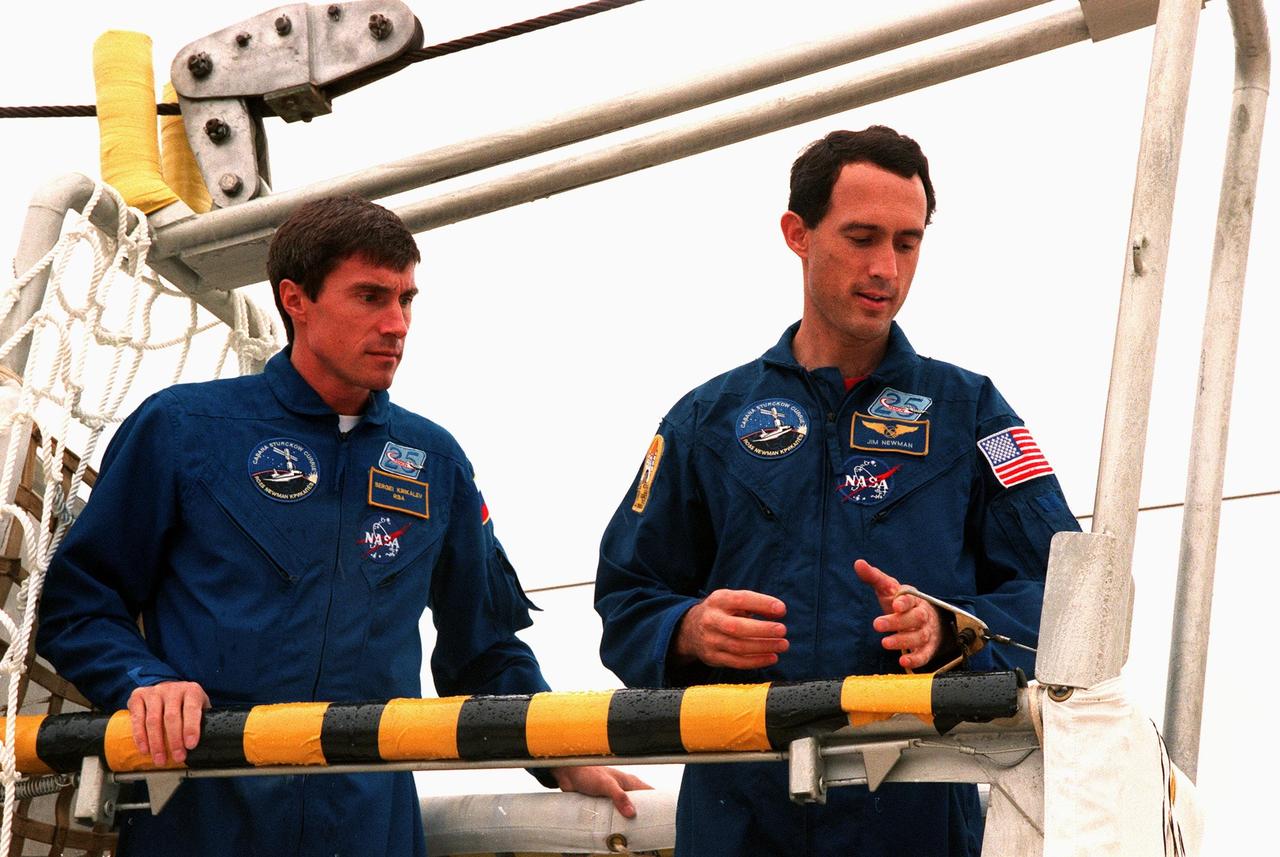
KENNEDY SPACE CENTER, Fla. -- STS-88 Mission Specialists Sergei Krikalev and James H. Newman practice emergency egress procedures in a slidewire basket at Launch Pad 39A as part of Terminal Countdown Demonstration Test (TCDT) activities, a dress rehearsal for launch. Mission STS-88 is targeted for launch on Dec. 3, 1998. It is the first U.S. flight for the assembly of the International Space Station and will carry the Unity connecting module
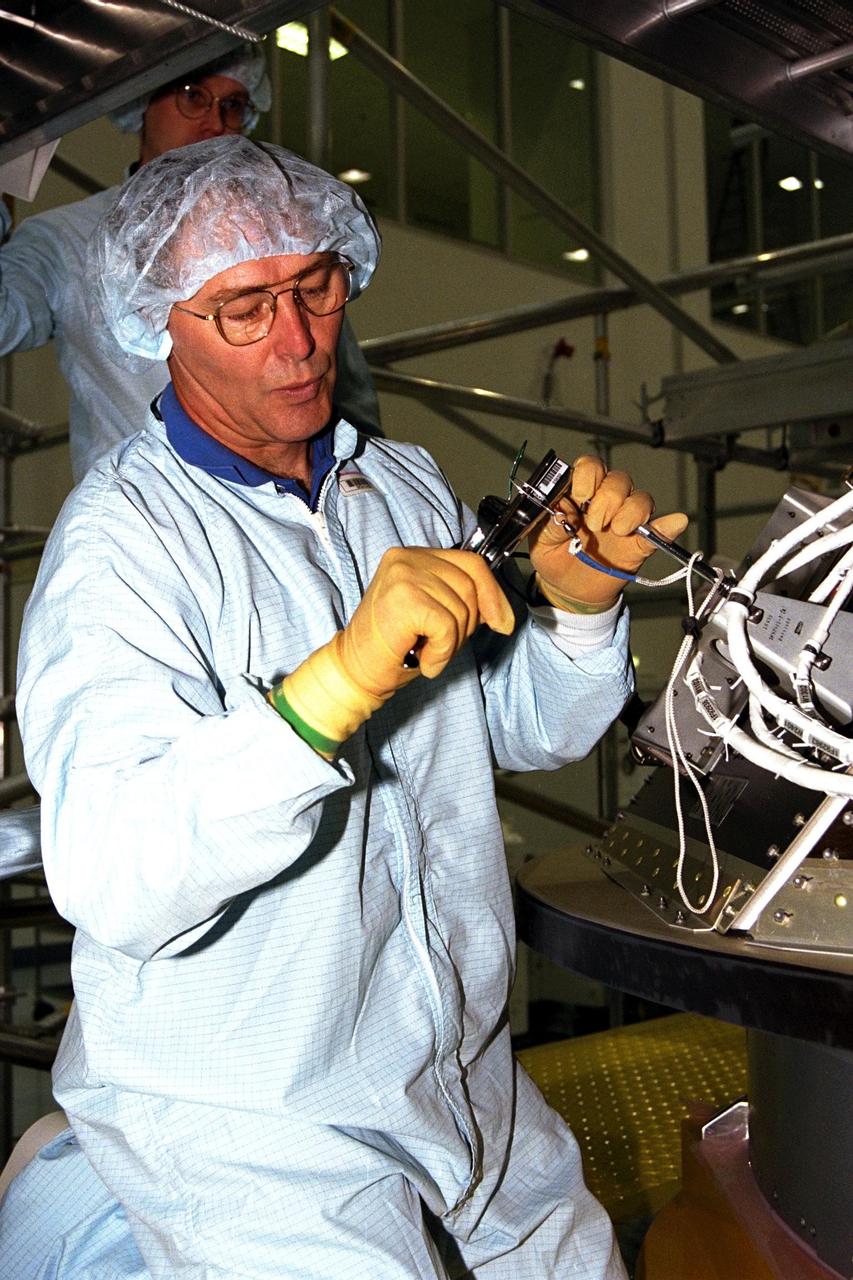
Mission Specialist Jerry Ross participates in the Crew Equipment Interface Test (CEIT) for STS-88 in KSC's Space Station Processing Facility. The CEIT gives astronauts an opportunity to get a hands-on look at the payloads with which they will be working on-orbit. Here, Ross is inspecting electrical connections that will be used in assembly of the International Space Station (ISS). STS-88, the first ISS assembly flight, is targeted for launch in July 1998 aboard Space Shuttle Endeavour
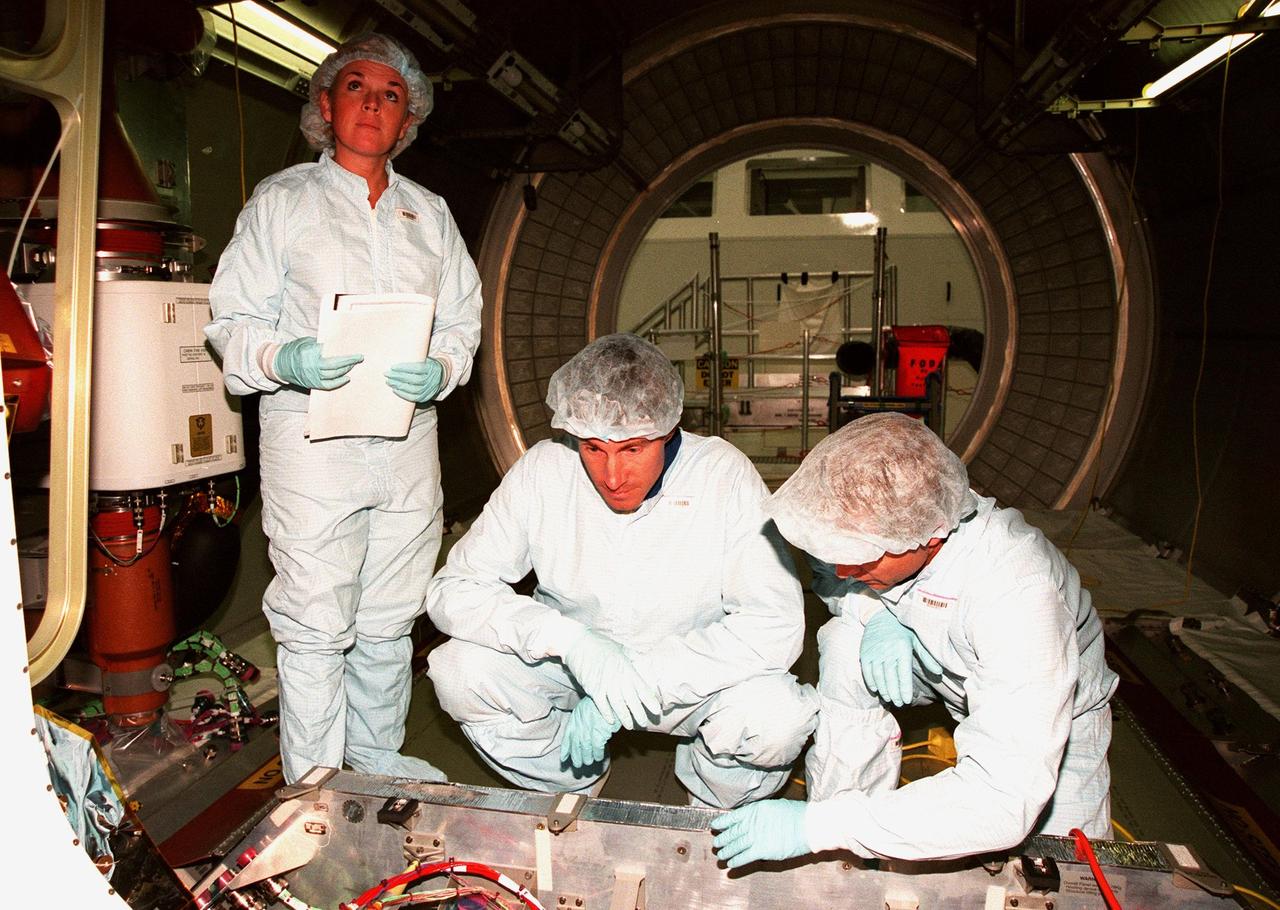
STS-88 Mission Specialist Sergei Konstantinovich Krikalev (center), a Russian cosmonaut, checks out equipment inside a module at the Space Station Processing Facility. Betsy Ahearn (left) and James Burrows, with Boeing, assist him. Mission STS-88 is targeted for launch on Dec. 3, 1998. It is the first U.S. flight for the assembly of the International Space Station and will carry the Unity connecting module
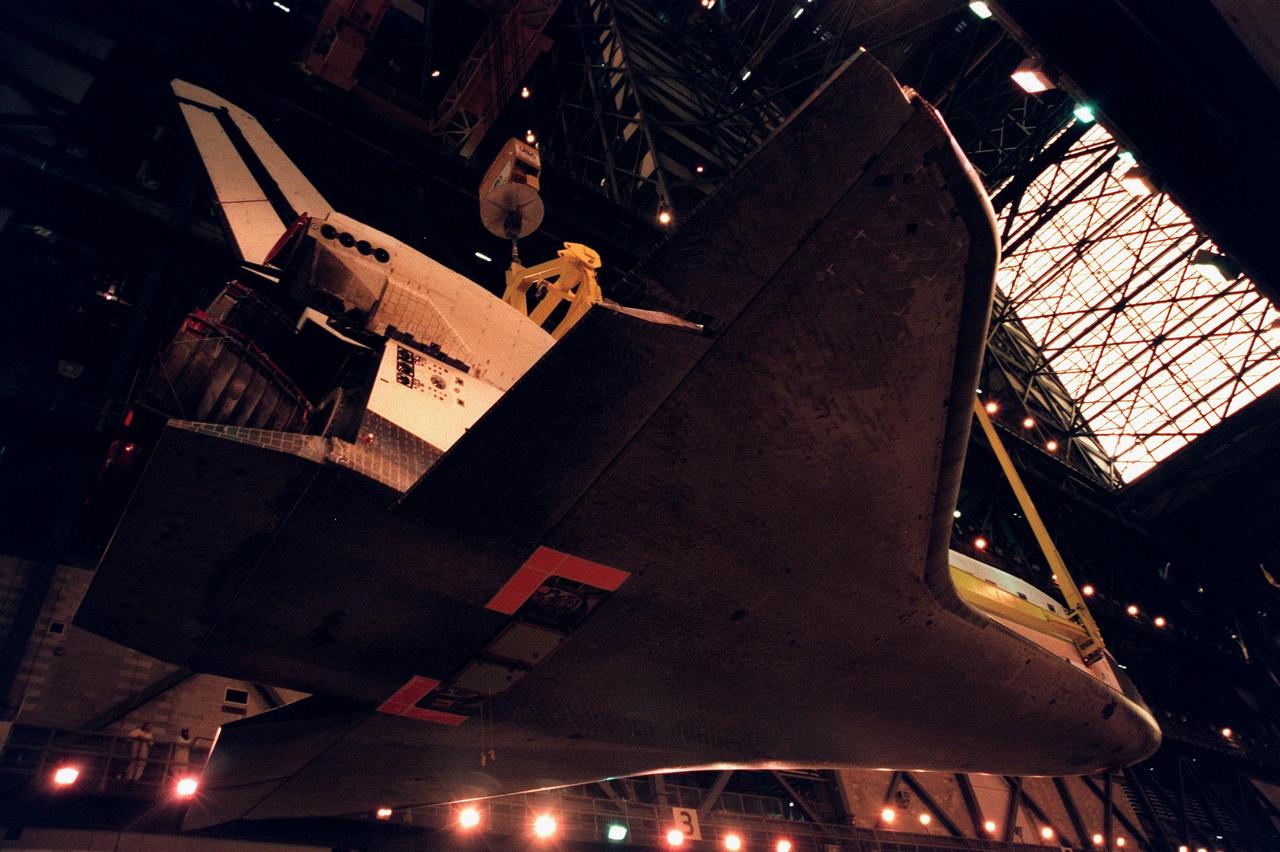
KENNEDY SPACE CENTER, FLA. -- Viewed from below, the orbiter Endeavour appears in flight as it hangs suspended inside the Vehicle Assembly Building. The orbiter is being lifted to its vertical position to be mated to the solid rocket boosters and external tank that will help launch STS-88 in December 1998. STs-88 is the first flight for the International Space Station, with the primary payload the Unity connecting module. Unity will be mated to the Russian-built Zarya control module expected to already be in orbit at that time
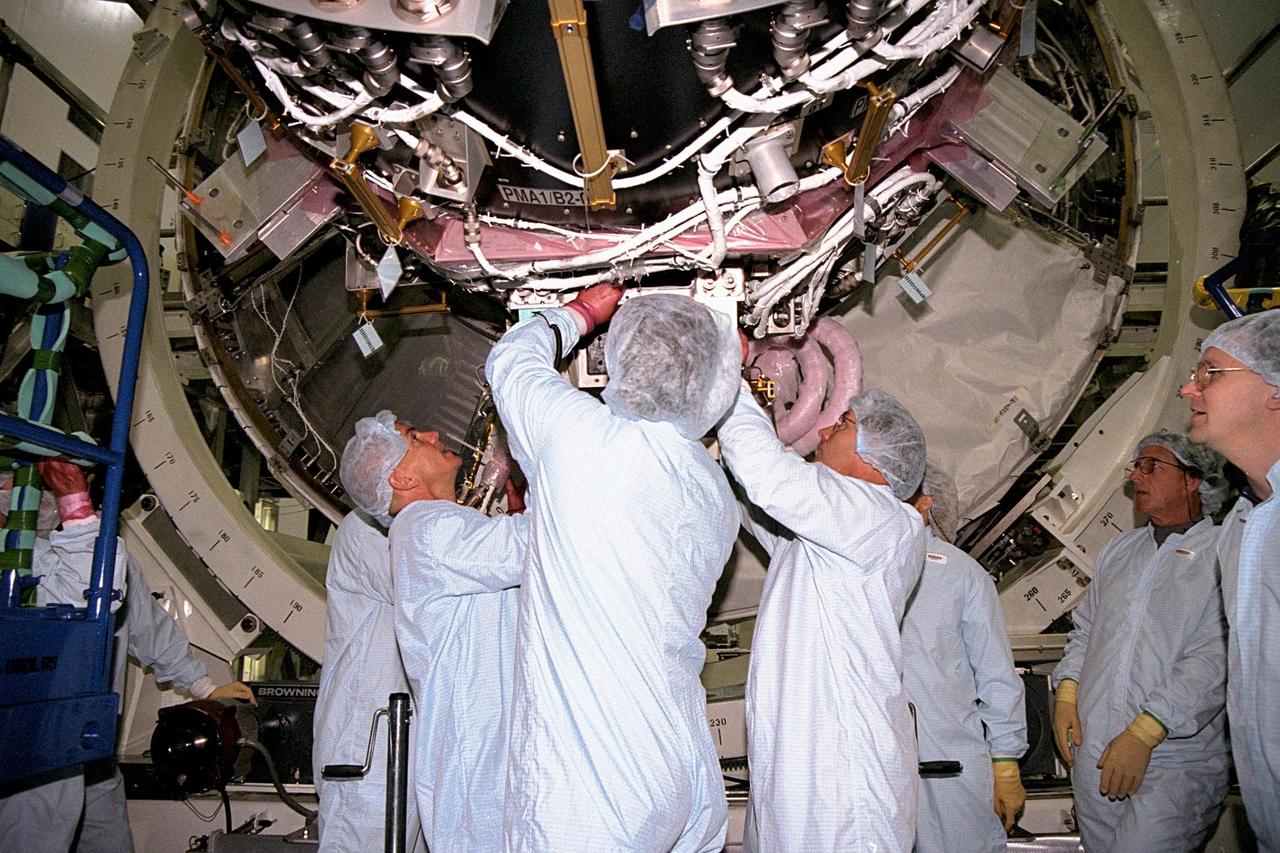
Pilot Rick Sturckow, left of center, and Mission Specialist Jerry Ross, right of center, participate in the Crew Equipment Interface Test (CEIT) for STS-88 in KSC's Space Station Processing Facility. The CEIT gives astronauts an opportunity to get a hands-on look at the payloads with which they will be working on-orbit. Here, the crew is inspecting electrical connections that will be used in assembly of the International Space Station (ISS). STS-88, the first ISS assembly flight, is targeted for launch in July 1998 aboard Space Shuttle Endeavour
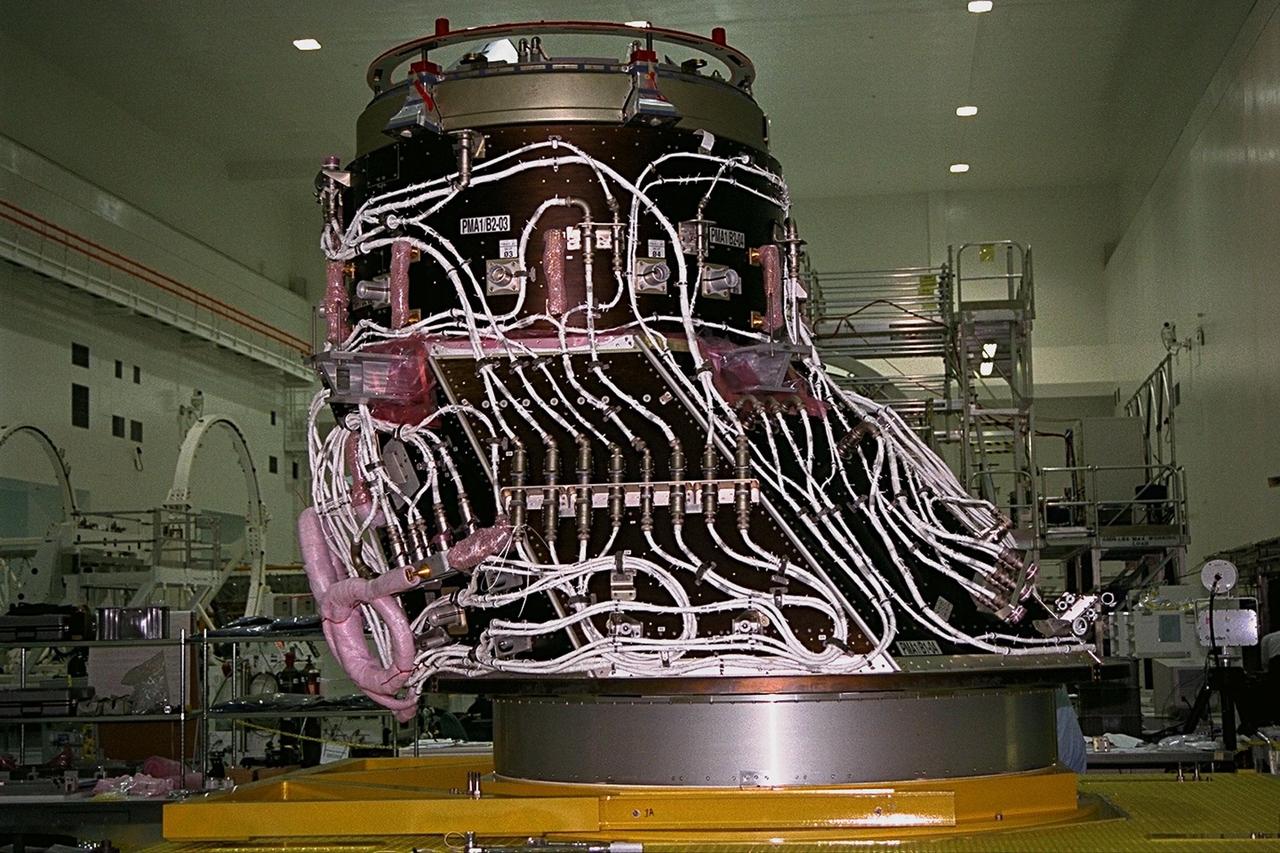
KENNEDY SPACE CENTER, FLA. -- The Pressurized Mating Adapter-1 (PMA-1), scheduled to fly on Space Shuttle mission STS-88 is undergoing processing in the Space Station Processing Facility (SSPF). A PMA is a cone-shaped connector that will be attached to Node 1, the space station’s structural building block, during ground processing. STS-88 is the first International Space Station assembly flight.
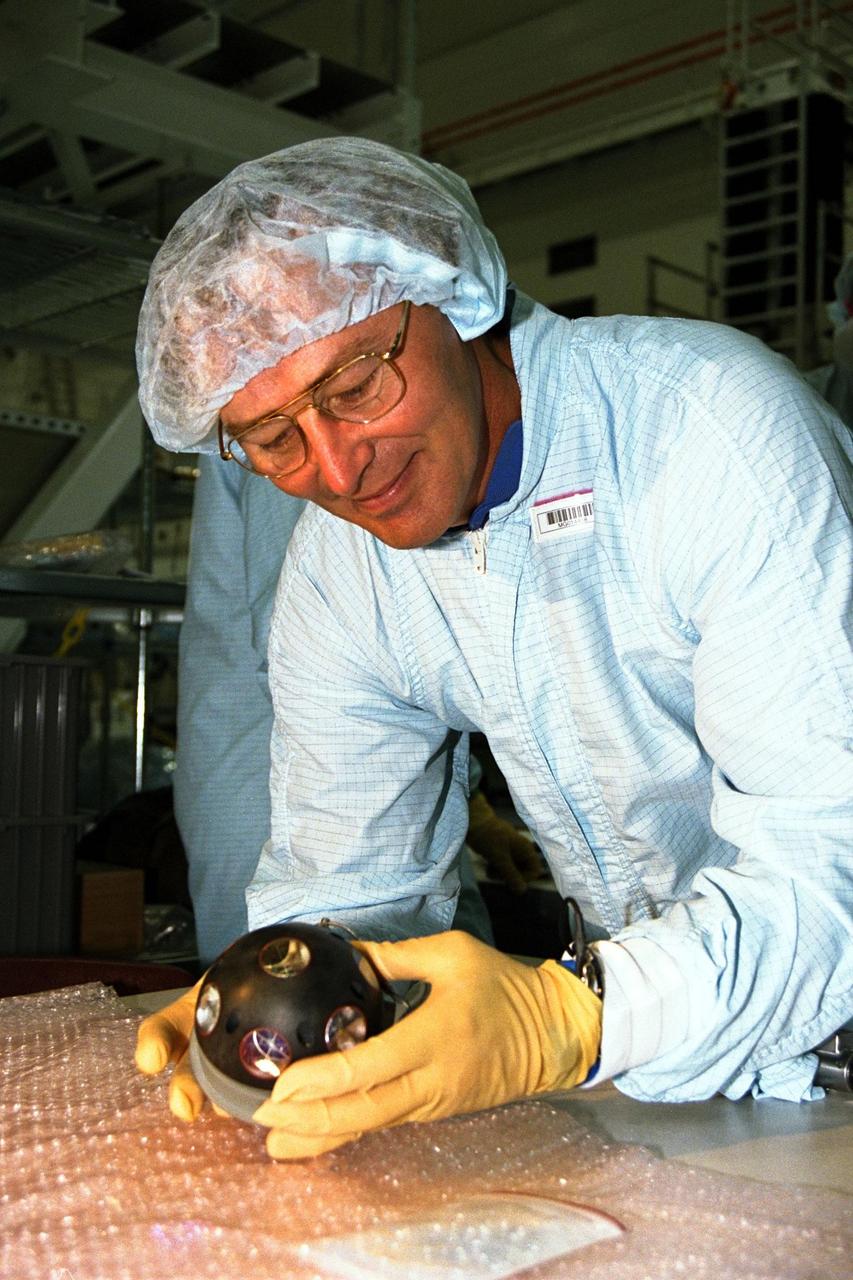
Mission Specialist Jerry Ross participates in the Crew Equipment Interface Test (CEIT) for STS-88 in KSC's Space Station Processing Facility. The CEIT gives astronauts an opportunity to get a hands-on look at the payloads with which they will be working on-orbit. STS-88, the first International Space Station assembly flight, is targeted for launch in July 1998 aboard Space Shuttle Endeavour
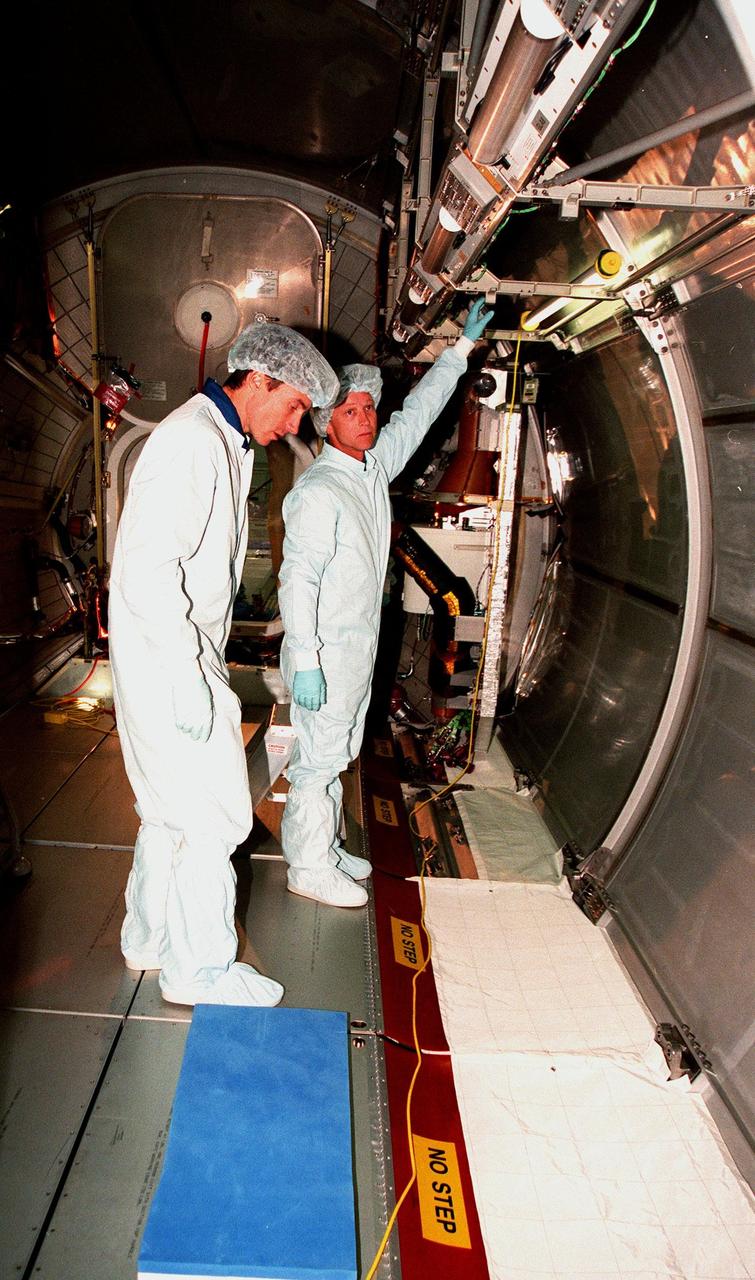
STS-88 Mission Specialist Sergei Konstantinovich Krikalev, a Russian cosmonaut, looks over equipment inside a module at the Space Station Processing Facility. Betsy Ahearn, with Boeing, is at his right. Mission STS-88 is targeted for launch on Dec. 3, 1998. It is the first U.S. flight for the assembly of the International Space Station and will carry the Unity connecting module
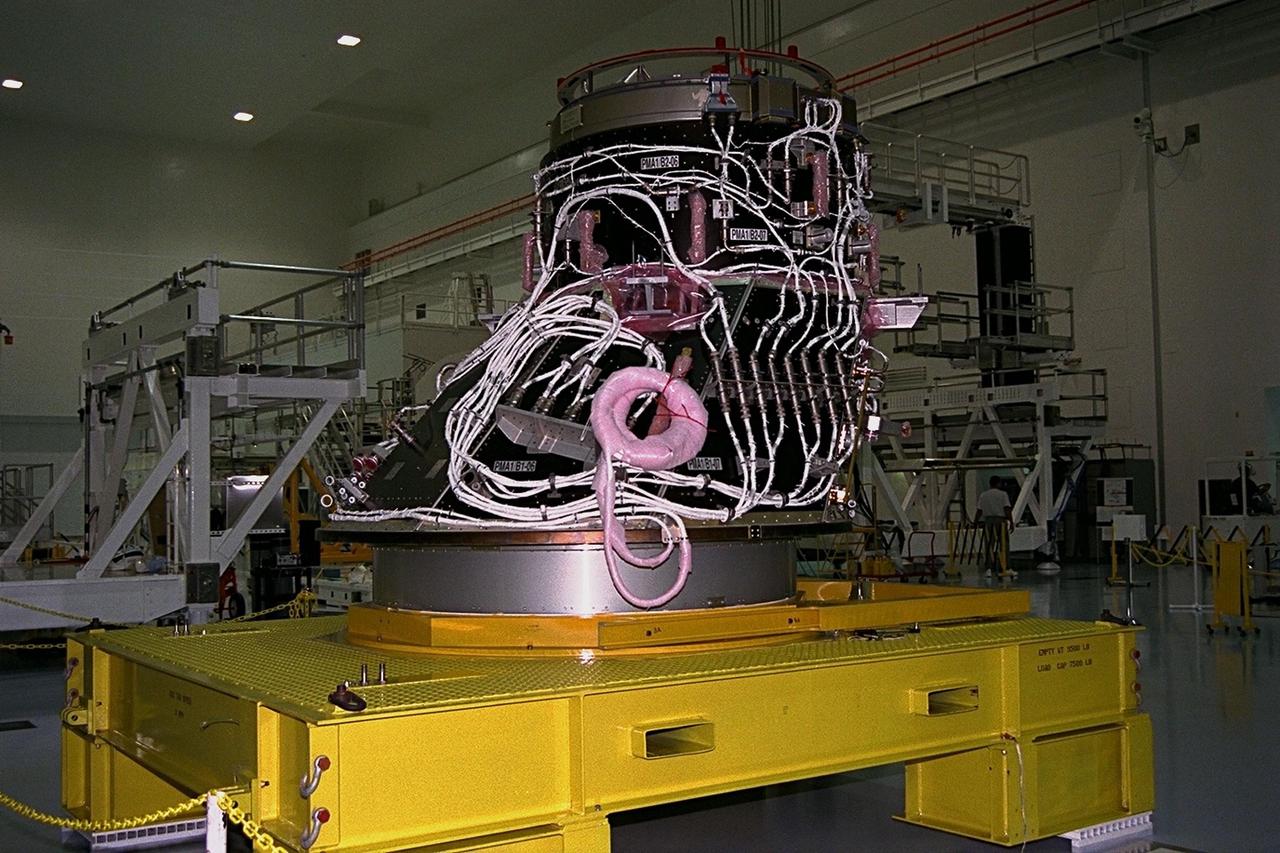
KENNEDY SPACE CENTER, FLA. -- The Pressurized Mating Adapter-1 (PMA-1), scheduled to fly on Space Shuttle mission STS-88 is undergoing processing in the Space Station Processing Facility (SSPF). A PMA is a cone-shaped connector that will be attached to Node 1, the space station’s structural building block, during ground processing. STS-88 is the first International Space Station assembly flight.
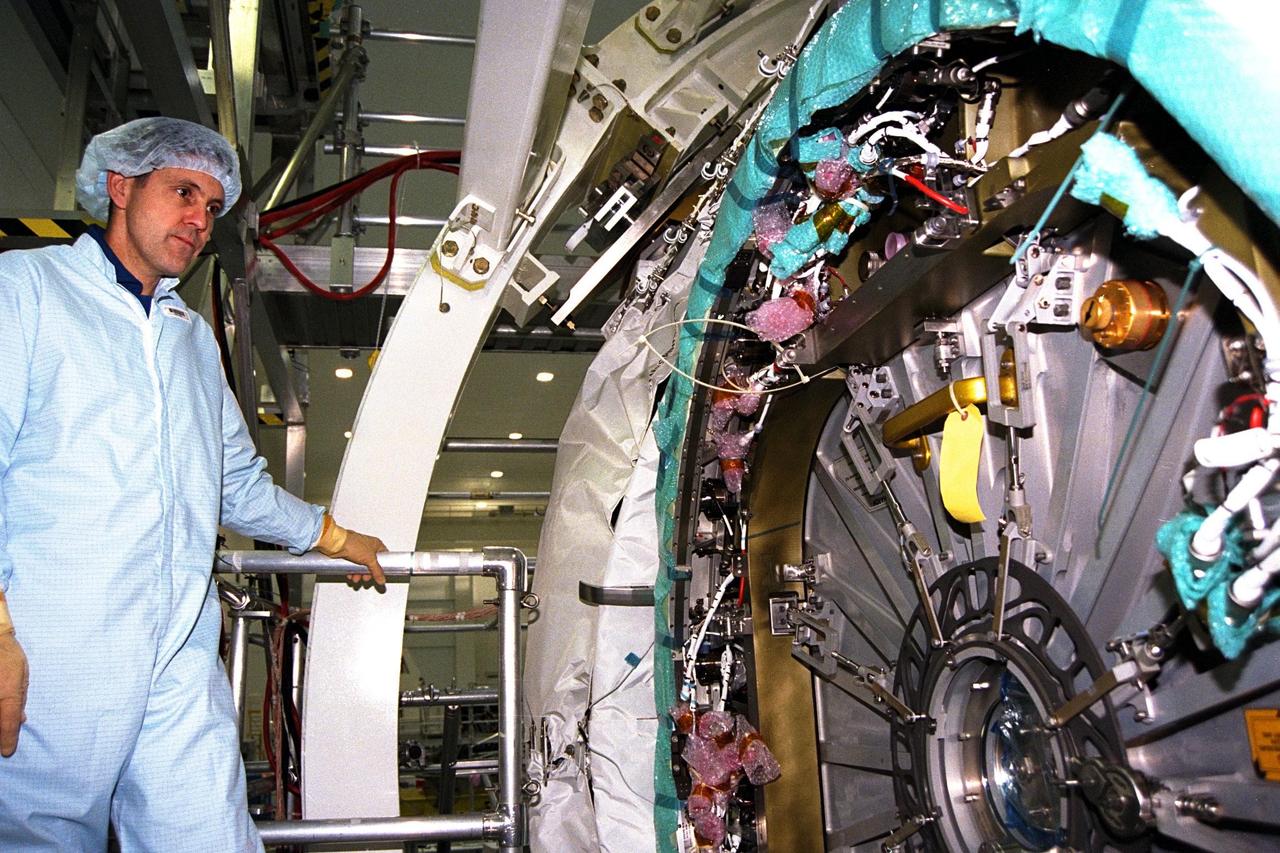
Commander Bob Cabana participates in the Crew Equipment Interface Test (CEIT) for STS-88 in KSC's Space Station Processing Facility. The CEIT gives astronauts an opportunity to get a hands-on look at the payloads with which they will be working on-orbit. Here, Cabana inspects one of the six hatches on Node 1 of the International Space Station (ISS). STS-88, the first ISS assembly flight, is targeted for launch in July 1998 aboard Space Shuttle Endeavour
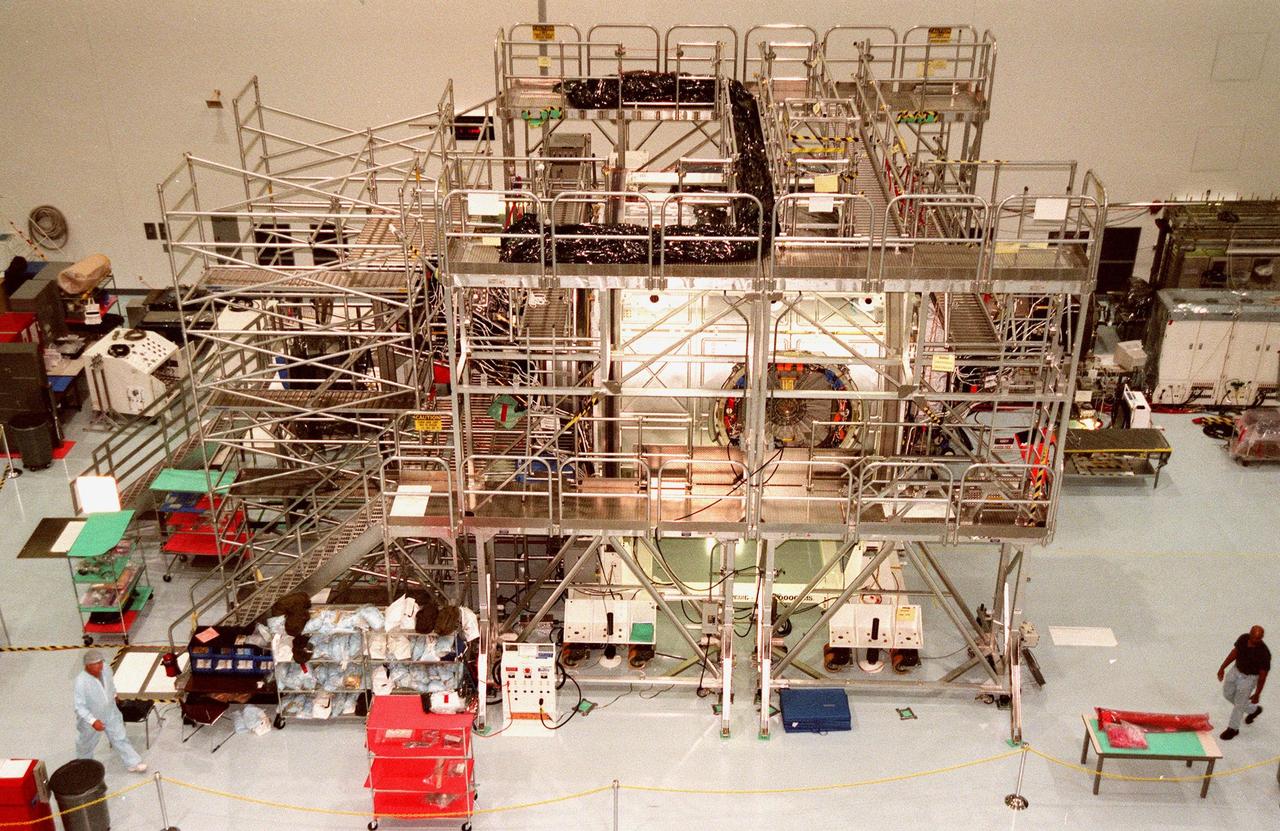
KENNEDY SPACE CENTER, FLA. -- The Unity connecting module is viewed from above while it awaits processing in the Space Station Processing Facility (SSPF). On the side can be seen the connecting hatch. The Unity, scheduled to be launched on STS-88 in December 1998, will be mated to the Russian-built Zarya control module which will already be in orbit. STS-88 will be the first Space Shuttle launch for the International Space Station
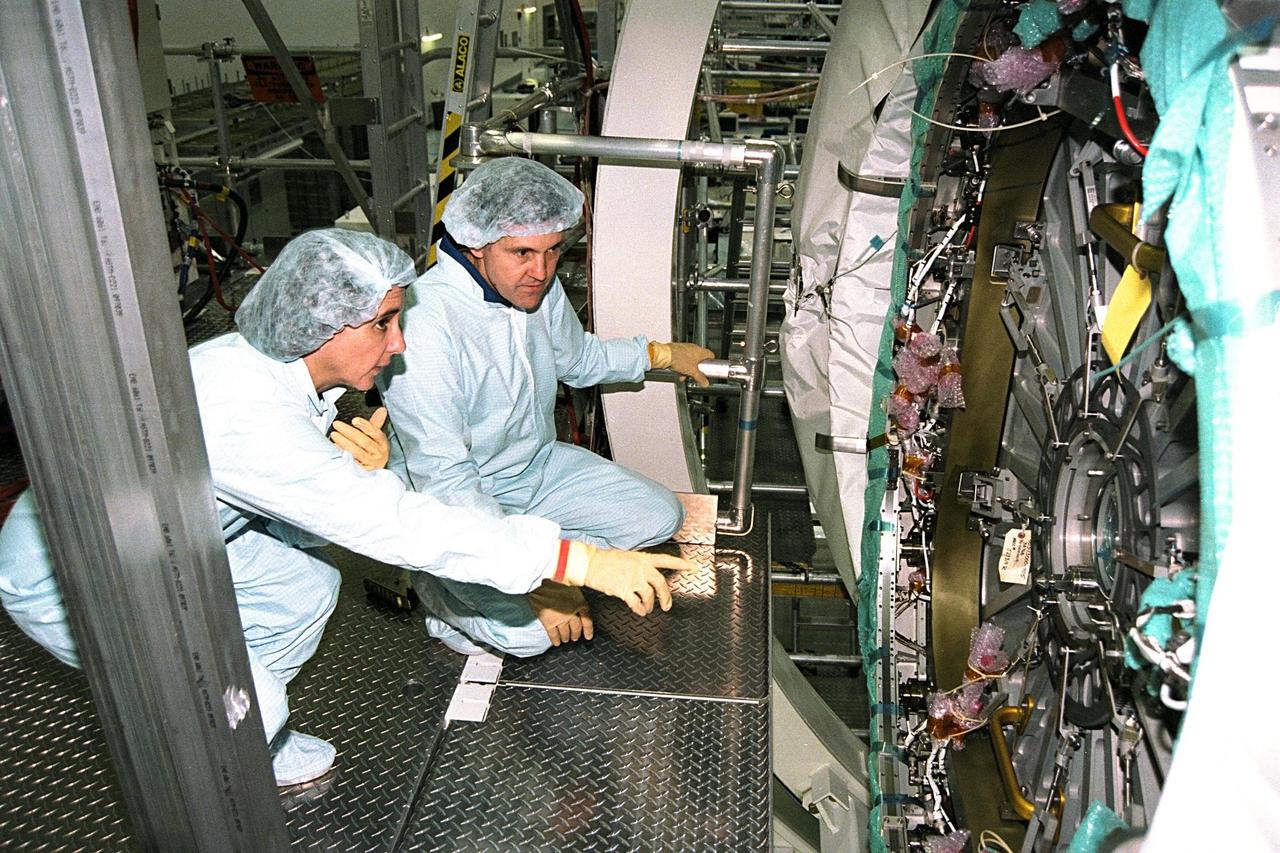
Mission Specialist Nancy Currie and Commander Bob Cabana participate in the Crew Equipment Interface Test (CEIT) for STS-88 in KSC's Space Station Processing Facility. The CEIT gives astronauts an opportunity to get a hands-on look at the payloads with which they will be working on-orbit. Here, Currie and Cabana inspect one of the six hatches on Node 1 of the International Space Station (ISS). STS-88, the first ISS assembly flight, is targeted for launch in July 1998 aboard Space Shuttle Endeavour
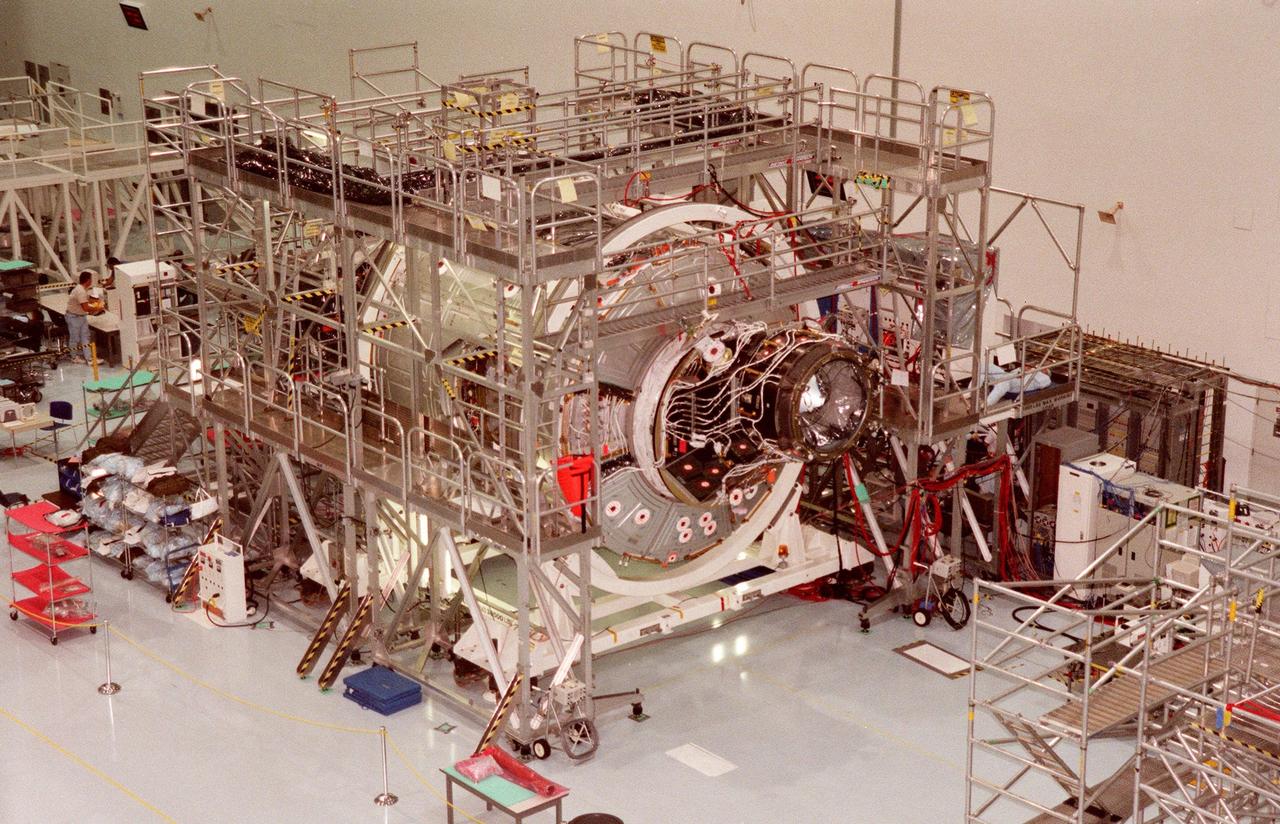
KENNEDY SPACE CENTER, FLA. -- Unity connecting module, part of the International Space Station, awaits processing in the Space Station Processing Facility (SSPF). On the end at the right can be seen the Pressurized Mating Adapter 2, which provides entry into the module. The Unity, scheduled to be launched on STS-88 in December 1998, will be mated to the Russian-built Zarya control module which will already be in orbit. STS-88 will be the first Space Shuttle launch for the International Space Station
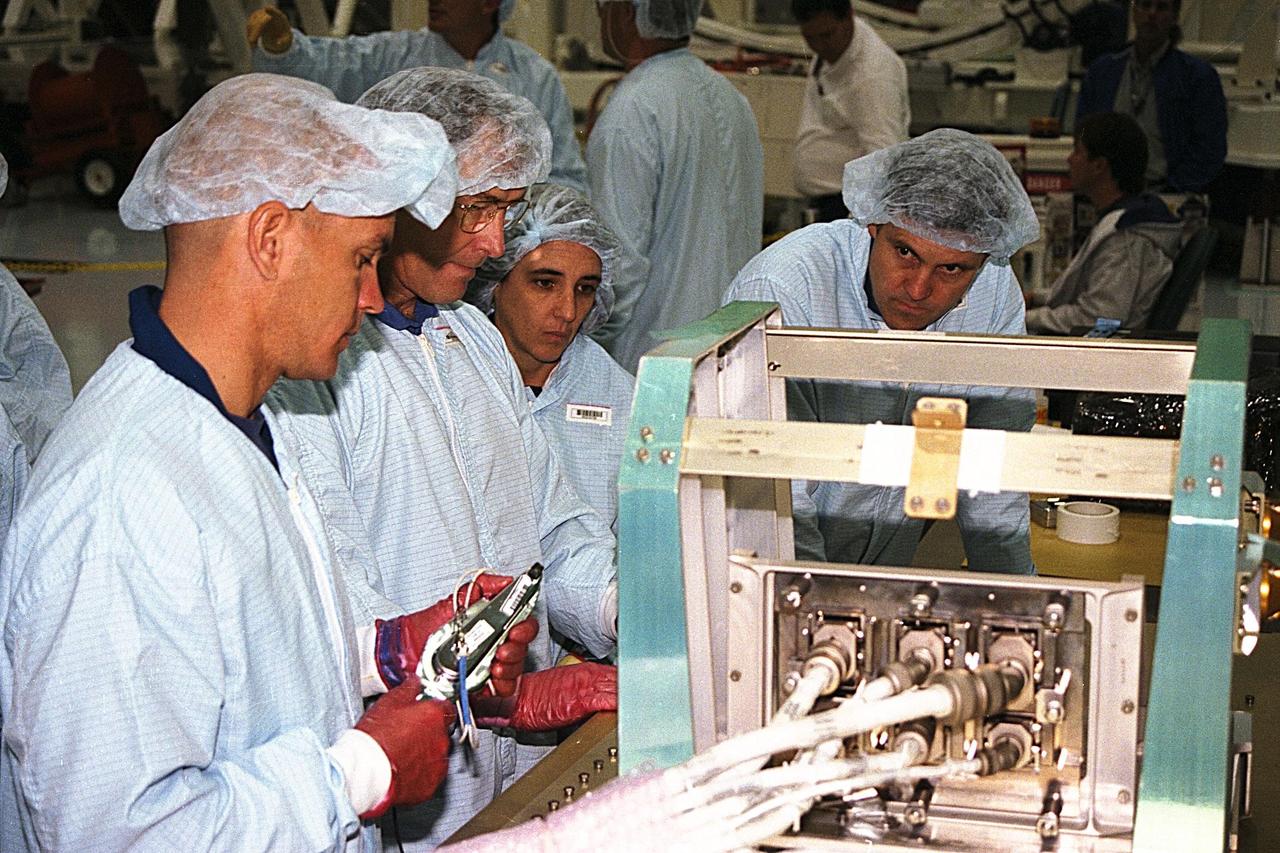
STS-88 crew members participate in the Crew Equipment Interface Test (CEIT) for that mission in KSC's Space Station Processing Facility. Discussing the mission are, from left to right, Pilot Rick Sturckow, Mission Specialists Jerry Ross and Nancy Currie, and Commander Bob Cabana. The CEIT gives astronauts an opportunity to get a hands-on look at the payloads with which they will be working on-orbit. STS-88, the first ISS assembly flight, is targeted for launch in July 1998 aboard Space Shuttle Endeavour
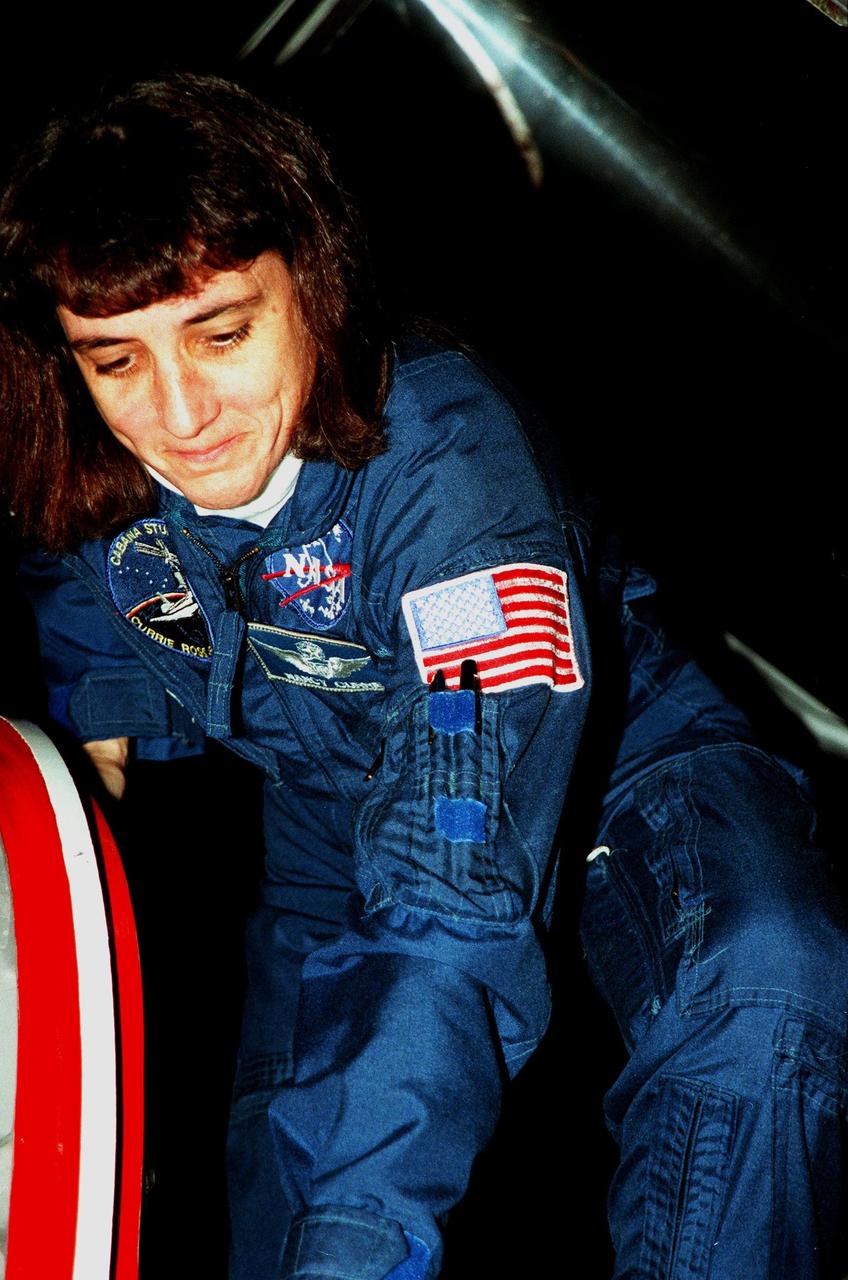
STS-88 Mission Specialist Nancy J. Currie climbs out of a T-38 jet aircraft in which she arrived after dark at the Shuttle Landing Facility in order to take part in Terminal Countdown Demonstration Test (TCDT) activities. The TCDT provides the crew with simulated countdown exercises, emergency egress training, and opportunities to inspect their mission payloads in the orbiter's payload bay. Mission STS-88 is targeted for launch on Dec. 3, 1998. It is the first U.S. flight for the assembly of the International Space Station and will carry the Unity connecting module. Others in the STS-88 crew are Mission Commander Robert D. Cabana, Pilot Frederick W. "Rick" Sturckow, Mission Specialists Jerry L. Ross, James H. Newman and Sergei Krikalev, a Russian cosmonaut. Ross and Newman will make three spacewalks to connect power, data and utility lines and install exterior equipment
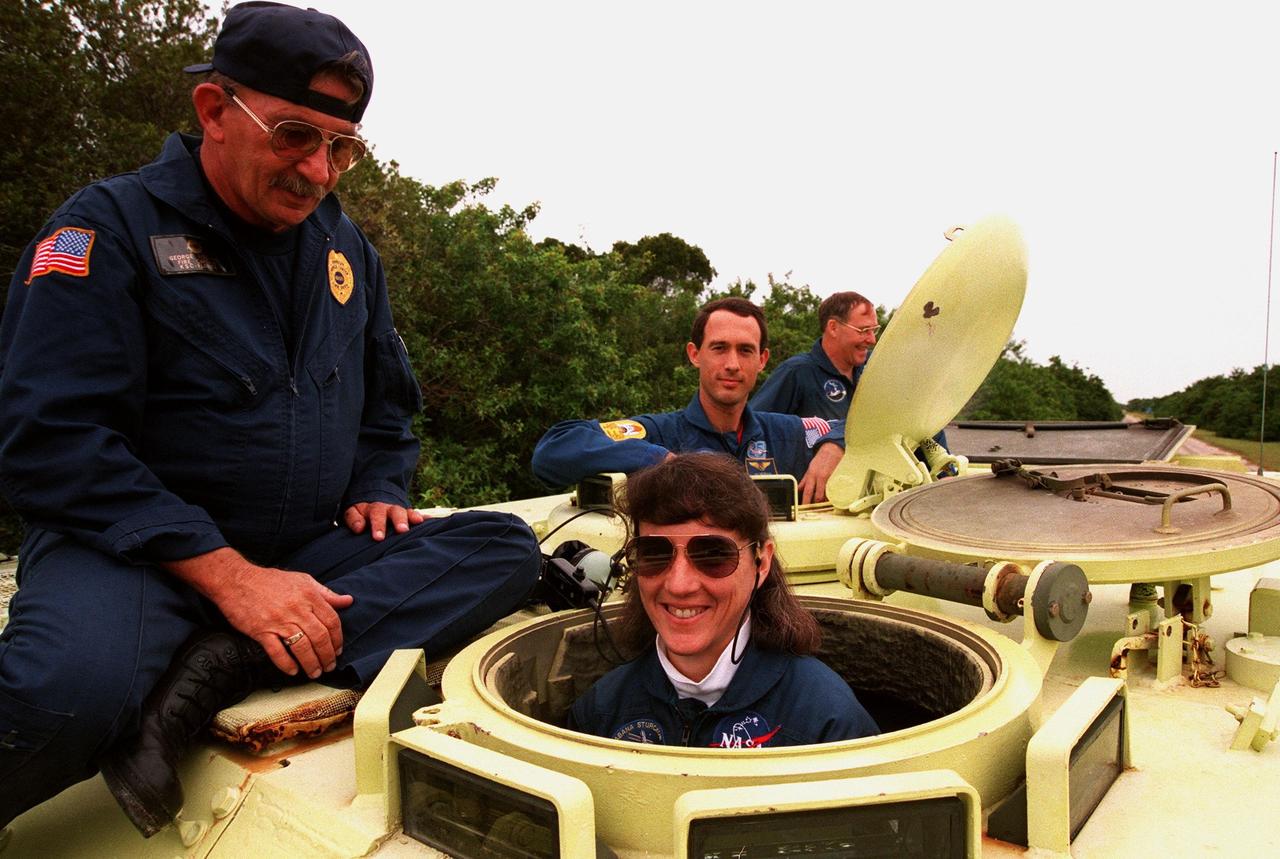
STS-88 Mission Specialist Nancy J. Currie prepares to operate an M-113, an armored personnel carrier, as part of emergency egress training under the watchful eye of instructor George Hoggard (left) during Terminal Countdown Demonstration Test (TCDT) activities. The TCDT also provides the crew with simulated countdown exercises and opportunities to inspect their mission payloads in the orbiter's payload bay. Mission STS-88 is targeted for launch on Dec. 3, 1998. It is the first U.S. flight for the assembly of the International Space Station and will carry the Unity connecting module. Others in the STS-88 crew are Mission Commander Robert D. Cabana; Pilot Frederick W. "Rick" Sturckow; and Mission Specialists Jerry L. Ross, James H. Newman, and Sergei Konstantinovich Krikalev, a Russian cosmonaut
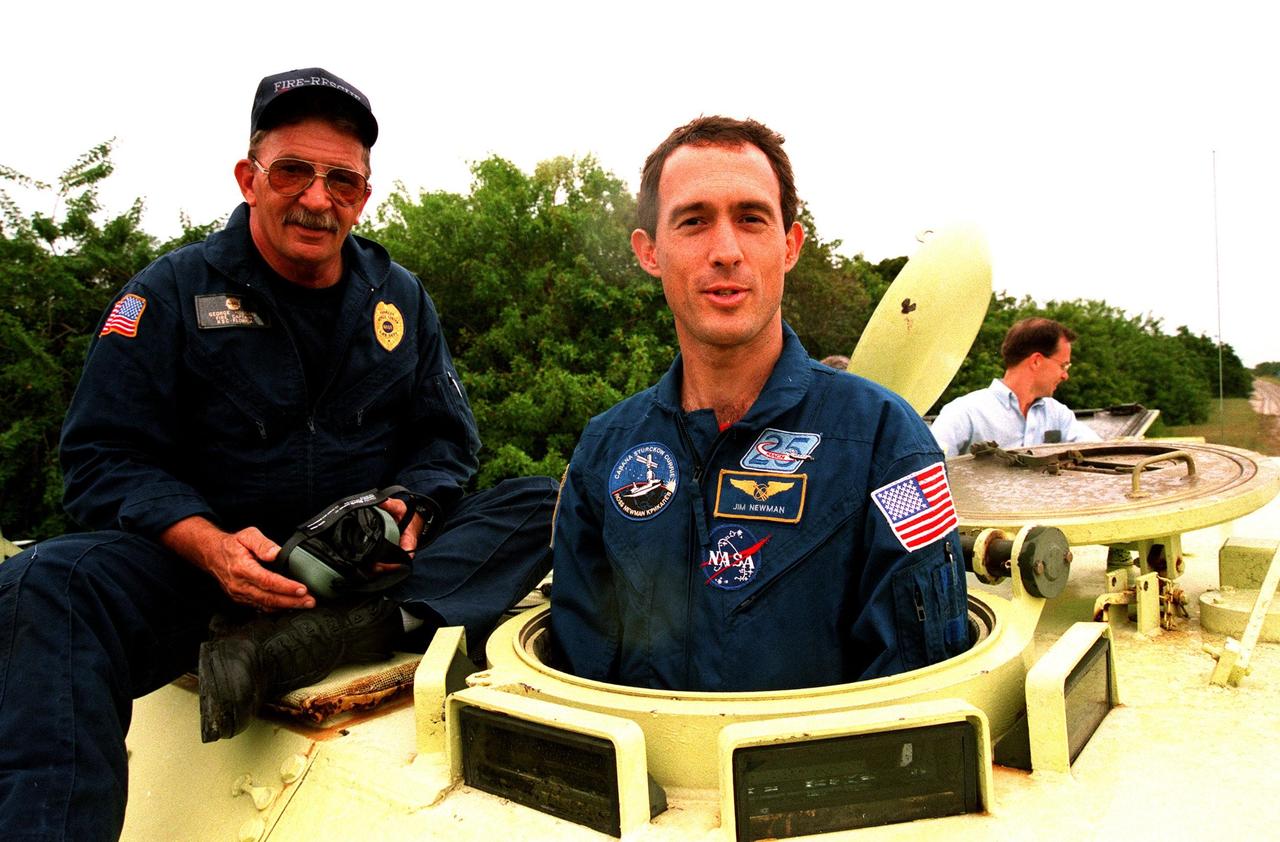
STS-88 Mission Specialist James H. Newman (right) receives instruction on the operation of an M-113, an armored personnel carrier, as part of emergency egress training from George Hoggard during Terminal Countdown Demonstration Test (TCDT) activities. The TCDT also provides the crew with simulated countdown exercises and opportunities to inspect their mission payloads in the orbiter's payload bay. Mission STS-88 is targeted for launch on Dec. 3, 1998. It is the first U.S. flight for the assembly of the International Space Station and will carry the Unity connecting module. Others in the STS-88 crew are Mission Commander Robert D. Cabana; Pilot Frederick W. "Rick" Sturckow; and Mission Specialists Nancy J. Currie, Jerry L. Ross, and Sergei Konstantinovich Krikalev, a Russian cosmonaut
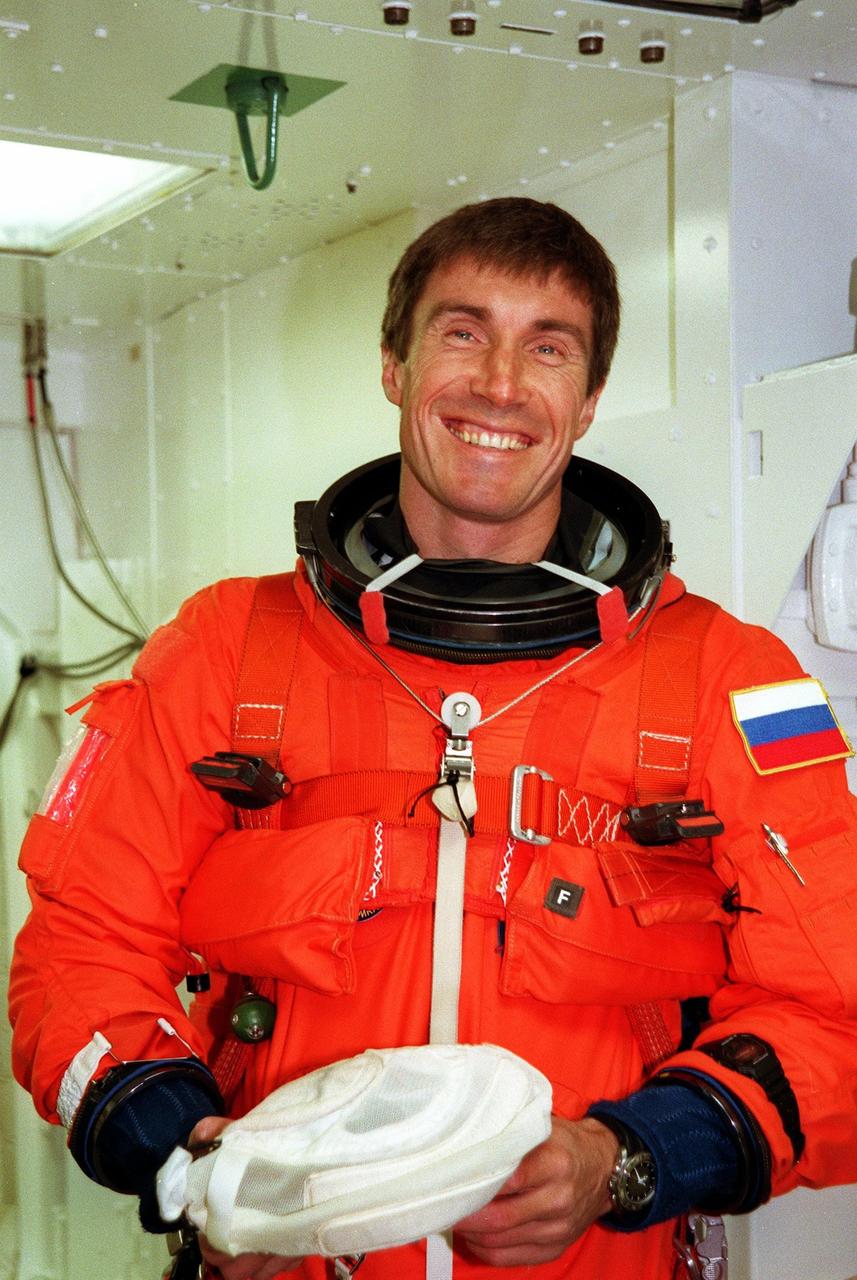
STS-88 Mission Specialist Sergei Konstantinovich Krikalev poses for a photograph in the white room on Launch Pad 39A while taking part in Terminal Countdown Demonstration Test (TCDT) activities. The TCDT provides the crew with simulated countdown exercises, emergency egress training, and opportunities to inspect their mission payloads in the orbiter's payload bay. This will be Krikalev's second space flight. Others in the STS-88 crew are Mission Commander Robert D. Cabana, Pilot Frederick W. "Rick" Sturckow, Mission Specialists Nancy J. Currie, Jerry L. Ross, and James H. Newman. Mission STS-88 is targeted for launch on Dec. 3, 1998. It is the first U.S. flight for the assembly of the International Space Station and will carry the Unity connecting module
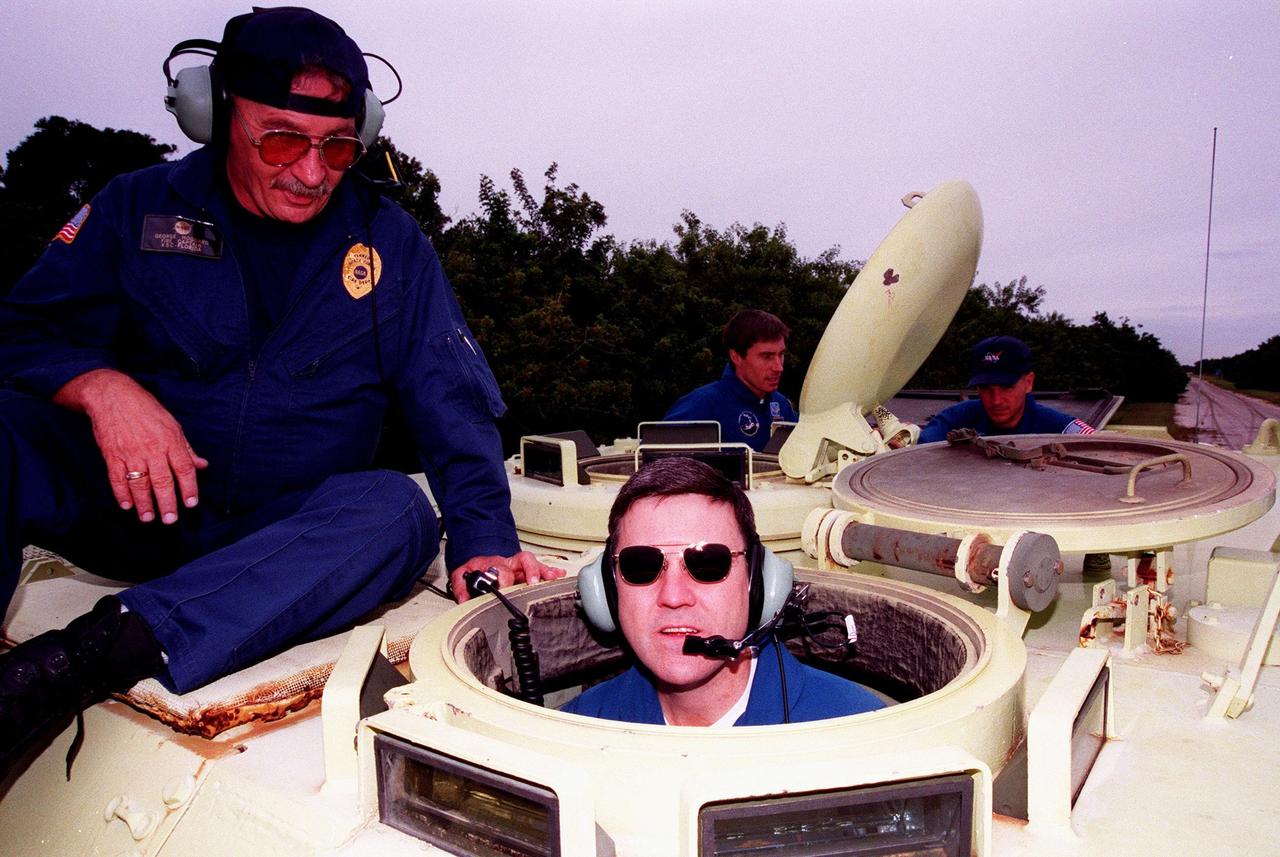
STS-88 Mission Commander Robert D. Cabana (right) receives instruction on the operation of an M-113, an armored personnel carrier, as part of emergency egress training from George Hoggard during Terminal Countdown Demonstration Test (TCDT) activities. The TCDT also provides the crew with simulated countdown exercises and opportunities to inspect their mission payloads in the orbiter's payload bay. Mission STS-88 is targeted for launch on Dec. 3, 1998. It is the first U.S. flight for the assembly of the International Space Station and will carry the Unity connecting module. Others in the STS-88 crew are Pilot Frederick W. "Rick" Sturckow and Mission Specialists Nancy J. Currie, Jerry L. Ross, James H. Newman, and Sergei Konstantinovich Krikalev, a Russian cosmonaut
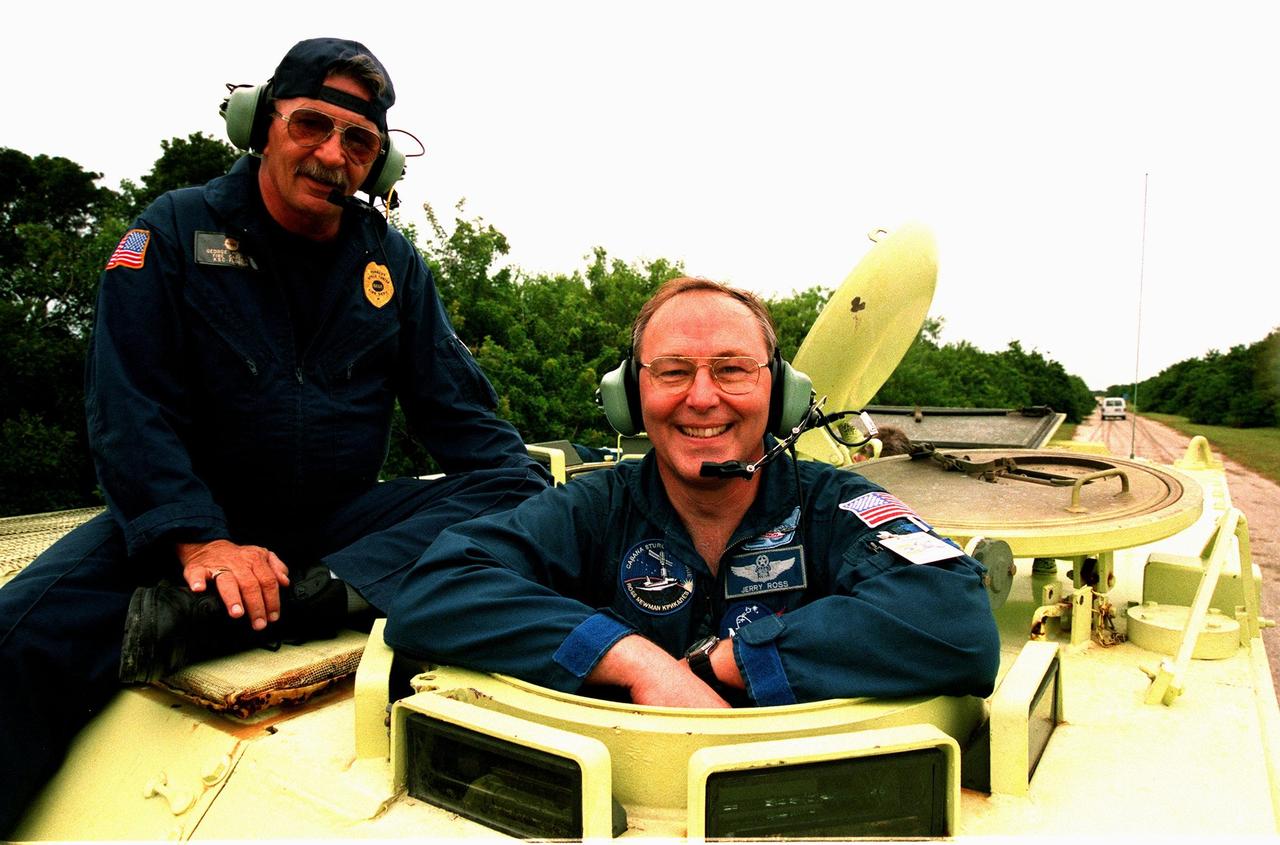
STS-88 Mission Specialist Jerry L. Ross prepares to operate an M-113, an armored personnel carrier, as part of emergency egress training under the watchful eye of instructor George Hoggard (left) during Terminal Countdown Demonstration Test (TCDT) activities. The TCDT also provides the crew with simulated countdown exercises and opportunities to inspect their mission payloads in the orbiter's payload bay. Mission STS-88 is targeted for launch on Dec. 3, 1998. It is the first U.S. flight for the assembly of the International Space Station and will carry the Unity connecting module. Others in the STS-88 crew are Mission Commander Robert D. Cabana; Pilot Frederick W. "Rick" Sturckow; and Mission Specialists Nancy J. Currie, James H. Newman, and Sergei Konstantinovich Krikalev, a Russian cosmonaut
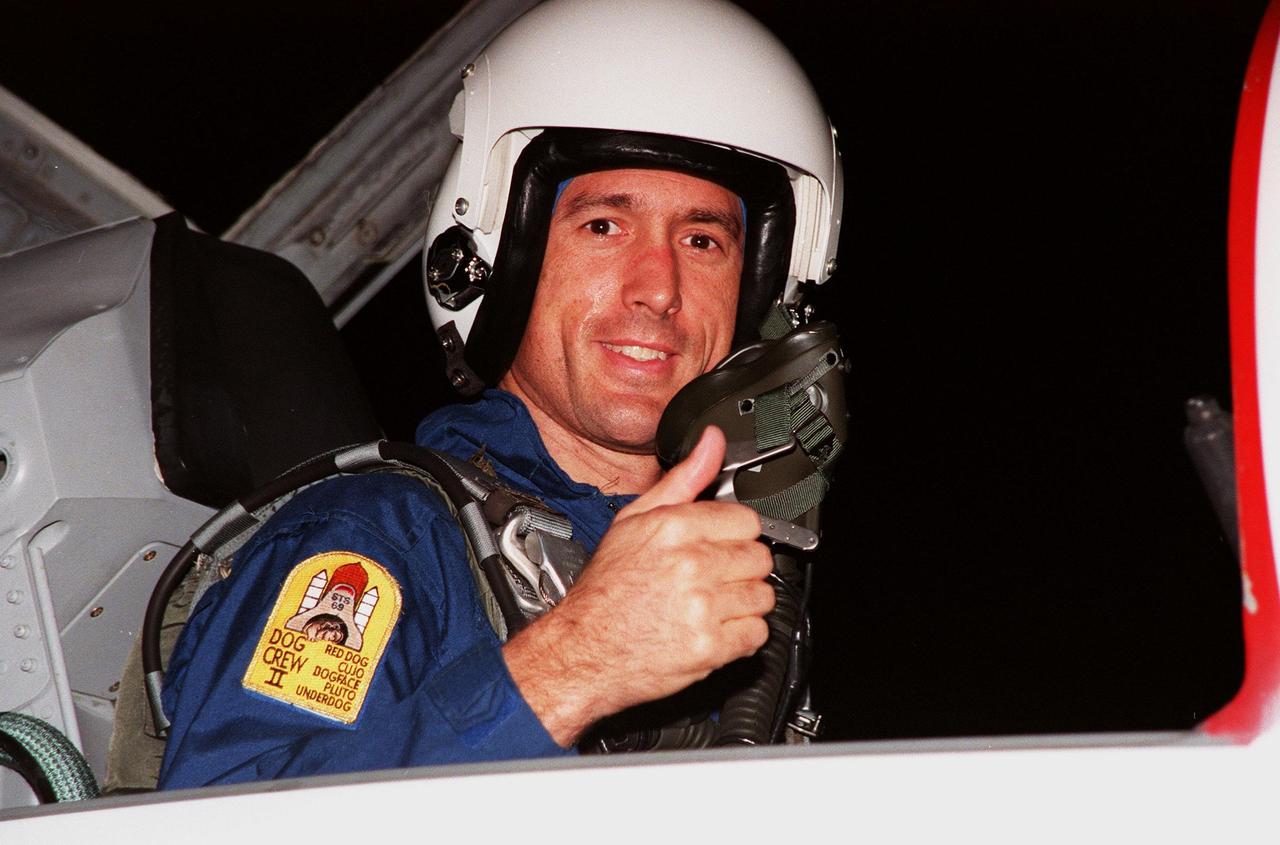
STS-88 Mission Specialist James H. Newman gives a thumbs up on his nighttime arrival at the Shuttle Landing Facility in a T-38 jet aircraft to take part in Terminal Countdown Demonstration Test (TCDT) activities. The TCDT provides the crew with simulated countdown exercises, emergency egress training, and opportunities to inspect their mission payloads in the orbiter's payload bay. Mission STS-88 is targeted for launch on Dec. 3, 1998. It is the first U.S. flight for the assembly of the International Space Station and will carry the Unity connecting module. Others in the STS-88 crew are Mission Commander Robert D. Cabana, Pilot Frederick W. "Rick" Sturckow, Mission Specialists Nancy J. Currie, Jerry L. Ross, and Sergei Krikalev, a Russian cosmonaut. Ross and Newman will make three spacewalks to connect power, data and utility lines and install exterior equipment

STS-88 Pilot Frederick W. "Rick" Sturckow receives instruction on the operation of an M-113, an armored personnel carrier, as part of emergency egress training during Terminal Countdown Demonstration Test (TCDT) activities. The TCDT also provides the crew with simulated countdown exercises and opportunities to inspect their mission payloads in the orbiter's payload bay. Mission STS-88 is targeted for launch on Dec. 3, 1998. It is the first U.S. flight for the assembly of the International Space Station and will carry the Unity connecting module. Others in the STS-88 crew are Mission Commander Robert D. Cabana and Mission Specialists Nancy J. Currie, Jerry L. Ross, James H. Newman, and Sergei Konstantinovich Krikalev, a Russian cosmonaut
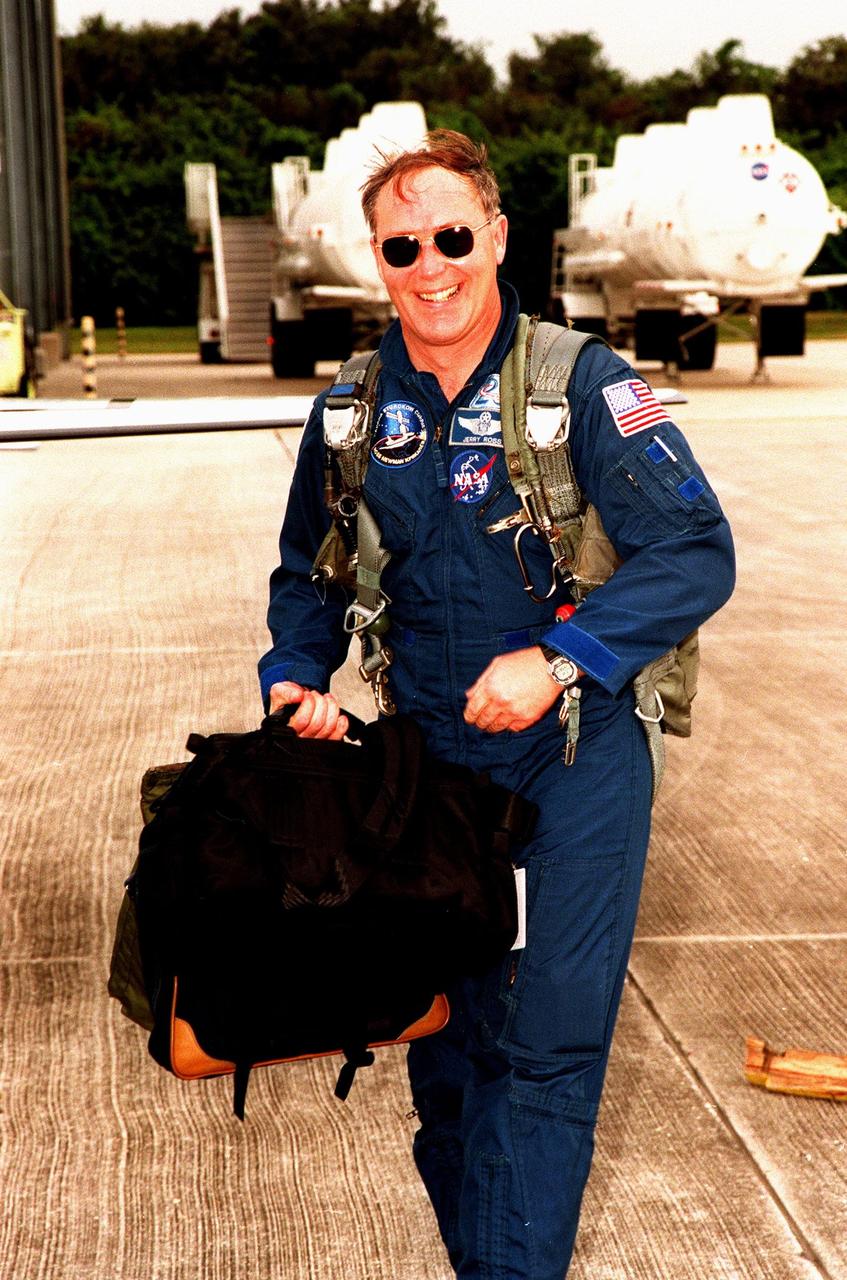
STS-88 Mission Specialist Jerry L. Ross arrives after dark at the Shuttle Landing Facility to take part in Terminal Countdown Demonstration Test (TCDT) activities. The TCDT provides the crew with simulated countdown exercises, emergency egress training, and opportunities to inspect their mission payloads in the orbiter's payload bay. Mission STS-88 is targeted for launch on Dec. 3, 1998. It is the first U.S. flight for the assembly of the International Space Station and will carry the Unity connecting module. Others in the STS-88 crew are Commander Robert D. Cabana, Pilot Frederick W. "Rick" Sturckow, Mission Specialists Nancy J. Currie and James H. Newman and Russian cosmonaut Sergei Konstantinovich Krikalev. Ross and Newman will make three spacewalks to connect power, data and utility lines and install exterior equipment
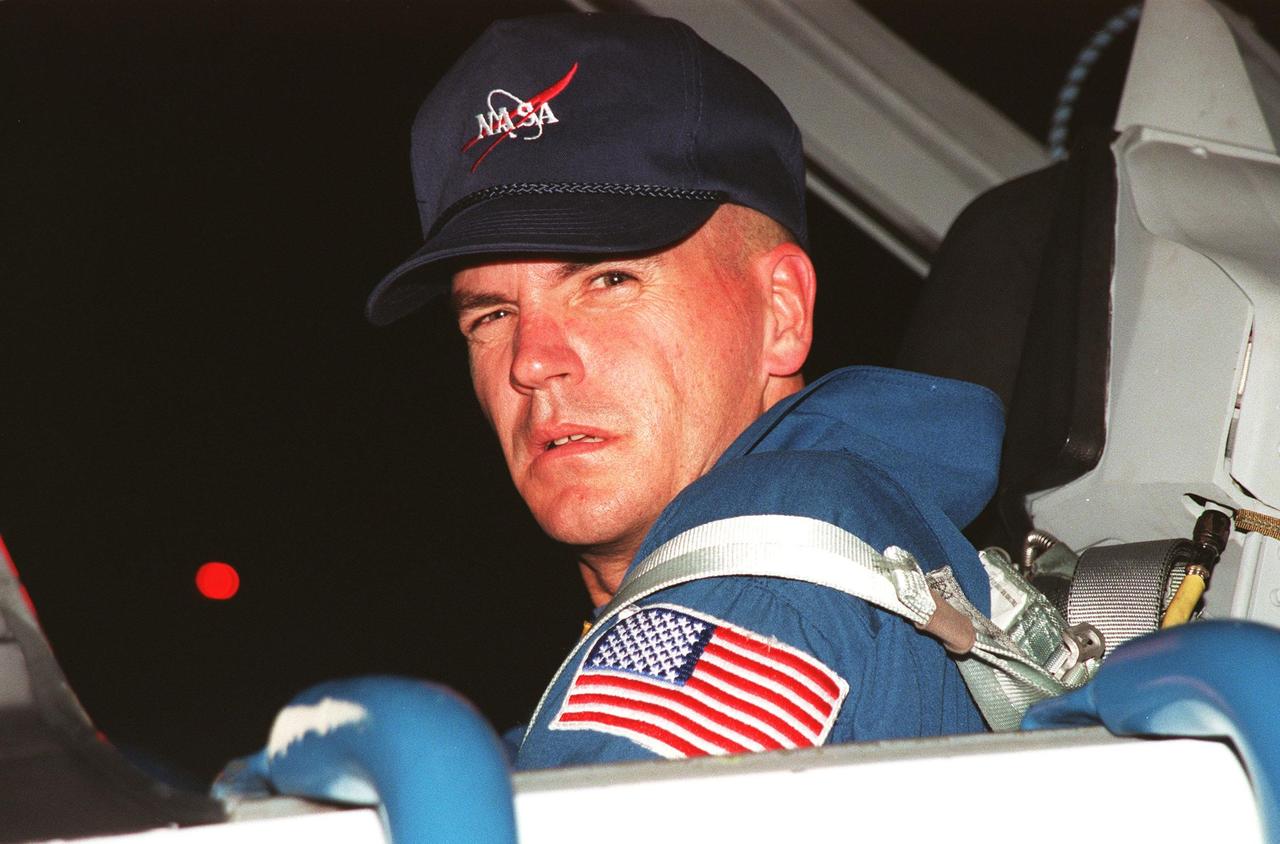
STS-88 Pilot Frederick W. "Rick" Sturckow arrives after dark at the Shuttle Landing Facility in a T-38 jet aircraft to take part in Terminal Countdown Demonstration Test (TCDT) activities. The TCDT provides the crew with simulated countdown exercises, emergency egress training, and opportunities to inspect their mission payloads in the orbiter's payload bay. Mission STS-88 is targeted for launch on Dec. 3, 1998. It is the first U.S. flight for the assembly of the International Space Station and will carry the Unity connecting module. Others in the STS-88 crew are Mission Commander Robert D. Cabana, Mission Specialists Nancy J. Currie, Jerry L. Ross, James H. Newman and Sergei Krikalev, a Russian cosmonaut. Ross and Newman will make three spacewalks to connect power, data and utility lines and install exterior equipment
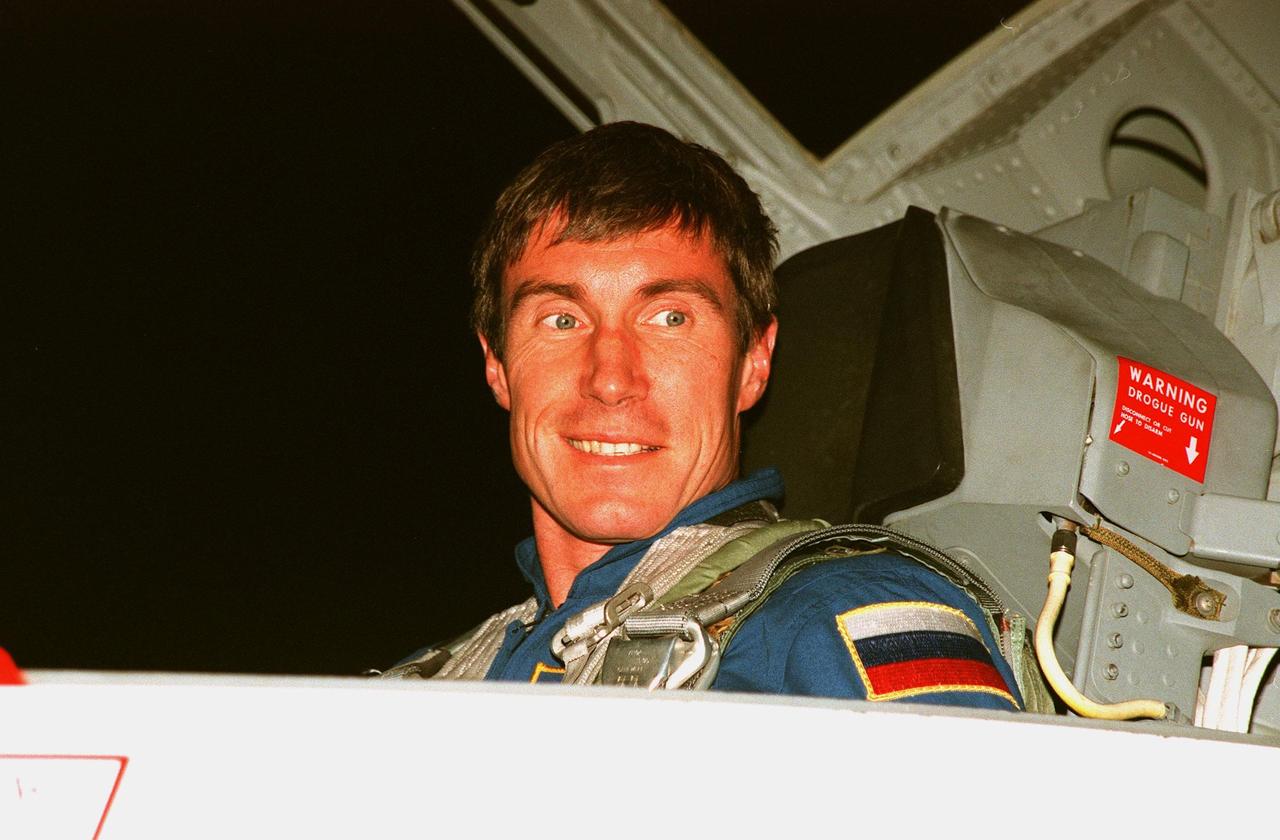
STS-88 Mission Specialist Sergei Krikalev, a Russian cosmonaut, arrives after dark at the Shuttle Landing Facility in a T-38 jet aircraft to take part in Terminal Countdown Demonstration Test (TCDT) activities. The TCDT provides the crew with simulated countdown exercises, emergency egress training, and opportunities to inspect their mission payloads in the orbiter's payload bay. Mission STS-88 is targeted for launch on Dec. 3, 1998. It is the first U.S. flight for the assembly of the International Space Station and will carry the Unity connecting module. Others in the STS-88 crew are Mission Commander Robert D. Cabana, Pilot Frederick W. "Rick" Sturckow, Mission Specialists Nancy J. Currie, Jerry L. Ross, and James H. Newman. Ross and Newman will make three spacewalks to connect power, data and utility lines and install exterior equipment
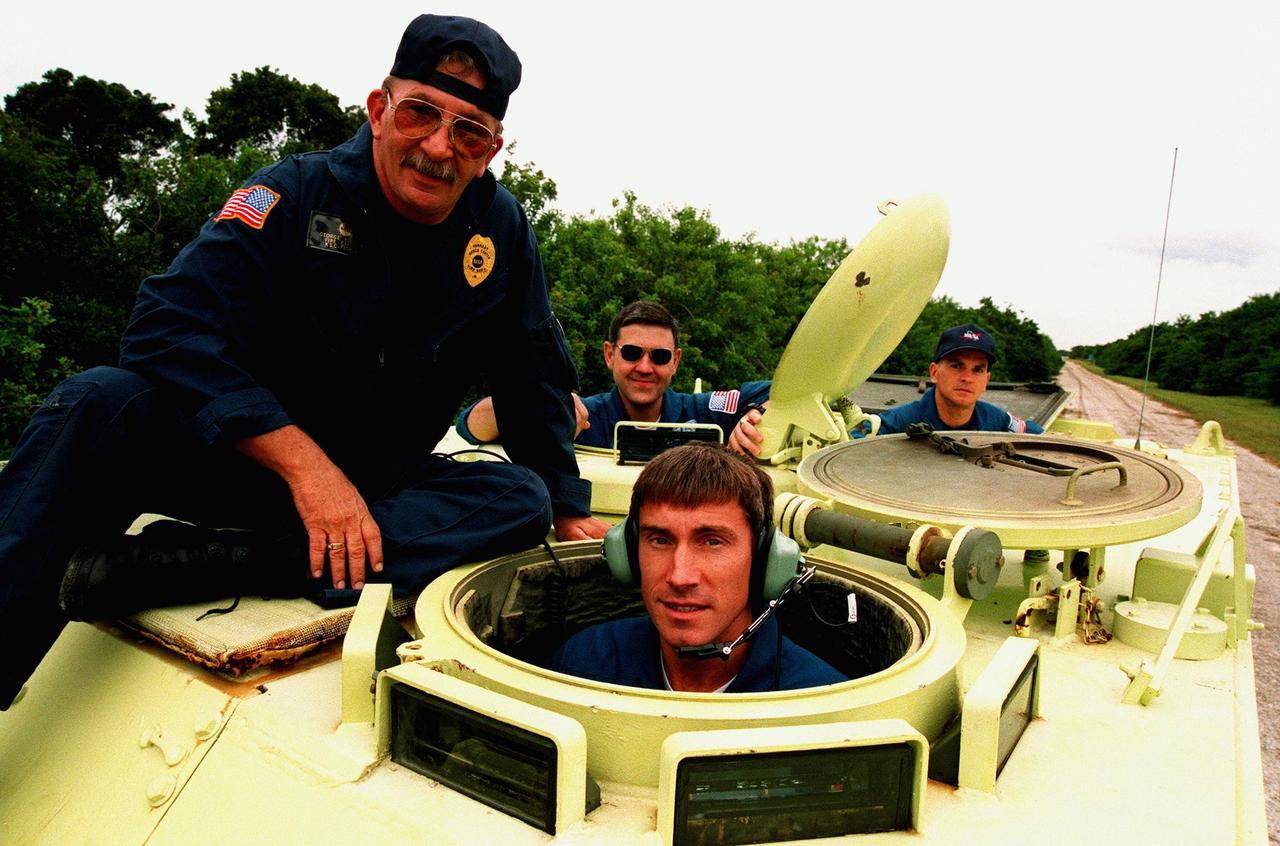
STS-88 Mission Specialist Sergei Konstantinovich Krikalev (center front), a Russian cosmonaut, prepares to operate an M-113, an armored personnel carrier, as part of emergency egress training under the watchful eye of instructor George Hoggard (left) during Terminal Countdown Demonstration Test (TCDT) activities. The TCDT also provides the crew with simulated countdown exercises and opportunities to inspect their mission payloads in the orbiter's payload bay. Mission STS-88 is targeted for launch on Dec. 3, 1998. It is the first U.S. flight for the assembly of the International Space Station and will carry the Unity connecting module. Others in the STS-88 crew are Mission Commander Robert D. Cabana; Pilot Frederick W. "Rick" Sturckow; and Mission Specialists Nancy J. Currie, Jerry L. Ross, and James H. Newman
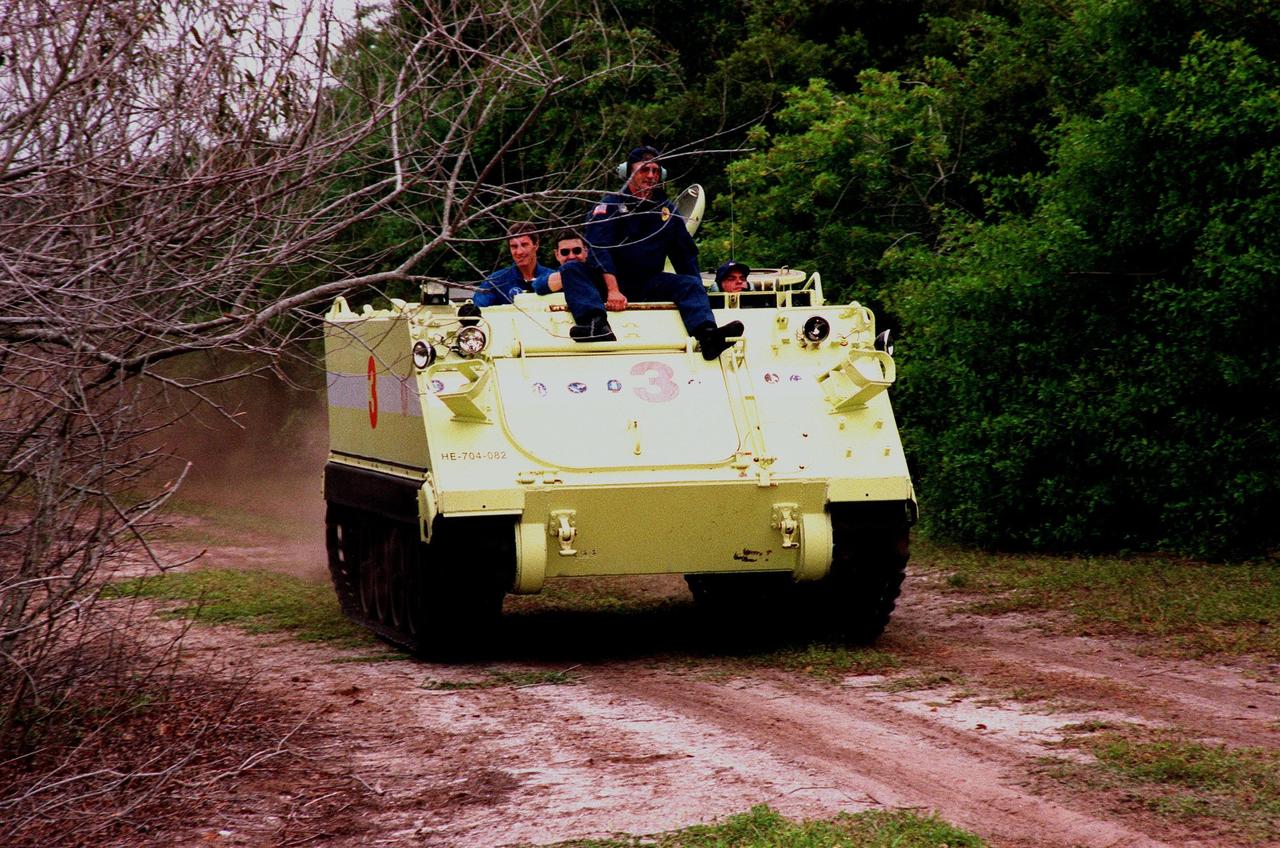
STS-88 Pilot Frederick W. "Rick" Sturckow (right) operates an M-113, an armored personnel carrier, as part of emergency egress training under the watchful eye of instructor George Hoggard during Terminal Countdown Demonstration Test (TCDT) activities. The TCDT also provides the crew with simulated countdown exercises and opportunities to inspect their mission payloads in the orbiter's payload bay. Mission STS-88 is targeted for launch on Dec. 3, 1998. It is the first U.S. flight for the assembly of the International Space Station and will carry the Unity connecting module. Others in the STS-88 crew are Mission Commander Robert D. Cabana and Mission Specialists Nancy J. Currie, Jerry L. Ross, James H. Newman, and Sergei Konstantinovich Krikalev, a Russian cosmonaut
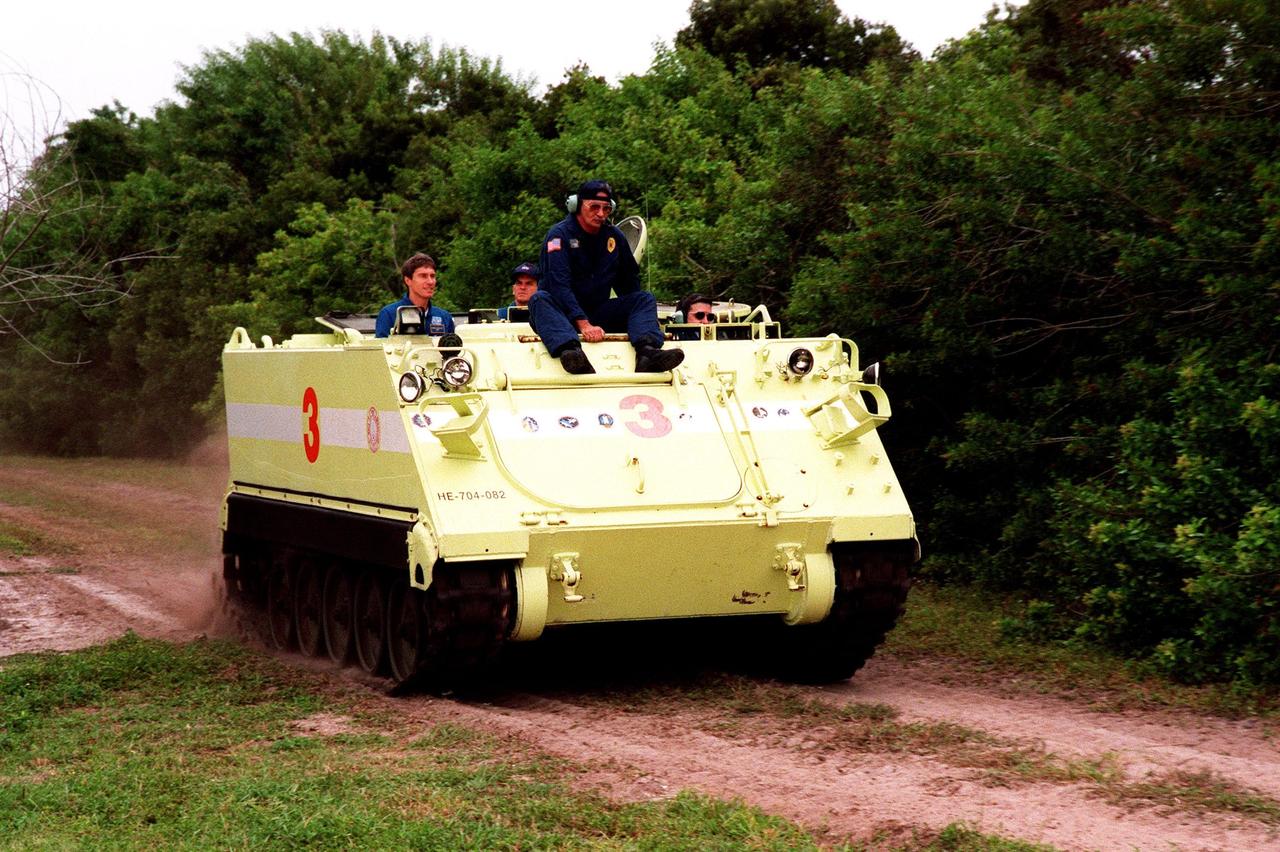
STS-88 Mission Commander Robert D. Cabana operates an M-113, an armored personnel carrier, as part of emergency egress training under the watchful eye of instructor George Hoggard (left) during Terminal Countdown Demonstration Test (TCDT) activities. The TCDT also provides the crew with simulated countdown exercises and opportunities to inspect their mission payloads in the orbiter's payload bay. Mission STS-88 is targeted for launch on Dec. 3, 1998. It is the first U.S. flight for the assembly of the International Space Station and will carry the Unity connecting module. Others in the STS-88 crew are Pilot Frederick W. "Rick" Sturckow and Mission Specialists Nancy J. Currie, Jerry L. Ross, James H. Newman, and Sergei Konstantinovich Krikalev, a Russian cosmonaut
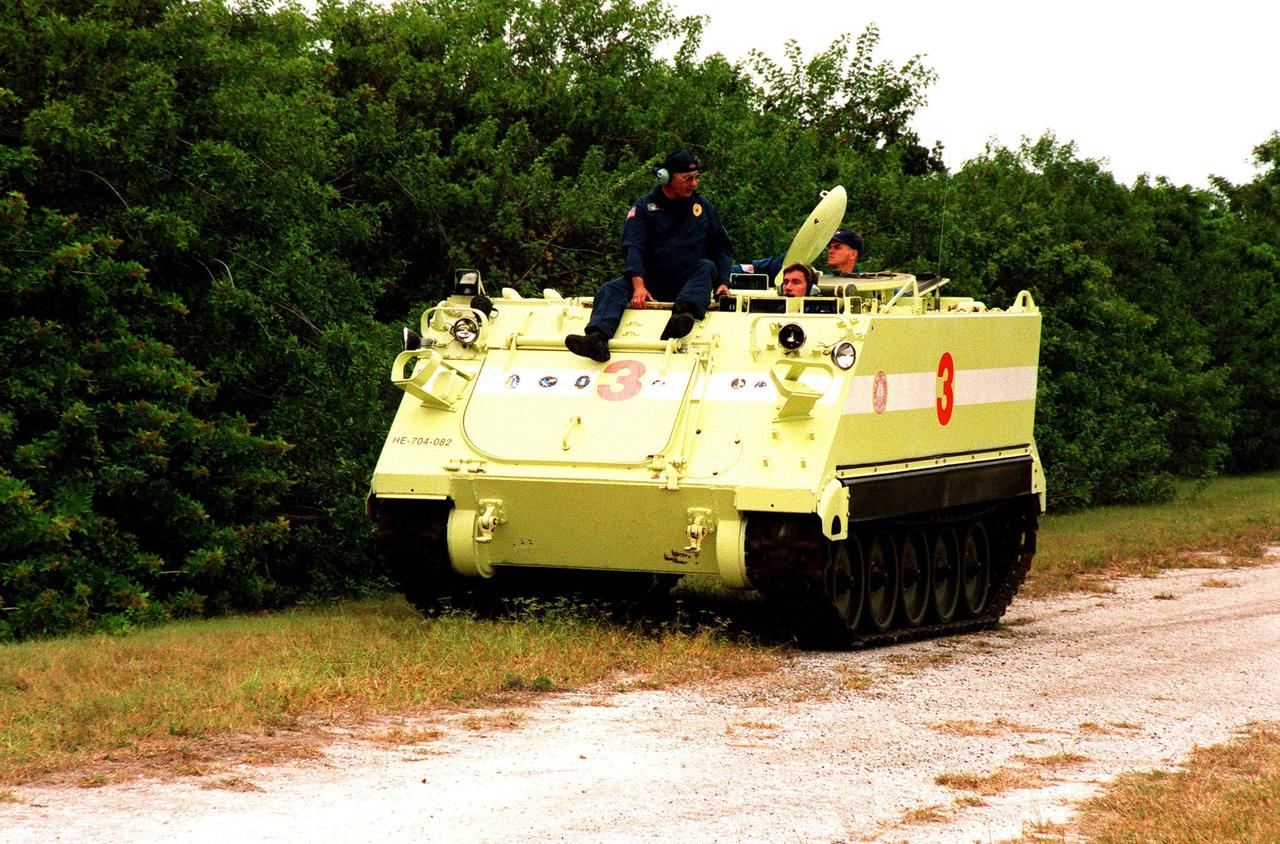
STS-88 Mission Specialist Sergei Konstantinovich Krikalev, a Russian cosmonaut, operates an M-113, an armored personnel carrier, as part of emergency egress training under the watchful eye of instructor George Hoggard (left) during Terminal Countdown Demonstration Test (TCDT) activities. The TCDT also provides the crew with simulated countdown exercises and opportunities to inspect their mission payloads in the orbiter's payload bay. Mission STS-88 is targeted for launch on Dec. 3, 1998. It is the first U.S. flight for the assembly of the International Space Station and will carry the Unity connecting module. Others in the STS-88 crew are Mission Commander Robert D. Cabana; Pilot Frederick W. "Rick" Sturckow; and Mission Specialists Nancy J. Currie, Jerry L. Ross, and James H. Newman
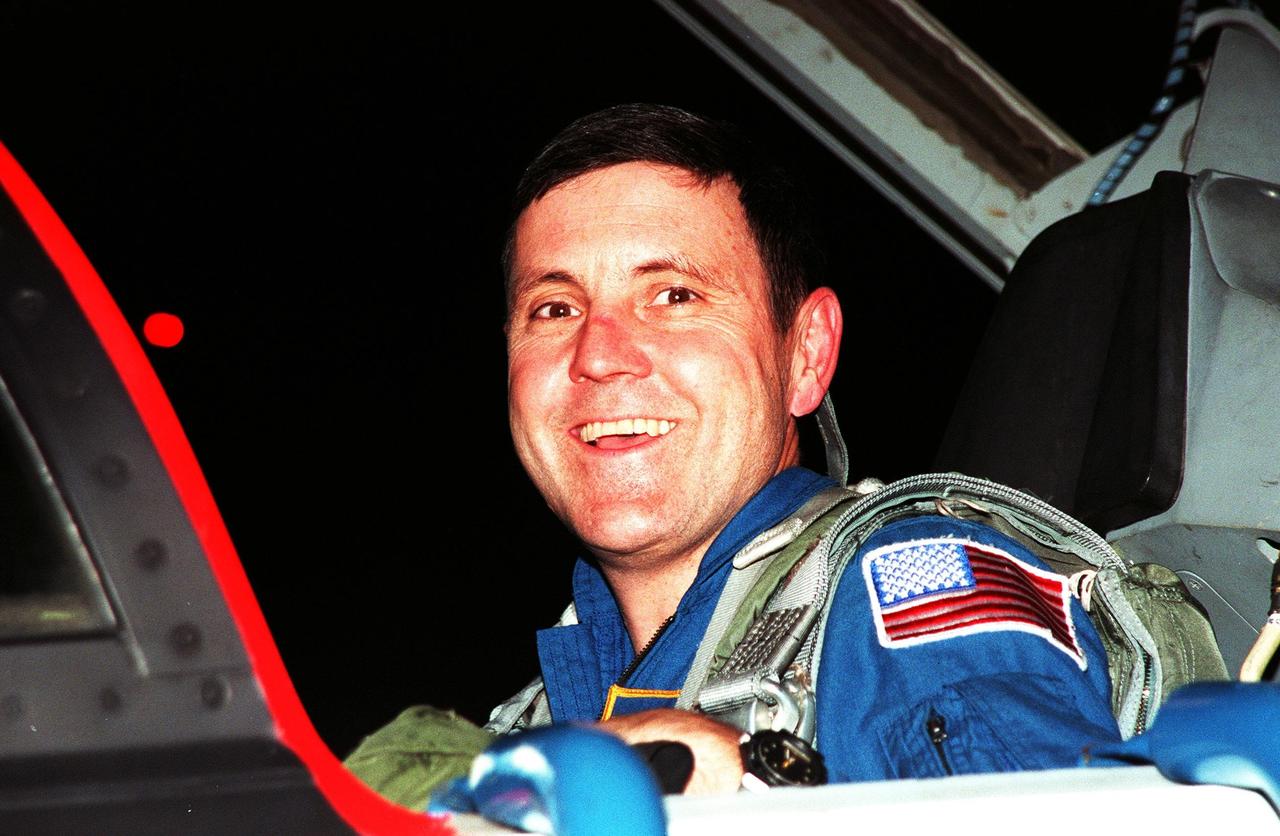
STS-88 Mission Commander Robert D. Cabana arrives after dark at the Shuttle Landing Facility in a T-38 jet aircraft to take part in Terminal Countdown Demonstration Test (TCDT) activities. The TCDT provides the crew with simulated countdown exercises, emergency egress training, and opportunities to inspect their mission payloads in the orbiter's payload bay. Mission STS-88 is targeted for launch on Dec. 3, 1998. It is the first U.S. flight for the assembly of the International Space Station and will carry the Unity connecting module. Others in the STS-88 crew are Pilot Frederick W. "Rick" Sturckow, Mission Specialists Nancy J. Currie, Jerry L. Ross, James H. Newman and Russian cosmonaut Sergei Konstantinovich Krikalev. Ross and Newman will make three spacewalks to connect power, data and utility lines and install exterior equipment
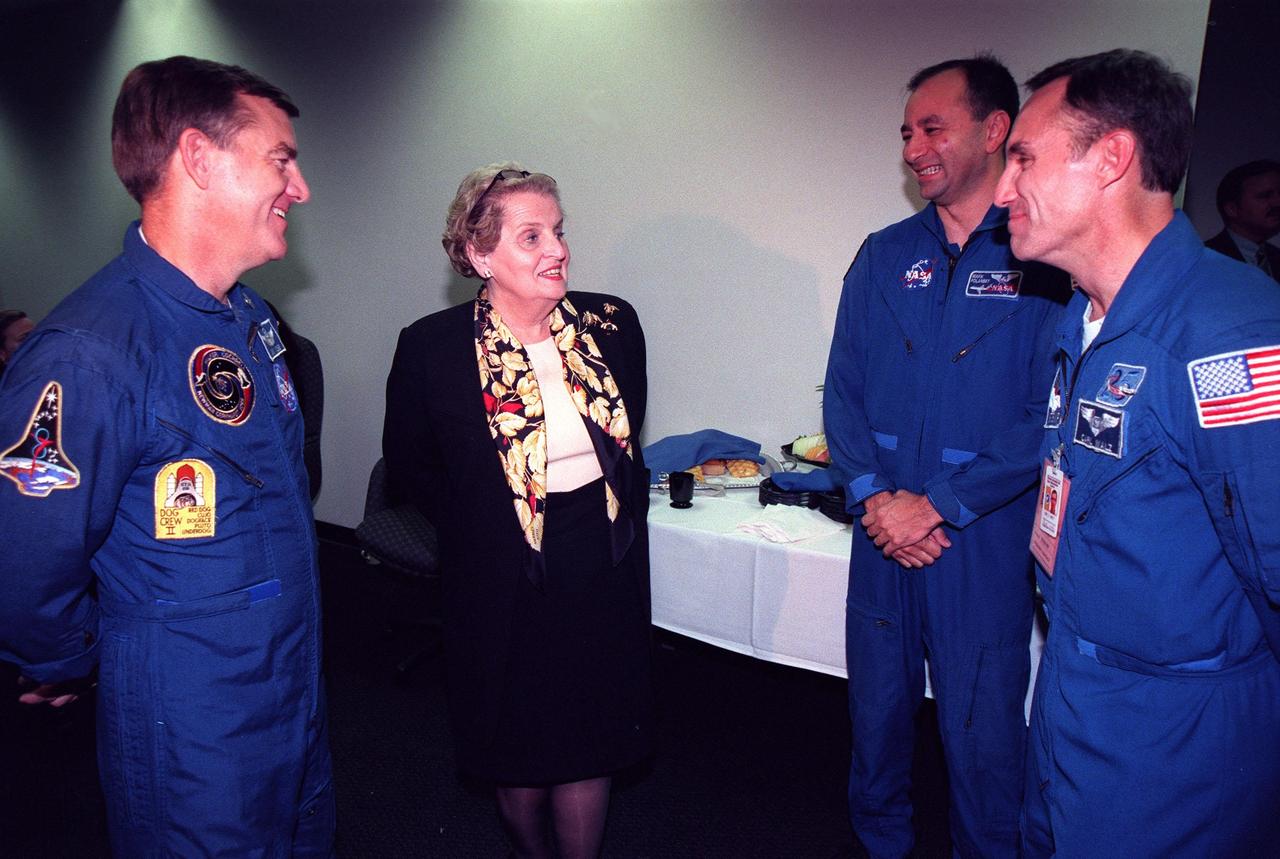
Following the successful launch of the STS-88 crew aboard Endeavour from Launch Pad 39A at 3:35:34 a.m. EST, U.S. Secretary of State Madeleine Albright (second from left) talks with astronauts (left to right) Jim Voss, Mark Polansky and Carl Walz. STS-88 is the first U.S. mission dedicated to the assembly of the International Space Station (ISS). Voss is a member of the STS-100 crew which will be the eighth ISS assembly mission. Polansky is slated to fly on STS-98 which will be the sixth ISS assembly mission. Walz is currently assigned to fly on the ISS on the fourth long duration crew
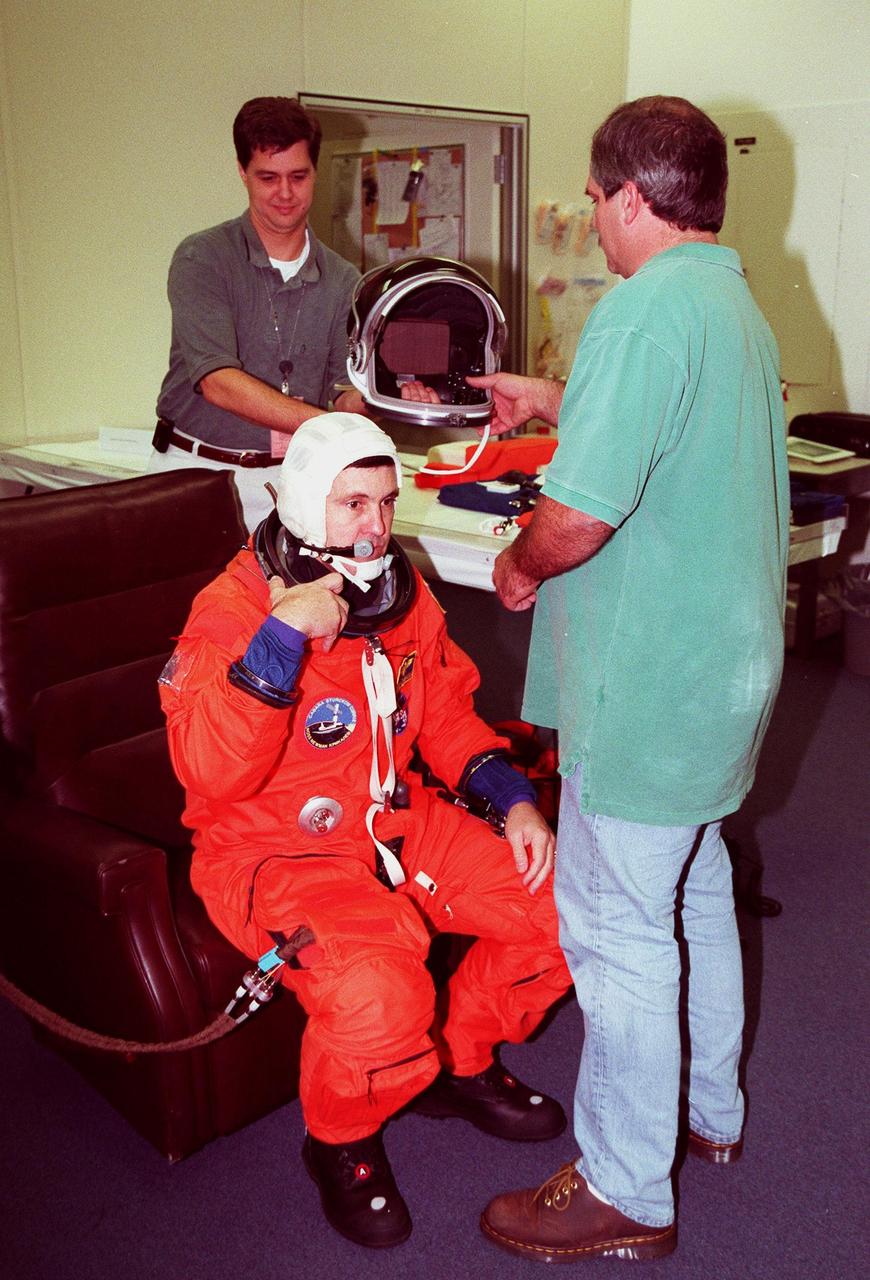
STS-88 Mission Commander Robert D. Cabana suits up in the Operations and Checkout Building prior, as part of flight crew equipment fit check, to his trip to Launch Pad 39A. He is helped by suit tech (right) Lloyd Armintor and an unidentified KSC worker. The crew are at KSC to participate in the Terminal Countdown Demonstration Test (TCDT) which includes mission familiarization activities, emergency egress training, and the simulated main engine cut-off exercise. This is Cabana's fourth space flight. Mission STS-88 is targeted for launch on Dec. 3, 1998. It is the first U.S. flight for the assembly of the International Space Station and will carry the Unity connecting module
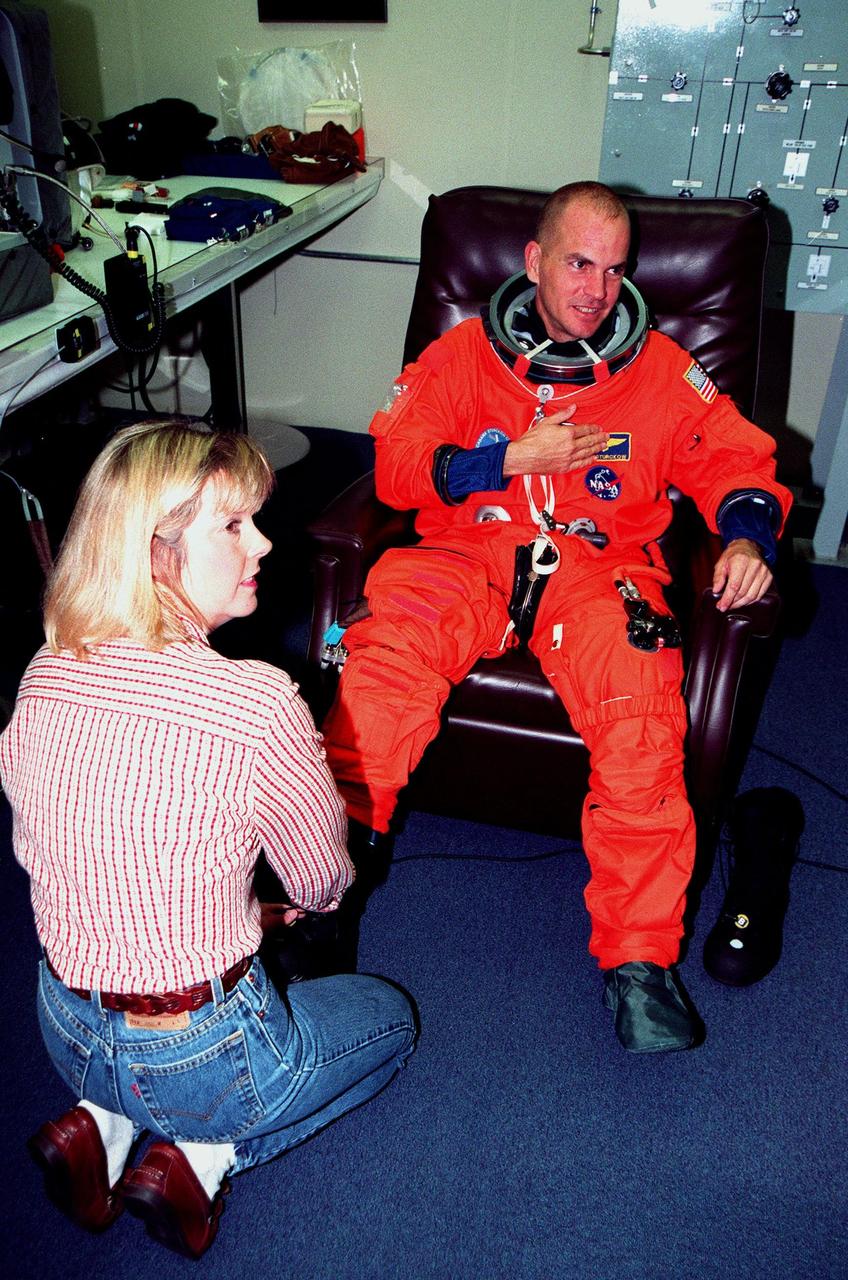
STS-88 Pilot Frederick W. "Rick" Sturckow suits up in the Operations and Checkout Building, as part of flight crew equipment fit check, prior to his trip to Launch Pad 39A. He is helped by suit tech Terri McKinney. The crew are at KSC to participate in the Terminal Countdown Demonstration Test (TCDT) which includes mission familiarization activities, emergency egress training, and the simulated main engine cut-off exercise. This is Sturckow's first space flight. Mission STS-88 is targeted for launch on Dec. 3, 1998. It is the first U.S. flight for the assembly of the International Space Station and will carry the Unity connecting module
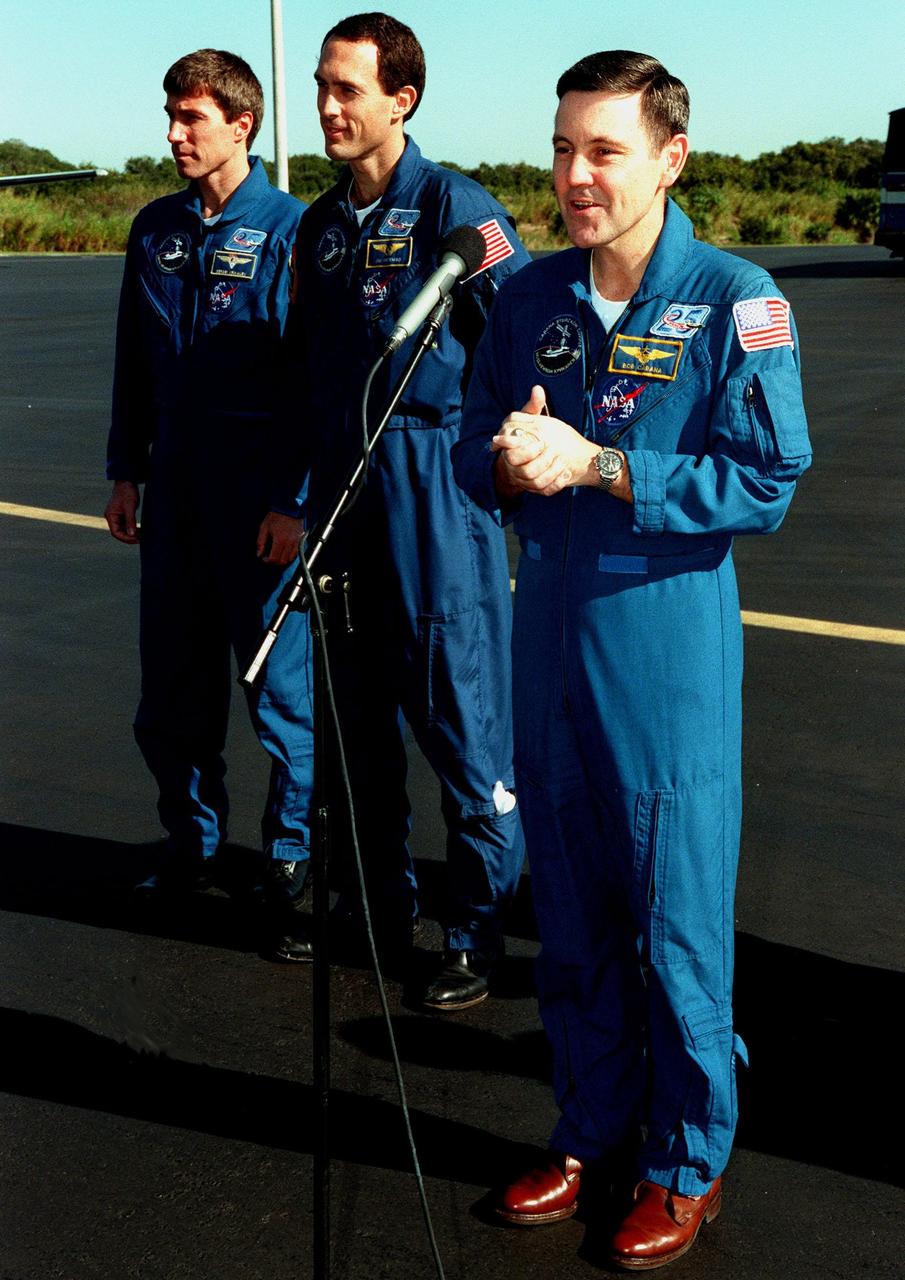
STS-88 Commander Robert D. Cabana (at microphone) speaks to the news media before the crew's departure at Cape Canaveral Air Station. At left are Mission Specialists Sergei Konstantinovich Krikalev and James H. Newman. The other crew members (not shown) are Mission Specialists Jerry L. Ross and Nancy J. Currie, and Pilot Frederick W. "Rick" Sturckow. The STS-88 crew returned Dec. 15 from a 12-day mission on orbit constructing the first elements of the International Space Station, the U.S.-built Unity connecting module and Russian-built Zarya control module
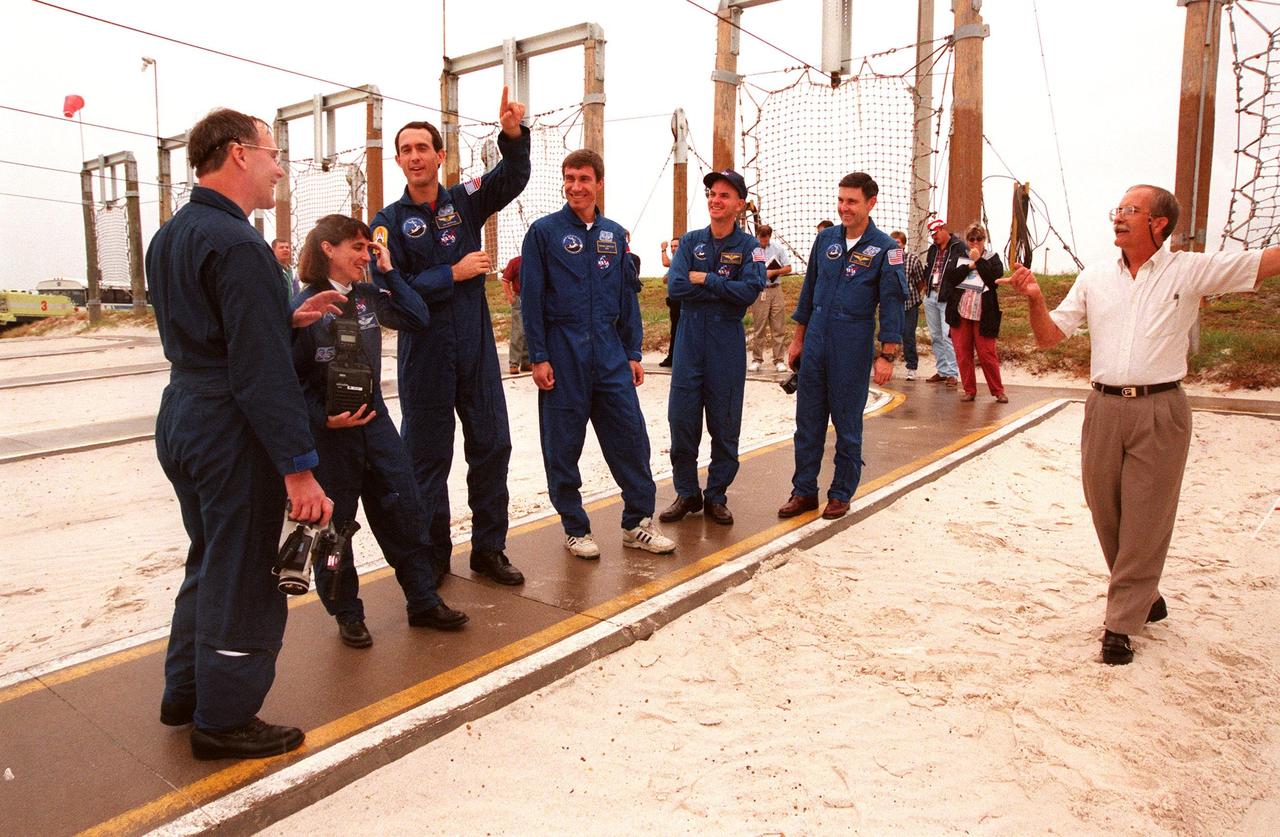
KENNEDY SPACE CENTER, Fla. -- The STS-88 crew get instruction from Ken Clark, at right, a training instructor with United Space Alliance (USA), on emergency egress procedures from launch pad 39A. From left, they are Mission Specialists Jerry L. Ross, Nancy J. Currie, James H. Newman and Sergei Krikalev, a Russian cosmonaut, Pilot Frederick W. "Rick" Sturckow, and Mission Commander Robert D. Cabana. The crew are at KSC to participate in the Terminal Countdown Demonstration Test (TCDT), a dress rehearsal for launch. Mission STS-88 is targeted for launch on Dec. 3, 1998. It is the first U.S. flight for the assembly of the International Space Station and will carry the Unity connecting module
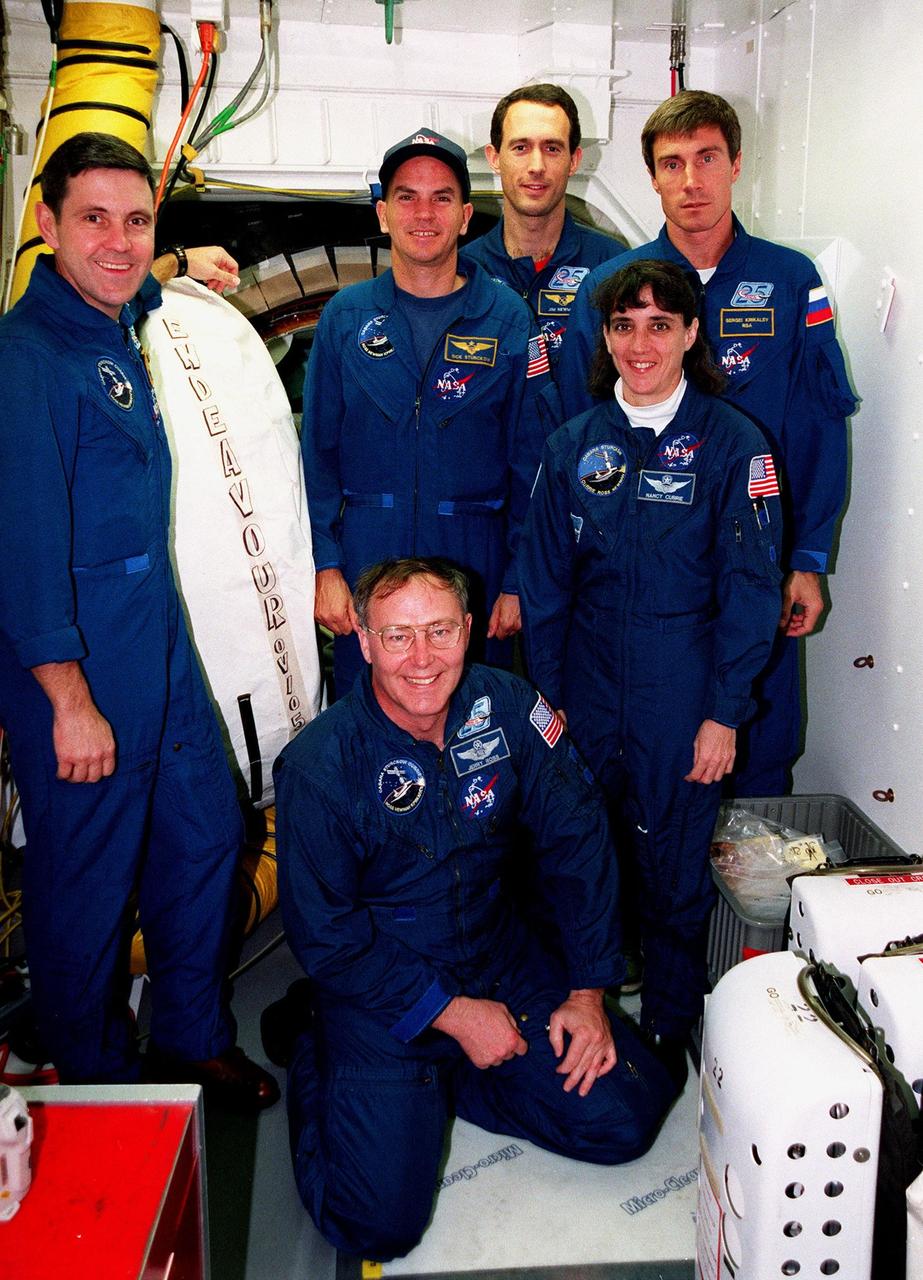
KENNEDY SPACE CENTER, Fla. -- STS-88 crew members pose for a photograph in the white room, an environmental chamber, on launch pad 39A. In the front row are (left) Mission Commander Robert D. Cabana, Mission Specialists Jerry L. Ross (kneeling) and Nancy J. Currie; in the back row are Pilot Frederick W. "Rick" Sturckow and Mission Specialists James H. Newman and Sergei Krikalev, a Russian cosmonaut. The crew are at KSC to participate in the Terminal Countdown Demonstration Test (TCDT), a dress rehearsal for launch. Mission STS-88 is targeted for launch on Dec. 3, 1998. It is the first U.S. flight for the assembly of the International Space Station and will carry the Unity connecting module
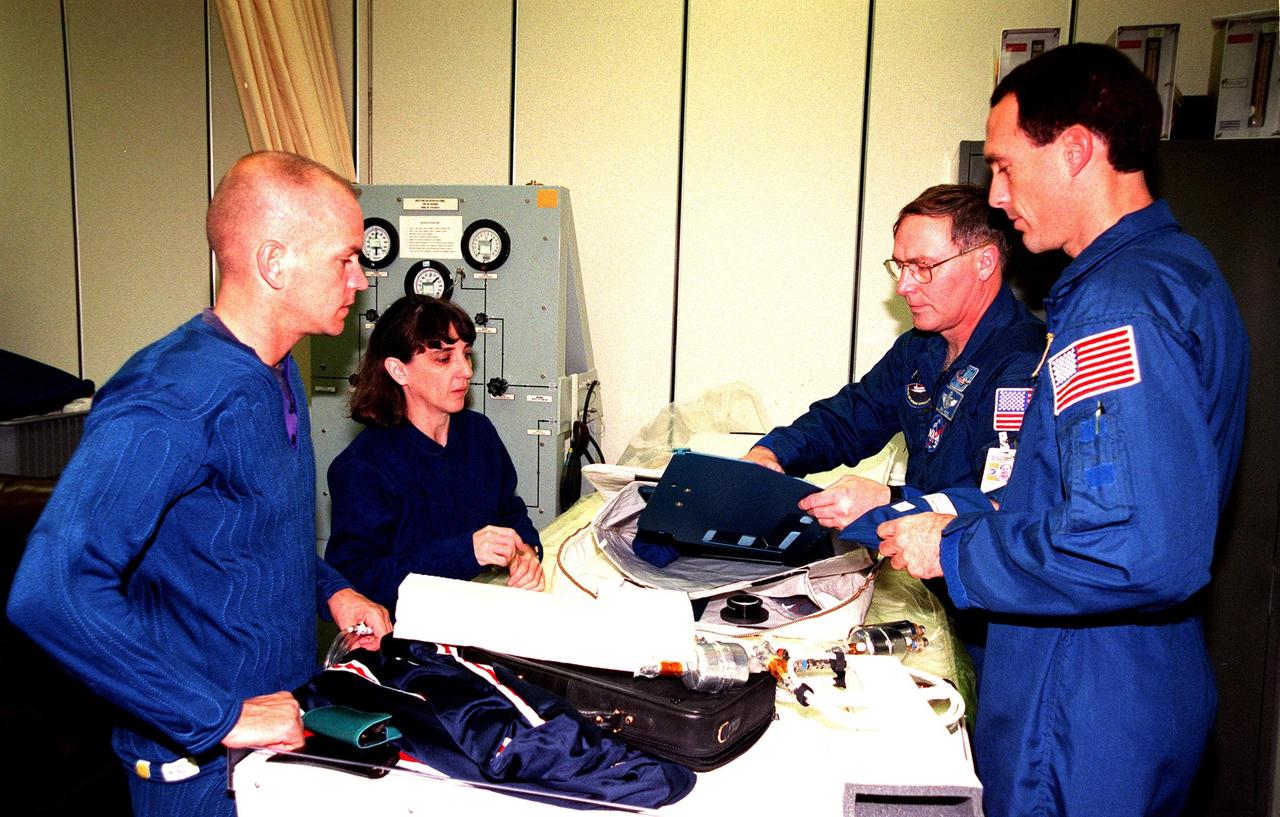
(From left) STS-88 Pilot Frederick W. "Rick" Sturckow and Mission Specialists Nancy J. Currie, Jerry L. Ross and James H. Newman examine some equipment that will be used on their upcoming space flight. The astronauts are in the Operations and Checkout Building as part of the Terminal Countdown Demonstration Test (TCDT) activities. Mission STS-88 is targeted for launch on Dec. 3, 1998. It is the first U.S. flight for the assembly of the International Space Station. The Space Shuttle Endeavour will carry the six-member crew and the Unity connecting module with its two attached pressurized mating adapters
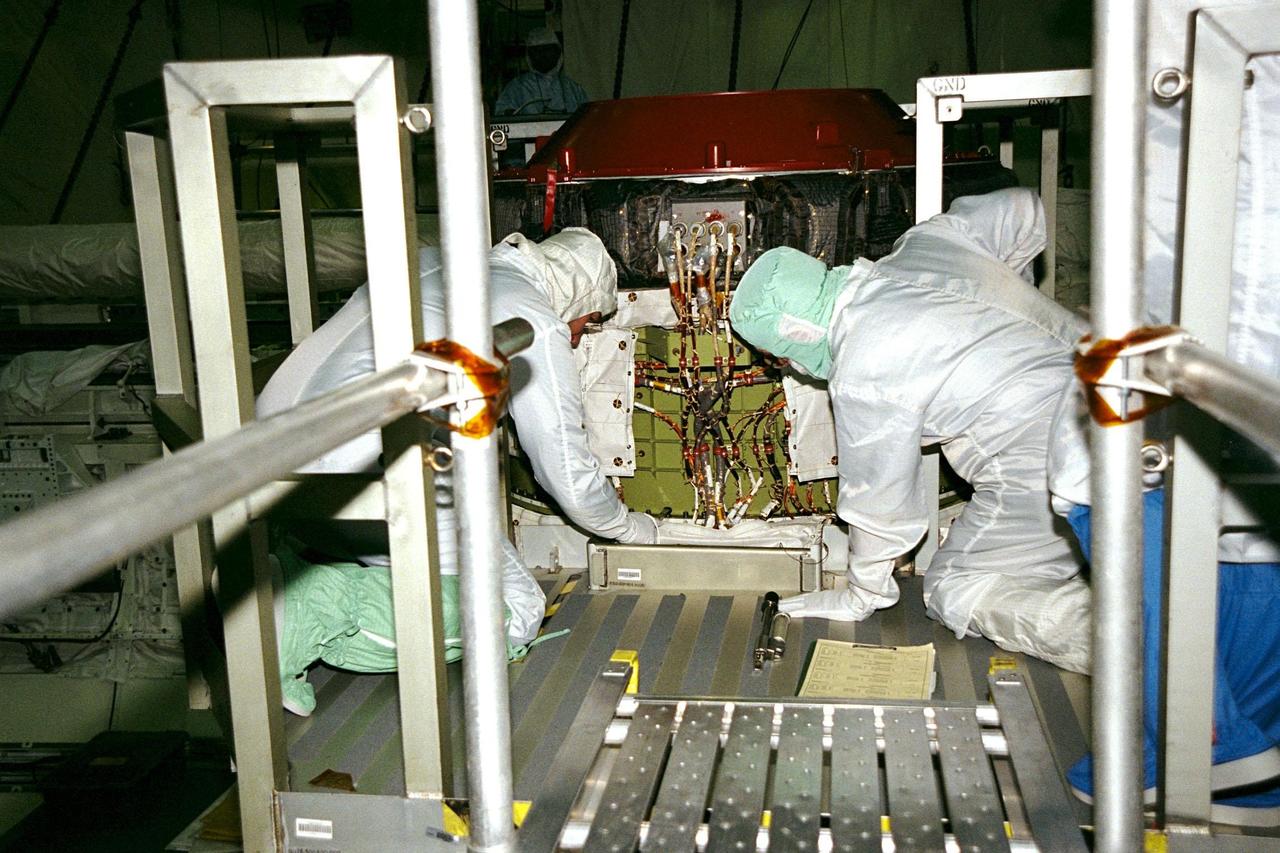
STS-88 crew members inspect the orbital docking mechanism in the payload bay of Orbiter Endeavor during the Crew Equipment Interface Test (CEIT), held in the Orbiter Processing Facility Bay 1 at KSC. The tunnel and airlock are below it. The CEIT gives astronauts an opportunity for a hands-on look at the payloads on which they will be working on orbit. STS-88 will be the first Space Shuttle launch for the International Space Station. Scheduled to lift off from KSC on Dec. 3, 1998, the seven-day mission will be highlighted by the mating of the U.S.-built Unity connecting module to the Zarya control module, which will already be in orbit, and two space walks to connect power and data transmission cables between the two modules
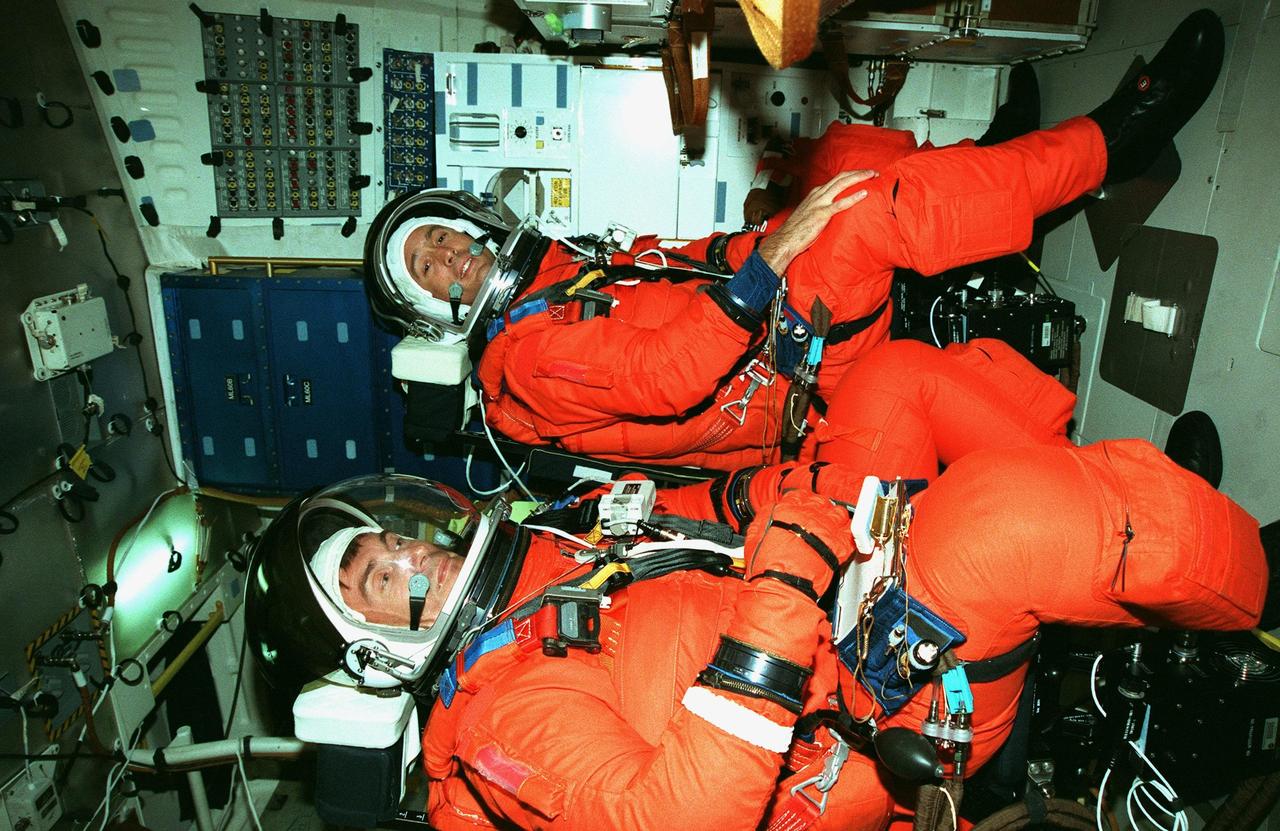
STS-88 Mission Specialists Sergei Konstantinovich Krikalev (left) and James H. Newman (right) sit inside orbiter Endeavour during Terminal Countdown Demonstration Activities (TCDT). The TCDT includes mission familiarization activities, emergency egress training, and the simulated main engine cut-off exercise. Mission STS-88 is targeted for launch on Dec. 3, 1998. It is the first U.S. flight for the assembly of the International Space Station and will carry the Unity connecting module. Unity will be mated with the already orbiting Russian-built Zarya control module. The 12-day mission includes three planned spacewalks to connect power, data and utility lines and install exterior equipment
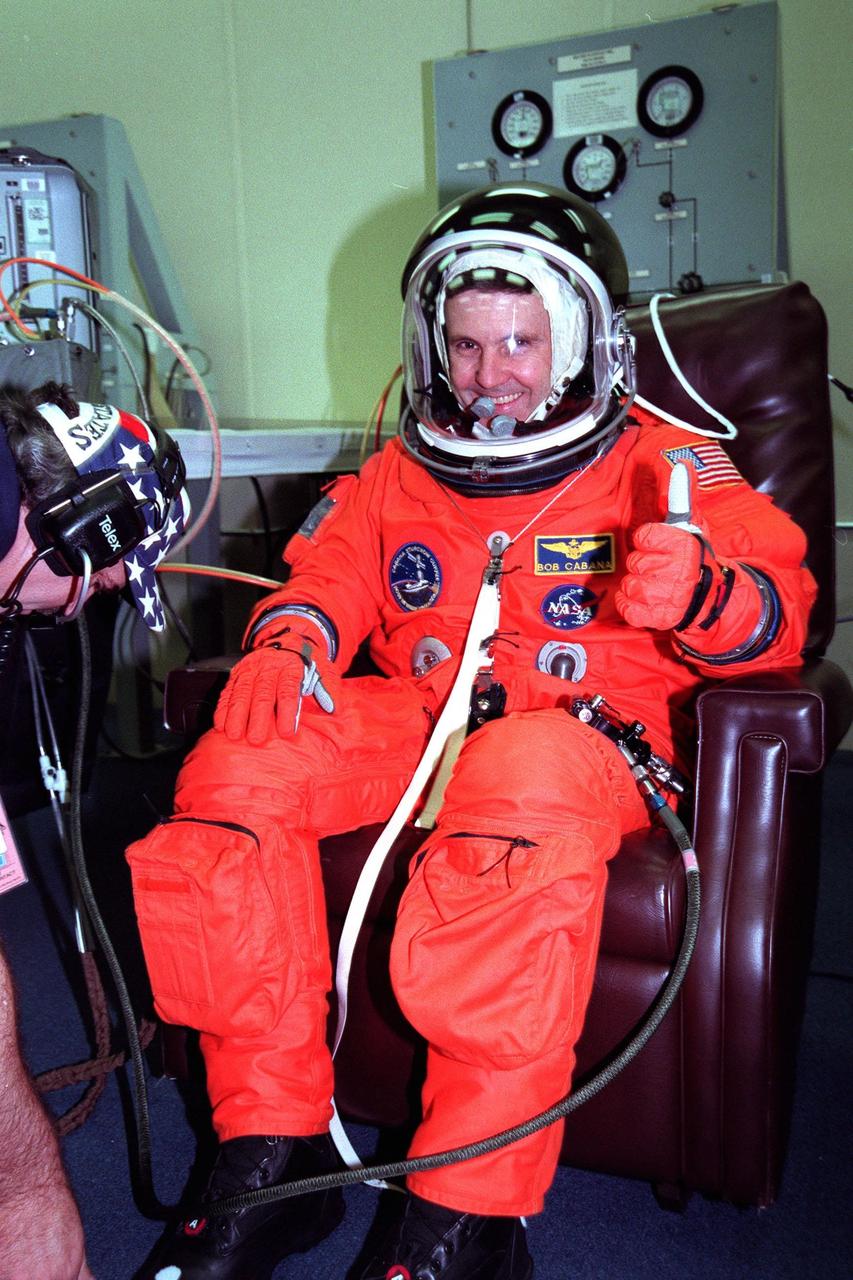
In the Operations and Checkout Building, STS-88 Commander Robert D. Cabana gives a thumbs up during suit check before launch. Mission STS-88 is expected to lift off at 3:56 a.m. EST with the six-member crew aboard Space Shuttle Endeavour on Dec. 3. Endeavour carries the Unity connecting module, which the crew will be mating with the Russian-built Zarya control module already in orbit. In addition to Unity, two small replacement electronics boxes are on board for possible repairs to Zarya batteries. The mission is expected to last 11 days, 19 hours and 49 minutes, landing at 10:17 p.m. EST on Dec. 14
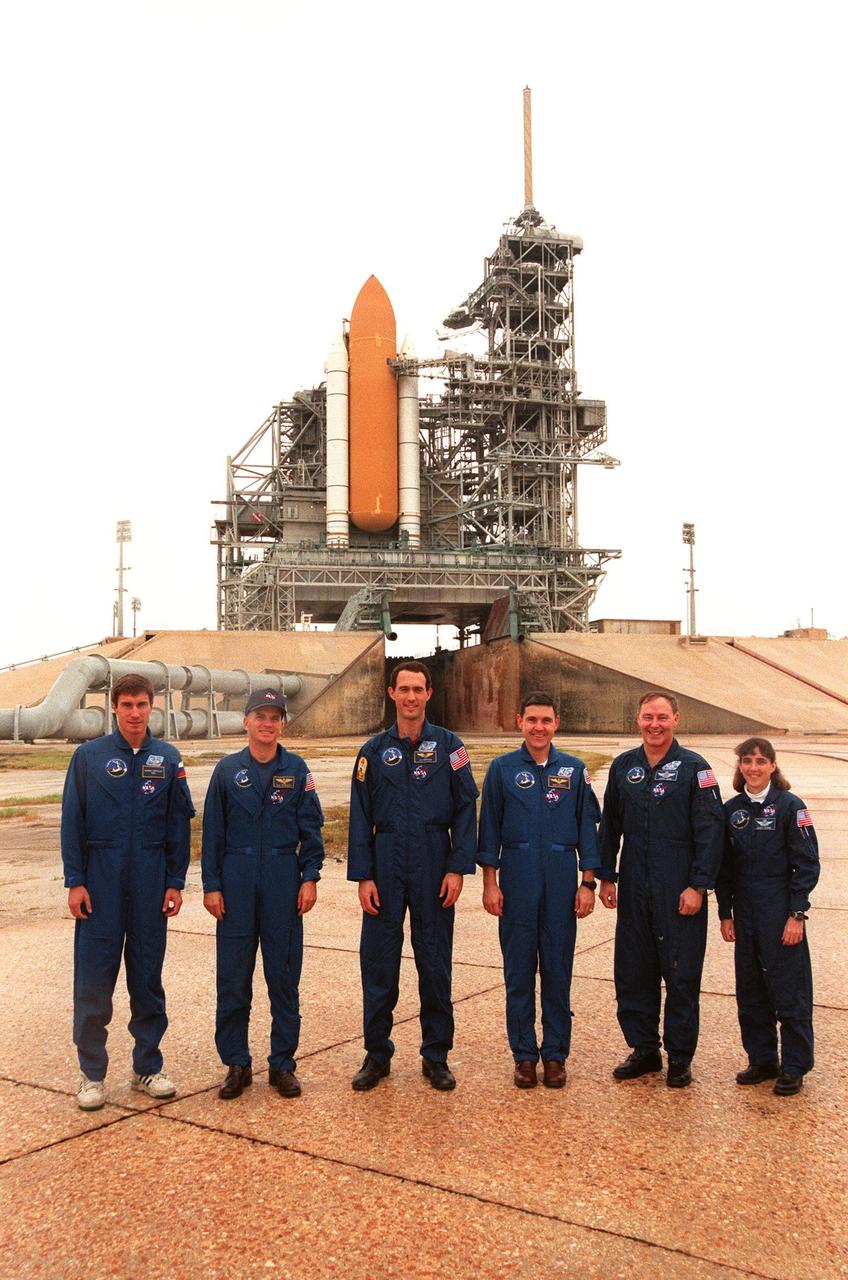
KENNEDY SPACE CENTER, Fla. -- At launch pad 39A, the STS-88 crew pose for a photograph after Terminal Countdown Demonstration Test (TCDT) activities. From left, they are Mission Specialist Sergei Konstantinovich Krikalev, a Russian cosmonaut; Pilot Frederick W. "Rick" Sturckow; Mission Specialist James H. Newman; Mission Commander Robert D. Cabana; Mission Specialist Jerry L. Ross; and Mission Specialist Nancy J. Currie. Mission STS-88 is targeted for launch on Dec. 3, 1998. It is the first U.S. flight for the assembly of the International Space Station and will carry the Unity connecting module
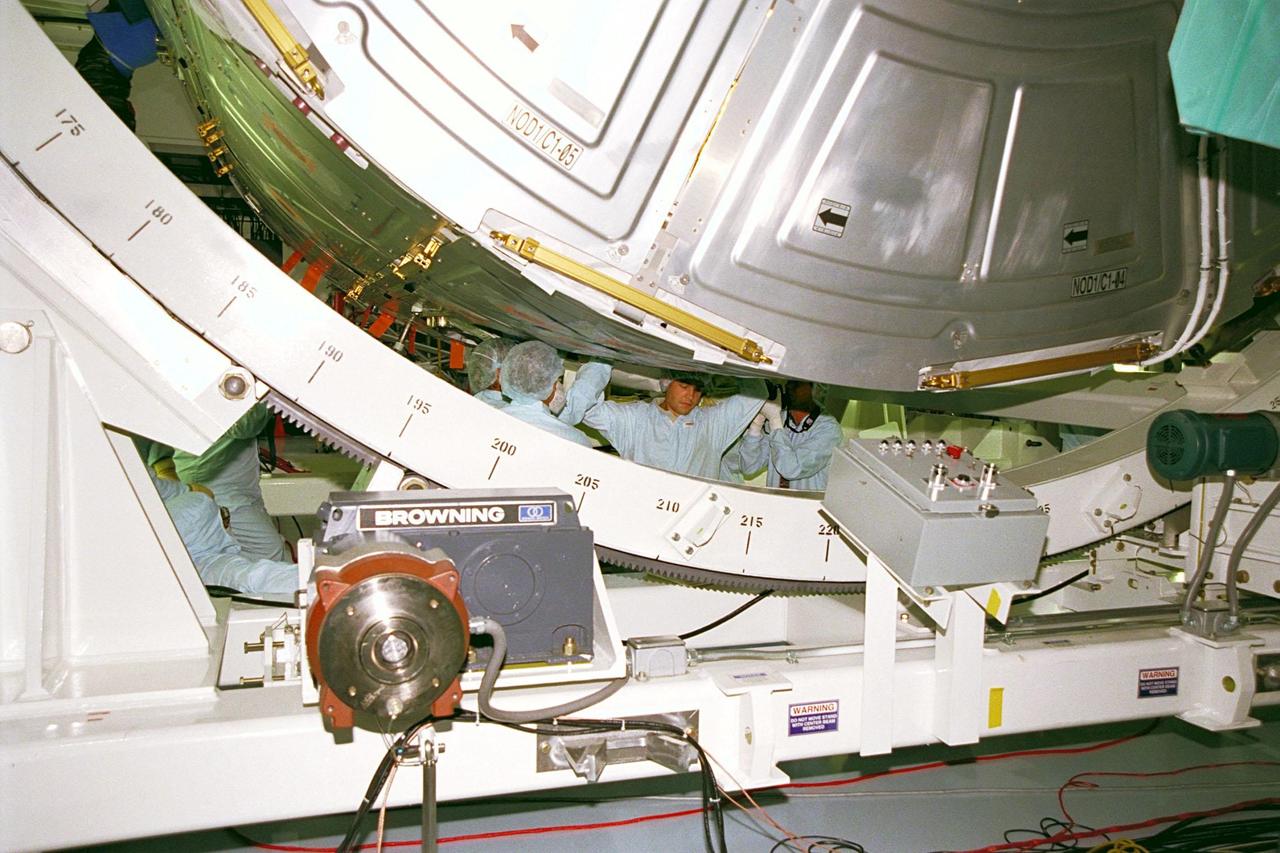
KENNEDY SPACE CENTER, FLA. -- STS-88 crew members and technicians get under the Unity connecting module to examine it during a Crew Equipment Interface Test (CEIT) in the Space Station Processing Facility at KSC. The Unity connecting module is part of the International Space Station, and during the mission, will be mated to the Zarya control module, which will already be in orbit. The CEIT gives astronauts an opportunity for a hands-on look at the payloads on which they will be working while on orbit. STS-88 will be the first Space Shuttle launch for the International Space Station. Launch is scheduled for December 1998