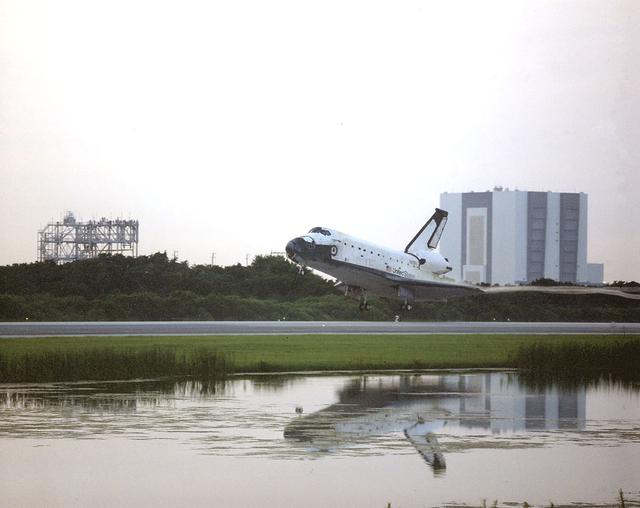
Framed by the Vehicle Assembly Building at right and the Mate-Demate Device at left, the Space Shuttle orbiter Columbia (STS-94) glided onto Runway 33 of Kennedy Space Center's Shuttle Landing Facility. On board for the reflight of STS-83 were a crew of seven and the Microgravity Science Laboratory-1 (MSL-1)which was managed by scientists and engineers from the Marshall Space Flight Center. Mission STS-94 marked the 23rd flight of Columbia and the 85th mission flown since the start of the Space Shuttle program in 1981. During the mission, the Spacelab module was used to test some of the hardware, facilities and procedures that are planned for use on the International Space Station while the flight crew conducted combustion, protein crystal growth and materials processing experiments.
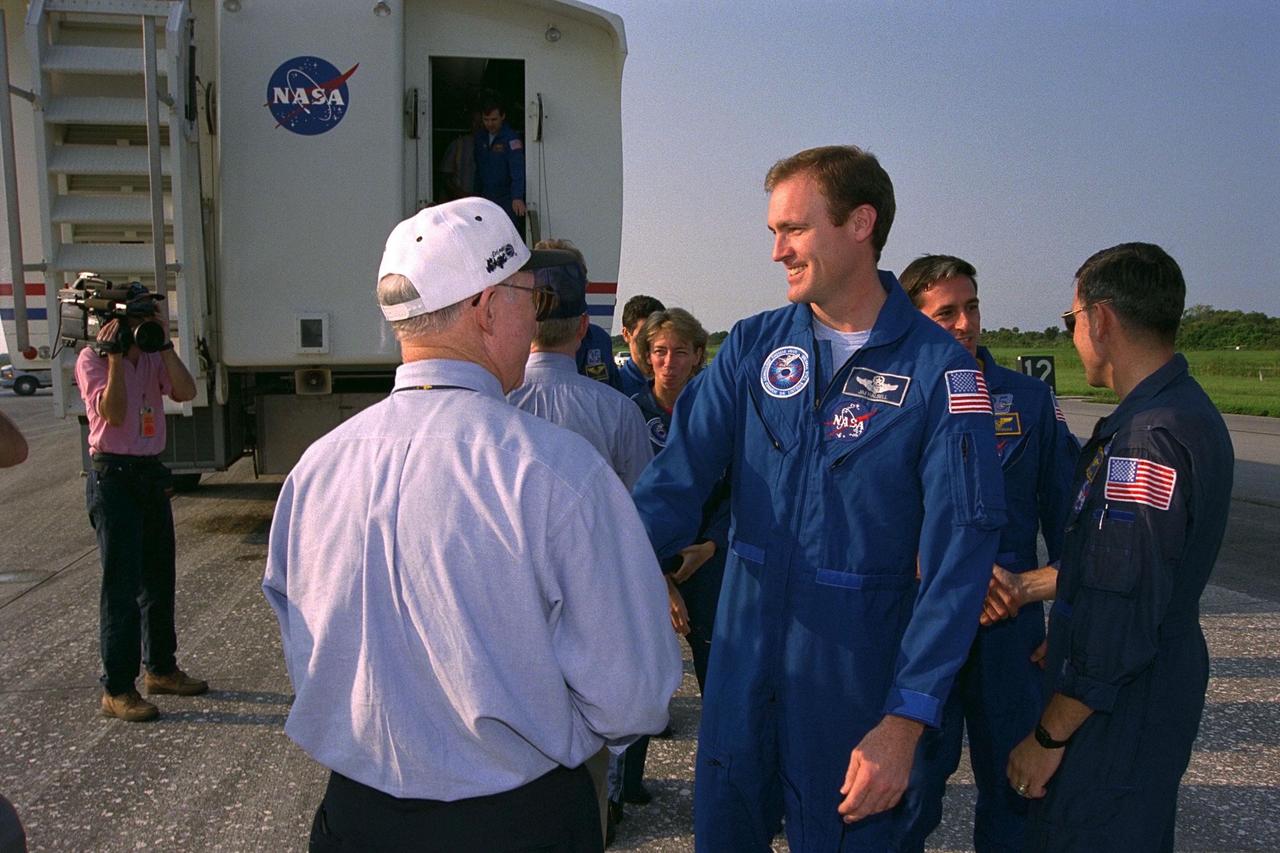
STS-94 Mission Commander James D. Halsell Jr. (center) shakes hands with KSC Shuttle Launch Director James F. Harrington (in white cap) after an end-of-mission landing on Runway 33 of KSC’s Shuttle Landing Facility July 17 to complete the Microgravity Science Laboratory-1 (MSL-1) mission. Main gear touchdown occurred at 6:46:34 a.m. EDT, July 17. At right, STS-88 Mission Commander and Shuttle Training Aircraft (STA) pilot Robert D. Cabana greets STS-94 Mission Specialist Donald A. Thomas. In the background, KSC Center Director Roy D. Bridges Jr. meets with other members of the STS-94 crew
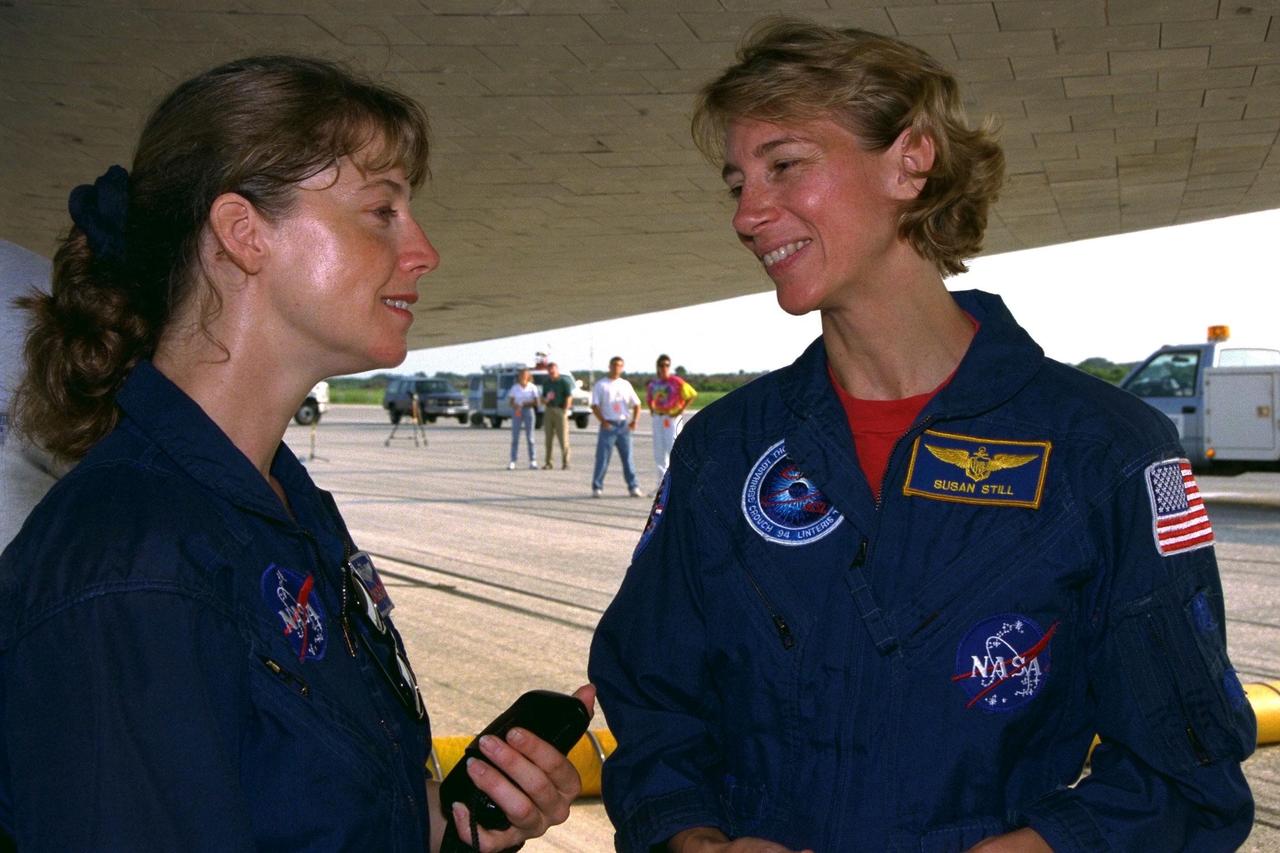
KENNEDY SPACE CENTER, FLA. -- Astronaut Support team member Pamela A. Melroy (left) greets STS-94 Pilot Susan L. Still underneath the Space Shuttle orbiter Columbia after an end-of-mission landing on Runway 33 of KSC’s Shuttle Landing Facility July 17 to complete the Microgravity Science Laboratory-1 (MSL-1) mission. Six of the seven STS-94 crew members took the traditional post-landing walk around the orbiter, meeting with members of the orbiter recovery convoy team and inspecting the vehicle that carried them through space for nearly 17 days on a highly successful microgravity research mission
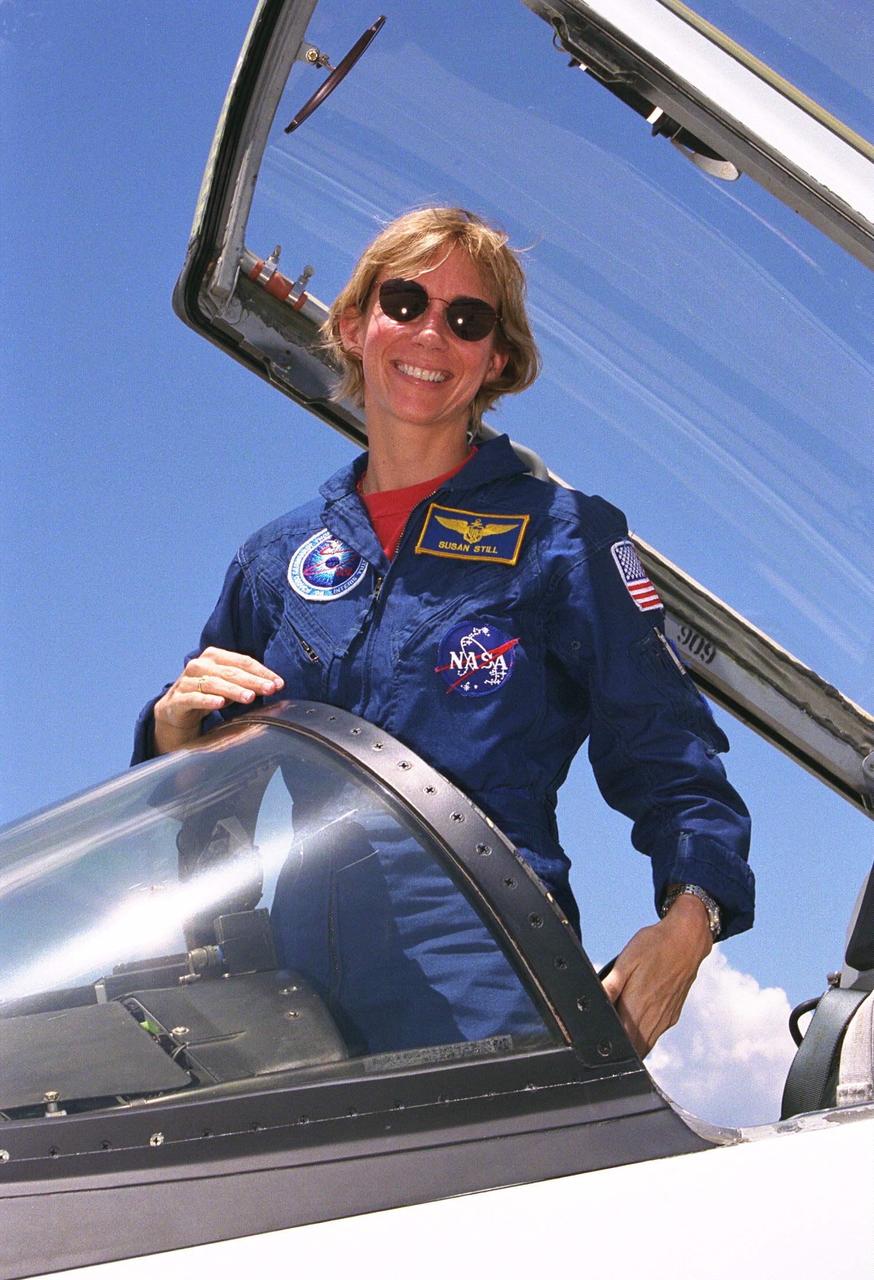
STS-94 Pilot Susan Leigh Still arrives at the Shuttle Landing Facility aboard a T-38 jet in preparation for the reflight of the Microgravity Science Laboratory-1 mission. Launch is scheduled for July 1, 1997, at 2:37 p.m. EDT. The laboratory was scheduled to fly again with the full complement of STS-83 experiments after that mission was cut short due to a faulty fuel cell. During the scheduled 16-day STS-94 mission, the experiments will be used to test some of the hardware, facilities and procedures that are planned for use on the International Space Station while the flight crew conducts combustion, protein crystal growth and materials processing experiments
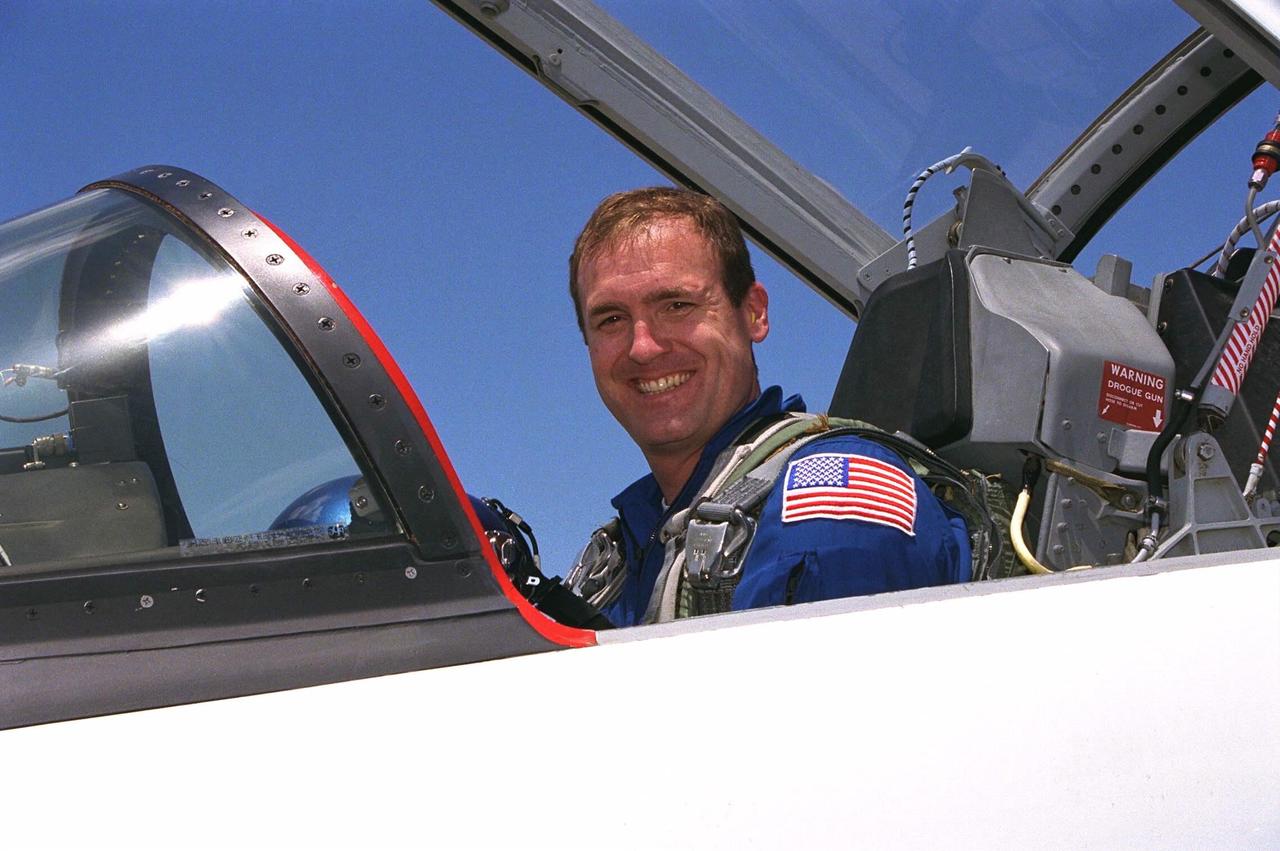
STS-94 Commander James D. Halsell, Jr., arrives at the Shuttle Landing Facility aboard a T-38 jet in preparation for the reflight of the Microgravity Science Laboratory-1 mission. Launch is scheduled for July 1, 1997, at 2:37 p.m. EDT. The laboratory was scheduled to fly again with the full complement of STS-83 experiments after that mission was cut short due to a faulty fuel cell. During the scheduled 16-day STS-94 mission, the experiments will be used to test some of the hardware, facilities and procedures that are planned for use on the International Space Station while the flight crew conducts combustion, protein crystal growth and materials processing experiments
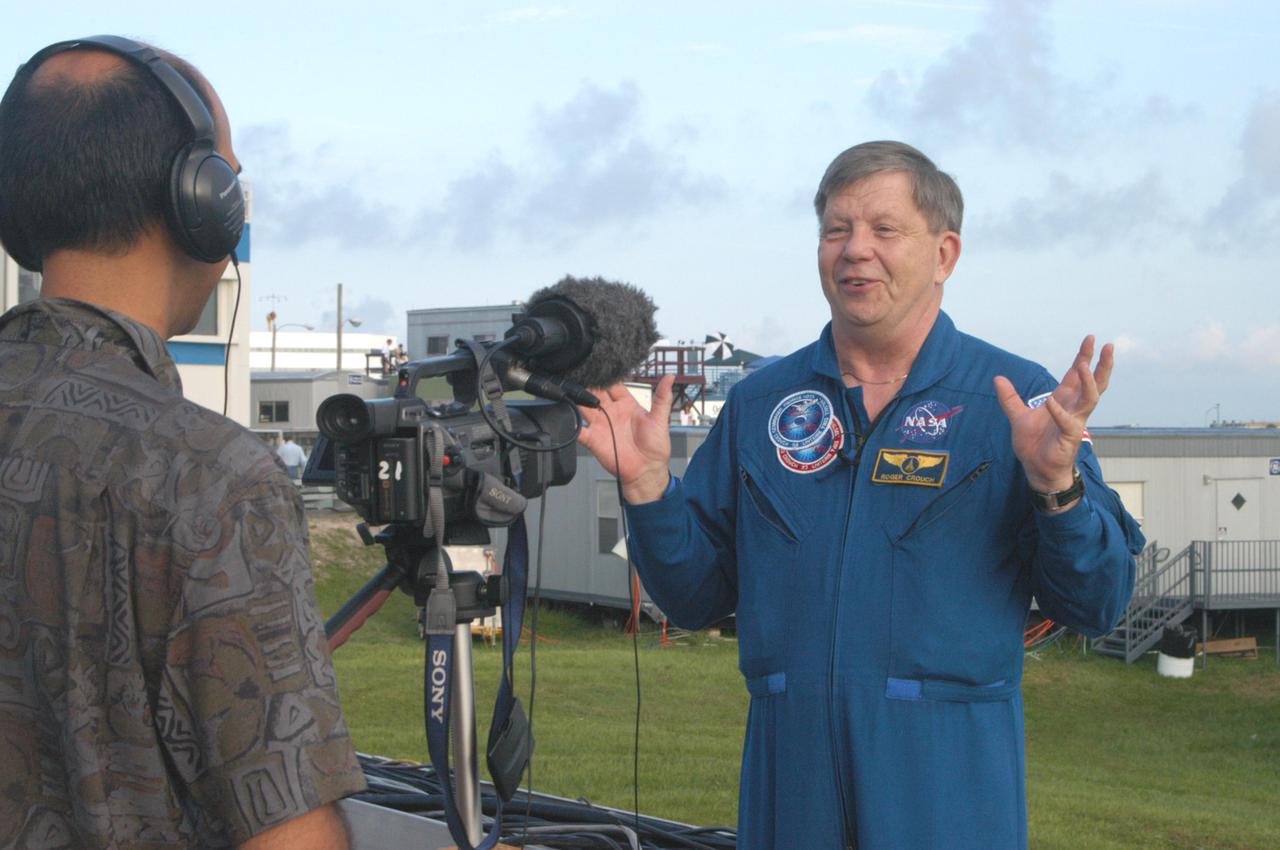
KENNEDY SPACE CENTER, FLA. - Roger Crouch, a payload specialist, talks to the media prior to the launch at 3:51 p.m. of Space Shuttle Discovery on the historic Return to Flight mission STS-114. He has flown on two Shuttle missions, STS-83 and STS-94. STS-114 is the 114th Space Shuttle flight and the 31st for Discovery. The 12-day mission is expected to end with touchdown at the Shuttle Landing Facility at 11:06 a.m. July 25.
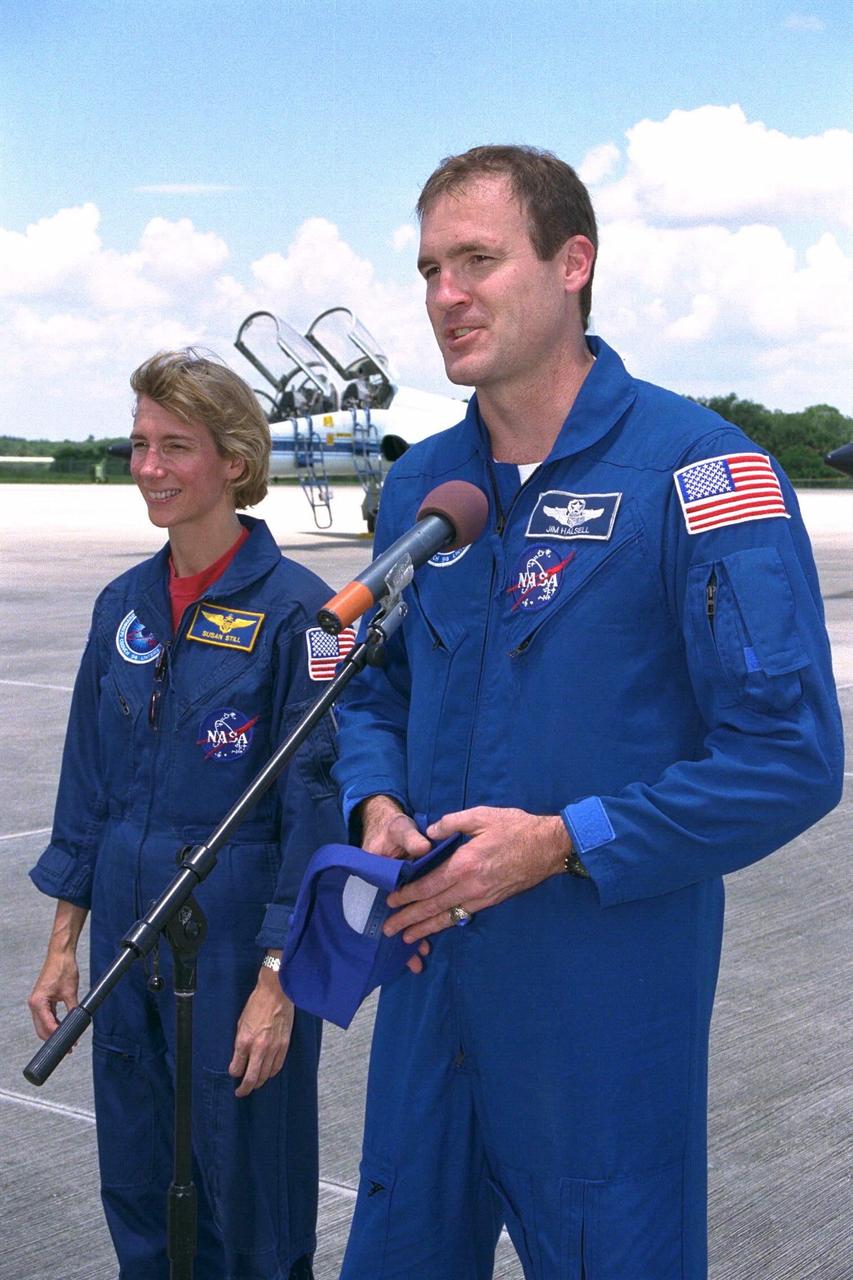
STS-94 Pilot Susan Leigh Still watches as Commander James D. Halsell, Jr., speaks to the media after the crew arrived at the Shuttle Landing Facility at Kennedy Space Center in preparation for the reflight of the Microgravity Science Laboratory-1 mission. Launch is scheduled for July 1, 1997, at 2:37 p.m. EDT. The laboratory was scheduled to fly again with the full complement of STS-83 experiments after that mission was cut short due to a faulty fuel cell. During the scheduled 16-day STS-94 mission, the experiments will be used to test some of the hardware, facilities and procedures that are planned for use on the International Space Station while the flight crew conducts combustion, protein crystal growth and materials processing experiments
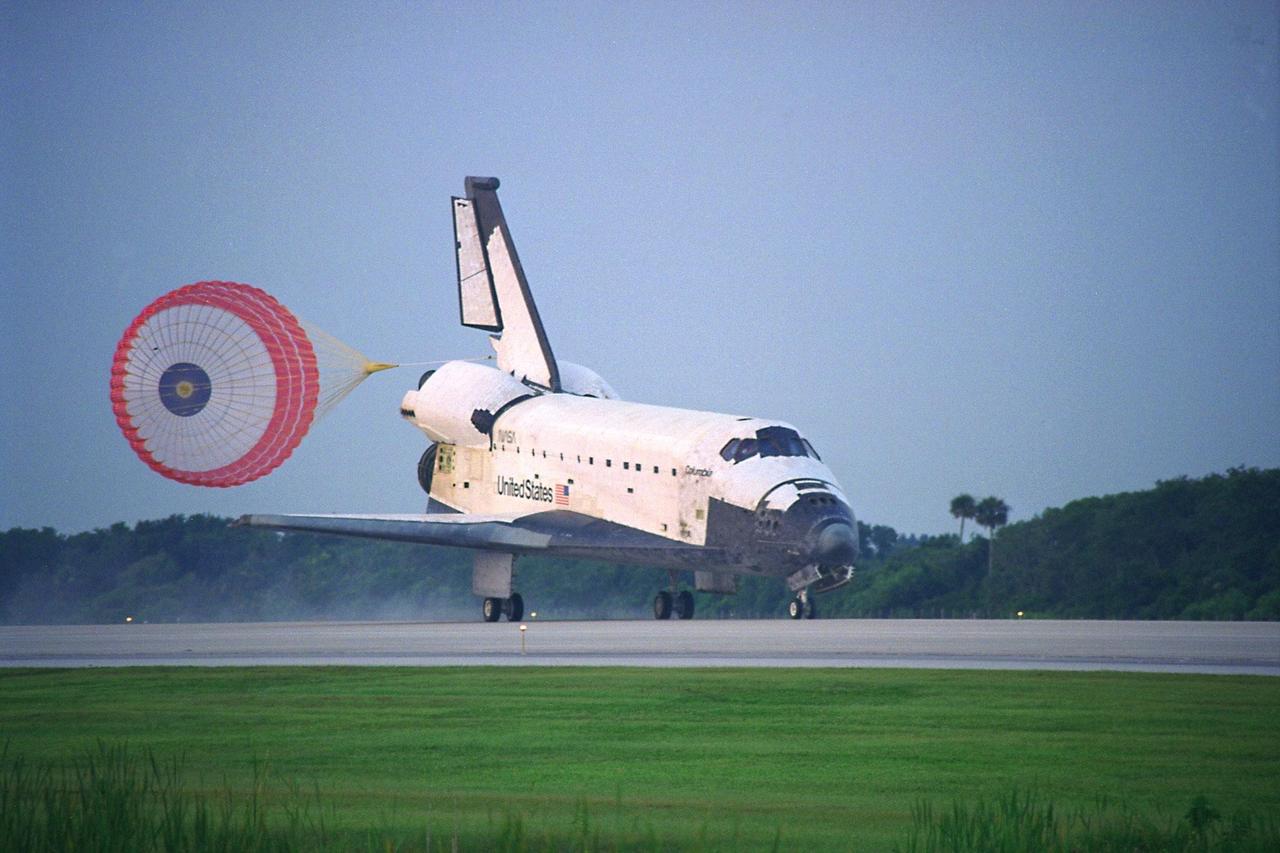
KENNEDY SPACE CENTER, FLA. -- With its drag chute deployed, the Space Shuttle Orbiter Columbia touches down on Runway 33 at KSC’s Shuttle Landing Facility at 6:46:34 a.m. EDT with Mission Commander James D. Halsell Jr. and Pilot Susan L. Still at the controls to complete the STS-94 mission. Also on board are Mission Specialist Donald A. Thomas, Mission Specialist Michael L. Gernhardt , Payload Commander Janice Voss, and Payload Specialists Roger K. Crouch and Gregory T. Linteris. Mission elapsed time for STS-94 was 15 days,16 hours, 44 seconds. During the Microgravity Science Laboratory-1 (MSL-1) mission, the Spacelab module was used to test some of the hardware, facilities and procedures that are planned for use on the International Space Station while the flight crew conducted combustion, protein crystal growth and materials processing experiments. This mission was a reflight of the STS-83 mission that lifted off from KSC in April of this year. That space flight was cut short due to indications of a faulty fuel cell. This was Columbia’s 11th landing at KSC and the 38th landing at the space center in the history of the Shuttle program

KENNEDY SPACE CENTER, FLA. -- With its drag chute deployed, the Space Shuttle Orbiter Columbia touches down on Runway 33 at KSC’s Shuttle Landing Facility at 6:46:34 a.m. EDT with Mission Commander James D. Halsell Jr. and Pilot Susan L. Still at the controls to complete the STS-94 mission. Also on board are Mission Specialist Donald A. Thomas, Mission Specialist Michael L. Gernhardt , Payload Commander Janice Voss, and Payload Specialists Roger K. Crouch and Gregory T. Linteris. Mission elapsed time for STS-94 was 15 days,16 hours, 44 seconds. During the Microgravity Science Laboratory-1 (MSL-1) mission, the Spacelab module was used to test some of the hardware, facilities and procedures that are planned for use on the International Space Station while the flight crew conducted combustion, protein crystal growth and materials processing experiments. This mission was a reflight of the STS-83 mission that lifted off from KSC in April of this year. That space flight was cut short due to indications of a faulty fuel cell. This was Columbia’s 11th landing at KSC and the 38th landing at the space center in the history of the Shuttle program
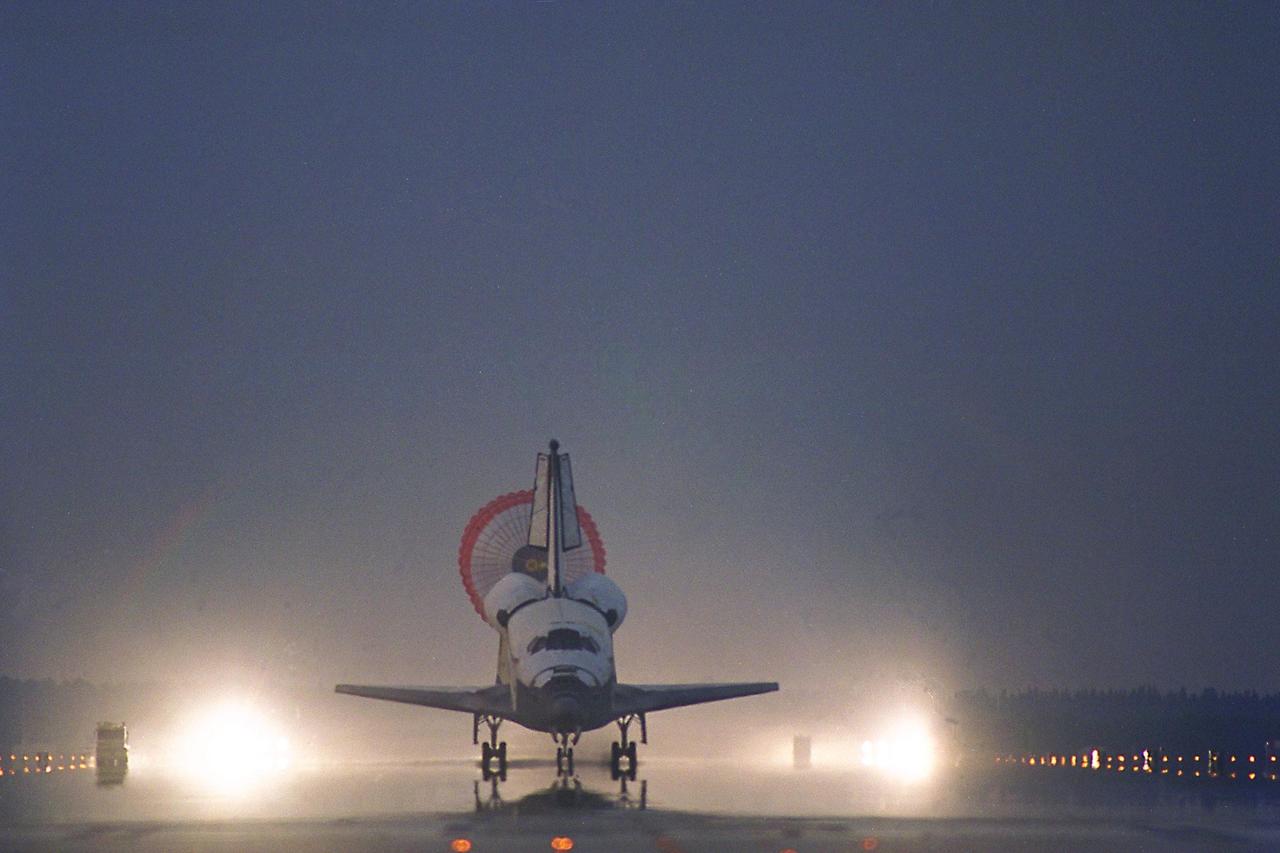
KENNEDY SPACE CENTER, FLA. -- With its drag chute deployed, the Space Shuttle Orbiter Columbia touches down on Runway 33 at KSC’s Shuttle Landing Facility at 6:46:34 a.m. EDT with Mission Commander James D. Halsell Jr. and Pilot Susan L. Still at the controls to complete the STS-94 mission. Also on board are Mission Specialist Donald A. Thomas, Mission Specialist Michael L. Gernhardt , Payload Commander Janice Voss, and Payload Specialists Roger K. Crouch and Gregory T. Linteris. Mission elapsed time for STS-94 was 15 days,16 hours, 44 seconds. During the Microgravity Science Laboratory-1 (MSL-1) mission, the Spacelab module was used to test some of the hardware, facilities and procedures that are planned for use on the International Space Station while the flight crew conducted combustion, protein crystal growth and materials processing experiments. This mission was a reflight of the STS-83 mission that lifted off from KSC in April of this year. That space flight was cut short due to indications of a faulty fuel cell. This was Columbia’s 11th landing at KSC and the 38th landing at the space center in the history of the Shuttle program
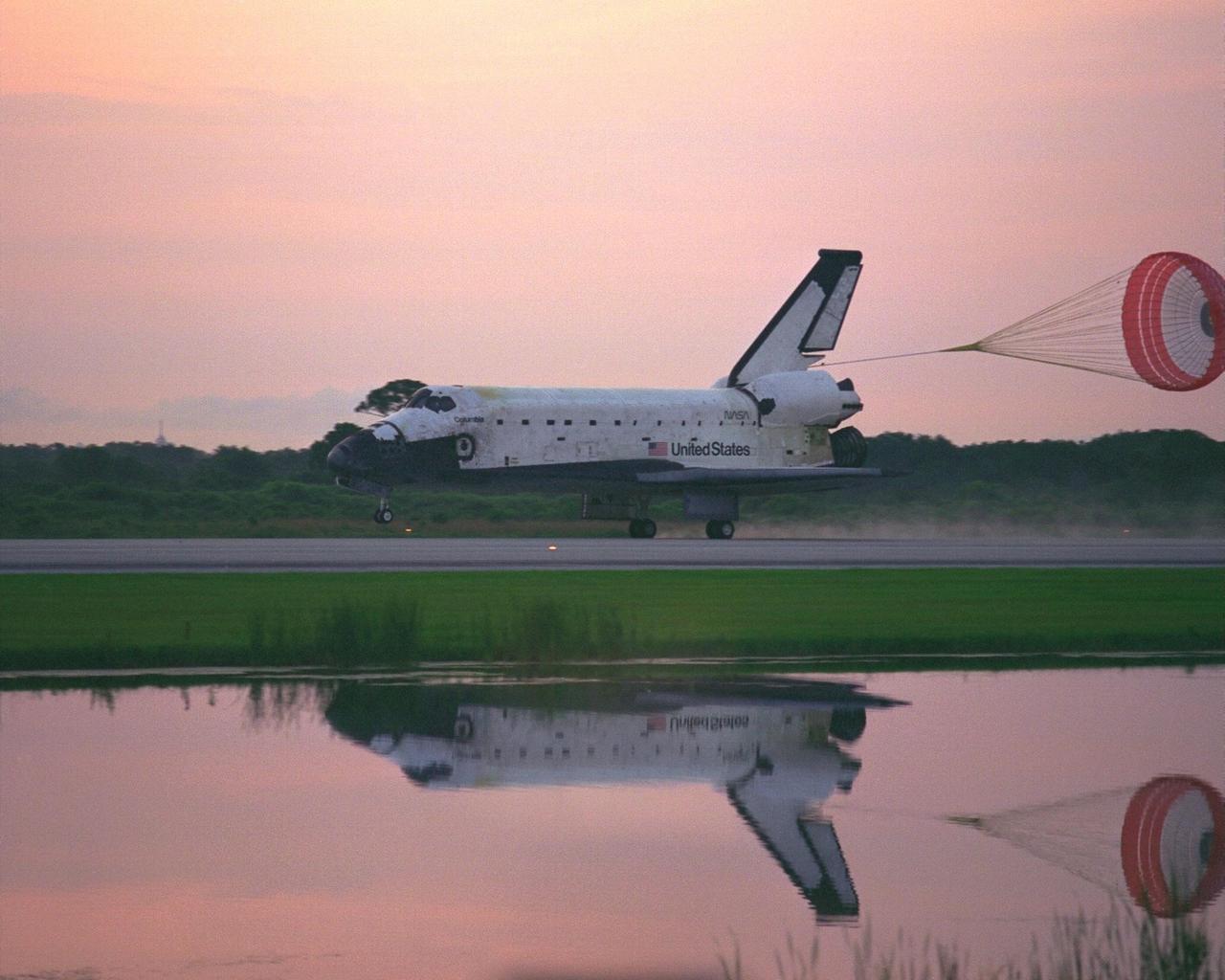
KENNEDY SPACE CENTER, FLA. -- With its drag chute deployed, the Space Shuttle Orbiter Columbia touches down on Runway 33 at KSC’s Shuttle Landing Facility at 6:46:34 a.m. EDT with Mission Commander James D. Halsell Jr. and Pilot Susan L. Still at the controls to complete the STS-94 mission. Also on board are Mission Specialist Donald A. Thomas, Mission Specialist Michael L. Gernhardt , Payload Commander Janice Voss, and Payload Specialists Roger K. Crouch and Gregory T. Linteris. Mission elapsed time for STS-94 was 15 days,16 hours, 44 seconds. During the Microgravity Science Laboratory-1 (MSL-1) mission, the Spacelab module was used to test some of the hardware, facilities and procedures that are planned for use on the International Space Station while the flight crew conducted combustion, protein crystal growth and materials processing experiments. This mission was a reflight of the STS-83 mission that lifted off from KSC in April of this year. That space flight was cut short due to indications of a faulty fuel cell. This was Columbia’s 11th landing at KSC and the 38th landing at the space center in the history of the Shuttle program
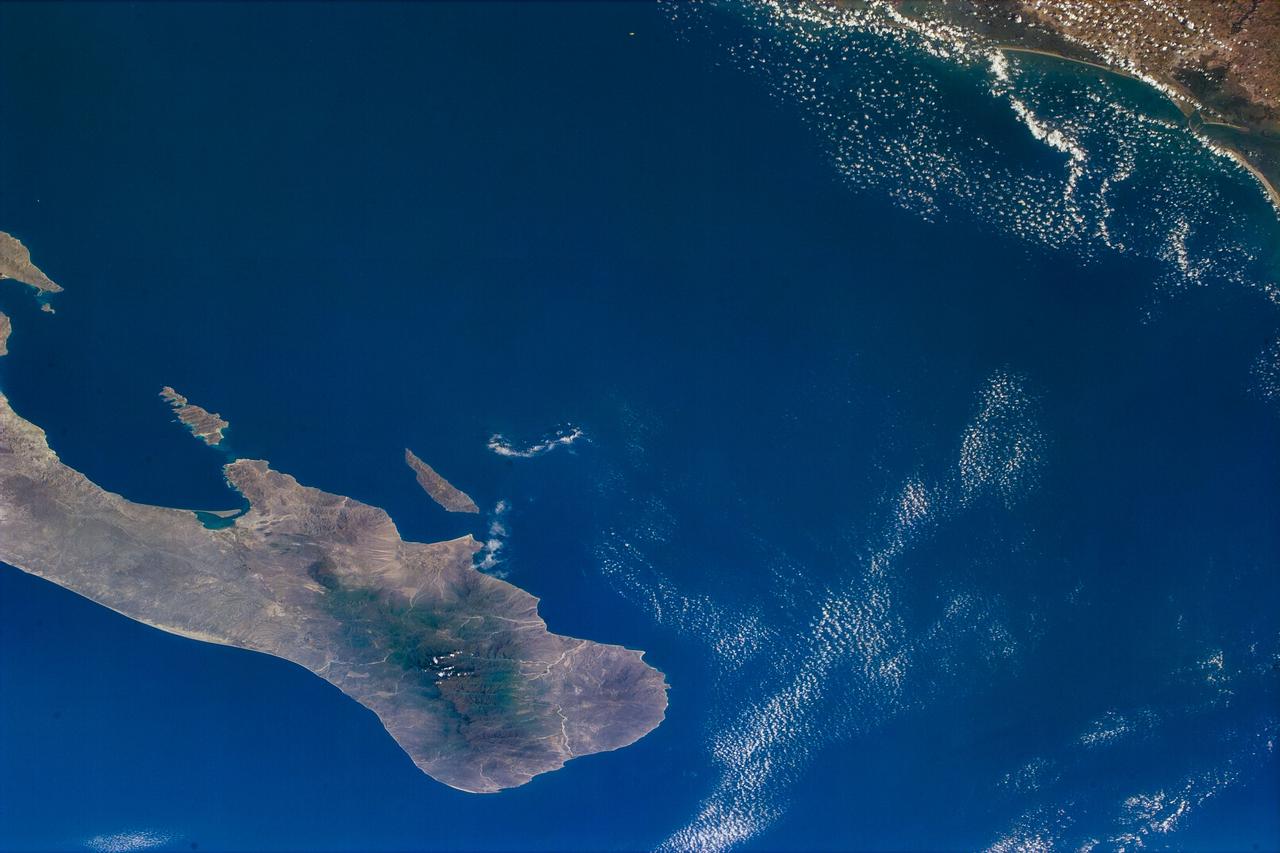
S94-E-5039 (July 1997) --- The southern end of Baja California and part of the Gulf of Cortez are visible in this nadir view photographed with an electronic still camera aboard the Space Shuttle Columbia. Cabo San Lucas is cearly visible at land's end. The STS-94 crew members kept a close watch on this general area and the nearby Pacific where Dolores was churning up minor concern as a Class 1 hurricane.
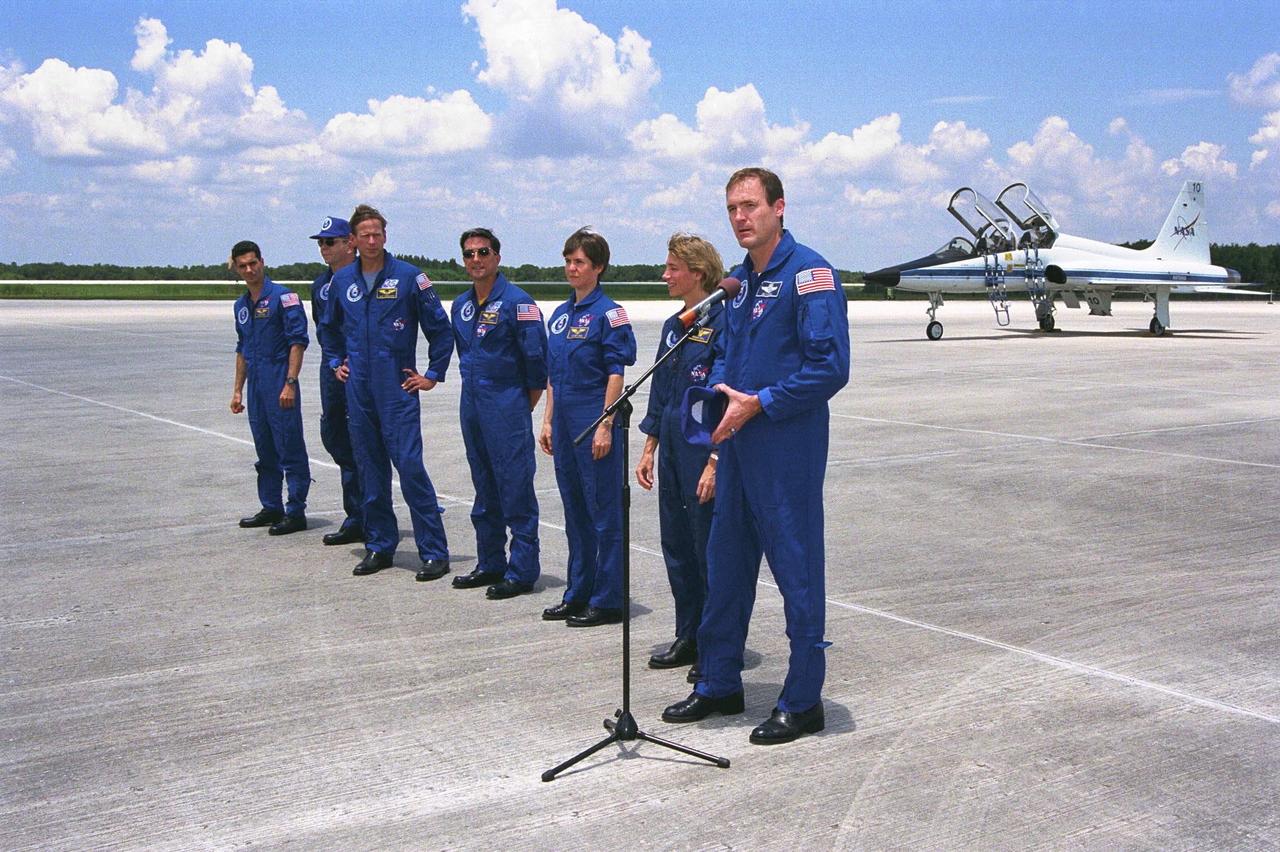
STS-94 Commander James D. Halsell, Jr., speaks to the media at the Shuttle Landing Facility after the crew arrived at Kennedy Space Center in preparation for the reflight of the Microgravity Science Laboratory-1 mission. Launch is scheduled for July 1, 1997, at 2:37 p.m. EDT. From left to right, the crew members are Payload Specialists Gregory T. Linteris and Roger K. Crouch; Mission Specialists Michael L. Gernhardt and Donald A. Thomas; Payload Commander Janice E. Voss; Pilot Susan Leigh Still and Commander James D. Halsell, Jr. One of the T-38 jets aboard which the crew arrived can be seen in the background. The laboratory was scheduled to fly again with the full complement of STS-83 experiments after that mission was cut short due to a faulty fuel cell. During the scheduled 16-day STS-94 mission, the experiments will be used to test some of the hardware, facilities and procedures that are planned for use on the International Space Station while the flight crew conducts combustion, protein crystal growth and materials processing experiments
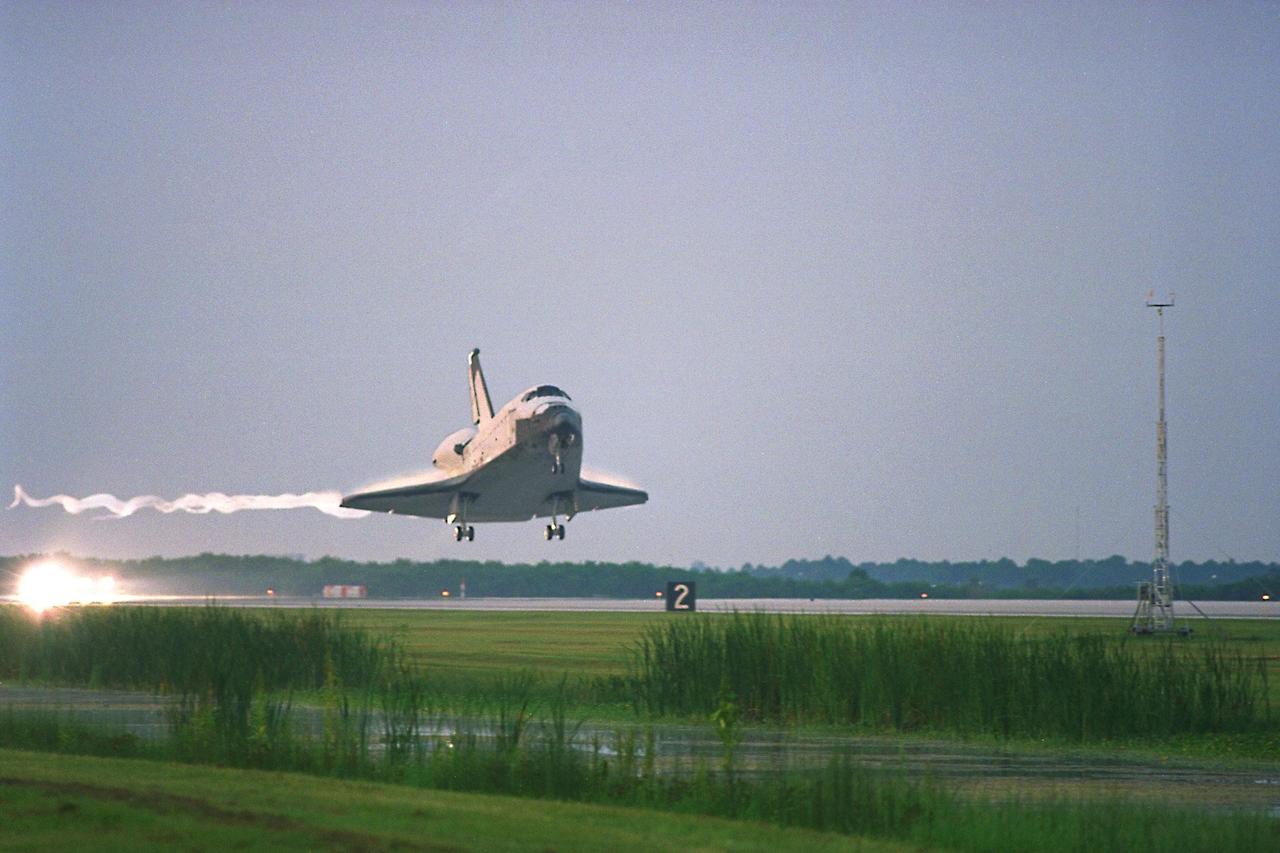
KENNEDY SPACE CENTER, FLA. -- The Space Shuttle orbiter Columbia glides in for a touchdown on Runway 33 at KSC’s Shuttle Landing Facility at approximately 6:46 a.m. EDT with Mission Commander James D. Halsell Jr. and Pilot Susan L. Still at the controls to complete the STS-94 mission. Also on board are Mission Specialist Donald A. Thomas, Mission Specialist Michael L. Gernhardt, Payload Commander Janice Voss, and Payload Specialists Roger K.Crouch and Gregory T. Linteris. During the Microgravity Science Laboratory-1 (MSL-1) mission, the Spacelab module was used to test some of the hardware, facilities and procedures that are planned for use on the International Space Station while the flight crew conducted combustion, protein crystal growth and materials processing experiments. This mission was a reflight of the STS-83 mission that lifted off from KSC in April of this year. That space flight was cut short due to indications of a faulty fuel cell
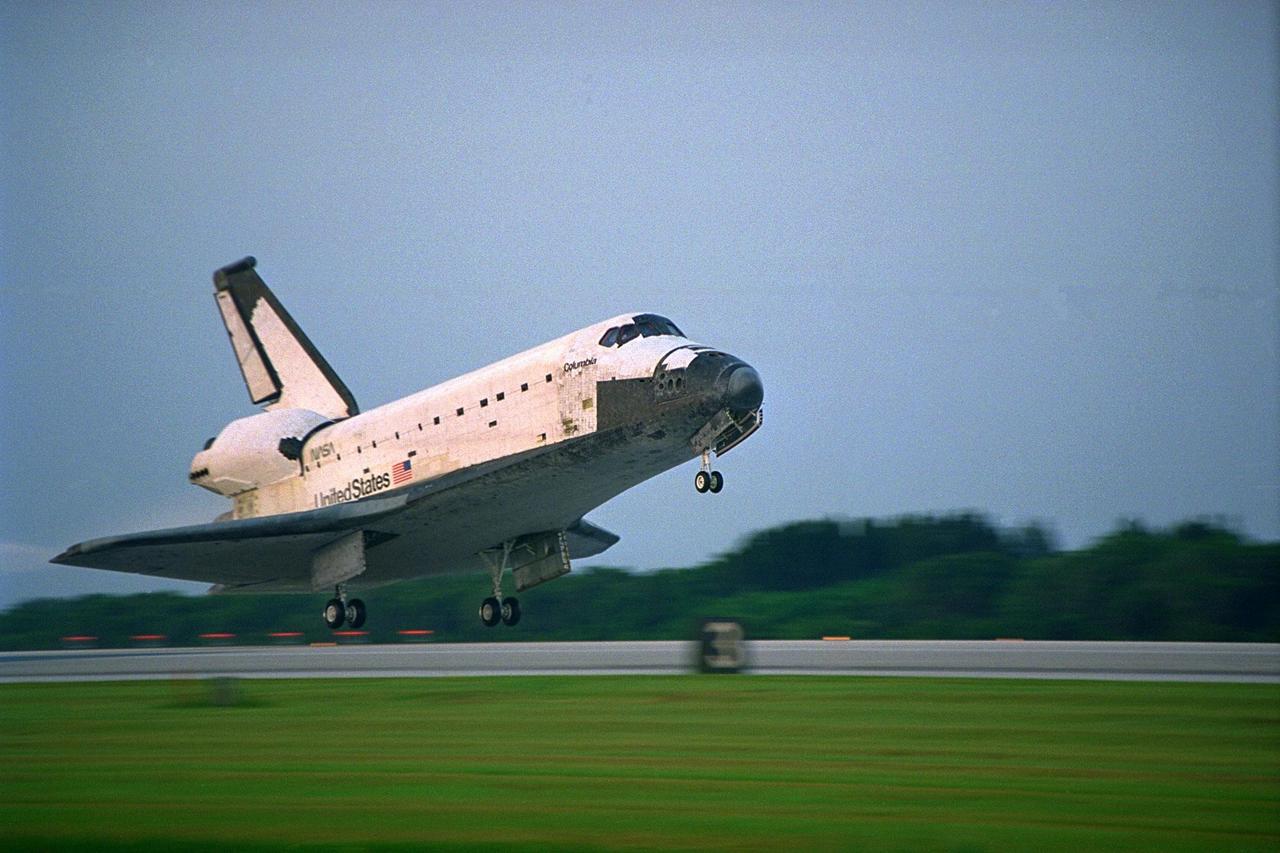
KENNEDY SPACE CENTER, FLA. -- The Space Shuttle orbiter Columbia touches down on Runway 33 at KSC’s Shuttle Landing Facility at 6:46:34 a.m. EDT with Mission Commander James D. Halsell Jr. and Pilot Susan L. Still at the controls to complete the STS-94 mission. Also on board are Mission Specialist Donald A. Thomas, Mission Specialist Michael L. Gernhardt, Payload Commander Janice Voss, and Payload Specialists Roger K. Crouch and Gregory T. Linteris. During the Microgravity Science Laboratory-1 (MSL-1) mission, the Spacelab module was used to test some of the hardware, facilities and procedures that are planned for use on the International Space Station while the flight crew conducted combustion, protein crystal growth and materials processing experiments. This mission was a reflight of the STS-83 mission that lifted off from KSC in April of this year. That space flight was cut short due to indications of a faulty fuel cell. This was Columbia’s 11th landing at KSC and the 38th landing at the space center in the history of the Shuttle program

KENNEDY SPACE CENTER, FLA. -- Framed by the Vehicle Assembly Building at right and the Mate-Demate Device at left, the Space Shuttle orbiter Columbia glides onto Runway 33 at KSC’s Shuttle Landing Facility at 6:46:34 a.m. EDT with Mission Commander James D. Halsell Jr. and Pilot Susan L. Still at the controls to complete the STS-94 mission. Also on board are Mission Specialist Donald A. Thomas, Mission Specialist Michael L. Gernhardt, Payload Commander Janice Voss, and Payload Specialists Roger K. Crouch and Gregory T. Linteris. During the Microgravity Science Laboratory-1 (MSL-1) mission, the Spacelab module was used to test some of the hardware, facilities and procedures that are planned for use on the International Space Station while the flight crew conducted combustion, protein crystal growth and materials processing experiments. This mission was a reflight of the STS-83 mission that lifted off from KSC in April of this year. That space flight was cut short due to indications of a faulty fuel cell. This was Columbia’s 11th landing at KSC and the 38th landing at the space center in the history of the Shuttle program
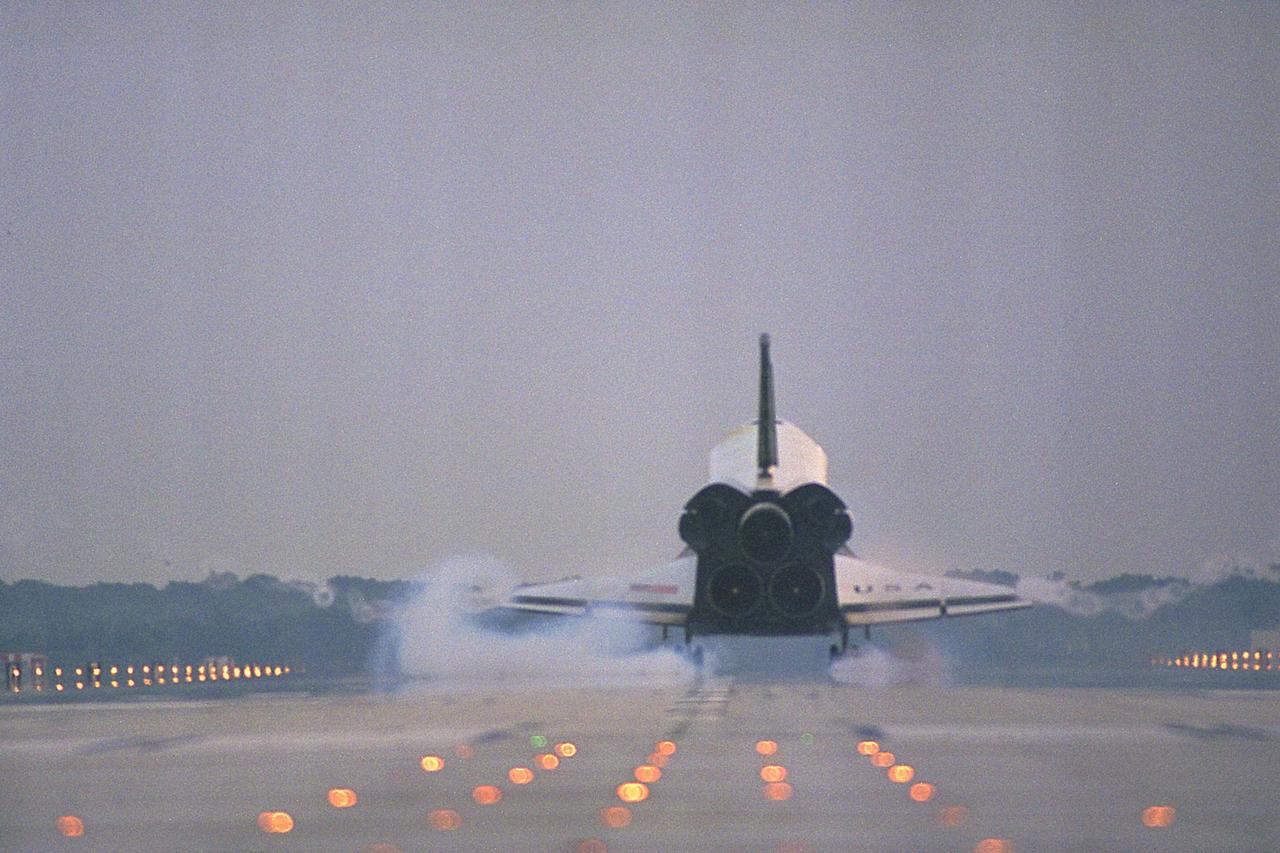
KENNEDY SPACE CENTER, FLA. -- The Space Shuttle orbiter Columbia touches down on Runway 33 at KSC’s Shuttle Landing Facility at 6:46:34 a.m. EDT with Mission Commander James D. Halsell Jr. and Pilot Susan L. Still at the controls to complete the STS-94 mission. Also on board are Mission Specialist Donald A. Thomas, Mission Specialist Michael L. Gernhardt, Payload Commander Janice Voss, and Payload Specialists Roger K. Crouch and Gregory T. Linteris. During the Microgravity Science Laboratory-1 (MSL-1) mission, the Spacelab module was used to test some of the hardware, facilities and procedures that are planned for use on the International Space Station while the flight crew conducted combustion, protein crystal growth and materials processing experiments. This mission was a reflight of the STS-83 mission that lifted off from KSC in April of this year. That space flight was cut short due to indications of a faulty fuel cell. This was Columbia’s 11th landing at KSC and the 38th landing at the space center in the history of the Shuttle program
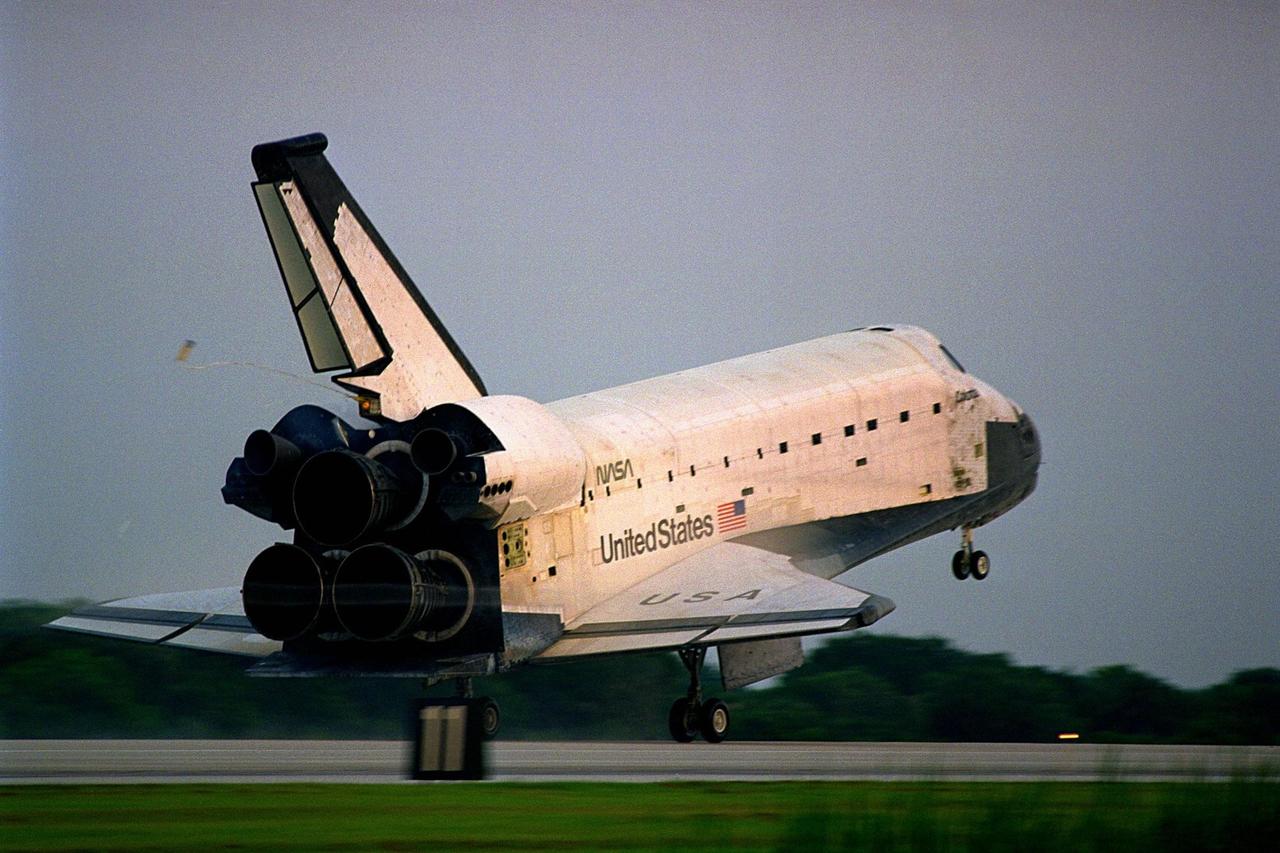
KENNEDY SPACE CENTER, FLA. -- The Space Shuttle orbiter Columbia touches down on Runway 33 at KSC’s Shuttle Landing Facility at 6:46:34 a.m. EDT with Mission Commander James D. Halsell Jr. and Pilot Susan L. Still at the controls to complete the STS-94 mission. Also on board are Mission Specialist Donald A. Thomas, Mission Specialist Michael L. Gernhardt, Payload Commander Janice Voss, and Payload Specialists Roger K. Crouch and Gregory T. Linteris. During the Microgravity Science Laboratory-1 (MSL-1) mission, the Spacelab module was used to test some of the hardware, facilities and procedures that are planned for use on the International Space Station while the flight crew conducted combustion, protein crystal growth and materials processing experiments. This mission was a reflight of the STS-83 mission that lifted off from KSC in April of this year. That space flight was cut short due to indications of a faulty fuel cell. This was Columbia’s 11th landing at KSC and the 38th landing at the space center in the history of the Shuttle program
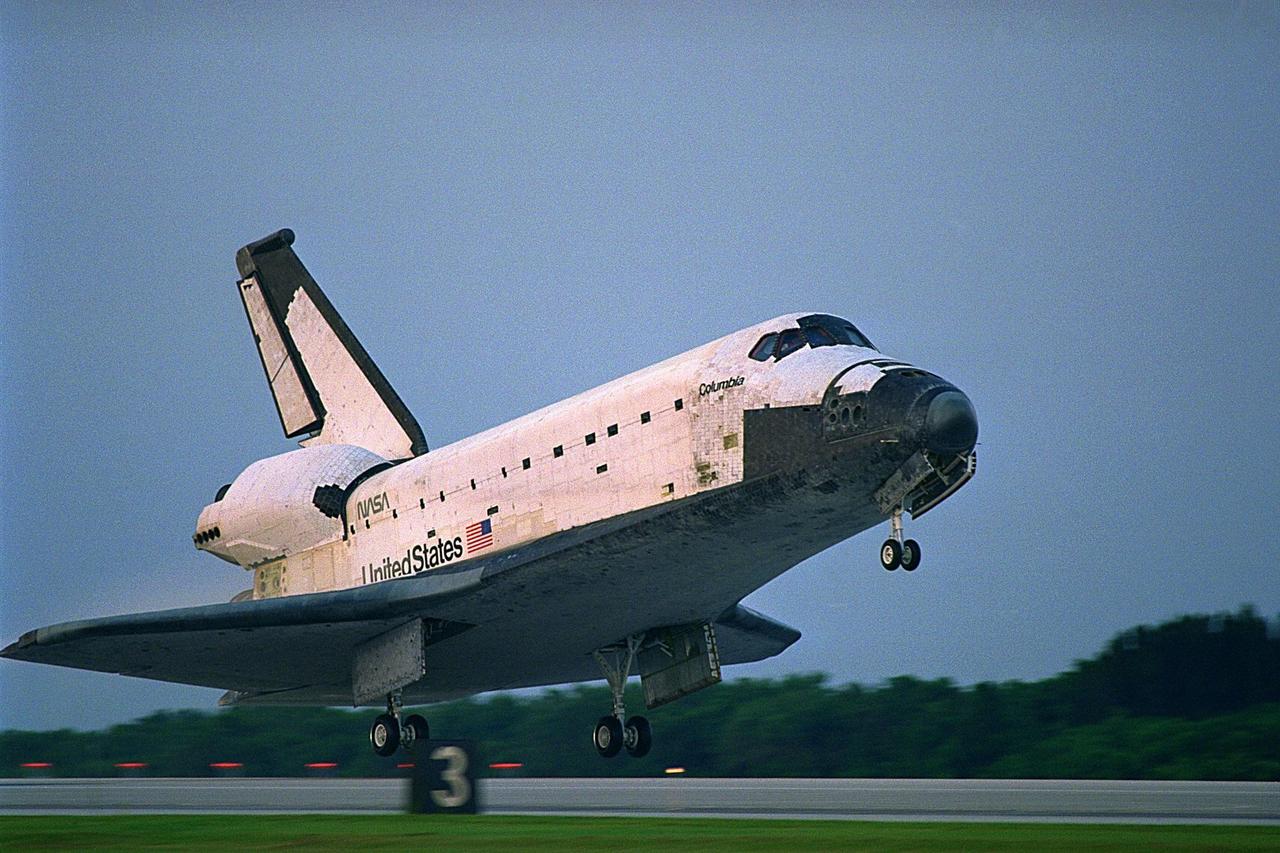
KENNEDY SPACE CENTER, FLA. -- The Space Shuttle orbiter Columbia touches down on Runway 33 at KSC’s Shuttle Landing Facility at 6:46:34 a.m. EDT with Mission Commander James D. Halsell Jr. and Pilot Susan L. Still at the controls to complete the STS-94 mission. Also on board are Mission Specialist Donald A. Thomas, Mission Specialist Michael L. Gernhardt, Payload Commander Janice Voss, and Payload Specialists Roger K. Crouch and Gregory T. Linteris. During the Microgravity Science Laboratory-1 (MSL-1) mission, the Spacelab module was used to test some of the hardware, facilities and procedures that are planned for use on the International Space Station while the flight crew conducted combustion, protein crystal growth and materials processing experiments. This mission was a reflight of the STS-83 mission that lifted off from KSC in April of this year. That space flight was cut short due to indications of a faulty fuel cell. This was Columbia’s 11th landing at KSC and the 38th landing at the space center in the history of the Shuttle program
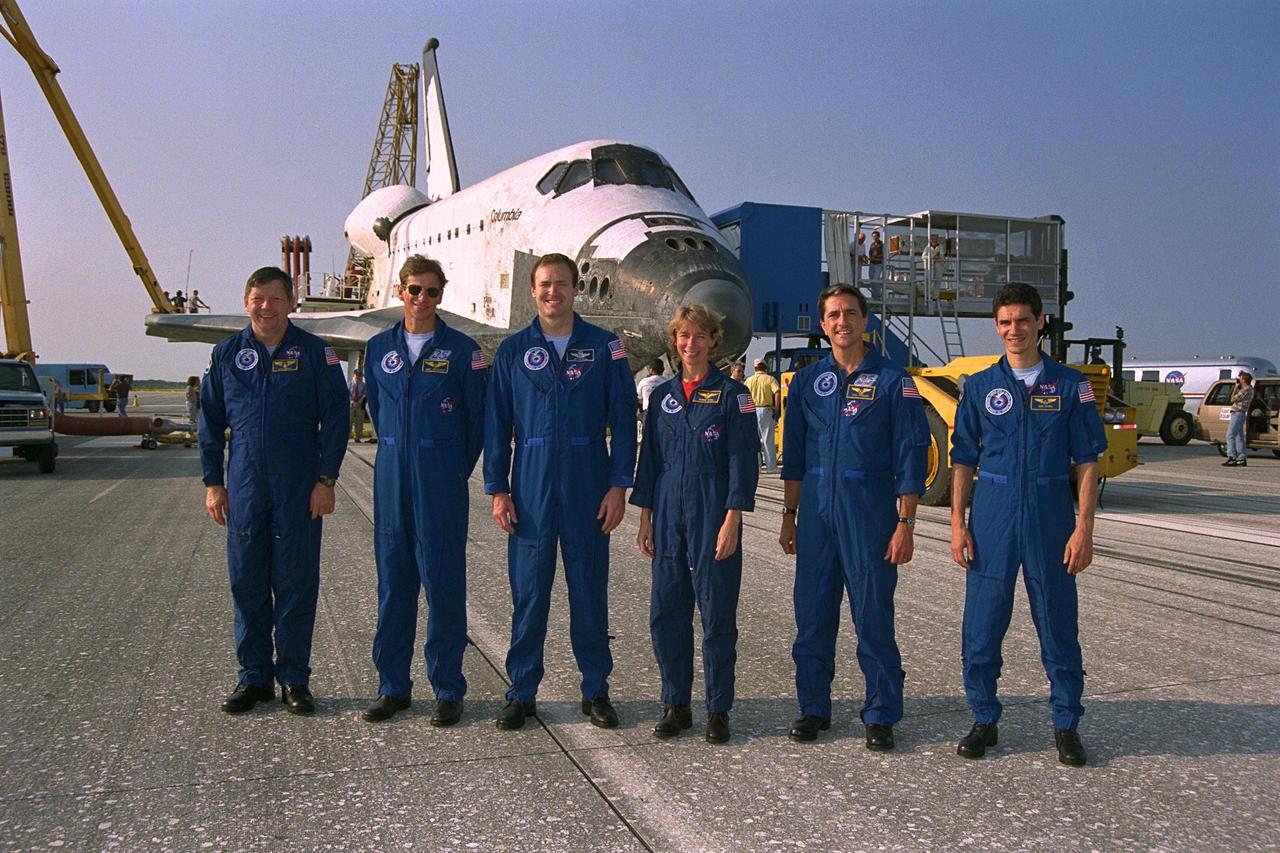
KENNEDY SPACE CENTER, FLA. -- The STS-94 flight crew poses in front of the Space Shuttle orbiter Columbia after an end-of-mission landing on Runway 33 at KSC’s Shuttle Landing Facility July 17 to complete the Microgravity Science Laboratory-1 (MSL-1) mission. They are (from left): Payload Specialist Roger K. Crouch; Mission Specialist Michael L. Gernhardt; Mission Commander James D. Halsell Jr.; Pilot Susan L. Still; Mission Specialist Donald A. Thomas; and Payload Specialist Gregory T. Linteris. Not shown is Payload Commander Janice Voss. During the 15-day, 16-hour spaceflight, the MSL-1 Spacelab module was used to test some of the hardware, facilities and procedures that are planned for use on the International Space Station; the flight crew also conducted combustion, protein crystal growth and materials processing experiments. This mission was a reflight of the STS-83 mission earlier this year that was cut short due to indications of a faulty fuel cell