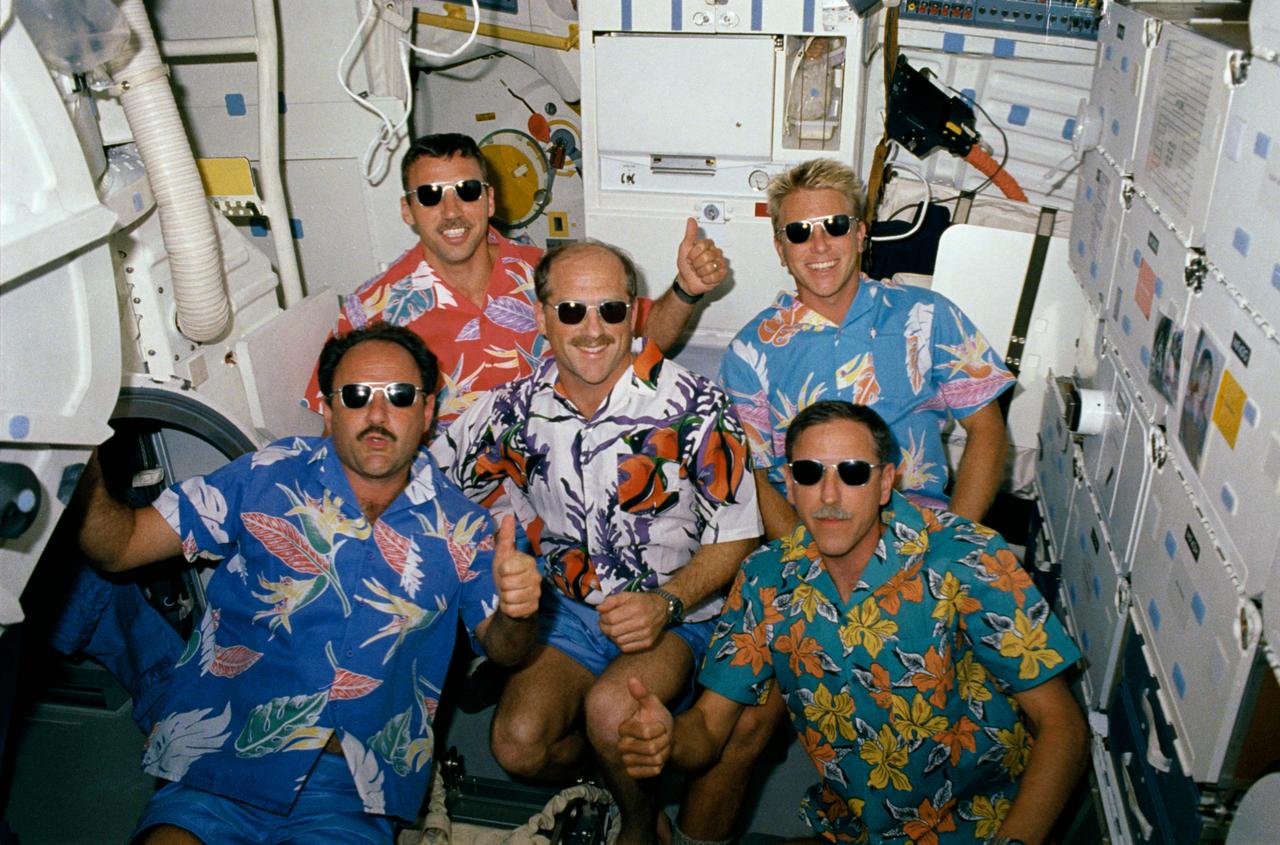
STS026-09-008 (3 Oct 1988) --- STS-26 crewmembers wear Hawaiian attire (brightly colored shirts with bold prints) and sunglasses while giving the "thumbs up" signal as they pay tribute to the Hawaii tracking station during an unscheduled television (TV) downlink. On Discovery's, Orbiter Vehicle (OV) 103's, middeck are (left to right) Mission Specialist (MS) John M. Lounge, holding onto open airlock hatch, MS David C. Hilmers, wearing red shirt, Commander Frederick H. Hauck, wearing white shirt and positioned in center of crew, MS George D. Nelson, and Pilot Richard O. Covey (lower right corner of the frame). The shirts were given to the crewmembers by the Kennedy Space Center (KSC) Loud and Proud Team.
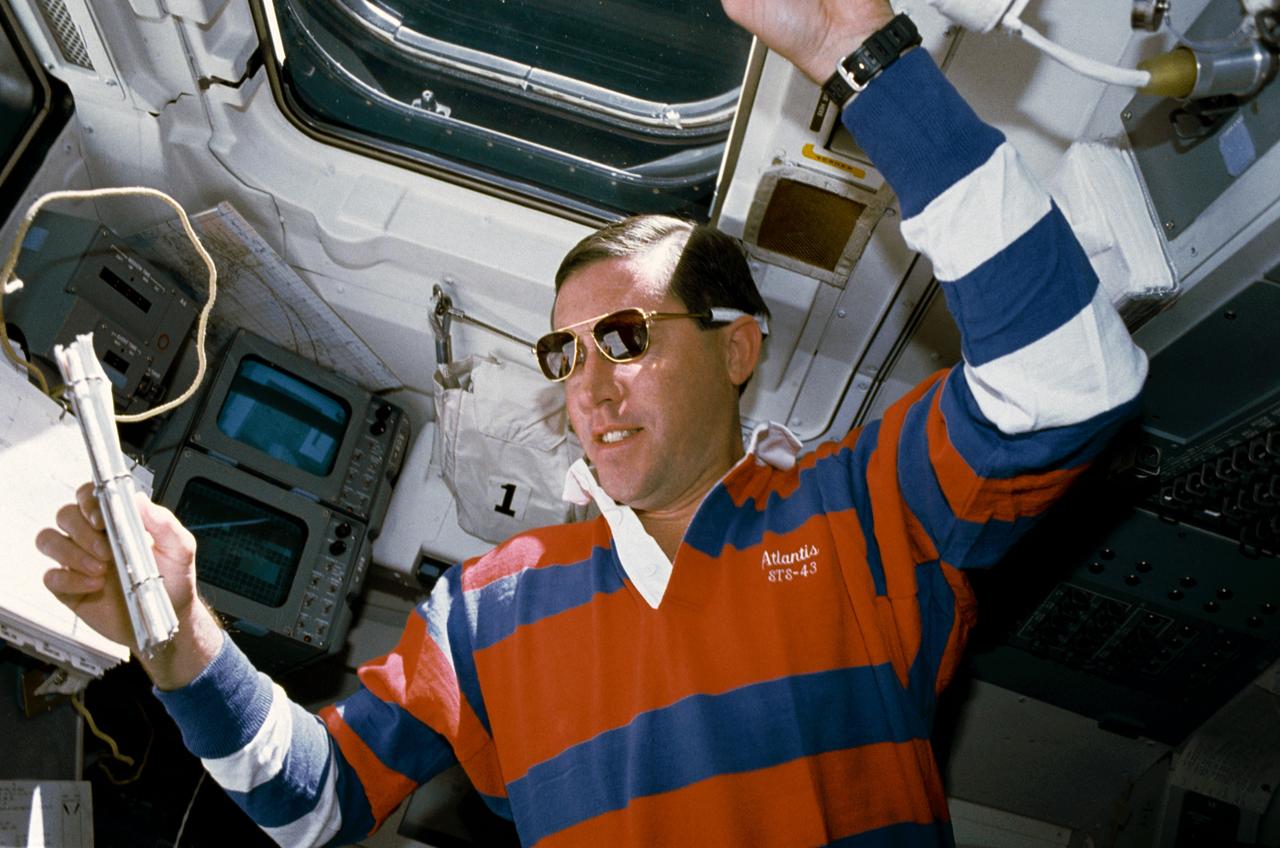
STS043-04-032 (11 Aug 1991) --- STS-43 Pilot Michael A. Baker, wearing sunglasses, reviews a checklist on the aft flight deck of Atlantis, Orbiter Vehicle (OV) 104. He is monitoring data associated with the Space Station Heat Pipe Advanced Radiator Element II (SHARE-II) located in OV-104's payload bay (PLB) from his position in front of the aft flight deck viewing windows. Behind Baker are the closed circuit television (CCTV) monitors and above his head is overhead window W8.
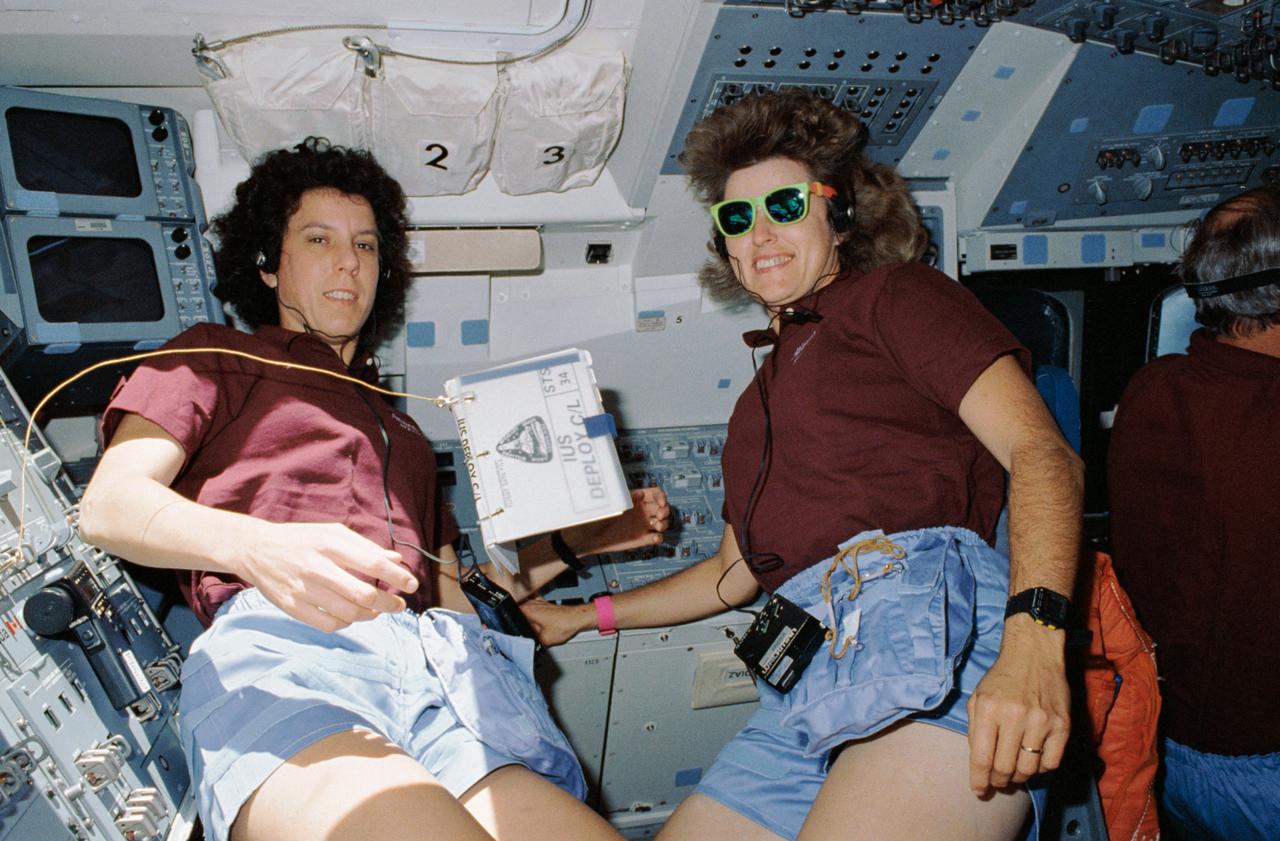
STS034-09-007 (23 Oct. 1989) --- Having been in space only a few hours, three of the STS-34 astronaut crew prepare for pre-deployment exercises involving one of the most prominent "passengers" of the flight -- the Galileo payload which was lying in Atlantis', Orbiter Vehicle (OV) 104's, payload bay (PLB). Pictured, left to right, are astronauts Ellen S. Baker and Shannon W. Lucid, both mission specialists; along with Donald E. Williams, commander, who guided OV-104's course during the exercise. Baker and Lucid communicated with ground controllers while juggling other Galileo-related chores. Both Baker and Lucid are equipped with SONY Walkmans and are wearing headsets. Lucid wears a pair of sunglasses with brightly colored frames. A tethered inertial upper stage (IUS) deploy checklist (C/L) floats between the two and a spotmeter is Velcroed to an on orbit station control panel.

S99-E-5480 (16 February 2000) --- Astronaut Janet L. Kavandi, mission specialist, sports a pair of sunglasses while looking at the bright Earth aboard Endeavour's flight deck.
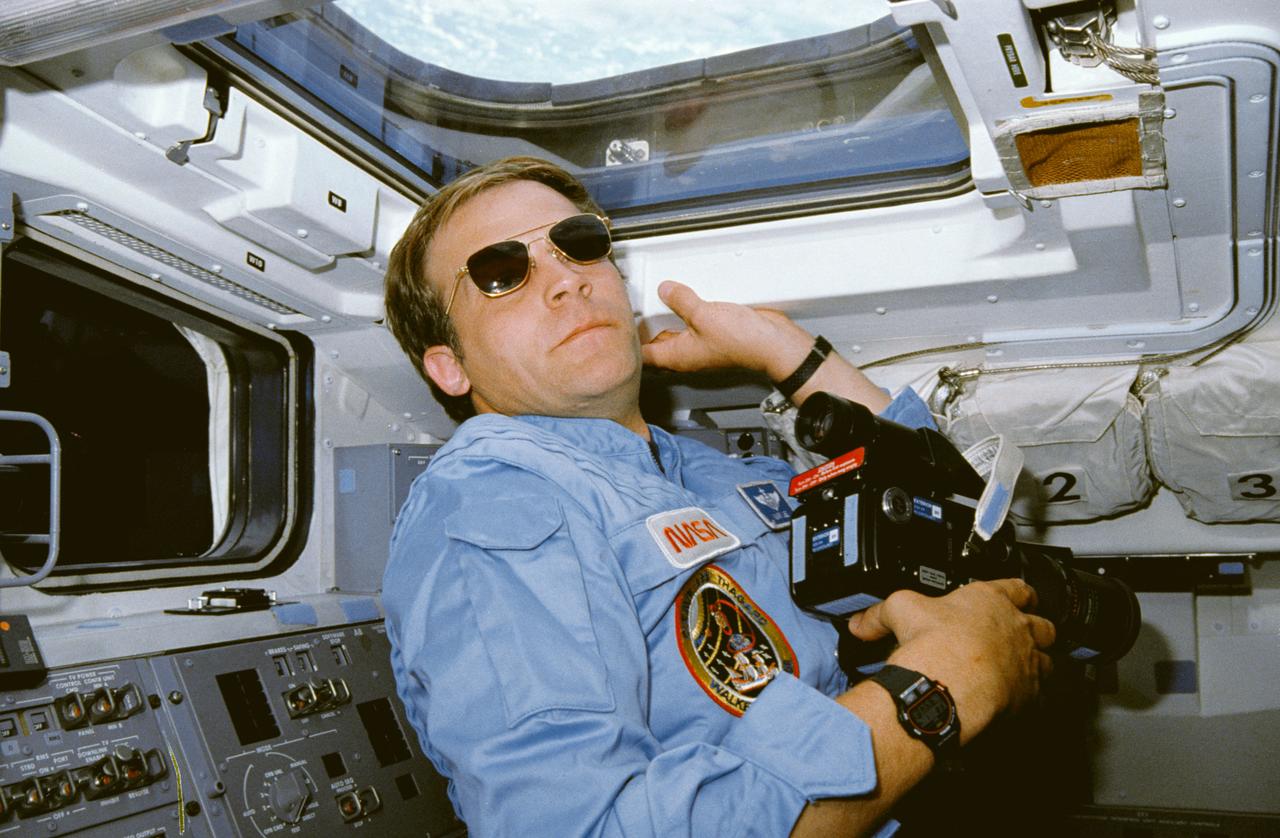
STS030-08-015 (4-8 May 1989) --- Astronaut Mark C. Lee, STS-30 mission specialist, pauses from a of Earth photography on Atlantis' aft flight deck. He holds a 70mm camera. The scene was recorded with a 35mm camera. The photo was in a group released by NASA following the completion of a four-day mission in space.
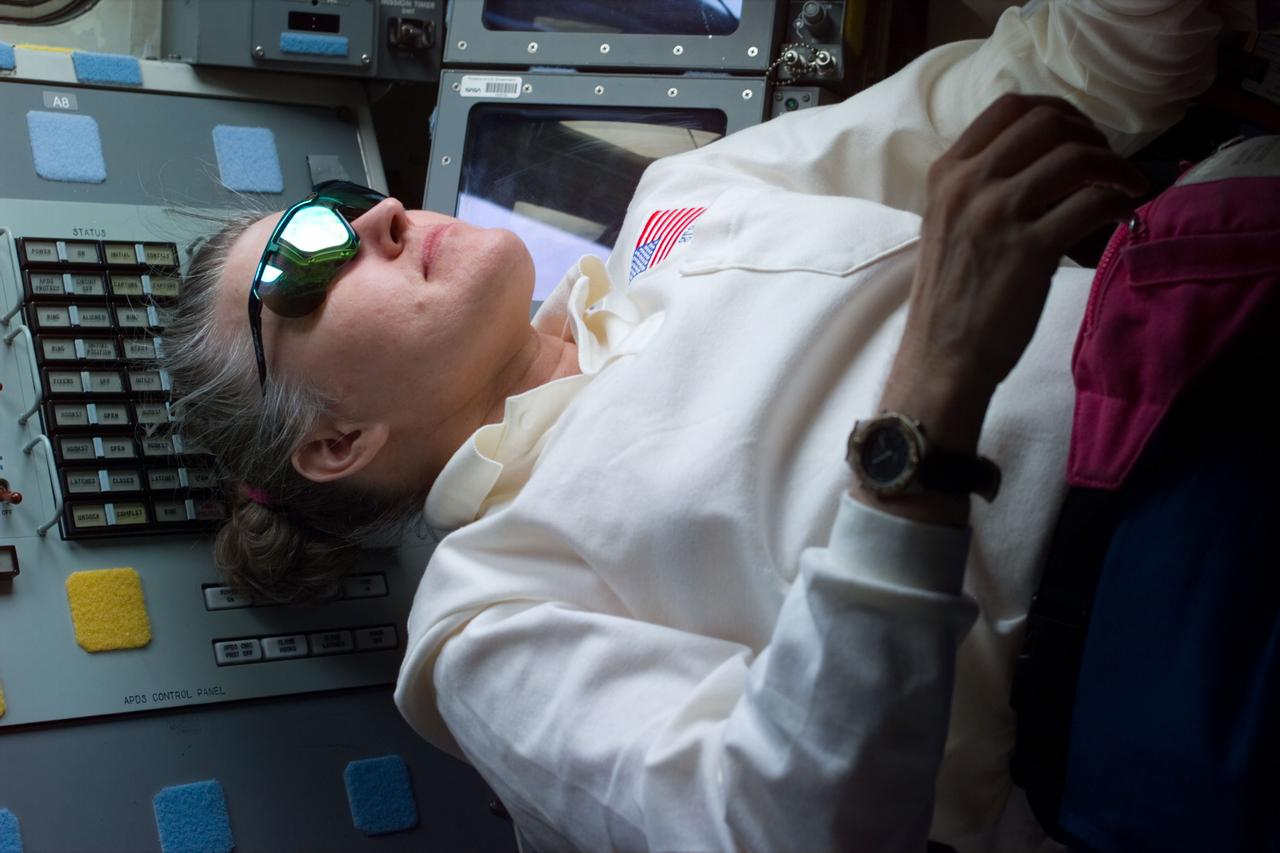
STS79-E-5388 (16 - 26 September 1996) --- Astronaut Shannon W. Lucid, former cosmonaut guest researcher, was photographed onboard the Space Shuttle Atlantis as the Russian Mir Space Station, her temporary "home" for the past six months, moves off to continue its mission with fellow astronaut John E. Blaha, cosmonaut guest researcher, aboard.
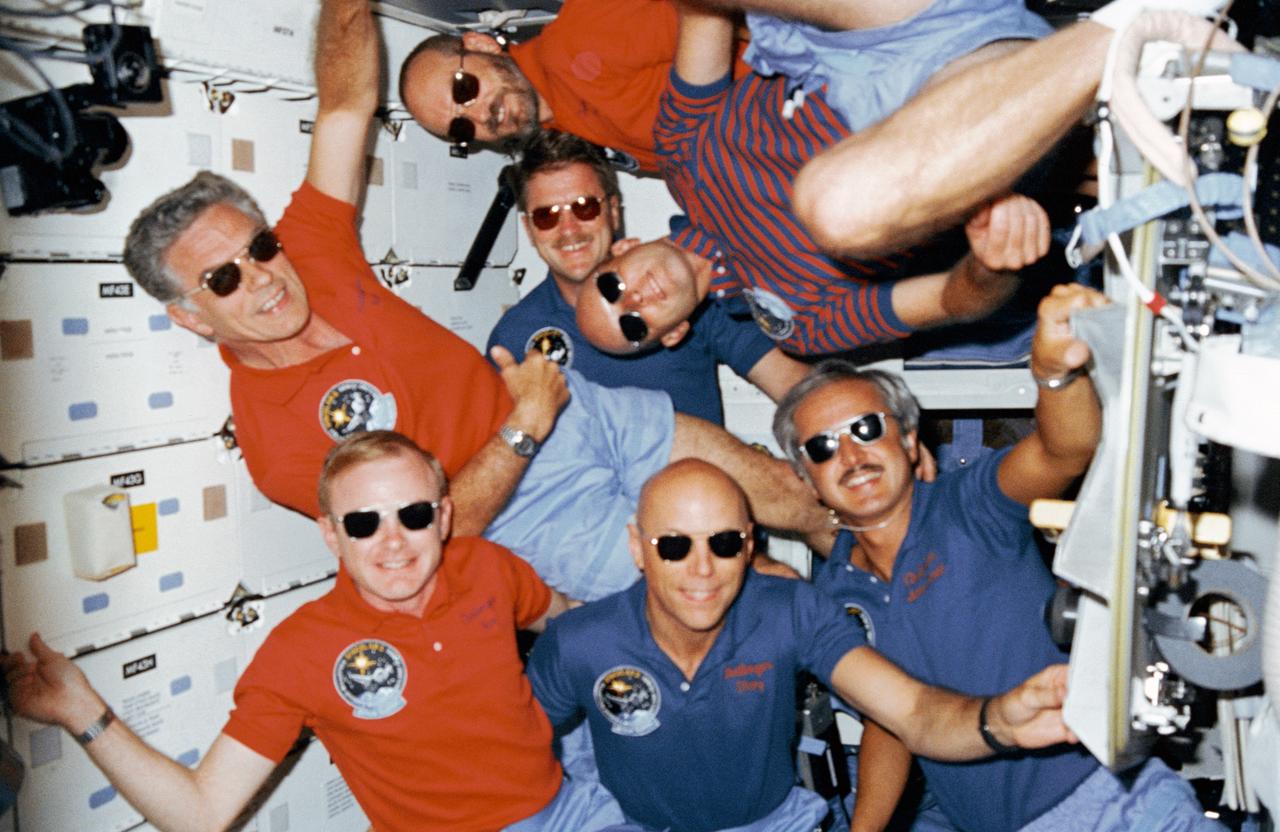
51F-06-017 (29 July-6 Aug. 1985) --- Crew portrait with sunglasses. C. Gordon Fullerton's head is at center. Others (bottom, l.-r.) are Roy D. Bridges, F. Story Musgrave and John David Bartoe; and (top) Karl J. Henize, Loren W. Acton and Anthony W. England.
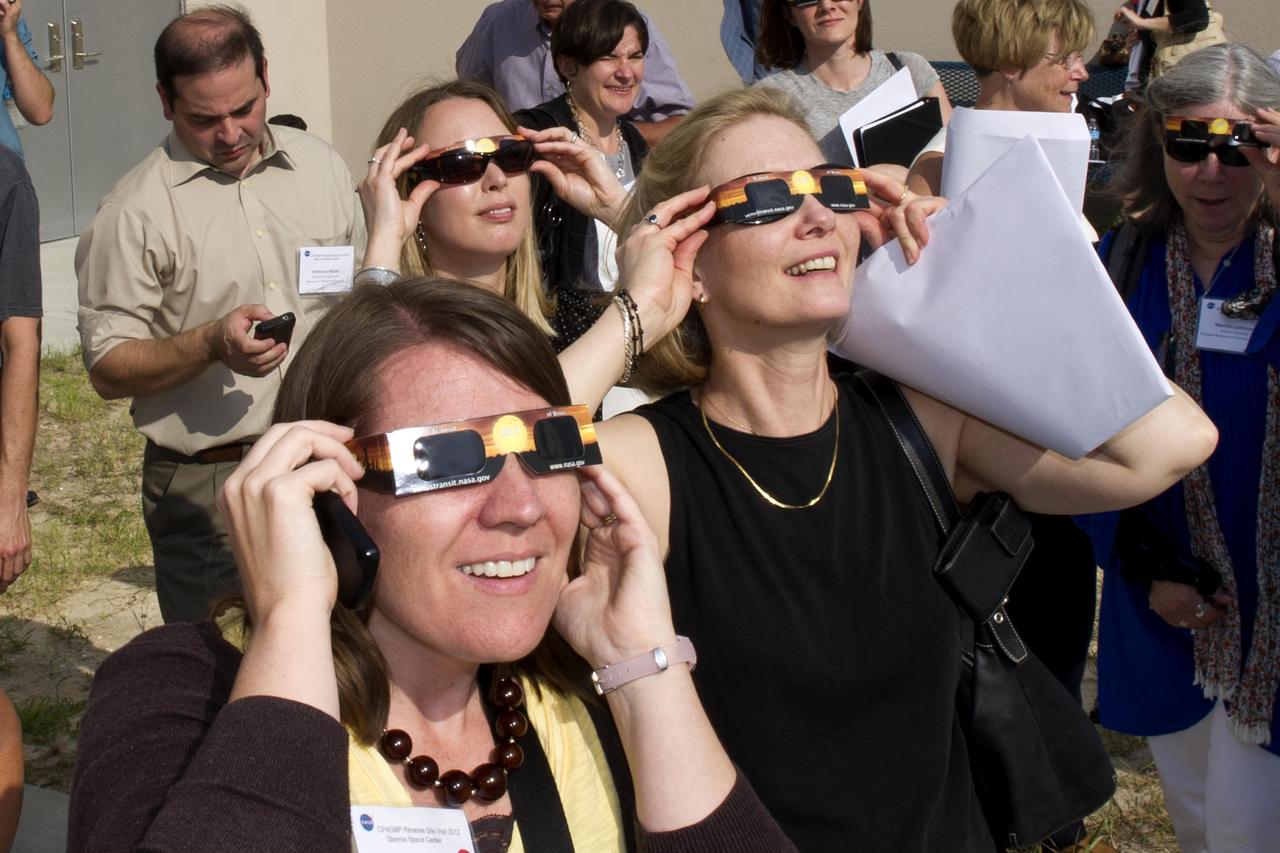
Guests at the INFINITY at NASA Stennis Space Center visitor center use special solar sunglasses to catch a lifetime view of the Venus transit June 5, 2012. The rare celestial event in which the planet Venus traverses the face of the sun will not be visible from Earth again until 2117.
Guests at the INFINITY at NASA Stennis Space Center visitor center use special solar sunglasses to catch a lifetime view of the Venus transit June 5, 2012. The rare celestial event in which the planet Venus traverses the face of the sun will not be visible from Earth again until 2117.
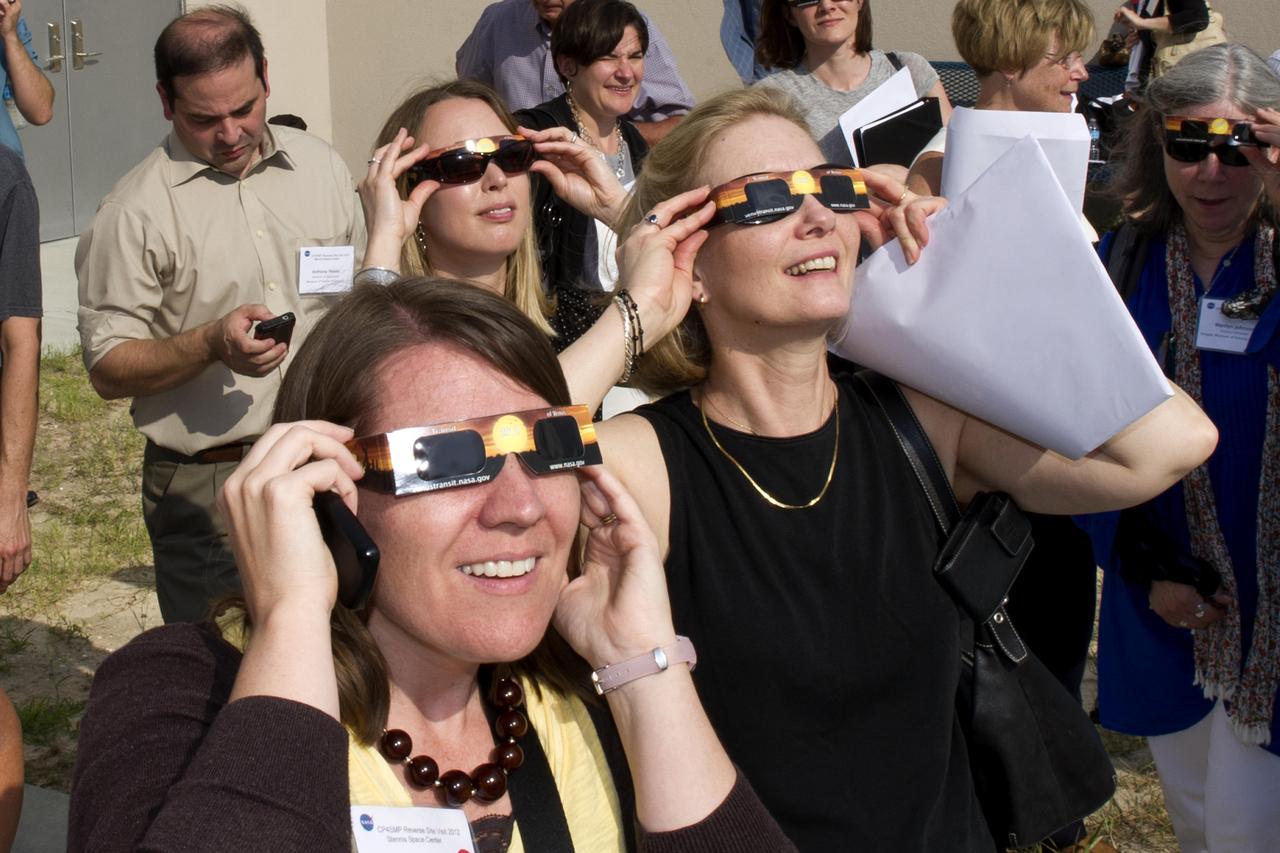
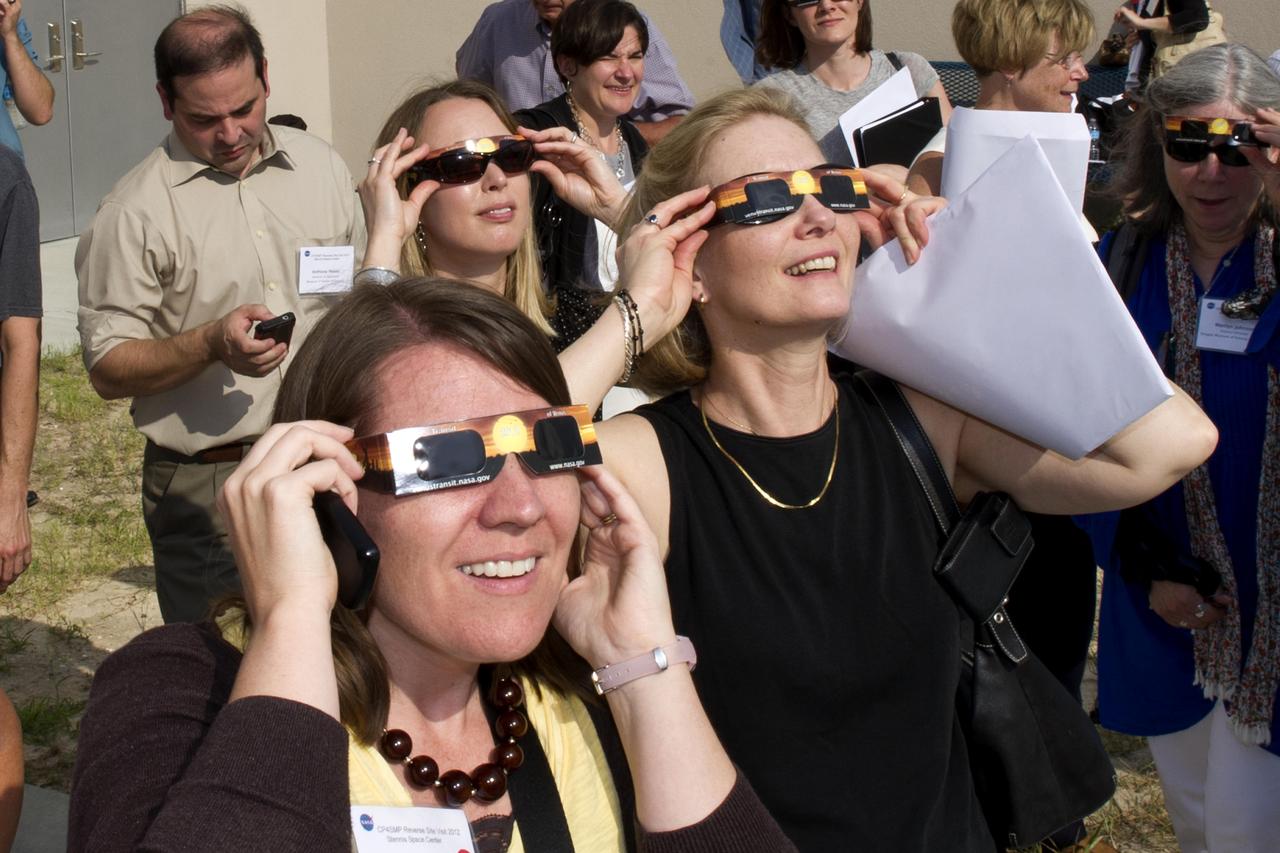
Guests at the INFINITY at NASA Stennis Space Center visitor center use special solar sunglasses to catch a lifetime view of the Venus transit June 5, 2012. The rare celestial event in which the planet Venus traverses the face of the sun will not be visible from Earth again until 2117.
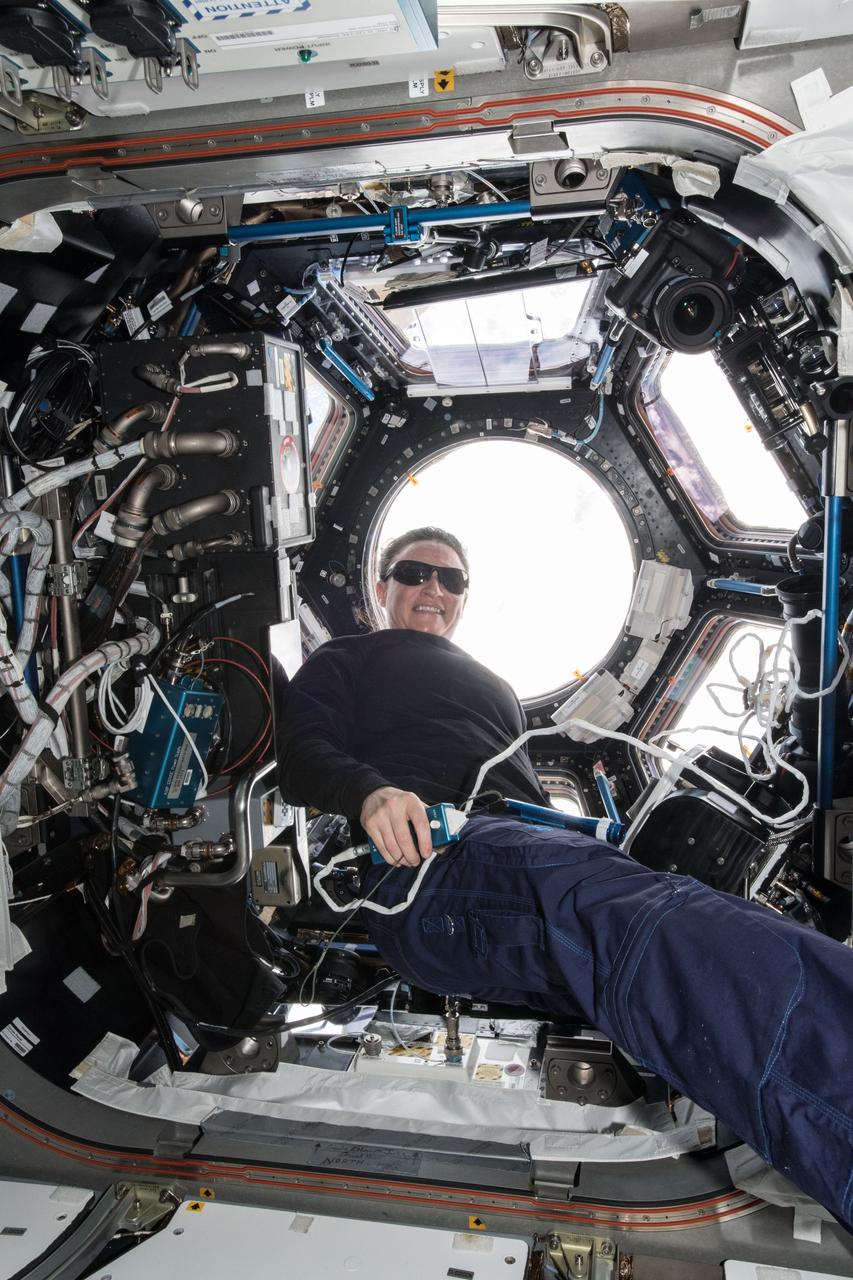
iss056e152943 (Aug. 23, 2013) --- NASA astronaut Serena Auñon-Chancellor wears sunglasses in the brightly-lit Cupola, the International Space Station's "window to the world," as the orbital complex orbits above the Atlantic Ocean off the coast of France nearly 253 miles below.
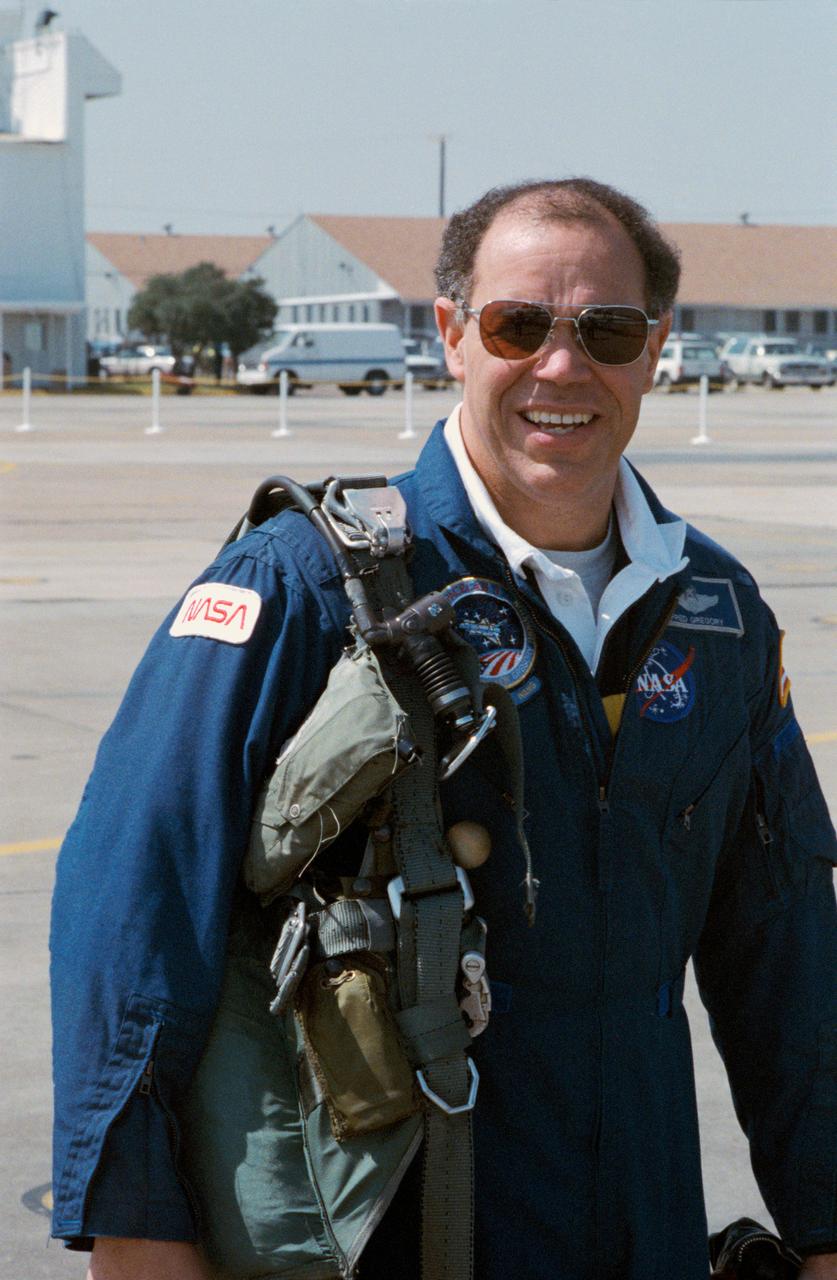
STS029-S-001 (10 March 1989) --- Astronaut Frederick Gregory, STS-33 mission commander, prepares to climb aboard a NASA T-38 jet aircraft. He's part of a group of JSC personnel who, in various NASA aircraft, will accompany the flight crew en route to the Kennedy Space Center (KSC) launch facility. The second post-Challenger flight of Discovery is scheduled for a 8:07 a.m. (EST) launch on March 13, 1989.
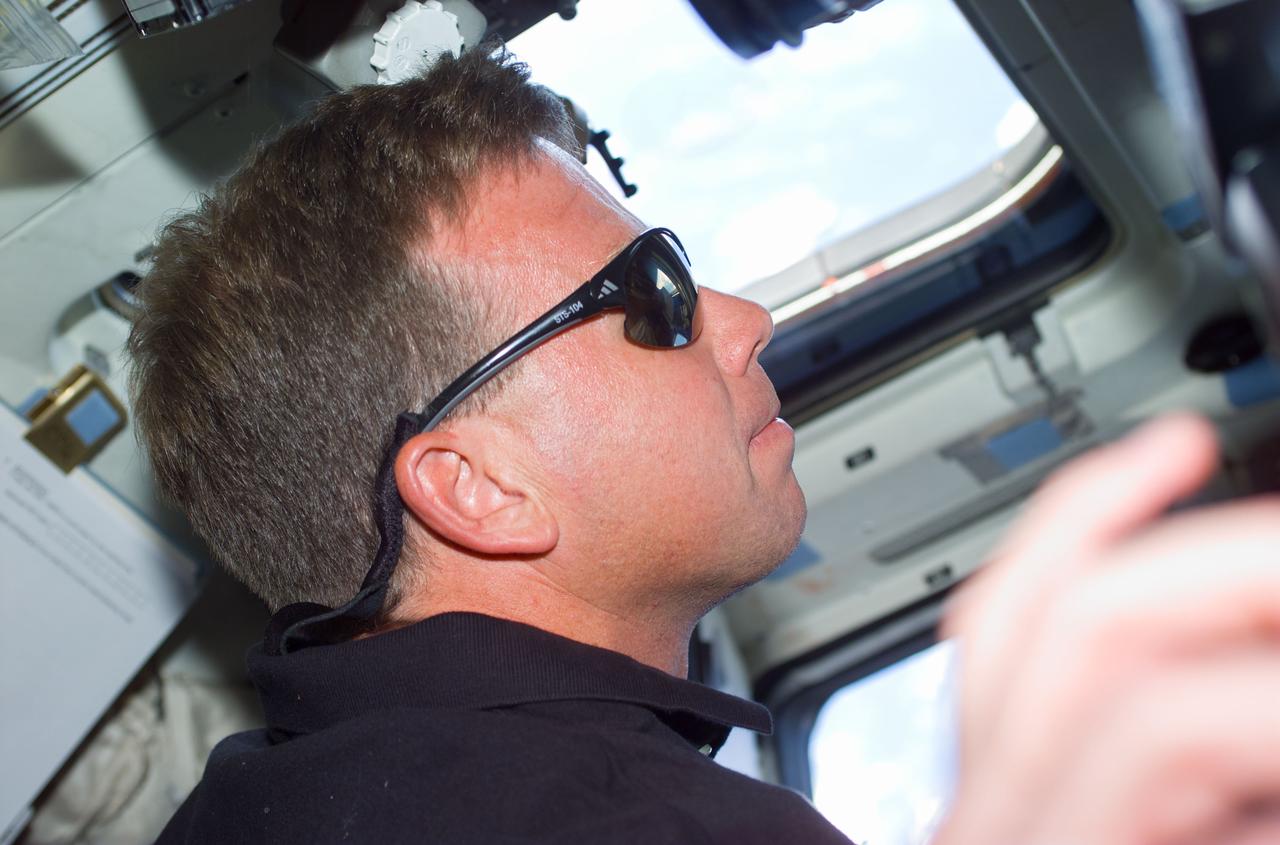
STS104-E-5029 (14 July 2001) --- Astronaut Steven W. Lindsey, STS-104 mission commander, looks toward the International Space Station (ISS) during rendezvous operations. A crew mate on Atlantis' flight deck took this picture with a digital still camera.
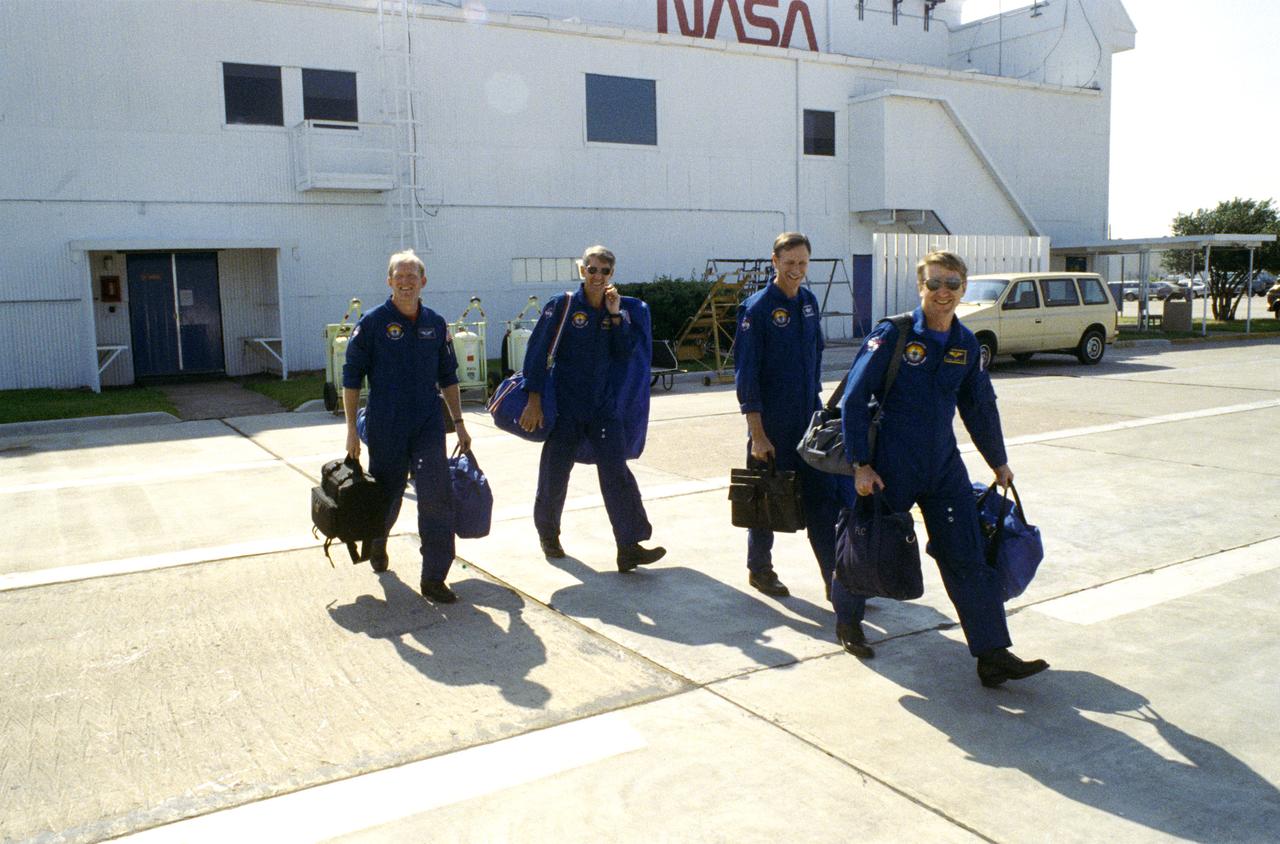
STS-38 crewmembers, carrying their luggage, walk across the Ellington Field runway to board their T-38As. The crewmembers are lead by Pilot Frank L. Culbertson. Commander Richard O. Covey, Mission Specialist (MS) Robert C. Springer (wearing sunglasses), and MS Charles D. Gemar follow. The crewmembers are preparing for their departure to the Kennedy Space Center (KSC). Ellington Field hangar is visible in the background.
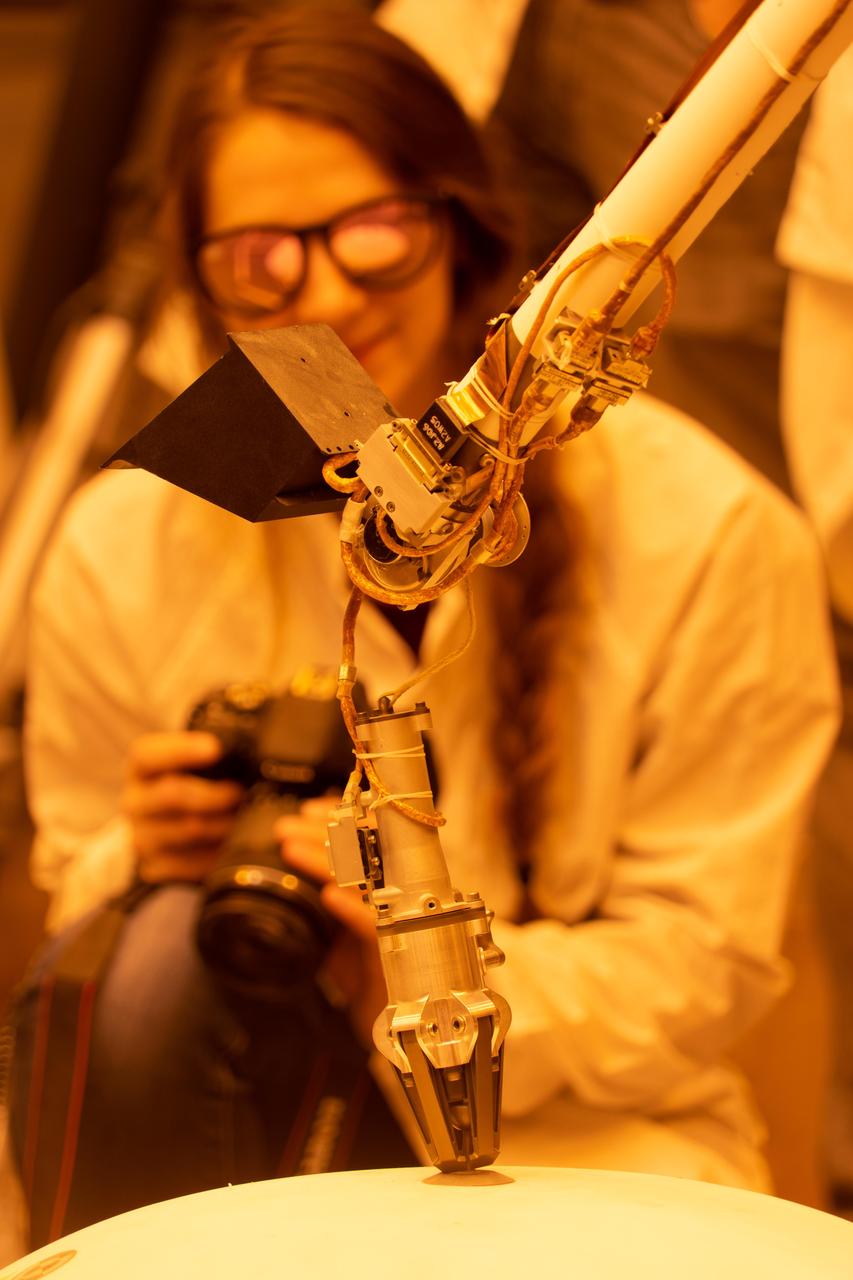
ForeSight, a fully functional, full-size model of NASA's InSight lander, grasps a model of the lander's Wind and Thermal Shield while engineer Maggie Williams looks on. This testing was done at NASA's Jet Propulsion Laboratory in Pasadena, California. Williams is wearing sunglasses to block the bright yellow lights in the test space, which mimic sunlight as it appears on Mars. https://photojournal.jpl.nasa.gov/catalog/PIA22954
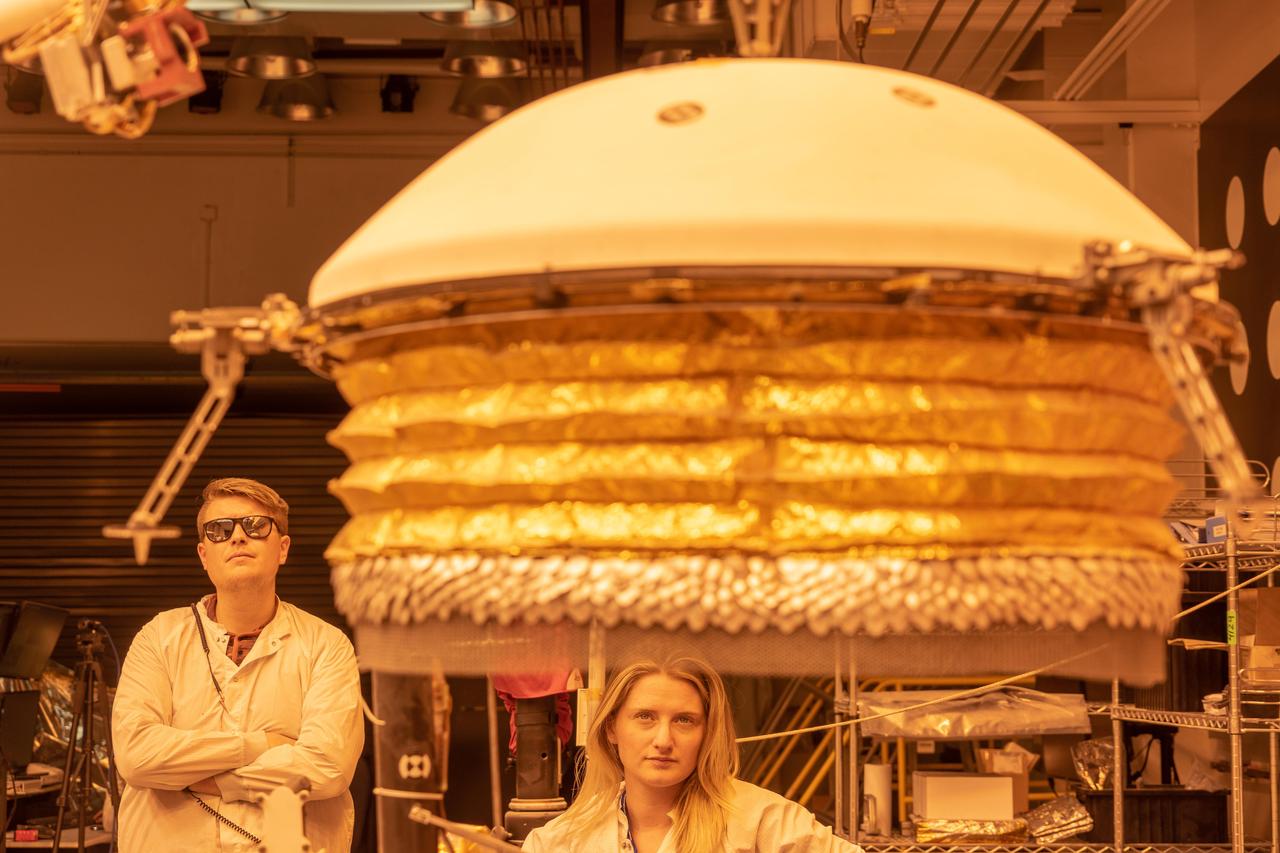
ForeSight, a fully functional, full-size model of NASA's InSight lander, practices deploying a model of the lander's Wind and Thermal Shield while engineers Phil Bailey (left) and Jaime Singer (center) look on. The Wind and Thermal Shield protects InSight's seismometer. This testing was done at NASA's Jet Propulsion Laboratory in Pasadena, California. Bailey is wearing sunglasses to block the bright yellow lights in the test space, which mimic sunlight as it appears on Mars. https://photojournal.jpl.nasa.gov/catalog/PIA22955
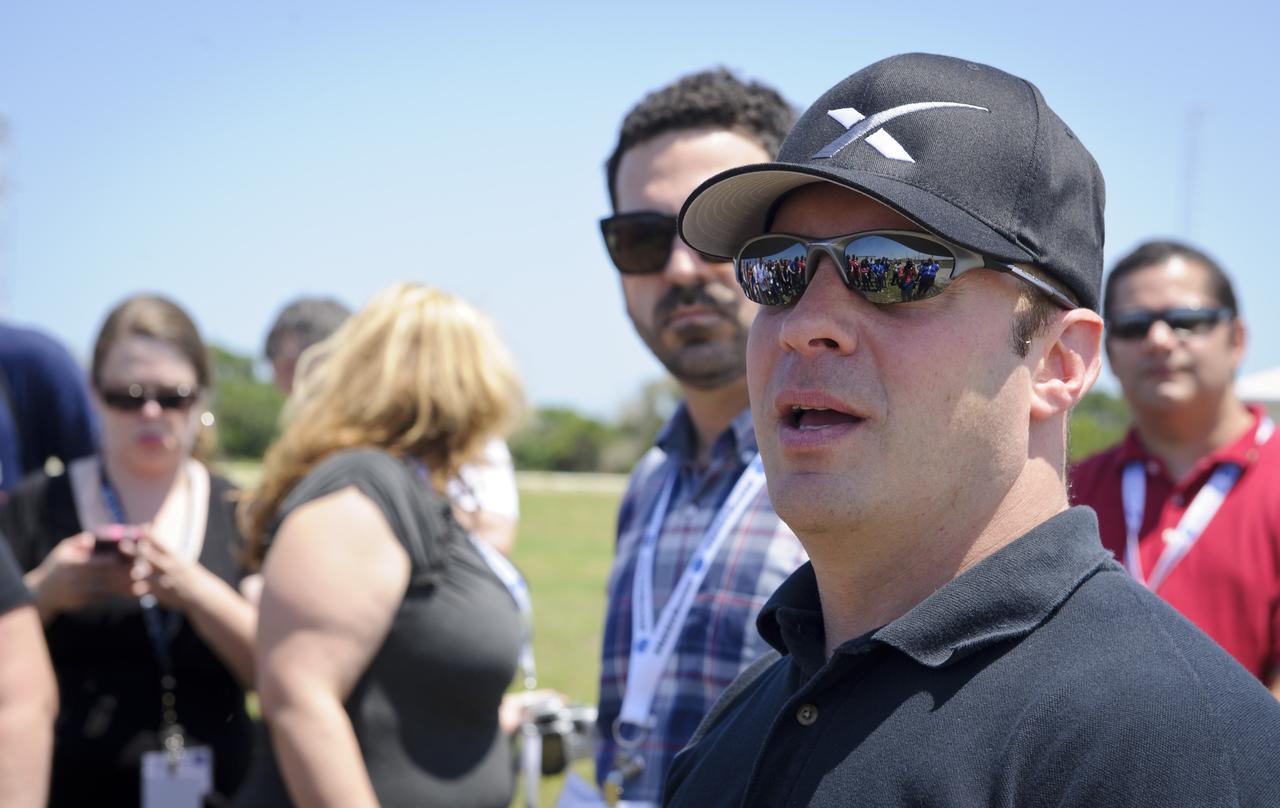
NASA Social participants are reflected in the sunglasses of former NASA astronaut Garrett Reisman, now a senior engineer working on astronaut safety and mission assurance for Space Exploration Technologies, or SpaceX, as he speaks with them, Friday, May 18, 2012, at the launch complex where the company's Falcon 9 rocket is set to launch early Friday morning at Cape Canaveral Air Force Station in Cape Canaveral, Fla. Photo Credit: (NASA/Paul E. Alers)

AI. SpaceFactory of New York and Pennsylvania State University of College Park print subscale habitat structures at NASA's 3D-Printed Habitat Challenge, held at the Caterpillar Edwards Demonstration & Learning Center in Edwards, Illinois, May 1-4, 2019. The habitat print is the final level of the multi-phase competition, which began in in 2015. The challenge is managed by NASA's Centennial Challenges program, and partner Bradley University of Peoria, Illinois. Free Caterpillar sunglasses and caps are a hit with school children.
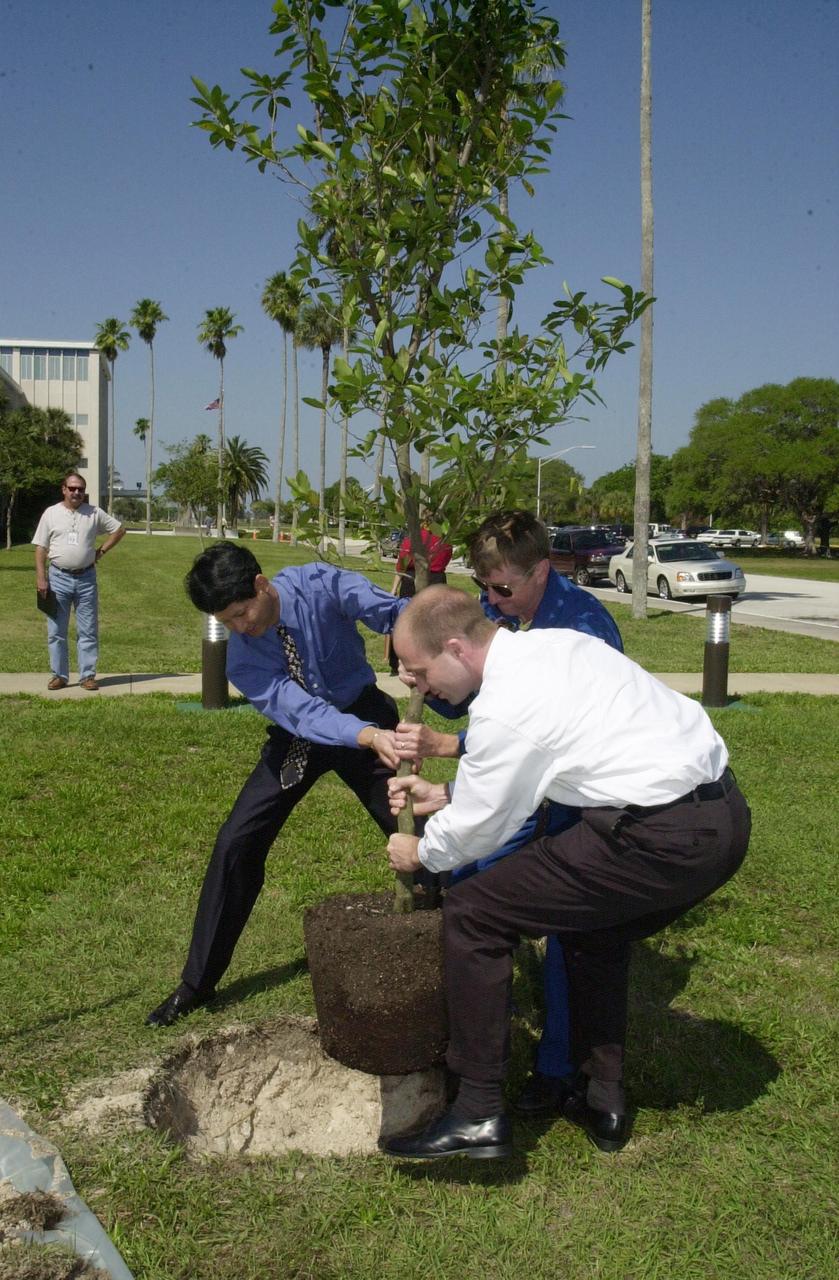
KENNEDY SPACE CENTER, FLA. -- Astronaut Frank Culbertson (with sunglasses) gets help moving a tree into its freshly dug hole near KSC Headquarters Building. The tree commemorates his stay on and safe return from the International Space Station as a member of the Expedition 3 crew. Culbertson served as commander for the four-month stay, August to December 2001. The tree planting is a tradition for the Expedition crews.
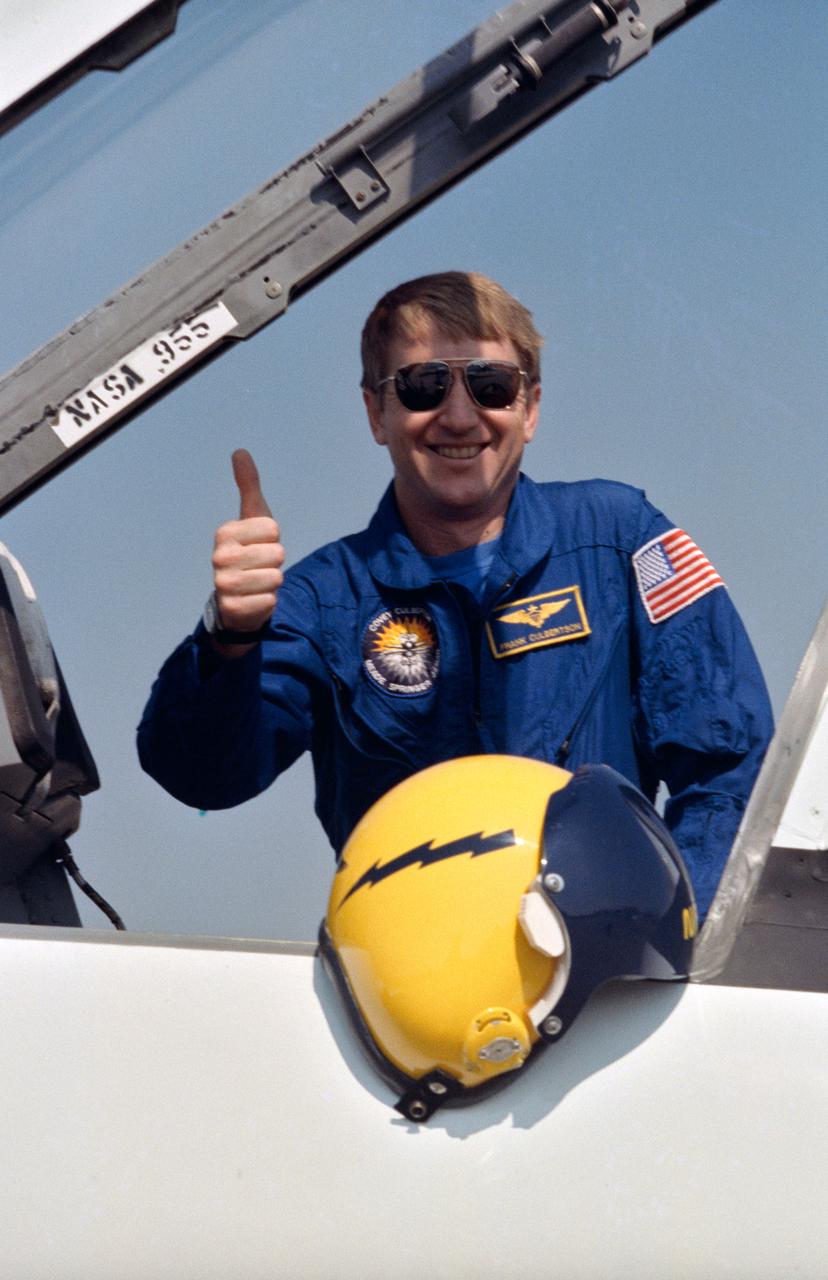
STS-38 Pilot Frank L. Culbertson gives "thumbs up" before climbing into the T-38A NASA 955 forward cockpit. Crewmembers are preparing for departure from Ellington Field to the Kennedy Space Center (KSC). Culbertson's bright yellow helmet is displayed in front of him.
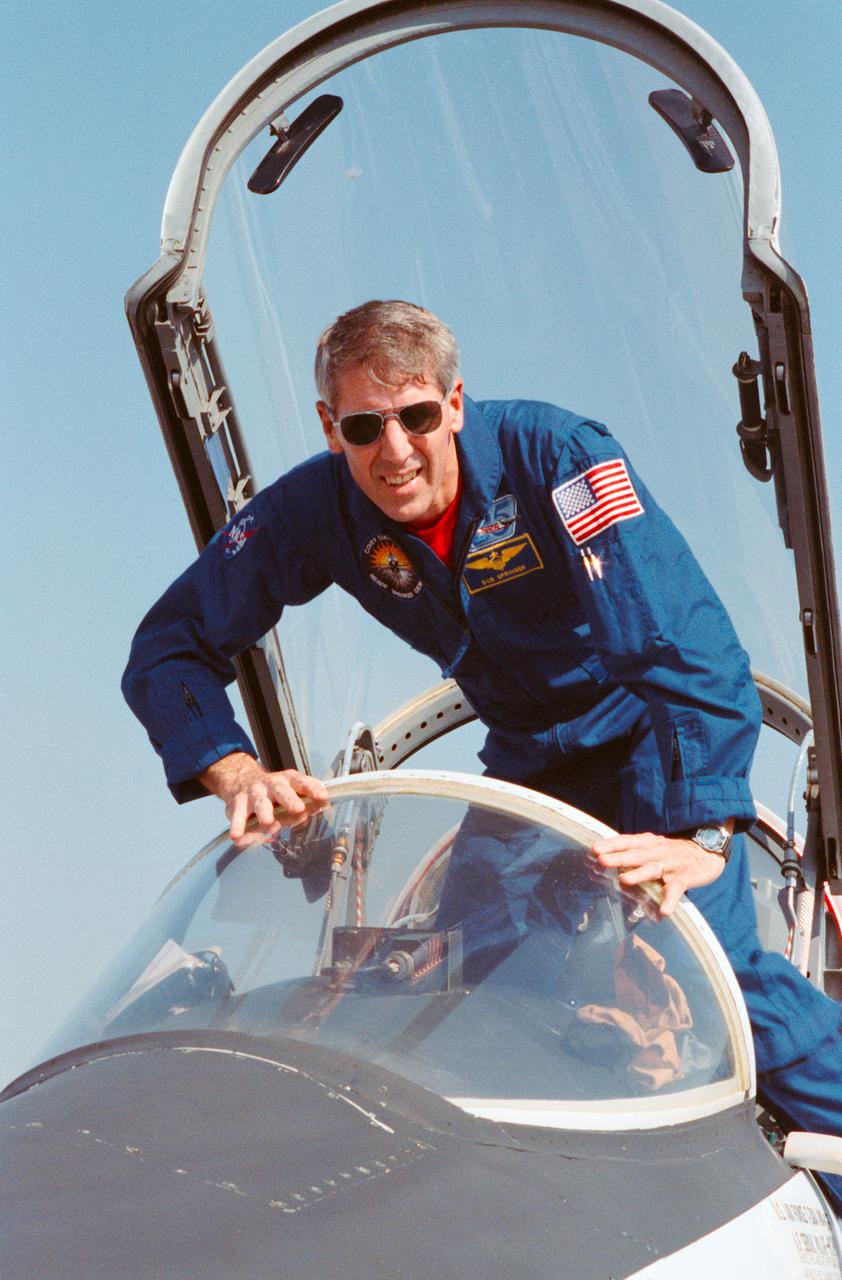
STS-38 Mission Specialist (MS) Robert C. Springer climbs into T-38A forward cockpit prior to Ellington Field departure for the Kennedy Space Center (KSC).
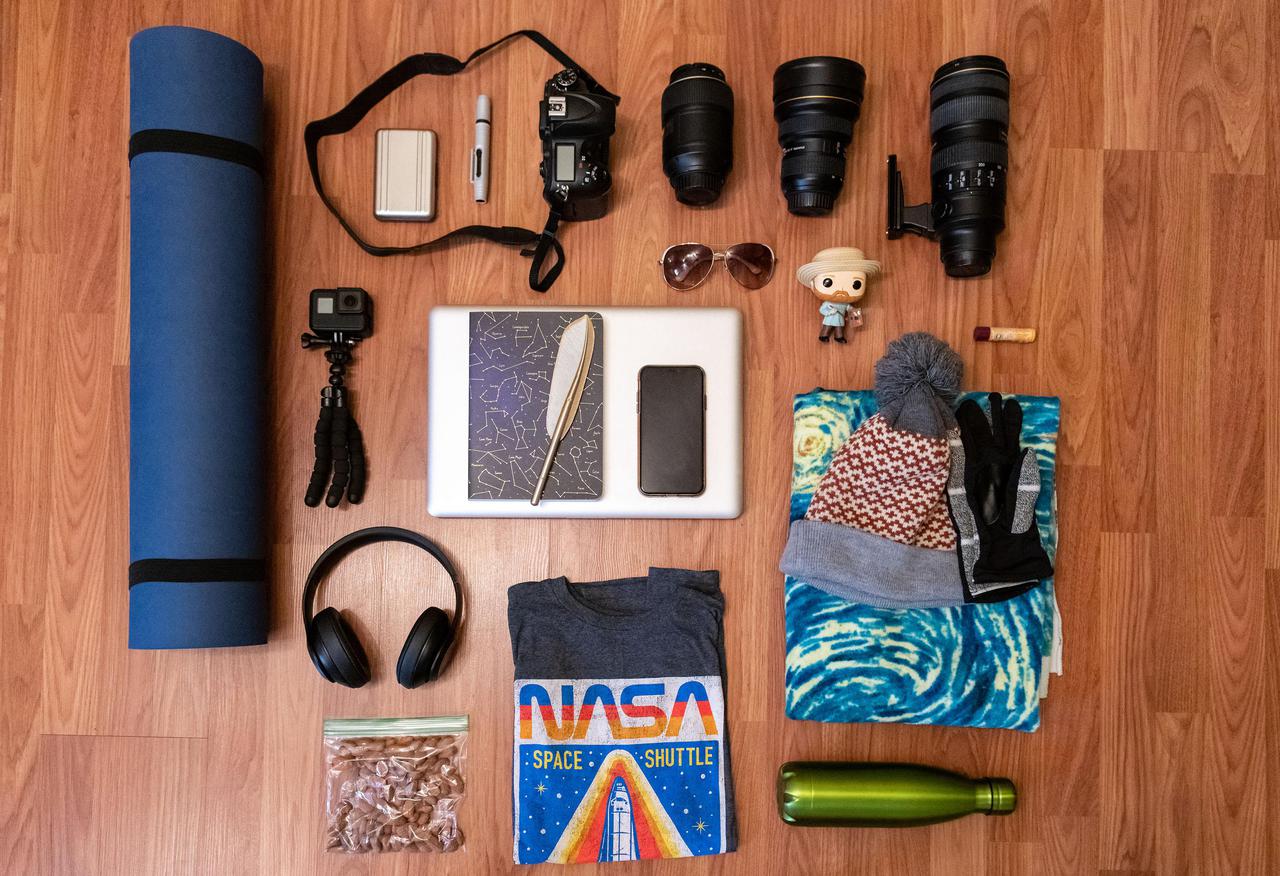
I may not always pack light, but I tried to only pack the essentials, with a couple of goodies. I get cold fairly easily hence the blanket, extra NASA shirt, hat and gloves. No trip is complete without my favorite snack of almonds, water, sunglasses, Chapstick, phone and my headphones to listen to some music. I figured I could bring my yoga mat, because who wouldn’t want to do yoga on the moon?? The most important part of this kit is my camera! I brought a couple of different lenses for a variety of options, along with a sports action camera, notebook and computer for editing. The Van Gogh doll was just for fun!
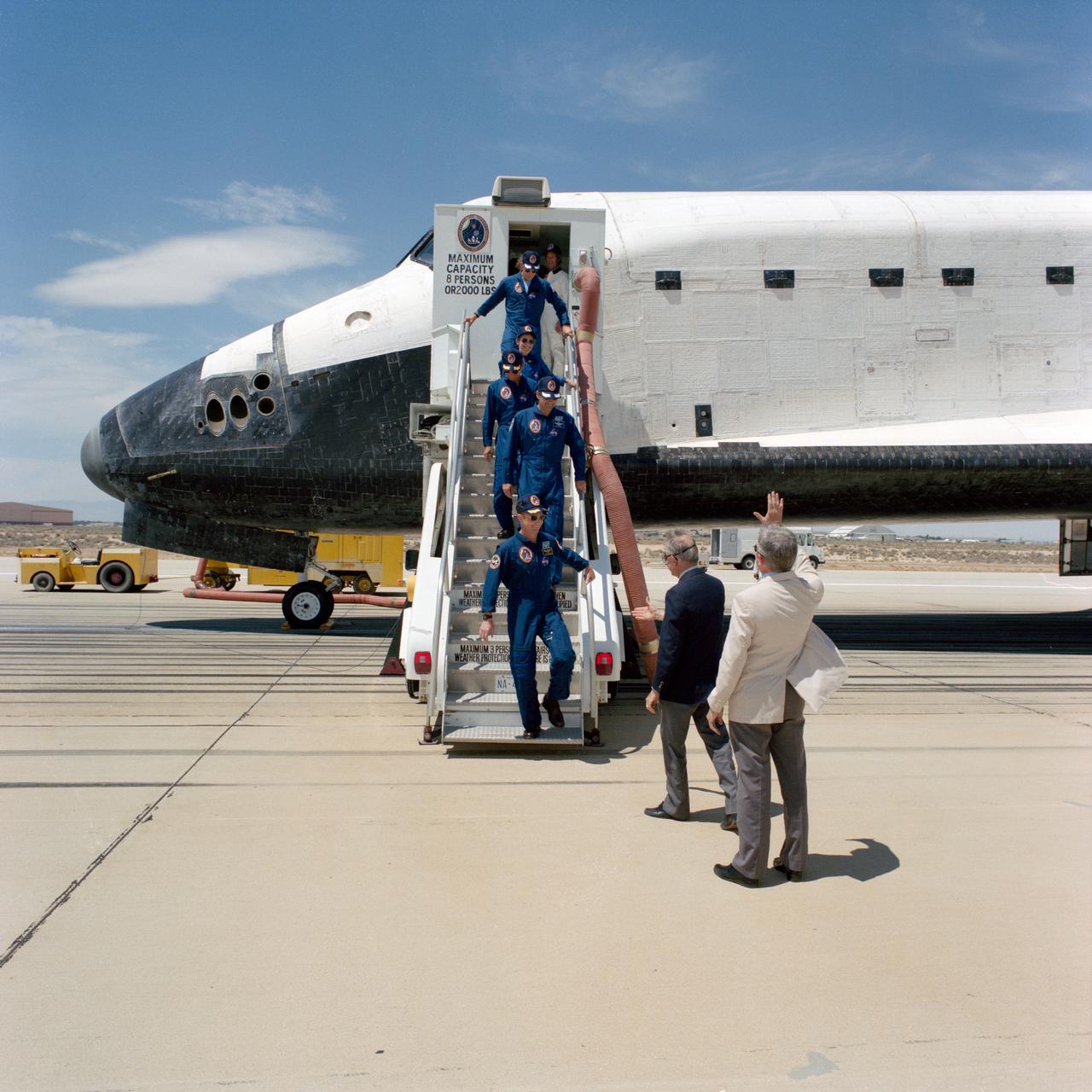
STS030-S-137 (8 May 1989) --- Crewmembers who spent four full days in space aboard Space Shuttle Atlantis egress their temporary home for a welcome meeting with terra firma. Pictured, from bottom of steps to top, are Astronauts David M.Walker, Ronald J. Grabe, Norman E. Thagard, Mary L. Cleave and Mark C. Lee. Rear Admiral Richard H. Truly (foreground), acting NASA Administrator, and Dale D. Myers, Deputy Administrator of NASA, await to greet the crewmembers. Minutes earlier, the spacecraft's landing gear came to a stop at 12:44:33 p.m. (PDT), 8 May 1989. It landed on Runway 22, a concrete facility, like a number of other NASA flights. Still others have landed on unpaved dry lake bed strips.
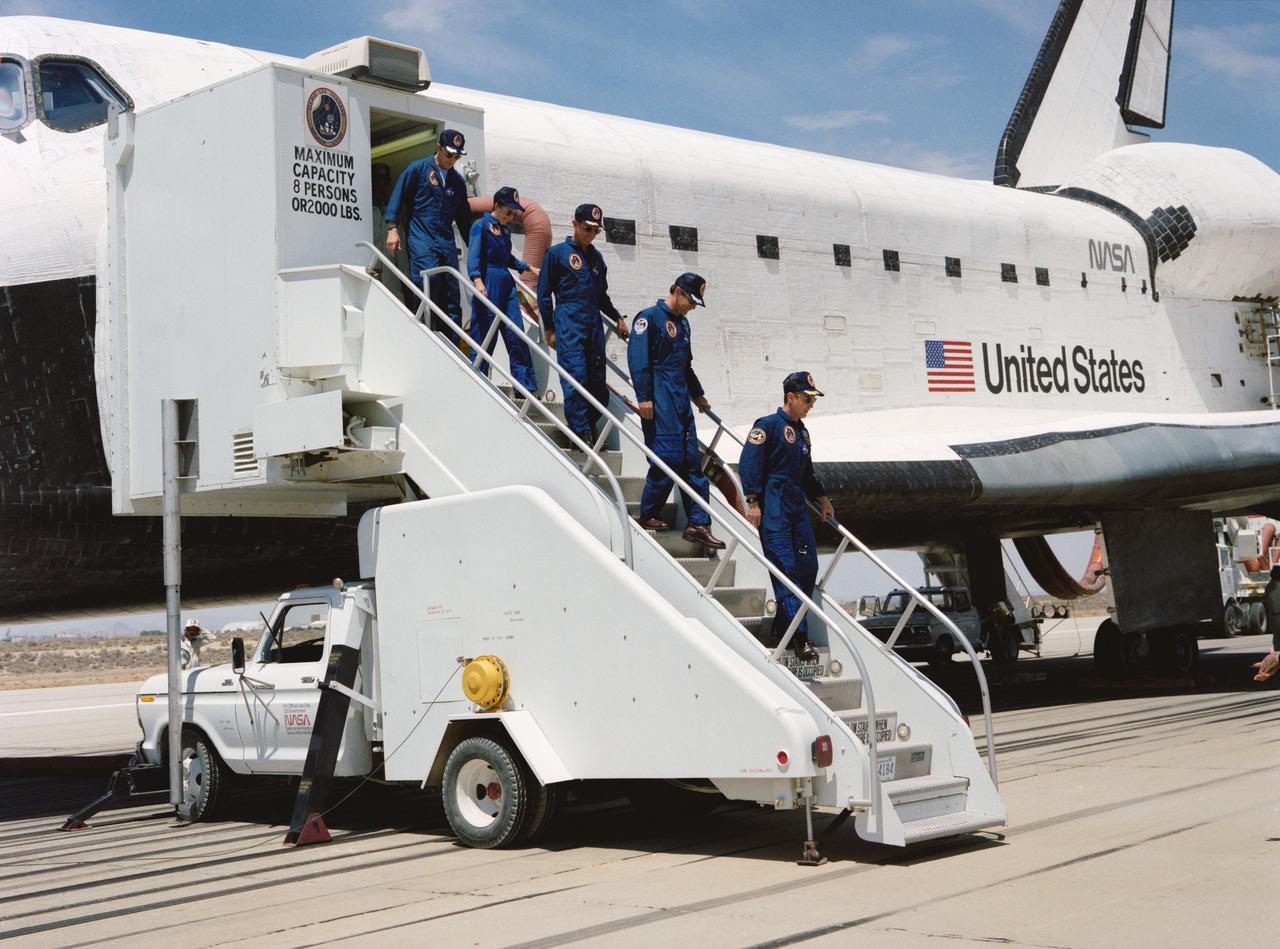
STS030-S-132 (8 May 1989) --- Crewmembers who spent just over four full days in space aboard Space Shuttle Atlantis egress their temporary home for a welcome meeting with terra firma. Pictured, from bottom of steps to top, are astronauts David M. Walker, Ronald J. Grabe, Norman E. Thagard, Mary L. Cleave and Mark C. Lee. Minutes earlier, the spacecraft?s landing gear came to a stop at 12:44:33 P.M. (PDT), 8 May 1989. It landed on runway 22, a concrete facility, like a number of other NASA flights. Still others have landed on unpaved dry lakebed stripes.
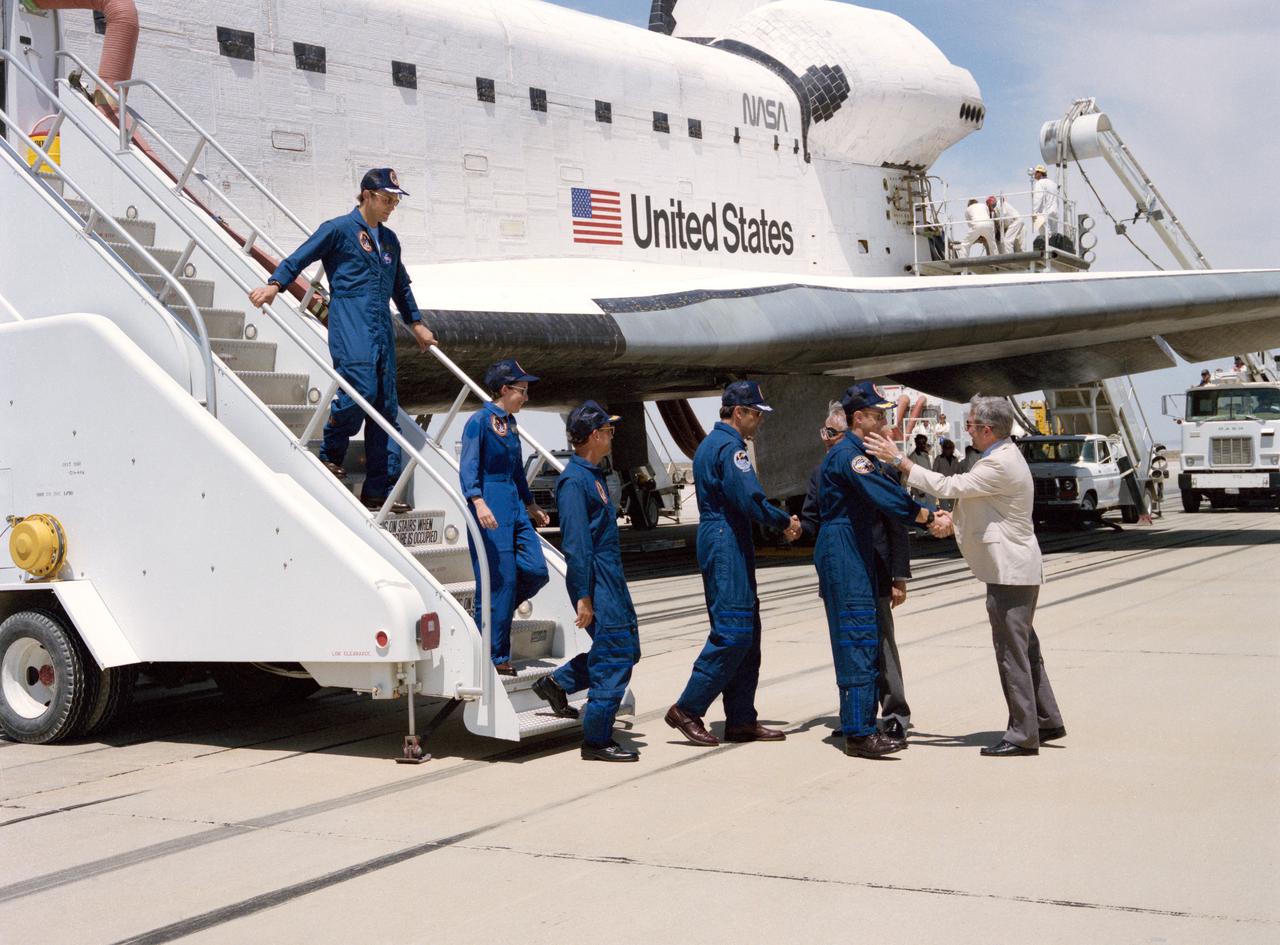
STS030-S-131 (8 May 1989) --- Crewmembers who spent just over four full days in space aboard Space Shuttle Atlantis egress their temporary home for a welcome meeting with terra firma. Astronaut David M. Walker, mission commander, shakes hands with Rear Admiral Richard H. Truly, acting NASA Administrator. Astronaut Ronald J. Grabe (center frame), pilot, is greeted by Dale D. Myers, Deputy Administrator. Pictured behind Grabe, from bottom of steps to top, are astronauts Norman E. Thagard, Mary L. Cleave and Mark C. Lee, all mission specialists. Minutes earlier, the spacecraft?s landing gear came to a stop at 12:44:33 P.M. (PDT), 8 May 1989. It landed on runway 22, a concrete facility, like a number of other NASA flights. Still others have landed on unpaved dry lakebed stripes.
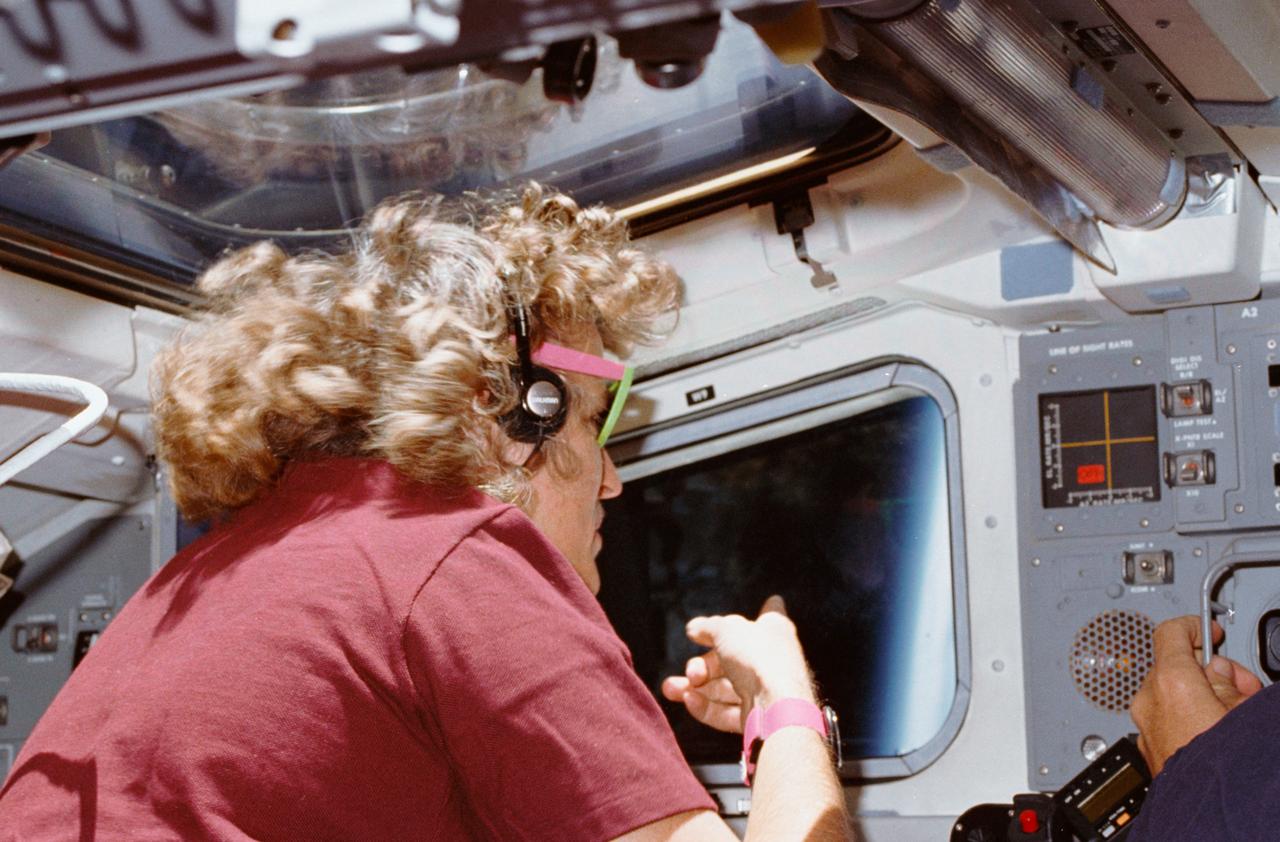
STS034-05-027 (18-23 Oct. 1989) --- Astronaut Shannon W. Lucid peers into Atlantis' cargo bay from the aft flight deck. The spacecraft was in the midst of one of its many "days", a 50-odd minutes session of exposure to the sun. The scene was recorded with a 35mm camera.
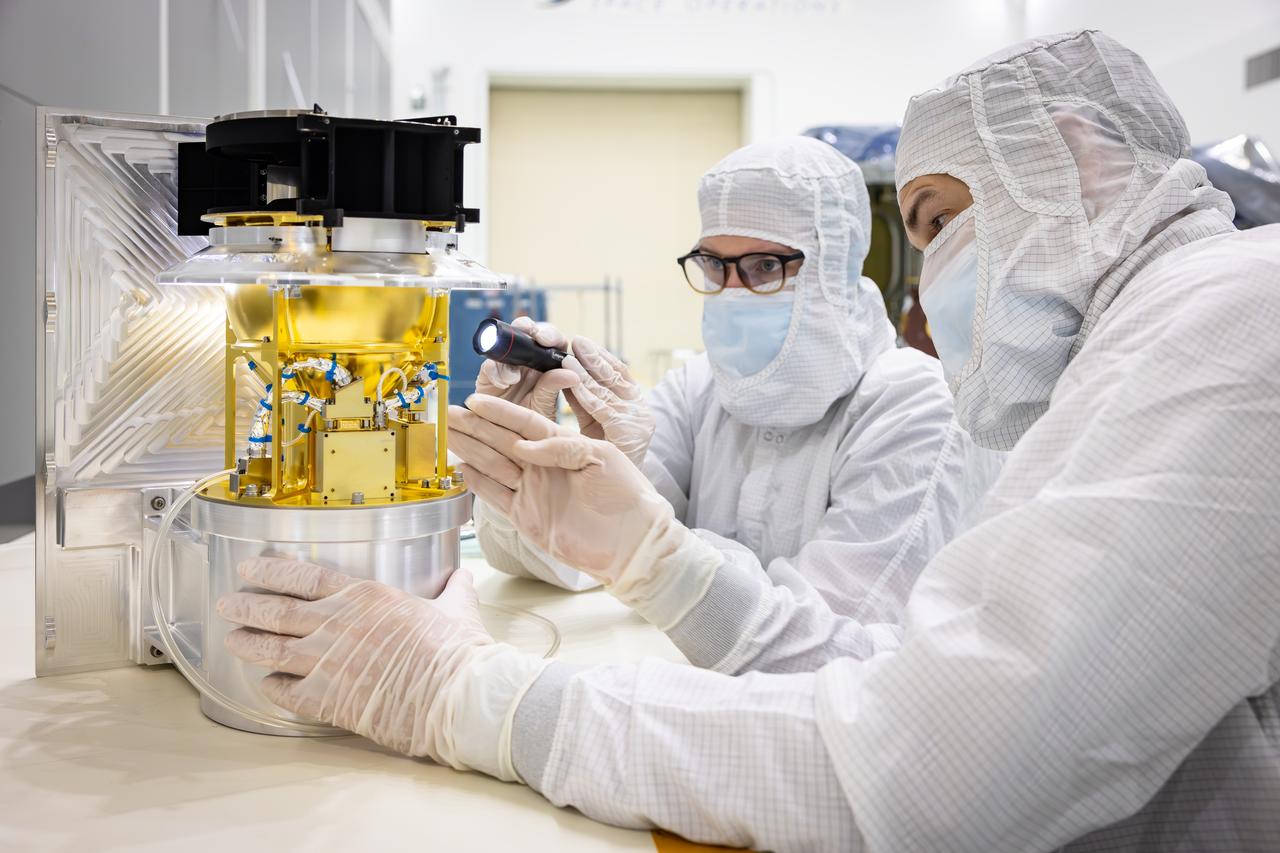
Technicians perform tests the Solar Wind and Pickup Ions (SWAPI) instrument of NASA’s IMAP (Interstellar Mapping and Acceleration Probe) observatory inside the high bay at the Astrotech Space Operations Facility near the agency’s Kennedy Space Center in Florida on Tuesday, June 17, 2025. As IMAP spins in space, solar wind particles are swept into SWAPI through a special opening called “sunglasses,” an opening covered by a screen with very tiny precise holes that cut down the brightness of the very intense solar wind. SWAPI collects and counts particles from the solar wind flowing from the Sun and particles called pick-up ions that have entered the heliosphere from outside the solar system and traveled inwards where IMAP orbits near Earth. Launch of the IMAP mission is targeted for no earlier than September 2025 aboard a SpaceX Falcon 9 rocket from Launch Complex 39A at NASA Kennedy.
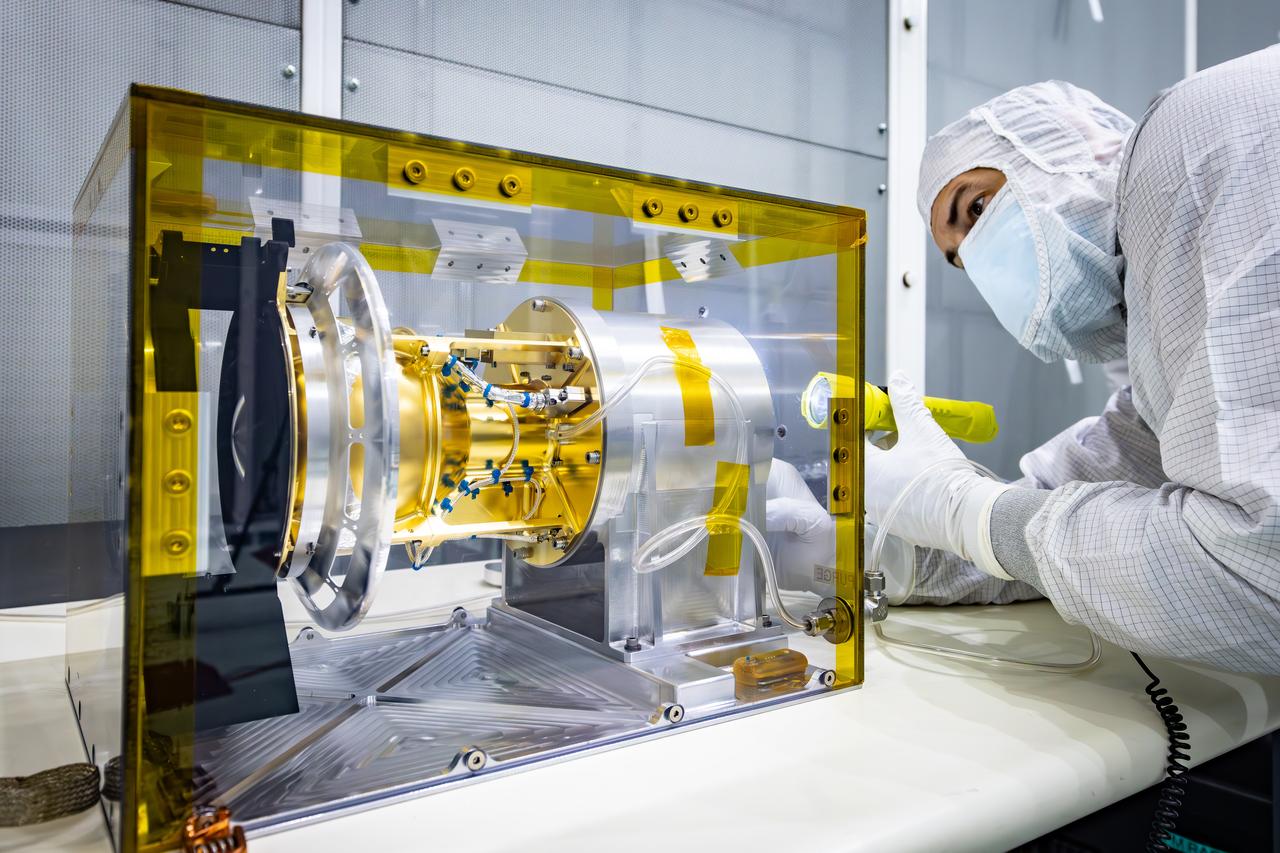
Technicians perform tests the Solar Wind and Pickup Ions (SWAPI) instrument of NASA’s IMAP (Interstellar Mapping and Acceleration Probe) observatory inside the high bay at the Astrotech Space Operations Facility near the agency’s Kennedy Space Center in Florida on Tuesday, June 17, 2025. As IMAP spins in space, solar wind particles are swept into SWAPI through a special opening called “sunglasses,” an opening covered by a screen with very tiny precise holes that cut down the brightness of the very intense solar wind. SWAPI collects and counts particles from the solar wind flowing from the Sun and particles called pick-up ions that have entered the heliosphere from outside the solar system and traveled inwards where IMAP orbits near Earth. Launch of the IMAP mission is targeted for no earlier than September 2025 aboard a SpaceX Falcon 9 rocket from Launch Complex 39A at NASA Kennedy.
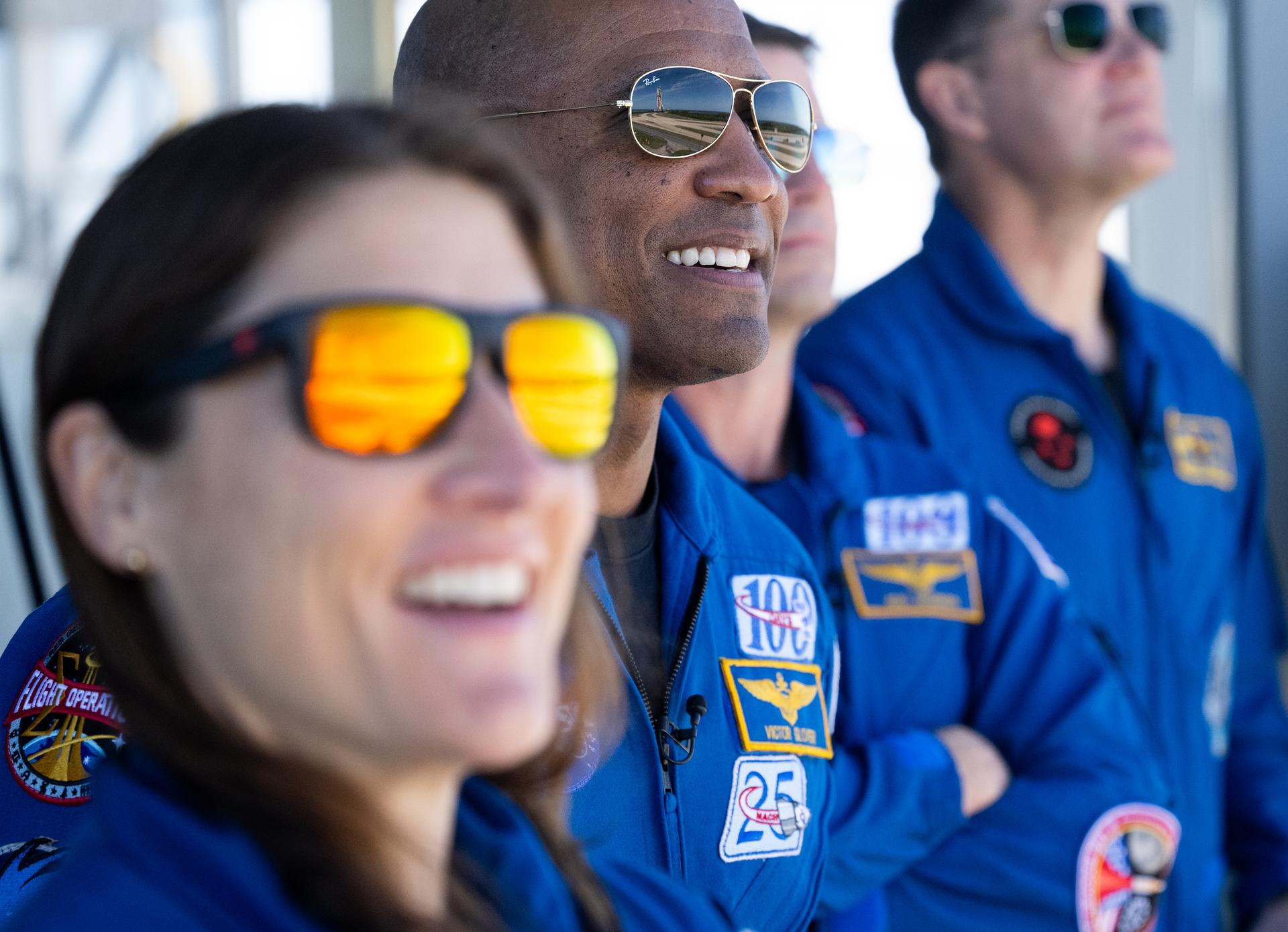
NASA’s Space Launch System (SLS) rocket and Orion spacecraft, secured to the mobile launcher, are reflected in the sunglasses of NASA astronaut Victor Glover, Artemis II pilot, as he and fellow crewmates NASA astronauts Christina Koch, Artemis II mission specialist, Reid Wiseman, Artemis II commander, and CSA (Canadian Space Agency) astronaut Jeremy Hansen watch them make the 4.2 mile journey to Launch Pad 39B atop crawler-transporter 2, Saturday, Jan. 17, 2026, at NASA’s Kennedy Space Center in Florida. NASA’s Artemis II test flight will take Hansen, Wiseman, Glover, and Koch around the Moon and back to Earth no later than April 2026. Photo Credit: (NASA/Joel Kowsky)
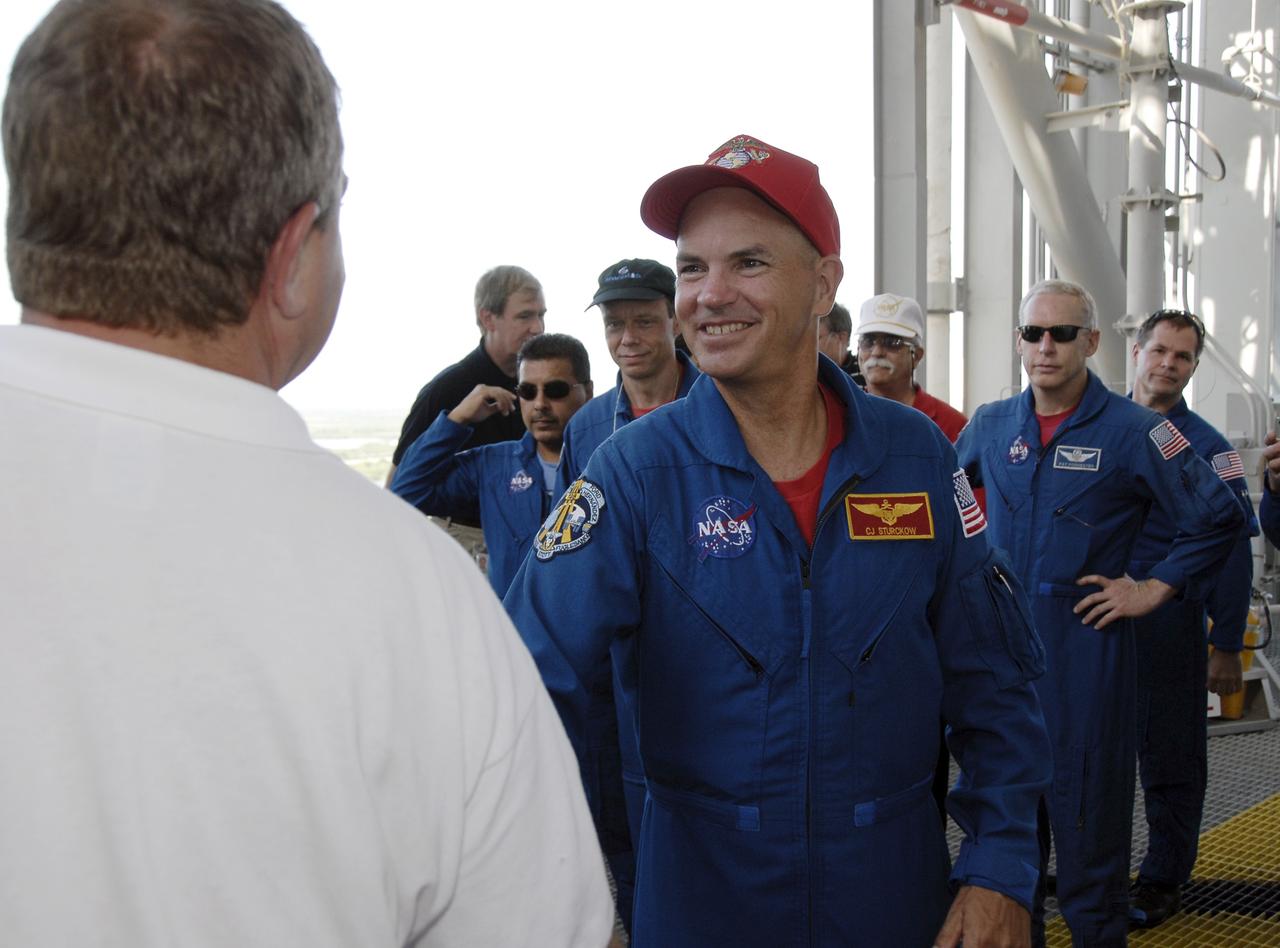
CAPE CANAVERAL, Fla. – At NASA's Kennedy Space Center in Florida, STS-128 crew members get instructions about emergency exit procedures from the fixed service structure on Launch Pad 39A. In front is Commander Rick Sturckow. Seen behind him, at left are Mission Specialists Jose Fernandez (with sunglasses) and Christer Fuglesang, and at right, Mission Specialist Patrick Forrester and Pilot Kevin Ford. Fuglesang represents the European Space Agency. The crew is at Kennedy for a launch dress rehearsal called the terminal countdown demonstration test, or TCDT, which includes emergency exit training and equipment familiarization, as well as a simulated launch countdown. Discovery will deliver 33,000 pounds of equipment to the station, including science and storage racks, a freezer to store research samples, a new sleeping compartment and the COLBERT treadmill. Photo credit: NASA/Kim Shiflett
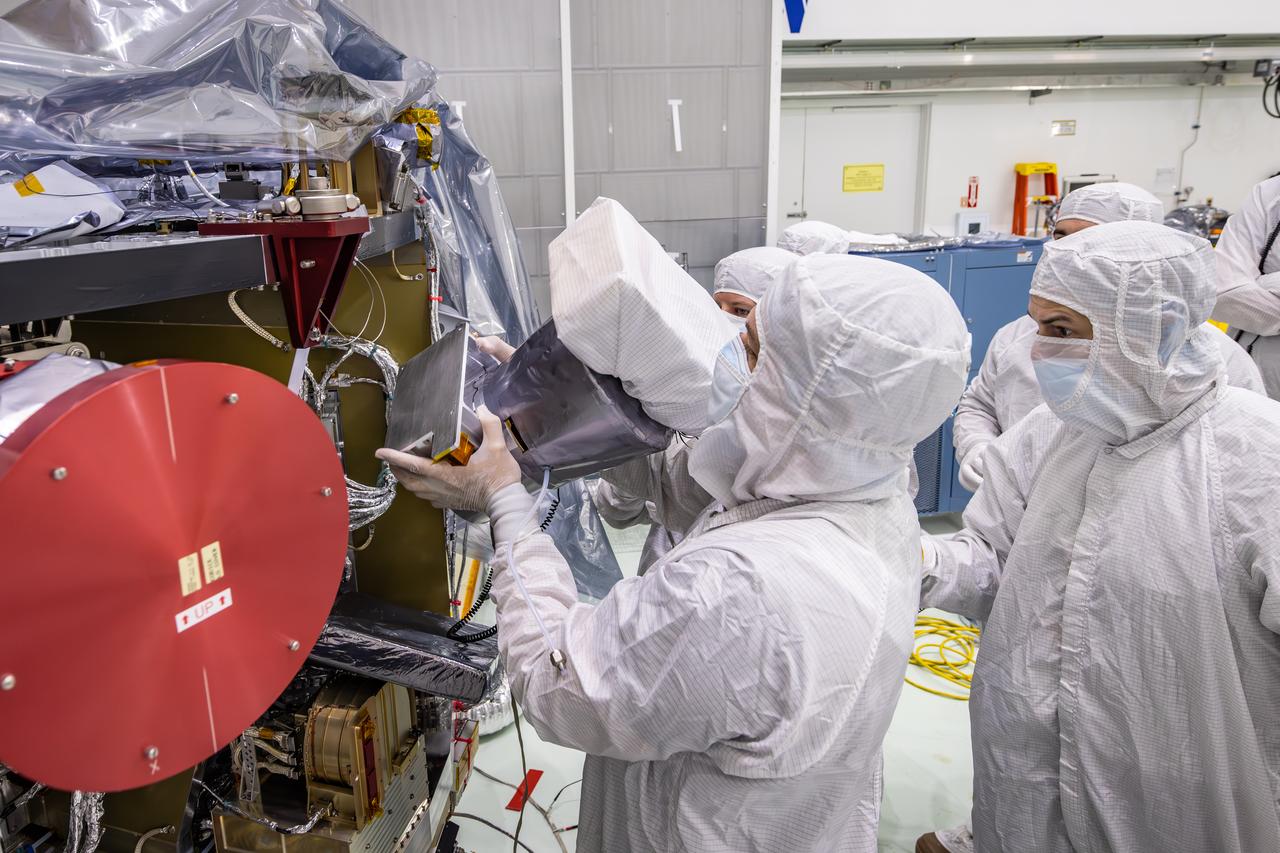
Technicians reintegrate the Solar Wind and Pickup Ions (SWAPI) instrument of NASA’s IMAP (Interstellar Mapping and Acceleration Probe) observatory inside the high bay at the Astrotech Space Operations Facility near the agency’s Kennedy Space Center in Florida on Monday, June 23, 2025. As IMAP spins in space, solar wind particles are swept into SWAPI through a special opening called “sunglasses,” an opening covered by a screen with very tiny precise holes that cut down the brightness of the very intense solar wind. SWAPI collects and counts particles from the solar wind flowing from the Sun and particles called pick-up ions that have entered the heliosphere from outside the solar system and traveled inwards where IMAP orbits near Earth. Launch of the IMAP mission is targeted for no earlier than September 2025 aboard a SpaceX Falcon 9 rocket from Launch Complex 39A at NASA Kennedy.
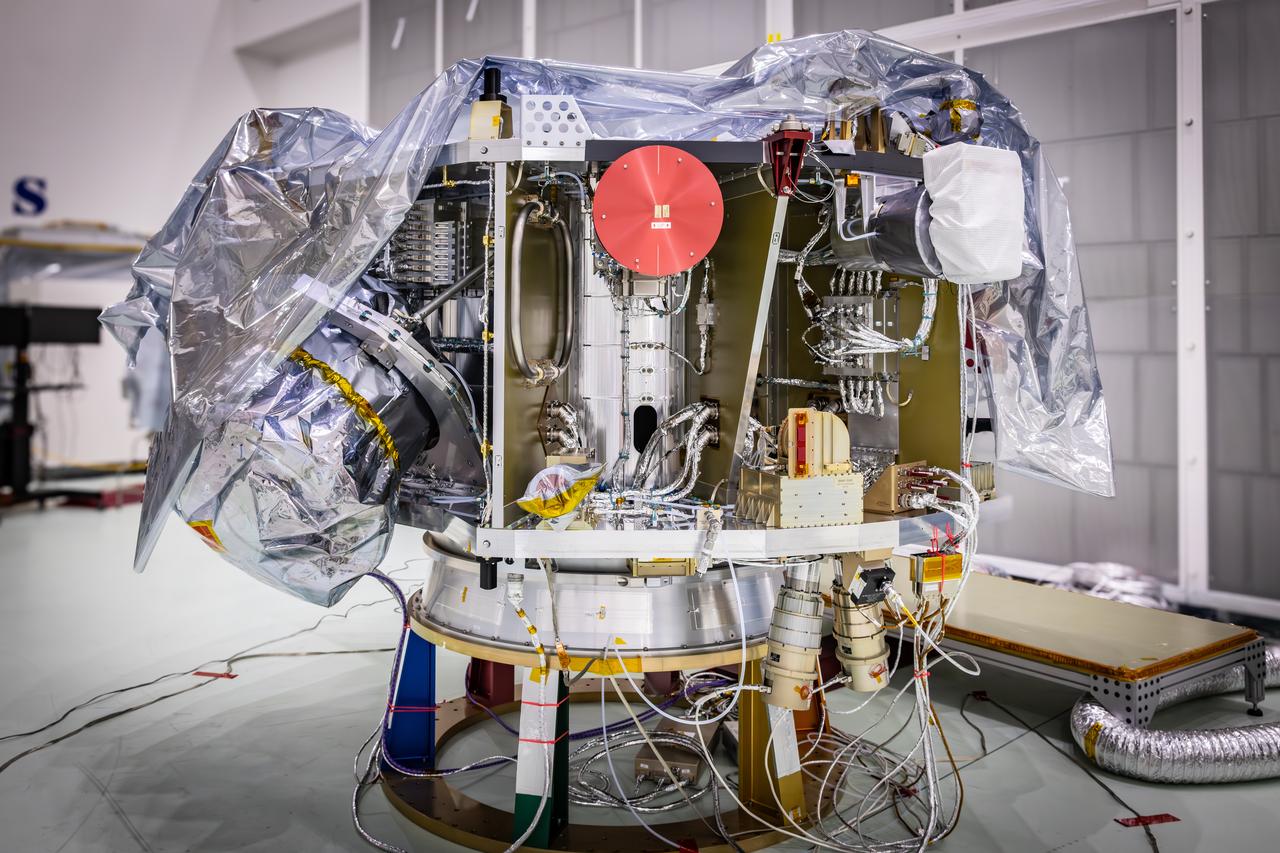
Technicians reintegrate the Solar Wind and Pickup Ions (SWAPI) instrument of NASA’s IMAP (Interstellar Mapping and Acceleration Probe) observatory inside the high bay at the Astrotech Space Operations Facility near the agency’s Kennedy Space Center in Florida on Monday, June 23, 2025. As IMAP spins in space, solar wind particles are swept into SWAPI through a special opening called “sunglasses,” an opening covered by a screen with very tiny precise holes that cut down the brightness of the very intense solar wind. SWAPI collects and counts particles from the solar wind flowing from the Sun and particles called pick-up ions that have entered the heliosphere from outside the solar system and traveled inwards where IMAP orbits near Earth. Launch of the IMAP mission is targeted for no earlier than September 2025 aboard a SpaceX Falcon 9 rocket from Launch Complex 39A at NASA Kennedy.
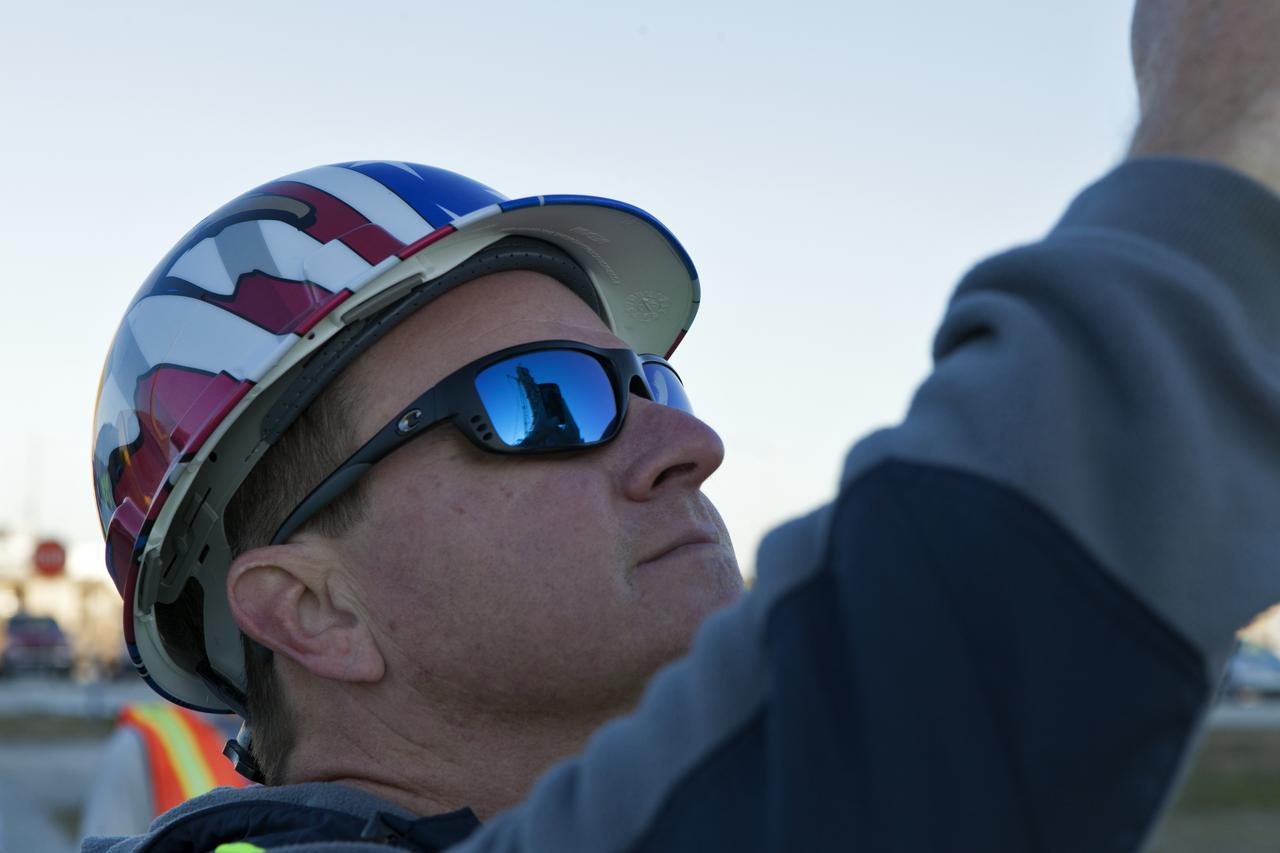
The mobile launcher (ML) is reflected in the sunglasses of a construction worker with JP Donovan at NASA's Kennedy Space Center in Florida. A crane is lifting the Interim Cryogenic Propulsion Stage Umbilical (ICPSU) up for installation on the tower of the ML. The last of the large umbilicals to be installed, the ICPSU will provide super-cooled hydrogen and liquid oxygen to the Space Launch System (SLS) rocket's interim cryogenic propulsion stage, or upper stage, at T-0 for Exploration Mission-1. The umbilical is located at about the 240-foot-level of the mobile launcher and will supply fuel, oxidizer, gaseous helium, hazardous gas leak detection, electrical commodities and environment control systems to the upper stage of the SLS rocket during launch. Exploration Ground Systems is overseeing installation of the umbilicals on the ML.
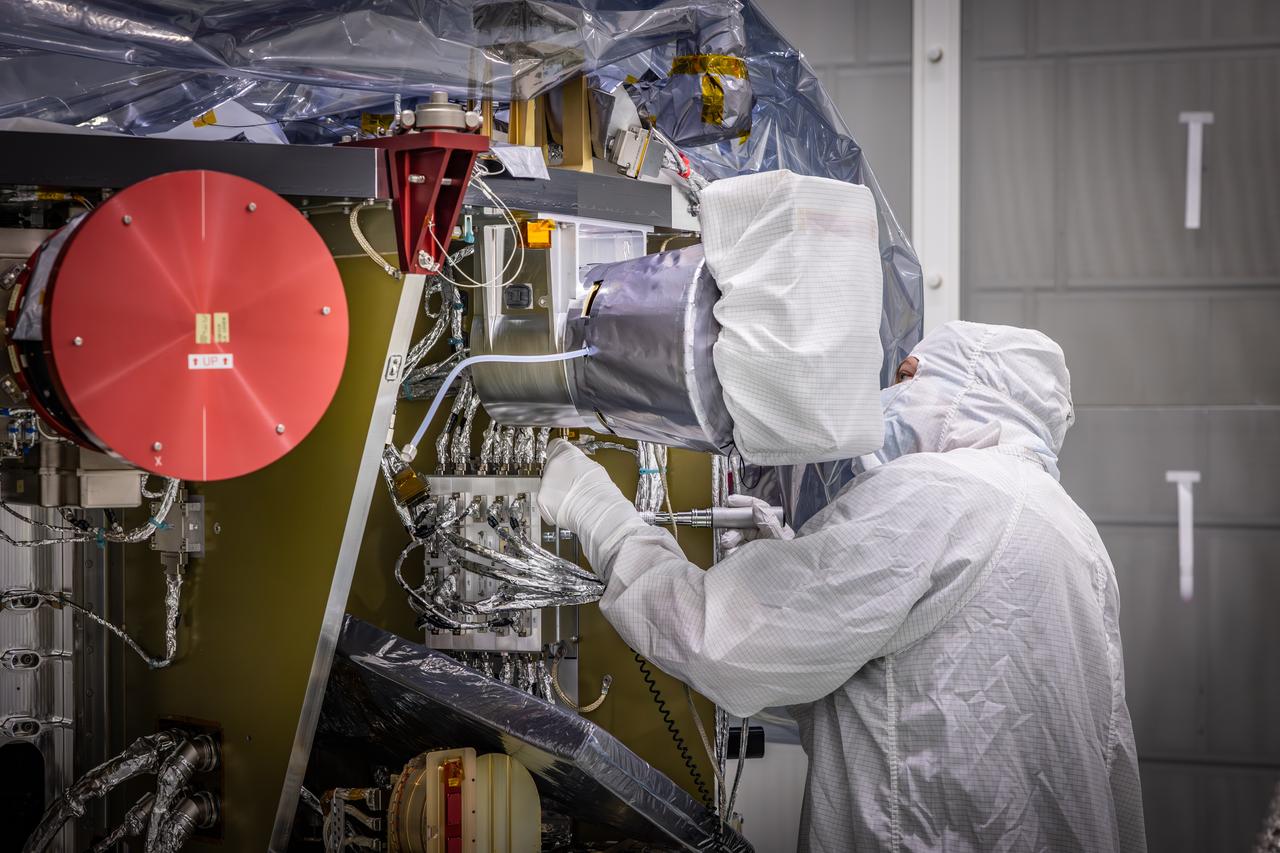
Technicians reintegrate the Solar Wind and Pickup Ions (SWAPI) instrument of NASA’s IMAP (Interstellar Mapping and Acceleration Probe) observatory inside the high bay at the Astrotech Space Operations Facility near the agency’s Kennedy Space Center in Florida on Monday, June 23, 2025. As IMAP spins in space, solar wind particles are swept into SWAPI through a special opening called “sunglasses,” an opening covered by a screen with very tiny precise holes that cut down the brightness of the very intense solar wind. SWAPI collects and counts particles from the solar wind flowing from the Sun and particles called pick-up ions that have entered the heliosphere from outside the solar system and traveled inwards where IMAP orbits near Earth. Launch of the IMAP mission is targeted for no earlier than September 2025 aboard a SpaceX Falcon 9 rocket from Launch Complex 39A at NASA Kennedy.
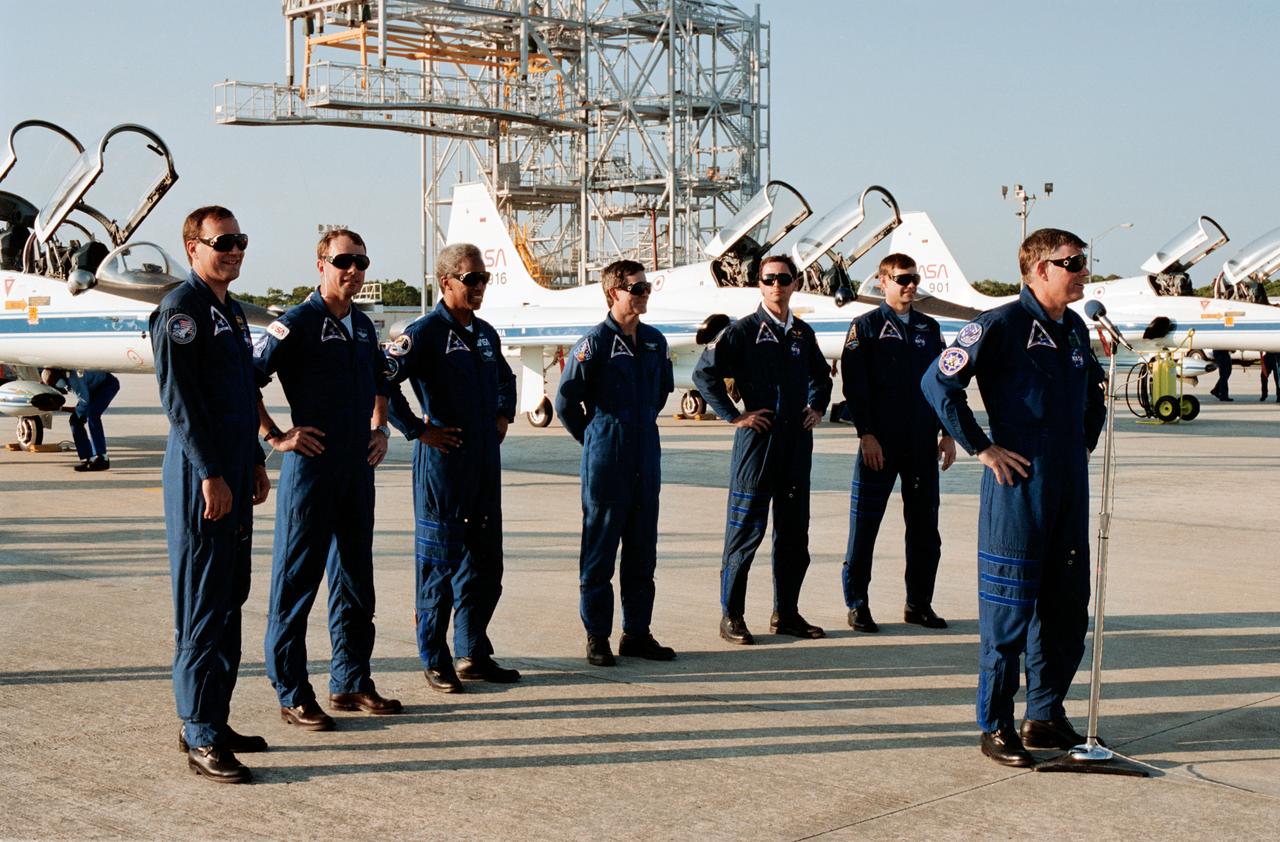
STS039-S-003 (20 April 1991) --- Astronaut Michael L. Coats (right) addresses the news media after arriving at the Shuttle Landing Facility along with his six fellow crewmembers. From left are astronauts Richard J. Hieb, L. Blaine Hammond, Guion S. Bluford, Charles L. (Lacy) Veach, Gregory J. Harbaugh and Donald R. McMonagle. The Space Shuttle mate/demate stand is seen in the background. Note: The STS-39 launch of Discovery occurred at 7:33:14 a.m. (EDT), April 28, 1991.
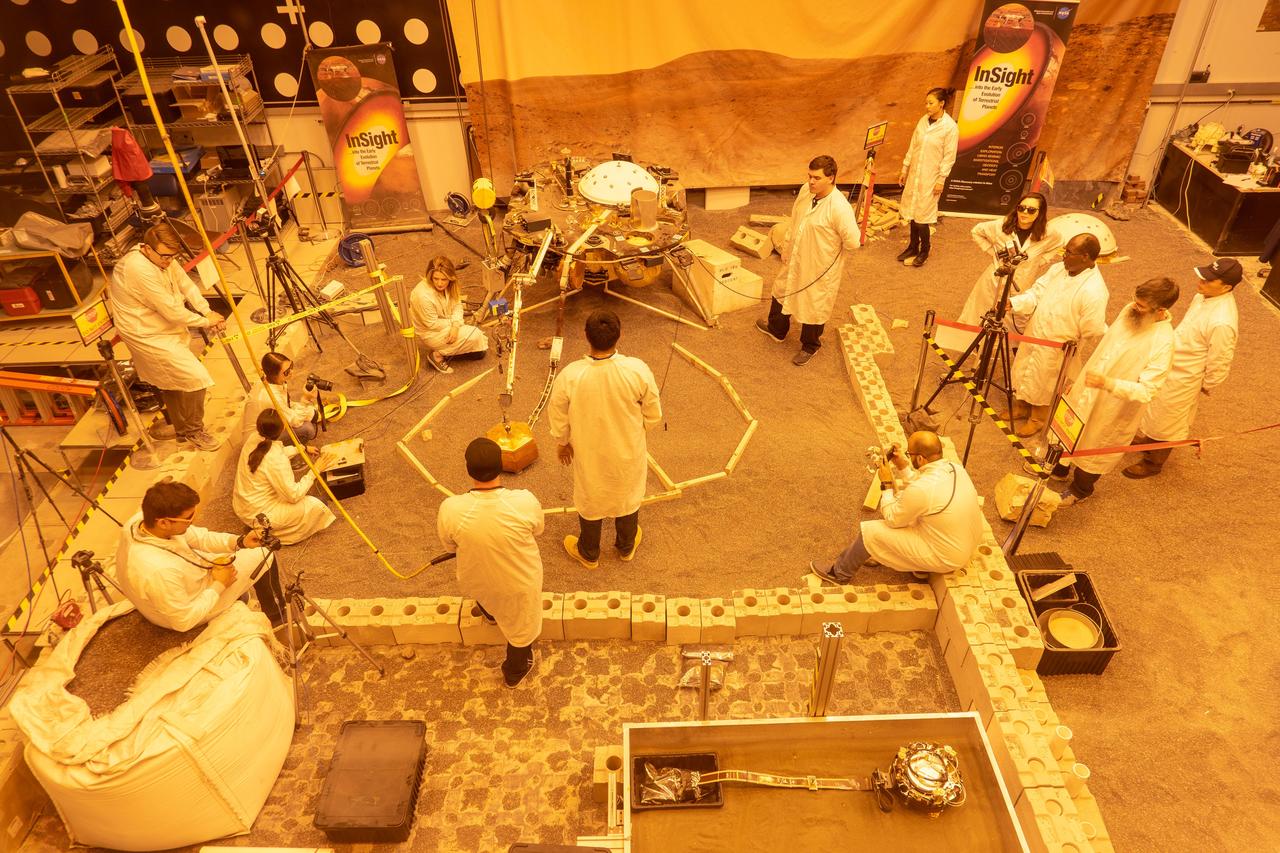
Engineers practice deploying InSight's instruments in a lab at NASA's Jet Propulsion Laboratory in Pasadena, California. Several of them are wearing sunglasses to block the bright yellow lights in the test space, which mimic sunlight as it appears on Mars. The yellow lights are used to test cameras which are the same as those used by InSight on Mars. The entire lab space in the center of the image has been sculpted to mimic the terrain in front of the lander on Mars, creating more reliable test conditions. The area in the center of the image is the "workspace" where the lander's instruments can be set down; wood blocks have been laid down to mark the perimeter of these areas. Rocks have been chosen to match the size, shape and location of those in front of InSight on Mars. In the center of the image is a model of the lander's copper-colored seismometer; at the bottom-right is a second model of the seismometer used for a different kind of testing. In the lower left corner of the image is a bag of crushed granite, which is used in this lab to simulate Martian sand. https://photojournal.jpl.nasa.gov/catalog/PIA22744
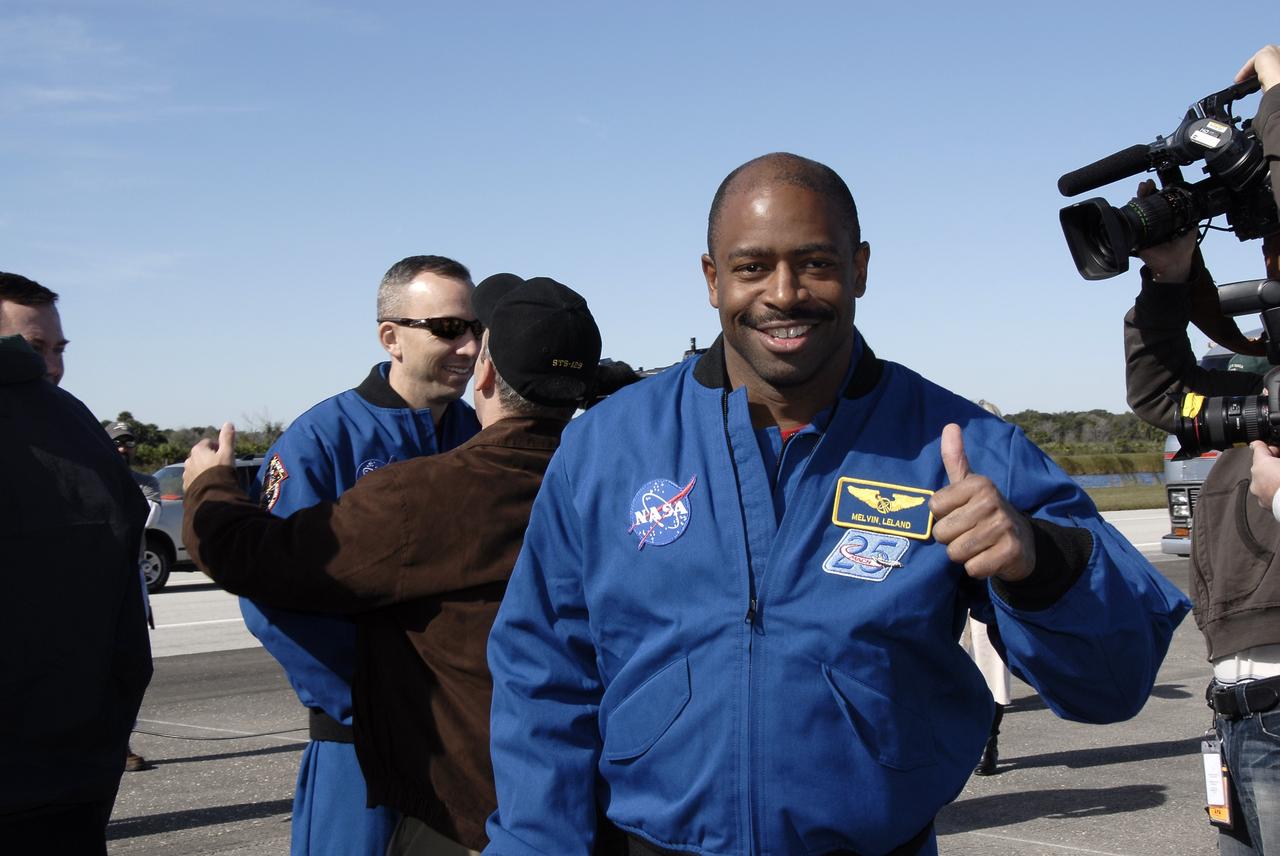
CAPE CANAVERAL, Fla. - At the Shuttle Landing Facility at NASA's Kennedy Space Center in Florida, STS-129 Mission Specialist Leland Melvin gives the camera a thumbs up following the landing of space shuttle Atlantis, concluding his successful 11-day mission. In the background, fellow crewmate Randy Bresnik, wearing sunglasses, talks with a well-wisher. Space shuttle Atlantis landed on Runway 33, completing the 4.5-million-mile STS-129 mission to the International Space Station on orbit 171. Main gear touchdown was at 9:44:23 a.m. EST. Nose gear touchdown was at 9:44:36 a.m., and wheels stop was at 9:45:05 a.m. On STS-129, the six-member crew delivered 14 tons of cargo to the orbiting laboratory, including two ExPRESS Logistics Carriers containing spare parts to sustain station operations after the shuttles are retired next year. For information on the STS-129 mission and crew, visit http://www.nasa.gov/mission_pages/shuttle/shuttlemissions/sts129/index.html. Photo credit: NASA/Kim Shiflett
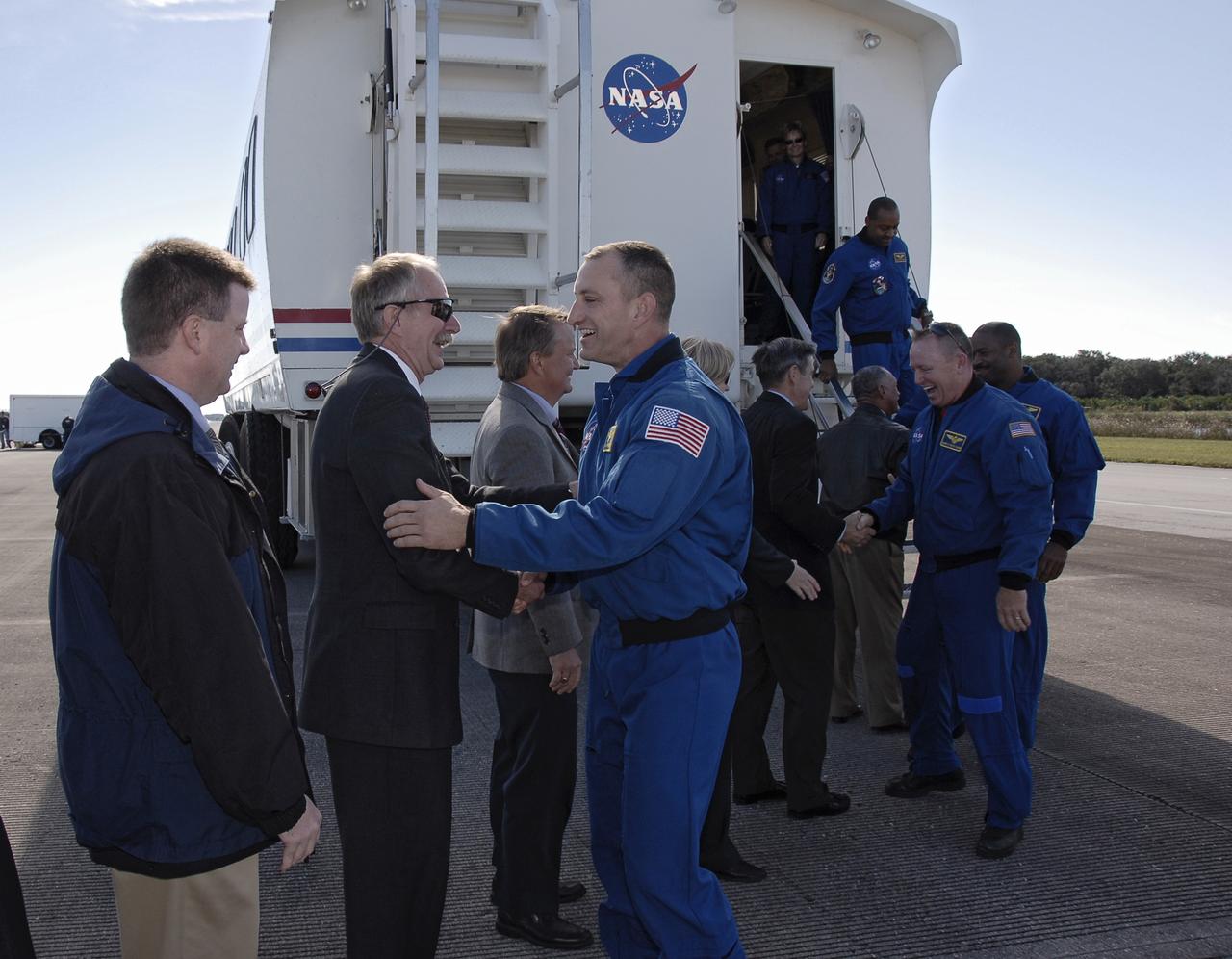
CAPE CANAVERAL, Fla. - At the Shuttle Landing Facility at NASA's Kennedy Space Center in Florida, NASA Associate Administrator for Space Operations Bill Gerstenmaier, wearing sunglasses, congratulates STS-129 Commander Charles O. Hobaugh on a successful mission. Space Shuttle Launch Integration Manager Mike Moses looks on, at left. Space shuttle Atlantis landed on Runway 33, completing the 4.5-million-mile STS-129 mission to the International Space Station on orbit 171. Main gear touchdown was at 9:44:23 a.m. EST. Nose gear touchdown was at 9:44:36 a.m., and wheels stop was at 9:45:05 a.m. On STS-129, the six-member crew delivered 14 tons of cargo to the orbiting laboratory, including two ExPRESS Logistics Carriers containing spare parts to sustain station operations after the shuttles are retired next year. For information on the STS-129 mission and crew, visit http://www.nasa.gov/mission_pages/shuttle/shuttlemissions/sts129/index.html. Photo credit: NASA/Kim Shiflett
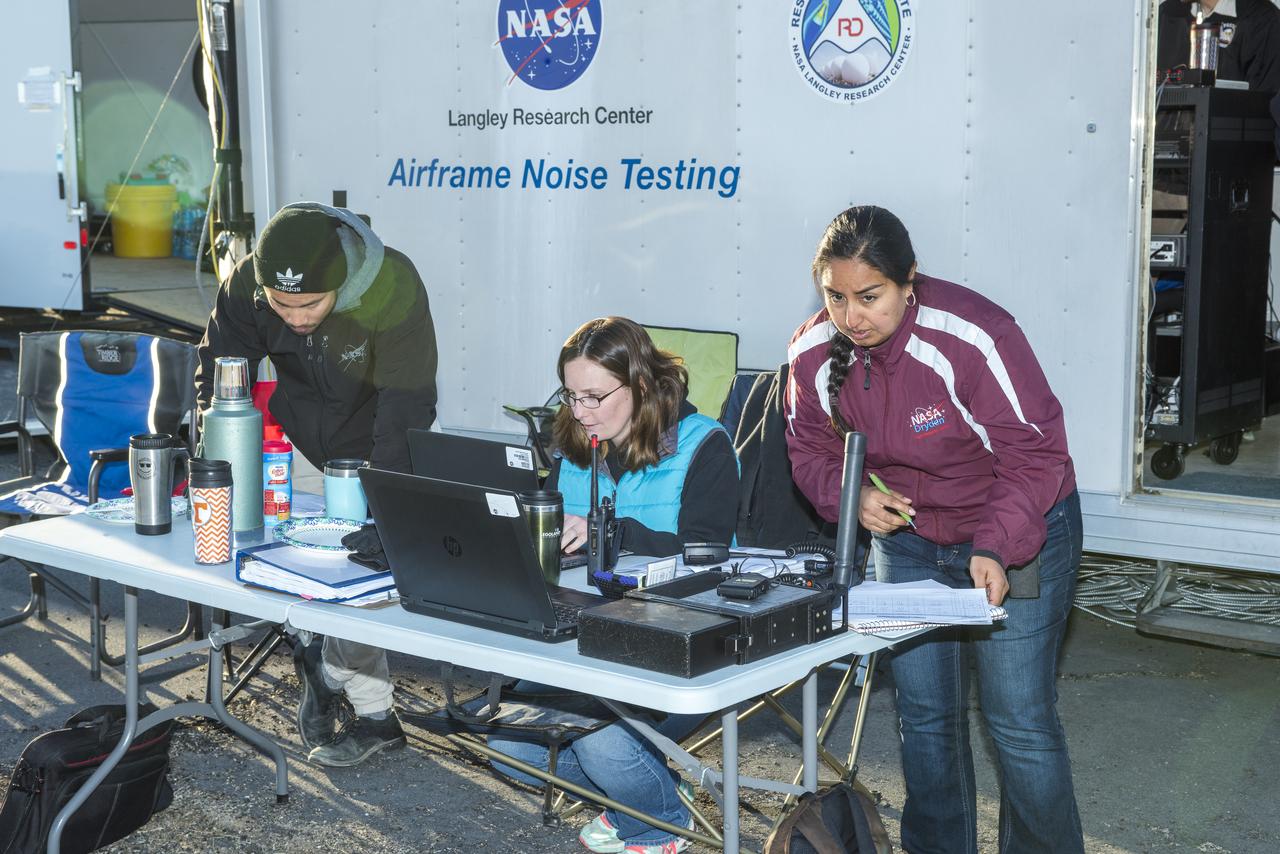
Claudia Sales, NASA’s acting X-59 deputy chief engineer and airworthiness certification lead for the quiet supersonic research aircraft, stands in front of a Gulfstream G-III, also known as Subsonic Research Aircraft Testbed (SCRAT). Sales supported ground testing as test conductor for Acoustics Research Measurements (ARM) flights at NASA’s Armstrong Research Flight Center in Edwards, California, in 2018.
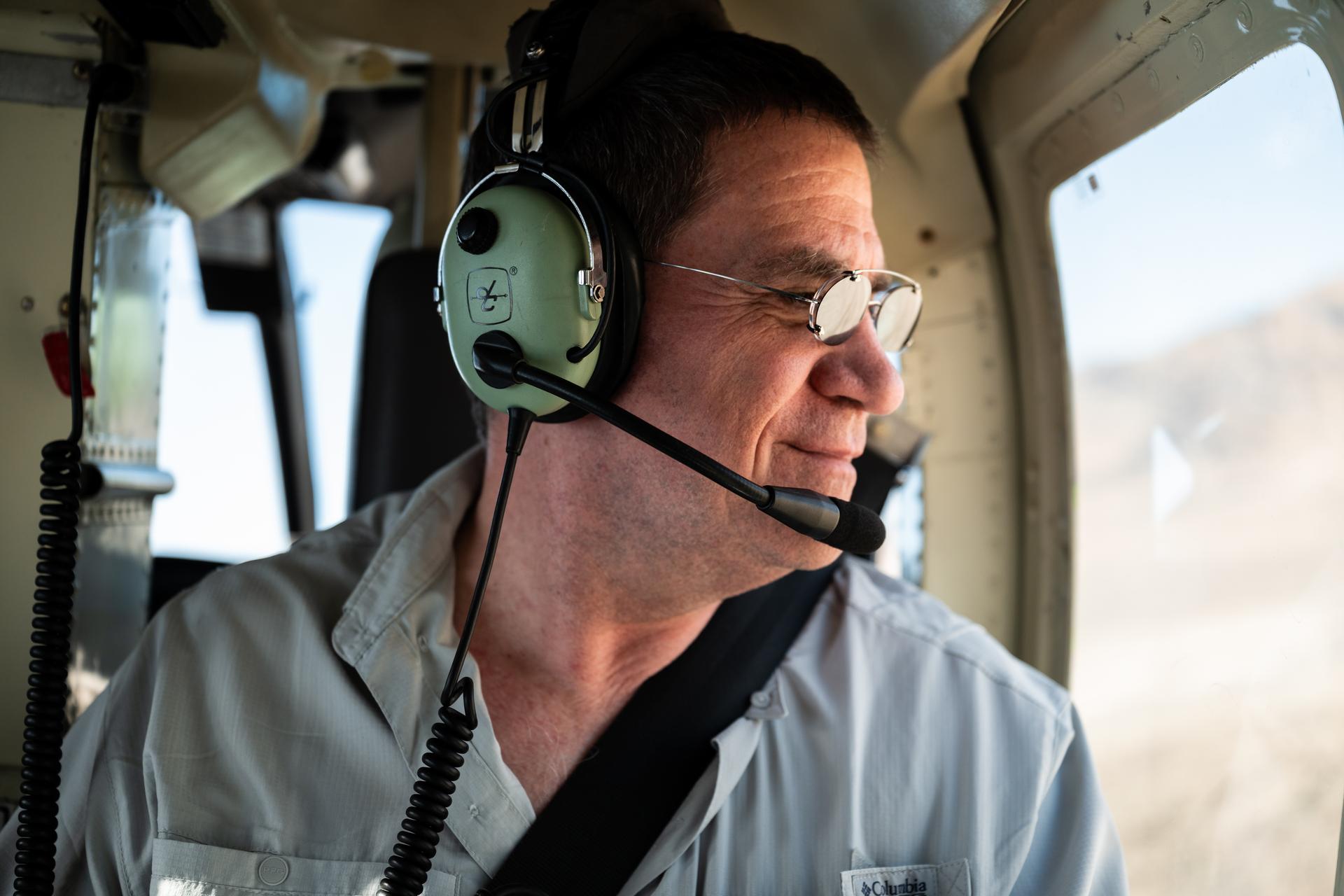
Mike Ravine observes out the helicopter window while in flight over Crater Island, Utah as part of the DAVINCI VADIX experiment, June 23, 2026. NASA/Mike Guinto
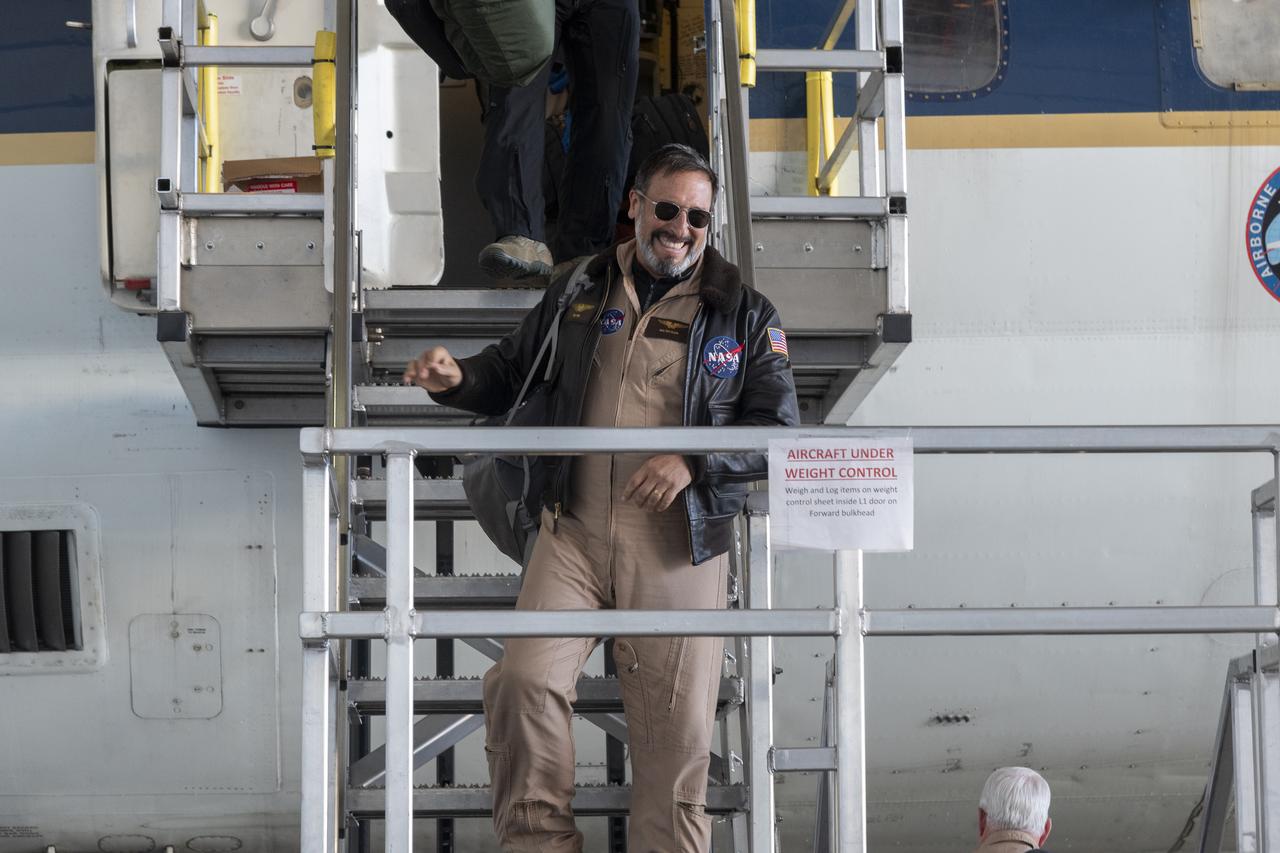
Walter Klein, DC-8 navigator, exits the aircraft cabin and is welcomed with applause from a supportive team after the DC-8 aircraft and crew return to NASA’s Armstrong Flight Research Center Building 703 in Palmdale, California, on April 1, 2024, following the aircraft’s final mission in support of the Airborne and Satellite Investigation of Asian Air Quality (ASIA-AQ).
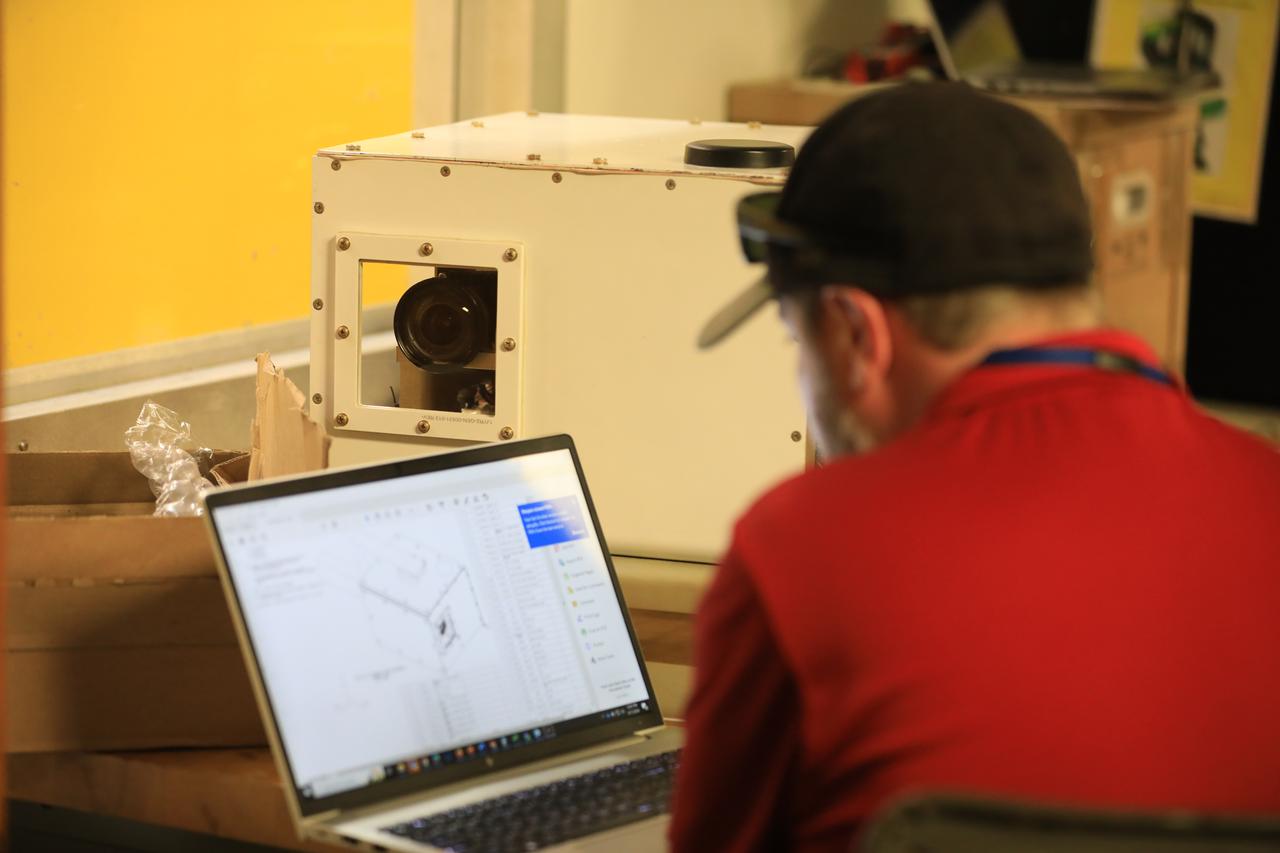
NASA researcher A.J. Jaffe prepares the NASA Airborne Instrumentation for Real-world Video of Urban Environments (AIRVUE) sensor pod for testing at NASA’s Kennedy Space Center in Cape Canaveral, Florida in April 2024. The AIRVUE pod will be used to collect data for autonomous aircraft like air taxis, drones, or other Advanced Air Mobility aircraft.
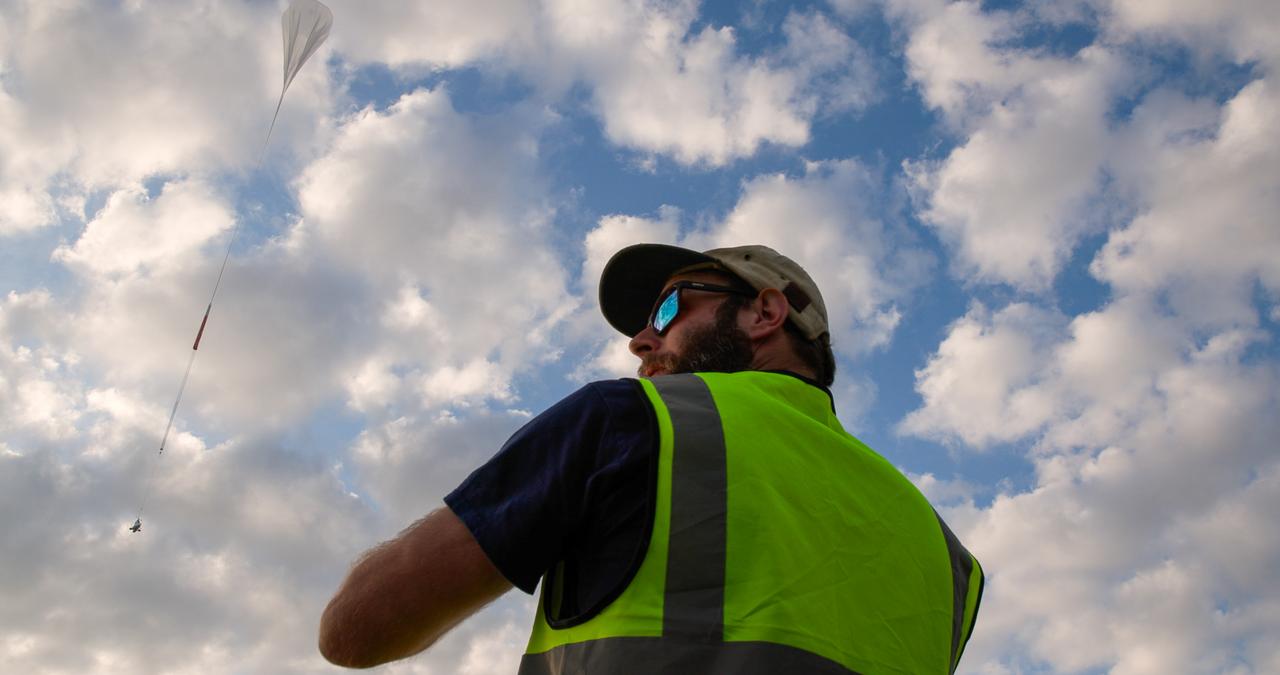
On August 31, 2024, the EXCITE (EXoplanet Climate Infrared TElescope) team conducted a test flight of their telescope from NASA’s Columbia Scientific Balloon Facility in Fort Sumner, New Mexico. Here, EXCITE’s Principal Investigator, Peter Nagler, watches his mission take flight.

NASA test pilot Nils Larson inspects the agency’s F-15D research aircraft at NASA’s Armstrong Flight Research Center in Edwards, California, ahead of a calibration flight for a newly installed near-field shock-sensing probe. Mounted on the F-15D, the probe is designed to measure shock waves generated by the X-59 quiet supersonic aircraft during flight. The data will help researchers better understand how shock waves behave in close proximity to the aircraft, supporting NASA’s Quesst mission to enable quiet supersonic flight over land.
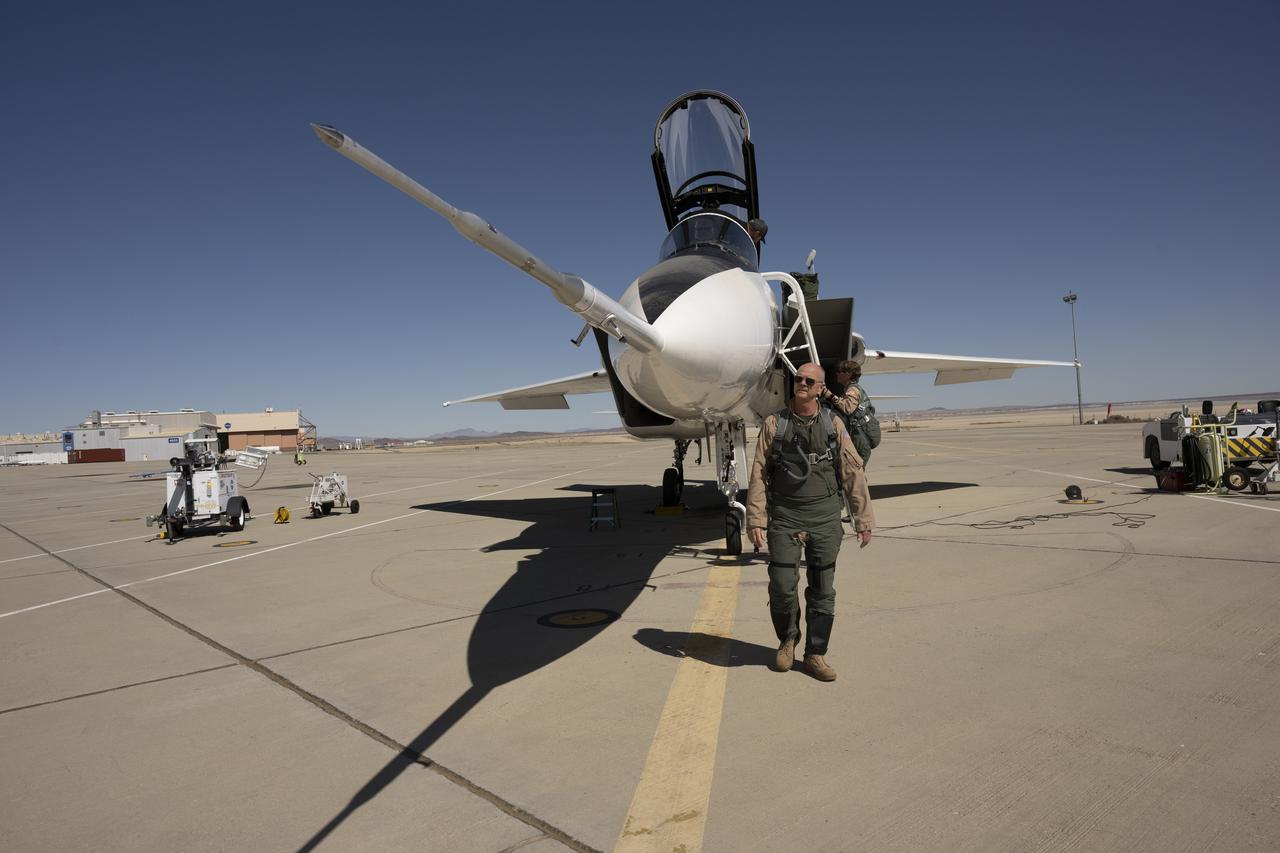
NASA test pilot Nils Larson inspects the agency’s F-15D research aircraft at NASA’s Armstrong Flight Research Center in Edwards, California, ahead of a calibration flight for a newly installed near-field shock-sensing probe. Mounted on the F-15D, the probe is designed to measure shock waves generated by the X-59 quiet supersonic aircraft during flight. The data will help researchers better understand how shock waves behave in close proximity to the aircraft, supporting NASA’s Quesst mission to enable quiet supersonic flight over land.
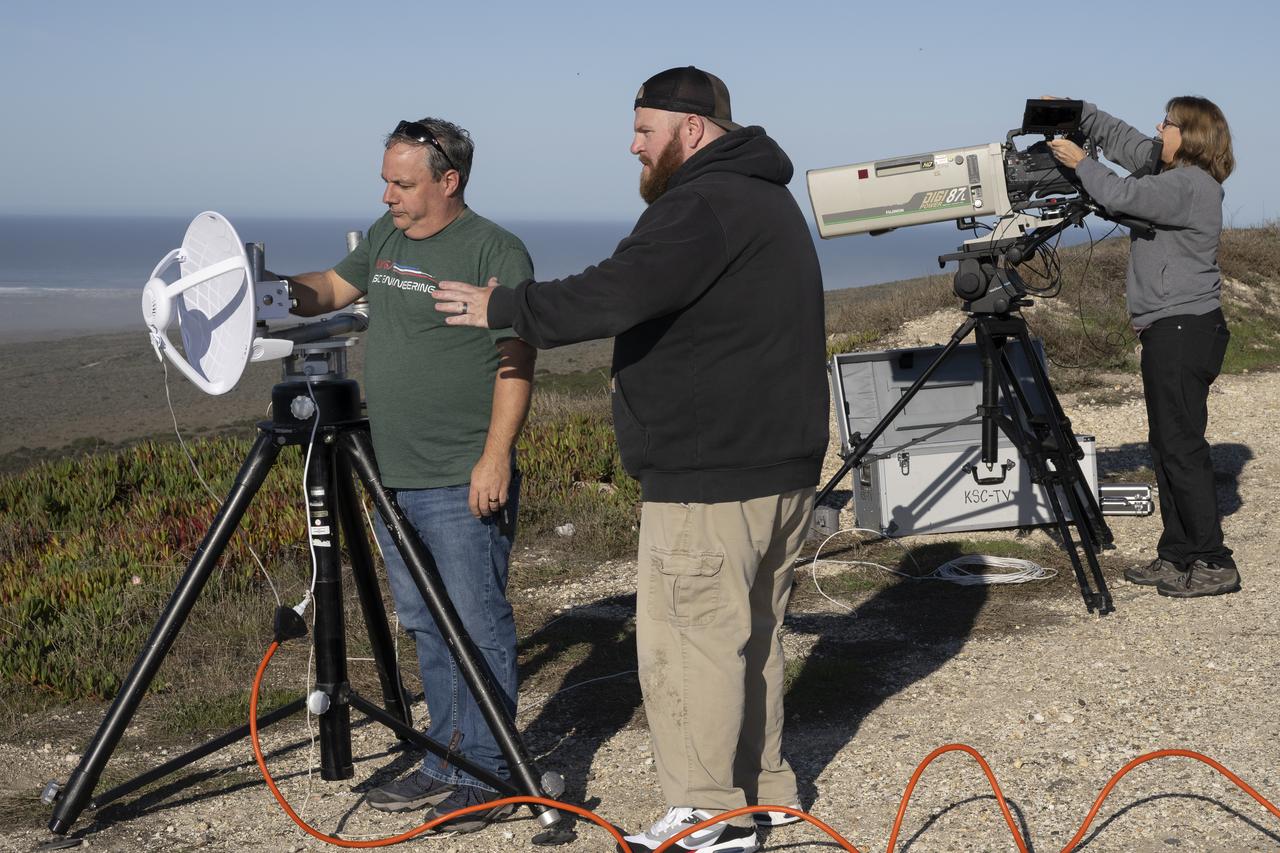
NASA videographer Jacob Shaw and the video team from NASA’s Armstrong Flight Research Center in Edwards, California, prepare to film the launch of NASA’s SPHEREx mission at Vandenberg Space Force Base. The mission, short for Specto-Photometer for the History of the Universe, Epoch of Reionization, and Ices Explorer, launched on March 11, 2025, aboard a SpaceX Falcon 9 rocket, continuing NASA’s exploration of the cosmos – and its commitment to visual storytelling.