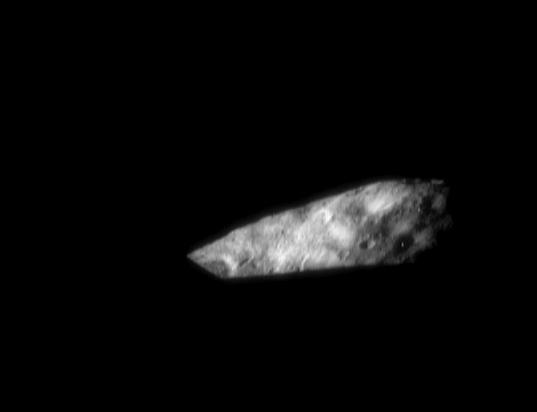
Sunset on Eros
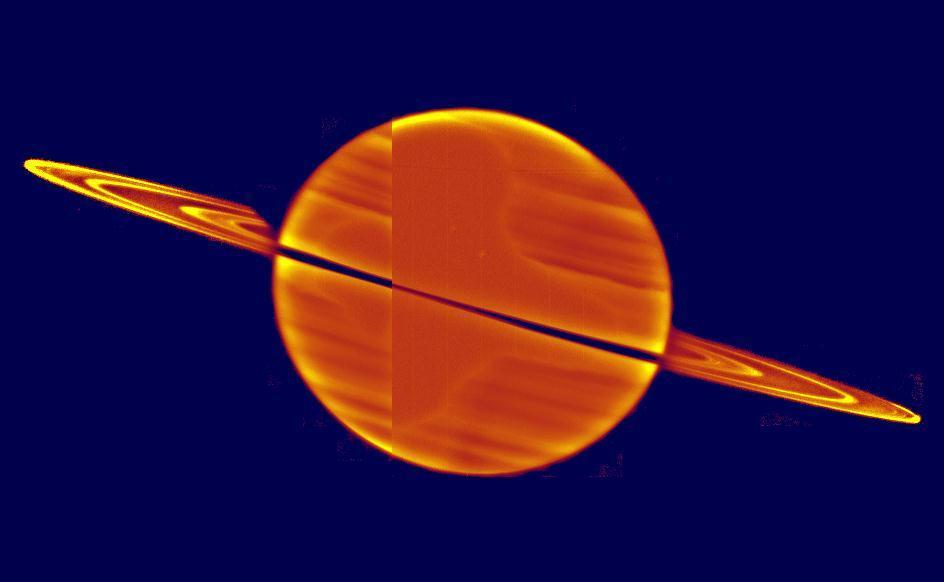
Sunset on Saturn Rings
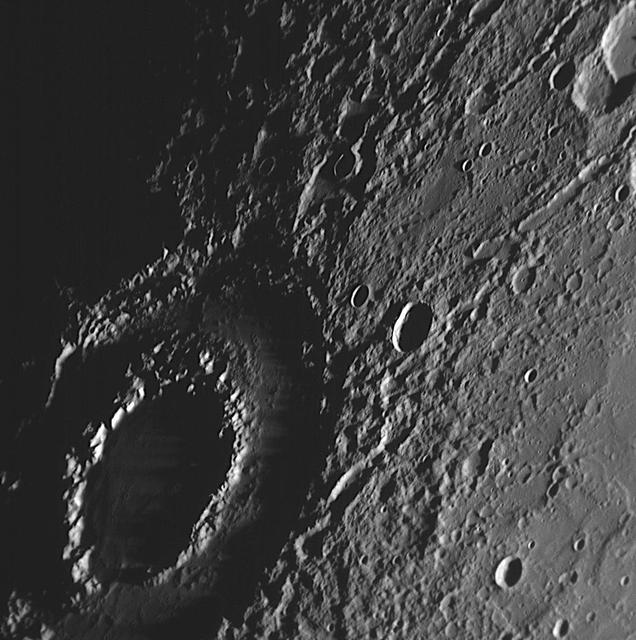
Vivaldi: At Sunset and Now at Sunrise
Color Variations in the Sky at Sunset
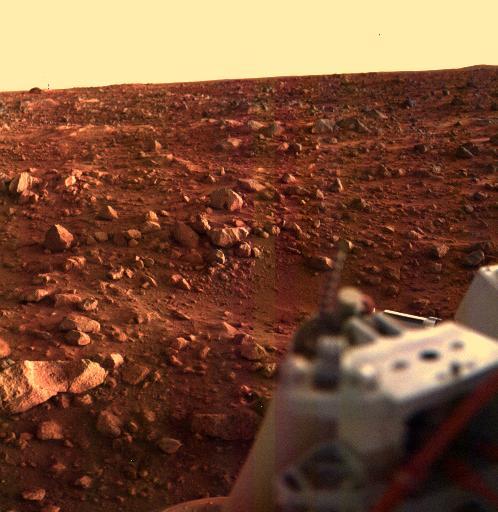
Sunset at the Viking Lander 1 Site
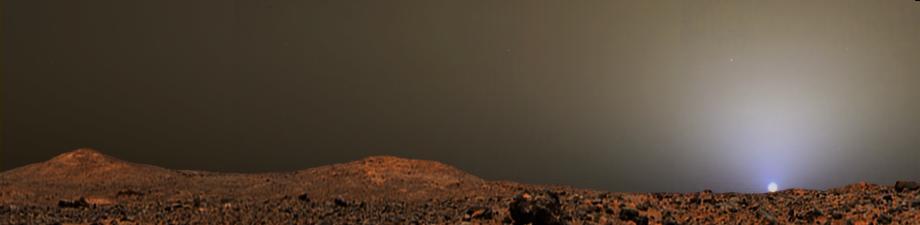
Sunset on Mars from Pathfinder Images
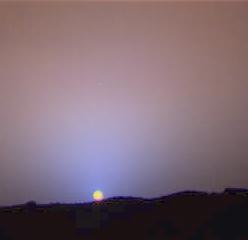
Close-Up of Sol 24 Sunset

This cross section of the Earth's atmosphere at sunset and earth limb (24.5S, 43.5E) displays an unusual layering believed to be caused by temperature inversions which effectively concentrate smoke, dust and aerosols into narrow layers. the top of the stratosphere can be seen as the top of the white layer thought to contain volcanic debris. The purple layer is the troposphere containing smoke from landclearing biomass burning.

STS006-46-617 (4-9 April 1983) --- This view of sunset over the Amazon Basin was photographed with a 35mm camera from the Earth-orbiting space shuttle Challenger. The reusable vehicle was making its first trip into space and carried a crew of astronauts Paul J. Weitz, Karol J. Bobko, F. Story Musgrave and Donald H. Peterson. Photo credit: NASA
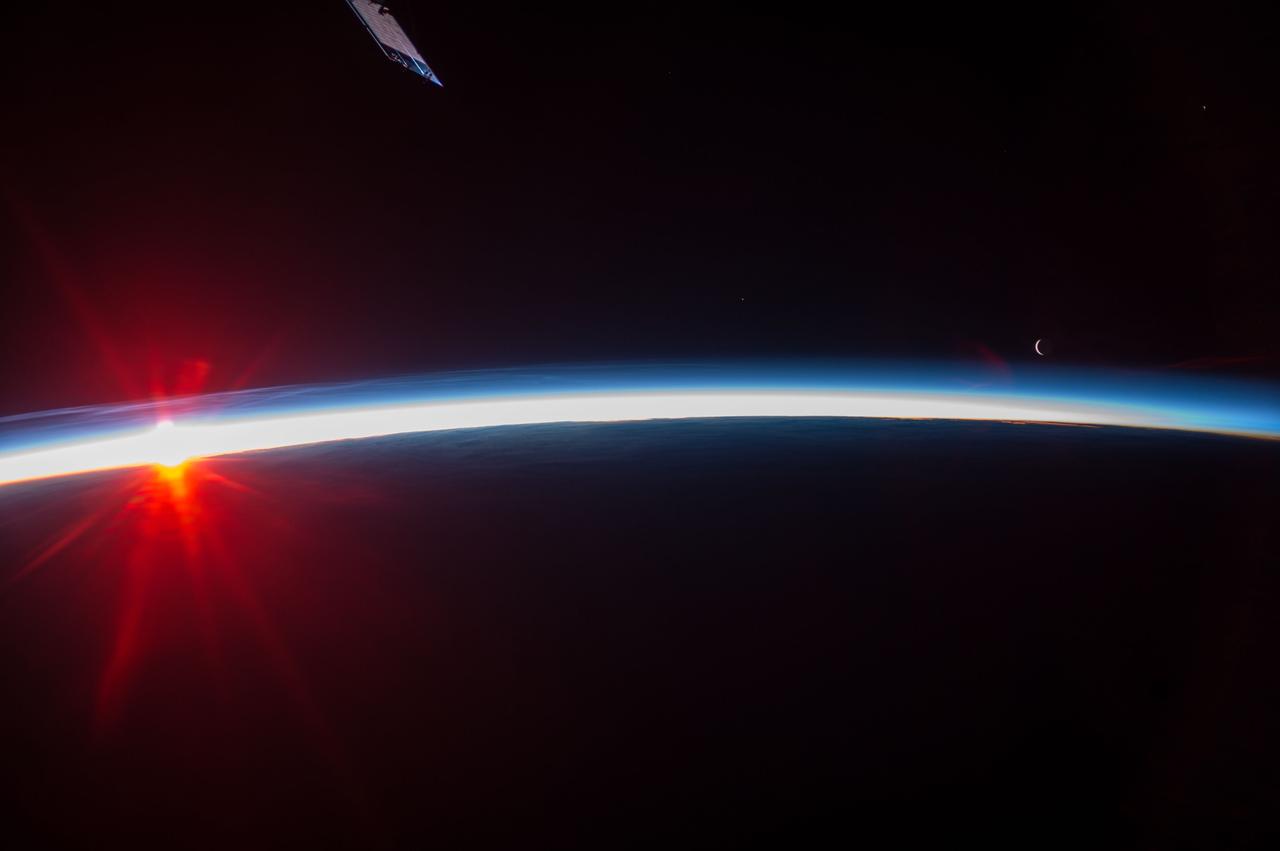
A sunset over the Aleutian Islands,with noctilucent clouds,as documented by the Expedition 36 crew. Per Twitter message: Sunrise and moonrise.
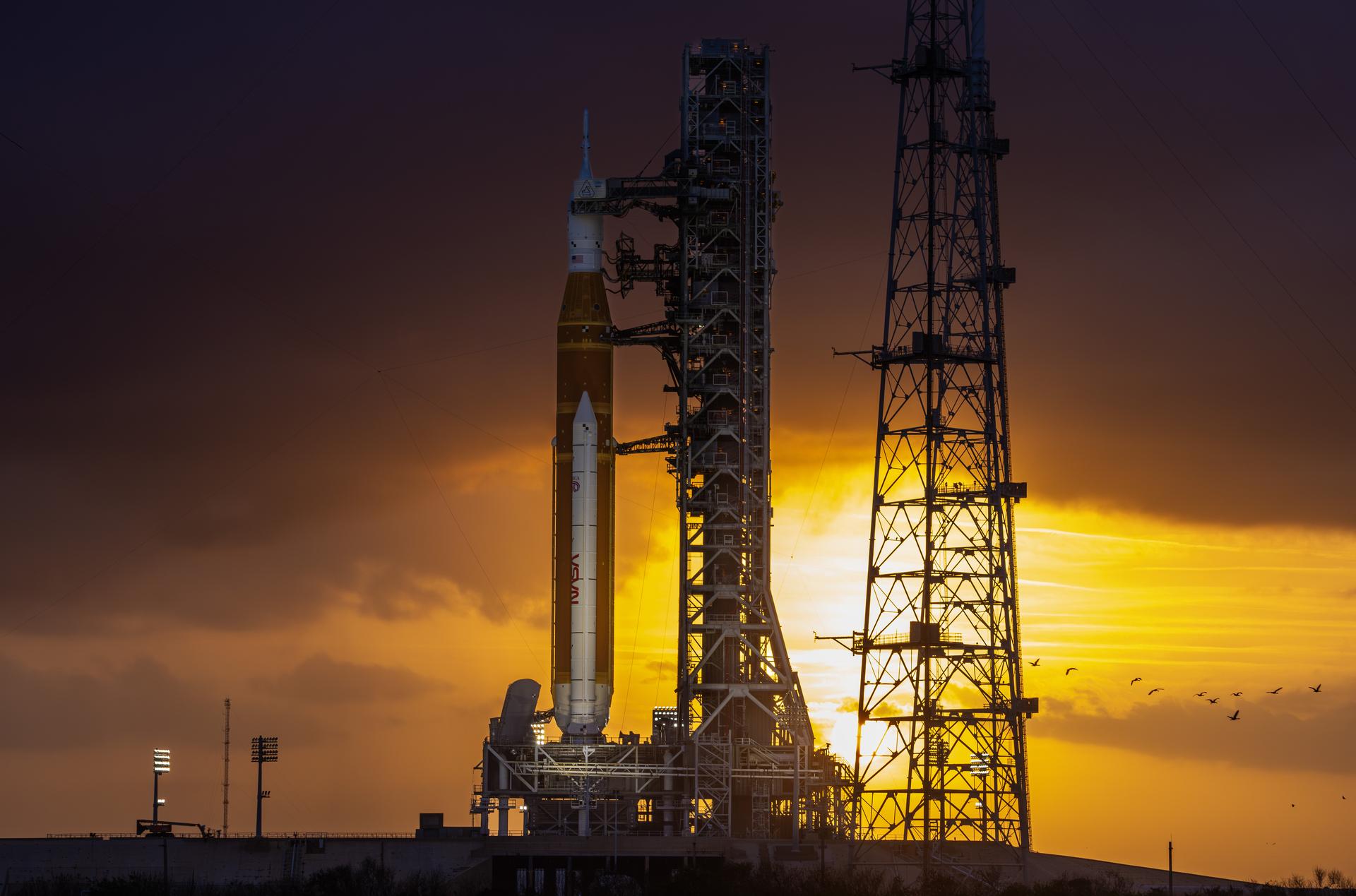
This image shows a sunset of NASA’s SLS (Space Launch System) and Orion spacecraft at NASA’s Kennedy Space Center. NASA's massive Crawler-Transporter, upgraded for the Artemis program, carried the powerful SLS rocket and Orion spacecraft on the Mobile Launcher from the Vehicle Assembly Building to Launch Pad 39B at Kennedy Space Center in preparation for the Artemis II mission.
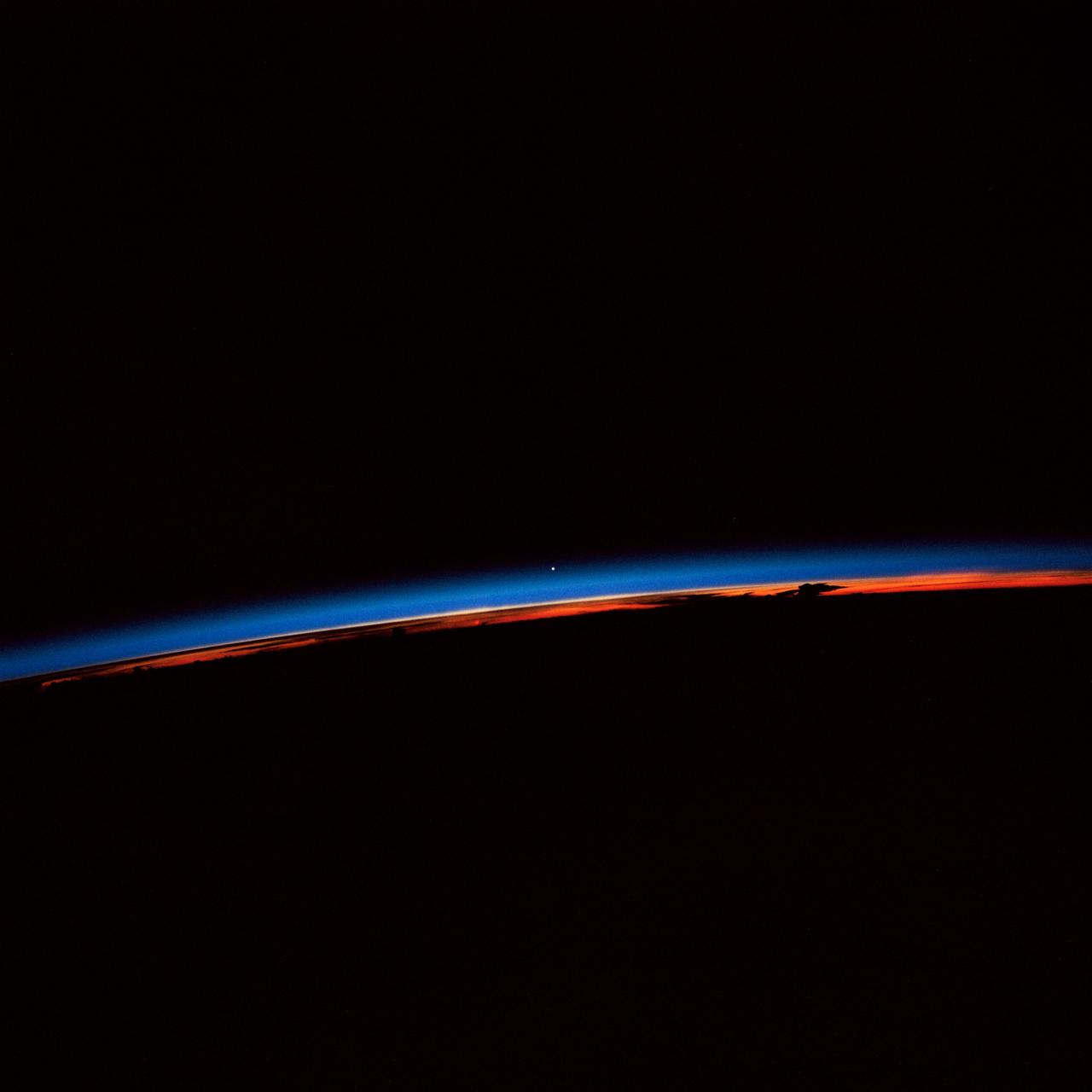
STS-30 Earth observation captured by crewmembers onboard Atlantis, Orbiter Vehicle (OV) 104, shows the sunset over the Earth as well as the planet Venus near the center of the frame. Jutting clouds are seen on the horizon, just beneath the blue strip of airglow.
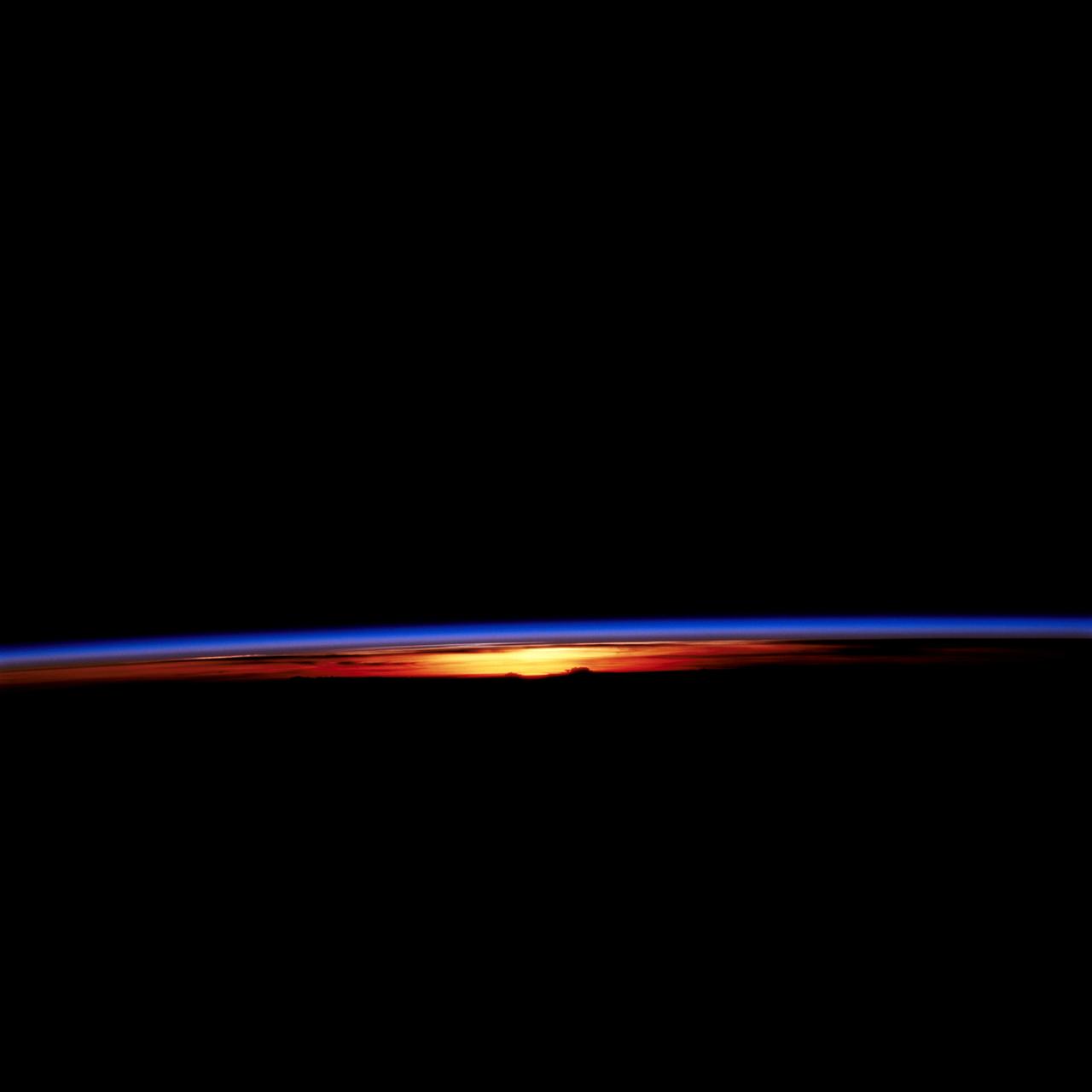
STS067-709-007 (2-18 March 1995) --- This shot, taken just after sunset, shows several distinct layers of gases in the atmosphere on the Earth’s limb. The distinct colors formed by the amount of scattered light that passes through these gases.

The Proteus high-altitude aircraft at Sunset
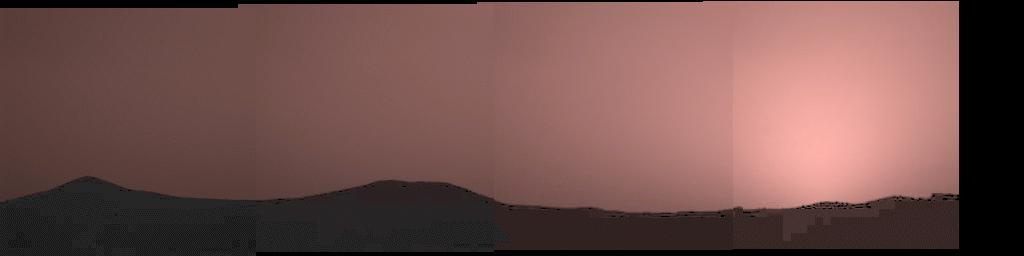
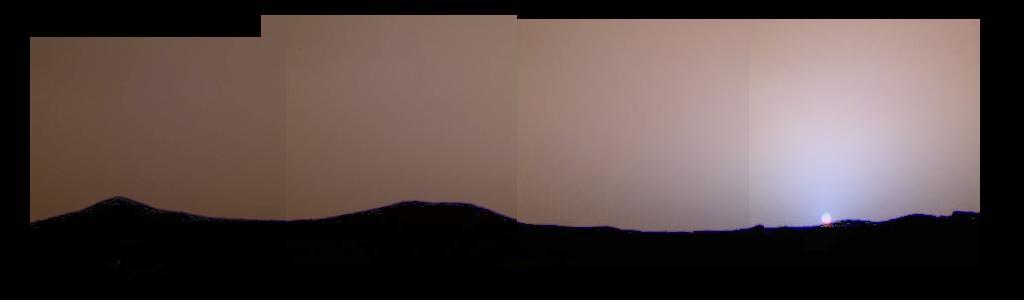
This image was taken by the Imager for Mars Pathfinder (IMP) about one minute after sunset on Mars on Sol 21. The prominent hills dubbed "Twin Peaks" form a dark silhouette at the horizon, while the setting sun casts a pink glow over the darkening sky. The image was taken as part of a twilight study which indicates how the brightness of the sky fades with time after sunset. Scientists found that the sky stays bright for up to two hours after sunset, indicating that Martian dust extends very high into the atmosphere. http://photojournal.jpl.nasa.gov/catalog/PIA00783
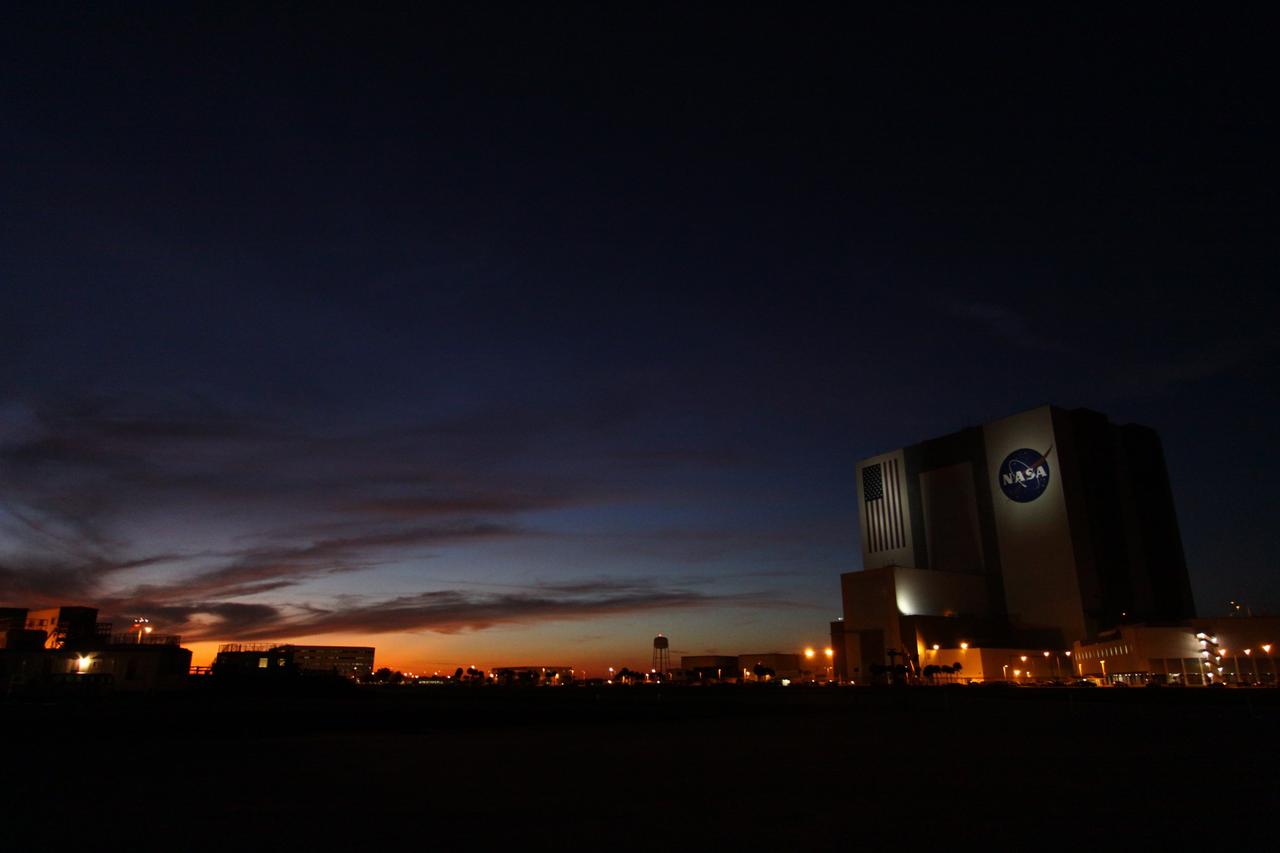
CAPE CANAVERAL, Fla. -- At NASA's Kennedy Space Center in Florida, the sunset casts beautiful hues in the sky over the Vehicle Assembly Building. Photo credit: NASA/Jack Pfaller

Every several days, Mars Pathfinder will image the sunrise and sunset on Mars. Future images will show a larger area -- we have a higher data rate than we expected when we planned this image, so we can get more information. Images taken at sunset, like this, and up to two hours later, will be used to investigate the distribution of dust within the Martian atmosphere. Already, we can see some dust layers in the images. By seeing how the twilight fades with time -- it lasts for over two hours -- we can determine that the dust extends high into the atmosphere. Sojourner spent 83 days of a planned seven-day mission exploring the Martian terrain, acquiring images, and taking chemical, atmospheric and other measurements. The final data transmission received from Pathfinder was at 10:23 UTC on September 27, 1997. Although mission managers tried to restore full communications during the following five months, the successful mission was terminated on March 10, 1998. http://photojournal.jpl.nasa.gov/catalog/PIA00696
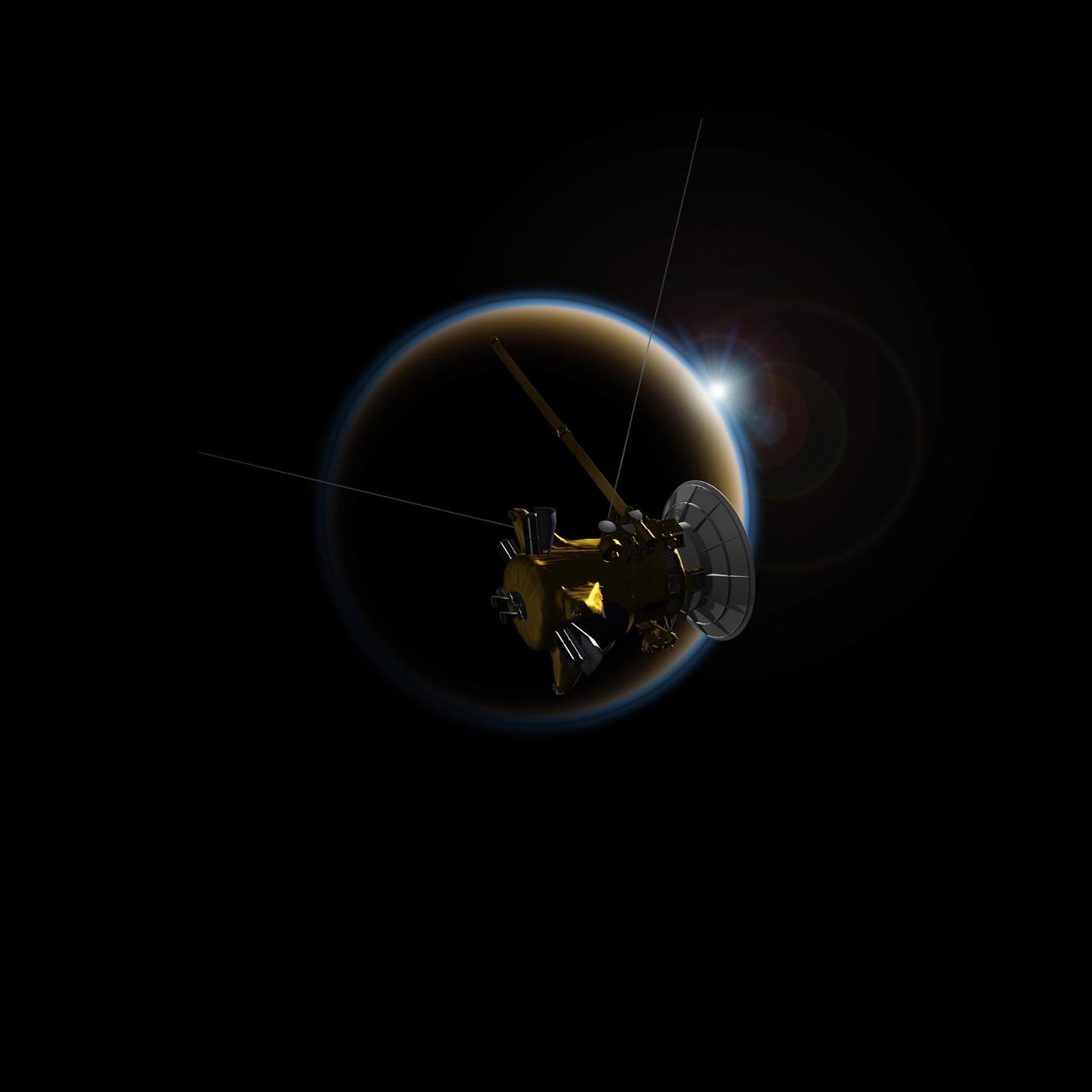
Artist rendering of NASA Cassini spacecraft observing a sunset through Titan hazy atmosphere.
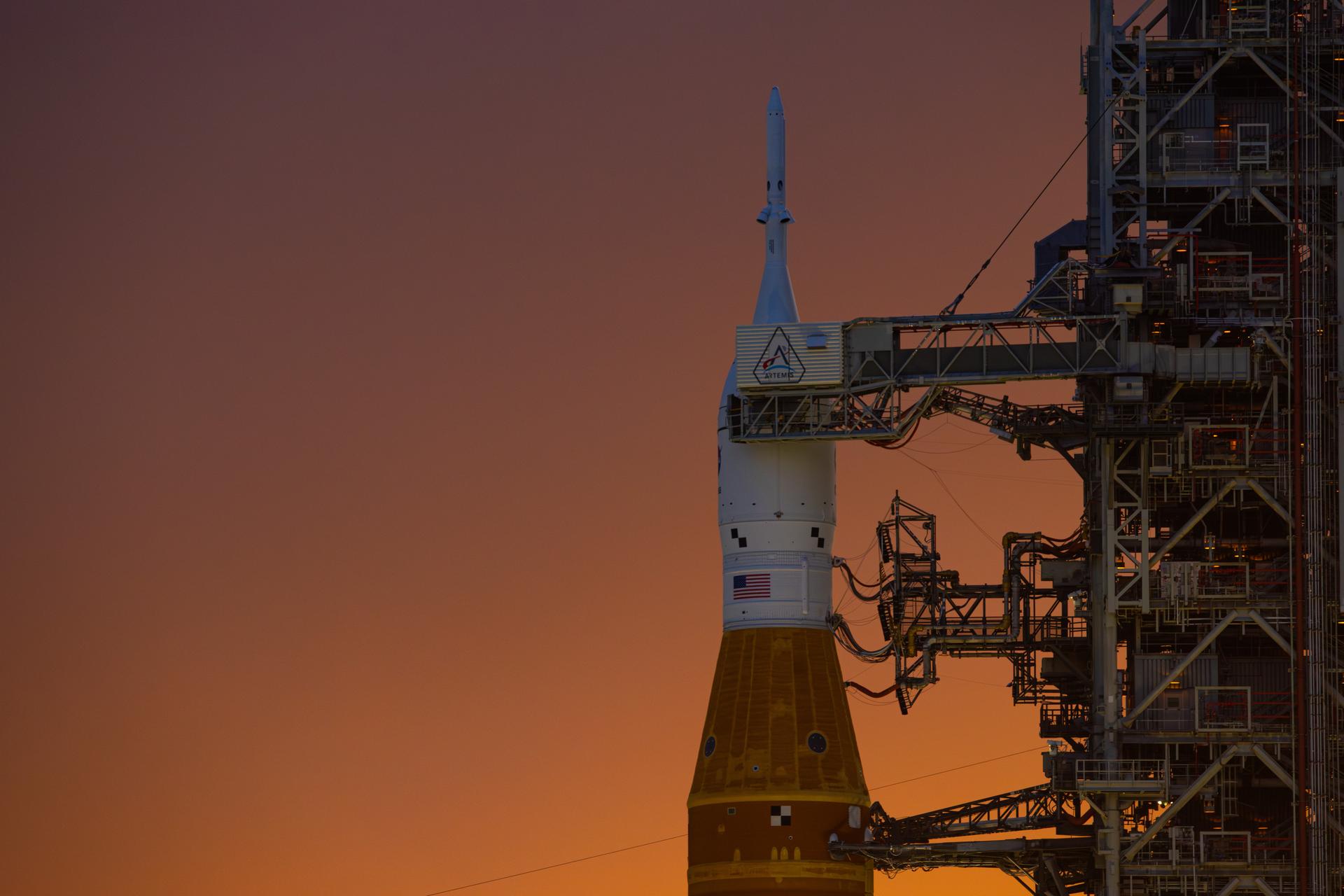
This image shows a sunset of NASA’s SLS (Space Launch System) and Orion spacecraft at NASA’s Kennedy Space Center. NASA's massive Crawler-Transporter, upgraded for the Artemis program, carried the powerful SLS rocket and Orion spacecraft on the Mobile Launcher from the Vehicle Assembly Building to Launch Pad 39B at Kennedy Space Center in preparation for the Artemis II mission.
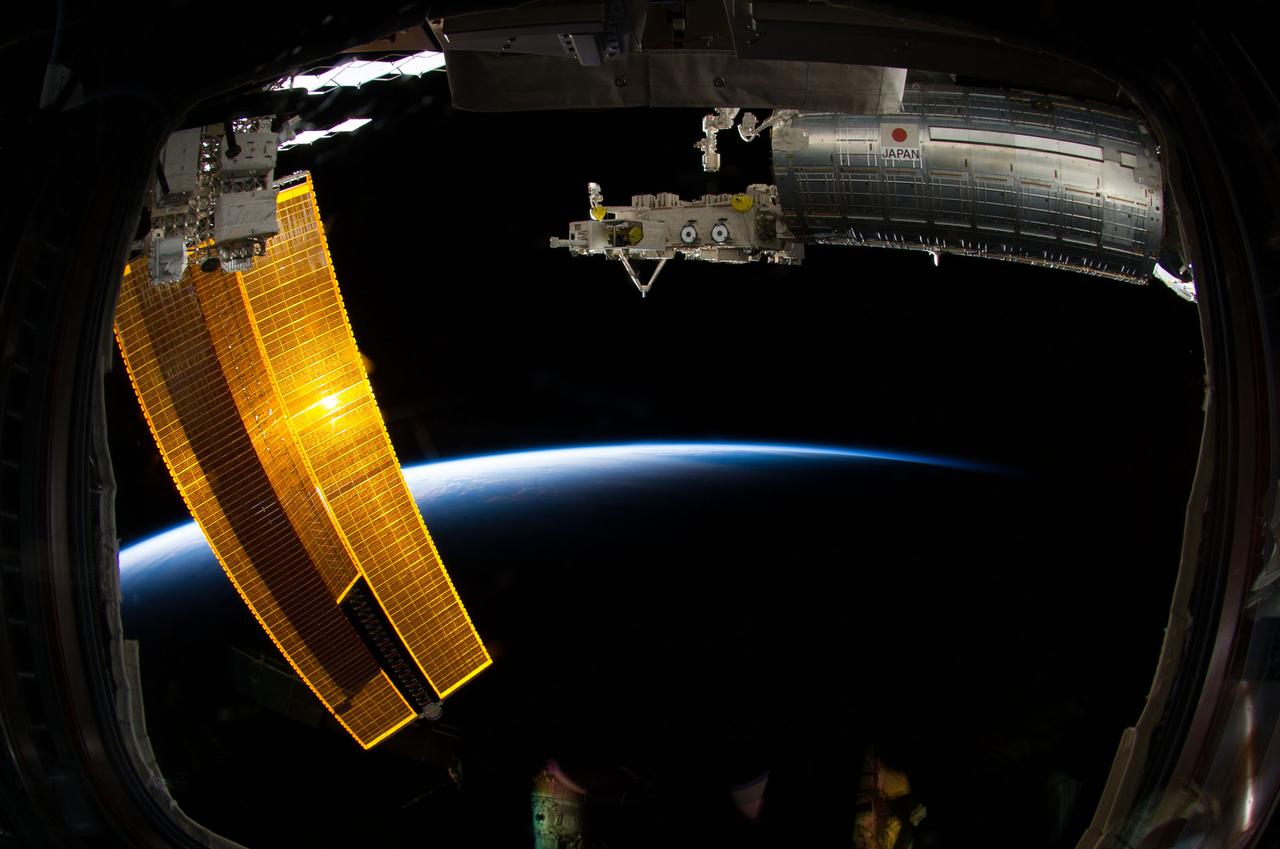
ISS040-E-006510 (1 June 2014) --- Backdropped by the thin line of Earth's atmosphere and the blackness of space, the Japanese Kibo complex of the International Space Station and station solar array wings are featured in this image photographed by an Expedition 40 crew member from a window in the station’s Cupola.
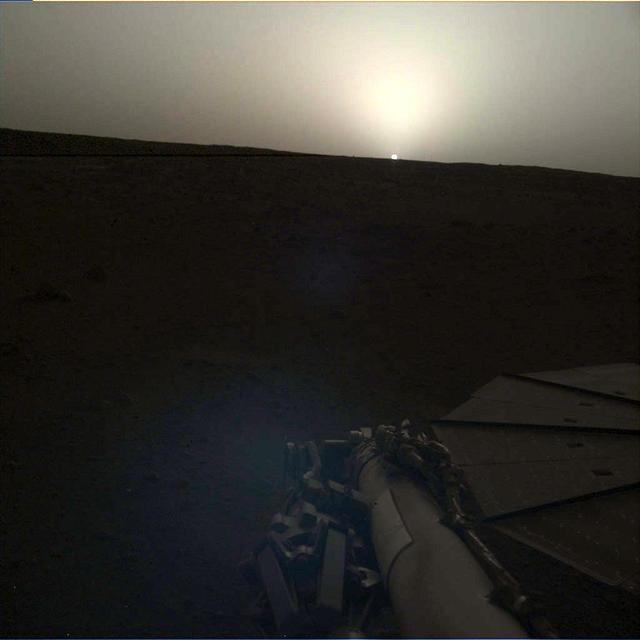
NASA's InSight lander used the Instrument Deployment Camera (IDC) on the end of its robotic arm to image this sunset on Mars on April 25, 2019, the 145th Martian day, or sol, of the mission. This was taken around 6:30 p.m. Mars local time. https://photojournal.jpl.nasa.gov/catalog/PIA23202
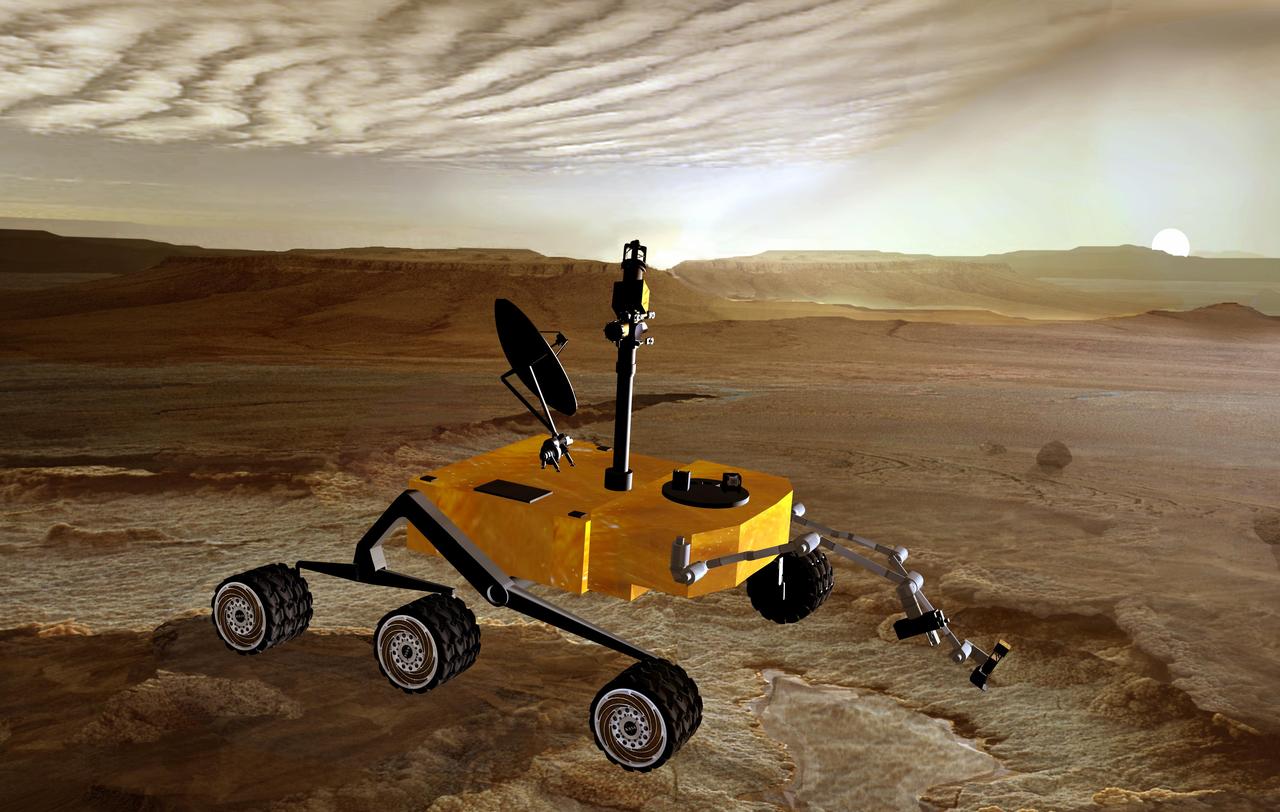
Sunset on Mars catches NASA Mars Science Laboratory in the foreground in this artist concept. The mission is under development for launch in 2009 and a precision landing on Mars in 2010.
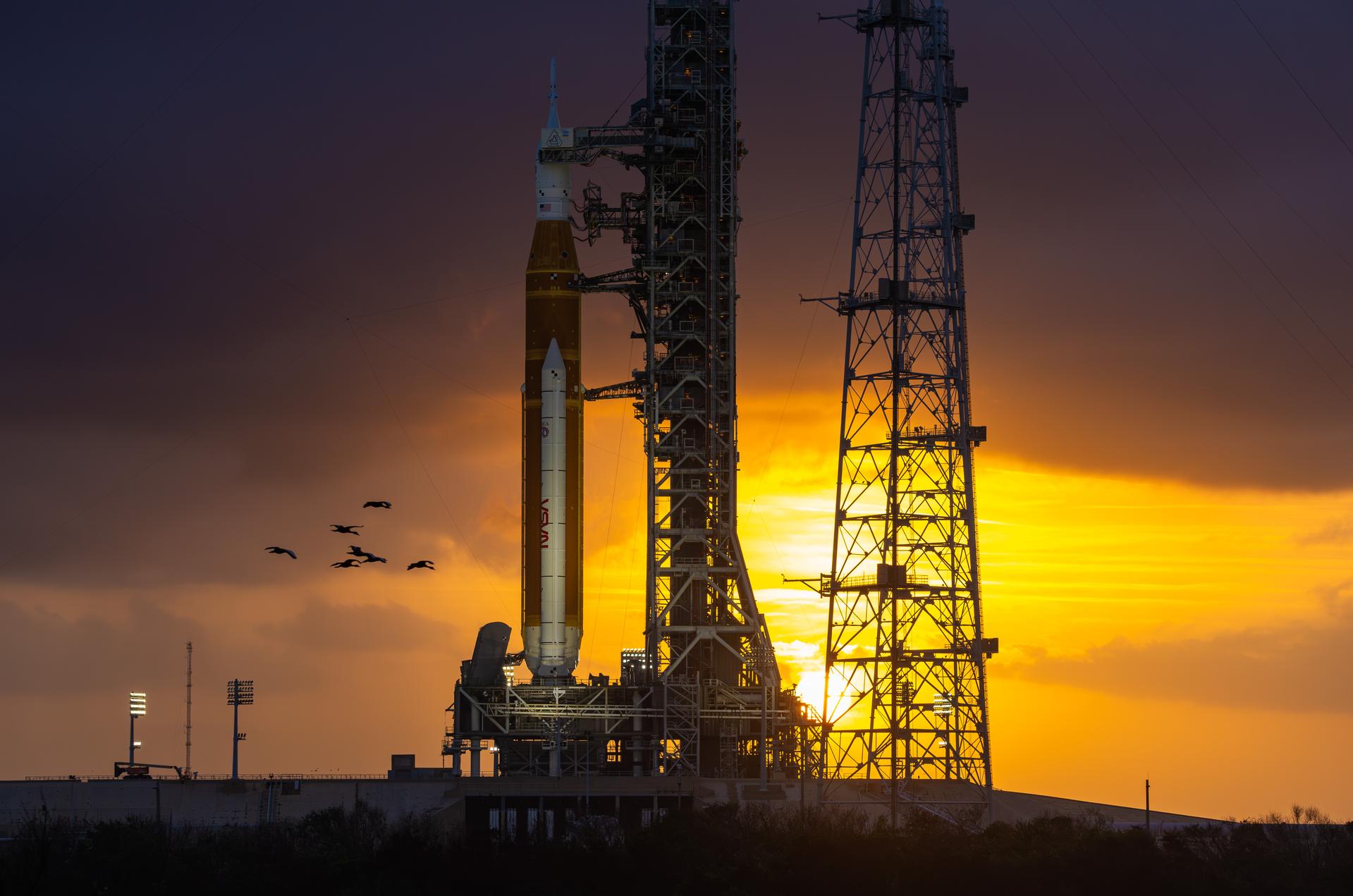
This image shows a sunset of NASA’s SLS (Space Launch System) and Orion spacecraft at NASA’s Kennedy Space Center. NASA's massive Crawler-Transporter, upgraded for the Artemis program, carried the powerful SLS rocket and Orion spacecraft on the Mobile Launcher from the Vehicle Assembly Building to Launch Pad 39B at Kennedy Space Center in preparation for the Artemis II mission.
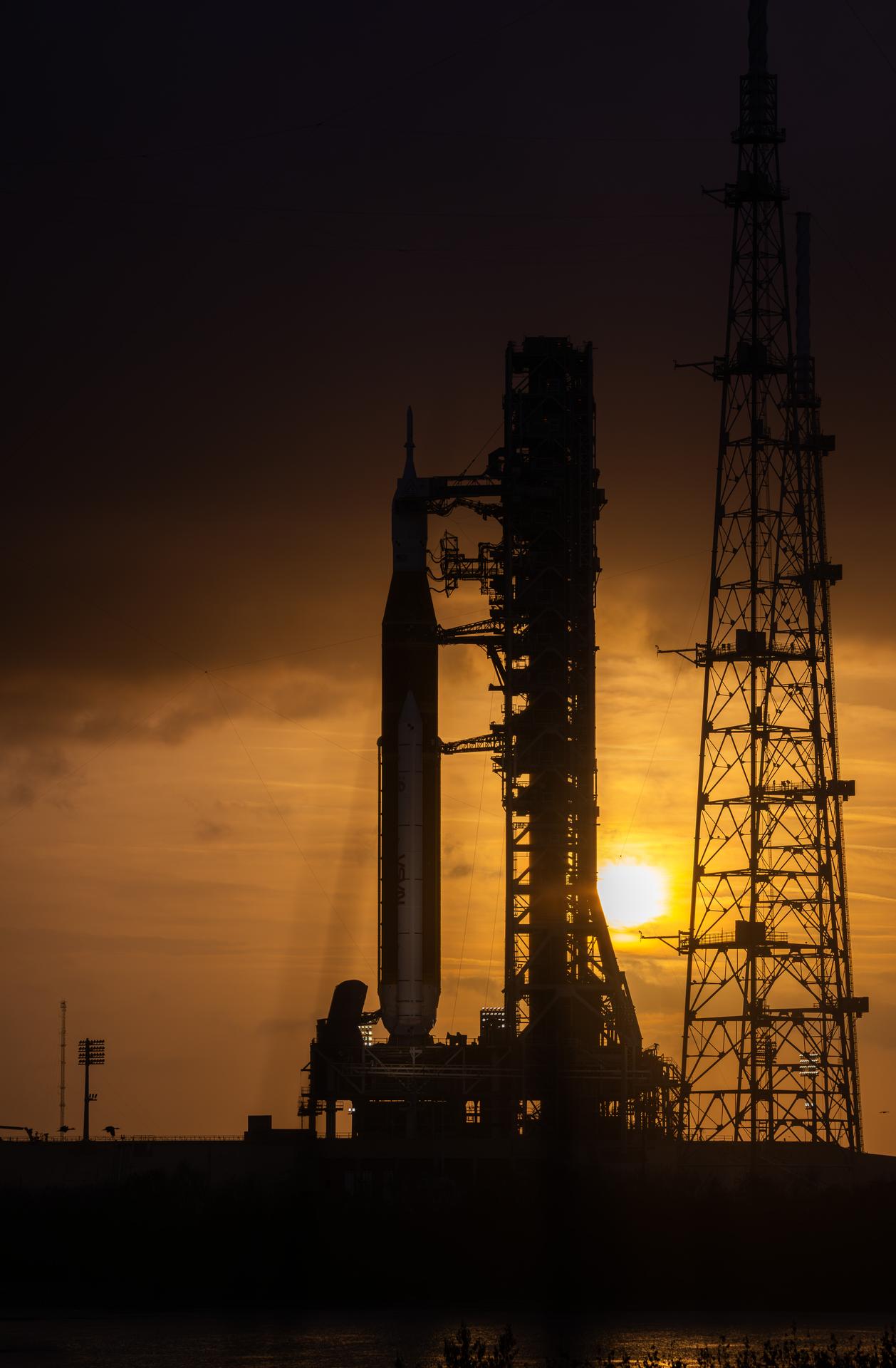
This image shows a sunset of NASA’s SLS (Space Launch System) and Orion spacecraft at NASA’s Kennedy Space Center. NASA's massive Crawler-Transporter, upgraded for the Artemis program, carried the powerful SLS rocket and Orion spacecraft on the Mobile Launcher from the Vehicle Assembly Building to Launch Pad 39B at Kennedy Space Center in preparation for the Artemis II mission.
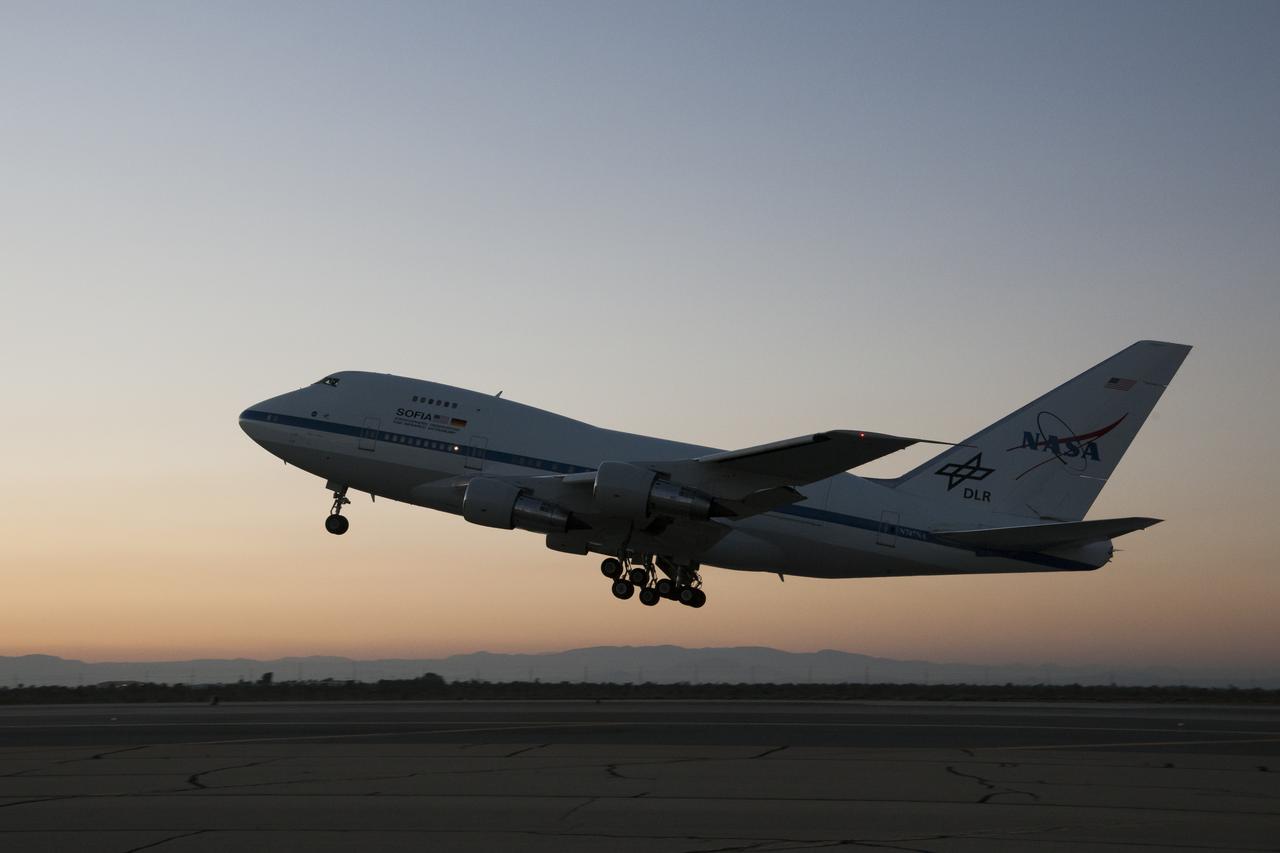
SOFIA lifts off from Air Force Plant 42 in Palmdale, Calif., at sunset.

ISS040-E-008409 (8 June 2014) --- The thin line of Earth's atmosphere and the blackness of space are featured in this image photographed by an Expedition 40 crew member on the International Space Station.
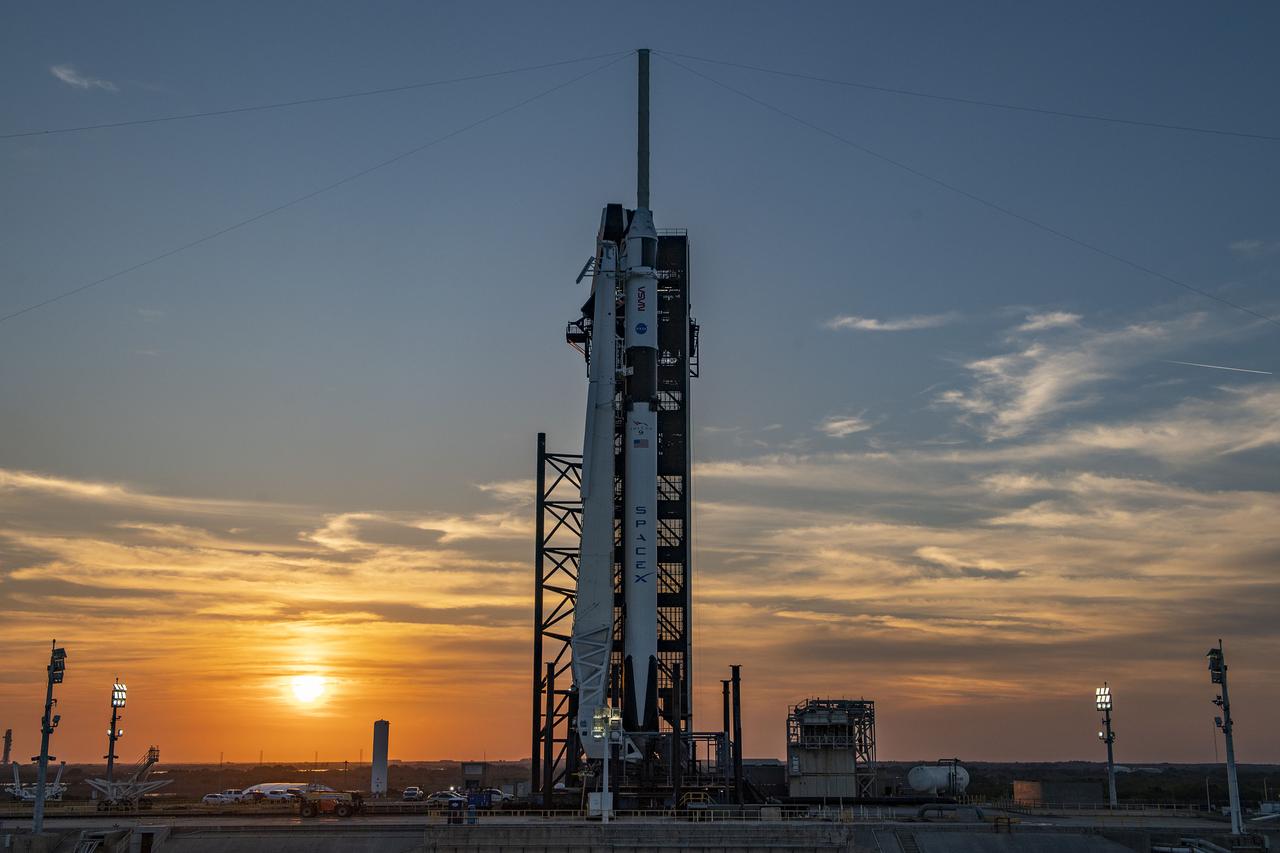
A colorful sunset serves as the backdrop for SpaceX’s Falcon 9 rocket and Dragon spacecraft Endeavour on the pad at Launch Complex 39A at Kennedy Space Center in Florida on Feb. 23, 2023, for NASA’s SpaceX Crew-6 mission. NASA astronauts Stephen Bowen, spacecraft commander, and Warren “Woody” Hoburg, pilot, along with mission specialists Sultan Alneyadi, UAE (United Arab Emirates) astronaut, and Andrey Fedyaev, Roscosmos cosmonaut, are slated to launch to the International Space Station at 1:45 a.m. EST on Feb. 27 from Launch Complex 39A. Crew-6 is the sixth crew rotation mission with SpaceX to the station, and the seventh flight of Dragon with people as part of the agency’s Commercial Crew Program.
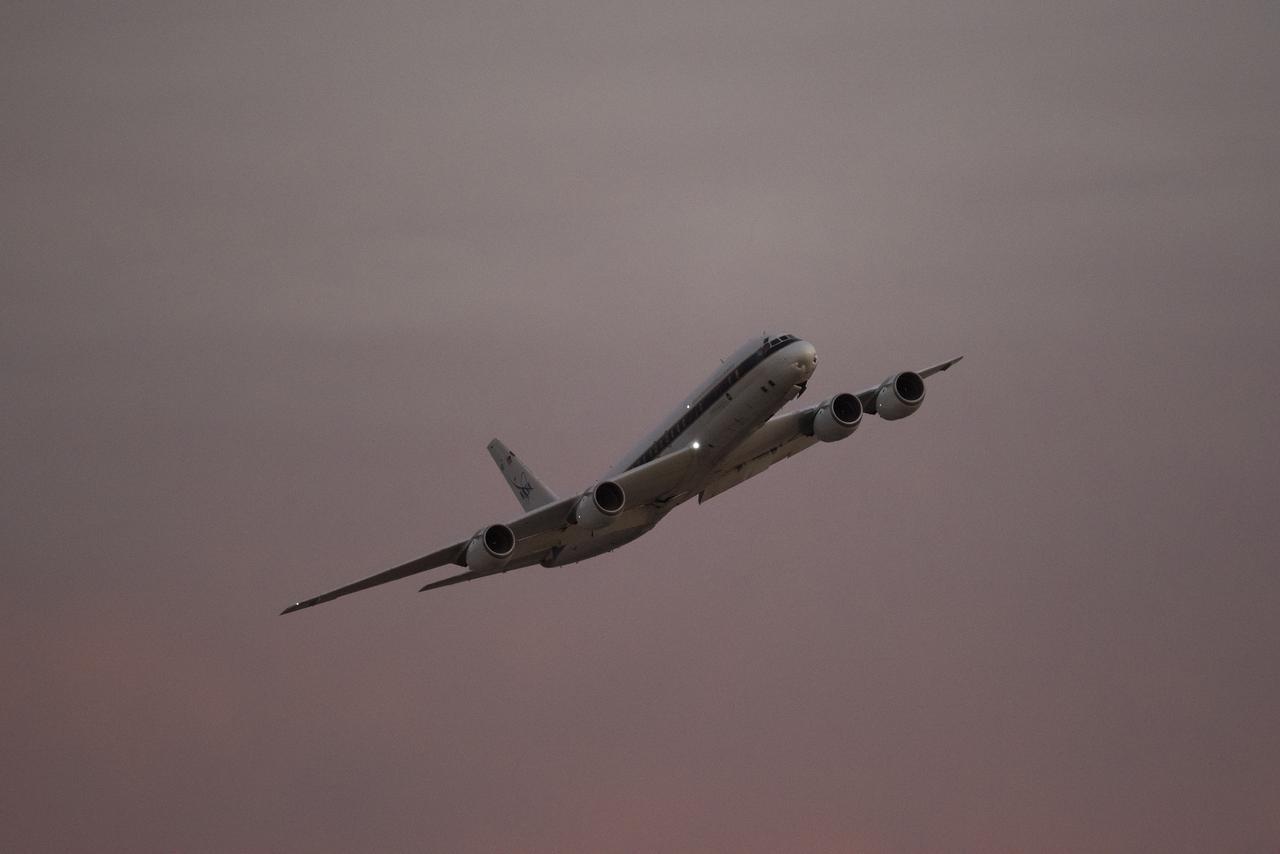
DC-8 lifts off from Air Force Plant 42 in Palmdale, Calif., at sunset.
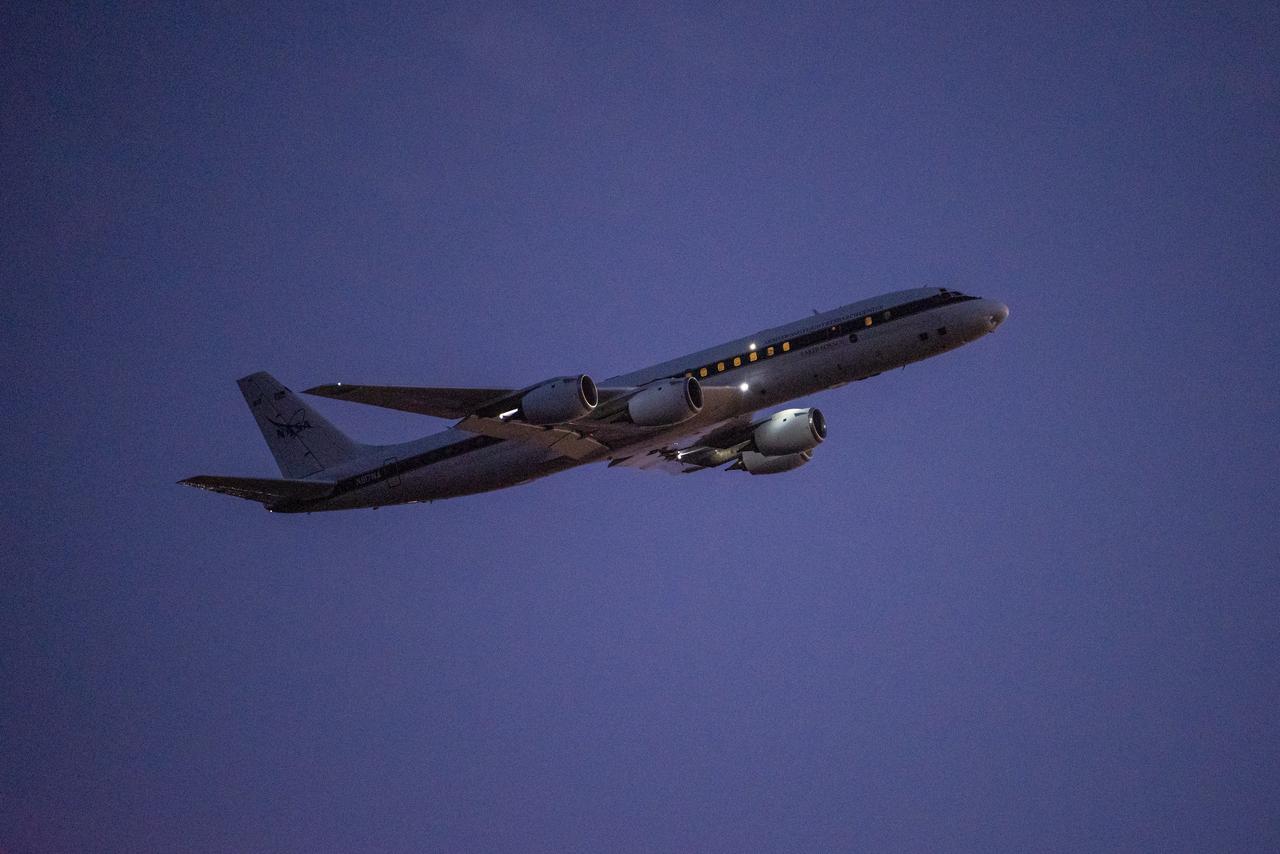
DC-8 lifts off from Air Force Plant 42 in Palmdale, Calif., at sunset.
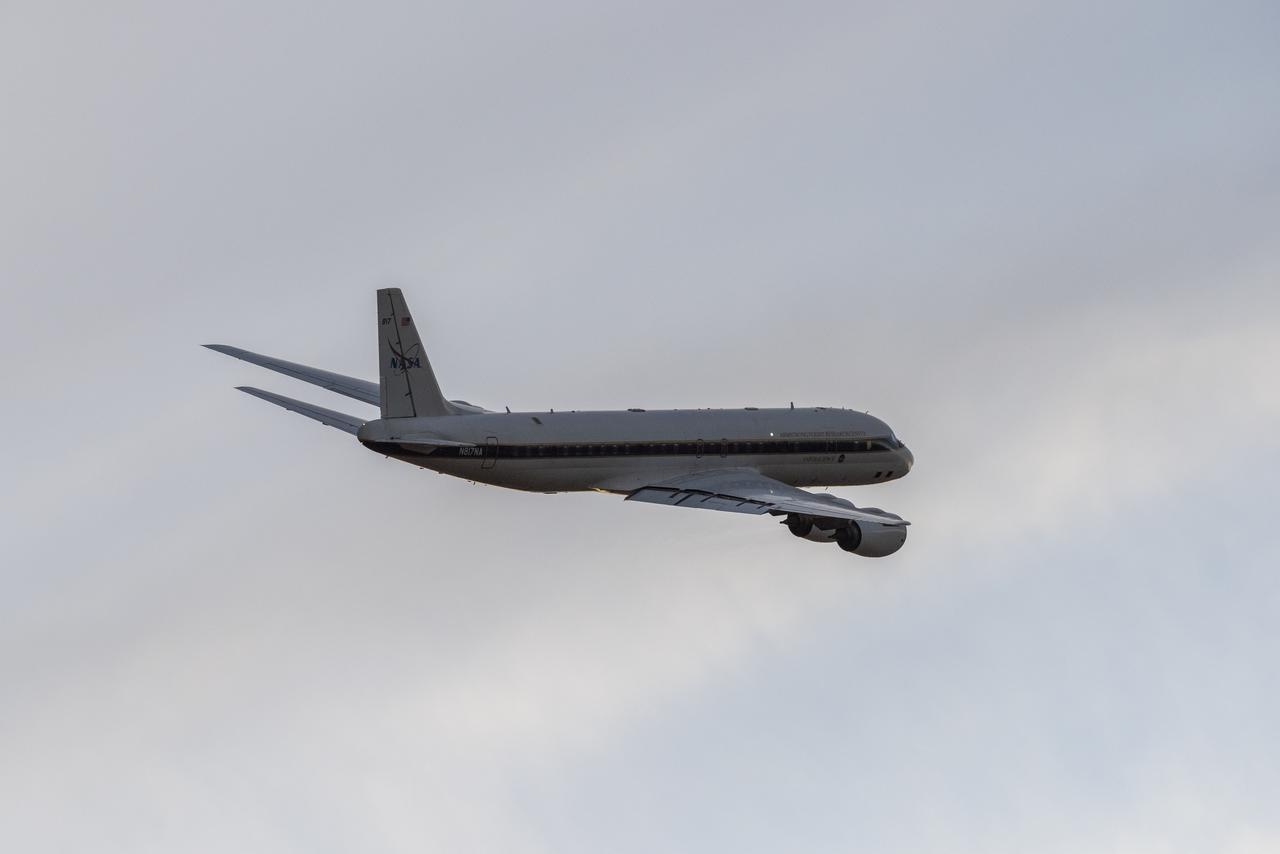
DC-8 lifts off from Air Force Plant 42 in Palmdale, Calif., at sunset.
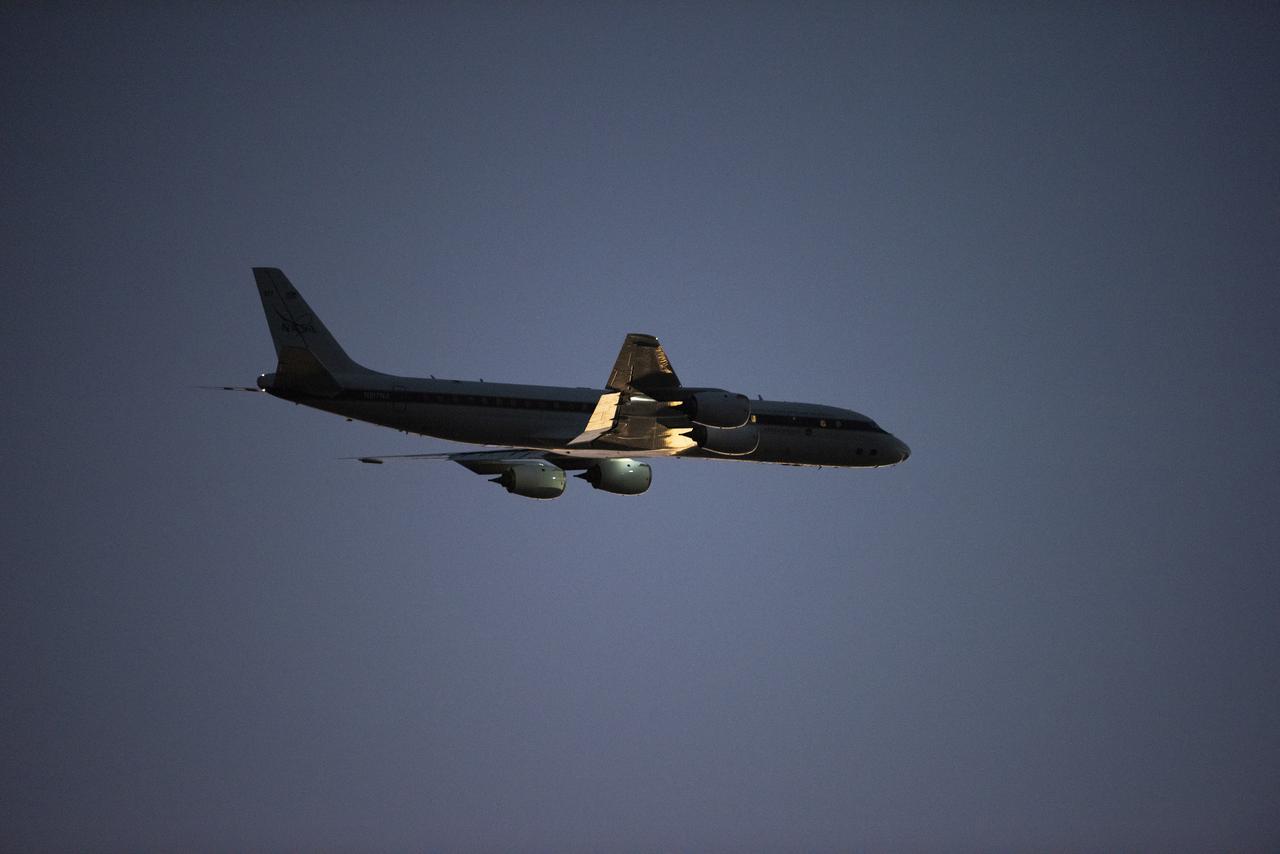
DC-8 lifts off from Air Force Plant 42 in Palmdale, Calif., at sunset.
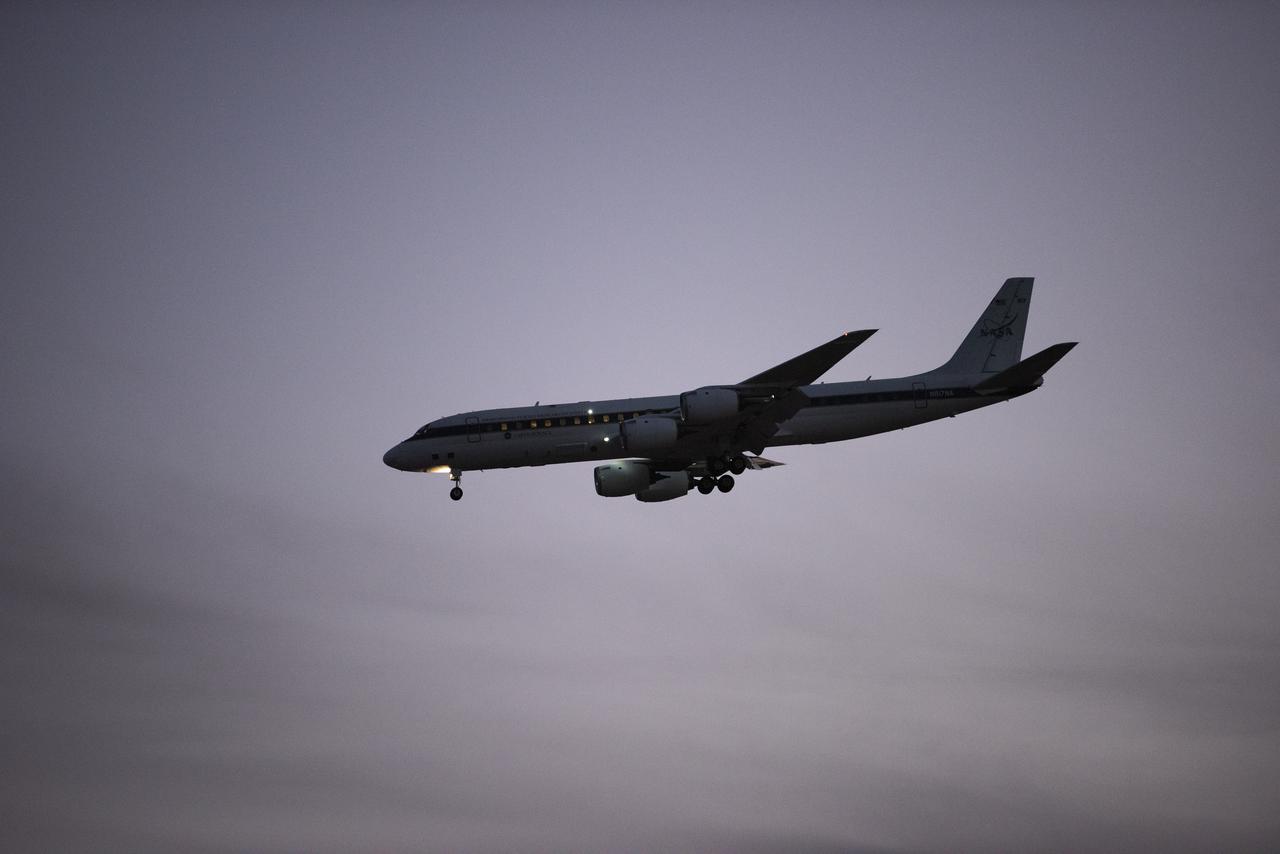
DC-8 lifts off from Air Force Plant 42 in Palmdale, Calif., at sunset.
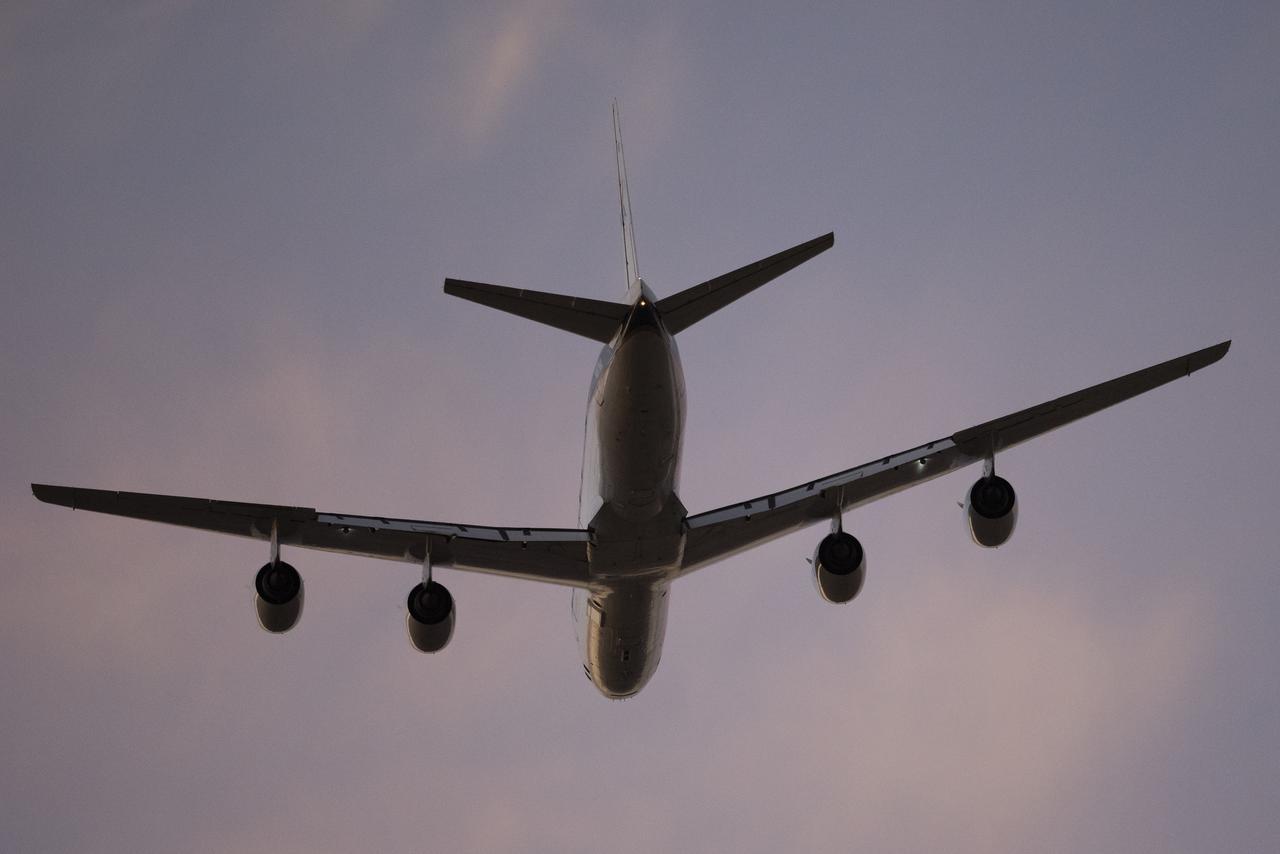
DC-8 lifts off from Air Force Plant 42 in Palmdale, Calif., at sunset.
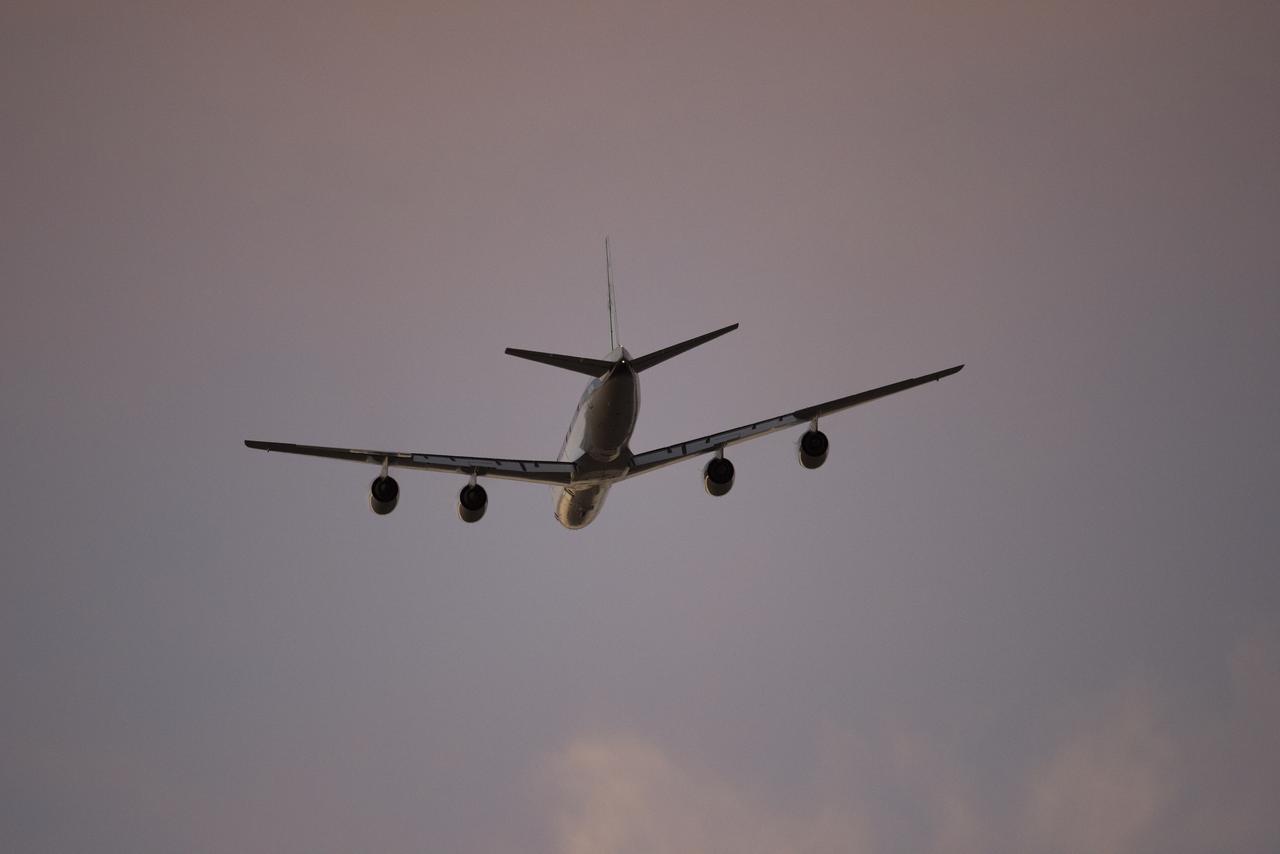
DC-8 lifts off from Air Force Plant 42 in Palmdale, Calif., at sunset.
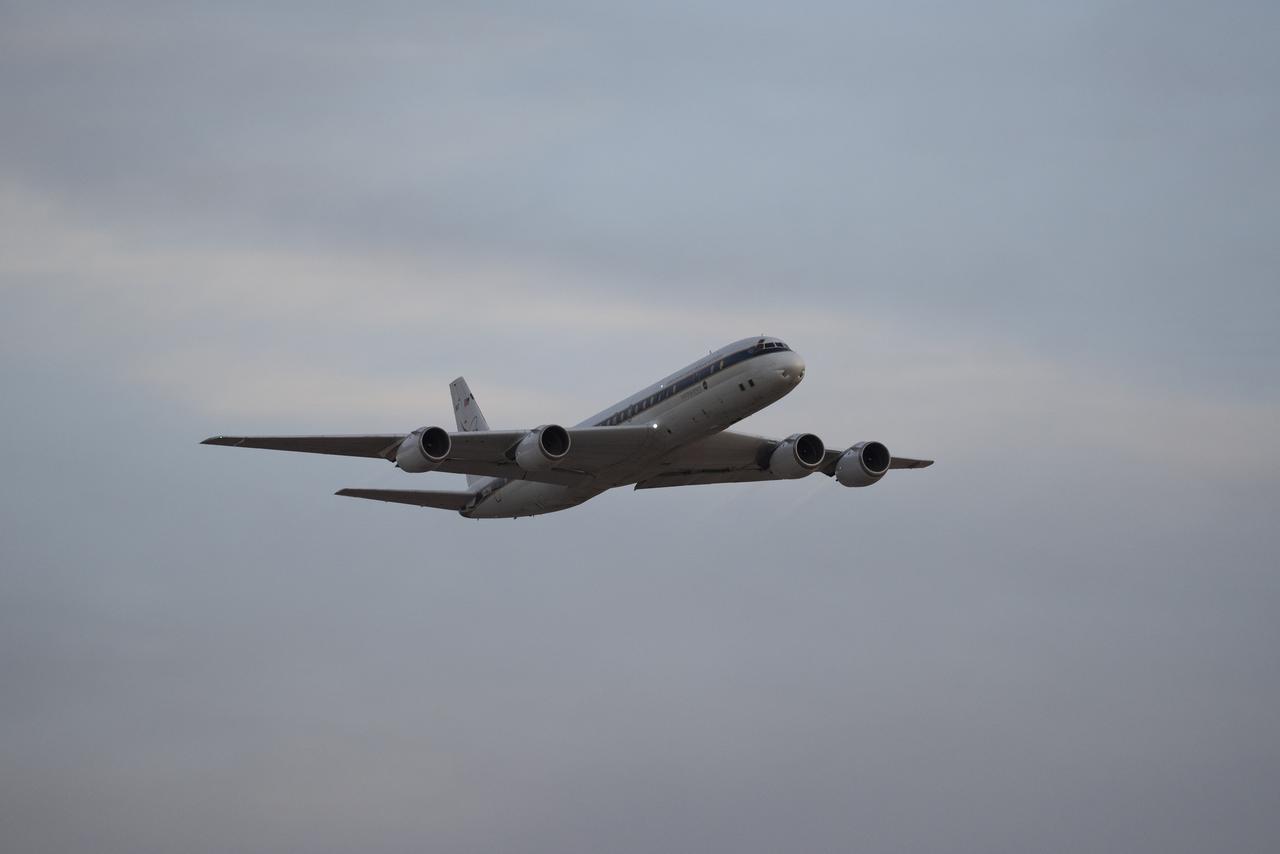
DC-8 lifts off from Air Force Plant 42 in Palmdale, Calif., at sunset.
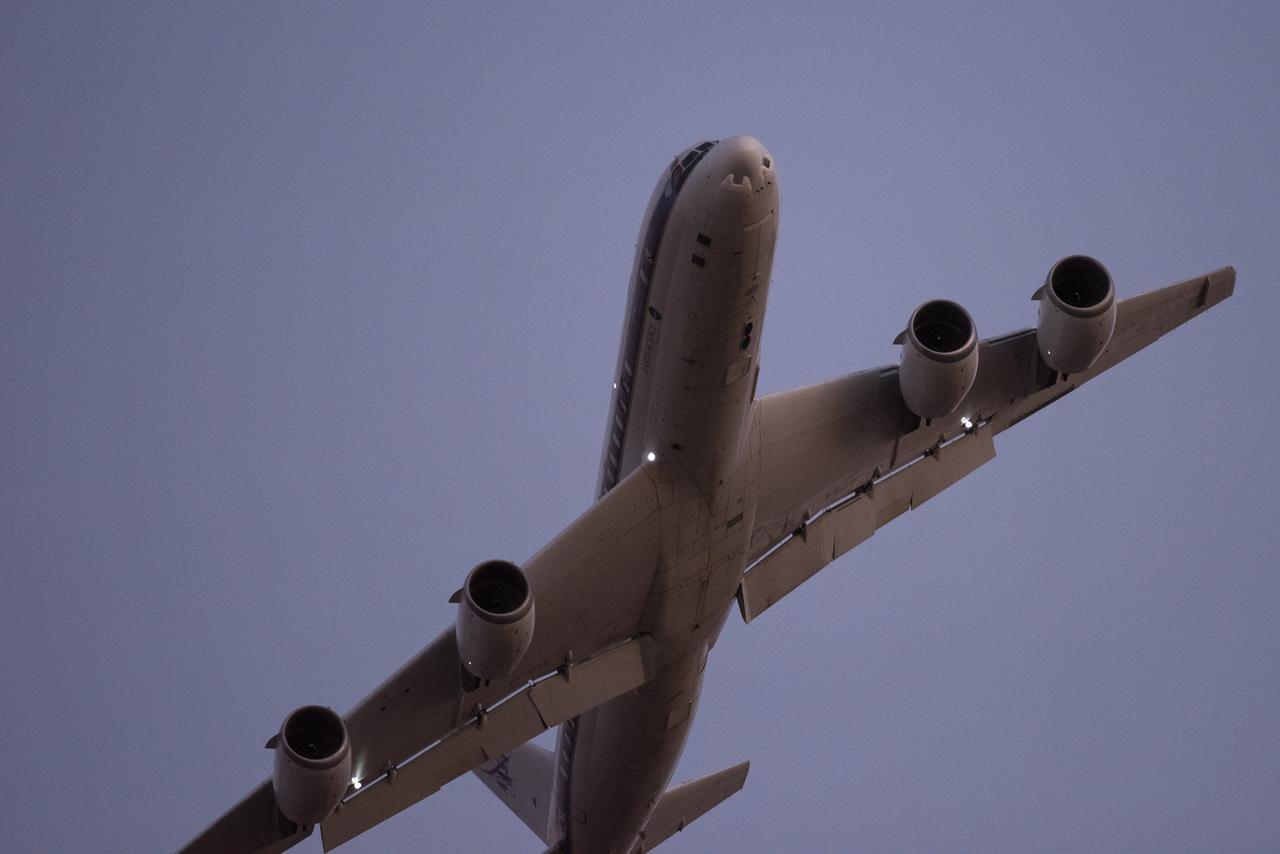
DC-8 lifts off from Air Force Plant 42 in Palmdale, Calif., at sunset.
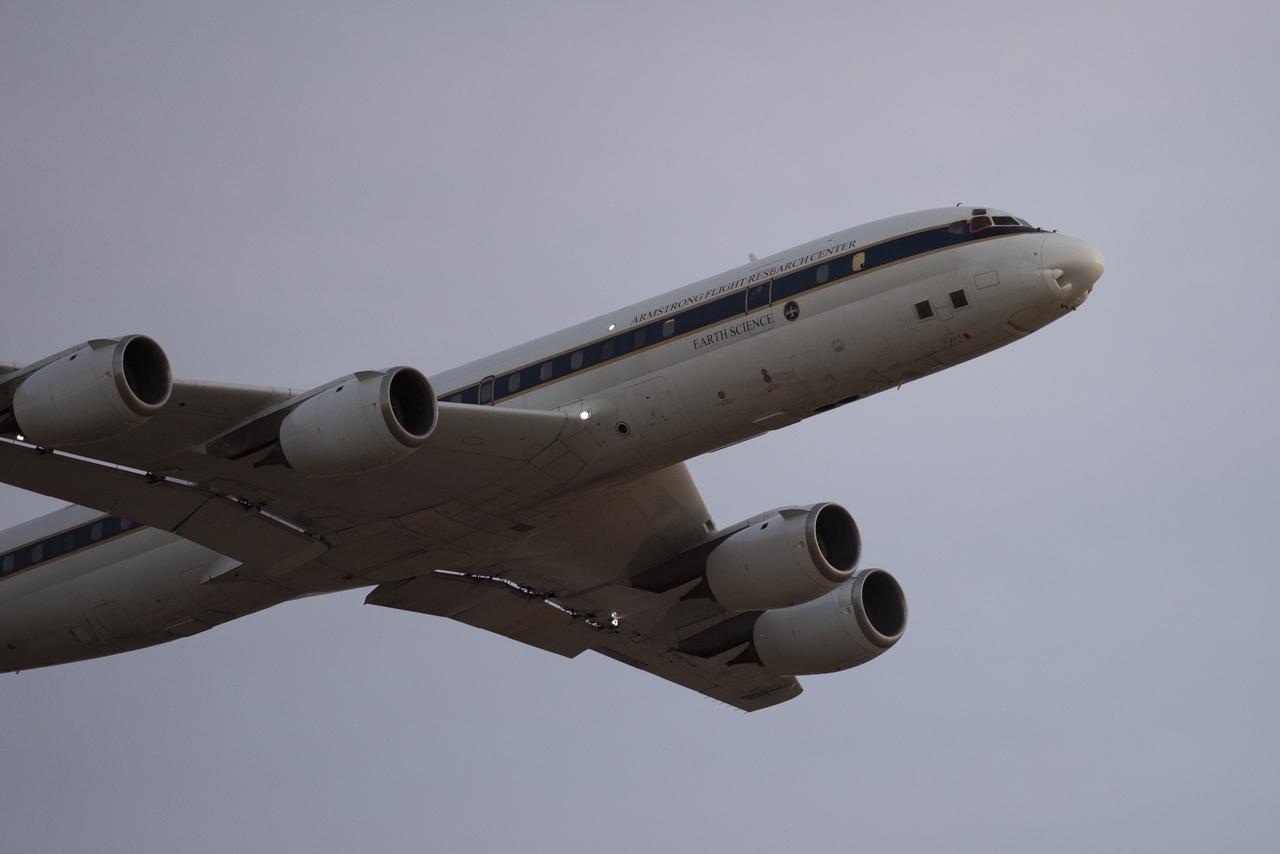
DC-8 lifts off from Air Force Plant 42 in Palmdale, Calif., at sunset.
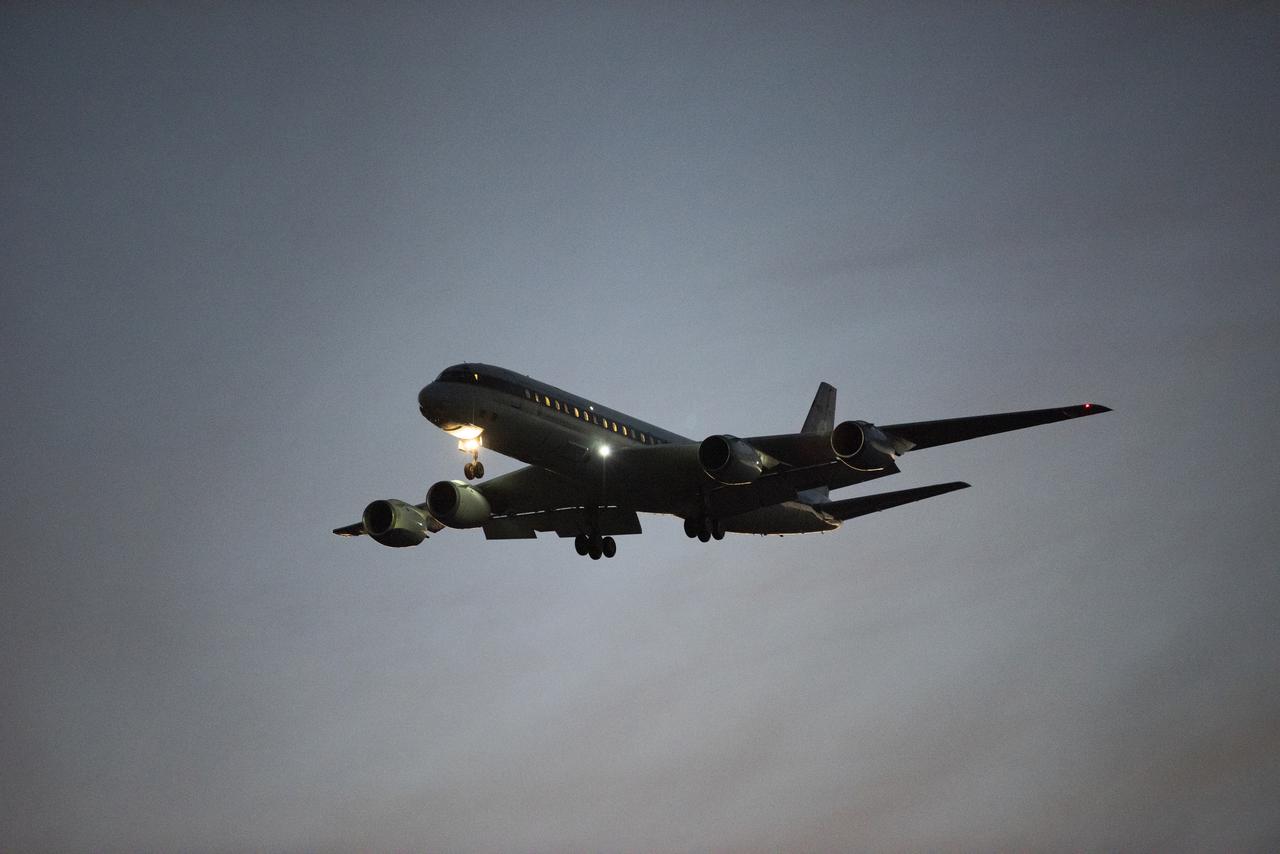
DC-8 lifts off from Air Force Plant 42 in Palmdale, Calif., at sunset.
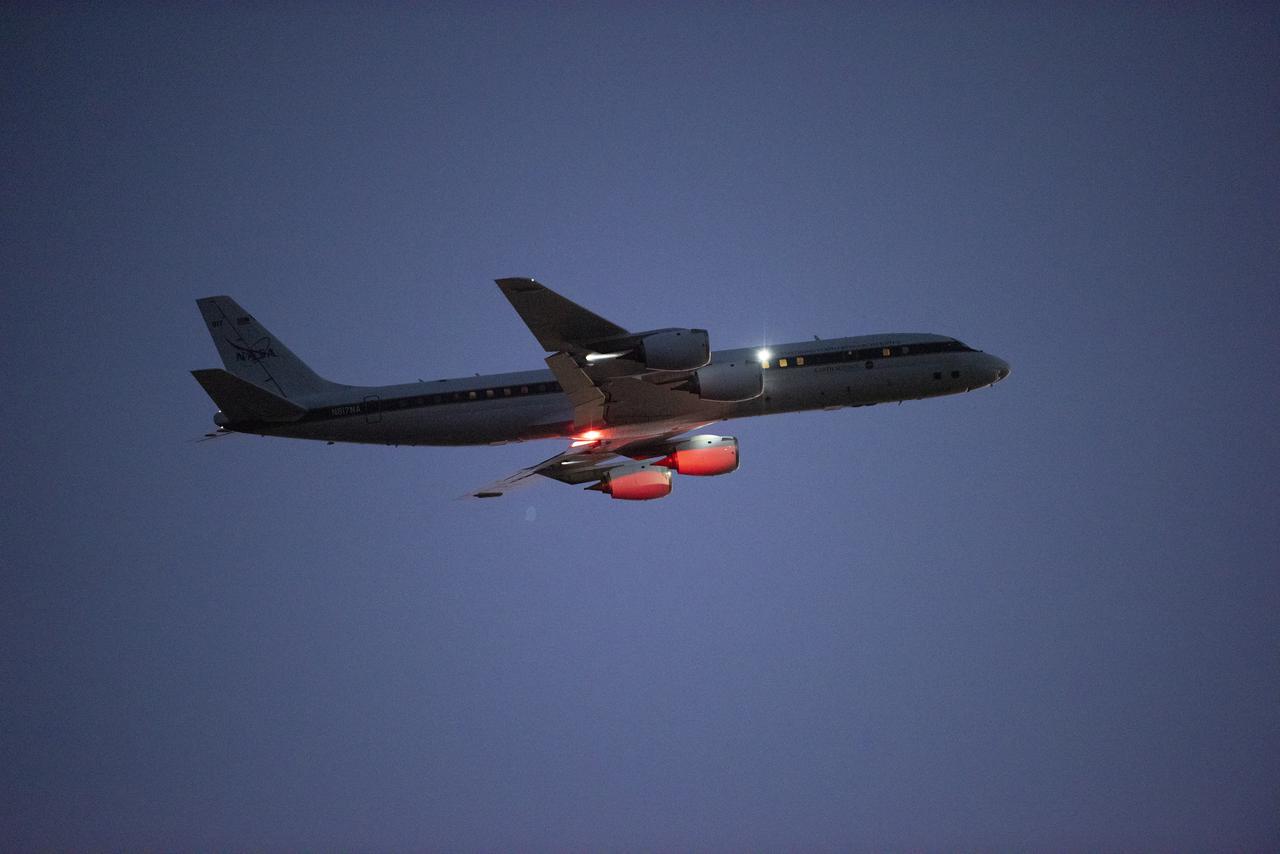
DC-8 lifts off from Air Force Plant 42 in Palmdale, Calif., at sunset.
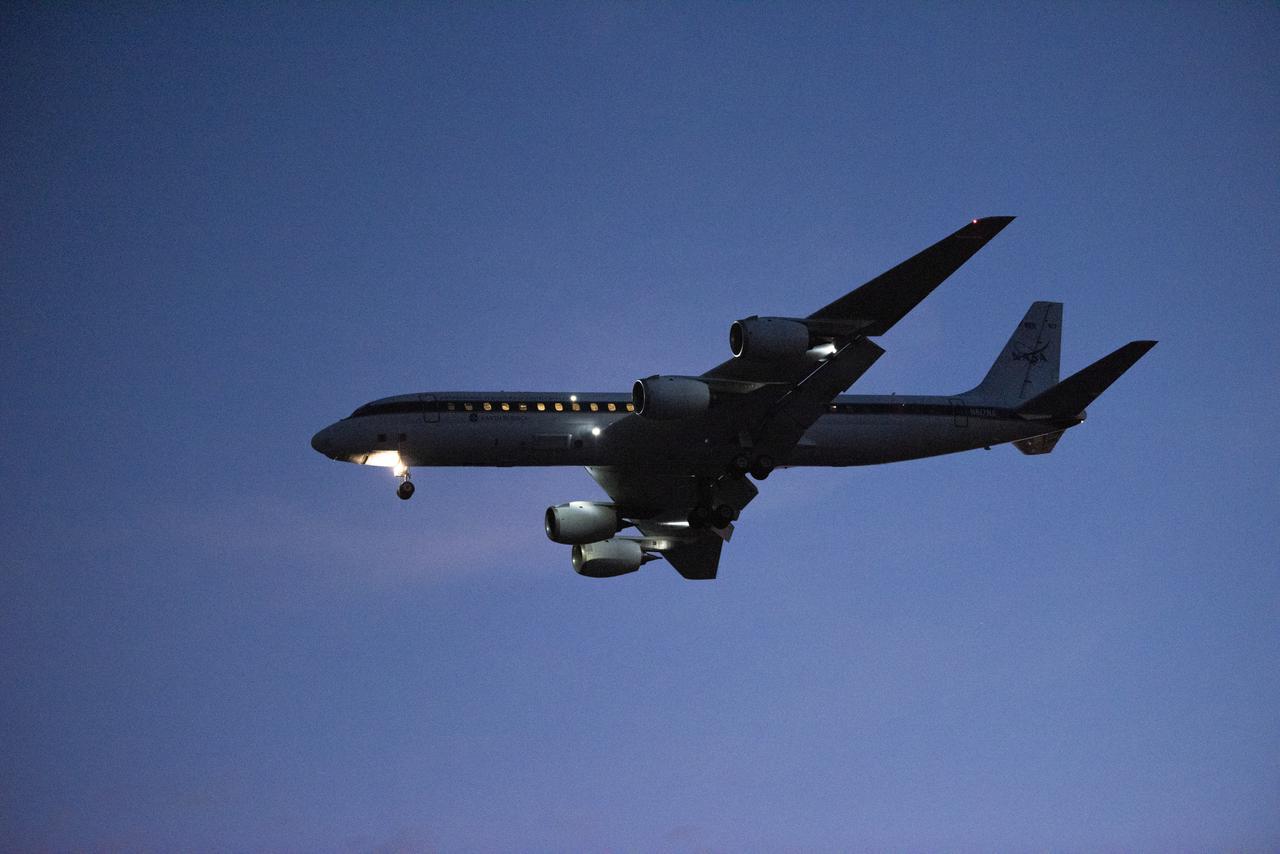
DC-8 lifts off from Air Force Plant 42 in Palmdale, Calif., at sunset.
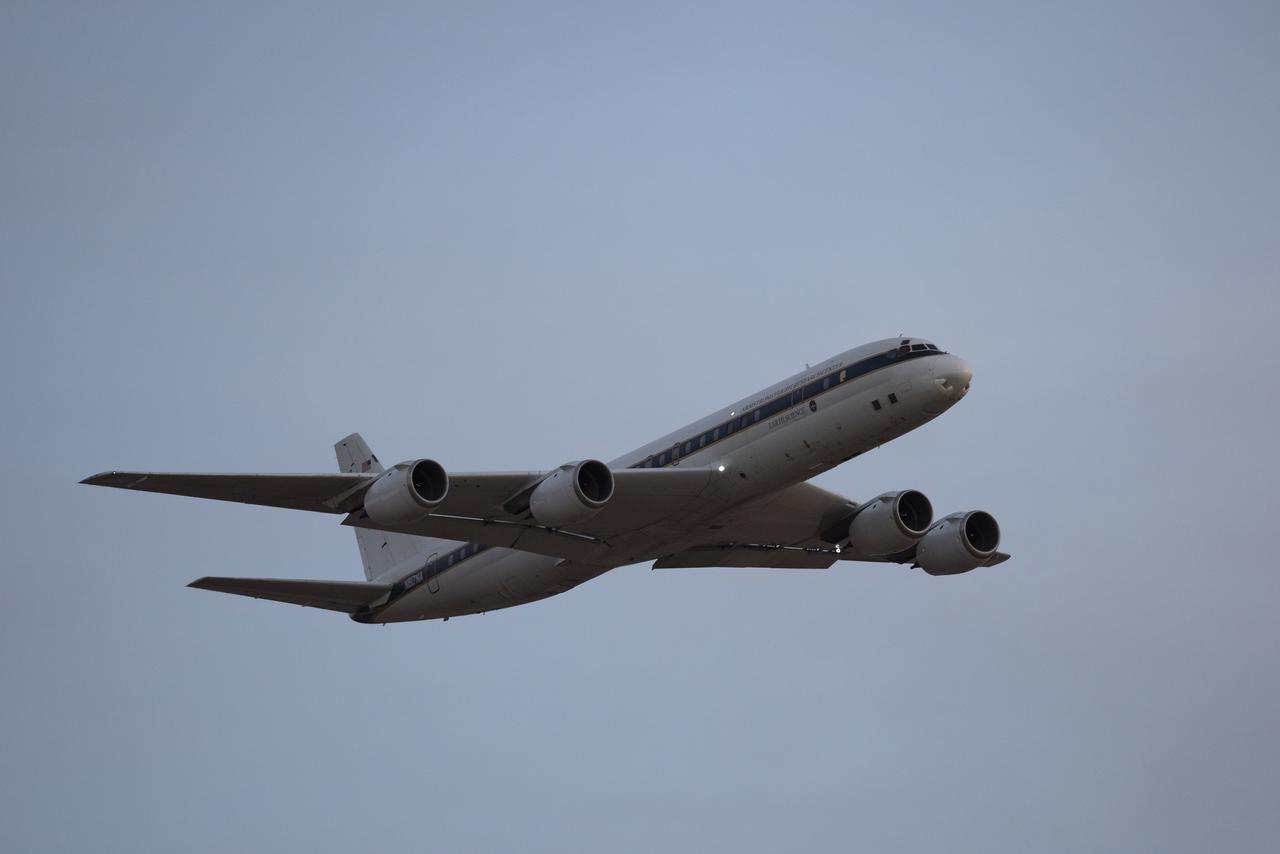
DC-8 lifts off from Air Force Plant 42 in Palmdale, Calif., at sunset.
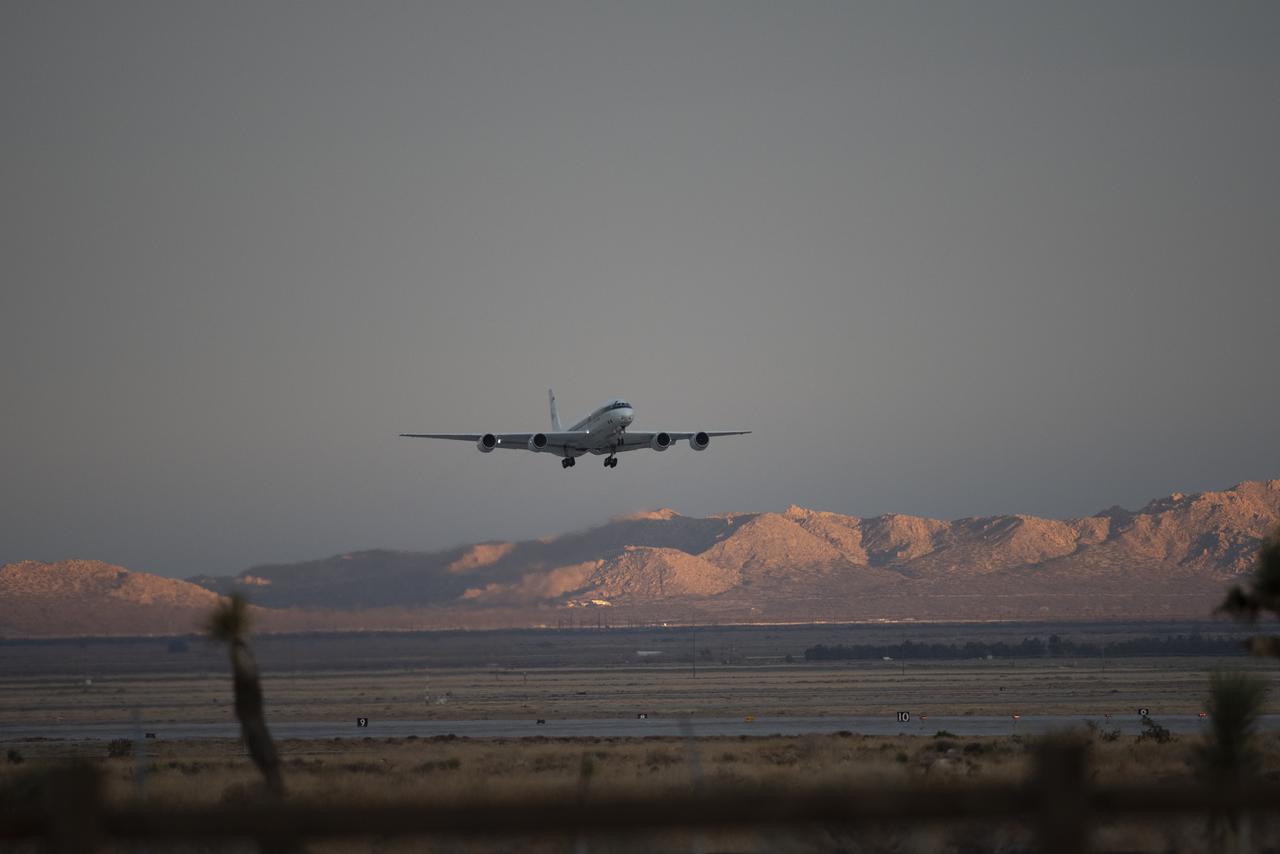
DC-8 lifts off from Air Force Plant 42 in Palmdale, Calif., at sunset.
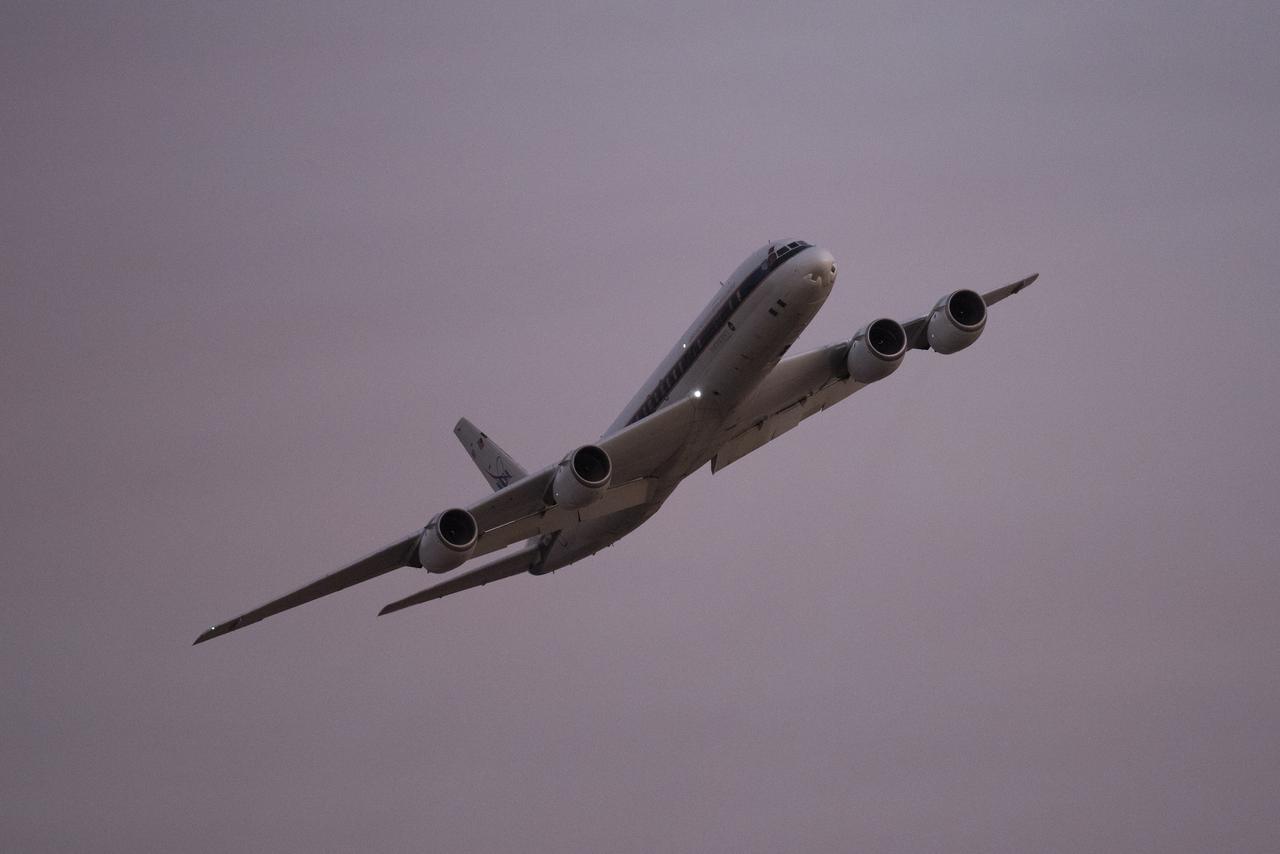
DC-8 lifts off from Air Force Plant 42 in Palmdale, Calif., at sunset.
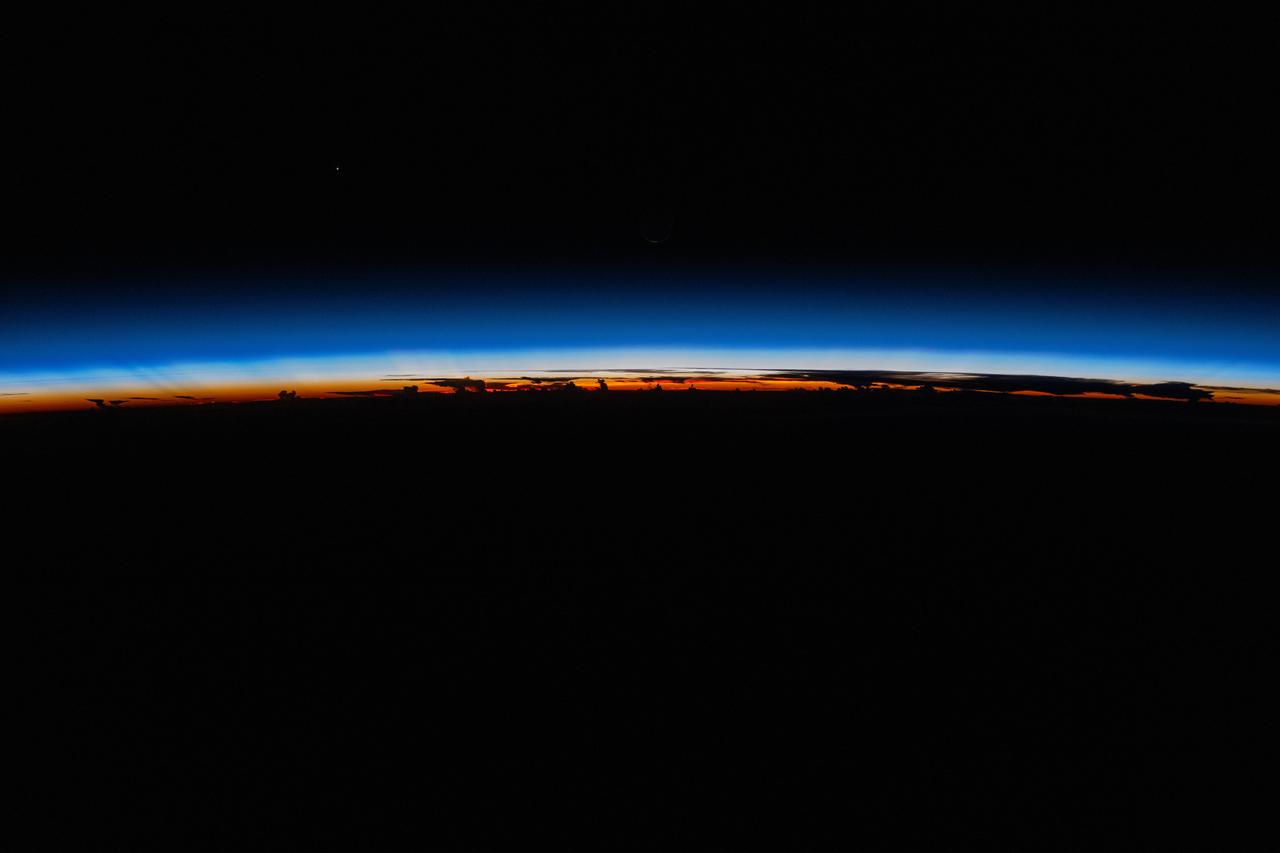
iss071e310017 (July 6, 2024) -- The last rays of an orbital sunset shine a striking orange against Earth's blue glow as the International Space Station orbited 255 miles above The Philippines.
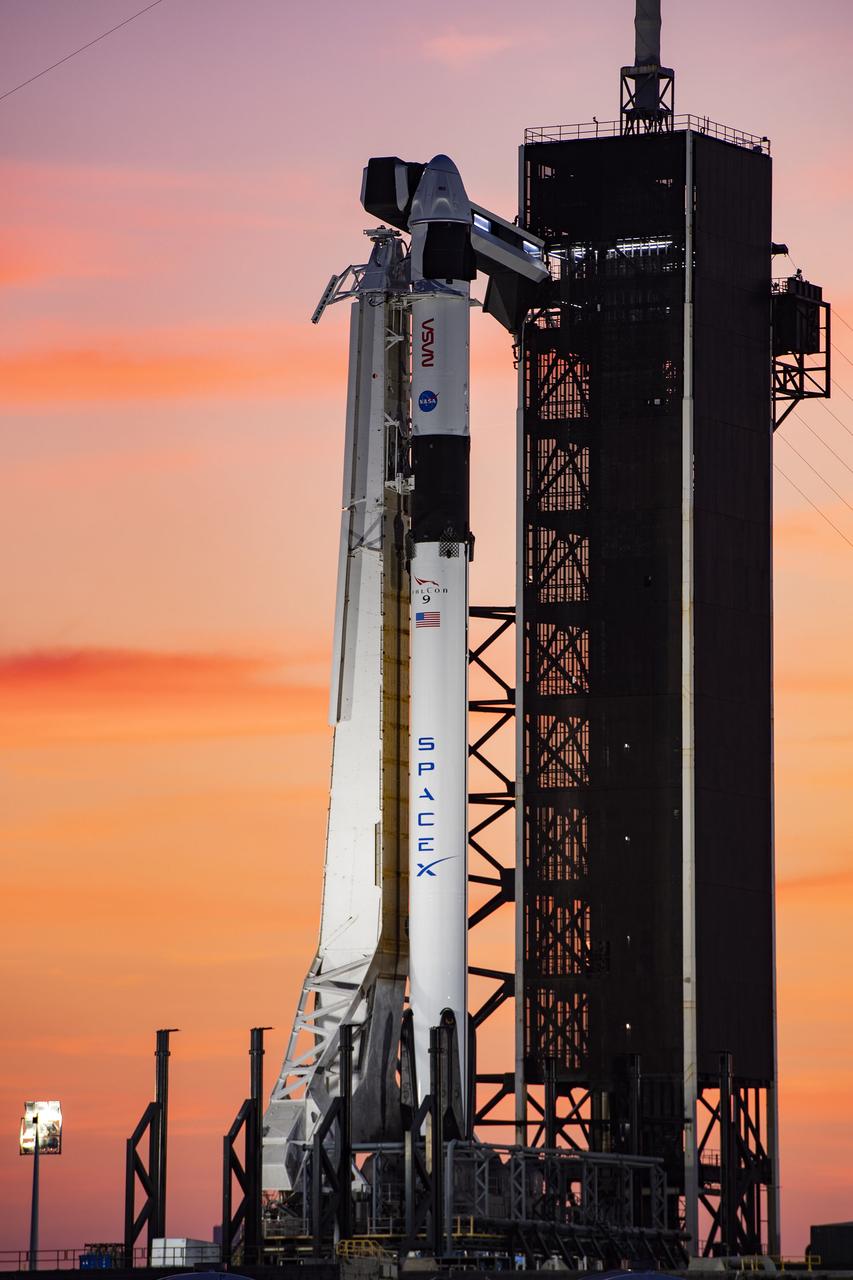
A colorful sunset serves as the backdrop for SpaceX’s Falcon 9 rocket and Dragon spacecraft Endeavour on the pad at Launch Complex 39A at Kennedy Space Center in Florida on Feb. 23, 2023, for NASA’s SpaceX Crew-6 mission. The crew access arm has been moved into position at the Dragon spacecraft. NASA astronauts Stephen Bowen, spacecraft commander, and Warren “Woody” Hoburg, pilot, along with mission specialists Sultan Alneyadi, UAE (United Arab Emirates) astronaut, and Andrey Fedyaev, Roscosmos cosmonaut, are slated to launch to the International Space Station at 1:45 a.m. EST on Feb. 27 from Launch Complex 39A. Crew-6 is the sixth crew rotation mission with SpaceX to the station, and the seventh flight of Dragon with people as part of the agency’s Commercial Crew Program.
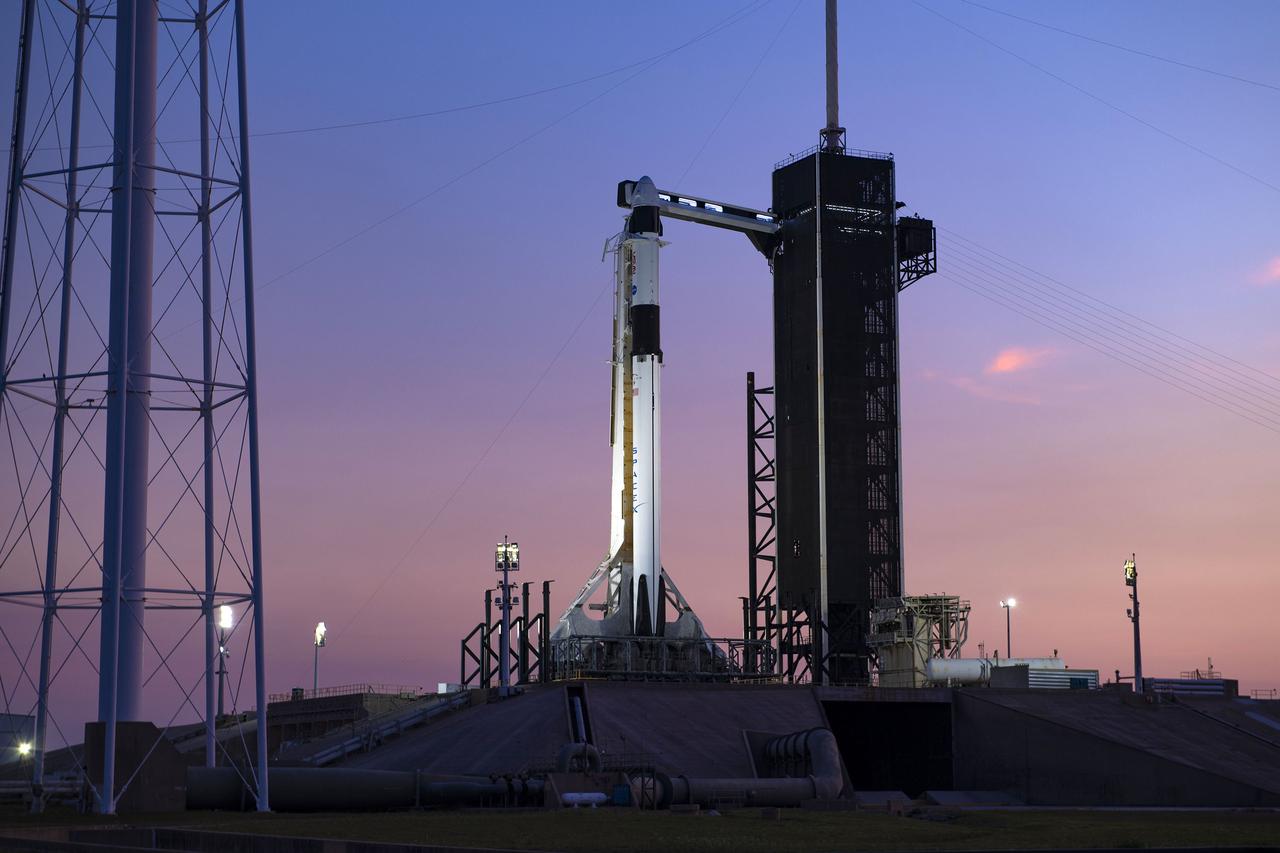
A colorful sunset serves as the backdrop for SpaceX’s Falcon 9 rocket and Dragon spacecraft Endeavour on the pad at Launch Complex 39A at Kennedy Space Center in Florida on Feb. 23, 2023, for NASA’s SpaceX Crew-6 mission. The crew access arm has been moved into position at the Dragon spacecraft. NASA astronauts Stephen Bowen, spacecraft commander, and Warren “Woody” Hoburg, pilot, along with mission specialists Sultan Alneyadi, UAE (United Arab Emirates) astronaut, and Andrey Fedyaev, Roscosmos cosmonaut, are slated to launch to the International Space Station at 1:45 a.m. EST on Feb. 27 from Launch Complex 39A. Crew-6 is the sixth crew rotation mission with SpaceX to the station, and the seventh flight of Dragon with people as part of the agency’s Commercial Crew Program.
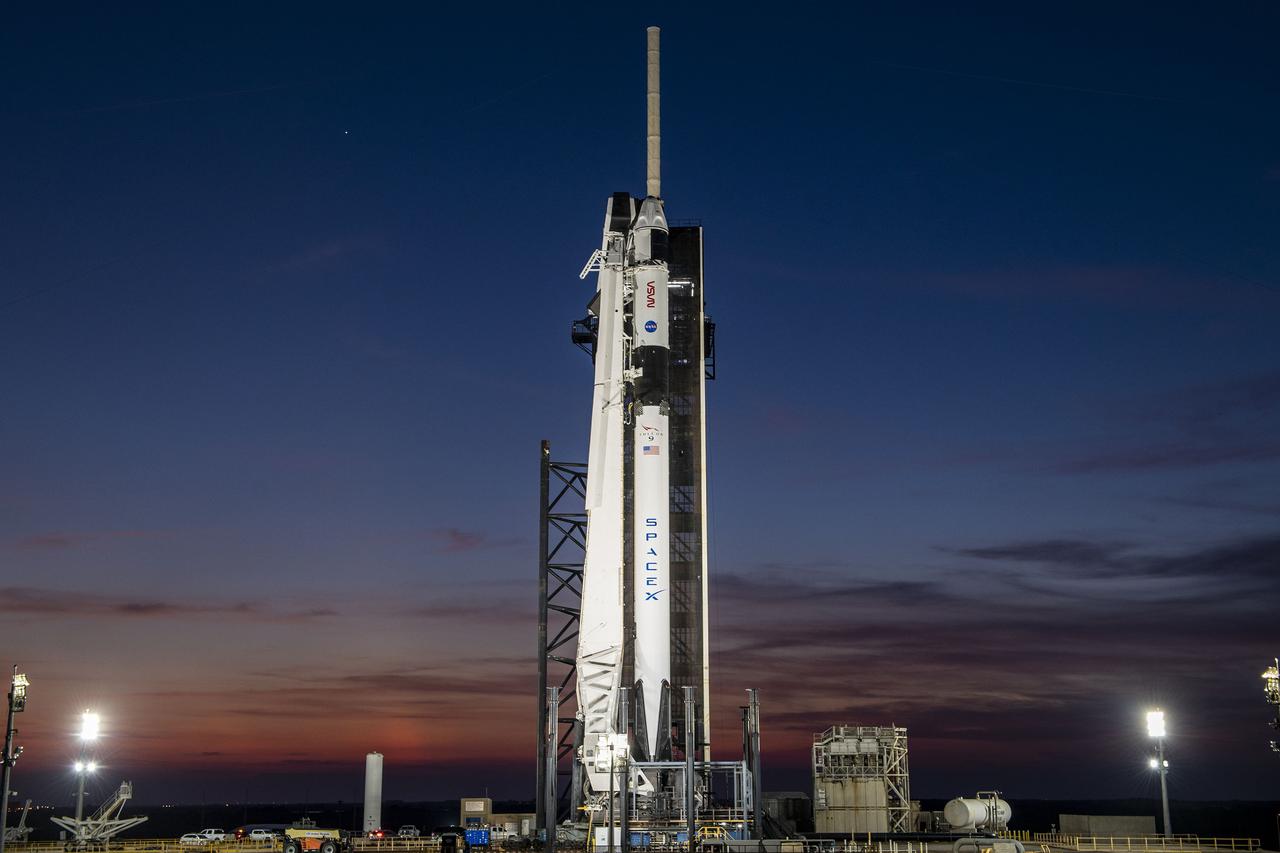
A colorful sunset serves as the backdrop for SpaceX’s Falcon 9 rocket and Dragon spacecraft Endeavour on the pad at Launch Complex 39A at Kennedy Space Center in Florida on Feb. 23, 2023, for NASA’s SpaceX Crew-6 mission. The crew access arm has been moved into position at the Dragon spacecraft. NASA astronauts Stephen Bowen, spacecraft commander, and Warren “Woody” Hoburg, pilot, along with mission specialists Sultan Alneyadi, UAE (United Arab Emirates) astronaut, and Andrey Fedyaev, Roscosmos cosmonaut, are slated to launch to the International Space Station at 1:45 a.m. EST on Feb. 27 from Launch Complex 39A. Crew-6 is the sixth crew rotation mission with SpaceX to the station, and the seventh flight of Dragon with people as part of the agency’s Commercial Crew Program.
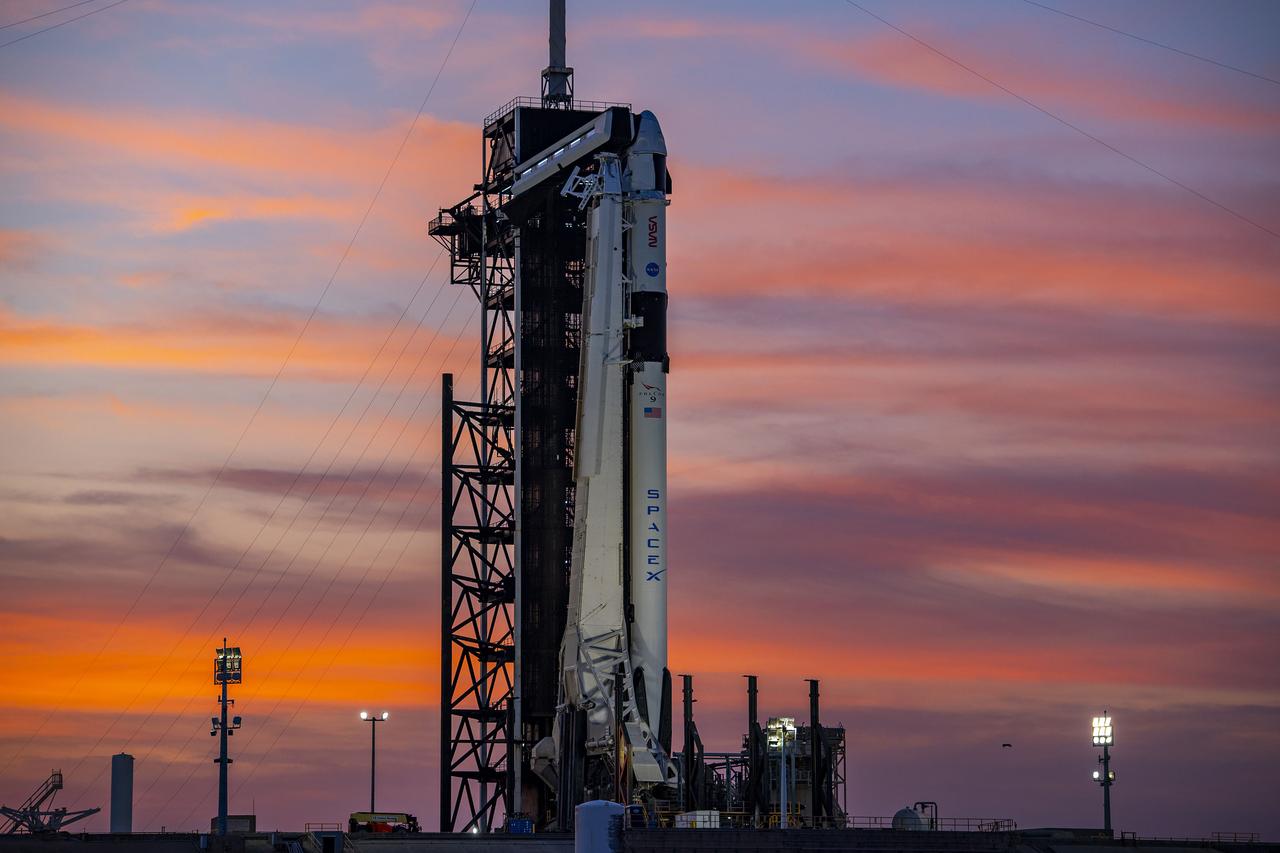
A colorful sunset serves as the backdrop for SpaceX’s Falcon 9 rocket and Dragon spacecraft Endeavour on the pad at Launch Complex 39A at Kennedy Space Center in Florida on Feb. 23, 2023, for NASA’s SpaceX Crew-6 mission. The crew access arm has been moved into position at the Dragon spacecraft. NASA astronauts Stephen Bowen, spacecraft commander, and Warren “Woody” Hoburg, pilot, along with mission specialists Sultan Alneyadi, UAE (United Arab Emirates) astronaut, and Andrey Fedyaev, Roscosmos cosmonaut, are slated to launch to the International Space Station at 1:45 a.m. EST on Feb. 27 from Launch Complex 39A. Crew-6 is the sixth crew rotation mission with SpaceX to the station, and the seventh flight of Dragon with people as part of the agency’s Commercial Crew Program.
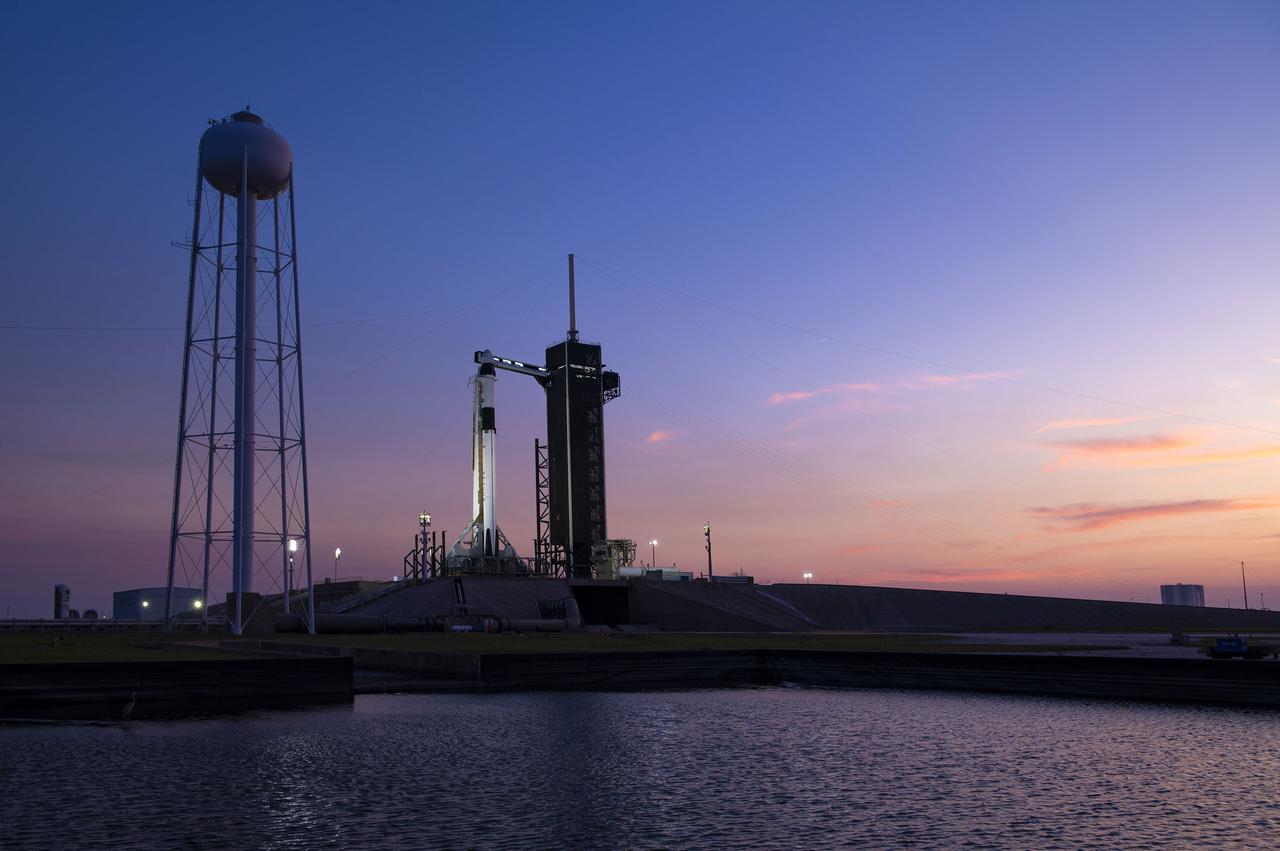
A colorful sunset serves as the backdrop for SpaceX’s Falcon 9 rocket and Dragon spacecraft Endeavour on the pad at Launch Complex 39A at Kennedy Space Center in Florida on Feb. 23, 2023, for NASA’s SpaceX Crew-6 mission. The crew access arm has been moved into position at the Dragon spacecraft. NASA astronauts Stephen Bowen, spacecraft commander, and Warren “Woody” Hoburg, pilot, along with mission specialists Sultan Alneyadi, UAE (United Arab Emirates) astronaut, and Andrey Fedyaev, Roscosmos cosmonaut, are slated to launch to the International Space Station at 1:45 a.m. EST on Feb. 27 from Launch Complex 39A. Crew-6 is the sixth crew rotation mission with SpaceX to the station, and the seventh flight of Dragon with people as part of the agency’s Commercial Crew Program.
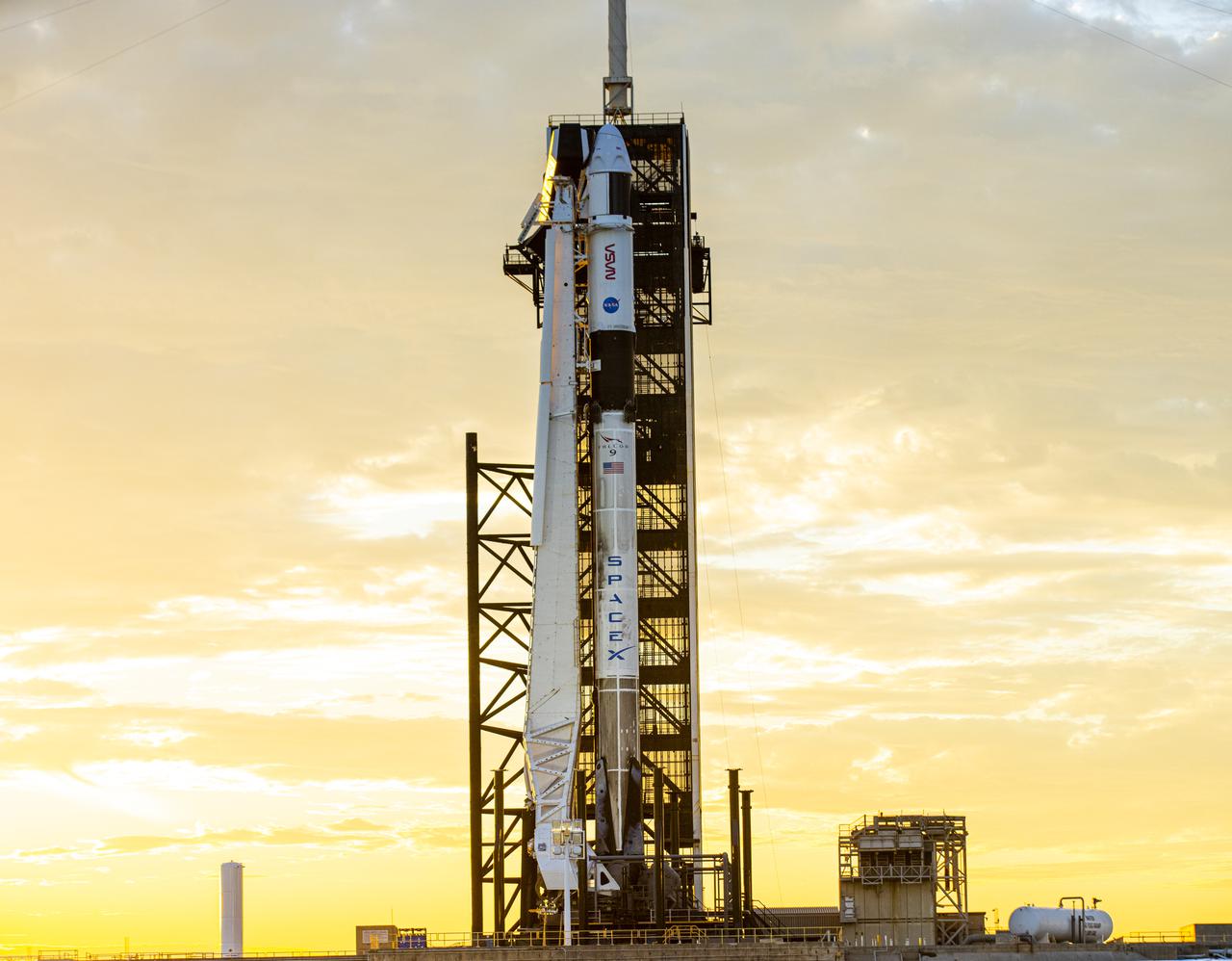
The SpaceX Falcon 9 rocket is vertical with the Crew Dragon atop for the Crew-3 mission at Launch Pad 39A at NASA’s Kennedy Space Center in Florida in this sunset view on Oct. 27, 2021. A four-person crew will launch aboard the Crew Dragon atop the Falcon 9 on Oct. 31 to the International Space Station. Launch is targeted for 2:21 a.m. EDT from Pad 39A. Crew 3 is the third crew rotation flight to the space station for NASA’s Commercial Crew Program, and the first flight of a new Crew Dragon spacecraft.

The SpaceX Falcon 9 rocket is vertical with the Crew Dragon atop for the Crew-3 mission at Launch Pad 39A at NASA’s Kennedy Space Center in Florida in this sunset view on Oct. 27, 2021. A four-person crew will launch aboard the Crew Dragon atop the Falcon 9 on Oct. 31 to the International Space Station. Launch is targeted for 2:21 a.m. EDT from Pad 39A. Crew 3 is the third crew rotation flight to the space station for NASA’s Commercial Crew Program, and the first flight of a new Crew Dragon spacecraft.
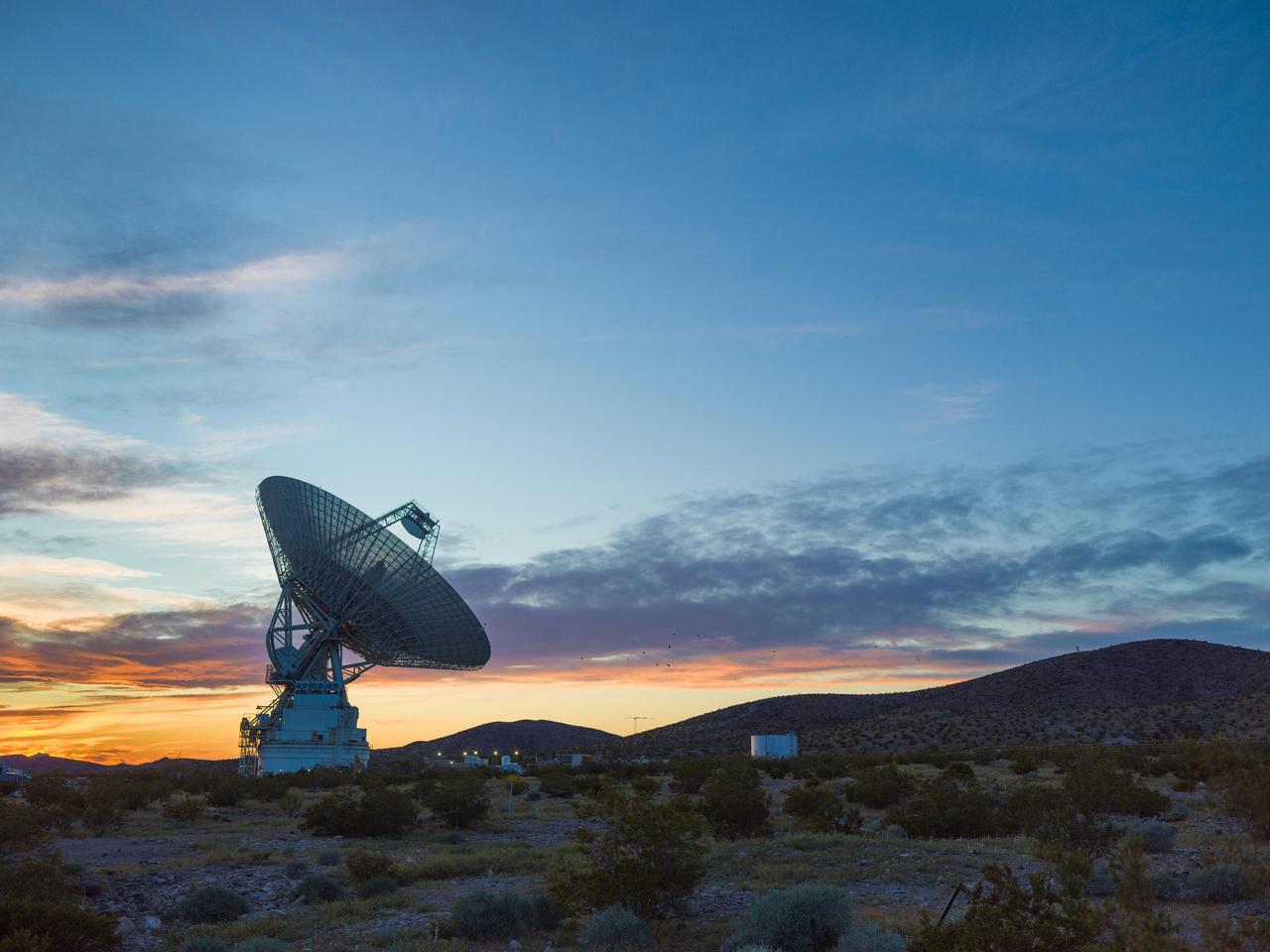
This sunset photo shows Deep Space Station 14 (DSS-14), the 230-foot-wide (70-meter) antenna at the Goldstone Deep Space Communications Complex near Barstow, California, part of NASA's Deep Space Network. The network's three complexes around the globe support communications with dozens of deep space missions. DSS-14 is also the agency's Goldstone Solar System Radar, which is used to observe asteroids that come close to Earth. https://photojournal.jpl.nasa.gov/catalog/PIA26150

This sunset on Mars was captured by NASA's Perseverance Mars rover using its Mastcam-Z camera system on Nov. 9, 2021, the 257th Martian day, or sol, of the mission. Martian sunsets typically stand out for their distinctive blue color. Fine dust in the atmosphere permits blue light to penetrate the atmosphere more efficiently than colors with longer wavelengths. But this sunset looks different: less dust in the atmosphere resulted in a more muted color than average. The color has been calibrated and white-balanced to remove camera artifacts. The Mastcam-Z investigation is led and operated by Arizona State University in Tempe, working in collaboration with Malin Space Science Systems in San Diego, California, on the design, fabrication, testing, and operation of the cameras, and in collaboration with the Neils Bohr Institute of the University of Copenhagen on the design, fabrication, and testing of the calibration targets. A key objective for Perseverance's mission on Mars is astrobiology, including the search for signs of ancient microbial life. The rover will characterize the planet's geology and past climate, pave the way for human exploration of the Red Planet, and be the first mission to collect and cache Martian rock and regolith (broken rock and dust). Subsequent NASA missions, in cooperation with ESA (European Space Agency), would send spacecraft to Mars to collect these sealed samples from the surface and return them to Earth for in-depth analysis. The Mars 2020 Perseverance mission is part of NASA's Moon to Mars exploration approach, which includes Artemis missions to the Moon that will help prepare for human exploration of the Red Planet. https://photojournal.jpl.nasa.gov/catalog/PIA24935
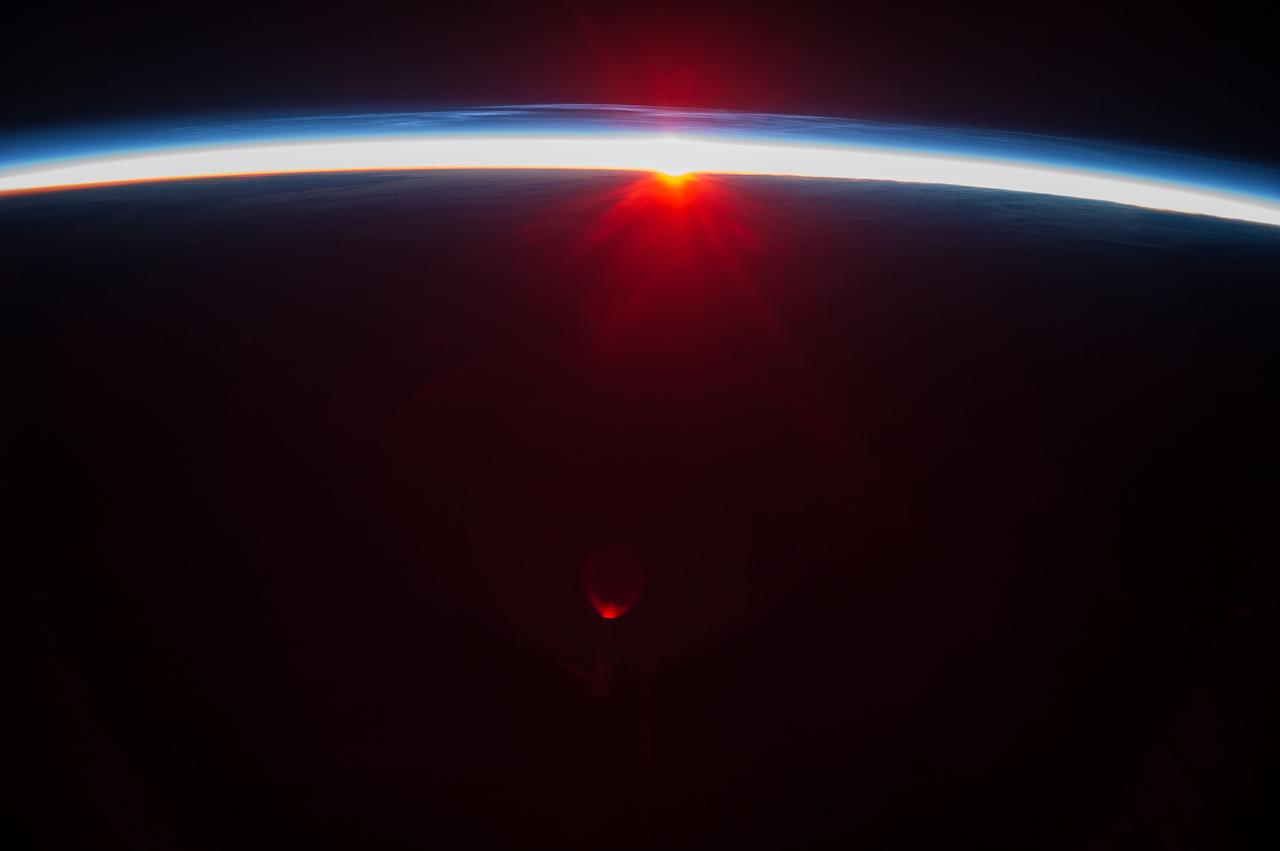
ISS036-E-028913 (4 Aug. 2013) --- A sunset over the Aleutian Islands, with noctilucent clouds, is featured in this image photographed by an Expedition 36 crew member on the International Space Station. The crew member took this panoramic view looking north from the Aleutian Islands when the space station was flying east at ?the top of the orbit,? the northernmost latitude reached by the orbital complex (51.6 degrees north). If the sun had been higher, the string of Aleutian Islands would have been visible in the foreground. Here the islands are on the dark side of the day-night line. From their vantage point at 222 kilometers altitude on this day, crew members were able to see as far north as the Arctic Ocean and the midnight sun. This image was taken just 20 minutes after local midnight in early August 2013. The midnight sun makes the red, diamond-shaped teardrop reflection (lower center)?perhaps a reflection within the camera lens, or from the window frame, or some item inside the ISS. Long blue-white stringers can be seen in the atmosphere above the midnight sun. These are known as noctilucent clouds (night-shining clouds). Some crew members say these wispy, rippling, iridescent clouds are the most beautiful phenomena they see from orbit. Noctilucents are thin so that they are best seen after sunset when the viewer is on the night side of the day-night line, but while these high clouds are still lit by the sun. Crews are trained in this somewhat complicated geometry?of clouds being lit from beneath, with the spacecraft in sunlight though the ground directly beneath is in darkness. Noctilucent clouds are also known as polar mesospheric clouds (PMCs) as they appear in the summer hemisphere over polar latitudes. Some data suggest that they are becoming brighter, and appearing at lower latitudes, perhaps as an effect of global warming. A comparison of noctilucent cloud formation from 2012 and 2013 has been compiled using data from NASA?s Aeronomy of Ice in the Mesosphere (AIM) shows an earlier start and an increase in the area covered by these clouds in 2013. Polar mesospheric clouds are interesting to scientists because they form much higher in the atmosphere (75-90 kilometers) compared with altitudes of normal rainclouds that form in the lowest, densest ?weather-layer? below approximately 15 kilometers. The weather layer, or troposphere, is most distinct in this image as a thin orange line along the left horizon.
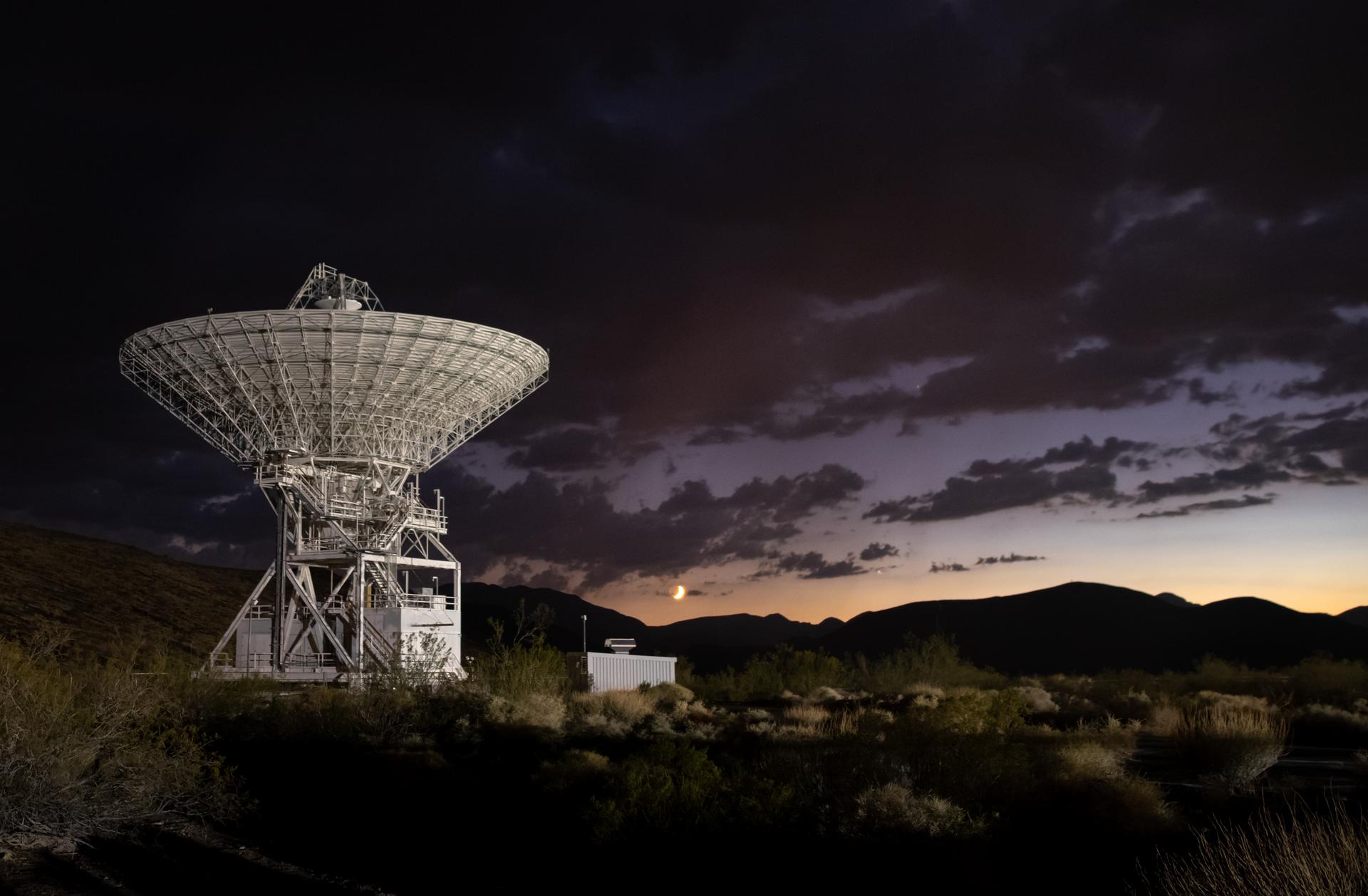
Deep Space Station 15 (DSS-15), one of the 112-foot (34-meter) antennas at the Goldstone Deep Space Communications Complex near Barstow, California, is seen at sunset in September 2025. The crescent Moon hangs just above the horizon. Goldstone is part of NASA’s Deep Space Network (DSN), which operates three complexes around the globe that support communications with dozens of deep space missions. For more information about the DSN, visit: https://www.nasa.gov/communicating-with-missions/dsn/
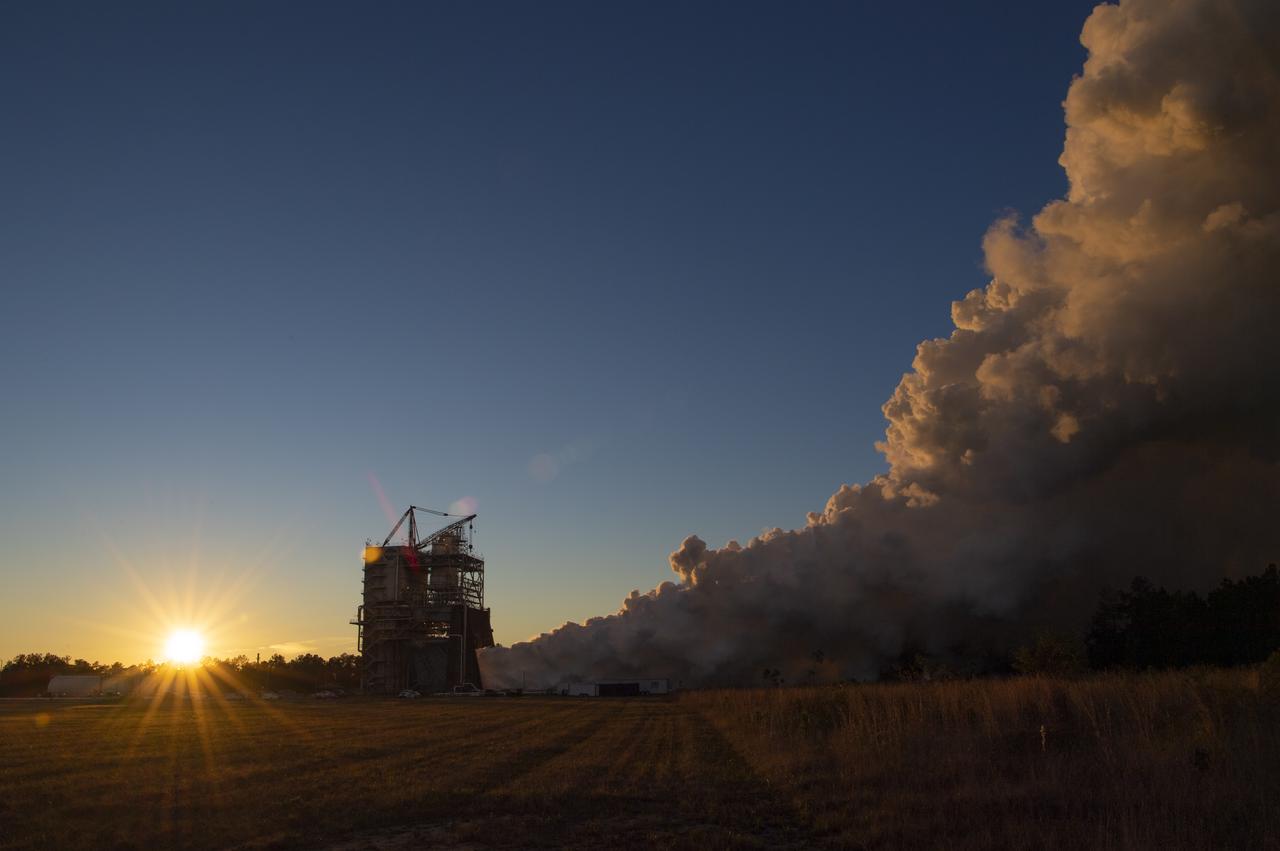
An RS-25 engine is fired at sunset on Nov. 15 on the A-1 test stand at Stennis Space Center. The 650-second duration test represents the time three such engines would need to fire to burn up propellant and power the rocket into orbit, even if the fourth shut down early during an SLS launch.
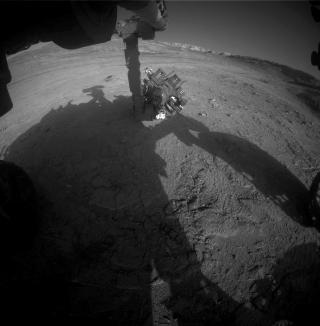
NASA's Curiosity Mars rover captured this view of its robotic arm during sunset on Sept. 16, 2025, the 4,661st Martian day, or sol, of the mission. This series of six images shows the rover's 7-foot-long (2.5-meter-long) arm setting its turret, a rotating platform for science instruments, onto rock targets nicknamed "Turbio" and "Rio Aguas Blancas." The front hazard cameras, located on the front of the rover's chassis, took the images between 3:55 and 4:51 p.m. local Mars time, showcasing the lengthening shadows at the end of the day. The sun finally set at 4:54 p.m. local Mars time. Animation available at https://photojournal.jpl.nasa.gov/catalog/PIA26673
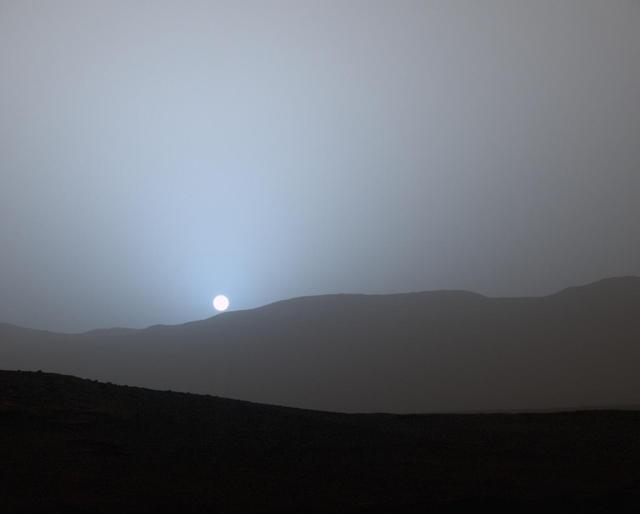
NASA's Curiosity Mars rover recorded this view of the sun setting at the close of the mission's 956th Martian day, or sol (April 15, 2015), from the rover's location in Gale Crater. This was the first sunset observed in color by Curiosity. The image comes from the left-eye camera of the rover's Mast Camera (Mastcam). The color has been calibrated and white-balanced to remove camera artifacts. Mastcam sees color very similarly to what human eyes see, although it is actually a little less sensitive to blue than people are. Dust in the Martian atmosphere has fine particles that permit blue light to penetrate the atmosphere more efficiently than longer-wavelength colors. That causes the blue colors in the mixed light coming from the sun to stay closer to sun's part of the sky, compared to the wider scattering of yellow and red colors. The effect is most pronounced near sunset, when light from the sun passes through a longer path in the atmosphere than it does at mid-day. Malin Space Science Systems, San Diego, built and operates the rover's Mastcam. NASA's Jet Propulsion Laboratory, a division of the California Institute of Technology, Pasadena, manages the Mars Science Laboratory Project for NASA's Science Mission Directorate, Washington. JPL designed and built the project's Curiosity rover. http://photojournal.jpl.nasa.gov/catalog/PIA19400
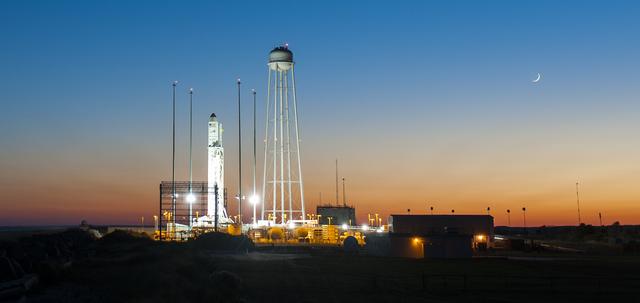
The Orbital Sciences Corporation Antares rocket, with the Cygnus spacecraft onboard, is seen at sunset on launch Pad-0A, Saturday, Oct. 25, 2014, at NASA's Wallops Flight Facility in Virginia. The Antares will launch with the Cygnus spacecraft filled with over 5,000 pounds of supplies for the International Space Station, including science experiments, experiment hardware, spare parts, and crew provisions. The Orbital-3 mission is Orbital Sciences' third contracted cargo delivery flight to the space station for NASA. Launch is scheduled for Monday, Oct. 27 at 6:45 p.m. EDT. Photo Credit: (NASA/Joel Kowsky)
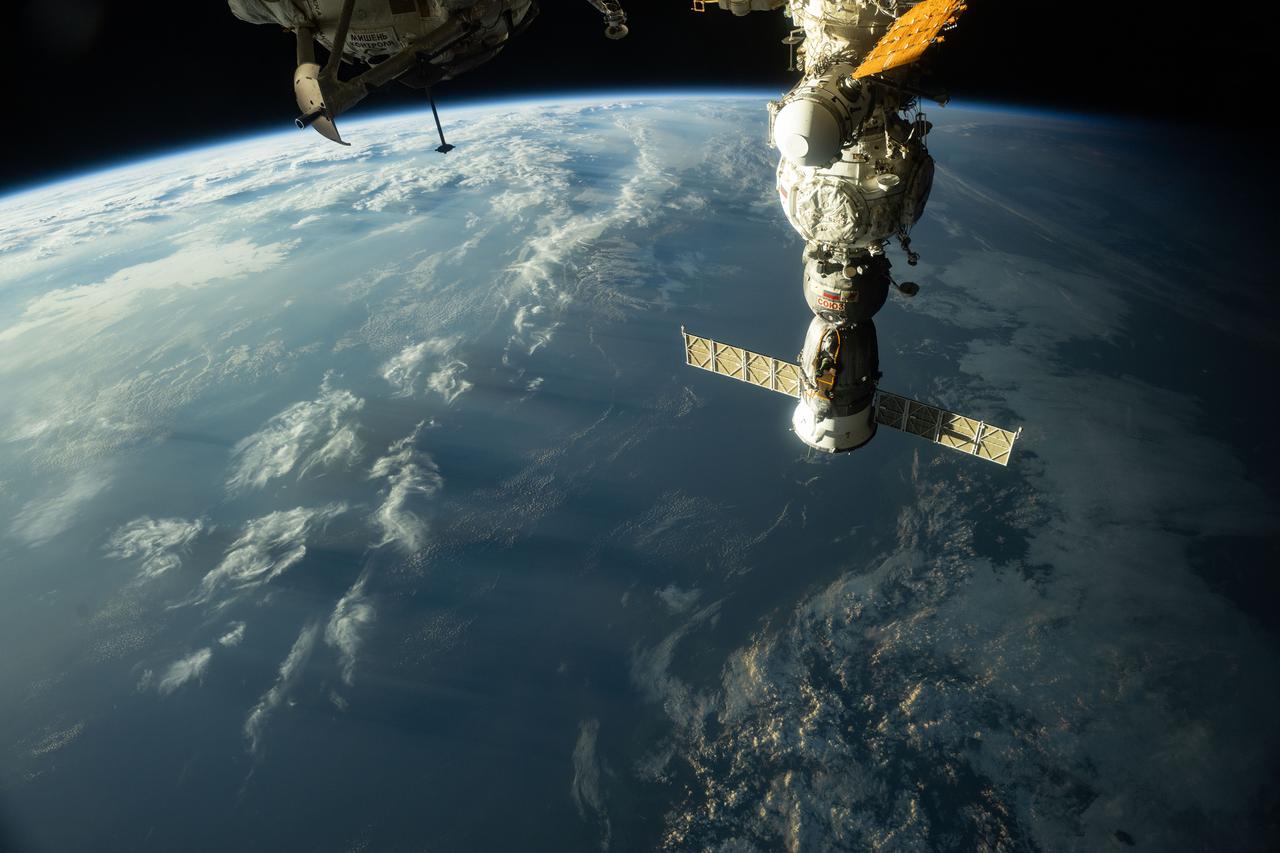
iss073e0384035 (Juny 12, 2025) --- The sunset casts long, cloudy shadows over Japan in this photograph from the International Space Station as it orbited 259 miles above the island nation. In the right foreground, the Soyuz MS-27 crew ship is docked to the Prichal module.
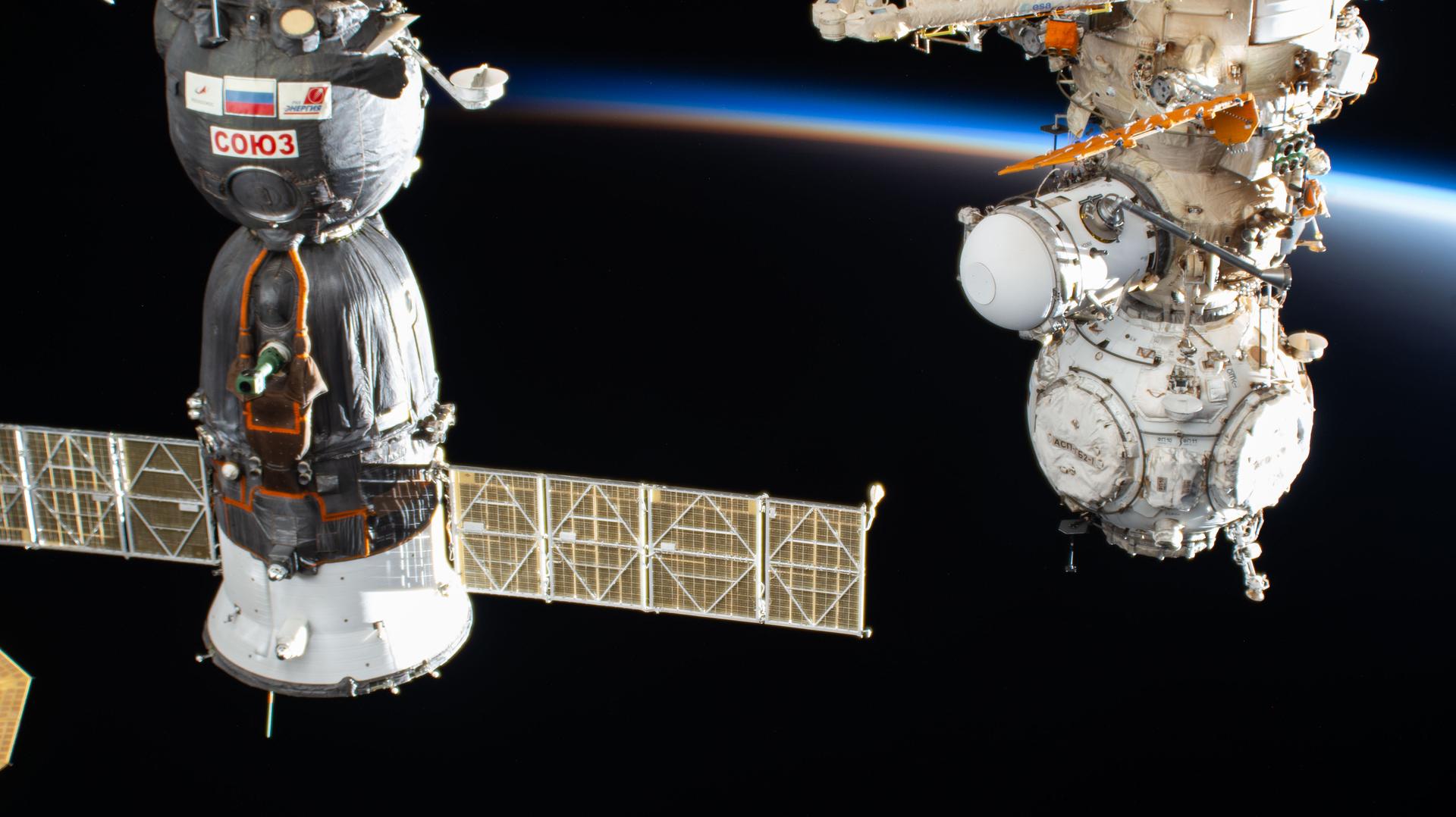
iss074e0089785 (Jan. 25, 2026) --- The International Space Station orbits into a sunset 260 miles above China near the Yellow Sea. In the foreground, are the Soyuz MS-28 crew spacecraft (left) and the Prichal docking module (right) attached to the Nauka science module.
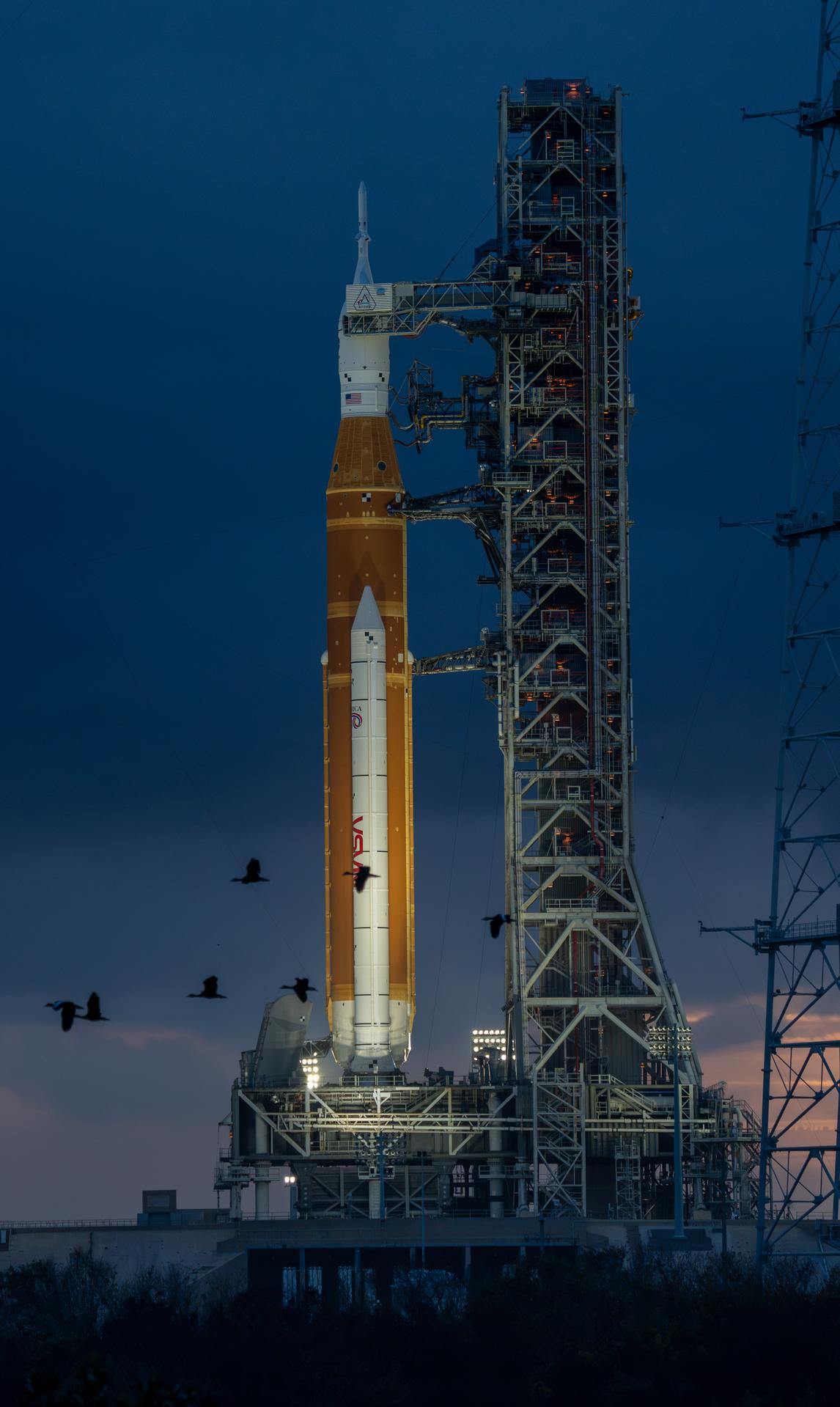
This image shows a sunset of NASA’s SLS (Space Launch System) and Orion spacecraft at NASA’s Kennedy Space Center. NASA's massive Crawler-Transporter, upgraded for the Artemis program, carried the powerful SLS rocket and Orion spacecraft on the Mobile Launcher from the Vehicle Assembly Building to Launch Pad 39B at Kennedy Space Center in preparation for the Artemis II mission.
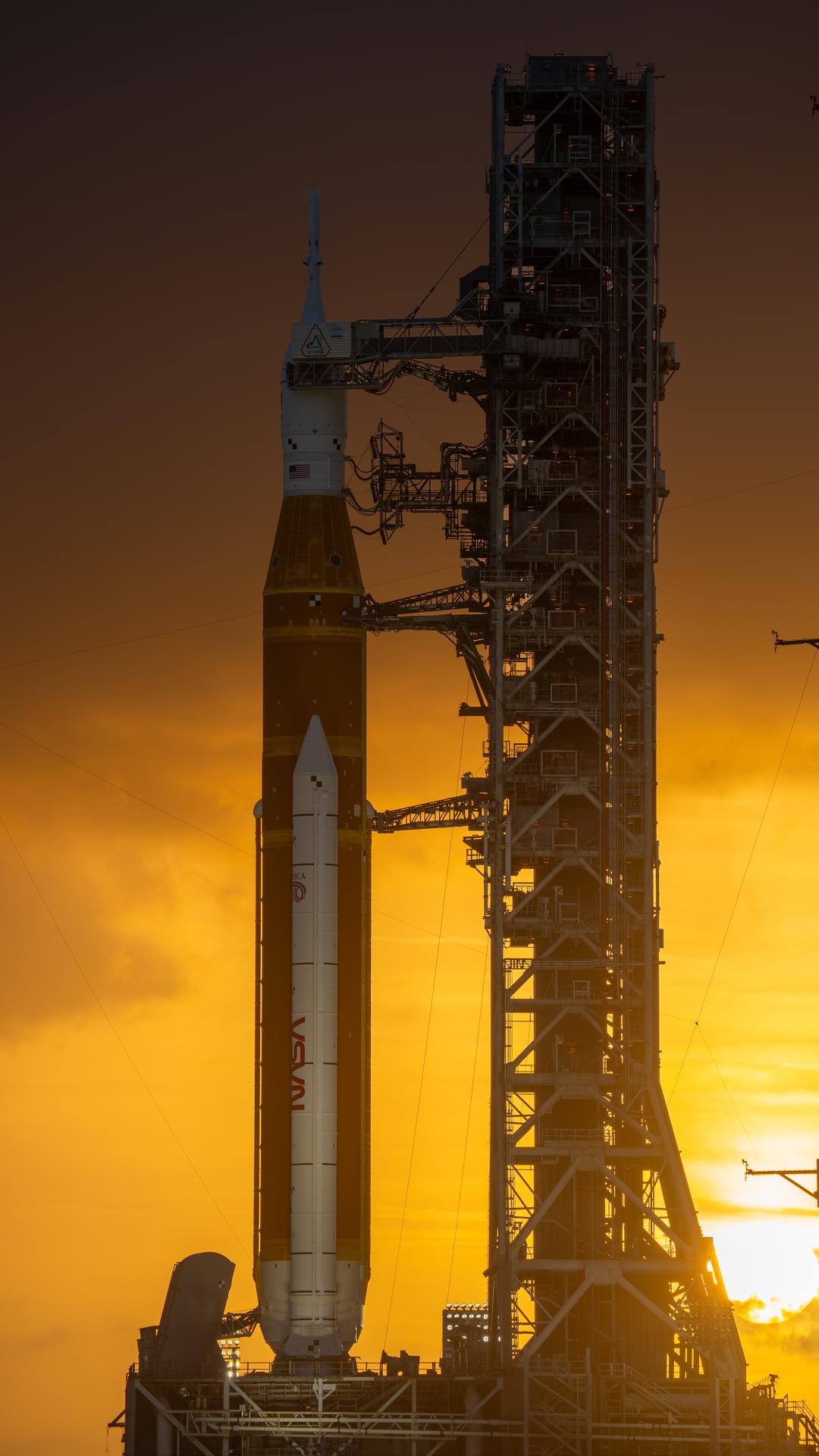
This image shows a sunset of NASA’s SLS (Space Launch System) and Orion spacecraft at NASA’s Kennedy Space Center. NASA's massive Crawler-Transporter, upgraded for the Artemis program, carried the powerful SLS rocket and Orion spacecraft on the Mobile Launcher from the Vehicle Assembly Building to Launch Pad 39B at Kennedy Space Center in preparation for the Artemis II mission.
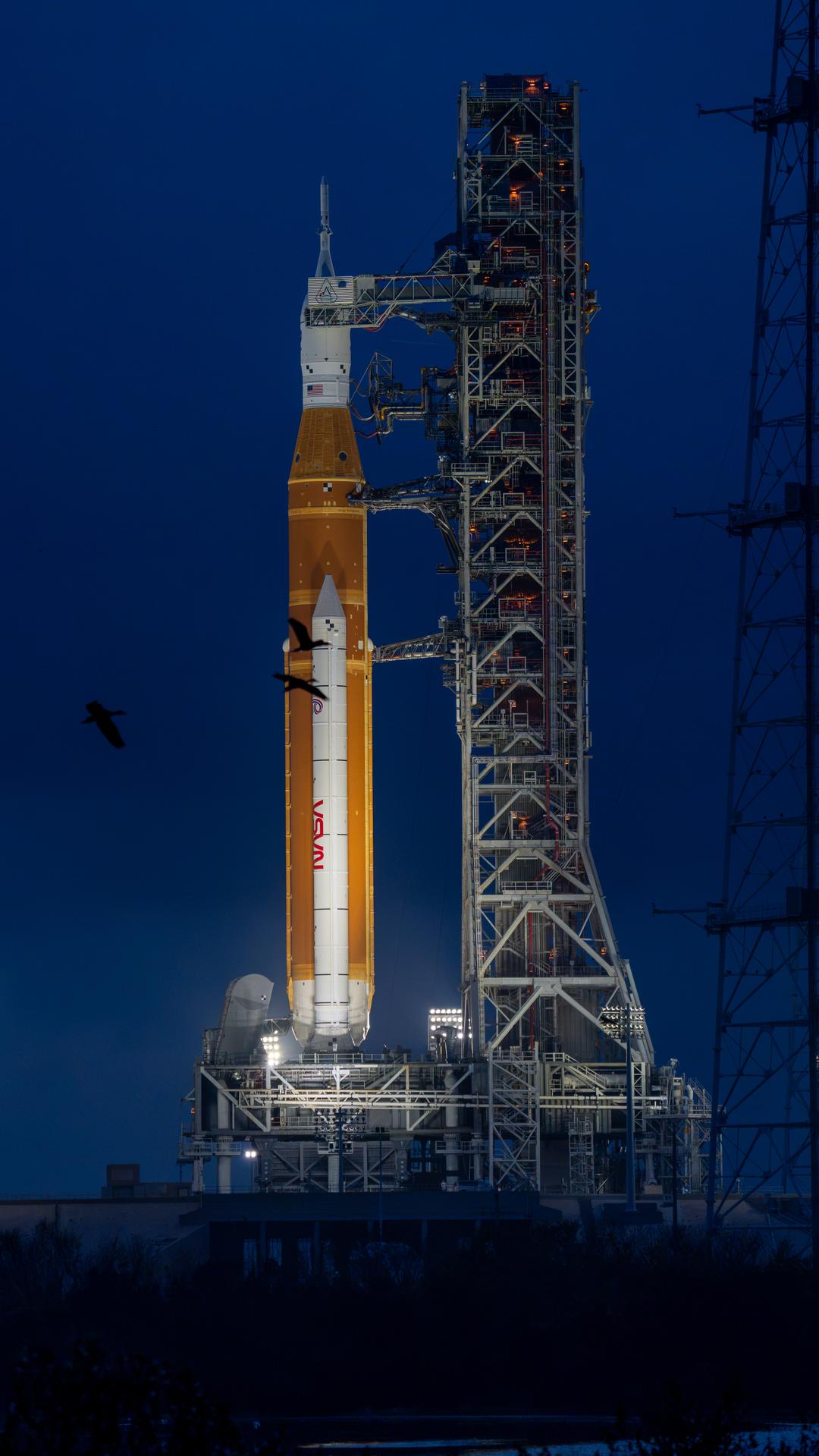
This image shows a sunset of NASA’s SLS (Space Launch System) and Orion spacecraft at NASA’s Kennedy Space Center. NASA's massive Crawler-Transporter, upgraded for the Artemis program, carried the powerful SLS rocket and Orion spacecraft on the Mobile Launcher from the Vehicle Assembly Building to Launch Pad 39B at Kennedy Space Center in preparation for the Artemis II mission.
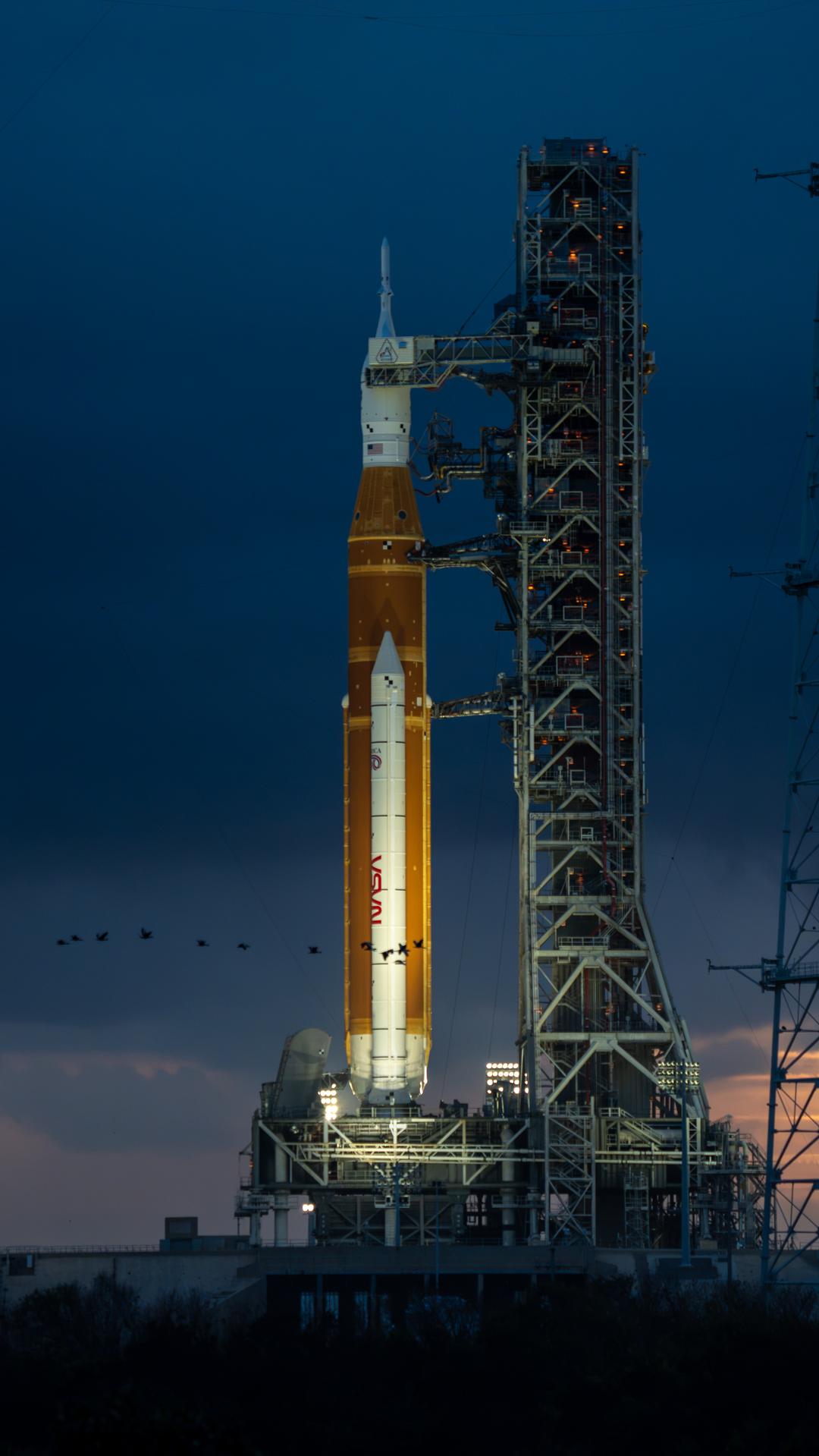
This image shows a sunset of NASA’s SLS (Space Launch System) and Orion spacecraft at NASA’s Kennedy Space Center. NASA's massive Crawler-Transporter, upgraded for the Artemis program, carried the powerful SLS rocket and Orion spacecraft on the Mobile Launcher from the Vehicle Assembly Building to Launch Pad 39B at Kennedy Space Center in preparation for the Artemis II mission.
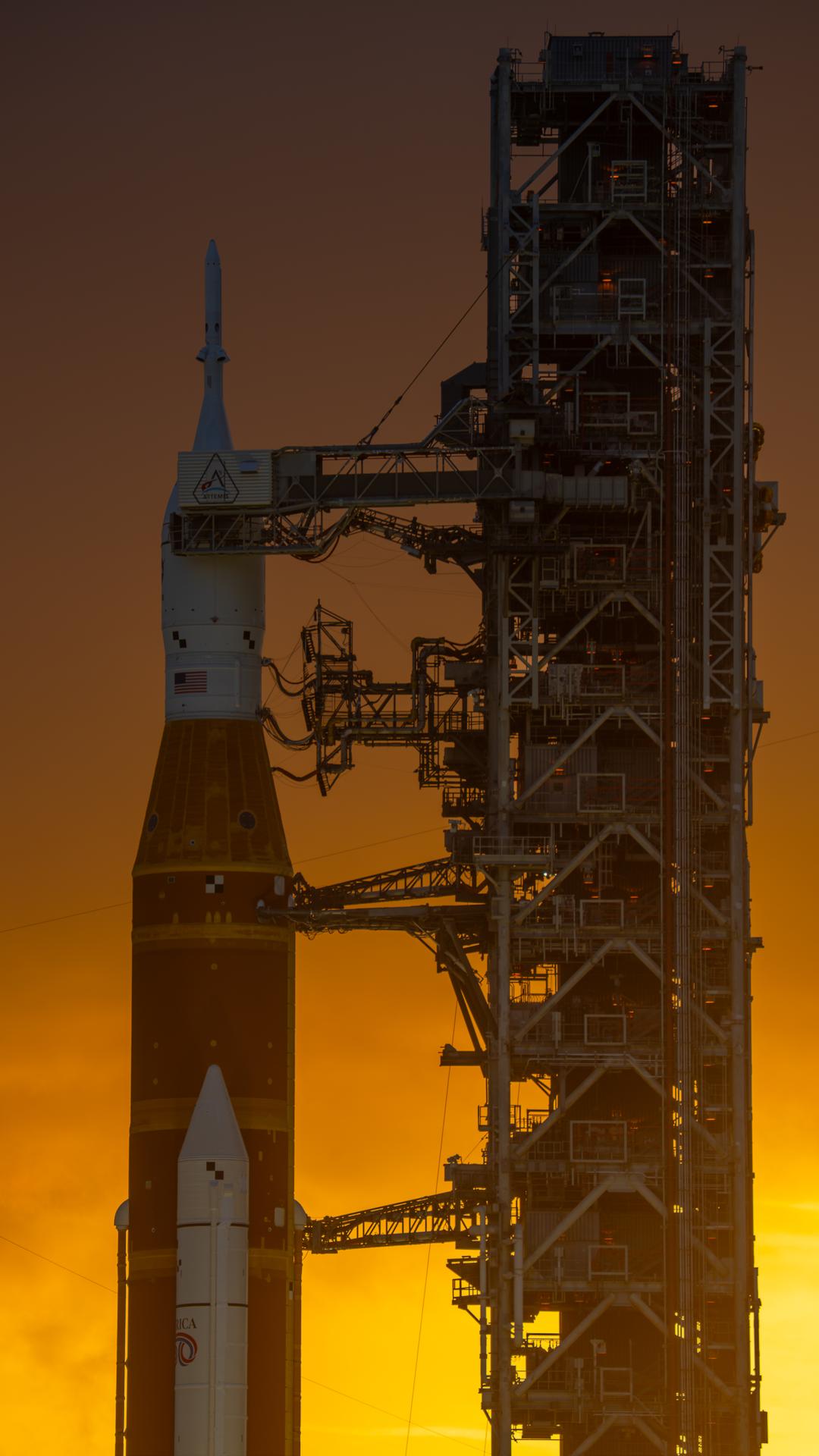
This image shows a sunset of NASA’s SLS (Space Launch System) and Orion spacecraft at NASA’s Kennedy Space Center. NASA's massive Crawler-Transporter, upgraded for the Artemis program, carried the powerful SLS rocket and Orion spacecraft on the Mobile Launcher from the Vehicle Assembly Building to Launch Pad 39B at Kennedy Space Center in preparation for the Artemis II mission.
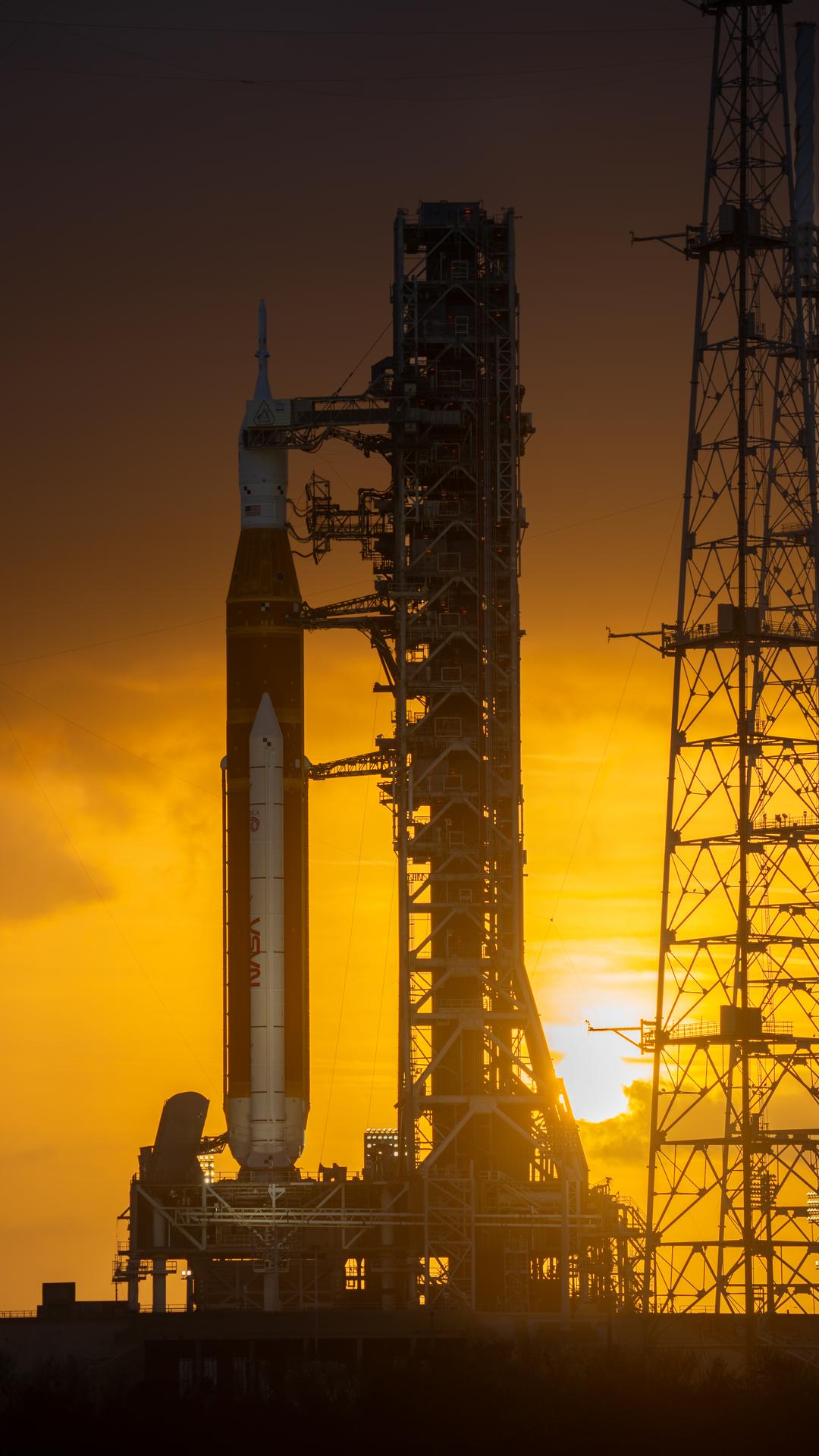
This image shows a sunset of NASA’s SLS (Space Launch System) and Orion spacecraft at NASA’s Kennedy Space Center. NASA's massive Crawler-Transporter, upgraded for the Artemis program, carried the powerful SLS rocket and Orion spacecraft on the Mobile Launcher from the Vehicle Assembly Building to Launch Pad 39B at Kennedy Space Center in preparation for the Artemis II mission.
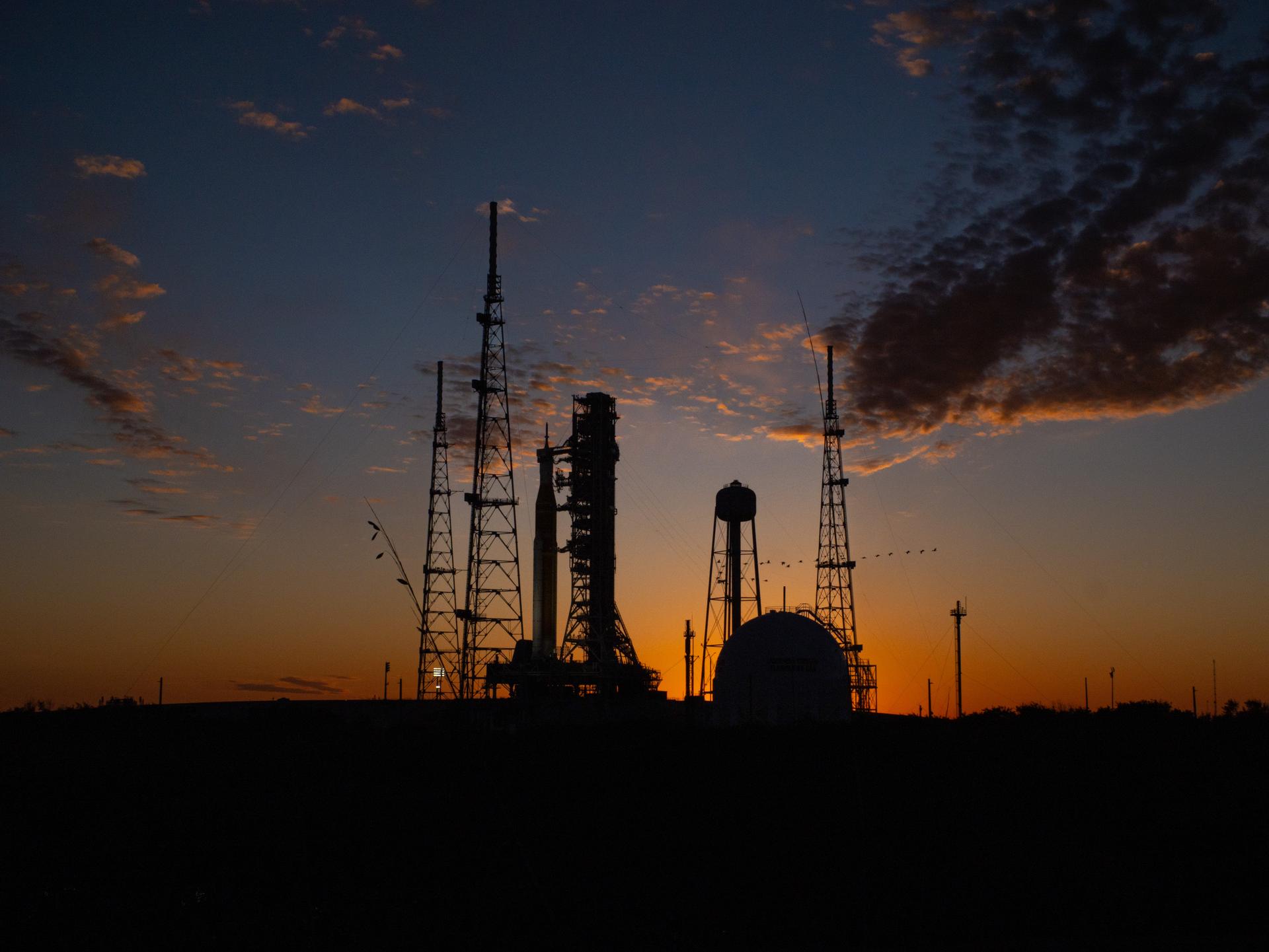
The sun sets behind NASA’s Space Launch System (SLS) rocket and Orion spacecraft as they stand fully assembled atop the mobile launcher at Launch Pad 39B at NASA’s Kennedy Space Center in Florida. The sky glows with warm shades of orange and pink, silhouetting the towering rocket and its solid rocket boosters against the fading light. Photographed on January 31, 2026, the scene captures teams preparing for a wet dress rehearsal for the Artemis II mission, rehearsing launch countdown timelines and procedures as day turns to night.
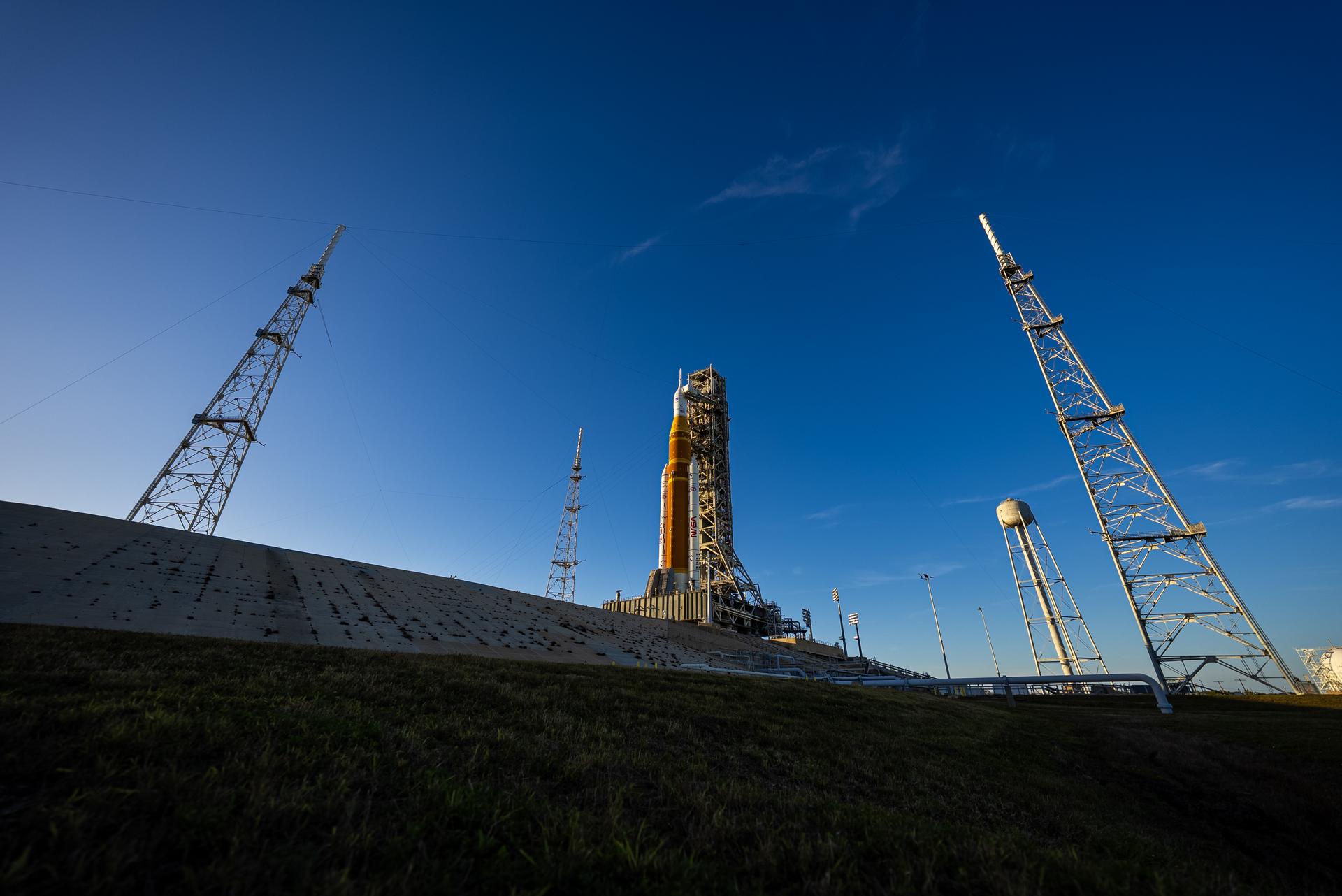
The sun sets on NASA’s Space Launch System (SLS) rocket and Orion spacecraft as they stand fully assembled atop the mobile launcher at Launch Pad 39B at NASA’s Kennedy Space Center in Florida. The sky glows with warm shades of orange and pink, silhouetting the towering rocket and its solid rocket boosters against the fading light. Photographed on January 31, 2026, the scene captures teams preparing for a wet dress rehearsal for the Artemis II mission, rehearsing launch countdown timelines and procedures as day turns to night.
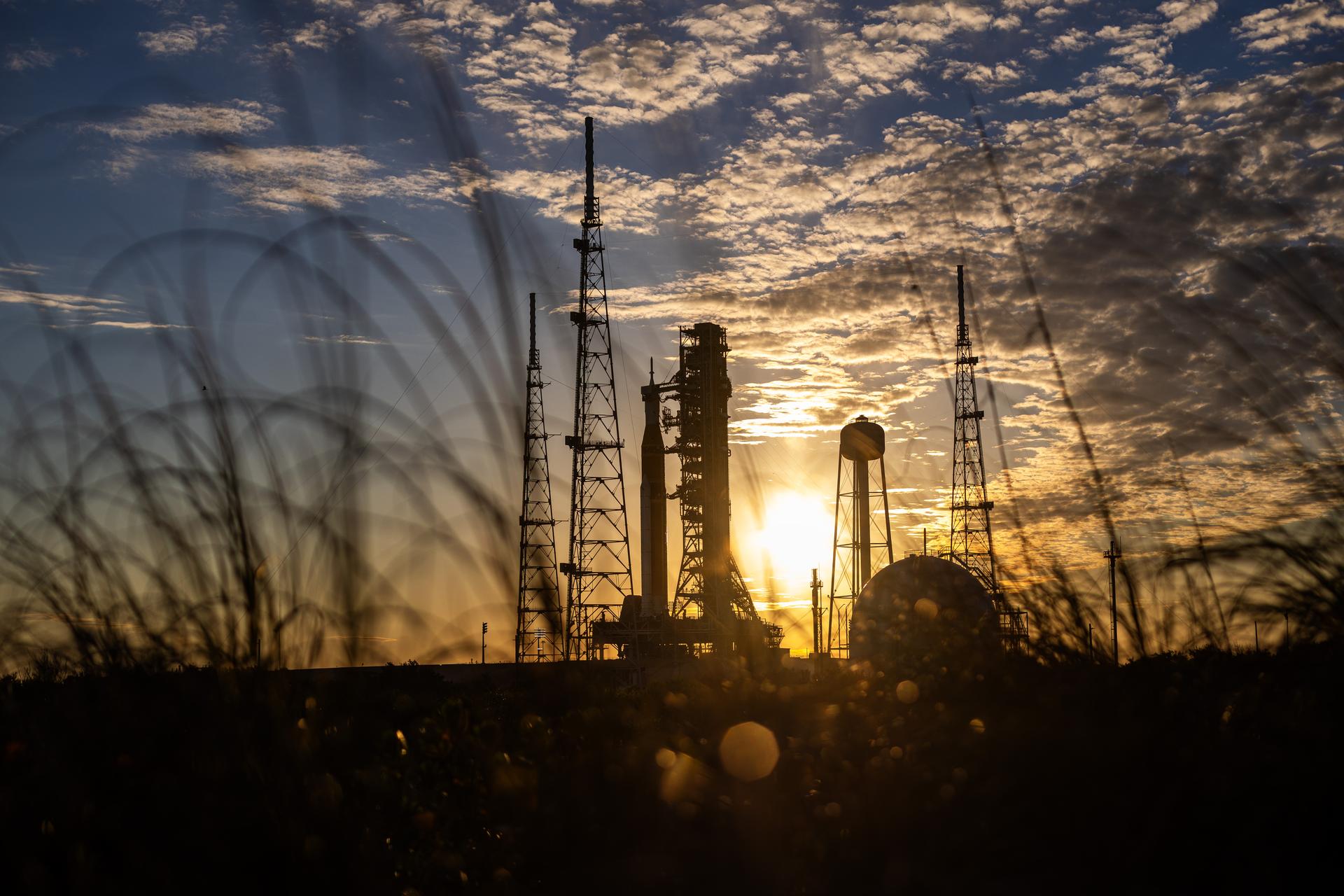
The sun sets behind NASA’s Space Launch System (SLS) rocket and Orion spacecraft as they stand fully assembled atop the mobile launcher at Launch Pad 39B at NASA’s Kennedy Space Center in Florida. The sky glows with warm shades of orange and pink, silhouetting the towering rocket and its solid rocket boosters against the fading light. Photographed on January 31, 2026, the scene captures teams preparing for a wet dress rehearsal for the Artemis II mission, rehearsing launch countdown timelines and procedures as day turns to night.
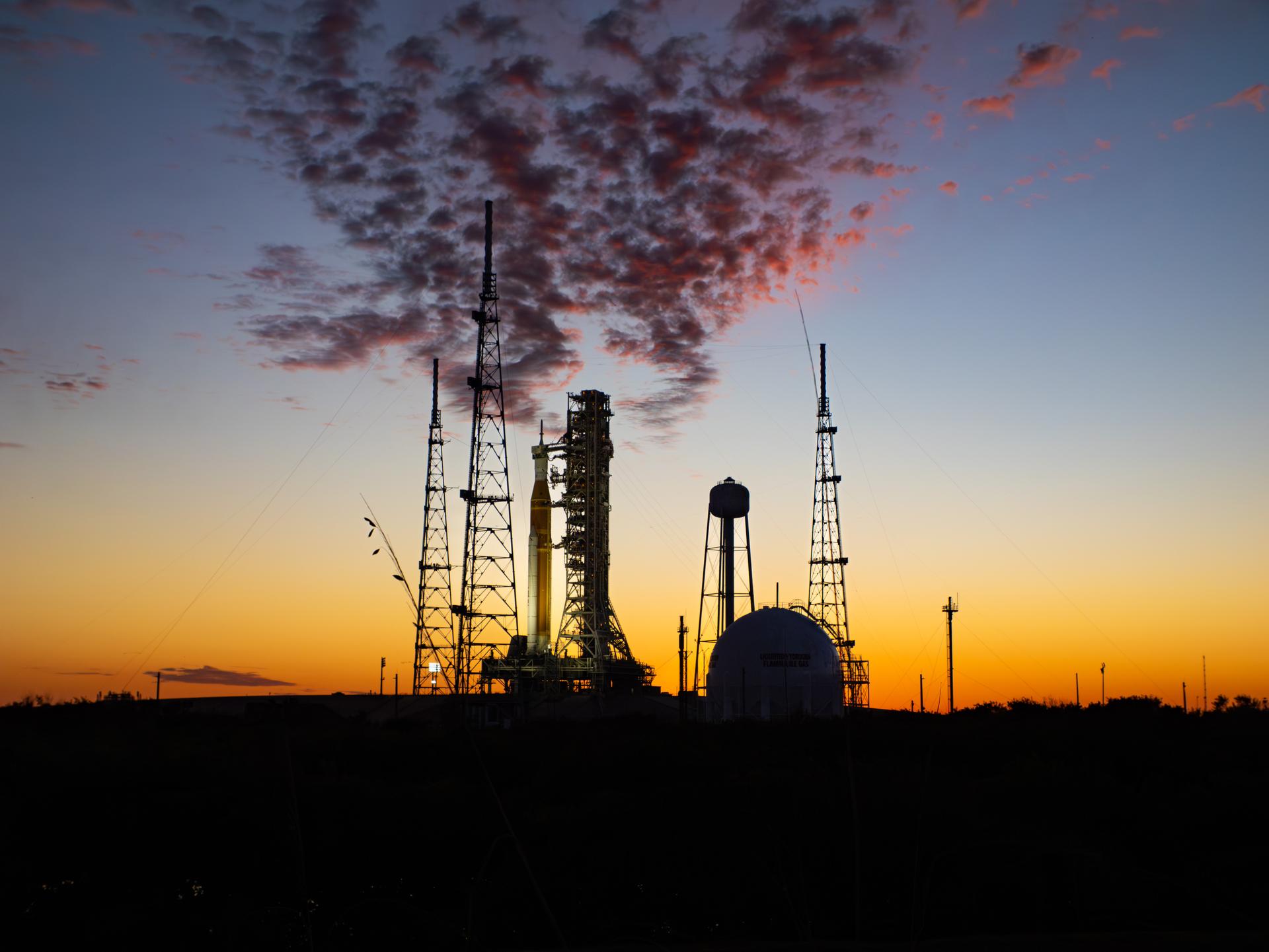
The sun sets behind NASA’s Space Launch System (SLS) rocket and Orion spacecraft as they stand fully assembled atop the mobile launcher at Launch Pad 39B at NASA’s Kennedy Space Center in Florida. The sky glows with warm shades of orange and pink, silhouetting the towering rocket and its solid rocket boosters against the fading light. Photographed on January 31, 2026, the scene captures teams preparing for a wet dress rehearsal for the Artemis II mission, rehearsing launch countdown timelines and procedures as day turns to night.
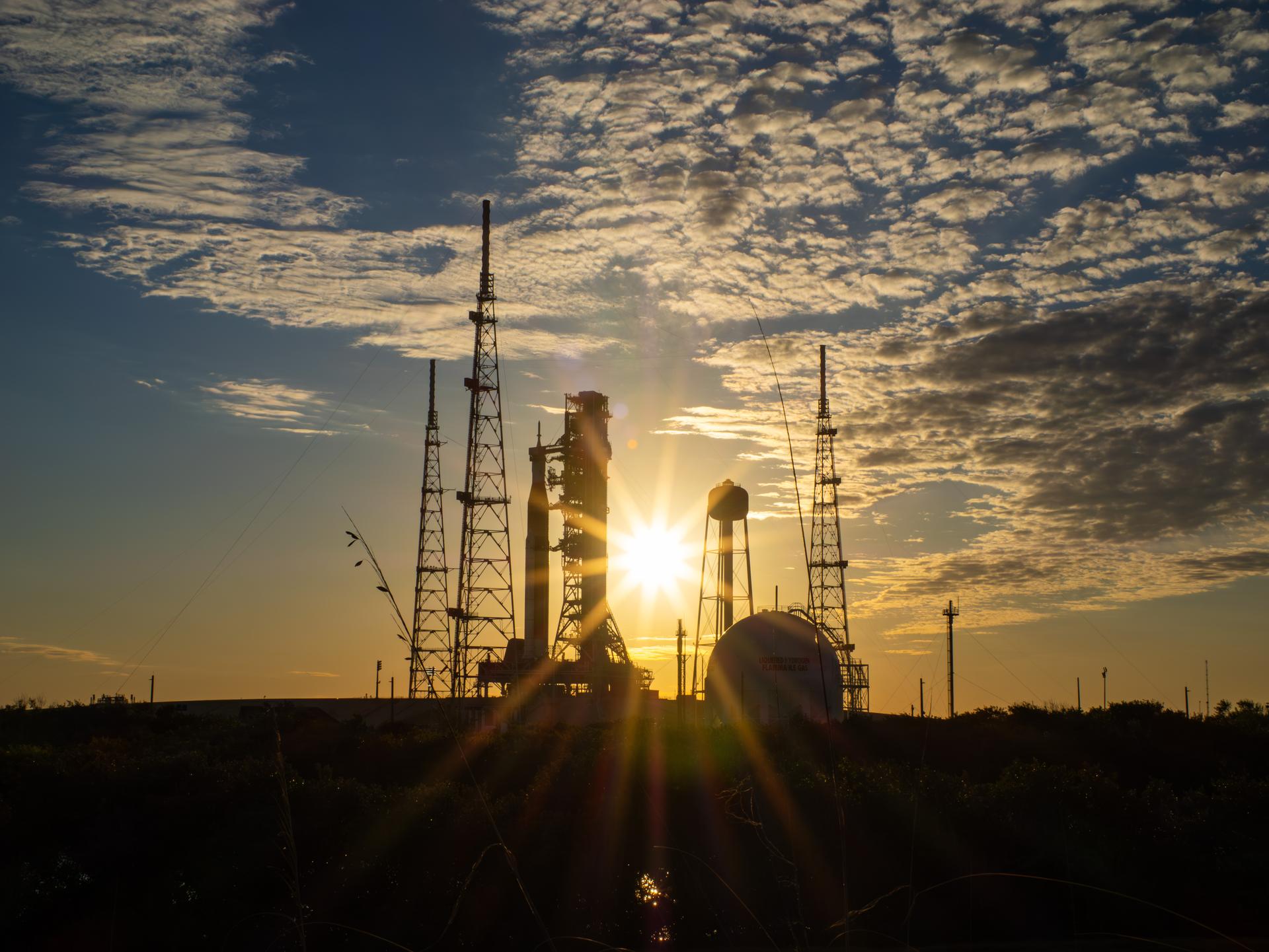
The sun sets behind NASA’s Space Launch System (SLS) rocket and Orion spacecraft as they stand fully assembled atop the mobile launcher at Launch Pad 39B at NASA’s Kennedy Space Center in Florida. The sky glows with warm shades of orange and pink, silhouetting the towering rocket and its solid rocket boosters against the fading light. Photographed on January 31, 2026, the scene captures teams preparing for a wet dress rehearsal for the Artemis II mission, rehearsing launch countdown timelines and procedures as day turns to night.
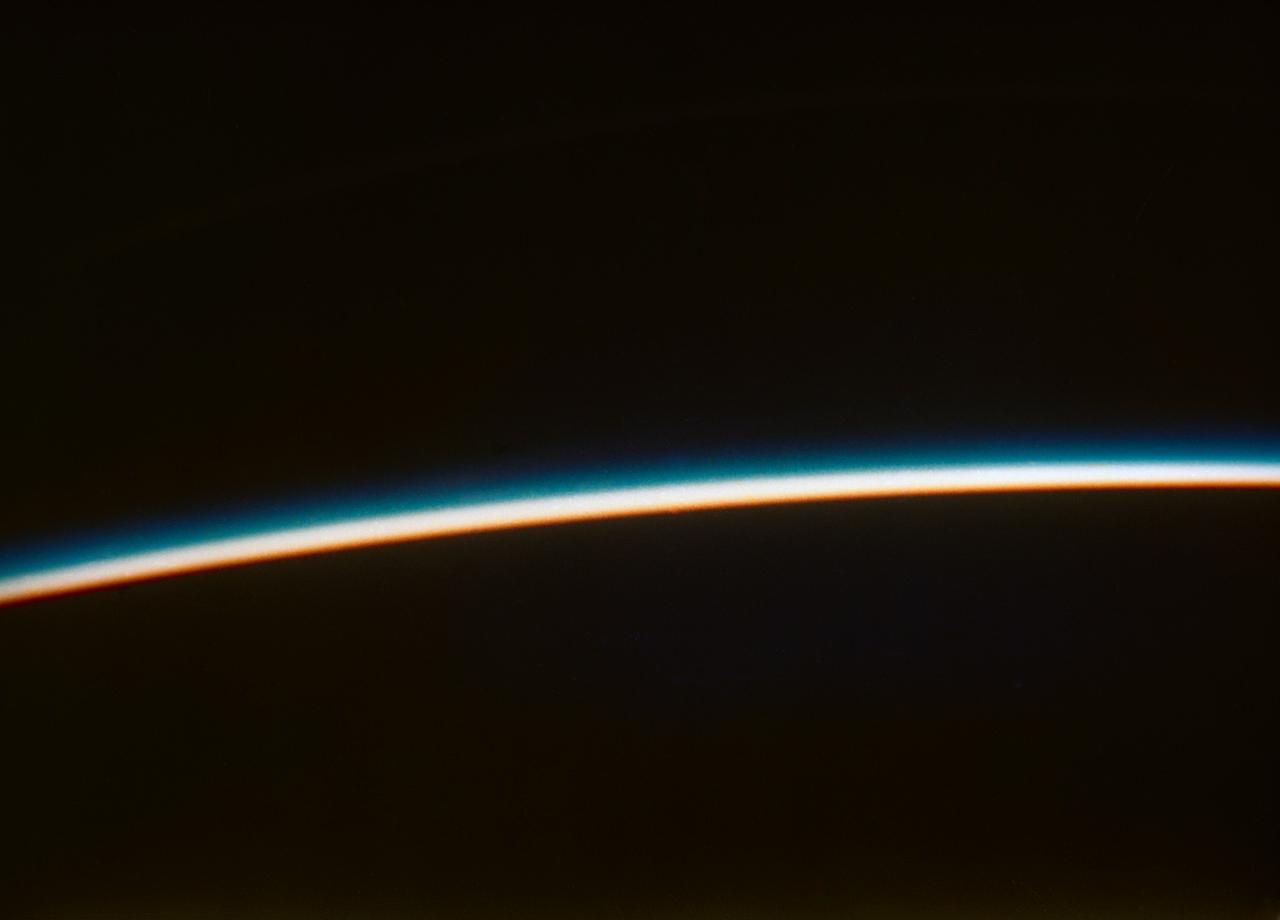
S62-06040 (20 Feb. 1962) --- Orbital sunset photographed by astronaut John H. Glenn Jr. aboard the "Friendship 7" during his Mercury-Atlas 6 (MA-6) spaceflight. Photo credit: NASA
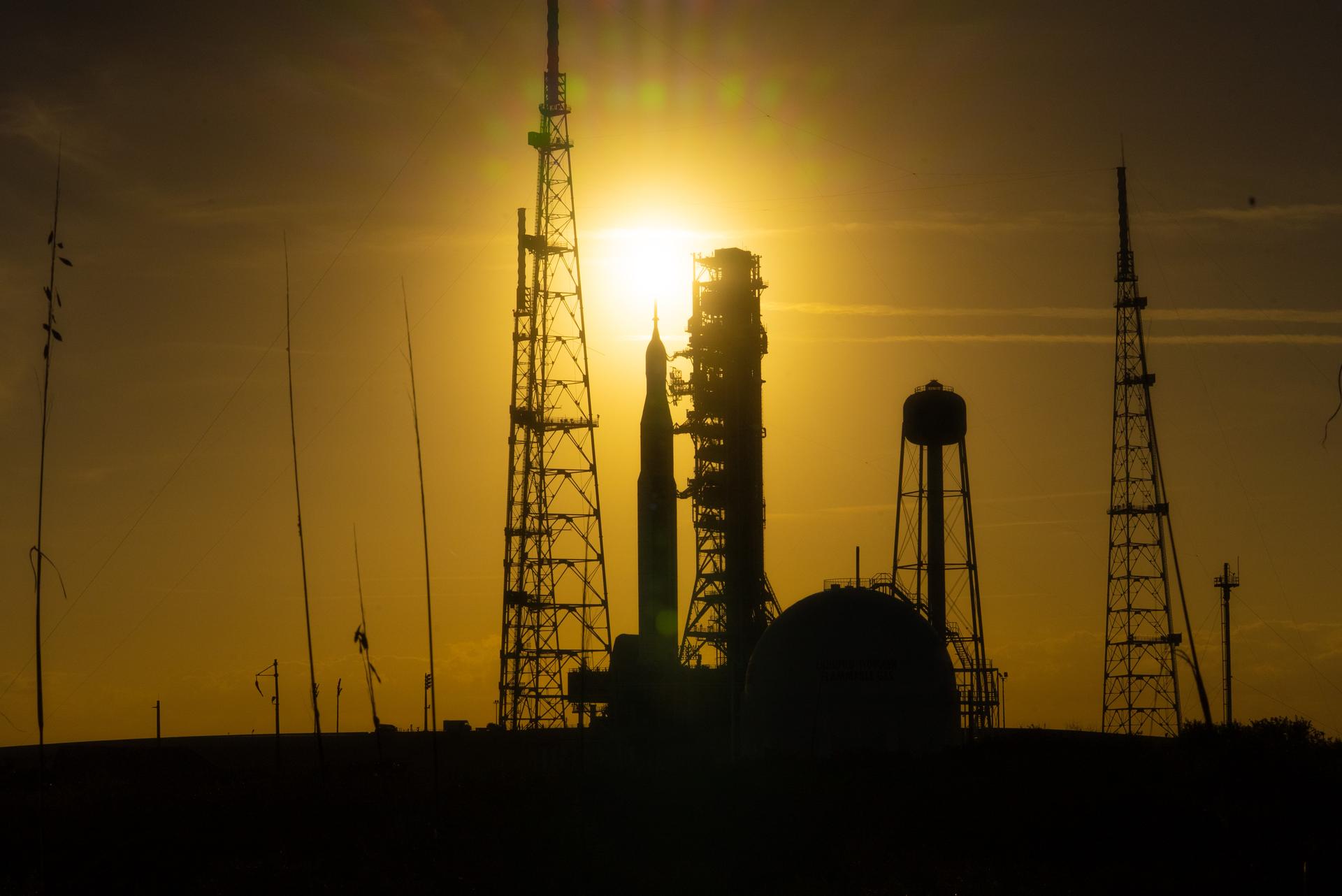
This image shows NASA’s SLS (Space Launch System) and Orion spacecraft rolling out of the Vehicle Assembly Building at NASA’s Kennedy Space Center. NASA's massive Crawler-Transporter, upgraded for the Artemis program, carries the powerful SLS rocket and Orion spacecraft on the Mobile Launcher from the Vehicle Assembly Building to Launch Pad 39B at Kennedy Space Center in preparation for the Artemis II mission.
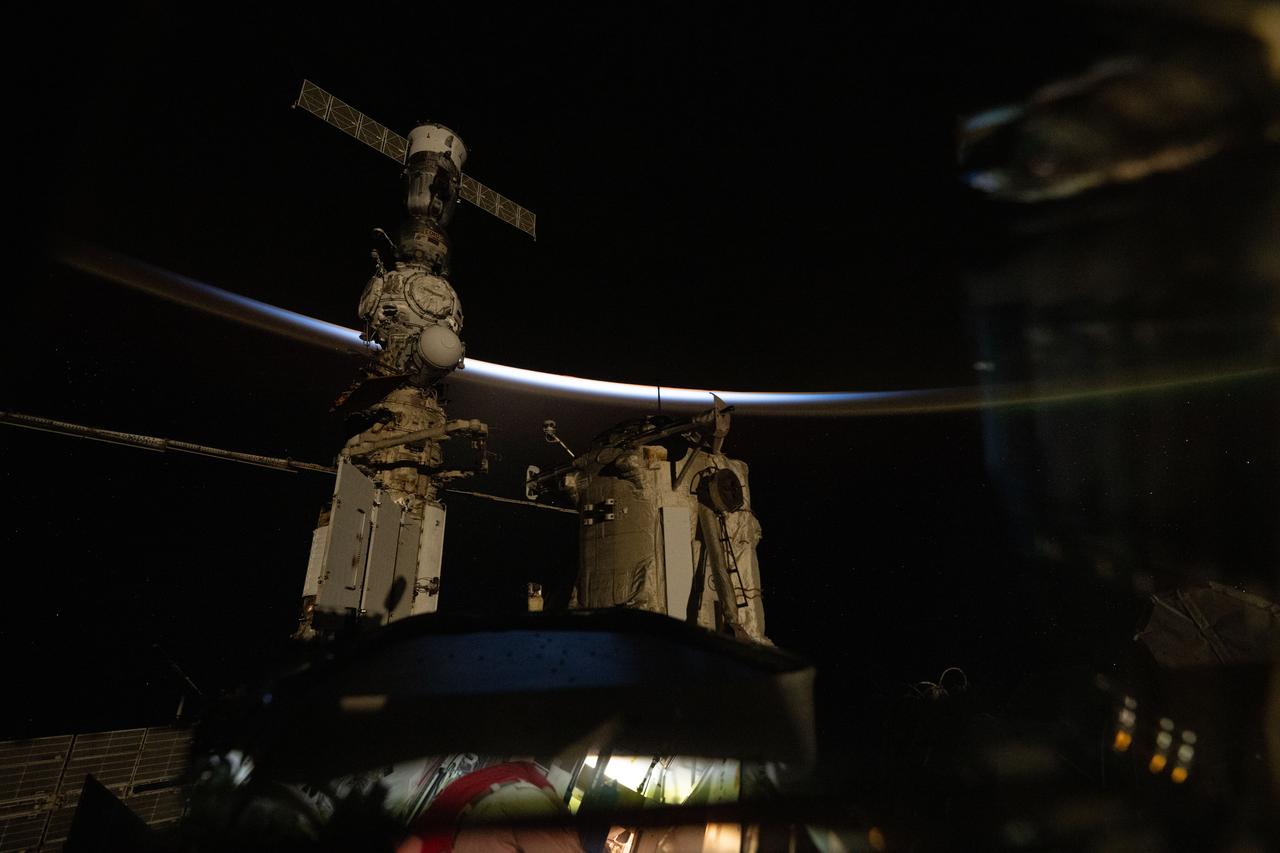
iss073e0690720 (Aug. 12, 2025) --- The last rays of an orbital sunset outline Earth's horizon revealing faint orange and blue hues and an atmospheric glow in this photograph from the International Space Station as it orbited 268 miles above the Indian Ocean. In the foreground, is the orbital outpost's Roscosmos segment including the Rassvet module, the Nauka science module, and the Prichal module with the docked Soyuz MS-27 spacecraft.
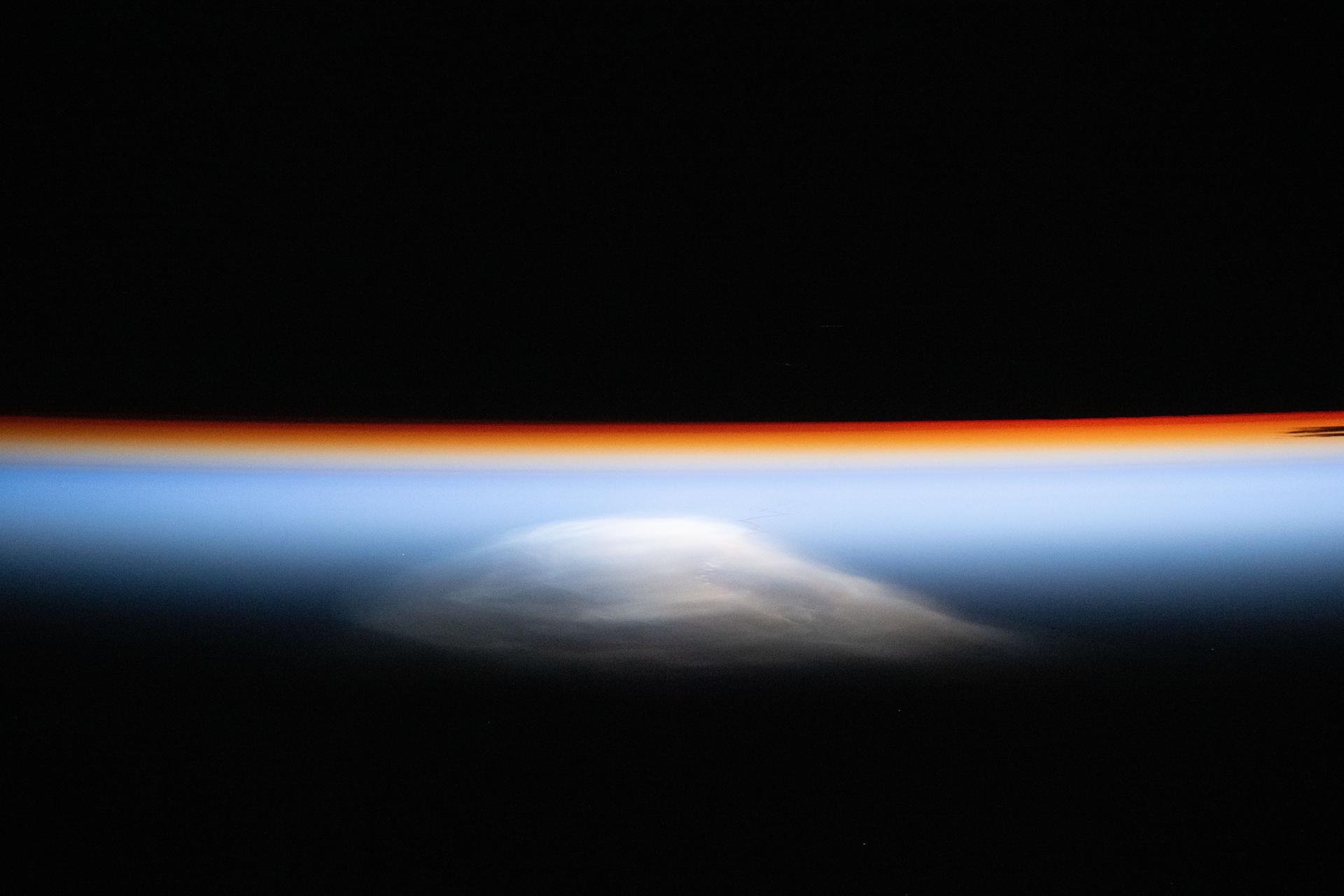
iss072e757530 (March 6, 2025) --- The last rays of an orbital sunset outline Earth’s horizon as a thin orange layer fades into blue, illuminating the atmosphere before nightfall. The wispy white feature above the atmosphere is the engine plume from the Ariane 6 rocket, launched earlier on its first operational mission from Kourou, French Guiana. This unique photograph was captured from the International Space Station at approximately 8:51 p.m. local time as it orbited 257 miles above the Atlantic Ocean, east of the British Virgin Islands.
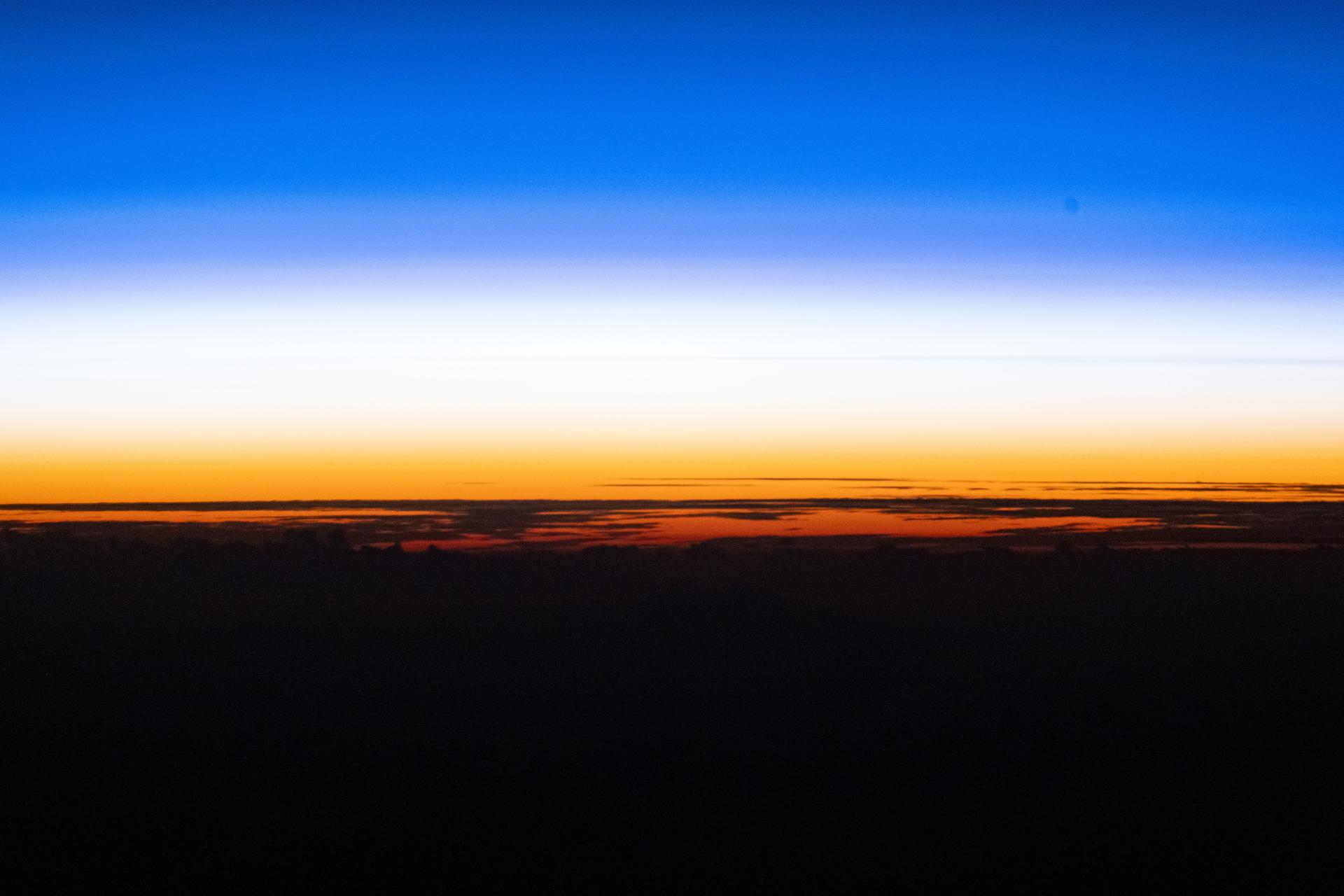
iss074e0046371 (Jan. 3, 2025) --- An orbital sunset silhouettes the cloud tops above the Pacific Ocean as the atmosphere along the horizon fades from orange to white, then to blue, in this photograph taken from the International Space Station while it orbited 262 miles above Earth. Credit: NASA/Chris Williams
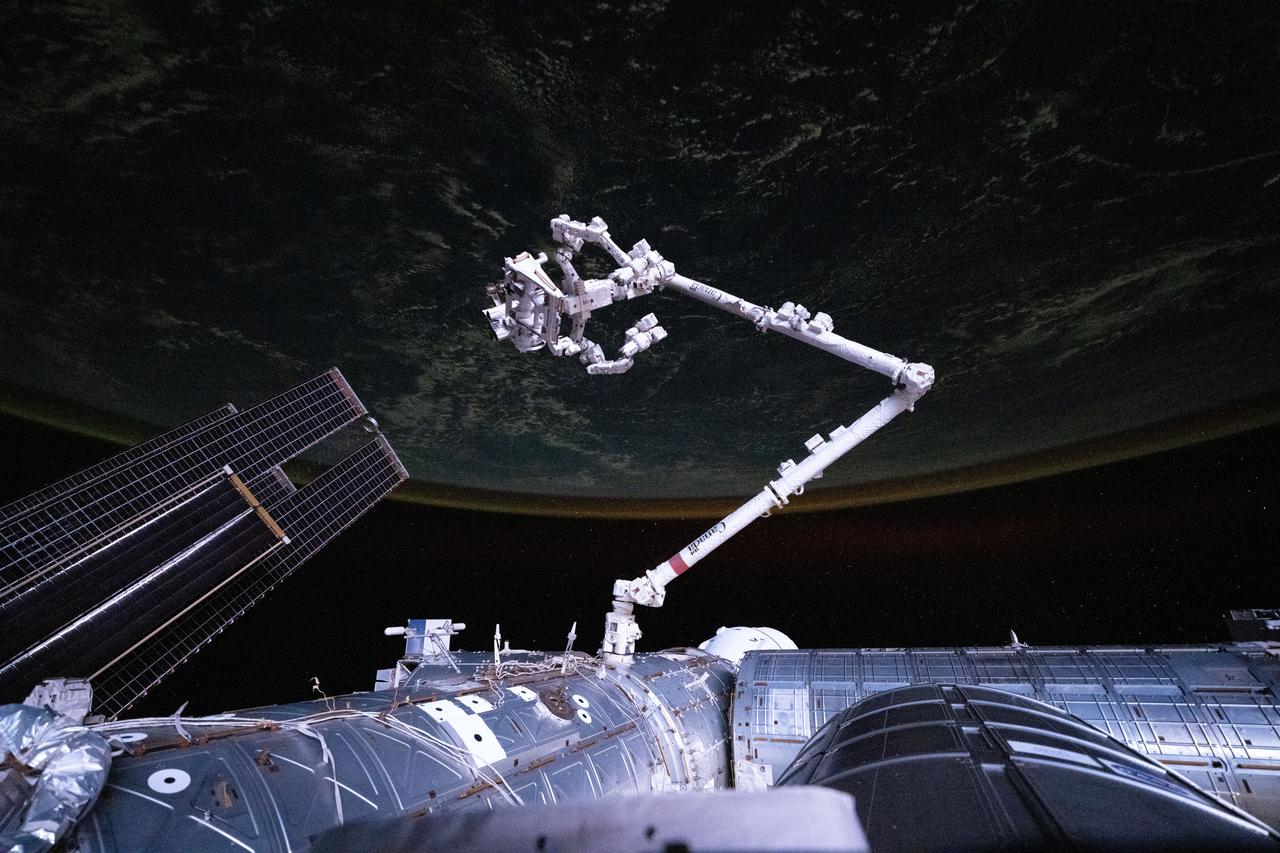
iss073e0741038 (Aug. 30, 2025) --- The International Space Station's U.S. segment gleams during an orbital sunset whle soaring 262 miles above the southern Indian Ocean. Dominating the foreground is the Canadarm2 robotic arm with Dexter, its fine-tuned robotic hand, extending from a data grapple fixture on the station's Harmony module.
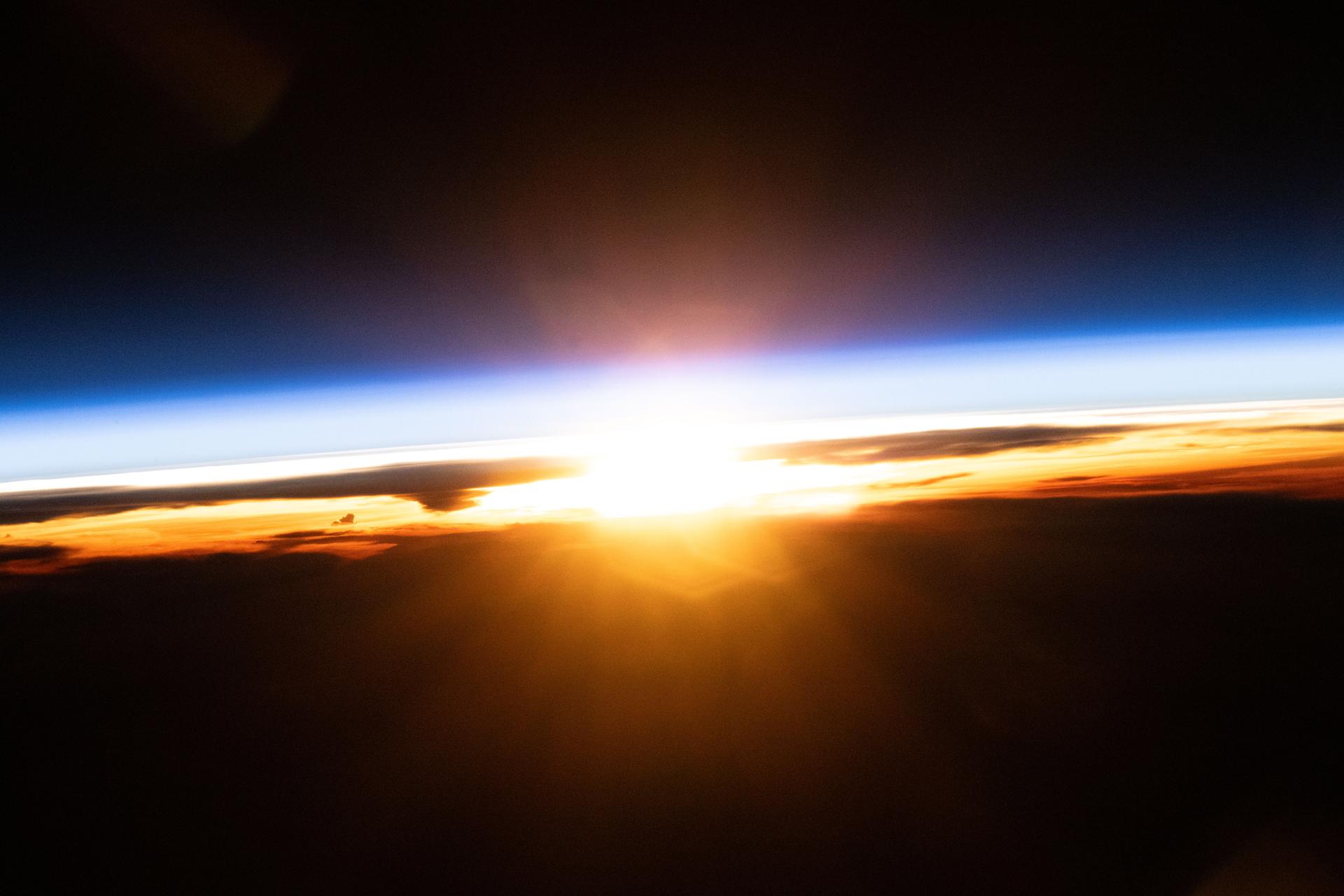
iss074e0556690 (May 5, 2026) --- The last rays of an orbital sunset illuminate Earth's atmosphere and the cloud tops in this photograph from the International Space Station as it orbited 258 miles above the Pacific Ocean north of Papua New Guinea. Credit: NASA/Jessica Meir
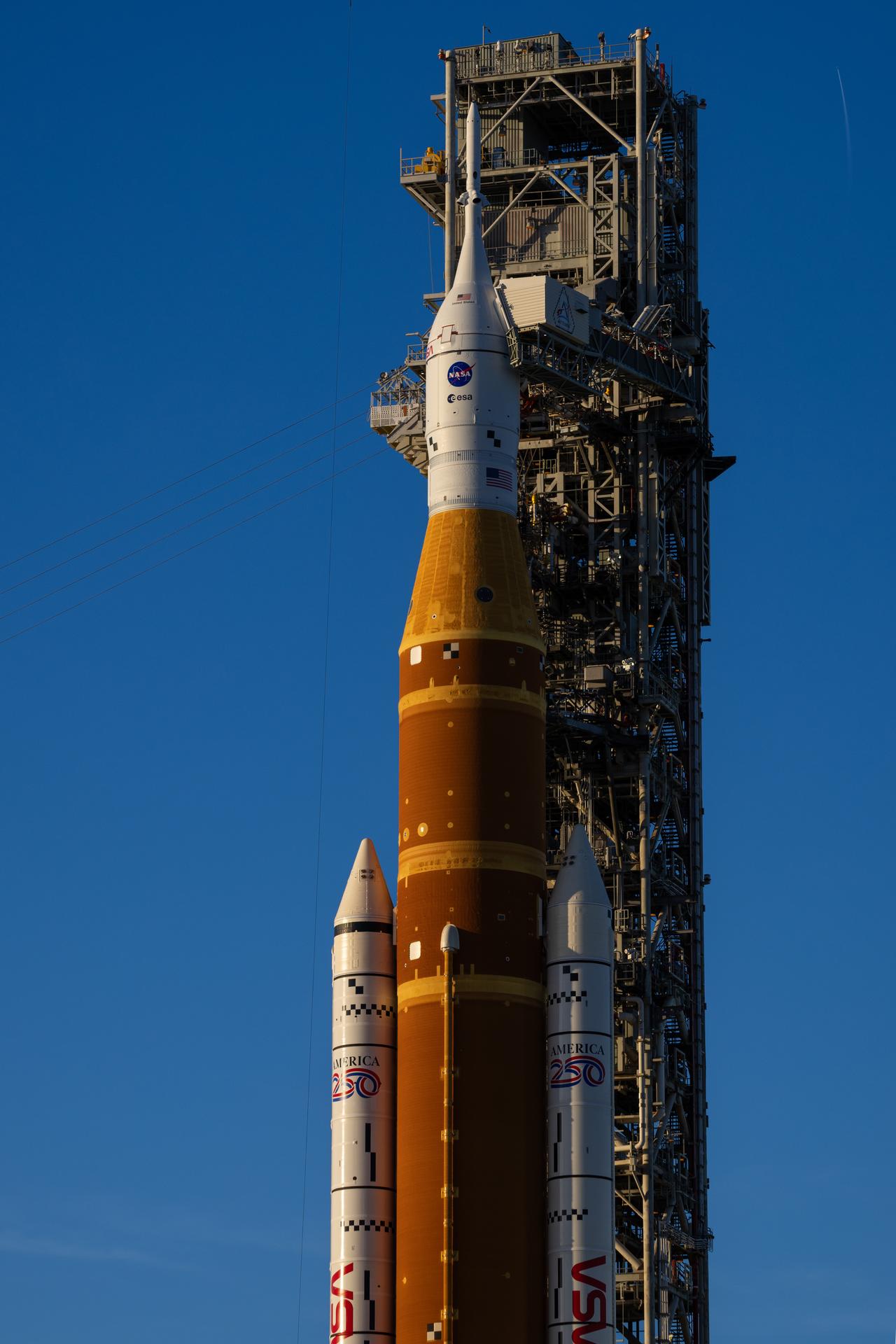
The sun sets on NASA’s Space Launch System (SLS) rocket and Orion spacecraft as they stand fully assembled atop the mobile launcher at Launch Pad 39B at NASA’s Kennedy Space Center in Florida. The sky glows with warm shades of orange and pink, silhouetting the towering rocket and its solid rocket boosters against the fading light. Photographed on January 31, 2026, the scene captures teams preparing for a wet dress rehearsal for the Artemis II mission, rehearsing launch countdown timelines and procedures as day turns to night.
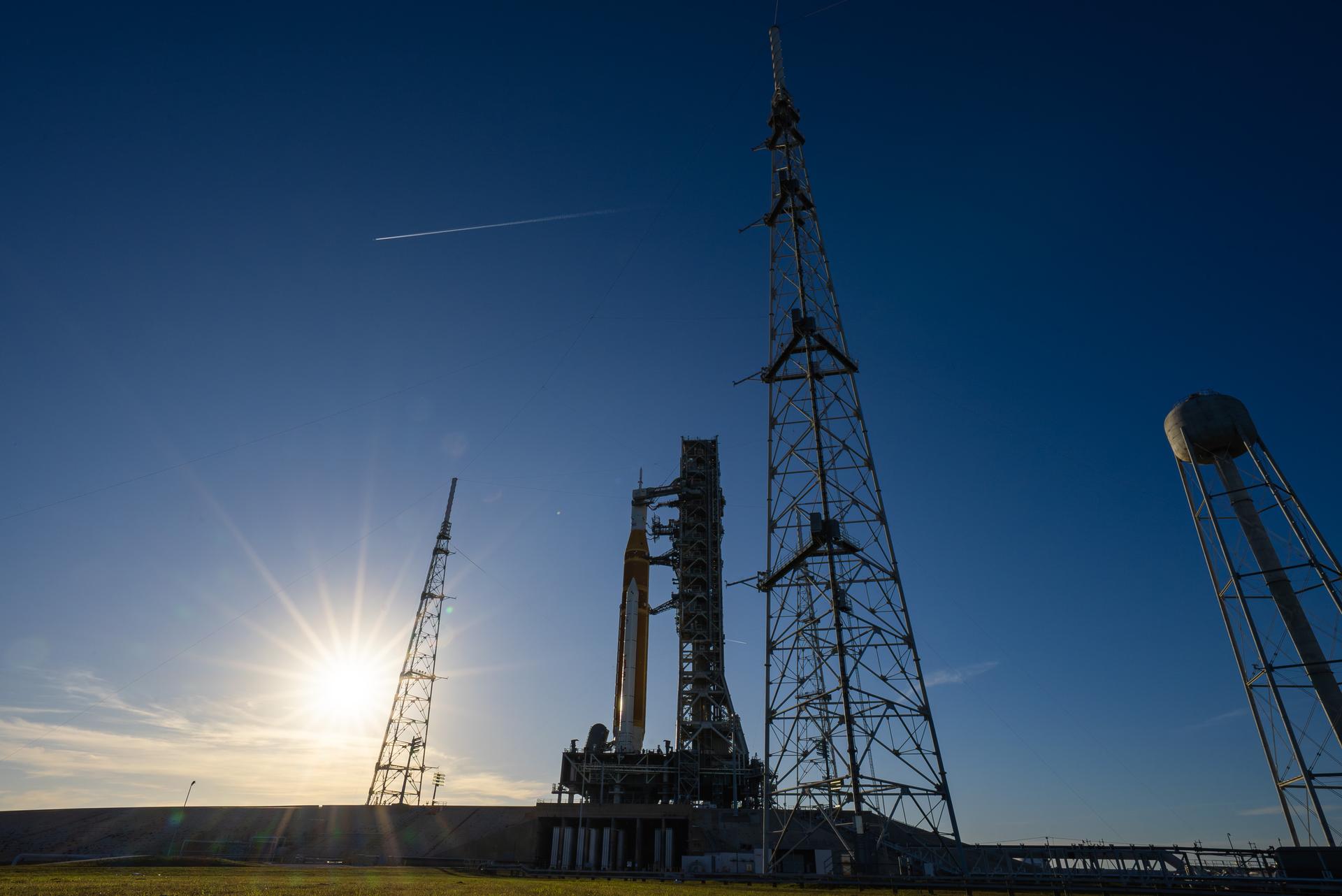
The sun sets on NASA’s Space Launch System (SLS) rocket and Orion spacecraft as they stand fully assembled atop the mobile launcher at Launch Pad 39B at NASA’s Kennedy Space Center in Florida. The sky glows with warm shades of orange and pink, silhouetting the towering rocket and its solid rocket boosters against the fading light. Photographed on January 31, 2026, the scene captures teams preparing for a wet dress rehearsal for the Artemis II mission, rehearsing launch countdown timelines and procedures as day turns to night.
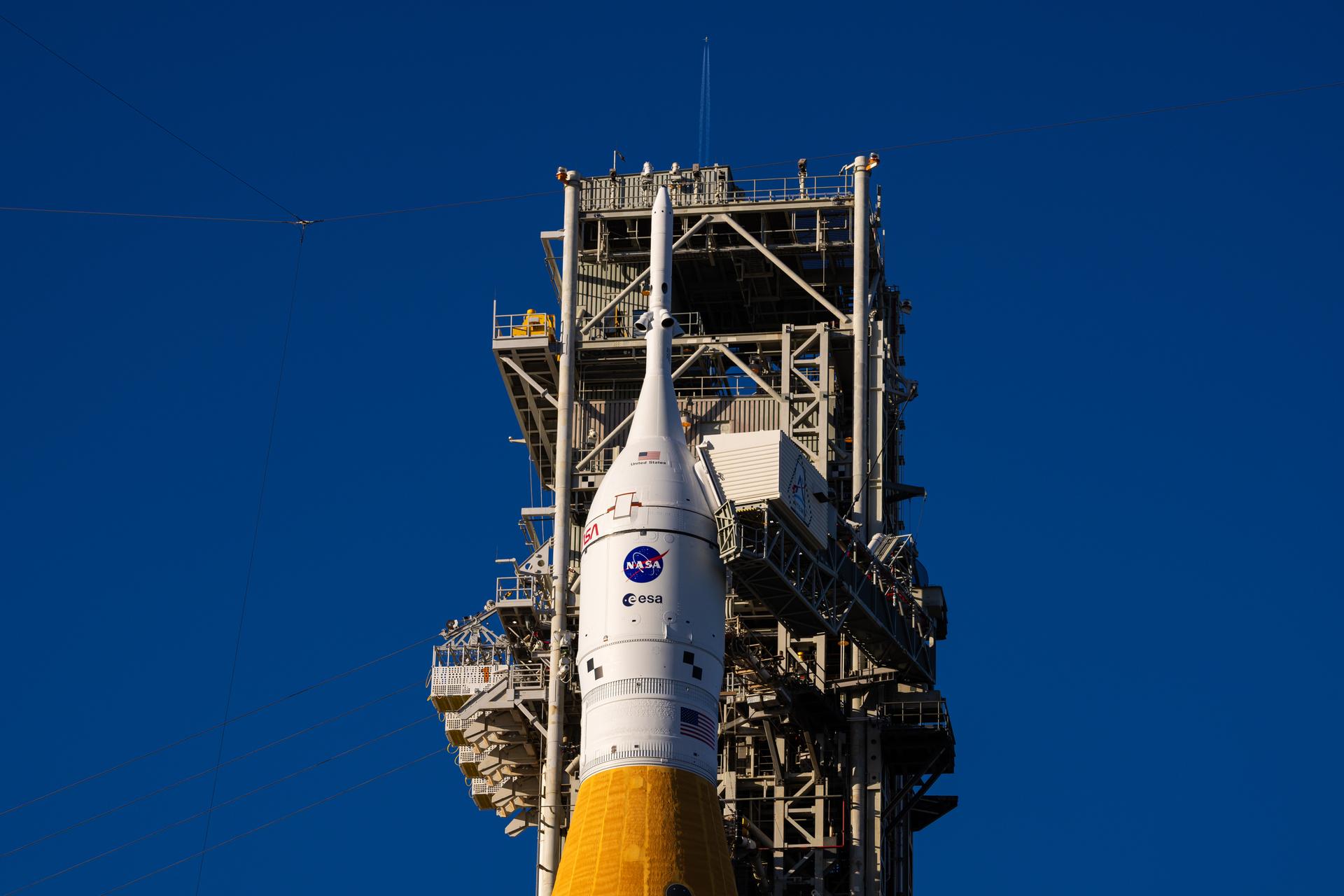
The sun sets on NASA’s Space Launch System (SLS) rocket and Orion spacecraft as they stand fully assembled atop the mobile launcher at Launch Pad 39B at NASA’s Kennedy Space Center in Florida. The sky glows with warm shades of orange and pink, silhouetting the towering rocket and its solid rocket boosters against the fading light. Photographed on January 31, 2026, the scene captures teams preparing for a wet dress rehearsal for the Artemis II mission, rehearsing launch countdown timelines and procedures as day turns to night.
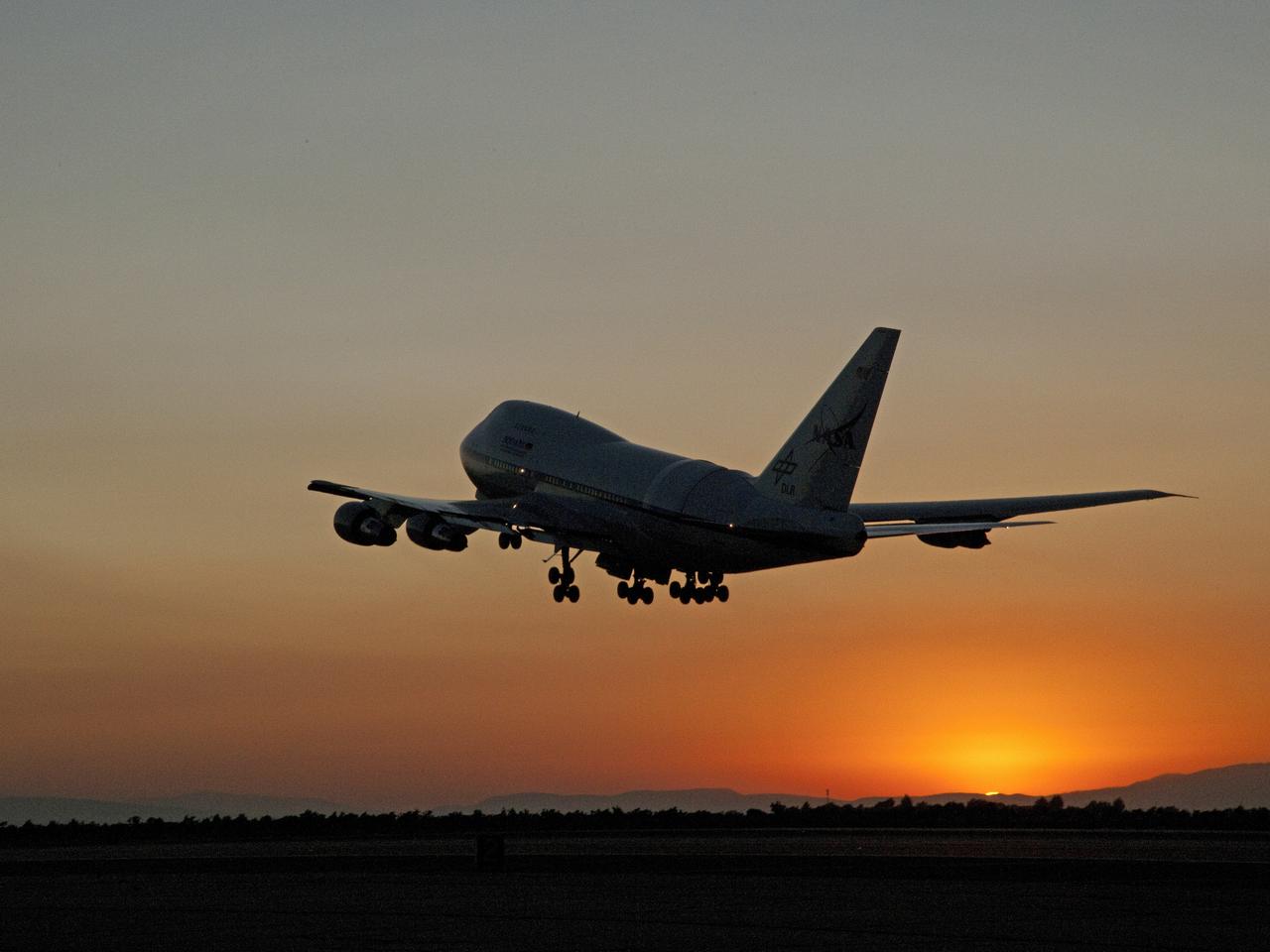
SOFIA lifts off from Air Force Plant 42 in Palmdale, Calif., at sunset.
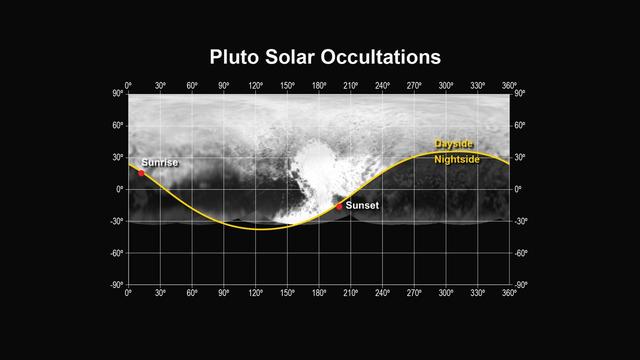
This figure shows the locations of the sunset and sunrise solar occultations observed by the Alice instrument on NASA New Horizons spacecraft.
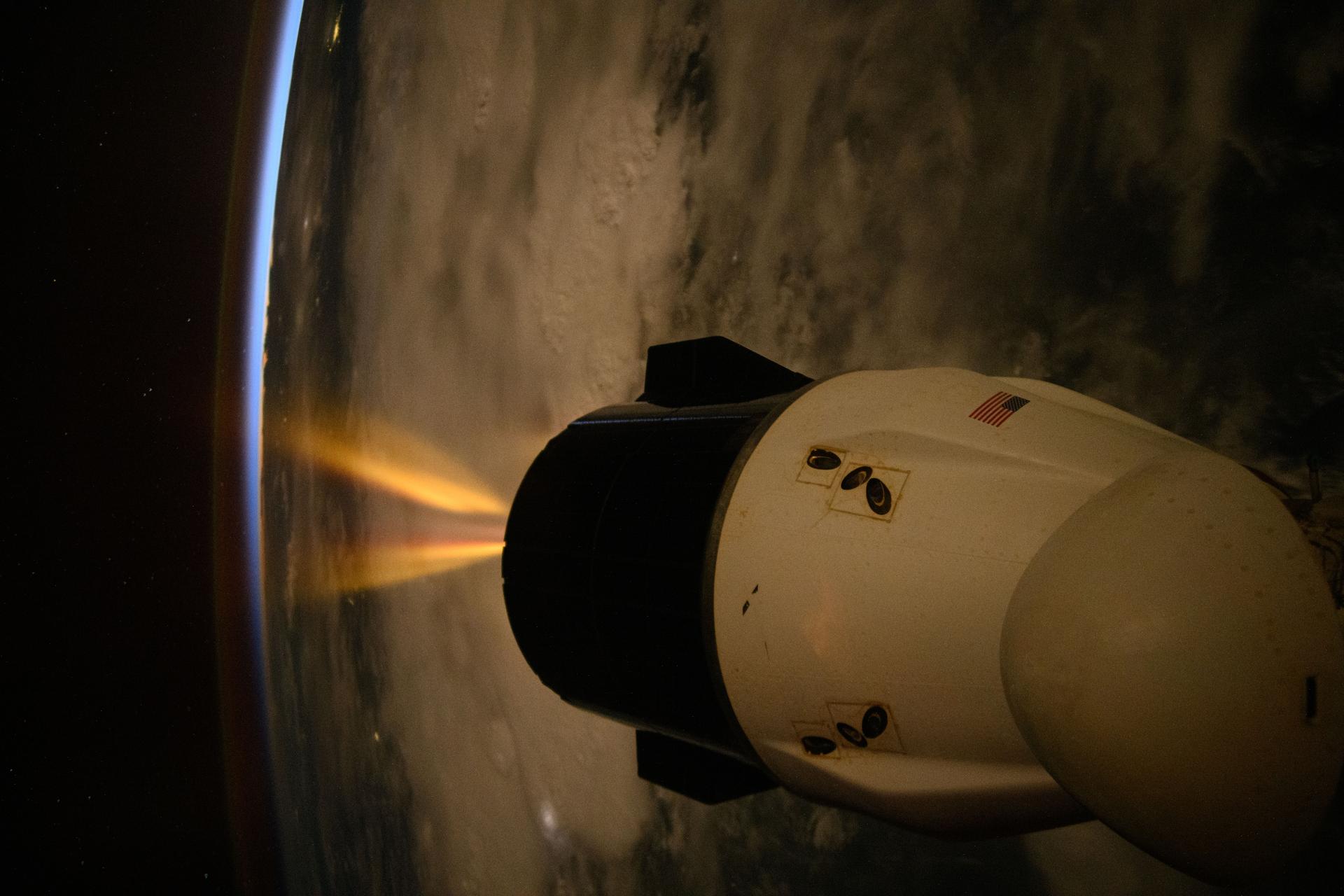
iss074e0103137 (Dec. 29, 2025) --- A SpaceX Dragon spacecraft fires its Draco engines, an independent propellant system located in the spacecraft’s trunk, for a regularly scheduled orbital reboost of the International Space Station. The orbital outpost was soaring into a sunset 259 miles above the Indian Ocean off the coast of Tanzania on the African continent at approximately 9:09 p.m. local time.

iss073e0982783 (Oct. 26, 2025) --- A red-yellow airglow blankets Earth as the last rays of an orbital sunset illuminate the atmosphere in this photograph from the International Space Station as it orbited 262 miles above the South Atlantic Ocean.
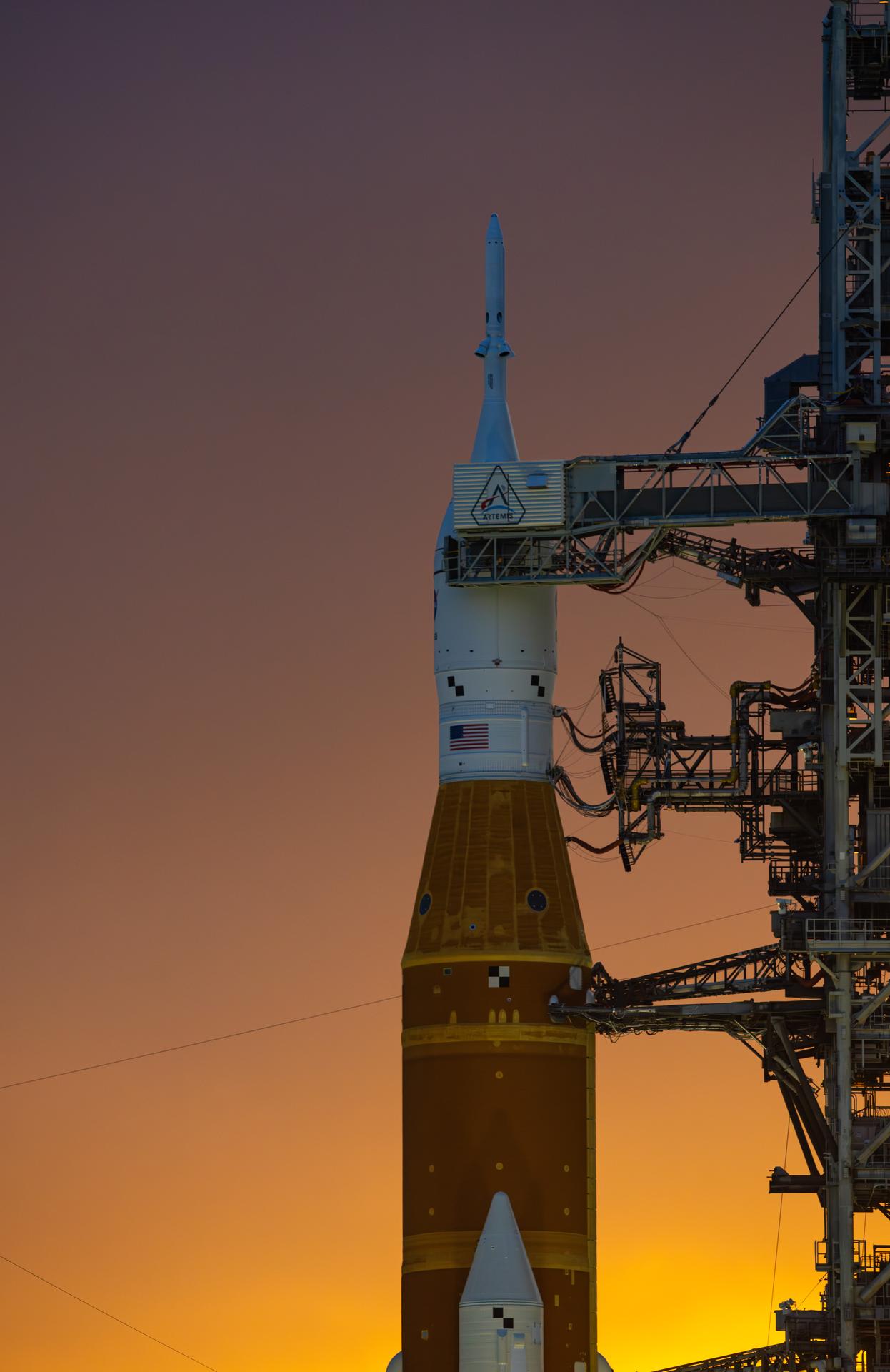
This image shows a sunset of NASA’s SLS (Space Launch System) and Orion spacecraft at NASA’s Kennedy Space Center. NASA's massive Crawler-Transporter, upgraded for the Artemis program, carried the powerful SLS rocket and Orion spacecraft on the Mobile Launcher from the Vehicle Assembly Building to Launch Pad 39B at Kennedy Space Center in preparation for the Artemis II mission.
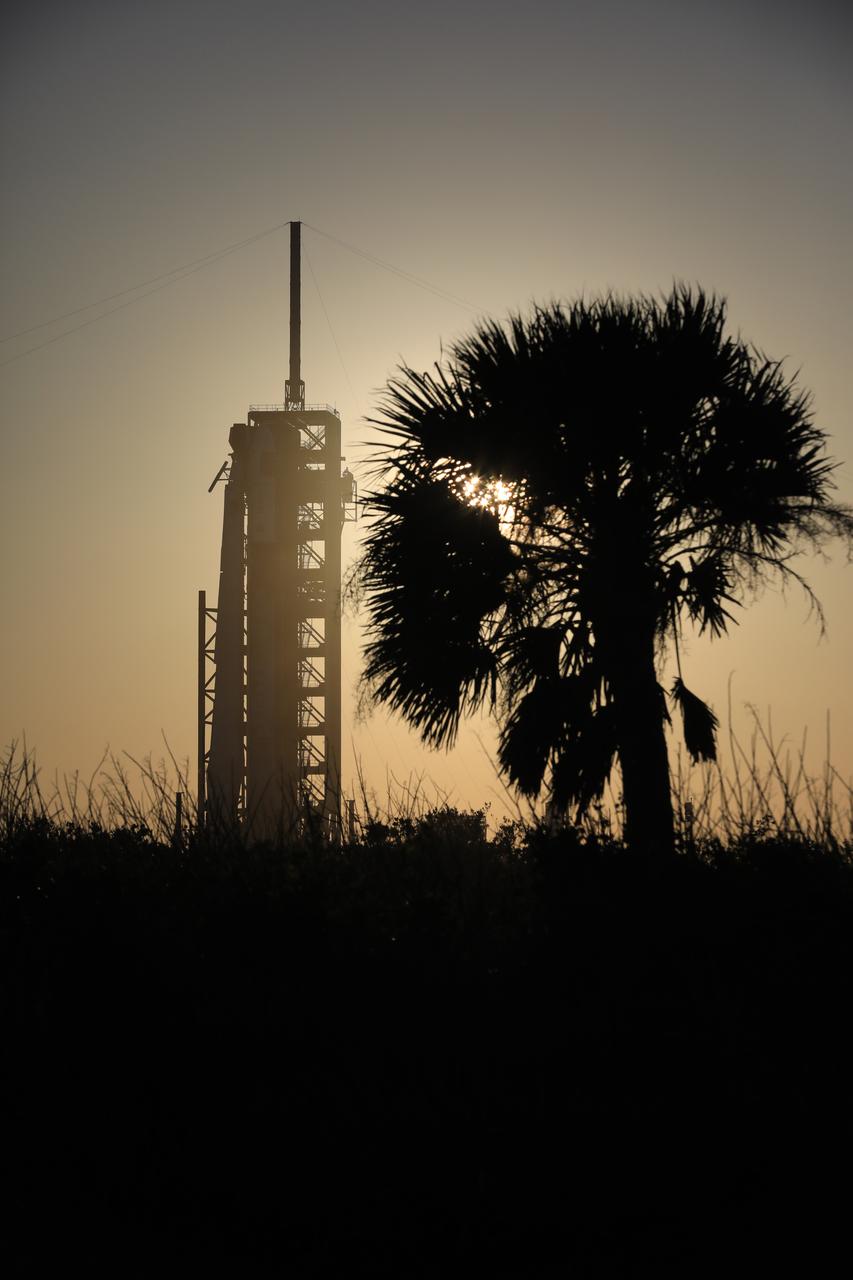
A SpaceX Falcon 9 rocket with the company’s Dragon spacecraft on top is seen during sunset on the launch pad at Launch Complex 39A at NASA’s Kennedy Space Center in Florida on Tuesday, March 11, 2025, ahead of the agency’s SpaceX Crew-10 launch. Crew-10 is the 10th crew rotation mission with SpaceX to the International Space Station as part of the agency’s Commercial Crew Program, sending NASA astronauts Anne McClain and Nichole Ayers, along with JAXA (Japan Aerospace Exploration Agency) astronaut Takuya Onishi and Roscosmos cosmonaut Kirill Peskov to the orbiting laboratory for about a four-month science mission. Liftoff is targeted for 7:48 p.m. EDT on Wednesday, March 12, 2025.
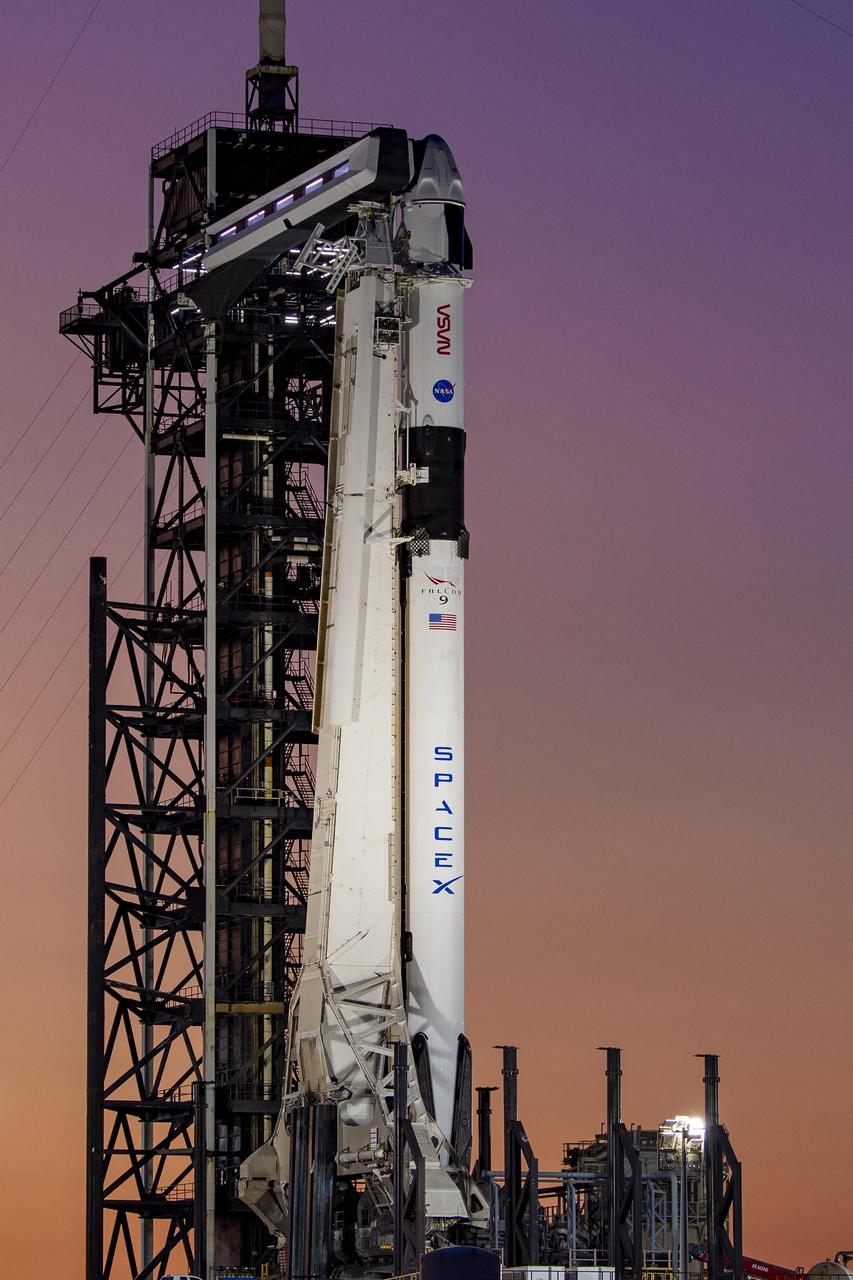
A colorful sunset serves as the backdrop for SpaceX’s Falcon 9 rocket and Dragon spacecraft on the pad at Launch Complex 39A at Kennedy Space Center in Florida on Monday, Feb. 26, 2024, ahead of NASA’s SpaceX Crew-8 mission. The crew members of NASA’s SpaceX Crew-8 mission, NASA astronauts Matthew Dominick, Michael Barratt, and Jeanette Epps, and Roscosmos cosmonaut Alexander Grebenkin, are slated to launch to the International Space Station no earlier than 12:04 a.m. EST on Friday, March 1, from Launch Complex 39A.
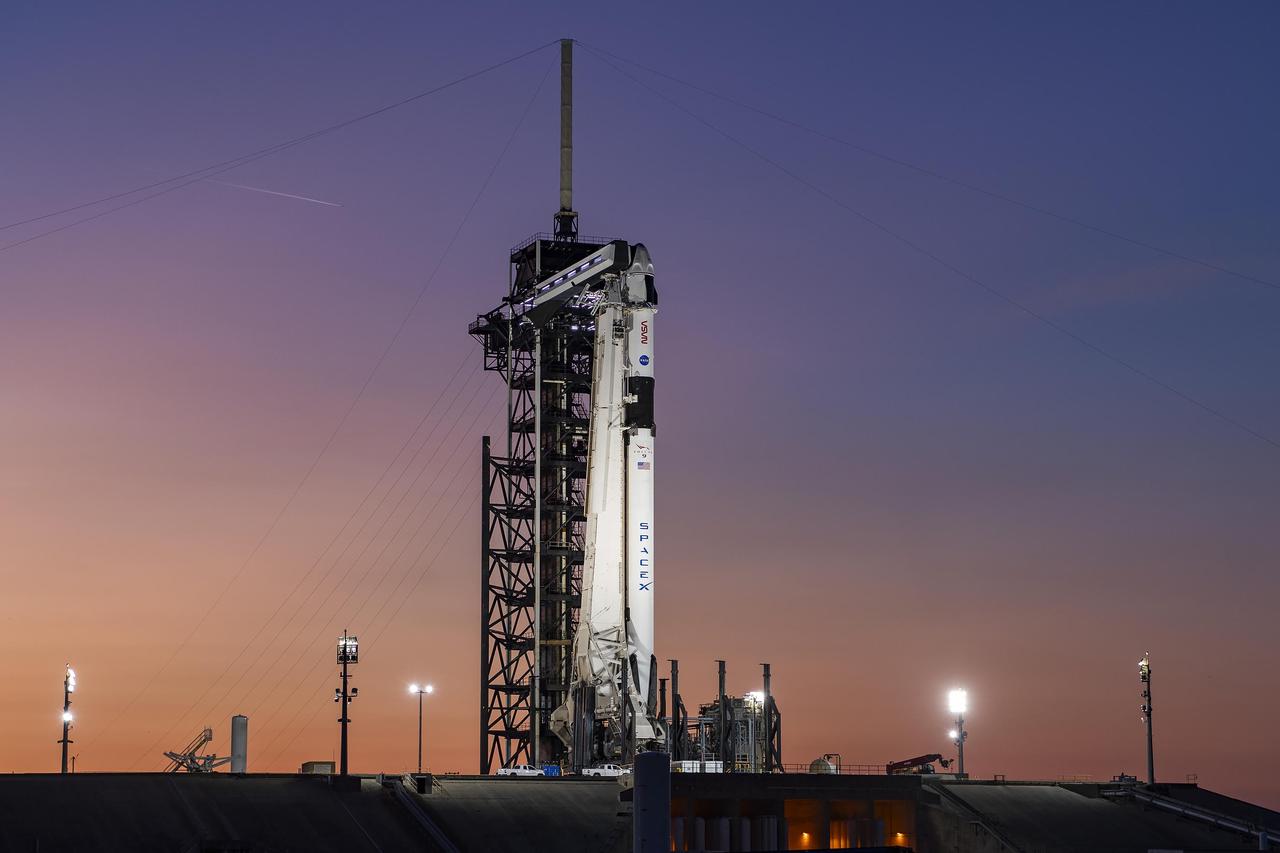
A colorful sunset serves as the backdrop for SpaceX’s Falcon 9 rocket and Dragon spacecraft on the pad at Launch Complex 39A at Kennedy Space Center in Florida on Monday, Feb. 26, 2024, ahead of NASA’s SpaceX Crew-8 mission. The crew members of NASA’s SpaceX Crew-8 mission, NASA astronauts Matthew Dominick, Michael Barratt, and Jeanette Epps, and Roscosmos cosmonaut Alexander Grebenkin, are slated to launch to the International Space Station no earlier than 12:04 a.m. EST on Friday, March 1, from Launch Complex 39A.
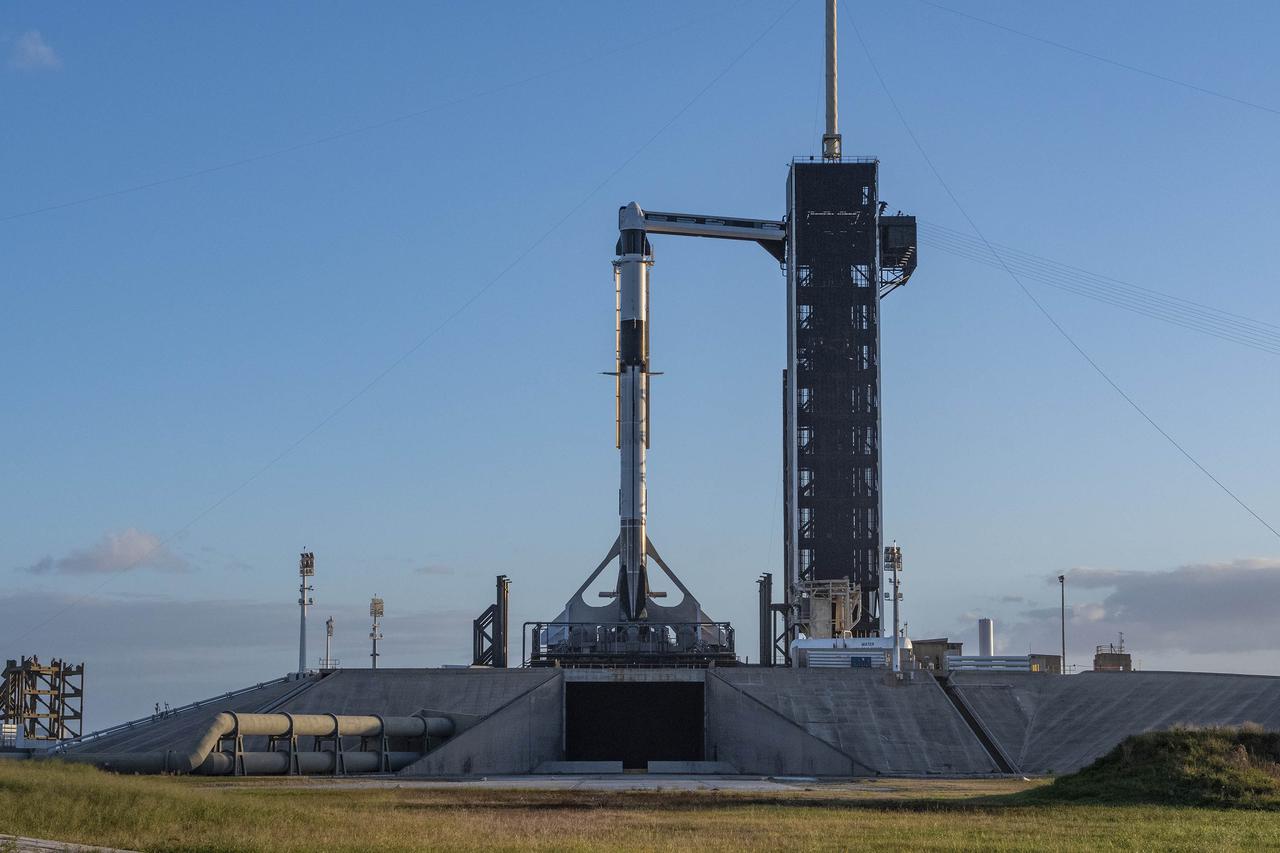
The SpaceX Falcon 9 rocket with the Crew Dragon, named Endurance by the SpaceX Crew-3 astronauts, is in view at sunset at Launch Complex 39A at NASA’s Kennedy Space Center in Florida on launch day, Nov. 10, 2021. NASA astronauts NASA astronauts Raja Chari, commander; Tom Marshburn, pilot; and Kayla Barron, mission specialist; along with Matthias Maurer, ESA (European Space Agency) astronaut and mission specialist will launch in the Crew Dragon to the International Space Station for NASA’s Commercial Crew Program. Crew-3 is scheduled to launch at 9:03 p.m. EST.
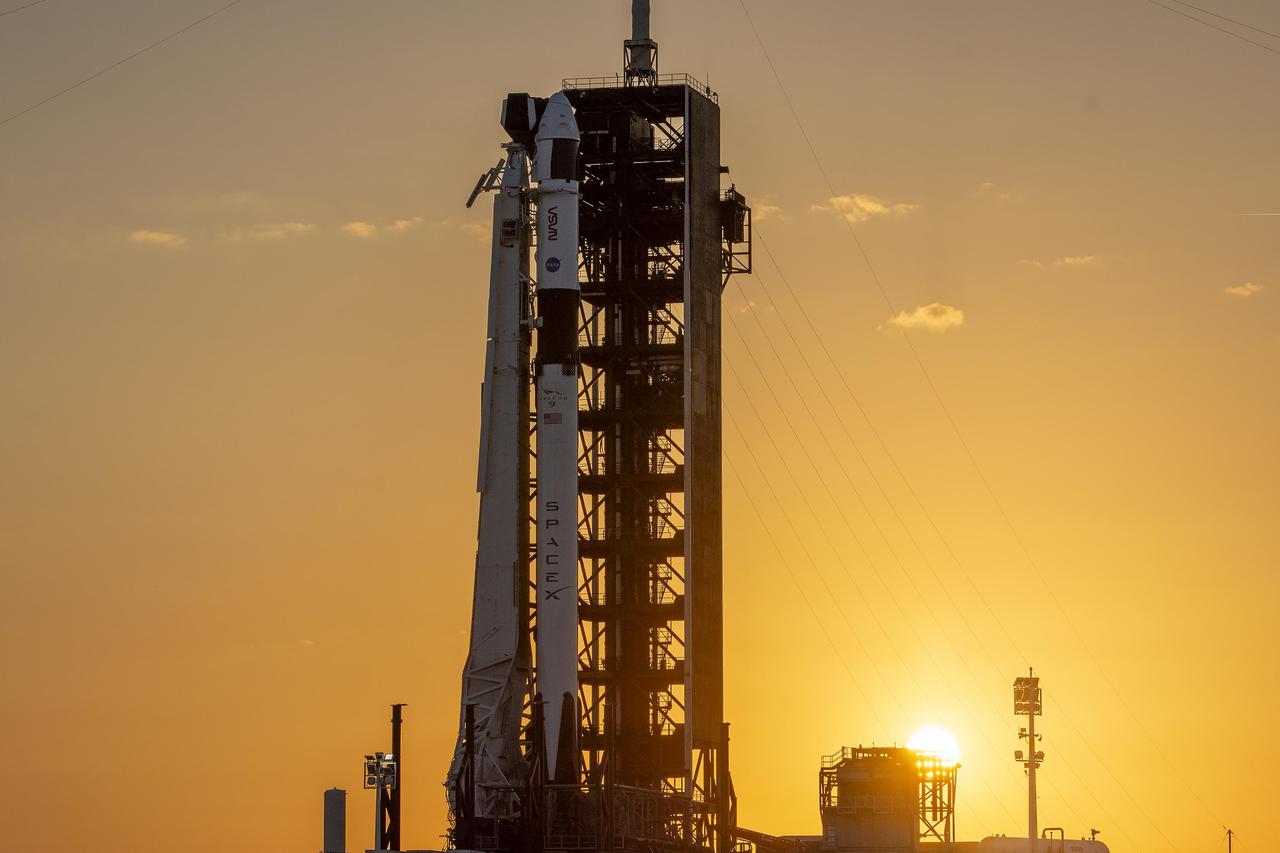
A colorful sunset serves as the backdrop for SpaceX’s Falcon 9 rocket and Dragon spacecraft on the pad at Launch Complex 39A at Kennedy Space Center in Florida on Monday, Feb. 26, 2024, ahead of NASA’s SpaceX Crew-8 mission. The crew members of NASA’s SpaceX Crew-8 mission, NASA astronauts Matthew Dominick, Michael Barratt, and Jeanette Epps, and Roscosmos cosmonaut Alexander Grebenkin, are slated to launch to the International Space Station no earlier than 12:04 a.m. EST on Friday, March 1, from Launch Complex 39A.
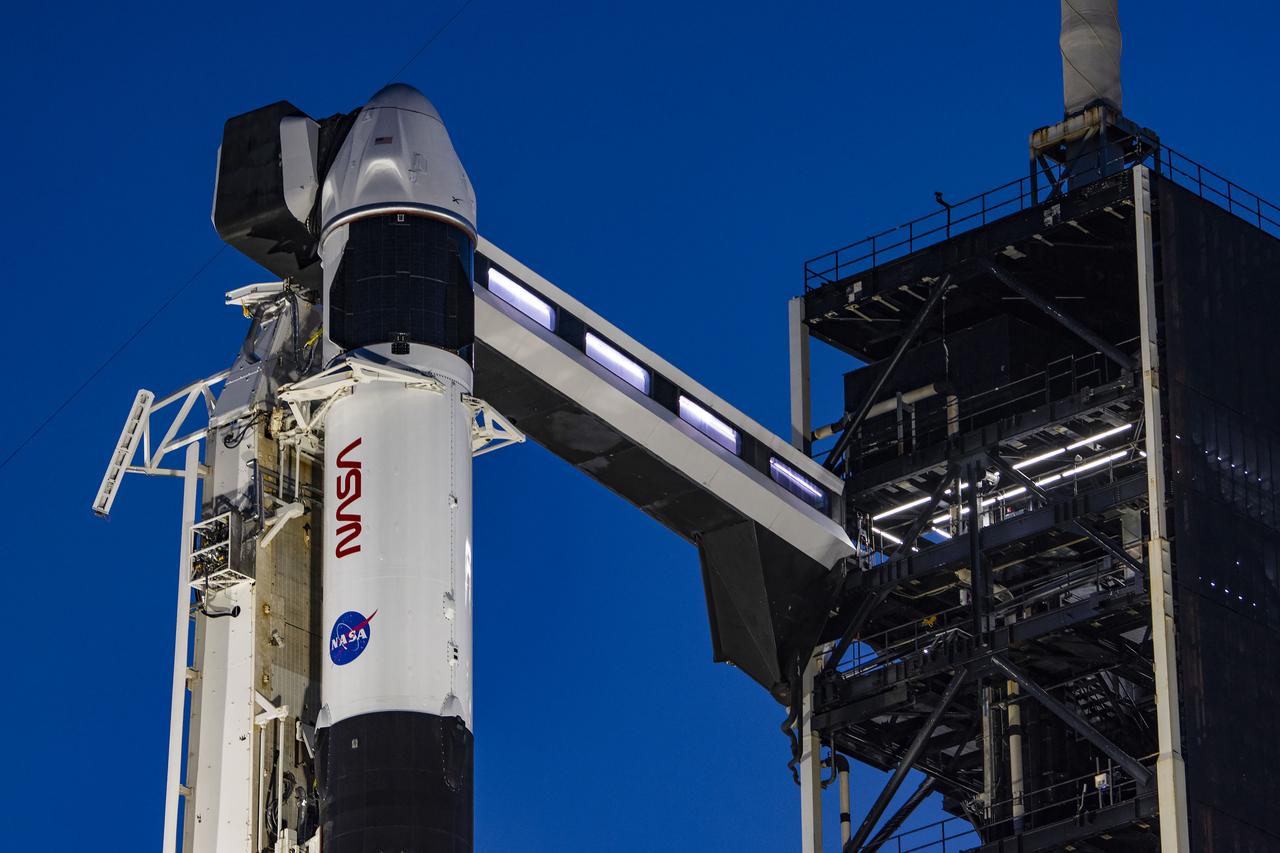
A SpaceX Falcon 9 rocket with the company's Dragon spacecraft on top is seen at sunset on the launch pad at Launch Complex 39A on Wednesday, Feb. 28, 2024, as preparations continue for NASA’s SpaceX Crew-8 mission at NASA’s Kennedy Space Center in Florida. The eighth crew rotation mission with SpaceX and the ninth flight of Dragon with people as part of the agency’s Commercial Crew Program is slated to carry NASA astronauts Matthew Dominick, Michael Barratt, and Jeanette Epps, and Roscosmos cosmonaut Alexander Grebenkin to the International Space Station from Launch Complex 39A at 11:16 p.m. EST on Saturday, March 2.
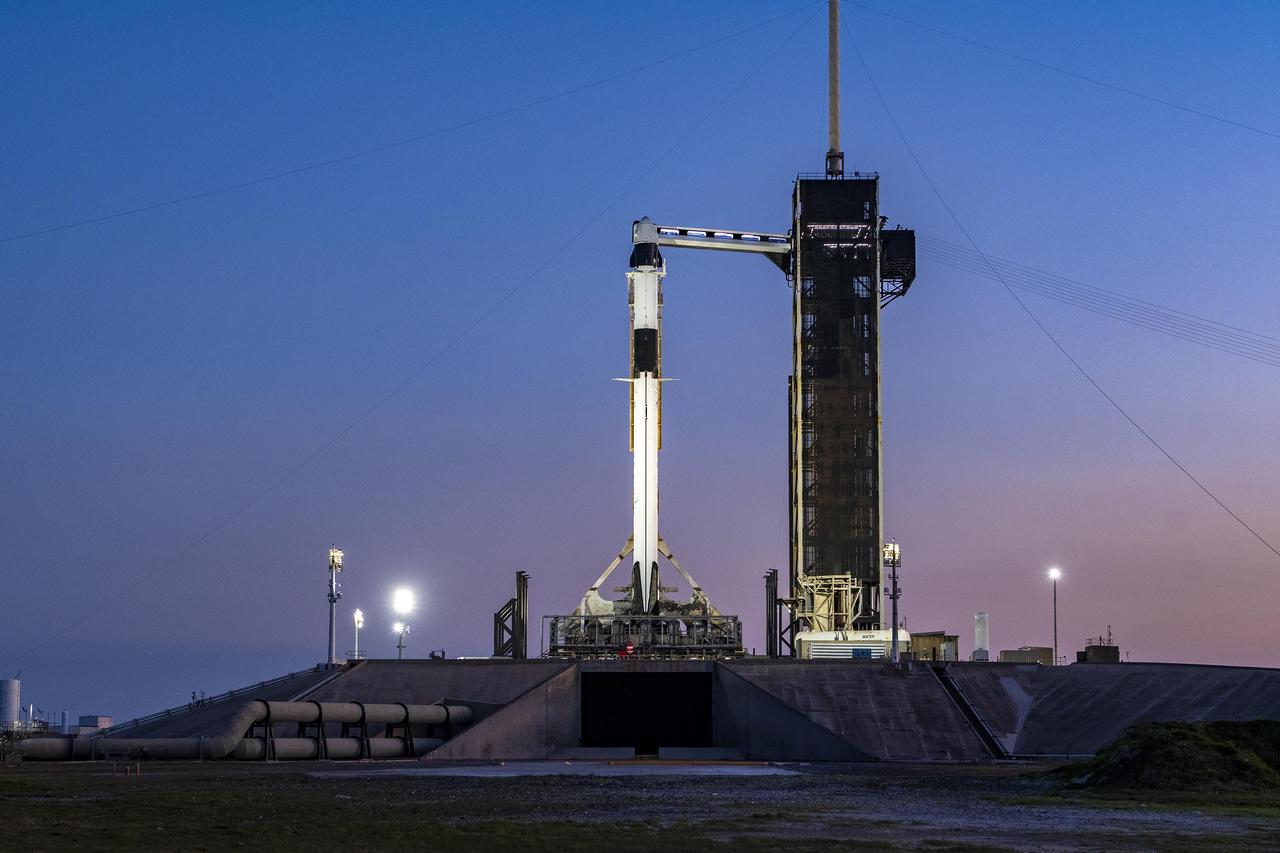
A SpaceX Falcon 9 rocket with the company's Dragon spacecraft on top is seen at sunset on the launch pad at Launch Complex 39A on Monday, Feb. 26, 2024, as preparations continue for NASA’s SpaceX Crew-8 mission at NASA’s Kennedy Space Center in Florida. The eighth crew rotation mission with SpaceX and the ninth flight of Dragon with people as part of the agency’s Commercial Crew Program is slated to carry NASA astronauts Matthew Dominick, Michael Barratt, and Jeanette Epps, and Roscosmos cosmonaut Alexander Grebenkin to the International Space Station from Launch Complex 39A no earlier than 12:04 a.m. EST on Friday, March 1.
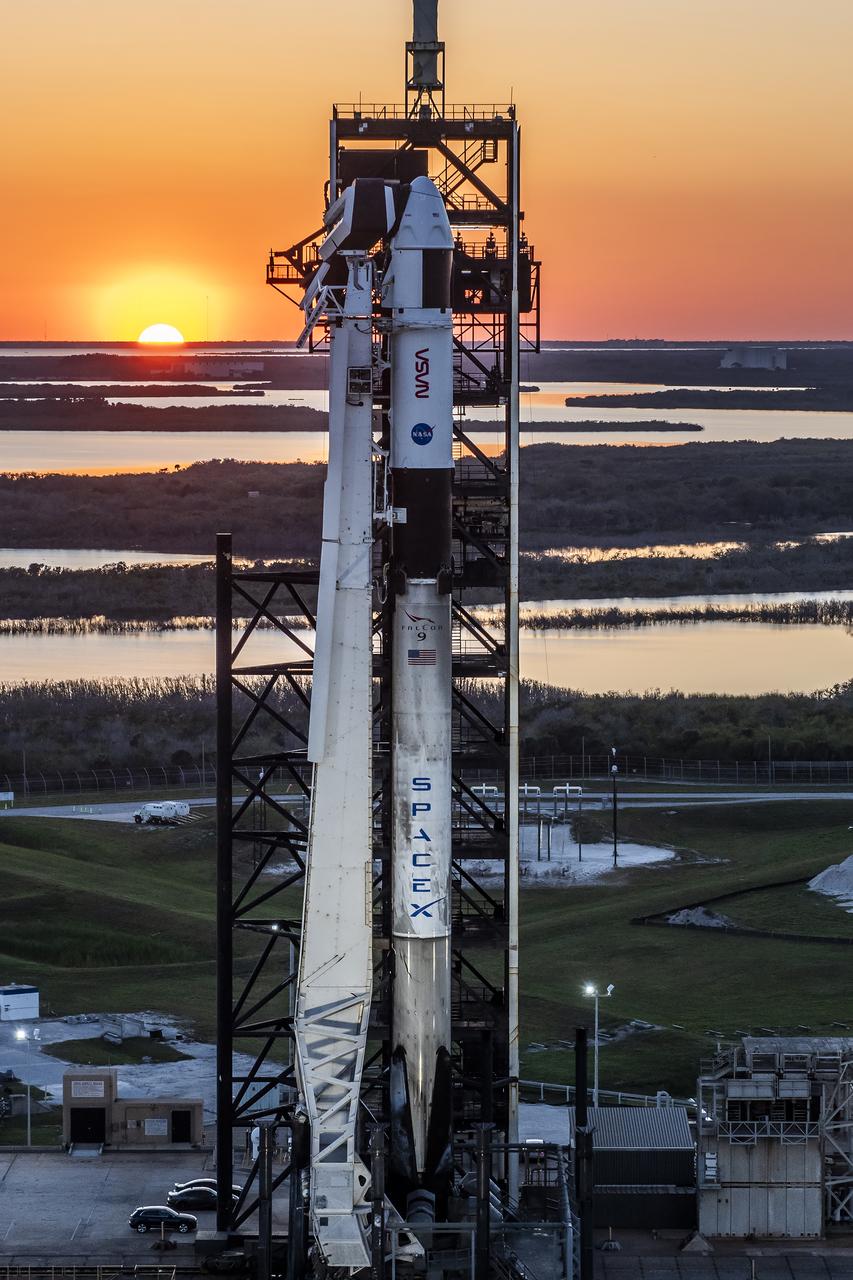
A SpaceX Falcon 9 rocket with the company’s Dragon spacecraft on top is seen during sunset on the launch pad at Launch Complex 39A at NASA’s Kennedy Space Center in Florida on Tuesday, March 11, 2025, ahead of the agency’s SpaceX Crew-10 launch. Crew-10 is the 10th crew rotation mission with SpaceX to the International Space Station as part of the agency’s Commercial Crew Program, sending NASA astronauts Anne McClain and Nichole Ayers, along with JAXA (Japan Aerospace Exploration Agency) astronaut Takuya Onishi and Roscosmos cosmonaut Kirill Peskov to the orbiting laboratory for about a four-month science mission. Liftoff is targeted for 7:48 p.m. EDT on Wednesday, March 12, 2025.
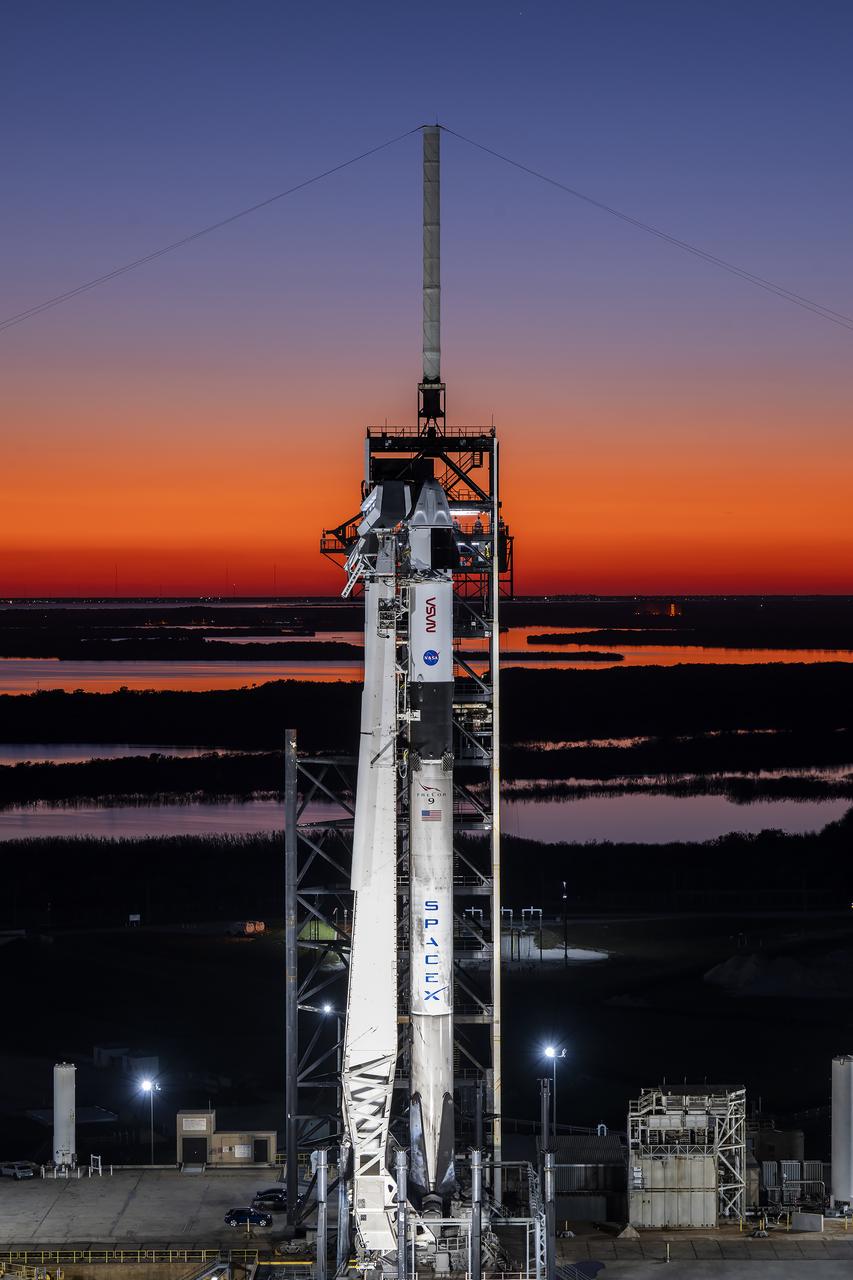
A SpaceX Falcon 9 rocket with the company’s Dragon spacecraft on top is seen during sunset on the launch pad at Launch Complex 39A at NASA’s Kennedy Space Center in Florida on Tuesday, March 11, 2025, ahead of the agency’s SpaceX Crew-10 launch. Crew-10 is the 10th crew rotation mission with SpaceX to the International Space Station as part of the agency’s Commercial Crew Program, sending NASA astronauts Anne McClain and Nichole Ayers, along with JAXA (Japan Aerospace Exploration Agency) astronaut Takuya Onishi and Roscosmos cosmonaut Kirill Peskov to the orbiting laboratory for about a four-month science mission. Liftoff is targeted for 7:48 p.m. EDT on Wednesday, March 12, 2025.
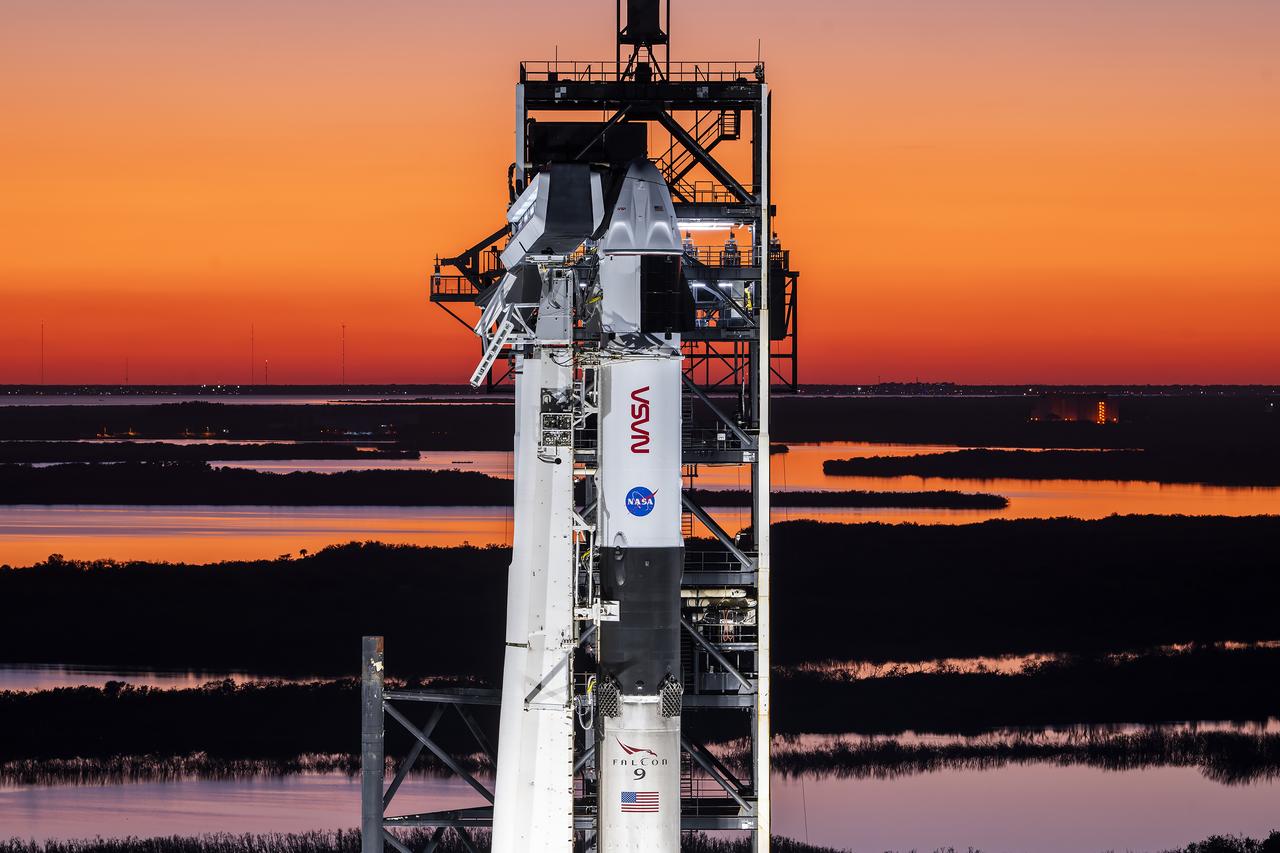
A SpaceX Falcon 9 rocket with the company’s Dragon spacecraft on top is seen during sunset on the launch pad at Launch Complex 39A at NASA’s Kennedy Space Center in Florida on Tuesday, March 11, 2025, ahead of the agency’s SpaceX Crew-10 launch. Crew-10 is the 10th crew rotation mission with SpaceX to the International Space Station as part of the agency’s Commercial Crew Program, sending NASA astronauts Anne McClain and Nichole Ayers, along with JAXA (Japan Aerospace Exploration Agency) astronaut Takuya Onishi and Roscosmos cosmonaut Kirill Peskov to the orbiting laboratory for about a four-month science mission. Liftoff is targeted for 7:48 p.m. EDT on Wednesday, March 12, 2025.
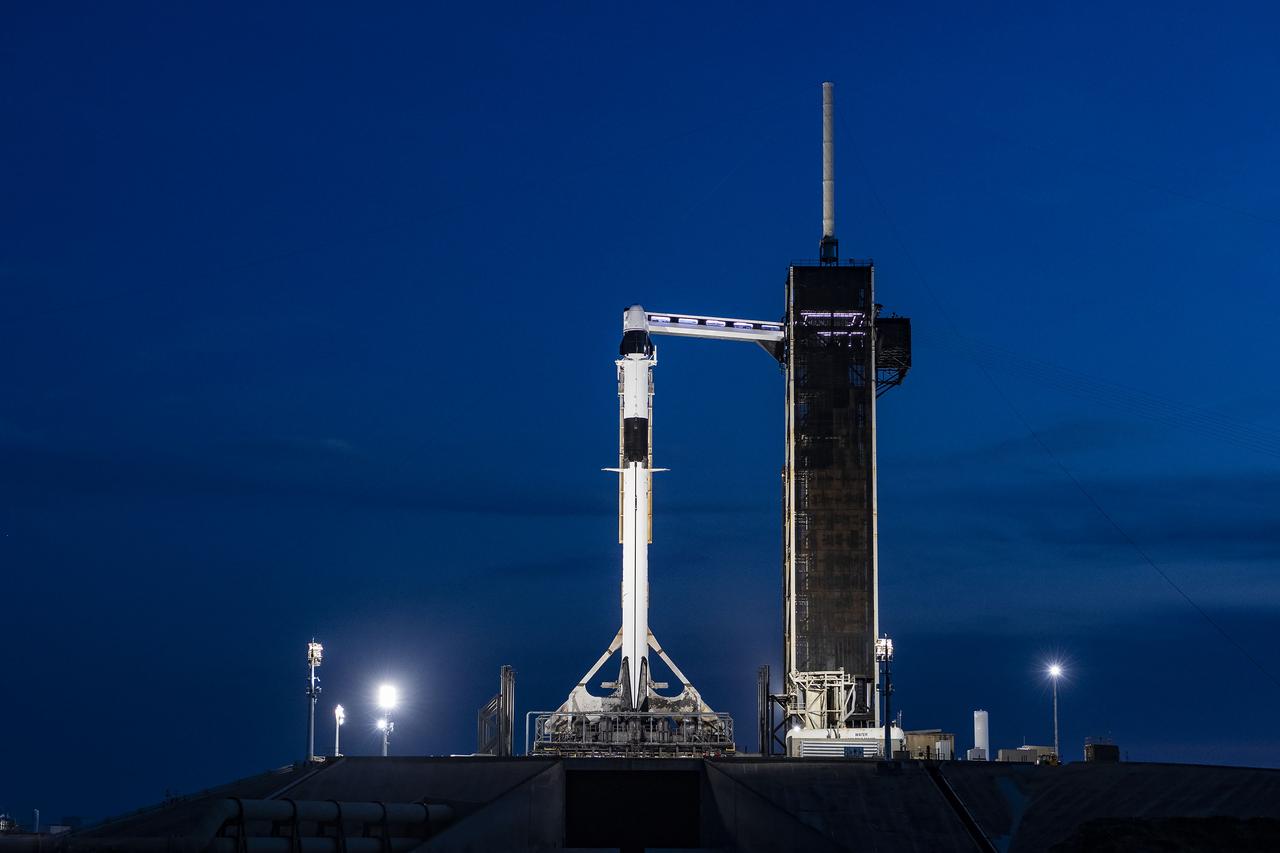
A SpaceX Falcon 9 rocket with the company's Dragon spacecraft on top is seen at sunset on the launch pad at Launch Complex 39A on Wednesday, Feb. 28, 2024, as preparations continue for NASA’s SpaceX Crew-8 mission at NASA’s Kennedy Space Center in Florida. The eighth crew rotation mission with SpaceX and the ninth flight of Dragon with people as part of the agency’s Commercial Crew Program is slated to carry NASA astronauts Matthew Dominick, Michael Barratt, and Jeanette Epps, and Roscosmos cosmonaut Alexander Grebenkin to the International Space Station from Launch Complex 39A at 11:16 p.m. EST on Saturday, March 2.
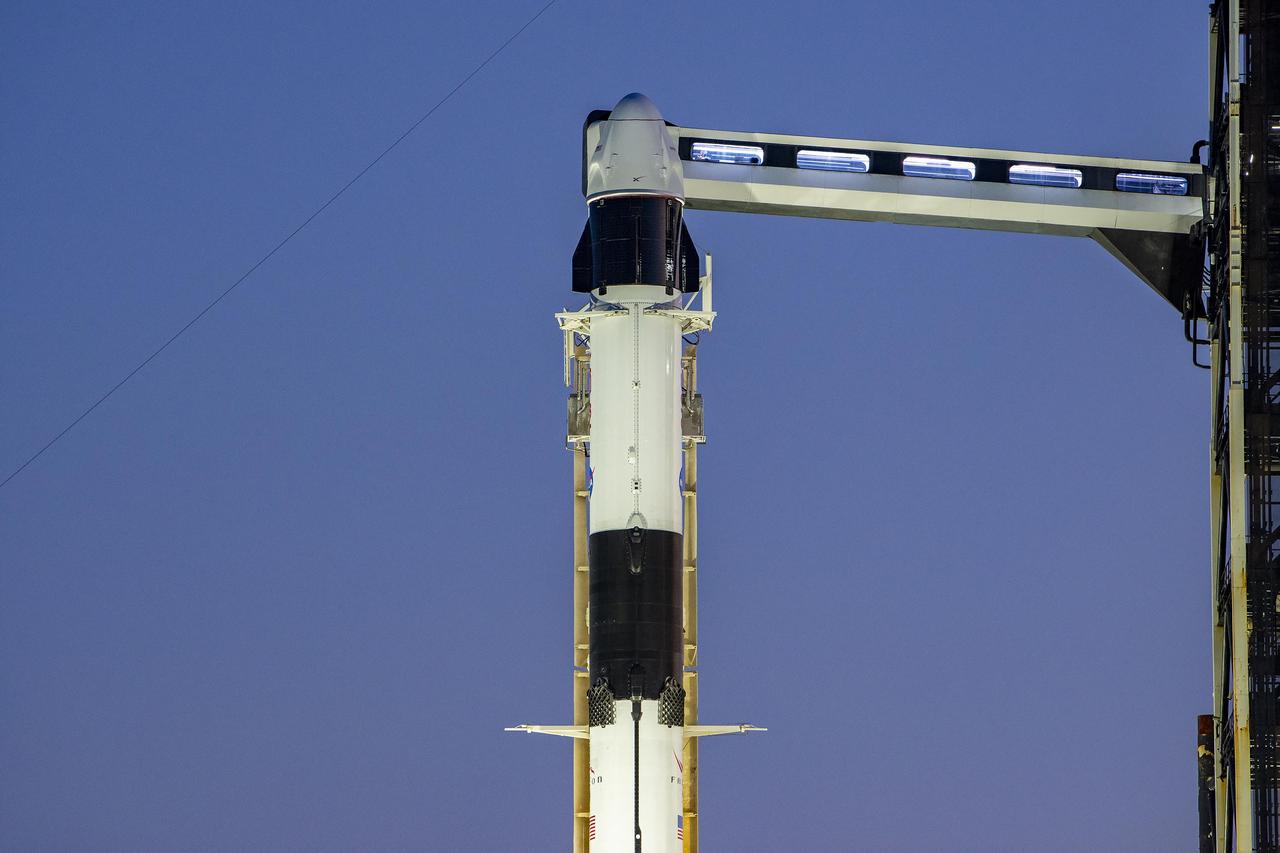
A SpaceX Falcon 9 rocket with the company's Dragon spacecraft on top is seen at sunset on the launch pad at Launch Complex 39A on Monday, Feb. 26, 2024, as preparations continue for NASA’s SpaceX Crew-8 mission at NASA’s Kennedy Space Center in Florida. The eighth crew rotation mission with SpaceX and the ninth flight of Dragon with people as part of the agency’s Commercial Crew Program is slated to carry NASA astronauts Matthew Dominick, Michael Barratt, and Jeanette Epps, and Roscosmos cosmonaut Alexander Grebenkin to the International Space Station from Launch Complex 39A no earlier than 12:04 a.m. EST on Friday, March 1.
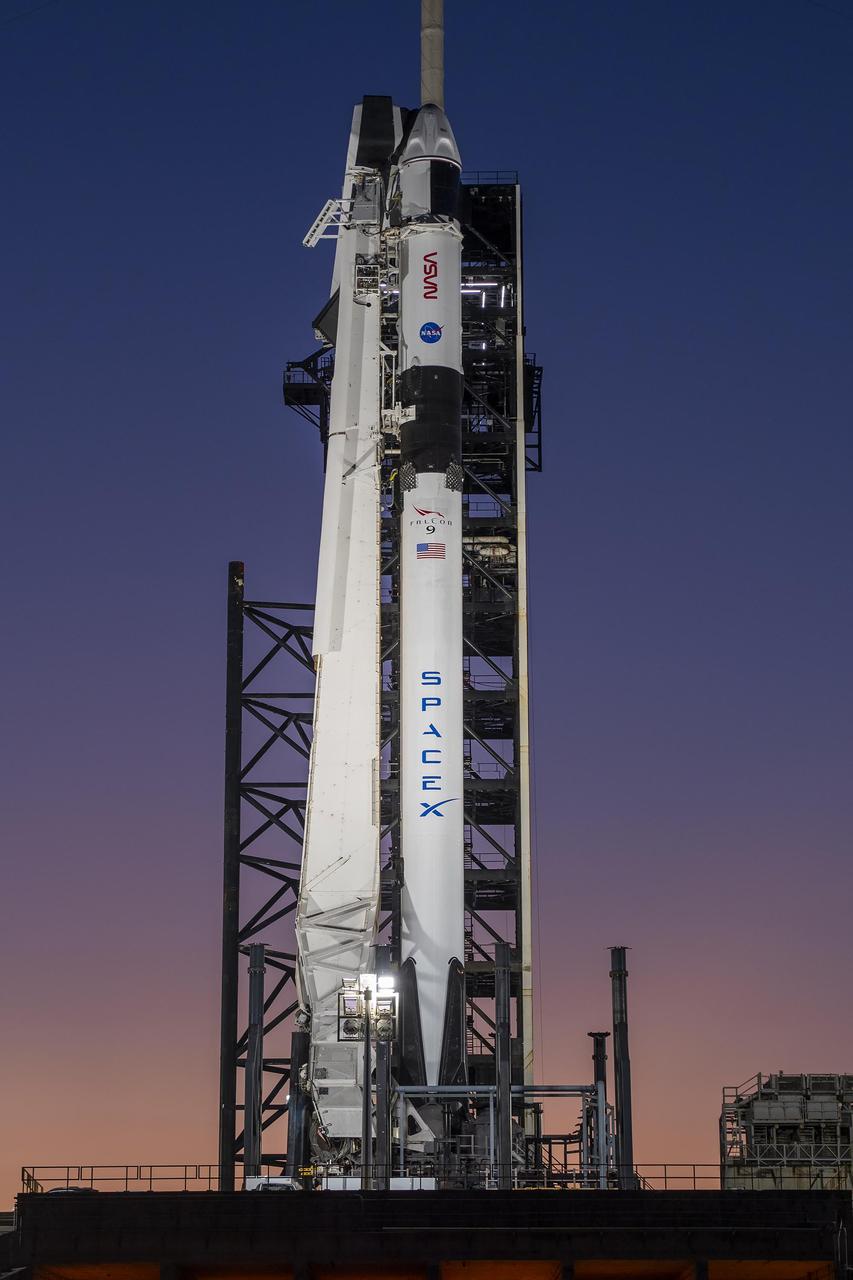
A colorful sunset serves as the backdrop for SpaceX’s Falcon 9 rocket and Dragon spacecraft on the pad at Launch Complex 39A at Kennedy Space Center in Florida on Monday, Feb. 26, 2024, ahead of NASA’s SpaceX Crew-8 mission. The crew members of NASA’s SpaceX Crew-8 mission, NASA astronauts Matthew Dominick, Michael Barratt, and Jeanette Epps, and Roscosmos cosmonaut Alexander Grebenkin, are slated to launch to the International Space Station no earlier than 12:04 a.m. EST on Friday, March 1, from Launch Complex 39A.