
A model of a tiny, wedge-shaped robot designed to explore subsurface oceans of icy moons, right, sits beside a large waterproof capsule containing electronics and sensors for testing below glacial ice at the Juneau Icefield in Alaska in July 2023. The model, about 5 inches (12 centimeters) long, was 3D-printed to show the final envisioned size of a futuristic NASA mission concept called SWIM, short for Sensing With Independent Micro-swimmers. Led by NASA's Jet Propulsion Laboratory from spring 2021 to fall 2024, SWIM envisions a swarm of dozens of self-propelled, cellphone-size robots exploring the waters of icy moons like Jupiter's Europa and Saturn's Enceladus. Delivered to the subsurface ocean by an ice-melting cryobot, the tiny robots would zoom away to look for chemical and temperature signals that could point to life. The capsule shown here contains the first generation of an ocean composition sensor built for the SWIM robots by a team at Georgia Tech. The final version of the sensor would enable each robot to simultaneously measure temperature, pressure, acidity or alkalinity, conductivity, and chemical makeup. During the Alaska field test, the team lowered the capsule through a borehole in the ice and measured pressure and conductivity down to a depth of 164 feet (50 meters). This field test was conducted as part of a JPL-managed project called ORCAA (Ocean Worlds Reconnaissance and Characterization of Astrobiological Analogs). Known as an analog mission, ORCAA is working to answer science questions and test technology in preparation for a potential future mission to explore the surface or subsurface of icy moons. ORCAA is funded by NASA's Planetary Science and Technology from Analog Research program. SWIM was supported by Phase I and II funding from NASA's Innovative Advanced Concepts program under the agency's Space Technology Mission Directorate. JPL is managed for NASA by Caltech in Pasadena, California. https://photojournal.jpl.nasa.gov/catalog/PIA26424
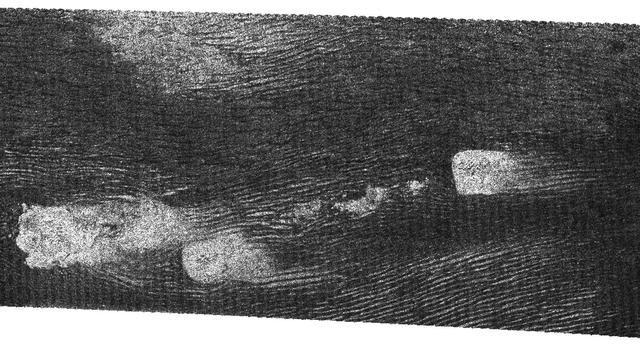
Swimming in Dunes
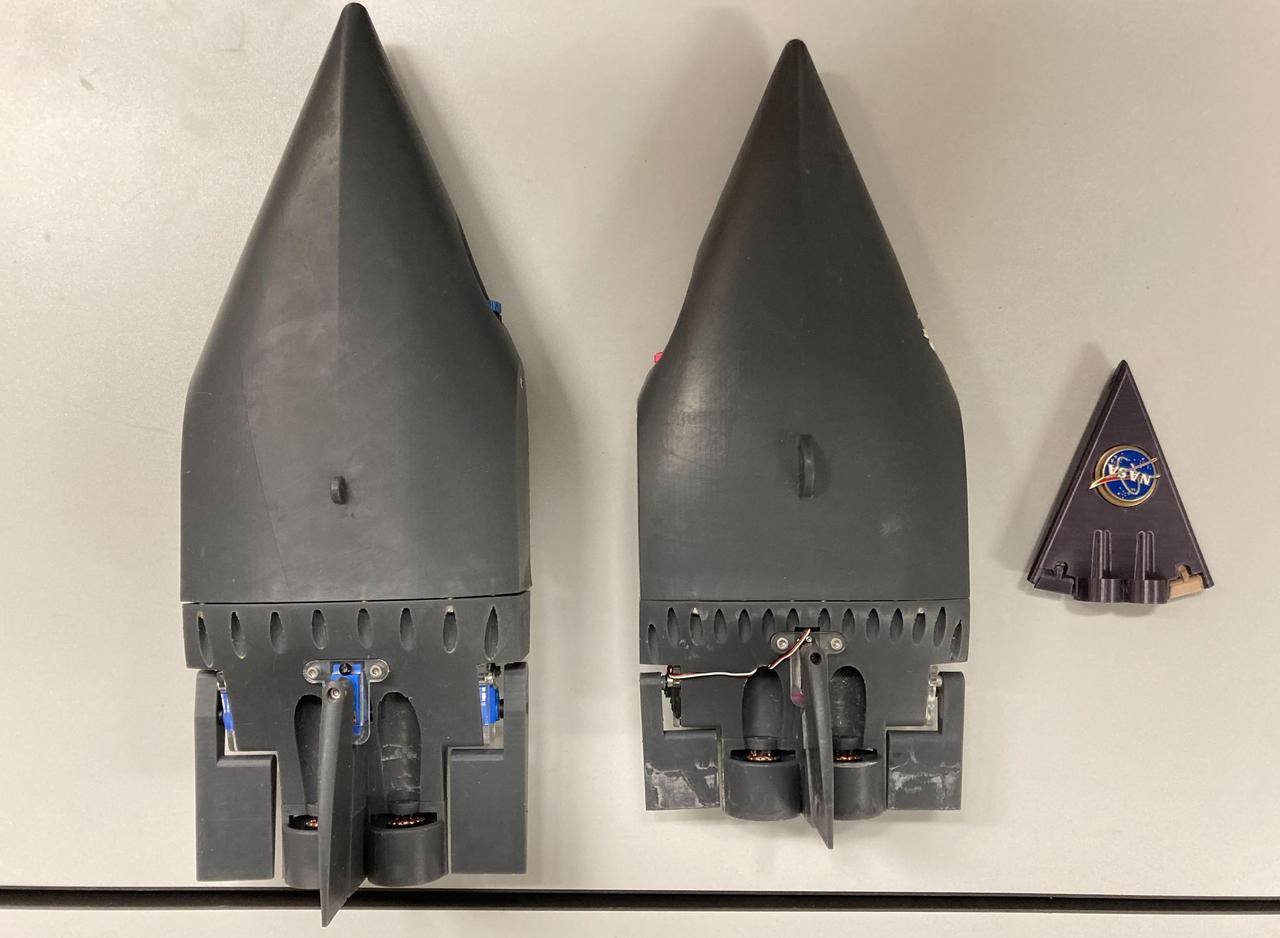
Two prototypes for a NASA mission concept called SWIM (short for Sensing With Independent Micro-swimmers) are arranged beside a much smaller nonfunctioning model representing the final envisioned size of the robot: about 5 inches (12 centimeters) long. The plastic prototypes were built at NASA's Jet Propulsion Laboratory in Southern California to demonstrate the feasibility of the concept, a swarm of dozens of self-propelled, cellphone-size robots exploring the waters of icy moons like Jupiter's Europa and Saturn's Enceladus. Delivered to the subsurface ocean by an ice-melting cryobot, the tiny robots would zoom away to look for chemical and temperature signals that could point to life. The prototypes were used in more that 20 rounds of underwater testing in a pair of tanks at JPL and in a competition swimming pool at Caltech in Pasadena. Relying on low-cost, commercially made motors and electronics, the robots are pushed along by two propellers and use two to four flaps for steering. The prototype in the center of the image weighs 3.7 pounds (1.7 kilograms) and is 14.5 inches (37 centimeters) long, 6 inches (15 centimeters) wide, and 2.5 inches (6.5 centimeters) tall, with a volume of 104 cubic inches (1.7 liters). The upgraded prototype at left is slightly bigger: 16.5 inches (42 centimeters) long, 3 inches (7.5 centimeters) tall, with a weight of 5 pounds (2.3 kilograms) and a volume of 140 cubic inches (2.3 liters). In pool tests, the prototype at left demonstrated controlled maneuvering, the ability to stay on and correct its course, and a back-and-forth "lawnmower" exploration pattern. It managed all of this autonomously, without the team's direct intervention. The robot even spelled out "J-P-L." As conceived for spaceflight and represented by the model at right, the robots would have dimensions about three times smaller than these prototypes – tiny compared to existing remotely operated and autonomous underwater scientific vehicles. The swimmers would feature miniaturized, purpose-built parts and employ a novel wireless underwater acoustic communication system for transmitting data and triangulating their positions. Several years more of work would be needed to make such an advanced concept ready for spaceflight. Led by JPL, SWIM development took place from spring 2021 to fall 2024. The project was supported by Phase I and II funding from NASA's Innovative Advanced Concepts program under the agency's Space Technology Mission Directorate. JPL is managed for NASA by Caltech in Pasadena, California. https://photojournal.jpl.nasa.gov/catalog/PIA26425
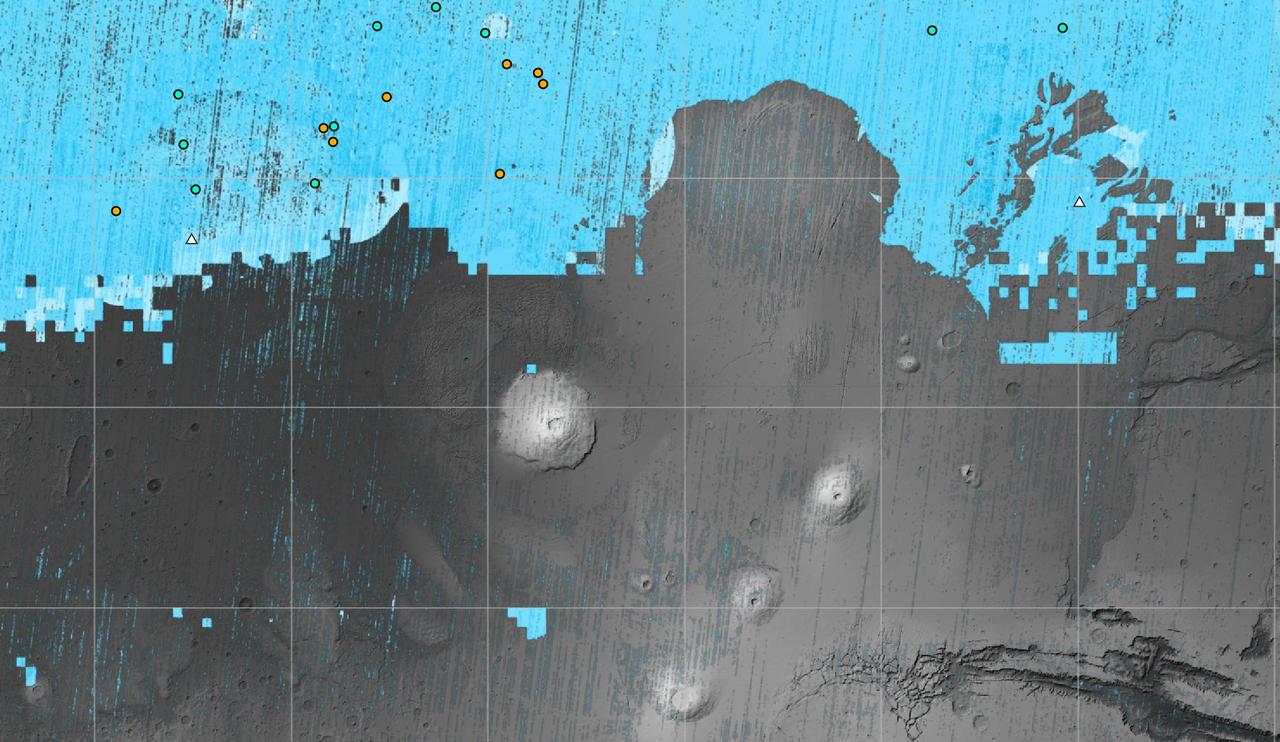
The blue areas on this map of Mars show regions where NASA missions have detected subsurface water ice. Scientists can use the map – part of the Subsurface Water Ice Mapping project, or SWIM – to decide where the first astronauts to set foot on the Red Planet should land. Triangles on the map are past and present Mars missions; circles are ice-exposing impact craters. Mars has both water ice and carbon dioxide ice (dry ice); water ice would be a critical resource for the first astronauts to step foot on Mars, who can use it for drinking, rocket fuel, and other purposes. The more water ice these astronauts land next to, the less they need to bring with them. Because the Martian atmosphere is so thin – less than 1% the pressure experienced at sea level on Earth – liquid water is unstable on the Red Planet and will vaporize unless it's frozen. But water ice on the planet's surface is only stable at high latitudes that are far too cold for astronauts and robots to survive. So SWIM attempts to locate water ice preserved within the subsurface in the mid-latitudes, where landing would be feasible. Such regions are far enough toward the pole for water ice to be plentiful, but close enough to the equator to avoid the coldest temperatures seen on Mars. SWIM combines data from several NASA missions, including the Mars Reconnaissance Orbiter (MRO), 2001 Mars Odyssey, and the now-inactive Mars Global Surveyor. The project mapped the area from the equator to 60 degrees north latitude. https://photojournal.jpl.nasa.gov/catalog/PIA26045
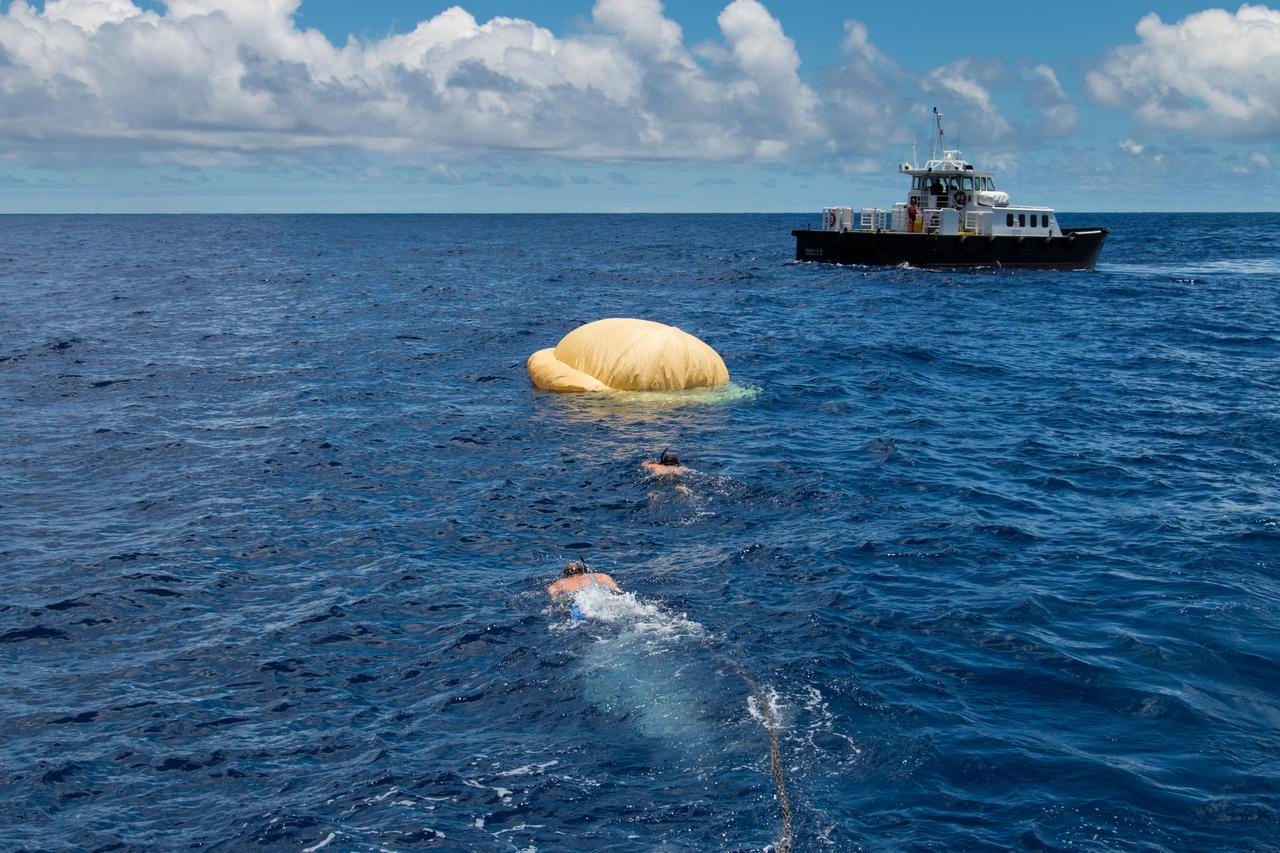
Hours after the June 28, 2014, test of NASA Low-Density Supersonic Decelerator over the U.S. Navy Pacific Missile Range, two members of the Navy Explosive Ordinance Disposal swim toward the test vehicle.
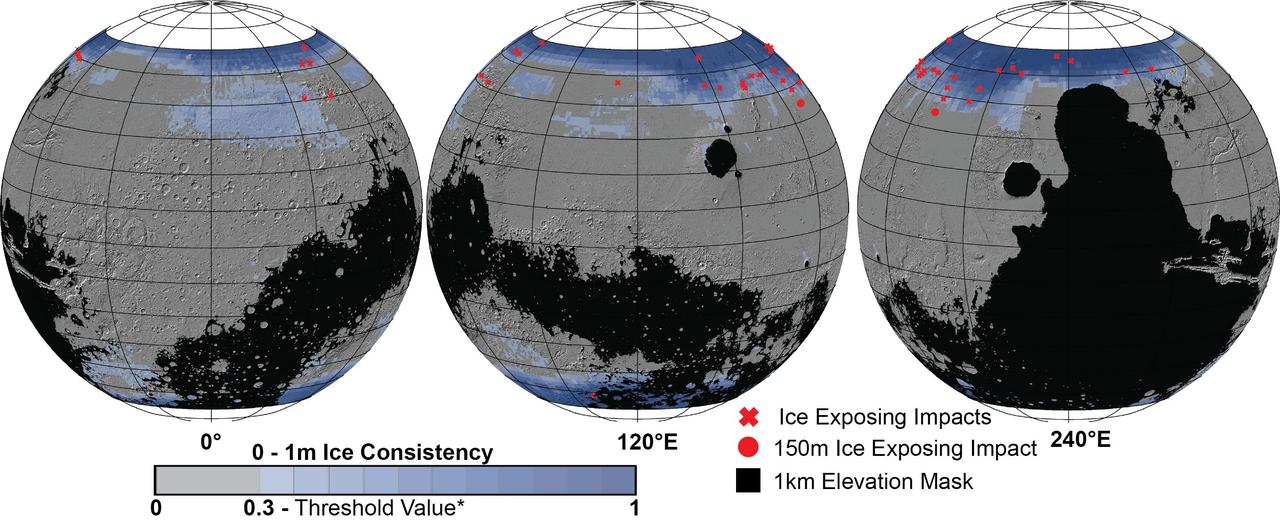
These Mars global maps show the likely distribution of water ice buried within the upper 3 feet (1 meter) of the planet's surface and represent the latest data from the Subsurface Water Ice Mapping project, or SWIM. SWIM uses data acquired by science instruments aboard three NASA orbital missions to estimate where ice may be hiding below the surface. Superimposed on the globes are the locations of ice-exposing meteoroid impacts, which provide an independent means to test the mapping results. The ice-exposing impacts were spotted by the High-Resolution Imaging Science Experiment (HiRISE), a camera aboard NASA's Mars Reconnaissance Orbiter. While other instruments at Mars can only suggest where buried water ice is located, HiRISE's imagery of ice-exposing impacts can confirm where ice is present. Most of these craters are no more than 33 feet (10 meters) in diameter, although in 2022 HiRISE captured a 492-foot-wide (150-meter-wide) impact crater that revealed a motherlode of ice that had been hiding beneath the surface. This crater is indicated with a circle in the upper-left portion of the right-most globe above. Scientists can use mapping data like this to decide where the first astronauts on Mars should land: Buried ice will be a vital resource for the first people to set foot on Mars, serving as drinking water and a key ingredient for rocket fuel. It would also be a major scientific target: Astronauts or robots could one day drill ice cores much as scientists do on Earth, uncovering the climate history of Mars and exploring potential habitats (past or present) for microbial life. The need to look for subsurface ice arises because liquid water isn't stable on the Martian surface: The atmosphere is so thin that water immediately vaporizes. There's plenty of ice at the Martian poles – mostly made of water, although carbon dioxide, or dry ice, can be found as well – but those regions are too cold for astronauts (or robots) to survive for long. https://photojournal.jpl.nasa.gov/catalog/PIA26046
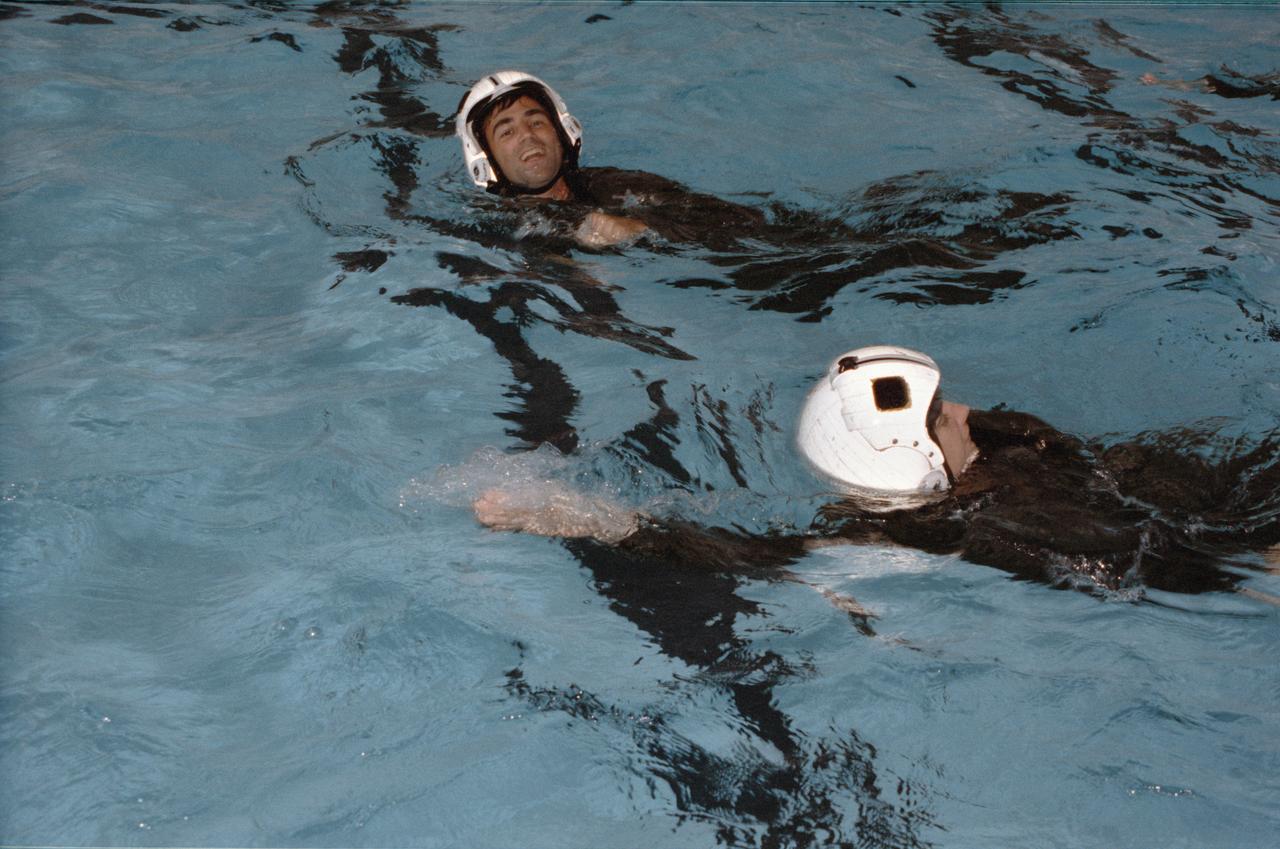
1990 Group 13 Astronaut Candidates (ASCANs) Susan J. Helms (foreground) and William G. Gregory, wearing helmets and flight suits, swim in pool at Elgin Air Force Base (AFB) in Pensacola, Florida, during water survival exercises. The training familiarized the candidates with survival techniques necessary in the event of a water landing. ASCANs participated in the exercises from 08-14-90 through 08-17-90.
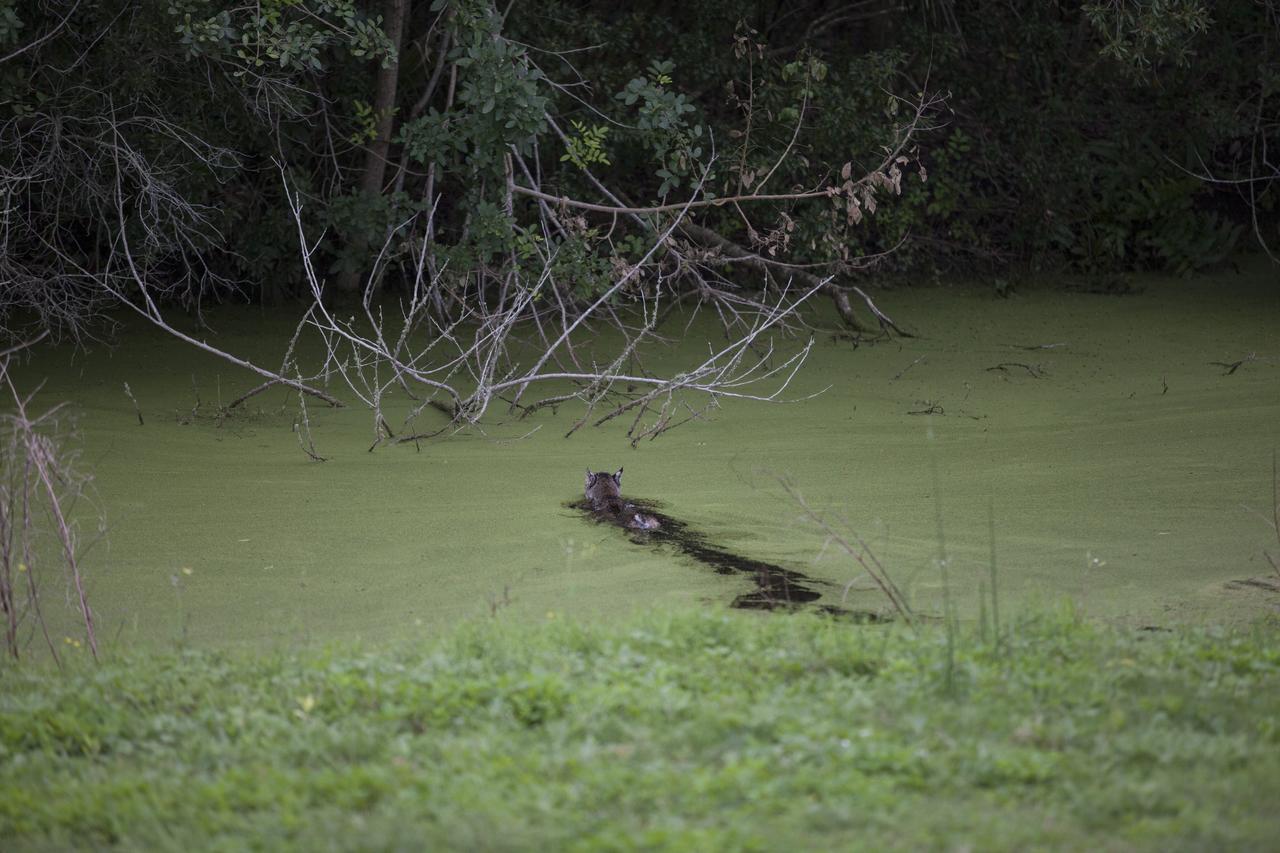
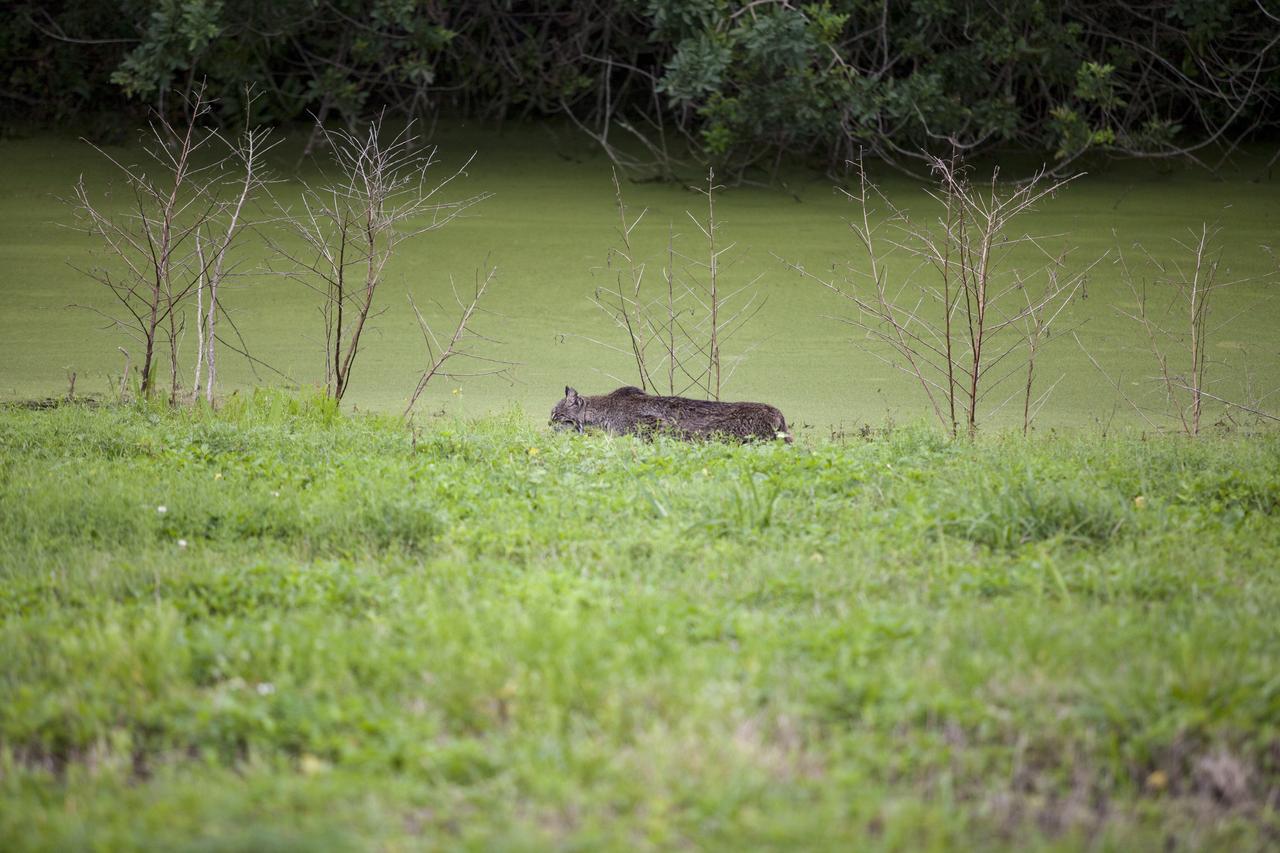
CAPE CANAVERAL, Fla. – A bobcat leaves a trail as it swims across an algae-covered canal near the NASA News Center at Kennedy Space Center in Florida. The center shares a boundary with the Merritt Island National Wildlife Refuge. The refuge encompasses 140,000 acres that are a habitat for more than 330 species of birds, 31 mammals, 117 fishes, and 65 amphibians and reptiles. Photo credit: NASA/Daniel Casper
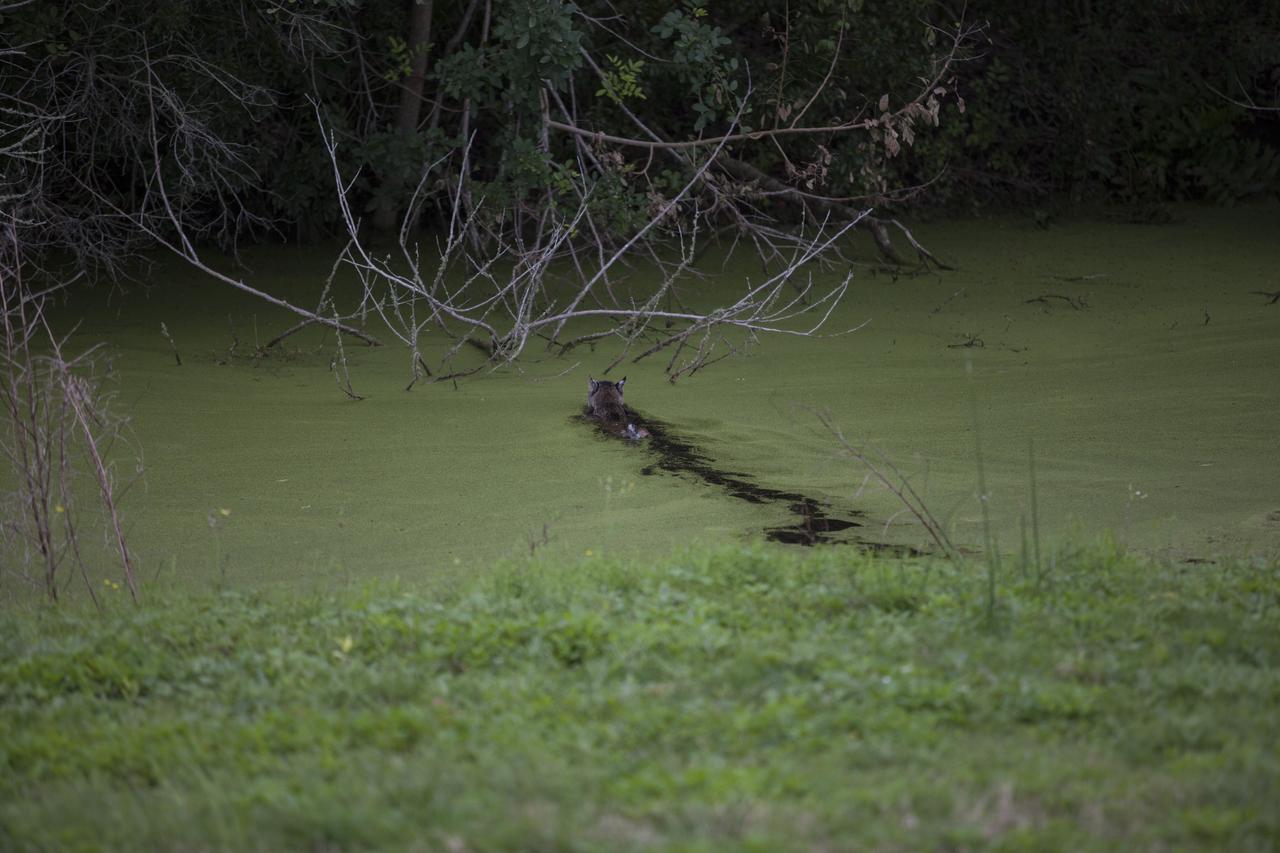
CAPE CANAVERAL, Fla. – A bobcat leaves a trail as it swims across an algae-covered canal near the NASA News Center at Kennedy Space Center in Florida. The center shares a boundary with the Merritt Island National Wildlife Refuge. The refuge encompasses 140,000 acres that are a habitat for more than 330 species of birds, 31 mammals, 117 fishes, and 65 amphibians and reptiles. Photo credit: NASA/Daniel Casper
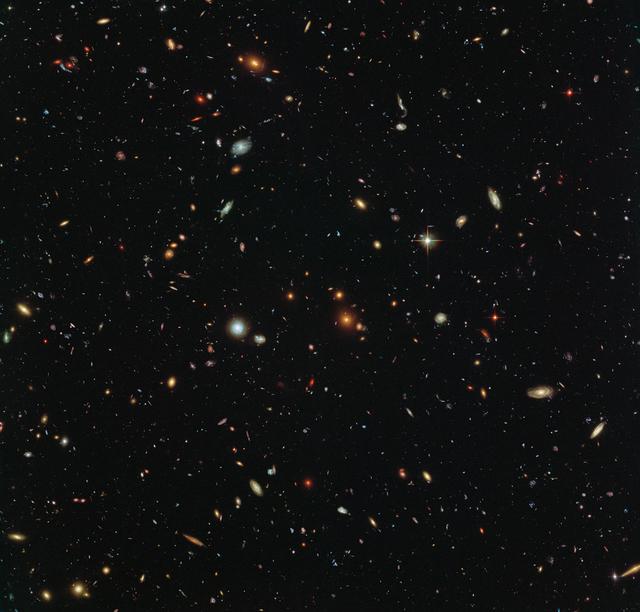
Peering deep into the early Universe, this picturesque parallel field observation from the NASA/ESA Hubble Space Telescope reveals thousands of colourful galaxies swimming in the inky blackness of space. A few foreground stars from our own galaxy, the Milky Way, are also visible. In October 2013 Hubble’s Wide Field Camera 3 (WFC3) and Advanced Camera for Surveys (ACS) began observing this portion of sky as part of the Frontier Fields programme. This spectacular skyscape was captured during the study of the giant galaxy cluster Abell 2744, otherwise known as Pandora’s Box. While one of Hubble’s cameras concentrated on Abell 2744, the other camera viewed this adjacent patch of sky near to the cluster. Containing countless galaxies of various ages, shapes and sizes, this parallel field observation is nearly as deep as the Hubble Ultra-Deep Field. In addition to showcasing the stunning beauty of the deep Universe in incredible detail, this parallel field — when compared to other deep fields — will help astronomers understand how similar the Universe looks in different directions
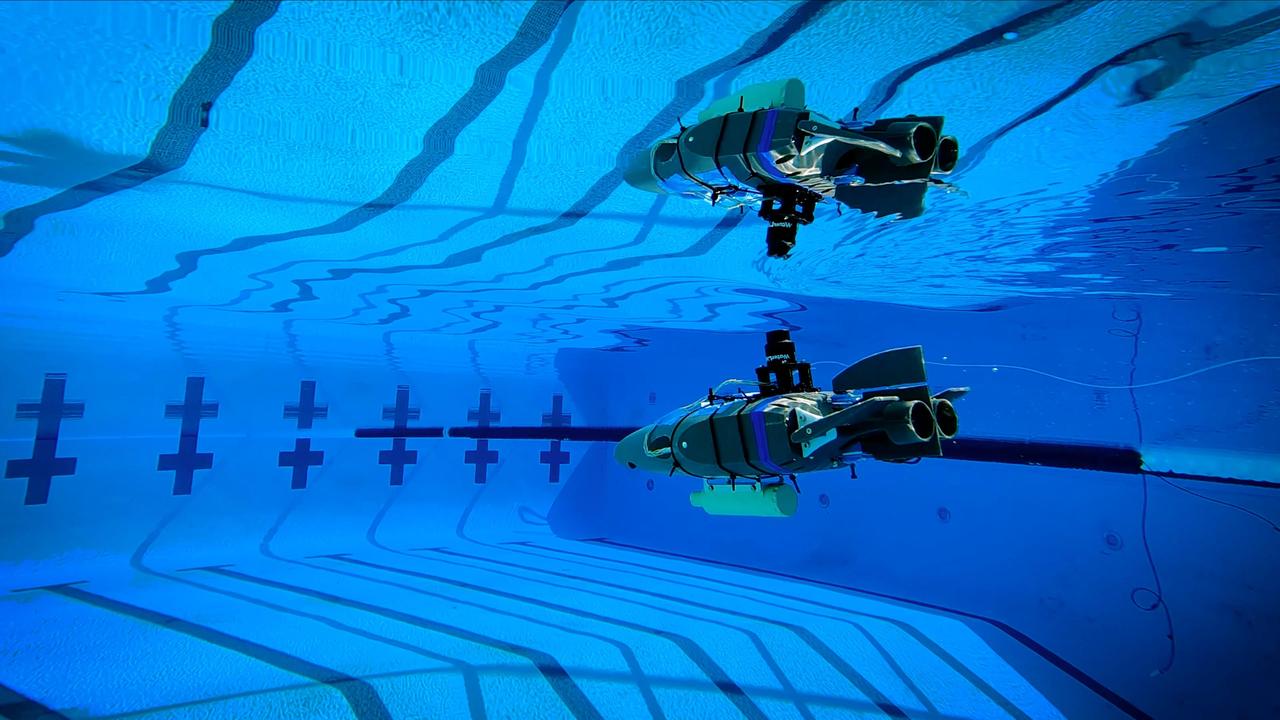
A prototype of a robot designed to explore the subsurface oceans of icy moons glides through a pool at Caltech in September 2024, its reflection visible below the water's surface. The prototype was built at NASA's Jet Propulsion Laboratory in Southern California to demonstrate the feasibility of a mission concept called SWIM, short for Sensing With Independent Micro-swimmers. SWIM envisions a swarm of dozens of self-propelled, cellphone-size robots exploring the waters of icy moons like Jupiter's Europa and Saturn's Enceladus. Delivered to the subsurface ocean by an ice-melting cryobot, the tiny robots would zoom away to look for chemical and temperature signals that could point to life. The prototype used in most of the pool tests was about 16.5 inches (42 centimeters) long, weighing 5 pounds (2.3 kilograms). As conceived for spaceflight, the robots would have dimensions about three times smaller – tiny compared to existing remotely operated and autonomous underwater scientific vehicles. In this image, commercial acoustic modules are mounted to the robot for testing: on top, one for communication, and on the bottom, one for underwater GPS. These devices were used during pool testing as stand-ins for what would be a novel wireless underwater acoustic communication system used both to transmit data between the cryobot and the swarm and to help each robot determine its position without the benefit of GPS. Led by JPL, work on SWIM took place from spring 2021 to fall 2024. The project was supported by Phase I and II funding from NASA's Innovative Advanced Concepts program under the agency's Space Technology Mission Directorate. JPL is managed for NASA by Caltech in Pasadena, California. https://photojournal.jpl.nasa.gov/catalog/PIA26423
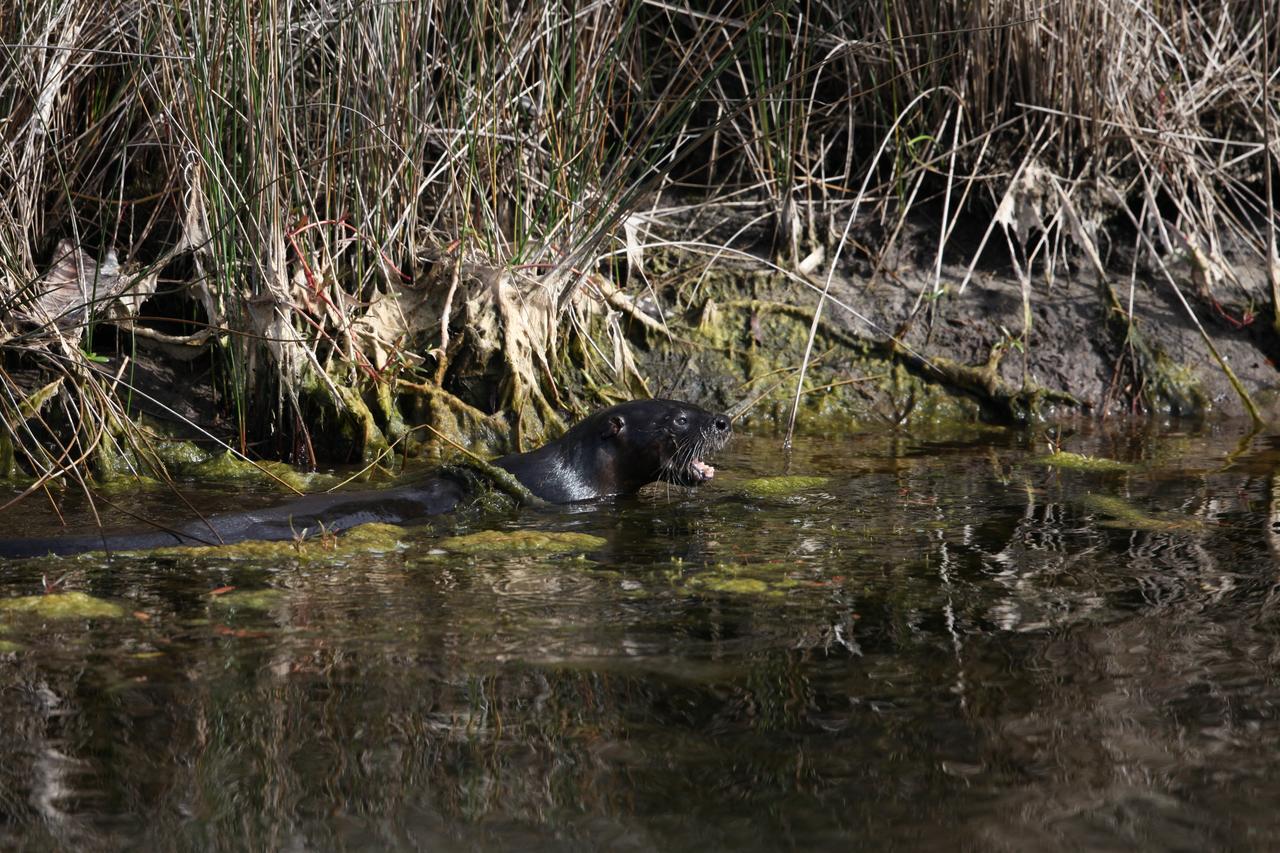
Nature photos of an otter swimming at Kennedy Space Center
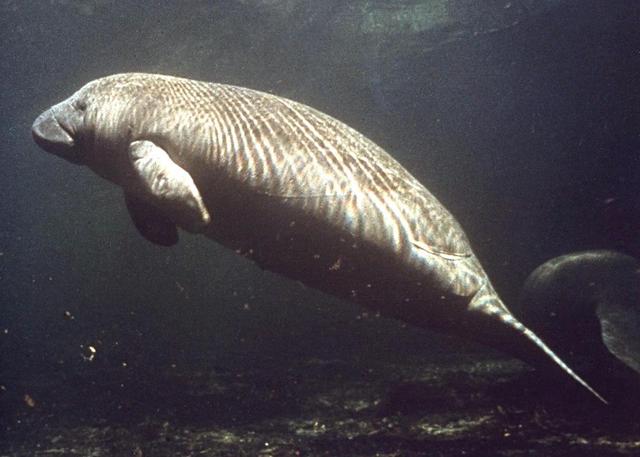
KENNEDY SPACE CENTER, FLA. -- A manatee swims in the water near Kennedy Space Center.
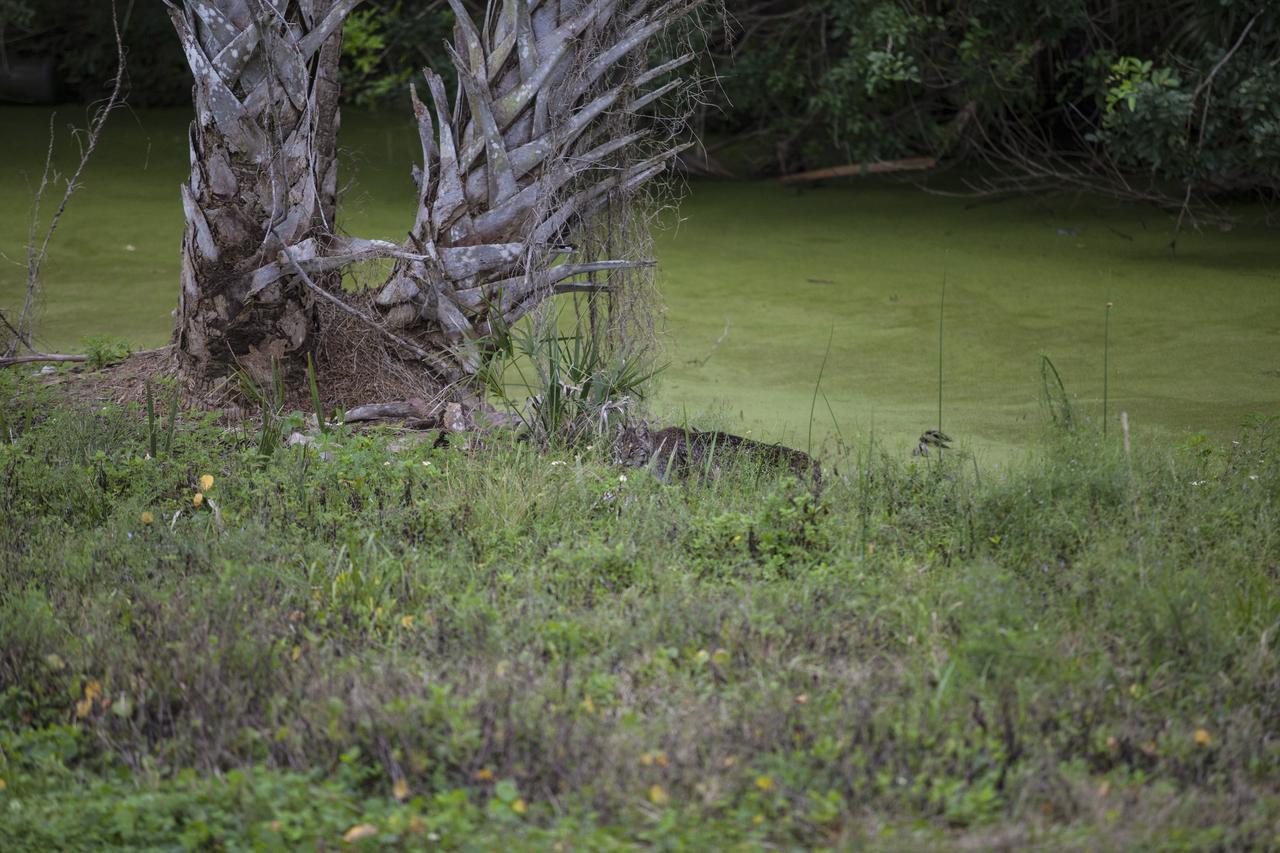
CAPE CANAVERAL, Fla. – A bobcat walks along a canal near the NASA News Center at Kennedy Space Center in Florida. The center shares a boundary with the Merritt Island National Wildlife Refuge. The refuge encompasses 140,000 acres that are a habitat for more than 330 species of birds, 31 mammals, 117 fishes, and 65 amphibians and reptiles. Photo credit: NASA/Daniel Casper
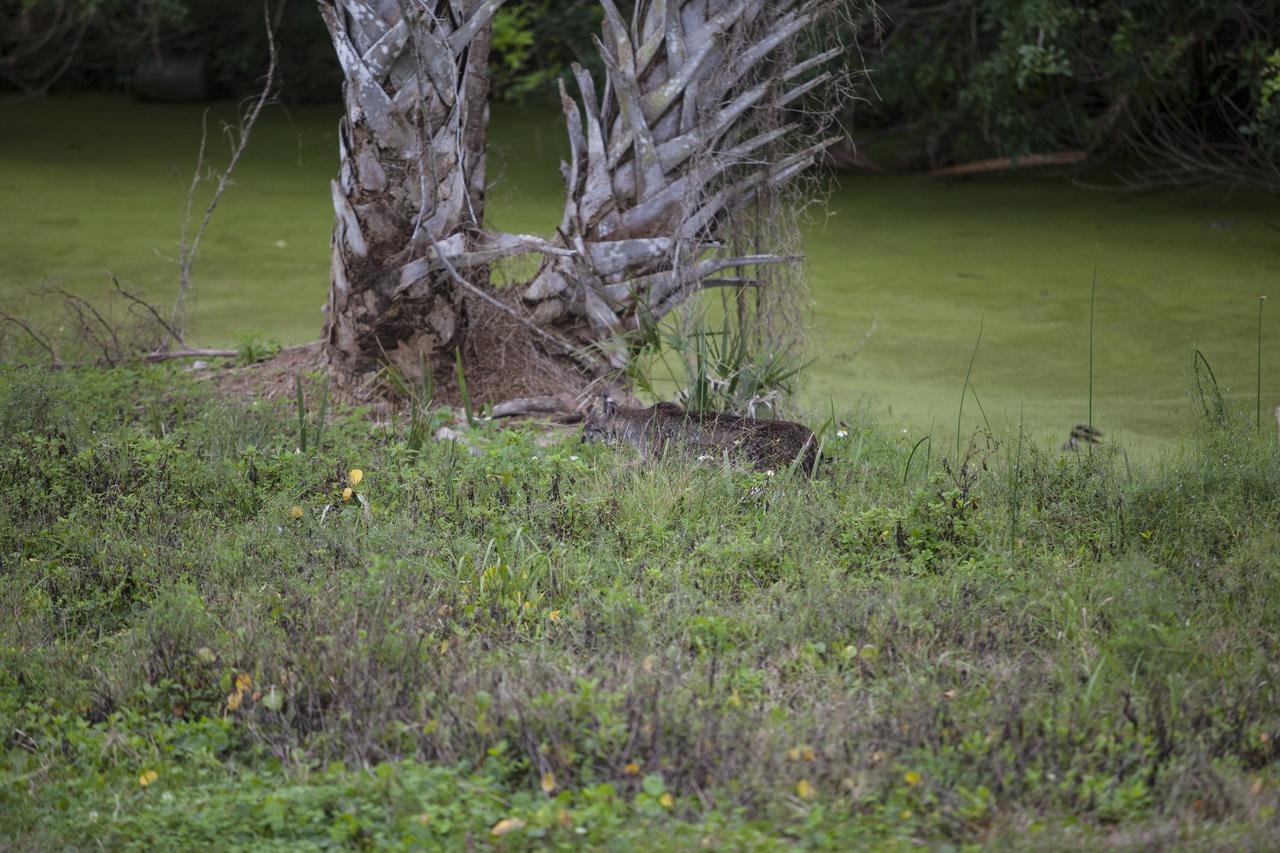
CAPE CANAVERAL, Fla. – A bobcat walks along a canal near the NASA News Center at Kennedy Space Center in Florida. The center shares a boundary with the Merritt Island National Wildlife Refuge. The refuge encompasses 140,000 acres that are a habitat for more than 330 species of birds, 31 mammals, 117 fishes, and 65 amphibians and reptiles. Photo credit: NASA/Daniel Casper
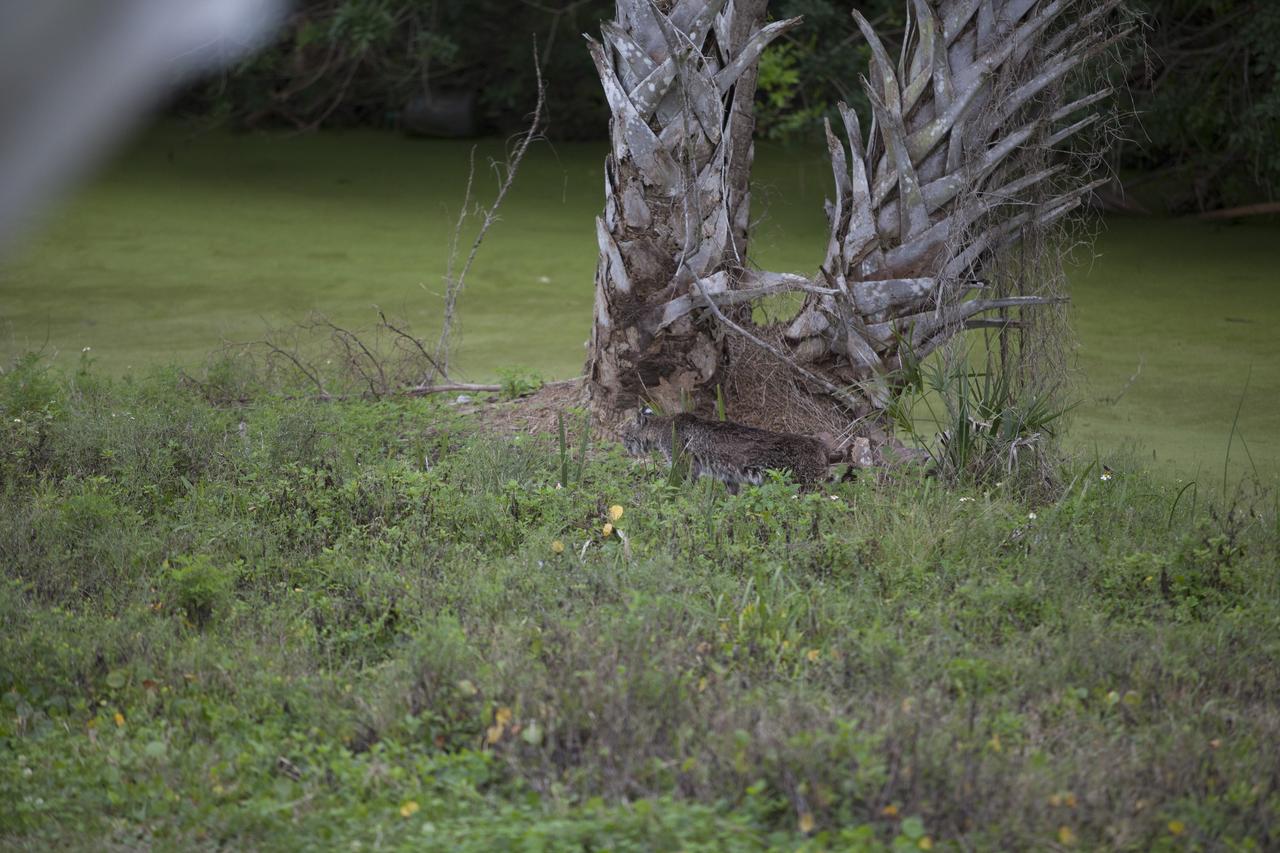
CAPE CANAVERAL, Fla. – A bobcat walks along a canal near the NASA News Center at Kennedy Space Center in Florida. The center shares a boundary with the Merritt Island National Wildlife Refuge. The refuge encompasses 140,000 acres that are a habitat for more than 330 species of birds, 31 mammals, 117 fishes, and 65 amphibians and reptiles. Photo credit: NASA/Daniel Casper. Note: Selected image is cropped
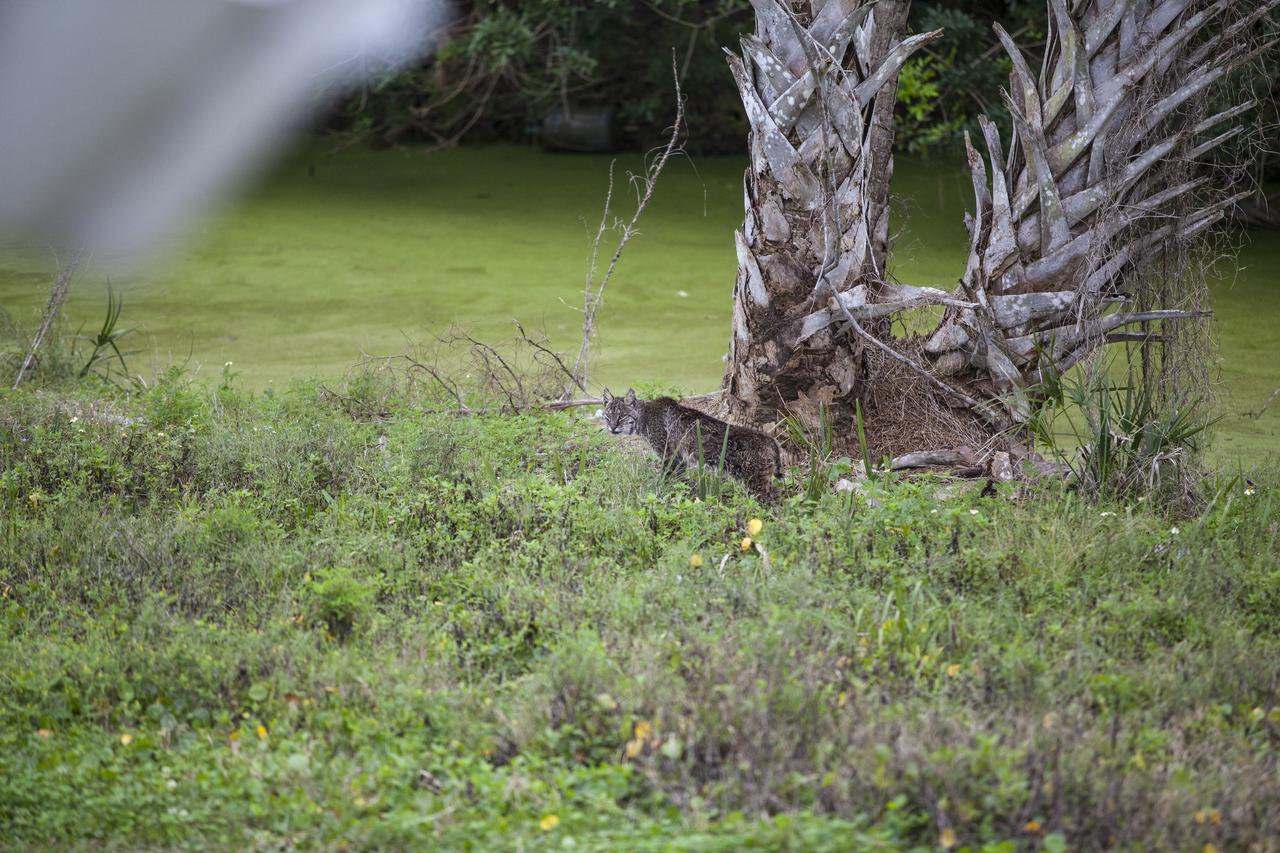
CAPE CANAVERAL, Fla. – A bobcat pauses to look back at the photographer while out for a walk at NASA's Kennedy Space Center in Florida. The center shares a boundary with the Merritt Island National Wildlife Refuge. The refuge encompasses 140,000 acres that are a habitat for more than 330 species of birds, 31 mammals, 117 fishes, and 65 amphibians and reptiles. Photo credit: NASA/Daniel Casper Note: selected image is cropped
CAPE CANAVERAL, Fla. – A bobcat walks on the shore of a canal near the NASA News Center at Kennedy Space Center in Florida. The center shares a boundary with the Merritt Island National Wildlife Refuge. The refuge encompasses 140,000 acres that are a habitat for more than 330 species of birds, 31 mammals, 117 fishes, and 65 amphibians and reptiles. Photo credit: NASA/Daniel Casper
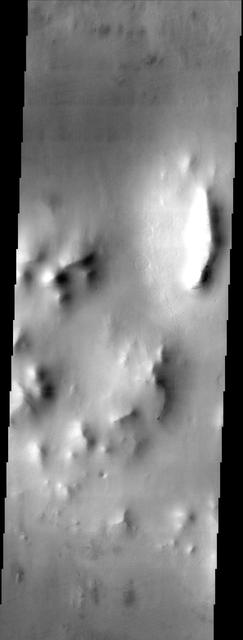
The muted terrain of northern Acidalia Planitia, as seen in this image from NASA Mars Odyssey spacecraft, testifies to the fact that the region is heavily mantled with dust.
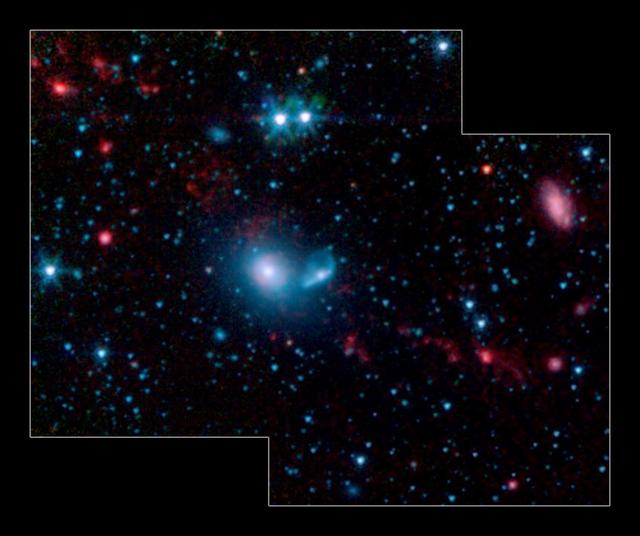
This false-color infrared image from NASA Spitzer Space Telescope shows little dwarf galaxies forming in the tails of two larger galaxies that are colliding together.
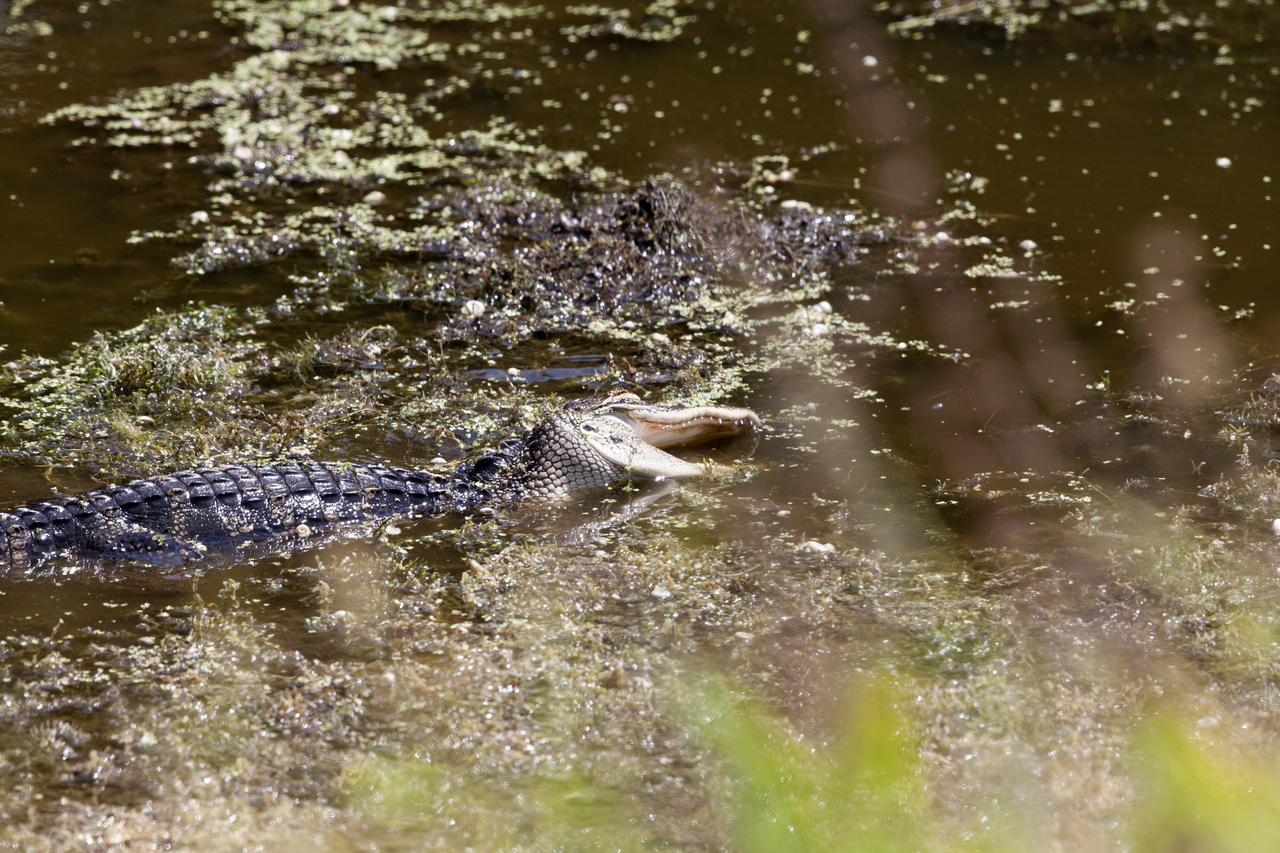
An alligator swims in a brackish waterway at NASA's Kennedy Space Center in Florida. The center shares a border with the Merritt Island National Wildlife Refuge. More than 330 native and migratory bird species, 25 mammals, 117 fishes and 65 amphibians and reptiles call Kennedy and the wildlife refuge home.
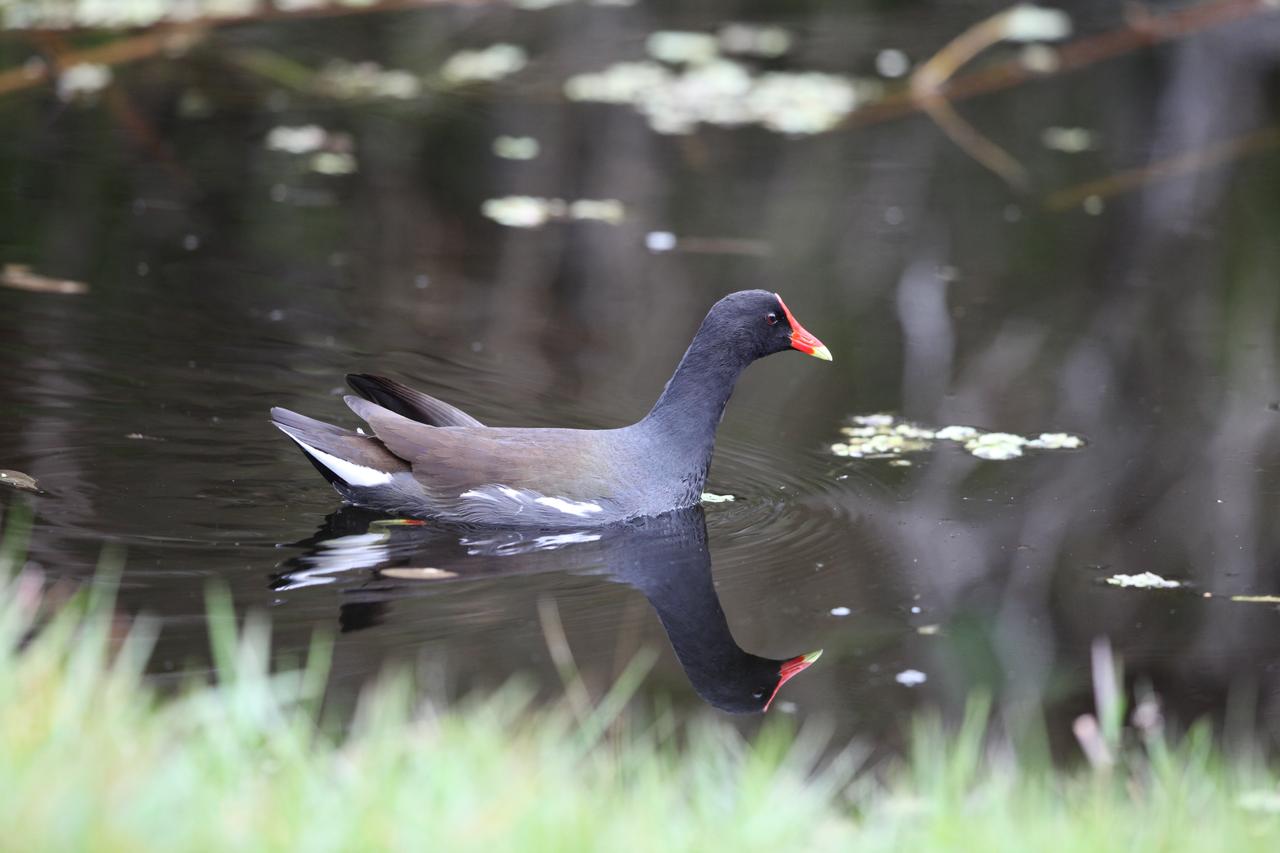
A common gallinule swims in a waterway at NASA's Kennedy Space Center in Florida. The center shares a border with the Merritt Island National Wildlife Refuge. More than 330 native and migratory bird species, 25 mammals, 117 fishes and 65 amphibians and reptiles call Kennedy and the wildlife refuge home.
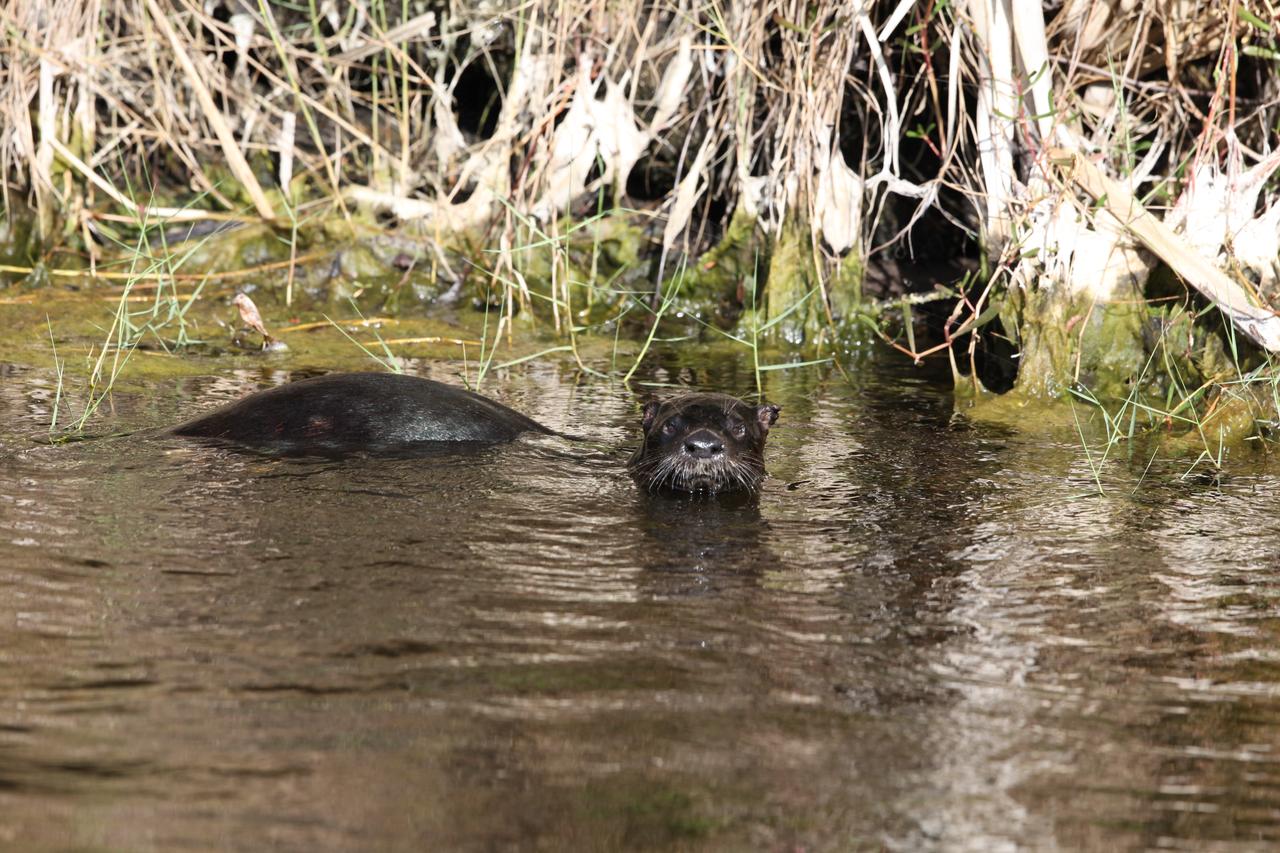
An otter swims through a waterway at NASA's Kennedy Space Center in Florida. The center shares a border with the Merritt Island National Wildlife Refuge. More than 330 native and migratory bird species, 25 mammals, 117 fishes and 65 amphibians and reptiles call Kennedy and the wildlife refuge home.
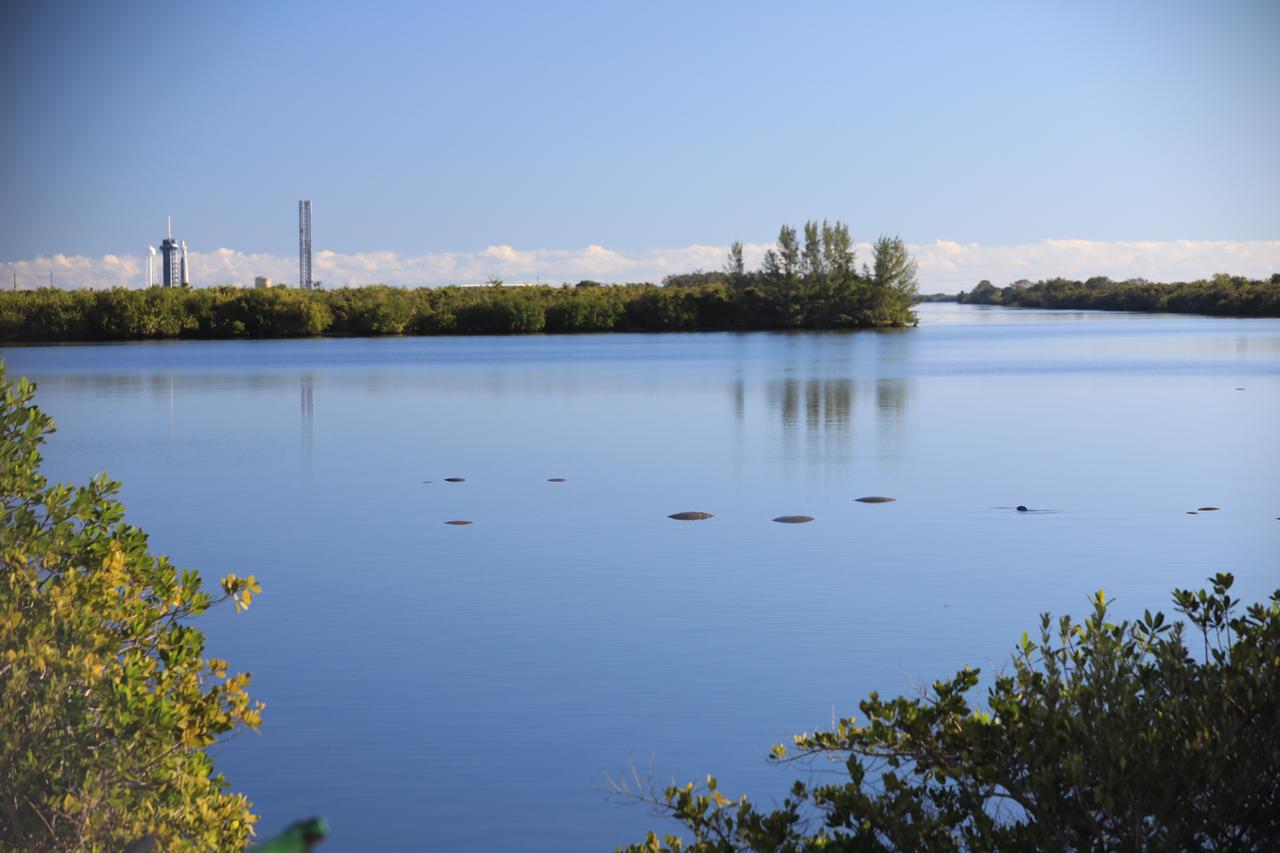
Several manatees swim in the turn basin of Launch Complex 39 at NASA’s Kennedy Space Center in Florida on Tuesday, Nov. 26, 2024. NASA Kennedy shares a boundary with the Merritt Island Wildlife National Refuge and is home to more than 1,500 species of plants and animals on 140,000 acres.
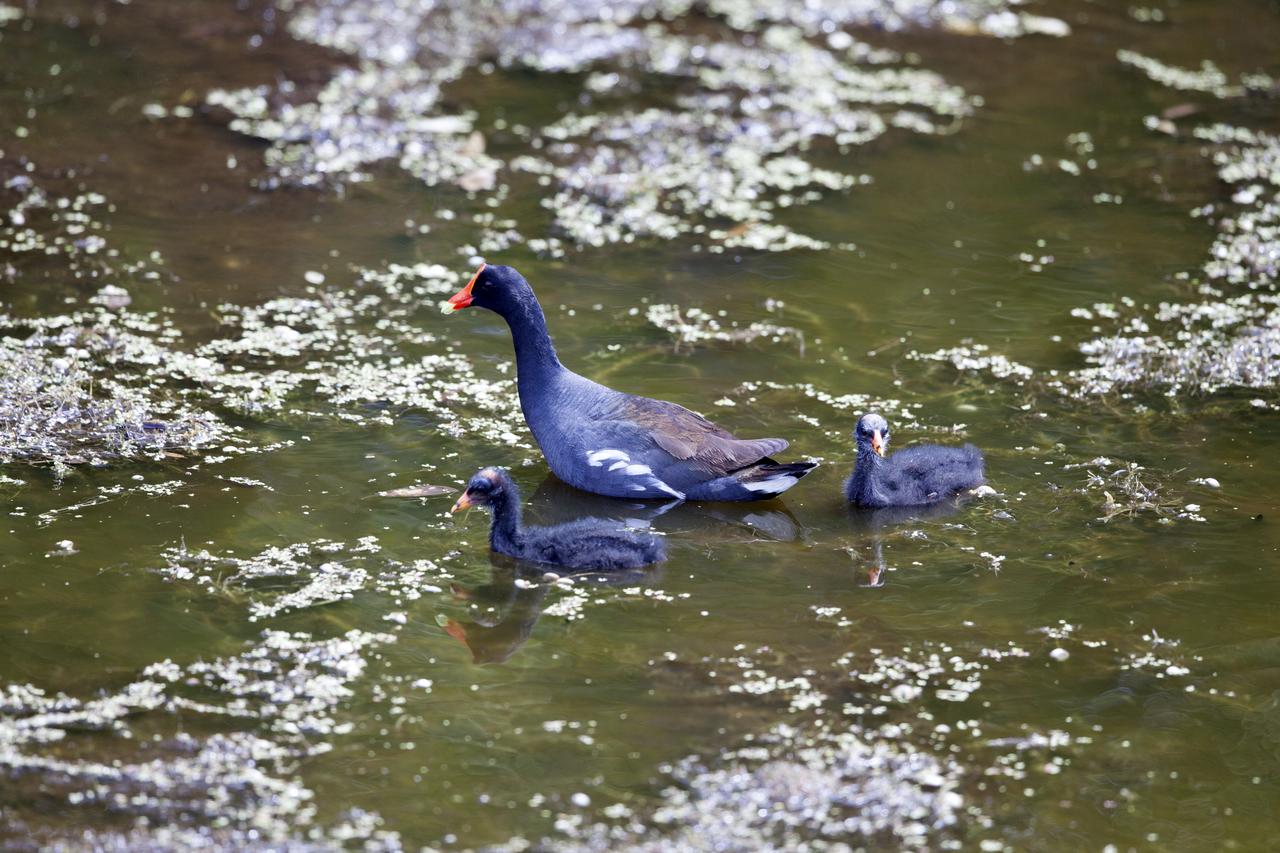
Common gallinules swim in a shallow waterway at NASA's Kennedy Space Center in Florida. The center shares a border with the Merritt Island National Wildlife Refuge. More than 330 native and migratory bird species, 25 mammals, 117 fishes and 65 amphibians and reptiles call Kennedy and the wildlife refuge home.
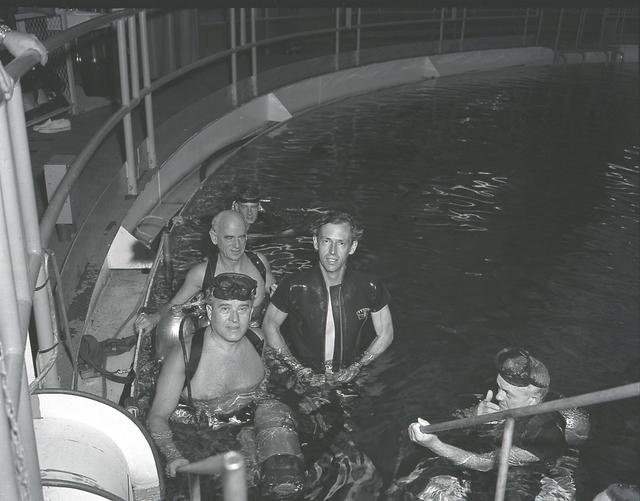
Dr. E. Stuhlinger, Dr. W. von Braun, and Dr. J. Piccard, along with others, take a swim in the Neutral Buoyancy Simulator (NBS) at the Marshall Space Flight Center. The NBS was instrumental in providing a zero-gravity environment where astronauts could practice tasks assigned for up coming space flights.
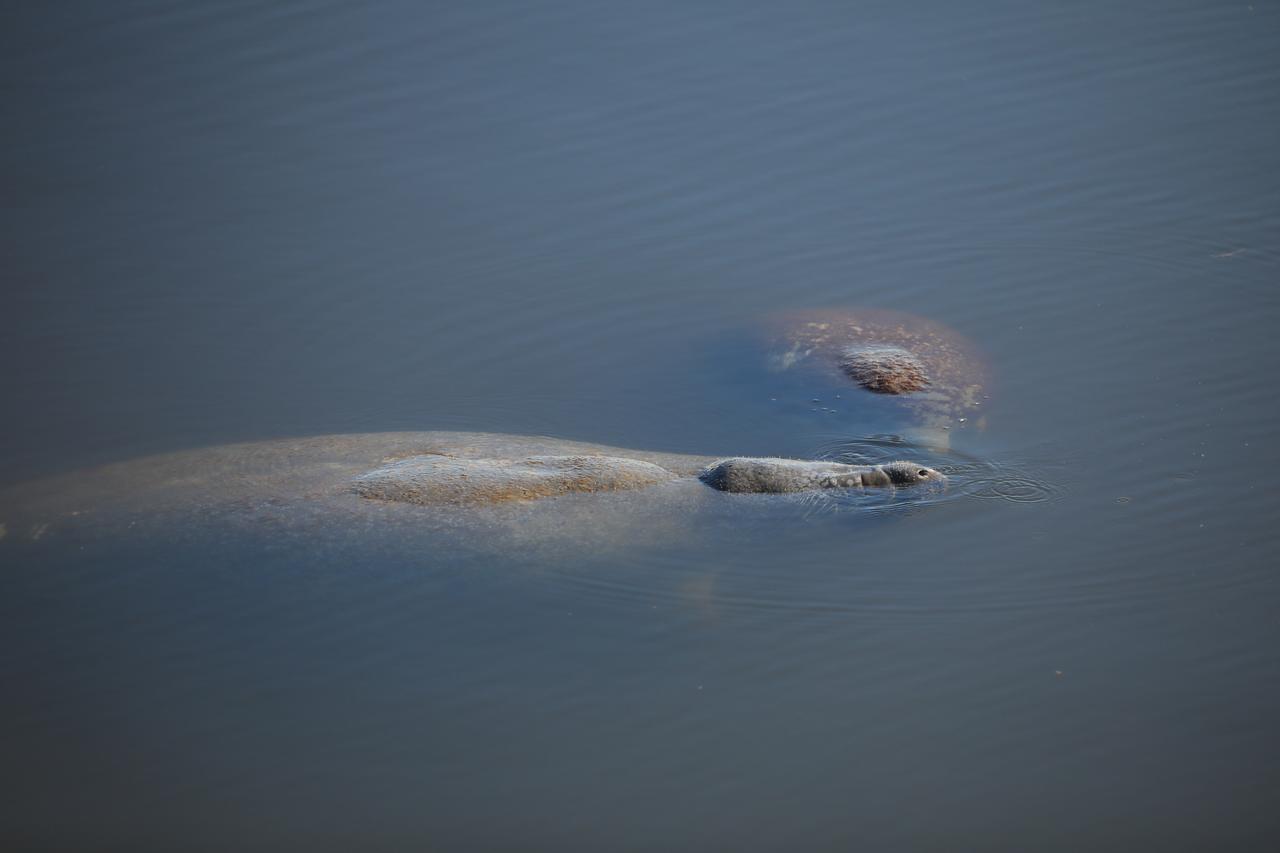
Several manatees swim in the turn basin of Launch Complex 39 at NASA’s Kennedy Space Center in Florida on Tuesday, Nov. 26, 2024. NASA Kennedy shares a boundary with the Merritt Island Wildlife National Refuge and is home to more than 1,500 species of plants and animals on 140,000 acres.
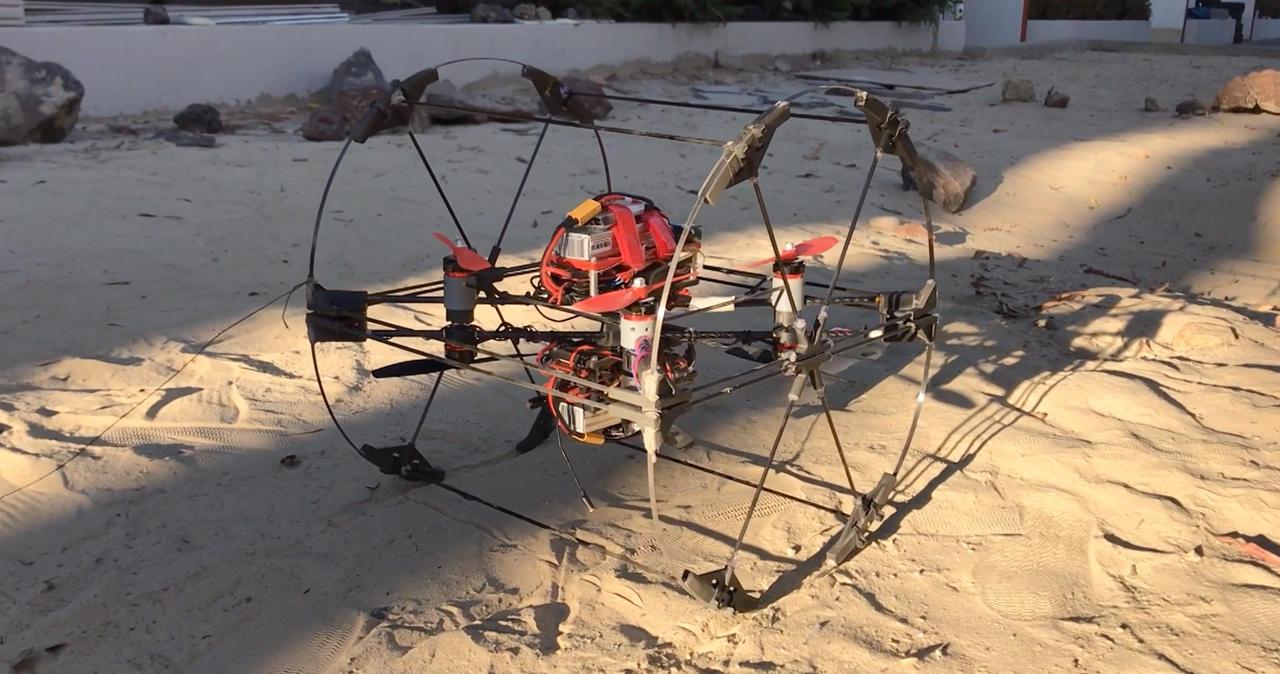
A prototype of the transforming robot Shapeshifter is tested in the robotics yard at NASA's Jet Propulsion Laboratory. Shapeshifter is made of smaller robots that can morph into rolling spheres, flying drones, swimming submersibles and more. Shapeshifter is a developing concept for a transformational vehicle to explore treacherous, distant worlds. The flying amphibious robot is part of the early-stage research program NASA Innovative Advanced Concepts (NIAC), which offers several phases of funding to visionary concepts, helping turn ideas that sound like science fiction into science fact. JPL Principle Investigator Ali Agha envisions Shapeshifter as a mission to Saturn's moon Titan, the only other world in the solar system known to have liquid in the form of methane lakes, rivers and seas on its surface. https://photojournal.jpl.nasa.gov/catalog/PIA23433
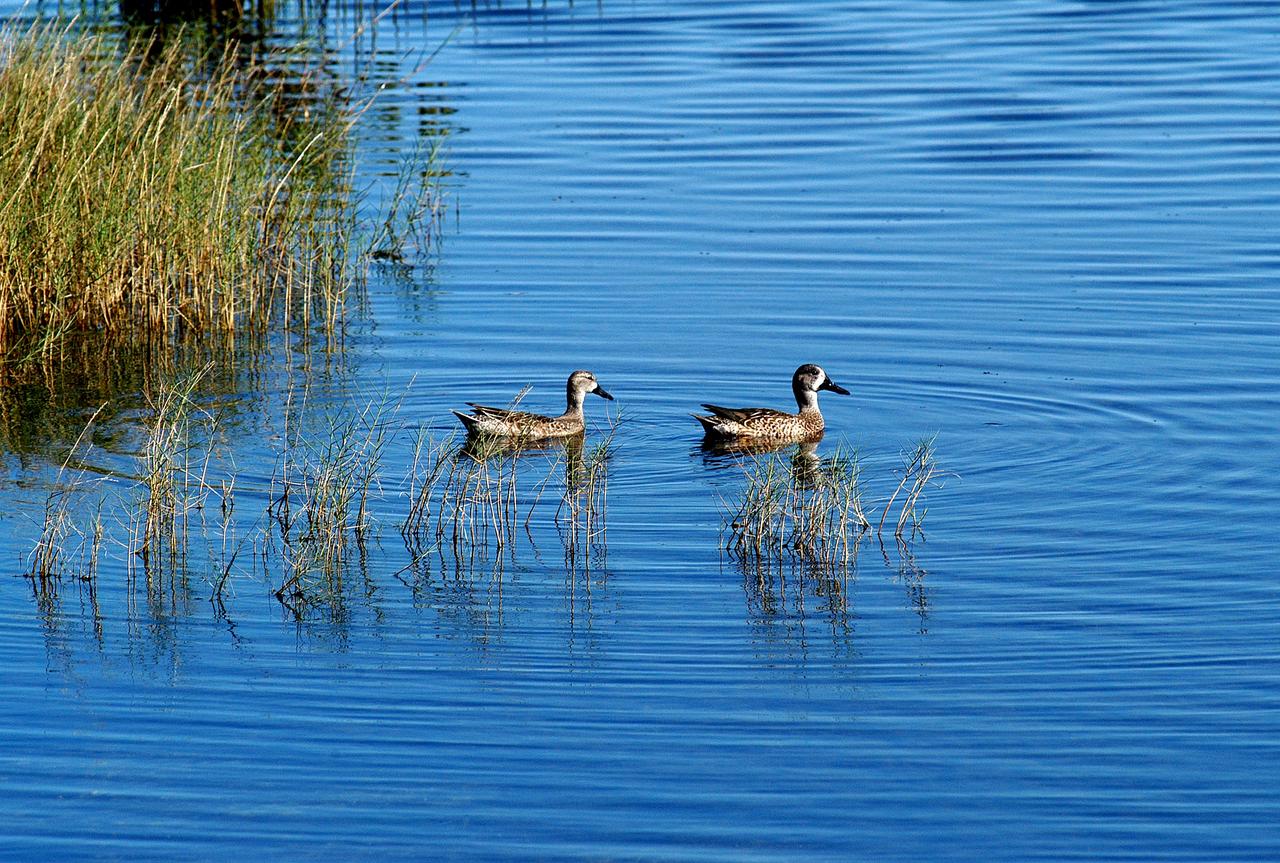
KENNEDY SPACE CENTER, FLA. - Two blue-winged teals swim in a pond near KSC. The species prefers marshes and shallow ponds and lakes for nesting and range from Canada to North Carolina, the Gulf Coast and Southern California, as well as Florida. KSC shares a boundary with the National Merritt Island Wildlife Refuge, which provides wintering areas for 23 species of migratory waterfowl, as well as a year-round home for great blue herons, great egrets, wood storks, cormorants, brown pelicans and other species of marsh and shore birds.
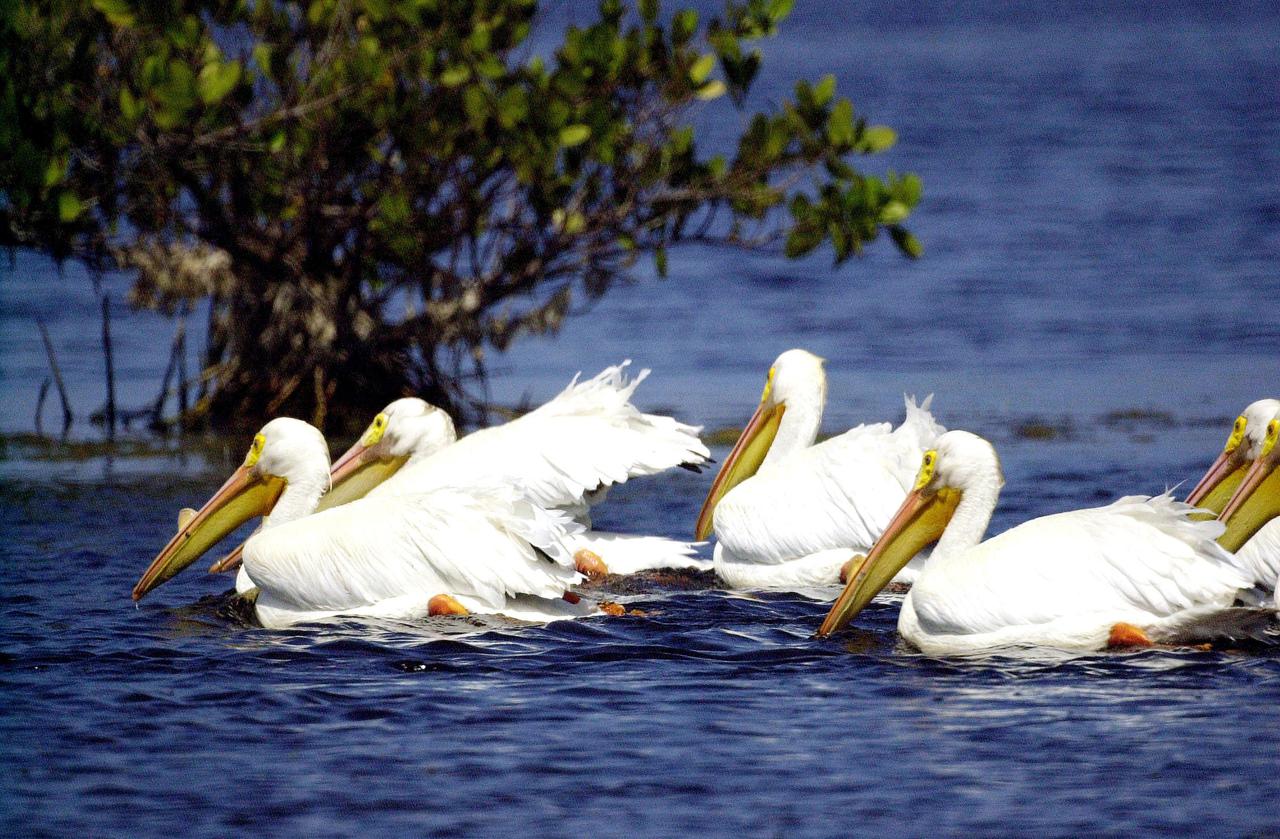
KENNEDY SPACE CENTER, FLA. -- White pelicans swim gracefully on the blue water of this lake near Kennedy Space Center. Found from British Columbia south to western Ontario, California and the Texas coast, White Pelicans winter from Florida south to Panama. They prefer marshy lakes and coastal regions, and winter chiefly in coastal lagoons
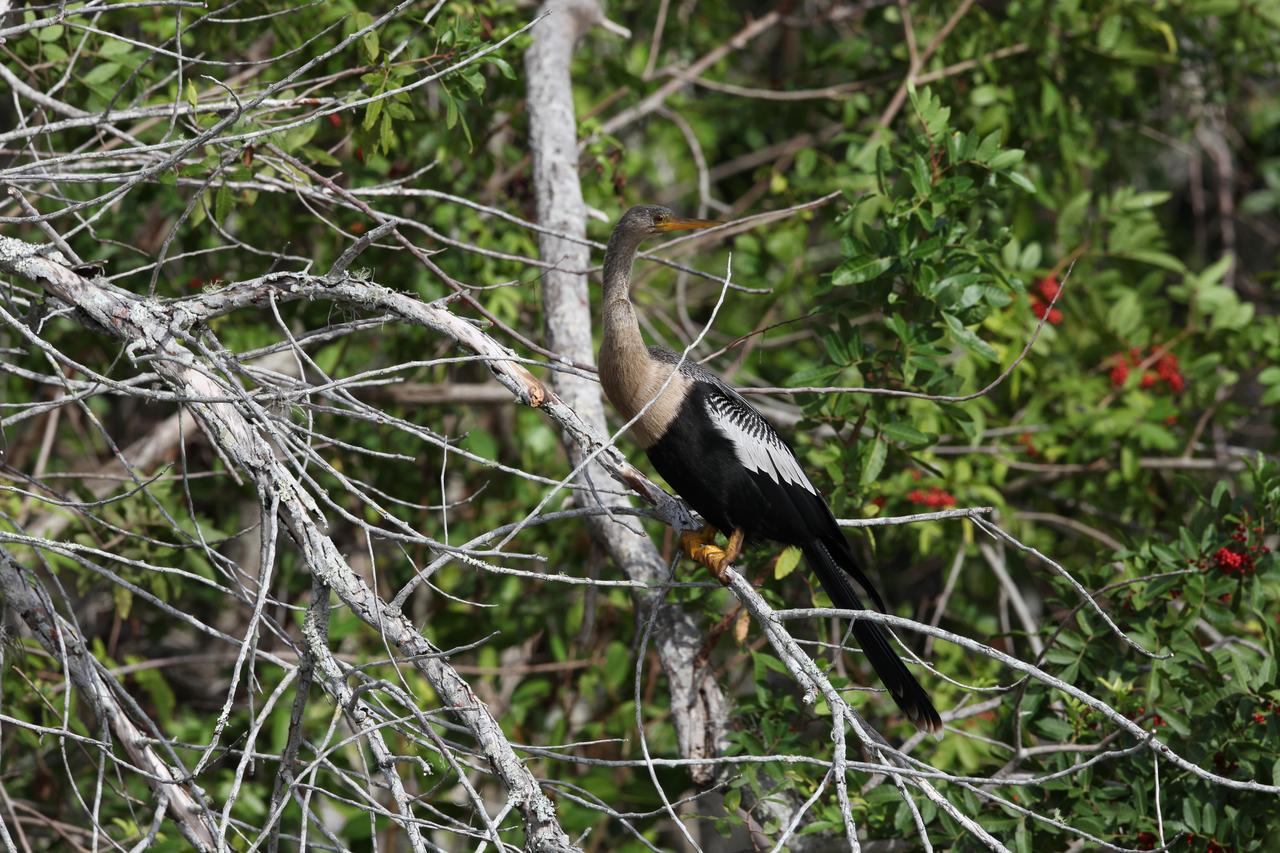
An Anhinga perches on a branch in an area of underbrush at NASA's Kennedy Space Center in Florida. The Anhinga is also known as a Water-Turkey for its swimming habits and broad tail. The center shares a border with the Merritt Island National Wildlife Refuge. More than 330 native and migratory bird species, 25 mammals, 117 fishes and 65 amphibians and reptiles call Kennedy and the wildlife refuge home.
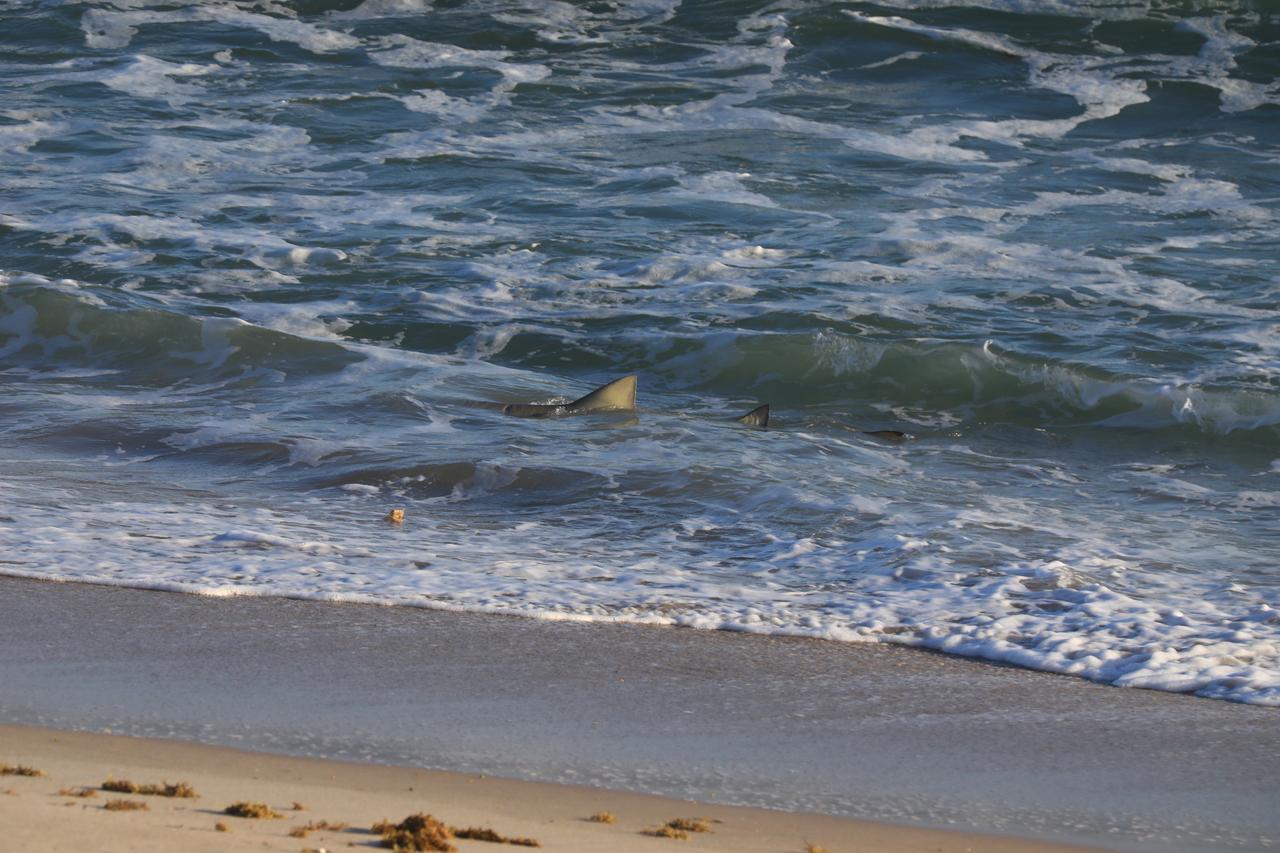
A shark swims near the shore at Cape Canaveral Space Force Station (CCSFS) on Oct. 27, 2020. CCSFS shares boundaries with the Merritt Island National Wildlife Refuge, featuring miles of pristine beaches on the Atlantic Ocean. The refuge contains coastal dunes, saltwater marshes, freshwater impoundments, scrub, pine flatwoods, and hardwood hammocks that provide habitat for more than 1,500 species of plants and animals.
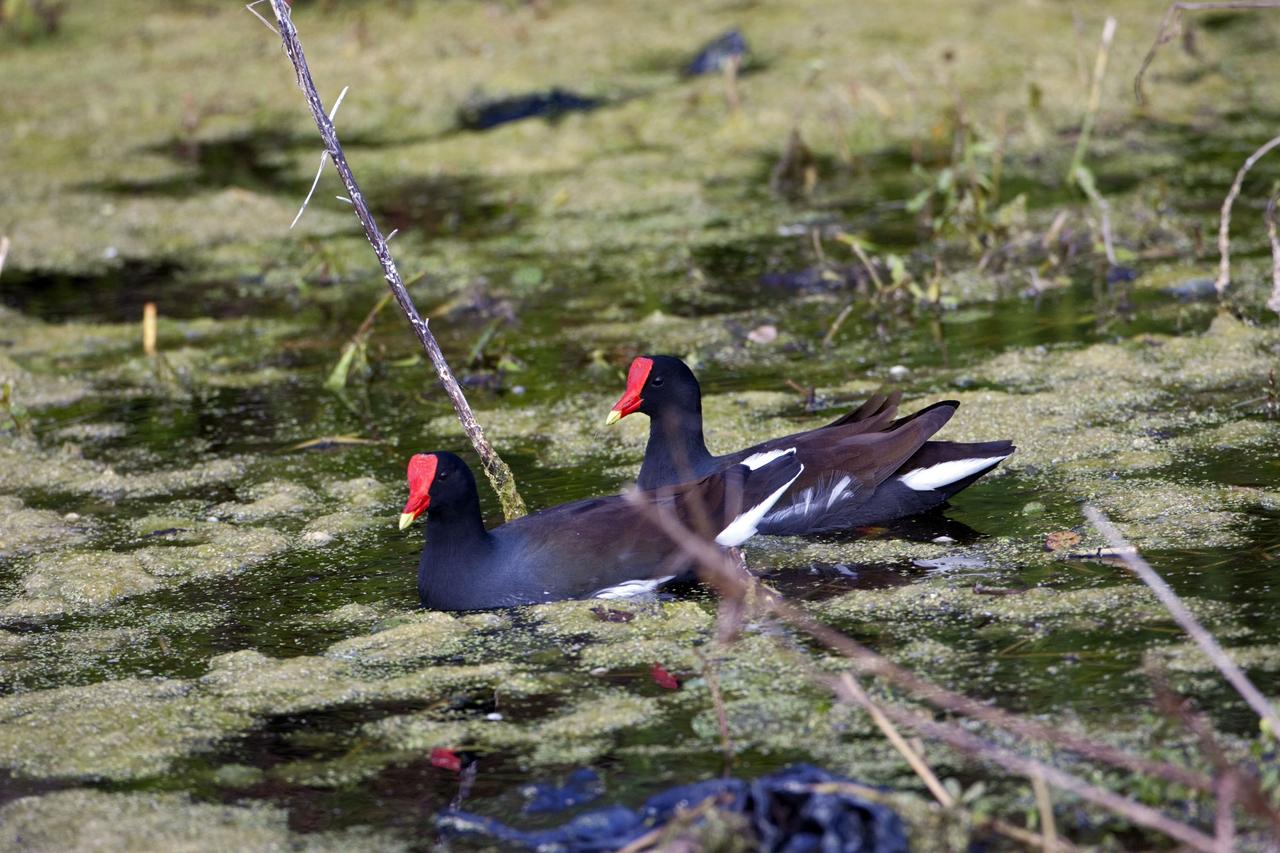
CAPE CANAVERAL, Fla. -- Two common gallinules swim through the algae-covered water of a pond at NASA's Kennedy Space Center in Florida. The center shares a boundary with the Merritt Island National Wildlife Refuge, consisting of 140,000 acres. The refuge provides a wide variety of habitats -- coastal dunes, saltwater estuaries and marshes, freshwater impoundments, scrub, pine flatwoods, and hardwood hammocks -- that provide sanctuary for more than 1,500 species of plants and animals, including about 331 species of birds. Photo credit: NASA/Jim Grossmann
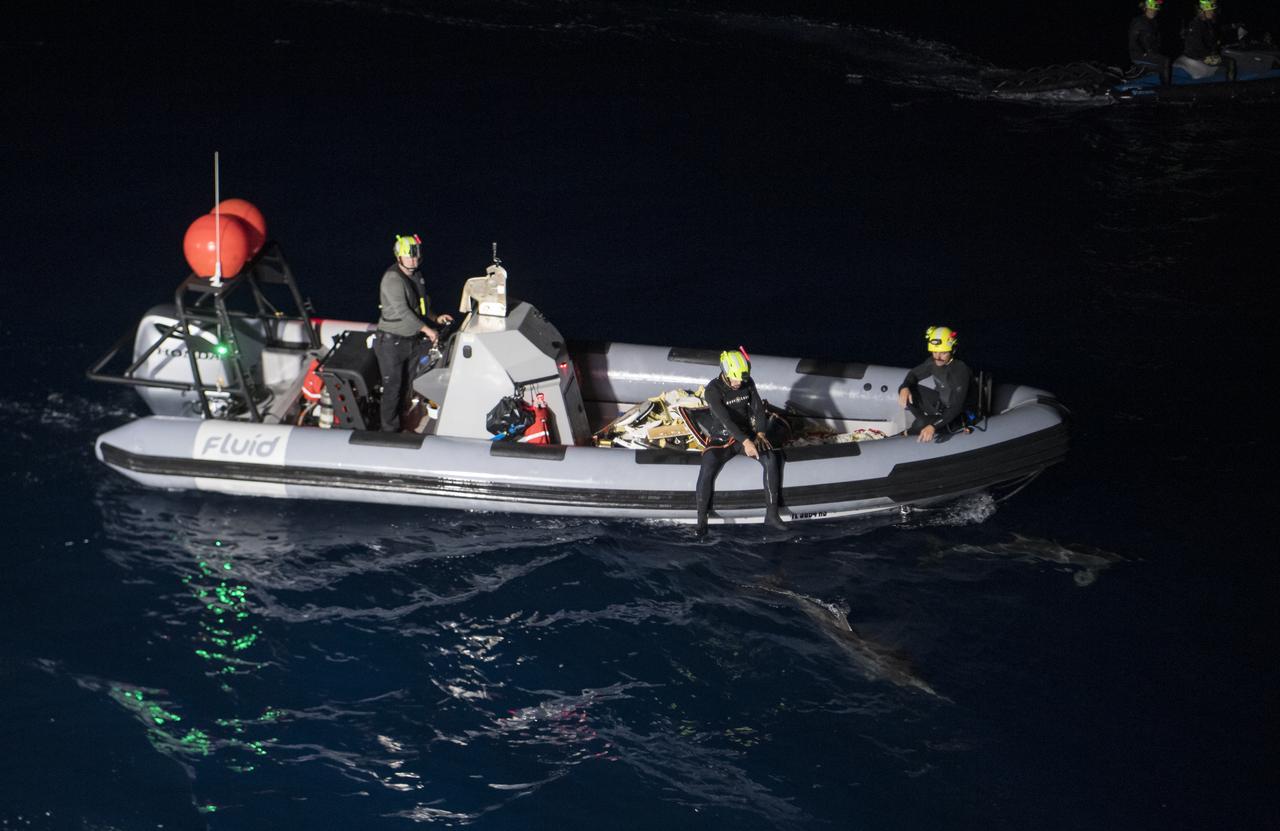
Dolphins swim alongside the SpaceX support teams after the SpaceX Crew Dragon Endurance spacecraft landed with NASA astronauts Raja Chari, Kayla Barron, Tom Marshburn, and ESA (European Space Agency) astronaut Matthias Maurer aboard, in the Gulf of Mexico, off the coast of Tampa, Florida, Friday, May 6, 2022. Maurer, Marshburn, Chari, and Barron are returning after 177 days in space as part of Expeditions 66 and 67 aboard the International Space Station. Photo Credit: (NASA/Aubrey Gemignani)
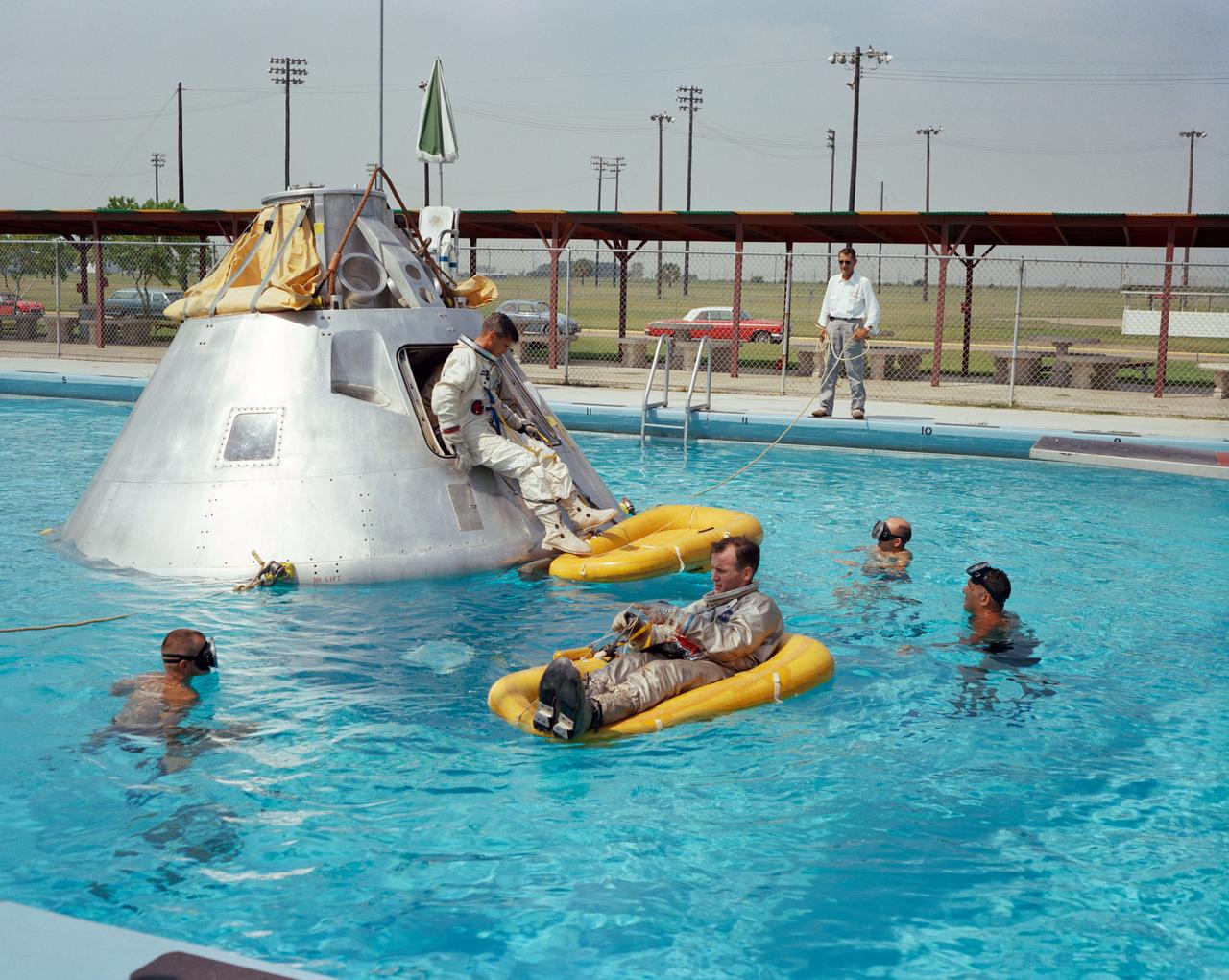
S66-51583 (June 1966)--- Prime crew members announced by the National Aeronautics and Space Administration (NASA) for the first manned Apollo 1 space flight practice water egress procedures in a swimming pool at Ellington Air Force Base (EAFB), Houston, Texas. Astronaut Edward H. White II rides life raft in the foreground. Astronaut Roger B. Chaffee sits in hatch of the boilerplate model of the spacecraft. Astronaut Virgil I. Grissom, third member of the crew, waits inside the spacecraft.
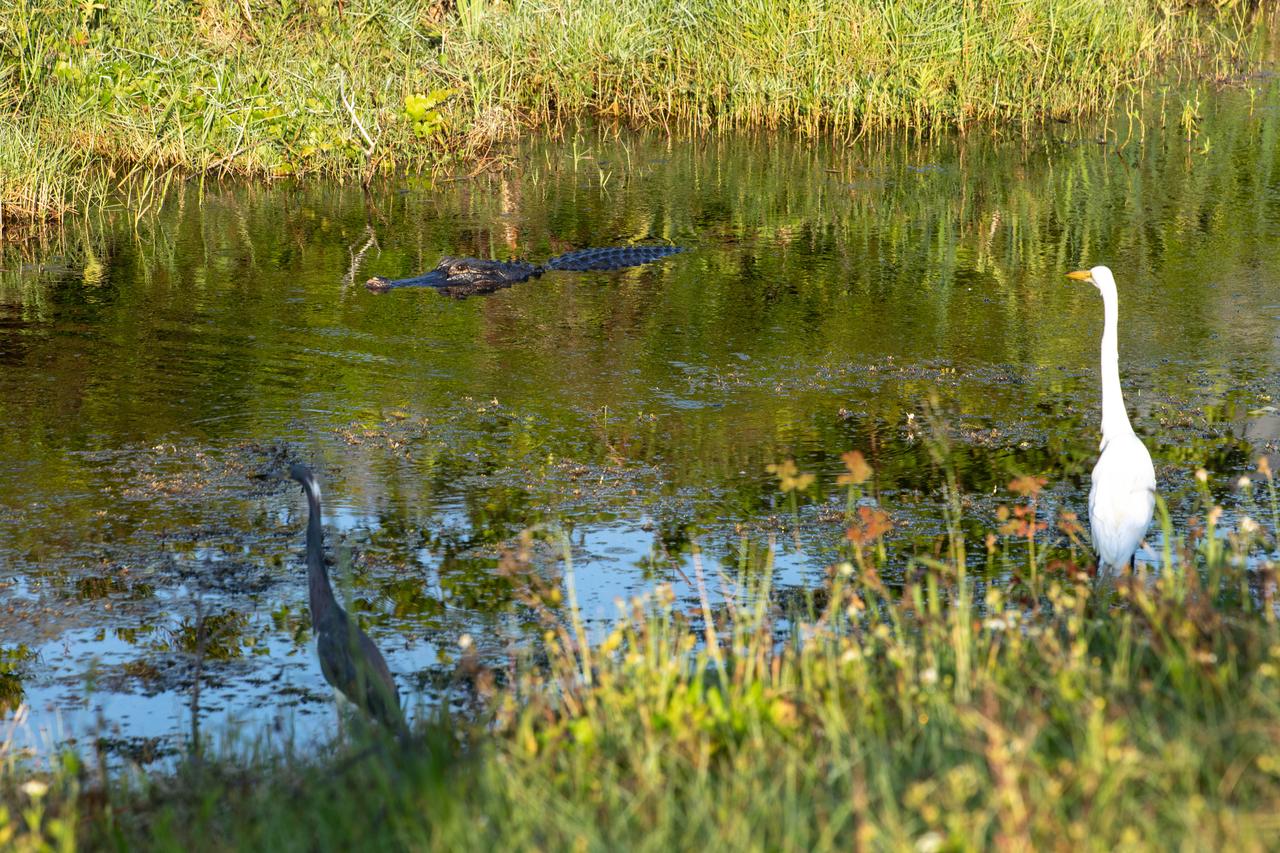
An adult blue heron, at left, and an adult great egret wade along the shore of a waterway at NASA’s Kennedy Space Center in Florida on May 16, 2022. An alligator swims nearby. The center shares a border with the Merritt Island National Wildlife Refuge. More than 330 native and migratory bird species, along with 65 amphibian and reptile species call Kennedy and the wildlife refuge home.
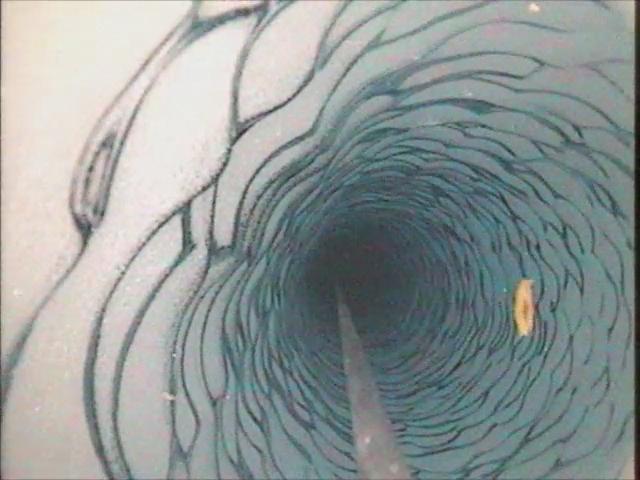
At a depth of 600 feet beneath the West Antarctic ice sheet, a small shrimp-like creature managed to brighten up an otherwise gray polar day in late November 2009. This critter is a three-inch long Lyssianasid amphipod found beneath the Ross Ice Shelf, about 12.5 miles away from open water. NASA scientists were using a borehole camera to look back up towards the ice surface when they spotted this pinkish-orange creature swimming beneath the ice. Credit: NASA
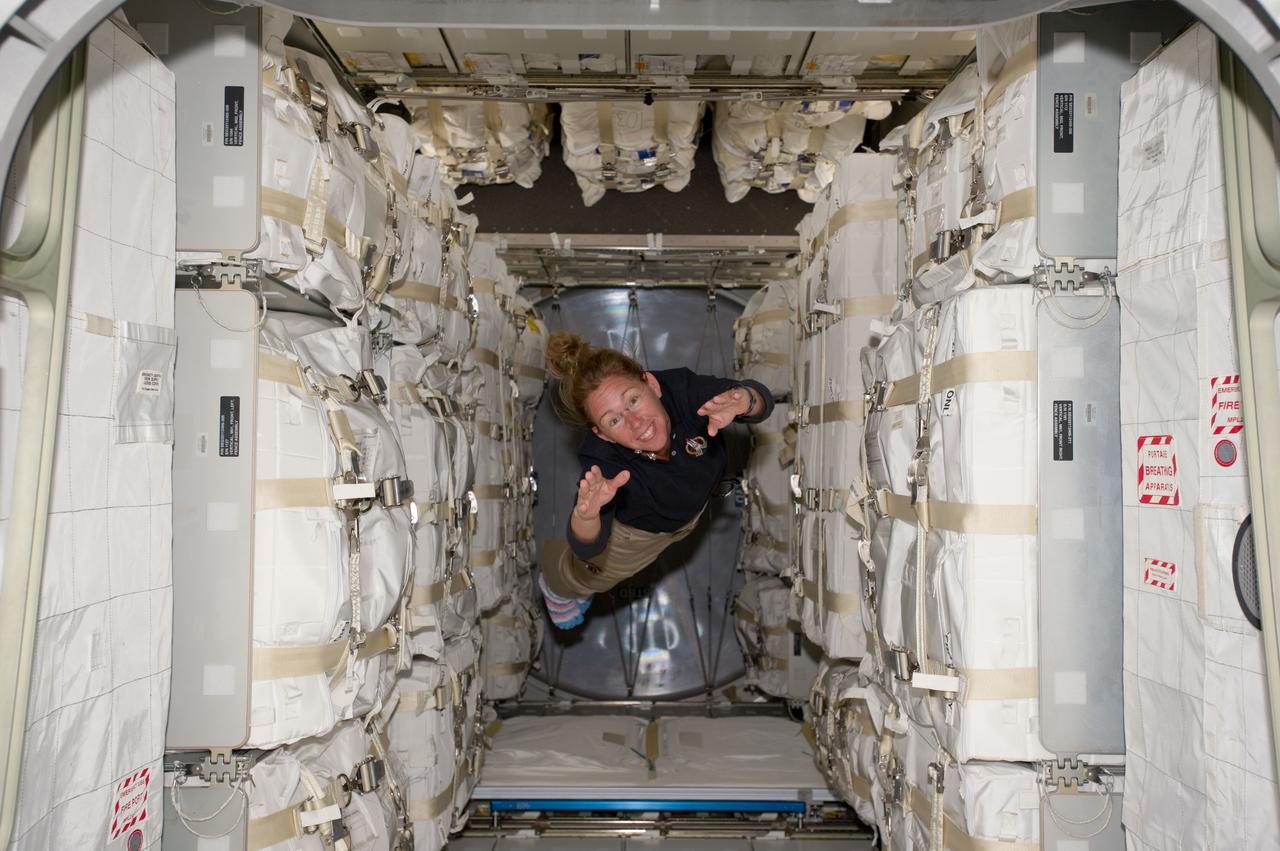
S135-E-007420 (11 July 2011) --- NASA astronaut Sandy Magnus, STS-135 mission specialist, may well be thinking of the word "ocean" for two reasons. Her navigation in the weightlessness of space could be loosely compared to swimming, and she is surrounded by an "ocean” of supplies and equipment in the Raffaello multi-purpose logistics module. The supplies and spare parts are for use and consumption for the International Space Station and its crews. Raffaello was transported up to the station by Magnus and her three crewmates aboard the space shuttle Atlantis. Photo credit: NASA
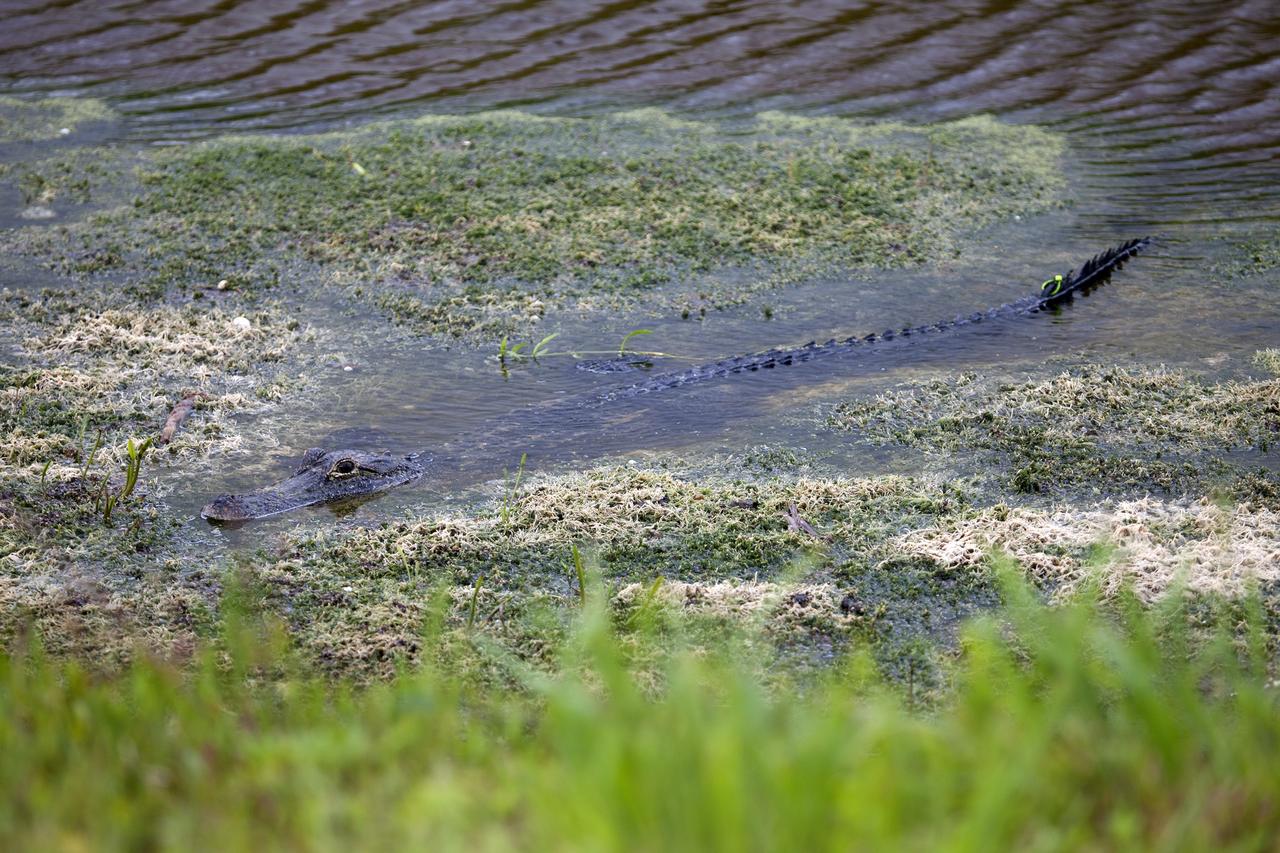
CAPE CANAVERAL, Fla. -- This alligator sports a florescent green tag on its tail, which blends in with the vegetation in the canal in which it is swimming on NASA's Kennedy Space Center in Florida. The undeveloped property on Kennedy Space Center is managed by the U.S. Fish and Wildlife Service through the Merritt Island National Wildlife Refuge. For information on the refuge, visit http://www.fws.gov/merrittisland/Index.html. For information on the alligators prowling the waterways at Kennedy, visit http://www.nasa.gov/content/ancient-creatures-on-the-prowl/. Photo credit: NASA/Daniel Casper
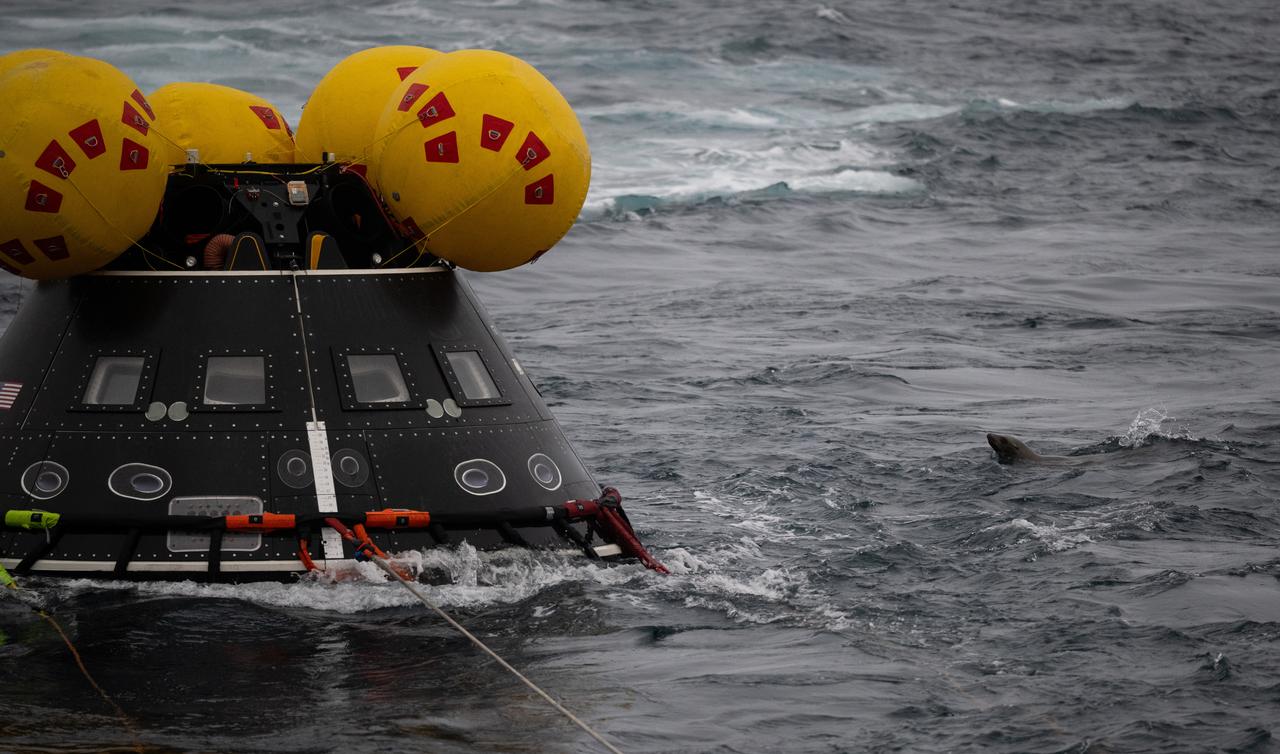
A marine mammal swims past the Crew Module Test Article (CMTA), a full scale replica of the Orion spacecraft, as teams practice Artemis recovery operations during Underway Recovery Test-12 onboard USS Somerset off the coast of California, Thursday, March 27, 2025. During the test, NASA and Department of Defense teams are practicing to ensure recovery procedures are validated as NASA plans to send the Artemis II astronauts around the Moon and splashdown in the Pacific Ocean. Photo Credit: (NASA/Joel Kowsky)
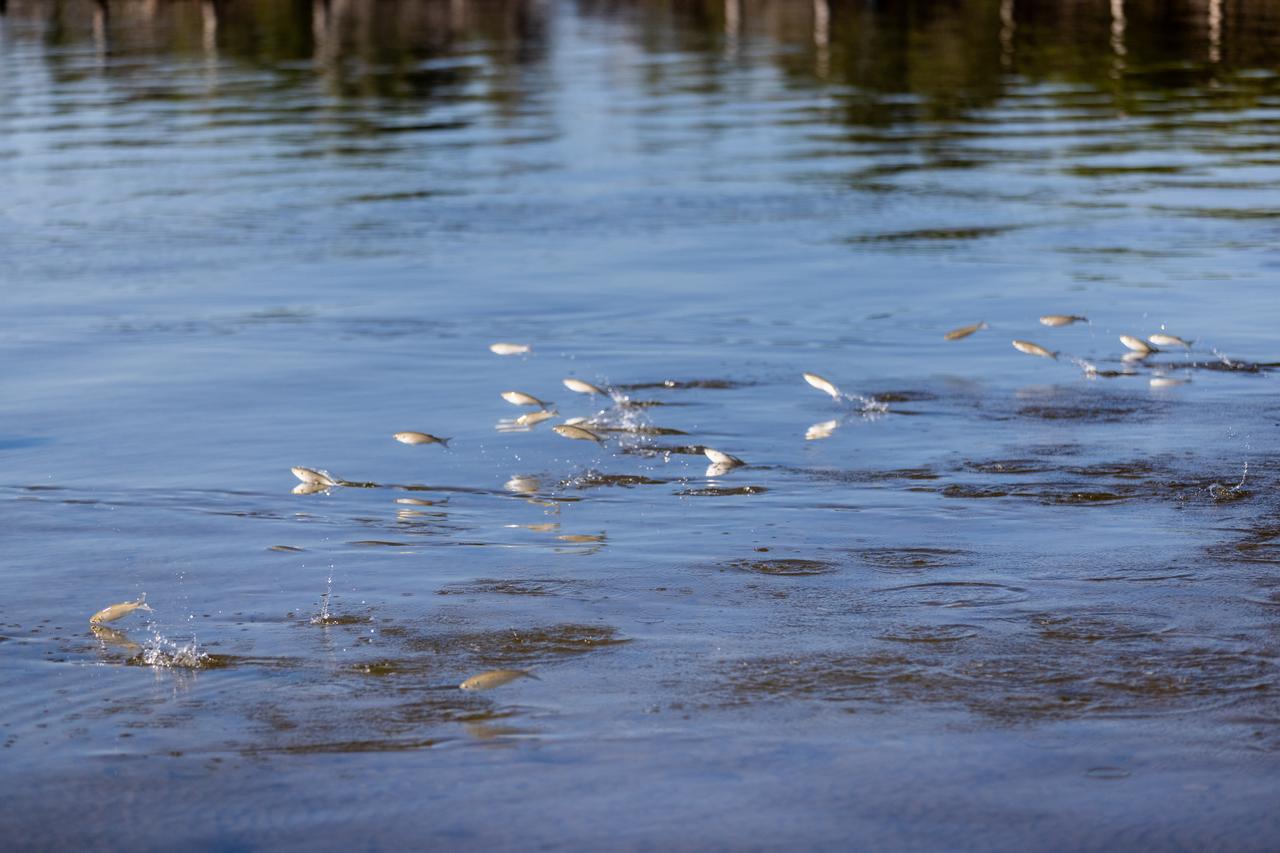
NASA Kennedy Space Center’s Spaceport Integration and Services organization is leading a restoration project at KARS Park on Hall Road in Merritt Island, Florida. As part of this project, a wavebreak is being created about 20 feet offshore to allow mangroves and other plants to propagate into the gap, providing protection for the shoreline. Shown here are mullet swimming at the location.
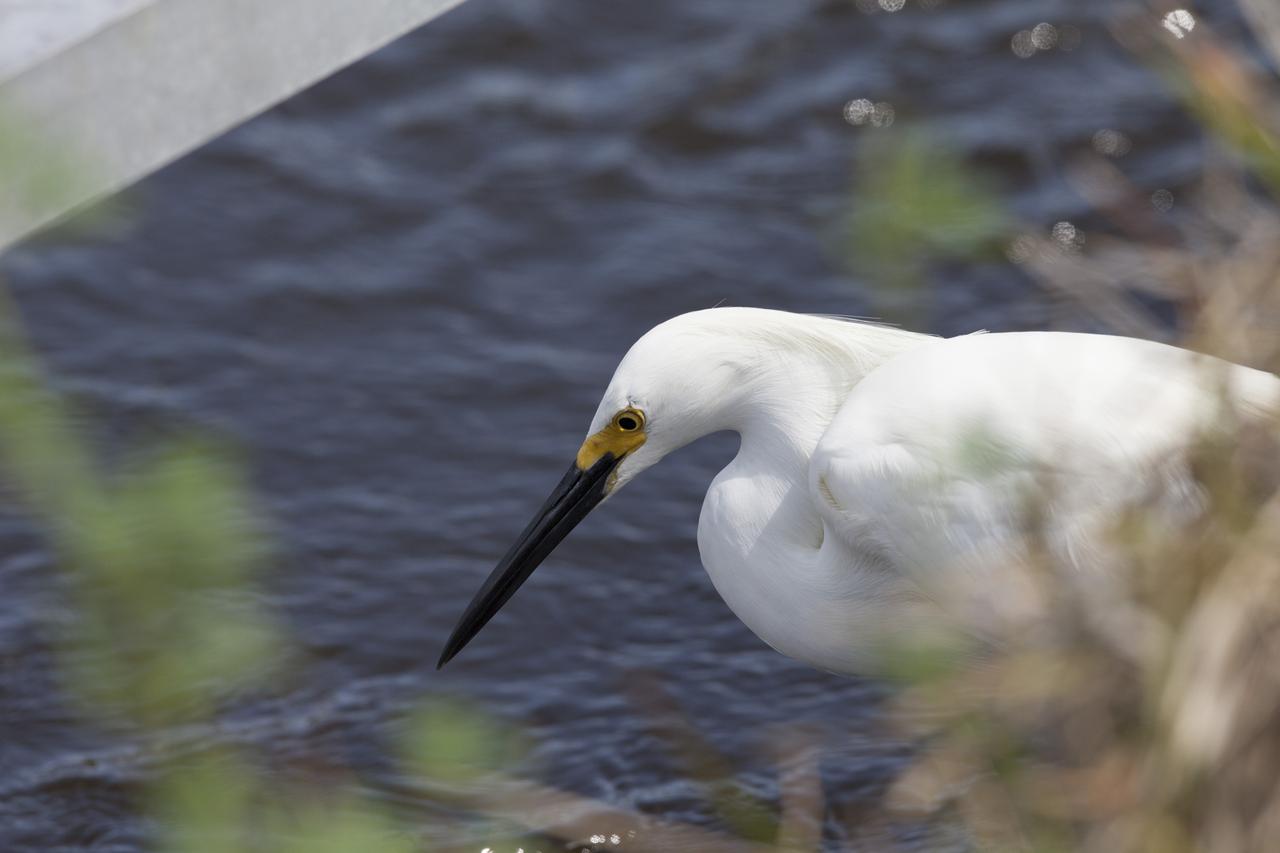
A snowy egret focuses its attention on a potential meal swimming in a shallow waterway at Merritt Island National Wildlife Refuge in Florida. NASA’s Kennedy Space Center shares boundaries with the refuge, which is home to more than 330 native and migratory bird species, along with 25 mammal, 117 fish, and 65 amphibian and reptile species.
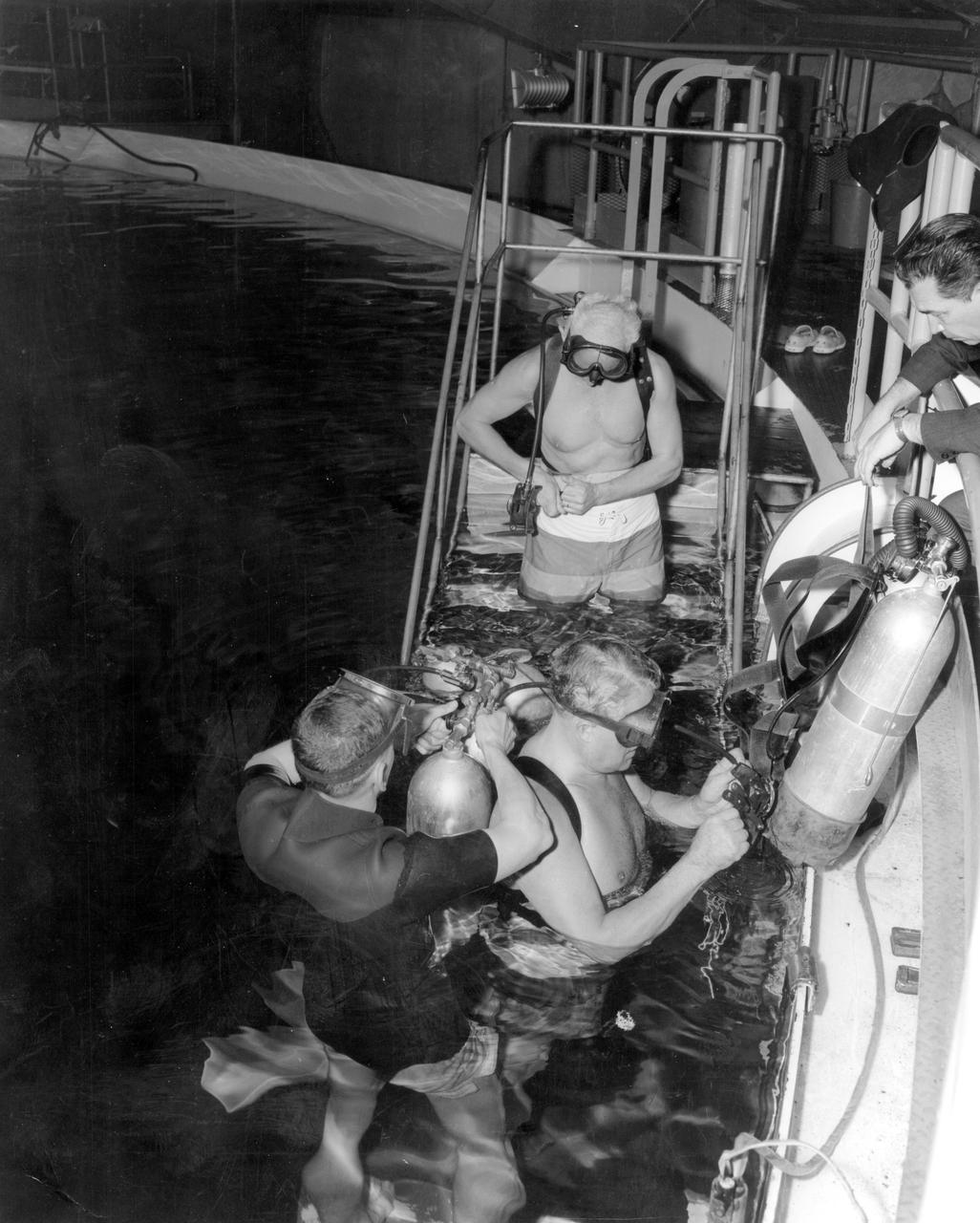
Marshall Space Flight Center’s (MSFC) Dr. Ernst Stuhlinger, Director of Research Projects Office; and Dr. Wernher von Braun, center director, along with others, took a swim in the Neutral Buoyancy Simulator (NBS) at MSFC. A safety diver adjusts scuba equipment worn by von Braun, while Stuhlinger adjusts his weight belt prior to entering the tank. In the NBS, subjects were weighted to a neutrally buoyant condition underwater to perform and practice tasks in a simulated weightless condition as would be encountered in space.
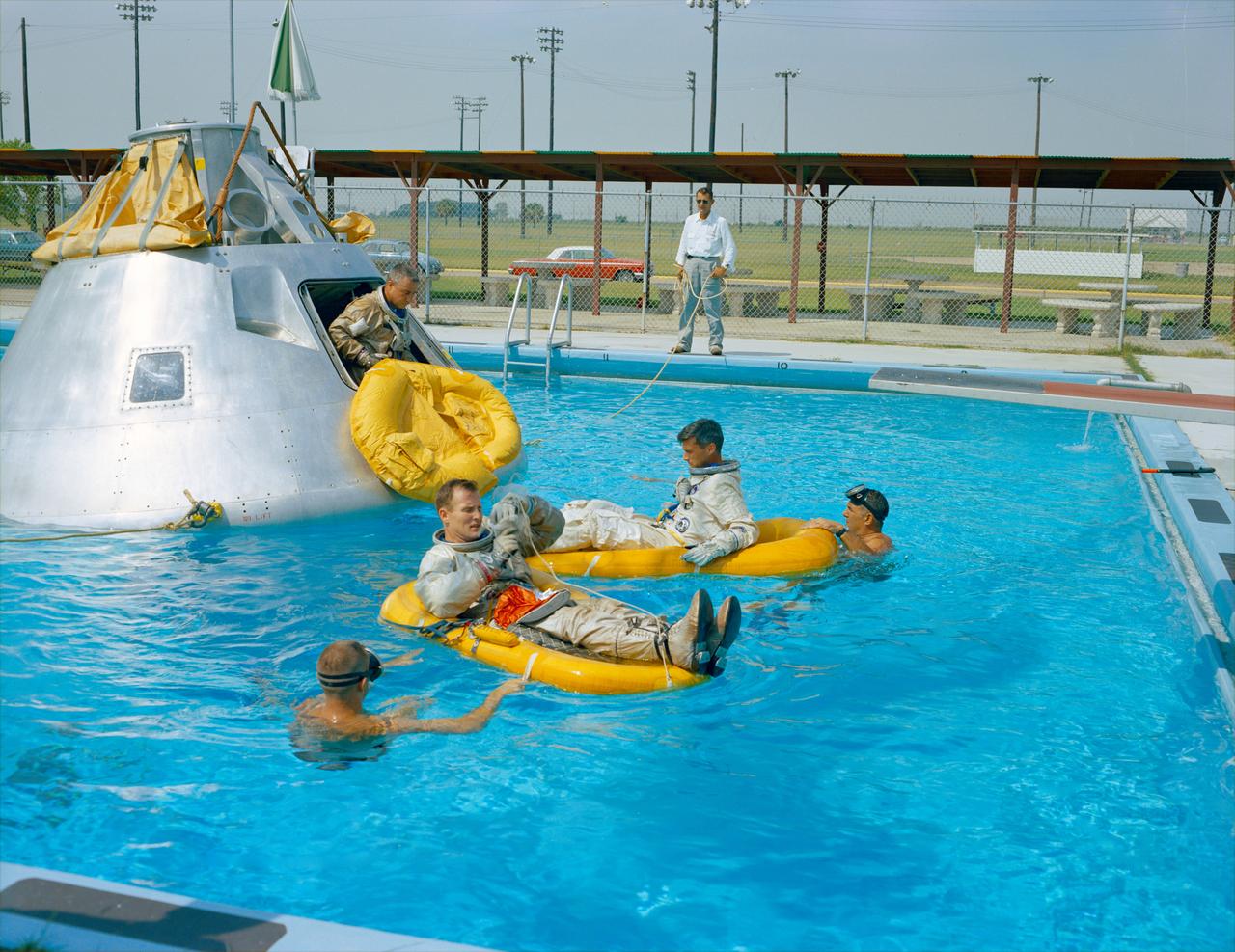
Boilerplate (B/P) model of the Apollo Spacecraft resting nose down in the swimming pool at EAFB during a training session with the first (1st) crew named by NASA. NASA swimmers are in the water to assist during the practice session. Inside the spacecraft are Astronauts Roger B. Chaffee, and Edward H. White II, members of the crew. Astronaut Virgial I. Grissom is visible in the entrance to the craft.
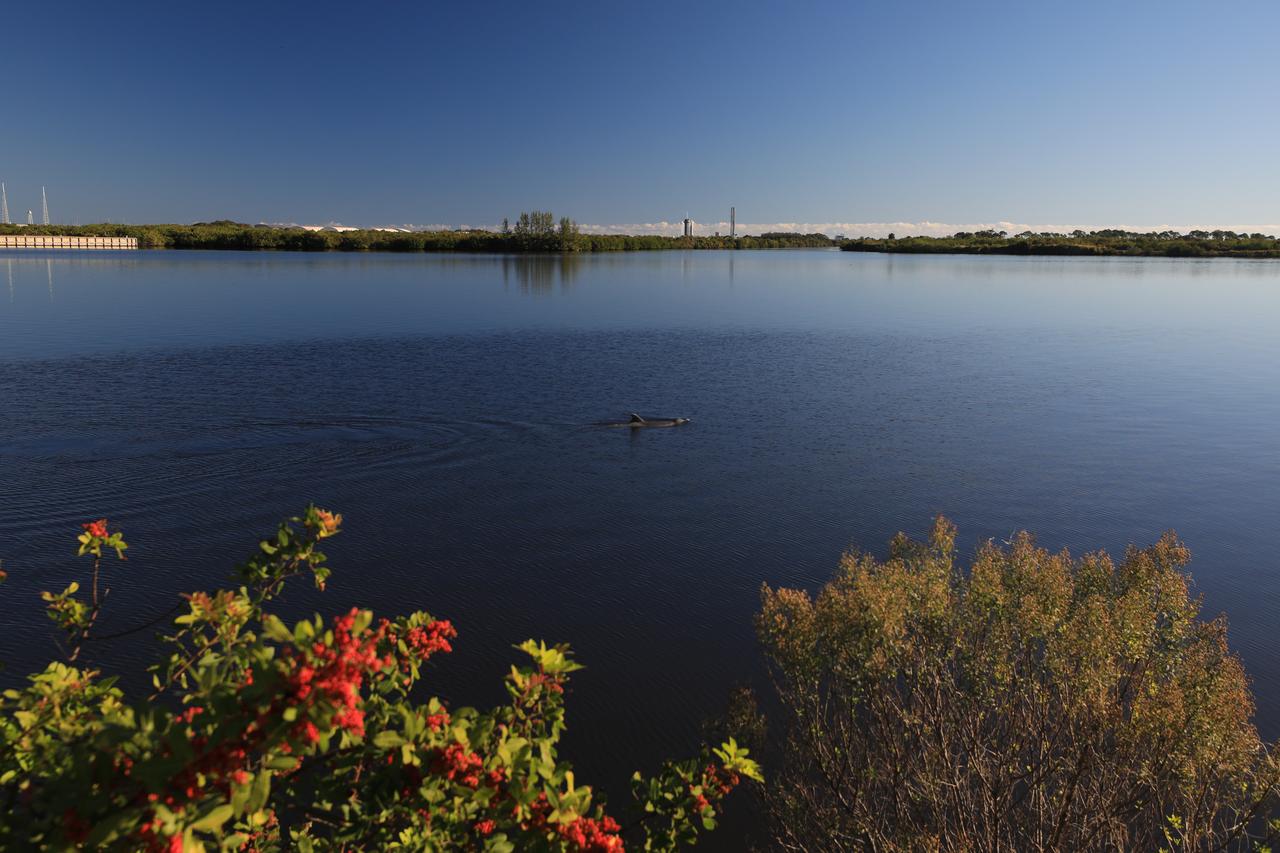
A dolphin swims in the turn basin of Launch Complex 39 at NASA’s Kennedy Space Center in Florida on Tuesday, Nov. 26, 2024. A SpaceX Falcon 9 rocket also can be seen in the background at Launch Pad 39A. Dolphins are a frequent sight in the rivers around NASA Kennedy, which shares a boundary with the Merritt Island Wildlife National Refuge and more than 1,500 species of plants and animals on 140,000 acres.
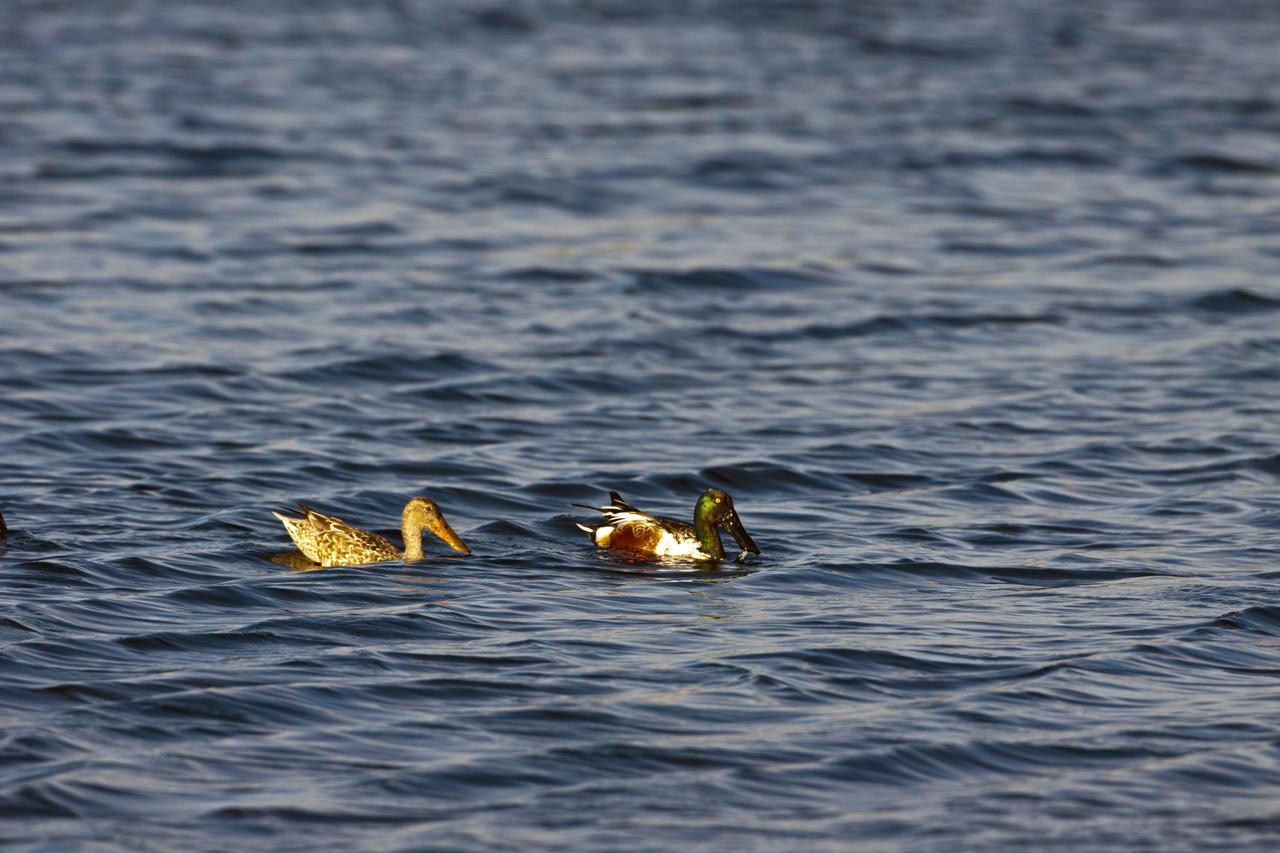
CAPE CANAVERAL, Fla. -- Male and female northern shovelers swim in a pond at NASA's Kennedy Space Center in Florida. The center shares a boundary with the Merritt Island National Wildlife Refuge, consisting of 140,000 acres. The refuge provides a wide variety of habitats -- coastal dunes, saltwater estuaries and marshes, freshwater impoundments, scrub, pine flatwoods, and hardwood hammocks -- that provide sanctuary for more than 1,500 species of plants and animals, including about 331 species of birds. Photo credit: NASA/Jim Grossmann

jsc2021e019402 (8/6/2016) --- Juvenile bobtail squid swimming in seawater just after hatching. The bobtail squid are born without their symbiotic microbes and must acquire them from their environment. Once the baby squid are colonized by the bacteria they gain the ability to glow in the dark and hide from their predators. Understanding of Microgravity on Animal-Microbe Interactions (UMAMI) examines the effects of spaceflight on the molecular and chemical interactions between beneficial microbes and their animal hosts. Image courtesy of Jamie S. Foster.
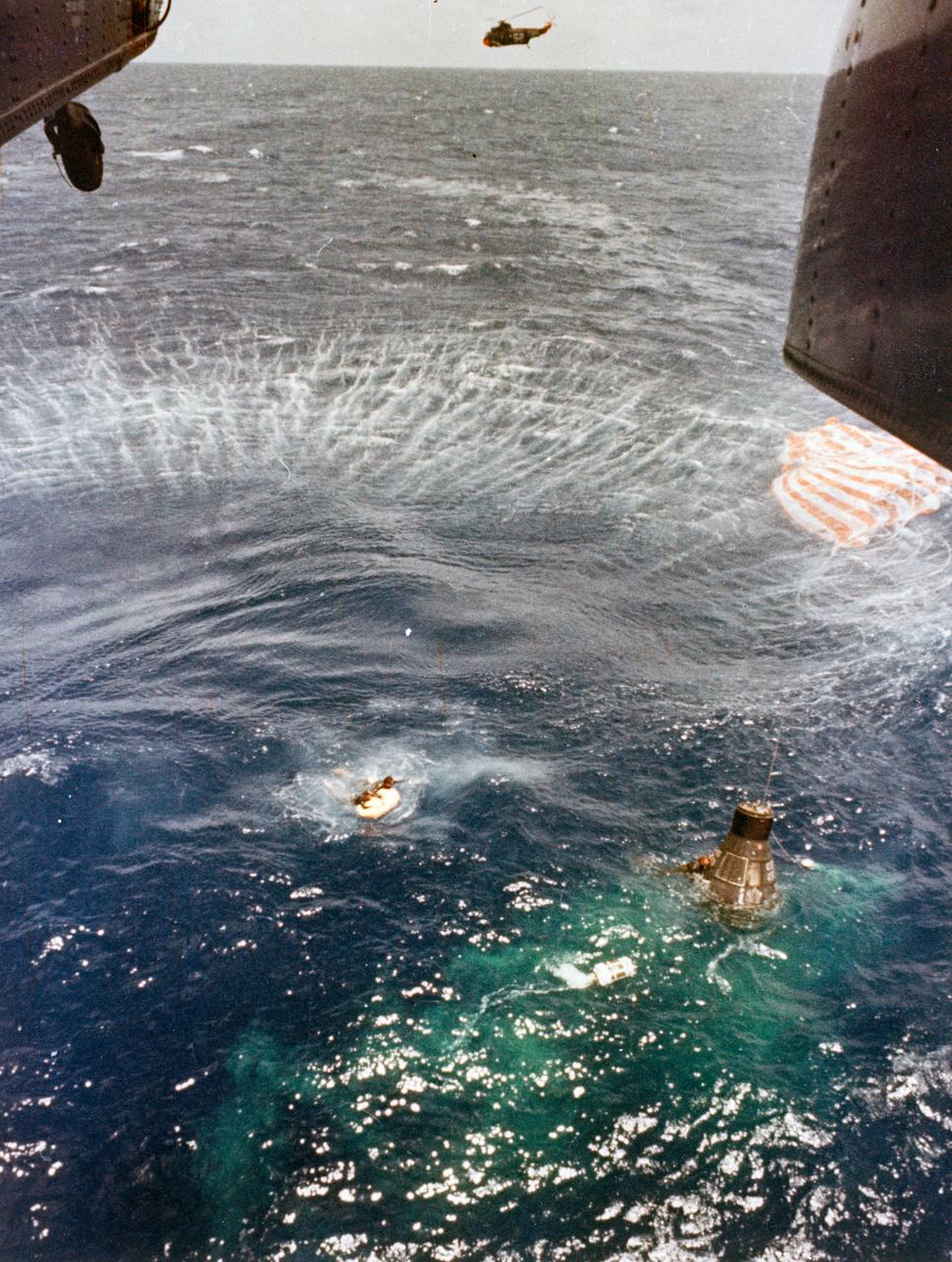
S63-07730 (16 May 1963) --- A U.S. Navy frogman, deployed from the hovering helicopter, swims next to the spacecraft and makes contact with astronaut L. Gordon Cooper Jr. inside, as his fellow team members bring up the floatation gear to be attached to the spacecraft. The main chute floats at top left, and the ejected reserve chute floats at the lower right of the spacecraft in the green dye area. Photo credit: NASA
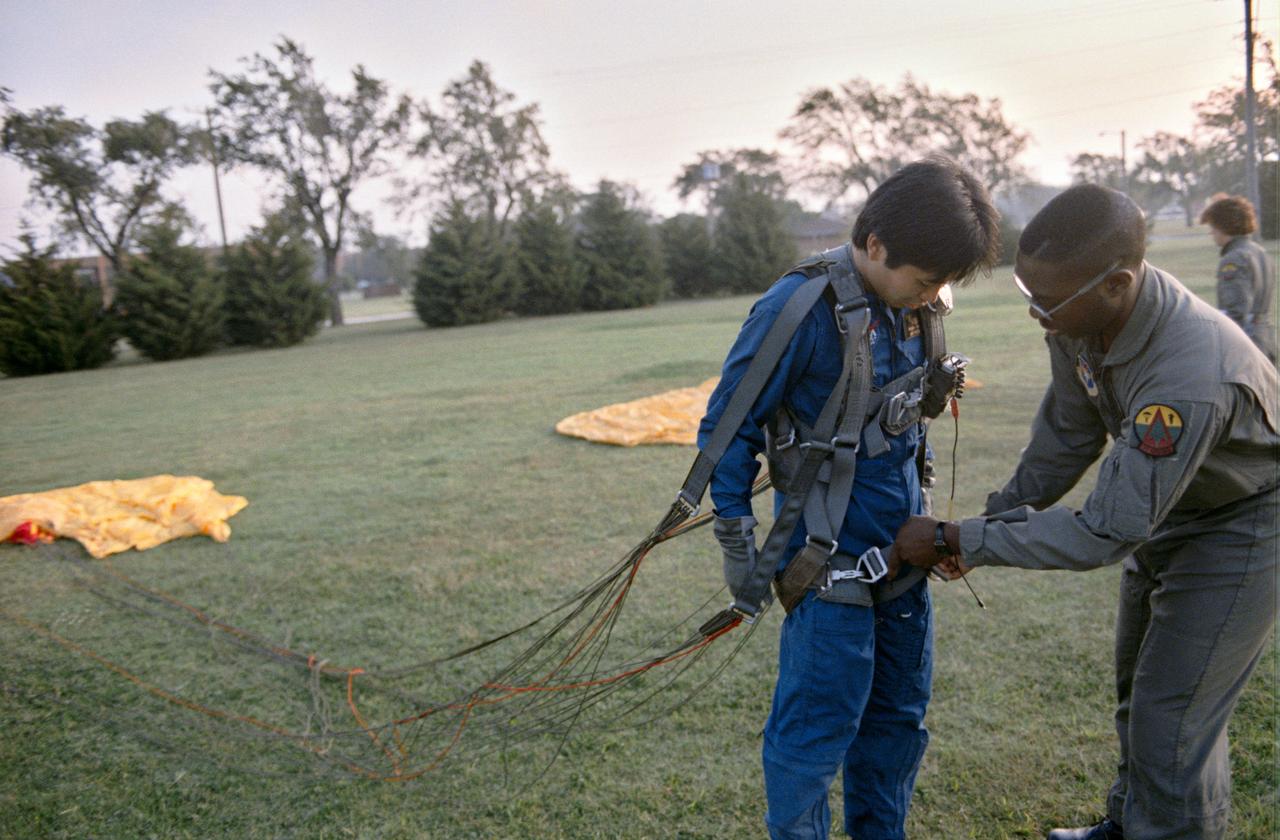
S95-00352 (12-14 September 1992) --- Astronaut candidate Koichi Wakata gets assistance with his parachute following a simulated chute drop at Vance Air Force Base. Wakata, representing the National Space Development Agency (NASDA) of Japan, is one of seven international mission specialist candidates who joined 19 United States astronaut candidates for the three-day parachute/survival training school at the Oklahoma Base. EDITOR'S NOTE: Since this photograph was taken, Wakata has been named as mission specialist for the STS-72 mission.
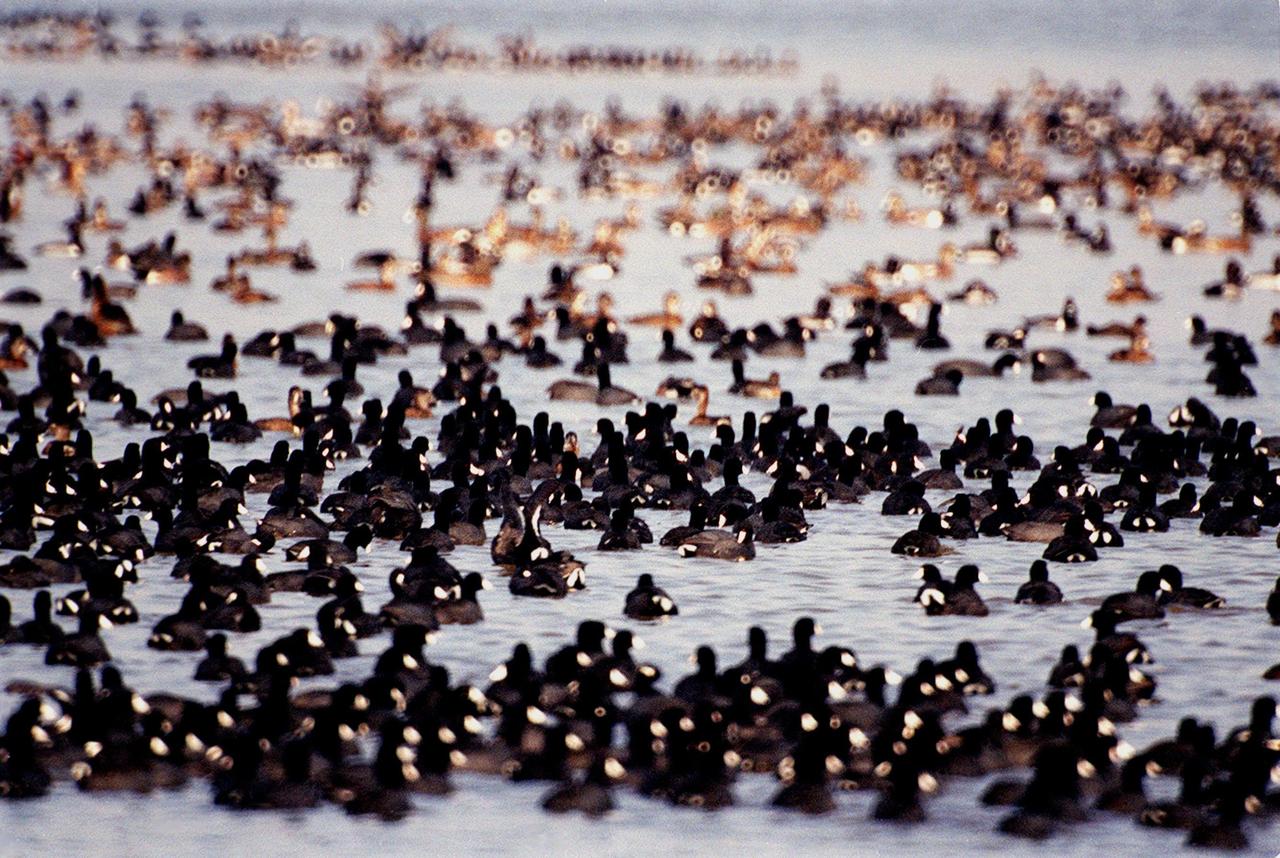
KENNEDY SPACE CENTER, FLA. -- Coots draw together (foreground) in the waters of the Merritt Island National Wildlife Refuge, which shares a boundary with Kennedy Space Center. They are often seen in the Indian River and Banana Creek swimming together in large groups such as these. Other birds, mainly ducks, swim nearby. Coots are readily identified by their slate-gray bodies and conspicuous white bill. They inhabit open ponds and marshes from southern Canada to northern South America. Excellent swimmers and divers, they eat various aquatic plants, but also feed on seeds grass and waste grain on land. The 92,000-acre refuge is a habitat for more than 330 species of birds, 31 mammals, 117 fishes and 65 amphibians and reptiles. The marshes and open water of the refuge provide wintering areas for 23 species of migratory waterfowl, as well as a year-round home for great blue herons, great egrets, wood storks, cormorants, brown pelicans and other species of marsh and shore birds
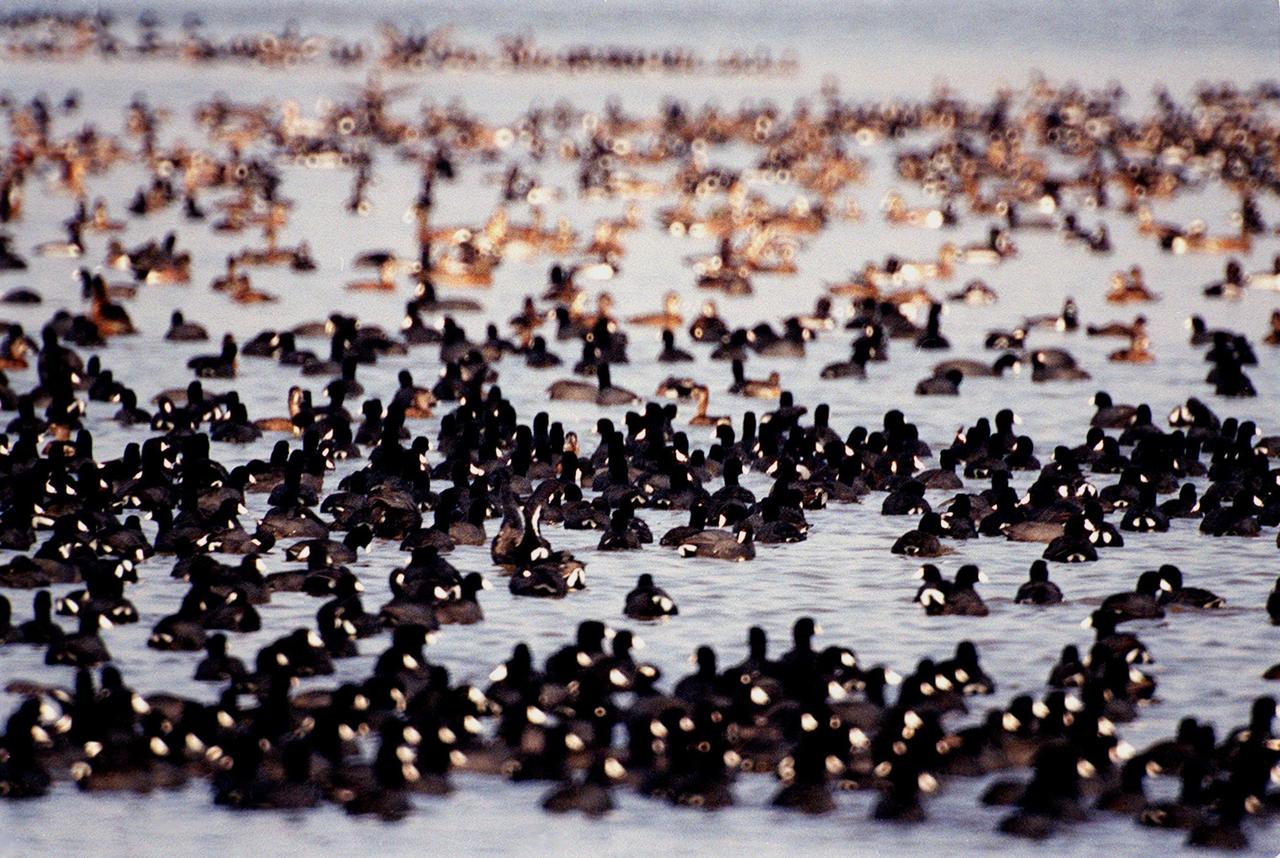
KENNEDY SPACE CENTER, FLA. -- Coots draw together (foreground) in the waters of the Merritt Island National Wildlife Refuge, which shares a boundary with Kennedy Space Center. They are often seen in the Indian River and Banana Creek swimming together in large groups such as these. Other birds, mainly ducks, swim nearby. Coots are readily identified by their slate-gray bodies and conspicuous white bill. They inhabit open ponds and marshes from southern Canada to northern South America. Excellent swimmers and divers, they eat various aquatic plants, but also feed on seeds grass and waste grain on land. The 92,000-acre refuge is a habitat for more than 330 species of birds, 31 mammals, 117 fishes and 65 amphibians and reptiles. The marshes and open water of the refuge provide wintering areas for 23 species of migratory waterfowl, as well as a year-round home for great blue herons, great egrets, wood storks, cormorants, brown pelicans and other species of marsh and shore birds
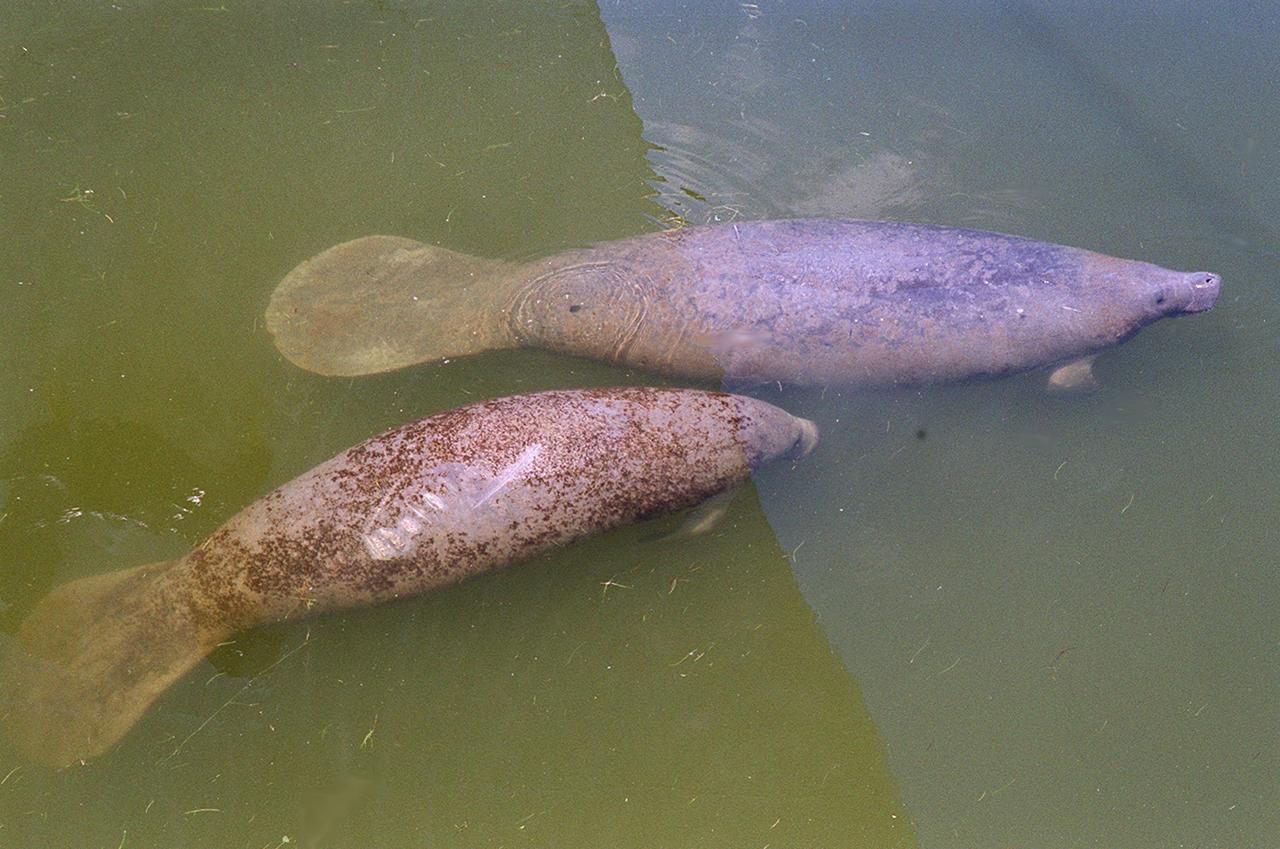
Two manatees swim leisurely in waters on Kennedy Space Center. They gather in Florida's warm water rivers and inland springs during the winter. KSC shares a boundary with the Merritt Island National Wildlife Refuge, which encompasses 92,000 acres that are a habitat for more than 331 species of birds, 31 mammals, 117 fishes, and 65 amphibians and reptiles. The marshes and open water of the refuge provide wintering areas for 23 species of migratory waterfowl, as well as a year-round home for great blue herons, great egrets, wood storks, cormorants, brown pelicans and other species of marsh and shore birds, as well as a variety of insects
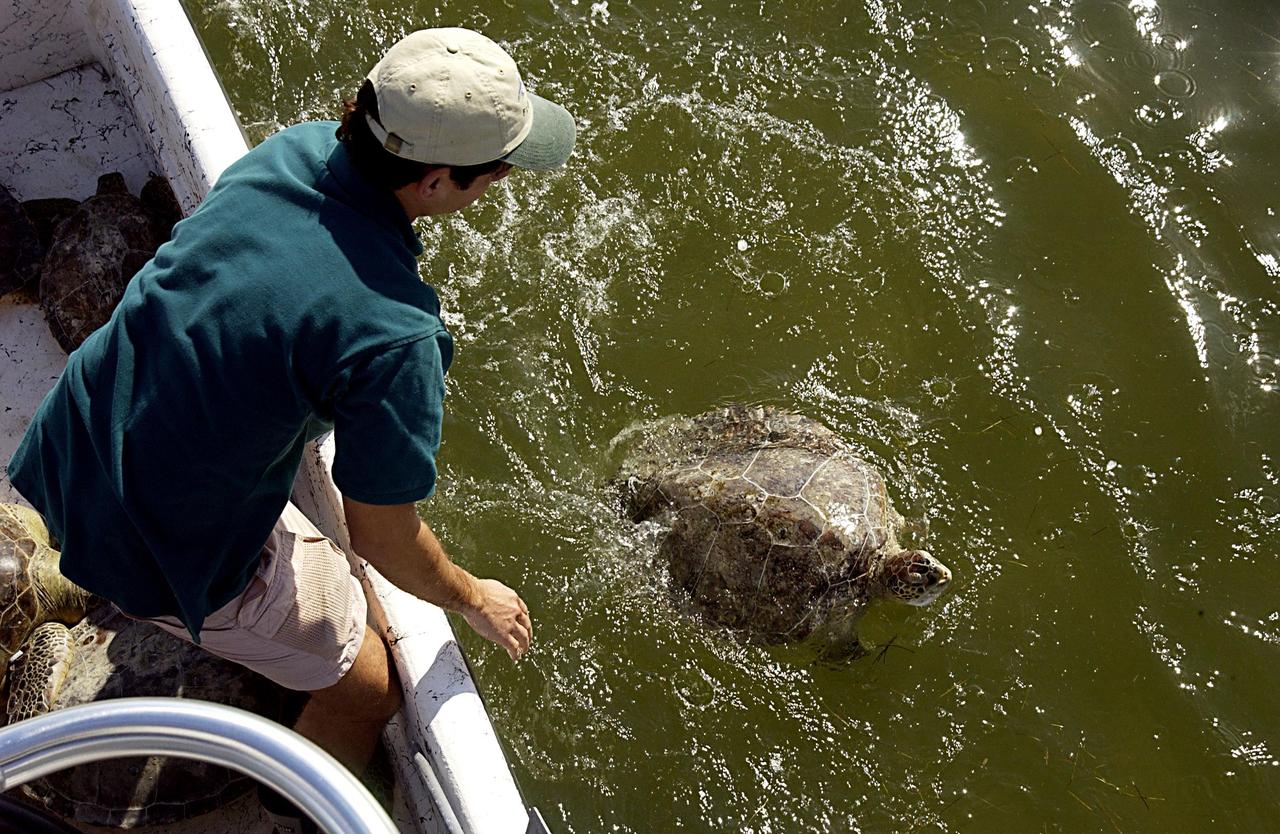
KENNEDY SPACE CENTER, FLA. - A worker watches as one of the rescued sea turtles swims away in Mosquito Lagoon. It is one of several turtles found stunned, impacted by the unseasonal cold temperatures experienced in Central Florida. The cooperative effort of KSC contractor Dynamac Corporation's Aquatics Program and the Merritt Island National Wildlife Refuge warmed the turtles and evaluated them for release. Most were tagged and the largest one received a transmitter, provided by the University of Central Florida, for satellite tracking. The turtles were then transported through the Haulover Canal to a location away from the main channel for release.
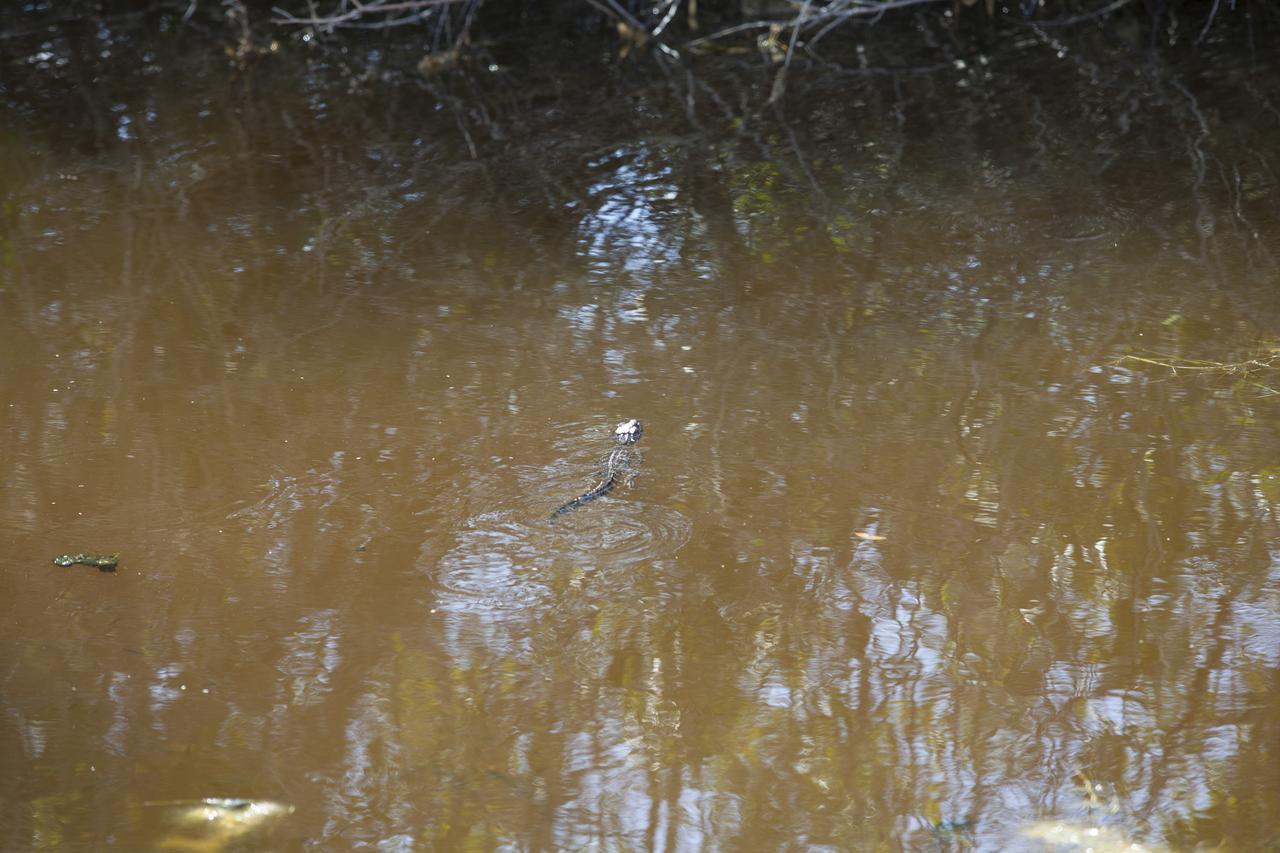
CAPE CANAVERAL, Fla. - An American alligator swims in a stream at NASA’s Kennedy Space Center in Florida. The center shares a boundary with the Merritt Island National Wildlife Refuge. The refuge encompasses 140,000 acres that are a habitat for more than 330 species of birds, 31 mammals, 117 fishes, and 65 amphibians and reptiles. It contains more than 1,000 known plant species. The marshes and open water of the refuge provide wintering areas for 23 species of migratory waterfowl, as well as a year-round home for great blue herons, great egrets, wood storks, cormorants, brown pelicans and other species of marsh and shore birds, and a variety of insects. Photo credit: NASA/Daniel Casper
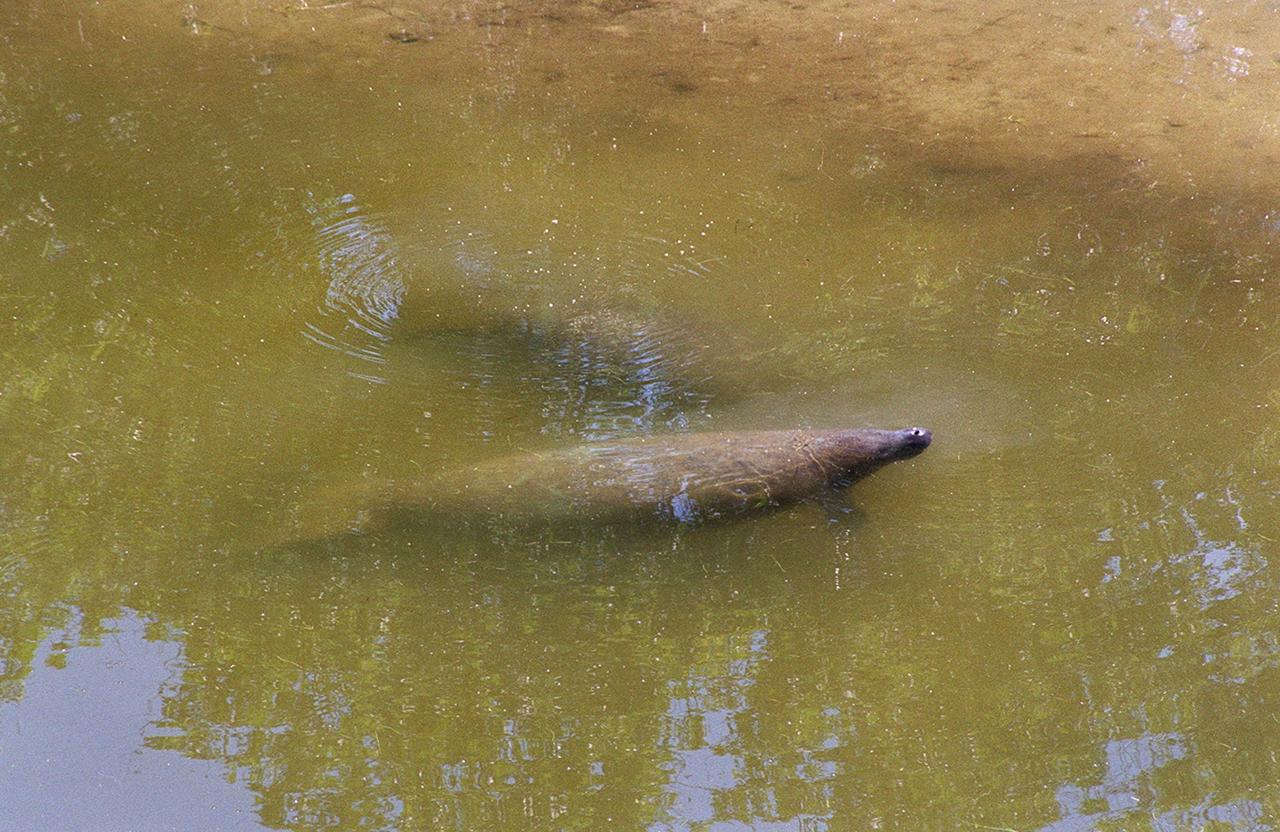
In waters on Kennedy Space Center, two manatees are seen leisurely swimming. In winter they gather in Florida's warm water rivers and inland springs. KSC shares a boundary with the Merritt Island National Wildlife Refuge, which encompasses 92,000 acres that are a habitat for more than 331 species of birds, 31 mammals, 117 fishes, and 65 amphibians and reptiles. The marshes and open water of the refuge provide wintering areas for 23 species of migratory waterfowl, as well as a year-round home for great blue herons, great egrets, wood storks, cormorants, brown pelicans and other species of marsh and shore birds, as well as a variety of insects
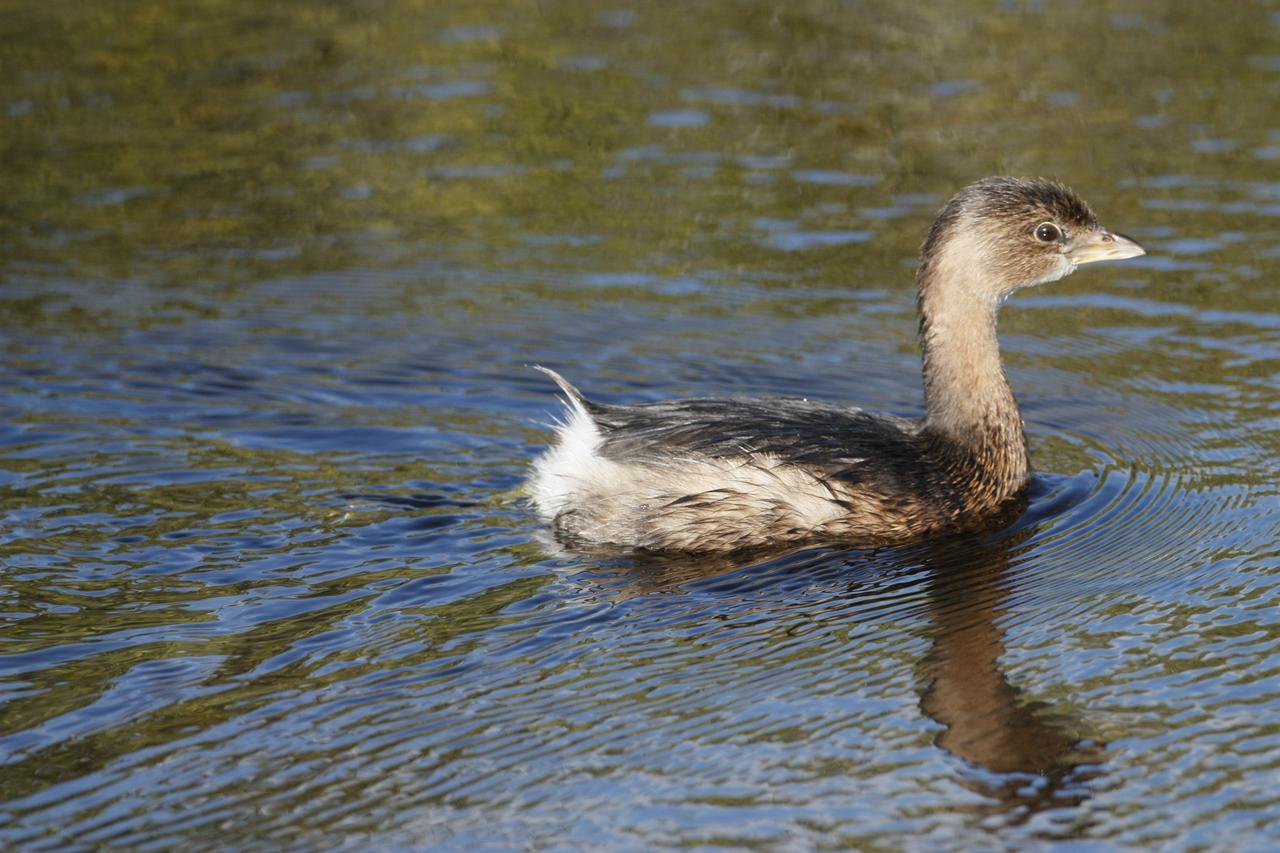
CAPE CANAVERAL, Fla. – Near NASA's Kennedy Space Center in Florida, a pied-billed Grebe swims on a pond in the Merritt island National Wildlife Refuge. The normal black band on its bill is lacking in winter. The most common grebe in eastern North America, the pied-billed Grebe inhabits marshes and ponds, eating small fish, crustaceans, especially crayfish, and aquatic insects. The center shares a boundary with the refuge that includes salt-water estuaries, brackish marshes, hardwood hammocks and pine flatwoods. The diverse landscape provides habitat for more than 310 species of birds, 25 mammals, 117 fishes and 65 amphibians and reptiles. Photo credit: NASA/Jim Grossmann
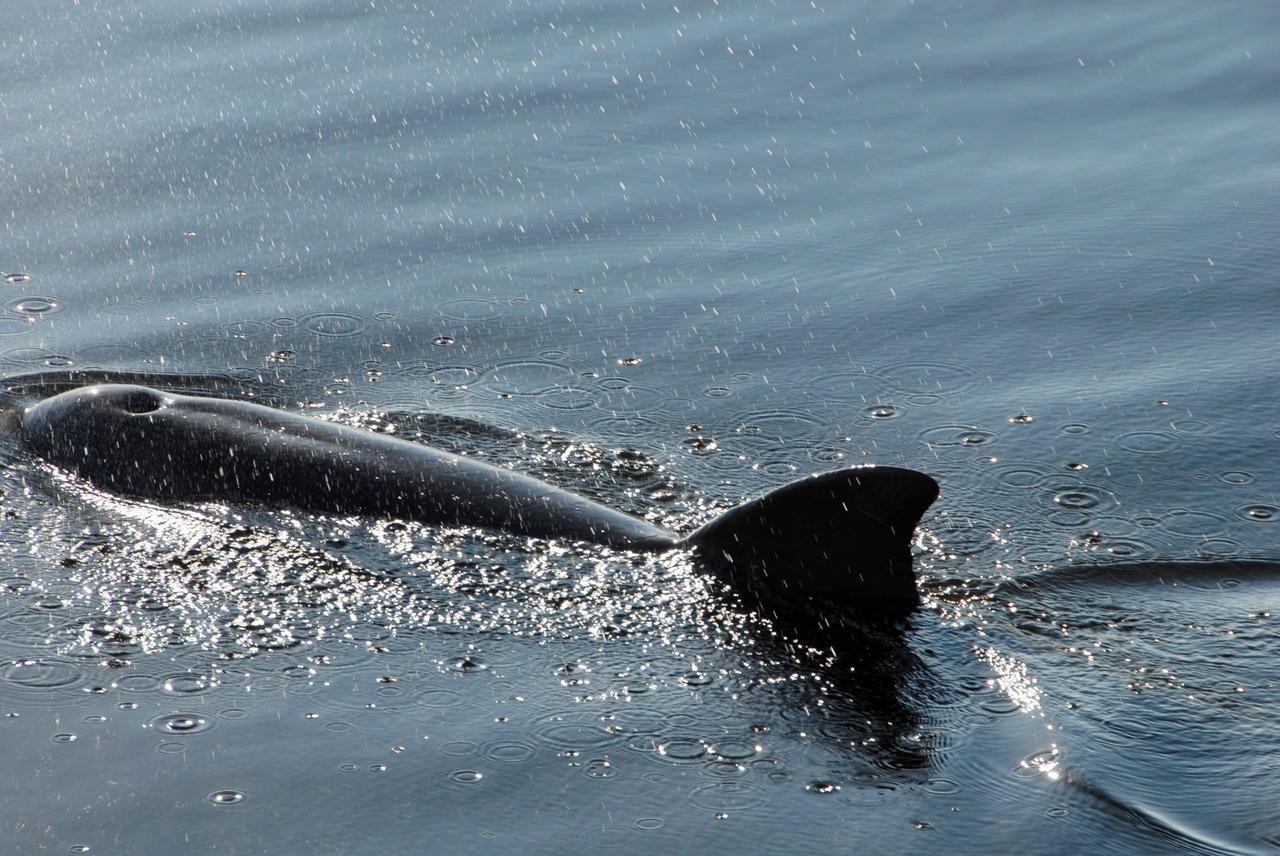
KENNEDY SPACE CENTER, FLA. -- A dolphin surfaces in the Launch Complex 39 Area turn basin at NASA's Kennedy Space Center. The turn basin was carved out of the Banana River when Kennedy Space Center was built. Dolphins frequent bays and coastlines, usually in depths under 20 meters. While some pods take up permanent residence and establish home waters, others are migratory and swim considerable distances from coast to coast. Dolphins are a frequent sight in the rivers around Kennedy, which shares a boundary with the Merritt Island Wildlife Nature Refuge. Photo credit: NASA/George Shelton
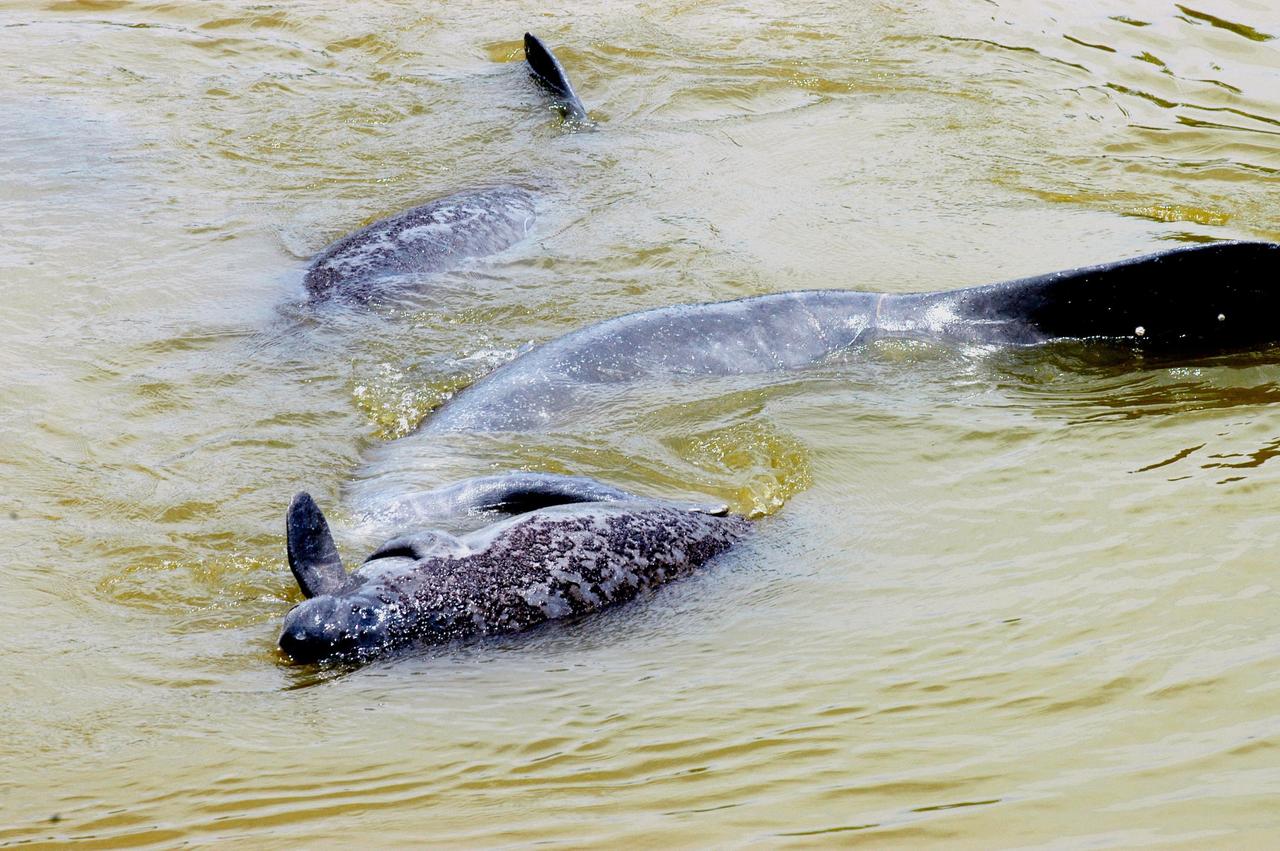
KENNEDY SPACE CENTER, FLA. - At the mouth of Banana Creek on Kennedy Space Center, a baby manatee (foreground) is nuzzled by one of its parents while another swims nearby. Manatees live in Florida's warm-water rivers and inland springs. The Florida manatee feeds on more than 60 varieties of grasses and plants. Manatee cows give birth about once every three years. Gestation lasts about 12 months. KSC shares a boundary with the Merritt Island National Wildlife Refuge, which encompasses 92,000 acres that are a habitat for more than 331 species of birds, 31 mammals, 117 fishes, and 65 amphibians and reptiles.
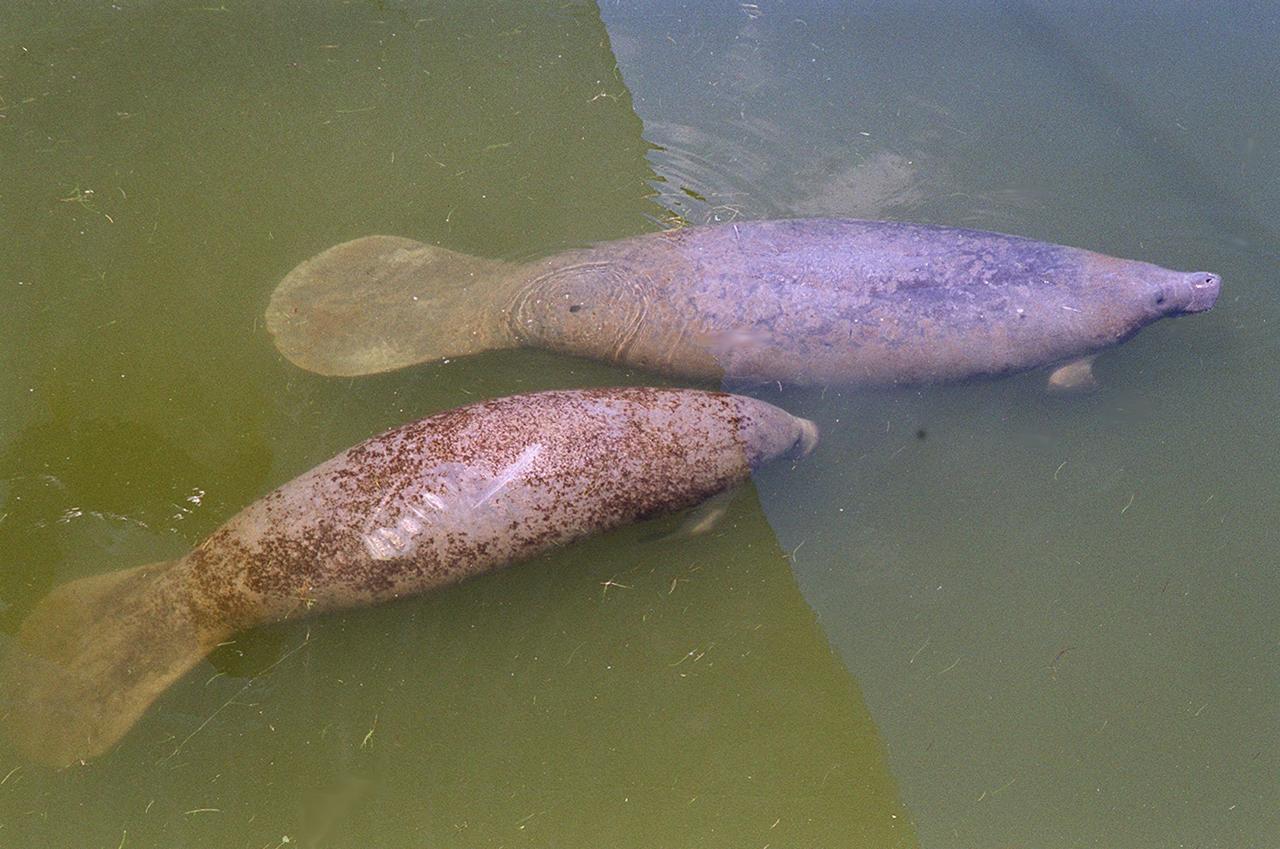
Two manatees swim leisurely in waters on Kennedy Space Center. They gather in Florida's warm water rivers and inland springs during the winter. KSC shares a boundary with the Merritt Island National Wildlife Refuge, which encompasses 92,000 acres that are a habitat for more than 331 species of birds, 31 mammals, 117 fishes, and 65 amphibians and reptiles. The marshes and open water of the refuge provide wintering areas for 23 species of migratory waterfowl, as well as a year-round home for great blue herons, great egrets, wood storks, cormorants, brown pelicans and other species of marsh and shore birds, as well as a variety of insects
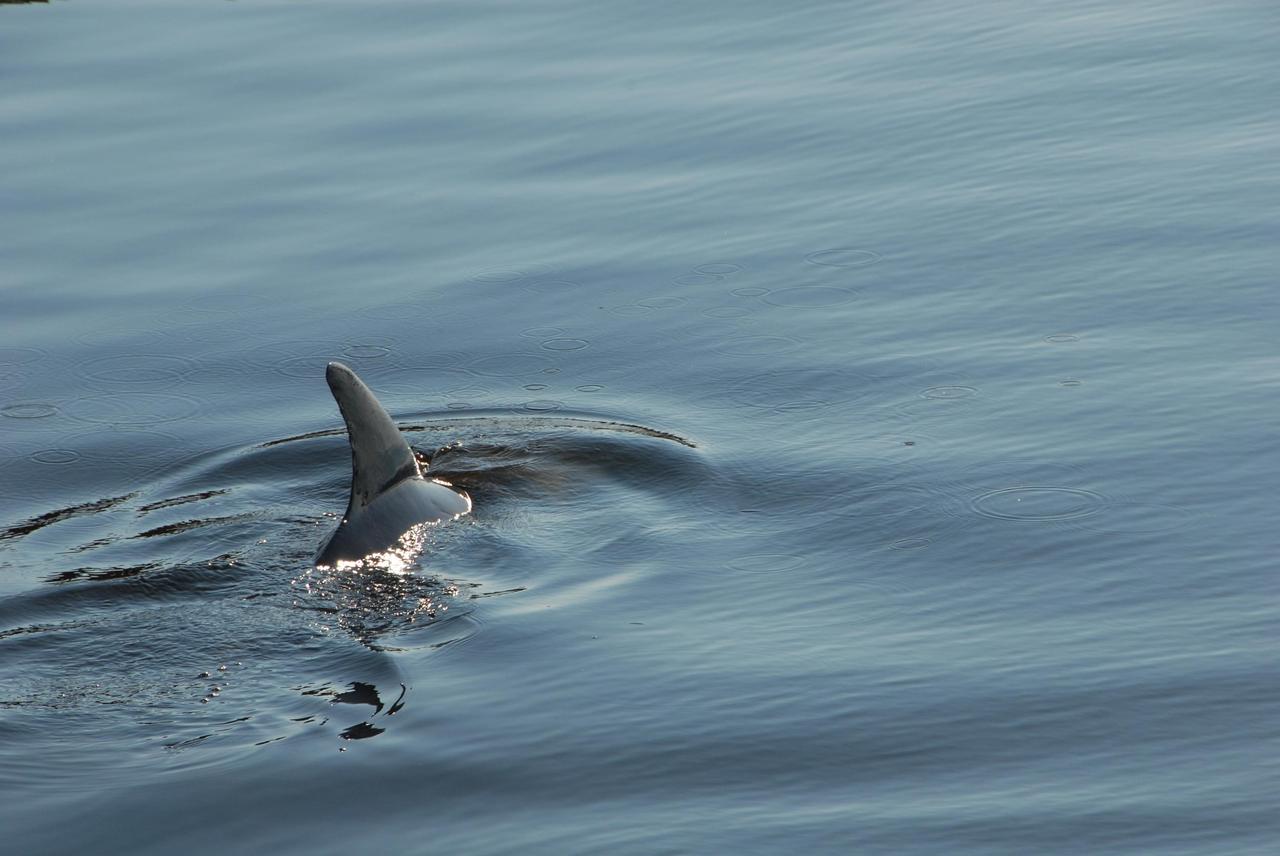
KENNEDY SPACE CENTER, FLA. -- A dolphin's dorsal fin cuts through the water in the Launch Complex 39 Area turn basin at NASA's Kennedy Space Center. The turn basin was carved out of the Banana River when Kennedy Space Center was built. Dolphins frequent bays and coastlines, usually in depths under 20 meters. While some pods take up permanent residence and establish home waters, others are migratory and swim considerable distances from coast to coast. Dolphins are a frequent sight in the rivers around Kennedy, which shares a boundary with the Merritt Island Wildlife Nature Refuge. Photo credit: NASA/George Shelton
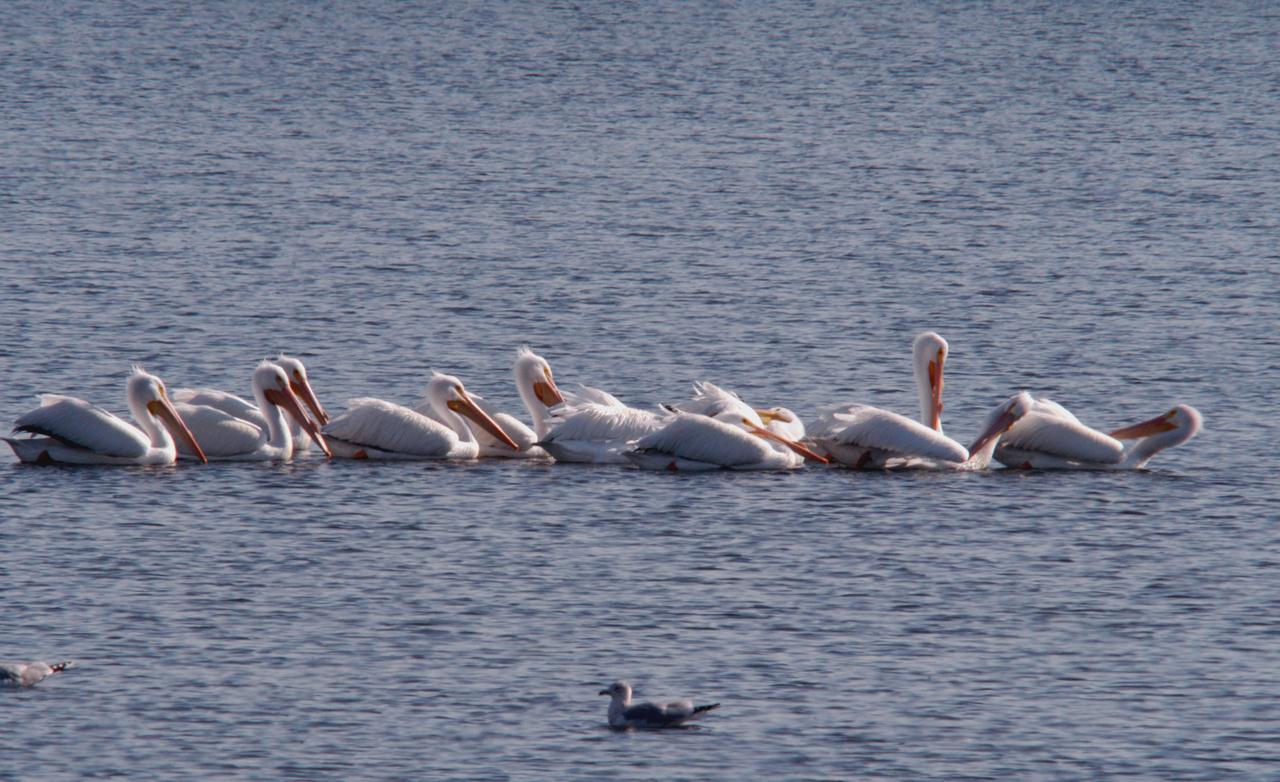
White pelicans form a line while swimming in the turn basin near the Vehicle Assembly Building of NASA's Kennedy Space Center. The turn basin was carved out of the Banana River when Kennedy Space Center was built. White pelicans winter from Florida and southern California to Panama, chiefly in coastal lagoons, and usually in colonies. KSC shares a boundary with the Merritt Island Wildlife Nature Refuge. The refuge is a habitat for more than 310 species of birds, 25 mammals, 117 fishes and 65 amphibians and reptiles. In addition, the Refuge supports 19 endangered or threatened wildlife species on Federal or State lists, more than any other single refuge in the U.S.
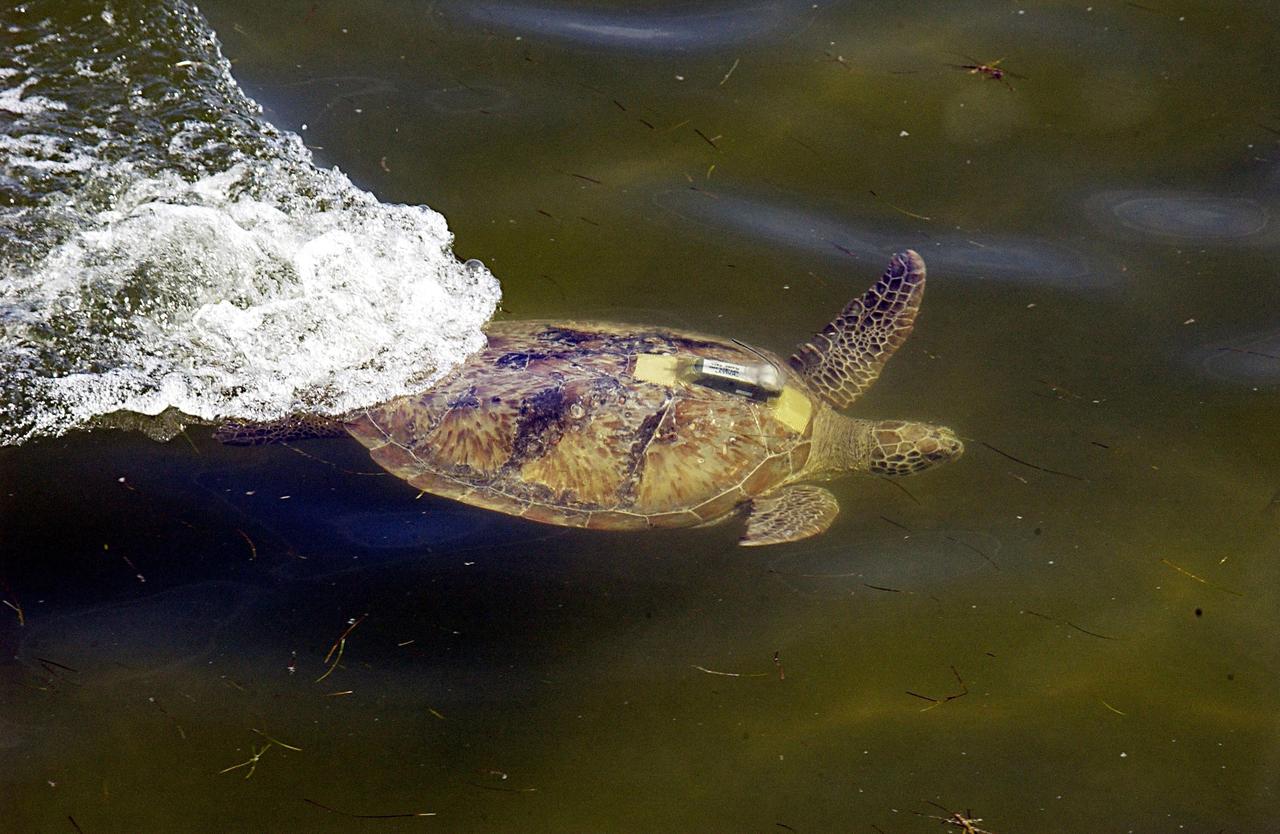
KENNEDY SPACE CENTER, FLA. -- A large sea turtle with a transmitter swims away after release into the Mosquito Lagoon. It is one of several turtles found stunned, impacted by the unseasonal cold temperatures experienced in Central Florida. The cooperative effort of KSC contractor Dynamac Corporation's Aquatics Program and the Merritt Island National Wildlife Refuge warmed the turtles and evaluated them for release. Most were tagged and the largest one received a transmitter, provided by the University of Central Florida, for satellite tracking. The turtles were then transported through the Haulover Canal to a location away from the main channel for release.
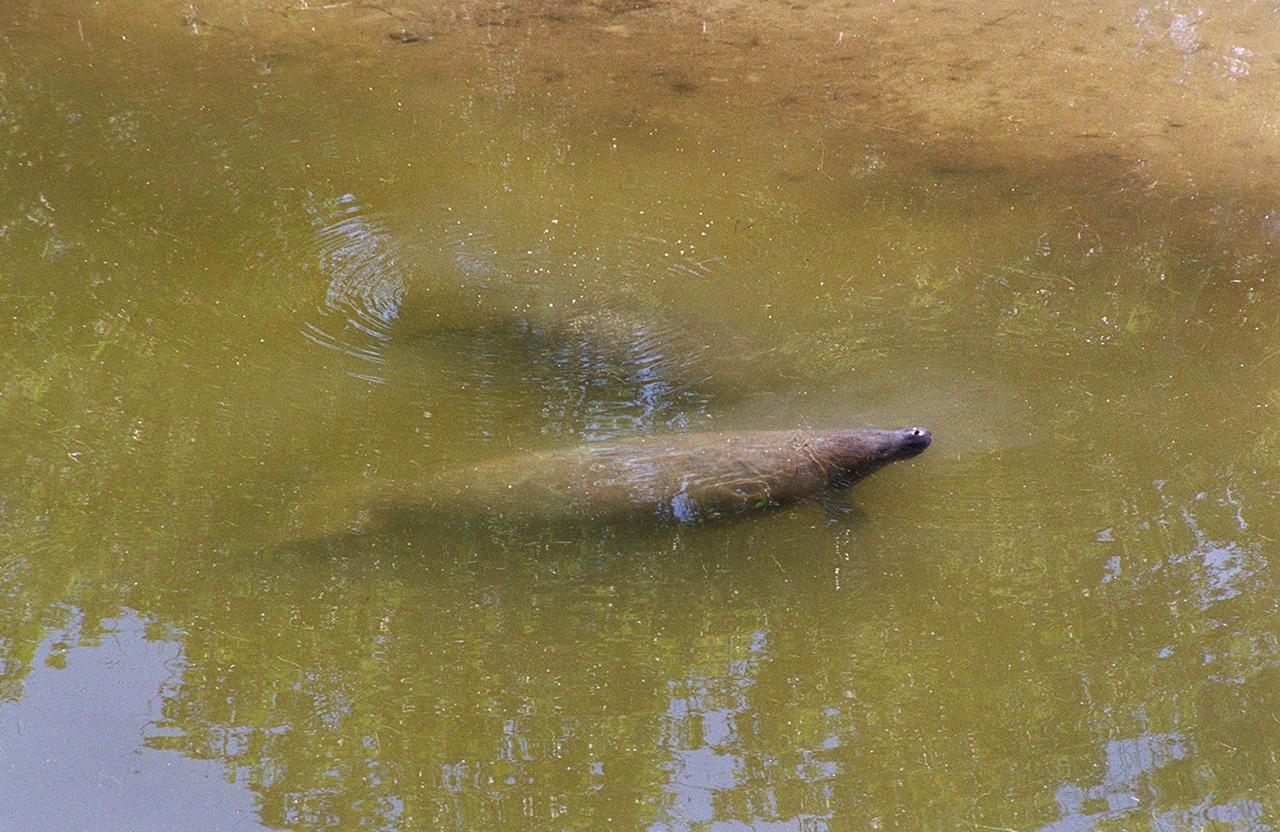
In waters on Kennedy Space Center, two manatees are seen leisurely swimming. In winter they gather in Florida's warm water rivers and inland springs. KSC shares a boundary with the Merritt Island National Wildlife Refuge, which encompasses 92,000 acres that are a habitat for more than 331 species of birds, 31 mammals, 117 fishes, and 65 amphibians and reptiles. The marshes and open water of the refuge provide wintering areas for 23 species of migratory waterfowl, as well as a year-round home for great blue herons, great egrets, wood storks, cormorants, brown pelicans and other species of marsh and shore birds, as well as a variety of insects
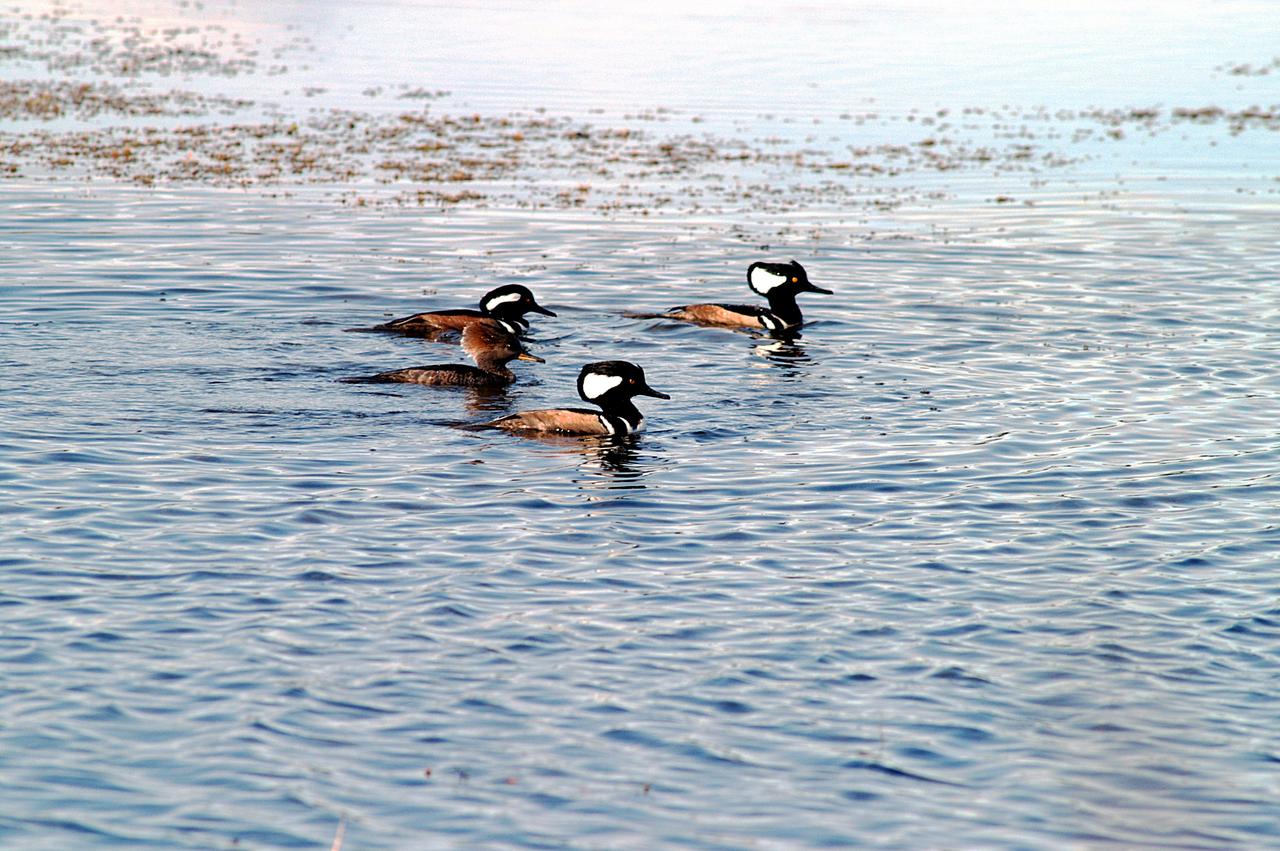
KENNEDY SPACE CENTER, FLA. -- Three male and one female hooded mergansers swim in the quicksilver water of the Merritt Island National Wildlife Refuge, which shares a boundary with Kennedy Space Center. Usually found from Alaska and Canada south to Nebraska, Oregon and Tennessee, hooded mergansers winter south to Mexico and the Gulf Coast, including KSC. The open water of the refuge provides wintering areas for 23 species of migratory waterfowl, as well as a year-round home for great blue herons, great egrets, wood storks, cormorants, brown pelicans and other species of marsh and shore birds. The 92,000-acre refuge is also habitat for more than 310 species of birds, 25 mammals, 117 fishes and 65 amphibians and reptiles.
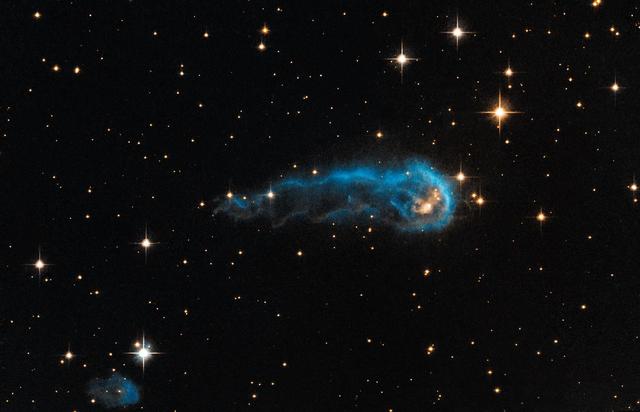
A bright blue tadpole appears to swim through the inky blackness of space. Known as IRAS 20324+4057, but dubbed "the Tadpole," this clump of gas and dust has given birth to a bright, "protostar," one of the earliest steps in building a star. This image was taken by NASA's Hubble Space Telescope, and released publicly, in 2012. There are actually multiple protostars within this tadpole's 'head," but the glowing yellow one in this image is the most luminous and massive. When this protostar has gathered together enough mass from its surroundings, it will eventually emerge as a fully-fledged young star. The intense blue glow is caused by nearby stars firing ultraviolet radiation at IRAS 20324+4057, which also sculpts its tail into a long, wiggly shape. In total, this clump spans roughly a light-year from head to tail-tip, and contains gas weighing almost four times the mass of the sun. Framed against a background of distant stars, IRAS 20324+4057 is making its way through the Cygnus OB2 association, a loose cluster of stars some 4,700 light-years from Earth in the constellation Cygnus. This association is one of the largest clusters known, and is famed for its heavyweight members. It contains some of the hottest, most massive and most luminous stars known, some of which are about two million times more luminous than the sun. The Tadpole is not alone in this interstellar pond. Just out of view, to the bottom right of this image, lies another curious object dubbed "the Goldfish" by astronomers. The Goldfish is about half the length of IRAS 20324+4057, and is also thought to be a globule of gas that is being both lit up and sculpted by radiation from cluster stars. Completing this trio is a small clump of blue gas, informally nicknamed "the Wriggler" by some astronomers, visible in the bottom left of this Hubble image. All three objects have the same orientation in the sky and appear to be brighter on their northern sides, leading astronomers to believe they are being shaped by aggressive winds and radiation flowing from hot Cygnus OB2 stars towards the top right of the frame. http://photojournal.jpl.nasa.gov/catalog/PIA18168
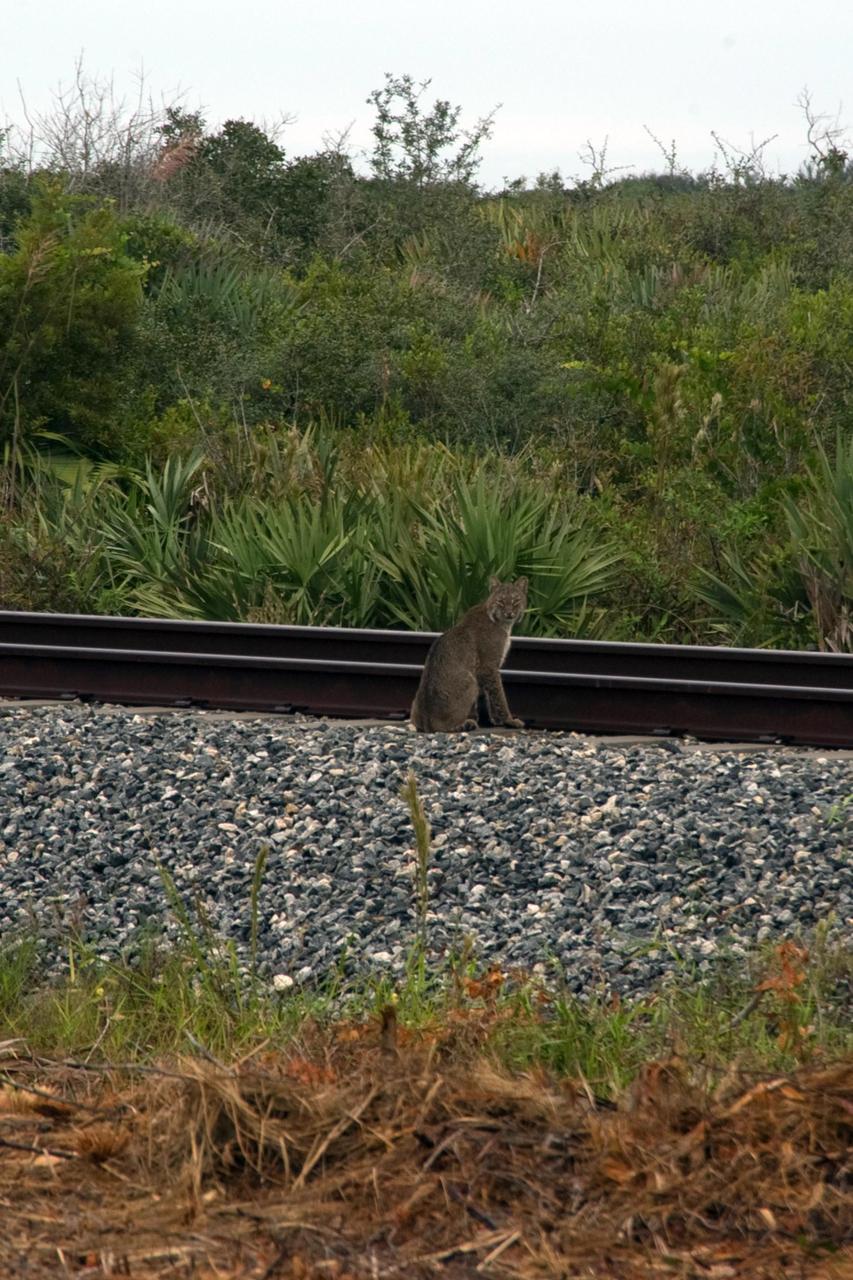
KENNEDY SPACE CENTER, FLA. -- A rare view of a bobcat, spotted near the NASA Railroad tracks on a mid-morning. The bobcat is a solitary and territorial predator mammal. They are mostly nocturnal and solitary, but will travel long distances for a mate. Not as big as a panther, but about the size of a medium-sized dog, male and female bobcats average 39 inches and 36 inches in length, and 24 pounds and 15 pounds in weight, respectively. They are most easily identified by their short tails which are about 5.5 inches long. Their fur, which is short, soft and dense, ranges from light tan to reddish or yellowish brown and markings vary from tabby stripes to spotting. They swim more than other native cats. The backs of their ears are white with a black outline. Their underparts are generally white. Bobcats can most likely be found in every county in Florida. Photo credit: NASA/Sandra Joseph
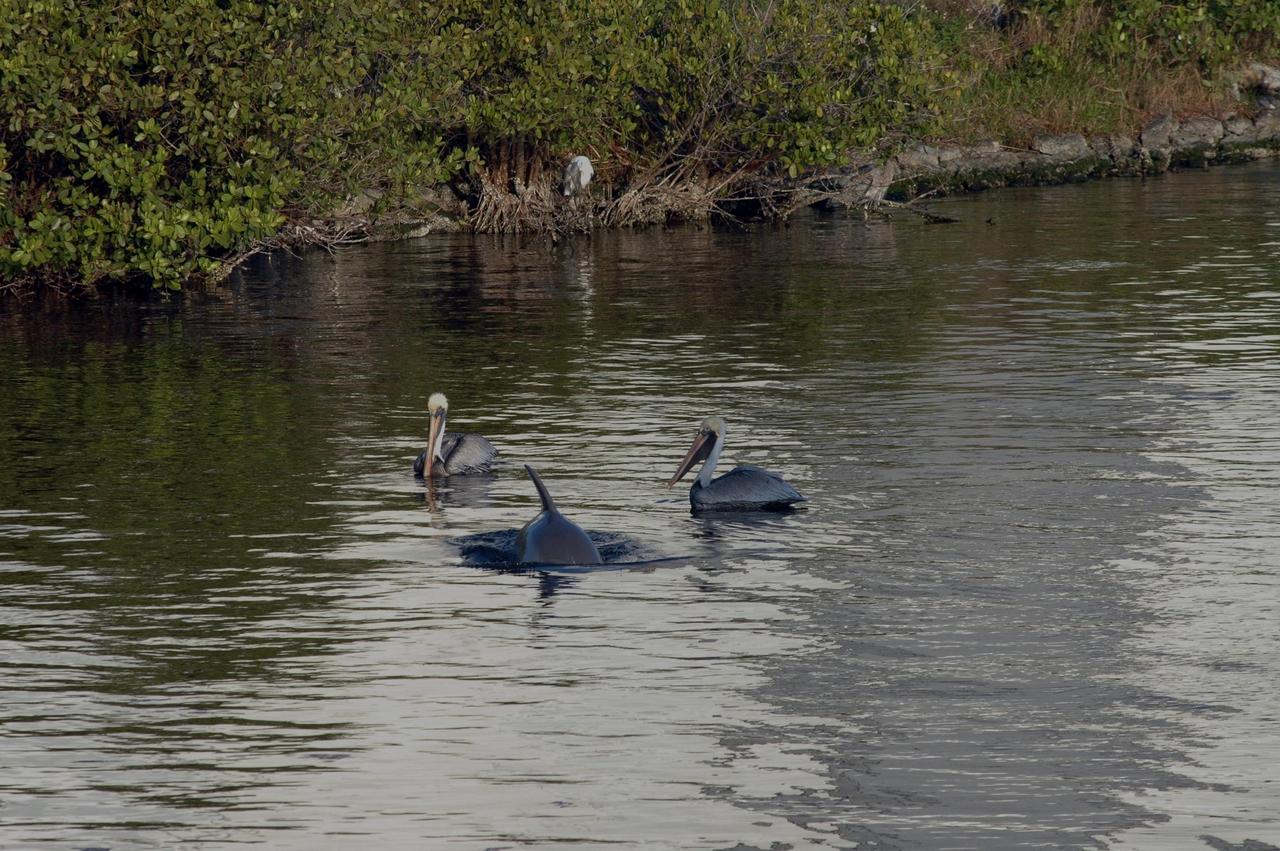
KENNEDY SPACE CENTER, FLA. -- In the turn basin near the Vehicle Assembly Building, a dolphin interrupts two white pelicans swimming near the shore. White pelicans winter from Florida and southern California to Panama, chiefly in coastal lagoons, and usually in colonies. The turn basin was carved out of the Banana River when Kennedy Space Center was built. KSC shares a boundary with the Merritt Island Wildlife Nature Refuge. The refuge is a habitat for more than 310 species of birds, 25 mammals, 117 fishes and 65 amphibians and reptiles. In addition, the Refuge supports 19 endangered or threatened wildlife species on Federal or State lists, more than any other single refuge in the U.S. Photo credit: NASA/Jim Grossmann
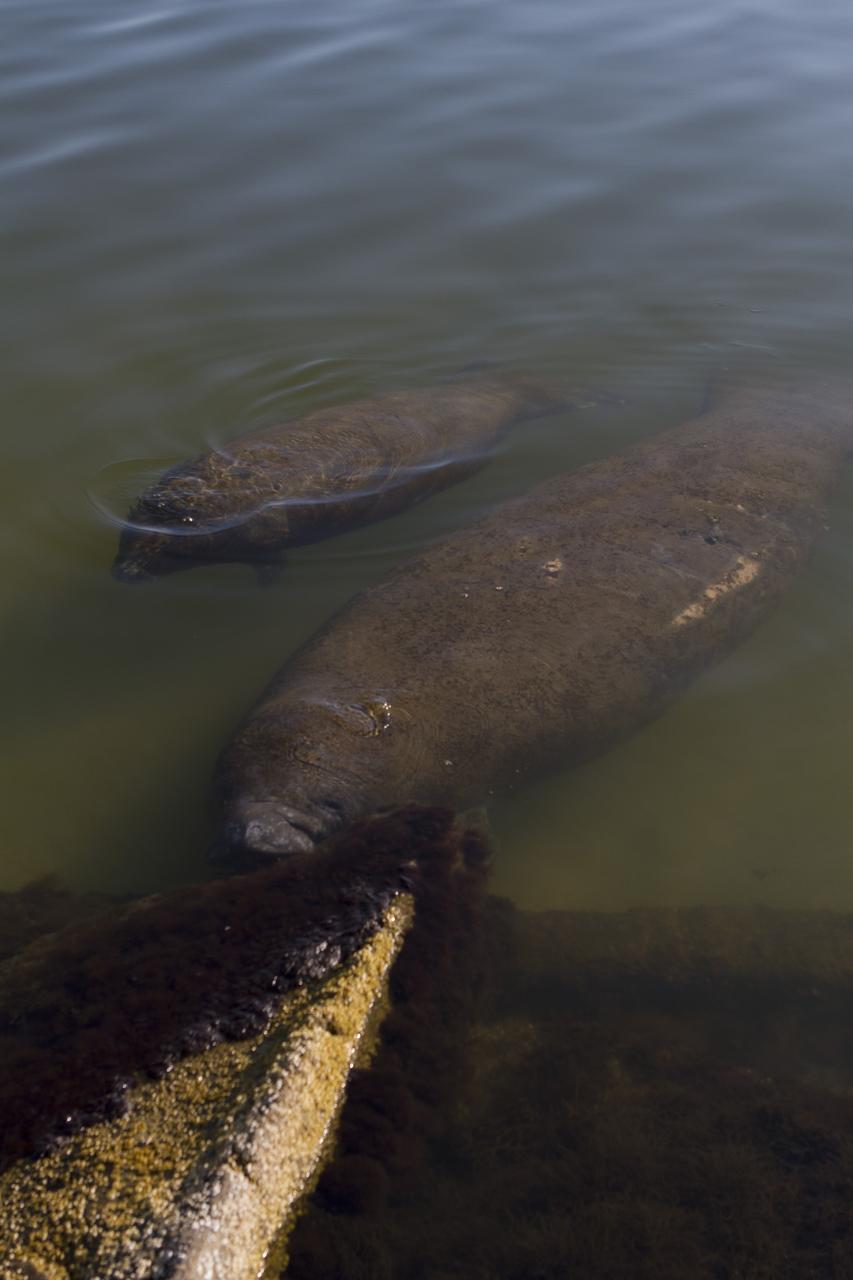
CAPE CANAVERAL, Fla. -- Two manatees swim in the water near the NASA Causeway Bridge at Kennedy Space Center in Florida. The gentle sea cows prefer warmer inland waterways during the winter months. The center shares a boundary with the Merritt Island National Wildlife Refuge. The refuge encompasses 140,000 acres that are a habitat for more than 330 species of birds, 31 mammals, 117 fishes, and 65 amphibians and reptiles. It contains more than 1,000 known plant species. The marshes and open water of the refuge provide wintering areas for 23 species of migratory waterfowl, as well as a year-round home for great blue herons, great egrets, wood storks, cormorants, brown pelicans and other species of marsh and shore birds, and a variety of insects. Photo credit: NASA/Ben Smegelsky
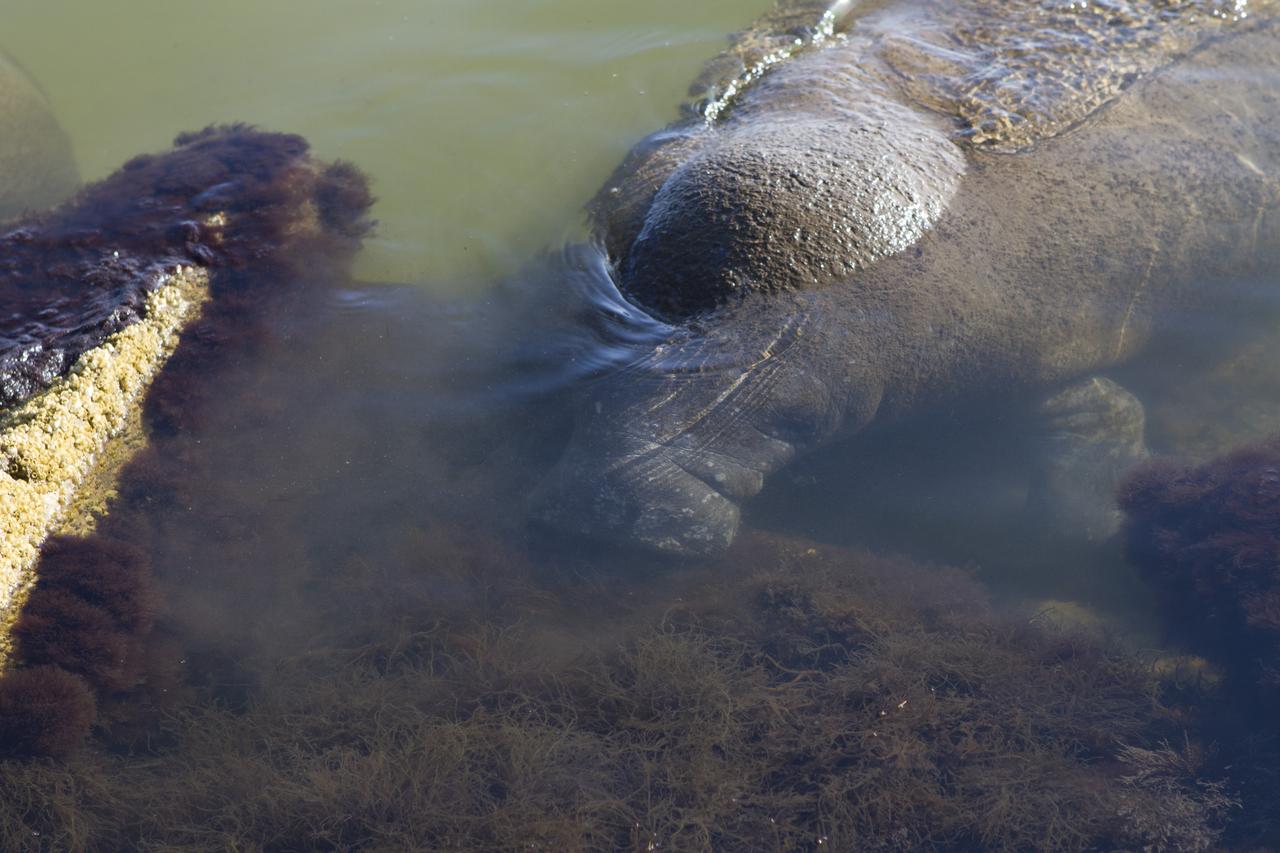
CAPE CANAVERAL, Fla. -- A manatee swims in the water near the NASA Causeway Bridge at Kennedy Space Center in Florida. The gentle sea cows prefer warmer inland waterways during the winter months. The center shares a boundary with the Merritt Island National Wildlife Refuge. The refuge encompasses 140,000 acres that are a habitat for more than 330 species of birds, 31 mammals, 117 fishes, and 65 amphibians and reptiles. It contains more than 1,000 known plant species. The marshes and open water of the refuge provide wintering areas for 23 species of migratory waterfowl, as well as a year-round home for great blue herons, great egrets, wood storks, cormorants, brown pelicans and other species of marsh and shore birds, and a variety of insects. Photo credit: NASA/Ben Smegelsky
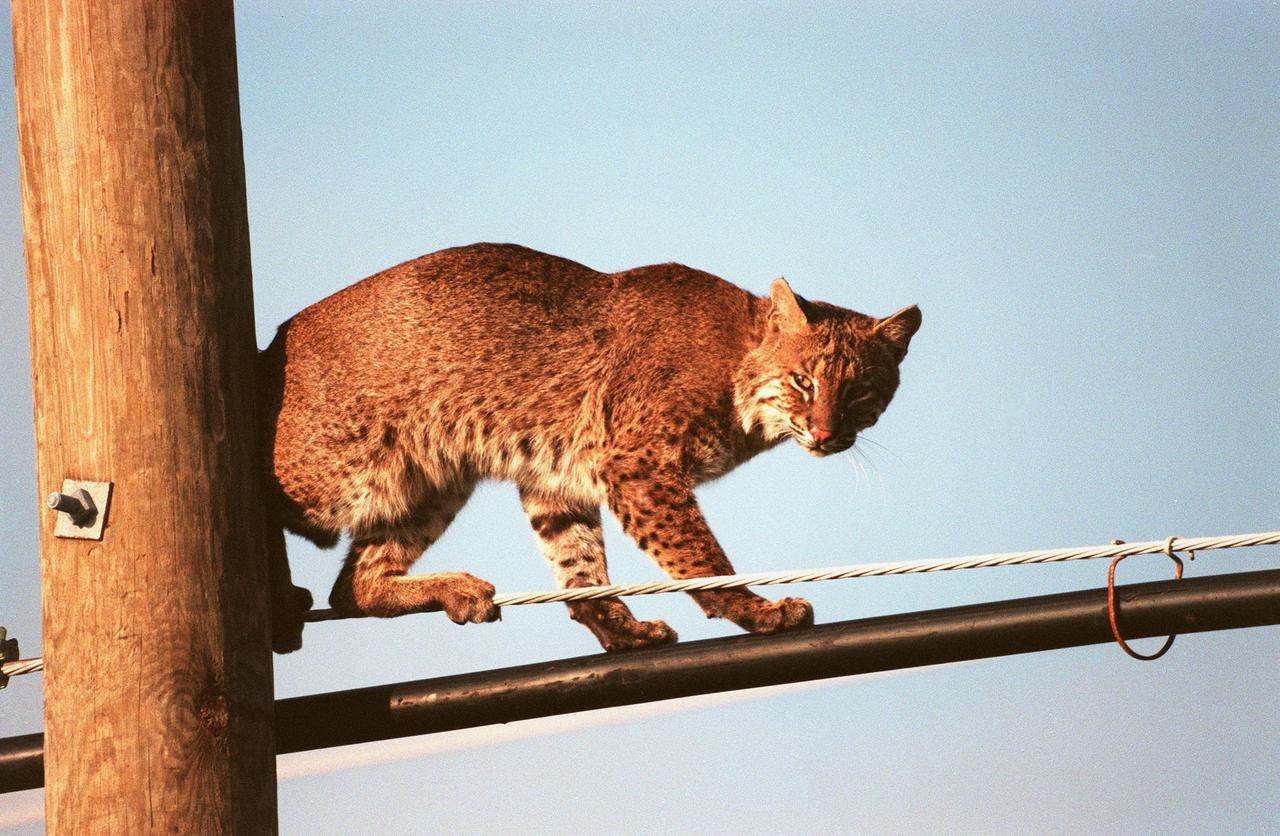
KENNEDY SPACE CENTER, FLA. -- A young, male bobcat balances gingerly on telephone pole cables next to the south-bound lane of Kennedy Parkway. The cat is nocturnal and is seldom observed during the day unless scared from its daytime shelter in the grass or beneath a shrub. Usually found in broken sections of heavily wooded or brushy country, bobcats are reported as common in scrub strand and roadside or weedy grass habitats at KSC. The bobcat is known to inhabit mangrove habitats and will readily swim across small bodies of water. The bobcat occurs across southern Canada then south over the entire United States, except for the midwestern corn belt, to southern Mexico. It is the last large mammalian predator remaining on KSC. The Merritt Island National Wildlife Refuge, which is located on Kennedy Space Center property, is home to many species of wild animals, including the bobcat.
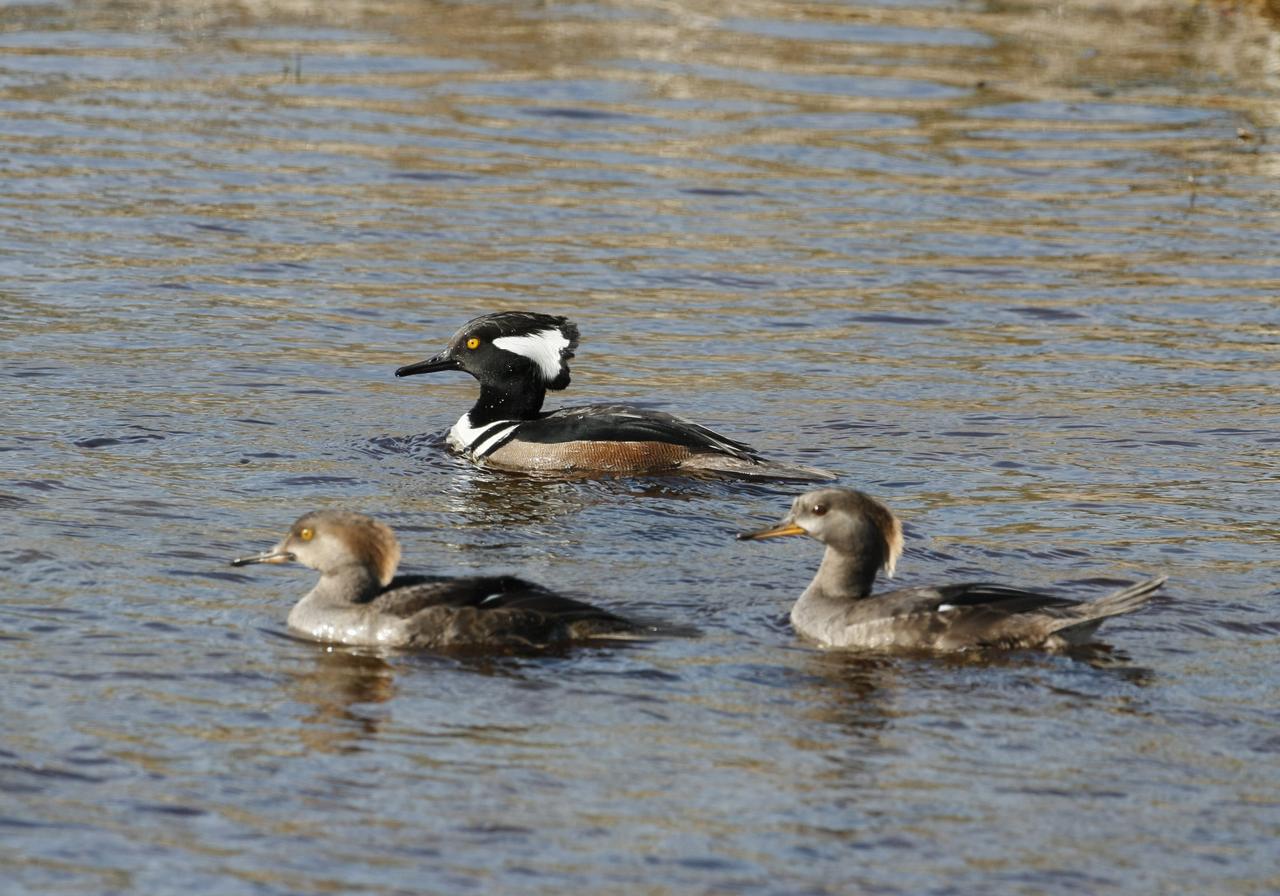
CAPE CANAVERAL, Fla. – Near NASA's Kennedy Space Center in Florida, on a pond in the Merritt island National Wildlife Refuge, a male hooded Merganser duck swims with two females. Their habitat includes wooded ponds, lakes and rivers. They are most often seen along rivers and estuaries during the fall and winter. They feed chiefly on small fish, which they pursue in long, rapid, underwater dives, and also frogs and aquatic insects. The center shares a boundary with the refuge that includes salt-water estuaries, brackish marshes, hardwood hammocks and pine flatwoods. The diverse landscape provides habitat for more than 310 species of birds, 25 mammals, 117 fishes and 65 amphibians and reptiles. Photo credit: NASA/Jim Grossmann
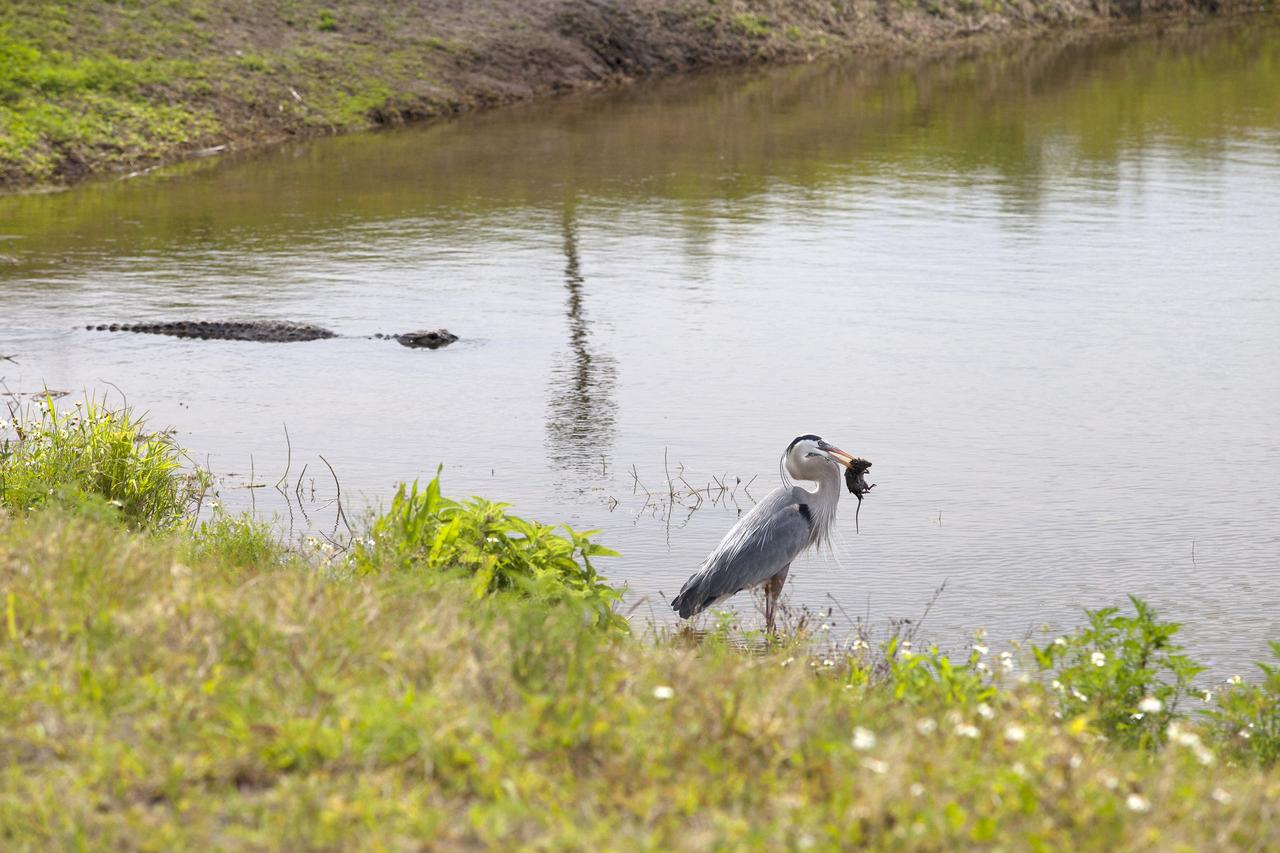
CAPE CANAVERAL, Fla. – A great blue heron catches a small rodent along the shore of an inland waterway at NASA's Kennedy Space Center in Florida. An alligator swims in the water nearby. The center shares a boundary with the Merritt Island National Wildlife Refuge. The refuge encompasses 140,000 acres that are a habitat for more than 330 species of birds, 31 mammals, 117 fishes, and 65 amphibians and reptiles. It contains more than 1,000 known plant species. The marshes and open water of the refuge provide wintering areas for 23 species of migratory waterfowl, as well as a year-round home for great blue herons, great egrets, wood storks, cormorants, brown pelicans and other species of marsh and shore birds, and a variety of insects. Photo credit: NASA/Daniel Casper
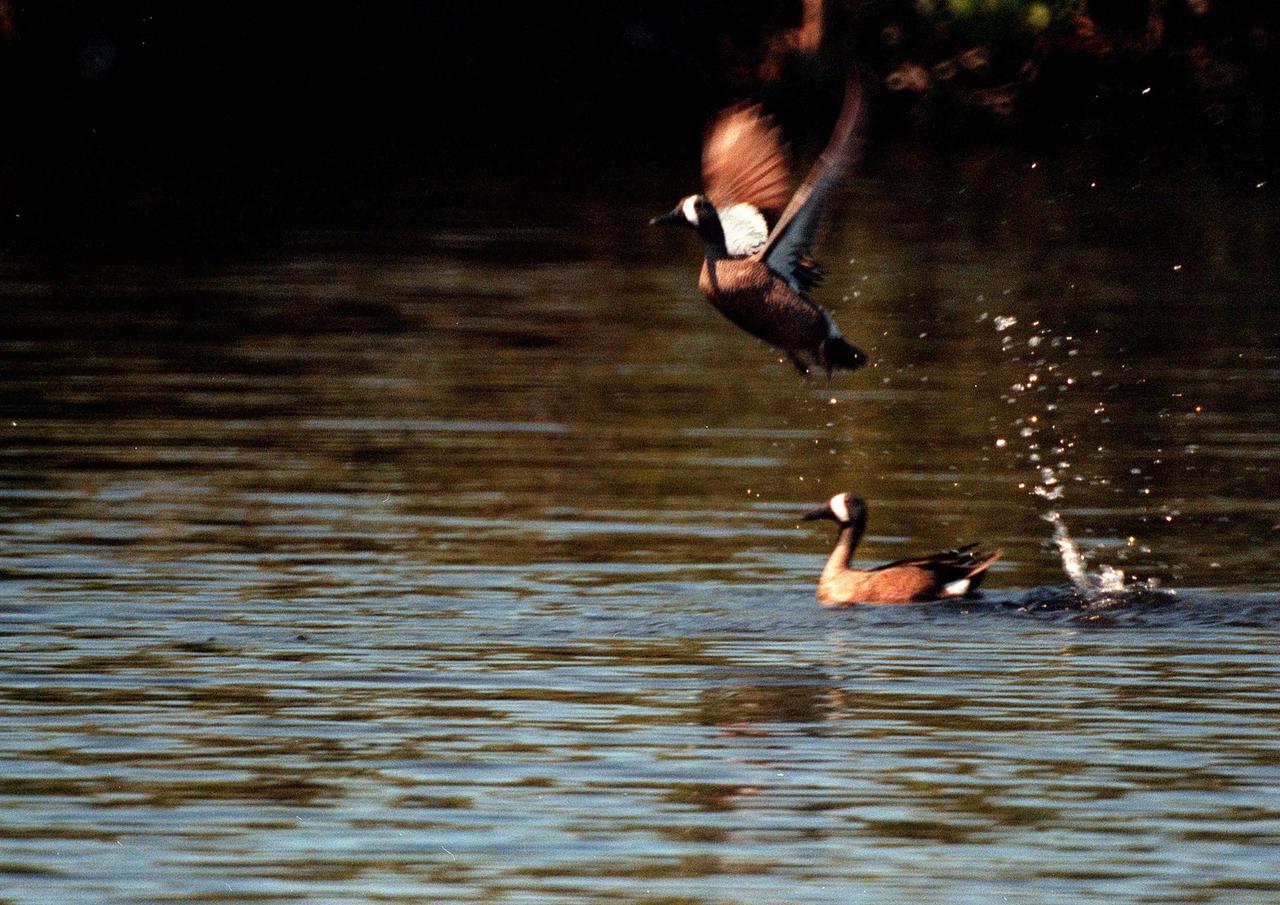
KENNEDY SPACE CENTER, FLA. -- The furious beating wings of a blue-winged teal launch it from the water as another swims calmly beneath it in the Merritt Island National Wildlife Refuge, which shares a boundary with Kennedy Space Center. Inhabiting marshes, shallow ponds and lakes from British Columbia, Quebec and Newfoundland to North Carolina, the Gulf Coast and southern California, the teal winters as far south as South America. The 92,000-acre refuge is a habitat for more than 310 species of birds, 25 mammals, 117 fishes and 65 amphibians and reptiles. The marshes and open water of the refuge also provide wintering areas for 23 species of migratory waterfowl, as well as a year-round home for great blue herons, great egrets, wood storks, cormorants, brown pelicans and other species of marsh and shore birds
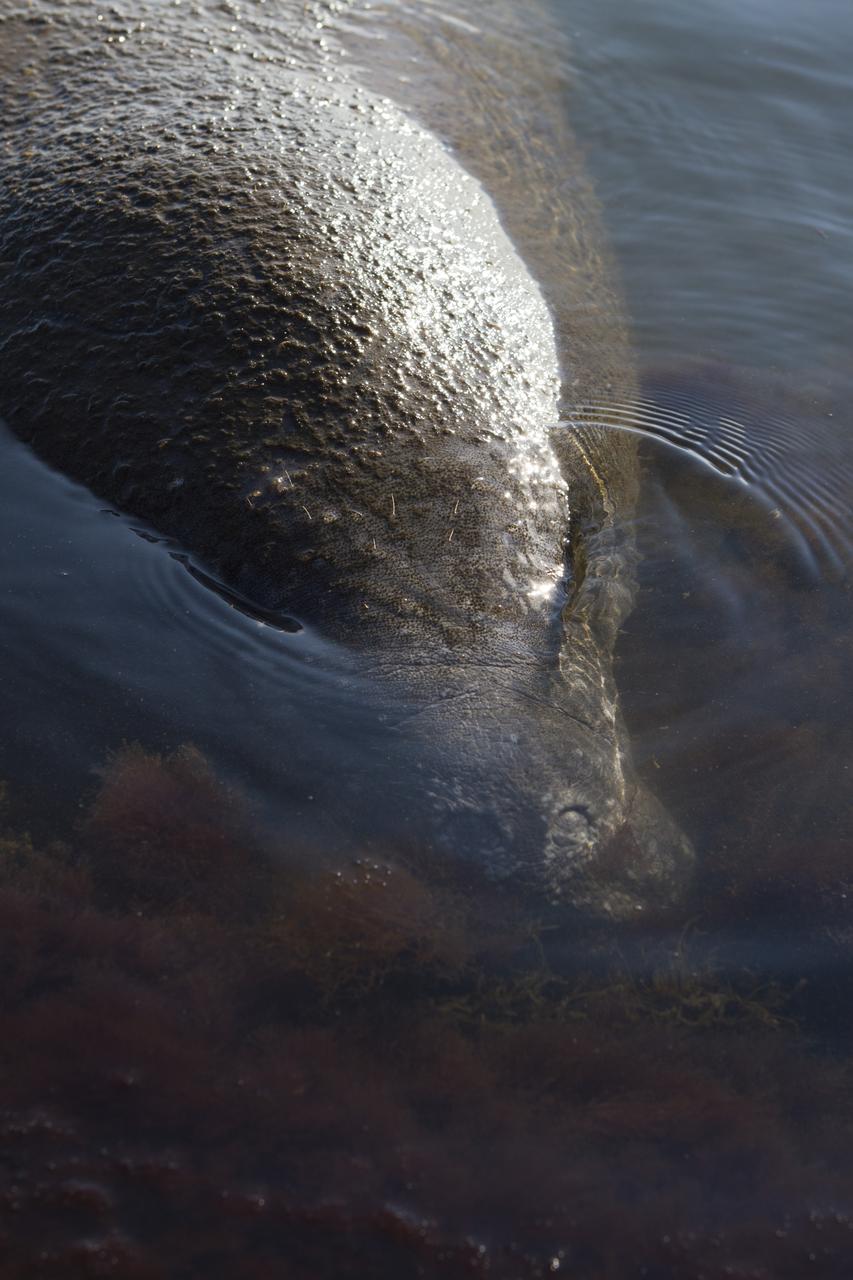
CAPE CANAVERAL, Fla. -- A manatee swims in the water near the NASA Causeway Bridge at Kennedy Space Center in Florida. The gentle sea cows prefer warmer inland waterways during the winter months. The center shares a boundary with the Merritt Island National Wildlife Refuge. The refuge encompasses 140,000 acres that are a habitat for more than 330 species of birds, 31 mammals, 117 fishes, and 65 amphibians and reptiles. It contains more than 1,000 known plant species. The marshes and open water of the refuge provide wintering areas for 23 species of migratory waterfowl, as well as a year-round home for great blue herons, great egrets, wood storks, cormorants, brown pelicans and other species of marsh and shore birds, and a variety of insects. Photo credit: NASA/Ben Smegelsky
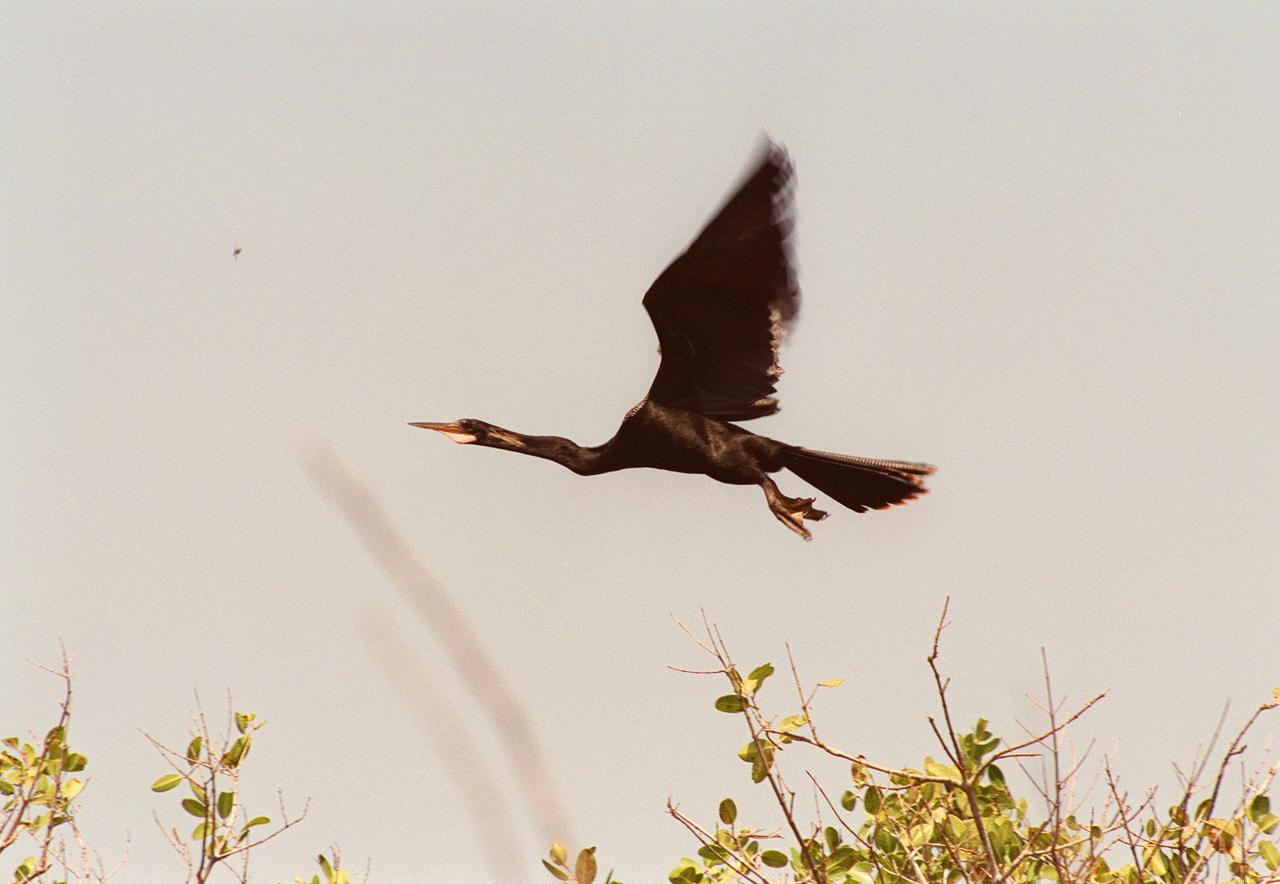
KENNEDY SPACE CENTER, FLA. -- In the Merritt Island National Wildlife Refuge, which shares a boundary with Kennedy Space Center, an anhinga takes flight. Anhingas inhabit frewshwater ponds and swamps with thick vegetation. They ranage from the Atlantic and gulf coasts from North Carolina to Texas, the Mississippi Valley north to Arkansas and Tennessee, and south to southern South America. They are also referred to as snakebirds because its body is submerged when swimming, showing only its head and long, slender neck above water. The 92,000-acre wildlife refuge is a habitat for more than 310 species of birds, 25 mammals, 117 fishes and 65 amphibians and reptiles. The marshes and open water of the refuge also provide wintering areas for 23 species of migratory waterfowl, as well as a year-round home for great blue herons, great egrets, wood storks, cormorants, brown pelicans and other species of marsh and shore birds
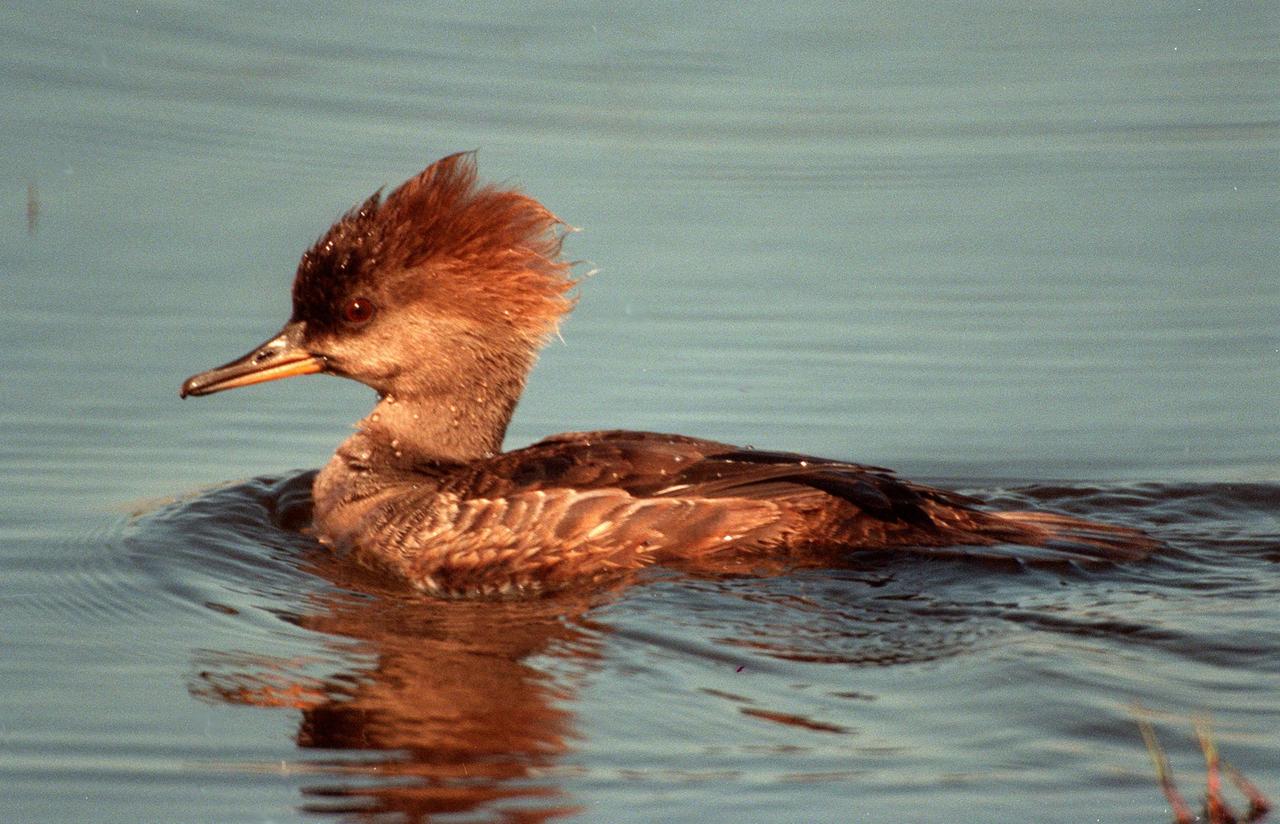
KENNEDY SPACE CENTER, FLA. -- A female hooded merganser swims solo in the waters of the Merritt Island National Wildlife Refuge at Kennedy Space Center. The male is distinguished by a fan-shaped, black-bordered crest and striped breast. Usually found from Alaska and Canada south to Nebraska, Oregon and Tennessee, hooded mergansers winter south to Mexico and the Gulf Coast, including KSC. The open water of the refuge provides wintering areas for 23 species of migratory waterfowl, as well as a year-round home for great blue herons, great egrets, wood storks, cormorants, brown pelicans and other species of marsh and shore birds. The 92,000-acre refuge is also habitat for more than 310 species of birds, 25 mammals, 117 fishes and 65 amphibians and reptiles
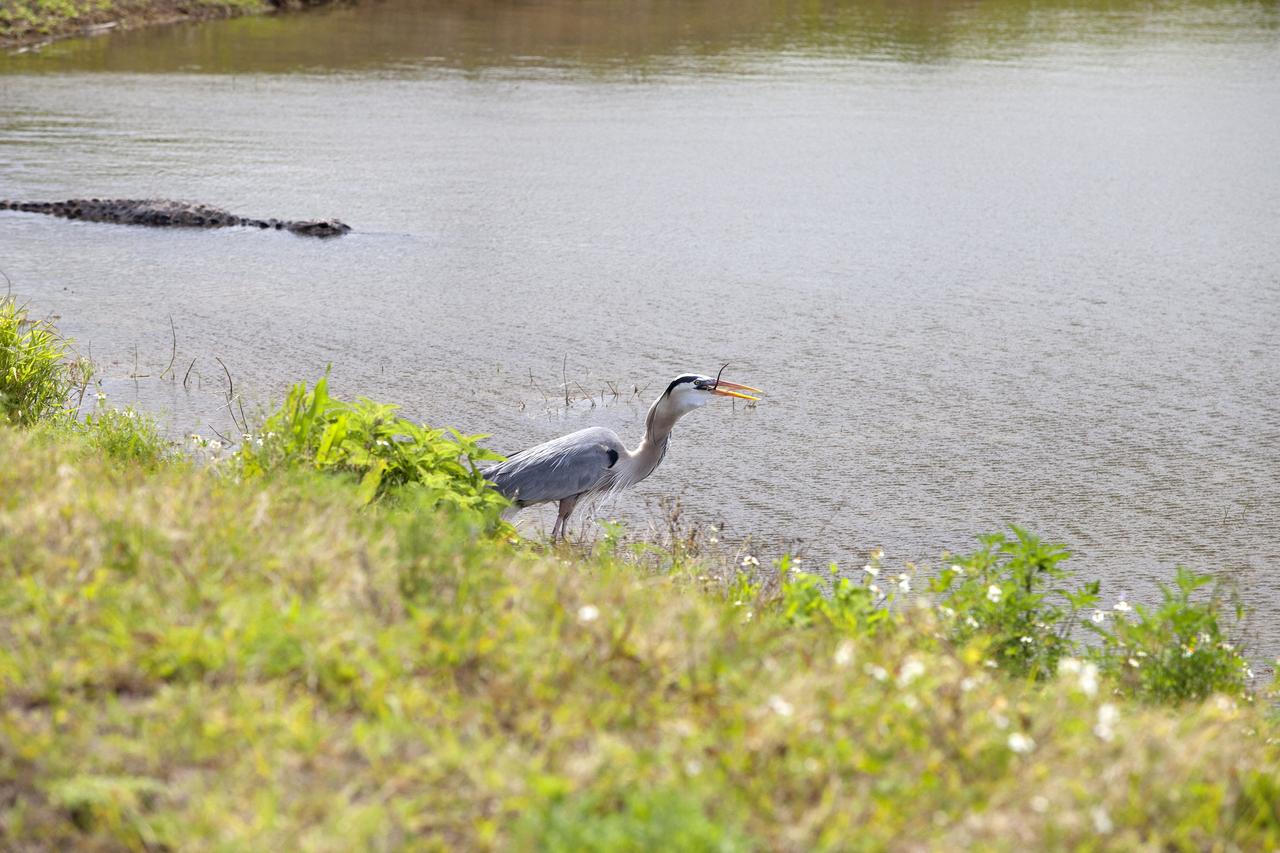
CAPE CANAVERAL, Fla. – A great blue heron consumes a small rodent along the shore of an inland waterway at NASA's Kennedy Space Center in Florida. An alligator swims in the water nearby. The center shares a boundary with the Merritt Island National Wildlife Refuge. The refuge encompasses 140,000 acres that are a habitat for more than 330 species of birds, 31 mammals, 117 fishes, and 65 amphibians and reptiles. It contains more than 1,000 known plant species. The marshes and open water of the refuge provide wintering areas for 23 species of migratory waterfowl, as well as a year-round home for great blue herons, great egrets, wood storks, cormorants, brown pelicans and other species of marsh and shore birds, and a variety of insects. Photo credit: NASA/Daniel Casper
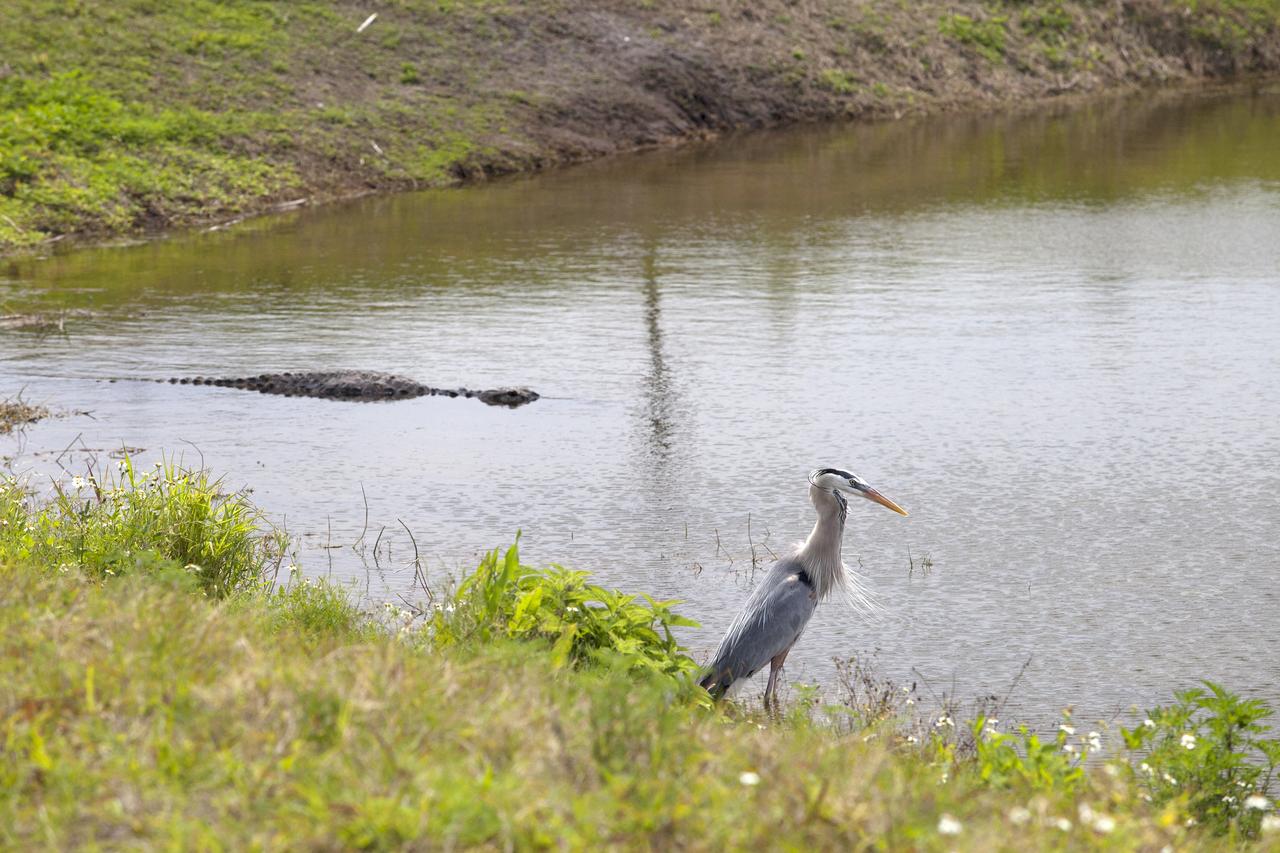
CAPE CANAVERAL, Fla. – A great blue heron stands along the shore of an inland waterway at NASA's Kennedy Space Center in Florida. An alligator swims in the water nearby. The center shares a boundary with the Merritt Island National Wildlife Refuge. The refuge encompasses 140,000 acres that are a habitat for more than 330 species of birds, 31 mammals, 117 fishes, and 65 amphibians and reptiles. It contains more than 1,000 known plant species. The marshes and open water of the refuge provide wintering areas for 23 species of migratory waterfowl, as well as a year-round home for great blue herons, great egrets, wood storks, cormorants, brown pelicans and other species of marsh and shore birds, and a variety of insects. Photo credit: NASA/Daniel Casper

KENNEDY SPACE CENTER, FLA. -- A male and two female hooded mergansers swim in the waters of the Merritt Island National Wildlife Refuge at Kennedy Space Center. The male displays its distinctive fan-shaped, black-bordered crest. Usually found from Alaska and Canada south to Nebraska, Oregon and Tennessee, hooded mergansers winter south to Mexico and the Gulf Coast, including KSC. The open water of the refuge provides wintering areas for 23 species of migratory waterfowl, as well as a year-round home for great blue herons, great egrets, wood storks, cormorants, brown pelicans and other species of marsh and shore birds. The 92,000-acre refuge is also habitat for more than 310 species of birds, 25 mammals, 117 fishes and 65 amphibians and reptiles
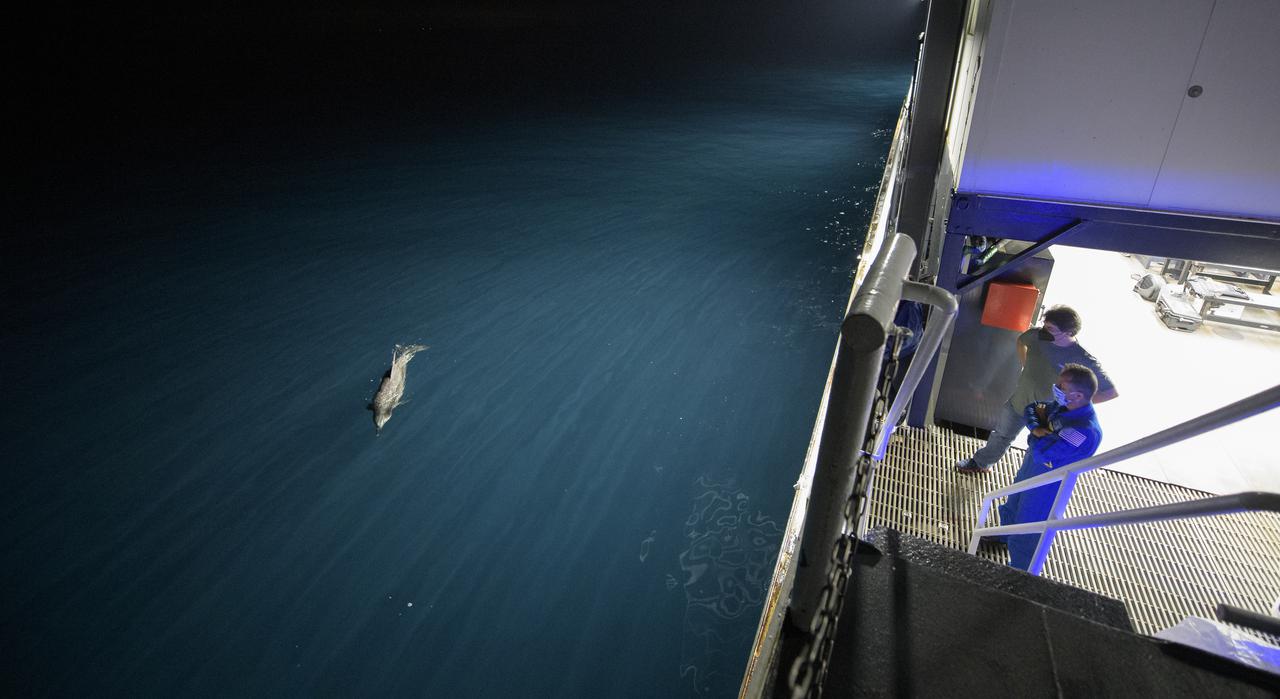
Manager, NASA ISS Transportation Integration Office, Bill Spetch and NASA astronaut representative Joe Acaba watch dolphin swim along with the SpaceX GO Navigator recovery ship as NASA and SpaceX teams prepare for the landing of the SpaceX Crew Dragon Resilience spacecraft with NASA astronauts Mike Hopkins, Shannon Walker, and Victor Glover, and Japan Aerospace Exploration Agency (JAXA) astronaut Soichi Noguchi aboard in the Gulf of Mexico off the coast of Panama City, Florida, Saturday, May 1, 2021. NASA’s SpaceX Crew-1 mission is the first crew rotation flight of the SpaceX Crew Dragon spacecraft and Falcon 9 rocket with astronauts to the International Space Station as part of the agency’s Commercial Crew Program. Photo Credit: (NASA/Bill Ingalls)
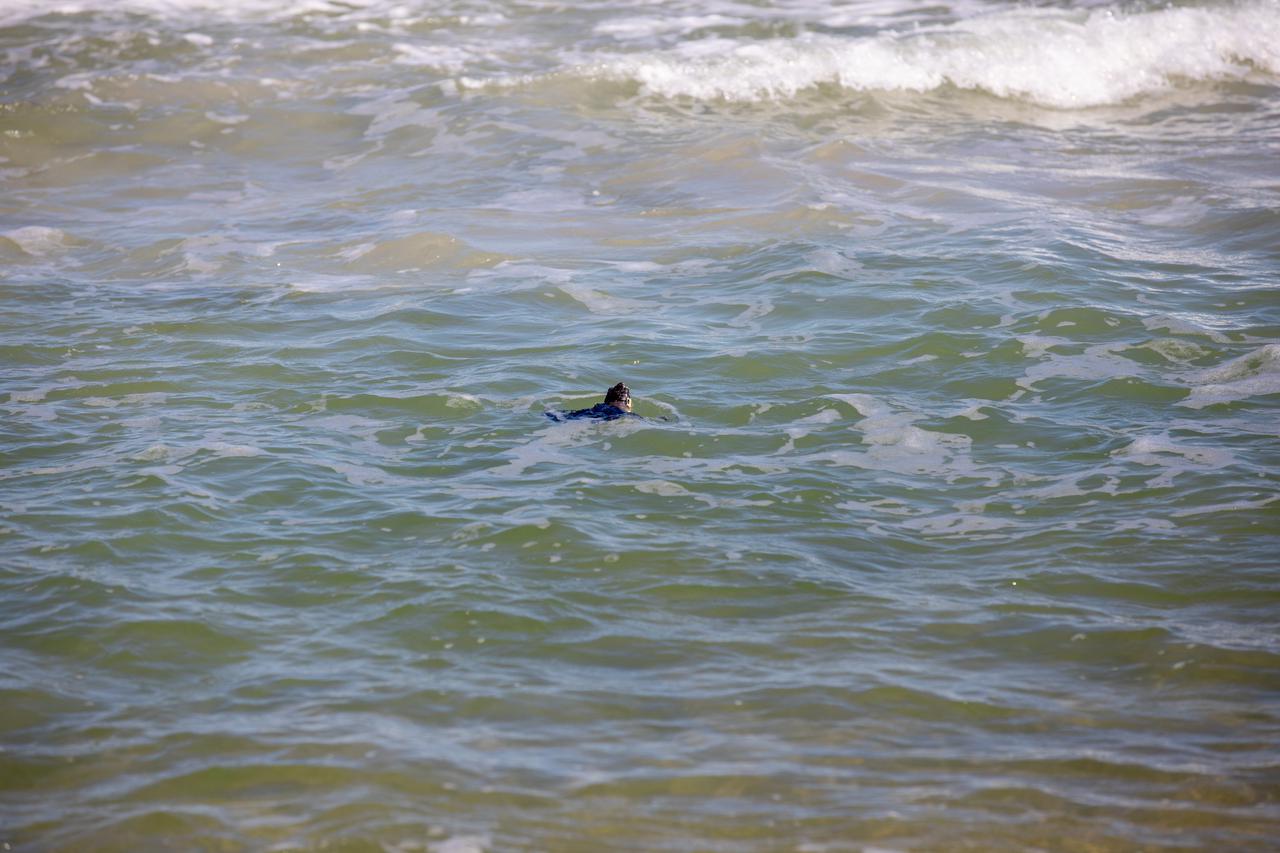
A Kemp’s ridley sea turtle swims in the surf after it is released into the Atlantic Ocean at the Canaveral National Seashore near Kennedy Space Center on Feb. 26, 2021. The rescued and rehabilitated turtles were flown from aquatic centers in Massachusetts and New York to the Launch and Landing Facility, managed by Space Florida. NASA, U.S. Fish and Wildlife Service, NOAA Fisheries, Space Florida, and Herndon Solutions Group provided support. The Turtles Fly Too organization provided the flight to Kennedy. All marine turtle footage/images was obtained with the approval of the Florida Fish and Wildlife Conservation Commission (FWC) under conditions not harmful to marine turtles. Footage was acquired while conducting authorized conservation activities pursuant to: FWC 2021 Consent Permit, MTP-21-005 and MTP-21-114.
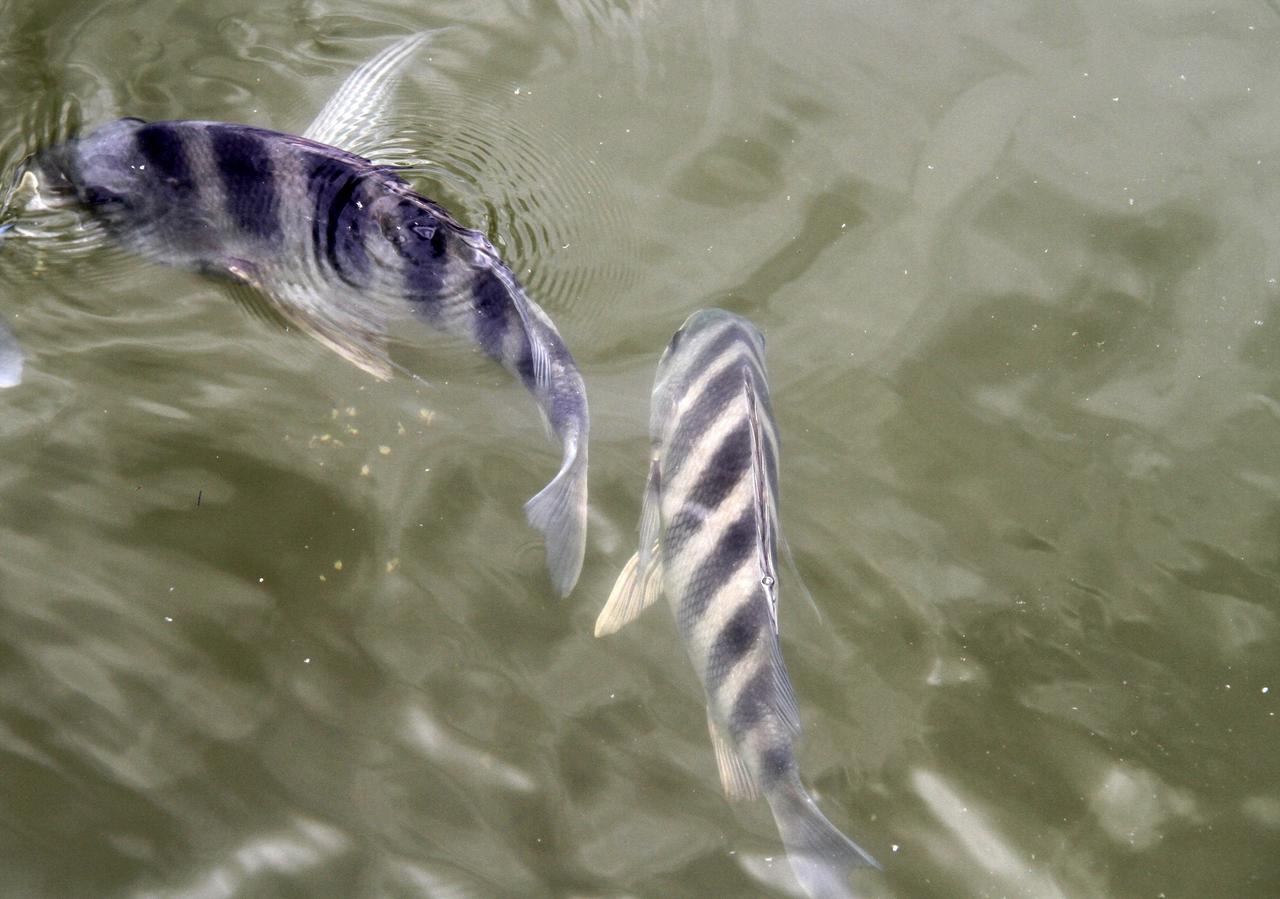
CAPE CANAVERAL, Fla. – Two fish swim near the Banana River shoreline at NASA's Kennedy Space Center in Florida. Kennedy is located on Merritt Island, a barrier island, about 34 miles long and varying in width from five to 10 miles. Only 6,000 acres are actually used for operational activities. The Kennedy Space Center is also a National Wildlife Refuge. Consisting of 140,000 acres, the refuge provides a wide variety of habitats: coastal dunes, saltwater estuaries and marshes, freshwater impoundments, scrub, pine flatwoods and hardwood hammocks providing habitat for more than 1,500 species of plants and animals. For more information, visit: http://ipv6.nasa.gov/centers/kennedy/shuttleoperations/alligators/kscovrv.html Photo credit: NASA/Ben Smegelsky
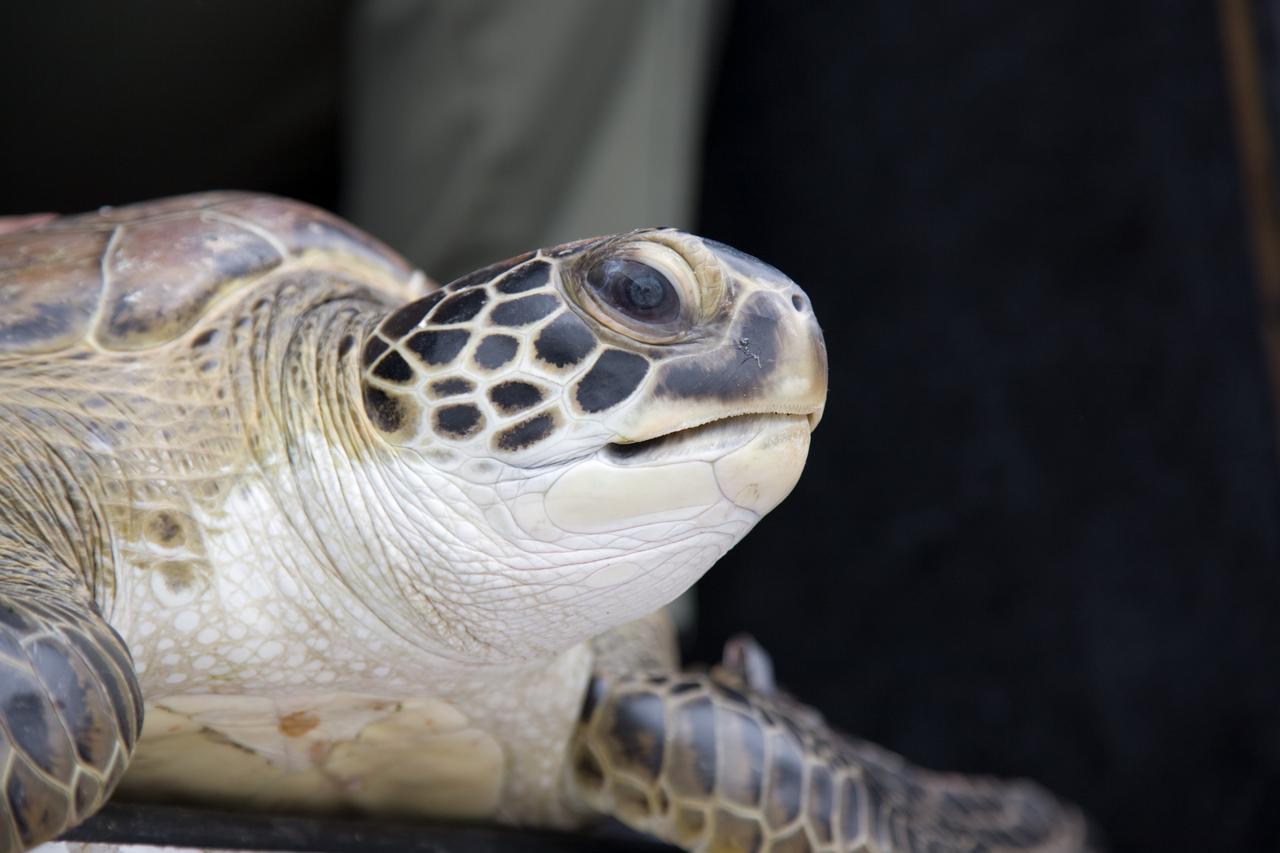
CAPE CANAVERAL, Fla. - This juvenile green sea turtle is ready to swim off into the waters of the Banana River at NASA's Kennedy Space Center in Florida. A recent cold snap left this turtle and nearly 2,000 others "stunned" and in need of help. Many of the turtles were rescued from the Mosquito Lagoon, with others coming from the Indian River Lagoon and Cocoa Beach. Biologists, environmentalists, wildlife experts and other volunteers joined forces with a massive rescue effort at the Merritt Island National Wildlife Refuge, where the turtles were identified, examined and transported to rehabilitation facilities throughout Florida and South Georgia. The animals stayed at these facilities until local waters warmed up to safe temperatures. Photo credit: NASA/Troy Cryder
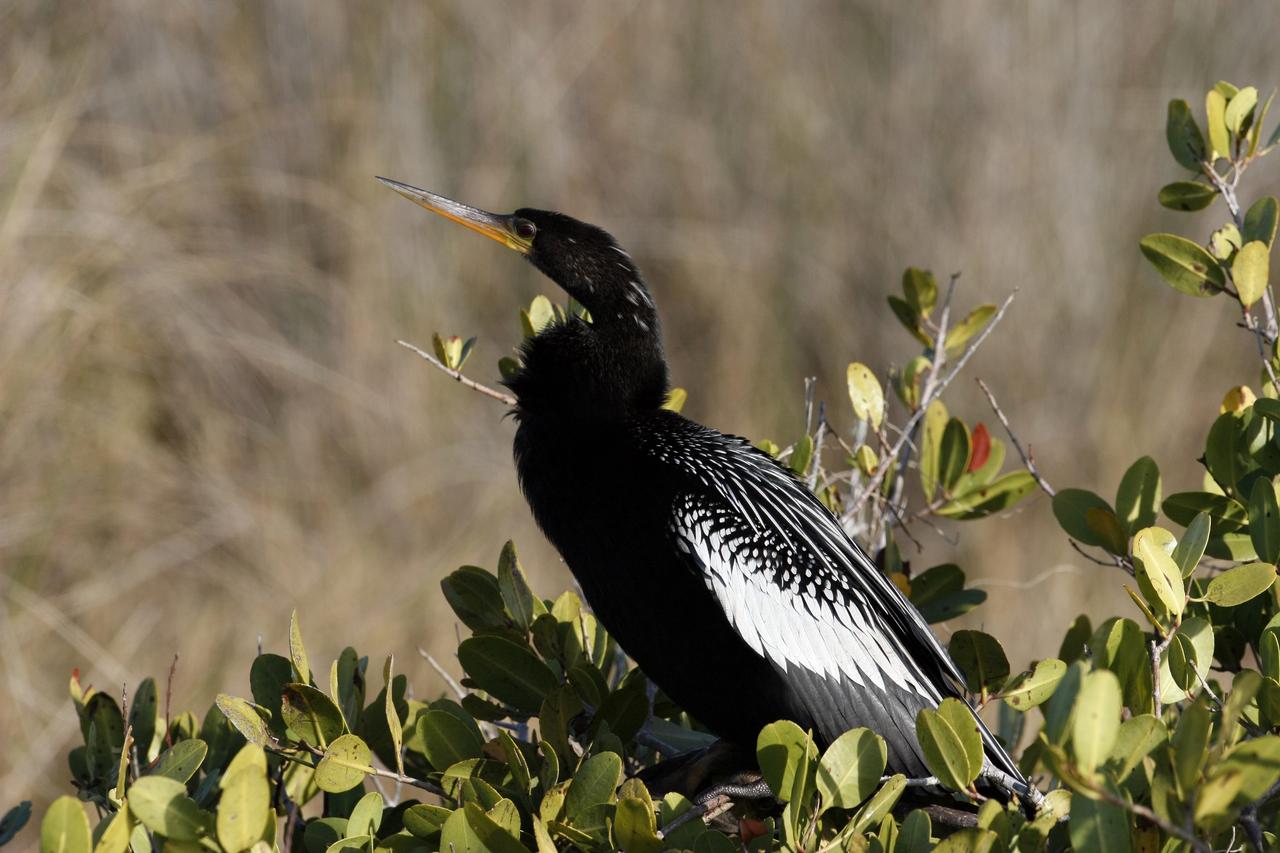
CAPE CANAVERAL, Fla. – A male Anhinga perches in a shrub in the Merritt island National Wildlife Refuge, which borders NASA's Kennedy Space Center in Florida. Anhingas inhabit freshwater ponds and swamps with thick vegetation. They range from the Atlantic and Gulf coasts from North Carolina to Texas, the Mississippi Valley north to Arkansas and Tennessee, and south to southern South America. They are also referred to as snakebirds because their body is submerged when swimming, showing only the head and long, slender neck above water. The center shares a boundary with the refuge that includes salt-water estuaries, brackish marshes, hardwood hammocks and pine flatwoods. The diverse landscape provides habitat for more than 310 species of birds, 25 mammals, 117 fishes and 65 amphibians and reptiles. Photo credit: NASA/Jim Grossmann
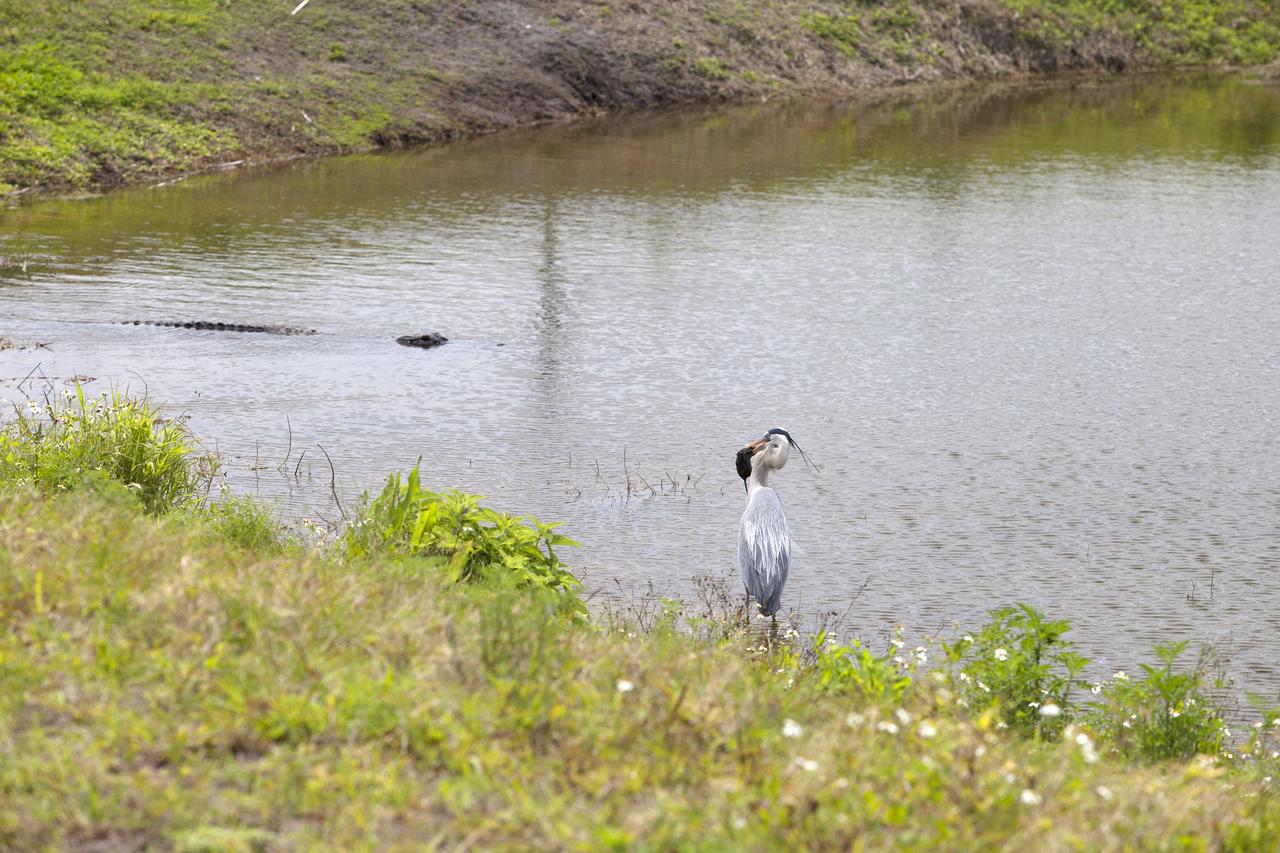
CAPE CANAVERAL, Fla. – A great blue heron catches a small rodent along the shore of an inland waterway at NASA's Kennedy Space Center in Florida. An alligator swims in the water nearby. The center shares a boundary with the Merritt Island National Wildlife Refuge. The refuge encompasses 140,000 acres that are a habitat for more than 330 species of birds, 31 mammals, 117 fishes, and 65 amphibians and reptiles. It contains more than 1,000 known plant species. The marshes and open water of the refuge provide wintering areas for 23 species of migratory waterfowl, as well as a year-round home for great blue herons, great egrets, wood storks, cormorants, brown pelicans and other species of marsh and shore birds, and a variety of insects. Photo credit: NASA/Daniel Casper
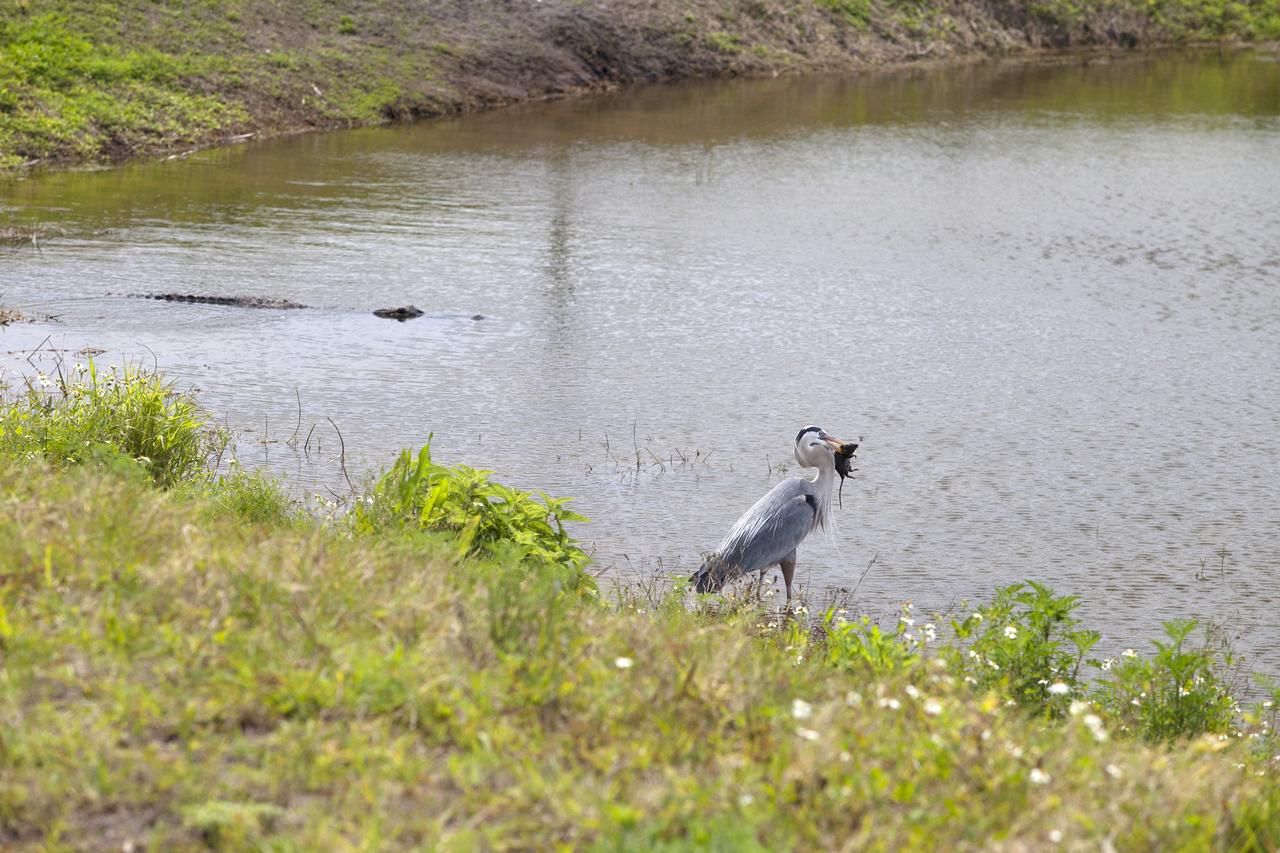
CAPE CANAVERAL, Fla. – A great blue heron catches a small rodent along the shore of an inland waterway at NASA's Kennedy Space Center in Florida. An alligator swims in the water nearby. The center shares a boundary with the Merritt Island National Wildlife Refuge. The refuge encompasses 140,000 acres that are a habitat for more than 330 species of birds, 31 mammals, 117 fishes, and 65 amphibians and reptiles. It contains more than 1,000 known plant species. The marshes and open water of the refuge provide wintering areas for 23 species of migratory waterfowl, as well as a year-round home for great blue herons, great egrets, wood storks, cormorants, brown pelicans and other species of marsh and shore birds, and a variety of insects. Photo credit: NASA/Daniel Casper
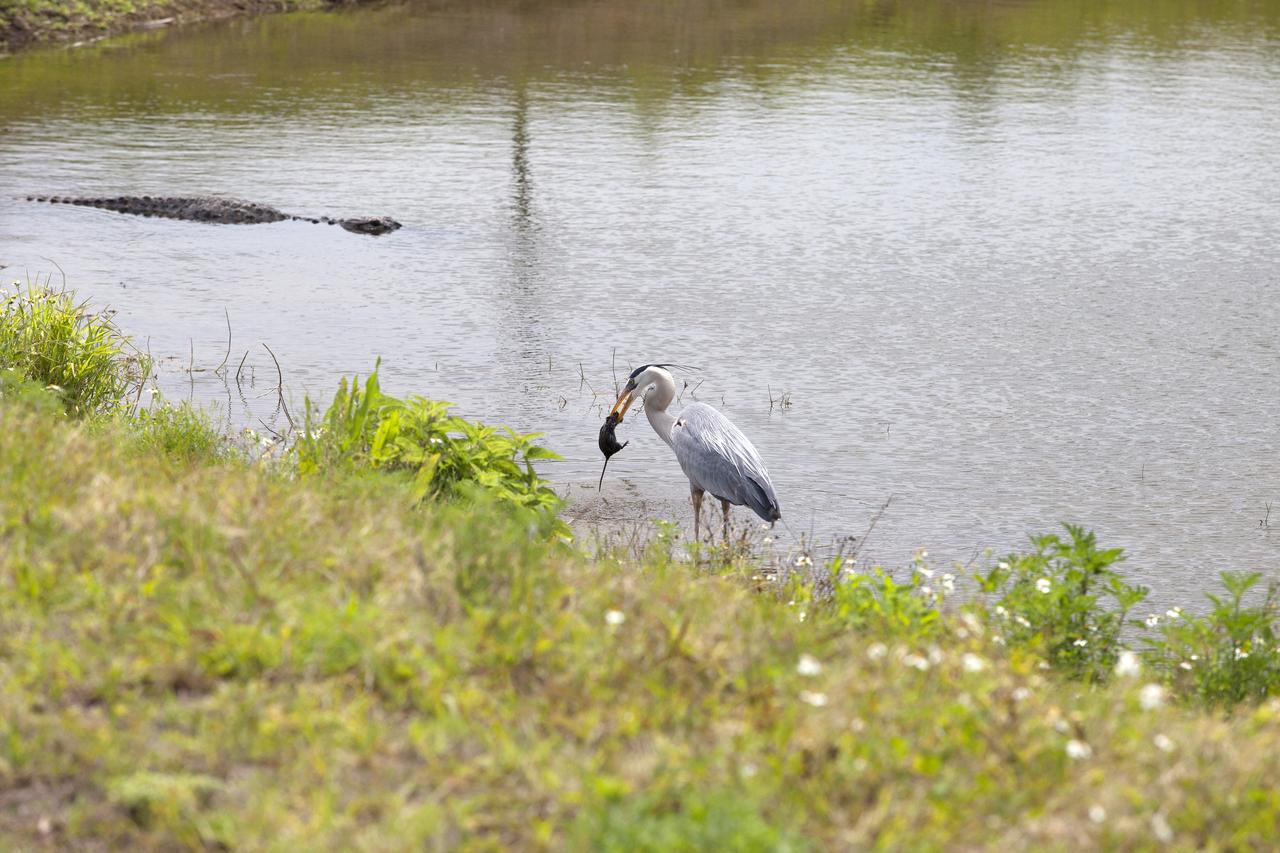
CAPE CANAVERAL, Fla. – A great blue heron catches a small rodent along the shore of an inland waterway at NASA's Kennedy Space Center in Florida. An alligator swims in the water nearby. The center shares a boundary with the Merritt Island National Wildlife Refuge. The refuge encompasses 140,000 acres that are a habitat for more than 330 species of birds, 31 mammals, 117 fishes, and 65 amphibians and reptiles. It contains more than 1,000 known plant species. The marshes and open water of the refuge provide wintering areas for 23 species of migratory waterfowl, as well as a year-round home for great blue herons, great egrets, wood storks, cormorants, brown pelicans and other species of marsh and shore birds, and a variety of insects. Photo credit: NASA/Daniel Casper
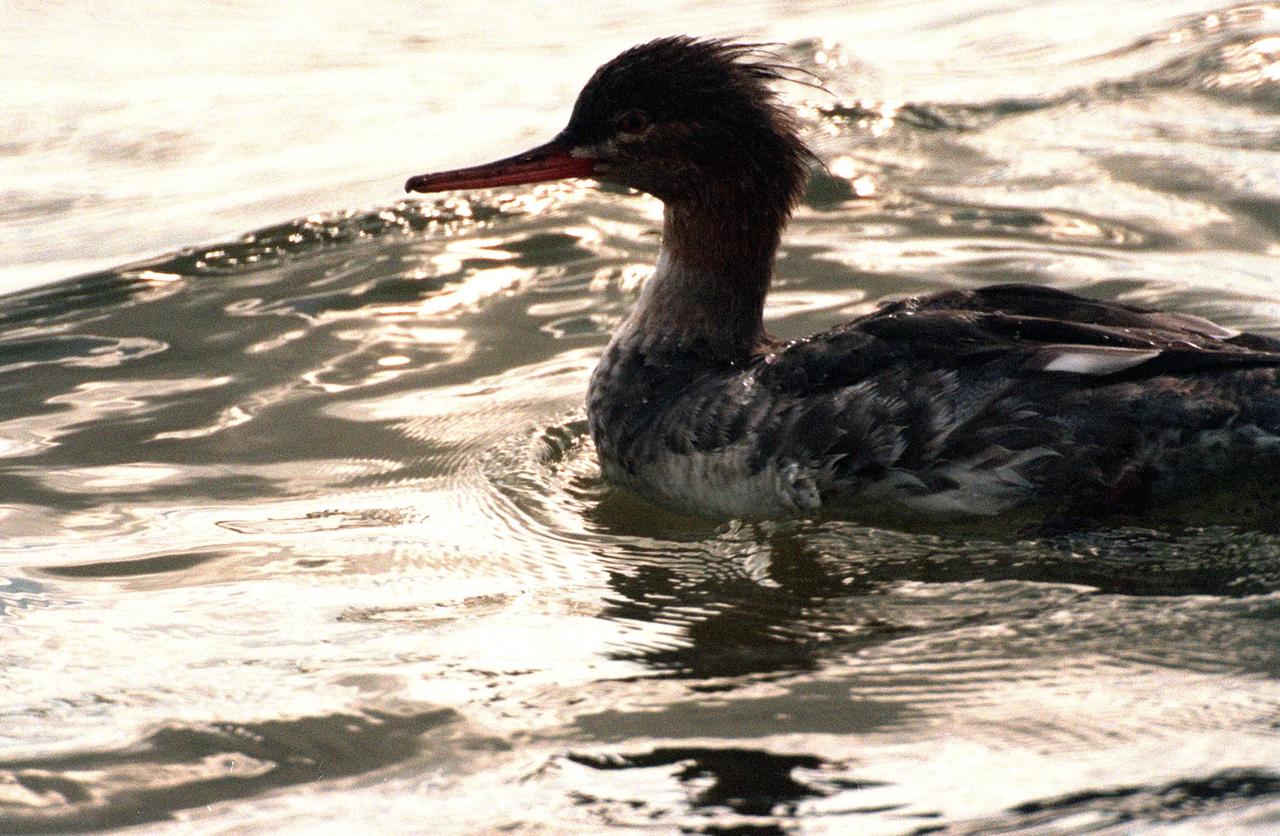
KENNEDY SPACE CENTER, FLA. -- A young female red-breasted merganser swims in the quicksilver water of the Merritt Island National Wildlife Refuge, which shares a boundary with Kennedy Space Center. Usually found from Alaska and Canada south to Nebraska, Oregon and Tennessee, hooded mergansers winter south to Mexico and the Gulf Coast, including KSC. The open water of the refuge provides wintering areas for 23 species of migratory waterfowl, as well as a year-round home for great blue herons, great egrets, wood storks, cormorants, brown pelicans and other species of marsh and shore birds. The 92,000-acre refuge is also habitat for more than 310 species of birds, 25 mammals, 117 fishes and 65 amphibians and reptiles

CAPE CANAVERAL, Fla. – Near NASA's Kennedy Space Center in Florida, on a pond in the Merritt island National Wildlife Refuge, a male hooded Merganser duck swims with a female (right) who is stretching her wings. The Merganser's habitat includes wooded ponds, lakes and rivers. They are most often seen along rivers and estuaries during the fall and winter. They feed chiefly on small fish, which they pursue in long, rapid, underwater dives, and also frogs and aquatic insects. The center shares a boundary with the refuge that includes salt-water estuaries, brackish marshes, hardwood hammocks and pine flatwoods. The diverse landscape provides habitat for more than 310 species of birds, 25 mammals, 117 fishes and 65 amphibians and reptiles. Photo credit: NASA/Jim Grossmann
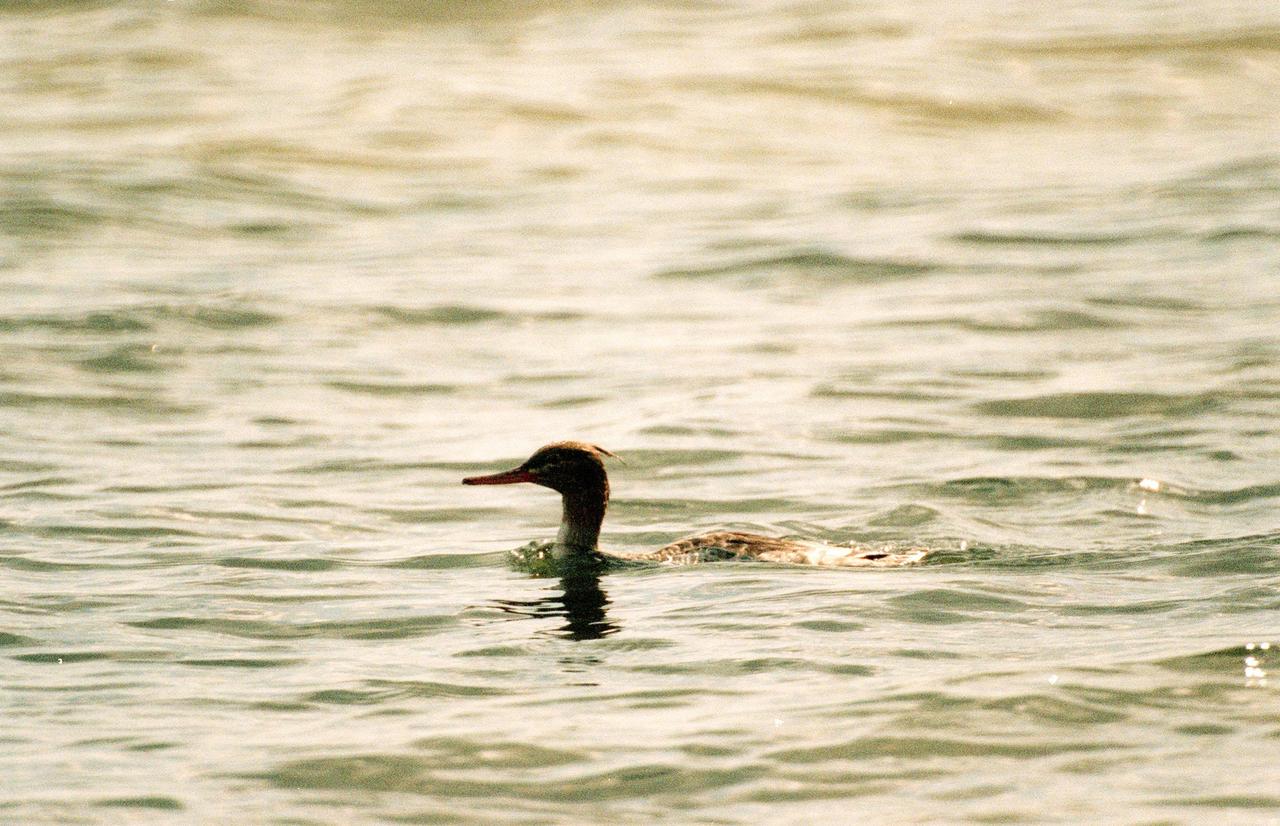
KENNEDY SPACE CENTER, FLA. -- A female red-breasted merganser swims low in the water at the Merritt Island National Wildlife Refuge, which shares a boundary with Kennedy Space Center. Usually found from Alaska and Canada south to Nebraska, Oregon and Tennessee, hooded mergansers winter south to Mexico and the Gulf Coast, including KSC. The open water of the refuge provides wintering areas for 23 species of migratory waterfowl, as well as a year-round home for great blue herons, great egrets, wood storks, cormorants, brown pelicans and other species of marsh and shore birds. The 92,000-acre refuge is also habitat for more than 310 species of birds, 25 mammals, 117 fishes and 65 amphibians and reptiles
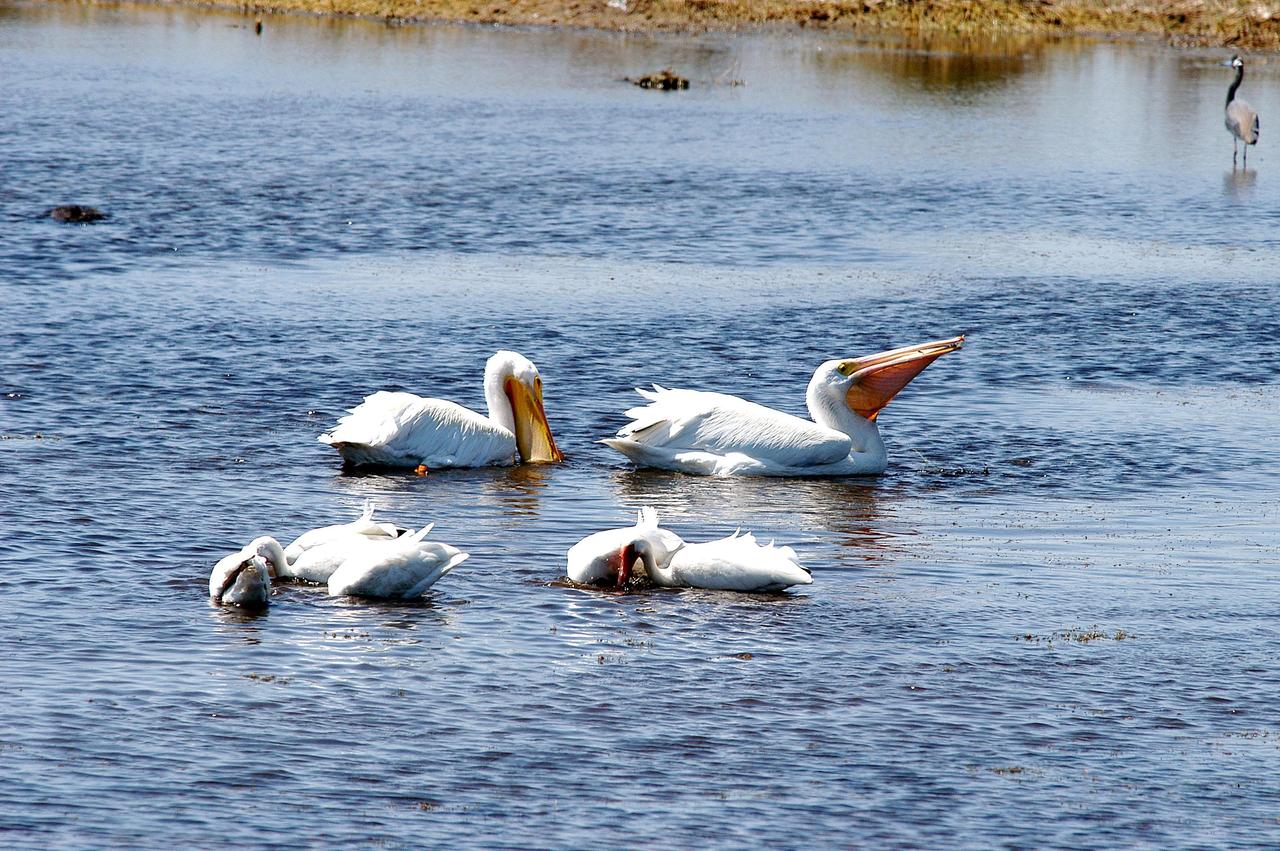
KENNEDY SPACE CENTER, FLA. - White pelicans swim in a lake north of Kennedy Space Center. In the distance, at right, is a great blue heron. White pelicans winter from Florida and southern California south to Panama. Great blue herons range across the breadth of the United States, as well as north to Alaska and Canada and south to Mexico and the West Indies. The Center shares a boundary north, south and west with the 92,000-acre Merritt Island National Wildlife Refuge, which is a habitat for more than 310 species of birds, 25 mammals, 117 fishes and 65 amphibians and reptiles. The marshes and open water of the refuge also provide wintering areas for 23 species of migratory waterfowl, as well as a year-round home for great blue herons, great egrets, wood storks, cormorants, brown pelicans and other species of marsh and shore birds.
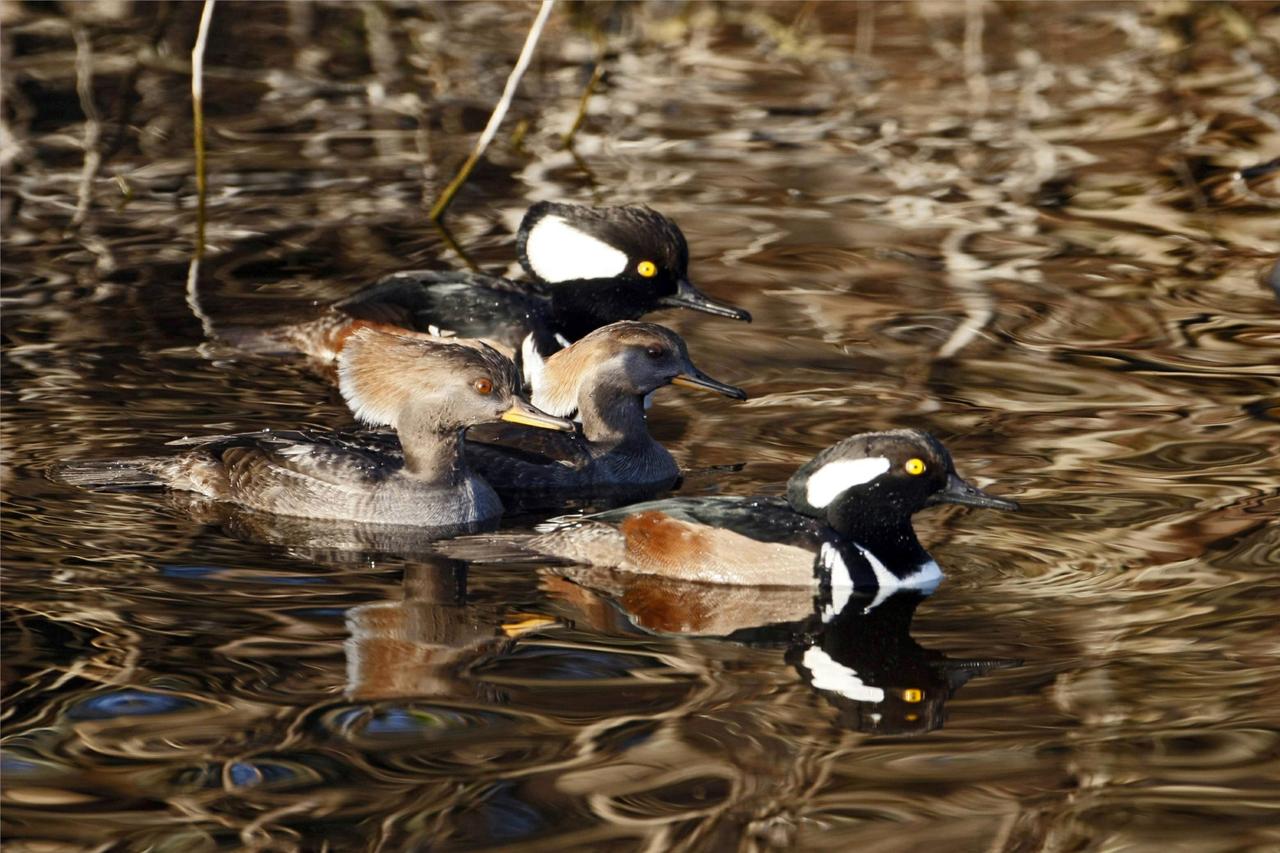
CAPE CANAVERAL, Fla. – Hooded Merganser ducks swim on a pond in the Merritt island National Wildlife Refuge, which borders NASA's Kennedy Space Center in Florida. Their habitat includes wooded ponds, lakes and rivers. They are most often seen along rivers and estuaries during the fall and winter. They feed chiefly on small fish, which they pursue in long, rapid, underwater dives, and also frogs and aquatic insects. The center shares a boundary with the refuge that includes salt-water estuaries, brackish marshes, hardwood hammocks and pine flatwoods. The diverse landscape provides habitat for more than 310 species of birds, 25 mammals, 117 fishes and 65 amphibians and reptiles. Photo credit: NASA/Jim Grossmann
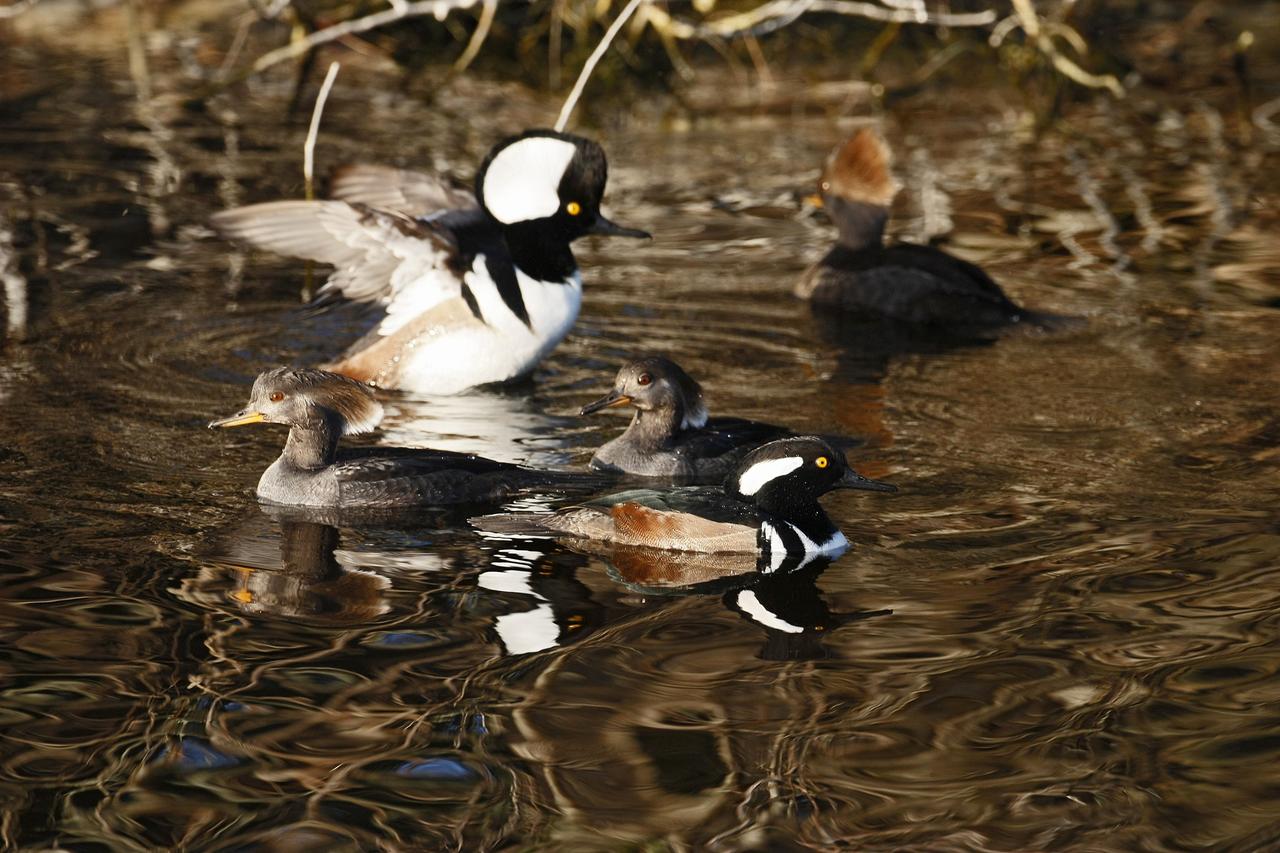
CAPE CANAVERAL, Fla. – Hooded Merganser ducks swim on a pond in the Merritt island National Wildlife Refuge, which borders NASA's Kennedy Space Center in Florida. Their habitat includes wooded ponds, lakes and rivers. They are most often seen along rivers and estuaries during the fall and winter. They feed chiefly on small fish, which they pursue in long, rapid, underwater dives, and also frogs and aquatic insects. The center shares a boundary with the refuge that includes salt-water estuaries, brackish marshes, hardwood hammocks and pine flatwoods. The diverse landscape provides habitat for more than 310 species of birds, 25 mammals, 117 fishes and 65 amphibians and reptiles. Photo credit: NASA/Jim Grossmann
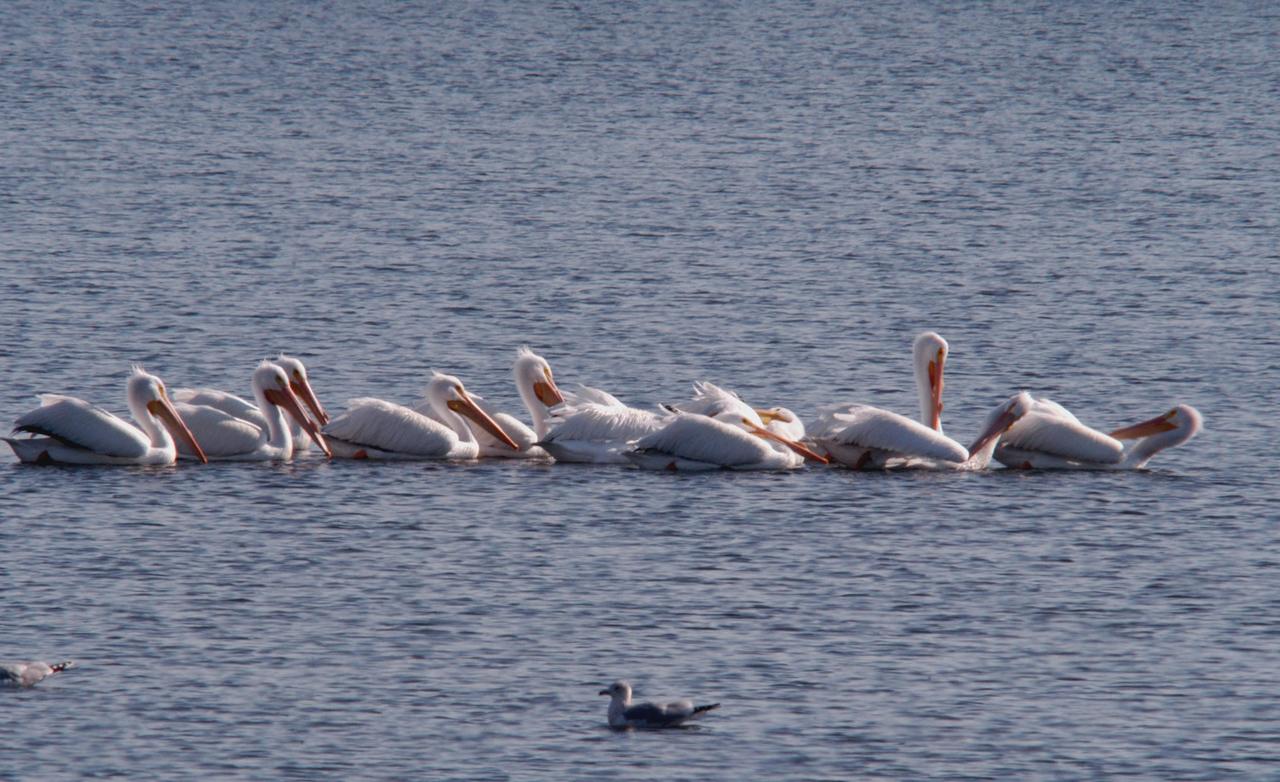
KENNEDY SPACE CENTER, FLA. -- White pelicans form a line while swimming in the turn basin near the Vehicle Assembly Building of NASA's Kennedy Space Center. The turn basin was carved out of the Banana River when Kennedy Space Center was built. White pelicans winter from Florida and southern California to Panama, chiefly in coastal lagoons, and usually in colonies. KSC shares a boundary with the Merritt Island Wildlife Nature Refuge. The refuge is a habitat for more than 310 species of birds, 25 mammals, 117 fishes and 65 amphibians and reptiles. In addition, the Refuge supports 19 endangered or threatened wildlife species on Federal or State lists, more than any other single refuge in the U.S. Photo credit: NASA/George Shelton
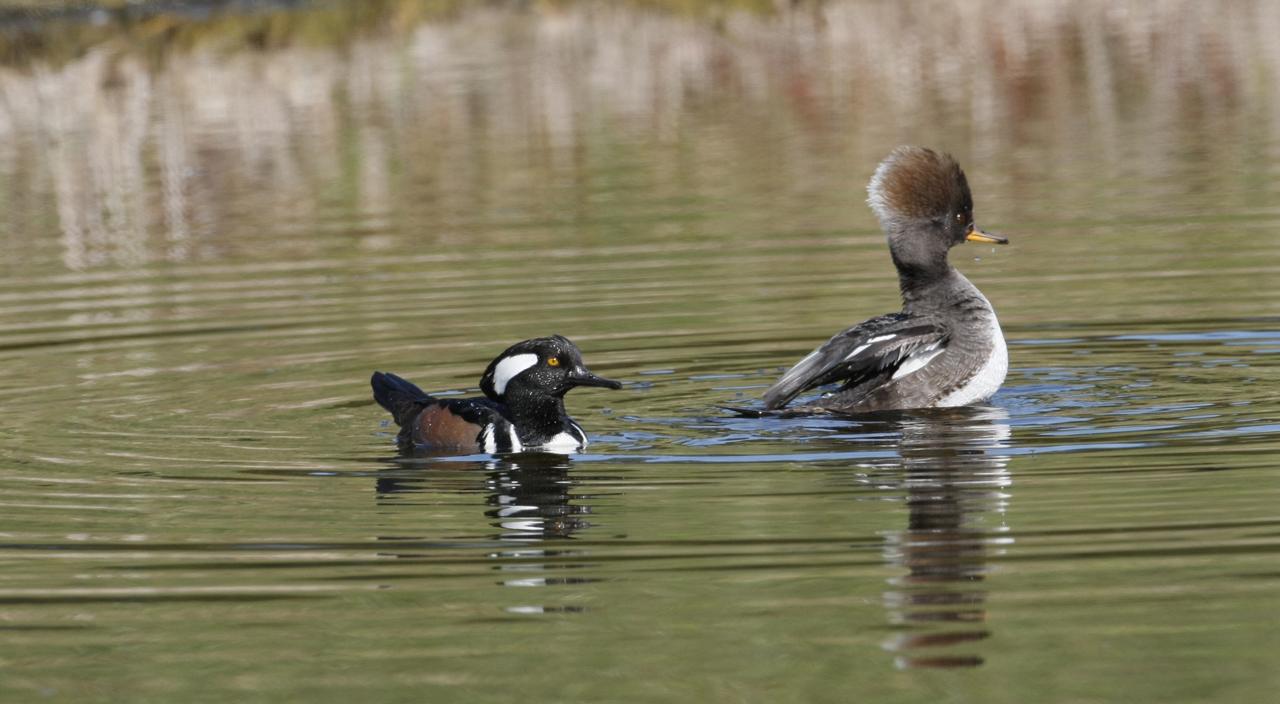
CAPE CANAVERAL, Fla. – Near NASA's Kennedy Space Center in Florida, on a pond in the Merritt island National Wildlife Refuge, a male hooded Merganser duck swims with a female. The Merganser's habitat includes wooded ponds, lakes and rivers. They are most often seen along rivers and estuaries during the fall and winter. They feed chiefly on small fish, which they pursue in long, rapid, underwater dives, and also frogs and aquatic insects. The center shares a boundary with the refuge that includes salt-water estuaries, brackish marshes, hardwood hammocks and pine flatwoods. The diverse landscape provides habitat for more than 310 species of birds, 25 mammals, 117 fishes and 65 amphibians and reptiles. Photo credit: NASA/Jim Grossmann
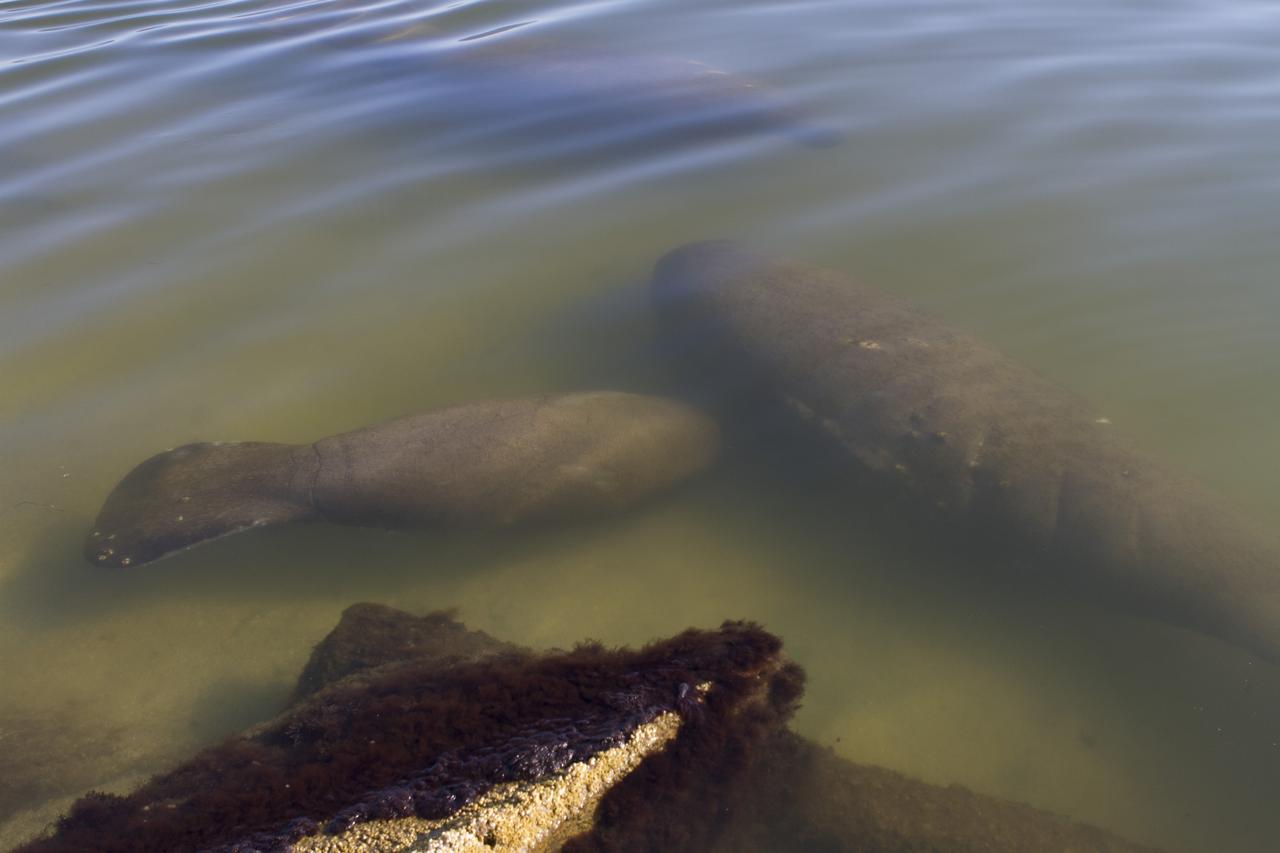
CAPE CANAVERAL, Fla. -- Two manatees swim in the water near the NASA Causeway Bridge at Kennedy Space Center in Florida. The gentle sea cows prefer warmer inland waterways during the winter months. The center shares a boundary with the Merritt Island National Wildlife Refuge. The refuge encompasses 140,000 acres that are a habitat for more than 330 species of birds, 31 mammals, 117 fishes, and 65 amphibians and reptiles. It contains more than 1,000 known plant species. The marshes and open water of the refuge provide wintering areas for 23 species of migratory waterfowl, as well as a year-round home for great blue herons, great egrets, wood storks, cormorants, brown pelicans and other species of marsh and shore birds, and a variety of insects. Photo credit: NASA/Ben Smegelsky
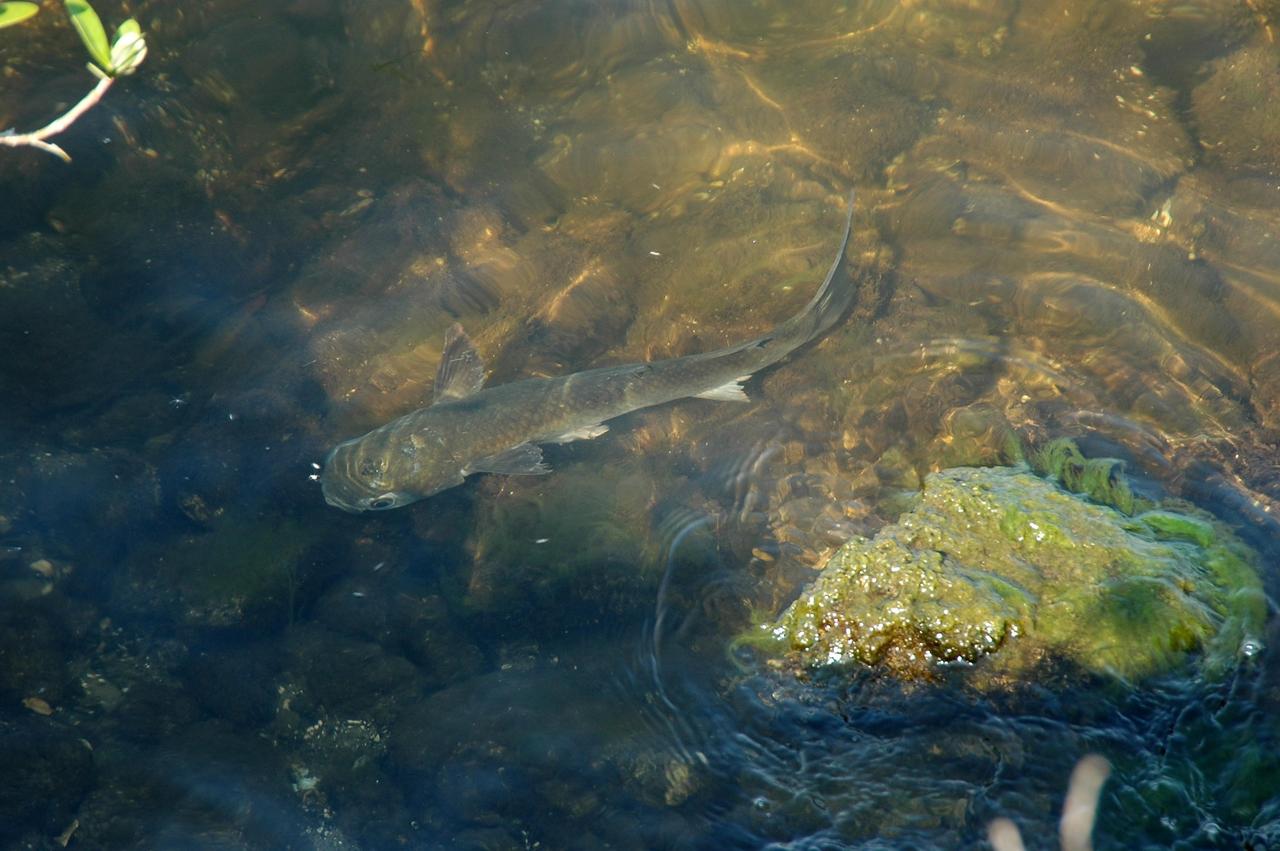
KENNEDY SPACE CENTER, FLA. - In the turn basin near the NASA News Center swims a large fish, perhaps witness to the arrival today of the external fuel tank that will launch Space Shuttle Atlantis on the next shuttle mission, STS-115. The tank, designated ET-118, was shipped from the Michoud Assembly Facility in New Orleans. The area is part of the Merritt Island National Wildlife Refuge, which shares a boundary with the center. The wildlife refuge is a habitat for more than 117 fishes, as well as 310 species of birds, 25 mammals and 65 amphibians and reptiles. In addition, the Refuge supports 19 endangered or threatened wildlife species on Federal or State lists, more than any other single refuge in the U.S. Photo credit: NASA/Kim Shiflett

CAPE CANAVERAL, Fla. – Near NASA's Kennedy Space Center in Florida, a male Northern pintail duck swims on a pond in the Merritt island National Wildlife Refuge. Pintails inhabit marshes, prairie ponds and tundra. Widely distributed across the U.S. and Canada, the breed winters south to Central America and the West Indies. It feeds largely on seeds of aquatic plants but may also take small aquatic animals. The center shares a boundary with the refuge that includes salt-water estuaries, brackish marshes, hardwood hammocks and pine flatwoods. The diverse landscape provides habitat for more than 310 species of birds, 25 mammals, 117 fishes and 65 amphibians and reptiles. Photo credit: NASA/Jim Grossmann
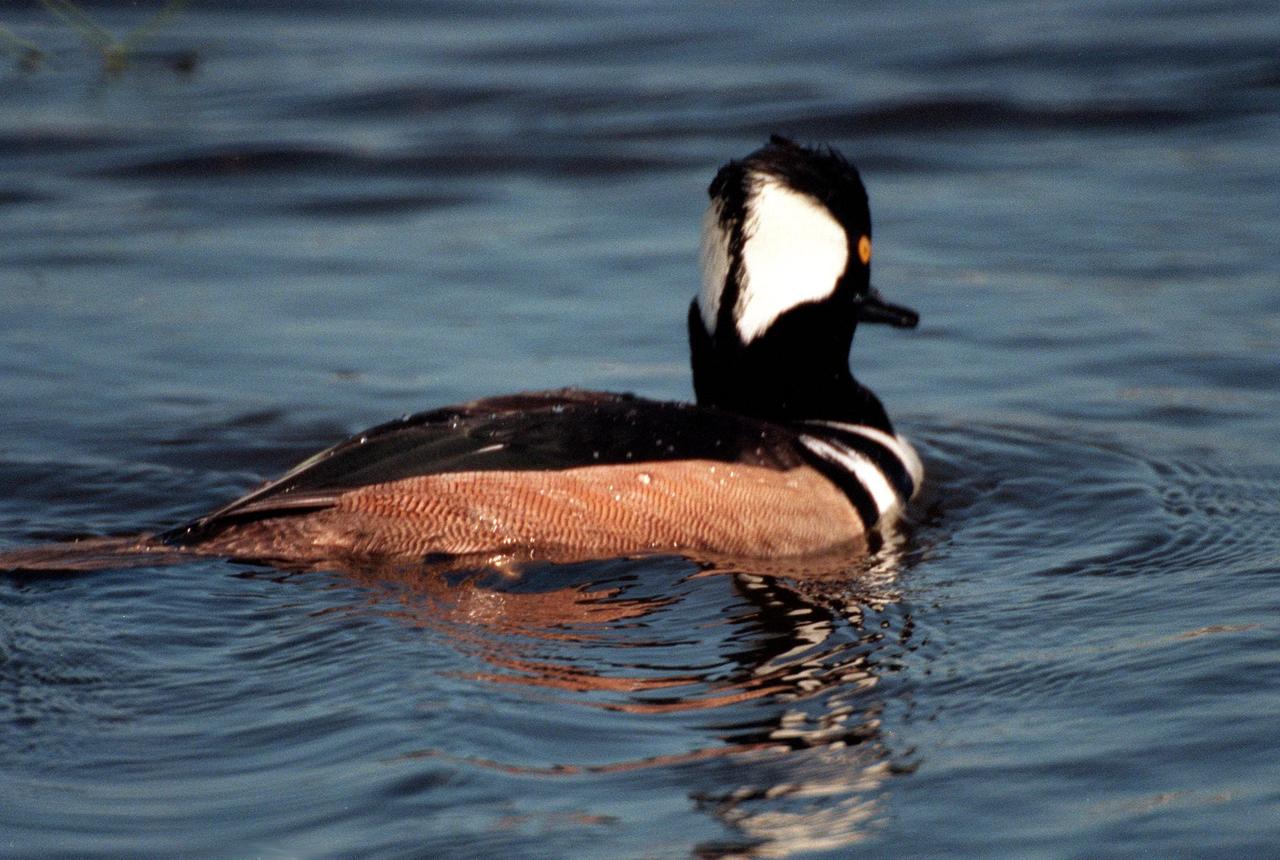
KENNEDY SPACE CENTER, FLA. -- The distinctive fan-shaped, black-bordered crest and striped breast identify this hooded merganser, swimming in the waters of the Merritt Island National Wildlife Refuge at Kennedy Space Center. Usually found from Alaska and Canada south to Nebraska, Oregon and Tennessee, hooded mergansers winter south to Mexico and the Gulf Coast, including KSC. The open water of the refuge provides wintering areas for 23 species of migratory waterfowl, as well as a year-round home for great blue herons, great egrets, wood storks, cormorants, brown pelicans and other species of marsh and shore birds. The 92,000-acre refuge is also habitat for more than 310 species of birds, 25 mammals, 117 fishes and 65 amphibians and reptiles
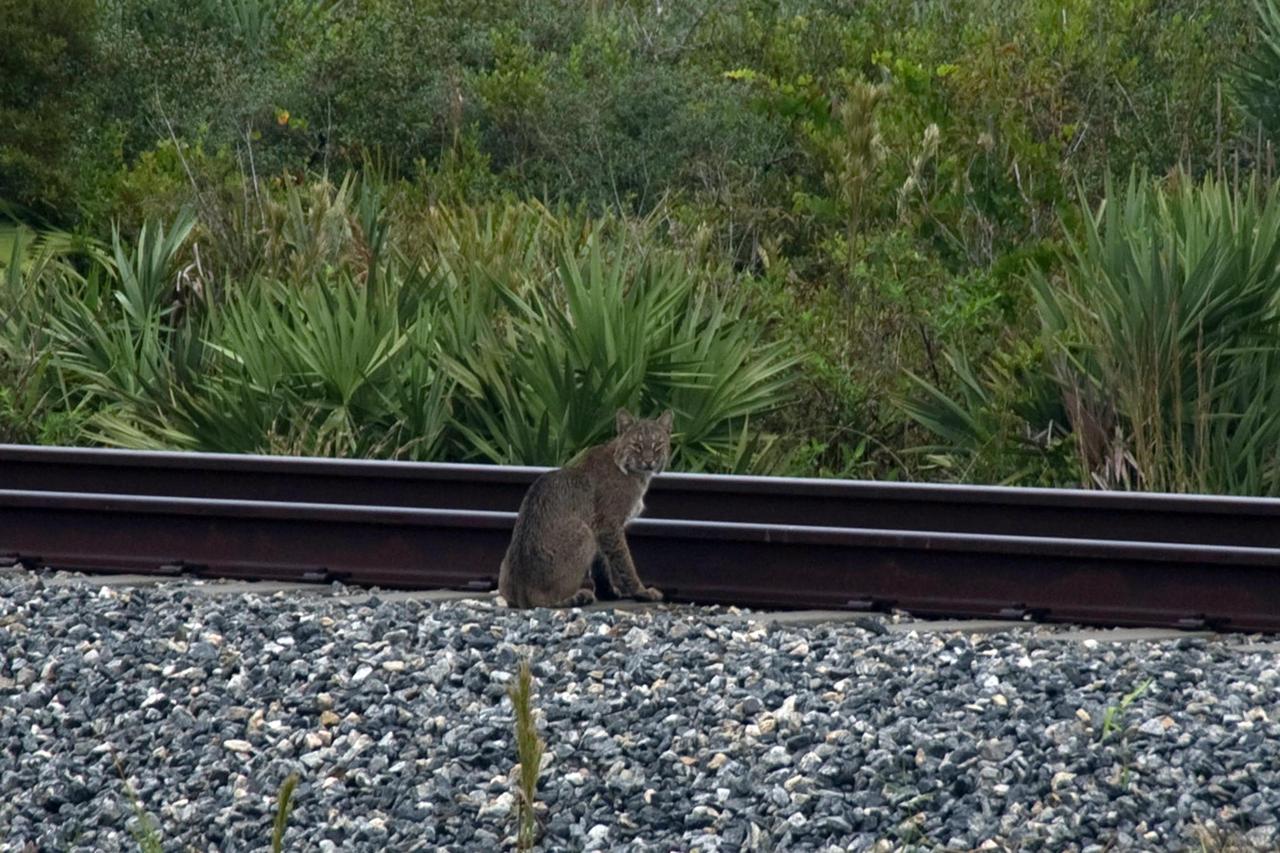
KENNEDY SPACE CENTER, FLA. -- A rare view of a bobcat, spotted near the NASA Railroad tracks on a mid-morning. The bobcat is a solitary and territorial predator mammal. They are mostly nocturnal and solitary, but will travel long distances for a mate. Not as big as a panther, but about the size of a medium-sized dog, male and female bobcats average 39 inches and 36 inches in length, and 24 pounds and 15 pounds in weight, respectively. They are most easily identified by their short tails which are about 5.5 inches long. Their fur, which is short, soft and dense, ranges from light tan to reddish or yellowish brown and markings vary from tabby stripes to spotting. They swim more than other native cats. The backs of their ears are white with a black outline. Their underparts are generally white. Bobcats can most likely be found in every county in Florida. Photo credit: NASA/Sandra Joseph