
Spirit Switches on Its X-ray Vision
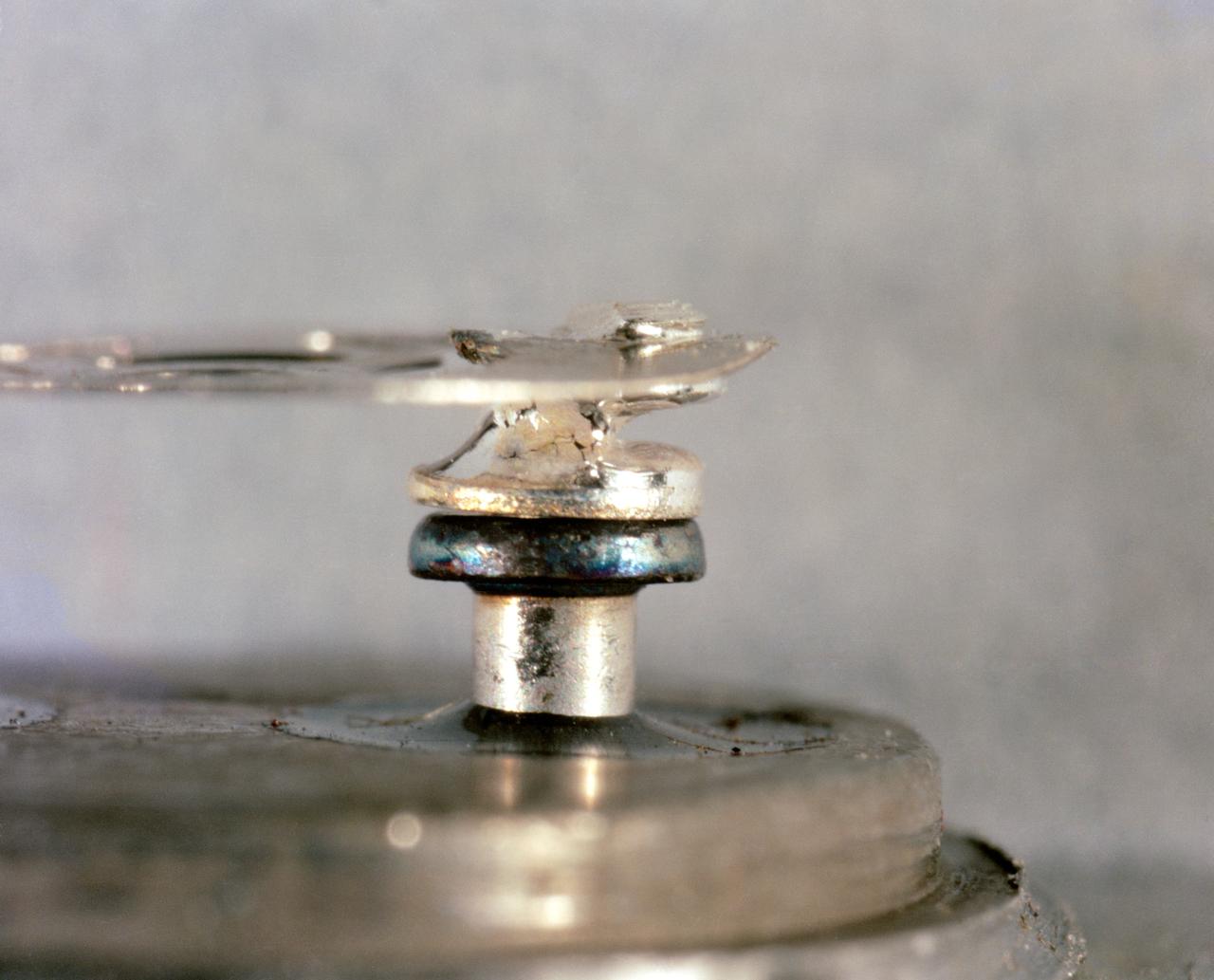
S70-40850 (June 1970) --- Fused thermal switch from Apollo Service Module (SM) oxygen tank after test at the NASA Manned Spacecraft Center (MSC) simulating Apollo 13 de-tanking procedures.
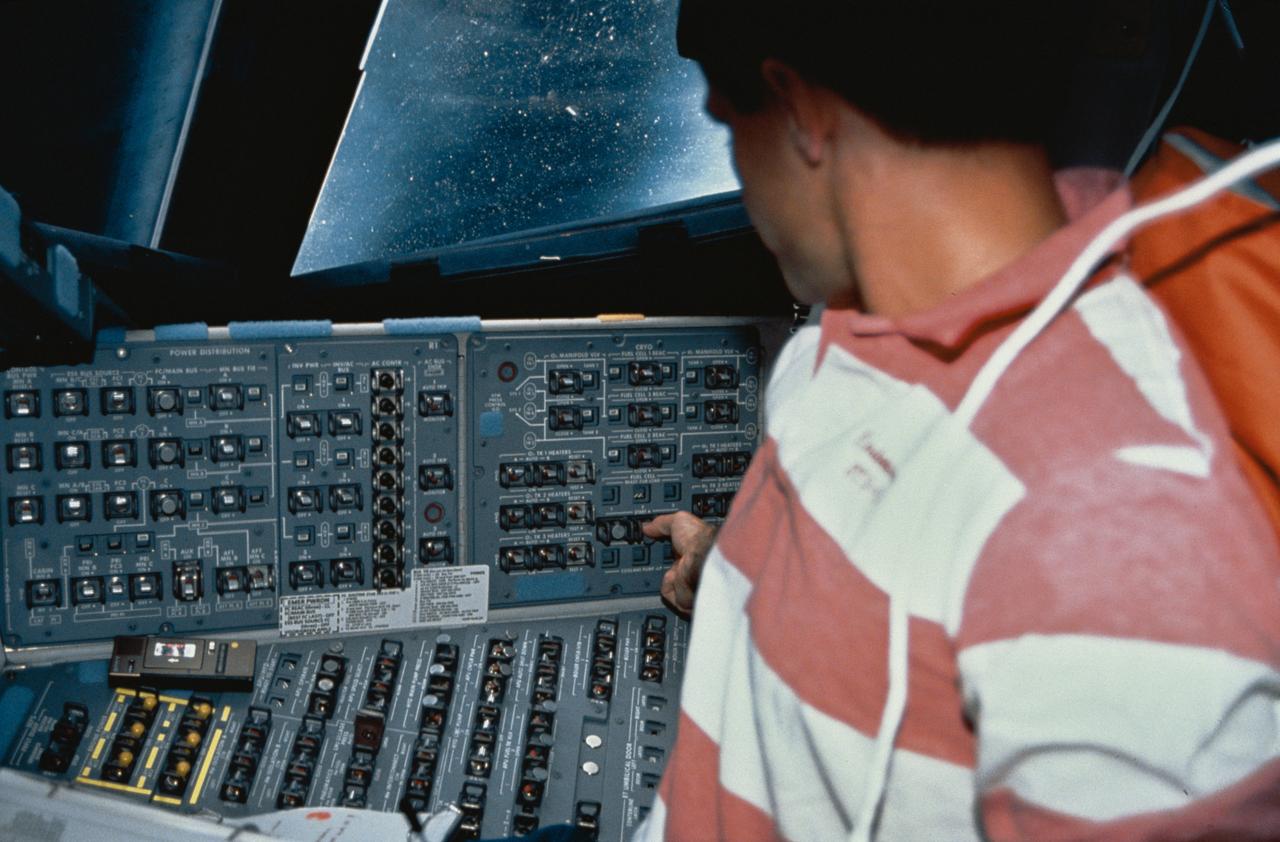
STS054-40-022 (13-19 Jan 1993) --- Astronaut Donald R. McMonagle, pilot, pushes a control switch for one of Endeavour's fuel cells from his station on the forward flight deck.

ISS040-E-007691 (5 June 2014) --- NASA astronaut Reid Wiseman, Expedition 40 flight engineer, removes and replaces the remote power switch controller module in the Destiny laboratory of the International Space Station.
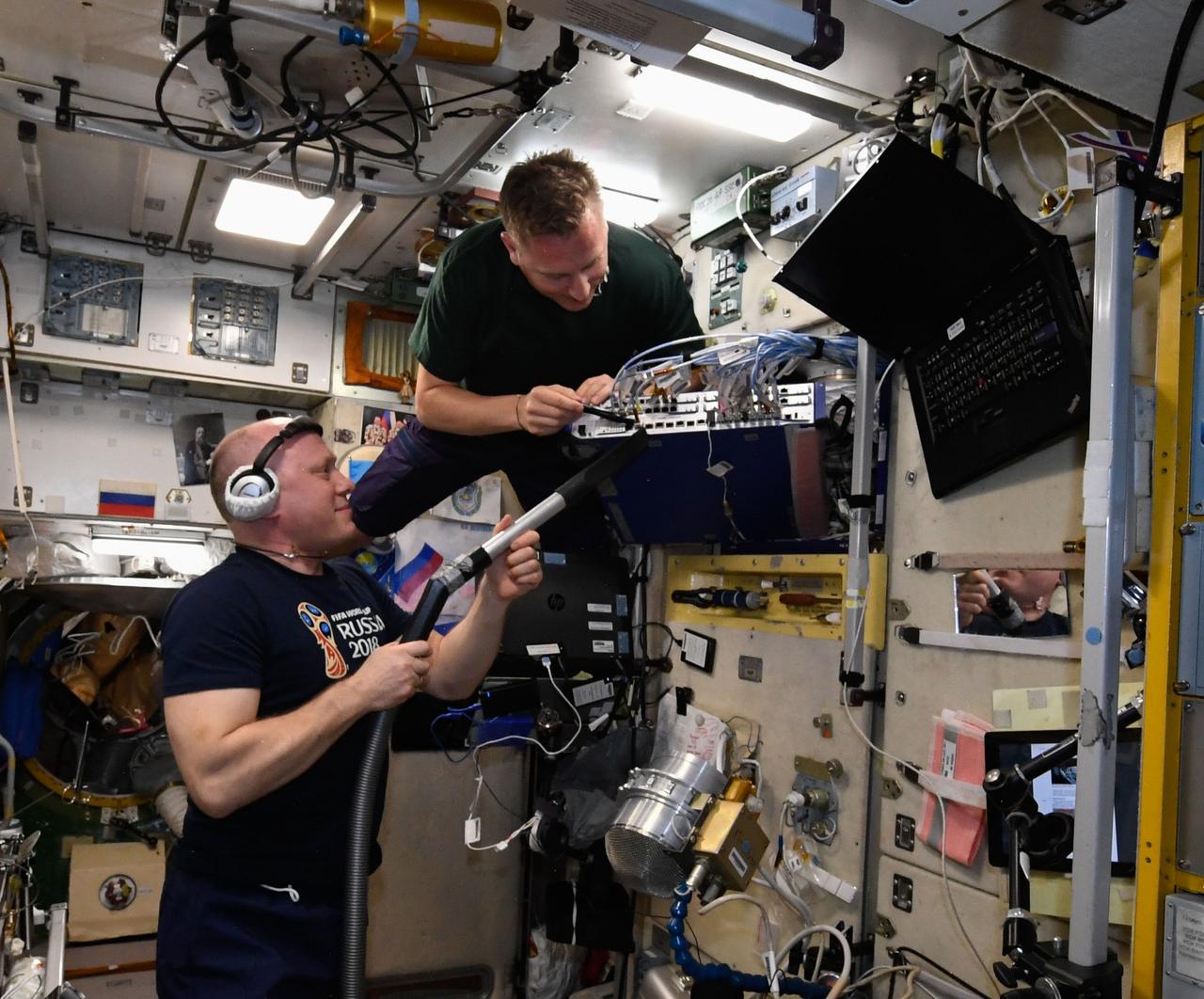
iss056e011715 (June 14, 2018) --- Cosmonauts Oleg Artemyev (at bottom) and Sergey Prokopyev work inside the Zvezda service module performing monthly maintenance on the Smart Switch Router. Credit: Roscosmos
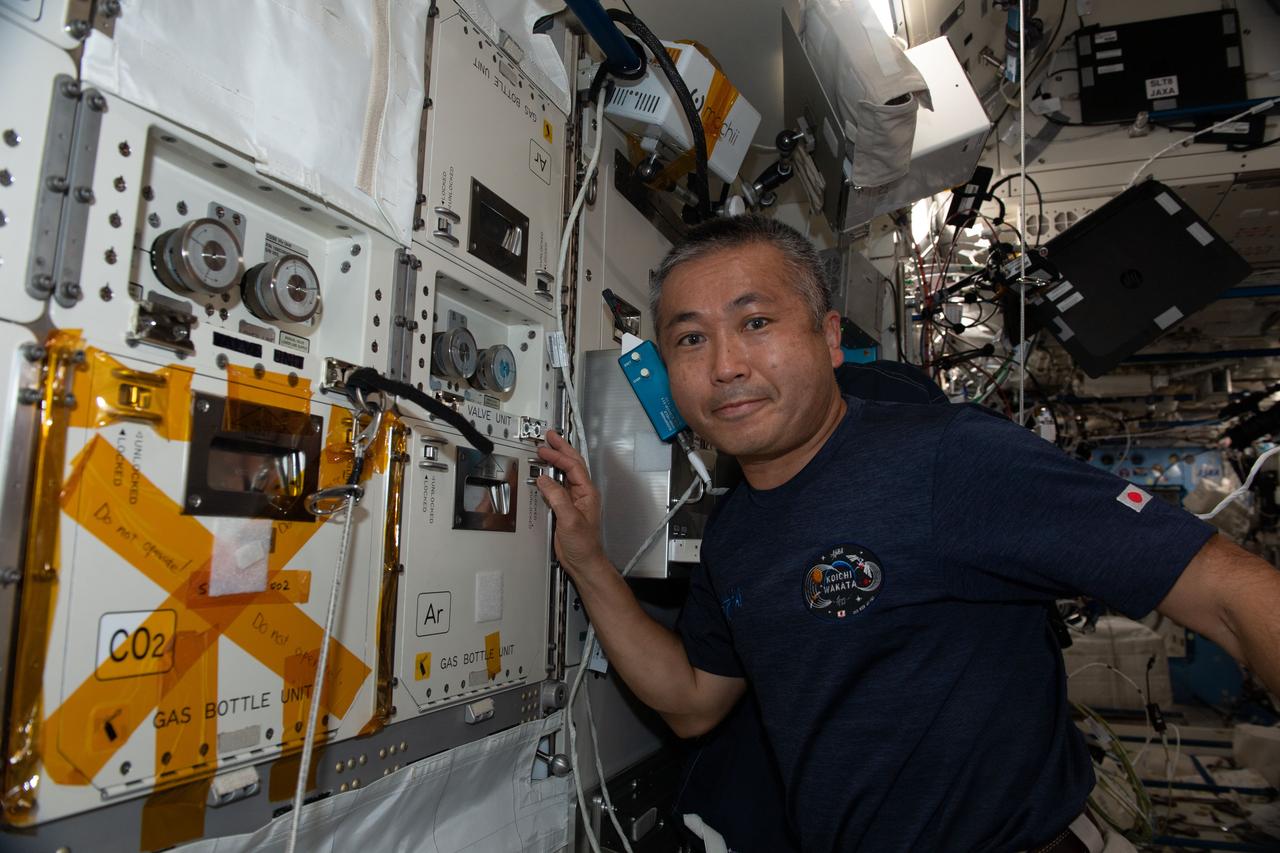
iss068e017277 (Oct. 17, 2022) --- Expedition 68 Flight Engineer Koichi Wakata of the Japan Aerospace Exploration Agency (JAXA) switches an Argon gas supply line to maintain gas pressure aboard the International Space Station's Kibo laboratory module.
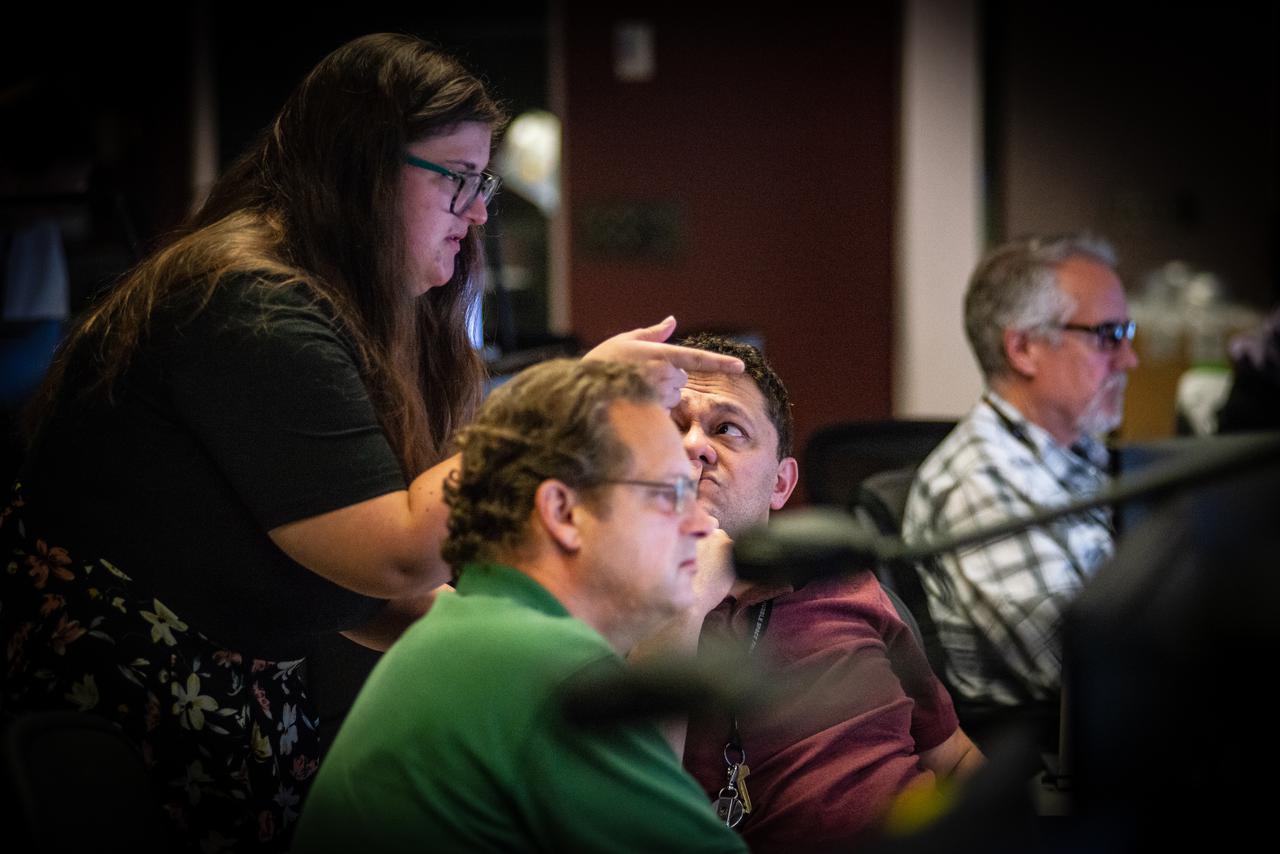
Members of the Hubble operations team work in the control room on July 15, 2021 to restore Hubble to science operations. Credits: NASA/Goddard/Rebecca Roth --- More info: Hubble’s payload computer, which controls and coordinates the observatory’s onboard science instruments, halted suddenly on June 13. When the main computer failed to receive a signal from the payload computer, it automatically placed Hubble’s science instruments into safe mode. That meant the telescope would no longer be doing science while mission specialists analyzed the situation. In response to the anomaly, NASA began a switch to backup spacecraft hardware on Hubble in response to an ongoing problem with its payload computer. This was a multi-day event. Science observations restarted the afternoon of Saturday, July 17.
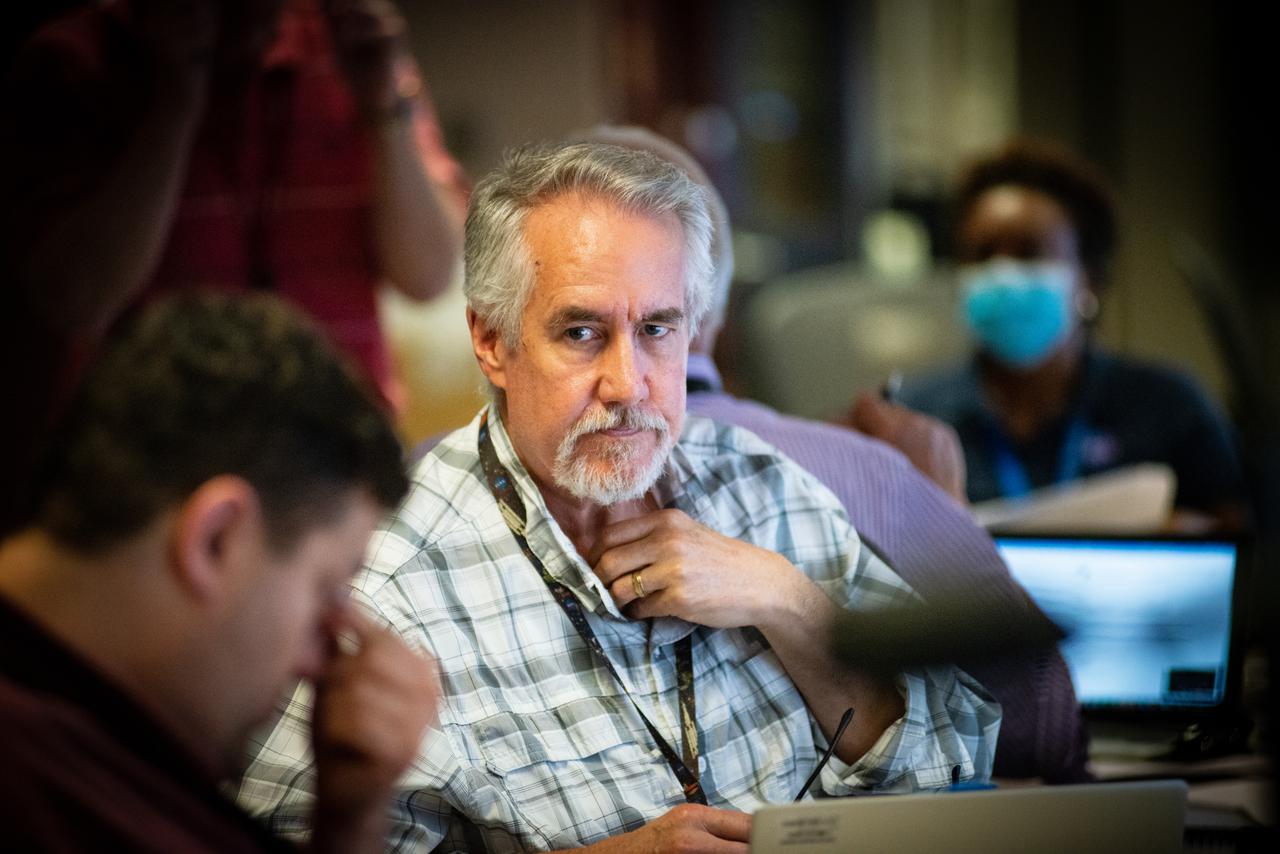
Members of the Hubble operations team work in the control room on July 15, 2021 to restore Hubble to science operations. Credits: NASA/Goddard/Rebecca Roth --- More info: Hubble’s payload computer, which controls and coordinates the observatory’s onboard science instruments, halted suddenly on June 13. When the main computer failed to receive a signal from the payload computer, it automatically placed Hubble’s science instruments into safe mode. That meant the telescope would no longer be doing science while mission specialists analyzed the situation. In response to the anomaly, NASA began a switch to backup spacecraft hardware on Hubble in response to an ongoing problem with its payload computer. This was a multi-day event. Science observations restarted the afternoon of Saturday, July 17.
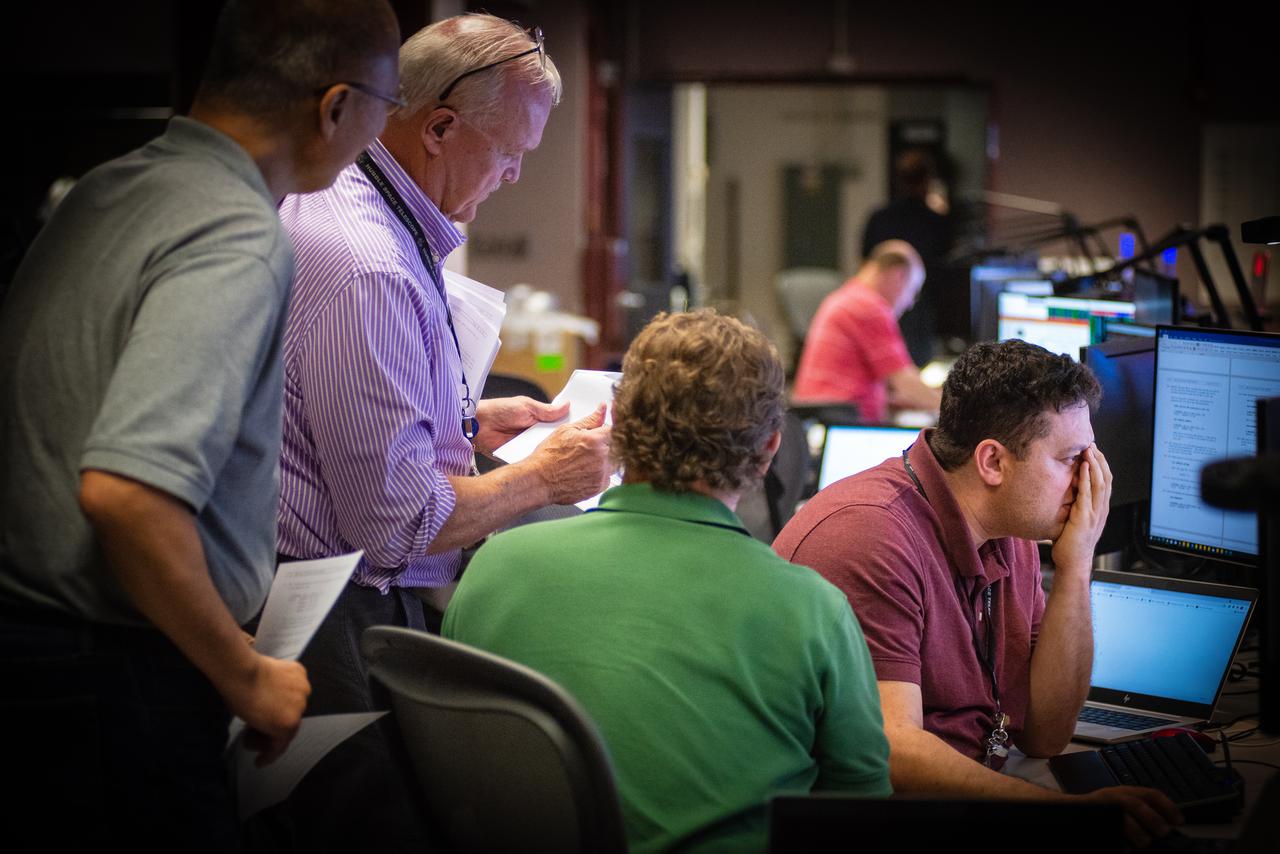
Members of the Hubble operations team work in the control room on July 15, 2021 to restore Hubble to science operations. Credits: NASA/Goddard/Rebecca Roth --- More info: Hubble’s payload computer, which controls and coordinates the observatory’s onboard science instruments, halted suddenly on June 13. When the main computer failed to receive a signal from the payload computer, it automatically placed Hubble’s science instruments into safe mode. That meant the telescope would no longer be doing science while mission specialists analyzed the situation. In response to the anomaly, NASA began a switch to backup spacecraft hardware on Hubble in response to an ongoing problem with its payload computer. This was a multi-day event. Science observations restarted the afternoon of Saturday, July 17.
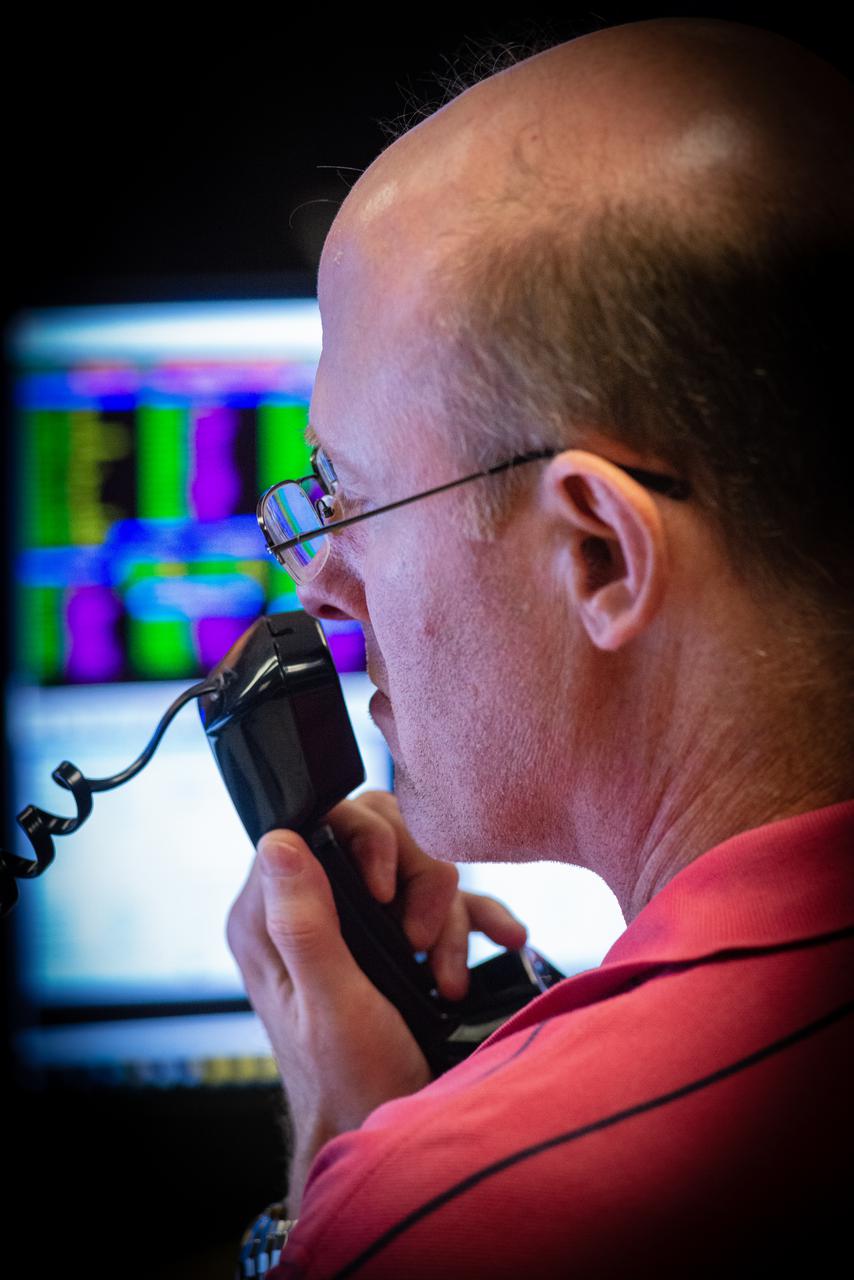
Members of the Hubble operations team work in the control room on July 15, 2021 to restore Hubble to science operations. Credits: NASA/Goddard/Rebecca Roth --- More info: Hubble’s payload computer, which controls and coordinates the observatory’s onboard science instruments, halted suddenly on June 13. When the main computer failed to receive a signal from the payload computer, it automatically placed Hubble’s science instruments into safe mode. That meant the telescope would no longer be doing science while mission specialists analyzed the situation. In response to the anomaly, NASA began a switch to backup spacecraft hardware on Hubble in response to an ongoing problem with its payload computer. This was a multi-day event. Science observations restarted the afternoon of Saturday, July 17.
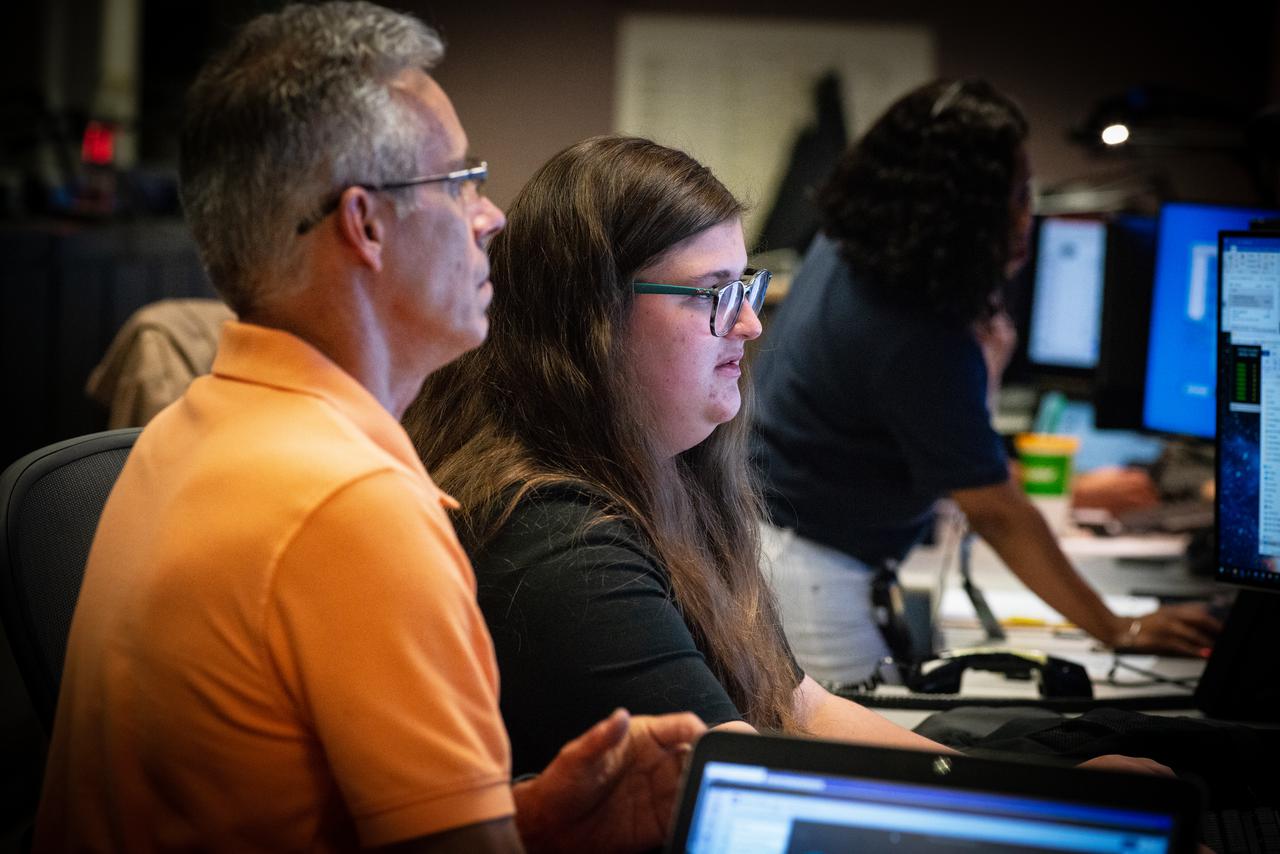
Members of the Hubble operations team work in the control room on July 15, 2021 to restore Hubble to science operations. Credits: NASA/Goddard/Rebecca Roth --- More info: Hubble’s payload computer, which controls and coordinates the observatory’s onboard science instruments, halted suddenly on June 13. When the main computer failed to receive a signal from the payload computer, it automatically placed Hubble’s science instruments into safe mode. That meant the telescope would no longer be doing science while mission specialists analyzed the situation. In response to the anomaly, NASA began a switch to backup spacecraft hardware on Hubble in response to an ongoing problem with its payload computer. This was a multi-day event. Science observations restarted the afternoon of Saturday, July 17.
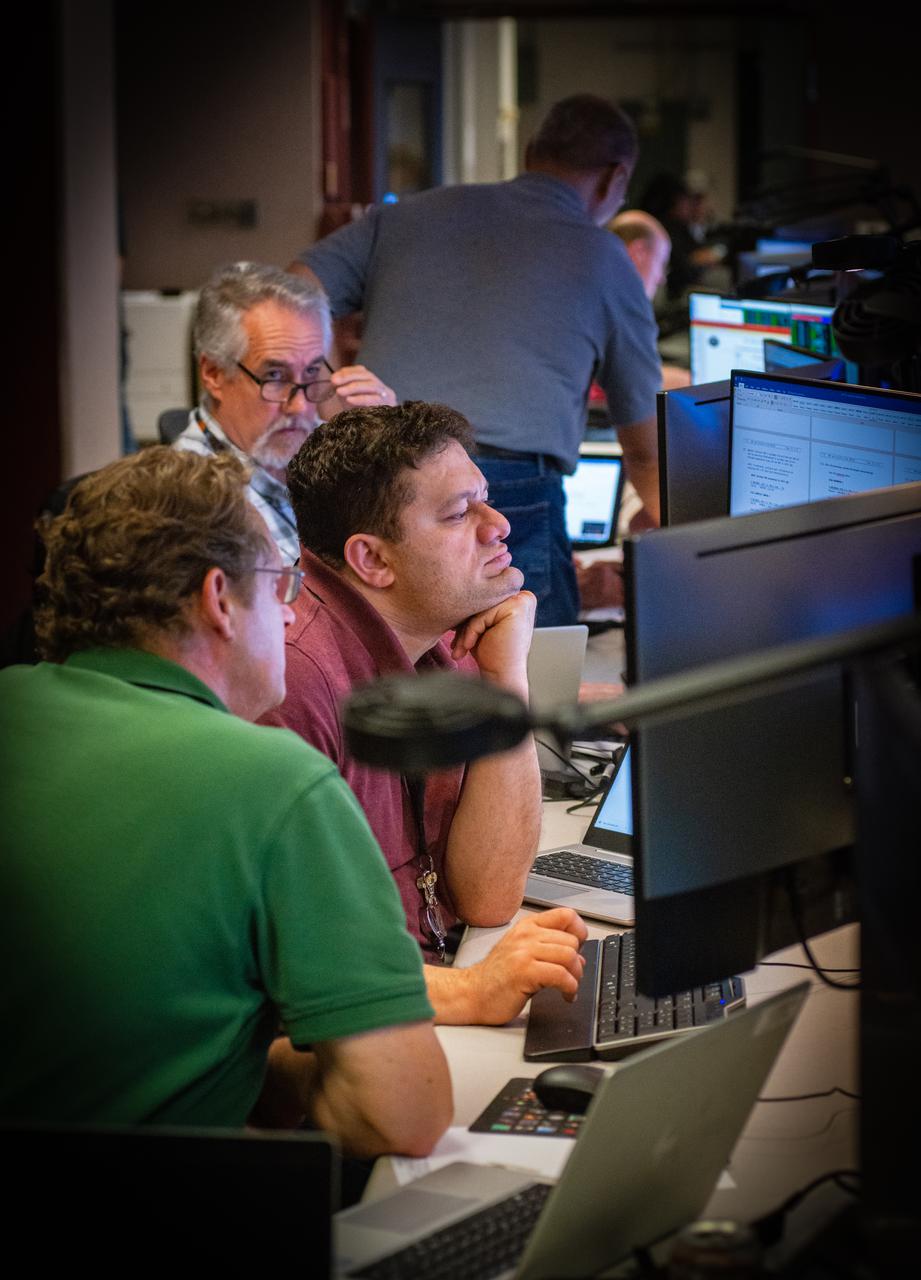
Members of the Hubble operations team work in the control room on July 15, 2021 to restore Hubble to science operations. Credits: NASA/Goddard/Rebecca Roth --- More info: Hubble’s payload computer, which controls and coordinates the observatory’s onboard science instruments, halted suddenly on June 13. When the main computer failed to receive a signal from the payload computer, it automatically placed Hubble’s science instruments into safe mode. That meant the telescope would no longer be doing science while mission specialists analyzed the situation. In response to the anomaly, NASA began a switch to backup spacecraft hardware on Hubble in response to an ongoing problem with its payload computer. This was a multi-day event. Science observations restarted the afternoon of Saturday, July 17.
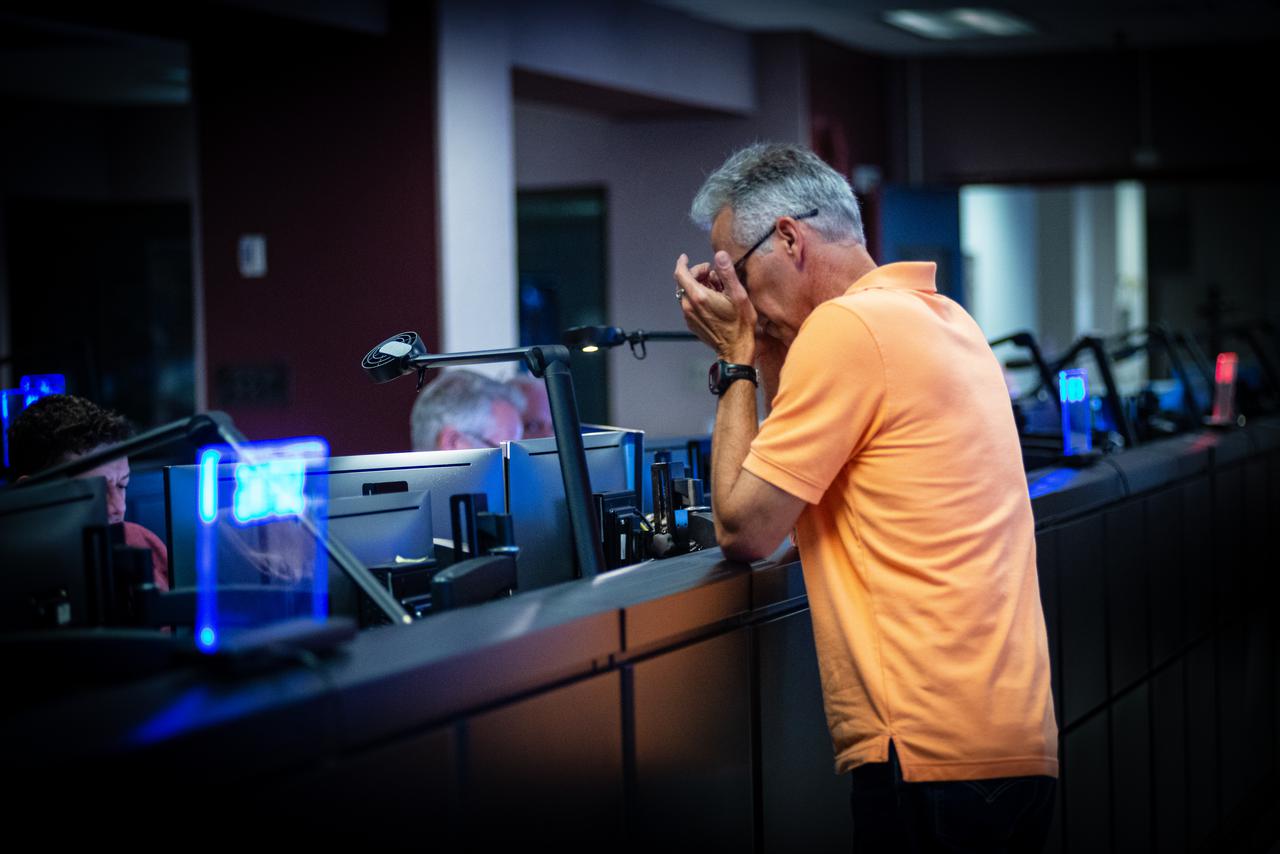
Members of the Hubble operations team work in the control room on July 15, 2021 to restore Hubble to science operations. Credits: NASA/Goddard/Rebecca Roth --- More info: Hubble’s payload computer, which controls and coordinates the observatory’s onboard science instruments, halted suddenly on June 13. When the main computer failed to receive a signal from the payload computer, it automatically placed Hubble’s science instruments into safe mode. That meant the telescope would no longer be doing science while mission specialists analyzed the situation. In response to the anomaly, NASA began a switch to backup spacecraft hardware on Hubble in response to an ongoing problem with its payload computer. This was a multi-day event. Science observations restarted the afternoon of Saturday, July 17.
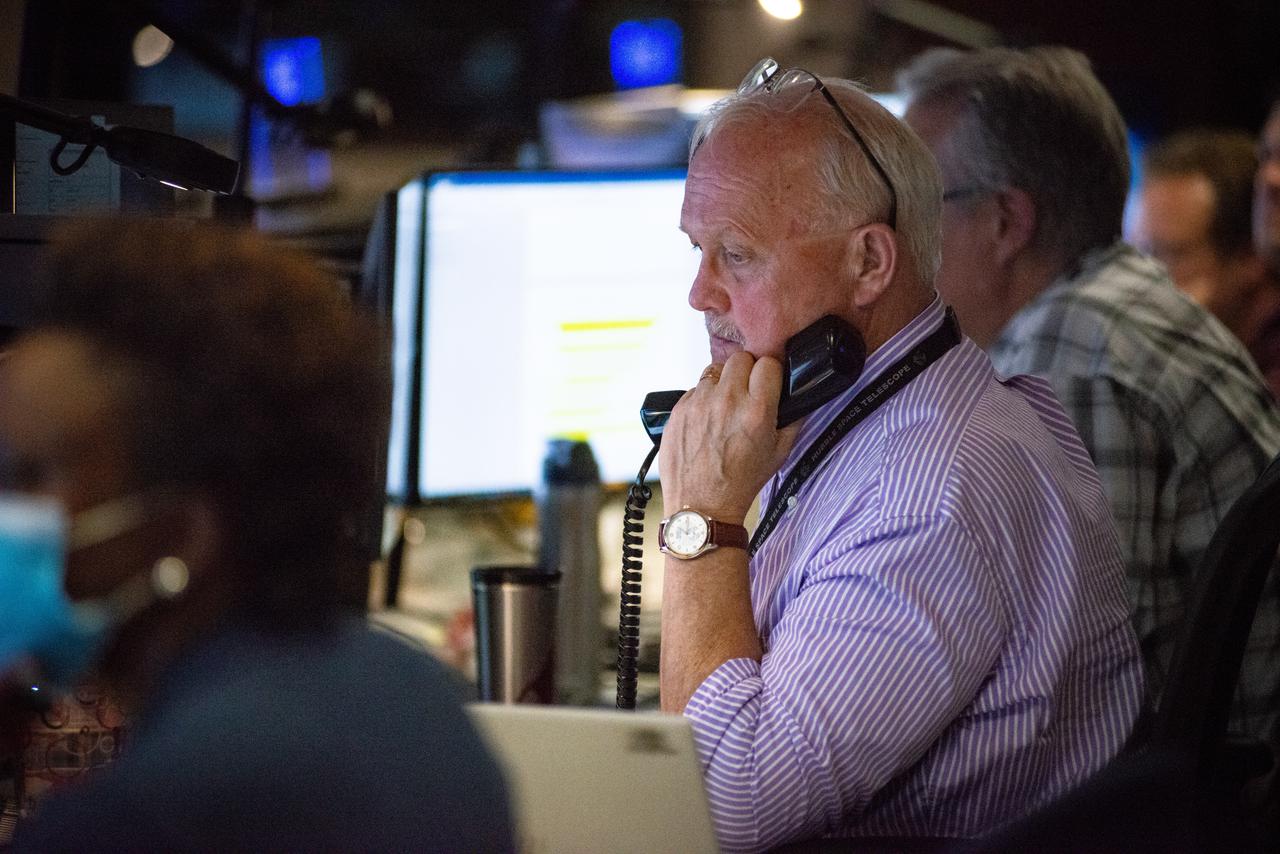
Members of the Hubble operations team work in the control room on July 15, 2021 to restore Hubble to science operations. Credits: NASA/Goddard/Rebecca Roth --- More info: Hubble’s payload computer, which controls and coordinates the observatory’s onboard science instruments, halted suddenly on June 13. When the main computer failed to receive a signal from the payload computer, it automatically placed Hubble’s science instruments into safe mode. That meant the telescope would no longer be doing science while mission specialists analyzed the situation. In response to the anomaly, NASA began a switch to backup spacecraft hardware on Hubble in response to an ongoing problem with its payload computer. This was a multi-day event. Science observations restarted the afternoon of Saturday, July 17.
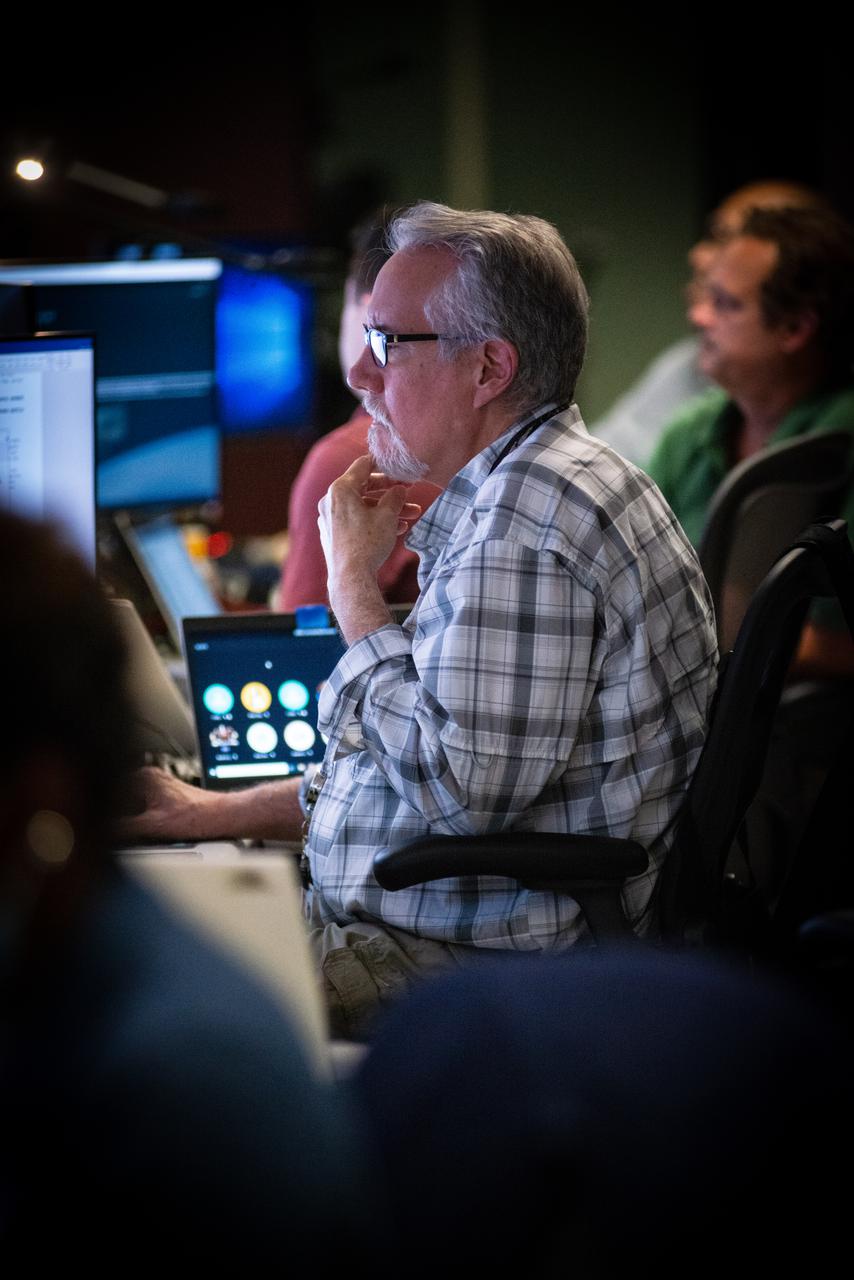
Members of the Hubble operations team work in the control room on July 15, 2021 to restore Hubble to science operations. Credits: NASA/Goddard/Rebecca Roth --- More info: Hubble’s payload computer, which controls and coordinates the observatory’s onboard science instruments, halted suddenly on June 13. When the main computer failed to receive a signal from the payload computer, it automatically placed Hubble’s science instruments into safe mode. That meant the telescope would no longer be doing science while mission specialists analyzed the situation. In response to the anomaly, NASA began a switch to backup spacecraft hardware on Hubble in response to an ongoing problem with its payload computer. This was a multi-day event. Science observations restarted the afternoon of Saturday, July 17.
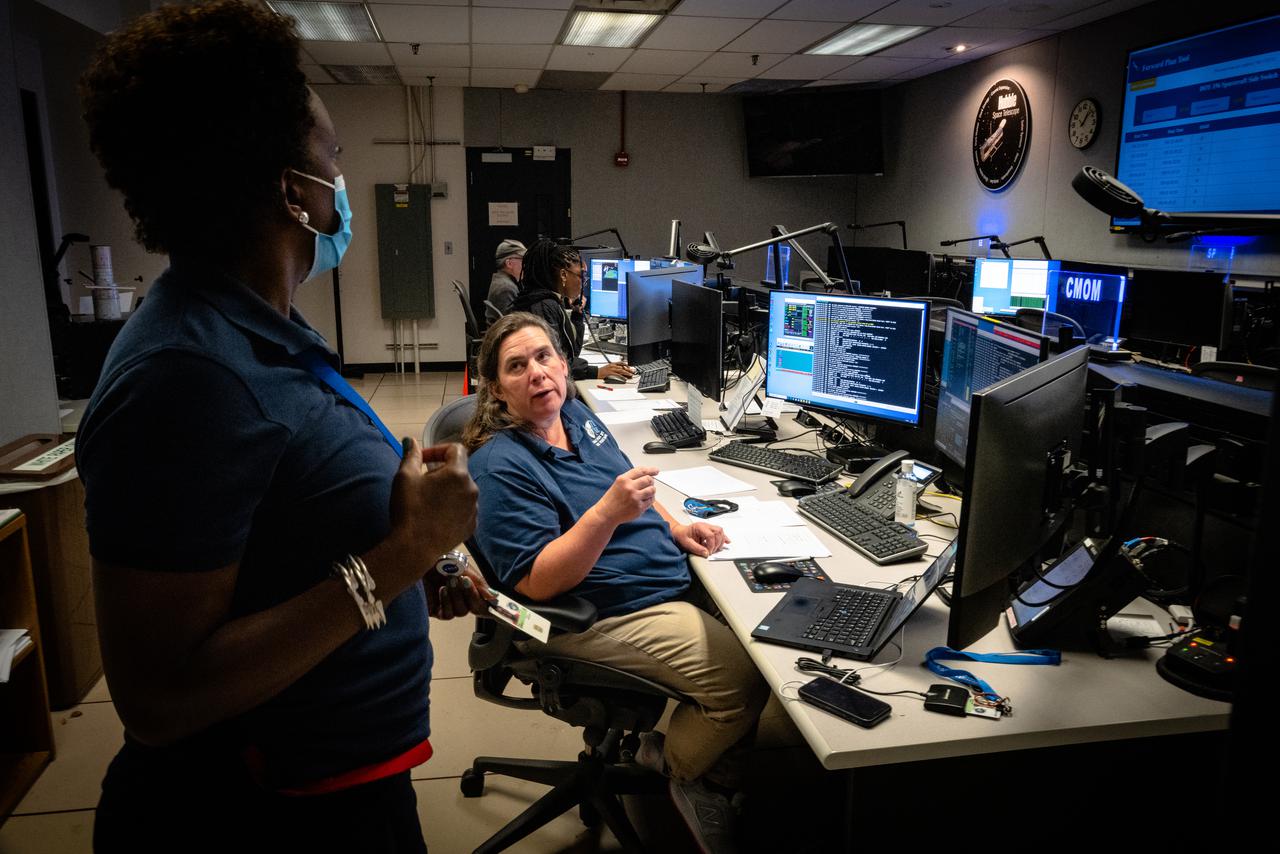
Members of the Hubble operations team work in the control room on July 15, 2021 to restore Hubble to science operations. Credits: NASA/Goddard/Rebecca Roth --- More info: Hubble’s payload computer, which controls and coordinates the observatory’s onboard science instruments, halted suddenly on June 13. When the main computer failed to receive a signal from the payload computer, it automatically placed Hubble’s science instruments into safe mode. That meant the telescope would no longer be doing science while mission specialists analyzed the situation. In response to the anomaly, NASA began a switch to backup spacecraft hardware on Hubble in response to an ongoing problem with its payload computer. This was a multi-day event. Science observations restarted the afternoon of Saturday, July 17.
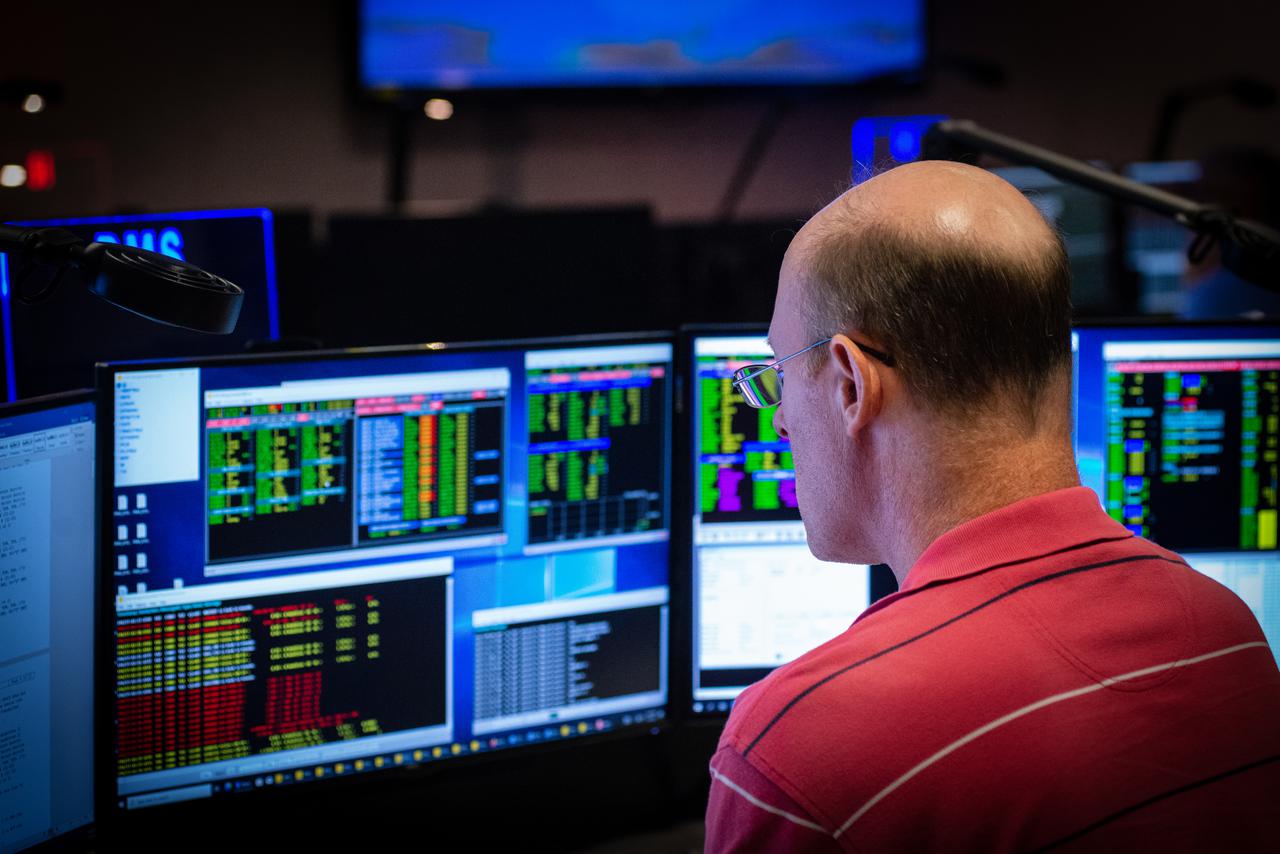
Members of the Hubble operations team work in the control room on July 15, 2021 to restore Hubble to science operations. Credits: NASA/Goddard/Rebecca Roth --- More info: Hubble’s payload computer, which controls and coordinates the observatory’s onboard science instruments, halted suddenly on June 13. When the main computer failed to receive a signal from the payload computer, it automatically placed Hubble’s science instruments into safe mode. That meant the telescope would no longer be doing science while mission specialists analyzed the situation. In response to the anomaly, NASA began a switch to backup spacecraft hardware on Hubble in response to an ongoing problem with its payload computer. This was a multi-day event. Science observations restarted the afternoon of Saturday, July 17.
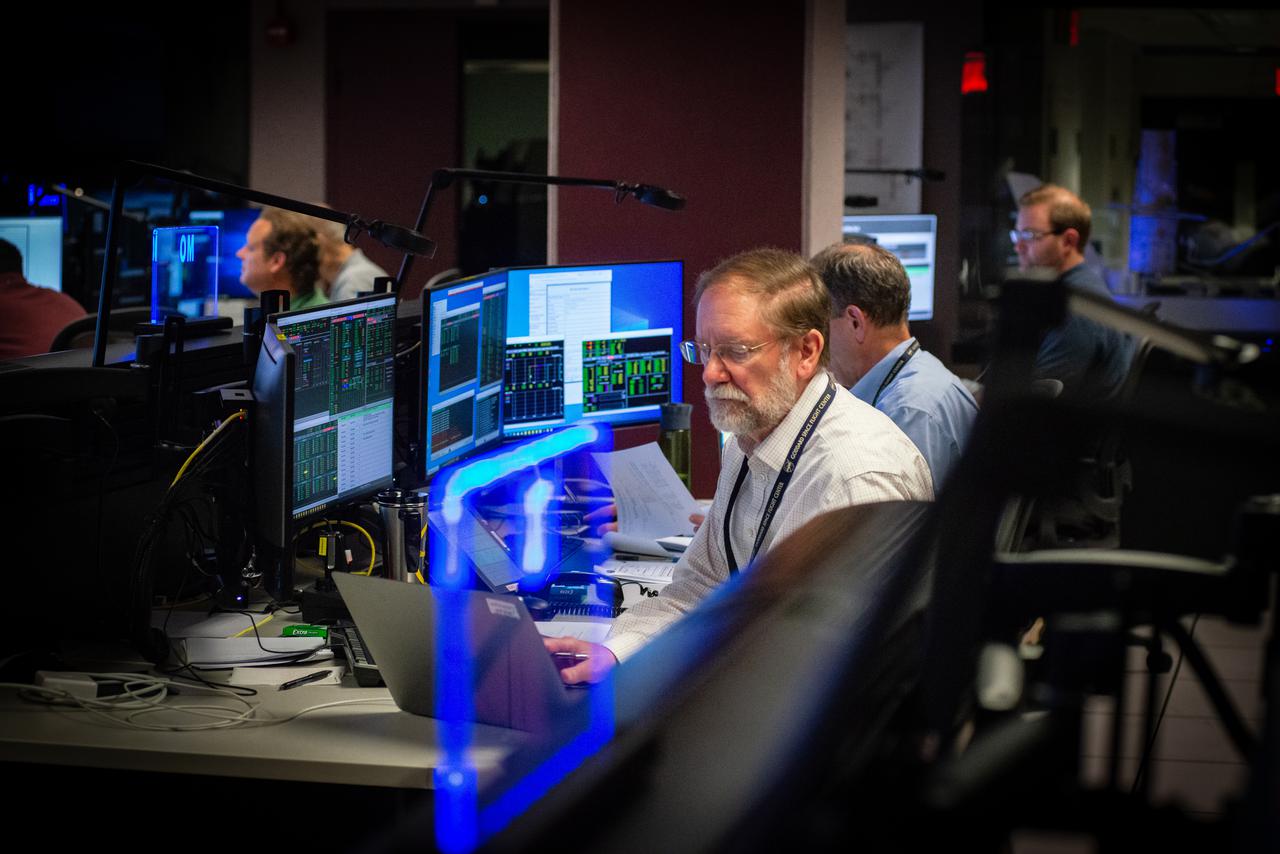
Members of the Hubble operations team work in the control room on July 15, 2021 to restore Hubble to science operations. Credits: NASA/Goddard/Rebecca Roth --- More info: Hubble’s payload computer, which controls and coordinates the observatory’s onboard science instruments, halted suddenly on June 13. When the main computer failed to receive a signal from the payload computer, it automatically placed Hubble’s science instruments into safe mode. That meant the telescope would no longer be doing science while mission specialists analyzed the situation. In response to the anomaly, NASA began a switch to backup spacecraft hardware on Hubble in response to an ongoing problem with its payload computer. This was a multi-day event. Science observations restarted the afternoon of Saturday, July 17.
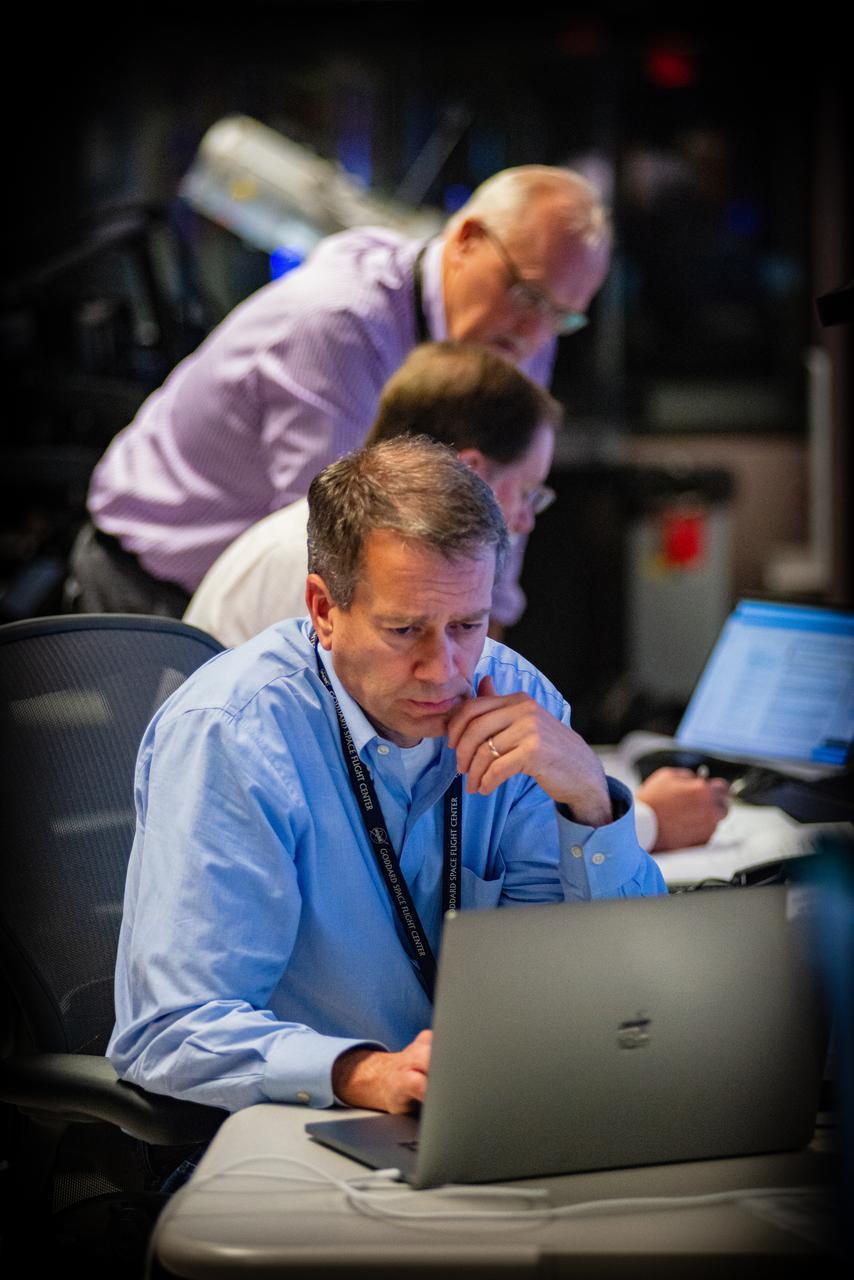
Members of the Hubble operations team work in the control room on July 15, 2021 to restore Hubble to science operations. Credits: NASA/Goddard/Rebecca Roth --- More info: Hubble’s payload computer, which controls and coordinates the observatory’s onboard science instruments, halted suddenly on June 13. When the main computer failed to receive a signal from the payload computer, it automatically placed Hubble’s science instruments into safe mode. That meant the telescope would no longer be doing science while mission specialists analyzed the situation. In response to the anomaly, NASA began a switch to backup spacecraft hardware on Hubble in response to an ongoing problem with its payload computer. This was a multi-day event. Science observations restarted the afternoon of Saturday, July 17.
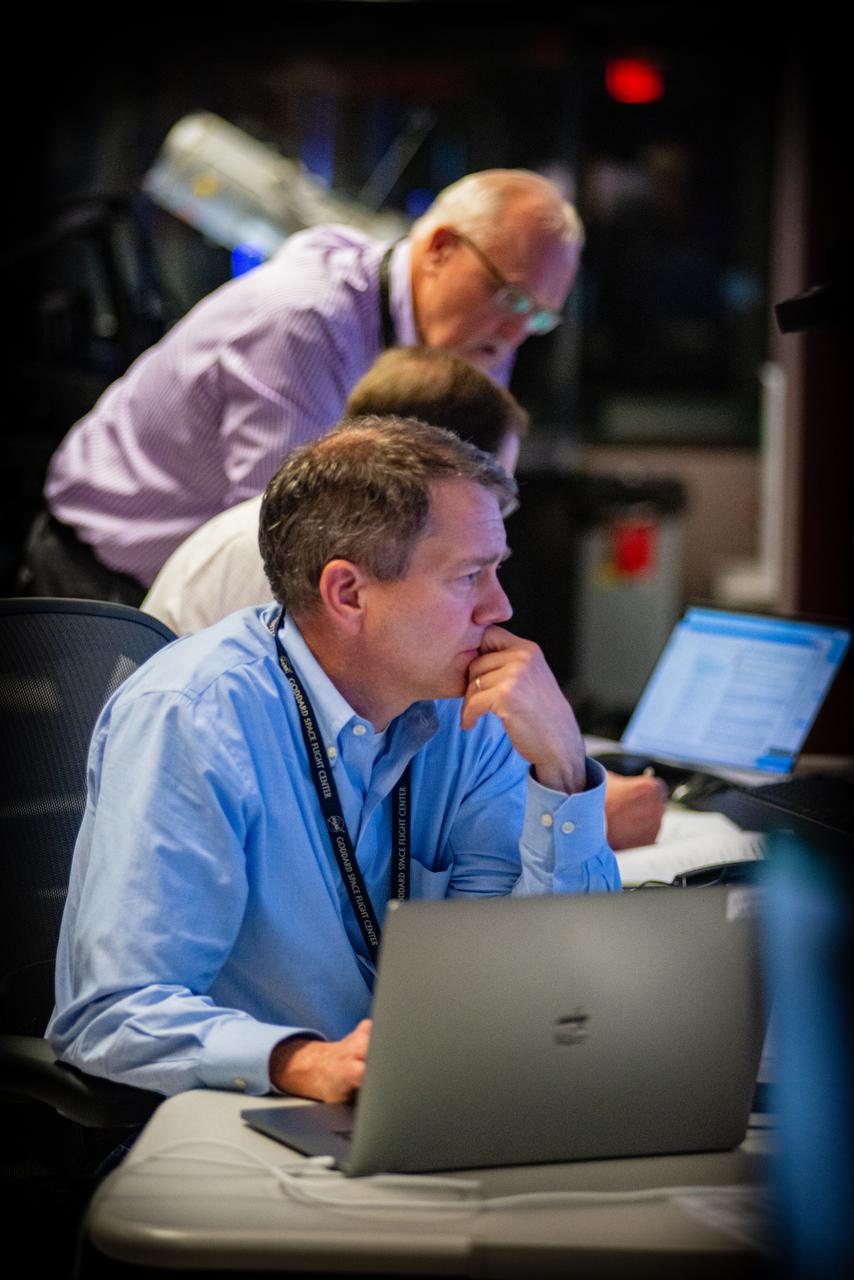
Members of the Hubble operations team work in the control room on July 15, 2021 to restore Hubble to science operations. Credits: NASA/Goddard/Rebecca Roth --- More info: Hubble’s payload computer, which controls and coordinates the observatory’s onboard science instruments, halted suddenly on June 13. When the main computer failed to receive a signal from the payload computer, it automatically placed Hubble’s science instruments into safe mode. That meant the telescope would no longer be doing science while mission specialists analyzed the situation. In response to the anomaly, NASA began a switch to backup spacecraft hardware on Hubble in response to an ongoing problem with its payload computer. This was a multi-day event. Science observations restarted the afternoon of Saturday, July 17.
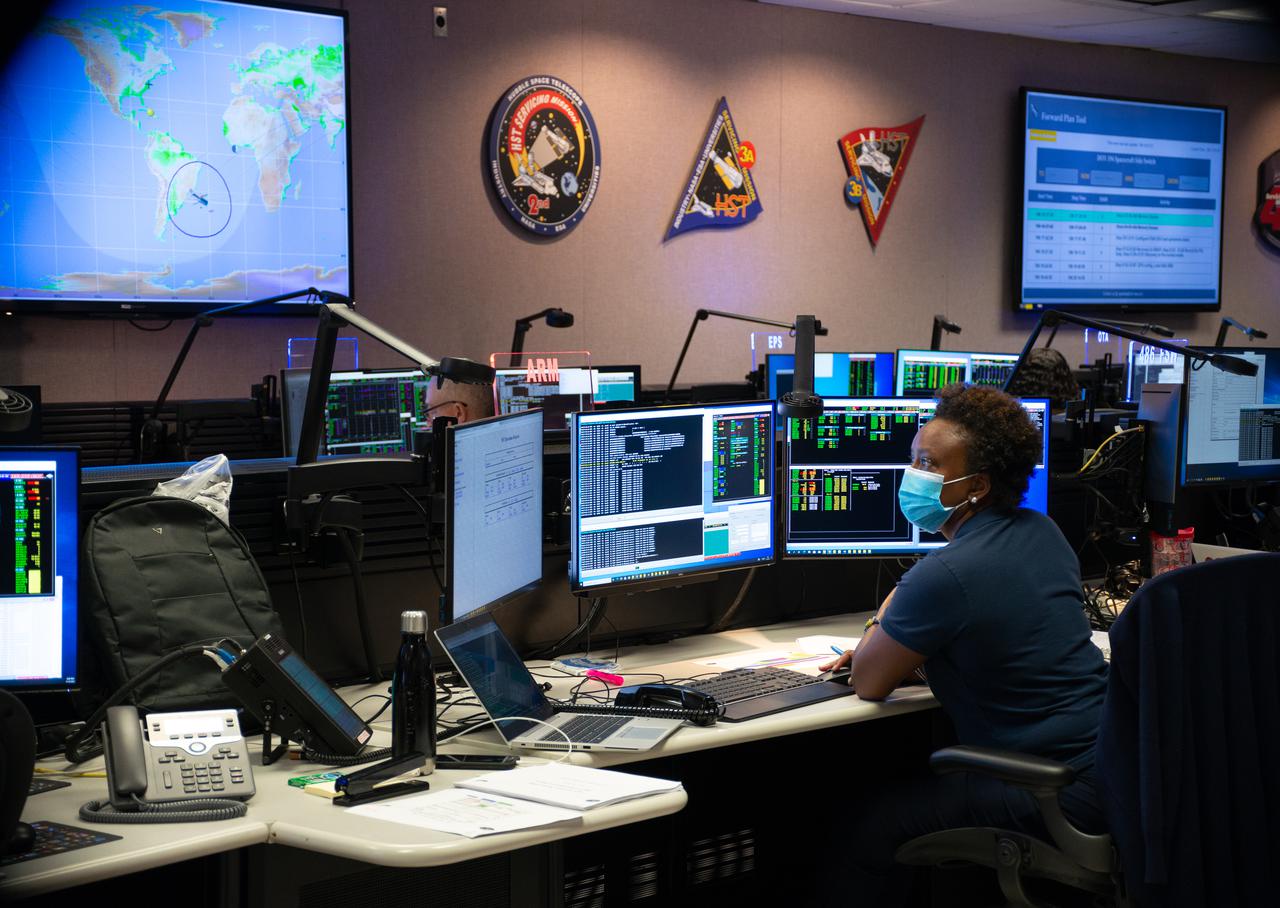
Nzinga Tull, Hubble systems anomaly response manager at NASA’s Goddard Space Flight Center in Greenbelt, Maryland, works in the control room on July 15, 2021, to restore Hubble to full science operations. --- More info: Hubble’s payload computer, which controls and coordinates the observatory’s onboard science instruments, halted suddenly on June 13. When the main computer failed to receive a signal from the payload computer, it automatically placed Hubble’s science instruments into safe mode. That meant the telescope would no longer be doing science while mission specialists analyzed the situation. In response to the anomaly, NASA began a switch to backup spacecraft hardware on Hubble in response to an ongoing problem with its payload computer. This was a multi-day event. Science observations restarted the afternoon of Saturday, July 17.
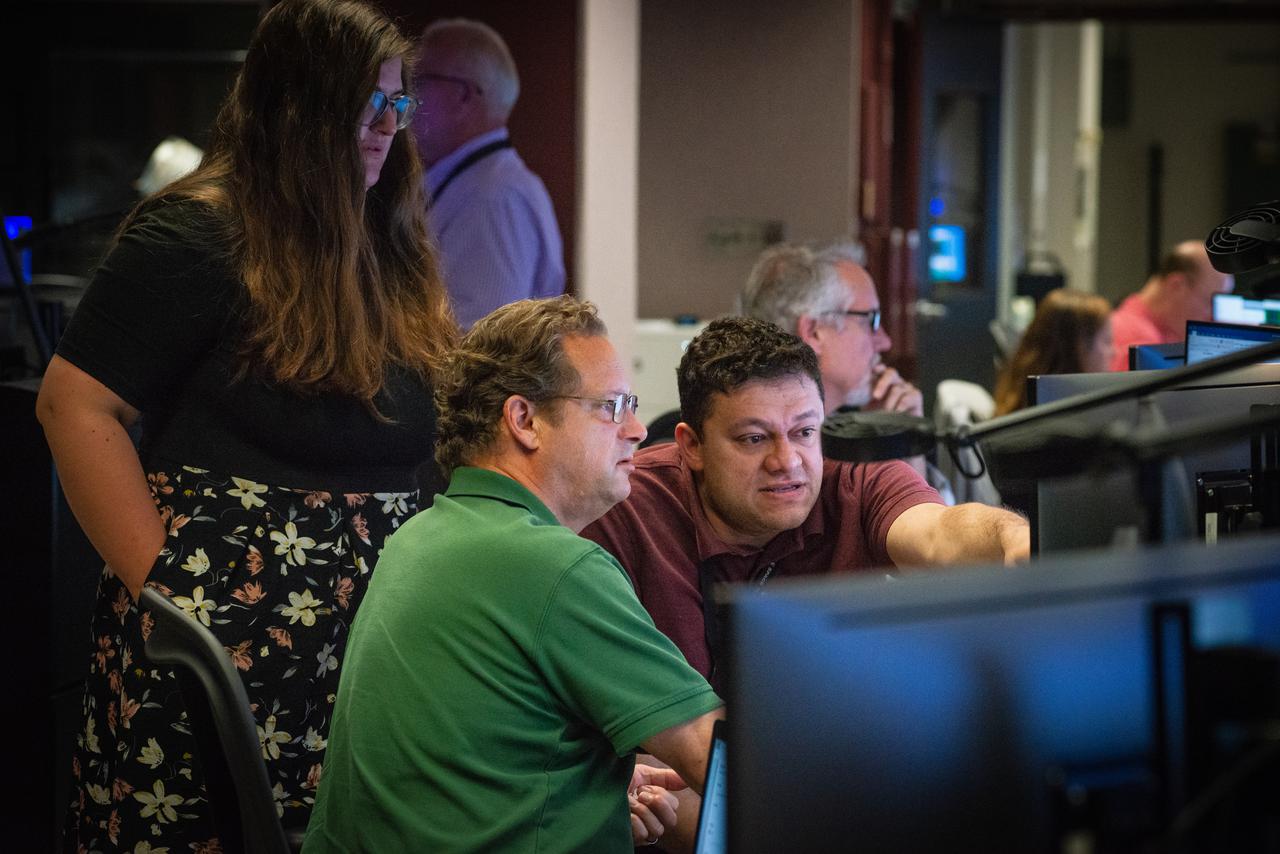
Members of the Hubble operations team work in the control room on July 15, 2021 to restore Hubble to science operations. Credits: NASA/Goddard/Rebecca Roth --- More info: Hubble’s payload computer, which controls and coordinates the observatory’s onboard science instruments, halted suddenly on June 13. When the main computer failed to receive a signal from the payload computer, it automatically placed Hubble’s science instruments into safe mode. That meant the telescope would no longer be doing science while mission specialists analyzed the situation. In response to the anomaly, NASA began a switch to backup spacecraft hardware on Hubble in response to an ongoing problem with its payload computer. This was a multi-day event. Science observations restarted the afternoon of Saturday, July 17.
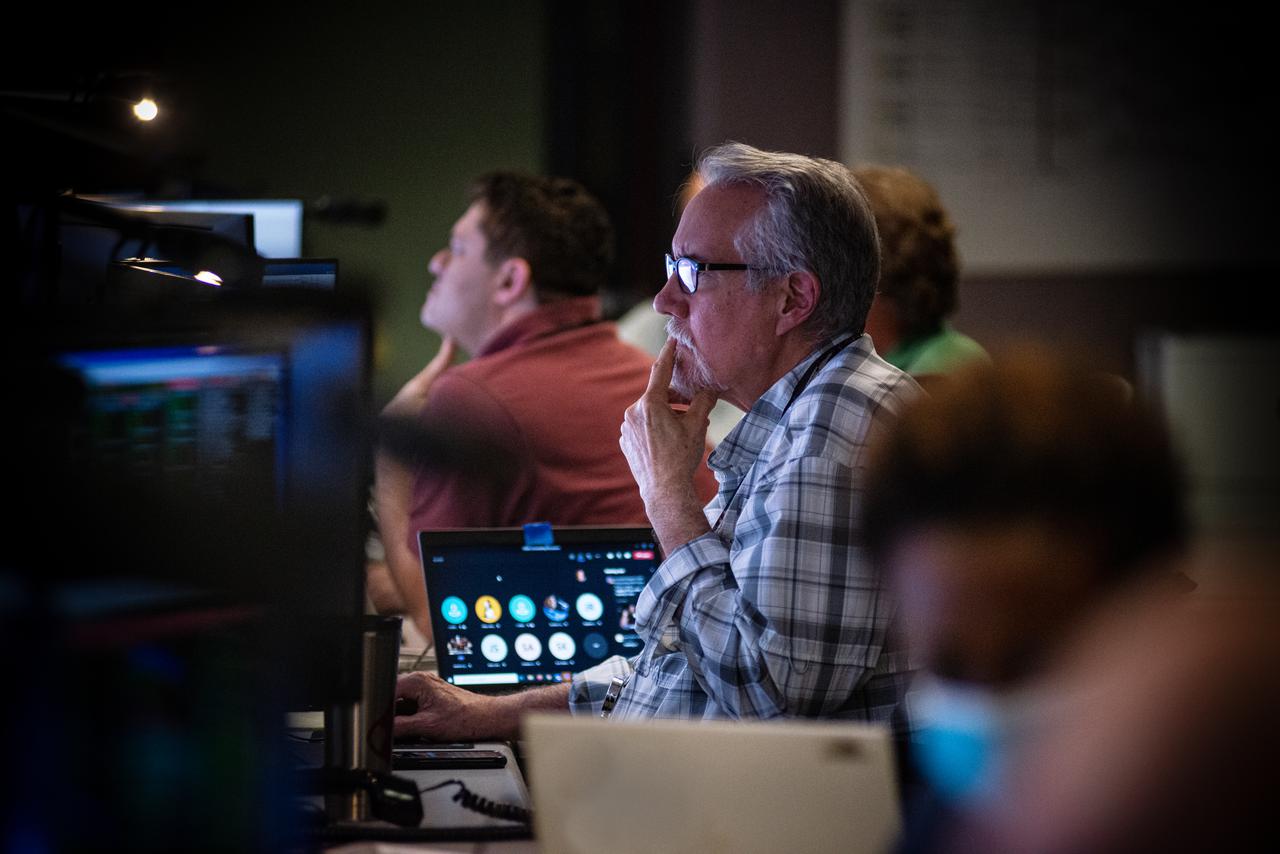
Members of the Hubble operations team work in the control room on July 15, 2021 to restore Hubble to science operations. Credits: NASA/Goddard/Rebecca Roth --- More info: Hubble’s payload computer, which controls and coordinates the observatory’s onboard science instruments, halted suddenly on June 13. When the main computer failed to receive a signal from the payload computer, it automatically placed Hubble’s science instruments into safe mode. That meant the telescope would no longer be doing science while mission specialists analyzed the situation. In response to the anomaly, NASA began a switch to backup spacecraft hardware on Hubble in response to an ongoing problem with its payload computer. This was a multi-day event. Science observations restarted the afternoon of Saturday, July 17.
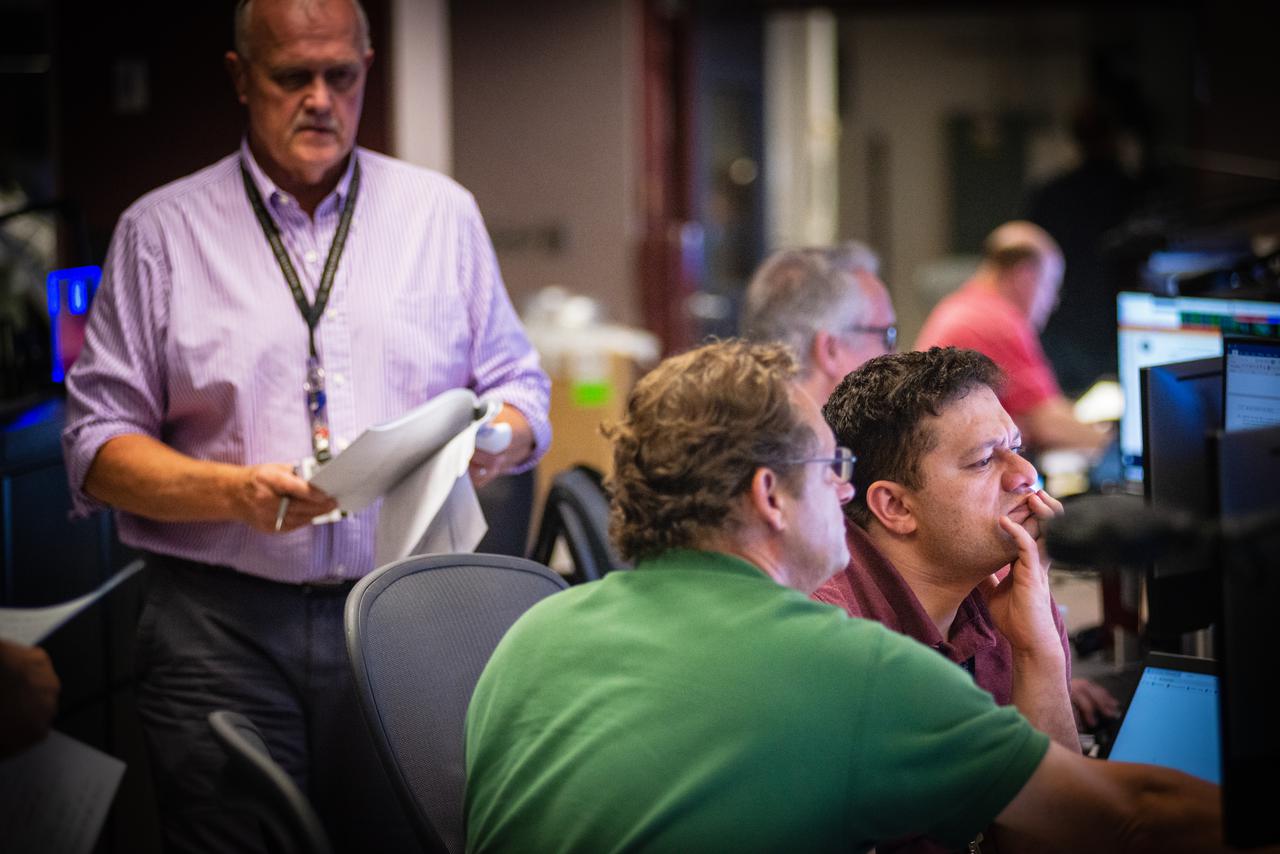
Members of the Hubble operations team work in the control room on July 15, 2021 to restore Hubble to science operations. Credits: NASA/Goddard/Rebecca Roth --- More info: Hubble’s payload computer, which controls and coordinates the observatory’s onboard science instruments, halted suddenly on June 13. When the main computer failed to receive a signal from the payload computer, it automatically placed Hubble’s science instruments into safe mode. That meant the telescope would no longer be doing science while mission specialists analyzed the situation. In response to the anomaly, NASA began a switch to backup spacecraft hardware on Hubble in response to an ongoing problem with its payload computer. This was a multi-day event. Science observations restarted the afternoon of Saturday, July 17.
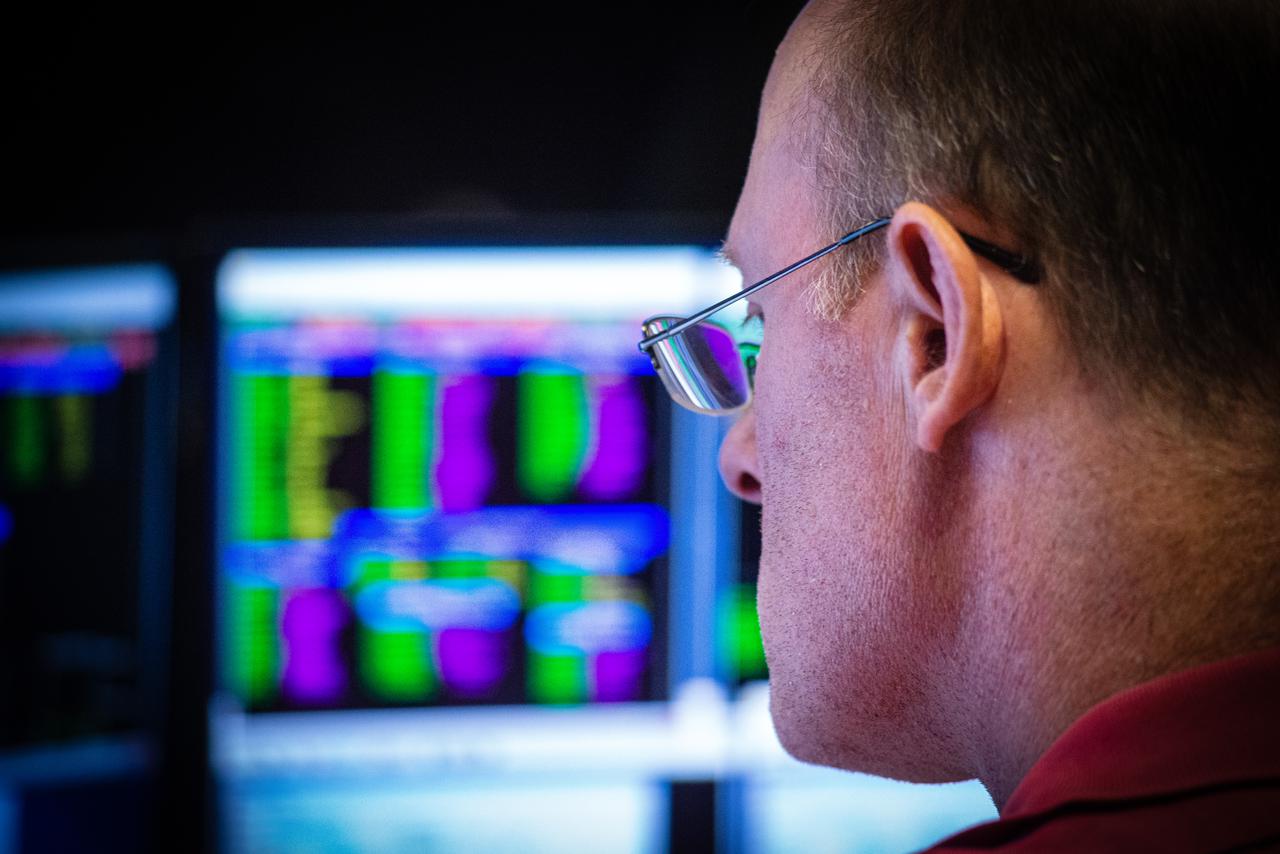
Members of the Hubble operations team work in the control room on July 15, 2021 to restore Hubble to science operations. Credits: NASA/Goddard/Rebecca Roth --- More info: Hubble’s payload computer, which controls and coordinates the observatory’s onboard science instruments, halted suddenly on June 13. When the main computer failed to receive a signal from the payload computer, it automatically placed Hubble’s science instruments into safe mode. That meant the telescope would no longer be doing science while mission specialists analyzed the situation. In response to the anomaly, NASA began a switch to backup spacecraft hardware on Hubble in response to an ongoing problem with its payload computer. This was a multi-day event. Science observations restarted the afternoon of Saturday, July 17.
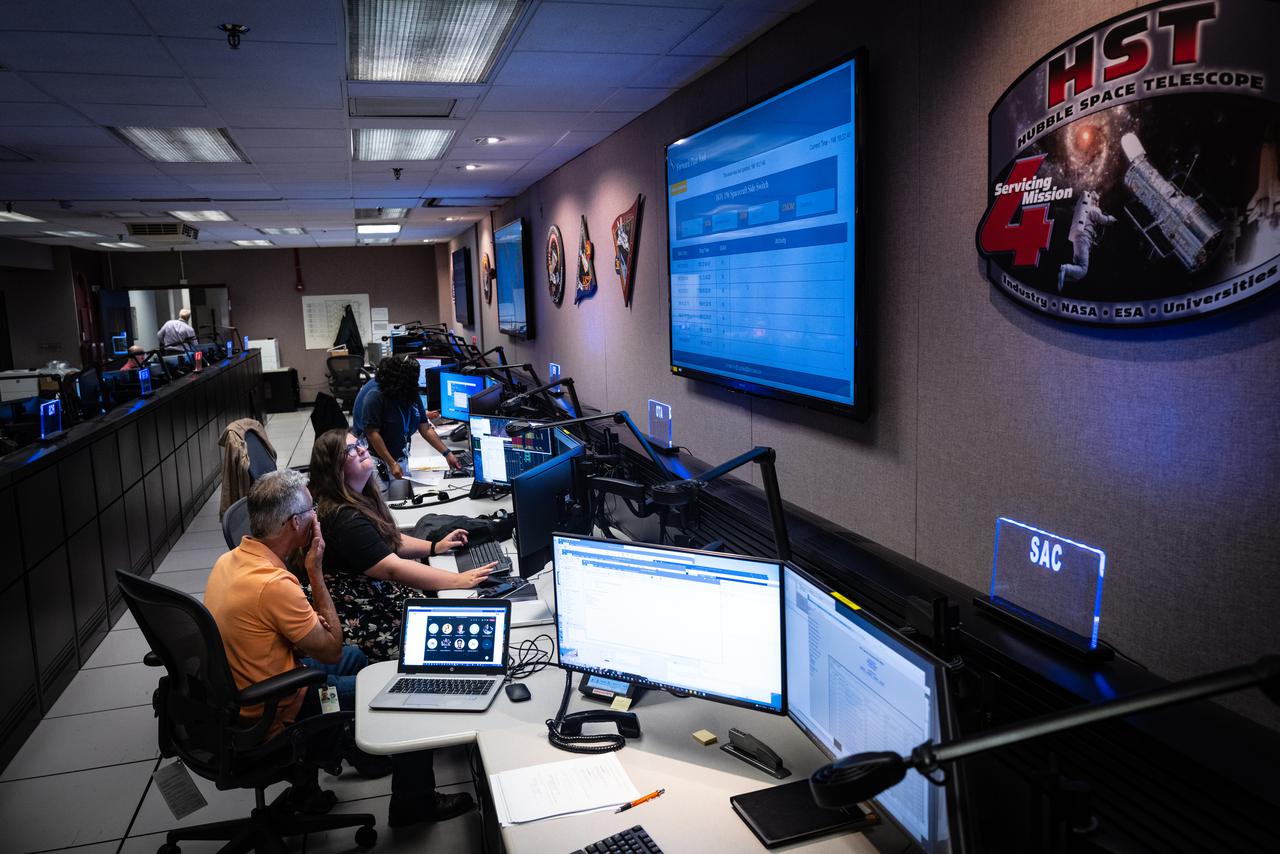
Members of the Hubble operations team work in the control room on July 15, 2021 to restore Hubble to science operations. Credits: NASA/Goddard/Rebecca Roth --- More info: Hubble’s payload computer, which controls and coordinates the observatory’s onboard science instruments, halted suddenly on June 13. When the main computer failed to receive a signal from the payload computer, it automatically placed Hubble’s science instruments into safe mode. That meant the telescope would no longer be doing science while mission specialists analyzed the situation. In response to the anomaly, NASA began a switch to backup spacecraft hardware on Hubble in response to an ongoing problem with its payload computer. This was a multi-day event. Science observations restarted the afternoon of Saturday, July 17.
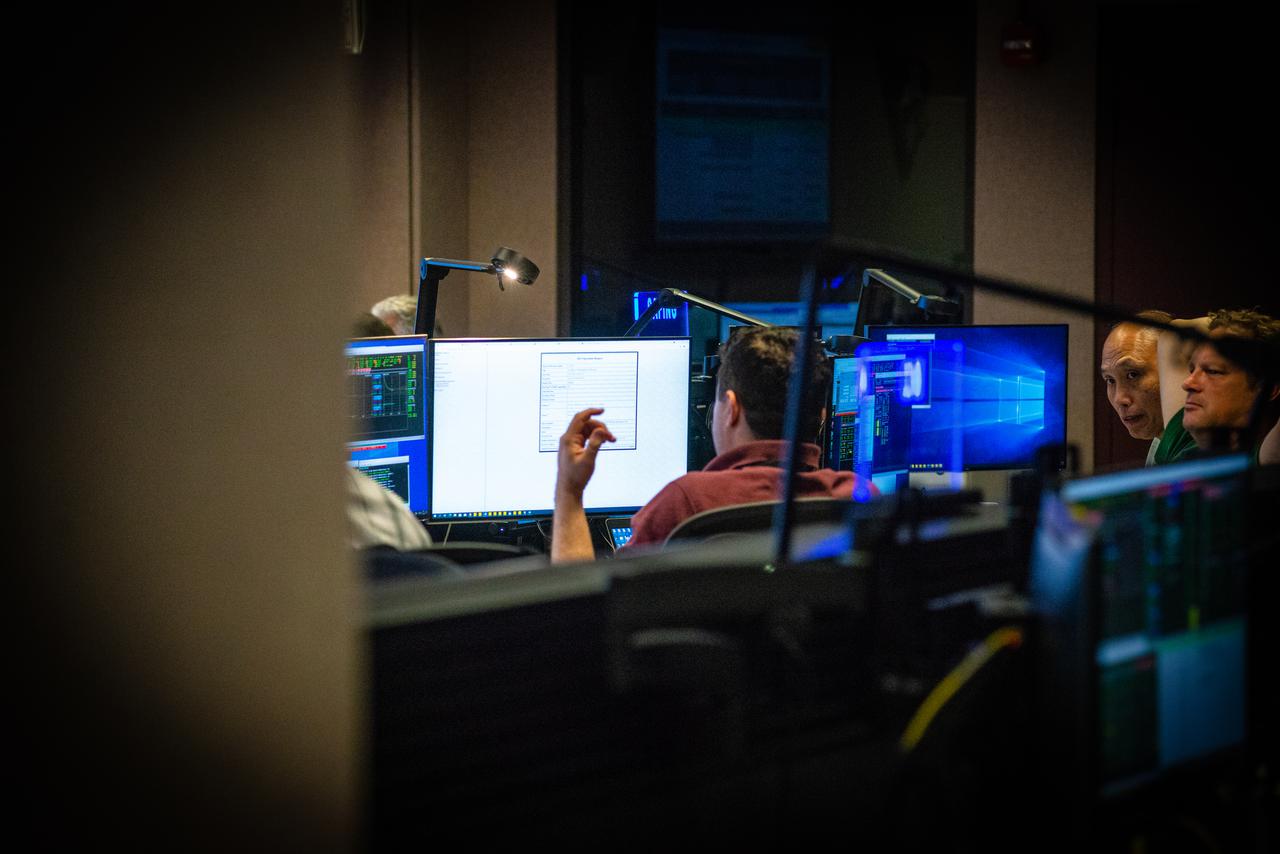
Members of the Hubble operations team work in the control room on July 15, 2021 to restore Hubble to science operations. Credits: NASA/Goddard/Rebecca Roth --- More info: Hubble’s payload computer, which controls and coordinates the observatory’s onboard science instruments, halted suddenly on June 13. When the main computer failed to receive a signal from the payload computer, it automatically placed Hubble’s science instruments into safe mode. That meant the telescope would no longer be doing science while mission specialists analyzed the situation. In response to the anomaly, NASA began a switch to backup spacecraft hardware on Hubble in response to an ongoing problem with its payload computer. This was a multi-day event. Science observations restarted the afternoon of Saturday, July 17.
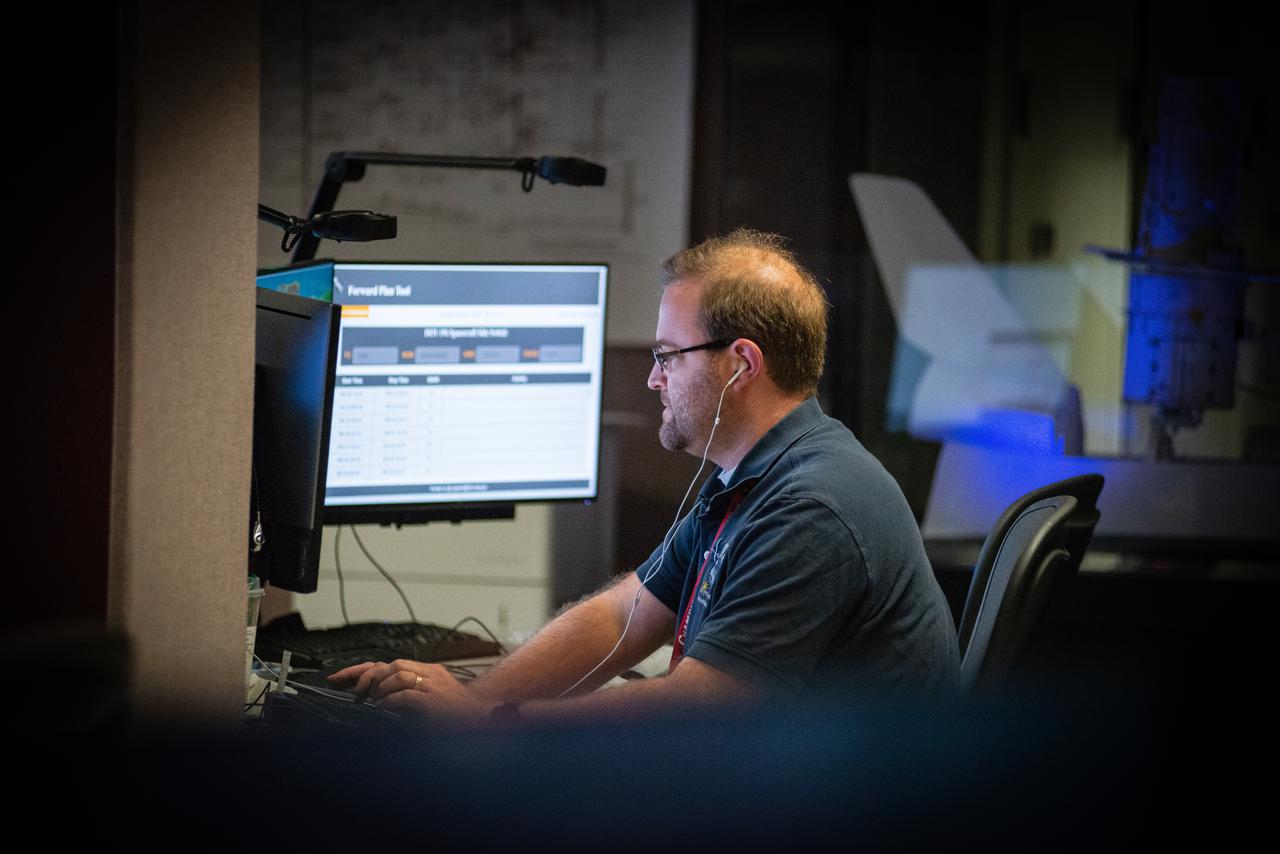
Members of the Hubble operations team work in the control room on July 15, 2021 to restore Hubble to science operations. Credits: NASA/Goddard/Rebecca Roth --- More info: Hubble’s payload computer, which controls and coordinates the observatory’s onboard science instruments, halted suddenly on June 13. When the main computer failed to receive a signal from the payload computer, it automatically placed Hubble’s science instruments into safe mode. That meant the telescope would no longer be doing science while mission specialists analyzed the situation. In response to the anomaly, NASA began a switch to backup spacecraft hardware on Hubble in response to an ongoing problem with its payload computer. This was a multi-day event. Science observations restarted the afternoon of Saturday, July 17.
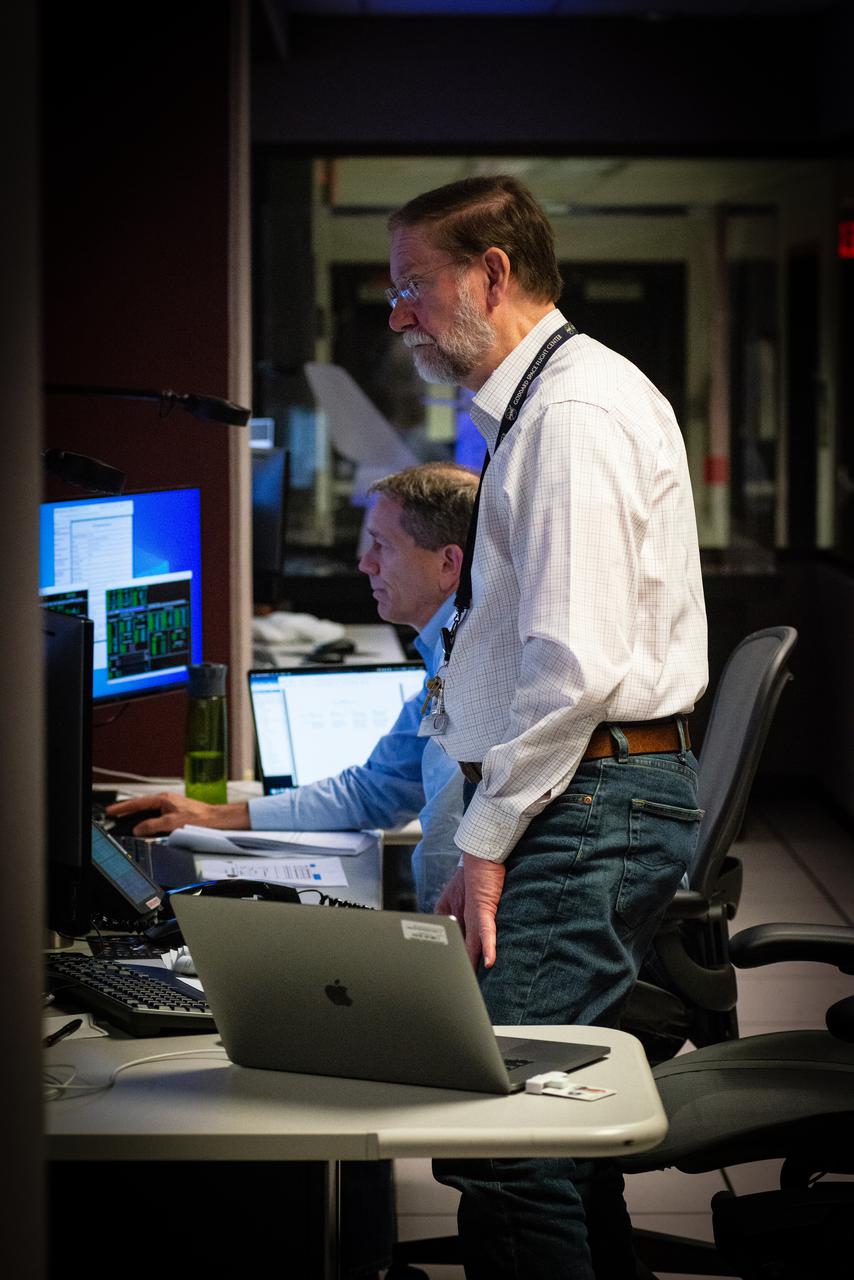
Members of the Hubble operations team work in the control room on July 15, 2021 to restore Hubble to science operations. Credits: NASA/Goddard/Rebecca Roth --- More info: Hubble’s payload computer, which controls and coordinates the observatory’s onboard science instruments, halted suddenly on June 13. When the main computer failed to receive a signal from the payload computer, it automatically placed Hubble’s science instruments into safe mode. That meant the telescope would no longer be doing science while mission specialists analyzed the situation. In response to the anomaly, NASA began a switch to backup spacecraft hardware on Hubble in response to an ongoing problem with its payload computer. This was a multi-day event. Science observations restarted the afternoon of Saturday, July 17.
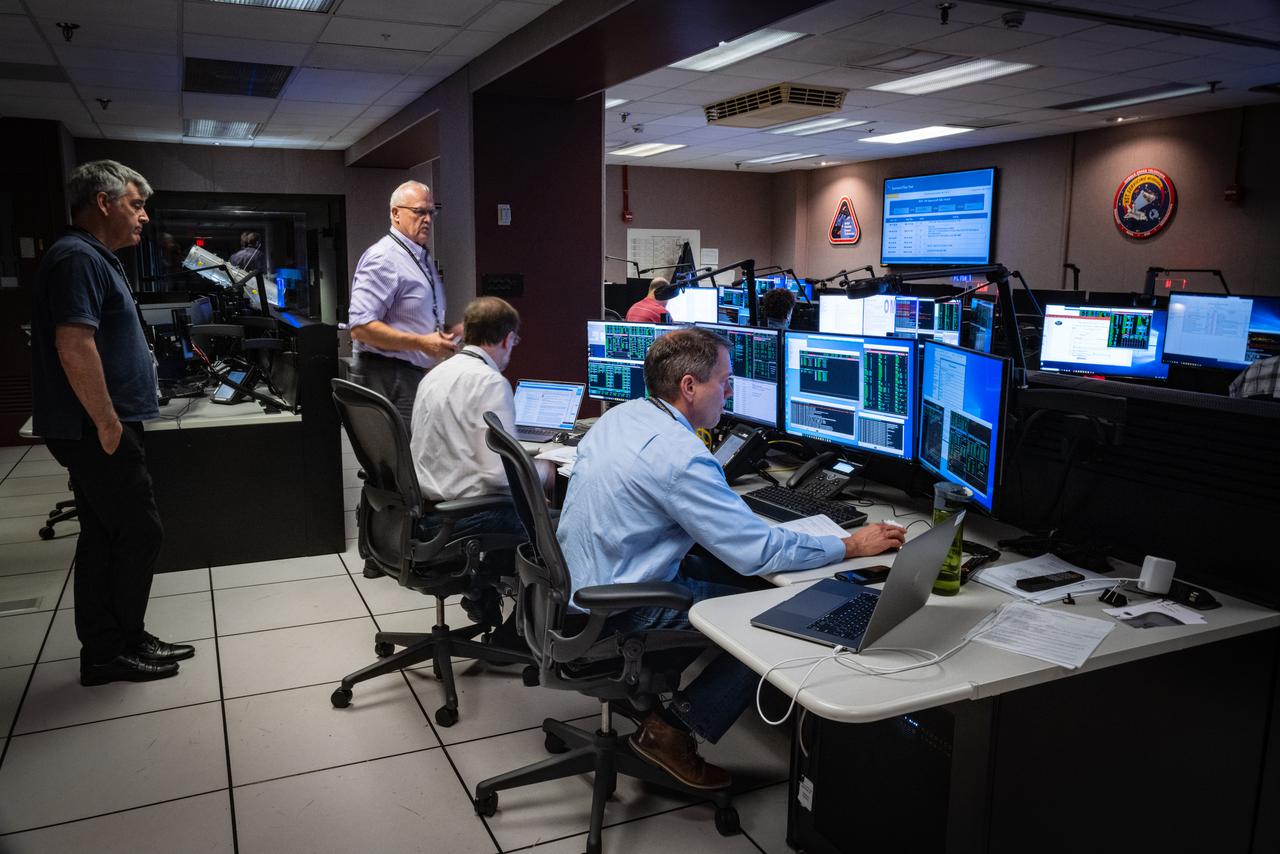
Members of the Hubble operations team work in the control room on July 15, 2021 to restore Hubble to science operations. Credits: NASA/Goddard/Rebecca Roth --- More info: Hubble’s payload computer, which controls and coordinates the observatory’s onboard science instruments, halted suddenly on June 13. When the main computer failed to receive a signal from the payload computer, it automatically placed Hubble’s science instruments into safe mode. That meant the telescope would no longer be doing science while mission specialists analyzed the situation. In response to the anomaly, NASA began a switch to backup spacecraft hardware on Hubble in response to an ongoing problem with its payload computer. This was a multi-day event. Science observations restarted the afternoon of Saturday, July 17.
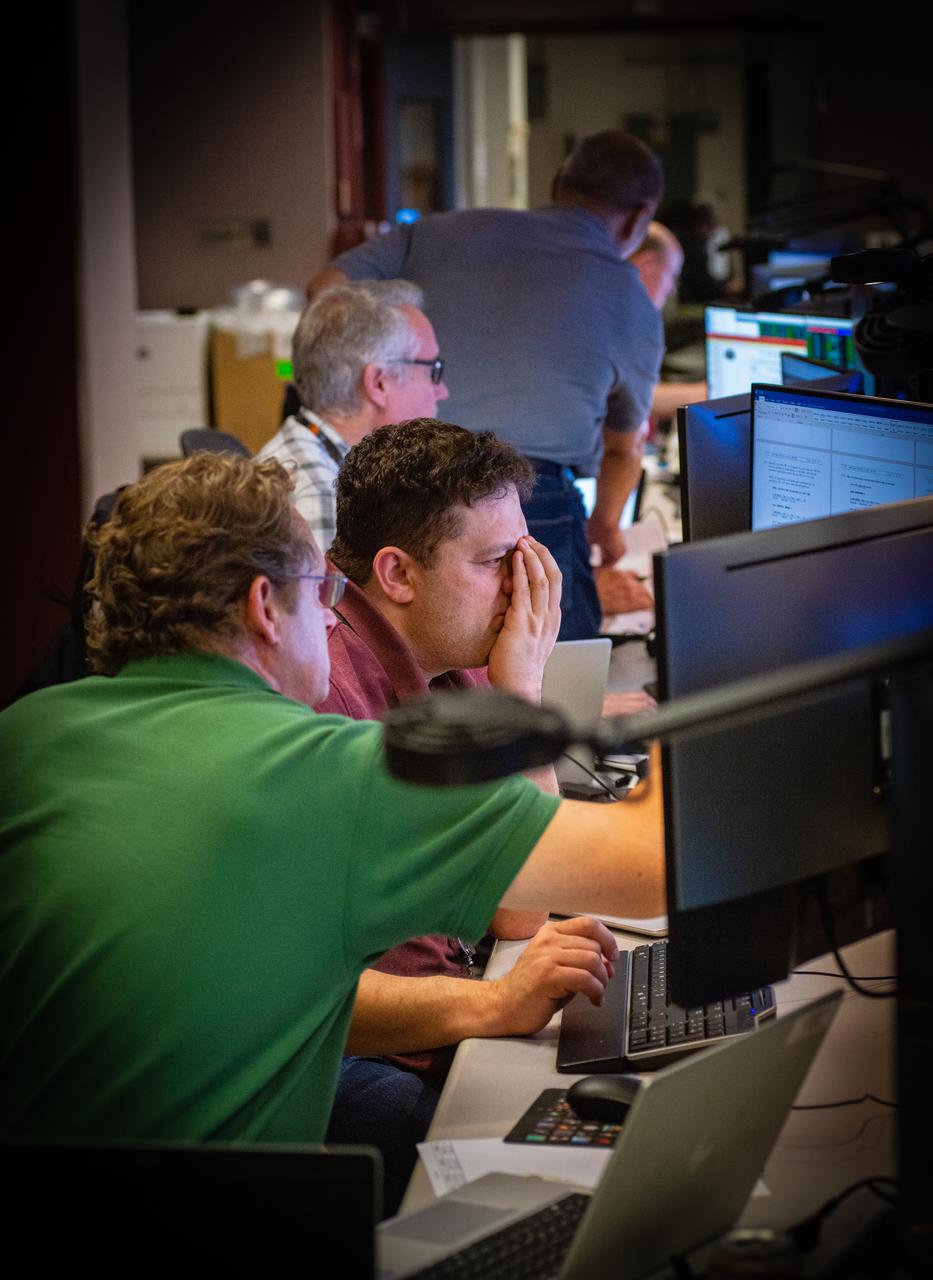
Members of the Hubble operations team work in the control room on July 15, 2021 to restore Hubble to science operations. Credits: NASA/Goddard/Rebecca Roth --- More info: Hubble’s payload computer, which controls and coordinates the observatory’s onboard science instruments, halted suddenly on June 13. When the main computer failed to receive a signal from the payload computer, it automatically placed Hubble’s science instruments into safe mode. That meant the telescope would no longer be doing science while mission specialists analyzed the situation. In response to the anomaly, NASA began a switch to backup spacecraft hardware on Hubble in response to an ongoing problem with its payload computer. This was a multi-day event. Science observations restarted the afternoon of Saturday, July 17.
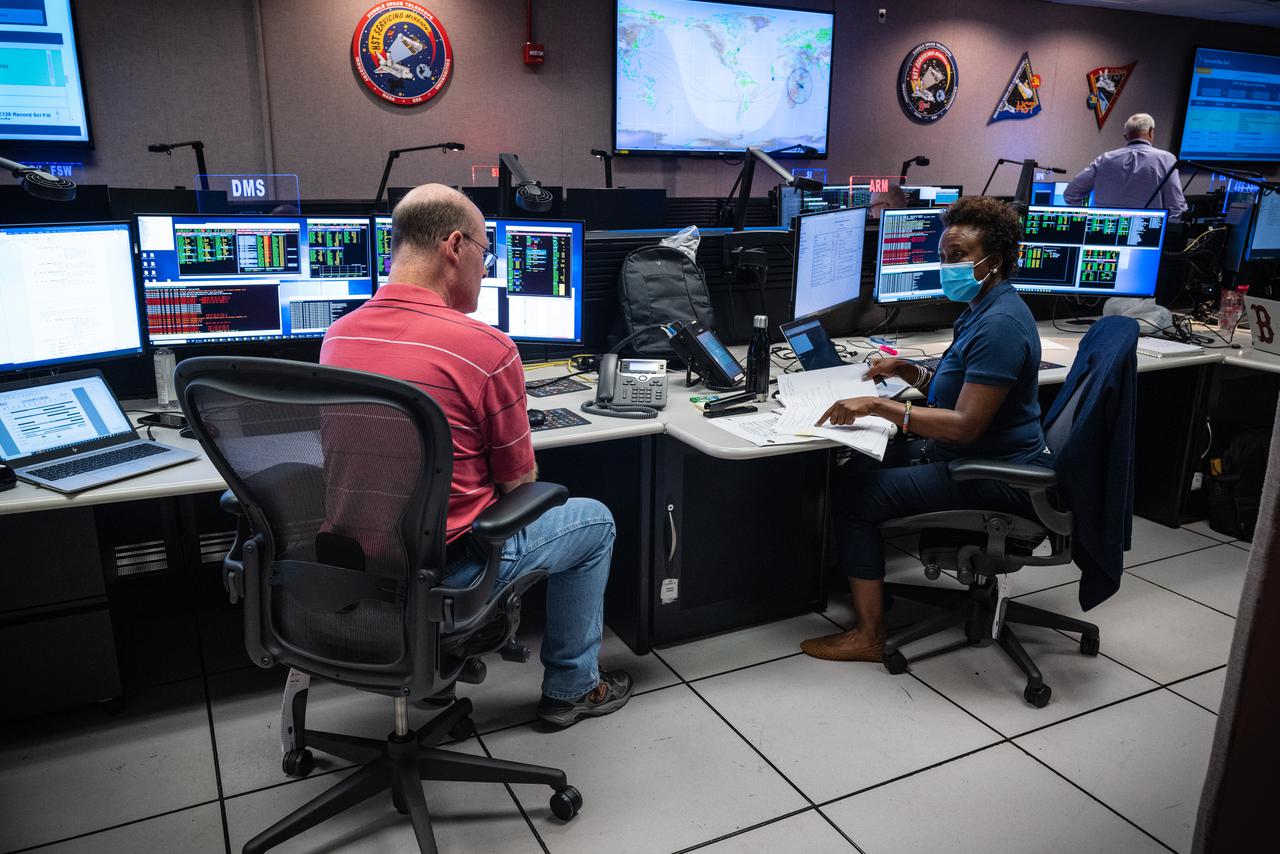
Members of the Hubble operations team work in the control room on July 15, 2021 to restore Hubble to science operations. Credits: NASA/Goddard/Rebecca Roth --- More info: Hubble’s payload computer, which controls and coordinates the observatory’s onboard science instruments, halted suddenly on June 13. When the main computer failed to receive a signal from the payload computer, it automatically placed Hubble’s science instruments into safe mode. That meant the telescope would no longer be doing science while mission specialists analyzed the situation. In response to the anomaly, NASA began a switch to backup spacecraft hardware on Hubble in response to an ongoing problem with its payload computer. This was a multi-day event. Science observations restarted the afternoon of Saturday, July 17.
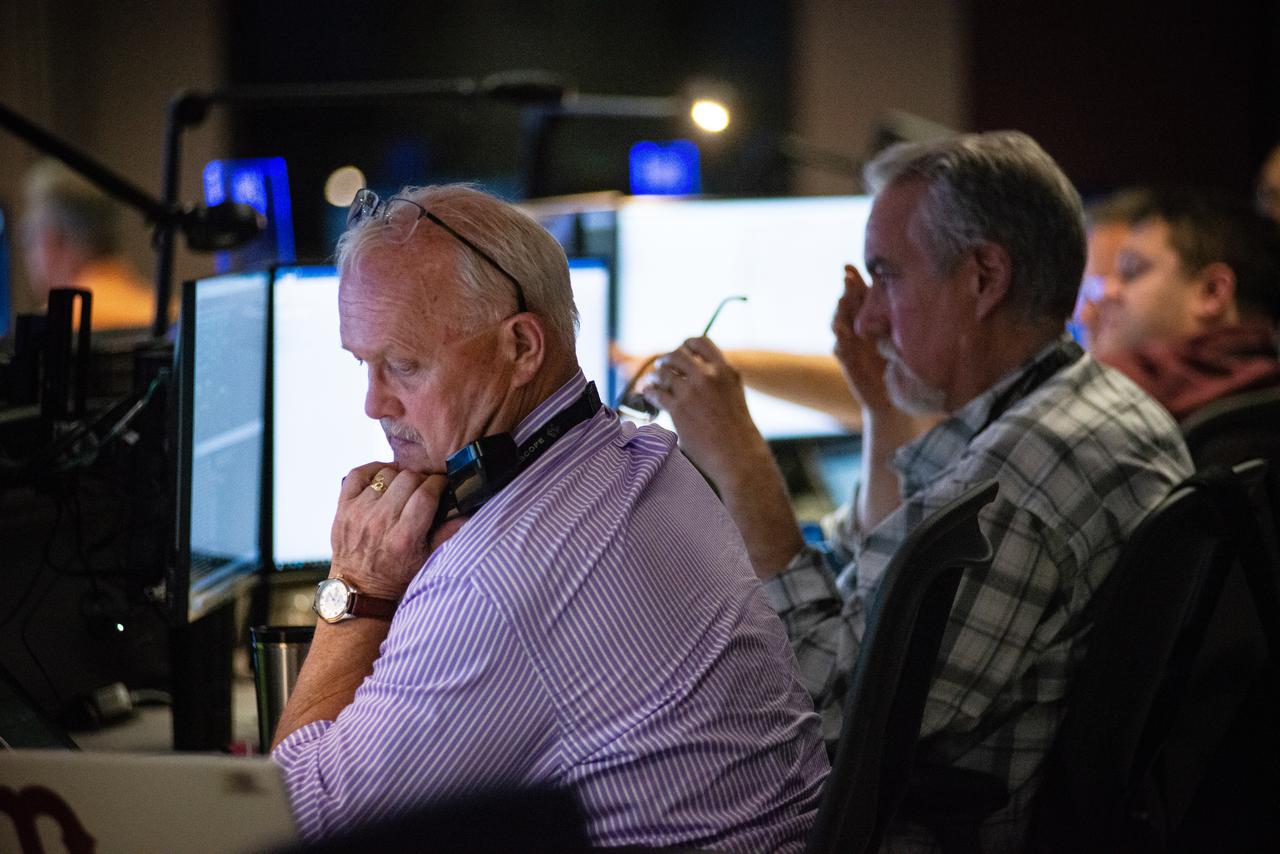
Members of the Hubble operations team work in the control room on July 15, 2021 to restore Hubble to science operations. Credits: NASA/Goddard/Rebecca Roth --- More info: Hubble’s payload computer, which controls and coordinates the observatory’s onboard science instruments, halted suddenly on June 13. When the main computer failed to receive a signal from the payload computer, it automatically placed Hubble’s science instruments into safe mode. That meant the telescope would no longer be doing science while mission specialists analyzed the situation. In response to the anomaly, NASA began a switch to backup spacecraft hardware on Hubble in response to an ongoing problem with its payload computer. This was a multi-day event. Science observations restarted the afternoon of Saturday, July 17.
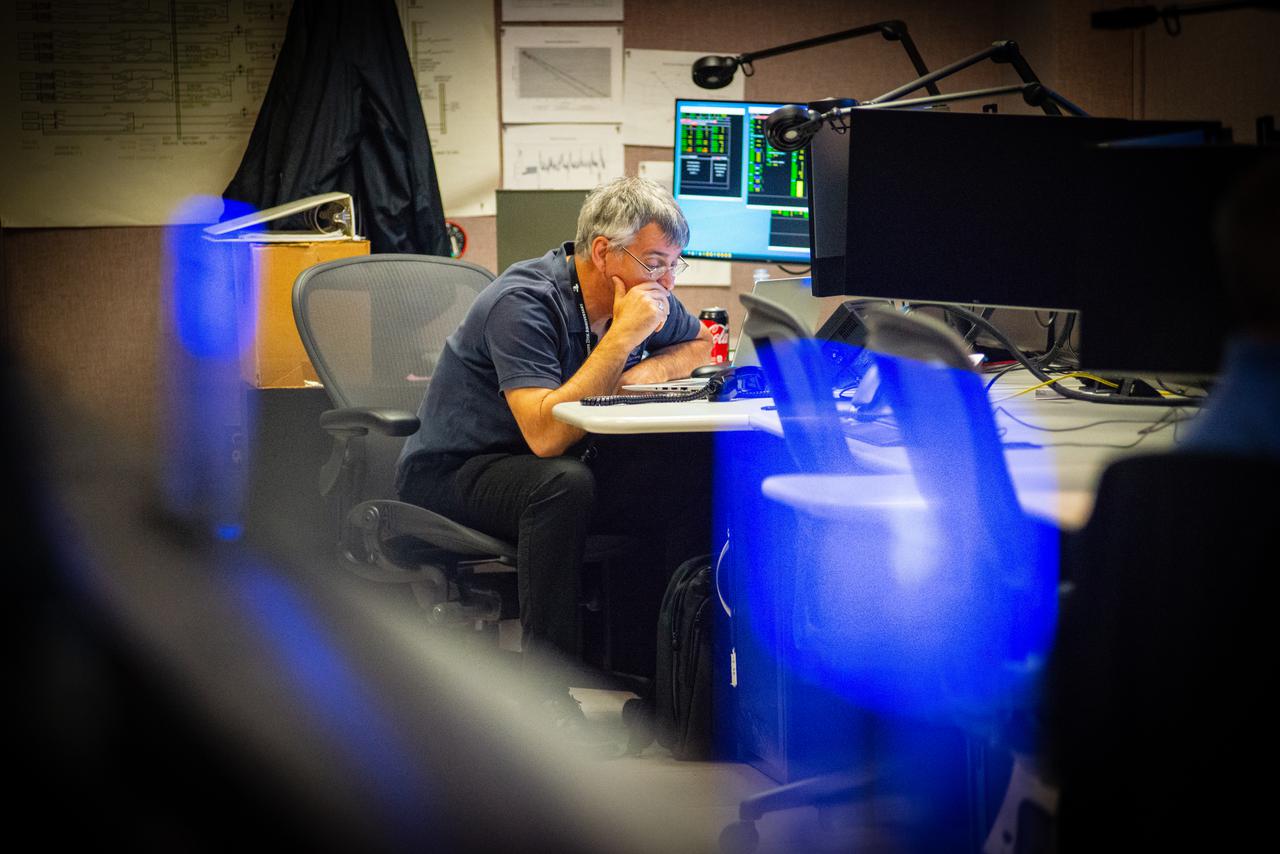
Members of the Hubble operations team work in the control room on July 15, 2021 to restore Hubble to science operations. Credits: NASA/Goddard/Rebecca Roth --- More info: Hubble’s payload computer, which controls and coordinates the observatory’s onboard science instruments, halted suddenly on June 13. When the main computer failed to receive a signal from the payload computer, it automatically placed Hubble’s science instruments into safe mode. That meant the telescope would no longer be doing science while mission specialists analyzed the situation. In response to the anomaly, NASA began a switch to backup spacecraft hardware on Hubble in response to an ongoing problem with its payload computer. This was a multi-day event. Science observations restarted the afternoon of Saturday, July 17.

Members of the Hubble operations team work in the control room on July 15, 2021 to restore Hubble to science operations. Credits: NASA/Goddard/Rebecca Roth --- More info: Hubble’s payload computer, which controls and coordinates the observatory’s onboard science instruments, halted suddenly on June 13. When the main computer failed to receive a signal from the payload computer, it automatically placed Hubble’s science instruments into safe mode. That meant the telescope would no longer be doing science while mission specialists analyzed the situation. In response to the anomaly, NASA began a switch to backup spacecraft hardware on Hubble in response to an ongoing problem with its payload computer. This was a multi-day event. Science observations restarted the afternoon of Saturday, July 17.
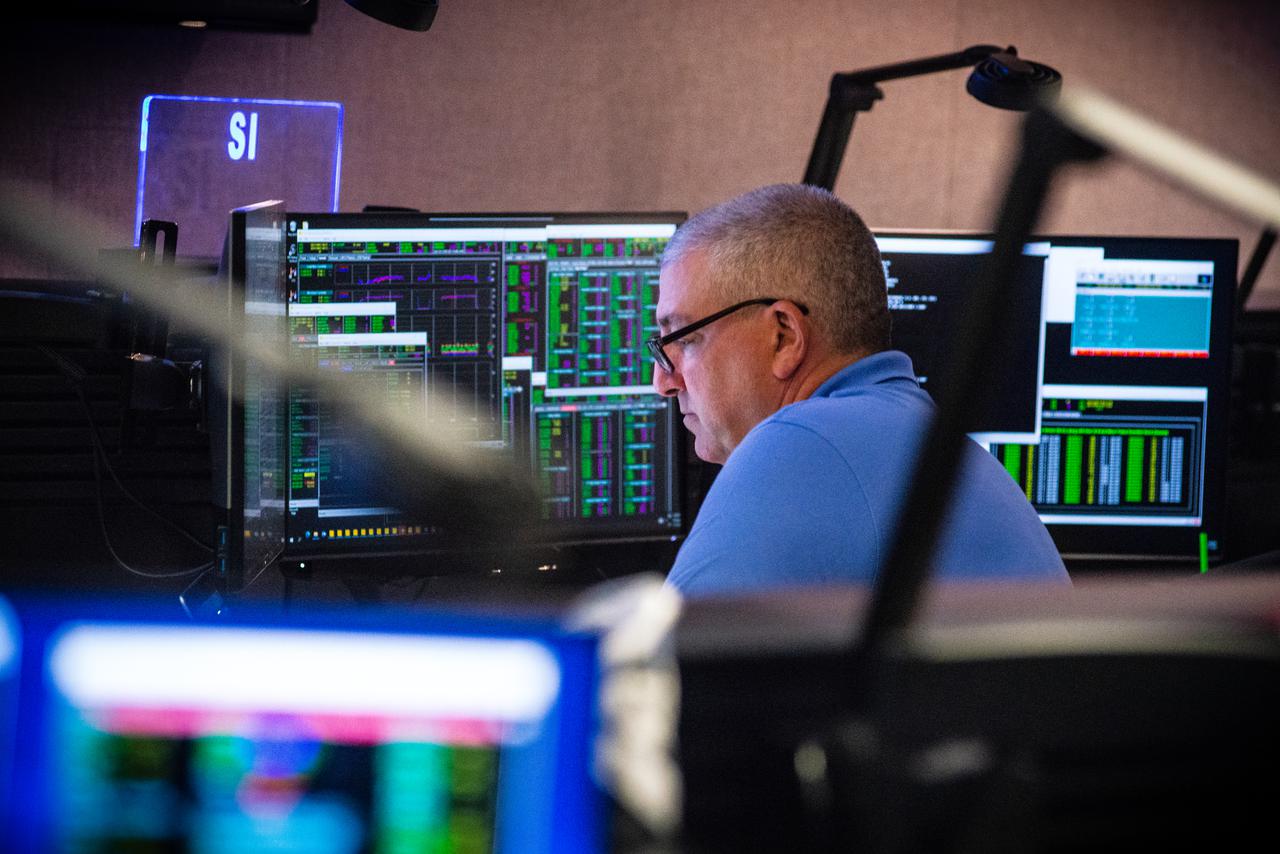
Members of the Hubble operations team work in the control room on July 15, 2021 to restore Hubble to science operations. Credits: NASA/Goddard/Rebecca Roth --- More info: Hubble’s payload computer, which controls and coordinates the observatory’s onboard science instruments, halted suddenly on June 13. When the main computer failed to receive a signal from the payload computer, it automatically placed Hubble’s science instruments into safe mode. That meant the telescope would no longer be doing science while mission specialists analyzed the situation. In response to the anomaly, NASA began a switch to backup spacecraft hardware on Hubble in response to an ongoing problem with its payload computer. This was a multi-day event. Science observations restarted the afternoon of Saturday, July 17.
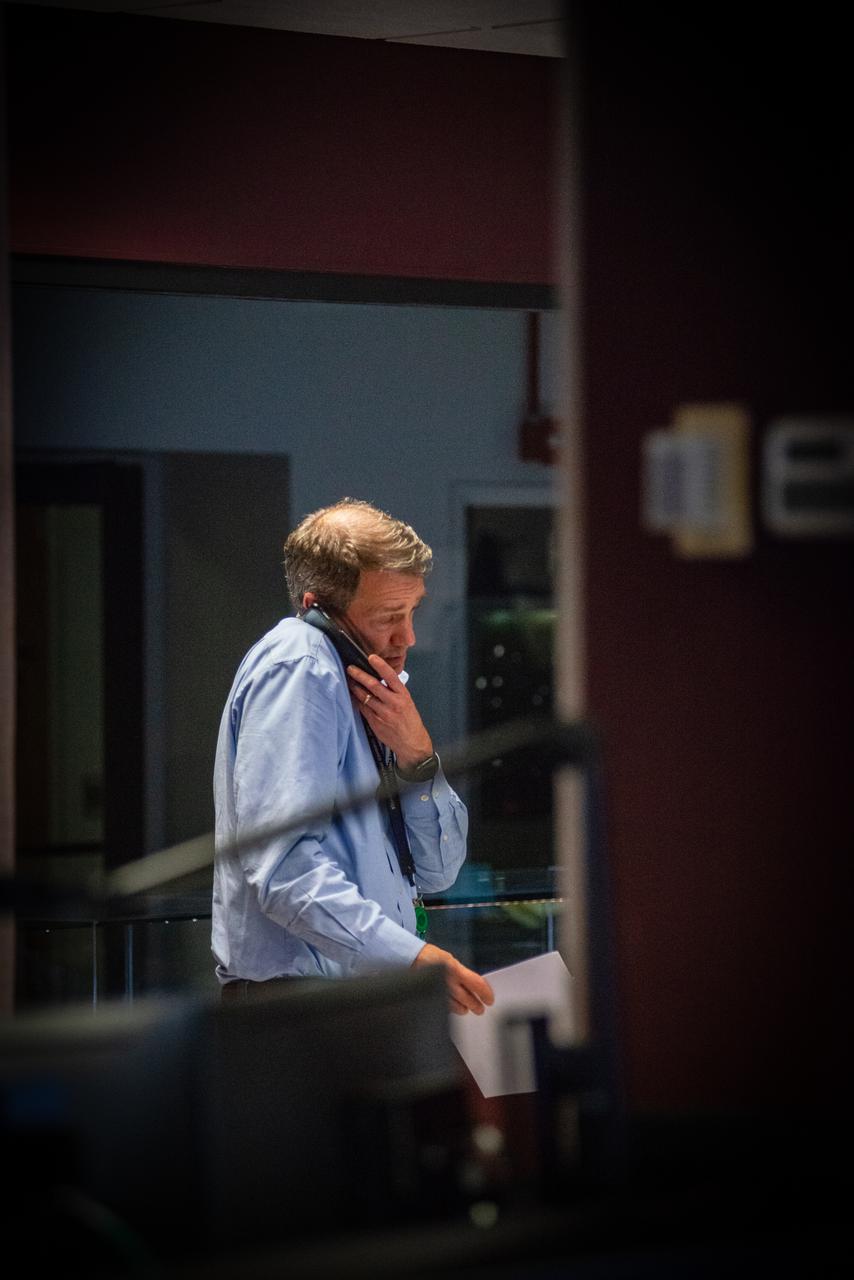
Members of the Hubble operations team work in the control room on July 15, 2021 to restore Hubble to science operations. Credits: NASA/Goddard/Rebecca Roth --- More info: Hubble’s payload computer, which controls and coordinates the observatory’s onboard science instruments, halted suddenly on June 13. When the main computer failed to receive a signal from the payload computer, it automatically placed Hubble’s science instruments into safe mode. That meant the telescope would no longer be doing science while mission specialists analyzed the situation. In response to the anomaly, NASA began a switch to backup spacecraft hardware on Hubble in response to an ongoing problem with its payload computer. This was a multi-day event. Science observations restarted the afternoon of Saturday, July 17.
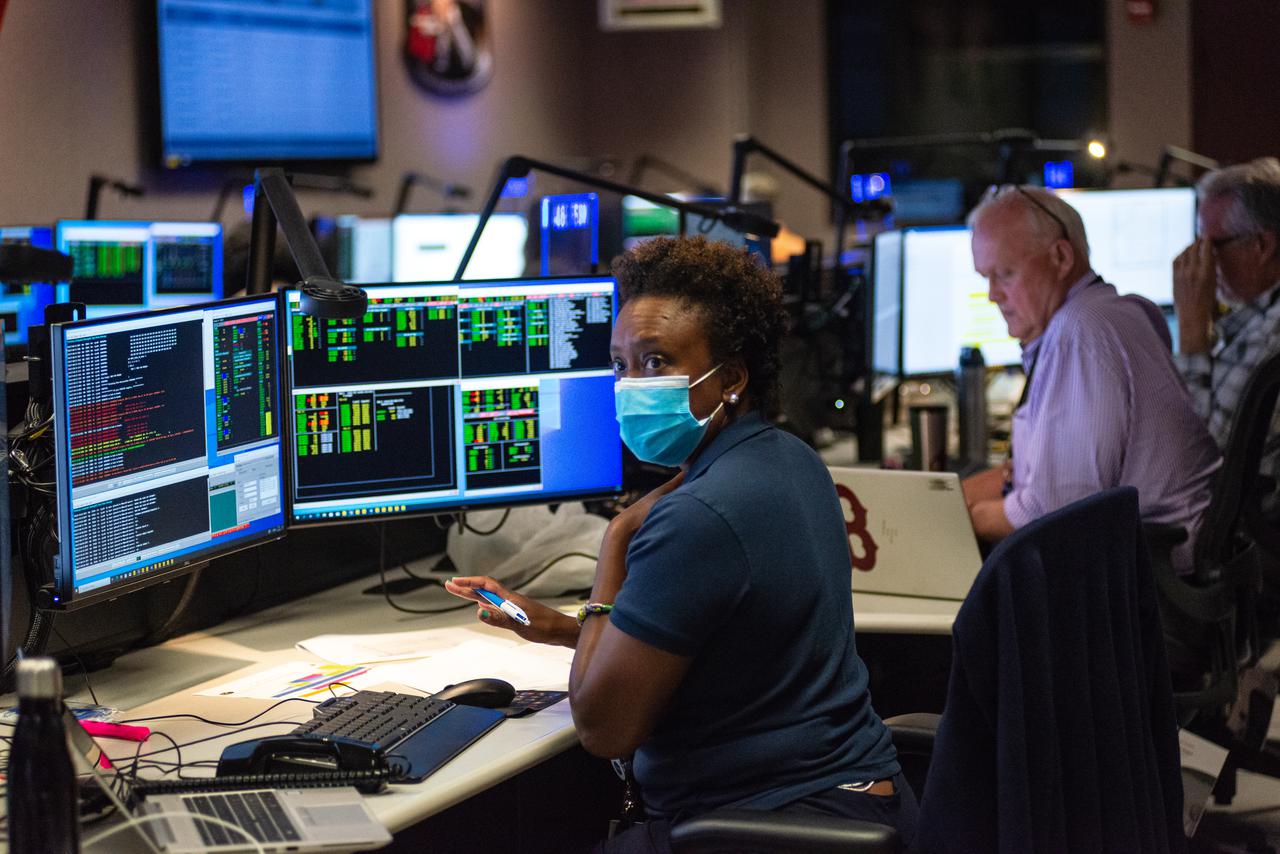
Nzinga Tull, Hubble systems anomaly response manager at NASA’s Goddard Space Flight Center in Greenbelt, Maryland, works in the control room on July 15, 2021, to restore Hubble to full science operations. --- More info: Hubble’s payload computer, which controls and coordinates the observatory’s onboard science instruments, halted suddenly on June 13. When the main computer failed to receive a signal from the payload computer, it automatically placed Hubble’s science instruments into safe mode. That meant the telescope would no longer be doing science while mission specialists analyzed the situation. In response to the anomaly, NASA began a switch to backup spacecraft hardware on Hubble in response to an ongoing problem with its payload computer. This was a multi-day event. Science observations restarted the afternoon of Saturday, July 17.
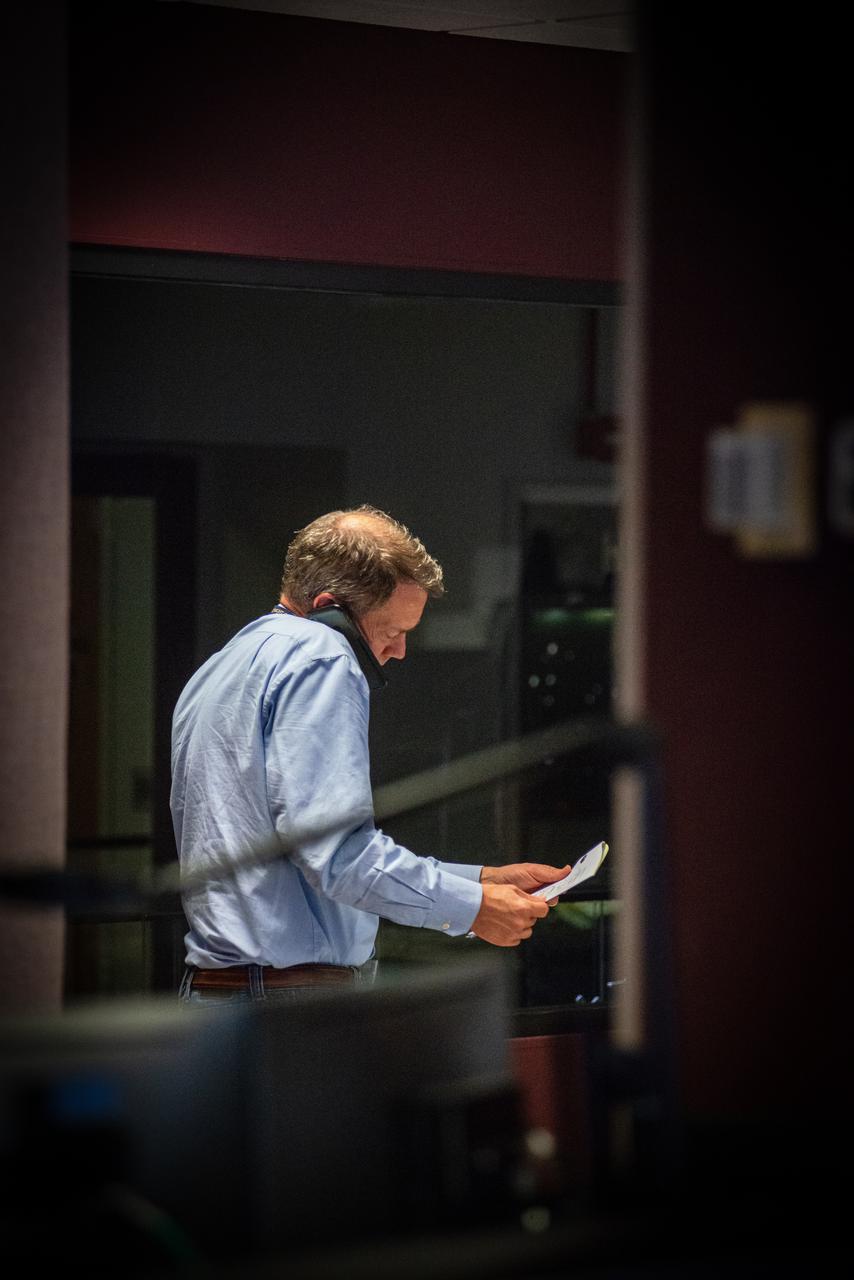
Members of the Hubble operations team work in the control room on July 15, 2021 to restore Hubble to science operations. Credits: NASA/Goddard/Rebecca Roth --- More info: Hubble’s payload computer, which controls and coordinates the observatory’s onboard science instruments, halted suddenly on June 13. When the main computer failed to receive a signal from the payload computer, it automatically placed Hubble’s science instruments into safe mode. That meant the telescope would no longer be doing science while mission specialists analyzed the situation. In response to the anomaly, NASA began a switch to backup spacecraft hardware on Hubble in response to an ongoing problem with its payload computer. This was a multi-day event. Science observations restarted the afternoon of Saturday, July 17.
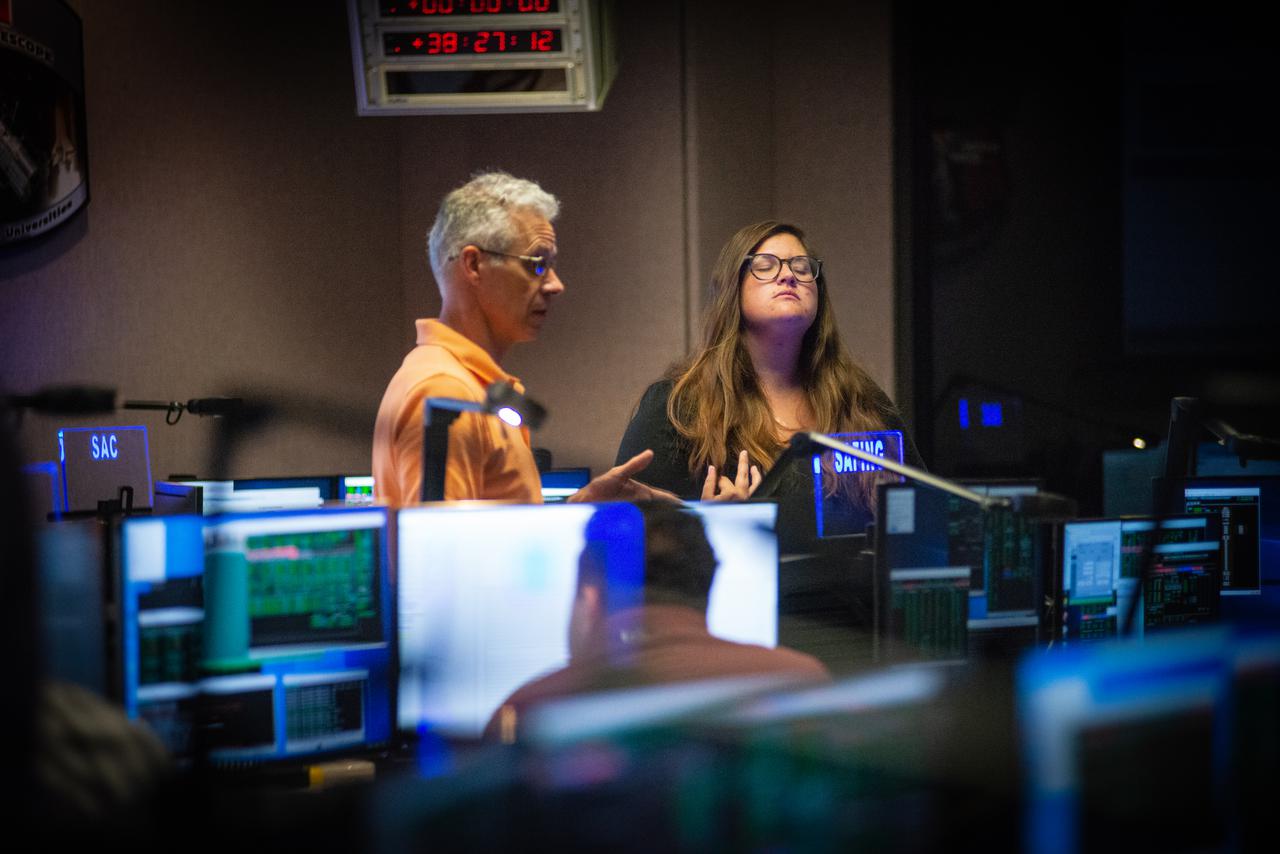
Members of the Hubble operations team work in the control room on July 15, 2021 to restore Hubble to science operations. Credits: NASA/Goddard/Rebecca Roth --- More info: Hubble’s payload computer, which controls and coordinates the observatory’s onboard science instruments, halted suddenly on June 13. When the main computer failed to receive a signal from the payload computer, it automatically placed Hubble’s science instruments into safe mode. That meant the telescope would no longer be doing science while mission specialists analyzed the situation. In response to the anomaly, NASA began a switch to backup spacecraft hardware on Hubble in response to an ongoing problem with its payload computer. This was a multi-day event. Science observations restarted the afternoon of Saturday, July 17.
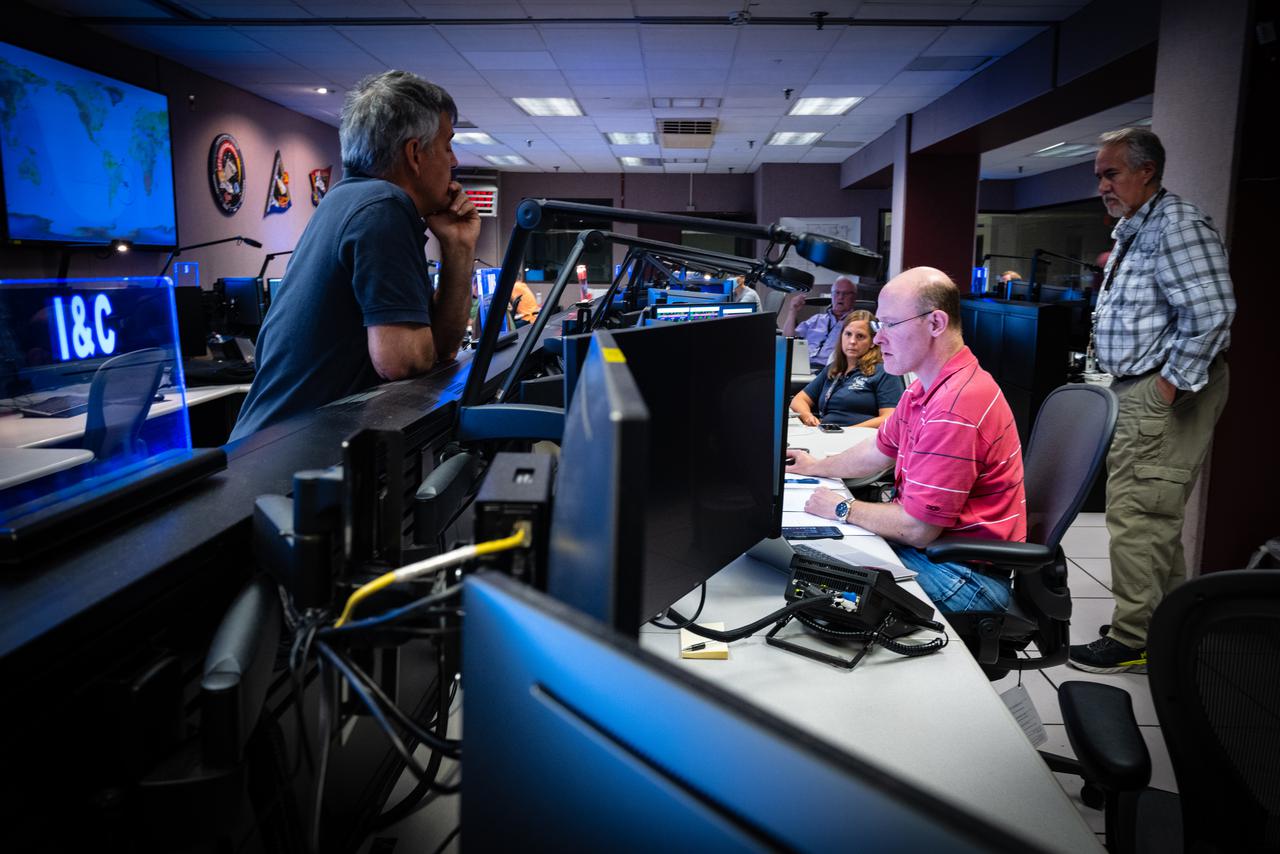
Members of the Hubble operations team work in the control room on July 15, 2021 to restore Hubble to science operations. Credits: NASA/Goddard/Rebecca Roth --- More info: Hubble’s payload computer, which controls and coordinates the observatory’s onboard science instruments, halted suddenly on June 13. When the main computer failed to receive a signal from the payload computer, it automatically placed Hubble’s science instruments into safe mode. That meant the telescope would no longer be doing science while mission specialists analyzed the situation. In response to the anomaly, NASA began a switch to backup spacecraft hardware on Hubble in response to an ongoing problem with its payload computer. This was a multi-day event. Science observations restarted the afternoon of Saturday, July 17.
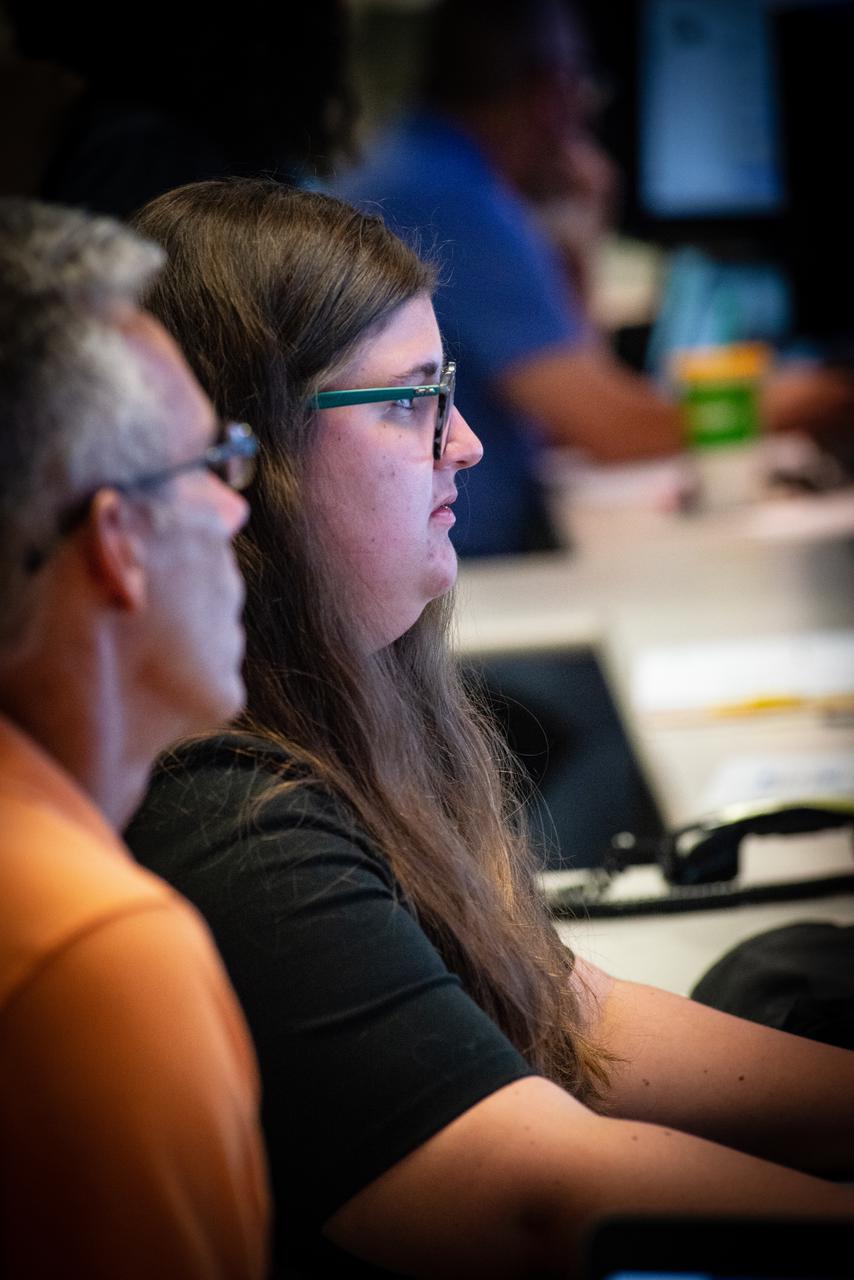
Members of the Hubble operations team work in the control room on July 15, 2021 to restore Hubble to science operations. Credits: NASA/Goddard/Rebecca Roth --- More info: Hubble’s payload computer, which controls and coordinates the observatory’s onboard science instruments, halted suddenly on June 13. When the main computer failed to receive a signal from the payload computer, it automatically placed Hubble’s science instruments into safe mode. That meant the telescope would no longer be doing science while mission specialists analyzed the situation. In response to the anomaly, NASA began a switch to backup spacecraft hardware on Hubble in response to an ongoing problem with its payload computer. This was a multi-day event. Science observations restarted the afternoon of Saturday, July 17.
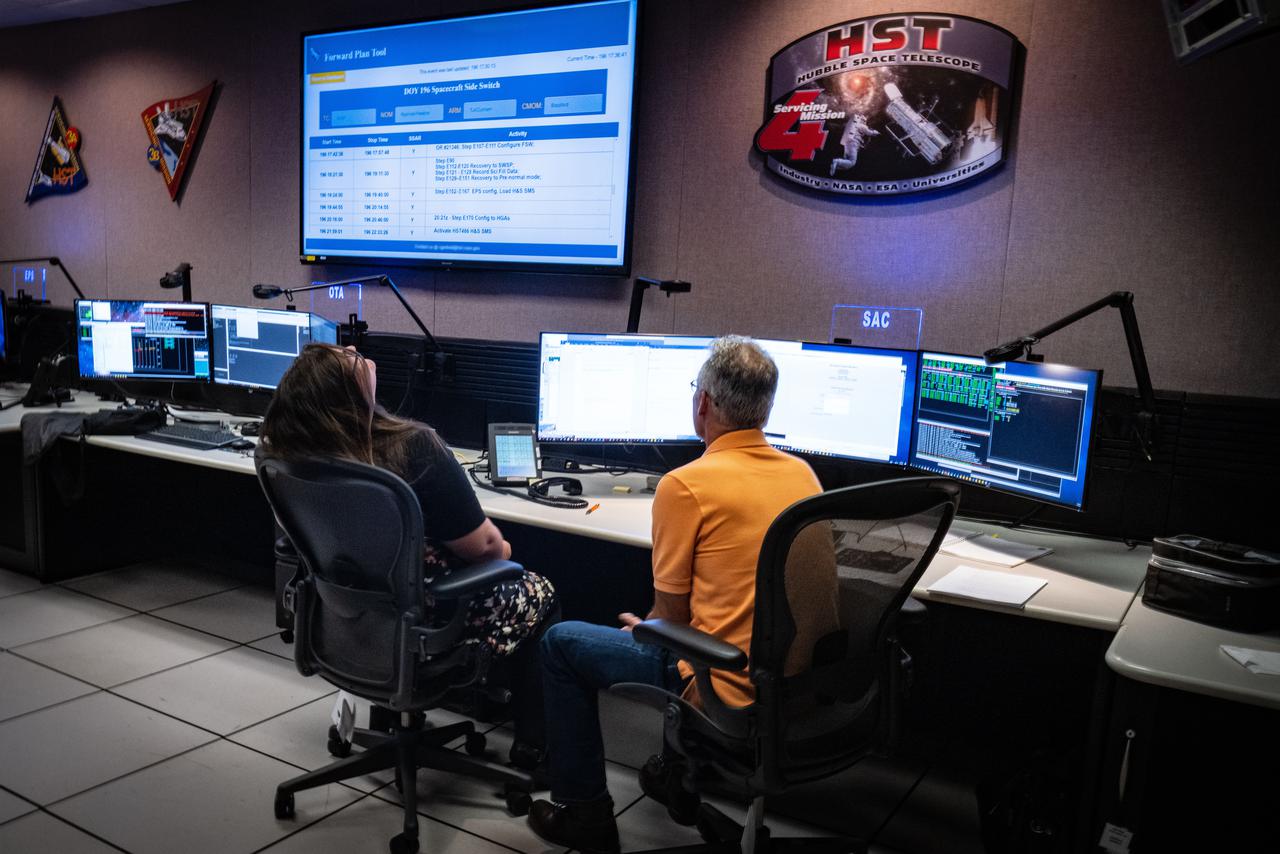
Members of the Hubble operations team work in the control room on July 15, 2021 to restore Hubble to science operations. Credits: NASA/Goddard/Rebecca Roth --- More info: Hubble’s payload computer, which controls and coordinates the observatory’s onboard science instruments, halted suddenly on June 13. When the main computer failed to receive a signal from the payload computer, it automatically placed Hubble’s science instruments into safe mode. That meant the telescope would no longer be doing science while mission specialists analyzed the situation. In response to the anomaly, NASA began a switch to backup spacecraft hardware on Hubble in response to an ongoing problem with its payload computer. This was a multi-day event. Science observations restarted the afternoon of Saturday, July 17.
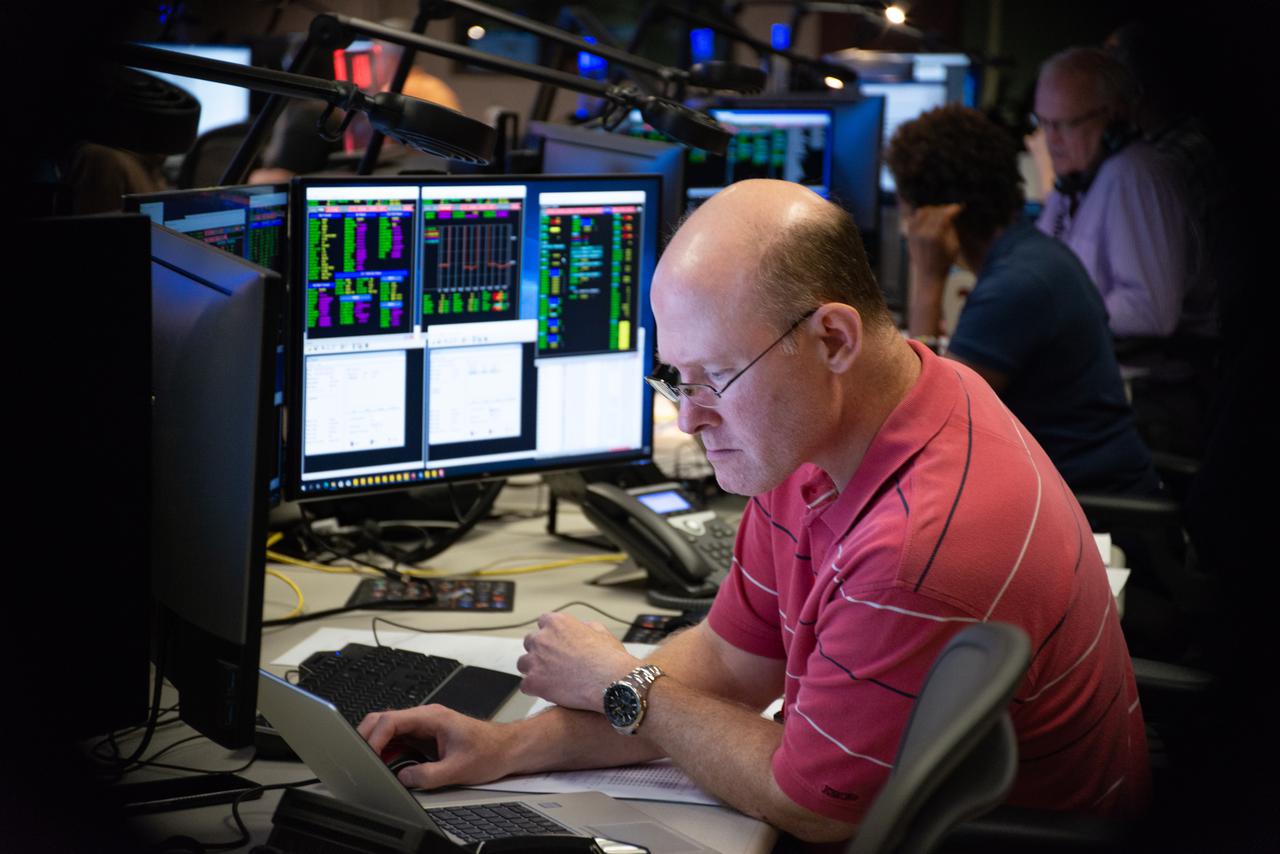
Members of the Hubble operations team work in the control room on July 15, 2021 to restore Hubble to science operations. Credits: NASA/Goddard/Rebecca Roth --- More info: Hubble’s payload computer, which controls and coordinates the observatory’s onboard science instruments, halted suddenly on June 13. When the main computer failed to receive a signal from the payload computer, it automatically placed Hubble’s science instruments into safe mode. That meant the telescope would no longer be doing science while mission specialists analyzed the situation. In response to the anomaly, NASA began a switch to backup spacecraft hardware on Hubble in response to an ongoing problem with its payload computer. This was a multi-day event. Science observations restarted the afternoon of Saturday, July 17.
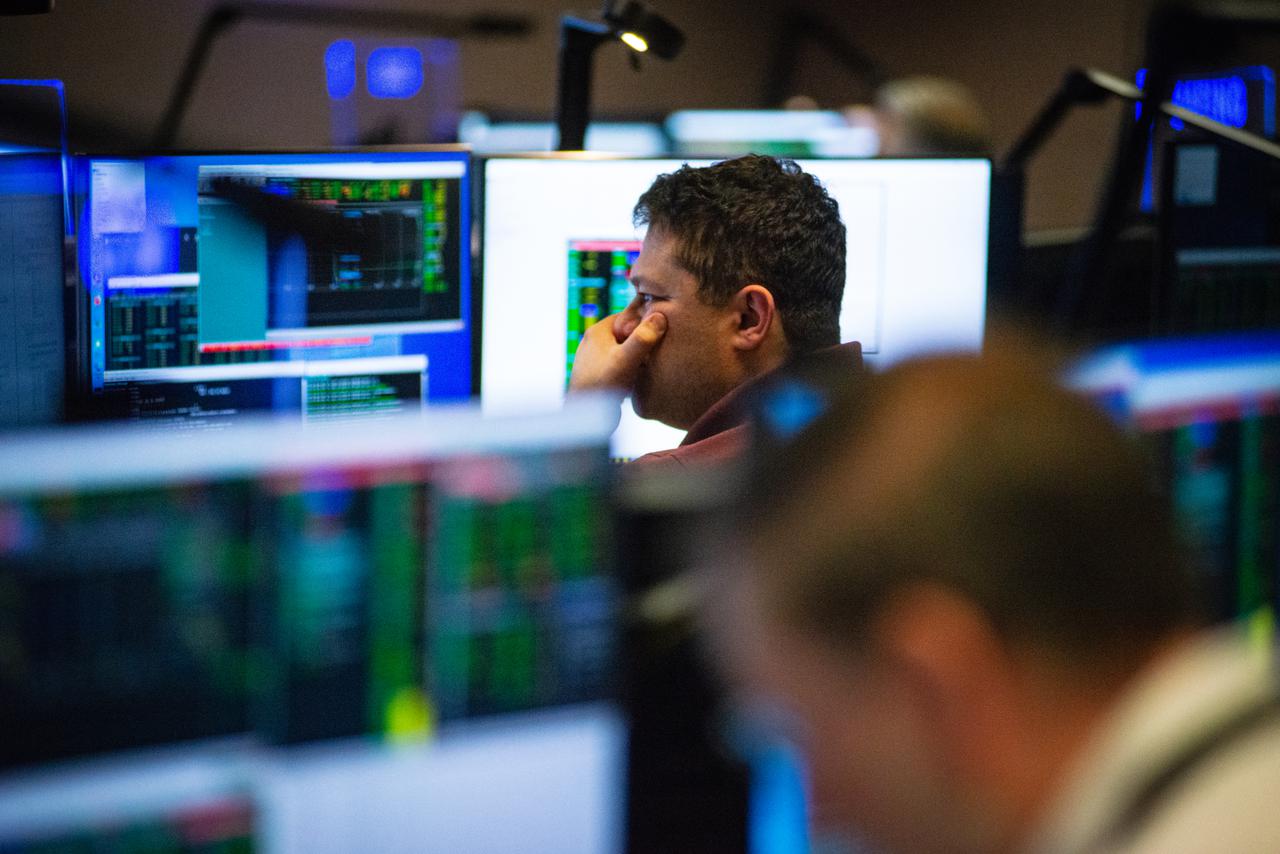
Members of the Hubble operations team work in the control room on July 15, 2021 to restore Hubble to science operations. Credits: NASA/Goddard/Rebecca Roth --- More info: Hubble’s payload computer, which controls and coordinates the observatory’s onboard science instruments, halted suddenly on June 13. When the main computer failed to receive a signal from the payload computer, it automatically placed Hubble’s science instruments into safe mode. That meant the telescope would no longer be doing science while mission specialists analyzed the situation. In response to the anomaly, NASA began a switch to backup spacecraft hardware on Hubble in response to an ongoing problem with its payload computer. This was a multi-day event. Science observations restarted the afternoon of Saturday, July 17.
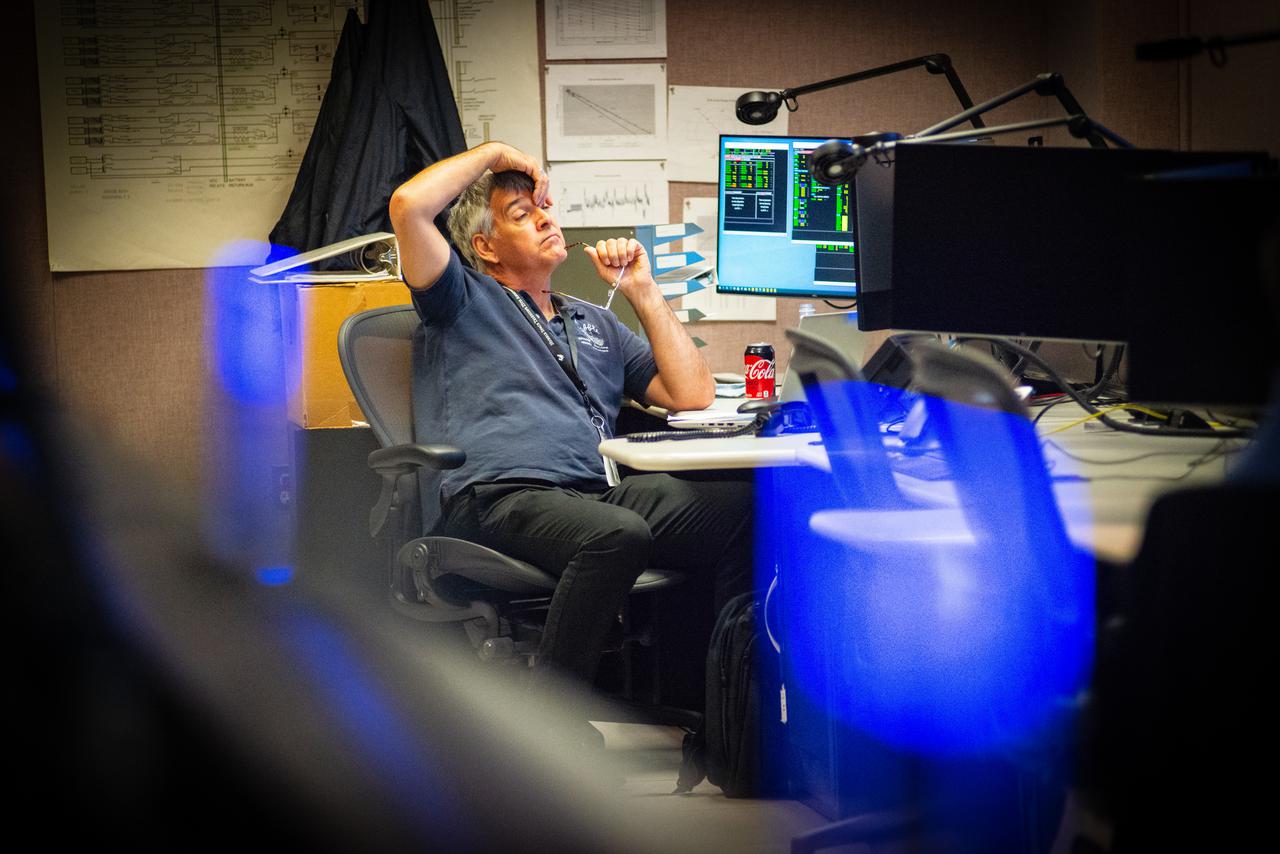
Members of the Hubble operations team work in the control room on July 15, 2021 to restore Hubble to science operations. Credits: NASA/Goddard/Rebecca Roth --- More info: Hubble’s payload computer, which controls and coordinates the observatory’s onboard science instruments, halted suddenly on June 13. When the main computer failed to receive a signal from the payload computer, it automatically placed Hubble’s science instruments into safe mode. That meant the telescope would no longer be doing science while mission specialists analyzed the situation. In response to the anomaly, NASA began a switch to backup spacecraft hardware on Hubble in response to an ongoing problem with its payload computer. This was a multi-day event. Science observations restarted the afternoon of Saturday, July 17.
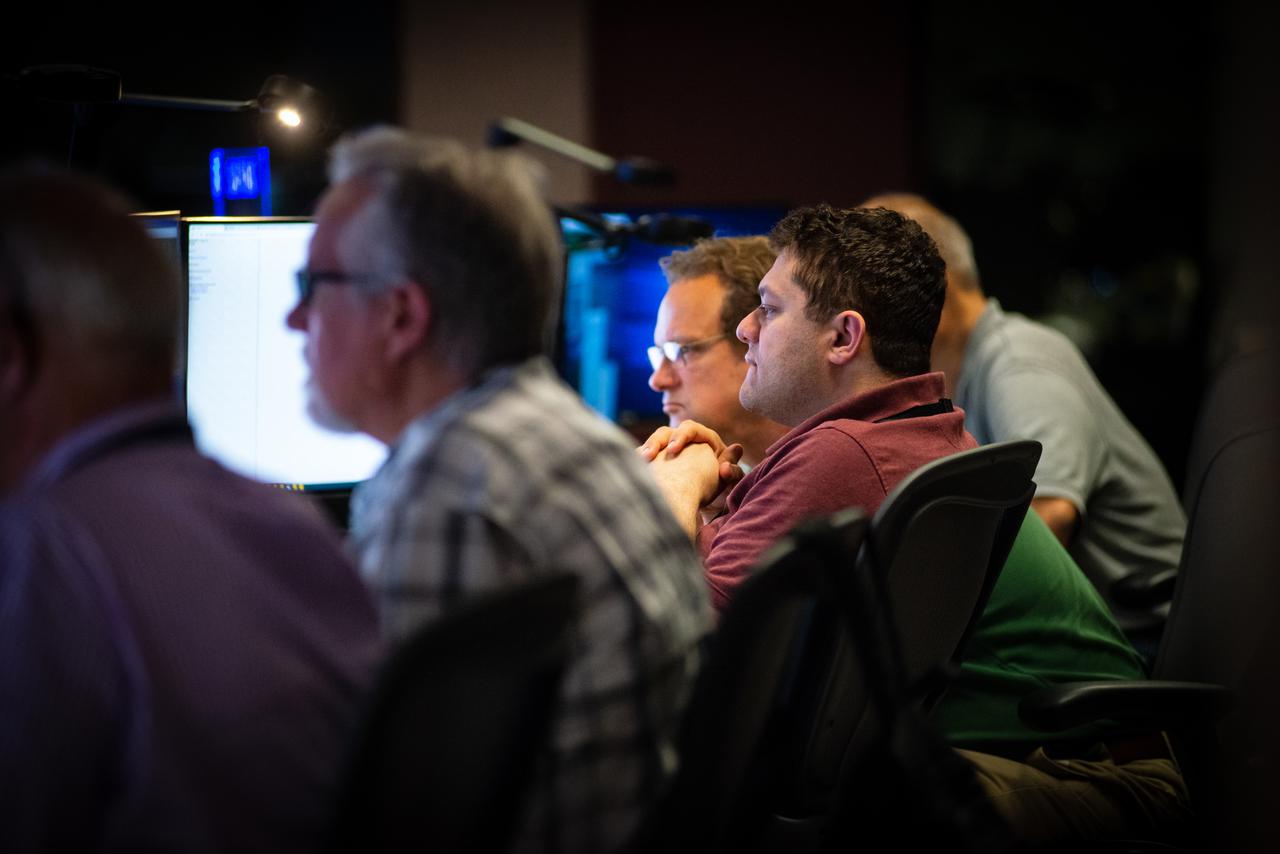
Members of the Hubble operations team work in the control room on July 15, 2021 to restore Hubble to science operations. Credits: NASA/Goddard/Rebecca Roth --- More info: Hubble’s payload computer, which controls and coordinates the observatory’s onboard science instruments, halted suddenly on June 13. When the main computer failed to receive a signal from the payload computer, it automatically placed Hubble’s science instruments into safe mode. That meant the telescope would no longer be doing science while mission specialists analyzed the situation. In response to the anomaly, NASA began a switch to backup spacecraft hardware on Hubble in response to an ongoing problem with its payload computer. This was a multi-day event. Science observations restarted the afternoon of Saturday, July 17.
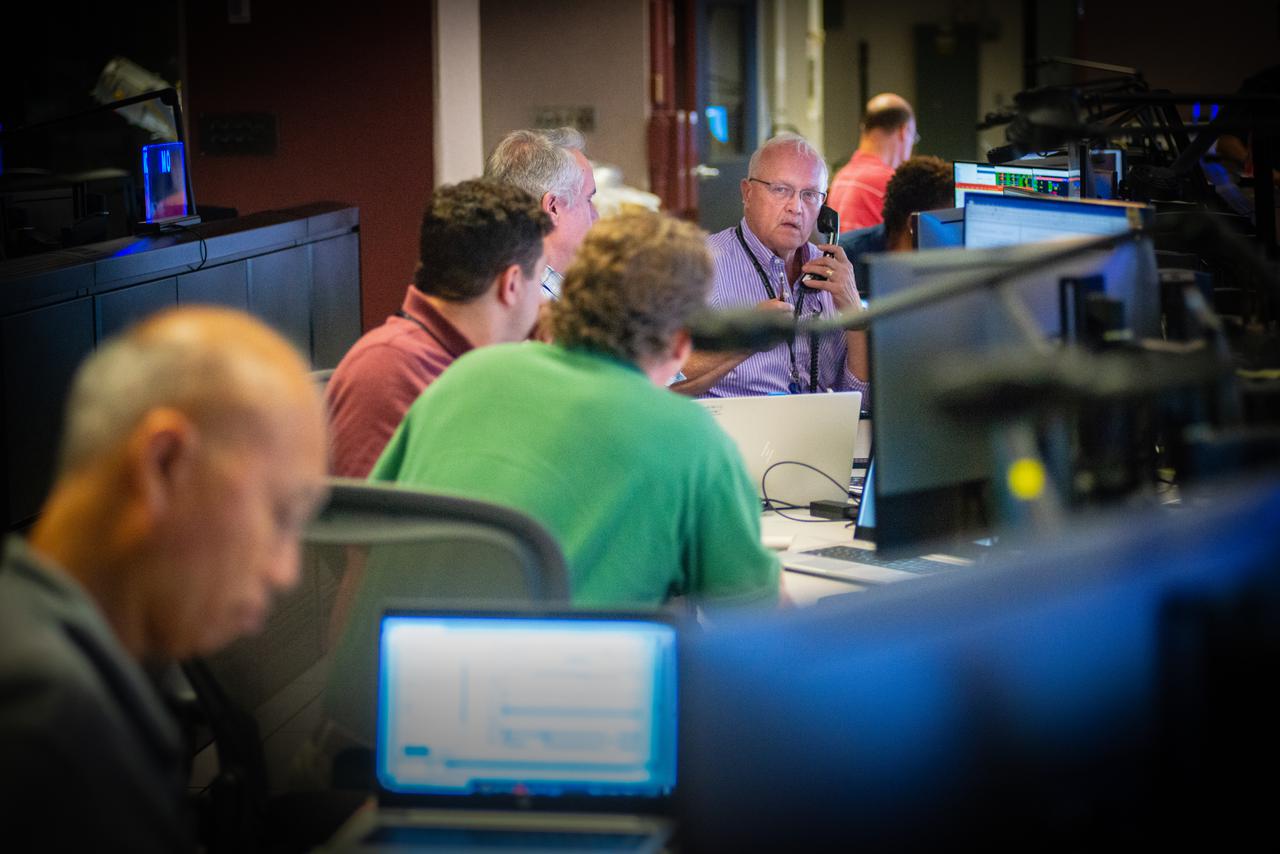
Members of the Hubble operations team work in the control room on July 15, 2021 to restore Hubble to science operations. Credits: NASA/Goddard/Rebecca Roth --- More info: Hubble’s payload computer, which controls and coordinates the observatory’s onboard science instruments, halted suddenly on June 13. When the main computer failed to receive a signal from the payload computer, it automatically placed Hubble’s science instruments into safe mode. That meant the telescope would no longer be doing science while mission specialists analyzed the situation. In response to the anomaly, NASA began a switch to backup spacecraft hardware on Hubble in response to an ongoing problem with its payload computer. This was a multi-day event. Science observations restarted the afternoon of Saturday, July 17.
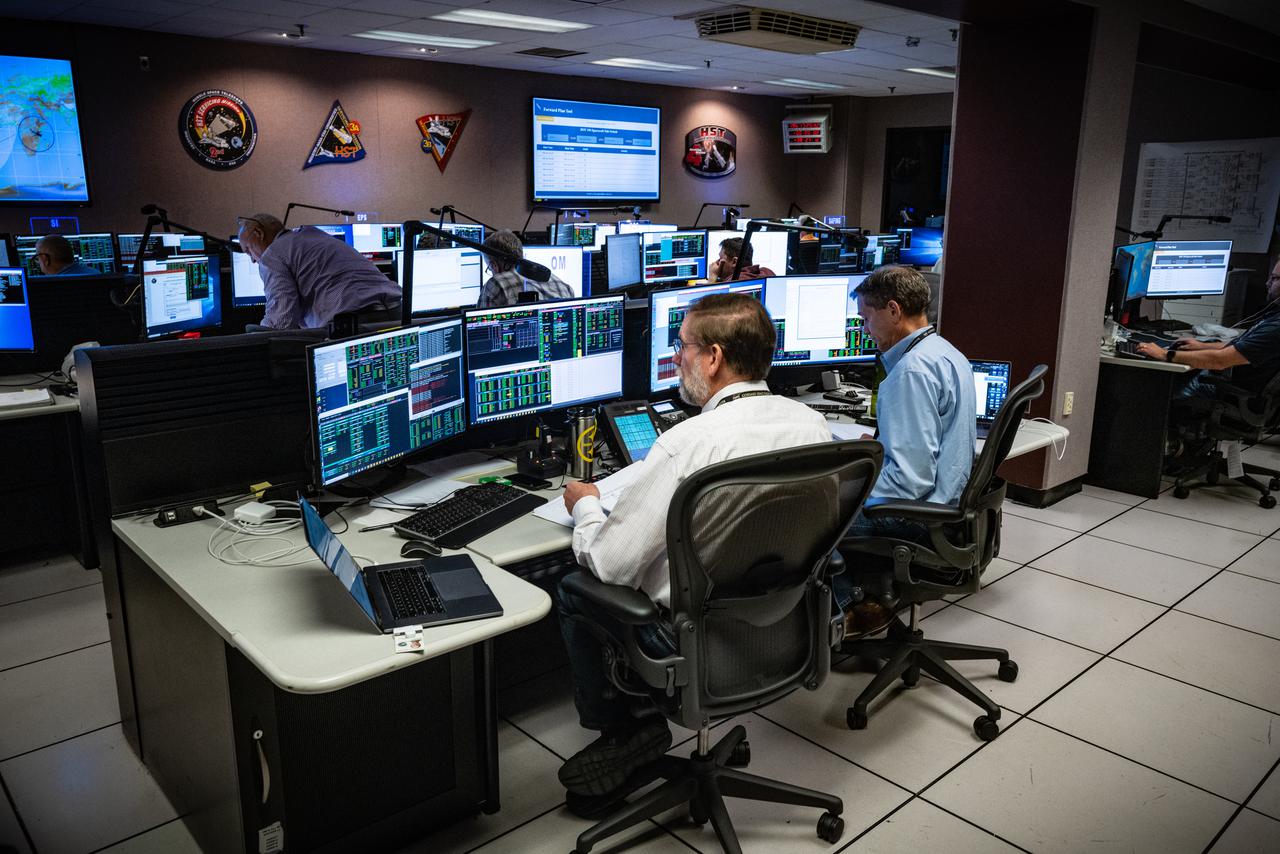
Members of the Hubble operations team work in the control room on July 15, 2021 to restore Hubble to science operations. Credits: NASA/Goddard/Rebecca Roth --- More info: Hubble’s payload computer, which controls and coordinates the observatory’s onboard science instruments, halted suddenly on June 13. When the main computer failed to receive a signal from the payload computer, it automatically placed Hubble’s science instruments into safe mode. That meant the telescope would no longer be doing science while mission specialists analyzed the situation. In response to the anomaly, NASA began a switch to backup spacecraft hardware on Hubble in response to an ongoing problem with its payload computer. This was a multi-day event. Science observations restarted the afternoon of Saturday, July 17.
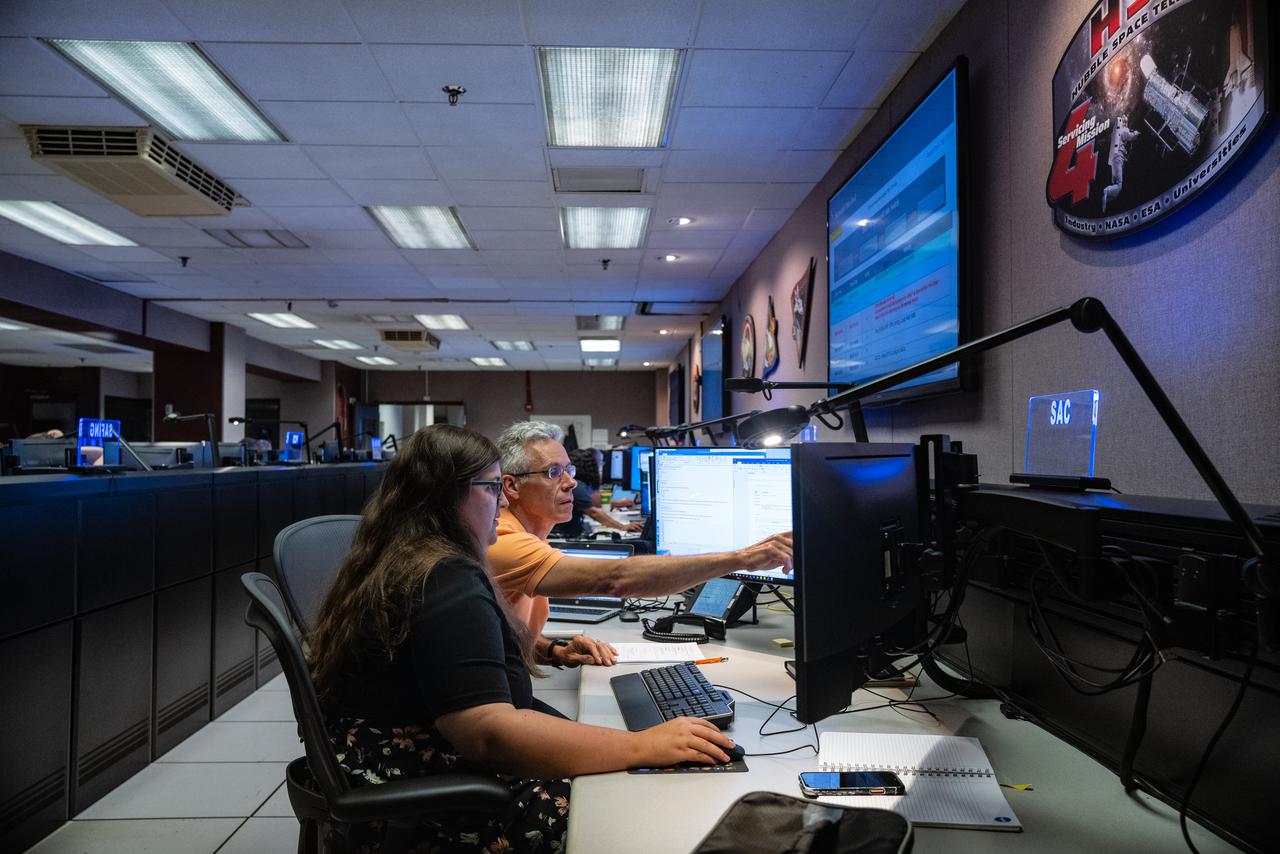
Members of the Hubble operations team work in the control room on July 15, 2021 to restore Hubble to science operations. Credits: NASA/Goddard/Rebecca Roth --- More info: Hubble’s payload computer, which controls and coordinates the observatory’s onboard science instruments, halted suddenly on June 13. When the main computer failed to receive a signal from the payload computer, it automatically placed Hubble’s science instruments into safe mode. That meant the telescope would no longer be doing science while mission specialists analyzed the situation. In response to the anomaly, NASA began a switch to backup spacecraft hardware on Hubble in response to an ongoing problem with its payload computer. This was a multi-day event. Science observations restarted the afternoon of Saturday, July 17.
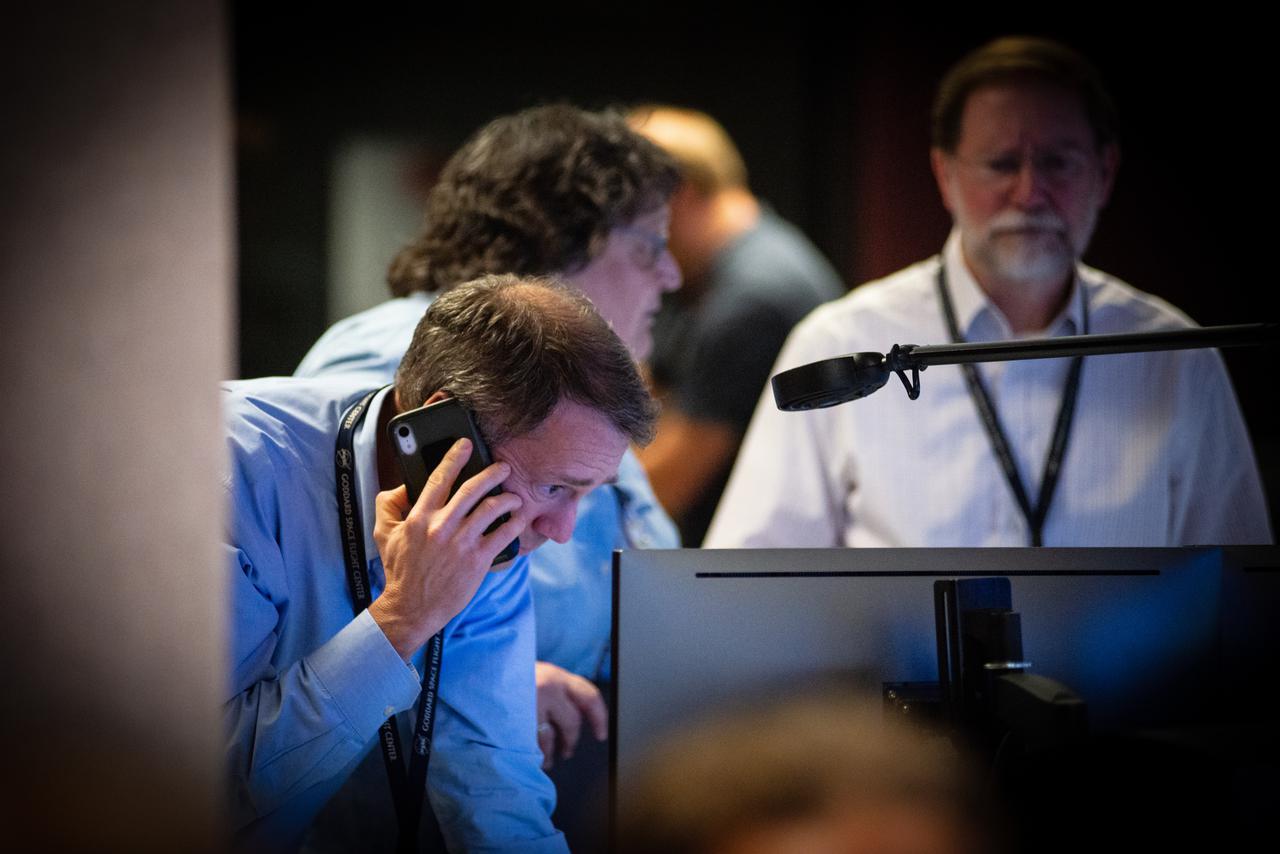
Members of the Hubble operations team work in the control room on July 15, 2021 to restore Hubble to science operations. Credits: NASA/Goddard/Rebecca Roth --- More info: Hubble’s payload computer, which controls and coordinates the observatory’s onboard science instruments, halted suddenly on June 13. When the main computer failed to receive a signal from the payload computer, it automatically placed Hubble’s science instruments into safe mode. That meant the telescope would no longer be doing science while mission specialists analyzed the situation. In response to the anomaly, NASA began a switch to backup spacecraft hardware on Hubble in response to an ongoing problem with its payload computer. This was a multi-day event. Science observations restarted the afternoon of Saturday, July 17.

The latest image of Pacific Ocean sea surface heights from the NASA OSTIM/Jason-2 oceanography satellite, on June 11, 2010, shows that Pacific has switched from warm red to cold blue during the last few months.
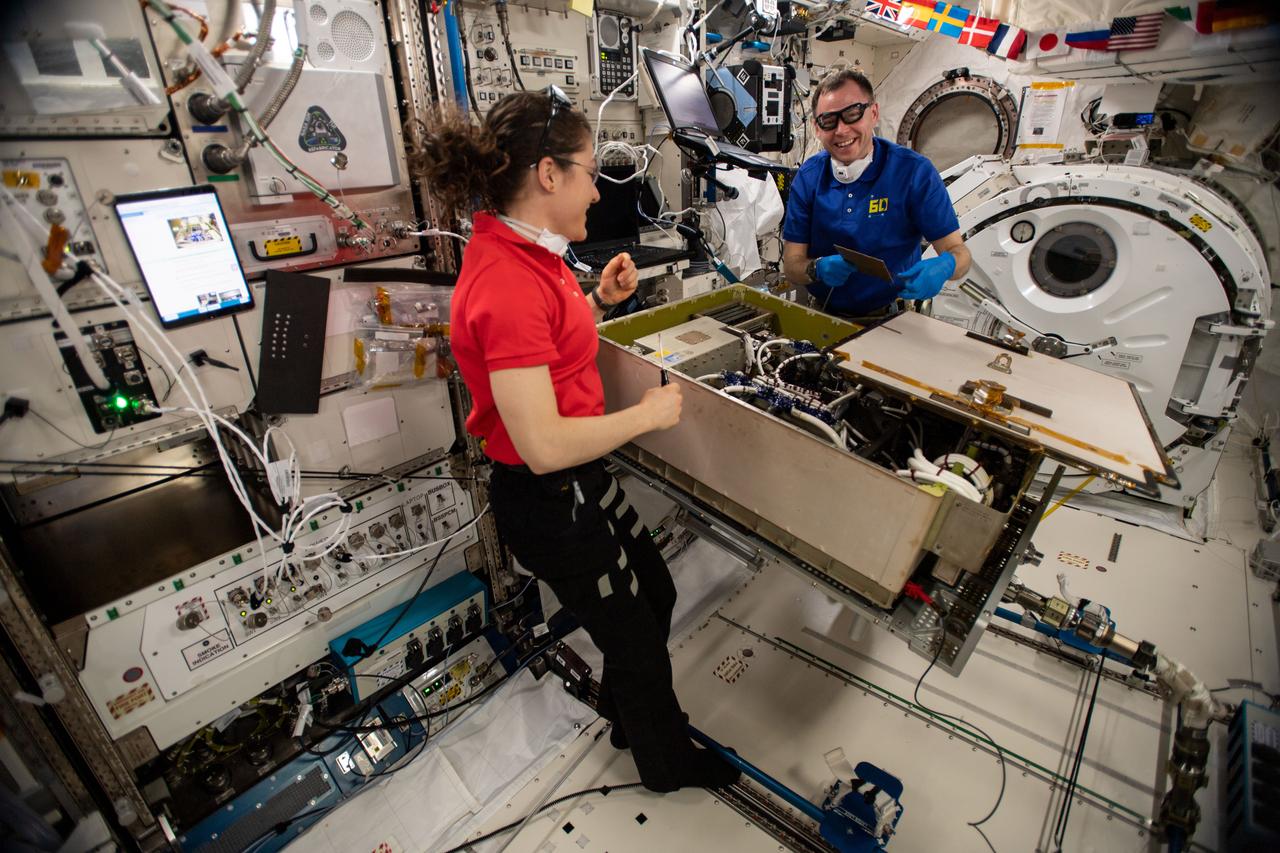
Expedition 60 flight engineers Christina Koch and Nick Hague of NASA work together on the Main Bus Switching Unit aboard the space station to replace a failed circuit card before performing a test to ensure its functionality.
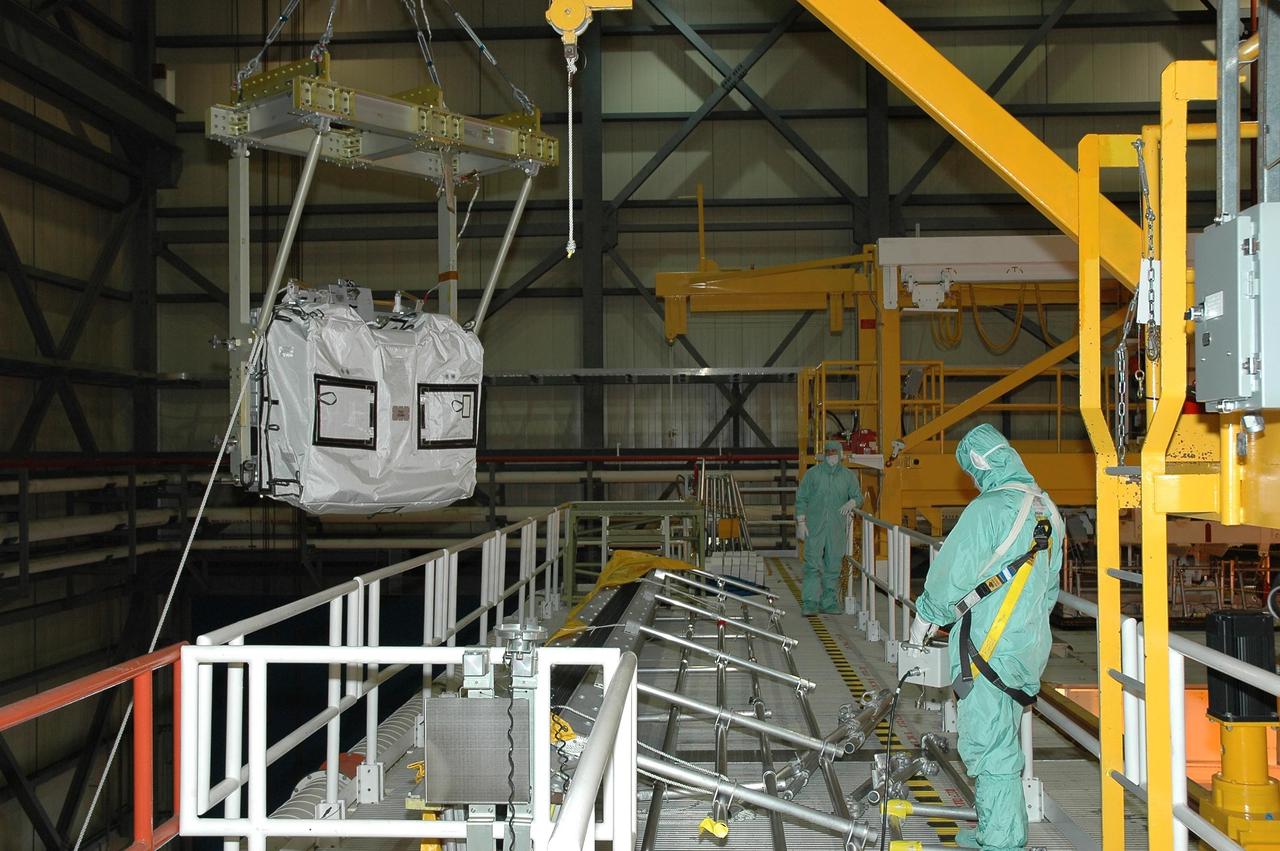
KENNEDY SPACE CENTER, Fla. -- In the Orbiter Processing Facility bay 3, a crane moves the main bus switching unit that will be installed in Discovery's payload bay. The unit is part of the payload on mission STS-120. A main bus switching unit is used for power distribution, circuit protection and fault isolation on the space station's power system. The units route power to proper locations in the space station, such as from solar arrays through umbilicals into the U.S. Lab. The unit will be installed on the external stowage platform 2 attached to the Quest airlock for temporary storage. Discovery is targeted to launch mission STS-120 no earlier than Oct. 20. Photo credit: NASA/Jim Grossmann
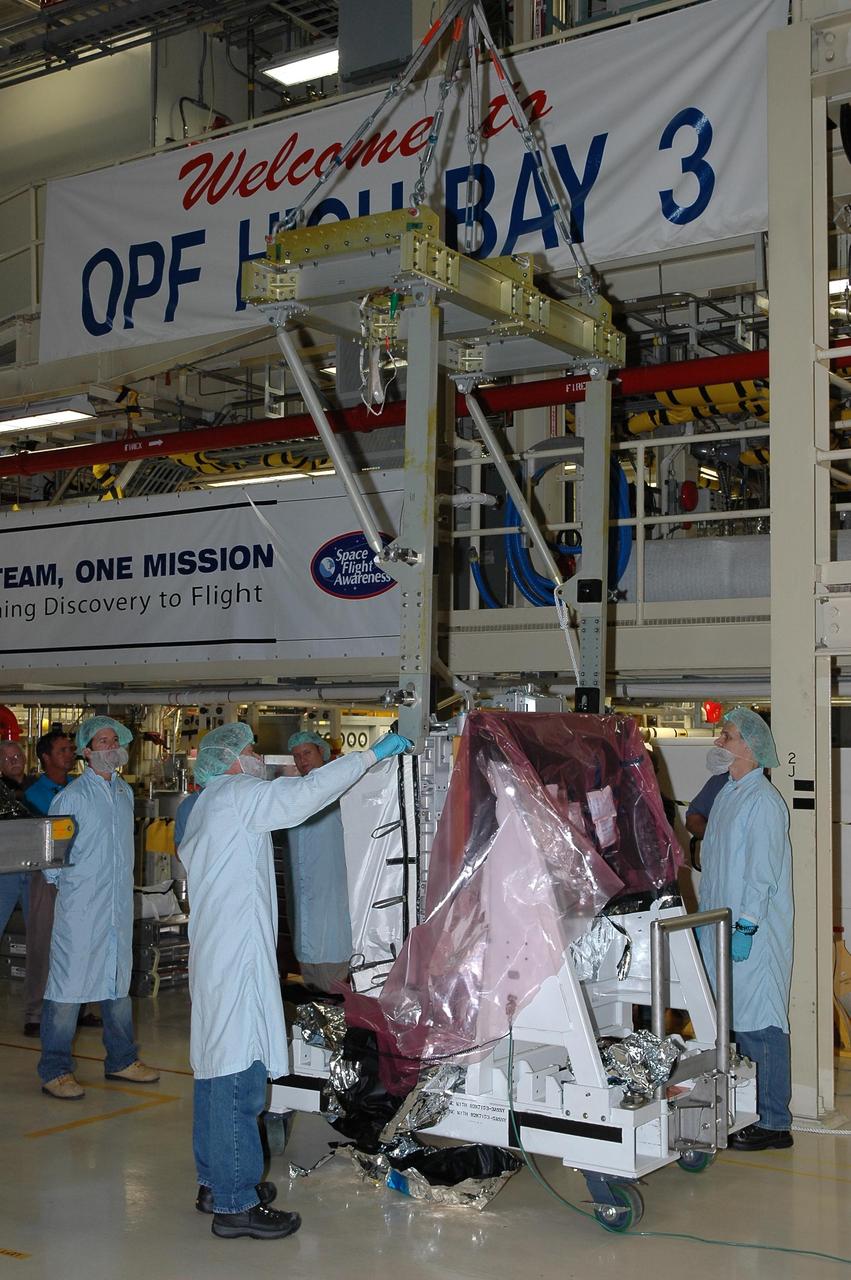
KENNEDY SPACE CENTER, Fla. -- In the Orbiter Processing Facility bay 3, the main bus switching unit that is part of the payload on mission STS-120 is being prepared for inspection. A main bus switching unit is used for power distribution, circuit protection and fault isolation on the space station's power system. The units route power to proper locations in the space station, such as from solar arrays through umbilicals into the U.S. Lab. The unit will be installed on the external stowage platform 2 attached to the Quest airlock for temporary storage. Discovery is targeted to launch mission STS-120 no earlier than Oct. 20. Photo credit: NASA/Jim Grossmann
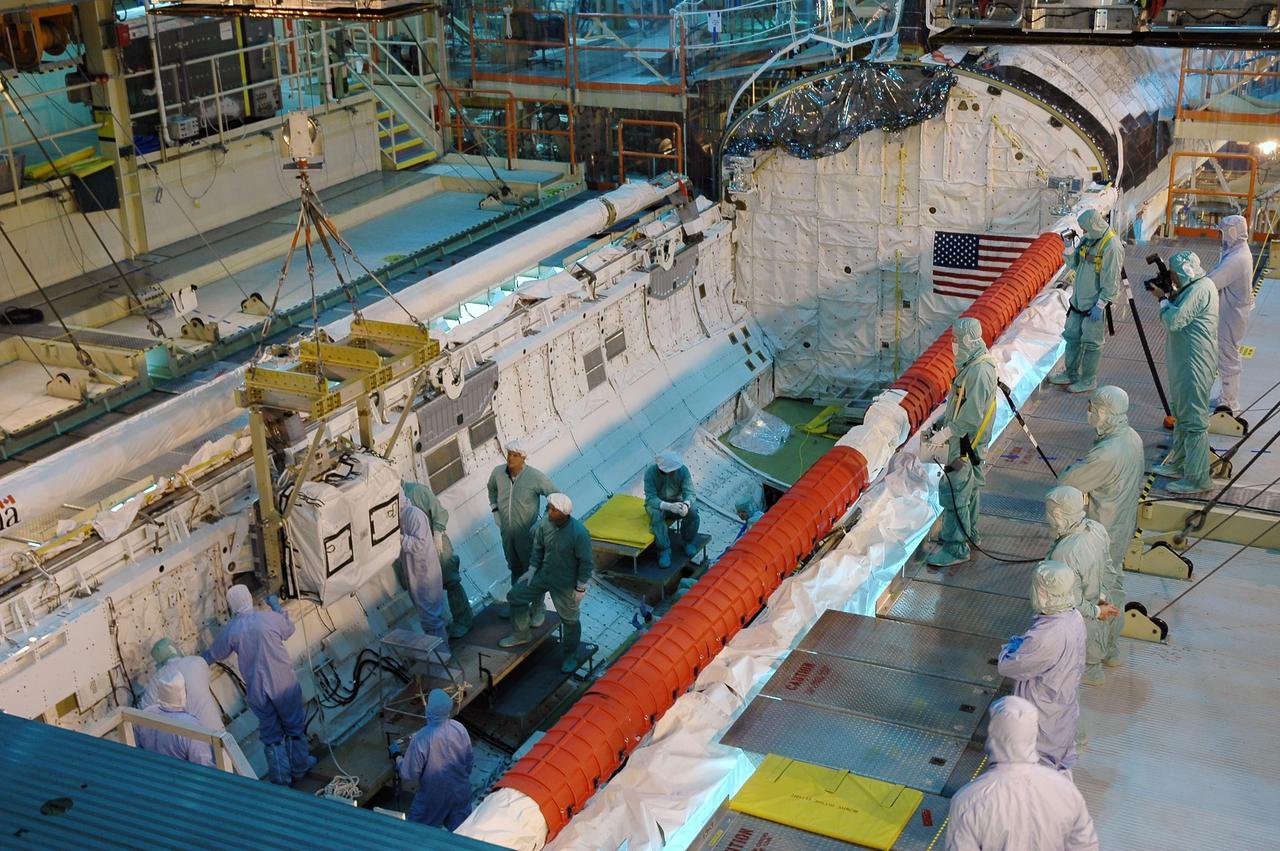
KENNEDY SPACE CENTER, Fla. -- In the Orbiter Processing Facility bay 3, with the help of a crane, workers check the placement of a main bus switching unit in Discovery's payload bay. A main bus switching unit is used for power distribution, circuit protection and fault isolation on the space station's power system. The units route power to proper locations in the space station, such as from solar arrays through umbilicals into the U.S. Lab. The unit will be installed on the external stowage platform 2 attached to the Quest airlock for temporary storage. Discovery is targeted to launch mission STS-120 no earlier than Oct. 20. Photo credit: NASA/Jim Grossmann
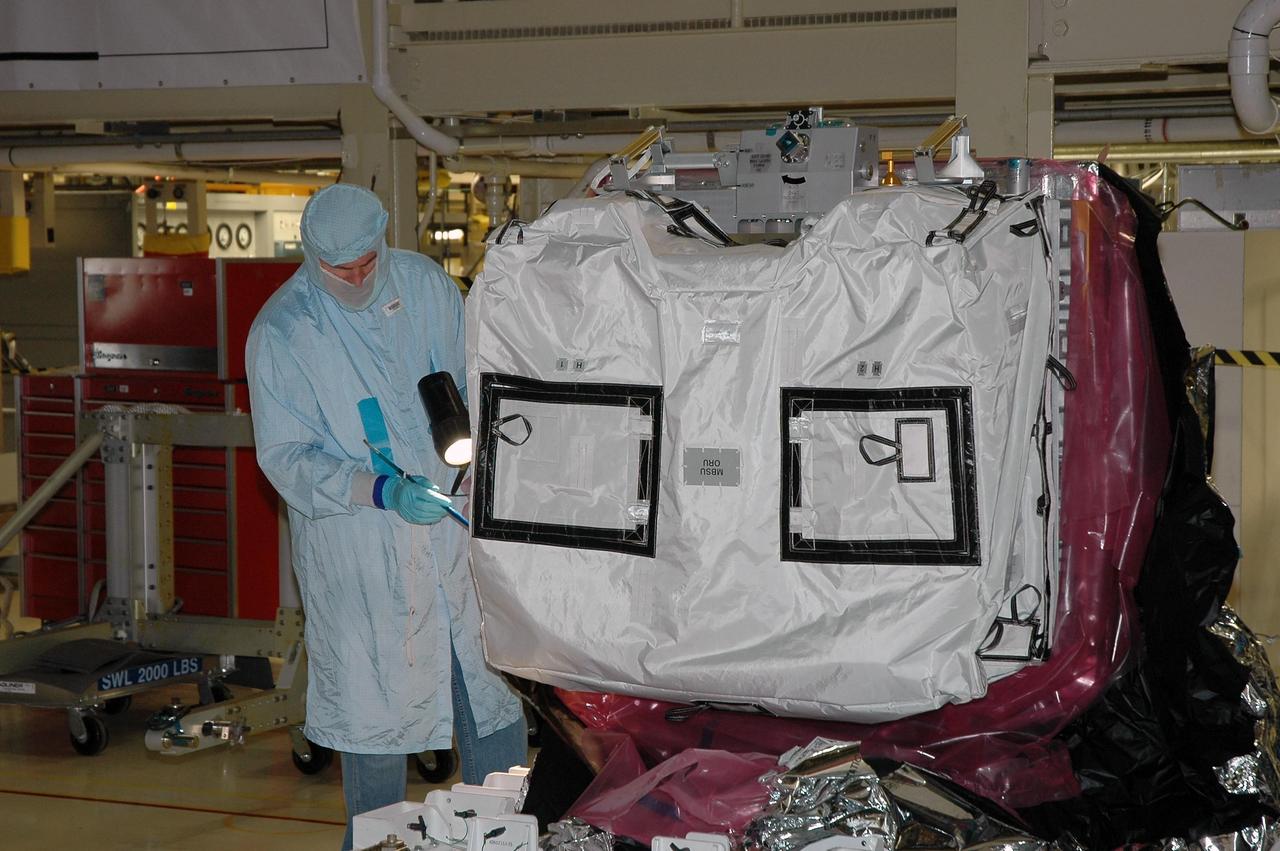
KENNEDY SPACE CENTER, Fla. -- In the Orbiter Processing Facility bay 3, a worker checks the cover on a main bus switching unit, part of the payload on mission STS-120. A main bus switching unit is used for power distribution, circuit protection and fault isolation on the space station's power system. The units route power to proper locations in the space station, such as from solar arrays through umbilicals into the U.S. Lab. The unit will be installed on the external stowage platform 2 attached to the Quest airlock for temporary storage. Discovery is targeted to launch mission STS-120 no earlier than Oct. 20. Photo credit: NASA/Jim Grossmann
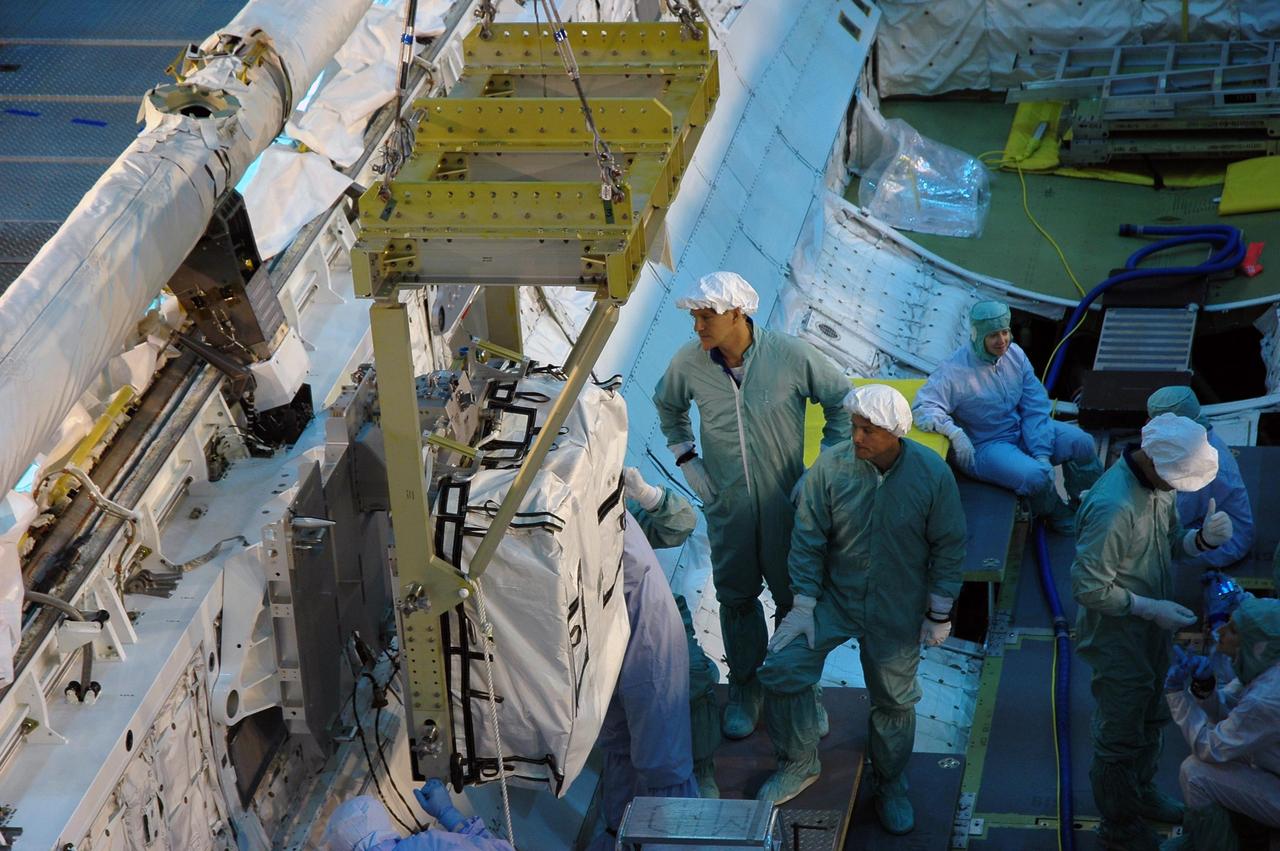
KENNEDY SPACE CENTER, Fla. -- In the Orbiter Processing Facility bay 3, workers check the placement of a main bus switching unit in Discovery's payload bay. A main bus switching unit is used for power distribution, circuit protection and fault isolation on the space station's power system. The units route power to proper locations in the space station, such as from solar arrays through umbilicals into the U.S. Lab. The unit will be installed on the external stowage platform 2 attached to the Quest airlock for temporary storage. Discovery is targeted to launch mission STS-120 no earlier than Oct. 20. Photo credit: NASA/Jim Grossmann
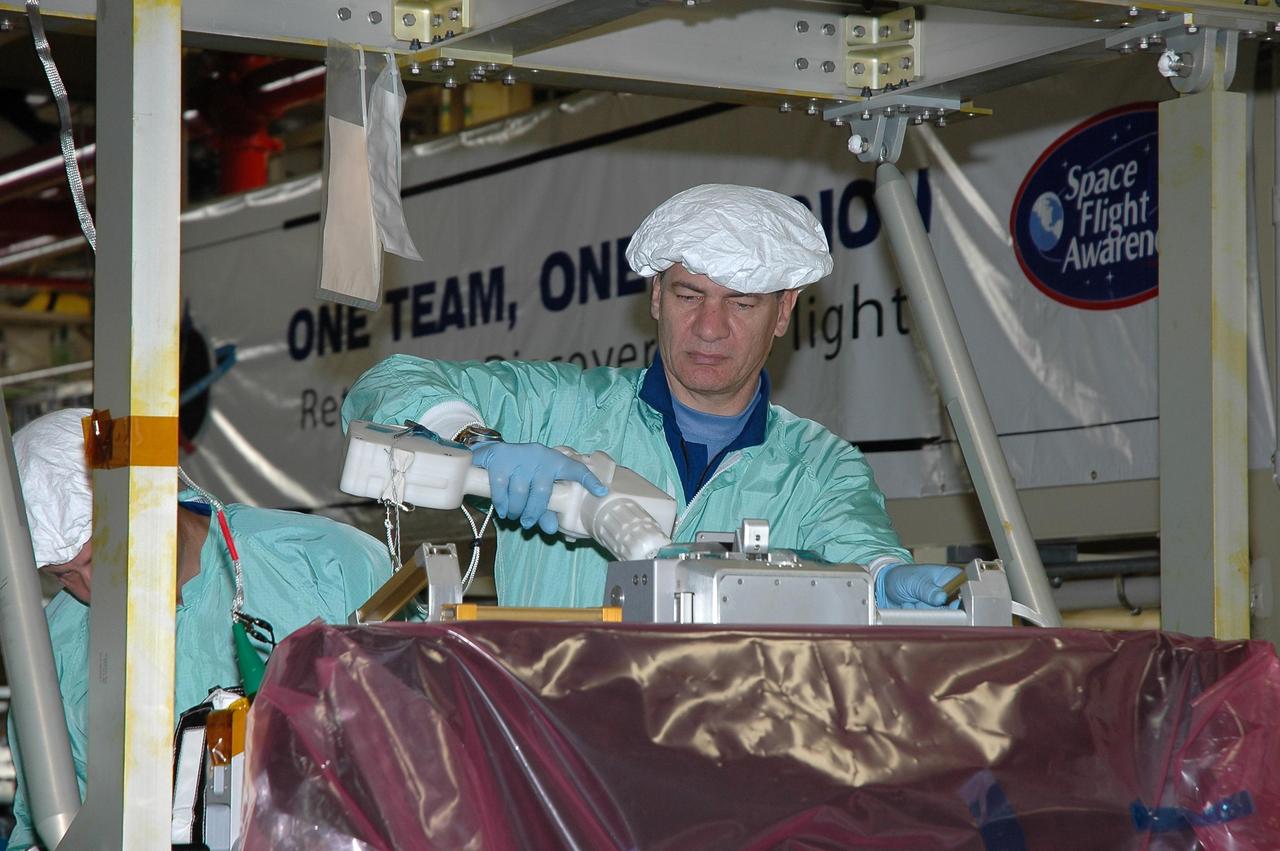
KENNEDY SPACE CENTER, Fla. -- In the Orbiter Processing Facility bay 3, STS-120Mission Specialist Paolo Nespoli practices using a tool on the main bus switching unit that is part of the payload on the mission. A main bus switching unit is used for power distribution, circuit protection and fault isolation on the space station's power system. The units route power to proper locations in the space station, such as from solar arrays through umbilicals into the U.S. Lab. The unit will be installed on the external stowage platform 2 attached to the Quest airlock for temporary storage. Discovery is targeted to launch mission STS-120 no earlier than Oct. 20. Photo credit: NASA/Jim Grossmann
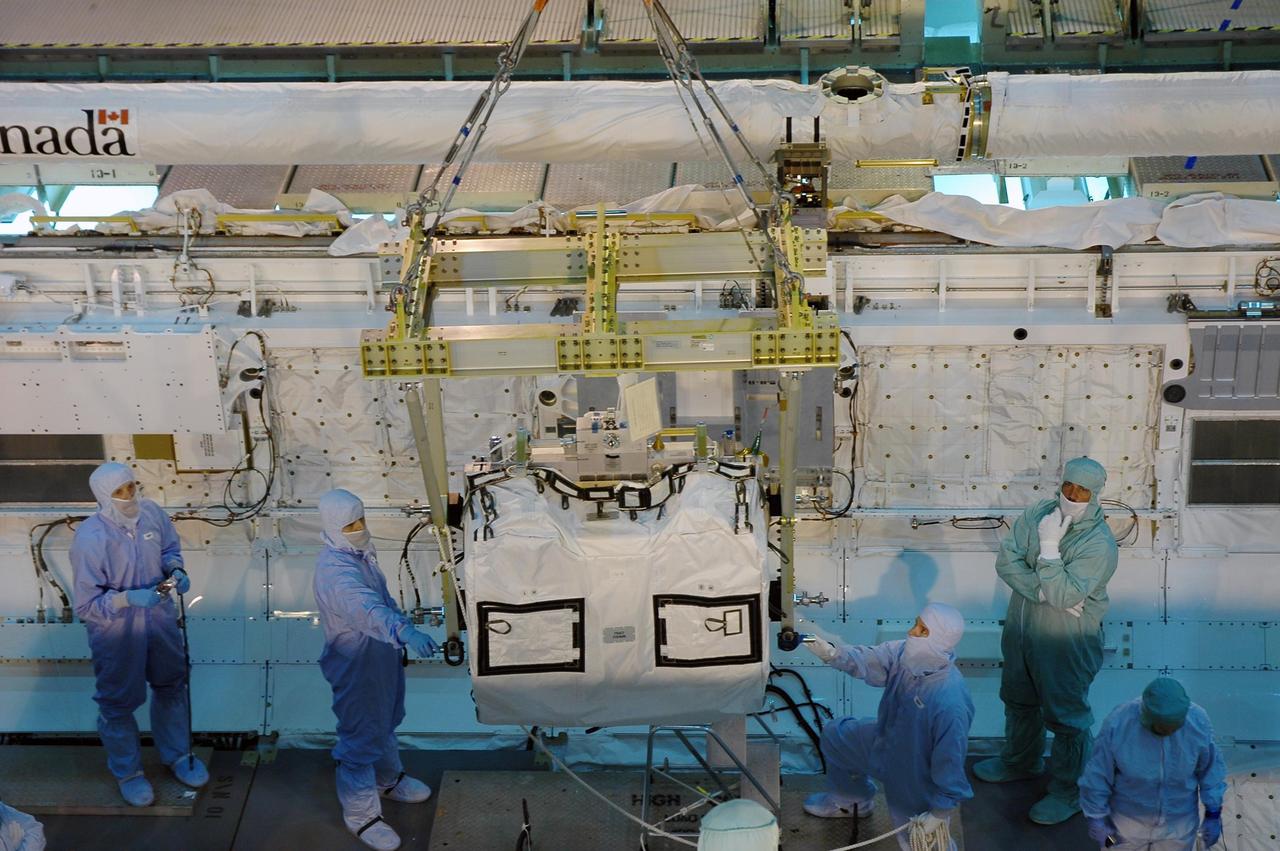
KENNEDY SPACE CENTER, Fla. -- In the Orbiter Processing Facility bay 3, workers are ready to move a main bus switching unit into Discovery's payload bay. A main bus switching unit is used for power distribution, circuit protection and fault isolation on the space station's power system. The units route power to proper locations in the space station, such as from solar arrays through umbilicals into the U.S. Lab. The unit will be installed on the external stowage platform 2 attached to the Quest airlock for temporary storage. Discovery is targeted to launch mission STS-120 no earlier than Oct. 20. Photo credit: NASA/Jim Grossmann
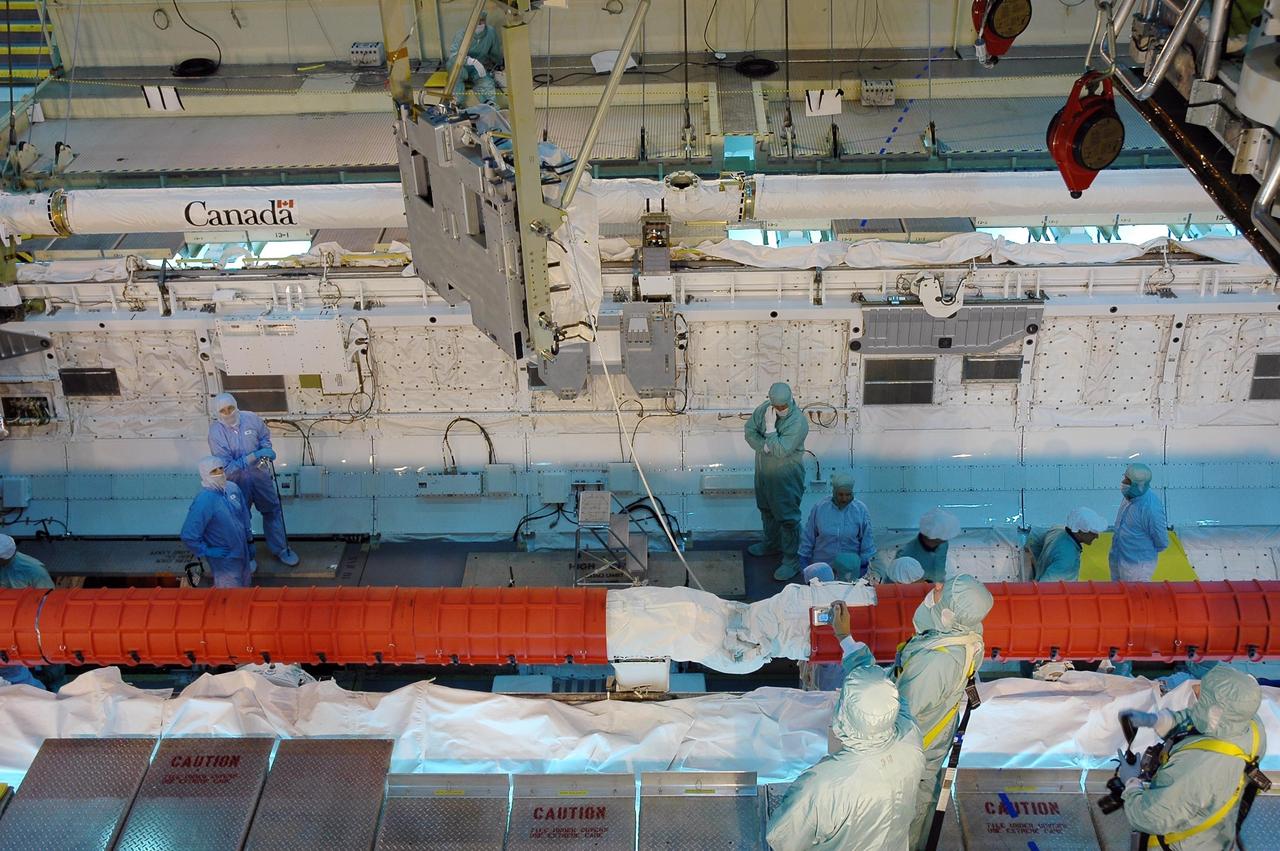
KENNEDY SPACE CENTER, Fla. -- In the Orbiter Processing Facility bay 3, a crane lowers the main bus switching unit into Discovery's payload bay. The unit is part of the payload on mission STS-120.A main bus switching unit is used for power distribution, circuit protection and fault isolation on the space station's power system. The units route power to proper locations in the space station, such as from solar arrays through umbilicals into the U.S. Lab. The unit will be installed on the external stowage platform 2 attached to the Quest airlock for temporary storage. Discovery is targeted to launch mission STS-120 no earlier than Oct. 20. Photo credit: NASA/Jim Grossmann
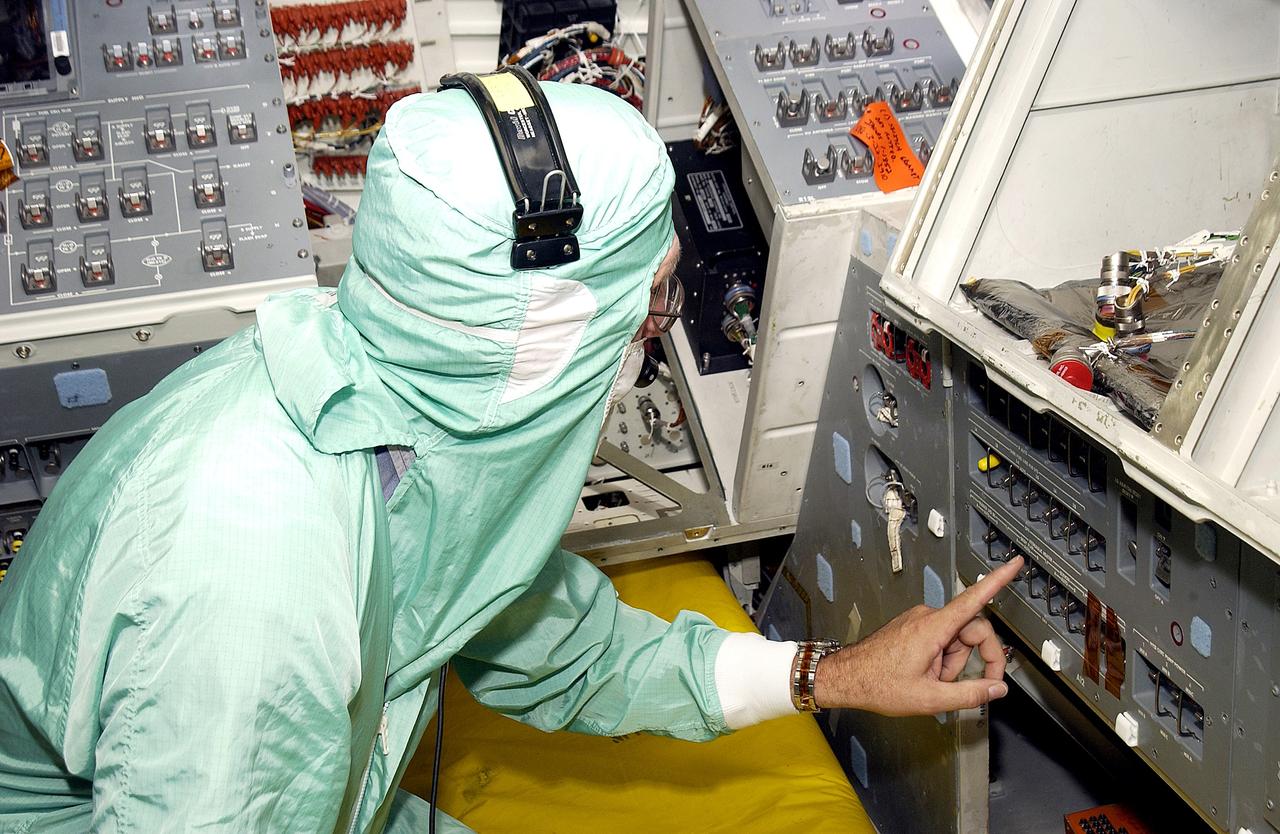
KENNEDY SPACE CENTER, FLA. - During power-up of the orbiter Discovery in the Orbiter Processing Facility, a technician moves a switch. Discovery has been undergoing Orbiter Major Modifications in the past year, ranging from wiring, control panels and black boxes to gaseous and fluid systems tubing and components. These systems were deserviced, disassembled, inspected, modified, reassembled, checked out and reserviced, as were most other systems onboard. The work includes the installation of the Multifunction Electronic Display Subsystem (MEDS) - a state-of-the-art “glass cockpit.”
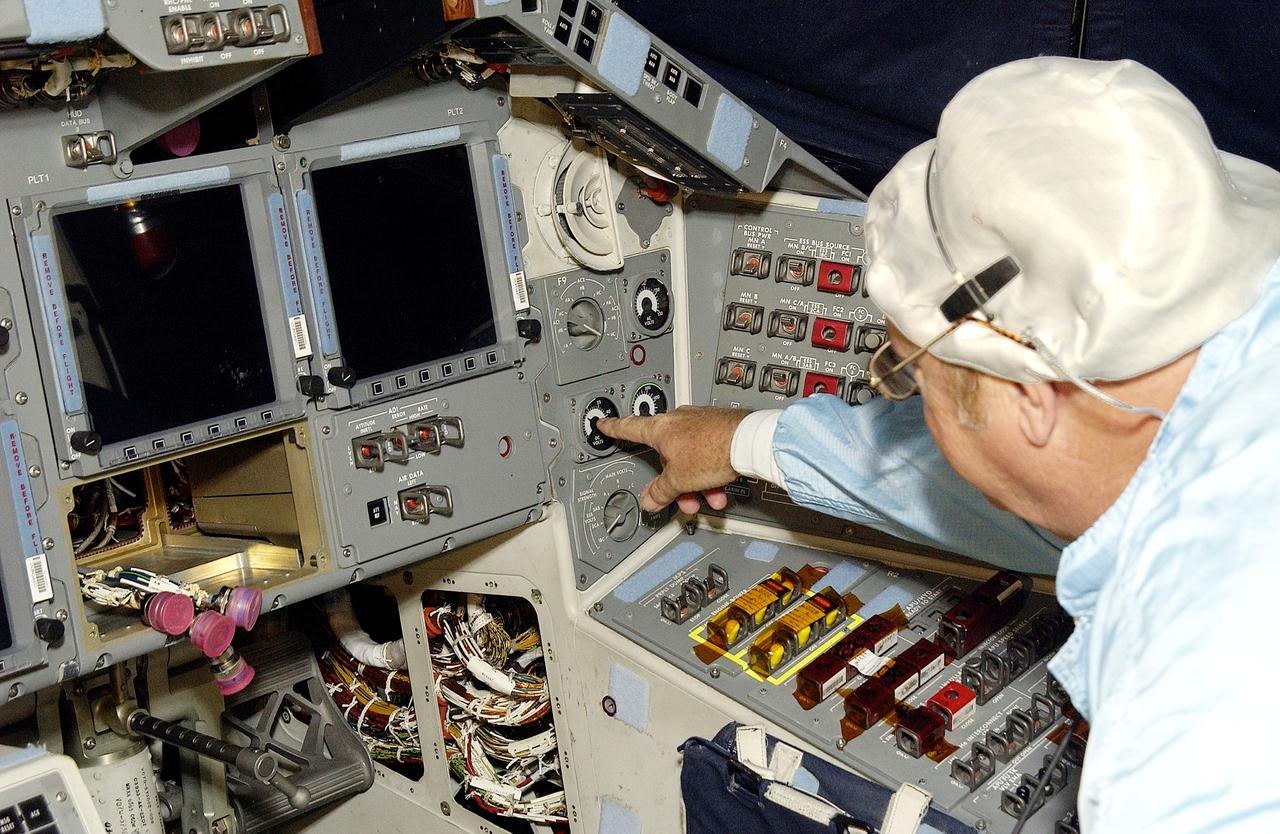
KENNEDY SPACE CENTER, FLA. - During power-up of the orbiter Discovery in the Orbiter Processing Facility, a technician turns on a switch. Discovery has been undergoing Orbiter Major Modifications in the past year, ranging from wiring, control panels and black boxes to gaseous and fluid systems tubing and components. These systems were deserviced, disassembled, inspected, modified, reassembled, checked out and reserviced, as were most other systems onboard. The work includes the installation of the Multifunction Electronic Display Subsystem (MEDS) - a state-of-the-art “glass cockpit.”
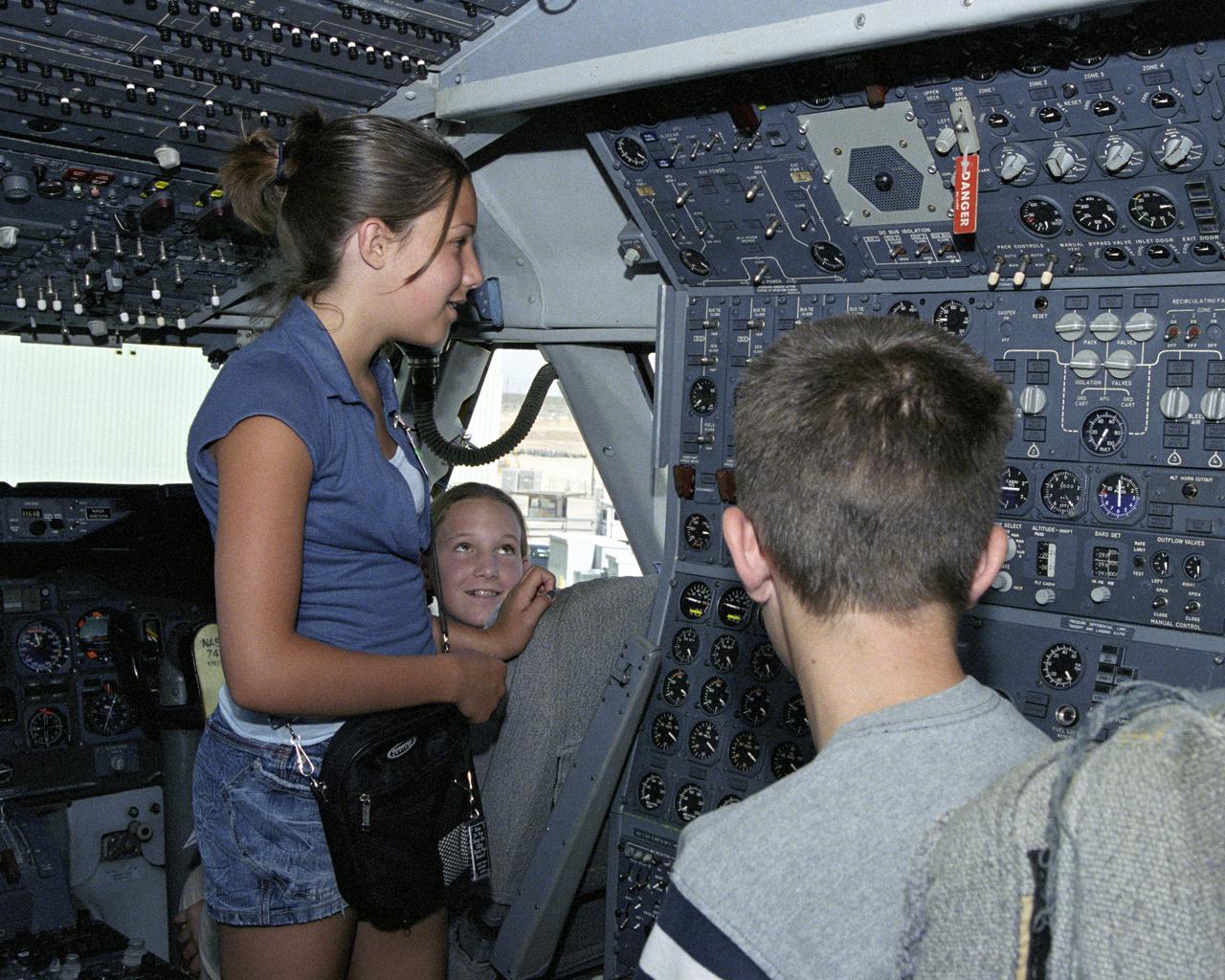
Leah Robson and Bridgette Puljiz of Tehachapi (seated) and Zachary Johnson of Palmdale (back to camera) look over the maze of dials and switches in the flight deck of NASA's modified Boeing 747 space shuttle carrier aircraft during Take Your Children to Work Day June 22 at NASA Dryden Flight Research Center.
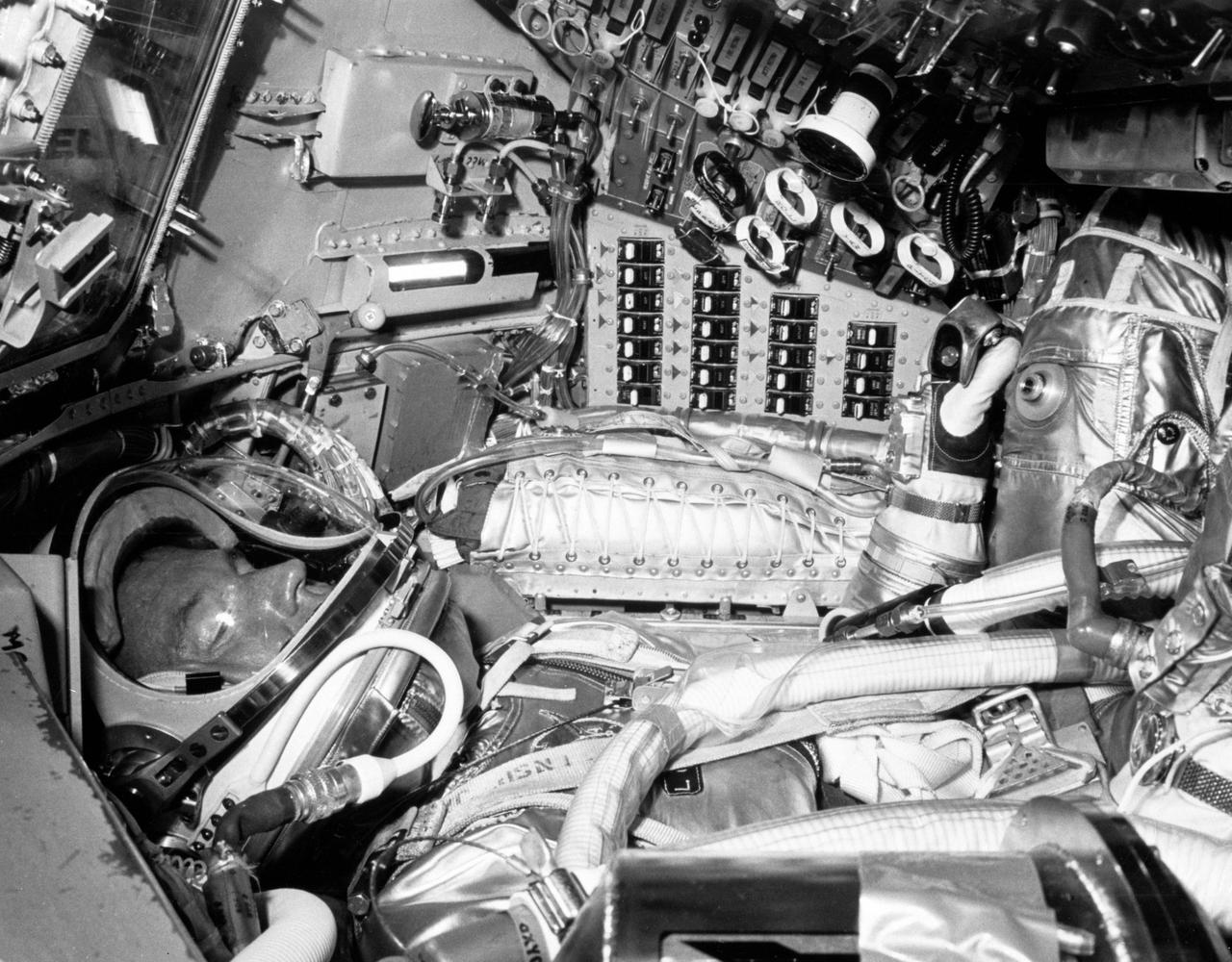
S63-06129 (1963) --- Astronaut L. Gordon Cooper Jr., prime pilot for the Mercury-Atlas 9 (MA-9) mission, inside his Mercury spacecraft, runs through one of the numerous preflight checks surrounded by dials, switches, indicators and buttons. Photo credit: NASA
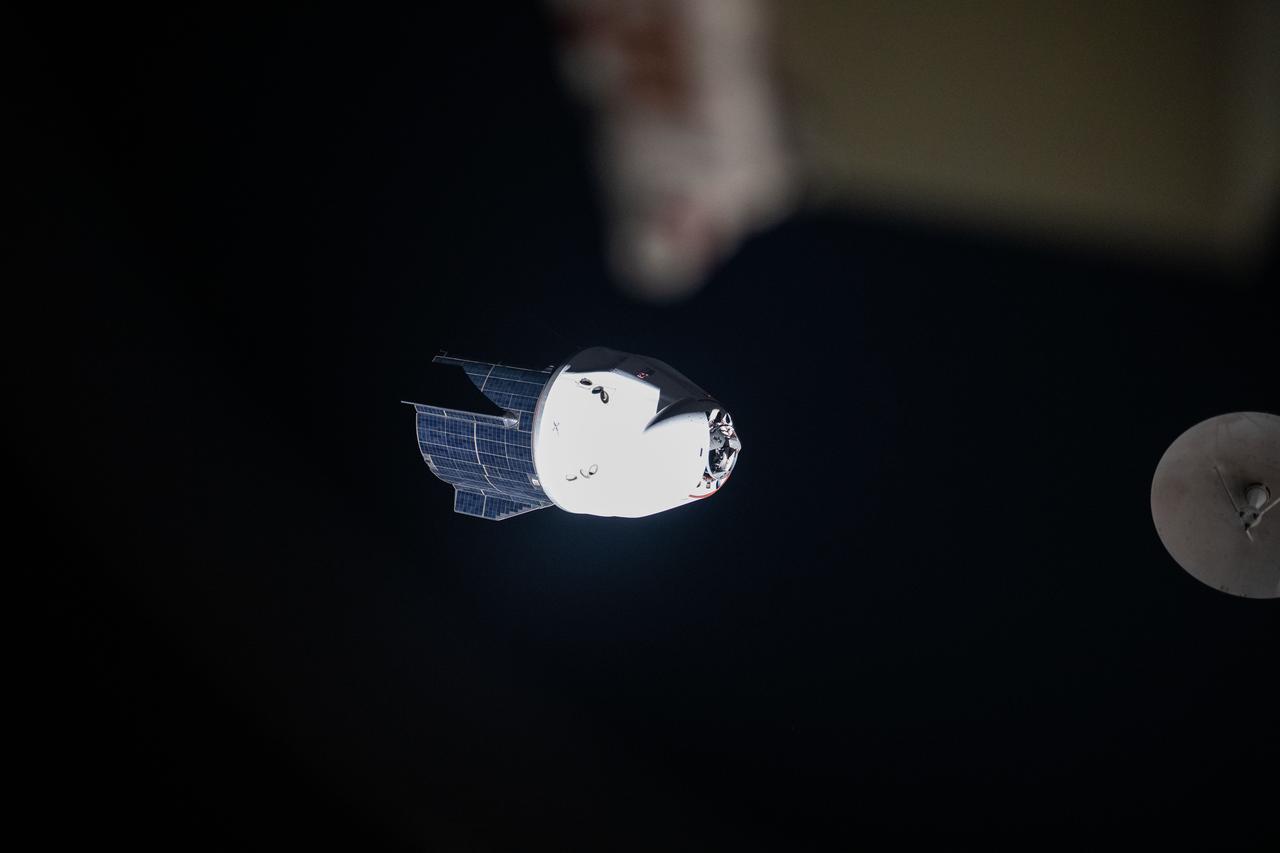
iss071e052062 (May 2, 2024) --- The SpaceX Dragon Endeavour spacecraft backs away from the International Space Station. Dragon switched ports moving from the Harmony module's forward port to its space-facing port during the relocation maneuver.
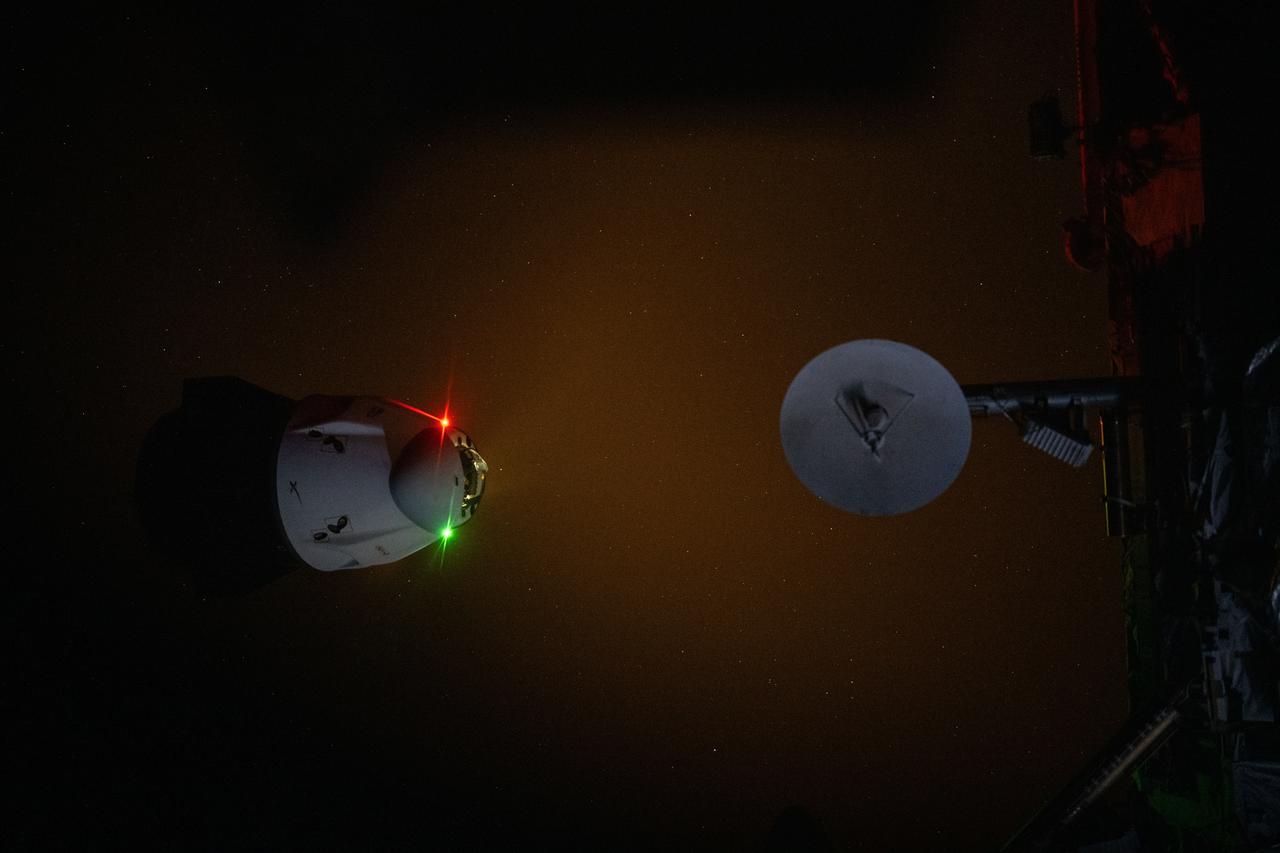
iss071e052067 (May 2, 2024) --- The SpaceX Dragon Endeavour spacecraft's navigation lights and engine plume during an engine firing illuminate the darkness of space as it backs away from the International Space Station. Dragon switched ports moving from the Harmony module's forward port to its space-facing port during the relocation maneuver.
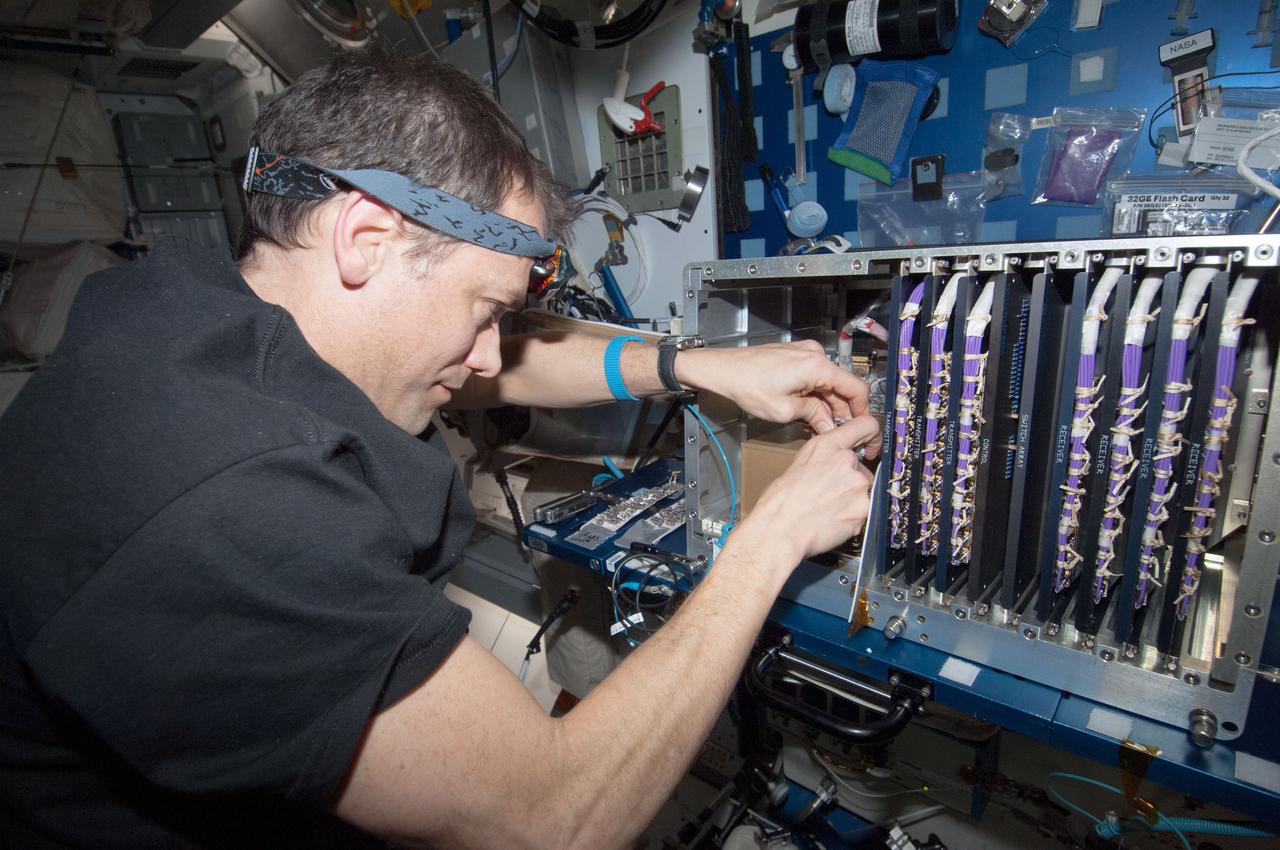
ISS034-E-038131 (1 Feb. 2013) --- NASA astronaut Tom Marshburn, Expedition 34 flight engineer, performs in-flight maintenance in the International Space Station’s Destiny laboratory, making some upgrades to automated payload switches (APS) for various racks and experiments.
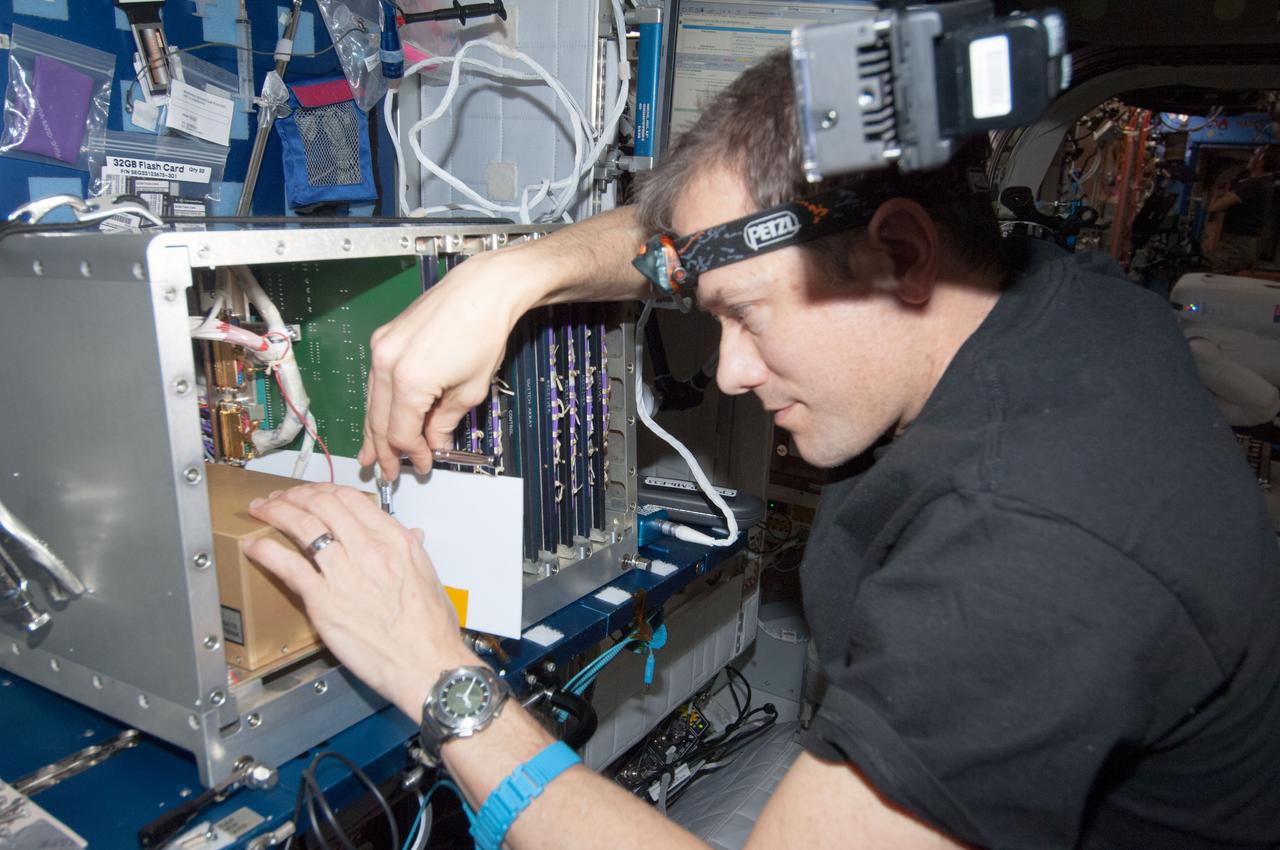
ISS034-E-038128 (1 Feb. 2013) --- NASA astronaut Tom Marshburn, Expedition 34 flight engineer, performs in-flight maintenance in the International Space Station’s Destiny laboratory, making some upgrades to automated payload switches (APS) for various racks and experiments.
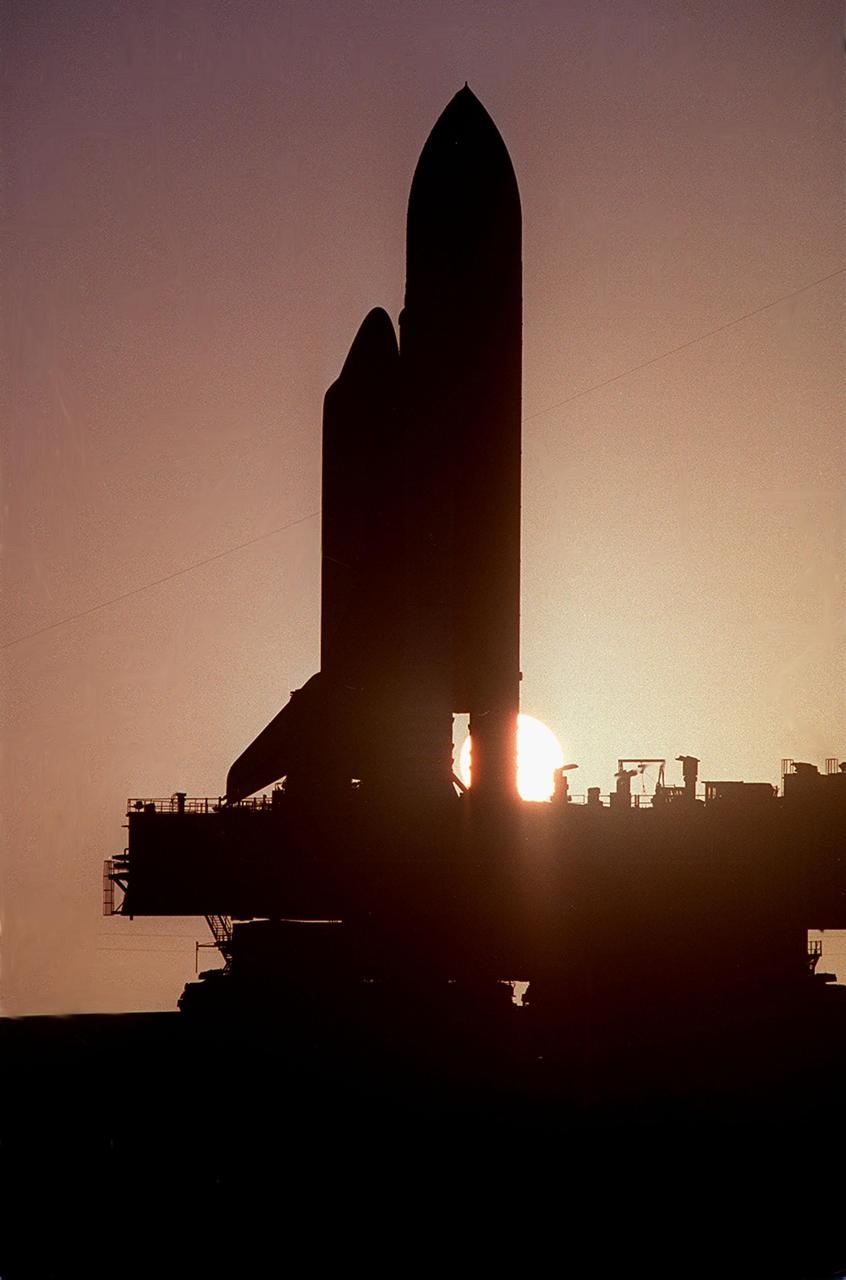
KENNEDY SPACE CENTER, FLA. -- The Space Shuttle Endeavour is being "rolled around" from Launch Pad 39A to Launch Pad 39B. The rare pad switch was deemed necessary after contamination was discovered in the Payload Changeout Room at pad A. Still to come are the payloads for the upcoming STS-61 mission, the first servicing of the Hubble Telescope
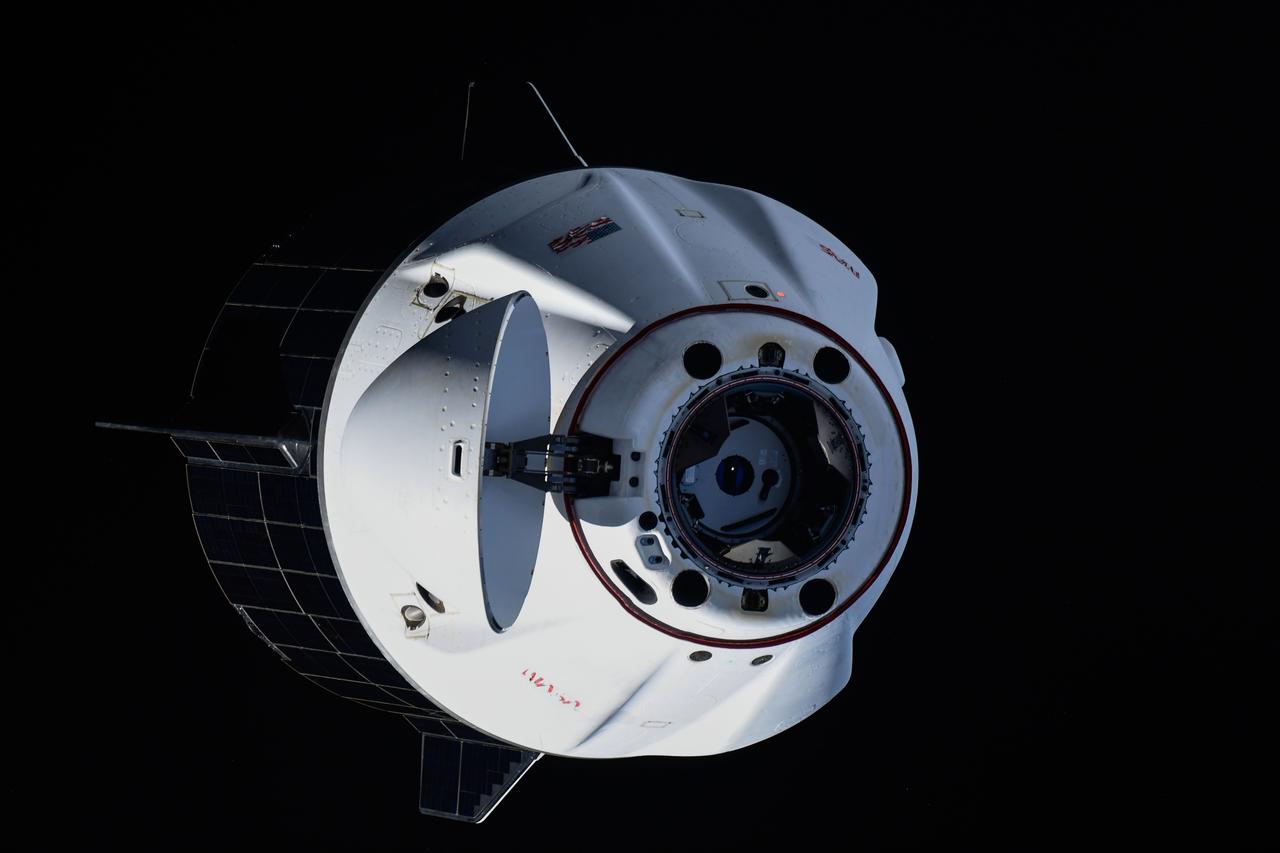
iss071e052057 (May 2, 2024) --- The SpaceX Dragon Endeavour spacecraft backs away from the International Space Station. Dragon switched ports moving from the Harmony module's forward port to its space-facing port during the relocation maneuver.
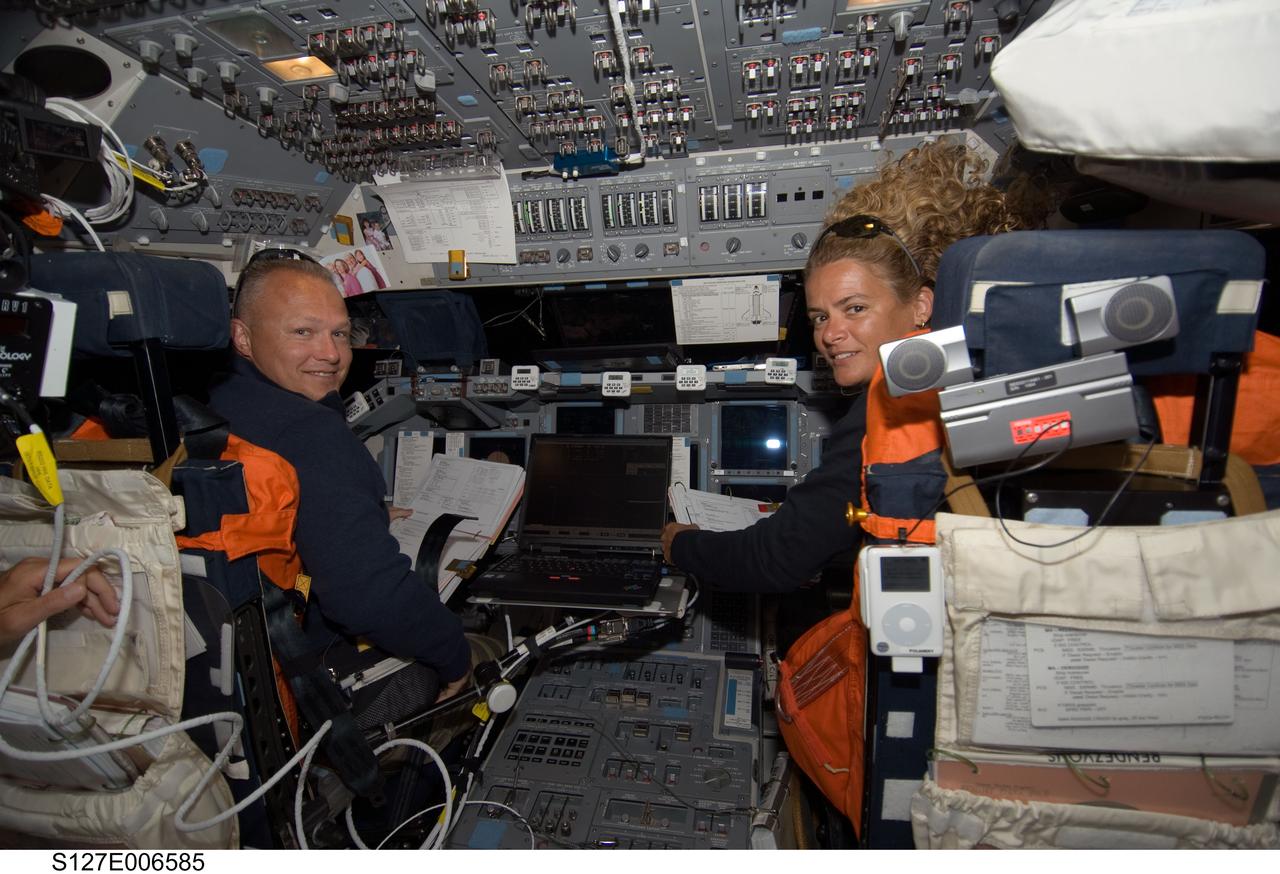
S127-E-006585 (17 July 2009) --- Astronauts Doug Hurley, pilot, and Julie Payette, mission specialist, temporarily switch their attention to a crewmate with a camera while participating in flight day three activities onboard the Space Shuttle Endeavour.
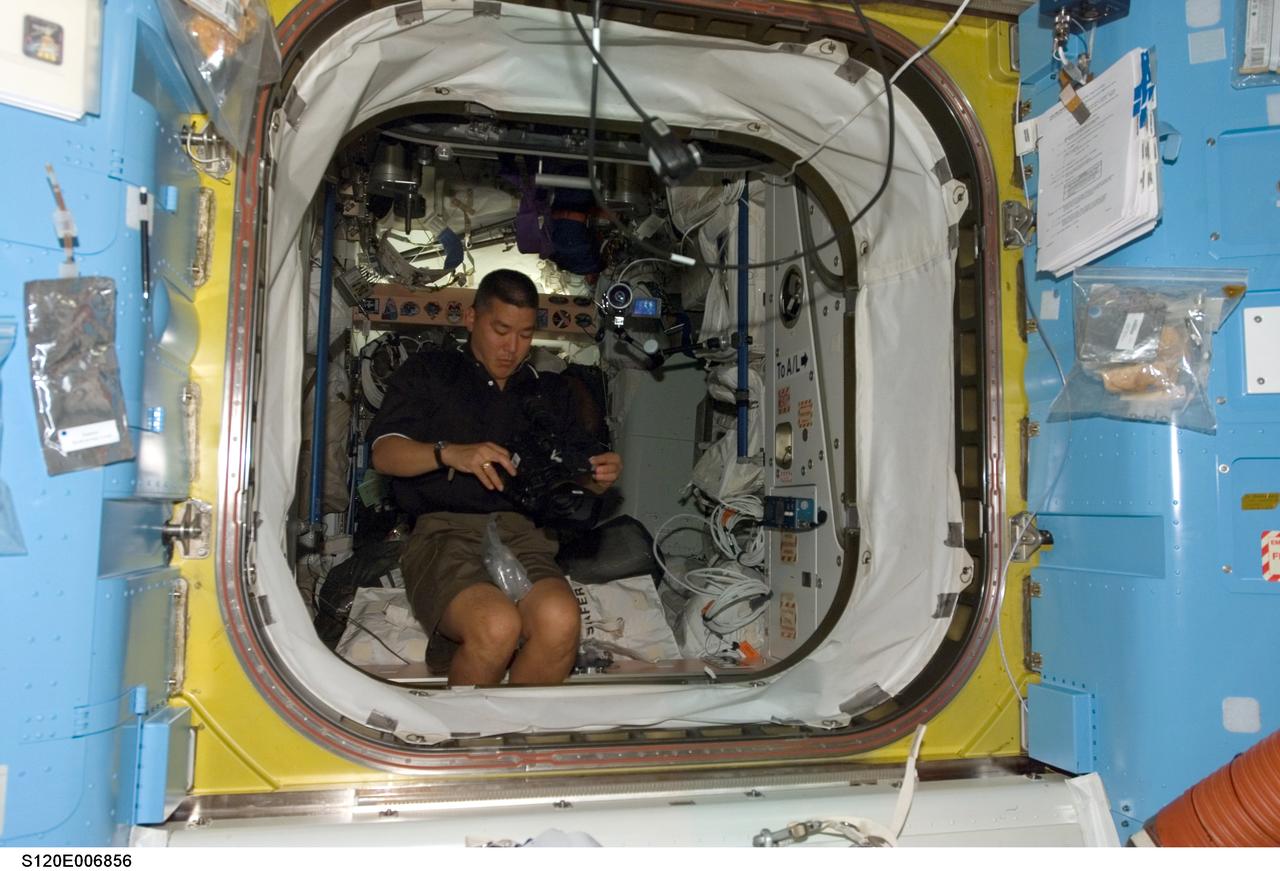
S120-E-006856 (26 Oct. 2007) --- Stepping into a busy regimen onboard the International Space Station, astronaut Daniel Tani greets the environment that he will be sharing with Expedition 16 crewmates for several months as he switches roles from STS-120 mission specialist to station flight engineer.
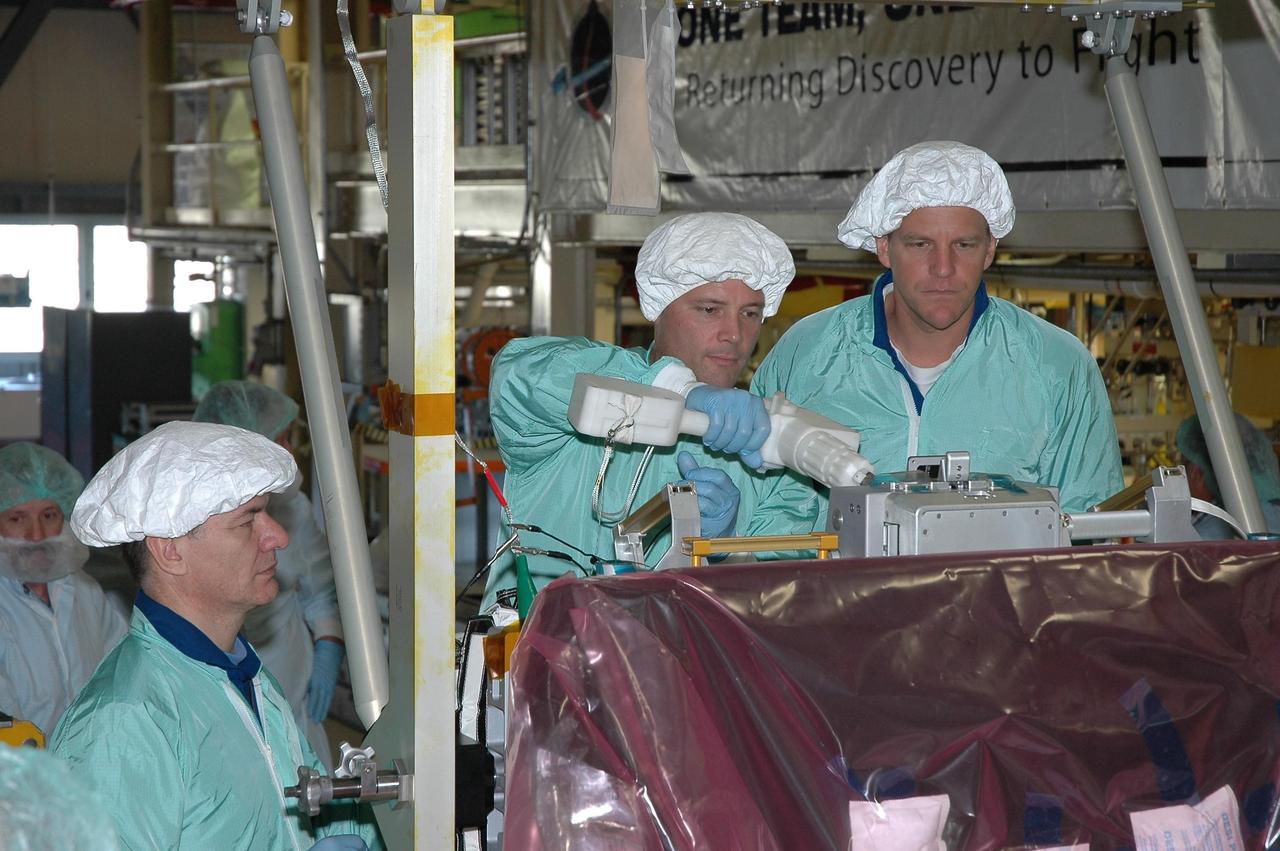
KENNEDY SPACE CENTER, Fla. -- In the Orbiter Processing Facility bay 3, STS-120 crew members inspect the main bus switching unit that is part of the payload on their mission. From left are Mission Specialists Paolo Nespoli, Doug Wheelock and Scott Parazynski. Wheelock is practicing using a tool on the unit. Nespoli represents the European Space Agency. A main bus switching unit is used for power distribution, circuit protection and fault isolation on the space station's power system. The units route power to proper locations in the space station, such as from solar arrays through umbilicals into the U.S. Lab. The unit will be installed on the external stowage platform 2 attached to the Quest airlock for temporary storage. Discovery is targeted to launch mission STS-120 no earlier than Oct. 20. Photo credit: NASA/Jim Grossmann
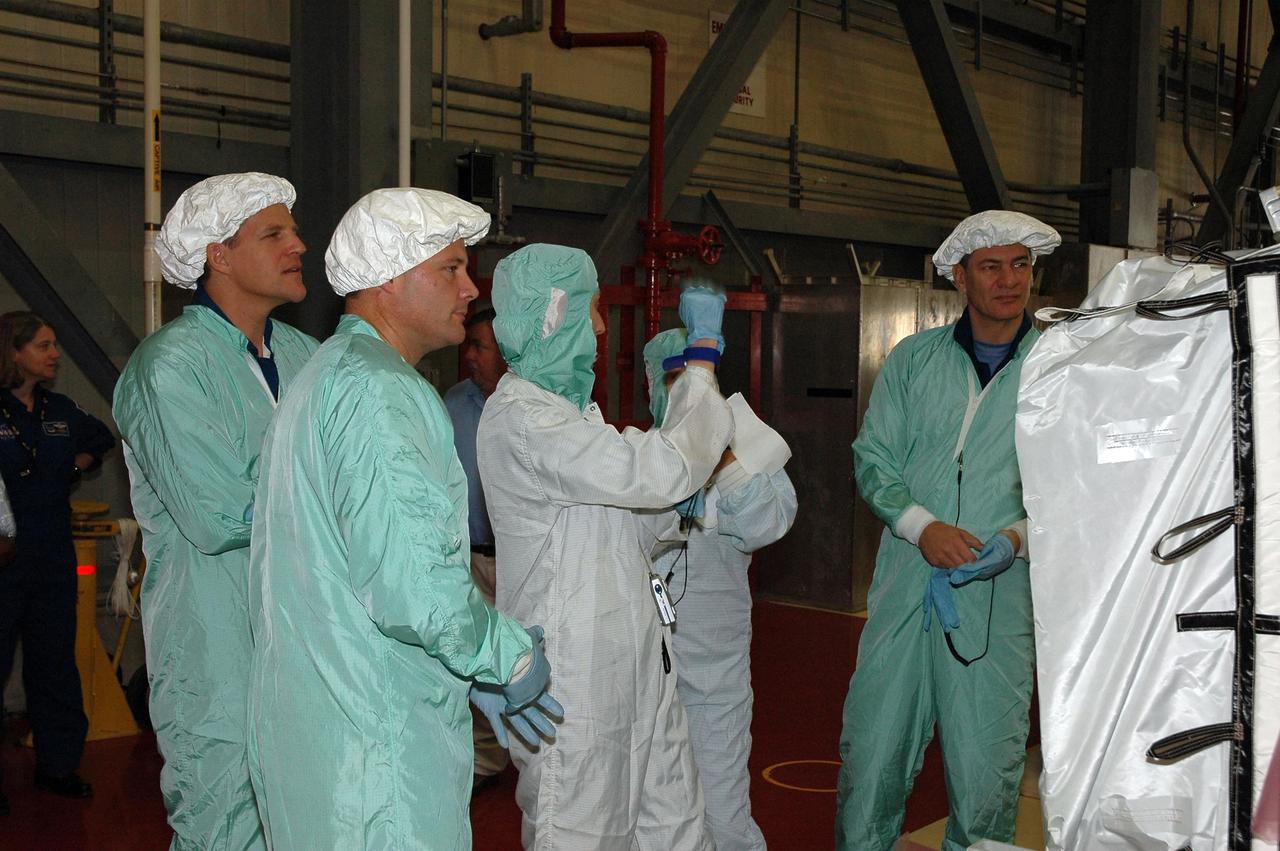
KENNEDY SPACE CENTER, Fla. -- In the Orbiter Processing Facility bay 3, STS-120 crew members get a look at the main bus switching unit that is part of the payload on their mission. From left are Mission Specialists Scott Parazynski and Doug Wheelock at left and Mission Specialist Paolo Nespoli at right. Nespoli represents the European Space Agency. A main bus switching unit is used for power distribution, circuit protection and fault isolation on the space station's power system. The units route power to proper locations in the space station, such as from solar arrays through umbilicals into the U.S. Lab. The unit will be installed on the external stowage platform 2 attached to the Quest airlock for temporary storage. Discovery is targeted to launch mission STS-120 no earlier than Oct. 20. Photo credit: NASA/Jim Grossmann
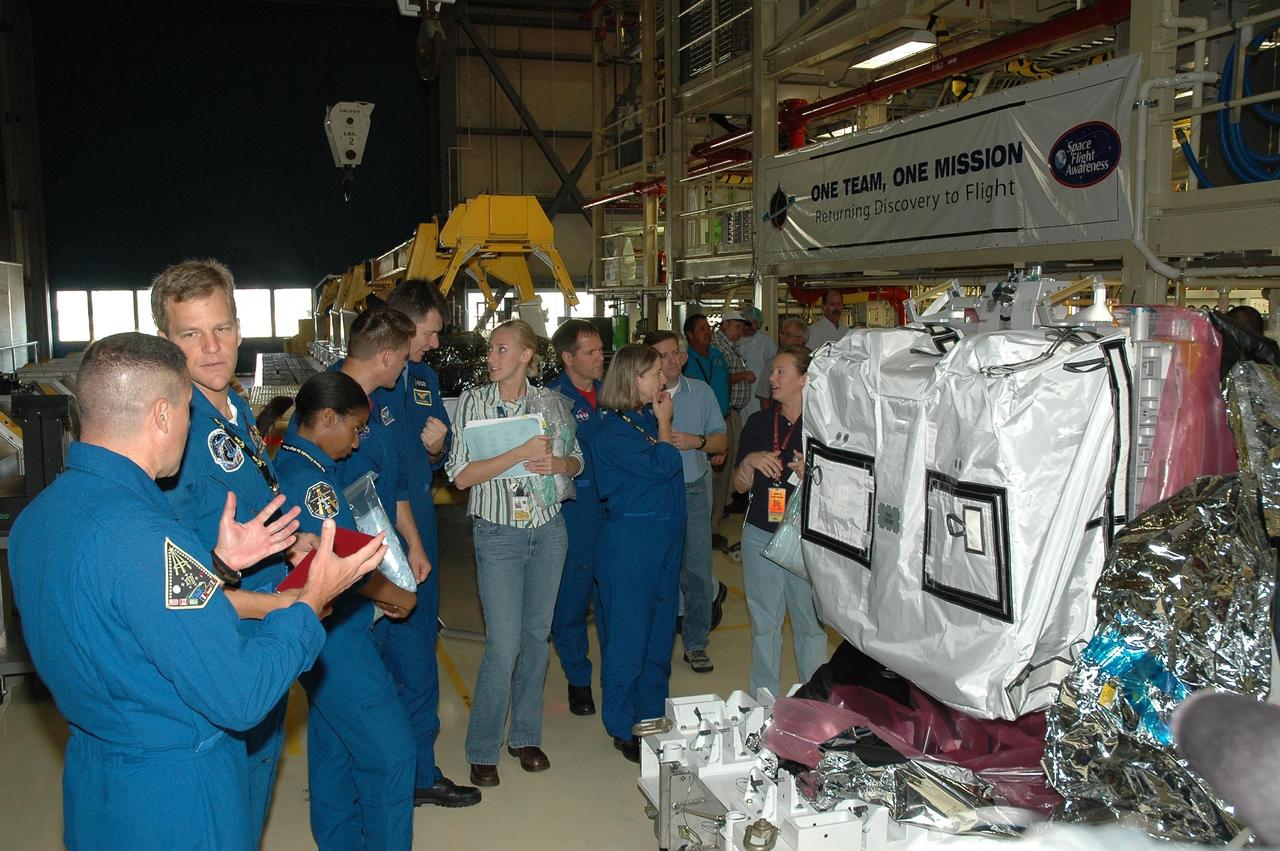
KENNEDY SPACE CENTER, Fla. -- In the Orbiter Processing Facility bay 3, STS-120 crew members get a look at the main bus switching unit that is part of the payload on their mission. From left are Pilot George Zamka, Mission Specialists Scott Parazynski and Stephanie Wilson, astronaut Dan Tani, who will join the International Space Station crew, and Mission Specialists Paolo Nespoli, Doug Wheelock and Commander Pam Melroy. Nespoli represents the European Space Agency. A main bus switching unit is used for power distribution, circuit protection and fault isolation on the space station's power system. The units route power to proper locations in the space station, such as from solar arrays through umbilicals into the U.S. Lab. The unit will be installed on the external stowage platform 2 attached to the Quest airlock for temporary storage. Discovery is targeted to launch mission STS-120 no earlier than Oct. 20. Photo credit: NASA/Jim Grossmann
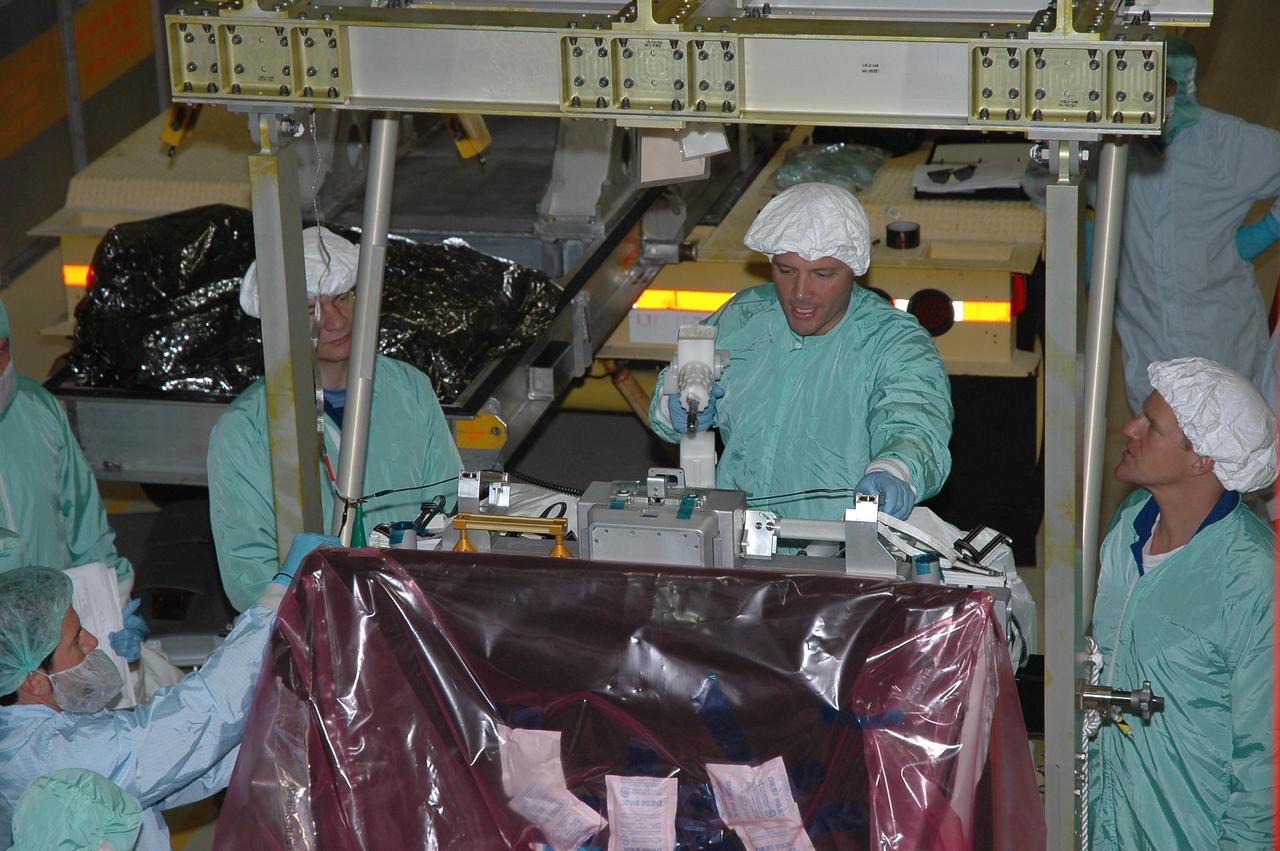
KENNEDY SPACE CENTER, Fla. -- In the Orbiter Processing Facility bay 3, STS-120 crew members inspect the main bus switching unit that is part of the payload on their mission. From left are Mission Specialists Paolo Nespoli, Doug Wheelock and Scott Parazynski. Wheelock is practicing using a tool on the unit. Nespoli represents the European Space Agency. A main bus switching unit is used for power distribution, circuit protection and fault isolation on the space station's power system. The units route power to proper locations in the space station, such as from solar arrays through umbilicals into the U.S. Lab. The unit will be installed on the external stowage platform 2 attached to the Quest airlock for temporary storage. Discovery is targeted to launch mission STS-120 no earlier than Oct. 20. Photo credit: NASA/Jim Grossmann
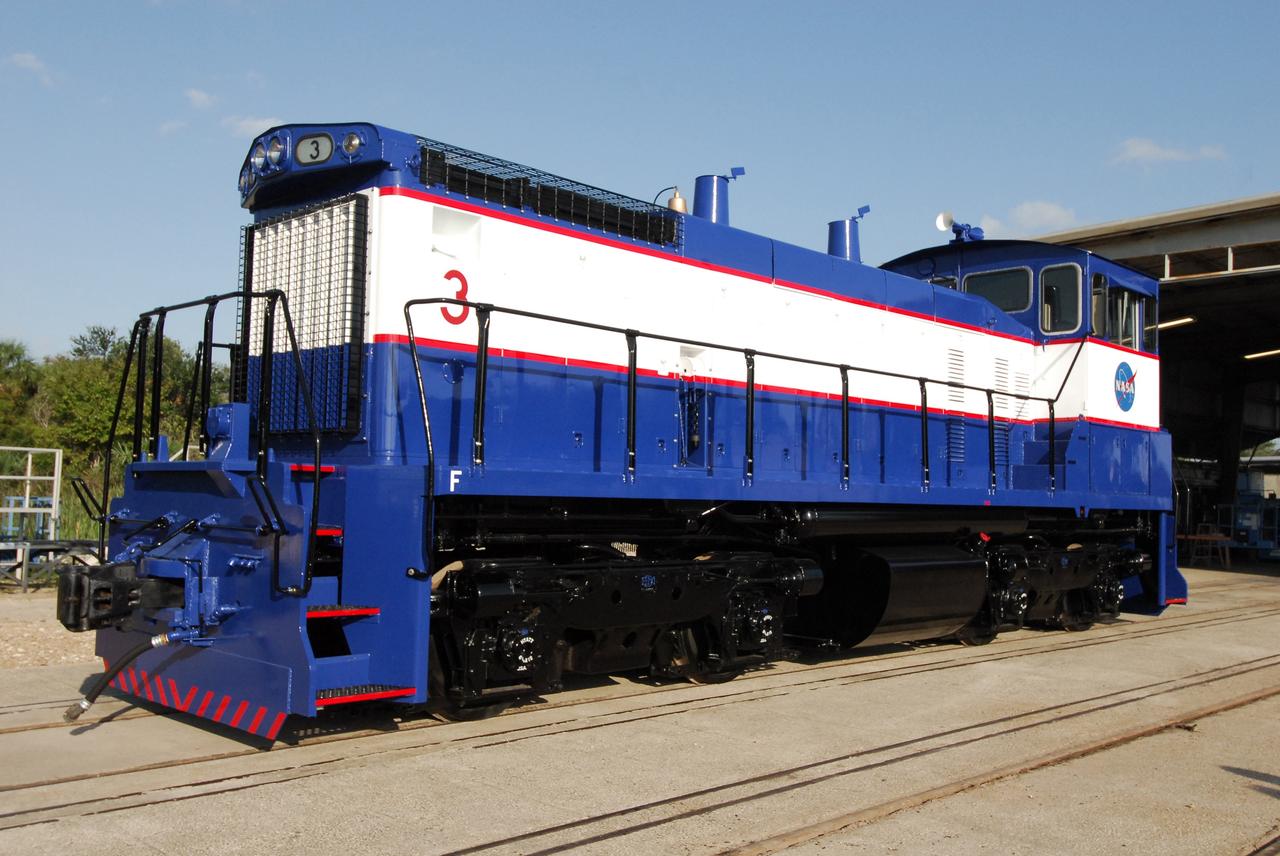
CAPE CANAVERAL, Fla. – At NASA's Kennedy Space Center in Florida, NASA Railroad locomotive 3 has been repainted. The Railroad Operation and Maintenance Team at Kennedy completed the refurbishment of locomotive 3 in October. The 15-month process, including a new paint scheme, dealt with extensive corrosion to the locomotive because of Kennedy's proximity to the Atlantic Ocean. Locomotives 1 and 2 also will be refurbished eventually. The NASA Railroad locomotives are SW-1500 switch engines built by Electro Motive Diesel (EMD). Photo credit: NASA/Amanda Diller
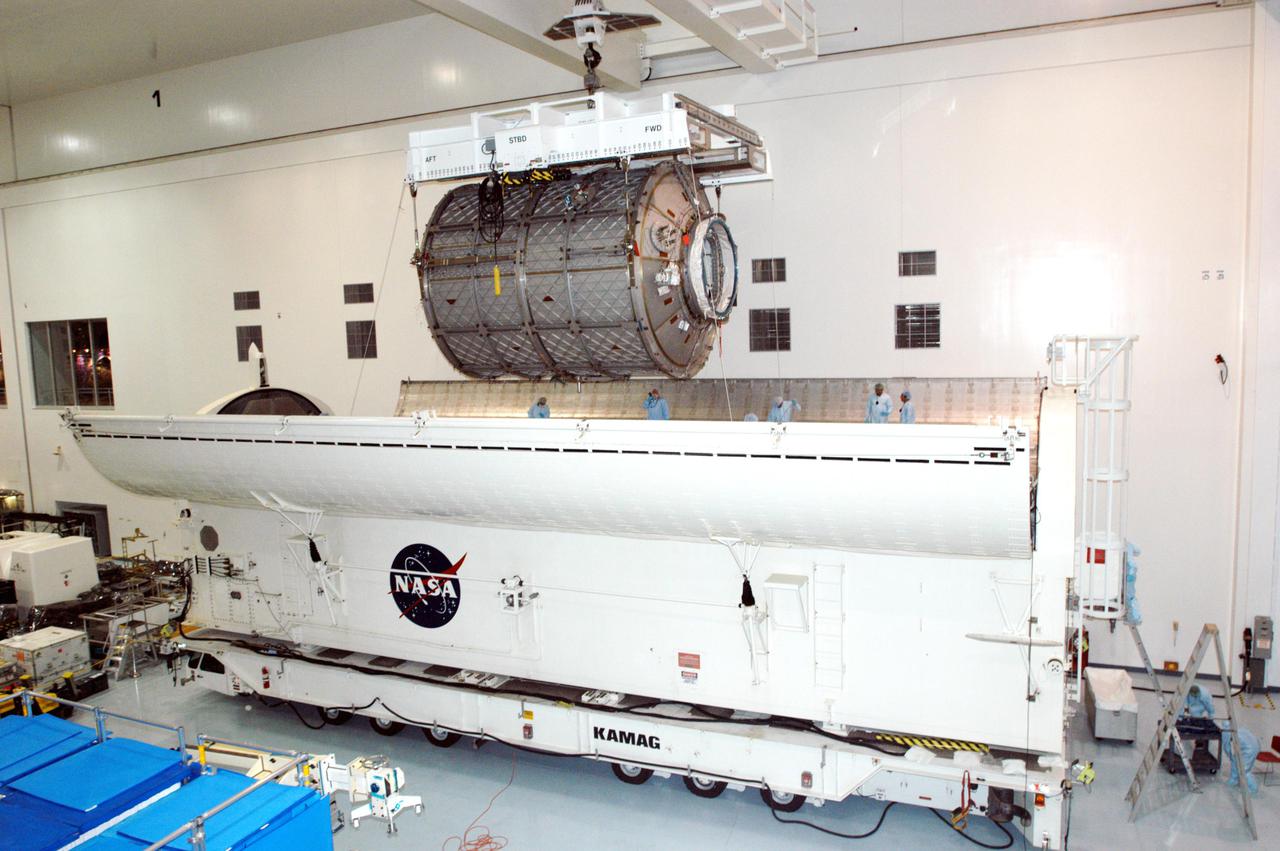
KENNEDY SPACE CENTER, FLA. - The Multi-Purpose Logistics Module Leonardo is lifted from the payload canister in the Space Station Processing Facility. The MPLM will be placed in the Cargo Element Work Stand that Raffaello recently vacated. The payload canister was a temporary location during the switch. Three MPLMs were built by the Italian Space Agency - Donatello, Leonardo and Raffaello - to serve as a reusable logistics carrier and primary delivery system to resupply and return cargo requiring a pressurized environment to the International Space Station.
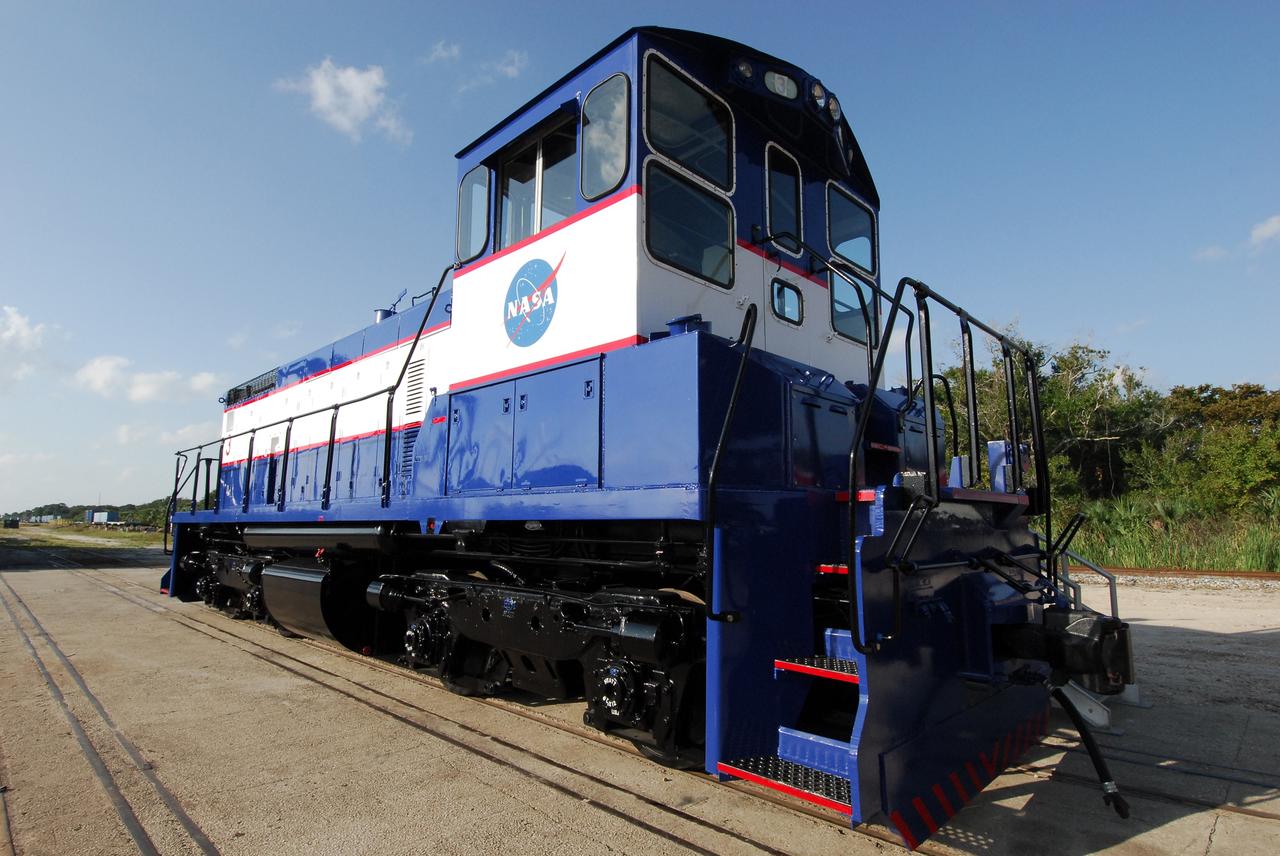
CAPE CANAVERAL, Fla. – At NASA's Kennedy Space Center in Florida, NASA Railroad locomotive 3 has been repainted. The Railroad Operation and Maintenance Team at Kennedy completed the refurbishment of locomotive 3 in October. The 15-month process, including a new paint scheme, dealt with extensive corrosion to the locomotive because of Kennedy's proximity to the Atlantic Ocean. Locomotives 1 and 2 also will be refurbished eventually. The NASA Railroad locomotives are SW-1500 switch engines built by Electro Motive Diesel (EMD). Photo credit: NASA/Amanda Diller
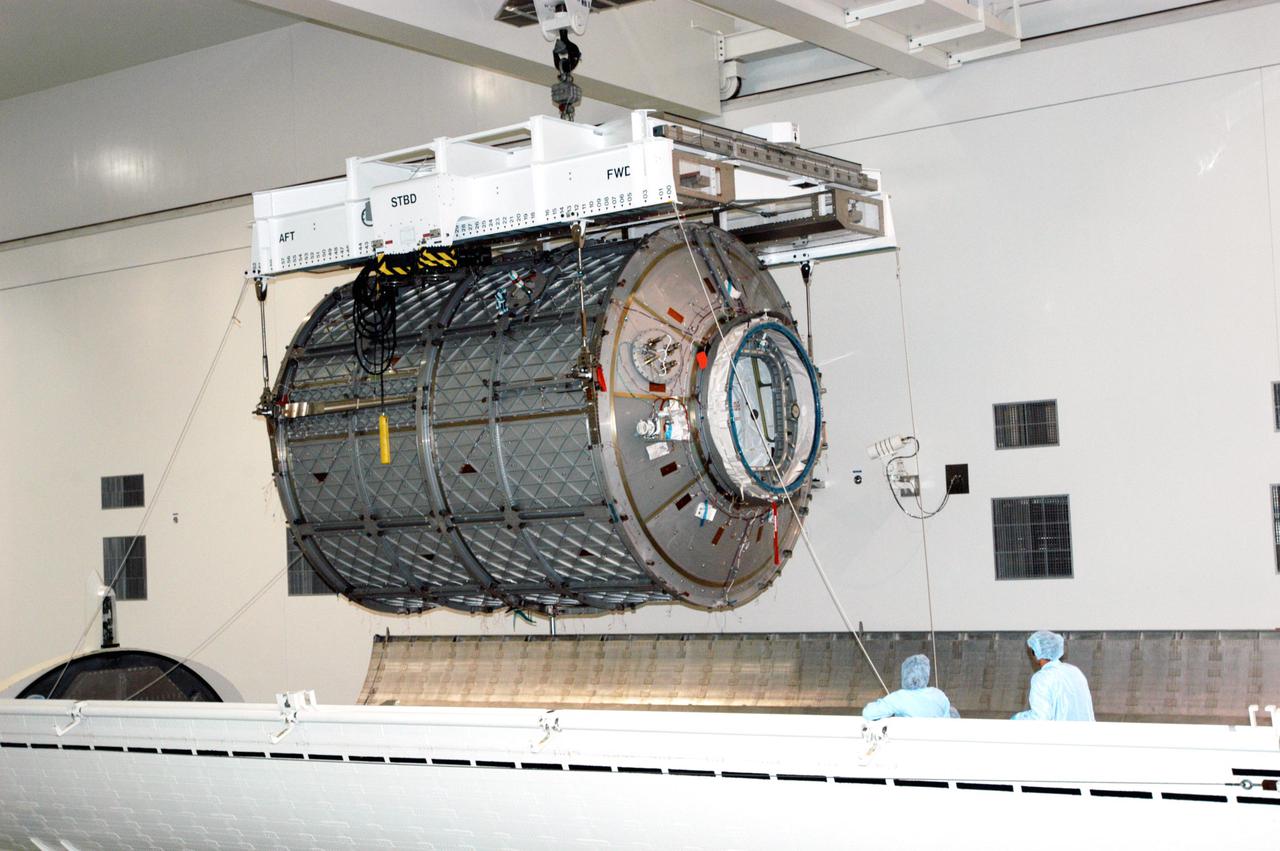
KENNEDY SPACE CENTER, FLA. - In the Space Station Processing Facility, an overhead crane lifts the Multi-Purpose Logistics Module Leonardo from the payload canister. The MPLM will be placed in the Cargo Element Work Stand that Raffaello recently vacated. The payload canister was a temporary location during the switch. Three MPLMs were built by the Italian Space Agency - Donatello, Leonardo and Raffaello - to serve as a reusable logistics carrier and primary delivery system to resupply and return cargo requiring a pressurized environment to the International Space Station.
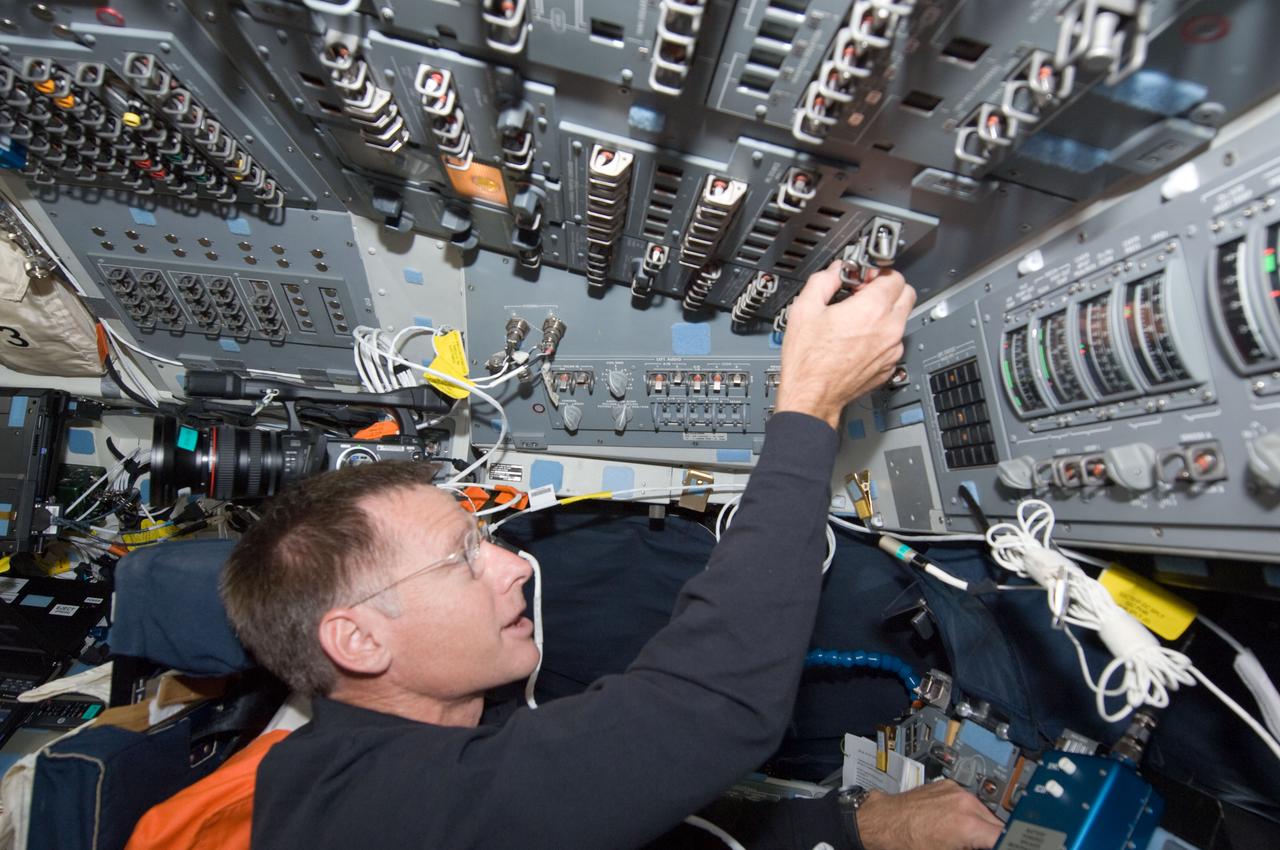
S135-E-007350 (11 July 2011) --- NASA astronaut Chris Ferguson, STS-135 mission commander, toggles switches on the overhead panel of the forward flight deck of the space shuttle Atlantis. The image was recorded during the mission's fourth day of activities in Earth orbit and second day while being docked with the International Space Station. Photo credit: NASA
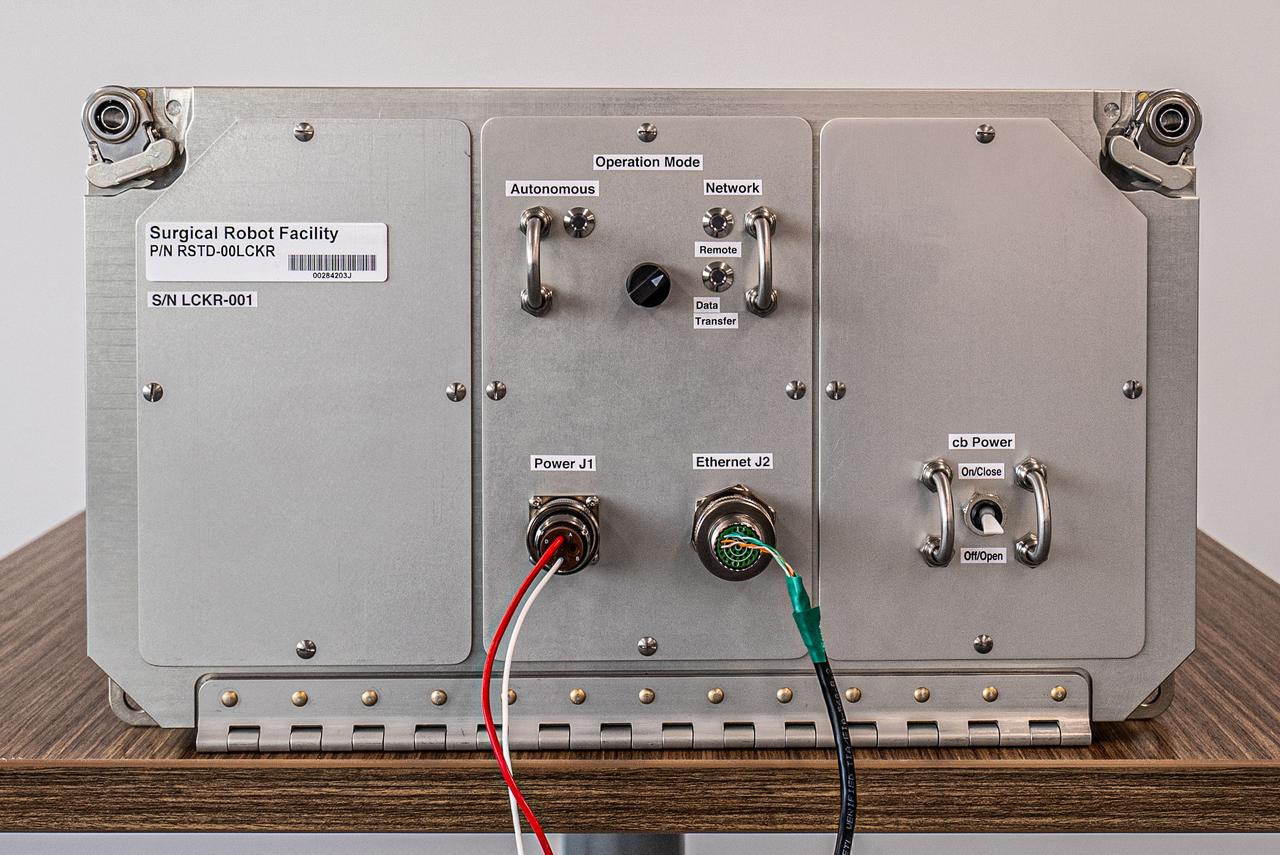
jsc2024e005979 (9/15/2023) --- The investigation locker for the Robotic Surgery Tech Demo investigation is shown on the ground. The locker was designed so that the astronauts can initiate "autonomous mode" and switch to "telesurgery mode." The miniaturized robotic surgeon is housed inside the microwave-sized locker and will be controlled via remote human control and pre-programmed movements. Image courtesy of Virtual Incision.

KENNEDY SPACE CENTER, FLA. -- During the transfer the STS-106 payload to Atlantis on Launch Pad 39-B, a technician turns a switch to move the Payload Ground Handling Mechanism (PGHM). The mechanism is located inside the Payload Changeout Room (PCR) of each shuttle launch pad’s Rotating Service Structure. The PGHM (pronounced pigem) removes payloads from a transportation canister and installs them into the orbiter. It is essentially NASA’s largest fork-lift
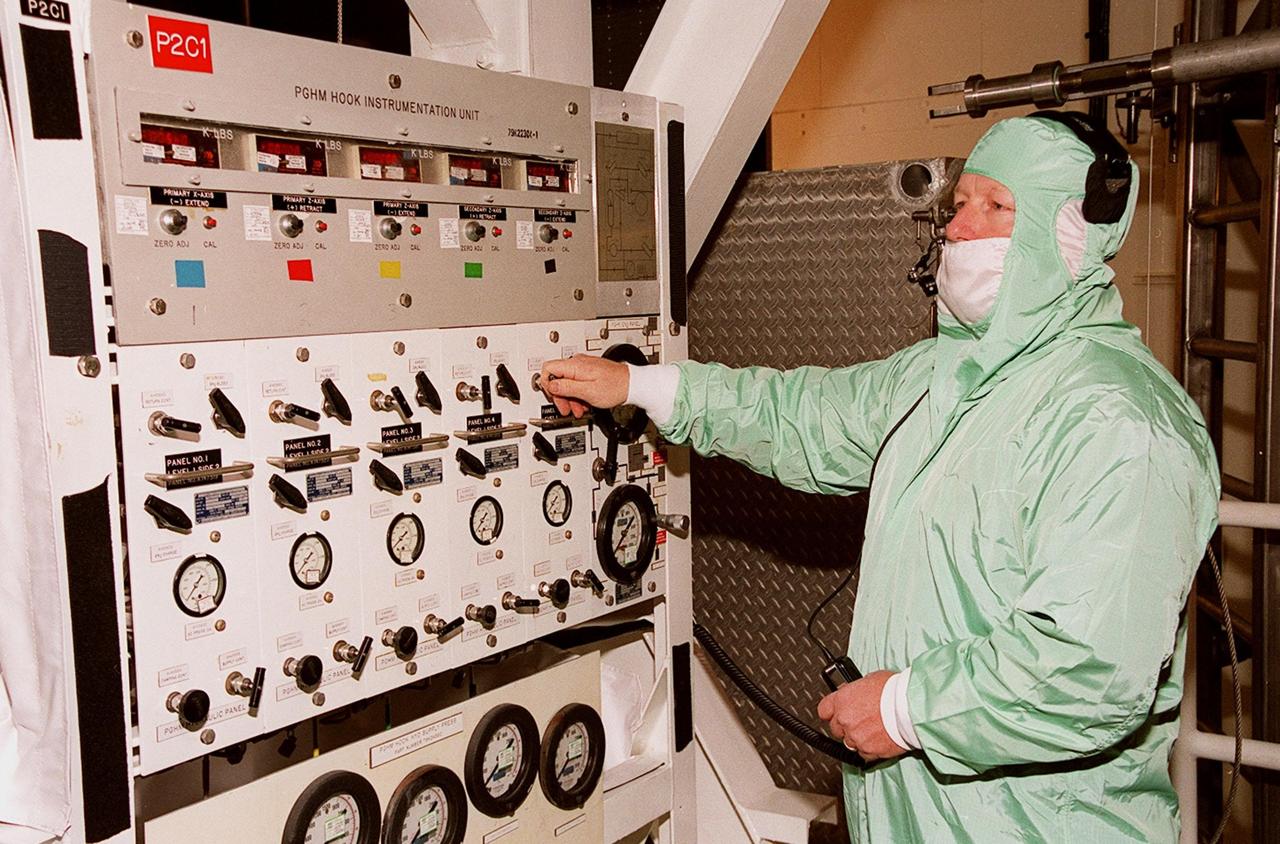
KENNEDY SPACE CENTER, FLA. -- In the Payload Changeout Room at Launch Pad 39A, a technician works switches on the Payload Ground-Handling Mechanism hook instrumentation unit that will move the U.S. Lab Destiny out of the payload canister and into the PCR. Destiny will then be transferred to the payload bay of Atlantis for mission STS-98. Destiny, a key element in the construction of the International Space Station is designed for space science experiments. STS-98 is the seventh construction flight to the ISS. Launch of STS-98 is scheduled for Jan. 19 at 2:11 a.m. EST
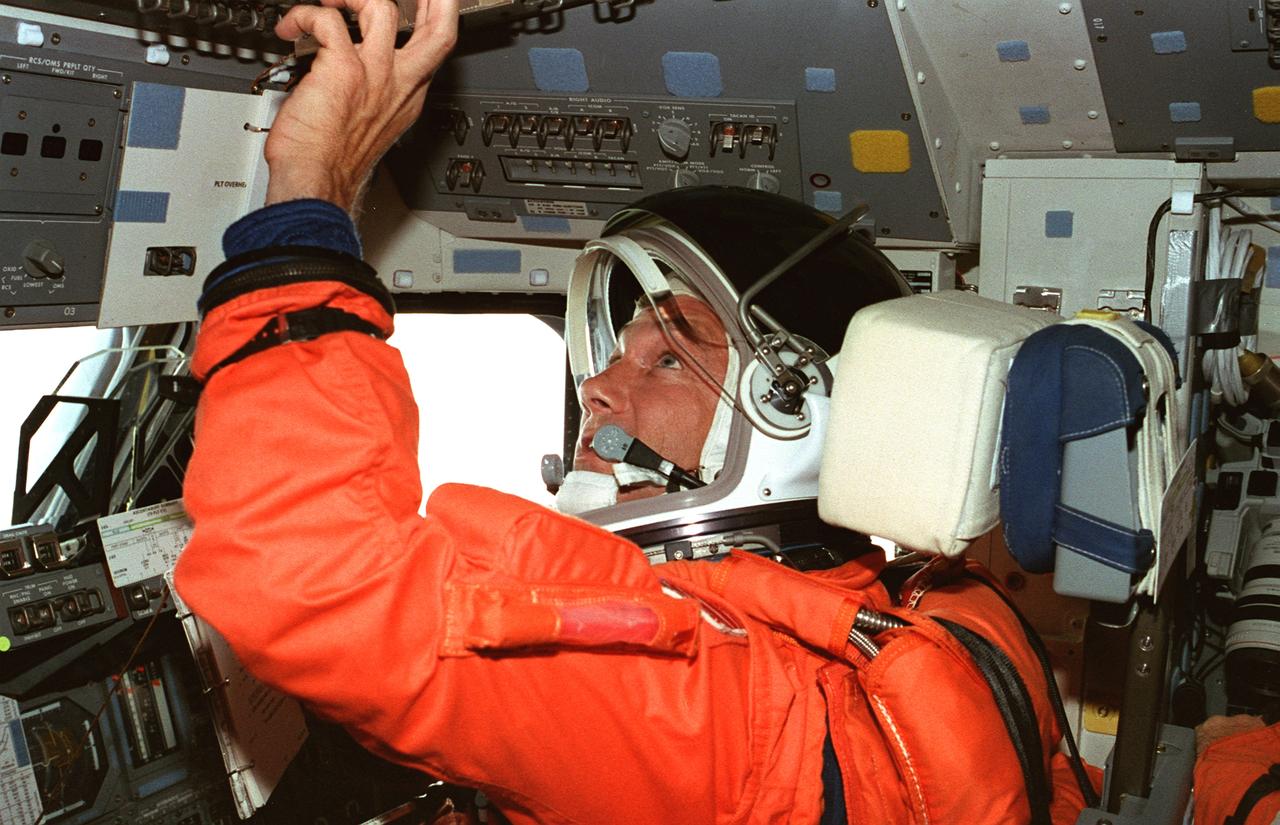
STS079-348-004 (16 Sept. 1996) --- Soon after the space shuttle Atlantis completed its rocket mode ascent to Earth-orbit, astronaut Terrence W. Wilcutt, pilot, begins to ready the Orbiter for ten days of orbiting Earth by activating switches on the flight deck's right overhead panel. Though the launch was a nocturnal one, the crew experienced its first sunrise just after Atlantis achieved its orbital posture.
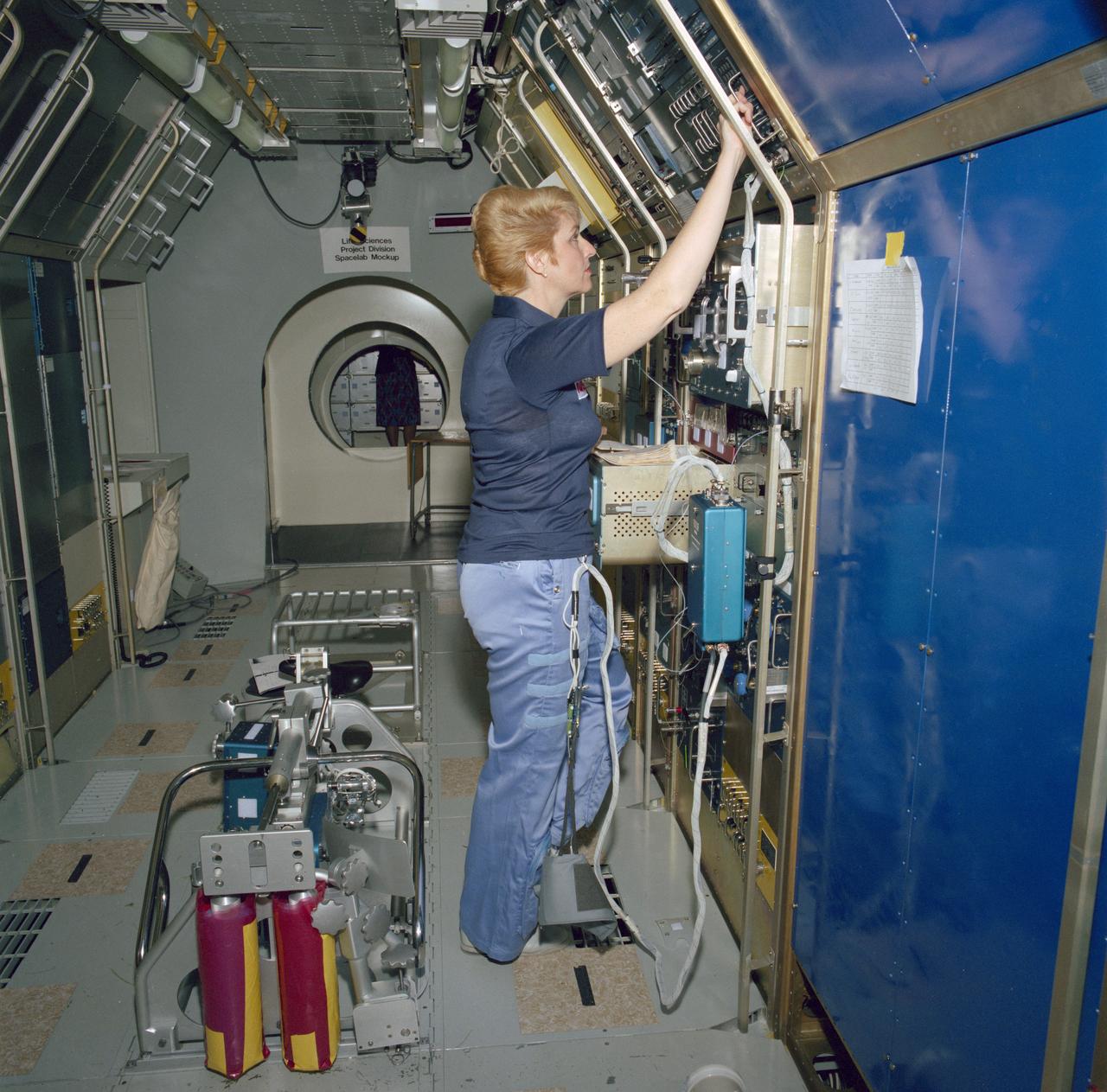
STS-40 Payload Specialist Millie Hughes-Fulford conducts Spacelab Life Sciences 1 (SLS-1) Experiment No. 198, Pulmonary Function During Weightlessness, in JSC's Life Sciences Project Division (LSPD) SLS mockup located in the Bioengineering and Test Support Facility Bldg 36. Hughes-Fulford sets switches on Rack 8. Behind her in the center aisle are the stowed bicycle ergometer (foreground) and the body restraint system.
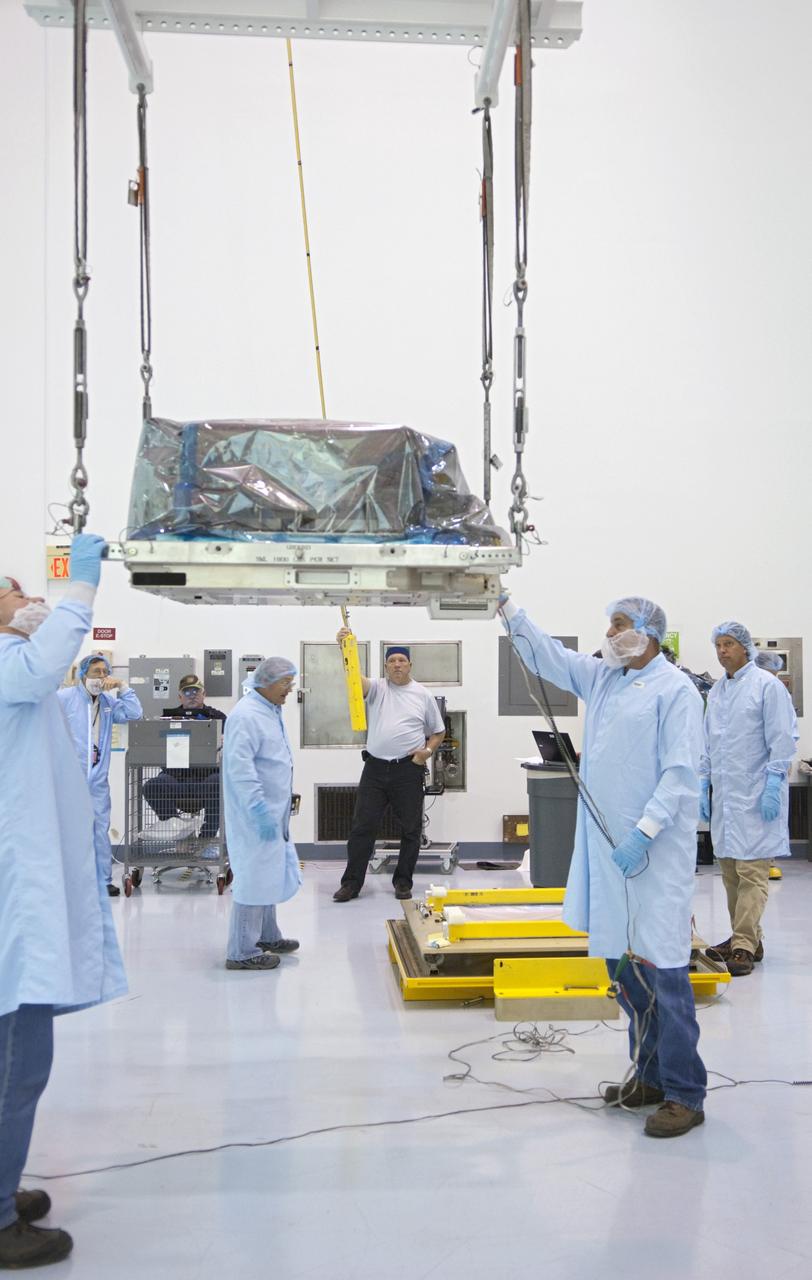
CAPE CANAVERAL, Fla. -- Workers inside the Space Station Processing Facility at NASA's Kennedy Space Center in Florida lift the orbital replacement unit for the space station's main bus switching unit as they prepare to pack the unit in a shipping container. The unit, which was processed at Kennedy, will be shipped to Japan at the beginning of the year for the HTV-4 launch, which is currently scheduled for 2013. Photo credit: NASA/Charisse Nahser
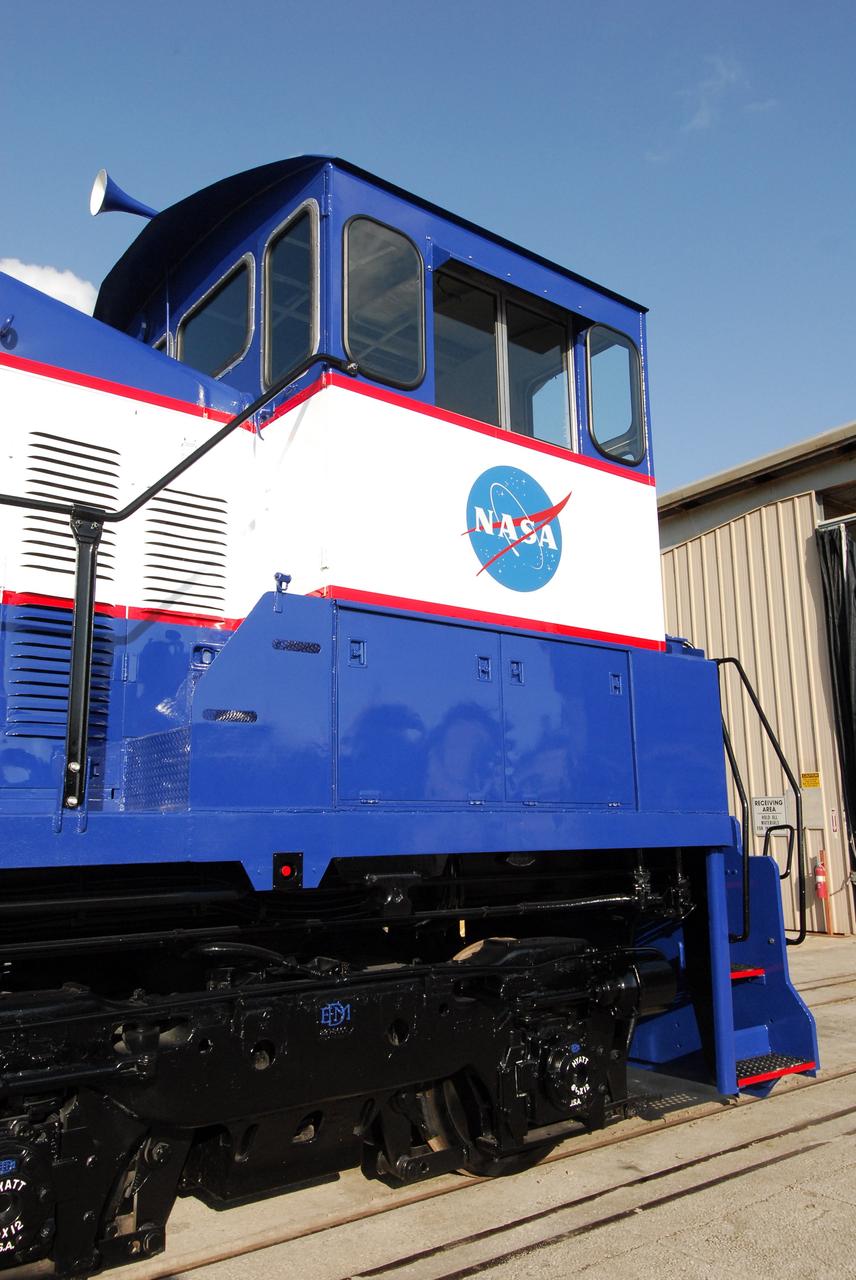
CAPE CANAVERAL, Fla. – A closeup of the cab on NASA Railroad locomotive 3 which was recently refurbished by the Railroad Operation and Maintenance Team at NASA's Kennedy Space Center in Florida. The 15-month process, including a new paint scheme, dealt with extensive corrosion to the locomotive because of Kennedy's proximity to the Atlantic Ocean. Locomotives 1 and 2 also will be refurbished eventually. The NASA Railroad locomotives are SW-1500 switch engines built by Electro Motive Diesel (EMD). Photo credit: NASA/Amanda Diller
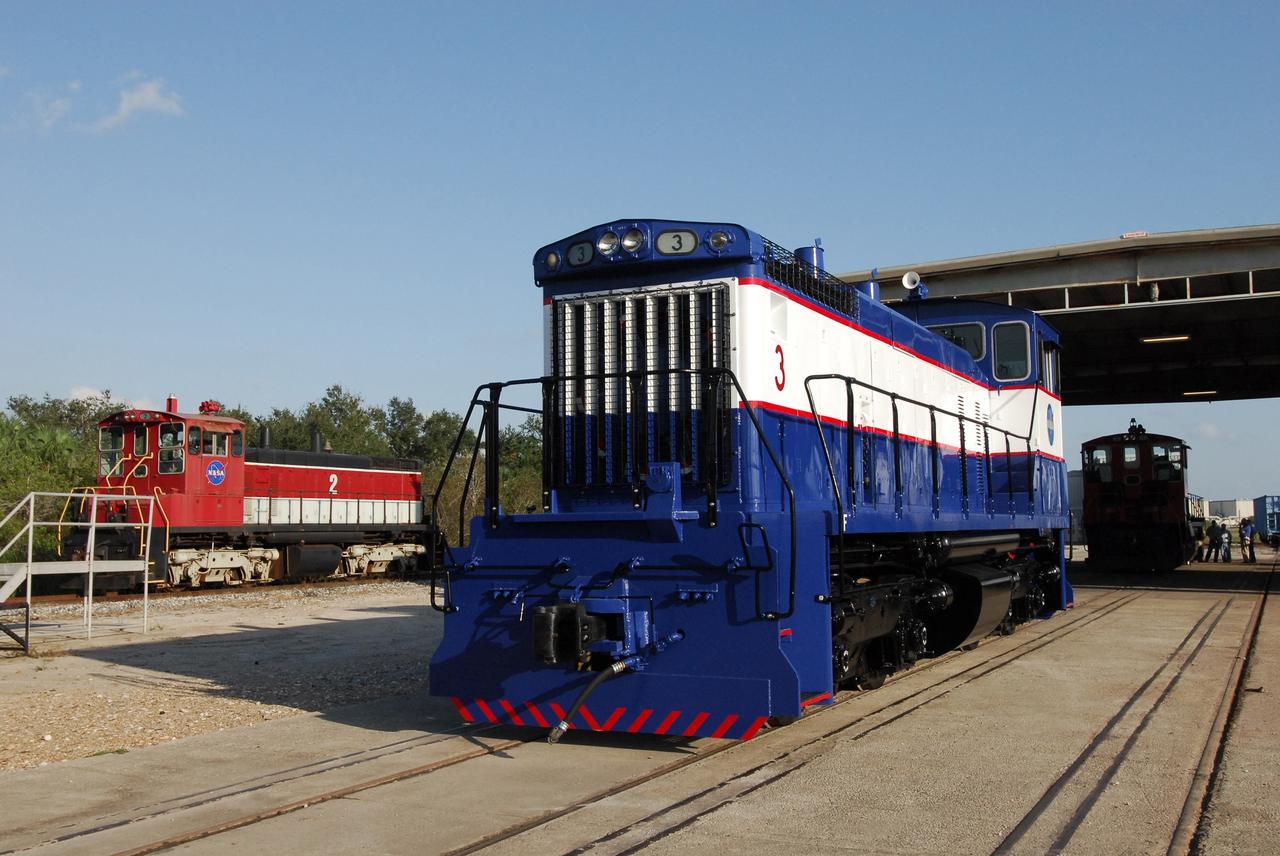
CAPE CANAVERAL, Fla. – At NASA's Kennedy Space Center in Florida, NASA Railroad locomotive 3 has been repainted. The Railroad Operation and Maintenance Team at Kennedy completed the refurbishment of locomotive 3 in October. The 15-month process, including a new paint scheme, dealt with extensive corrosion to the locomotive because of Kennedy's proximity to the Atlantic Ocean. Locomotives 1 and 2 also will be refurbished eventually. The NASA Railroad locomotives are SW-1500 switch engines built by Electro Motive Diesel (EMD). Photo credit: NASA/Amanda Diller
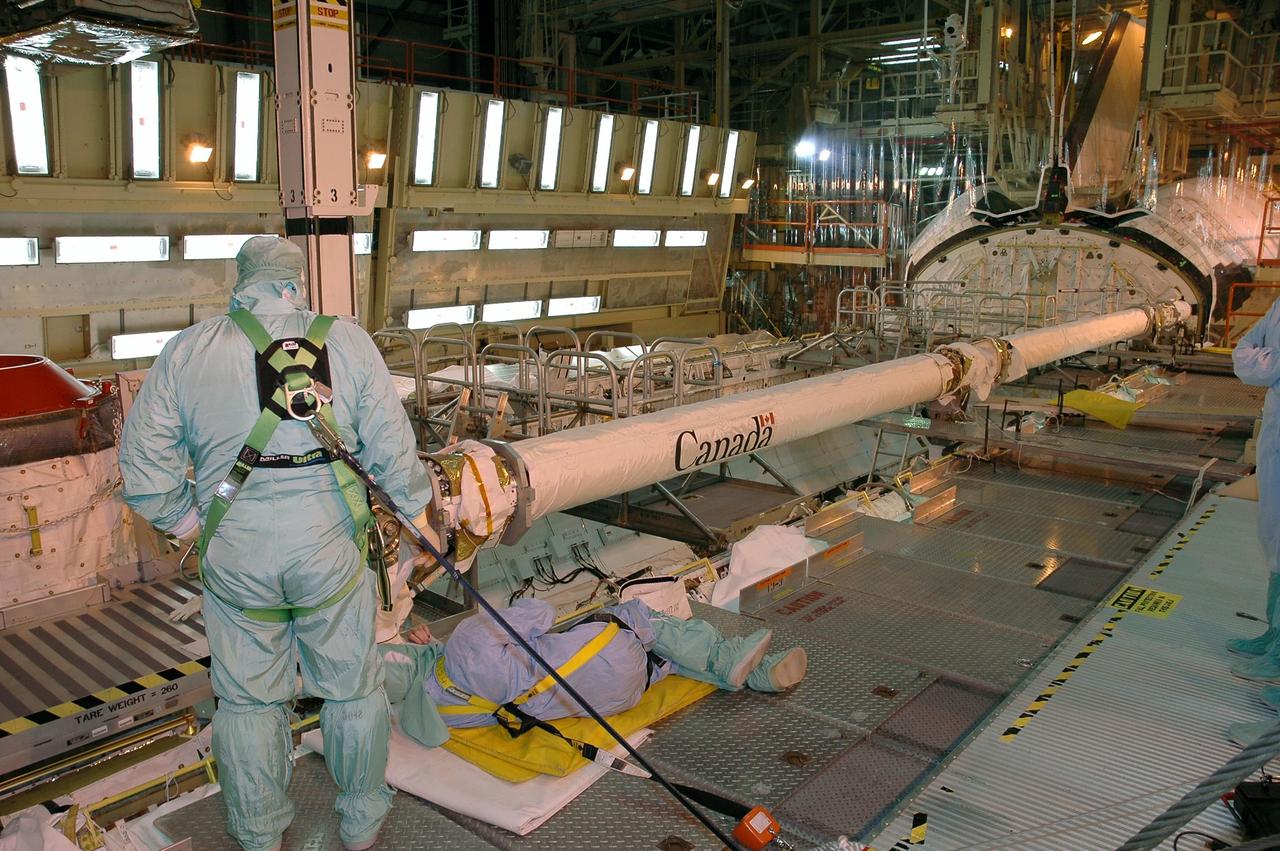
KENNEDY SPACE CENTER, FLA. - In NASA Kennedy Space Center’s Orbiter Processing Facility Bay 3, technicians install a remote manipulator system, or space shuttle arm, previously installed on the orbiter Atlantis, in Discovery’s payload bay. The arms were switched because the arm that was installed on Atlantis has special instrumentation to gather loads data from the second return-to-flight mission, STS-121. Discovery is the designated orbiter to fly on STS-121. scheduled to launch no earlier than May 2006.
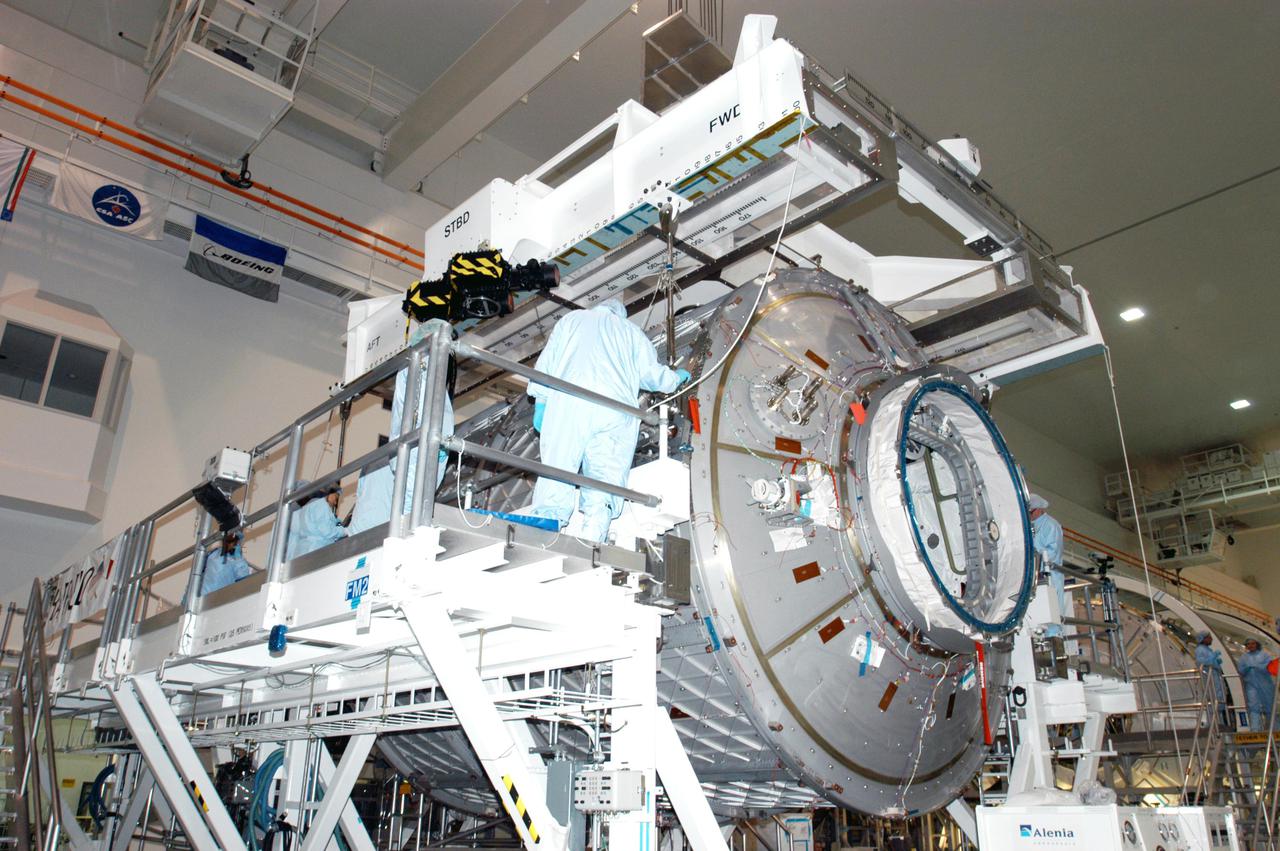
KENNEDY SPACE CENTER, FLA. - In the Space Station Processing Facility, workers stand by as the Multi-Purpose Logistics Module Leonardo settles onto the Cargo Element Work Stand that Raffaello recently vacated. The payload canister was a temporary location during the switch. Three MPLMs were built by the Italian Space Agency - Donatello, Leonardo and Raffaello - to serve as a reusable logistics carrier and primary delivery system to resupply and return cargo requiring a pressurized environment to the International Space Station.
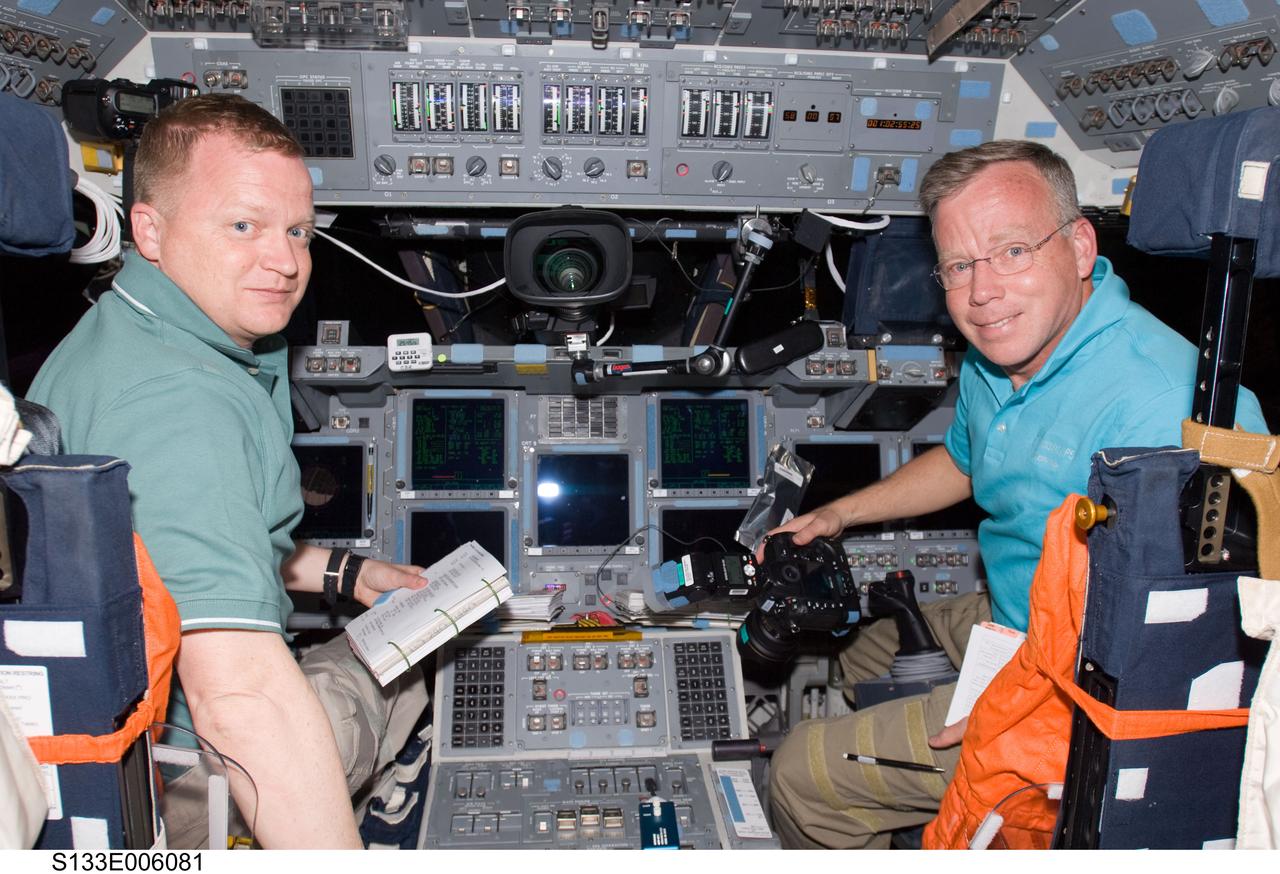
S133-E-006081 (25 Feb. 2011) --- On space shuttle Discovery’s forward flight deck, astronauts Steve Lindsey (right), STS-133 commander, and Eric Boe, pilot, switch seats for a brief procedure as the crew heads toward a weekend docking with the International Space Station. Earlier the crew conducted thorough inspections of the shuttle’s thermal tile system using the Remote Manipulator System/Orbiter Boom Sensor System (RMS/OBSS) and special cameras. Photo credit: NASA or National Aeronautics and Space Administration
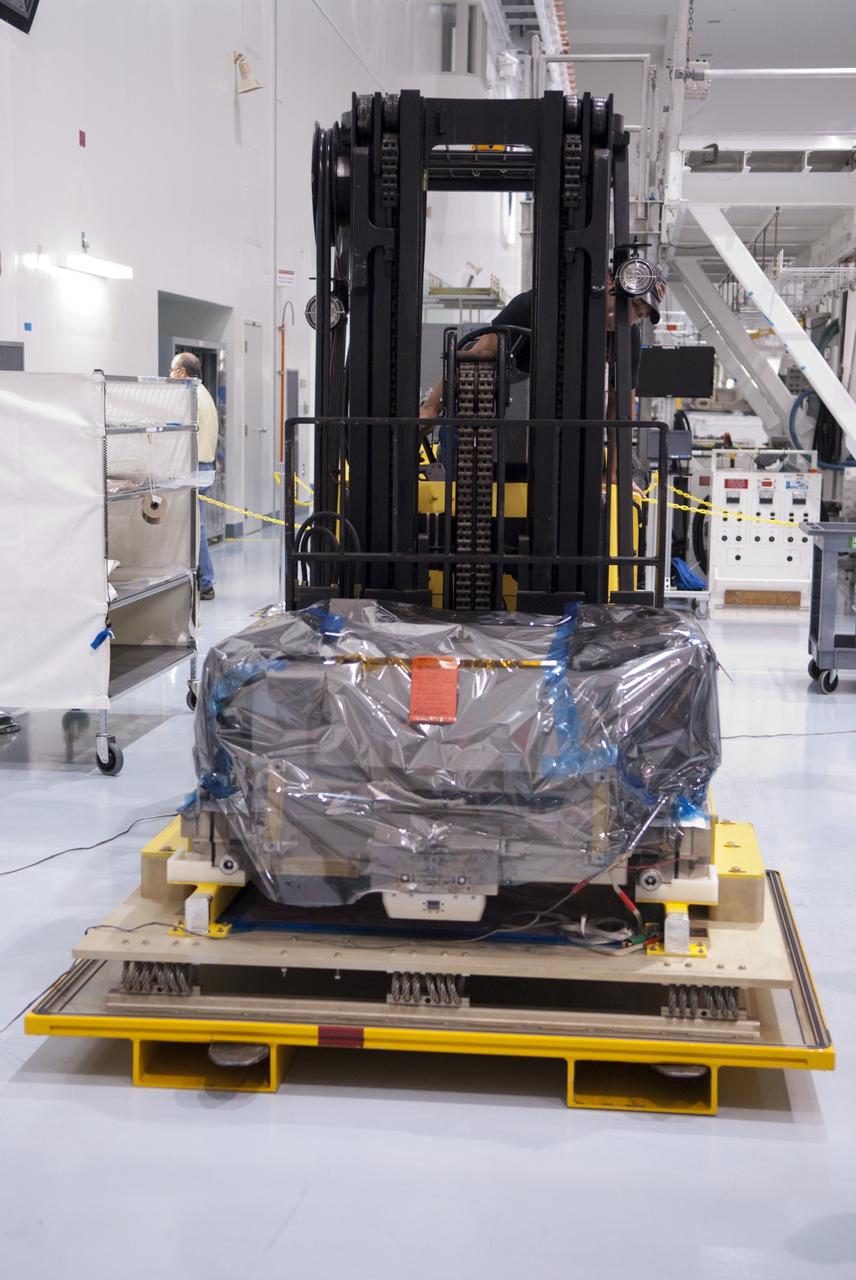
CAPE CANAVERAL, Fla. -- Inside the Space Station Processing Facility at NASA's Kennedy Space Center in Florida, workers have prepared the orbital replacement unit for the space station's main bus switching unit to be placed in a shipping container. The unit, which was processed at Kennedy, will be shipped to Japan at the beginning of the year for the HTV-4 launch, which is currently scheduled for 2013. Photo credit: NASA/Charisse Nahser
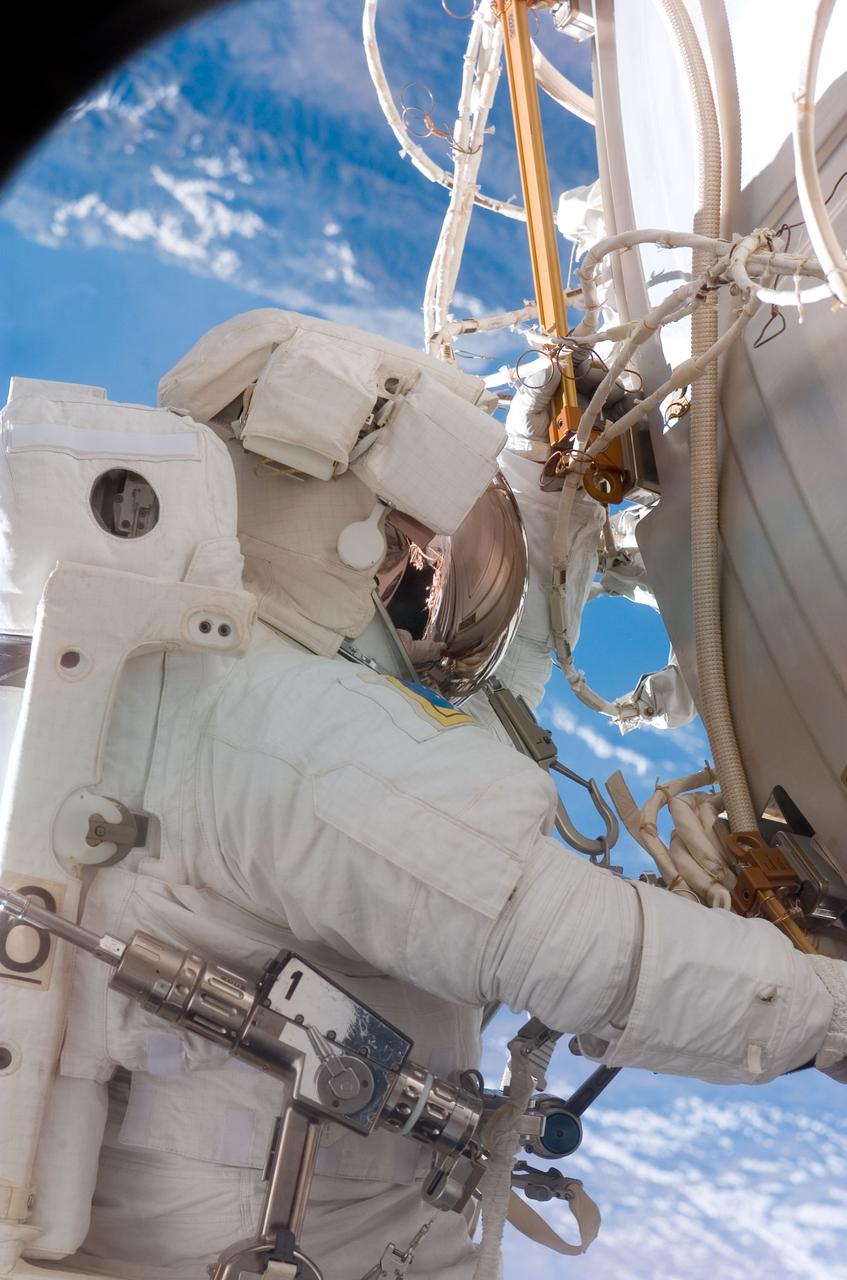
S120-E-007581 (30 Oct. 2007) --- Astronaut Doug Wheelock, STS-120 mission specialist, participates in the third scheduled session of extravehicular activity (EVA) as construction continues on the International Space Station. During the 7-hour, 8-minute spacewalk Wheelock and astronaut Scott Parazynski (out of frame), mission specialist, installed the P6 truss segment with its set of solar arrays to its permanent home, installed a spare main bus switching unit on a stowage platform, and performed a few get-ahead tasks.
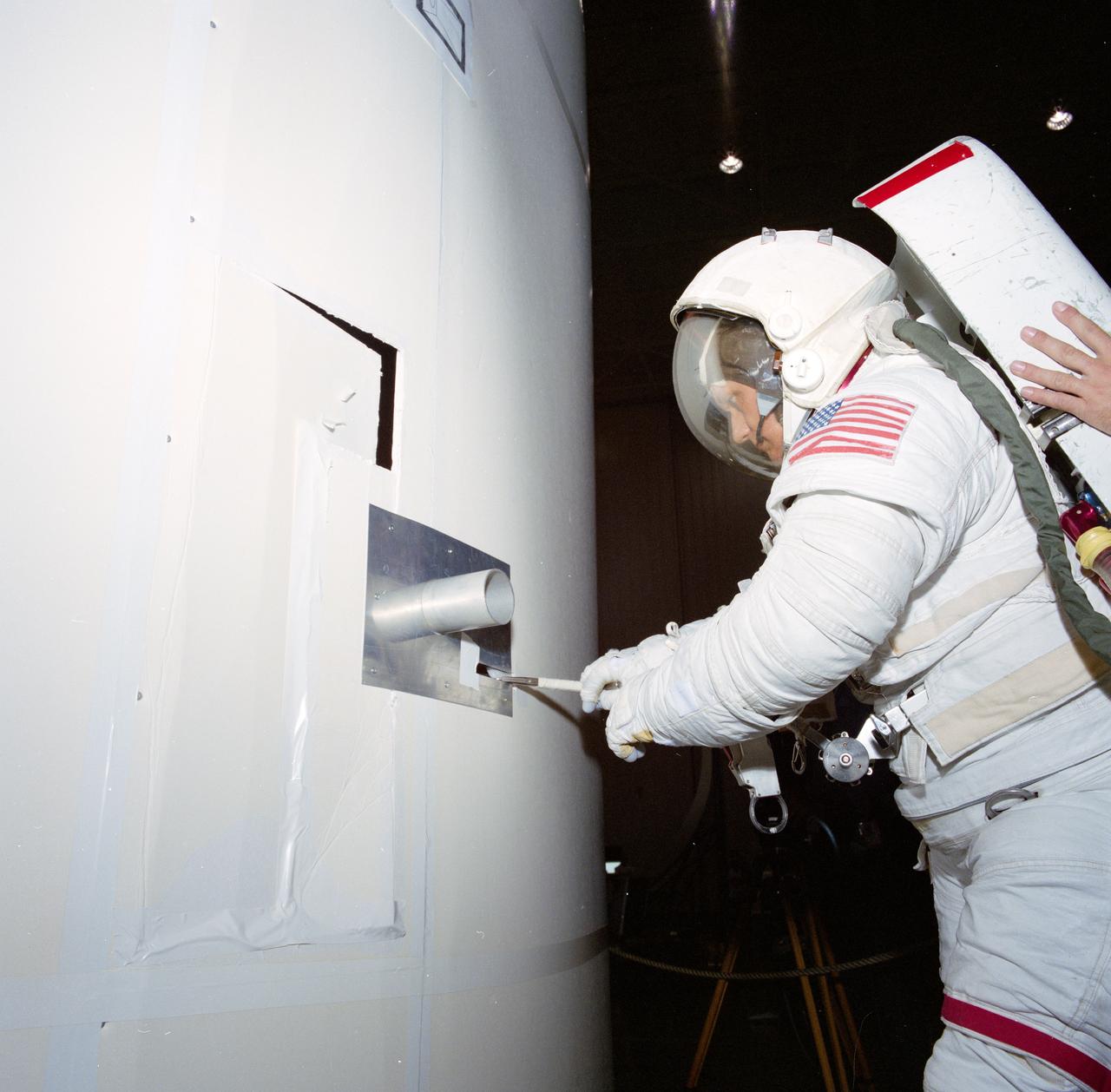
S85-30800 (14 April 1985) --- Astronaut Bruce McCandless II tests one of the possible methods of attempting to activate a switch on the Syncom-IV (LEASAT) satellite released April 13 into space from the Space Shuttle Discovery. The communications spacecraft failed to behave properly upon release and NASA officials and satellite experts are considering possible means of repair. McCandless was using a full scale mockup of the satellite in the Johnson Space Center's (JSC) mockup and integration laboratory.
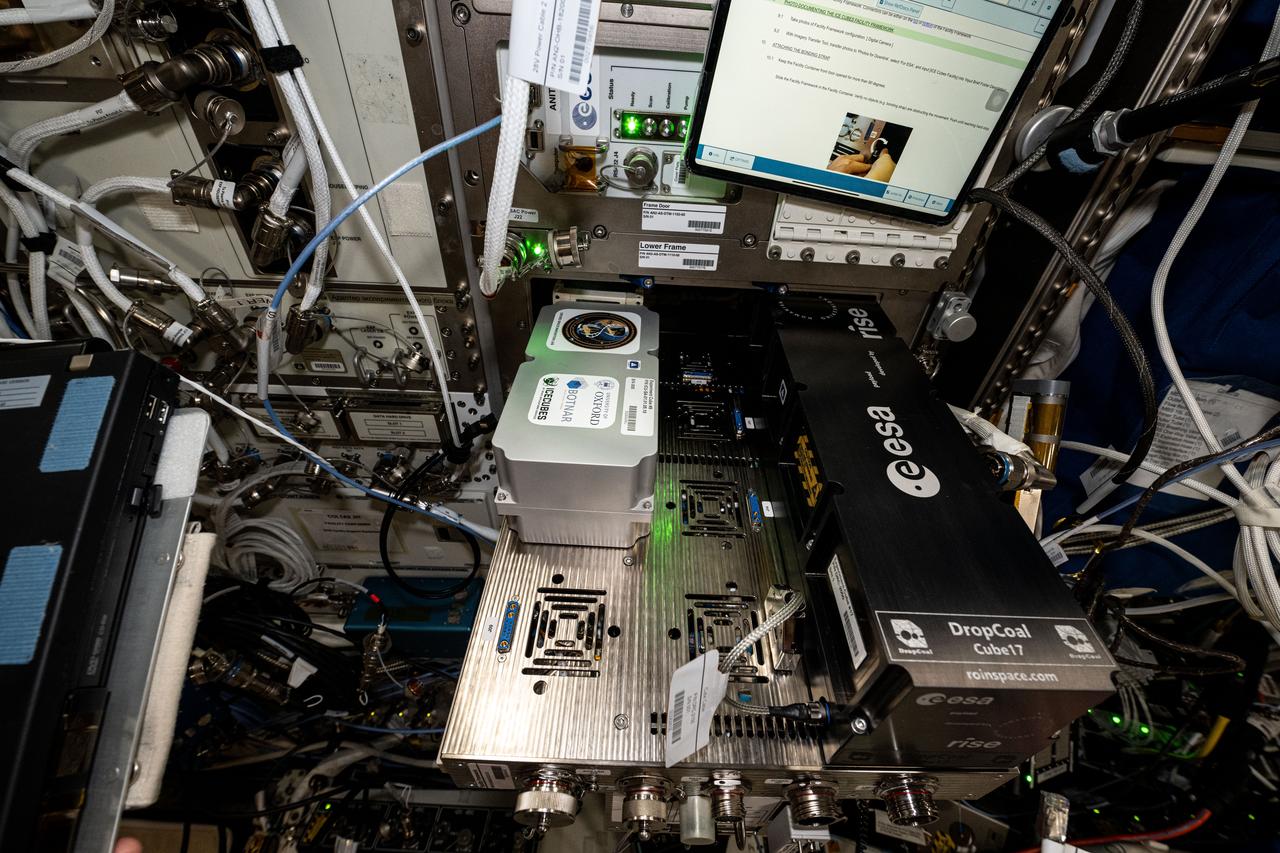
iss073e0001017 (4/23/2025) --- A view of the ICE Cubes Experiment Cube #9 that hosts the Aging in Microgravity investigation installed in the ICE Cubes Facility in the ESA Columbus Laboratory Module. Here, the research team is able monitor the sample temperature and take pictures of the cells directly connecting to the on-board experiment from their laboratory on the ground. Once switched-on, the experiment hardware continuously keeps the sample temperature at 37°C.
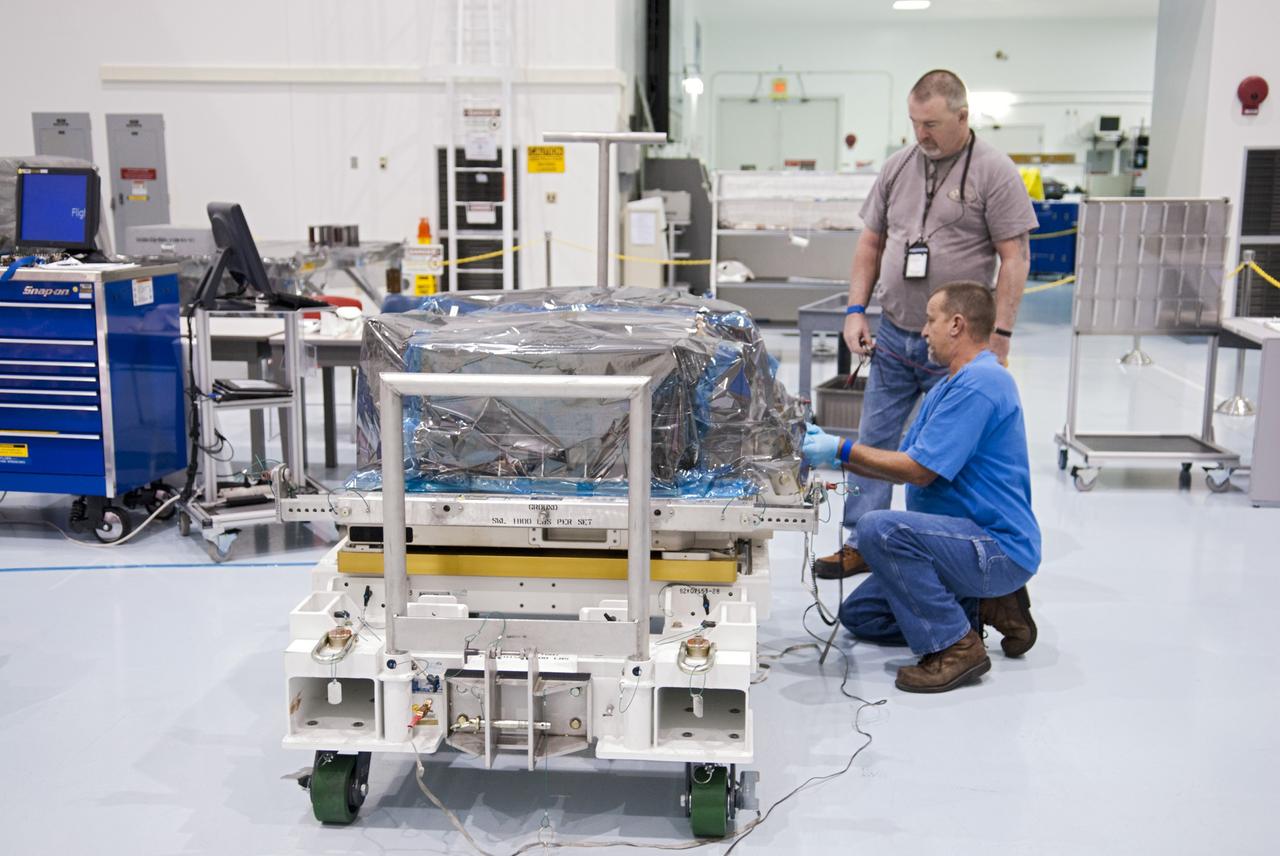
CAPE CANAVERAL, Fla. -- Workers inside the Space Station Processing Facility at NASA's Kennedy Space Center in Florida prepare to pack the orbital replacement unit for the space station's main bus switching unit in a shipping container. The unit, which was processed at Kennedy, will be shipped to Japan at the beginning of the year for the HTV-4 launch, which is currently scheduled for 2013. Photo credit: NASA/Charisse Nahser
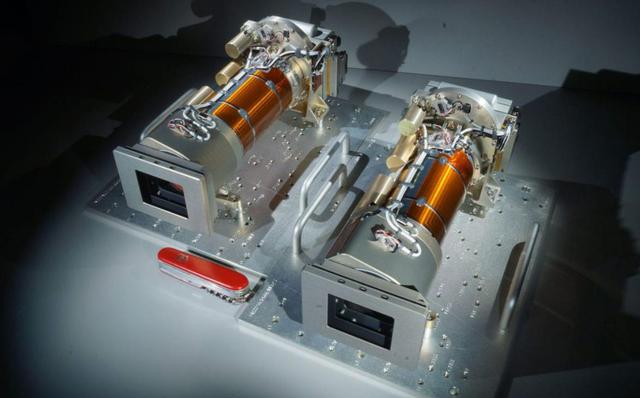
The twin Mastcam-Z cameras, shown with a pocket knife for scale, are assembled and ready for testing in this photo taken at Malin Space Science Systems, in San Diego, California. One of two sets of "eyes" on the "head," or mast, of the rover, these cameras can take high-definition video, panoramic color, and 3D images of the Martian surface. These are the first cameras sent to Mars with built-in zoom capability, able to switch from a wide angle to a close-up view. https://photojournal.jpl.nasa.gov/catalog/PIA24200
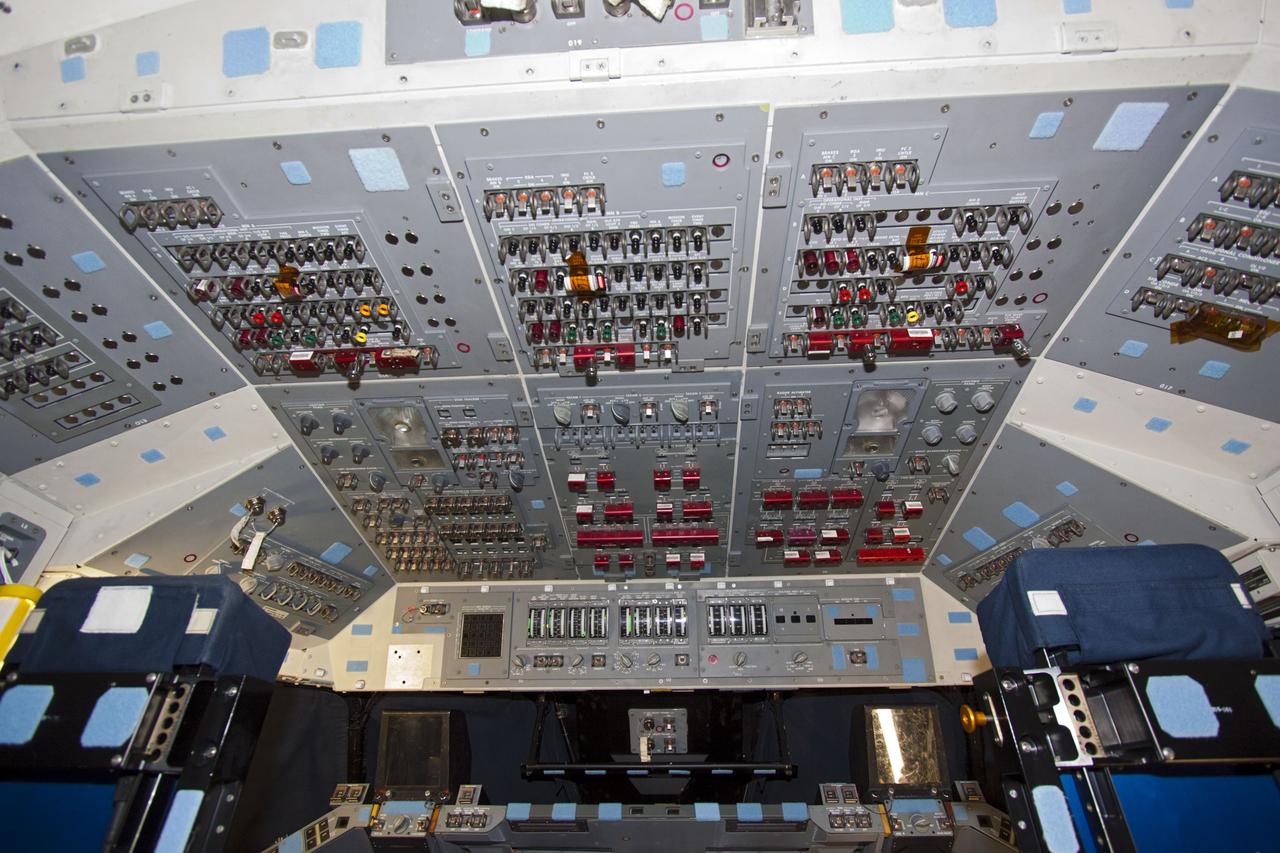
CAPE CANAVERAL, Fla. – In Orbiter Processing Facility-2 at NASA's Kennedy Space Center in Florida, a plethora of switches fills the control panel on the flight deck of space shuttle Atlantis. The flight deck is illuminated one last time as preparations are made for the shuttle's final power down during Space Shuttle Program transition and retirement activities. Atlantis is being prepared for public display in 2013 at the Kennedy Space Center Visitor Complex. For more information, visit http://www.nasa.gov/shuttle. Photo credit: NASA/Jim Grossmann