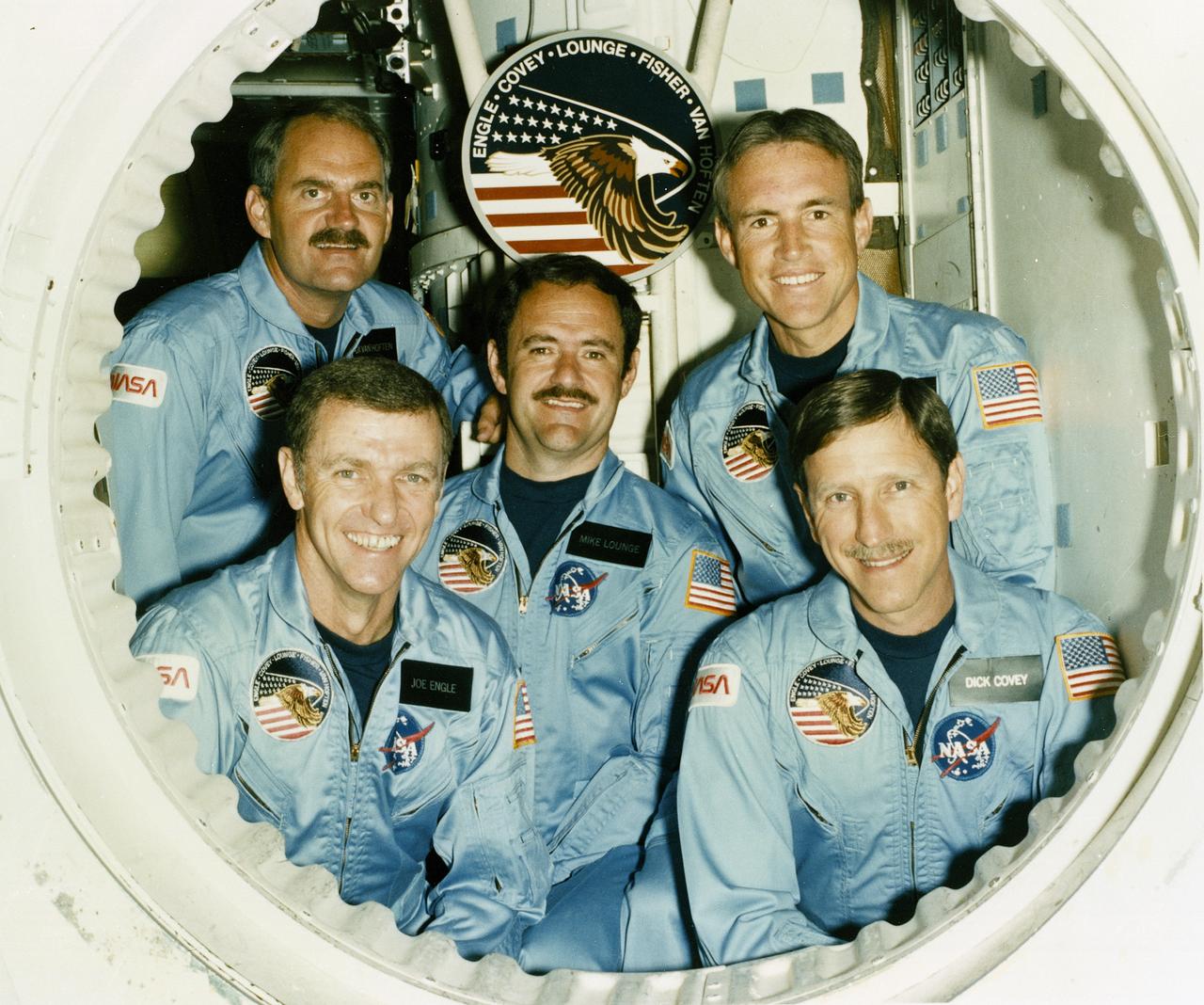
The crew assigned to the STS-51I mission included (front row left to right) Joe H. Engle, commander; and Richard O. Covey, pilot. In the center is John M. (Mike) Lounge, mission specialist. On the back row, from left to right, are mission specialists James D. van Hoften, and William F. Fisher. Launched aboard the Space Shuttle Discovery on August 27, 1985 at 6:58:01 am (EDT), the STS-51I mission’s primary payloads were three communication satellites: the ASC-1 for the American Satellite Company; the AUSSAT-1, an Australian communications satellite; and the SYNCOM-IV-4, the synchronous communications satellite.
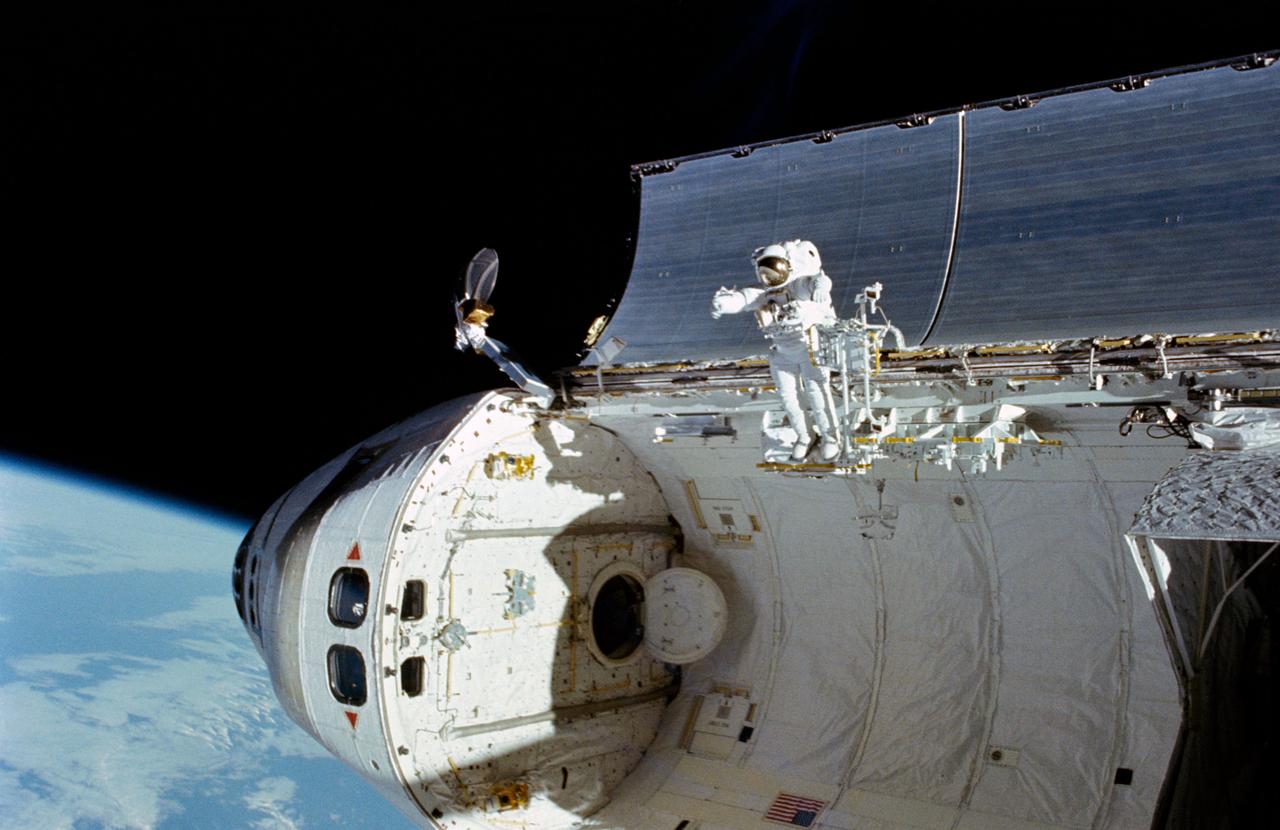
51I-102-048 (4-5 Sept 1985) --- A 35mm frame showing astronaut William F. Fisher standing on the edge of Discovery's cargo bay (in foot restraint) during the second day of a two-day effort to capture, repair and re-release the Syncom IV-3 communications satellite. Astronaut James D. van Hoften, standing on the Discovery's RMS arm, exposed the frame.
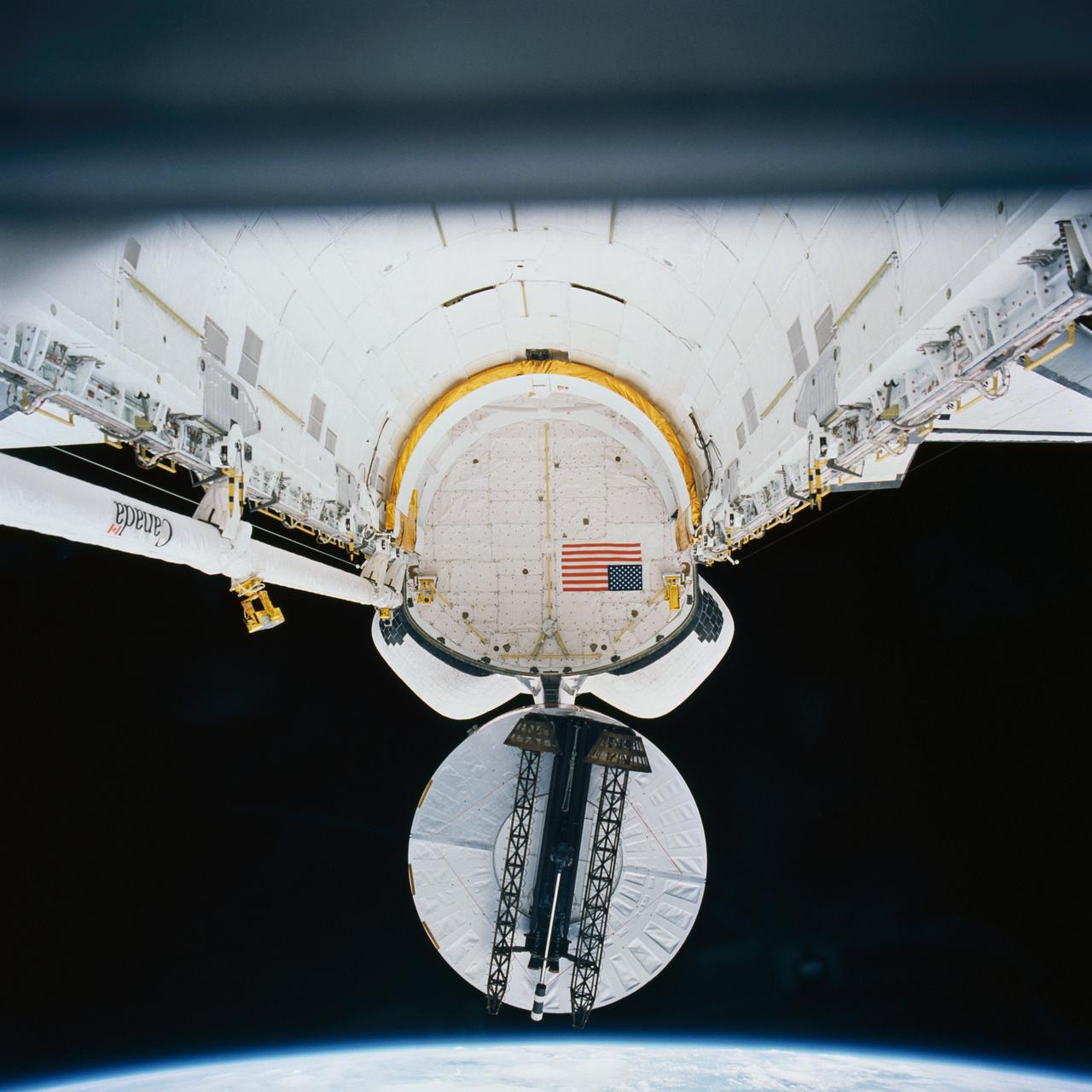
STS032-87-030 (10 Jan 1990) --- The Syncom IV-5 communications satellite leaves the cargo bay of Columbia, as crewmembers aboard the record-setting Space Shuttle successfully complete the first of two major tasks for STS-32. Two days later, the five astronauts successfully captured the Long Duration Exposure Facility (LDEF). The Syncom satellite, also called Leasat, is to be leased to the U.S. Navy by Hughes Aircraft Co. The crew went on to spend 11 days aboard Columbia before a successful landing at Edwards Air Force Base.