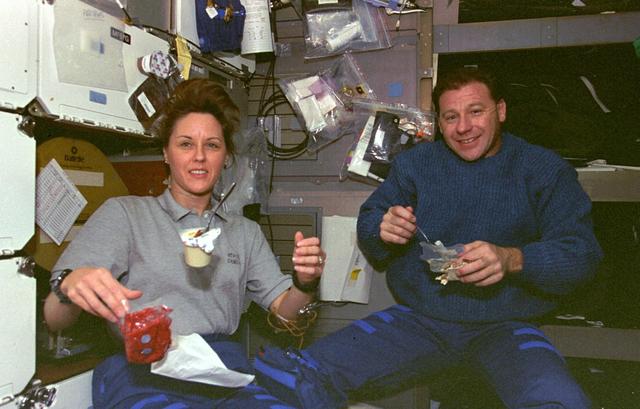
STS073-356-024 (20 October - 5 November 1995) --- Payload specialist Albert Sacco Jr. joins astronaut Kathryn C. Thornton, payload commander, for mealtime on the middeck of the Earth-orbiting Space Shuttle Columbia. Thornton is about to open a packet of strawberries, while a can of vanilla pudding floats before her. Sacco is about to grab a spoonful of rice pilaf while holding a peanut butter and jelly sandwich on a tortilla. The two were joined by five other crewmembers in support of 16-days' in-space research in support of the United States Microgravity Laboratory (USML-2) mission.
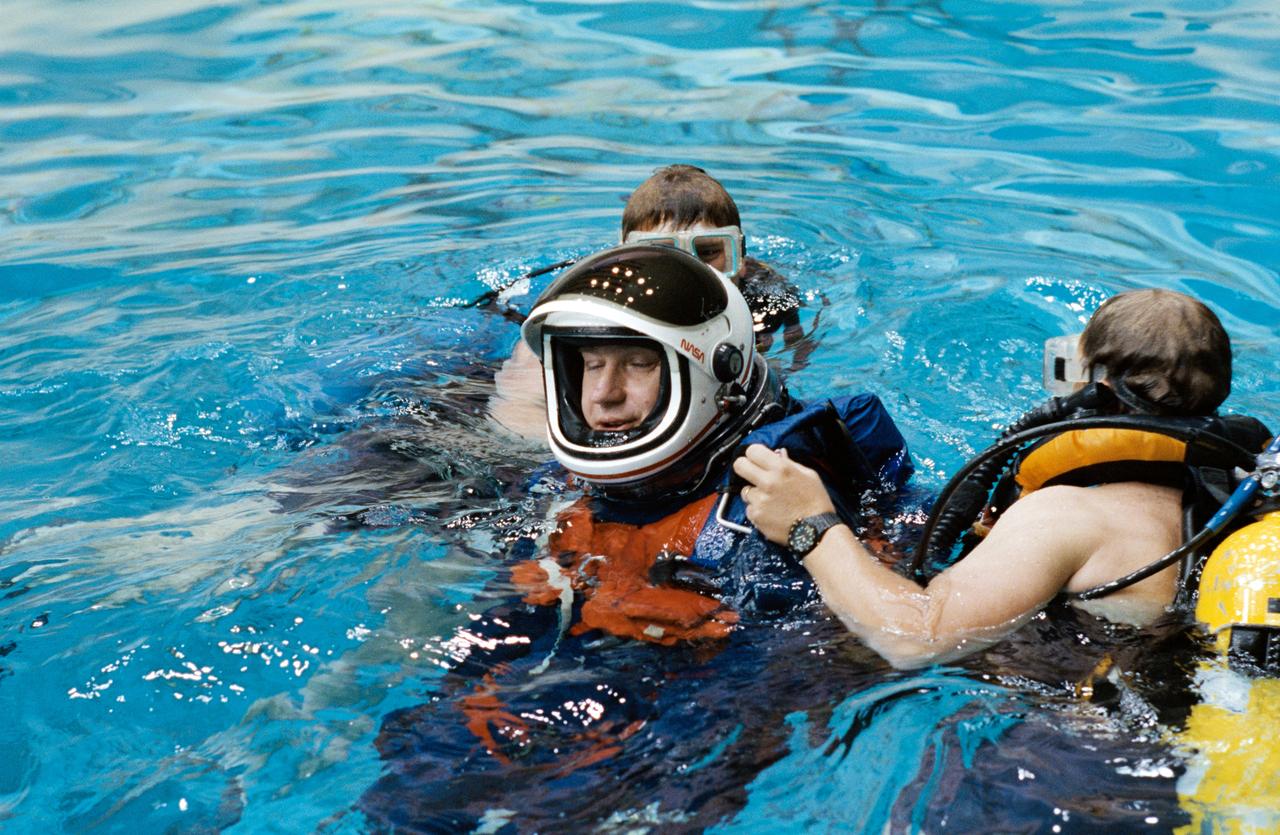
S92-32108 (May 1992) --- Payload specialist Albert Sacco Jr. uses a one-person life raft during emergency bailout training exercises in the Johnson Space Center?s (JSC) Weightless Environment Training Facility (WET-F). Sacco is an alternate payload specialist for the United States Microgravity Laboratory (USML-1) mission, scheduled for launch later this year. EDITOR?S NOTE: Sacco was later named as prime crew payload specialist for the USML-2 mission (STS-73), scheduled for 1995.
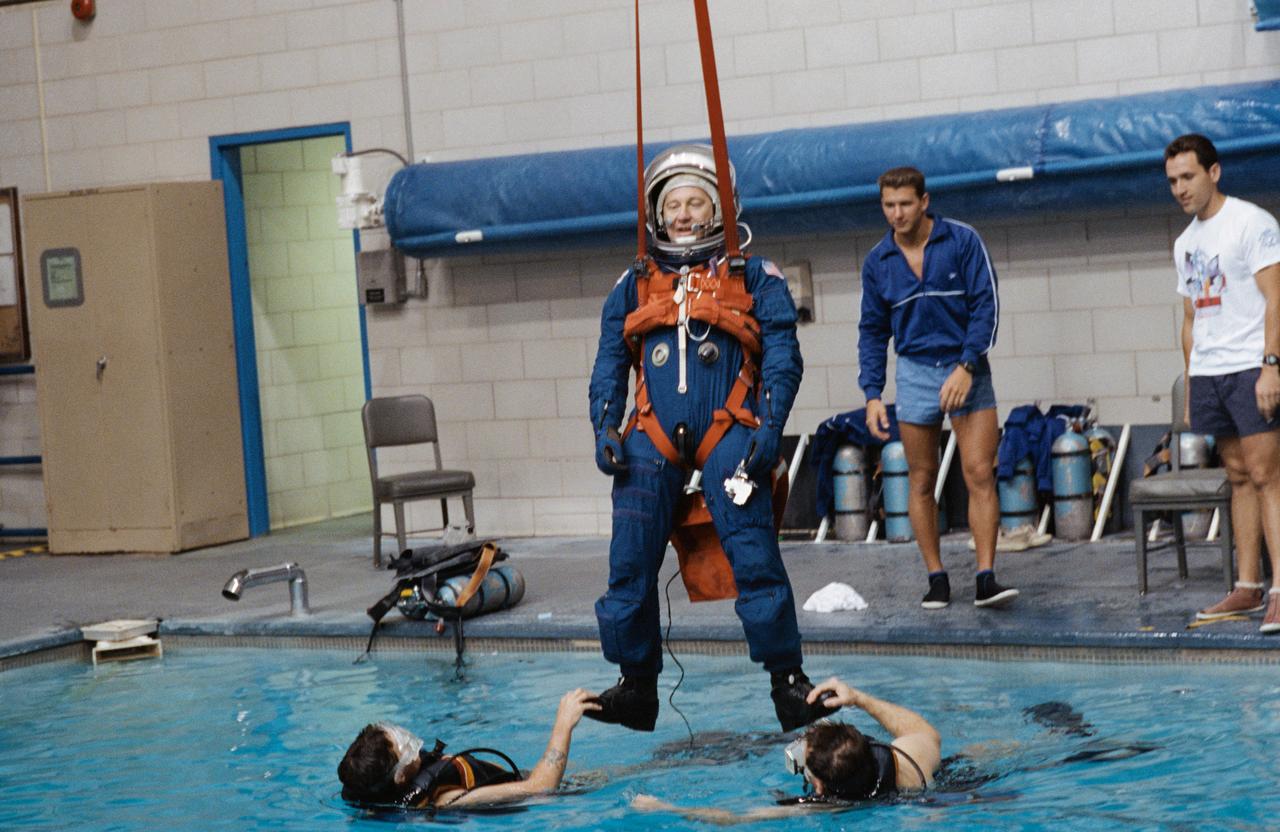
S92-32111 (May 1992) --- Payload specialist Albert Sacco Jr. is assisted by two SCUBA-equipped divers as he hangs by his parachute harness during emergency bailout training exercises in the Johnson Space Center?s (JSC) Weightless Environment Training Facility (WET-F). Sacco is an alternate payload specialist for the United States Microgravity Laboratory (USML-1) mission, scheduled for launch later this year. EDITOR?S NOTE: Sacco was later named as prime crew payload specialist for the USML-2 mission (STS-73), scheduled for 1995.
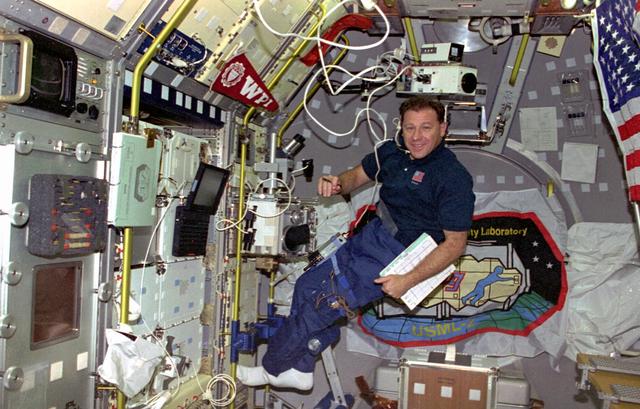
STS073-106-001 (20 October-5 November 1995) --- Payload specialist Albert Sacco Jr. takes direction from a crew mate out of frame onboard the United States Microgravity Laboratory (USML-2) science module in the cargo bay of the Space Shuttle Columbia. Sacco was about to check out an experiment in a glovebox, which represented one of the busier areas during the 16-day USML-2 flight.
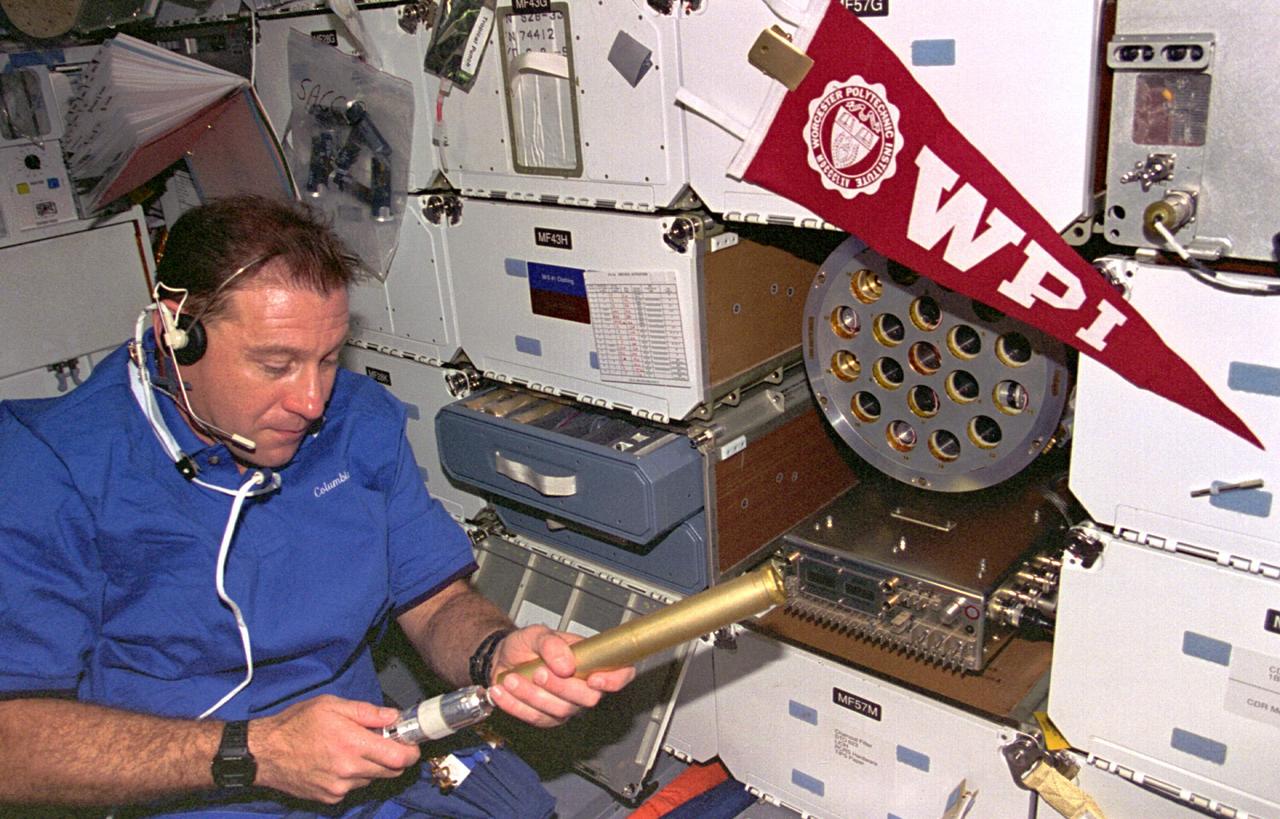
STS073-353-018 (20 October - 5 November 1995) --- Payload specialist Albert Sacco Jr. inspects a crystal in a cylindrical autoclave on the middeck of the Earth-orbiting Space Shuttle Columbia. This Zeolite Crystal Growth (ZCG) experiment was one of a few U.S. Microgravity Laboratory (USML-2) experiments that were conducted in both the Shuttle proper and its primary cargo's science module in the payload bay. Most of the experiments were conducted solely in the science module. Sacco was one of two guest researchers who joined five NASA astronauts for 16 days of Earth-orbit research in support of USML-2.
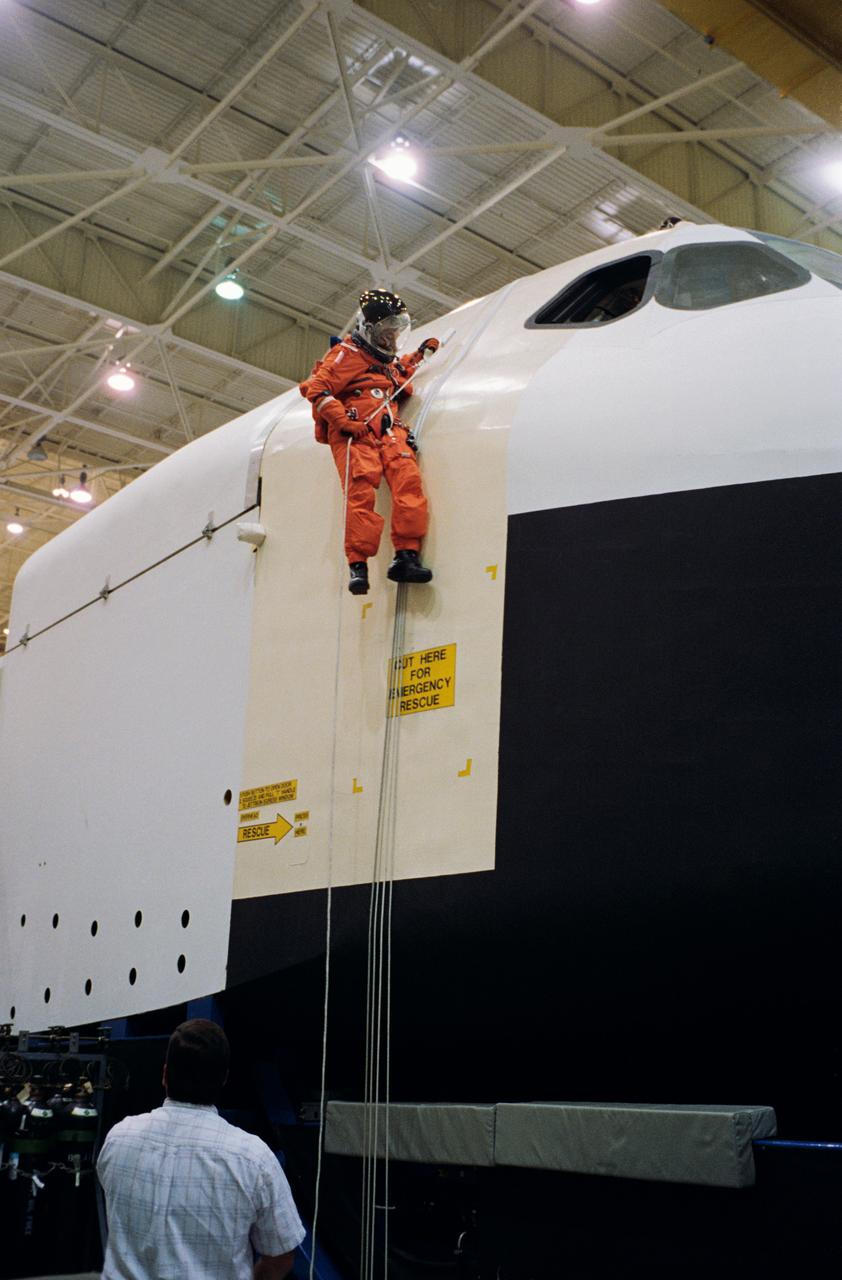
S95-09163 (27 Apr. 1995) --- Payload specialist Albert Sacco Jr. rappels from the top of a Shuttle mockup-trainer using a Sky-genie device during emergency egress training with his six STS-73 crew mates. The seven will fly aboard the Space Shuttle Columbia later this year to support the United States Microgravity Laboratory (USML-2) mission.
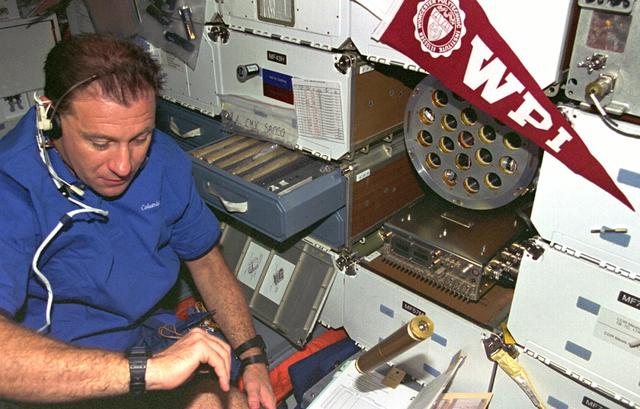
STS073-353-010 (20 October - 5 November 1995) --- Payload specialist Albert Sacco Jr. checks out the Zeolite Crystal Growth (ZCG) on the middeck of the Earth-orbiting Space Shuttle Columbia. ZCG evaluated Zeolite crystallization and growth in the microgravity environment aboard Columbia in order to achieve high yields of large, nearly perfect crystals in space. Zeolites are complex arrangements of silica and alumina that occur naturally as well as synthetically.
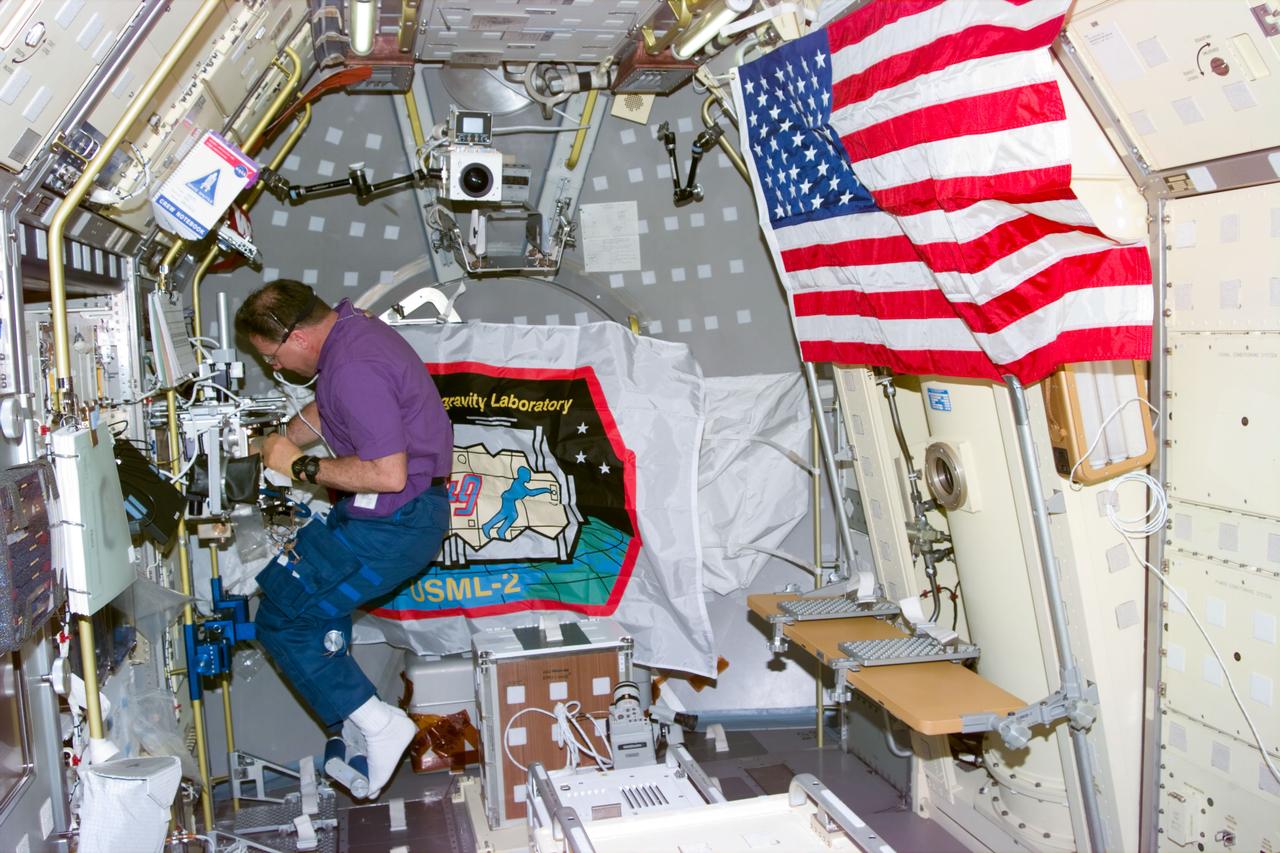
STS073-E-5024 (23 Oct. 1995)--- Albert Sacco Jr., STS-73 payload specialist, works in the Glovebox on the portside of the science module aboard the space shuttle Columbia in Earth orbit. This frame was exposed with the color Electronic Still Camera (ESC) assigned to the scheduled 16-day United States Microgravity Laboratory (USML-2) mission.

These five astronauts and two United States Microgravity Laboratory (USML) payload specialists pause from a rigid training schedule for the STS-73 crew portrait. On the front row, left to right, are Albert Sacco Jr., payload specialist; Kent V. Rominger, pilot; and Michael E. Lopez-Alegria, mission specialist. On the back row are, left to right, Catherine G. Coleman, mission specialist; Kenneth D. Bowersox, commander; Fred W. Leslie, payload specialist; and Kathryn C. Thornton, payload commander. The STS-073 crew launched aboard the Space Shuttle Columbia on October 20, 1995 at 9:53:00.069 am (EDT). The mission served as the second flight of the Microgravity Laboratory (USML-2).
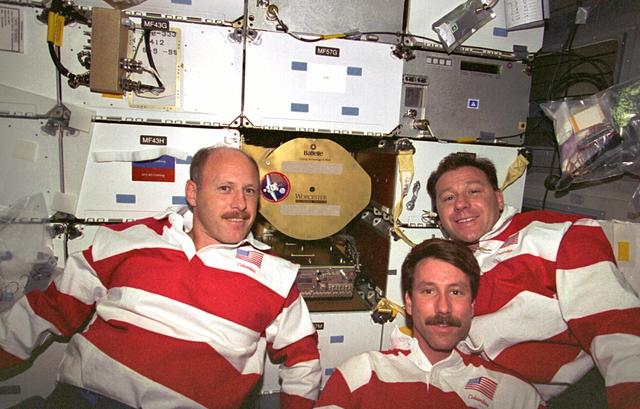
STS073-337-021 (20 October - 5 November 1995) --- Three members of the crew check out the Zeolite Crystal Growth (ZCG) on the middeck of the Earth-orbiting Space Shuttle Columbia. Left to right are astronauts Kenneth D. Bowersox and Kent V. Rominger, mission commander and pilot, respectively, and payload specialist Albert Sacco Jr. ZCG evaluated Zeolite crystallization and growth in the microgravity environment aboard Columbia in order to achieve high yields of large, nearly perfect crystals in space. Zeolites are complex arrangements of silica and alumina that occur naturally as well as synthetically.
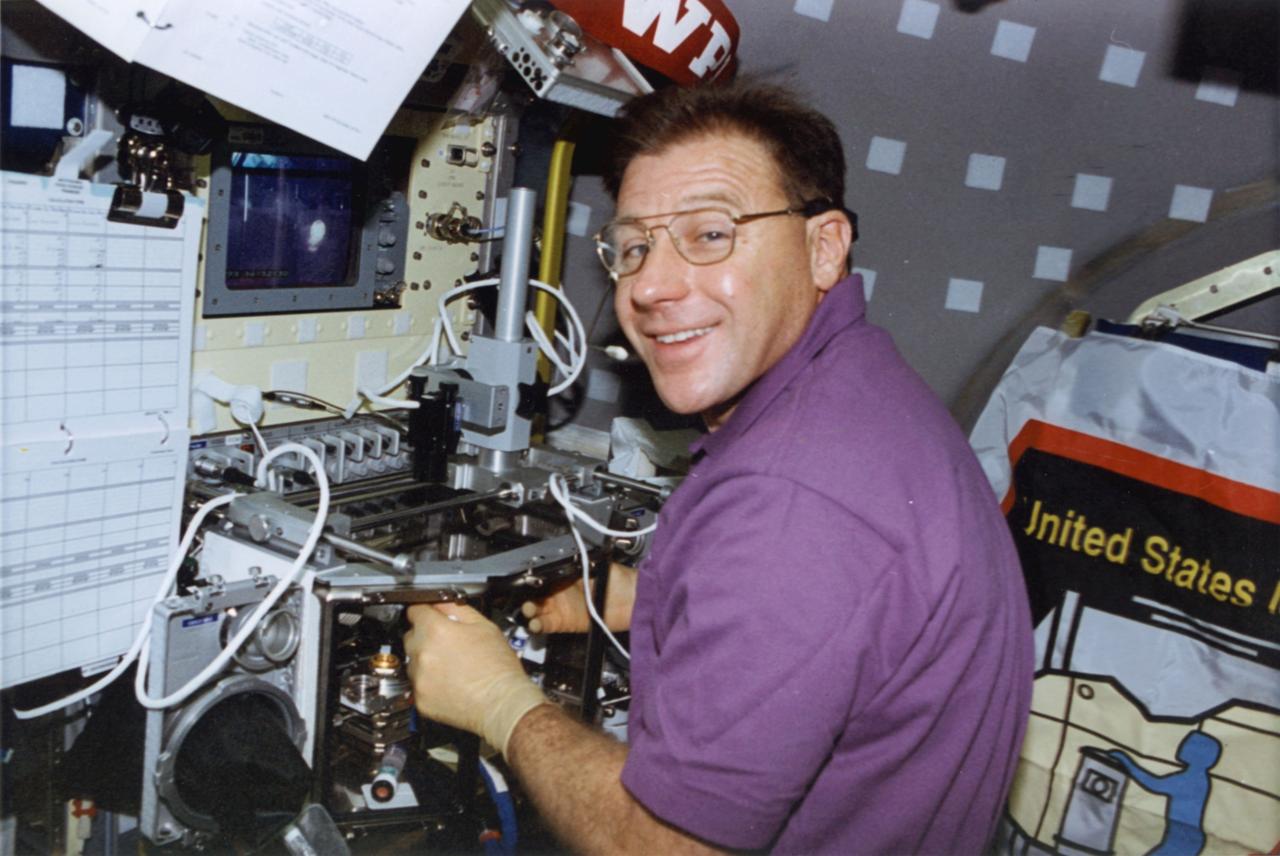
Dr. Albert Sacco with Glovebox

STS073-E-5003 (23 Oct. 1995) --- Astronaut Kathryn C. Thornton, STS-73 payload commander, works at the Drop Physics Module (DPM) on the portside of the science module aboard the Space Shuttle Columbia in Earth orbit. Payload specialist Albert Sacco Jr. conducts an experiment at the Glovebox. This frame was exposed with the color Electronic Still Camera (ESC) assigned to the 16-day United States Microgravity Laboratory (USML-2) mission.
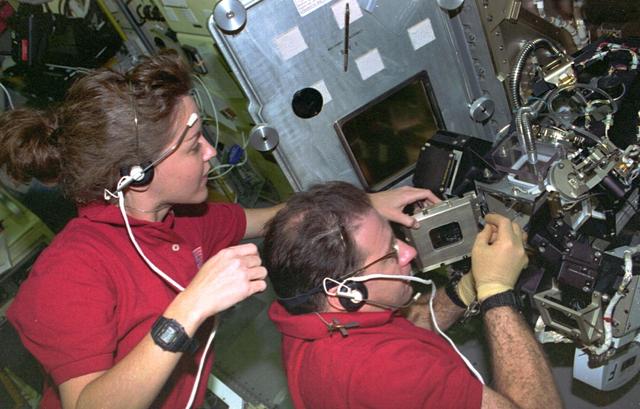
STS073-108-005 (20 October-5 November 1995) --- Two members of the crew perform an in-flight maintenance on the Drop Physics Module (DPM) in the science module aboard the Earth-orbiting Space Shuttle Columbia. Payload commander Kathryn C. Thornton and payload specialist Albert Sacco Jr. were part of a seven-member crew that spent 16 full days in space in support of the United States Microgravity Laboratory (USML-2) mission.
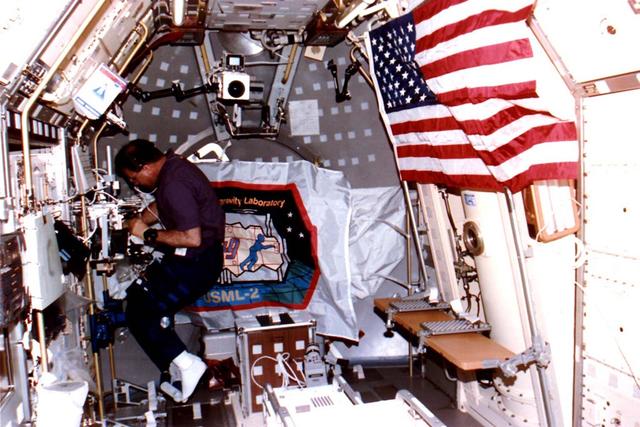
Albert Sacco Jr., payload specialist for STS-73, works in the glovebox on the portside of the science module aboard the Space Shuttle Columbia in earth orbit.
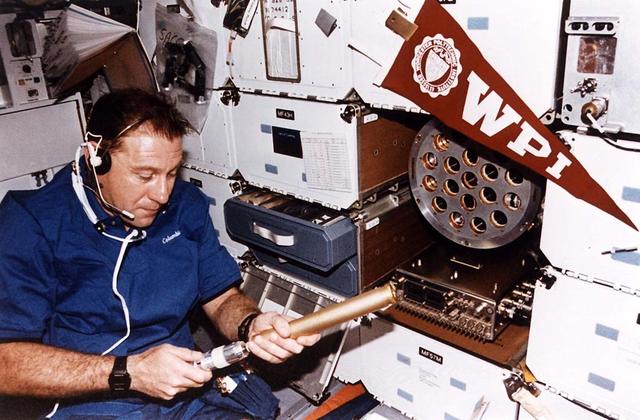
Payload specialist Albert Sacco Jr. inspects a crystal in a cylindrical autoclave on the mid-deck of the earth-orbiting space shuttle Columbia. This Zeolite Crystal Growth (ZCG) experiment was one of a few U.S. Microgravity Laboratory (USML-2) experiments that were conducted in both the Shuttle proper and its primary cargo's science module in the payload bay. Most of the experiments were conducted solely in the science module. Sacco was one of two guest researchers who joined five NASA astronauts for 16 days of Earth-orbit.
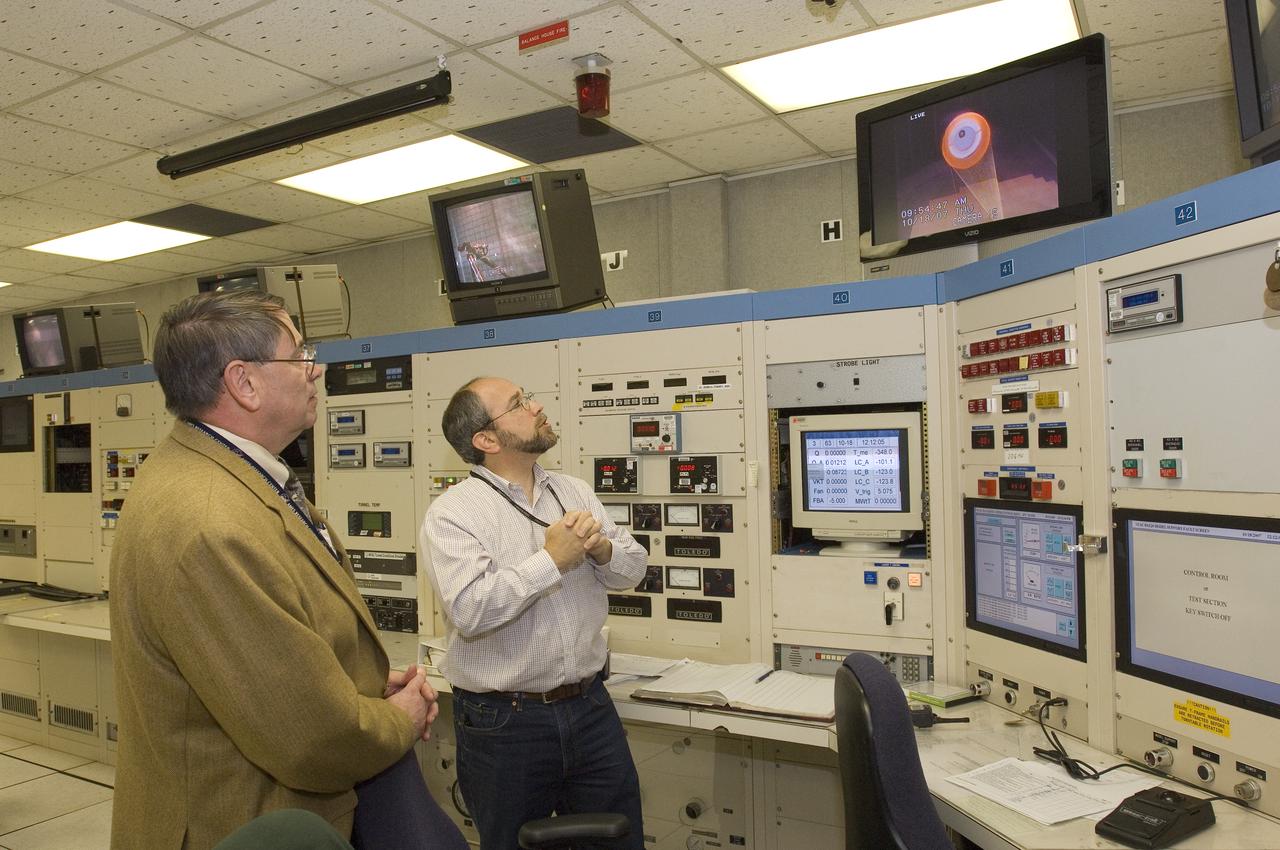
Ames Center Director S. Pete Worden visits the NFAC 80x120ft wind tunnel control room during a Parachute deployment test. Joe Sacco explains test procedure to Worden (on left).
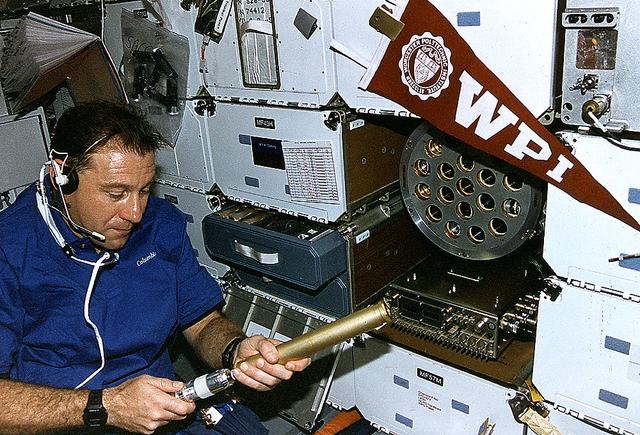
Onboard Space Shuttle Columbia (STS-73) Payload Specialist Albert Sacco loads autoclaves using a power screwdriver into the Zeolite Crystal Growth (ZCG) experiment in the middeck for the United States Microgravity Laboratory 2 (USML-2) Spacelab mission.
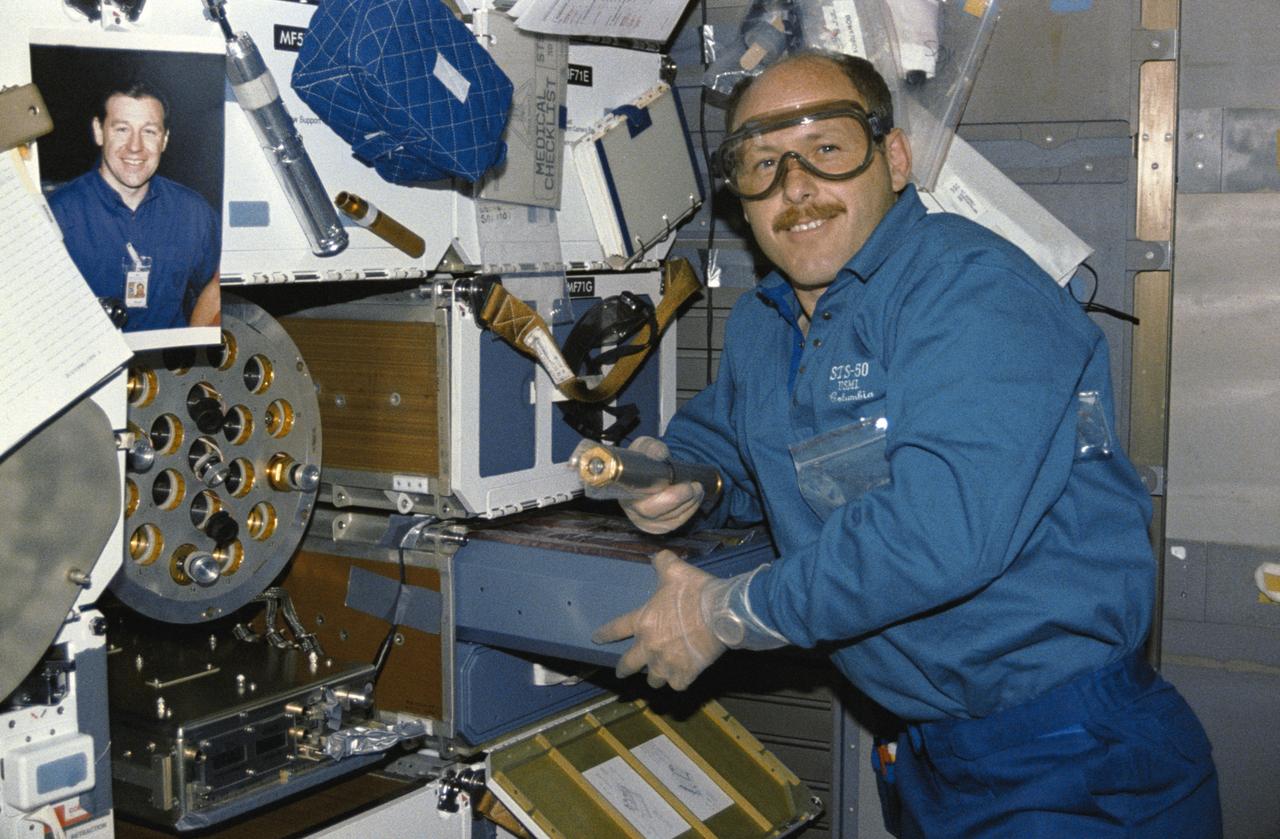
STS50-262-004 (25 June-9 July 1992) --- Astronaut Kenneth D. Bowersox, STS-50 pilot, holds an autoclave used in the growing of zeolite crystals on the middeck of the Earth-orbiting Space Shuttle Columbia. He is standing near the Zeolite Crystal Growth (ZCG) furnace, which is housed in the space of two stowage lockers. On the 14-day U.S. Microgravity Laboratory mission, zeolite crystals were grown in 38 individual autoclaves, which were joined in pairs to be inserted into the 19 furnace orifices. While the autoclaves appear the same externally, there are several types of internal arrangements that were tested to determine which one provides the best mixing of the component solutions. The portrait of alternate payload specialist Albert Sacco, Jr. is mounted nearby. Sacco, serving as a ground controller at Marshall Space Flight Center in Alabama, worked in conjunction with the red shift crew in the science module.

STS073-S-002 (July 1995) --- These five astronauts and two United States Microgravity Laboratory (USML) payload specialists pause from a rigid training schedule for the STS-73 crew portrait. On the front row, left to right, are Albert Sacco Jr., payload specialist; Kent V. Rominger, pilot; Michael E. Lopez-Alegria, mission specialist. On the back row are, left to right, Catherine G. Coleman, mission specialist; Kenneth D. Bowersox, commander; Fred W. Leslie, payload specialist; and Kathryn C. Thornton, payload commander.
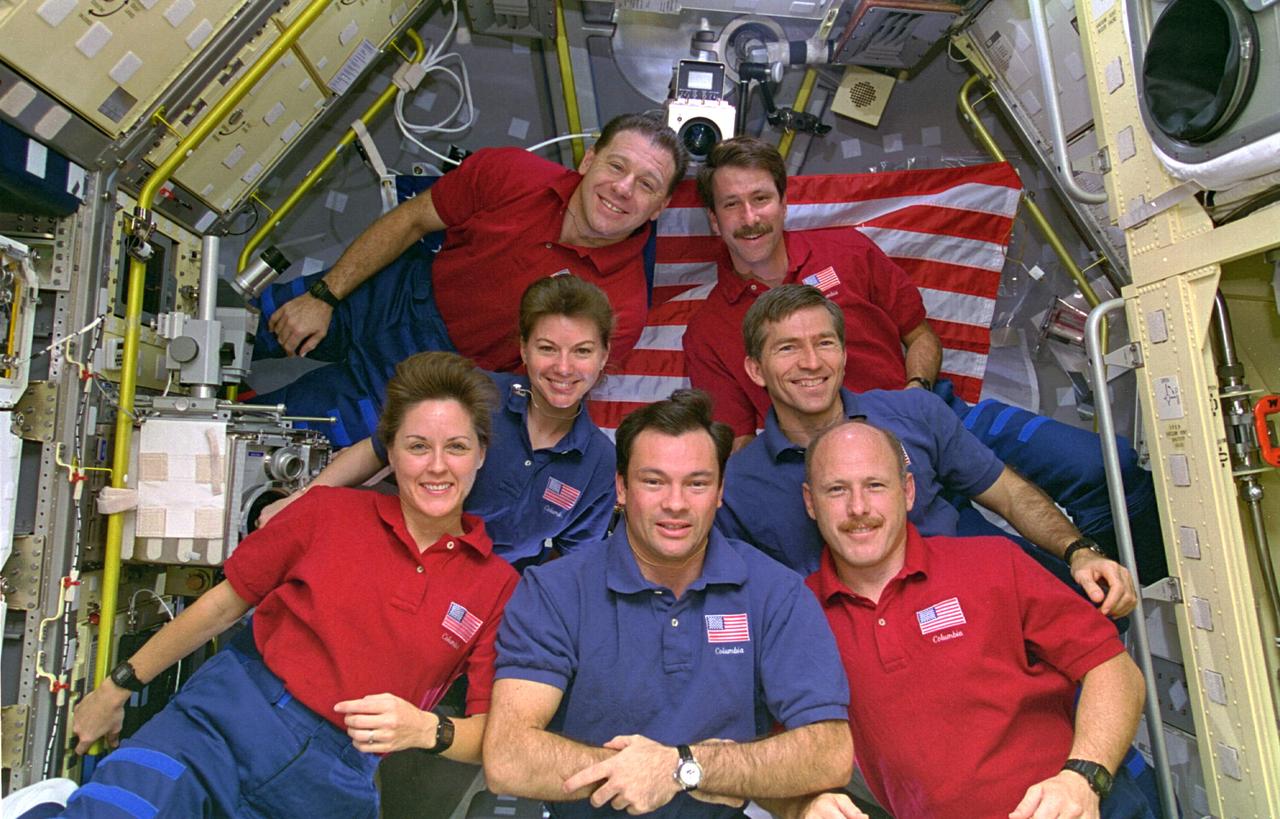
STS073-303-015 (20 October - 5 November 1995) --- The crew members picked the site of their busy workdays as the setting for the traditional in-flight crew portrait, as personnel from both work shifts assembled in the science module supporting the U.S. Microgravity Laboratory (USML-2) mission. Astronaut Michael E. Lopez-Alegria, mission specialist, has his arms folded at front center. The others pictured, counter-clockwise from that point, are Kathryn C. Thornton, payload commander; Catherine G. Coleman, mission specialist; Albert Sacco, payload specialist; Kent V. Rominger, pilot; Fred W. Leslie, payload specialist; and Kenneth D. Bowersox, mission commander.
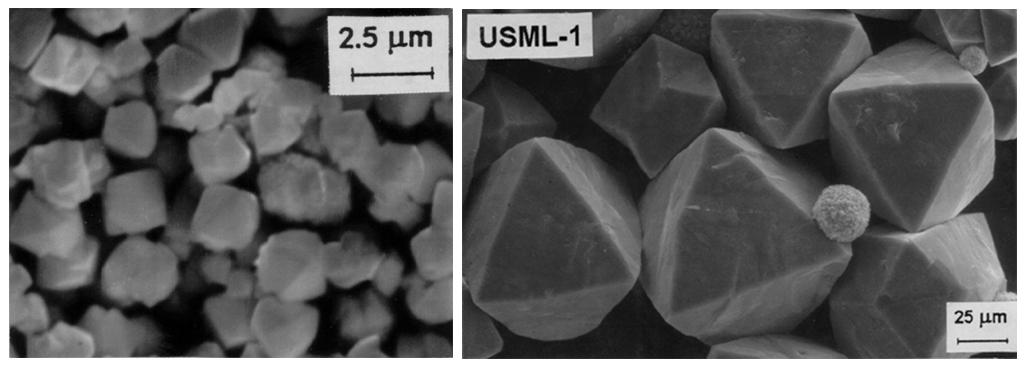
Zeolites are crystalline aluminosilicates that have complex framework structures. However, there are several features of zeolite crystals that make unequivocal structure determinations difficult. The acquisition of reliable structural information on zeolites is greatly facilitated by the availability of high-quality specimens. For structure determinations by conventional diffraction techniques, large single-crystal specimens are essential. Alternatively, structural determinations by powder profile refinement methods relax the constraints on crystal size, but still require materials with a high degree of crystalline perfection. Studies conducted at CAMMP (Center for Advanced Microgravity Materials Processing) have demonstrated that microgravity processing can produce larger crystal sizes and fewer structural defects relative to terrestrial crystal growth. Principal Investigator: Dr. Albert Sacco
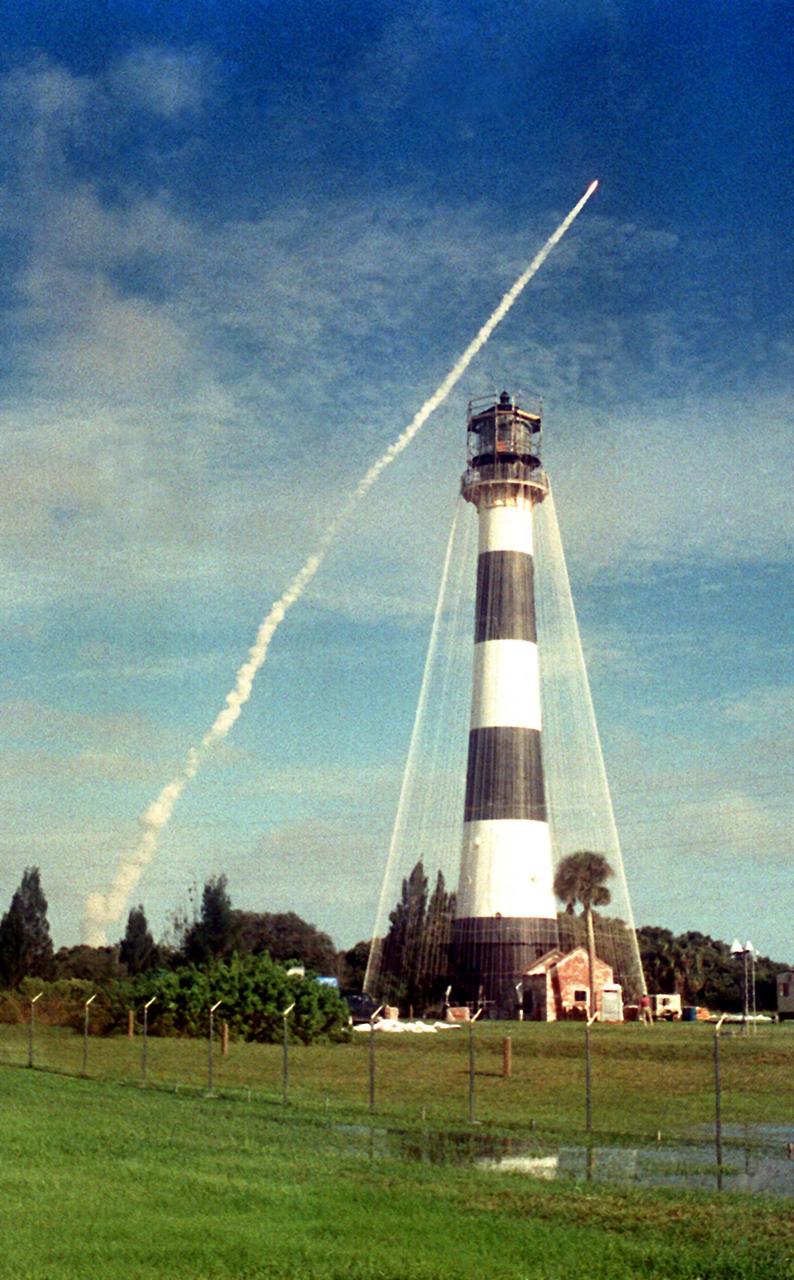
KENNEDY SPACE CENTER, FLA. -- Space Shuttle Columbia soars into the cloud-washed sky above Cape Canaveral Lighthouse. After six scrubs from the original Sept. 25 launch date, liftoff occurred Oct. 20 at 9:53 a.m. EDT. The crew of seven comprises Commander Ken Bowersox, Pilot Kent Rominger, Mission Specialists Kathy Thornton (Payload Commander), Catherine Coleman and Michael Lopez-Alegria, plus Payload Specialists Fred Leslie and Albert Sacco. The 72nd Shuttle mission, STS-73 marks the second flight of the U.S. Microgravity Laboratory. Research is being conducted in five areas: fluid physics, materials science, biotechnology, combustion science, and commercial space processing. The lighthouse, undergoing refurbishment and upgrade, is shown with a network of nylon lines ready for canvas panels to be attached. The canvas shroud will protect the surrounding area during sand-blasting of the lead-based paint.
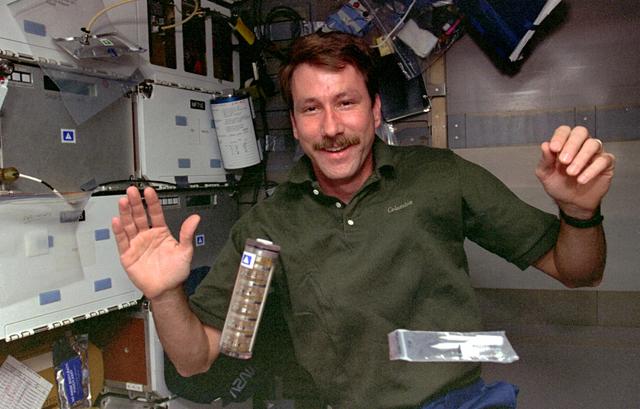
STS073-351-009 (20 October - 5 November 1995) --- Astronaut Kent V. Rominger, STS-73 pilot, retrieves a protein sample on the middeck of the Earth-orbiting Space Shuttle Columbia. Rominger, along with four other NASA astronauts and two guest researchers, spent 16 full days in space in support of the United States Microgravity Laboratory (USML-2) mission.
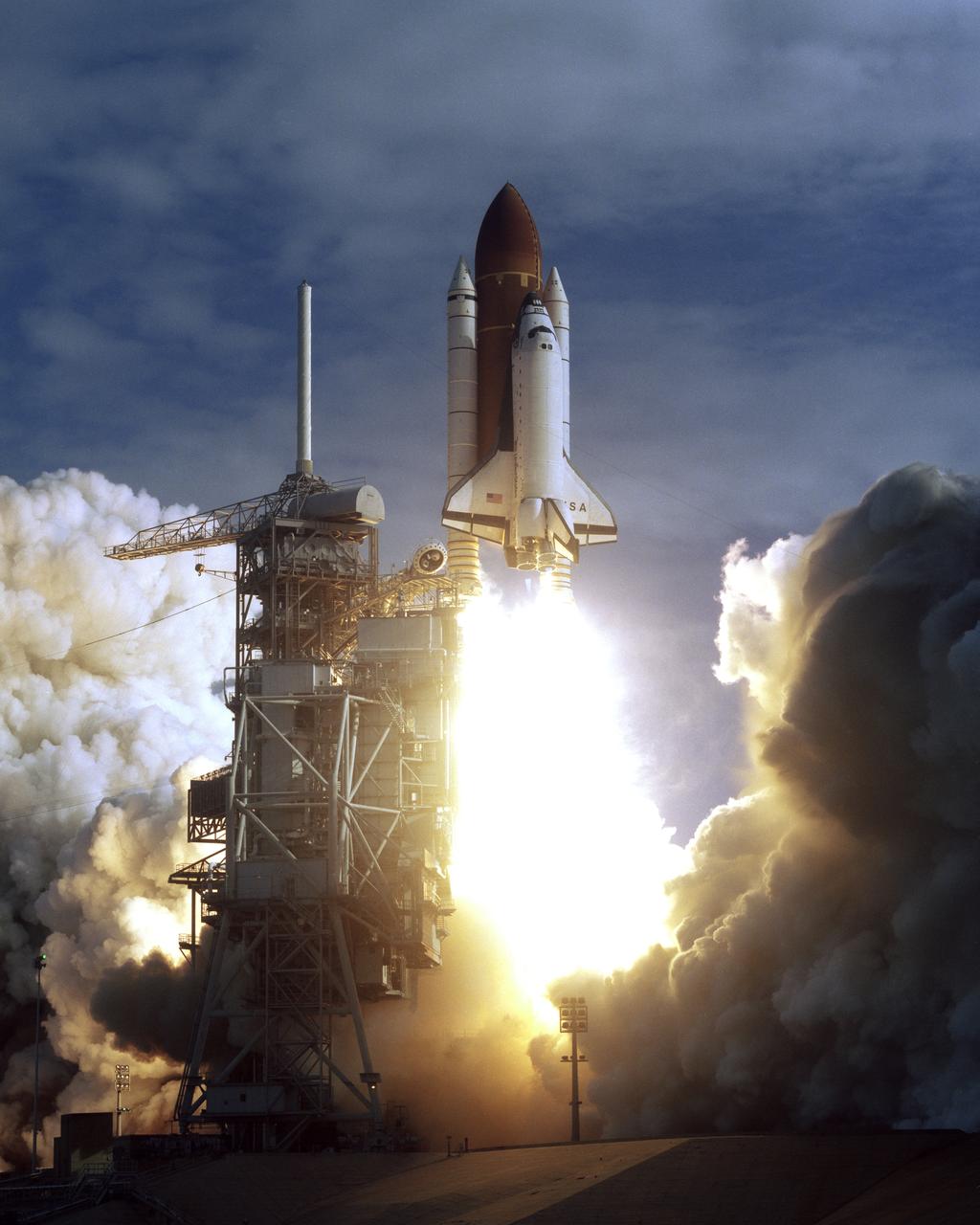
STS073-S-030 (20 Oct. 1995) --- The space shuttle Columbia lifts off from Launch Pad 39B, at the Kennedy Space Center (KSC), to begin a scheduled 16-day mission in Earth orbit in support of the United States Microgravity Laboratory (USML-2). Five NASA astronauts and two scientists from the private sector were onboard. Liftoff occurred at 9:53:00 a.m. (EDT) on Oct. 20, 1995. The mission represents the 72nd space shuttle flight for NASA. The crew will be working around the clock on a diverse assortment of USML-2 experiments located in a science module in Columbia's cargo bay. Fields of study include fluid physics, materials science, biotechnology, combustion science and commercial space processing technologies. The crew is made up of astronauts Kenneth D. Bowersox, commander; Kent V. Rominger, pilot; Kathryn C. Thornton, payload commander; Michael E. Lopez-Alegria and Catherine G. Coleman, both mission specialists; along with Fred W. Leslie and Albert Sacco Jr., payload specialists. Photo credit: NASA
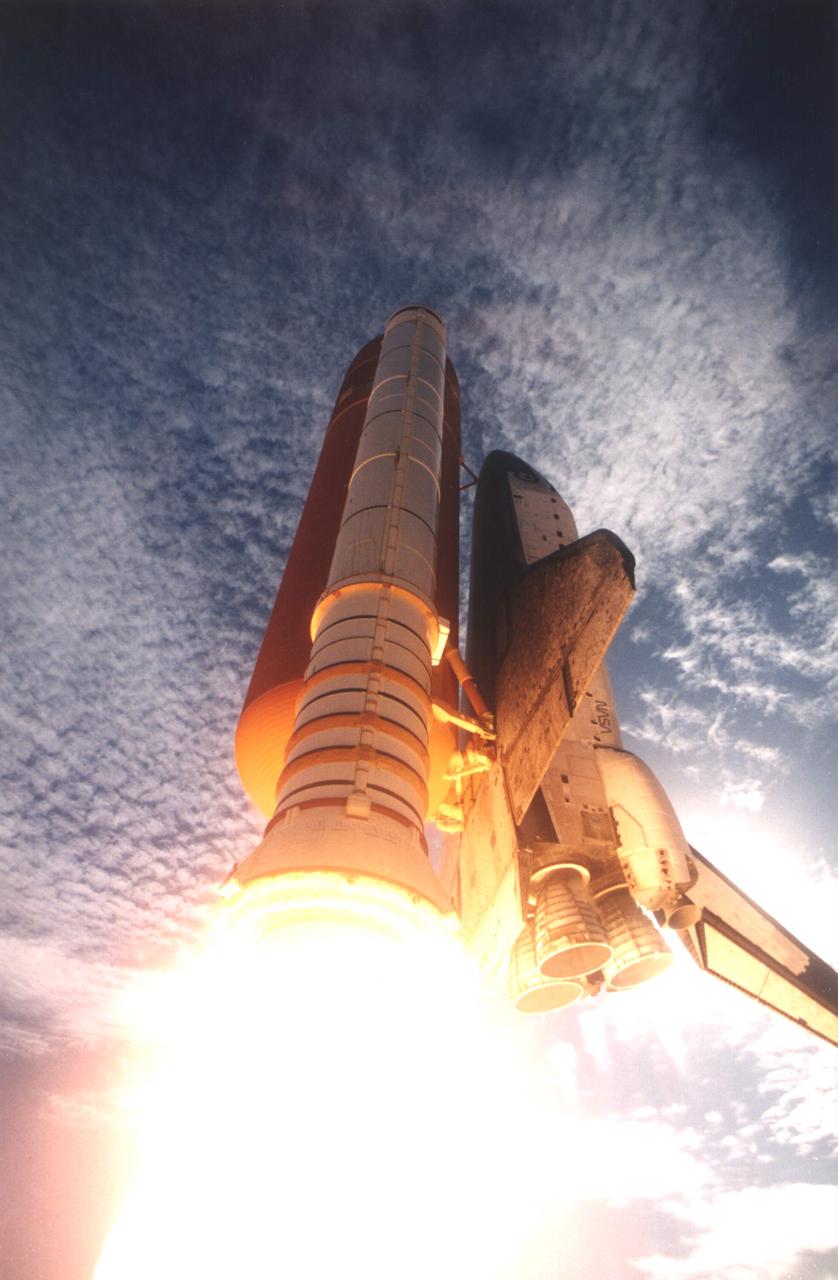
STS073-S-027 (20 October 1995) --- A 35mm camera captured this low-angle view of the Space Shuttle Columbia as it lifted off from Launch Pad 39B, at the Kennedy Space Center (KSC), to begin a scheduled 16-day mission in Earth-orbit in support of the United States Microgravity Laboratory (USML-2). Five NASA astronauts and two scientists from the private sector were onboard. Liftoff occurred at 9:53:00 a.m. (EDT) on October 20, 1995. The mission represents the 72nd Space Shuttle flight for NASA. The crew will be working around the clock on a diverse assortment of USML-2 experiments located in a science module in Columbia's cargo bay. Fields of study include fluid physics, materials science, biotechnology, combustion science and commercial space processing technologies. The crew is made up of astronauts Kenneth D. Bowersox, commander; Kent V. Rominger, pilot; Kathryn C. Thornton, payload commander; Michael E. Lopez-Alegria and Catherine G. Coleman, mission specialists; along with Fred W. Leslie and Albert Sacco Jr., payload specialists.

STS073-S-029 (20 October 1995) --- A stationary 70mm camera captured this wide view of the Space Shuttle Columbia as it lifted off from Launch Pad 39B, at the Kennedy Space Center (KSC), to begin a scheduled 16-day mission in Earth-orbit in support of the United States Microgravity Laboratory (USML-2). Five NASA astronauts and two scientists from the private sector were onboard. Liftoff occurred at 9:53:00 a.m. (EDT) on October 20, 1995. The mission represents the 72nd Space Shuttle flight for NASA. The crew will be working around the clock on a diverse assortment of USML-2 experiments located in a science module in Columbia's cargo bay. Fields of study include fluid physics, materials science, biotechnology, combustion science and commercial space processing technologies. The crew is made up of astronauts Kenneth D. Bowersox, commander; Kent V. Rominger, pilot; Kathryn C. Thornton, payload commander; Michael E. Lopez-Alegria and Catherine G. Coleman, mission specialists; along with Fred W. Leslie and Albert Sacco Jr., payload specialists.