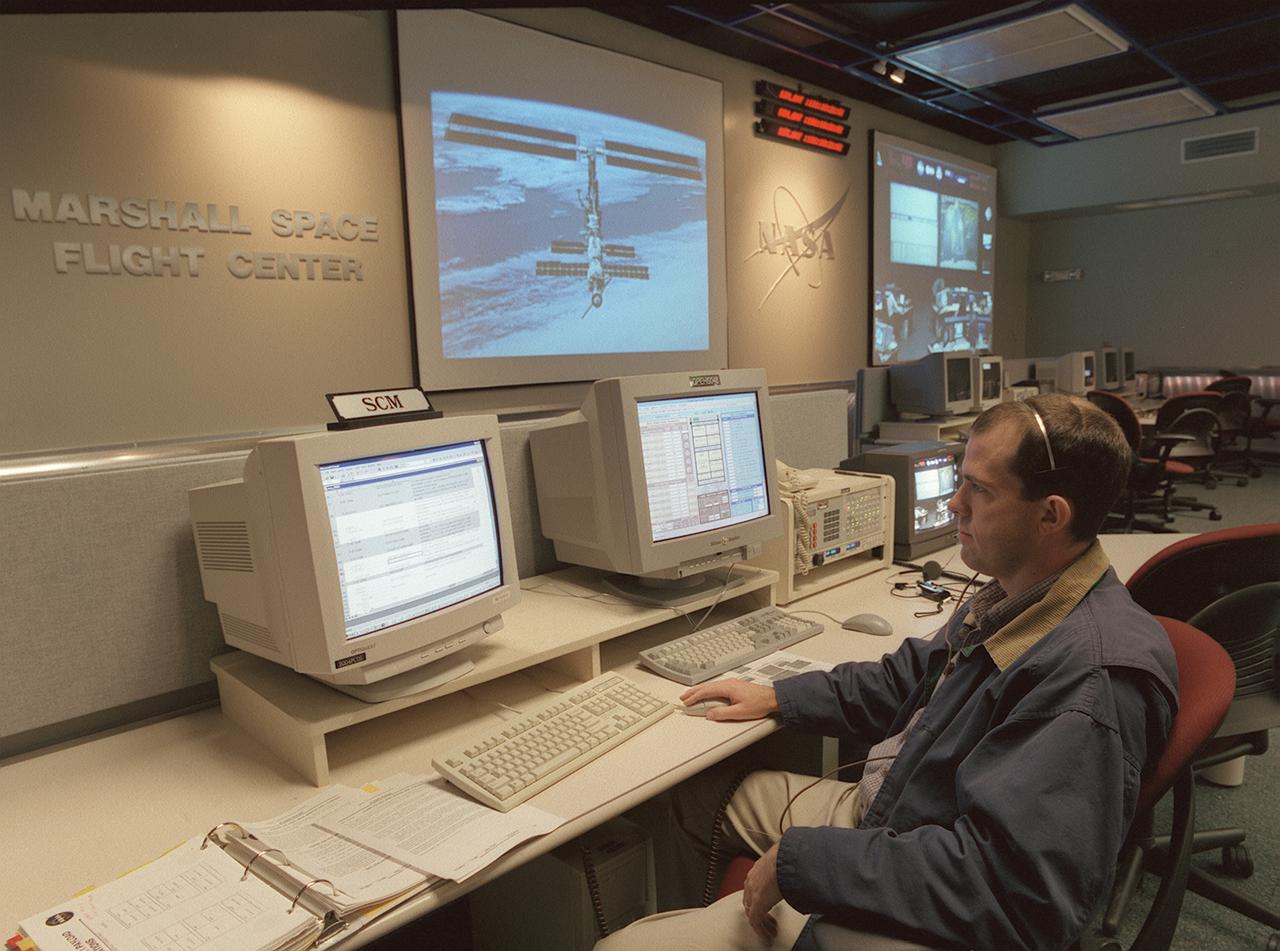
The Payload Operations Center (POC) is the science command post for the International Space Station (ISS). Located at NASA's Marshall Space Flight Center in Huntsville, Alabama, it is the focal point for American and international science activities aboard the ISS. The POC's unique capabilities allow science experts and researchers around the world to perform cutting-edge science in the unique microgravity environment of space. The POC is staffed around the clock by shifts of payload flight controllers. At any given time, 8 to 10 flight controllers are on consoles operating, plarning for, and controlling various systems and payloads. This photograph show the Safety Coordination Manager (SCM) at a work station. The SCM monitors science experiments to ensure they are conducted in a safe manner in accordance with strict safety regulations.

One of many safety posters produced by NACA artists during World War II. The Aircraft Engine Research Laboratory established a Safety Office in 1942 to coordinate and oversee safety-related activities. The lab struggled to maintain a full staff during the war when military research projects were at a peak. NACA management mandated six-day work weeks without overtime and the elimination of holidays. As such, workplace injuries were a serious threat to maintaining productivity needed to sustain the military’s aeronautics efforts.
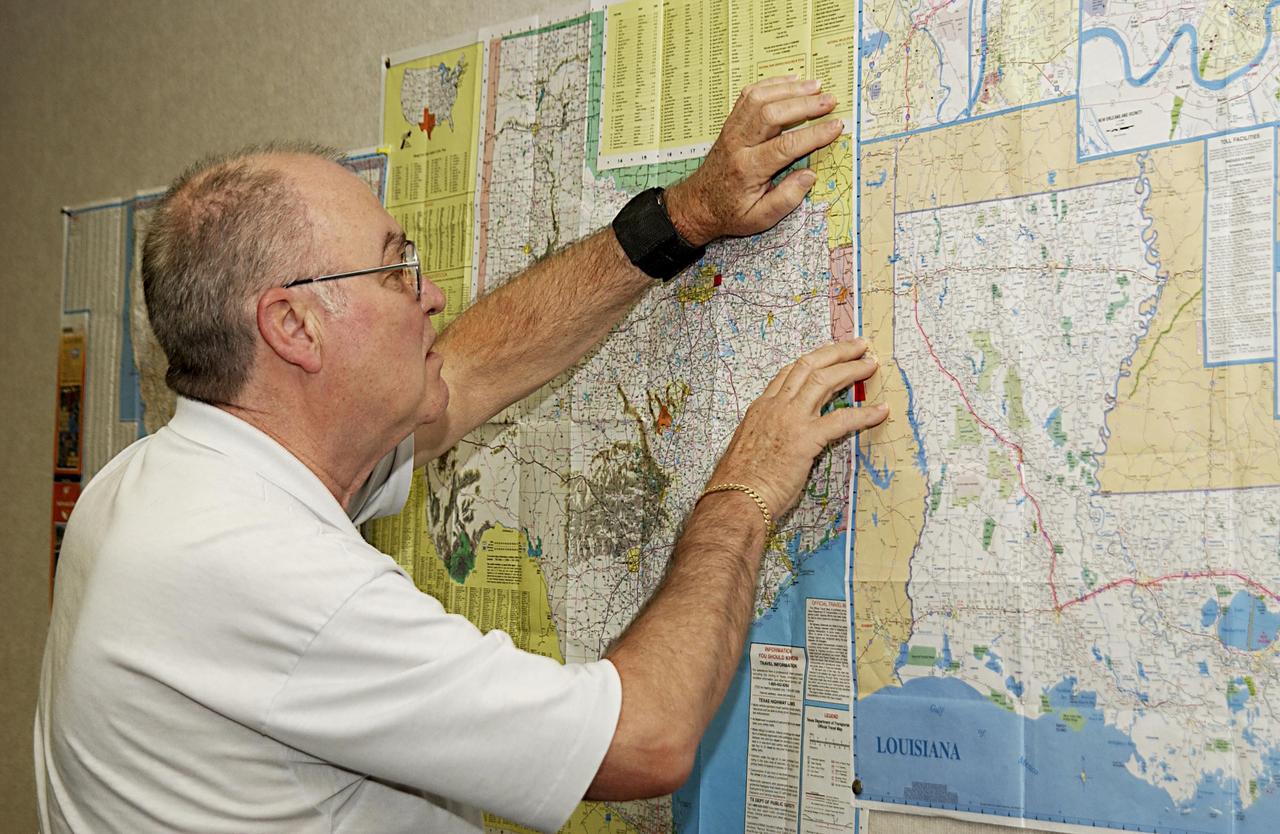
KENNEDY SPACE CENTER, FLA. - Don Maxwell, Safety, United Space Alliance, checks a map of Texas during a meeting of the Recovery Management Team at KSC. The team is part of the investigation into the accident that claimed orbiter Columbia and her crew of seven on Feb. 1, 2003, over East Texas as they returned to Earth after a 16-day research mission. Other team members are Russ DeLoach, chief, Shuttle Mission Assurance Branch, NASA; George Jacobs, Shuttle Engineering; Jeff Campbell, Shuttle Engineering; Dave Rainer, Launch and Landing Operations; the two co-chairs of the Response Management Team, Denny Gagen, Landing Recovery Manager, Chris Hasselbring, Landing Operations, USA; and Larry Ulmer, Safety, NASA. The team is coordinating KSC technical support and assets to the Mishap Investigation Team in Barksdale, La., and providing support for the Recovery teams in Los Angeles, Texas, New Mexico, Arizona and California. In addition, the team is following up on local leads pertaining to potential debris in the KSC area. .
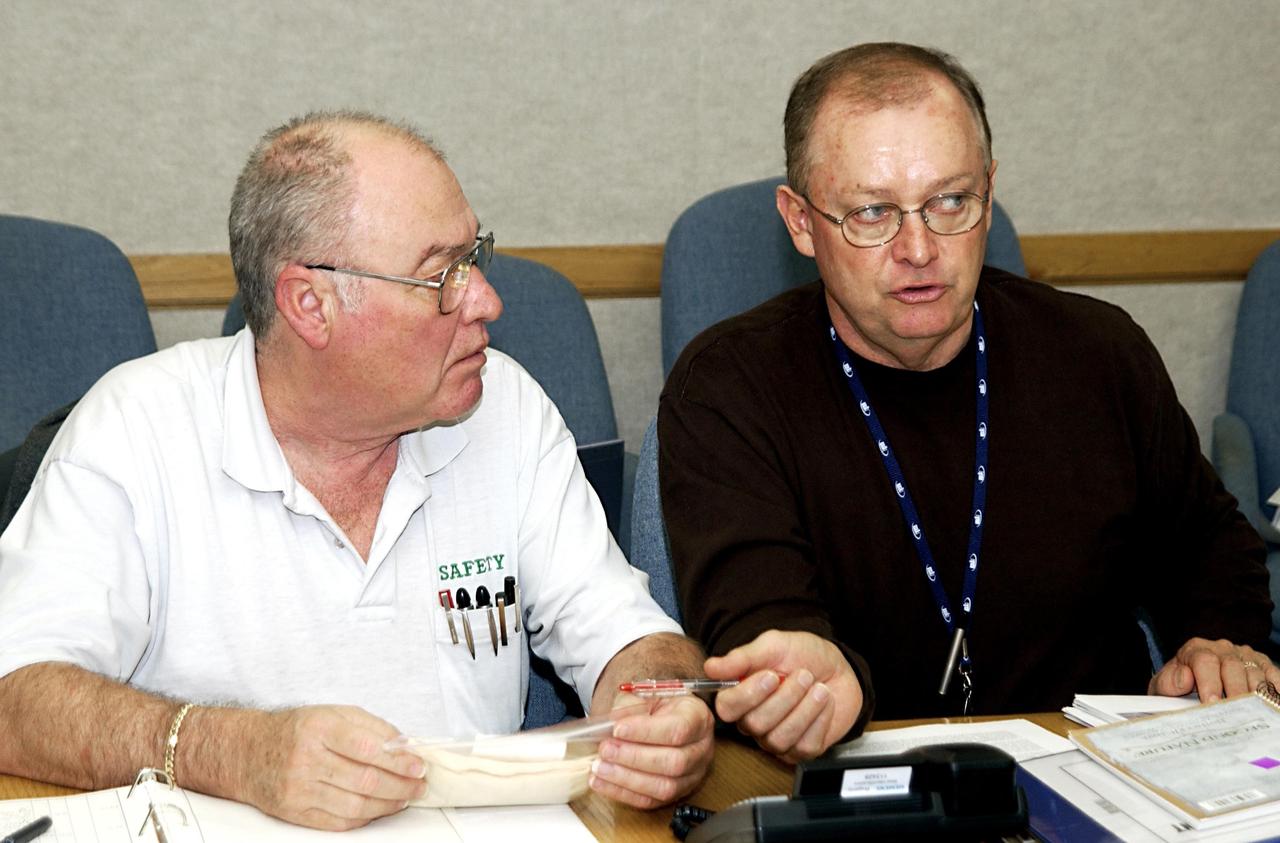
KENNEDY SPACE CENTER, FLA. - Two members of the Recovery Management Team at KSC are at work in the Operations Support Building. At left is Don Maxwell, Safety, United Space Alliance, and at right is Larry Ulmer, Safety, NASA. They are part of the investigation into the accident that claimed orbiter Columbia and her crew of seven on Feb. 1, 2003, over East Texas as they returned to Earth after a 16-day research mission. Other team members are Russ DeLoach, chief, Shuttle Mission Assurance Branch, NASA; George Jacobs, Shuttle Engineering; Jeff Campbell, Shuttle Engineering; Dave Rainer, Launch and Landing Operations; and the two co-chairs of the Response Management Team, Denny Gagen, Landing Recovery Manager, and Chris Hasselbring, Landing Operations, USA. The team is coordinating KSC technical support and assets to the Mishap Investigation Team in Barksdale, La., and providing support for the Recovery teams in Los Angeles, Texas, New Mexico, Arizona and California. In addition, the team is following up on local leads pertaining to potential debris in the KSC area. .
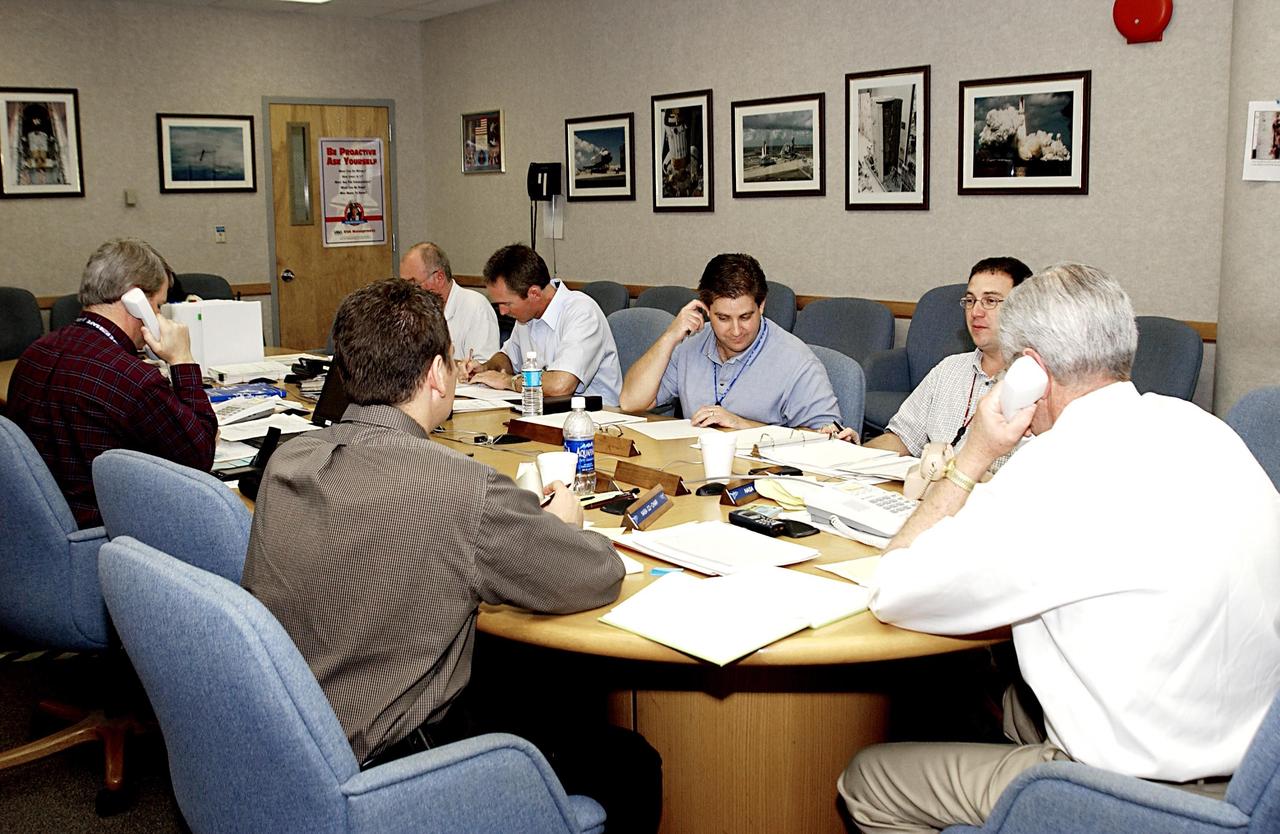
KENNEDY SPACE CENTER, FLA. -- Members of the Recovery Management Team at KSC are at work in the Operations Support Building. They are part of the investigation into the accident that claimed orbiter Columbia and her crew of seven on Feb. 1, 2003, over East Texas as they returned to Earth after a 16-day research mission. Seated around the table (clockwise from far left) are Chris Hasselbring, Landing Operations, USA (co-chair of the Response Management Team); Don Maxwell, Safety, United Space Alliance (USA); Russ DeLoach, chief, Shuttle Mission Assurance Branch, NASA; George Jacobs, Shuttle Engineering; Jeff Campbell, Shuttle Engineering; Denny Gagen, Landing Recovery Manager (second co-chair of the team); and Dave Rainer, Launch and Landing Operations. The team is coordinating KSC technical support and assets to the Mishap Investigation Team in Barksdale, La., and providing support for the Recovery teams in Los Angeles, Texas, New Mexico, Arizona and California. In addition, the team is following up on local leads pertaining to potential debris in the KSC area. .
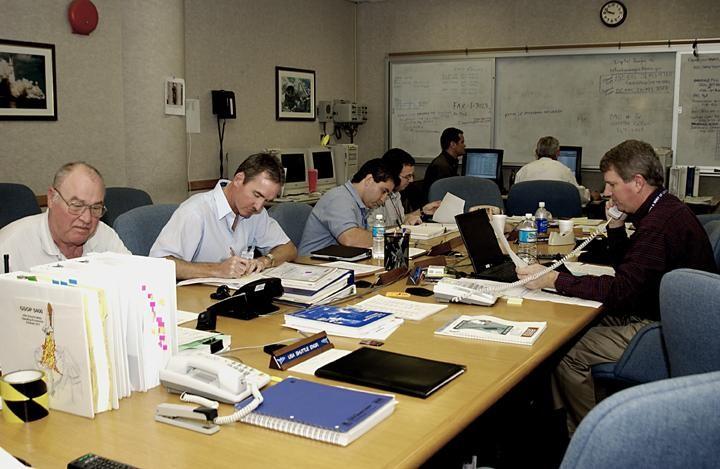
KENNEDY SPACE CENTER, FLA. -- Members of the Recovery Management Team at KSC are at work in the Operations Support Building. They are part of the investigation into the accident that claimed orbiter Columbia and her crew of seven on Feb. 1, 2003, over East Texas as they returned to Earth after a 16-day research mission. From left around the table are Don Maxwell, Safety, United Space Alliance (USA); Russ DeLoach, chief, Shuttle Mission Assurance Branch, NASA; George Jacobs, Shuttle Engineering; Jeff Campbell, Shuttle Engineering; Dave Rainer, Launch and Landing Operations; and the two co-chairs of the Response Management Team, Denny Gagen, Landing Recovery Manager, and Chris Hasselbring, Landing Operations, USA. The team is coordinating KSC technical support and assets to the Mishap Investigation Team in Barksdale, La., and providing support for the Recovery teams in Los Angeles, Texas, New Mexico, Arizona and California. In addition, the team is following up on local leads pertaining to potential debris in the KSC area. .
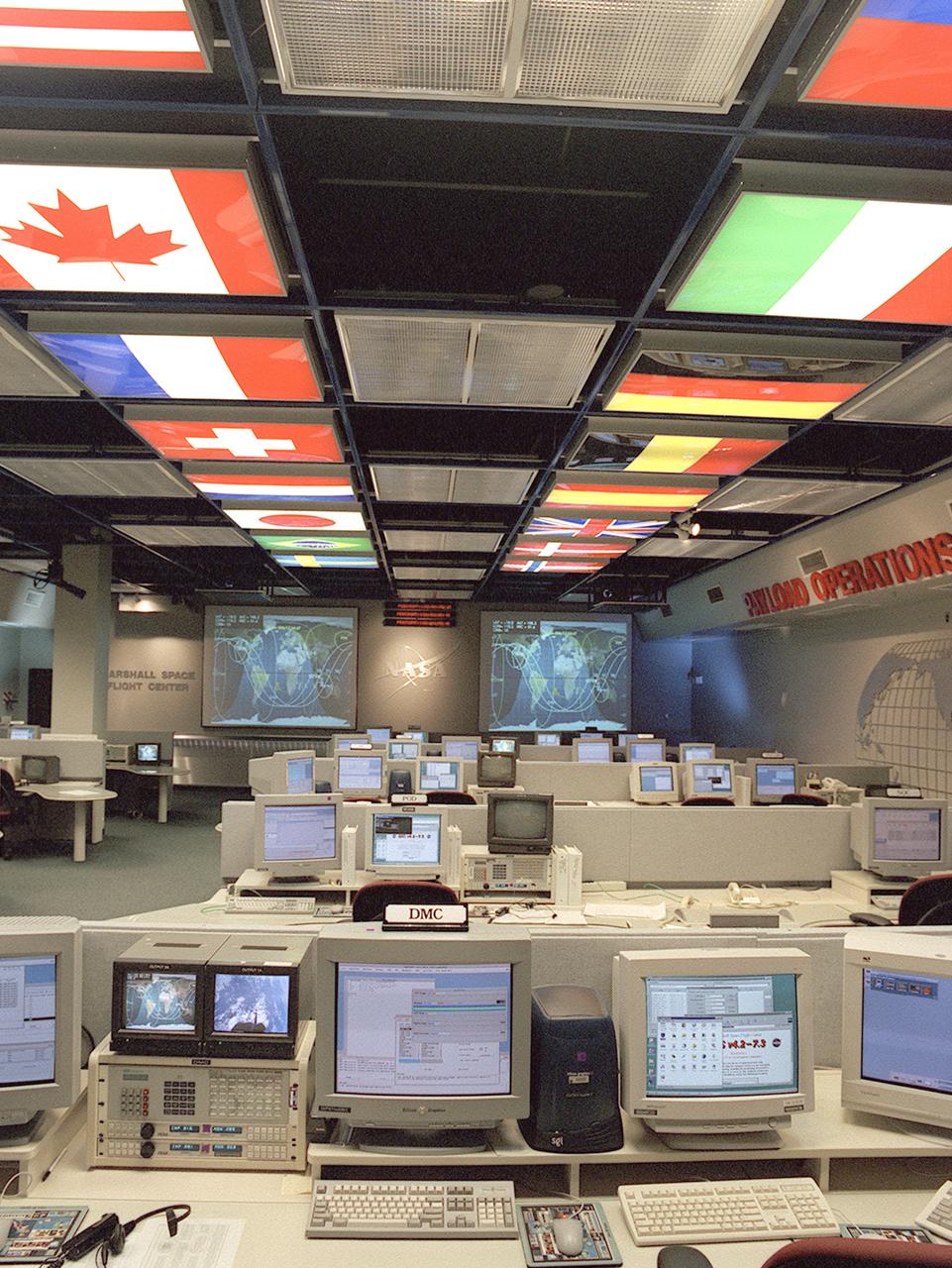
The International Space Station (ISS) Payload Operations Center (POC) at NASA's Marshall Space Flight Center (MSFC) in Huntsville, Alabama, is the world's primary science command post for the (ISS), the most ambitious space research facility in human history. The Payload Operations team is responsible for managing all science research experiments aboard the Station. The center is also home for coordination of the mission-plarning work of variety of international sources, all science payload deliveries and retrieval, and payload training and safety programs for the Station crew and all ground personnel. Within the POC, critical payload information from the ISS is displayed on a dedicated workstation, reading both S-band (low data rate) and Ku-band (high data rate) signals from a variety of experiments and procedures operated by the ISS crew and their colleagues on Earth. The POC is the focal point for incorporating research and experiment requirements from all international partners into an integrated ISS payload mission plan. This photograph is an overall view of the MSFC Payload Operations Center displaying the flags of the countries participating in the ISS. The flags at the left portray The United States, Canada, France, Switzerland, Netherlands, Japan, Brazil, and Sweden. The flags at the right portray The Russian Federation, Italy, Germany, Belgium, Spain, United Kingdom, Denmark, and Norway.
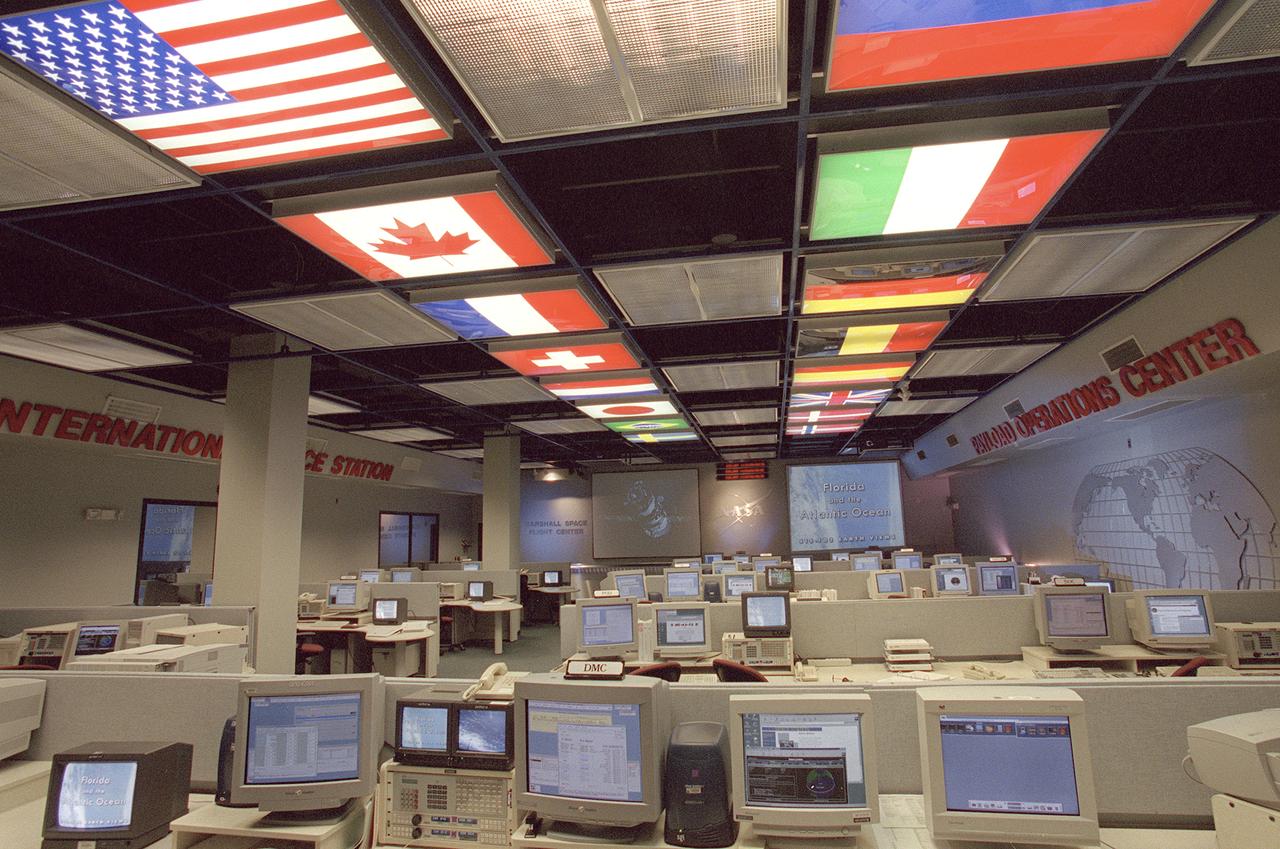
The International Space Station (ISS) Payload Operations Center (POC) at NASA's Marshall Space Flight Center (MSFC) in Huntsville, Alabama, is the world's primary science command post for the International Space Station (ISS), the most ambitious space research facility in human history. The Payload Operations team is responsible for managing all science research experiments aboard the Station. The center is also home for coordination of the mission-plarning work of variety of international sources, all science payload deliveries and retrieval, and payload training and safety programs for the Station crew and all ground personnel. Within the POC, critical payload information from the ISS is displayed on a dedicated workstation, reading both S-band (low data rate) and Ku-band (high data rate) signals from a variety of experiments and procedures operated by the ISS crew and their colleagues on Earth. The POC is the focal point for incorporating research and experiment requirements from all international partners into an integrated ISS payload mission plan. This photograph is an overall view of the MSFC Payload Operations Center displaying the flags of the countries participating the ISS. The flags at the left portray The United States, Canada, France, Switzerland, Netherlands, Japan, Brazil, and Sweden. The flags at the right portray The Russian Federation, Italy, Germany, Belgium, Spain, United Kingdom, Denmark, and Norway.