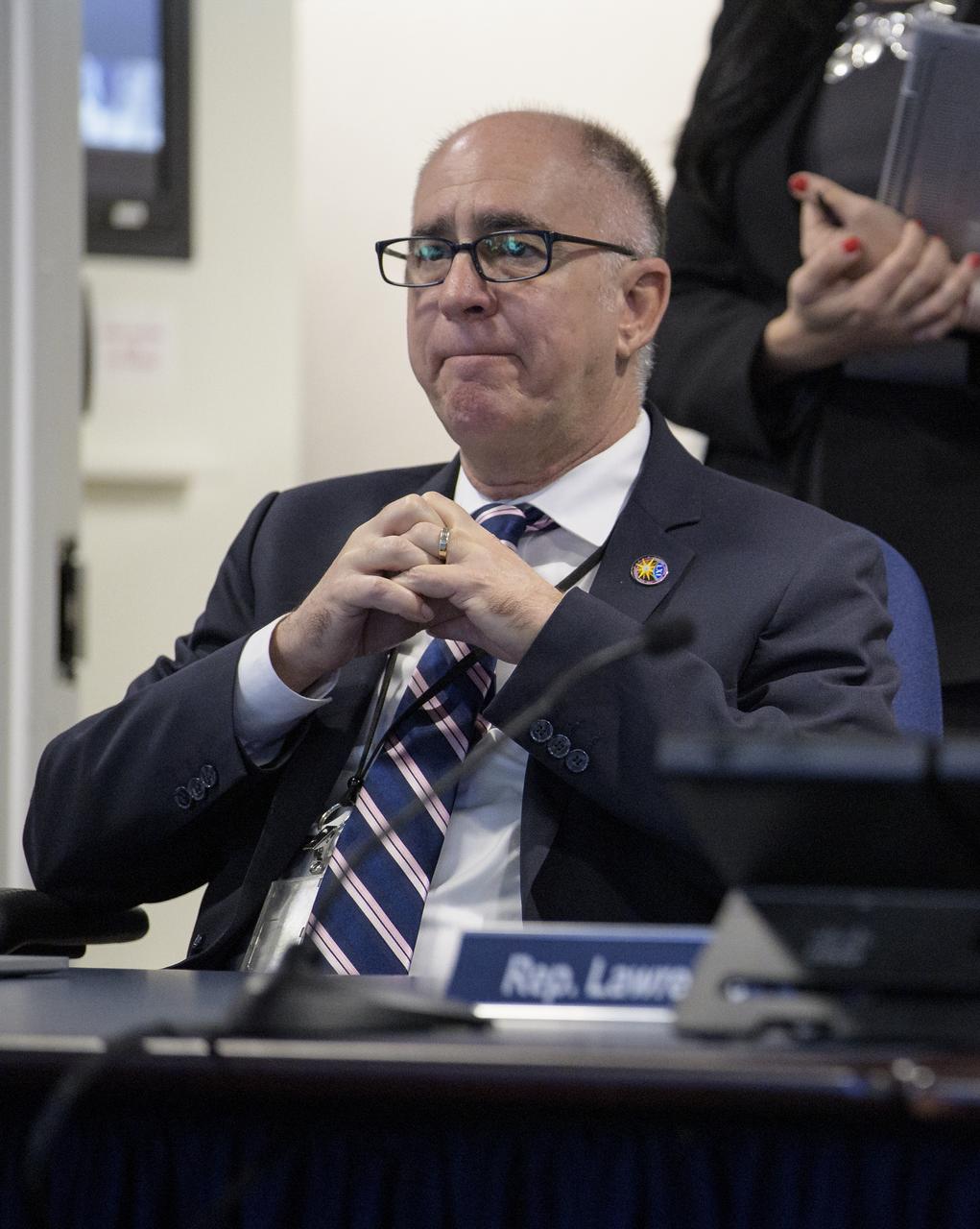
Sam Scimemi, Director of NASA’s International Space Station Division is seen as he watches the beginning of the first all-woman spacewalk on Friday, Oct. 18, 2019, from the Space Operations Center at NASA Headquarters in Washington. The first all-woman spacewalk in history began at 7:38am EDT with NASA astronauts Christina Koch and Jessica Meir venturing outside the International Space Station to replace a failed battery charge-discharge unit. This is the fourth spacewalk for Koch and Meir’s first. Photo Credit: (NASA/Joel Kowsky)
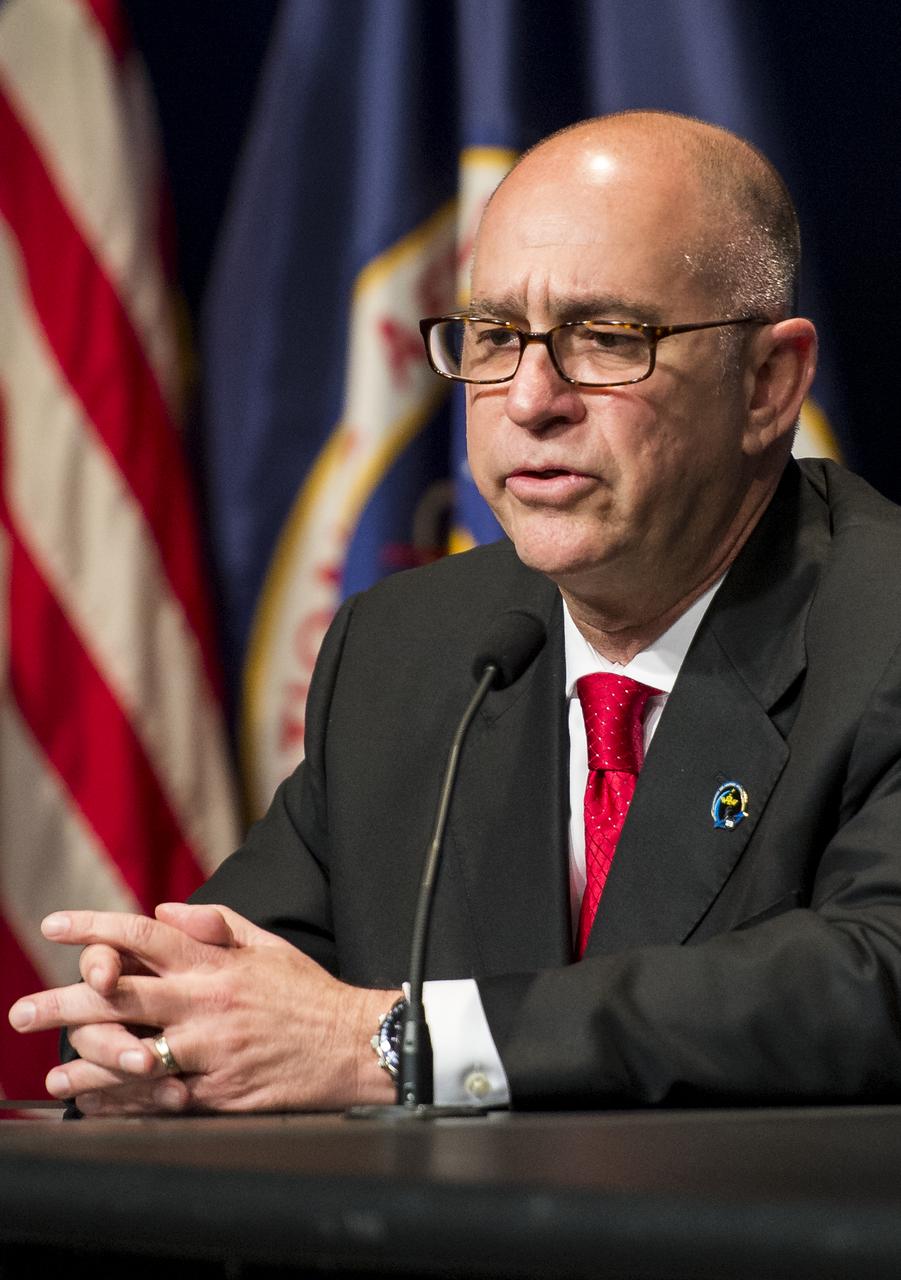
Sam Scimemi, Director of NASA's International Space Station Division, speaks during an Exploration Forum showcasing NASA's human exploration path to Mars in the James E. Webb Auditorium at NASA Headquarters on Tuesday, April 29, 2014. Photo Credit: (NASA/Joel Kowsky)
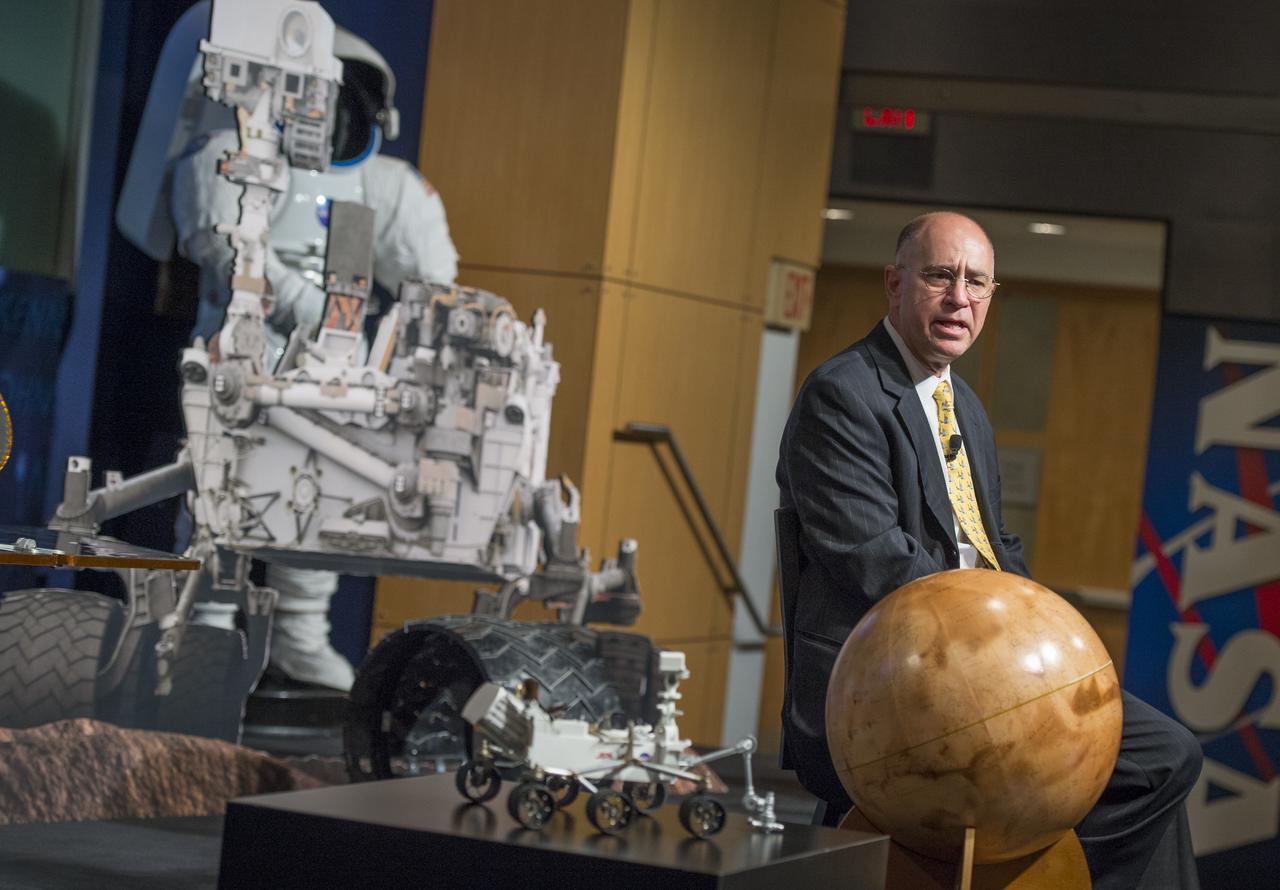
Sam Scimemi, director, NASA's International Space Station Program, speaks at a public event at NASA Headquarters observing the first anniversary of the Curiosity rover's landing on Mars, Tuesday, August 6th, 2013 in Washington. The Mars Science Laboratory mission successfully placed the one-ton Curiosity rover on the surface of Mars on Aug. 6, 2012, about 1 mile from the center of its 12-mile-long target area. Within the first eight months of a planned 23-months primary mission, Curiosity met its major science objective of finding evidence of a past environment well-suited to support microbial life. Photo Credit: (NASA/Carla Cioffi)
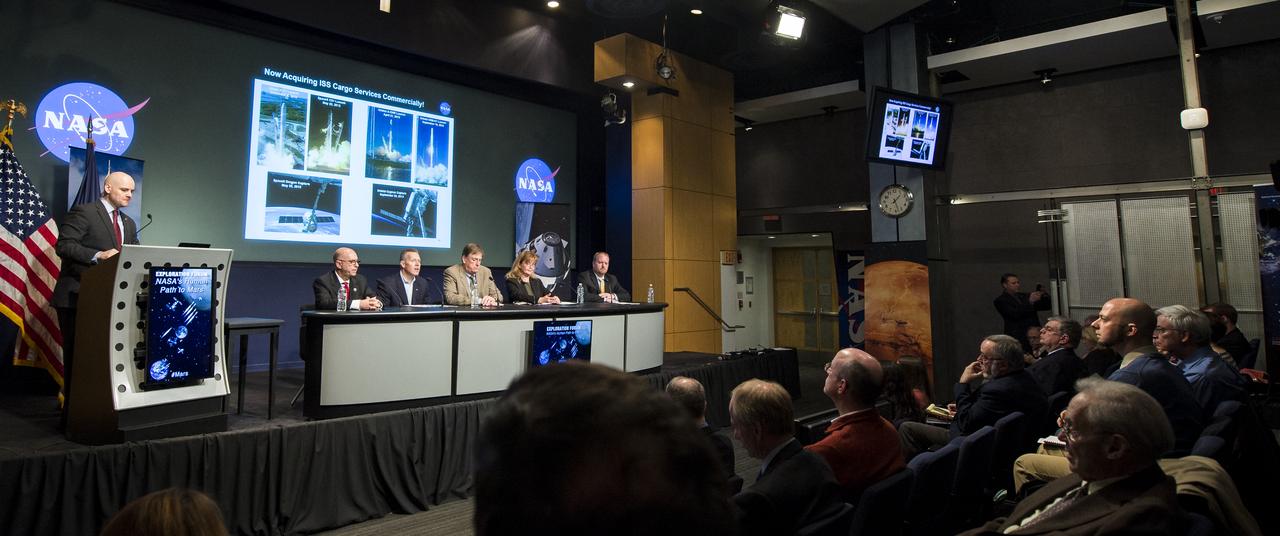
Sam Scimemi, Director of NASA's International Space Station Division, second from left, Phil McAlister, Director of NASA's Commercial Spaceflight Division, third from left, Dan Dumbacher, Deputy Associate Administrator of NASA's Exploration Systems Development, center, Michele Gates, Senior Technical Advisor of NASA's Human Exploration and Operations Mission Directorate, second from right, and Jason Crusan, Director of NASA's Advanced Exploration Systems Division, right, sit on a panel during an Exploration Forum showcasing NASA's human exploration path to Mars in the James E. Webb Auditorium at NASA Headquarters on Tuesday, April 29, 2014. Photo Credit: (NASA/Joel Kowsky)
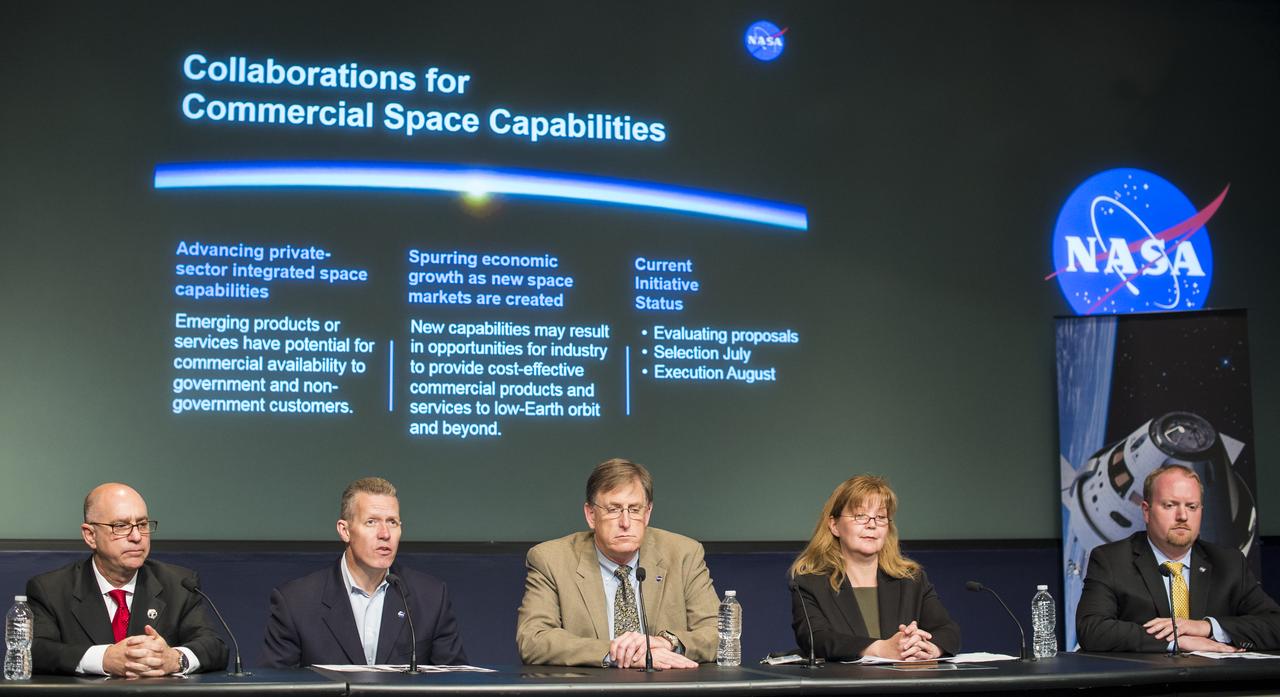
Sam Scimemi, Director of NASA's International Space Station Division, left, Phil McAlister, Director of NASA's Commercial Spaceflight Division, second from left, Dan Dumbacher, Deputy Associate Administrator of NASA's Exploration Systems Development, center, Michele Gates, Senior Technical Advisor of NASA's Human Exploration and Operations Mission Directorate, second from right, and Jason Crusan, Director of NASA's Advanced Exploration Systems Division, right, sit on a panel during an Exploration Forum showcasing NASA's human exploration path to Mars in the James E. Webb Auditorium at NASA Headquarters on Tuesday, April 29, 2014. Photo Credit: (NASA/Joel Kowsky)
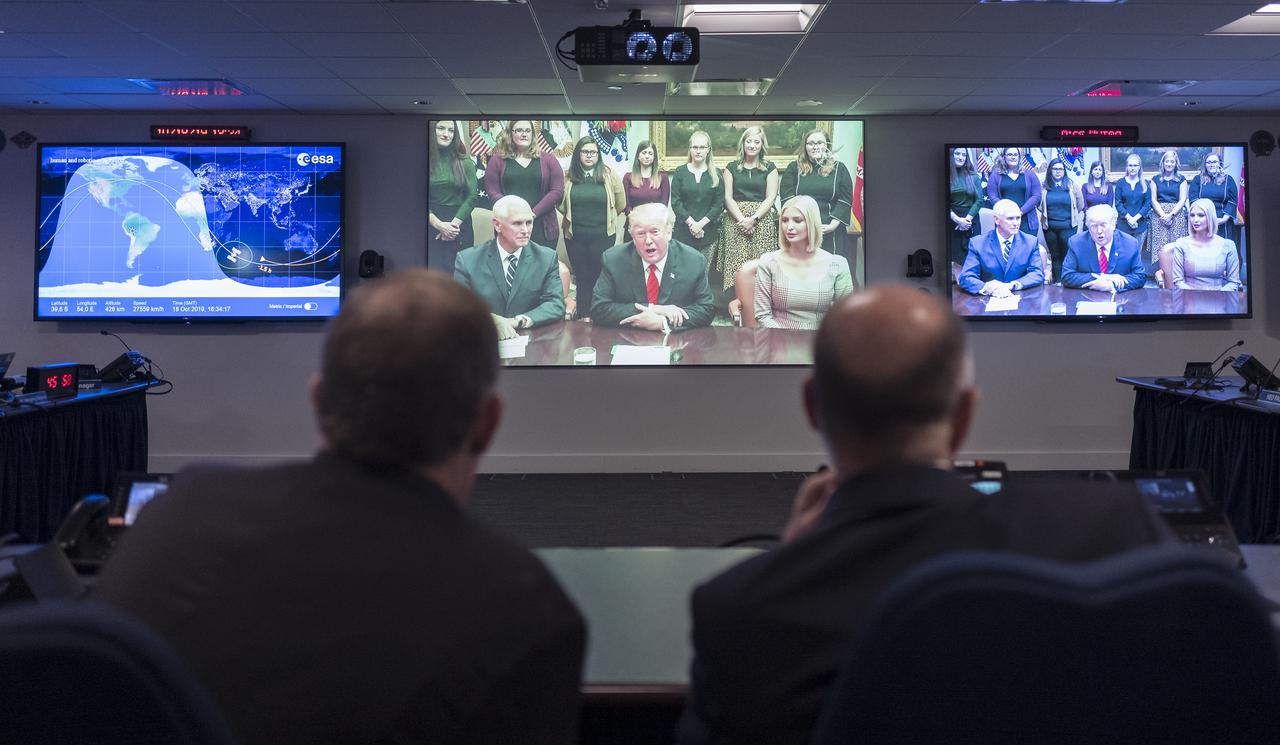
NASA Deputy Administrator Jim Morhard and Sam Scimemi, Director of NASA’s International Space Station Division, watch from the Space Operations Center at NASA Headquarters as President Donald Trump, joined by Vice President Mike Pence, Advisor to the President Ivanka Trump and NASA Administrator Jim Bridenstine, talks to NASA astronauts Christina Koch and Jessica Meir from the Roosevelt Room of the White House as they conduct the first all-woman spacewalk on Friday, Oct. 18, 2019, in Washington. The first all-woman spacewalk in history began at 7:38am EDT with NASA astronauts Christina Koch and Jessica Meir venturing outside the International Space Station to replace a failed battery charge-discharge unit. This is the fourth spacewalk for Koch and Meir’s first. Photo Credit: (NASA/Joel Kowsky)
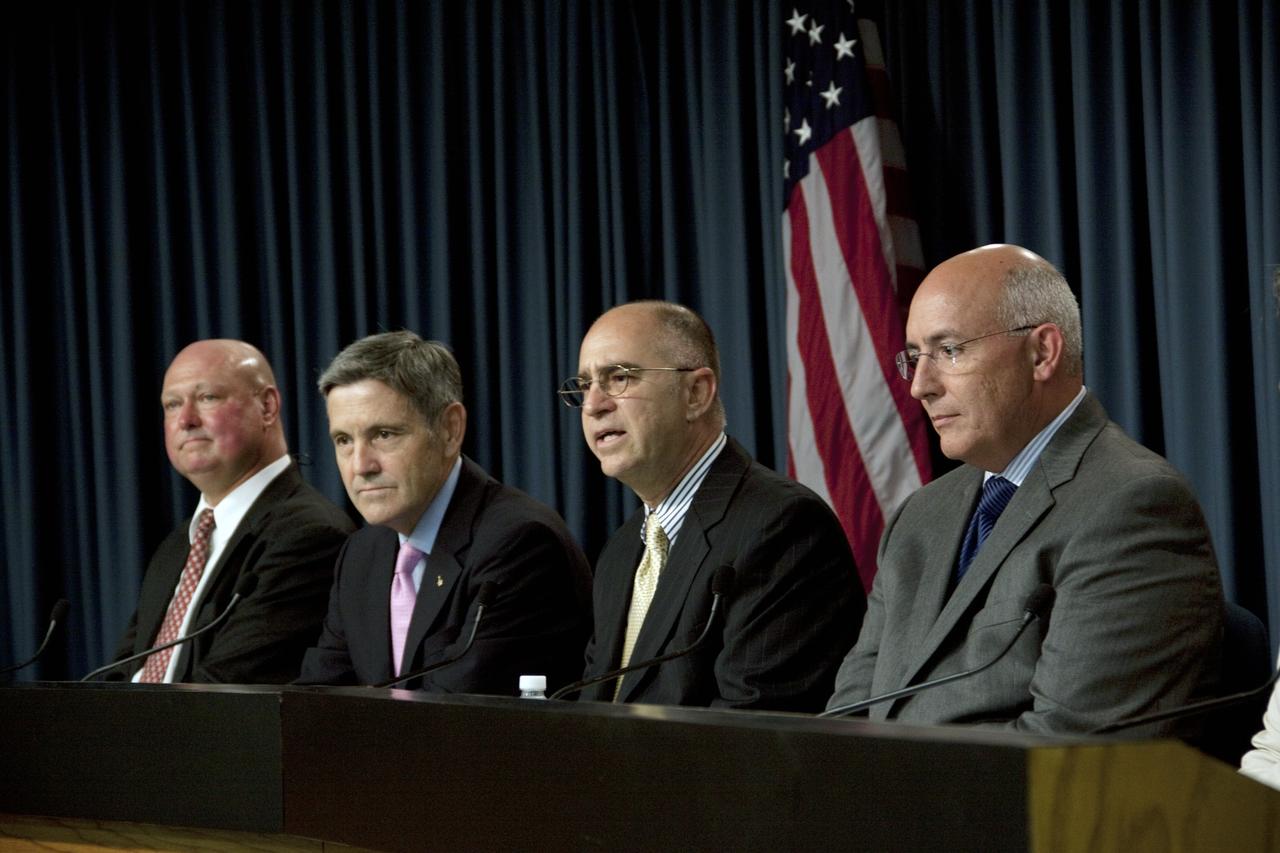
CAPE CANAVERAL, Fla. -- Sam Scimemi, director of International Space Station at NASA Headquarters, participates in a prelaunch news conference in Kennedy Space Center's Press Site auditorium in Florida. Also pictured are, from left, Michael Curie, NASA Public Affairs, Bob Cabana, director of NASA Kennedy Space Center, and to Scimemi's right, Mike Suffredini, program manager of International Space Station at NASA Johnson Space Center. The news conference provided the media with a status on the readiness to launch NASA's first Commercial Resupply Services, or CRS-1, mission to the International Space Station. Space Exploration Technologies Corp., or SpaceX, built both the mission's Falcon 9 rocket and Dragon capsule. Launch is scheduled for 8:35 p.m. EDT on Oct. 7 from Space Launch Complex 40 on Cape Canaveral Air Force Station. SpaceX CRS-1 is an important step toward making America’s microgravity research program self-sufficient by providing a way to deliver and return significant amounts of cargo, including science experiments, to and from the orbiting laboratory. NASA has contracted for 12 commercial resupply flights from SpaceX and eight from the Orbital Sciences Corp. For more information, visit http://www.nasa.gov/mission_pages/station/living/launch/index.html. Photo credit: NASA/Jim Grossmann

CAPE CANAVERAL, Fla. – Sam Scimemi, International Space Station Division director, NASA Human Exploration and Operation Mission Directorate, participates in a post-launch media briefing following the successful launch of NASA's SpaceX CRS-4 mission to the International Space Station. Liftoff was at 1:52 a.m. EDT. The mission is the fourth of 12 SpaceX flights NASA contracted with the company to resupply the space station. It will be the fifth trip by a Dragon spacecraft to the orbiting laboratory. The spacecraft’s 2.5 tons of supplies, science experiments, and technology demonstrations include critical materials to support 255 science and research investigations that will occur during the station's Expeditions 41 and 42. To learn more about the mission, visit http://www.nasa.gov/mission_pages/station/structure/launch/index.html. Photo credit: NASA/Jim Grossmann
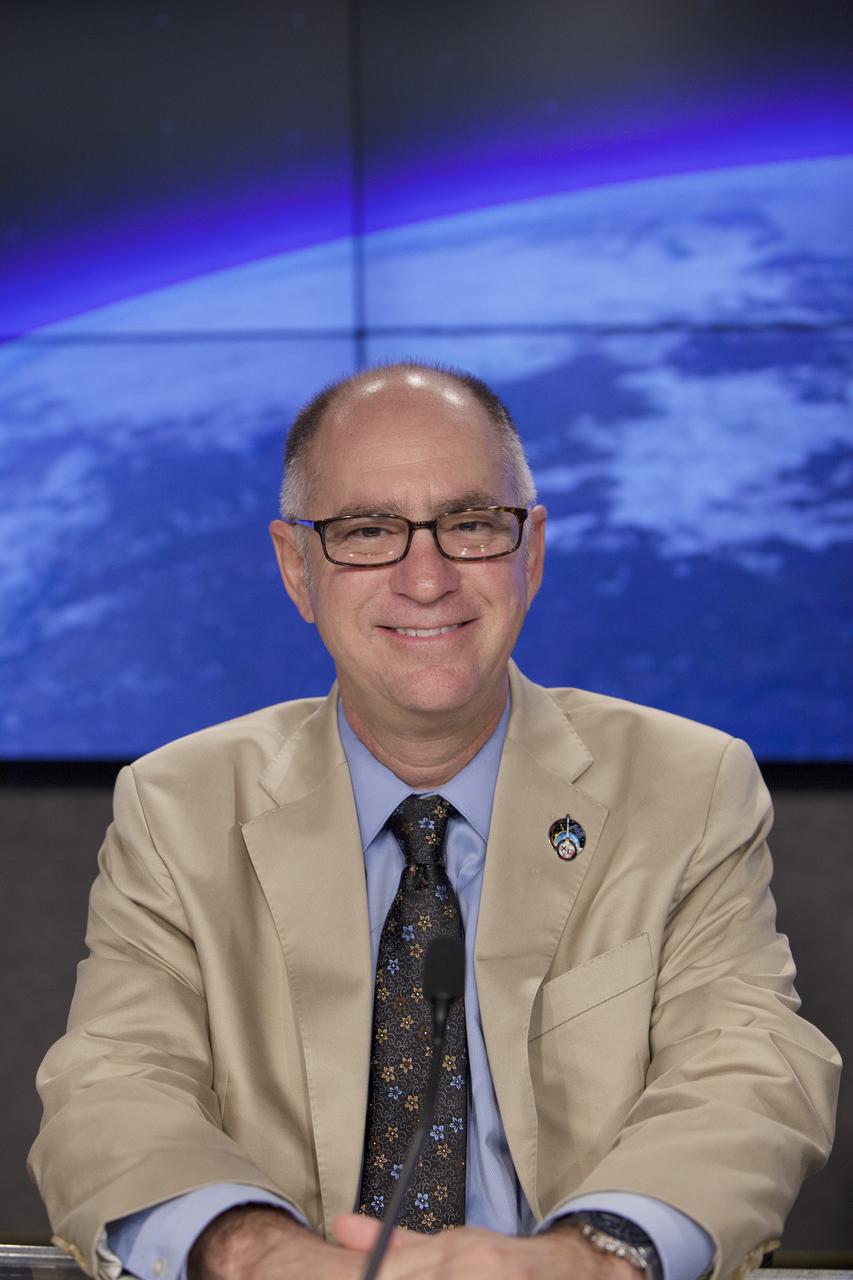
CAPE CANAVERAL, Fla. – Members of NASA’s International Space Station science team brief news media representatives in the Kennedy Space Center’s Press Site auditorium in preparation for the launch of the SpaceX CRS-4 mission to resupply the International Space Station. Sam Scimemi, International Space Station Division director of Human Exploration and Operation Mission Directorate, participated in the briefing. The mission is the fourth of 12 SpaceX flights NASA contracted with the company to resupply the space station. It will be the fifth trip by a Dragon spacecraft to the orbiting laboratory. The spacecraft’s 2.5 tons of supplies, science experiments, and technology demonstrations include critical materials to support 255 science and research investigations that will occur during the station's Expeditions 41 and 42. Liftoff is targeted for an instantaneous window at 2:14 a.m. EDT. To learn more about the mission, visit http://www.nasa.gov/mission_pages/station/structure/launch/index.html Photo credit: NASA/Jim Grossmann
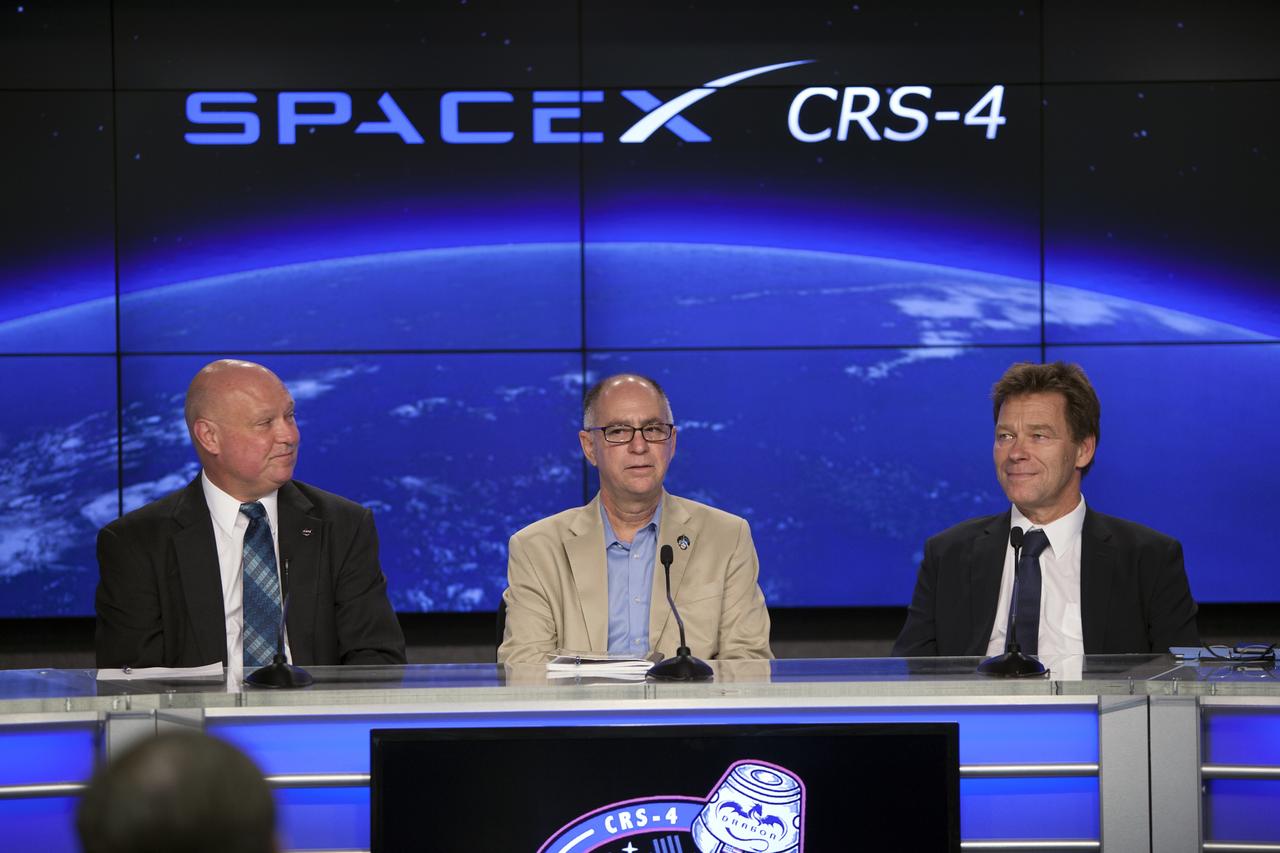
CAPE CANAVERAL, Fla. – NASA holds a post-launch media briefing following the successful launch of NASA's SpaceX CRS-4 mission to the International Space Station. From left are Michael Curie, moderator, NASA Public Affairs, Sam Scimemi, International Space Station Division director, NASA Human Exploration and Operation Mission Directorate, and Hans Koenigsmann, vice president of Mission Assurance, SpaceX. Liftoff was at 1:52 a.m. EDT. The mission is the fourth of 12 SpaceX flights NASA contracted with the company to resupply the space station. It will be the fifth trip by a Dragon spacecraft to the orbiting laboratory. The spacecraft’s 2.5 tons of supplies, science experiments, and technology demonstrations include critical materials to support 255 science and research investigations that will occur during the station's Expeditions 41 and 42. To learn more about the mission, visit http://www.nasa.gov/mission_pages/station/structure/launch/index.html. Photo credit: NASA/Jim Grossmann
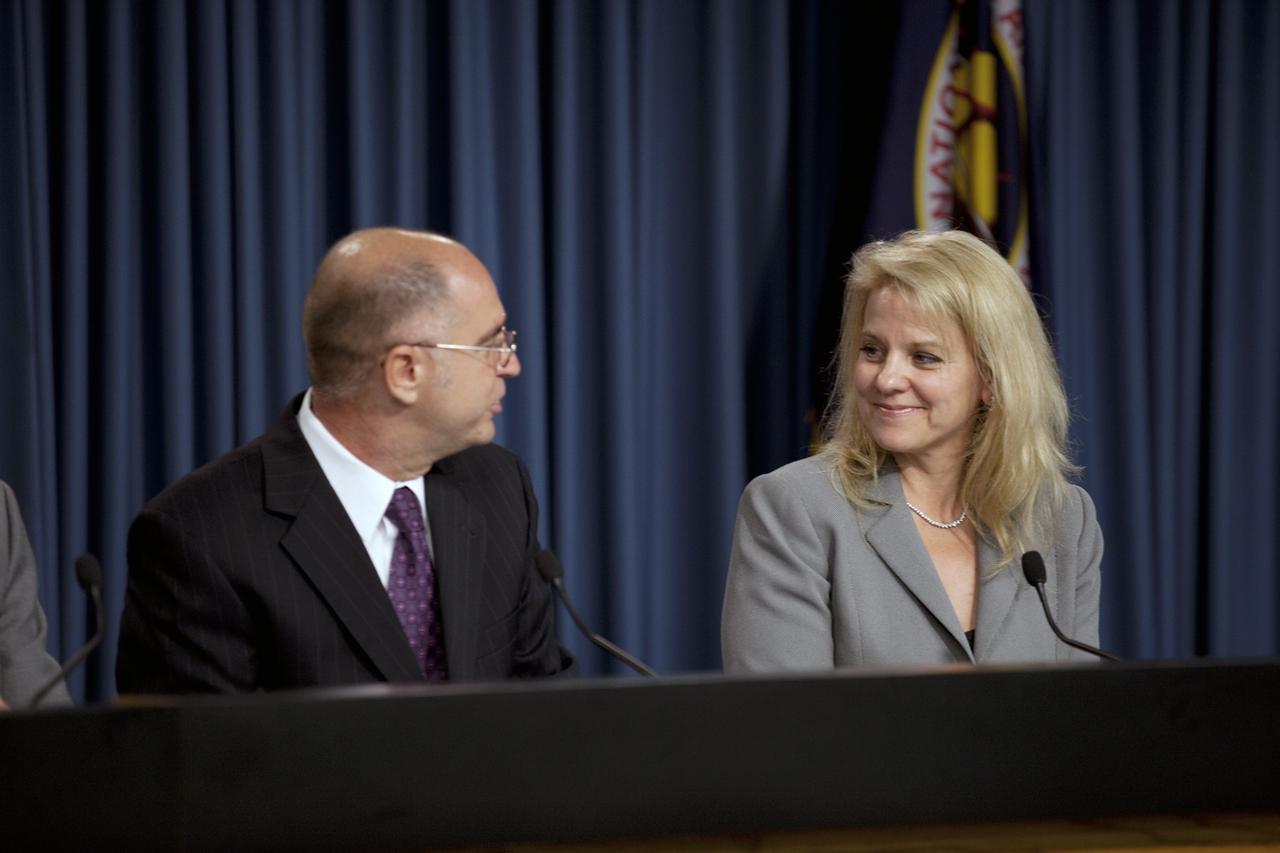
CAPE CANAVERAL, Fla. -- Sam Scimemi, at left, director of International Space Station at NASA Headquarters, congratulates Gwynne Shotwell, president of Space Exploration Technologies Corp., or SpaceX, on the successful launch of NASA's first Commercial Resupply Services, or CRS-1, mission to the International Space Station during a post-launch news conference held in the Press Site auditorium at NASA's Kennedy Space Center in Florida. SpaceX built both the Falcon 9 rocket and Dragon capsule that launched at 8:35 p.m. EDT from Space Launch Complex 40 on Cape Canaveral Air Force Station. SpaceX CRS-1 is an important step toward making America’s microgravity research program self-sufficient by providing a way to deliver and return significant amounts of cargo, including science experiments, to and from the orbiting laboratory. NASA has contracted for 12 commercial resupply flights from SpaceX and eight from the Orbital Sciences Corp. For more information, visit http://www.nasa.gov/mission_pages/station/living/launch/index.html. Photo credit: NASA/Kim Shiflett
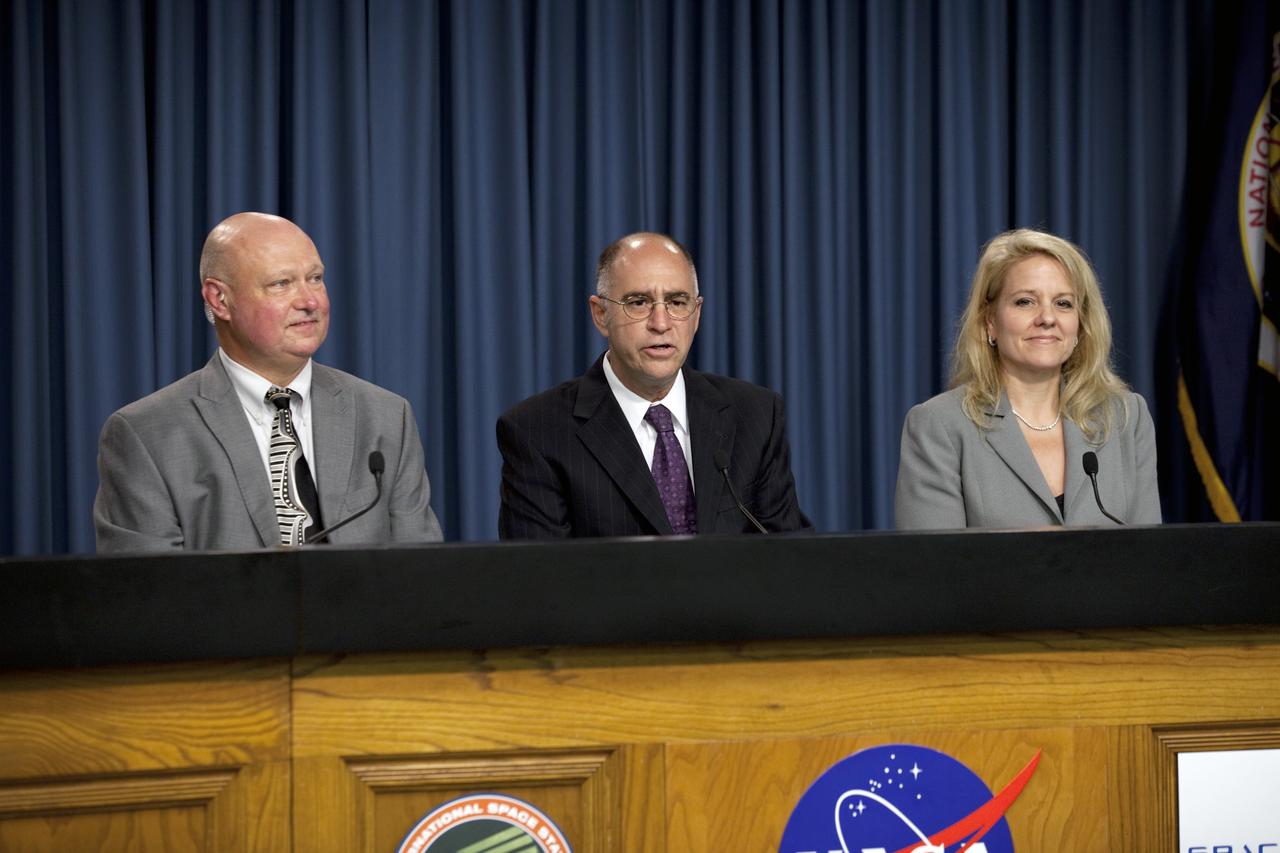
CAPE CANAVERAL, Fla. -- Sam Scimemi, director of International Space Station at NASA Headquarters, addresses news and social media representatives during a post-launch news conference in the Press Site auditorium at NASA's Kennedy Space Center in Florida following the successful launch of NASA's first Commercial Resupply Services, or CRS-1, mission to the International Space Station. Also participating in the conference are Michael Curie, at left, NASA Public Affairs, and Gwynne Shotwell, at right, president of Space Exploration Technologies Corp., or SpaceX. SpaceX built both the Falcon 9 rocket and Dragon capsule that launched at 8:35 p.m. EDT from Space Launch Complex 40 on Cape Canaveral Air Force Station. SpaceX CRS-1 is an important step toward making America’s microgravity research program self-sufficient by providing a way to deliver and return significant amounts of cargo, including science experiments, to and from the orbiting laboratory. NASA has contracted for 12 commercial resupply flights from SpaceX and eight from the Orbital Sciences Corp. For more information, visit http://www.nasa.gov/mission_pages/station/living/launch/index.html. Photo credit: NASA/Kim Shiflett
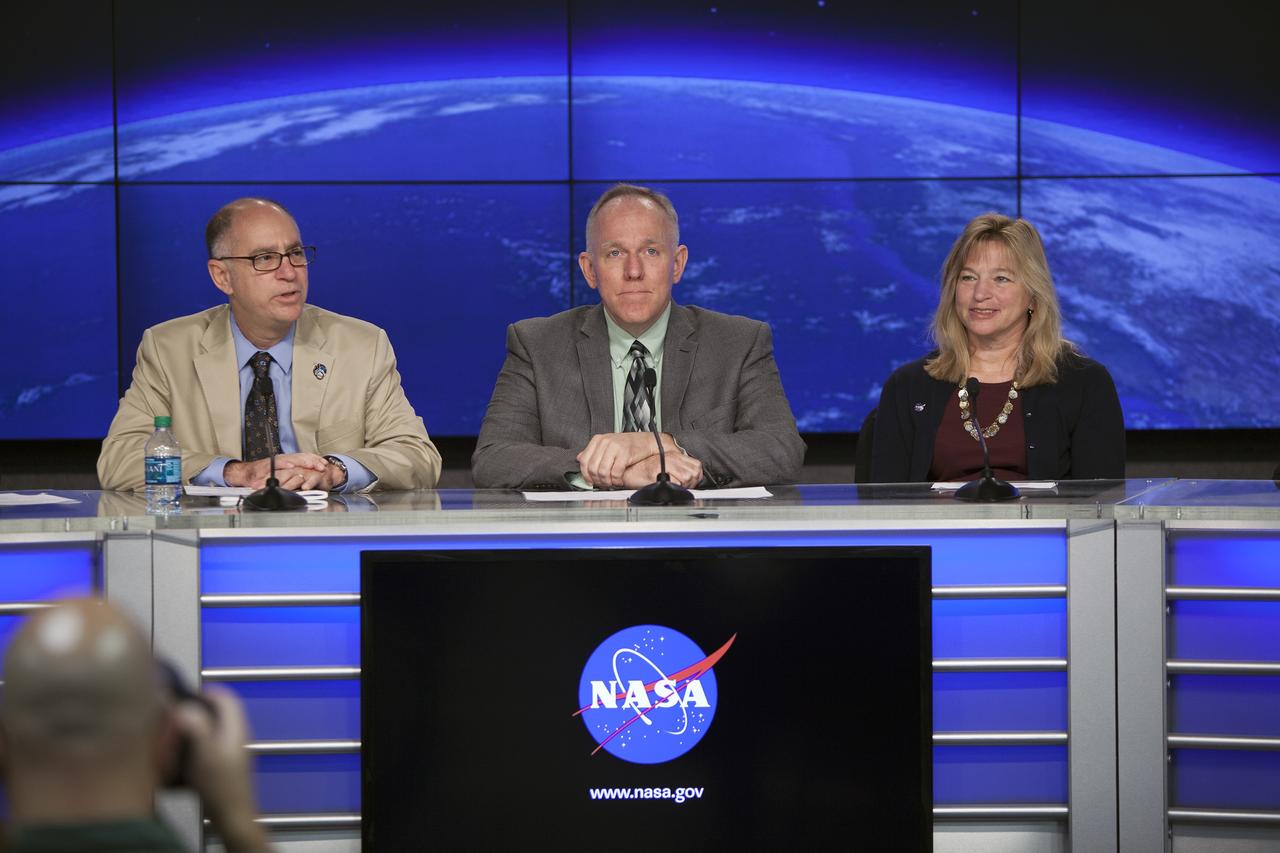
CAPE CANAVERAL, Fla. – Members of NASA’s International Space Station science team brief news media representatives in the Kennedy Space Center’s Press Site auditorium in preparation for the launch of the SpaceX CRS-4 mission to resupply the International Space Station. From left are Sam Scimemi, International Space Station Division director of Human Exploration and Operation Mission Directorate, Jeff Sheehy, senior technologist for the Space Technology Mission Directorate, and Ellen Stofan, NASA’s Chief Scientist. The mission is the fourth of 12 SpaceX flights NASA contracted with the company to resupply the space station. It will be the fifth trip by a Dragon spacecraft to the orbiting laboratory. The spacecraft’s 2.5 tons of supplies, science experiments, and technology demonstrations include critical materials to support 255 science and research investigations that will occur during the station's Expeditions 41 and 42. Liftoff is targeted for an instantaneous window at 2:14 a.m. EDT. To learn more about the mission, visit http://www.nasa.gov/mission_pages/station/structure/launch/index.html Photo credit: NASA/Jim Grossmann
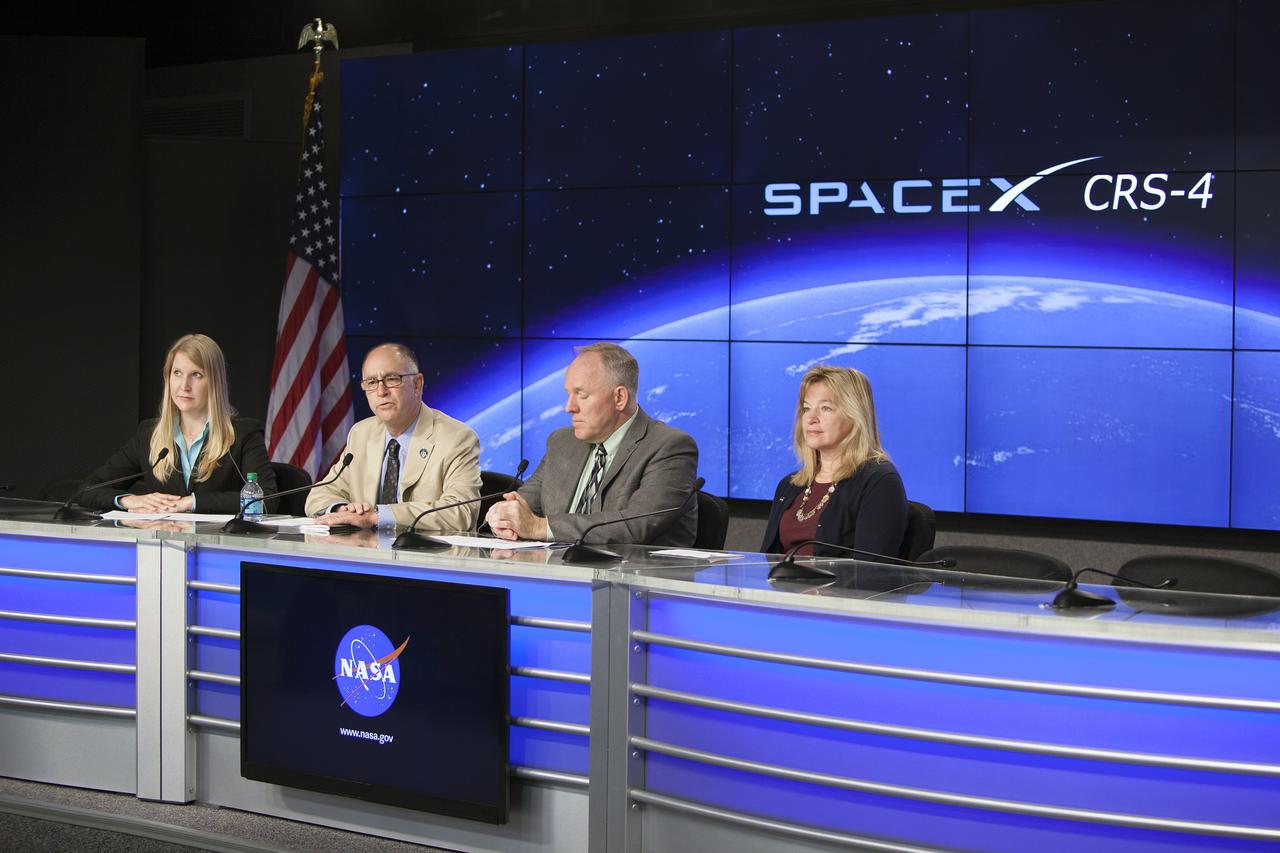
CAPE CANAVERAL, Fla. – Members of NASA’s International Space Station science team brief news media representatives in the Kennedy Space Center’s Press Site auditorium in preparation for the launch of the SpaceX CRS-4 mission to resupply the International Space Station. From left are Stephanie Schierholz, NASA Headquarters Office of Communications, Sam Scimemi, International Space Station Division director of Human Exploration and Operation Mission Directorate, Jeff Sheehy, senior technologist for the Space Technology Mission Directorate, and Ellen Stofan, NASA’s Chief Scientist. The mission is the fourth of 12 SpaceX flights NASA contracted with the company to resupply the space station. It will be the fifth trip by a Dragon spacecraft to the orbiting laboratory. The spacecraft’s 2.5 tons of supplies, science experiments, and technology demonstrations include critical materials to support 255 science and research investigations that will occur during the station's Expeditions 41 and 42. Liftoff is targeted for an instantaneous window at 2:14 a.m. EDT. To learn more about the mission, visit http://www.nasa.gov/mission_pages/station/structure/launch/index.html Photo credit: NASA/Jim Grossmann
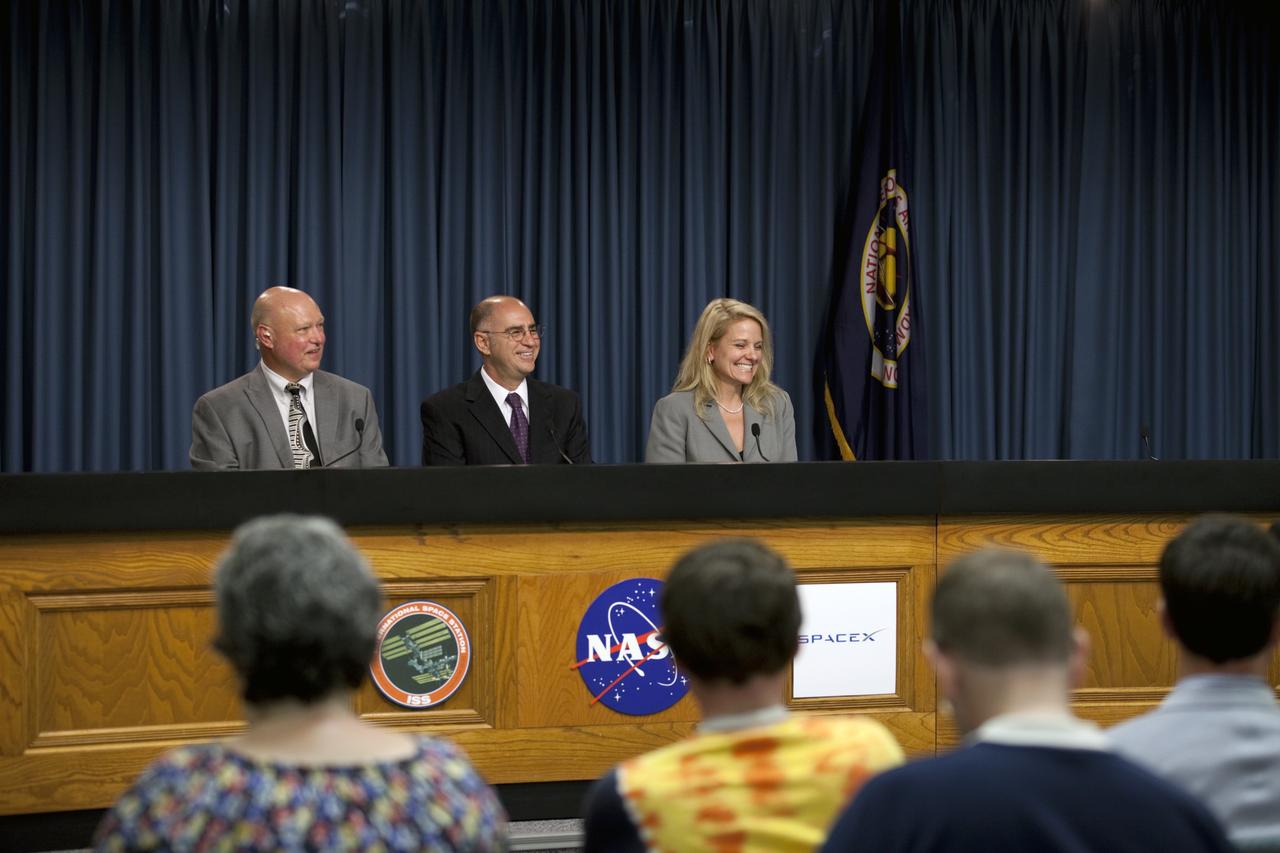
CAPE CANAVERAL, Fla. -- The participants of a post-launch news conference held in the Press Site auditorium at NASA's Kennedy Space Center in Florida are all smiles following the successful launch of NASA's first Commercial Resupply Services, or CRS-1, mission to the International Space Station. On the dais are, from left, Michael Curie, NASA Public Affairs, Sam Scimemi, director of International Space Station at NASA Headquarters, and Gwynne Shotwell, president of Space Exploration Technologies Corp., or SpaceX. SpaceX built both the Falcon 9 rocket and Dragon capsule that launched at 8:35 p.m. EDT from Space Launch Complex 40 on Cape Canaveral Air Force Station. SpaceX CRS-1 is an important step toward making America’s microgravity research program self-sufficient by providing a way to deliver and return significant amounts of cargo, including science experiments, to and from the orbiting laboratory. NASA has contracted for 12 commercial resupply flights from SpaceX and eight from the Orbital Sciences Corp. For more information, visit http://www.nasa.gov/mission_pages/station/living/launch/index.html. Photo credit: NASA/Kim Shiflett
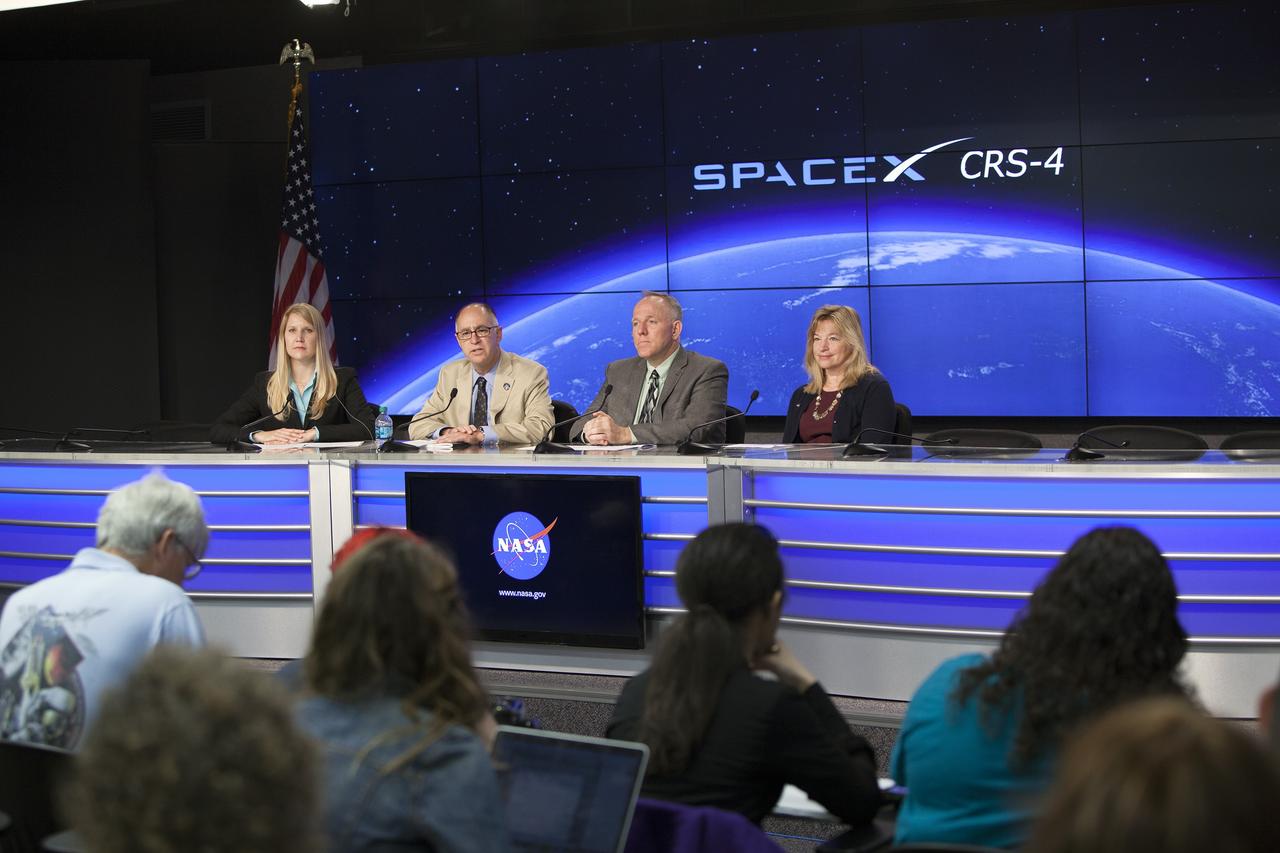
CAPE CANAVERAL, Fla. – Members of NASA’s International Space Station science team brief news media representatives in the Kennedy Space Center’s Press Site auditorium in preparation for the launch of the SpaceX CRS-4 mission to resupply the International Space Station. From left are Stephanie Schierholz, NASA Headquarters Office of Communications, Sam Scimemi, International Space Station Division director of Human Exploration and Operation Mission Directorate, Jeff Sheehy, senior technologist for the Space Technology Mission Directorate, and Ellen Stofan, NASA’s Chief Scientist. The mission is the fourth of 12 SpaceX flights NASA contracted with the company to resupply the space station. It will be the fifth trip by a Dragon spacecraft to the orbiting laboratory. The spacecraft’s 2.5 tons of supplies, science experiments, and technology demonstrations include critical materials to support 255 science and research investigations that will occur during the station's Expeditions 41 and 42. Liftoff is targeted for an instantaneous window at 2:14 a.m. EDT. To learn more about the mission, visit http://www.nasa.gov/mission_pages/station/structure/launch/index.html Photo credit: NASA/Jim Grossmann
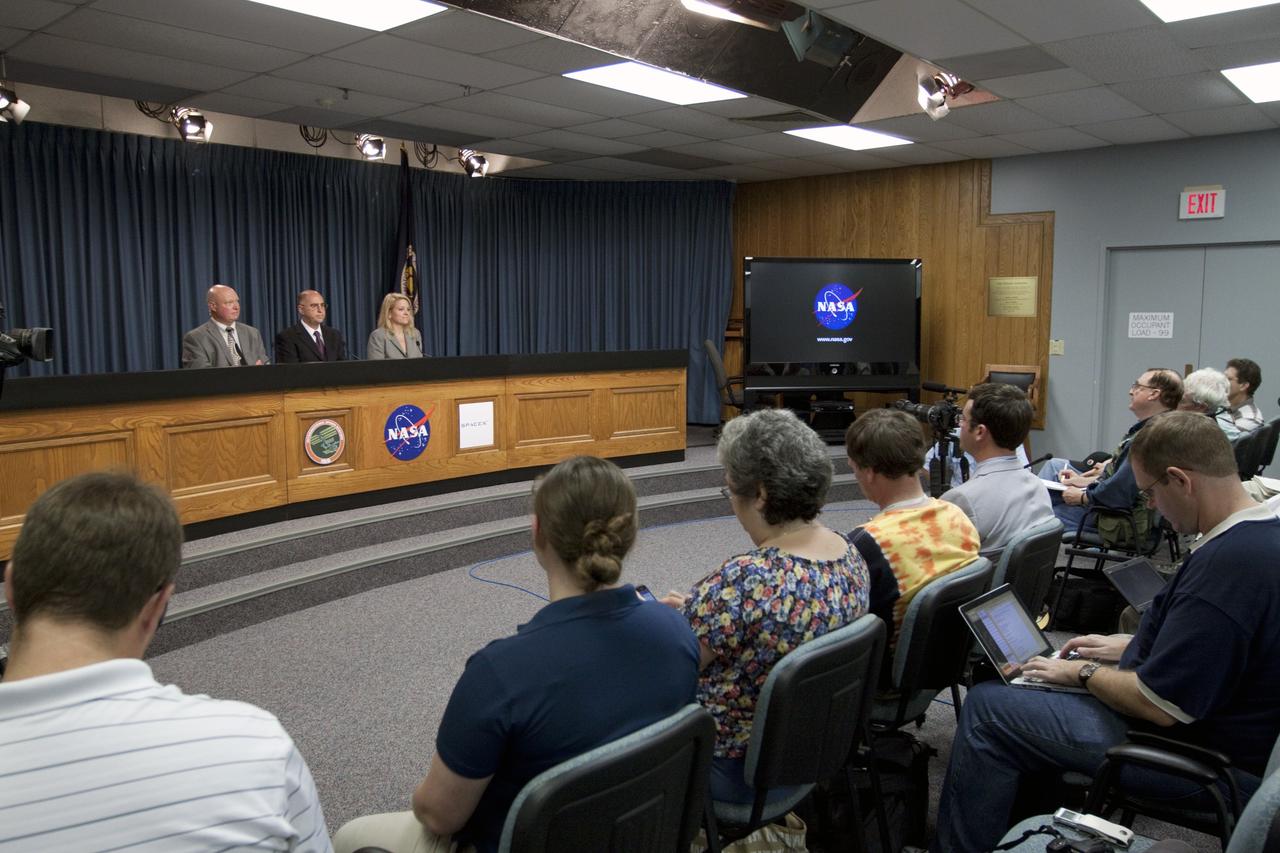
CAPE CANAVERAL, Fla. -- News and social media representatives participate in a post-launch news conference in the Press Site auditorium at NASA's Kennedy Space Center in Florida following the successful launch of NASA's first Commercial Resupply Services, or CRS-1, mission to the International Space Station. On the dais are, from left, Michael Curie, NASA Public Affairs, Sam Scimemi, director of International Space Station at NASA Headquarters, and Gwynne Shotwell, president of Space Exploration Technologies Corp., or SpaceX. SpaceX built both the Falcon 9 rocket and Dragon capsule that launched at 8:35 p.m. EDT from Space Launch Complex 40 on Cape Canaveral Air Force Station. SpaceX CRS-1 is an important step toward making America’s microgravity research program self-sufficient by providing a way to deliver and return significant amounts of cargo, including science experiments, to and from the orbiting laboratory. NASA has contracted for 12 commercial resupply flights from SpaceX and eight from the Orbital Sciences Corp. For more information, visit http://www.nasa.gov/mission_pages/station/living/launch/index.html. Photo credit: NASA/Kim Shiflett
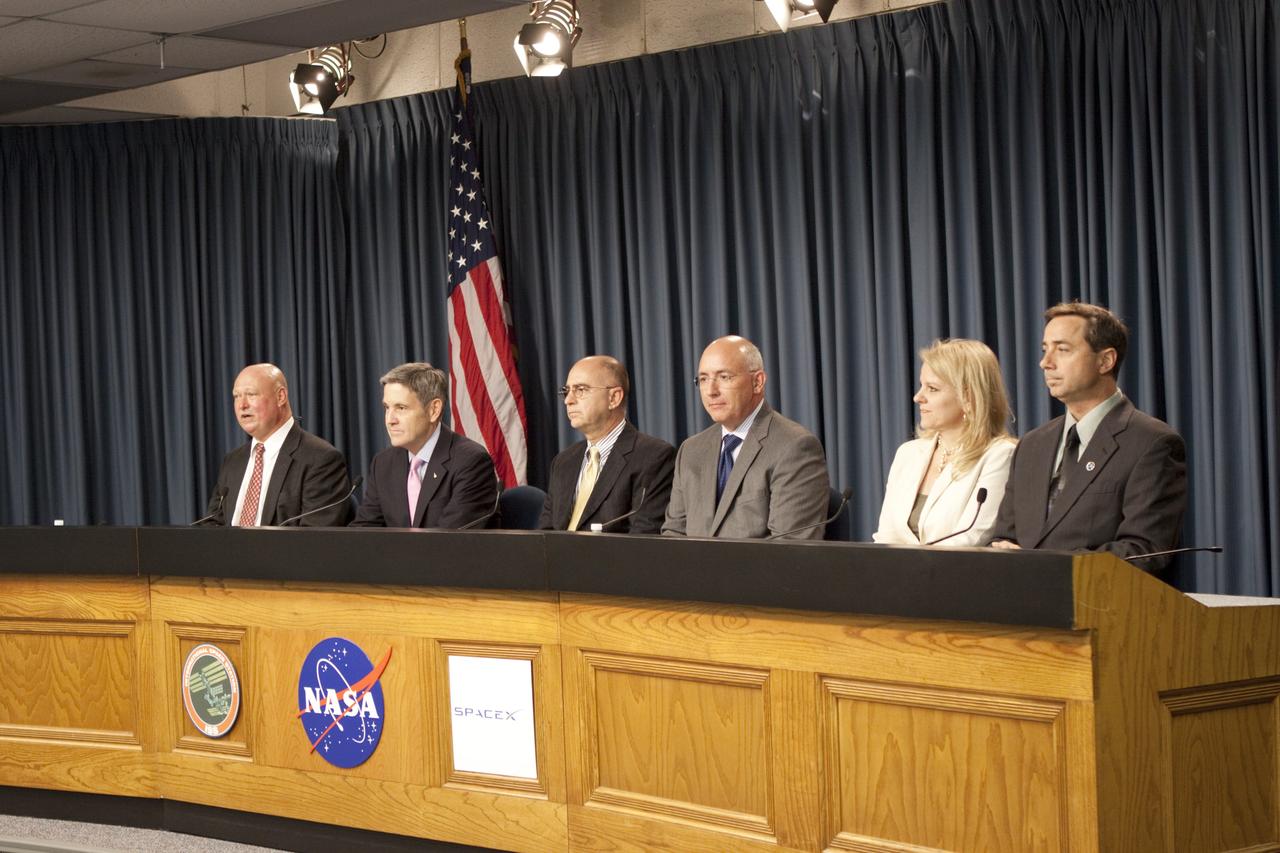
CAPE CANAVERAL, Fla. -- A prelaunch news conference is held in NASA Kennedy Space Center's Press Site auditorium in Florida. From left are Michael Curie, NASA Public Affairs, Bob Cabana, director of NASA Kennedy Space Center, Sam Scimemi, director of International Space Station at NASA Headquarters, Mike Suffredini, program manager of International Space Station at NASA Johnson Space Center, Gwynne Shotwell, president of Space Exploration Technologies Corp., or SpaceX, and Mike McAleenan, launch weather officer from the 45th Weather Squadron at Cape Canaveral Air Force Station. The news conference provided the media with a status on the readiness to launch NASA's first Commercial Resupply Services, or CRS-1, mission to the International Space Station. Space Exploration Technologies Corp., or SpaceX, built both the mission's Falcon 9 rocket and Dragon capsule. Launch is scheduled for 8:35 p.m. EDT on Oct. 7 from Space Launch Complex 40 on Cape Canaveral Air Force Station. SpaceX CRS-1 is an important step toward making America’s microgravity research program self-sufficient by providing a way to deliver and return significant amounts of cargo, including science experiments, to and from the orbiting laboratory. NASA has contracted for 12 commercial resupply flights from SpaceX and eight from the Orbital Sciences Corp. For more information, visit http://www.nasa.gov/mission_pages/station/living/launch/index.html. Photo credit: NASA/Jim Grossmann
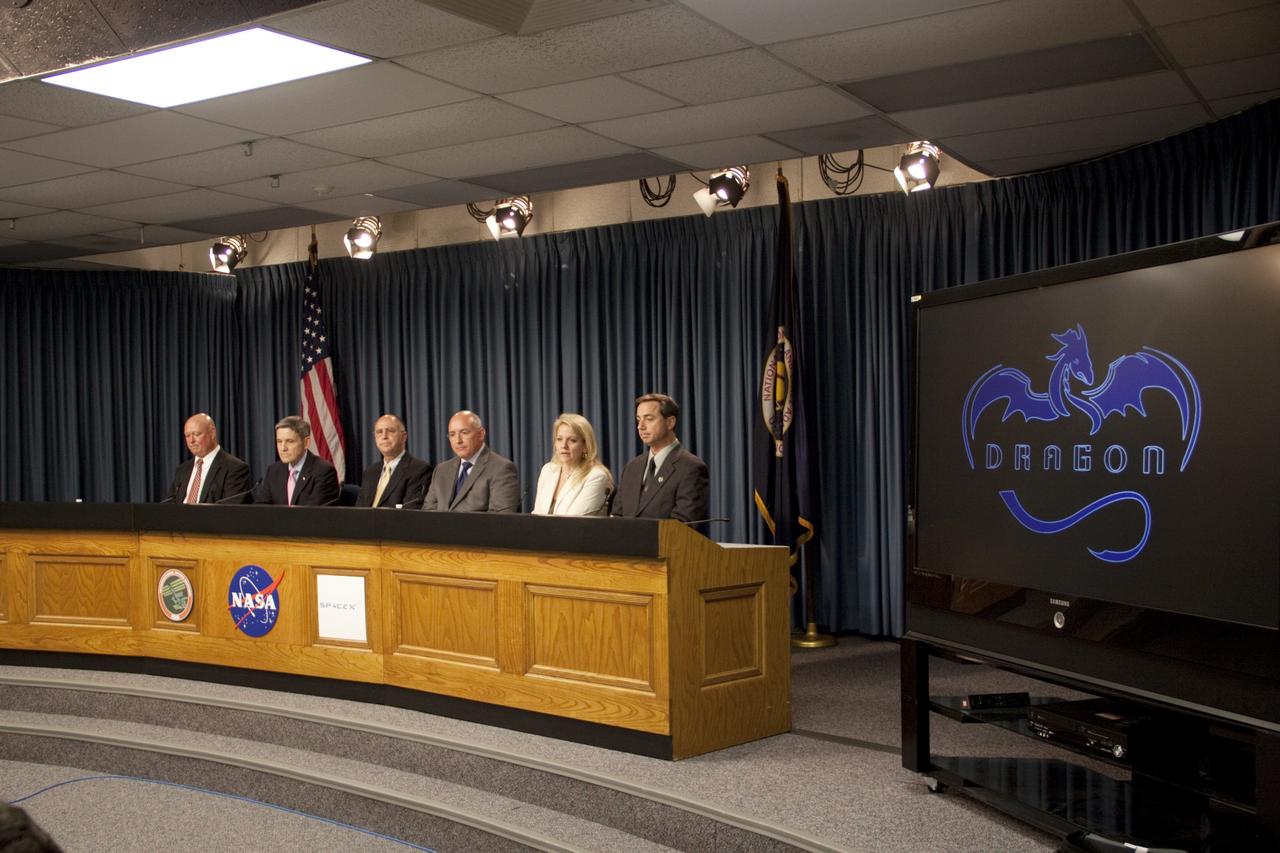
CAPE CANAVERAL, Fla. -- A prelaunch news conference is held in NASA Kennedy Space Center's Press Site auditorium in Florida. From left are Michael Curie, NASA Public Affairs, Bob Cabana, director of NASA Kennedy Space Center, Sam Scimemi, director of International Space Station at NASA Headquarters, Mike Suffredini, program manager of International Space Station at NASA Johnson Space Center, Gwynne Shotwell, president of Space Exploration Technologies Corp., or SpaceX, and Mike McAleenan, launch weather officer from the 45th Weather Squadron at Cape Canaveral Air Force Station. The news conference provided the media with a status on the readiness to launch NASA's first Commercial Resupply Services, or CRS-1, mission to the International Space Station. Space Exploration Technologies Corp., or SpaceX, built both the mission's Falcon 9 rocket and Dragon capsule. Launch is scheduled for 8:35 p.m. EDT on Oct. 7 from Space Launch Complex 40 on Cape Canaveral Air Force Station. SpaceX CRS-1 is an important step toward making America’s microgravity research program self-sufficient by providing a way to deliver and return significant amounts of cargo, including science experiments, to and from the orbiting laboratory. NASA has contracted for 12 commercial resupply flights from SpaceX and eight from the Orbital Sciences Corp. For more information, visit http://www.nasa.gov/mission_pages/station/living/launch/index.html. Photo credit: NASA/Jim Grossmann