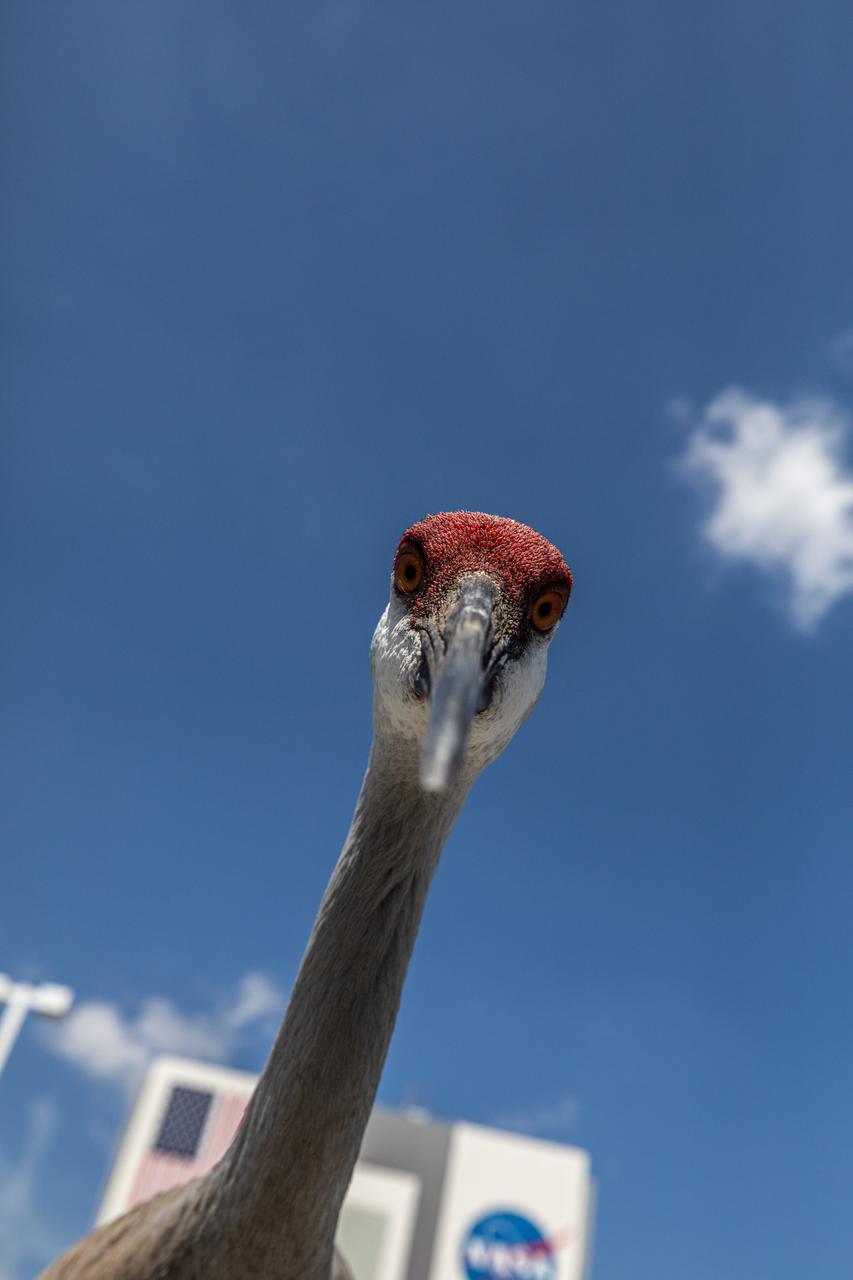
An inquisitive sandhill crane approaches the photographer near the Vehicle Assembly Building at NASA’s Kennedy Space Center in Florida on March 24, 2021. Kennedy shares space with the Merritt Island National Wildlife refuge, which is home to more than 1,000 species of plants, 117 species of fish, 68 amphibians and reptiles, 330 birds, and 31 different mammals. The refuge provides a favorable environment for sandhill cranes as it contains shallow freshwater habitats for nesting, along with a variety of vegetation and prey to feed on.

A sandhill crane explores a paved parking area near the Vehicle Assembly Building at NASA’s Kennedy Space Center in Florida on March 24, 2021. Kennedy shares space with the Merritt Island National Wildlife refuge, which is home to more than 1,000 species of plants, 117 species of fish, 68 amphibians and reptiles, 330 birds, and 31 different mammals. The refuge provides a favorable environment for sandhill cranes as it contains shallow freshwater habitats for nesting, along with a variety of vegetation and prey to feed on.
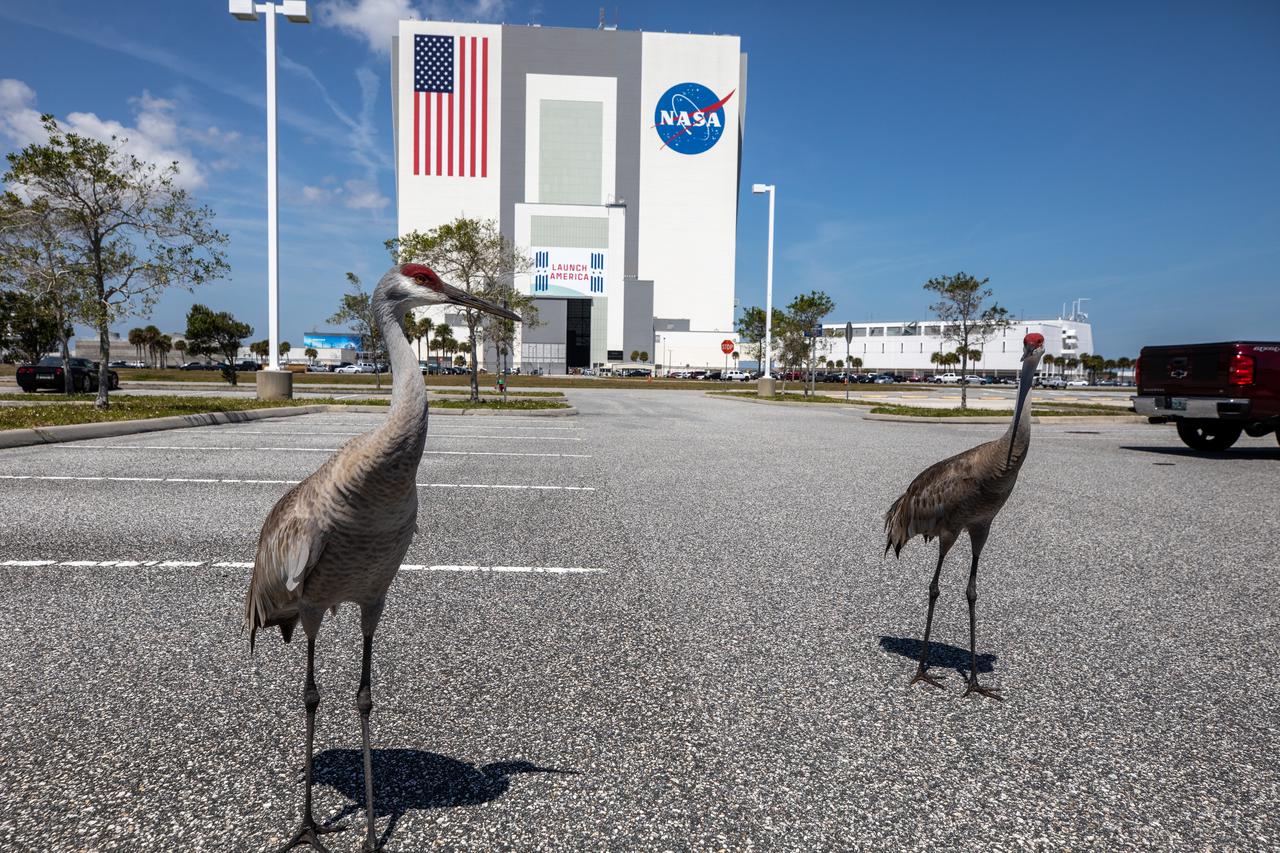
A pair of sandhill cranes explore a paved parking area near the Vehicle Assembly Building at NASA’s Kennedy Space Center in Florida on March 24, 2021. Kennedy shares space with the Merritt Island National Wildlife refuge, which is home to more than 1,000 species of plants, 117 species of fish, 68 amphibians and reptiles, 330 birds, and 31 different mammals. The refuge provides a favorable environment for the cranes as it contains shallow freshwater habitats for nesting, along with a variety of vegetation and prey to feed on.
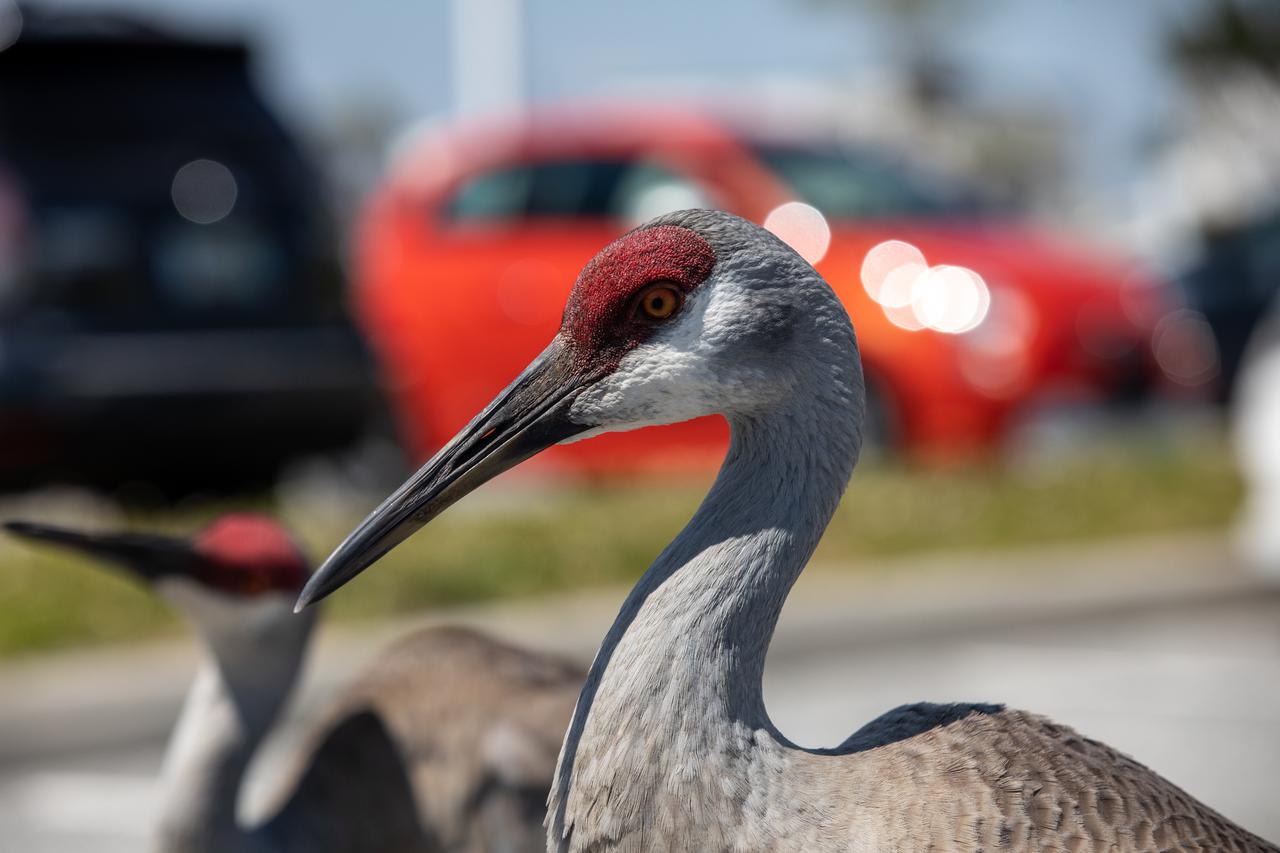
A pair of sandhill cranes explore a paved parking area at NASA’s Kennedy Space Center in Florida on March 24, 2021. Kennedy shares space with the Merritt Island National Wildlife refuge, which is home to more than 1,000 species of plants, 117 species of fish, 68 amphibians and reptiles, 330 birds, and 31 different mammals. The refuge provides a favorable environment for the cranes as it contains shallow freshwater habitats for nesting, along with a variety of vegetation and prey to feed on.
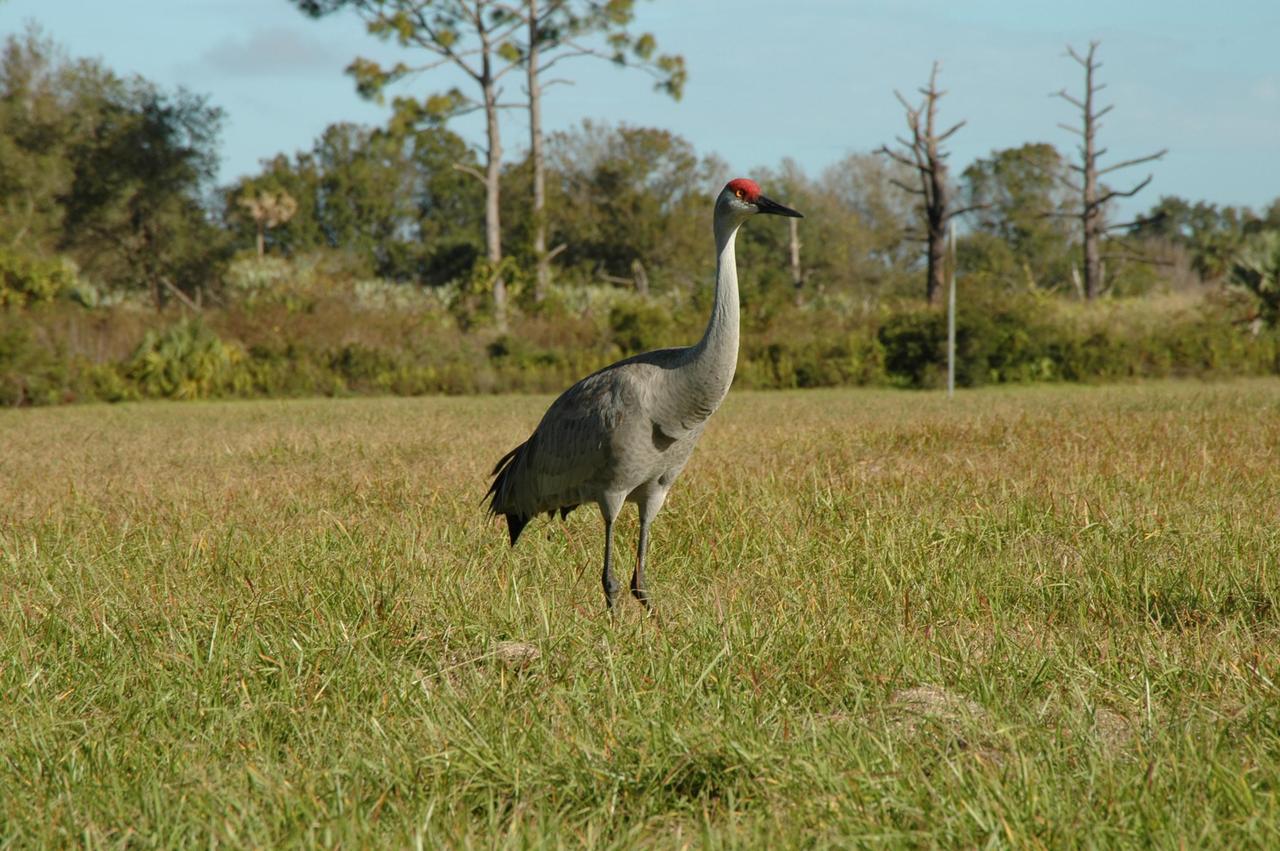
KENNEDY SPACE CENTER, FLA. -- A sandhill crane is on the lookout on grounds near the Headquarters Building at NASA's Kennedy Space Center. Sandhill cranes are primarily birds of open freshwater wetlands and shallow marshes and in Florida use seasonally variable wetlands, grasslands, and palm and pine savannahs. Sandhill cranes are omnivorous, feeding on a wide variety of plant materials (including waste grains) and small vertebrates and invertebrates, both on land and in shallow wetlands. Florida's sandhill crane population increases as cranes from northern states spend the winter in Florida. Florida sandhill cranes stay with the same mate for several years and young sandhills stay with their parents until they are about 10 months old. Like their endangered relatives the whooping cranes, sandhills live to be older than most birds. In fact, some sandhill cranes live up to 20 years. Photo credit: NASAJim Grossmann

KENNEDY SPACE CENTER, FLA. -- Sandhill cranes stalk a parking lot near the Headquarters Building at NASA's Kennedy Space Center. Sandhill cranes are primarily birds of open freshwater wetlands and shallow marshes and in Florida use seasonally variable wetlands, grasslands, and palm and pine savannahs. Sandhill cranes are omnivorous, feeding on a wide variety of plant materials (including waste grains) and small vertebrates and invertebrates, both on land and in shallow wetlands. Florida's sandhill crane population increases as cranes from northern states spend the winter in Florida. Florida sandhill cranes stay with the same mate for several years and young sandhills stay with their parents until they are about 10 months old. Like their endangered relatives the whooping cranes, sandhills live to be older than most birds. In fact, some sandhill cranes live up to 20 years. Photo credit: NASAJim Grossmann
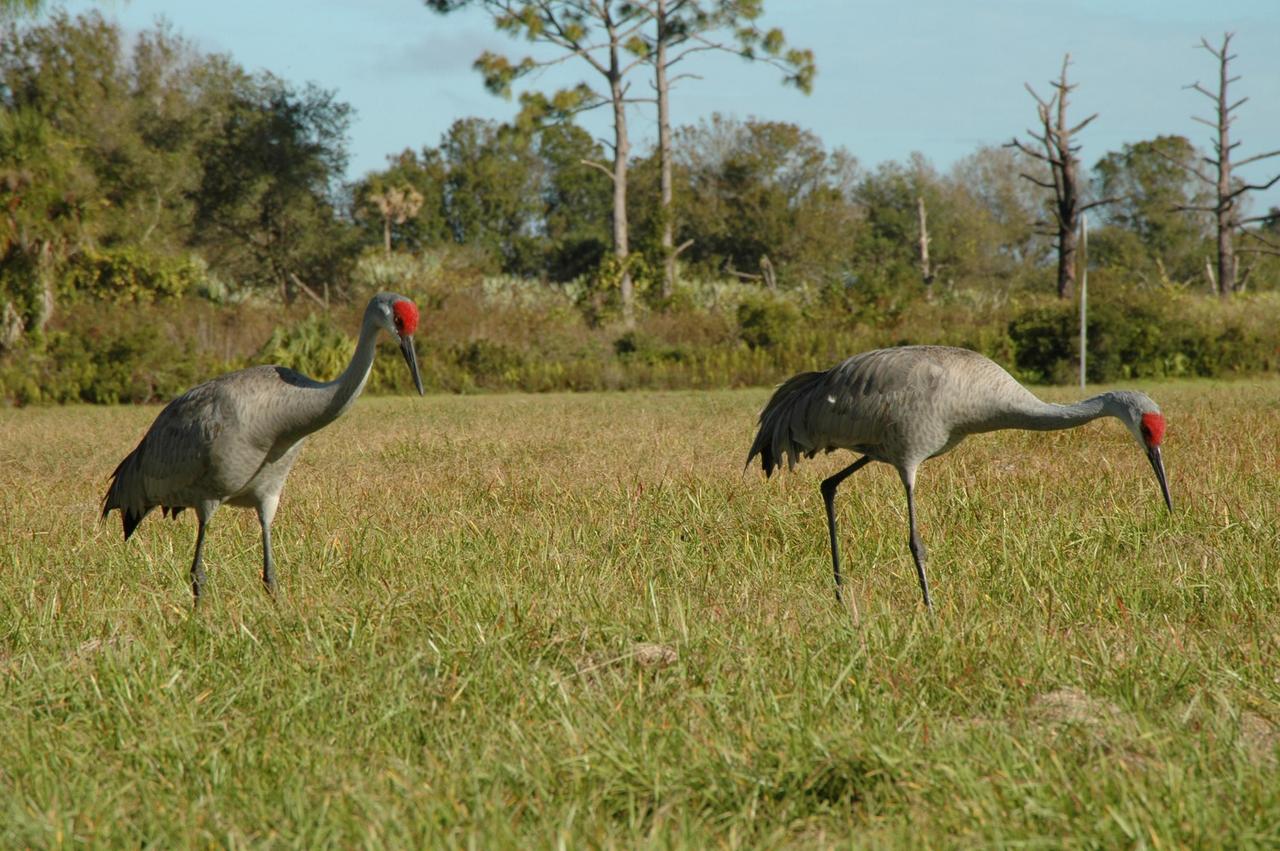
KENNEDY SPACE CENTER, FLA. -- A pair of sandhill cranes search for food on the grounds near the Headquarters Building at NASA's Kennedy Space Center. Sandhill cranes are primarily birds of open freshwater wetlands and shallow marshes and in Florida use seasonally variable wetlands, grasslands, and palm and pine savannahs. Sandhill cranes are omnivorous, feeding on a wide variety of plant materials (including waste grains) and small vertebrates and invertebrates, both on land and in shallow wetlands. Florida's sandhill crane population increases as cranes from northern states spend the winter in Florida. Florida sandhill cranes stay with the same mate for several years and young sandhills stay with their parents until they are about 10 months old. Like their endangered relatives the whooping cranes, sandhills live to be older than most birds. In fact, some sandhill cranes live up to 20 years. Photo credit: NASAJim Grossmann
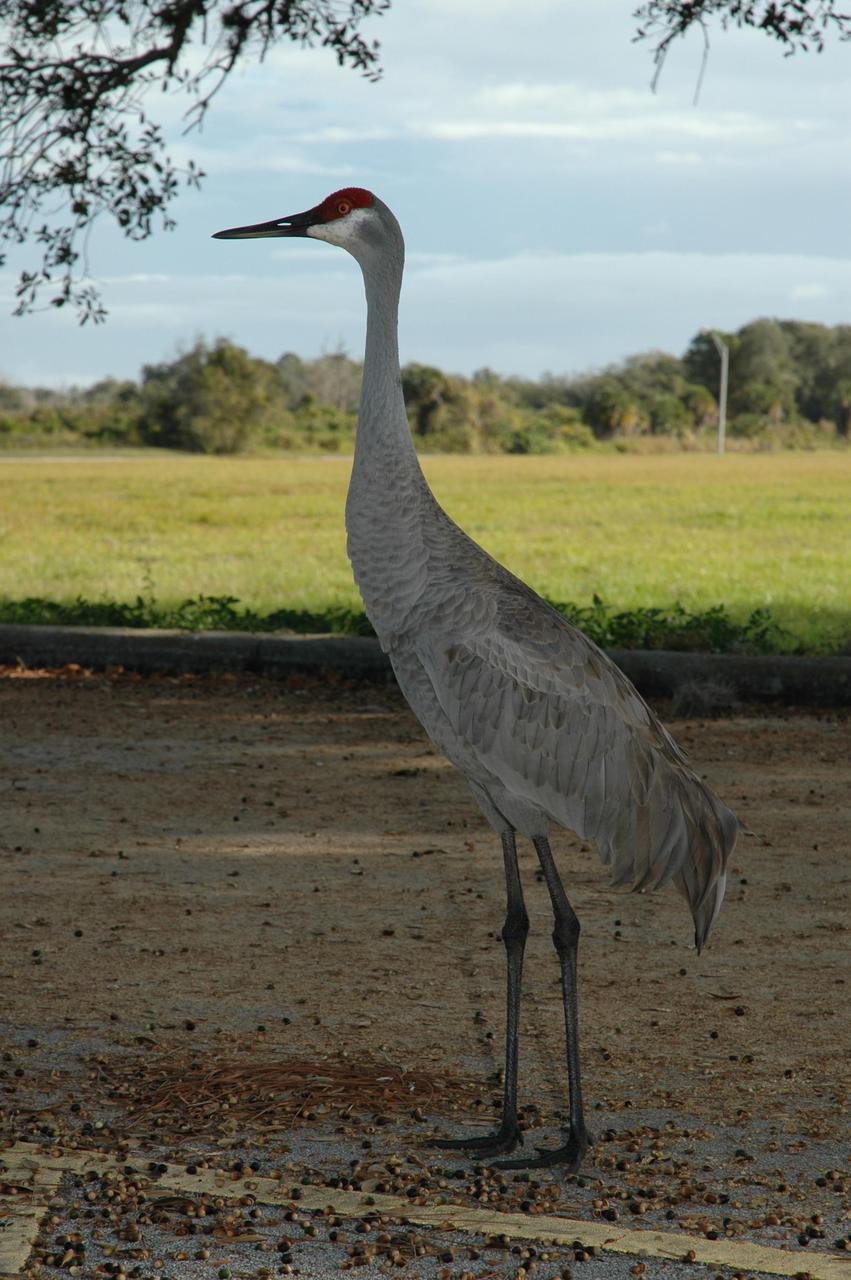
KENNEDY SPACE CENTER, FLA. -- A sandhill crane is on the lookout in a parking lot near the Headquarters Building at NASA's Kennedy Space Center. Sandhill cranes are primarily birds of open freshwater wetlands and shallow marshes and in Florida use seasonally variable wetlands, grasslands, and palm and pine savannahs. Sandhill cranes are omnivorous, feeding on a wide variety of plant materials (including waste grains) and small vertebrates and invertebrates, both on land and in shallow wetlands. Florida's sandhill crane population increases as cranes from northern states spend the winter in Florida. Florida sandhill cranes stay with the same mate for several years and young sandhills stay with their parents until they are about 10 months old. Like their endangered relatives the whooping cranes, sandhills live to be older than most birds. In fact, some sandhill cranes live up to 20 years. Photo credit: NASAJim Grossmann
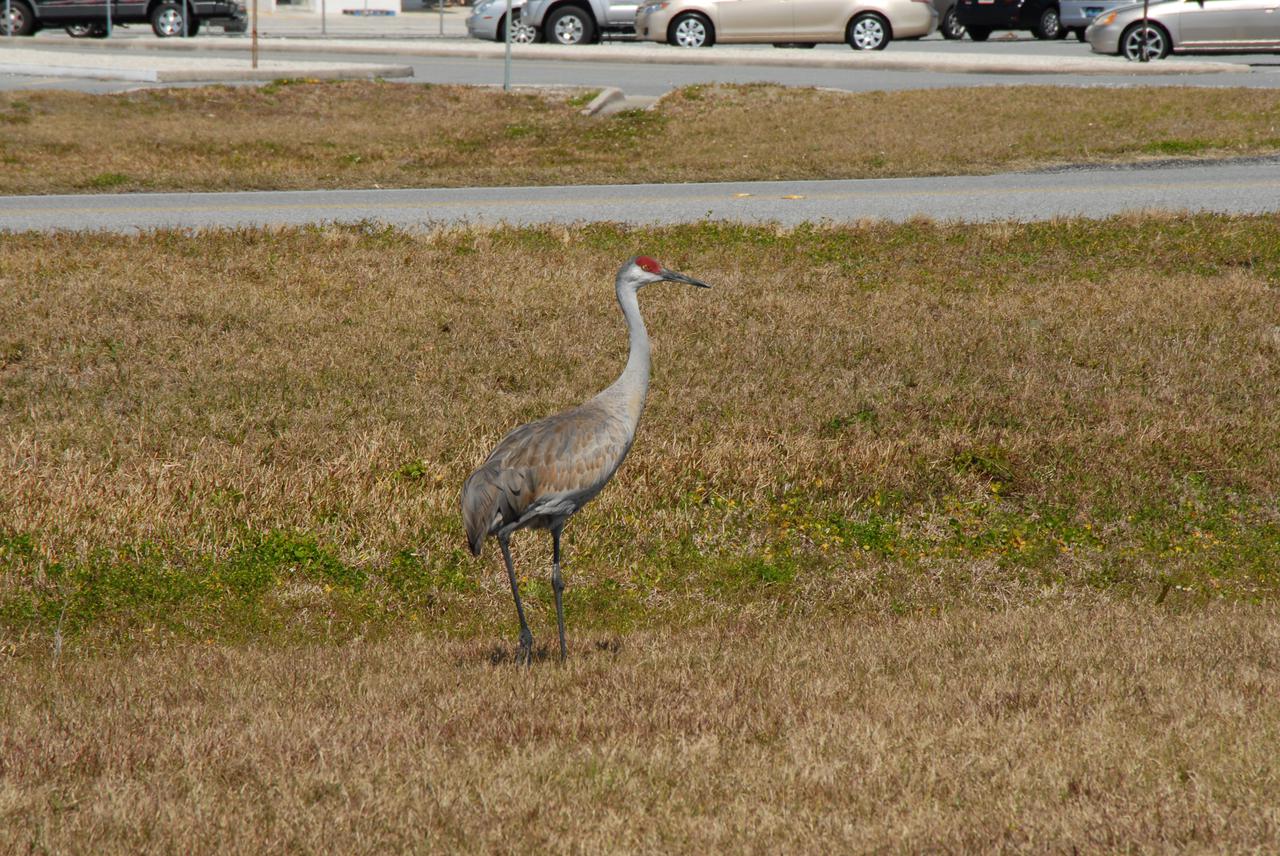
CAPE CANAVERAL, Fla. – A sandhill crane pauses from its food search near the Vehicle Assembly Building at NASA's Kennedy Space Center in Florida long enough to determine if it is in any imminent danger as its photograph is taken. Sandhill cranes are primarily birds of open freshwater wetlands and shallow marshes, and in Florida, use seasonally variable wetlands, grasslands, and palm and pine savannahs. Sandhill cranes are omnivorous, feeding on a wide variety of plants and small vertebrates and invertebrates, both on land and in shallow water. Florida's sandhill crane population increases as cranes from northern states spend the winter in Florida. Florida sandhill cranes stay with the same mate for several years, and young sandhills stay with their parents until they are about 10 months old. Like whooping cranes, their endangered relatives, sandhills live to be older than most birds, some living up to 20 years. The Merritt Island National Wildlife Refuge coexists with Kennedy Space Center and provides a habitat for 330 species of birds including the sandhill crane. Photo credit: NASA_Jim Grossmann
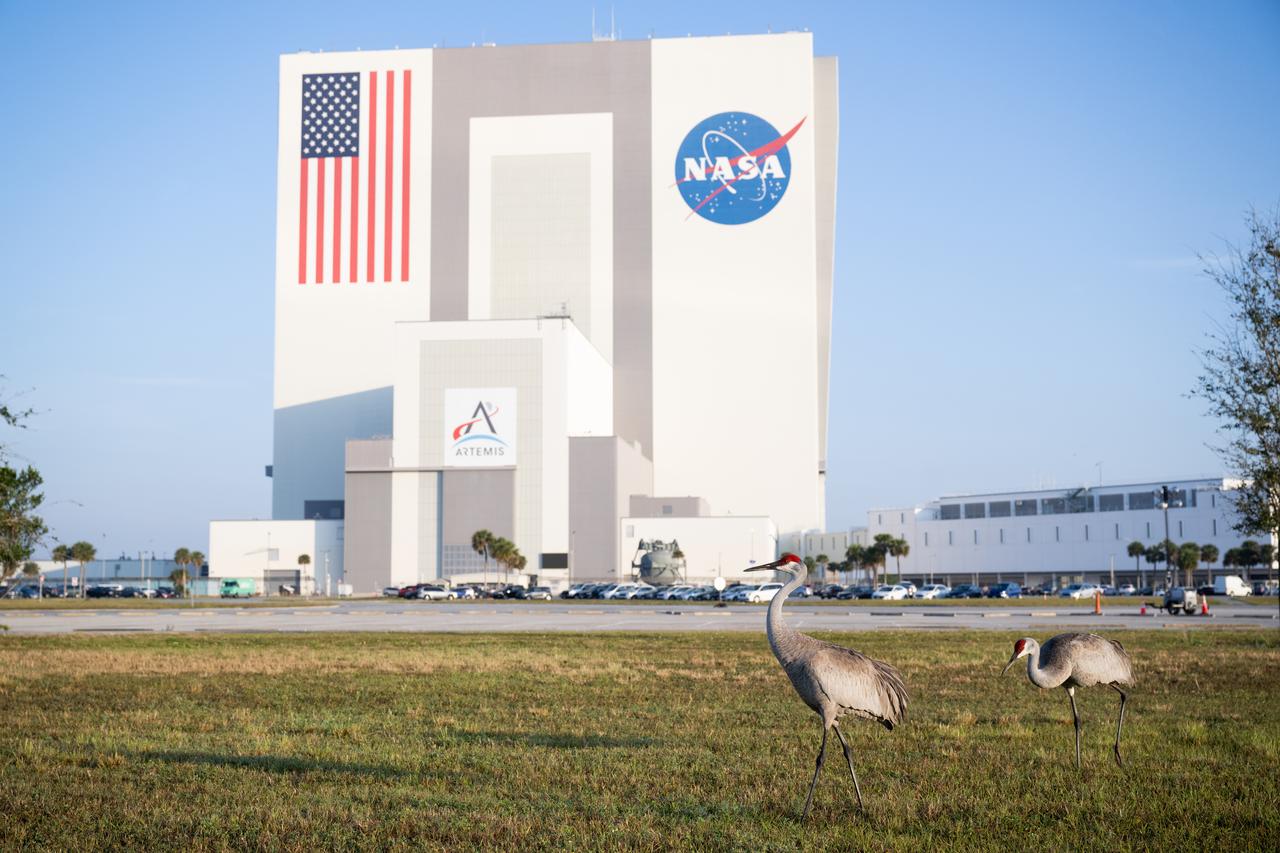
A pair of sandhill cranes are seen infront of the Vehicle Assmebly Building, Friday, Feb. 24, 2023, at NASA’s Kennedy Space Center in Florida as preparations continue to the launch of NASA's SpaceX Crew-6 mission. The agency's SpaceX Crew-6 mission is the sixth crew rotation mission of the SpaceX Crew Dragon spacecraft and Falcon 9 rocket to the International Space Station as part of the agency’s Commercial Crew Program. NASA astronauts Stephen Bowen and Warren "Woody" Hoburg, UAE (United Arab Emirates) astronaut Sultan Alneyadi, and Roscosmos cosmonaut Andrey Fedyaev are scheduled to launch at 1:45 a.m. EST on Feb. 27, from Launch Complex 39A at the Kennedy Space Center. Photo Credit: (NASA/Joel Kowsky)
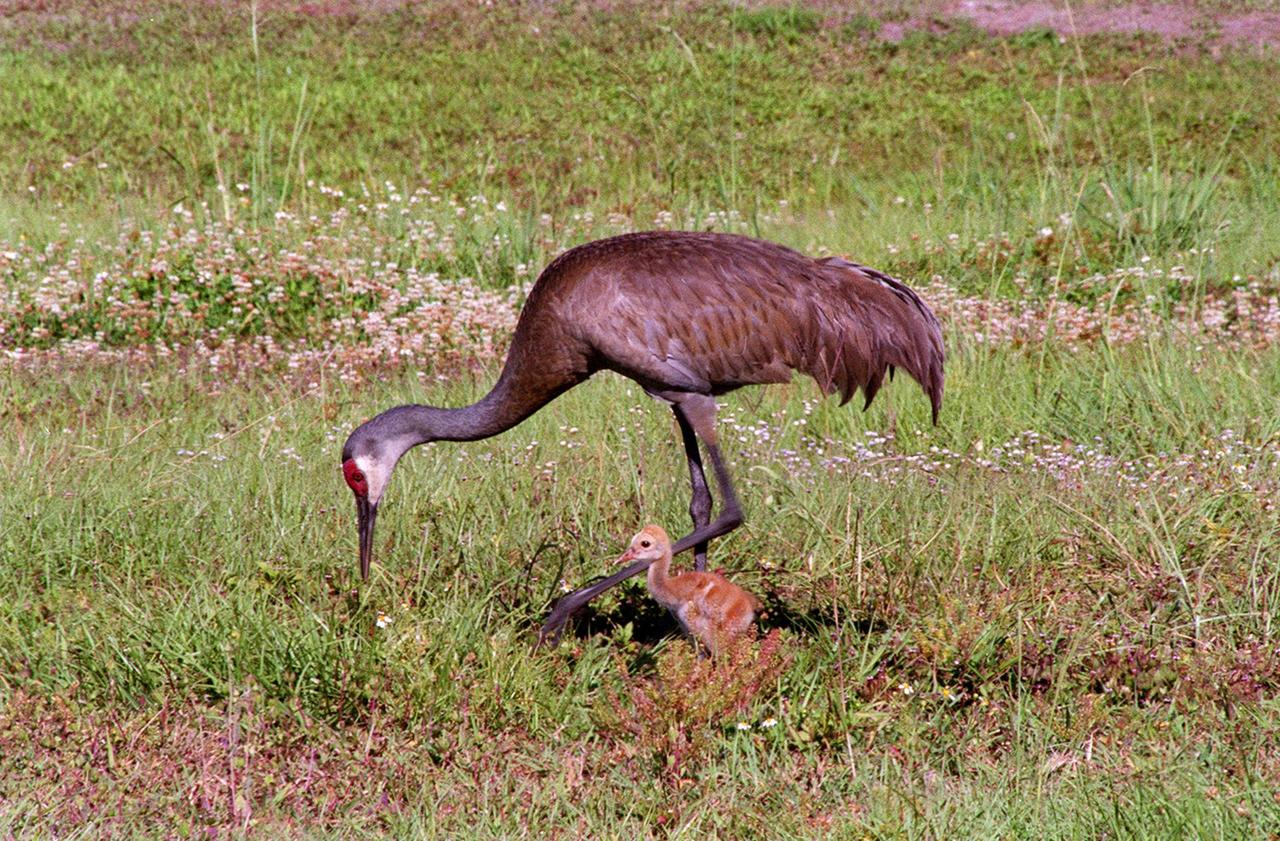
A Sandhill Crane searches for food with its still-fuzzy fledgling by its side. The two, along with another adult crane, have been seen wandering the grassy areas in the KSC Launch Complex 39 area. Sandhill cranes range from Siberia, Alaska and Arctic islands to Michigan, Minnesota and California; from Florida to Texas. They prefer large freshwater marshes, prairie ponds and marshy tundra. KSC shares a boundary with the Merritt Island National Wildlife Refuge, which encompasses 92,000 acres that are a habitat for more than 331 species of birds, 31 mammals, 117 fishes, and 65 amphibians and reptiles. The marshes and open water of the refuge provide wintering areas for 23 species of migratory waterfowl, as well as a year-round home for great blue herons, great egrets, wood storks, cormorants, brown pelicans and other species of marsh and shore birds, as well as a variety of insects
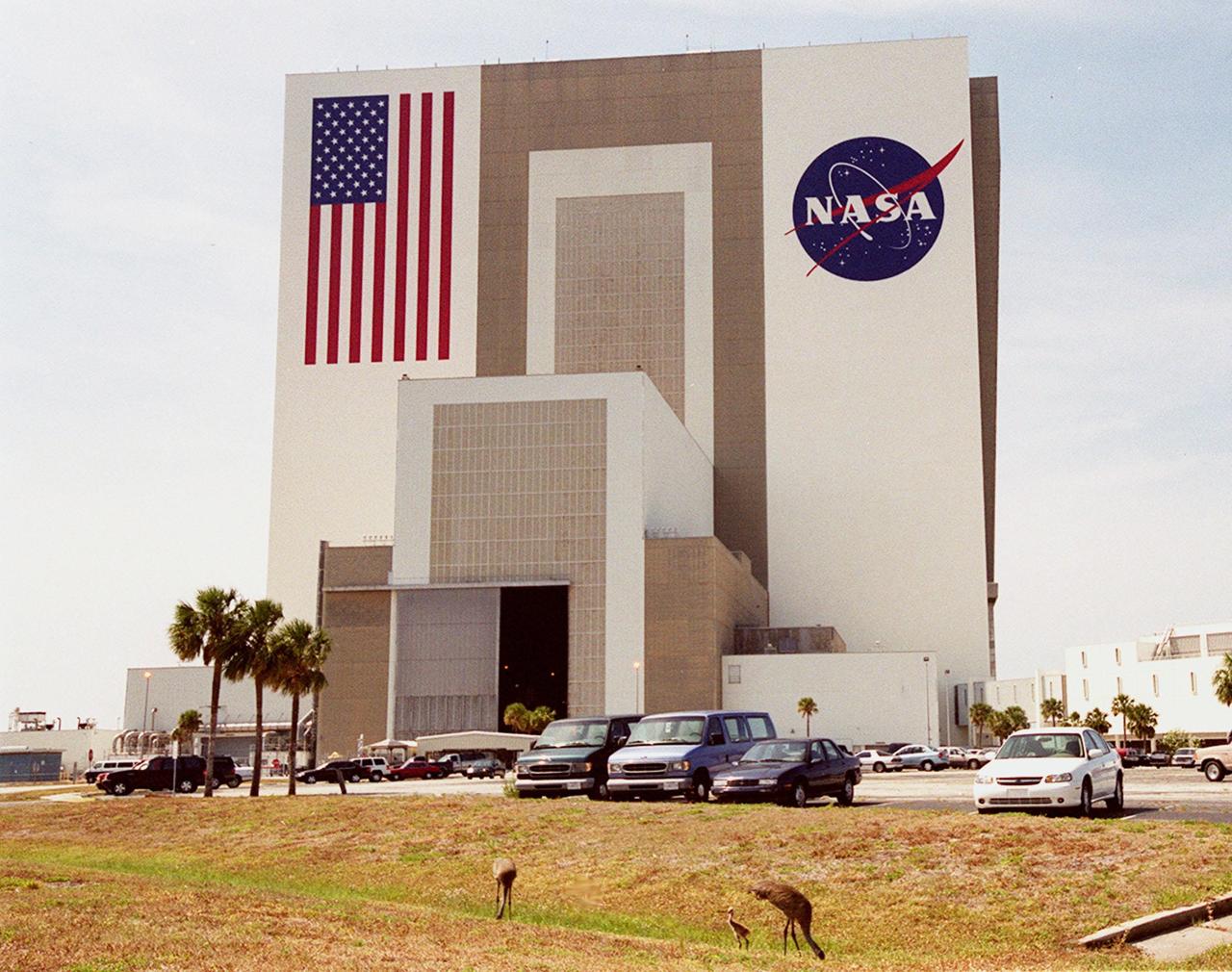
A family of sandhill cranes searches for food on the grounds near the Vehicle Assembly Building. The cranes have been a constant sight in the Launch Complex 39 area during the month of May. Sandhill cranes range from Siberia, Alaska and Arctic islands to Michigan, Minnesota and California; from Florida to Texas. They prefer large freshwater marshes, prairie ponds and marshy tundra. KSC shares a boundary with the Merritt Island National Wildlife Refuge, which encompasses 92,000 acres that are a habitat for more than 331 species of birds, 31 mammals, 117 fishes, and 65 amphibians and reptiles. The marshes and open water of the refuge provide wintering areas for 23 species of migratory waterfowl, as well as a year-round home for great blue herons, great egrets, wood storks, cormorants, brown pelicans and other species of marsh and shore birds, as well as a variety of insects
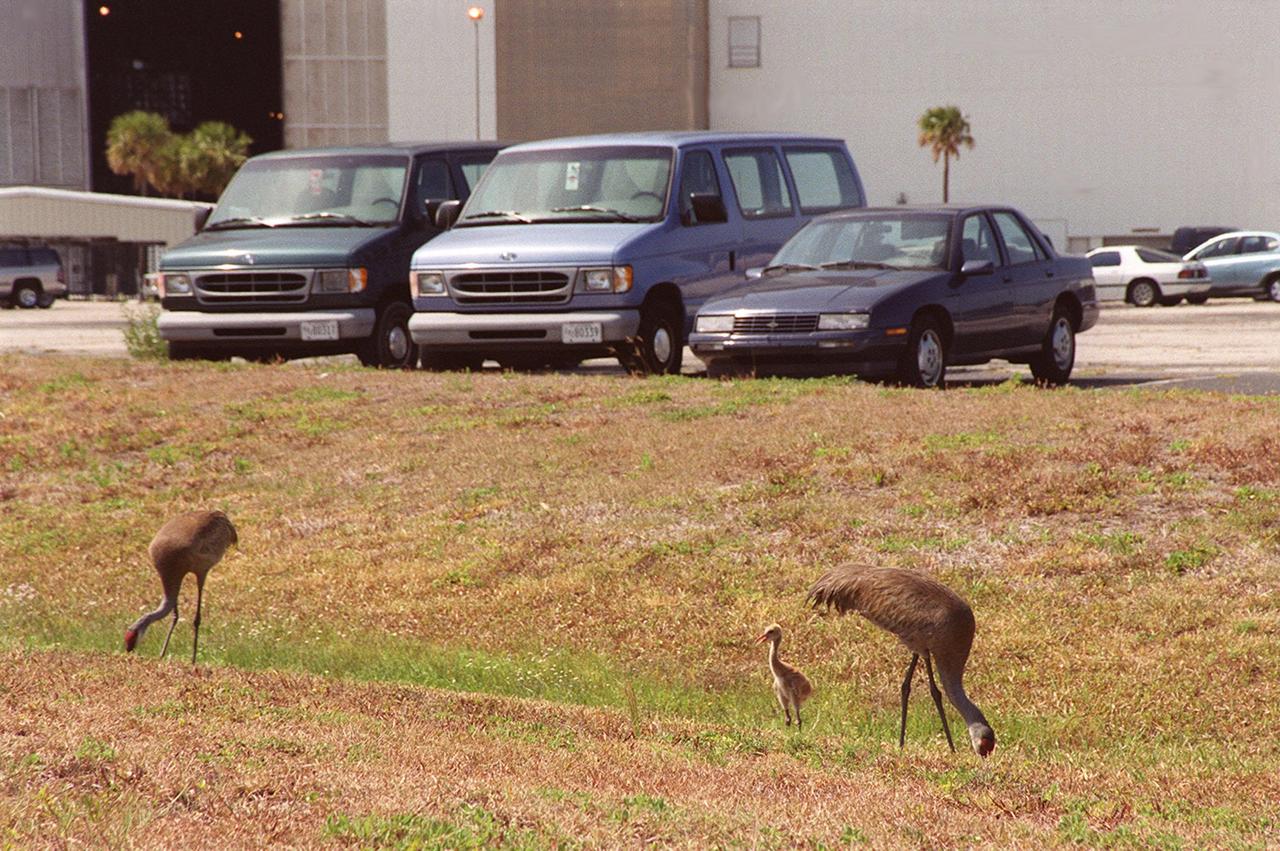
While the sandhill crane parents search for food in front of the Vehicle Assembly Building, their still-featherless baby nearby tests its voice. The cranes have been a constant sight in the Launch Complex 39 area during the month of May. Sandhill cranes range from Siberia, Alaska and Arctic islands to Michigan, Minnesota and California; from Florida to Texas. They prefer large freshwater marshes, prairie ponds and marshy tundra. KSC shares a boundary with the Merritt Island National Wildlife Refuge, which encompasses 92,000 acres that are a habitat for more than 331 species of birds, 31 mammals, 117 fishes, and 65 amphibians and reptiles. The marshes and open water of the refuge provide wintering areas for 23 species of migratory waterfowl, as well as a year-round home for great blue herons, great egrets, wood storks, cormorants, brown pelicans and other species of marsh and shore birds, as well as a variety of insects
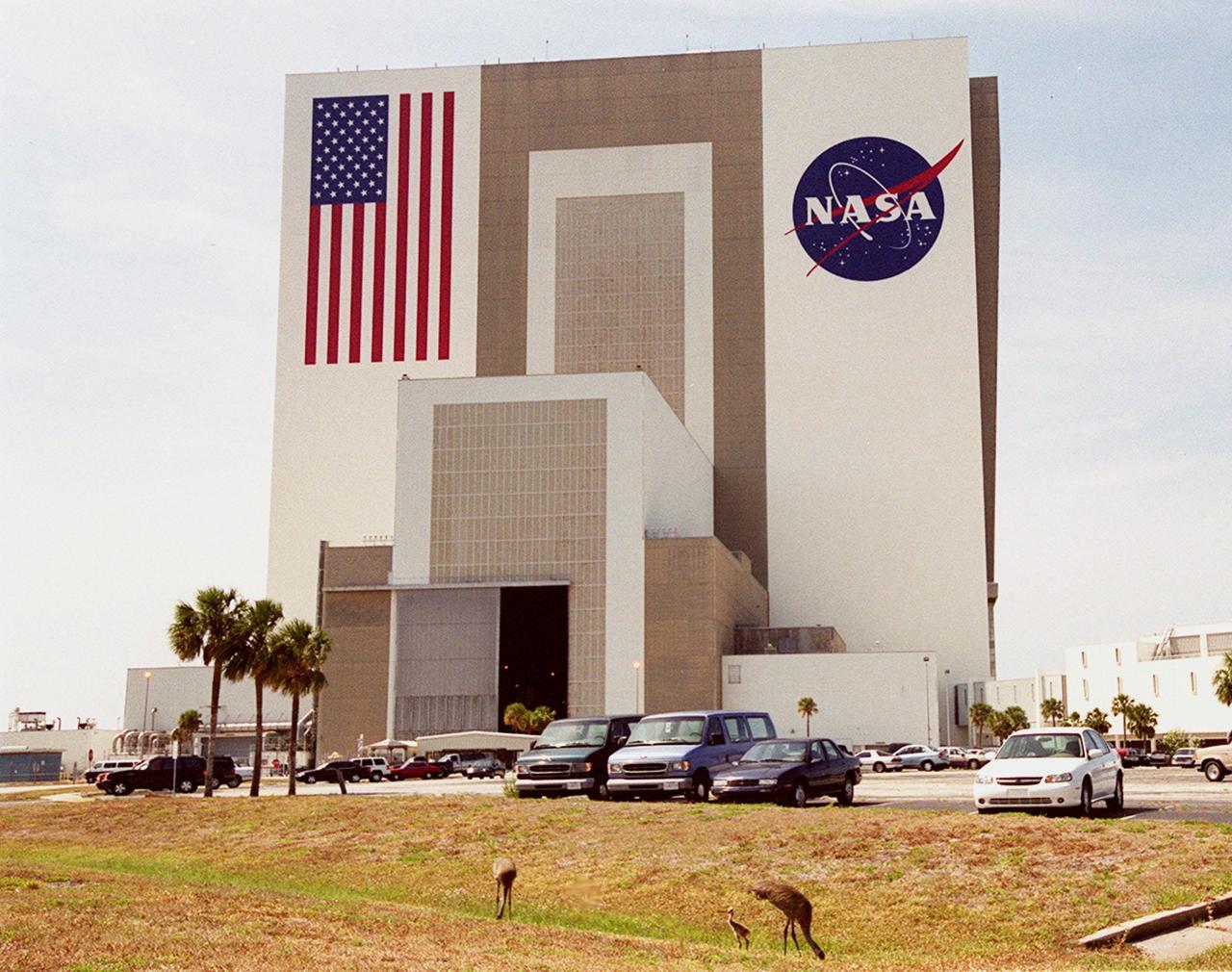
A family of sandhill cranes searches for food on the grounds near the Vehicle Assembly Building. The cranes have been a constant sight in the Launch Complex 39 area during the month of May. Sandhill cranes range from Siberia, Alaska and Arctic islands to Michigan, Minnesota and California; from Florida to Texas. They prefer large freshwater marshes, prairie ponds and marshy tundra. KSC shares a boundary with the Merritt Island National Wildlife Refuge, which encompasses 92,000 acres that are a habitat for more than 331 species of birds, 31 mammals, 117 fishes, and 65 amphibians and reptiles. The marshes and open water of the refuge provide wintering areas for 23 species of migratory waterfowl, as well as a year-round home for great blue herons, great egrets, wood storks, cormorants, brown pelicans and other species of marsh and shore birds, as well as a variety of insects
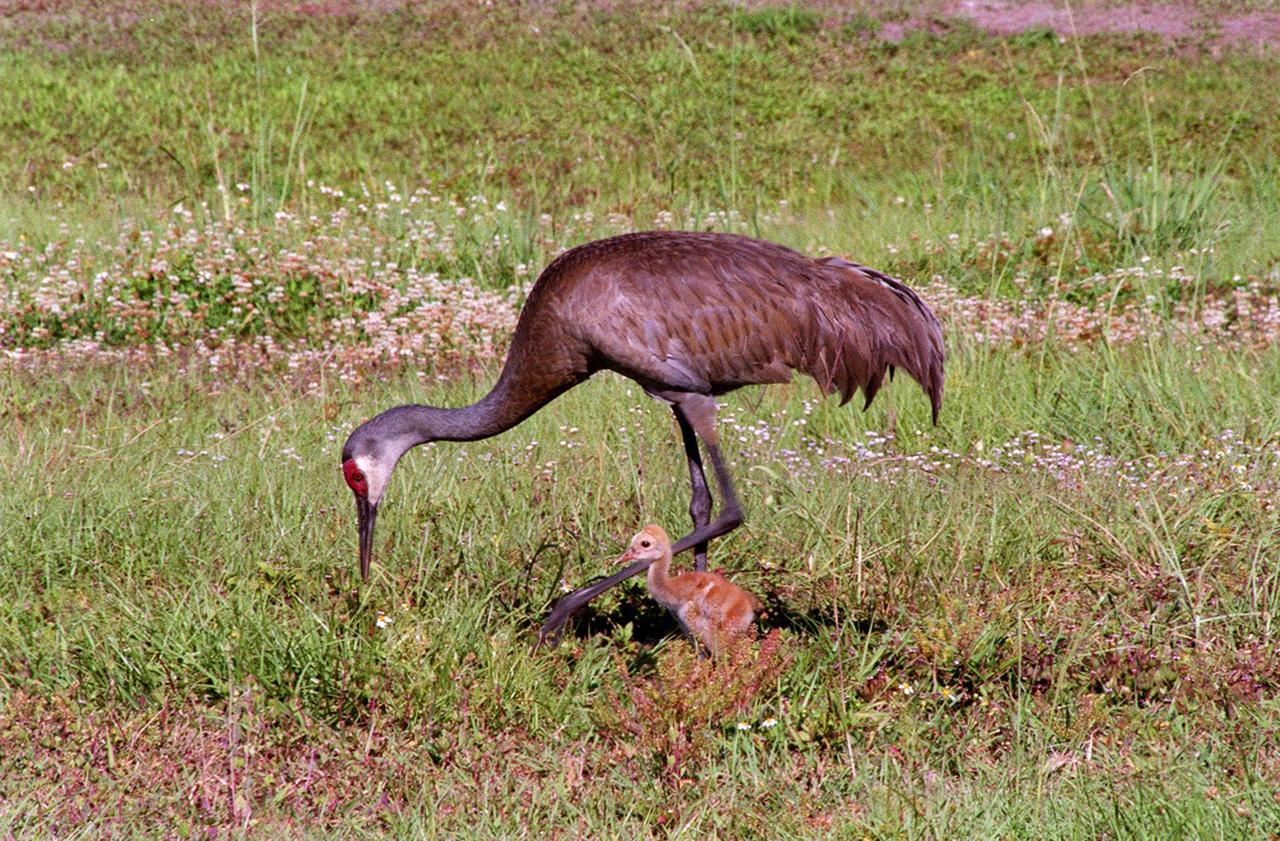
A Sandhill Crane searches for food with its still-fuzzy fledgling by its side. The two, along with another adult crane, have been seen wandering the grassy areas in the KSC Launch Complex 39 area. Sandhill cranes range from Siberia, Alaska and Arctic islands to Michigan, Minnesota and California; from Florida to Texas. They prefer large freshwater marshes, prairie ponds and marshy tundra. KSC shares a boundary with the Merritt Island National Wildlife Refuge, which encompasses 92,000 acres that are a habitat for more than 331 species of birds, 31 mammals, 117 fishes, and 65 amphibians and reptiles. The marshes and open water of the refuge provide wintering areas for 23 species of migratory waterfowl, as well as a year-round home for great blue herons, great egrets, wood storks, cormorants, brown pelicans and other species of marsh and shore birds, as well as a variety of insects
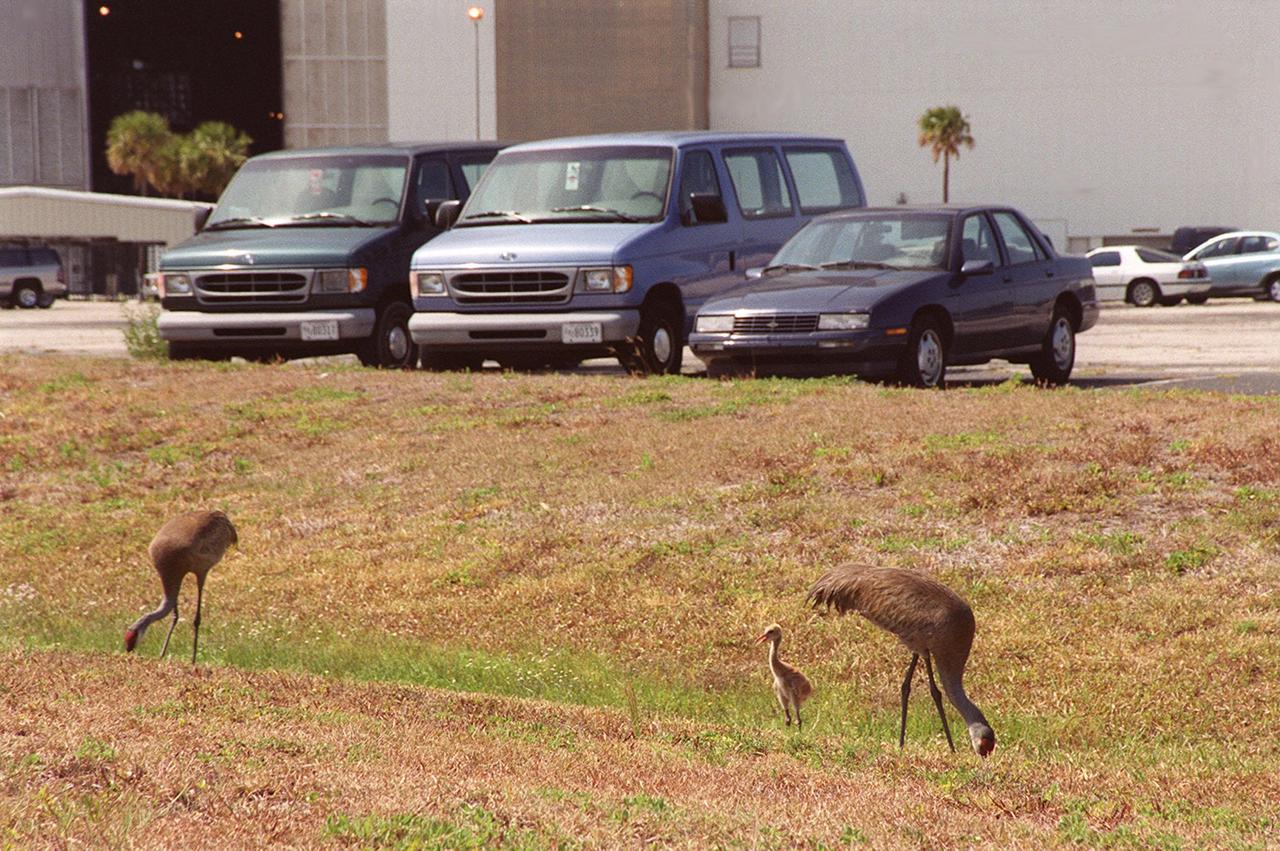
While the sandhill crane parents search for food in front of the Vehicle Assembly Building, their still-featherless baby nearby tests its voice. The cranes have been a constant sight in the Launch Complex 39 area during the month of May. Sandhill cranes range from Siberia, Alaska and Arctic islands to Michigan, Minnesota and California; from Florida to Texas. They prefer large freshwater marshes, prairie ponds and marshy tundra. KSC shares a boundary with the Merritt Island National Wildlife Refuge, which encompasses 92,000 acres that are a habitat for more than 331 species of birds, 31 mammals, 117 fishes, and 65 amphibians and reptiles. The marshes and open water of the refuge provide wintering areas for 23 species of migratory waterfowl, as well as a year-round home for great blue herons, great egrets, wood storks, cormorants, brown pelicans and other species of marsh and shore birds, as well as a variety of insects
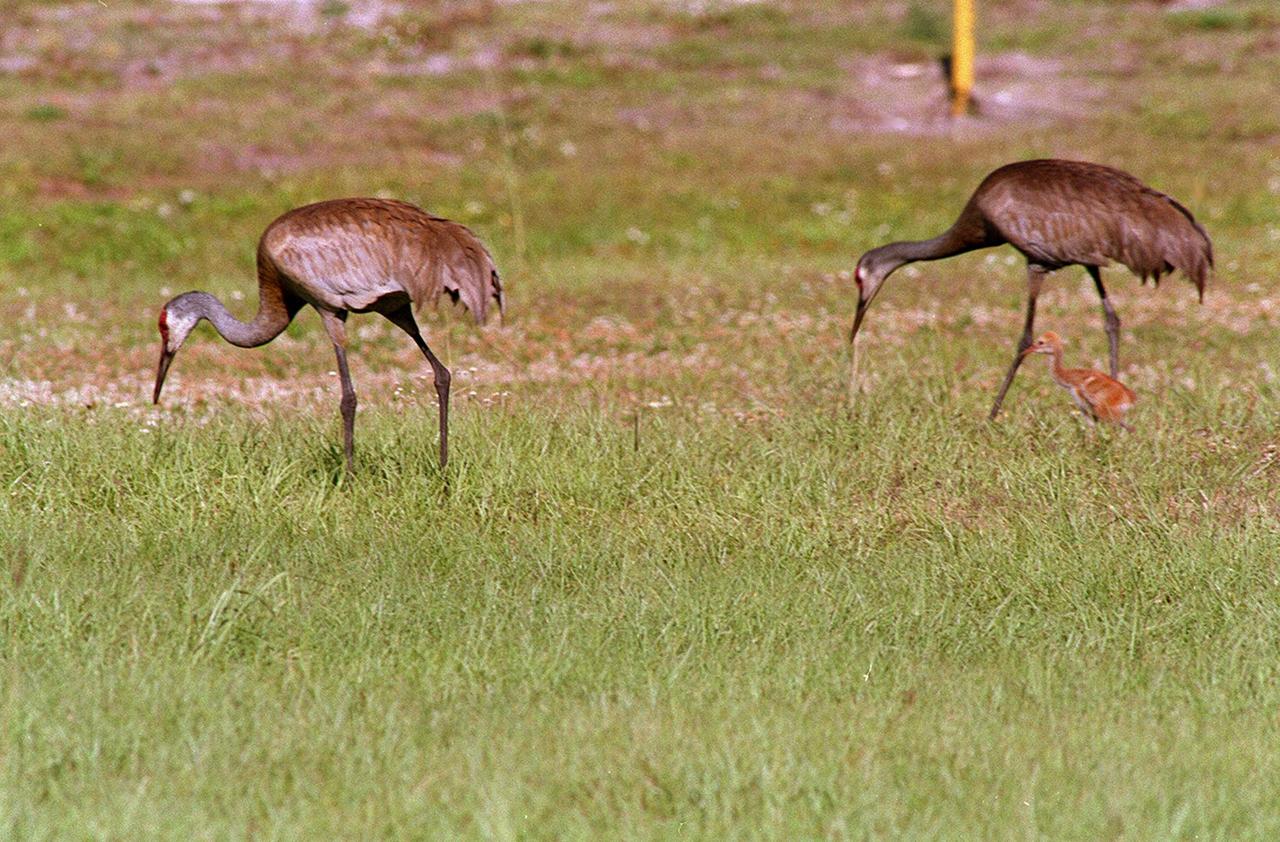
A pair of Sandhill Cranes searches for food with their still-fluffy fledgling close by. The trio have been seen wandering the grassy areas in the KSC Launch Complex 39 area. Sandhill cranes range from Siberia, Alaska and Arctic islands to Michigan, Minnesota and California; from Florida to Texas. They prefer large freshwater marshes, prairie ponds and marshy tundra. KSC shares a boundary with the Merritt Island National Wildlife Refuge, which encompasses 92,000 acres that are a habitat for more than 331 species of birds, 31 mammals, 117 fishes, and 65 amphibians and reptiles. The marshes and open water of the refuge provide wintering areas for 23 species of migratory waterfowl, as well as a year-round home for great blue herons, great egrets, wood storks, cormorants, brown pelicans and other species of marsh and shore birds, as well as a variety of insects
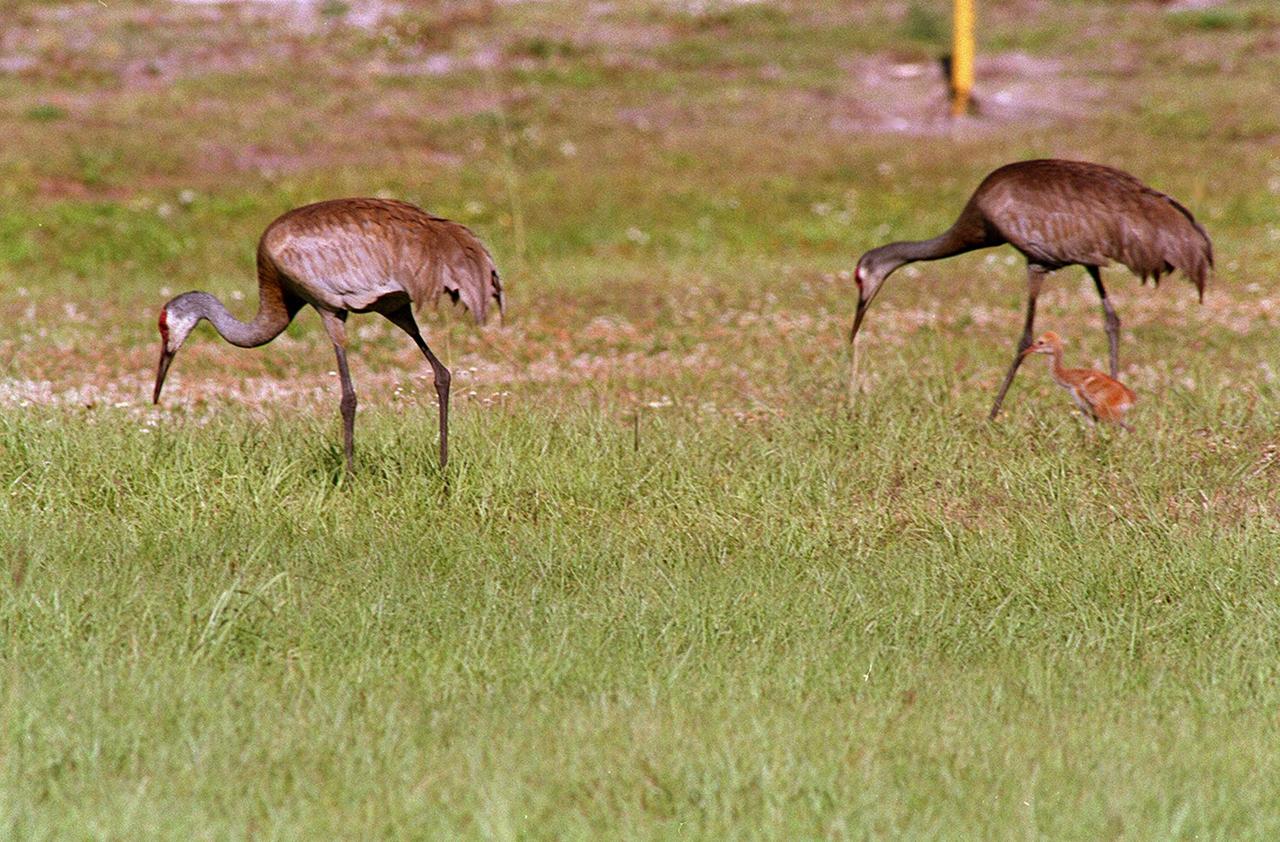
A pair of Sandhill Cranes searches for food with their still-fluffy fledgling close by. The trio have been seen wandering the grassy areas in the KSC Launch Complex 39 area. Sandhill cranes range from Siberia, Alaska and Arctic islands to Michigan, Minnesota and California; from Florida to Texas. They prefer large freshwater marshes, prairie ponds and marshy tundra. KSC shares a boundary with the Merritt Island National Wildlife Refuge, which encompasses 92,000 acres that are a habitat for more than 331 species of birds, 31 mammals, 117 fishes, and 65 amphibians and reptiles. The marshes and open water of the refuge provide wintering areas for 23 species of migratory waterfowl, as well as a year-round home for great blue herons, great egrets, wood storks, cormorants, brown pelicans and other species of marsh and shore birds, as well as a variety of insects
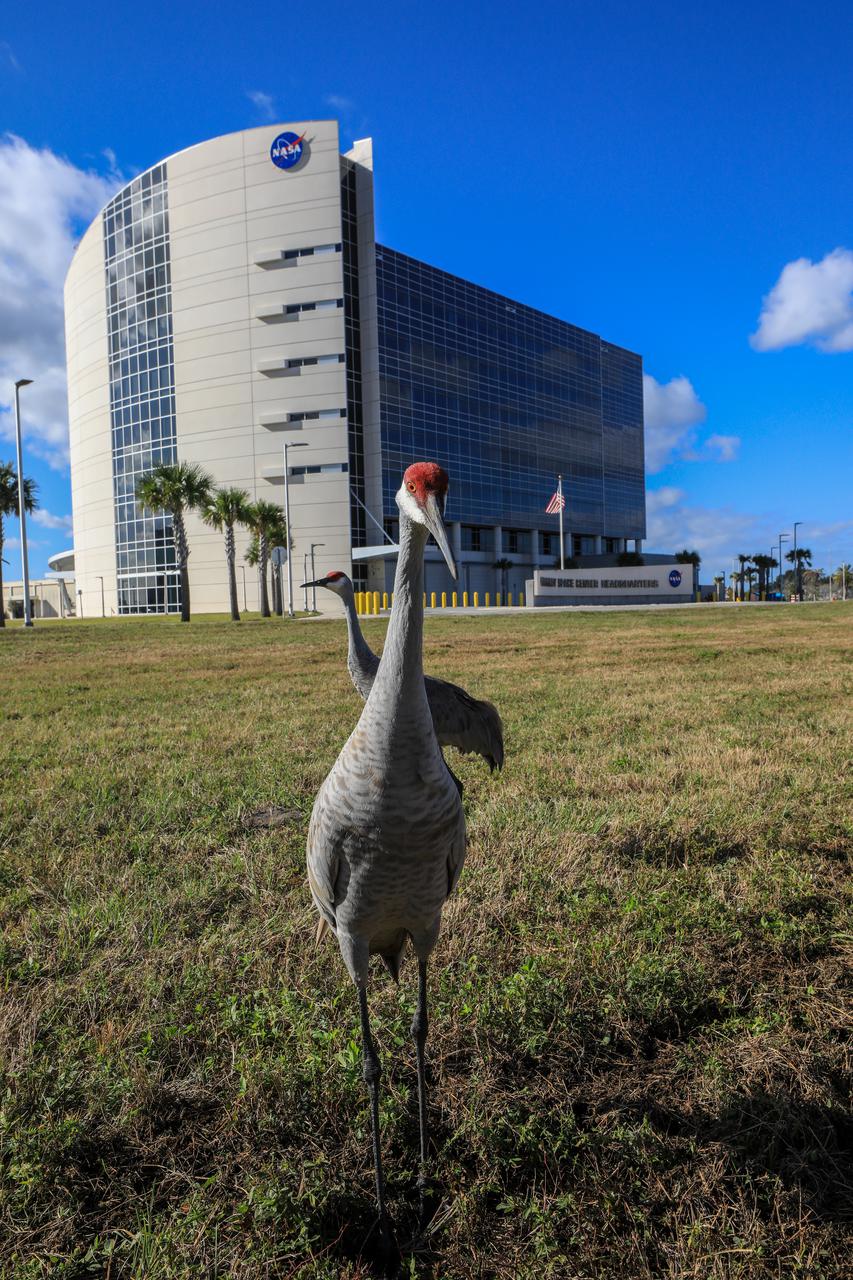
Sandhill cranes pose in front of the Central Campus Headquarters (CCHQ) Building at NASA’s Kennedy Space Center in Florida on Jan. 11, 2022. The CCHQ is a modernized, energy efficient facility representative of Kennedy’s transformation to America’s premier multi-user spaceport. It opened in May 2019. Built in 1965, the former headquarters building was recently demolished. The area previously occupied by the 439,000 square-foot-facility will be utilized as greenspace.
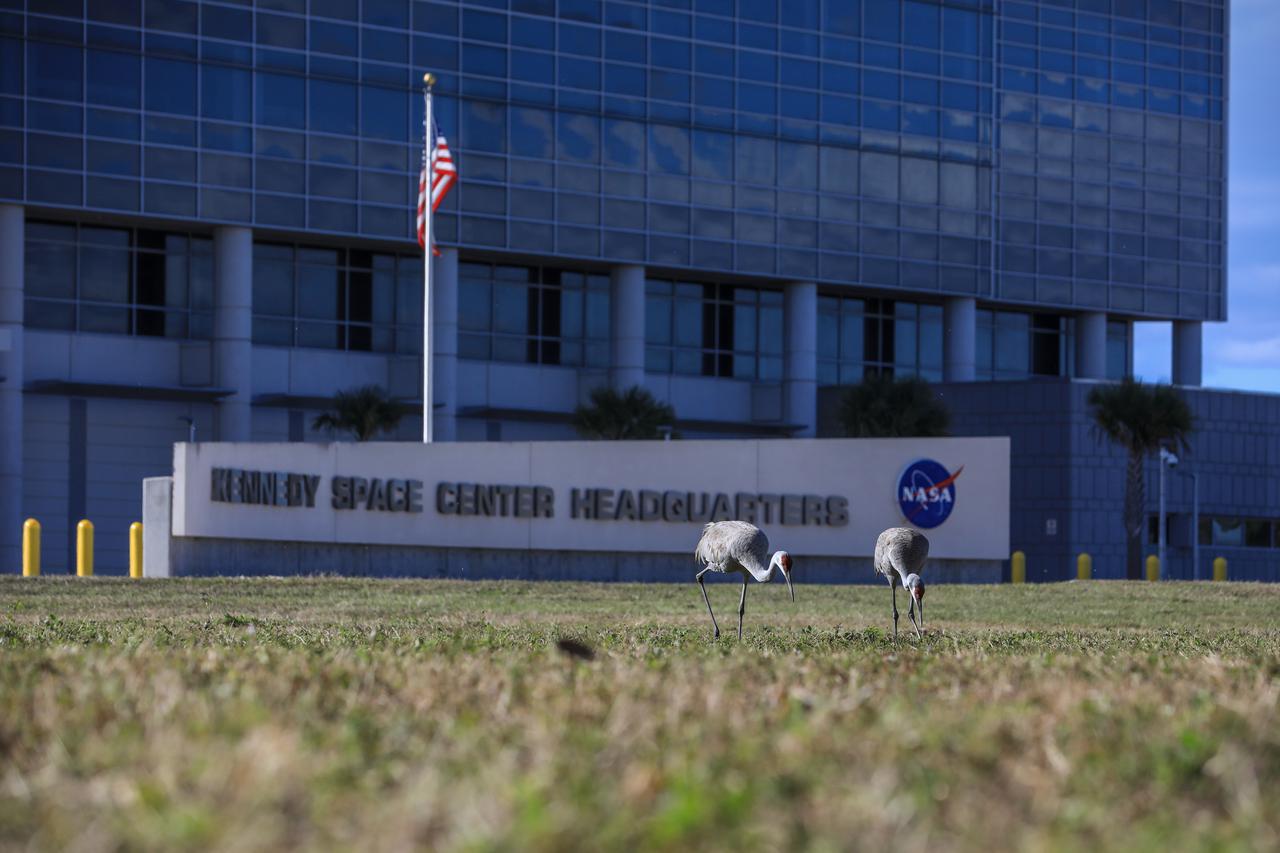
Sandhill cranes dig in the ground in front of the Central Campus Headquarters (CCHQ) Building at NASA’s Kennedy Space Center in Florida on Jan. 11, 2022. The CCHQ is a modernized, energy efficient facility representative of Kennedy’s transformation to America’s premier multi-user spaceport. It opened in May 2019. Built in 1965, the former headquarters building was recently demolished. The area previously occupied by the 439,000 square-foot-facility will be utilized as greenspace.