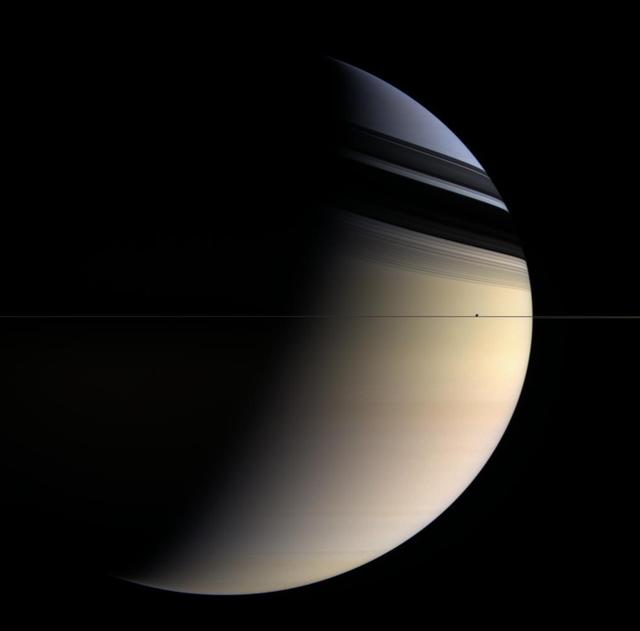
Dreamy colors ranging from pale rose to butterscotch to sapphire give this utterly inhospitable gas planet a romantic appeal. Shadows of the rings caress the northern latitudes whose blue color is presumed to be a seasonal effect
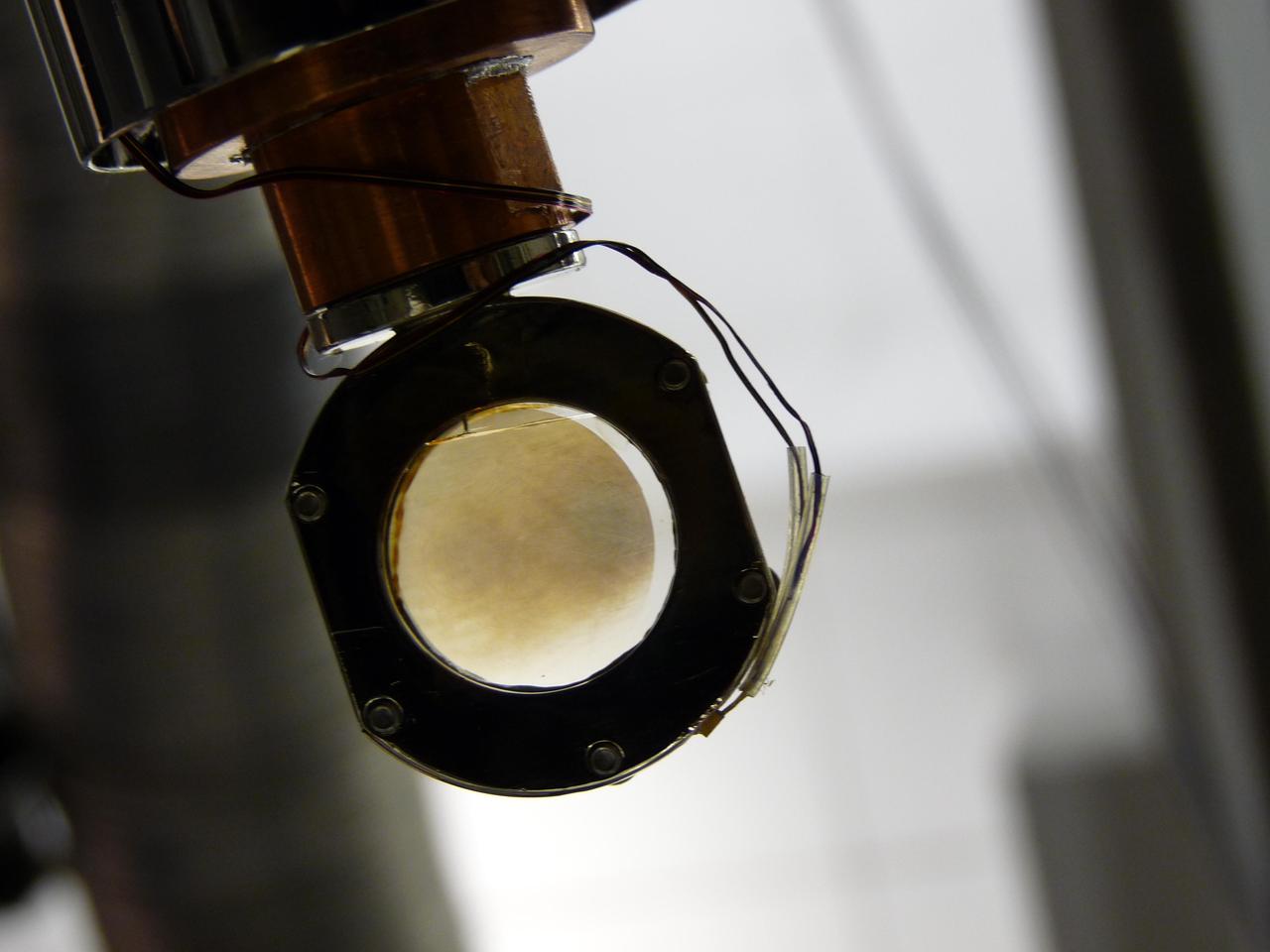
In a laboratory experiment at NASA Jet Propulsion Laboratory, Pasadena, Calif., scientists simulate the atmosphere of Saturn moon Titan. In this picture, molecules of dicyanoacetylene are seen on a special film on a sapphire window.
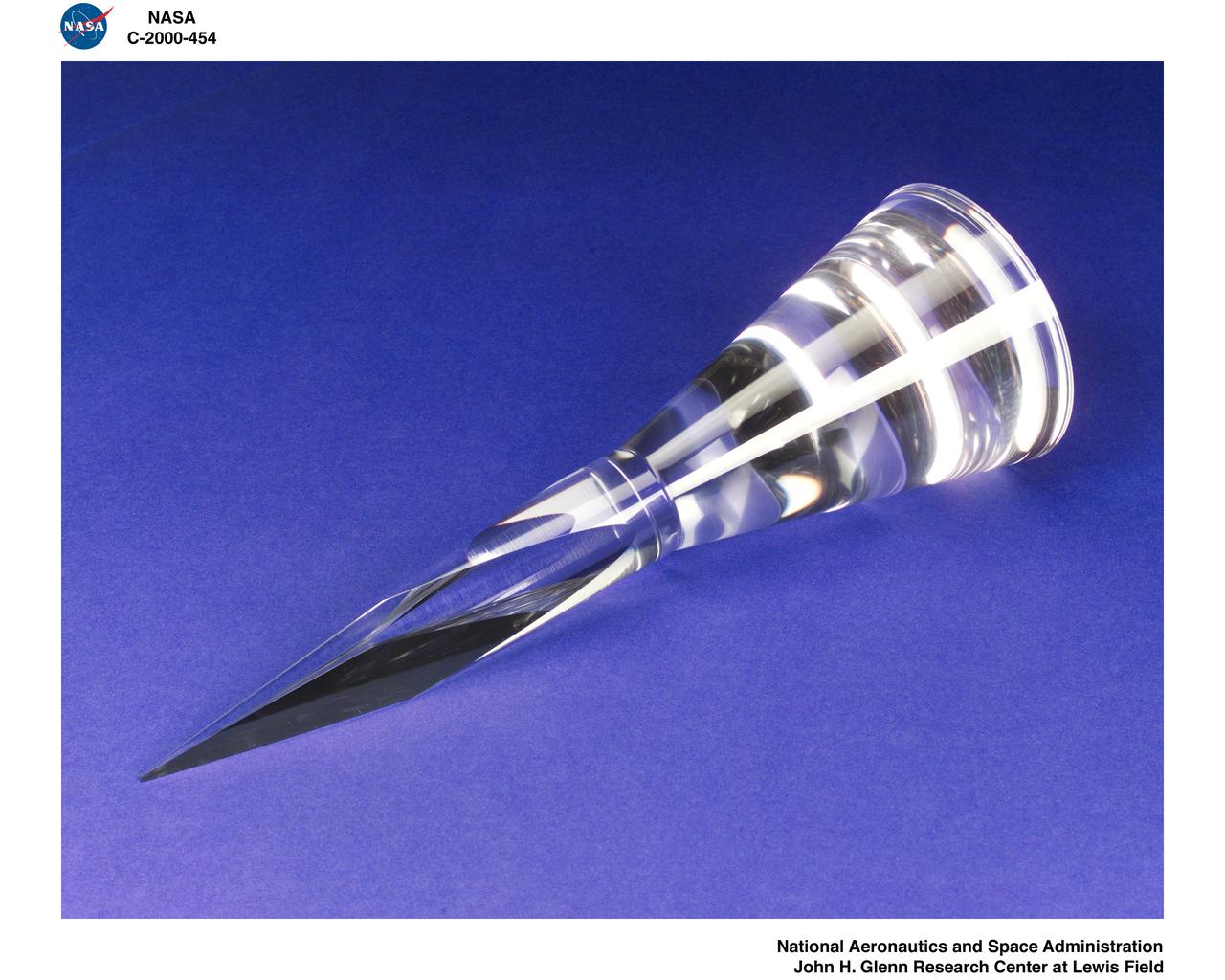
SAPPHIRE REFRACTIVE SECONDARY CONCENTRATOR
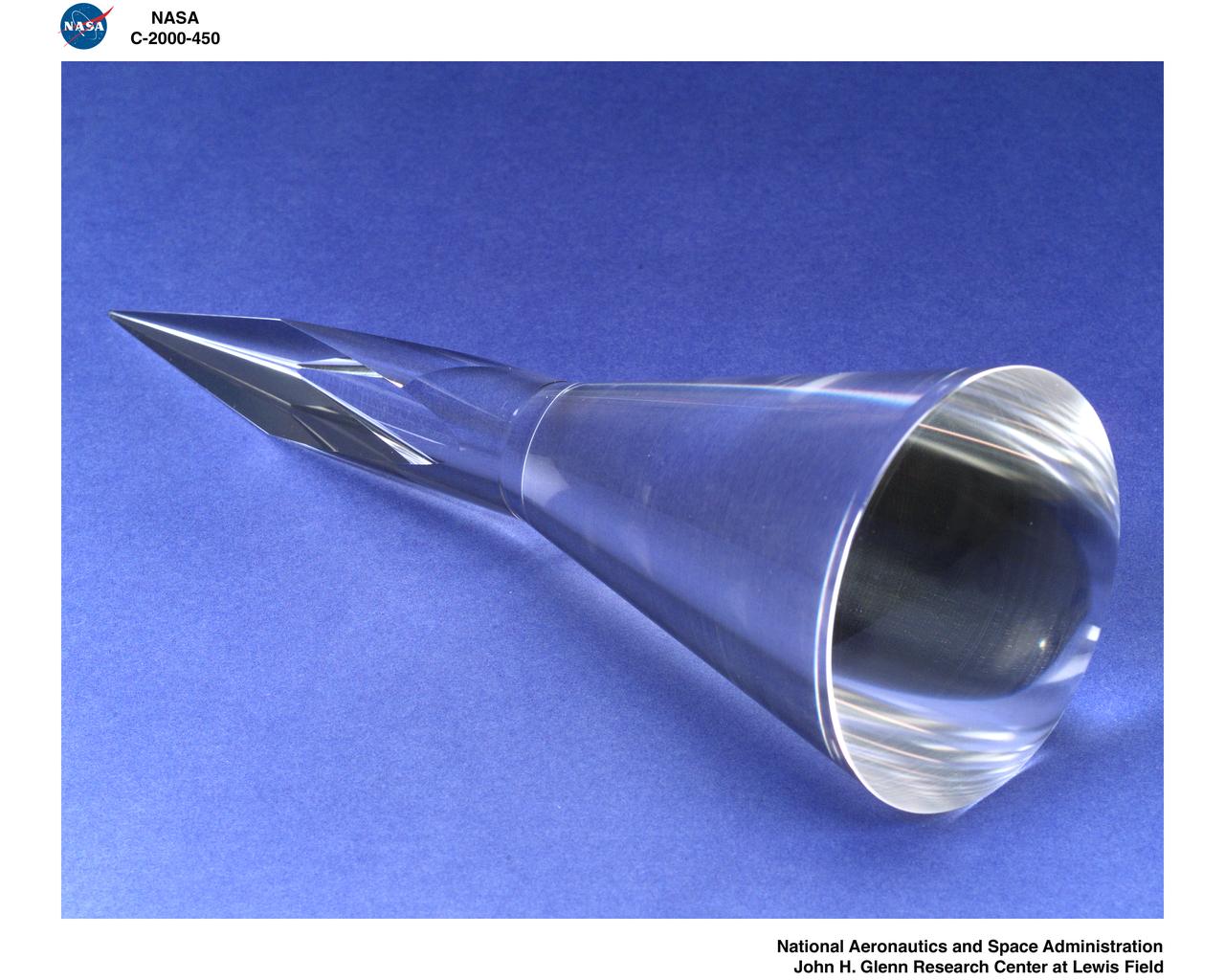
SAPPHIRE REFRACTIVE SECONDARY CONCENTRATOR
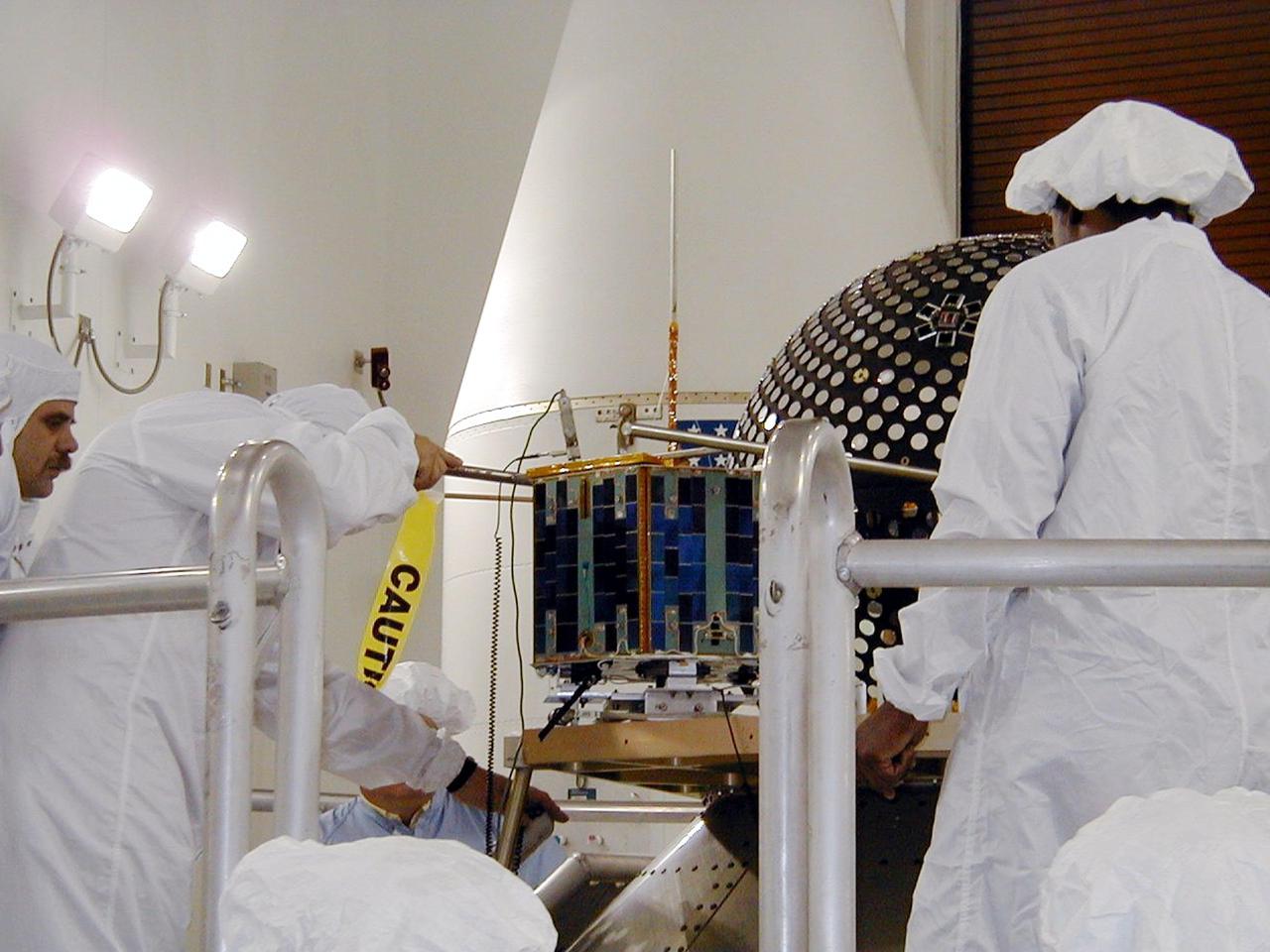
KODIAK ISLAND, Alaska -- The Sapphire payload is moved into position next to the Starshine 3 payload at Kodiak Island, Alaska, as preparations to launch Kodiak Star proceed. The first orbital launch to take place from Alaska's Kodiak Launch Complex, Kodiak Star is scheduled to lift off on a Lockheed Martin Athena I launch vehicle on Sept. 17 during a two-hour window that extends from 5 p.m. to 7 p.m. p.m. ADT. The payloads aboard include the Starshine 3, sponsored by NASA, and the PICOSat, PCSat and Sapphire, sponsored by the Department of Defense (DoD) Space Test Program.

KODIAK ISLAND, Alaska -- The Sapphire payload is moved into position next to the Starshine 3 payload at Kodiak Island, Alaska, as preparations to launch Kodiak Star proceed. The first orbital launch to take place from Alaska's Kodiak Launch Complex, Kodiak Star is scheduled to lift off on a Lockheed Martin Athena I launch vehicle on Sept. 17 during a two-hour window that extends from 5 p.m. to 7 p.m. p.m. ADT. The payloads aboard include the Starshine 3, sponsored by NASA, and the PICOSat, PCSat and Sapphire, sponsored by the Department of Defense (DoD) Space Test Program.
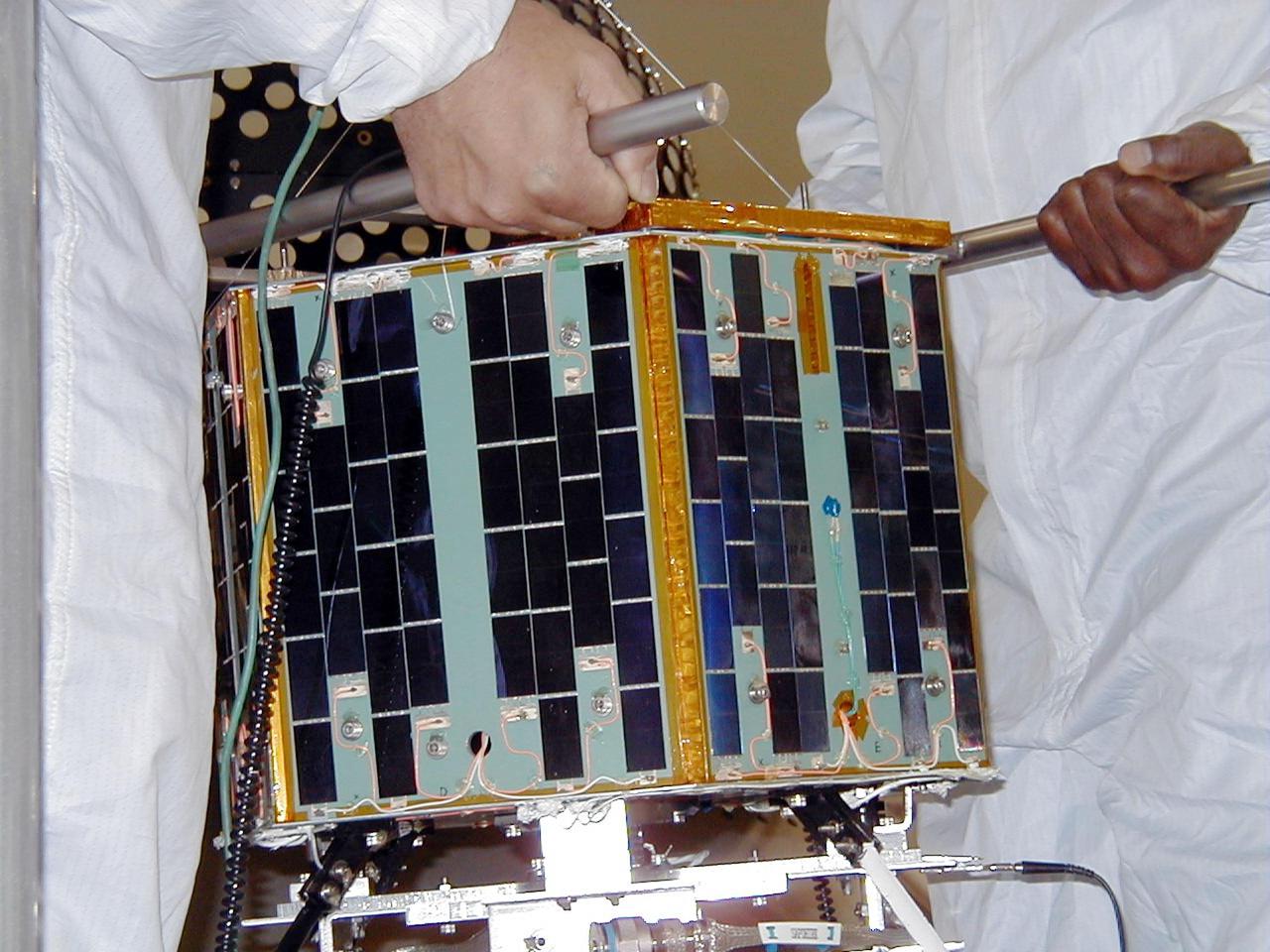
KODIAK ISLAND, Alaska -- Technicians transport the Sapphire payload at Kodiak Island, Alaska, as preparations to launch Kodiak Star proceed. The first orbital launch to take place from Alaska's Kodiak Launch Complex, Kodiak Star is scheduled to lift off on a Lockheed Martin Athena I launch vehicle on Sept. 17 during a two-hour window that extends from 5 p.m. to 7 p.m. p.m. ADT. The payloads aboard include the Starshine 3, sponsored by NASA, and the PICOSat, PCSat and Sapphire, sponsored by the Department of Defense (DoD) Space Test Program.
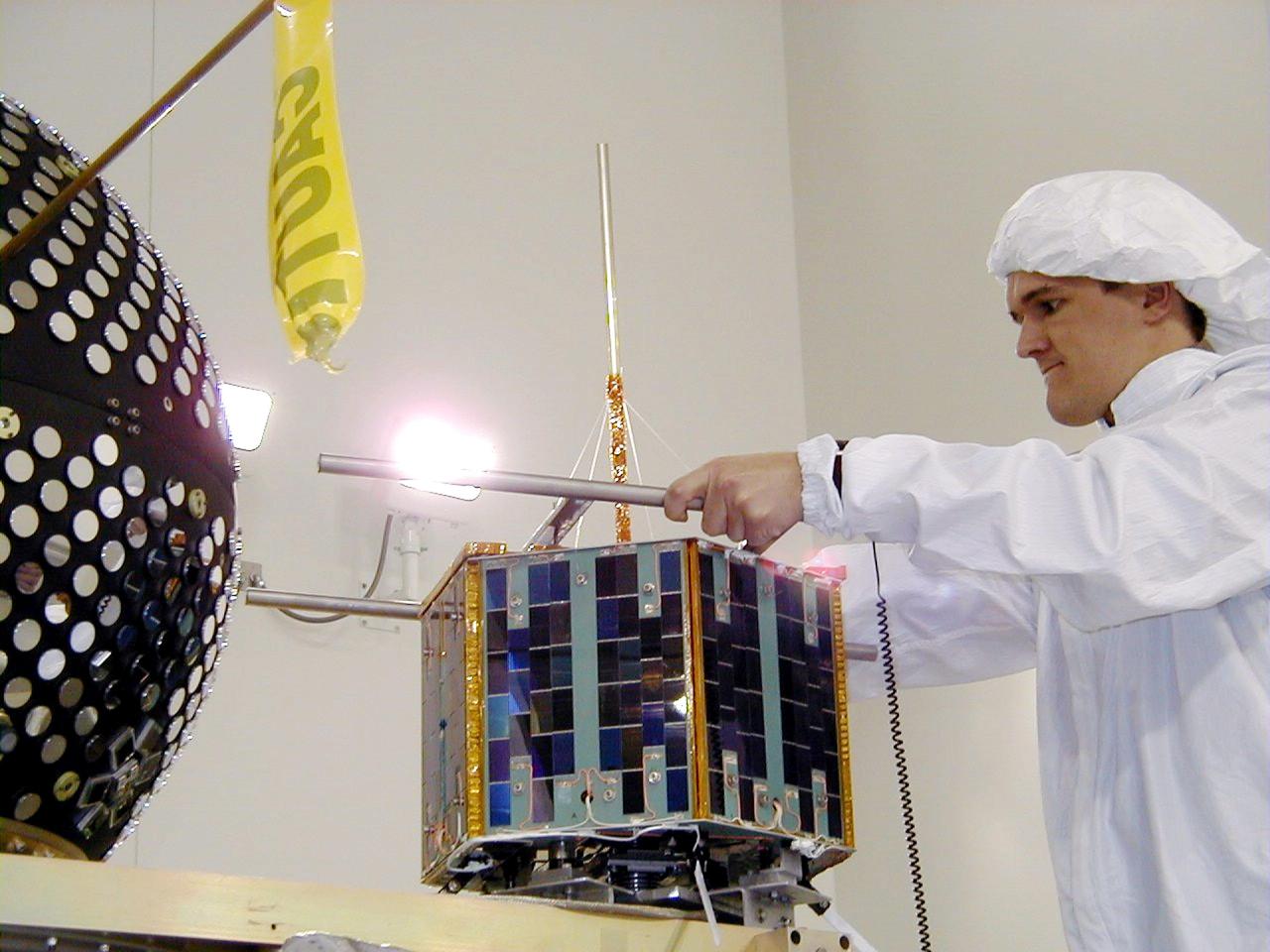
KODIAK ISLAND, Alaska -- The Sapphire payload is moved into position next to the Starshine 3 payload at Kodiak Island, Alaska, as preparations to launch Kodiak Star proceed. The first orbital launch to take place from Alaska's Kodiak Launch Complex, Kodiak Star is scheduled to lift off on a Lockheed Martin Athena I launch vehicle on Sept. 17 during a two-hour window that extends from 5 p.m. to 7 p.m. p.m. ADT. The payloads aboard include the Starshine 3, sponsored by NASA, and the PICOSat, PCSat and Sapphire, sponsored by the Department of Defense (DoD) Space Test Program.

KENNEDY SPACE CENTER, Fla. -- Technicians complete final preparations to the four Athena 1 payloads (Starshine 3, PICOSat, PCSat and Sapphire) at Kodiak Island, Alaska, as preparations to launch Kodiak Star proceed. The first launch to take place from Alaska's Kodiak Launch Complex, Kodiak Star is scheduled to lift off on a Lockheed Martin Athena I launch vehicle on Sept. 17 during a two-hour window that extends from 5:00 to 7:00 p.m. ADT. The payloads aboard include the Starshine 3, sponsored by NASA, and the PICOSat, PCSat and Sapphire, sponsored by the Department of Defense (DoD) Space Test Program

KENNEDY SPACE CENTER, Fla. -- Technicians complete final preparations to the four Athena 1 payloads (Starshine 3, PICOSat, PCSat and Sapphire) at Kodiak Island, Alaska, as preparations to launch Kodiak Star proceed. The first launch to take place from Alaska's Kodiak Launch Complex, Kodiak Star is scheduled to lift off on a Lockheed Martin Athena I launch vehicle on Sept. 17 during a two-hour window that extends from 5:00 to 7:00 p.m. ADT. The payloads aboard include the Starshine 3, sponsored by NASA, and the PICOSat, PCSat and Sapphire, sponsored by the Department of Defense (DoD) Space Test Program

KODIAK ISLAND, Alaska -- Technicians transport the Sapphire payload at Kodiak Island, Alaska, as preparations to launch Kodiak Star proceed. The first orbital launch to take place from Alaska's Kodiak Launch Complex, Kodiak Star is scheduled to lift off on a Lockheed Martin Athena I launch vehicle on Sept. 17 during a two-hour window that extends from 5 p.m. to 7 p.m. p.m. ADT. The payloads aboard include the Starshine 3, sponsored by NASA, and the PICOSat, PCSat and Sapphire, sponsored by the Department of Defense (DoD) Space Test Program.
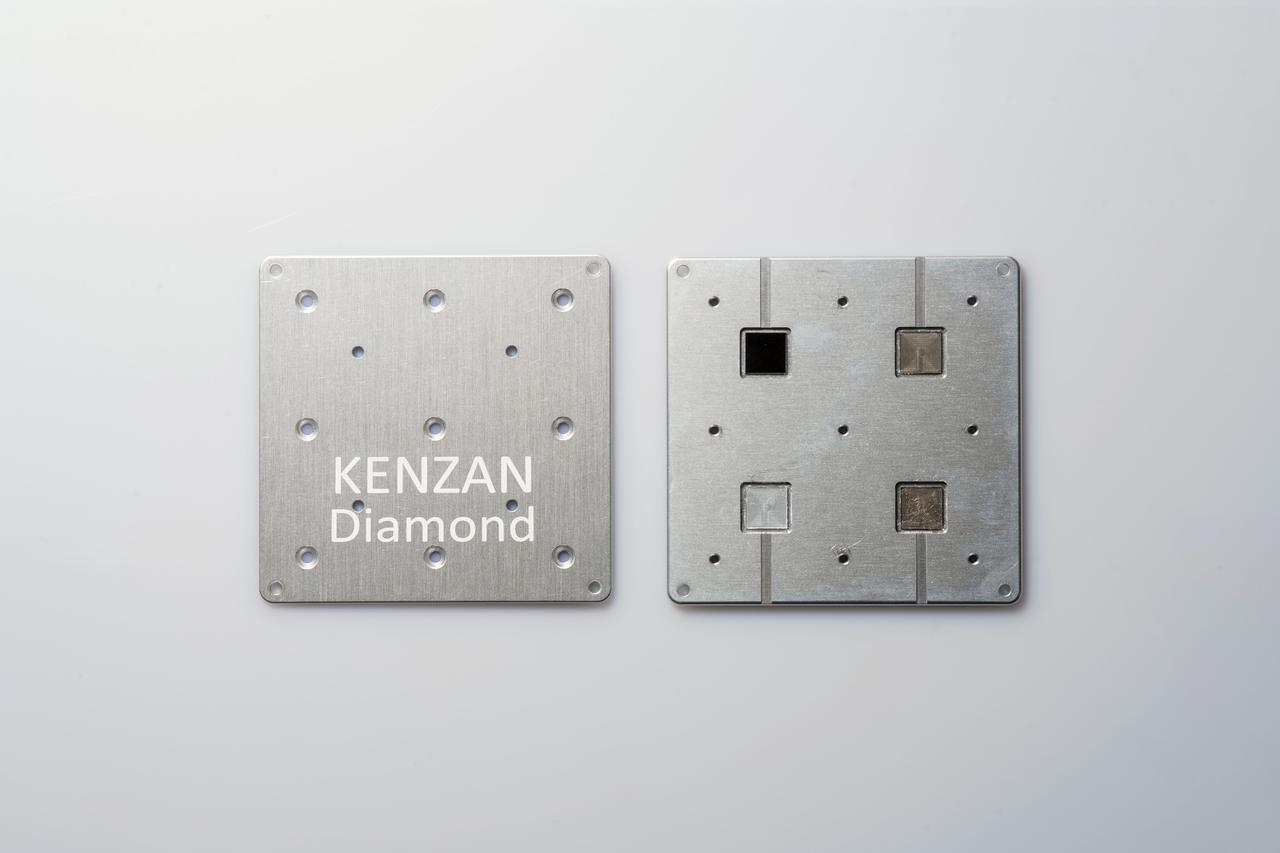
jsc2021e066969 (8/18/2021) --- A preflight image of three kinds of substrates (Diamond, Sapphire, Silicon) on the aluminum carrier. The purpose of the Artificial Diamond Substrate Exposure Experiment in Space investigation is to see how a KENZAN Diamond™ substrate could be affected by severe environments such as outer space. The results can help researchers identify the elements necessary for diamond substrate applications expected in aerospace and next generation semiconductors, as well as improve their quality and reliability. Image Credit: Adamant Namiki Precision Jewel Co., Ltd..
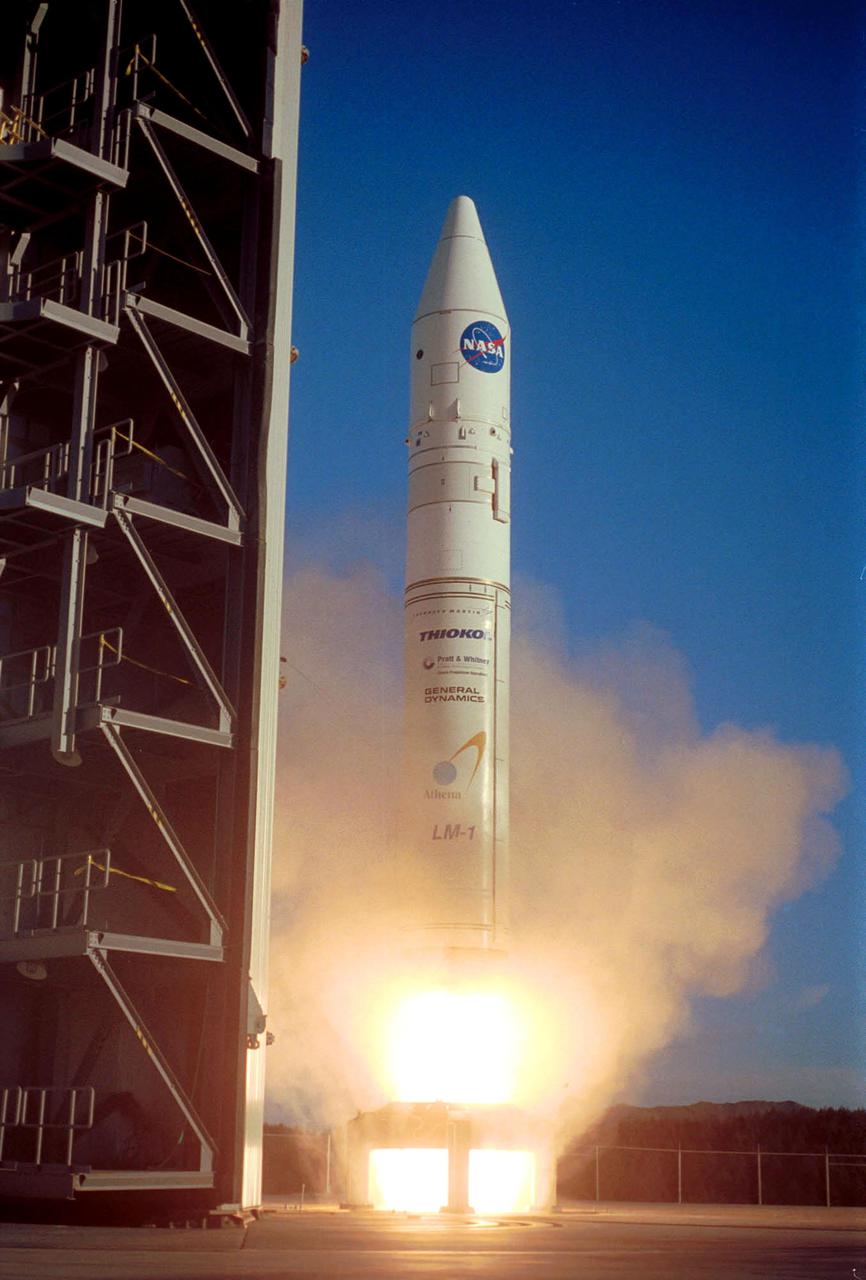
KODIAK ISLAND, Alaska -- Into a still-blue sky, a Lockheed Martin Athena I launch vehicle lifts off the launch pad at Kodiak Launch Complex (KSC) with the Kodiak Star spacecraft on board. Liftoff occurred at 10:40 p.m. EDT, Sept. 29. The Kodiak Star payload consists of four satellites: PICOSat, PCSat, Sapphire and Starshine 3. Starshine is sponsored by NASA. The 200-pound sphere will be used by students to study orbital decay. The other three satellites, also on educational missions, are sponsored by the department of defense. PICOSat is a technology demonstration satellite with four experiments on board. PCSat was designed by midshipmen at the U.S. Naval Academy, and will become part of the amateur radio community's automatic position reporting system. Sapphire is a micro-satellite built by students at Stanford University and Washington University - St. Louis to test infrared sensors for space use. KLC is the newest commercial launch complex in the United States, ideal for launch payloads requiring low-Earth polar or sun-synchronous orbits
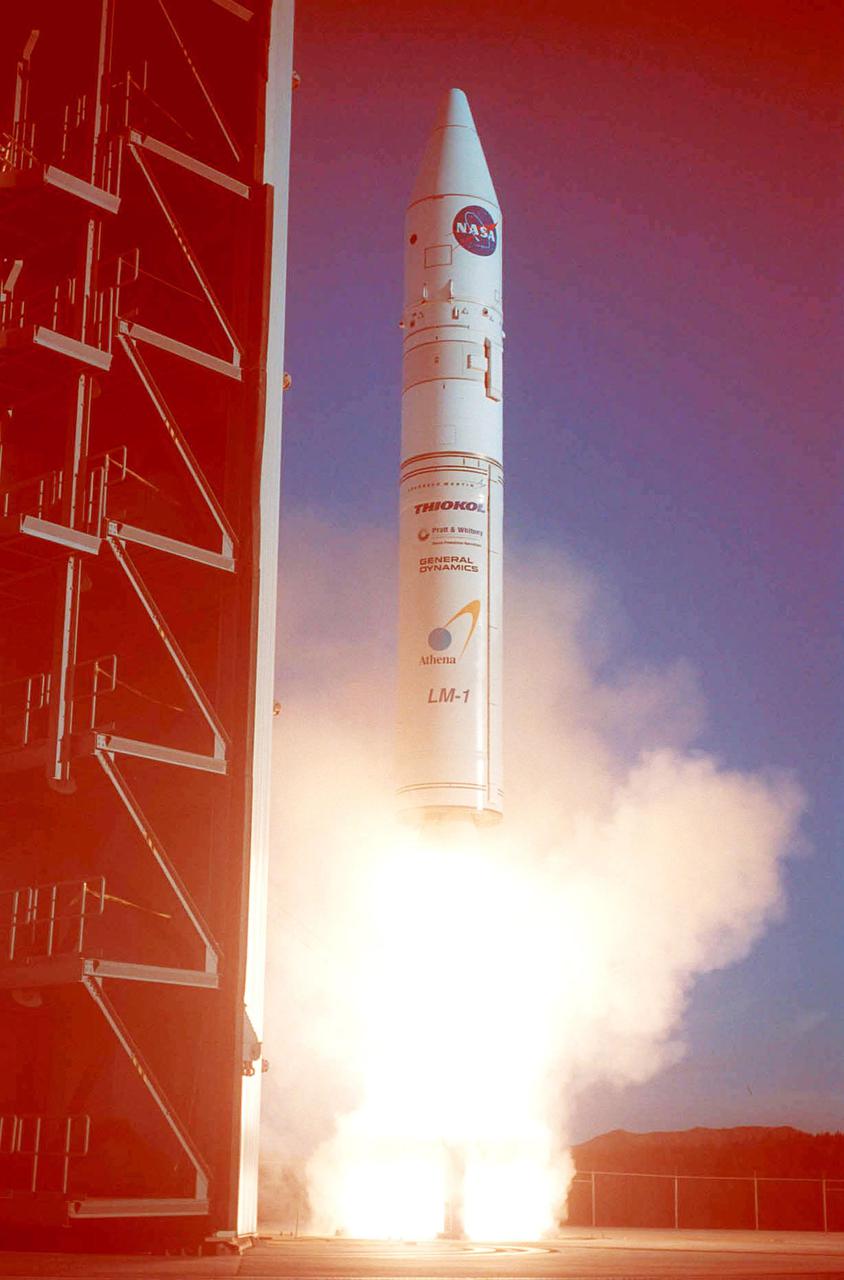
KODIAK ISLAND, Alaska -- A Lockheed Martin Athena I launch vehicle rockets off the launch pad at Kodiak Launch Complex (KSC) with the Kodiak Star spacecraft on board. Liftoff occurred at 10:40 p.m. EDT, Sept. 29. The Kodiak Star payload consists of four satellites: PICOSat, PCSat, Sapphire and Starshine 3. Starshine is sponsored by NASA. The 200-pound sphere will be used by students to study orbital decay. The other three satellites, also on educational missions, are sponsored by the department of defense. PICOSat is a technology demonstration satellite with four experiments on board. PCSat was designed by midshipmen at the U.S. Naval Academy, and will become part of the amateur radio community's automatic position reporting system. Sapphire is a micro-satellite built by students at Stanford University and Washington University - St. Louis to test infrared sensors for space use. KLC is the newest commercial launch complex in the United States, ideal for launch payloads requiring low-Earth polar or sun-synchronous orbits
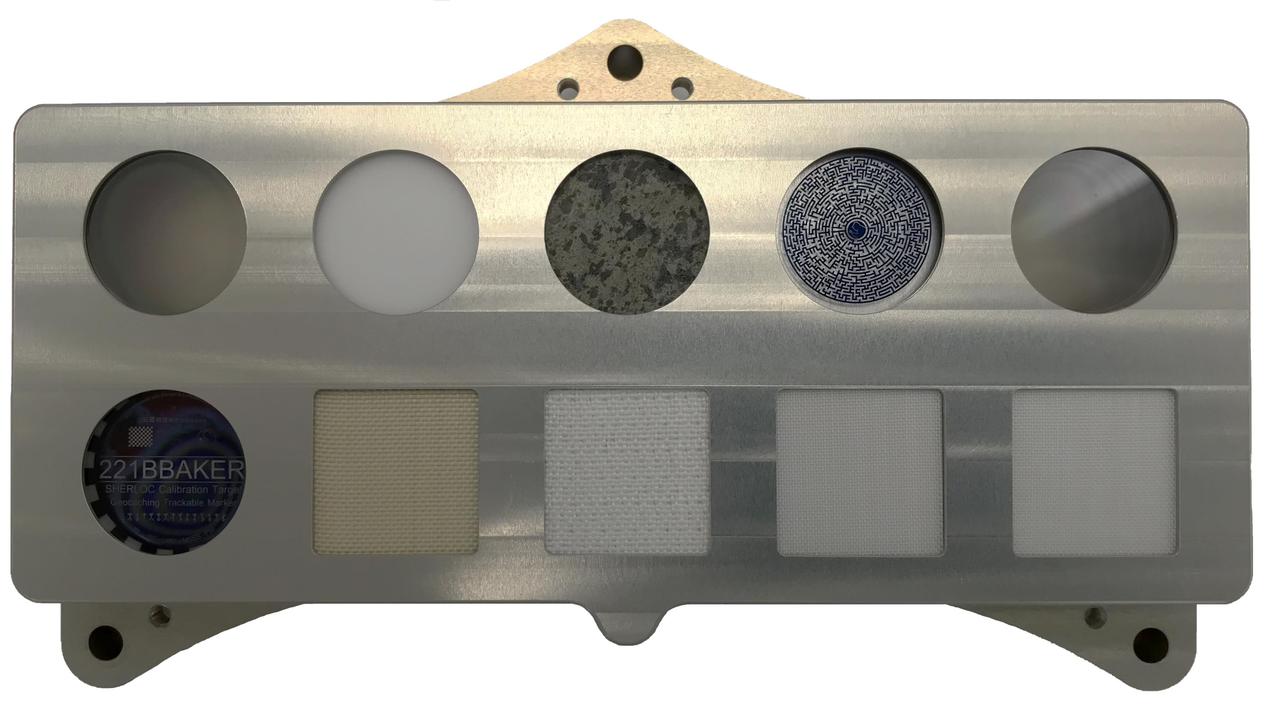
The calibration target for SHERLOC (Scanning Habitable Environments with Raman & Luminescence for Organics & Chemicals) an instrument on the end of the Perseverance Mars rover's 7-foot-long (3-meter-long) robotic arm, includes a geocaching target, spacesuit materials, and a slice of a Martian meteorite. Scientists rely on calibration targets to fine-tune instrument settings using materials with known properties. The bottom row of this target features spacesuit materials that scientists will observe to see how they react over time to the irradiated Martian atmosphere. The first sample at left is polycarbonate for use in a helmet visor; inscribed with the address of the fictional detective Sherlock Holmes, it doubles as a geochache for the public. Other materials in the bottom row, from left: Vectran; Ortho-Fabric; Teflon; coated Teflon. Top row, from left: aluminum gallium nitride on sapphire; a quartz diffuser; a slice of Martian meteorite; a maze for testing laser intensity; a separate aluminum gallium nitride on sapphire with different properties. https://photojournal.jpl.nasa.gov/catalog/PIA24261
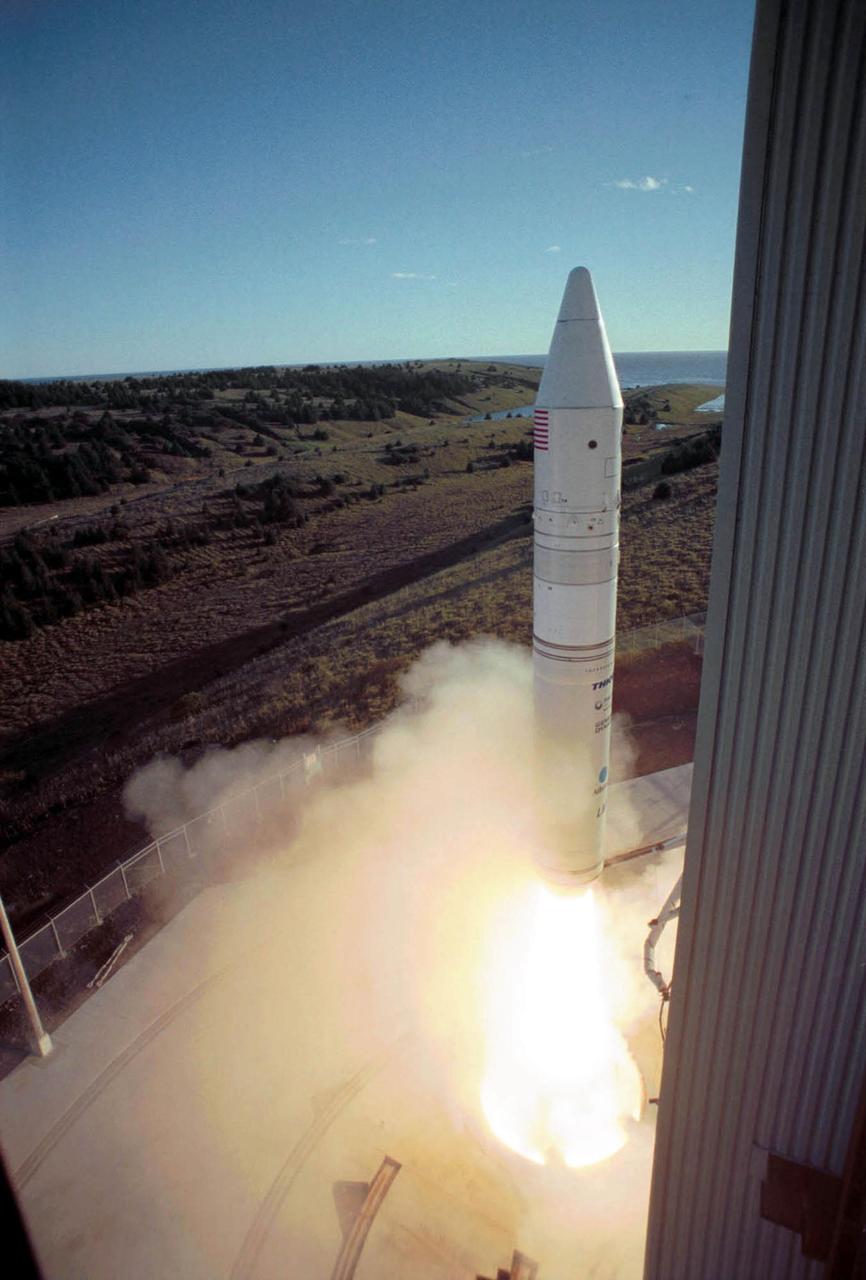
KODIAK ISLAND, Alaska. -- With light still on the horizon, a Lockheed Martin Athena I launch vehicle lifts off the launch pad at Kodiak Launch Complex (KSC) with the Kodiak Star spacecraft on board. Liftoff occurred at 10:40 p.m. EDT, Sept. 29. The Kodiak Star payload consists of four satellites: PICOSat, PCSat, Sapphire and Starshine 3. Starshine is sponsored by NASA. The 200-pound sphere will be used by students to study orbital decay. The other three satellites, also on educational missions, are sponsored by the department of defense. PICOSat is a technology demonstration satellite with four experiments on board. PCSat was designed by midshipmen at the U.S. Naval Academy, and will become part of the amateur radio community's automatic position reporting system. Sapphire is a micro-satellite built by students at Stanford University and Washington University - St. Louis to test infrared sensors for space use. KLC is the newest commercial launch complex in the United States, ideal for launch payloads requiring low-Earth polar or sun-synchronous orbits
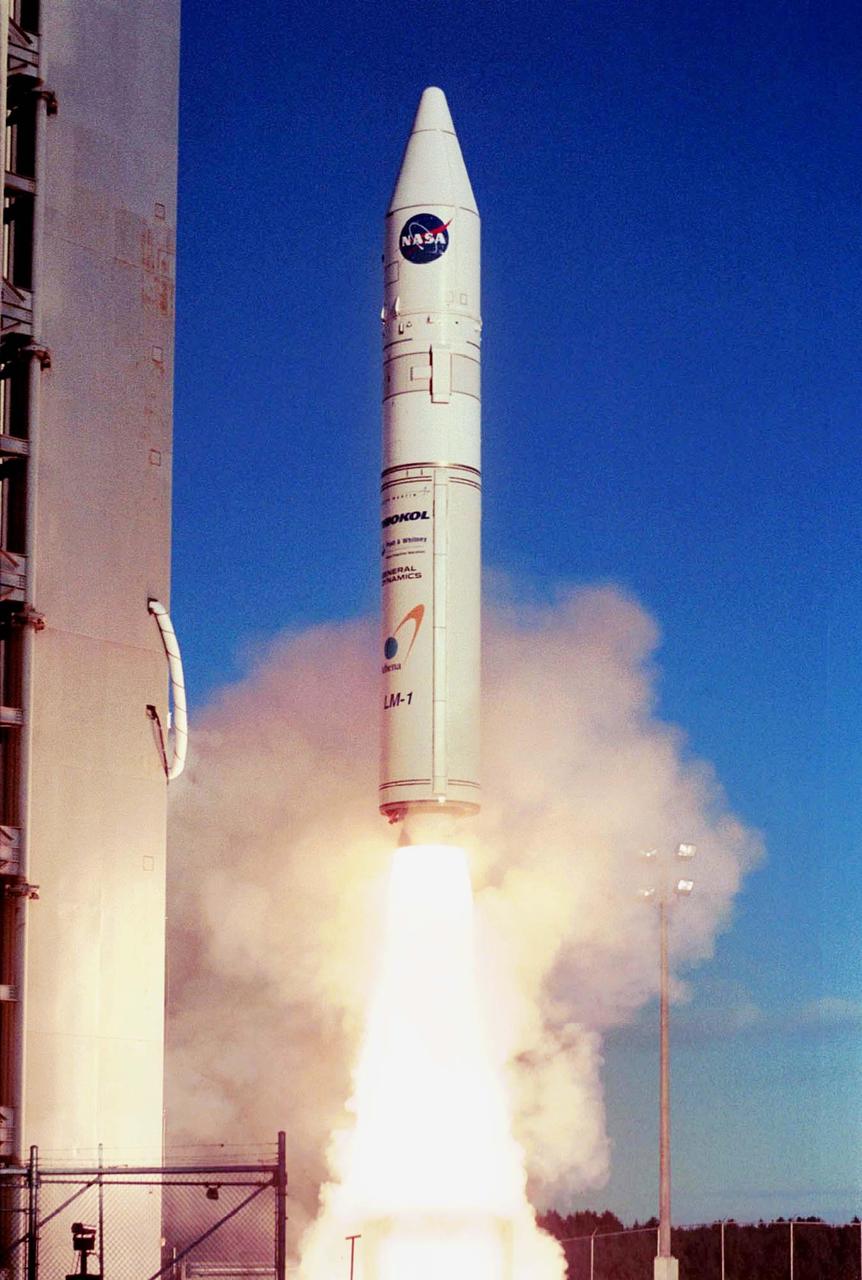
KODIAK ISLAND, Alaska -- A Lockheed Martin Athena I launch vehicle lifts off the launch pad at Kodiak Launch Complex (KSC) with the Kodiak Star spacecraft on board. Liftoff occurred at 10:40 p.m. EDT, Sept. 29. The Kodiak Star payload consists of four satellites: PICOSat, PCSat, Sapphire and Starshine 3. Starshine is sponsored by NASA. The 200-pound sphere will be used by students to study orbital decay. The other three satellites, also on educational missions, are sponsored by the department of defense. PICOSat is a technology demonstration satellite with four experiments on board. PCSat was designed by midshipmen at the U.S. Naval Academy, and will become part of the amateur radio community's automatic position reporting system. Sapphire is a micro-satellite built by students at Stanford University and Washington University - St. Louis to test infrared sensors for space use. KLC is the newest commercial launch complex in the United States, ideal for launch payloads requiring low-Earth polar or sun-synchronous orbits
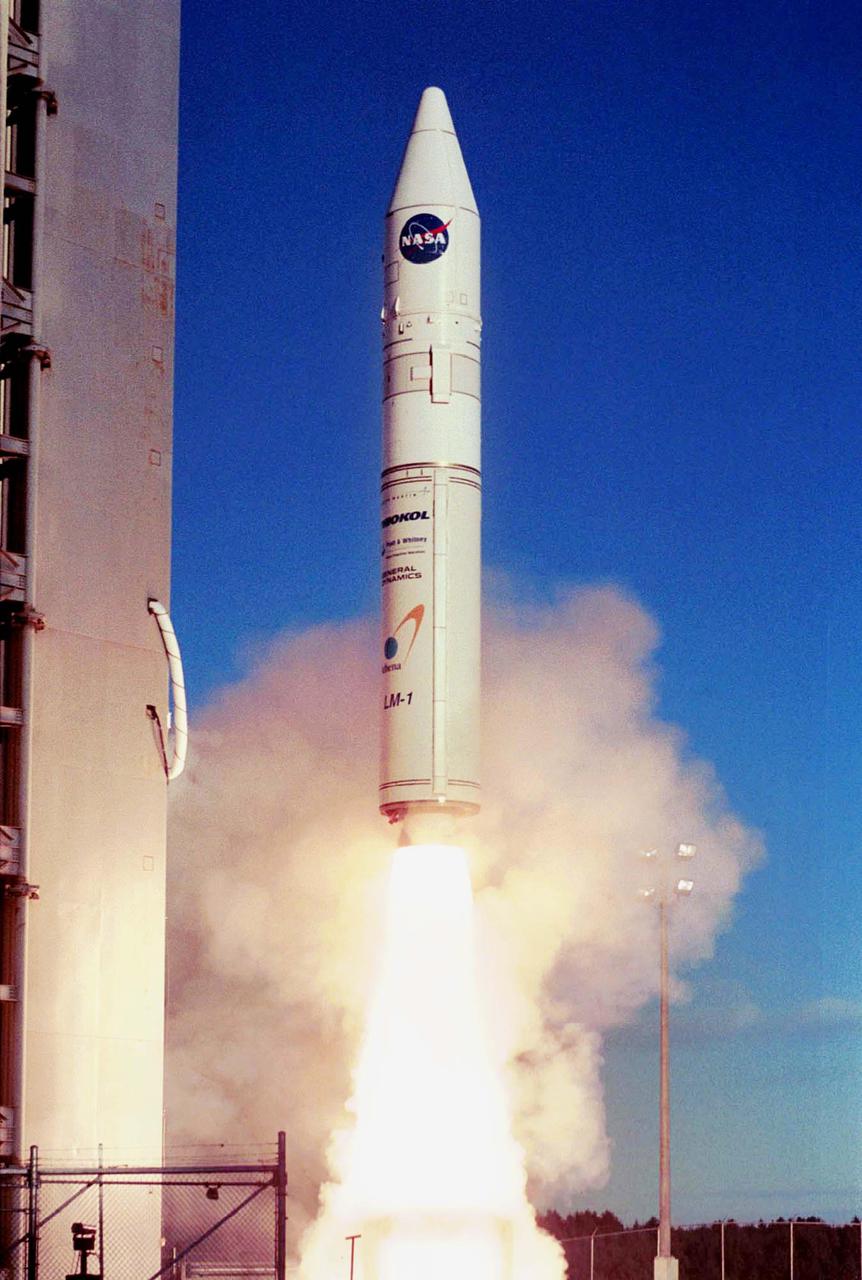
KODIAK ISLAND, Alaska -- A Lockheed Martin Athena I launch vehicle lifts off the launch pad at Kodiak Launch Complex (KSC) with the Kodiak Star spacecraft on board. Liftoff occurred at 10:40 p.m. EDT, Sept. 29. The Kodiak Star payload consists of four satellites: PICOSat, PCSat, Sapphire and Starshine 3. Starshine is sponsored by NASA. The 200-pound sphere will be used by students to study orbital decay. The other three satellites, also on educational missions, are sponsored by the department of defense. PICOSat is a technology demonstration satellite with four experiments on board. PCSat was designed by midshipmen at the U.S. Naval Academy, and will become part of the amateur radio community's automatic position reporting system. Sapphire is a micro-satellite built by students at Stanford University and Washington University - St. Louis to test infrared sensors for space use. KLC is the newest commercial launch complex in the United States, ideal for launch payloads requiring low-Earth polar or sun-synchronous orbits
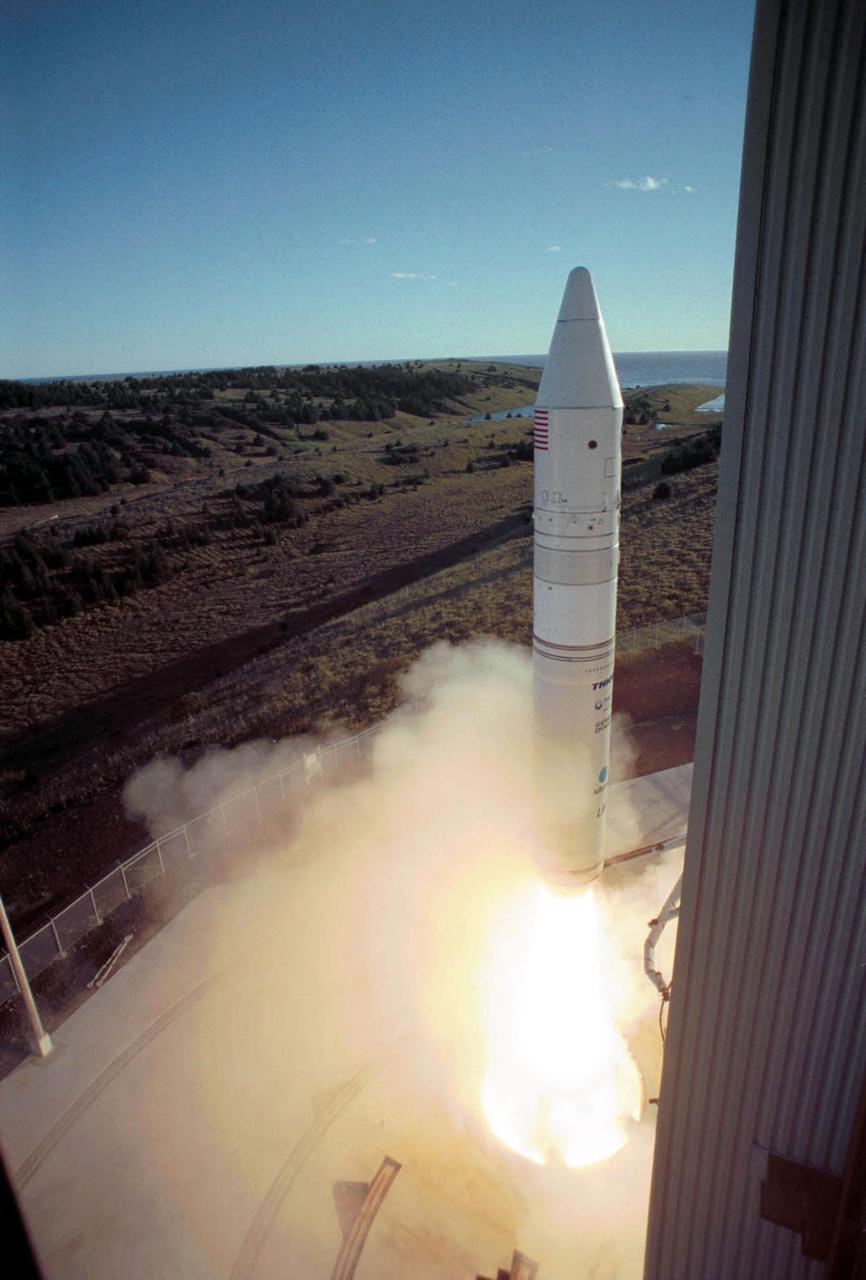
KODIAK ISLAND, Alaska. -- With light still on the horizon, a Lockheed Martin Athena I launch vehicle lifts off the launch pad at Kodiak Launch Complex (KSC) with the Kodiak Star spacecraft on board. Liftoff occurred at 10:40 p.m. EDT, Sept. 29. The Kodiak Star payload consists of four satellites: PICOSat, PCSat, Sapphire and Starshine 3. Starshine is sponsored by NASA. The 200-pound sphere will be used by students to study orbital decay. The other three satellites, also on educational missions, are sponsored by the department of defense. PICOSat is a technology demonstration satellite with four experiments on board. PCSat was designed by midshipmen at the U.S. Naval Academy, and will become part of the amateur radio community's automatic position reporting system. Sapphire is a micro-satellite built by students at Stanford University and Washington University - St. Louis to test infrared sensors for space use. KLC is the newest commercial launch complex in the United States, ideal for launch payloads requiring low-Earth polar or sun-synchronous orbits
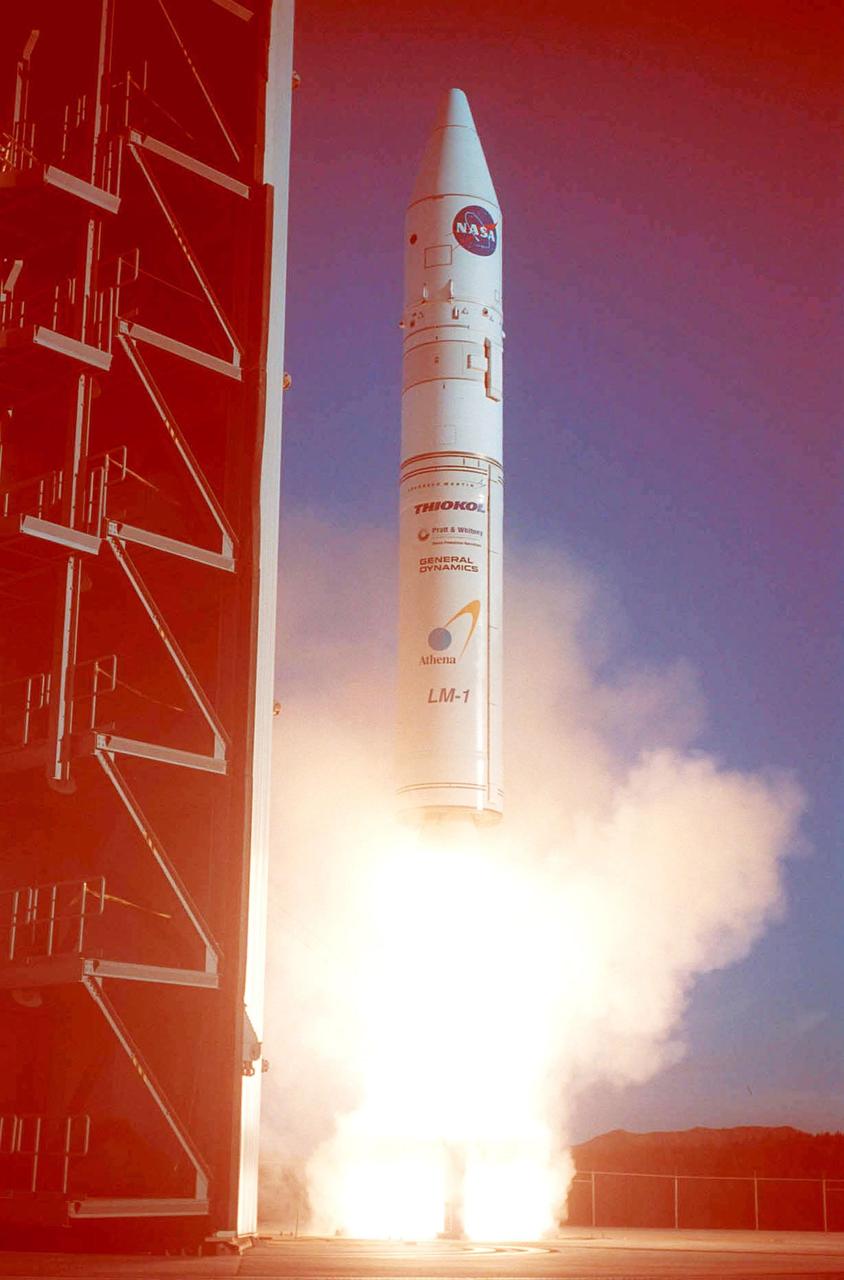
KODIAK ISLAND, Alaska -- A Lockheed Martin Athena I launch vehicle rockets off the launch pad at Kodiak Launch Complex (KSC) with the Kodiak Star spacecraft on board. Liftoff occurred at 10:40 p.m. EDT, Sept. 29. The Kodiak Star payload consists of four satellites: PICOSat, PCSat, Sapphire and Starshine 3. Starshine is sponsored by NASA. The 200-pound sphere will be used by students to study orbital decay. The other three satellites, also on educational missions, are sponsored by the department of defense. PICOSat is a technology demonstration satellite with four experiments on board. PCSat was designed by midshipmen at the U.S. Naval Academy, and will become part of the amateur radio community's automatic position reporting system. Sapphire is a micro-satellite built by students at Stanford University and Washington University - St. Louis to test infrared sensors for space use. KLC is the newest commercial launch complex in the United States, ideal for launch payloads requiring low-Earth polar or sun-synchronous orbits
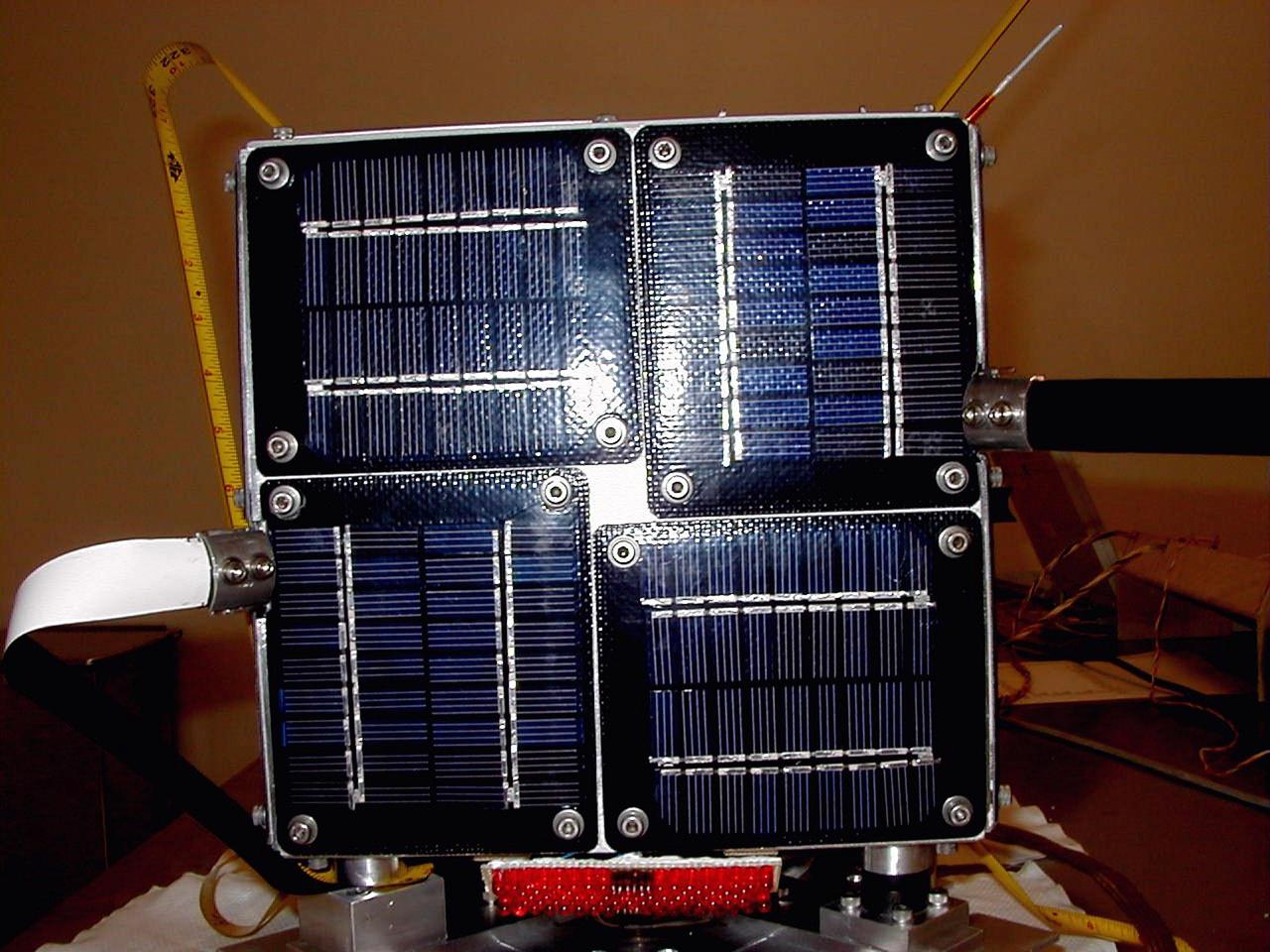
KODIAK ISLAND, Alaska -- The PCSat payload waits for its launch aboard the Athena 1 launch vehicle at Kodiak Island, Alaska, as preparations to launch Kodiak Star proceed. The first orbital launch to take place from Alaska's Kodiak Launch Complex, Kodiak Star is scheduled to lift off on a Lockheed Martin Athena I launch vehicle on Sept. 17 during a two-hour window that extends from 5 p.m. to 7 p.m. p.m. ADT. The payloads aboard include the Starshine 3, sponsored by NASA, and the PICOSat, PCSat and Sapphire, sponsored by the Department of Defense (DoD) Space Test Program.
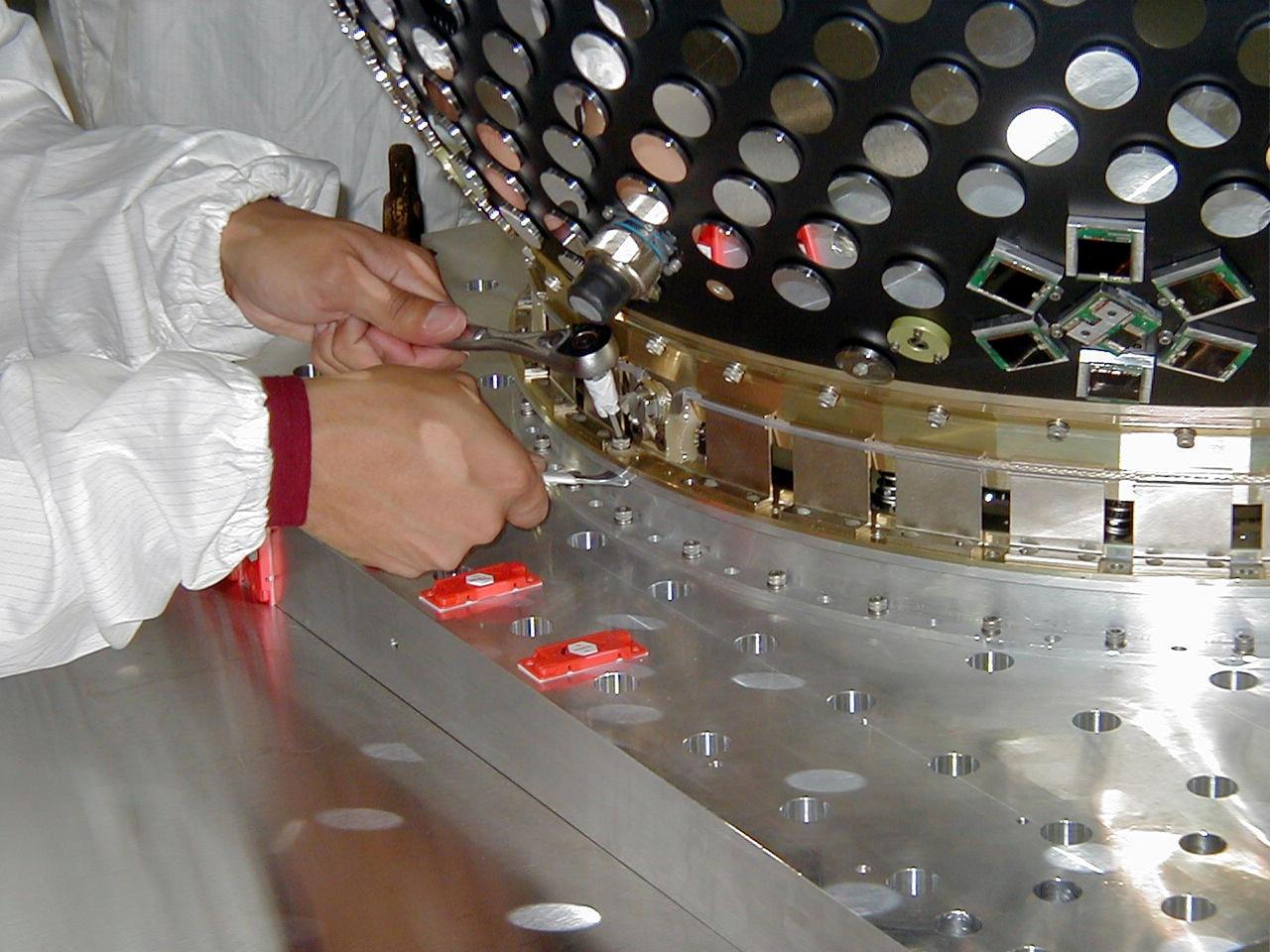
KODIAK ISLAND, Alaska -- Technicians prepare the Starshine 3 payload for its launch aboard the Athena 1 launch vehicle at Kodiak Island, Alaska, as preparations to launch Kodiak Star proceed. The first orbital launch to take place from Alaska's Kodiak Launch Complex, Kodiak Star is scheduled to lift off on a Lockheed Martin Athena I launch vehicle on Sept. 17 during a two-hour window that extends from 5:00 to 7:00 p.m. ADT. The payloads aboard include the Starshine 3, sponsored by NASA, and the PICOSat, PCSat and Sapphire, sponsored by the Department of Defense (DoD) Space Test Program.
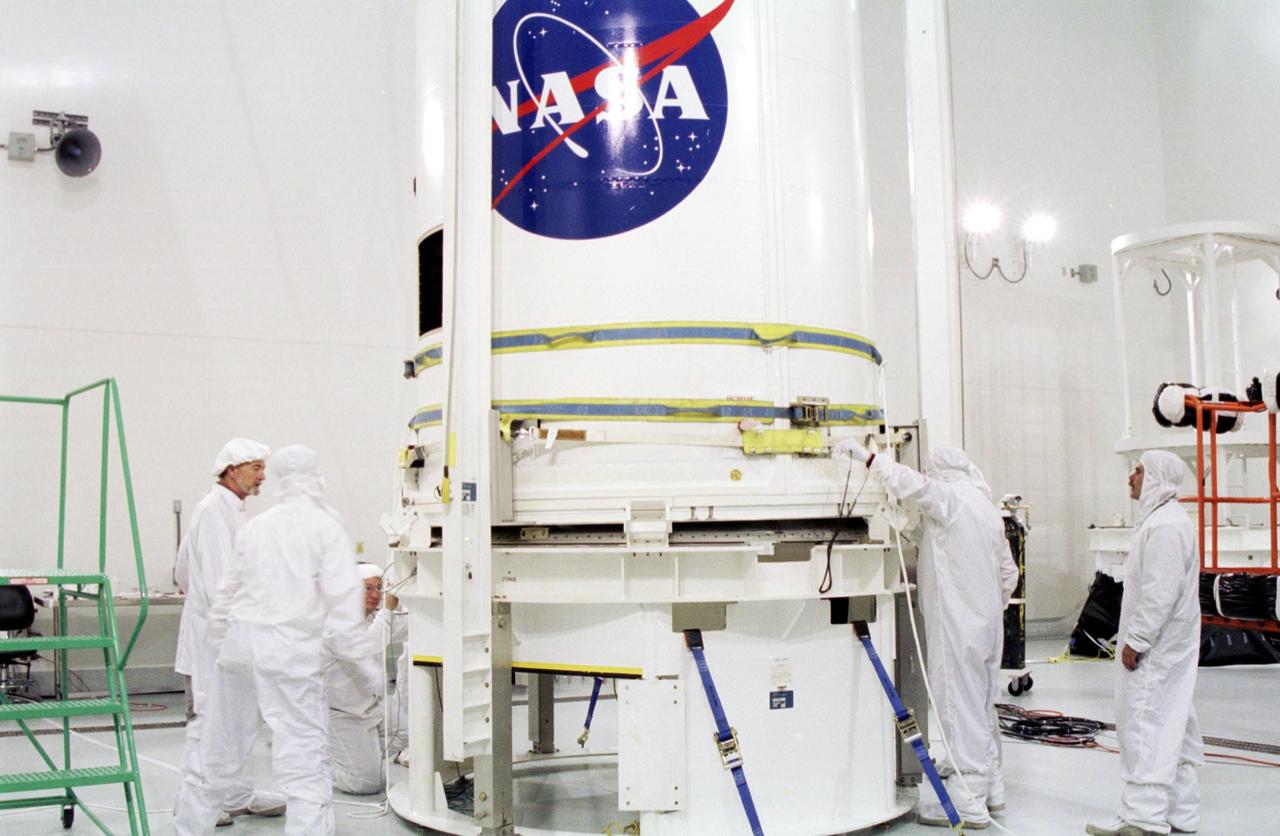
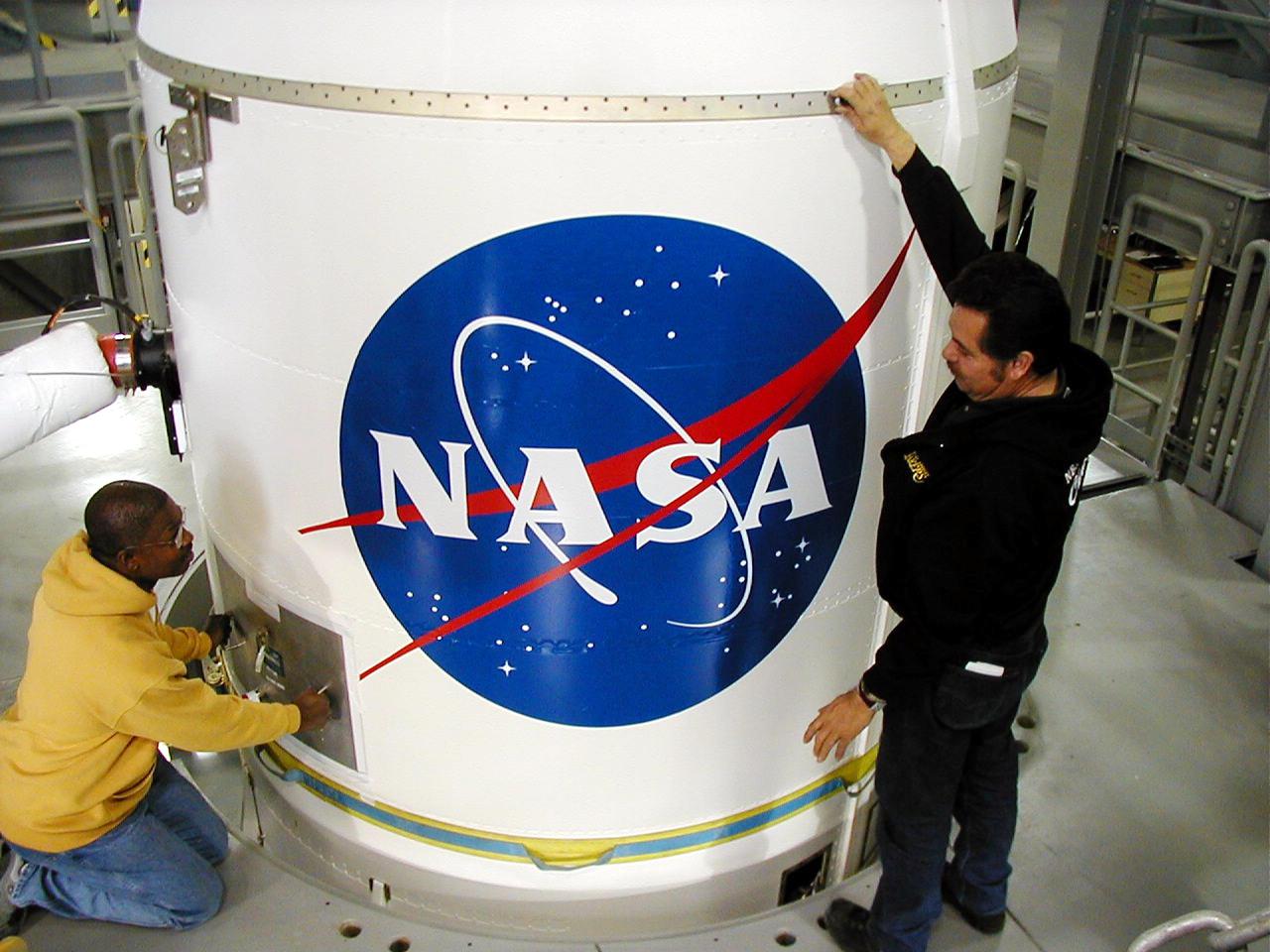
KODIAK ISLAND, Alaska -- In the Launch Service Structure, Kodiak Launch Complex (KLC), workers check the fairing that is to be placed around the Kodiak Star spacecraft in preparation for launch. The first orbital launch to take place from KLC, Kodiak Star is scheduled to lift off on a Lockheed Martin Athena I launch vehicle on Sept. 17 during a two-hour window that extends from 5 p.m. ADT. The payloads aboard include the Starshine 3, sponsored by NASA, and the PICOSat, PCSat and Sapphire, sponsored by the Department of Defense (DoD) Space Test Program. KLC is the newest commercial launch complex in the United States, ideal for launch payloads requiring low-Earth polar or sun-synchronous orbits
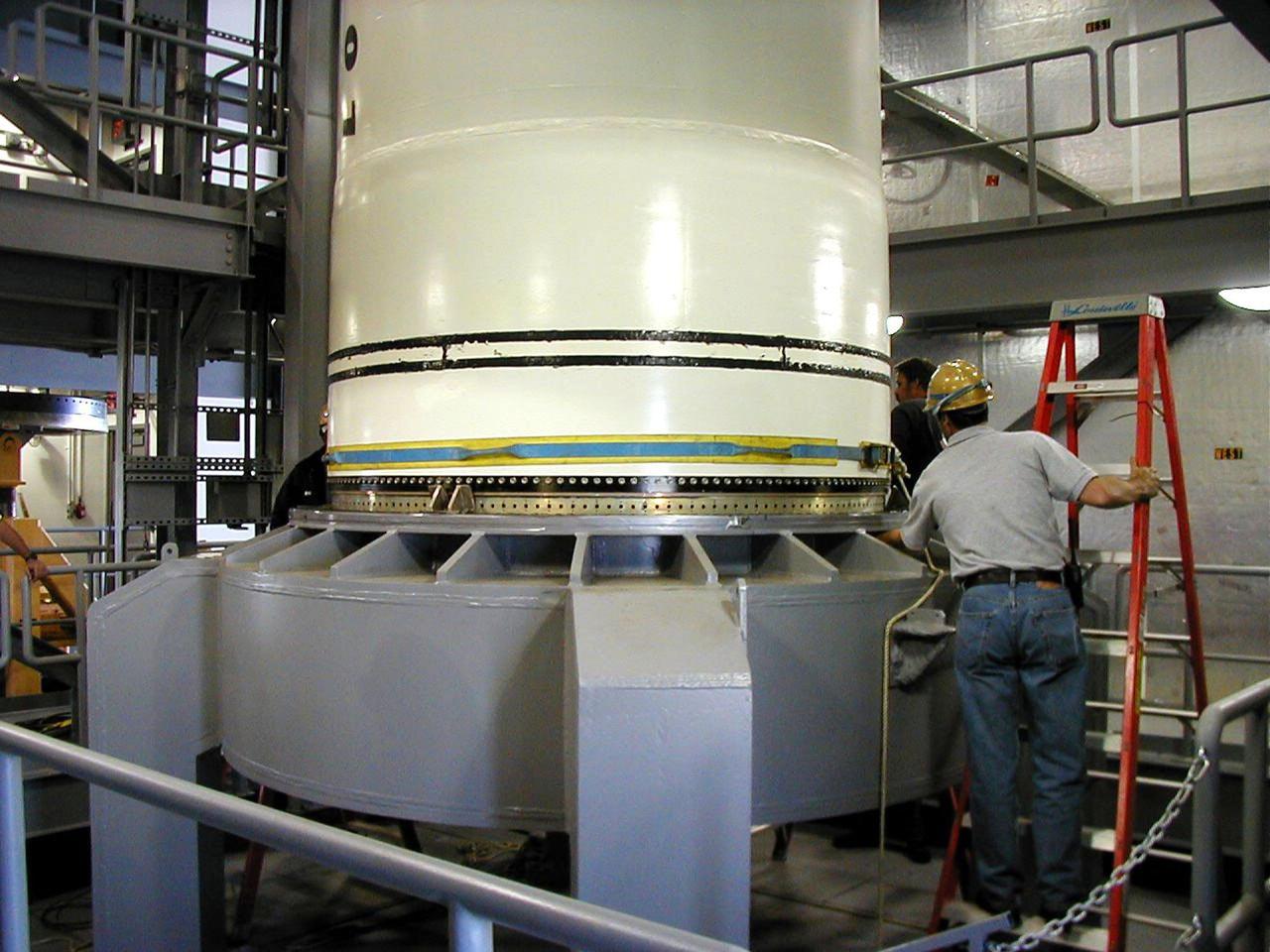
KODIAK ISLAND, Alaska -- Technicians inspect and secure Castor 120, the first stage of the Athena 1 launch vehicle, on the launch mount at Kodiak Island, Alaska, as processing for the launch of Kodiak Star proceeds. The first orbital launch to take place from Alaska's Kodiak Launch Complex, Kodiak Star is scheduled to lift off on a Lockheed Martin Athena I launch vehicle on Sept. 17 during a two-hour window that extends from 5:00 to 7:00 p.m. ADT. The payloads aboard include the Starshine 3, sponsored by NASA, and the PICOSat, PCSat and Sapphire, sponsored by the Department of Defense (DoD) Space Test Program.
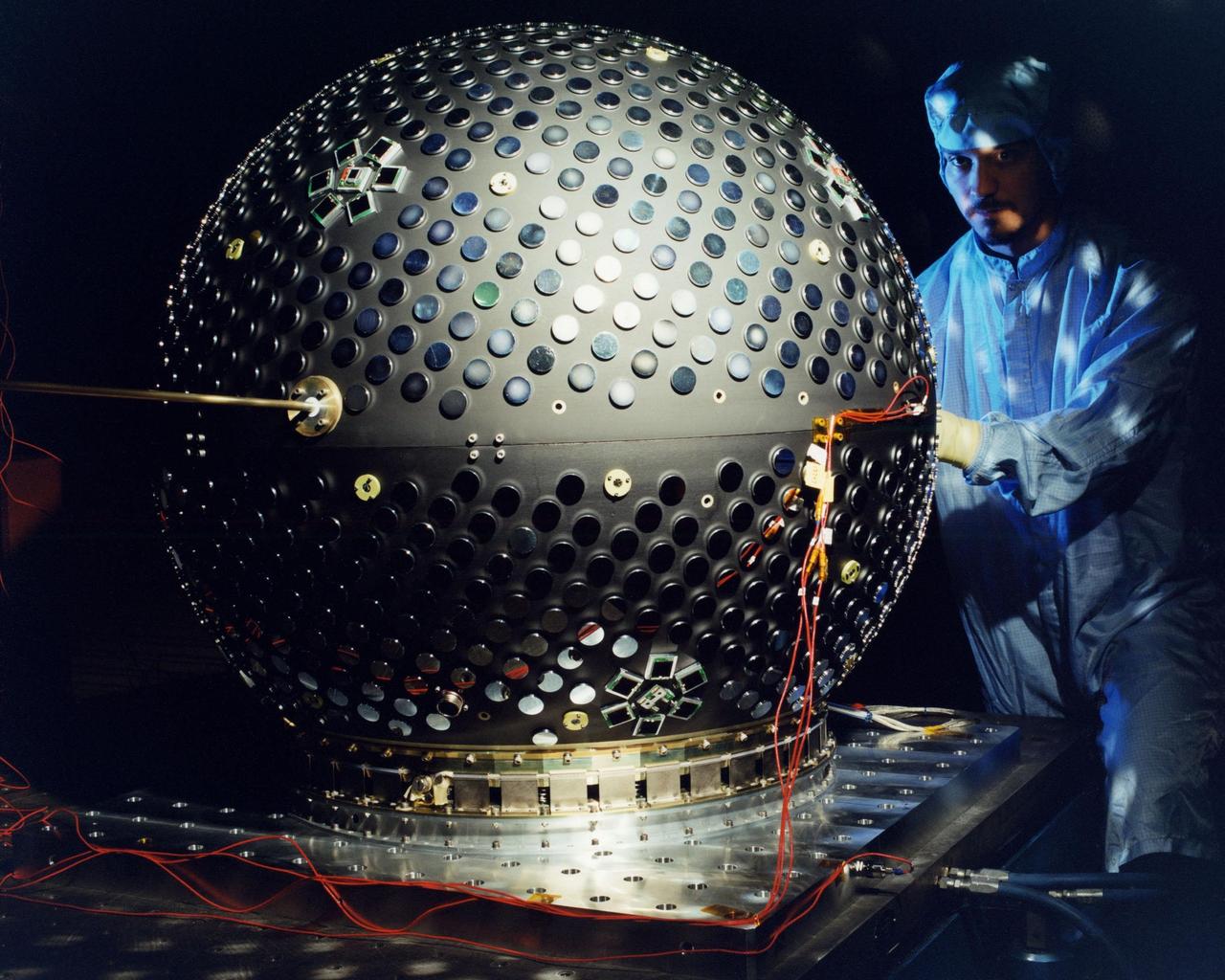
KODIAK ISLAND, Alaska -- A technician performs final testing on Starshine 3 at the Naval Research Laboratory in Washington, D.C., to prepare for the launch of the Kodiak Star at Kodiak Island, Alaska. The first orbital launch to take place from Alaska's Kodiak Launch Complex, Kodiak Star is scheduled to lift off on a Lockheed Martin Athena I launch vehicle on Sept. 17 during a two-hour window that extends from 5:00 to 7:00 p.m. ADT. The payloads aboard include the Starshine 3, sponsored by NASA, and the PICOSat, PCSat and Sapphire, sponsored by the Department of Defense (DoD) Space Test Program.
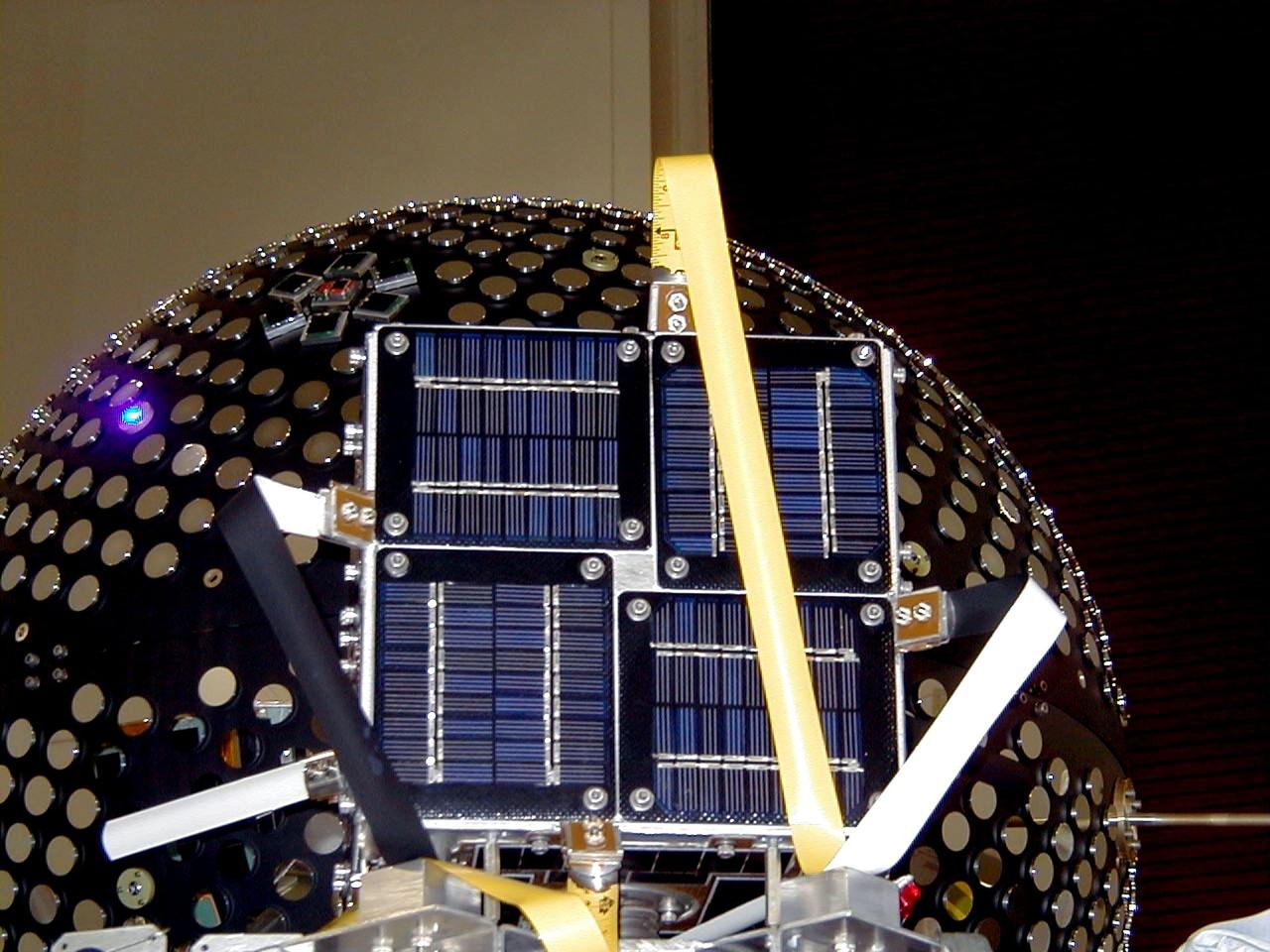
KODIAK ISLAND, Alaska -- The PICSat and Starshine 3 (back) payloads wait for their launch aboard the Athena 1 launch vehicle at Kodiak Island, Alaska, as preparations to launch Kodiak Star proceed. The first orbital launch to take place from Alaska's Kodiak Launch Complex, Kodiak Star is scheduled to lift off on a Lockheed Martin Athena I launch vehicle on Sept. 17 during a two-hour window that extends from 5 p.m. to 7 p.m. p.m. ADT. The payloads aboard include the Starshine 3, sponsored by NASA, and the PICOSat, PCSat and Sapphire, sponsored by the Department of Defense (DoD) Space Test Program.

KODIAK ISLAND, Alaska -- A special platform connects the barge with a ramp to allow Castor 120, the first stage of the Athena 1 launch vehicle, to safely move onto the dock at Kodiak Island, Alaska, as preparations to launch Kodiak Star proceed. The first orbital launch to take place from Alaska's Kodiak Launch Complex, Kodiak Star is scheduled to lift off on a Lockheed Martin Athena I launch vehicle on Sept. 17 during a two-hour window that extends from 5:00 to 7:00 p.m. ADT. The payloads aboard include the Starshine 3, sponsored by NASA, and the PICOSat, PCSat and Sapphire, sponsored by the Department of Defense (DoD) Space Test Program.
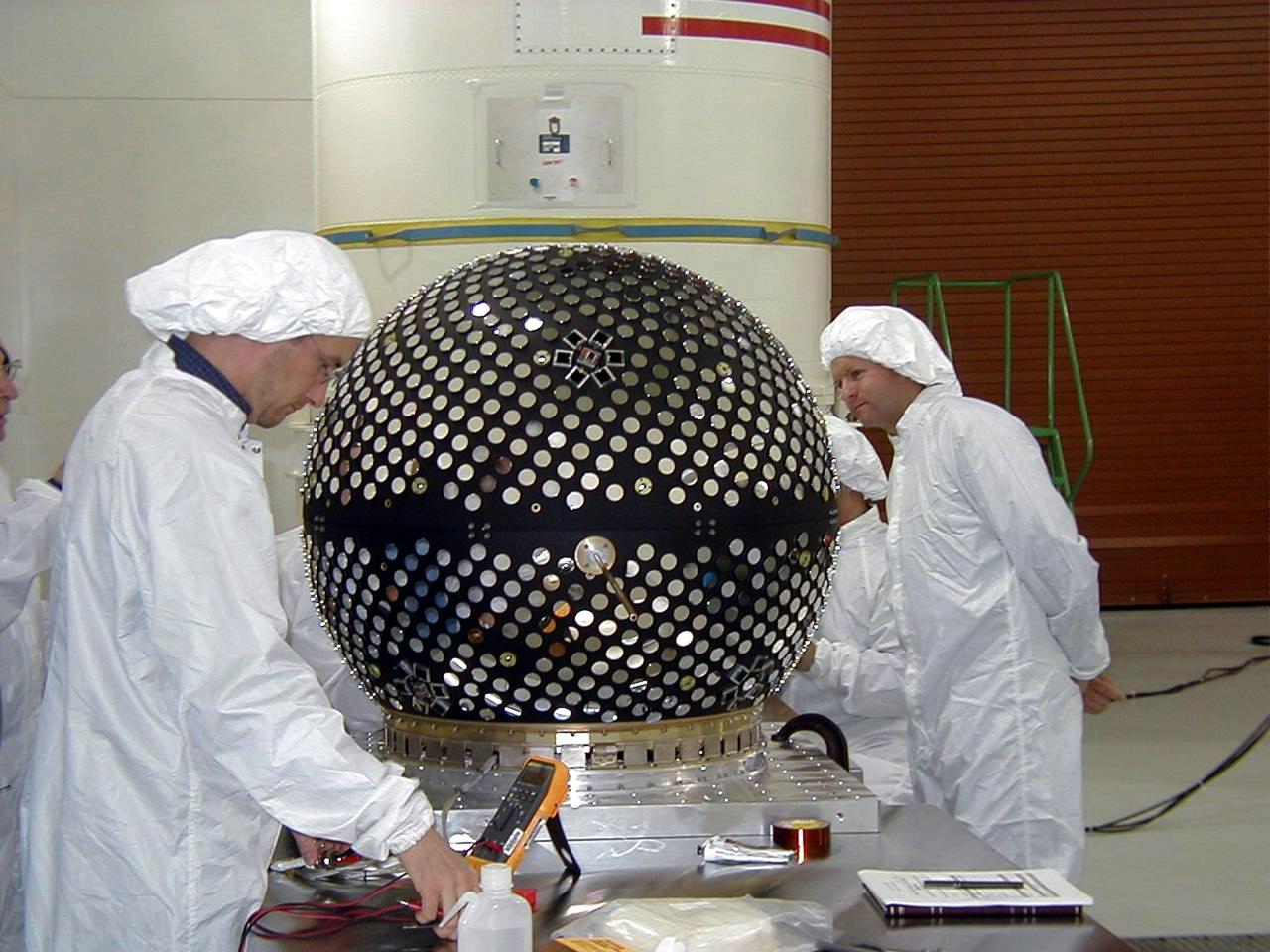
KODIAK ISLAND, Alaska -- Technicians prepare the Starshine 3 payload for its launch aboard the Athena 1 launch vehicle at Kodiak Island, Alaska, as preparations to launch Kodiak Star proceed. The first orbital launch to take place from Alaska's Kodiak Launch Complex, Kodiak Star is scheduled to lift off on a Lockheed Martin Athena I launch vehicle on Sept. 17 during a two-hour window that extends from 5:00 to 7:00 p.m. ADT. The payloads aboard include the Starshine 3, sponsored by NASA, and the PICOSat, PCSat and Sapphire, sponsored by the Department of Defense (DoD) Space Test Program.

KODIAK ISLAND, Alaska -- Technicians inspect Castor 120, the first stage of the Athena 1 launch vehicle, at Kodiak Island, Alaska, as preparations to launch Kodiak Star proceed. The first orbital launch to take place from Alaska's Kodiak Launch Complex, Kodiak Star is scheduled to lift off on a Lockheed Martin Athena I launch vehicle on Sept. 17 during a two-hour window that extends from 5:00 to 7:00 p.m. ADT. The payloads aboard include the Starshine 3, sponsored by NASA, and the PICOSat, PCSat and Sapphire, sponsored by the Department of Defense (DoD) Space Test Program.
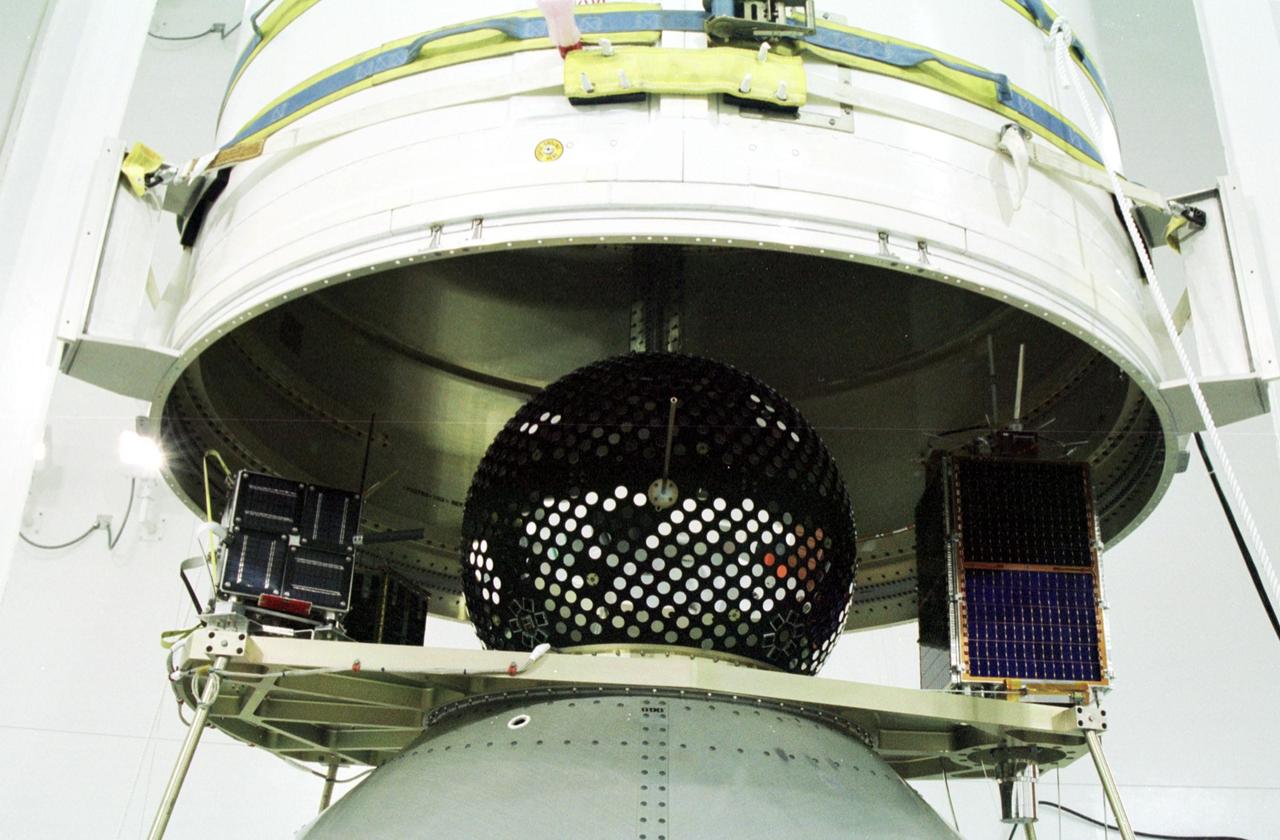
KODIAK ISLAND, Alaska -- At the Launch Service Structure, Kodiak Launch Complex (KLC), the fairing is lowered over the Kodiak Star spacecraft in preparation for launch. The first orbital launch to take place from KLC, Kodiak Star is scheduled to lift off on a Lockheed Martin Athena I launch vehicle on Sept. 17 during a two-hour window that extends from 5 p.m. ADT. The payloads aboard include the Starshine 3, sponsored by NASA, and the PICOSat, PCSat and Sapphire, sponsored by the Department of Defense (DoD) Space Test Program. KLC is the newest commercial launch complex in the United States, ideal for launch payloads requiring low-Earth polar or sun-synchronous orbits
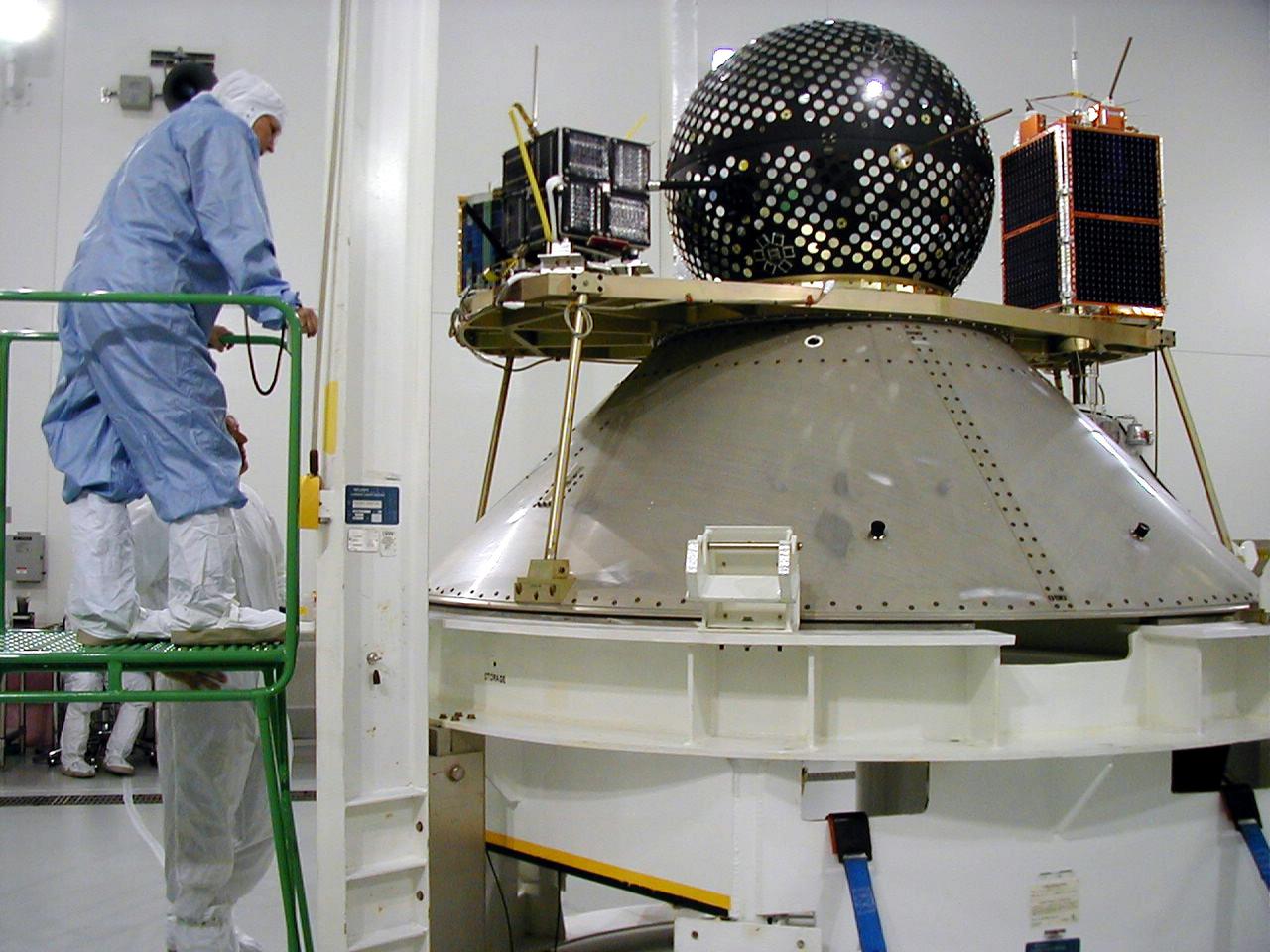
KODIAK ISLAND, ALASKA - In the Launch Service Structure, Kodiak Launch Complex (KLC), the Kodiak Star spacecraft is ready for encapsulation in the fairing, as preparation for launch. The first launch to take place from KLC, Kodiak Star is scheduled to lift off on a Lockheed Martin Athena I launch vehicle on Sept. 17 during a two-hour window that extends from 5 p.m. to 7 p.m. p.m. ADT. The payloads aboard include the Starshine 3, sponsored by NASA, and the PICOSat, PCSat and Sapphire, sponsored by the Department of Defense (DoD) Space Test Program. KLC is the newest commercial launch complex in the United States, ideal for launch payloads requiring low-Earth polar or sun-synchronous orbits
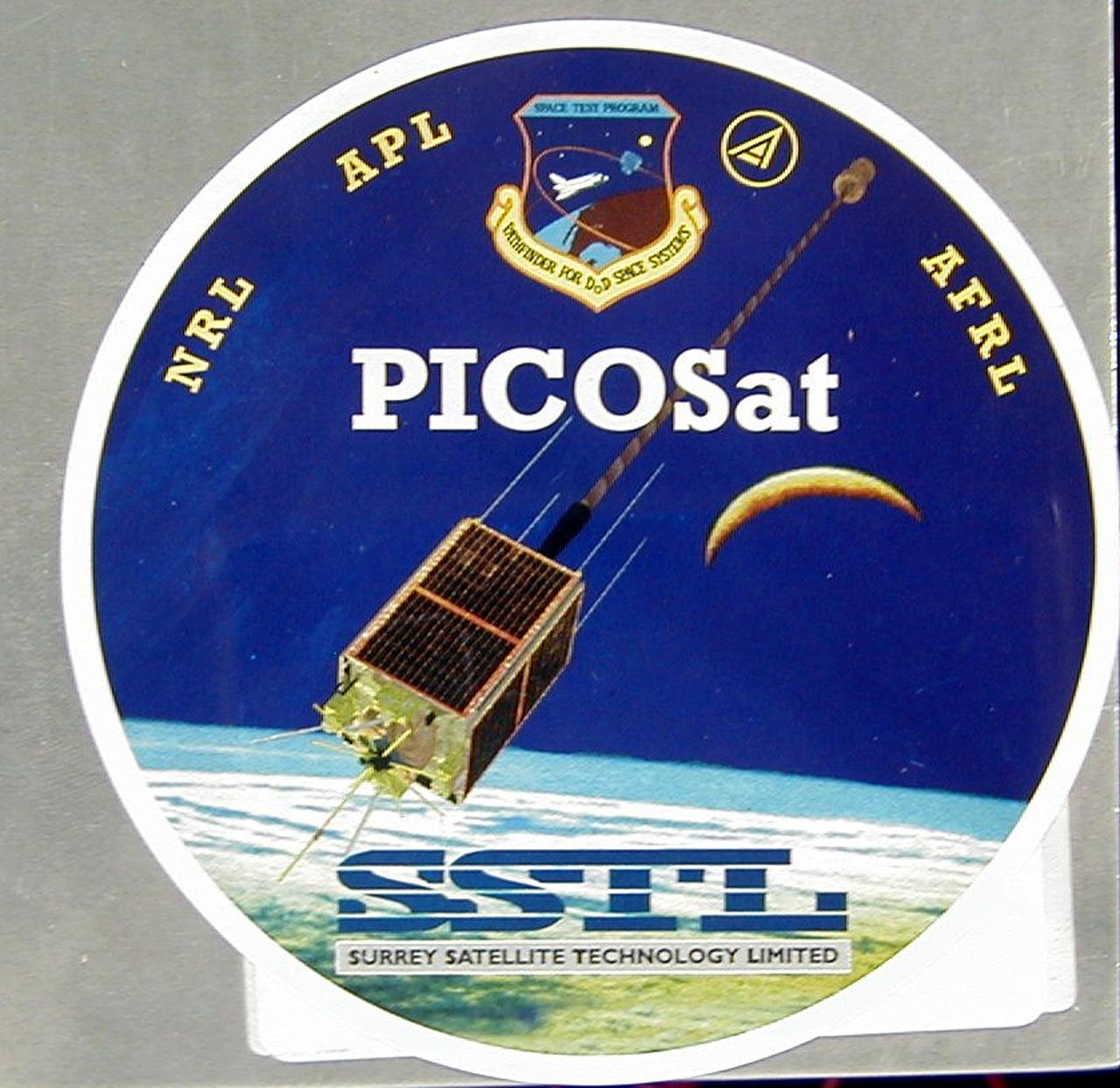
KENNEDY SPACE CENTER, Fla. -- The PICOSat payload banner is displayed by the Athena 1 launch vehicle at Kodiak Island, Alaska, as preparations to launch Kodiak Star proceed. The first launch to take place from Alaska's Kodiak Launch Complex, Kodiak Star is scheduled to lift off on a Lockheed Martin Athena I launch vehicle on Sept. 17 during a two-hour window that extends from 5:00 to 7:00 p.m. ADT. The payloads aboard include the Starshine 3, sponsored by NASA, and the PICOSat, PCSat and Sapphire, sponsored by the Department of Defense (DoD) Space Test Program
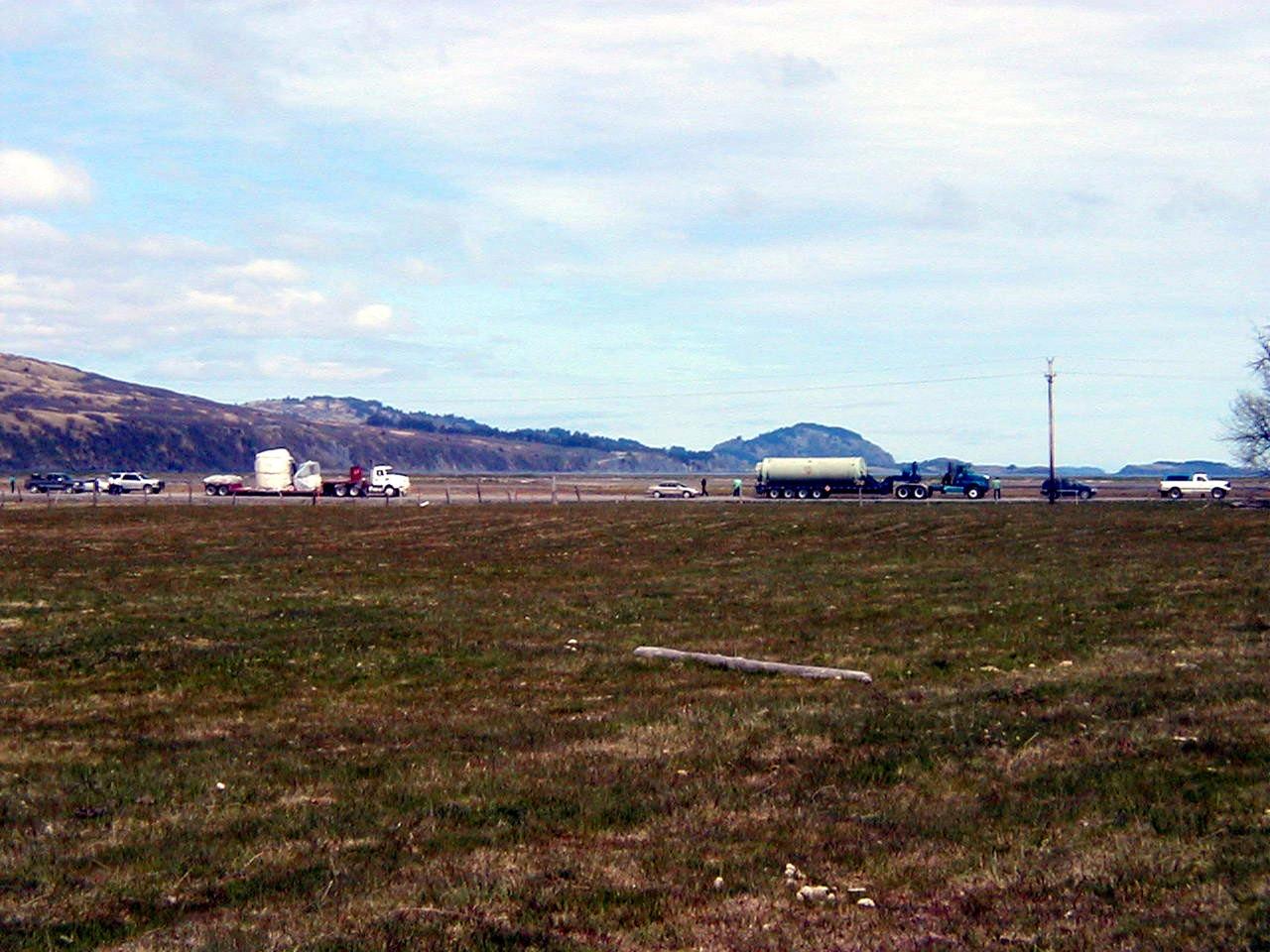
KODIAK ISLAND, Alaska -- A convoy of trucks transports the stages of an Athena launch vehicle and supporting launch equipment to the pad at Kodiak Island, Alaska, as preparations to launch the Kodiak Star continue. The first orbital launch to take place from Alaska's Kodiak Launch Complex, Kodiak Star is scheduled to lift off on a Lockheed Martin Athena I launch vehicle on Sept. 17 during a two-hour window that extends from 5:00 to 7:00 p.m. ADT. The payloads aboard include the Starshine 3, sponsored by NASA, and the PICOSat, PCSat and Sapphire, sponsored by the Department of Defense (DoD) Space Test Program.
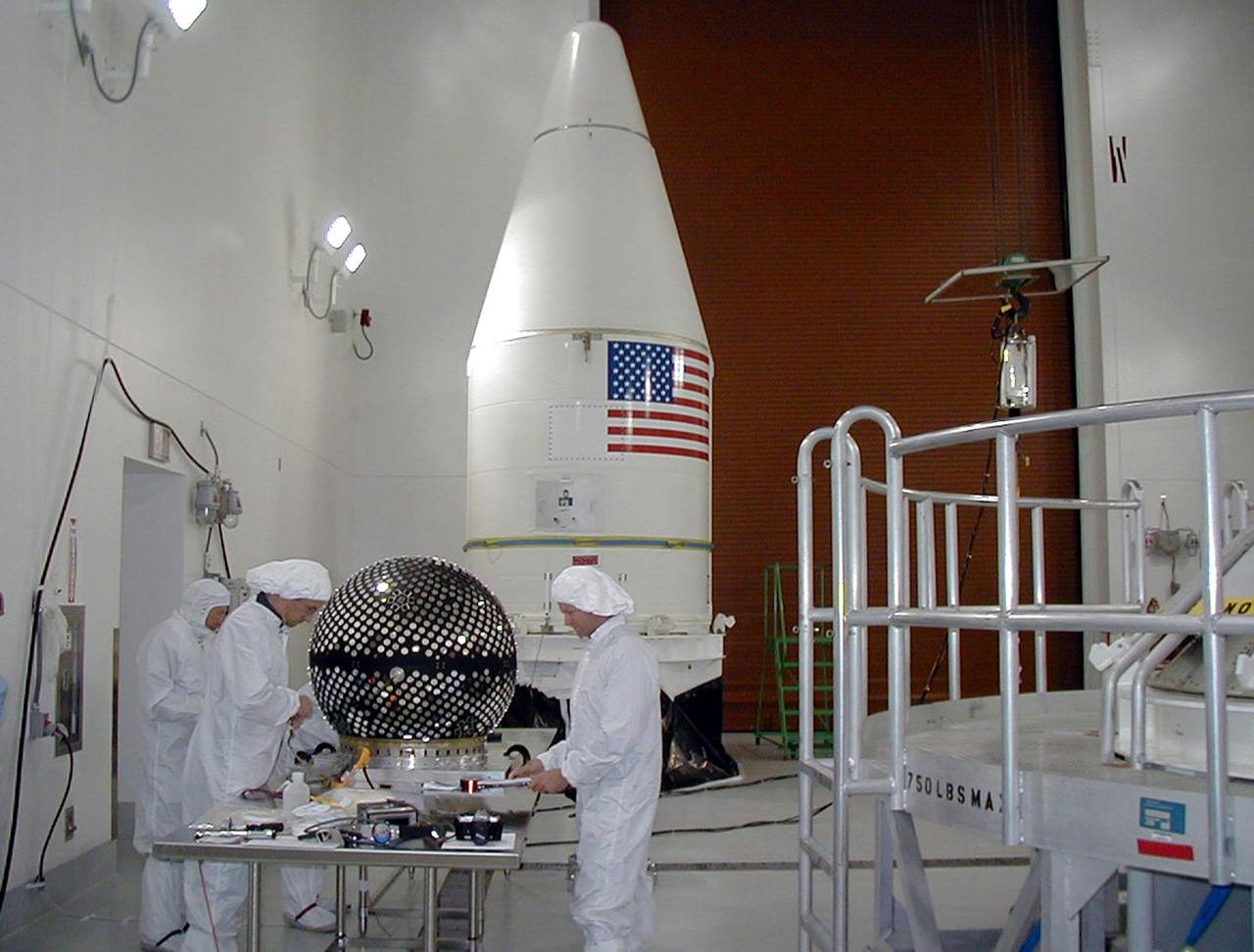
KODIAK ISLAND, Alaska -- Technicians prepare the Starshine 3 payload for its launch aboard the Athena 1 launch vehicle, while the payload fairing awaits processing, at Kodiak Island, Alaska, as preparations to launch Kodiak Star proceed. The first orbital launch to take place from Alaska's Kodiak Launch Complex, Kodiak Star is scheduled to lift off on a Lockheed Martin Athena I launch vehicle on Sept. 17 during a two-hour window that extends from 5:00 to 7:00 p.m. ADT. The payloads aboard include the Starshine 3, sponsored by NASA, and the PICOSat, PCSat and Sapphire, sponsored by the Department of Defense (DoD) Space Test Program.
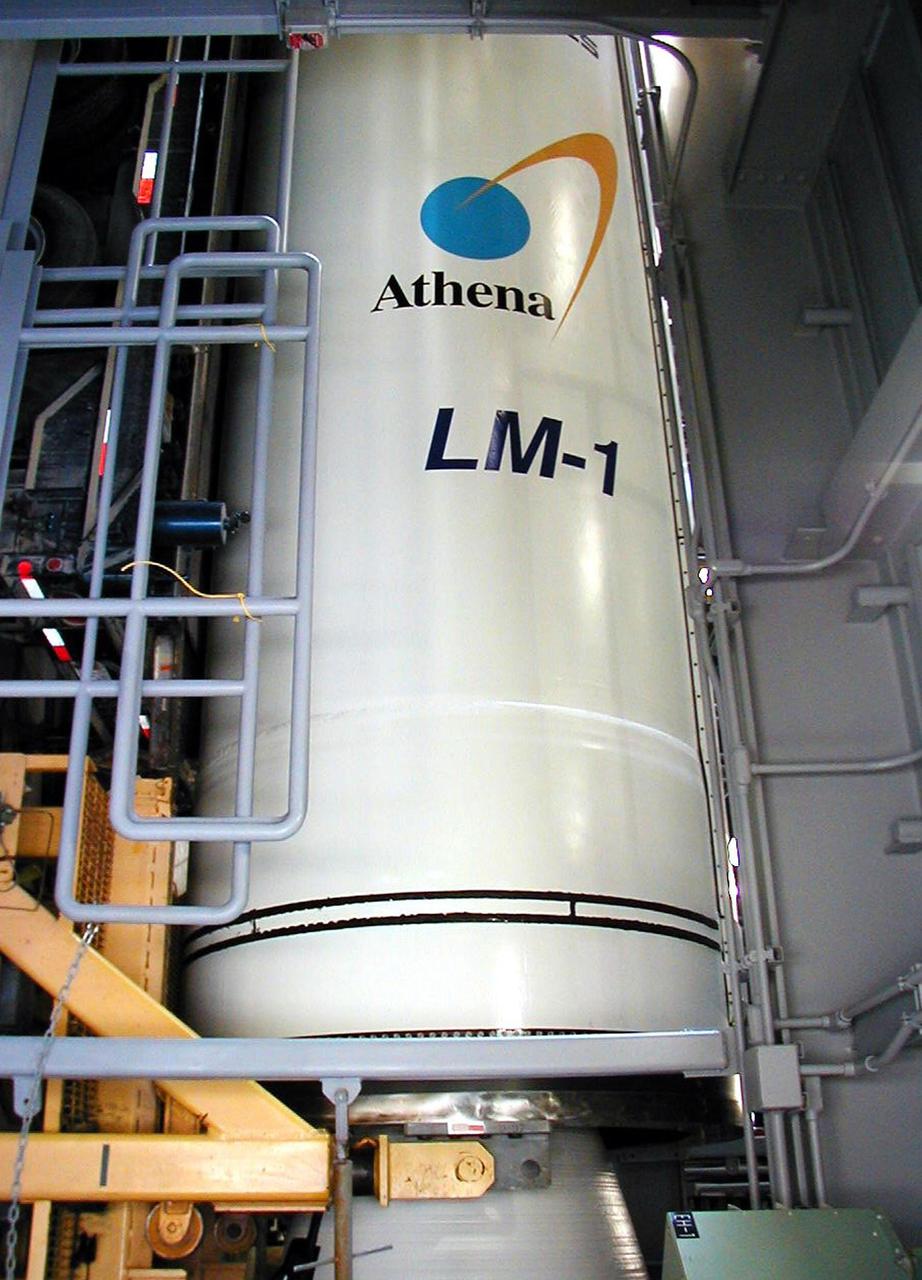
KODIAK ISLAND, Alaska -- Castor 120, the first stage of the Athena 1 launch vehicle, is raised off a truck at the launch pad at Kodiak Island, Alaska, as preparations to launch Kodiak Star proceed. The first orbital launch to take place from Alaska's Kodiak Launch Complex, Kodiak Star is scheduled to lift off on a Lockheed Martin Athena I launch vehicle on Sept. 17 during a two-hour window that extends from 5:00 to 7:00 p.m. ADT. The payloads aboard include the Starshine 3, sponsored by NASA, and the PICOSat, PCSat and Sapphire, sponsored by the Department of Defense (DoD) Space Test Program.

KODIAK ISLAND, Alaska -- The PCSat payload waits for its launch aboard the Athena 1 launch vehicle at Kodiak Island, Alaska, as preparations to launch Kodiak Star proceed. The first orbital launch to take place from Alaska's Kodiak Launch Complex, Kodiak Star is scheduled to lift off on a Lockheed Martin Athena I launch vehicle on Sept. 17 during a two-hour window that extends from 5 p.m. to 7 p.m. p.m. ADT. The payloads aboard include the Starshine 3, sponsored by NASA, and the PICOSat, PCSat and Sapphire, sponsored by the Department of Defense (DoD) Space Test Program.
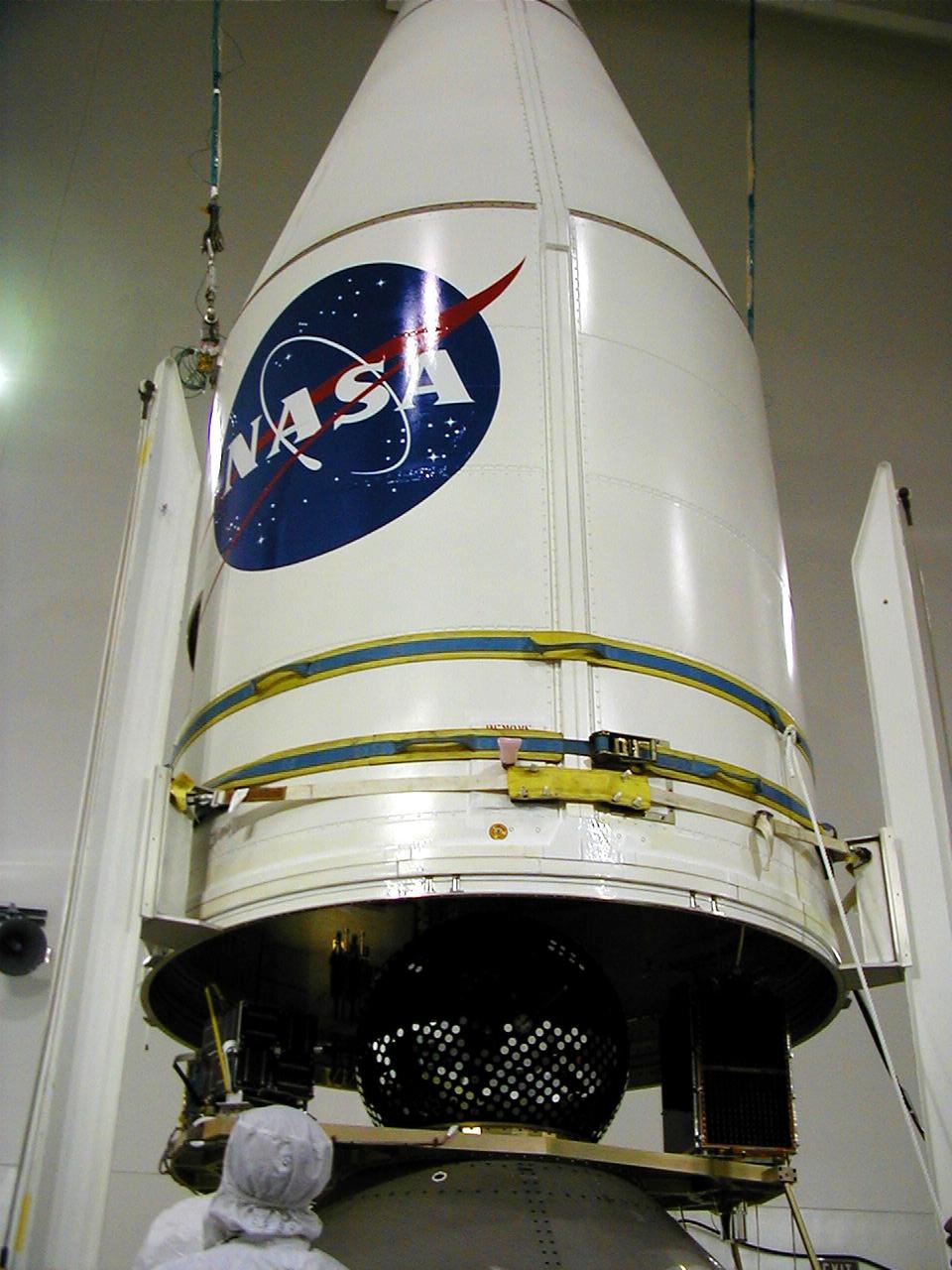
KODIAK ISLAND, ALASKA - In the Launch Service Structure, Kodiak Launch Complex (KLC), the fairing is lowered over the Kodiak Star spacecraft in preparation for launch. The first launch to take place from KLC, Kodiak Star is scheduled to lift off on a Lockheed Martin Athena I launch vehicle on Sept. 17 during a two-hour window that extends from 5 p.m. to 7 p.m. p.m. ADT. The payloads aboard include the Starshine 3, sponsored by NASA, and the PICOSat, PCSat and Sapphire, sponsored by the Department of Defense (DoD) Space Test Program. KLC is the newest commercial launch complex in the United States, ideal for launch payloads requiring low-Earth polar or sun-synchronous orbits
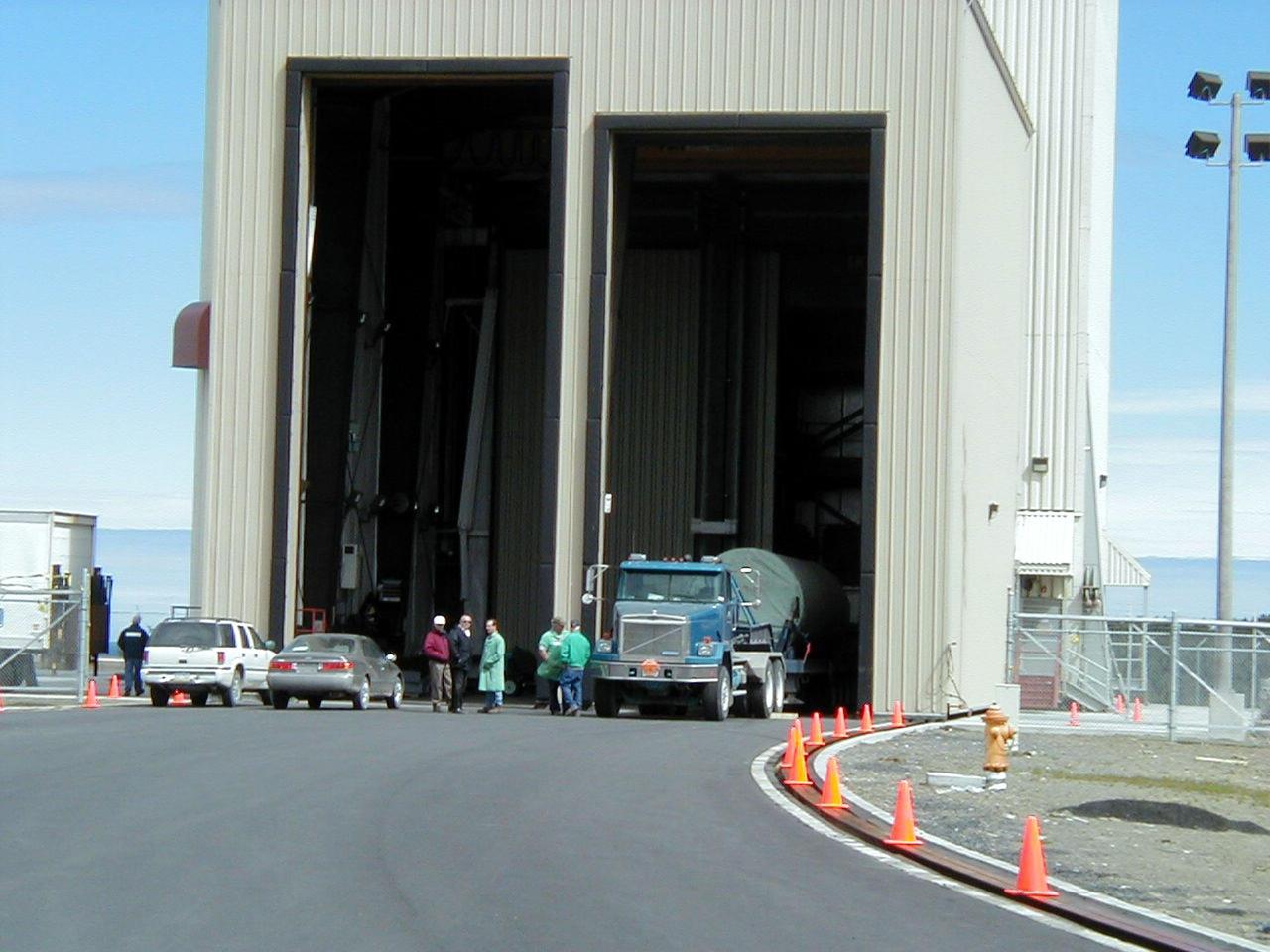
KODIAK ISLAND, Alaska -- Trucks transporting Castor 120, the first stage of the Athena 1 launch vehicle, arrive at Kodiak Island, Alaska, as preparations to launch Kodiak Star proceed. The first orbital launch to take place from Alaska's Kodiak Launch Complex, Kodiak Star is scheduled to lift off on a Lockheed Martin Athena I launch vehicle on Sept. 17 during a two-hour window that extends from 5:00 to 7:00 p.m. ADT. The payloads aboard include the Starshine 3, sponsored by NASA, and the PICOSat, PCSat and Sapphire, sponsored by the Department of Defense (DoD) Space Test Program.
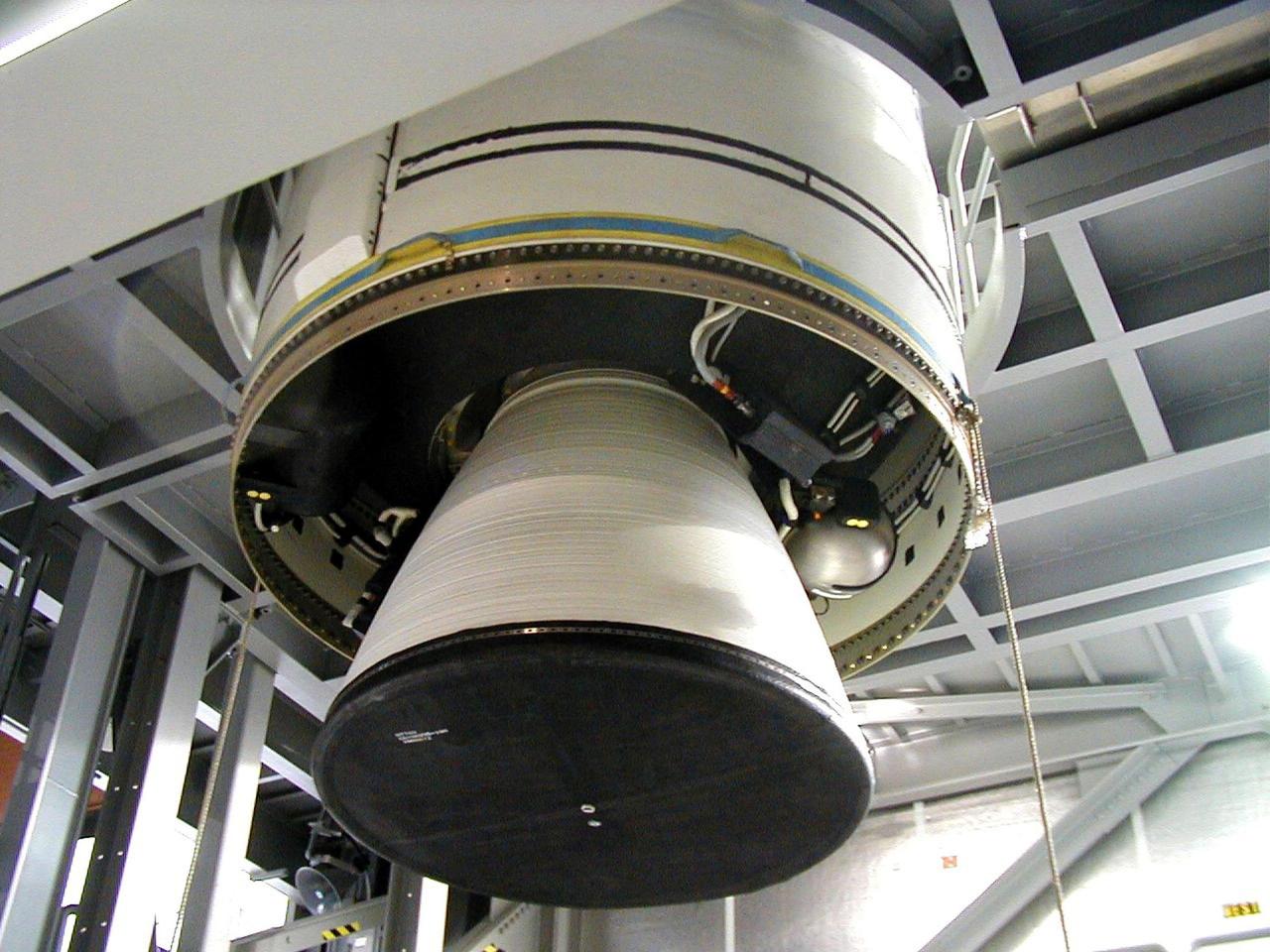
KODIAK ISLAND, Alaska -- Castor 120, the first stage of the Athena 1 launch vehicle, is lowered into place at Kodiak Island, Alaska, as preparations to launch Kodiak Star proceed. The first orbital launch to take place from Alaska's Kodiak Launch Complex, Kodiak Star is scheduled to lift off on a Lockheed Martin Athena I launch vehicle on Sept. 17 during a two-hour window that extends from 5:00 to 7:00 p.m. ADT. The payloads aboard include the Starshine 3, sponsored by NASA, and the PICOSat, PCSat and Sapphire, sponsored by the Department of Defense (DoD) Space Test Program.
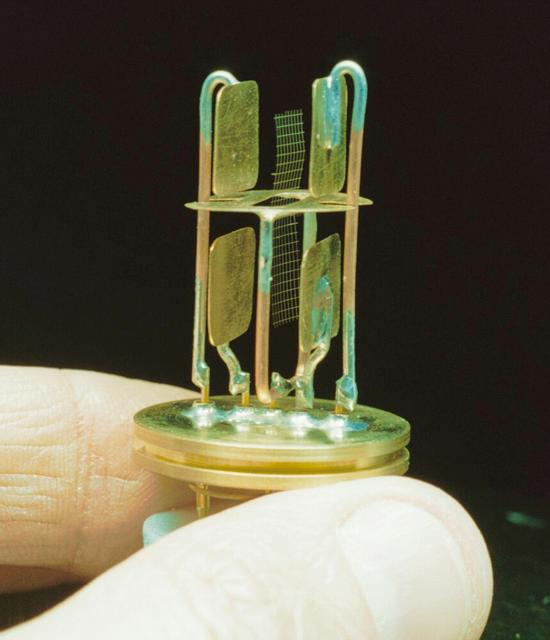
The Critical Viscosity of Xenon Experiment (CVX-2) on the STS-107 Research 1 mission in 2002 will measure the viscous behavior of liquid xenon, a heavy inert gas used in flash lamps and ion rocket engines, at its critical point. Resembling a tiny bit of window screen, the oscillator at the heart of CVX-2 will vibrate between two pairs of paddle-like electrodes. The slight bend in the shape of the mesh has no effect on the data. What counts are the mesh's displacement in the xenon fluid and the rate at which the displacement dampens. The unit shown here is encased in a small test cell and capped with a sapphire windown to contain the xenon at high pressure.

KODIAK ISLAND, Alaska -- The Orbis 21D Equipment Section Boost Motor, the second stage of the Athena 1 launch vehicle, waits for the first stage, Castor 120, to be towed up the steepest part of the road, as preparations to launch Kodiak Star proceed. The first orbital launch to take place from Alaska's Kodiak Launch Complex, Kodiak Star is scheduled to lift off on a Lockheed Martin Athena I launch vehicle on Sept. 17 during a two-hour window that extends from 5:00 to 7:00 p.m. ADT. The payloads aboard include the Starshine 3, sponsored by NASA, and the PICOSat, PCSat and Sapphire, sponsored by the Department of Defense (DoD) Space Test Program.
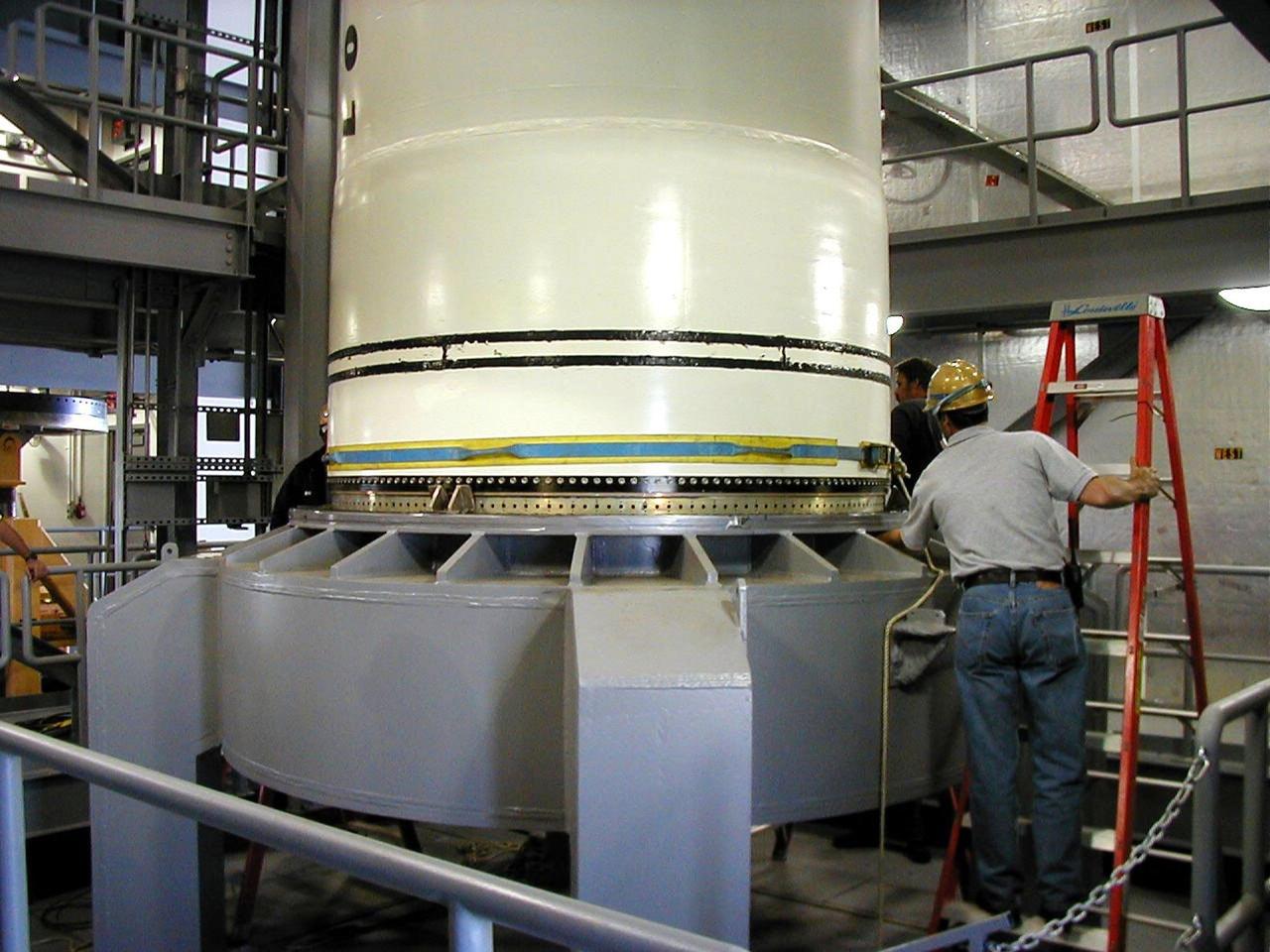
KODIAK ISLAND, Alaska -- Technicians inspect and secure Castor 120, the first stage of the Athena 1 launch vehicle, on the launch mount at Kodiak Island, Alaska, as processing for the launch of Kodiak Star proceeds. The first orbital launch to take place from Alaska's Kodiak Launch Complex, Kodiak Star is scheduled to lift off on a Lockheed Martin Athena I launch vehicle on Sept. 17 during a two-hour window that extends from 5:00 to 7:00 p.m. ADT. The payloads aboard include the Starshine 3, sponsored by NASA, and the PICOSat, PCSat and Sapphire, sponsored by the Department of Defense (DoD) Space Test Program.

KODIAK ISLAND, Alaska -- The Orbis 21D Equipment Section Boost Motor, the second stage of the Athena 1 launch vehicle, waits for the first stage, Castor 120, to be towed up the steepest part of the road, as preparations to launch Kodiak Star proceed. The first orbital launch to take place from Alaska's Kodiak Launch Complex, Kodiak Star is scheduled to lift off on a Lockheed Martin Athena I launch vehicle on Sept. 17 during a two-hour window that extends from 5:00 to 7:00 p.m. ADT. The payloads aboard include the Starshine 3, sponsored by NASA, and the PICOSat, PCSat and Sapphire, sponsored by the Department of Defense (DoD) Space Test Program.
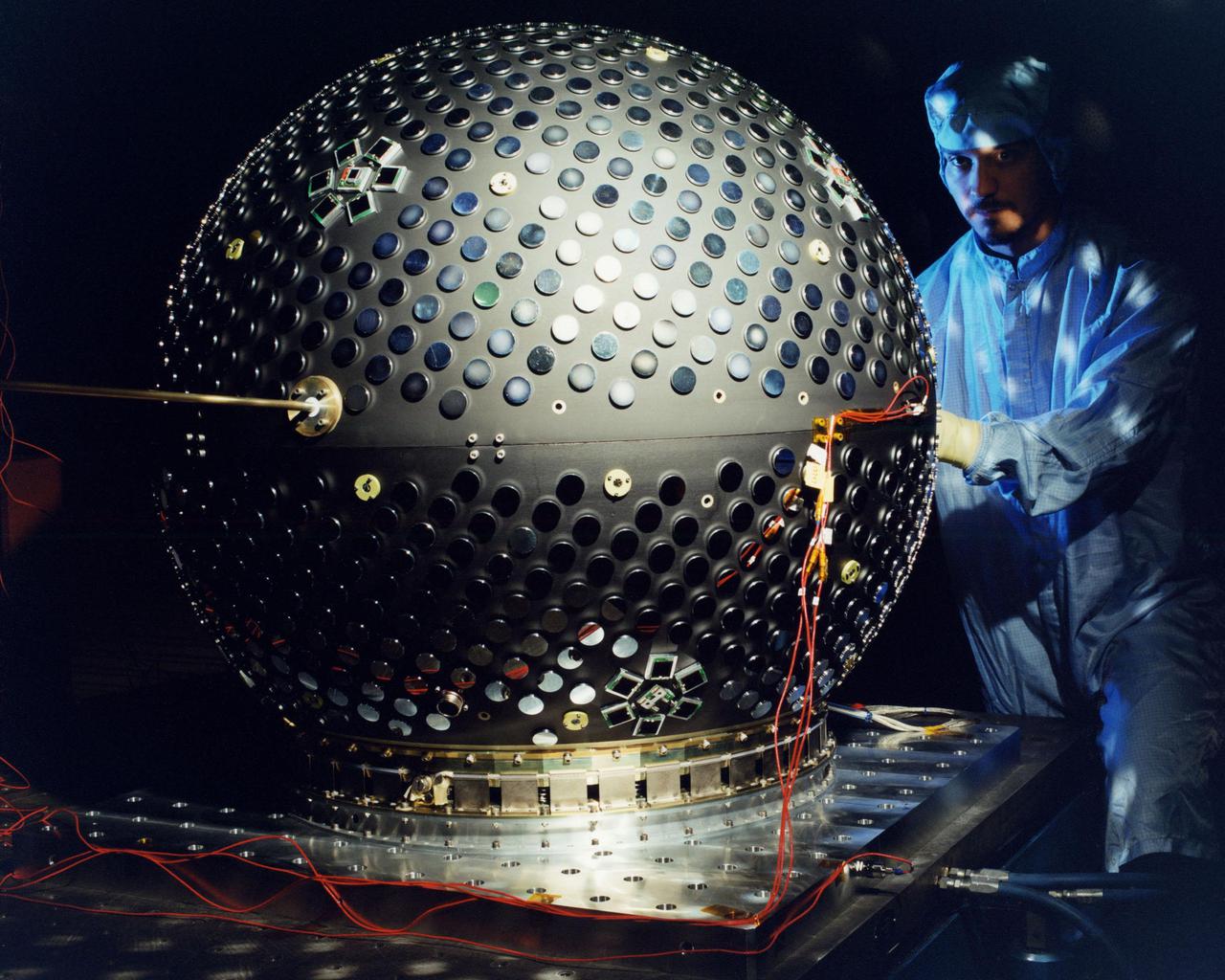
KODIAK ISLAND, Alaska -- A technician performs final testing on Starshine 3 at the Naval Research Laboratory in Washington, D.C., to prepare for the launch of the Kodiak Star at Kodiak Island, Alaska. The first orbital launch to take place from Alaska's Kodiak Launch Complex, Kodiak Star is scheduled to lift off on a Lockheed Martin Athena I launch vehicle on Sept. 17 during a two-hour window that extends from 5:00 to 7:00 p.m. ADT. The payloads aboard include the Starshine 3, sponsored by NASA, and the PICOSat, PCSat and Sapphire, sponsored by the Department of Defense (DoD) Space Test Program.
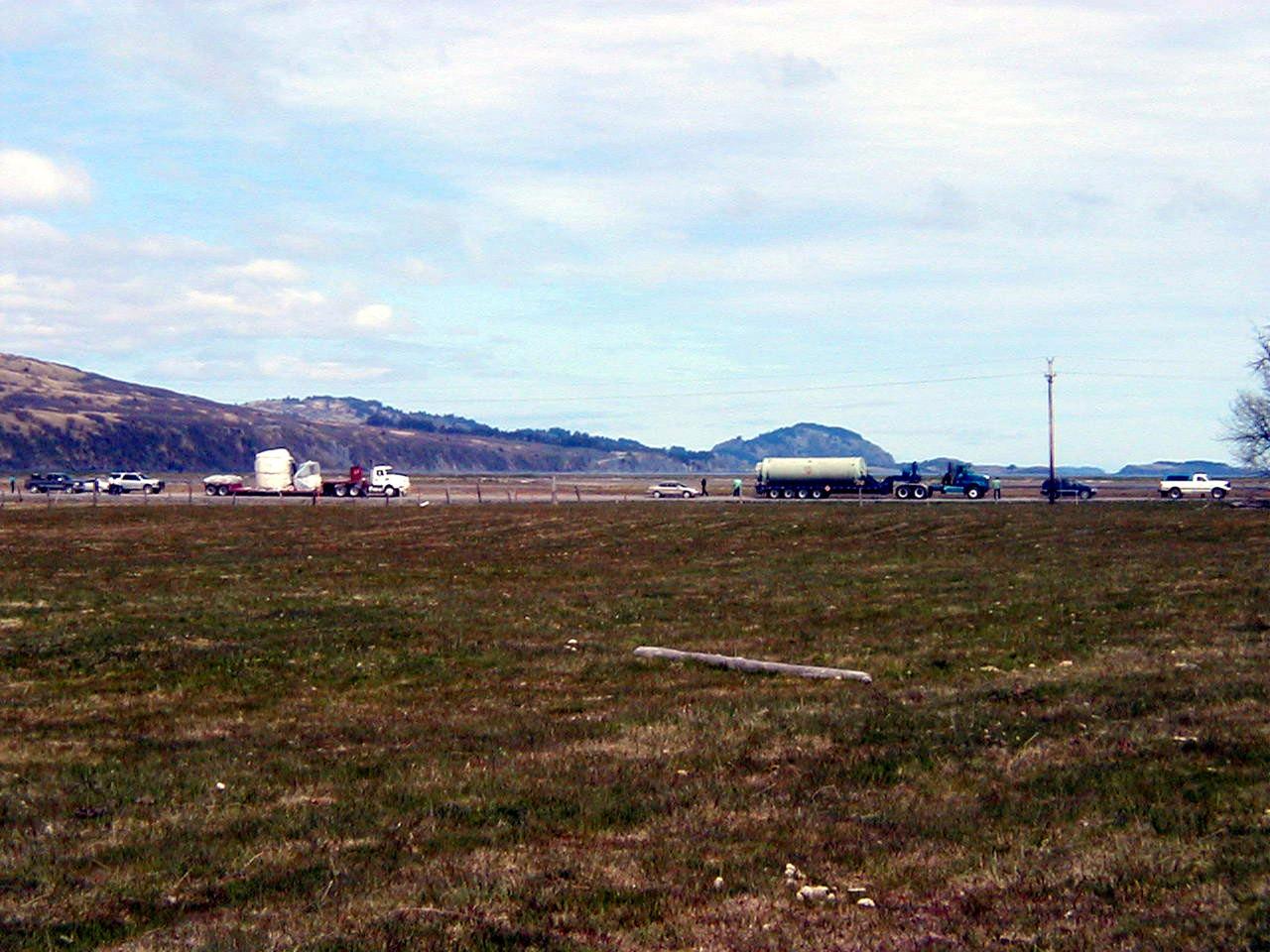
KODIAK ISLAND, Alaska -- A convoy of trucks transports the stages of an Athena launch vehicle and supporting launch equipment to the pad at Kodiak Island, Alaska, as preparations to launch the Kodiak Star continue. The first orbital launch to take place from Alaska's Kodiak Launch Complex, Kodiak Star is scheduled to lift off on a Lockheed Martin Athena I launch vehicle on Sept. 17 during a two-hour window that extends from 5:00 to 7:00 p.m. ADT. The payloads aboard include the Starshine 3, sponsored by NASA, and the PICOSat, PCSat and Sapphire, sponsored by the Department of Defense (DoD) Space Test Program.
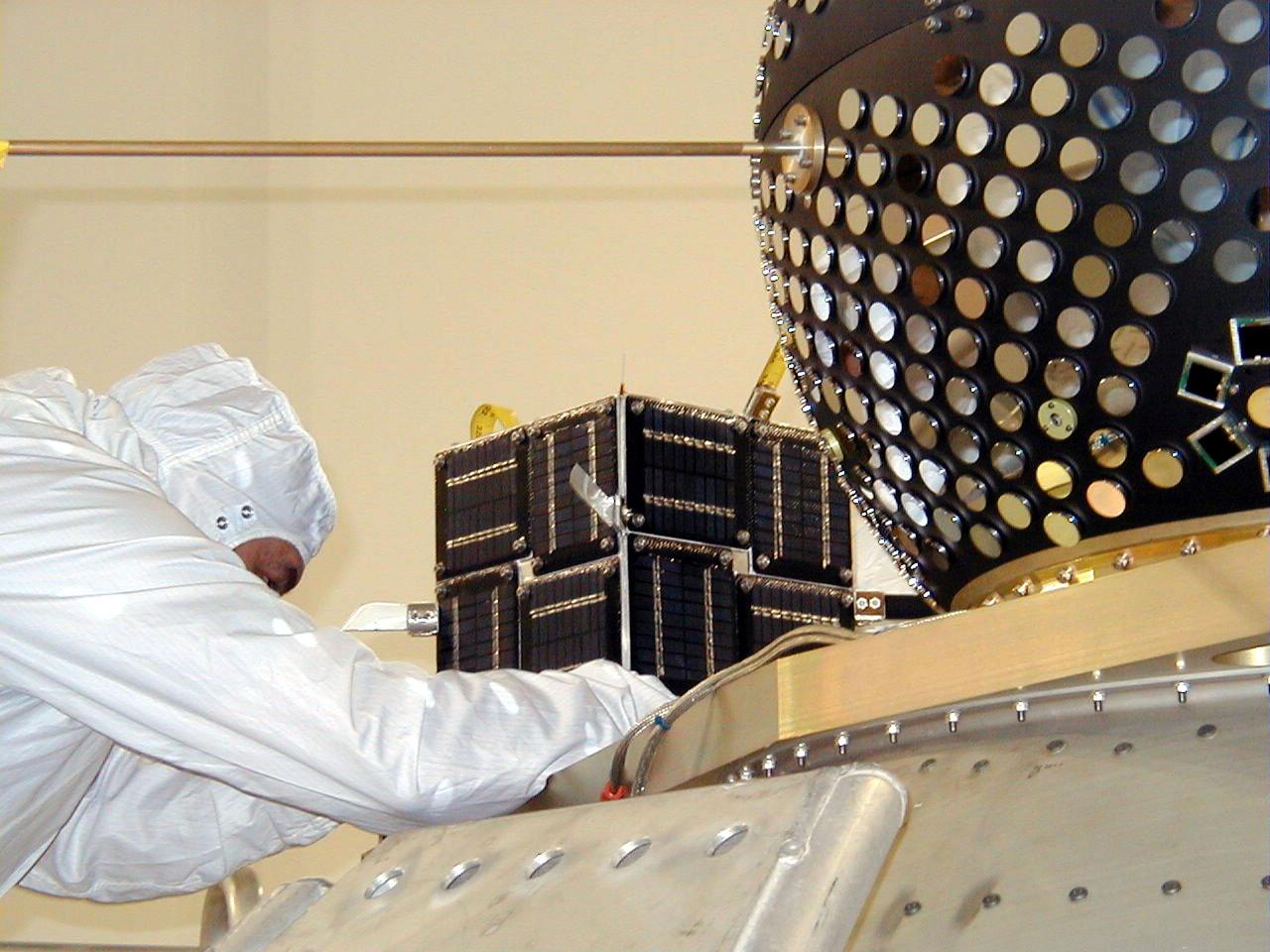
KODIAK ISLAND, Alaska -- A technician prepares the Starshine 3 and PICSat payloads for their launch aboard the Athena 1 launch vehicle at Kodiak Island, Alaska, as preparations to launch Kodiak Star proceed. The first orbital launch to take place from Alaska's Kodiak Launch Complex, Kodiak Star is scheduled to lift off on a Lockheed Martin Athena I launch vehicle on Sept. 17 during a two-hour window that extends from 5 p.m. to 7 p.m. p.m. ADT. The payloads aboard include the Starshine 3, sponsored by NASA, and the PICOSat, PCSat and Sapphire, sponsored by the Department of Defense (DoD) Space Test Program.
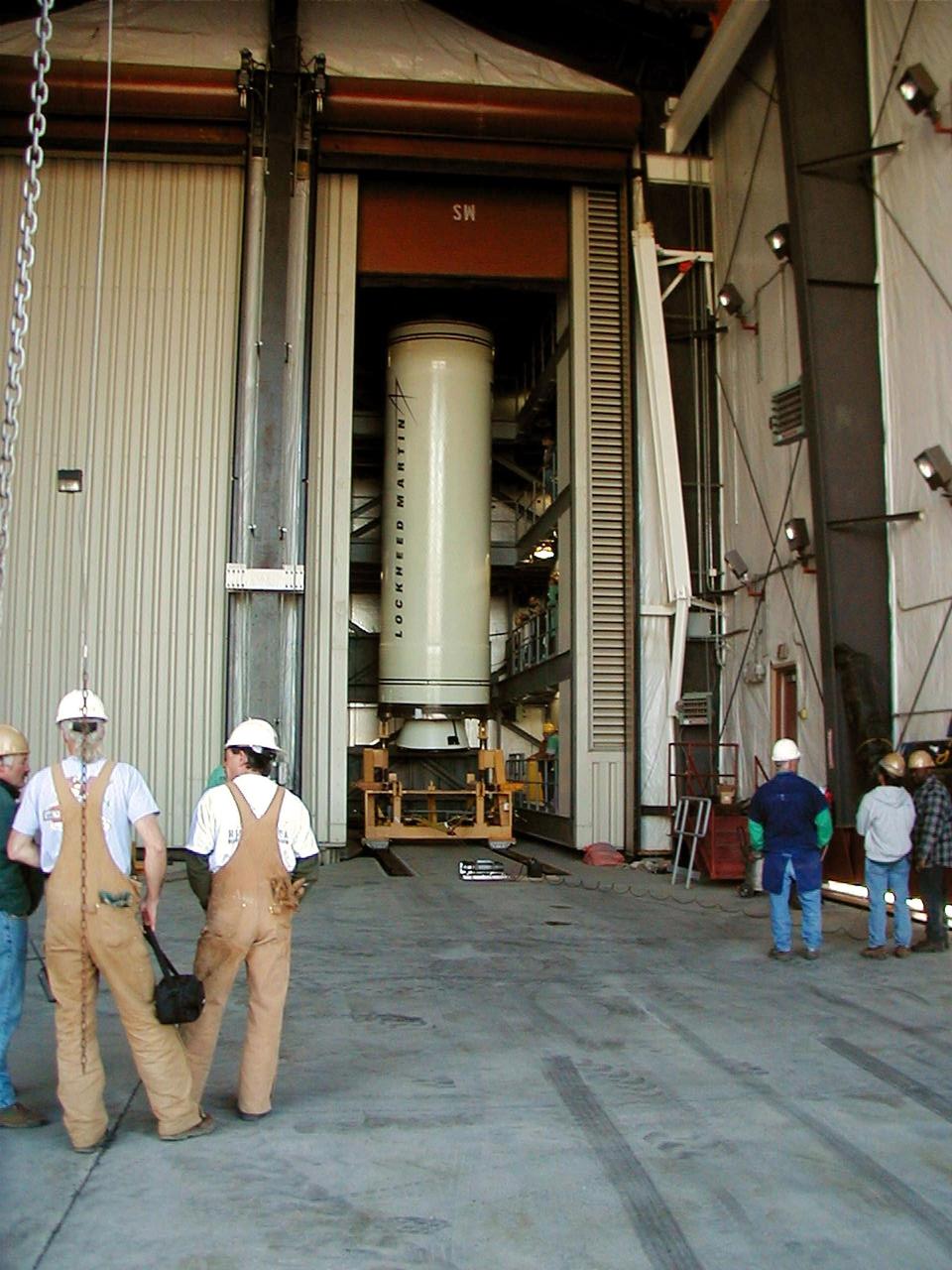
KODIAK ISLAND, Alaska -- Technicians prepare the Athena I launch vehicle for flight at Kodiak Island, Alaska, as processing for the launch of Kodiak Star proceeds. The first orbital launch to take place from Alaska's Kodiak Launch Complex, Kodiak Star is scheduled to lift off on a Lockheed Martin Athena I launch vehicle on Sept. 17 during a two-hour window that extends from 5:00 to 7:00 p.m. ADT. The payloads aboard include the Starshine 3, sponsored by NASA, and the PICOSat, PCSat and Sapphire, sponsored by the Department of Defense (DoD) Space Test Program.

KODIAK ISLAND, Alaska -- Technicians prepare the Starshine 3 payload, while the payload fairing of the Athena 1 launch vehicle awaits servicing at Kodiak Island, Alaska, as preparations to launch Kodiak Star proceed. The first orbital launch to take place from Alaska's Kodiak Launch Complex, Kodiak Star is scheduled to lift off on a Lockheed Martin Athena I launch vehicle on Sept. 17 during a two-hour window that extends from 5:00 to 7:00 p.m. ADT. The payloads aboard include the Starshine 3, sponsored by NASA, and the PICOSat, PCSat and Sapphire, sponsored by the Department of Defense (DoD) Space Test Program
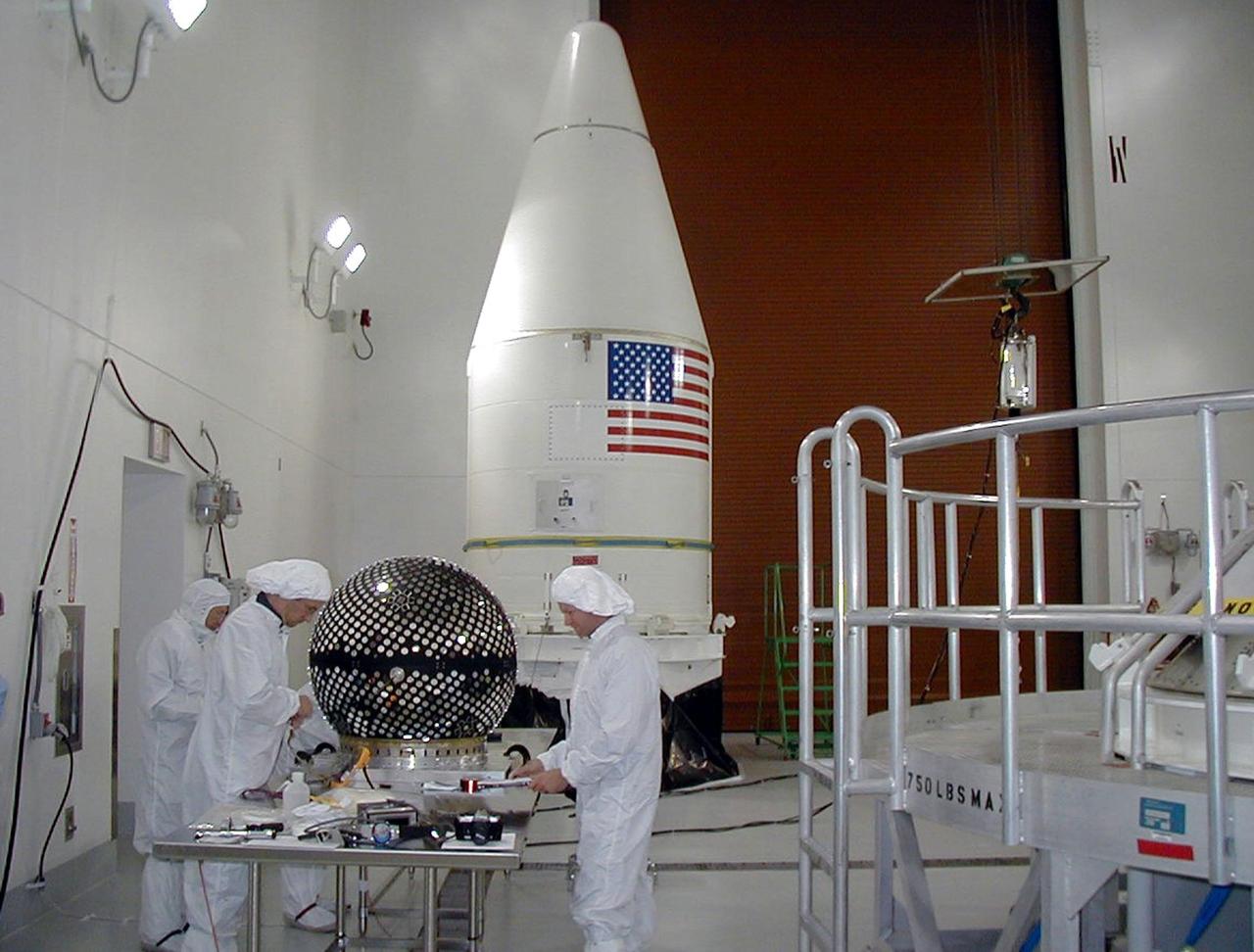
KODIAK ISLAND, Alaska -- Technicians prepare the Starshine 3 payload for its launch aboard the Athena 1 launch vehicle, while the payload fairing awaits processing, at Kodiak Island, Alaska, as preparations to launch Kodiak Star proceed. The first orbital launch to take place from Alaska's Kodiak Launch Complex, Kodiak Star is scheduled to lift off on a Lockheed Martin Athena I launch vehicle on Sept. 17 during a two-hour window that extends from 5:00 to 7:00 p.m. ADT. The payloads aboard include the Starshine 3, sponsored by NASA, and the PICOSat, PCSat and Sapphire, sponsored by the Department of Defense (DoD) Space Test Program.
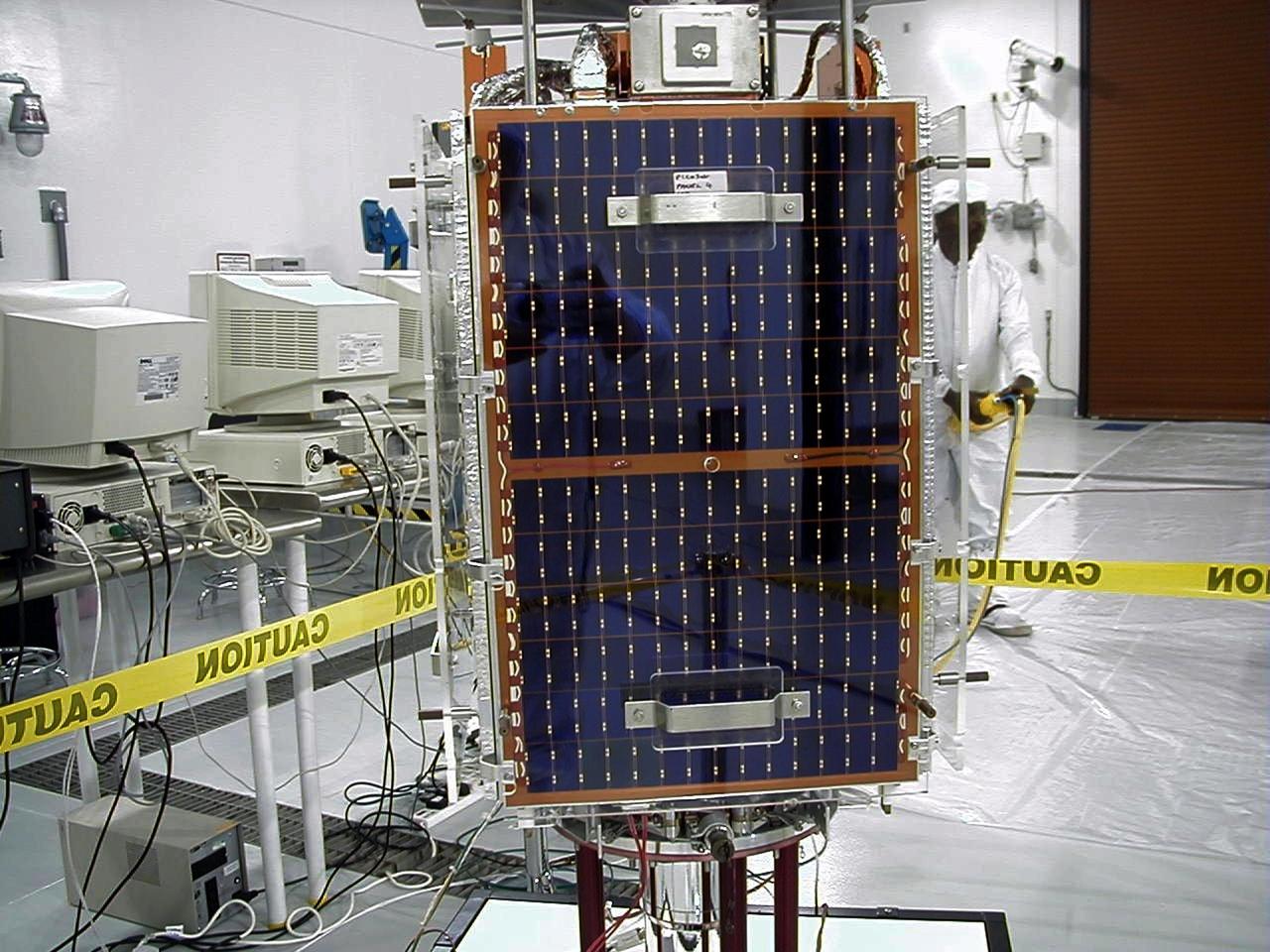
KENNEDY SPACE CENTER, Fla. -- The PICOSat payload undergoes final preparations for its launch aboard the Athena 1 launch vehicle at Kodiak Island, Alaska, as preparations to launch Kodiak Star proceed. The first launch to take place from Alaska's Kodiak Launch Complex, Kodiak Star is scheduled to lift off on a Lockheed Martin Athena I launch vehicle on Sept. 17 during a two-hour window that extends from 5:00 to 7:00 p.m. ADT. The payloads aboard include the Starshine 3, sponsored by NASA, and the PICOSat, PCSat and Sapphire, sponsored by the Department of Defense (DoD) Space Test Program

KODIAK ISLAND, Alaska -- Technicians install Orbis 21D Equipment Section Boost Motor, the second stage of the Athena 1 launch vehicle, at Kodiak Island, Alaska, as processing for the launch of Kodiak Star proceeds. The first orbital launch to take place from Alaska's Kodiak Launch Complex, Kodiak Star is scheduled to lift off on a Lockheed Martin Athena I launch vehicle on Sept. 17 during a two-hour window that extends from 5:00 to 7:00 p.m. ADT. The payloads aboard include the Starshine 3, sponsored by NASA, and the PICOSat, PCSat and Sapphire, sponsored by the Department of Defense (DoD) Space Test Program.
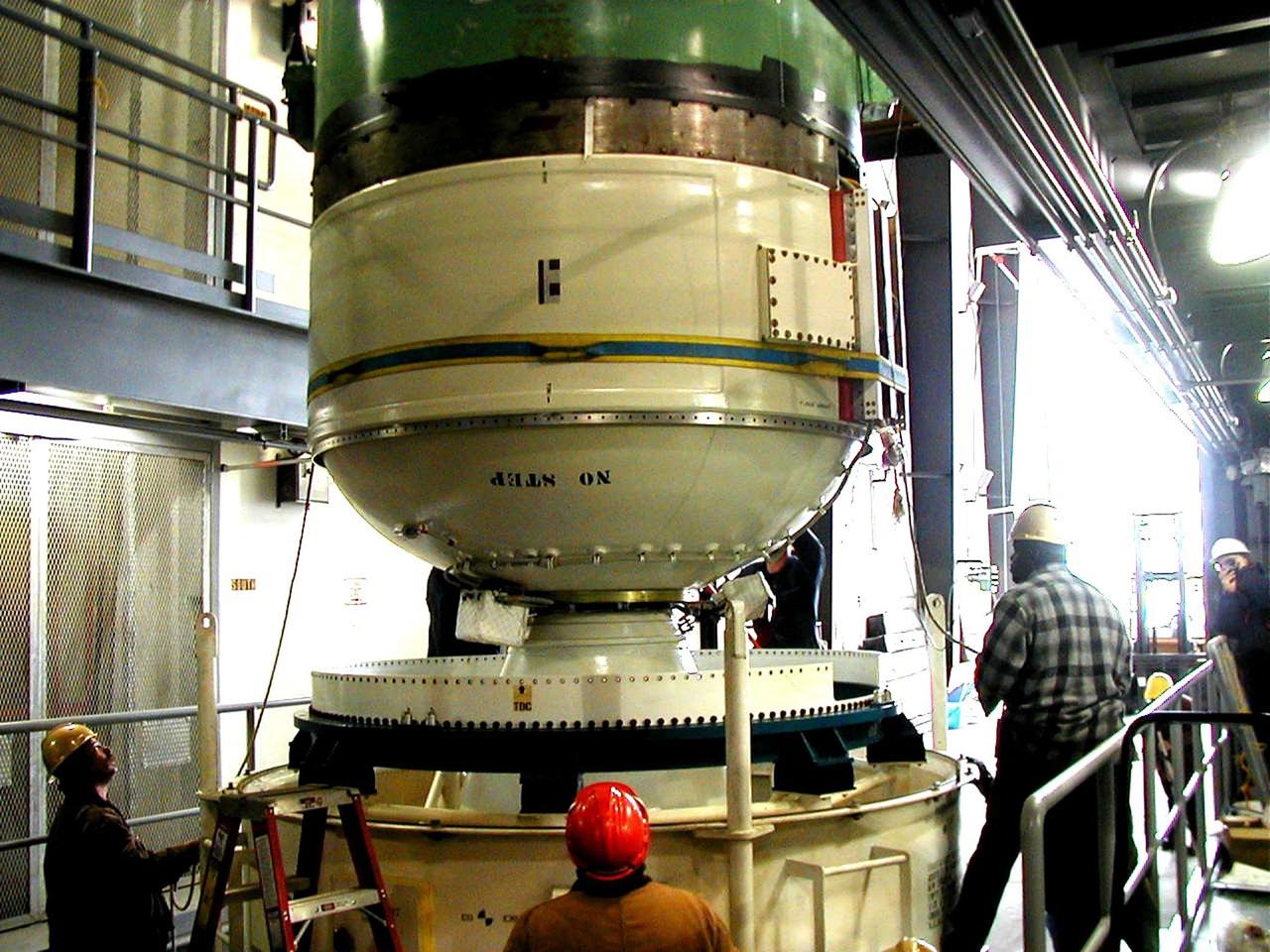
KODIAK ISLAND, Alaska -- Technicians install Orbis 21D Equipment Section Boost Motor, the second stage of the Athena 1 launch vehicle, at Kodiak Island, Alaska, as processing for the launch of Kodiak Star proceeds. The first orbital launch to take place from Alaska's Kodiak Launch Complex, Kodiak Star is scheduled to lift off on a Lockheed Martin Athena I launch vehicle on Sept. 17 during a two-hour window that extends from 5:00 to 7:00 p.m. ADT. The payloads aboard include the Starshine 3, sponsored by NASA, and the PICOSat, PCSat and Sapphire, sponsored by the Department of Defense (DoD) Space Test Program.
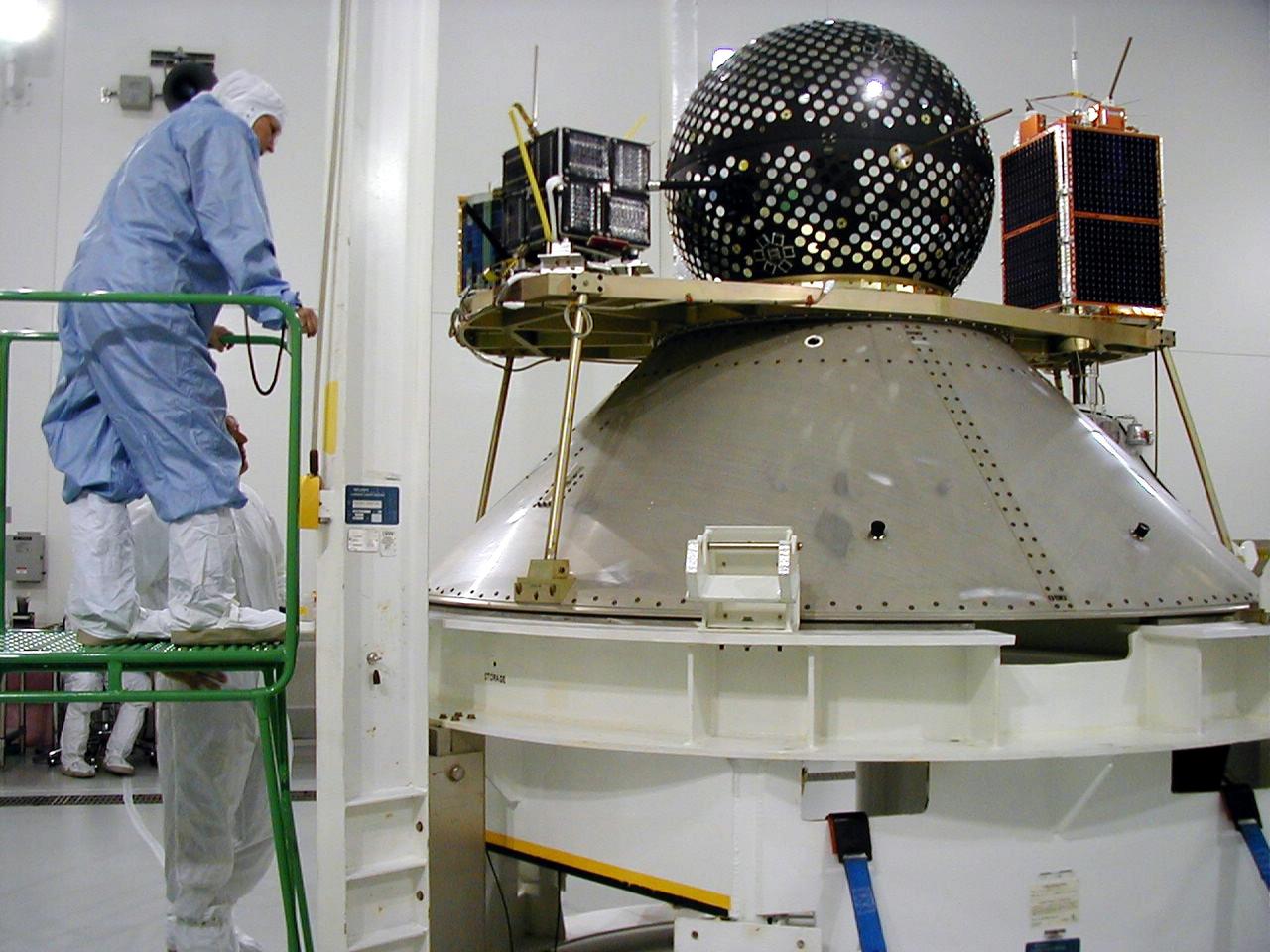
KODIAK ISLAND, ALASKA - In the Launch Service Structure, Kodiak Launch Complex (KLC), the Kodiak Star spacecraft is ready for encapsulation in the fairing, as preparation for launch. The first launch to take place from KLC, Kodiak Star is scheduled to lift off on a Lockheed Martin Athena I launch vehicle on Sept. 17 during a two-hour window that extends from 5 p.m. to 7 p.m. p.m. ADT. The payloads aboard include the Starshine 3, sponsored by NASA, and the PICOSat, PCSat and Sapphire, sponsored by the Department of Defense (DoD) Space Test Program. KLC is the newest commercial launch complex in the United States, ideal for launch payloads requiring low-Earth polar or sun-synchronous orbits
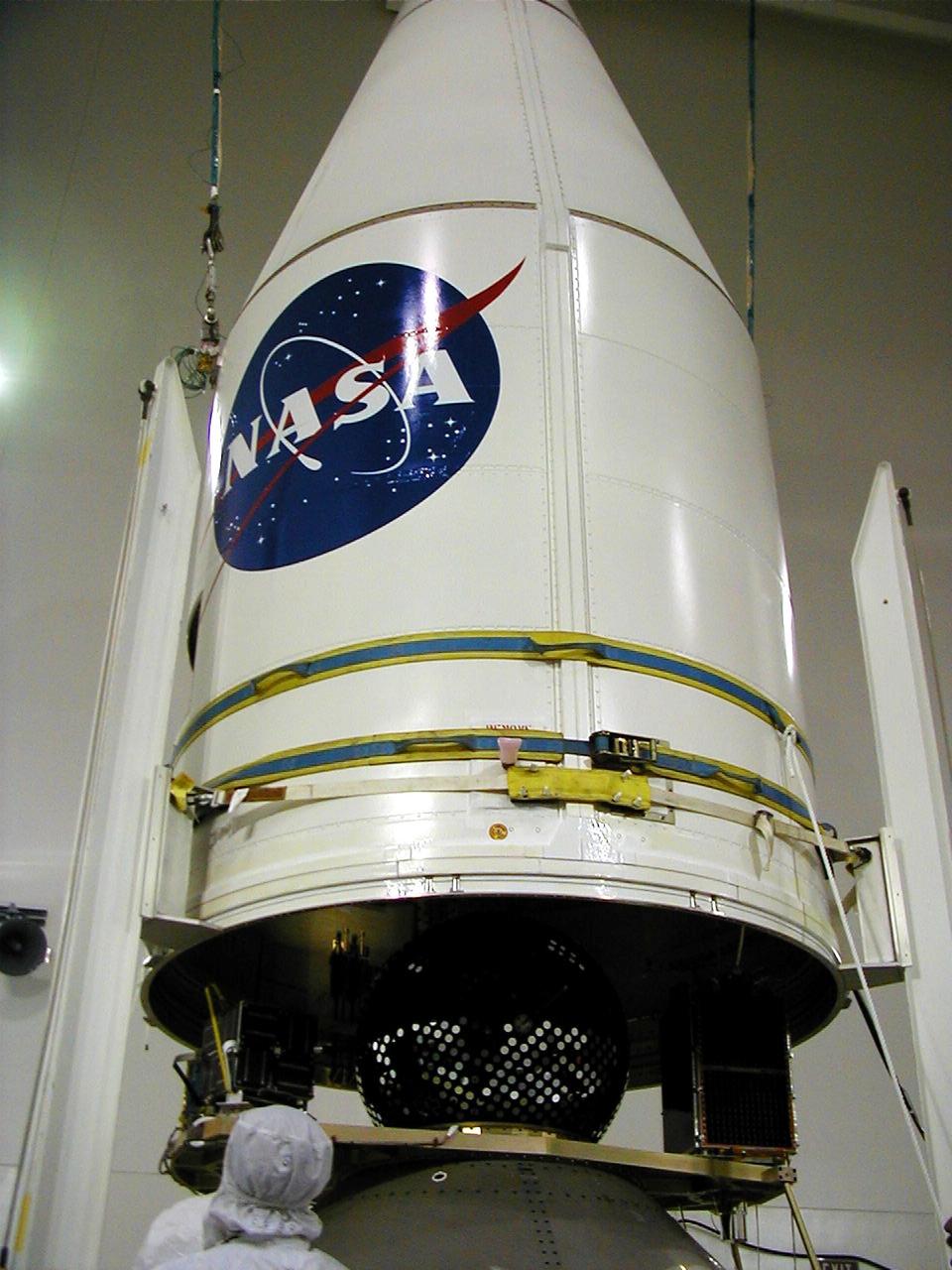
KODIAK ISLAND, ALASKA - In the Launch Service Structure, Kodiak Launch Complex (KLC), the fairing is lowered over the Kodiak Star spacecraft in preparation for launch. The first launch to take place from KLC, Kodiak Star is scheduled to lift off on a Lockheed Martin Athena I launch vehicle on Sept. 17 during a two-hour window that extends from 5 p.m. to 7 p.m. p.m. ADT. The payloads aboard include the Starshine 3, sponsored by NASA, and the PICOSat, PCSat and Sapphire, sponsored by the Department of Defense (DoD) Space Test Program. KLC is the newest commercial launch complex in the United States, ideal for launch payloads requiring low-Earth polar or sun-synchronous orbits
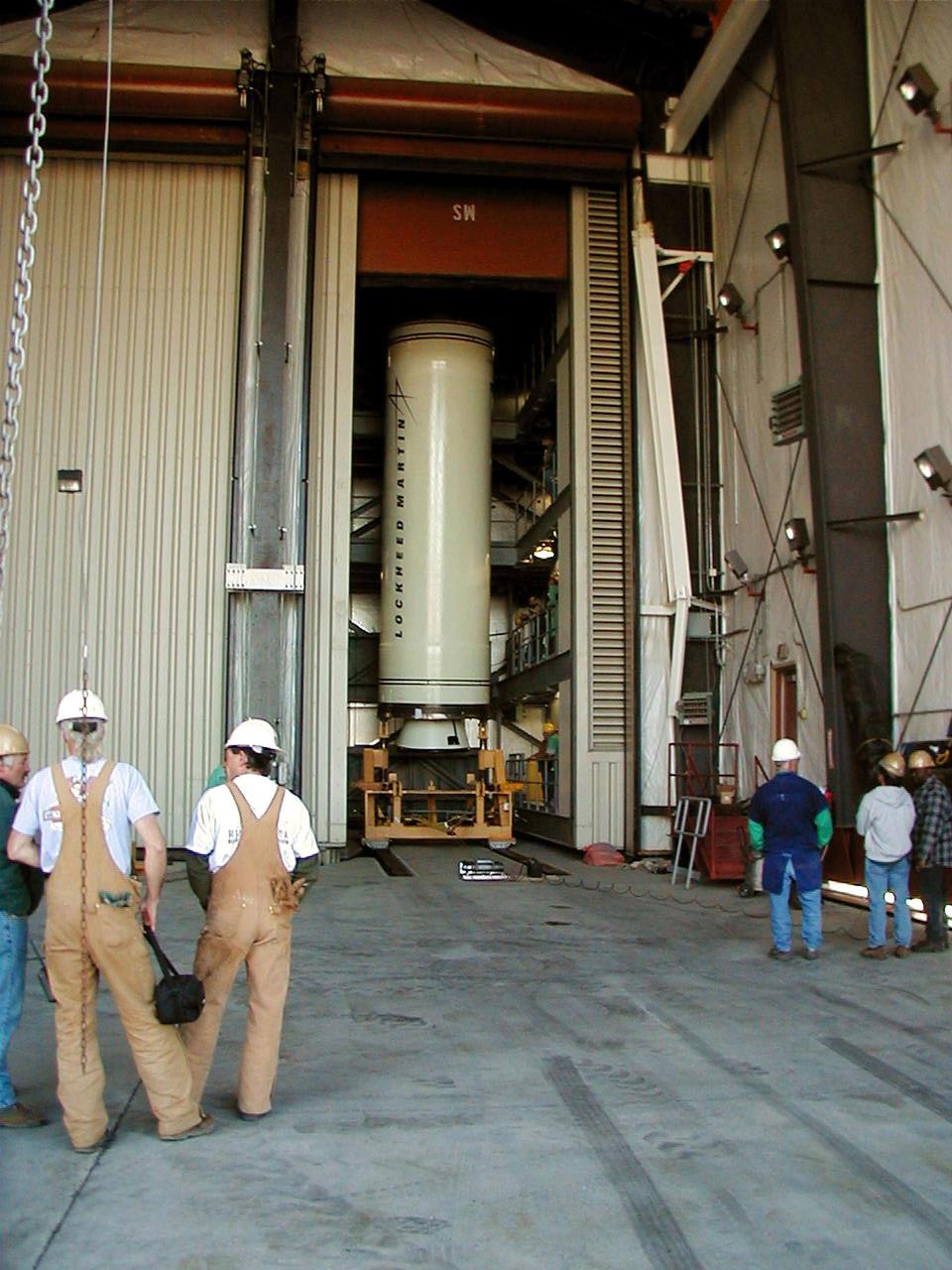
KODIAK ISLAND, Alaska -- Technicians prepare the Athena I launch vehicle for flight at Kodiak Island, Alaska, as processing for the launch of Kodiak Star proceeds. The first orbital launch to take place from Alaska's Kodiak Launch Complex, Kodiak Star is scheduled to lift off on a Lockheed Martin Athena I launch vehicle on Sept. 17 during a two-hour window that extends from 5:00 to 7:00 p.m. ADT. The payloads aboard include the Starshine 3, sponsored by NASA, and the PICOSat, PCSat and Sapphire, sponsored by the Department of Defense (DoD) Space Test Program.
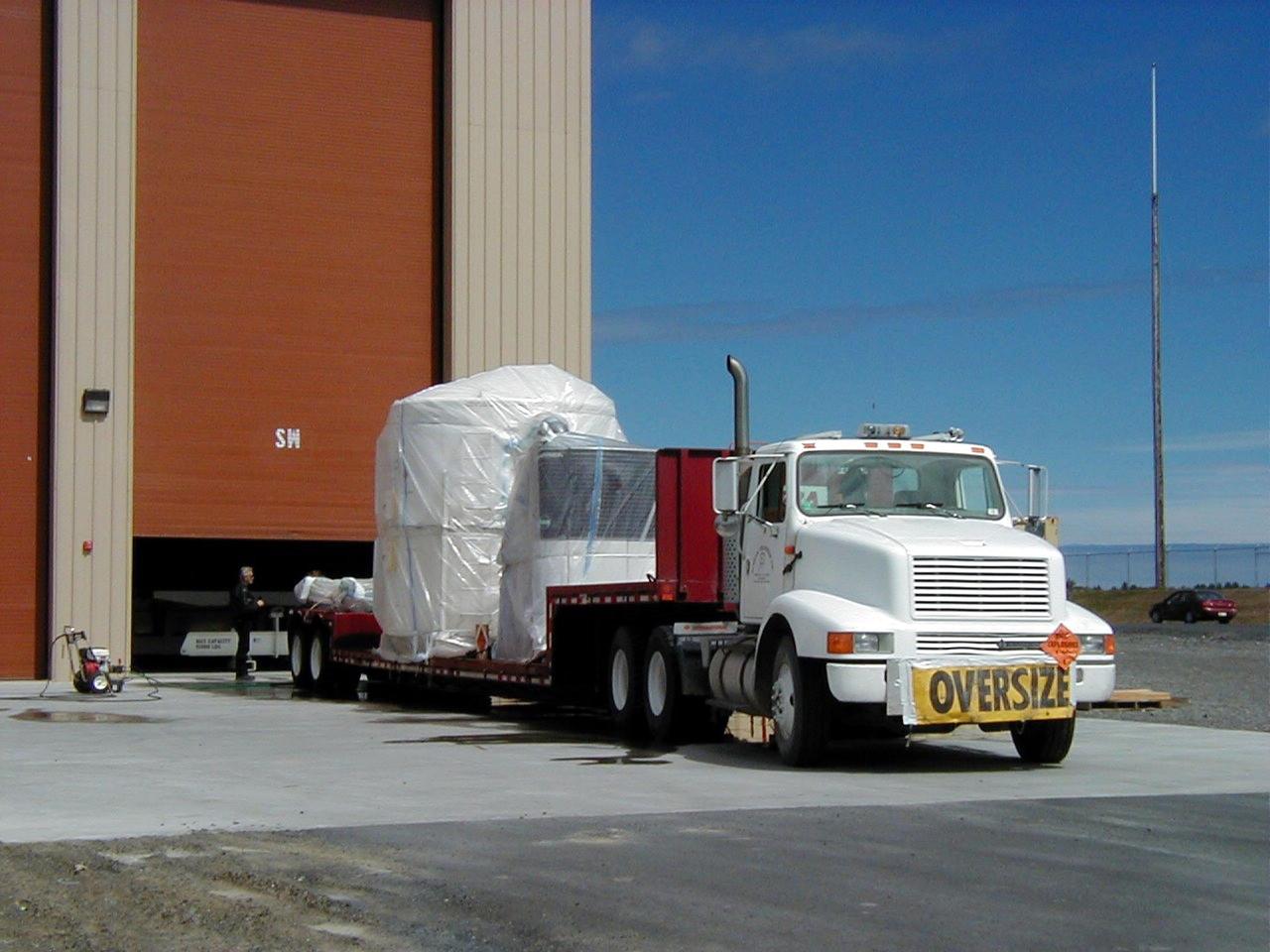
KODIAK ISLAND, Alaska -- Trucks transporting Orbis 21D Equipment Section Boost Motor, the second stage of the Athena 1 launch vehicle, arrive at Kodiak Island, Alaska, as preparations to launch Kodiak Star proceed. The first orbital launch to take place from Alaska's Kodiak Launch Complex, Kodiak Star is scheduled to lift off on a Lockheed Martin Athena I launch vehicle on Sept. 17 during a two-hour window that extends from 5:00 to 7:00 p.m. ADT. The payloads aboard include the Starshine 3, sponsored by NASA, and the PICOSat, PCSat and Sapphire, sponsored by the Department of Defense (DoD) Space Test Program.

A steel hemisphere was at the core of the Geophysical Fluid Flow Cell (GFFC) that flew on two Spacelab missions. It was capped by a sapphire dome. Silicone oil between the two played the part of a steller atmosphere. An electrostatic field pulled the oil inward to mimic gravity's effects during the experiments. The GFFC thus produced flow patterns that simulated conditions inside the atmospheres of Jupiter and the Sun and other stars. GFFC flew on Spacelab-3 in 1985 and U.S. Microgravity Laboratory-2 in 1995. The principal investigator was John Hart of the University of Colorado at Boulder. It was managed by NASA's Marshall Space Flight Center. (Credit: NASA/Marshall Space Flight Center)
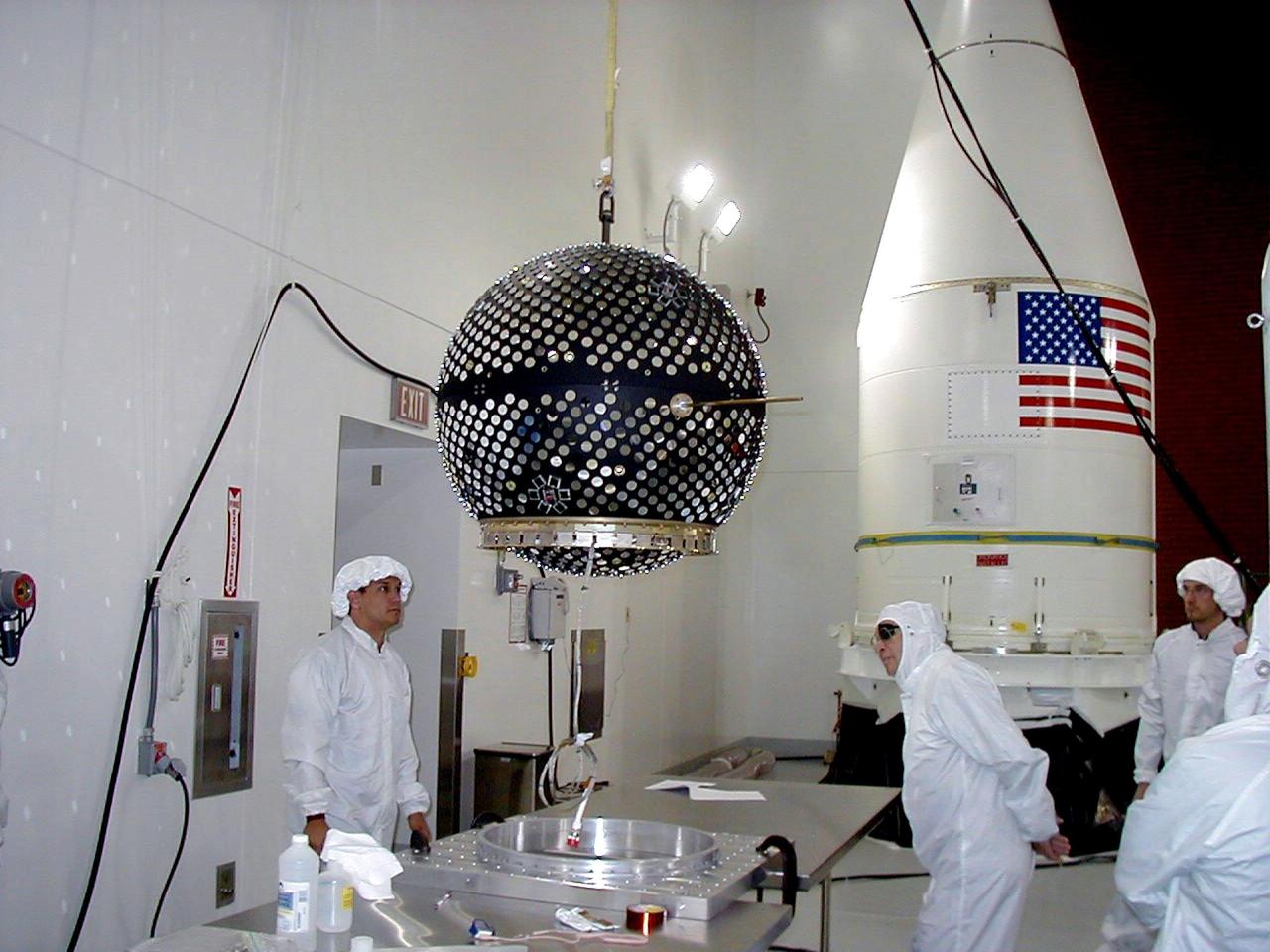
KODIAK ISLAND, Alaska -- Technicians prepare the Starshine 3 payload, while the payload fairing of the Athena 1 launch vehicle awaits servicing at Kodiak Island, Alaska, as preparations to launch Kodiak Star proceed. The first orbital launch to take place from Alaska's Kodiak Launch Complex, Kodiak Star is scheduled to lift off on a Lockheed Martin Athena I launch vehicle on Sept. 17 during a two-hour window that extends from 5:00 to 7:00 p.m. ADT. The payloads aboard include the Starshine 3, sponsored by NASA, and the PICOSat, PCSat and Sapphire, sponsored by the Department of Defense (DoD) Space Test Program
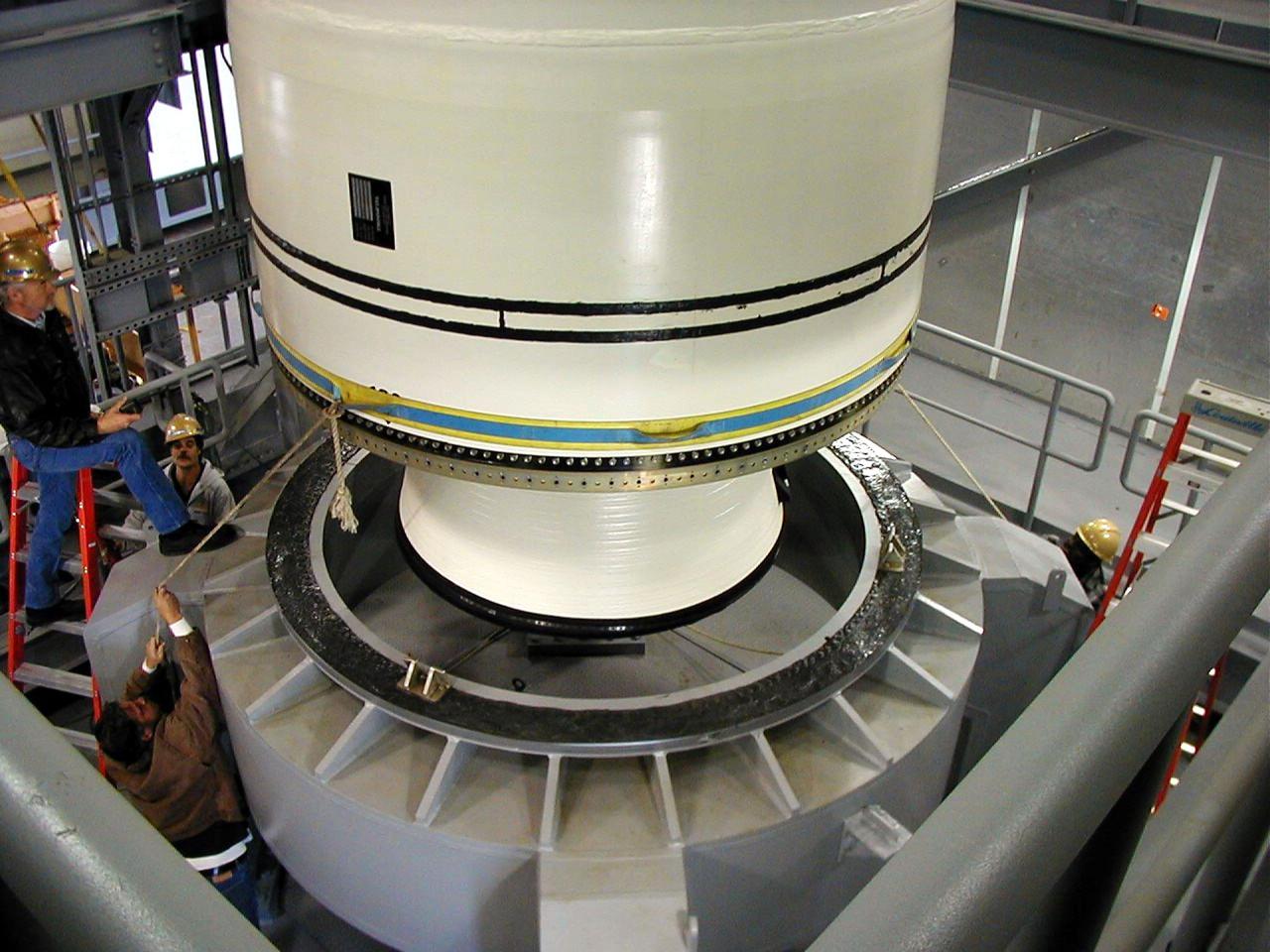
KODIAK ISLAND, Alaska -- Castor 120, the first stage of the Athena 1 launch vehicle, is lowered onto launch mount at Kodiak Island, Alaska, as preparations to launch Kodiak Star proceed. The first orbital launch to take place from Alaska's Kodiak Launch Complex, Kodiak Star is scheduled to lift off on a Lockheed Martin Athena I launch vehicle on Sept. 17 during a two-hour window that extends from 5:00 to 7:00 p.m. ADT. The payloads aboard include the Starshine 3, sponsored by NASA, and the PICOSat, PCSat and Sapphire, sponsored by the Department of Defense (DoD) Space Test Program.
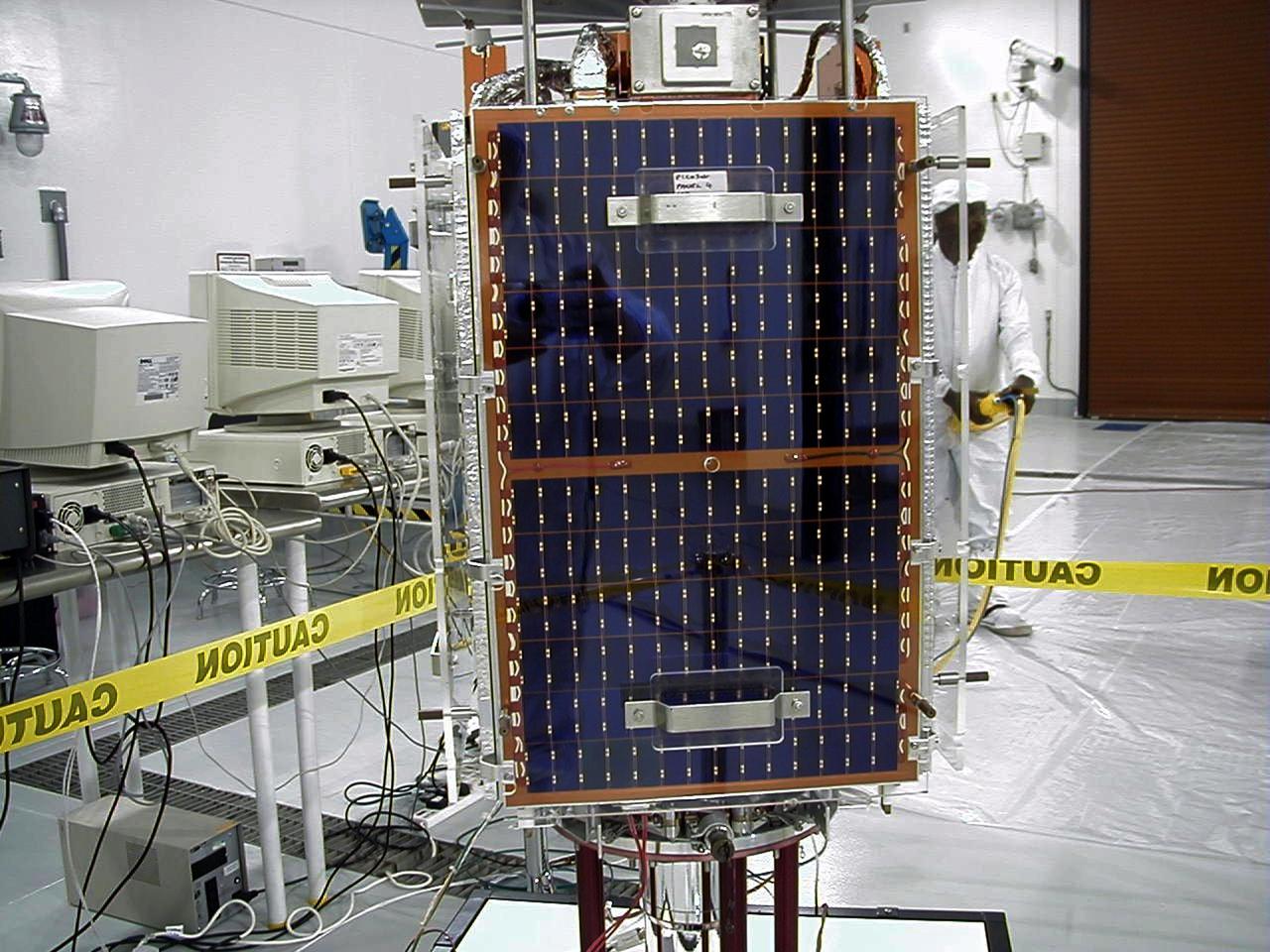
KENNEDY SPACE CENTER, Fla. -- The PICOSat payload undergoes final preparations for its launch aboard the Athena 1 launch vehicle at Kodiak Island, Alaska, as preparations to launch Kodiak Star proceed. The first launch to take place from Alaska's Kodiak Launch Complex, Kodiak Star is scheduled to lift off on a Lockheed Martin Athena I launch vehicle on Sept. 17 during a two-hour window that extends from 5:00 to 7:00 p.m. ADT. The payloads aboard include the Starshine 3, sponsored by NASA, and the PICOSat, PCSat and Sapphire, sponsored by the Department of Defense (DoD) Space Test Program

KODIAK ISLAND, Alaska -- A boat moves a ramp into place that will allow Castor 120, the first stage of the Athena 1 launch vehicle, to safely move onto the dock at Kodiak Island, Alaska, as preparations to launch Kodiak Star proceed. The first orbital launch to take place from Alaska's Kodiak Launch Complex, Kodiak Star is scheduled to lift off on a Lockheed Martin Athena I launch vehicle on Sept. 17 during a two-hour window that extends from 5:00 to 7:00 p.m. ADT. The payloads aboard include the Starshine 3, sponsored by NASA, and the PICOSat, PCSat and Sapphire, sponsored by the Department of Defense (DoD) Space Test Program.
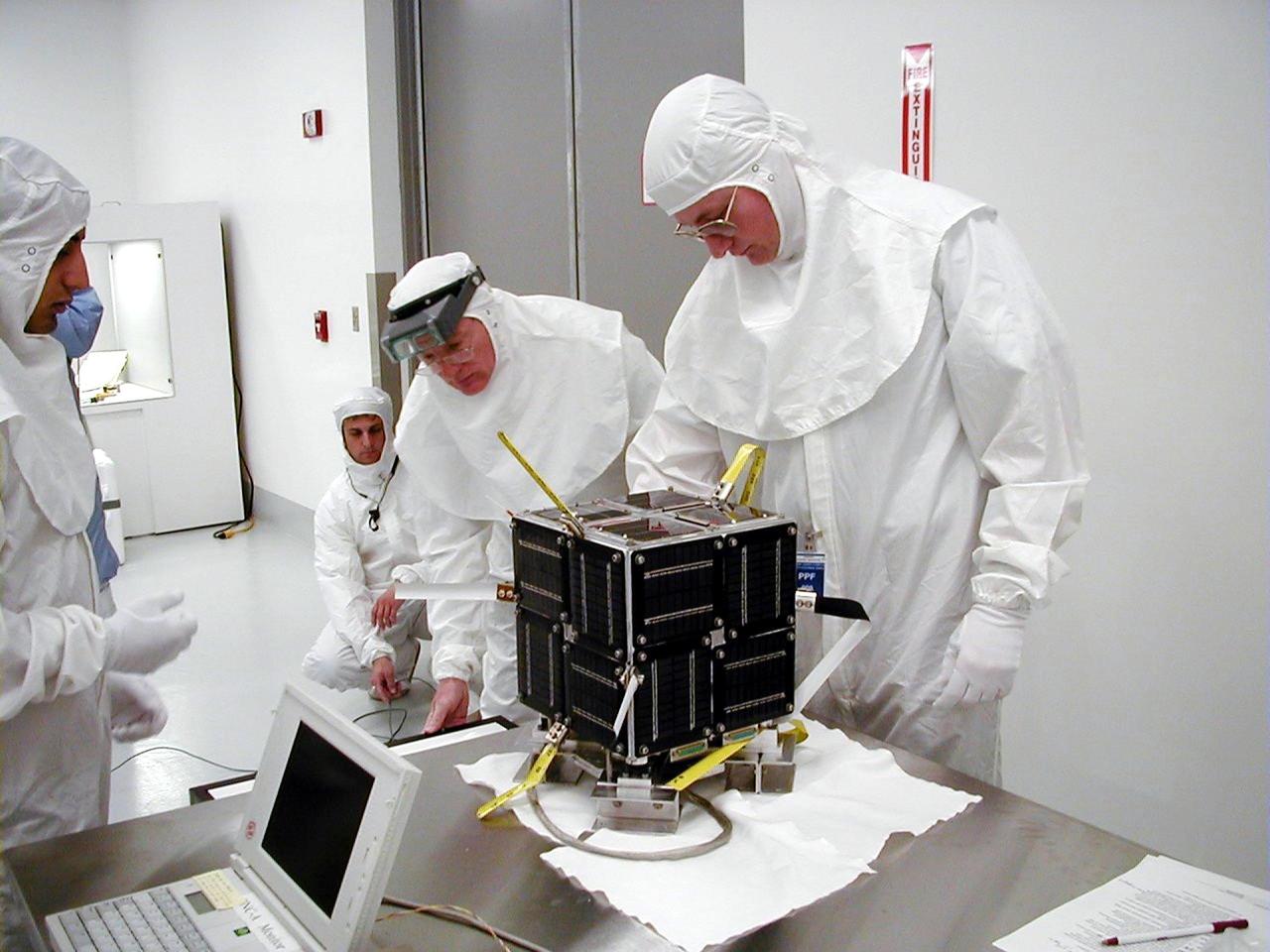
KODIAK ISLAND, Alaska -- Technicians prepare the PICSat payload for its launch aboard the Athena 1 launch vehicle at Kodiak Island, Alaska, as preparations to launch Kodiak Star proceed. The first orbital launch to take place from Alaska's Kodiak Launch Complex, Kodiak Star is scheduled to lift off on a Lockheed Martin Athena I launch vehicle on Sept. 17 during a two-hour window that extends from 5 p.m. to 7 p.m. p.m. ADT. The payloads aboard include the Starshine 3, sponsored by NASA, and the PICOSat, PCSat and Sapphire, sponsored by the Department of Defense (DoD) Space Test Program.
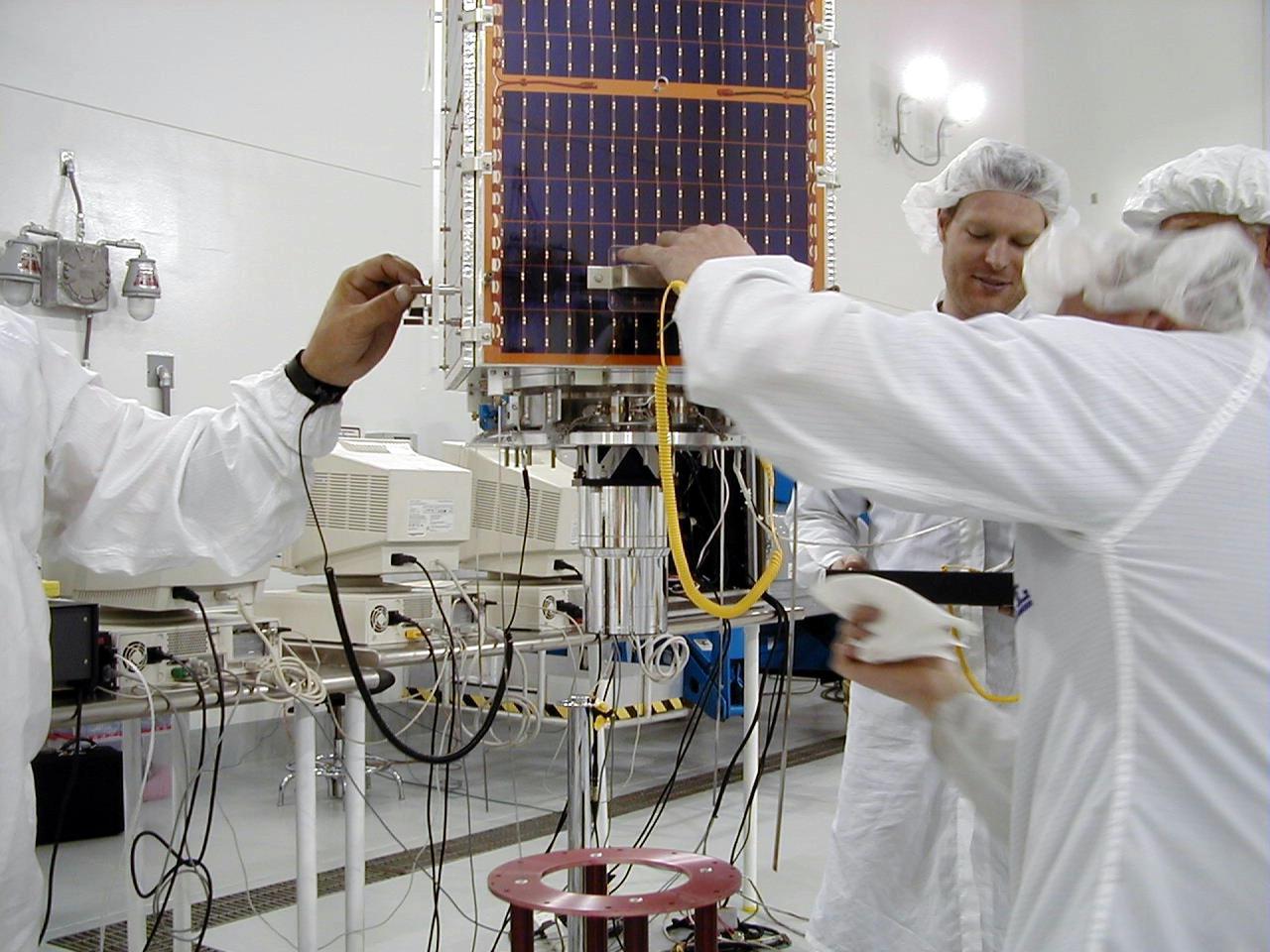
KENNEDY SPACE CENTER, Fla. -- Technicians prepare the PICOSat payload for its launch aboard the Athena 1 launch vehicle at Kodiak Island, Alaska, as preparations to launch Kodiak Star proceed. The first launch to take place from Alaska's Kodiak Launch Complex, Kodiak Star is scheduled to lift off on a Lockheed Martin Athena I launch vehicle on Sept. 17 during a two-hour window that extends from 5:00 to 7:00 p.m. ADT. The payloads aboard include the Starshine 3, sponsored by NASA, and the PICOSat, PCSat and Sapphire, sponsored by the Department of Defense (DoD) Space Test Program
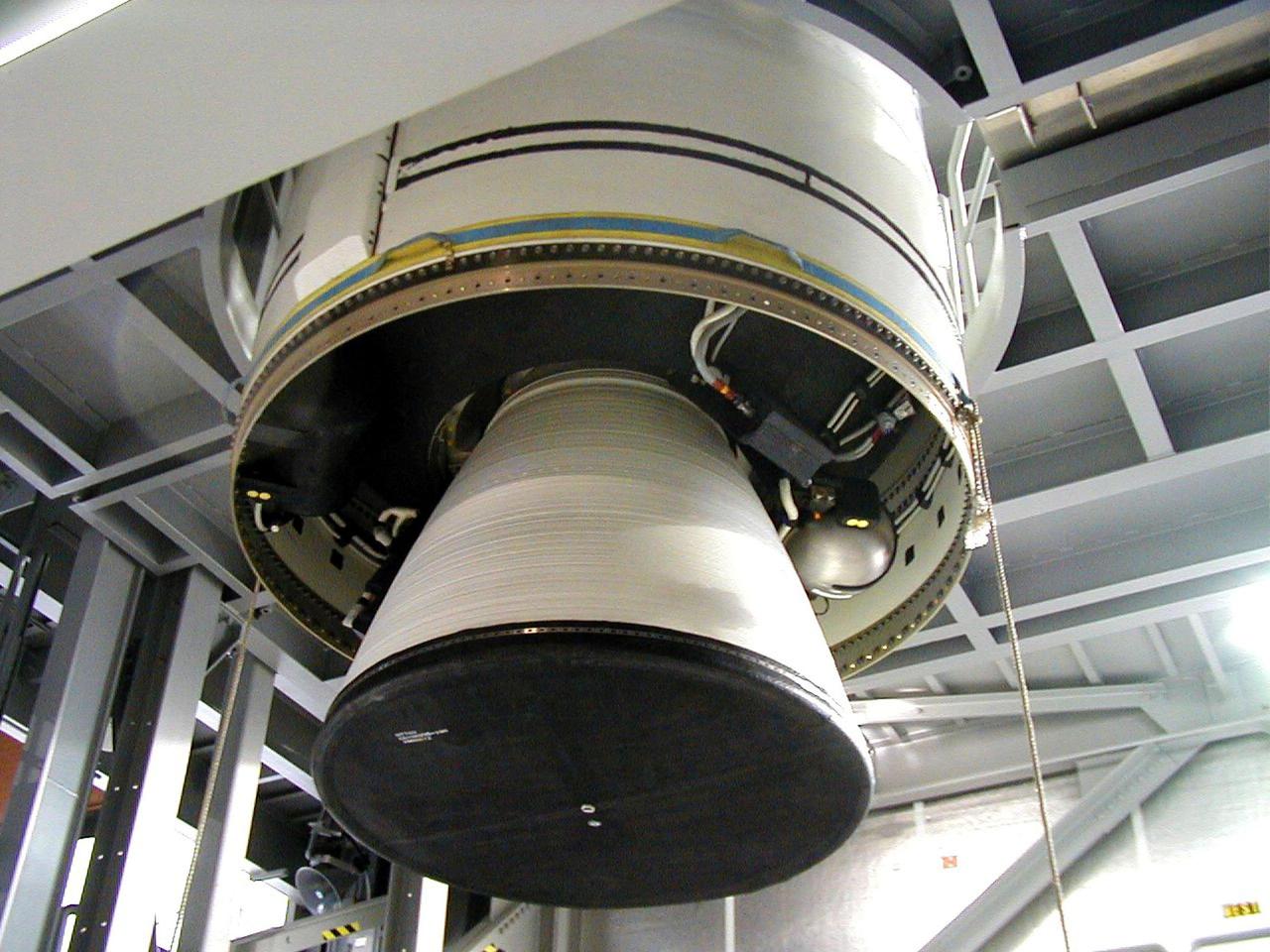
KODIAK ISLAND, Alaska -- Castor 120, the first stage of the Athena 1 launch vehicle, is lowered into place at Kodiak Island, Alaska, as preparations to launch Kodiak Star proceed. The first orbital launch to take place from Alaska's Kodiak Launch Complex, Kodiak Star is scheduled to lift off on a Lockheed Martin Athena I launch vehicle on Sept. 17 during a two-hour window that extends from 5:00 to 7:00 p.m. ADT. The payloads aboard include the Starshine 3, sponsored by NASA, and the PICOSat, PCSat and Sapphire, sponsored by the Department of Defense (DoD) Space Test Program.
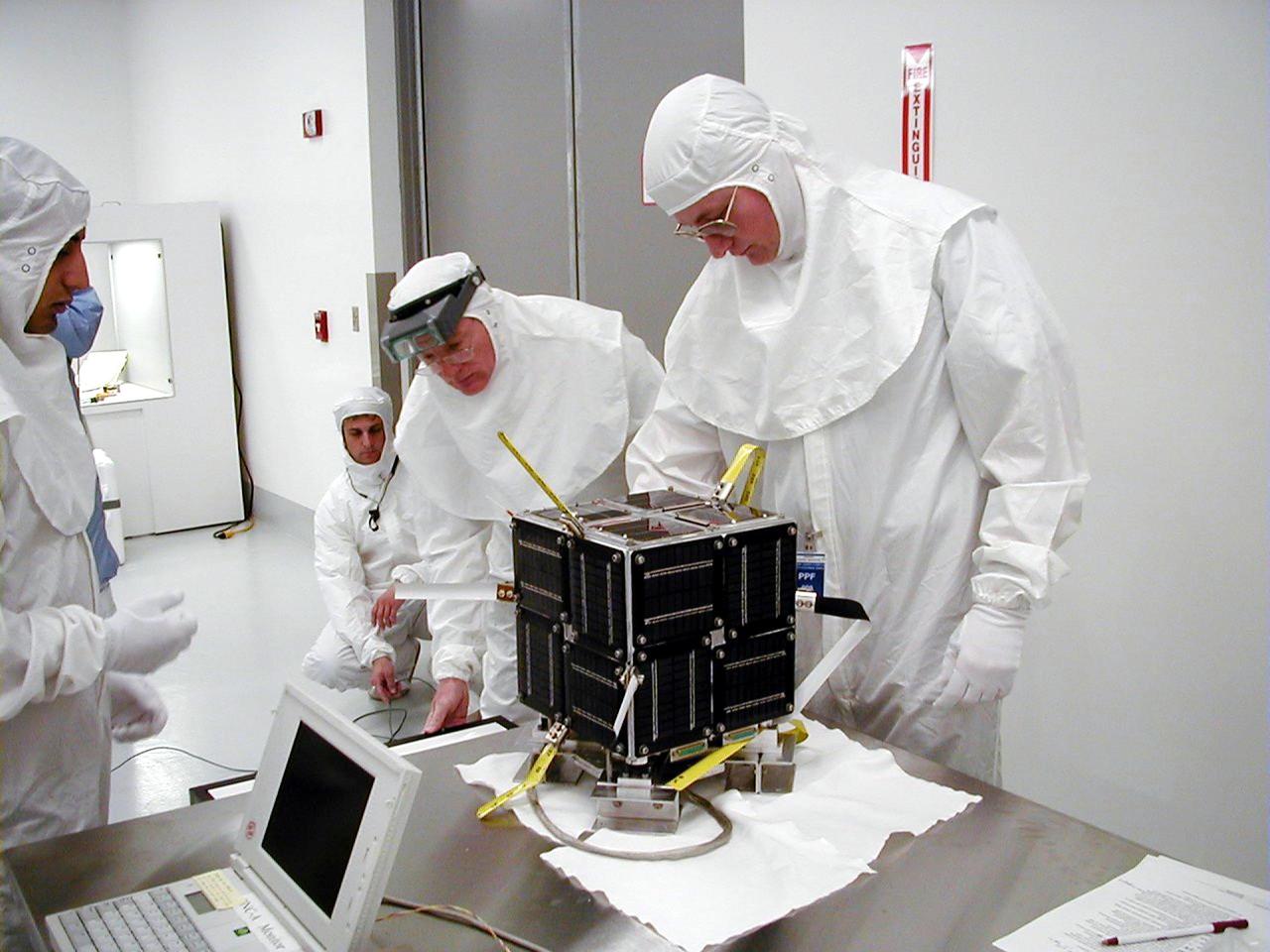
KODIAK ISLAND, Alaska -- Technicians prepare the PICSat payload for its launch aboard the Athena 1 launch vehicle at Kodiak Island, Alaska, as preparations to launch Kodiak Star proceed. The first orbital launch to take place from Alaska's Kodiak Launch Complex, Kodiak Star is scheduled to lift off on a Lockheed Martin Athena I launch vehicle on Sept. 17 during a two-hour window that extends from 5 p.m. to 7 p.m. p.m. ADT. The payloads aboard include the Starshine 3, sponsored by NASA, and the PICOSat, PCSat and Sapphire, sponsored by the Department of Defense (DoD) Space Test Program.
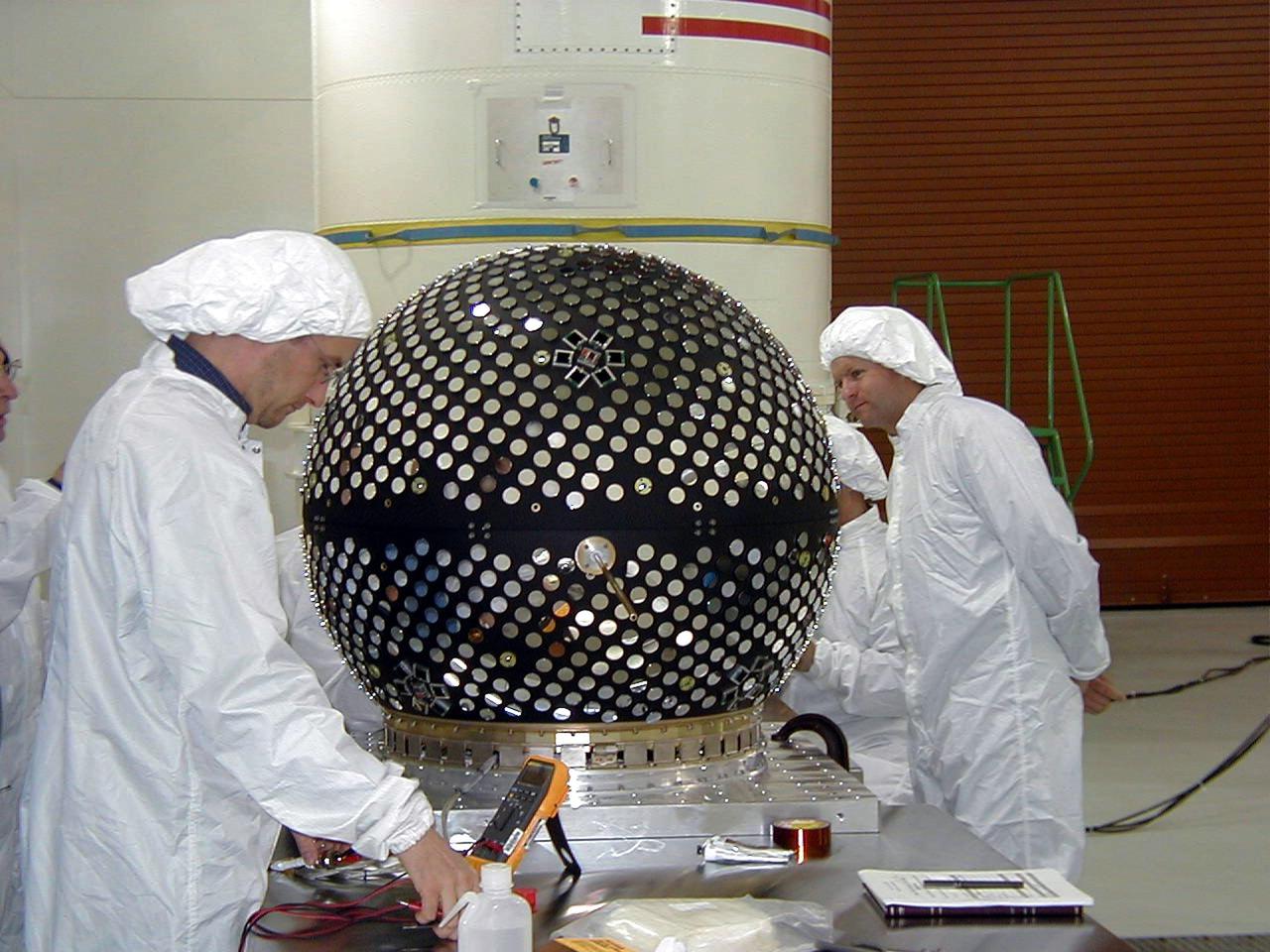
KODIAK ISLAND, Alaska -- Technicians prepare the Starshine 3 payload for its launch aboard the Athena 1 launch vehicle at Kodiak Island, Alaska, as preparations to launch Kodiak Star proceed. The first orbital launch to take place from Alaska's Kodiak Launch Complex, Kodiak Star is scheduled to lift off on a Lockheed Martin Athena I launch vehicle on Sept. 17 during a two-hour window that extends from 5:00 to 7:00 p.m. ADT. The payloads aboard include the Starshine 3, sponsored by NASA, and the PICOSat, PCSat and Sapphire, sponsored by the Department of Defense (DoD) Space Test Program.

KODIAK ISLAND, Alaska -- A special platform connects the barge with a ramp to allow Castor 120, the first stage of the Athena 1 launch vehicle, to safely move onto the dock at Kodiak Island, Alaska, as preparations to launch Kodiak Star proceed. The first orbital launch to take place from Alaska's Kodiak Launch Complex, Kodiak Star is scheduled to lift off on a Lockheed Martin Athena I launch vehicle on Sept. 17 during a two-hour window that extends from 5:00 to 7:00 p.m. ADT. The payloads aboard include the Starshine 3, sponsored by NASA, and the PICOSat, PCSat and Sapphire, sponsored by the Department of Defense (DoD) Space Test Program.
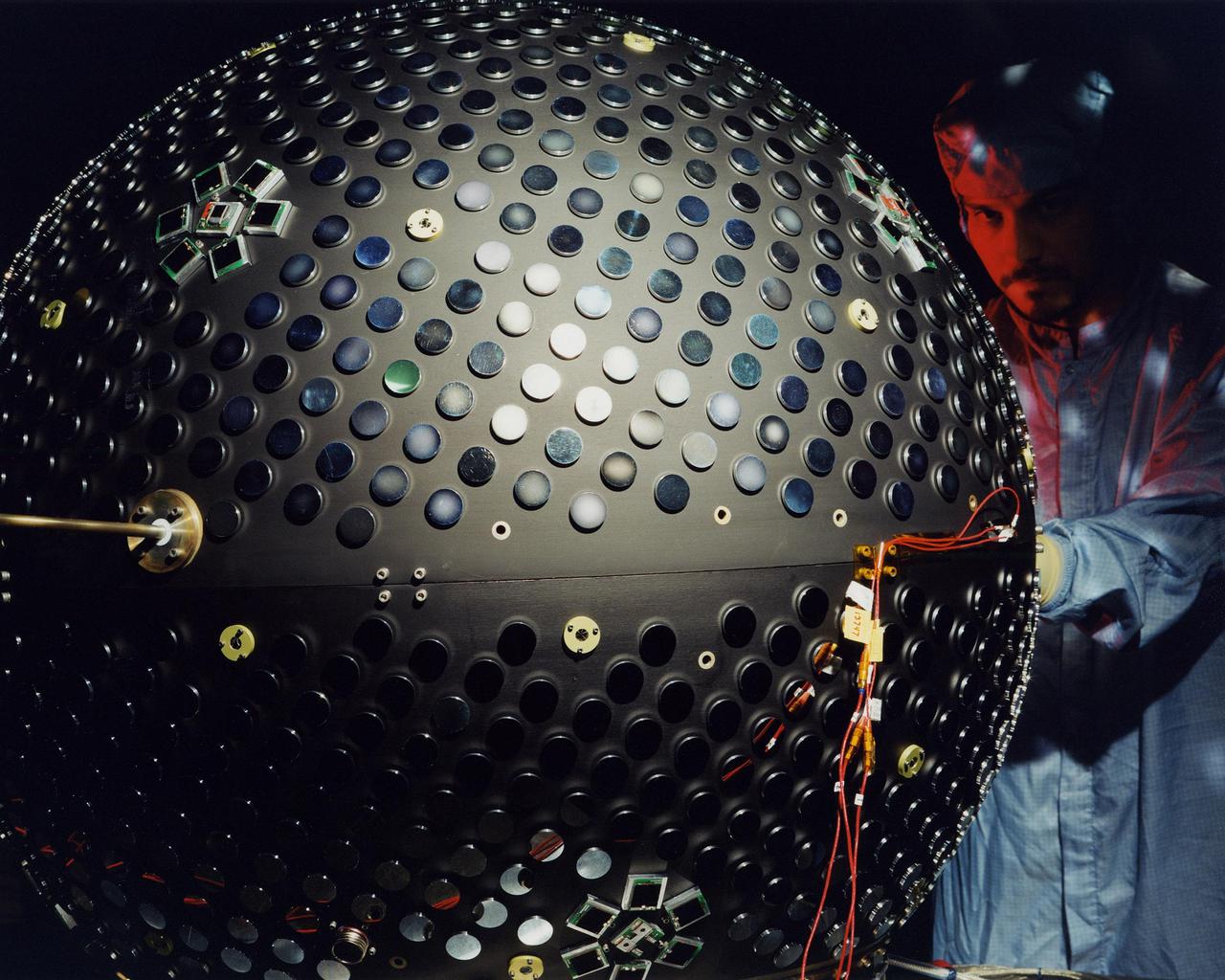
KODIAK ISLAND, Alaska -- A technician performs final testing on Starshine 3 at the Naval Research Laboratory in Washington, D.C., to prepare for the launch of the Kodiak Star at Kodiak Island, Alaska. The first orbital launch to take place from Alaska's Kodiak Launch Complex, Kodiak Star is scheduled to lift off on a Lockheed Martin Athena I launch vehicle on Sept. 17 during a two-hour window that extends from 5:00 to 7:00 p.m. ADT. The payloads aboard include the Starshine 3, sponsored by NASA, and the PICOSat, PCSat and Sapphire, sponsored by the Department of Defense (DoD) Space Test Program.

KODIAK ISLAND, Alaska -- A convoy of trucks transports the stages of an Athena launch vehicle and supporting launch equipment to the pad at Kodiak Island, Alaska, as preparations to launch the Kodiak Star continue. The first orbital launch to take place from Alaska's Kodiak Launch Complex, Kodiak Star is scheduled to lift off on a Lockheed Martin Athena I launch vehicle on Sept. 17 during a two-hour window that extends from 5:00 to 7:00 p.m. ADT. The payloads aboard include the Starshine 3, sponsored by NASA, and the PICOSat, PCSat and Sapphire, sponsored by the Department of Defense (DoD) Space Test Program.
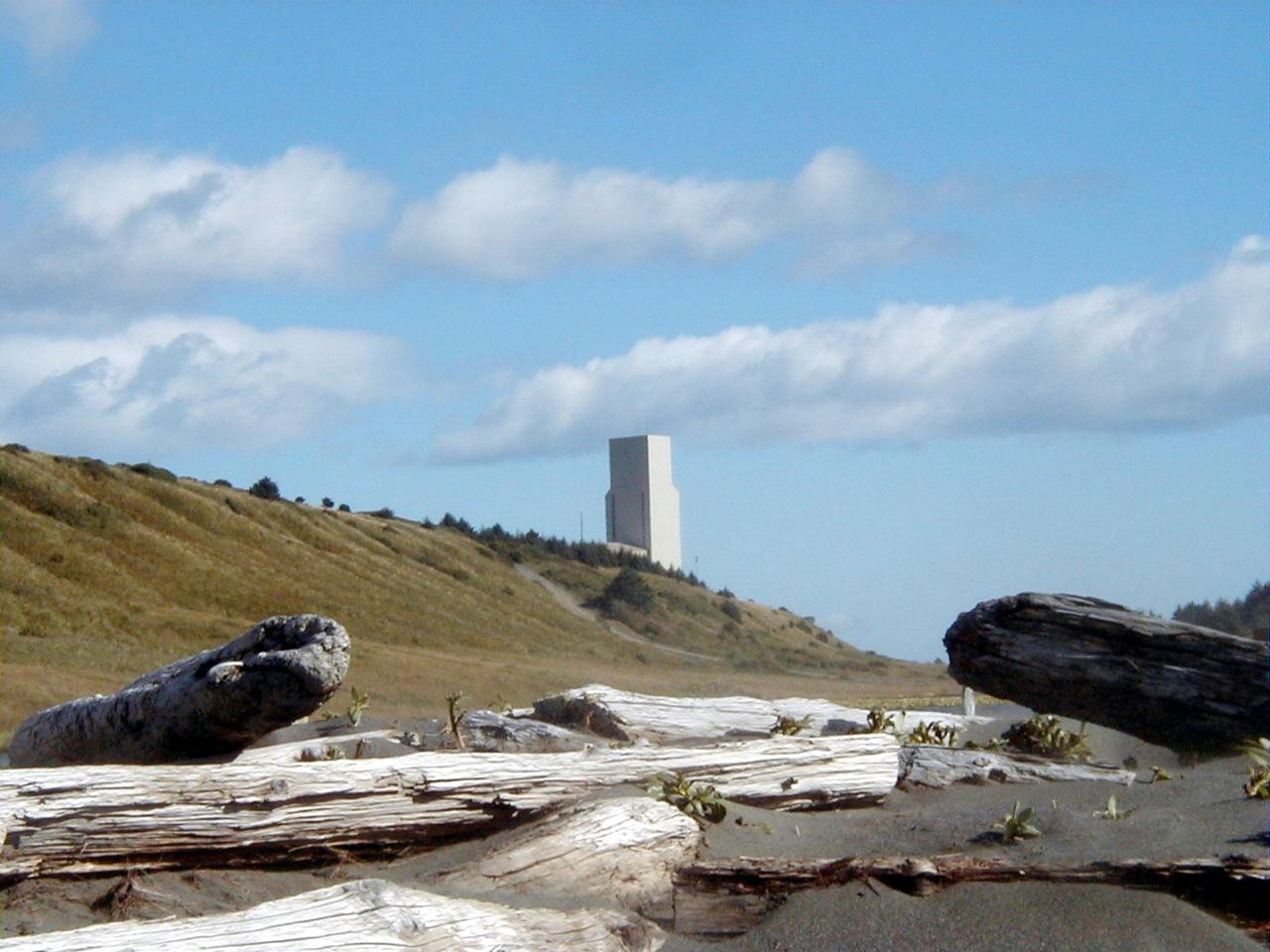
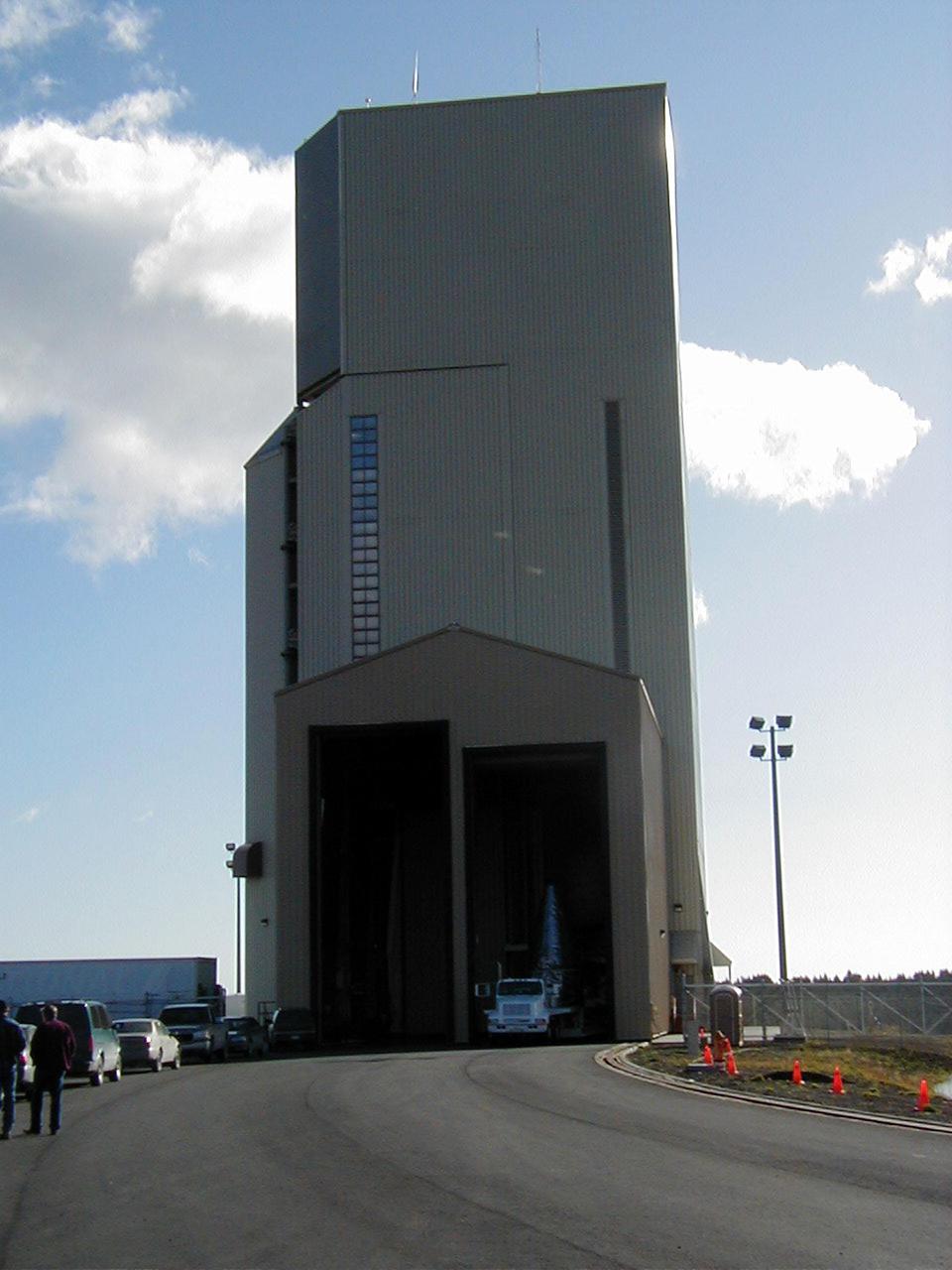
KODIAK ISLAND, ALASKA - The Launch Service Structure, Kodiak Launch Complex (KLC), on Kodiak Island is viewed from a distance. Kodiak Star, the first launch to take place from KLC, is scheduled to lift off on a Lockheed Martin Athena I launch vehicle on Sept. 17 during a two-hour window that extends from 5 p.m. to 7 p.m. p.m. ADT. The payloads aboard include the Starshine 3, sponsored by NASA, and the PICOSat, PCSat and Sapphire, sponsored by the Department of Defense (DoD) Space Test Program. KLC is the newest commercial launch complex in the United States, ideal for launch payloads requiring low-Earth polar or sun-synchronous orbits
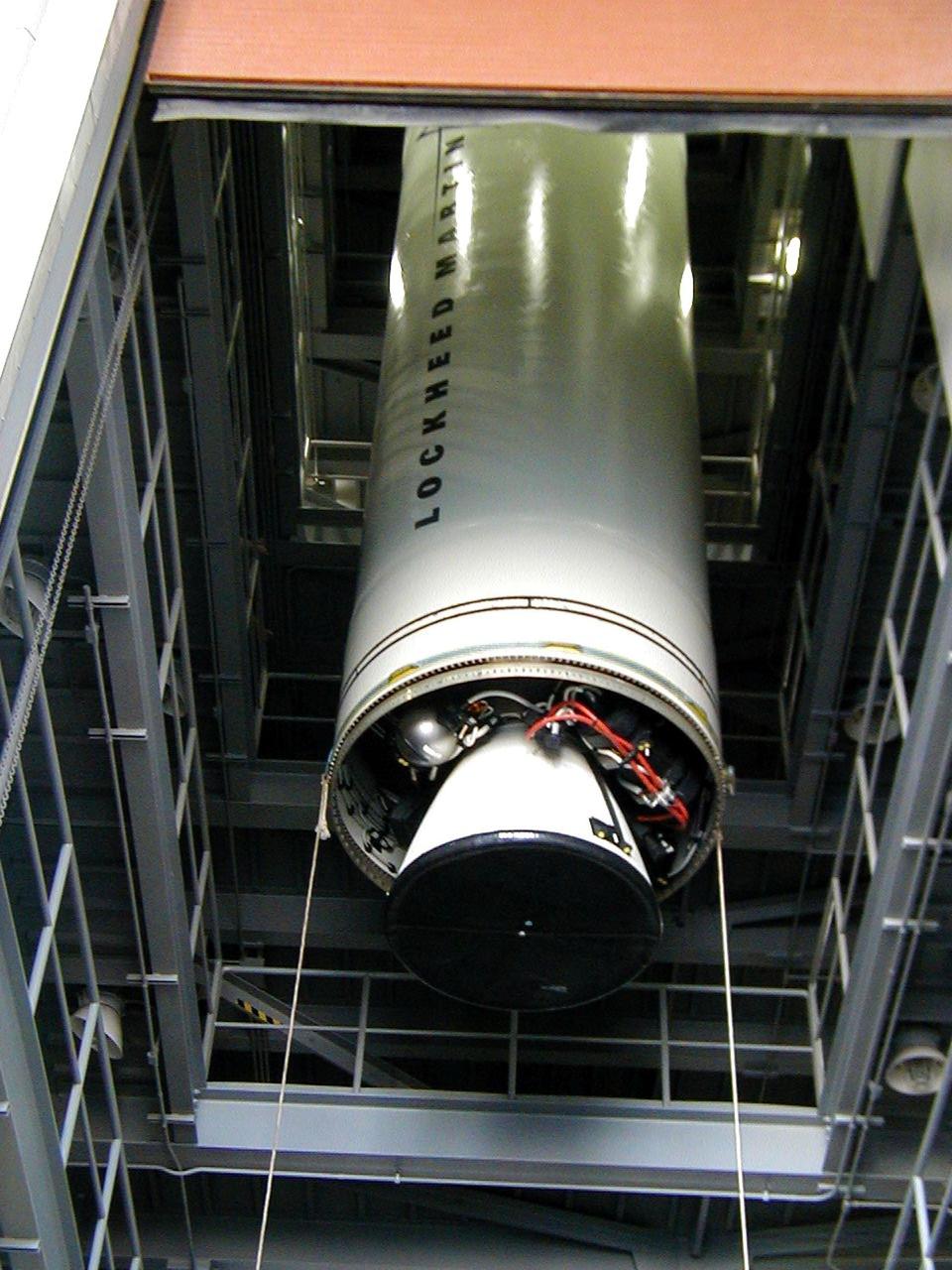
KODIAK ISLAND, Alaska -- Castor 120, the first stage of the Athena 1 launch vehicle, is lifted into a vertical position at Kodiak Island, Alaska, as preparations to launch Kodiak Star proceed. The first orbital launch to take place from Alaska's Kodiak Launch Complex, Kodiak Star is scheduled to lift off on a Lockheed Martin Athena I launch vehicle on Sept. 17 during a two-hour window that extends from 5:00 to 7:00 p.m. ADT. The payloads aboard include the Starshine 3, sponsored by NASA, and the PICOSat, PCSat and Sapphire, sponsored by the Department of Defense (DoD) Space Test Program.

KENNEDY SPACE CENTER, Fla. -- The PICOSat payload banner is displayed by the Athena 1 launch vehicle at Kodiak Island, Alaska, as preparations to launch Kodiak Star proceed. The first launch to take place from Alaska's Kodiak Launch Complex, Kodiak Star is scheduled to lift off on a Lockheed Martin Athena I launch vehicle on Sept. 17 during a two-hour window that extends from 5:00 to 7:00 p.m. ADT. The payloads aboard include the Starshine 3, sponsored by NASA, and the PICOSat, PCSat and Sapphire, sponsored by the Department of Defense (DoD) Space Test Program

KODIAK ISLAND, Alaska -- A boat moves a ramp into place that will allow Castor 120, the first stage of the Athena 1 launch vehicle, to safely move onto the dock at Kodiak Island, Alaska, as preparations to launch Kodiak Star proceed. The first orbital launch to take place from Alaska's Kodiak Launch Complex, Kodiak Star is scheduled to lift off on a Lockheed Martin Athena I launch vehicle on Sept. 17 during a two-hour window that extends from 5:00 to 7:00 p.m. ADT. The payloads aboard include the Starshine 3, sponsored by NASA, and the PICOSat, PCSat and Sapphire, sponsored by the Department of Defense (DoD) Space Test Program.
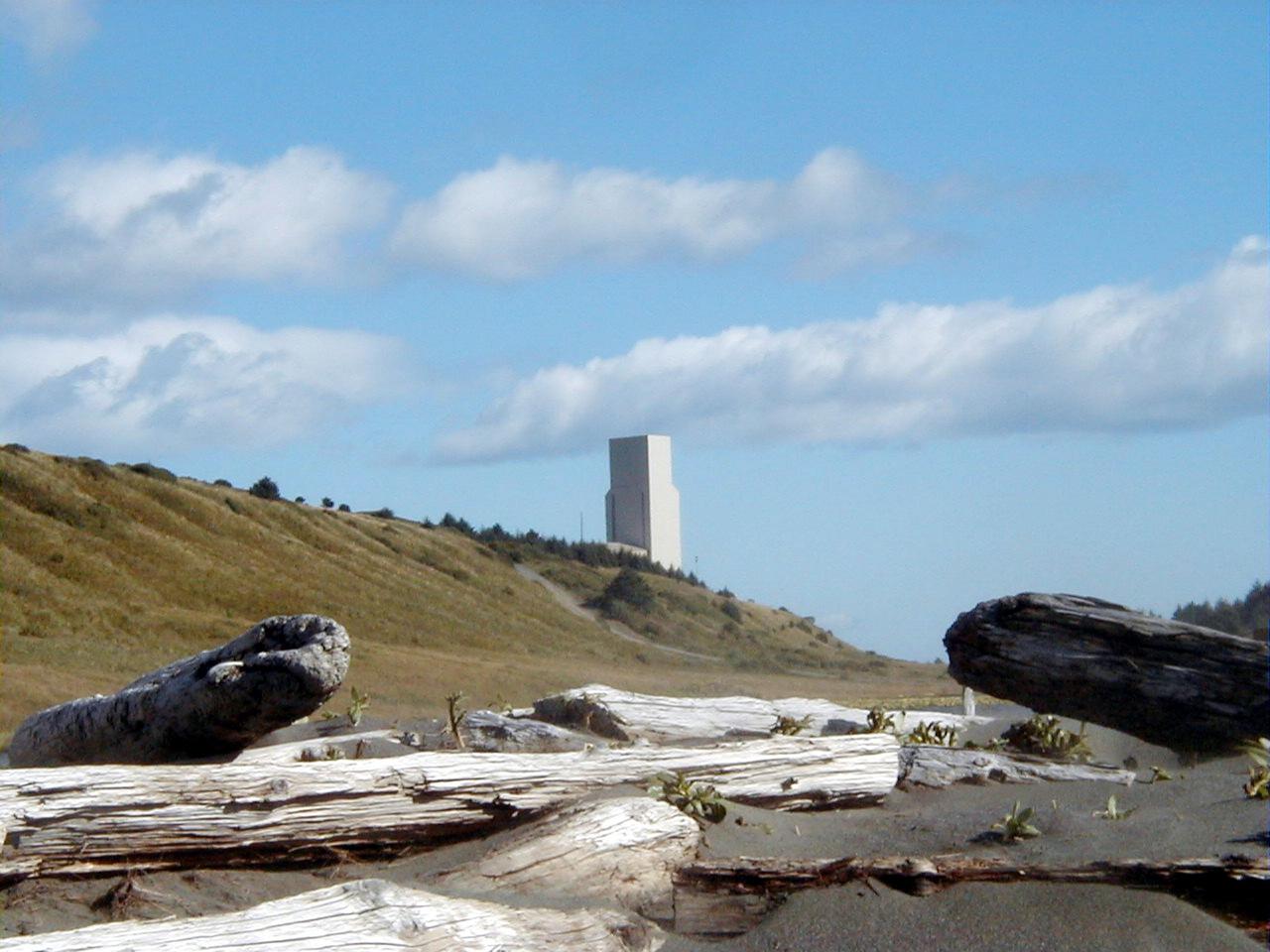
KODIAK ISLAND, ALASKA - The Launch Service Structure, Kodiak Launch Complex (KLC), on Kodiak Island is viewed from a distance. Kodiak Star, the first launch to take place from KLC, is scheduled to lift off on a Lockheed Martin Athena I launch vehicle on Sept. 17 during a two-hour window that extends from 5 p.m. to 7 p.m. p.m. ADT. The payloads aboard include the Starshine 3, sponsored by NASA, and the PICOSat, PCSat and Sapphire, sponsored by the Department of Defense (DoD) Space Test Program. KLC is the newest commercial launch complex in the United States, ideal for launch payloads requiring low-Earth polar or sun-synchronous orbits
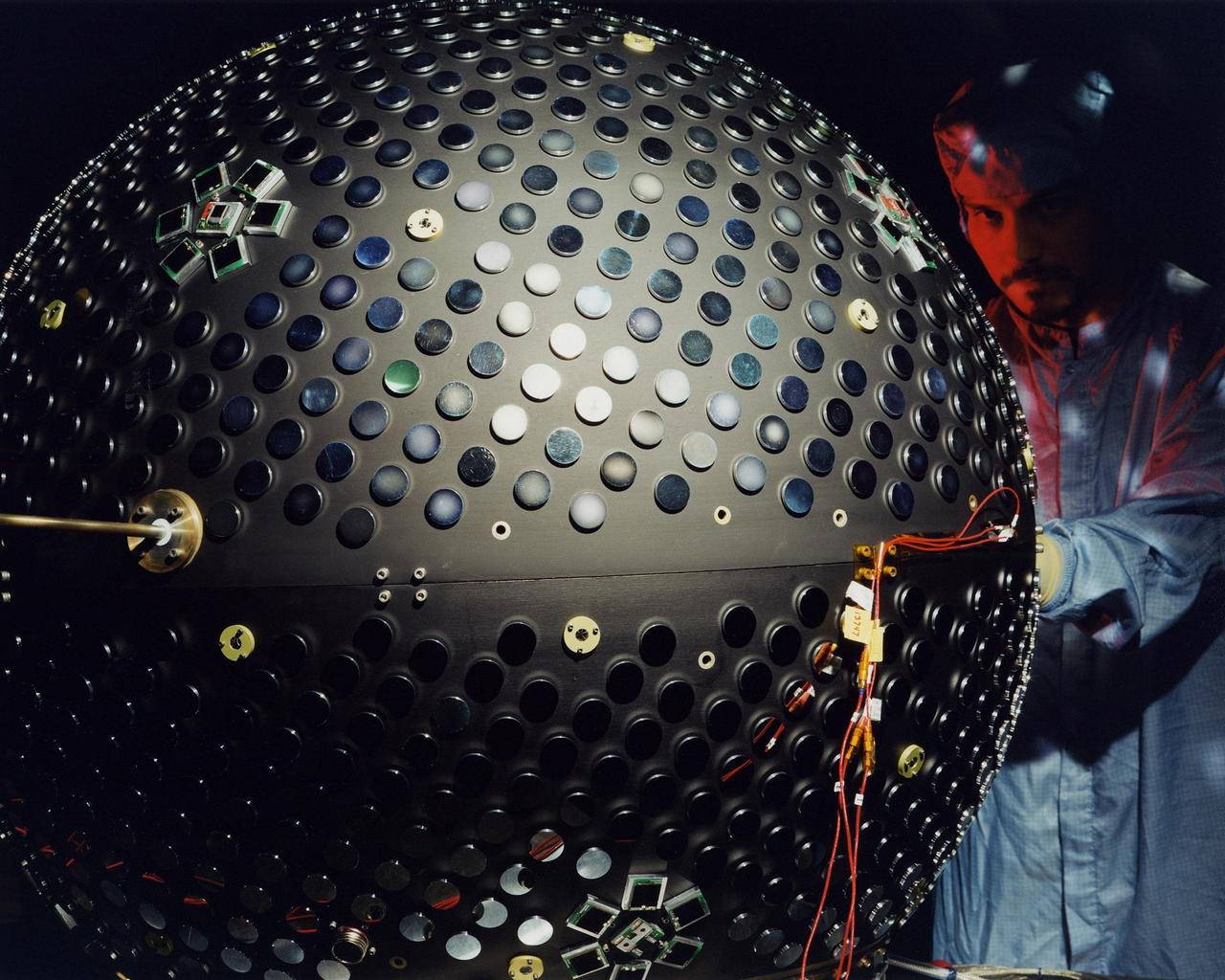
KODIAK ISLAND, Alaska -- A technician performs final testing on Starshine 3 at the Naval Research Laboratory in Washington, D.C., to prepare for the launch of the Kodiak Star at Kodiak Island, Alaska. The first orbital launch to take place from Alaska's Kodiak Launch Complex, Kodiak Star is scheduled to lift off on a Lockheed Martin Athena I launch vehicle on Sept. 17 during a two-hour window that extends from 5:00 to 7:00 p.m. ADT. The payloads aboard include the Starshine 3, sponsored by NASA, and the PICOSat, PCSat and Sapphire, sponsored by the Department of Defense (DoD) Space Test Program.
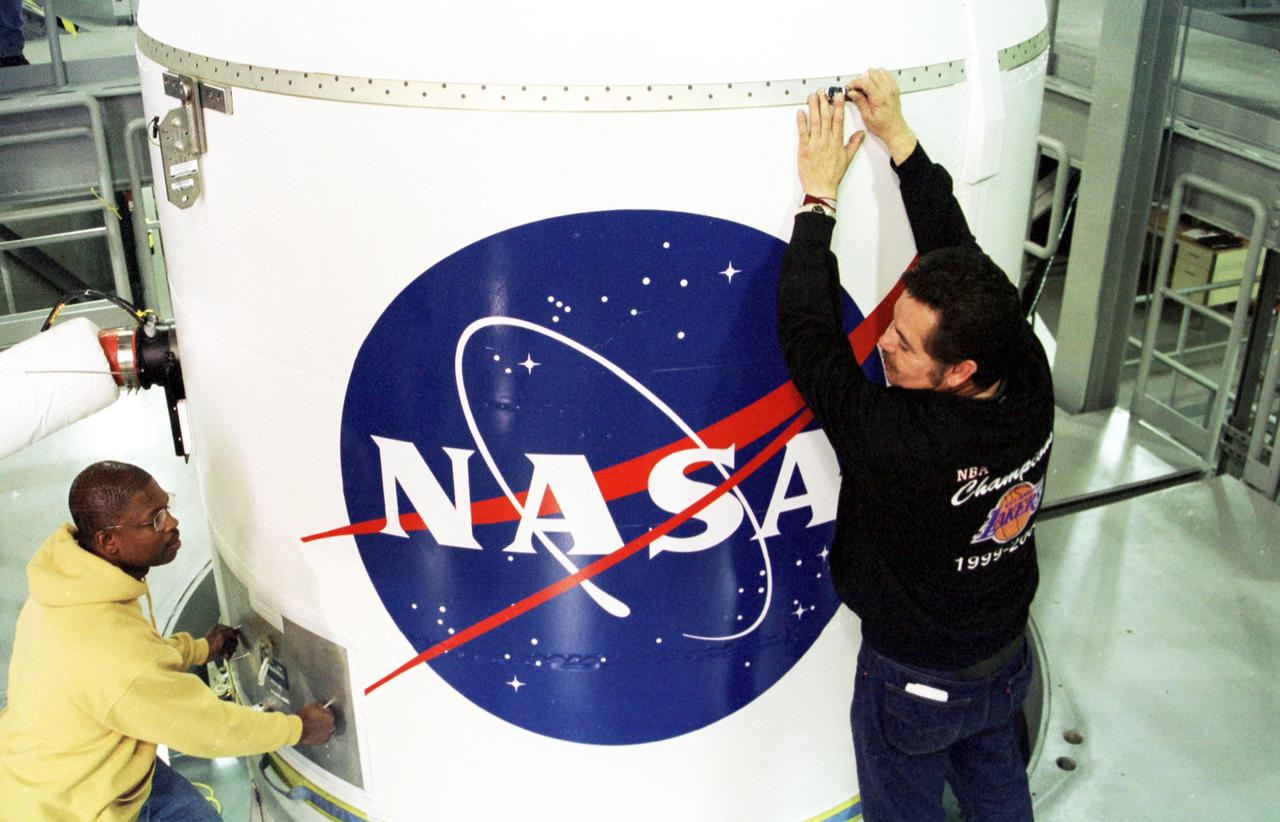
KODIAK ISLAND, Alaska -- At the Launch Service Structure, Kodiak Launch Complex (KLC), the fairing is lowered over the Kodiak Star spacecraft in preparation for launch. The first orbital launch to take place from KLC, Kodiak Star is scheduled to lift off on a Lockheed Martin Athena I launch vehicle on Sept. 17 during a two-hour window that extends from 5 p.m. ADT. The payloads aboard include the Starshine 3, sponsored by NASA, and the PICOSat, PCSat and Sapphire, sponsored by the Department of Defense (DoD) Space Test Program. KLC is the newest commercial launch complex in the United States, ideal for launch payloads requiring low-Earth polar or sun-synchronous orbits
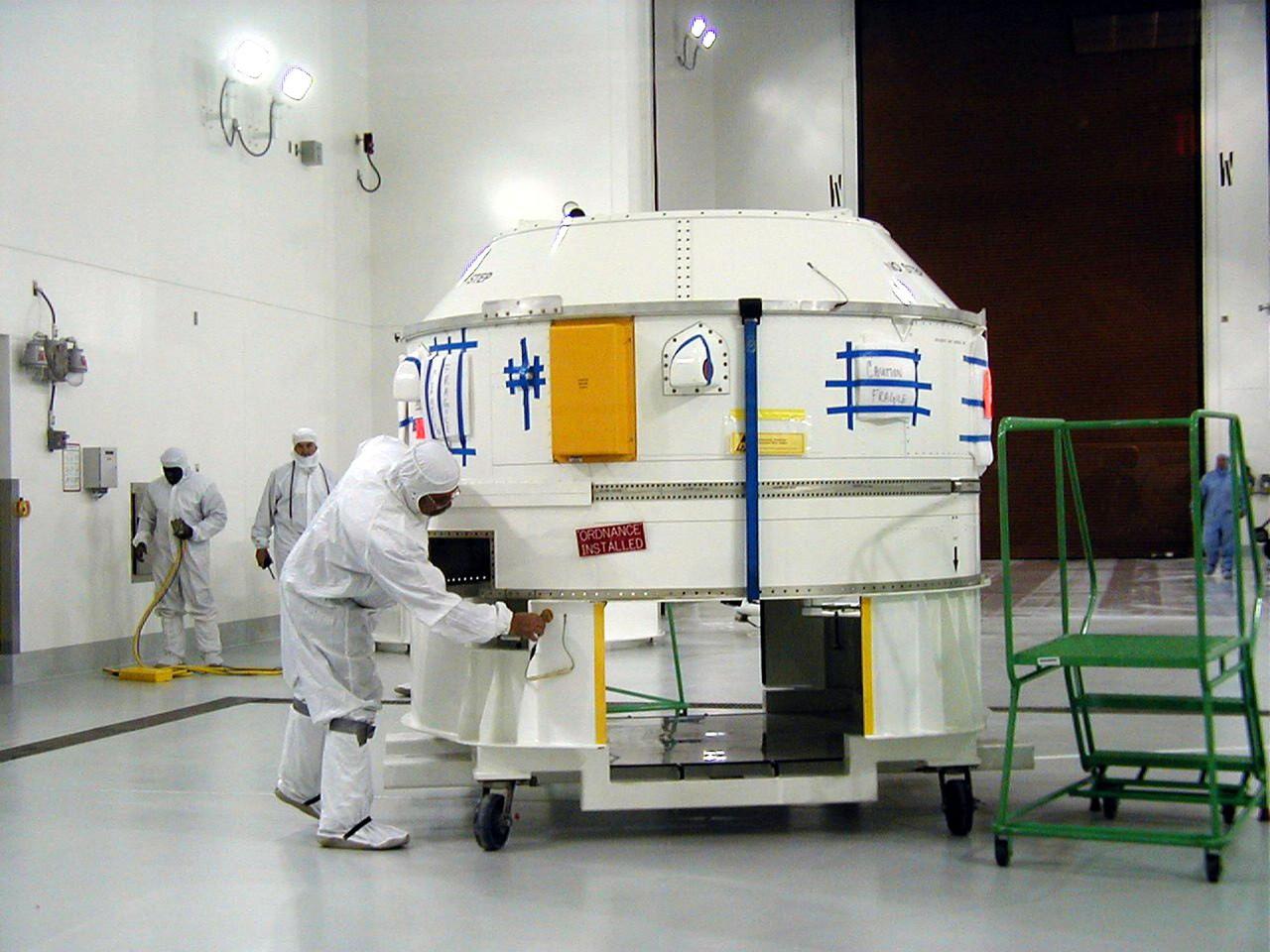
KODIAK ISLAND, Alaska -- Technicians prepare the Orbit Adjust Model (OAM), which navigates the payloads into the correct orbit, at the Payload Processing Facility at Kodiak Island, Alaska, as processing for the launch of Kodiak Star proceeds. The first orbital launch to take place from Alaska's Kodiak Launch Complex, Kodiak Star is scheduled to lift off on a Lockheed Martin Athena I launch vehicle on Sept. 17 during a two-hour window that extends from 5 p.m. ADT. The payloads aboard include the Starshine 3, sponsored by NASA, and the PICOSat, PCSat and Sapphire, sponsored by the Department of Defense (DoD) Space Test Program.
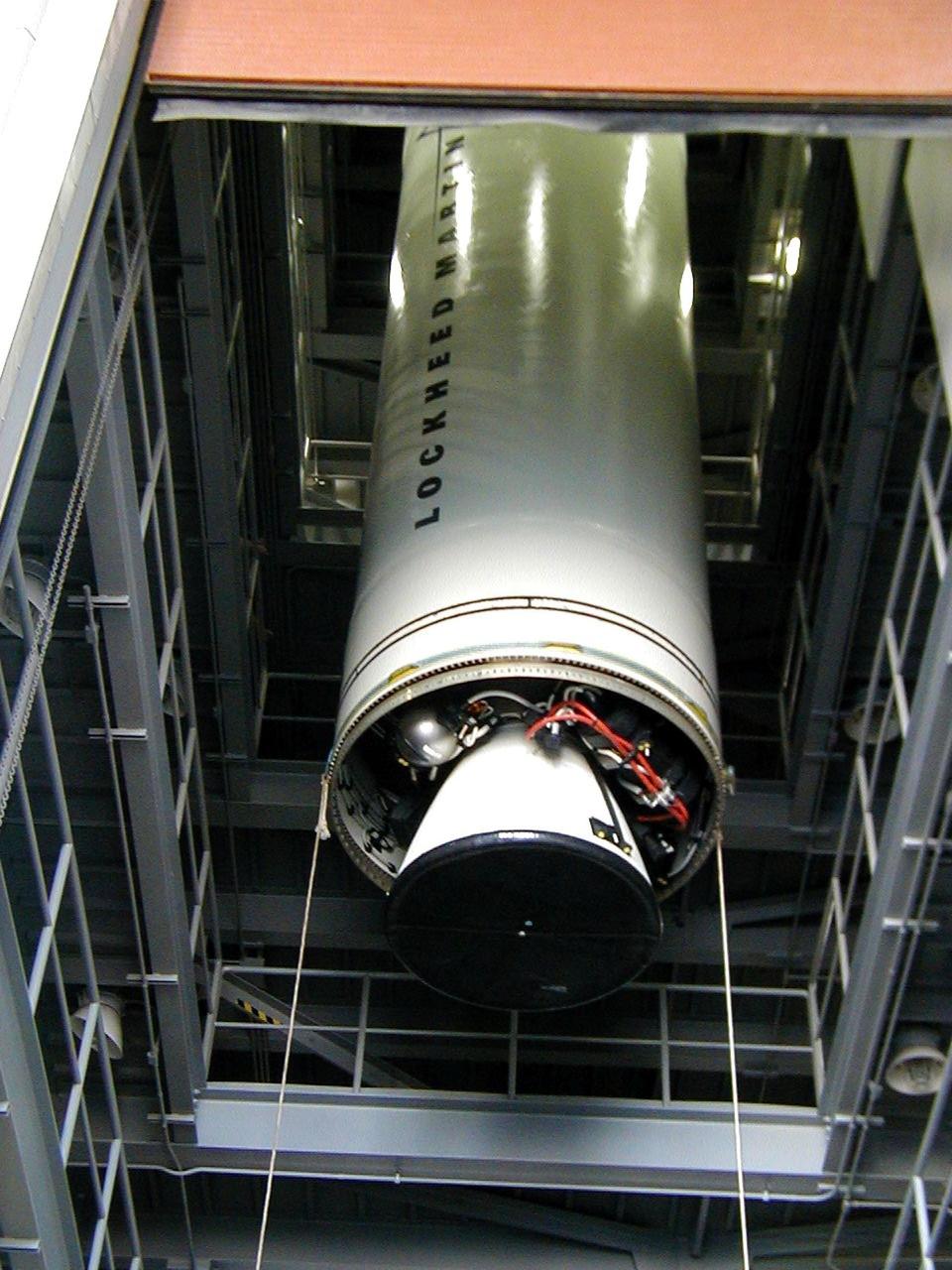
KODIAK ISLAND, Alaska -- Castor 120, the first stage of the Athena 1 launch vehicle, is lifted into a vertical position at Kodiak Island, Alaska, as preparations to launch Kodiak Star proceed. The first orbital launch to take place from Alaska's Kodiak Launch Complex, Kodiak Star is scheduled to lift off on a Lockheed Martin Athena I launch vehicle on Sept. 17 during a two-hour window that extends from 5:00 to 7:00 p.m. ADT. The payloads aboard include the Starshine 3, sponsored by NASA, and the PICOSat, PCSat and Sapphire, sponsored by the Department of Defense (DoD) Space Test Program.
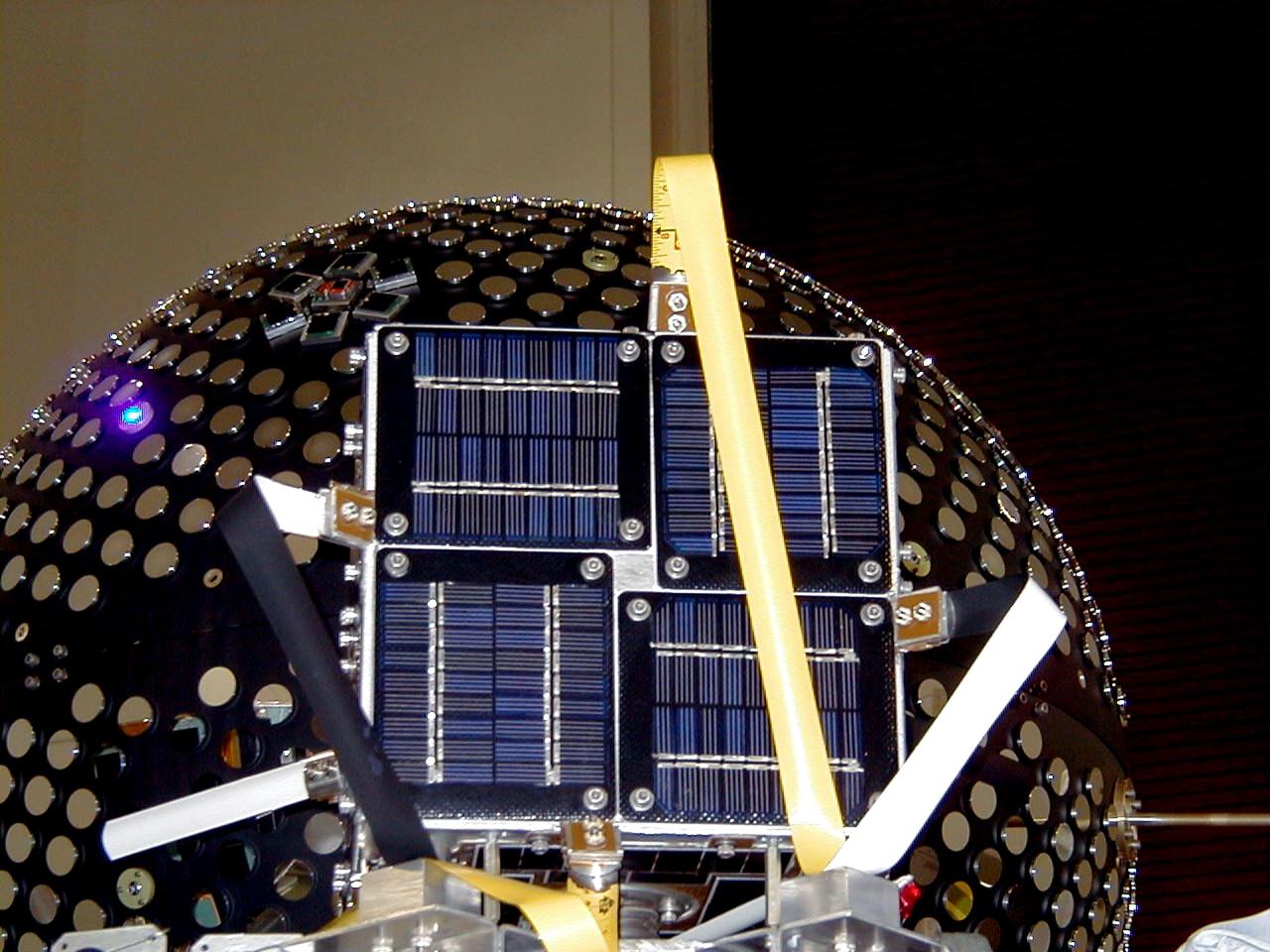
KODIAK ISLAND, Alaska -- The PICSat and Starshine 3 (back) payloads wait for their launch aboard the Athena 1 launch vehicle at Kodiak Island, Alaska, as preparations to launch Kodiak Star proceed. The first orbital launch to take place from Alaska's Kodiak Launch Complex, Kodiak Star is scheduled to lift off on a Lockheed Martin Athena I launch vehicle on Sept. 17 during a two-hour window that extends from 5 p.m. to 7 p.m. p.m. ADT. The payloads aboard include the Starshine 3, sponsored by NASA, and the PICOSat, PCSat and Sapphire, sponsored by the Department of Defense (DoD) Space Test Program.
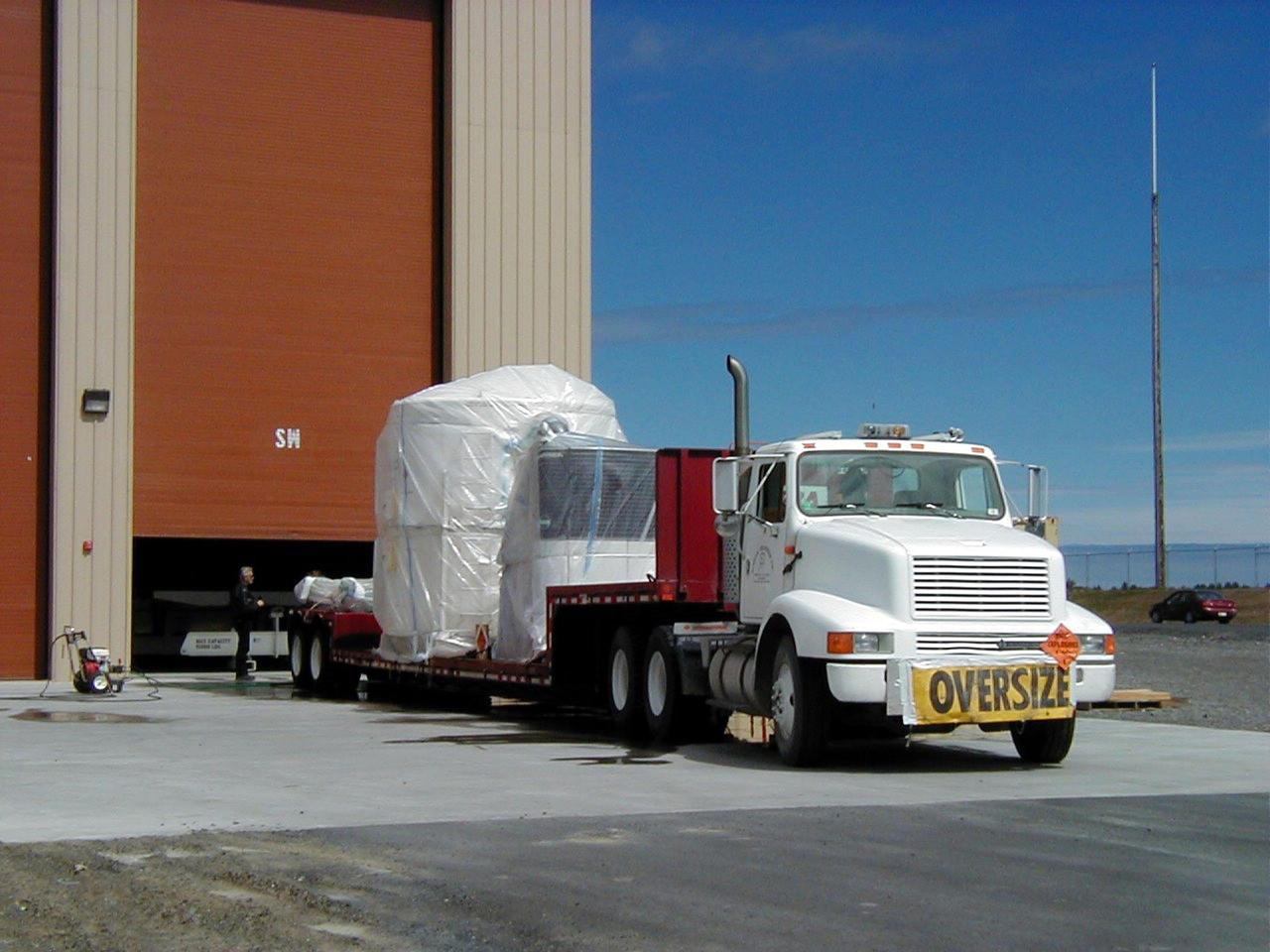
KODIAK ISLAND, Alaska -- Trucks transporting Orbis 21D Equipment Section Boost Motor, the second stage of the Athena 1 launch vehicle, arrive at Kodiak Island, Alaska, as preparations to launch Kodiak Star proceed. The first orbital launch to take place from Alaska's Kodiak Launch Complex, Kodiak Star is scheduled to lift off on a Lockheed Martin Athena I launch vehicle on Sept. 17 during a two-hour window that extends from 5:00 to 7:00 p.m. ADT. The payloads aboard include the Starshine 3, sponsored by NASA, and the PICOSat, PCSat and Sapphire, sponsored by the Department of Defense (DoD) Space Test Program.
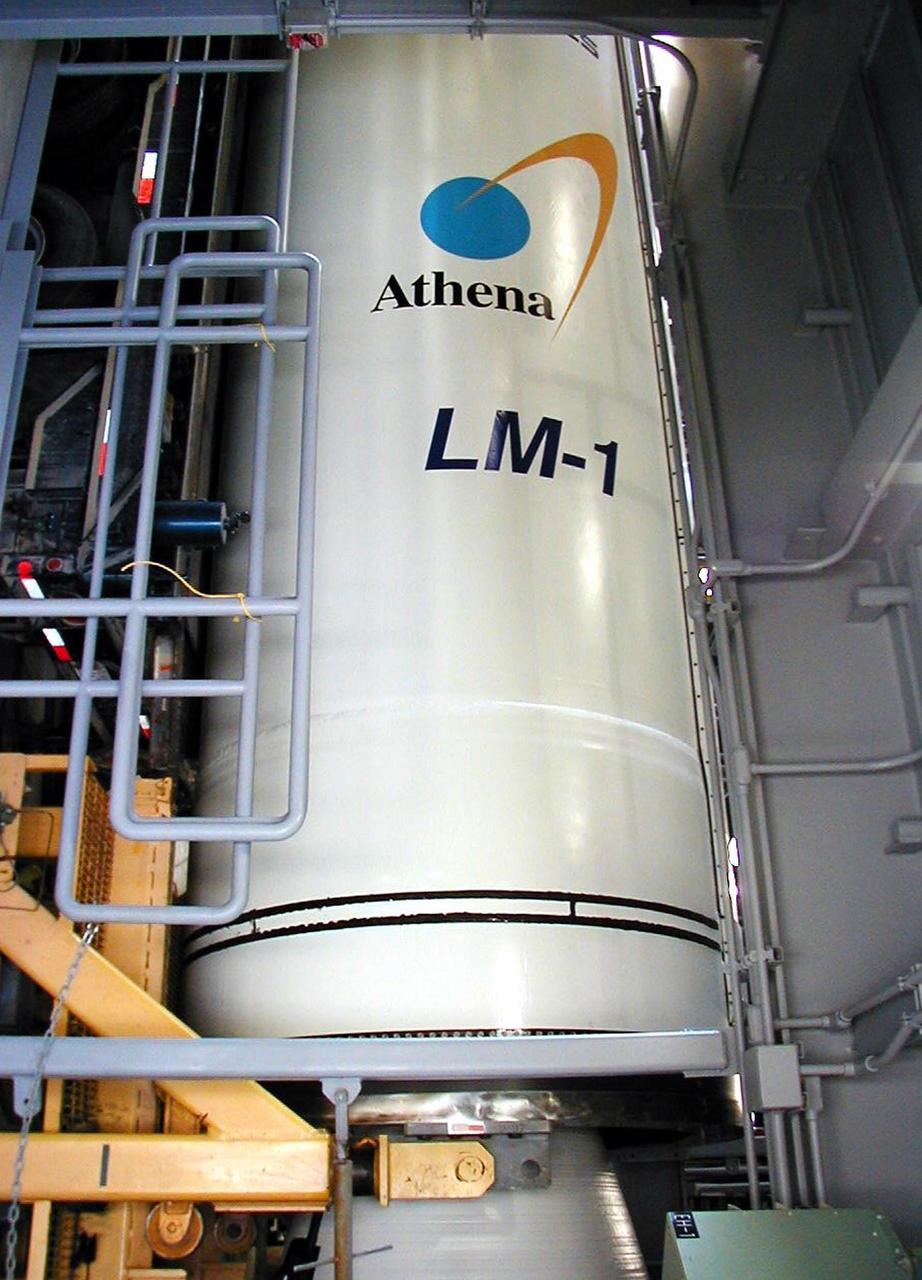
KODIAK ISLAND, Alaska -- Castor 120, the first stage of the Athena 1 launch vehicle, is raised off a truck at the launch pad at Kodiak Island, Alaska, as preparations to launch Kodiak Star proceed. The first orbital launch to take place from Alaska's Kodiak Launch Complex, Kodiak Star is scheduled to lift off on a Lockheed Martin Athena I launch vehicle on Sept. 17 during a two-hour window that extends from 5:00 to 7:00 p.m. ADT. The payloads aboard include the Starshine 3, sponsored by NASA, and the PICOSat, PCSat and Sapphire, sponsored by the Department of Defense (DoD) Space Test Program.
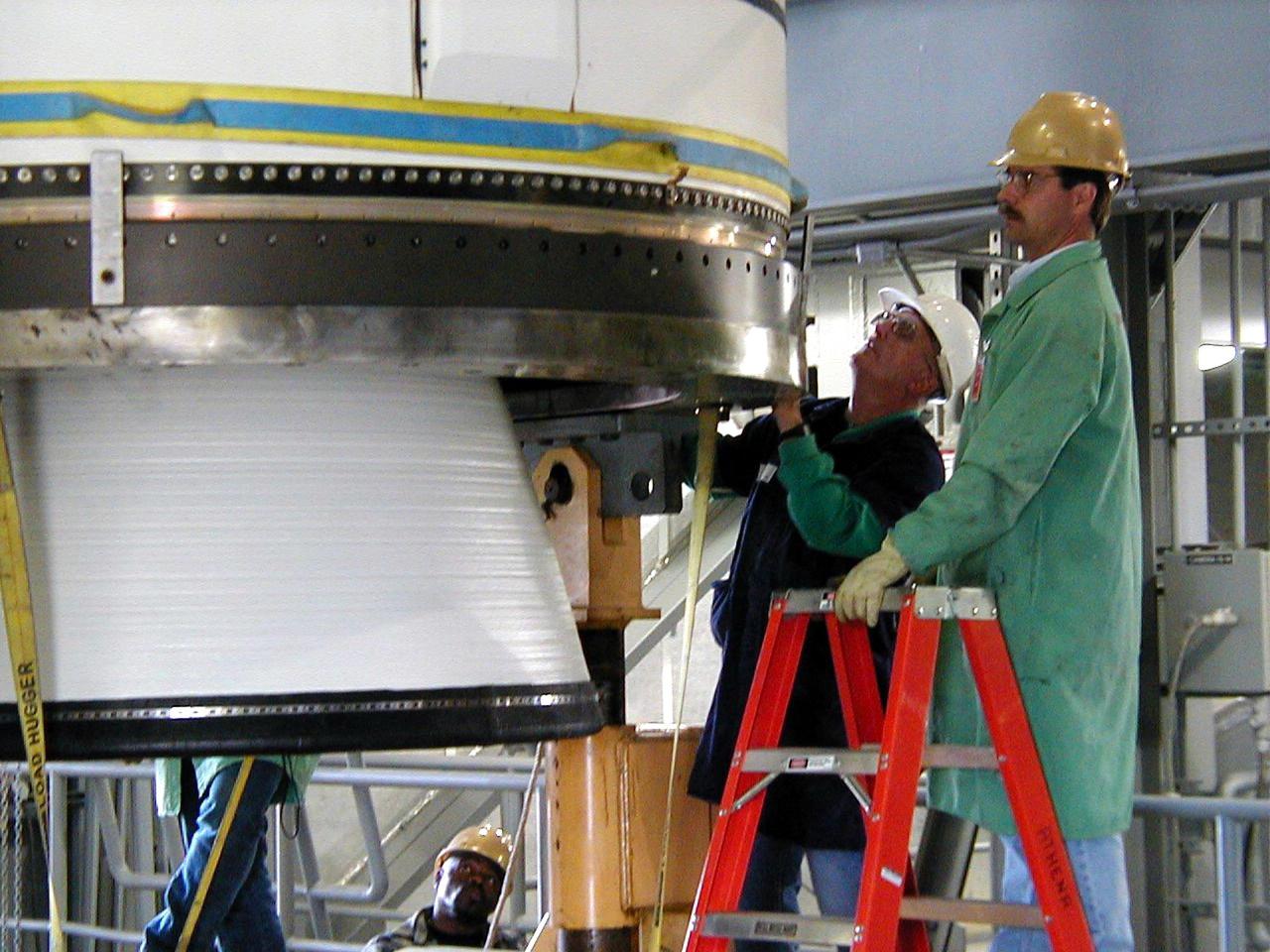
KODIAK ISLAND, Alaska -- Technicians inspect Castor 120, the first stage of the Athena 1 launch vehicle, at Kodiak Island, Alaska, as preparations to launch Kodiak Star proceed. The first orbital launch to take place from Alaska's Kodiak Launch Complex, Kodiak Star is scheduled to lift off on a Lockheed Martin Athena I launch vehicle on Sept. 17 during a two-hour window that extends from 5:00 to 7:00 p.m. ADT. The payloads aboard include the Starshine 3, sponsored by NASA, and the PICOSat, PCSat and Sapphire, sponsored by the Department of Defense (DoD) Space Test Program.
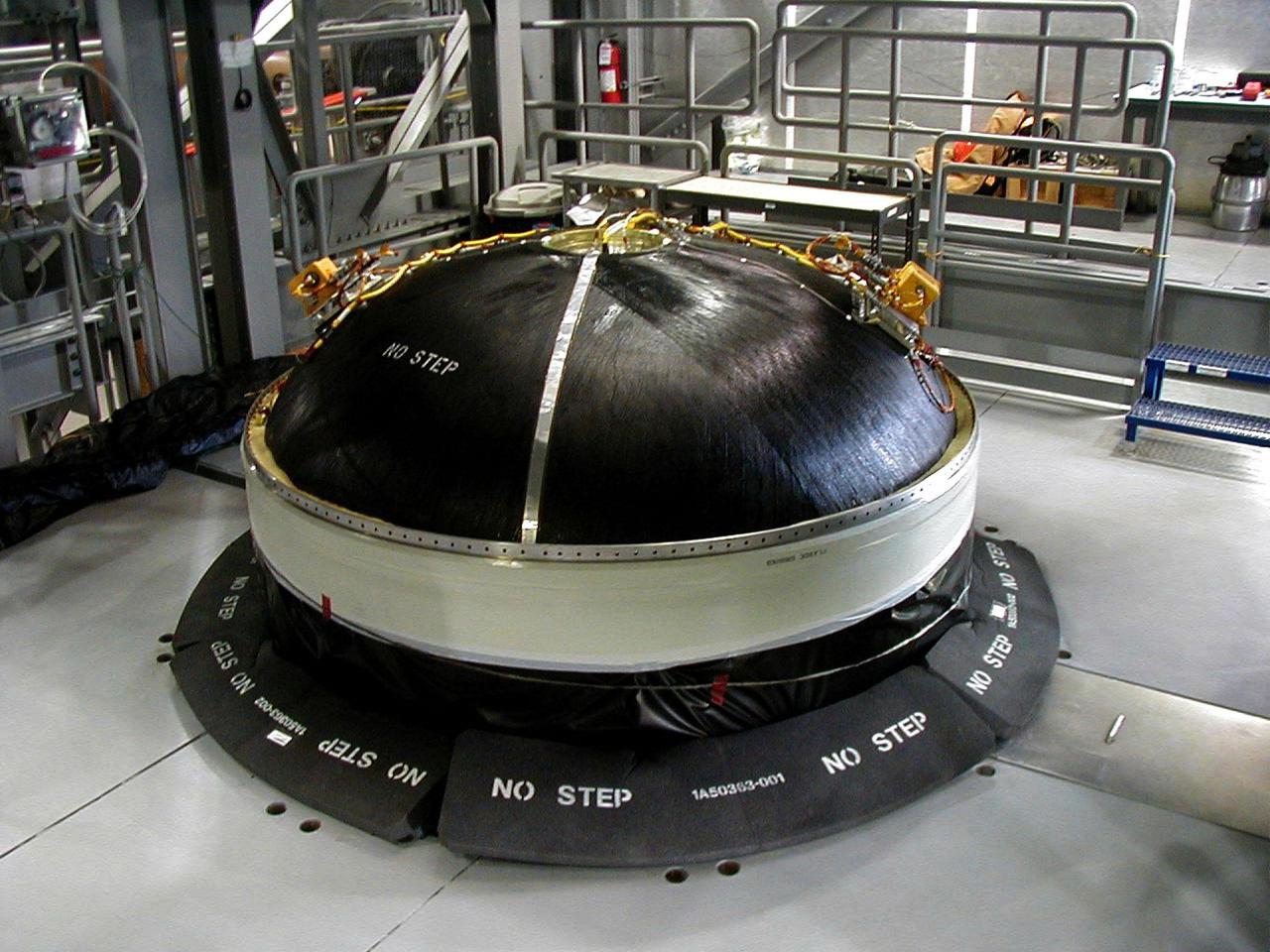
KODIAK ISLAND, Alaska -- Orbis 21D Equipment Section Boost Motor, the second stage of the Athena 1 launch vehicle, awaits the installation of the Orbit Adjust Model (OAM), which navigates the payloads into the correct orbit, at the launch pad at Kodiak Island, Alaska, as preparations to launch Kodiak Star proceed. The first orbital launch to take place from Alaska's Kodiak Launch Complex, Kodiak Star is scheduled to lift off on a Lockheed Martin Athena I launch vehicle on Sept. 17 during a two-hour window that extends from 5:00 to 7:00 p.m. ADT. The payloads aboard include the Starshine 3, sponsored by NASA, and the PICOSat, PCSat and Sapphire, sponsored by the Department of Defense (DoD) Space Test Program.
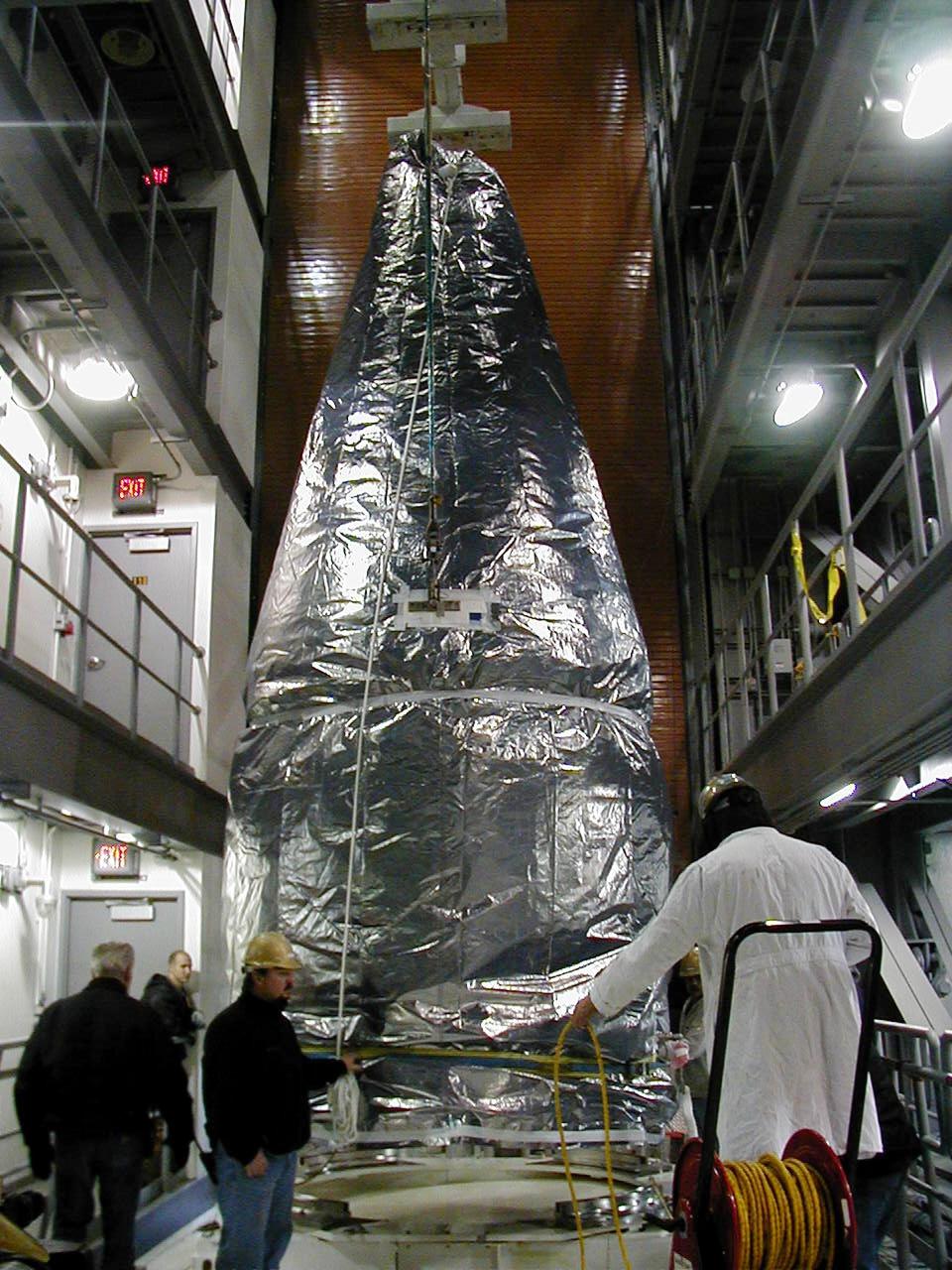
KODIAK ISLAND, ALASKA - Inside the Launch Service Structure, Kodiak Launch Complex (KLC), the final stage of the Athena I launch vehicle, with the Kodiak Star spacecraft, is maneuvered into place. The first launch to take place from KLC, Kodiak Star is scheduled to lift off on a Lockheed Martin Athena I launch vehicle on Sept. 17 during a two-hour window that extends from 5 p.m. to 7 p.m. p.m. ADT. The payloads aboard include the Starshine 3, sponsored by NASA, and the PICOSat, PCSat and Sapphire, sponsored by the Department of Defense (DoD) Space Test Program. KLC is the newest commercial launch complex in the United States, ideal for launch payloads requiring low-Earth polar or sun-synchronous orbits
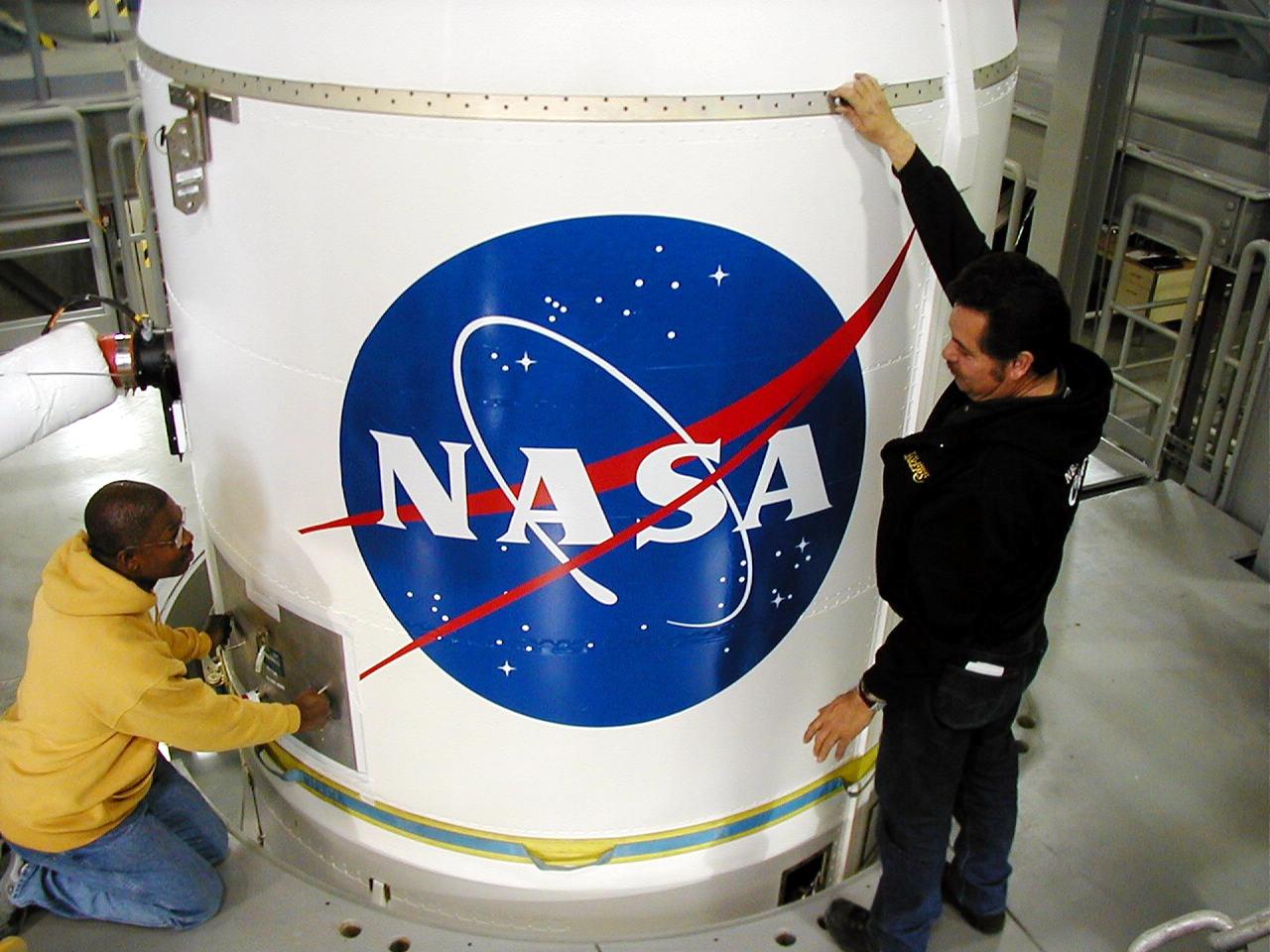
KODIAK ISLAND, ALASKA - A transporter moves the encapsulated Kodiak Star spacecraft into position in the Launch Service Structure, Kodiak Launch Complex (KLC), for final stacking for launch. The first launch to take place from KLC, Kodiak Star is scheduled to lift off on a Lockheed Martin Athena I launch vehicle on Sept. 17 during a two-hour window that extends from 5 p.m. to 7 p.m. p.m. ADT. The payloads aboard include the Starshine 3, sponsored by NASA, and the PICOSat, PCSat and Sapphire, sponsored by the Department of Defense (DoD) Space Test Program. KLC is the newest commercial launch complex in the United States, ideal for launch payloads requiring low-Earth polar or sun-synchronous orbits
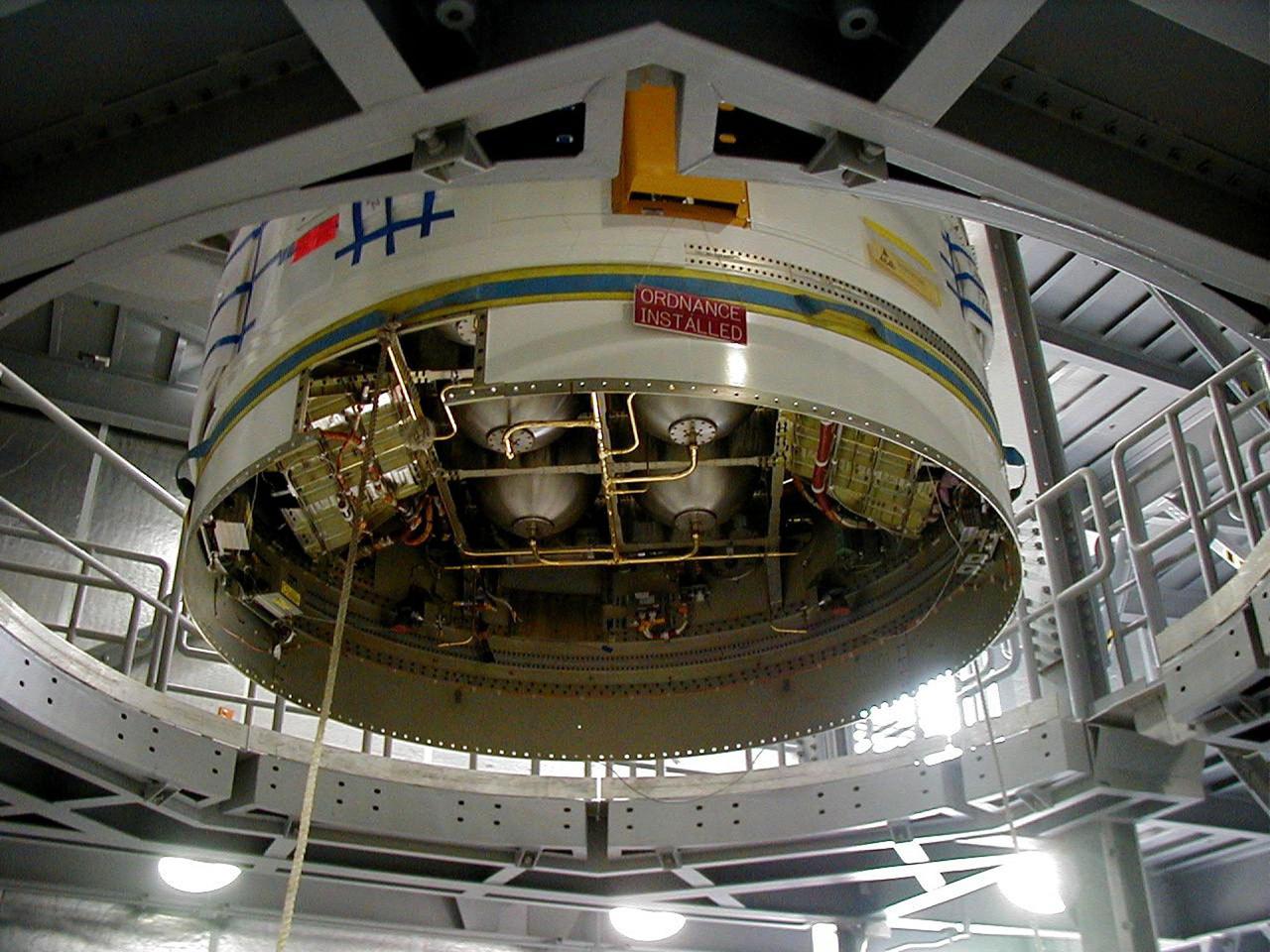
KODIAK ISLAND, Alaska -- The fueled Orbit Adjust Model (OAM), which navigates payloads into the correct orbit, is installed onto Orbis 21D Equipment Section Boost Motor, the second stage of the Athena 1 launch vehicle, at the launch pad at Kodiak Island, Alaska, as preparations to launch Kodiak Star proceed. The first orbital launch to take place from Alaska's Kodiak Launch Complex, Kodiak Star is scheduled to lift off on a Lockheed Martin Athena I launch vehicle on Sept. 17 during a two-hour window that extends from 5:00 to 7:00 p.m. ADT. The payloads aboard include the Starshine 3, sponsored by NASA, and the PICOSat, PCSat and Sapphire, sponsored by the Department of Defense (DoD) Space Test Program.
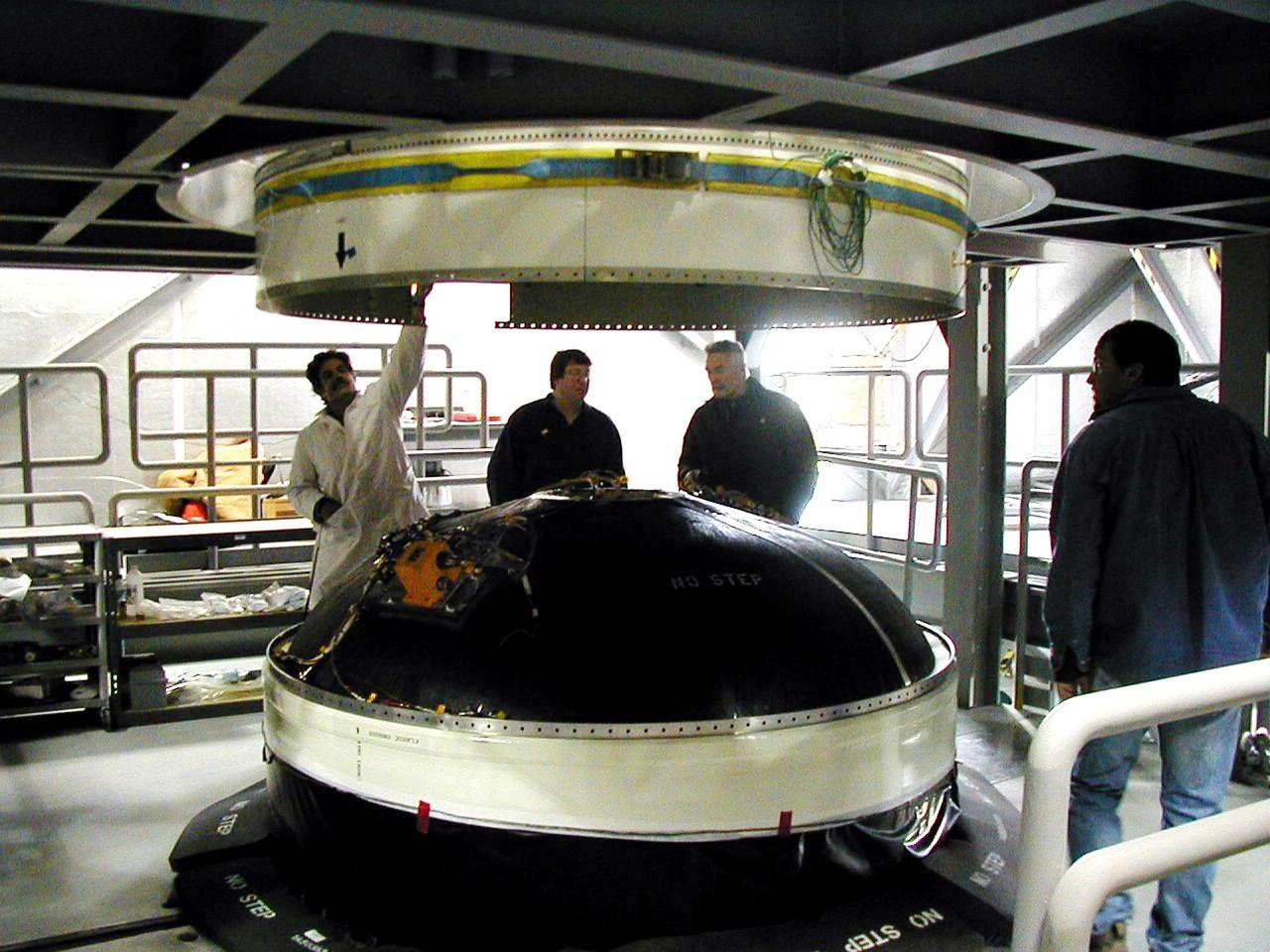
KODIAK ISLAND, Alaska -- Technicians lower the fueled Orbit Adjust Model (OAM), which navigates payloads into the correct orbit, onto Orbis 21D Equipment Section Boost Motor, the second stage of the Athena 1 launch vehicle, at the launch pad at Kodiak Island, Alaska, as preparations to launch Kodiak Star proceed. The first orbital launch to take place from Alaska's Kodiak Launch Complex, Kodiak Star is scheduled to lift off on a Lockheed Martin Athena I launch vehicle on Sept. 17 during a two-hour window that extends from 5 p.m. ADT. The payloads aboard include the Starshine 3, sponsored by NASA, and the PICOSat, PCSat and Sapphire, sponsored by the Department of Defense (DoD) Space Test Program.
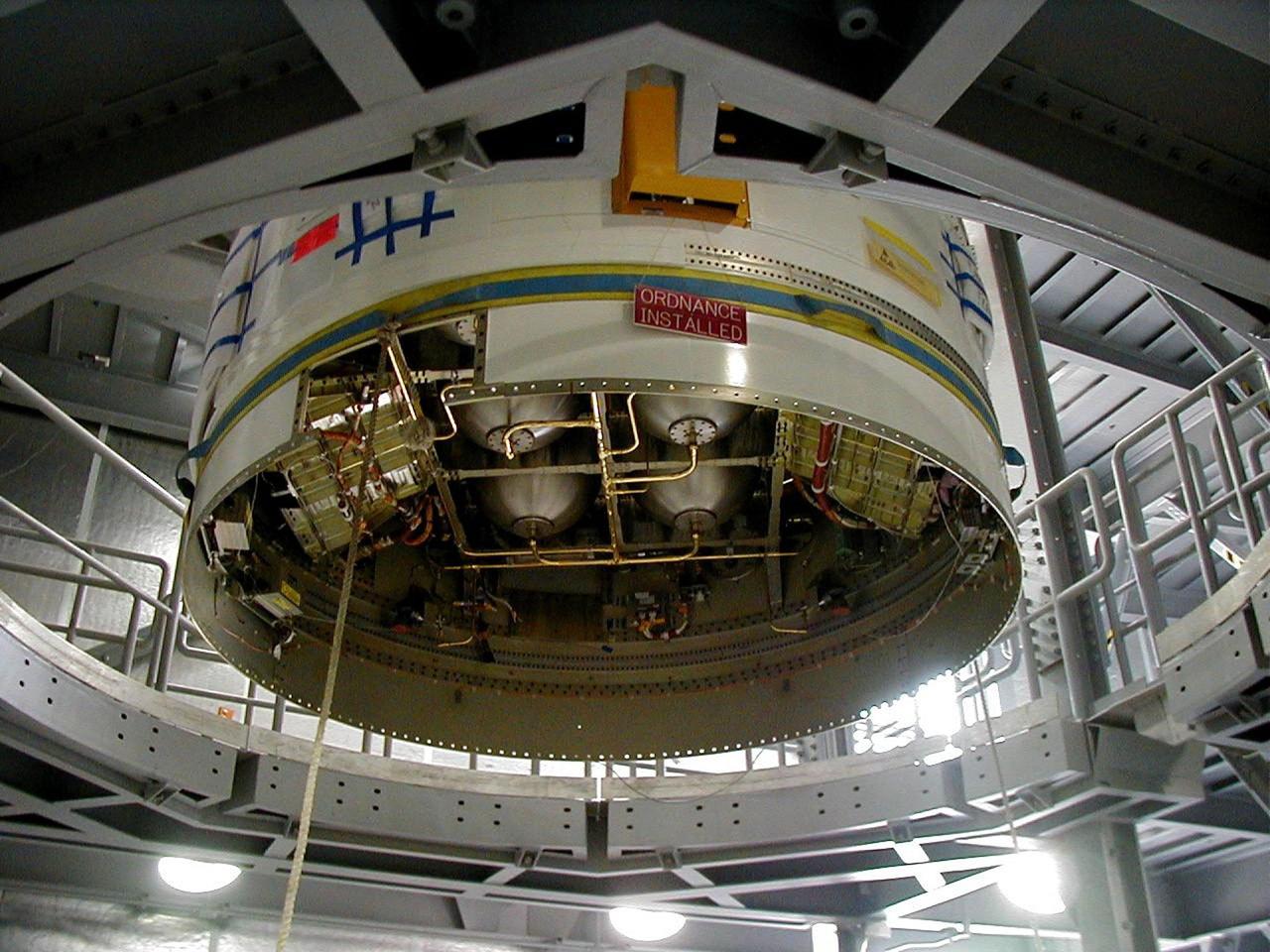
KODIAK ISLAND, Alaska -- The fueled Orbit Adjust Model (OAM), which navigates payloads into the correct orbit, is installed onto Orbis 21D Equipment Section Boost Motor, the second stage of the Athena 1 launch vehicle, at the launch pad at Kodiak Island, Alaska, as preparations to launch Kodiak Star proceed. The first orbital launch to take place from Alaska's Kodiak Launch Complex, Kodiak Star is scheduled to lift off on a Lockheed Martin Athena I launch vehicle on Sept. 17 during a two-hour window that extends from 5:00 to 7:00 p.m. ADT. The payloads aboard include the Starshine 3, sponsored by NASA, and the PICOSat, PCSat and Sapphire, sponsored by the Department of Defense (DoD) Space Test Program.
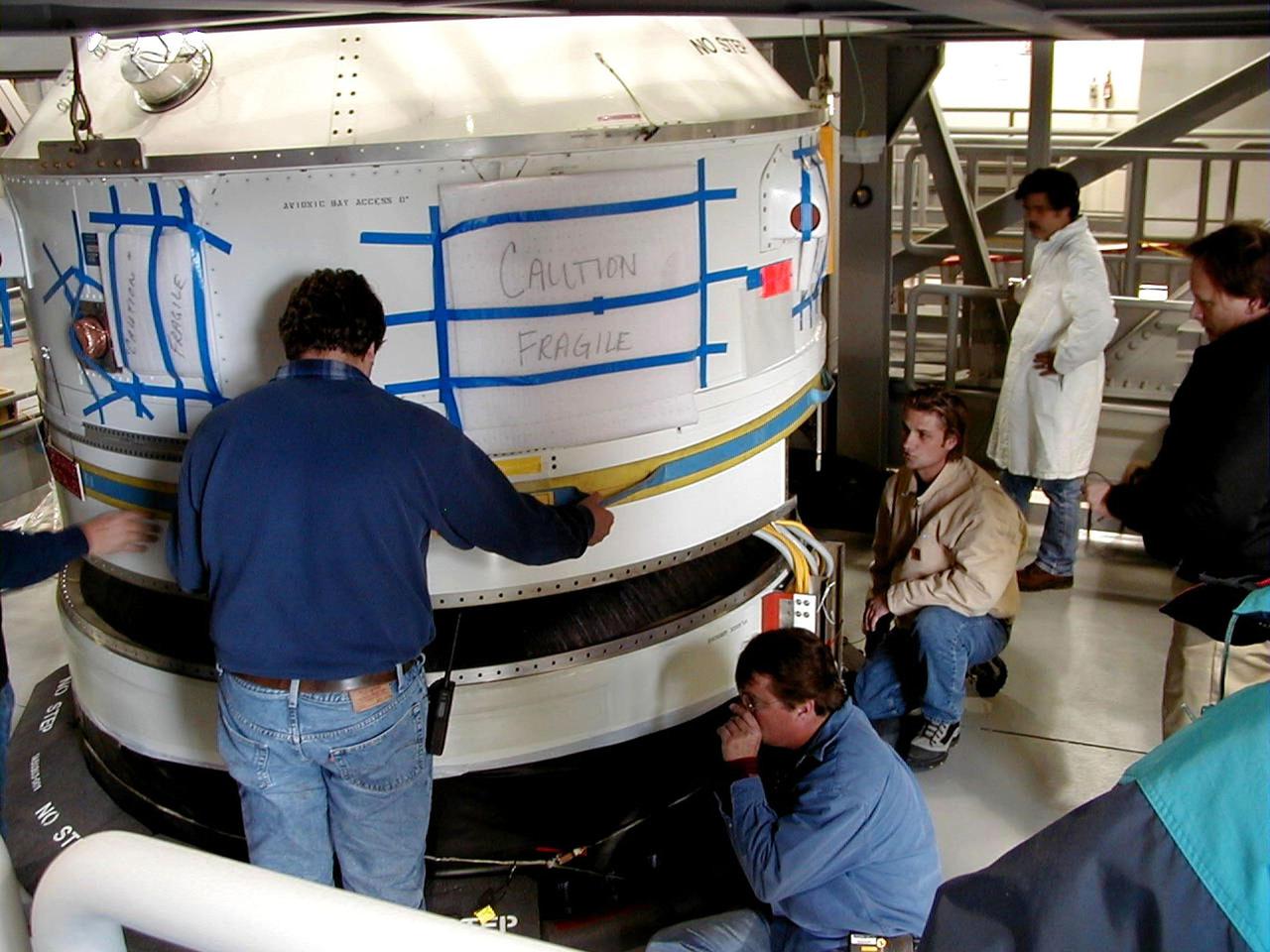
KODIAK ISLAND, Alaska -- Technicians align the fueled Orbit Adjust Model (OAM), which navigates payloads into the correct orbit, onto Orbis 21D Equipment Section Boost Motor, the second stage of the Athena 1 launch vehicle, at the launch pad at Kodiak Island, Alaska, as preparations to launch Kodiak Star proceed. The first orbital launch to take place from Alaska's Kodiak Launch Complex, Kodiak Star is scheduled to lift off on a Lockheed Martin Athena I launch vehicle on Sept. 17 during a two-hour window that extends from 5:00 to 7:00 p.m. ADT. The payloads aboard include the Starshine 3, sponsored by NASA, and the PICOSat, PCSat and Sapphire, sponsored by the Department of Defense (DoD) Space Test Program.
KODIAK ISLAND, ALASKA - A transporter moves the encapsulated Kodiak Star spacecraft into position in the Launch Service Structure, Kodiak Launch Complex (KLC), for final stacking for launch. The first launch to take place from KLC, Kodiak Star is scheduled to lift off on a Lockheed Martin Athena I launch vehicle on Sept. 17 during a two-hour window that extends from 5 p.m. to 7 p.m. p.m. ADT. The payloads aboard include the Starshine 3, sponsored by NASA, and the PICOSat, PCSat and Sapphire, sponsored by the Department of Defense (DoD) Space Test Program. KLC is the newest commercial launch complex in the United States, ideal for launch payloads requiring low-Earth polar or sun-synchronous orbits
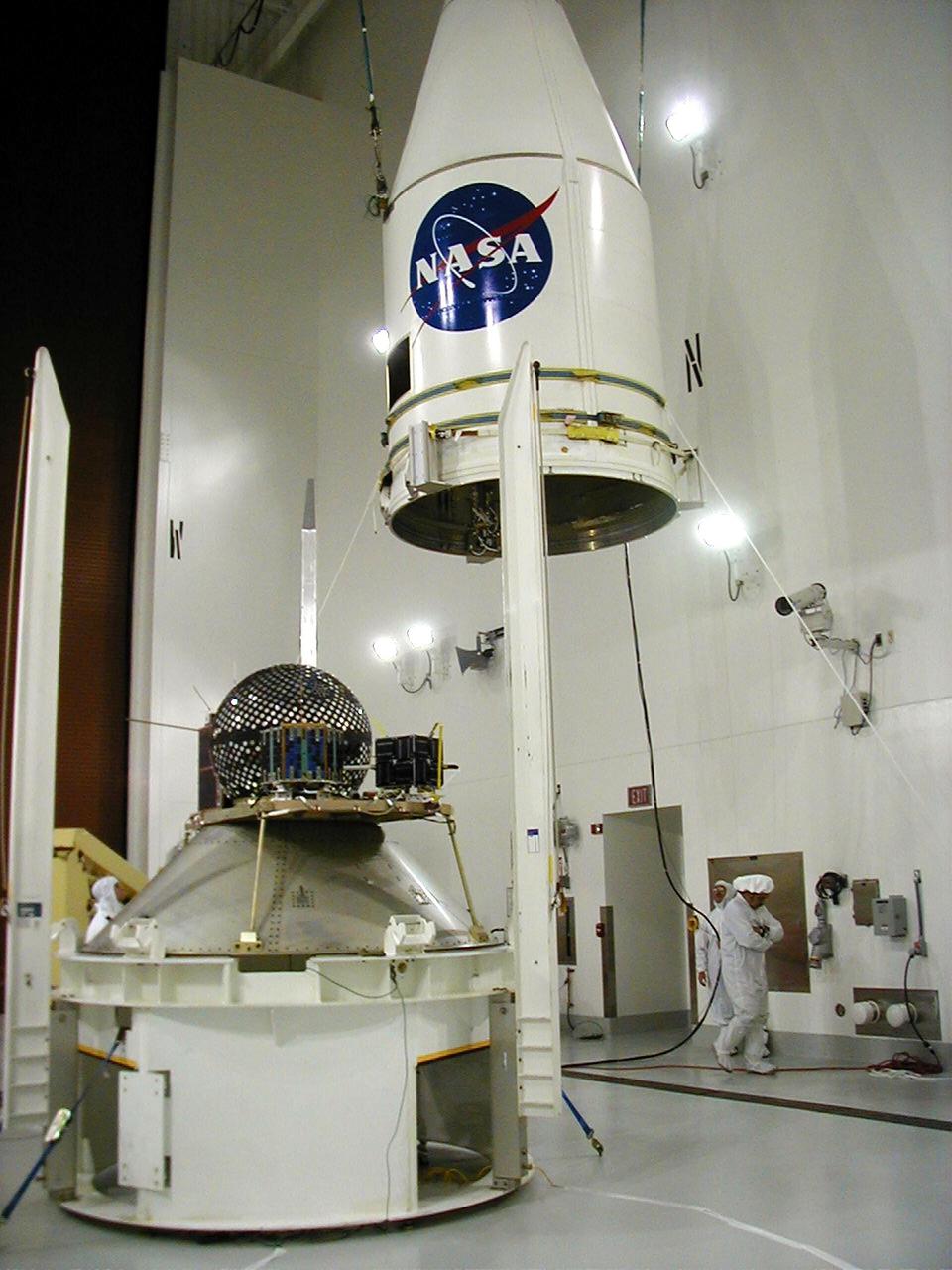
KODIAK ISLAND, ALASKA - In the Launch Service Structure, Kodiak Launch Complex (KLC), the Kodiak Star spacecraft is ready for encapsulation in the fairing seen at right, above. The first launch to take place from KLC, Kodiak Star is scheduled to lift off on a Lockheed Martin Athena I launch vehicle on Sept. 17 during a two-hour window that extends from 5 p.m. to 7 p.m. p.m. ADT. The payloads aboard include the Starshine 3, sponsored by NASA, and the PICOSat, PCSat and Sapphire, sponsored by the Department of Defense (DoD) Space Test Program. KLC is the newest commercial launch complex in the United States, ideal for launch payloads requiring low-Earth polar or sun-synchronous orbits
KODIAK ISLAND, ALASKA - A transporter moves the encapsulated Kodiak Star spacecraft into position in the Launch Service Structure, Kodiak Launch Complex (KLC), for final stacking for launch. The first launch to take place from KLC, Kodiak Star is scheduled to lift off on a Lockheed Martin Athena I launch vehicle on Sept. 17 during a two-hour window that extends from 5 p.m. to 7 p.m. p.m. ADT. The payloads aboard include the Starshine 3, sponsored by NASA, and the PICOSat, PCSat and Sapphire, sponsored by the Department of Defense (DoD) Space Test Program. KLC is the newest commercial launch complex in the United States, ideal for launch payloads requiring low-Earth polar or sun-synchronous orbits
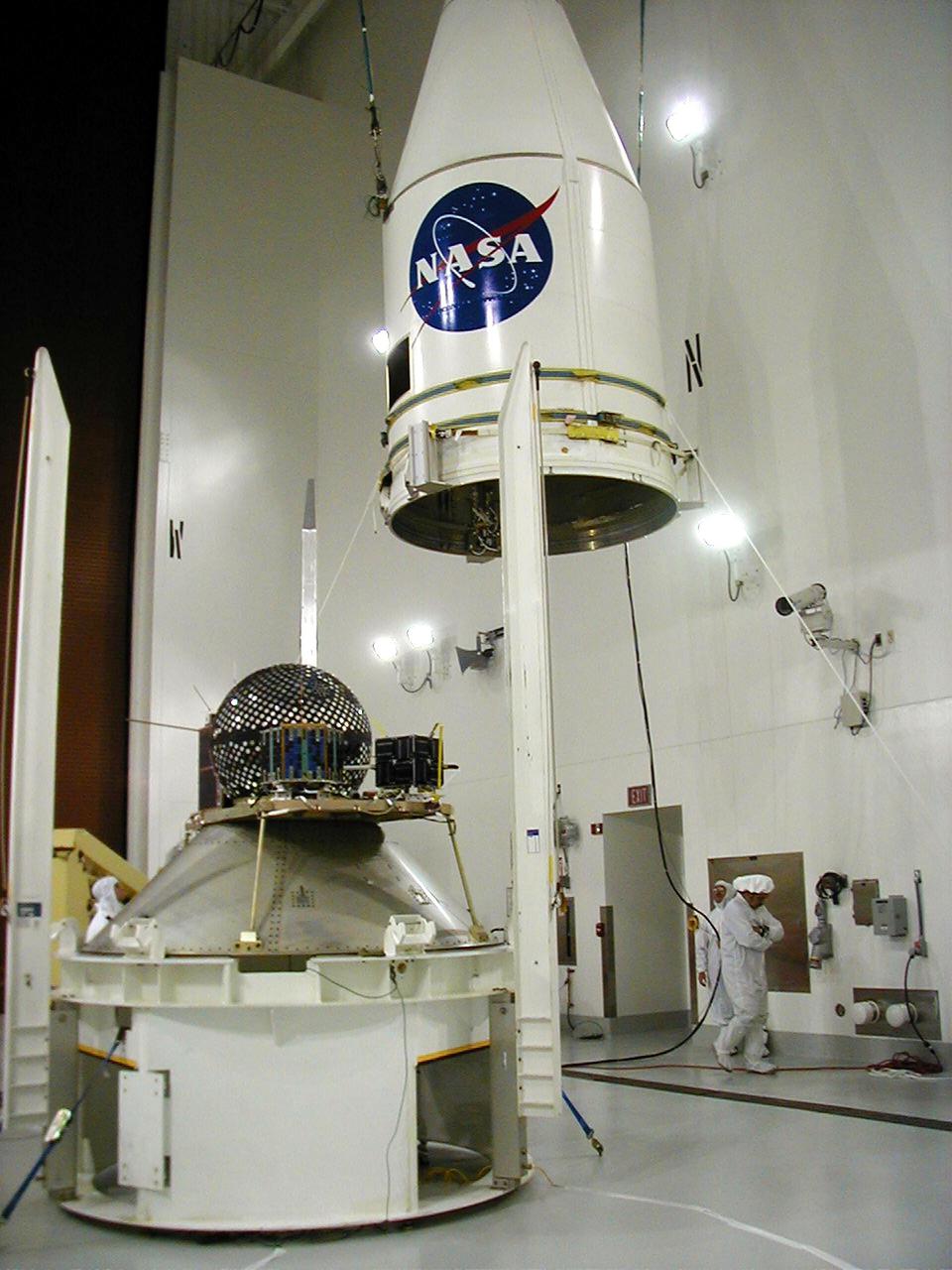
KODIAK ISLAND, ALASKA - In the Launch Service Structure, Kodiak Launch Complex (KLC), the Kodiak Star spacecraft is ready for encapsulation in the fairing seen at right, above. The first launch to take place from KLC, Kodiak Star is scheduled to lift off on a Lockheed Martin Athena I launch vehicle on Sept. 17 during a two-hour window that extends from 5 p.m. to 7 p.m. p.m. ADT. The payloads aboard include the Starshine 3, sponsored by NASA, and the PICOSat, PCSat and Sapphire, sponsored by the Department of Defense (DoD) Space Test Program. KLC is the newest commercial launch complex in the United States, ideal for launch payloads requiring low-Earth polar or sun-synchronous orbits
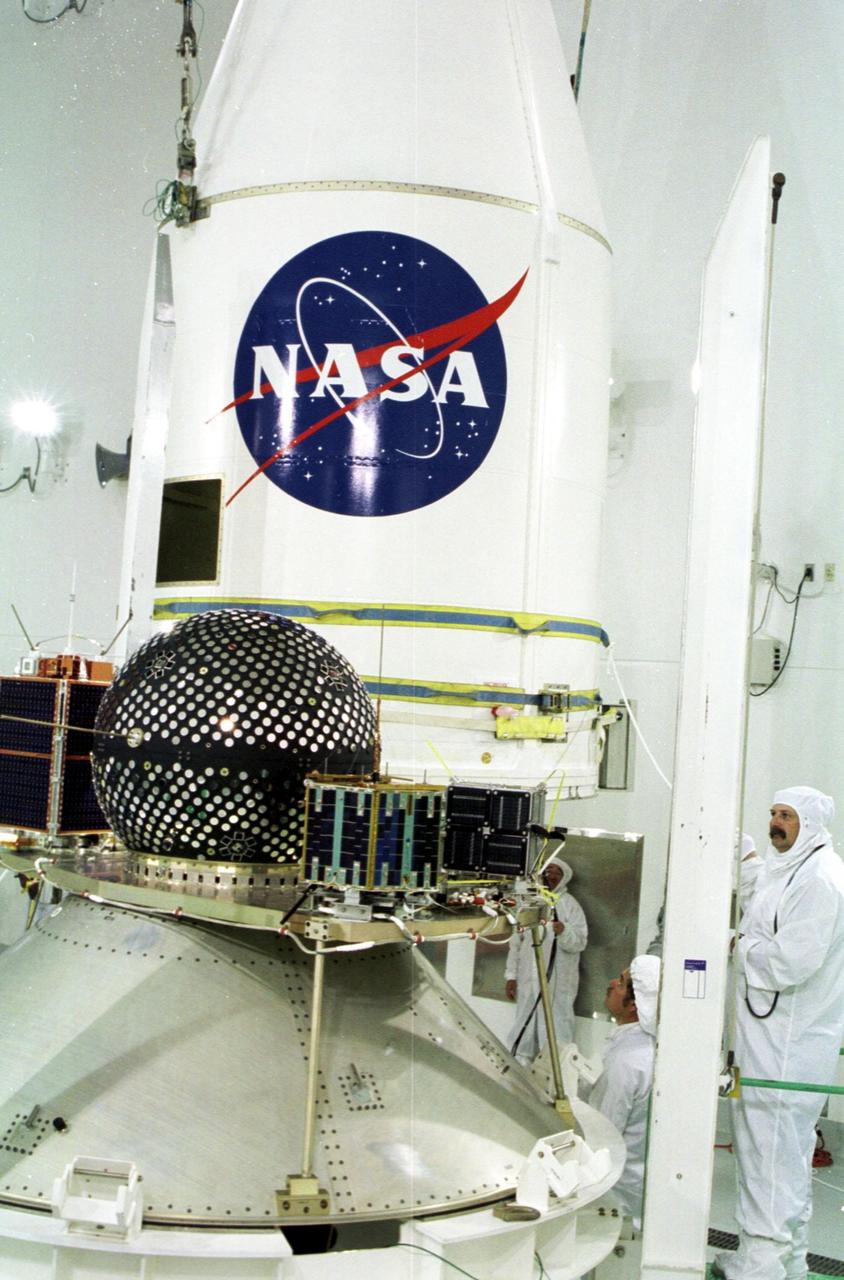
KODIAK ISLAND, Alaska -- Technicians lower the fueled Orbit Adjust Model (OAM), which navigates payloads into the correct orbit, onto Orbis 21D Equipment Section Boost Motor, the second stage of the Athena 1 launch vehicle, at the launch pad at Kodiak Island, Alaska, as preparations to launch Kodiak Star proceed. The first orbital launch to take place from Alaska's Kodiak Launch Complex, Kodiak Star is scheduled to lift off on a Lockheed Martin Athena I launch vehicle on Sept. 17 during a two-hour window that extends from 5 p.m. ADT. The payloads aboard include the Starshine 3, sponsored by NASA, and the PICOSat, PCSat and Sapphire, sponsored by the Department of Defense (DoD) Space Test Program.
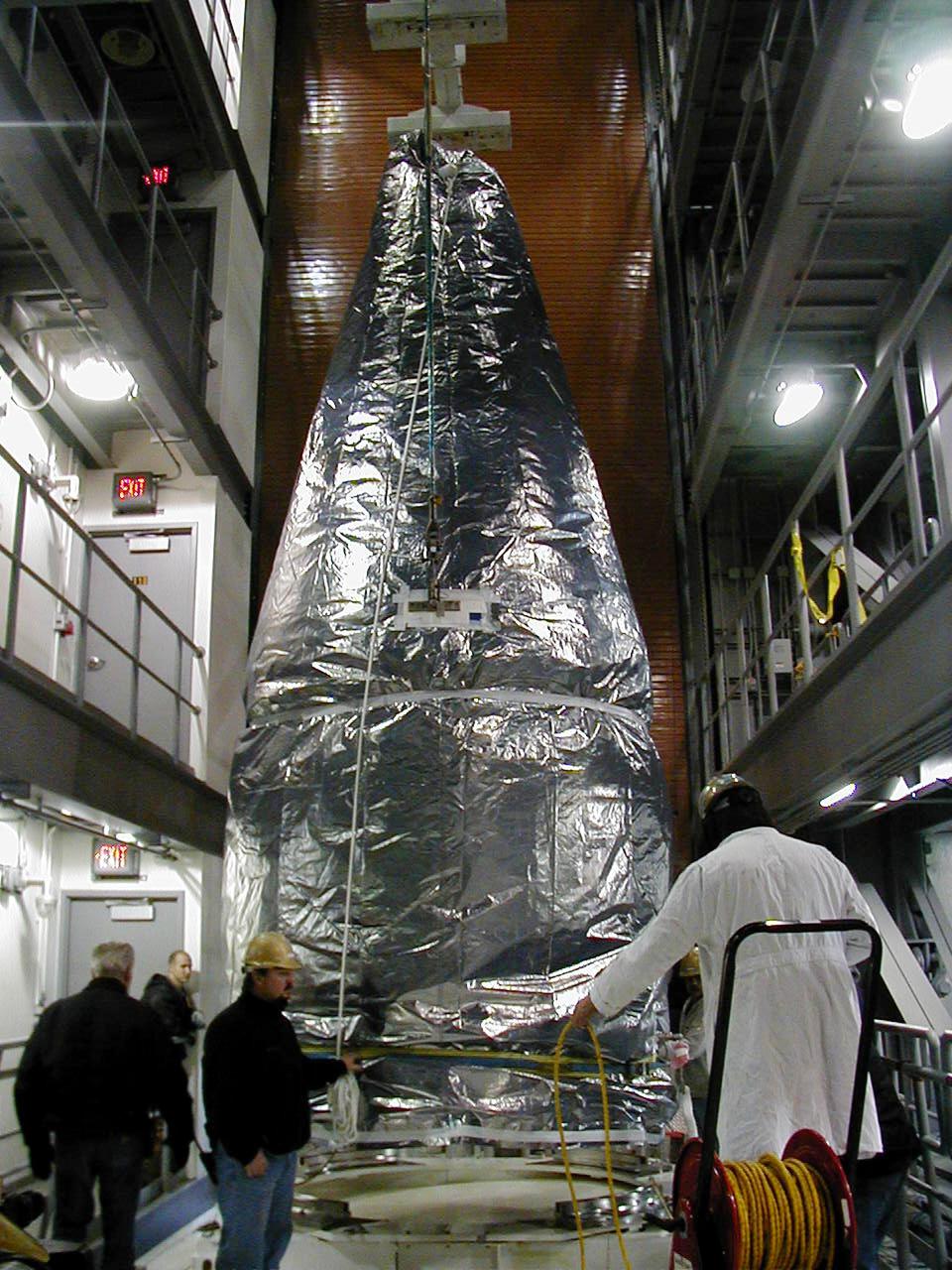
KODIAK ISLAND, ALASKA - Inside the Launch Service Structure, Kodiak Launch Complex (KLC), the final stage of the Athena I launch vehicle, with the Kodiak Star spacecraft, is maneuvered into place. The first launch to take place from KLC, Kodiak Star is scheduled to lift off on a Lockheed Martin Athena I launch vehicle on Sept. 17 during a two-hour window that extends from 5 p.m. to 7 p.m. p.m. ADT. The payloads aboard include the Starshine 3, sponsored by NASA, and the PICOSat, PCSat and Sapphire, sponsored by the Department of Defense (DoD) Space Test Program. KLC is the newest commercial launch complex in the United States, ideal for launch payloads requiring low-Earth polar or sun-synchronous orbits
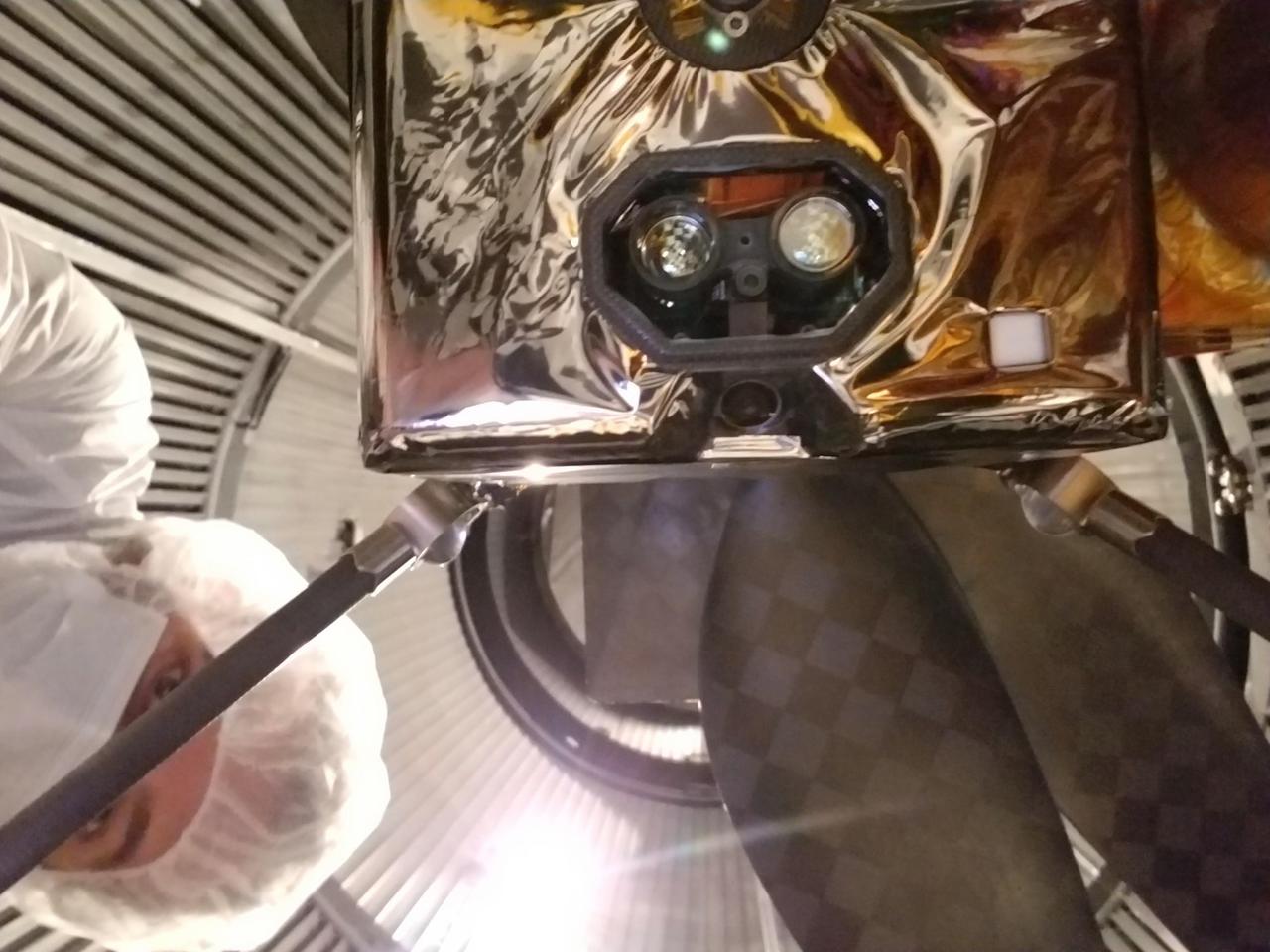
An Ingenuity team member inspects NASA's Ingenuity Mars Helicopter in one of the space simulation chambers at the agency's Jet Propulsion Laboratory in Southern California. The helicopter's two cameras are visible in this view of the underside of Ingenuity: one looking straight down and the other at an oblique angle. In the octagonal black frame, the black-and-white navigation camera is the thick circle appearing between and just below the two larger lenses (parts of the laser altimeter that measures the helicopter's height above the ground). The color camera is the circle that is inset from the edge of the fuselage, appearing below the octagonal frame. (An annotated version of the image points out the cameras.) To protect against dust, a clear borosilicate window covers the altimeter and navigation camera, and a clear sapphire window covers the color camera. Ingenuity will attempt the first powered, controlled flight at Mars. https://photojournal.jpl.nasa.gov/catalog/PIA23969
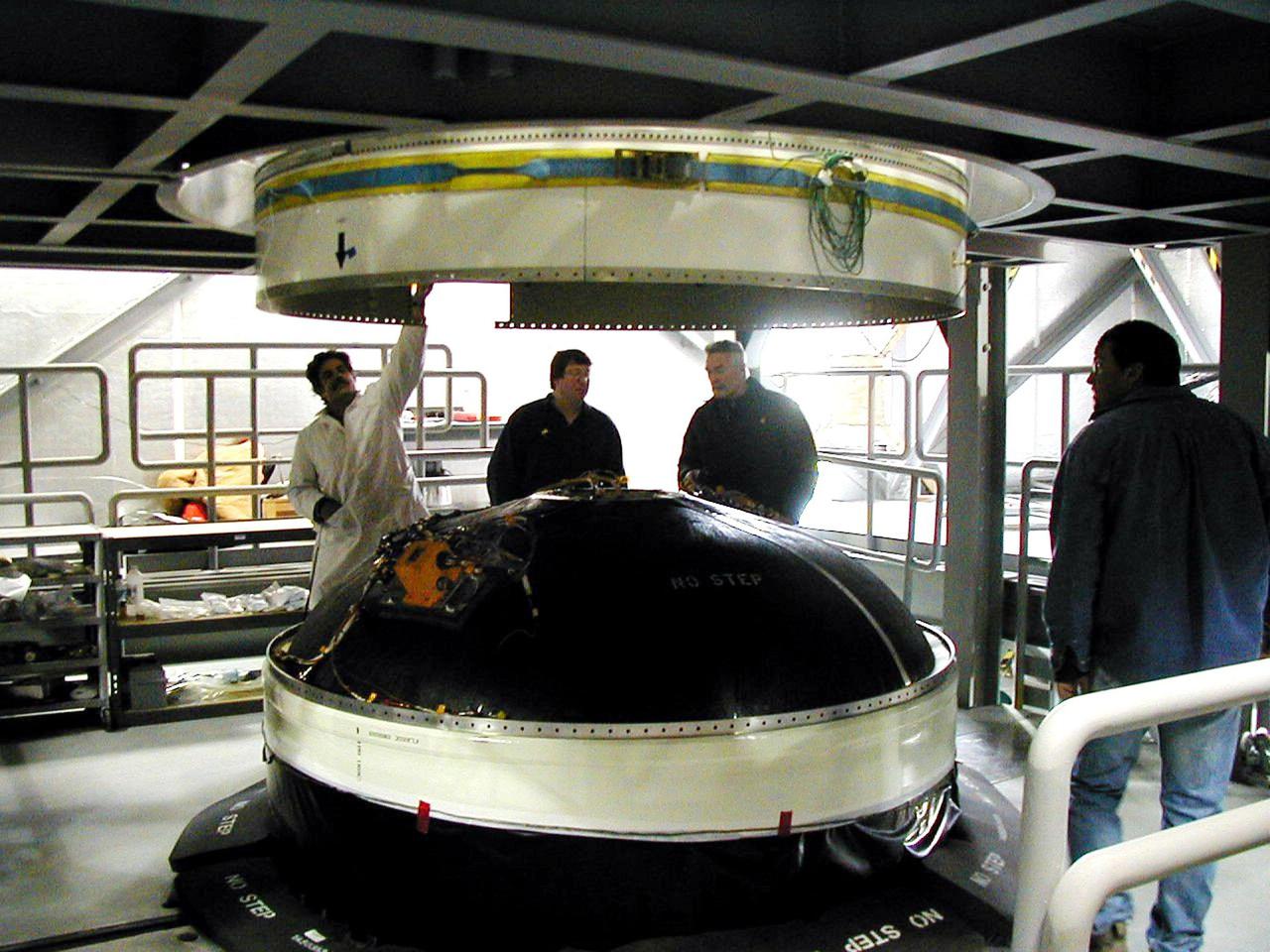
KODIAK ISLAND, Alaska -- Inside the Launch Service Structure, Kodiak Launch Complex (KLC), workers watch as the fairing (background) is lifted before encapsulating the Kodiak Star spacecraft in preparation for launch. The first orbital launch to take place from KLC, Kodiak Star is scheduled to lift off on a Lockheed Martin Athena I launch vehicle on Sept. 17 during a two-hour window that extends from 5 p.m. ADT. The payloads aboard include the Starshine 3, sponsored by NASA, and the PICOSat, PCSat and Sapphire, sponsored by the Department of Defense (DoD) Space Test Program. KLC is the newest commercial launch complex in the United States, ideal for launch payloads requiring low-Earth polar or sun-synchronous orbits
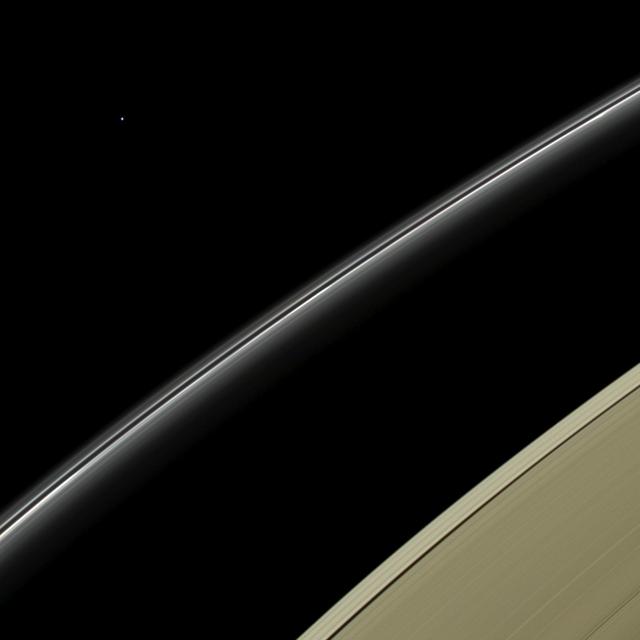
This view from NASA's Cassini spacecraft features a blue planet, imaged by Cassini for the first time. Uranus is a pale blue in this natural color image because its visible atmosphere contains methane gas and few aerosols or clouds. Methane on Uranus -- and its sapphire-colored sibling, Neptune -- absorbs red wavelengths of incoming sunlight, but allows blue wavelengths to escape back into space, resulting in the predominantly bluish color seen here. Cassini imaging scientists combined red, green and blue spectral filter images to create a final image that represents what human eyes might see from the vantage point of the spacecraft. Uranus has been brightened by a factor of 4.5 to make it more easily visible. The outer portion of Saturn's A ring, seen at bottom right, has been brightened by a factor of two. The bright ring cutting across the image center is Saturn's narrow F ring. Uranus was approximately 28.6 astronomical units from Cassini and Saturn when this view was obtained. An astronomical unit is the average distance from Earth to the sun, equal to 93,000,000 miles (150,000,000 kilometers). This view was acquired by the Cassini narrow-angle camera at a distance of approximately 614,300 miles (988,600 kilometers) from Saturn on April 11, 2014. Image scale at Uranus is approximately 16,000 miles (25,700 kilometers) per pixel. Image scale at Saturn's rings is approximately 4 miles (6 kilometers) per pixel. In the image, the disk of Uranus is just barely resolved. The solar phase angle at Uranus, seen from Cassini, is 11.9 degrees. http://photojournal.jpl.nasa.gov/catalog/PIA17178
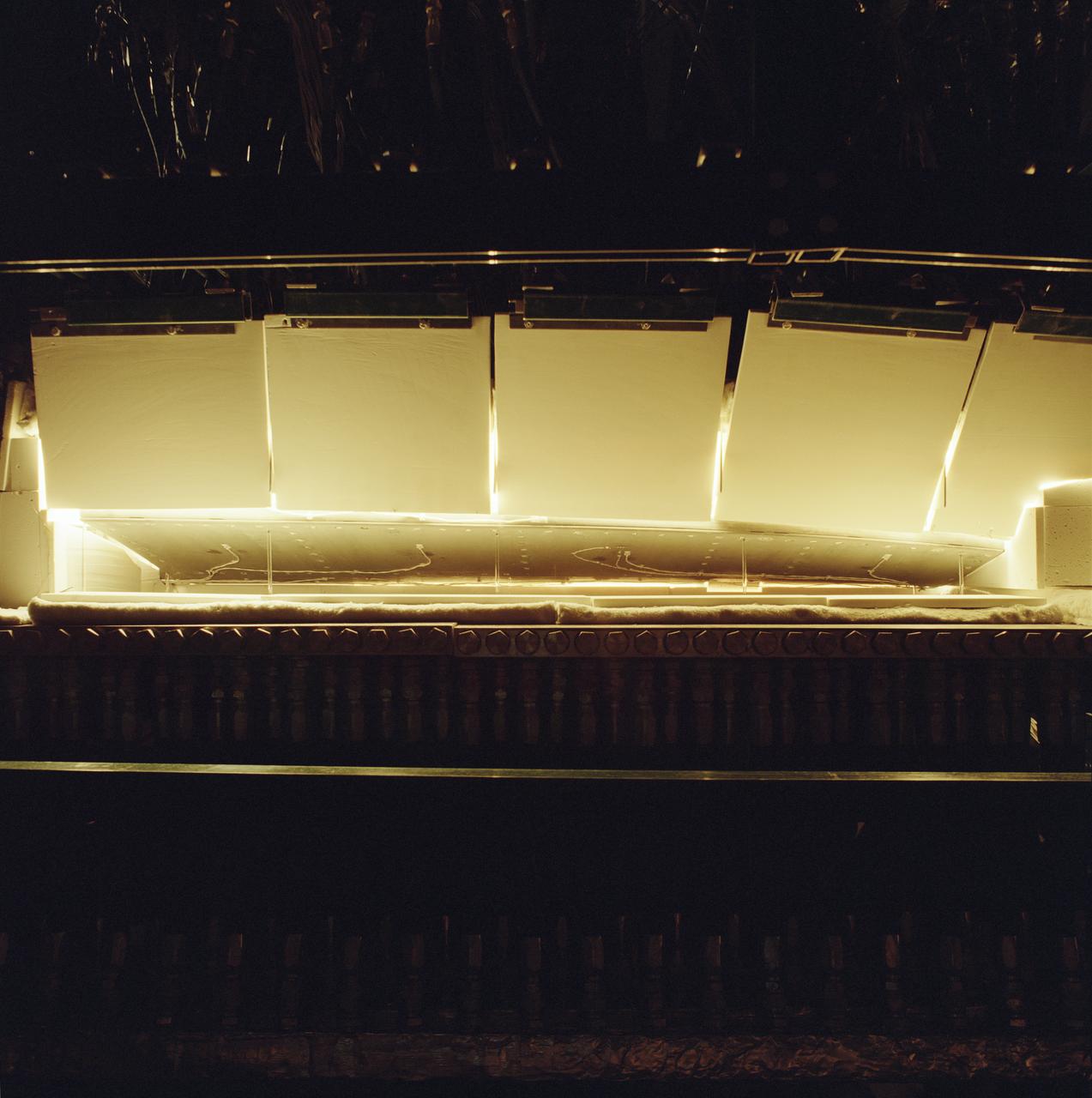
The X-37 advanced technology demonstrator flaperon unit was one of the first ever thermal and mechanical qualification tests of a carbon-carbon control surface designed for space flight. The test also featured extensive use of high-temperature fiber optic strain sensors. Peak temperatures reached 2,500 degrees Fahrenheit.
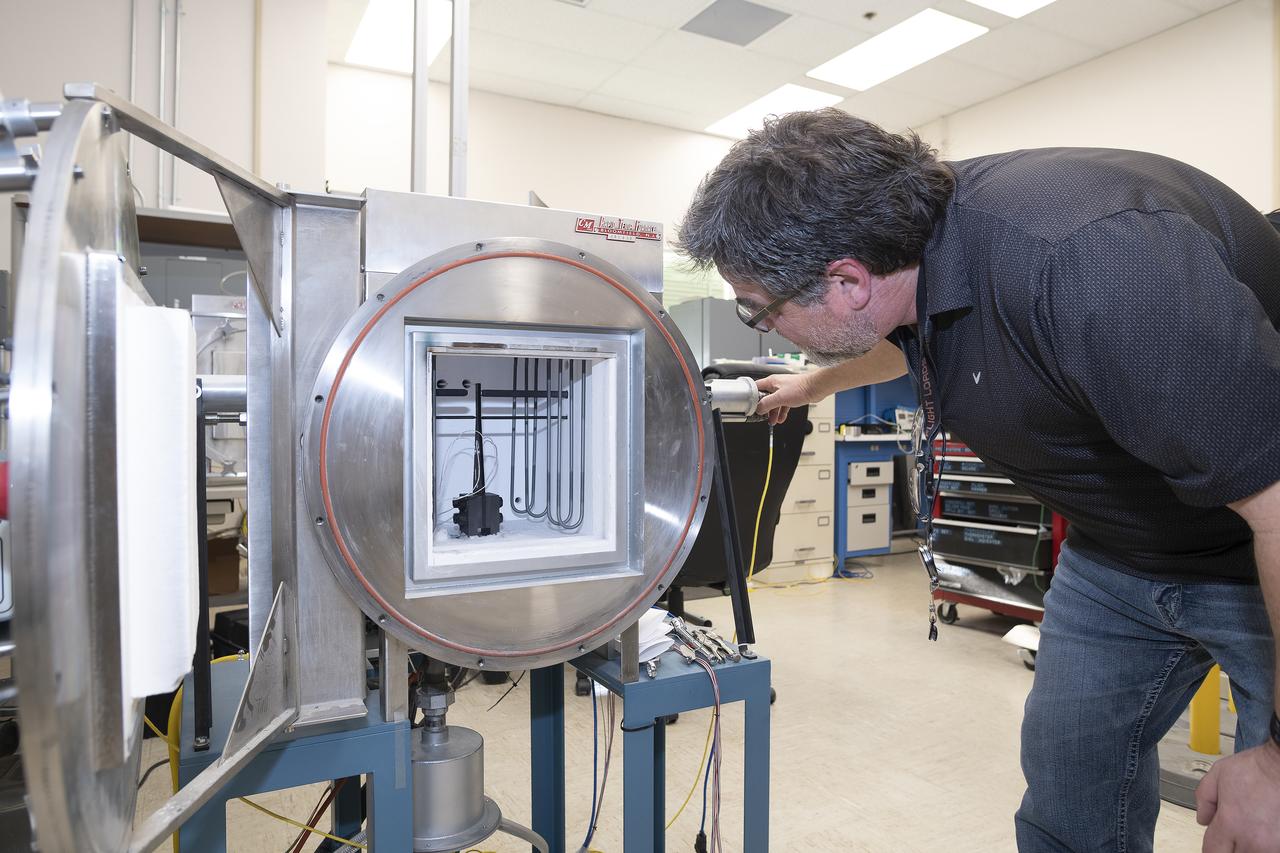
Anthony piazza, a researcher at NASA’s Armstrong Flight Research center in Edwards, California, works with high-temperature strain sensors. This test article is a bending load bar, which enables high-temperature optical strain sensor research up to 1,800 degrees Fahrenheit.